Exhibition: ‘Weegee: Society of the Spectacle’ at the International Center of Photography, New York

Exhibition dates: 23rd January – 5th May, 2025

Curator: Clément Chéroux, Director of the Fondation Henri Cartier-Bresson (FHCB), Paris, in collaboration with the Weegee Archive at the International Center of Photography (ICP), New York


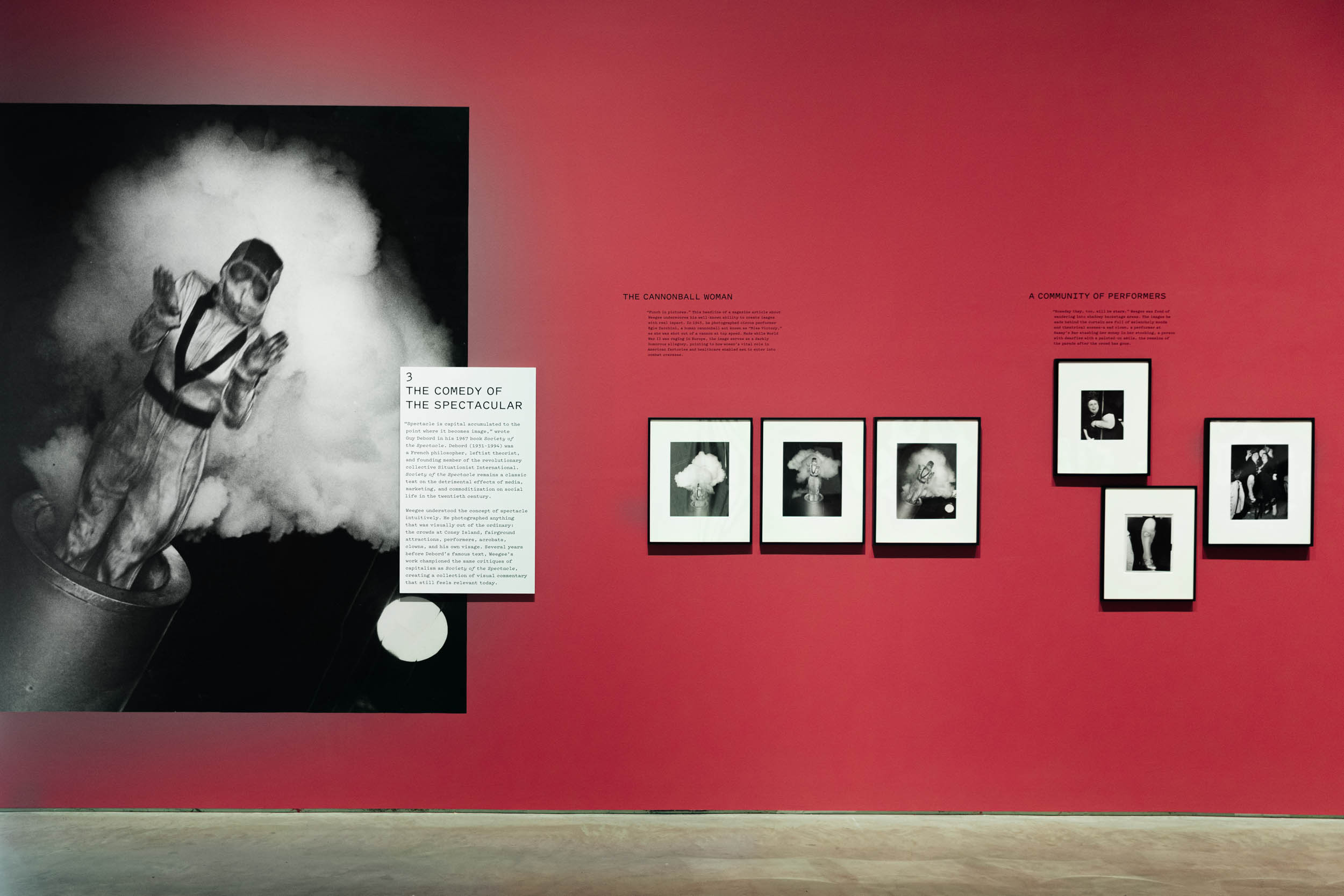
Installation view of the exhibition 'Weegee: Society of the Spectacle' at the International Center of Photography, New York


Installation view of the exhibition Weegee: Society of the Spectacle at the International Center of Photography, New York


I have so many current photography exhibitions that there will be mid-week postings for the next two weeks.

I have posted on this exhibition before when it was presented at the Foundation Henri Cartier-Bresson, Paris, January – May 2024 (“To see ourselves as others see us”) and Fundación MAPFRE, Madrid, September 2024 – January 2025 (“Self Seen”) – with a slightly different title but the same exhibition – but it is always interesting to imbibe the creativity and culture photography of Weegee’s work.

While there are the famous photographs as seen in previous postings, there are also new photographs to examine, one’s that you hardly ever see: for example [Clothing salesman, Easter Sunday, Harlem, New York] (c. 1940, below); [Mrs. Bernice Lythcott and son looking through window shattered by rock-throwing hoodlums, Harlem, New York] (October 18, 1943, below); the infrared photograph [Lovers at the movies, New York] (c. 1943, below); Ladies keep their money in their stockings… (1944, below); and Night… a black velvet curtain has dropped over the white sky… (March 2, 1944, below) – all taken during the Second World War.

Dr Marcus Bunyan


Many thankx to the ICP for allowing me to publish the photographs in the posting. Please click on the photographs for a larger version of the image.


Weegee (Arthur Fellig) (American born Ukraine, 1899-1968) 'On the Spot' December 9, 1939 from the exhibition 'Weegee: Society of the Spectacle' at the International Center of Photography, New York, Jan - May 2025


Weegee (Arthur Fellig) (American born Ukraine, 1899-1968)
On the Spot
December 9, 1939
International Center of Photography
Purchase, with funds provided by Lois and Bruce Zenkel Purchase Fund, 1982
© International Center of Photography/Getty Images


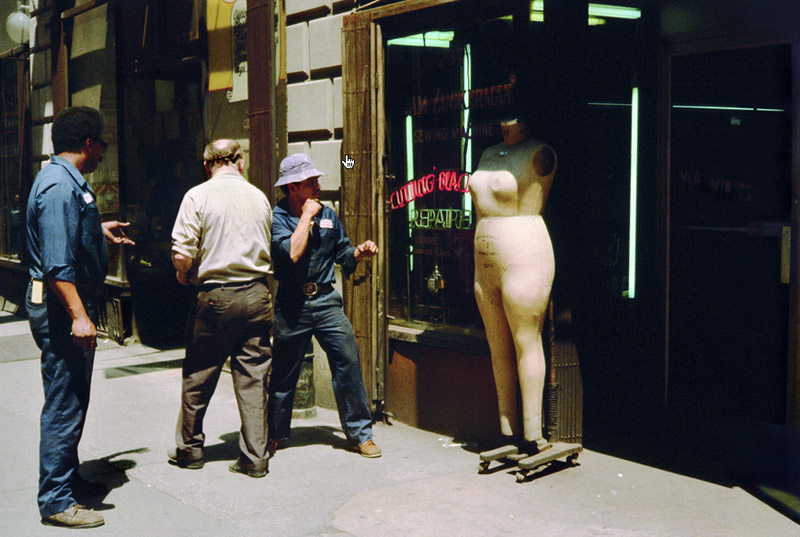
Weegee (Arthur Fellig) (American born Ukraine, 1899-1968) '[Clothing salesman, Easter Sunday, Harlem, New York]' c. 1940 from the exhibition 'Weegee: Society of the Spectacle' at the International Center of Photography, New York, Jan - May 2025


Weegee (Arthur Fellig) (American born Ukraine, 1899-1968)
[Clothing salesman, Easter Sunday, Harlem, New York]
c. 1940
International Center of Photography
Purchase, with funds provided by the Lois and Bruce Zenkel Purchase Fund, 1982
© International Center of Photography/Getty Images


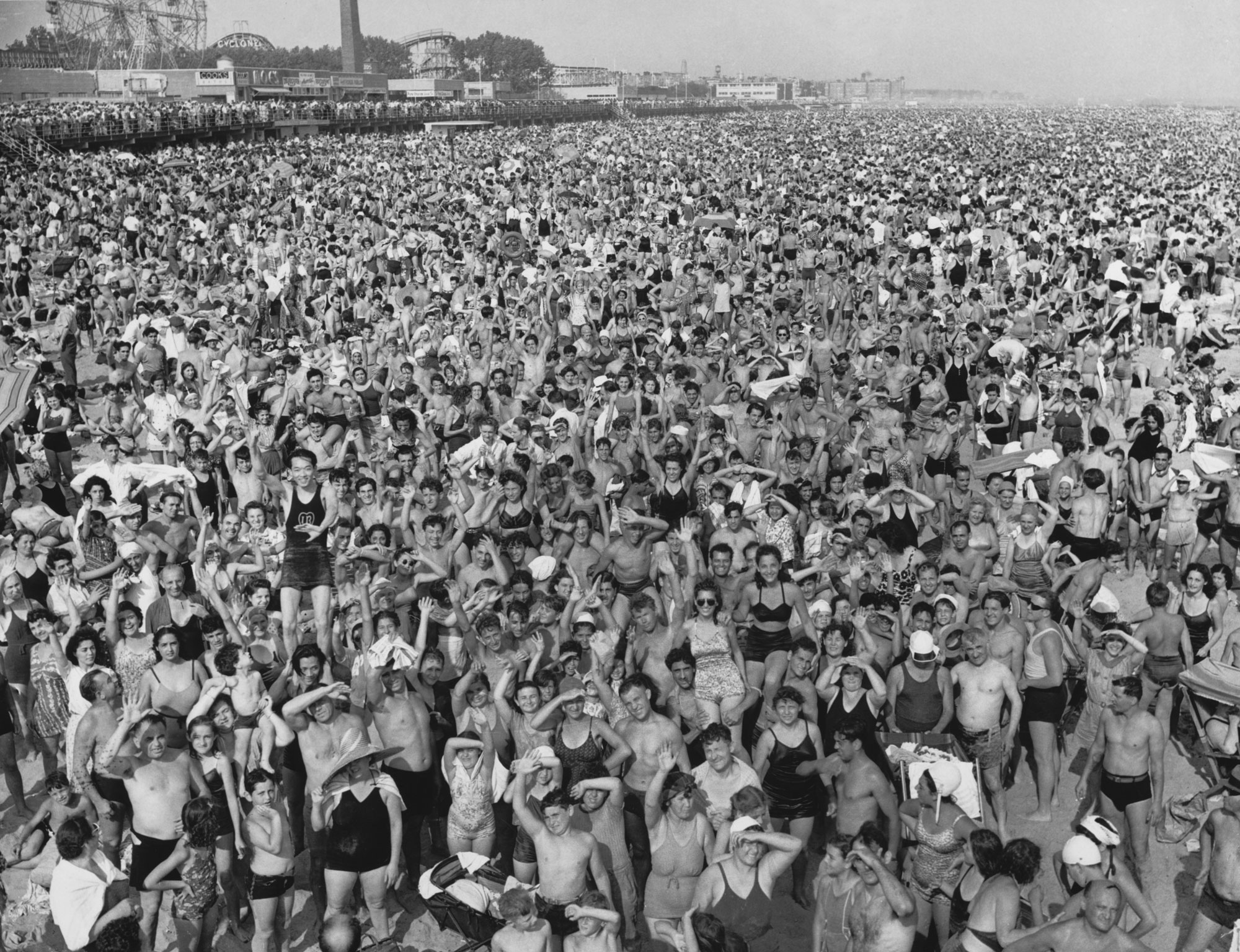
Weegee (Arthur Fellig) (American born Ukraine, 1899-1968) [Afternoon crowd at Coney Island, Brooklyn] July 21st, 1940 from the exhibition 'Weegee: Society of the Spectacle' at the International Center of Photography, New York, Jan - May 2025


Weegee (Arthur Fellig) (American born Ukraine, 1899-1968)
[Afternoon crowd at Coney Island, Brooklyn]
July 21, 1940
International Center of Photography
Bequest of Wilma Wilcox, 1993
© International Center of Photography/Getty Images


Weegee (Arthur Fellig) (American born Ukraine, 1899-1968)
'[Anthony Esposito, booked on suspicion of killing a policeman, New York]' January 16, 1941 from the exhibition 'Weegee: Society of the Spectacle' at the International Center of Photography, New York, Jan - May 2025


Weegee (Arthur Fellig) (American born Ukraine, 1899-1968)
[Anthony Esposito, booked on suspicion of killing a policeman, New York]
January 16, 1941
International Center of Photography
Purchase, with funds provided by the Lois and Bruce Zenkel
Purchase Fund, 1982
© International Center of Photography/Getty Images


The career of photographer Weegee (born Arthur Fellig, 1899-1968) is often divided into two distinct phases, one gritty, the other glamorous. Celebrated for his sensationalist images of crime scenes, fires, car crashes, and the onlookers who witnessed these harrowing events across New York City in the 1930s and ’40s, Weegee also spent time in his career documenting the joyful crowds, premieres, and celebrities of Hollywood. His documentary images on both coasts gave way to experimental portraits late in his life, which were distorted using a kaleidoscope and other tricks from his technical toolbox. Weegee: Society of the Spectacle aims to reconcile these two sides of Weegee through an investigation of his focus, throughout his career, on a critique of 20th century popular culture and its insatiable appetite for spectacle.

Weegee: Society of the Spectacle is curated by Clément Chéroux, Director of the Fondation Henri Cartier-Bresson (FHCB), Paris, in collaboration with the Weegee Archive at the International Center of Photography (ICP), New York. The exhibition opens at ICP after a run at the FHCB and the Fundación MAPFRE, Madrid. The exhibition will be accompanied by the publication Weegee: Society of the Spectacle (Thames & Hudson).

Text from the ICP website
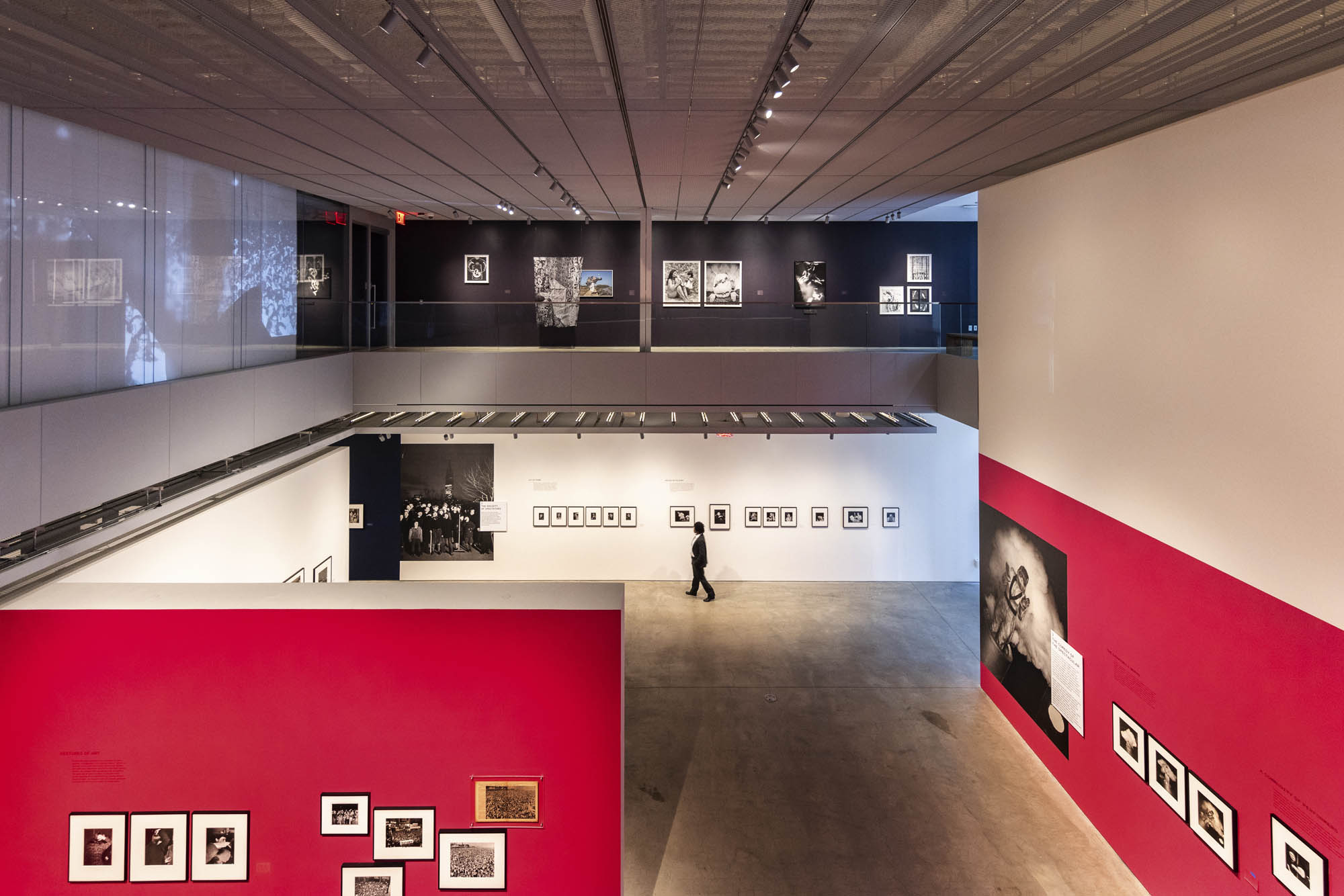
 

Installation view of the exhibition 'Weegee: Society of the Spectacle' at the International Center of Photography, New York


Installation views of the exhibition Weegee: Society of the Spectacle at the International Center of Photography, New York


Weegee (Arthur Fellig) (American born Ukraine, 1899-1968) '[Circus performer Miss Victory (Eglie Zacchini) shot out of a cannon at the speed of 360 feet a second, New York]' June 28, 1943


Weegee (Arthur Fellig) (American born Ukraine, 1899-1968)
[Circus performer Miss Victory (Eglie Zacchini) shot out of a cannon at the speed of 360 feet a second, New York]
June 28, 1943
Gelatin silver print
13 1/2 x 10 3/4 in. (34.3 x 27.3cm)
Gift of Lee C. Sievan, 1984
© International Center of Photography


Weegee (Arthur Fellig) (American born Ukraine, 1899-1968) '[Mrs. Bernice Lythcott and son looking through window shattered by rock-throwing hoodlums, Harlem, New York]' October 18, 1943


Weegee (Arthur Fellig) (American born Ukraine, 1899-1968)
[Mrs. Bernice Lythcott and son looking through window shattered by rock-throwing hoodlums, Harlem, New York]
October 18, 1943
International Center of Photography. Bequest of Wilma Wilcox, 1993
© International Center of Photography/Getty Images


Weegee (Arthur Fellig) (American born Ukraine, 1899-1968) 'Simply adding boiling water' 1943


Weegee (Arthur Fellig) (American born Ukraine, 1899-1968)
Simply Add Boiling Water
December 18, 1943
International Center of Photography
Purchase, with funds provided by Lois and Bruce Zenkel Purchase Fund, 1982
© International Center of Photography/Getty Images


Weegee (Arthur Fellig) (American born Ukraine, 1899-1968) '[Lovers at the movies, New York]' c. 1943


Weegee (Arthur Fellig) (American born Ukraine, 1899-1968)
[Lovers at the movies, New York]
c. 1943
International Center of Photography
Bequest of Wilma Wilcox, 1993
© International Center of Photography/Getty Images


Weegee (American, 1899-1968) 'Ladies keep their money in their stockings...' 1944


Weegee (Arthur Fellig) (American born Ukraine, 1899-1968)
Ladies keep their money in their stockings…
1944
International Center of Photography
© International Center of Photography/Getty Images


Weegee (Arthur Fellig) (American born Ukraine, 1899-1968) 'Night… a black velvet curtain has dropped over the white sky… a few mothers went looking for their kids… found them here… dragged them home for supper… but they are back again… but that's the same Empire State Building in the Background….' March 2, 1944


Weegee (Arthur Fellig) (American born Ukraine, 1899-1968)
Night… a black velvet curtain has dropped over the white sky… a few mothers went looking for their kids… found them here… dragged them home for supper… but they are back again… but that’s the same Empire State Building in the Background….
March 2, 1944
International Center of Photography
Bequest of Wilma Wilcox, 1993
© International Center of Photography/Getty Images


The International Center of Photography (ICP) is pleased to announce Weegee:
Society of the Spectacle,
an exhibition presented in partnership with Fondation
Henri Cartier-Bresson, Paris and curated by Clément Chéroux, Director of the
Fondation Henri Cartier-Bresson.

This exhibition revisits Weegee’s bold, boundary-pushing perspective and
celebrates his pioneering role in documenting spectacle, from crime and tragedy on New York City’s streets to distorted portraits of iconic Hollywood celebrities. The exhibition will be accompanied by a new publication created by the Fondation and Thames & Hudson that explores the impact of Weegee’s art and his critical view of urban spectacle. ICP is excited to present the new English-language edition of this important study of Weegee’s work.

Weegee: Society of the Spectacle marks the sixth major presentation of Weegee’s work at ICP and the first since it relocated to Manhattan’s Lower East Side neighbourhood, the very same one that Weegee transformed into an urban stage in his photographs. The exhibition arrives at a time when his commentary on the blurred lines between reality and performance and news and entertainment feel newly relevant and urgent in the age of smartphones and viral media where every individual has become both a voyeur and a consumer of spectacle.

Drawn largely from ICP’s Weegee collection, itself comprised of his entire studio archive and also the most comprehensive holdings of the photographer’s work in the world, Weegee: Society of the Spectacle is a re-examination of the photographer’s visual commentary on the society of his time, connecting his early career documenting New York City streets to his later work in Hollywood’s
glamorised world of celebrity and working with experimental image distortions. Long regarded as two distinct periods in his career, the works in Weegee: Society of the Spectacle challenge this division by underscoring how Weegee’s exploration of spectacle persisted across different contexts – from crime scenes and fires to red carpet premieres. Weegee’s masterful depiction of the ‘society of spectators’ captures both the unfiltered, everyday urban experience and the glossy allure of fame.

“While he may never have imagined the centrality of images to contemporary life, Weegee’s provocative and prescient perspective on urban life forces us to reflect on how we now exist simultaneously as both consumers and the consumed,” Elisabeth Sherman, Senior Curator and Director of Exhibitions and Collections at ICP, said. “In an age where technology and constant image sharing shape our reality, Weegee’s work challenges us to reconsider the camera’s role not only as a witness but as an active participant in the creation of spectacle.”

Clément Chéroux, Director at Fondation Henri Cartier-Bresson, stated,
“Weegee’s works highlight his ability to capture life’s extremes, from high society to the underworld. Often working at night, Weegee’s images of crime, fire and urban unrest reveal the harsh realities of 1930s and 1940s New York. His later shift to Hollywood did not distance him from this focus on spectacle but rather amplified his satirical approach, as he created playful distortions of celebrities that critiqued the American obsession with fame.”

The exhibition will highlight three recurring themes in Weegee’s work. The
Spectacle of the News
focuses on his nighttime photos of crime scenes, car
accidents and fires, where the onlookers are as important as the events
themselves. The Society of Spectators shows Weegee’s lens turned towards the
people on the fringes of the main action – from high-society parties to street
scenes – emphasising that spectatorship is part of the spectacle. Hollywood
Distortions
highlights Weegee’s later years, which saw him experiment with
techniques that satirised Hollywood stars and the world of celebrity through
exaggerated photo-caricatures, offering a pointed critique of the culture of fame.

The publication accompanying the exhibition, Weegee: Society of the Spectacle,
further explores these themes, presenting essays by leading photography scholars including Clément Chéroux, Isabelle Bonnet, David Campany and Cynthia Young alongside rare archival material that deepens the viewer’s understanding of Weegee’s complex legacy. The book, published by Fondation Henri Cartier-Bresson and Thames & Hudson, will be available for purchase at ICP’s bookstore and through select retailers.

Press release from ICP


Weegee (Arthur Fellig) (American born Ukraine, 1899-1968) '[St. Louis Gag Shot]' c. 1950


Weegee (Arthur Fellig) (American born Ukraine, 1899-1968)
[St. Louis Gag Shot]
c. 1950
International Center of Photography
Bequest of Wilma
Wilcox, 1993
© International Center of Photography/Getty Images


Weegee (Arthur Fellig) (American born Ukraine, 1899-1968) 'Photographers at Premiere' c. 1951


Weegee (Arthur Fellig) (American born Ukraine, 1899-1968)
Photographers at Premiere
c. 1951
International Center of Photography
Bequest of Wilma Wilcox, 1993
© International Center of Photography/Getty Images


Weegee (Arthur Fellig) (American born Ukraine, 1899-1968) 'Weegee' c. 1958


Weegee (Arthur Fellig) (American born Ukraine, 1899-1968)
Weegee
c. 1958
International Center of Photography
Bequest of Wilma Wilcox, 1993
© International Center of Photography/Getty Images


Weegee (Arthur Fellig) (American born Ukraine, 1899-1968) '[Mona Lisa distortion]' c. 1958


Weegee (Arthur Fellig) (American born Ukraine, 1899-1968)
[Mona Lisa distortion]
c. 1958
International Center of Photography
Bequest of Wilma Wilcox, 1993
© International Center of Photography/Getty Images


Weegee (Arthur Fellig) (American born Ukraine, 1899-1968) 'President John F. Kennedy (distortion)' December 2, 1962


Weegee (Arthur Fellig) (American born Ukraine, 1899-1968)
President John F. Kennedy (distortion)
December 2, 1962
International Center of Photography
Bequest of Wilma Wilcox, 1993
© International Center of Photography/Getty Images


'Weegee: Society of the Spectacle' book cover


Weegee: Society of the Spectacle book cover


International Center of Photography
84 Ludlow Street, New York, NY 10002
between Delancey Street and Broome Street

Opening hours:
Monday 10.30am – 6.30pm
Tuesday CLOSED
Wednesday 10.30am – 6.30pm
Thursday 10.30am – 8pm
Friday 10.30am – 6.30pm
Saturday 10.30am – 6.30pm
Sunday 10.30am – 6.30pm

International Center of Photography website

LIKE ART BLART ON FACEBOOK

Back to top

Exhibition: ‘Bevan Davies: New York’ at Joseph Bellows Gallery, La Jolla, California

Exhibition dates: 14th March – 9th May, 2015


Bevan Davies (American, b. 1941) '94 Greene Street, New York' 1975


Bevan Davies (American, b. 1941)
94 Greene Street, New York
1975
Vintage gelatin silver print
16 x 20 inches
© Bevan Davies


This stunning suite of large format photographs emanates from an esteemed lineage: the early morning light of Atget’s photographs of Old Paris during that cities urban renewal; the frontality of Walker Evans and his photographs of Southern churches (with both artist’s attention to the storefront facade); and the formal qualities of the New Topographic movement and the gridded topos of Bernd and Hilla Becher.

While Eugène Atget photographed the vanishing environs of Old Paris, Davies captures the urban decay of New York City, a city that was undergoing serious urban renewal in the 1970s.

The redevelopment of large sections of New York City and New York State by Robert Moses between the 1930s and the 1970s was a notable and prominent example of urban redevelopment. Moses directed the construction of new bridges, highways, housing projects, and public parks. Moses was a controversial figure, both for his single-minded zeal and for its impact on New York City… The Rondout neighbourhood in Kingston, New York (on the Hudson River) was essentially destroyed by a federally funded urban renewal program in the 1960s, with more than 400 old buildings demolished, most of them historic brick structures built in the 19th century. Similarly ill-conceived urban renewal programs gutted the historic centres of other towns and cities across America in the 1950s and 1960s.” (Anon. “Urban Renewal,” on the Wikipedia website)

In Davies’ project (and essential to his task), is the revealing of detail in these undervalued buildings. An ethereal light radiates, almost pulsates from these night time buildings – all rendered in beautifully ferrotyped prints that display a surplus of detail.

The previsualisation in these photographs is excellent. Notice how Davies pushes and pulls the viewer forward and backward in the image plane by using the device of the footpath to frame his compositions. In an image such as 94 Greene Street, New York (1975, above) – one of my favourite in this posting – the artist frames the image to stop at the edge of the pavement, allowing enough room so that the eye is led into the image. In other images, such as Broadway, New York (1976, below) or 425 Broome Street, New York (1976, below), Davies crops right up to the base of the building, forcing the viewer to acknowledge the geometric, cellular structure of the facade and nothing else. In yet other images, such as Column, Mercer Street, New York (1975, below) or 155 West Broadway, New York (1975, below) the artist pulls back from the building, allowing the pavement to anchor the building’s displacement while emphasising the columns grounding within the scene.

These really are magnificent photographs that bring the silence of the city to the fore front of our consciousness. Without the presence of human beings, the buildings take on a majesty that is usually usurped, overlooked or just plain passed by during the humdrum nature of everyday life.

Dr Marcus Bunyan


Many thankx to the Joseph Bellows Gallery for allowing me to publish the photographs in the posting. Please click on the photographs for a larger version of the image.


Bevan Davies (American, b. 1941 '652 Broadway, New York' 1976


Bevan Davies (American, b. 1941)
652 Broadway, New York
1976
Vintage gelatin silver print
16 x 20 inches
© Bevan Davies


Bevan Davies (American, b. 1941) 'Broadway, New York' 1976


Bevan Davies (American, b. 1941)
Broadway, New York
1976
Vintage gelatin silver print
16 x 20 inches
© Bevan Davies


Bevan Davies (American, b. 1941) '425 Broome Street, New York' 1976


Bevan Davies (American, b. 1941)
425 Broome Street, New York
1976
Vintage gelatin silver print
16 x 20 inches
© Bevan Davies


Bevan Davies (American, b. 1941) 'Walker Street., New York' 1976


Bevan Davies (American, b. 1941)
Walker Street., New York
1976
Vintage gelatin silver print
16 x 20 inches
© Bevan Davies


Bevan Davies (American, b. 1941) 'Hudson Street, New York' 1975


Bevan Davies (American, b. 1941)
Hudson Street, New York
1975
Vintage gelatin silver print
16 x 20 inches
© Bevan Davies


Joseph Bellows Gallery is pleased to announce its upcoming solo exhibition, Bevan Davies New York. The exhibition opens on March 14th and will continue through May 9, 2015. An opening reception will be held on Saturday, March 14th, from 6-8 pm. New York will present Davies’ luminous and highly detailed large-format black and white architectural views from the mid 1970’s, along with a selection of his earlier street portraiture from the preceding decade, in the atrium gallery.

Bevan Davies studied photography with Bruce Davidson, at the University of Chicago in early 1960’s and benefitted greatly through mentoring from Diane Arbus later in that decade. After working the street in both daylight and evening hours, photographing people at odds with society, with a hand camera, Davies changed his working methodology to describing the physical environs of the street: the building facades, alleys and streets with a tripod mounted view camera.

This change in subject and approach resulted in Davies most celebrated work. Created in 1975/76 Bevan Davies’ architectural photographs situated themselves wholly within the dictum laid forth by William Jenkins, as “New Topographics”. In fact, Davies writes of his approach as, “an effort being made to let the camera almost see by itself.” This notion was carried further by the late photographer, Lewis Baltz, who in 1976, referred to Davies’ photographs as, “rigorously contemporary, while acknowledging a use of the camera which dates from the inception of the medium.” The New York facades, taken in the early morning hours and devoid of people, describe spaces defined by light and shadow. They depict a specific time and place, as seen by the window dressings and signage, as well as portray a formal grace among the building’s details that are included within Davies’ camera frame. New York is the first comprehensive exhibition of Davies’ photographs in over two decades.

Davies photographs can be found in the collections of the J. Paul Getty Museum, Center for Creative Photography, Art Institute of Chicago, Nelson-Atkins Museum, Minneapolis Institute of the Arts, Museum of Fine Arts, Houston, George Eastman House, Corcoran Gallery of Art, Harry Ransom Center, Metropolitan Museum of Art, and the International Center of Photography.

In 2014, Nazraeli Press released Los Angeles, 1976, a monograph on Davies’ photographs from that region and era. The photographs depict the residential architecture and neighbourhoods through nuanced arrangement and clarity. A forthcoming volume on Davies’ New York photographs is in prepublication.

Press release from the Joseph Bellows Gallery


Bevan Davies (American, b. 1941) '144 Wooster Street, New York' 1976


Bevan Davies (American, b. 1941)
144 Wooster Street, New York
1976
Vintage gelatin silver print
16 x 20 inches
© Bevan Davies


Bevan Davies (American, b. 1941) 'View from 475 Broadway, New York' 1976


Bevan Davies (American, b. 1941)
View from 475 Broadway, New York
1976
Vintage gelatin silver print
16 x 20 inches
© Bevan Davies


Bevan Davies (American, b. 1941) 'Bond Street, Facing North, New York' 1976


Bevan Davies (American, b. 1941)
Bond Street, Facing North, New York
1976
Vintage gelatin silver print
16 x 20 inches
© Bevan Davies


Bevan Davies (American, b. 1941) 'Franklin and West Broadway, New York' 1976


Bevan Davies (American, b. 1941)
Franklin and West Broadway, New York
1976
Vintage gelatin silver print
16 x 20 inches
© Bevan Davies


Bevan Davies (American, b. 1941) '426 West Broadway, New York' 1975


Bevan Davies (American, b. 1941)
426 West Broadway, New York
1975
Vintage gelatin silver print
20 x 16 inches
© Bevan Davies


Bevan Davies (American, b. 1941) 'Column, Mercer Street, New York' 1975


Bevan Davies (American, b. 1941)
Column, Mercer Street, New York
1975
Vintage gelatin silver print
20 x 16 inches
© Bevan Davies


Bevan Davies (American, b. 1941) '11 Mercer Street, New York' 1976


Bevan Davies (American, b. 1941)
11 Mercer Street, New York
1976
Vintage gelatin silver print
20 x 16 inches
© Bevan Davies


Bevan Davies (American, b. 1941) '155 West Broadway, New York' 1975


Bevan Davies (American, b. 1941)
155 West Broadway, New York
1975
Vintage gelatin silver print
20 x 16 inches
© Bevan Davies


Joseph Bellows Gallery
7661 Girrard Avenue
La Jolla, California
Phone: 858 456 5620

Opening hours:
Tuesday – Saturday 11am – 5pm and by appointment

Joseph Bellows Gallery website

LIKE ART BLART ON FACEBOOK

Back to top

Exhibition: ‘Portraits of New York: Photographs from the MoMA’ at La Casa Encendida, Madrid

Exhibition dates: 27th March – 14th June, 2009

Curator: Sarah Hermanson Meister, associate curator of MoMA’s Department of Photography


Many thankx to La Casa Encendida for allowing me to publish the photographs in the posting. Please click on the photograph for a larger version of the image.


Paul Strand (American, 1890-1976) 'Wall Street, New York' 1915 from the exhibition 'Portraits of New York: Photographs from the MoMA' at La Casa Encendida, Madrid, March - June, 2009


Paul Strand (American, 1890-1976)
Wall Street
1915
Platinum palladium print


Wall Street is a platinum palladium print photograph by the American photographer Paul Strand taken in 1915. There are currently only two vintage prints of this photograph with one at the Whitney Museum of American Art (printed posthumously) and the other, along with negatives, at the Philadelphia Museum of Art. This photograph was included in Paul Strand, circa 1916, an exhibition of photographs that exemplify his push toward modernism.

It depicts a scene of everyday life in Manhattan’s Financial District. Workers are seen walking past the J.P. Morgan & Co. building in New York City on the famous Wall Street, of which the photograph takes its name. The photograph is famous for its reliance on the sharpness and contrast of the shapes and angles, created by the building and the workers, that lead to its abstraction. This photograph is considered to be one of Strand’s most famous works and an example of his change from Pictorialism to straight photography. Strand moved from the posed to portraying the purity of the subjects. It is one of several images that stand as marks of the turn to modernism in photography. …

Technique

This photograph depicts the J.P. Morgan building in New York City. Strand photographed “people hurrying to work past the banking building” situated on Wall Street, from which the photo takes its name. the subject depicted is a real-life subject without manipulation. The depiction of the real nature of the medium and the subject is an example of straight photography. There is no focal point, with the lines converging off of the frame of the image. The financial building take majority of the frame. Emphasis is placed on the strong shapes created by the architecture of the building. The workers are included in the image, but are faceless and are trumped in size by the massive square shapes from the building they walk past. Also, the workers are captured in motion which on film makes them appear blurry. This aesthetic that Strand creates in Wall Street is his break toward the modern, the straight photography, demonstrating that Pictorialism is no longer part of his aesthetic. Strand captured the building with clean, sharp lines. The building is covered in the high contrast, chiaroscuro. It is heavily in the shadows, but still creates an overwhelming presence over the people that walk past it. These people are also shrouded in the contrast made evident with the clean lines and black and white nature of his photos and photography as a medium. The people jump from their places, being the dark figures in the light of the sun that beams in from the left of the frame.

Strand fills the image with his recognisable aesthetic. The photo is platinum print, one of the materials frequently used by photographers of the time. Strand was unique in how he printed his photos. As stated on the George Eastman House website section Notes on Photography, Strand would make large prints from small negatives. He also left them in their matte condition that was inherent with platinum print. With his printing techniques, he “added a richness to the image.” As with the time, the photo is entirely black and white. There is a heavy contrast with the black and white areas of the photo. Strand creates diagonal shapes that pull emphasis to subject of the building and away from the people.

Aspects

Having taken Hine’s class at the Ethical Culture Fieldston School, social change became important to Strand and appeared often in his art. As a pupil of Hine, Strand learned of the social aspect his work could have. With Wall Street, he sought to portray a social message. He captured the faceless people next to the looming financial building in order to give a warning. Strand shows “the recently built J.P. Morgan Co. building, whose huge, dark recesses dwarf the passersby with the imposing powers of uniformity and anonymity.” The people cannot escape the overwhelming power that this modern establishment will have on their future and the future of America. He warns us to not be the small people that look almost ant-like next to this building that has a massive amount of control over the American economy.

Text from the Wikipedia website


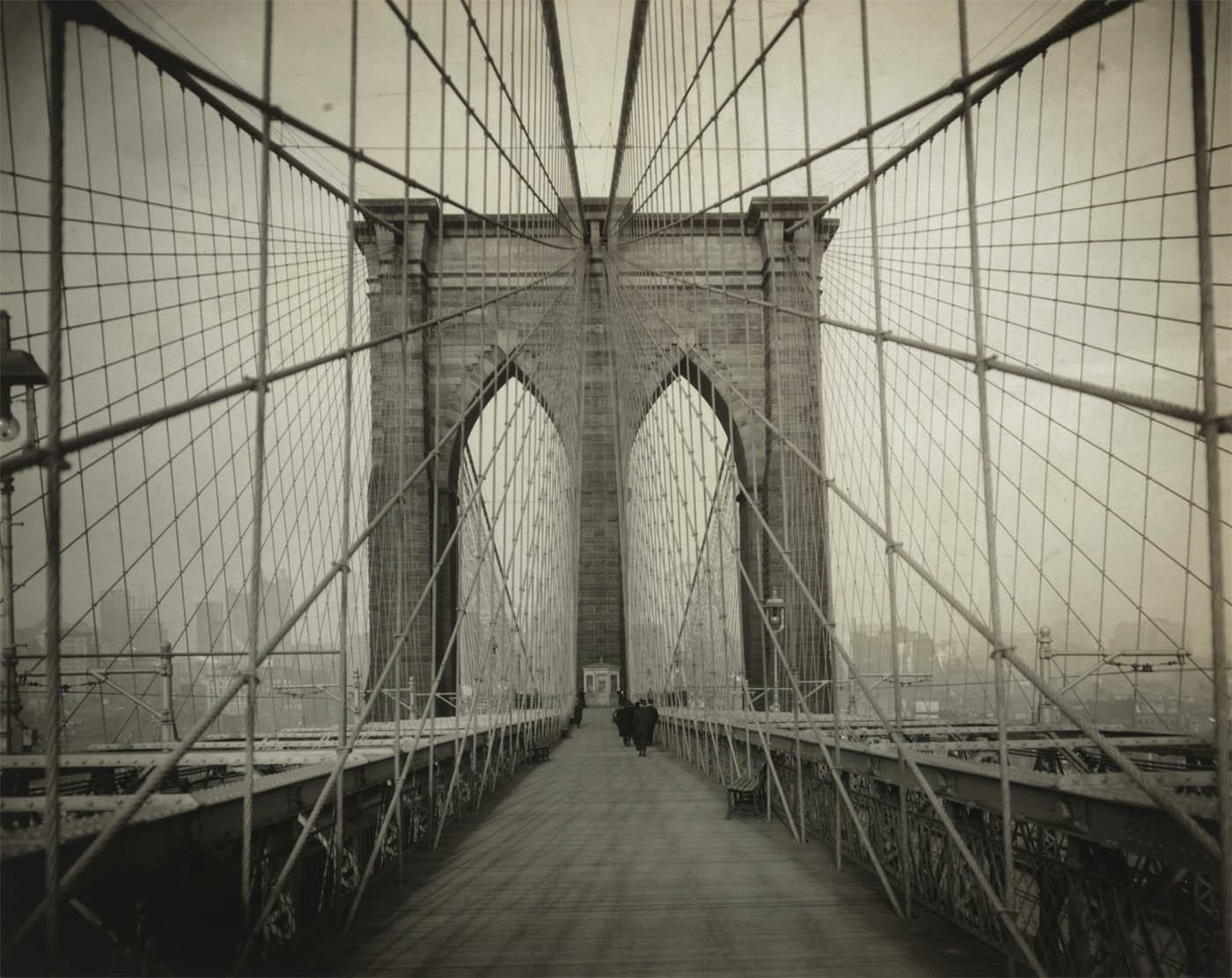
Unidentified photographer. 'Brooklyn Bridge' c. 1914


Unidentified photographer
Brooklyn Bridge
c. 1914
Gelatin silver print
7 5/8 × 9 9/16″ (19.4 × 24.3cm)
Museum of Modern Art, New York
The New York Times Collection


La Casa Encendida presents an exhibition organised by the Museum of Modern Art (MoMA), New York, which showcases a fundamental part of the institution’s assets: its photography collection. Portraits of New York: Photographs from the MoMA offers an overview of the history of photography against the backdrop of this iconic metropolis through the work of more than 90 artists.

For the show’s curator Sarah Hermanson Meister, associate curator of the MoMA’s Department of Photography, “Portraits of New York amply reflects the history of synergies between this medium and the Big Apple during a period of important transformations for both. The photographs generated by the restless and constant commitment of numerous photographs to New York City have played a fundamental role in determining how New Yorkers perceive the city and themselves. These photographs have also defined the city’s image in the world’s imagination.”

Featured artists include Berenice Abbott, Diane Arbus, Richard Avedon, Margaret Bourke-White, Henri Cartier-Bresson, Harry Callahan, Walker Evans, Andreas Feininger, Larry Fink, Robert Frank, Lee Friedlander, Lewis W. Hine, William Klein, Irving Penn, Cindy Sherman, Edward Steichen, Thomas Struth and Garry Winogrand.

Text from the La Casa Encendida website


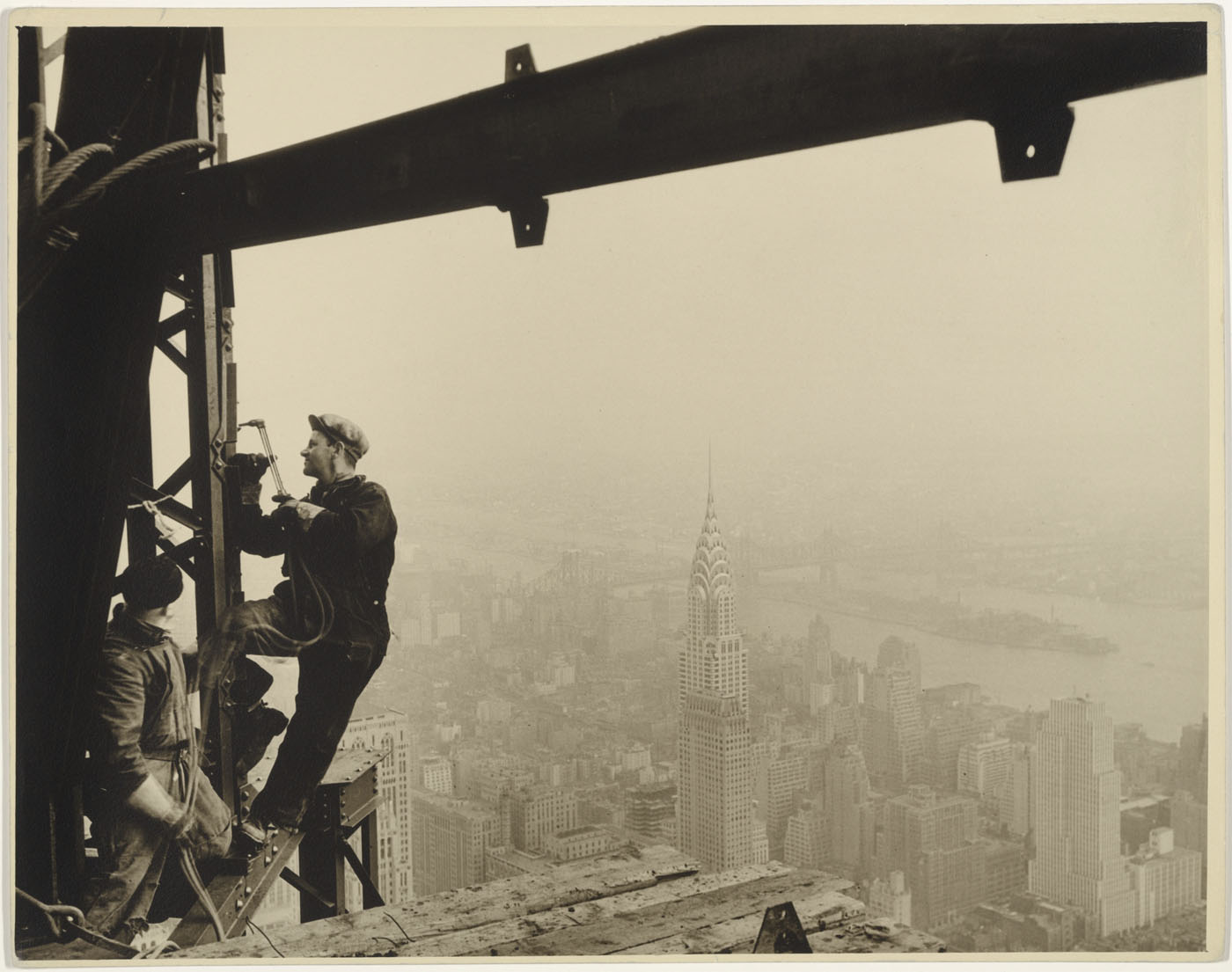
Lewis Wickes Hine (American, 1874-1940) 'Welders on the Empire State Building' c. 1930


Lewis Wickes Hine (American, 1874-1940)
Welders on the Empire State Building
c. 1930
Gelatin silver print
10 5/8 × 13 5/8″ (27 × 34.6cm)
Museum of Modern Art, New York
Committee on Photography Fund


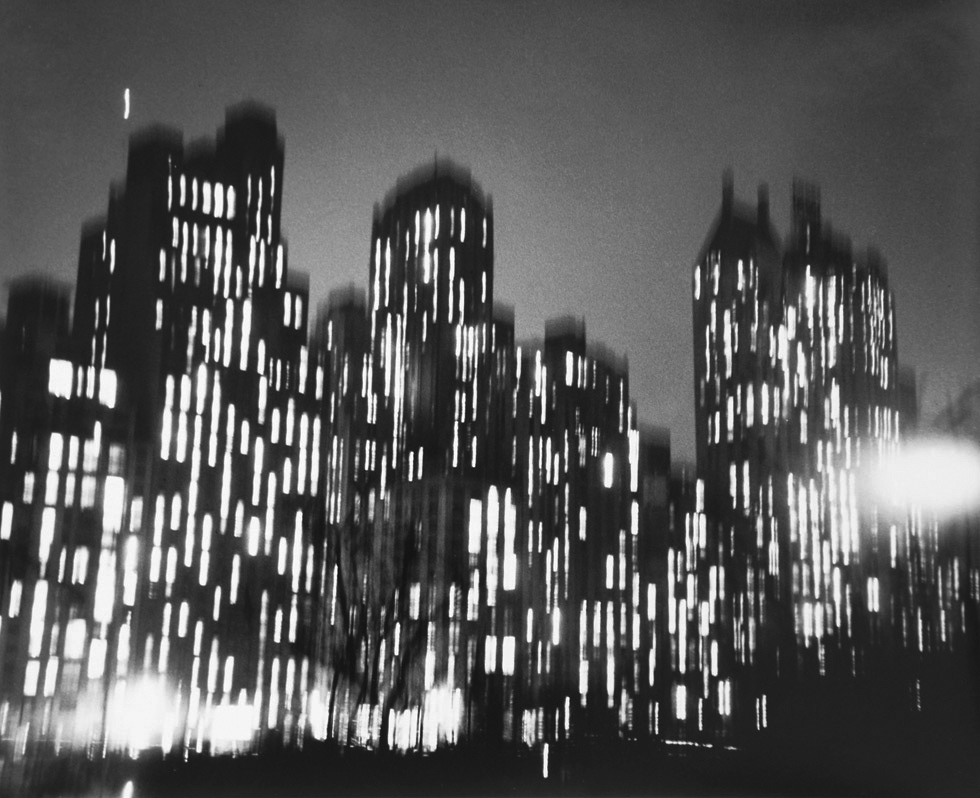
Ted Croner (American, 1922–2005) 'Central Park South' 1947-1948 from the exhibition 'Portraits of New York: Photographs from the MoMA' at La Casa Encendida, Madrid, March - June, 2009


Ted Croner (American, 1922–2005)
Central Park South
1947-1948
Silver gelatin print
10 15/16 x 13 3/4″ (27.8 x 34.9cm)
Gift of the photographer
Museum of Modern Art, New York


Ted Croner (1922-2005) was an American photographer, described as an influential member of the New York school of photography during the 1940s and 1950s. His images are said to represent the best example of this movement.

Born in Baltimore in 1922 and raised in North Carolina, Croner developed an interest in photography while in high school. He honed his skills while serving as an aerial photographer in World War II before settling in New York City in 1947. At the urging of fashion photographer Fernand Fonssagrives, he enrolled in Alexey Brodovitch’s class at The New School where he studied with Diane Arbus, Richard Avedon and Lisette Model. During this period he produced many of his most memorable images including “Taxi, New York Night, 1947-48”, which appears on the cover of Bob Dylan’s 2006 album, Modern Times. Another of Croner’s photographs was used on the cover of Luna’s album Penthouse.

Croner also had a successful career as a fashion and commercial photographer – his work was published in Harper’s Bazaar and Vogue. He also worked extensively with corporations such as Coca-Cola and Chase Manhattan Bank. Croner is best known for his haunting night images of New York City taken in the 1940s and 1950s. He was one of several important photographers who belonged to the New York school of photography.

Text from the Wikipedia website


Arthur Fellig (Weegee) (American, 1899-1968) 'Coney Island' 1940


Arthur Fellig (Weegee) (American, 1899-1968)
Coney Island
July 22, 1940
Silver gelatin print
10 5/16 x 13 11/16″ (26.2 x 34.8cm)
Anonymous gift
Museum of Modern Art, New York
© 2019 Weegee/ICP/Getty Images


Photographs from the MoMA, which will provide an in-depth look at an essential component of the MoMA’s assets: its photography collection. Curated by Sarah Hermanson Meister, associate curator of the museum’s department of photography, the exhibition offers an overview of the history of photography through the work of over 90 artists, with the iconic city as a backdrop. It includes some of the most prestigious names in photography, such as Berenice Abbott, Diane Arbus, Harry Callahan, Henri Cartier-Bresson, Walter Evans, Lee Friedlander, Helen Levitt, Cindy Sherman, Irving Penn and Alfred Stieglitz.

For Sarah Hermanson Meister, associate curator of the MoMA’s Department of Photography, “Portraits of New York amply reflects the history of synergies of this medium and of the Big Apple during a period of important transformations for both. The photographs generated by the restless and constant commitment of numerous photographers to the city of New York have played a fundamental role in determining how New Yorkers perceive the city and themselves. These photographs have also defined the city’s image in the world’s imagination.

[…] The urban landscape of the city is a combination of the old and the new in constant evolution, and these physical transformations are repeated in the demographic changes that have characterised the city since the 1880s, when massive waves of immigrants began to arrive. This same diversity can be seen in the photography of New York of the past four decades. Just as its architects are inspired and limited by surrounding structures and building codes, and just as its inhabitants learn and rub up against each other and previous generations, so too the photographers of New York transport the visual memory of a an extensive and extraordinary repertoire of images of the city. They take on the challenge of creating new works that go beyond traditions and respond to what is new in New York.”

The exhibition curator continues: “Throughout the 20th century, numerous artists have felt inspired by New York’s combination of glamour and rawness. The city – which acquired its modernity at the same pace as photography, and in an equally impetuous and undisciplined way – has always been a theme of particular vitality for photographers, both those who have visited the city and those who live in it. On one occasion, faced with the challenge of capturing the essence of New York with a camera, the photographer Berenice Abbott wondered, “How shall the two-dimensional print in black and white suggest the flux of activity of the metropolis, the interaction of human beings and solid architectural constructions, all impinging upon each other in time?” Each of the photographs reproduced here is a unique response to that question.

New York may not be the capital of the United States, but it prides itself on being the capital of the world. Its inhabitants are intimate strangers, its avenues are constantly teeming and its buildings are absolutely unmistakeable, though they are packed so close together that it is impossible to see just one. The New York subway runs twenty-four hours a day, which has earned it the sobriquet of “the city that never sleeps.” It is the model for Gotham City, the disturbing metropolis that Batman calls home, and a symbol of independence and a wellspring of opportunities in a wide variety of films, from Breakfast at Tiffany‘s to Working Girl. And this is just a sample of the captivating and abundant raw material that the city offers to artists, regardless of the medium in which they work. However, it is the convergence of photographers in this city – in this place that combines anonymity and community, with its local flavour and global ambitions – that has created the ideal setting for the development of modern photography.

Text from the La Casa Encendida website [Online] Cited 28/04/2009. No longer available online


Bruce Davidson (American, b. 1933) 'Untitled' from the 'Brooklyn Gang' series 1959


Bruce Davidson (American, b. 1933)
Untitled from the Brooklyn Gang series
1959
Silver gelatin print
6 3/4 x 10″ (17.1 x 25.4cm)
Museum of Modern Art, New York
© 2019 Magnum Photos, Inc. and Bruce Davidson


Cindy Sherman (American, b. 1954)
'Untitled Film Still #21' 1978


Cindy Sherman (American, b. 1954)
Untitled Film Still #21
1978
Silver gelatin print
7 1/2 x 9 1/2″ (19.1 x 24.1cm)
Horace W. Goldsmith Fund through Robert B. Menschel
Museum of Modern Art, New York
© 2019 Cindy Sherman


Each of Sherman’s sixty-nine Untitled Film Stills (1977-80), presents a female heroine from a movie we feel we must have seen. Here, she is the pert young career girl in a trim new suit on her first day in the big city. Among the others are the luscious librarian (#13), the chic starlet at her seaside hideaway (#7), the ingenue setting out on life’s journey (#48), and the tough but vulnerable film noir idol (#54). To make the pictures, Sherman herself played all of the roles or, more precisely, played all of the actresses playing all of the roles. In other words, the series is a fiction about a fiction, a deft encapsulation of the image of femininity that, through the movies, took hold of the collective imagination in postwar America – the period of Sherman’s youth, and the crucible of our contemporary culture.

In fact, only a handful of the Untitled Film Stills are modelled directly on particular roles in actual movies, let alone on individual stills of the sort that the studios distribute to publicise their films. All the others are inventive allusions to generic types, and so our sure sense of recognition is all the more telling. It tells us that, knowingly or not, we have absorbed the movie culture that Sherman invites us to examine as a powerful force in our lives.

Publication excerpt from The Museum of Modern Art, MoMA Highlights, New York: The Museum of Modern Art, revised 2004, originally published 1999, p. 295.


Diane Arbus (American, 1923-1971) 'Woman with Veil on Fifth Avenue, N.Y.C' 1968


Diane Arbus (American, 1923-1971)
Woman with Veil on Fifth Avenue, N.Y.C
1968
Silver gelatin print
Museum of Modern Art, New York


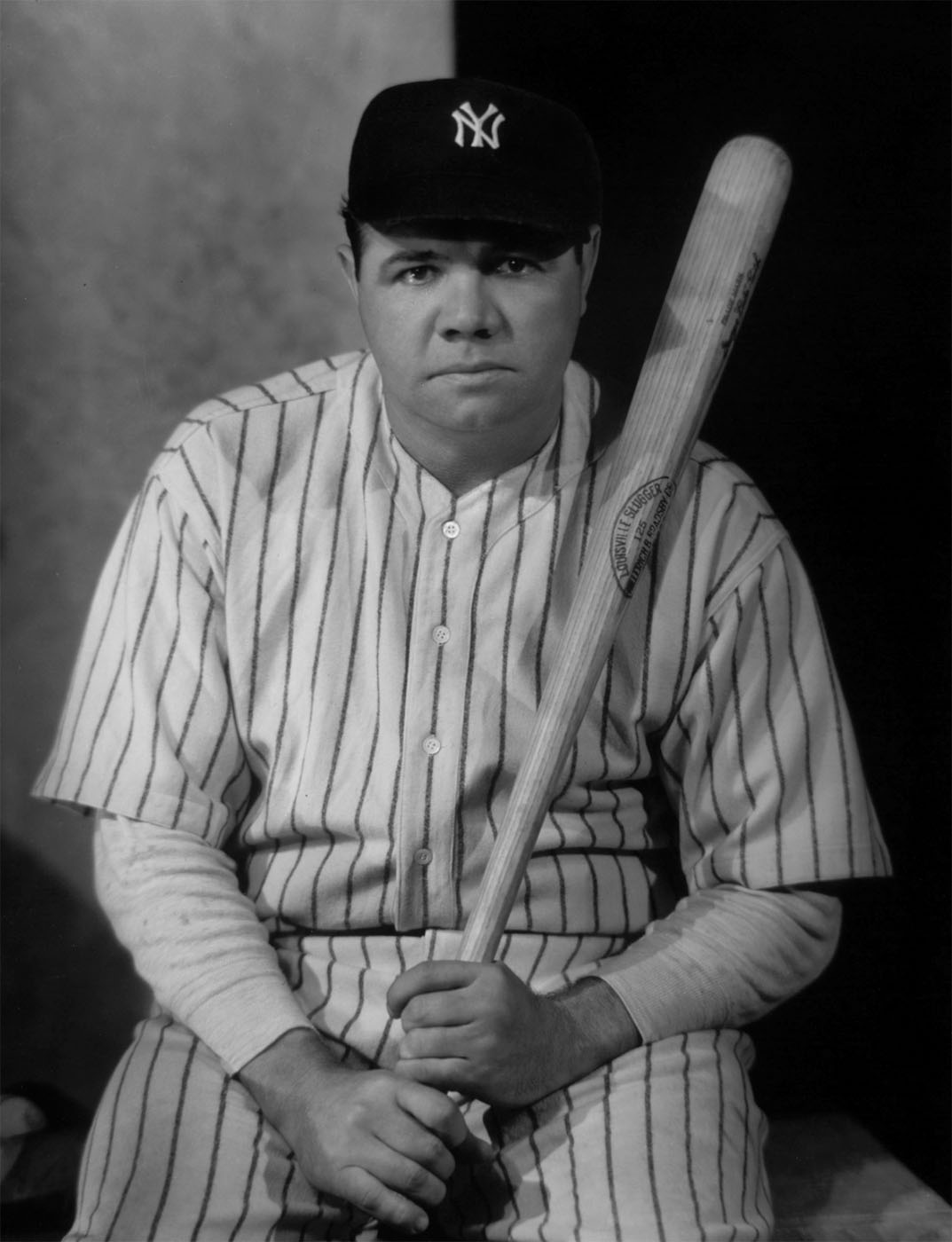
Nickolas Muray (American, 1892-1965) 'Babe Ruth' c. 1927


Nickolas Muray (American, 1892-1965)
Babe Ruth
c. 1927
Gelatin silver print
13 3/8 × 10 7/16″ (33.9 × 26.5cm)
Museum of Modern Art, New York
Gift of Mrs. Nickolas Muray


Berenice Abbott (American, 1891-1991) 'Night View, New York City' 1932


Berenice Abbott (American, 1891-1991)
Night View, New York City (New York at Night)
1932
Silver gelatin print
12 7/8 x 10 9/16″ (32.7 x 26.9cm)
Museum of Modern Art, New York
© 2019 Berenice Abbott/Commerce Graphics


La Casa Encendida
Ronda Valencia, 2 28012 Madrid

Opening hours:
La Casa Encendida is open from Monday to Sunday from 10am to 10pm every day of the year except national and Community of Madrid holidays

La Casa Encendida website

LIKE ART BLART ON FACEBOOK

Back to top

Vale Helen Levitt: Always ‘Here and There’

April 2009


Helen Levitt (American, 1913-2009) 'New York' c. 1971


Helen Levitt (American, 1913-2009)
New York
c. 1971
© Helen Levitt


“For the perfect flaneur, for the passionate spectator, it is an immense joy to set up house in the heart of the multitude, amid the ebb and flow of movement, in the midst of the fugitive and infinite. To be away from home and yet to feel oneself everywhere at home; to see the world, to be at the centre of the world, and yet to remain hidden from the world … Thus the lover of universal life enters into the crowd as though it were an immense reservoir of electrical energy …”


Charles Baudelaire. The Painter of Modern Life 1863


“At least a dozen of Helen Levitt’s photographs seem to me as beautiful, perceptive, satisfying, and enduring as any lyrical work that I know. In their general quality and coherence, moreover, the photographs as a whole body, as a book, seem to me to combine into a unified view of the world, an uninsistent but irrefutable manifesto of a way of seeing, and in a gently and wholly unpretentious way, a major poetic work.”


James Agee


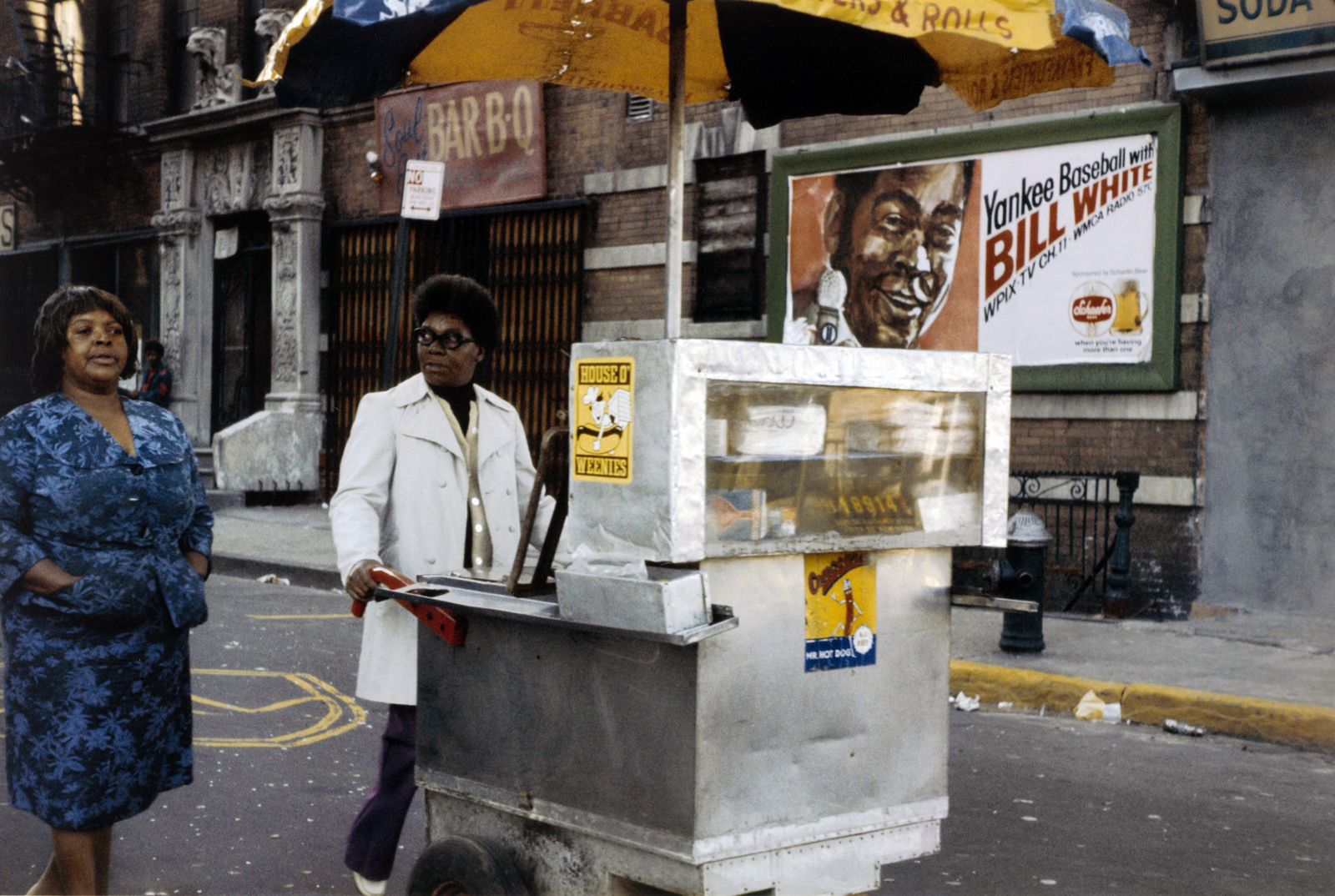
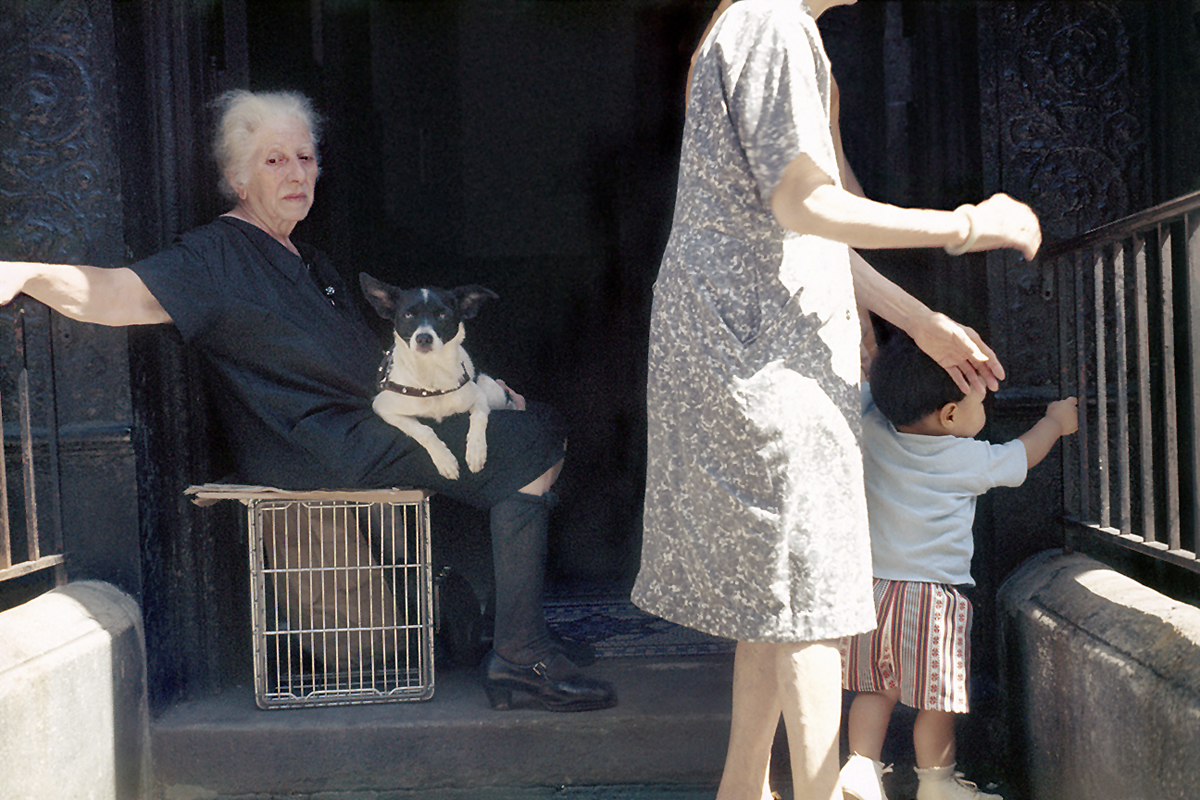
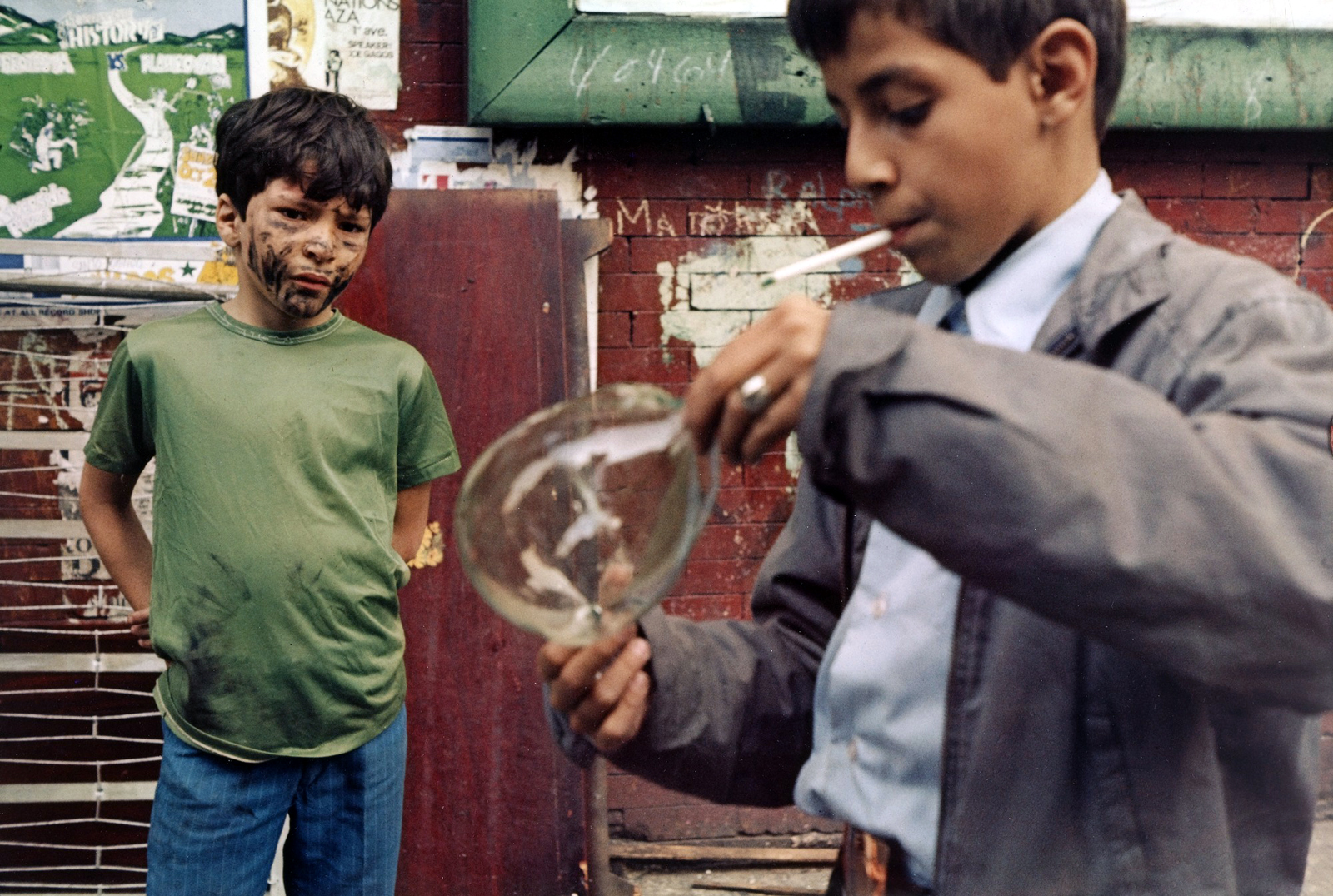
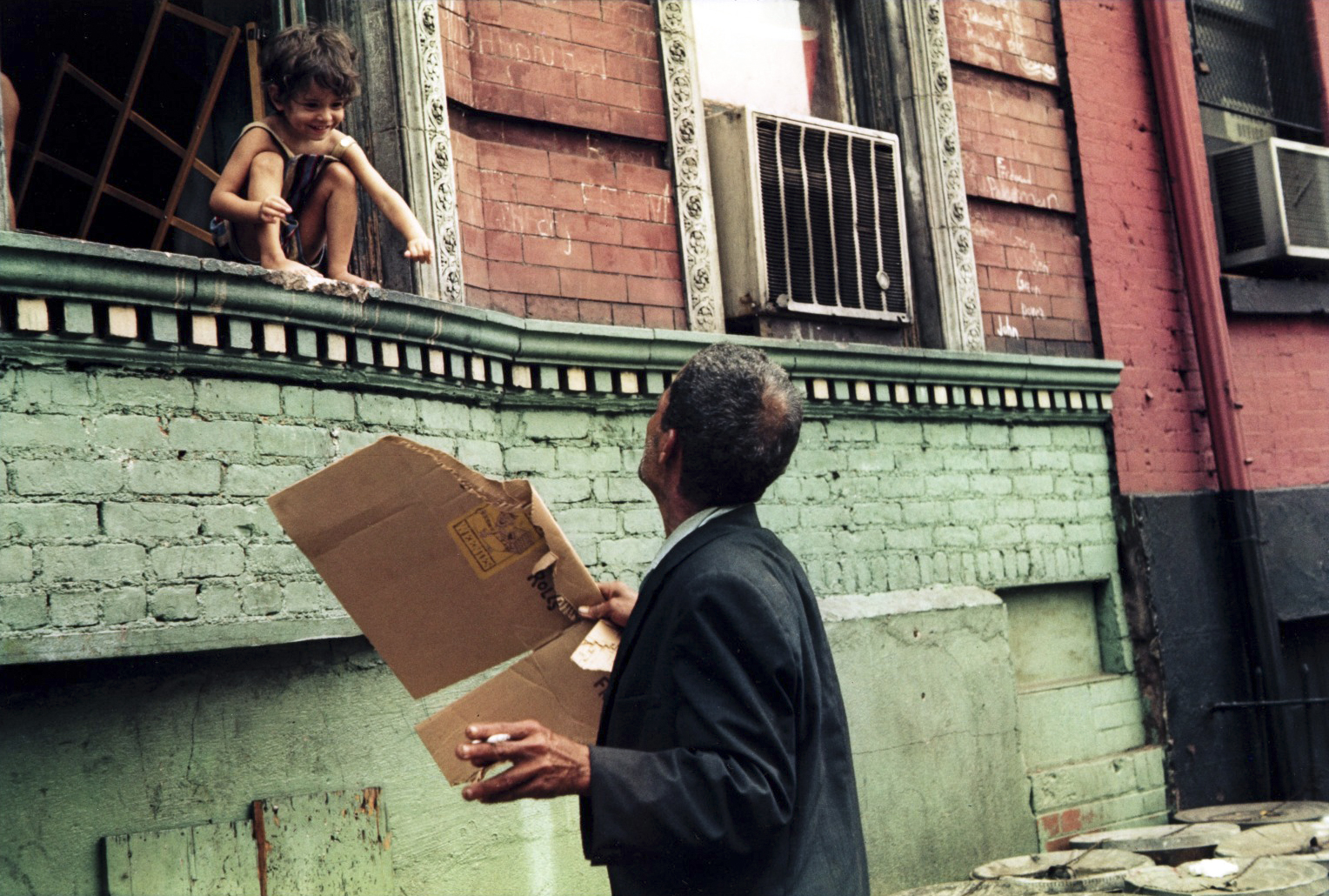
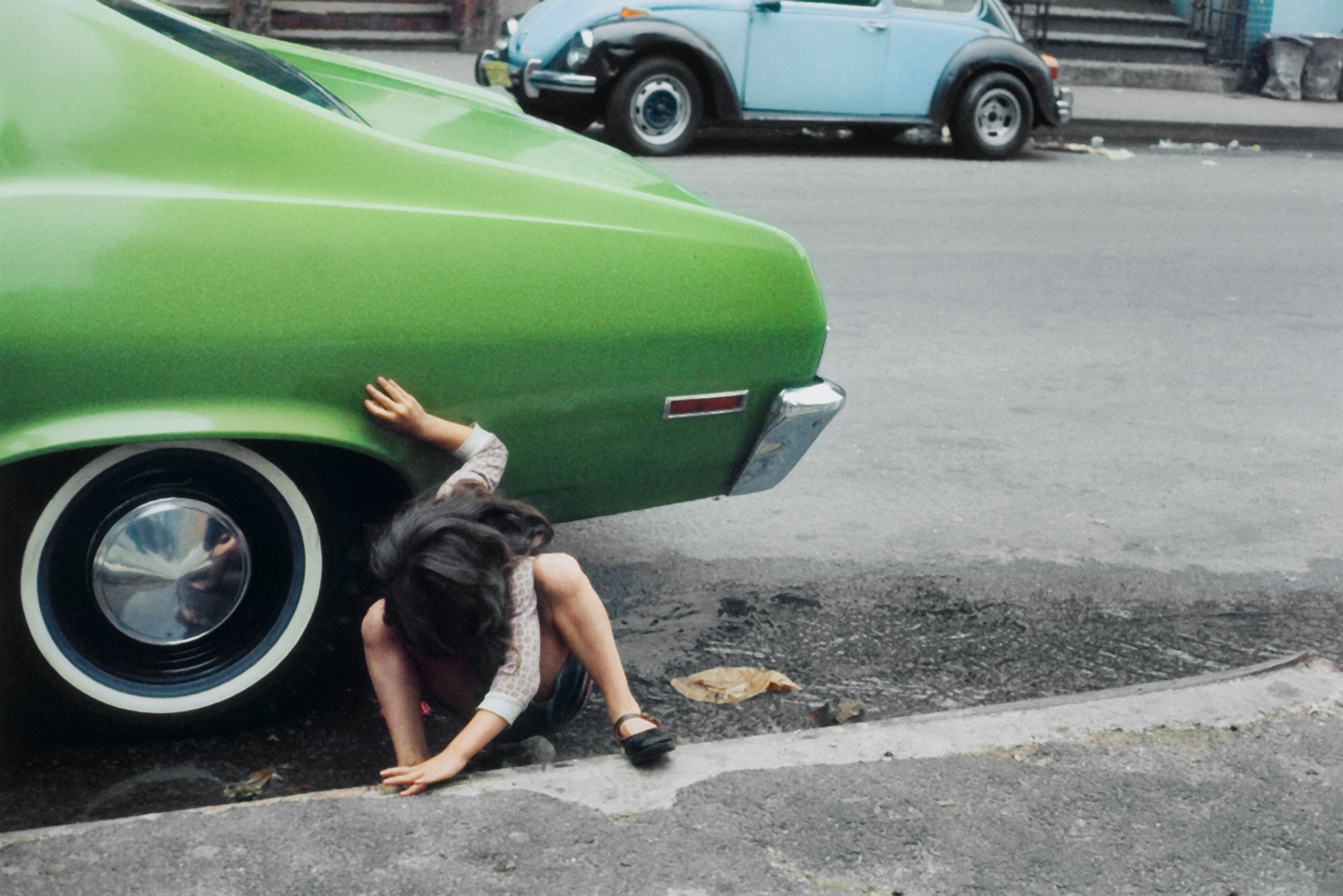
Speaking of pioneers of colour photography the wonderful American photographer Helen Levitt died recently at the end of March. Here is a selection of her colour work from the 1970s – 1980s. With two Guggenheim Foundation grants in 1959 and 1960 she switched from black and white to colour dye-transfer prints photographing the theatre of the street, the serendipity of the decisive moment previsualised and captured through awareness and an intimate knowledge of her subject matter. Unfortunately in a burglary in 1970 most of her colour transparencies and prints were stolen from that initial period.

What remains, as Sally Mann would say, are the eloquent bones of the matter: superb lush colour photographs taken after 1970 that engage the viewer not in memory but in the moment, not in nostalgia but in joy. In colour she found “beauty in correspondences.”

Dr Marcus Bunyan


Please click on some of the photographs for a larger version of the image.


Helen Levitt (American, 1913-2009) 'New York' c. 1971


Helen Levitt (American, 1913-2009)
New York
c. 1971
© Helen Levitt


Helen Levitt (American, 1913-2009) 'New York' 1972


Helen Levitt (American, 1913-2009)
New York
1972
© Helen Levitt


Helen Levitt (American, 1913-2009) 'New York' c. 1971


Helen Levitt (American, 1913-2009)
New York
c. 1971


Helen Levitt (American, 1913-2009) 'New York' 1971


Helen Levitt (American, 1913-2009)
New York
1971
© Helen Levitt


Helen Levitt

… Her pictures were mostly of Spanish Harlem and the Lower East Side. She shot them in black and white, as silver gelatin prints, in the 1930s and 1940s and in colour dye-transfer prints in the 1960s and 1970s. In between, she got into movie-making for a while. Her theme was the same, the streets of New York. Apart from a trip in 1941 to Mexico City, she never found a better subject in her life.

The grittier parts were her particular joy. Her world was run-down streets, rubble-filled building sites, warehouses and litter-strewn front steps. This was urban photography with a vengeance: small scraps of sky, no trees. When she was going with Walker Evans in 1938, borrowing his camera as well (“of course”) as sleeping with him, he used to be afraid of going as far uptown as she did. Some of her young male subjects, lounging around in their zoot suits and fedoras, had an unmistakable air of menace. But mostly she brought back images of gossiping women and her favourite, scrambling children. A right-angle viewfinder allowed her to take the picture without them knowing, even, as Evans showed her, when riding right beside them in the subway.

Here and there

Her birthplace was in Brooklyn, where her father was in the wholesale knitwear business. She aspired to something more artistic, but found she couldn’t draw. For a time she trained in ballet, which taught her to appreciate the musculature of posing bodies and the spontaneous grace of her child subjects. After dropping out of high school she went to work in the darkroom of Florian Mitchell’s commercial portrait-photography studio on $6 a week. There she was hooked.

A good image, she thought, was just lucky. But her New Yorker’s instinct seemed to tell her exactly where to wait for one. A broken-down car would soon attract people to lie under it, peer under the hood or try to push it. A cane chair, put out on the sidewalk, would draw an elderly man with cigar and newspaper, or a plump young woman in a housecoat wilting in the heat. With luck dogs would come out too, rough-haired mutts or poodles with fresh-shampooed coats. The open back of a truck would reveal delivery men moping on piles of sacks, or dozing among pink and blue bales of cloth. Any abandoned thing – a tea-chest, a mirror frame, the pillared entry of an empty building – would soon sport knots of children diving in, climbing up, fighting and contorting their small bodies in every kind of way.

Her pictures did not have names. “New York”, and the year, was the label on most of them. They did not need explaining; they were “just what you see”. Many had a backdrop of posters, graffiti or billboards, which gave a commentary of sorts. “Special Spaghetti 25 cents.” “Post No Bills.” “Nuts roasted daily.” “Buttons and Notions, One Flight Up.” “Bill Jones Mother is a Hore.” Her earliest project with her first, secondhand camera was to photograph children’s chalk drawings on the pavements. She never tried to speculate on them. What mattered was the patterns they made.

In the 1960s, when she got two Guggenheim grants, she began to shoot the streets in colour. The tricky developing ultimately frustrated her, and the streets, too, had changed. The children had retreated indoors to watch television. But where she had found grace and texture in black and white, colour now provided beauty in correspondences. The multi-coloured balls in bubble-gum machines could be picked up in a girl’s dress, or the red of a stiletto shoe matched with the frame of a shop window. Her broken-down cars were now lurid beasts against the stucco walls. And out of her peeling, greenish doorways could come women in furs, or pink hair-curlers, or orange-striped socks.

She did not rate her own work highly. Though her original prints eventually sold for tens of thousands of dollars, she let them pile up in her apartment in boxes labelled “Nothing good” or “Here and there”. Her hopes when she started were for photographs that would make a socialist statement of some sort, but she abandoned that on Cartier-Bresson’s advice. A “nice picture”, as she reluctantly admitted some of hers were, was a work of art that had value in itself, as well as a celebration of the random, teeming work of art that is the city of New York.

Anonymous. “Helen Levitt,” on The Economist website April 8th 2009 [Online] Cited 16/04/2009. No longer available online


Helen Levitt (American, 1913-2009) 'New York' c. 1972


Helen Levitt (American, 1913-2009)
New York
c. 1972
© Helen Levitt


Helen Levitt (American, 1913-2009) 'New York' c. 1972


Helen Levitt (American, 1913-2009)
New York
c. 1972
© Helen Levitt


Helen Levitt (American, 1913-2009) 'New York' 1972


Helen Levitt (American, 1913-2009)
New York
1972
© Helen Levitt


Helen Levitt (American, 1913-2009) 'New York' 1980


Helen Levitt (American, 1913-2009)
New York
1980
© Helen Levitt


Helen Levitt (American, 1913-2009) 'New York' 1971


Helen Levitt (American, 1913-2009)
New York
1971
© Helen Levitt


Slide Show: The Color Photographs of Helen Levitt by John Szarkowski, Powerhouse Books, 2005 is available from the Amazon website. The photograph above is used on the cover of the book.

LIKE ART BLART ON FACEBOOK

Back to top