Exhibition: ‘People In A River Landscape: August Sander And The Photography Of The Present From The Lothar Schirmer Collection’ at the Pinakothek der Moderne, Munich

Exhibition dates: 2nd April – 24th August 2014


August Sander (German, 1876-1964) 'Stadtwald [Urban Forest]' c. 1938


August Sander (German, 1876-1964)
Stadtwald [Urban Forest]
c. 1938
Gelatin silver print
23 x 29cm
Lothar Schirmer Collection, Munich
© The Photographic Collection, SK Stiftung Kultur – August Sander Archive, Cologne, VG Bild-Kunst, Bonn 2014


What a fascinating exhibition this looks to be… I wish I could see it!
Quite a few Sander photographs I have never seen before in the posting.
Sander is another photographer that would be near the top of my list.

Marcus


Many thankx to the Pinakothek der Moderne for allowing me to publish the photographs in the posting. Please click on the photographs for a larger version of the image.


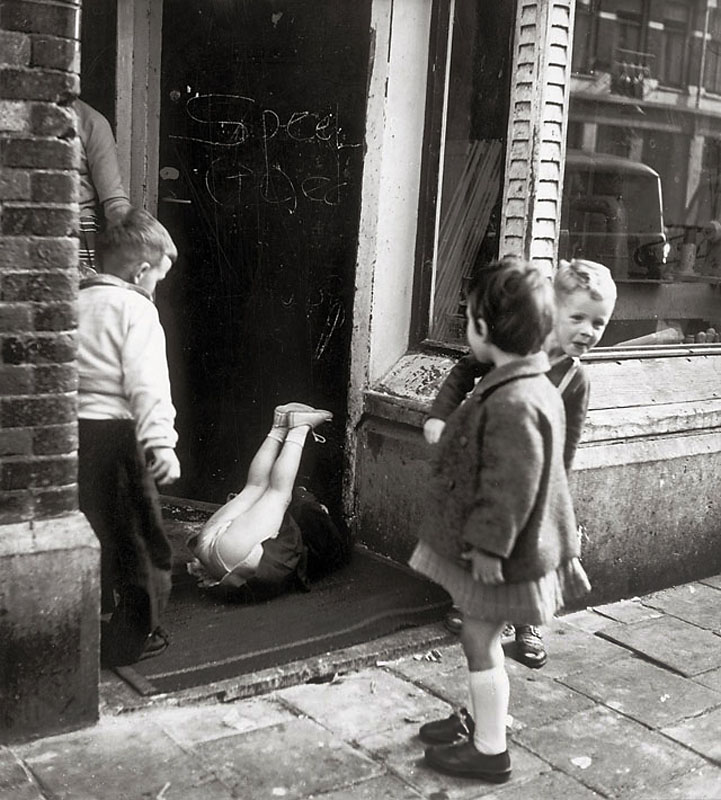
August Sander (German, 1876-1964) 'Children in the city' 1930


August Sander (German, 1876-1964)
Children in the city
1930
Gelatin silver print
21.3 x 26cm (sheet)
Lothar Schirmer Collection, Munich
© The Photographic Collection, SK Stiftung Kultur – August Sander Archive, Cologne, VG Bild-Kunst, Bonn 2014


August Sander (German, 1876-1964) 'Alter Posthof in Bacharach' 1926


August Sander (German, 1876-1964)
Alter Posthof in Bacharach
1926
Gelatin silver print
15.3 x 21.4cm
Lothar Schirmer Collection, Munich
© The Photographic Collection, SK Stiftung Kultur – August Sander Archive, Cologne, VG Bild-Kunst, Bonn 2014


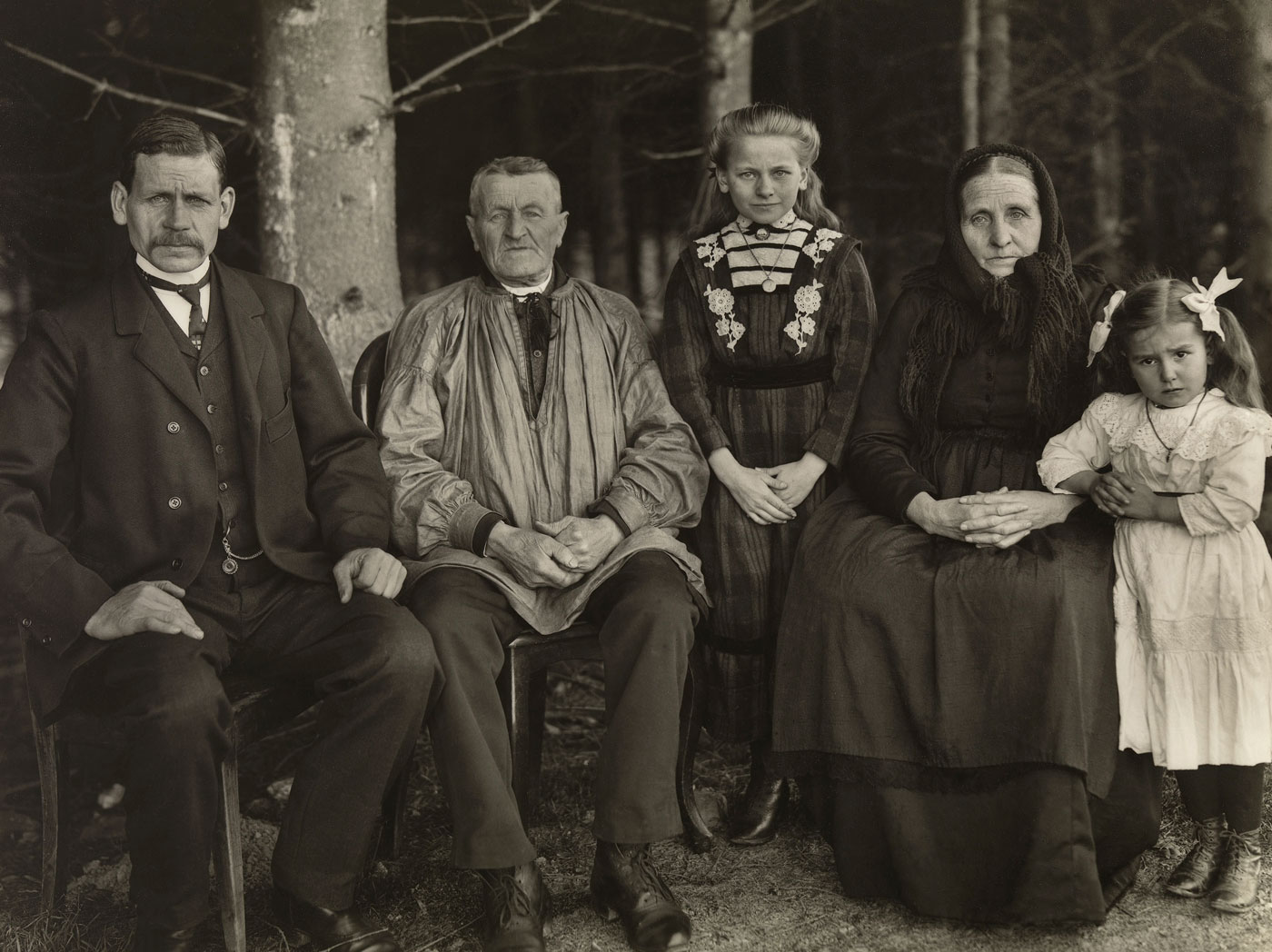
August Sander (German, 1876-1964) 'Die Familie in der Generation' 1912


August Sander (German, 1876-1964)
Die Familie in der Generation
1912
Gelatin silver print
21.5 x 28.6cm
Lothar Schirmer Collection, Munich
© The Photographic Collection, SK Stiftung Kultur – August Sander Archive, Cologne, VG Bild-Kunst, Bonn 2014


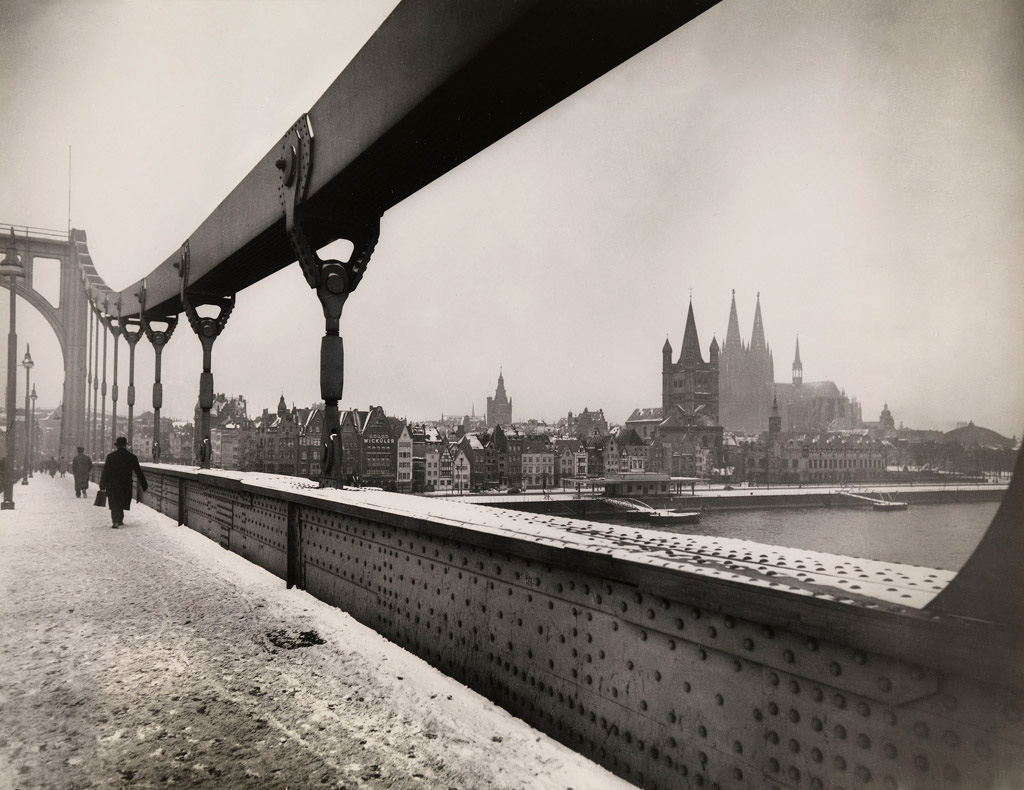
August Sander (German, 1876-1964) 'Deutz Bridge, Rhine in winter' 1937


August Sander (German, 1876-1964)
Deutz Bridge, Rhine in winter
1937
Gelatin silver print
Lothar Schirmer Collection, Munich
© The Photographic Collection, SK Stiftung Kultur – August Sander Archive, Cologne, VG Bild-Kunst, Bonn 2014


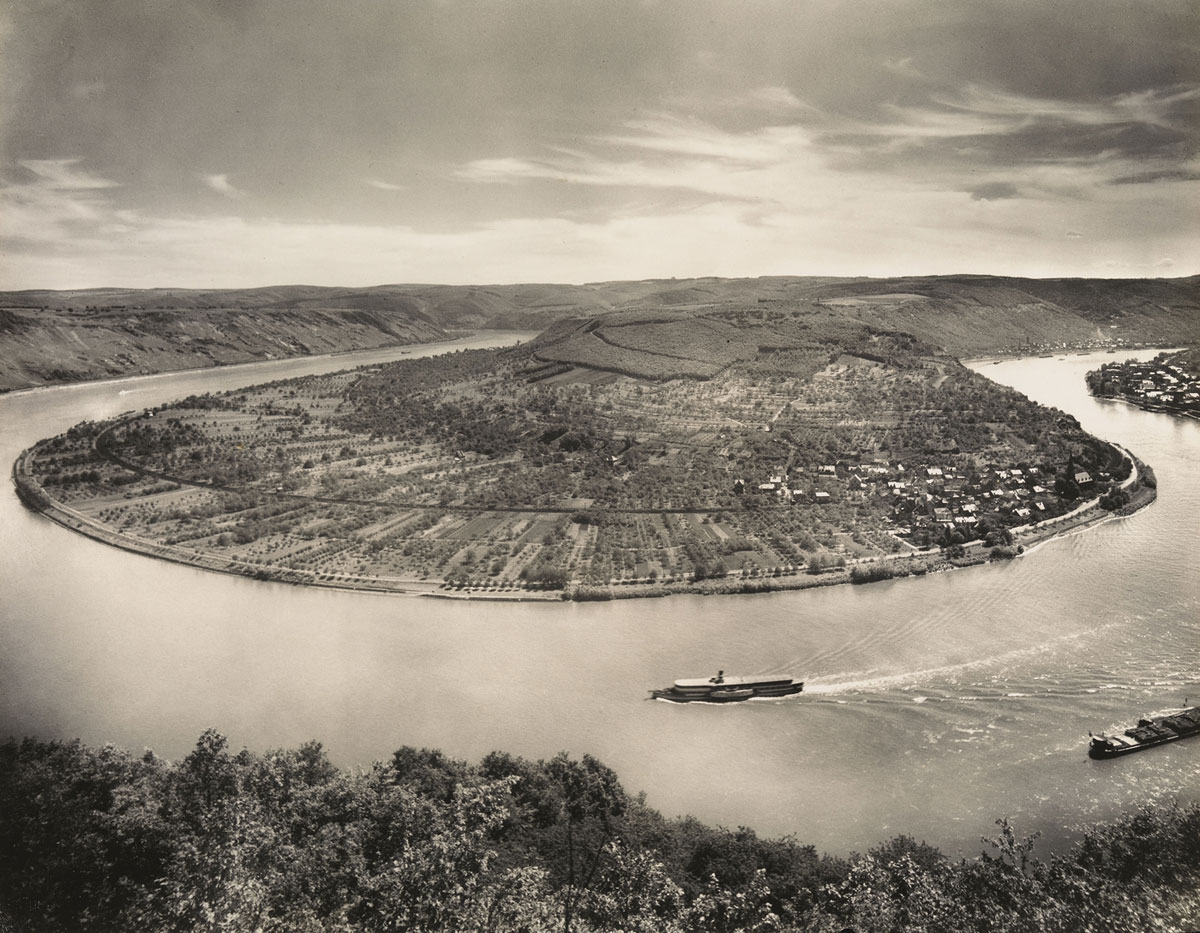
August Sander (German, 1876-1964) 'The Rhine near Boppard, Osterspey' 1938


August Sander (German, 1876-1964)
The Rhine near Boppard, Osterspey
1938
Gelatin silver print
22.9 x 29.3 cm
Lothar Schirmer Collection, Munich
© The Photographic Collection, SK Stiftung Kultur – August Sander Archive, Cologne, VG Bild-Kunst, Bonn 2014


Andreas Gursky (German, b. 1955) 'The Rhine II' 1999


Andreas Gursky (German, b. 1955)
The Rhine II
1999
Chromogenic print
1564 x 3083 mm


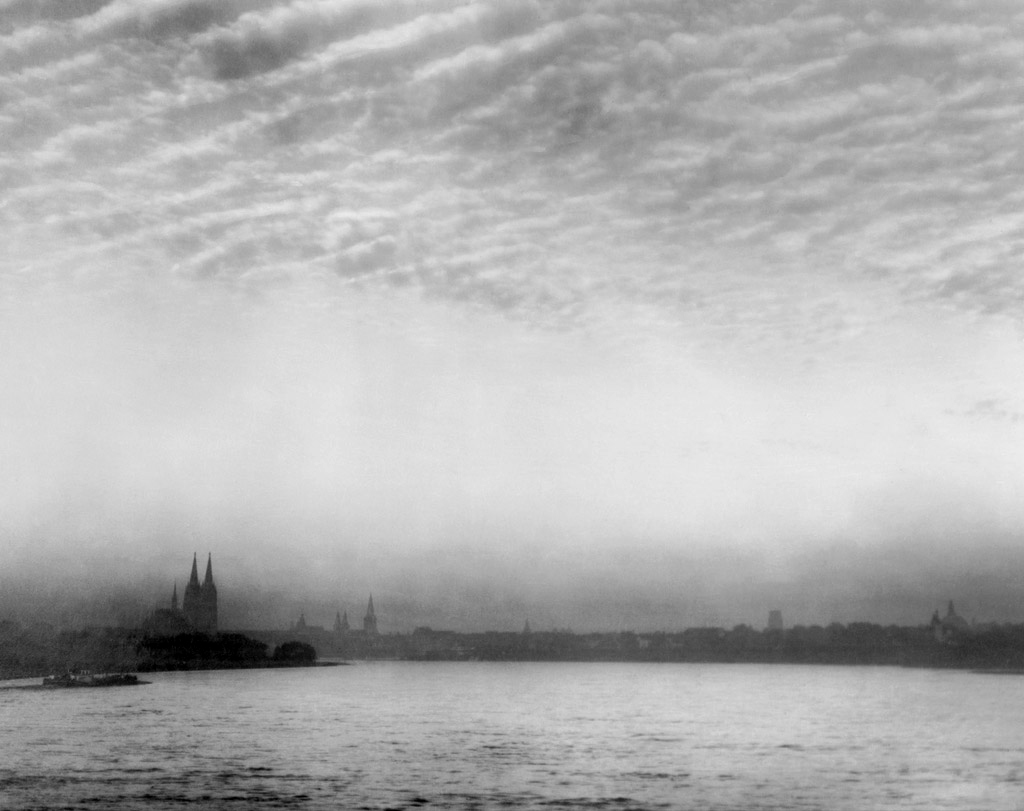
August Sander (German, 1876-1964) 'View from the Mülheim Bridge, Sunrise' 1938


August Sander (German, 1876-1964)
View from the Mülheim Bridge, Sunrise
1938
Gelatin silver print
Lothar Schirmer Collection, Munich
© The Photographic Collection, SK Stiftung Kultur – August Sander Archive, Cologne, VG Bild-Kunst, Bonn 2014


August Sander’s epochal cycle People of the 20th Century is considered one of the most important works in the history of art and photography of the last century.

Sander’s photographic typology of German society did not only fascinate artists, writers and philosophers of that period but, at the same time, formed an important point of reference for the artistic concept contemporary photographers had of themselves. This is also reflected in the Munich publisher Lothar Schirmer’s photographic collection, the starting point of which was a group of some 80 works by Sander comprising not only portraits, but also landscapes and urban pictures, acquired in the early 1970s.

This batch of works, acquired from the artist’s estate back in the 1970s, comprises not only more than 40 originals of Sander’s famous portraits, including masterpieces such as the Stammmappe focussing on farmers in Westerwald, the portrait of the artist Heinrich Hoerle in the austere style of New Objectivity and Handlanger, with its impressive visual directness, but also a rare group of lesser known Rhineland landscapes and vedute of Cologne from the 1930s. Precisely the last two groups of works mentioned are enduring proof that Sander’s vision of an equally authentic and veritable document of the times was not only to be limited to people within their social and societal structure but should also include their immediate surroundings, the landscape and the urban environment – an aspect that, for a long time, was given little attention in analyses of the photographer’s work since his death in April, fifty years ago.

In view of the undisputed importance of Sander’s portraits, it is surprising that a more extensive selection of the photographer’s work is only now to be seen in the exhibition People in a River Landscape – and that in Munich too, although there were in fact a number of links between the artist and the city. Sander’s pioneering photography book, Antlitz der Zeit, was published in 1929 by the Munich-based Kurt Wolff Verlag; one year later, his works were to be seen in the exhibition Das Lichtbild – one of the rare presentations of Sander’s works anywhere before 1933; and in the 1960s and ’70s his extensive estate was stored not far from Munich.

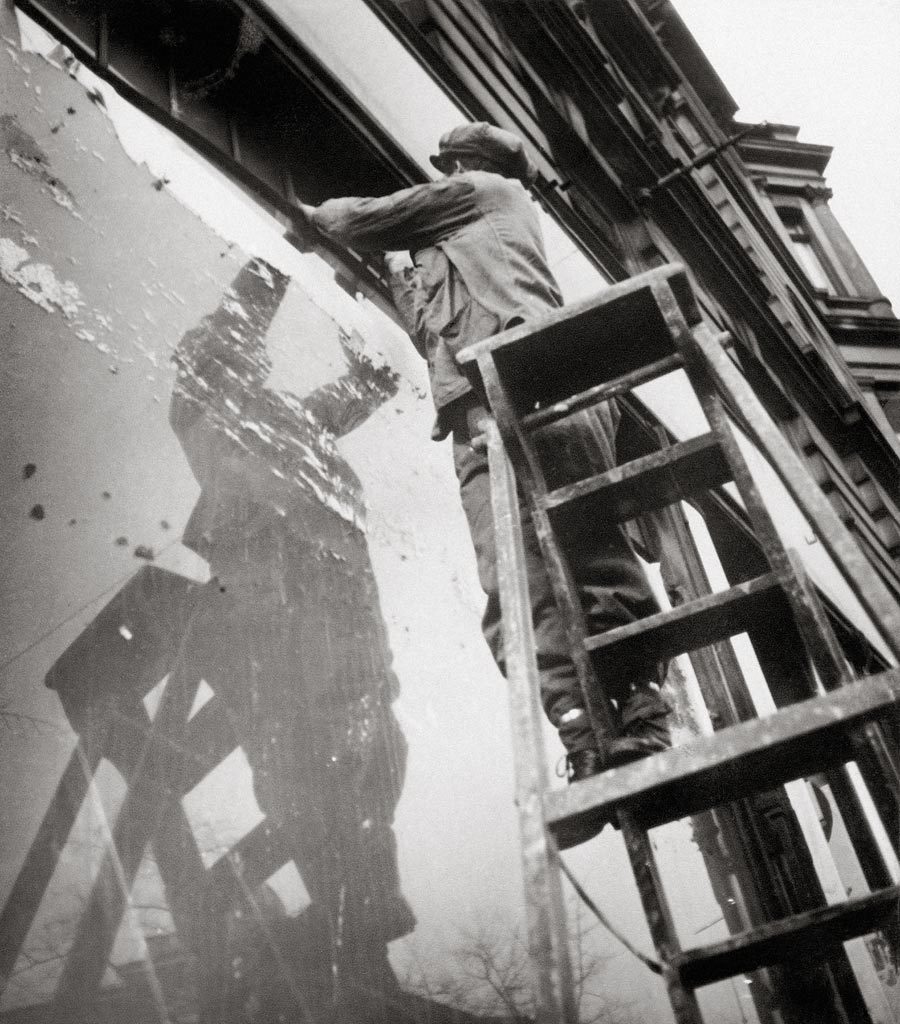
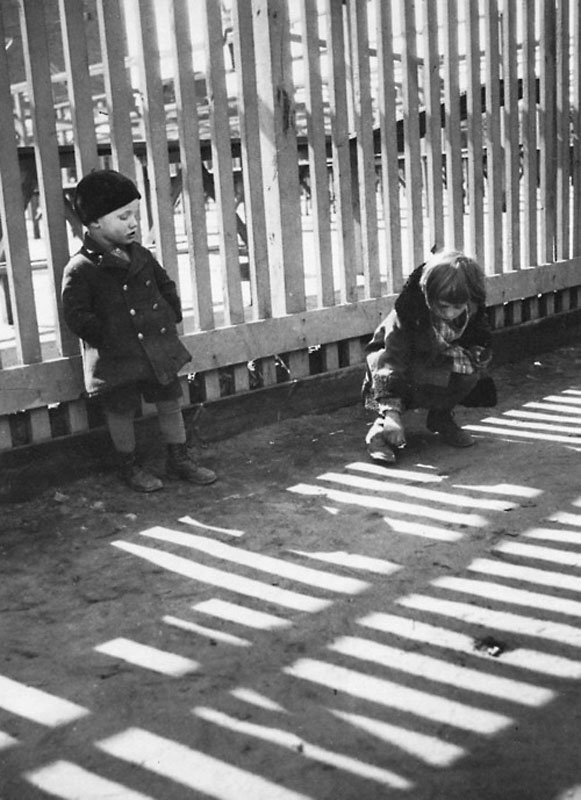
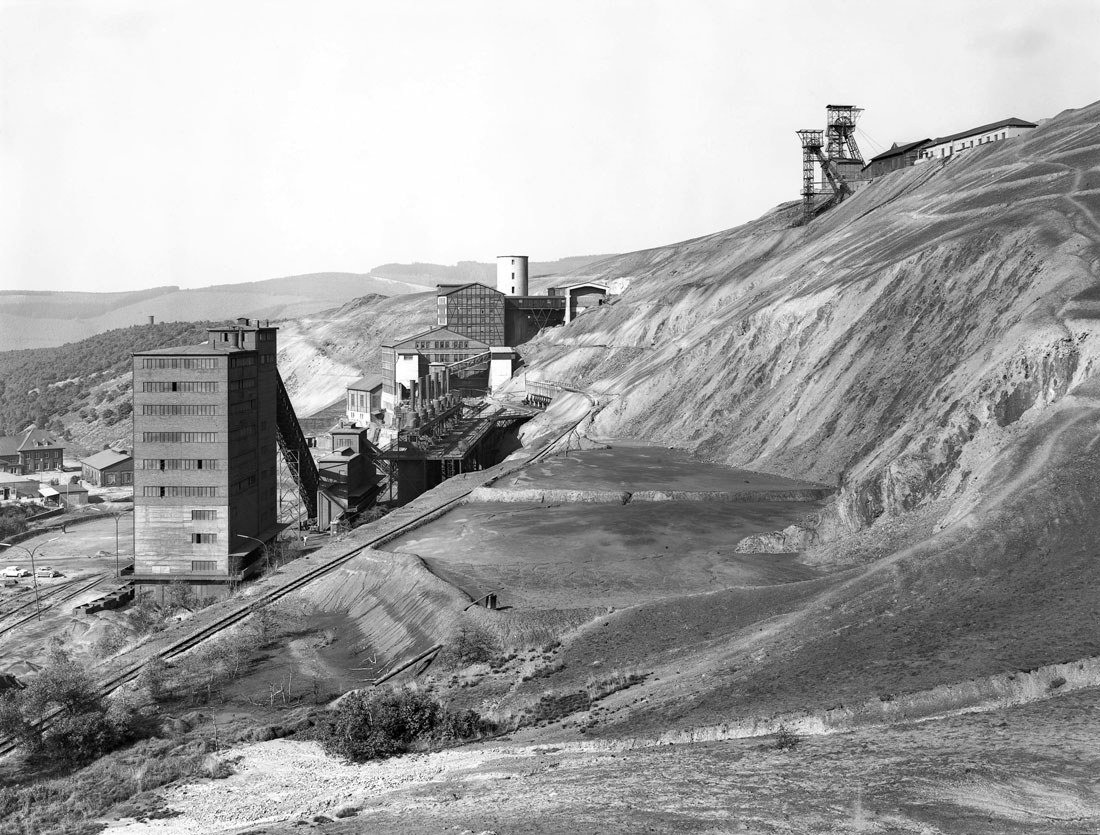
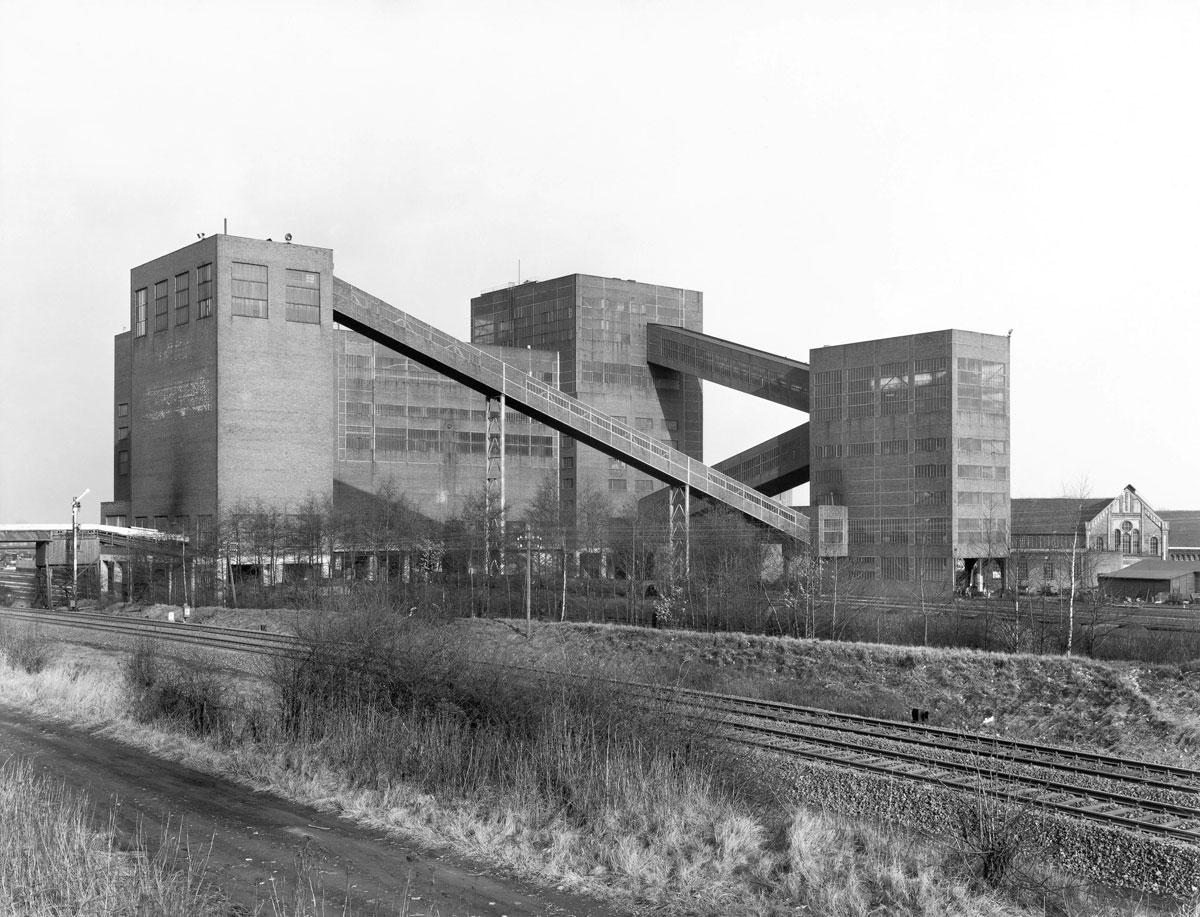
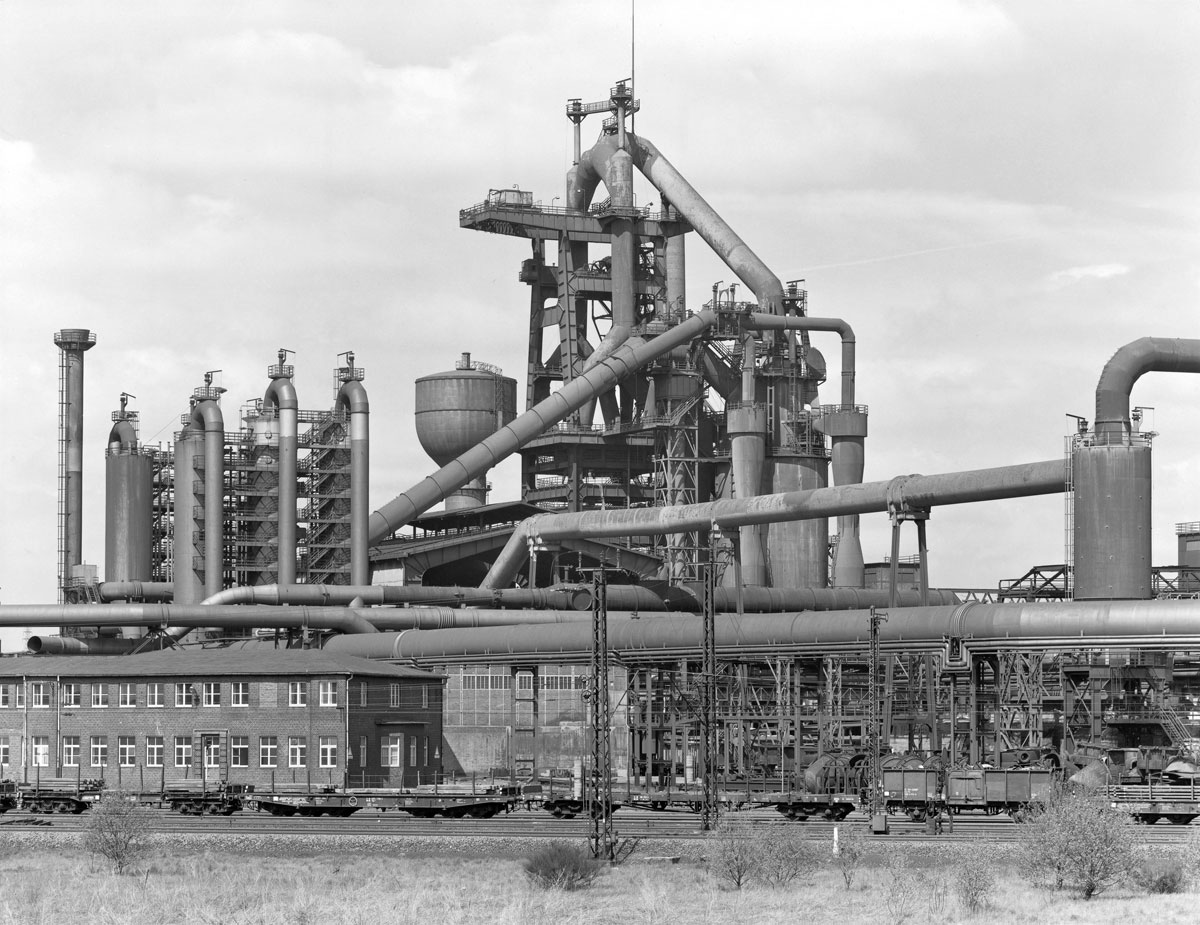
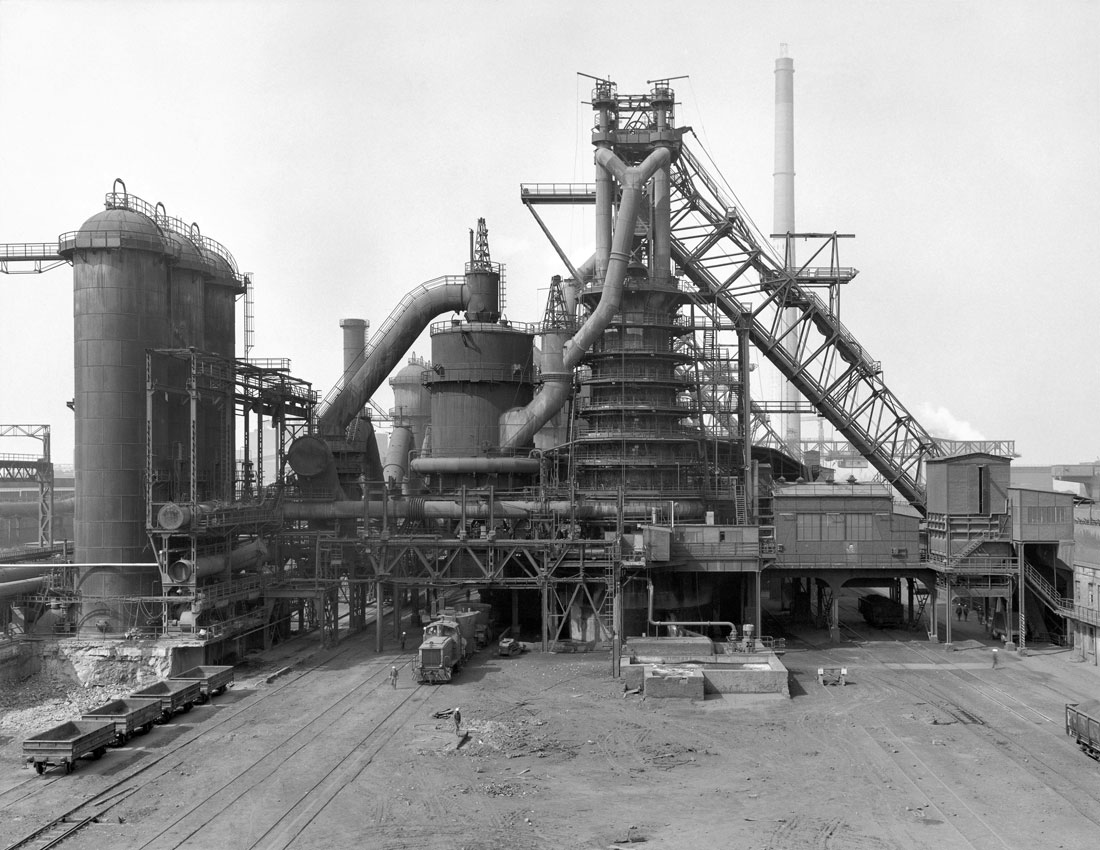
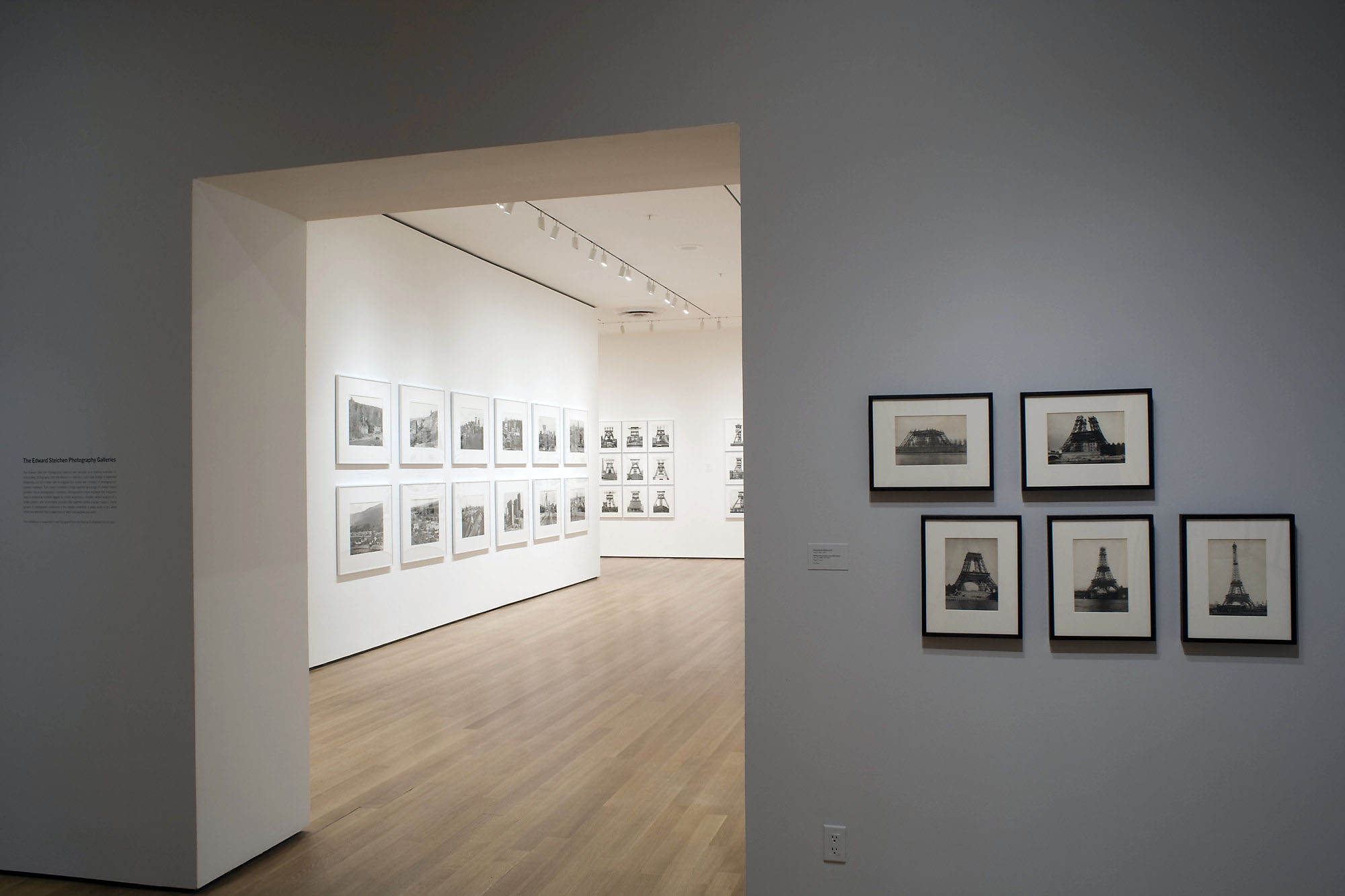
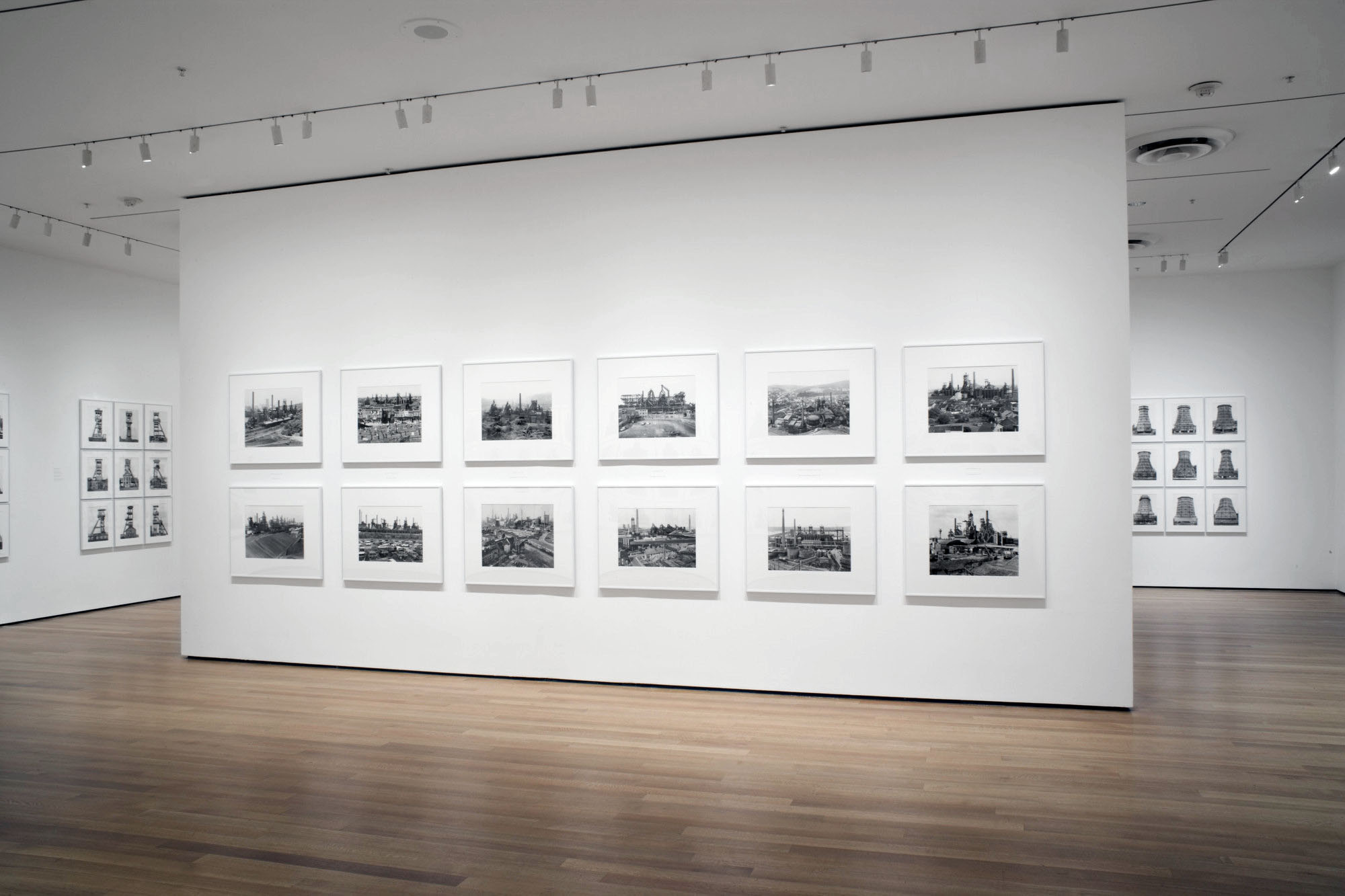
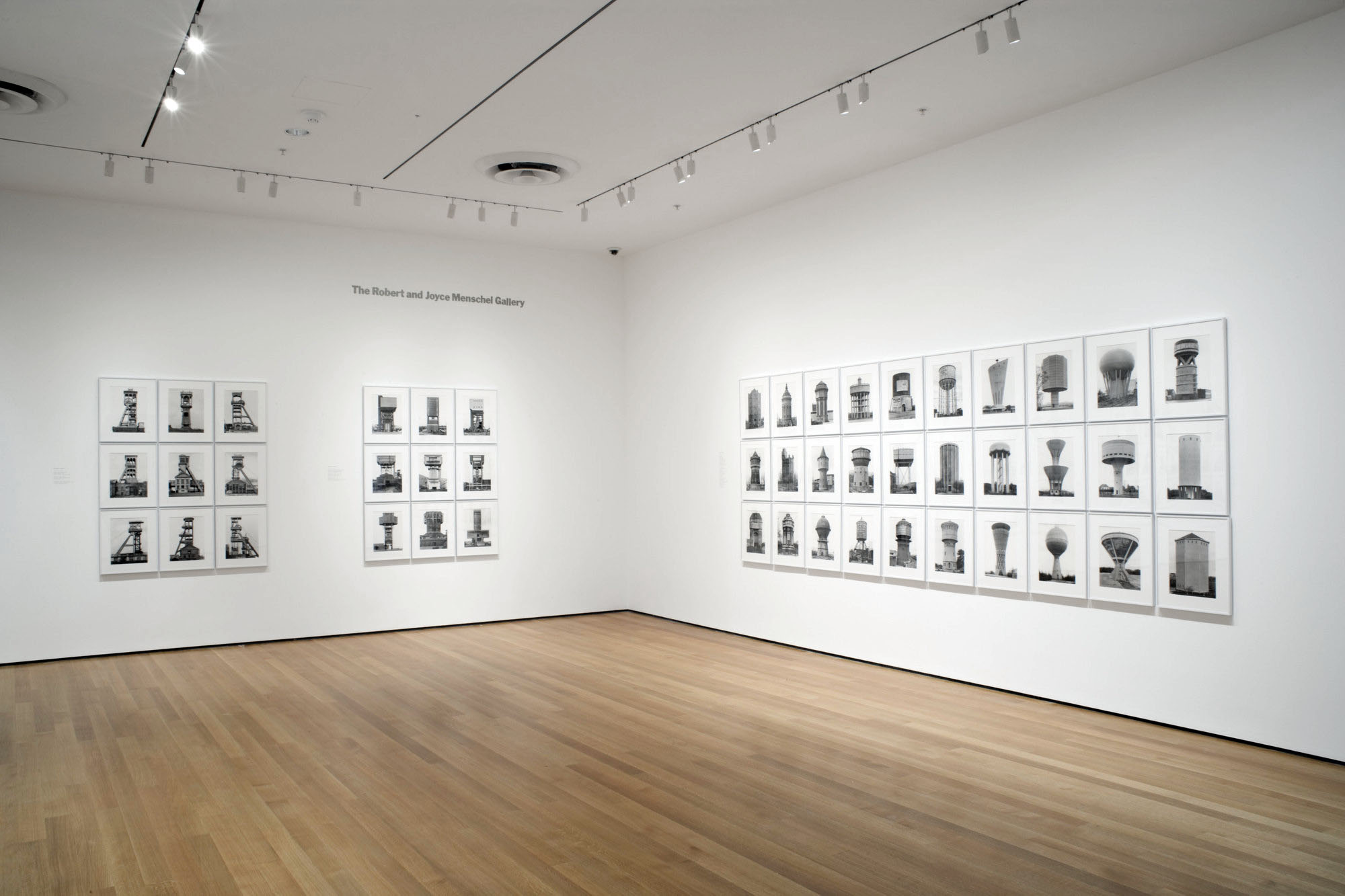
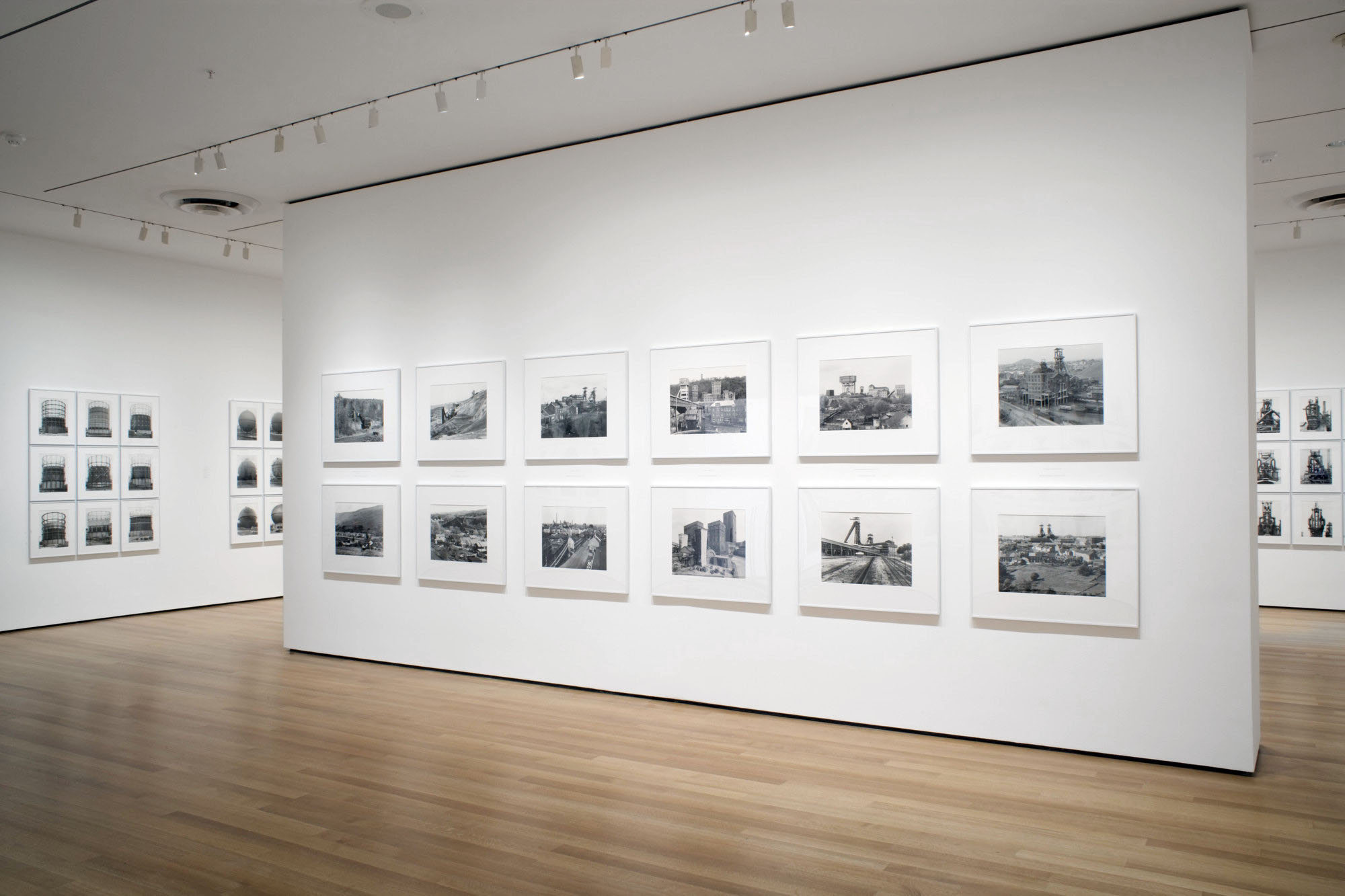
Sander’s photographs from this collection will be exhibited for the first time in their entirety and be displayed in dialogue with works by contemporary artists such as Bernd and Hilla Becher, Andreas Gursky, Thomas Ruff, Cindy Sherman, Thomas Struth and Jeff Wall. The selection will be extended by a rare group of extraordinary photographs taken in Berlin by Heinrich Zille in the late 19th / early 20th century and enlarged by Thomas Struth almost 100 years later.

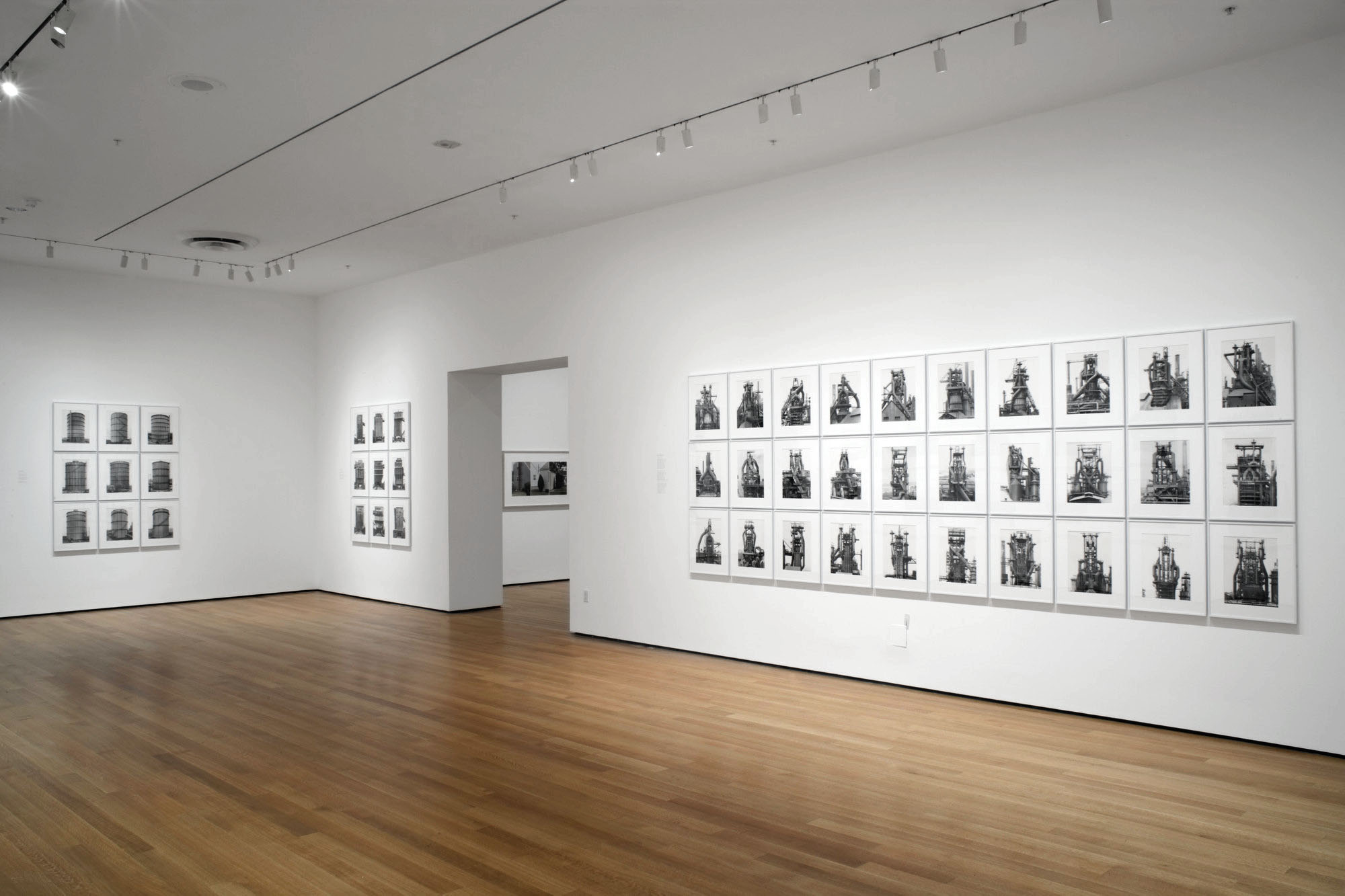
The exhibition presents a both representative and focussed cross section of Sander’s photographic oeuvre. At the same time it shows the medium of photography in a wider perspective by placing individual groups of works by Sander in dialogue with those of contemporary artists. Starting with a typology by Bernd and Hilla Becher, whose encyclopaedically structured work can be regarded as an immediate successor to Sander’s photographic credo, the selection – supplemented by works from the holdings of the Sammlung Moderne Kunst – includes Andreas Gursky’s Rhine picture, urban views by Thomas Struth and Jeff Wall and portraits by Thomas Ruff and Cindy Sherman, among others. The interplay between the past and the present, between small-format, black-and-white prints and colour images the size of large canvases, between austere documentary works and staged and digitally processed pictures, not only illustrates the immediate relevance of Sander’s concept, far beyond any temporal or formal distinctions, but also how photography has become established as an artistic form of expression in its own right within the context of contemporary art. This topic will be explored in greater depth in the accompanying series of lectures Why Photography Matters, at which the artists Hilla Becher and Thomas Struth, as well as the art historians Wolfgang Kemp and Michael Fried will be speaking. As a modest homage to another historical precursor, the exhibition finishes with a rare group of photographs of Berlin by Heinrich Zille taken at the turn of the century, which Thomas Struth enlarged and reinterpreted in 1985 using the original negatives.

Press release from the Pinakothek der Moderne website


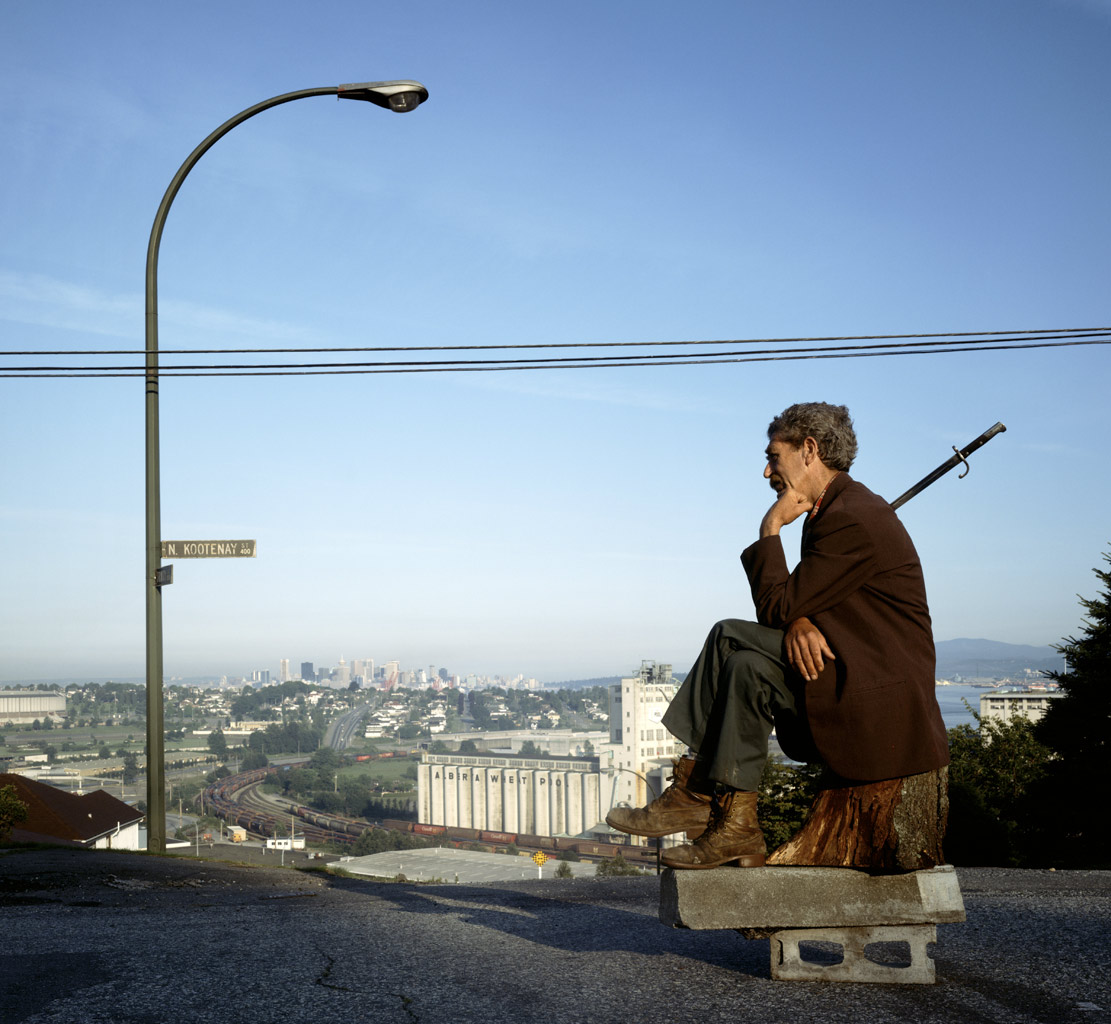
Jeff Wall (Canadian, b. 1946) 'The Thinker' 1986


Jeff Wall (Canadian, b. 1946)
The Thinker
1986
Large-format slides in lightbox
216 x 229 cm
Lothar Schirmer Collection, Munich
Courtesy of the artist
© Jeff Wall


August Sander (German, 1876-1964) 'Handlanger [Odd-job man]' 1928


August Sander (German, 1876-1964)
Handlanger [Odd-job man]
1928
Gelatin silver print
43.0 x 28.5cm
Lothar Schirmer Collection, Munich
© The Photographic Collection, SK Stiftung Kultur – August Sander Archive, Cologne, VG Bild-Kunst, Bonn 2014


Cindy Sherman (American, b. 1954) 'Untitled #127' 1983


Cindy Sherman (American, b. 1954)
Untitled #127
1983
© Cindy Sherman / Courtesy Schirmer/Mosel München


August Sander (German, 1876-1964) 'The Architect [Hans Poelzig]' 1929


August Sander (German, 1876-1964)
The Architect [Hans Poelzig]
1929
Gelatin silver print
40 x 29.8cm
Lothar Schirmer Collection, Munich
© The Photographic Collection, SK Stiftung Kultur – August Sander Archive, Cologne, VG Bild-Kunst, Bonn 2014


Thomas Ruff (German, b. 1958) 'Portrait (T. Ruff)' [Selfportrait] 1987


Thomas Ruff (German, b. 1958)
Portrait (T. Ruff) [Selfportrait]
1987
C-Print/Diasec
210 x 165cm
© VG Bild-Kunst, Bonn 2014


August Sander (German, 1876-1964) 'Der erdgebundene Mensch' [The Earthbound Human] 1910


August Sander (German, 1876-1964)
Der erdgebundene Mensch [The Earthbound Human]
1910
Gelatin silver print
29.2 x 23.1cm
Lothar Schirmer Collection, Munich
© The Photographic Collection, SK Stiftung Kultur – August Sander Archive, Cologne, VG Bild-Kunst, Bonn 2014


August Sander (German, 1876-1964) 'Bauernpaar – Zucht und Harmonie' [Peasant Couple – Breeding and Harmony] 1912


August Sander (German, 1876-1964)
Bauernpaar – Zucht und Harmonie [Peasant Couple – Breeding and Harmony]
1912
Gelatin silver print
29.5 x 23.1cm
Lothar Schirmer Collection, Munich
© The Photographic Collection, SK Stiftung Kultur – August Sander Archive, Cologne, VG Bild-Kunst, Bonn 2014


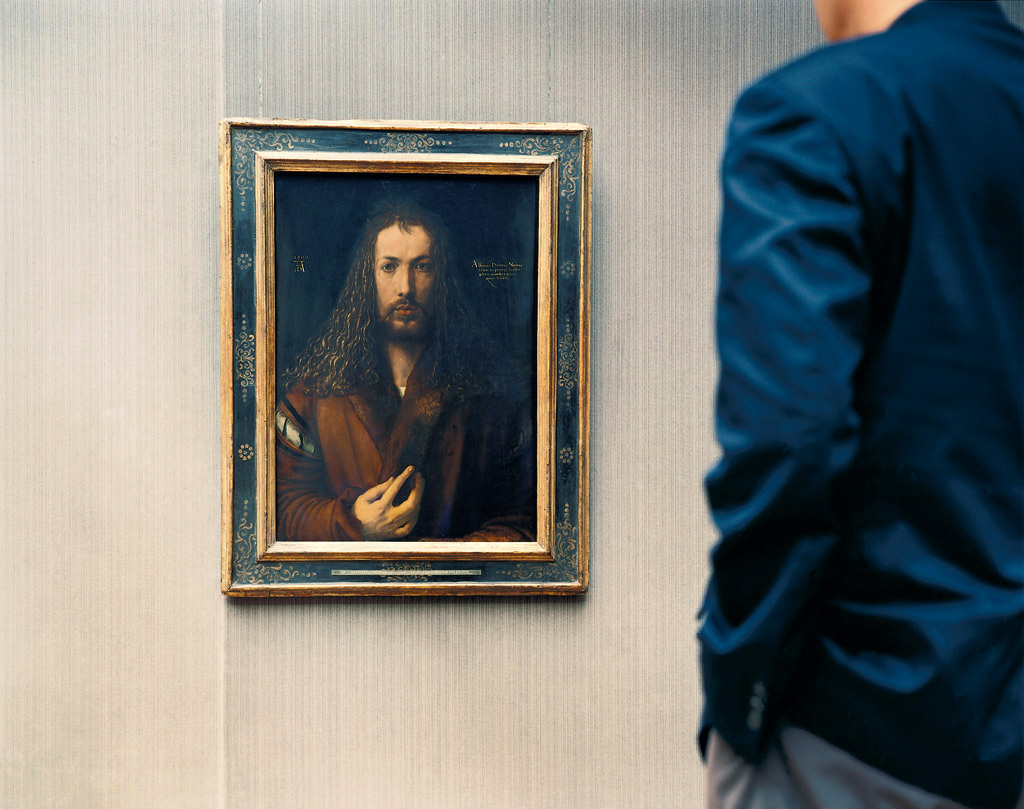
Thomas Struth (German, b. 1954) 'Alte Pinakothek, Self-portrait, Munich' 2000


Thomas Struth (German, b. 1954)
Alte Pinakothek, Self-portrait, Munich
2000
© Thomas Struth / Courtesy Schirmer/Mosel München


August Sander (German, 1876-1964) 'Painter [Heinrich Hoerle]' 1928


August Sander (German, 1876-1964)
Painter [Heinrich Hoerle]
1928
Gelatin silver print
59.3 x 47.7cm
Lothar Schirmer Collection, Munich
© The Photographic Collection, SK Stiftung Kultur – August Sander Archive, Cologne, VG Bild-Kunst, Bonn 2014


Pinakothek der Moderne
Barer Strasse 40
Munich

Opening hours:
Daily except Monday 10am – 6pm
Thursday 10am – 8pm

Pinakothek der Moderne website

LIKE ART BLART ON FACEBOOK

Back to top

Exhibition: ‘Flowers & Mushrooms’ at the Museum der Moderne Salzburg, Austria

Exhibition dates: 27th July – 27th October 2013


Many thankx to the Museum der Moderne Salzburg for allowing me to publish the photographs in the posting. Please click on the photographs for a larger version of the image.


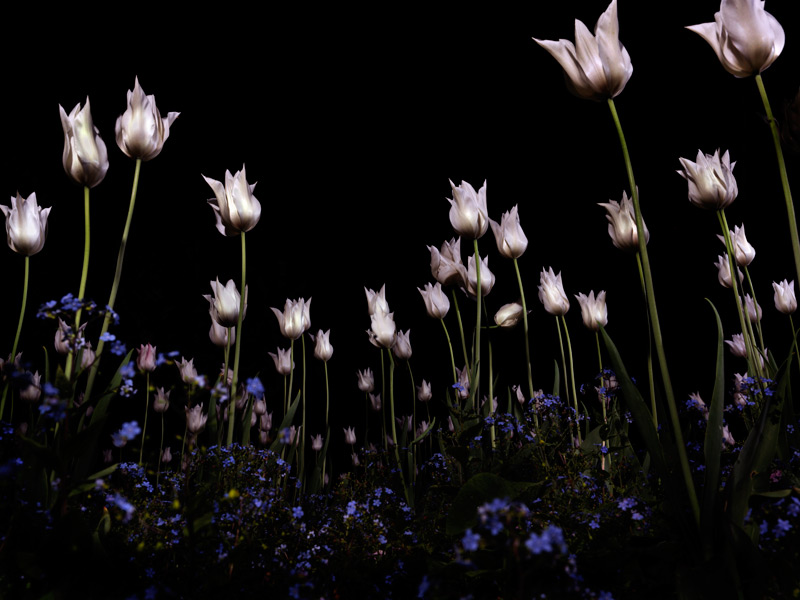
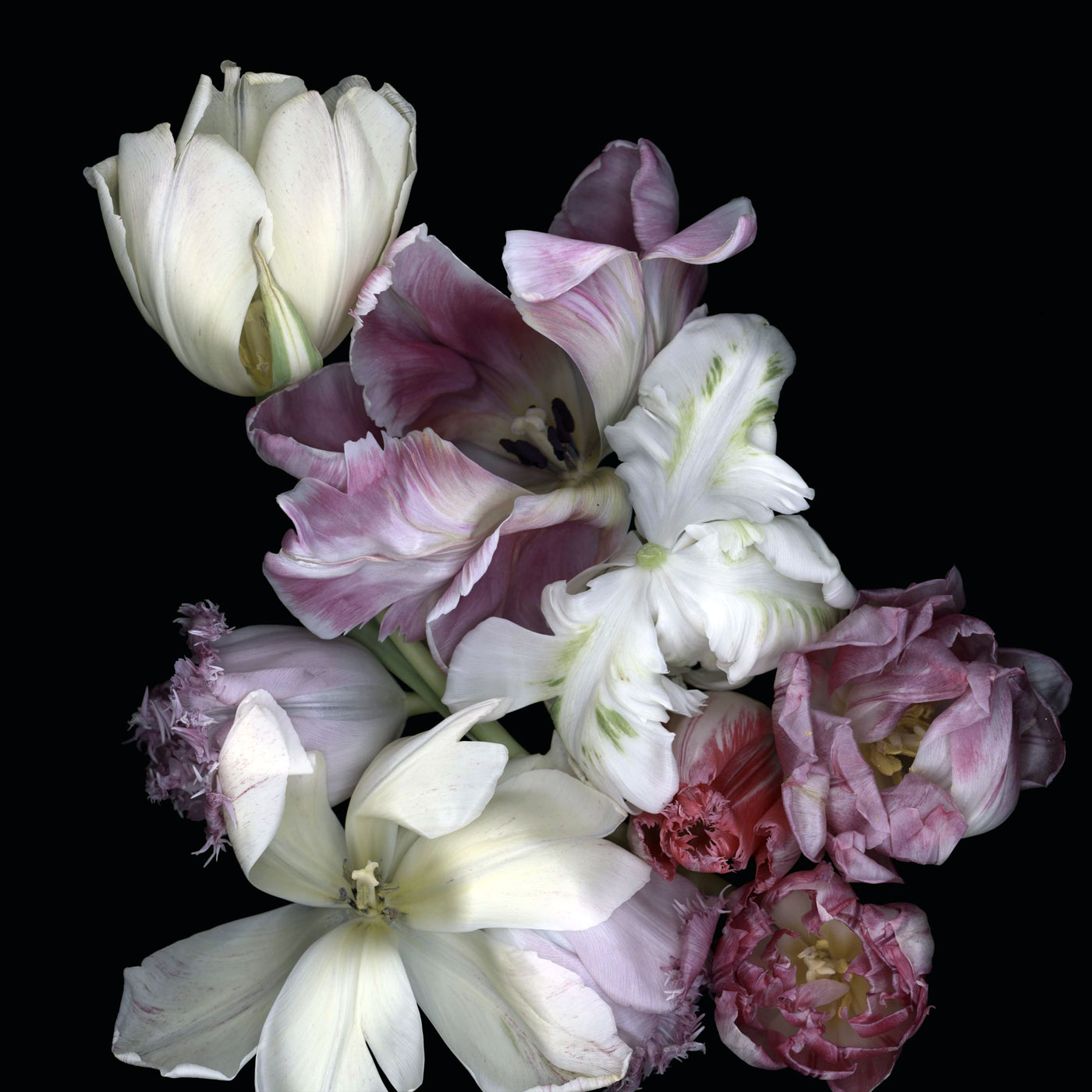
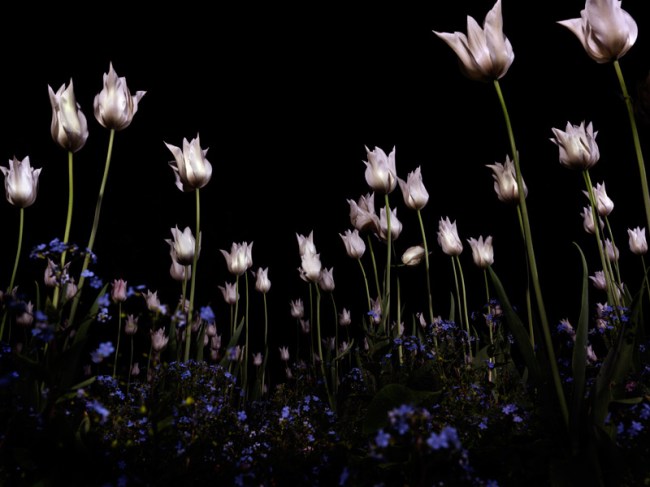
Giovanni Castell (German, b. 1964) 'Tulpomania 3 / Vergissmeinnicht' 2009


Giovanni Castell (German, b. 1964)
Tulpomania 3 / Vergissmeinnicht
2009
C-Print/Plexiglas (Diasec)
130 x 160cm
Courtesy the artist
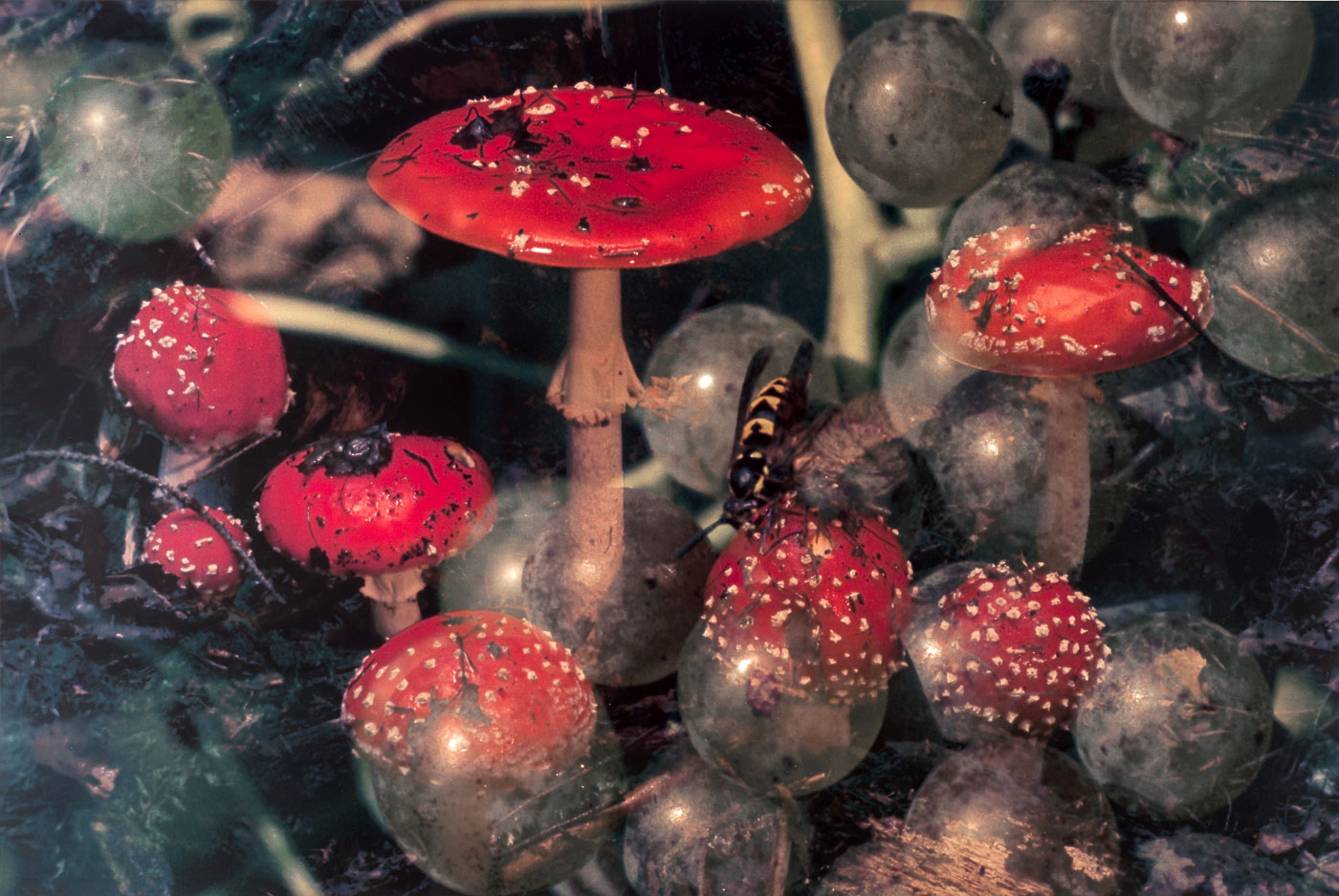
 

Fischli/David Weiss. Peter Fischli (Swiss, b. 1952) and David Weiss (Swiss, 1946-2012) 'Mushrooms / Funghi 18' 1997-1998


Fischli/David Weiss
Peter Fischli
(Swiss, b. 1952) and David Weiss (Swiss, 1946-2012)
Mushrooms / Funghi 18
1997-1998
Inkjet print with Polyester Foil
73.8 x 106.7cm
Bavarian State Painting Collections Munich – Pinakothek der Moderne
Acquired by PIN, Friends of the Art Gallery of modernity for the Modern Collection Art
© The artists; Gallery Sprueth Magers Berlin, London; Galerie Eva Presenhuber Zurich; and Matthew Marks Gallery New York


Michael Wesely (German, b. 1963) 'Still life (29.12. - 4.1.2012)' 2012


Michael Wesely (German, b. 1963)
Still life (29.12. – 4.1.2012)
2012
C-Print, UltraSecG, Metallrahmen
100 x 130cm
Courtesy Galerie Fahnemann, Berlin
© VBK, Wien, 2013


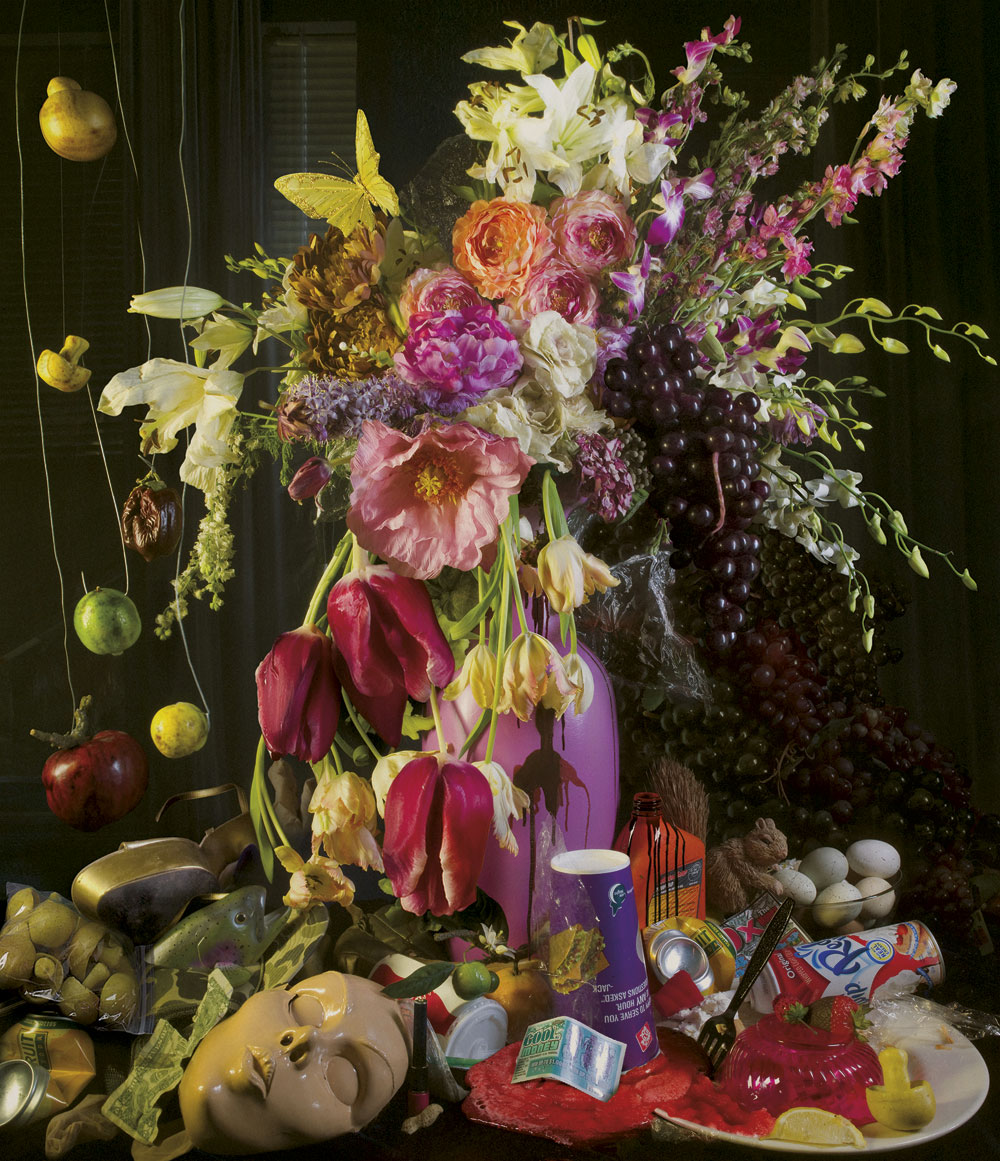
Marc Quinn (British, b. 1964) 'Landslide in the South Tyrol' 2009


Marc Quinn (British, b. 1964)
Landslide in the South Tyrol
2009
Oil in canvas
168.5 x 254 x 3cm
Galerie Thaddaeus Ropac, Paris. Salzburg
Foto: Ulrich Ghezzi
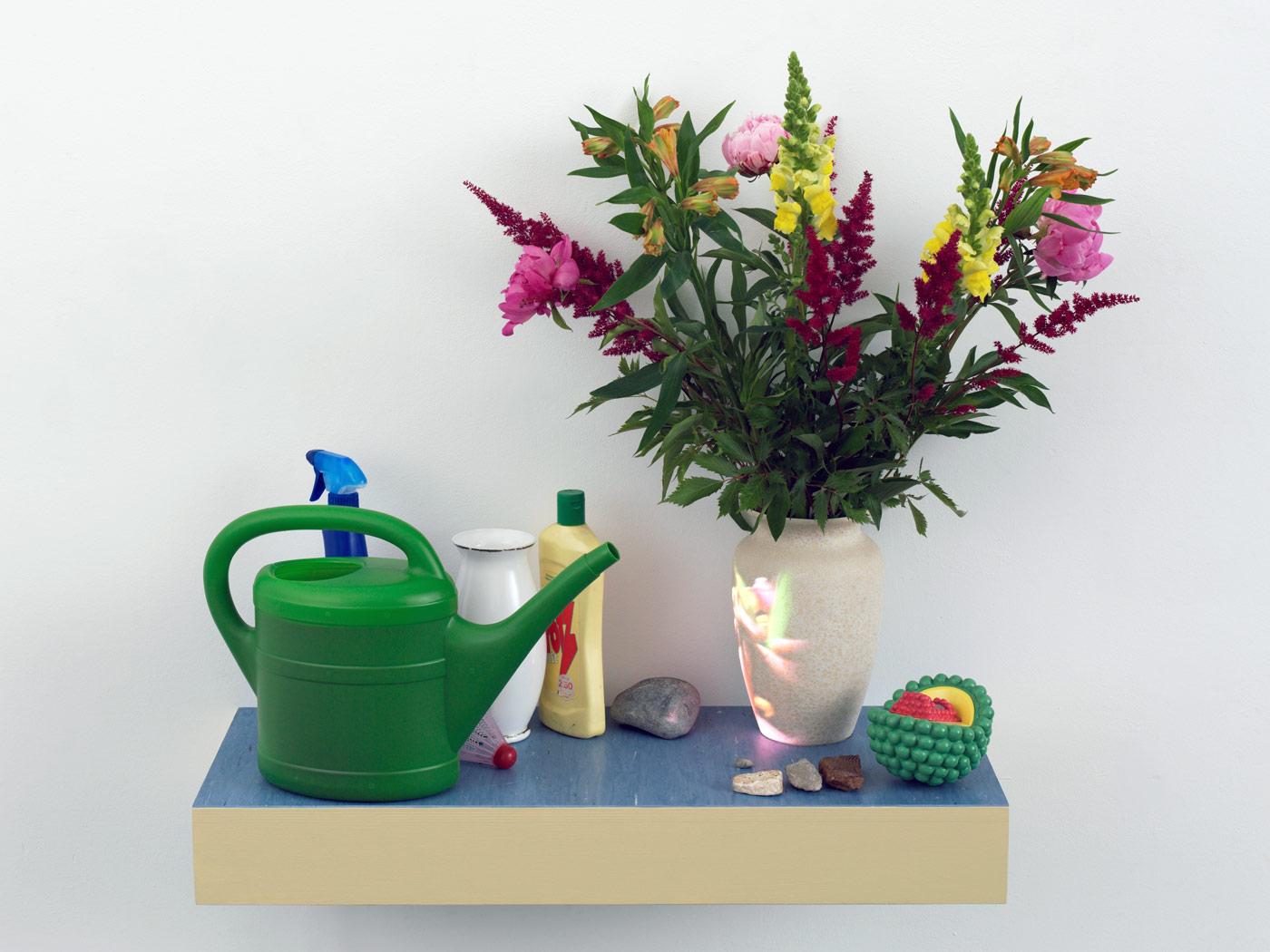
 

Pipilotti Rist (Swiss, b. 1962) 'Sparking of the Domesticated Synapses' 2010


Pipilotti Rist (Swiss, b. 1962)
Sparking of the Domesticated Synapses
2010
Video installation; Projector and Media Player, miscellaneous
Objects, Regal, Quiet
Video: 5:34 min
Courtesy of the artist and Hauser & Wirth, Zürich
© The artist, Hauser & Wirth and Luhring Augustine, New York
Foto: Stefan Altenburger Photography Zürich


For some time now, there has been a renaissance of flowers and mushroom themes in fine art. The comprehensive exhibition Flowers & Mushrooms explores the clichées and the various levels of meaning and symbolism of flowers and mushrooms in art. Current social and aesthetic issues are discussed on the basis of a selection of works from the fields of photography, photo-based paintings, video and sculptures/installations.

Today flowers are primarily associated with their decorative function. They also have a symbolic meaning both at weddings, where they represent freshness and fertility, and at funerals, where they represent transitoriness and death. An in-depth exploration of the varied symbolic meanings of flowers in cultural history reveals further levels of meaning, many of which refer to the ambivalence and abysms of human existence. Contemporary art adopts and continues the historical and complex pictorial tradition of flowers and mushrooms by adding new, contemporary perspectives. The exhibition was inspired by the multi-part work series Ohne Titel (Flowers, Mushrooms) by the artist duo Peter Fischli / David Weiss. The Swiss artists have been preoccupied with the role of clichées and common subjects for many years. Different slide projections with a comprehensive series of inkjet prints and Cibachromes included cross-fadings of flower and mushroom motifs.

At the beginning of the exhibition, a historical section shows photographs from the 19th and early 20th century. In particular the new medium of photography developed a special relationship with flower motifs. Photographs of the great variety of different plant and flower species serve as a kind of substitute for the traditional herbarium or as natural models, as “prototypes of art” for ornamental design lessons. From the early beginnings of photography, scientific interest motivated pioneers such as William Henry Fox Talbot or Anna Atkins to capture amazing pictures of plants.

Later on, the affirmative exaggeration of the decorative character of the flower inspired none other than Andy Warhol to take up a simple, photographically reproduced flower motif in his work Flowers (from 1964); through serial repetitions he ironically exaggerated the motif and conferred iconic status on banal everyday objects. Artists such as David LaChapelle and Marc Quinn continue the baroque symbol for opulence with the aggressive colourfulness of their impressively grand flower arrangements, but also emphasise the simultaneously existing threatening moment, when the boundlessness can take on a devouring character.

For some time now, there has been a renaissance of flowers and mushroom themes in fine art. The works of leading “portraitists” of flowers and mushrooms, such as Peter Fischli / David Weiss, David LaChapelle, Marc Quinn, Sylvie Fleury, Nobuyoshi Araki or Carsten Höller, continue the multi-faceted and long pictorial tradition of flowers, which is unparalleled in the history of art. At the same time no other motif is so easily suspected of trivialism. The question arises of how a subject that is frequently accused of being trivial and shallow has been able to gain ground in a field of art that is generally regarded as serious and sophisticated. The picture of a flower is too easily associated with the idea of harmless beauty and the mushroom with cliché-like hallucinogenic states of consciousness. Nevertheless many artists increasingly adopt these motifs, adapt them and find individual ways to put them into the context of socio-critical, feminist, political and media-reflexive art.

It is only at first glance that David LaChapelle and Marc Quinn continue the baroque symbol for opulence with their impressively grand flower arrangements that reveal a threateningly devouring character upon closer inspection. Female artists such as Vera Lutter, Paloma Navares and Chen Lingyang reflect upon flowers in a specifically female way, using them as a symbol for their own identity-defining sexuality, but also for their vulnerability and exposure and thus elevate the flower to a socio-critical and political level. With almost scientific interest, Andrew Zuckerman and Carsten Höller take an analytical view of the morphological characteristics of flowers and mushrooms in their photographs and installations which create an impressive immediacy. The erotic photographs by Nobuyoshi Araki and Robert Mapplethorpe draw parallels between a blossom and the male and female body and create a field of tension between still life and nude. The wilting flower as a classic symbol of vanity is depicted by Michael Wesely in his long-exposure photographs, which accompany the life of a flower from full bloom to its wilting while emphasising their beauty to the very end. Contrastingly, the monstrous, towering plants of the “desolate” video installations created by Nathalie Djurberg and Hans Berg are devoid of any loveliness and have a menacing effect. They depict violence and abuse give flowers a particularly irritating and disconcerting touch by breaking with their generally positive connotation.

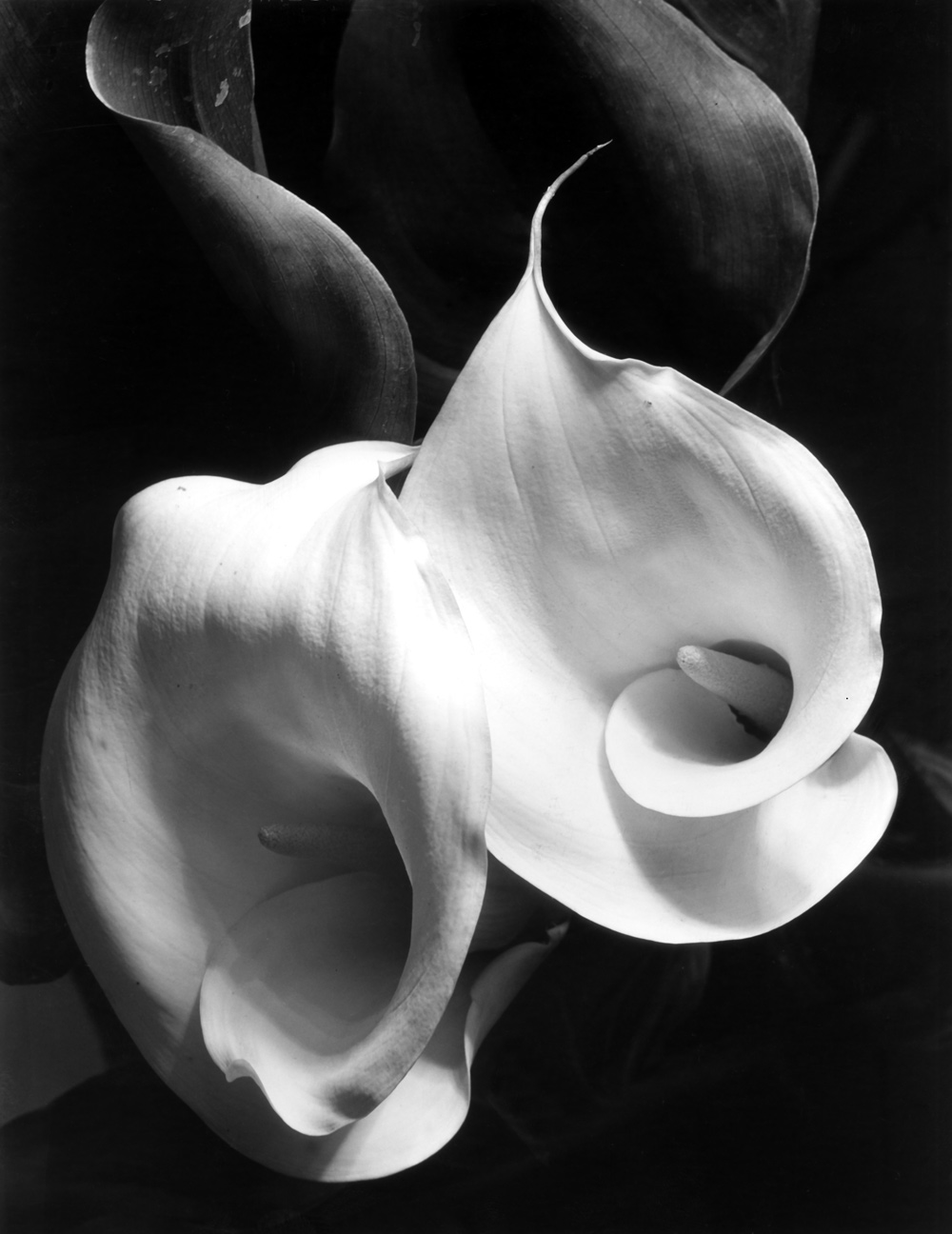
Flowers and buds symbolise eroticism in general, their appearance creating associations with the female and masculine gender (sexual organs) specifically and thus have a sensual appeal. Imogen Cunningham and Robert Mapplethorpe have a reputation as early forerunners of this sexualised and yet apocalyptic perception of flowers. They both implemented this special perception – erotically charged and aloof at the same time – in their photographs by drawing analogies to the human body in their sculptural treatment of the flower. Female artists such as Vera Lutter, Paloma Navares and Chen Lingyang reflect upon flowers in a specifically female way, using them as a symbol for their own identity-defining sexuality, but also for their vulnerability and exposure and thus elevate the flower to a socio-critical and political level.

Thanatos, or death, is closely related to Eros. The wilting flower as a symbol of vanity is depicted by Michael Wesely in his long-exposure photographs, which accompany the life of a flower from full bloom to its wilting while emphasising their beauty to the very end. The flower monstrosities of the “desolate” video installations by Nathalie Djurberg, which deal with violence and abuse, are devoid of any loveliness and even have a threatening effect.

Both in their natural environment and in cultural history, mushrooms are on the shadow side. Mushrooms are mainly associated with dubious alchemism and witchcraft, are desired and feared as hallucinogenic and have become an integral part of art and literature. Similar to flowers, mushrooms have a long tradition in art history and appear frequently within the context of artistic productions. Sylvie Fleury, for example, controls space with a “forest” of over-dimensional mushrooms, whose surface is covered with car paint, thus increasing their intrinsic character of a foreign body. Their over-dimensional size, and glittering appearance evokes scenes from “Alice in Wonderland”, where the protagonist eats from a mushroom to makes her grow or sink. Carsten Höller, by contrast, explores mushrooms with almost scientific interest and documents their individuality and uniqueness in detailed colour photographs or converts them into larger-than-life-size, large-scale sculptures and display cabinets.

The particular appeal of this exhibition organised by the curators of the MdM SALZBURG lies in the comparison and confrontation of the different levels of meaning of images of flowers and mushrooms and their controversial positions in contemporary arts. The title of the exhibition has been inspired by the series of C-prints by the Swiss artist duo Peter Fischli / David Weiss with the title “Flowers, Mushrooms”. Flowers & Mushrooms presents a selection of important works from the fields of photography, photo-based paintings, video and sculpture/installation art with floral motifs, spanning the time from the early beginnings of photography to the immediate presence. Selected works on loan accentuate the focal points and main themes of the exhibition by raising current social and aesthetic issues and thus allow a closer inspection of the multi-faceted symbolic use of flowers and mushrooms. At the same time, new levels of meaning are opened, referring to the ambivalent and mystical dark side of human existence. The exhibition shows how contemporary art adopts and continues the historical and complex pictorial tradition of flowers and mushrooms by adding new, contemporary perspectives. A historical section with photographs from the 19th century and of Classical modernism complements the exhibition and shows, how photography as a new medium has developed a special relationship with floral motifs.

The exhibition features works by Nobuyoshi Araki, Anna Atkins, Eliška Bartek, Christopher Beane, Karl Blossfeldt, Lou Bonin-Tchimoukoff, Balthasar Burkhard, Giovanni Castell, Georgia Creimer, Imogen Cunningham, Nathalie Djurberg, Hans-Peter Feldmann, Peter Fischli / David Weiss, Sylvie Fleury, Seiichi Furuya, Ernst Haas, Carsten Höller, Judith Huemer, Dieter Huber, Rolf Koppel, August Kotzsch, David LaChapelle, Edwin Hale Lincoln, Chen Lingyang, Vera Lutter, Katharina Malli, Robert Mapplethorpe, Elfriede Mejchar, Moritz Meurer, Paloma Navares, Nam June Paik, Marc Quinn, Albert Renger-Patzsch, Zeger Reyers, Pipilotti Rist, August Sander, Gitte Schäfer, Shirana Shahbazi, Luzia Simons, Thomas Stimm, Robert von Stockert, William Henry Fox Talbot, Diana Thater, Stefan Waibel, Xiao Hui Wang, Andy Warhol, Alois Auer von Welsbach, Michael Wesely, Manfred Willmann, Andrew Zuckerman.

Press release from the Museum der Moderne Salzburg website


Paloma Navares (Spanish, b. 1947) 'Vestidas de Sede' 2009


Paloma Navares (Spanish, b. 1947)
Vestidas de Sede
2009
C-Print on Diasec
125 x 125cm
Courtesy MAM MARIO MAURONER Contemporary Art, Salzburg-Vienna
© VBK, Wien, 2013
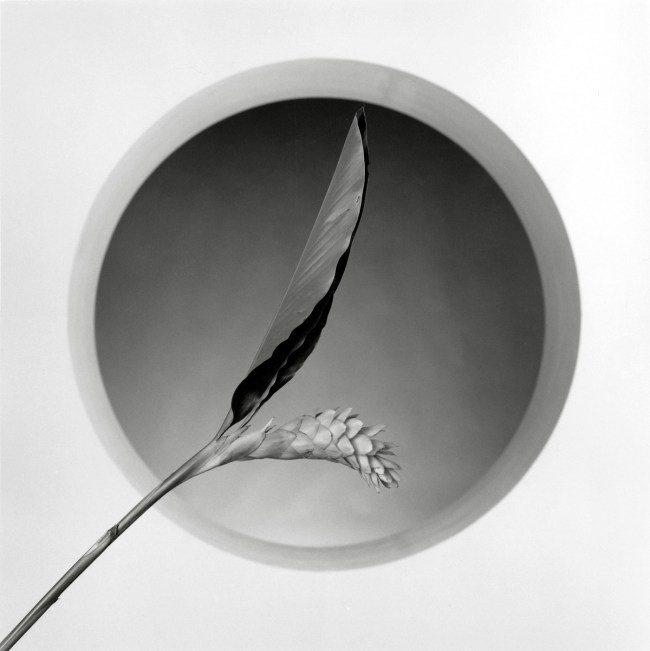
 

Robert Mapplethorpe (American, 1946-1989) 'Flower' 1988


Robert Mapplethorpe (American, 1946-1989)
Flower
1988
Silver gelatin print
71.1 x 68.6cm
© The Robert Mapplethorpe Foundation, New York
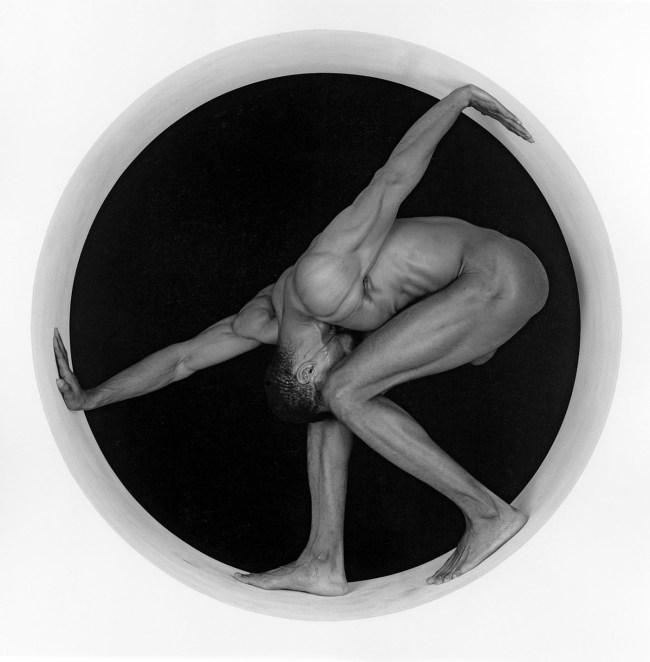
 

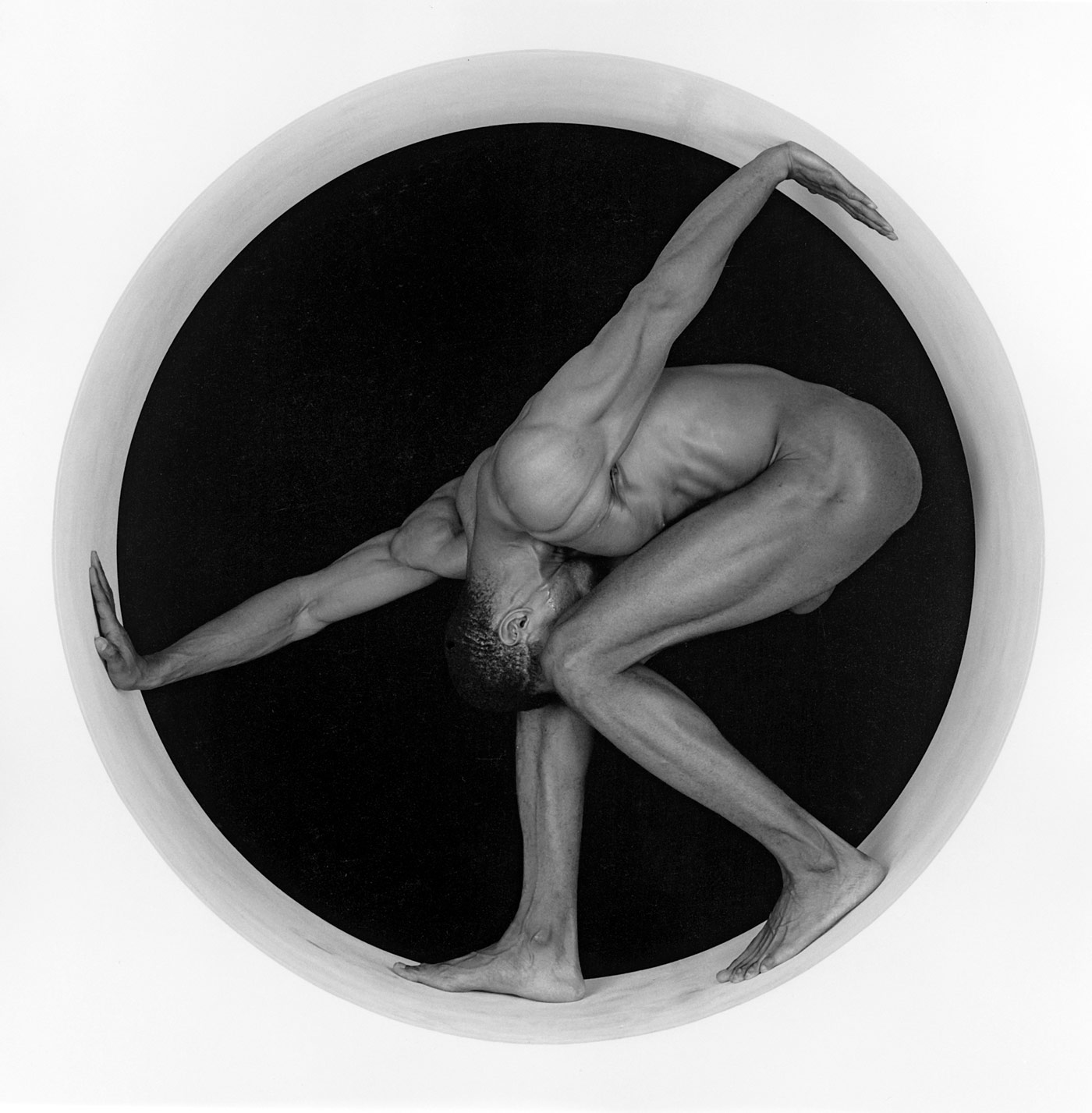
Robert Mapplethorpe (American, 1946-1989) 'Thomas' 1987


Robert Mapplethorpe (American, 1946-1989)
Thomas
1987
Silver gelatin print
71.1 x 68.6cm
© The Robert Mapplethorpe Foundation, New York
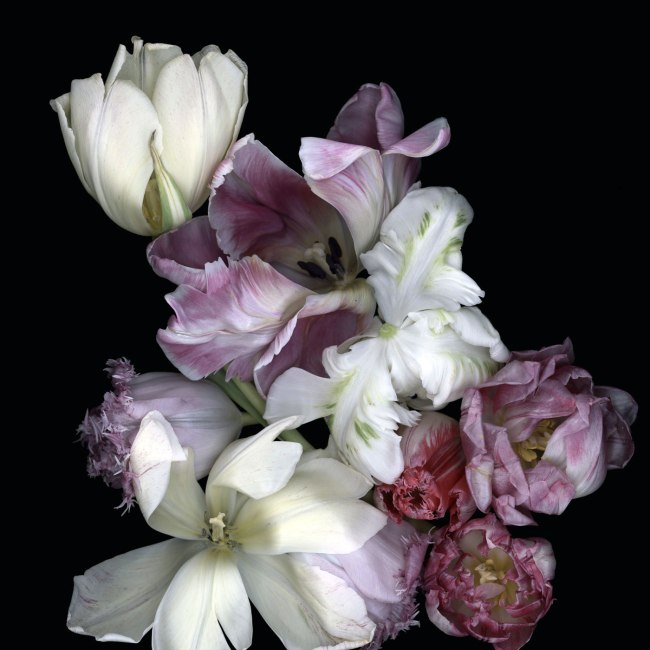
 

Luzia Simons (Brazilian, b. 1953) 'Stockage 104' 2010


Luzia Simons (Brazilian, b. 1953)
Stockage 104
2010
Scannogramm
Lightjet Print / Diasec
100 x 100cm
Courtesy ALEXANDER OCHS GALLERIES BERLIN ǀ BEIJING
© VBK, Wien 2013


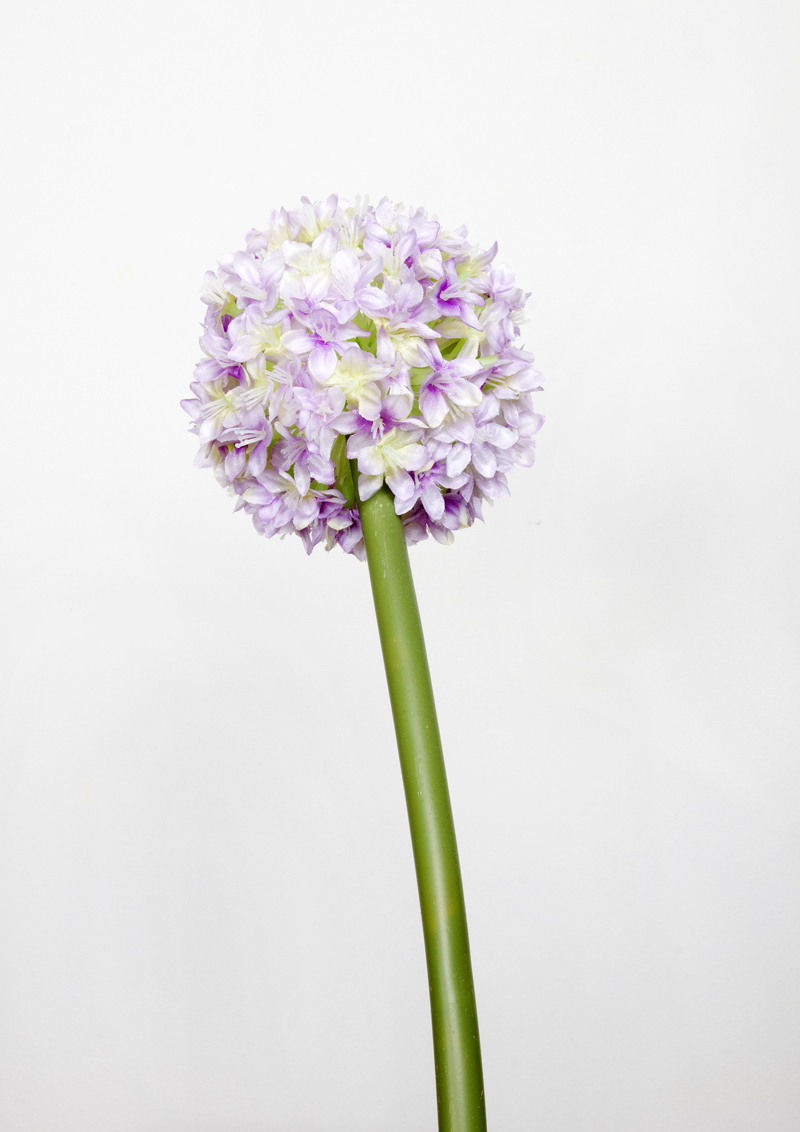
Katharina Malli. From the series 'Dead nature' 2012


Katharina Malli
From the series Dead nature
2012
Digtal C-Print
40 x 60cm
KUNSTIMFLUSS; eine Initiative von VERBUND


Flowers & Mushrooms exhibition texts

The title of the exhibition refers to the name of different slide projections and comprehensive photo series created by the Swiss artist duo Peter Fischli / David Weiss, which show cross-fadings of flowers and mushrooms. Fischli / Weiss began with photo series of everyday motifs back in 1987, and ten years later they used 2400 pictures from their extensive archive to make a cross-fading video with a duration of eight hours. Their general aim was to present the entire visual world they had encountered and documented on their excursions or long travels. Ten years later, the seemingly endless impressions of sights and attractions of the old and new world became limited to flowers and mushrooms, whose pictures overlap in double exposures and appear as a kind of hybrid: as newly created “living beings” between the world of flowers, associated in art history with all kinds of christological and erotic symbolism, and the world of mushrooms, which are not plants and are mainly known for their toxicity. Peter Fischli and David Weiss made the representation of flowers and mushrooms, which had mainly been restricted to calendars and trivial photo books respectable and presentable in contemporary visual arts. The time was ripe for this, even though pictures of flowers and mushrooms had experienced a kind of renaissance in contemporary art before: The ongoing interest in artistic productions dealing with different plants and mushrooms seems to confirm this.

Nevertheless the question arises, how the “flower image” which was frequently accused of triviality in the past, has been able to gain ground in sophisticated and serious art. Pictures of flowers could too easily be associated with the idea of harmless beauty and those of mushrooms with cliche-like, hallucinogenic states. For some years, many artists have nevertheless adopted these motifs, adapted them and found individual ways to put them into the context of socio-critical, feminist, political and media-reflexive art.

Many of the artists represented here in this exhibition deliberately continue this multi-faceted tradition which testifies to a respectable history the “flower picture”: Integrated into the context of Christian iconography in late antiquity and the Middle Ages until the Renaissance period, it timidly began to develop an autonomy during the Baroque period as a result of the newly arising scientific interest in the morphology of flowers and the related wish to classify them encyclopaedically. The rise of the “flower image” to a significant motif that appeals to the audience came to a temporary standstill in the 19th century, when it became an empty academic shell. It re-gained importance only during the Art Deco and New Objectivity period and even became a model for some contemporary forms of expression. While flowers have always been used as photographic motif all over the world due to their beauty and their specific shapes, which are frequently associated with human genitals, mushrooms seem to have inspired most artists who used them in their works due to their sculptural potential and possibly their hallucinogenic effect.

Our exhibition wants to present the use of flowers and mushroom in contemporary art photography, slide and video projections, installations, sculptures and photo-based paintings in all its different faces and assign the works to different themes for better understanding, however without clear boundaries between the individual categories. In a kind of art-historical prologue with the Latin title Species Plantarum we want to show, how scientists and artists have dealt with the representation of plants and blossoms and more rarely of mushrooms since the mid-19th century – parallel to the invention of photography – in photographic studies and “still lifes”. Rose is a rose is a rose is a rose shows that even seemingly trivial photographs of a flower or a mushroom viewed with disinterested pleasure can and should no longer be regarded as neutral and is linked with connotations of everyday experience and cultural education. Les Fleurs du Mal focuses on cryptic and unfathomable, abysmal aspects hidden in flower motifs. The works presented in the section Garden of Earthly Delights establish connections between gender, eroticism and sexuality – but also transitoriness and death – and the symbolism of flowers and associations used by many artists in their works. Nature versus artificiality finally heralds human interventions in nature and the wish to control and experiment with nature and the reflection of this development in visual art.

Species Plantarum

The 19th century was marked by social upheavals, which allowed civil society to intervene in many areas, such as politics, humanism and cultural history, but also natural sciences. The publication of Charles Darwin’s (1809-1882) Origin of Species (1859) intensified the public interest in forms of nature and increased the significance of natural phenomena. This not only encouraged the scientific curiosity of scientists, but also inspired artists to find new approaches to representing nature.

The newly discovered medium of photography, (further) developed out of the desire for an accurate reproduction for scientific purposes and used for various optical and chemical experiments, expanded the range of artistic forms of expression. Artists with an interest in botany eagerly and enthusiastically applied new techniques -such as nature prints, airbrush techniques or photogenetic drawings – and also embraced the new medium and instantly recognised its potential, inspired by pioneers such as Anna Atkins (1799-1871) and William Henry Fox Talbot (1800-1877). Early photographic experiments found their expression in the floral Art Nouveau style and in teaching concepts and teaching aids. The most famous collection of designs was Urformen der Kunst / Art Forms in Nature (1928) by Karl Blossfeldt (1865-1932). His photographs became incunabula for the representation of plant-derived forms using the precise stylistic means of New Objectivity.

The artistic impulses of the following decades contributed to an exploration of nature through alternative cognitive forms. Photography detached itself from the primacy of representation, dominated by form and surface stimuli, and turned towards visual stimuli for the human power of imagination.

Anna Atkins

The botanist and illustrator Anna Atkins (1799-1871) is regarded as pioneer of photography. Her father, the British chemist, mineralogist and zoologist John George Children (1777-1852) aroused her passion for natural sciences. At a time when there was no scientific education for women, ladies from noble families had to content themselves with being “amateur helpers” for their fathers and husbands and worked in the background, compiling herbariums and making drawings. Through her friendship with the physicist John Herschel (1792-1871), who closely collaborated with William Henry Fox Talbot (1800-1877), Atkins became familiar with cyanotype, a printing process invented by Herschel, and began to use this new photographic printing process for mapping scientific samples. The first photographic herbarium was published under the title Photographs of British Algae: Cyanotype Impressions between 1843 and 1854, comprising 12 issues with 389 illustrations. The photograms, which get their characteristic blue colour on the parts of the paper exposed to light from the use of an iron complex, produce particularly accurate representations of the plants. Their special allure is their diaphanous appearance. Anna Atkins’s works, which were forgotten for a long time, are today regarded as a milestone in the history of scientific and photographic illustration and have contributed to the rediscovery of cyanotype as printing technique.

Alois Auer von Welsbach

Alois Auer von Welsbach (1813-1869) was an Austrian printer, inventor and illustrator specialising in books on botany. He was head of the “k.u.k. Hof-und Staatsdruckerei” printing company founded in 1804 in Vienna and developed it into a large-scale enterprise that offered all state-of-­the-art printing techniques and methods of representation known at that time. The printing company became renowned for its nature prints developed and perfected by Auer in cooperation with Andreas Worring. Nature printing is a printing process that uses natural objects to produce an image. Dried or pressed objects are placed between a plate of steel and another of lead and drawn through a pair of zinc rollers under considerable pressure to produce in impression in the leaden plate. The printing plate is produced by electrotyping, also called galvanoplasty. Gravure printing is used for plants. The use of several colours in one printing cycle produced polychrome and particularly “authentic” prints. Until today no printing process has been able to surpass the high level of detail of this technique. For Auer nature printing was as important as photography, and he published books to promote this printing process. “Auers Naturselbstdruck” was patented in 1852 and released for general use in 1853. Over the centuries nature printing has been used for decorating everyday objects and for illustrations on substrates such as papyrus, parchment and paper.

Robert von Stockert

In the 1890s a small community of aristocrats and upper class people with an interest in arts established the “Club der Amateur-Photographen” (Club of Amateur Photographers) – later re­named “Wiener Kamera-Club”. Their photographs were largely influenced by painting. Members of the club include many famous names such as Heinrich Kühn (1866-1944), but also less famous contemporaries such as Carl Brandis (active around 1885-1900), Franz Holluber (1858-1942) or Robert von Stockert (1848-1918), who specialised in flower still lifes. For von Stockert, nature was an interesting theme for various reasons: He had the ambition to contribute to the “development of photographic art”, benefited from his own gardens and the decorative talent of his daughters and used his photographs for book illustrations. He regularly published his experience in illustrated supplements to the association’s publication “Wiener Photographische Blätter”. His pictorial vocabulary ranges from purely decorative flower arrangements to sophisticated still lifes. To convey the colourfulness of his motifs, von Stockert experimented with various techniques, both with photographic techniques, like the use of various colour filters and sensitive plates, and with reproduction techniques. His favourite printing techniques include platinum print, which provides a particularly rich and intensive range of grey nuances. For colour reproductions he used the new multicolour collotype process.

Karl Blossfeldt

The plant photographs of German photographer Karl Blossfeldt (1865-1932) are milestones in the transitions from the playfully stylising Art Nouveau style to the unemotional, cool spirit of “New Objectivity” and have become incunabula of the history of photography. His motivation behind his imagery and motifs is rooted in his education as sculptor and modeller in an art foundry. At the Kunstgewerbeschule in Berlin – today the Universität der Künste (University of the Arts) – he collaborated in a project of his art teacher Moritz Meurer and compiled teaching aids for ornamental design. As lecturer for “modelling from plants” he received an official assignment in 1889 which provided further impetus for the production of illustrative material. Blossfeldt became famous for his book Urformen der Kunst (Art Forms in Nature) (1928); another volume – Wundergarten der Natur (Magic Garden of Nature). A sequel to Art Forms in Nature ­was published in 1932. The photographs here on display are a small selection from a collection of 6,000 pictures, whose clarity, rich contrast and acutance testify to his technical precision, craftsmanship and passion for photography and teaching. Graphic details, structures, forms and surfaces are emphasised by the targeted selection of details, magnified 2 to 45 times. Blossfeldt achieves a sculptural effect by using a monochrome, light background and thus liberates the plants from their natural context.

Rose is a rose is a rose is a rose

What Getrude Stein wrote in the mid-1920s and later became so influential and was often misunderstood, can be used as a motto for the works here on display, but also to point out ironically that the use of flower motifs is trivial only at first sight.

Like portraits or interieurs, flower pictures are part of the repertoire of art history. Even more so: No living being is used more frequently in symbolism than the flower, and few subjects are as complex as the history of the flower motif. In the past, flower still lifes were used to convey encrypted and symbolic messages, most of which are lost to us today. We no longer know the symbolic meaning of the individual flowers or their arrangements. Many artists have used floral themes in their work, as a reaction to the apparent triviality of the century-old flower motif, and have so continued this traditional theme. Today the flower motif has become the basis for new reflections and observations.

The oldest photographers whose works are here on display – Ernst Haas and Balthasar Burkhard – already liberated the flower from its temporal and spatial context and focused on depicting the flower not as a decorative still-life at the height of its beauty, but as a fragile plant subjected to instability and transformation. The American photographer Andrew Zuckerman portrays crystal-clear, razor-sharp images of different blossoms with an accurate eye, capturing the fine details of their surface structure and colour transitions. His strict staging abandons the common understanding of flowers and releases them from their context. As a result, Zuckerman’s pictures assume an almost cool, abstract quality.

Christopher Beane shares a similar love for details. His close-up pictures of petals convey sensuousness and opulence. As a staging photographer he completely restrains himself and entirely leaves the stage to his protagonists, allowing them to unfold their full beauty in exciting, suspenseful intersections, contours and curves. The scannograms by Luzia Simons show an opulence and splendour that reminds us of traditional Dutch still lifes of flowers. The large-format photographs are thoughtful reflections on the proud, but also tragic role of the tulip in the early 17th century Netherlands in connection with the “tulip mania”, which is generally considered the first recorded speculation bubble. In Giovanni Castelli’s photographs, flowers appear as mysterious plants, monumental and unreal at the same time. The artist finds his motifs in nocturnal parks, capturing close-ups of colourful flowers against a jet-black sky. The result are eerily beautiful flower portraits which seem to be from another world and elegantly refute our conventional visual concepts.

Carsten Höller

b. 1961 in Brussels/Belgium, lives and works in Stockholm / Sweden.

Carsten Höller, who has a doctorate in agricultural science, works at the frontier between art and natural science. Dissatisfied with the restrictive structures of the academic world, he turned his back on it and chose the path of greatest-possible openness: he became an artist. “As an artist I do not have to submit to any formalistic constraints and can develop things as far as I think makes sense in a particular framework, without always having to undergo specialist training in the relevant fields.” Höller has not abandoned his first life, but combines the two disciplines, which appear to be so different from one another, in a highly idiosyncratic and humorous manner. He creates bizarre hybrid forms from a variety of types of mushrooms. He either grows them to a threatening height or exhibits them, like jewels in a glass cabinet, in orderly rows as though in a natural-history museum. Fly agaric is always present. Höller explores this mushroom and its hallucinogenic effects in great detail. In this context he is on the trail of a mysterious potion called soma, which is thought to have been made of fly agaric and was used for ritual purposes as early as the second century BC. Drinking it is said to impart good fortune and riches, the power to be victorious, and awareness and access to the divine sphere.

Hans­ Peter Feldmann

b. 1941 in Düsseldorf/Germany, lives and works in Düsseldorf.

The large-format photographs of flowers by Hans-Peter Feldmann are at first glance reminiscent of the floral postcards of the 1950s: we see flowers popular at the time, such as roses and lilies, in close-up in front of a neutral, colourful background. The colour aesthetic of flower and background, too, corresponds to the time. Clear and uncompromising, the blossoms present themselves to the viewer in their full glory, while simultaneously appearing distant and artificial. In this respect they do not match today’s ideas of the bourgeois idyll. The magnification makes the kitschy look sublime. The blossom appears like a fetish behind glass, frozen for the next millennium. Feldmann has always been interested in the everyday and the banal. He lives his passion for collecting at flea markets and in his own shop of knick-knacks. He often works with found materials such as postcards and newspaper cuttings. The photographs shown here are not enlargements of these collected objects, however. They were created by Feldmann, based on the aesthetic of the small-format postcards of which they are ironic imitations. Feldmann’s artistic concept includes the practice of not dating and not signing his works: “Bakers don’t sign their rolls either, do they? Art has to taste and smell, one has to be able to experience it.” For Feldmann, one of the first concept artists, the works of art are already there. He considers it to be his job to find them. They should not lose their vitality despite the transformation.

Luzia Simons

b. 1953 in Quixadá/Brazil, lives and works in Stuttgart and Berlin / Germany.

The tulip is, in the eyes of Luzia Simons, an element that connects cultures, and a symbol of transcultural identity. As a nomad among flowers, the tulip was brought to Europe from Asia, and connects the Orient and the Occident. It is at home both here and there, and has established itself as a virtu despite having been transferred via several different cultures. The tulip conquered the Netherlands in the late sixteenth century, and tulips featuring special colours and patterns commanded exorbitant prices on the market in a rapidly expanding “tulip mania”. Speculation with tulip bulbs led to a speculative bubble. The bubble burst in 1637, with far-reaching social and economic consequences. Simons sets the scene for the majestic and simultaneously tragic character of the tulip, as well as for its long-standing traditions, in her series entitled Stockage. The artist stages the flowers in large-format arrangements in which they surge towards the viewer in bright colours out of a neutral darkness, revealing their beauty and fugacity in sharp focus. Both through the inescapable vanitas concept and in its painterly effect Simons’s oeuvre is reminiscent of Baroque still lifes. Paradoxically, Simons makes use of a very modern method to generate the images, however: the flowers are “read” by a scanner before they are printed using a carbon-printing process, and finally they unfold their vibrant depth effect behind acrylic glass.

Peter Fischli / David Weiss

b. 1952 in Zurich/Switzerland, lives in Zurich / b. 1946 in Zurich, d. 2012 in Zurich.

The Swiss artist duo Fischli / Weiss began work in 1979 and was highly successful in the spheres of film, photography, sculpture, art books and video installations. Cryptic and playful, often seen as though through the eyes of children, they re-arranged art and the everyday in their work. Their subtly ironic works, which often appear to be imbued with subversive nonsense messages, received numerous international awards. From kinetic experimental arrangements using everyday objects to interpersonal re-enactments using sausage leftovers: Fischli / Weiss transformed the apparently banal and the absurd into art. For this reason the flower motif also entered the work of Fischli / Weiss from 1997 onwards. The Flowers series (1997-1998) exists in two presentation forms: colour prints, and a double-slide projection. It shows a chaotic view of nature, as though from an ant’s perspective, using a hallucinatory and intensely colourful technique of superimposition. The arrangement of double and quadruple exposures and the resulting translucent layering of close-ups of flowers, mushrooms, snails and many other things creates the impression of a nature that is unordered and exuberant, unreal and simultaneously beautiful. This playful approach to reality and appearance, the conceptual claim of the visualisation of the world – in this case nature, which is just “there” and is in no need of legitimisation in order to be shown in the context of art – and the interest in the banal, in combination with a more serious artistic interest, constitutes the framework that encompasses the entire oeuvre of die Fischli / Weiss.

Les Fleurs du Mal. Reality and Appearance

In his poetry collection Les Fleurs du Mal (1857-1868) the French writer Charles Baudelaire (1821-1867) painted a picture of a pessimistic modern city dweller that is characterised by despondency, anger and rebellion against all conformities. Man is torn between Christian morality, the good ideal and virtuousness on the one hand and the reprehensible and yet appealing fascination with the evil and ugly on the other hand, and forced to establish a new position for himself continuously.

What the artists represented in this part of the exhibition and Baudelaire’s Fleurs du Mal have in common is their questioning of conventional views on beauty and morality, symbolised by flowers which are generally regarded as beautiful, and the deliberate discussion of the transience of beauty as well as socio-­political principles and ethics. In particular the vanity theme is directly related to the “Flowers of Evil”, as it belies the human desire for eternal beauty and eternal life. Bourgeois decadence in the form of Baudelaire’s positive re-interpretation is no longer a common term today, but has a stronger presence than ever in the classic meaning of the decline of a social system, in particular with reference to the frequently heralded fall of capitalism. In the 21st century artists approach this subject in a differentiated way. Works closely related to traditional genres of art history, such as the still life, exist side by side with current series of works dealing with the concept of time as such, for example by intensely visualising the blossoming and withering of flowers or linking this with socio-political issues. The delightful moment of the pictures and materials is sometimes opposed to the subject matter or explicitly border-crossing contents.

Marc Quinn

b. 1964 in London/Great Britain, lives and works in London.

Marc Quinn’s 2009 paintings Landslide in the South Tyrol and Aleppo Shore from 2010 are based on photographs that he took of model landscapes he himself had composed. To this end he arranged lush and colourful plant ensembles in his studio. Drawing on Baroque bouquets, which are artificial creations and consciously unnatural in their composition, Quinn negates the passing of the seasons and combines plants that do not blossom at the same time as each other. His enormous square compositions confront viewers with paradisiacal gardens bursting with life, allowing viewers to immerse themselves in an apparently idyllic, magical world. Closer inspection reveals that the white surface to which the luminosity is owed is in fact a snowfield, and this causes consternation. The first impression of cheerful colourfulness and light-heartedness dissipates and the scenery that is now perceived as artificial suddenly feels threatening in a very subtle way. In the midst of life we are surrounded by death! The viewer is surrounded not by a lively garden landscape, but by an arrangement of frozen, dead plants. The unnatural brightness of the colours, which knows no soft nuances, points to the artificially generated world, and reveals the difference between beautiful appearances and reality. One senses that critique of civilisation is a driving force: the artist exposes humankind’s reckless approach to nature because we are willing to sacrifice nature for the sake of its perfect beauty.

Eliška Bartek

b. 1950 in Nov Jičín/former Czechoslovakia, lives and works in Berlin/Germany and Lucerne / Switzerland.

For the series Und Abends blüht die Moldau Eliška Bartek uses highly sensitive film that blurs the contours while simultaneously making details as visible as though they are being viewed through a microscope. As a result the surfaces of the flower petals appear exquisitely delicate and fragile. This feeling corresponds to the traditional symbolism of flowers. They are viewed as the ultimate symbols of the beauty of the moment, which already contains the seeds of transience. The flowers come from a Berlin wholesaler or are cut fresh by the owner of a botanical garden in Pila, a small village in Ticino. Bartek exposes them to particular light influences and in this way alters their colours. In addition to the extreme magnification and closely framed composition of the pictorial subjects it is this intense colourfulness in particular, further enhanced by the dark background and dramatically heightened by unusual light and shadow effects, that creates an extraordinary vitality and releases the pictorial subject from its static nature. For a short time the photo artist breathes an intoxicating beauty into the blossoms, for which the flowers pay the ultimate price: the extreme light burns the delicate petals and destroys the natural splendour. Bartek’s subtle play with reality and appearance, or with artificiality and naturalness, also points to the fallibility of our perception.

Vera Lutter

b. 1960 in Kaiserslautern/Germany, lives and works in New York / USA.

With the project Samar Hussein Vera Lutter reveals herself to be a socio-critical artist who rescues the civilian victims of the Iraq war from oblivion and creates a memorial to them. More than 120,000 civilians have been killed since the invasion by the American army in March 2003. They are referred to in military jargon as “collateral damage” – an appalling word that downplays the suffering for which it stands. The artist has gathered the names and dates for her work of art from the Iraq Body Count Project. The biggest publicly accessible database of this kind worldwide, it records the civilians who have lost their lives in military and paramilitary campaigns, and documents the collapse of public safety following the invasion. Lutter uses the image of a budding, blossoming and finally wilted and withered hibiscus blossom as a metaphor for the human life cycle. The artist sees analogies between human life with its beauty and fullness, as well as its vulnerability and destructibility, on the one hand, and the tones of this flower, reminiscent of the colour of flesh, and the sensuous shape of its blossom, on the other hand. The names of the dead are superimposed on the printed and projected photographs in chronological order according to the date of death. The first picture is named after Samar Hussein. It is for this 13-year-old girl, the first civilian victim to have been recorded in the database, that the art project as a whole, Vera Lutter’s remarkably poetic and touching elegy for the senseless casualties of war, is named.

Paloma Navares

b. 1947 in Burgos/Spain, lives and works in Madrid and Alicante / Spain.

Paloma Navares’s oeuvre spans the fields of photography, sculpture, installation and performance, and explores historical female positions in our society. Navares, who suffers from a rare eye condition that will eventually lead to the loss of her eyesight, employs her memory, which she refers to as her “inner eye”, as an artistic device. The multimedia artist uses a poetical pictorial language that aims to draw the viewer’s attention in a delicate and subtle way to existential human questions: might putative mistakes or what society judges to be incapacity lead to recognition after all? The photographs of delicate orchid blossoms tell of the fates of women, and are in some respects symbolic. They stand, for example, for Meerabai, a late-fourteenth-century princess from northern India who wrote love songs and laments, and who, as a devotee of Krishna, vehemently opposed marriage. The pressure exerted on her by society at court forced her to commit suicide by drinking from a poisoned cup. Female Korean entertainers, known as kisaeng, were similarly despised and judged by society for their nonconformity. Navares’s depictions of flowers are homages to great female poets of past eras whose lyrical works were ignored and who, in the face of the contempt with which society treated them, chose to die by their own hands. The images represent a plea for justice and self-determination, and simultaneously stand for grace, strength and beauty.

Garden of Earthly Delights

Flowers and blossoms have always held a great fascination for man and are symbolically and culturally linked with love, beauty, youth and sensuality. Opulent flowers are thus instinctively associated with eroticism and seduction, but also inevitably with the aspect of transitoriness. From a biological point of view, the attraction of flowers is due to their signal effect for the purpose of pollination and thus reproduction and survival of a plant species. Not only poems use flowers as metaphor for human desire; the flower as analogy for man and corporeality is also found in fine arts. Artists such as Robert Mapplethorpe, Nobuyoshi Araki and Rolf Koppel combine nudes with floral still lifes and both in form and context refer to the sensual analogies to the erotic desires of man. Robert Mapplethorpe has made the most explicit comments on the relationship between flowers – in particular blossoms with strongly emphasised seeds such as the calla or anthuria – and the phallus. Mapplethorpe once said that his way of photographing a flower does not differ significantly from his way of photographing male genitals. The natural scientist Carl von Linné (1707-1778), who established the basis for modern botanical and zoological classifications, commented two centuries ago on the relationship between the corporeality of plants, animals and man. “We look at the genitals of plants with pleasure, those of animals with revulsion and our own with wondrous thoughts.” In his writings he poses the question, who is aware that the flowers a man gives to the woman he adores are “cut-off genitals of higher plants” and that the floral splendour must be regarded as “sexual intercourse of plants”? Within the context of cultural history, plants have been used until today as a symbol for the sexuality of man which is still a taboo.

Chen Lingyang

b. 1975 in Zhejiang province/China, lives and works in Beijing / China.

The subject of Chen Lingyang’s twelve-part series of photographs Twelve Flower Months is the artist’s monthly cycle, which is associated with twelve different flowers. The viewer sees twelve geometric formats that correspond to traditional Chinese window and door shapes. They feature reflections of Chen Lingyang’s vagina, and the menstrual blood that drips from it. The shape of the mirror, too, varies from month to month. The viewer is supposed to feel disturbed by the juxtaposition of flowers – which are the ideal expression of the beauty of nature – and the bleeding genitals. Looking at the mirror, a Western symbol of flirtatiousness and beauty, viewers simultaneously become secret viewers of an intimate depiction. The apparent contrast also reveals unusual similarities, however: Chen Lingyang shows two natural cycles of growth and decay. The artist herself has commented on this work that “in traditional Chinese culture there is the idea of the person who lives in harmony with nature. … To me, ‘nature’ refers most importantly to the laws and rhythms of the universe. And these laws and rhythms are connected to cycles. It is easy for a woman to observe this from monthly physiological and psychological changes.”

Nature vs. artificiality

“Planting means to dig holes to force nature to become unnatural (cultural). […] Owing to the gesture of planting man has lived in an artificial world since the Neolithic period”, the media philosopher and communication scientist Vilém Flusser (1920-1991) once said. In this way he descriptively refers to the general circumstance that we can no longer view nature as something “given”, but as something that is “man-made” and constructed and controlled by man. Accordingly, culture has monopolised nature and its original autonomy to a large extent.

The main purpose of fine arts as a cultural manifestation is not only aesthetic edification. Artists, in particular modern and contemporary artists, also serve as introspective seismographs for development processes of civilisation. Their thinking, designs and creations bring about a change of perspective that goes beyond conventional acceptance and reception and thus refers to phenomena that inspire the viewer to reflect and take a closer look. The preoccupation with flower and mushroom motifs also has to be understood in this context. Primarily decorative and trivial at first glance, their meta levels contain far-reaching statements.

The installation of the Swiss artist Pipilotti Rist explores socially standardised patterns of behaviour of civilised man. Rist makes these patterns tangible in her works by depicting the way people deal with artfully arranged flower decorations. In a comparable, yet differing way Gitte Schäfer explores nature and its “domestic use” in her flower wall. About three hundred small flower vases with an artistically kitschy design are affixed to a wall of diagonally placed mirrored tiles and filled by the artist with cut flowers in the form of a symmetrical picture.

The transient splendour of the flower arrangements symbolises earthly transitoriness and were a characteristic feature of 17th century Baroque still lifes. The Italian term for this category of painting ­natura morta – also alludes to the notion of vanity. In her four-part work series with the same title, the Austrian artist Katharina Malli shows close-up coloured pictures of crops and ornamental plants against a neutral white background, whose aesthetics deliberately quote the documentary style of Karl Blossfeldt (1865-1932). Upon closer inspection, they are industrially produced artificial flowers. As perverted products of civilisation they represent this dead nature and at the same time symbolise the notion of immortality. Dieter Huber’s works also focus on artificially generated nature and play with the wishful thought of potential immortality. In his work series he presents apparently “documentary” pictures of plant hybrids that herald a “brave new world”. The works by Nam June Paik and Zeger Reyers create a concrete connection between nature and technology. The instruments used, such as TV sets and record players, symbolically refer to social progress and are an expression of human inventiveness. They emphasize “manmade” things, juxtapose them with naturally occurring objects and thus describe them in relation to one another.

Andy Warhol

b. 1928 in Pittsburgh/USA, d. 1987 in New York / USA.

By the second half of the twentieth century the flower as an artistic motif had become insignificant. It had become overburdened with the general suspicion of triviality and kitsch. However, Pop Art, which took a deliberate interest in the world of trivial imagery, immersed itself in this subject. Andy Warhol’s Flowers are exemplary of the approach of Pop Art artists. Warhol based his flowers on a folded insert in the June 1964 issue of Modern Photography magazine, a reproduction of a colour photograph of seven hibiscus blossoms. The photograph had been taken by the editor in chief, Patricia Caulfield, and was included as an illustration accompanying an article about a Kodak colour processor. Warhol cropped the photograph to alter the pictorial format, number and arrangement of the blossoms. Numerous variations of what was now a square image were then produced using the screen-printing process, differing from one another in colour and size. In total, more than 500 pictures of flowers must have been produced in this way. The Flowers appear to float in a diffuse space, detached from the background and unconnected to their stalks and leaves. In some versions the blossoms and the pictorial ground are painted by hand in DayGlo colours, further emphasising this impression. Warhol presented the prints in such a way that they covered entire gallery walls as though they were wallpaper. In this way he succinctly demonstrated the plant’s natural potential for rank growth as well as its technical reproducibility as a decorative mass subject.

Dieter Huber

b. 1962 in Schladming/Austria, lives and works in Vienna and Salzburg / Austria.

Since as early as 1986 Dieter Huber has worked with photography that is optimised and altered using computer technology. The three works from the KLONES series, which were executed from 1994 onwards and thus explored genetic engineering and manipulation at a very early date, are doubtless among the pioneering works in computer-generated images. Huber commented on them that “the construction of a world that could be freely disposed of in all respects according to one’s will and imagination was still considered highly vexing at the time.” The three plant studies in the exhibition are – at first glance – razor-sharp photographs of flowers, each before a black background. Well-known types of flowers such as tulips, carnations, narcissuses, daffodils, roses and lilies are reminiscent of a grandmother’s garden. Closer inspection causes consternation, however: various types of flowers grow out of the same greenery, rose stalks are crowned by lily blossoms, and daffodils, lilies and tulips all grow out of the stem of a trumpet flower. Artificially created, impossible-looking crossings have long since found entrance into our real world. Almost all livestock breeds and crop plants used in agriculture were developed through decade-long crossing. Perhaps the surreal floral worlds of Dieter Huber will really exist one day?
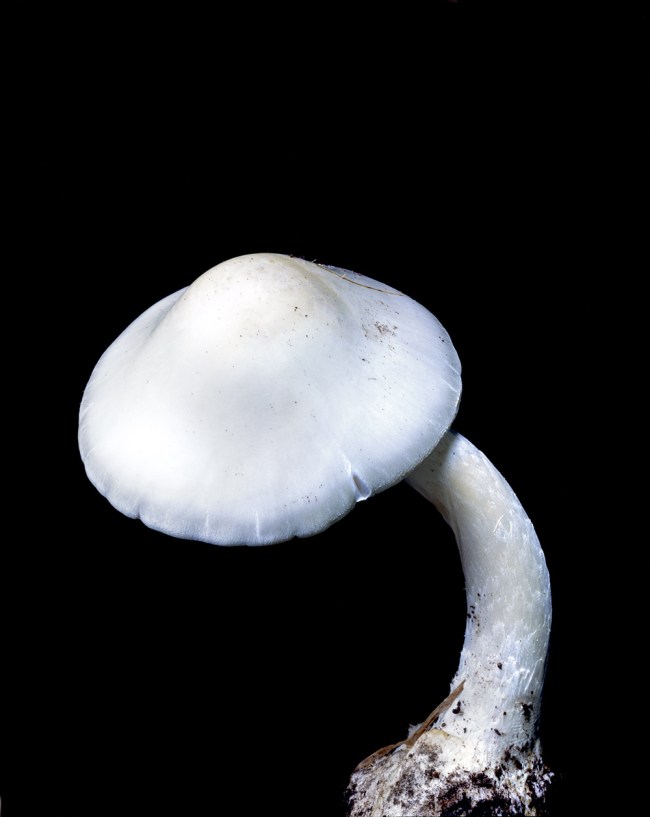
 

Christopher Beane (American, b. 1967) 'Study of fungus' 2004


Christopher Beane (American, b. 1967)
Study of fungus
2004
From the Farm House series
C-Print
60 x 50cm
Courtesy of the artist
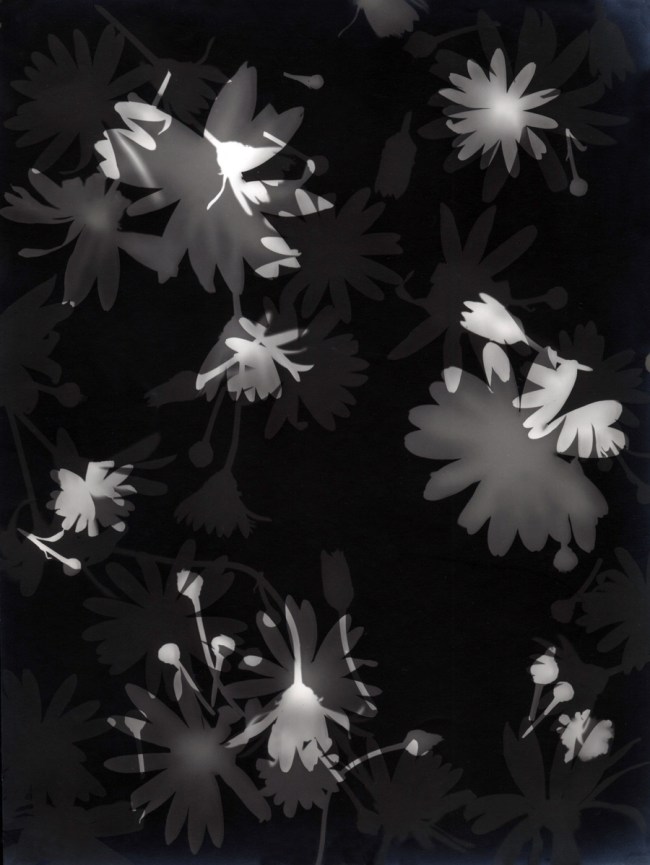
 

Lou Bonin-Tchimoukoff (French, 1906-1979) 'Rayograph #35 - #75' Paris, 1928


Lou Bonin-Tchimoukoff (French, 1906-1979)
Rayograph #35 – #75
Paris, 1928
Gelatin silver print
23.8 x 17.8cm
Courtesy Galerie Johannes Faber, Wien
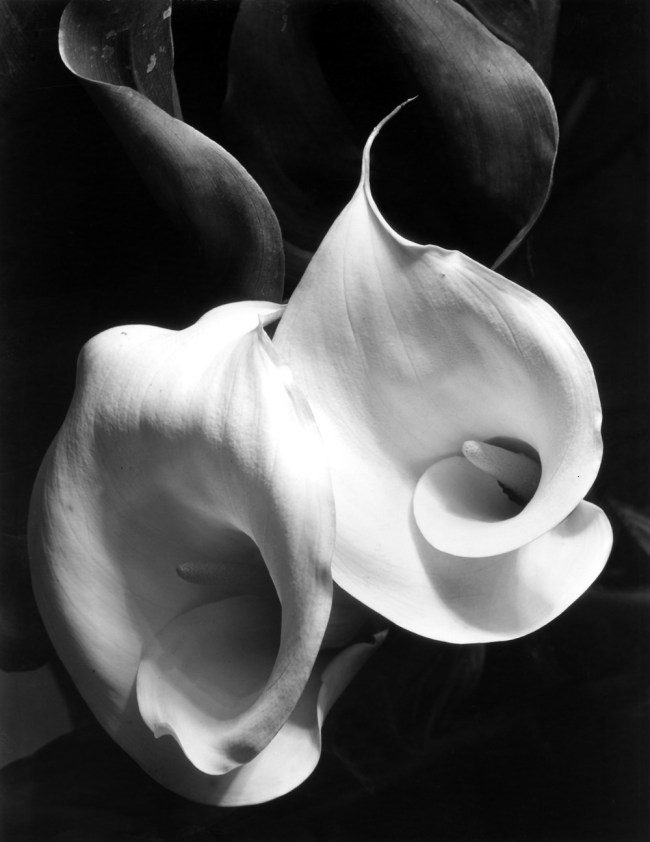
 

Imogen Cunningham (American, 1883-1976) 'Two Callas' c. 1925


Imogen Cunningham (American, 1883-1976)
Two Callas
c. 1925
Gelatin silver print
Estate Prints, 2013
21.5 x 17cm
Austrian Gallery, Museum of Moderne Salzburg
The Imogen Cunningham Trust, 2013
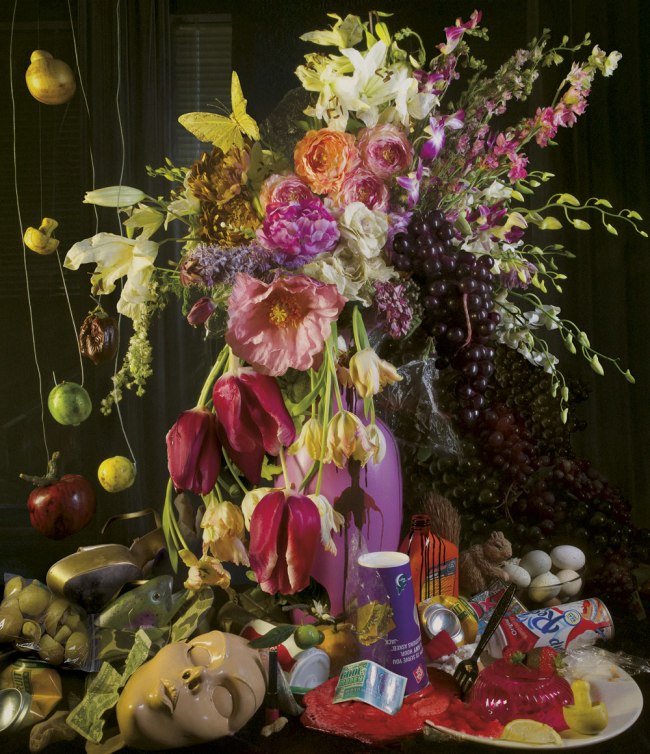
 

David LaChapelle (American, b. 1963) 'Late Summer' 2008-2011
 

David LaChapelle (American, b. 1963)
Late Summer
2008-2011
C-Print
152 x 110cm
Courtesy of the Artist ROBILANT + VOENA, London – Milan


Museum der Moderne Salzburg
Mönchsberg 32
5020 Salzburg, Austria

Opening hours:
Tuesday – Sunday:10.00am – 6.00pm
Wednesday: 10.00am – 8.00pm
Monday: closed

Museum der Moderne Salzburg website

LIKE ART BLART ON FACEBOOK

Back to top

Exhibition: ‘Alexander Rodchenko: 
Revolution in Photography’ at WestLicht Museum for Photography, Vienna

Exhibition dates: 11th June – 25th August 2013


Alexander Rodchenko (Russian, 1891-1956) 'Radio listeners' 1929


Alexander Rodchenko (Russian, 1891-1956)
Radio listeners
1929
Vintage print on Silver gelatin paper
Collection Museum Moscow House of Photography / Multimedia Art Museum, Moscow
© A. Rodchenko – W. Stepanova Archive
© Museum Moscow House of Photography


“The modern city with its multi-storey buildings, plants, factories […], all this […] has changed the psychology of the traditional perception to a great extent. It seems as if only a camera is able to illustrate modern life.”


“Photography – the new, fast and real reflection of the world – should make it possible to map the world from all points of view […]. In order to educate man to a new vision, everyday familiar objects must be shown to him with totally unexpected perspectives and in unexpected situations. New objects should be depicted from different sides in order to provide a complete impression of the object.”


“We must revolutionise our optical perception. We must remove the veil from our eyes.”


“Contradictions of perspective. Contrasts of light. Contrasts of form. Points of view impossible to achieve in drawing and painting. Foreshortenings with a strong distortion of the objects, with a crude handling of matter. Moments altogether new, never seen before… compositions whose boldness outstrips the imagination of painters… Then the creation of those instants which do not exist, contrived by means of photomontage. The negative transmits altogether new stimuli to the sentient mind and eye.”


Alexander Rodchenko


What an impression (on the sentient mind) this artist makes!

Dr Marcus Bunyan


Many thankx to the WestLicht Gallery for allowing me to publish the photographs in the posting. Please click on the photographs for a larger version of the image.


Alexander Rodchenko (Russian, 1891-1956) 'Marching column of the Dynamo Sports Club' 1932


Alexander Rodchenko (Russian, 1891-1956)
Marching column of the Dynamo Sports Club
1932
Vintage gelatin silver print on paper
Collection Museum Moscow House of Photography / Multimedia Art Museum, Moscow
© A. Rodchenko – W. Stepanova Archive
© Museum Moscow House of Photography


Alexander Rodchenko (Russian, 1891-1956) 'Levels' 1929


Alexander Rodchenko (Russian, 1891-1956)
Levels
1929
Vintage print on Silver gelatin paper
Collection Museum Moscow House of Photography / Multimedia Art Museum, Moscow
© A. Rodchenko – W. Stepanova Archive
© Museum Moscow House of Photography


Alexander Rodchenko (Russian, 1891-1956) 'Sportsmen on Red Square' 1935


Alexander Rodchenko (Russian, 1891-1956)
Sportsmen on Red Square
1935
Vintage print on Silver gelatin paper
Collection Museum Moscow House of Photography / Multimedia Art Museum, Moscow
© A. Rodchenko – W. Stepanova Archive
© Museum Moscow House of Photography


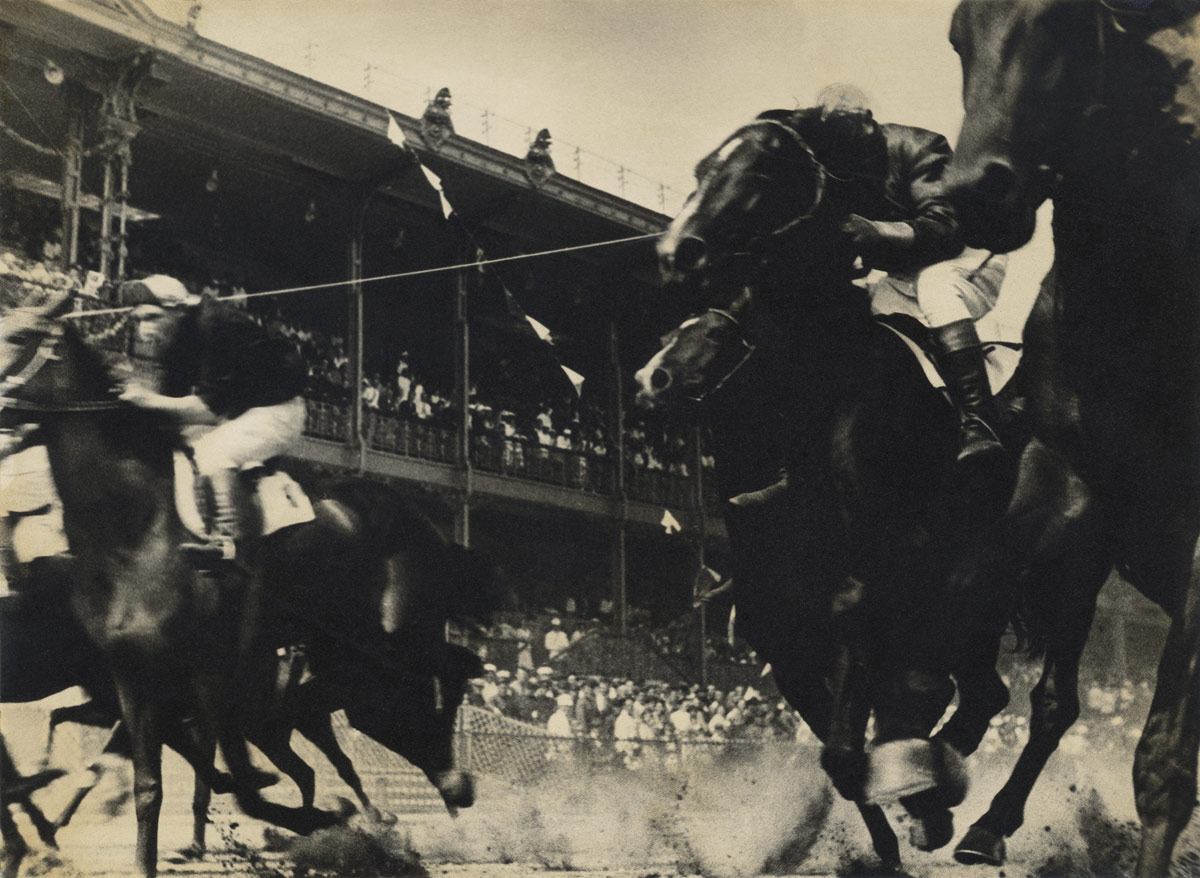
Alexander Rodchenko (Russian, 1891-1956) 'Horse racing' 1935


Alexander Rodchenko (Russian, 1891-1956)
Horse racing
1935
Vintage gelatin silver print on paper
Collection Museum Moscow House of Photography / Multimedia Art Museum, Moscow
© A. Rodchenko – W. Stepanova Archive
© Museum Moscow House of Photography


Alexander Rodchenko (Russian, 1891-1956) 'Sports parade. Girl with towels' 1935


Alexander Rodchenko (Russian, 1891-1956)
Sports parade. Girl with towels
1935
Vintage print on Silver gelatin paper
Collection Museum Moscow House of Photography / Multimedia Art Museum, Moscow
© A. Rodchenko – W. Stepanova Archive
© Museum Moscow House of Photography


Alexander Rodchenko (1891-1956) was a driving force in the Russian avant-garde and is considered one of the great innovators of photography in the first half of the 20th century. In 1924, already well-known as a painter, sculptor and graphic artist, he conquered traditional photography with the slogan “Our duty is to experiment!” Dynamic compositions, stark contrasts, unconventional angles and the use of photomontage are the defining characteristics of his photographic language.

Rodchenko’s visual compositions and constructivist manifestos have been highly influential in the development of modern photography. With more than 200 photographs on display, the exhibition explores Rodchenko’s dynamic vision and the extraordinary range of his work. Alongside renowned, iconic images like Portrait of the Artist’s Mother (1924), Steps (1929) or Girl with a Leica (1934) WestLicht presents many rare vintage prints, which are complemented by a selection of Rodchenko’s posters, publications and typographic works.

As a prominent figure of constructivism, Rodchenko significantly shaped the development of Russian art in the early years of the Revolution. He was also a catalyst of a photography movement, similar to the New Objectivity pioneered by Albert Renger-Patzsch in Germany and the Group f/64 in the USA. “New, unexpected foreshortenings, unusual perspectives, bold light and shadow combinations reproduce fragments of the social reality that are as sharp and clear as possible” (Catalogue for Film and Photo Exhibition, Stuttgart, 1929).

The development of this new reality involved a radical departure from traditional perspectives. As Rodchenko pointed out in an essay on Ways of Contemporary Photography, in 1928: “The modern city with its multi-storey buildings, plants, factories […], all this […] has changed the psychology of the traditional perception to a great extent. It seems as if only a camera is able to illustrate modern life.” Central to Rodenchko’s argumentation was the belief that the camera could act as an active eye of contemporaries, destroying the primacy of the normal view – the navel perspective – established by painting. For Rodchenko the camera lens was “the pupil of the educated person in socialist society.”

Just as the revolution created the new socialist man and swept away the old order, photography should overcome the outdated perception and allow a modern outlook. “Photography – the new, fast and real reflection of the world – should make it possible to map the world from all points of view […]. In order to educate man to a new vision, everyday familiar objects must be shown to him with totally unexpected perspectives and in unexpected situations. New objects should be depicted from different sides in order to provide a complete impression of the object.” According to Rodchenko’s significant and much-quoted claim: “We must revolutionise our optical perception. We must remove the veil from our eyes.”

Curated by Olga Sviblova, Director of the Moscow House of Photography Museum.”

Press release from the WestLicht Gallery website


Alexander Rodchenko (Russian, 1891-1956) 'Girl with Leica' 1934


Alexander Rodchenko (Russian, 1891-1956)
Girl with Leica
1934
Vintage print on Silver gelatin paper
Collection Museum Moscow House of Photography / Multimedia Art Museum, Moscow
© A. Rodchenko – W. Stepanova Archive
© Museum Moscow House of Photography


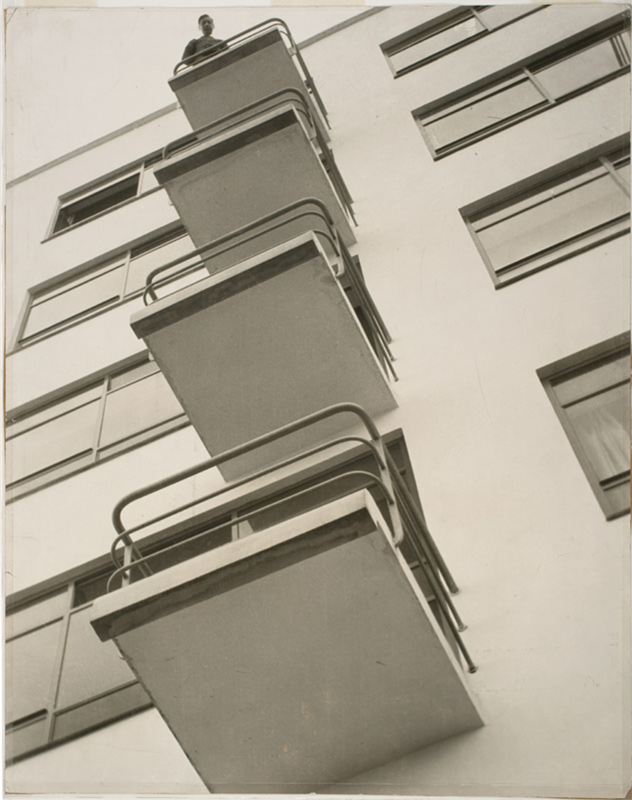
Alexander Rodchenko (Russian, 1891-1956) 'Balconies. Corner of the house' 1925


Alexander Rodchenko (Russian, 1891-1956)
Balconies. Corner of the house
1925
Vintage print on Silver gelatin paper
Collection Museum Moscow House of Photography / Multimedia Art Museum, Moscow
© A. Rodchenko – W. Stepanova Archive
© Museum Moscow House of Photography


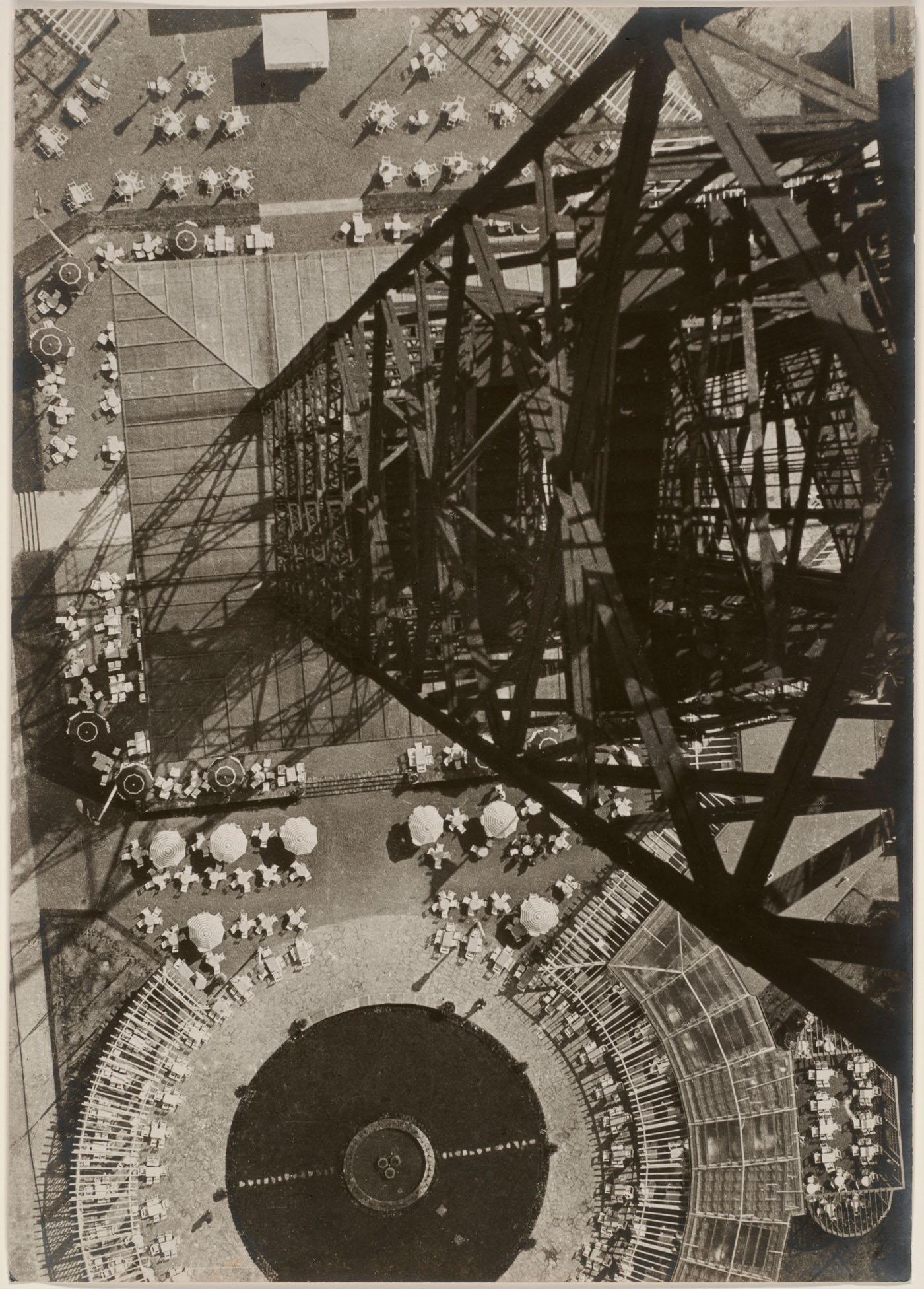
Alexander Rodchenko (Russian, 1891-1956) 'Guard at the Shukhov Tower' 1929


Alexander Rodchenko (Russian, 1891-1956)
Guard at the Shukhov Tower
1929
Vintage print on Silver gelatin paper
Collection Museum Moscow House of Photography / Multimedia Art Museum, Moscow
© A. Rodchenko – W. Stepanova Archive
© Museum Moscow House of Photography


Alexander Rodchenko (Russian, 1891-1956) 'Pines. Puschkino' 1927


Alexander Rodchenko (Russian, 1891-1956)
Pines. Puschkino
1927
Vintage print on Silver gelatin paper
Collection Museum Moscow House of Photography / Multimedia Art Museum, Moscow
© A. Rodchenko – W. Stepanova Archive
© Museum Moscow House of Photography


Alexander Rodchenko (Russian, 1891-1956) 'Fire escape' 1925


Alexander Rodchenko (Russian, 1891-1956)
Fire escape
1925
Deduction on Silver gelatin paper
Collection Museum Moscow House of Photography / Multimedia Art Museum, Moscow
© A. Rodchenko – W. Stepanova Archive
© Museum Moscow House of Photography


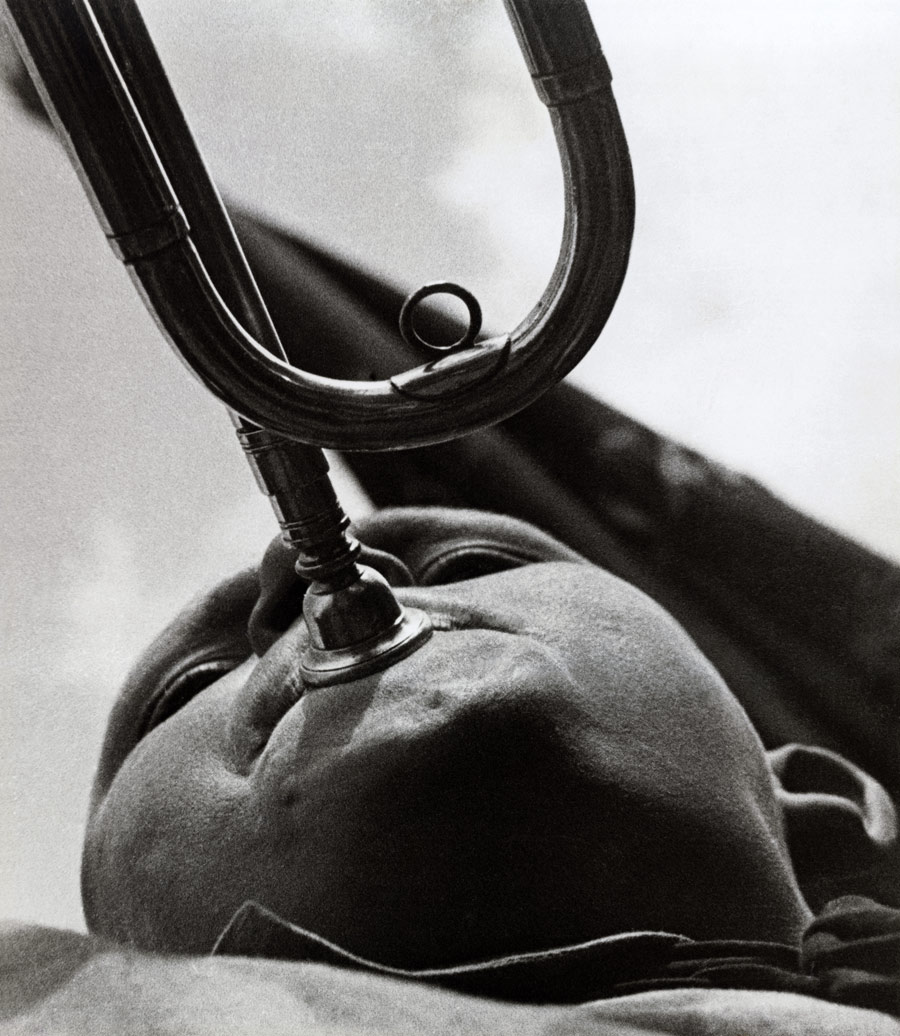
Alexander Rodchenko (Russian, 1891-1956) 'Trumpeting pioneer' 1930


Alexander Rodchenko (Russian, 1891-1956)
Trumpeting pioneer
1930
Vintage print on Silver gelatin paper
Collection Museum Moscow House of Photography / Multimedia Art Museum, Moscow
© A. Rodchenko – W. Stepanova Archive
© Museum Moscow House of Photography


Alexander Rodchenko (Russian, 1891-1956) 'They gathered for the demonstration' 1928


Alexander Rodchenko (Russian, 1891-1956)
They gathered for the demonstration
1928
Vintage print on Silver gelatin paper
Collection Museum Moscow House of Photography / Multimedia Art Museum, Moscow
© A. Rodchenko – W. Stepanova Archive
© Museum Moscow House of Photography


Alexander Rodchenko (Russian, 1891-1956) 'Varvara Stepanova on a balcony' 1928


Alexander Rodchenko (Russian, 1891-1956)
Varvara Stepanova on a balcony
1928
Vintage print on Silver gelatin paper
Collection Museum Moscow House of Photography / Multimedia Art Museum, Moscow
© A. Rodchenko – W. Stepanova Archive
© Museum Moscow House of Photography


Alexander Rodchenko (Russian, 1891-1956) 'Portrait of the Artist's Mother' 1924


Alexander Rodchenko (Russian, 1891-1956)
Portrait of the Artist’s Mother
1924
Vintage print on Silver gelatin paper
Collection Museum Moscow House of Photography / Multimedia Art Museum, Moscow
© A. Rodchenko – W. Stepanova Archive


Alexander Rodchenko (Russian, 1891-1956) 'Pioneer' 1930


Alexander Rodchenko (Russian, 1891-1956)
Pioneer
1930
Vintage print on Silver gelatin paper
Collection Museum Moscow House of Photography / Multimedia Art Museum, Moscow
© A. Rodchenko – W. Stepanova Archive
© Museum Moscow House of Photography


Alexander Rodchenko (Russian, 1891-1956) 'Envelope for Vladimir Mayakovsky's poem "Pro eto" (Darüber)' 1923


Alexander Rodchenko (Russian, 1891-1956)
Envelope for Vladimir Mayakovsky’s poem “Pro eto” (Darüber)
1923
Reprint
Collection Museum Moscow House of Photography / Multimedia Art Museum, Moscow
© A. Rodchenko – W. Stepanova Archive
© Museum Moscow House of Photography


Alexander Rodchenko (Russian, 1891-1956) 'Lilya Brik. Portrait of the advertising poster "Knigi"' 1924


Alexander Rodchenko (Russian, 1891-1956)
Lilya Brik. Portrait of the advertising poster “Knigi”
1924
Vintage print on Silver gelatin paper, cut out and glued on pink paper.
Collection Museum Moscow House of Photography / Multimedia Art Museum, Moscow
© A. Rodchenko – W. Stepanova Archive
© Museum Moscow House of Photography


WestLicht Museum for Photography
Westbahnstraße 40,
1070 Vienna
Phone: +43 (0)1 522 66 36 -60

Opening hours:
Daily 11am – 7pm

WestLicht Gallery website

LIKE ART BLART ON FACEBOOK

Back to top

Exhibition: ‘Candida Höfer: A Return to Italy’ at Ben Brown Fine Arts, London

Exhibition dates: 12th February – 12th April 2013


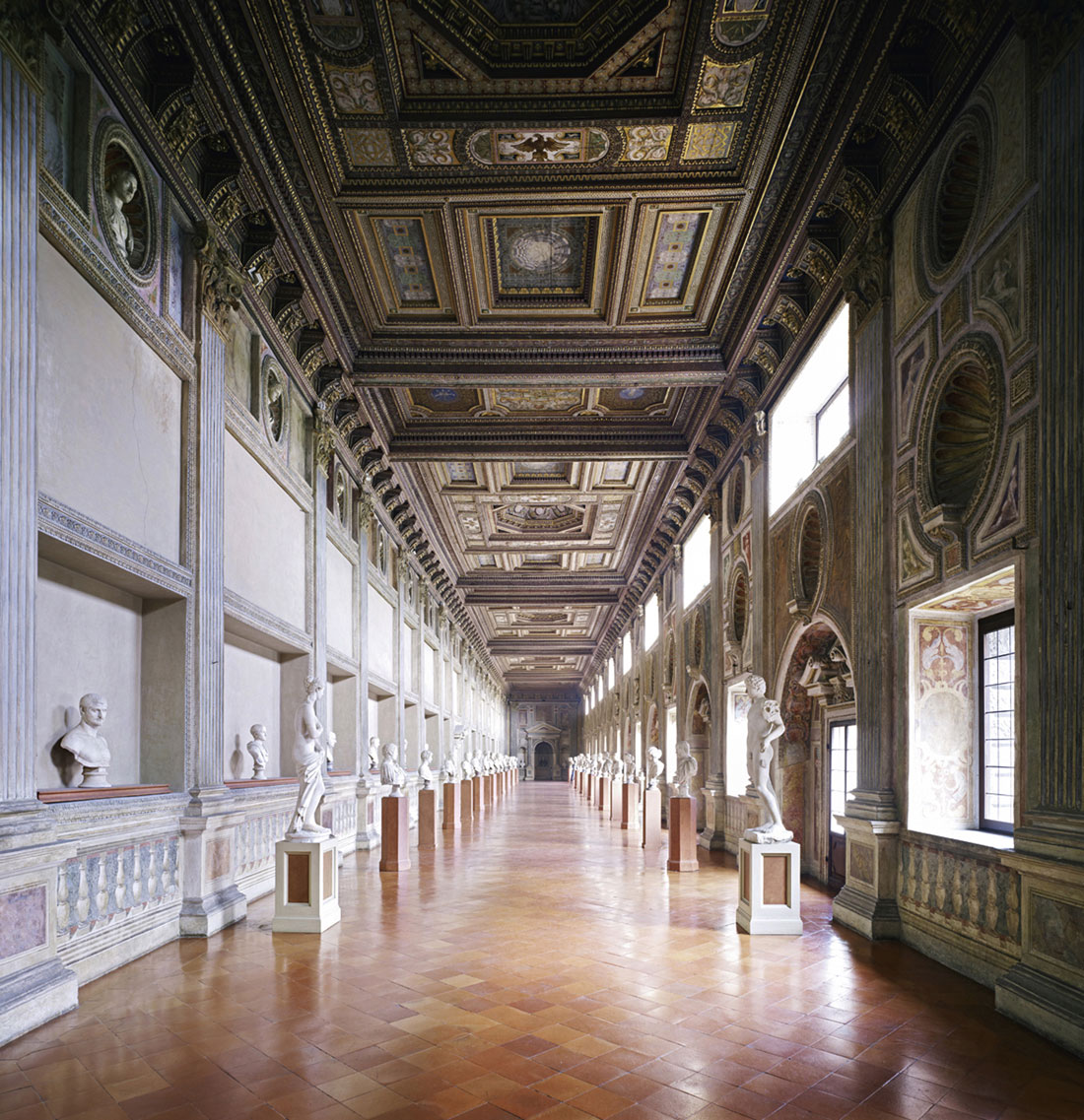
Candida Höfer (German, b. 1944) 'Galleria Degli Antichi Sabbioneta I 2010' 2010


Candida Höfer (German, b. 1944)
Galleria Degli Antichi Sabbioneta I 2010
2010
Light Jet print
Edition of 6
180 x 220.7cm (70 7/8 x 86 7/8 in.)
© 2013 Candida Höfer, VG Bild-Kunst, Bonn
Courtesy of Ben Brown Fine Arts


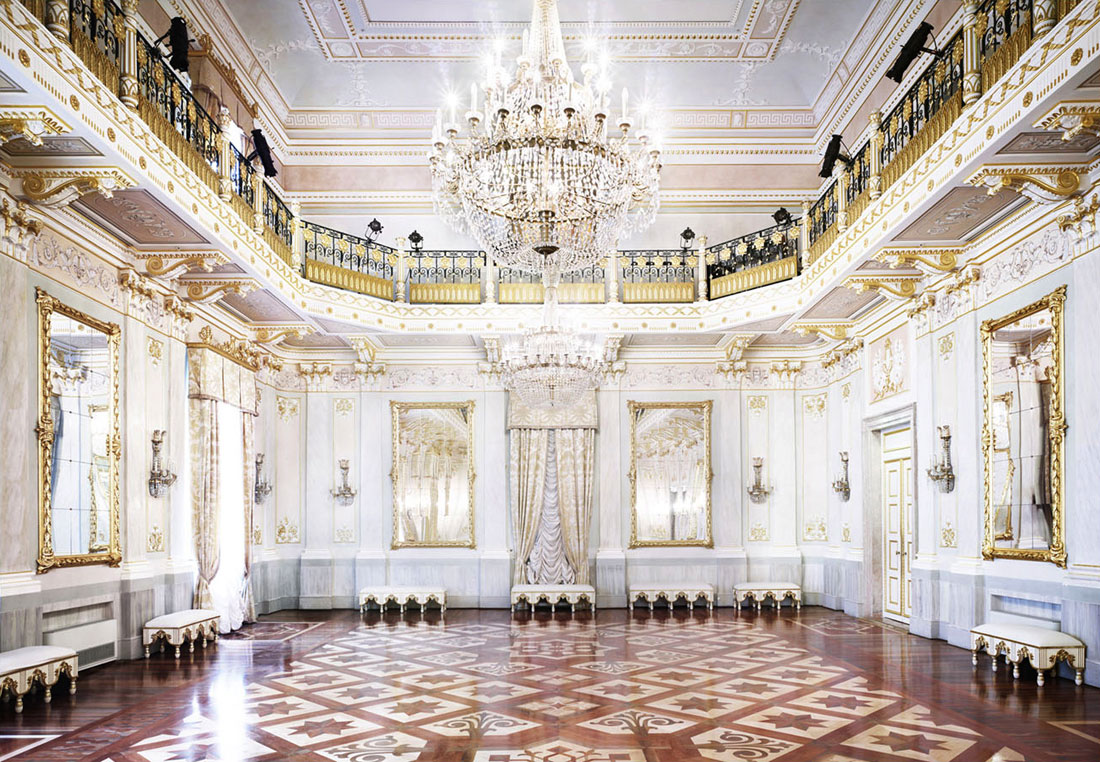
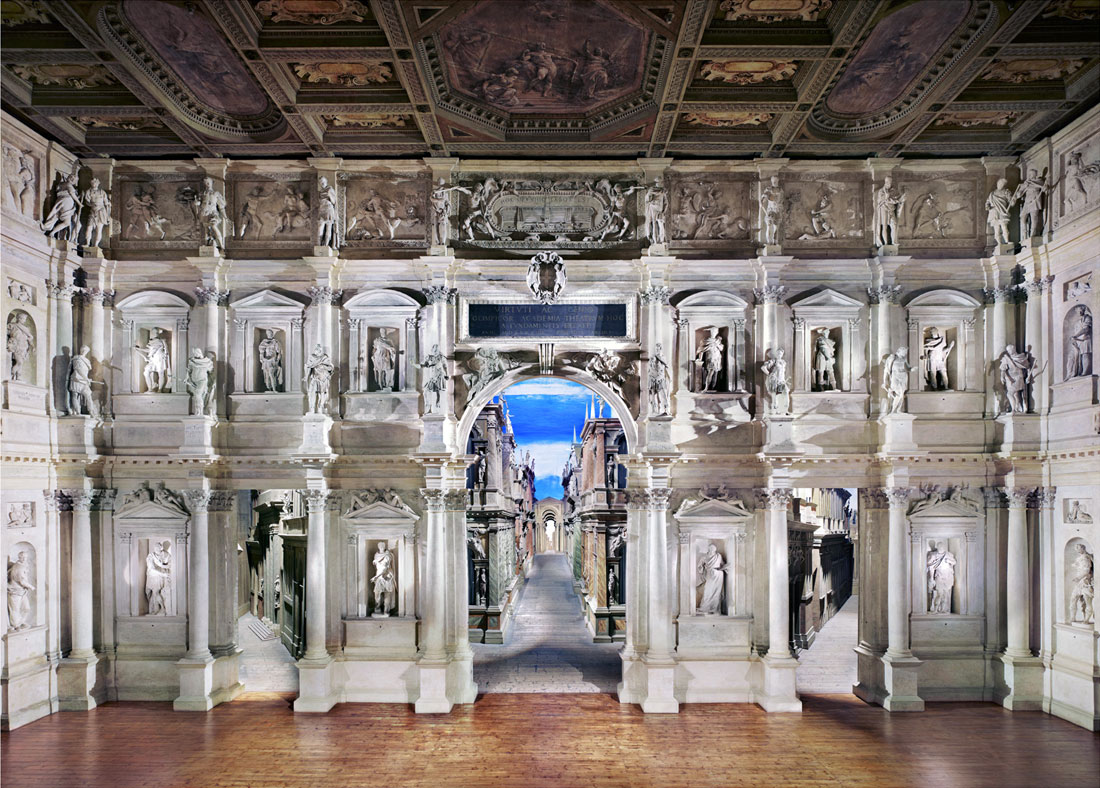
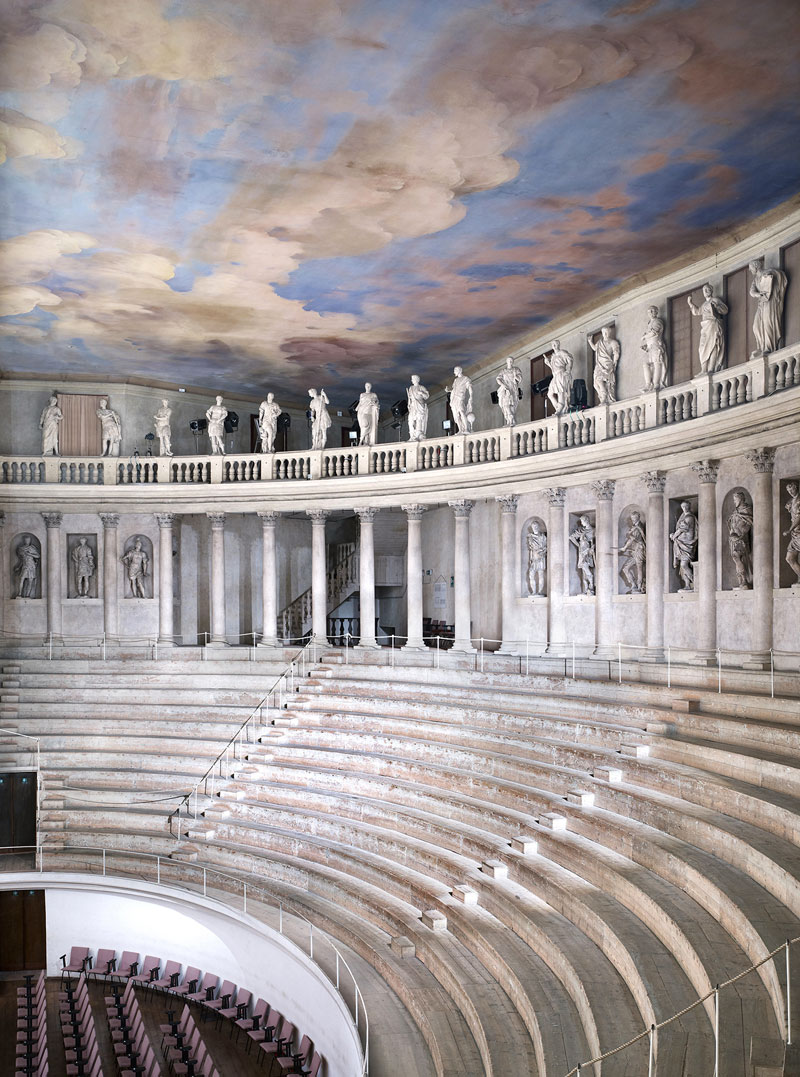
Ah symmetry, that vague sense of harmonious and beautiful proportion and balance, that patterned self-similarity that, through Hofer’s large format photographs, reflects the vainglorious human edifices of Northern Italy, superbly beautiful in their empty pride. Customarily devoid of human presence, Hofer’s photographs are technically and aesthetically superb. One has to examine the photographs with respect to their relationship to the passage of time, utilising spatial awareness to try to understand why things exist in specific locations within human culture.

“Both in ancient and modern times, the ability of a large structure to impress or even intimidate its viewers has often been a major part of its purpose, and the use of symmetry is an inescapable aspect of how to accomplish such goals.” (Wikipedia) Symmetries are informative of the world around us, and peer relationships are based on symmetry sending the message “we are all the same.” So Hofer’s symmetrical photographs possess opposing messages: we are all the same but some of us are more important (read powerful) than others.

Hofer’s highly symmetrical rooms are unavoidably also rooms in which anything out of place or potentially threatening can be identified easily and quickly, which has implications for safety, security, and familiarity. In this case it is the absence of human presence. To me this is the critical reading of Hofer’s photographs: they comment on the foibles of the human race, a race nearing the destruction of its only place of habitation, reaching the tipping point on the path to annihilation, yet indulging itself in a continuing race of construction and consumption. There will come a point when these edifices are crumbling and in ruins, as an Ebola-like virus races airborne around the world, destroying 90 percent of the population of the earth within months. The Earth will self balance and all we will be left with will be the memory of an empty symmetry.

Symmetry can be a source of comfort not only as an indicator of biological health, but also of a safe and well-understood living environment. The paradox of Hofer’s environments is that in these colourful, exuberant, profuse environments nothing is alive, the interiors becoming meaningless “noise” in an empty, vacuous world. The human race will have left the building.

Dr Marcus Bunyan


Many thankx to Ben Brown Fine Arts for allowing me to publish the photographs in the posting. Please click on the photographs for a larger version of the image.


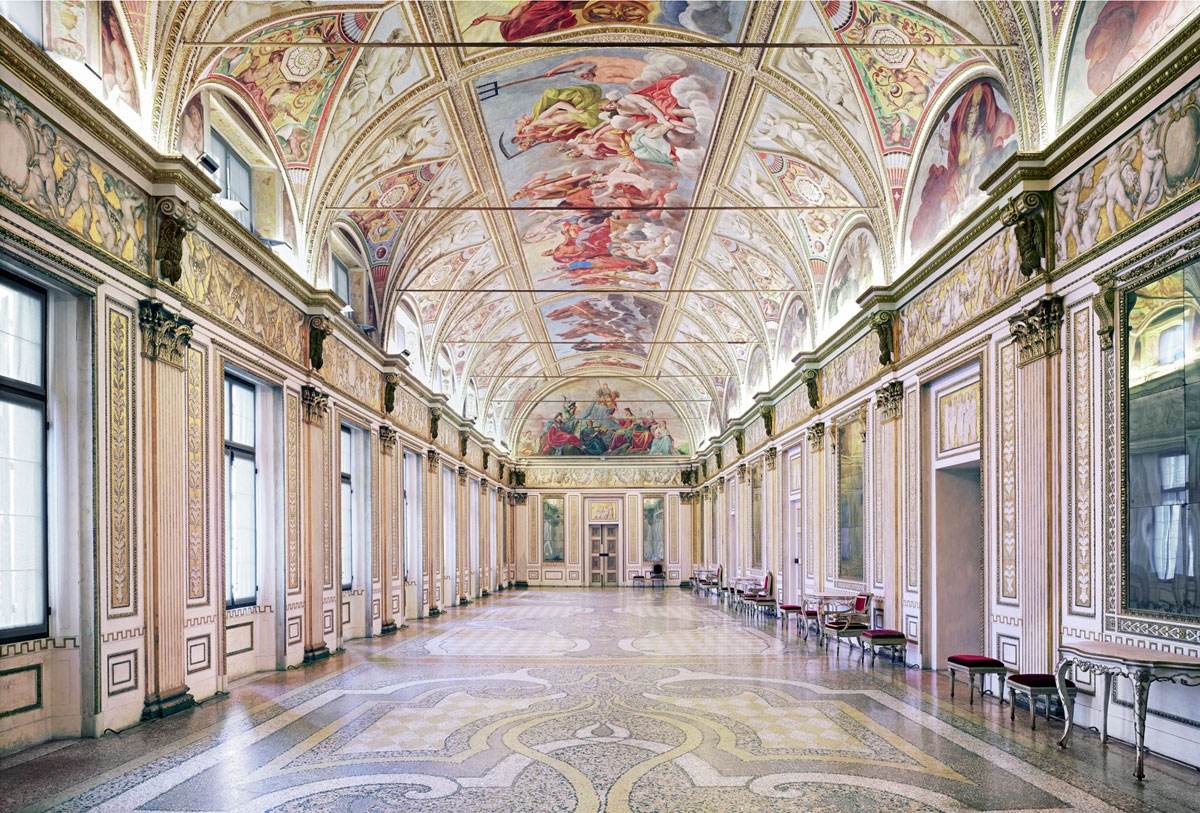
Candida Höfer (German, b. 1944) 'Palazzo Ducale Mantova I' 2011


Candida Höfer (German, b. 1944)
Palazzo Ducale Mantova I 2011
2011
Light Jet print
Edition of 6
180 x 246cm (70 7/8 x 96 7/8 in.)
© 2013 Candida Höfer, VG Bild-Kunst, Bonn
Courtesy of Ben Brown Fine Arts


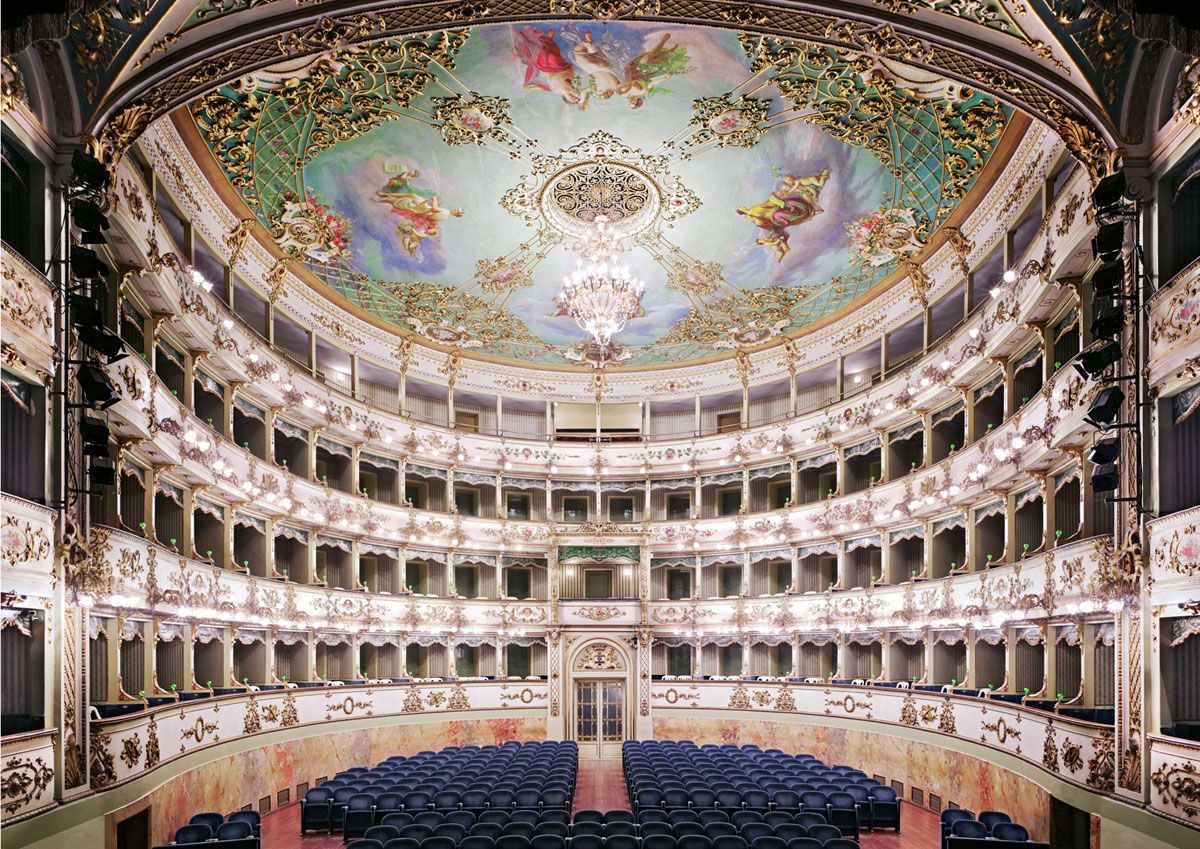
Candida Höfer (German, b. 1944) 'Teatro Comunale di Carpi I' 2011


Candida Höfer (German, b. 1944)
Teatro Comunale di Carpi I 2011
2011
Light Jet print
Edition of 6
180 x 237cm; (70 7/8 x 93 1/4 in.)
© 2013 Candida Höfer, VG Bild-Kunst, Bonn
Courtesy of Ben Brown Fine Arts


Candida Höfer (German, b. 1944) 'Teatro La Fenice di Venezia III' 2011


Candida Höfer (German, b. 1944)
Teatro La Fenice di Venezia III 2011
2011
Light Jet print
Edition of 6
180 x 242cm (70 7/8 x 95 1/4 in.)
© 2013 Candida Höfer, VG Bild-Kunst, Bonn
Courtesy of Ben Brown Fine Arts


Candida Höfer (German, b. 1944) 'Teatro La Fenice di Venezia V 2011' 2011


Candida Höfer (German, b. 1944)
Teatro La Fenice di Venezia V 2011
2011
Light Jet print
Edition of 6
180 x 235cm (70 7/8 x 92 1/2 in.)
© 2013 Candida Höfer, VG Bild-Kunst, Bonn
Courtesy of Ben Brown Fine Arts


Candida Höfer (German, b. 1944) 'Teatro Olimpico Vicenza II' 2010


Candida Höfer (German, b. 1944)
Teatro Olimpico Vicenza II 2010
2010
Light Jet print
Edition of 6
180 x 235cm (70 7/8 x 92 1/2 in.)
© 2013 Candida Höfer, VG Bild-Kunst, Bonn
Courtesy of Ben Brown Fine Arts


Candida Höfer (German, b. 1944) 'Teatro Scientifico Bibiena Mantova I' 2010


Candida Höfer (German, b. 1944)
Teatro Scientifico Bibiena Mantova I 2010
2010
Light Jet print
Edition of 6
180 x 226cm (70 7/8 x 89 in.)
© 2013 Candida Höfer, VG Bild-Kunst, Bonn
Courtesy of Ben Brown Fine Arts


German photographer Candida Höfer makes a significant return to Ben Brown Fine Arts in London on 12 February with a major solo show, unveiling thirteen new and previously unseen photographs which catalogue the architectural treasures of Northern Italy.

Mantova, Vicenza, Sabbioneta, Venice and Carpi provide the glorious setting for this new series shot over the past two years, a continuation of Höfer’s previous work in Central and Southern Italy. The interiors of palaces, opera houses, libraries and theatres, which Höfer captures with incredible skill, are part of her meticulous documentation of public spaces – places of culture, knowledge, communication and exchange with a rich history and clear functionality. Having rarely visited the Northern region, Höfer was particularly touched by the naturalness and ease with which the local people there accepted this extraordinary architecture as a part of their daily lives.

Höfer’s portraits of interiors, customarily devoid of human presence, emphasise the solemn magnificence of the Palazzo Ducale, Teatro La Fenice and Biblioteca Teresiana, amongst others. By featuring spaces that celebrate mankind’s greatness, yet where people are nowhere to be found, Höfer’s images possess an unexpected poignancy which has become the hallmark of her work. Höfer produces these large-format photographs without digital enhancement or alteration, using long exposure and working solely with the existing light source. The effect is a rare combination of intimacy and scale, in which intricate architectural detail is captured without sacrificing the sense of space and civilised order.

Höfer, a member of the Düsseldorf School (Kunstakademie Düsseldorf), was a noted pupil of the Bechers, who were heavily influenced by the 1920s German art tradition of Neue Sachlichkeit and pioneered a type of detached objectivity. The Bechers’ black and white photographs of industrial landscapes and architecture embodied a clinical, documentary style, which Höfer has retained in her work through the same neutral and methodical process. Yet Höfer’s large-scale colour prints differ in their more sympathetic approach to the building’s culture and history.”

Press release from Ben Brown Fine Arts


Candida Höfer (German, b. 1944) 'Museo Civico Di Palazzo Te Mantova IV' 2010


Candida Höfer (German, b. 1944)
Museo Civico Di Palazzo Te Mantova IV 2010
2010
Light Jet print
Edition of 6
180 x 187cm; (70 7/8 x 73 5/8 in.)
© 2013 Candida Höfer, VG Bild-Kunst, Bonn
Courtesy of Ben Brown Fine Arts


Candida Höfer (German, b. 1944) 'Teatro Olimpico Vicenza III' 2010


Candida Höfer (German, b. 1944)
Teatro Olimpico Vicenza III 2010
2010
Light Jet print
Edition of 6
180 x 144cm (70 7/8 x 56 3/4 in.)
© 2013 Candida Höfer, VG Bild-Kunst, Bonn
Courtesy of Ben Brown Fine Arts


Candida Höfer (German, b. 1944) 'Biblioteca Teresiana Mantova I' 2010


Candida Höfer (German, b. 1944)
Biblioteca Teresiana Mantova I 2010
2010
Light Jet print
Edition of 6
180 x 163cm (70 7/8 x 64 1/8 in.)
© 2013 Candida Höfer, VG Bild-Kunst, Bonn
Courtesy of Ben Brown Fine Arts


Candida Höfer (German, b. 1944) 'Palazzo Ducale Mantova III' 2011


Candida Höfer (German, b. 1944)
Palazzo Ducale Mantova III 2011
2011
Light Jet print
Edition of 6
180 x 169cm; (70 7/8 x 66 1/2 in.)
© 2013 Candida Höfer, VG Bild-Kunst, Bonn
Courtesy of Ben Brown Fine Arts


Candida Höfer (German, b. 1944) 'Palazzo Ducale Mantova V' 2011


Candida Höfer (German, b. 1944)
Palazzo Ducale Mantova V 2011
2011
Light Jet print
Edition of 6
180 x 176cm (70 7/8 x 69 1/4 in.)
© 2013 Candida Höfer, VG Bild-Kunst, Bonn
Courtesy of Ben Brown Fine Arts


Candida Höfer (German, b. 1944) 'Palazzo Ducale Mantova IV' 2011


Candida Höfer (German, b. 1944)
Palazzo Ducale Mantova IV 2011
2011
LightJet print
Edition of 6
180 x 176cm (70 7/8 x 67 3/4 in.)
© 2013 Candida Höfer, VG Bild-Kunst, Bonn
Courtesy of Ben Brown Fine Arts


Ben Brown Fine Arts
12 Brook’s Mews, London W1K 4DG
Phone: +44 (0)20 7734 8888

Opening hours:
Monday to Friday 11am – 6pm
Saturdays 10.30am – 2.30pm

Ben Brown Fine Arts website

LIKE ART BLART ON FACEBOOK

Back to top

Exhibition: ‘Eva Besnyö 1910-2003: The Sensuous Image’ at Jeu de Paume, Paris

Exhibition dates: 22nd May – 23rd September 2012


Eva Besnyö (Dutch-Hungarian, 1910-2003) 'Self Portrait' 1932


Eva Besnyö (Dutch-Hungarian, 1910-2003)
Self Portrait
1932
Silver gelatin photograph
Private Collection, Berlin
© Eva Besnyö / Maria Austria Instituut Amsterdam


One of the purposes of this archive is to bring relatively unknown artists into the spotlight. Eva Besnyö is one such artist. Leaving the repressive atmosphere of Hungary in 1930, Besnyö joined László Moholy-Nagy, Martin Munkácsi, György Kepes and Endre Friedmann (Robert Capa) in Berlin before, sensing the danger of National Socialism, she moved to the Netherlands in 1932. After the invasion of the Netherlands by Nazi Germany in 1940 Besnyö survived four long years in hiding before obtaining false papers in 1944 that allowed her to emerge into the open. She was Jewish.

Exploring elements of the New Vision and New Objectivity in her work, Besnyö explored “the different terrains that photography was opening up” through various bodies of work: “ranging from experimental to the photojournalistic, from street scenes to portraits, and from new architecture to the aftermath of the aerial bombardment of Rotterdam.” As John Yau observes in the quote at the top of the posting, “The various bodies of work make it difficult to characterise her… she seems to have no signature body of work, which is one of her abiding strengths. Just when you think you have gotten some sense of her, she slips through your fingers.”

Continuing the conversation from my recent review of the work of Pat Brassington (where I noted that curators and collectors alike try to pigeon hole artists into one particular style, mainly so that they can compartmentalise and order the work that they produce: such and such produces this kind of work – and that the work produced in this style is not necessarily their best), Besnyö can be seen to be a transmogrifying artist, one that experimented and investigated the same themes through different subject matter – hence no signature body of work. One of my friends observed that this kind of art making could be mistaken for a strange form of nihilism (in which nothing in the world has a real existence). It could be argued that the artist keeps changing subject matter, just dabbling really, pleasing herself with the images that she took, without committing to a particular style. Without seeing the 120 vintage prints it is hard to make a judgement.

From the work posted here it would seem that for Besnyö, observation and exploration of the lines of sight of life were the most critical guide to her art. In other words her shifting viewpoints create a multi-dimensional narrative that coalesces in a holistic journey that challenges our point of view in a changing world. As Victor Burgin notes in Thinking Photography, “The structure of presentation – point-of-view and frame – is intimately implicated in the reproduction of ideology (the ‘frame of mind’ of our ‘points-of-view’)” (1982, p. 146). The frame of mind of our points of view… this is what Eva’s work challenges, the reproduction of our own ideology. Her morphology (the philosophical study of forms and structures) challenges the cameras and our own point of view. As Paul Virilio observes,

“In calling his first photographs of his surroundings ‘points of view’, around 1820, their inventor, Nicéphore Nièpce came as close as possible to Littré’s rigorous definition: ‘The point of view is a collection of objects to which the eye is directed and on which it rests within a certain distance.'” (Virilio, Paul. The Vision Machine (trans. Julie Rose). Bloomington: Indiana University Press, 1994, p. 19.)

Besnyö changes the collection of objects to which the eye is directed as she also changes the distance and feeling of the objects upon which the eye rests. Notice how in most of the photographs the human subjects all have their back to the camera or are looking away from the instrument of objectification (or looking down into it). Even in the two self portraits Besnyö – formal in one with bobbed hair and skirt, wild in the other with a shock of tousled hair – she avoids the gaze of the camera. Like most of her subjects she remains hard to pin down. What Besnyö does so well (and why she isn’t just pleasing herself) is to construct a mythology of the city, a mythology of life which resonates through the ages. She creates a visual acoustics (if you like), a vibration of being that is commensurate with an understanding of the vulnerability of existence.

Dr Marcus Bunyan


Many thankx to Jeu de Paume for allowing me to publish the photographs in the posting. Please click on the photographs for a larger version of the image.


“Ranging from the experimental to the photojournalistic, from street scenes to portraits, and from new architecture to the aftermath of the aerial bombardment of Rotterdam, July 1940, Besnyö explored the different terrains that photography was opening up, while at the same time helping to define them. The various bodies of work make it difficult to characterise her… she seems to have no signature body of work, which is one of her abiding strengths. Just when you think you have gotten some sense of her, she slips through your fingers.”


John Yau. “Something Special About Her, Eva Besnyö at the Jeu de Paume” on the Hyperallergic website, July 8th 2012


Eva Besnyö (Dutch-Hungarian, 1910-2003) 'Self Portrait' Nd


Eva Besnyö (Dutch-Hungarian, 1910-2003)
Self Portrait
Nd
Silver gelatin photograph
© Eva Besnyö / Maria Austria Instituut Amsterdam


Eva Besnyö (Dutch-Hungarian, 1910-2003) 'Untitled Untitled [boy with a violoncello, Balaton, Hungary]' 1931


Eva Besnyö (Dutch-Hungarian, 1910-2003)
Untitled [boy with a violoncello, Balaton, Hungary]
1931
Silver gelatin photograph
29.4 x 24.3cm
Rijksmuseum, Amsterdam
© Eva Besnyö / Maria Austria Instituut Amsterdam


Eva Besnyö (Dutch-Hungarian, 1910-2003) 'Gypsies' 1931


Eva Besnyö (Dutch-Hungarian, 1910-2003)
Gypsies
1931
Silver gelatin photograph
© Eva Besnyö / Maria Austria Instituut Amsterdam


Eva Besnyö (Dutch-Hungarian, 1910-2003) 'Der Monteur am Ladenfenster' Berlin, 1931


Eva Besnyö (Dutch-Hungarian, 1910-2003)
Der Monteur am Ladenfenster
Berlin, 1931
Silver gelatin photograph
20.1 x 17.7cm
Collection Iara Brusse, Amsterdam.
© Eva Besnyö / Maria Austria Instituut Amsterdam


Eva Besnyö (Dutch-Hungarian, 1910-2003) 'Starnberger Straße' Berlin, 1931


Eva Besnyö (Dutch-Hungarian, 1910-2003)
Starnberger Straße
Berlin, 1931
Silver gelatin photograph
© Eva Besnyö / Maria Austria Instituut Amsterdam


Renger-Patzsch was associated with the Neue Sachlichkeit (New Objectivity), an attitude towards life and art that many Germans understood as distinctly American: the cult of the objective. Along with Regner-Patzsch, August Sander is another photographer associated with this tendency. (Karl Hubbuch, Otto Dix and Christian Schad are among the painters associated with it). The difference between the two photographers is that the human being is at the center of Sander’s work, while the world of things is at the center of Renger-Patcsch’s. Besnyö situates herself between the two, finding her own way.

The other influence on Besnyö was Låslø Moholy-Nagy’s New Vision, a term he coined to define his belief that photography enabled the viewer to see the world in ways the eyes could not. In 1930, at the age of 20, she moved to Berlin, rather than to Paris, where Hungarian photographers such as Andre Kertesz and Brassaï had gone. According to Besnyö, “The whole German side interested me. Paris was the Romantic, old-fashioned trend. The second reason was Gyørgy Kepes, who was a good friend of mine and had gone to Berlin as an assistant to Moholy.”

It was Gyørgy Kepes who said to Besnyö; “If you want to be a photographer, you must go to Berlin.” It was from this relationship and the circle around Moholy-Nagy that Besnyö learned of Russian Constructivism and began incorporating the diagonal into her photographs.

John Yau. “Something Special About Her, Eva Besnyö at the Jeu de Paume” on the Hyperallergic website, July 8th 2012


Eva Besnyö (Dutch-Hungarian, 1910-2003) 'Untitled [Shadow play]' Hungary 1931


Eva Besnyö (Dutch-Hungarian, 1910-2003)
Untitled [Shadow play]
Hungary 1931
Silver gelatin photograph
© Eva Besnyö / Maria Austria Instituut Amsterdam


Eva Besnyö (Dutch-Hungarian, 1910-2003) 'Untitled [dockers on the Spree]' Berlin, 1931


Eva Besnyö (Dutch-Hungarian, 1910-2003)
Untitled [dockers on the Spree]
Berlin, 1931
Silver gelatin photograph
© Eva Besnyö / Maria Austria Instituut Amsterdam


Eva Besnyö (Dutch-Hungarian, 1910-2003) 'Untitled [Vertigo #3]' Nd


Eva Besnyö (Dutch-Hungarian, 1910-2003)
Untitled [Vertigo #3]
Nd
Silver gelatin photograph
© Eva Besnyö / Maria Austria Instituut Amsterdam


Eva Besnyö (1910-2003) is one of those women who found in photography not just a profession but also a form of liberation, and of those cosmopolitan avant-garde artists who chose Europe as their playing field for both play and work. Immediately after her photographic training in the studio of József Pécsi in Budapest, Eva Besnyö left the repressive, anti-progressive environment of her native Hungary for ever. Then aged 20, she decided, like her compatriots László Moholy-Nagy, Martin Munkácsi, György Kepes and Endre Friedmann (Robert Capa), to go to Berlin. As soon as she arrived in autumn 1930, she discovered there a dynamic photographic scene, open to experimentation and placed under the double sign of the New Vision and the New Objectivity, whose modern language would allow her to develop her personal style.

Of Jewish origins, Eva Besnyö, who foresaw the threat of National Socialism, moved to the Netherlands in 1932 where she met again her companion the film director John Fernhout. There she was welcomed into the circle of international artists around the painter Charley Toorop, and rapidly became known in Amsterdam, where she had her own photographic studio. A solo exhibition at the Kunstzaal van Lier in 1933 gained the attention notably of the Dutch followers of the “Neues Bauen” (New Building), whose architecture she recorded, in a highly personal manner, over a long period. The invasion of the Netherlands by Nazi Germany in 1940 marked a dramatic turning point in Eva Besnyö’s life. If she managed to come out of hiding in 1944, thanks to an invented genealogy, the traces of this experience would remain acute throughout the postwar decades. During the 1950s and 60s, her family life led her to abandon street photography for commissions. Finally, in the twilight of her career, the photographer militated in the Dolle Mina feminist movement, whose street actions she chronicled in the 1970s.

With more than 120 vintage prints, some modern prints and numerous documents, this first French retrospective devoted to Eva Besnyö aims to show the public the different facets of her work, which is situated between New Vision, New Objectivity and social documentary, at the crossroads between poetry and political activism.

With other eyes

In 1929, during her second year of apprenticeship to József Pécsi, portrait and advertising photographer in Budapest, Eva Besnyö received the book of photographs Die Welt ist schön (The World is Beautiful), published a few months earlier in Munich. Its author, Albert Renger-Patzsch, is the precursor of New Objectivity in photography. While pictorialism reigned in Hungary, Eva Besnyö discovered the world with other eyes: from up close and under unexpected angles. With these new models in mind and her Rolleiflex in hand, she strode along the banks of the Danube in search of subjects and daring viewpoints, showing concern for a precise, close-up description of the most diverse objects, as well as a taste for fragmentation and for the repetition of the motif in the frame.

As soon as she finished her studies, Eva Besnyö went to Berlin on the advice of the painter and photographer György Kepes – and against the wishes of her father who would have preferred that she chose Paris. The Berlin years, between 1930 and 1932, were for her those of a political and aesthetic awakening. Besides the influence of the revolutionary aesthetic of Russian cinema, she came under that of the New Vision, which took off with László Moholy-Nagy and his book Painting Photography Film (1925), using a whole stylistic grammar, advocating downward perspectives or low-angle shots, a taste for the isolated object and its repetition, as well as optical manipulations revealing an unknown, but very real, world. The activity of the town or the empty crossroads of Starnberger Straße, portraits and images of summer on the banks of Lake Wannsee count among Besnyö’s most successful compositions.

Worker and social photography

At the Marxist Workers’ School in Berlin, Eva Besnyö schooled her social and political conscience. In her circle of friends gathered around fellow Hungarian György Kepes, she discussed passionately the role of the workers’ movements. In Berlin, as earlier in Budapest, Eva Besnyö took her camera to the principal sites of trade and business, where she photographed labourers hard at work: dockers on the Spree, coalmen in the street, fitters perched on ladders; in the city centre, she followed the workers at Alexanderplatz, in around 1930 the largest construction site in Europe. In Hungary, where she returned from time to time from Berlin, she carried out an extraordinary documentary project on the people of Kiserdö, in the suburbs of Budapest. Blessed with a heightened political awareness, she had already understood by 1932 that, as a Jew, her future was not in this country, and left Berlin for Amsterdam.

New Vision and New Building

In 1933, the solo show devoted by the Kunstzaal van Lier to Eva Besnyö just one year after her arrival in Amsterdam aroused the enthusiasm of numerous architects – her principal clients in the years to come. Mostly members of the group de 8 in Amsterdam and the radical abstract collective Opbouw in Rotterdam, they discerned in her images, which emphasised the functional side of objects, their structure and their texture, a suitable approach for explaining their buildings.

Equipped with a Linhof 9 x 12 cm plate camera acquired especially for the purpose, Eva Besnyö went to building sites and photographed public and private buildings, notably the studios of the Dutch radio station AVRO at Hilversum, the Cineac cinema in Amsterdam and a summer house in Groet, in the north of the country. Become, in the 1930s, the preferred photographer of Dutch New Building, Eva Besnyö made most of her income at the time from architectural photography.

Bergen and Westkapelle

From Amsterdam, where from 1935 to 1939 she shared a studio at Keizersgracht 522 with the photographer Carel Blazer and the architect Alexander Bodon, Eva Besnyö went regularly to Bergen and Westkapelle, two villages where many artists gathered. In Bergen, north of Amsterdam, Charley Toorop, Expressionist painter and mother of the film director John Fernhout, whom Eva had married in 1933, held an artistic salon in the De Vlerken studio. It was at Westkapelle, a centuries-old village built on a polder in Zealand, that the family often spent their holidays. In this landscape shaped by the natural elements, Eva Besnyö returned to a free photographic practice, with views of vast beaches of white sand, of black silhouettes against a background of old windmills and cut-out shadows.

Rotterdam

In July 1940, Eva Besnyö photographed the old town of Rotterdam destroyed by German airforce bombing. Far from classic photo-journalism, these images of ruins and traces of devastation – from which, in retrospect, she distanced herself – are today silent, bare statements of the wounds and scars of history.

Dolle Mina

The Dolle Mina feminist movement gathered both men and women, mainly from the student protest movement. In the 1970s, Eva Besnyö militated actively within it, alongside sympathisers of all ages. In a second phase, she focused on photographic documentation of the movement’s actions and activities, taking responsibility for sending out images daily, like a press agency.

Text by Marion Beckers and Elisabeth Moortgat, curators of the exhibition


Eva Besnyö (Dutch-Hungarian, 1910-2003) 'Untitled' 1934


Eva Besnyö (Dutch-Hungarian, 1910-2003)
Untitled
1934
Collection Iara Brusse, Amsterdam
© Eva Besnyö / Maria Austria Instituut Amsterdam


Eva Besnyö (Dutch-Hungarian, 1910-2003) 'Untitled [Summer house in Groet, North Holland. Architects Merkelbach & Karsten]' 1934


Eva Besnyö (Dutch-Hungarian, 1910-2003)
Untitled [Summer house in Groet, North Holland. Architects Merkelbach & Karsten]
1934
18.2 x 24.2cm
Collection Iara Brusse, Amsterdam
© Eva Besnyö / Maria Austria Instituut Amsterdam


Eva Besnyö (Dutch-Hungarian, 1910-2003) 'Stadion, Berlin, 1931' 1931


Eva Besnyö (Dutch-Hungarian, 1910-2003)
Stadion, Berlin, 1931
1931
16.8 x 23.9cm
Collection Iara Brusse, Amsterdam
© Eva Besnyö / Maria Austria Instituut Amsterdam


Eva Besnyö (Dutch-Hungarian, 1910-2003) 'Untitled [Lieshout, The Netherlands]' 1954


Eva Besnyö (Dutch-Hungarian, 1910-2003)
Untitled [Lieshout, The Netherlands]
1954
Silver gelatin photograph
25.3 x 17.7cm
Collection Iara Brusse, Amsterdam
© Eva Besnyö / Maria Austria Instituut Amsterdam


In 1930, when Eva Besnyö arrived in Berlin at the age of only twenty, a certificate of successful apprenticeship from a recognised Budapest photographic studio in her bag, she had made two momentous decisions already: to turn photography into her profession and to put fascist Hungary behind her forever.

Like her Hungarian colleagues Moholy-Nagy, Kepes and Munkacsi and – a little later – Capa, Besnyö experienced Berlin as a metropolis of deeply satisfying artistic experimentation and democratic ways of life. She had found work with the press photographer Dr. Peter Weller and roamed the city with her camera during the day, searching for motifs on construction sites, by Lake Wannsee, at the zoo or in the sports stadiums, and her photographs were published – albeit, as was customary at the time, under the name of the studio. Besnyö’s best-known photo originates from those years: the gypsy boy with a cello on his back – an image of the homeless tramp that has become familiar all over the world.

Eva Besnyö had a keen political sense, evidenced by the fact that she fled in good time from anti-Semitic, National Socialist persecution, leaving Berlin for Amsterdam in autumn 1932. Supported by the circle surrounding woman painter Charley Toorop, filmmaker Joris Ivens and designer Gerrit Rietveld, Besnyö – meanwhile married to cameraman John Fernhout – soon enjoyed public recognition as a photographer. An individual exhibition in the internationally respected Van Lier art gallery in 1933 made her reputation in the Netherlands practically overnight. Besnyö experienced a further breakthrough with her architectural photography only a few years later: translating the idea of functionalist “New Building” into a “New Seeing.” In the second half of the 30s, Besnyö demonstrated an intense commitment to cultural politics, eg. at the anti-Olympiad exhibition “D-O-O-D” (De Olympiade onder Diktatuur) in 1936; in the following year, 1937, she was curator of the international exhibition “foto ’37” in the Stedelijk Museum Amsterdam.

The invasion of German troops in May 1940 meant that as a Jew, Eva Besnyö was compelled to go into hiding underground. She was attracted to a world view shaped by humanism in the post-war years, and her photographs became stylistically decisive for neo-Realism and immensely suitable for the moralising exhibition, the “Family of Man” (1955). The mother of two children, she had experienced the classic female conflict between bringing up children and a profession career as a crucial and very personal test. Consequentially, Besnyö became an activist in the Dutch women’s movement “Dolle Mina” during the 70s, making a public commitment to equal rights and documenting demonstrations and street protests on camera.

This first retrospective exhibition, showing approximately 120 vintage prints, aims to introduce the public to the life and work of this emigrant and “Berliner by choice”, a convinced cosmopolitan and the “Grande Dame” of Dutch photography. “Like many other talents, that of Eva Besnyö was lost to Germany and its creative art as a direct consequence of the National Socialists’ racial mania.” (Karl Steinorth, DGPh, 1999)

Press release from the Jeu de Paume website


Eva Besnyö (Dutch-Hungarian, 1910-2003) 'Narda, Amsterdam' 1937


Eva Besnyö (Dutch-Hungarian, 1910-2003)
Narda, Amsterdam
1937
Private collection, Berlin
40 x 50cm
© Eva Besnyö / Maria Austria Instituut Amsterdam


Eva Besnyö (Dutch-Hungarian, 1910-2003) 'Untitled' Berlin, 1931


Eva Besnyö (Dutch-Hungarian, 1910-2003)
Untitled
Berlin, 1931
17.4 x 17.4cm
Collection Stedelijk Museum, Amsterdam
© Eva Besnyö / Maria Austria Instituut Amsterdam


Eva Besnyö (Dutch-Hungarian, 1910-2003) 'Berlin' 1931


Eva Besnyö (Dutch-Hungarian, 1910-2003)
Berlin
1931
© Eva Besnyö / Maria Austria Instituut Amsterdam


Eva Besnyö (Dutch-Hungarian, 1910-2003) 'Untitled [John Fernout with Rolleiflex at the Baltic seaside]' 1932


Eva Besnyö (Dutch-Hungarian, 1910-2003)
Untitled [John Fernout with Rolleiflex at the Baltic seaside]
1932
44.2 x 39.5cm
Private collection, Berlin
© Eva Besnyö / Maria Austria Instituut Amsterdam


Eva Besnyö (Dutch-Hungarian, 1910-2003) 'Untitled [Magda, Balaton, Hungary]' 1932


Eva Besnyö (Dutch-Hungarian, 1910-2003)
Untitled [Magda, Balaton, Hungary]
1932
40.5 x 30.6cm
Collection Iara Brusse, Amsterdam
© Eva Besnyö / Maria Austria Instituut Amsterdam


Eva Besnyö (Dutch-Hungarian, 1910-2003) 'Untitled [The shadow of John Fernhout, Westkapelle, Zeeland, Netherlands]' 1933


Eva Besnyö (Dutch-Hungarian, 1910-2003)
Untitled [The shadow of John Fernhout, Westkapelle, Zeeland, Netherlands]
1933
25.3 x 20.4cm
Collection Iara Brusse, Amsterdam
© Eva Besnyö / Maria Austria Instituut Amsterdam


Eva Besnyö (Dutch-Hungarian, 1910-2003) 'Borgerstraat, Amsterdam' 1961


Eva Besnyö (Dutch-Hungarian, 1910-2003)
Borgerstraat, Amsterdam
1961
Gelatin silver print
© Eva Besnyö / Maria Austria Instituut Amsterdam


Jeu de Paume
1, Place de la Concorde
75008 Paris
métro Concorde
Phone: 01 47 03 12 50

Opening hours:
Tuesday – Friday 12 – 8pm
Saturday – Sunday 11am – 7pm
Closed Monday

Jeu de Paume website

LIKE ART BLART ON FACEBOOK

Back to top

Exhibition: ‘Bernd and Hilla Becher: Mines and Mills – Industrial Landscapes’ at Fotomuseum Winterthur, Zurich

Exhibition dates: 26th November, 2011 – 12th February, 2012


Bernd and Hilla Becher (German, active 1959-2007) Bernd Becher (German, 1931-2007) Hilla Becher (German, 1934-2015)
 'Grube San Fernando, Herdorf, D' 1961 from the exhibition 'Bernd and Hilla Becher: Mines and Mills - Industrial Landscapes' at Fotomuseum Winterthur, Zurich, Nov 2011 - Feb 2012


Bernd and Hilla Becher (German, active 1959-2007) Bernd Becher (German, 1931-2007) Hilla Becher (German, 1934-2015)
Grube San Fernando, Herdorf, D
1961
Gelatin silver print
50 x 60cm
© Bernd and Hilla Becher / Courtesy of Schirmer/Mosel


Let’s not beat around the bush. Despite protestations to the contrary (appeals to the objectivity of the image, eschewing entirely the aspects of beauty, emotion and opinion; the rigorous frontality of the individual images giving them the simplicity of diagrams, while their density of detail offers encyclopaedic richness) these are subjective images for all their objective desire. The paradox is the more a photographer strives for objectivity, the more ego drops away, the more the work becomes their own: subjective, beautiful, emotive.

Even though the Bechers’ demonstrate great photographic restraint with regard to documenting the object, the documentary gaze is always corrupted / mutated / distorted by personal interpretation: where to position the camera, what to include or exclude, how to interpret the context of place, how to crop or print the image, and how to display the image, in grids, sequences or singularly. In other words there are always multiple (con)texts to which artists conform or transgress. What makes great photographers, such as Eugène Atget, Walker Evans, August Sander and the Bechers, is the idiosyncratic “nature” of their vision: how Atget places his large view camera – at that particular height and angle to the subject – leaves an indelible feeling that only he could have made that image, to reveal the magic of that space in a photograph. It is their personal, unique thumbprint, recognisable in an instant. So it is with the Bechers.

These are intimate images, a personal reaction to space and place, to being. They make my heart ache for their stillness and ethereal beauty. Bravo!

Dr Marcus Bunyan


Many thankx to the Fotomuseum Winterthur, Zurich for allowing me to publish the photographs in the posting. Please click on the photographs for a larger version of the image.


“The pictures were stripped of any artistic frills and reduced to an essentially topographic state, conveying substantial amounts of visual information but eschewing entirely the aspects of beauty, emotion and opinion.”


William Jenkins, Curator of the ‘New Topographics’ exhibition, 1975


“The Ruhr Valley, where Becher’s family had worked in the steel and mining industries, was their initial focus. They were fascinated by the similar shapes in which certain buildings were designed. In addition, they were intrigued by the fact that so many of these industrial buildings seemed to have been built with a great deal of attention toward design. Together, the Bechers went out with a large 8 x 10-inch view camera and photographed these buildings from a number of different angles, but always with a straightforward “objective” point of view. They shot only on overcast days, so as to avoid shadows, and early in the morning during the seasons of spring and fall. Objects included barns, water towers, oal tipples, cooling towers, grain elevators, coal bunkers, coke ovens, oil refineries, blast furnaces, gas tanks, storage silos, and warehouses. At each site the Bechers also created overall landscape views of the entire plant, which set the structures in their context and show how they relate to each other.”


Wikipedia entry for Bernd and Hilla Becher


“The German artists Bernd and Hilla Becher, who began working together in 1959 and married in 1961, are best known for their “typologies” – grids of black-and-white photographs of variant examples of a single type of industrial structure. To create these works, the artists traveled to large mines and steel mills, and systematically photographed the major structures, such as the winding towers that haul coal and iron ore to the surface and the blast furnaces that transform the ore into metal. The rigorous frontality of the individual images gives them the simplicity of diagrams, while their density of detail offers encyclopaedic richness. At each site the Bechers also created overall landscape views of the entire plant, which set the structures in their context and show how they relate to each other. The typologies emulate the clarity of an engineer’s drawing, while the landscapes evoke the experience of a particular place.”


Peter Galassi, Chief Curator of Photography, MoMA


Bernd and Hilla Becher (German, active 1959-2007) Bernd Becher (German, 1931-2007) Hilla Becher (German, 1934-2015)
 'Becher 
Zeche Germania, Dortmund, D' 1971
 rom the exhibition 'Bernd and Hilla Becher: Mines and Mills - Industrial Landscapes' at Fotomuseum Winterthur, Zurich, Nov 2011 - Feb 2012


Bernd and Hilla Becher (German, active 1959-2007) Bernd Becher (German, 1931-2007) Hilla Becher (German, 1934-2015)

Zeche Germania, Dortmund, D
1971
Gelatin silver print
50 x 60cm
© Bernd and Hilla Becher / Courtesy of Schirmer/Mosel


For more than forty years, the photographer couple Bernd (1931-2007) and Hilla Becher (1934-2015) worked on creating an inventory of industrial architecture. Warehouses, shaft towers, gas tanks, blast furnaces as well as half-timbered houses are among the subjects they photographed throughout Germany, England, France, Central Europe, and the USA. Calling these buildings “anonymous sculptures,” they refer to the artistic quality of the constructions, which played no role for the buildings’ largely unknown builders and users. Their photographs attempt to draw attention to these hidden sculptural qualities and to document them historically as a building tradition in decline.

Bernd and Hilla Becher have always held particular interest for the industrial architecture in the Ruhr region. The exhibition Mines and Mills – Industrial Landscapes systematically examines this aspect of their work for the first time. Even today, names such as the Concordia and Hannibal collieries or Gutehoffnungshütte stand for the industrial history of the Ruhr region. Instead of concentrating on individual buildings, the exhibition approaches the mining facilities (where coal was produced for the smelting works) as a whole and in the context of their urban or natural surroundings. This typology, which the Bechers described as “industrial landscape,” compares the Ruhr region with similar complexes elsewhere in Europe and the USA.

As with their typological multiple and serial views of buildings, Bernd and Hilla Becher strive for a comparative perspective in their industrial landscapes. Demonstrating great photographic restraint in their approach and in the name of a “New Objectivity” dedicated solely to the object, they stand in a long tradition of proponents of the documentary gaze that includes Eugène Atget, Karl Blossfeldt, Walker Evans, Albert Renger-Patzsch and August Sander. Their influence on the history of photography extends from the establishment of the “Dusseldorf School” into the present.

“The main aim of our work is to show that the forms of our time are technical forms, although they did not develop from formal considerations. Just as medieval thought is manifested in the gothic cathedral, our era is revealed in technical buildings and apparatuses,” Bernd and Hilla Becher stated in a conversation from 2005.

The industrial landscapes can be read from historical and social perspectives, to an even greater extent than the familiar photographs of simple building typologies. Next to the monumental, industrial buildings one often sees residential constructions, gardens, and allotment gardens, which convey how intertwined the organisation of life and work was at the time and how deeply rooted people were in this city-like structure. Photographed at waist-height, the broad, open views of the horizontally composed photographs have an aesthetic that is almost atypical of the Bechers. However, the images adhere systematically to the archival thinking of the artist couple.

Press release from the Fotomuseum Winterthur, Zurich website


Bernd and Hilla Becher (German, active 1959-2007) Bernd Becher (German, 1931-2007) Hilla Becher (German, 1934-2015)
 'Gutehoffnungshütte, Oberhausen, D' 1963


Bernd and Hilla Becher (German, active 1959-2007) Bernd Becher (German, 1931-2007) Hilla Becher (German, 1934-2015)
Gutehoffnungshütte, Oberhausen, D
1963
Gelatin silver print
50 x 60cm
© Bernd and Hilla Becher / Courtesy of Schirmer/Mosel


Bernd and Hilla Becher (German, active 1959-2007) Bernd Becher (German, 1931-2007) Hilla Becher (German, 1934-2015)
 'Charleroi-Montignies, B' 1971


Bernd and Hilla Becher (German, active 1959-2007) Bernd Becher (German, 1931-2007) Hilla Becher (German, 1934-2015)
Charleroi-Montignies, B
1971
Gelatin silver print
50 x 60cm
© Bernd and Hilla Becher / Courtesy of Schirmer/Mosel


Bernd and Hilla Becher (German, active 1959-2007) Bernd Becher (German, 1931-2007) Hilla Becher (German, 1934-2015)
 'Duisburg-Huckingen, D' 1970


Bernd and Hilla Becher (German, active 1959-2007) Bernd Becher (German, 1931-2007) Hilla Becher (German, 1934-2015)
Duisburg-Huckingen, D
1970
Gelatin silver print
50 x 60cm
© Bernd and Hilla Becher / Courtesy of Schirmer/Mosel


Installation view of the exhibition 'Bernd and Hilla Becher: Landscape/Typology' at the Museum of Modern Art, New York


Installation view of the exhibition Bernd and Hilla Becher: Landscape / Typology at the Museum of Modern Art, New York, May 21, 2008 – August 25, 2008 showing top row at right, Hippolyte Blancard’s Untitled (1888, below)
Photograph by John Wronn


Hippolyte Blancard (French, 1843-1924) 'Untitled' April 1888


Hippolyte Blancard (French, 1843-1924)
Untitled
April 1888
Platinum print
8 13/16 × 6 1/8″ (22.4 × 15.6cm)
Museum of Modern Art, New York
Purchase


Hippolyte Blancard, a pharmacist and amateur photographer, documented Parisian architecture leading up to the 1889 Exposition Universelle, or World’s Fair, an international event held in Paris to showcase new innovations, geographic and scientific discoveries, and works of art. His series of photographs shows the construction of the Eiffel Tower, which was conceived as the entrance to the World’s Fair. Blancard’s photographs document the tower’s progression, from July 1887 to April 1889.

Text from the MoMA website


Bernd and Hilla Becher (German, active 1959-2007) Bernd Becher (German, 1931-2007) Hilla Becher (German, 1934-2015)
 'Zeche Concordia, Oberhausen, D' 1967


Bernd and Hilla Becher (German, active 1959-2007) Bernd Becher (German, 1931-2007) Hilla Becher (German, 1934-2015)
Zeche Concordia, Oberhausen, D
1967
Gelatin silver print
50 x 60cm
© Bernd und Hilla Becher – Courtesy of Schirmer/Mosel


Installation view of the exhibition 'Bernd and Hilla Becher: Landscape/Typology' at the Museum of Modern Art, New York


Installation view of the exhibition Bernd and Hilla Becher: Landscape / Typology at the Museum of Modern Art, New York, May 21, 2008 – August 25, 2008 showing the three images directly below – Duisburg-Bruckhausen (1999); Ensley, Alabama, USA (1982); and Knutange, Lorraine, France (1971)
Photograph by John Wronn


Bernd and Hilla Becher (German, active 1959-2007) Bernd Becher (German, 1931-2007) Hilla Becher (German, 1934-2015)
 'Duisburg-Bruckhausen' 1999


Bernd and Hilla Becher (German, active 1959-2007) Bernd Becher (German, 1931-2007) Hilla Becher (German, 1934-2015)
Duisburg-Bruckhausen
1999
Gelatin silver print
50 x 60cm
© Bernd und Hilla Becher – Courtesy of Schirmer/Mosel


Bernd and Hilla Becher (German, active 1959-2007) Bernd Becher (German, 1931-2007) Hilla Becher (German, 1934-2015)
 'Ensley, Alabama, USA' 1982


Bernd and Hilla Becher (German, active 1959-2007) Bernd Becher (German, 1931-2007) Hilla Becher (German, 1934-2015)
Ensley, Alabama, USA
1982
Gelatin silver print
50 x 60cm
© Bernd und Hilla Becher – Courtesy of Schirmer/Mosel


Bernd and Hilla Becher (German, active 1959-2007) Bernd Becher (German, 1931-2007) Hilla Becher (German, 1934-2015) 'Knutange, Lorraine, France' 1971


Bernd and Hilla Becher (German, active 1959-2007) Bernd Becher (German, 1931-2007) Hilla Becher (German, 1934-2015)
Knutange, Lorraine, France
1971
Gelatin silver print
17 7/8 × 23 9/16″ (45.4 × 59.9cm)
Horace W. Goldsmith Fund through Robert B. Menschel
© 2022 Estate of Bernd Becher and Hilla Becher


Installation view of the exhibition 'Bernd and Hilla Becher: Landscape/Typology' at the Museum of Modern Art, New York

Installation view of the exhibition 'Bernd and Hilla Becher: Landscape/Typology' at the Museum of Modern Art, New York


Installation views of the exhibition Bernd and Hilla Becher: Landscape / Typology at the Museum of Modern Art, New York, May 21, 2008 – August 25, 2008
Photographs by John Wronn


Bernd and Hilla Becher (German, active 1959-2007) Bernd Becher (German, 1931-2007) Hilla Becher (German, 1934-2015) 'Hannover Mine 1/2/5, Bochum-Hordel, Ruhr Region, Germany' 1973


Bernd and Hilla Becher (German, active 1959-2007) Bernd Becher (German, 1931-2007) Hilla Becher (German, 1934-2015)
Hannover Mine 1/2/5, Bochum-Hordel, Ruhr Region, Germany
1973
Gelatin silver print
50 x 60cm
© Bernd und Hilla Becher – Courtesy of Schirmer/Mosel


Bernd and Hilla Becher (German, active 1959-2007) Bernd Becher (German, 1931-2007) Hilla Becher (German, 1934-2015) 'Consolidation Mine, Gelsenkirchen, Ruhr Region, Germany' 1974


Bernd and Hilla Becher (German, active 1959-2007) Bernd Becher (German, 1931-2007) Hilla Becher (German, 1934-2015)
Consolidation Mine, Gelsenkirchen, Ruhr Region, Germany
1974
Gelatin silver print
18 1/4 × 23 7/16″ (46.3 × 59.5cm)
Horace W. Goldsmith Fund through Robert B. Menschel
© 2022 Estate of Bernd Becher and Hilla Becher


Bernd and Hilla Becher (German, active 1959-2007) Bernd Becher (German, 1931-2007) Hilla Becher (German, 1934-2015) 'Coal Mine, Bear Valley, Schuylkill County, Pennsylvania, United States' 1974


Bernd and Hilla Becher (German, active 1959-2007) Bernd Becher (German, 1931-2007) Hilla Becher (German, 1934-2015)
Coal Mine, Bear Valley, Schuylkill County, Pennsylvania, United States
1974
Gelatin silver print
17 5/8 × 23 1/2″ (44.7 × 59.7cm)
Horace W. Goldsmith Fund through Robert B. Menschel
© 2022 Estate of Bernd Becher and Hilla Becher


Bernd and Hilla Becher (German, active 1959-2007) Bernd Becher (German, 1931-2007) Hilla Becher (German, 1934-2015) 'Industrial Façades' 1978-1992

Bernd and Hilla Becher (German, active 1959-2007) Bernd Becher (German, 1931-2007) Hilla Becher (German, 1934-2015) 'Industrial Façades' 1978-1992

Bernd and Hilla Becher (German, active 1959-2007) Bernd Becher (German, 1931-2007) Hilla Becher (German, 1934-2015) 'Industrial Façades' 1978-1992

Bernd and Hilla Becher (German, active 1959-2007) Bernd Becher (German, 1931-2007) Hilla Becher (German, 1934-2015) 'Industrial Façades' 1978-1992

Bernd and Hilla Becher (German, active 1959-2007) Bernd Becher (German, 1931-2007) Hilla Becher (German, 1934-2015) 'Industrial Façades' 1978-1992


Bernd and Hilla Becher (German, active 1959-2007) Bernd Becher (German, 1931-2007) Hilla Becher (German, 1934-2015)
Industrial Façades (detail)
1978-1992
21 Gelatin silver prints
Each 12 3/16 × 15 15/16″ (31 × 40.5cm)
Acquired through the Gerald S. Elliot Bequest


Installation view of the exhibition 'Bernd and Hilla Becher: Landscape/Typology' at the Museum of Modern Art, New York


Installation view of the exhibition Bernd and Hilla Becher: Landscape / Typology at the Museum of Modern Art, New York, May 21, 2008 – August 25, 2008 showing at second left, Winding Towers (1966-1997, below)
Photograph by John Wronn


Bernd and Hilla Becher (German, active 1959-2007) Bernd Becher (German, 1931-2007) Hilla Becher (German, 1934-2015) 'Winding Towers' 1966-1997


Bernd and Hilla Becher (German, active 1959-2007) Bernd Becher (German, 1931-2007) Hilla Becher (German, 1934-2015)
Winding Towers
1966-1997
Nine gelatin silver prints
Dimensions
68 1/4 × 56 1/4″ (173.4 × 142.9cm)
Acquired in honour of Marie-Josée Kravis through the generosity of Robert B. Menschel
© 2022 Estate of Bernd Becher and Hilla Becher


For more than forty years, the Bechers photographed winding towers, blast furnaces, silos, cooling towers, gas tanks, grain elevators, oil refineries, and the like – all examples of the European and American industrial architecture that had begun to disappear in the transition from an industrial society to an information society. Their works typically present each structure frontally against flat, evenly grey backgrounds. By using large-format cameras and finely grained black-and-white film, they ensured that the motifs they photographed were rendered with a high degree of precision and clarity.

The Bechers organised the images into groupings assembled in grids, classified by function into types. In this strict layout, each structure may easily be compared with the others. The nine separate pictures in Winding Towers together transform the specificity of the individual towers into variations on an ideal form and, conversely, preserve their individual characteristics within a typology.

Publication excerpt from MoMA Highlights: 375 Works from The Museum of Modern Art, New York (New York: The Museum of Modern Art, 2019)


Installation view of the exhibition 'Bernd and Hilla Becher: Landscape/Typology' at the Museum of Modern Art, New York


Installation view of the exhibition Bernd and Hilla Becher: Landscape / Typology at the Museum of Modern Art, New York, May 21, 2008 – August 25, 2008
Photograph by John Wronn


Fotomuseum Winterthur
Grüzenstrasse 44 + 45
CH-8400
Winterthur (Zürich)

Opening hours:
Tuesday to Sunday 11am – 6pm
Wednesday 11am – 8pm
Closed on Mondays

Fotomuseum Winterthur website

LIKE ART BLART ON FACEBOOK

Back to top

Review: ‘The mad square: Modernity in German Art 1910-37’ at The National Gallery of Victoria, Melbourne

Exhibition dates: 25th November 2011 – 4th March 2012


Irene Bayer (American, 1898-1991) 'No title (Man on stage)' c. 1927


Irene Bayer (American, 1898-1991)
No title (Man on stage)
c. 1927
Gelatin silver photograph
Printed image 10.6 h x 7.6 w cm
Purchased 1983
National Gallery of Australia, Canberra


This is one of the best exhibitions this year in Melbourne bar none. Edgy and eclectic the work resonates with the viewer in these days of uncertainty: THIS should have been the Winter Masterpieces exhibition!

The title of the exhibition, The mad square (Der tolle Platz) is taken from Felix Nussbaum’s 1931 painting of the same name where “the ‘mad square’ is both a physical place – the city, represented in so many works in the exhibition, and a reference to the state of turbulence and tension that characterises the period.” The exhibition showcases how artists responded to modern life in Germany in the interwar years, years that were full of murder and mayhem, putsch, revolution, rampant inflation, starvation, the Great Depression and the rise of National Socialism. Portrayed is the dystopian, dark side of modernity (where people are the victims of a morally bankrupt society) as opposed to the utopian avant-garde (the prosperous, the wealthy), where new alliances emerge between art and politics, technology and the mass media. Featuring furniture, decorative arts, painting, sculpture, collage and photography in the sections World War 1 and the Revolution, Dada, Bauhaus, Constructivism and the Machine Aesthetic, Metropolis, New Objectivity and Power and Degenerate Art, it is the collages and photographs that are the strongest elements of the exhibition, particularly the photographs. What a joy they are to see.

There is a small 2″ x 3″ contact print portrait of Hanna Höch by Richard Kauffmann, Penetrate yourself or: I embrace myself (1922) that is an absolute knockout. Höch is portrayed as the ‘new women’ with short bobbed hair and loose modern dress, her self-image emphasised through a double exposure that fragments her face and multiplies her hands, set against a contextless background. The ‘new women’ fragmented and broken apart (still unsure of herself?). The photograph is so small and intense it takes your breath away. Similarly, there is the small, intimate photograph No title (Man on Stage) (c. 1927) by Irene Bayer (see above) that captures performance as ‘total art’, a combination of visual arts, dance, music, architecture and costume design. In contrast is a large 16 x 20″ photograph of the Bauhaus balconies (1926) by László Moholy-Nagy (see below) where the whites are so creamy, the perspective so magnificent.

No title (Metalltanz) (c. 1928-1929) by T. Lux Feinenger, a photographer that I do not know well, is an exceptional photograph and print. Again small, this time dark and intense, the image features man as dancer performing gymnastics in front of reflective, metal sculptures. The metal becomes an active participant in the Metalltanz or ‘Dance in metal’ because of its reflective qualities. The print, from the J. Paul Getty Museum in Los Angeles is luminous. In fact all the prints from the Getty in this exhibition are of the most outstanding quality, a highlight of the exhibition for me. Another print from the Getty that features metal and performance is Untitled (Spiral Costume, from the Triadic Ballet) by T Grill c. 1926-1927 (see below) where the spiral costume becomes an extension of the body, highlighting its form. Also highlighting form, objectivity and detachment is a wonderful 3 x 5″ photograph of the New Bauhaus Building, Dessau (1926) by Lucia Moholy from the Getty collection, the first I have ever seen in the flesh by this artist. Outstanding.

Following, we have 4 photograms by Lucia’s husband, László Moholy-Nagy which display formalist experimentation “inspired by machine aesthetic, exploring a utopian belief that Constructivism and abstract art could play a role in the process of social reform.” Complimenting these photograms is a row of six, yes six! Moholy-Nagy including Dolls (Puppen) 1926-1927 (Getty), The law of the series 1925 (Getty), Lucia at the breakfast table 1926 (Getty), Spring, Berlin 1928 (George Eastman House), Berlin Radio Tower 1928 (Art Institute of Chicago) and Light space modulator 1930 (Getty). All six photographs explore the fascinating relationship between avant-garde art and photography, between they eye and perspective, all the while declaiming what Moholy-Nagy called the “new vision”; angles, shadows and geometric patterns that defy traditional perspective “removing the space from associations with the real world creating a surreal, disjointed image.” This topographic mapping flattens perspective in the case of the Berlin radio tower allowing the viewer to see the world in a new way.

Finally two groups of photographs that are simply magnificent.

First 8 photographs in a row that focus on the order and progressive nature of the modern world, the inherent beauty of technology captured in formalist studies of geometric forms. The prints range from soft pictorialist renditions to sharp clarity. The quality of the prints is amazing. Artists include the wonderful E. O. Hoppé, Albert Renger-Patzsch (an outstandingly beautiful photograph, Harbour with cranes 1927 that is my favourite photograph in the exhibition, see below), Two Towers 1937-1938 by Werner Mantz and some early Wolfgang Sievers before he left Germany for Australia in 1938 (Blast furnace in the Ruhr, Germany 1933, see below). These early Sievers are particularly interesting, especially when we think of his later works produced in Australia. Lucky were many artists who survived in Germany or fled from Nazi persecution at the last moment, including John Heartfield who relocated to Czechoslovakia in 1933 and then fled to London in 1938 and August Sander whose life and work were severely curtailed under the Nazi regime and whose son died in prison in 1944 near the end of his ten year sentence (Wikipedia).

August Sander. Now there is a name to conjure with. The second magnificent group are 7 photographs that are taken from Sander’s seminal work People of the 20th Century. All the photographs have soft, muted tones of greys with no strong highlights and, usually, contextless backgrounds. The emphasis is on archetypes, views of people who exist on the margins of society – circus performers, bohemians, artists, the unemployed and blind people. In all the photographs there is a certain frontality (not necessarily physical) to the portraits, a self consciousness in the sitter, a wariness of the camera and of life. This self consciousness can be seen in the two photographs that are the strongest in the group – Secretary at West German radio in Cologne, 1931 and Match seller 1927 (see below).

There is magic here. Her face wears a somewhat quizzical air – questioning, unsure, vulnerable – despite the trappings of affluence and fashionability (the smoking of the cigarette, the bobbed hair). He is wary of the camera, his face and hands isolated by Sander while the rest of his body falls into shadow. His right hand is curled under, almost deformed, his shadow falling on the stone at right, the only true brightness in this beautiful image the four boxes of matches he clutches in his left hand: as Sander titles him ironically, The Businessman.

Working as I do these days with lots of found images from the 1940s-1960s that I digitally restore to life, I wonder what happened to these people during the dark days of World War 2. Did they survive the cataclysm, the drop into the abyss? I want to know, I want to reach out to these people to send them good energy. I hope that they did but their wariness in front of the camera, so intimately ‘taken’ by Sander, makes me feel the portent of things to come. How differently we see images armed with the hindsight of history!

In conclusion, this is a fantastic exhibition that will undoubtedly be in my top ten of the year for Melbourne in 2011.

Dr Marcus Bunyan


Many thankx to Michael Thorneycroft for his help and The National Gallery of Victoria for allowing me to publish the accredited photographs in the posting. Please click on the photographs for a larger version of the image.


Felix Nussbaum (German, 1904 - after September 1944) 'The mad square' (Der tolle Platz) 1931


Felix Nussbaum (German, 1904 – after September 1944)
The mad square (Der tolle Platz)
1931
Oil on canvas
97 x 195.5cm
Berlinische Galerie
Public domain


László Moholy-Nagy (American born Hungary, 1895-1946) 'Photograph (Berlin Radio Tower)' 1928/1929


László Moholy-Nagy (American born Hungary, 1895-1946)
Berlin Radio Tower
1928
Gelatin silver print
36 × 25.5cm
Julien Levy Collection, Special Photography Acquisition Fund
© 2018 Artists Rights Society (ARS), New York / VG Bild-Kunst, Bonn


Over the winter and spring of 1927-1928, Bauhaus professor László Moholy-Nagy took a series of perhaps nine views looking down from the Berlin Radio Tower, one of the most exciting new constructions in the German capital. Moholy had already photographed the Eiffel Tower in Paris from below, looking up through the tower’s soaring girders. In Berlin, however, Moholy turned his camera around and pointed it straight down at the ground. This plunging perspective showed off the spectacular narrowness of the Radio Tower, finished in 1926, which rose vertiginously to a height of 450 feet from a base seven times smaller than that of its Parisian predecessor (which opened in 1889). Moholy attached exceptional importance to this, his boldest image: he hung it just above his name in a room devoted to his work at the Berlin showing of Film und Foto, a mammoth traveling exhibition that he had helped to prepare. Moholy also chose this view and one other to offer Julien Levy, the pioneering art dealer, when Levy visited him in Berlin in 1930. The following year the pictures went on view at the Levy Gallery in New York, in Moholy’s first solo exhibition of photographs.

Text from the Art Institute of Chicago website


László Moholy-Nagy (American born Hungary, 1895-1946) 'Photograph (Light Prop)' 1930


László Moholy-Nagy (American born Hungary, 1895-1946)
Das Lichtrequisit (The light prop)
1930
Gelatin silver print
24 × 18.1cm (9 7/16 × 7 1/8 in.)
J. Paul Getty Museum, Los Angeles
© 2014 Estate of László Moholy-Nagy / Artists Rights Society (ARS), New York


The Light-Space Modulator is the most spectacular and complete realisation of László Moholy-Nagy’s artistic philosophy. Machine parts and mechanical structures began to appear in his paintings after his emigration from Hungary, and they are also seen in the illustrations he selected for the 1922 Buch neuer Künstler (Book of new artists), which includes pictures of motorcars and bridges as well as painting and sculpture. Many contemporary artists incorporated references to machines and technology in their work, and some, like the Russian Constructivist Vladimir Tatlin, even designed plans for fantastic structures, such as the ambitious Monument to the Third International, a proposed architectural spiral of glass and steel with moving tiers and audiovisual broadcasts. (See Tatlin’s Tower.)

In the Light-Space Modulator, Moholy-Nagy was able to create an actual working mechanism. Although he censured capitalism’s inhumane use of technology, he believed it could be harnessed to benefit mankind and that the artist had an important role in accomplishing this. Moholy had made preliminary sketches for kinetic sculptures as early as 1922 and referred to the idea for a light machine in his writings, but it was not until production was financed by an electric company in Berlin in 1930 that this device was built, with the assistance of an engineer and a metalsmith. It was featured at the Werkbund exhibition in Paris the same year, along with the short film Light Display Black-White-Gray, made by Moholy-Nagy to demonstrate and celebrate his new machine.

The Light-Space Modulator is a Moholy-Nagy painting come to life: mobile perforated disks, a rotating glass spiral, and a sliding ball create the effect of photograms in motion. With its gleaming glass and metal surfaces, this piece (now in the collection of the Busch-Reisinger Museum at Harvard University) is not only a machine for creating light displays but also a sculptural object of beauty, photographed admiringly by its creator.

Katherine Ware, László Moholy-Nagy, In Focus: Photographs from the J. Paul Getty Museum (Los Angeles: J. Paul Getty Museum, 1995), 80 © 1995 The J. Paul Getty Museum


Albert Renger-Patzsch (American born Hungary, 1895-1946) 'Harbour with crane' c. 1927


Albert Renger-Patzsch (American born Hungary, 1895-1946)
Harbour with crane
c. 1927
Gelatin silver photograph
Printed image 22.7 h x 16.8 w cm
Purchased 1983
National Gallery of Australia, Canberra


Wolfgang Sievers (Germany 1913 - Australia 2007) 'Blast furnace in the Ruhr, Germany' 1933


Wolfgang Sievers (Germany 1913 – Australia 2007)
Blast furnace in the Ruhr, Germany
1933
Gelatin silver photograph
27.5 h x 23 w cm
Purchased 1988
National Gallery of Australia, Canberra


The Ruhr region was at the centre of the German acceleration of industry in pre-war Germany, with rapid economic growth creating a heavy demand for coal and steel. In keeping with Modernist trends in photography, Sievers shot this blast furnace – the mechanism that transforms ore into metal – from an unusual, dynamic angle. It dominates the frame, appearing menacing and strange. Despite being imprisoned and beaten by the Gestapo, Sievers studied and taught at a progressive private art school until graduation in 1938. In that year he escaped Germany after being called up for military service, ending up in Australia.

Text © National Gallery of Australia, Canberra


August Sander (German, 1876-1964) 'Match seller' 1927


August Sander (German, 1876-1964)
Match seller
1927
From the portfolio People of the 20th century, IV Classes and Professions, 17 The Businessman


Robert Wiene, Director (German 1873-1938) Still from the 'Cabinet of Dr Caligari' 1919


Robert Wiene, Director (German 1873-1938)
Still from from the Cabinet of Dr Caligari
1919
5 min excerpt, 35mm transferred to DVD, Black and White, silent, German subtitles
Courtesy Transit Film GmbH
Production still courtesy of the British Film Institute and Transit Film GmbH


Felix H Man (German, 1893-1985) 'Luna Park' 1929


Felix H Man (German, 1893-1985)
Luna Park
1929
Gelatin silver photograph
18.1 x 24cm
National Gallery of Australia, Canberra
Purchased, 1987
© Felix H Man Estate


Hannah Höch (German, 1889-1978) 'Love' 1931


Hannah Höch (German, 1889-1978)
Love
1931
From the series Love
Photomontage
21.8 x 21cm
National Gallery of Australia, Canberra
Purchased, 1983


Hannah Höch made some of the most interesting Dada collages and photomontages, including Love, an image of two strange composite female. Höch’s technique of pasting images together from magazine clippings and advertisements was a response to the modern era of mass media, and a way of criticising the bourgeois taste for ‘high art’. In many of her works, Höch explores the identity and changing roles of women in modern society.


The Mad Square takes its name from Felix Nussbaum’s 1931 painting which depicts Berlin’s famous Pariser Platz as a mad and fantastic place. The ‘mad square’ is both a physical place – the city, represented in so many works in the exhibition, and a reference to the state of turbulence and tension that characterises the period. The ‘square’ can also be a modernist construct that saw artists moving away from figurative representations towards increasingly abstract forms.

The exhibition features works by Max Beckman, Otto Dix, George Grosz, Christian Schad, Kurt Schwitters and August Sander. This group represents Germany’s leading generation of interwar artists. Major works by lesser known artists including Karl Hubbuch, Rudolf Schlichter and Hannah Höch are also presented in the exhibition in addition to works by international artists who contributed to German modernism.

The Mad Square brings together a diverse and extensive range of art, created during one of the most important and turbulent periods in European history, offering new insights into the understanding of key German avant‐garde movements including – Expressionism, Dada, Bauhaus, Constructivism, and New Objectivity were linked by radical experimentation and innovation, made possible by an unprecedented freedom of expression.

World War 1 and the Revolution

The outbreak of war in 1914 was met with enthusiasm by many German artists and intellectuals who volunteered for service optimistically hoping that it would bring cultural renewal and rapid victory for Germany. The works in this section are by the generation of artists who experienced war first hand. Depictions of fear, anxiety and violence show the devastating effects of war – the disturbing subjects provide insight into tough economic conditions and social dysfunction experienced by many during the tumultuous early years of the Weimar Republic following the abdication of the Kaiser

Dada

The philosophical and political despair experienced by poets and artists during World War 1 fuelled the Dada movement, a protest against the bourgeois conception of art. Violent, infantile and chaotic, Dada took its name from the French word for a child’s hobbyhorse or possibly from the sound of a baby’s babble. Its activities included poetry readings and avant‐garde performances, as well as creating new forms of abstract art that subverted all existing conditions in western art. Though short‐lived, in Germany the Dada movement has profoundly influenced subsequent developments in avant-garde art and culture. The impact of the Dada movement was felt throughout Europe – and most powerfully in Germany from 1917-21.

Bauhaus

The Bauhaus (1919‐1933) is widely considered as the most important school of art and design of the 20th century, very quickly establishing a reputation as the leading and most progressive centre of the international avant‐garde. German architect Walter Gropius founded the school to do away with traditional distinctions between the fine arts and craft, and to forge an entirely new kind of creative designer skilled in both the conceptual aesthetics of art and the technical skills of handicrafts. The Bauhaus was considered to be both politically and artistically radical from its inception and was closed down by the National Socialists in 1933

Constructivism and the Machine Aesthetic

Having emerged in Russia after World War I, Constructivism developed in Germany as a set of ideas and practices that experimented with abstract or non-representational forms and in opposition to Expressionism and Dada. Constructivists developed works and theories that fused art and with technology. They shared a utopian belief in social reform, and saw abstract art as playing a central role in this process.

Metropolis

By the 1920s Berlin has become the cultural and entertainment capital of the world and mass culture played an important role in distracting a society traumatised by World War 1, the sophisticated metropolis provided a rich source of imagery for artists, it also come to represent unprecedented sexual and personal freedom. In photography modernity was emphasised by unusual views of the metropolis or through the representation of city types. The diverse group of works in this section portray the uninhibited sense of freedom and innovation experienced by artists throughout Germany during the 1920s

New Objectivity

By the mid 1920s, a new style emerged that came to be known as Neue Sachlichkeit or New Objectivity. After experiencing the atrocities of World War 1 and the harsh conditions of life in postwar Germany, many artists felt the need to return to the traditional modes of representation with portraiture becoming a major vehicle of this expression, with its emphasis on the realistic representation of the human figure

Power and Degenerate Art

After the seizure of power by the National Socialists in 1933 modern artists were forbidden from working and exhibiting in Germany, with their works confiscated from leading museums and then destroyed or sold on the international art market. Many avant‐garde artists were either forced to leave Germany or retreat into a state of ‘inner immigration’.

The Degenerate art exhibition, held in Munich in 1937, represented the culmination of the National Socialists’ assault on modernism. Hundreds of works were selected for the show which aimed to illustrate the mental deficiency and moral decay that had supposedly infiltrated modern German art. The haphazard and derogatory design of the exhibition sought to ridicule and further discredit modern art. Over two million people visited the exhibition while in contrast far fewer attended the Great German art exhibition which sought to promote what the Nazis considered as ‘healthy’ art.


Karl Grill (German active Donaueschingen, Germany 1920s) 'Untitled [Spiral Costume, from the Triadic Ballet]' c. 1926-1927


Karl Grill (German active Donaueschingen, Germany 1920s)
Untitled (Spiral Costume, from the Triadic Ballet)
c. 1926-1927
Gelatin silver print
22.5 x 16.2cm
J. Paul Getty Museum, Los Angeles


In 1922, Oskar Schlemmer premiered his “Triadic Ballet” in Germany. He named the piece “Triadic” because it was literally composed of multiples of three: three acts, colours, dancers, and shapes. Concentrating on its form and movement, Schlemmer explored the body’s spatial relationship to its architectural surroundings. Although an abstract design, the spiral costume derived from the tutus of classical ballet.

Text from the J. Paul Getty Museum website


August Sander (German, 1876-1964) 'Secretary at West German radio in Cologne' 1931, printed by August Sander in the 1950s


August Sander (German, 1876-1964)
Secretary at West German radio in Cologne
1931, printed by August Sander in the 1950s
From the portfolio People of the 20th century, III The woman, 17 The woman in intellectual and practical occupation
Gelatin silver photograph
29 x 22cm
Die Photographische Sammlung /SK Stiftung Kultur, August Sander Archiv, Cologne (DGPH1016)
© Die Photographische Sammlung /SK  Stiftung Kultur – August Sander Archiv, Cologne. Licensed by Viscopy, Sydney


Timeline

1910

~ Berlin’s population doubles to two million people

1911

~ Expressionists move from Dresden to Berlin

1912

~ Social Democratic Party (SPD) the largest party in the Reichstag

1913

~ Expressionists attain great success with their city scenes

1914

~ World War I begins
~ George Grosz, Oskar Schlemmer, Otto Dix, Ludwig Hirschfeld Mack, Ernst Ludwig Kirchner, Max Beckmann and Franz Marc enlist in the army

1915

~ Grosz declared unfit for service, Beckmann suffers a breakdown and Schlemmer wounded

1916

~ Marc dies in combat
~ Dada begins at Cabaret Voltaire in Zurich

1917

~ Lenin and Trotsky form the Soviet Republic after the Tzar is overthrown

1918

~ Richard Huelsenbeck writes a Dada manifesto in Berlin
~ Kurt Schwitters creates Merz assemblages in Hanover
~ Revolutionary uprisings in Berlin and Munich
~ Kaiser Wilhelm II abdicates and flees to Holland
~ Social Democratic Party proclaims the Weimar Republic
~ World War I ends

1919

~ Freikorps assassinates the Spartacist leaders, Karl Leibknecht and Rosa Luxemburg
~ Bauhaus established in Weimer by Walter Gropius
~ Cologne Dada group formed
~ Treaty of Versailles signed

1920

~ Berlin is the world’s third largest city after New York and London
~ Inflation begins in Germany
~ National Socialist German Workers Party (NSDAP) founded
~ Kapp Putsch fails after right‐wing forces try to gain control over government
~ First International Dada fair opens in Berlin

1921

~ Hitler made chairman of the NSDAP

1922

~ Schlemmer’s Triadic ballet premiers in Stuttgart
~ Hyperinflation continues

1923

~ Hitler sentenced to five years imprisonment for leading the Beer Hall Putsch
~ Inflation decreases and a period of financial stability begins

1924

~ Hitler writes Mein Kampf while in prison
~ Reduction of reparations under the Dawes Plan

1925

~ New Objectivity exhibition opens at the Mannheim Kunsthalle
~ The Bauhaus relocates to Dessau

1926

~ Germany joins the League of Nations

1927

~ Fritz Lang’s film Metropolis released
~ Unemployment crisis worsens
~ Nazis hold their first Nuremburg party rally

1928

~ Bertolt Brecht and Kurt Weill’s The threepenny opera premieres in Berlin
~ Hannes Meyer becomes the second director of the Bauhaus

1929

~ Street confrontations between the Nazis and communists in Berlin
~ Young Plan accepted, drastically reducing reparations
~ Stock market crashes on Wall Street, New York
~ Thomas Mann awarded the Nobel Prize for literature

1930

~ Resignation of Chancellor Hermann Müller’s cabinet ending parliamentary rule
~ Minority government formed by Heinrich Brüning, leader of the Centre Party
~ Nazis win 18% of the vote and gain 95 seats in the National elections
~ Ludwig Miles van der Rohe becomes the third director of the Bauhaus
~ John Heartfield creates photomontages for the Arbeiter‐Illustrierte Zeitung (AIZ)

1931

~ Unemployment reaches five million and a state of emergency is declared in Germany

1932

~ Nazis increase their representation in the Reichstag to 230 seats but are unable to form a majority coalition
~ Miles van der Rohe moves the Bauhaus to Berlin
~ Grosz relocates to New York as an exile

1933

~ Hindenberg names Hitler as Chancellor
~ Hitler creates a dictatorship under the Nazi regime
~ The first Degenerate art exhibition denouncing modern art is held in Dresden
~ Miles van der Rohe announces the closure of the Bauhaus
~ Nazis organise book burnings in Berlin
~ Many artists including Gropius, Kandinski and Klee flee Germany
~ Beckmann, Dix and Schlemmer lose their teaching positions

1934

~ Fifteen concentration camps exist in Germany

1935

~ The swastika becomes the flag of the Reich

1936

~ Spanish civil war begins
~ Germany violates the Treaty of Versailles
~ Olympic Games held in Garmisch‐Partenkirchen and Berlin
~ Thomas Mann deprived of his citizenship and emigrates to the United States

1937

~ German bombing raids over Guernica in Spain in support of Franco
~ The Nazi’s Degenerate art exhibition opens in Munich and attracts two million visitors
~ Beckmann, Kirchner and Schwitters leave Germany
~ Purging of ‘degenerate art’ from German museums continues 1


1/ Timeline credit: Chronology compiled by Jacqueline Strecker and Victoria Tokarowski from the following sources:

~ Catherine Heroy ‘Chronology’ in Sabine Rewald, Glitter and Doom: German portraits from the 1920s, Metropolitan Museum of Art, New York, exh cat, 2006, pp. 39‐46
~ Anton Kaes, Martin Jay and Edward Dimendberg, eds, ‘Political chronology’, The Weimar Republic sourcebook, Berkely 1994, pp. 765‐71
~ Jonathan Petropoulos and Dagmar Lott‐Reschke ‘Chronology’ in Stephanie Barron, ‘Degenerate Art’: the fate of the avant‐garde in Nazi Germany, Los Angeles County Museum of Art, exh cat, 1991, pp. 391‐401


László Moholy-Nagy (American born Hungary, 1895-1946) ‘Bauhaus Balconies’ 1926


László Moholy-Nagy (American born Hungary, 1895-1946)
Bauhaus Balconies
1926
Silver gelatin photograph


John Heartfield (German, 1891-1968) 'Adolf, the superman: swallows gold and spouts rubbish' from the 'Workers Illustrated Paper', vol 11, no 29, 17 July 1932, p. 675


John Heartfield (German, 1891-1968)
Adolf, the superman: swallows gold and spouts rubbish
1932
From the Workers Illustrated Paper, vol 11, no 29, 17 July 1932, p. 675
Photolithograph
38 x 27cm
John Heartfield Archiv, Akademie der Künste zu Berlin
Photo: Akademie der Künste, Berlin, Kunstsammlung, Heartfield 2261/ Roman März
© The Heartfield Community of Heirs /VG Bild-Kunst, Bonn. Licensed by Viscopy, Sydney


John Heartfield’s photomontages expose hidden agendas in German politics and economics of the 1920s and 30s. This image was published six months before the National Socialist Party came to power, and shows Hitler with a spine made of coins and his stomach filled with gold. The caption says that he ‘swallows gold’, alluding to generous funding by right-wing industrialists, and ‘spouts rubbish’.


Ernst Ludwig Kirchner (German, 1880-1938) 'Woman in hat' 1911


Ernst Ludwig Kirchner (German, 1880-1938)
Woman in hat
1911
Oil on canvas
Art gallery of Western Australia, Perth


George Grosz (German, 1893-1959) 'Suicide' (Selbstmörder) 1916


George Grosz (German, 1893-1959)
Suicide (Selbstmörder)
1916
Oil on canvas
100 × 77.5cm
Tate Modern
Public domain


Rudolf Schlichter (German, 1890-1955) 'Tingle tangel' 1919-1920


Rudolf Schlichter (German, 1890-1955)
Tingle tangel
1919-1920
Oil on canvas


George Grosz (German, 1890-1945) 'Tatlinesque Diagram' 1920


George Grosz (German, 1890-1945)
Tatlinesque Diagram
1920
Watercolour, collage and ink on paper
41 x 29.2cm
Museo Nacional Thyssen-Bornemisza, Madrid


Otto Dix (German, 1891-1969) 'Dr Paul Ferdinand Schmidt' 1921


Otto Dix (German, 1891-1969)
Dr Paul Ferdinand Schmidt
1921
Oil on canvas
63 x 82cm
Staatsgalerie, Stuttgart, Germany


El Lissitzky (Russian, 1890-1941) 'New Man (Neuer)' 1923


El Lissitzky (Russian, 1890-1941)
New Man (Neuer)
1923
Color lithograph on wove paper
12 × 12 1/2 in. (30.5 × 31.8cm)


Max Beckmann (German, 1884-1950) 'The trapeze' 1923


Max Beckmann (German, 1884-1950)
The trapeze
1923
Oil on canvas
196.5 x 84cm
Toledo Museum of Art
Purchased with funds from the Libbey Endowment, Gift of Edward Drummond Libbey
Photo: Photography Incorporated, Toledo


Werner Graul (German, 1905-1984) 'Metropolis'
1926


Werner Graul (German, 1905-1984)
UFA (Universum-Film-Aktiengesellschaft) (publisher)
Metropolis
1926
Lithographic poster


Christian Schad (German, 1894-1982) 'Self-Portrait' (Selbstbildnis mit Modell), 1927


Christian Schad (German, 1894-1982)
Self-Portrait with Model (Selbstbildnis mit Modell)
1927
Oil on wood
29 15/16 x 24 3/16 in. (76 x 61.5cm)
Private collection, courtesy of Tate
© 2015 Christian Schad Stiftung Aschaffenburg/Artists Rights Society (ARS), New York/VG Bild-Kunst, Bonn


Heinrich Hoerle (German, 1895-1936) 'Three invalids' c. 1930


Heinrich Hoerle (German, 1895-1936)
Three invalids
c. 1930
Oil on canvas


NGV International
180 St Kilda Road

Opening hours:
Daily 10am – 5pm

National Gallery of Victoria website

LIKE ART BLART ON FACEBOOK

Back to top

Exhibition: ‘Plant Studies by Karl Blossfeldt and Related Works’ at Die Photographische Sammlung/SK Stiftung Kultur, Cologne

Exhibition dates: March 13th – 17th June, 2009


Many thankx to the Die Photographische Sammlung/SK Stiftung Kultur for allowing me to publish the photographs in the posting. Please click on the photographs for a larger version of the image.


Karl Blossfeldt (German, 1865-1932) 'Acanthus - Bear's breech' before 1928 from the exhibition 'Plant Studies by Karl Blossfeldt and Related Works' at Die Photographische Sammlung/SK Stiftung Kultur, Cologne, March - June, 2009


Karl Blossfeldt (German, 1865-1932)
Acanthus – Bear’s breech
before 1928
Gelatin silver print
Karl Blossfeldt Collection at the University of the Arts Berlin


Die Photographische Sammlung presents Plant Studies by Karl Blossfeldt and Related Works, an exhibition presented by Die Photographische Sammlung/SK Stiftung Kultur, Cologne in co-operation with the Berlin University of the Arts, compiled by Gabriele Conrath-Scholl, Rajka Knipper and Claudia Schubert. The exhibition will present for the first time in this volume the famous and influential plant studies by Karl Blossfeldt (1865-1932) from the collection of the Berlin University of the Arts as original prints. Blossfeldt’s photographs will be accompanied by the artist’s herbaria and sculptures based on plants, the latter produced in cooperation with his teacher Moritz Meurer.

The amalgamation and presentation of the various groups of work from the Berlin Blossfeldt collection provides detailed insight into the working style of the artist, who taught the study of natural forms in Berlin for over thirty years. His plant photographs were used primarily as reference aids during lessons in his classes. It was only towards the end of his working life that his photographs became known to the larger public through an exhibition at the Galerie Nierendorf in Berlin in 1926.The publication of the book Art Forms in Nature in 1928 led to an ongoing appreciation of his photographs. Karl Blossfeldt developed in year-long concentration on one theme a highly aesthetic picture language which up until today still fascinates the viewer with its clarity and focus on the object.

The exhibition highlights the topic of plant studies against a background of research into form and structure using selected historical and contemporary works. They mirror the development and technical possibilities of the medium, as well as the artistic reflection into their characteristics and decorative aspects. Thus the scope of the 300 exhibits reaches from detailed analyses of the form of individual botanical structures to the documentation of complex natural and populated areas, up to a symbolic contemplation of plants.

The exhibition is the result of years of cooperation between the Universität der Künste Berlin and Die Photographische Sammlung / SK Stiftung Kultur, two institutions committed to the ongoing academic study and extensive public presentation of the Karl Blossfeldt collection in the possession of the Universität der Künste.

The presentation gives Die Photographische Sammlung once again an opportunity to draw attention to its own institutional orientation. In addition to the co-operation on the work by Karl Blossfeldt these include avant-garde objective and conceptual photographic works, which developed in particular in line with the sense of a new era in the 1920s and the 1960s / 1970s or are artistically related to them. Works which the Cologne institution purchased during the past years in connection with the botanical subject or were obtained as permanent loans, are now part of the current presentation. They include works by Pietro Guidi, August Kotzsch, Paul Dobe, works from the Folkwang-Auriga Verlag, by Fred Koch, Albert Renger-Patzsch, Else Thalemann, August Sander, Ruth Lauterbach-Baehnisch, Ruth Hallensleben, Dr. Herbert W. Franke and Lawrence Beck. Although works by the younger artists Natascha Borowsky and Simone Nieweg are already part of the collection, in light of their more recent work both artists have made photographs from their own collections available for the show.

The current show is a thematically oriented insight into Die Photographische Sammlung’s collection which ranges from the historical to the contemporary and in the last few years has been extended by a number of corresponding groups of photographic works. In order to provide a comprehensive, but lively background to Karl Blossfeld’s work and to display illuminative positions, which were frequently mentioned in connection with the reception of Blossfeldt’s work, but were rarely, if ever, presented together in exhibitions, and also to permit new assessments and links, important loans have been integrated into the exhibition. They have been borrowed from the Karl-Blossfeldt-Archiv / Ann and Jürgen Wilde, Zülpich, which contains the largest collection of original photographs by the artist.

Karl Blossfeldt received essential support from Moritz Meurer (1839-1916) who worked as a graphic artist and painter, and for whom Blossfeldt worked as an assistant in Rome from 1892 to 1895. On the basis of Meurer’s concept, reference aids in the form of sculptures and drawings, as well as photographs, were developed for later use in lessons. Meurer’s idea, to take the basic forms in nature, which could be seen in the composition of a plant, as models for architecture, artistic and craftwork objects or ornaments, was integrated by Blossfeldt into his photographs.

According to the records, attention was drawn to Karl Blossfeldt’s work in particular by the fact that the Berlin gallerist Karl Nierendorf heard about his work and presented the first exhibition of his photographs outside the school context in 1926. The plant photographs, still under the influence of the ornamental art nouveau although more as a reaction to it were highly appreciated in the early days of New Objectivity. These studies seemed to put into practice the newly formed principles contained in the art of the 1920s, in which there was a demand for things to be presented without artistic digression, in a clear, authentic pictorial language, at the same time providing insight into their nature. It is therefore even more surprising that Blossfeldt was able to achieve this so easily, considering that he accomplished it seemingly uninfluenced by questions of artistic or photographic history categories. His motivation stemmed from his didactic and pragmatic aims to depict plant forms with precise accuracy, in order to provide flawless reference aids which would encourage his students to transform them artistically. His straightforward, passionate concentration on one theme, which he almost endlessly varied within a limited field, opened it up for comparative viewing. In particular since the 1970s, in the light of a new-orientation of the medium, his work was highly regarded and gained indirect influence on contemporary art, to the extent that knowledge of his images influences today s viewing perspectives.

On the occasion of the exhibition Plant Studies by Karl Blossfeldt and Related Works Die Photographische Sammlung / SK Stiftung Kultur is presenting on its website a directory they have created of all 631 photographs, 39 herbaria and 57 sculptures from the Universität der Künste’s Karl Blossfeldt collection together with documents from the University archive. A distinctive feature of the research is the fact that every photograph is accompanied not only by a concordance of primary and secondary literature but also Blossfeldt negatives and transparencies from the Deutsche Fotothek in Dresden and, in the near future, from the Karl Blossfeldt Archive/Ann and Jürgen Wilde. The website provides a text forum on the topic, which uses selected documents to illustrate Blossfeldt’s teaching work in the context of the history of the University and includes various aspects of his reception in publications and exhibitions.

Press release from Die Photographische Sammlung


Karl Blossfeldt (German, 1865-1932) 'Cucurbita - Pumpkin tendrils' before 1928 from the exhibition 'Plant Studies by Karl Blossfeldt and Related Works' at Die Photographische Sammlung/SK Stiftung Kultur, Cologne, March - June, 2009


Karl Blossfeldt (German, 1865-1932)
Cucurbita – Pumpkin tendrils
before 1928
Gelatin silver print
Karl Blossfeldt Collection at the University of the Arts Berlin


Karl Blossfeldt (German, 1865-1932) 'Allium ostrowskianum - garlic plant' before 1928


Karl Blossfeldt (German, 1865-1932)
Allium ostrowskianum – garlic plant
before 1928
Gelatin silver print
Karl Blossfeldt Collection at the University of the Arts Berlin


“In 1928 Karl Blossfeldt (1865-1932) published the now legendary photographic book “Art Forms in Nature.” Brought together were a selection of images of plants that this craftsman had photographed only as illustrative material for his students at the college in Berlin. He photographed the plants isolated in front of a neutral background, their blossoms, buds, stems, umbels and seed capsules often greatly magnified to serve as a distinct model for the decorative art forms of the Art Nouveau movement, whose own bloom period was already fading …

It is quite clearly the particular combination of subject matter and photographic style that gives the works a classic timelessness, allowing them to be discovered “afresh” again and again. So the isolating, monumental and formalistic approach to nature not only tied in well with concepts of New Functionalism, but was also successively interpreted as illustrating the relationship between Art and Nature and as a precursor of Conceptual Art.”

Text from the Karl Blossfeldt Archive website


Karl Blossfeldt (German, 1865-1932) 'Chrysanthemum segetum - Feverfew' before 1928


Karl Blossfeldt (German, 1865-1932)
Chrysanthemum segetum – Feverfew
before 1928
Gelatin silver print
Karl Blossfeldt Collection at the University of the Arts Berlin


Karl Blossfeldt (German, 1865-1932) 'Dipsacus laciniatus - Cutleaf Teasel' before 1928


Karl Blossfeldt (German, 1865-1932)
Dipsacus laciniatus – Cutleaf Teasel
before 1928
Gelatin silver print
Karl Blossfeldt Collection at the University of the Arts Berlin


Karl Blossfeldt (German, 1865-1932) 'Thorned Bulbous Plant' before 1928


Karl Blossfeldt (German, 1865-1932)
Thorned Bulbous Plant
before 1928
Gelatin silver print
Karl Blossfeldt Collection at the University of the Arts Berlin


“He photographed plants by the thousands – photographs which feature flowers, buds, branched stems, clusters or seed capsules shot directly from the side, seldom from an overhead view, and rarely from a diagonal perspective. He usually placed the subjects of his photographs against white or grey cardboard, sometimes against a black background. Hardly ever can details of the rooms be detected. The light for his shots was obtained from northern windows, making it diffuse, but it fell from the side, creating volume. The technique and processing conditions were very simple; only the medium size of the negative format was somewhat out of the ordinary. Nothing detracted from the subject. This man produced such pictures for over thirty years.

The man’s name was Karl Blossfeldt, and his life’s achievement occupies a firm place in the history of 20th-century art, although the aims of his undertaking place him firmly within the 19th century. Blossfeldt shares this bridging of two centuries with other great collectors in the history of photography, such as the Parisian Eugene Atget, and it is to this bridging of two centuries that his influence may be attributed today …

The plant photographs were produced by simple means. Legend has it that a relatively straight-forward homemade camera was used, one common in its time and not very large, with a format of 9 x 12cm. The glass plates which served as negatives were coated with inexpensive but not completely neutral-coloured orthochromatic emulsion, and occasionally – after 1902, as they became more widely available – with panchromatic emulsions, making possible a neutral reproduction of the colour red in halftones. Since the first emulsion was thin and therefore enabled high contrast with extremely sharp edges, it served especially to stress the structural elements. It was thus used primarily for photographs with white or grey backgrounds. The rarer photos with panchromatic emulsions were used to illustrate entire clusters or beds of flowers with a wider variation of chromatic values or halftones.”

Text by Rolf Sachse from the book Karl Blossfeldt Benedikt Taschen Verlag (April 1997) available on Amazon.


Karl Blossfeldt (German, 1865-1932) 'Papaver orientale - Oriental Poppy' before 1928


Karl Blossfeldt (German, 1865-1932)
Papaver orientale – Oriental Poppy
before 1928
Gelatin silver print
Karl Blossfeldt Collection at the University of the Arts Berlin


Originally developed from a practice at the Unterrichtsanstalt des Königlichen Kunstgewerbemuseums Berlin [Institute of the Berlin Royal Arts and Crafts Museum] at the end of the 19th century and designed specifically for use as teaching materials, Karl Blossfeldt’s plant photographs rank today among the classic works of art and photography history.

Blossfeldt taught “Modelling from Live Plants” from 1899 to 1930, first at the Unterrichtsanstalt des Königlichen Kunstgewerbemuseums, later at the Vereinigte Staatsschulen für Freie und Angewandte Kunst [United State Schools for Fine and Applied Arts] that emerged from the Unterrichtsanstalt’s amalgamation with the Hochschule für Bildende Künste [University of the Visual Arts] – predecessors of the present-day Berlin University of the Arts. A major role in the introduction of that subject was played by Moritz Meurer, for whom Karl Blossfeldt worked as a scholarship-holder in Rome from 1892 to 1895. There, prepared plant specimens, sculptures, castings, drawings and photographs were made as models for classroom use. Blossfeldt took up and systematically developed Meurer’s idea of using the basic natural forms inherent in the structure of a plant for the design of architectural, art or craft objects and ornaments.

A letter written to the director of the Arts and Crafts Museum in 1906 shows that Blossfeldt was already in possession of thousands of photographs, from which he intended gradually to make prints. The plan to enlarge the images came about for a number of reasons:

~ The plants that Blossfeldt collected for his students underwent relatively rapid change, either because they grew or because they wilted and withered. Captured in a photograph, they became a lasting model

~ Photographic enlargements allowed even the tiniest natural forms to be made out

~ Photographic enlargements offered the opportunity to present “unadulterated nature” – in contrast to sketched enlargements, which Blossfeldt contended “always contain a subjective element”

~ Blossfeldt wanted his material seen as a specimen collection that would also be available for future generations of students


There is no detailed record showing the technical facilities at Karl Blossfeldt’s disposal. The Karl Blossfeldt Archive/Ann and Jürgen Wilde and the Deutsche Fotothek in Dresden have preserved glass plates and transparencies of various formats (6/6.5 x 9cm, 9 x 12cm, 9 x 18cm and 13 x 18cm). Blossfeldt’s camera – or cameras, because he may have had several – is known to have been an entirely or partly home-made affair. The work collages in the collection of the Karl Blossfeldt Archive / Ann and Jürgen Wilde give a good idea of his negatives because the images that appear in them are from contact prints made by Blossfeldt.

The fact that Karl Blossfeldt became a major celebrity was due to the fortunate circumstance that his photographs came to the attention of the Berlin gallerist Karl Nierendorf. He staged the first exhibition of Blossfeldt’s work in a non-school context in 1926, presenting it alongside sculptures from Africa and New Guinea and work by the artist Richard Janthur. In 1928, in another Nierendorf initiative, Urformen der Kunst [Art Forms in Nature] was published with 120 plates of plants by Blossfeldt. The book was given such a rapturous reception that the following years saw more editions published and foreign-language editions launched in English, French and Swedish. These studies were very much in tune with the new maxim of 1920s art that called for things to be represented authentically, with no artistic frills, in a clear visual idiom designed to explore and reveal their nature. The fact that Blossfeldt succeeded in this is all the more astonishing since he started out working with no thoughts of pushing forward any boundaries in art or photography. He was primarily motivated by a didactic and pragmatic intention to produce highly accurate plant images which, as models for study, would reveal natural forms to the human eye and inspire students to turn them into art.

With his passionate concentration on a single subject, addressed in close-up in almost infinite variations and thus revealed for comparative examination, Blossfeldt became a highly respected figure, especially after the re-think on photography in the 1970s. As a result, he has had an indirect influence on contemporary art and knowledge of his work helps shape the way we view art today. Karl Blossfeldt did not experience his success for long. He died in December 1932, the year in which his second book Wundergarten der Natur (Art Forms in Nature) was published. The largest collections of his photographs are in the Karl Blossfeldt Archive/Ann and Jürgen Wilde, the Archive of the Berlin University of the Arts and the Deutsche Fotothek Dresden.

Text from the Die Photographische Sammlung/SK Stiftung Kultur website [Online] Cited 25/03/2009. No longer available online


Karl Blossfeldt (German, 1865-1932) 'Papaver Orientalis - Oriental Poppy capsules' before 1928


Karl Blossfeldt (German, 1865-1932)
Papaver Orientalis – Oriental Poppy capsules
before 1928
Gelatin silver print
Karl Blossfeldt Collection at the University of the Arts Berlin


Karl Blossfeldt (German, 1865-1932) 'Dryopteris filix mas - Common male fern' before 1928


Karl Blossfeldt (German, 1865-1932)
Dryopteris filix mas – Common male fern
before 1928
Gelatin silver print
Karl Blossfeldt Collection at the University of the Arts Berlin


Die Photographische Sammlung/SK Stiftung Kultur
Im Mediapark 7
50670 Cologne
Phone: 0049-(0)221-88895 300

Opening hours:
Open daily 14 – 19hrs
Closed Wednesdays

Die Photographische Sammlung/SK Stiftung Kultur website

LIKE ART BLART ON FACEBOOK

Back to top

Opening: ‘Andreas Gursky’ at the National Gallery of Victoria International, Melbourne

Exhibition dates: 21st November, 2008 – 22nd February, 2009

Opening: Thursday 21st November 2008


Andreas Gursky banner at NGV International exhibition, Melbourne


Andreas Gursky banner at NGV International exhibition, Melbourne


A large but plain crowd assembled for the opening of the first exhibition by world renowned German photographer Andreas Gursky at the National Gallery of Victoria in St Kilda Road, Melbourne. After some lively conversation with friends and following the opening speeches we wandered into a large clean gallery space with minimal design elements. The use of space within the gallery allowed the work to speak for itself. It is a minimal hang and the exhibition works all the better for this.

As for the work itself 21 large photographs are presented ranging from landscapes to buildings, race tracks to formula 1 pits, Madonna concerts to the Tour de France. Most work successfully in building a hyperreal vision of the world. We are not sure what is ‘real’ or hyperreal, what is a straight photograph or what has been digitally manipulated and woven together. The colour and sharpness of the images is often intensified: in reproductions of the famous photograph of the 99c supermarket in America the colours seem flat but ‘in the flesh’ the colours are almost fluoro in their saturation and brightness.

Having said that the photographs are nearly always unemotional – as though seen from above in the third person, they observe with detachment. The intrigue for the viewer is in the detail, in working out what is going on, but these are not passionate photographs on the surface. It is beneath the surface that the photographs have their psychological effect: the best of the images work on the subconscious of the viewer. Like a fantastical dance the three very wide images of the Formula 1 pits feature pit crews practicing tyre changes, frozen in a choreographed ballet. People in the galleries above stare down; pit lane girls seem to have been inserted digitally into the images, standing at side or behind the pit crews in a seemingly surreal comment on these worlds. These are theatrical tableaux vivant, splashed with teams colours. Fantastic photographs.

In some of the images, such as the Madonna concert or the photograph of the Bahrain Formula 1 racetrack, space seems to have folded in on itself and the viewer is unsure of the structure of the image and of their vantage point in looking at them. Space also collapses in the photograph of the pyramid of Cheops (2006, below), where the depth of field from foreground to background of the image is negligible. Less successful are images of a Jackson Pollock painting and a green grass bank with running river (Rhein II 1996, below), intensified beyond belief so that the river seems almost to be made of liquid silver.

A wonderful exhibition in many aspects, well worth a visit to see one the worlds best photographers at work. The photographs tell detached but psychologically emotional stories about what human beings are doing to the world in which they live. These images are a commentary on the state of this relationship – images of repetition, pattern, construction, use, abuse and fantasy woven into hyperreal visions of an unnatural world.

Dr Marcus Bunyan


Many thankx to the National Gallery of Victoria for inviting me to the opening and for allowing me to publish the photographs in the posting. Please click on the photographs for a larger version of the image.


Andreas Gursky (German, b. 1955) 'Bahrain I' 2007 from the exhibition 'Andreas Gursky' at the National Gallery of Victoria International, Melbourne, November, 2008 - February, 2009


Andreas Gursky (German, b. 1955)
Bahrain I
2007
C Print
120 1/2 x 87 1/4 inches
© Andreas Gursky


Andreas Gursky (German, b. 1955) 'Tour de France' 2007 from the exhibition 'Andreas Gursky' at the National Gallery of Victoria International, Melbourne, November, 2008 - February, 2009


Andreas Gursky (German, b. 1955)
Tour de France
2007
C Print
© Andreas Gursky


Andreas Gursky (German, b. 1955) 'Cheops' 2006 from the exhibition 'Andreas Gursky' at the National Gallery of Victoria International, Melbourne, November, 2008 - February, 2009


Andreas Gursky (German, b. 1955)
Cheops
2006
C Print
307 x 217.1cm
© Andreas Gursky


Andreas Gursky (German, b. 1955) 'Madonna I' 2001


Andreas Gursky (German, b. 1955)
Madonna I
2001
C Print
282.26 x 207.01 x 6.35cm
© Andreas Gursky


Andreas Gursky (German, b. 1955) 'Pyongyang I' 2007


Andreas Gursky (German, b. 1955)
Pyongyang I
2007
C Print
307.0 x 215.5 x 6.2cm
© Andreas Gursky


For the first time in Australia, an exhibition by German contemporary photographer Andreas Gursky opened at the National Gallery of Victoria. From the Haus der Kunst in Munich, Andreas Gursky presents 21 major works for which the artist is internationally acclaimed. The photographs range from 1989 to 2007 and include seminal works such as Tokyo Stock Exchange and the diptych 99 cent store. Andreas Gursky is recognised as one of the world’s leading contemporary artists. On view through 22 February, 2009.

Well known for his large-scale (generally measuring an astounding four to five metres) and extraordinarily detailed photographs of contemporary life, Gursky continues the lineage of ‘new objectivity’ in German photography which was brought to contemporary attention by Bernd and Hilla Becher.

In the 1990s, Gursky became inspired by the various manifestations of global capitalism. His interest was piqued looking at a newspaper photograph of the crowded floor of the Tokyo Stock Exchange and he began to photograph its flurry of suited traders, somehow moving according to some inbuilt order.

Dr Gerard Vaughan, Director, NGV said the Andreas Gursky exhibition represented a significant coup for Melbourne: “The National Gallery of Victoria is the only Australian venue for this extraordinary show – the first major exhibition of Gursky’s work ever to be seen in this country. Generously organised by the Haus der Kunst Museum in Munich we are extremely fortunate to have had the works in this show selected for us by Andreas Gursky himself.”

Andreas Gursky was born in 1955 and grew up in Düsseldorf, Germany. In the early 1980s, he studied at the Kunstakademie Düsseldorf, Germany’s State Art Academy. Whilst there he was heavily influenced by his teachers Bernd and Hilla Becher, who were well known for their methodical black and white photographs of industrial machinery.

In 1984 Gursky began to move away from the Becher style, choosing instead to work in colour. Since then he has travelled across the world to cities such as Tokyo, Cairo, Hong Kong, Stockholm, Singapore and Los Angeles photographing factories, hotels and office buildings – places he considered to be symbols of contemporary culture. His world-view photographs during this period are considered amongst the most original achievements in contemporary photography.

Gursky has been the subject of numerous international exhibitions including the Internationale Foto-Triennale in Esslingen, Germany in 1989 and 1995, the Venice Biennale in 1990, and the Biennale of Sydney in 1996 and 2000. In 2001, Gursky was the subject of an exhibition at the Museum of Modern Art in New York.

Press release from the National Gallery of Victoria website


Andreas Gursky (German, b. 1955) 'F1 Boxenstopp 1' 2007


Andreas Gursky (German, b. 1955)
F1 Boxenstopp 1
2007
C Print
© Andreas Gursky


Andreas Gursky (German, b. 1955) 'Tokyo Stock Exchange' 1990


Andreas Gursky (German, b. 1955)
Tokyo Stock Exchange
1990
C Print
205.0 x 260.0 x 6.2cm
© Andreas Gursky


Andreas Gursky (German, b. 1955) 'diptych 99 cent store II' 2001


Andreas Gursky (German, b. 1955)
diptych 99 cent store II
2001
C Print
© Andreas Gursky


Andreas Gursky (German, b. 1955) 'Rhein II' 1996


Andreas Gursky (German, b. 1955)
Rhein II
1996
C print
© Andreas Gursky


NGV International
180 St Kilda Road
Melbourne
Phone: 03 8620 2222

Opening hours:
Daily 10am – 5pm

National Gallery of Victoria website

LIKE ART BLART ON FACEBOOK

Back to top