Exhibition: ‘Hiroshi Sugimoto: Time Machine’ at the Hayward Gallery, London

Exhibition dates: 11th October 2023 -⁠ 7th January 2024

Curators: Hiroshi Sugimoto: Time Machine is curated by Hayward Gallery Director Ralph Rugoff with Assistant Curators Thomas Sutton and Gilly Fox, and Curatorial Assistant Suzanna Petot.


Rachael Smith. 'Hiroshi Sugimoto in the Hayward Gallery with his 'Seascapes' series' 2023 from the exhibition 'Hiroshi Sugimoto: Time Machine' at the Hayward Gallery, London, Oct 2023 - Jan 2024


Rachael Smith
Hiroshi Sugimoto in the Hayward Gallery with his ‘Seascapes’ series
2023


The world is a reality,
not because of the way it is,
but because
of the possibilities it presents


Frederick Sommer


Almost real

I have an ambivalent relationship with the work of Hiroshi Sugimoto.

On the one hand I truly admire the beauty and presence of Sugimoto’s photographs; how his images “contradict the medium’s conventional tasks – to record reality as precisely as possible”; and how his work, through an investigation of “fundamental questions of space and time, past and present, art and science, imagination and reality” push at the boundaries of what a photograph is and can be through an exploration of the very nature of photography.

Through this erudite, conceptual, scientific and creative investigation, Sugimoto’s staged images proffer a reorientation of the referent – of the world, in the world – unsettling the certainty of the truth of the photograph as a visual record of the world.

In my favourite series – such as the movie in a moment Theaters (1976 – ), the stuffed animal Dioramas (1974 – ), some of the wax works dead pan Portraits (1999 -) (particularly Oscar Wilde, Queen Victoria and Princess Diana), and the Seascapes (1980 -) – I feel released from the bounds of reality as we perceive it. The artist takes me out of myself and into a new plane of existence. He has reanimated the in/animate through an alchemical process, a mystery of mysteries, to create new life – a transubstantiation of the elements earth, air, water, fire.

On the other hand I am less impressed with bodies of work that simply do not work for me… that leave me feeling cold, lifeless. Series such as Revolution (1990/2012), Lightning Fields (2009), Photogenic Drawings (2009), Architecture (1997 – below) and the recent Opticks (2018 – below), while not derivative, owe a great debt to other artists that have already strode that golden path… and have done it better.

As I have observed in another review of Sugimoto’s work: “I’m not saying Sugimoto is derivative but because of these other works, they don’t have much room to move. Indeed, they hardly move at all. They are so frozen in attitude that all the daring transcendence of light, the light! of space time travel, the transition from one state to another, has been lost. The Flame of Recognition (Edward Weston) – has gone.”

Taking his work as a whole, we observe in Sugimoto’s work a slightly malevolent aura – follow my argument here – not in the sense of the work “showing a wish to do evil to others” but through the photographs unsettling ability to confound the reality of others. The artist’s work is very male/volent, very masculine and in the Latin etymology of the word “volent” (present participle of velle to will, wish) very much (reality) constructed at the will and wish of the artist.

While Sugimoto’s volition (from Latin volo ‘I wish’) creates beautiful and subversive images of true presence and power, it is the artist’s ability to will into existence images that engage with mystical forces beyond the apparent and the factual but which live as completely real and part of the total world of man and nature … that is his most impressive attribute as an artist. Through his photographs he brings to consciousness things only a small portion of which most of us experience directly.1

Dr Marcus Bunyan


1/ Adapted from Ansel Adams’ essay for The Flame of Recognition 1964 in “Edward Weston’s The Flame of Recognition” on the Aperture website August 12, 2015 [Online] Cited 22/12/2023


Many thankx to the Hayward Gallery for allowing me to publish the photographs in the posting. Please click on the photographs for a larger version of the image.


“All my life I have made a habit of never believing my eyes.”


Hiroshi Sugimoto


“Sugimoto’s unique accomplishments in his genre contradict the medium’s conventional tasks – to record reality as precisely as possible. In Sugimoto’s work, one is confronted with the formal reduction of conceptual images, in which he addresses fundamental questions of space and time, past and present, art and science, imagination and reality. “I was concerned,” noted the artist in 2002, “with revealing an ancient stage of human memory through the medium of photography. Whether it is individual memory or the cultural memory of mankind itself, my work is about returning to the past and remembering where we came from and how we came about.” His pictures, which leave a lasting impression through their beauty and their auratic effect, interweave Japanese traditions with Western ideas. This East-West dialogue remains characteristic of his work today, which is captivating in its exceptional craftsmanship and strong aesthetic presence, and can exercise an almost magical effect on viewers.”


Anonymous. “Hiroshi Sugimoto. Revolution,” on the Museum Brandhorst website February 8, 2013


Hiroshi Sugimoto | curator tour with Ralph Rugoff | Hayward Gallery


Hiroshi Sugimoto: ‘My camera works as a time machine’ | Hayward Gallery


‘A camera can be able to stop the world, in that we stop the world and then investigate what is there, carefully.’

~ Hiroshi Sugimoto


Ahead of the opening of Hiroshi Sugimoto: Time Machine at the Hayward Gallery – the largest survey to date of the Sugimoto’s works – we travelled to meet the photographer at the Enoura Observatory in Japan. Situated against the outer rim of the country’s Hakone Mountains, the observatory was designed by Sugimoto as a forum for disseminating art and culture.

In this short video interview Sugimoto considers the impact of the invention of the camera – with this new ability to pause the world around us – and explains how his own photography, such as his Seascapes series, draws on this idea of the camera’s ability to distort linear time.


Dioramas (1974 – )
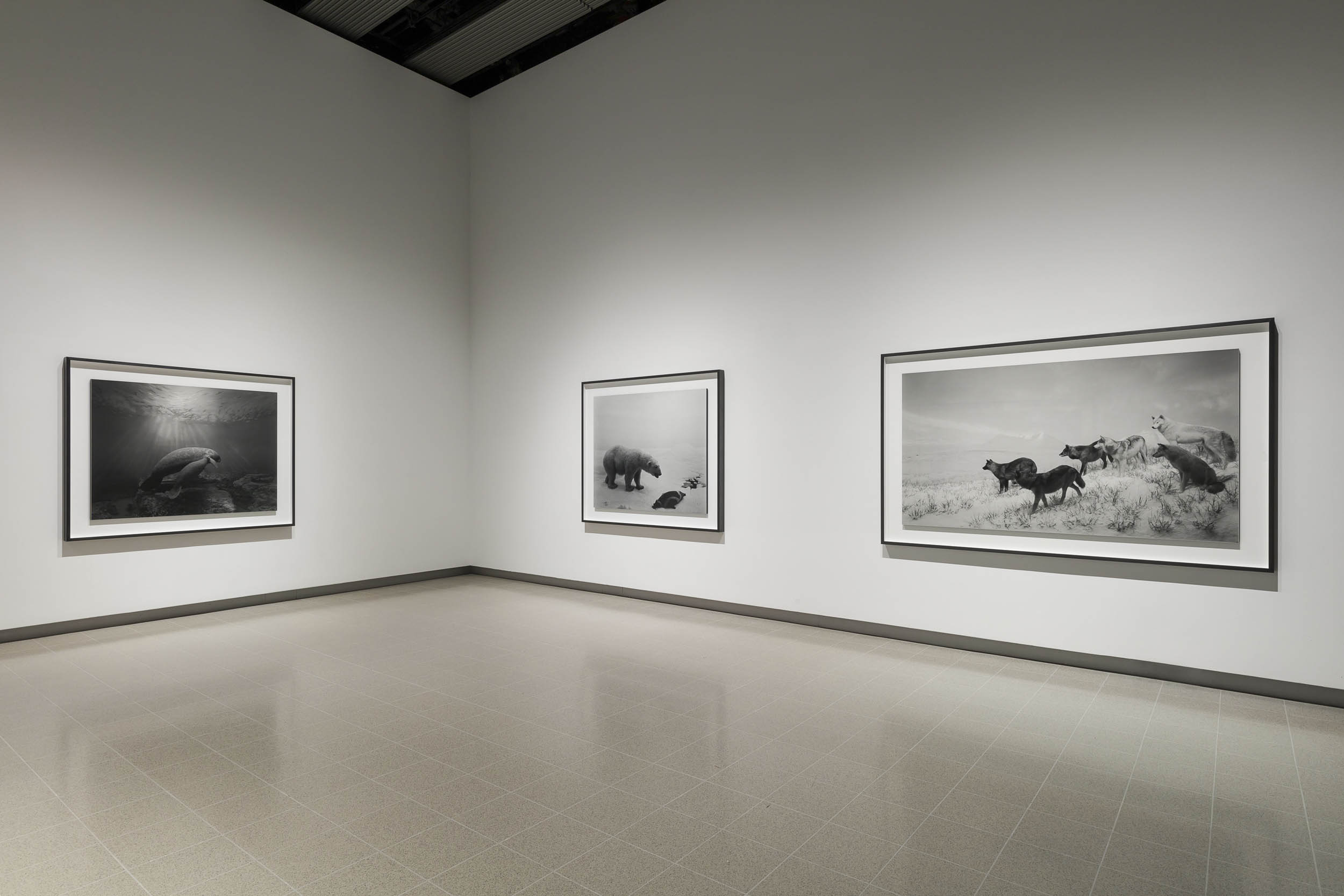
 

Installation view of Hiroshi Sugimoto, 'Dioramas' (1974) from the exhibition 'Hiroshi Sugimoto: Time Machine' at the Hayward Gallery, London, Oct 2023 - Jan 2024


Installation view of Hiroshi Sugimoto, Dioramas (1974 – ) Silver gelatin prints
Photo: Mark Blower. Courtesy the artist and the Hayward Gallery


‘My life as an artist began the moment I saw that I had succeeded in bringing the bear back to life on film,’ said Sugimoto about his 1976 work Polar Bear. The image is of an Arctic diorama in the American Museum of Natural History in New York, but through clever use of framing and exposure, Sugimoto was able to make the scene appear real. As well as revisiting the museum, and others across the US, to expand his Dioramas series, Sugimoto later took a similar approach to the waxworks of Madame Tussauds in his Portraits. By removing the figures from their staged displays, and photographing them against a black backdrop with sympathetic lighting, the artist gave the impression that these famous faces had themselves modelled for his portraiture.

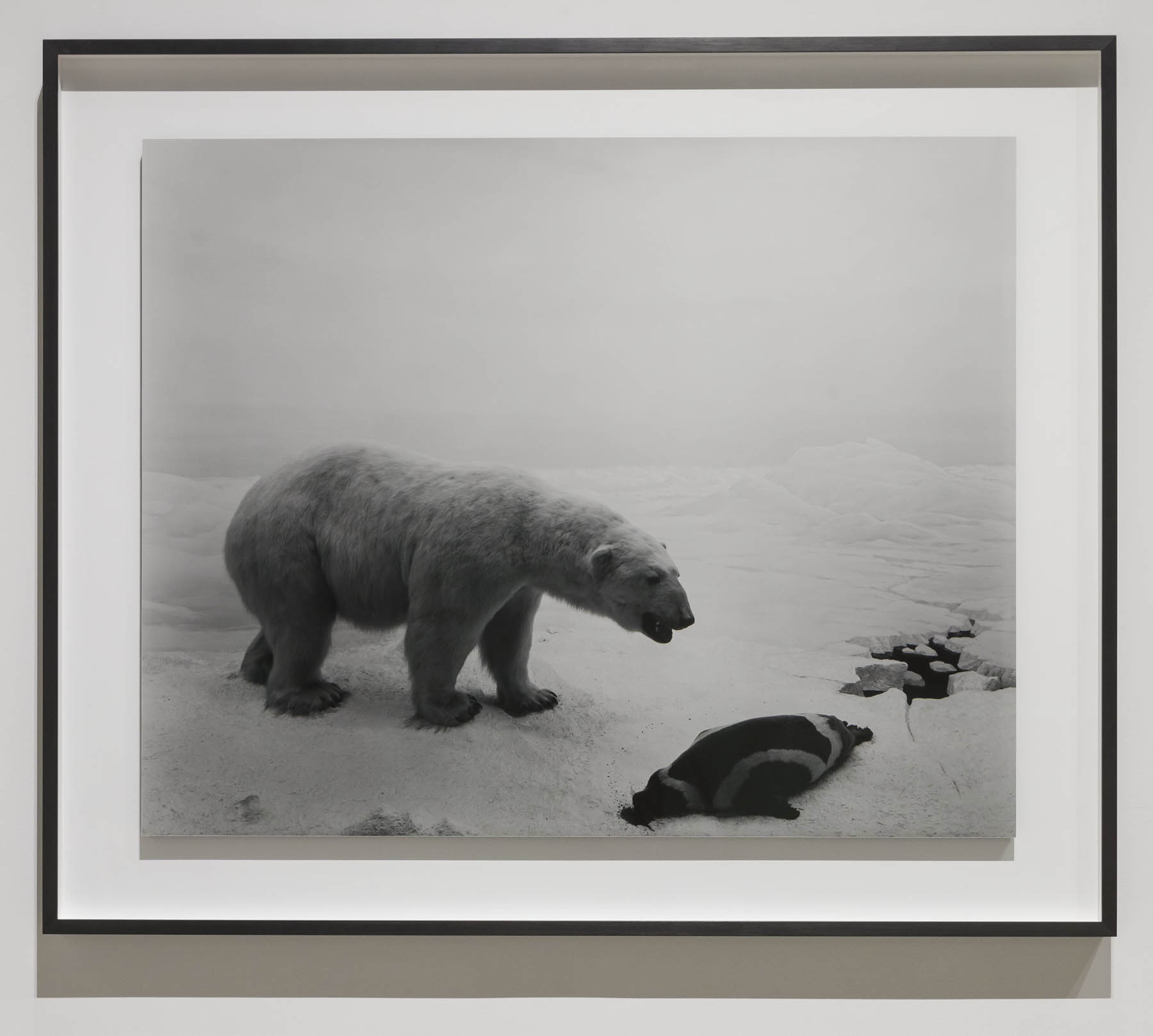
 

Installation view of Hiroshi Sugimoto, 'Polar Bear', 1976 from the 'Dioramas' series (1974 - ) from the exhibition 'Hiroshi Sugimoto: Time Machine' at the Hayward Gallery, London, Oct 2023 - Jan 2024

Installation view of Hiroshi Sugimoto, 'Polar Bear', 1976 from the 'Dioramas' series (1974 - ) from the exhibition 'Hiroshi Sugimoto: Time Machine' at the Hayward Gallery, London, Oct 2023 - Jan 2024


Installation view of Hiroshi Sugimoto, Polar Bear, 1976. Silver gelatin print
Photo: Mark Blower. Courtesy the artist and the Hayward Gallery
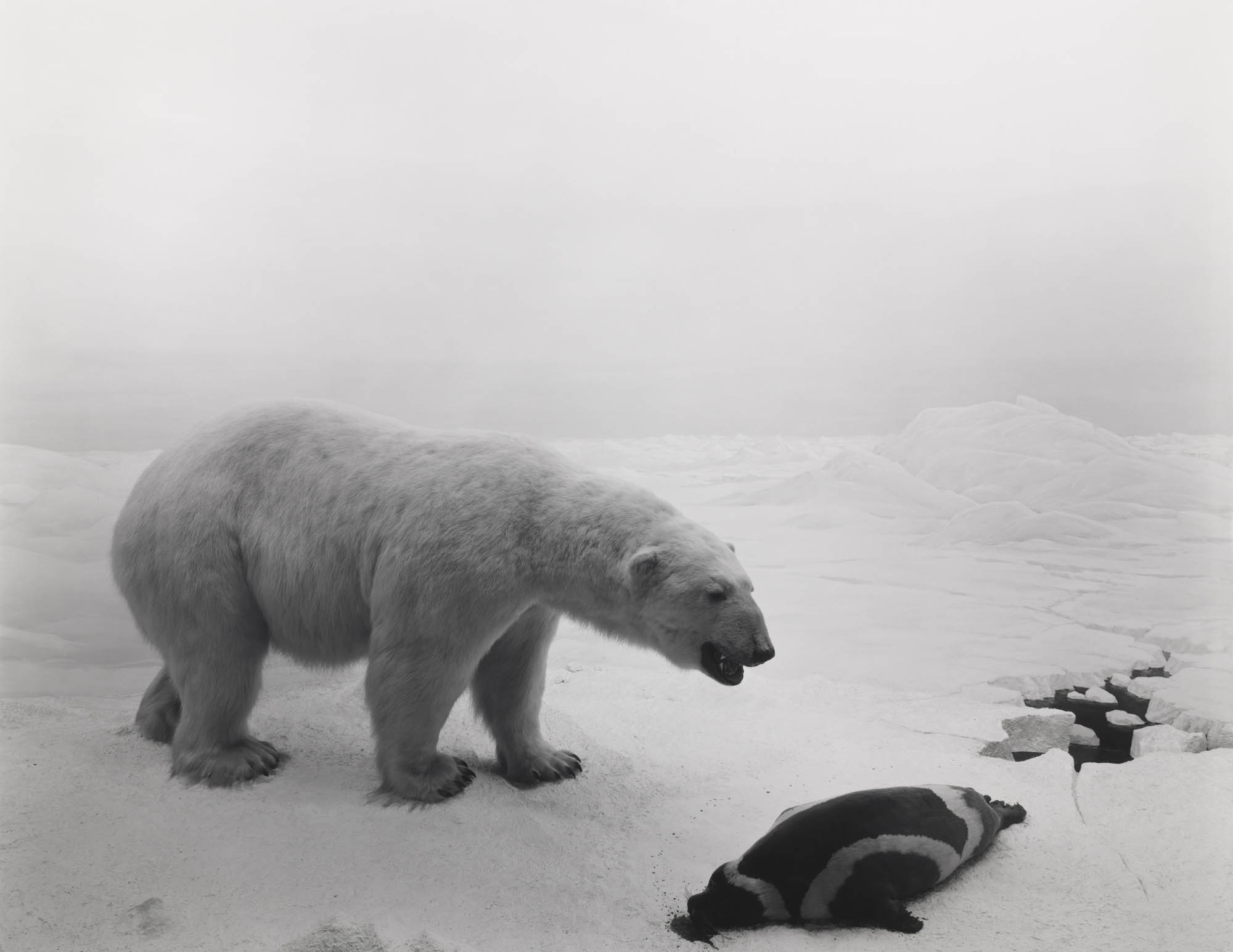
 

Hiroshi Sugimoto (Japanese, b. 1948) 'Polar Bear' 1976 from the exhibition 'Hiroshi Sugimoto: Time Machine' at the Hayward Gallery, London, Oct 2023 - Jan 2024


Hiroshi Sugimoto (Japanese, b. 1948)
Polar Bear
1976
From the Dioramas series
Gelatin silver print
© Hiroshi Sugimoto, courtesy of the artist


“Polar Bear” (1976) shows the majestic white animal roaring over a fresh kill: the bloodied body of a seal whose inert form is bulky and dark against an Arctic white background that stretches into the distance. Look closely and behind the bear – with its luscious coat of fur, its big paws so heavy in the snow you can almost hear it crunch – the line between two and three dimensions is just visible: a jagged crevasse in the ice floe beneath the two animals merges almost seamlessly with a painted backdrop of receding icy peaks.

The eye judders between these realities. The dead bear, momentarily brought to life by the vividness of the photograph, dies again, and is preserved again, a copy of a copy, frozen between past and present. Similar fates await a pair of ostriches defending their new hatchlings against a family of wart hogs (“Ostrich-Wart Hog,” 1980) and a placidly floating mother manatee and her calf (“Manatee,” 1994).

Emily LaBarge. “What Is Photography? (No Need to Answer That),” on the New York Times website Nov. 21, 2023 [Online] Cited 23/11/2023
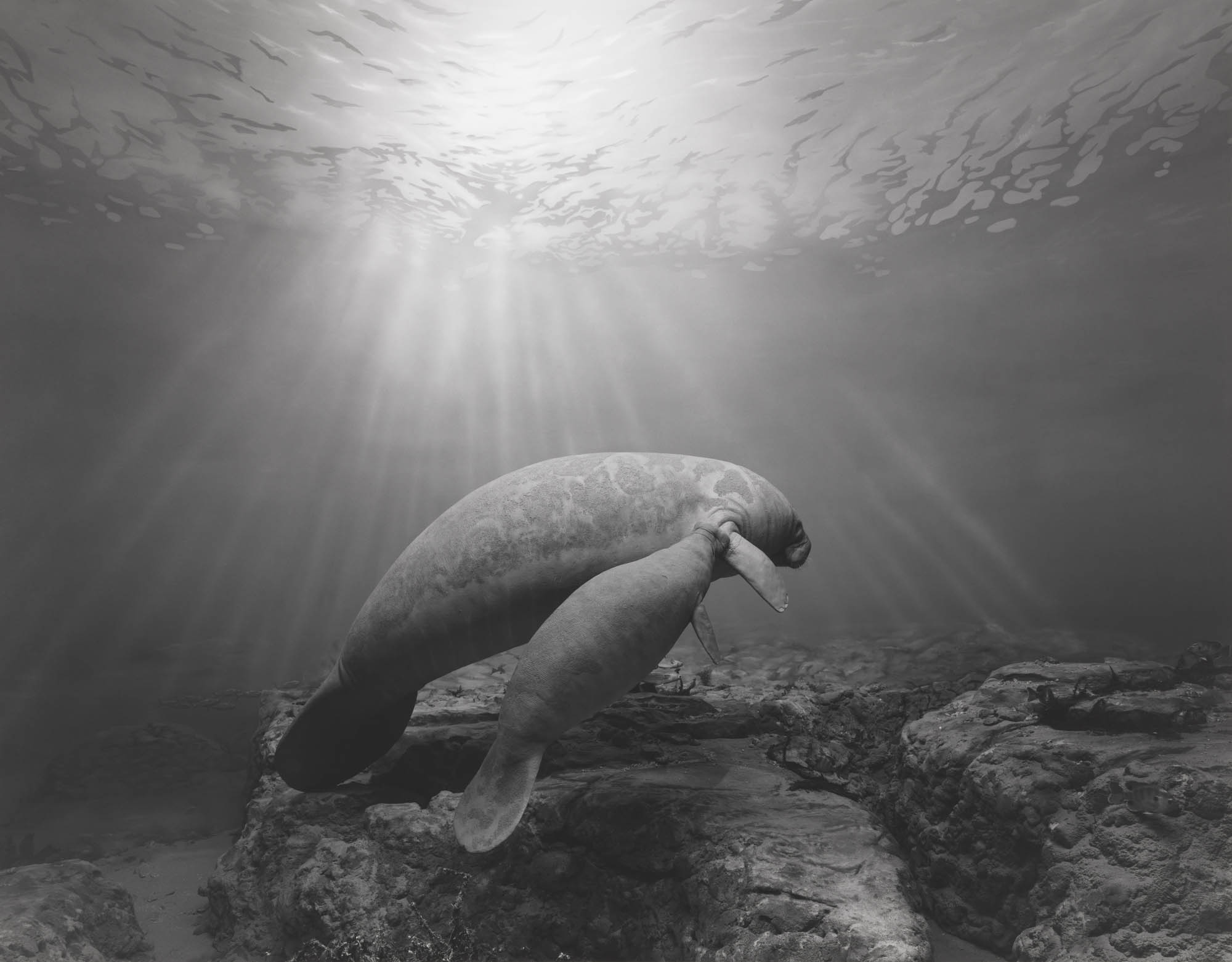
 

Hiroshi Sugimoto (Japanese, b. 1948) 'Manatee' 1994 from the exhibition 'Hiroshi Sugimoto: Time Machine' at the Hayward Gallery, London, Oct 2023 - Jan 2024


Hiroshi Sugimoto (Japanese, b. 1948)
Manatee
1994
From the Dioramas series
Gelatin silver print
© Hiroshi Sugimoto, courtesy of the artist


Hiroshi Sugimoto (Japanese, b. 1948) 'Earliest Human Relatives' 1994 from the exhibition 'Hiroshi Sugimoto: Time Machine' at the Hayward Gallery, London, Oct 2023 - Jan 2024


Hiroshi Sugimoto (Japanese, b. 1948)
Earliest Human Relatives
1994
From the Dioramas series
Gelatin silver print
© Hiroshi Sugimoto, courtesy of Marian Goodman Gallery


Theaters (1976 – ) and Abandoned Theaters (2015 – )


Hiroshi Sugimoto (Japanese, b. 1948) 'UA Playhouse, New York' 1978


Hiroshi Sugimoto (Japanese, b. 1948)
UA Playhouse, New York
1978
Gelatin silver print
© Hiroshi Sugimoto, courtesy of the artist
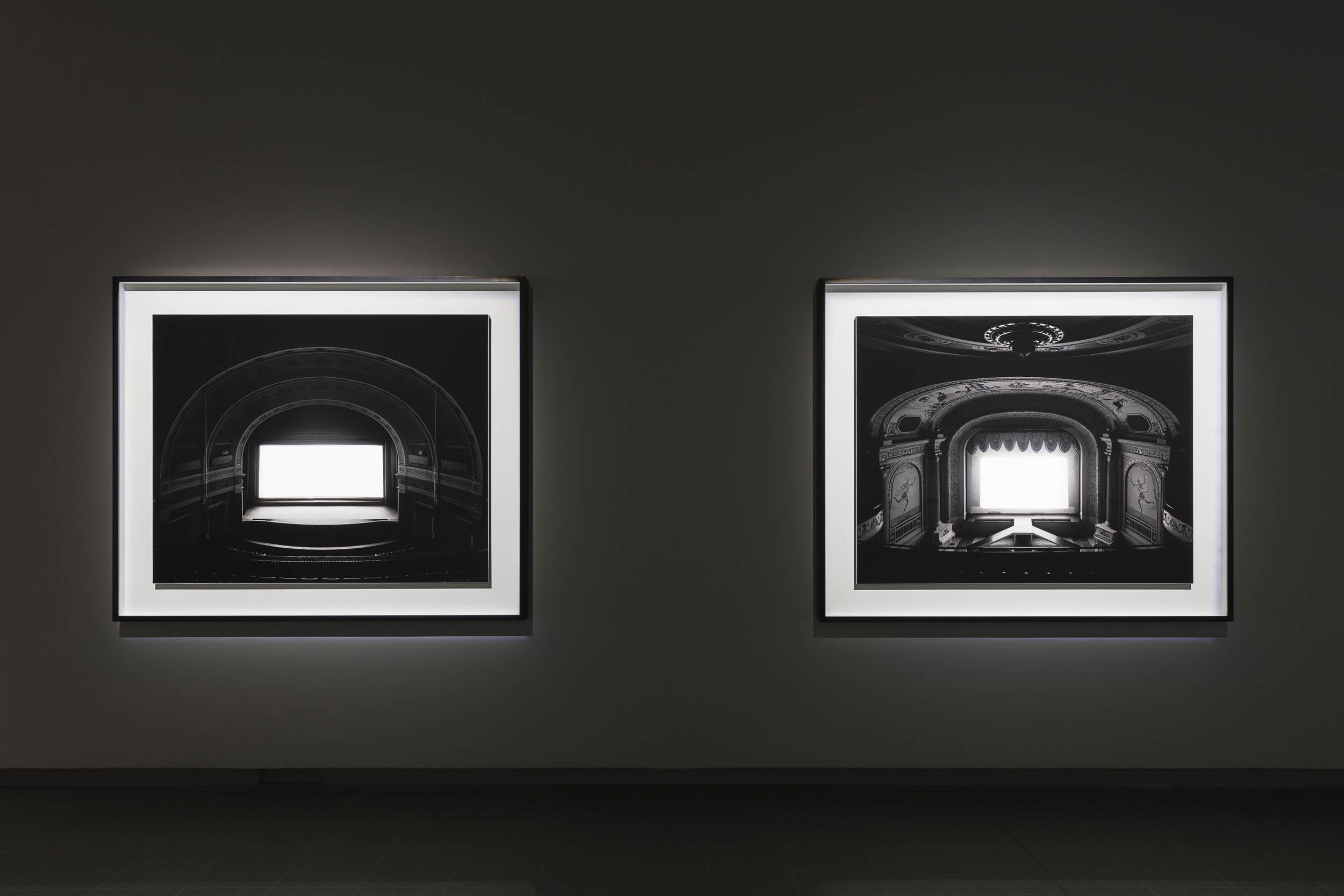
 

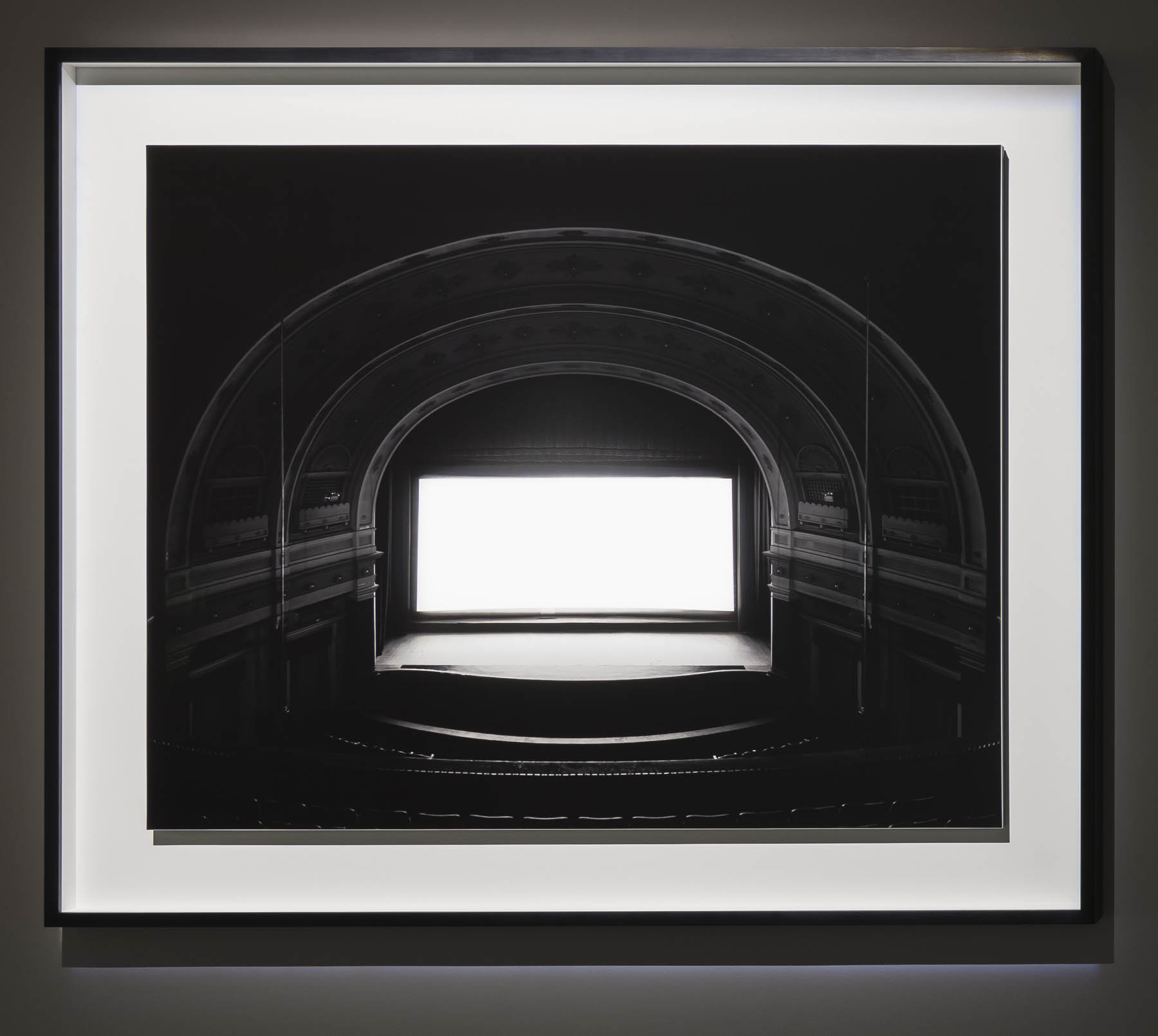
Installation view of Hiroshi Sugimoto, 'Theaters' series (1976 - )


Installation view of Hiroshi Sugimoto, Theaters series (1976 – ) Gelatin silver prints
Photo: Mark Blower. Courtesy the artist and the Hayward Gallery
 

Installation view of Hiroshi Sugimoto, 'Goshen Indiana' 1980. Gelatin silver print


Installation view of Hiroshi Sugimoto, Goshen Indiana, 1980. Gelatin silver print
Photo: Mark Blower. Courtesy the artist and the Hayward Gallery


Installation view of Hiroshi Sugimoto, 'Cabot Street Cinema, Beverly, Massachusetts' 1978


Installation view of Hiroshi Sugimoto, Cabot Street Cinema, Beverly, Massachusetts 1978. Gelatin silver print


Installation view of Hiroshi Sugimoto, 'Abandoned Theaters' series (2015 - )


Installation view of Hiroshi Sugimoto, Abandoned Theaters series (2015 – ). Gelatin silver prints
Photo: Mark Blower. Courtesy the artist and the Hayward Gallery


Hiroshi Sugimoto (Japanese, b. 1948) 'Kenosha Theater, Kenosha' 2015


Hiroshi Sugimoto (Japanese, b. 1948)
Kenosha Theater, Kenosha
2015
Gelatin silver print
© Hiroshi Sugimoto, courtesy of the artist
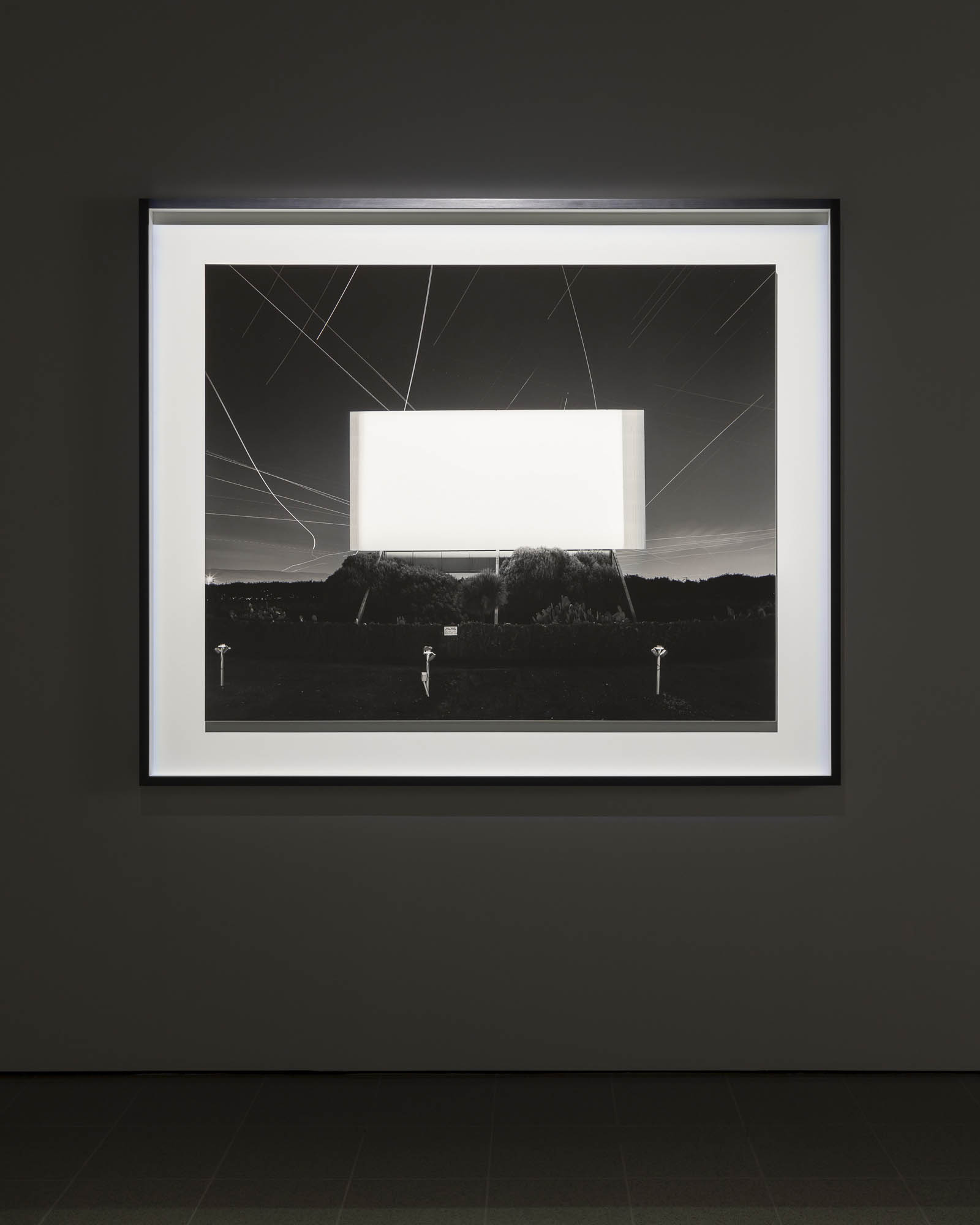
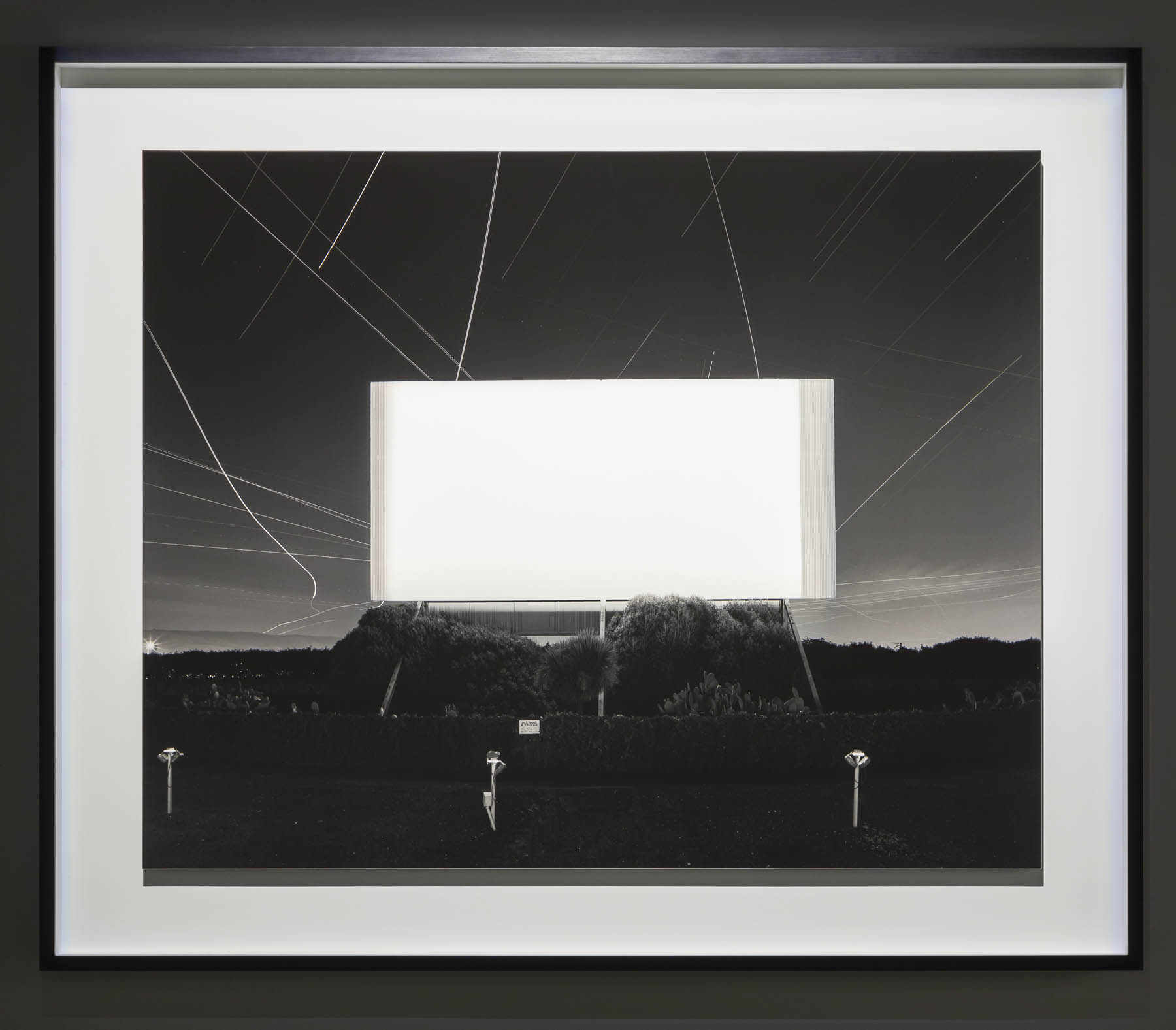
 

Installation view of Hiroshi Sugimoto, 'Union City Drive-in, Union City' 1993

Installation view of Hiroshi Sugimoto, 'Union City Drive-in, Union City' 1993


Installation view of Hiroshi Sugimoto, Union City Drive-in, Union City, 1993. Gelatin silver print
Photo: Mark Blower. Courtesy the artist and the Hayward Gallery
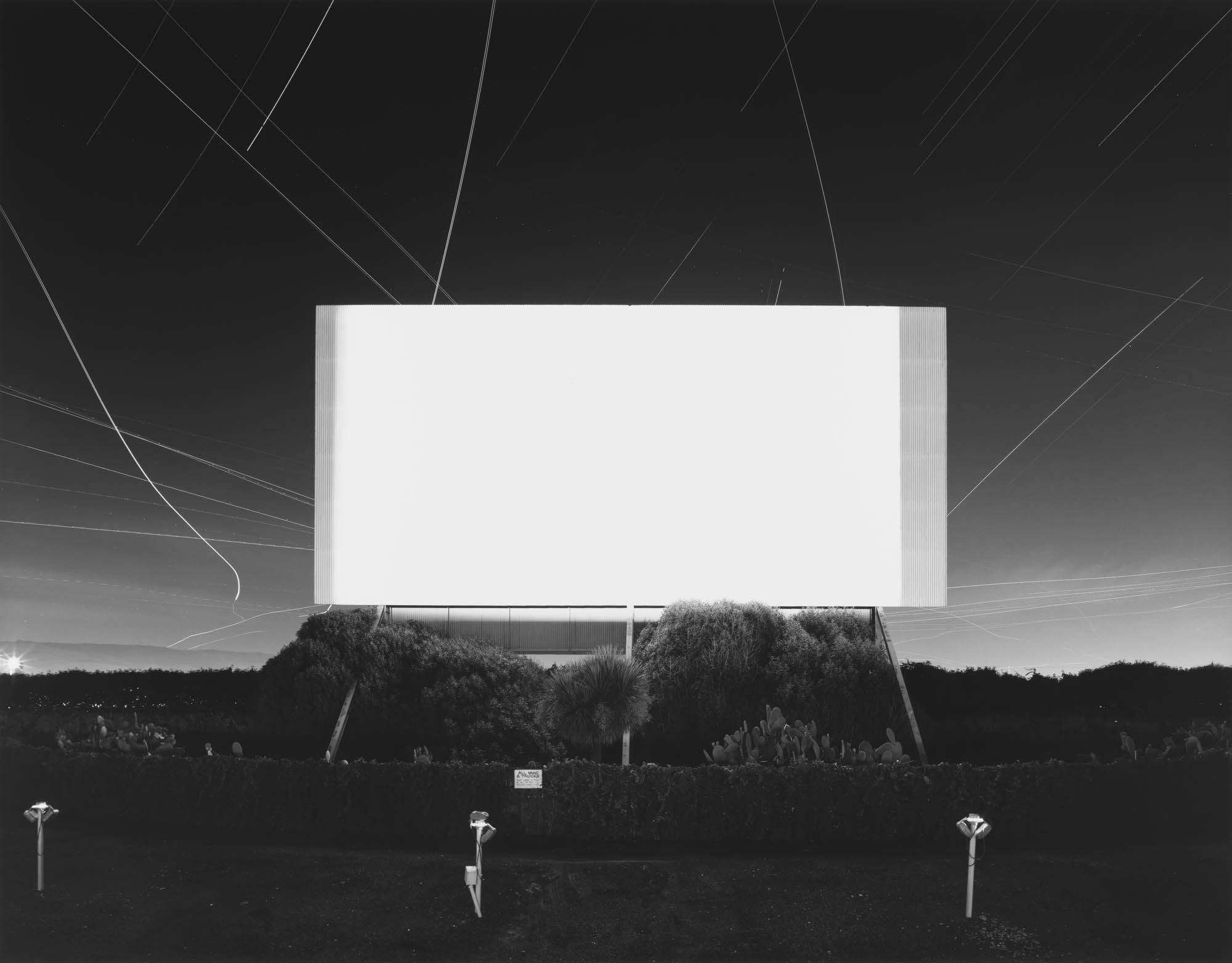
 

Hiroshi Sugimoto (Japanese, b. 1948) 'Union City Drive-in, Union City' 1993


Hiroshi Sugimoto (Japanese, b. 1948)
Union City Drive-in, Union City
1993
Gelatin silver print
© Hiroshi Sugimoto, courtesy of the artist


The largest survey to date of Hiroshi Sugimoto, an artist renowned for creating some of the most alluringly enigmatic photographs of our time. Over the past 50 years, Sugimoto has created pictures which are meticulously crafted, deeply thought-provoking and quietly subversive.

Featuring key works from all of the artist’s major photographic series, this survey highlights Sugimoto’s philosophical yet playful inquiry into our understanding of time and memory, and photography’s ability to both document and invent.

The exhibition also includes lesser-known works that reveal the artist’s interest in the history of photography, as well as in mathematics and optical sciences.

Often employing a large-format wooden camera and mixing his own darkroom chemicals, Sugimoto has repeatedly re-explored ideas and practices from 19th century photography while capturing subjects including dioramas, wax figures and architecture. His work has stretched and rearranged concepts of time, space and light that are integral to the medium.

Born and raised in Tokyo, Japan, Hiroshi Sugimoto divides his time between Tokyo and New York City. Over the past five decades, his photographs have received international acclaim and have been presented in major institutions across the globe.

While best known as a photographer, Sugimoto has more recently added architecture and sculpture to his multidisciplinary practice, as well as being artistic director on performing arts productions.

Text from the Hayward Gallery website


Seascapes (1980 -)


Installation view of Hiroshi Sugimoto, 'Seascapes' series


Installation view of Hiroshi Sugimoto, Seascapes series. Gelatin silver prints
Photo: Mark Blower. Courtesy the artist and the Hayward Gallery


Installation view of Hiroshi Sugimoto, 'Seascapes' series


Installation view of Hiroshi Sugimoto, Seascapes series. Gelatin silver prints
Photo: Mark Blower. Courtesy the artist and the Hayward Gallery


Hiroshi Sugimoto (Japanese, b. 1948) 'Bay of Sagami, Atami' 1997


Hiroshi Sugimoto (Japanese, b. 1948)
Bay of Sagami, Atami
1997
From the Seascapes series
Gelatin silver print
© Hiroshi Sugimoto, courtesy of the artist


Architecture (1997 – )


Installation view of Hiroshi Sugimoto, 'Chrysler Building' 1997


Installation view of Hiroshi Sugimoto, Chrysler Building 1997. Gelatin silver print
Photo: Mark Blower. Courtesy the artist and the Hayward Gallery


Installation view of Hiroshi Sugimoto, 'Chrysler Building' 1997


Installation view of Hiroshi Sugimoto, Chrysler Building 1997. Gelatin silver print
Photo: Mark Blower. Courtesy the artist and the Hayward Gallery
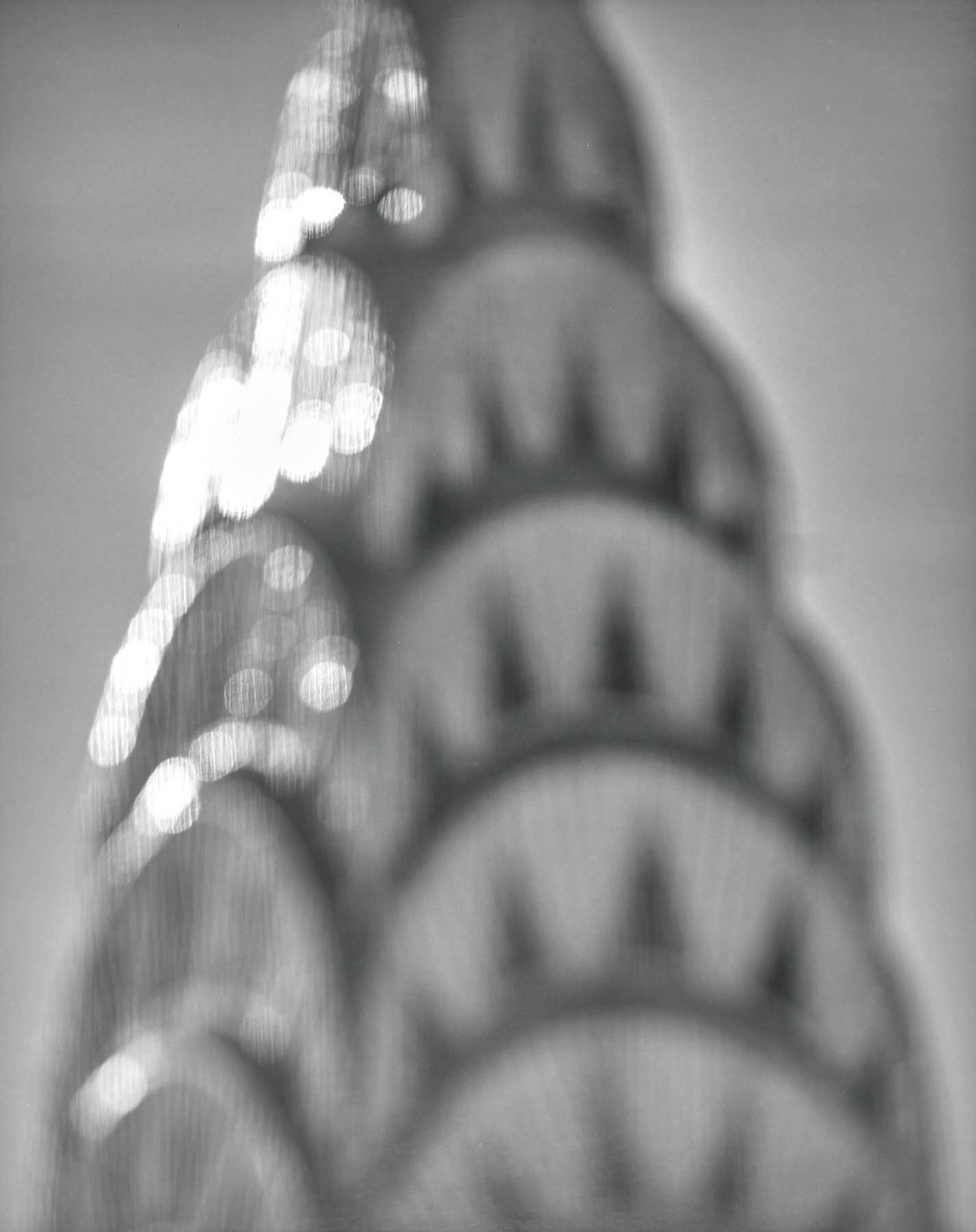
 

Hiroshi Sugimoto (Japanese, b. 1948) 'Chrysler Building' 1997


Hiroshi Sugimoto (Japanese, b. 1948)
Chrysler Building
1997
Gelatin silver print
© Hiroshi Sugimoto, courtesy of the artist


Hiroshi Sugimoto (Japanese, b. 1948) 'World Trade Center' 1997


Hiroshi Sugimoto (Japanese, b. 1948)
World Trade Center
1997
Gelatin silver print
© Hiroshi Sugimoto, courtesy of the artist
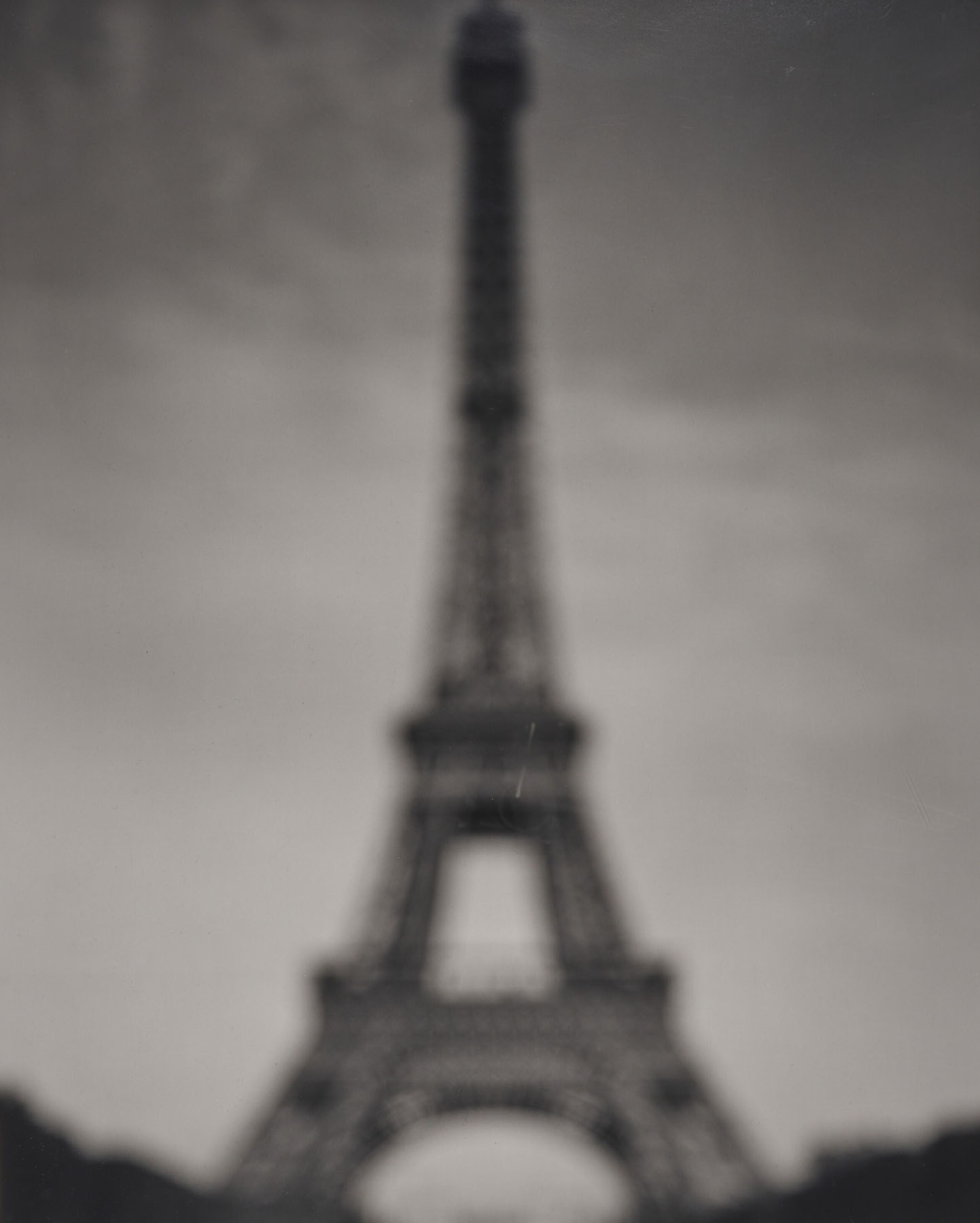
 

Hiroshi Sugimoto (Japanese, b. 1948) 'Eiffel Tower' 1998


Hiroshi Sugimoto (Japanese, b. 1948)
Eiffel Tower
1998
Gelatin silver print
© Hiroshi Sugimoto, courtesy of the artist


Over the past 50 years, Hiroshi Sugimoto has created some of the most alluringly enigmatic photographs of our time: pictures that are precisely crafted and deeply thought-provoking, familiar yet tantalisingly ambiguous. Featuring key works from all of the artist’s major photographic series, this survey highlights the artist’s philosophical yet playful inquiry into our understanding of time and memory, and the ambiguous character of photography as a medium suited to both documentation and invention.

The exhibition also includes lesser-known works that illuminate the artist’s interest in the history of photography as well as in mathematics and optical sciences. Often employing a large-format wooden camera, mixing his own darkroom chemicals and developing his black-and-white prints by hand, Sugimoto has repeatedly re-explored ideas and practices from 19th century photography, including subjects such as dioramas, wax figures and architecture. In the process, his work has stretched and rearranged concepts of time, space and light that are integral to the medium.

Hiroshi Sugimoto says: “The camera is a time machine capable of representing the sense of time… The camera can capture more than a single moment, it can capture history, geological time, the concept of eternity, the essence of time itself… The more I think about that sense of time, the more I think this is probably one of the key factors of how humans became humans.”

Ralph Rugoff, Director of the Hayward Gallery, says: “Hiroshi Sugimoto is a brilliant visual poet of paradox, a polymath postmodern who embraces meticulous old school craftsmanship to produce exquisite, uncanny pictures that reference science and maths as well as abstract art and Renaissance portraits. Juggling different conceptions of time, and evoking visions ranging from primordial prehistory to the end of civilisation, his photographs ingeniously recalibrate our basic assumptions about the medium, and alter our sense of history, time and existence itself. Amidst all his peers, his work stands apart for its depth and striking originality of thought.”

Time Machine commences with a selection of Sugimoto’s black-and-white photographs of natural history dioramas, a series he began in the mid-1970s. The Dioramas photos draw attention less to the natural world than to its theatrical representation in museums, whilst at the same time conjuring what the artist has called the ‘fragility of existence’.

The subject of time is also explored in two subsequent bodies of work featured in the exhibition: shot in movie palaces as well as drive-ins, Sugimoto’s Theaters (1976 – ) capture entire films with a single long exposure, thus compressing all the dramatic action that appeared on screen into a single image of radiant whiteness. His renowned Seascapes (1980 -), which depict evenly divided expanses of sea and sky unmarked by any trace of human existence, are equally beguiling in their temporal reference, evoking the immediacy of abstract painting even as they speak to Sugimoto’s interest in focusing on vistas that, as he remarks, “are before human beings and after human beings.”

For Architecture (1997 – ), a series of deliberately out-of-focus studies of iconic modernist buildings – ranging from the Eiffel Tower to the Twin Towers – Sugimoto displays the expansive ambiguity that informs his art, at the same time conveying a sense of the visual germ of an idea in an architect’s imagination, as well as fashioning ghostly images of what he has described as “architecture after the end of the world.” For his subsequent Portraits (1999) series, meanwhile, the artist focused his camera on wax models of famous historical figures from Madame Tussauds; rendered more life-like in black-and-white, figures ranging from Queen Elizabeth II to Oscar Wilde and Salvador Dali take on a disarmingly lively appearance, underscoring the camera’s potential for altering our perception. As the artist has noted, “However fake the subject, once photographed, it’s as good as real.”

A final section of Hiroshi Sugimoto: Time Machine focuses on photographs that evoke different notions of timelessness, including his Sea of Buddha (1995) series, which portrays an installation in a 12th century Kyoto temple featuring 1001 gilded wooden statues of Buddha; and Lightning Fields (2006 – ), spectacular camera-less photographs created by exposing sensitised paper to electrical impulses produced by a Van der Graaf generator.

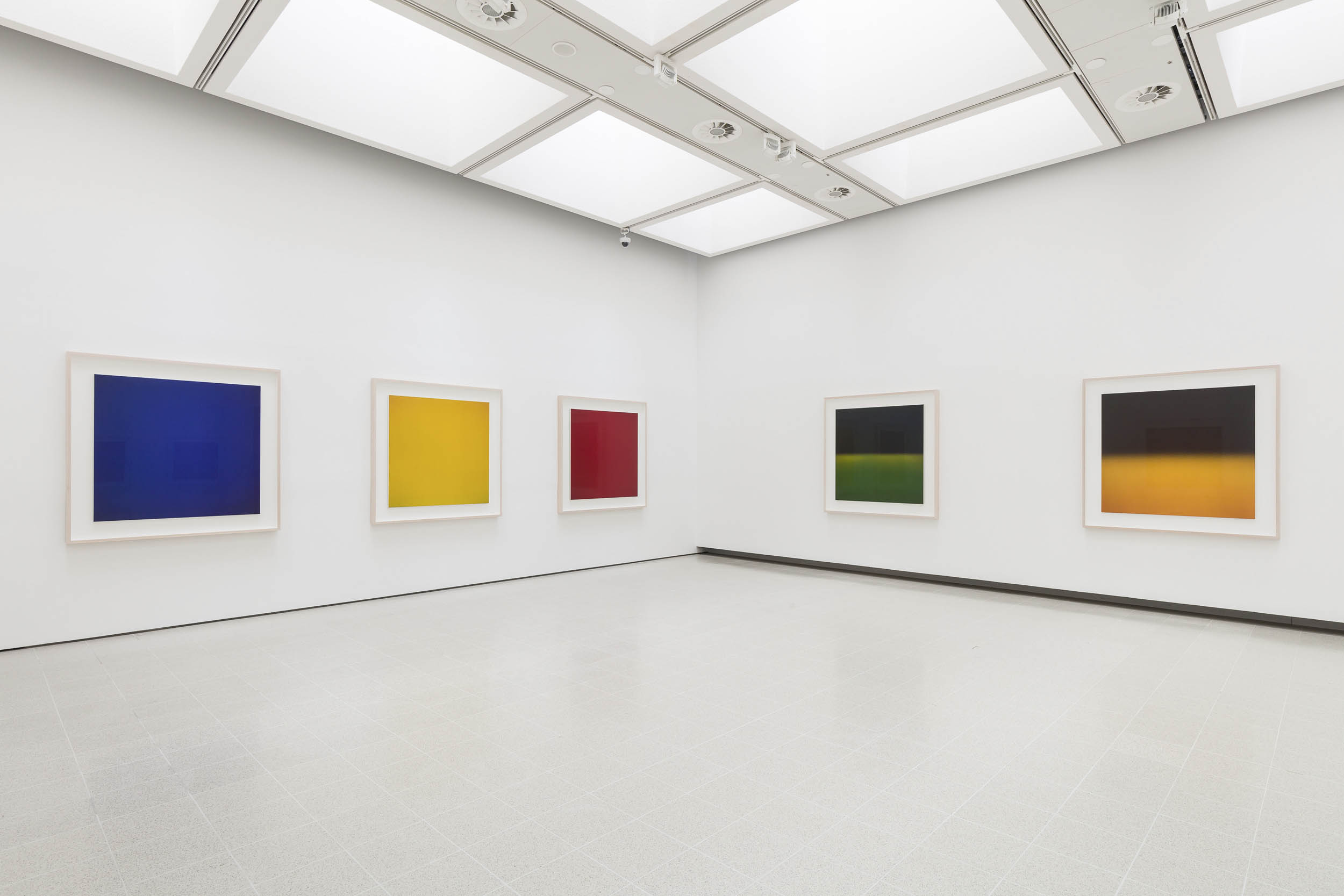
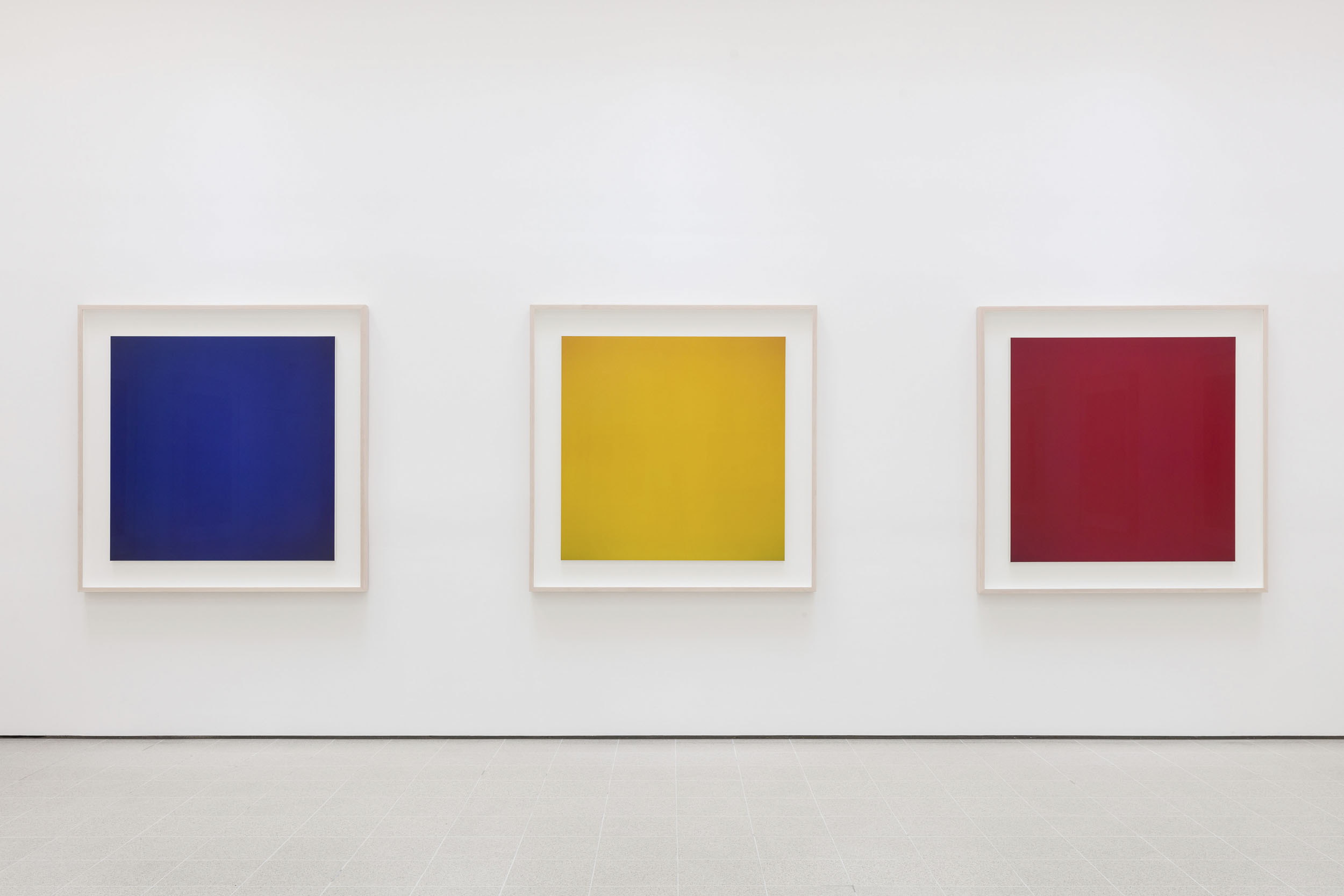
The exhibition comes to a stunning conclusion with a gallery dedicated to Sugimoto’s Opticks (2018 – ), intensely coloured photographs of prism-refracted light. Taking inspiration from Newton’s research into the properties of light whilst calling to mind colour field painting and artists like Mark Rothko, Opticks presents deeply immersive fields of subtly varying hues.

Alongside his photographs, two of Sugimoto’s elegantly contoured and polished aluminium sculptural models are presented, alluding to both mathematical equations and the abstract forms favoured by modernists such as Constantin Brâncuși.

The exhibition is accompanied by a fully-illustrated, 216pp catalogue with newly commissioned essays and an illustrated chronology, co-published with Hatje Cantz. Texts by Ralph Rugoff (on Dioramas), James Attlee (on Theaters), Mami Kataoka (on Seascapes), Lara Strongman (on Portraits), Geoffrey Batchen (on Lightning Fields), Edmund de Waal (on Sea of Buddha), Margaret Wertheim (on Conceptual Forms), Allie Biswas (on Opticks) and David Chipperfield (in conversation, on Architecture).

The show is set to tour internationally in 2024, at the UCCA Center for Contemporary Art (23 March – 23 June 2024) and The Museum of Contemporary Art Australia (2 August – 27 October 2024).

Press release from the Hayward Gallery


Sea of Buddha (1995)


Installation view of Hiroshi Sugimoto, 'Sea of Buddha' series

Installation view of Hiroshi Sugimoto, 'Sea of Buddha' series

Installation views of Hiroshi Sugimoto, Sea of Buddha series. Gelatin silver prints
Photo: Mark Blower. Courtesy the artist and the Hayward Gallery
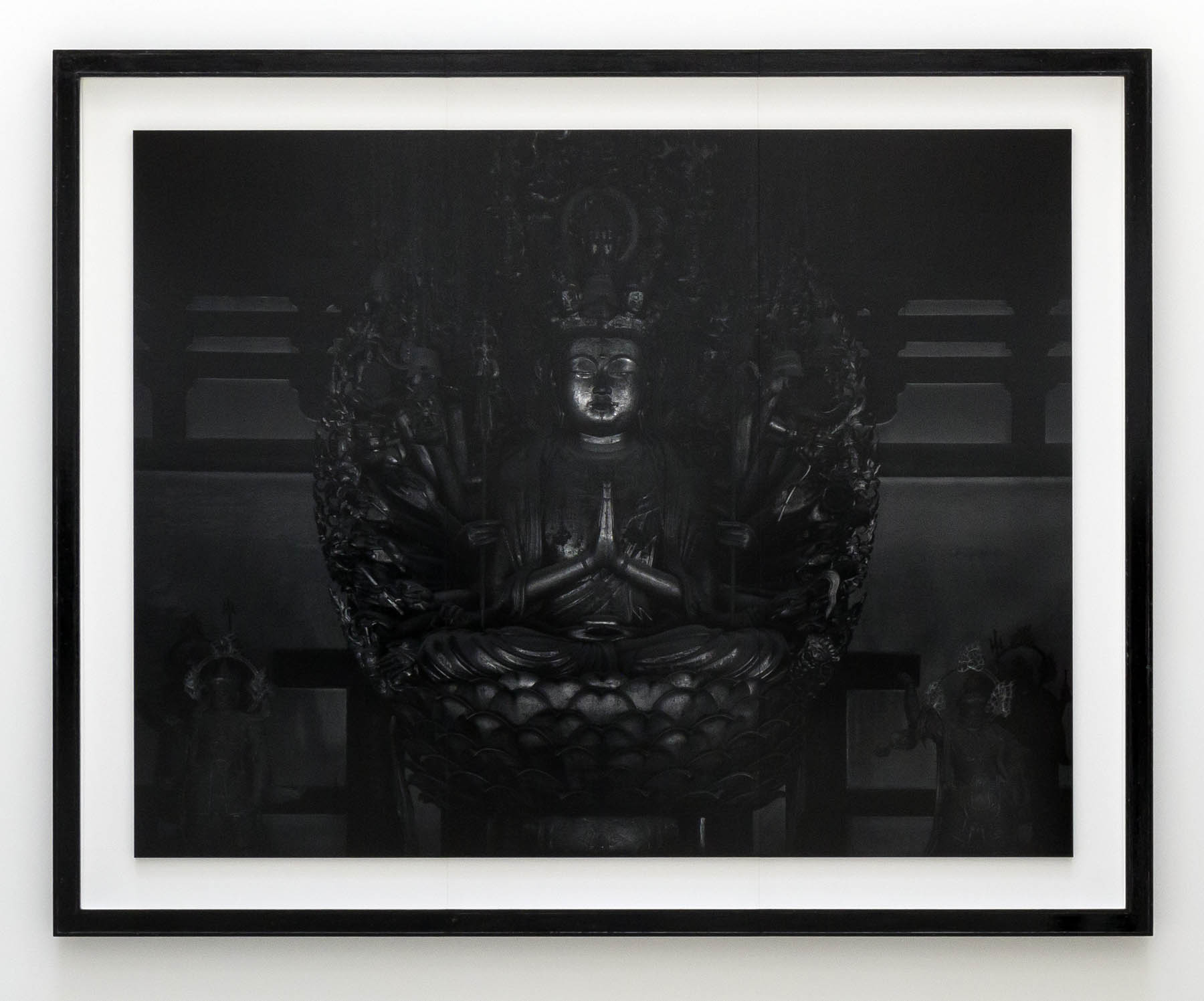
 

Installation view of Hiroshi Sugimoto, 'Sea of Buddha 049 (Triptych)' 1995


Installation view of Hiroshi Sugimoto, Sea of Buddha 049 (Triptych) 1995. Gelatin silver print
Photo: Mark Blower. Courtesy the artist and the Hayward Gallery
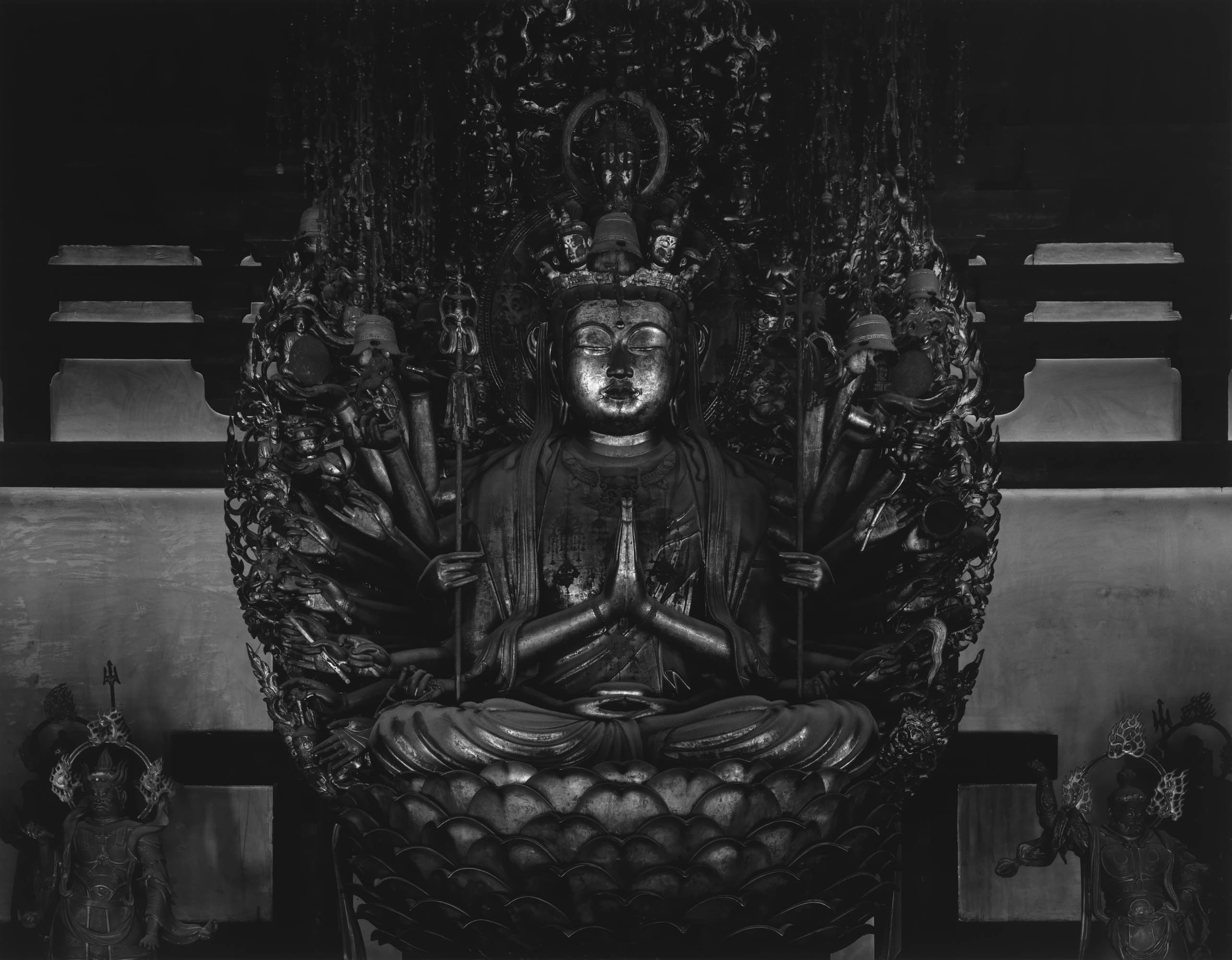
 

Hiroshi Sugimoto (Japanese, b. 1948) 'Sea of Buddha 049 (Triptych)' 1995


Hiroshi Sugimoto (Japanese, b. 1948)
Sea of Buddha 049 (Triptych)
1995
Gelatin silver print
© Hiroshi Sugimoto, courtesy of the artist


Chamber of Horrors (1994 – ) and Portraits (1999 -)
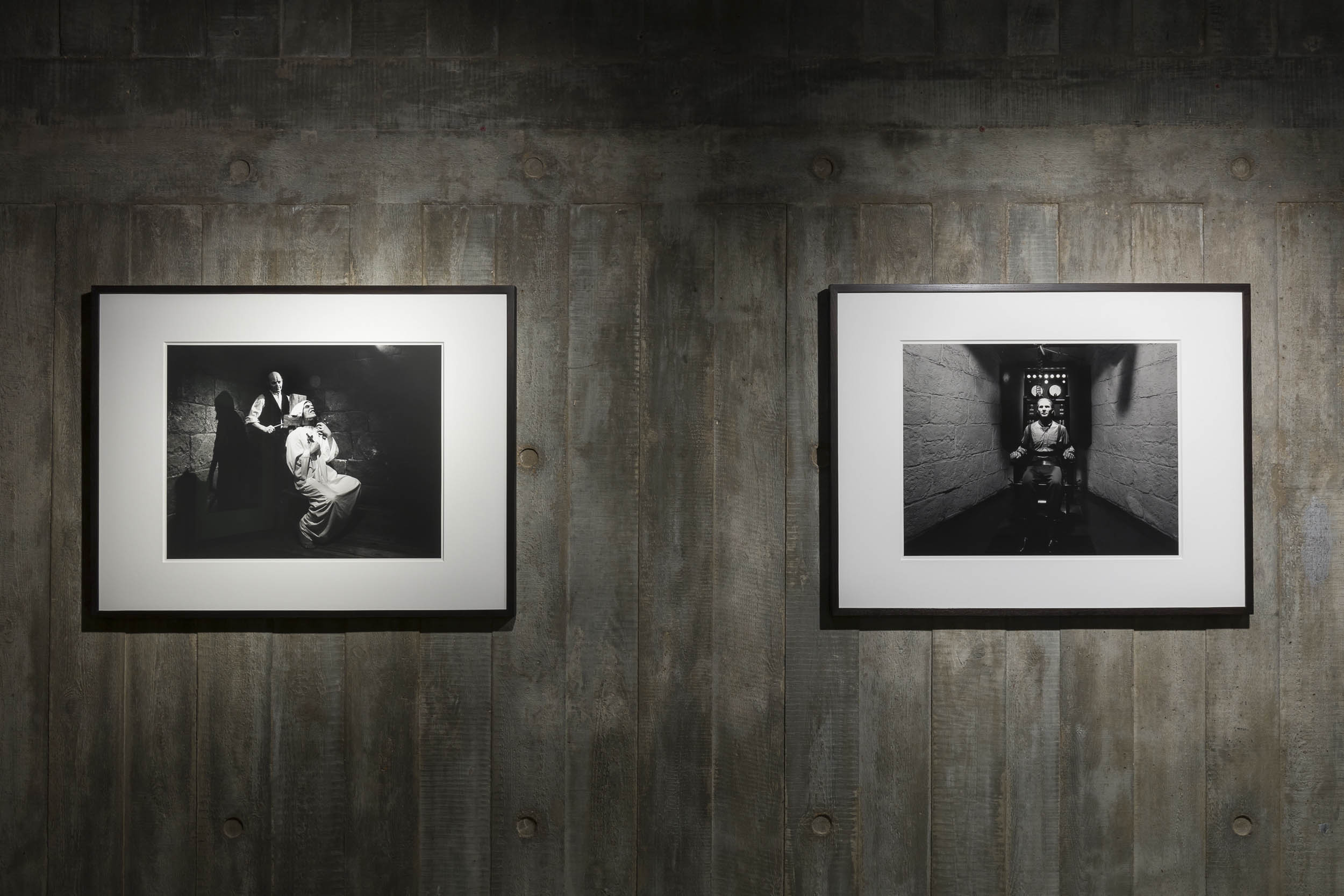
 

Installation view of Hiroshi Sugimoto, 'Chamber of Horrors' series


Installation view of Hiroshi Sugimoto, Chamber of Horrors series. Gelatin silver prints
Photo: Mark Blower. Courtesy the artist and the Hayward Gallery


Installation view of Hiroshi Sugimoto, 'The Garrote' 1994


Installation view of Hiroshi Sugimoto, The Garrote 1994. Gelatin silver print
Photo: Mark Blower. Courtesy the artist and the Hayward Gallery
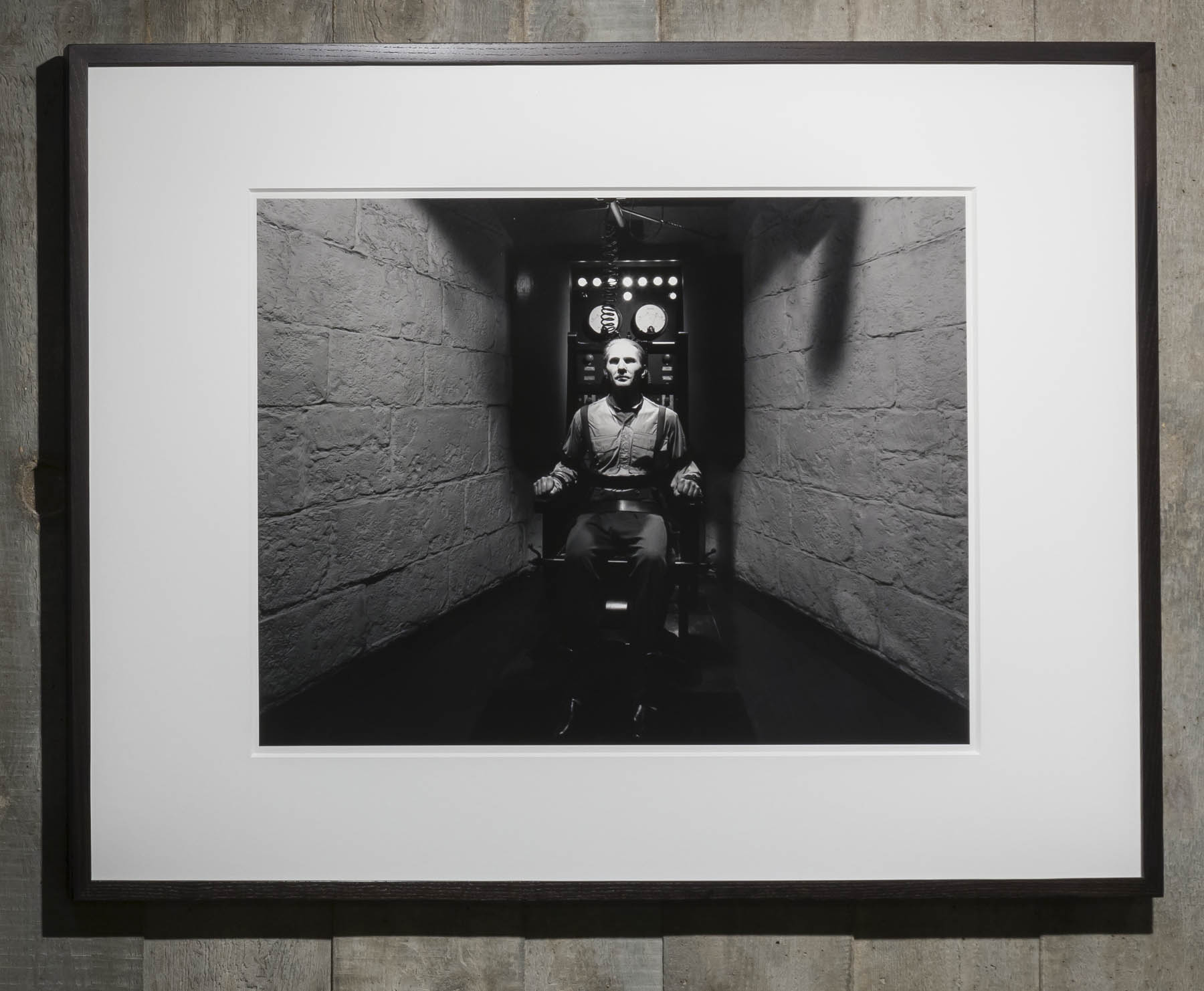
 

Installation view of Hiroshi Sugimoto, 'The Electric Chair' 1994


Installation view of Hiroshi Sugimoto, The Electric Chair 1994. Gelatin silver print
Photo: Mark Blower. Courtesy the artist and the Hayward Gallery


Hiroshi Sugimoto (Japanese, b. 1948) 'The Electric Chair' 1994


Hiroshi Sugimoto (Japanese, b. 1948)
The Electric Chair
1994
From the series The Chamber of Horrors
Gelatin silver print
© Hiroshi Sugimoto, courtesy of the artist


Installation view of Hiroshi Sugimoto, 'The Plague' 1994


Installation view of Hiroshi Sugimoto, The Plague, 1994. Gelatin silver print
Photo: Mark Blower. Courtesy the artist and the Hayward Gallery
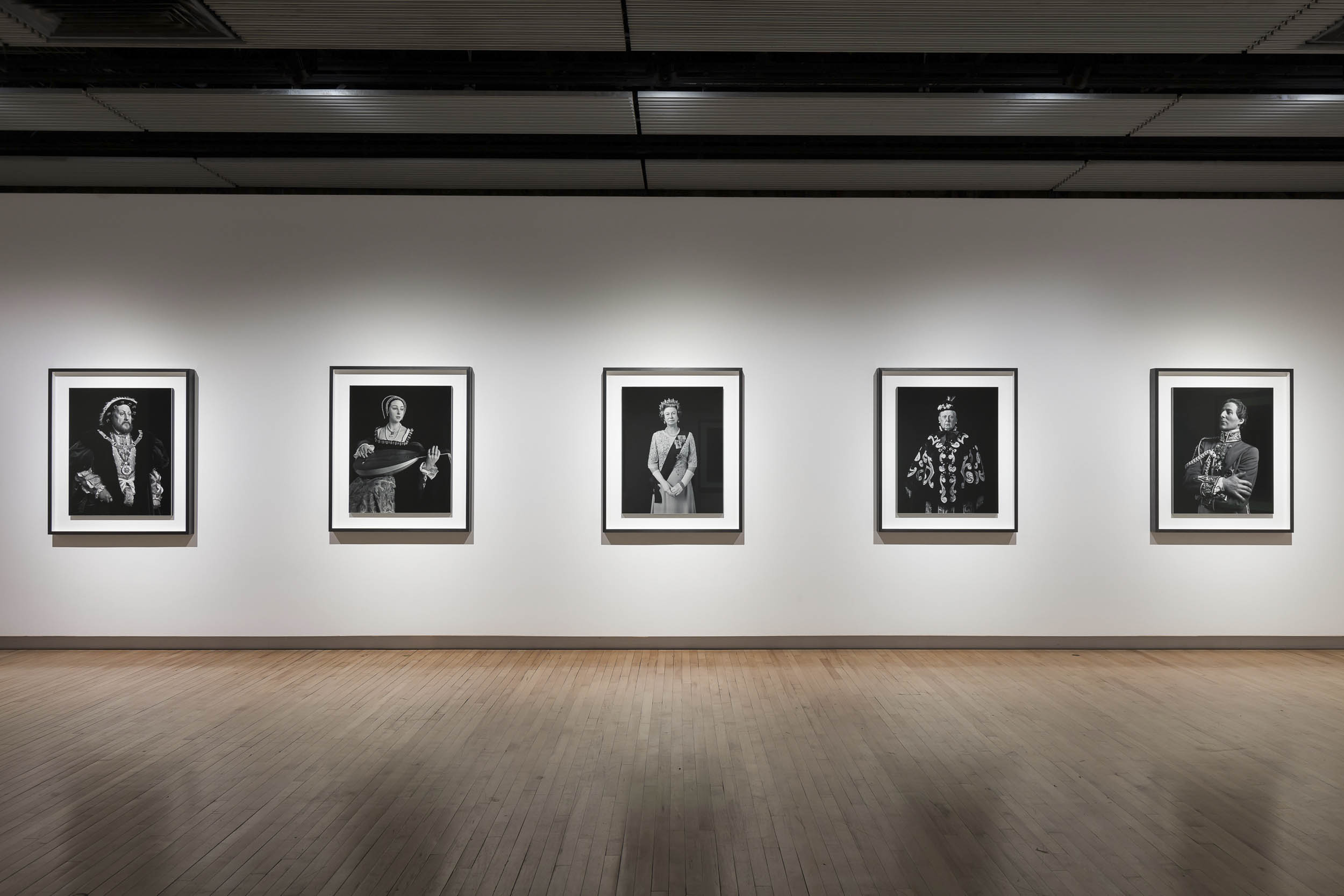
 

Installation view of Hiroshi Sugimoto, 'Portraits' series


Installation view of Hiroshi Sugimoto, Portraits series. Gelatin silver prints
Photo: Mark Blower. Courtesy the artist and the Hayward Gallery


Installation view of Hiroshi Sugimoto, 'Anne Boleyn' 1999


Installation view of Hiroshi Sugimoto, Anne Boleyn 1999. Gelatin silver print
Photo: Mark Blower. Courtesy the artist and the Hayward Gallery
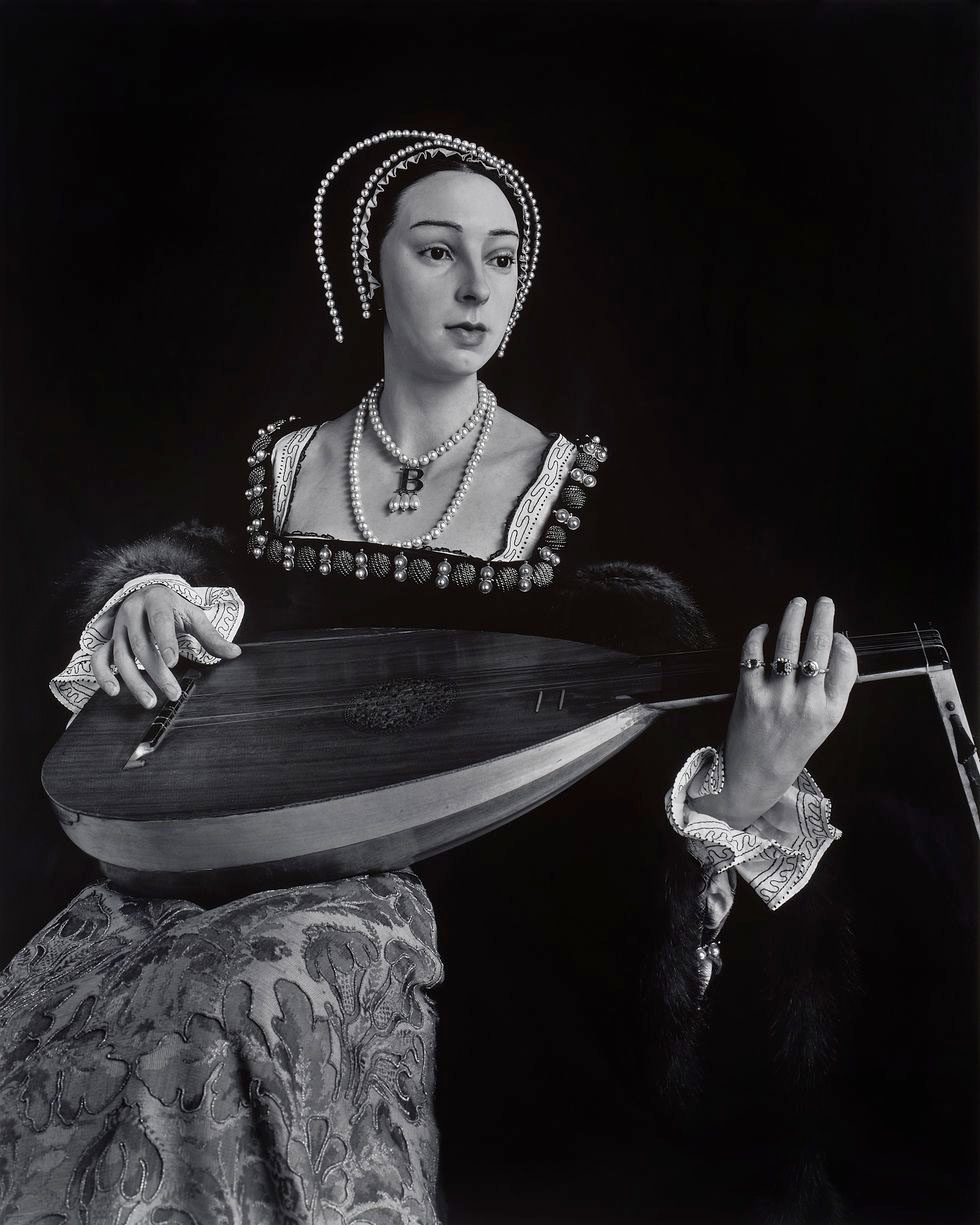
 

Hiroshi Sugimoto (Japanese, b. 1948) 'Anne Boleyn' 1999


Hiroshi Sugimoto (Japanese, b. 1948)
Anne Boleyn
1999
Gelatin silver print
© Hiroshi Sugimoto, courtesy of the artist


Installation view of Hiroshi Sugimoto, 'Queen Victoria' 1999


Installation view of Hiroshi Sugimoto, Queen Victoria 1999. Gelatin silver print
Photo: Mark Blower. Courtesy the artist and the Hayward Gallery
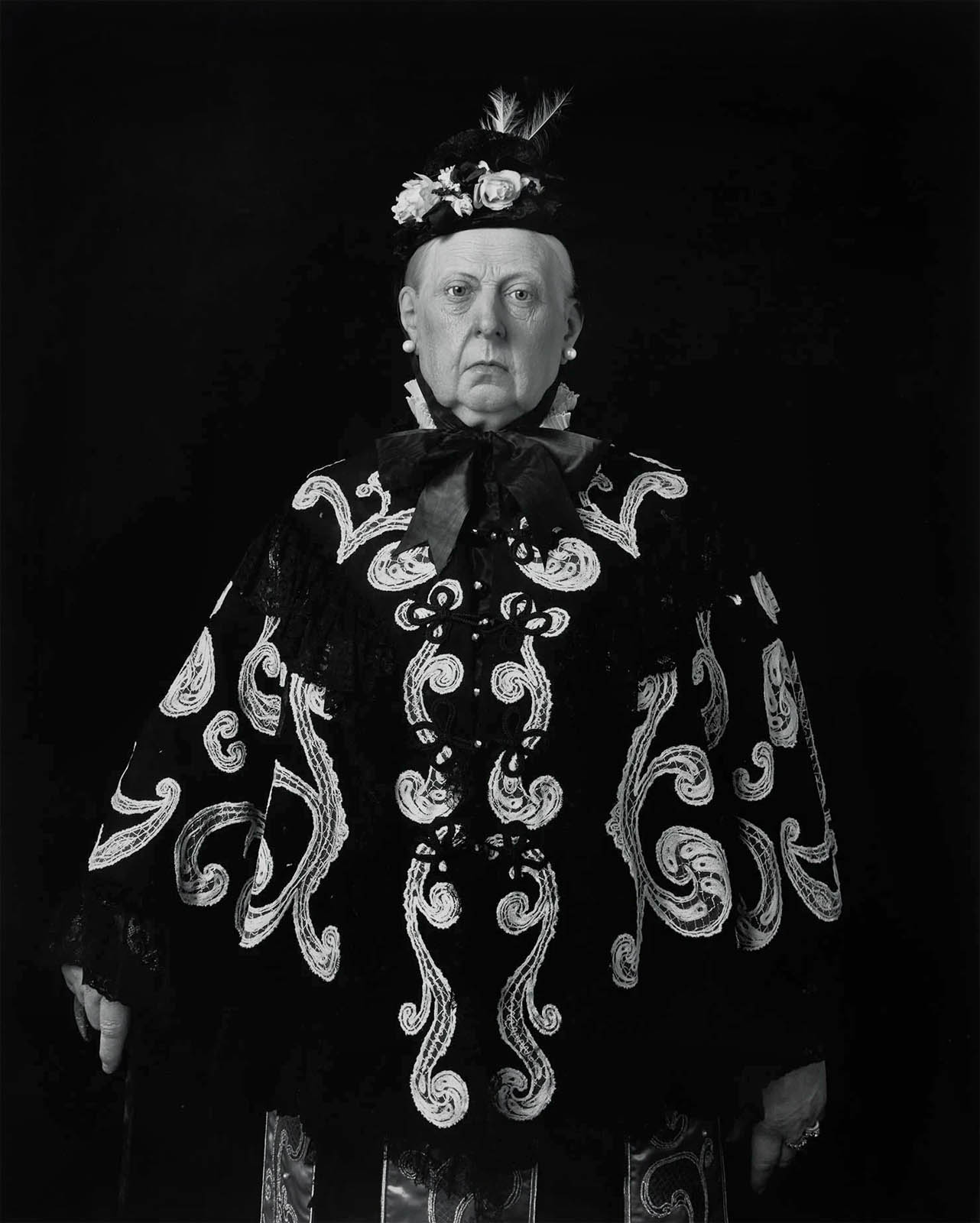
 

Hiroshi Sugimoto (Japanese, b. 1948) 'Queen Victoria' 1999


Hiroshi Sugimoto (Japanese, b. 1948)
Queen Victoria
1999
Gelatin silver print
© Hiroshi Sugimoto, courtesy of the artist


Hiroshi Sugimoto (Japanese, b. 1948) 'Salvador Dali' 1999


Hiroshi Sugimoto (Japanese, b. 1948)
Salvador Dali
1999
Gelatin silver print
© Hiroshi Sugimoto, courtesy of the artist


Hiroshi Sugimoto (Japanese, b. 1948) 'Oscar Wilde' 1999


Hiroshi Sugimoto (Japanese, b. 1948)
Oscar Wilde
1999
Gelatin silver print
© Hiroshi Sugimoto, courtesy of the artist
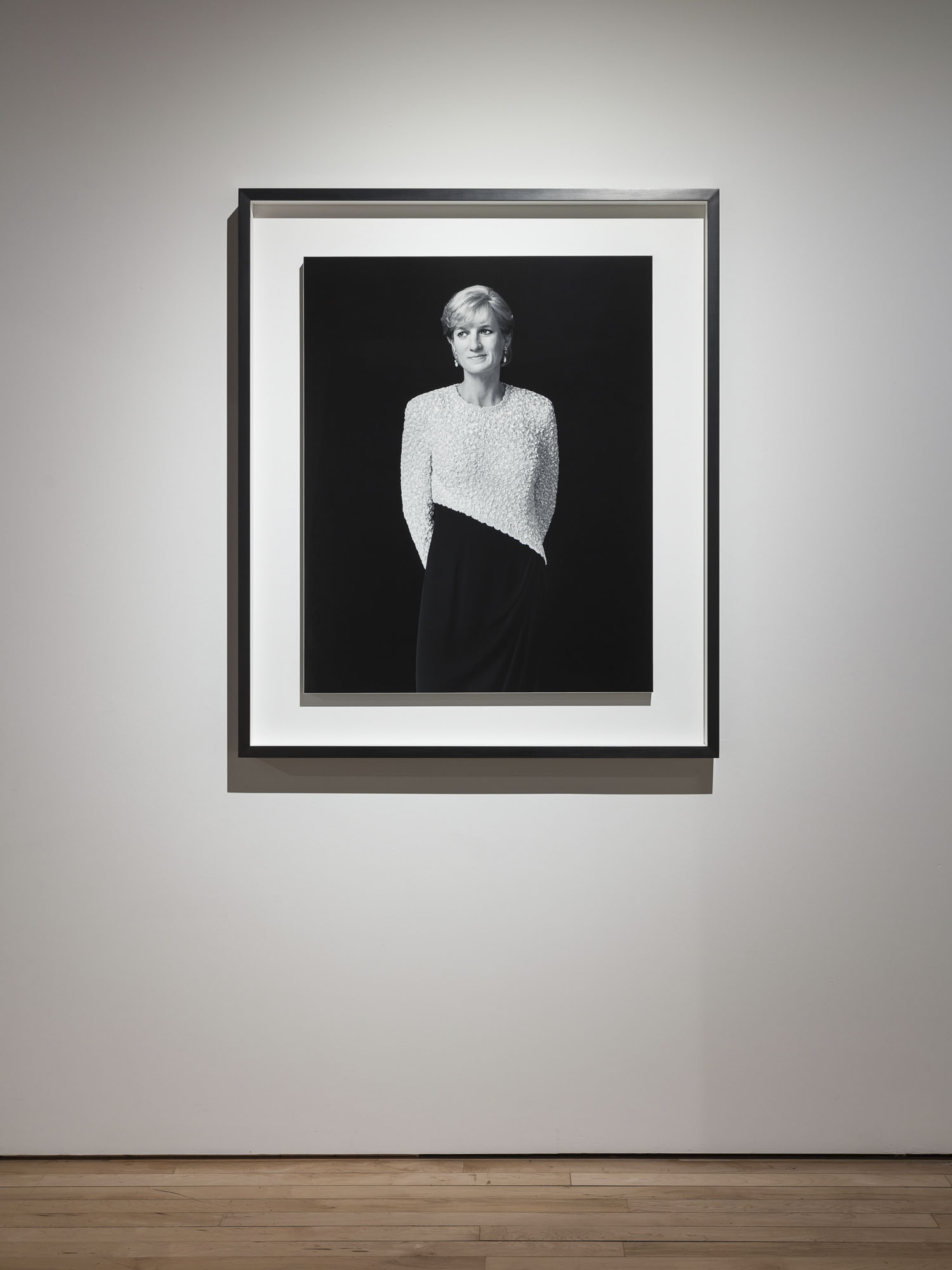
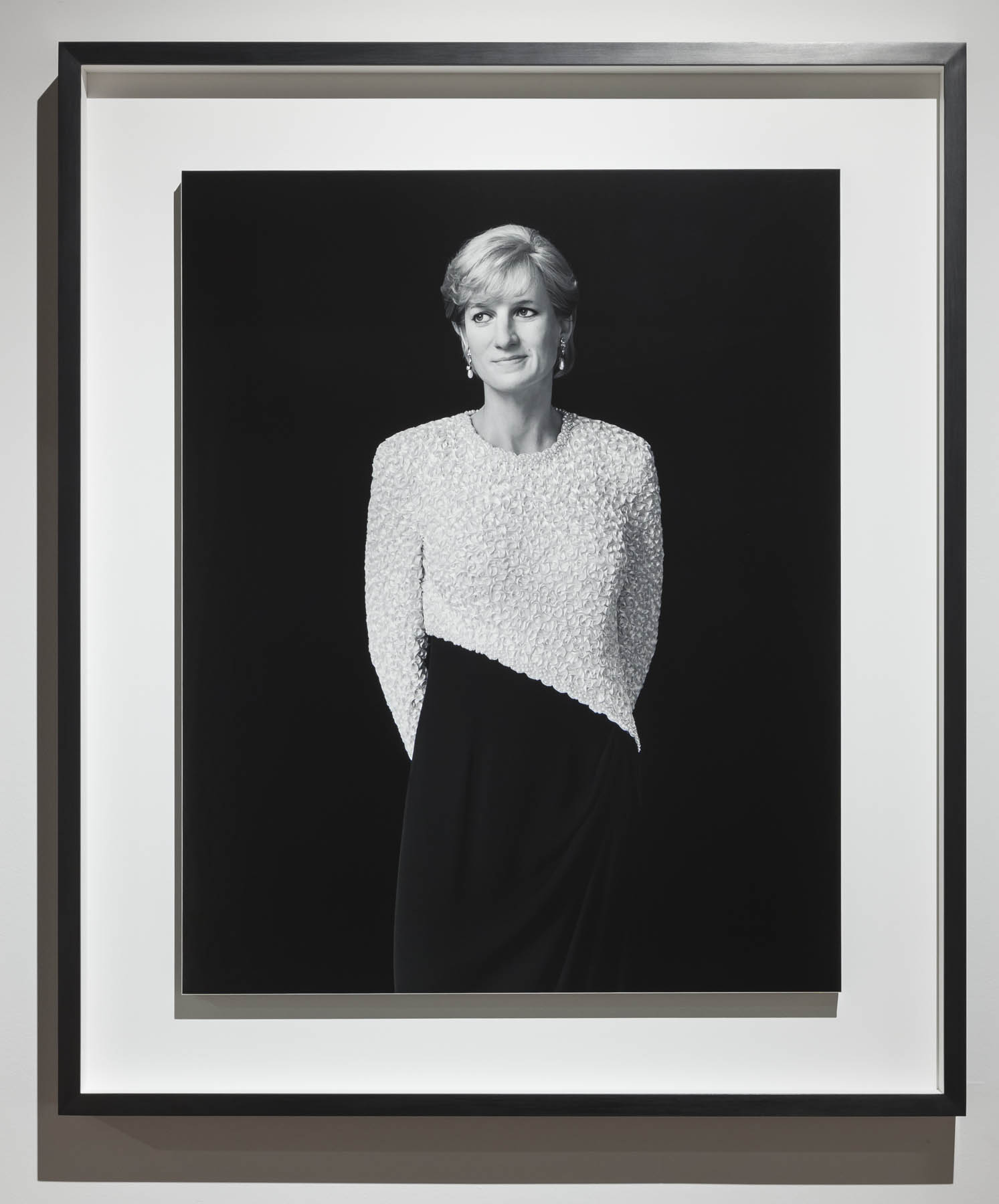
 

Installation view of Hiroshi Sugimoto, 'Diana, Princess of Wales' 1999

Installation view of Hiroshi Sugimoto, 'Diana, Princess of Wales' 1999


Installation views of Hiroshi Sugimoto, Diana, Princess of Wales 1999. Gelatin silver print
Photo: Mark Blower. Courtesy the artist and the Hayward Gallery
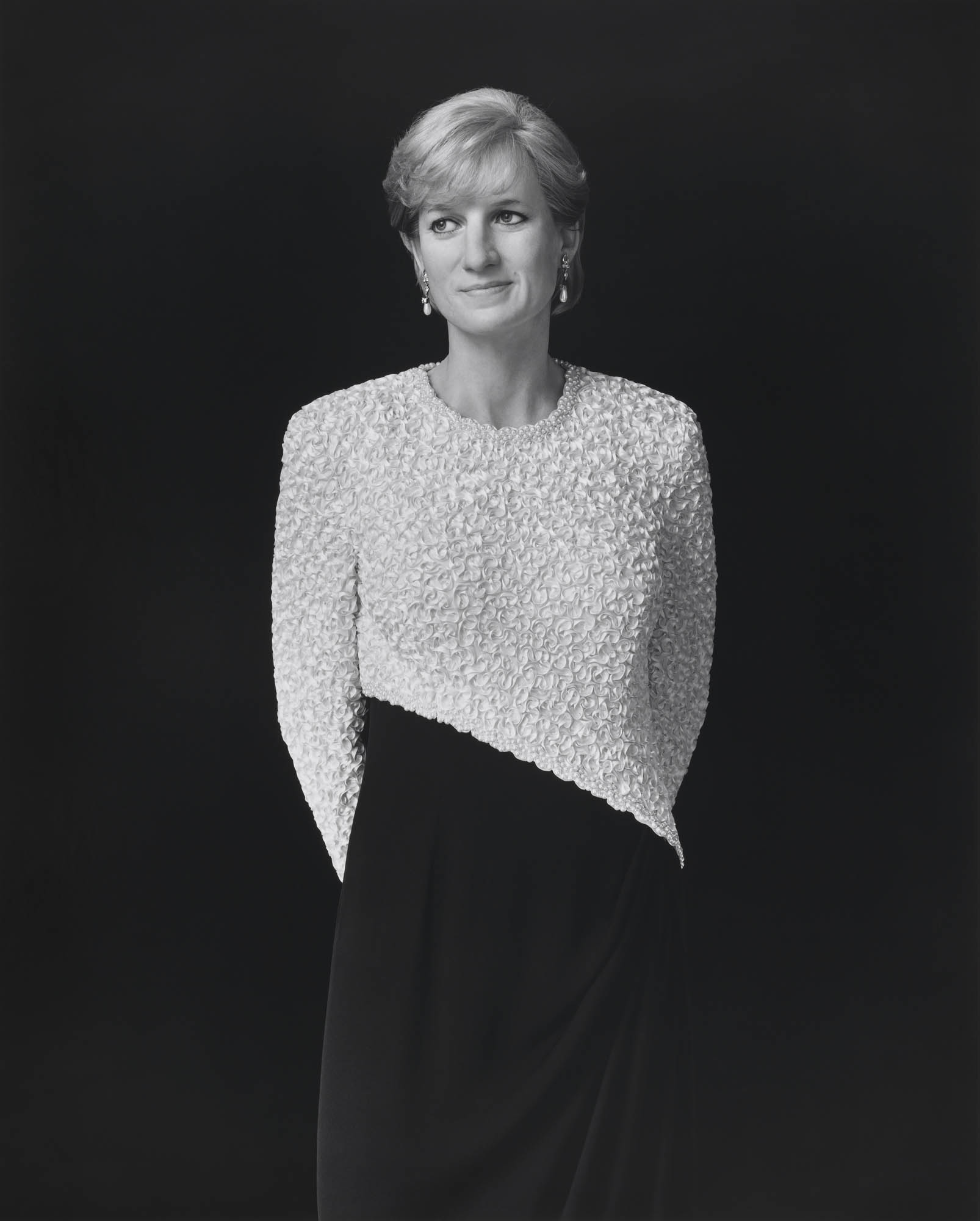
 

Hiroshi Sugimoto (Japanese, b. 1948) 'Diana, Princess of Wales' 1999


Hiroshi Sugimoto (Japanese, b. 1948)
Diana, Princess of Wales
1999
Gelatin silver print
© Hiroshi Sugimoto, courtesy of the artist


Lightning Fields (2006 – )
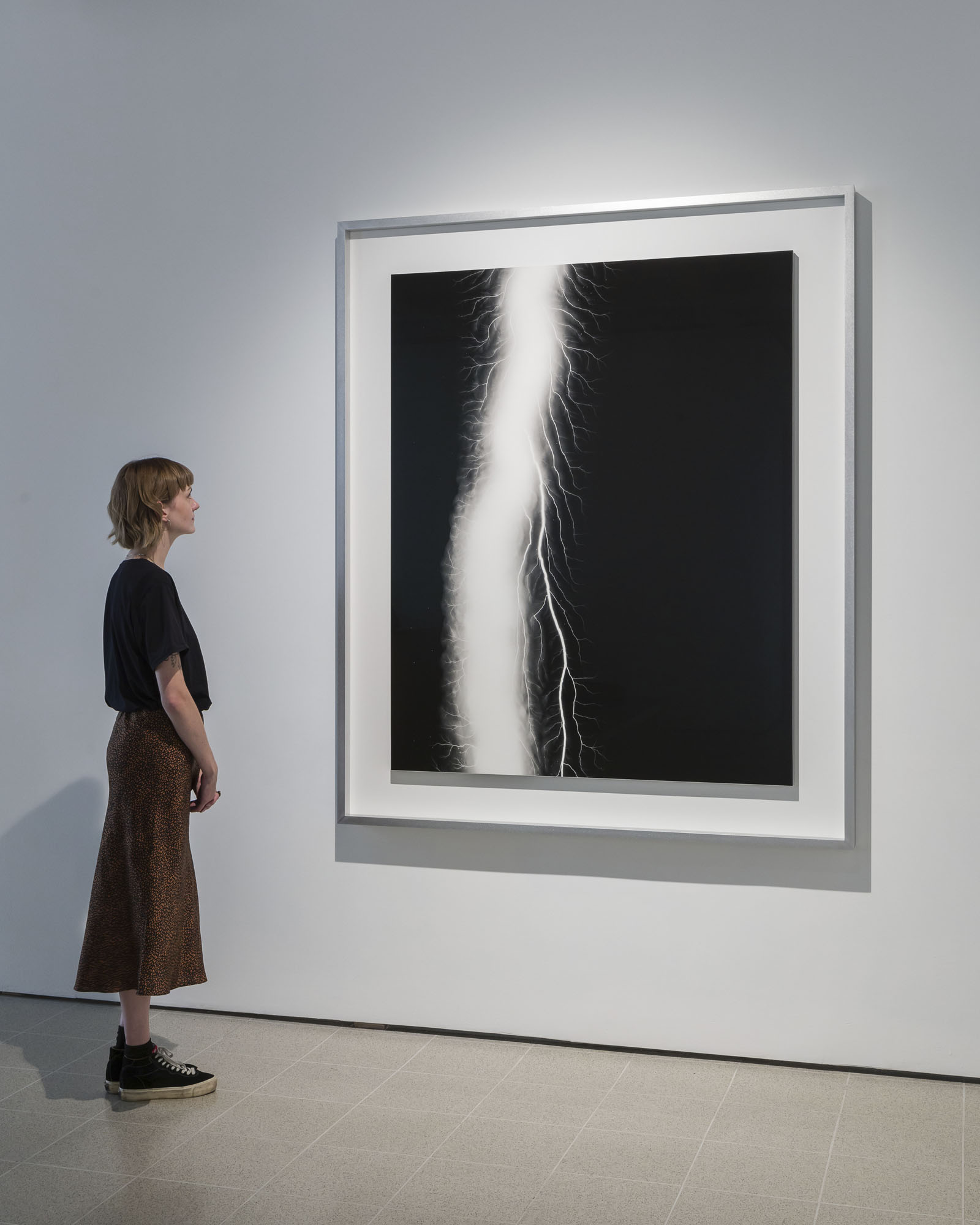
 

Installation view of Hiroshi Sugimoto, 'Lightning Fields 163' 2009


Installation view of Hiroshi Sugimoto, Lightning Fields 163 2009. Gelatin silver print
Photo: Mark Blower. Courtesy the artist and the Hayward Gallery
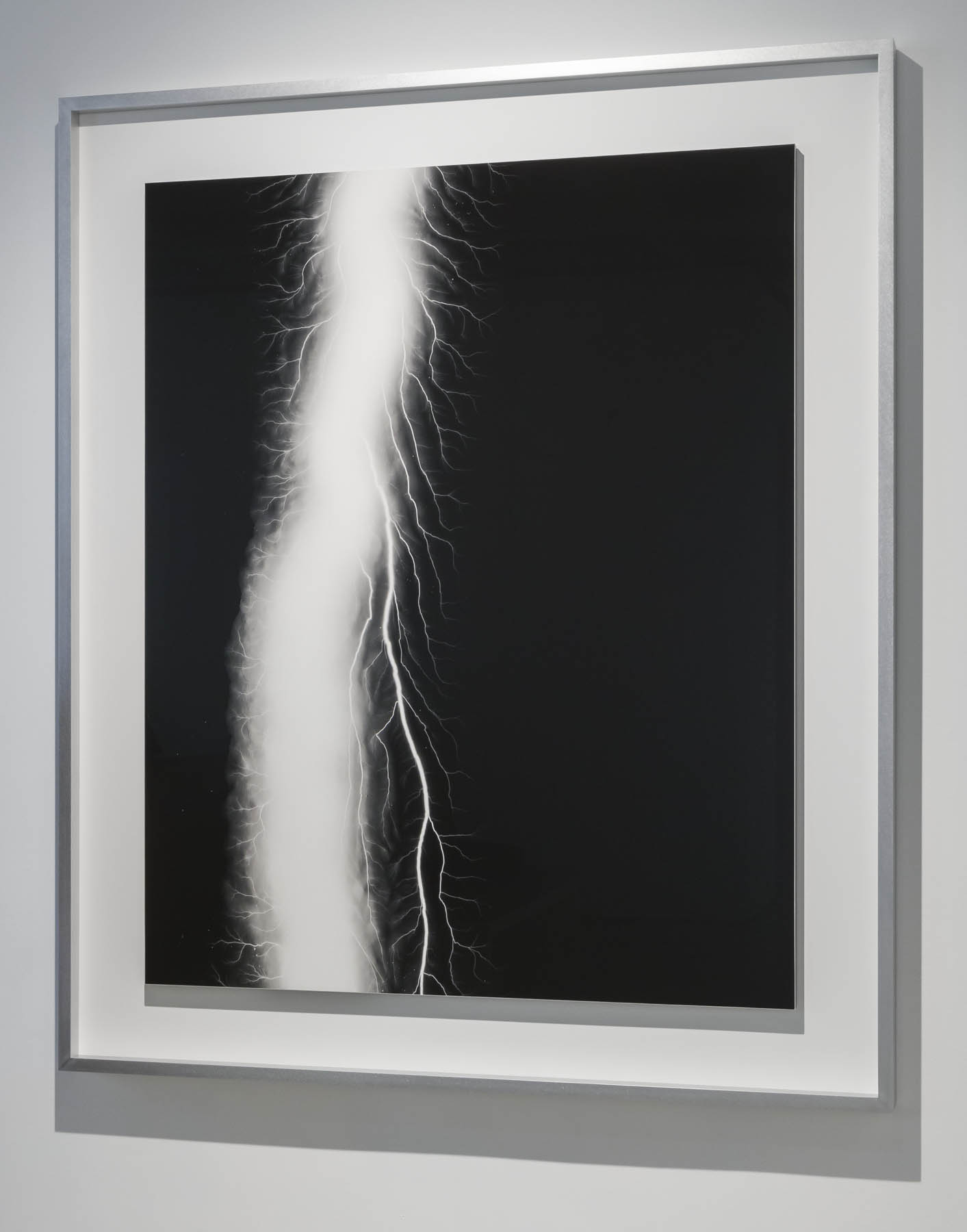
 

Installation view of Hiroshi Sugimoto, 'Lightning Fields 163' 2009


Installation view of Hiroshi Sugimoto, Lightning Fields 163 2009. Gelatin silver print
Photo: Mark Blower. Courtesy the artist and the Hayward Gallery


Hiroshi Sugimoto (Japanese, b. 1948) 'Lightning Fields 225' 2009


Hiroshi Sugimoto (Japanese, b. 1948)
Lightning Fields 225
2009
Gelatin silver print
© Hiroshi Sugimoto, courtesy of the artist


Hiroshi Sugimoto: formative years and significant works

For five decades the work of photographer Hiroshi Sugimoto has received international acclaim, whilst being presented in major galleries and institutions the world over.

Sugimoto’s photographs are meticulously crafted, often stretching and rearranging the concept of time, and our understanding of the world around us, and he has often re-explored ideas and practices from photography’s earliest exponents. Over the past 50 years, he has often revisited and expanded upon his own ideas, and series, which we take a closer look at, along with the artist’s formative years, here.

Hiroshi Sugimito: early years

Hiroshi Sugimoto was born in Tokyo in 1948 to a family of merchants. Among the young Sugimoto’s interests were trains, electronics, carpentry and photography, with his early fascination with the latter further enhanced by one of his elementary school science teachers, who showed Sugimoto and his classmates how to use photosensitive paper to make photograms. ‘He used spoons and forks and other items and he exposed the paper under the light for five or six minutes.’ explained Sugimoto, looking back. ‘When he removed it, the shapes of the spoons and forks remained on the paper. It was an amazing experience for me that left a lasting impression’.

At the age of 12 Sugimoto was given his first camera, a Mamiya 6 medium-format, by his father, which he would use to take photographs of trains and gather reference material for model-making. When he moved on to high school, Sugimoto joined the photography club and also began developing an interest in the cinema, which he would visit regularly. It wasn’t long before his love of film and photography combined, as he recalls, ‘Audrey Hepburn was beautiful and I fell in love with her on the screen. I wanted her portrait so I brought my Minolta SR7 camera into a movie theatre, and I studied how to stop the image on the screen. I found that one-fifteenth and one-thirteenth of a second stops the image’.

In 1970, after graduating in Economics from Tokyo’s Rikkyo University, Sugimoto backpacked across Russia and Europe. Influenced by communist ideology, and the writings of Karl Marx and Friedrich Engels as a student, he had wanted to experience Russian society, but disillusioned by what he found, he duly continued on to Europe. ‘I kept moving westwards. I stayed in Moscow for a few weeks and took another train to Poland, and then to Czechoslovakia, Bulgaria and other Eastern European countries. After several weeks I arrived in Vienna for my first taste of Western civilization’.

Hiroshi Sugimoto in America

Later in 1970 Sugimoto would get another taste of Western civilisation as he travelled to the US, and California. Here he studied at Los Angeles’ ArtCentre College of Design, specialising in photography. Speaking of his studies here, Sugimoto has said ‘ArtCenter College was more like a training school for technicians: car design and advertising. For photography you trained to be a commercial photographer, which is what I wanted. I wasn’t interested in academic study at all’.

After completing his study in Los Angeles Sugimoto moved to New York in 1974 in order to pursue a full-time career in photography. Here, Sugimoto soon became part of the city’s hippy counter-culture. ‘I got serious about using photography as a tool in my art after I moved to New York’, says Sugimoto. ‘I saw many good shows, mainly minimalist shows: Sol LeWitt, Dan Flavin, Donald Judd. When I moved to the East Coast I found so many interesting people that I decided to stay. I’d just finished my photographic studies and was hungry to work. Since photography was considered a second-class citizen in the art world then why not use photography? It was more interesting for me to start with something a step down and bring it up’.

Dioramas

In 1974, Sugimoto made his first visit to the American Museum of Natural History in New York, it was a visit that would inspire his first major breakthrough in photography. ‘I made a curious discovery while at the exhibition of animal dioramas,’ the artist explains. ‘The stuffed animals positioned before painted backdrops looked utterly fake, yet by taking a quick peek with one eye closed, all perspective vanished, and suddenly they looked very real. I had found a way to see the world as a camera does. However fake the subject, once photographed, it’s as good as real’.

Inspired by these taxidermy dioramas, he went on to commence his Dioramas series, which among its initial works included Polar Bear (1976) and Hyena – Jackal – Vulture (1976). Sugimoto would return to this idea two decades on, adding more works to Dioramas in the 1990s including 1994’s Earliest Human Relatives. In 1978 Polar Bear was acquired by The Museum of Modern Art, representing Sugimoto’s first photographic sale. The work was also exhibited in the museum’s Recent Acquisitions show, that same year.

Theaters

It was whilst working on his Dioramas series, that Sugimoto also found the inspiration for his next series, Theaters, as he would later detail. ‘I am a habitual self-interlocutor. One evening while taking photographs at the American Museum of Natural History, I had a near-hallucinatory vision. My internal question-and-answer session leading up to this vision went something like this: ‘Suppose you shoot a whole movie in a single frame?’ The answer: ‘You get a shining screen.’ Immediately I began experimenting in order to realise this vision’.

He began this series in 1976, by photographing St. Marks Cinema in Manhattan’s East Village, and the first group of works would also see Sugimoto capture other movie theatres and cinemas in the Northeast and Midwest of the US. It was an approach that the photographer has returned to again and again over the course of his career, firstly in 1993 when he broadened the Theaters series to include depictions of Drive-Ins across the US. The photographer later travelled to Europe, primarily Italy, to replicate the approach with Opera Houses in 2014, and then in 2015 began photographing Abandoned Theaters.

Seascapes

The seeds for Sugimoto’s Seascapes series were sown in 1980. ‘One New York night, during another of my internal question-and-answer sessions I pictured two great mountains’, the photographer has explained. ‘One, today’s Mount Fuji, and the other, Mount Hakone in the days before its summit collapsed, creating the Ashinoko crater lake. When hiking up from the foothills of Hakone, one would see a second freestanding peak as tall as Mount Fuji. Two rivals in height – what a magnificent sight that must have been! Unfortunately, the topography has changed. Although the land is forever changing its form, the sea, I thought, is immutable. Thus began my travels back through time to the ancient seas of the world’.

Sugimoto began the series that same year with a photograph of the Caribbean Sea, taken from a bluff in Jamaica while on a family holiday to the island. Seascapes would subsequently lead Sugimoto across the globe, photographing bodies of water from the Ligurian Sea viewed from Italy to the North Pacific Ocean viewed from Japan.

Chamber of Horrors and Portraits

In 1994 Sugimoto made his first visit to Madame Tussaud’s in London, where he photographed his Chamber of Horrors series on location. ‘I saw the blade that guillotined Louis XVI and Marie Antoinette, and the electric chair that executed the Lindbergh baby’s kidnapper, among other exhibits. They all looked very real to me’, Sugimoto said. ‘To corroborate these various murderous instruments invented by civilised men, I took the requisite eye-witness photographs: thus did people in times past face death head on’.

Sugimoto would return to the wax museum five years later to photograph his Portraits series, for which he was given special permission to remove selected figures from the display to photograph individually, among them Diana, Princess of Wales (1999), Fidel Castro (1999) and Anne of Cleeves (1999). However, he found that the exhibits he had previously captured for Chamber of Horrors had now been removed from the museum. ‘When I asked why,’ he said ‘I was told they’d been removed in a gesture to political correctness. Must we moderns be so sheltered from death?’

Opticks

In 2018 Sugimoto began printing his Opticks series, which was inspired by an 1704 work of the same name by Isaac Newton, in which Newton, through his experiments with prisms presented proof that natural light was not purely white. Drawing on Newton’s approach, Sugimoto used a batch of Polaroid film he had been gifted – one of the last batches of film Polaroid ever produced – along with a glass prism and a mirror to create condensed vivid compositions of pure colour. Sugimoto then enlarged these works into chromogenic prints. Opticks was presented for the first time in 2020 at the Kyoto City KYOCERA Museum of Art in Japan, and received its first UK presentation here at the Hayward Gallery.

Anonymous. “Hiroshi Sugimoto: formative years and significant works,” on the Hayward Gallery website Fri Nov 17, 2023 [Online] Cited 19/11/2023


Opticks (2018 – )
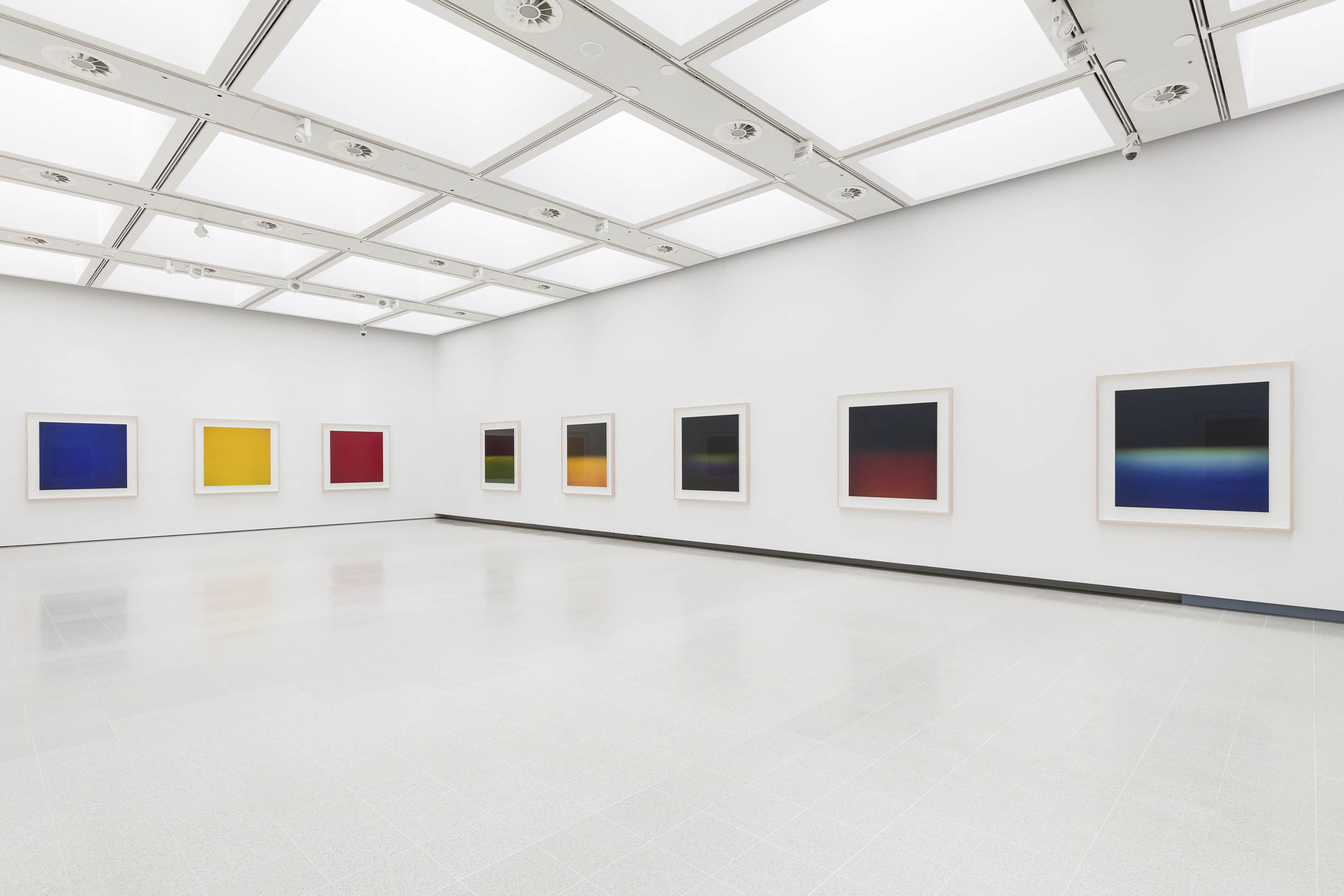
 

Installation view of Hiroshi Sugimoto, 'Opticks' series

Installation view of Hiroshi Sugimoto, 'Opticks' series

Installation view of Hiroshi Sugimoto, 'Opticks' series

Installation view of Hiroshi Sugimoto, 'Opticks' series


Installation views of Hiroshi Sugimoto, Opticks series. Chromogenic prints
Photo: Mark Blower. Courtesy the artist and the Hayward Gallery


Opticks isn’t the only series in which Sugimoto has experimented with historic techniques. In his 2006 series Lightning Fields, informed by the work of 19th century photography pioneer Henry Fox Talbot, Sugimoto captured the lightning-like shapes of electrical currents as they passed across a negatively-charged metal plate.

In his commitment to historic approaches the artist had initially attempted to supply the current to the plates using a hand-operated 18th century Wimshurst Electrostatic Machine, before switching to a more consistent Van de Graaff Generator.

In 2009, Sugimoto was gifted a batch of colour Polaroid film to see how a photographer who worked primarily in black and white might use it. This proved to be one of the last batches of the film ever produced (Polaroid went out of business in that same year) and would eventually find use in Sugimoto’s 2018 series, Opticks.

The images in Opticks – Sugimoto’s newest series, which has yet to be featured in any surveys of the artist’s work – are inspired by Isaac Newton’s seminal 1704 work of the same name, in which he presented proof that natural light was not purely white. Taking his cue from Newton’s experiments with prisms, Sugimoto used the Polaroid, along with glass and a mirror, to create condensed yet vivid compositions of colour in its purest form, before later enlarging these works into chromogenic prints.
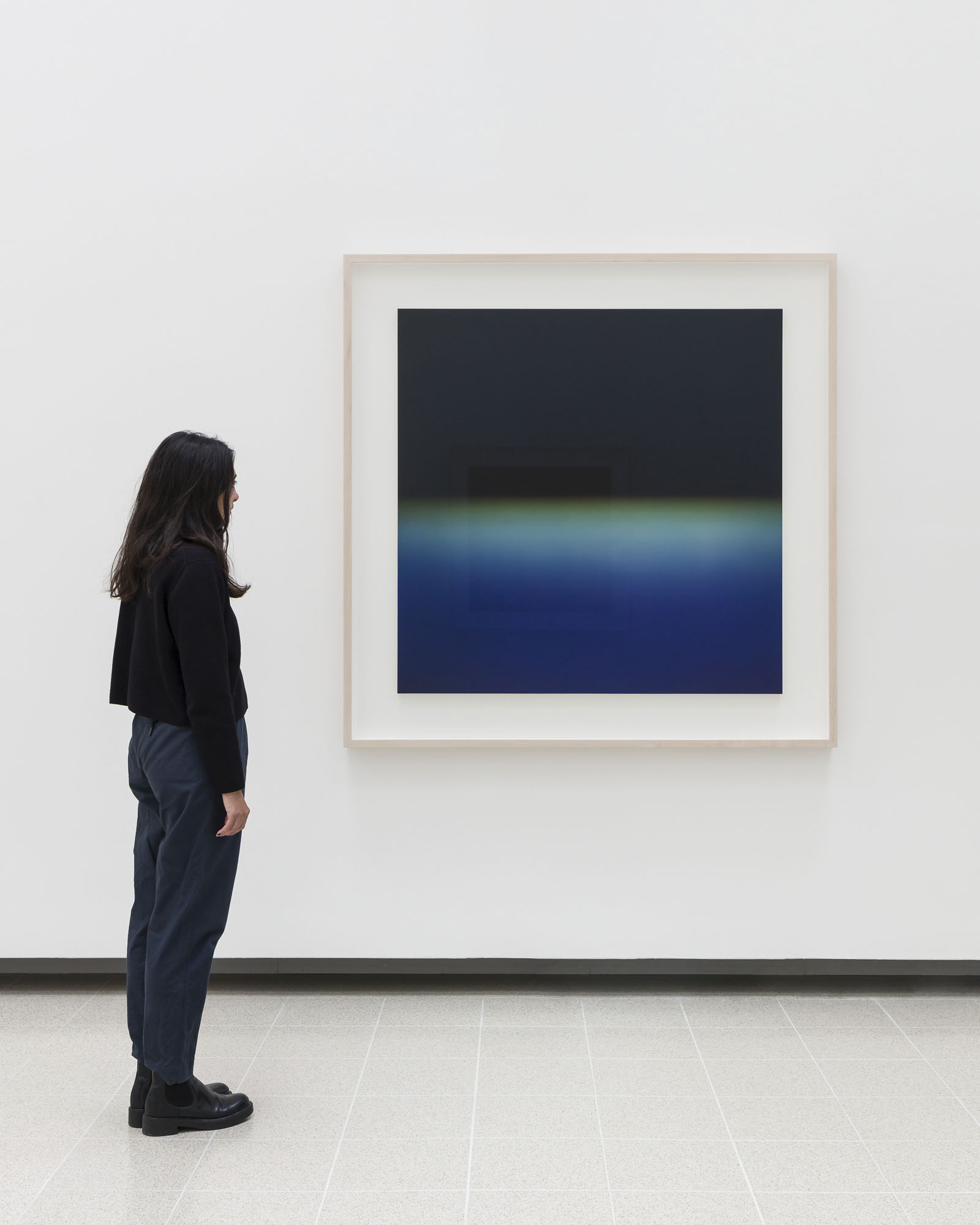
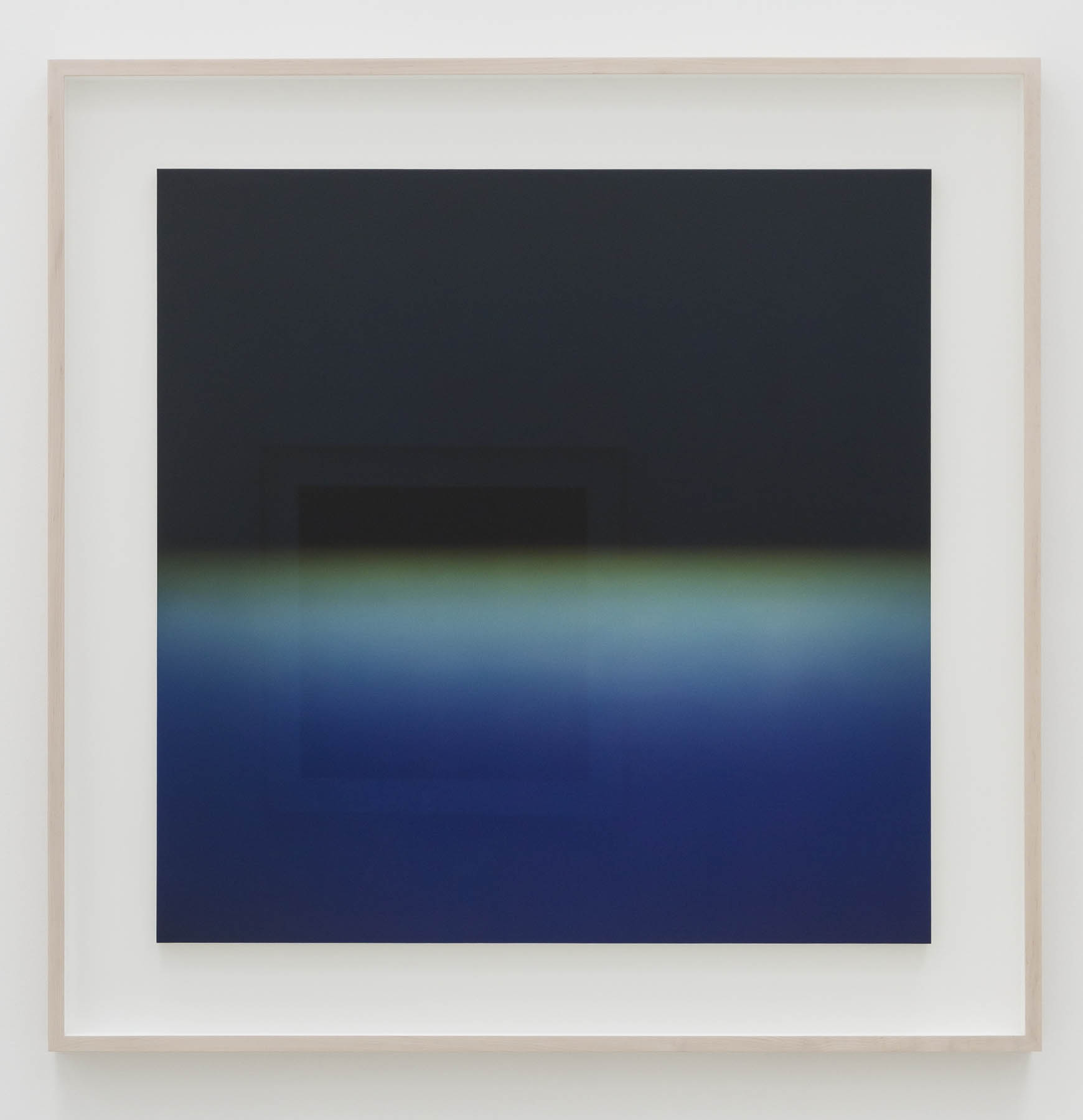
 

Installation view of Hiroshi Sugimoto, 'Opticks' series

Installation view of Hiroshi Sugimoto, 'Opticks' series


Installation views of Hiroshi Sugimoto, Opticks series. Chromogenic print
Photo: Mark Blower. Courtesy the artist and the Hayward Gallery
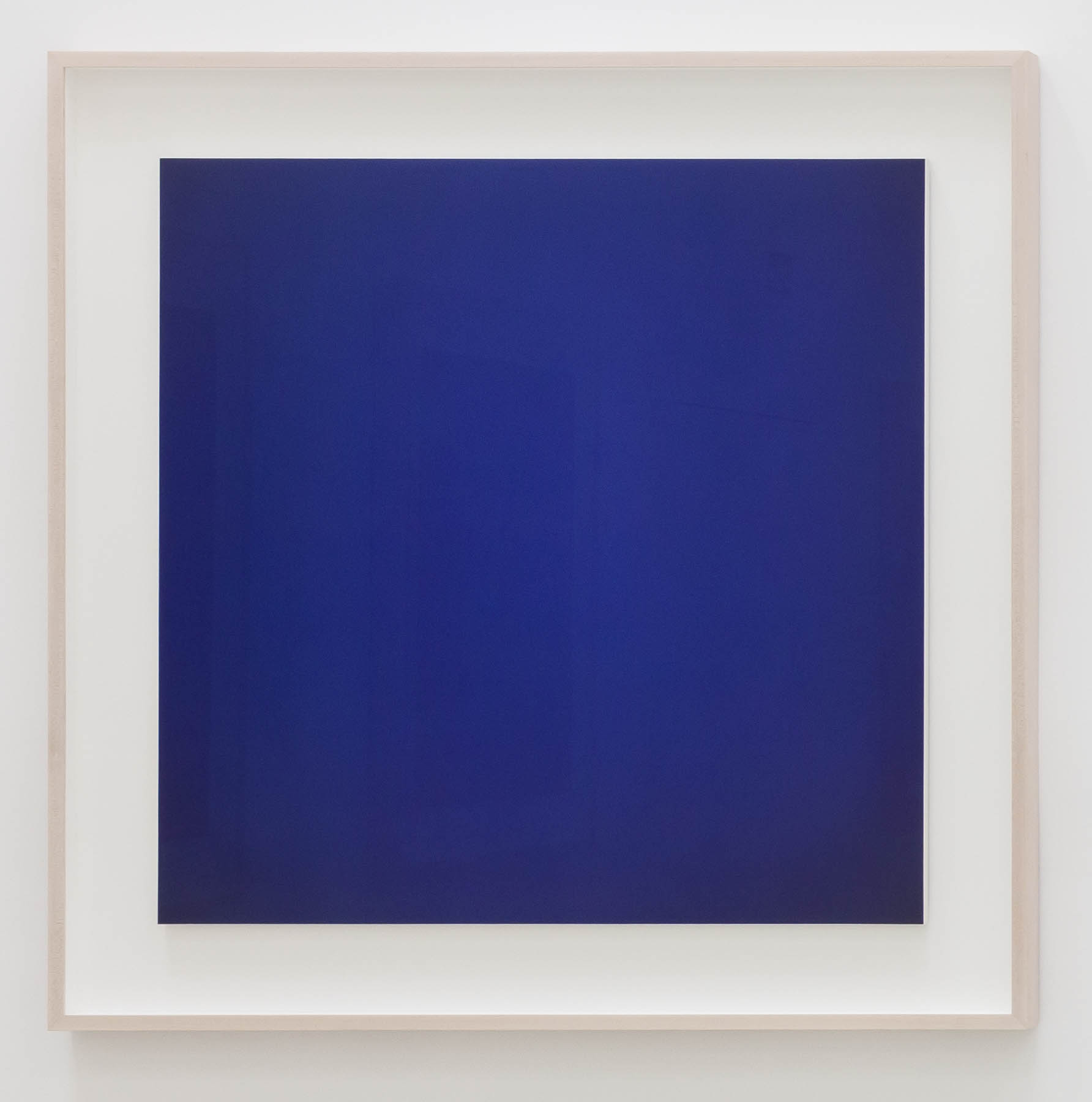
 

Installation view of Hiroshi Sugimoto, 'Opticks' series

Installation view of Hiroshi Sugimoto, 'Opticks' series


Installation views of Hiroshi Sugimoto, Opticks series. Chromogenic print
Photo: Mark Blower. Courtesy the artist and the Hayward Gallery


Installation view of Hiroshi Sugimoto, 'Opticks' series


Installation view of Hiroshi Sugimoto, Opticks series. Chromogenic print
Photo: Mark Blower. Courtesy the artist and the Hayward Gallery

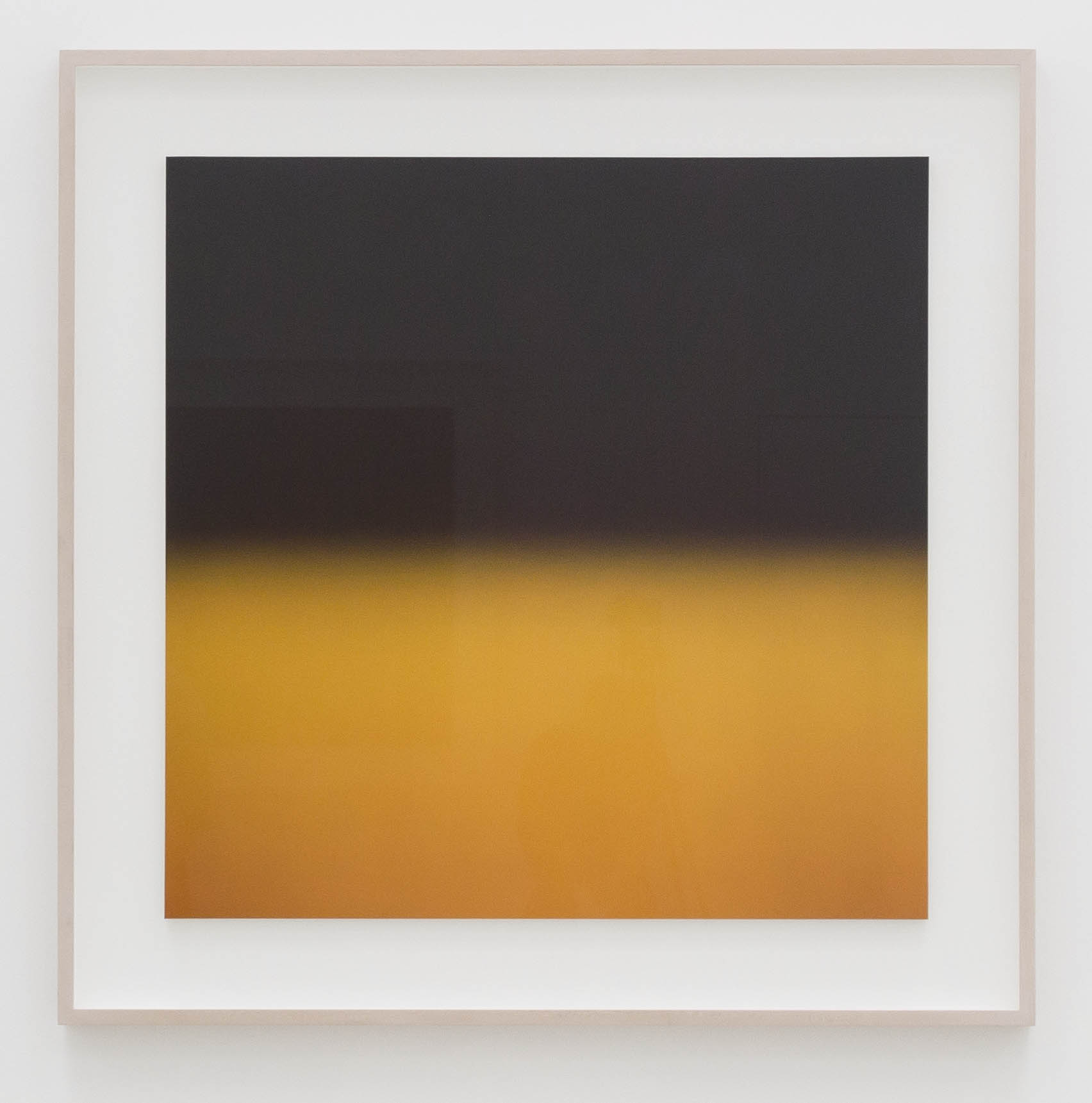
 

Installation view of Hiroshi Sugimoto, 'Opticks' series

Installation view of Hiroshi Sugimoto, 'Opticks' series


Installation view of Hiroshi Sugimoto, Opticks series. Chromogenic print
Photo: Mark Blower. Courtesy the artist and the Hayward Gallery


Rachael Smith. 'Hiroshi Sugimoto in the Hayward Gallery with his 'Opticks' series' 2023


Rachael Smith
Hiroshi Sugimoto in the Hayward Gallery with his ‘Opticks’ series
2023
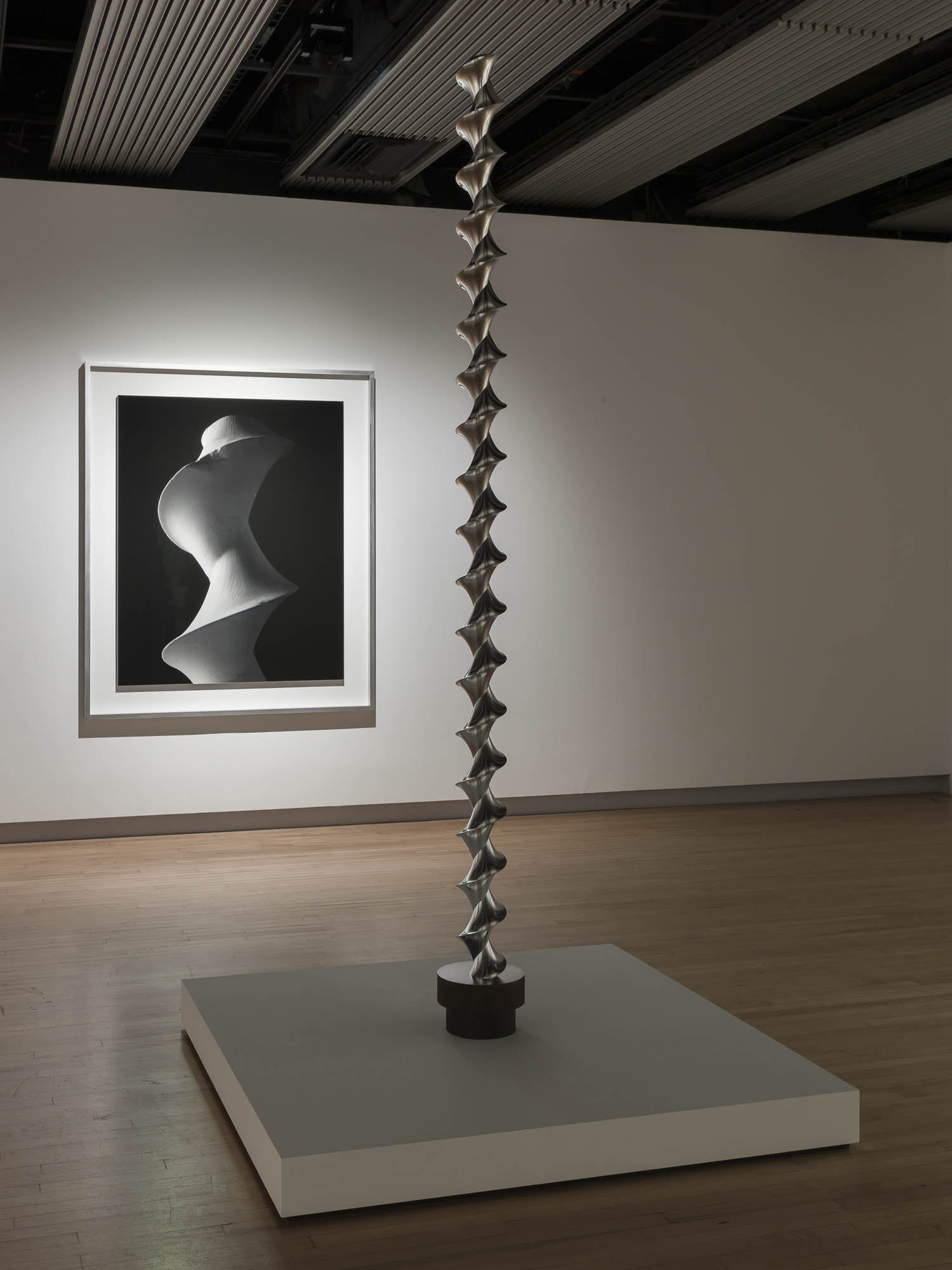
 

Installation view of Hiroshi Sugimoto, 'Conceptual Forms 0003 and Mathematical Model 002'


Installation view of Hiroshi Sugimoto, Conceptual Forms 0003 and Mathematical Model 002. Gelatin silver print, aluminium and steel
Photo: Mark Blower. Courtesy the artist and the Hayward Gallery
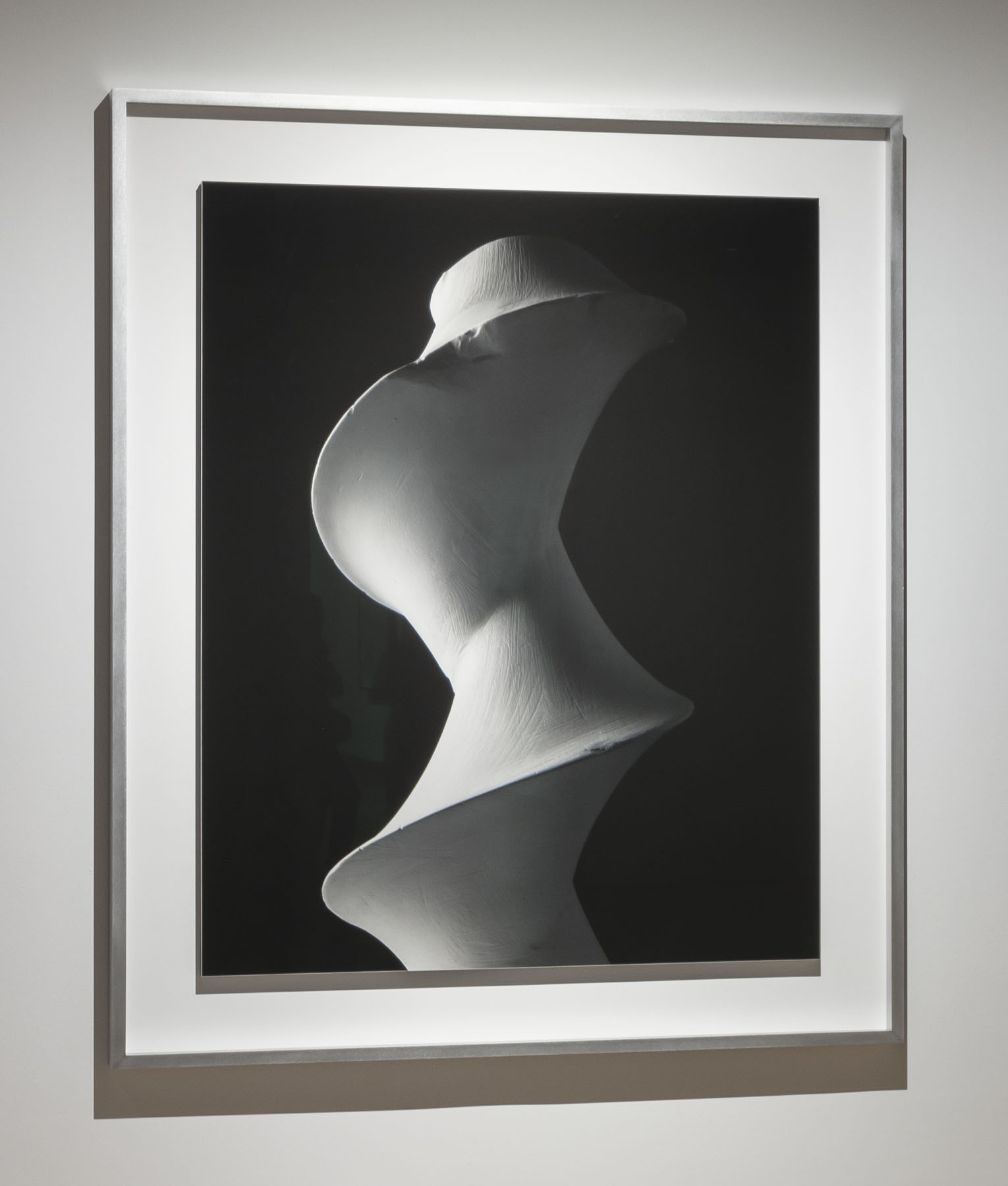
 

Installation view of Hiroshi Sugimoto, 'Conceptual Forms 0003' 2004


Installation view of Hiroshi Sugimoto, Conceptual Forms 0003 2004. Gelatin silver print
Photo: Mark Blower. Courtesy the artist and the Hayward Gallery
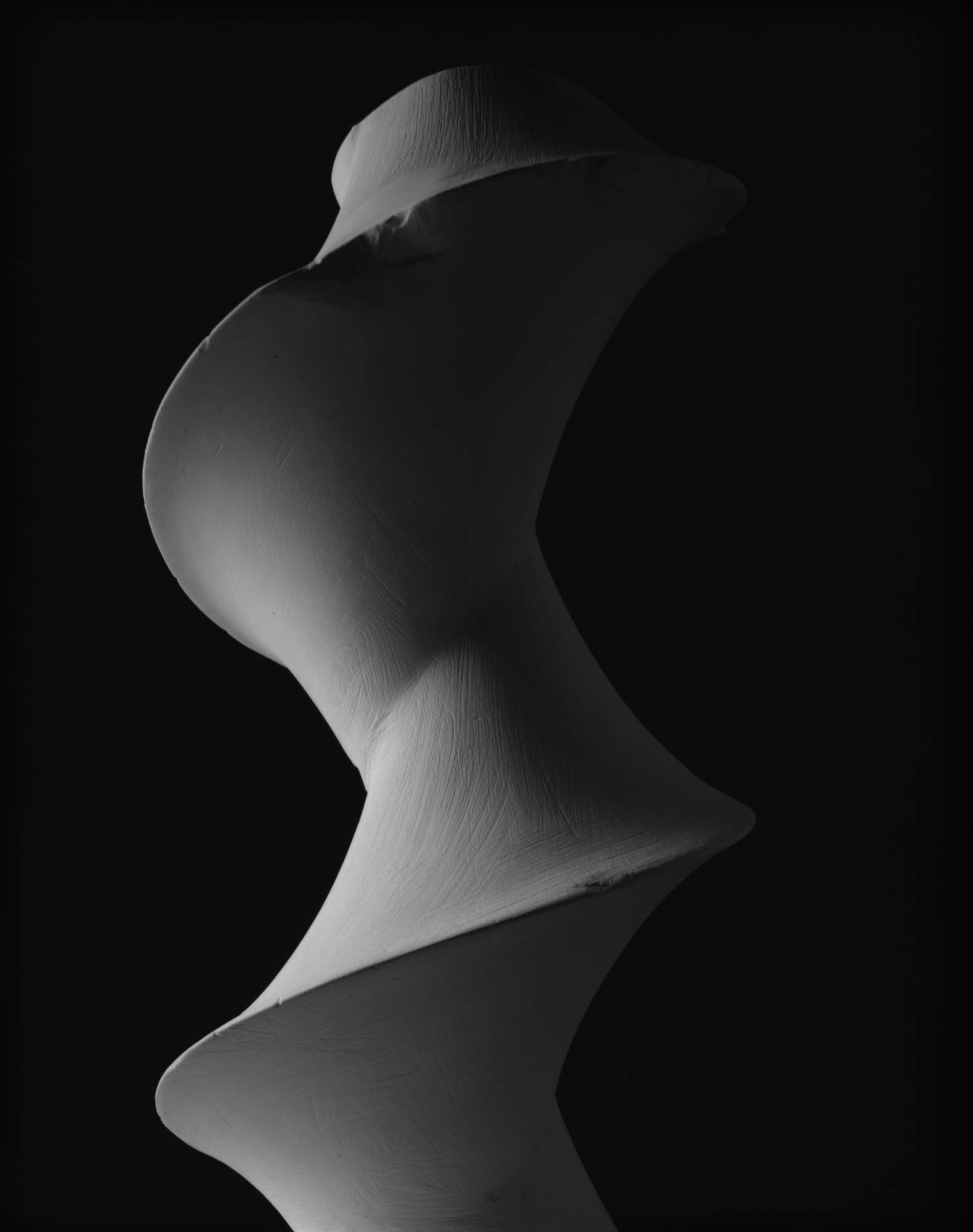
 

Hiroshi Sugimoto, 'Conceptual Forms 0003 Dini’s surface – a surface of constant negative curvature obtained by twisting a pseudosphere' 2004


Hiroshi Sugimoto (Japanese, b. 1948)
Conceptual Forms 0003 Dini’s surface – a surface of constant negative curvature obtained by twisting a pseudosphere
2004
Gelatin silver print
© Hiroshi Sugimoto, courtesy of the artist
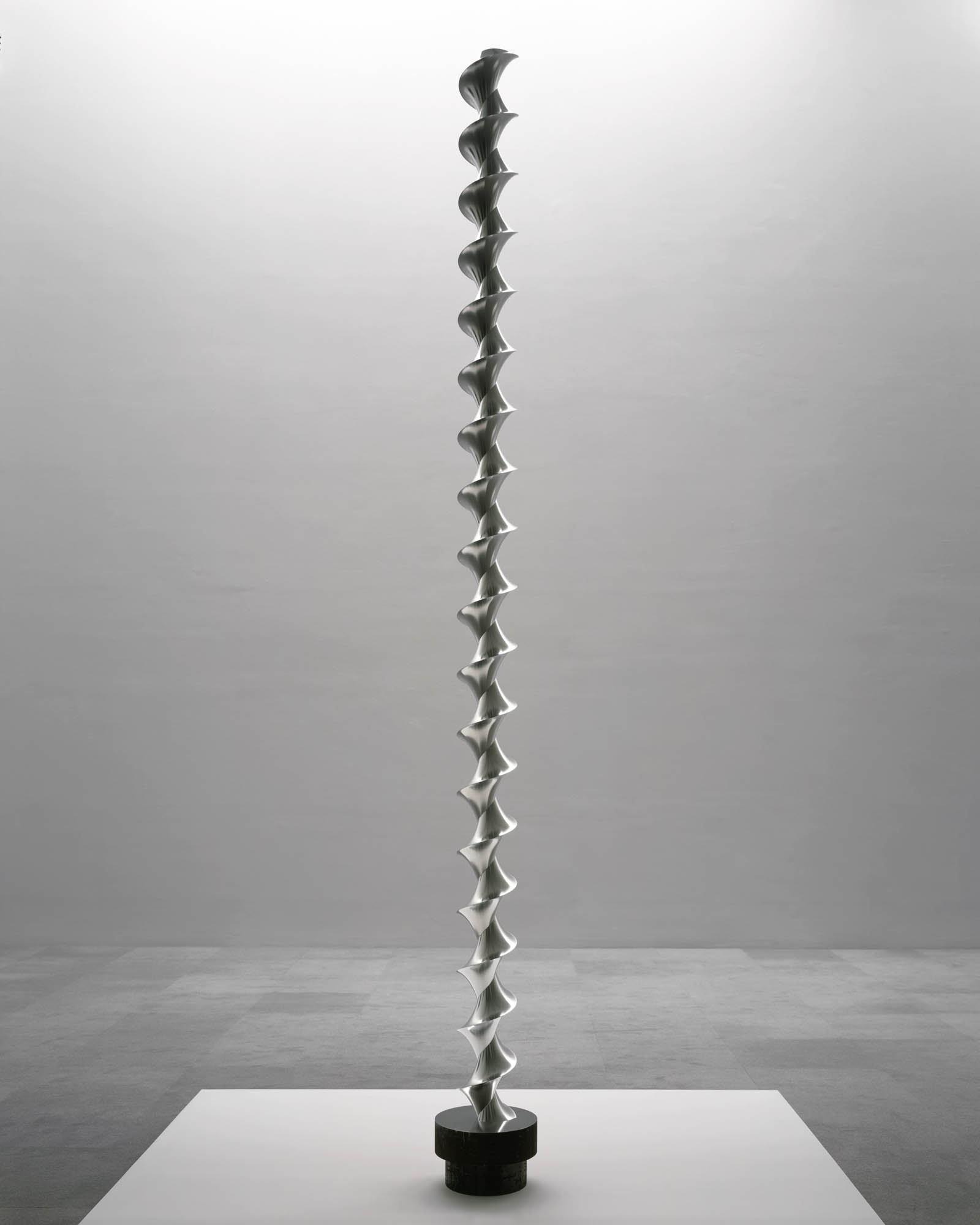
 

Hiroshi Sugimoto (Japanese, b. 1948) 'Mathematical Model 002 Dini's Surface' 2005


Hiroshi Sugimoto (Japanese, b. 1948)
Mathematical Model 002 Dini’s Surface
2005
Aluminium and steel
© Hiroshi Sugimoto, courtesy of the artist


Installation view of Hiroshi Sugimoto, 'Conceptual Forms and Mathematical Model 006'


Installation view of Hiroshi Sugimoto, Conceptual Forms and Mathematical Model 006. Gelatin silver print, aluminium and steel
Photo: Mark Blower. Courtesy the artist and the Hayward Gallery


Installation view of Hiroshi Sugimoto, 'Conceptual Form Surface 0001 Helicoid: Minimal Surface' 2004


Installation view of Hiroshi Sugimoto, Conceptual Form Surface 0001 Helicoid: Minimal Surface 2004. Gelatin silver print
Photo: Mark Blower. Courtesy the artist and the Hayward Gallery
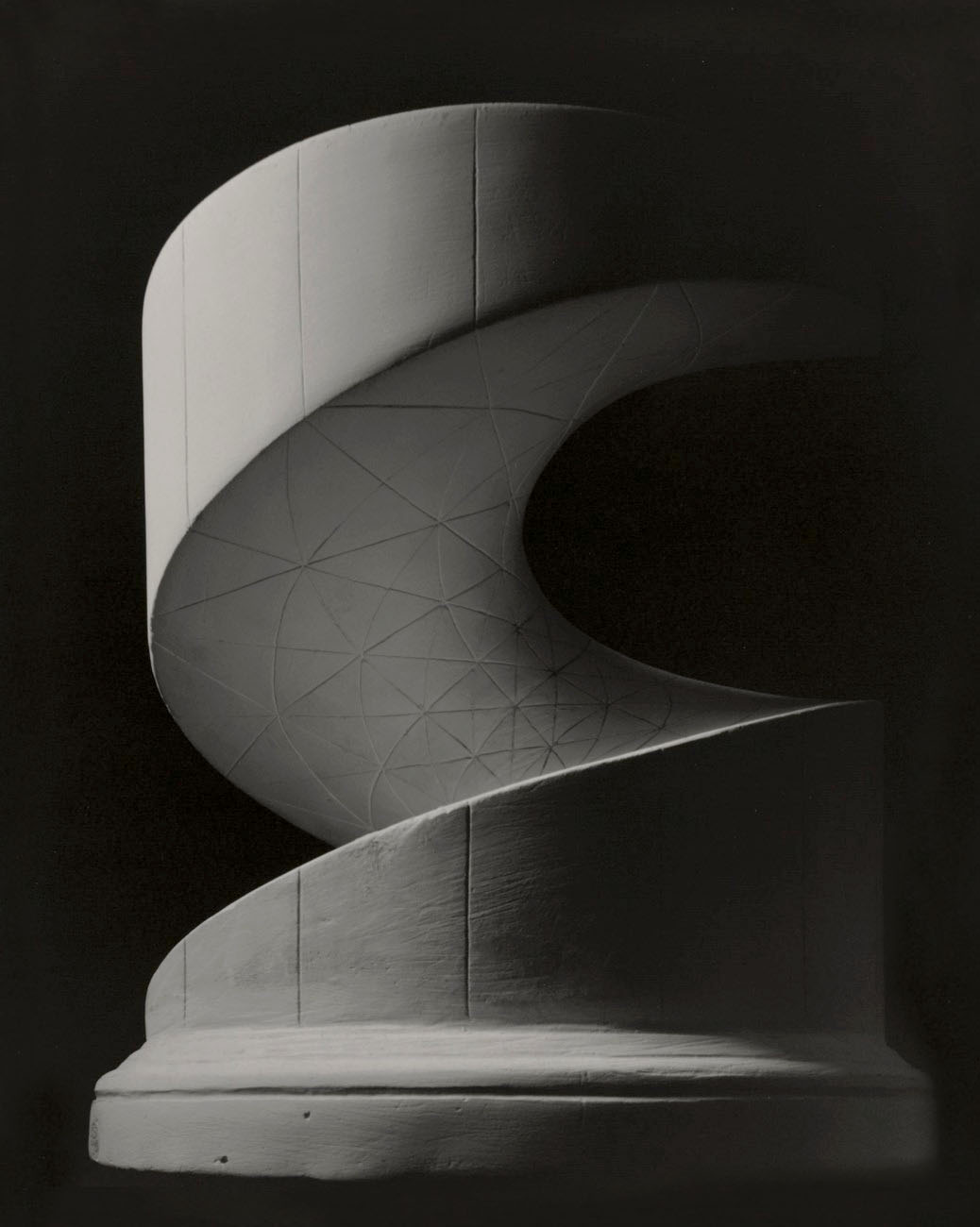
 

Hiroshi Sugimoto (Japanese, b. 1948) 'Conceptual Form Surface 0001 Helicoid: Minimal Surface' 2004


Hiroshi Sugimoto (Japanese, b. 1948)
Conceptual Form Surface 0001 Helicoid: Minimal Surface
2004
Gelatin silver print
© Hiroshi Sugimoto, courtesy of the artist
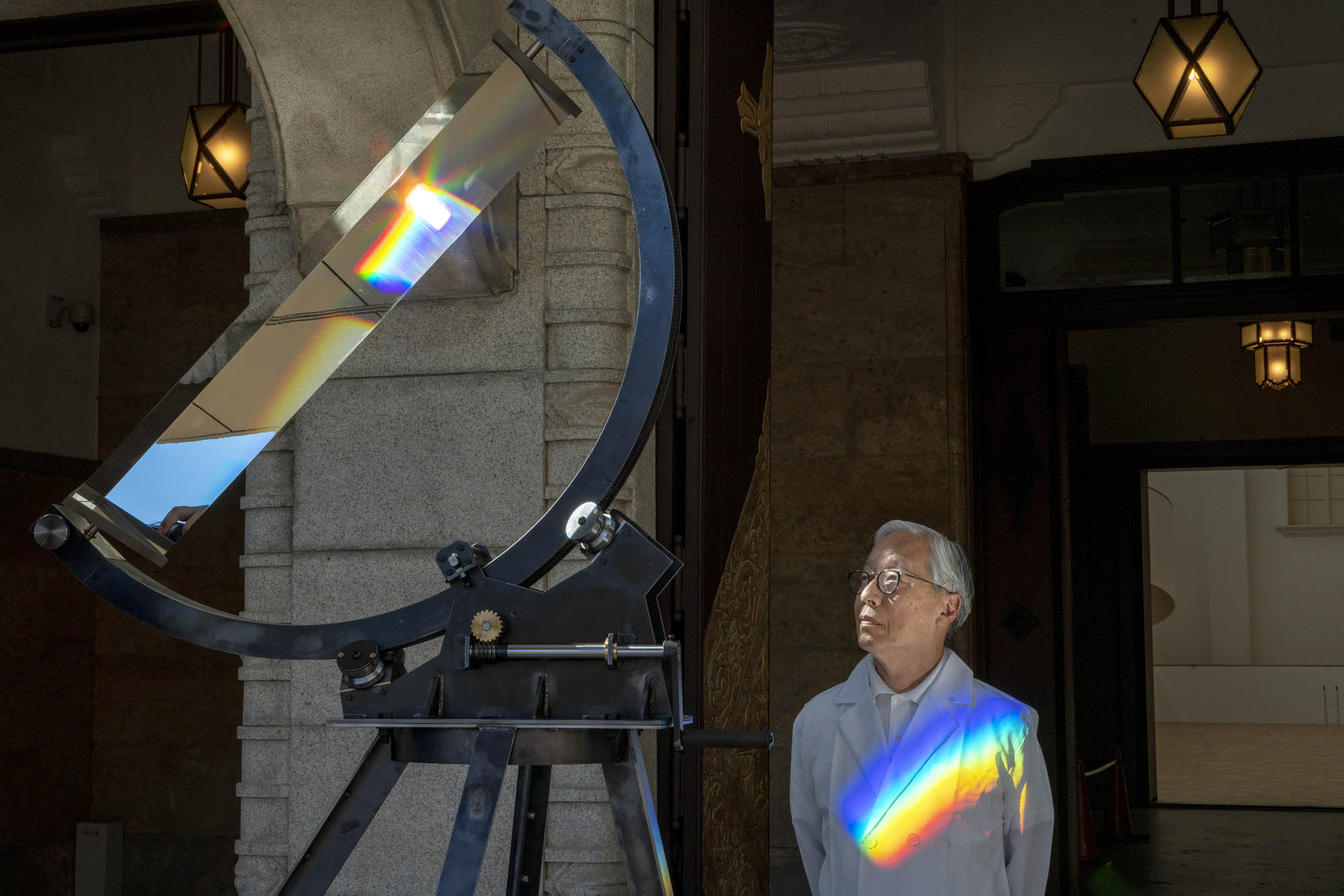
 

Hiroshi Sugimoto. Photo credit: Sugimoto Studio


Hiroshi Sugimoto
Photo credit: Sugimoto Studio


Hayward Gallery
Southbank Centre, Belvedere Road,
London SE1 8XX

Wed – Fri 10am – 6pm
Sat 10am – 8pm
Sun 10am – 6pm
Closed Monday and Tuesday

Southbank Centre website

LIKE ART BLART ON FACEBOOK

Back to top

Exhibition: ‘Intersections: Photographs and Videos from the National Gallery of Art and the Corcoran Gallery of Art’ at the National Gallery of Art, Washington

Exhibition dates: 29th May, 2016 – 2nd January, 2017

Curators: Sarah Greenough, senior curator, department of photographs, and Philip Brookman, consulting curator, department of photographs, both National Gallery of Art, are the exhibition curators.


Louis Stettner (American, 1922-2016) 'Times Square, New York City' 1952-1954 from the exhibition Exhibition: 'Intersections: Photographs and Videos from the National Gallery of Art and the Corcoran Gallery of Art' at the National Gallery of Art, Washington, May 2016 - Jan 2017


Louis Stettner (American, 1922-2016)
Times Square, New York City
1952-1954
Gelatin silver print
Sheet (trimmed to image): 42.1 x 27.5cm (16 9/16 x 10 13/16 in.)
National Gallery of Art, Washington, Patrons’ Permanent Fund


The last posting of a fruitful year for Art Blart. I wish all the readers of Art Blart a happy and safe New Year!

The exhibition is organised around five themes – movement, sequence, narrative, studio, and identity – found in the work of Muybridge and Stieglitz, themes then developed in the work of other artists. While there is some interesting work in the posting, the conceptual rationale and stand alone nature of the themes and the work within them is a curatorial ordering of ideas that, in reality, cannot be contained within any one boundary, the single point of view.

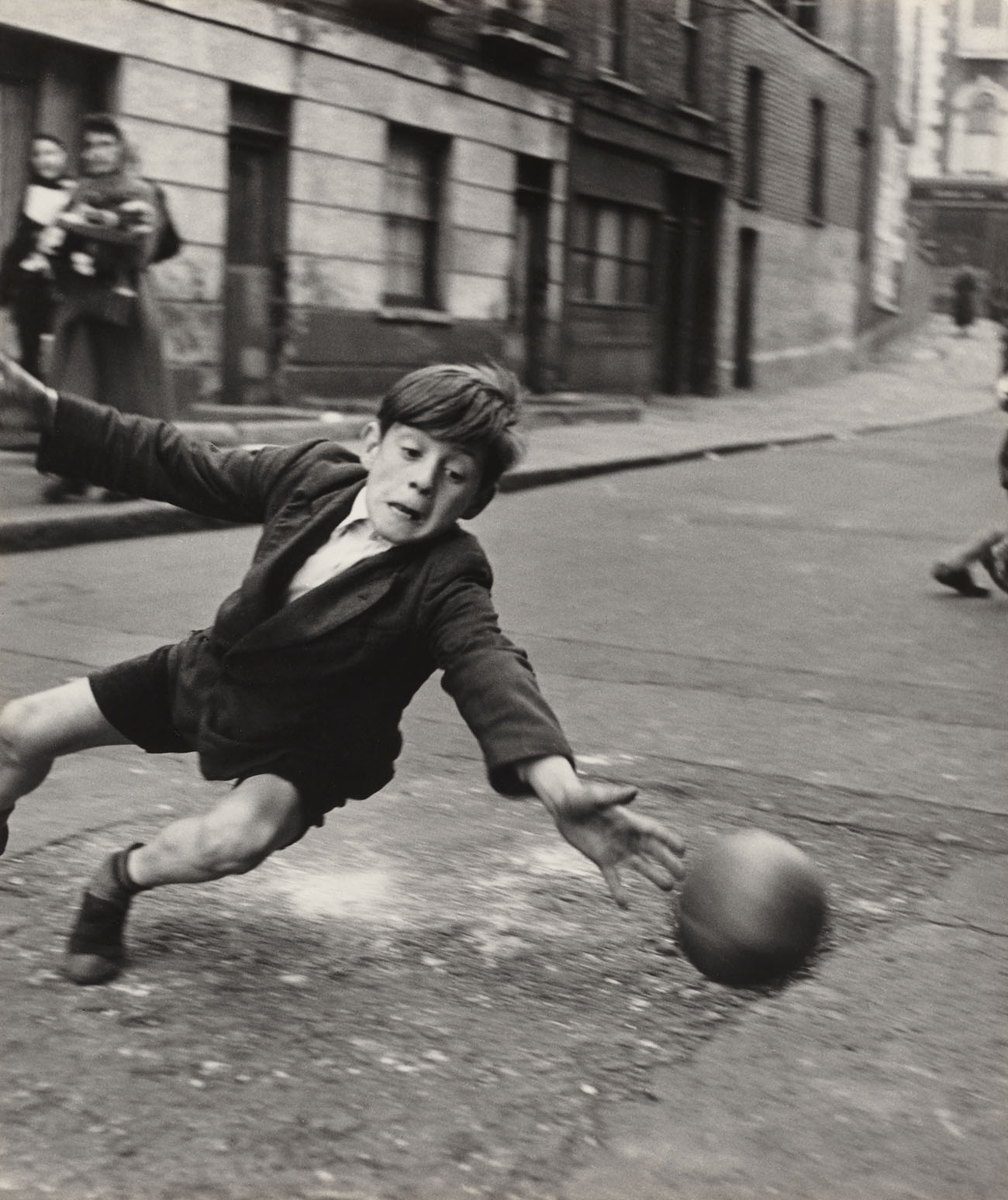
Movement can be contained in sequences; narrative can be unfolded in a sequence (as in the work of Duane Michals); narrative and identity have a complex association which can also be told through studio work (eg. Gregory Crewdson), etc… What does Roger Mayne’s Goalie, Street Football, Brindley Road (1956, below) not have to do with identity, the young lad with his dirty hands, playing in his socks, in a poverty stricken area of London; why has Hiroshi Sugimoto’s Oscar Wilde (1999, below) been included in the studio section when it has much more to do with the construction of identity through photography – “Triply removing his portrait from reality – from Oscar Wilde himself to a portrait photograph to a wax sculpture and back to a photograph” – which confounds our expectations of the nature of photography. Photography is nefariously unstable in its depiction of an always, constructed reality, through representation(s) which reject simple causality.

To isolate and embolden the centre is to disclaim and disavow the periphery, work which crosses boundaries, is multifaceted and multitudinous; work which forms a nexus for networks of association beyond borders, beyond de/lineation – the line from here to there. The self-contained themes within this exhibition are purely illusory.

Dr Marcus Bunyan


Many thankx to the National Gallery of Art for allowing me to publish the photographs in the posting. Please click on the photographs for a larger version of the image.


“We can no longer accept that the identity of a man can be adequately established by preserving and fixing what he looks like from a single viewpoint in one place.”


John Berger. “No More Portraits,” in New Society August 1967


“Intersections: Photographs and Videos from the National Gallery of Art and the Corcoran Gallery of Art explores the connections between the two newly joined photography collections. On view from May 29, 2016, through January 2, 2017, the exhibition is organised around themes found in the work of the two pioneers of each collection: Eadweard Muybridge (1830-1904) and Alfred Stieglitz (1864-1946). Inspired by these two seminal artists, Intersections brings together more than 100 highlights of the recently merged collections by a range of artists from the 1840s to today.

Just as the nearly 700 photographs from Muybridge’s groundbreaking publication Animal Locomotion, acquired by the Corcoran Gallery of Art in 1887, became the foundation for the institution’s early interest in photography, the Key Set of more than 1,600 works by Stieglitz, donated by Georgia O’Keeffe and the Alfred Stieglitz Estate, launched the photography collection at the National Gallery of Art in 1949.”

Press release from the National Gallery of Art


Exhibition highlights

The exhibition is organised around five themes – movement, sequence, narrative, studio, and identity – found in the work of Muybridge and Stieglitz.

Movement

Works by Muybridge, who is best known for creating photographic technologies to stop and record motion, anchor the opening section devoted to movement. Photographs by Berenice Abbott and Harold Eugene Edgerton, which study how objects move through space, are included, as are works by Roger Mayne, Alexey Brodovitch, and other who employed the camera to isolate an instant from the flux of time.

Wall text

Intersections wall text


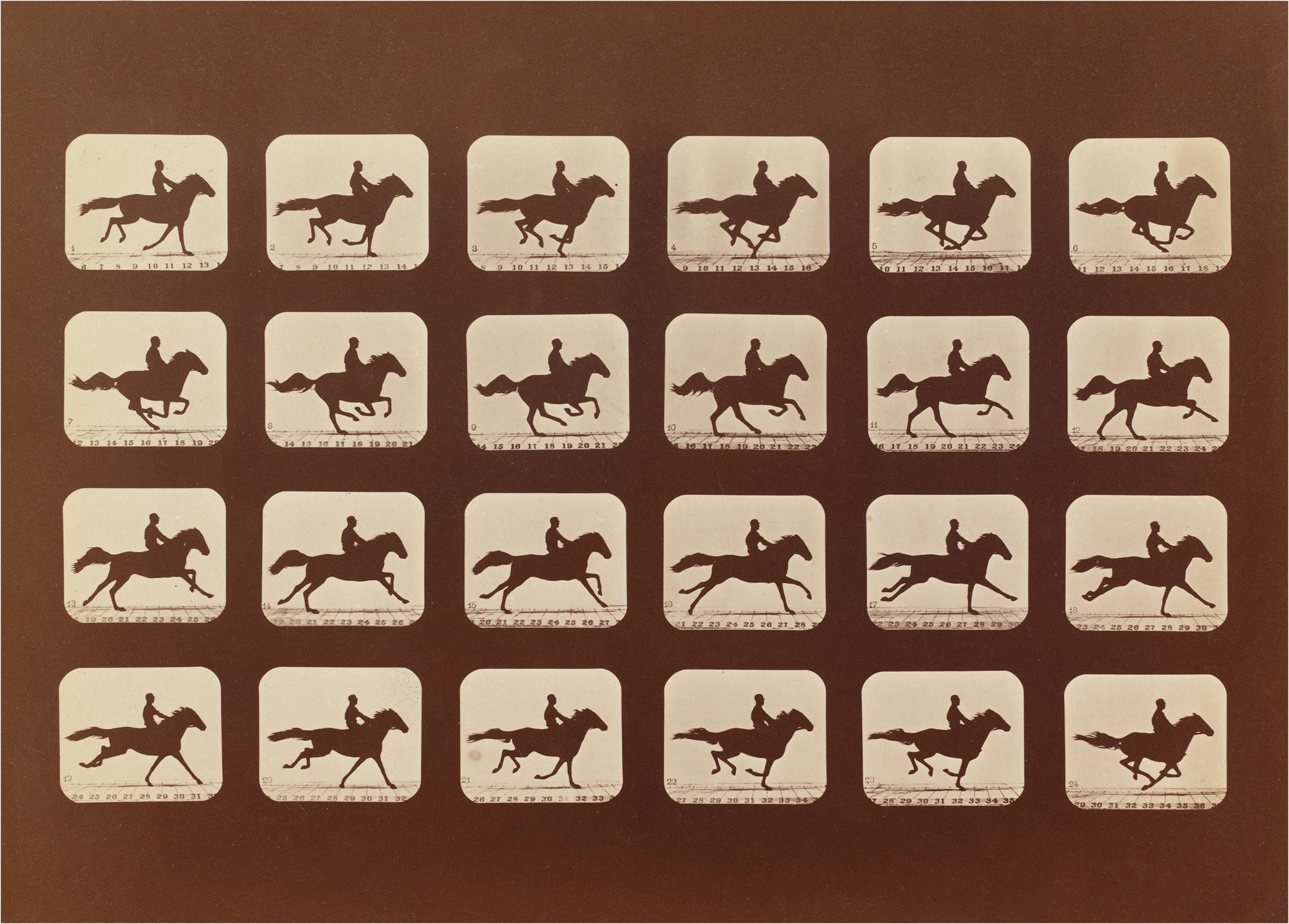
Eadweard Muybridge (English, 1830-1904) 'Horses. Running. Phyrne L. No. 40, from The Attitudes of Animals in Motion' 1879 from the National Gallery of Art and the Corcoran Gallery of Art' at the National Gallery of Art, Washington, May 2016 - Jan 2017


Eadweard Muybridge (English, 1830-1904)
Horses. Running. Phyrne L. No. 40, from The Attitudes of Animals in Motion
1879
Albumen print
Image: 16 x 22.4cm (6 5/16 x 8 13/16 in.)
Sheet: 25.7 x 32.4cm (10 1/8 x 12 3/4 in.)
National Gallery of Art, Washington, Gift of Mary and Dan Solomon


In order to analyse the movement of racehorses, farm animals, and acrobats, Muybridge pioneered new and innovative ways to stop motion with photography. In 1878, he started making pictures at railroad magnate Leland Stanford’s horse farm in Palo Alto, California, where he developed an electronic shutter that enabled exposures as fast as one-thousandth of a second. In this print from Muybridge’s 1881 album The Attitudes of Animals in Motion, Stanford’s prized racehorse Phryne L is shown running in a sequential grid of pictures made by 24 different cameras with electromagnetic shutters tripped by wires as the animal ran across the track. These pictures are now considered a critical step in the development of cinema.


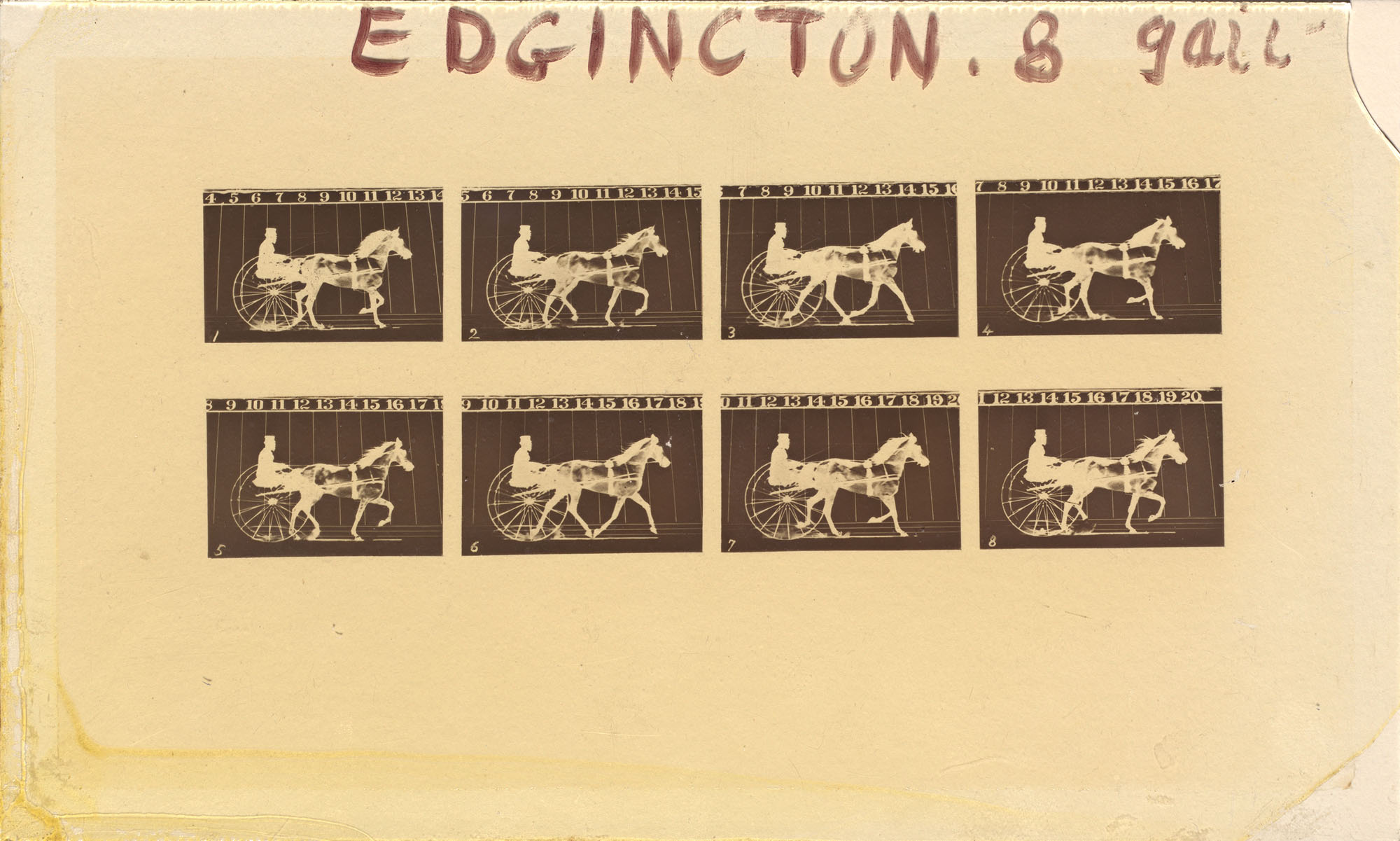
Eadweard Muybridge (English, 1830-1904) 'Internegative for Horses. Trotting. Abe Edgington. No. 28, from The Attitudes of Animals in Motion' 1878


Eadweard Muybridge (English, 1830-1904)
Internegative for Horses. Trotting. Abe Edgington. No. 28, from The Attitudes of Animals in Motion
1878
Collodion negative
Overall (glass plate): 15.3 x 25.4cm (6 x 10 in.)
National Gallery of Art, Washington, Gift of Mary and Dan Solomon and Patrons’ Permanent Fund


This glass negative shows the sequence of Leland Stanford’s horse Abe Edgington trotting across a racetrack in Palo Alto, California – a revolutionary record of the changes in the horse’s gait in about one second. Muybridge composed the negative from photographs made by eight different cameras lined up to capture the horse’s movements. Used to print the whole sequence together onto albumen paper, this internegative served as an intermediary step in the production of Muybridge’s 1881 album The Attitudes of Animals in Motion.


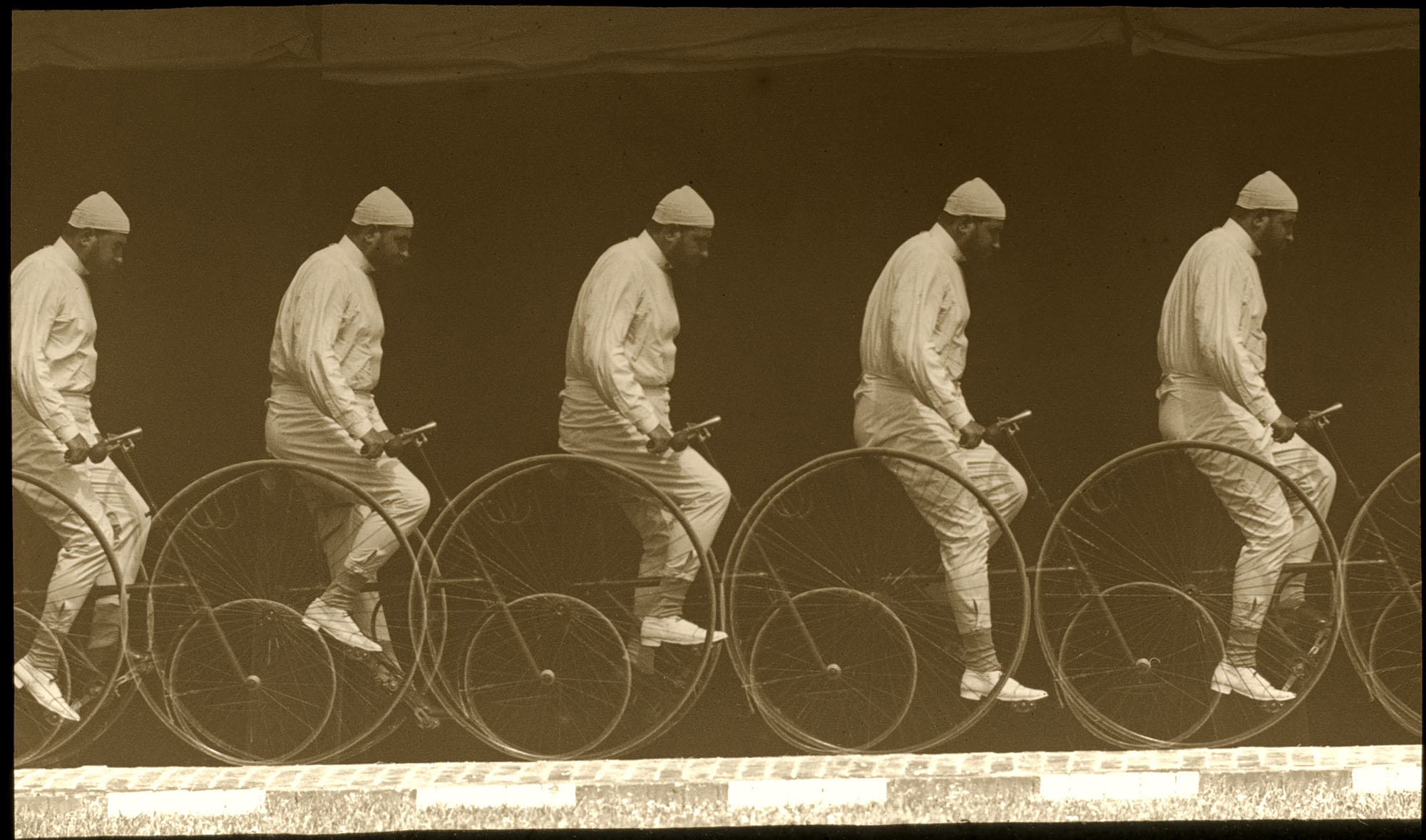
Étienne Jules Marey (French, 1830-1904) 'Chronophotograph of a Man on a Bicycle' c. 1885-1890


Étienne Jules Marey (French, 1830-1904)
Chronophotograph of a Man on a Bicycle
c. 1885-1890
Glass lantern slide
Image: 4 x 7.5cm (1 9/16 x 2 15/16 in.)
Plate: 8.8 x 10.2cm (3 7/16 x 4 in.)
National Gallery of Art, Washington, Gift of Mary and David Robinson


A scientist and physiologist, Marey became fascinated with movement in the 1870s. Unlike Muybridge, who had already made separate pictures of animals in motion, Marey developed in 1882 a means to record several phases of movement onto one photographic plate using a rotating shutter with slots cut into it. He called this process “chronophotography,” meaning photography of time. His photographs, which he published in books and showed in lantern slide presentations, influenced 20th-century cubist, futurist, and Dada artists who examined the interdependence of time and space.


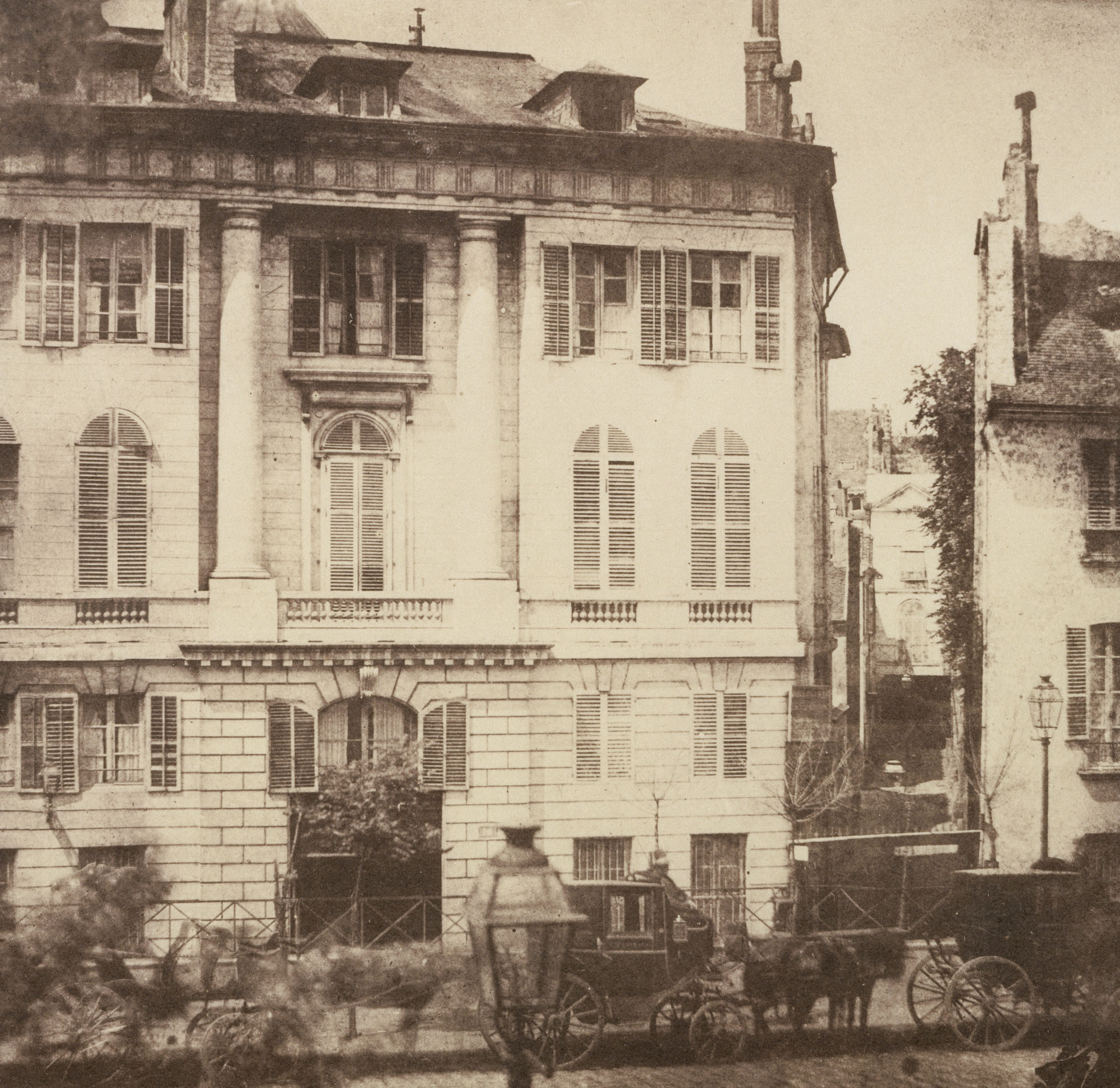
William Henry Fox Talbot (English, 1800-1877) 'The Boulevards of Paris' 1843


William Henry Fox Talbot (English, 1800-1877)
The Boulevards of Paris
1843
Salted paper print
Image: 16.6 × 17.1cm (6 9/16 × 6 3/4 in.)
Sheet: 19 × 23.2cm (7 1/2 × 9 1/8 in.)
National Gallery of Art, Washington, New Century Fund


As soon as Talbot announced his invention of photography in 1839, he realised that its ability to freeze time enabled him to present the visual spectacle of the world in an entirely new way. By capturing something as mundane as a fleeting moment on a busy street, he could transform life into art, creating a picture that could be savoured long after the event had transpired.


David Octavius Hill (Scottish, 1802-1870) and Robert Adamson (Scottish, 1821-1848) 'Colinton Manse and weir, with part of the old mill on the right' 1843-1847


David Octavius Hill (Scottish, 1802-1870) and Robert Adamson (Scottish, 1821-1848)
Colinton Manse and weir, with part of the old mill on the right
1843-1847
Salted paper print
Image: 20.7 x 14.6cm (8 1/8 x 5 3/4 in.)
National Gallery of Art, Washington, Paul Mellon Fund


In 1843, only four years after Talbot announced his negative / positive process of photography, painter David Octavius Hill teamed up with engineer Robert Adamson. Working in Scotland, they created important early portraits of the local populace and photographed Scottish architecture, rustic landscapes, and city scenes. Today a suburb southwest of Edinburgh, 19th-century Colinton was a mill town beside a river known as the Water of Leith. Because of the long exposure time required to make this photograph, the water rushing over a small dam appears as a glassy blur.


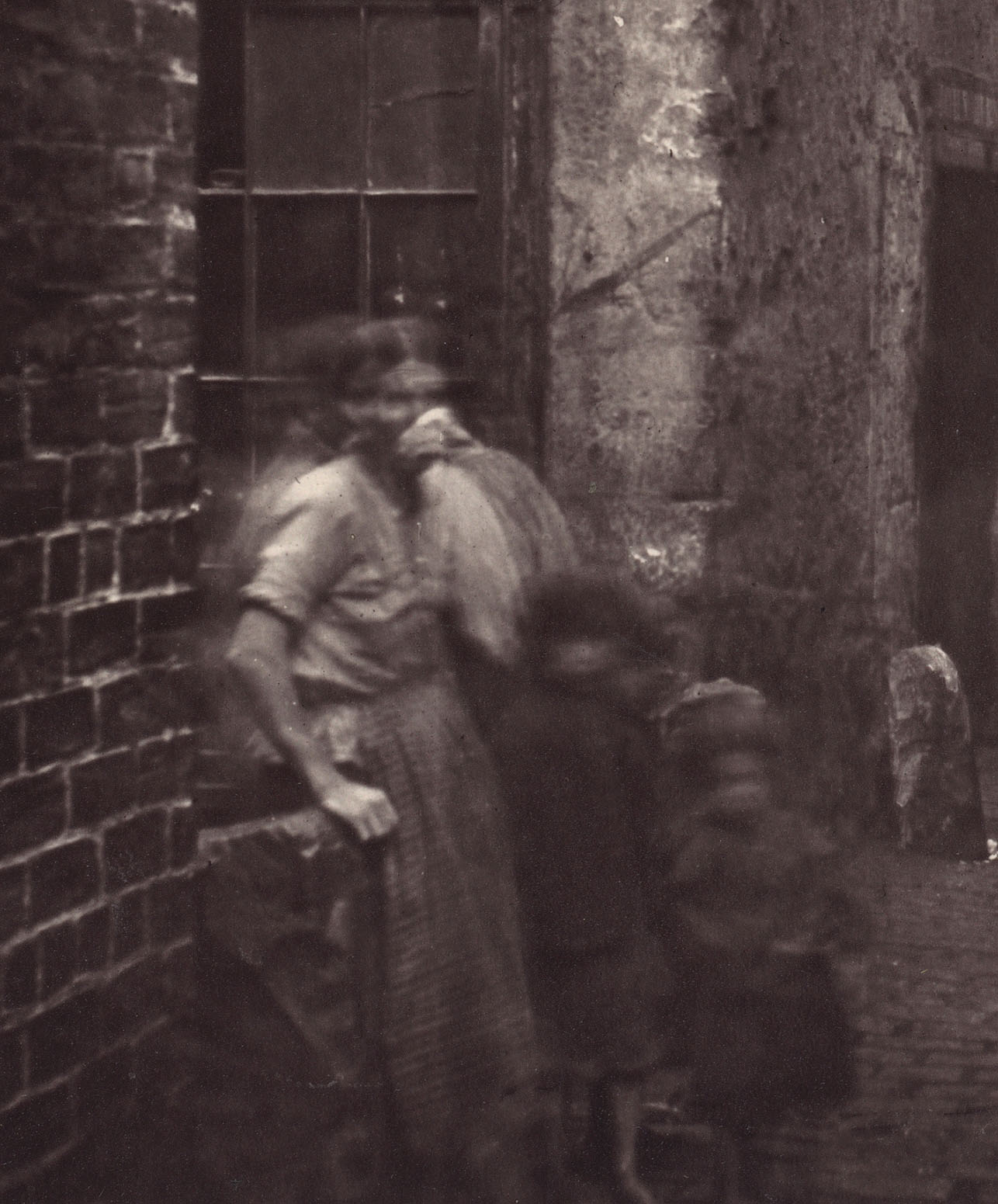
Thomas Annan (Scottish, 1829-1887) 'Old Vennel, Off High Street' 1868-1871


Thomas Annan (Scottish, 1829-1887)
Old Vennel, Off High Street
1868-1871
Carbon print
Image: 26.9 x 22.3cm (10 9/16 x 8 3/4 in.)
Sheet: 50.8 x 37.9cm (20 x 14 15/16 in.)
National Gallery of Art, Washington, Patrons’ Permanent Fund


In 1868, Glasgow’s City Improvements Trust hired Annan to photograph the “old closes and streets of Glasgow” before the city’s tenements were demolished. Annan’s pictures constitute one of the first commissioned photographic records of living conditions in urban slums. The collodion process Annan used to make his large, glass negatives required a long exposure time. In the dim light of this narrow passage, it was impossible for the photographer to stop the motion of the restless children, who appear as ghostly blurs moving barefoot across the cobblestones.


Thomas Annan (Scottish, 1829-1887) 'Old Vennel, Off High Street' 1868-1871 (detail)


Thomas Annan (Scottish, 1829-1887)
Old Vennel, Off High Street (detail)
1868-1871
Carbon print
Image: 26.9 x 22.3cm (10 9/16 x 8 3/4 in.)
Sheet: 50.8 x 37.9cm (20 x 14 15/16 in.)
National Gallery of Art, Washington, Patrons’ Permanent Fund


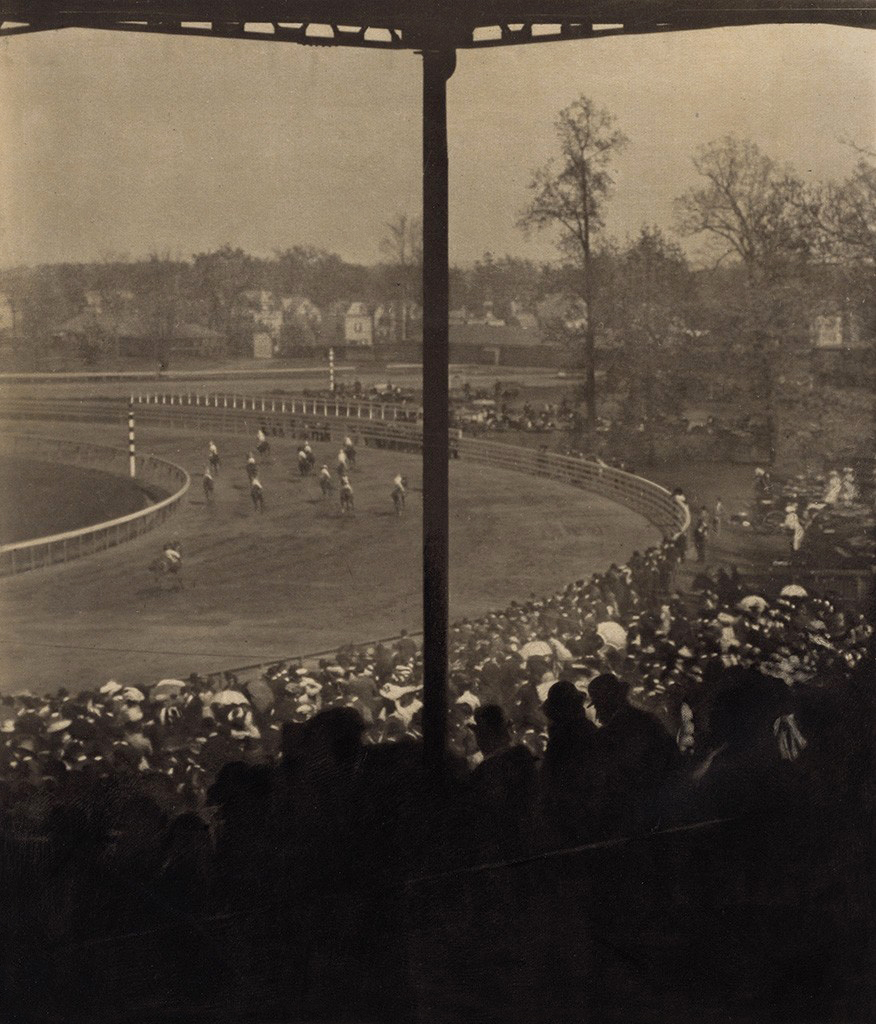
Alfred Stieglitz (American, 1864-1946) 'Going to the Post, Morris Park' 1904


Alfred Stieglitz (American, 1864-1946)
Going to the Post, Morris Park
1904
Photogravure
Image: 30.8 x 26.4cm (12 1/8 x 10 3/8 in.)
Sheet: 38.5 x 30.3cm (15 3/16 x 11 15/16 in.)
National Gallery of Art, Washington, Alfred Stieglitz Collection


In the 1880s and 1890s, improvements in photographic processes enabled manufacturers to produce small, handheld cameras that did not need to be mounted on tripods. Faster film and shutter speeds also allowed practitioners to capture rapidly moving objects. Stieglitz was one of the first fine art photographers to exploit the aesthetic potential of these new cameras and films. Around the turn of the century, he made many photographs of rapidly moving trains, horse-drawn carriages, and racetracks that capture the pace of the increasingly modern city.


Harold Eugene Edgerton (American, 1903-1990) 'Wes Fesler Kicking a Football' 1934


Harold Eugene Edgerton (American, 1903-1990)
Wes Fesler Kicking a Football
1934
Gelatin silver print
Image: 11 1/2 x 9 5/8 in.
Sheet: 13 15/16 x 11 in.
National Gallery of Art, Washington, Corcoran Collection (Museum Purchase with the aid of funds from the National Endowment for the Arts, Washington, D.C., a Federal Agency, and The Polaroid Corporation)


A professor of electrical engineering at the Massachusetts Institute of Technology, Edgerton in the early 1930s invited the stroboscope, a tube filled with gas that produced high-intensity bursts of light at regular and very brief intervals. He used it to illuminate objects in motion so that they could be captured by a camera. At first he was hired by industrial clients to reveal flaws in their production of materials, but by the mid-1930s he began to photography everyday events… Edgerton captured phenomena moving too fast for the naked eye to see, and revealed the beauty of people and objects in motion.
 

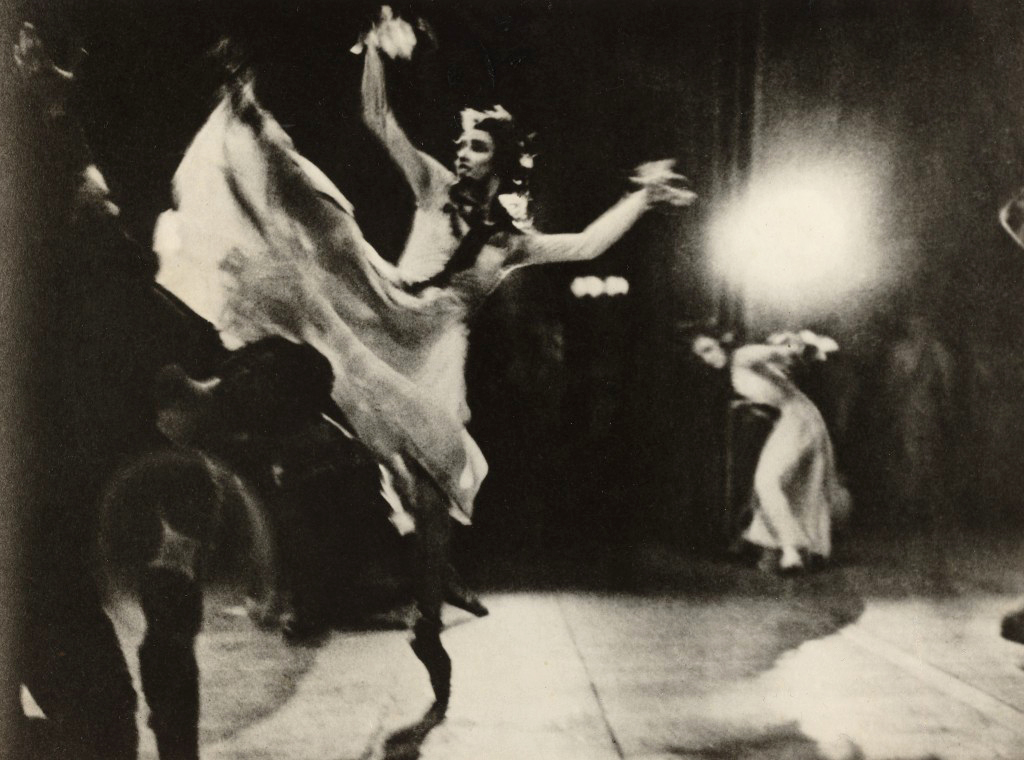
Alexey Brodovitch (American born Russia, 1898-1971) 'Untitled from "Ballet" series' 1938


Alexey Brodovitch (American born Russia, 1898-1971)
Untitled from “Ballet” series
1938
Gelatin silver print
Overall: 20.4 x 27.5cm (8 1/16 x 10 13/16 in.)
National Gallery of Art, Washington, Diana and Mallory Walker Fund


A graphic artist, Russian-born Brodovitch moved to the United States from Paris in 1930. Known for his innovative use of photographs, illustrations, and type on the printed page, he became art director for Harper’s Bazaar in 1934, and photographed the Ballets Russes de Monte Carlo during their American tours from 1935 to 1939. Using a small-format, 35 mm camera, Brodovitch worked in the backstage shadows and glaring light of the theatre to produce a series of rough, grainy pictures that convey the drama and action of the performance. This photograph employs figures in motion, a narrow field of focus, and high-contrast effects to express the stylised movements of Léonide Massine’s 1938 choreography for Beethoven’s Seventh Symphony.


Harry Callahan (American, 1912-1999) 'Detroit' 1943


Harry Callahan (American, 1912-1999)
Detroit
c. 1943
Dye imbibition print, printed c. 1980
Overall (image): 18 x 26.7cm (7 1/16 x 10 1/2 in.)
Sheet: 27.31 x 36.83cm (10 3/4 x 14 1/2 in.)
National Gallery of Art, Washington, Gift of the Callahan Family


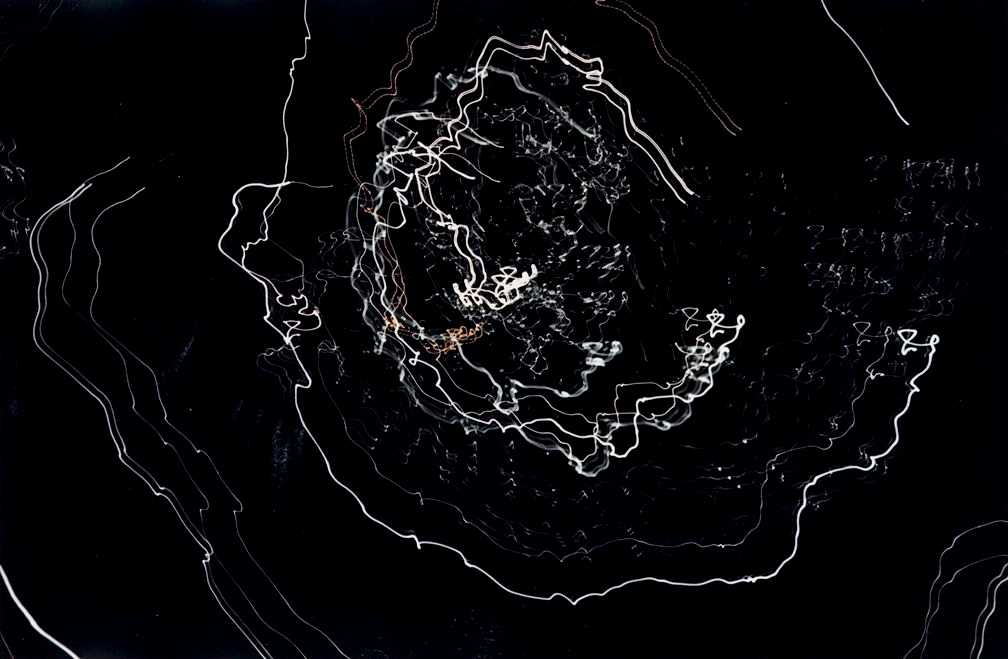
Harry Callahan (American, 1912-1999) 'Camera Movement on Neon Lights at Night' 1946


Harry Callahan (American, 1912-1999)
Camera Movement on Neon Lights at Night
1946
Dye imbibition print, printed 1979
Image: 8 3/4 x 13 5/8 in.
Sheet: 10 3/8 x 13 15/16 in.
National Gallery of Art, Washington, Corcoran Collection (Gift of Richard W. and Susan R. Gessner)


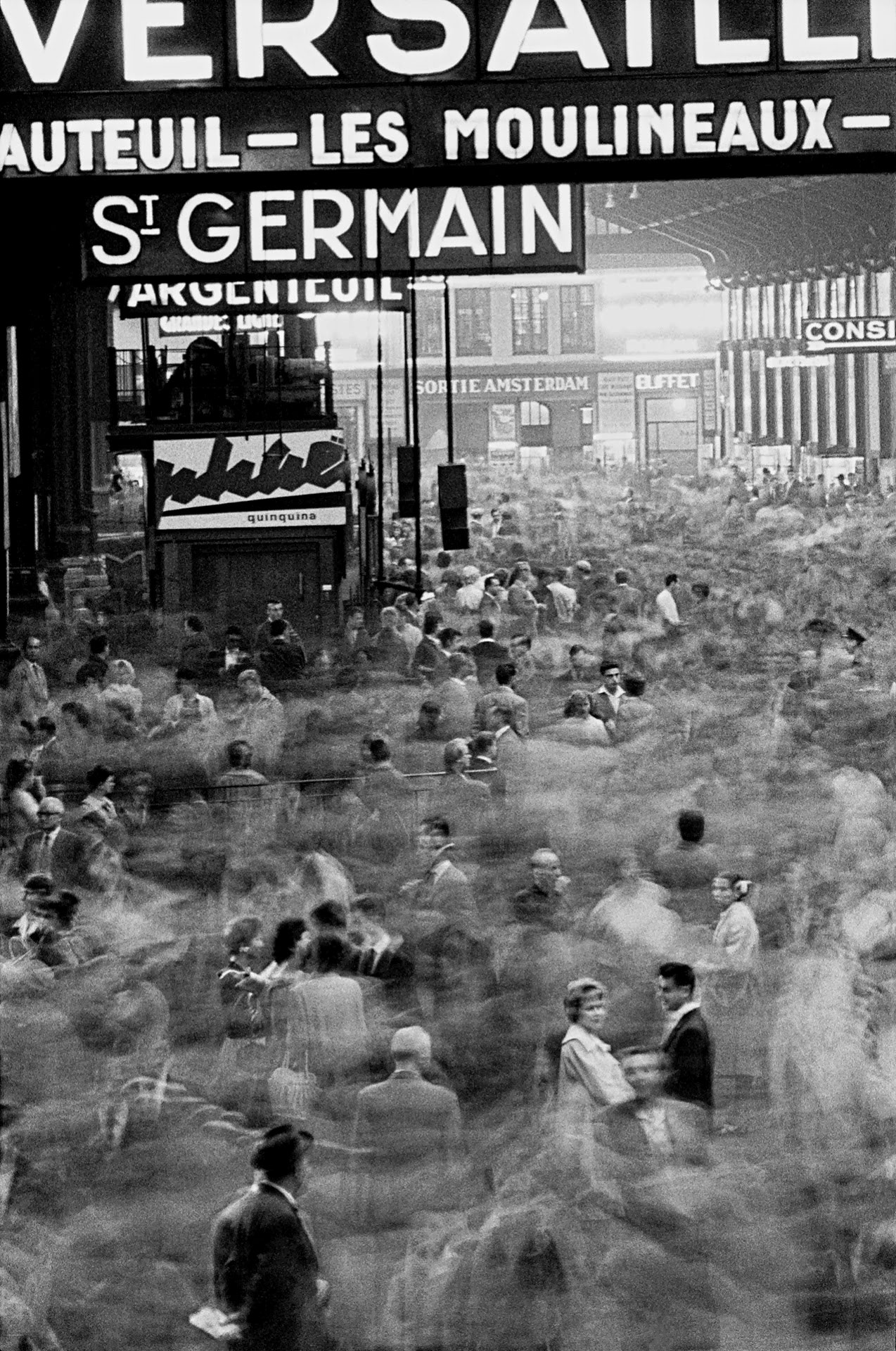
Frank Horvat (Italian, 1928-2020) 'Paris, Gare Saint-Lazare' 1959


Frank Horvat (Italian, 1928-2020)
Paris, Gare Saint-Lazare
1959
Gelatin silver print
Overall: 39.3 x 26.2cm (15 1/2 x 10 5/16 in.)
National Gallery of Art, Washington, Patrons’ Permanent Fund


Gare Saint-Lazare is one of the principal railway stations in Paris. Because of its industrial appearance, steaming locomotives, and teeming crowds, it was a frequent subject for 19th-century French painters – including Claude Monet, Édouard Manet, and Gustave Caillebotte – who used it to express the vitality of modern life. 20th-century artists such as Horvat also depicted it to address the pace and anonymity that defined their time. Using a telephoto lens and long exposure, he captured the rushing movement of travellers scattered beneath giant destination signs.


Roger Mayne (English, 1929-2014) 'Goalie, Street Football, Brindley Road' 1956


Roger Mayne (English, 1929-2014)
Goalie, Street Football, Brindley Road
1956
Gelatin silver print
Image: 34.7 × 29.1cm (13 11/16 × 11 7/16 in.)
National Gallery of Art, Washington, Patrons’ Permanent Fund


From 1956 to 1961, Mayne photographed London’s North Kensington neighbourhood to record its emergence from the devastation and poverty caused by World War II. This dramatic photograph of a young goalie lunging for the ball during an after-school soccer game relies on the camera’s ability to freeze the fast-paced and unpredictable action. Because the boy’s daring lunge is forever suspended in time, we will never know its outcome.


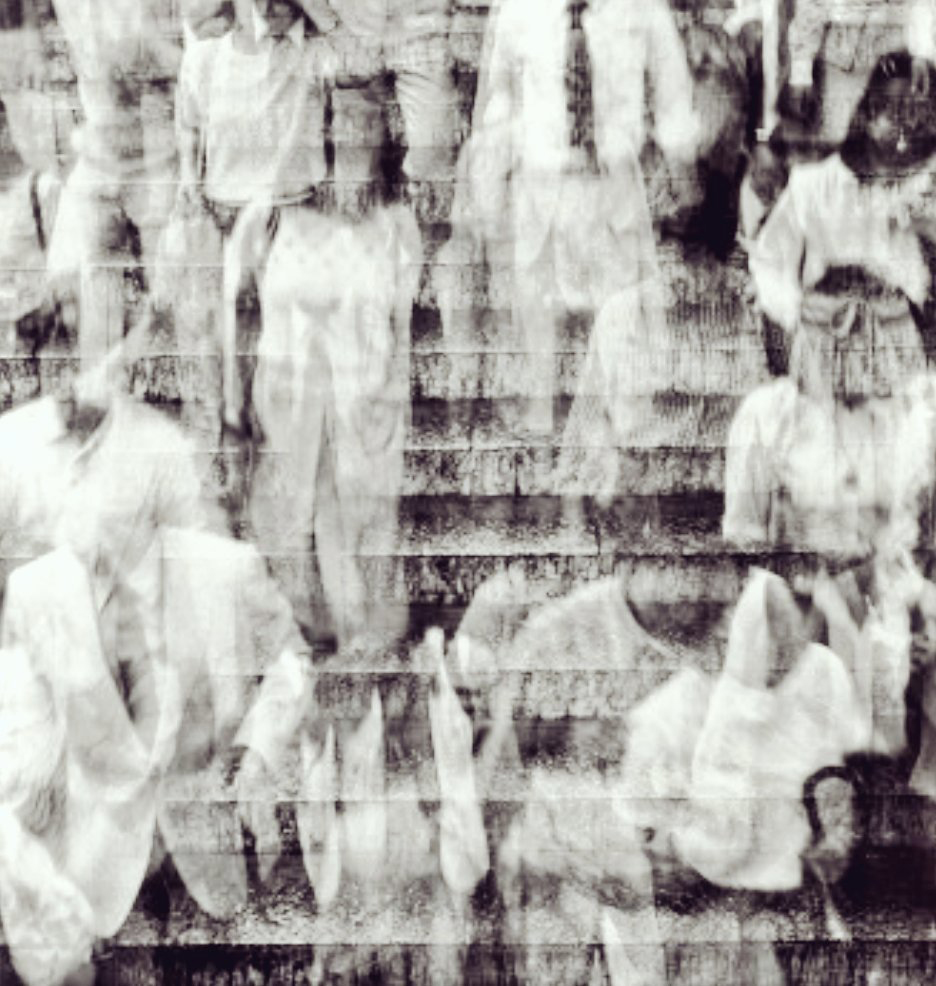
Shōmei Tōmatsu (Japanese, 1930-2012) 'Rush Hour, Tokyo' 1981 (detail)


Shōmei Tōmatsu (Japanese, 1930-2012)
Rush Hour, Tokyo (detail)
1981
Gelatin silver print
Sheet: 11 5/16 x 9 7/16 in. (28.73 x 23.97 cm)
National Gallery of Art, Washington, Corcoran Collection (Gift of Michael D. Abrams)


Best known for his expressive documentation of World War II’s impact on Japanese culture, Tomatsu was one of Japan’s most creative and influential photographers. Starting in the early 1960s, he documented the country’s dramatic economic, political, and cultural transformation. This photograph – a long exposure made with his camera mounted on a tripod – conveys the chaotic rush of commuters on their way through downtown Tokyo. Tomatsu used this graphic description of movement, which distorts the faceless bodies of commuters dashing down a flight of stairs, to symbolise the dehumanising nature of work in the fast-paced city of the early 1980s.


Sequence

Muybridge set up banks of cameras and used electronic shutters triggered in sequence to analyse the motion of people and animals. Like a storyteller, he sometimes adjusted the order of images for visual and sequential impact. Other photographers have also investigated the medium’s capacity to record change over time, express variations on a theme, or connect seemingly disparate pictures. In the early 1920s, Stieglitz began to create poetic sequences of cloud photographs meant to evoke distinct emotional experiences. These works (later known as Equivalents) influenced Ansel Adams and Minor White – both artists created specific sequences to evoke the rhythms of nature or the poetry of time passing.

Wall text

Intersections wall text


Alfred Stieglitz (American, 1864-1946) 'From My Window at An American Place, Southwest' March 1932


Alfred Stieglitz (American, 1864-1946)
From My Window at An American Place, Southwest
March 1932
Gelatin silver print
Sheet (trimmed to image): 23.8 x 18.4cm (9 3/8 x 7 1/4 in.)
National Gallery of Art, Washington, Alfred Stieglitz Collection


Alfred Stieglitz (American, 1864-1946) 'From My Window at An American Place, Southwest' April 1932


Alfred Stieglitz (American, 1864-1946)
From My Window at An American Place, Southwest
April 1932
Gelatin silver print
Sheet (trimmed to image): 23.8 x 18.8cm (9 3/8 x 7 3/8 in.)
National Gallery of Art, Washington, Alfred Stieglitz Collection


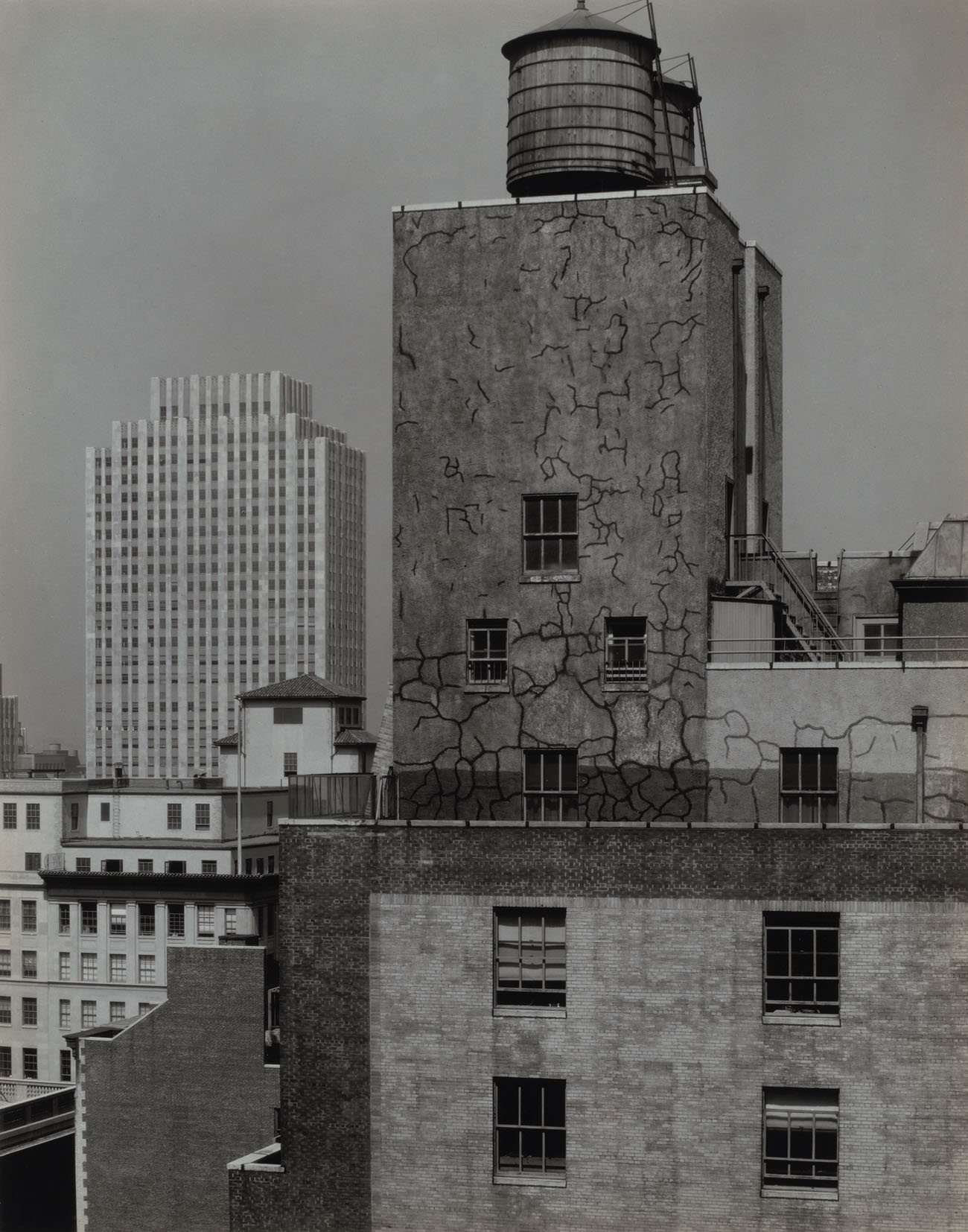
Alfred Stieglitz (American, 1864-1946) 'Water Tower and Radio City, New York' 1933


Alfred Stieglitz (American, 1864-1946)
Water Tower and Radio City, New York
1933
Gelatin silver print
Sheet: 23.7 x 18.6cm (9 5/16 x 7 5/16 in.)
National Gallery of Art, Washington, Alfred Stieglitz Collection


Whenever Stieglitz exhibited his photographs of New York City made in the late 1920s and early 1930s, he grouped them into series that record views from the windows of his gallery, An American Place, or his apartment at the Shelton Hotel, showing the gradual growth of the buildings under construction in the background. Although he delighted in the formal beauty of the visual spectacle, he lamented that these buildings, planned in the exuberance of the late 1920s, continued to be built in the depths of the Depression, while “artists starved,” as he said at the time, and museums were “threatened with closure.”


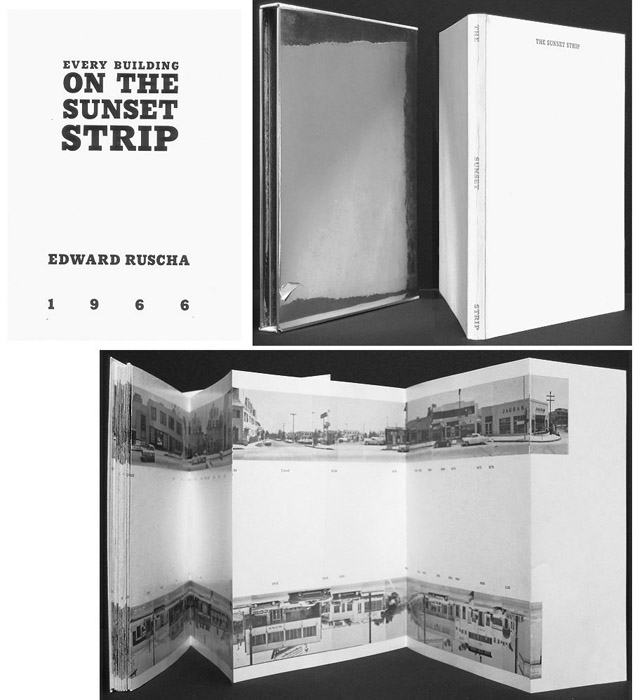
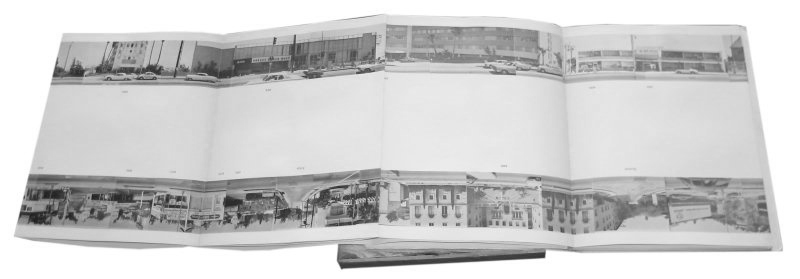
Ed Ruscha (American, b. 1937) 'Every Building on Sunset Strip' 1966

Ed Ruscha (American, b. 1937) 'Every Building on Sunset Strip' 1966

Ed Ruscha (American, b. 1937) 'Every Building on Sunset Strip' 1966


Ed Ruscha (American, b. 1937)
Every Building on the Sunset Strip
1966
Offset lithography book: 7 x 5 3/4 in. (17.78 x 14.61cm)
Unfolded (open flat): 7 x 276 in.
National Gallery of Art, Washington, Corcoran Collection (Gift of Philip Brookman and Amy Brookman)


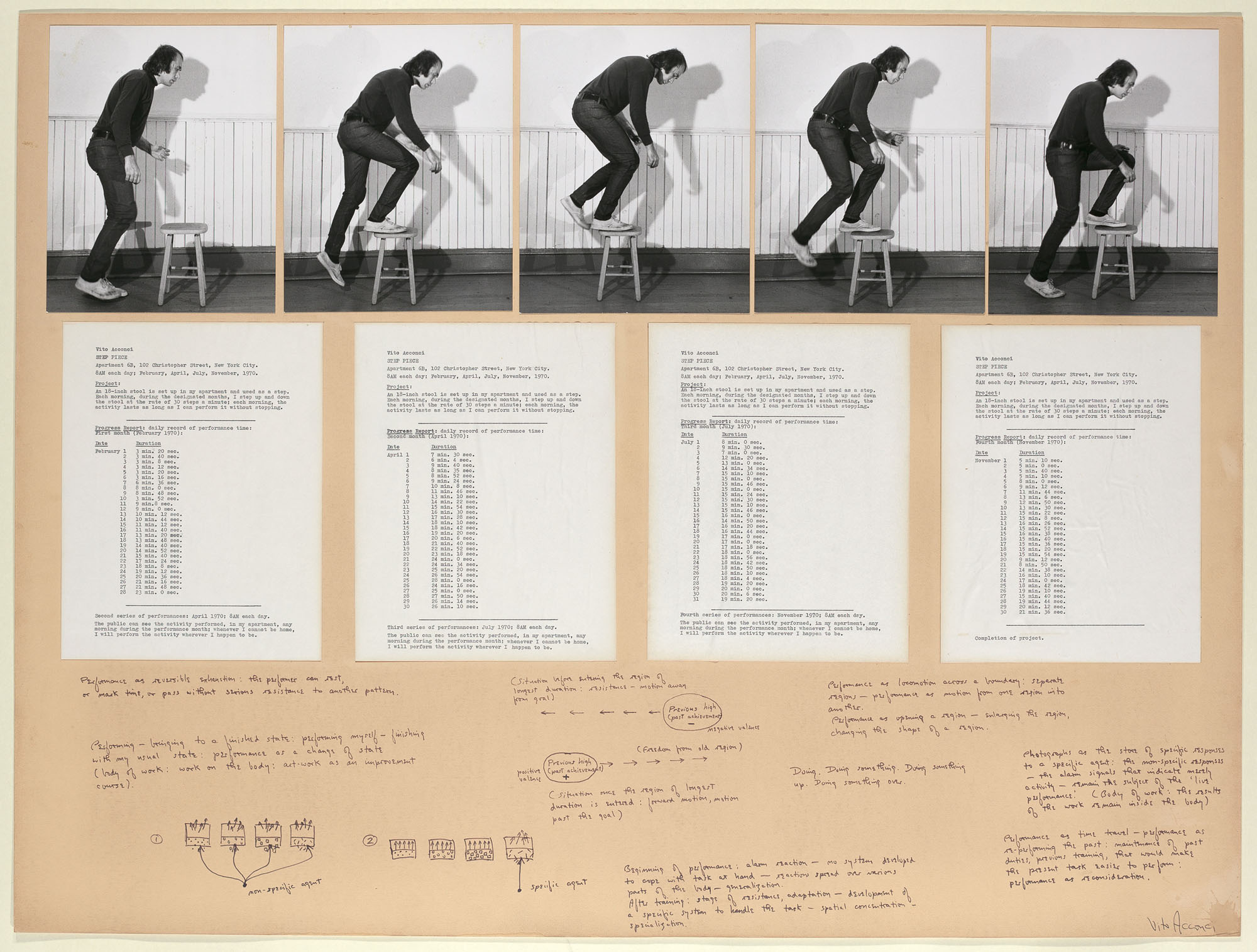
Vito Acconci (American, 1940-2017) 'Step Piece' 1970


Vito Acconci (American, 1940-2017)
Step Piece
1970
Five gelatin silver prints and four sheets of type-written paper, mounted on board with annotations in black ink
Sheet: 76.2 x 101.6cm (30 x 40 in.)
National Gallery of Art, Washington, Dorothy and Herbert Vogel Collection


Acconci’s Step Piece is made up of equal parts photography, drawing, performance, and quantitative analysis. It documents a test of endurance: stepping on and off a stool for as long as possible every day. This performance-based conceptual work is rooted in the idea that the body itself can be a medium for making art. To record his activity, Acconci made a series of five photographs spanning one complete action. Like the background grid in many of Muybridge’s motion studies, vertical panels in Acconci’s studio help delineate the space. His handwritten notes and sketches suggest the patterns of order and chaos associated with the performance, while typewritten sheets, which record his daily progress, were given to people who were invited to observe.


Narrative

The exhibition also explores the narrative possibilities of photography found in the interplay of image and text in the work of Robert Frank, Larry Sultan, and Jim Goldberg; the emotional drama of personal crisis in Nan Goldin’s image grids; or the expansion of photographic description into experimental video and film by Victor Burgin and Judy Fiskin.

Wall text

Intersections wall text


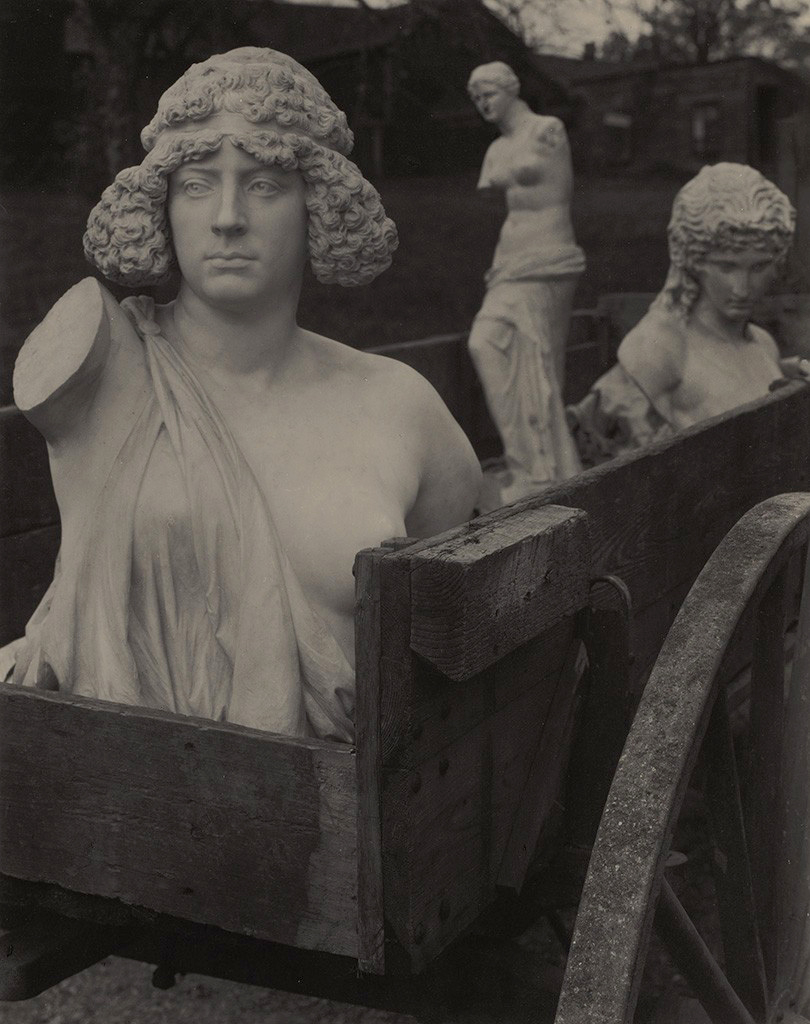
Alfred Stieglitz (American, 1864-1946) 'Judith Being Carted from Oaklawn to the Hill. The Way Art Moves' 1920


Alfred Stieglitz (American, 1864-1946)
Judith Being Carted from Oaklawn to the Hill. The Way Art Moves
1920
Gelatin silver print
Image: 24.1 x 18.8cm (9 1/2 x 7 3/8 in.)
Sheet: 25.2 x 20.1cm (9 15/16 x 7 15/16 in.)
National Gallery of Art, Washington, Alfred Stieglitz Collection


In 1920, Stieglitz’s family sold their Victorian summerhouse on the shore of Lake George, New York, and moved to a farmhouse on a hill above it. This photograph shows three sculptures his father had collected – two 19th-century replicas of ancient statues and a circa 1880 bust by Moses Ezekiel depicting the Old Testament heroine Judith – as they were being moved in a wooden cart from one house to another. Stieglitz titled it The Way Art Moves, wryly commenting on the low status of art in American society. With her masculine face and bared breast, Judith was much maligned by Georgia O’Keeffe and other younger family members. In a playful summer prank, they later buried her somewhere near the farmhouse, where she remained lost, despite many subsequent efforts by the perpetrators themselves to find her.


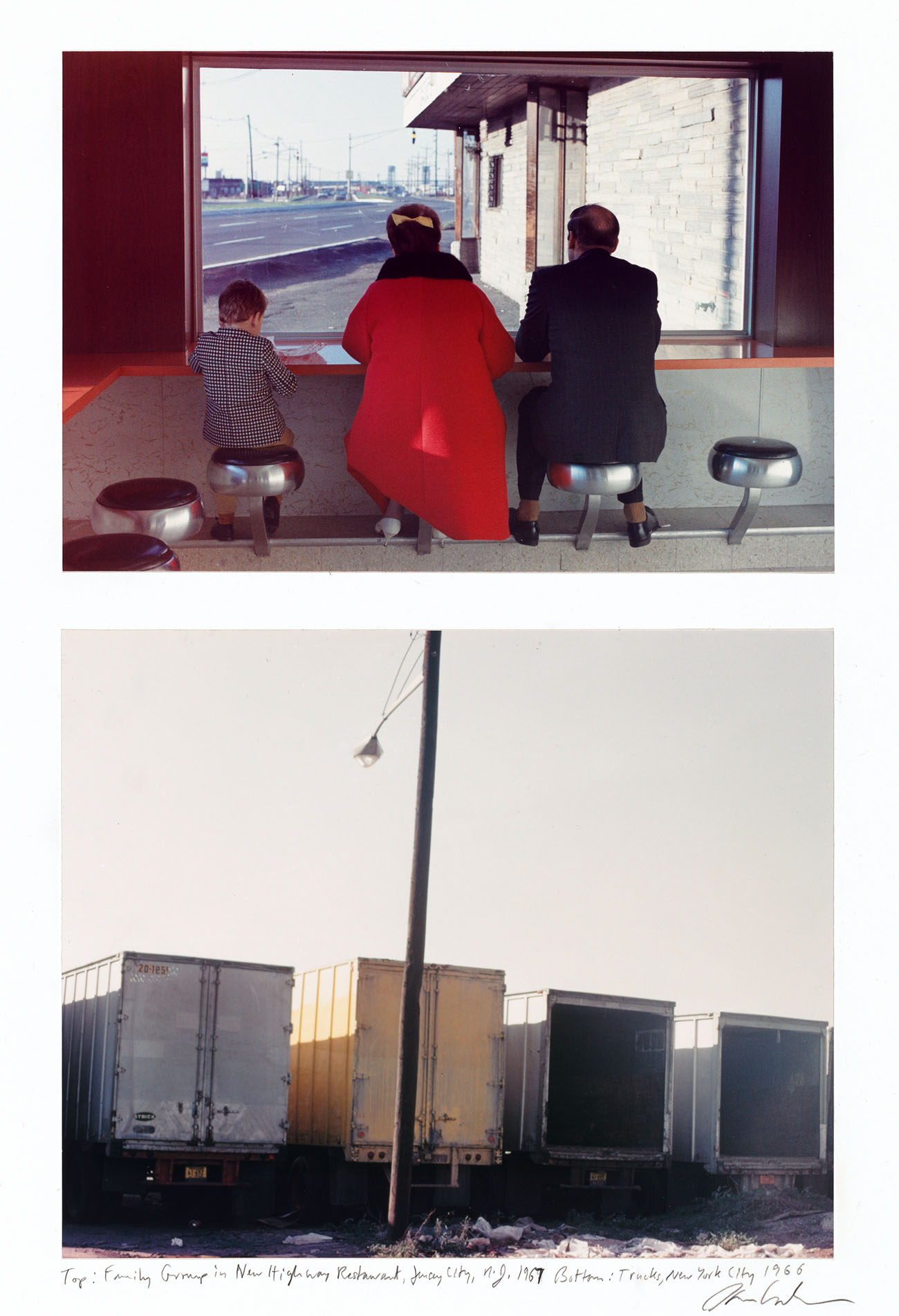
Dan Graham (American, 1942-2022) 'Homes for America' 1966-1967


Dan Graham (American, 1942-2022)
Homes for America
1966-1967
Two chromogenic prints
Image (top): 23 x 34cm (9 1/16 x 13 3/8 in.)
Image (bottom): 27.8 x 34cm (10 15/16 x 13 3/8 in.)
Mount: 101 x 75cm (39 3/4 x 29 1/2 in.)
Framed: 102 x 76.2 x 2.8cm (40 3/16 x 30 x 1 1/8 in.)
National Gallery of Art, Washington, Glenstone in honour of Eileen and Michael Cohen


Beginning in the mid-1960s, conceptual artist Dan Graham created several works of art for magazine pages and slide shows. When Homes for America was designed for Arts magazine in 1966, his accompanying text critiqued the mass production of cookie-cutter homes, while his photographs – made with an inexpensive Kodak Instamatic camera – described a suburban world of offices, houses, restaurants, highways, and truck stops. With their haphazard composition and amateur technique, Graham’s pictures ironically scrutinised the aesthetics of America’s postwar housing and inspired other conceptual artists to incorporate photographs into their work. Together, these two photographs link a middle-class family at the opening of a Jersey City highway restaurant with the soulless industrial landscape seen through the window.


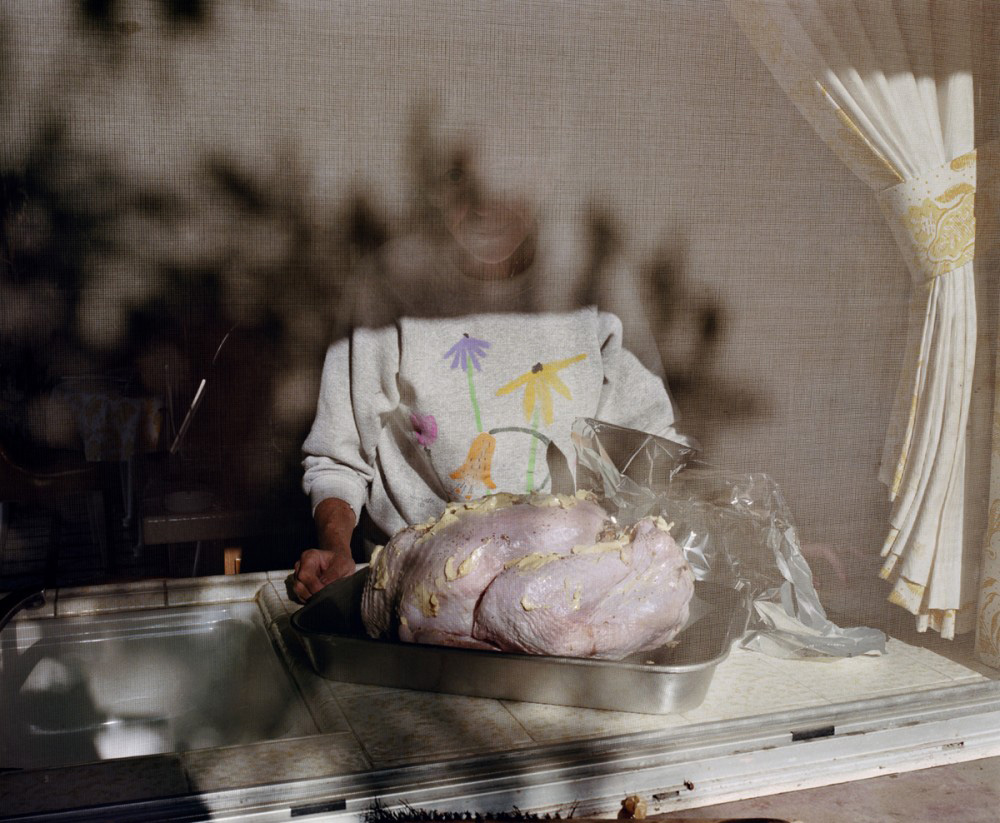
Larry Sultan (American, 1946-2009) 'Thanksgiving Turkey' 1985

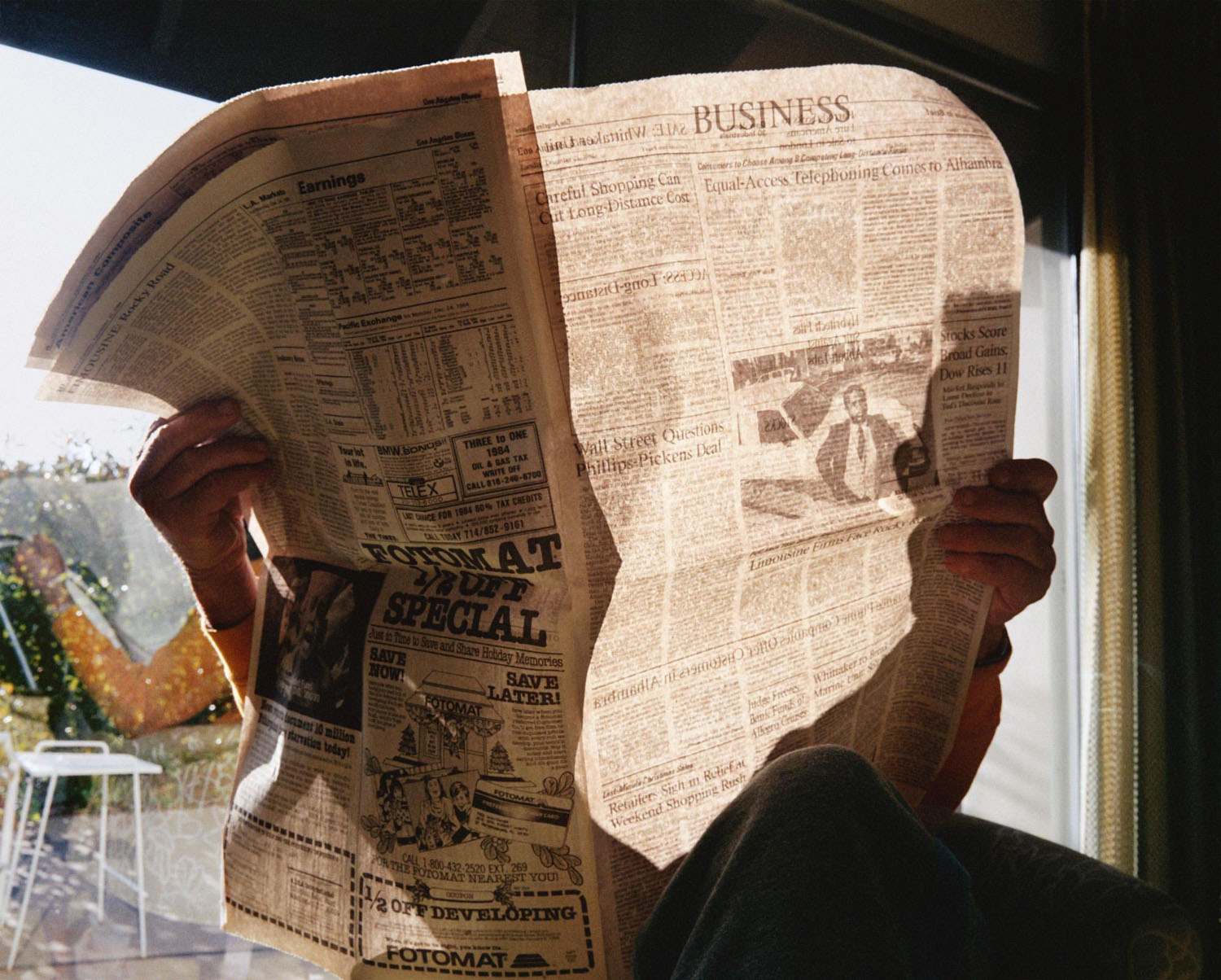
Larry Sultan (American, 1946-2009) 'Business Page' from the series 'Pictures from Home' 1985


Larry Sultan (American, 1946-2009)
Thanksgiving Turkey/Newspaper (detail)
1985-1992
Two plexiglass panels with screen printing
Framed (Thanksgiving Turkey): 76 × 91cm (29 15/16 × 35 13/16 in.)
Framed (Newspaper): 76 × 91cm (29 15/16 × 35 13/16 in.)
Other (2 text panels): 50.8 × 76.2cm (20 × 30 in.)
Overall: 30 x 117 in.
National Gallery of Art, Washington, Corcoran Collection (Gift of the FRIENDS of the Corcoran Gallery of Art)


From 1983 to 1992, Sultan photographed his parents in retirement at their Southern California house. His innovative book, Pictures from Home, combines his photographs and text with family album snapshots and stills from home movies, mining the family’s memories and archives to create a universal narrative about the American dream of work, home, and family. Thanksgiving Turkey/Newspaper juxtaposes photographs of his mother and father, each with their face hidden and with adjacent texts where they complain about each other’s shortcomings. “I realise that beyond the rolls of film and the few good pictures … is the wish to take photography literally,” Sultan wrote. “To stop time. I want my parents to live forever.”


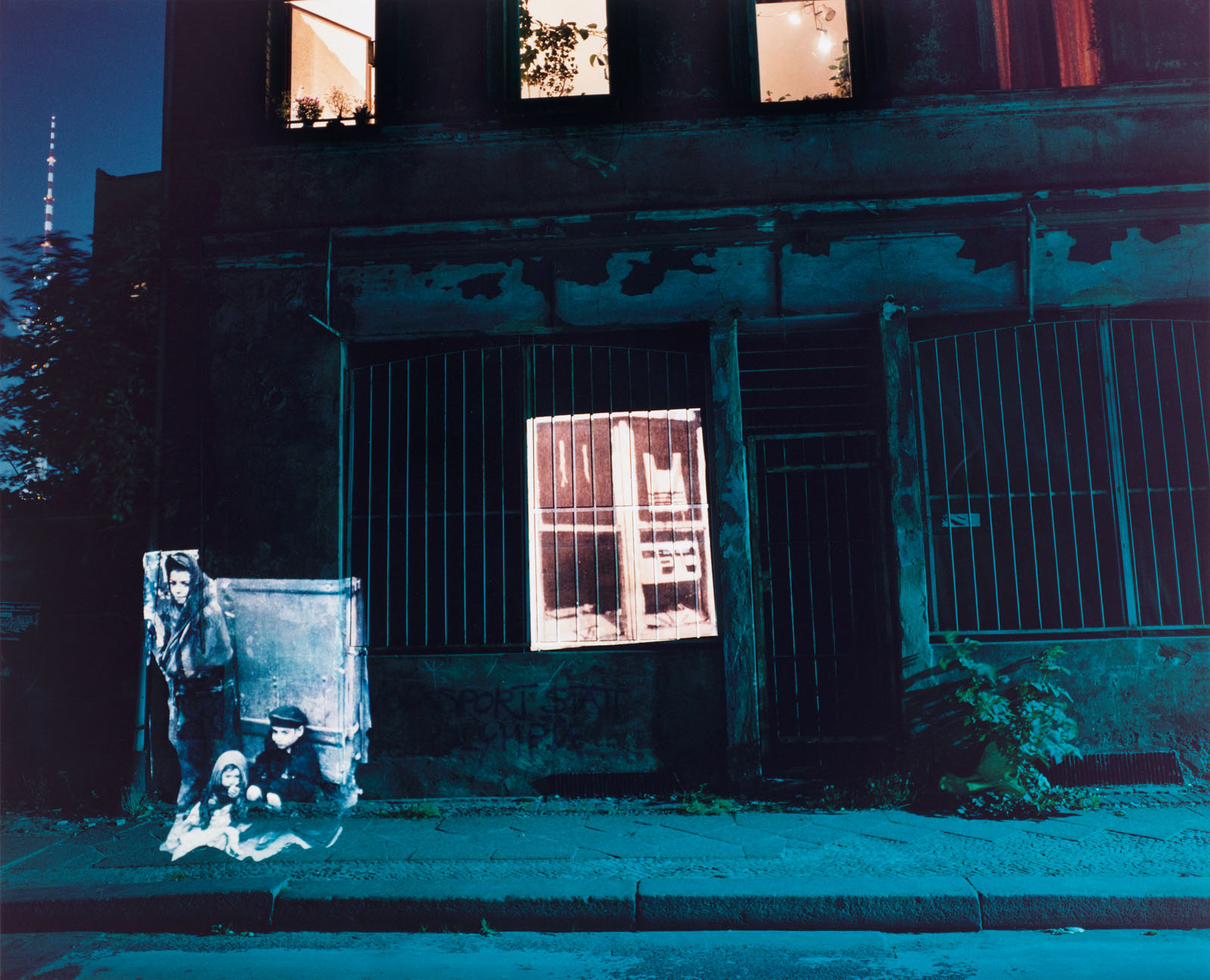
Shimon Attie (American, b. 1957) 'Mulackstrasse 32: Slide Projections of Former Jewish Residents and Hebrew Reading Room, 1932, Berlin' 1992


Shimon Attie (American, b. 1957)
Mulackstrasse 32: Slide Projections of Former Jewish Residents and Hebrew Reading Room, 1932, Berlin
1992
Chromogenic print
Unframed: 20 x 24 in. (50.8 x 60.96cm)
National Gallery of Art, Washington, Corcoran Collection (Gift of Julia J. Norrell in honor of Hilary Allard and Lauren Harry)


Attie projected historical photographs made in 1932 onto the sides of a building at Mulackstrasse 32, the site of a Hebrew reading room in a Jewish neighbourhood in Berlin during the 1930s. Fusing pictures made before Jews were removed from their homes and killed during World War II with photographs of the same dark, empty street made in 1992, Attie has created a haunting picture of wartime loss.


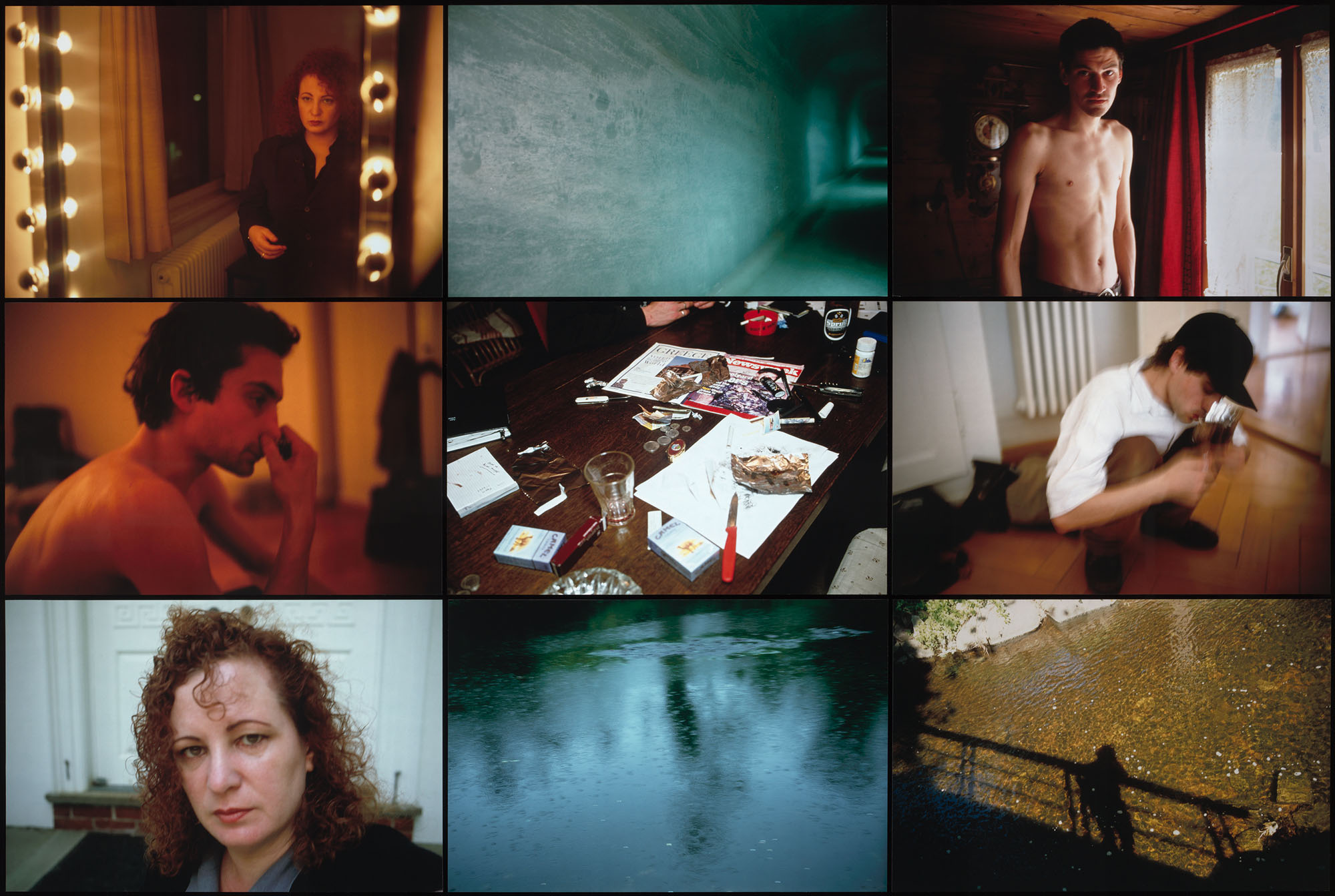
Nan Goldin (American, b. 1953) 'Relapse/Detox Grid' 1998-2000


Nan Goldin (American, b. 1953)
Relapse/Detox Grid
1998-2000
Nine silver dye bleach prints
Overall: 42 1/2 x 62 1/8 in. (107.95 x 157.8cm)
National Gallery of Art, Washington, Corcoran Collection (Museum Purchase with funds donated by the FRIENDS of the Corcoran Gallery of Art)


Goldin has unsparingly chronicled her own community of friends by photographing their struggles, hopes, and dreams through years of camaraderie, abuse, addiction, illness, loss, and redemption. Relapse/Detox Grid presents nine colourful yet plaintive pictures in a slide show-like narrative, offering glimpses of a life rooted in struggle, along with Goldin’s own recovery at a detox center, seen in the bottom row.


Nan Goldin (American, b. 1953) 'Relapse/Detox Grid' 1998-2000 (detail)


Nan Goldin (American, b. 1953)
Relapse/Detox Grid (detail)
1998-2000
Nine silver dye bleach prints
Overall: 42 1/2 x 62 1/8 in. (107.95 x 157.8cm)
National Gallery of Art, Washington, Corcoran Collection (Museum Purchase with funds donated by the FRIENDS of the Corcoran Gallery of Art)


Victor Burgin (British, b. 1941) 'Watergate' 2000


Victor Burgin (British, b. 1941)
Watergate
2000
Video with sound, 9:58 minutes
National Gallery of Art, Washington, Corcoran Collection (Museum Purchase, with funds from the bequest of Betty Battle to the Women’s Committee of the Corcoran Gallery of Art)


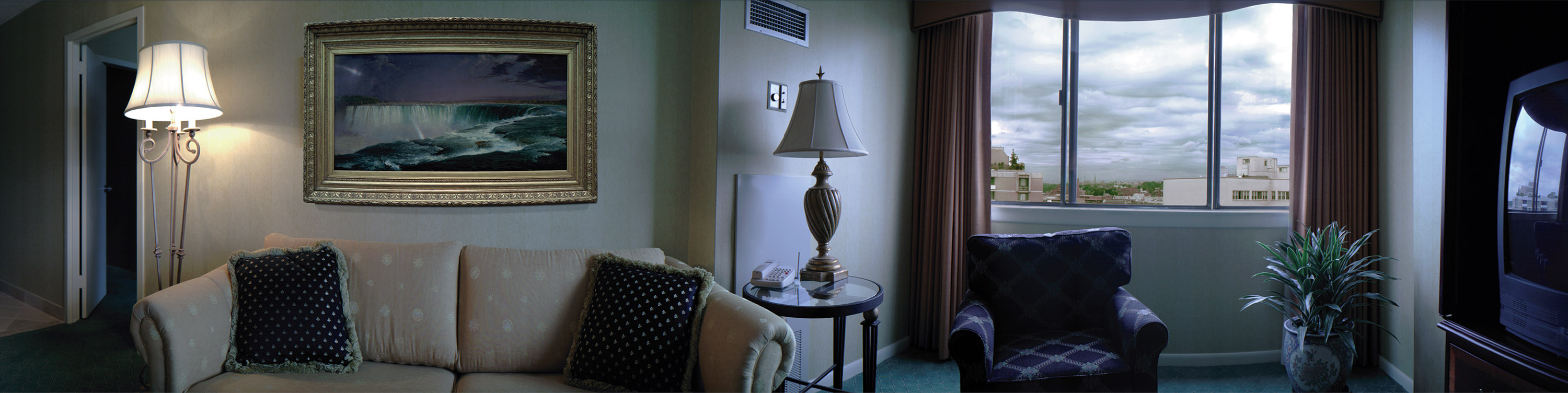
An early advocate of conceptual art, Burgin is an artist and writer whose work spans photographs, text, and video. Watergate shows how the meaning of art can change depending on the context in which it is seen. Burgin animated digital, 160-degree panoramic photographs of nineteenth-century American art hanging in the Corcoran Gallery of Art and in a hotel room. While the camera circles the gallery, an actor reads from Jean-Paul Satre’s Being and Nothingness, which questions the relationship between presence and absence. Then a dreamlike pan around a hotel room overlooking the nearby Watergate complex mysteriously reveals Niagara, the Corcoran’s 1859 landscape by Frederic Church, having on the wall. In 1859, Niagara Falls was seen as a symbol of the glory and promise of the American nation, yet when Church’s painting is placed in the context of the Watergate, an icon of the scandal that led to Richard Nixon’s resignation, it assumes a different meaning and suggests an ominous sense of disillusionment.


Studio

Intersections also examines the studio as a locus of creativity, from Stieglitz’s photographs of his gallery, 291, and James Van Der Zee’s commercial studio portraits, to the manipulated images of Wallace Berman, Robert Heinecken, and Martha Rosler. Works by Laurie Simmons, David Levinthal, and Vik Muniz also highlight the postmodern strategy of staging images created in the studio.

Wall text

Intersections wall text


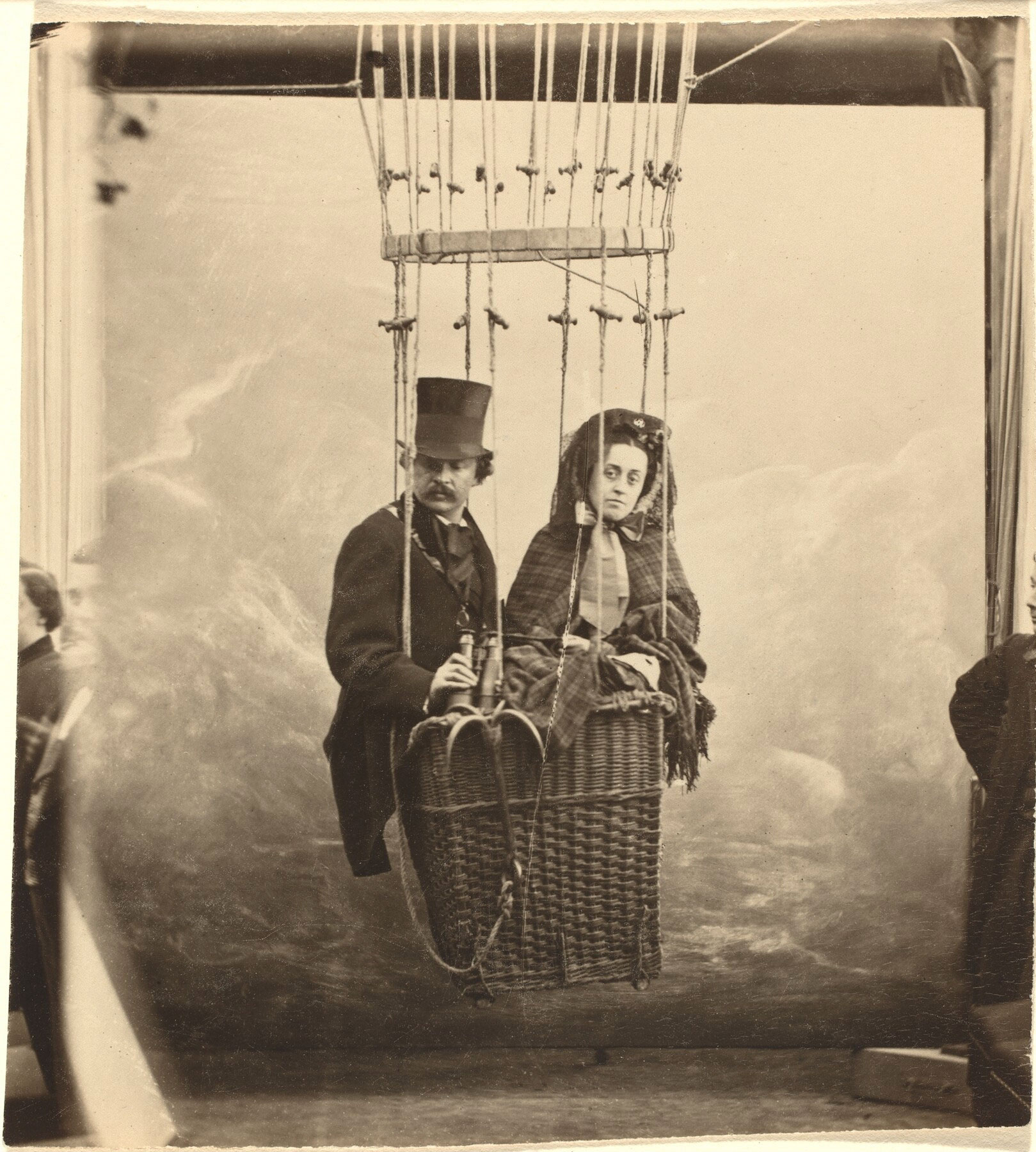
Nadar (Gaspard-Félix Tournachon) (French, 1820-1910) 'Self-Portrait with Wife Ernestine in a Balloon Gondola' c. 1865


Nadar (Gaspard-Félix Tournachon) (French, 1820-1910)
Self-Portrait with Wife Ernestine in a Balloon Gondola
c. 1865
Gelatin silver print, printed c. 1890
8.6 × 7.7cm (3 3/8 × 3 1/16 in.)
National Gallery of Art, Washington, Horace W. Goldsmith Foundation through Robert and Joyce Menschel


Nadar (a pseudonym for Gaspard-Félix Tournachon) was not only a celebrated portrait photographer, but also a journalist, caricaturist, and early proponent of manned flight. In 1863, he commissioned a prominent balloonist to build an enormous balloon 196 feet high, which he named The Giant. The ascents he made from 1863 to 1867 were widely covered in the press and celebrated by the cartoonist Honoré Daumier, who depicted Nadar soaring above Paris, its buildings festooned with signs for photography studios. Nadar made and sold small prints like this self-portrait to promote his ballooning ventures. The obviously artificial construction of this picture – Nadar and his wife sit in a basket far too small for a real ascent and are posed in front of a painted backdrop – and its untrimmed edges showing assistants at either side make it less of the self-aggrandising statement that Nadar wished and more of an amusing behind-the-scenes look at studio practice.


Alfred Stieglitz (American, 1864-1946) 'Self-portrait' 1907, printed 1930


Alfred Stieglitz (American, 1864-1946)
Self-Portrait
probably 1911
Platinum print
Image: 24.2 x 19.3cm (9 1/2 x 7 5/8 in.)
Sheet: 25.3 x 20.3cm (9 15/16 x 8 in.)
National Gallery of Art, Washington, Alfred Stieglitz Collection


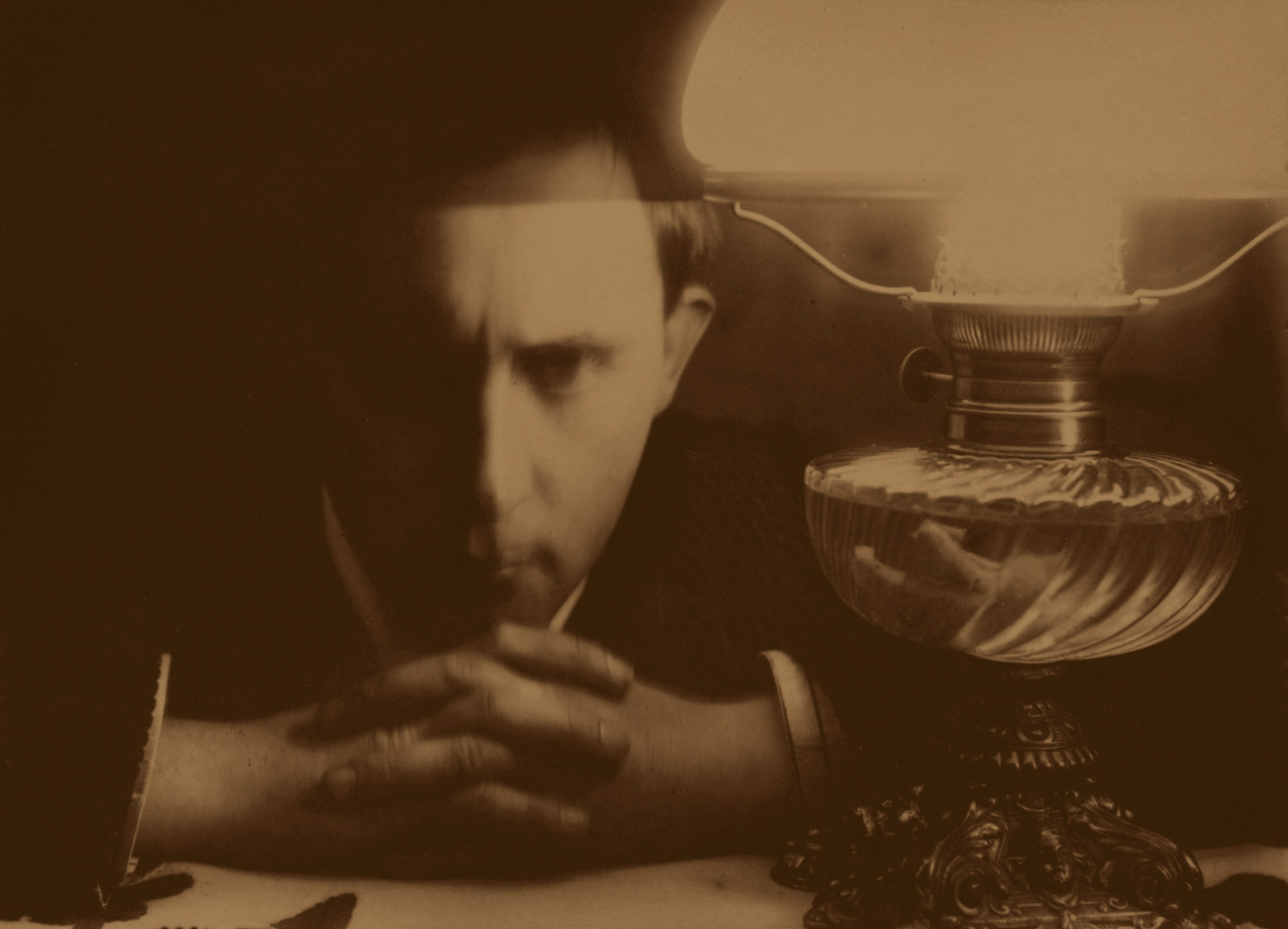
Unlike many other photographers, Stieglitz made few self-portraits. He created this one shortly before he embarked on a series of portraits of the artists who frequented his New York gallery, 291. Focusing only on his face and leaving all else in shadow, he presents himself not as an artist at work or play, but as a charismatic leader who would guide American art and culture into the 20th century.


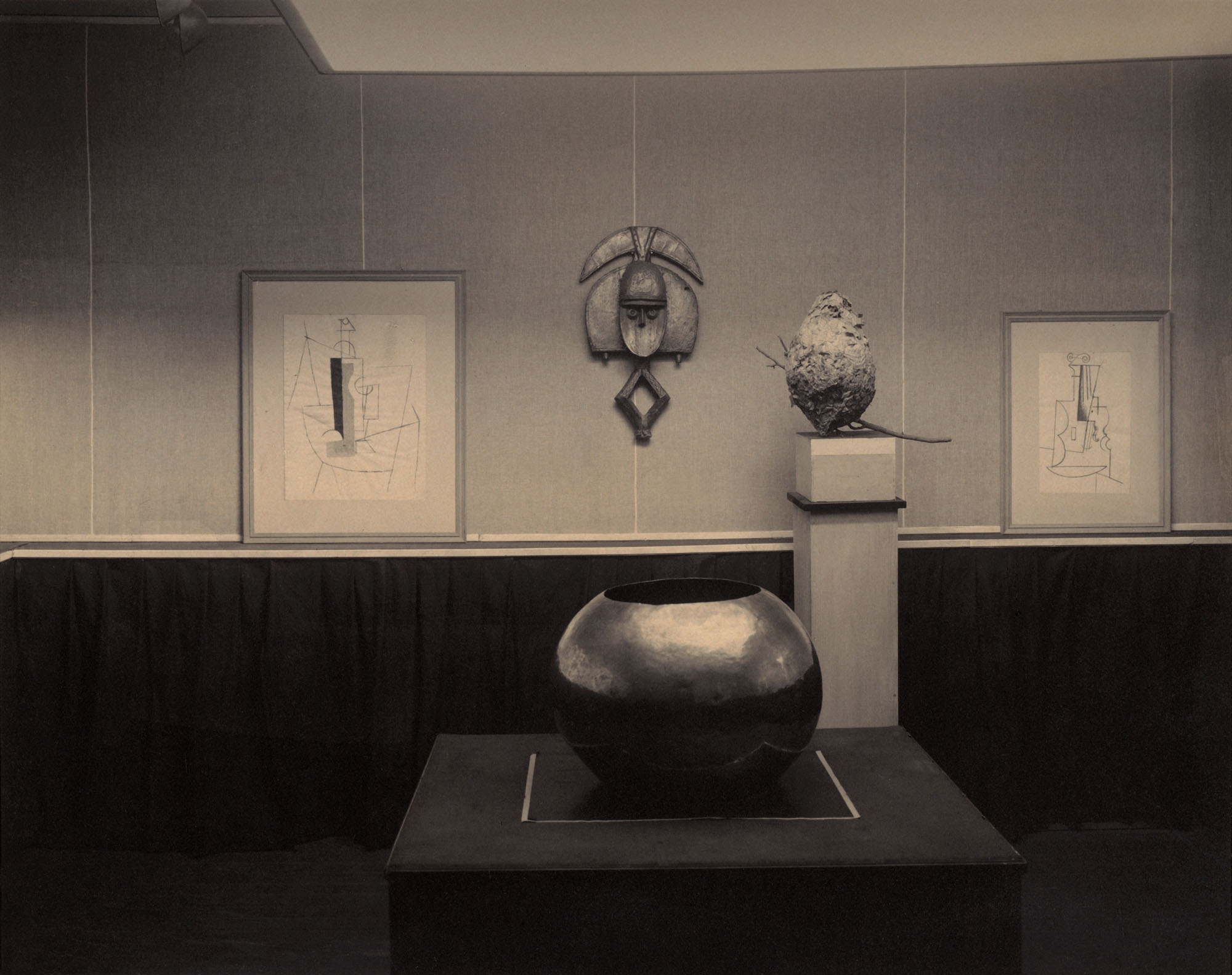
Alfred Stieglitz (American, 1864-1946) '291 – Picasso-Braque Exhibition' 1915


Alfred Stieglitz (American, 1864-1946)
291 – Picasso-Braque Exhibition
1915
Platinum print
Image: 18.5 x 23.6 cm (7 5/16 x 9 5/16 in.)
Sheet: 20.1 x 25.3 cm (7 15/16 x 9 15/16 in.)
National Gallery of Art, Washington, Alfred Stieglitz Collection


291 was Stieglitz’s legendary gallery in New York City (its name derived from its address on Fifth Avenue), where he introduced modern European and American art and photography to the American public. He also used 291 as a studio, frequently photographing friends and colleagues there, as well as the views from its windows. This picture records what Stieglitz called a “demonstration” – a short display of no more than a few days designed to prompt a focused discussion. Including two works by Picasso, an African mask from the Kota people, a wasps’ nest, and 291’s signature brass bowl, the photograph calls into question the relationship between nature and culture, Western and African art.


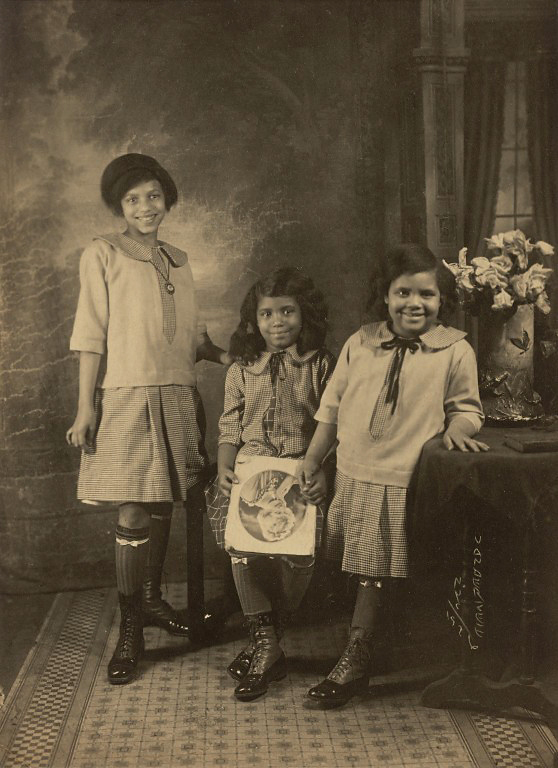
James Van Der Zee (American, 1886-1983) 'Sisters' 1926


James Van Der Zee (American, 1886-1983)
Sisters
1926
Gelatin silver print
Sheet (trimmed to image): 17.6 x 12.5cm (6 15/16 x 4 15/16 in.)
National Gallery of Art, Washington, Horace W. Goldsmith Foundation through Robert and Joyce Menschel


James Van Der Zee was a prolific studio photographer in Harlem during a period known as the Harlem Renaissance, from the end of World War I to the middle of the 1930s. He photographed many of Harlem’s celebrities, middle-class residents, and community organisations, establishing a visual archive that remains one of the best records of the era. He stands out for his playful use of props and retouching, thereby personalising each picture and enhancing the sitter’s appearance. In this portrait of three sisters, clasped hands show the tender bond of the two youngest, one of whom holds a celebrity portrait, revealing her enthusiasm for popular culture.


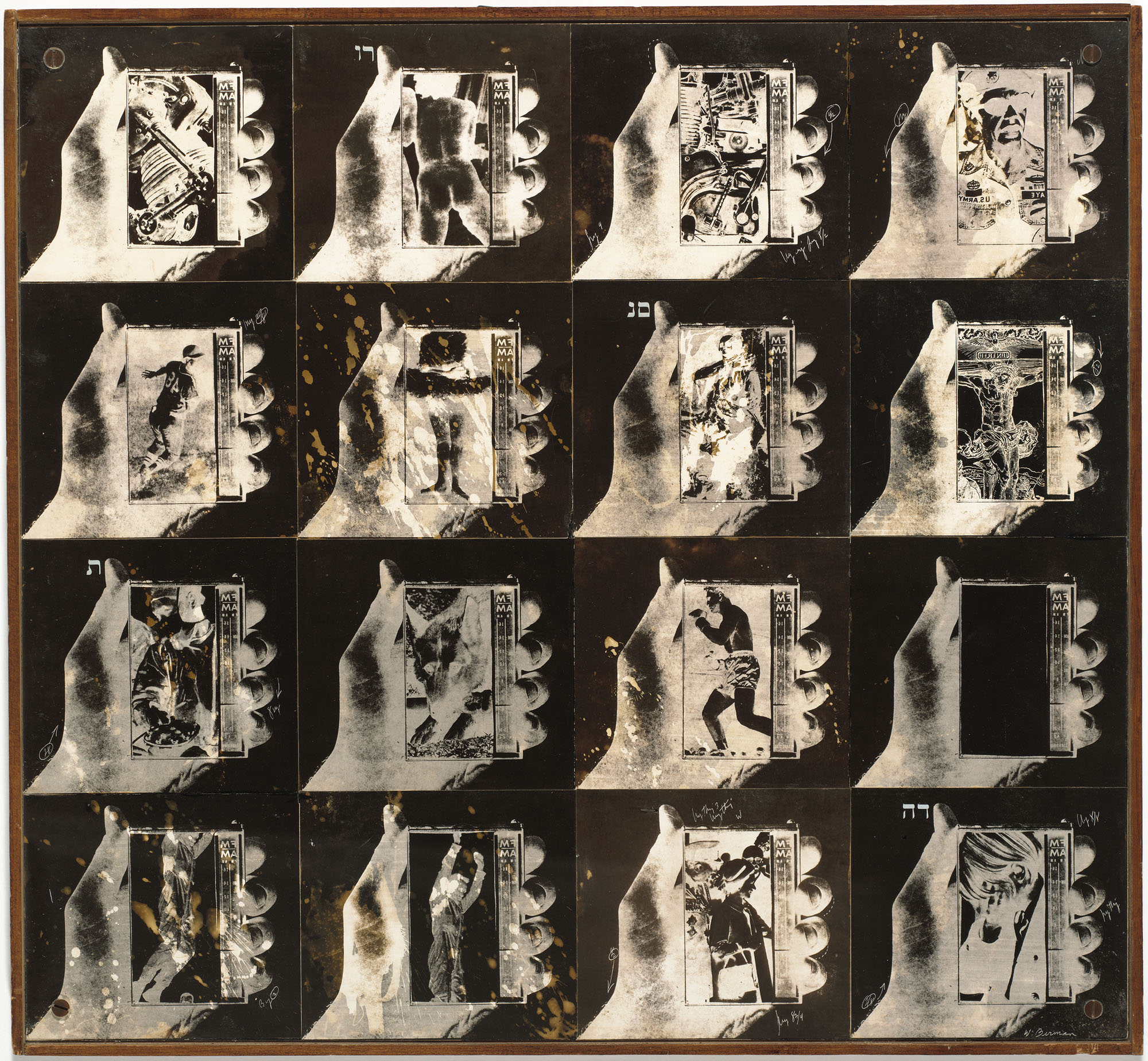
Wallace Berman (American, 1926-1976) 'Silence Series #7' 1965-1968


Wallace Berman (American, 1926-1976)
Silence Series #7
1965-1968
Verifax (wet process photocopy) collage
Actual: 24 1/2 x 26 1/2 in. (62.23 x 67.31cm)
National Gallery of Art, Washington, Corcoran Collection (Museum Purchase, William A. Clark Fund)


An influential artist of California’s Beat Generation during the 1950s and 1960s, Berman was a visionary thinker and publisher of the underground magazine Semina. His mysterious and playful juxtapositions of divers objects, images, and texts were often inspired by Dada and surrealist art. Silence Series #7 presents a cinematic sequence of his trademark transistor radios, each displaying military, religious, or mechanical images along with those of athletes and cultural icons, such as Andy Warhol. Appropriated from mass media, reversed in tone, and printed backward using an early version of a photocopy machine, these found images, pieced together and recopied as photomontages, replace then ew transmitted through the radios. Beat poet Robert Duncan once called Berman’s Verify collages a “series of magic ‘TV’ lantern shows.”


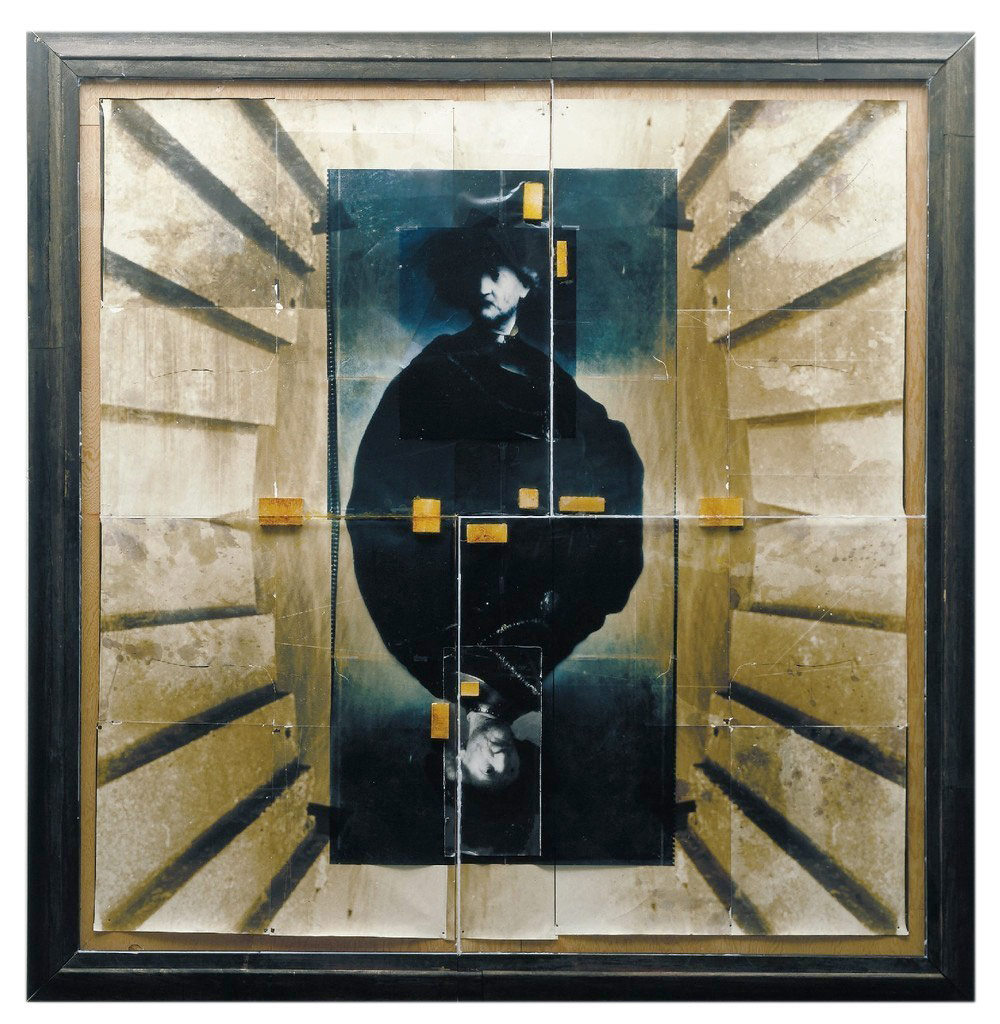
Doug and Mike Starn (American) 'Double Rembrandt with Steps' 1987-1991


Doug and Mike Starn (American)
Double Rembrandt (with steps)
1987-1991
Gelatin silver prints, ortho film, tape, wood, plexiglass, glue and silicone
2 interlocking parts:
Part 1 overall: 26 1/2 x 13 7/8 in.
Part  2 overall: 26 3/8 x 13 3/4 in.
Overall: 26 1/2 x 27 3/4 in.
National Gallery of Art, Washington, Gift of Susan and Peter MacGill


Doug and Mike Starn, identical twins who have worked collaboratively since they were thirteen, have a reputation for creating unorthodox works. Using take, wood, and glue, the brothers assembles sheets of photographic film and paper to create a dynamic composition that includes an appropriated image of Rembrandt van Rijn’s Old Man with a Gold Chain (1631). Double Rembrandt (with steps) challenges the authority of the austere fine art print, as well as the aura of the original painting, while playfully invoking the twins’ own double identity.


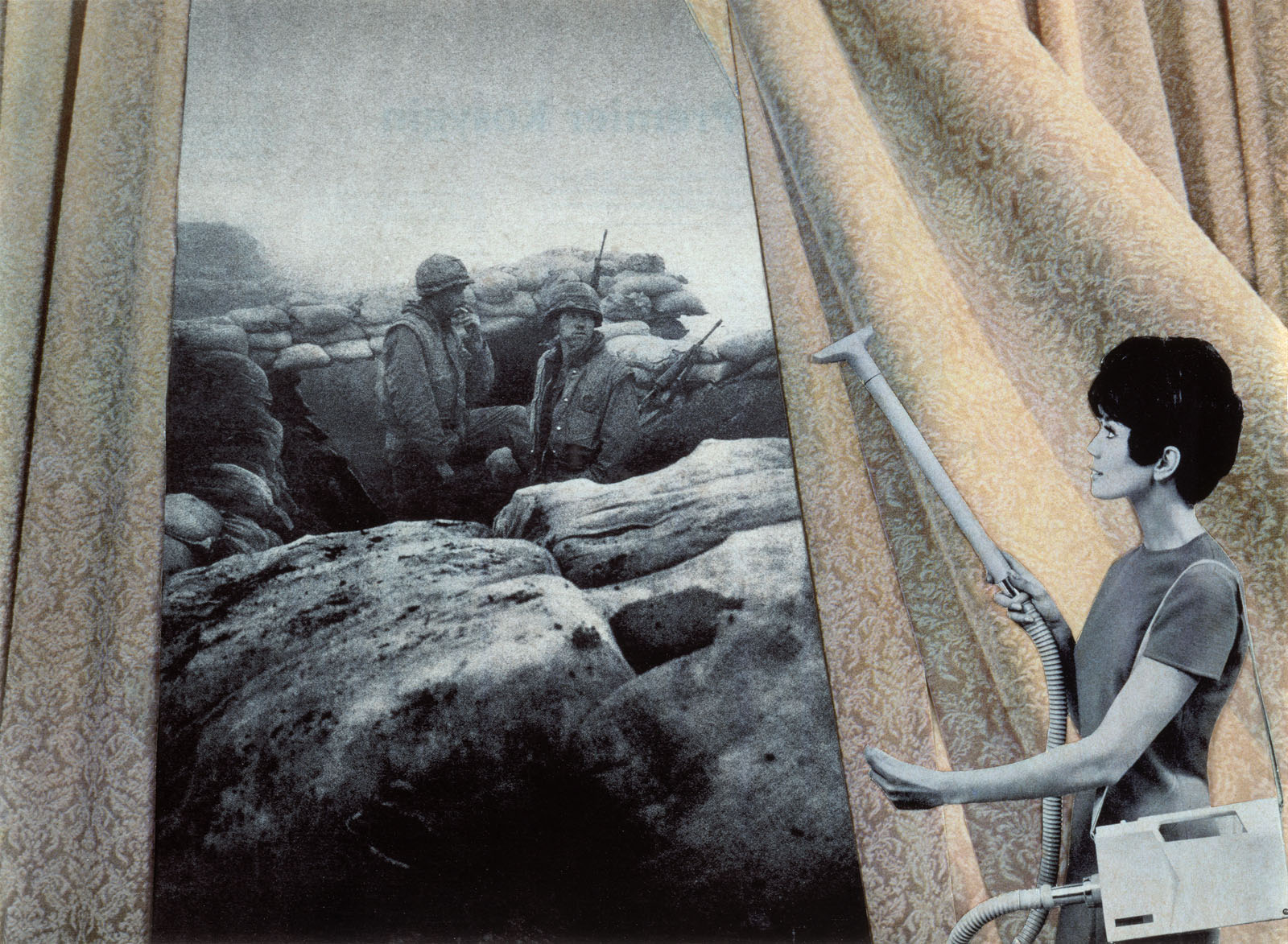
Martha Rosler (American, b. 1943) 'Cleaning the Drapes', from the series, 'House Beautiful: Bringing the War Home' 1967-1972


Martha Rosler (American, b. 1943)
Cleaning the Drapes, from the series, House Beautiful: Bringing the War Home
1967-1972
Inkjet print, printed 2007
Framed: 53.5 × 63.3cm (21 1/16 × 24 15/16 in.)
National Gallery of Art, Washington, Gift of the Collectors Committee and the Pepita Milmore Memorial Fund


A painter, photographer, video artist, feminist, activist writer, and teacher, Martha Rosler made this photomontage while she was a graduate student in the late 1960s and early 1970s. Frustrated by the portrayal of the Vietnam War on television and in other media, she wrote: “The images were always very far away and of a place we couldn’t imagine.” To bring “the war home,” as she announced in her title, she cut out images from Life magazine and House Beautiful to make powerfully layered collages that contrast American middle-class life with the realities of the war. She selected colour pictures of the idealised American life rich in the trappings of consumer society, and used black-and-white pictures of troops in Vietnam to heighten the contrast between here and there, while also calling attention to stereotypical views of men and women.


Sally Mann (American, b. 1951) 'Self-Portrait' 1974


Sally Mann (American, b. 1951)
Self-Portrait
1974
Gelatin silver print
Image: 17 × 14.9cm (6 11/16 × 5 7/8 in.)
Sheet: 35 × 27.2cm (13 3/4 × 10 11/16 in.)
National Gallery of Art, Washington, Corcoran Collection (Gift of Olga Hirshhorn)


Sally Mann, who is best known for the pictures of her children she made in the 1980s and 1990s, began to photograph when she was a teenager. In this rare, early, and intimate self-portrait, the artist is reflected in a mirror, clasping her loose shirt as she stands in a friend’s bathroom. Her thoughtful, expectant expression, coupled with her finger pointing directly at the lens of the large view camera that towers above her, foreshadows the commanding presence photography would have in her life.


David Levinthal (American, b. 1949) 'Untitled (from the series Hitler Moves East)' 1975


David Levinthal (American, b. 1949)
Untitled (from the series Hitler Moves East)
1975
Gelatin silver print
Sheet: 15 15/16 x 20 in. (40.48 x 50.8cm)
Image: 10 9/16 x 13 7/16 in. (26.83 x 34.13cm)
National Gallery of Art, Washington, Corcoran Collection (Gift of the artist)


Levinthal’s series of photographs Hitler Moves East was made not during World War II, but in 1975, when the news media was saturated with images of the end of America’s involvement in the Vietnam War. In this series, he appropriates the grainy look of photojournalism and uses toy soldiers and fabricated environments to stage scenes from Germany’s brutal campaign on the Eastern Front during World War II. His pictures are often based on scenes found in television and movies, further distancing them from the actual events. A small stick was used to prop up the falling soldier and the explosion was made with puffs of flour. Hitler Moves East casts doubt on the implied authenticity of photojournalism and calls attention to the power of the media to define public understanding of events.


Hiroshi Sugimoto (Japanese, b. 1948) 'Oscar Wilde' 1999


Hiroshi Sugimoto (Japanese, b. 1948)
Oscar Wilde
1999
Gelatin silver print
Image: 148.59 × 119.6cm (58 1/2 × 47 1/16 in.)
Framed: 182.25 × 152.4cm (71 3/4 × 60 in.)
National Gallery of Art, Washington, Corcoran Collection (Gift of The Heather and Tony Podesta Collection)


Hiroshi Sugimoto (Japanese, b. 1948) 'Oscar Wilde' 1999 (detail)


Hiroshi Sugimoto (Japanese, b. 1948)
Oscar Wilde (detail)
1999
Gelatin silver print
Image: 148.59 × 119.6cm (58 1/2 × 47 1/16 in.)
Framed: 182.25 × 152.4cm (71 3/4 × 60 in.)
National Gallery of Art, Washington, Corcoran Collection (Gift of The Heather and Tony Podesta Collection)


While most traditional portrait photographers worked in studios, Sugimoto upended this practice in a series of pictures he made at Madame Tussaud’s wax museums in London and Amsterdam, where lifelike wax figures, based on paintings or photographs, as is the case with Oscar Wilde, are displayed in staged vignettes. By isolating the figure from its setting, posing it in a three-quarter-length view, illuminating it to convey the impression of a carefully lit studio portrait, and making his final print almost six feet tall, Sugimoto renders the artificial as real. Triply removing his portrait from reality – from Oscar Wilde himself to a portrait photograph to a wax sculpture and back to a photograph – Sugimoto collapses time and confounds our expectations of the nature of photography.


Vik Muniz (Brazilian, b. 1961) 'Alfred Stieglitz (from the series Pictures of Ink)' 2000


Vik Muniz (Brazilian, b. 1961)
Alfred Stieglitz (from the series Pictures of Ink)
2000
Silver dye bleach print
Image: 152.4 × 121.92cm (60 × 48 in.)
Framed: 161.29 × 130.81 × 5.08cm (63 1/2 × 51 1/2 × 2 in.)
National Gallery of Art, Washington, Corcoran Collection (Museum Purchase with funds provided by the FRIENDS of the Corcoran Gallery of Art)


Muniz has spent his career remaking works of art by artists as varied as Botticelli and Warhol using unusual materials – sugar, diamonds, and even junk. He has been especially interested in Stieglitz and has re-created his photographs using chocolate syrup and cotton. Here, he refashioned Stieglitz’s celebrated self-portrait using wet ink and mimicking the dot matrix of a halftone reproduction. He then photographed his drawing and greatly enlarged it so that the dot matrix itself becomes as important as the picture it replicates.


Identity

Historic and contemporary works by August Sander, Diane Arbus, Lorna Simpson, and Hank Willis Thomas, among others, make up the final section, which explores the role of photography in the construction of identity.”

Wall text

Intersections wall text


Witkacy (Stanislaw Ignacy Witkiewicz) (Polish, 1885-1939) 'Self-Portrait (Collapse by the Lamp/Kolaps przy lampie)' c. 1913


Witkacy (Stanislaw Ignacy Witkiewicz) (Polish, 1885-1939)
Self-Portrait (Collapse by the Lamp/Kolaps przy lampie)
c. 1913
Gelatin silver print
12.86 x 17.78cm (5 1/16 x 7 in.)
National Gallery of Art, Washington, Foto Fund and Robert Menschel and the Vital Projects Fund


A writer, painter, and philosopher, Witkiewicz began to photograph while he was a teenager. From 1911 to 1914, while undergoing psychoanalysis and involved in two tumultuous relationships (one ending when his pregnant fiancée killed herself in 1914), he made a series of startling self-portraits. Close-up, confrontational, and searching, they are pictures in which the artist seems to seek understanding of himself by scrutinising his visage.


August Sander (German, 1876-1964) 'The Bricklayer' 1929


August Sander (German, 1876-1964)
The Bricklayer
1929, printed c. 1950
Gelatin silver print
Sheet (trimmed to image): 50.4 x 37.5cm (19 13/16 x 14 3/4 in.)
National Gallery of Art, Washington, Gift of Gerhard and Christine Sander, in honour of the 50th Anniversary of the National Gallery of Art


In 1911, Sander began a massive project to document “people of the twentieth century.” Identifying them by their professions, not their names, he aimed to create a typological record of citizens of the Weimar Republic. He photographed people from all walks of life – from bakers, bankers, and businessmen to soldiers, students, and tradesmen, as well as gypsies, the unemployed, and the homeless. The Nazis banned his project in the 1930s because his pictures did not conform to the ideal Aryan type. Although he stopped working after World War II, he made this rare enlargement of a bricklayer for an exhibition of his photographs in the early 1950s.


Walker Evans (American, 1903-1975) 'Photographer's Display Window, Birmingham, Alabama' 1936


Walker Evans (American, 1903-1975)
Photographer’s Display Window, Birmingham, Alabama
1936
Gelatin silver print
Image: 24.1 x 19.3cm (9 1/2 x 7 5/8 in.)
Sheet: 25.2 x 20.3cm (9 15/16 x 8 in.)
National Gallery of Art, Washington, Gift of Mr. and Mrs. Harry H. Lunn, Jr. in honor of Jacob Kainen and in Honor of the 50th Anniversary of the National Gallery of Art


Diane Arbus (American, 1923-1971) 'Triplets in their Bedroom, N.J.,' 1963


Diane Arbus (American, 1923-1971)
Triplets in their Bedroom, N.J.,
1963
Gelatin silver print
Image: 37.7 x 37.8cm (14 13/16 x 14 7/8 in.)
Sheet: 50.4 x 40.4cm (19 13/16 x 15 7/8 in.)
National Gallery of Art, Washington, R. K. Mellon Family Foundation


Celebrated for her portraits of people traditionally on the margins of society – dwarfs and giants – as well as those on the inside – society matrons and crying babies – Arbus was fascinated with the relationship between appearance and identity. Many of her subjects, such as these triplets, face the camera, tacitly aware of their collaboration in her art. Rendering the familiar strange and the strange familiar, her carefully composed pictures compel us to look at the world in new ways. “We’ve all got an identity,” she said. “You can’t avoid it. It’s what’s left when you take away everything else.”


Lorna Simpson (American, b. 1960) 'Untitled (Two Necklines)' 1989


Lorna Simpson (American, b. 1960)
Untitled (Two Necklines)
1989
Two gelatin silver prints with 11 plastic plaques
Overall: 101.6 x 254 cm (40 x 100 in.)
National Gallery of Art, Washington, Gift of the Collectors Committee


From the mid-1980s to the present, Simpson has created provocative works that question stereotypes of gender, identity, history, and culture, often by combining photographs and words. Two Necklines shows two circular and identical photographs of an African American woman’s mouth, chin, neck, and collarbone, as well as the bodice of her simple shift. Set in between are black plaques, each inscribed with a single word: “ring, surround, lasso, noose, eye, areola, halo, cuffs, collar, loop.” The words connote things that bind and conjure a sense of menace, yet when placed between the two calm, elegant photographs, their meaning is at first uncertain. But when we read the red plaque inscribed “feel the ground sliding from under you” and note the location of the word “noose” adjacent to the two necklines, we realise that Simpson is quietly but chillingly referring to the act of lynching.


Hank Willis Thomas (American, b. 1976) 'And One' 2011


Hank Willis Thomas (American, b. 1976)
And One
2011
Digital chromogenic print
Framed: 248.29 × 125.73 × 6.35cm (97 3/4 × 49 1/2 × 2 1/2 in.)
National Gallery of Art, Washington, Corcoran Collection (Gift of the artist and Jack Shainman Gallery, New York)


And One is from Thomas’s Strange Fruit series, which explores the concepts of spectacle and display as they relate to modern African American identity. Popularised by singer Billie Holiday, the series title Strange Fruit comes from a poem by Abel Meeropol, who wrote the infamous words “Black bodies swinging in the southern breeze; Strange fruit hanging from the poplar trees” after seeing a photograph of a lynching in 1936. In And One, a contemporary African American artist reflects on how black bodies have been represented in two different contexts: lynching and professional sports. Thomas ponders the connections between these disparate forms through his dramatic photograph of two basketball players frozen in midair, one dunking a ball through a hanging noose.


National Gallery of Art
National Mall between 3rd and 7th Streets
Constitution Avenue NW, Washington

Opening hours:
Daily 10.00am – 5.00pm

National Gallery of Art website

LIKE ART BLART ON FACEBOOK

Back to top