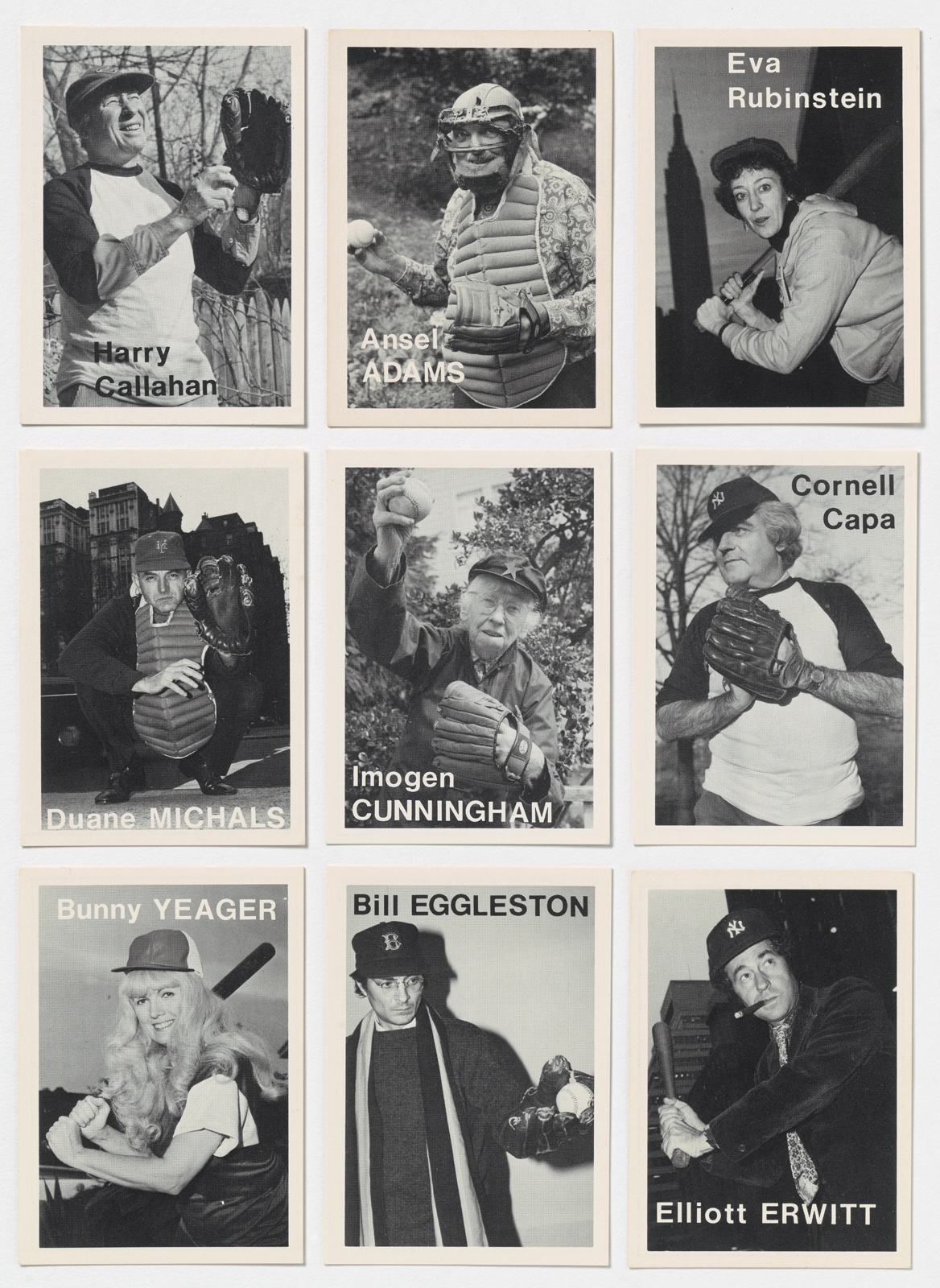
I wonder whether you have seen those tv crime shows where the cops are grilling a suspect, and for fear of incriminating themselves they give a “no comment” interview…
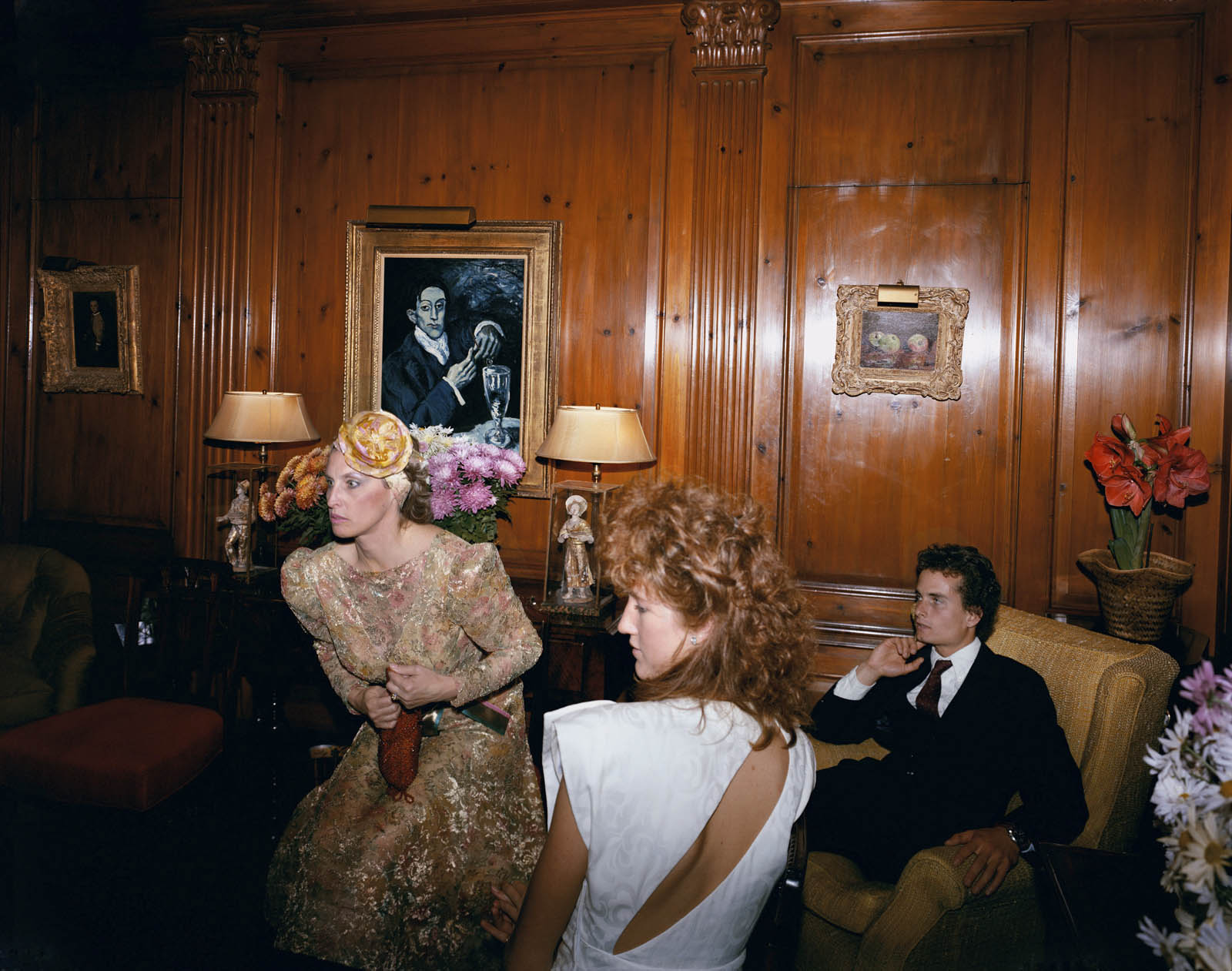
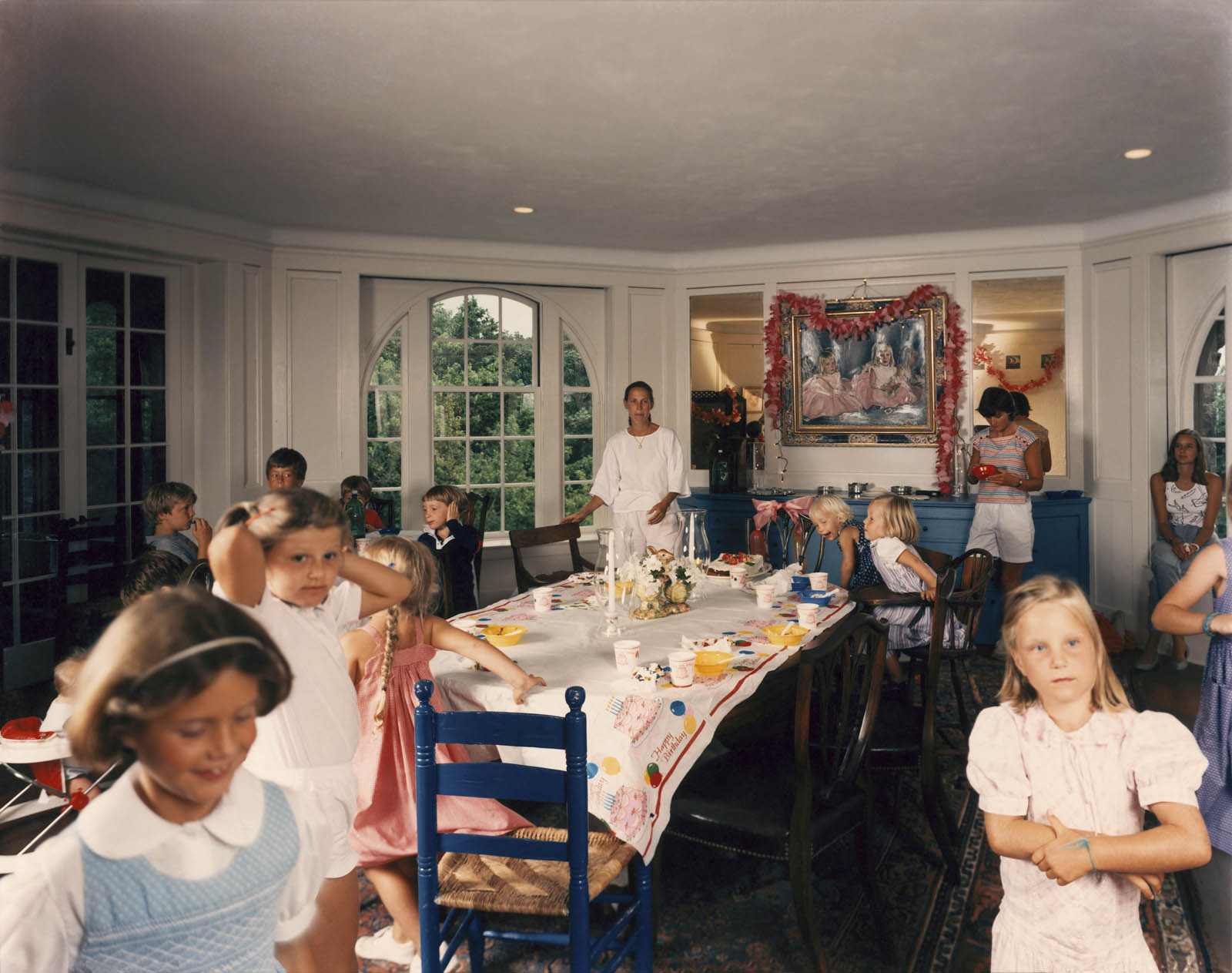
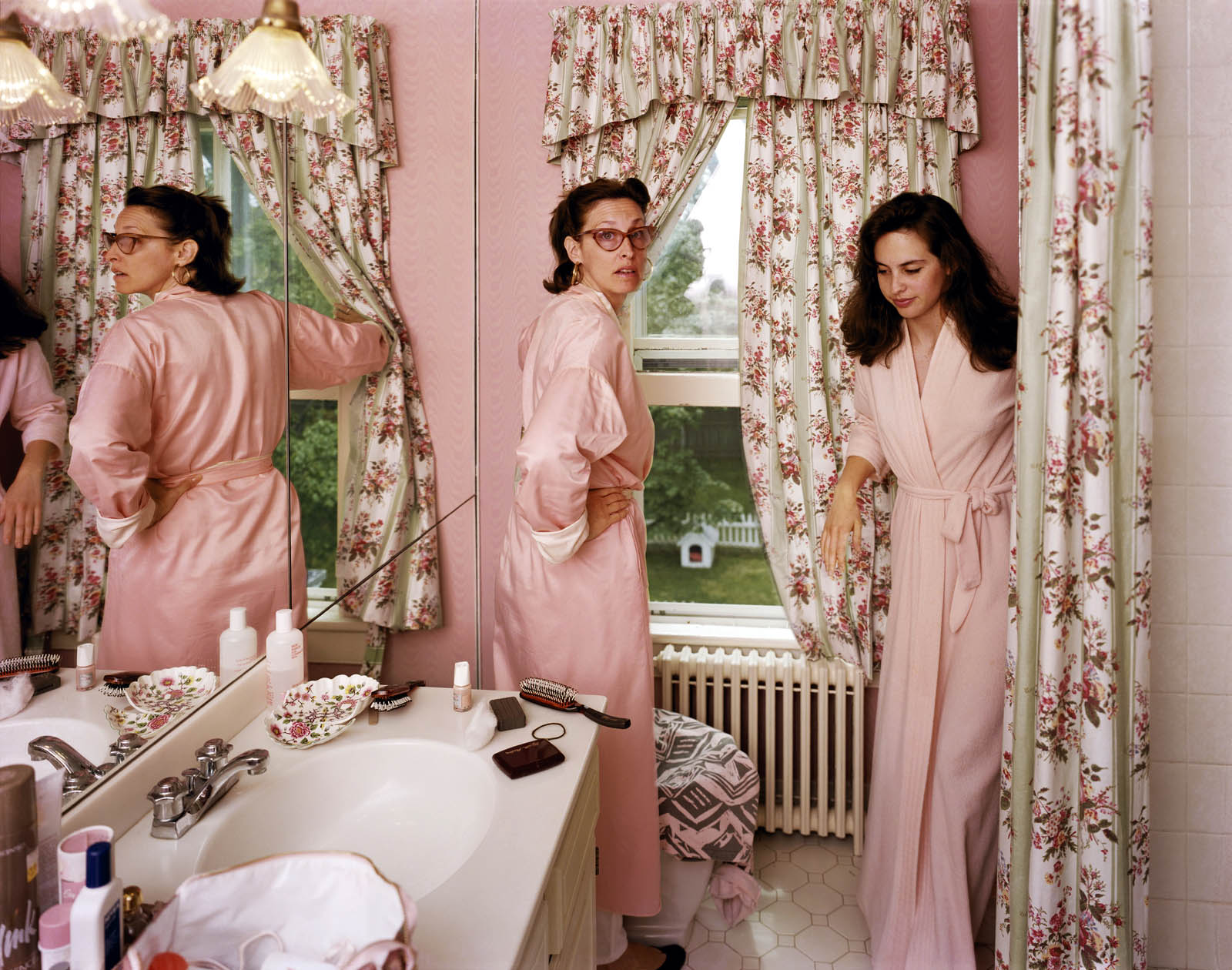
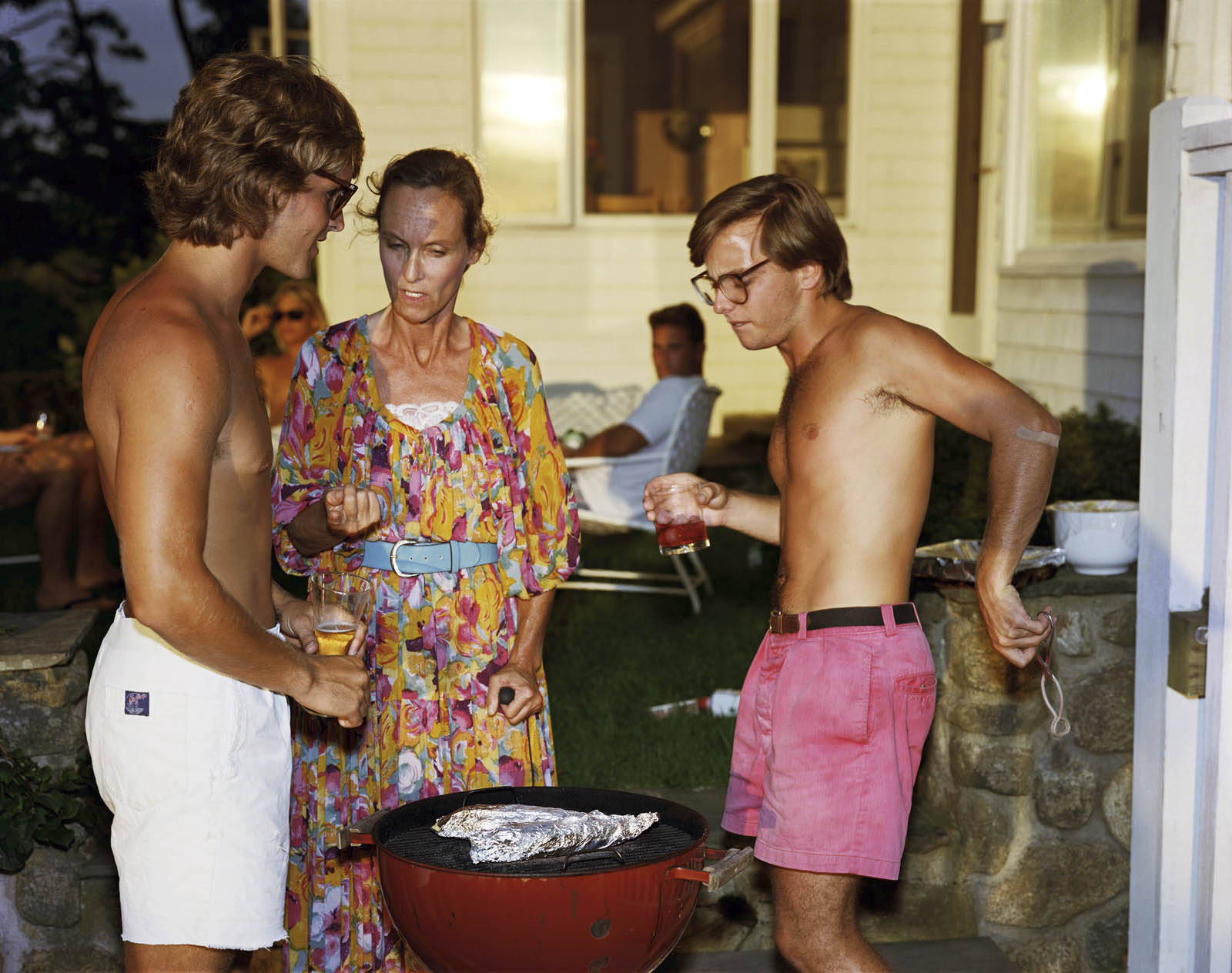
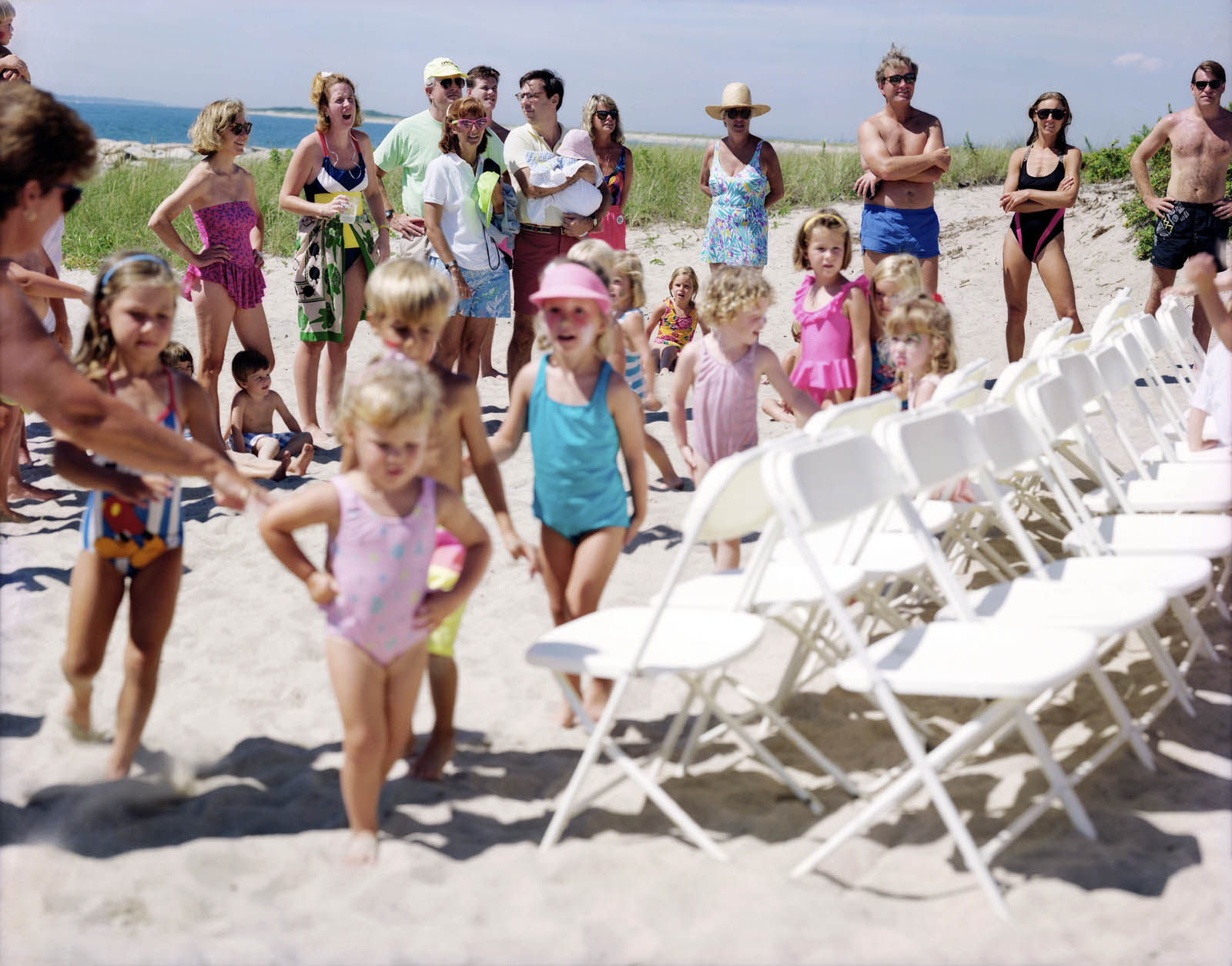
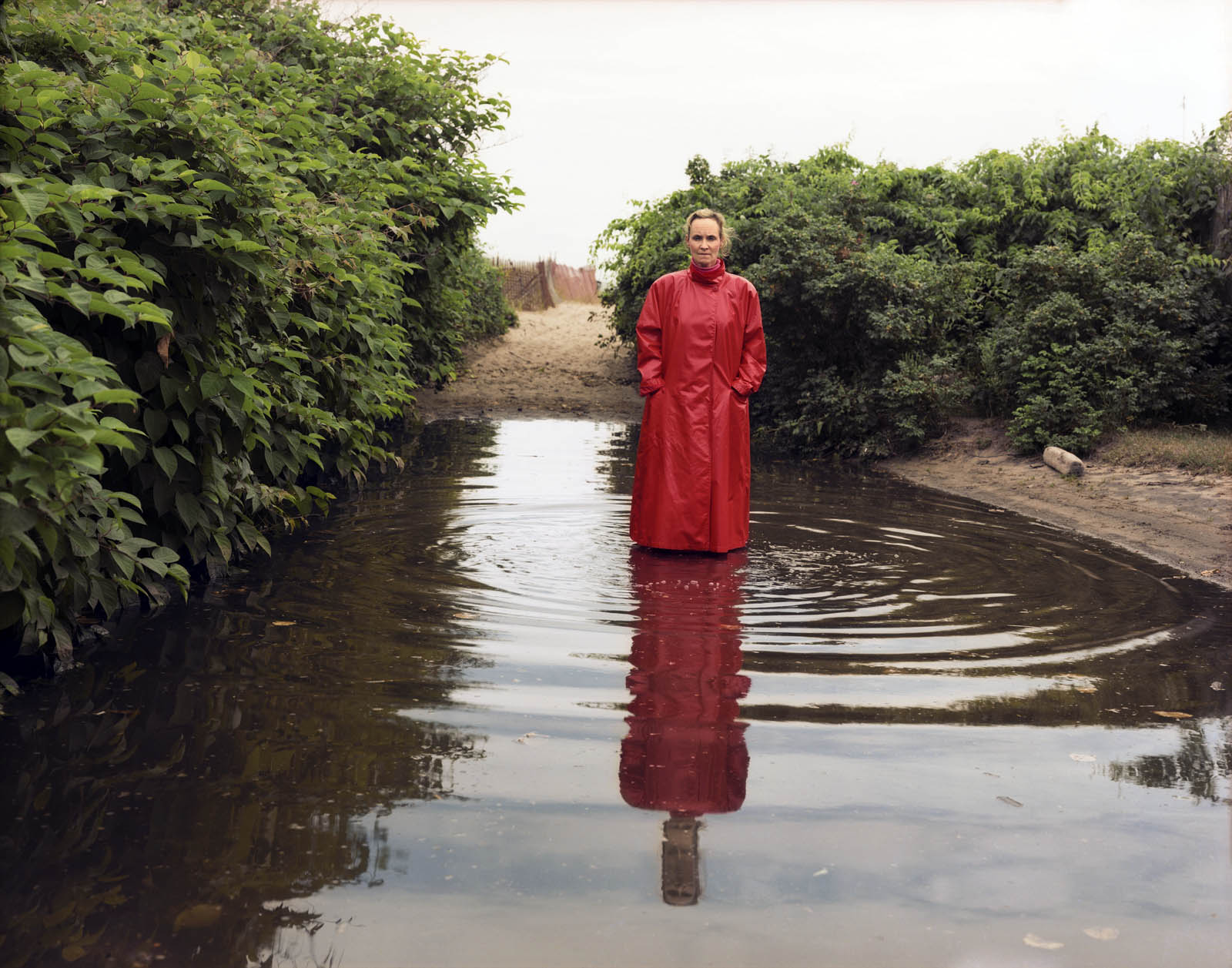
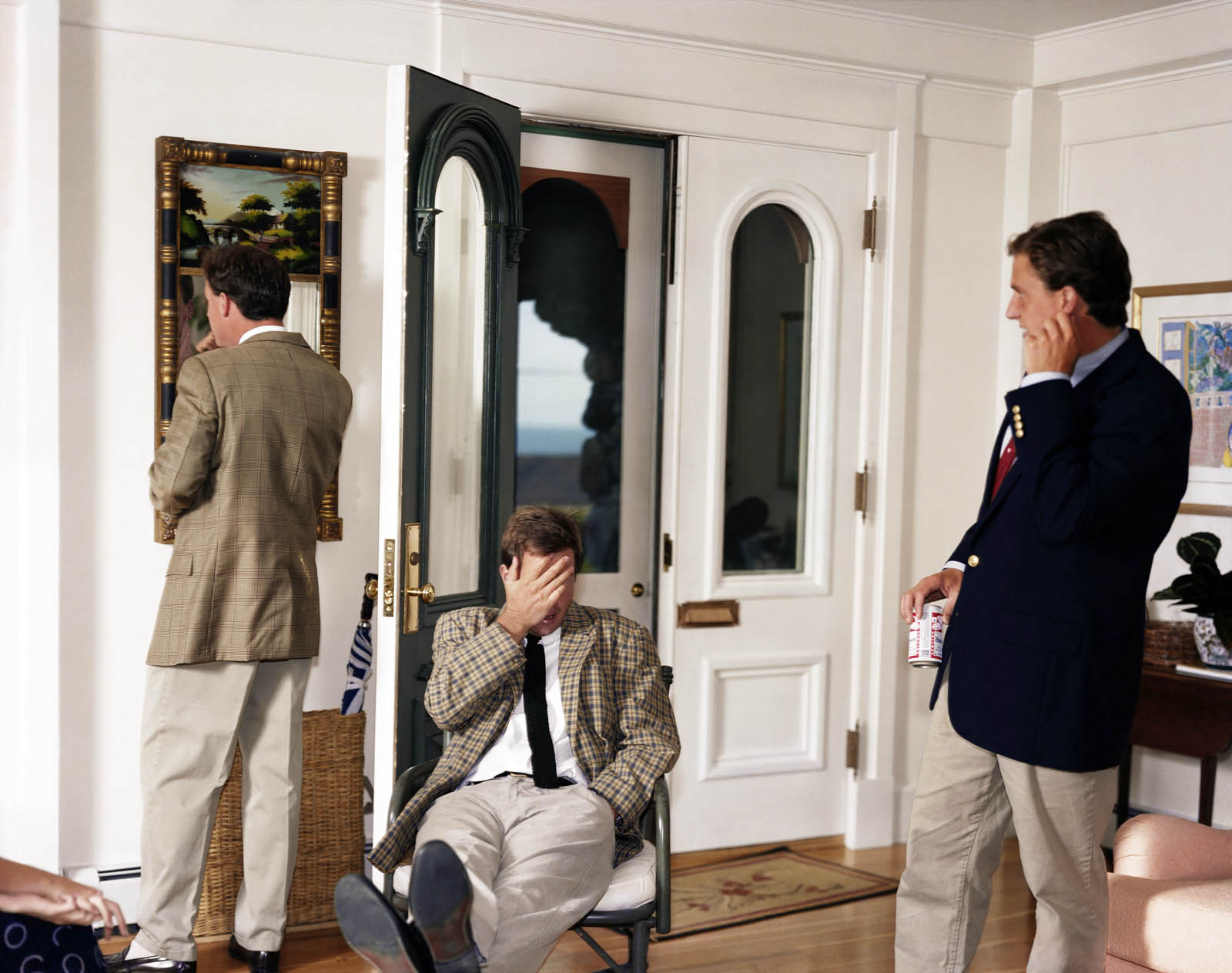
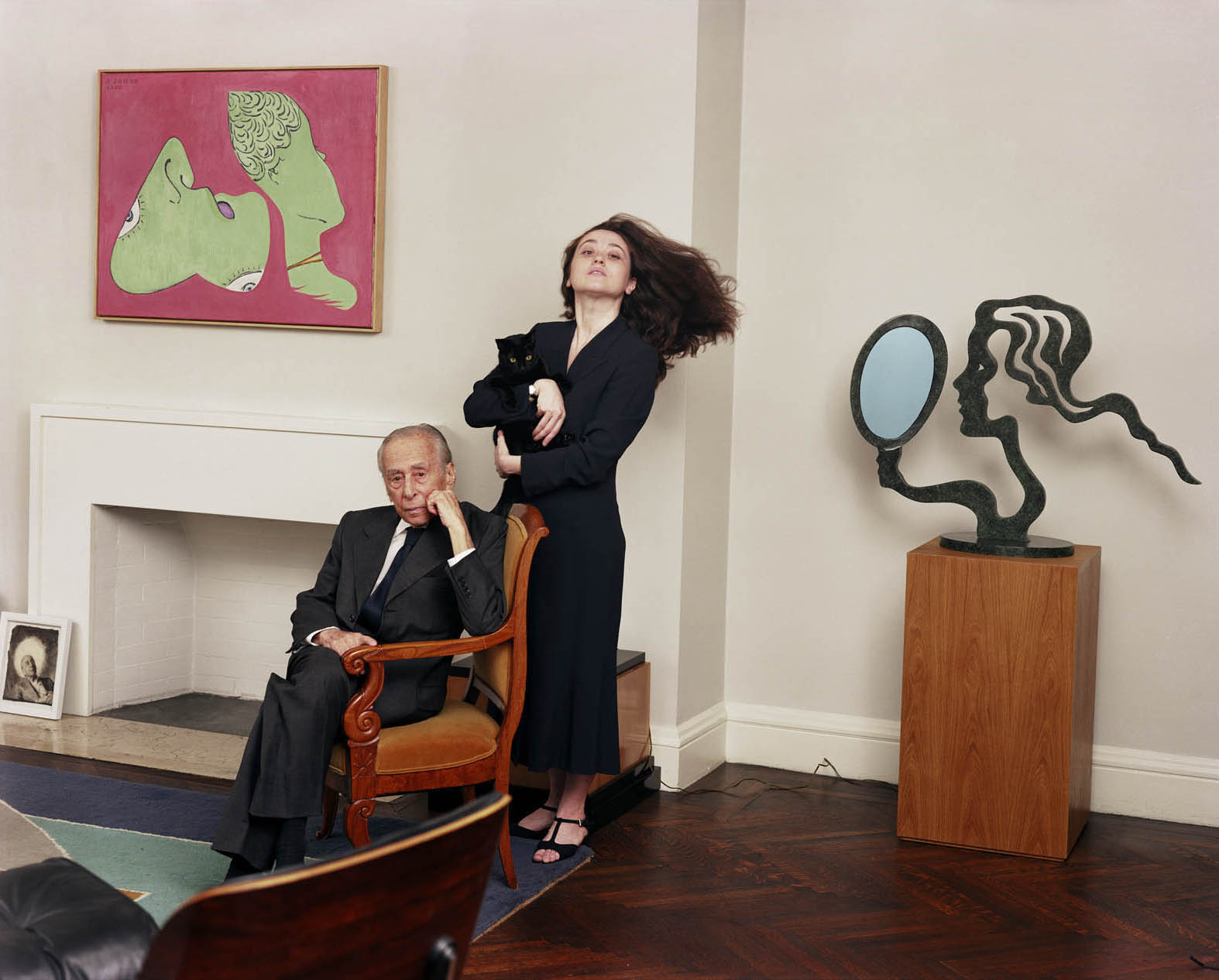
What do you think of the composition of these photographs?
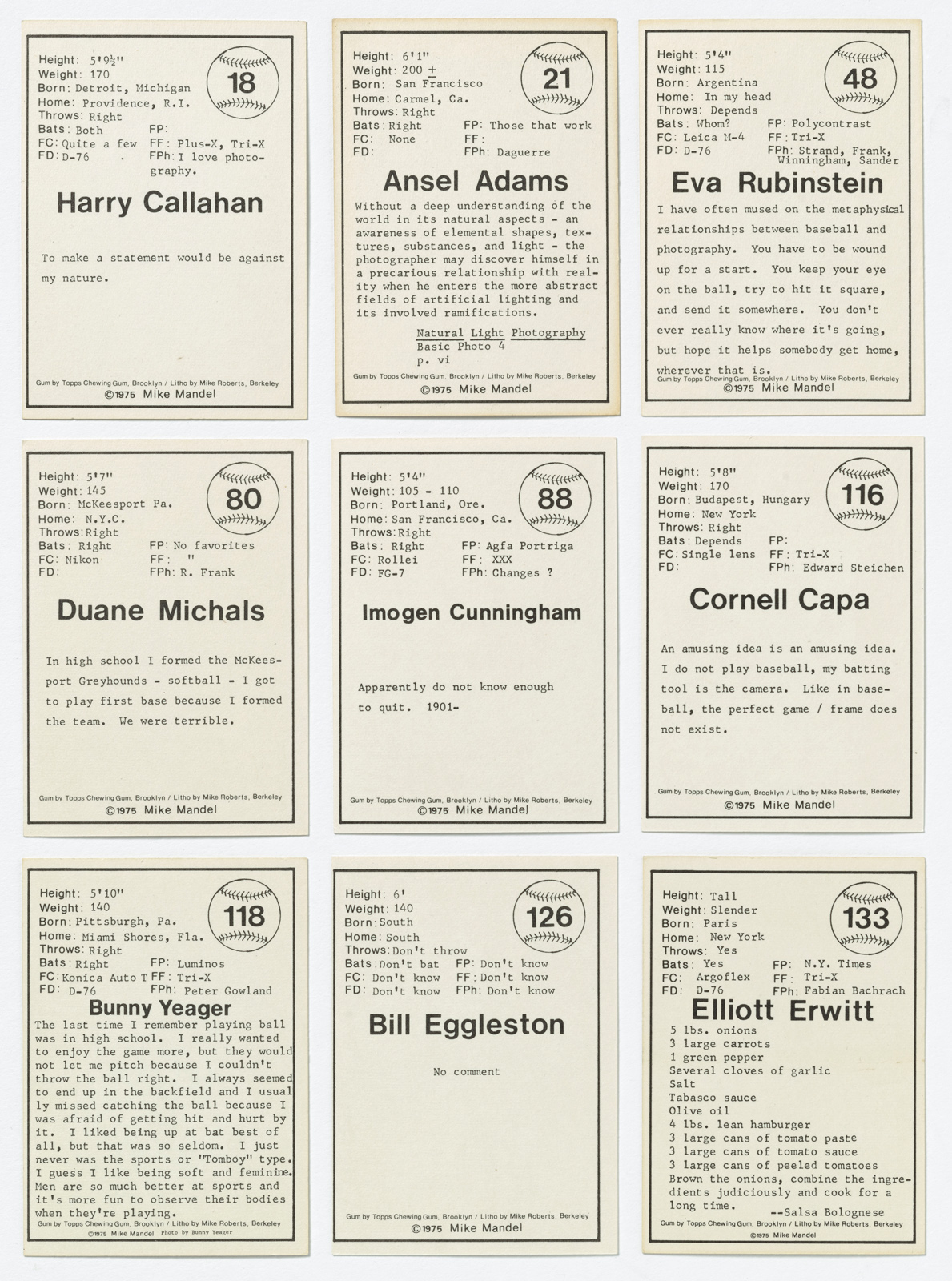
No comment
What do you think of the lighting in these photographs?
No comment
What do you think of the use of colour in these photographs?
No comment
What do you think of the people depicted in these photographs?
No comment
What do you think of the allegedly subtle critique of these patrician families, these far from “ordinary people”?
No comment
My mother said to me, if you can’t say anything constructive don’t say anything at all.
No comment
Dr Marcus Bunyan
Many thanks to Jeu de Paume for allowing me to publish the photographs in the posting. Please click on the photographs for a larger version of the image.
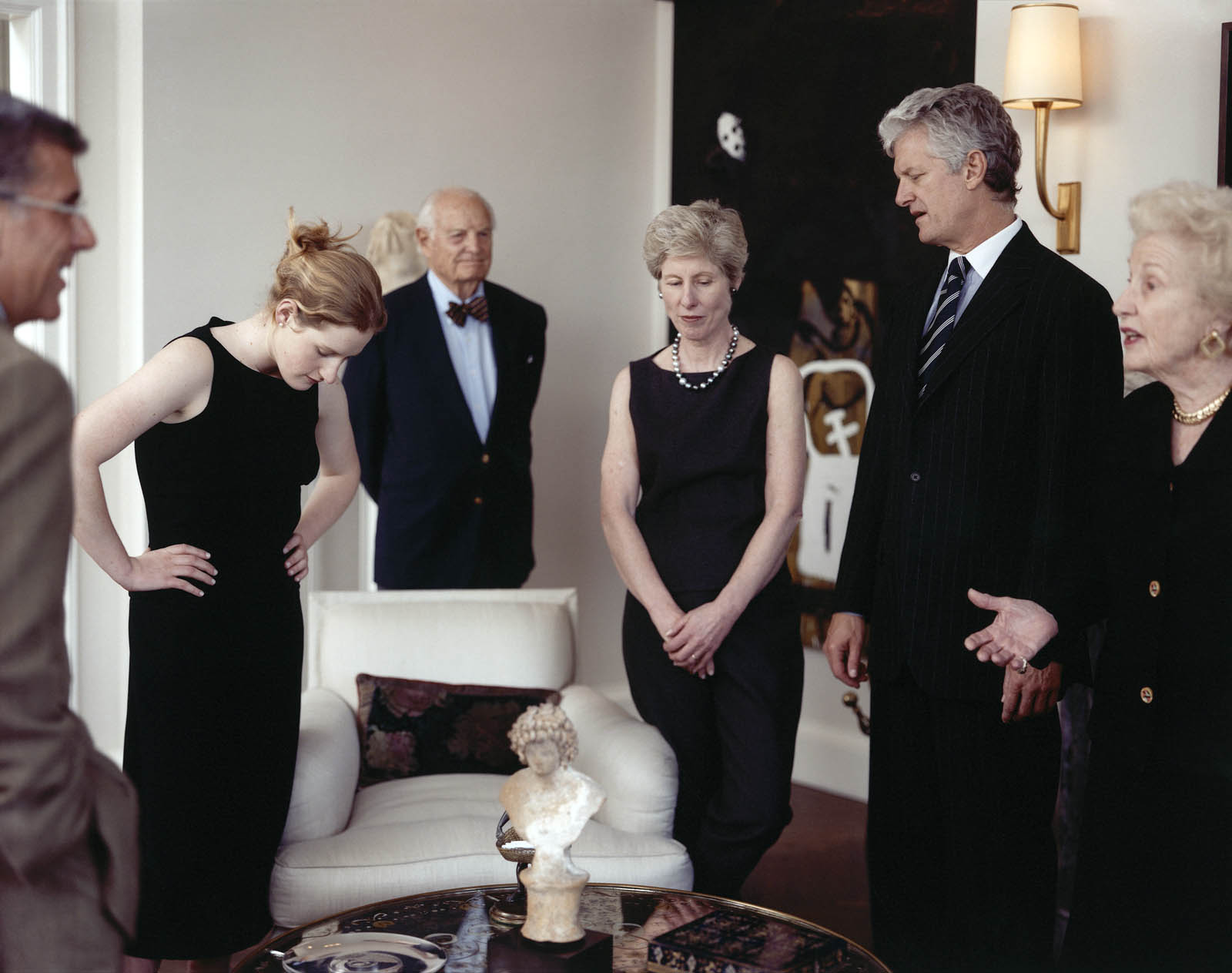
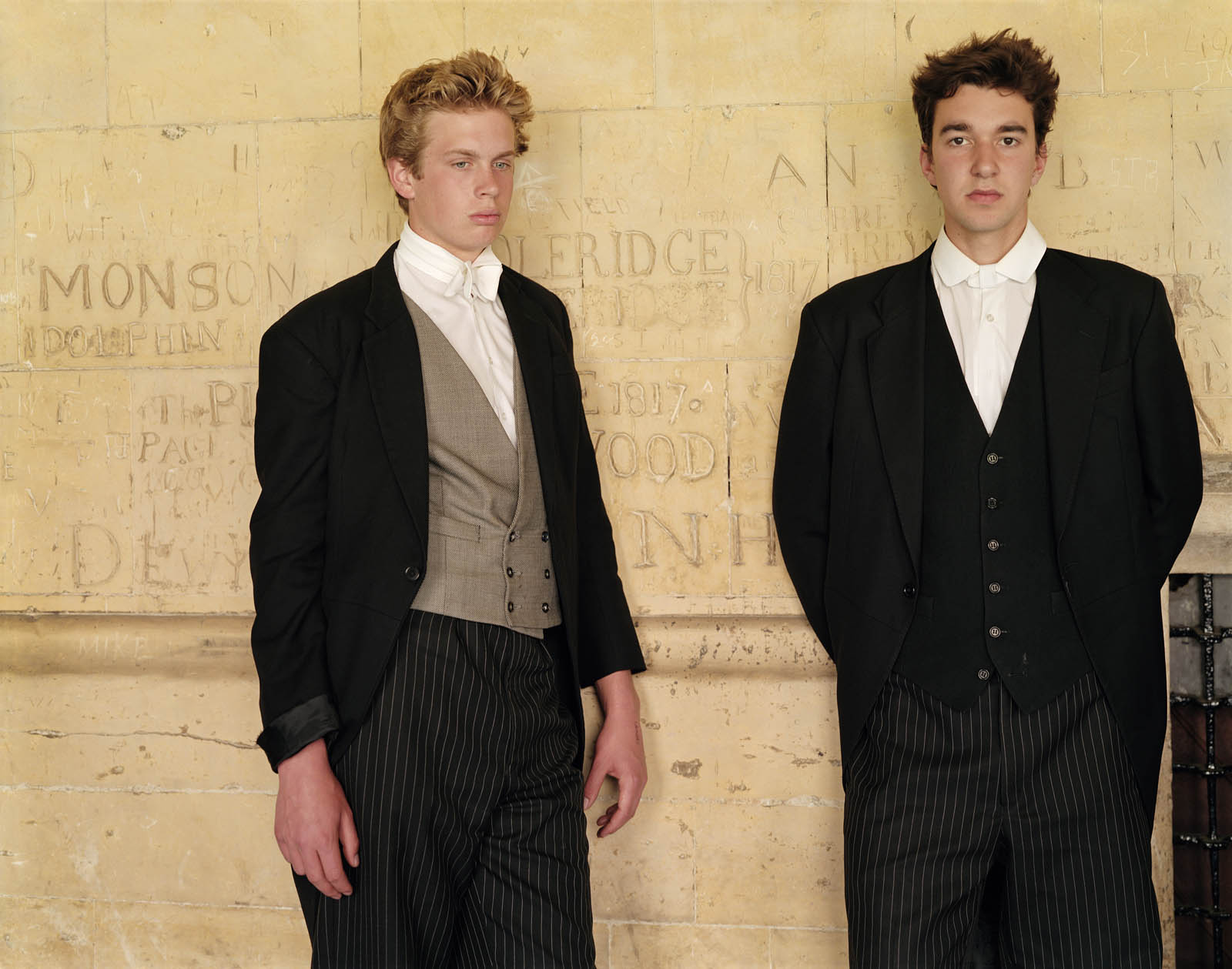
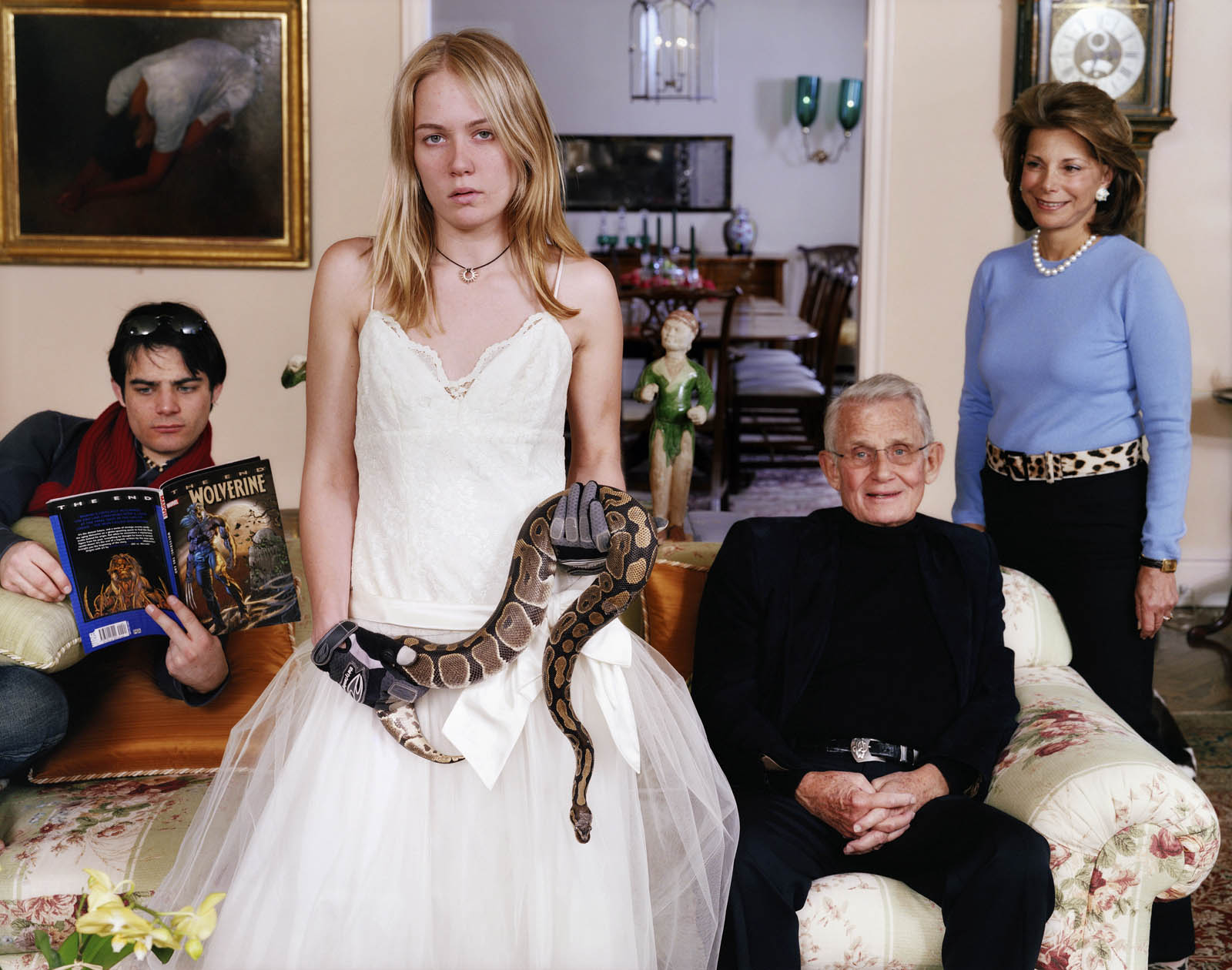
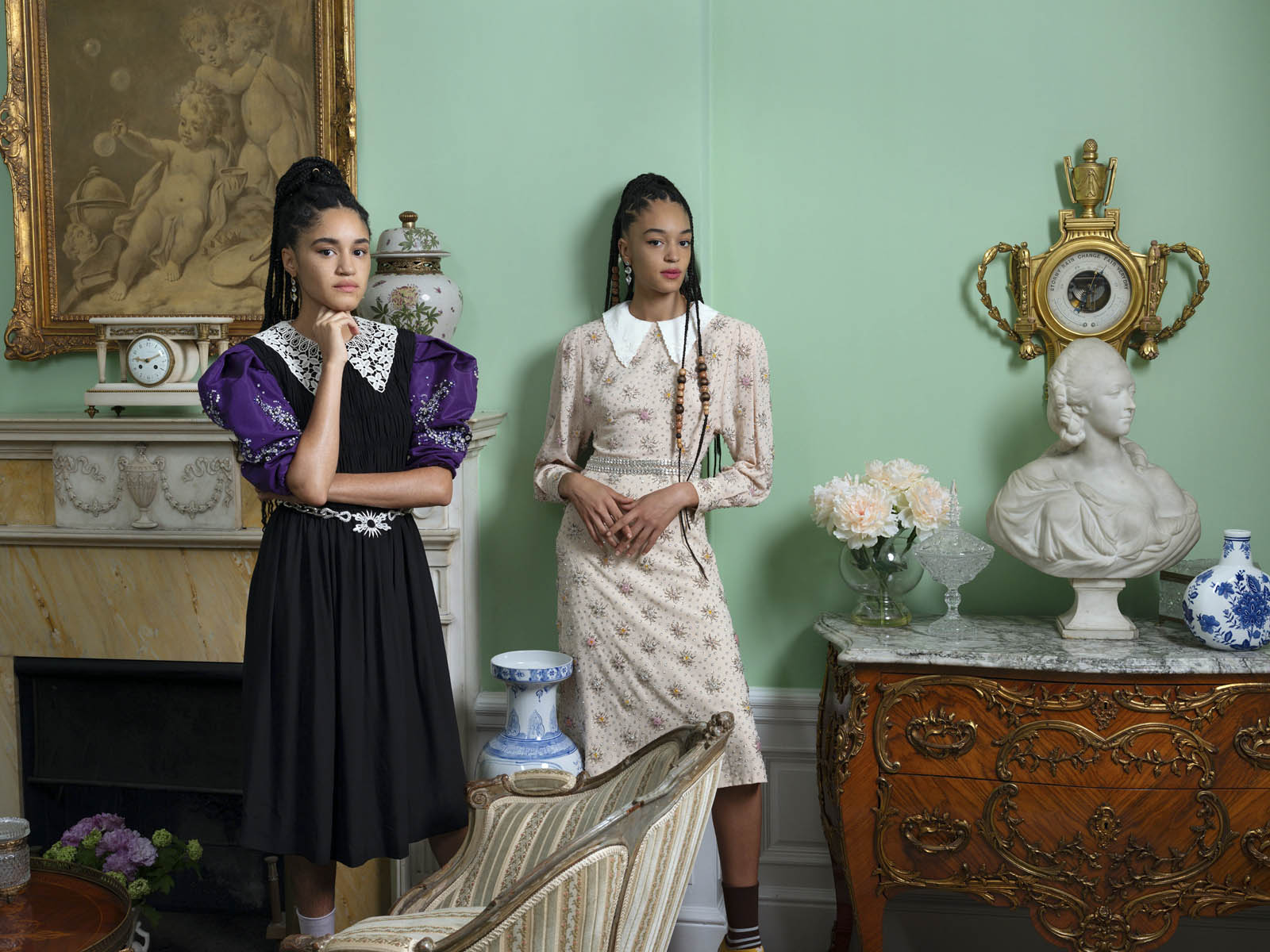
Jeu de Paume showcases the vibrant, singular work of influential American photographer Tina Barney, who is best known for exploring intergenerational familial rituals and the subtle nuances of human connection.
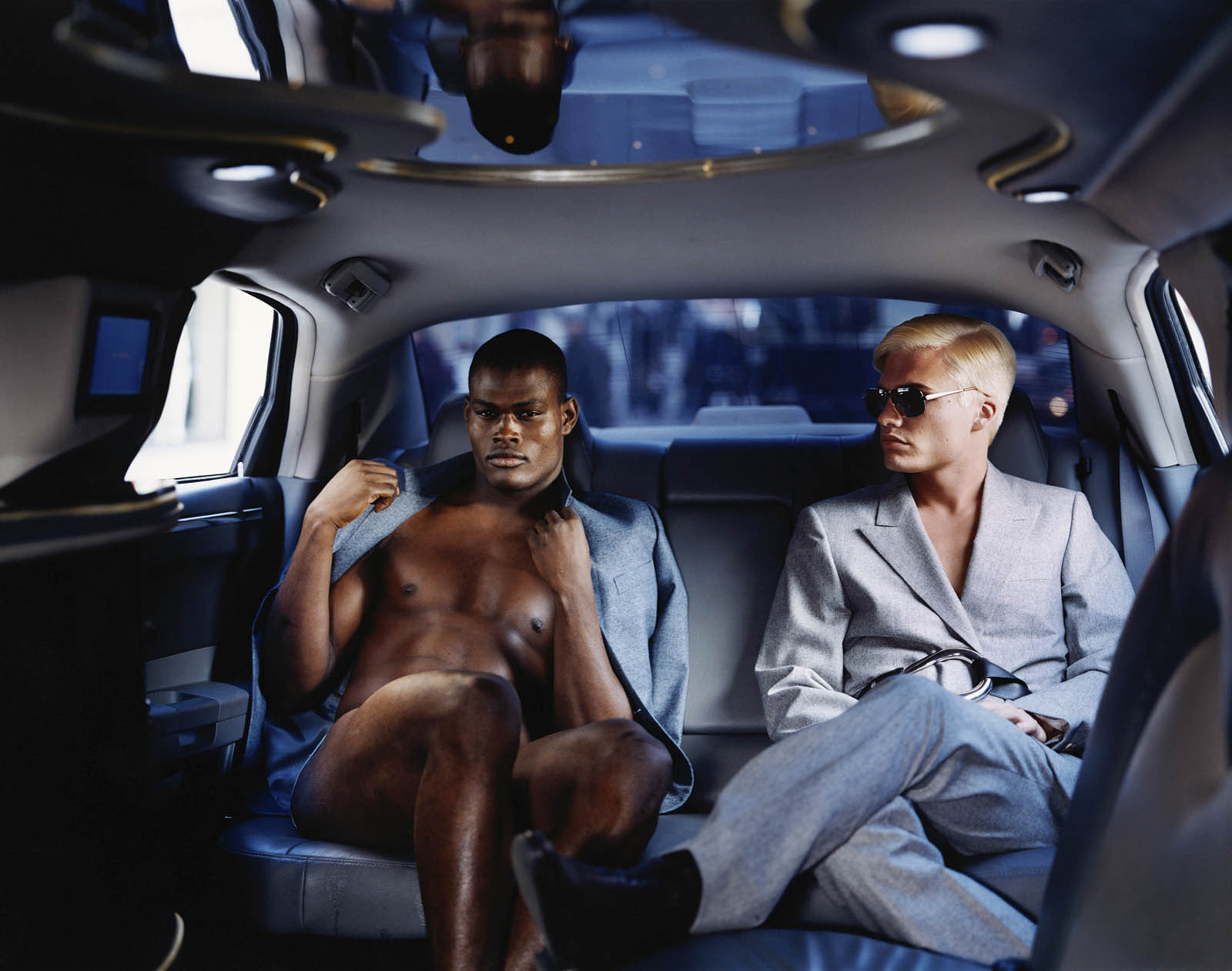
Spanning over 40 years of the artist’s career, the exhibition marks the artist’s first European retrospective. Born in 1945, Tina Barney began taking photographs of her relatives and friends in the late 1970s. A keen observer of family traditions, her work focuses on cultural habits within domestic settings. Her colourful and large-scale portraits may appear as family snapshots at first glance, however many have been carefully staged by the artist, creating intricate tableaux that establish a dialogue with classical painting. This exhibition will also include work from Barney’s editorial practice in which portraits of celebrities and models for fashion magazines and luxury brands share the same complexity, sensitivity, and humor found in her fine art practice.
Spanning the breadth of Barney’s career, the exhibition will include fifty-five large-scale works from Barney’s earliest through her most recent series, including those previously unseen in Europe.
In “Family Ties,” Tina Barney’s keenly observed portraits offer a window into a rarified world of privilege with a sense of spontaneity and intimacy that remind us of what we hold in common.
In the late 1970s, Barney began a decades-long exploration of the everyday, but often hidden, life of the New England upper class, of which she and her family belonged. Photographing close relatives and friends, she became an astute observer of the rituals common to the intergenerational summer gatherings held in picturesque homes along the East Coast.
These personal, often surreal, scenes present a secret world of the haute bourgeoisie – a landscape of hidden tension found in micro-expressions and in, what Barney calls, the subtle gestures of “disruption” that belie the dreamlike worlds of patrician tableaux.
Newly released, “Family Ties” brings together sixty large-format portraits from three decades that have defined Barney’s career, alongside an interview between the artist and Aperture’s executive director Sarah Meister, and texts by Quentin Bajac and James Welling.
This volume coincides with Barney’s first retrospective exhibition in Europe, on view at Jeu de Paume through January 2025.
In September 2024, Jeu de Paume, Paris, will showcase the vibrant, singular work of influential American photographer Tina Barney, who is best known for exploring intergenerational familial rituals and the subtle nuances of human connection. Spanning over 40 years of the artist’s career, Tina Barney. Family Ties marks the artist’s first European retrospective.
Born in 1945, Tina Barney began taking photographs of her relatives and friends in the late 1970s. A keen observer of family traditions, her work focuses on cultural habits within domestic settings. Her colourful and large-scale portraits may appear as family snapshots at first glance, however many have been carefully staged by the artist, creating intricate tableaux that establish a dialogue with classical painting. This exhibition will also include work from Barney’s editorial practice in which portraits of celebrities and models for fashion magazines and luxury brands share the same complexity, sensitivity, and humor found in her fine art practice.
Spanning the breadth of Barney’s career, the exhibition will include fifty-five large-scale works from Barney’s earliest through her most recent series, including those previously unseen in Europe.
Tina Barney’s experimental approach to photography emerged in the late 1970s. In 1981, she transitioned from working with a hand-held Pentax 35mm camera to a tripod-mounted Toyo 4 x 5 view camera. Through the 1980s, Barney’s early images revealed a world rarely seen in photography, offering the public an intimate look at the inner lives of the East Coast American upper class. At various vacation spots, birthday parties (The Children’s Party, 1986), weddings (Bridesmaids in Pink, 1995), backyard barbecues (Tim, Phil, and I, 1989) and family lunches in and around her house in Rhode Island, Barney probed the social habits of her subjects, exposing a fine line between intense concentration and idle restlessness. Her models pose like actors in a theater or film scene as the artist quickly replays micro-gestures and gives informal instructions. With the spontaneity of a snapshot, The Reception (1985), for example, sees Barney carefully direct the guests of her sister’s wedding.
Between 1996 and 2004, Barney traveled to Italy, the United Kingdom, Austria, France, Spain and Germany, turning her attention to social types and customs instead of individuals. In these works, traditional motifs are often combined with more contemporary features, as figures of the European aristocracy pose in a pictorial manner, reminiscent of British “conversation pieces” of the eighteenth century. Working in large format allows Barney to magnify the exquisite details found in the textures and colours of her subjects’ clothes, furniture, fabrics and decor, drawing particular focus to the visual and material cultures that inform their mannerisms.
The exhibition will explore the theatrical dimension of Barney’s mise-en-scènes, with special attention to her work with her subjects and the construction of space. Barney’s work underscores a certain narrative dimension or tendency. In the early 1990s, Barney began working for several magazines and newspapers, including The Daily Telegraph, W, Arena Homme Plus, Hommes Vogue International and Vogue US, fuelling her attention to the formal and compositional possibilities of photographs where the costumes, setting, and circumstances are already defined.
Departing from a strictly chronological approach, Tina Barney. Family Ties will present specific themes that have traversed Barney’s various bodies of work over four decades. For example, family – a key theme from the very beginning of Barney’s photographic practice in 1976 – may be found in Jill and Mom (1983), an intimate scene where the artist’s sister and mother address the camera in relaxed postures. Nearly twenty years later, The Daughters (2002) revisits the dynamic of a mother and daughter in a portrait of a French family whom Barney had not previously met.
Tina Barney was born in New York in 1945. Her mother, Lillian Fox, was a model turned interior designer. Her father, Philip Henry Isles, came from a long line of investment bankers and art collectors. Throughout her childhood, she was exposed to the practice of photography by her maternal grandfather. She began experimenting with photography when she and her family moved to Sun Valley, Idaho in 1973, where she lived until returning to New York City in 1983. Barney has exhibited her work at major venues across the globe, including the Museum of Modern Art in New York, and she participated in the Whitney Biennial in 1987. Today, her work is included in many prominent collections around the world. She lives and works between New York and Rhode Island.
Please remember the photographs of burlesque and “girl revue” show fronts for next week’s posting (and the work of Susan Meiselas).
I have added bibliographic information for the circuses, photographers and sitters where possible. All photographs have been digitally cleaned and colour balanced.
Dr Marcus Bunyan
All photographs are used under fair use conditions for the purpose of education and research purposes. Please click on the photographs for a larger version of the image.
Edward J. Kelty (American, 1888-1967) Barnett Bros. Three Ring Circus Sideshow. Morristown, NJ New York: Century, 1929 Silver gelatin print 11 x 19″
Sepia toned photo depicts the side show cast in front of their accompanying banners that feature “The Mexican Knife Thrower,” “Prof. Jackson’s Jazz Band and Minstrels,” “Mille Leatrice: Charmer of Reptiles,” and the “Venetian Glass Blower.”
The Barnett Bros. Circus was founded in Canada by Vermont native Ray W. Rogers in 1927. The circus showed both Canada and the United States. In 1929 the show closed it’s season in Easley, S.C. and began wintering in York, S.C..
In 1937 Rogers joined with financiers George and Minter Wallace and the circus changed the name to Wallace Bros. Circus for the seasons of 1937 and again 1941 to 1944. Ray Rogers died in 1943 and in 1944 the Wallace Bros. circus merged with the Clyde Beatty Circus.
Information from the York County Library
Edward J. Kelty (American, 1888-1967) Ready for the Spec – Ringling Back Yard New York: Century, 1926 Silver gelatin print 7 x 10 1/2″
Edward J. Kelty (American, 1888-1967) Ringling Bros. and Barnum & Bailey Combined Circus in New York’s Mammoth New Coliseum in the Bronx New York: Century, 1929 Silver gelatin print panoramic photograph 12 x 20″
Edward J. Kelty (1888-1967) moved to New York City following his service in the Navy during World War I, and opened up his first studio, Flashlight Photographers. Kelty was drawn to the circus and visited Coney Island often. In the summer of 1922, he transformed his truck into a mini studio, darkroom and living quarters, and traveled across America. His panoramic views captured the performers – human and animal – associated with Ringling Bros. and Barnum & Bailey, Hagenbeck-Wallace, Sells-Floto, Clyde Beatty, Cole Bros. and other train, wagon and truck shows.
A typical day for Kelty would have him waking at dawn to set up cameras and tripods, gathering bearded ladies and sword swallowers, snake charmers and giants and shooting all morning. At times he had as many as 1,000 people in a picture. Afternoons were spent processing film and making proofs, taking orders and printing well into the night. The following day, he distributed prints, most often to circus staff and performers, before returning to his New York studio to work on his wedding and banquet photography business.
Kelty was hit hard by the Depression, and by 1942 had cashed in his glass plate negatives to settle a hefty bar tab. He moved to Chicago and, as legend has it, never took another photograph. His extant negatives eventually made their way into a Tennessee collection of circus memorabilia. Since Kelty used Nitrate-based film, which is unstable when improperly housed, the negatives self-destructed and were disposed of.
After Kelty died in 1967, his estranged family found no photographs, cameras or negatives among his belongings – just one old lens and a union concession employee ID card identifying him as a vendor at Chicago’s Wrigley Field. There was no evidence of the man who, along with his custom mammoth-size banquet camera and portable studio, documented America’s greatest traveling circuses.
Anonymous text from the Swann Galleries website February 2015 [Online] Cited 28/04/2022. No longer available online
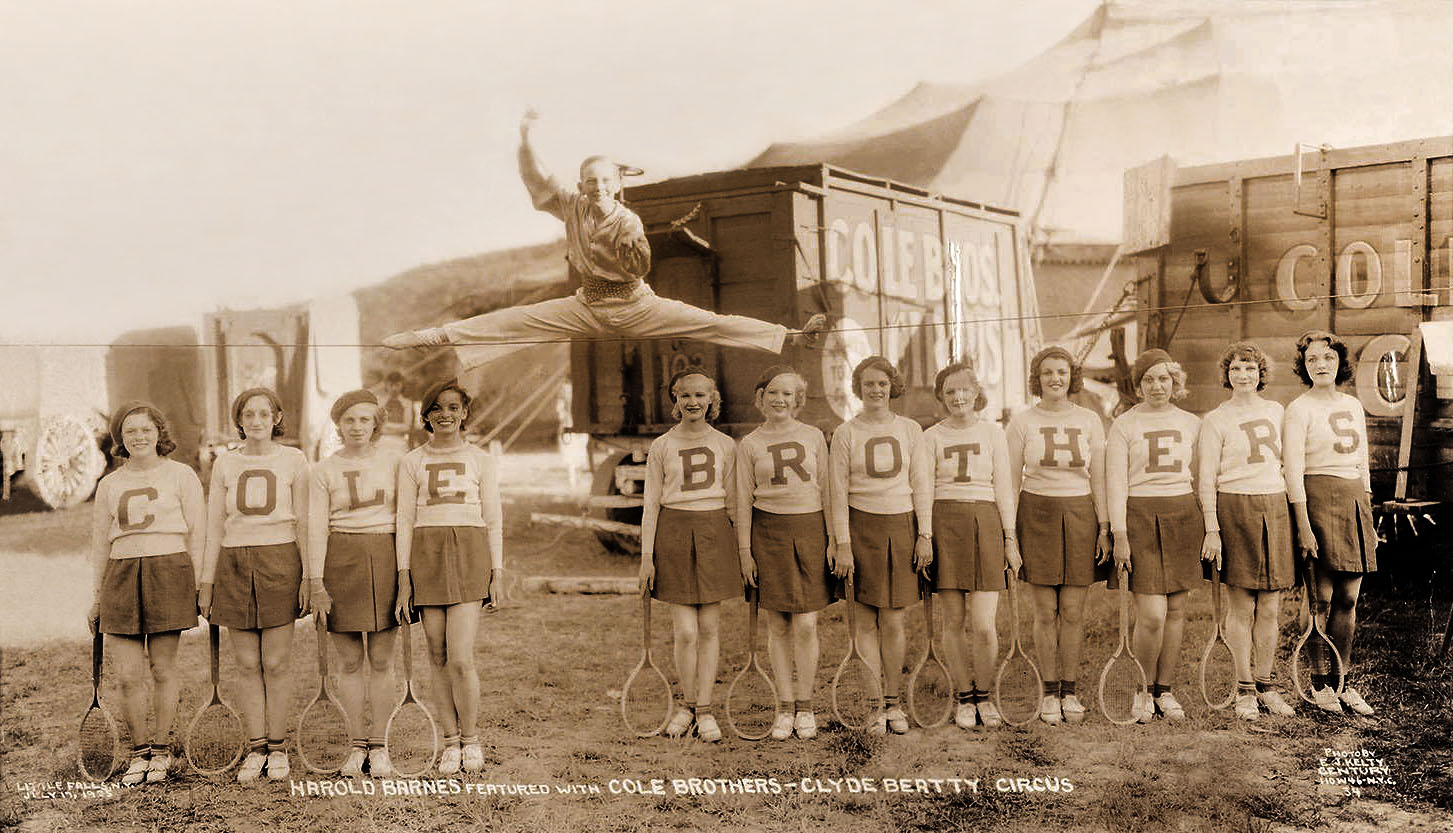
Edward J. Kelty (American, 1888-1967) Harold Barnes Featured with Cole Brothers – Clyde Beatty Circus, Little Falls, N.Y New York: Century, July 17, 1935 Silver gelatin print panoramic photograph 11 1/2 x 19 1/4″
The World’s Youngest Wire-Walking Wizard (1934)
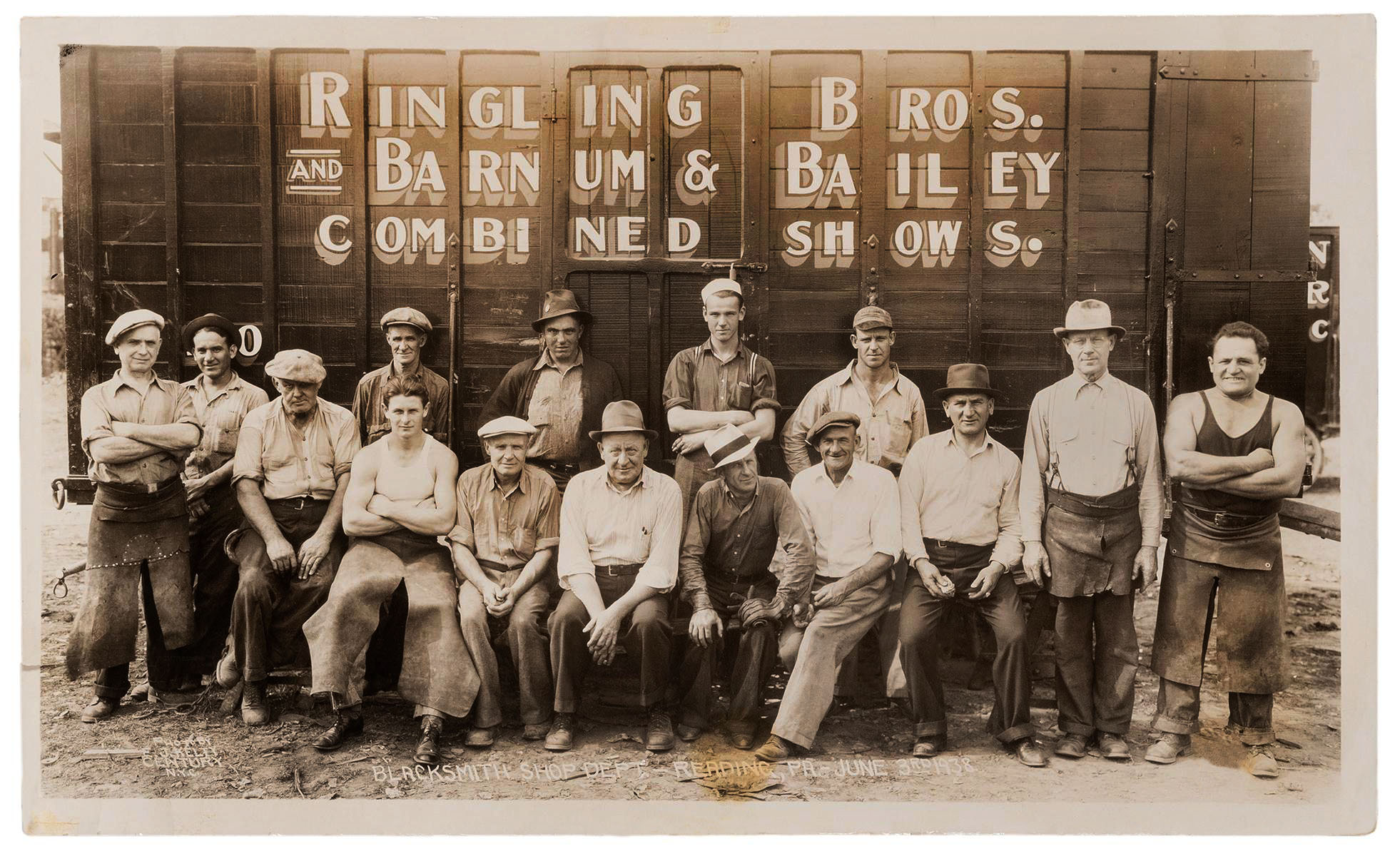
Edward J. Kelty (American, 1888-1967) Ringling Bros. and Barnum & Bailey Blacksmith Shop Dept. 1938 Gelatin silver print
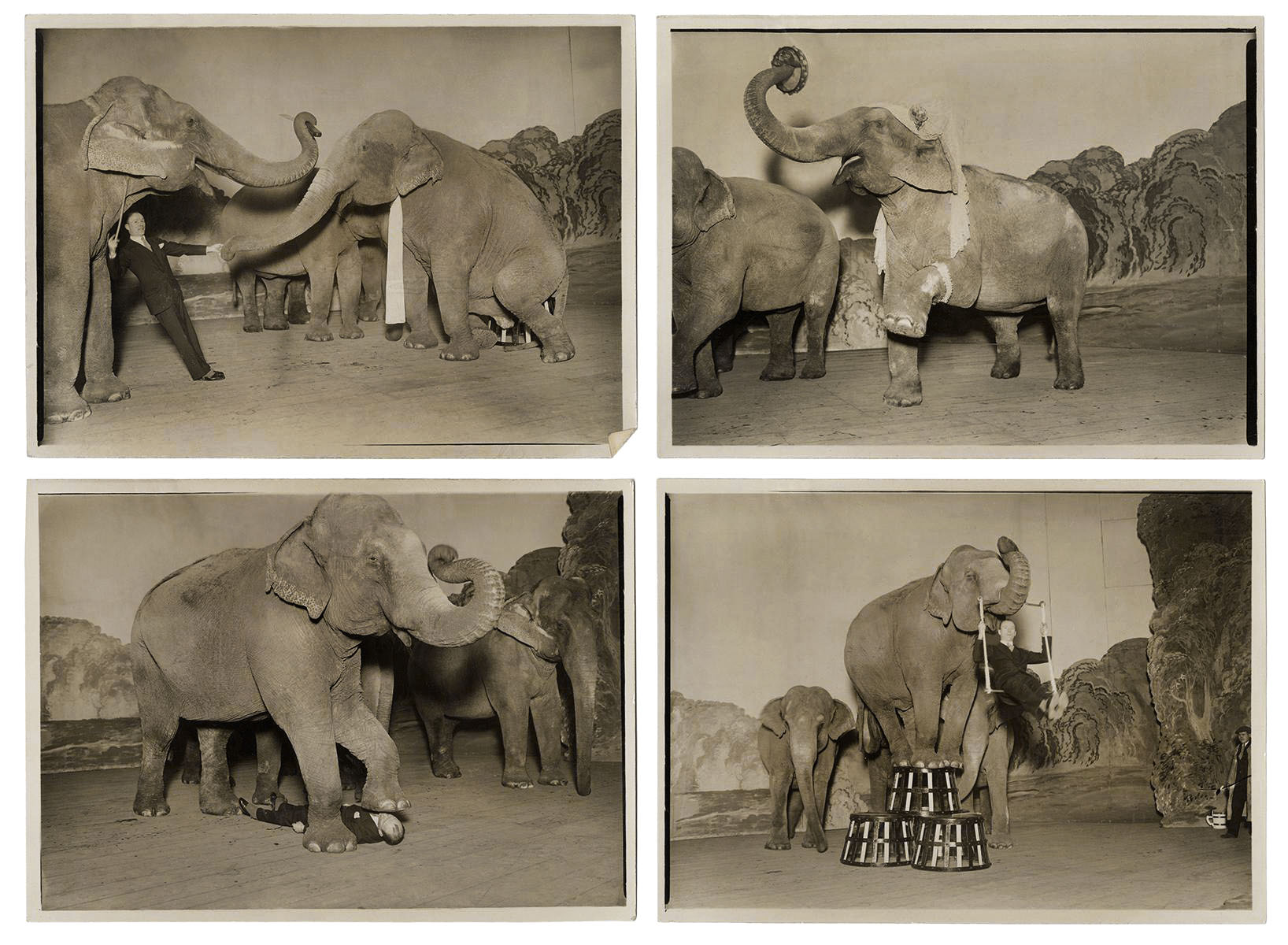
Unknown photographer (English?) “Lil” the performing elephant c. 1920s Gelatin silver prints 4 3/4 x 6 1/2″
“Lil” interacting with pedestrians and a trainer in an unknown location, but probably in England. Interesting to note that the trainer is a bowler-hatted black man back in the 1920s.
Unknown photographer (American) Performing elephants 1920s-1930s Gelatin silver prints
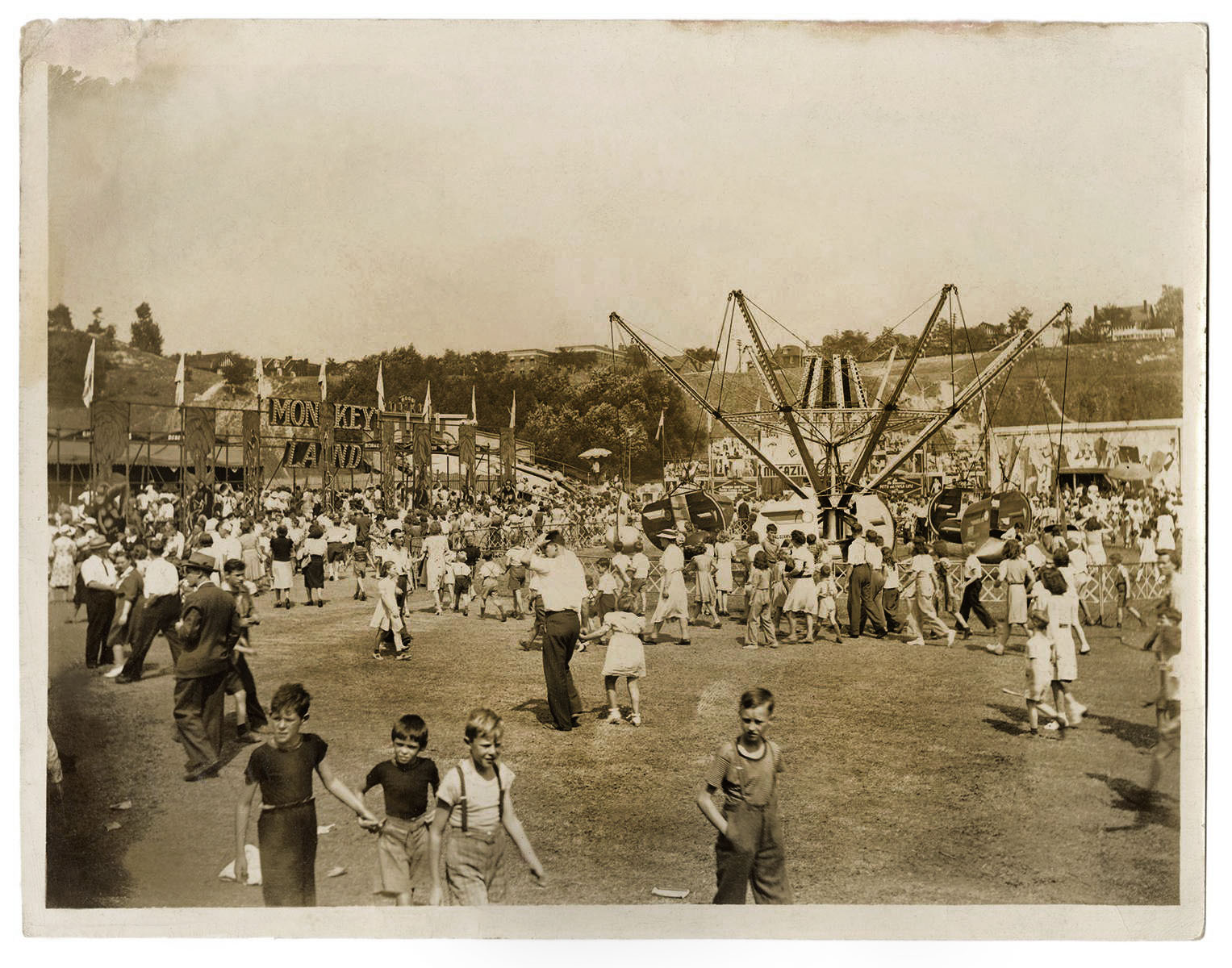
Unknown photographer (American) Monkeyland Early 1950s Gelatin silver print
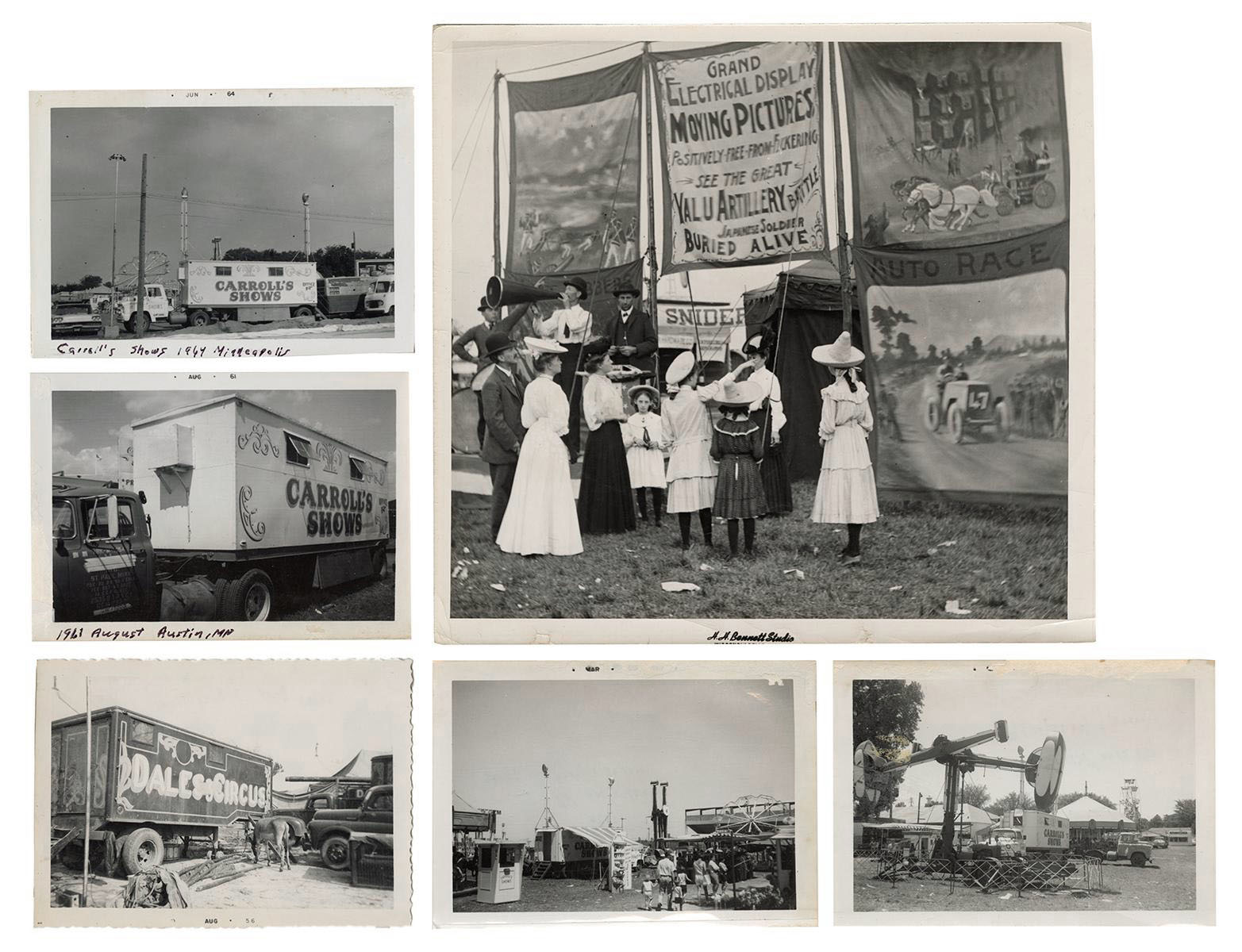
Unknown photographer (American) Dales Circus August 1965 Gelatin silver print
H.H. Bennett Studio (H.H. Bennett photographer, American 1843-1908) Grand Electrical Display Moving Pictures Positively Free From Flickering See the Great Valu Artillery Battle Japanese Soldier Buried Alive c. 1904 Gelatin silver print
The only reference I can find to the “Valu Battle” is an entry in the Bendigo Advertiser newspaper from Mon 9 May 1904 when commenting on the Russo-Japanese War, found on the Trove website. The reference to a Japanese soldier “buried alive” can only be a reference to this war.
The H. H. Bennett Studio is a historic photographic studio and photography museum located in Wisconsin Dells, Wisconsin, United States. The studio building was built in 1875 by noted landscape photographer H. H. Bennett. It was operated by his family until 1998, when the studio was donated to the Wisconsin Historical Society. Today the studio, which is listed on the National Register of Historic Places, serves as a historical museum.
Henry Hamilton Bennett (January 15, 1843 – January 1, 1908) was an American photographer famous for his pictures of the Dells of the Wisconsin River and surrounding region taken between 1865 and 1908. The popularity of his photographs helped turn the city of Wisconsin Dells, Wisconsin into a major tourist destination.
For more information on H. H. Bennett please see the Wikipedia website
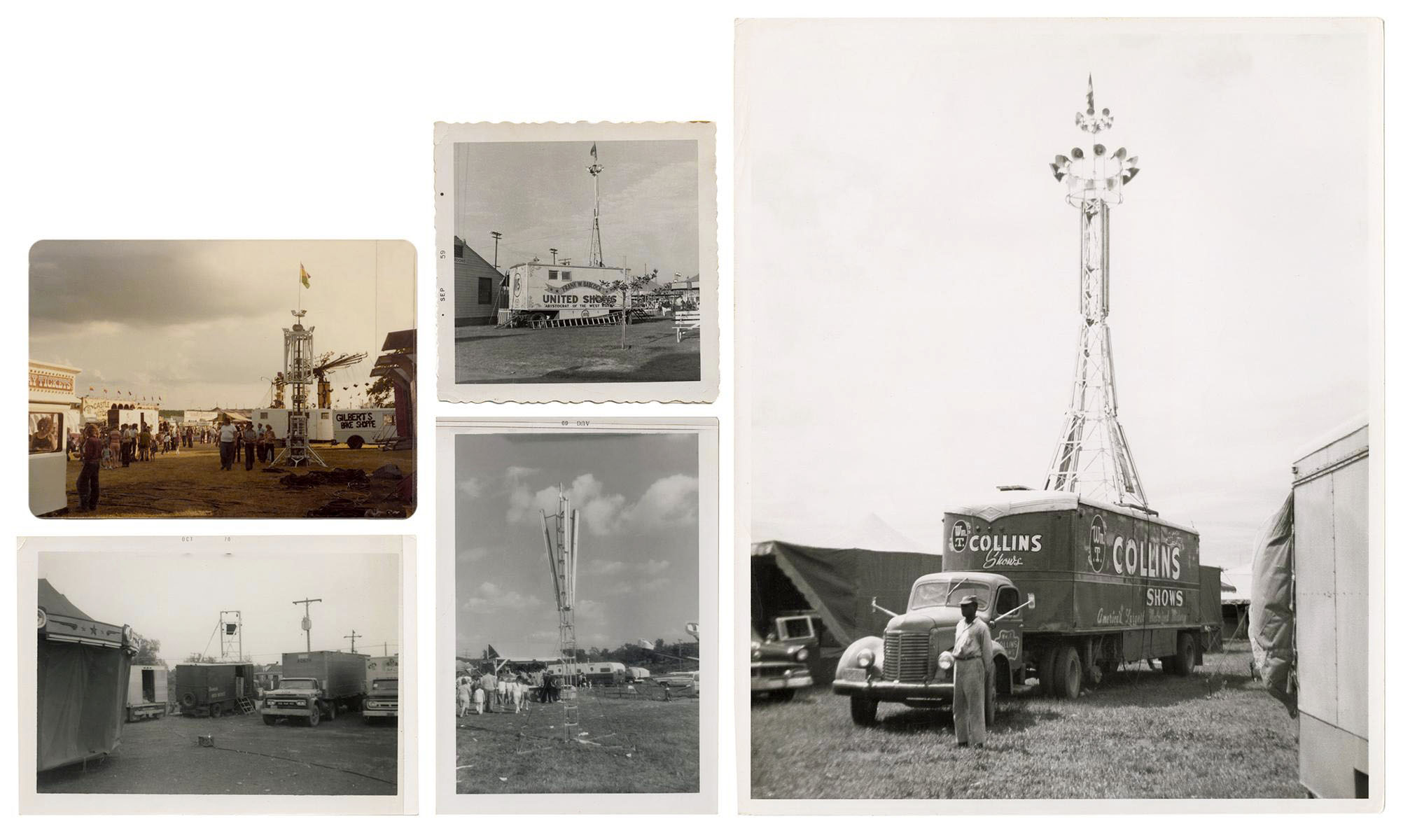
Unknown photographers (American) Carnival light towers 1950s-1970s Gelatin silver prints and colour photograph
Collins Shows possibly mid-late 1950s (right) Frank W. Babcock United Shows September 1959 (top centre) Other photographs are August 1969 (bottom centre), October 1970 (bottom left ) and the colour photo, early 1970s
Unknown photographers (American) Wild animals and motordromes and motorcycle “hell riders” Various dates Gelatin silver prints
Art 3. Thomas July 20, 1968 Canada
Morris-Hannum 1959 (prints July 1965)
Wild Animals Alive Nd
Queens of Speed Thrill Arena Lady Hell Riders Nd (mid-late 1950s?)
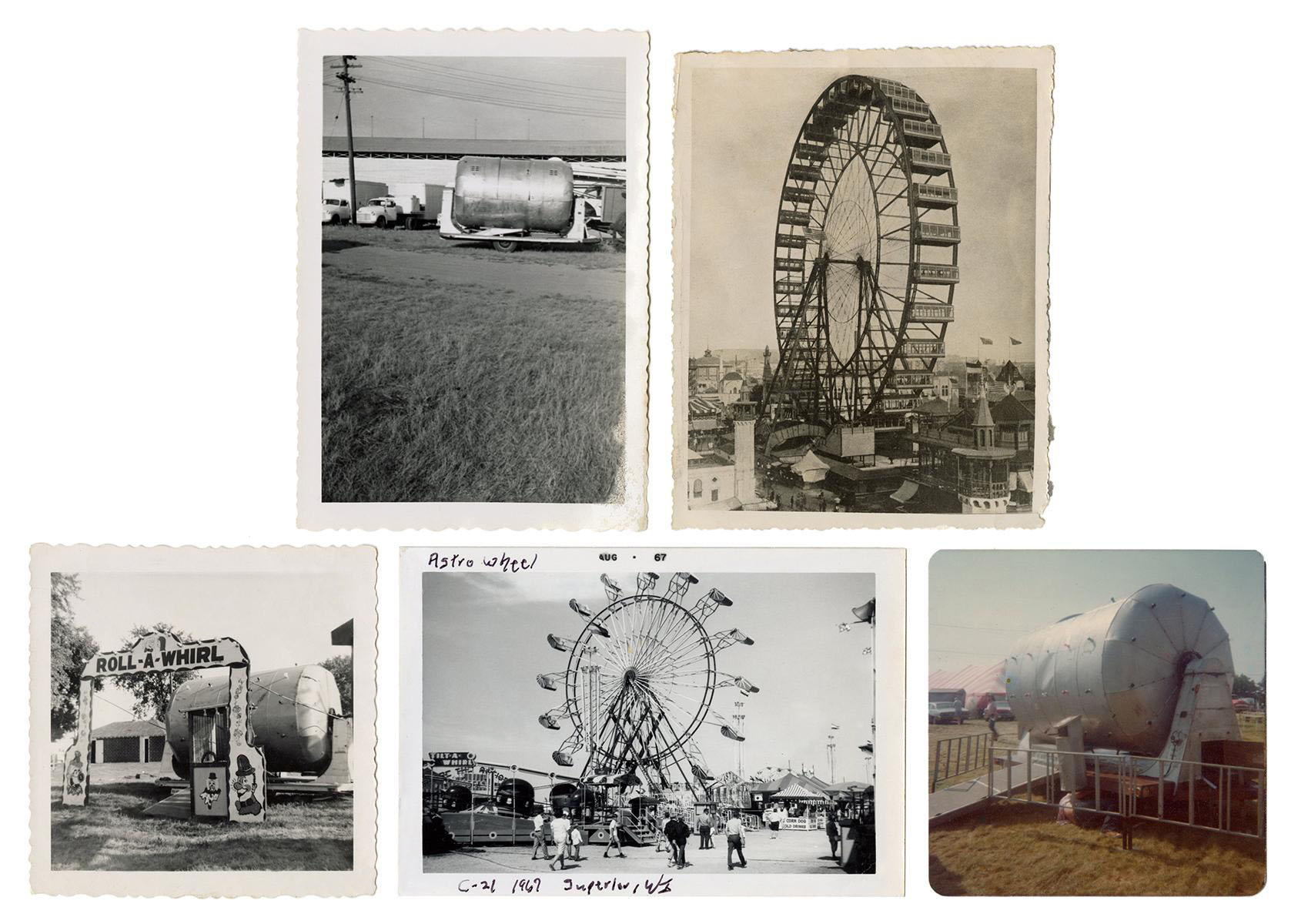
Unknown photographers (American) Astro Wheels and Roll-A-Whirl Various dates 1920s-1970s Gelatin silver prints and colour photograph
Unknown photographers (American) Carnival entrances Various dates 1950s-1970s Gelatin silver prints and colour photograph
James H. Drew World’s Fair & Exposition 1960s
Dobson Shows Blue Earth, MN July 2, 1961
Gayland Main Entrance August 1970
James H. Drew World’s Fair & Exposition June 1965
Penn Premier Shows Main Entrance 1950s?
Bill Dillard Presents Myers Amusements Co. August 1973
T. S. & W. T. Main Rides Shows Entrance Nd
Unknown photographer (American) James H. Drew Shows Torture Show, Sadistic Atrocities First Time Here See Them Suffer How Could They Be Unfaithful September 1959 Gelatin silver print
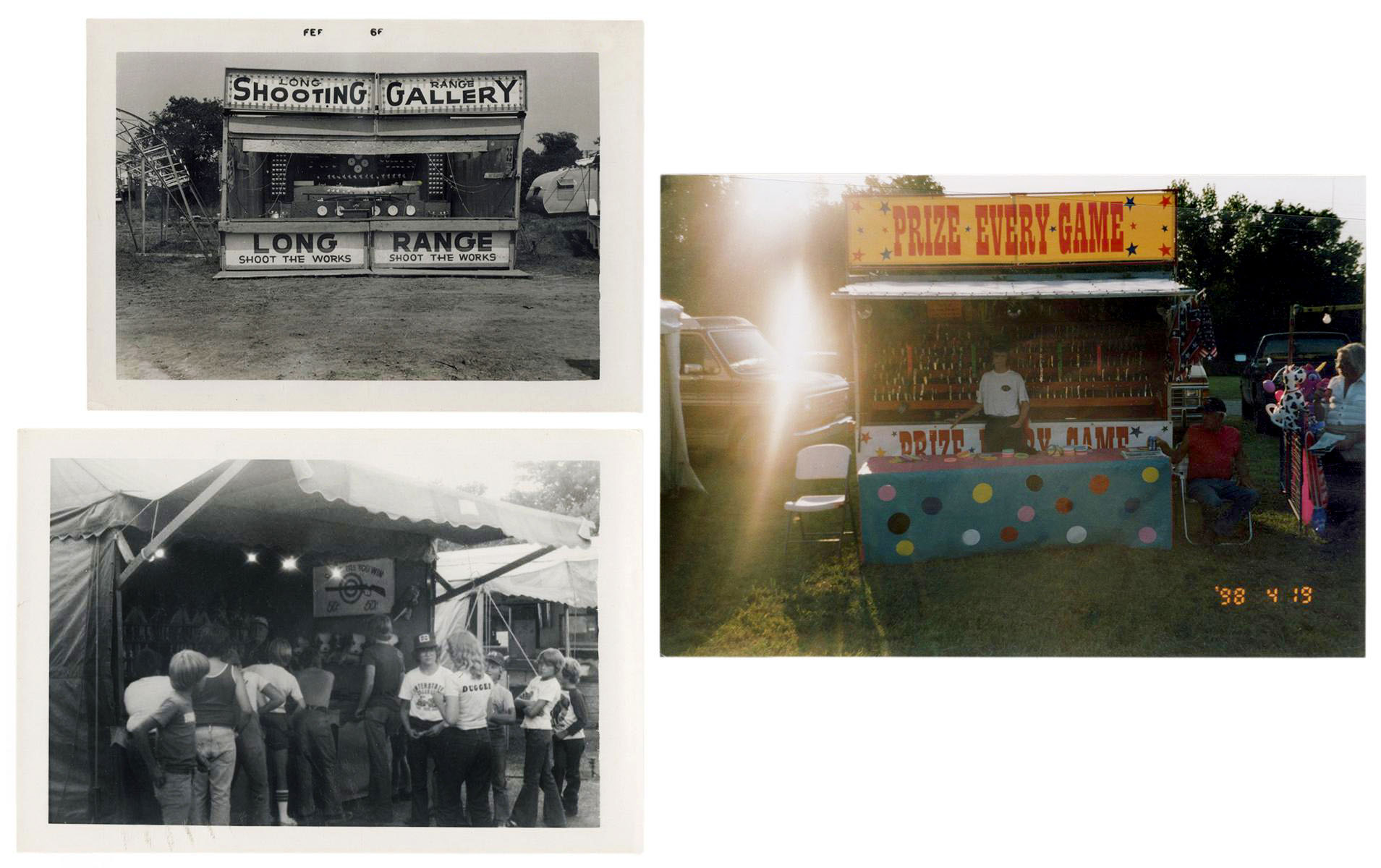
Unknown photographers (American) Shooting galleries and Prize Games carnival “fronts” Various dates 1960s-1990s Gelatin silver prints and colour photograph
Long Range Shooting Gallery February 1966
Prize Every Game 19th April 1998
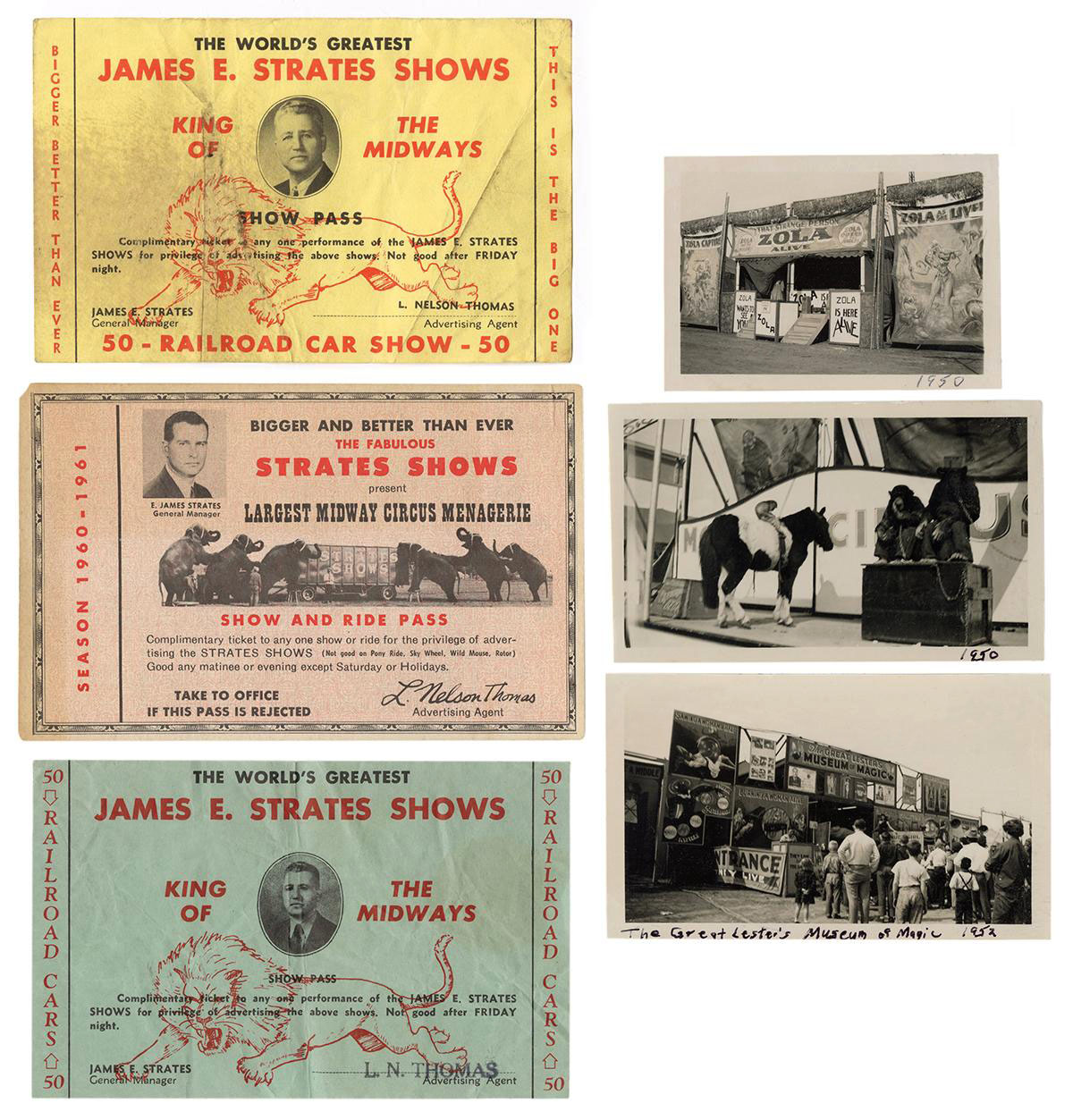
Unknown photographers (American) James E. Strates Shows Inc., 1940s Logo and Gelatin silver prints
Hitler’s Monsters(?) after Death Hitler and Tojo: See The Now c. 1946-1948
Dwarfs 1947
Magician banner 1948
Wild animals 1947
James E. Strates Shows trailer 1947
James E. Strates Shows Massive show passes King of the Midways 1950s-1960s
Unknown photographer (American) The Great Lester’s Museum of Magic 1952 Gelatin silver print
Jack Zipf and unknown photographers (American) The Great Lester c. 1950 Gelatin silver photo collage print 8.5 x 10″
Photo collage print of The Great Lester and his performance feats, publication honours, and Museum of Magic
“The Great Lester’s Museum of Magic
The LESTERS’ (Top right): Picture (right) by Jack Zipf, Staff photographer THE PROGRESS, Clearfield, Penna.
MYSTIFYING and marvelous, THE GREAT LESTER’S MUSEUM offers magic and illusions which battle but entertain and fascinate. The refined and clean manner in which the show is presented has brought laudatory comment from the press and educators the nation over. Gorgeous girls add charm and intrigue to the mystifying fantasies. LOOK and LIFE magazines proclaimed Lester the greatest and top magician of the times. Always anxious to witness things which are mysterious, the crowd above is ready for the “come on in” invitation.”
Unknown photographers (American) Monstrosities and oddities shows 1880s-1960s Gelatin silver prints
Calcutta Monster sideshow “front” c. 1957
Adolph-Rudolph Siamese Twins 27 years old Born, Vienna, Austria c. 1880s
Adolph and Rudolph were false Siamese (cojoined) twins traveling with P. T. Barnum in the late 1800’s. Rudolph had tiny malformed legs. It seems Barnum considered the affliction not unique enough in itself and thought there was more money to be made by rigging a “cojoined twin harness” with his twin brother.
Rudolph had malformed legs and considered the affliction not curious enough to command the amount of money that Siamese twins were making at the time, so he rigged a conjoined-twin harness to attach to his twin brother.
The Man with the biggest Feet in all the World “Francisco Sandoval Rios” Weight: 180 Height: 5’2″ Speaks Spanish Only He Can Walk Comes from Central America Printed in U.S.A. 1970s
A Nicaraguan man in his 30’s who probably had Milroy’s disease, as did many who were billed as “Big Foot” people.
Arctic Whale Clyde Beatty Circus 1950s
Clyde Beatty (June 10, 1903 – July 19, 1965) was a famed animal trainer, zoo owner, and circus mogul. He joined Howe’s Great London Circus in 1921 as a cage boy and spent the next four decades rising to fame as one of the most famous circus performers and animal trainers in the world. Through his career, the circus impresario owned several circuses, including his own Clyde Beatty Circus from 1945 to 1956.
Unknown photographer (American) Calcutta Monster sideshow in Florida c. 1957 Gelatin silver print
Primarily a snake show, boas were very rare and were a good draw for a sideshow during this era.
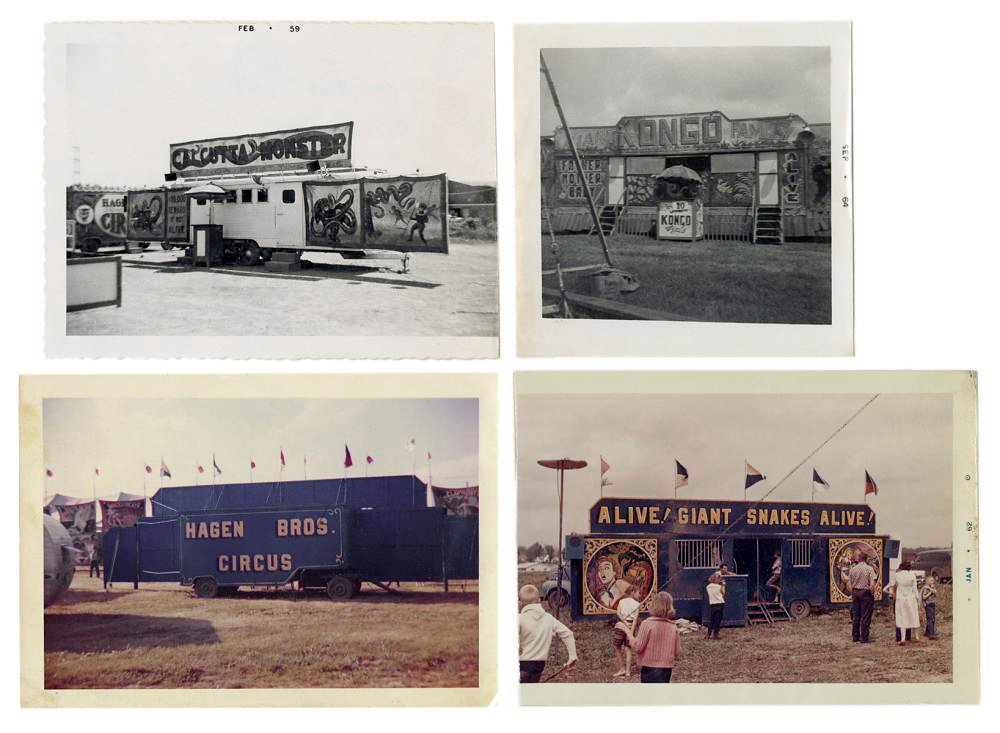
Unknown photographers (American) Monsters shows 1950s-1960s Gelatin silver prints
Calcutta Monster sideshow February 1959
Giant Kongo Family Alive September 1964
Hagen Bros. Circus Alive! Giant Snakes Alive! January 1962
Front and rear of the same sideshow trailer.
Hagen Bros. truck show that was on the road from 1949 until 1961. The circus was owned by Howard W. Suesz who also owned the “Clyde Bros. Circus”, which was an indoor circus, playing in buildings and stadiums.
The Clyde Bros. Circus played mostly Shrine dates in larger towns and the Hagen Bros was set up to show under canvas in smaller cities. The circus was managed by Robert Couls and Joe McMahon was the general agent. The Circus made Edmond Oklahoma it’s winter Home.
Anonymous text from the Circuses and Sideshows website [Online] Cited 09/02/2022
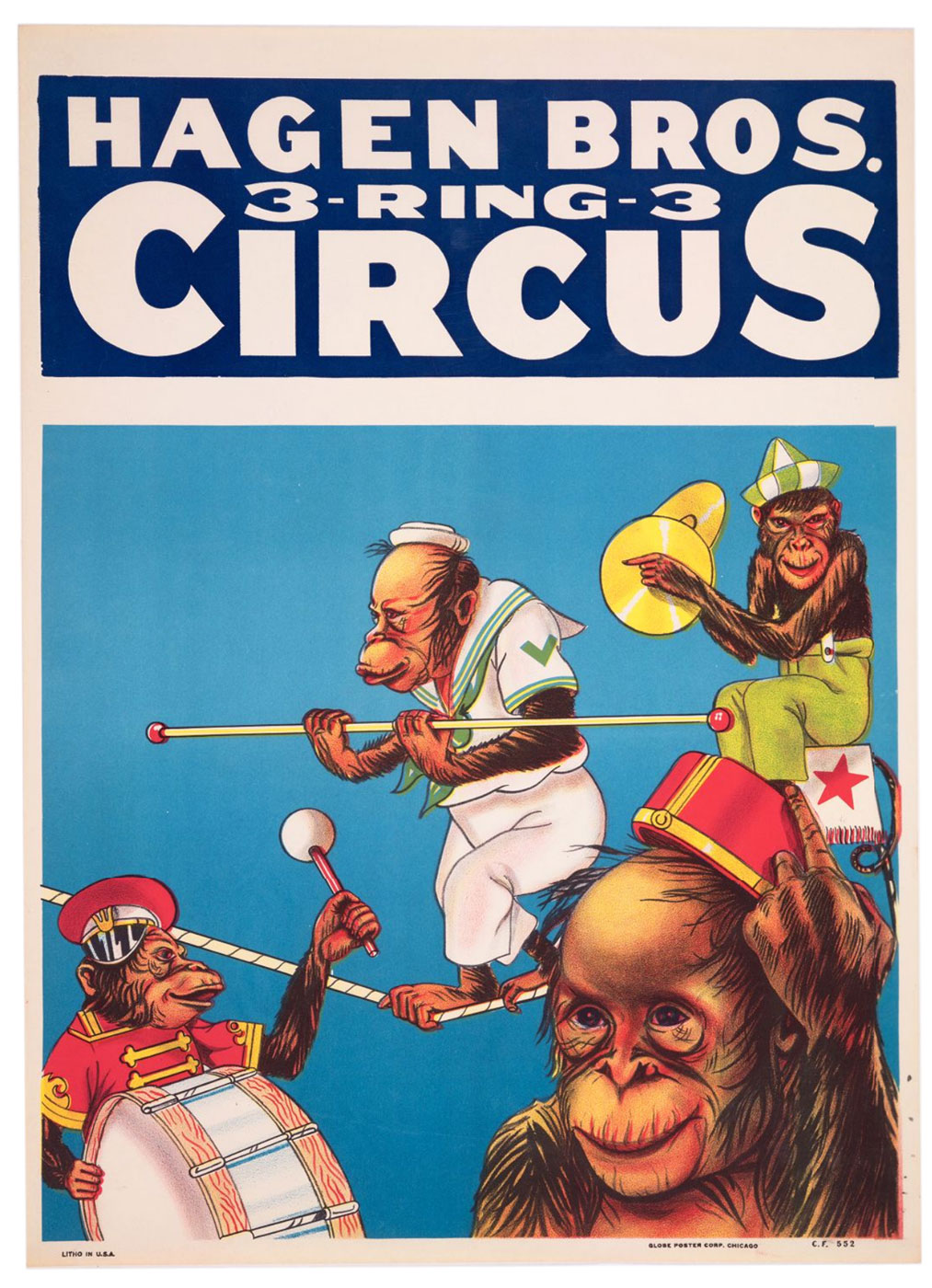
Globe Poster Corp. (printer) Hagen Bros. 3-Ring-3 Circus between 1950 and 1961 Colour lithograph 71.44 x 52.07cm (28 1/8 x 20 1/2 in.) The Jay T. Last Collection of Graphic Arts and Social History, Huntington Digital Library
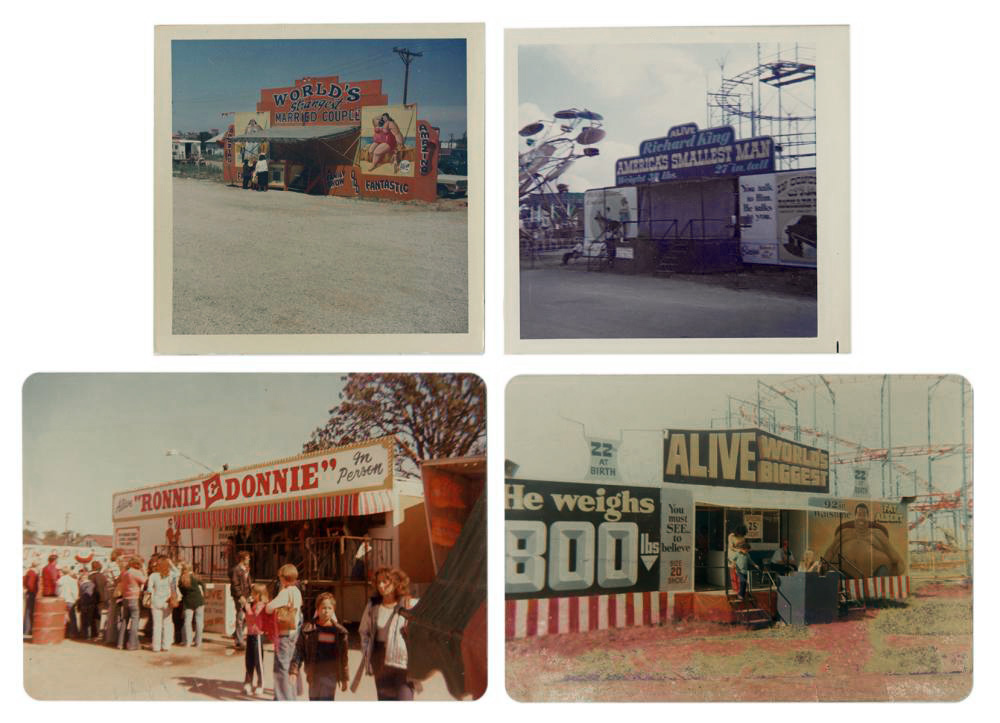
Unknown photographers (American) Human attractions 1960s-1970s Gelatin silver prints
World’s Strangest Married Couple
Alive Richard King America’s Smallest Man 27 in tall
“Ronnie & Donnie” In Person
Ronnie and Donnie Gaylon were conjoined twins, born on October 28, 1951 and died on July 4, 2020, making them the world’s longest-surviving conjoined twins who worked in carnivals and circuses as a sideshow act from the age of three.
“The twins exhibited themselves in an air-conditioned trailer for most of their carnival show careers. They lounged about watching television while spectators paid to peer in the window to observe them conduct daily life. Old advertisements read: ‘Still a sensation! The Gaylon Siamese twins, the U.S.’s most visited attraction on any Midway.’
Ronnie and Donnie found a community among the sideshow performers and workers who ran the concession stands. Their friends included Johann the Viking Giant; Little Pete, who was billed as the smallest man in the world, and Margaret Pellegrini, an actress who starred as a munchkin in The Wizard of Oz.
‘When we were on the road, it was all like one big family,’ said Ronnie to MLive in 2014.
As freak shows and carnival acts became taboo in the United States during the 1970s, the ‘Sensational Siamese Twins’ took their act to Central and South America where they performed as the headlining act in the circus doing magic tricks.
‘They were treated totally different down there,’ said their brother Jim. ‘They were treated like rock stars’.”
Tate Delloye. “World’s longest-surviving conjoined twins who worked in carnivals and circuses as a sideshow act from the age of three – and always insisted they ‘lived a good life’ – die together at the age of 68,” on the Daily Mail website 7 July 2020 [Online] Cited 10/04/2022
He weighs 800 lbs You must See… to believe ALIVE World’s Biggest 92 st Fat Albert
T.J. “Fat Albert” Jackson (Kent Nicholson) (American, 1941-1988)
One of the last performing fat men in the United States was Kent Nicholson, who used the alias T.J. “Fat Albert” Jackson. He was born around 1941 in Canton, Mississippi. Although he was exceptionally large since birth, his parents taught him never to be ashamed of himself. His highest recorded weight was said to be 898 pounds. Albert’s wife Carrie and daughter Arkeba accompanied him on tour for nine months out of the year. He continued appearing at carnivals and fairs well into the 1980s, along with Eddie Taylor, a dwarf known as the World’s Smallest Man, and successfully avoided being shut down by politically correct reformers who found his show “insensitive”.
“HI! My name is T.J. Albert Jackson, better known as Fat Albert. I was born in the U.S.A. At birth I weighed 22 lbs. 6 ½ oz., and was 26 ½ inches long. At present I am 872 lbs. and 6′ 4 ½” tall and still growing! I also have a wife. She is 110 lbs., and 5’3″ tall. WE ALWAYS LIKE TO MEET NEW FRIENDS. GOD BLESS YOU. HEY, HEY, HEY! FAT ALBERT. Thank you.”
Albert died in Baton Rouge, Louisiana, on December 18, 1988.
Text from the Find A Grave website 24 Oct 2010 [Online] Cited 10/04/2022
Unknown photographers (American) Girl Shows: Girl reviews and Rock ‘N’ Roll 1960s Gelatin silver prints
Kitty’s Starlite Review Nd
Vals Girls July 1965
Mickie Girl Review January 1962
Rock ‘N’ Roll October 1960
Burlesque and “girl revue” shows at carnivals
Unknown photographers (American) Century 21 Shows Presents Roxanne’s Playgirls Century 21 Shows Presents Broadway A-Go-Go 1960s-1970s Gelatin silver print and colour photographs
Burlesque and “girl revue” shows at carnivals
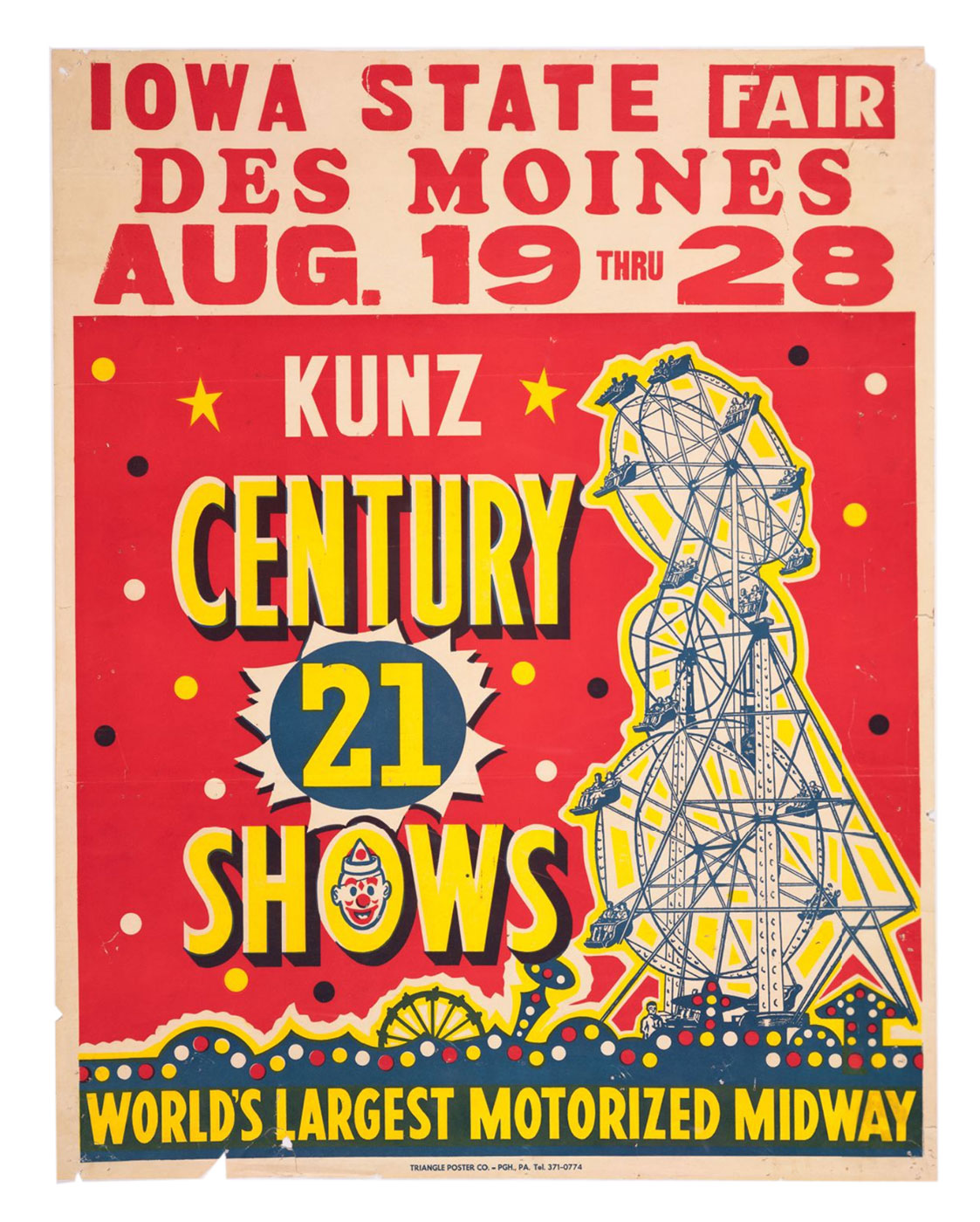
Triangle Poster & Printing Company (printer) Kunz Century 21 Shows: world’s largest motorized midway c. 1966 Colour lithograph 71.12 x 55.56cm (28 x 21 7/8 in.) The Jay T. Last Collection of Graphic Arts and Social History, Huntington Digital Library
Midway (fair)
A midway at a fair (commonly an American fair such as a county or state fair) is the location where carnival games, amusement rides, entertainment, dime stores, themed events, exhibitions and trade shows, pleasure gardens, water parks and food booths cluster.
The term originated from the World’s Columbian Exposition held in Chicago, Illinois, in 1893. It was the first world’s fair with an area for amusements which was strictly separated from the exhibition halls. This area, which was concentrated on the city’s Midway Plaisance, included amusement rides (among them the original Ferris Wheel), belly dancers, balloon rides, and other attractions.
After the Exposition, the term midway came into use as a common noun in the United States and Canada to refer to the area for amusements at a county or state fair, circus, festival, or amusement park.
Many thankx to the The Morgan Library & Museum for allowing me to publish the photographs in the posting. Please click on the photographs for a larger version of the image.
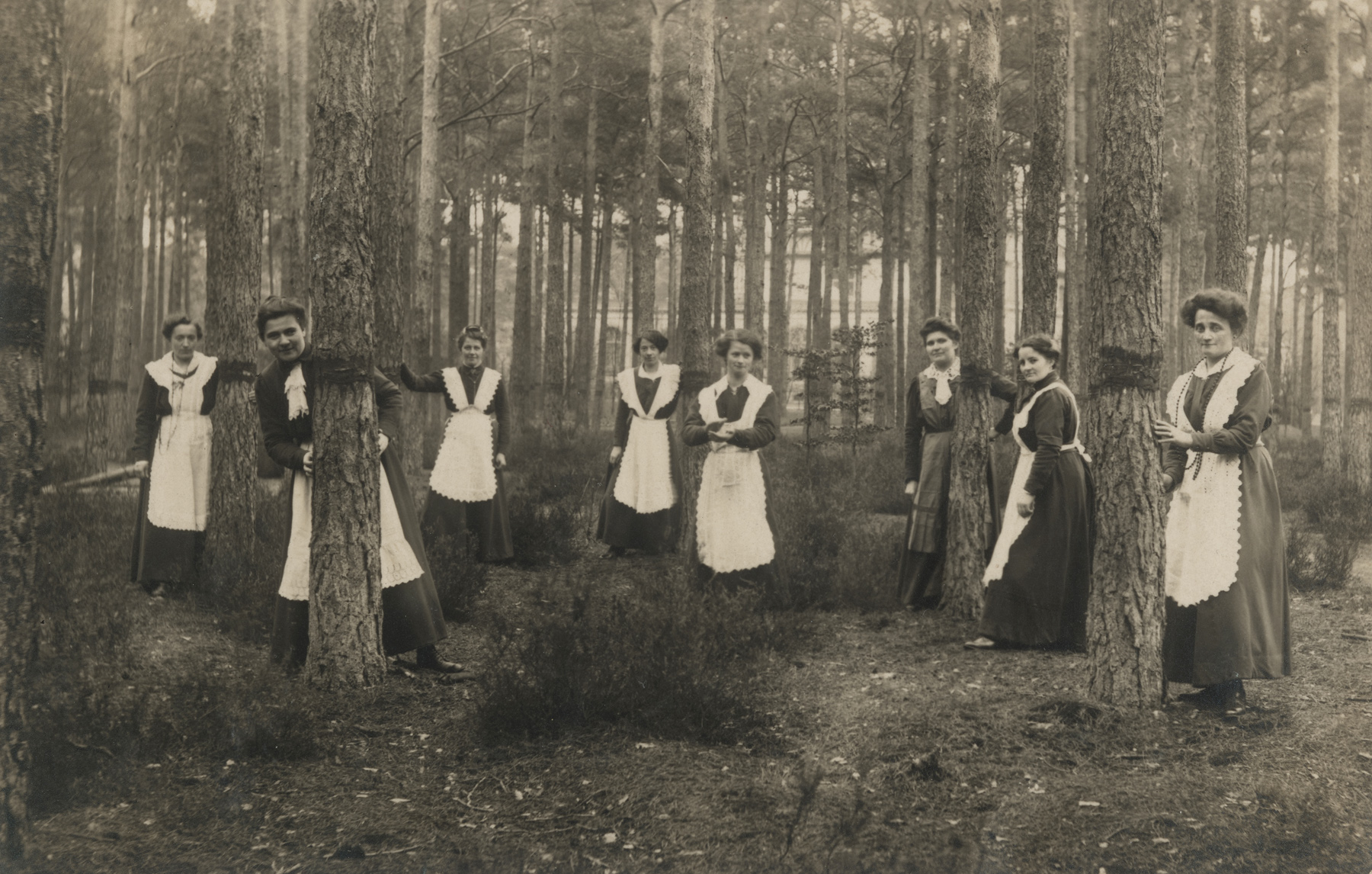
Photographer Unidentified Untitled (women in aprons pose among trees) 1913 Commercially processed gelatin silver print; postcard The Morgan Library & Museum Gift of Peter J. Cohen
Photographer Unidentified Untitled (women in aprons pose among trees) (detail) 1913 Commercially processed gelatin silver print; postcard The Morgan Library & Museum Gift of Peter J. Cohen
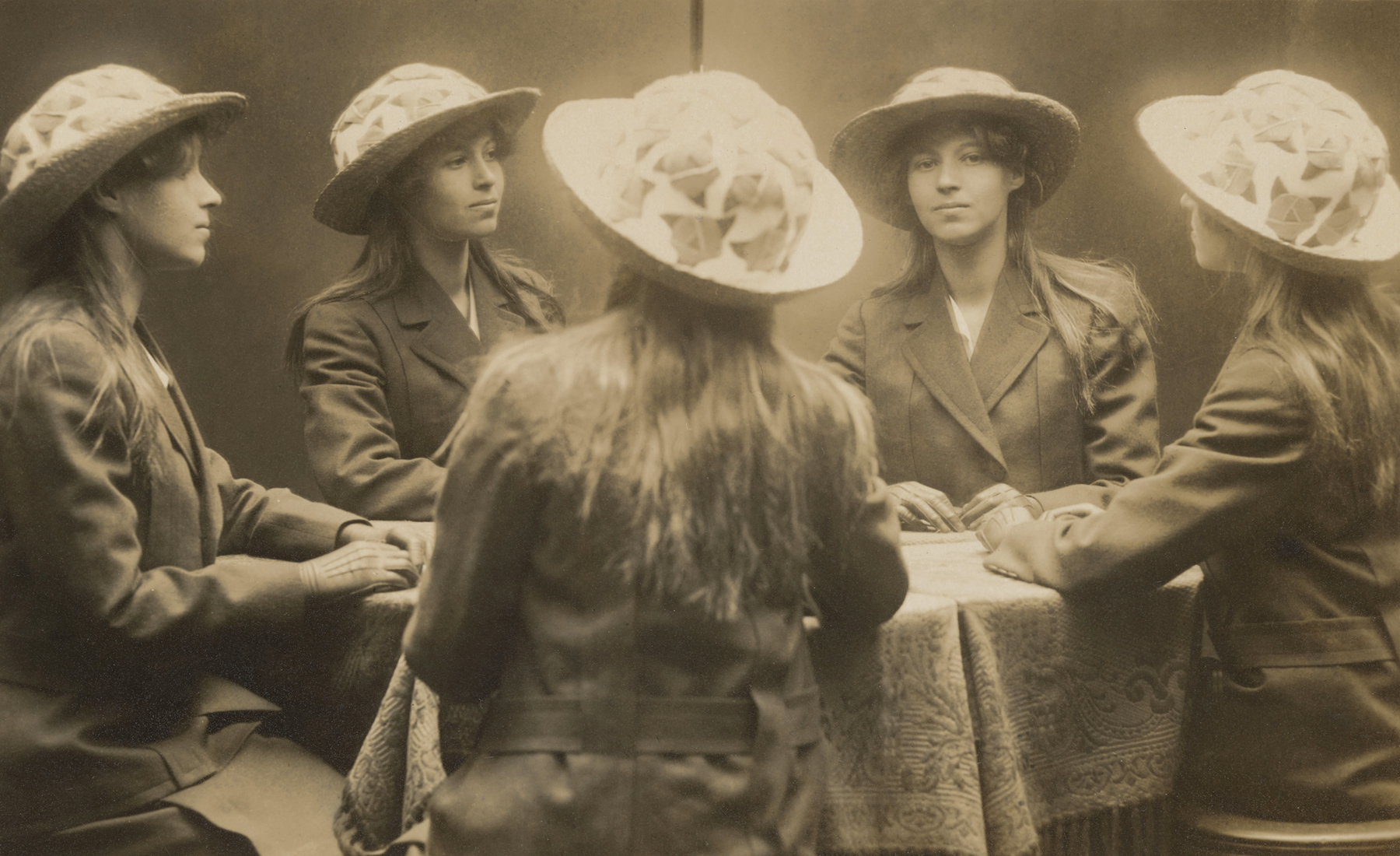
Myers Cope Co. Atlantic City Photo-multigraph of unidentified girl (Woman in trick photo-booth) c. 1920s Gelatin silver print with postcard back The Morgan Library & Museum Gift of Peter J. Cohen
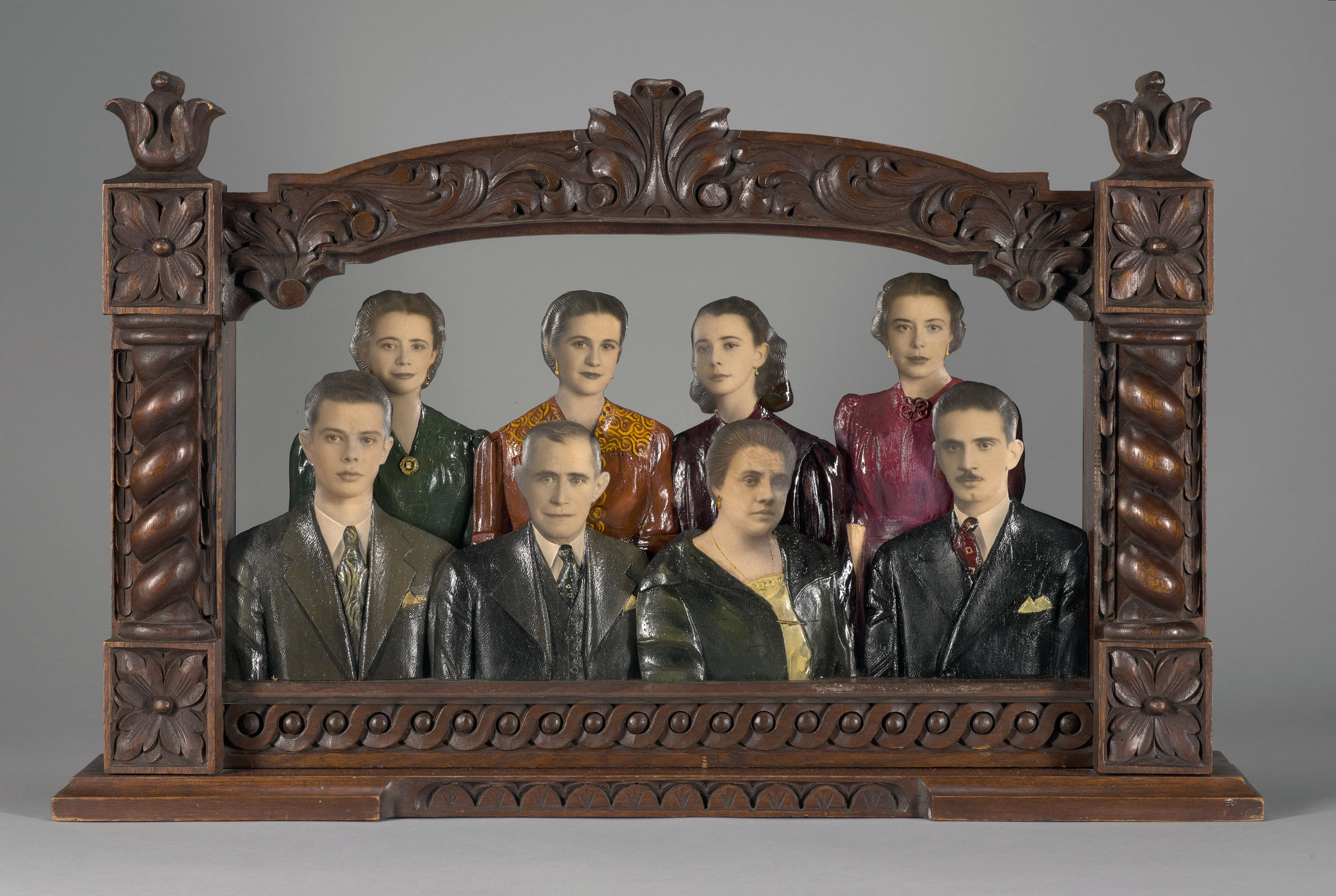
Studio Retrato-Escultura Victor Fotoescultura with eight subjects c. 1940s Carved, painted, and assembled wood with hand-coloured gelatin silver prints The Morgan Library & Museum Purchased as the gift of Richard and Ronay Menschel
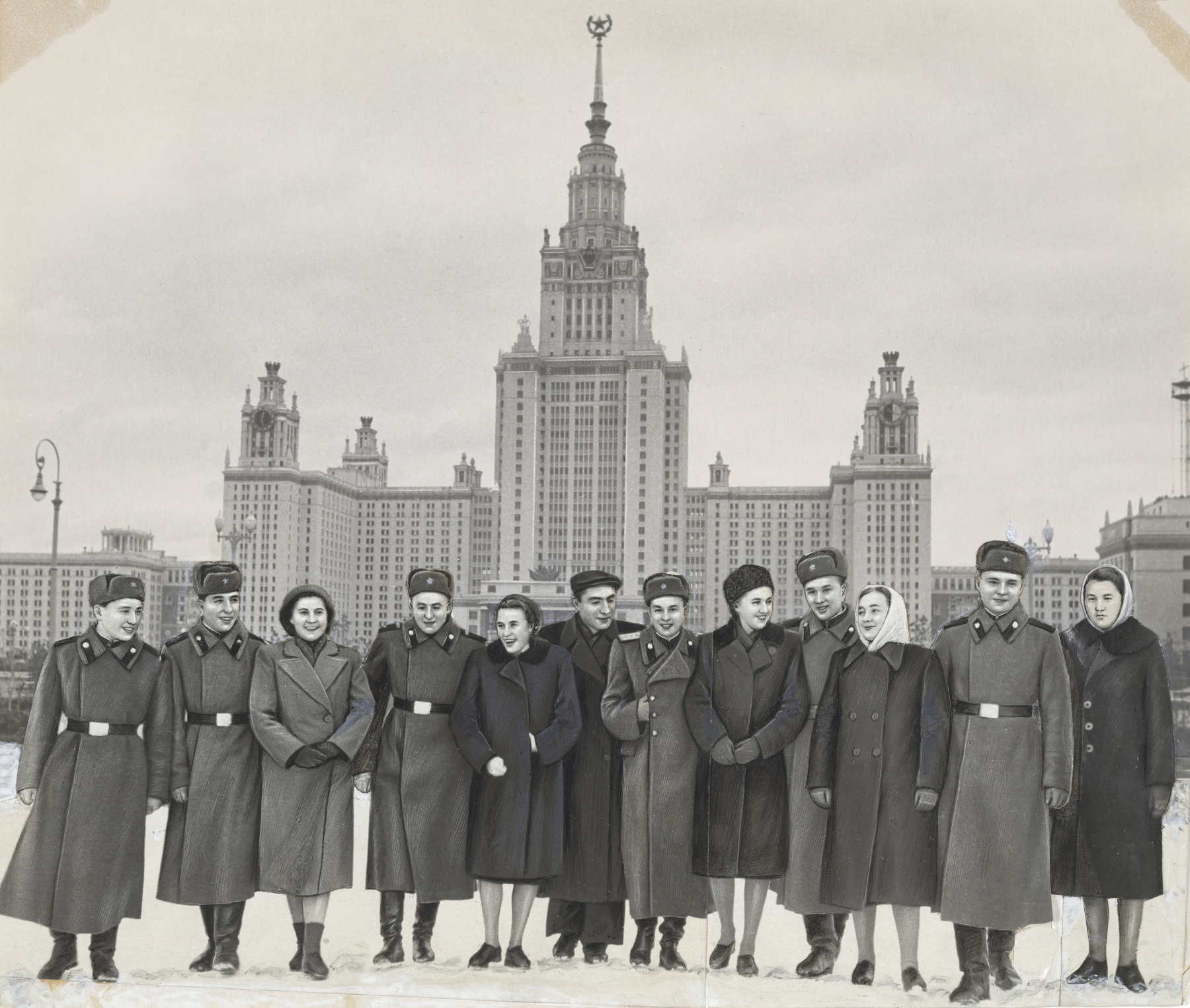
Photographer Unidentified Group at the Main Building, Moscow State University after 1953 Gelatin silver print and mixed media The Morgan Library & Museum Purchased as the gift of Peter J. Cohen
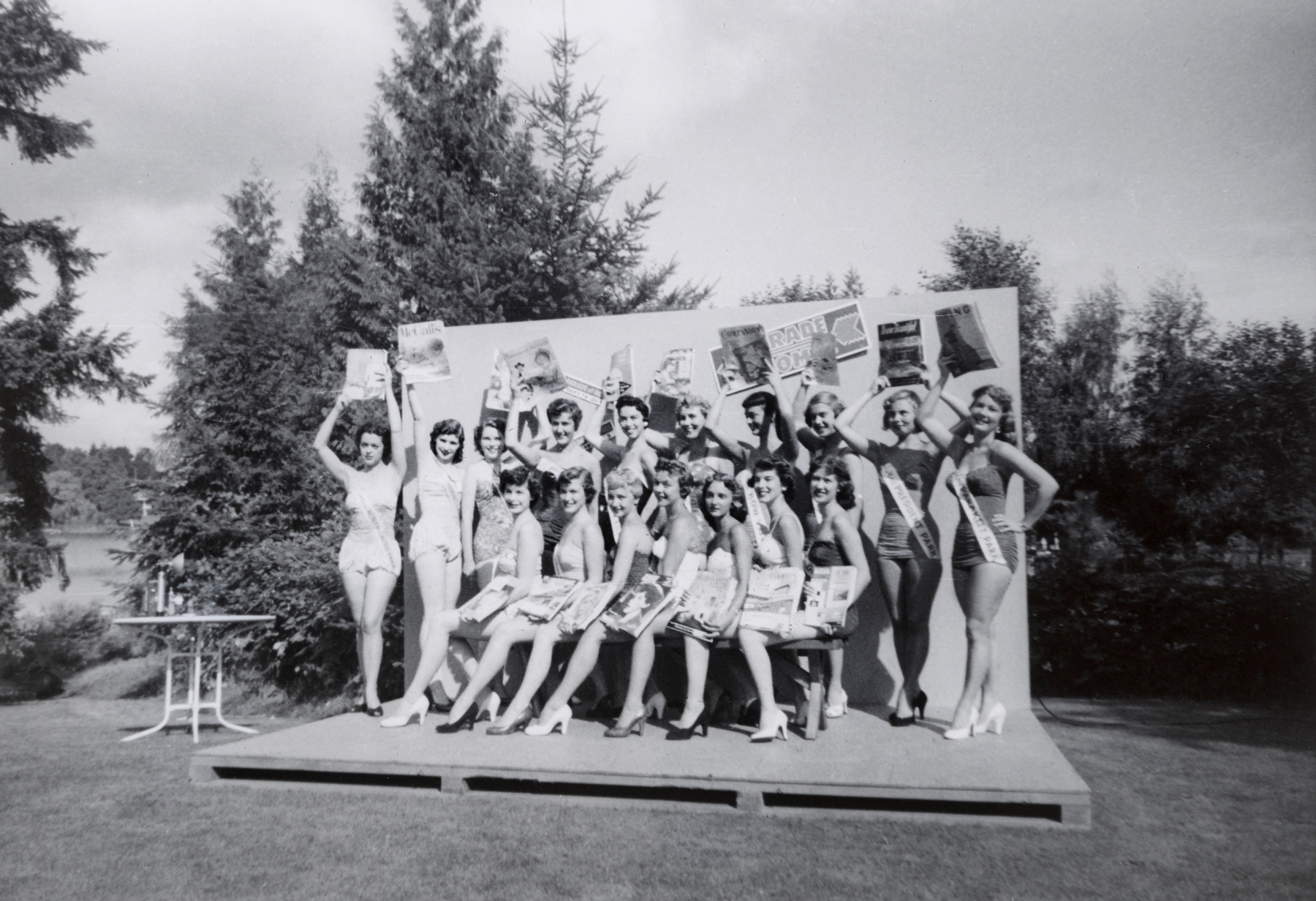
Photographer Unidentified (American) Untitled (seventeen women in swimsuits hold magazines up on a low stage on a lawn) 20th century (c. 1950s) Commercially processed gelatin silver print The Morgan Library & Museum Gift of Peter J. Cohen
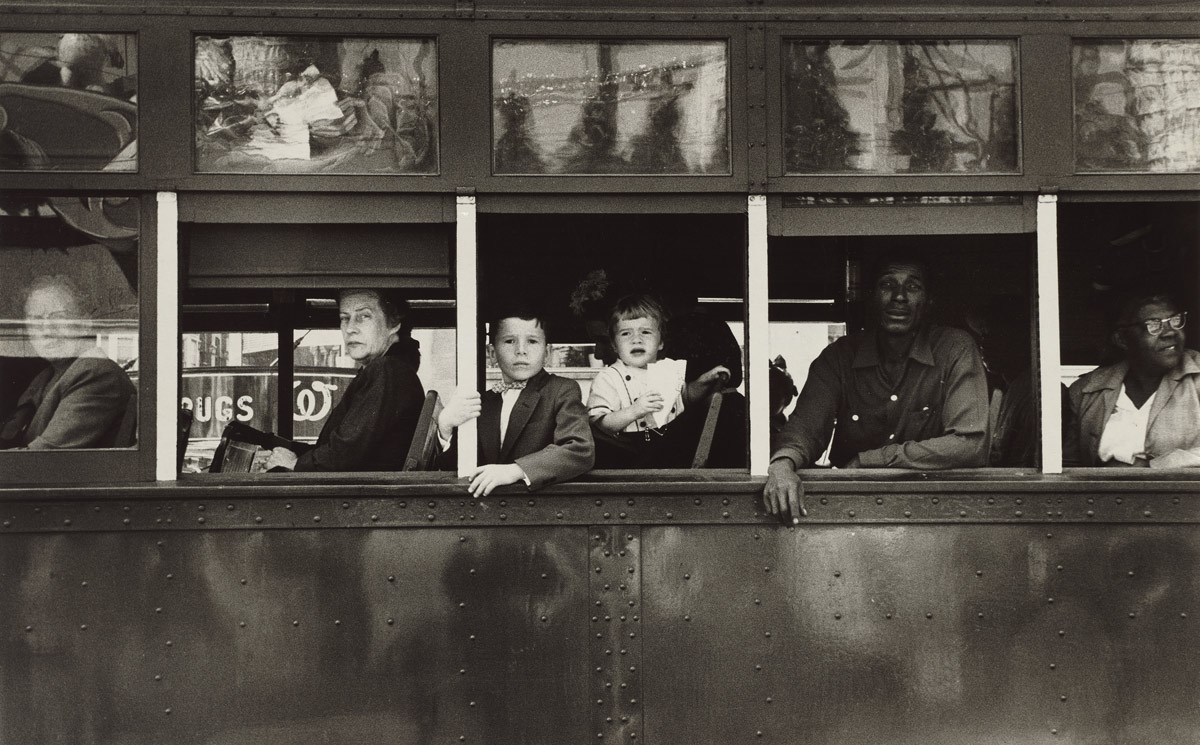
Robert Frank (Swiss-American, 1924-2019) Trolley – New Orleans 1955 Gelatin silver print The Morgan Library & Museum
The Morgan Library & Museum presents a new exhibition about photography’s unique capacity to represent the bonds that unite people. From posed group portraits and candid street scenes to collages, constructions, and serial imagery, photographers have used many methods to place people in a shared frame of reference. Opening May 31, 2019, Among Others: Photography and the Group brings together more than sixty exceptional works spanning the 1860s to the present to explore the complexity of a type of image that is often taken for granted. Drawn primarily from the Morgan’s collection, the works in the exhibition include images by Amy Arbus, Eve Arnold, Robert Frank, Peter Hujar, and August Sander.
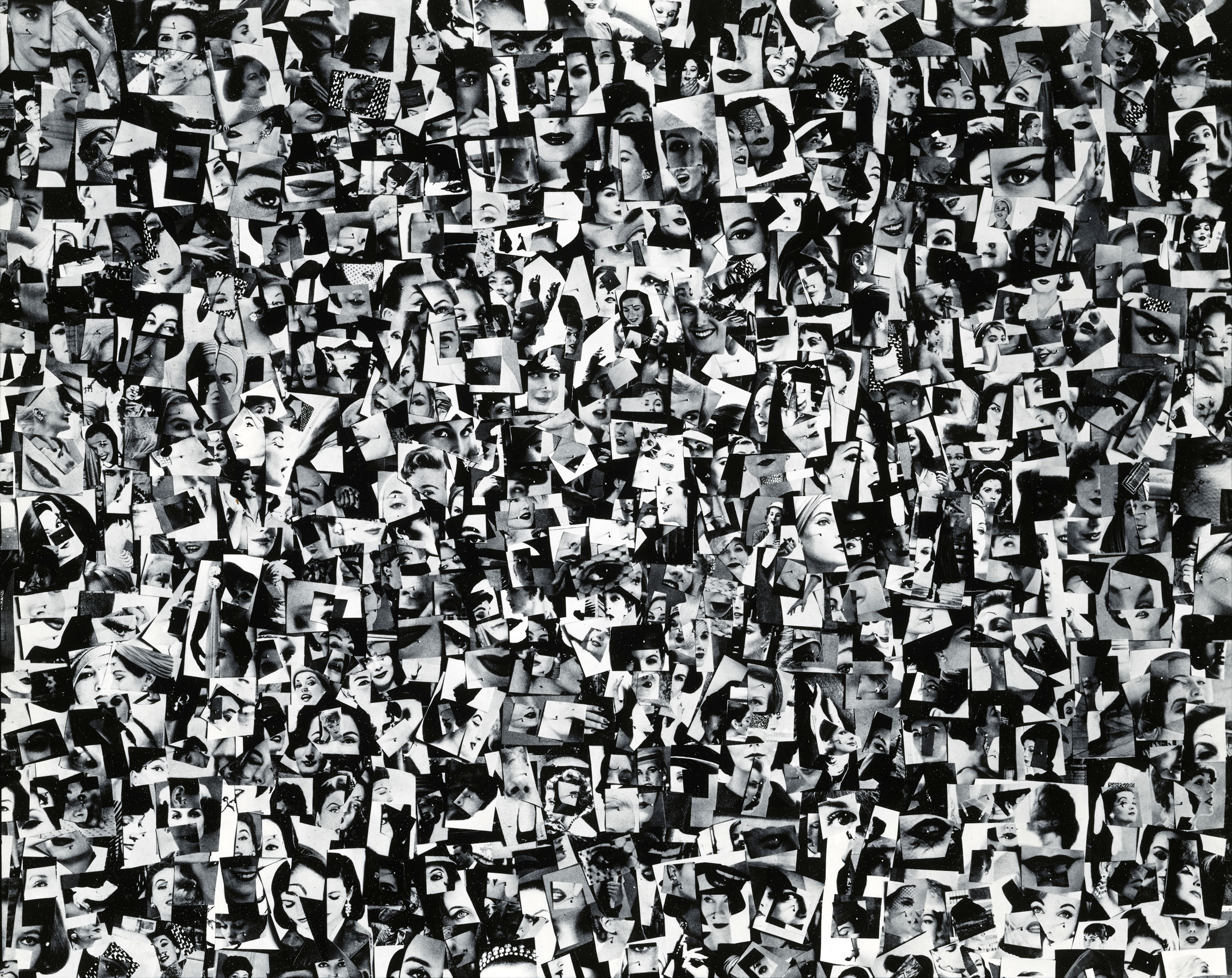
Among Others presents the seemingly endless possibilities of the group photograph, placing historically important portraits alongside records of significant cultural moments and experiments that helped reinvent the genre. In representations of the group, artist, subjects, and circumstances come together to create an image that might call to mind a loving family, a chance encounter among strangers, an embodiment of the democratic spirit, or a photographer’s ability to read and respond to a crowd. The photographs in the exhibition come in many formats: not just exhibition prints, snapshots, and posters, but also photo books, painted wooden sculpture, collages, baseball cards, and even a wastepaper basket featuring Richard M. Nixon. In their range and ingenuity, the works pose questions about family, diversity, democracy, representation, and the varieties of visual delight.
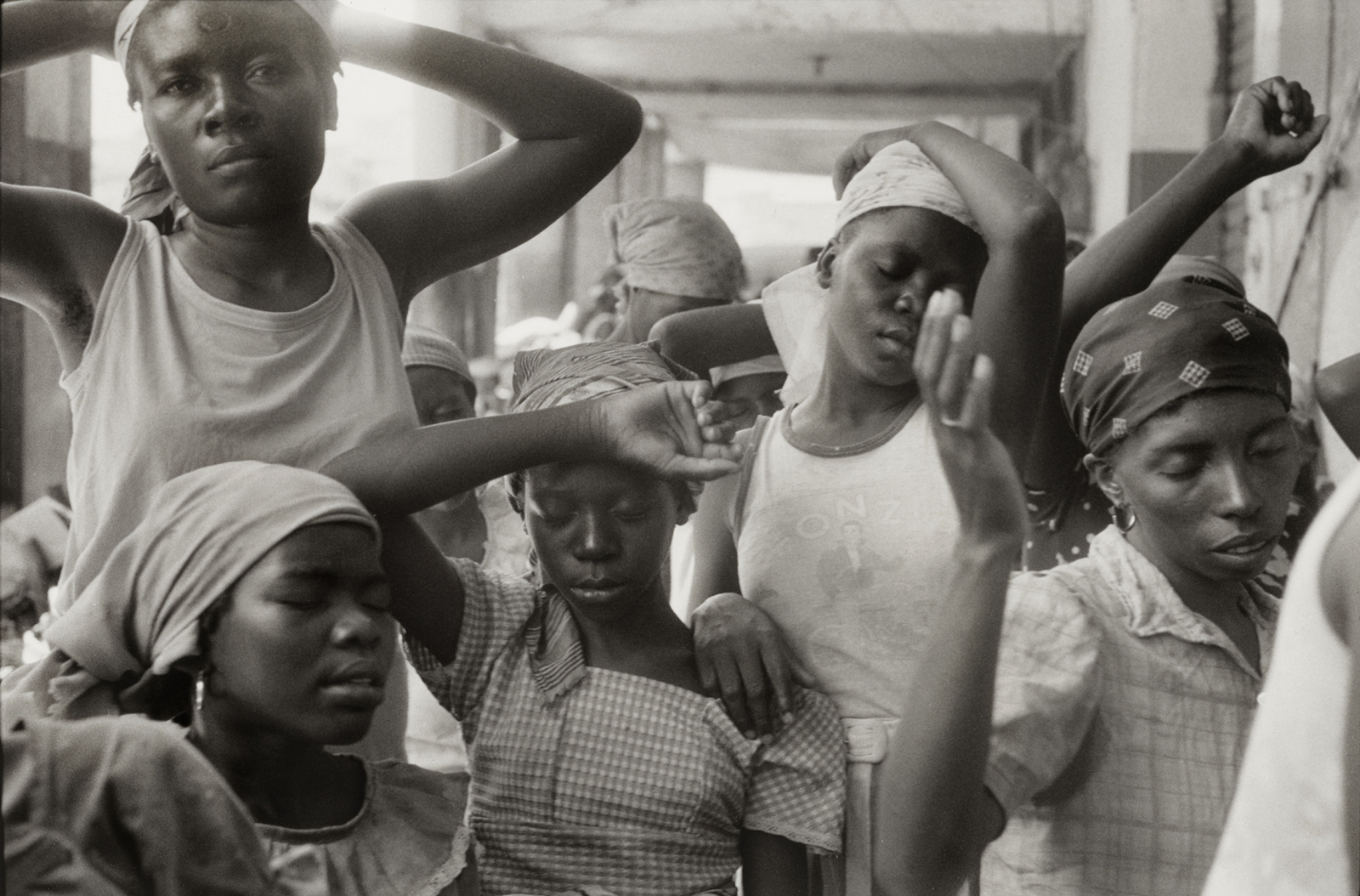
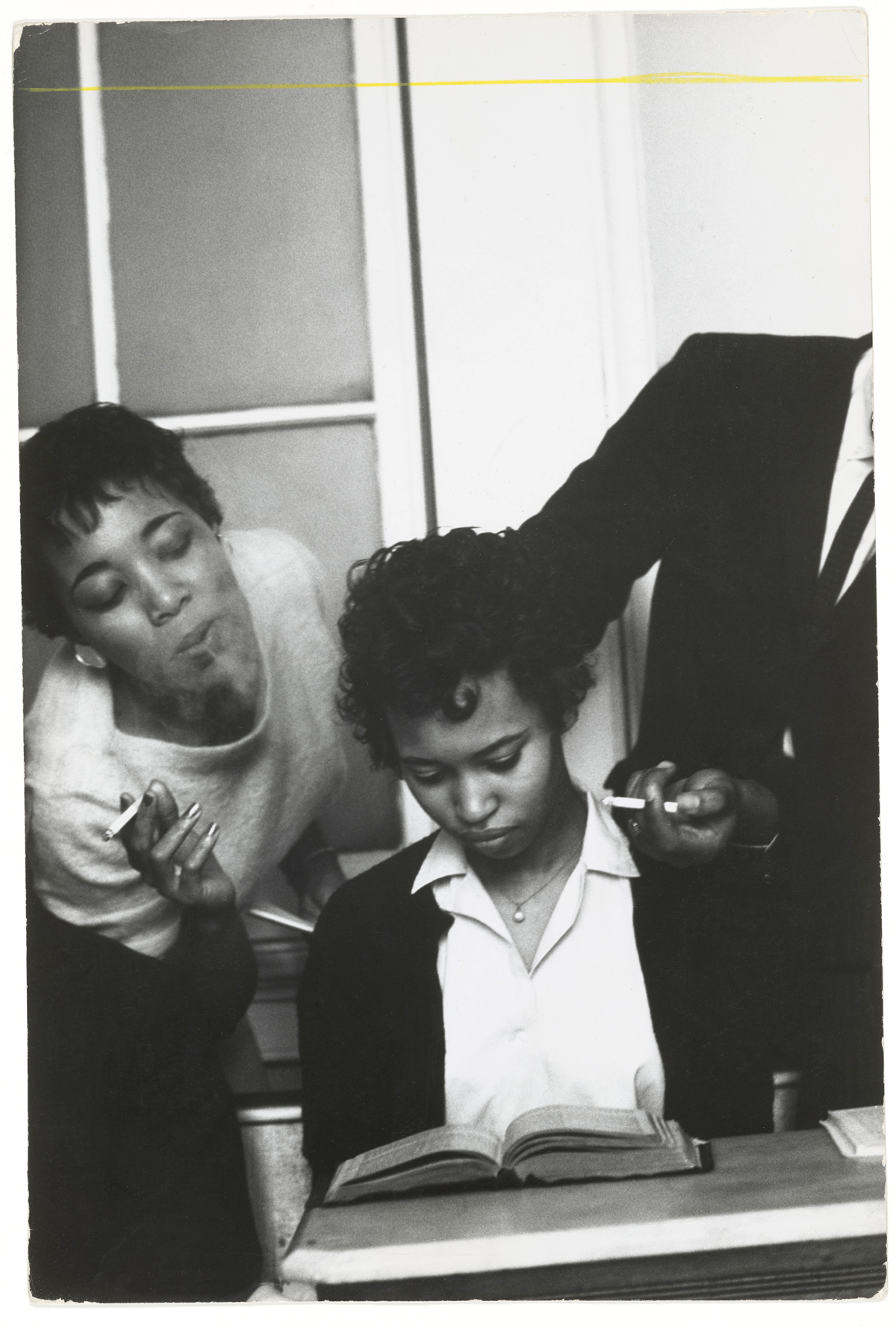
One section of the exhibition features candid scenes from public life, such as Robert Frank’s Trolley, New Orleans (1955), seen in a large-scale print the artist made around the time it graced the cover of his landmark book, The Americans (1959). Also on view are photographs of collective actions that came to define significant cultural moments, such as Eve Arnold’s 1960 photograph of a training school for Black sit-ins and Danny Lyon’s image of Haitian women praying in the month after the collapse of the corrupt regime of Jean-Claude Duvalier.
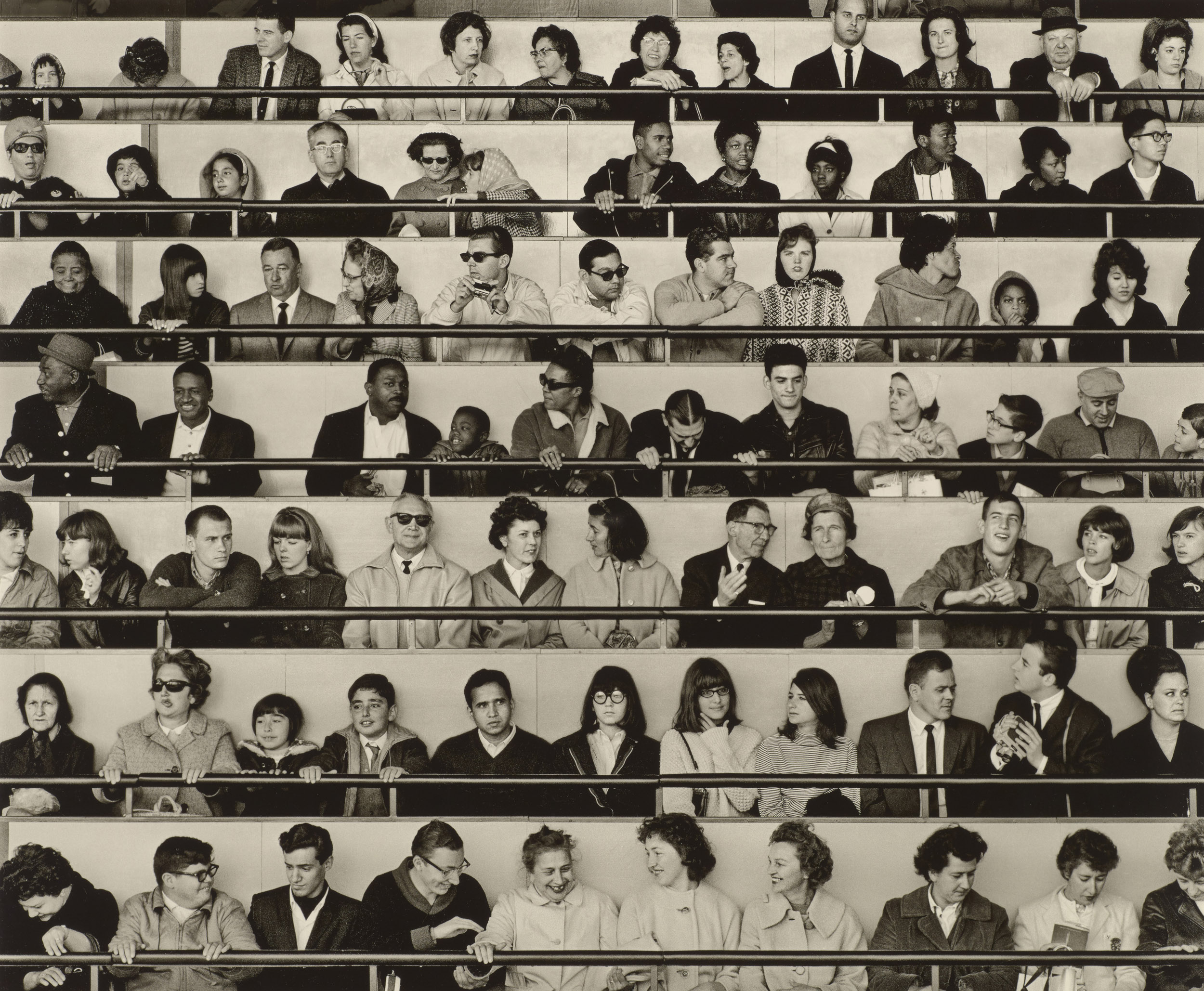
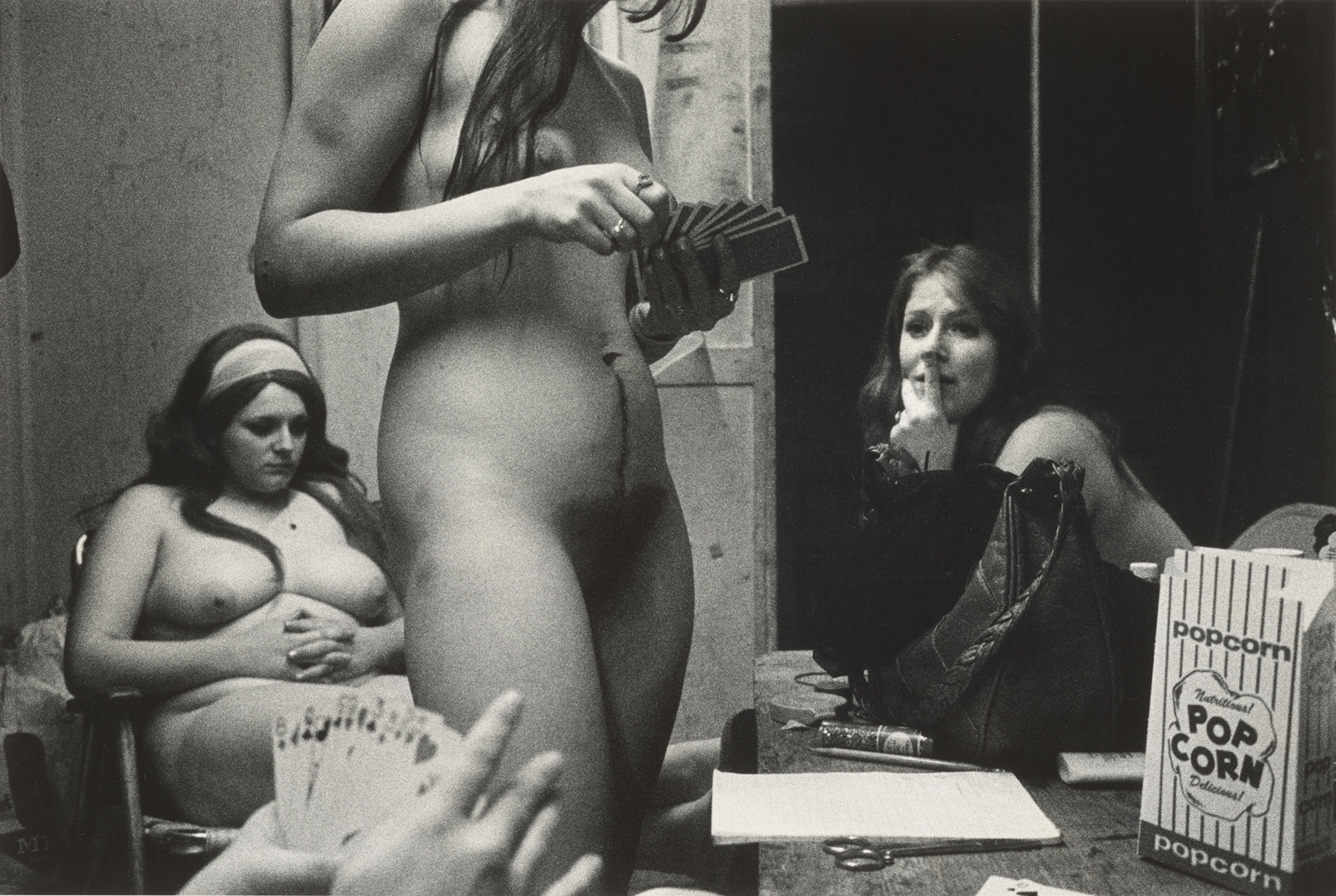
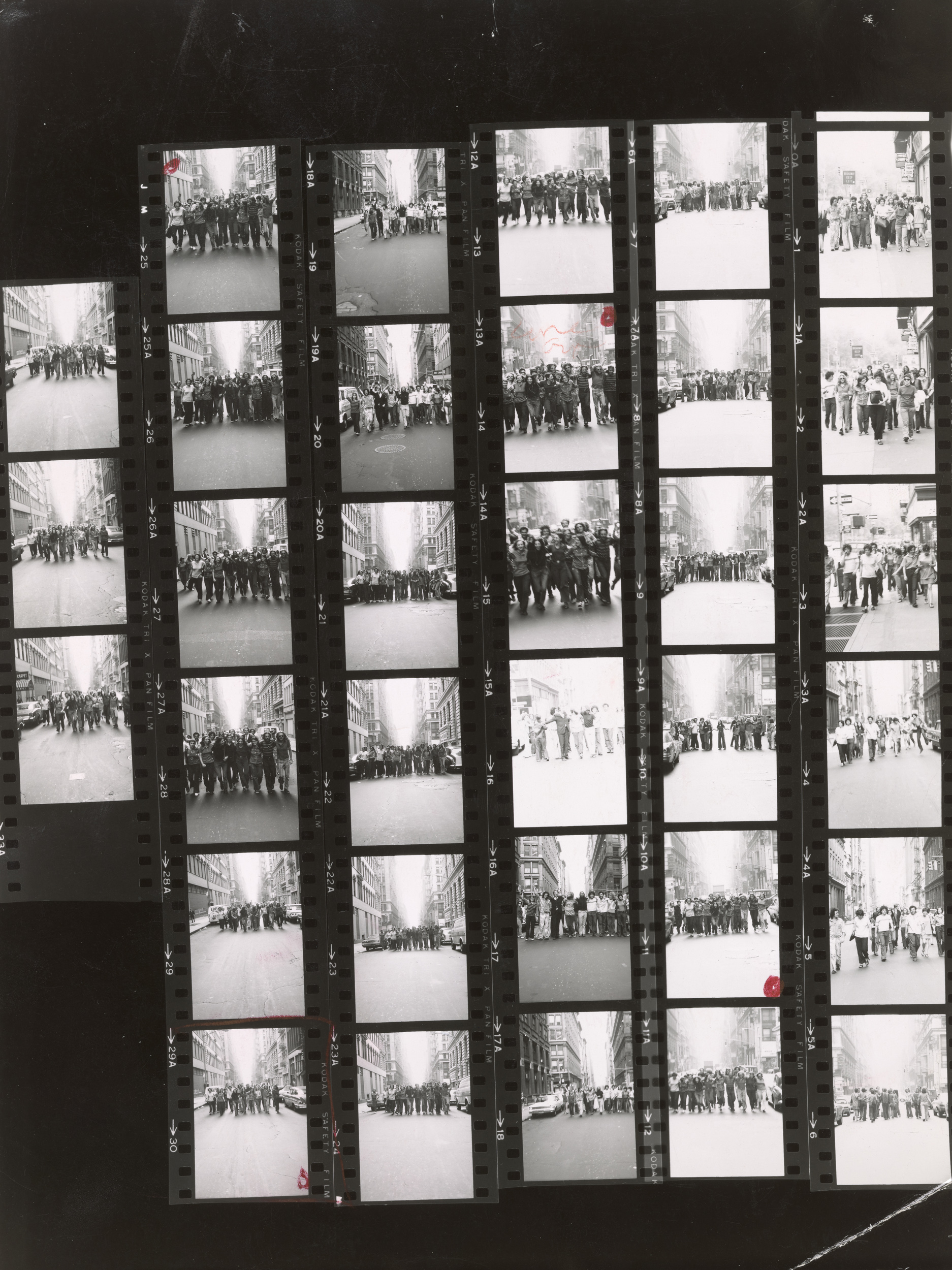
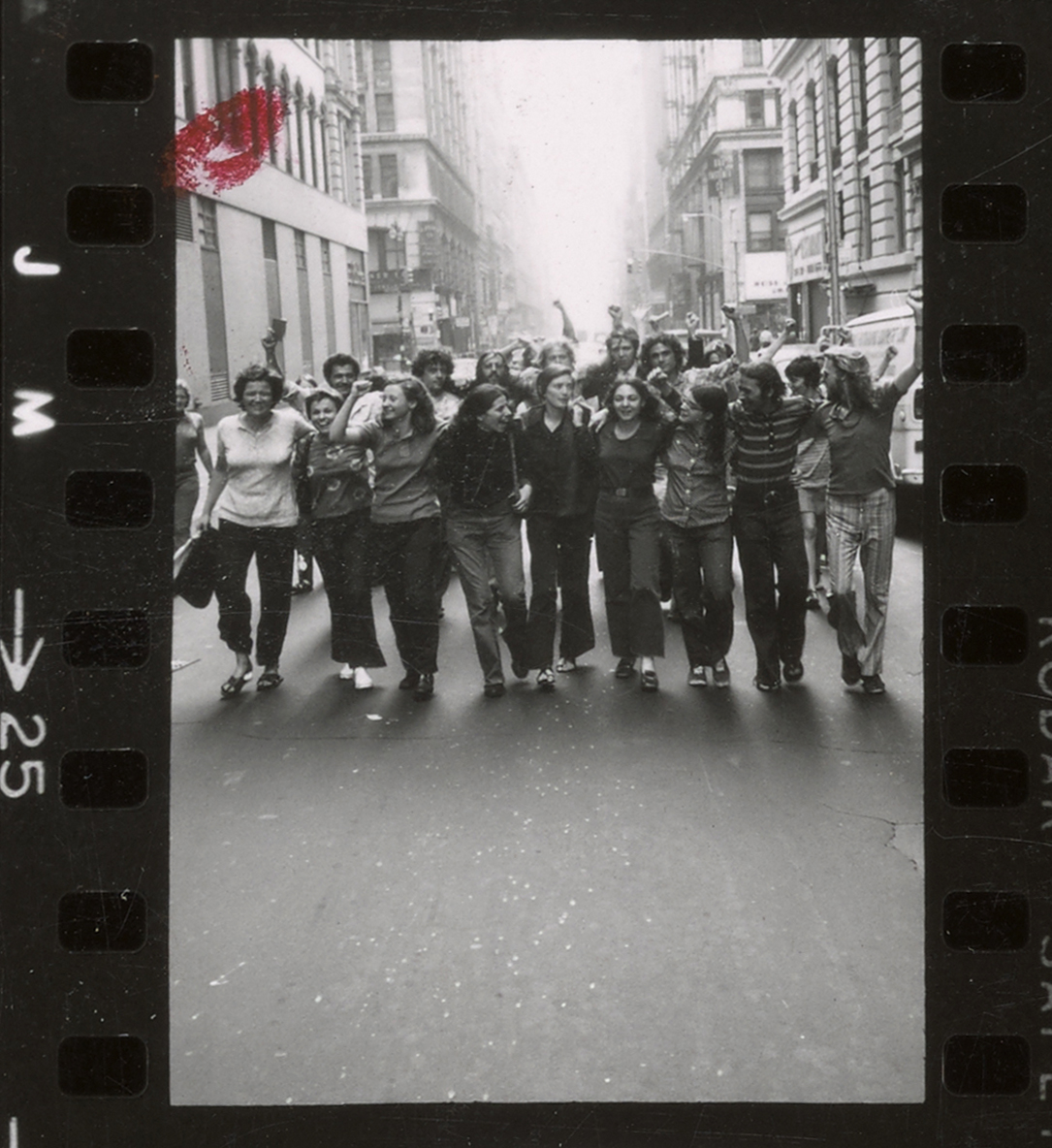
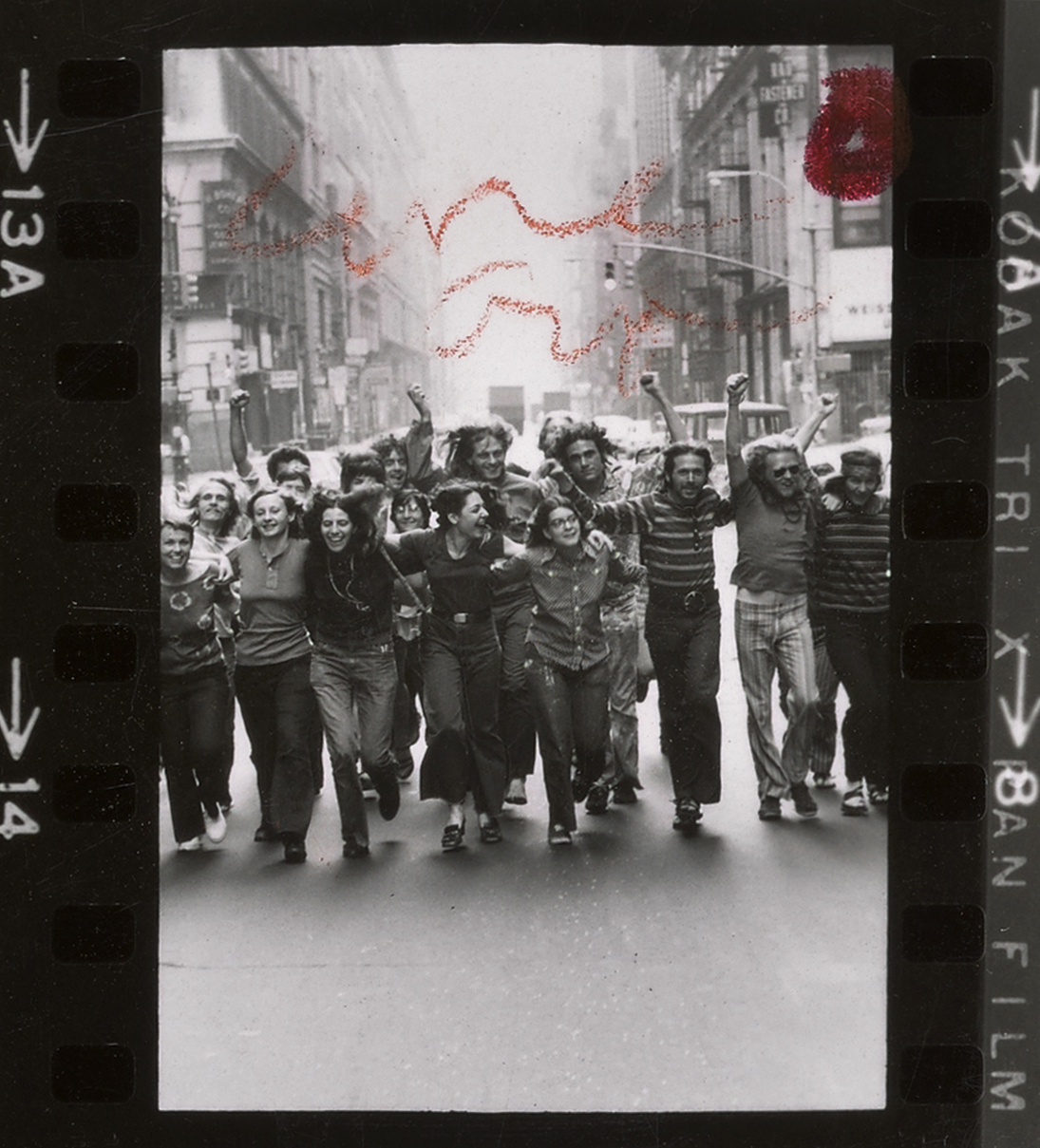
Photographers took a wide range of approaches to representing the group beyond the arranged sittings of families or civic organisations. Bob Adelman’s People Wall, World’s Fair, New York exploits the way IBM’s 1965 attraction cast a spotlight on the social and ethnic diversity of fair attendees. For a 1970 recruitment poster for the Gay Liberation Front, Peter Hujar asked the group’s members to run exuberantly toward him on the street, enacting their slogan, “Come Out!!” Camera artists have often embedded themselves in the action they portray, as Susan Meiselas did when mingling with carnival strippers, first to capture them behind the scenes and then to photograph their audience from a performer’s perspective.
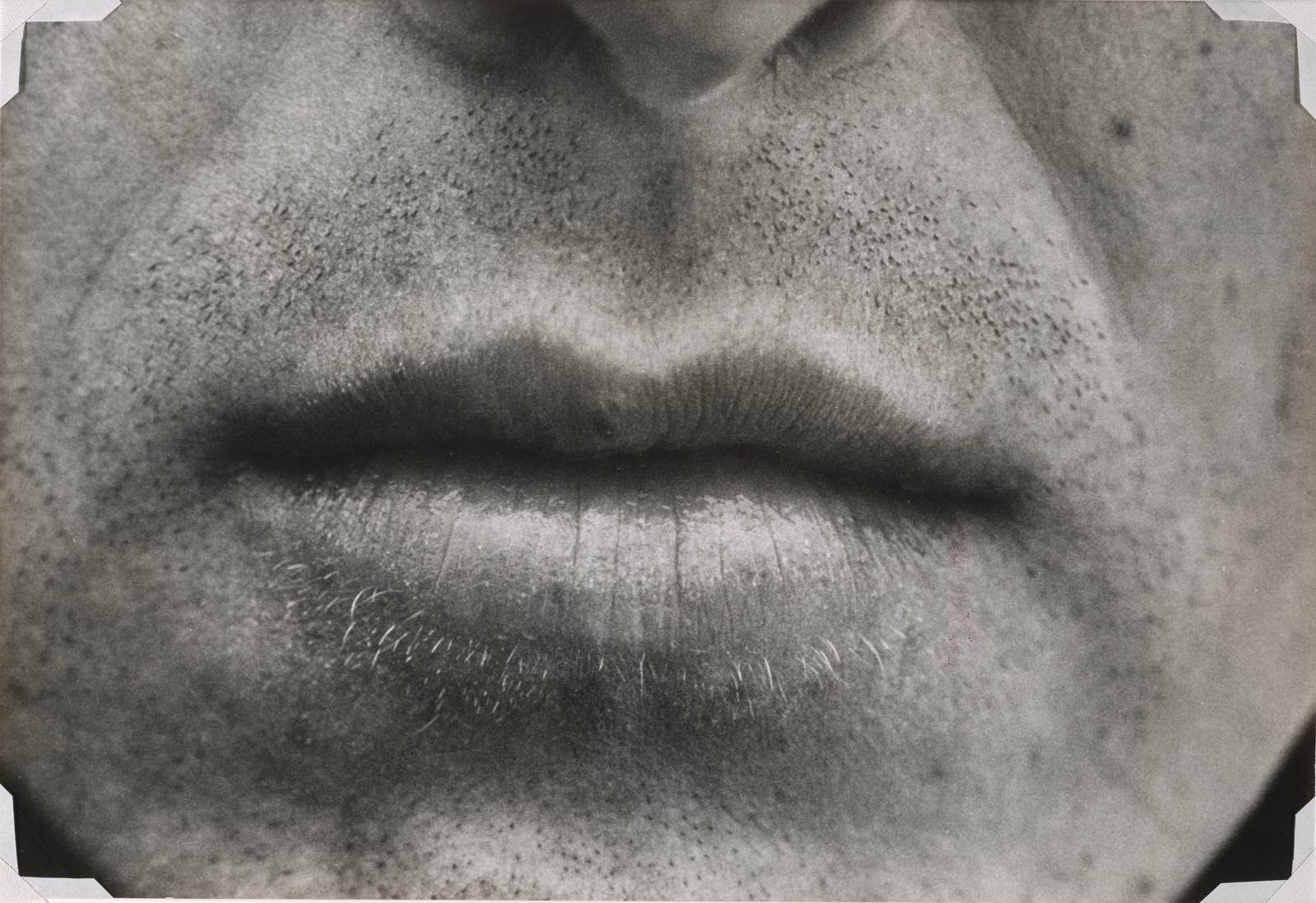
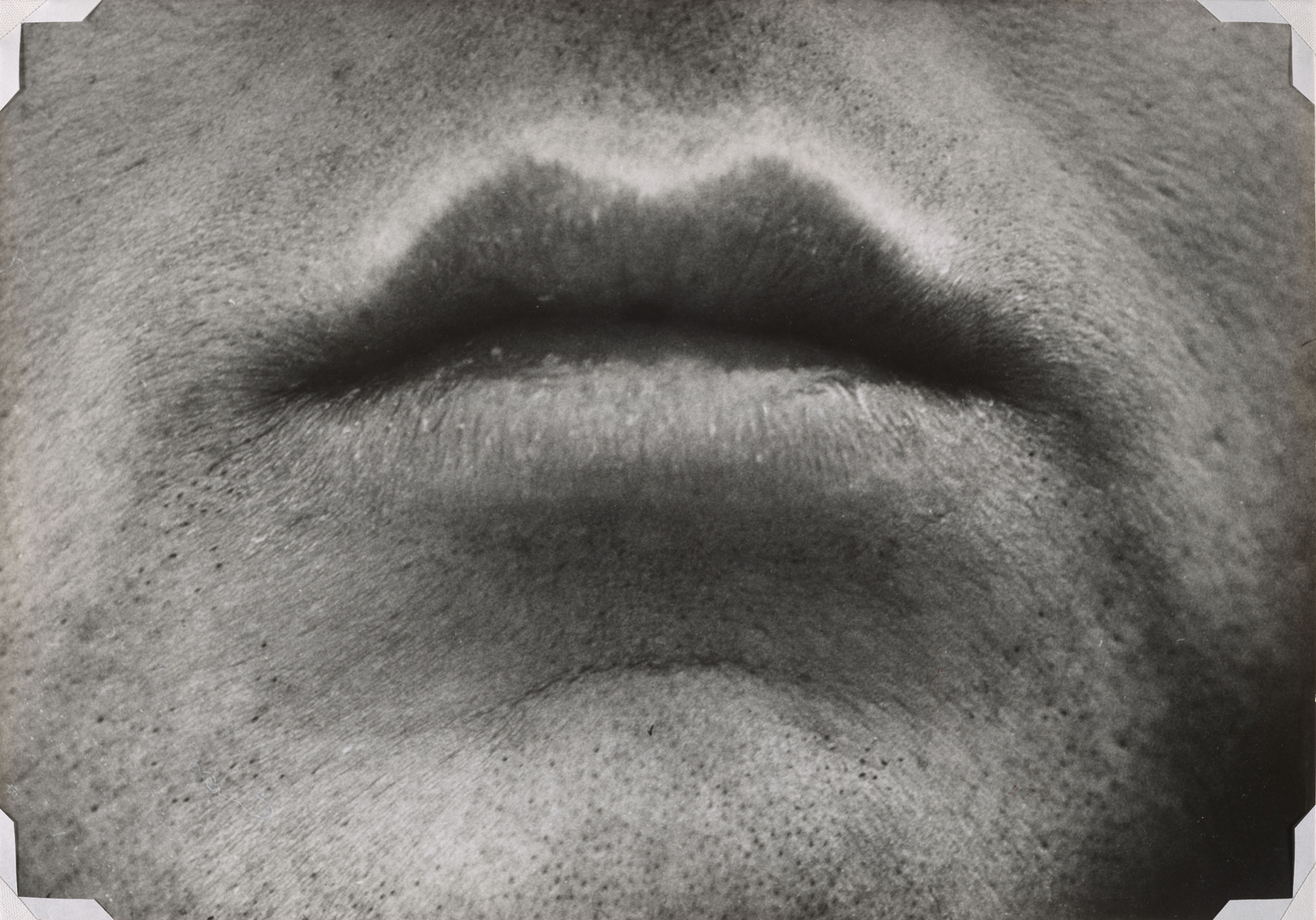
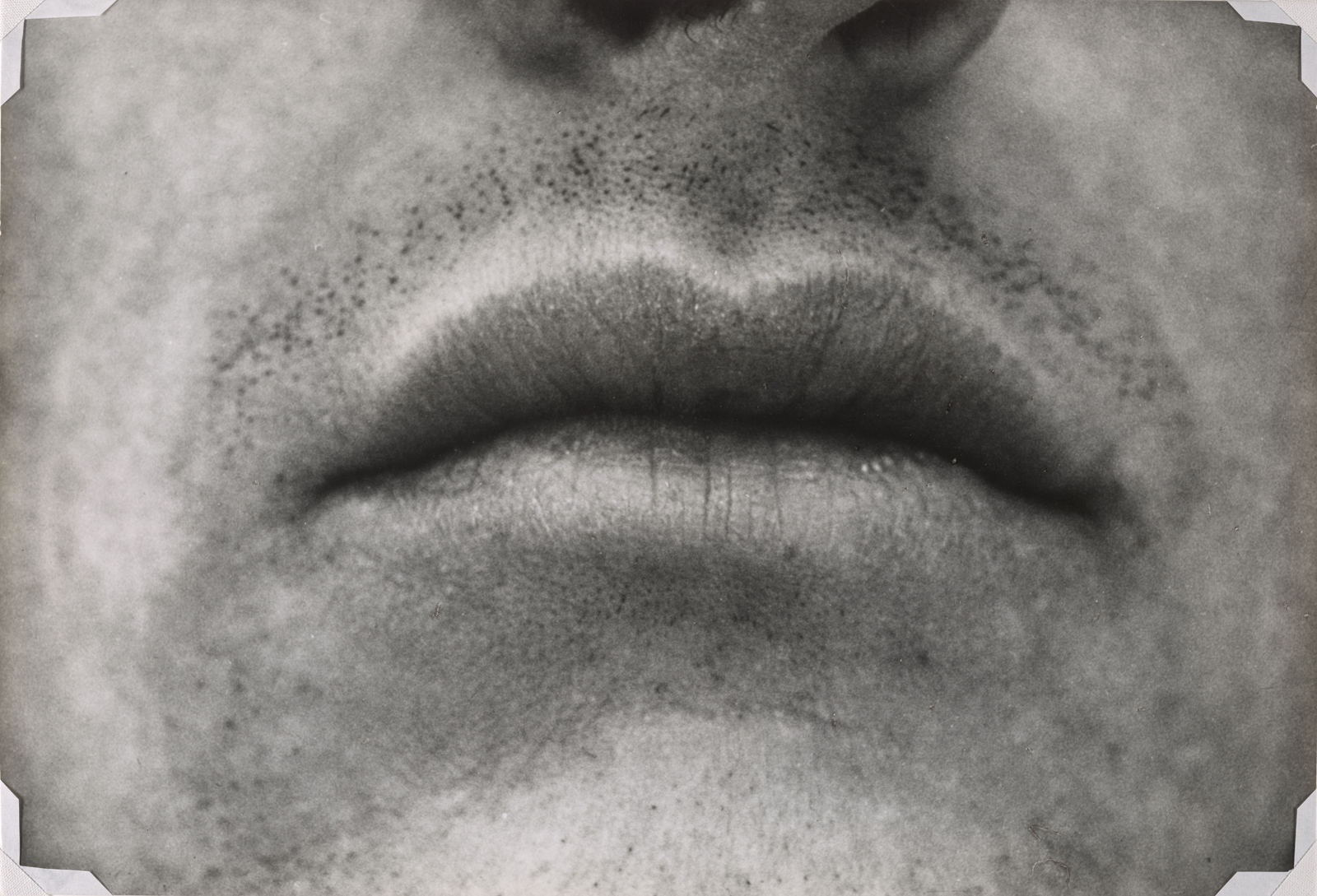
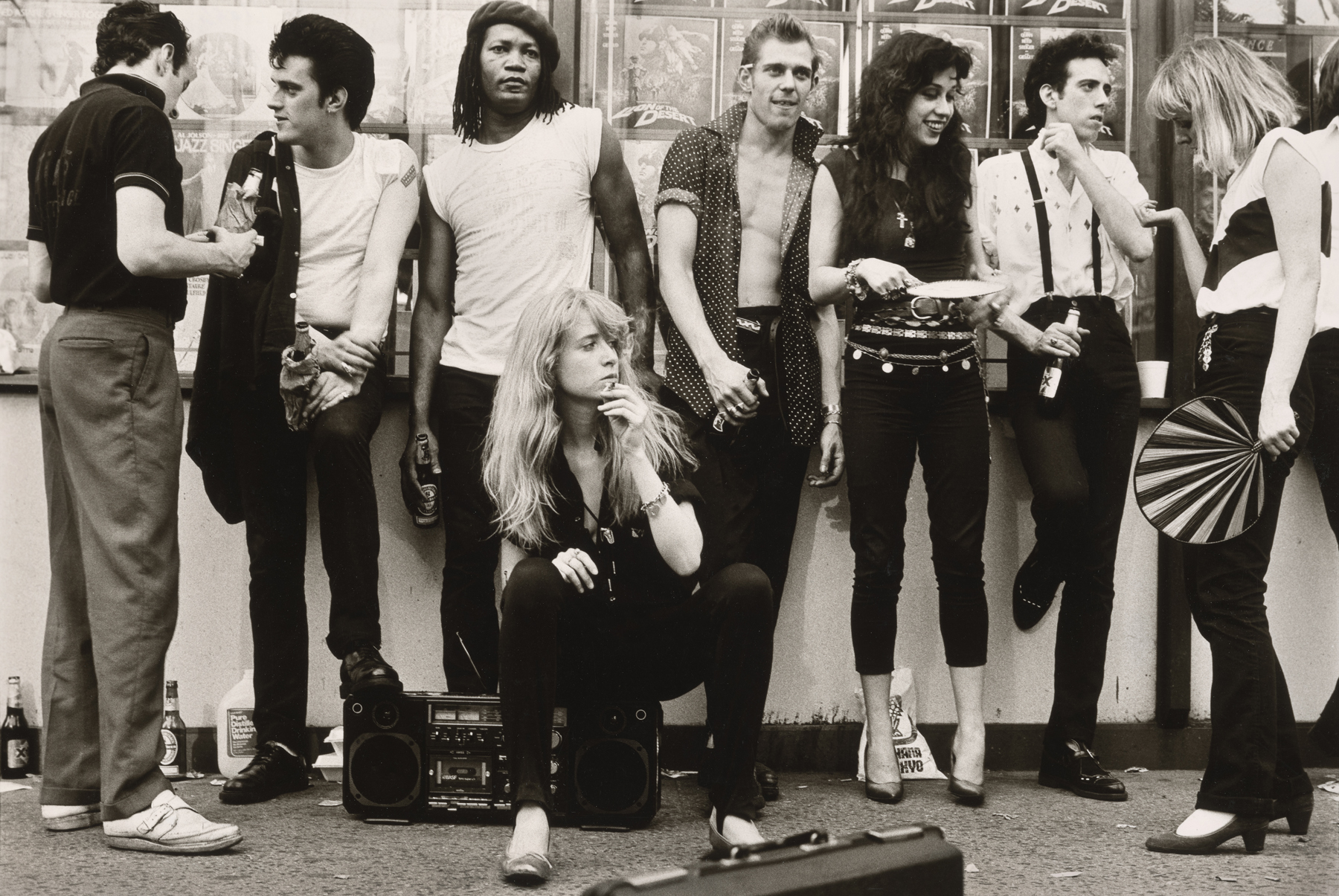
When the subjects are beloved celebrities, the portrait seals a relationship of shared admiration between maker and viewer. In 1965, press photographer Jean-Pierre Ducatez made four images that zeroed in on the lips of each of the Beatles, creating likenesses that appealed directly to dedicated fans. In 1981, Amy Arbus happened to snap a photo of a photogenic group hanging out near Times Square, and only later learned they were members of the Clash and their entourage.
The exhibition features items of “pop photographica” that play radically with the conventions of camera representation. In these pieces, individual portraits are mixed and matched to suit the purposes of board games, collectibles such as cigarette cards, and even psychological tests.
“The Morgan’s photography collection has grown and evolved in many directions since its founding in 2012, always with a dual emphasis on the camera’s creative possibilities and its role in shaping modern sensibilities,” said Colin B. Bailey, Director. “We are excited to present this wide-ranging selection of works, most of which are recent acquisitions and have never been exhibited before at the Morgan.”
Joel Smith, the Morgan’s Richard L. Menschel Curator and Department Head, said, “The group is a subject we’re so accustomed to seeing in photographs, it’s easy to forget that the conventions around it had to be invented, and that they shape our picture of reality. This exhibition invites viewers to explore the many ways images have defined – since long before the selfie – how it looks to belong to a group and what it means to be represented.”
Press release from The Morgan Library & Museum [Online] Cited 21/07/2019
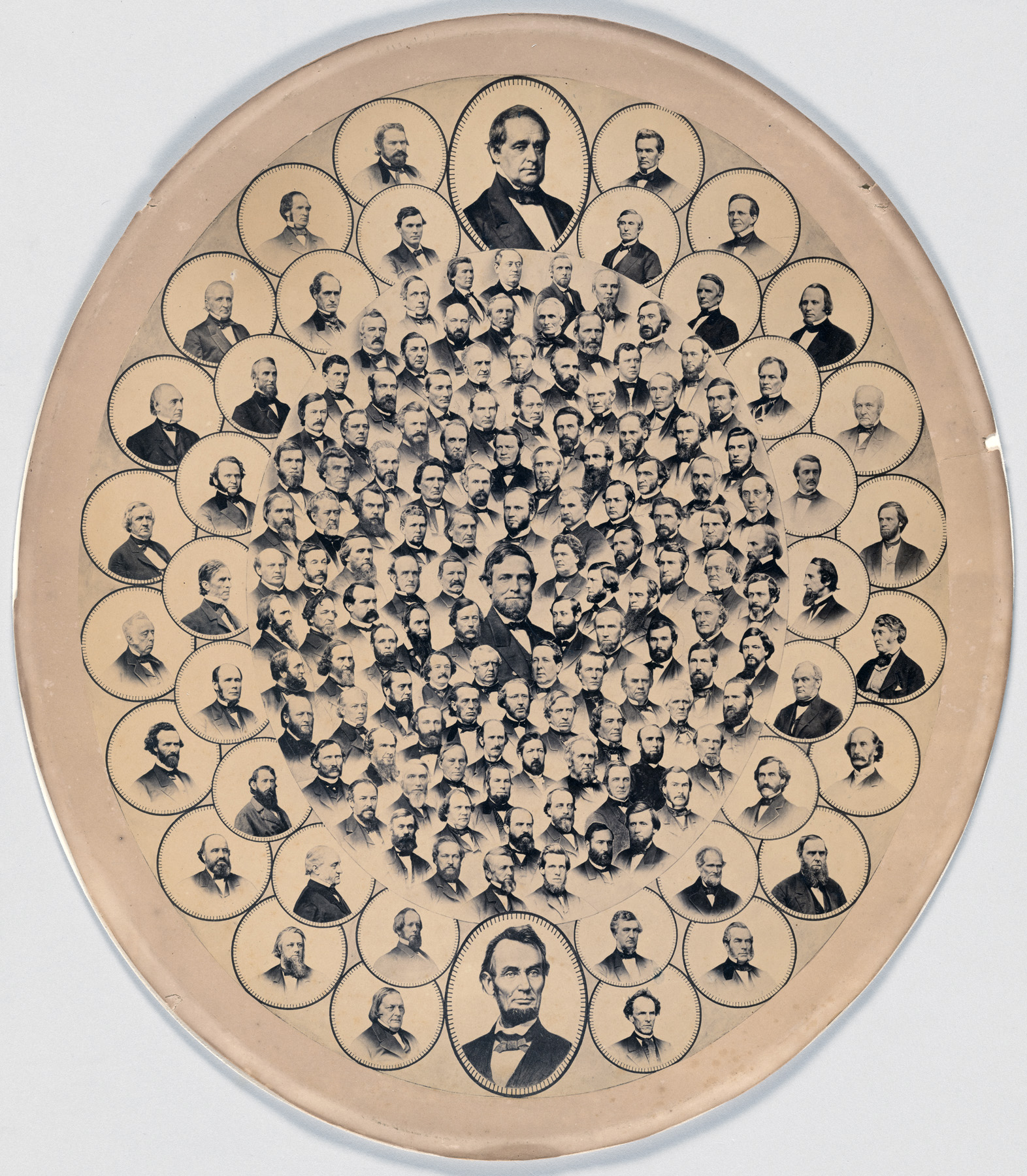
Powell & Co. Anti-Slavery Constitutional Amendment Picture 1865 Albumen print The Morgan Library & Museum Purchased on the Charina Endowment Fund
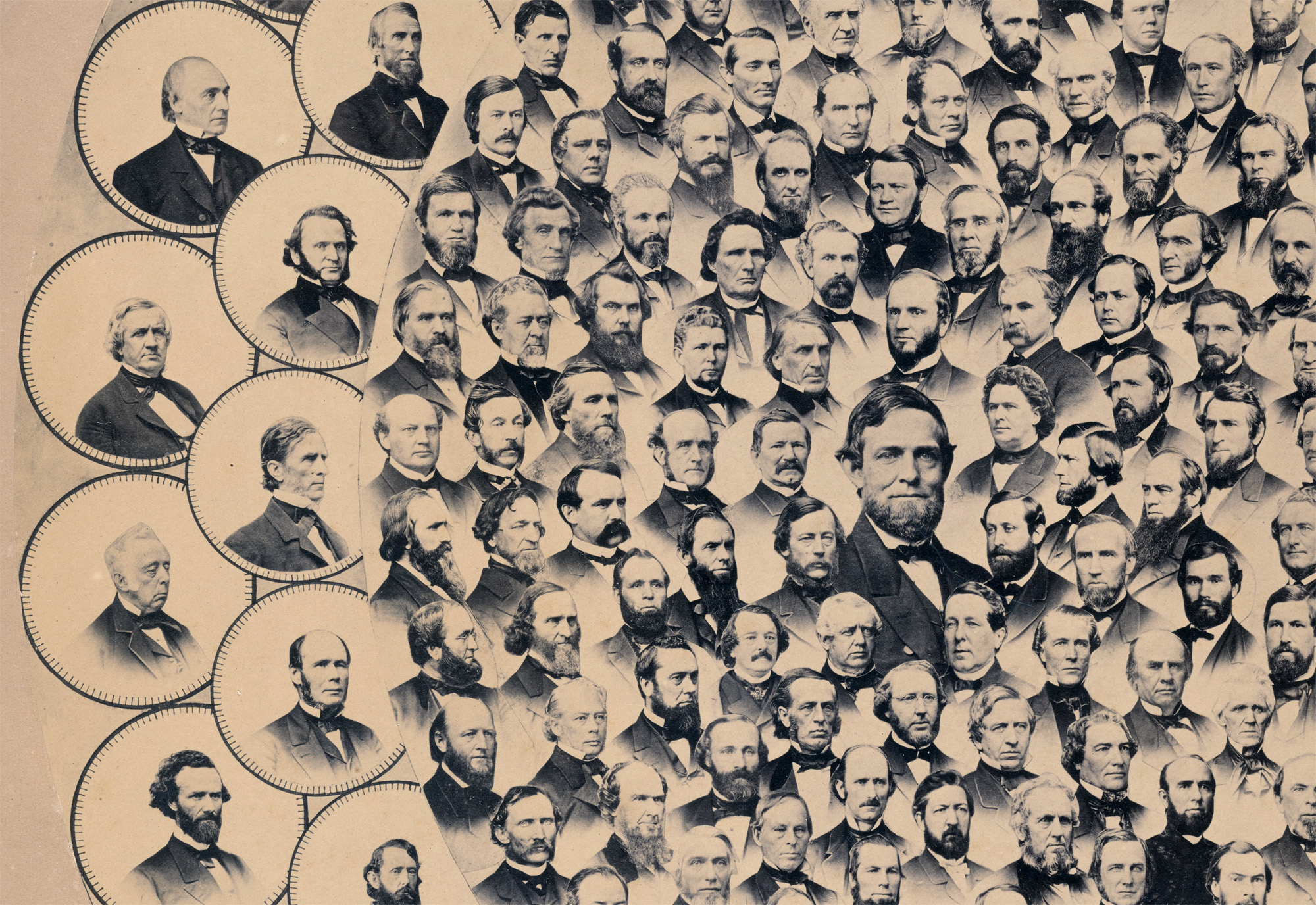
Powell & Co. Anti-Slavery Constitutional Amendment Picture (detail) 1865 Albumen print The Morgan Library & Museum Purchased on the Charina Endowment Fund
Eugene Omar Goldbeck (American, 1892-1986) Indoctrination Division, Air Training Command, Lackland Air Base, San Antonio, Texas, July 19, 1947 1947 Gelatin silver print The Morgan Library & Museum Purchased on funds given by members of the Photography Collectors Committee
Eugene Omar Goldbeck (American, 1892-1986) Indoctrination Division, Air Training Command, Lackland Air Base, San Antonio, Texas, July 19, 1947 (detail) 1947 Gelatin silver print The Morgan Library & Museum Purchased on funds given by members of the Photography Collectors Committee
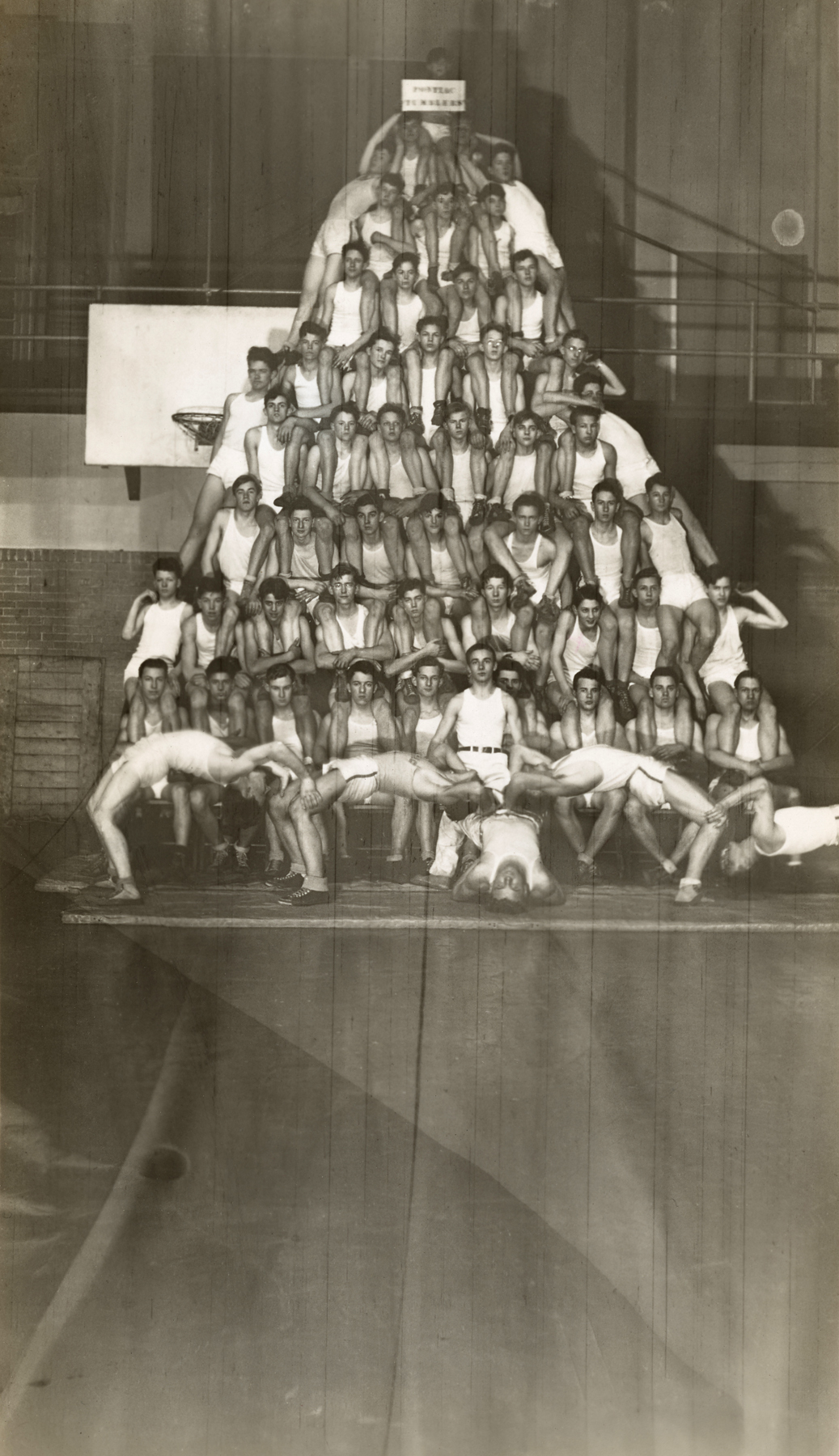
Photographer Unidentified (American) Untitled (human pyramid: fifty-six boys in white uniforms arranged in eight levels in a gymnasium) 20th century Commercially processed gelatin silver print The Morgan Library & Museum Gift of Peter J. Cohen
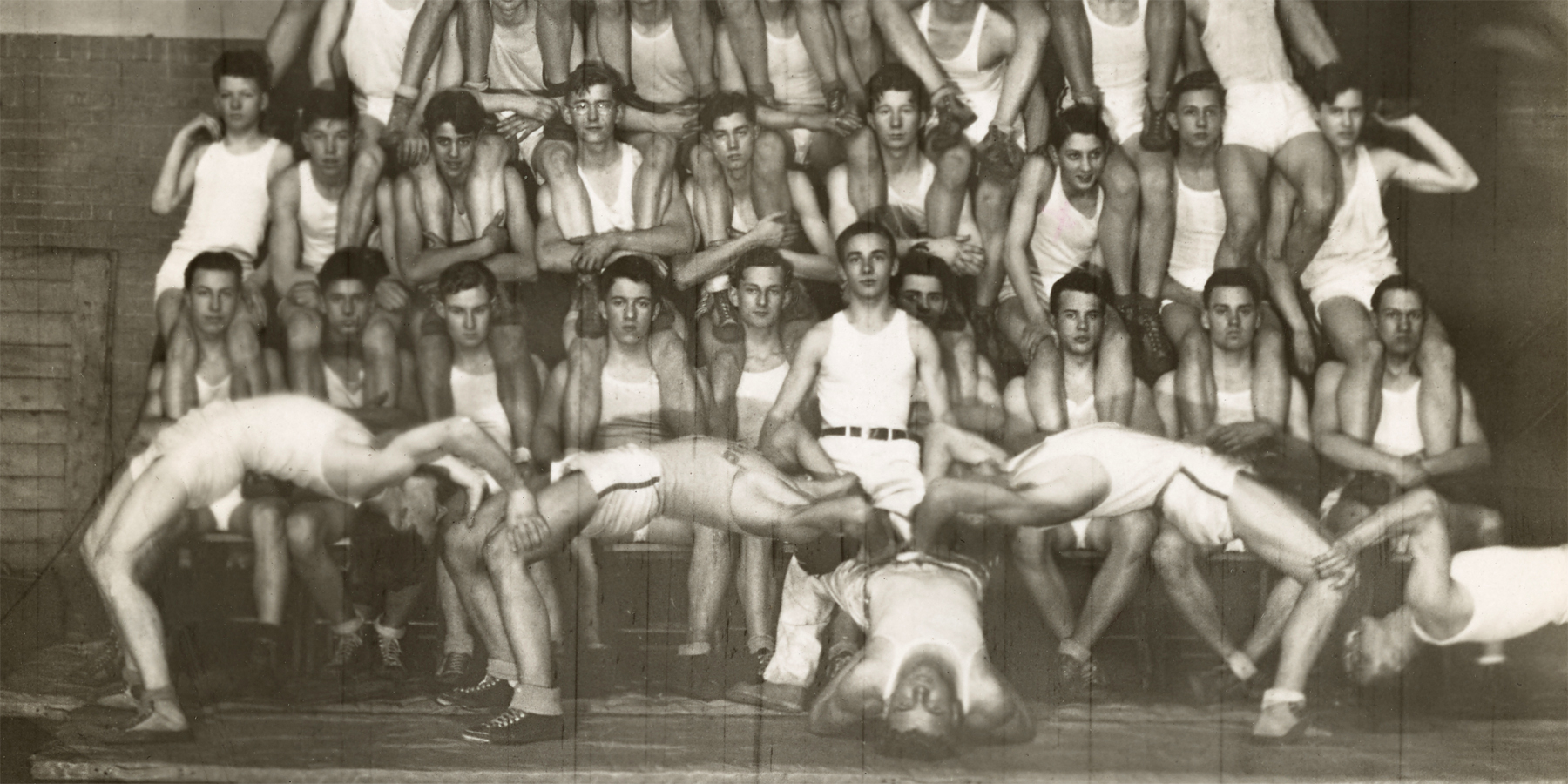
Photographer Unidentified (American) Untitled (human pyramid: fifty-six boys in white uniforms arranged in eight levels in a gymnasium) (detail) 20th century Commercially processed gelatin silver print The Morgan Library & Museum Gift of Peter J. Cohen
Exhibition dates: 19th June – 20th September, 2015
A project for the Triennial of Photography Hamburg 2015
Curators: Dr des. Esther Ruelfs and Teresa Gruber
Invited artists: Laia Abril, Ai Weiwei, Regula Bochsler, Natalie Bookchin, Heman Chong, Aurélien Froment, David Horvitz, Trevor Paglen, Doug Rickard, Taryn Simon, Jens Sundheim, Penelope Umbrico | From the Photography and New Media Collection of the MKG: Fratelli Alinari, Hanns-Jörg Anders, Nobuyoshi Araki, Francis Bedford, Félix Bonfils, Adolphe Braun, Natascha A. Brunswick, Atelier d’Ora / Benda, Minya Diez-Dührkoop, Rudolf Dührkoop, Harold E. Edgerton, Tsuneo Enari, Andreas Feininger, Lotte Genzsch, Johann Hamann, Theodor und Oscar Hofmeister, Thomas Höpker, Lotte Jacobi, Gertrude Käsebier, Kaku Kurita, Atelier Manassé, Hansi Müller-Schorp, Eardweard Muybridge, Arnold Newman, Terry Richardson, Max Scheler, Hildi Schmidt-Heins, Hiromi Tsuchida, Carl Strüwe, Léon Vidal, and more
A fascinating exhibition about the processes of archiving and transferring images and the associated interaction, combining historic and contemporary images to illuminate various chapters: “Sharing a Portrait,” “Sharing a Group,” “Sharing Memories,” “Sharing a Product,” “Sharing Lust,” “Sharing Evidence,” “Sharing Knowledge,” “Sharing the World,” “Sharing a Collection,” and “Sharing Photographs”.
“The chapters juxtapose historical and contemporary works in order to illuminate how the use and function of photographic images have changed and which aspects have remained the same despite the digital revolution. The exhibition begins with photography used in the service of people: to record a life, create a sense of community, or share memories. The following chapters deal with applied contexts, such as advertising photographs, erotic photography, photojournalism, scientific photography, and travel photos.”
“Conceived in archive format, the exhibition explores the archive’s possible forms and uses. The featured works from the collection were selected from the MKG’s holdings of some 75,000 photographs to show how different photographic practices have been assimilated over the years. The springboard for our reflections was the question of how the digital era of picture sharing has changed the function of a museum collection of photography, seeing as today digital image collections are just a mouse click away on online archives such as Google Images.”
But it could have been so much more, especially with 75,000 photographs to choose from. Looking at the plan for the exhibition and viewing the checklist would suggest that the small amount of work in each of the ten chapters leaves little room for any of the themes to be investigated in depth. Any one of these chapters would have made an excellent exhibition in its own right. What an opportunity missed for a series of major exhibitions that examined each important theme.
Dr Marcus Bunyan
Many thankx to the Museum für Kunst und Gewerbe Hamburg for allowing me to publish the photographs in the posting. Please click on the photographs for a larger version of the image.
Text in the posting is from the booklet When We Share More Than Ever.
Editors: Sabine Schulze, Esther Ruelfs, Teresa Gruber Text editors: Esther Ruelfs, Teresa Gruber Authors: Teresa Gruber (TG), Beate Pittnauer (BP), Esther Ruelfs (ER), Sven Schumacher (SS), Annika Sellmann (AS), Taryn Simon (TS), Johan Simonsen (JS), Emma Stenger (ES) Grafikdesign Graphic design exhibition and booklet: Studio Mahr Translation German-English: Jennifer Taylor
Sharing memories
Creating mementoes is one of the central functions of photography. In David Horvitz’s case, it is the mobile phone camera that gives two people a feeling of togetherness. The bond is created through an action. On two different continents, both people stand at the seaside at the same time, recording and sending images of the sunrise and sunset with their iPhones.
Photography connects us with the subject or the person depicted – even beyond the bounds of the time. The photo is an imprint; it transmits to us something that was once really there. Like a fingerprint or a footprint, it remains closely related to what it captures. This special quality of photography predestined it from the start to be a medium of memory. The daguerreotype of a little girl presented in the exhibition is framed by a braid of the child’s hair. The idea of carrying part of a loved one with us and thus generating a special feeling of closeness is reflected in the practice of making friendship or mourning jewellery out of hair – and in the way we treasure portrait photographs as keepsakes of those we love.
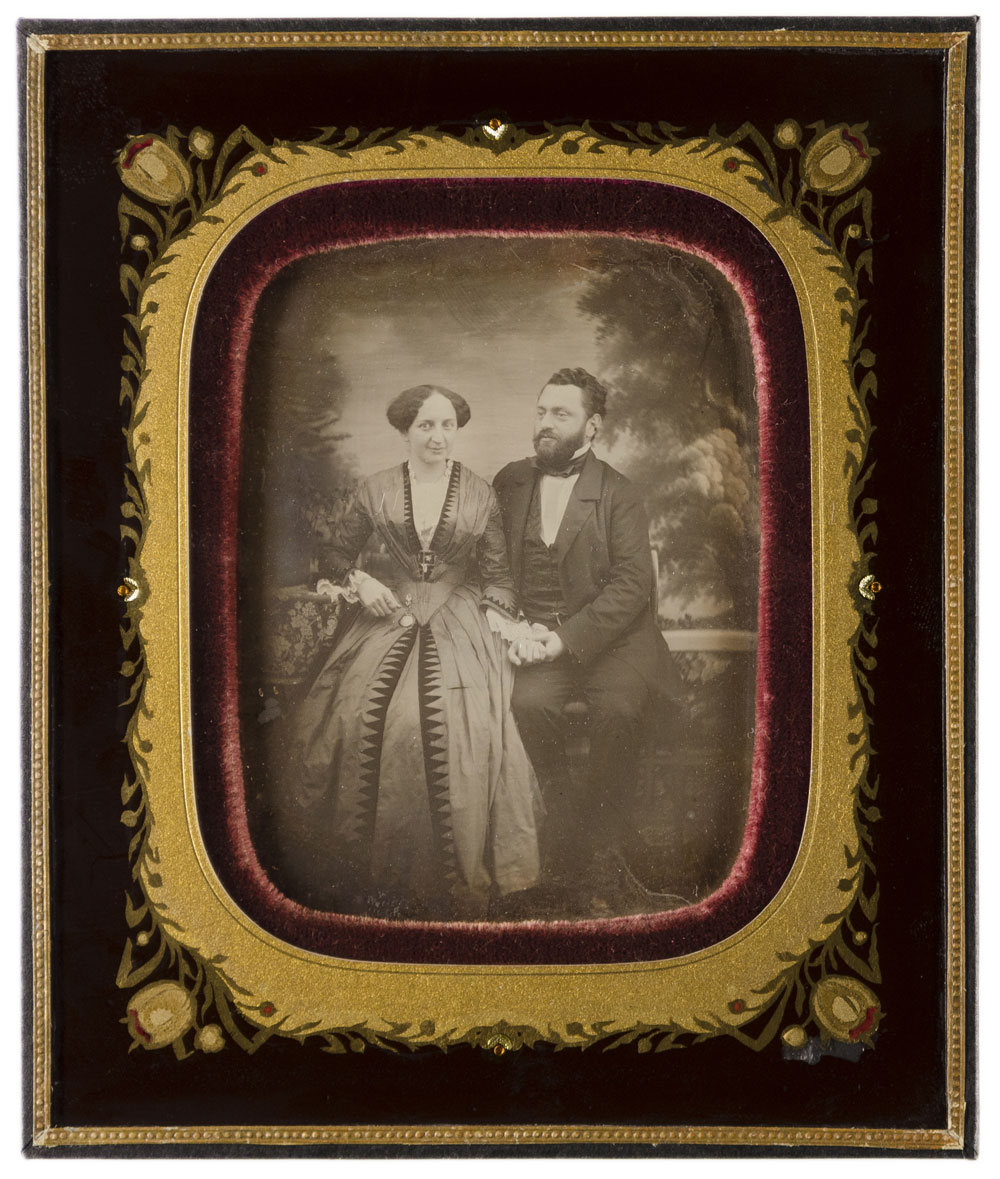
Emotional relationships can also be expressed by a certain photographic motif or by the body language of the sitters. The arms of the sisters in the photo by Gertrude Käsebier are closely intertwined, as are the hands of the couple in the daguerreotype by Carl Ferdinand Stelzner. The relationship between photographer and subject may also be the focus of the work. Natascha Brunswick as well as Rudolf Dührkoop and Käsebier use the camera, for example, to capture and hold onto intimate moments with their own families.
With artworks in the form of books, photographs, installations, and actions, David Horvitz often explores varying conceptions of time and space, as well as interpersonal relationships and the dissemination of images via the internet. His work The Distance of a Day brings together all of these topics. With reference to the linguistic origin of the word “journey,” which defined the distance a traveler could cover in a day, Horvitz looks for two places located at opposite ends of the globe that are exactly one day apart. While his mother watches the sun set on a beach in his native California, the artist observes the sun rising over a Maldives island. Both document their simultaneous impressions with an iPhone, a device that today serves both for temporal and spatial orientation and which, as a communication medium, enables us to overcome the limits of space and time. Because it is a conceptual part of the performance, the iPhone is also used in the exhibition as a playback device.
“Maxime carried portraits of actresses in every pocket. He even had one in his cigarette case. From time to time he cleared them all out and moved the ladies into an album (…) which already contained the portraits of Renee’s friends.”
This scene from Émile Zola’s The Kill testifies to the fad that started in the 1860s for mass-produced photographic calling cards, or “cartes de visite.” Contemporaries spoke of “cartomania” – long before anyone could imagine an artist like Ai Weiwei, who has posted 7,142 photographs on his Instagram profile since 2014. With the “invasion of the new calling card pictures,” photography left the private sphere of the middle-class family and fostered new social relationships. The demand for images of celebrities from politics, art, and literature grew as well.
“Galleries of contemporaries” and artist portraits like those produced by Lotte Jacobi and Arnold Newman responded to an avid interest in the physical and physiognomic appearance of well-known people. The photographers tried to capture not only the person’s likeness but also his character, whether inclose-ups that zero in on individual facial expressions or in staged portraits in which the surroundings give clues to the sitter’s personality.
What has changed since then is above all how we handle such images. The photographs that Minya Diez-Dührkoop took of the upper-class daughter Renate Scholz trace her growth and development in pleasingly composed studio portraits. In today’s Internet communities and on smartphones by contrast we encounter the portrait as a profile picture. This signature image, changeable at any time, may be a selfie or selected from a steadily growing pool of snapshots shared among friends.
The photography pioneer William Henry Fox Talbot (1800-1877) notes in his serialised book The Pencil of Nature, published in six parts between 1844 and 1846: “Groups of figures take no longer time to obtain than single figures would require, since the camera depicts them all at once, however numerous they may be.” For groups such as the middle-class family, colleagues in a profession or company, or leisure-time clubs – all of which took on renewed importance in the 19th century – the new technology provided an affordable way to preserve their feeling of community for posterity. The professional photographer was able to stage for the camera a picture designed to convey the self-image of the group. The Hamburg-based photographer Johann Hamann and the Studio Scholz were active around the turn of the 19th century, when the demand for professional group and family portraits reached a high point.
The classic commissioned group portrait still persists today in the form of class photos. These document each individual’s curriculum vitae while serving both as nostalgic souvenirs and as a basis for building a relationship network that can be maintained via websites such as stayfriends.com. On the Internet and especially on Facebook, new types of groups are being generated whose members share specific interests or traits. The artist Natalie Bookchin delves into the phenomenon of the virtual group in her work Mass Ornament, for which she collected amateur videos from YouTube showing people dancing alone and arranged them into an ensemble. She thus examines the possibilities offered by the World Wide Web to bring together crowds of people who are in reality each alone in front of their own screen.
Natalie Bookchin borrowed the title for her video from the prominent sociologist and film theorist Siegfried Kracauer. In his 1927 essay The Mass Ornament, Kracauer described the American dance troupe known as the Tiller Girls as the embodiment of capitalist production conditions after the First World War. He equated the automaton-like movements of the anonymous, interchangeable dancers with the assembly-line work in the factories. Bookchin’s work can likewise be understood as social commentary. She collects video clips of people dancing in front of webcams set up in their homes, which are posted on YouTube for all the world to see. The montage of such clips into a group choreography with almost synchronous dance moves paints a picture of individuals who share favourite songs, idols, and yearnings.
Instead of using today’s pop songs as soundtrack, Bookchin revives the movie music from Busby Berkeley’s Gold Diggers and Leni Riefenstahl’s Triumph of the Will (both from 1935). She thus generates an alienating effect while also reflecting on both the positive and negative connotations of movement in a group and of mass media.
The Hamburg photographer Johann Hamann opened his first daylight studio in 1889 in Hamburg’s Gängeviertel but is better known for his work outside the studio. By using a magnesium powder flash, he succeeded in portraying individuals and especially groups in a natural environment even in poor lighting conditions. Butchers, cobblers, and gymnasts posed with their props and wearing their specific “uniforms” before his camera. From 1899 to 1906, Hamann produced a complete set of photos of ship captains working for the Hamburg-based shipping line HAPAG, on behalf of which he also photographed the emigration halls on Veddel Island in the Elbe River. His group photographs provide insights into the working life and club activities in the Hanseatic city around the turn of the century, and are often characterised by situational humour.
Teresa Gruber
Sharing knowledge
A droplet whirling off a rotating oil can, the impact of a falling drop of milk, or a bullet in flight are phenomena whose speed makes them imperceptible to the naked eye. With the help of a telescope or microscope, we can look into the distance and observe things that are too far away, or enlarge things that are too small to see, and with the aid of photography these things can then be captured in images that can be shared.
The objects of artist Trevor Paglen’s interest are military spy satellites, which he locates based on information on amateur websites and then captures using elaborate special cameras. His work draws on the aesthetics of scientific photography, inquiring into our faith in the objectivity of such images – a credibility that runs through the entire history of photography.
With the positivist mood pervading the 19th century, photography was associated much more closely with science than with art. Surveying and recording were central functions assigned to the new medium. The photographic work of Eadweard J. Muybrigde, Harold E. Edgerton, and Impulsphysik GmbH Hamburg-Rissen is associated with this applied context.
Already during the 19th century, however, the confidence invested in photography as a medium for capturing reality was being challenged by the exploration of borderline areas verging on the irrational and by metaphysical speculations. Myth and science overlapped here, especially when it came to recording invisible phenomena such as ultraviolet light, heat rays, and X-rays. These trends are evident in Carl Strüwe’s photomicrographs, which in his proclaimed “New Order” combine the aesthetics of scientific photography with esoteric notions of the archetype.
One year after the invention of the daguerreotype in 1839, a photographic image was already made of the moon. The first stereographic photographs were presented by the chemist and amateur astronomer Warren de la Rue in 1858. Stereo images, which enjoyed great popularity in the latter half of the 19th century, consist of two photographs, which display a scene from slightly different perspectives, thus imitating the viewing angle of the human eyes and generating a spatial impression of the subject when viewed through a stereoscope.
Because the moon is too far from the earth to be able to photograph it from two different angles at once, a stereo photograph is only possible by taking into account optical libration, or the apparent “oscillation” of the moon. Due to the earth’s elliptical orbit, the half of the moon visible from earth is not always exactly the same. For a stereo photograph like the one the publisher Griffith & Griffith offered – certainly not as a scientific document – the shots that were combined were taken at an interval of several months.
More pictures are being taken and digitised than ever before, innumerable snapshots pile up on hard disks and in clouds, are shared via the Internet and commented on. But portals such as Facebook and Flickr as well as professional databases only supersede older forms of archiving, transferring material, and interaction. For the Triennial of Photography Hamburg 2015, the Museum für Kunst und Gewerbe Hamburg (MKG) is examining these new collections and forms of usage. The MKG sees the future-oriented motto of the Triennial, “The Day Will Come,” as an opportunity to reflect on the sharing of images, under the title: When We Share More Than Ever. The exhibition shows how today’s rampant exchange of digital photos links in with the history of the analogue medium. In fact, photography has been a means of capturing, storing, and communicating visual impressions ever since its early days in the 19th century. In ten chapters, selected contexts are examined in which collecting and sharing images has played – and still plays – a role. More than 200 historical works from the MKG’s collection are set in counterpoint against twelve contemporary artistic projects. The present-day artists reflect in their works on the ways digital photography is used as well as on the mechanisms and implications of new media. They focus on the Internet as a new picture archive, with collections of images such as Apple Maps or photos on eBay, and on images such as those exchanged via mobile phones. Important aspects are the digital image collection as a research resource and inspiration for contemporary art, and the relevance of the classic analogue collection in relation to today’s often-invoked image overkill.
The exhibition is conceived as a kind of archive in order to explore the archive’s possible forms and uses. The featured works from the collection were selected from the MKG’s holdings of some 75,000 photographs to show how different photographic practices have been assimilated over the years. Rather than being a collection of only art photography, the MKG archive reflects the everyday uses of the medium. It gathers together various photographic applications, whether the scientific photos taken at an institute for impulse physics, the fashion spread created by Terry Richardson for Sisley, or Max Scheler’s report on Liverpool’s club scene for Stern magazine.
The chapters “Sharing a Portrait,” “Sharing a Group,” “Sharing Memories,” “Sharing a Product,” “Sharing Lust,” “Sharing Evidence,” “Sharing Knowledge,” “Sharing the World,” “Sharing a Collection,” and “Sharing Photographs” juxtapose historical and contemporary works in order to illuminate how the use and function of photographic images have changed and which aspects have remained the same despite the digital revolution. The exhibition begins with photography used in the service of people: to record a life, create a sense of community, or share memories. The following chapters deal with applied contexts, such as advertising photographs, erotic photography, photojournalism, scientific photography, and travel photos.
We share memories: While in the old days a manageable number of photographs found their way into albums, which were then taken out and perused on special family occasions, on today’s sharing platforms thousands of images are constantly being shared and “liked” around the clock. The works on view include pictures of Renate Scholz, whose affluent parents had the studio photographer Minya Diez-Dührkoop record each stage of her growth and development for fifteen years in annual portrait sessions. Studio portraits have been replaced today by snapshots, while the family photo album is complemented by the Internet portal Instagram. Ai Weiwei began in 2006 to post his diary photos in a text/image blog, which was taken offline by the Chinese authorities in 2009. Since 2014 he has been publishing daily picture messages on Instagram which are readable across language barriers.
We share the world: Starting in 1860, the Fratelli Alinari produced photographs that brought the art treasures of Italy to living rooms everywhere. As an armchair traveler, the 19th-century burgher could feel like a conqueror of far-off lands. Today, the same kind of cultural appropriation takes place instead on computer screens. Regula Bochsler and Jens Sundheim explore landscapes and cities via webcams and Apple Maps. And instead of traveling like a photojournalist to real-world hotbeds of social ferment, Doug Rickard journeys to the dark reaches of the YouTube universe. He shows us ostensibly private scenes not meant for public consumption – drug abuse, racial and sexual violence. The low-resolution, heavily pixelated stills excerpted from mobile phone videos suggest authenticity and turn us into silent witnesses and voyeurs.
We share knowledge: From its earliest days, photography has been indispensable for storing and sharing the results of scientific research and military expeditions. Trevor Paglen uses powerful precision astronomical telescopes to make “invisible” things visible, for example the American “Misty 2” stealth satellites used for reconnaissance, or a dummy put in place by the military intelligence service. In order to locate these satellites, Paglen actively participates in various networks set up by amateur satellite observers.
We share image collections: Before the invention of Google Image Search, analogue photo collections provided an opportunity to compare images. Museum archive cabinets can be seen as a precursor to today’s digital image databases. The Internet is increasingly taking on the function of a picture library, opening up new possibilities for classification and research. Artists like Taryn Simon investigate image collections to ascertain their ordering systems and their implications. Who controls what images we get to see and which ones vanish in the depths of the archives? Part of this chapter is the project “Sharing Blogs“.
The exhibition is dedicated to the broader question of how the function of a museum collection of photography has changed in the digital era, when vast digital image archives are only a mouse click away thanks to Google Image Search. The exhibits are arranged on a horizontal axis, in keeping with modern notions of how a database is set up. Everything is thus presented on a “neutral” plane, and the visitors are tasked with placing the images in context with the help of a “search aid” in the form of a booklet.”
Press release from Museum für Kunst und Gewerbe Hamburg
Sharing the World
Google Earth and the 3D Flyover feature of the Apple Maps software make the world accessible to all of us through images. The idea of a comprehensive photographic world archive that would be available to the general public began to spread soon after the invention of photography. In parallel with the expansion of the railway network in the mid-19th century, photographic societies were founded in France and the United Kingdom with plans to make, archive, and preserve pictures of cities, cultural heritage, and landscapes. Governments organised expeditions to photograph their dominions, and photographers and companies began specialising in producing picturesque scenes echoing the tradition of painted landscapes and engraved vedutes, developing a successful business model with international sales channels. Views of popular tourist attractions – for example famous buildings in Italy – were offered as an early form of souvenir. At the same time, such pictures allowed the Biedermeier burgher back home in his living room to become an armchair traveler without taking on the exertions and expense of visiting far-off places – just as the Internet surfer is able to do today.
Artistic works such as those by Regula Bochsler confront representations of reality on the World Wide Web that are ostensibly democratic and yet are in fact controlled by corporations. Bochsler has culled subjective images from the liquefied, constantly updated parallel universe and given them a lasting material form.
For her project The Rendering Eye, the historian Regula Bochsler has been traveling through a virtual parallel universe since 2013 using the 3D flyover feature in Apple Maps. Unlike Google Streetview, Apple Maps gives the viewer a volumetric impression of cities and landscapes. In order to create these views, the mapped zones are scanned from an airplane using several cameras aligned at different angles. With the help of vector graphics as well as actual maps and satellite images, the software then automatically merges the countless overlapping photographs into a realistic view. The program was developed for the purpose of steering military rockets by the Swedish defence company Saab, which sold it to Apple in 2011 for around 240 million dollars. Under the pressure of competition from Google, Apple released its app before some major development bugs could be fixed. In her surreal-looking, carefully composed views of American cities, Bochsler preserves for posterity the image errors ( so-called “glitches”) in the program, which are gradually being corrected and disappearing, as well as the still-visible areas where photographs taken at different times are patched together. The result is an apocalyptic vision of a world of technoid artificiality and absolute control.
Catastrophes and events are documented today by eyewitnesses at close range and communicated over the Internet. Mobile phone cameras even enable images to be transmitted directly: people involved in the incidents can share their perspective with a wide audience, the poor quality of the pixelated images often being perceived as a guarantee of their authenticity and credibility. The artist Doug Rickard also relies on this effect when he provides inside glimpses of marginal areas of American society on YouTube, assembling them to create picture stories that can be compared to classic photo reportage. By the early 1900s, photographic images were already established as evidence and information material that could be printed in newspapers. During World War II, the suitability of the medium as a means for objective documentation was then fundamentally called into question as photos were exploited for political propaganda purposes. Nevertheless, photojournalism experienced a heyday in the 1960s and 70s, before serious competition in the form of television posed a threat to print media and many magazines discontinued publication. Photographers such as Thomas Hoepker and Max Scheler supplied personal picture essays to Stern magazine in Hamburg that gave readers a look at different countries and told of the destinies of various individuals. With today’s citizen journalism, the evidential value of the photographic image seems to have once again regained its importance.
In 1859, Charles Baudelaire derided the “thousands of greedy eyes” indulging in the shameless enjoyment of “obscene” photographs. He was referring in particular to stereoscopic images, which convey a realistic corporeal impression of piquant subjects when seen through a special optical device. In parallel with the spread of the photographic medium, the sales of erotic and pornographic pictures grew into a lucrative business. European production centres for such material were located around 1900 in the cities of Paris, Vienna, and Budapest. Illegal pictures could be had from vendors operating near train stations or through discreet mail-order. Two daguerreotypes in the Photography and New Media Collection bear witness to the early days of this pictorial tradition.
Starting in the 1910s, the new vogue for magazines and pin-ups coming out of the USA served to democratise and popularise erotic imagery. Studio Manassé in Vienna, for example, supplied numerous magazines with such photographs. While erotic imagery was increasingly co-opted by advertising, a new industry arose: the pornographic film, which increasingly competed with print media. Today, the spread of pornographic imagery on the Internet has taken on immense proportions, while digital technology has led to a boom in the sharing of amateur photos and films, as well as their commercialisation. Laia Abril shows by-products of this online marketing of private sex in her video work Tediousphilia.
Fragmented through artfully knotted ropes, the nude bodies of young women in Nobuyoshi Araki’s photographs are turned into objects of voyeuristic curiosity. Critical opinions in the literature are divided, with some emphasising the pictorial character of the images and others accusing the photographer of a sexist point of view catering to the exotic tastes of the European public. Araki’s photographs have thus set off a discussion on where to draw the line between pornography and art.
Araki’s photos were exhibited in the West for the first time in 1992. The show featured views of Tokyo, still lifes, and female nudes that dealt with love, loss, and sexuality – all intertwined into a very personal narration. From that point forward, the perception of Araki’s images became very selective, and at the latest with Tokyo Lucky Hole (1997) the obscene aspect came to the fore. In the 1980s, the photographer explored the escalating sex and entertainment boom in Tokyo. Araki himself insists on varied applications for his photographs. He displays them in a wide range of exhibition venues, from soup kitchens to museums, and publishes his images in art books as well as in porn magazines, S&M periodicals, and popular calendars. The images in the collection of the MKG were acquired in the mid-1980s, at a time when Araki was still unknown in Europe. The choices made already anticipate the selective perception of his work in the 1990s.
Laia Abril’s series Tediousphilia shows young couples who set up a webcam in their bedroom in order to earn money by giving customers an intimate peek at their ostensibly private sex lives. This online peepshow concept is a phenomenon of the commercialisation of private sex on the internet. Abril is interested in the moments before the sexual act, taking a look behind the scenes, as it were, where the couples succumb to the lethargy of waiting while the camera is already rolling. The title is thus composed of the word tedious and the Greek term philia, indicating a preference or inclination, referring to the embracing of boredom before the impending performance. These “pre-intimate” moments seem almost more real and personal than what we imagine the pseudo-private performances must be like. The images of the waiting lovers illuminate the voyeuristic relationship between audience and performer, between private and public, focusing, as in other works by Abril, on themes such as sexuality, intimacy, and the media representation of human bodies.
Emma Stenger
Sharing products
Since the 1920s, consumer products have been advertised primarily through photographic images. Fuelled by the rapidly developing field of advertising and by advances in printing techniques, advertising photos began to proliferate in newspapers and magazines and on billboards. Advertisers increasingly relied on the suggestive power of the photographic images rather than on text or drawings as before.
Johannes Grubenbecher had his students take pictures of objects of daily use as a way of preparing them for work in the advertising field. The arrangement of object shots demonstrates the form and materiality of the items and reflect the image language of the 1920s, which focused on functionality and faithfulness to materials. By contrast, the commercial photographs by Hildi Schmidt-Heins and Arthur Benda from the 1930s stylise the objects as consumer fetishes. Benda has draped a silk nightgown as though it had just slipped off a woman’s shoulders and onto the floor in order to whet the observer’s desires, which he should then transfer onto the goods.
Today, nothing has changed in the fetishisation of merchandise through professional product photography. New, however, are the non-professional snapshots on consumer-to-consumer platforms such as eBay. Household items that are no longer needed are photographed by the owners themselves for sale to others. Penelope Umbrico uses this imagery in her work. She has collected photographs of tube televisions – an outdated technique – and presents them as a comment on the changes in our use of images brought about by inexpensive and ubiquitous digital photography, making pictures easy to upload to the appropriate platforms.
The sandwich boards created by Hildi Schmidt-Heins for the Stuhr Coffee Roastery and the Gartmann Chocolate Factory appeared as still images on Hamburg’s movie screens in 1937. She used open packaging so that potential customers could see the food product inside and also recognise it easily in the store. Her few commissions for advertisements came from her photography lecturer Johannes Grubenbecher during her studies at the Hansa Academy for Visual Arts. Schmidt-Heins focused in her studies on typeface design, attending the class conducted by the graphic designer Hugo Meier-Thur. Her silver gelatin prints with tempera lettering present a method of visual communication that fuses typography with product photography. Later, the photographer dedicated herself to the documentation of workspaces, taking pictures of workshops.
In her tableau Signals Still, Penelope Umbrico presents a collection of six sets of eleven photographs each of illuminated, imageless screens. The product photos were taken by the owners of the devices in order to provide proof of their working order to potential buyers. Umbrico scours consumer-to-consumer marketplaces like eBay and Craigslist for such images and groups them into individual types. By transforming the intangible pixel images into C-prints on Kodak paper, Umbrico then distances them from their original function as digital communication media. The artist appropriates the found material and imposes on it a shift in meaning. Minimal deviations in the angle of the shot and variations in the forms and colours of the monochromatic snowy light surfaces combine to form a collective template. The promise of modern technology – progress and mass availability – is juxtaposed with its somber flip side of obsolescence and superfluity. Umbrico’s use of contemporary digital media unites the tired flicker of the television screens into a chorus singing the requiem of an era.
Annika Sellmann
Sharing collections
“According to which criteria should a collection be organised? Perhaps by individual lectures, by masters, chronologically, topographically, or by material?” asked the curator Wilhelm Weimar in 1917. His query was prompted by the production of a slide cabinet holding 7,600 slides. His solution was to furnish each image carrier with a numerical code, so that they could be cross-referenced with a card catalogue in which the objects were filed under various keywords. His search aid was an early form of database.
Like this slide collection, the photographic reproductions created by Léon Vidal and Adolphe Braun to record and disseminate art treasures can also be understood as precursors to digital databases. Today, search engines such as Google Images are available to anyone with an Internet connection, presenting with their infinite number of comparison pictures a plethora of new possibilities for ordering and research, and supplanting the function of the photographic collection as image database. Photographs are no longer bound as physical media to a single storage location but have become immaterial and thus available anytime, anywhere. Images that once slumbered in archives, organised by strict criteria for ease of retrieval, become in Aurélien Froment’s film weightless ephemera. A magician moves them through space with a sweep of his hand, just as the modern user swipes his pictures across the digital interface.
Taryn Simon is also interested in such image ordering systems and how the images in them are accessed. By entering identical search terms in various national image search engines in her Image Atlas and then examining the standardised search results, she inquires into what the new archives remember and what they forget.
In the late 1890s, photography’s triumphant advance also had an impact on the everyday work of the MKG. Under Justus Brinckmann, the museum’s first director, the objects in the collection were regularly recorded for the files with the help of a camera. The self-taught photographer Wilhelm Weimar, initially employed by the museum as a draftsman, thus managed in the course of fifteen years to produce some 1,700 shots of pieces in the collection. The prints were mounted on cardboard and filed according to functional groups. In case of theft or suspected counterfeiting, the object photos also served Brinckmann as evidence hat could be sent by post within a network of museums.
Art history as an academic discipline worked from the outset with photographic reproductions, which made it possible to compare far-flung works and to bring them together in a shared historical context. In his essay Le Musée imaginaire, author André Malraux even makes the claim that the history of art has been tantamount since the 19th century to the “history of the photographable.” The over 7,000 slides the museum has preserved of its own holdings and other objects, together with architectural images and exhibition photographs, were assembled for use in slide presentations, compellingly illustrating this idea of a museum without walls which can be rearranged at will according to prevailing contemporary thinking.
The work Théâtre de Poche (2007) showcases in a seemingly infinite black space a contemporary form of magic with images. A magician in a trance-like state pushes photographs across an invisible surface like an iPhone user swiping through information on his touch screen. His sweeping motions pass through thin air, like those of a player at a Wii station. Froment thus connects these gestures, obviously influenced by contemporary electronic user interfaces, with a centuries old magic technique. The images, consisting of family photos, playing cards, found film stills, reproductions of non-European art, and arts and crafts items, are rearranged in new juxtapositions. They are resorted, lined up, and rethought, recalling Aby Warburg’s panels for his Mnemosyne Atlas. The artist is interested here in the discrepancy between sign and meaning, exploring how it shifts when the images are placed in new contexts and new, weightless archives.
Dr des. Esther Ruelfs
Sharing photographs
At the end of the 19th century, more and more amateur and professional photographers came together in the major cities of Europe to form groups. They shared the conviction that photography should be seen as an independent artistic medium, and they sought a forum in which to present their works. Magazines such as Camera Work, which was distributed internationally, as well as joint exhibitions, encouraged lively exchanges about stylistic developments and technical procedures while serving to expand and strengthen the network. The Pictorialists saw their pictures not as a mere medium for communicating information or as illustrations: they instead shared the photographs themselves as pictures in their own right, with a focus on their composition and the details of their execution.
The Hofmeister brothers put their artworks into circulation as photo postcards. The artist Heman Chong picks up on this popular tradition of collecting and sharing images by reproducing his numerous photographs as cards, taking recourse to the “old” medium of the postcard to highlight the fact that photographs are today mainly immaterial images shared via the Internet.
Platforms like Instagram and Flickr define themselves as global “photo communities” with millions of users and thousands of uploads per second. Image data is archived there, groups founded, albums curated, and an interactive space created through keywording with tags and comment functions. For the exhibition When We Share More Than Ever, examples of such virtual galleries are presented with commentary on the blog http://sharingmorethanever.tumblr.com/.
Theodor and Oscar Hofmeister, one a merchant and the other a judicial employee, discovered their passion for photography in the 1890s. Upon viewing international photography exhibitions at the Hamburger Kunsthalle, they became acquainted with the Viennese Pictorialists and were inspired to adopt similarly picturesque imagery coupled with advanced technical implementation. Starting in 1895, they began to exhibit their work and were soon recognised internationally as specialists in the multicolour gum bichromate printing process. Some of their large-format one-off images are found in the collection of the MKG.
A good idea of the brothers’ prodigious productivity and clever marketing is however supplied by their landscape scenes, which Munich publisher Hermann A. Wiechmann reproduced using the rotogravure process. He published these scenes taken on rambles through the countryside, meant to reflect the “characteristic effect” of various parts of the country and hence the “German soul,” in over twenty “homeland books,” combining them with poems by German authors, as well as in portfolios and as “Hofmeister picture postcards.” The Hofmeister brothers themselves amassed an extensive collection of postcards of their own making – addressed in some cases to family members – as well as copies of postcards by other photographers.
In his conceptual works, the artist, writer, and curator Heman Chong often deals with social practices and different kinds of archives. The installation God Bless Diana presents 550 postcards as if in a museum shop display. The artist is alluding here to the contemporary flood of commercial and private photographs, inviting the viewer to respond and make his own selections. Chong offers viewers scenes evoking ephemeral traces and grotesque situations he has filtered out of the daily big-city jungle in Beijing, London, New York, and Singapore and captured on analogue 35mm film. In contrast to the data in an Internet image archive, the postcards are actual material objects: for one euro, as symbolic antipode to the exorbitant art market prices, the exhibition visitor can purchase his favourites among these works, take them home with him, and use them to curate his own “show” or as the bearer of a written message, thus sharing them with friends.
Teresa Gruber
Museum für Kunst und Gewerbe Hamburg Steintorplatz, 20099 Hamburg






























 Art Blart _ art and cultural memory archive
You must be logged in to post a comment.