Exhibition: ‘Edward Weston. La matèria de les formes’ at Centro de Fotografía KBr Fundación MAPFRE, Barcelona

Exhibition dates: 12th June – 31st August, 2025

Curator: Sérgio Mah
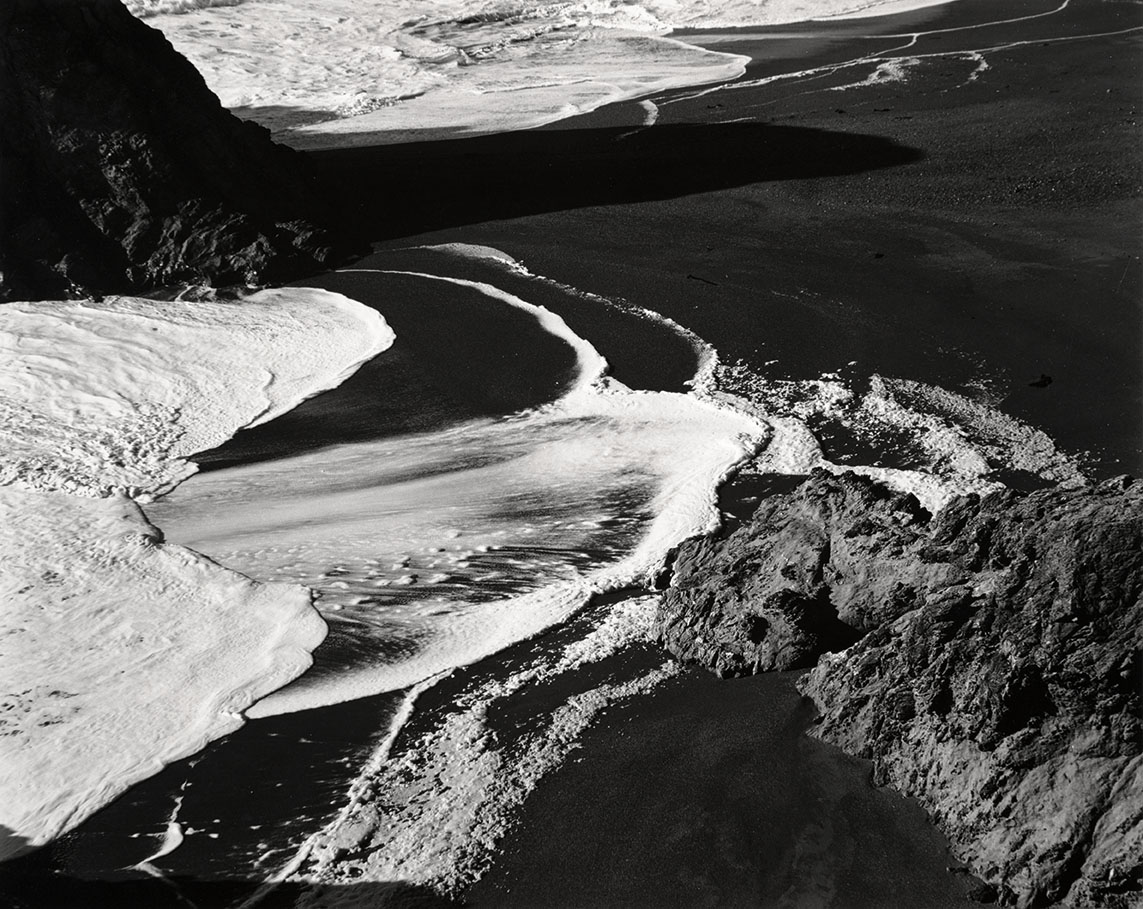
 

Edward Weston (American, 1886-1958)
'Surf, Bodega' 1937


Edward Weston (American, 1886-1958)
Surf, Bodega
1937
19 x 24cm
Gelatin silver print
Center for Creative Photography, The University of Arizona. Edward Weston Archive


Three week’s to the day since my hip replacement operation and I’m still in pain. I know, slowly slowly but it’s very frustrating…

Thus, I just have two words for you about this exhibition –

GREAT WESTERN!


Dr Marcus Bunyan


Many thankx to the Fundación MAPFRE for allowing me to publish the photographs in the posting. Please click on the photographs for a larger version of the image.


“Not I, nor anyone else can travel that road for you,
You must travel it for yourself.

It is not far, It is within reach,
Perhaps you have been on it since you were born, and did not know,
Perhaps it is every where on water and land.”


Walt Whitman. Part of Song of Myself from Leaves of Grass. 1855


I never try to limit myself by theories, I do not question right or wrong approach when I am interested or amazed – impelled to work. I do not fear logic, I dare to be irrational, or really never consider whether I am or not. This keeps me fluid, open to fresh impulse, free from formulae; and precisely because I have no formulae – the public who know my work is often surprised, the critics, who all, or most of them, have their pet formulae are disturbed. And my friends distressed.

I would say to any artist – don’t be repressed in your work – dare to experiment – Consider any urge – if in a new direction all the better – as a gift from the Gods not to be lightly denied by convention or a priori concept. Our time is becoming more and more bound by logic, absolute rationalism; this is a straitjacket I – it is the boredom and narrowness which rises directly from mediocre mass thinking.

The great scientist dares to differ from accepted ‘facts’ -think irrationally – let the artist do likewise.


Edward Weston 28 January, 1932 from The Daybooks of Edward Weston. Vol. ll Horizon Press, New York 1966
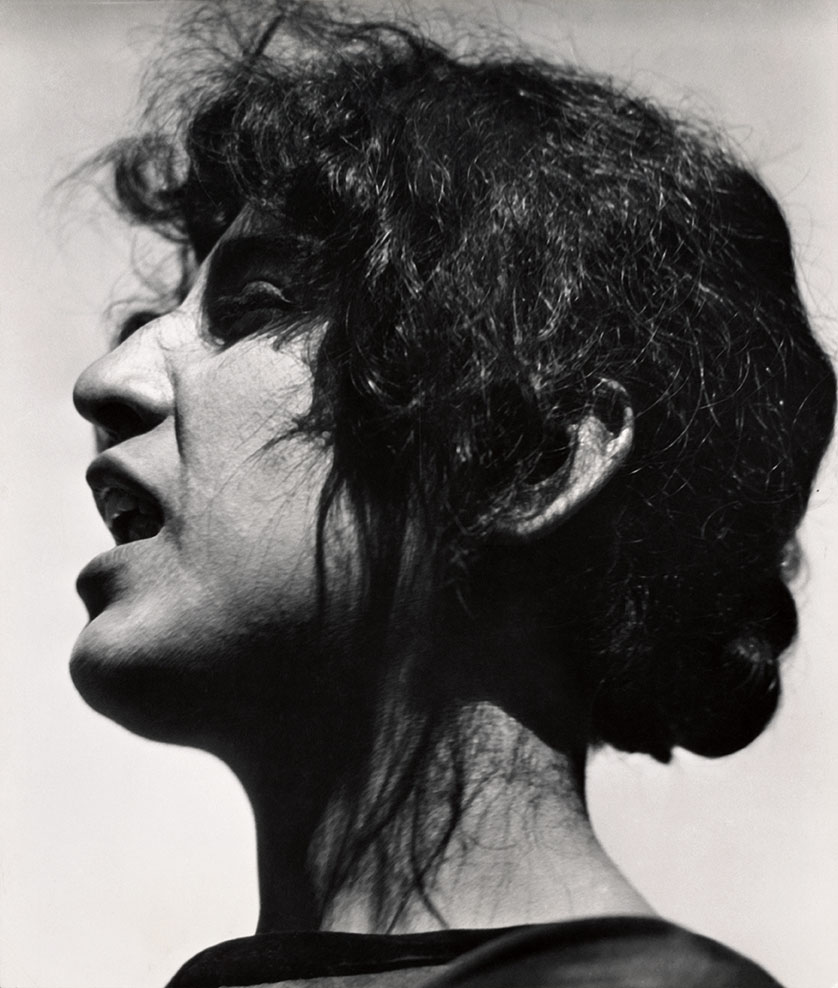


Edward Weston (American, 1886-1958)
'Guadalupe Marín de Rivera' 1924


Edward Weston (American, 1886-1958)
Guadalupe Marín de Rivera
1924
20.8 x 17.9cm
Gelatin silver print
Center for Creative Photography, The University of Arizona. Gift of Ansel and Virginia Adams


Strongly linked to the landscape and to North American cultural history, Edward Weston’s work, in its extreme simplicity and originality, allows us to appreciate a unique perspective on the process of consolidation of photography as an artistic medium and its relevant role in the context of modernity in the visual arts. The exhibition Edward Weston. La matèria de les formes (Edward Weston. The Matter of Forms) is conceived as an anthology that covers the different phases of the artist’s photographic production.

A pioneer in the use of a modern photographic style, his use of the large-format camera gives rise to richly detailed black and white images of extraordinary clarity. His technical expertise and his affection for nature and form led to the development of a body of work in which iconic images of still lifes, nudes, landscapes and portraits stand out. His images are essential for understanding the new aesthetic and new American lifestyle that emerged in the United States between the wars.

The exhibition, curated by Sergio Mah, consists of around two hundred photographs grouped into seven sections. The exhibition tour is completed with numerous documentary material and is conceived from a European perspective on the legacy of modern American photography. An aesthetic and conceptual counterpoint to the photographic modernism in Europe that emerged with the first avant-garde of the 20th century.

The emancipation of photography

Edward Weston was one of the pioneers, along with Alfred Stieglitz and Paul Strand, in defending the emancipation of photography from other artistic disciplines. In this sense, his work contributed decisively to demonstrating, in this early period of photography, the aesthetic and perceptual dimension of the medium, the capacity to express aesthetic qualities in the same way as painting or sculpture.

Figuration and abstraction

The technical mastery of the photographic medium leads Weston to a formalism in which framing becomes one of the most relevant elements of his work. Weston eliminates any anecdotal aspect and focuses on the motif that interests him, and does so with such realism and exaltation of the two-dimensional nature of photography, which often results in an abstract image. In this way, the artist shows that figuration and abstraction do not exempt one from the other, but are perfectly compatible.

Exhibition organised with the support of the Center for Creative Photography at the University of Arizona, Tucson.

Text from the Fundación MAPFRE website translated from the Spanish by Google Translate
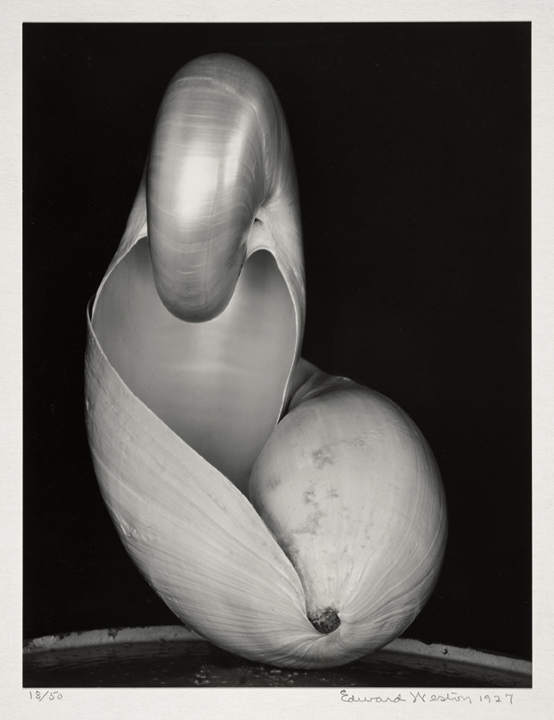
 

Edward Weston (American, 1886-1958) 'Two Shells' 1927, print about 1933


Edward Weston (American, 1886-1958)
Two Shells
1927, print about 1933
24.1 x 18.4cm
Gelatin silver print
The J. Paul Getty Museum, Los Angeles


Edward Weston (American, 1886-1958) 'Pepper No. 30' 1930


Edward Weston (American, 1886-1958)
Pepper No. 30
1930
22.8 x 17.7cm
Gelatin silver print
Courtesy by Trockmorton Fine Art


Highlights

Fundación MAPFRE presents the exhibition Edward Weston. The Matter of Forms, dedicated to the five decades of the career of this North American artist, one of the most important figures in modern photography. In addition, through the work of the artist himself, the exhibition aims to offer a pedagogical reflection on the history of the medium and its relevance as an aesthetic and perceptive discipline, apart from the more traditional plastic arts; specifically, painting.

Key points

The emancipation of photography

Edward Weston was one of the pioneers, along with Alfred Stieglitz and Paul Strand, in defending the emancipation of photography from other artistic disciplines. In this sense, his work is essential to understanding the aesthetic and perceptive capacity of the medium in its beginnings. This capacity allows photography to express aesthetic qualities such as beauty, pain or ugliness at the same level as painting or sculpture.

Figuration and abstraction

The technical mastery of the photographic medium leads Weston to a formalism where framing becomes one of the most relevant elements of his work. In this sense, he eliminates any anecdotal aspect and focuses on the motif that interests him, and he does so with such realism and with such exaltation of the two-dimensional character of photography that he ends up obtaining an abstract image as a result. In this way, the artist shows that figuration and abstraction do not exclude each other, but are perfectly compatible.

Pepper No. 30

Edward Weston took this photograph, one of the most representative of his entire career, at the beginning of August 1930. It was not the first time he had photographed a vegetable, nor a pepper. The artist himself spoke about this image: “It is a fully satisfactory classic: a pepper, but more than a pepper. It is abstract, in the sense that it exists completely outside the subject. It has no psychological attributes, it does not awaken human emotions: this new pepper takes us beyond the world we know in the conscious mind.” In the light of this photograph and the artist’s words, the innovative character of his work can be distinguished, which transcended not only modern American photography, but also European photography.

The exhibition

Weston’s work, strongly linked to the landscape and to North American cultural history, in its extreme simplicity and originality, reveals a unique perspective on the process of consolidation of photography as an artistic medium and its relevant role in the context of modernity in the visual arts. The exhibition Edward Weston. The Matter of Forms is conceived as an anthology that covers the different phases of the artist’s photographic production. From his initial interest in Pictorialist approaches to his consolidation as one of the central figures in the affirmation of the poetic and speculative value of direct photography. A pioneer in the use of a modern photographic style, his work is characterised by the use of a large-format camera, which allows him to offer richly detailed black and white images of extraordinary clarity. His mastery of technique, together with his love of nature and form, led him to develop a photographic production in which iconic images of still lifes, nudes, landscapes and portraits stand out. As a co-founder of the photography collective Group f/64, his images are key to understanding the new North American aesthetic and lifestyle that emerged in the United States between the wars.

The exhibition, grouped into seven sections and curated by Sérgio Mah, consists of around 200 photographs and a large amount of documentary material. The exhibition is conceived as a European look at the legacy of modern North American photography. An aesthetic and conceptual counterpoint to the modern photography that emerged in Europe with the first avant-garde of the 20th century.
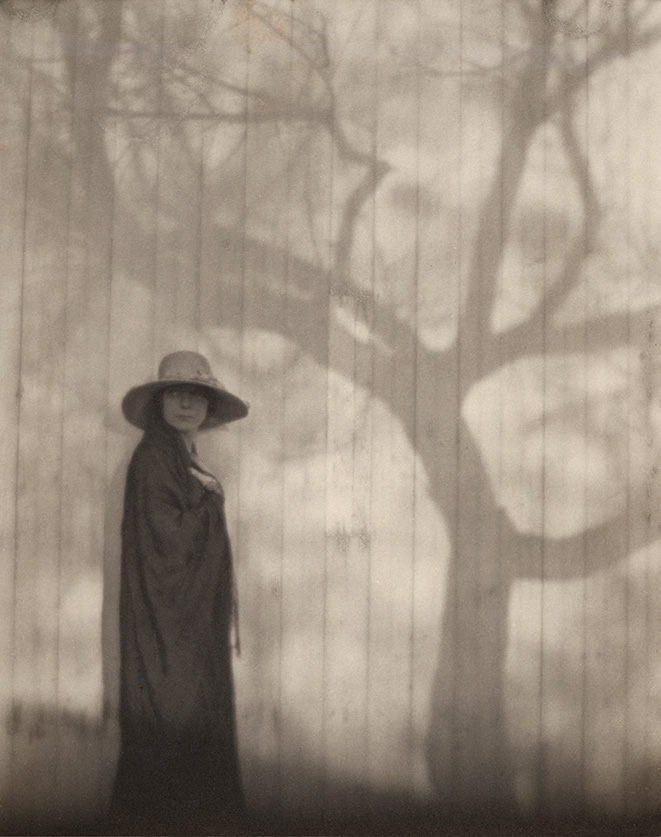
 

Edward Weston (American, 1886-1958) 'Prologue to a Sad Spring' 1920


Edward Weston (American, 1886-1958)
Prologue to a Sad Spring
1920
23.8 x 18.7cm
Platinum print
Center for Creative Photography, The University of Arizona. Johan Hagemeyer Collection/Purchase


1 /

Edward Weston began photography very early, thanks to a Kodak Bulls-Eye No. 2 camera that his father gave him when he was just sixteen. Although he was practically self-taught, in 1911 he opened his first photographic establishment in a suburb of Los Angeles. His early works reveal the influence of the Pictorialist atmosphere of the time: impressionistic views and pastoral subjects with soft or slightly blurred focus, scenography and expressive poses.
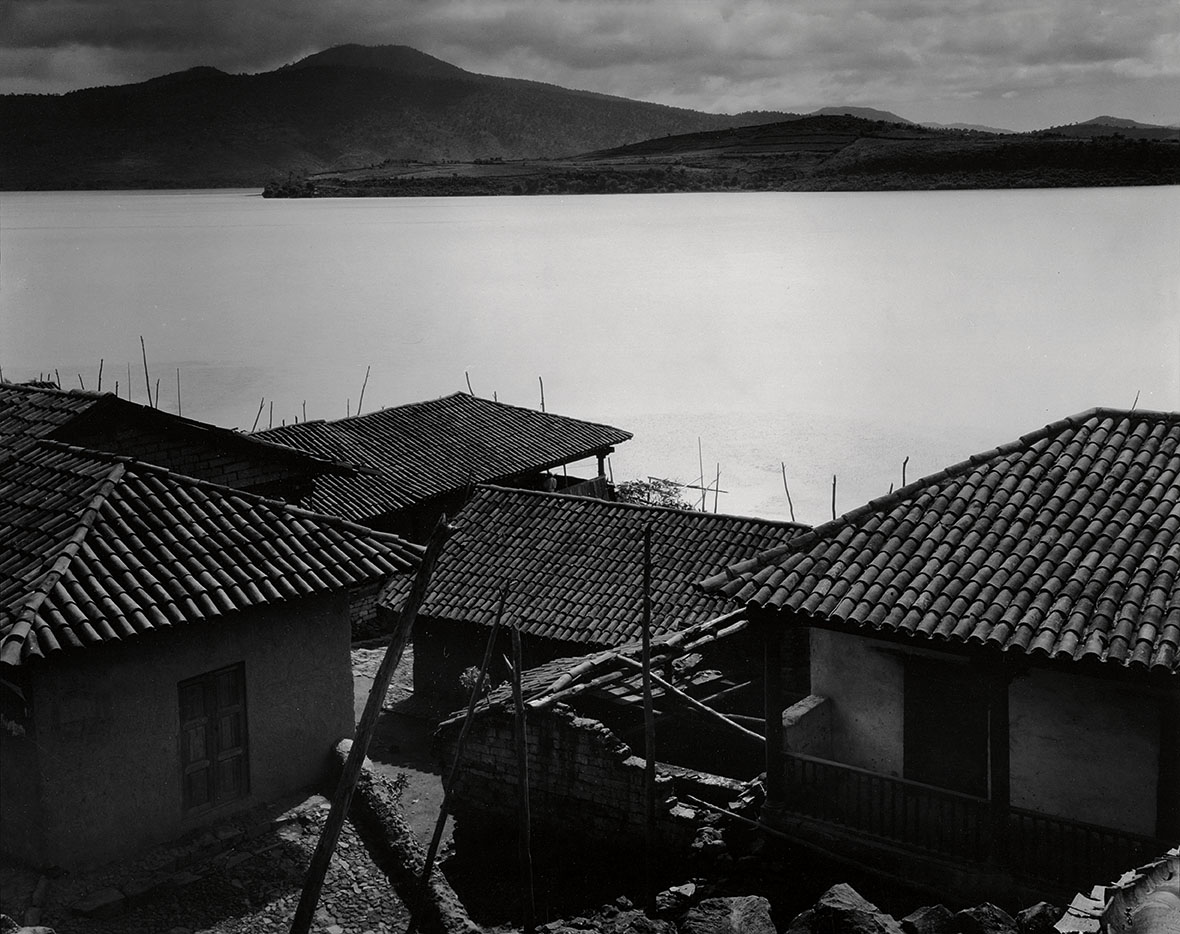
 

Edward Weston (American, 1886-1958) 'Janitzio, Mexico' 1926


Edward Weston (American, 1886-1958)
Janitzio, Mexico
1926
20.4 x 25.2cm
Gelatin silver print
Center for Creative Photography, The University of Arizona. Edward Weston Archive/Gift of the Heirs of Edward Weston


2 /

Weston’s dissatisfaction with this artistic approach to photography, which sought to assimilate itself to painting, coincided with the appearance of other photographers with similar ideas, such as Alfred Stieglitz and Paul Strand, whom he met in New York in 1922. In 1923 he set sail for Mexico accompanied by one of his sons and the photographer Tina Modotti. There he found a true renaissance of the arts and culture, and he came into contact with artists such as Diego Rivera, Frida Kahlo and Rafael Sala. He expanded his visual horizon and tackled new themes, photographing objects, figures and motifs far from their original context, turning them into suggestive and extraordinary elements. It was then that he realised that true photographic art is intuitive and immediate, that the elimination of everything that is accessory constitutes the essence of his creative talent.
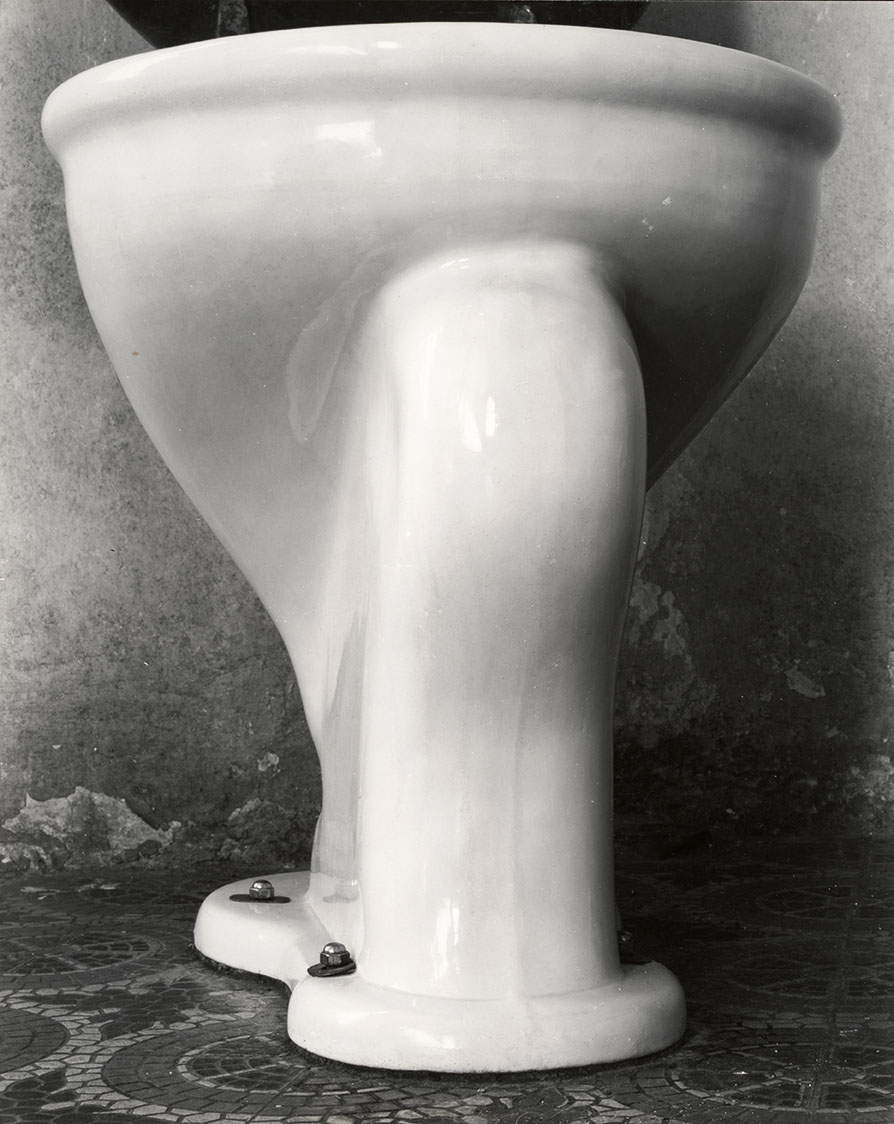
 

Edward Weston (American, 1886-1958) 'Excusado, Mexico' October 1925


Edward Weston (American, 1886-1958)
Excusado, Mexico
October 1925
24.1 x 19.1cm
Gelatin silver print
Center for Creative Photography, The University of Arizona. Edward Weston Archive


3 /

From 1927, influenced by the humanism of Walt Whitman and his work Leaves of Grass, he felt attracted, in the words of Sérgio Mah, by “the extraordinariness of banality”. Fruits, shells and vegetables became the protagonists of his works, and he made one of his most famous photographs: a toilet, an unusual object as an artistic subject, with the title Excused. In these images, Weston accentuated the two-dimensionality of the motifs, since it was one of the characteristics of photography that interested him. He looked for details as a way of fragmenting, isolating and approximating the photographed object, eliminating the sense of depth, a technique particularly notable in still lifes with dark backgrounds, as is the case with his photographs of peppers.
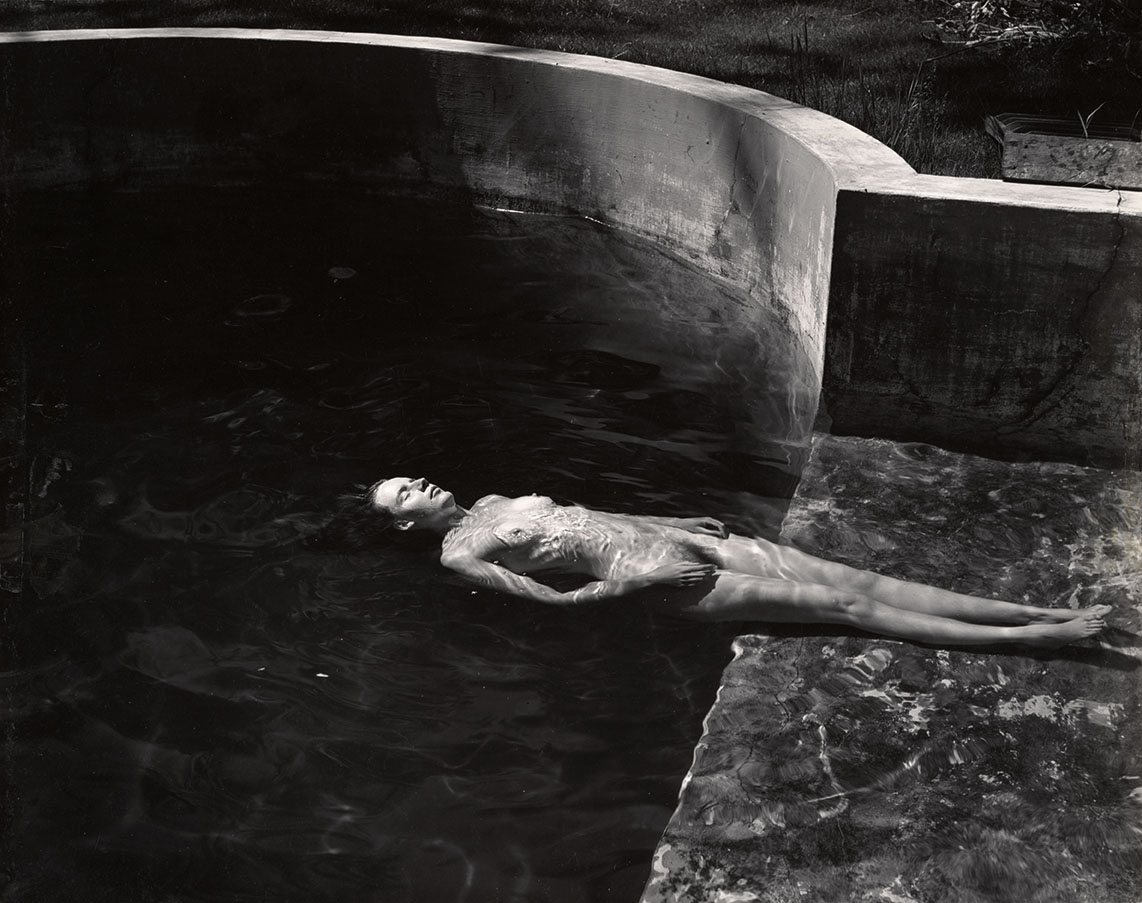
 

Edward Weston (American, 1886-1958) 'Floating Nude' 1939


Edward Weston (American, 1886-1958)
Floating Nude
1939
19.3 x 24.2cm
Gelatin silver print
Center for Creative Photography, The University of Arizona. Edward Weston Archive


4 /

From 1926, after leaving Mexico, Weston photographed several sets of nudes. In these nudes, the photographer’s gaze varies depending on the model. In some cases, the frame is wide and even shows the face, while in others the gaze is more segmented and focuses on parts of the body as a way of cutting out and accentuating the shapes within the frame. It must be recognized that eroticism is a quality present in some of these photographs. However, it is incorrect to conclude that this type of gaze prevails in most of the nudes he photographed. Above all, Weston observes the body as a formal reality. The beauty and sensuality that these bodies suggest is reflected in the play of lines, shadows and contours they offer.
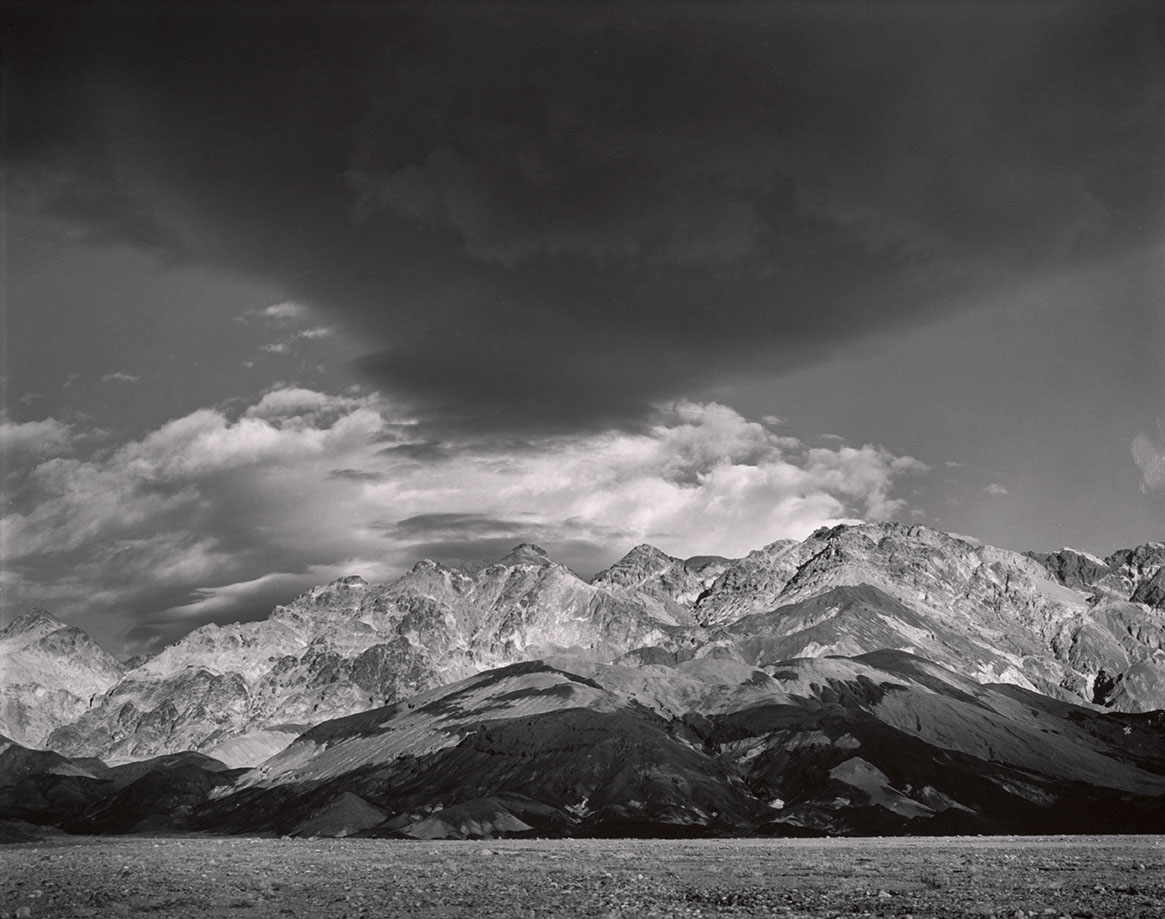
 

Edward Weston (American, 1886-1958) 'Clouds, Death Valley'
1939


Edward Weston (American, 1886-1958)
Clouds, Death Valley
1939
20.4 x 25.2cm
Gelatin silver print
Center for Creative Photography, The University of Arizona. Edward Weston Archive


5 /

From the late 1920s and into the following decades, landscape became a central element in Weston’s work. The artist photographed in the desert near Palm Springs, California, as well as in New Mexico, Arizona, and other Californian areas near his home in Carmel. In these works, the horizon and the depth of the background become a structural part of his works: the panoramic shots highlight the sublime character of the landscape. It was also during this period that Weston began to be interested in meteorological phenomena such as rain, the configuration of clouds, and the aridity of the territory.
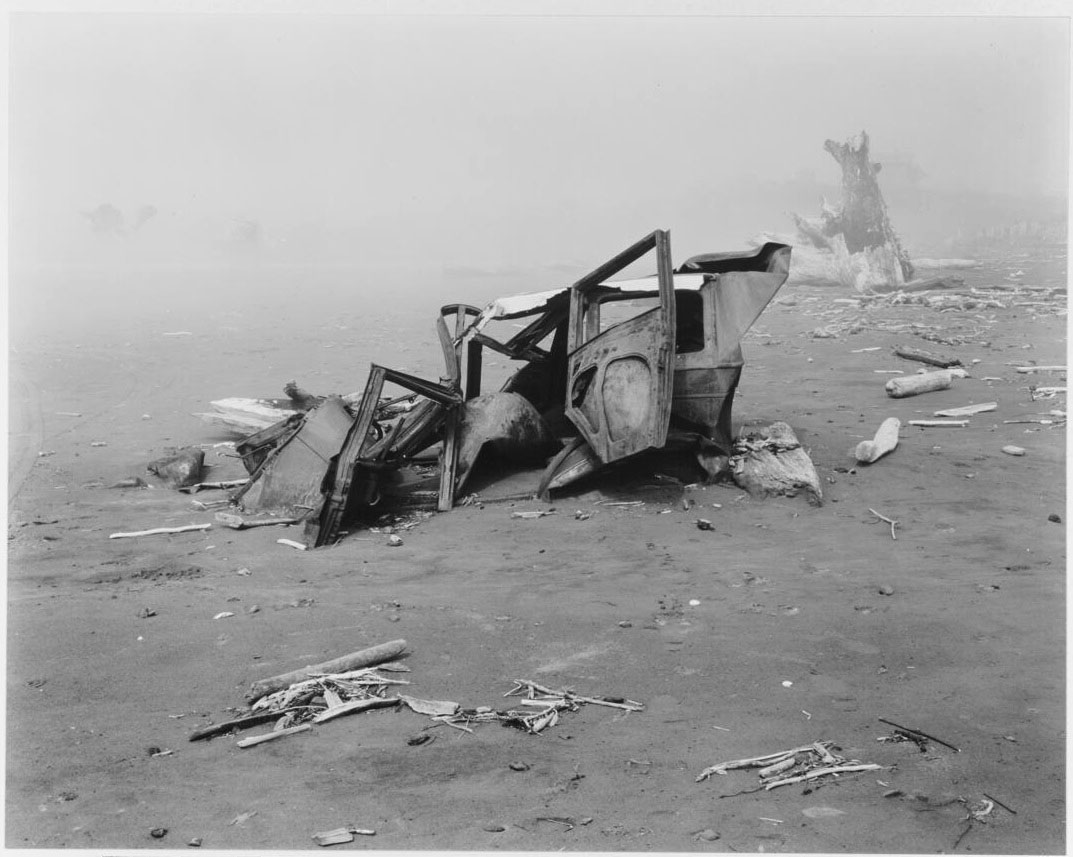
 

Edward Weston (American, 1886-1958) 'Crescent Beach, North Coast' 1939


Edward Weston (American, 1886-1958)
Crescent Beach, North Coast
1939
24.3 x 19.2cm
Silver print mounted on board
The Huntington Library, Art Museum, and Botanical Gardens


6 /

Over the years, Weston’s work increasingly acquired a “dense and melancholic” patina, an aspect that is accentuated by the tones that the images acquire. This characteristic is particularly evident in the photographs he took in 1941 to illustrate Leaves of Grass, a project for which he traveled throughout much of the United States for nearly two years. The images he captured in cemeteries in Louisiana and Georgia stand out, as well as those of abandoned, destroyed and burned buildings where the interest in formal aspects predominates and in which a critical and disillusioned commentary on reality and American society can already be seen.
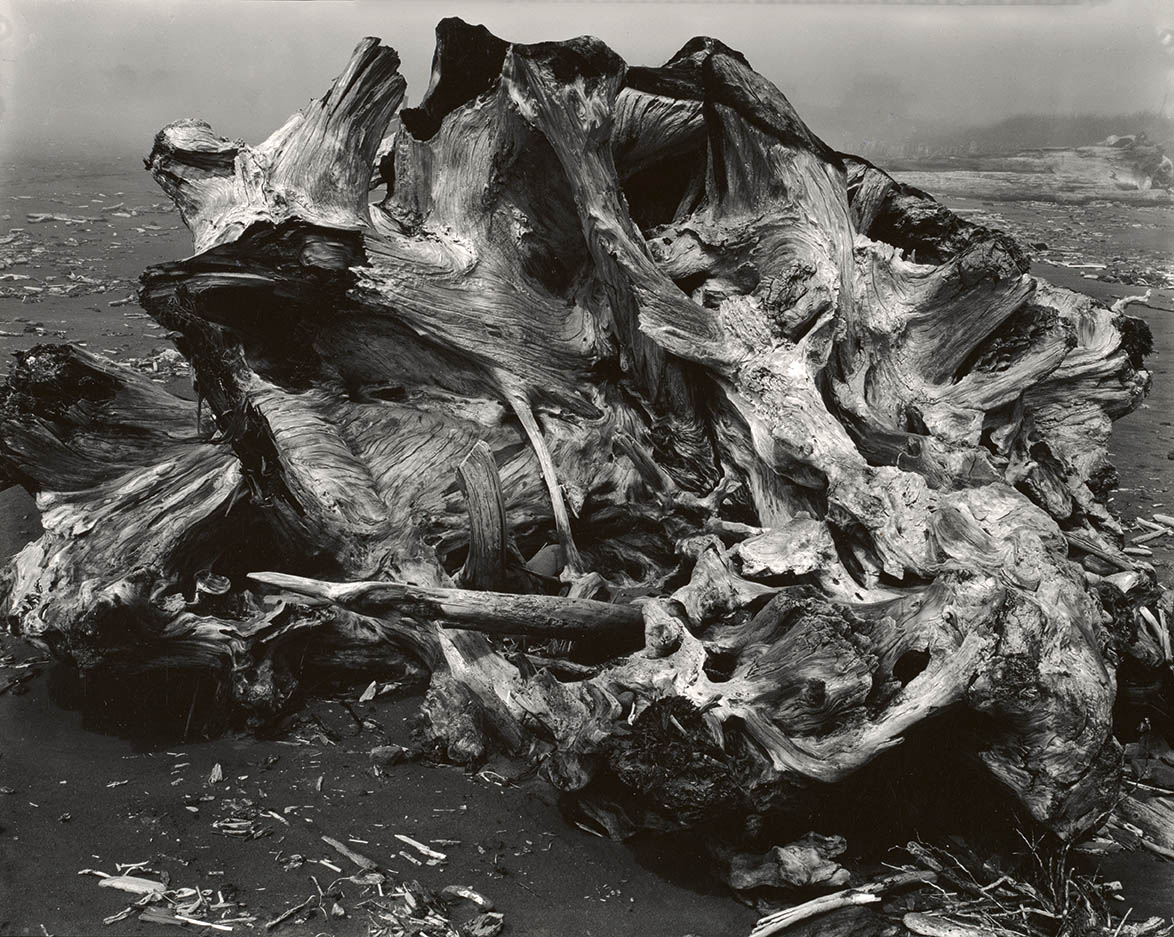
 

Edward Weston (American, 1886-1958) 'Drift Stump, Crescent Beach' 1937


Edward Weston (American, 1886-1958)
Drift Stump, Crescent Beach
1937
20.3 x 25.2cm
Gelatin silver print
Center for Creative Photography, The University of Arizona. Edward Weston Archive


7 /

In the vicinity of Point Lobos, California, was the log cabin built by his son Neil on Wildcat Hill, where Weston moved in 1938. In this area of ​​California, the artist found the wild nature that he had sought in distant places. His images from this period denote less compositional and formal rigidity and show the cycles of nature in the territory, the wild beauty, the trees, stones and rocky landscapes that seem to arise and remain in a time that is stopped. These images express a certain melancholy and solitude, while allowing the viewer to rediscover nature in all its splendour.


Edward Weston (American, 1886-1958) 'Dunes, Death Valley' 1938


Edward Weston (American, 1886-1958)
Dunes, Death Valley
1938
20.4 x 25.1cm
Gelatin silver print
Center for Creative Photography, The University of Arizona. Edward Weston Archive


Catalogue

The catalogue accompanying this exhibition reproduces all the photographs on display. In addition, it includes essays by Sérgio Mah, its curator, by Rebecca Senf, who discusses the artist’s relationship with Mexico, and by Jason Weems, who focuses on Weston’s landscapes and vegetable photographs. It also includes a series of reflections by the artist himself on photography taken from his diaries.

The publication of the catalogue, published in Spanish and Catalan by Fundación MAPFRE, also has a co-edition in Italian published by Dario Cimorelli Editore.

Text from Fundación MAPFRE translated from the Spanish by Google Translate
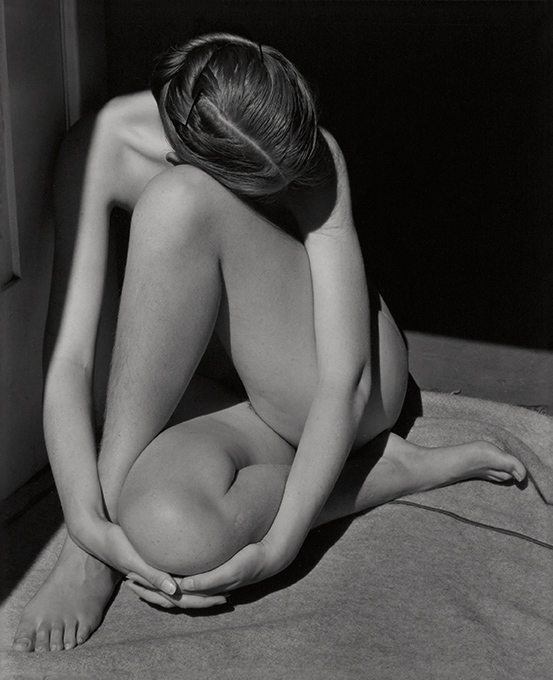
 

Edward Weston (American, 1886-1958) 'Nude' 1936


Edward Weston (American, 1886-1958)
Nude
1936
23.4 x 19.1cm
Gelatin silver print
Center for Creative Photography, The University of Arizona. Gift of the Estate of A.Richard Diebold, Jr.


Author of a vast and diverse body of work spanning five and a half decades, Edward Weston (1886-1958) is one of the great figures in the history of modern photography, partly because his work allows us to reflect on the distinctive qualities of photography as a technical, aesthetic and perceptual category.

His first creative experiments reveal a momentary adherence to the pictorialist tendencies of the time, but he would later stand out as one of the protagonists of a new generation of American photographers who sought to refocus the artistic axis of photography based on its exceptional capacity to represent the most diverse subjects in the world with rigor, clarity and sobriety.

With their extreme simplicity and originality, the exceptional quality of Weston’s images also lies in the way in which he was able to rethink and articulate the extraordinary realistic and objective capacity of photography with its aesthetic, poetic and phenomenological potential, contributing to expanding the horizon of the subjective experience of the image. In this way, Weston enunciated the unique role of photography in the panorama of the visual arts of his time.

Weston was an immensely prolific photographer and his work brings together a whole series of photographic themes, types and genres: portraits, nudes, still lifes, natural and urban landscapes, object photography, architecture… This anthological exhibition aims to cover the entirety of Weston’s photographic career, which began at the beginning of the 20th century and was uninterrupted until the end of the 1940s. The selection of works aims to go well beyond the period in which Weston took most of the images that gave him wide critical and institutional recognition. The truth is that a more complete and heterogeneous approach to his work allows us to summon other layers of aesthetic appreciation, broadening the understanding of the depth and articulations that Weston developed in the various fields he explored. Furthermore, it offers the opportunity to point out the aspects and affinities (in the gaze, in the construction of the image or in its peculiar relationship with certain themes) present throughout his career, emphasizing the coherence of his imagery, as well as the nuances and moments of transition that occurred in it.

Sérgio Mah
Curator

Text from Fundación MAPFRE translated from the Spanish by Google Translate
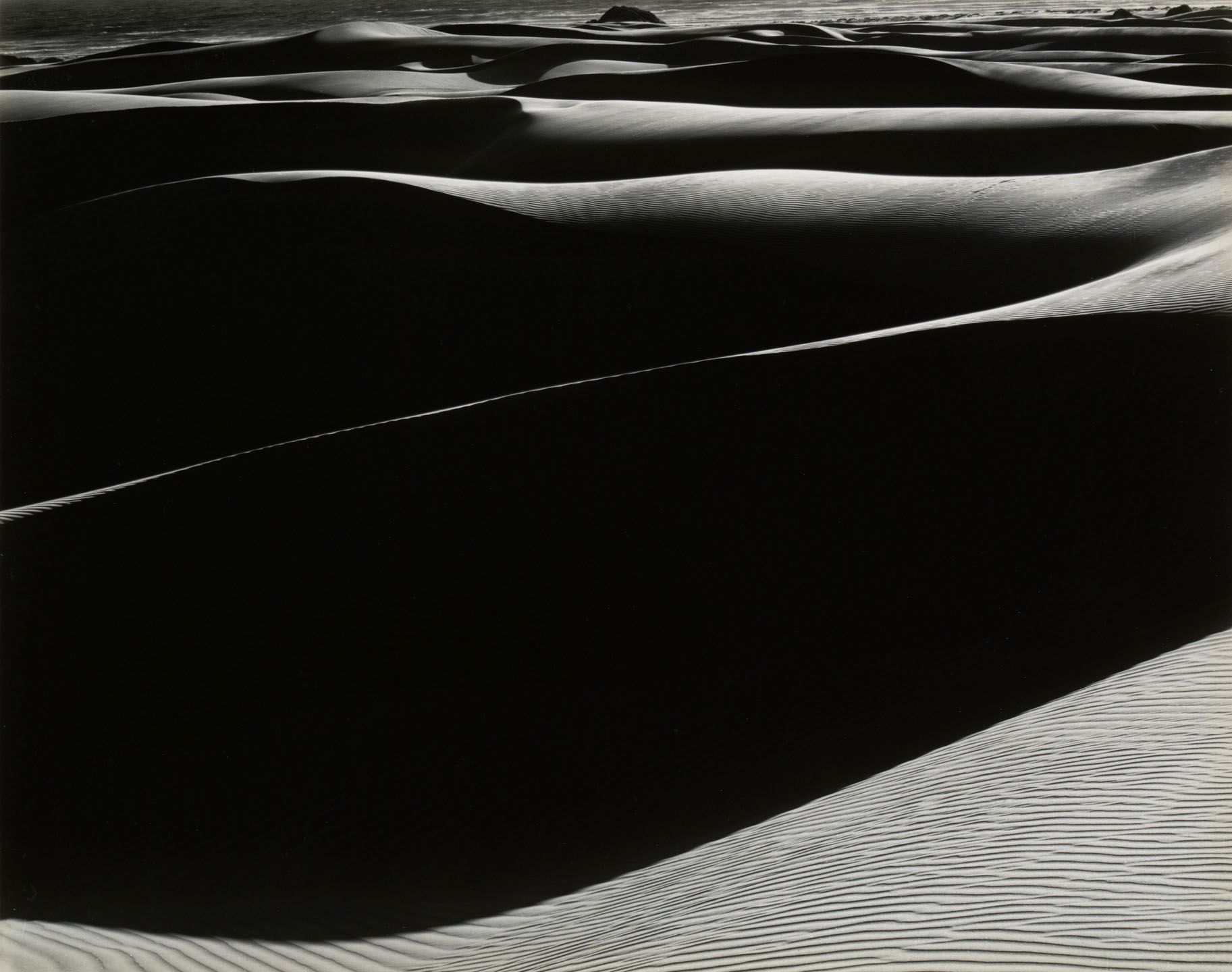
 

Edward Weston (American, 1886-1958) 'Dunes, Oceano' 1936


Edward Weston (American, 1886-1958)
Dunes, Oceano
1936
24.1 x 18.9cm
Silver print mounted on board
The Huntington Library, Art Museum, and Botanical Gardens


From an early age, Edward Weston showed an interest in developing a creative side of photography apart from his commercial work. His early experiments show the influence of painting and reveal his attention and attachment to the pictorialist atmosphere of the time. These photographs include impressionistic views, pastoral subjects with soft or slightly blurred focus, numerous staged portraits that explore expressive poses and combinations with shadows and graphic elements of the environment.

The two periods he spent in Mexico, between 1923 and 1924 and then between 1925 and 1926, were decisive in Edward Weston’s creative career. There he began to explore new themes and genres and his visual horizon expanded significantly. He covered a wide variety of subjects, types of places, figures and things, parts of things, appropriate objects, motifs taken from their original context and repositioned in another interpretative framework. At the same time, his visual style completely sheds any reminiscence of the Pictorialist phase. A photography of great technical, formal and compositional rigour was consolidated. Weston realised that he had the capacity to transform trivial things into suggestive and extraordinary. He was clear that the art of photography lies fundamentally in the moment of making the image, in the way in which the photographer contemplates the subject and makes decisions according to the variables inherent in the photographic device. For him, the process is instinctive. This way of seeing – intuitive, intense and immediate – which seeks to isolate the subject, eliminating the accessory, the unnecessary, anything that could divert or attenuate the intensity of the photographic vision, constitutes the essence of Weston’s creative talent.

From 1927, Weston began a series of still life photographs. In these images he fully reveals the principles and characteristics of his work: the desire to represent the timeless essence of a natural object and, correlatively, to emphasise the duplicative and perceptive capacities of the photographic medium.

The compositions are carefully conceived. In the space of the image, there is a calculated conformity between the dimension of the forms and the format of the image. Here it is important to reiterate the focus on detail as a defining aspect of Weston’s imagery, evident in these still lifes and also in other aspects of his work. Weston understands the vision of detail as a way of fragmenting, isolating and bringing our gaze closer to certain things, accentuating the two-dimensional character of the image, its closed and opaque nature, without depth or horizon, evident above all in still lifes with dark backgrounds, such as photographs of peppers, but also in the various images of plants, trees, rocks and stones that he has been making since the early 1930s.

Weston left Mexico in 1926. In the following years, he made several series of nudes. This is not a new subject. He had already made some important ones before, including one of Anita Brenner’s back and another of her son Neil, whose torso is cut out in an image that evokes ancient Greek statues. In the nudes, the photographer’s gaze varies depending on the model. In some cases, the framing is wide and even shows the face, while in others the gaze is more segmented and focuses on parts of the body as a way of cutting out and accentuating the shapes within the frame. We can recognise that eroticism is a quality present in some of these photographs. It is incorrect, however, to conclude that this gaze prevails in most of his nudes. Weston observes the body mainly as a formal reality. The beauty and sensuality that these bodies suggest are based above all on the play of lines, shadows and contours that they provide.

From the late 1920s, and with greater intensity in the following decades, the landscape genre occupies a central place in Weston’s photographic production. In 1927, the artist takes photos in the Californian desert near Palm Springs. In the following years, he travels through New Mexico, Arizona and other areas of California, such as Oceano, Death Valley, Yosemite, the Mojave Desert and Point Lobos, near his home in Carmel. In these various places, he captures wide views of inhospitable territories in which there are no signs of human presence or intervention. The horizon line and the breadth of the territory become structuring motifs in his work. The impetus for these images is a feeling of admiration for the epic and immeasurable nature of these natural landscapes. Beyond his choice of panoramic shots, the images reveal other aspects and elements of nature, such as meteorological phenomena, rain, cloud formations and variations in sunlight, often in conjunction with their visual effect on the arid land or the vegetation and unique morphology of these territories. It is a vision sensitive to the transformative nature of the landscape, subject to environmental and geological changes.

Gradually, and with greater intensity from the 1940s onwards, Edward Weston’s imagery became denser and more melancholic, not only in terms of the selection of subjects, but also in the tonalities of the images. This tendency is particularly evident in the photographs he takes for an edition of Leaves of Grass, the masterpiece of the poet Walt Whitman. He travels throughout the United States for two years. He revisits many of the recurring themes in his work, but the large number of images he takes of cemeteries in Louisiana and Georgia stand out. These are photographs in which his interest in formal aspects, texture and light predominates. All the subjects are seen as an integral part of a geography that is at once physical, social and mental. On the other hand, there are a lot of images of abandoned, destroyed and burnt buildings, of rubbish and things destined to disappear. We can identify that the themes of finitude and death contribute to an imagery increasingly characterised by loneliness, melancholy, and decadence. For the first time in his work, the images suggest a disillusioned and critical commentary on American reality, on the relationship between nature and culture, continuity and change, alienation and social tension.

In 1938, Weston moved with Charis Wilson to the wooden house built by his son Neil on Wildcat Hill, near Point Lobos, California. The artist spent long periods taking photos in this coastal region. He wandered through areas that he knew well. The images show a nature permeated with cycles, rhythms and forces, a macrocosm where Weston found the material to continue his work. At Point Lobos, Weston encountered a wild, dazzling and ineffable beauty that he had always sought in distant places. In the trees, forests, stones and rocky landscapes, the photographer found a vital energy that led perception towards a diffuse time, contrary to the linearity of history, alien to modernity. Nature then emerged as a theme and setting that allowed him to think and experience a renewed gaze (spontaneous, intuitive, aesthetic), a gaze that was both concrete and metaphysical that allowed him to rediscover nature.

Text from Fundación MAPFRE translated from the Spanish by Google Translate


Edward Weston (American, 1886-1958) 'Charis, Lake Ediza' 1937


Edward Weston (American, 1886-1958)
Charis, Lake Ediza
1937
19.1 x 24.1cm
Silver print mounted on board
The Huntington Library, Art Museum, and Botanical Gardens


KBr Fundación MAPFRE
Av. del Litoral, 30 08005 Barcelona
Phone: +34 932 723 180

Opening hours:
Tuesdays – Sundays (and public holidays) 11am – 8pm

Fundación MAPFRE website

LIKE ART BLART ON FACEBOOK

Back to top

Exhibition: ‘Chris Round / Inversion’ at Edmund Pearce Gallery, Melbourne

Exhibition dates: 22nd – 26th July 2014


Chris Round (Australian born England) 'Inversion #5' 2014


Chris Round (Australian born England)
Inversion #5
2014
Archival pigment print on cotton rag
64 x 84cm
Edition of 7
© Chris Round


My apologies to Chris Round that I did not get this posting up during the short run of the exhibition. It was a bit of a crowded time with the exhibition Out of the closets and Nite Art on.

The work, shown in the small black gallery at Edmund Pearce, had great presence and beauty. The backgrounds had a luminous pastel affect, much more so than in the reproductions shown here. The objects seemed to float off the paper. This is experimental work for Round (vis a vis his landscape practice) but the influences for the work can be seen in the two landscape photographs that I have included here.

I really enjoyed the beauty, serenity and context of these metaphorical landscapes.

Dr Marcus Bunyan


Many thankx to Edmund Pearce Gallery for allowing me to publish the photographs in the posting. Please click on the photographs for a larger version of the image.


Chris Round (Australian born England) 'Inversion #4' 2014


Chris Round (Australian born England)
Inversion #4
2014
Archival pigment print on cotton rag
64 x 84cm
Edition of 7
© Chris Round


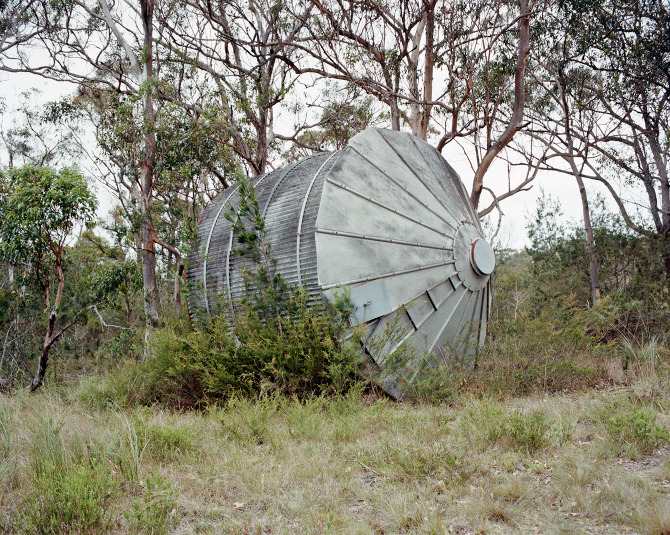
Chris Round (Australian born England) 'Nowra, NSW' 2013


Chris Round (Australian born England)
Nowra, NSW
2013
Archival inkjet print
© Chris Round


Chris Round (Australian born England) 'Inversion #2' 2014


Chris Round (Australian born England)
Inversion #2
2014
Archival pigment print on cotton rag
64 x 84cm
Edition of 7
© Chris Round


Chris Round (Australian born England) 'Inversion #1' 2014


Chris Round (Australian born England)
Inversion #3
2014
Archival pigment print on cotton rag
64 x 84cm
Edition of 7
© Chris Round


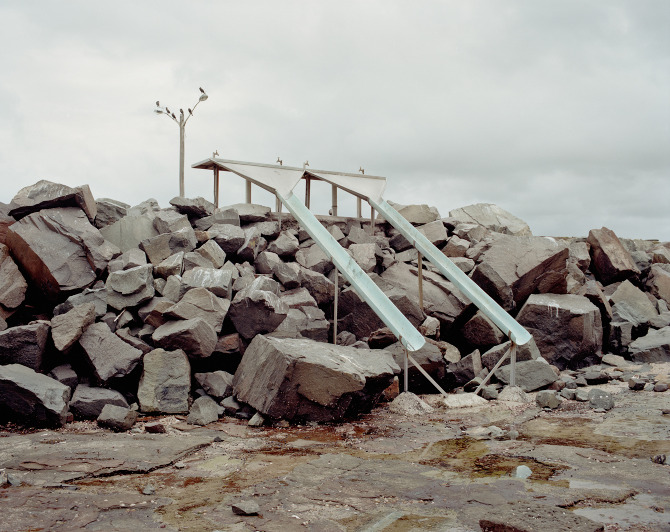
Chris Round (Australian born England) 'Ulladulla harbour, NSW' 2012


Chris Round (Australian born England)
Ulladulla harbour, NSW
2012
Archival inkjet print
© Chris Round


Chris Round (Australian born England) 'Inversion #1' 2014


Chris Round (Australian born England)
Inversion #1
2014
Archival pigment print on cotton rag
64 x 84cm
Edition of 7
© Chris Round


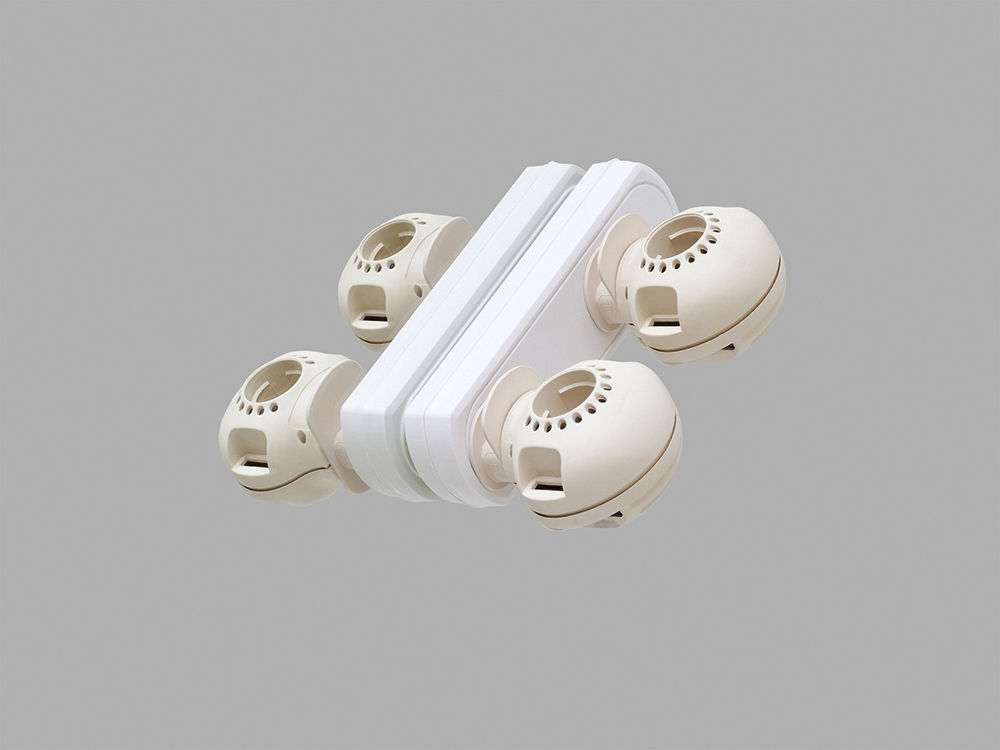
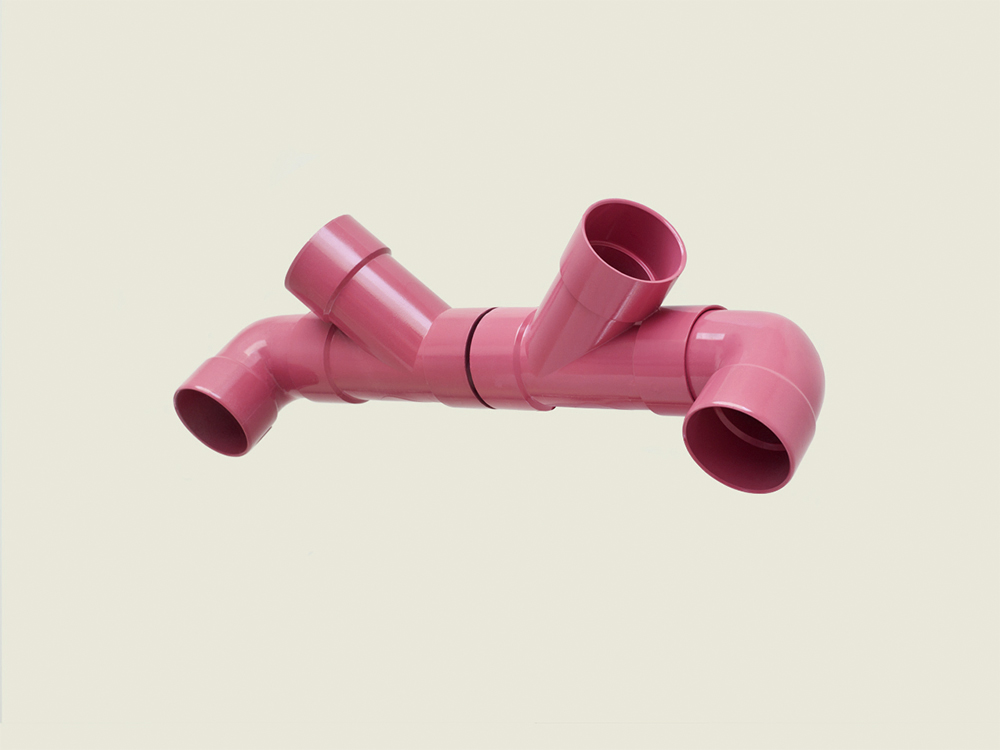
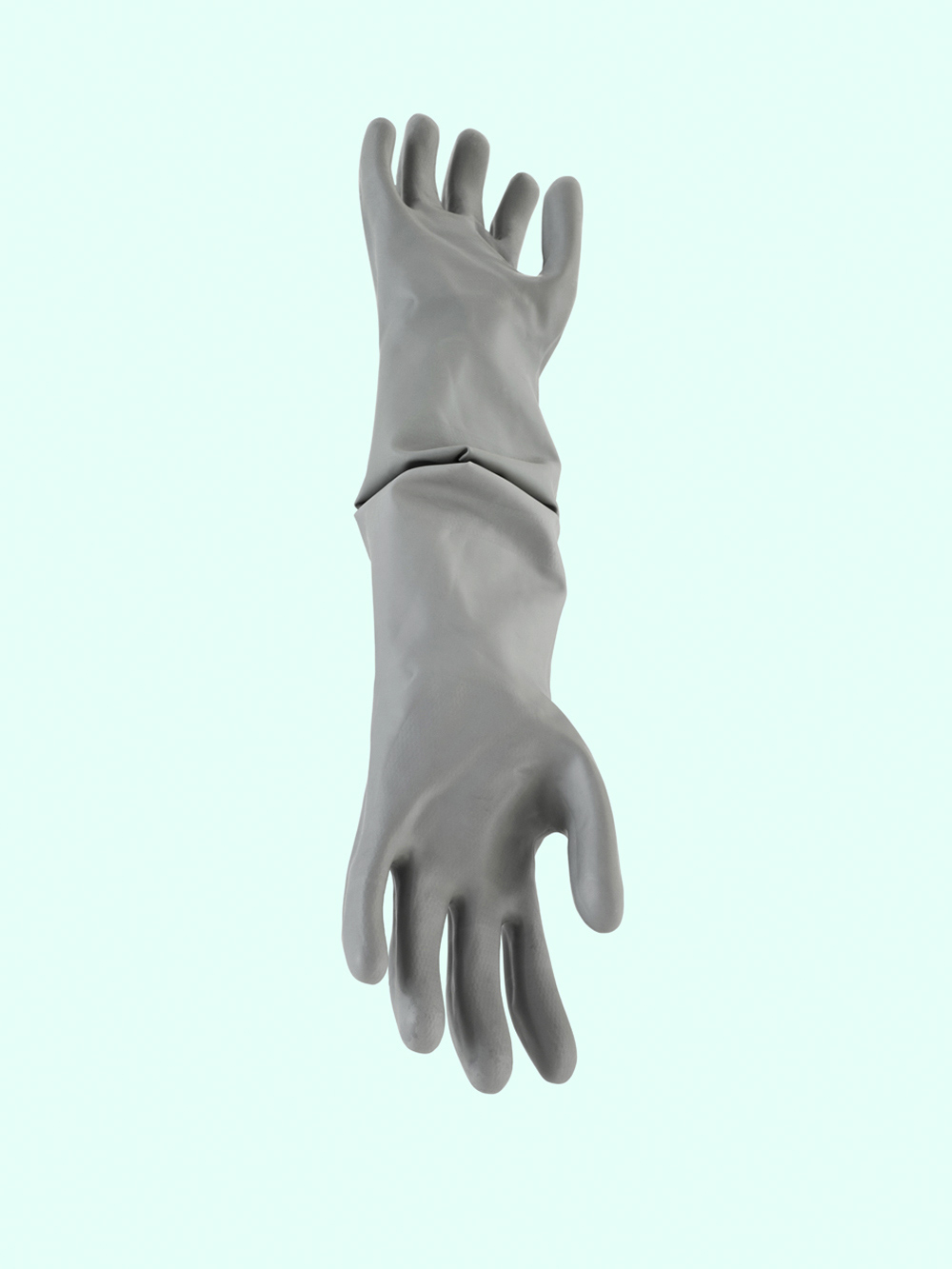
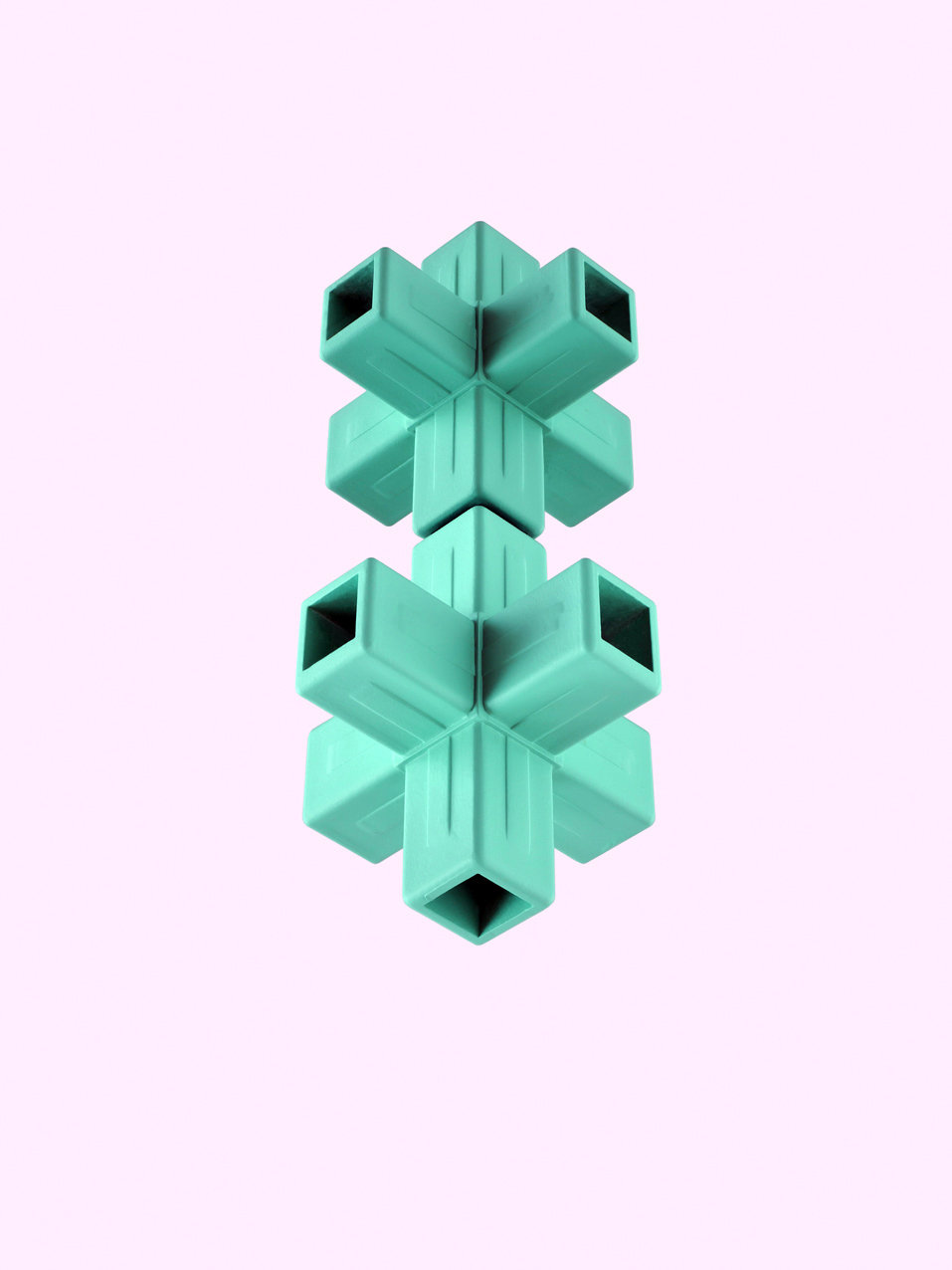
Inversion marks a departure from my normal landscape based work and in to experimental still life. This series is an investigation into form and visual illusion using functional, mass-produced objects. By removing context – using a reflective surface that’s not immediately apparent and at times changing colours – I’m interrogating the duality of the real and the imagined, the prosaic and the beautiful. I’m also exploring the physicality of depth and space, re-evaluating both utilitarian aesthetic and function simultaneously.

Text by the artist on the Edmund Pearce website


Chris Round (Australian born England) 'Inversion #6' 2014


Chris Round (Australian born England)
Inversion #6
2014
Archival pigment print on cotton rag
84 x 64cm
Edition of 7
© Chris Round


Chris Round (Australian born England) 'Inversion #7' 2014


Chris Round (Australian born England)
Inversion #7
2014
Archival pigment print on cotton rag
84 x 64cm
Edition of 7
© Chris Round


Chris Round (Australian born England) 'Inversion #8' 2014


Chris Round (Australian born England)
Inversion #8
2014
Archival pigment print on cotton rag
84 x 64cm
Edition of 7
© Chris Round


Edmund Pearce Gallery

This gallery has now closed.

LIKE ART BLART ON FACEBOOK

Back to top

Exhibition: ‘Arnold Newman: Masterclass’ at the Harry Ransom Center, The University of Texas at Austin

Exhibition dates: 12th February – 12th May 2013


Many thankx to the Harry Ransom Center for allowing me to publish the photographs in the posting. Please click on the photographs for a larger version of the image.


Arnold Newman Masterclass


Installation view of the exhibition 'Arnold Newman: Masterclass' at the Harry Ransom Center, The University of Texas at Austin

Installation view of the exhibition 'Arnold Newman: Masterclass' at the Harry Ransom Center, The University of Texas at Austin


Installation views of Arnold Newman: Masterclass at the Harry Ransom Center, The University of Texas at Austin
Photos by Pete Smith
Images courtesy of Harry Ransom Center


Arnold Newman (American, 1918-2006) 'Dr. Edwin H. Land with group of Polaroid Employees, Polaroid warehouse in Needham, Mass.,' 1977


Arnold Newman (American, 1918-2006)
Dr. Edwin H. Land with group of Polaroid Employees, Polaroid warehouse in Needham, Mass.,
1977
Gelatin silver print
© 1977 Arnold Newman / Getty Images


Arnold Newman (American, 1918-2006) 'Truman Capote, writer, New York' 1977


Arnold Newman (American, 1918-2006)
Truman Capote, writer, New York
1977
Gelatin silver print
© Arnold Newman / Getty Images


“The thing is, with Penn or Avedon, they control totally the situation in the studio, and I’m always taking a chance, wherever I go.”


“What’s the truth in a portrait? Who do you believe? Sometimes you cannot determine this in just one picture… The only way to determine whether you believe it or not is to look at my other pictures.”


“Form, feeling … structure and detail … technique and sensibility: it must all come together.”


Arnold Newman


Arnold Newman: Masterclass, the first posthumous retrospective of Arnold Newman (1918-2006), explores the career of one of the finest portrait photographers of the 20th century. The Harry Ransom Center, which holds the Arnold Newman archive, hosts the exhibition’s first U.S. showing February 12 – May 12, 2013.

The show, curated by FEP’s William Ewing, highlights 200 framed vintage prints covering Newman’s career, selected from the Arnold and Augusta Newman Foundation and the collections of major American museums and private collectors. Twenty-eight photographs from the Ransom Center’s Newman archive are featured in the exhibition.

“This retrospective is a real occasion for a reappraisal,” said Todd Brandow, founding director of FEP. “Newman was a great teacher, and he loved sharing his knowledge. It was these ‘lessons’ that led us to the concept of ‘Masterclass,’ the idea that, even posthumously, Newman could go on teaching all of us – whether connoisseurs or neophytes – a great deal.”

A bold modernist with a superb sense of compositional geometry, Newman, called the father of ‘environmental portraiture,’ is known for a crisp, spare style that placed his subjects in the context of their work environments. The exhibition includes work prints, prints with crop marks, rough prints with printing instructions and variants that reveal Newman’s process and attention to detail. “For me the professional studio is a sterile world,” said Newman in a 1991 interview. “I need to get out: Be with people where they’re at home. I can’t photograph ‘the soul,’ but I can show and tell you something fundamental about them.”

“Newman was never comfortable with the environmental term, and the backgrounds of Newman’s portraits would never be secondary aspects of his compositions,” said Ewing. “He had a masterful command of both sitter and setting.”

His subjects included world leaders, authors, artists, musicians and scientists – Pablo Picasso in his studio; Igor Stravinsky sitting at the piano; Truman Capote lounging on his sofa; and Otto Frank, father of Anne Frank, in the attic where his family hid from the Nazis for more than two years.

The exhibition takes stock of the entire range of Newman’s photographic art, showing many fine prints for the first time. The exhibition also includes Newman’s lesser-known and rarely exhibited still lifes, architectural studies, cityscapes and earliest portraits. While at the Ransom Center, the exhibition will be supplemented with holdings from the Center’s Newman archive, which contains all of Newman’s negatives, slides and colour transparencies, all of his original contact sheets and more than 2,000 prints, including examples of colour and collage work. The collection also includes Newman’s original sittings books, correspondence and business files, early sketchbooks and photographic albums.

Press release from the Harry Ransom Center website


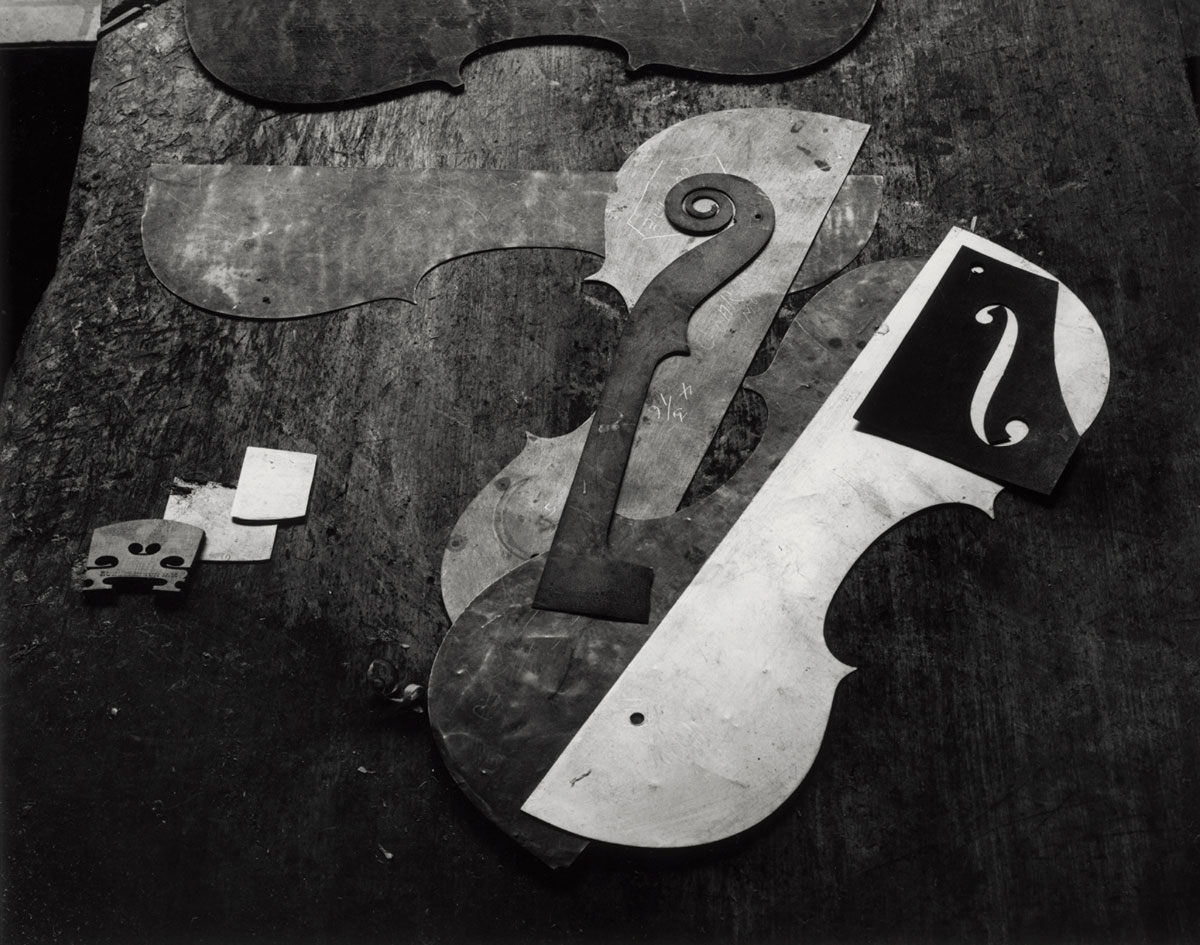
Arnold Newman (American, 1918-2006) 'Violin shop : patterns on table, Philadelphia, Pennsylvania' 1941


Arnold Newman (American, 1918-2006)
Violin shop: patterns on table, Philadelphia, Pennsylvania
1941
Gelatin silver print
© 1941 Arnold Newman / Getty Images


Arnold Newman (American, 1918-2006) 'Igor Stravinsky' 1945


Arnold Newman (American, 1918-2006)
Igor Stravinsky
1945
Contact sheet of four negatives with Newman’s marks and cropping lines
Image courtesy of Harry Ransom Center


Cropping was also a practice Newman valued highly. His edges were determined with minute precision. Trained as a painter, Newman never had doubts about the virtues of cropping. His famed Stravinsky portrait would not have a fraction of its power without the stringent crop. As for printing, Newman was equally meticulous. He trusted few assistants, and those he did trust found that he would not accept a final print unless it was flawless in execution. (Wall text)

“Oh, people set up these nonsensical rules and regulations. You can’t crop, you can’t dodge your print, etc, etc., … But the great photographers that these people admire all did that!”

Wall text from the exhibition


Arnold Newman (American, 1918-2006) 'Twyla Tharp, dancer and filmmaker, New York' 1987


Arnold Newman (American, 1918-2006)
Twyla Tharp, dancer and filmmaker, New York
1987
Gelatin silver print
© Arnold Newman / Getty Images


Sensibilities

Many of Newman’s photographs show confident people, posing proudly before their accomplishments, directly engaging the viewer. But many betray a certain réticence – fragility, a hint of vulnerability, or doubt. Newman was aware that a successful artist’s career was not all roses – thorns were encountered along the path. He also regarded the act of portraiture was necessarily collaborative, or transactional; each side had their own kind of power – the sitter could resist the control of the photographer, the photographer could expose the sitter in an unflattering light. A successful portrait had to negotiate this psychological uncertainty. Sometimes Newman wanted to show supreme confidence as the mark of the man; at other times he wanted to show chinks in the armour.

“You show a certain kind of empathy with the subject – I don’t want to use the word ‘sympathy’, but you sort of let them know you’re on their side.”

Wall text from the exhibition


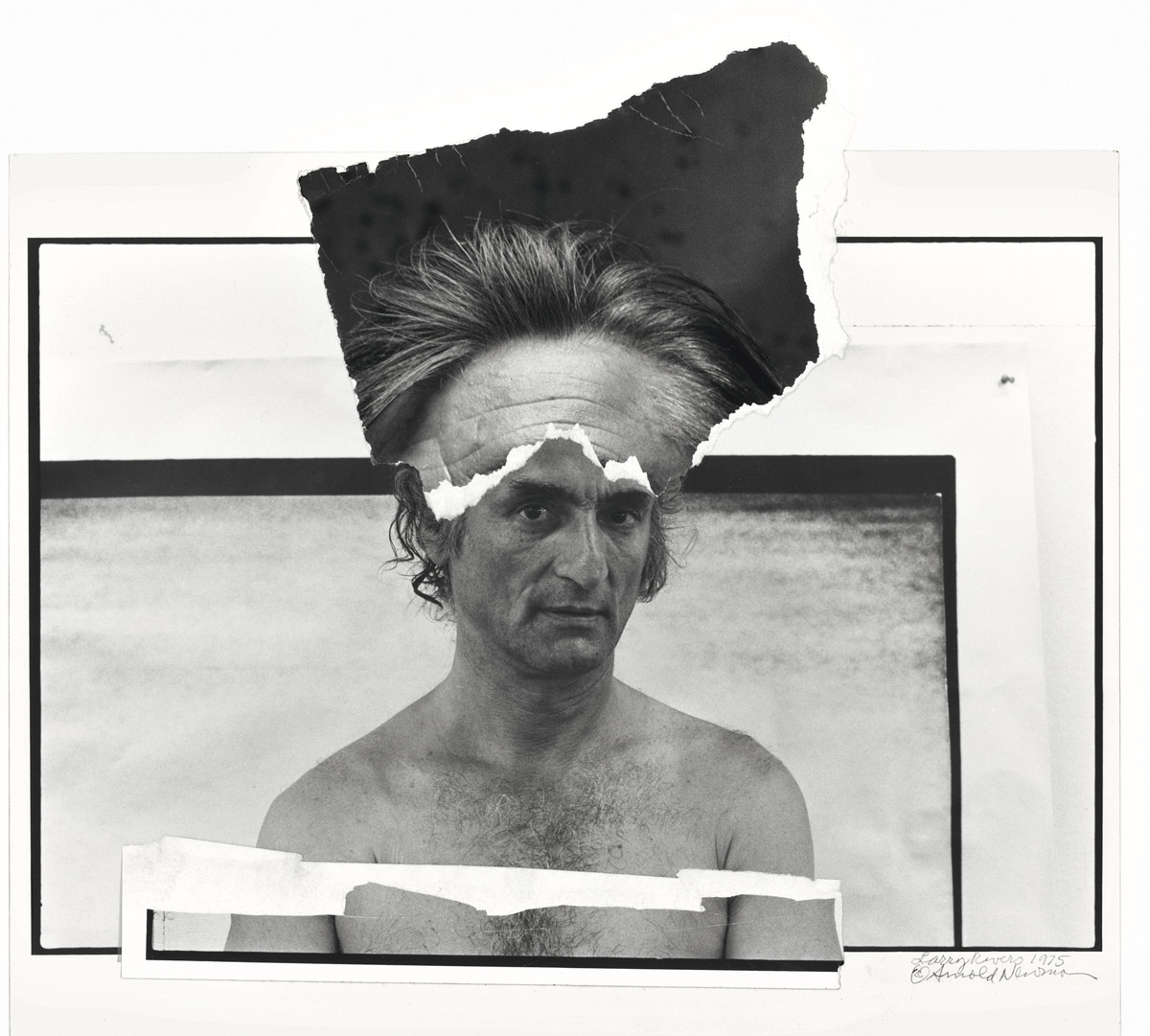
Arnold Newman (American, 1918-2006) 'Larry Rivers, painter, South Hampton, New York' 1975


Arnold Newman (American, 1918-2006)
Larry Rivers, painter, South Hampton, New York
1975
Gelatin silver print
© 1975 Arnold Newman / Getty Images


During the second half of the 20th Century, there was no portrait photographer as productive, creative and successful as Arnold Newman. For almost seven decades Newman applied himself to his art and craft, never for a moment losing his zest for experimentation. His work was published in the most influential magazines of the day, and he was much interviewed, much quoted, and much respected. Several major solo exhibitions paid homage to his achievements during his lifetime, and his work can be found in many of the world’s most prestigious photography collections. No historical overview of portraiture would be complete without one or two Newman masterpieces, nor could any general history of the medium safely leave out his superb Stravinsky, Mondrian or Graham.

Surprisingly, many of Newman’s superb portraits have never been shown or published. This, his first posthumous retrospective, features a wide variety of such photographs. Moreover, it includes cityscapes, documentary photographs and still lifes that have rarely if even been exhibited. Even people already familiar with Newman’s work will find scores of unexpected images, rivalling the work the ‘icons’ they admire. Newman was never happy with the label, often applied, of ‘father of environmental portraiture’. He argued that his portraits were much more than simple records showing artists posing in their studios; there was a symbolic aspect too, and an emotional / psychological element, both fundamental to his approach. He asked critics to ignore all labels, and judge his portraits simply as they would any photographs.

Newman was also a great teacher, and he loved to share his knowledge and skills with aspiring photographers. As with all great artists, the pictures he made seem effortless, natural, but in fact they were the result of careful prior planning. Newman applied the same rigour to selecting the best of his ‘takes’, cropping them precisely, and then printing them with supreme skill. Highly self-critical, he admitted: “I was always my own worst art director.”

With Masterclass, we have endeavoured to give viewers some insights into Newman’s approach. Work prints, prints with crop marks, rough prints with printing instructions, and variants reveal Newman’s great attention to detail and careful consideration of every aspect of the photographic art.

William A. Ewing
Curator


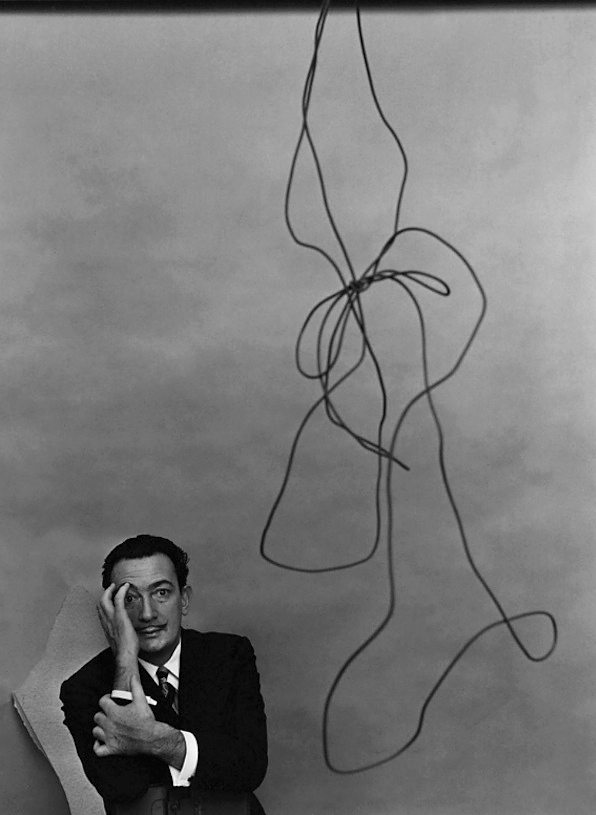
Arnold Newman (American, 1918-2006) 'Salvador Dalí, painter, New York' 1951


Arnold Newman (American, 1918-2006)
Salvador Dalí, painter, New York
1951
Gelatin silver print
© Arnold Newman / Getty Images


Signatures

One of Newman’s favourite strategies was to place the sitters in front of his or her own work. They seem to be saying: ‘Here is my work. This is what I do’. Architects pose beside buildings and models, a test pilot beside his jet, a photographer in front of his prints, a furniture designer in his chair, scientists in front of their equations… At first glance, the pictures appear natural, giving the impression that Newman had surprised his subjects at work, but in fact the set-ups were meticulous.

In the hands of a lesser talent, such a technique could have developed into a routine uniformity, but Newman’s curiosity and genuine interest in his subjects’ work guaranteed a freshness to his portraiture, year after year. To maintain freshness, Newman advised aspiring portrait photographers to do what he did: read up about the subject beforehand, know what he or she has achieved. You will then quickly spot which elements in the environment will be useful.

Wall text from the exhibition


Arnold Newman (American, 1918-2006) 'Notes on Artist's' [sic] series c. 1942


Arnold Newman (American, 1918-2006)
Notes on Artist’s [sic] series
c. 1942
Image courtesy of Harry Ransom Center


Newman writes about his encounters with artists in New York City, describing his first meeting with Alfred Stieglitz.


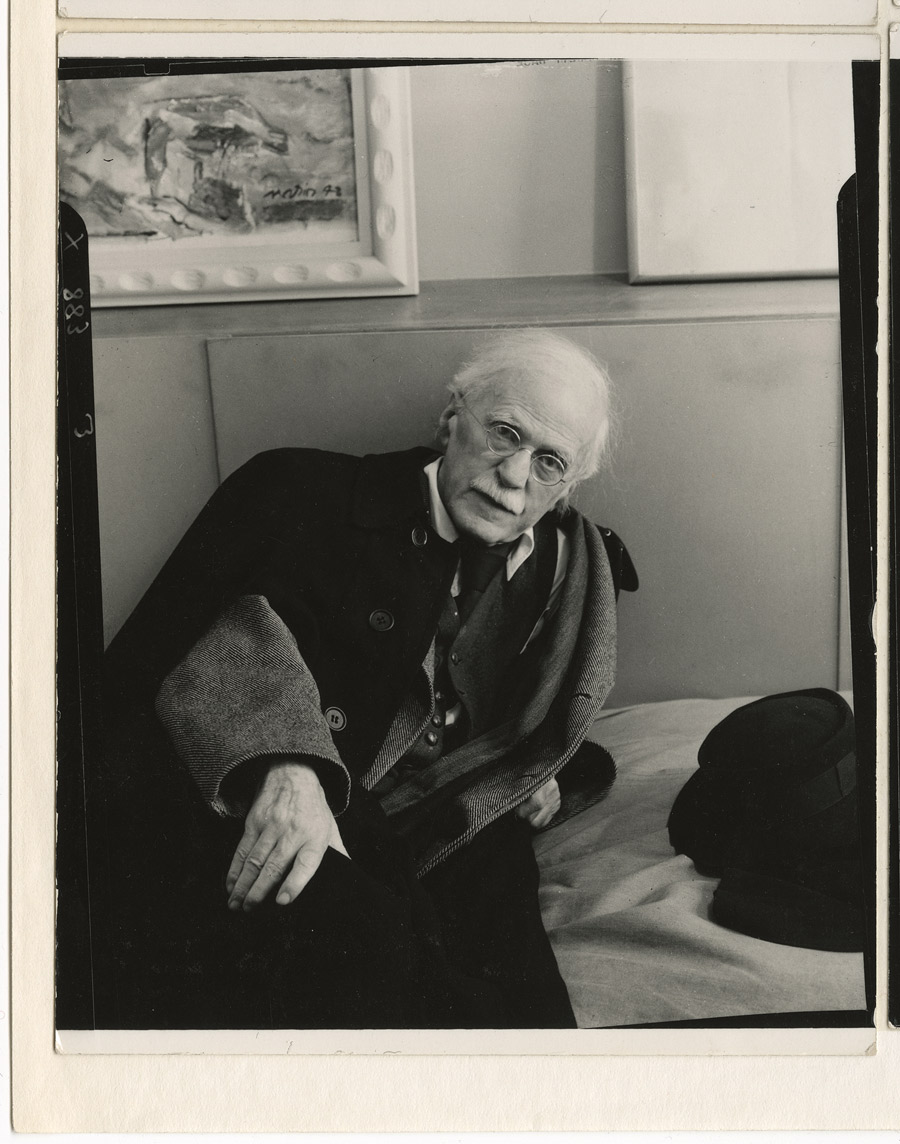
Arnold Newman (American, 1918-2006) 'Alfred Stieglitz in his An American Place Gallery, 1944' 1944


Arnold Newman (American, 1918-2006)
Alfred Stieglitz in his An American Place Gallery, 1944
1944
Contact print
Image courtesy of Harry Ransom Center


Lumens

Newman preferred natural light, with ‘all its delightful, infinite varieties, indoors and out’. However, he felt that restricting oneself only to natural light had become a religion for many photographers, and artificial light was a taboo. Newman was pragmatic: if there wasn’t enough light to take the picture, he argued, it should be augmented; if it wasn’t the ‘right’ kind of light for the interpretation he desired, artificial lighting should be added. It was never a question of either/or. Newman often used spots and reflectors, but felt that strobes should be used only when absolutely necessary. Lighting effects in a Newman portrait are often subtle and sometimes dramatic. But they are always appropriate, and never excessive.

Wall text from the exhibition


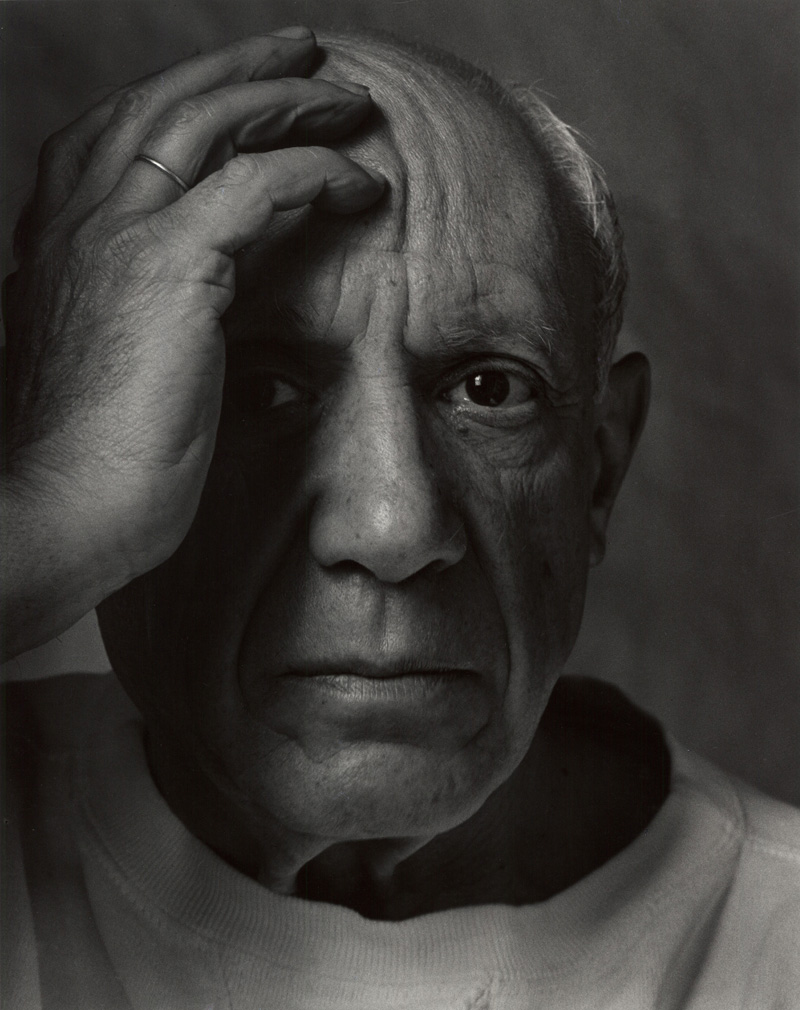
Arnold Newman (American, 1918-2006) 'Pablo Picasso, painter, sculptor and printmaker, Vallauris, France' 1954


Arnold Newman (American, 1918-2006)
Pablo Picasso, painter, sculptor and printmaker, Vallauris, France
1954
Gelatin silver print
© Arnold Newman / Getty Images


Choices

Newman might take 10, 20, 30 and in special cases even more than 50 individual photographs of a sitter, making minor adjustments each time. Sometimes the differences between the frames would be minuscule, though highly significant. We see this in two frames of Picasso: in Frame 54 (note that this one was used in several publications in error), we see that the artist seems distracted – his eyes are not focused, while his mouth is pinched, and his hand is placed awkwardly. In Frame 57, all these deficiencies have been corrected.

Wall text from the exhibition


Arnold Newman (American, 1918-2006) 'Piet Mondrian, painter, New York' 1942


Arnold Newman (American, 1918-2006)
Piet Mondrian, painter, New York
1942
Gelatin silver print
© Arnold Newman / Getty Images


Habitats

Newman never liked to work in a studio, preferring to see where and how his subjects worked and lived. Dance studios, home libraries, classrooms, offices, living rooms, gardens, the street, and even, on occasion, a vast urban panorama were settings he employed. Particularly close to painters in spirit, he was stimulated by the raw materials, the paintings or sculptures in progress, and even the general clutter he found in their studios. He liked the challenge of having to make quick decisions based on what he saw around him, and argued that this spontaneous approach was much harder – and riskier – than working in his own studio, where everything was familiar and tested. By focusing on a sitter’s habitat, Newman felt that he was providing more than a striking likeness – he was revealing personality and character not through physiognomy (the principle of classic portraiture) but through the things artists gathered around them.

“For me the professional studio is a sterile world. I need to get out; be with people where they’re at home. I can’t photograph ‘the soul’ but I can show tell you something fundamental about them.”

Wall text from the exhibition


Arnold Newman (American, 1918-2006) 'Alexander Calder, sculptor, New York' 1943


Arnold Newman (American, 1918-2006)
Alexander Calder, sculptor, New York
1943
Gelatin silver print
© Arnold Newman / Getty Images


Arnold Newman (American, 1918-2006) 'Palm Beach, Florida' 1986


Arnold Newman (American, 1918-2006)
Palm Beach, Florida
1986
Gelatin silver print
© 1986 Arnold Newman / Getty Images


Geometries

From his earliest days with the camera, Newman loved the geometry of space – with or without people. He never tired of photographing architecture that appealed to him. The linear and the curvilinear; contrasting blocks of black and white; ovals, triangles rectangles, strong diagonals… it was never just a question of making a pleasing background – like a kind of geometrically-patterned wallpaper – but rather the creation of a harmonious, dynamic whole in which the sitter was an integral part. It was Newman’s consummate skill that prevented the sitter from being merely an adjunct to the design.

“Successful portraiture is like a three-legged stool. Kick out one leg and the whole thing collapses. In other words, visual ideas combined with technological control combined with personal interpretation equals photography. Each must hold it’s own.”

Wall text from the exhibition


The Harry Ransom Center
21st and Guadalupe Streets
Austin, Texas 78712
Phone: 512-471-8944

Exhibition galleries opening hours:
Tuesday – Friday 10am – 5pm
Saturday and Sunday Noon – 5pm
Closed Mondays

Library Reading/Viewing Rooms opening hours:
Monday – Saturday 9am – 5pm
Closed Sundays

Harry Ransom Center website

LIKE ART BLART ON FACEBOOK

Back to top

Exhibition: ‘Robert Mapplethorpe’ at NRW-Forum Dusseldorf

Exhibition dates: 6th February – 15th August, 2010


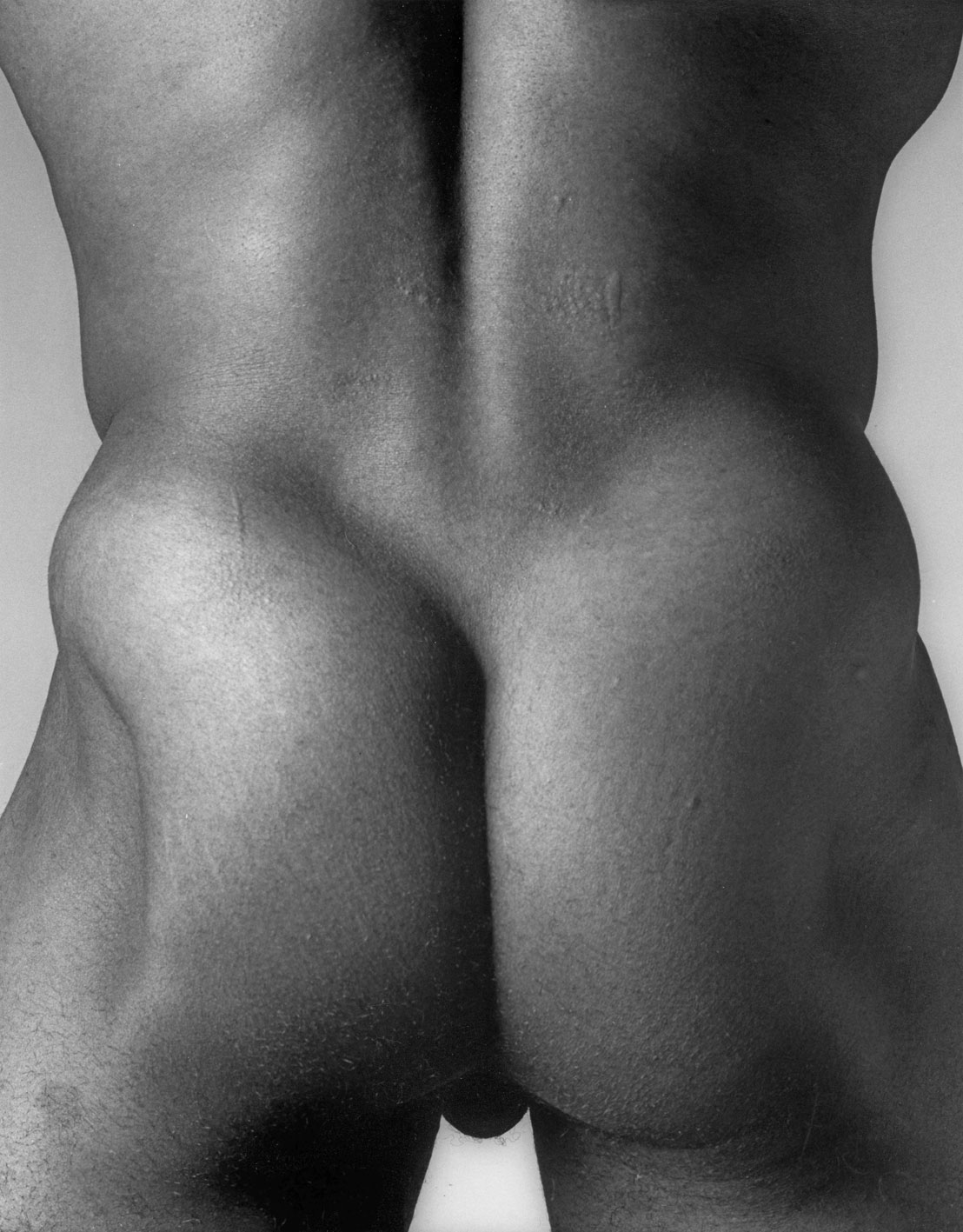
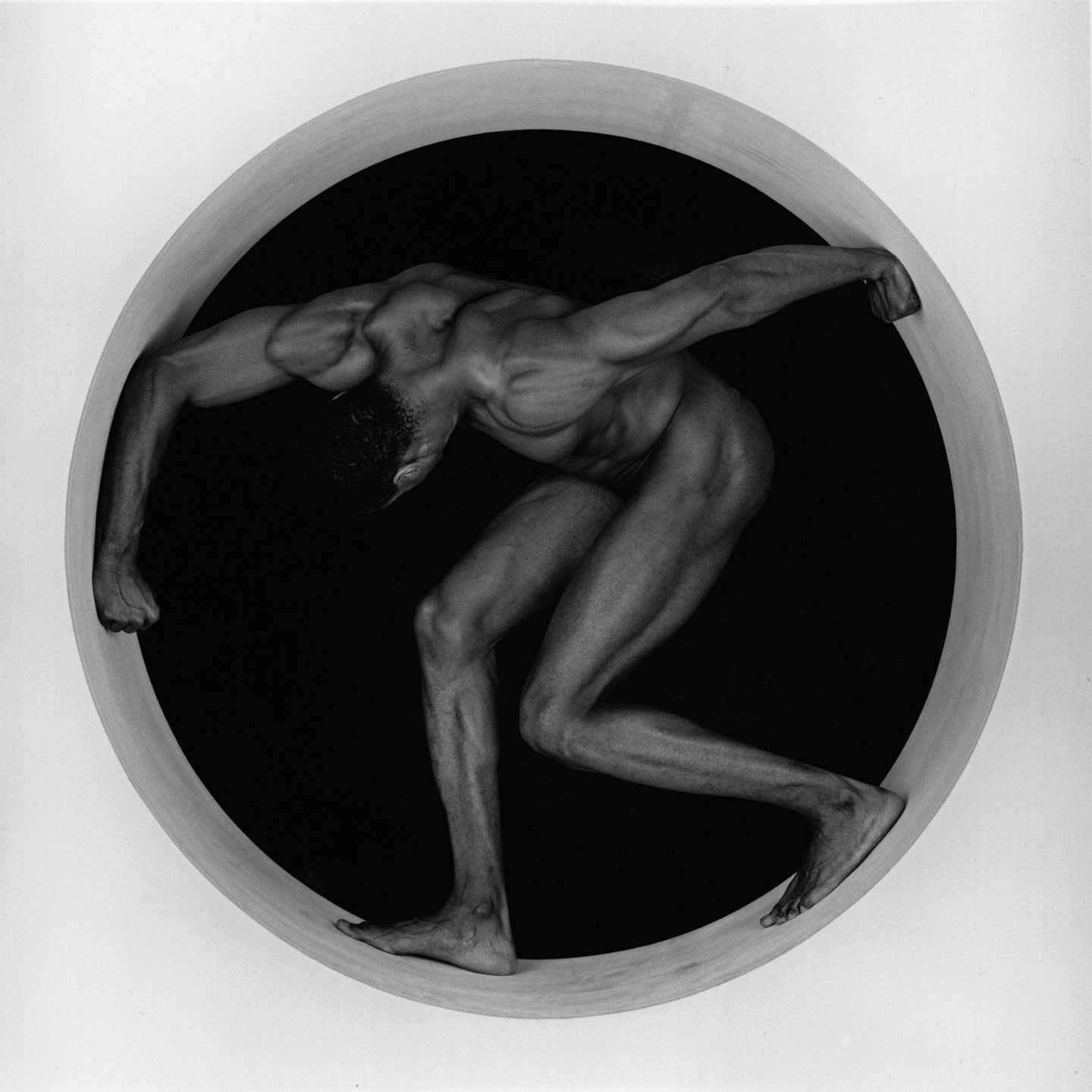
Robert Mapplethorpe (American, 1946-1989) 'Phillip Prioleau' 1980 from the exhibition 'Robert Mapplethorpe' at NRW-Forum Dusseldorf, Feb - August, 2010


Robert Mapplethorpe (American, 1946-1989)
Phillip Prioleau
1980
© Robert Mapplethorpe Foundation
Used by permission


Robert Mapplethorpe was a classical photographer with a great eye for form and beauty, an artist who explored the worlds he knew and lived (homosexuality, sadomasochistic practices, desire for black men) with keen observations into the manifestations of their existence, insights that are only shocking to those who have never been exposed to these worlds. If we observe that our history is written as a series of interpretive shifts then perhaps we can further articulate that the development of an artist’s career is a series of interpretations, an “investigation into the events that have led us to constitute ourselves and to recognise ourselves as subjects of what we are doing, thinking, saying.”1 Mapplethorpe was such an artist.

The early work is gritty and raw, exposing audiences to sexuality and the body as catalyst for social change, photographs the “general public” had never seen before. Early photographs such as the sequence of photographs Charles and Jim (1974) feature ‘natural’ bodies – hairy, scrawny, thin – in close physical proximity with each other, engaged in gay sex. There is a tenderness and affection to the sequence as the couple undress, suck, kiss and embrace.

At the same time that Mapplethorpe was photographing the first of his black nudes (Mapplethorpe’s photographs of black men come from a lineage that can be traced back to Fred Holland Day who also photographed black men), he was also portraying acts of sexual progressiveness in his photographs of the gay S/M scene. In these photographs the bodies are usually shielded from scrutiny by leather and rubber but are revealing of the intentions and personalities of the people depicted in them, perhaps because Mapplethorpe was taking part in these activities himself as well as depicting them. There is a sense of connection with the people and the situations that occur before his lens in the S/M photographs.

As time progresses the work becomes more about surfaces and form, about the polished perfection of the body, about that exquisite corpse, the form of the flower. Later work is usually staged against a contextless background (see photographs below) as though the artefacts have no grounding in reality, only desire. Bodies are dissected, cut-up into manageable pieces – the objectified body. Mapplethorpe liked to view the body cut up into different libidinal zones much as in the reclaimed artefacts of classical sculpture. The viewer is seduced by the sensuous nature of the bodies surfaces, the body objectified for the viewers pleasure. The photographs reveal very little of the inner self of the person being photographed. The named body is placed on a pedestal (see photograph of Phillip Prioleau (1980) below) much as a trophy or a vase of flowers. I believe this isolation, this objectivity is one of the major criticisms of most of Mapplethorpe’s later photographs of the body – they reveal very little of the sitter only the clarity of perfect formalised beauty and aesthetic design.

While this criticism is pertinent it still does not deny the power of these images. Anyone who saw the retrospective of his work at the Museum of Contemporary Art in Sydney in 1995 can attest to the overwhelming presence of his work when seen in the flesh (so to speak!). Mapplethorpe’s body of work hangs from a single thread: an inquisitive mind undertaking an investigation in the condition of the world’s becoming. His last works, when he knew he was dying, are as moving for any gay man who has lost friends over the years to HIV/AIDS as anything on record, are as moving for any human being that faces the evidence of their own mortality. Fearless to the last, never afraid to express who he was, how he felt and what he saw, Mapplethorpe will long be remembered in the annals of visual art.

Dr Marcus Bunyan


1/ Foucault, Michel. “What is Enlightenment?,” trans. C. Porter in Rabinow, Paul (ed.,). The Essential Works of Michel Foucualt, 1954-1984. Vol.1. New York: New Press, 1997, p. 315.


    Many thankx to NRW-Forum Dusseldorf for allowing me to publish the photographs in the posting. Please click on the photographs for a larger version of the image.


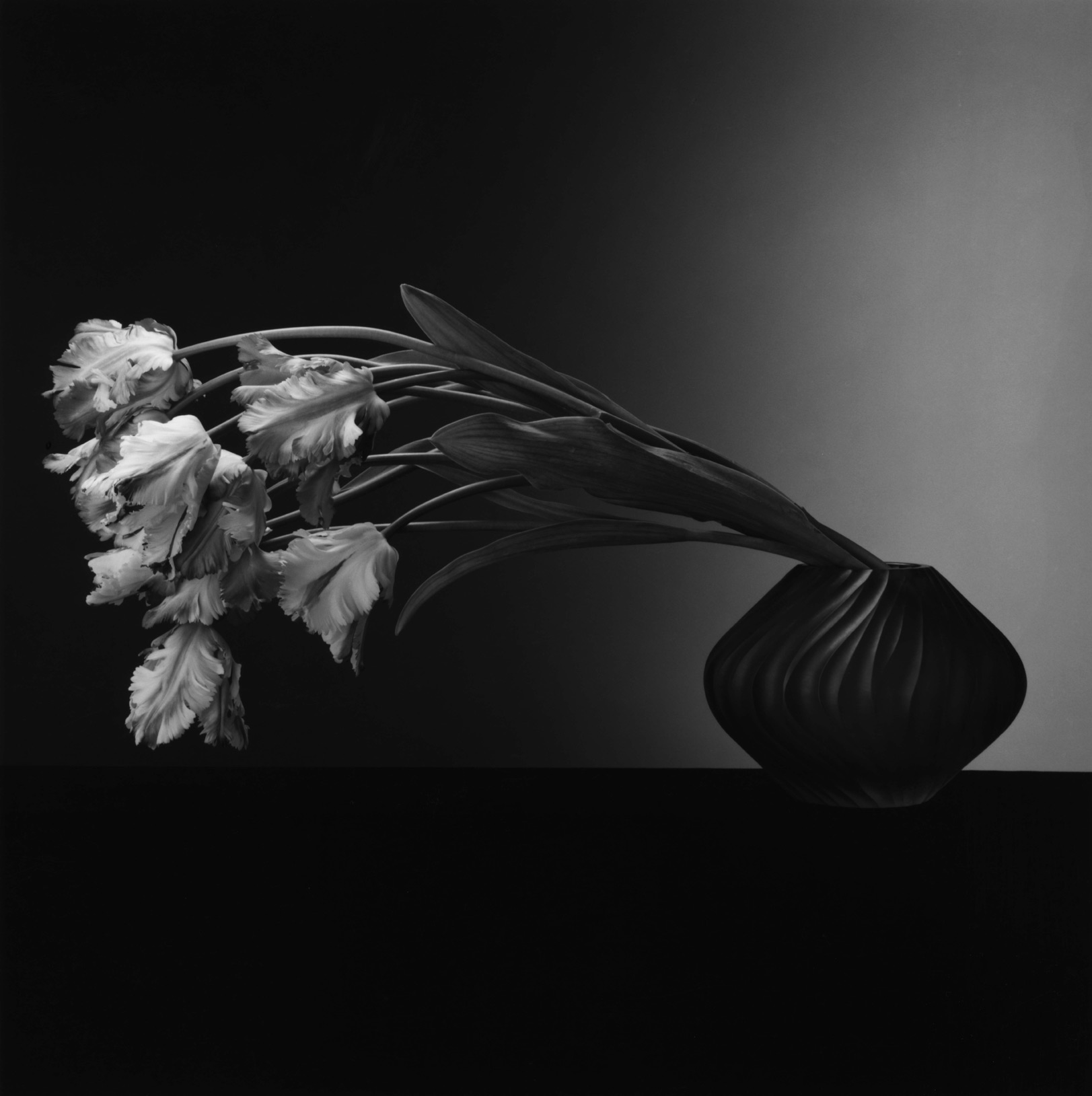
    Robert Mapplethorpe. 'Parrot Tulips' 1988 from the exhibition 'Robert Mapplethorpe' at NRW-Forum Dusseldorf, Feb - August, 2010


    Robert Mapplethorpe (American, 1946-1989)
    Parrot Tulips
    1988
    © Robert Mapplethorpe Foundation
    Used by permission


    Robert Mapplethorpe (American, 1946-1989) 'Ajitto' 1981 from the exhibition 'Robert Mapplethorpe' at NRW-Forum Dusseldorf, Feb - August, 2010


    Robert Mapplethorpe (American, 1946-1989)
    Ajitto
    1981
    © Robert Mapplethorpe Foundation
    Used by permission


    Robert Mapplethorpe (American, 1946-1989) 'David Hockney' 1976 © Robert Mapplethorpe Foundation. Used by permission


    Robert Mapplethorpe (American, 1946-1989)
    David Hockney
    1976
    © Robert Mapplethorpe Foundation
    Used by permission


    Robert Mapplethorpe, who was born in 1946 and passed away in 1989, is one of the few artists who truly deserve to be known far beyond the borders of the art world. Mapplethorpe dominated photography in the late twentieth century and paved the way for the recognition of photography as an art form in its own right; he firmly anchored the subject of homosexuality in mass culture and created a classic photographic image, mostly of male bodies, which found its way into commercial photography.

    In 2010, the NRW-Forum in Düsseldorf will organise a major retrospective of Robert Mapplethorpe’s photographs. His work was first shown in Germany in 1977 as part of documenta 6 in Kassel and then in a European solo exhibition in 1981 with German venues in Frankfurt, Hamburg and Munich. In addition to various museum and gallery exhibitions the largest museum exhibition in Germany of Mapplethorpe’s work took place in 1997 when the worldwide Mapplethorpe retrospective, which opened at the Louisiana Museum of Modern Art in Denmark, traveled to the Staatsgalerie in Stuttgart. The last time Robert Mapplethorpe’s works were shown in Düsseldorf was in the exhibition ‘Mapplethorpe versus Rodin’ at the Kunsthalle in 1992.

    Both during his life and since his death, Mapplethorpe’s work has been the subject of much controversial debate, particularly in the USA. Right up until the end of the twentieth century, exhibitions of his photographs were sometimes boycotted, censured, or in one case cancelled. His radical portrayals of nudity and sexual acts were always controversial; his photos of sadomasochistic practices in particular caused a stir and frequently resulted in protests outside exhibitions and in one instance, a lawsuits was brought against a museum director.

    In 2008, the Supreme Court in Japan ruled that Mapplethorpe’s erotic images did not contravene the country’s ban on pornography and released a volume of his photographs that had been seized and held for over eight years. As far as the American critic Arthur C. Danto was concerned, Mapplethorpe created ‘some of the most shocking and indeed some of the most dangerous images in modern photography, or even in the history of art.’

    In Germany, on the other hand, Mapplethorpe’s photographs were part of the ‘aesthetic socialisation’ of the generations that grew up in the 1980s and early 1990s. Lisa Ortgioes, the presenter of the German women’s television programme frau tv, notes that during this time, Mapplethorpe’s photos were sold as posters; his ‘black’ portraits in particular being a regular feature on the walls of student bedrooms at the time.

    The curator of the exhibition, Werner Lippert, is quick to point out that ‘this exhibition needs no justification. Mapplethorpe was quite simply and unquestionably one of the most important photographers of the twentieth century. It is an artistic necessity.’

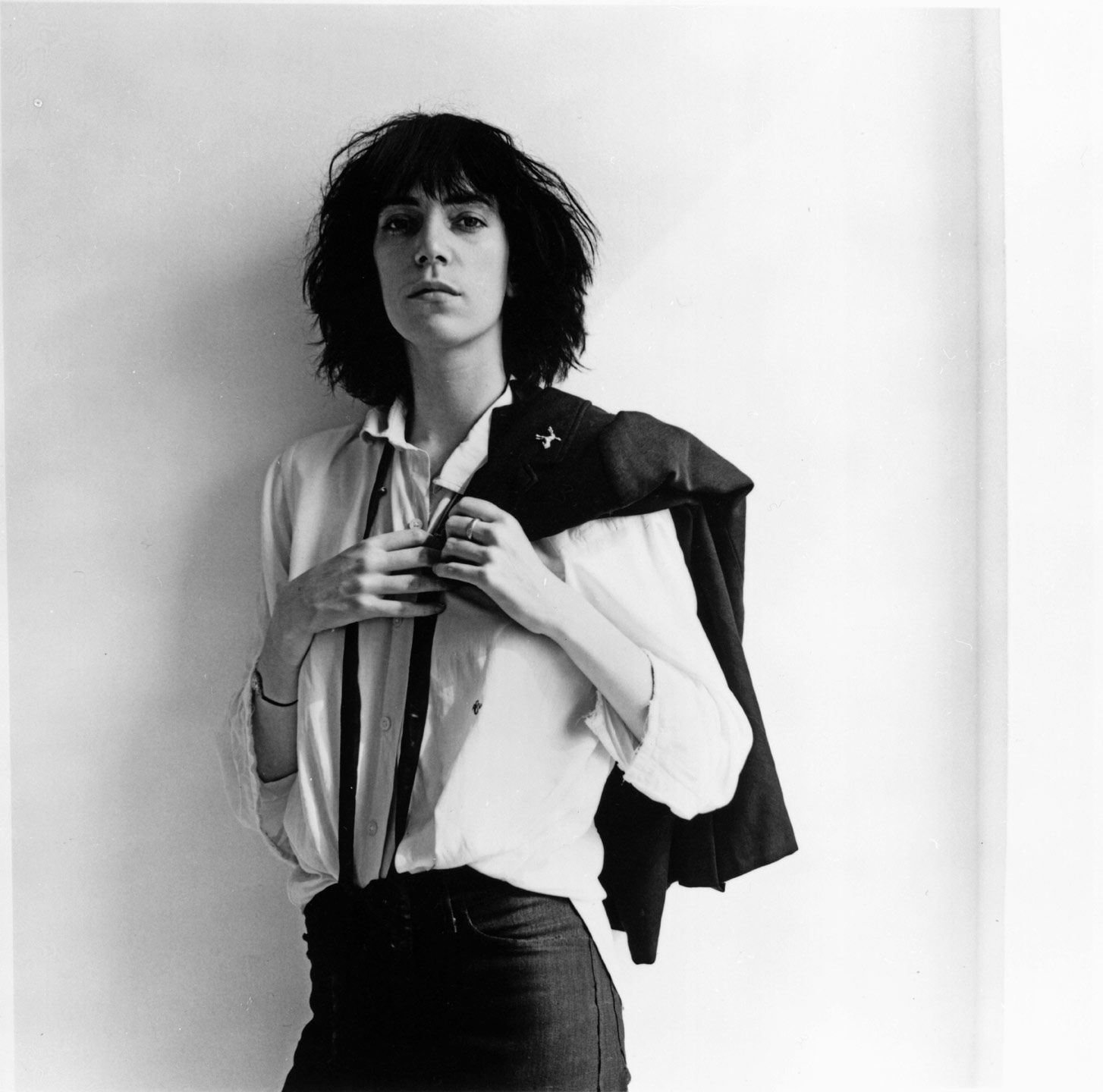
    The exhibition in the NRW-Forum covers all areas of Mapplethorpe’s work, from portraits and self-portraits, homosexuality, nudes, flowers and the quintessence of his oeuvre the photographic images of sculptures, including early Polaroids. The photographs are arranged according to themes such as ‘self portraits’, which includes the infamous shot of him with a bullwhip inserted in his anus, as well as his almost poetic portraits of his muse, Patti Smith, the photographs of black men versus white women, the body builder Lisa Lyon, the juxtaposition of penises and flowers (which Mapplethorpe himself commented on in an interview: ‘… I’ve tried to juxtapose a flower, then a picture of a cock, then a portrait, so that you could see they were the same’), and finally those images of classical beauty based on renaissance sculptures, and impressive portraits of children and celebrities of the day.

    Despite the obvious references to the Renaissance idea of what constitutes ideal beauty and the history of photography from Wilhelm von Gloeden to Man Ray, this exhibition shows Robert Mapplethorpe as an artist who is firmly anchored is his era; his contemporaries are Andy Warhol and Brice Marden; Polaroids were the medium of choice in the 1970s, and the focus on the body and sexuality was, at the time, for many artists like Vito Acconci or Bruce Nauman a theme that was key to social change. Above all, Robert Mapplethorpe developed his own photographic style that paid homage to the ideals of perfection and form. ‘I look for the perfection of form. I do this in portraits, in photographs of penises, in photographs of flowers.’ The fact that the photographs are displayed on snow-white walls underpins this view of his work and consciously moves away from the coy Boudoir-style presentation of his photographs on lilac and purple walls a dominant feature of exhibitions of Mapplethorpe’s work for many years and opens up the work to a more concept-based, minimalist view of things.

    The selection of over 150 photographs covers early Polaroids from 1973 to his final self-portraits from the year 1988, which show how marked he was by illness and hint at his impending death, and also includes both many well-known, almost iconic images as well as some never-before seen or rarely shown works. The curators delved deep into the collection of the New York-based Robert Mapplethorpe Foundation to create this retrospective.

    Press release from the NRW-Forum Dusseldorf website [Online] Cited 02/08/2010 no longer available online


    Robert Mapplethorpe (American, 1946-1989) 'Greg Cauley-Cock' 1980 © Robert Mapplethorpe Foundation. Used by permission


    Robert Mapplethorpe (American, 1946-1989)
    Greg Cauley-Cock
    1980
    © Robert Mapplethorpe Foundation
    Used by permission


    Robert Mapplethorpe (American, 1946-1989) 'Patti Smith' 1975 © Robert Mapplethorpe Foundation. Used by permission


    Robert Mapplethorpe (American, 1946-1989)
    Patti Smith
    1975
    © Robert Mapplethorpe Foundation
    Used by permission


    Robert Mapplethorpe (American, 1946-1989) 'Self Portrait' 1988 © Robert Mapplethorpe Foundation. Used by permission


    Robert Mapplethorpe (American, 1946-1989)
    Self Portrait
    1988
    © Robert Mapplethorpe Foundation
    Used by permission


    Robert Mapplethorpe (American, 1946-1989) 'Lowell Smith' 1981 © Robert Mapplethorpe Foundation. Used by permission


    Robert Mapplethorpe (American, 1946-1989)
    Lowell Smith
    1981
    © Robert Mapplethorpe Foundation
    Used by permission


    Robert Mapplethorpe (American, 1946-1989) 'Thomas' 1987 © Robert Mapplethorpe Foundation. Used by permission


    Robert Mapplethorpe (American, 1946-1989)
    Thomas
    1987
    © Robert Mapplethorpe Foundation
    Used by permission


    NRW-Forum Kultur und Wirtschaft
    Ehrenhof 2, 40479 Düsseldorf
    Phone: +49 (0)211 – 89 266 90

    Opening hours:
    Tuesday – Sunday 11.00 am – 6.00 pm
    Closed Mondays

    NRW-Forum Dusseldorf website

    LIKE ART BLART ON FACEBOOK

    Back to top

    Review: ‘October 2009’ jewellery by Carlier Makigawa at Gallery Funaki, Melbourne

    Exhibition dates: 6th October – 31st October, 2009


    Carlier Makigawa (Australian, b. 1952) 'Brooch' 2009 from the exhibition 'October 2009' jewellery by Carlier Makigawa at Gallery Funaki, Melbourne, October 2009


    Carlier Makigawa (Australian, b. 1952)
    Brooch
    2009
    Silver, paint


    Jewellery as art; is art

    Brooches, objects

    Robust/delicate

    Holistic body of work

    Affirmation of line and form

    Simplicity/complexity of shapes

    Span ______  (meta)physical

    [Interior] exterior!

    elemental | articulation

    Volume ((( ))) form

    &

    arch-itecture

    SPACE

    √

    beauty

    ……………………….

    Dr Marcus Bunyan


    Many thankx to Gallery Funaki for allowing me to publish the photographs in the posting. Please click on the photographs for a larger version of the image.


    Carlier Makigawa (Australian, b. 1952) 'Brooch' 2009 from the exhibition 'October 2009' jewellery by Carlier Makigawa at Gallery Funaki, Melbourne, October 2009


    Carlier Makigawa (Australian, b. 1952)
    Brooch
    2009
    Silver


    Carlier Makigawa (Australian, b. 1952) 'Brooch' 2009


    Carlier Makigawa (Australian, b. 1952)
    Brooch
    2009
    Silver


    Carlier Makigawa (Australian, b. 1952) 'Brooch 1a' 2009 from the exhibition 'October 2009' jewellery by Carlier Makigawa at Gallery Funaki, Melbourne, October 2009


    Carlier Makigawa (Australian, b. 1952)
    Brooch
    2009
    Silver


    “A spiritual and private space. Ritual object, jewellery. Linear structures appear fragile and monumental to cradle the internal spirit. They appear to float in space, hovering, penetrating, a temporary existence. Nature is the reference, and the geometry of nature and architecture inform this world.”


    Carlier Makigawa


    Carlier Makigawa explores the parameters of small spaces in her new exhibition October 2009. Her spare, exacting constructions in silver wire have a monumentality that defies their scale and delicacy. Her new work consists of brooches and objects which move beyond the botanical inspiration of her earlier work to engage with more abstract notions of movement, compression and spatial manipulation.

    Text from the Gallery Funaki website [Online] Cited 01/05/2019 no longer available online


    Carlier Makigawa (Australian, b. 1952) 'Object' 2009


    Carlier Makigawa (Australian, b. 1952)
    Object
    2009
    Silver


    Carlier Makigawa (Australian, b. 1952) 'Object' 2009


    Carlier Makigawa (Australian, b. 1952)
    Object
    2009
    Silver


    Carlier Makigawa (Australian, b. 1952) 'Brooch 1' 2009


    Carlier Makigawa (Australian, b. 1952)
    Brooch
    2009
    Silver


    Carlier Makigawa (Australian, b. 1952) 'Geometric Neckpiece' 2009


    Carlier Makigawa (Australian, b. 1952)
    Neckpiece
    2009
    Silver


    Gallery Funaki website

    LIKE ART BLART ON FACEBOOK

    Back to top

    Exhibition: Scott McFarland photographs at Regen Projects, Los Angeles

    Exhibition dates: 23rd May – 3rd July, 2009


    Scott McFarland (Canadian, b. 1975) 'Fallen Oak Tree' 2008


    Scott McFarland (Canadian, b. 1975)
    Fallen Oak Tree
    2008
    From the series Hampstead
    Inkjet print
    27 x 24 inches (68.6 x 61cm)
    Edition of 5


    Variations on a theme

    Whether McFarland’s photographs are “straight” or composites, there always seems to an unnerving feel to them, a formal frontality that empowers the viewer into trying to unlock the photographs secret, like an enigmatic puzzle. Everything is presented front on, square to the camera, no oblique angles, relying in the straight photographs on the scale of the accumulated blocks of information, and in the composites, in the very unlikely, even theatrical, staging of the people within the mise en scène.

    These are very cinematic photographs, some, literally, with their panoramic aesthetic, others built by assembling their scudding skies and stiff, neatly placed people. Too neatly placed in my opinion but that’s McFarland’s hook, his aesthetic cough which prompts the viewer to question the veracity of the image, its link to the photographs indexical reality. His multiple exposures push the boundaries of truth or dare, hyperreal solutions to a disengaged world. Personally, I prefer his straight photographs which are built on a fabulous eye, a masterful understanding of pictorial space (monumental elements held in balance) and wonderful previsualisation. You don’t need anything more.

    Dr Marcus Bunyan


    Many thankx to Regen Projects for allowing me to publish the photographs in the posting. Please click on the photographs for a larger version of the image.


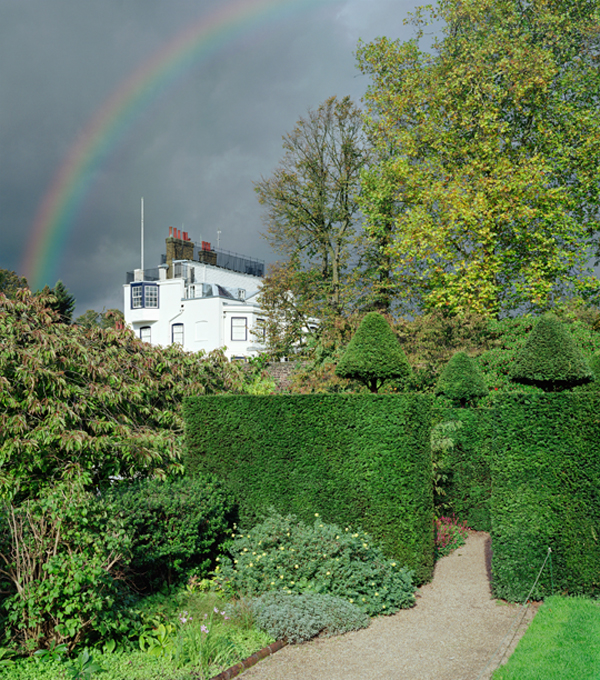
    Scott McFarland (Canadian, b. 1975) 'The Admiral's House as seen from the Upper Garden at Fenton House' 2006


    Scott McFarland (Canadian, b. 1975)
    The Admiral’s House as seen from the Upper Garden at Fenton House
    2006
    From the series Hampstead
    Inkjet print
    Edition of 5


    “Regen Projects is pleased to announce an exhibition of new work by Canadian artist Scott McFarland. This exhibition will feature new photographs including 3 large panorama works, smaller works from the “Hampstead” series, and introduce the new “Niagara” series.

    Scott McFarland’s photography reconsiders the traditional concept of a photograph as the depiction of a single captured moment in time. Through digital means he is able to manipulate composition, colour, light, space, shape, and form. McFarland’s photographs combine multiple negatives to represent simultaneous temporalities and interweave selected elements into a cohesive whole. Several different moments are packed into what appears to be one densely constructed instant. The photographs are meticulously crafted illusions created within the formal language of documentary photography.

    McFarland’s consideration of photography and the built picture was brought about by the artist’s own understanding of the artificial “nature” found in built environments such as gardens and zoos. Taking the relationship of the constructed space/constructed image one step further, McFarland has photographed a modernist architectural landmark: the Berthold Lubetkin designed penguin pool at the London zoo. Through two very distinct works, McFarland investigates the elliptical structure of the famous penguin pool vis-à-vis the elliptical / arcing motion of his camera rotating on a tripod. One photograph is an objective colour rendering where the camera has been left level while rotating; the other is a larger black and white version where the camera arcs along a non-level plane distorting and altering the curve of the structure from right to left.

    The new square format photographs from McFarland’s “Niagara” series have a rough unfinished quality unlike any photographs he has taken to date. These softer focus images with odd shifts in light and glare are location studies for the large panorama A Horse Drawn Hearse, Queens Royal Tours, 174 Anne, Niagara on the Lake, Ontario (2009, below). This work depicts an old carriage business and its surroundings during the dead of Canadian winter. In this visually captivating work, a black funeral carriage contrasts against the white snow. The acreage, surrounded by newer suburban homes, evokes the question of how long can this structure resist the modern urban pressures it faces. These straight photographs presented alongside his precise digitally mastered compositions illustrate how the photographic process and the history of art and photography have always informed McFarland’s work.

    “Over the last decade, Scott McFarland has produced bodies of work that engage with different aspects of photography … McFarland’s approach is both descriptive and metaphoric … The images, rich in cultural significance, express the complementary workings of conceptual and aesthetic factors all the while holding various characteristics of art and photography in ambiguous relation.”

    Andrea Kunard. Scott McFarland: A Cultivated View, published by the National Gallery of Canada, Ottawa, 2009, p. 12.

    Text from the Regen Projects press release [Online] Cited 16/06/2009. No longer available online.


    Scott McFarland (Canadian, b. 1975) 'A Horse Drawn Hearse, Queens Royal Tours, 174 Anne, Niagara on the Lake, Ontario' 2009


    Scott McFarland (Canadian, b. 1975)
    A Horse Drawn Hearse, Queens Royal Tours, 174 Anne, Niagara on the Lake, Ontario
    2009
    From the series Niagara
    Inkjet print
    59.5 x 124 inches (151.1 x 315cm)
    Edition of 5


    Scott McFarland (Canadian, b. 1975) 'Boathouse with Moonlight' 2002


    Scott McFarland (Canadian, b. 1975)
    Boathouse with Moonlight
    2002
    From the series Boathouse
    Digital C-print
    71 x 91 inches (180 x 231cm)
    Edition of 5, 2 AP


    “Boathouse with Moonlight” is an exploration of the technical advancements afforded by digital photography, created by assembling multiple exposures taken over the space of two hours under the light of a full moon. Unlike traditional photography, this image does not represent one specific moment captured at a particular site; rather, it shows an accumulation of moments that have been manipulated and layered to create a revised version of the boathouse and its surroundings. McFarland’s use of multiple exposures to produce the final image emphasises not only the duration of the photographic act, but also the many facets of the boathouse’s character. This type of building on British Columbia’s “Sunshine Coast” is disappearing with the construction of new, suburban-style retirement housing.

    Text from the National Gallery of Canada website [Online] Cited 02/03/2019


    Scott McFarland (Canadian, b. 1975) 'Gorse and Broom, West Heath, Hampstead' 2006


    Scott McFarland (Canadian, b. 1975)
    Gorse and Broom, West Heath, Hampstead
    2006
    From the series Hampstead
    Inkjet print
    Edition of 5


    Scott McFarland (Canadian, b. 1975) 'Women Drying Laundry on the Gorse, Vale of Health, Hampstead Heath' 2007


    Scott McFarland (Canadian, b. 1975)
    Women Drying Laundry on the Gorse, Vale of Health, Hampstead Heath
    2007
    From the series Hampstead
    Inkjet print
    29 x 45 inches (73.7 x 114.3cm)
    Edition of 5


    Scott McFarland (Canadian, b. 1975) 'Inspecting, Allan O'connor Searches for Botrytis cinerea' 2003


    Scott McFarland (Canadian, b. 1975)
    Inspecting, Allan O’connor Searches for Botrytis cinerea
    2003
    From the series Gardens
    Digital C-print
    40 x 48 inches (102 x 122cm)
    Edition of 7


    Scott McFarland (Canadian, b. 1975) 'Orchard View with the Effects of Seasons (Variation #1)' 2003-2006


    Scott McFarland (Canadian, b. 1975)
    Orchard View with the Effects of Seasons (Variation #1)
    2003-2006
    From the series Gardens
    Digital C-print
    42 x 122 inches (106.7 x 309.9cm)
    Edition of 3


    Scott McFarland (Canadian, b. 1975) 'Empire' 2005


    Scott McFarland (Canadian, b. 1975)
    [Huntington Botanical Gardens in San Marino, Calif]
    2005
    From the series Empire
    Inkjet print


    Scott McFarland (Canadian, b. 1975) 'Echinocactus grusonii' 2006


    Scott McFarland (Canadian, b. 1975)
    Echinocactus grusonii [Huntington Botanical Gardens in San Marino, Calif]
    2006
    From the series Empire
    Inkjet print
    24.5 x 27.5 inches (62 x 70cm)
    Edition of 3
    Private collection/Vancouver Art Gallery


    This picture comes from Empire, a series on desert vegetation shot in the Huntington Botanical Gardens in San Marino, Calif. Henry E. Huntington, an art collector who made his fortune building railroads, founded the garden in 1919.

    “The plantings [of the garden] are dense, and the soil is mostly hidden beneath the thriving vegetation,” writes Grant Arnold in a catalogue essay for the exhibition, “the fullness of the planting continually reminding the visitor of Huntington’s beneficence.” To many gallery visitors, however, these images of lush desert vegetation will simply be appealing to the eye.

    Kevin Chong. “A different way of seeing,” on the CBC News website November 13, 2009 [Online] Cited 02/03/2019


    Scott McFarland (Canadian, b. 1975) 'The Granite Bowl in the Berlin Lust Garden' 2006


    Scott McFarland (Canadian, b. 1975)
    The Granite Bowl in the Berlin Lust Garden
    2006
    Inkjet print
    43 x 62 inches (109.2 x 157.5cm)
    Edition of 5


    At first the photograph appeared to be a simple scene, one of no importance. The two young children, obviously related based on their similar physical features, seemed a bit awkward and posed, but otherwise, I thought it to be a snapshot, much like the one I took of the bowl while in Berlin. Upon learning how McFarland created this and many of his other photographs, I learned how complex of a scene this really is. McFarland uses multiple negatives, often taken over a matter of days, weeks, and even months, and combines them digitally into a seamless print. His interest is in breaking through the concept of a photograph being an image of a single instant in time and space.

    A fuller narrative is created as well. With just one negative, there may only be one or two people depicted. We may just have the dog with his owner half shown, or even only half of the brother-sister group. But by overlapping the various negatives, Mr McFarland manipulates his work into a greater piece. We can now ask ourselves, why are the brother and sister so psychologically distant? Or, who is the small girl with the accordion and where is her mother? Is her mother the woman with the baby carriage? How long has that man been sleeping under the bowl? These are all questions that can be asked together because the negatives are combined that couldn’t be asked if we had just the single frame.

    Jason Hosford. “Scott McFarland’s The Granite Bowl in the Berlin Lust Garten,” on the West L’Art website June 24, 2007 [Online] Cited 02/03/2019


    Scott McFarland (Canadian, b. 1975) 'View of Vale of Health, looking towards Hampstead' 2007


    Scott McFarland (Canadian, b. 1975)
    View of Vale of Health, looking towards Hampstead
    2007
    From the series Hampstead
    Inkjet print
    27 x 42.5 inches (68.6 x 108 cm)
    Edition of 5


    With the stiff figures of a historical painting, Scott McFarland’s View of Vale of Health, Looking Towards Hampstead muddles ideas of what’s real and what’s not.

    From the get-go, painting and photography have been inextricably bound together. The Pictorialists tried to make their photographs look like paintings. The Futurists, in their paintings, mimicked the blurred and segmented movement found in Etienne-Jules Marey’s chronophotographs. The photorealists created paintings whose subject was the photograph itself. And in his large-scale, backlit photo-transparencies, Jeff Wall has alluded to paintings by Nicolas Poussin, Edouard Manet, and Paul Cézanne, among others. The digital age has done nothing to diminish each medium’s obsession with the other.

    This continued entwining of art forms is evident in Scott McFarland’s computer-montaged photographs, on view at the Vancouver Art Gallery. So is the parallel entanglement of nature and culture. Both conditions are conspicuous in his 2006 series, “Hampstead”, inspired by the landscapes of the early-19th-century English painter John Constable. McFarland’s colour photos, shot in various locations around London’s immense Hampstead Heath, pay homage to Constable’s attraction to the same place. They also play variations on that painter’s rendering of multiple versions of the same scene, and on his open-air studies of the changing effects of light and weather. …

    Over the past decade, McFarland’s working methods have changed from straightforward analog photography to the creation of highly manipulated images in which he digitally splices together multiple segments of the same landscape or structure, shot over a period of days, weeks, or even months. In both variations of Orchard View With the Effects of the Seasons, for instance, the blossoms and foliage of spring, summer, and fall are contained within the same seamless panorama.

    The digital assist means that there are no constraints of time, space, or documentary veracity in McFarland’s work: he can build whatever impossible pictures he wants and they will look “real”. At least until they’re closely scrutinised, revealing incongruities of light, shadow, time, and figuration. In this sense, his art challenges our understanding of the nature of the photograph and its relationship with the truth. There’s nothing really new about this project – as long as photography’s been around, it’s been manipulated by its practitioners. Photoshop, however, has added a vast digital dimension to the darkroom antics of earlier photo artists.

    Robin Laurence. “Scott McFarland makes impossible pictures real at the Vancouver Art Gallery,” on the Georgia Straight website October 7th 2009 [Online] Cited 02/03/2019


    Regen Projects
    6750 Santa Monica Boulevard,
    Los Angeles, CA 90038

    Opening hours:
    Tuesday – Saturday 10am – 6pm

    Regen Project website

    Scott McFarland website

    LIKE ART BLART ON FACEBOOK

    Back to top