Exhibition: ‘Frank Horvat. 50-65’ at Jeu de Paume, Château de Tours

Exhibition dates: 17th June – 30th October, 2022

Curator: Virginia Chardin


Frank Horvat (Italian, 1928-2020) 'Muslim wedding, fiancé discovering his fiancée's face in a mirror, Pakistan' 1952 from the exhibition 'Frank Horvat. 50-65' at Jeu de Paume, Château de Tours, June - Oct, 2025


Frank Horvat (Italian, 1928-2020)
Muslim wedding, fiancé discovering his fiancée’s face in a mirror, Pakistan
1952
Modern silver print
© Studio Frank Horvat, Boulogne-Billancourt


Another male photographer, this time one who underlines the commonalities between his work as a photo-reporter and his work for fashion. But other than a few transcendent images (the Givenchy Hat duo in particular) I find his work to be very stylised, of the 1950s era, and not particularly memorable.

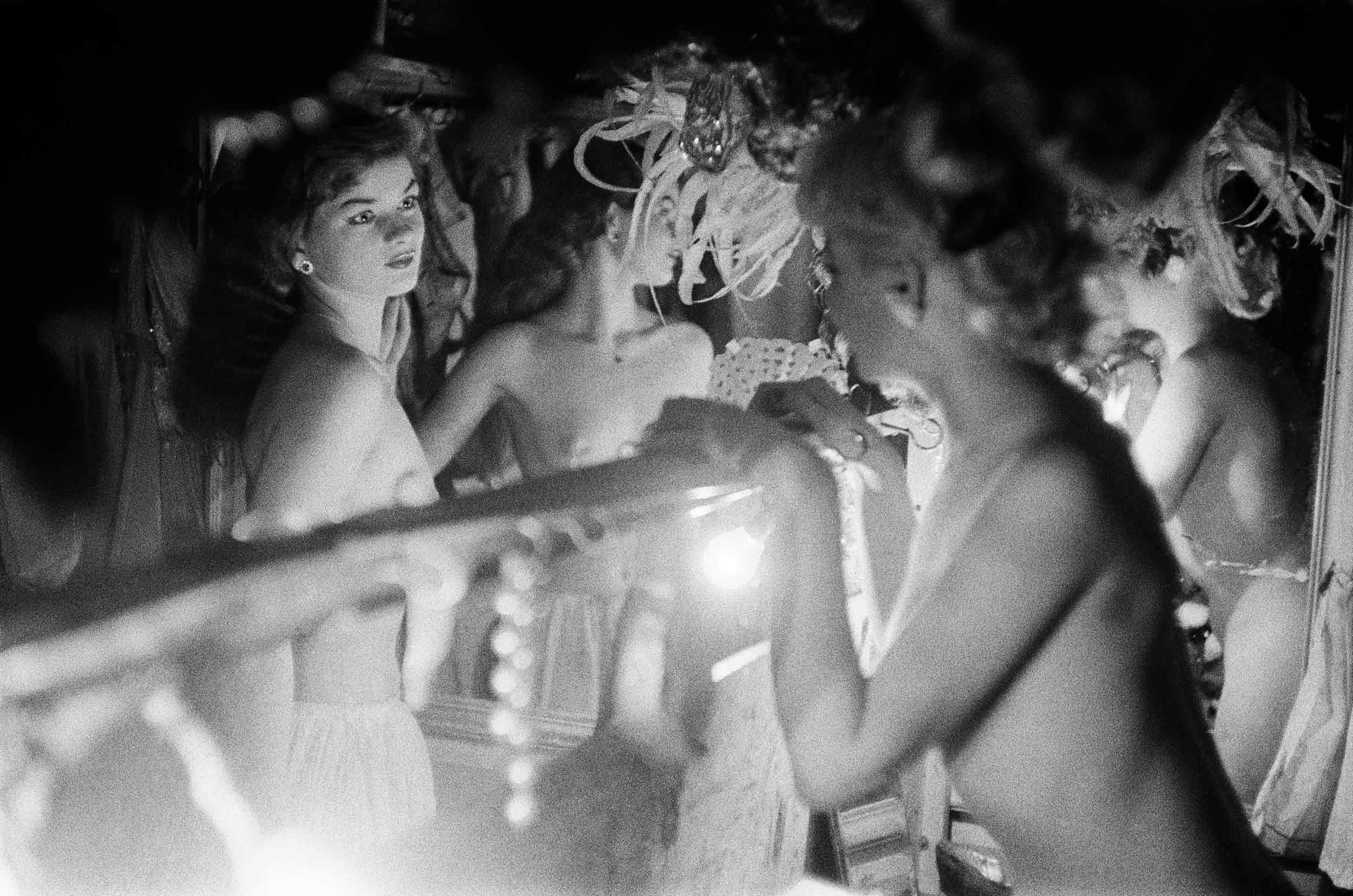
Can you imagine the artist Susan Meiselas in her work Carnival Strippers (1972-1975) taking an image of a naked female and then naming the work for themselves, “self-portrait”, Self-portrait with stripper, The Sphinx, Paris (1956, below) even as the photographer is obscured with the camera machine up to his face recording with the male gaze and the gaze of the camera the body of a anonymous woman? Just a stripper?

I know Meiselas’ work is from a later generation when feminism was rising but the objectification of the female body in Horvat’s work is unsavoury, even as the press release says he ensured the “complicit, amused and moving participation of the young women.” (To be complicit means to be involved with others in an activity that is unlawful or morally wrong)

From the look on the woman’s face, I don’t think so…

Dr Marcus Bunyan


Many thankx to the Jeu de Paume for allowing me to publish the photographs in the posting. Please click on the photographs for a larger version of the image.


“Thus, putting aside the notions of truth or deception in the representation of women, and in leaning instead on this concept that Griselda Pollock called the woman-as-image, it becomes possible to analyze the mechanisms of fetishism, voyeurism and objectification who form and inform the representation of women.”


Abigail Solomon-Godeau, “Representing Women: The Politics of representation of the self,” in Chair à canons. Photography, discourse, feminism, Paris, Textual, coll. “Photographic writing,” 2016, p. 234.


The Jeu de Paume pays tribute to the photographer Frank Horvat, who died on October 21, 2020 at the age of ninety-two, with an exhibition presented at the Château de Tours from June 17 to October 30, 2022. Accompanied by a monograph, it brings a renewed vision of the fiery activity of the photographer during his first fifteen years of career, from 1950 to 1965, a period during which he affirmed an extraordinary personality as author-reporter and fashion photographer.

Made from the archives kept by the author in his home-studio in Boulogne-Billancourt, the exhibition is based on period documents: vintage, publications, writings, in order to follow and explain the photographer’s approach, in the context of the evolution of the illustrated press at the time. He strives to discern the deep driving forces of the work and to bring out its strength and points of tension. He underlines the commonalities between his work as a photoreporter and his work for fashion. Fascination with beauty, the motif of the viewer-voyeur, attention to physical or amorous disorder, are some of the recurring themes of Frank Horvat, who appears above all as a photographer of the body and the intimate. It also reveals the melancholy facet of an independent and sometimes solitary author, living as an outsider despite his success as a fashion photographer.


The Jeu de Paume pays tribute to the photographer Frank Horvat, who died on October 21, 2020 at the age of ninety-two, with an exhibition presented at the Château de Tours from June 17 to October 30, 2022. Accompanied by a monograph, it brings a renewed vision of the fiery activity of the photographer during his first fifteen years of career, from 1950 to 1965, a period during which he asserted an extraordinary personality as author-reporter and fashion photographer.


Frank Horvat (Italian, 1928-2020) 'Howrah Bridge, Kolkata, India' 1953-1954 from the exhibition 'Frank Horvat. 50-65' at Jeu de Paume, Château de Tours, June - Oct, 2025


Frank Horvat (Italian, 1928-2020)
Howrah Bridge, Kolkata, India
1953-1954
vintage contact sheet
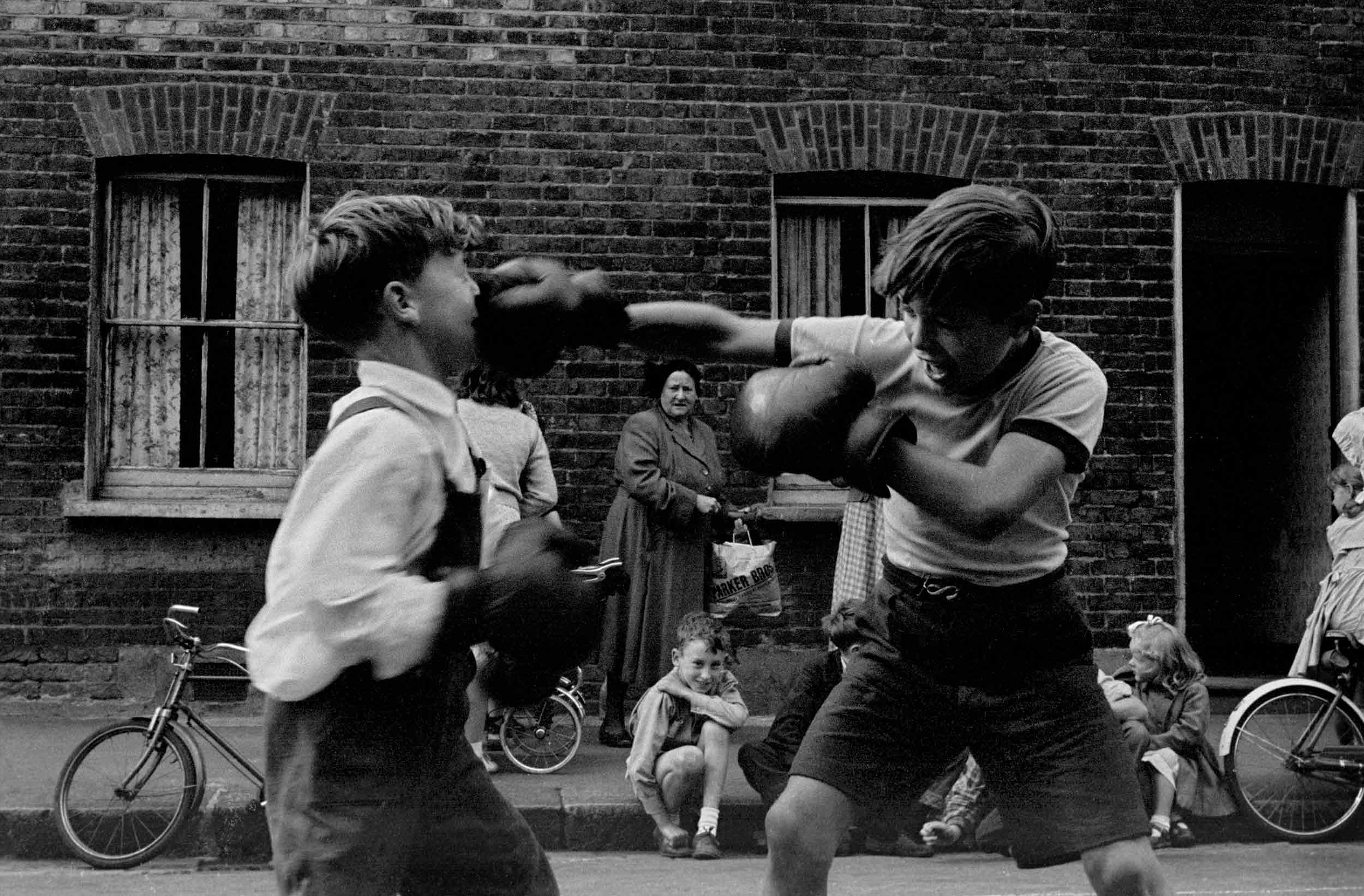
 

Frank Horvat (Italian, 1928-2020) 'Boxing fight between children, Cockney Borough of Lambeth, London, England' 1955 from the exhibition 'Frank Horvat. 50-65' at Jeu de Paume, Château de Tours, June - Oct, 2025


Frank Horvat (Italian, 1928-2020)
Boxing fight between children, Cockney Borough of Lambeth, London, England
1955
Modern silver print
© Studio Frank Horvat, Boulogne-Billancourt
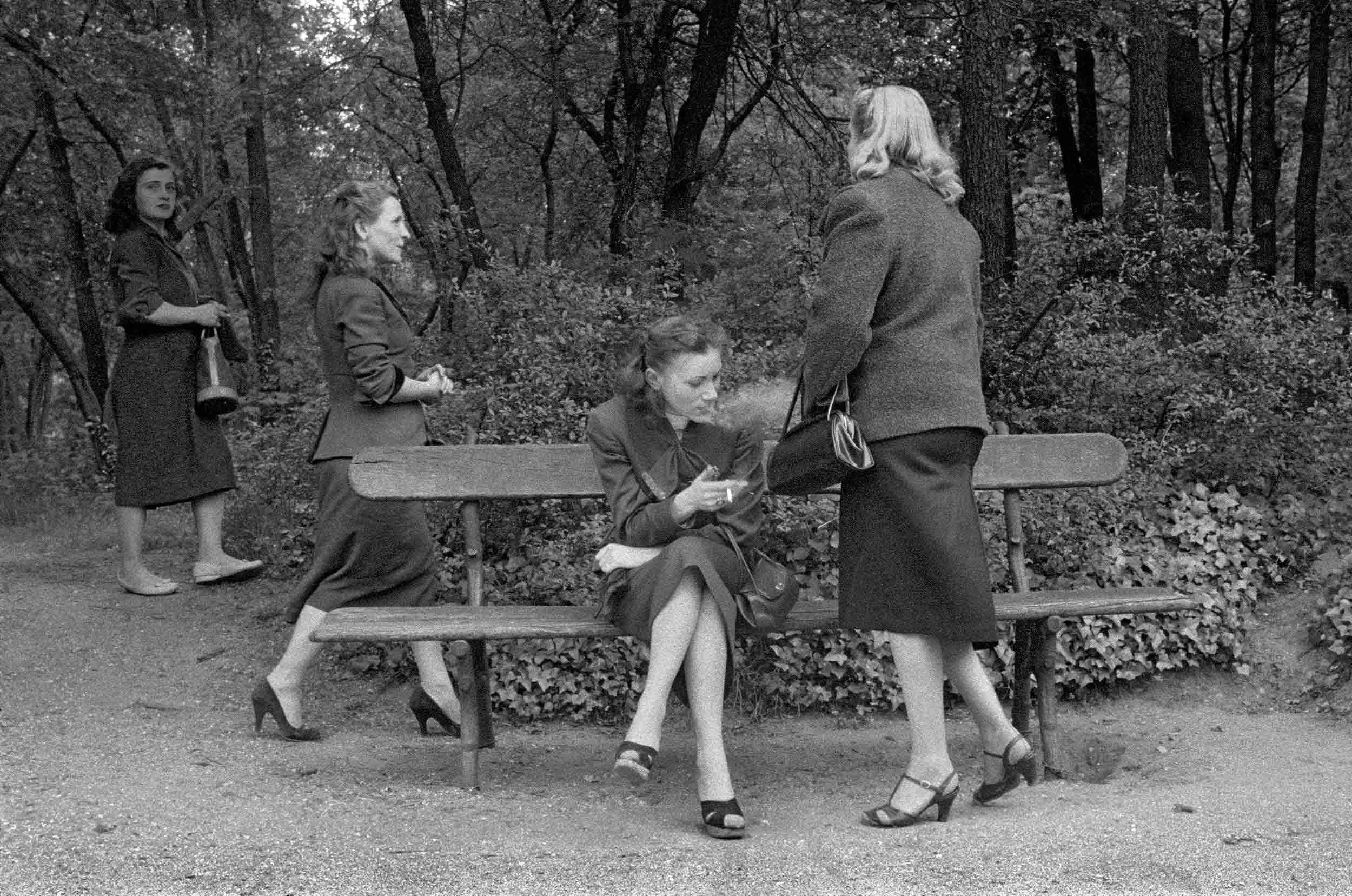
 

Frank Horvat (Italian, 1928-2020) 'Prostitutes in the Bois de Boulogne, Paris' 1955


Frank Horvat (Italian, 1928-2020)
Prostitutes in the Bois de Boulogne, Paris
1955
Modern silver print
© Studio Frank Horvat, Boulogne-Billancourt


1/ The beginnings of a photo-reporter 1928-1954

Francesco Horvat was born on April 28, 1928 in Abbazia, Italy (today Opatija in Croatia). Around 1951, he decided to become photo-reporter, meets Henri Cartier-Bresson, buys a Leica then embarks on a trip to Pakistan and India from 1952 to 1954. His subjects earned him publications in the international press and one of his images is selected for the exhibition “The Family of Man”, presented at Museum of Modern Art (MoMA) in New York in 1955.

2/ London and Realities 1954-1959

In 1954, he moved to London for a few months, where the English inspire him with humorous images, even frankly ironic. Initiating new formal experiences,he crops his images for close-up effects, hardens his prints by accentuating the grain of the image and works his layouts. Settled in Paris at the end of 1955, Francesco, who now signs Frank Horvat, establishes ongoing relationships with the French monthly Réalités, for which he produced a report on pimping, then in 1959 social subjects on the Parisian suburbs, London or the Borinage.

3/ Telephoto Paris 1956

His wanderings in Paris led Frank Horvat to acquire a telephoto lens that he tests on the urban landscape. Intrigued by the effects he obtained from it, he experimented with high views, overlooking monuments and crossroads where crowds and vehicles intermingle. He is interested in graphic games drawn by the signs, the urban furniture, the roofs and the ubiquitous typography of the town. These images earned him significant recognition by international photography journals.

4/ Shows and spectators 1956-1958

In 1956, the author manages to get behind the scenes the Sphinx striptease cabaret, place Pigalle, and ensures the complicit, amused and moving participation of the young women. This series earned him orders from Jours de France for an “Evenings in Paris” section. The book I like striptease, published in 1962 by Rencontre à Lausanne with an amazing layout by the graphic designer Jacques Plancherel, initiator of the magazine Die Woche, brings together images from these series.

5/ Fashion on the street 1957-1961

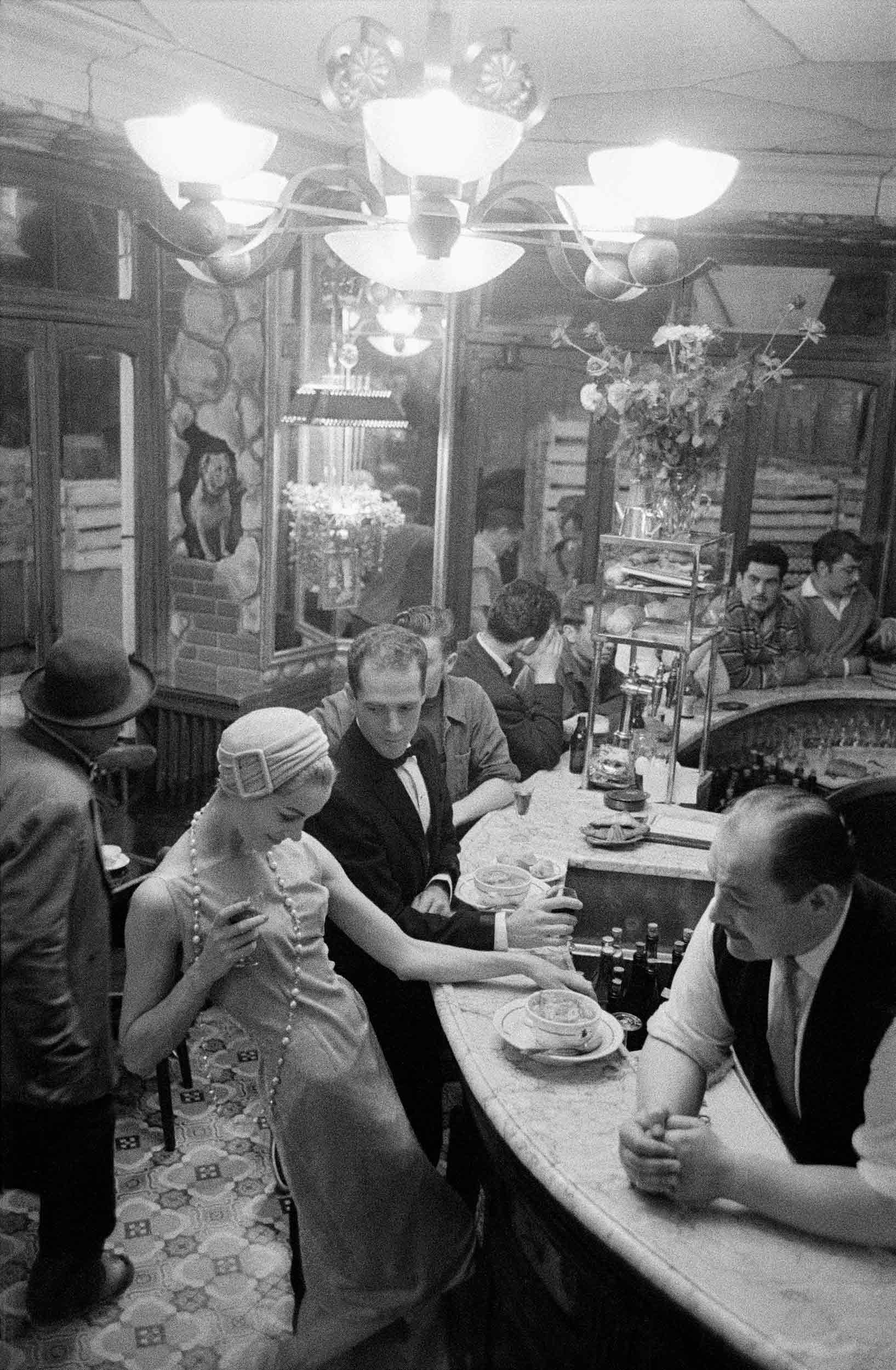
In 1957, William Klein introduced Frank Horvat to Jacques Moutin, the artistic director of the magazine Jardin desModes, who offers to transpose the style of his views Parisians in fashion images. Taken with a Leica, without artificial light, the freshness of his images is a sensation, and other magazines appeal to him for his free and natural way to pose his models. He becomes the representative of a “reportage style” in fashion.

6/ Successful fashion photographer and muses 1960-1964

This room brings together some of the iconic images and sophisticated shots made by the photographer for British Vogue and Harper’s Bazaar. Most models represented are exceptional women who have experienced an unusual fate. Maggi Eckardt, Judy Dent, Simone d’Aillencourt, Benedetta Barzini, Deborah Dixon, Carol Lobravico, Vera Valdez, Iris Bianchi or China Machado are the heroines of this room. So many portraits of women only fashion images, these photographs demonstrate a collaborative complicity between the photographer and his models.

7/ A photographer’s world tour 1962-1963

In 1962, the German magazine Revue asked Frank Horvat to produce a report on large non-European cities. Staring games between men and women, fleeting intimacy between watched and watchers, the melancholy and solitude of bodies make this photographic essay one of the most personal of Frank Horvat. The gist of this report having never been published, the vintage prints presented in this room are therefore largely unpublished. Over there following years, Frank Horvat will hardly carry out any more reporting, apart from a few colour subjects for Réalités. This series thus ends his career as a photo-reporter for the press.
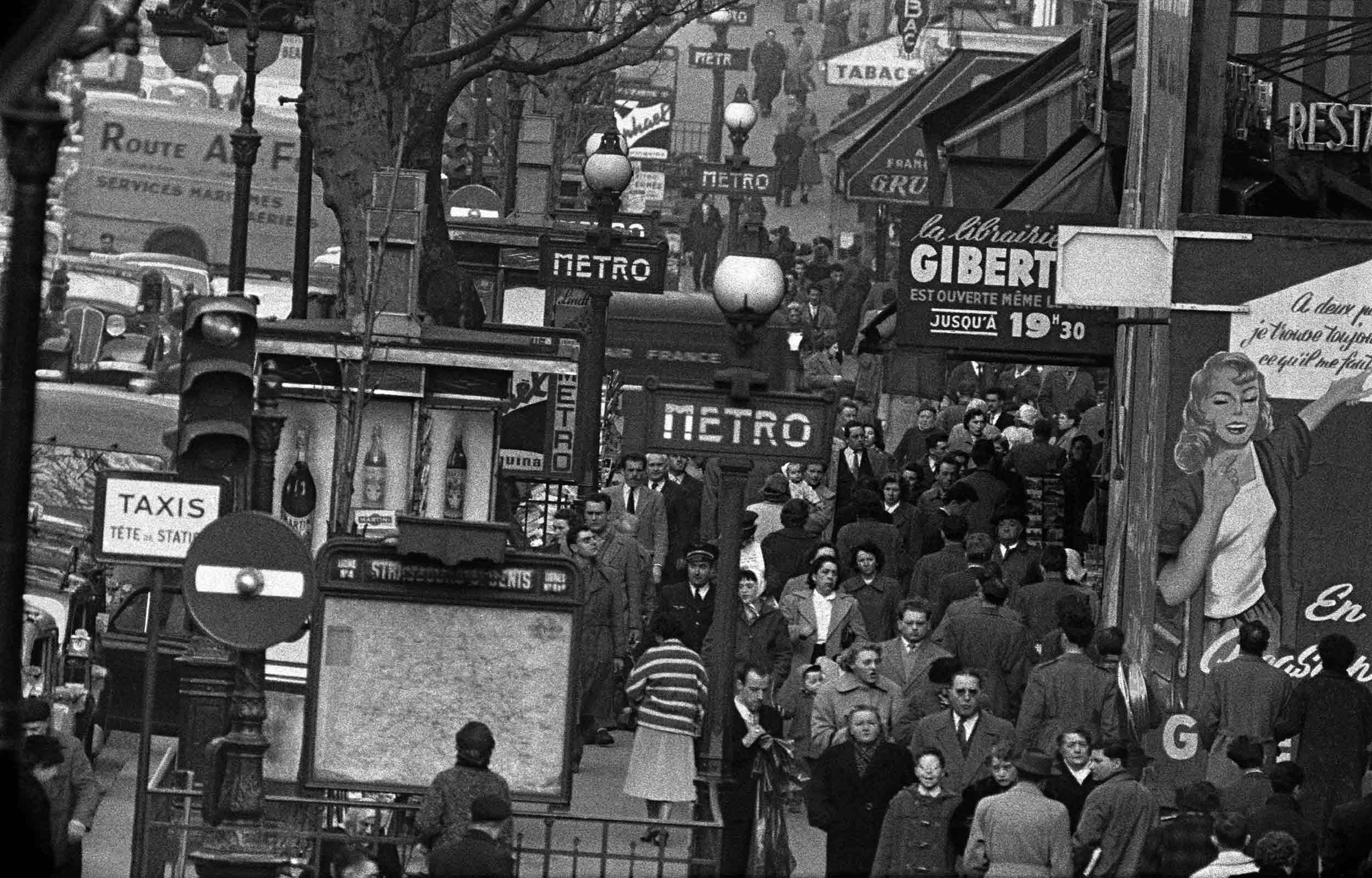
 

Frank Horvat (Italian, 1928-2020) 'Telephoto Paris, Strasbourg-Saint-Denis metro station, Paris' 1956


Frank Horvat (Italian, 1928-2020)
Telephoto Paris, Strasbourg-Saint-Denis metro station, Paris
1956
Vintage silver print
© Studio Frank Horvat, Boulogne-Billancourt
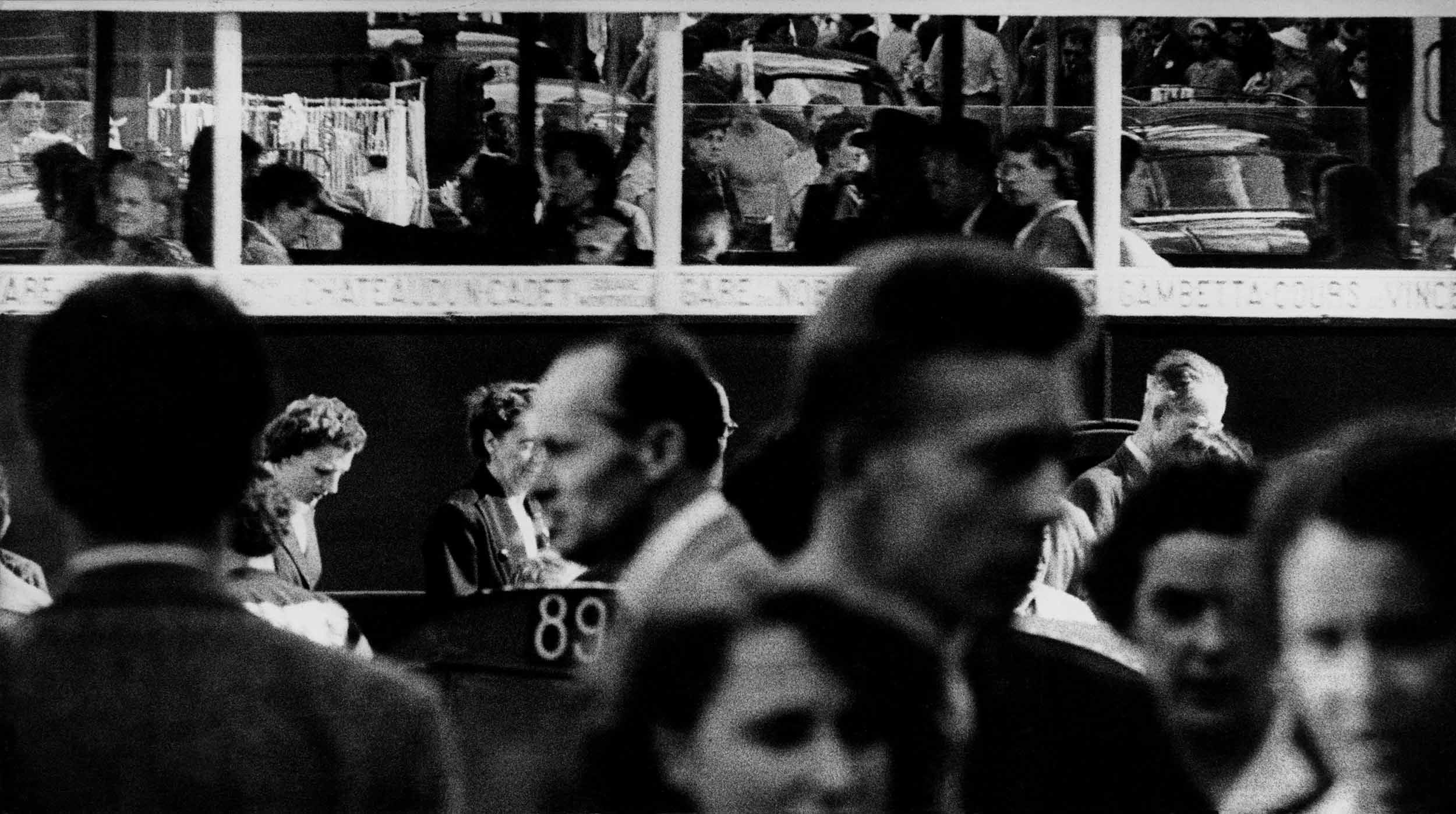
 

Frank Horvat (Italian, 1928-2020) 'Telephoto Paris, traffic in front of Saint-Lazare station, Paris' 1956


Frank Horvat (Italian, 1928-2020)
Telephoto Paris, traffic in front of Saint-Lazare station, Paris
1956
Vintage silver print
© Studio Frank Horvat, Boulogne-Billancourt


Frank Horvat (Italian, 1928-2020) 'Telephoto Paris, bus, Paris' 1956


Frank Horvat (Italian, 1928-2020)
Telephoto Paris, bus, Paris
1956
Modern silver print
© Studio Frank Horvat, Boulogne-Billancourt


Frank Horvat (Italian, 1928-2020) 'Telephoto Paris, Christmas at Galeries Lafayette' 1956


Frank Horvat (Italian, 1928-2020)
Telephoto Paris, Christmas at Galeries Lafayette
1956
Modern silver print
© Studio Frank Horvat, Boulogne-Billancourt
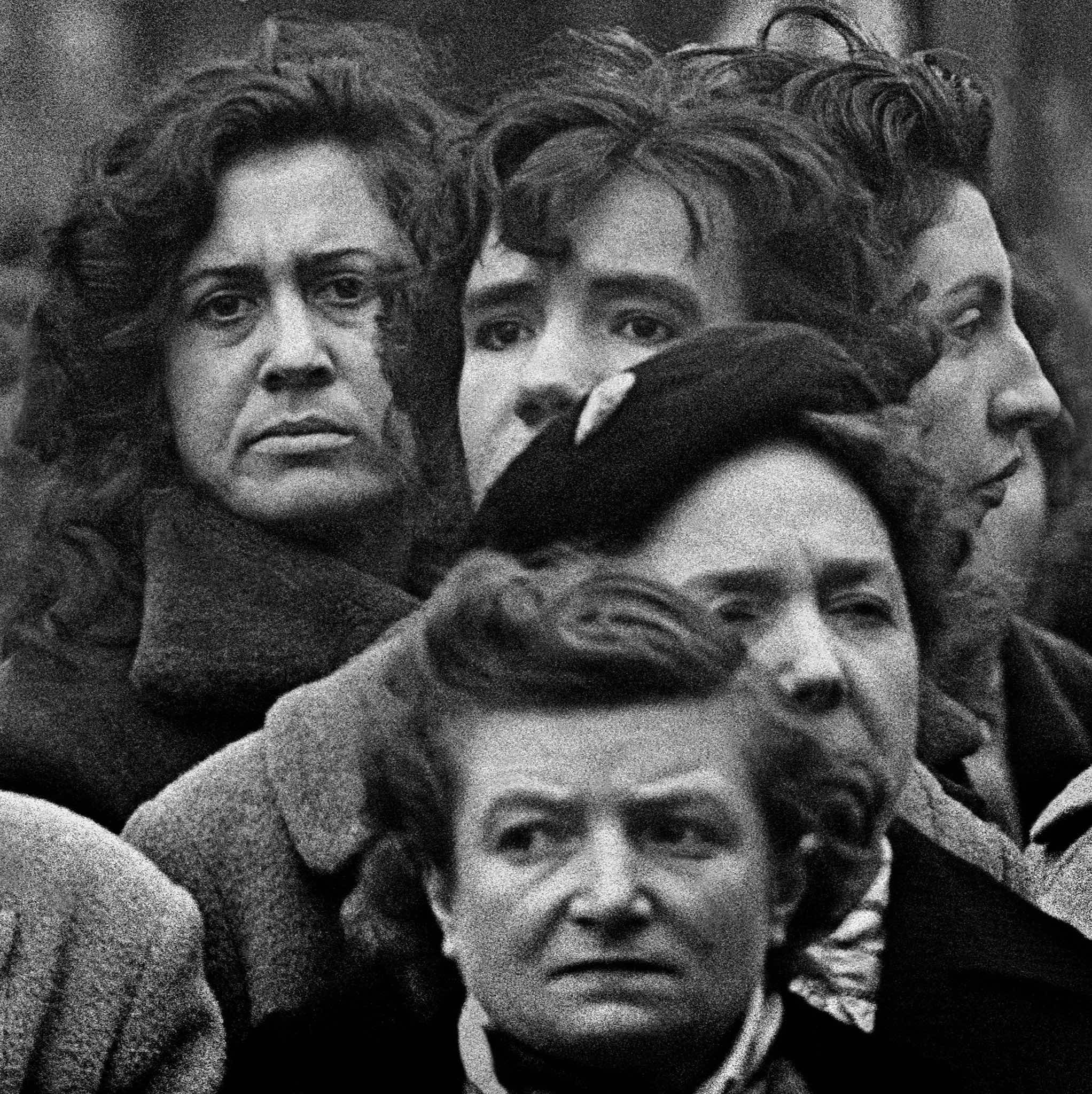
 

Frank Horvat (Italian, 1928-2020) 'Telephoto Paris, Christmas at Galeries Lafayette' 1956


Frank Horvat (Italian, 1928-2020)
Telephoto Paris, Christmas at Galeries Lafayette
1956
Modern silver print
© Studio Frank Horvat, Boulogne-Billancourt


Frank Horvat (Italian, 1928-2020) 'The Sphinx, Paris' 1956


Frank Horvat (Italian, 1928-2020)
The Sphinx, Paris
1956
Gelatin silver print
© Studio Frank Horvat, Boulogne-Billancourt


Frank Horvat (Italian, 1928-2020) 'Self-portrait with stripper, The Sphinx, Paris' 1956


Frank Horvat (Italian, 1928-2020)
Self-portrait with stripper, The Sphinx, Paris
1956
Gelatin silver print
© Studio Frank Horvat, Boulogne-Billancourt


Frank Horvat (Italian, 1928-2020) 'The Lido, Paris' 1956


Frank Horvat (Italian, 1928-2020)
The Lido, Paris
1956
Gelatin silver print
© Studio Frank Horvat, Boulogne-Billancourt


“If Horvat is a part, along with a few others, of a generation that has indeed renewed photography of fashion by desecrating the mannequin and mixing systematically life to artifice, he no doubt owes it to his training and his work as a photojournalist. This exhibition and this book, with largely unpublished content, focusing for the first time on its first fifteen years as a professional photographer who saw him go from fashionable reportage, precisely intend to reconcile the two sides of his work. On the one hand, his first works for the post-war European and then American press, in the lineage of its elders, Cartier-Bresson at the head, a time of trips that he himself called “the happiest period of his life”; on the other hand, fashion works and the intrusion of colour, which sometimes left him dissatisfied. However, in one case as in the other, the same attention, made of restraint, of empathy and a certain disenchanted sweetness, is brought to the world and, more particularly, to women and relations between the sexes, which are constants in his work – to which we will add, for fashion, a good dose of distance and humour.”

Quentin Bajac, “Foreword,” in Frank Horvat 50-65, Paris, Jeu de Paume / La Martiniere, 2022, p. 3.


The Jeu de Paume and the Château de Tours pay tribute to Frank Horvat who died on October 21, 2020. The exhibition focuses over his first fifteen years of work, during which he affirms an extraordinary personality of author-reporter and of a fashion photographer. Born in Italy in 1928, he started 1951 in Milan a career as a photojournalist which he pursues in Pakistan, India and England in the following years. His first images earned him numerous publications in the international press as well as participation in the famous “The Family of Man” exhibition presented at the Museum of Modern Art (MoMA) in New York in 1955.

Settled in Paris in 1955, he was quickly noticed by his telephoto photographs and his subjects on the Paris by night. Managing to capture close-up scenes of a rare intensity, he reveals himself as a photographer of the body and the intimate. This fascination will be found later in his images of fashion for Jardin des Modes, British Vogue or Harper’s Bazaar and in the hallucinatory vibrations of a world tour which he performed in 1962-1963, remained largely unknown. Game of glances, night shows, fragility of masks, complicity with the models, melancholy of the bodies and scintillation love troubles draw an introspective cartography of this photographer moved throughout his life by a inexhaustible quest for new experience.

Produced from the archives left by Horvat in his house-workshop in Boulogne-Billancourt, the exhibition includes over 170 vintage and modern prints. Accompanied publications and original documents, it provides a new light on the work of this major player in French and European photography and present, alongside emblematic images, sets of photographs less known or new. Are thus revealed the wealth and the singularity of a complex and multifaceted work, replaced in the context of the history of photography and the press illustrated post-war.

Exhibition curator: Virginia Chardin


“Photography, for me, was photo-reportage. My photos had to tell stories, like those that the editors of the Berliner Illustrierte, refugees in New York during the war, had taught editors to tell of Life, and that now all the magazines were trying to imitate. With a beginning, a middle, an end and a legend under each photo, so that readers still unaccustomed to this visual language can represent the world, whether magazines are sold and that their collaborators are adequately remunerated.”

Frank Horvat, “Autobiography,” undated manuscript, Boulogne-Billancourt, Studio Frank Horvat archives.


“When I first set foot there, Paris was for me the capital of the world. From fashion of course, but also those of painting, letters, shows and especially – from my perspective – photojournalism, because it was Magnum headquarters. I remember this month of July 1951 as of a triumphal progression: I attended the first Givenchy collection, at Fath’s ball (Dior’s rival), I was received in the editorial offices of Paris-Match and Réalités (which even kept some of my photos), I made the portrait of Maxime de la Falaise, muse of the Parisian intelligentsia, in her boudoir Île Saint-Louis. I told myself that this escalation could only end up at the office on Place Saint-Philippe du Roule, where Cartier-Bresson, every Wednesday at 10 a.m., received young photographers, and where he would certainly have invited me to join his pleiad.

It was a cold shower. “Do you work in 6 × 6? The good God didn’t put your eyes on your stomach! And use flash? This is an arbitrary intervention! And in colour? I would do, if I could have my own palette, but I will never use the Kodak one!” He turned over the pile of my prints, the top of the photos down, so that the expressions of the faces do not distract him from the analysis of the compositions, examined them one after the other, pointed out their faults and concludes: “You have understood nothing. Go to the Louvre and study the compositions of Poussin”.”

Frank Horvat, “Autobiography,” undated manuscript, Boulogne-Billancourt, Studio Frank Horvat archives.


“Following the advice of Henri Cartier-Bresson, Franco Horvat bought a Leica in Munich. He embarked in Trieste on a freighter bound for Karachi in the spring of 1952. This trip to Pakistan, which he will extend to India for two years following, allows him for the first time to give free rein to his imagination by looking for subjects to propose.

Most newspapers and agencies ask photographers to bring them complete reports, that is to say, successions of captioned images telling a story likely to be published on several pages. “The mould of the picture story imposed itself on all those who wanted to work for magazines, they could take advantage of it, a bit like the great filmmakers of Hollywood took advantage of box office constraints, or the Great Century playwrights of the rule of three units”. In Lahore, his intuition or his personal attractions lead him to the “red light district” of Hira Mandi (“market with diamonds”, in Urdu), place of prostitution but also of a annual party where exceptionally unveiled young girls and adorned dance and are exposed to the gaze of men, the latter obtaining at auction the right to converse with the families for a meeting or a marriage – a custom century against which the government is trying to fight. He also photographs opium and hashish smokers, a particular Muslim religious ceremony spectacular, and a wedding during which the fiancé discovers in a mirror the face of his bride. Formally, his images do not deviate from the framework imposed by the codes of the photojournalism of the time, but the choice of subjects reveals a intense fascination for the body and the intimate. The observed woman by men, the viewers themselves captured in their bewilderment, the play of looks between the two are motives that we will find in all of Horvat’s work. […]

Initially, Réalités commissioned a subject from him which going to fascinate him, on pimping in Paris. Remote or hidden behind the wheel of his car, he explores by night or day the streets and cafés of Pigalle, rue Saint-Denis, as well as the alleys of the Bois de Boulogne, in a sort of long tracking shot which is reminiscent of the world of cinema or the novel policeman. The magazine announces on the cover: “A document exceptional. Réalités denounces one of the biggest scandals in our time”. Frank Horvat’s archives keep period prints that he had made by Georges Fèvre, one of of the main printers of the Pictorial Service laboratory (Picto) created by Pierre Gassmann. The latter then has the exclusive Magnum prints and gathers around him many French and international authors. This report, which Anne by Mondenard and Michel Guerrin, authors of a book on this magazine, consider it “one of the most strong of Realities” testifying to the “tragic realism of Horvat”, is amazing. The theme of voyeurism captivates the photographer whom he follows for several weeks the thread of Paris by night: the Folies-Bergère, a premiere of the Lido to which assist Charlie Chaplin, Brigitte Bardot and Jean Cocteau, fairground booths for light shows, several boxes of striptease. In a masterful series on the Sphinx at Pigalle, the photographer manages to ensure, behind the scenes, the participation accomplice and moving strippers while leaving to their pathetic loneliness the spectators-voyeurs.”

Virginie Chardin, “Frank Horvat, the inner journey,” in Frank Horvat 50-65, Paris, Jeu de Paume / La Martinière, 2022, p. 13 and 17.
 

Frank Horvat (Italian, 1928-2020) 'Tan Arnold at The Smoking Dog, Paris, for Jardin des Modes' 1957


Frank Horvat (Italian, 1928-2020)
Tan Arnold at The Smoking Dog, Paris, for Jardin des Modes
1957
Modern silver print
© Studio Frank Horvat, Boulogne-Billancour
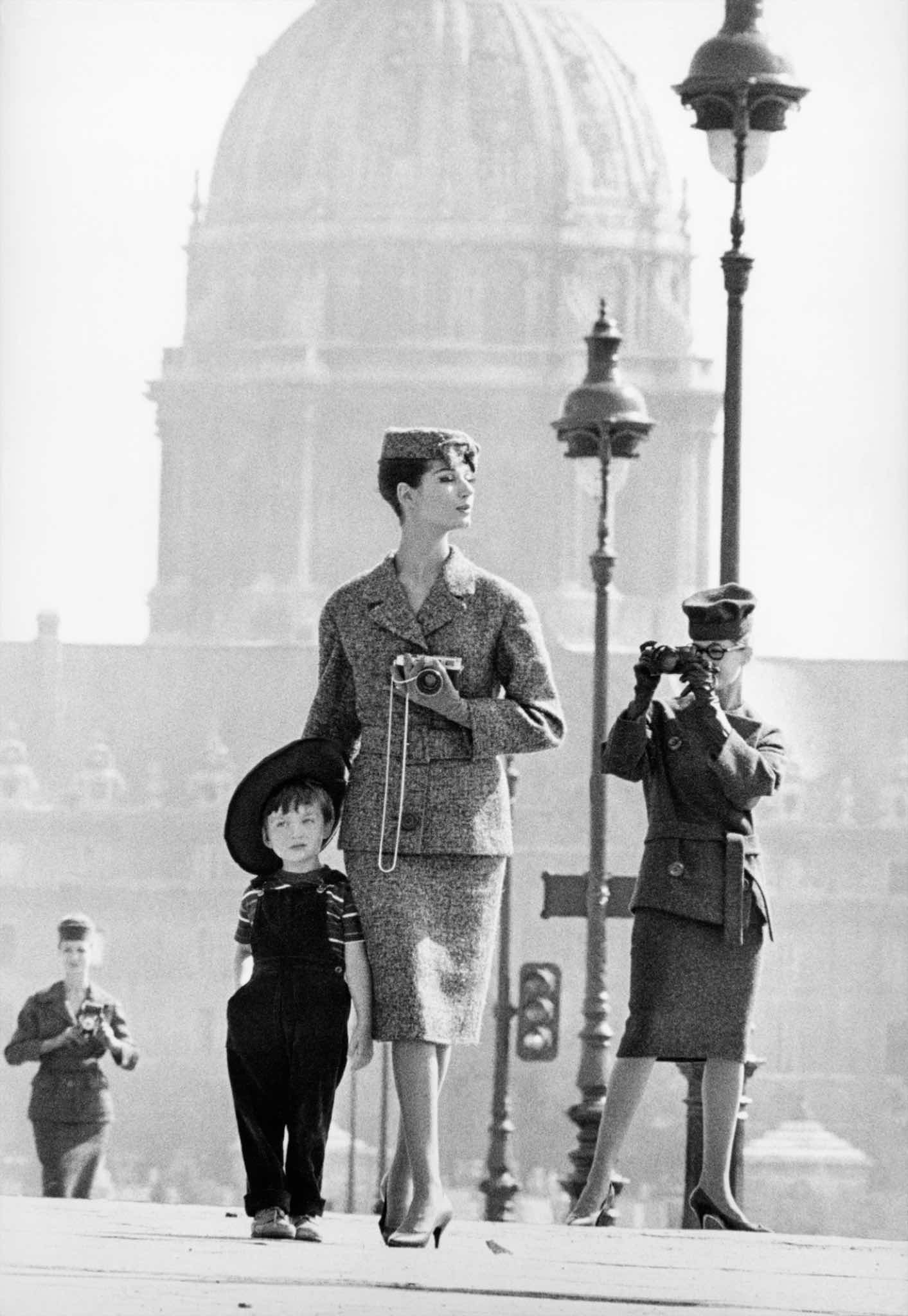
 

Frank Horvat (Italian, 1928-2020) 'Fashion at Les Invalides, Paris, pour Jardin des Modes' 1958


Frank Horvat (Italian, 1928-2020)
Fashion at Les Invalides, Paris, pour Jardin des Modes
1958
Gelatin silver print
© Studio Frank Horvat, Boulogne-Billancourt
 

Frank Horvat (Italian, 1928-2020) 'Givenchy Hat, Paris, for Jardin des Modes' 1958


Frank Horvat (Italian, 1928-2020)
Givenchy Hat, Paris, for Jardin des Modes
1958
Modern inkjet print
© Studio Frank Horvat, Boulogne-Billancourt


Frank Horvat. 'Givenchy Hat For Jardin des Modes' 1958


Frank Horvat (Italian, 1928-2020)
Givenchy Hat For Jardin des Modes
1958
Modern inkjet print
© Studio Frank Horvat, Boulogne-Billancourt
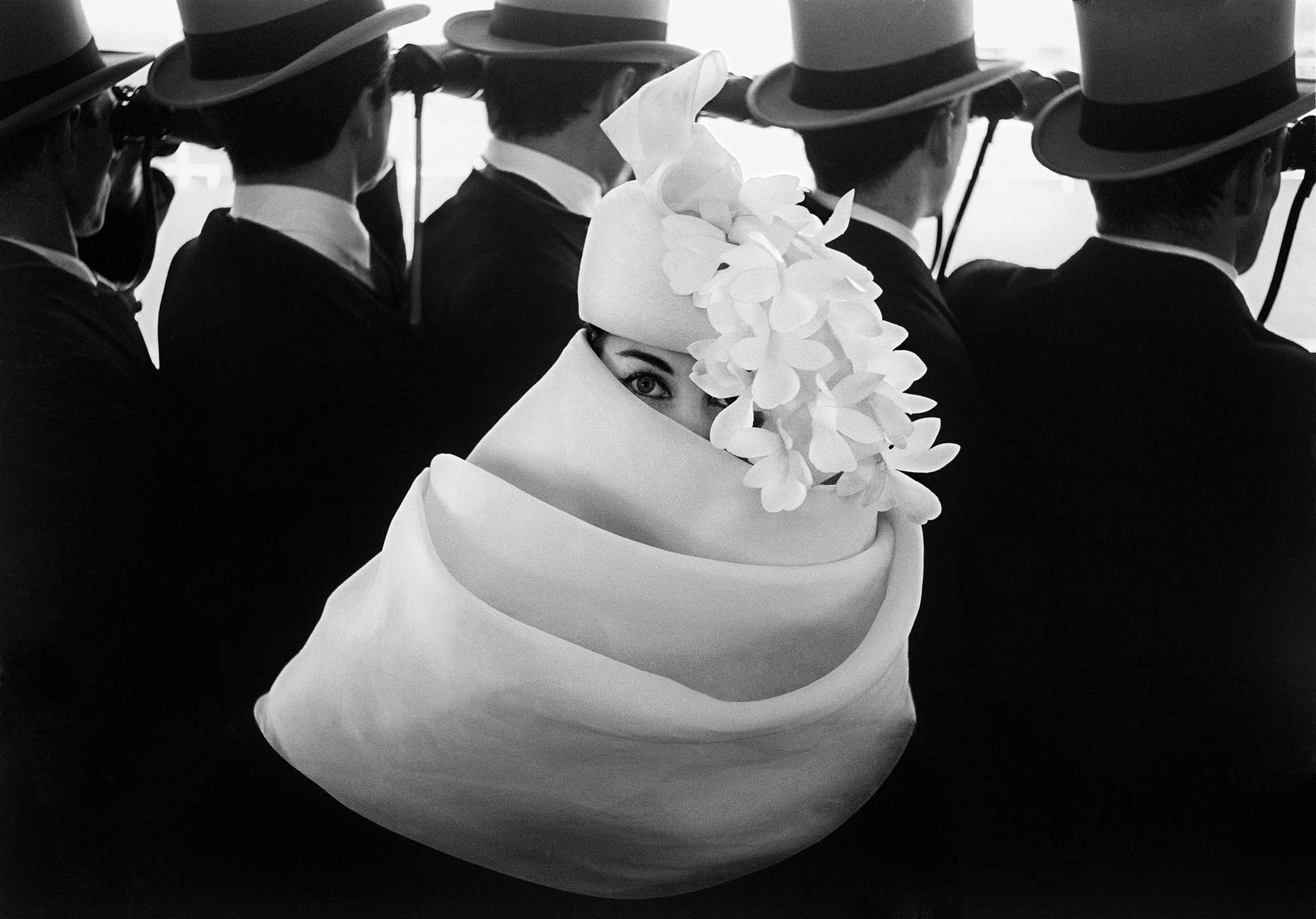
 

Frank Horvat (Italian, 1928-2020) 'Mode à Longchamp, Givenchy hat, Paris For Jardin des Modes' 1958


Frank Horvat (Italian, 1928-2020)
Mode à Longchamp, Givenchy hat, Paris For Jardin des Modes
1958
Vintage silver print
© Studio Frank Horvat, Boulogne-Billancourt


Frank Horvat (Italian, 1928-2020) 'Monique Dutto at the Metro exit, Paris, for Jours de France' 1959


Frank Horvat (Italian, 1928-2020)
Monique Dutto at the Metro exit, Paris, for Jours de France
1959
Modern silver print
© Studio Frank Horvat, Boulogne-Billancourt
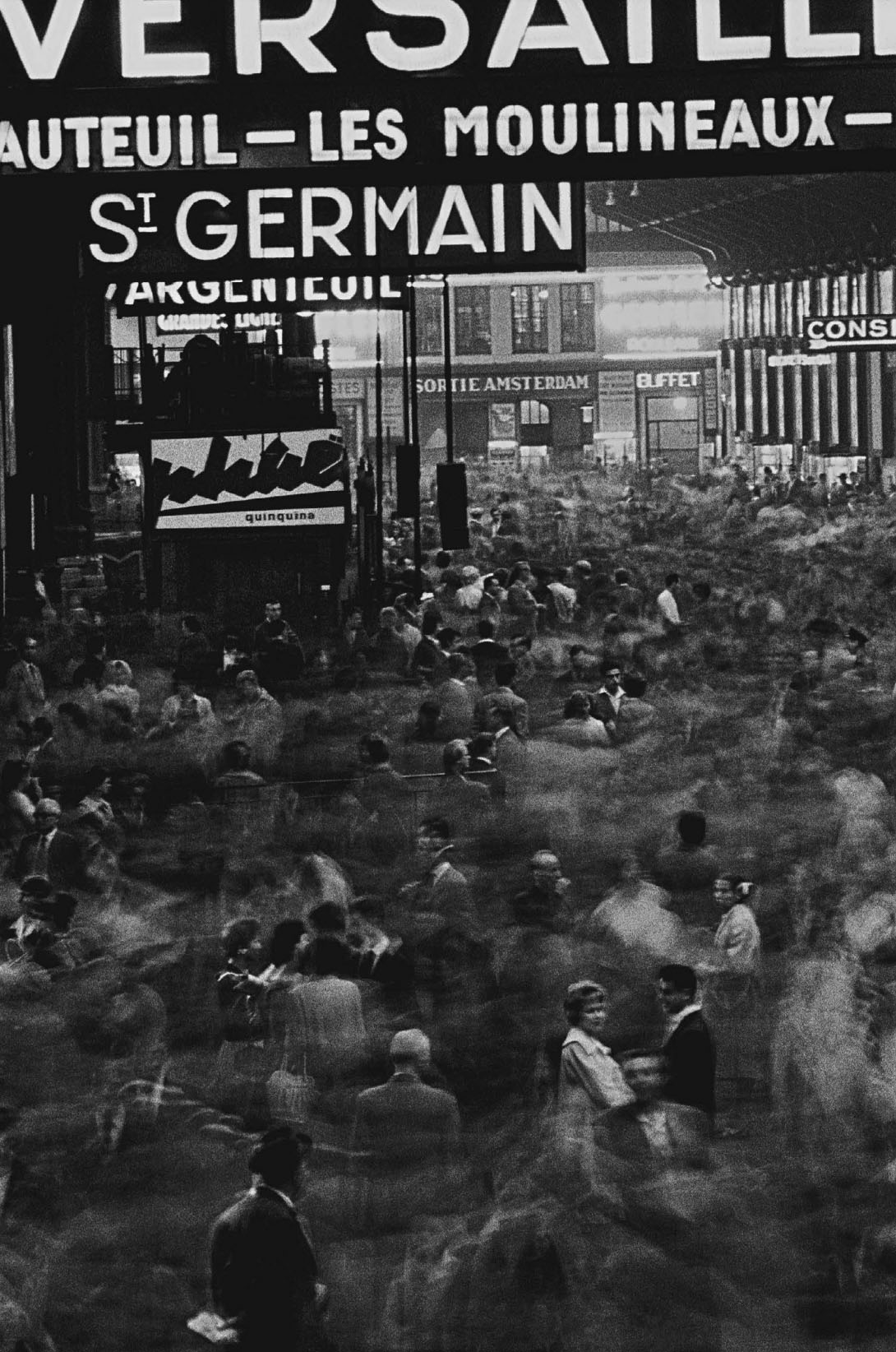
 

Frank Horvat (Italian, 1928-2020) 'Commuter train hall, Saint-Lazare station, for Réalités, Femina-Illustration' 1959


Frank Horvat (Italian, 1928-2020)
Commuter train hall, Saint-Lazare station, for Réalités, Femina-Illustration
1959
Gelatin silver print
© Studio Frank Horvat, Boulogne-Billancourt
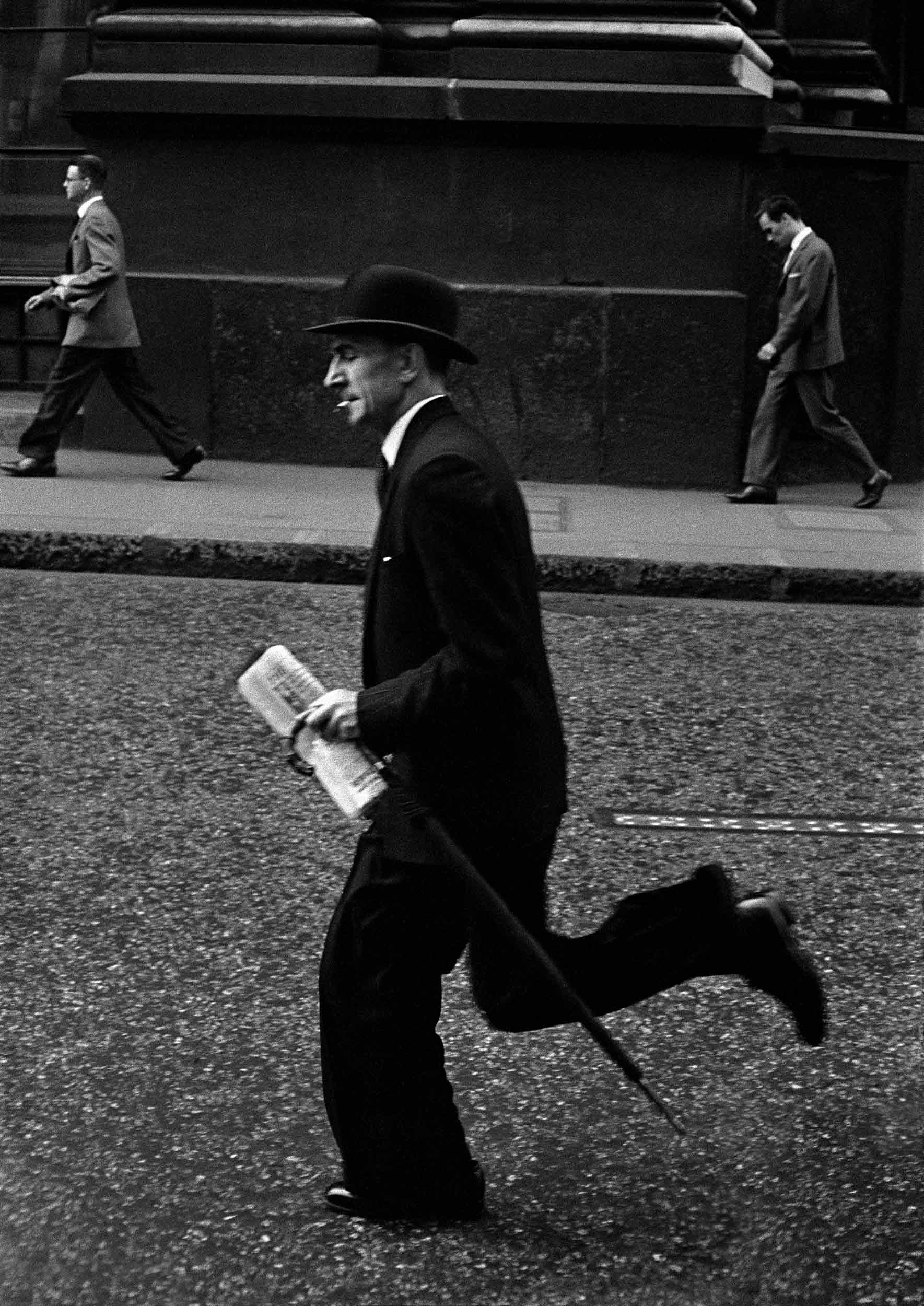
 

Frank Horvat (Italian, 1928-2020) 'City, London, England, for Realities' 1959


Frank Horvat (Italian, 1928-2020)
City, London, England, for Realities
1959
Modern silver print
© Studio Frank Horvat, Boulogne-Billancourt


“As far as I am concerned, I had not yet realized that I lived “in the century of the body” – as it was to be called, forty years later, an exhibition of photographs, where one of the present images was going to be in the right place – and I had no intention of investigating this theme. But I had just moved to Paris, the orders were not legion and it was difficult for me to refuse that of a “men’s magazine” of New York, which offered two hundred dollars for a report on “Parisian life”.

On the sidewalks of Pigalle, the braided doormen addressed me expressions of welcome, quickly transformed into pouts disdainful as soon as I expressed the wish to photograph behind the scenes. At two o’clock in the morning, having wiped the refusals of all the establishments of the square and the alleys neighbours, I decided to go to great lengths. I slipped a five thousand franc note – of the time – in the hand of the doorman of the Sphynx, although the neon lights of this place were a slightly bald and the man’s uniform not brand new. That has been perhaps these imperfections that decided him to pocket the money and to let me enter, without further ceremony, into the sanctuary for strippers.

These young ladies gave me a rather warm welcome, perhaps because that the audience that night was so gloomy that the mere fact that a paparazzo takes care of them gave them a little feeling important. For my part, I machine-gunned hastily, as sensing that my luck would not last. Effectively, at after four or five spools, one of them said to me: “What are you paying for?” The demand was not unjustified, but I I couldn’t satisfy her. I turned a deaf ear and, without waiting for the others to join in, beat a retreat. The next day, while going through the contacts, I realized that “I had a story” […].”

Frank Horvat, Strip-tease, Paris, Galerie Nina Verny, 2001, n. p.


“[…] for now, his work is leading him to acquire a telephoto lens, which he tests on the urban landscape. Intrigued by the effects he obtains from it, he then abandons the motif of cabarets and of the night to experience many views taken in height, on foot, and overlooking monuments and crossroads where crowds and vehicles intermingle. He is interested in games graphics drawn by the signs, the signage, the street furniture, rooftops and the ubiquitous typography in the city. Positioning himself in the middle of the crowd, he captures close-ups of faces or bends down to child’s height. The objectives of long focal length put on the market are then the subject of a real infatuation. Frank Horvat shows a selection of his images to Romeo Martinez, the editor-in-chief of Camera magazine who, enthusiastic, decides to devote an important article to them and to exhibit them at the first Biennale of photography in Venice. This recognition will be crucial for the rest of his career, although the technique and use the telephoto lens only interested him for a short time. It earned him interviews and portfolios in magazines international photography exhibitions and to be exhibited alongside authors like Peter Keetman or William Klein. The same moment, as the exhibition “The Family of Man” arrives at Paris and that Frank Horvat surveys the city with his telephoto lens, published by Editions du Seuil, the book on New York by William Klein, who won the Nadar Prize the following year. It’s a real stylistic revolution in the world of photography, which coincides with the end of the golden age of humanist photography and the decline of photojournalism, and which marks the beginning of a new era of the press, in close correlation with the explosion of the society of consumption.”

Virginie Chardin, “Frank Horvat, the inner journey,” in Frank Horvat 50-65, Paris, Jeu de Paume / La Martinière, 2022, p. 18-21.


“Models who take stereotypical expressions bore me. I forced them to become what I call naively “real women”. It was a war against a lot of people; I went against the preconceived image of editors, models, makeup artists and hairstylists… and even against the necessity of having to represent a illusion. Certainly, I understand the desire for idealization that exists in fashion photography. But I wanted to realize my ideal and not that of an era. I wish that the models do not look like models. I had at first introduces passers-by, dogs, characters into the street. And then I tried to find the same truth in the studio, using white backgrounds. Sometimes I was wrong. This form of democratization of fashion has been favored by political actions. But I arrived at the right time.”

Frank Horvat, “Photographing the relationship”, interview by Muriel Berthou Crestey, October 19, 2013 [Online] Cited 17/10/2022


“The greatest models of Horvat possess a beauty nonconformist, and their personality shines through the pages magazines. However, the woman in his photograph most famous remains an enigma. She stares at the lens, one eye visible under one flawless brow bone, the other obscured by the cascade of white silk flowers from her Givenchy hat. Unusually, it is not she who concentrates the attention of the other protagonists: around her, the men in top hats point their binoculars in the distance, to a horse race.”

Susanna Brown, “A beautiful chimera: Frank Horvat and fashion,” in Frank Horvat 50-65, Paris, Jeu de Paume / La Martinière, 2022, p. 38.
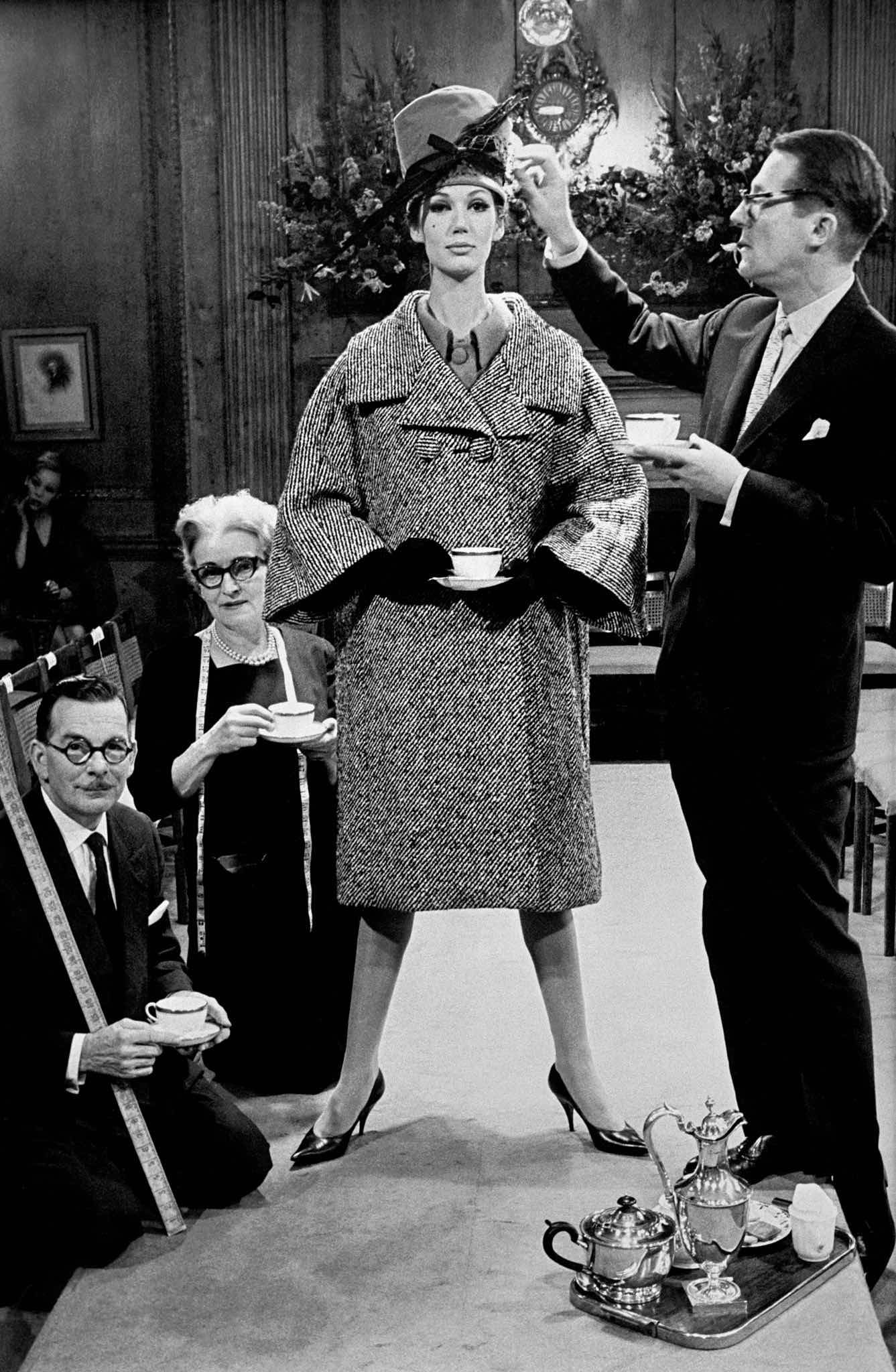
 

Frank Horvat (Italian, 1928-2020) 'Simone d'Aillencourt with designer Hardy Friends drinking tea, British high fashion, London, England, for British Vogue' 1961


Frank Horvat (Italian, 1928-2020)
Simone d’Aillencourt with designer Hardy Friends drinking tea, British high fashion, London, England, for British Vogue
1961
Gelatin silver print
© Studio Frank Horvat, Boulogne-Billancourt


Frank Horvat (Italian, 1928-2020) 'Deborah Dixon and Federico Fellini, Italian haute couture, for Harper's Bazaar, Rome, Italy' 1962


Frank Horvat (Italian, 1928-2020)
Deborah Dixon and Federico Fellini, Italian haute couture, for Harper’s Bazaar, Rome, Italy
1962
Modern silver print
© Studio Frank Horvat, Boulogne-Billancourt
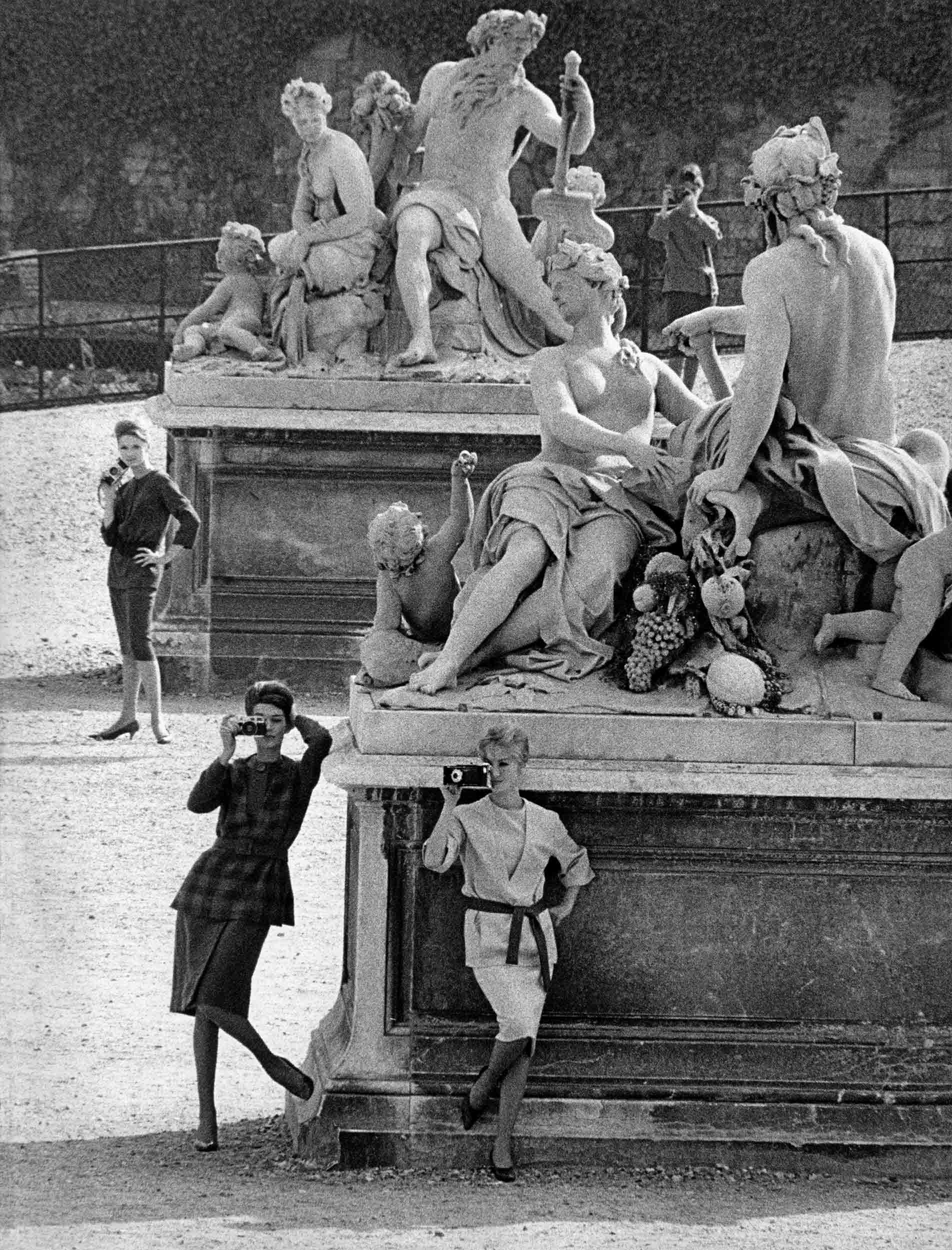
 

Frank Horvat (Italian, 1928-2020) 'Iris Bianchi and Agnès Varda, Paris, French haute couture, for Harper's Bazaar' 1962


Frank Horvat (Italian, 1928-2020)
Iris Bianchi and Agnès Varda, Paris, French haute couture, for Harper’s Bazaar
1962
Modern inkjet print
© Studio Frank Horvat, Boulogne-Billancourt


Frank Horvat (Italian, 1928-2020) 'Deborah Dixon on the steps of Piazza di Spagna, Italian haute couture, Rome, Italy, for Harper's Bazaar' 1962


Frank Horvat (Italian, 1928-2020)
Deborah Dixon on the steps of Piazza di Spagna, Italian haute couture, Rome, Italy, for Harper’s Bazaar
1962
Modern silver print
© Studio Frank Horvat, Boulogne-Billancourt


Frank Horvat (Italian, 1928-2020) 'Deborah Dixon eating spaghetti with writer Antero Piletti, Italian haute couture, Rome, Italy, for Harper's Bazaar' 1962


Frank Horvat (Italian, 1928-2020)
Deborah Dixon eating spaghetti with writer Antero Piletti, Italian haute couture, Rome, Italy, for Harper’s Bazaar
1962
Gelatin silver print
© Studio Frank Horvat, Boulogne-Billancourt


Frank Horvat (Italian, 1928-2020) 'Carol Lobravico au café de Flore, haute couture française, Paris, pour Harper's Bazaar' 1962


Frank Horvat (Italian, 1928-2020)
Carol Lobravico au café de Flore, haute couture française, Paris, pour Harper’s Bazaar
1962
Gelatin silver print
© Studio Frank Horvat, Boulogne-Billancourt
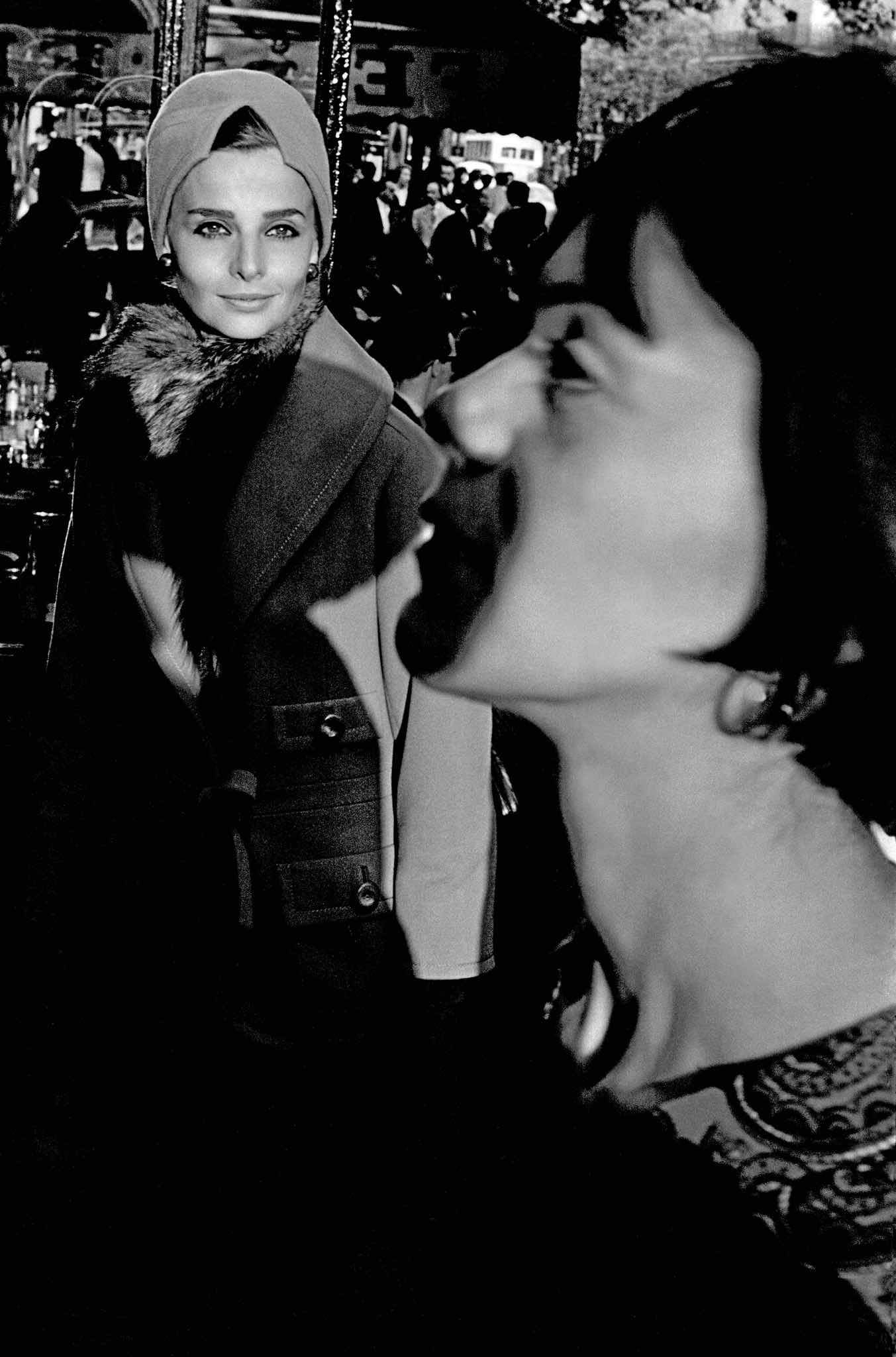
 

Frank Horvat (Italian, 1928-2020) 'Carol Lobravico et Iris Bianchi au café de Flore, haute couture française, Paris, for Harper's Bazaar' 1962


Frank Horvat (Italian, 1928-2020)
Carol Lobravico et Iris Bianchi au café de Flore, haute couture française, Paris, for Harper’s Bazaar
1962
Gelatin silver print
© Studio Frank Horvat, Boulogne-Billancourt


“This photo [“Hat Givenchy, Paris, for Jardin des Modes,” 1958] would become my [most] iconic image, that is to say the one most often associated with my name. Maybe that’s why she’s not among the ones I prefer, to the point that I’m almost annoyed when it’s designate as my masterpiece. Another reason for my reluctance is that it was not really my idea, but the one of the artistic director, who even made, before the session, a sketch, which I was supposed to get as close as I could. I have never liked being directed, to the point that the concept of an “artistic direction” seems to me a contradiction in the terms: can we direct art? On the other hand, I have to admit that Jacques Moutin did not lack good ideas, and that this one was excellent. I owe him a big part of the success of this image and the benefits it has earned me.”

Frank Horvat, A look at the 60s, Paris, Loft Publications, Cyel editions, 2012, ill. 37.


“Thus, putting aside the notions of truth or deception in the representation of women, and in leaning instead on this concept that Griselda Pollock called the woman-as-image, it becomes possible to analyze the mechanisms of fetishism, voyeurism and objectification who form and inform the representation of women.”

Abigail Solomon-Godeau, “Representing Women: The Politics of representation of the self,” in Chair à canons. Photography, discourse, feminism, Paris, Textual, coll. “Photographic writing,” 2016, p. 234.


Life had finally arrived on newsstands, imitated in everything the “free world” by magazines of the same format, such as Match in Paris, Stern in Hamburg and Epoca in Milan. We admired the Magnum photographers – Cartier-Bresson, Capa, Seymour and Bischof – both artists and adventurers. Far from a stopgap measure, photojournalism appeared to me as a way to reach my ideal from a creative activity to my desire to travel the world.”

Frank Horvat, “Pre-history,” in Frank Horvat. Please don’t smile, Berlin, Hatje Cantz Verlag, 2015, p. 232.


“If I had to sum up the photogenicity of Paris in a few words, I would would say that it comes from its facets. We can realize that on any street corner, looking in any direction through a viewfinder: details accumulate in the frame and repeat themselves as in a game of mirrors, disparate but always granted between them […]. The effect can be enhanced by a focal length of telephoto lens, which crushes perspectives and tightens distances.”

Frank Horvat, “Cities and Languages,” in Frank Horvat, Paris-Londres, London-Paris, 1952-1962, Paris, Paris Museums, Carnavalet Museum, 1996, p. 6-7.


“The spectator is a recurring presence in the work of Frank Horvat, and we could interpret this male figure anonymous as a representation of the photographer himself. In his exploration of the dichotomy between manifest gaze and hidden gaze, he often uses reflective surfaces, exploiting the properties of the mirror which induce a disturbance of three-dimensional space and a fragmentation of the picture plane.”

Susanna Brown, “A beautiful chimera: Frank Horvat and fashion,” in Frank Horvat 50-65, Paris, Jeu de Paume / La Martiniere, p. 33.


“For the “continental” that I was, England in the 1950s was as exotic as India – my teenage dreams in less. Immigration and globalization not yet on the agenda, the male population was divided into two classes: those who wore a cap and who in the métro – the tube – read the Daily Mirror, and those who wore the bowler hat and read the Times (whose titles were inside, the first page being reserved for small advertisement). The social class of women was recognized less easily: most looked like faded flowers, wore little hats and knitted. The light of a sky of lead suited me almost better than that of the sheer sun, but I know my London pictures stayed closer caricature than miracle: I had neither the knowledge nor the imagination to superimpose on this universe another grid than that of an ironic look.

In Paris, where I transferred myself the following year, it was all contrary: the references jostled, to the point of seeming sometimes too easy. Montmartre stairs, children brandishing chopsticks, the street lamps in the fog and the fairgrounds inevitably reminded me of the movies of the 1930s, but also the so-called humanist photographers who were inspired by it and of which I did not share some tenderness. Other associations of ideas, however, were irresistible. The gaze of a passer-by as in The Flowers of Evil: “O you whom I had loved, oh you who knew it”. The ghosts of demolished houses, like in Malta Laurids Brigge: “…it wasn’t, so to speak, the first wall of the remaining houses, but the last wall of the old. We saw the inside. We could see on the different floors the walls where hangings had remained pasted, here and there the beginning of a floor or a ceiling…” And of course the Mirabeau d’Apollinaire bridge, the grand boulevards of novels by Balzac, the Quai des Orfèvres by Edgar Poe, coffee Flore de Sartre… To literary memories were added the seductions of shop windows, restaurant menus, posters theater, and of course and above all women, interviews and unapproachable behind car windows or disturbing by their availability on the sidewalks of rue Saint-Denis.

For me, these were not so much reporting themes, as I had found in India and England, only entries in the diary of my wonders, my desires, of my fears and my mistakes. As were, on other registers, the subjects of the images on the run from Cartier-Bresson and Boubat, for whom photojournalism was, in the end, only a pretext for their own quests – or simply a livelihood.”

Frank Horvat, “Autobiography,” undated manuscript, Boulogne-Billancourt, archives from Studio Frank Horvat.
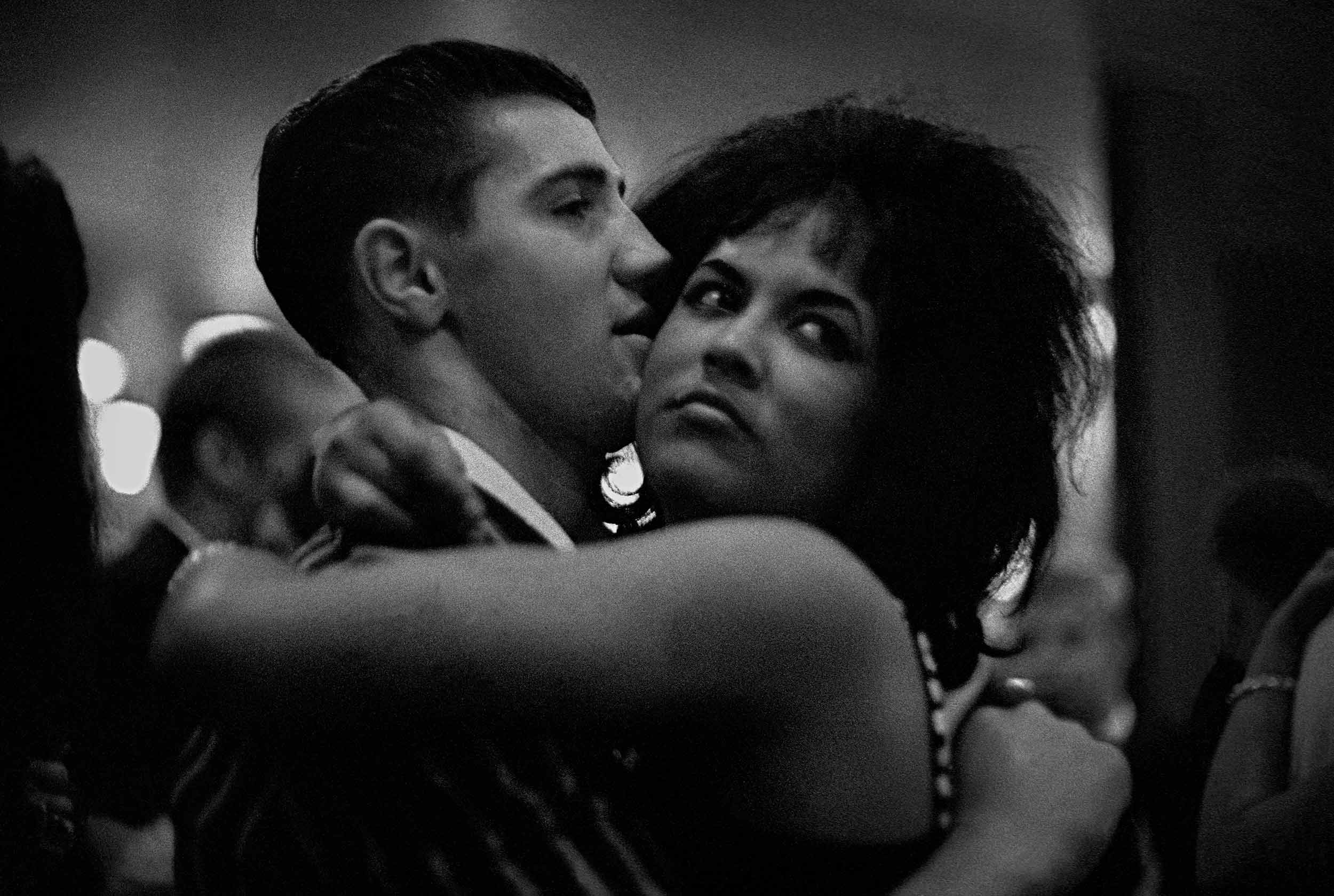
 

Frank Horvat (Italian, 1928-2020) 'Christmas night, couple dancing in sailor bar, Calcutta, India' 1962


Frank Horvat (Italian, 1928-2020)
Christmas night, couple dancing in sailor bar, Calcutta, India
1962
Vintage silver print
© Studio Frank Horvat, Boulogne-Billancourt


Frank Horvat (Italian, 1928-2020) 'Department store, Tokyo, Japan' 1963


Frank Horvat (Italian, 1928-2020)
Department store, Tokyo, Japan
1963
Vintage silver print
© Studio Frank Horvat, Boulogne-Billancourt
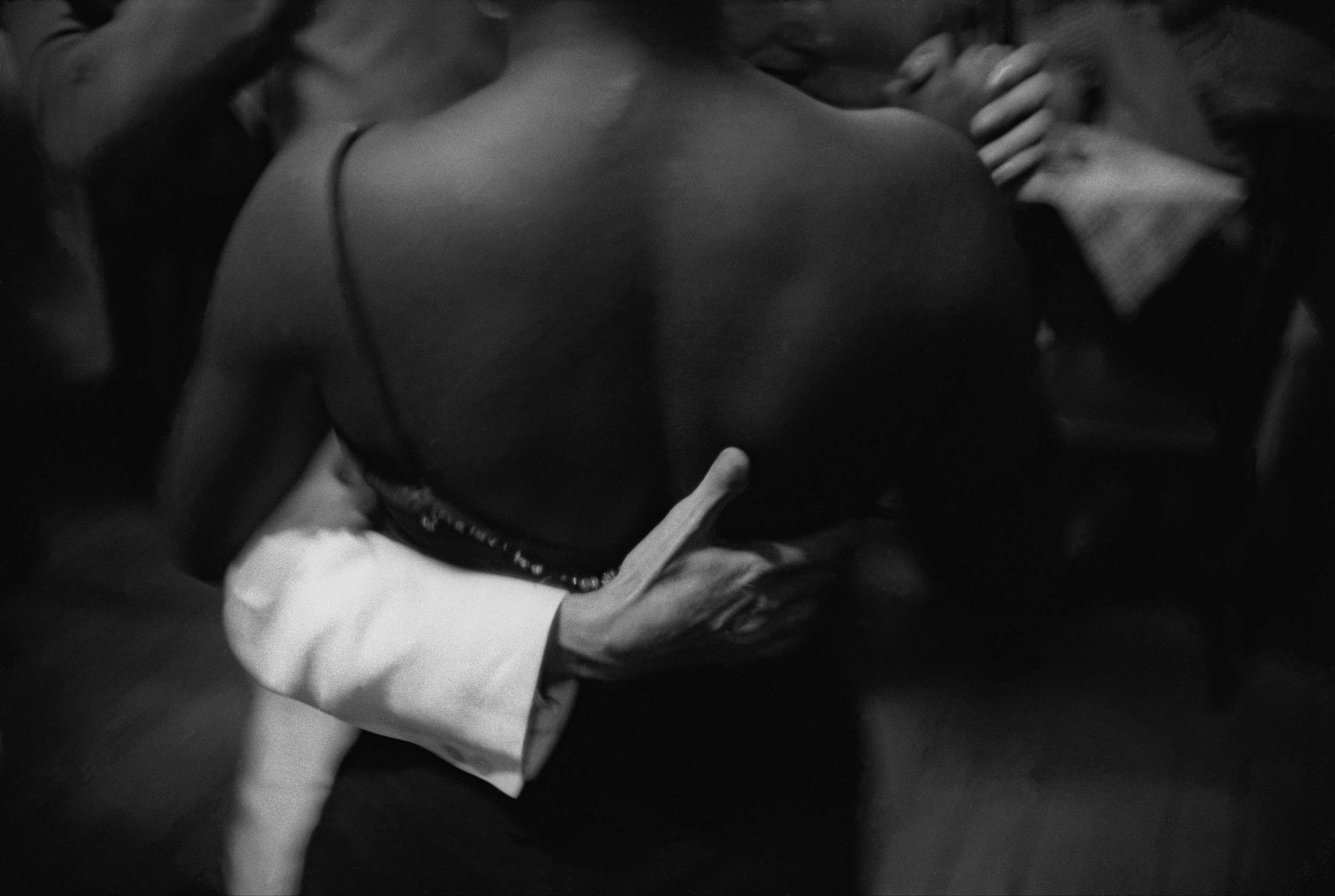
 

Frank Horvat (Italian, 1928-2020) 'Couple dancing in a gafeira (popular ball), Rio de Janeiro, Brazil' 1963


Frank Horvat (Italian, 1928-2020)
Couple dancing in a gafeira (popular ball), Rio de Janeiro, Brazil
1963
Modern silver print
© Studio Frank Horvat, Boulogne-Billancourt
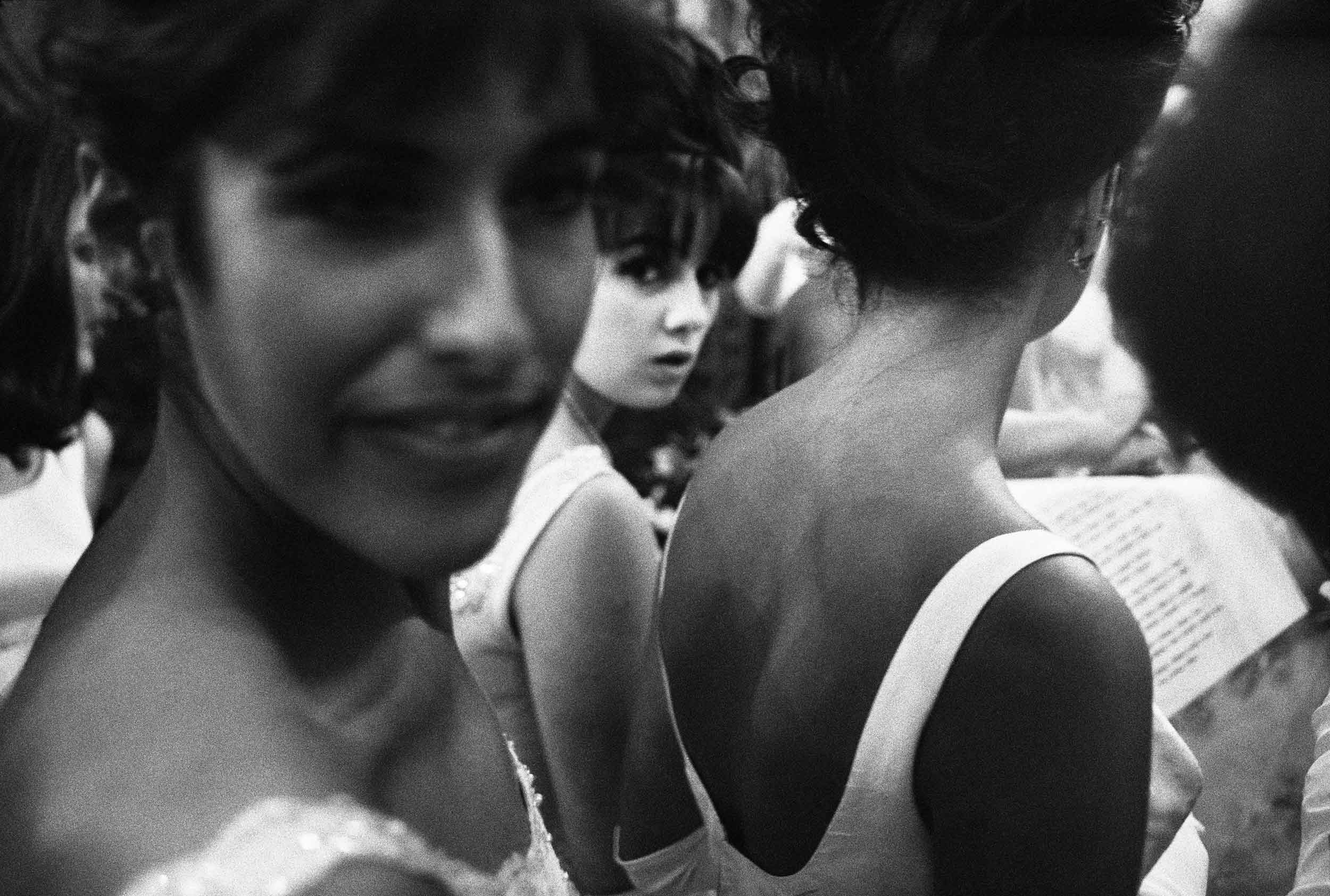
 

Frank Horvat (Italian, 1928-2020) '15th anniversary celebration, Rio de Janeiro, Brazil' 1963


Frank Horvat (Italian, 1928-2020)
15th anniversary celebration, Rio de Janeiro, Brazil
1963
Silver print
© Studio Frank Horvat, Boulogne-Billancourt
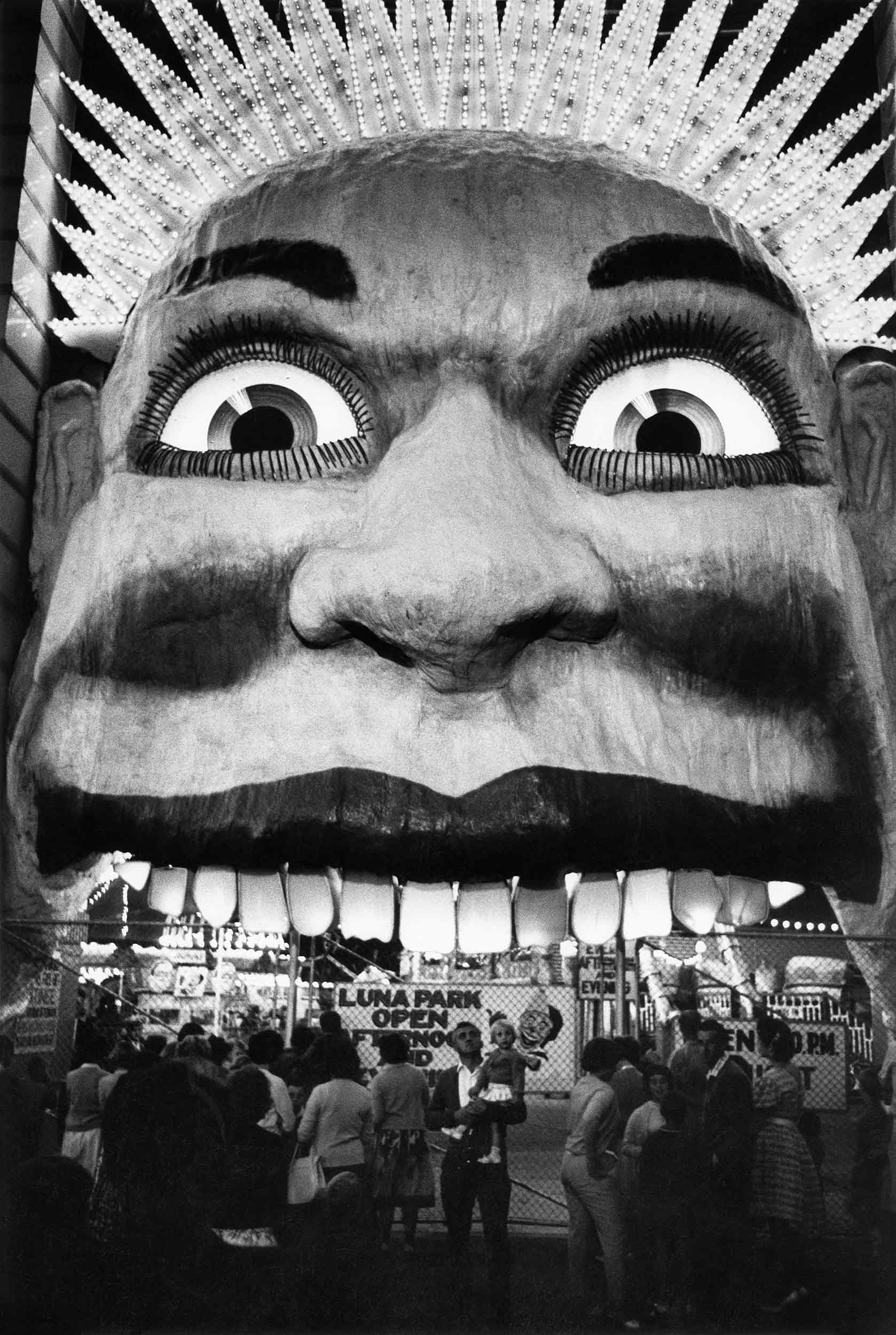
 

Frank Horvat (Italian, 1928-2020) 'Entrance to Luna Park, Sydney, Australia' 1963


Frank Horvat (Italian, 1928-2020)
Entrance to Luna Park, Sydney, Australia
1963
Vintage silver print
© Studio Frank Horvat, Boulogne-Billancourt
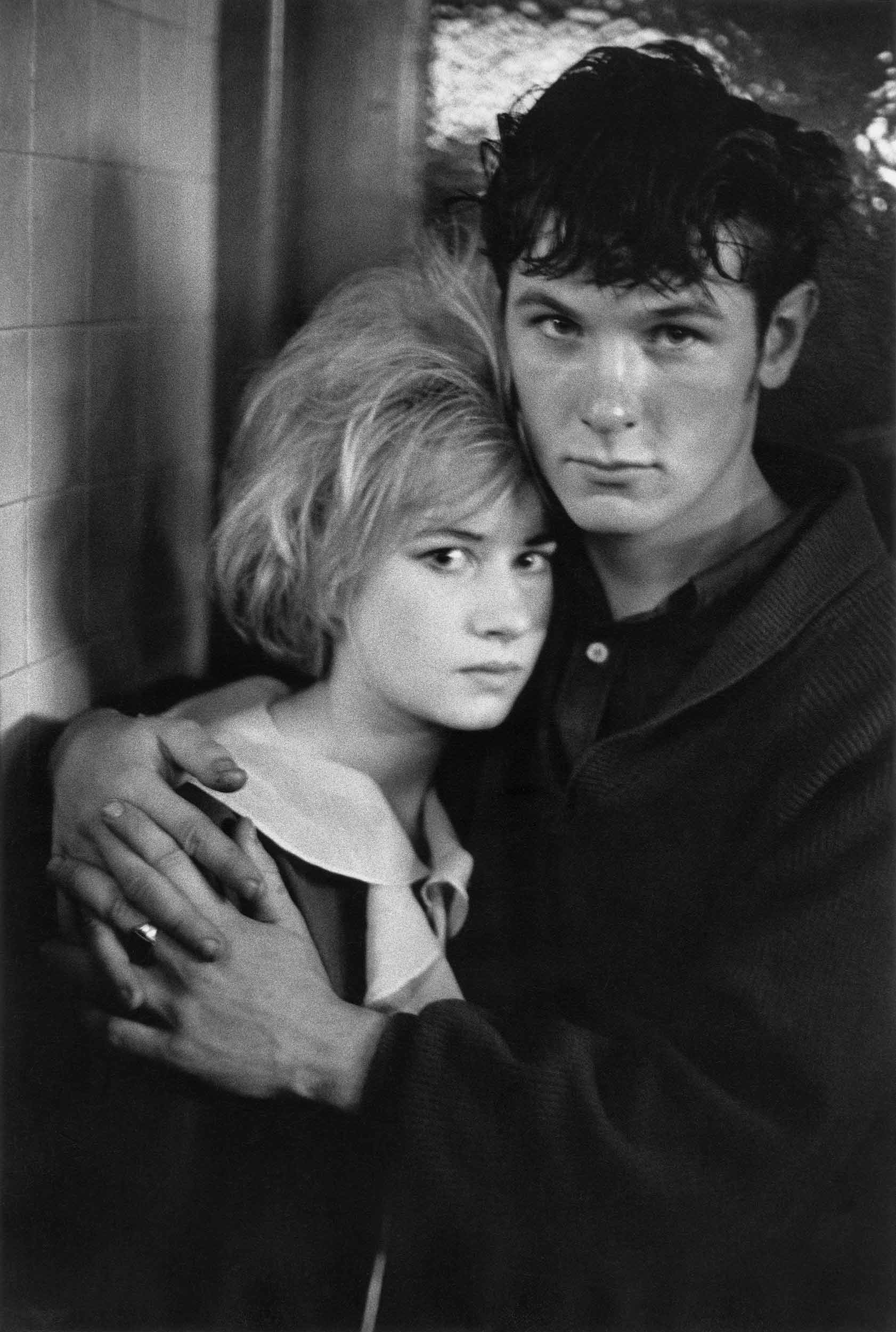
 

Frank Horvat (Italian, 1928-2020) 'Lovers, Sydney, Australia' 1963


Frank Horvat (Italian, 1928-2020)
Lovers, Sydney, Australia
1963
Vintage silver print
© Studio Frank Horvat, Boulogne-Billancourt


Frank Horvat Photography, 1955

Frank Horvat Photography, 1955

Frank Horvat Photography, 1955


Frank Horvat Photography, 1955


Frank Horvat Jardin des Modes, France, 1958

Frank Horvat Jardin des Modes, France, 1958


Frank Horvat Jardin des Modes, France, 1958


Jeu de Paume at the Château de Tours
25 avenue André Malraux, 37000 Tours
Phone: 02 47 70 88 46

Opening hours:
Tuesday – Sunday 2pm – 6pm
Closed on Monday

Jeu de Paume website

LIKE ART BLART ON FACEBOOK

Back to top

Exhibition: ‘Blow-Up: Antonioni’s Film Classic and Photography’ at the Albertina, Vienna

Exhibition dates: 30th April – 17th August 2014


Arthur Evans (British, 1908-1994) 'David Hemmings in "Blow Up" (directed by Michelangelo Antonioni)' 1966


Arthur Evans (British, 1908-1994)
David Hemmings in “Blow Up” (directed by Michelangelo Antonioni)
1966
Film still
Courtesy Philippe Garner
© Neue Visionen Filmverleih GmbH/Turner Entertainment Co. – A Warner Bros Entertainment Company. All rights reserved.


The act of looking and the gaze through the eye of a photographer’s camera are the central motifs of Blow-Up.

“Don McCullin created the iconographic photographs that in the film are blown up by Thomas to discover something about the alleged crime. However, the blow-ups only offer ambivalent proof as they become more and more blurred and abstract by the continuous enlarging. Even photography that supposedly represents reality like no other form of media cannot help in shedding any light on the mysterious events in the park. Pictorial reality – thus Antonioni’s conclusion – is only ever constructed by the medium itself.” (Press release)

Then, look at Don Mcullin’s photograph British Butcher, East London (c. 1965, below). The Union Jack hat, the knife being sharpened and the contrast of the image. Savage. Not home grown but “Home killed”. Pictorial reality constructed by the medium but not just by the medium – but also by the aesthetic choices and the imagination of the photographer.

Dr Marcus Bunyan


Many thankx to the Albertina for allowing me to publish the photographs in the posting. Please click on the photographs for a larger version of the image.


Arthur Evans (British, 1908-1994) 'David Hemmings in "Blow Up" (directed by Michelangelo Antonioni)' 1966


Arthur Evans (British, 1908-1994)
David Hemmings in “Blow Up” (directed by Michelangelo Antonioni)
1966
Film still
Private collection Vienna
Courtesy: New Visions Film Distribution GmbH


Arthur Evans (British, 1908-1994) 'David Hemmings in "Blow Up" (directed by Michelangelo Antonioni)' 1966


Arthur Evans (British, 1908-1994)
David Hemmings in “Blow Up” (directed by Michelangelo Antonioni)
1966
Film still
Private collection Vienna
Courtesy: New Visions Film Distribution GmbH


Arthur Evans (British, 1908-1994) 'David Hemmings in "Blow Up" (directed by Michelangelo Antonioni)' 1966


Arthur Evans (British, 1908-1994)
David Hemmings in “Blow Up” (directed by Michelangelo Antonioni)
1966
Film still
Private collection Vienna
Courtesy: New Visions Film Distribution GmbH


Anonymous. 'Promotional image for "Blow-Up"' 1966


Anonymous
Promotional image for “Blow-Up”
1966
Courtesy Philippe Garner
© New Visions Film Distribution GmbH / Turner Entertainment Co. – A Warner Bros. Entertainment Company. All rights reserved.


The cult film Blow-Up by Michelangelo Antonioni (1966) occupies a central position in the history of film as well as that of art and photography. No other film has shown and sounded out the diverse areas of photography in such a differentiated way. Shot in London, this film, which tells the story of a fashion photographer who happens to photograph a murder in a park, has become a classic. Its relevance and the unabated fascination it evokes are partially due to the remarkable range of themes it deals with. While Antonioni’s description of the social and artistic environment of his protagonist in 1960’s London can be understood as a visual document of the Swinging Sixties, the eponymous photographic blow-ups meticulously examined by the photographer to find something out about an alleged crime prompted a theoretical discourse on the representation and ambiguity of pictures from the first showing of the film. Both themes, the historical outline as well as the media reflexions, concern the main focus of the film: photography.

For the first time the exhibition in the Albertina presents in several chapters the diverse and differentiated connections between film and photography, thus allowing a trenchant profile of the photographic trends of the 1960s.

Photography in Blow-Up

The photographic range of Blow-Up is highly diversified and ranges from fashion photography and social reportage to abstract photography. Film stills are shown next to works that can actually be seen in Blow-Up, as well as pictures that illuminate the cultural and artistic frame of the film production, London in the Swinging Sixties.

The meaning of photography for the film Blow-Up is most apparent when Antonioni uses it to characterise his main character Thomas. Played by David Hemmings, the protagonist is not only a fashion photographer, but is also working on an illustrated book with photographs of social reportage. In order to depict both the main figure and its two areas of work in an authentic way, Antonioni is guided by real photographers of the time; before starting to shoot the film he meticulously researched the work as well as environment of the British fashion (photography) scene.

In the course of his preparations Antonioni sent out questionnaires to fashion photographers and visited them in their studios. Thus the main character is modelled after various photographers like David Bailey, John Cowan and Don McCullin; some of them Antonioni asked to cooperate on his film. He also integrated their works, for example Don McCullin’s reportage photographs that the protagonist browses through in the film, or fashion photographs by John Cowan that in the film can be seen in the protagonist’s studio.

In addition Don McCullin created the iconographic photographs that in the film are blown up by Thomas to discover something about the alleged crime. However, the blow-ups only offer ambivalent proof as they become more and more blurred and abstract by the continuous enlarging. Even photography that supposedly represents reality like no other form of media cannot help in shedding any light on the mysterious events in the park. Pictorial reality – thus Antonioni’s conclusion – is only ever constructed by the medium itself.

Antonioni used the photographs seen in the film for media-theoretical reflections and thus set stills and moving pictures in a differentiated context. This complex connection between film and photography is made very clear by the film stills that were created for Blow-Up. These still photographs are based on an elaborate process whereby the photographer has certain scenes re-enacted for the photo camera thus transforming the film from moving images into something static. The manifold references of Blow-Up are once more condensed into photographs in the film stills, as the pictures reflect the real context of fashion photography in 1960’s London through the depiction of the photographer, of well-known fashion models and the use of clothes to match.

Artistic references

The photographic references in Blow-Up are also set in relation to other art forms. This contextualisation is essential for Antonioni’s understanding of photography. Antonioni was, unlike most other film directors, committed to the applied arts which he showed already in 1964 with his film Deserto Rosso, its abstract compositions based on Mark Rothko’s paintings. In Blow-Up an artistic reference of this nature becomes apparent in the character of the protagonist’s neighbour, an abstract painter named Bill, who is modelled on British artist Ian Stephenson. Also the oil paintings in the film were created by Ian Stephenson. They show abstract motifs that in the film are compared with the stylistically related ‘blow-ups’.

The Swinging Sixties

Michelangelo Antonioni filmed Blow-Up at the height of the Swinging Sixties, the social and artistic trends of which are rendered in the film. The agitation of youth culture so characteristic of this time í and not least of all initiated by the Beatles í is shown as well as its trendsetting figures. Thus a concert by the British band The Yardbirds, with Jimmy Page, the subsequent founder of Led Zeppelin, served as a filming location. The scene of the infamous Pot-Party in the film was shot in the apartment of the art and antique dealer Christopher Gibbs, who shaped the fashion look of the Swinging Sixties.

British art of the 1960s was also essential for Antonioni as it anticipated many of those abstract tendencies that set the tone for Blow-Up. There was, for instance, the pop art artist Richard Hamilton who created blow-ups from ordinary postcards, thus reducing motifs to dots. Or Nigel Henderson, a member of the Independent Group, who had already produced photos in the 1950s, in which he pointed out their material qualities by creasing them and using special procedures for the negatives.

As much as Antonioni’s work is rooted in the 1960s, it is nevertheless a timeless classic that is still relevant for today’s art. This becomes apparent in the exhibition by means of selectively chosen contemporary works that refer to Blow-Up. Particularly the filmic outline on the representation of images and their ambiguity serves as the artistic basis for the creations of various contemporary photographers. Blow-Up has lost none of its relevance for art since its creation in 1966.

Press release from the Albertina website


Don McCullin (British, b. 1935) 'Thomas' blow-ups from the Park' 1966


Don McCullin (British, b. 1935)
Thomas’ blow-ups from the Park
1966
Courtesy Philippe Garner
© New Visions Film Distribution GmbH / Turner Entertainment Co. – A Warner Bros. Entertainment Company. All rights reserved.


Don McCullin (British, b. 1935) 'Thomas' blow-ups from the Park' 1966


Don McCullin (British, b. 1935)
Thomas’ blow-ups from the Park
1966
Courtesy Philippe Garner
© New Visions Film Distribution GmbH / Turner Entertainment Co. – A Warner Bros. Entertainment Company. All rights reserved.


Patrick Hunt. 'David Bailey on the set of G.G. Passion' 1966


Patrick Hunt
David Bailey on the set of G.G. Passion
1966
Courtesy Philippe Garner


Arthur Evans (British, 1908-1994) 'Veruschka von Lehndorff with David Hemmings in "Blow Up" (directed by Michelangelo Antonioni)' 1966


Arthur Evans (British, 1908-1994)
Veruschka von Lehndorff with David Hemmings in “Blow Up” (directed by Michelangelo Antonioni)
1966
Film still
Private collection Vienna
Courtesy: New Visions Film Distribution GmbH


David Bailey (British, b. 1938) 'Brian Epstein (Box of Pin-Ups)' 1965


David Bailey (British, b. 1938)
Brian Epstein (Box of Pin-Ups)
1965
V & A Images / Victoria and Albert Museum
© David Bailey


Shezad Dawood (British, b. 1974) 'Make it big (Blow-Up)' 2002/2003


Shezad Dawood (British, b. 1974)
Make it big (Blow-Up)
2002/2003
Film still
Courtesy of the artist and Paradise Row, London


Richard Hamilton (British, 1922-2011) 'Swinging London III' 1972


Richard Hamilton (British, 1922-2011)
Swinging London III
1972
Kunstmuseum Winterthur
© Swiss Institute for Art Research, Zurich, Jean-Pierre Kuhn purchase in 1997


Exhibition texts

Shot in London in 1966, Michelangelo Antonioni’s masterpiece Blow-Up confronts its audience with the manifold genres of photography and their different social references with a precision like no other feature film. The director involved some of the most interesting photographers of the day in the production of the film. The photojournalist Don McCullin was on set as were the fashion photographers John Cowan and David Montgomery as well as the paparazzo Tazio Secchiaroli. They served as models for Antonioni’s protagonist, took photographs for Blow-Up, and, not least, made their work available to the filmmaker.

Set against the social and artistic backdrop of London’s Swinging Sixties, Blow-Up tells us about a fashion photographer by the name of Thomas (David Hemmings) who secretly photographs two lovers in a park. He later enlarges these pictures and believes that he has coincidentally documented a murder. The blow-ups reveal a man lurking in the trees with a gun and, as Thomas supposes, a corpse. Fashion shootings and Thomas’s work on a book with reportage photographs featuring homeless people in London provide two further strands of reference in the film.

Presenting these contexts in five thematic sections, the exhibition in the Albertina offers a pointed cross-section of tendencies in the photography of the 1960s. The show not only explores the photo-historical circumstances under which Blow-Up was made but also presents real works of art Antonioni integrated into his film, as well as photographs he commissioned for the story. The visual translation of the film into stills constitutes another important field thematised in the exhibition. A selection of more recent works of art highlights the timelessness of Antonioni’s film.

Making film stills

Making film stills involves a complex production process in the course of which scenes of a film are specially reenacted in front of the still photographer’s camera. The difficulties the photographer is faced with result from the difference between film and photography as media. He has to transform the contents of a medium that renders movements and sequences of events in time into a photograph that freezes them in a single static moment.

Arthur Evans’s stills for Blow-Up go far beyond the genre’s traditional function of promoting a film. Evans created series of pictures which allow us to reconstruct certain sequences of movement and depict scenes not shown in the film. Hence his stills for Blow-Up are meta-pictures that shed light on the film from another perspective.

Voyeurism

The act of looking and the gaze through the eye of a photographer’s camera are the central motifs of Blow-Up, which becomes particularly evident in the famous scene in the park. This part of the film depicts the dynamics resulting from a camera focusing on persons and capturing them in a picture. Antonioni presents his protagonist as a paparazzo and voyeur secretly photographing people in the tradition of Alfred Hitchcock’s Rear Window (1954). Hidden behind shrubs, trees, and a fence, he watches a pair of lovers. The camera serves as an instrument for peeping through the keyhole, as it were. The dialogic dimension between photographer and model is revealed when the woman (Vanessa Redgrave) spots the photographer. She defends herself against Thomas’s invasive gaze, bites his hand, and runs away. The aesthetic of Thomas’s photographs shot in the park corresponds to the situation of their taking. The pictures are imbued with the instantaneousness and spontaneity deriving from the photographers wish to wrest a single picture from a dynamic context in a fraction of a second.

It is no coincidence that the photographer Tazio Secchiaroli was present on set in the very hours this scene was shot. Secchiaroli was an Italian paparazzo who had been after the suspects in a still unresolved murder case, the Montesi scandal, with his camera. Made against the background of this political scandal, Federico Fellini’s film La dolce vita (1960) features pushy photo reporters modelled after Secchiaroli.

Blow-Ups

The blow-ups of Thomas’s photographs shot in the park are the most famous pictures featured in Antonioni’s film. The filmmaker entrusted the renowned photojournalist Don McCullin with taking them. Following Antonioni’s instructions, McCullin had to position himself in the same places as Thomas in the film to reproduce his perspectives. He also used the same Nikon F camera the protagonist works with in Blow-Up. In order to ensure that the process of taking the pictures we see in the film corresponds with the photographer’s results, McCullin advised the actor David Hemmings on how to proceed. The actor learned how to handle the 35-mm camera correctly and was instructed about the body language connected with using it.

Fashion photography

The metropolis of London was the center of a new kind of fashion photography in the 1960s – a renown inseparably bound up with three names to this day: David Bailey, Terence Donovan, and Brian Duffy, also known as Black Trinity. Relying on 35-mm cameras, which had hitherto mainly been used for reportage photographs and ensured a supposedly spontaneous and dynamic pictorial language, these three photographers staged their models in unusual places outside their studios.

In preparing his film, Antonioni had meticulously researched the photographer’s living and working conditions by means of a several-page questionnaire in which he even inquired into their love relationships and eating habits. It was David Bailey who served as a model for the protagonist of Blow-Up. For his dynamic body language in the fashion shootings, for instance, Thomas took the cue from him. The style of clothes Thomas wears is indebted to that of the British fashion photographer John Cowan. Cowan made his studio available to Antonioni for the studio shots and acted as the filmmaker’s adviser. The photographs seen on the studio wall in Blow-Up are fashion photographs by Cowan which Antonioni chose for the film.

David Montgomery

David Montgomery is a US-American fashion photographer living in London. Before shooting his film, Antonioni visited him in his studio to watch him working with Veruschka, Jill Kennington, and Peggy Moffitt – the models he would subsequently cast for Blow-Up. David Montgomery has a cameo appearance in the beginning of the film: we see him taking pictures of the model Donyale Luna on Hoxton Market in London’s East End. When this scene was shot, he actually made the fashion photographs featuring Luna which he pretends to take in the film. Since Montgomery was no actor by his own account, he had to really take pictures in order to be able to play the scene in a convincing manner.

Arthur Evan’s fashion photographs

Arthur Evans, the still photographer, depicted the models appearing in Blow-Up in groups and in individual portraits. These pictures taken on set are very unusual for a still photographer, because they do not show scenes of the film, but are independently staged fashion photographs. The models’ costumes were designed by Jocelyn Rickards, the hats were made by James Wedge. Evans translated the linear patterns characteristic of both designers into graphic compositions in his photos.

Social reportage

Michelangelo Antonioni characterises his film’s protagonist also as a social reportage photographer who, for a book project on London he is working on, secretly takes pictures in a homeless shelter. A scene of the film has Thomas showing his publisher a dummy of the volume. The portraits in it were made by the photojournalist Don McCullin; their originals are presented in the exhibition for the very first time.

The pictures were taken in London’s East End in the early 1960s, when the area was notorious for its residents’ poverty, miserable housing conditions, and racial unrest. The photographer provides a cross-section of its inhabitants whom he mainly characterises through their occupation. The two-fold orientation of the film’s protagonist as fashion and reportage photographer is based on fact, as illustrated by both David Bailey and David Montgomery. The stylistic boundaries between the two genres blur in their works. The strategy of picturing models in urban surroundings with a 35-mm camera, for example, is clearly rooted in reportage photography.

Swinging London: Art and Life

Michelangelo Antonioni filmed Blow-Up in the heyday of London’s Swinging Sixties whose social and artistic trends are depicted in the film. He captured the youth culture and its agitation so characteristic of these years – which was not least triggered by the Beatles – as well as the protagonists of the scene. One location he chose was a concert of the Yardbirds, a British band counting Jimmy Page, who would found Led Zeppelin, among its players. The famous pot-party in Blow-Up was shot in the art and antique dealer Christopher Gibbs’ flat, who determined the fashion look of the Swinging Sixties to a remarkable degree.

The British art of the 1960s was also very important to Antonioni, as it already anticipated many of the abstract tendencies informing Blow-Up. The Pop artist Richard Hamilton, for example, used to enlarge everyday picture postcards, reducing their motifs to an abstract dot matrix. Nigel Henderson, a member of the Independent Group, had already emphasised the material qualities of his photos in the 1950s by folding his prints and employing negative techniques. Antonioni integrated works by British artists: for example a picture by Peter Sedgley, a representative of Op art, and oil paintings by Ian Stephenson into his film.

Ian Stephenson

Antonioni’s understanding of photography was informed by painting í an influence that becomes manifest in the character of the protagonist’s neighbour, in Blow-Up a painter named Bill. Antonioni compares the neighbour’s abstract paintings with the photographer’s blow-ups. When Thomas and his neighbour talk about the paintings, Bill maintains that he does not see much in them while painting them and only finds meaning in them later on. This form of reception tallies with Thomas’s attempt to determine the meaning of his similarly abstract enlargements.

The character of the painter is based on the British artist Ian Stephenson. Antonioni visited the artist in his studio before he started shooting Blow-Up. He watched the painter at work and selected the paintings he wanted to use in the film.

Blow-Up

The photographs central to Antonioniés film are the blow-ups of the pictures which the protagonist has taken in the park and which he examines meticulously. The enlargements reveal a man with a pistol lurking in the trees and a mass in the grass, which Thomas interprets as a lifeless body. To make the presumed corpse more visible Thomas enlarges the photograph again and again until it shows nothing but its grain and materiality, despite the photographs inherent relation to reality.

Antonioni uses the blow-ups to question the representation of reality by media and their specific modes of perception. He interlinks these considerations with the film. The final scene of Blow-Up shows Thomas coming upon a group of mimes playing an imaginary game of tennis. When the (invisible) ball lands behind the fence, Thomas joins in the mimes’ game, picks up the ball from the lawn and throws it back to the players. A camera pan traces the trajectory of the invisible ball. In evoking the ball without showing it, Antonioni confronts us with the most radical abstraction: the motif is not rendered as an abstract or blurry form like in the enlargements, but is altogether absent. The media-theoretical implications of Blow-Up are still the subject of conceptual photographs today. Like Antonioni, the Italian Ugo Mulas and the American Allan McCollum, for example, question photography’s relation to reality in their blow-ups.

Le montagne incantate

The nucleus for the blow-ups in the film is to be found in a series of artworks titled Le montagne incantate (The Enchanted Mountains), which Antonioni started working on in the mid-1950s. The filmmaker photographically enlarged his small-format abstract watercolours, making the material qualities of the paper and the application of the paint visible. Consequentially, Antonioni recommended the use of a magnifying glass – as used by the protagonist in Blow-Up – as the ideal instrument for viewing these pictures.

Text from the Albertina website


Brian Duffy (English, 1933-2010) 'Jane Birkin' 1960s


Brian Duffy (English, 1933-2010)
Jane Birkin
1960s
© Brian Duffy Archive


Eric Swayne (British, 1932-2007) 'Grace and Telma, Italian Vogue, 1966' 1966


Eric Swayne (British, 1932-2007)
Grace and Telma, Italian Vogue, 1966
1966
Courtesy Tom Swayne
© Eric Swayne


Terence Donovan (English, 1936-1996) 'The Secrets of an Agent' 1961


Terence Donovan (English, 1936-1996)
The Secrets of an Agent
1961
© Terence Donovan Archive


Ian Stephenson (English, 1934-2000) 'Still Life Abstraction D1' 1957


Ian Stephenson (English, 1934-2000)
Still Life Abstraction D1
1957
© Kate Stephenson, widow of Ian Stephenson


Jill Kennington (British, b. 1943) "Blow-Up" 1966


Jill Kennington (British, b. 1943)
“Blow-Up”
1966
© New Visions Film Distribution GmbH / Turner Entertainment Co. – A Warner Bros. Entertainment Company. All rights reserved.


Don McCullin (British, b. 1935) 'Down-and-out begging for help, Aldgate, 1963' 1963


Don McCullin (British, b. 1935)
Down-and-out begging for help, Aldgate, 1963
1963
© Don McCullin, courtesy Hamiltons Gallery, London


Don McCullin (British, b. 1935) 'British Butcher, East London' c. 1965


Don McCullin (British, b. 1935)
British Butcher, East London
c. 1965
© Don McCullin Courtesy Hamiltons Gallery, London


Terry O'Neill (British, 1938-2019) 'David Bailey photographing Moyra Swan' 1965


Terry O’Neill (British, 1938-2019)
David Bailey photographing Moyra Swan
1965
© Terry O’Neill – Courtesy Philippe Garner


Tazio Secchiaroli (Italian, 1925-1998) 'David Hemmings and Veruschka von Lehndorff in "Blow-Up" (directed by Michelangelo Antonioni)' 1966


Tazio Secchiaroli (Italian, 1925-1998)
David Hemmings and Veruschka von Lehndorff in “Blow-Up” (directed by Michelangelo Antonioni)
1966
Filmstill
Source: BFI stills
© New Visions Film Distribution GmbH / Turner Entertainment Co. – A Warner Bros. Entertainment Company. All rights reserved.


David Montgomery (American, b. 1937) 'Donyale Luna on the set of "Blow-Up"' 1966


David Montgomery (American, b. 1937)
Donyale Luna on the set of “Blow-Up”
1966
© David Montgomery


Albertina
Albertinaplatz 1
1010 Vienna, Austria
Phone: +43 (0)1 534 83-0

Opening hours:
Daily 10am – 6pm
Wednesday and Friday 10am – 9pm

Albertina website

LIKE ART BLART ON FACEBOOK

Back to top

Review: ‘Gregory Crewdson: In A Lonely Place’ at the Centre for Contemporary Photography (CCP), Fitzroy, Melbourne

Exhibition dates: 28th September – 11th November 2012


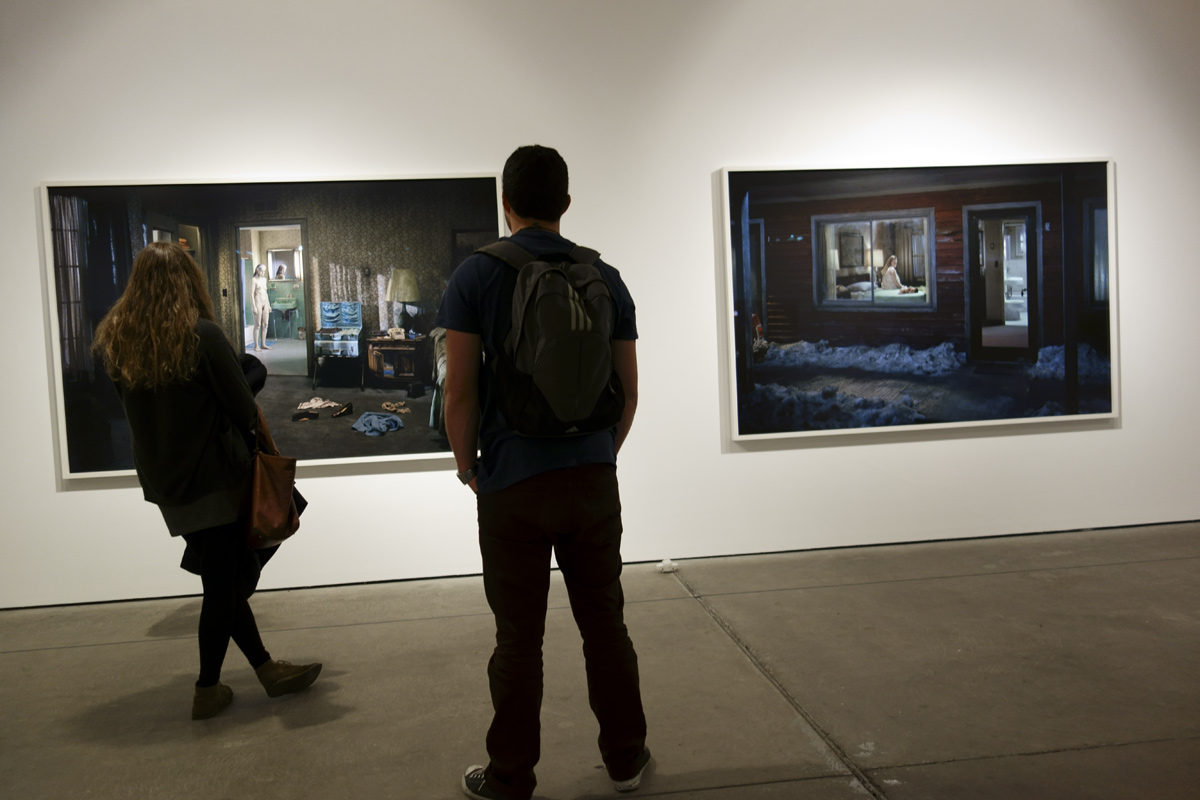
Installation photograph of the series 'Beneath the Roses' (2003-2008) from the exhibition 'Gregory Crewdson: In A Lonely Place' at the Centre for Contemporary Photography (CCP), Fitzroy, Melbourne

Installation photograph of the series 'Beneath the Roses' (2003-2008) from the exhibition 'Gregory Crewdson: In A Lonely Place' at the Centre for Contemporary Photography (CCP), Fitzroy, Melbourne


Installation photographs of the series Beneath the Roses (2003-2008) from the exhibition Gregory Crewdson: In A Lonely Place at the Centre for Contemporary Photography (CCP), Fitzroy, Melbourne
Photos: Dr Marcus Bunyan


Downfall of a dream: (n)framing the enigma in Gregory Crewdson’s Beneath the Roses

After the excoriating diatribe by Robert Nelson in The Age newspaper (“Unreal stills, unmoving images” Wednesday October 17 2012) I hope this piece of writing will offer greater insight into the work of this internationally renowned artist. With some reservations, I like Crewsdon’s work, I like it a lot – as do the crowds of people flocking to the Centre for Contemporary Photography, Fitzroy to see the exhibition. Never have I seen so many people at the CCP looking at contemporary photography before and that can only be a good thing.

Let’s get the basics out of the way first. The early series Fireflies are small silver gelatin photographs that capture “the tiny insects’ transient moments of light as they illuminate the summer night.” These are minor works that fail to transcend the ephemeral nature of photography, fail to light the imagination of the viewer when looking at these scenes of dusky desire and discontinuous lives. The series of beautiful photographs titled Sanctuary (2010) evidence the “ruin of the legendary Cinecittà studios, which was founded by Mussolini in the 1930s and is associated with the great Italian film director Federico Fellini.” Wonderful photographs of doorways, temples, dilapidated stage sets with excellent use of soft miasmic light creating an atmosphere of de/generation (as though a half-remembered version of Rome had passed down through the generations) interfaced with contemporary Rome as backdrop. The digital prints show no strong specular highlights, no deep blacks but a series of transmutable grey and mid tones that add to the overall feeling of romantic ruin. It is a pity that these photographs are not printed as silver gelatin photographs, for they would have had much more depth of feeling than they presently possess. They just feel a little “thin” to me to sustain the weight of atmosphere required of them.

But it is the series Beneath the Roses (2003-2008) that has made Crewdson truly famous. Shot using a large format camera, Crewdson makes large-scale photographs of elaborate and meticulously staged tableaux, which have been described as “micro-epics” that probe the dark corners of the psyche. Working in the manner of a film director, he leads a production crew, which includes a director of photography, special effects and lighting teams, casting director and actors. He typically makes several exposures that he later digitally combines to produce the final image. Photographs in the series of “brief encounters” include external dioramas (shot in a down at heel Western Massachusetts town), where Crewdson shuts down streets and lights the whole scene; to interior dialogues where houses are built on sound stages and the artist can control every detail of the production. Influences on these works include, but are not limited to:

David Lynch (Blue Velvet, Twin Peaks), Alfred Hitchcock (Vertigo), Steven Spielberg (Close Encounters), the paintings of Edward Hopper, Diane Arbus (the detritus of her photographic interiors), film noir, psychoanalysis, American suburbia, the American dream, the photographs of Walker Evans, Cindy Sherman and surrealism. Concepts that you could link to the work include loneliness, alienation, apathy, resignation, mystery, contemplation and confusion, identity, desire, memory and imagination.


Now to the nuts and bolts of the matter.

Another major influence that I will add is that of the great Italian director Federico Fellini (La Dolce Vita – The Sweet Life) who shot most of that film on the sets at Cinecittà studios in Rome. It is perhaps no coincidence that Crewdson, on his first overseas film shoot, shot the series Sanctuary at the very same location. Crewdson’s photographs in the series Beneath the Roses are an American form of  “The Sweet Life.” In 1961, the New York Times film critic Bosley Crowther praised Fellini’s “brilliantly graphic estimation of a whole swath of society in sad decay and, eventually, a withering commentary on the tragedy of the over-civilized… Fellini is nothing if not fertile, fierce and urbane in calculating the social scene around him and packing it onto the screen. He has an uncanny eye for finding the offbeat and grotesque incident, the gross and bizarre occurrence that exposes a glaring irony. He has, too, a splendid sense of balance and a deliciously sardonic wit that not only guided his cameras but also affected the writing of the script. In sum, it is an awesome picture, licentious in content but moral and vastly sophisticated in its attitude and what it says.”1 The same could equally be said of the Crewdson and his masterpieces in Beneath the Roses. Crewdson is in love with Fellini’s gesture – of the uplifting of the characters and their simultaneous descent into “sweet” hedonism, debauchery and decadence using the metaphor of downfall (downfall links each scene in La Dolce Vita, that of a “downward spiral that Marcello sets in motion when descending the first of several staircases (including ladders) that open and close each major episode.”)2 Crewdson’s “spectacular apocalypses of social enervation”3 mimic Fellini’s gestural flourishes becoming Crewdson’s theme of America’s downfall, America as a moral wasteland. Crewdson’s is “an aesthetic of disparity” that builds up a cumulative impression on the viewer that finds resolution in an “overpowering sense of the disparity between what life has been or could be, and what it actually is.”4

Crewdson’s cinematic encounters are vast and pin sharp when seen in the flesh. No reproduction on the web can do their physical presence justice; it is the details that delight in these productions. You have to get up close and personal with the work. His dystopic landscapes are not narratives as such, not stills taken from a movie (for that implies an ongoing story) but open-ended constructions that allow the viewer to imagine the story for themselves. They do not so much evoke a narrative as invite the viewer to create one for themselves – they are an “invitation” to a narrative, one that explores the anxiety of the (American) imagination, an invitation to empathise with the dramas at play within contemporary environments. For me, Crewdson’s extra ordinary photographs are a form of enigma (a puzzling or inexplicable occurrence or situation), the picture as master puzzle (where all the pieces fit perfectly together in stillness) that contains a riddle or hidden meaning. Clues to this reading can be found in one of the photographs from the series (Blue Period, see detail image, below) where Crewdson deliberately leaves the door of a bedside cupboard open to reveal a “Perfect PICTURE PUZZLE” box inside. The viewer has to really look into the image and understand the significance of this artefact.

Another reading that I have formulated is of the transience of space and time within Crewdson’s series. In the disquieting, anonymous townscapes people look out from their porches (or the verandas are lit and empty), they abandon their cars or walk down desolate streets hardly ever looking directly out at the viewer. The photographs become sites of mystery and wonder hardly anchored (still precisely anchored?) in time and space. This disparity is emphasised in the interior dialogues. The viewer (exterior) looks at a framed doorway or window (exterior) looking into an scene (interior) where the walls are usually covered with floral wallpaper (interior / exterior) upon which hangs a framed image of a Monet-like landscape (exterior) (see detail image, above). Exterior, exterior, interior, interior / exterior, exterior. The trees of the landscape invade the home but are framed; exterior/framed, interior/mind. There is something mysterious going on here, some reflection of an inner state of mind.

In his visual mosaics Crewdson engages our relationship with time and space to challenge the trace of experience. His tableaux act as a kind of threshold or hinge of experience – between interior and exterior, viewer and photograph. His photographs are a form of monism in which two forces (interior / exterior) try to absorb each other but ultimately lead to a state of equilibrium. It is through this “play” that the context of the photographs and their relationship to each other and the viewer are “framed.” This device emphasises the aesthetic as much as information and encourages the viewer to think about the relationship between the body, the world of which it is part and the dream-reason of time.5 This intertextual (n)framing (n meaning unspecified number in mathematics) encourages the viewer to explore the inbetween spaces in the non-narrative / meta-narrative,”and by leaps (intuitive leaps, poetic leaps, leaps of faith)”6 encourage escapism in the imagination of the viewer. It is up to us as viewers to seek the multiple, disparate significances of what is concealed in each photograph as “felt knowledge” (Walter Benjamin), recalling to mind the sensory data placed before our eyes, something that can be experienced but cannot be explained by man: “the single moment of the present amidst the transience of life and searching for some kind of eternal truth.”7

Finally, in a more adverse reading of the photographs from the series Beneath the Roses, I must acknowledge the physically (not mentally) static nature of the images where every detail of the mise-en-scène is fully articulated and locked down: from the perfect trickle of blood running from the woman’s vagina in Blue Period, to the reflections in mirrors, the detritus of living scattered on the bedroom floor, the dirty telephone, packed suitcases and keys in locks to the desolate looks of the participants that never engage with the viewer. Despite allusions of despair, in their efficacy (their static and certain world order), there is no real chthonic madness here, no real messiness of the capture of death, murder and the wastage of human life (famine, AIDS, cancer or the blood running over the pavement in one of Weegee’s murder scenes for example). This is Fellini’s gross and bizarre LITE. Americurbana “is being addressed with the same reserve and elegance that ensures that the institution – artistic, political, what you will – is upheld and never threatened. It is pre-eminently legible, it elicits guilt but not so much as to cause offence.”8 I must also acknowledge the male-orientated viewpoint of the photographs, where men are seated, clothed, lazy or absent and all too often women are doing the washing or cooking, are naked and vulnerable. In their portrayal of (usually) half dressed or naked females the photographs evidence a particularly male view of the world, one that his little empathy or understanding of how a female actually lives in the world. For me this portrait of the feminine simply does not work. The male photographer maintains control (and power) by remaining resolutely (in)visible.

Overall this is a outstanding exhibition that thoroughly deserves that accolades it is receiving. Sitting in the gallery space for an hour and a half and soaking up the atmosphere of these magnificent works has been for me one of the art experiences of 2012. Make sure that you do not miss these mesmerising prophecies.

Dr Marcus Bunyan


1/ Crowther’s review first published in The New York Times, April 20, 1961. In Fava and Vigano, 105 quoted in Anon. “La Dolce Vita,” on Wikipedia Footnote 30 [Online] Cited 20/10/2012. en.wikipedia.org/wiki/La_Dolce_Vita

2/ Anon. “La Dolce Vita,” on Wikipedia Footnote 30 [Online] Cited 20/10/2012. en.wikipedia.org/wiki/La_Dolce_Vita

3/ Sultanik, Aaron. Film, a Modern Art. Cranbury, N.J: Cornwall Books, 1986, p. 408

4/ Richardson, Robert. “Waste Lands: The Breakdown of Order,” in Bondanella (ed.), Federico Fellini: Essays in Criticism, p. 111 quoted in Anon. “La Dolce Vita,” on Wikipedia Footnote 30 [Online] Cited 20/10/2012. en.wikipedia.org/wiki/La_Dolce_Vita

5/ Bacon, Julie Louise. “Liquid Archive: On Ambivalence,” in Liquid Archive. Melbourne: Monash University Museum of Art (MUMA), 2012, p. 119

6/ Kirshenblatt-Gimblett, Barbara. “The Museum – A Refuge for Utopian Thought,” in Rüsen, Jörn; Fehr Michael, and Ramsbrock, Annelie (eds.). Die Unruhe der Kultur: Potentiale des Utopischen. Velbrück Wissenschaft, 2004. In German.

7/ Kataoka, Mami commenting on the work of Allan Kaprow. “Transient Encounters,” in Broadsheet: Criticism, Theory, Art Vol 41.3, September 2012, p. 174

8/ Geczy, Adam. “A dish served lukewarm,” in Broadsheet: Criticism, Theory, Art Vol 41.3, September 2012, p. 177

Many thankx to the artist, Gagosian Gallery and the Centre for Contemporary Photography for allowing me to publish the photographs in the posting. Special thankx to Director of the CCP Naomi Cass and Ms. James McKee from Gagosian Gallery for facilitating the availability of the media images. Please click on the photographs for a larger version of the image.

All photographs © Gregory Crewdson. Courtesy Gagosian Gallery.

Installation and detail photographs © Dr Marcus Bunyan


Gregory Crewdson (American, b. 1962) 'Untitled (Blue Period)' 2003-2005


Gregory Crewdson (American, b. 1962)
Untitled (Blue Period)
2003-2005
© Gregory Crewdson. Courtesy Gagosian Gallery


Gregory Crewdson (American, b. 1962) 'Untitled (Blue Period)' 2003-2005 (detail)

Gregory Crewdson (American, b. 1962) 'Untitled (Blue Period)' 2003-2005 (detail)

Gregory Crewdson (American, b. 1962) 'Untitled (Blue Period)' 2003-2005 (detail)


Details from Gregory Crewdson’s Untitled (Blue Period) (2003-2005, above) from the series Beneath the Roses (2003-2008)
Photos: Dr Marcus Bunyan


“The American middle-class nightmare: nothing is clean, orderly, idyllic, or romantic. In his perfectly staged, hyperrealistic tableaux, photographer Gregory Crewdson reveals the claustrophobic limbo and abyss of spiritual repression that is the typical suburb. Here, hushed-up violence, alienation, isolation, and emptiness are nothing new or unfamiliar, but rather part of the everyday neighbourhood experience.”

Gregory Crewdson, In a Lonely Place, Abrams Publishing, New York, 2011


“I have always been fascinated by the poetic condition of twilight. By its transformative quality. Its power of turning the ordinary into something magical and otherworldly. My wish is for the narrative in the pictures to work within that circumstance. It is that sense of in-between-ness that interests me.”


Gregory Crewdson


Gregory Crewdson (American, b. 1962) 'Untitled (Maple Street)' 2003-2005


Gregory Crewdson (American, b. 1962)
Untitled (Maple Street)
2003-2005
© Gregory Crewdson. Courtesy Gagosian Gallery


Gregory Crewdson (American, b. 1962) 'Untitled (Shane)' 2006


Gregory Crewdson (American, b. 1962)
Untitled (Shane)
2006
© Gregory Crewdson. Courtesy Gagosian Gallery


Gregory Crewdson (American, b. 1962) 'Untitled (Brief Encounter)' 2006


Gregory Crewdson (American, b. 1962)
Untitled (Brief Encounter)
2006
© Gregory Crewdson. Courtesy Gagosian Gallery


Gregory Crewdson (American, b. 1962) 'Untitled (Railway Children)' 2003-2005


Gregory Crewdson (American, b. 1962)
Untitled (Railway Children)
2003-05
© Gregory Crewdson. Courtesy Gagosian Gallery


In a Lonely Place presents selections from three major series by Gregory Crewdson, Fireflies (1996), Beneath the Roses (2003-2008), Sanctuary (2010) and, presented for the first time, the video Field Notes (2009). The exhibition title comes from Nicholas Ray’s 1950s film noir of the same name, one of many films that inspired Crewdson. In a Lonely Place is evocative of an underlying mood-a quiet feeling of alienation and loneliness that links the three series selected by curators Estelle Af Malmborg, Jens Erdman Rasmussen and Felix Hoffmann. In a Lonely Place presents the first comprehensive exhibition of Crewdson’s work in Australia.

In Beneath the Roses, anonymous townscapes, forest clearings and broad, desolate streets are revealed as sites of mystery and wonder; similarly, ostensibly banal interiors become the staging grounds for strange human scenarios. Crewdson’s scenes are tangibly atmospheric: visually alluring and often deeply disquieting. Never anchored precisely in time or place, these and the other narratives of Beneath the Roses are located in the dystopic landscape of the anxious American imagination. Crewdson explores the American psyche and the dramas at play within quotidian environments.

In his most recent series, Sanctuary (2010), Crewdson has taken a new direction, shooting for the first time outside the US. During a trip to Rome, he visited the legendary Cinecittà studios, which was founded by Mussolini in the 1930s and is associated with the great Italian film director Federico Fellini. Crewdson discovered fragments of a past glory, with occasional unexpected views of the surrounding contemporary Roman suburbia. Cinecittà is a lonely place deserted by the film crews who once used the site to recreate settings of ancient Rome, medieval Italy and nineteenth-century New York.

In the intimate photographs of Fireflies, Crewdson portrays the mating ritual of fireflies at dusk, capturing the tiny insects’ transient moments of light as they illuminate the summer night. Unlike the theatrical scale of the Beneath the Roses and Sanctuary series, Fireflies is a quiet meditation on the nature of light and desire, as the images reflect not only upon the fleeting movements of the insects in their intricate mating ritual, but upon the notion of photography itself, in capturing a single ephemeral moment.

Gregory Crewdson received a BA from the State University of New York, Purchase, New York in 1985 and an MFA in Photography from Yale School of Art, Yale University, New Haven, Connecticut in 1988. He has exhibited widely in the United States and Europe. He is Associate Professor and Director of Graduate Studies in Photography at the Yale School of Art, Yale University. Gregory Crewdson is represented by Gagosian Gallery and White Cube Gallery.

Press release from the Gagosian Gallery website


Installation photograph of the series 'Sanctuary' (2010) from the exhibition 'Gregory Crewdson: In A Lonely Place' at the Centre for Contemporary Photography (CCP), Fitzroy, Melbourne

Installation photograph of the series 'Sanctuary' (2010) from the exhibition 'Gregory Crewdson: In A Lonely Place' at the Centre for Contemporary Photography (CCP), Fitzroy, Melbourne


Installation photographs of the series Sanctuary (2010) from the exhibition Gregory Crewdson: In A Lonely Place at the Centre for Contemporary Photography (CCP), Fitzroy, Melbourne
Photos: Dr Marcus Bunyan


Gregory Crewdson (American, b. 1962) 'Untitled (1)' 2009


Gregory Crewdson (American, b. 1962)
Untitled (1)
2009
© Gregory Crewdson. Courtesy Gagosian Gallery


Gregory Crewdson (American, b. 1962) 'Untitled (17)' 2009


Gregory Crewdson (American, b. 1962)
Untitled (17)
2009
© Gregory Crewdson. Courtesy Gagosian Gallery


Gregory Crewdson (American, b. 1962) 'Untitled (8)' 2009


Gregory Crewdson (American, b. 1962)
Untitled (8)
2009
© Gregory Crewdson. Courtesy Gagosian Gallery


Gregory Crewdson (American, b. 1962) 'Untitled (2)' 2009


Gregory Crewdson (American, b. 1962)
Untitled (2)
2009
© Gregory Crewdson. Courtesy Gagosian Gallery


Gregory Crewdson (American, b. 1962) 'Untitled' 1996


Gregory Crewdson (American, b. 1962)
Untitled
1996
© Gregory Crewdson. Courtesy Gagosian Gallery


Gregory Crewdson – Close Up – Ovation

In this Ovation TV original special, acclaimed photographers Albert Maysles, Sylvia Plachy, Andrew Moore and Timothy Greenfield-Sanders discuss the impact their work has on their lives and on culture as a whole.

Gregory Crewdson is an American photographer who is best known for elaborately staged, surreal scenes of American homes and neighborhoods.

In this interview, acclaimed photographer, Gregory Crewdson shares with us insight into his techniques.


Centre for Contemporary Photography

No permanent exhibition space at the moment

Gagosian Gallery website

Centre for Contemporary Photography website

LIKE ART BLART ON FACEBOOK

Back to top