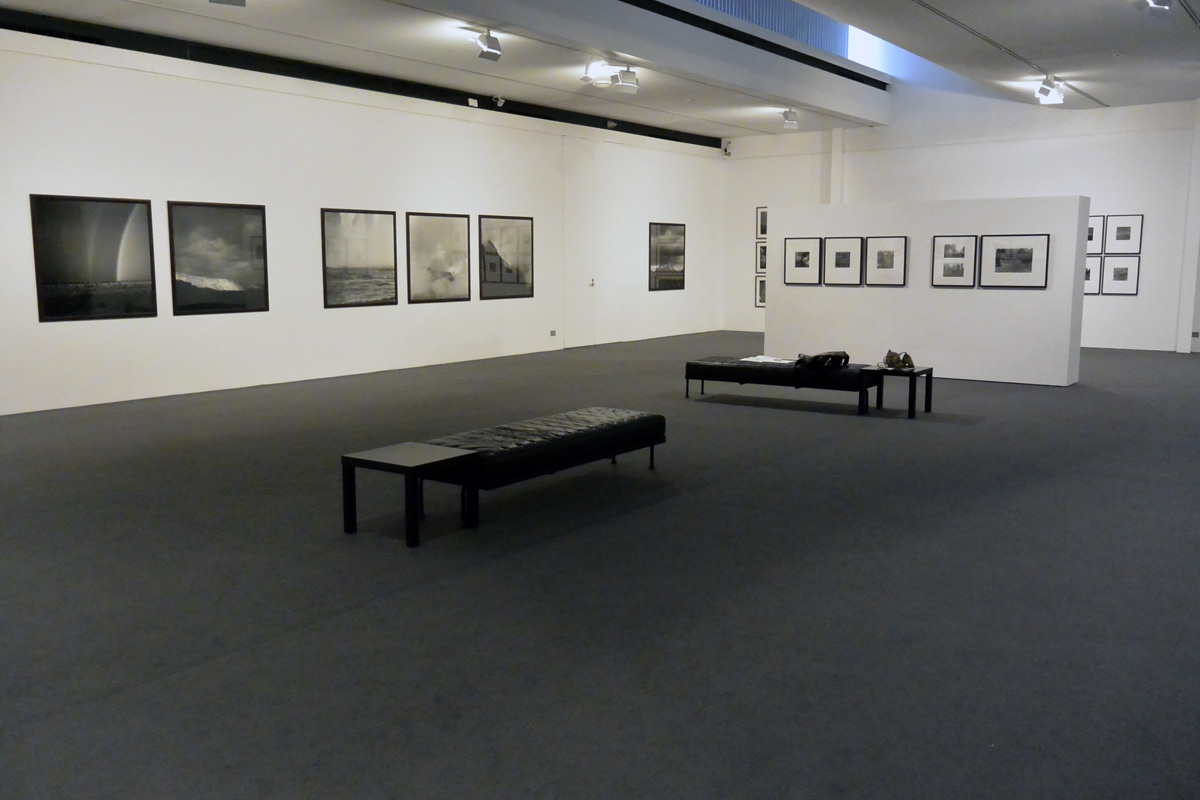
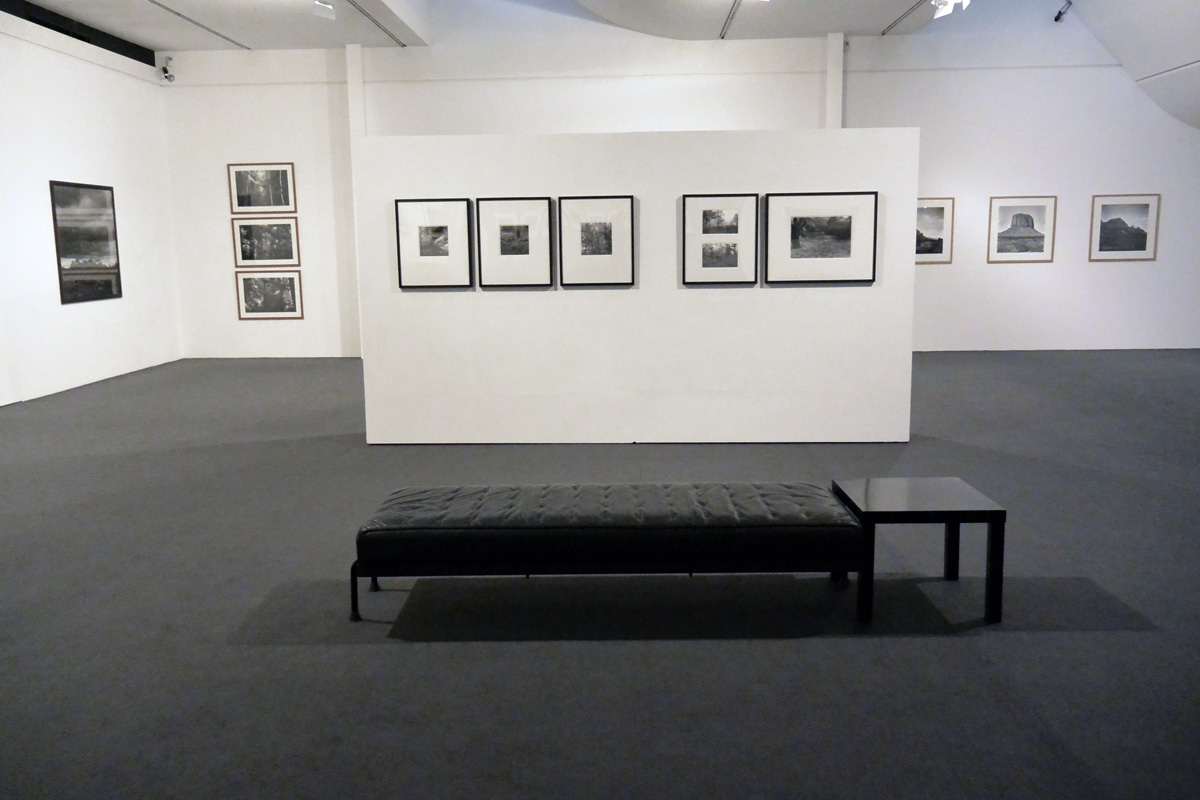
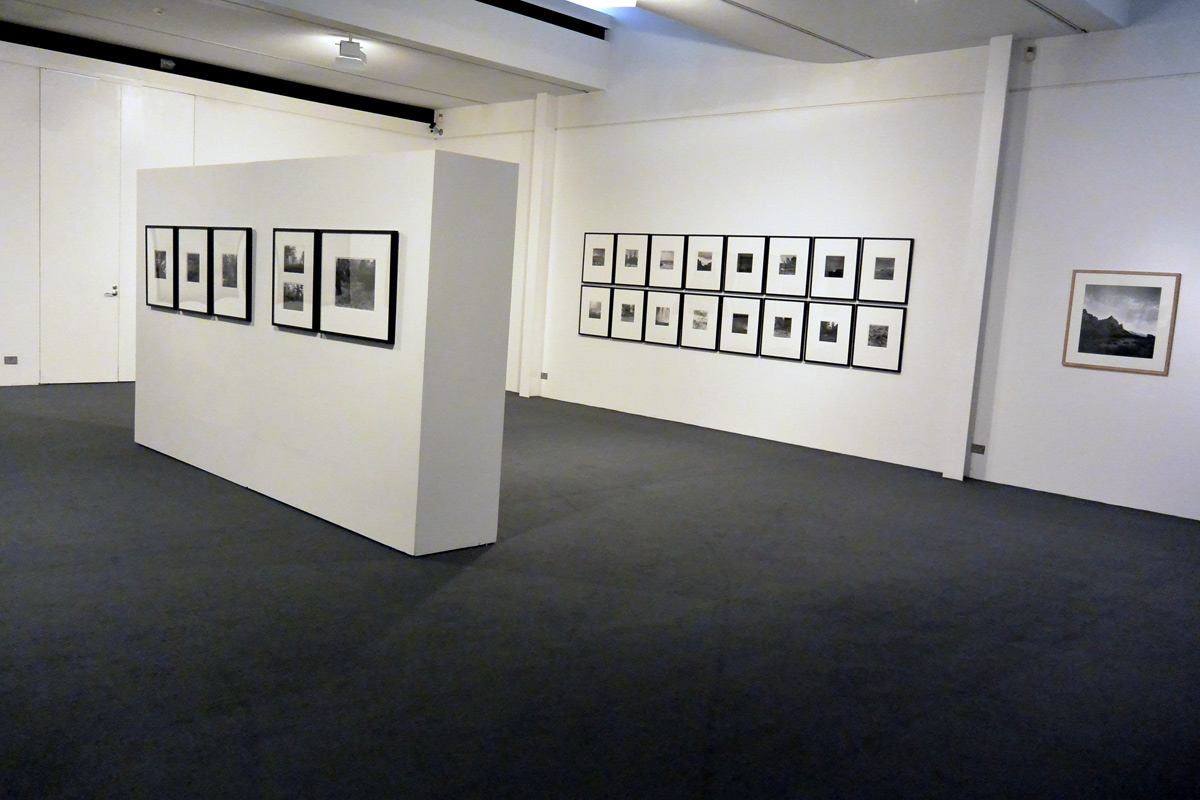
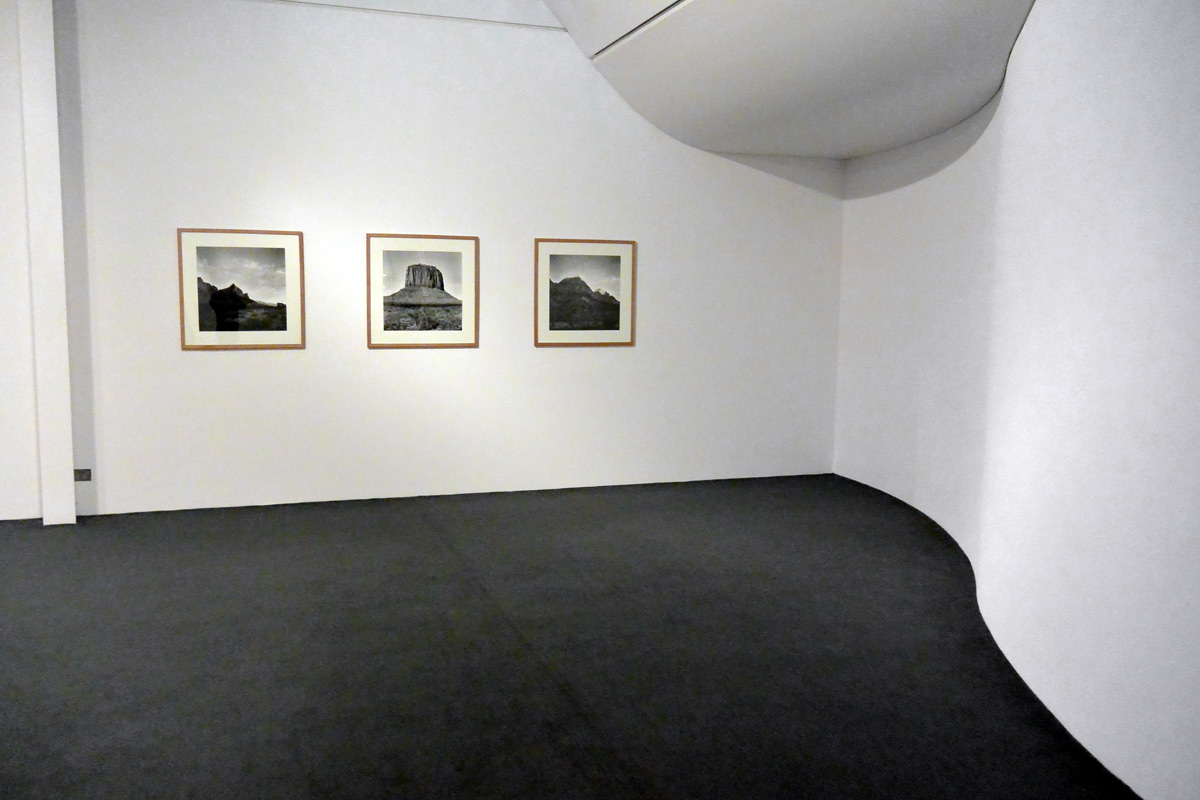
Text / review: ‘A Vocabulary of Printing and the Syntax of the Image’ from the exhibition ‘KHEM’ at Strange Neighbour, Fitzroy, Melbourne

Exhibition dates: 11th April – 3rd May 2014

Curator: Linsey Gosper

Artists: Jane Brown, Ponch Hawkes, Siri Hayes, Ruth Maddison, Lloyd Stubber, David Tatnall, Claudia Terstappen


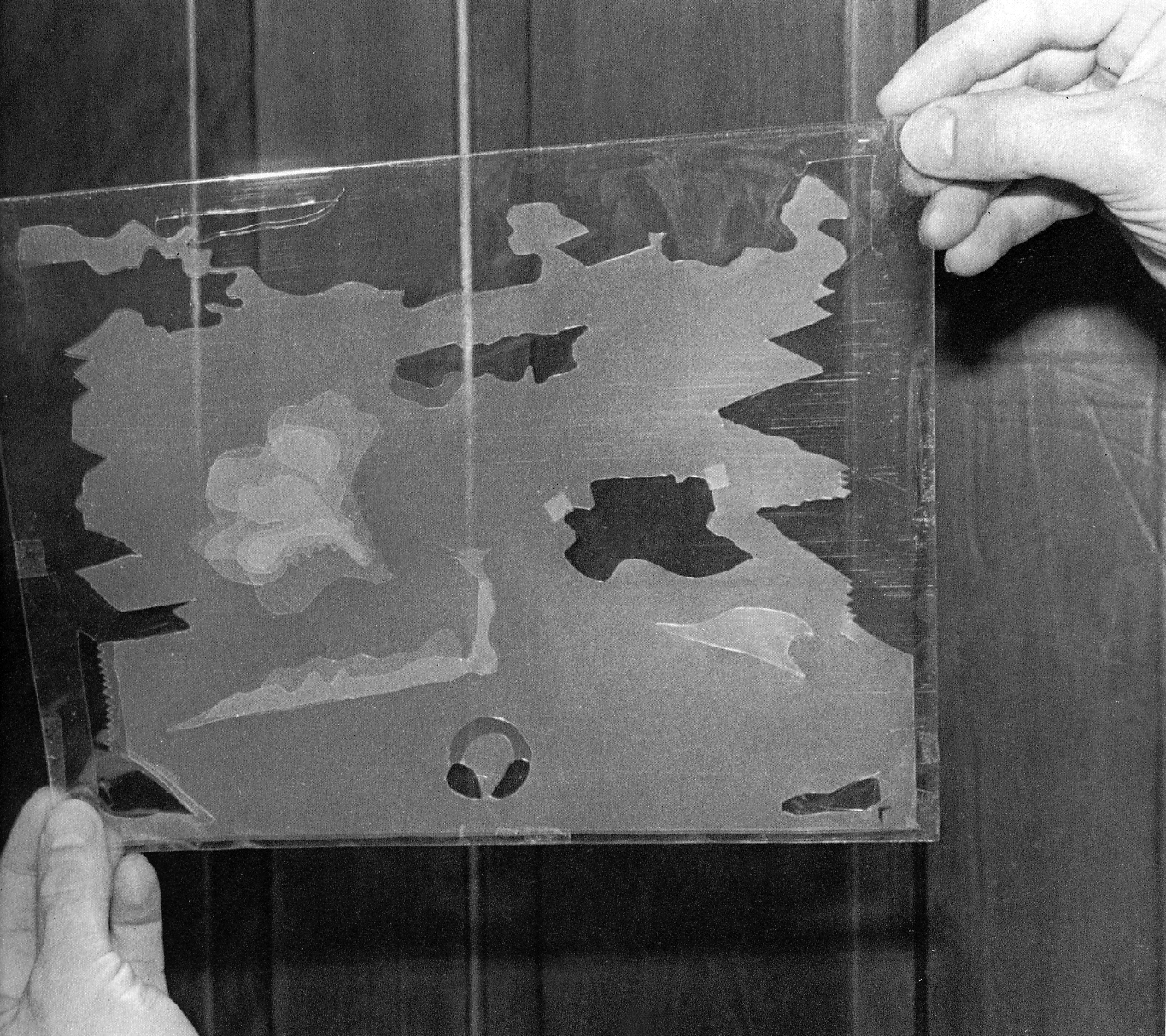
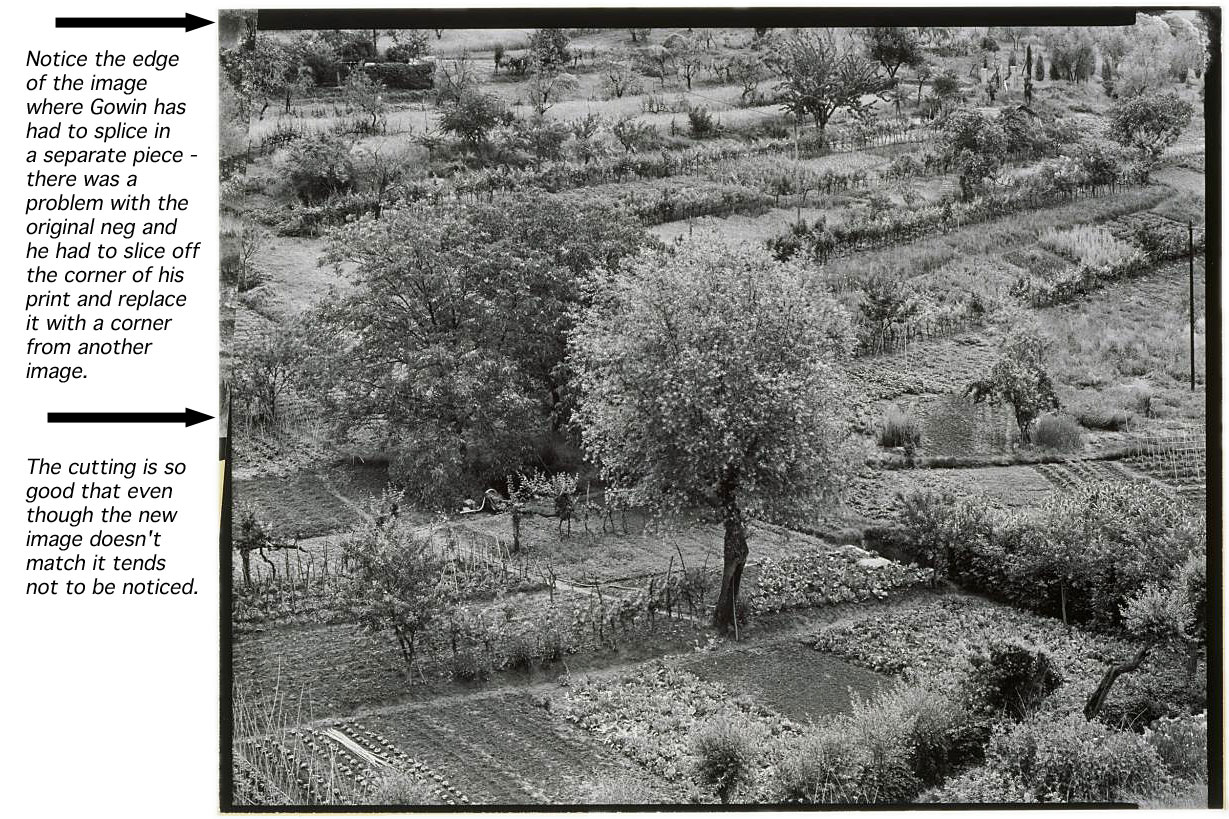
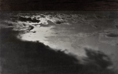
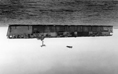
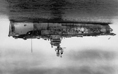
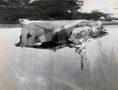
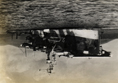
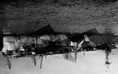
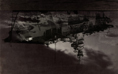
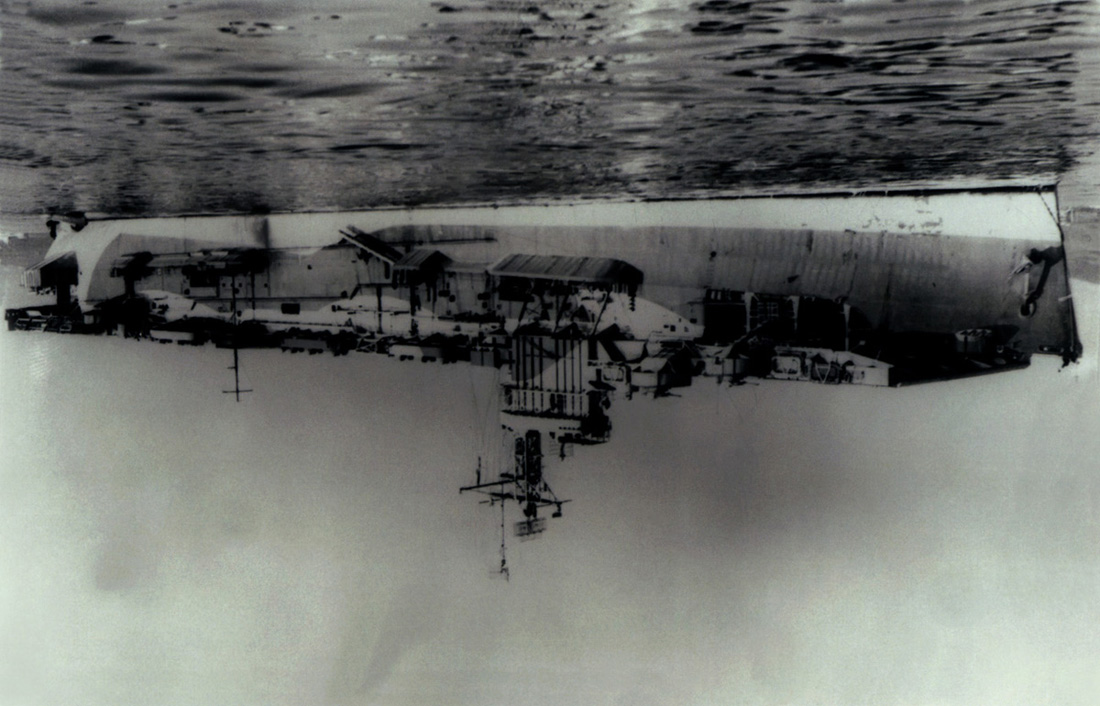
Emmet Gowin printing mask for The Hint That Is a Garden: Siena, Italy 1975


Emmet Gowin printing mask for The Hint That Is a Garden: Siena, Italy 1975 (below)


A Vocabulary of Printing and the Syntax of the Image


“No matter how slow the film, Spirit always stands still long enough for the photographer It has chosen.”

“One should not only photograph things for what they are but for what else they are.”


Minor White


As an artist who originally trained in the alchemical, analogue art of photography, the magic of this process will always hold sway in my heart. No matter how many excellent digital photographs I see, there is always a longing for silver – that indescribable feeling of looking at a master printers work, an image that literally takes your breath away. I hardly ever get that in a digital print. For me, it’s the difference between the fidelity of a CD and the aura of an LP, with all its scratches and pops, hisses and, yes, atmosphere.

Minor White, that guru of enlightenment, knew how difficult it was to capture spirit in a photograph. To make a connection between photographer and object, back through a glass lens and a metal box onto a piece of plastic or glass (completing a Zen circle), then printed onto a piece of paper. There are three ways it goes: you see something (you previsualise it) and you don’t capture it in the negative; you don’t see it, and the negative surprises you; but, best of all, you see it and you capture it – the object of your attention reveals itself to you. Then all you have to do is print it – easier said than done. Much testing and assessing, dodging and burning to balance the print knowing that, as MW says, each negative is like a dragon that an image has to be wrenched from.


No longer for ears …: sound
which like a deeper ear,
hears us, who only seem
to be hearing. Reversal of spaces.


Extract from Rainer Maria Rilke Gong 1925


When you do the analogue printing yourself (or when assessing a digital test print at a lab such as CPL Digital), the most important thing is to understand the vocabulary of printing. In both analogue and digital printing it all starts from the negative/file. If you don’t understand your negative or digital file, what hope have you of attaining a good end result? You must study the negative to understand its pushes and pulls, what needs to be held back, what other areas brought forward in the image. You have to feel the balance within the negative/file in the sensibility of the print. Darren from CPL observes that he has a lot of photographers and students come in and say, “I don’t want it to be like that,” but then they can’t explain what they do want it to be like or how they can get there. They have no vocabulary of printing or how to get the “feel” that they want from the print. I believe this is where training in the analogue darkroom can stand digital photographers in good stead.

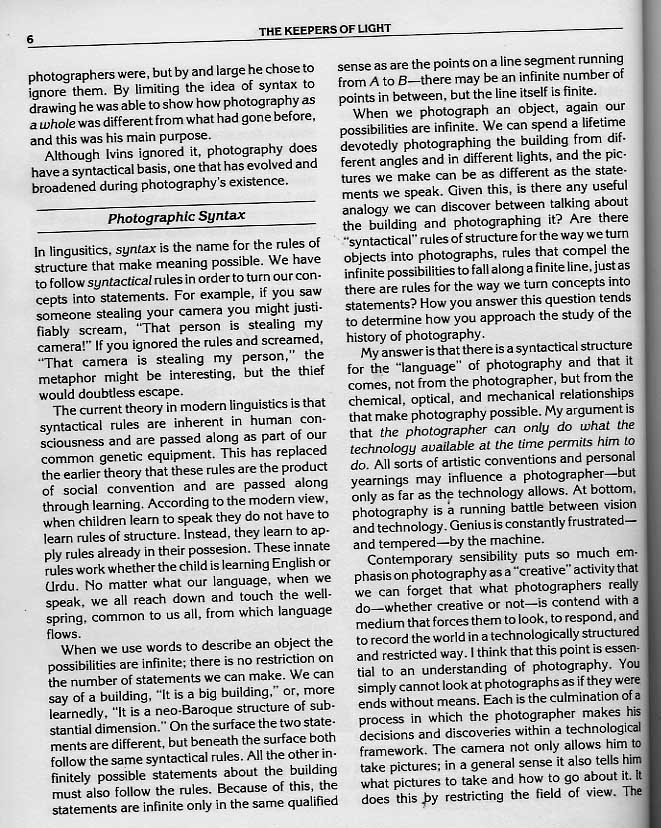
What photographers need to understand is the syntax of an image, “the system of organization used in putting lines together to form pictures that can stand as representations of particular objects,”1 where they is a clear association between the structure of photographic prints and the linguistic structure that makes verbal communication possible. Photographers are the Keepers of Light and photography broke the boundaries of the visual field that had been delimited by etchings and prints, to allow human beings to see far beyond the physical field of view, to have photographic power over space and time which fundamentally changed the scope of human consciousness.2 Photography makes drawing unnecessary in the physical sense, but through previsualisation photography is predicated on mental drawing (with light) and through the physical form of the photograph, the print, photography has a syntactical basis – which comes from the languages of the photographer inherent in human consciousness and the chemical, optical and mechanical relationships that make photography possible. Both feeling and technology.

I believe that these two things go hand in hand and when photographers have no language, no vocabulary to describe what they want from a photographic print, then they are basically coming up against the limitations of their feelings, technologies and the machine. “Genius is constantly frustrated – and tempered – by the machine.”3 As William Crawford observes, “You simply cannot look at photographs as if they were ends without means. Each is the culmination of a process in which the photographer makes his decisions and discoveries within a technological framework.”4 “Each step in the photographic process plays a syntactical role to the degree that it affects the way the information, the sentiment, the surprises, and the frozen moments found in photographs actually meet the eye.”5 In the case of the photographic print, this means understanding the emotional linguistic vocabulary of printing through the syntax of the image.


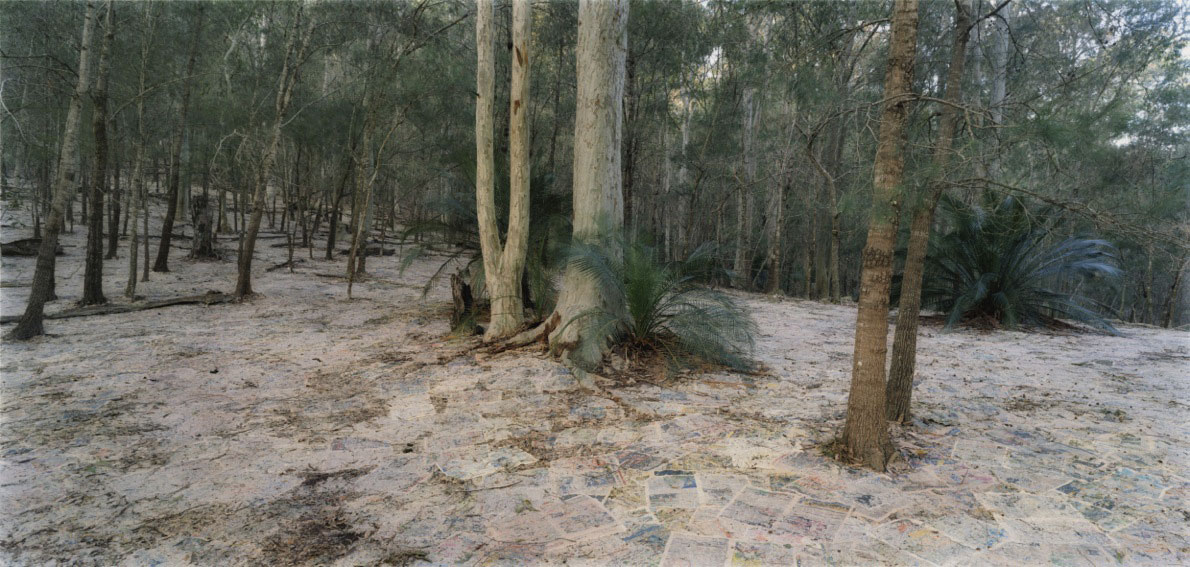
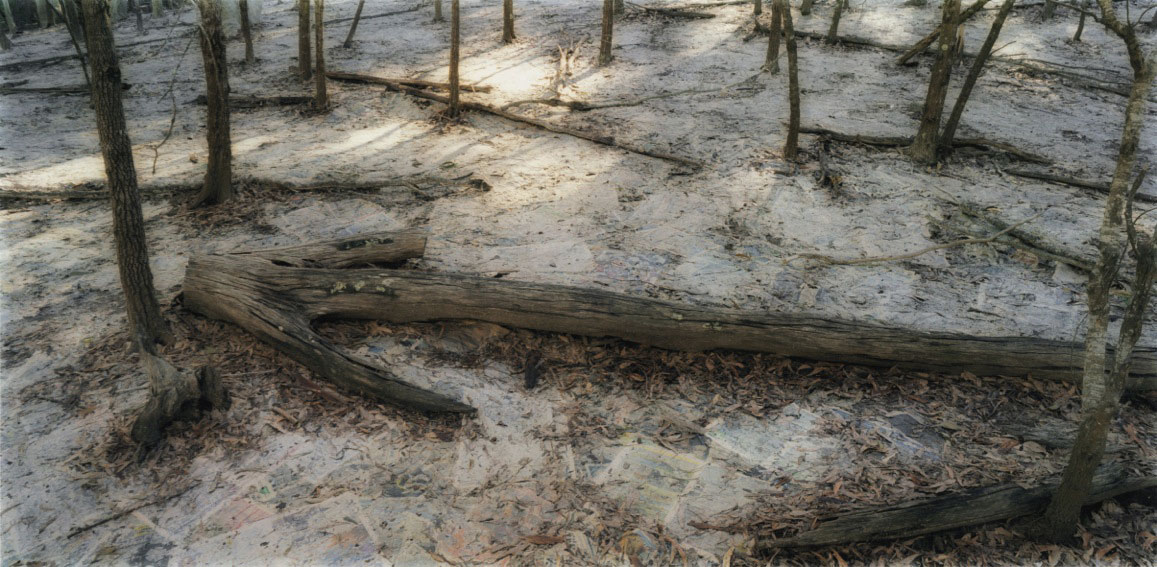
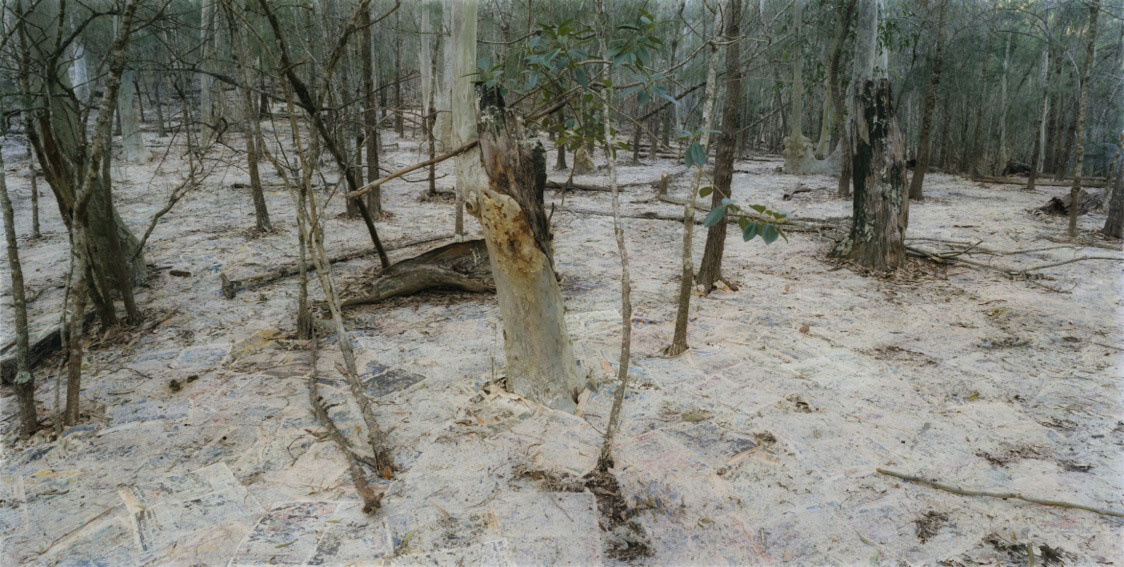
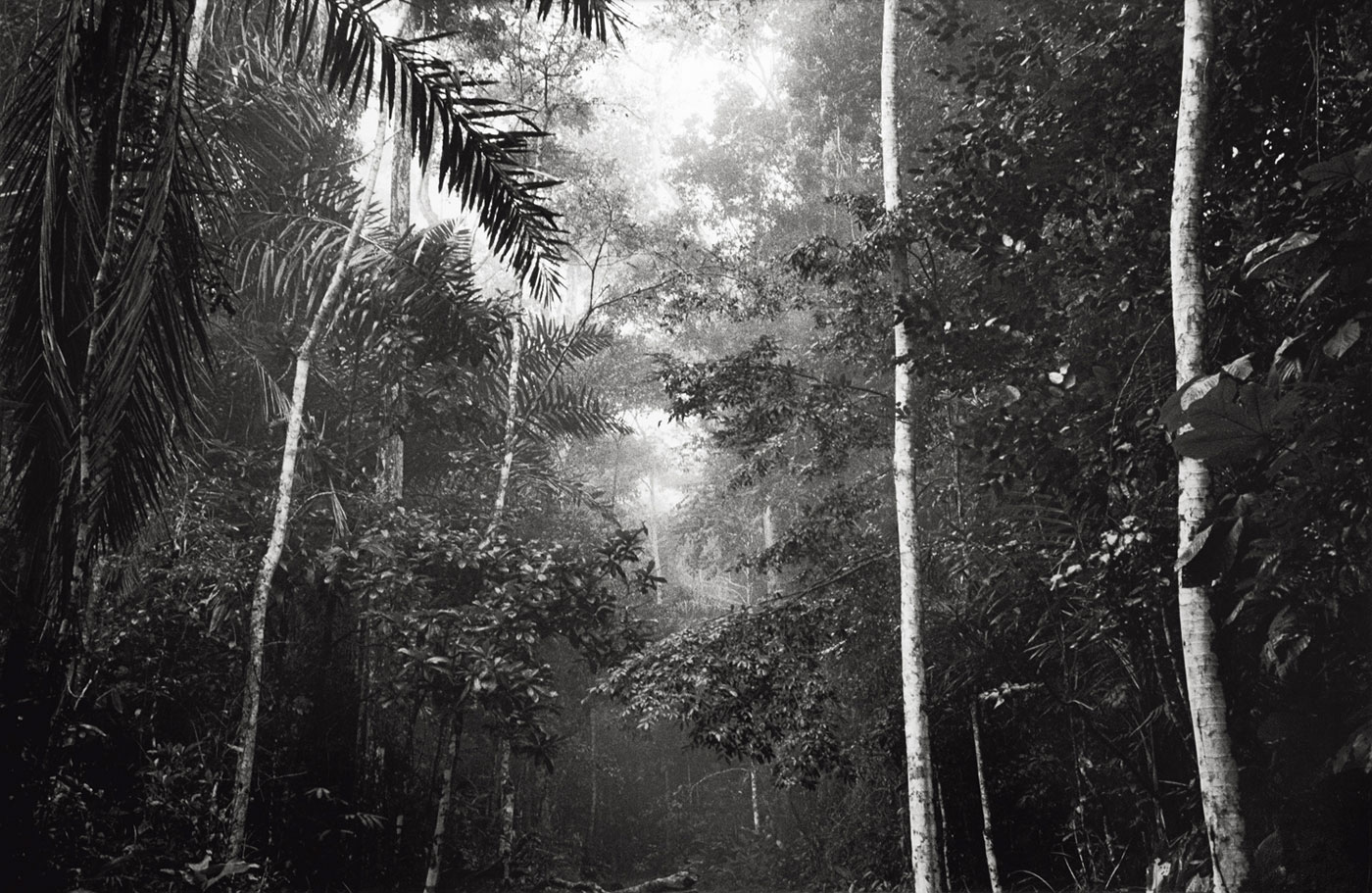
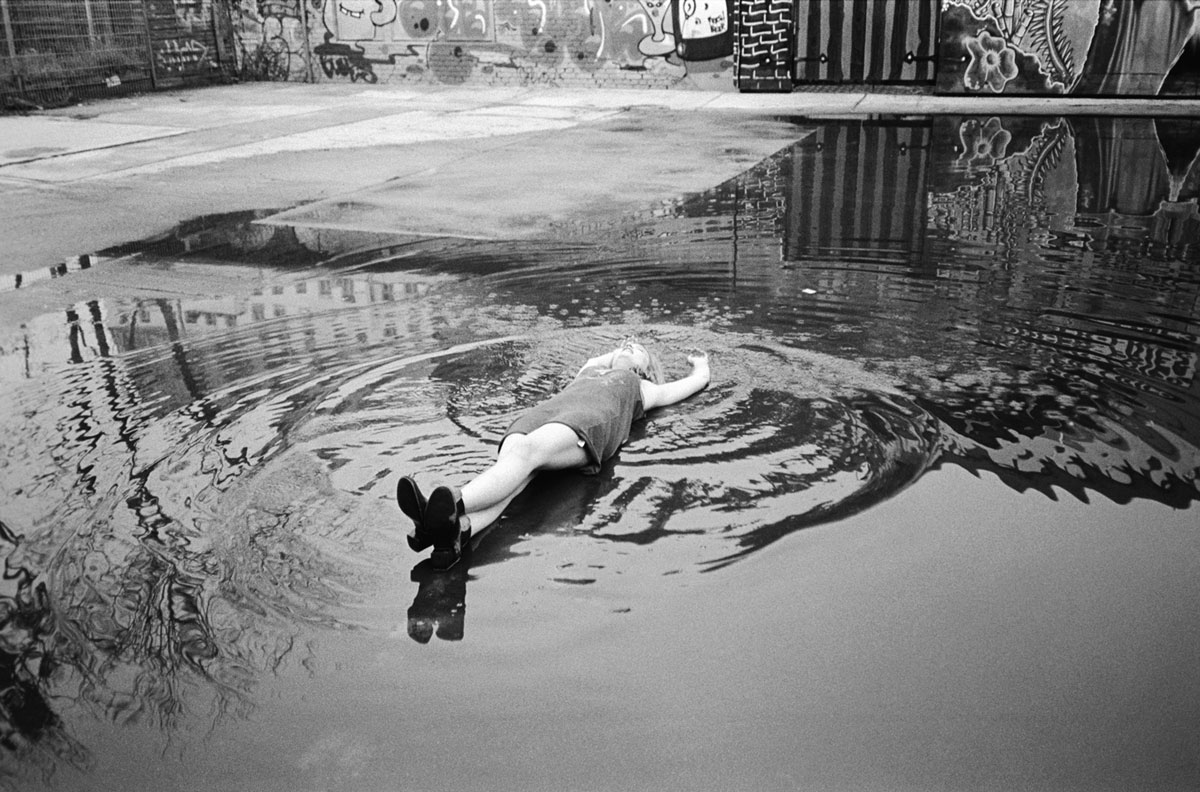
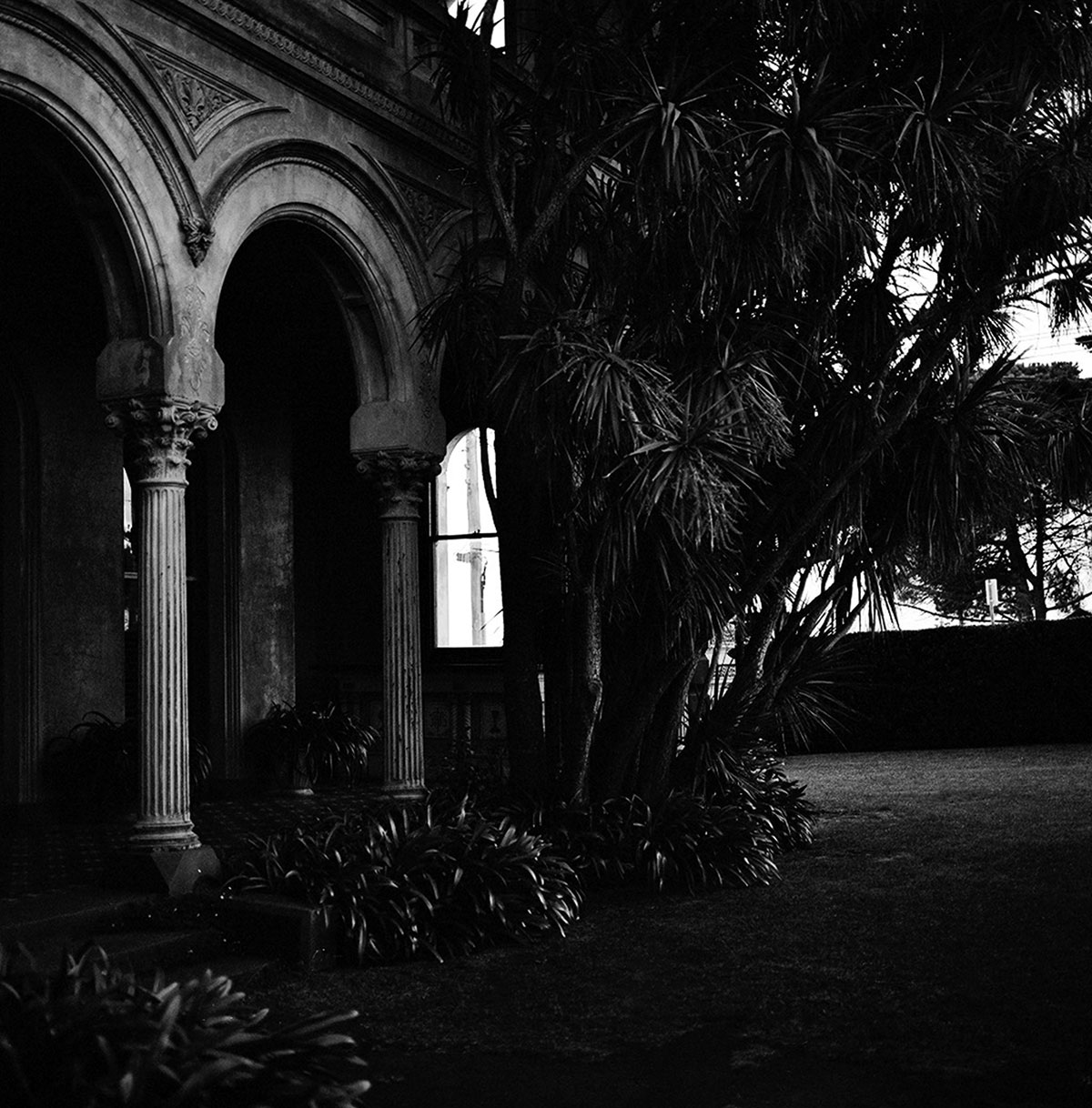
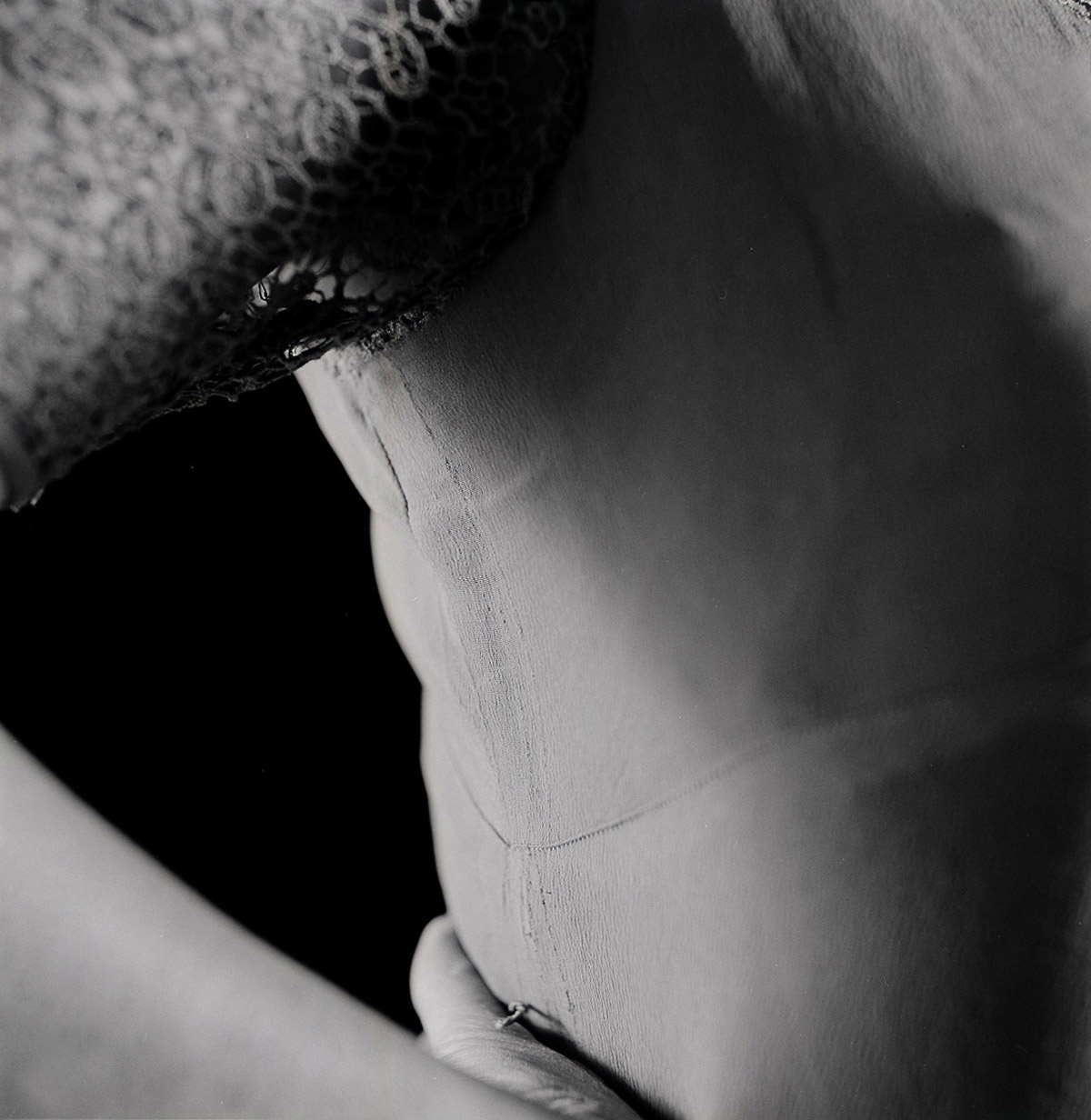
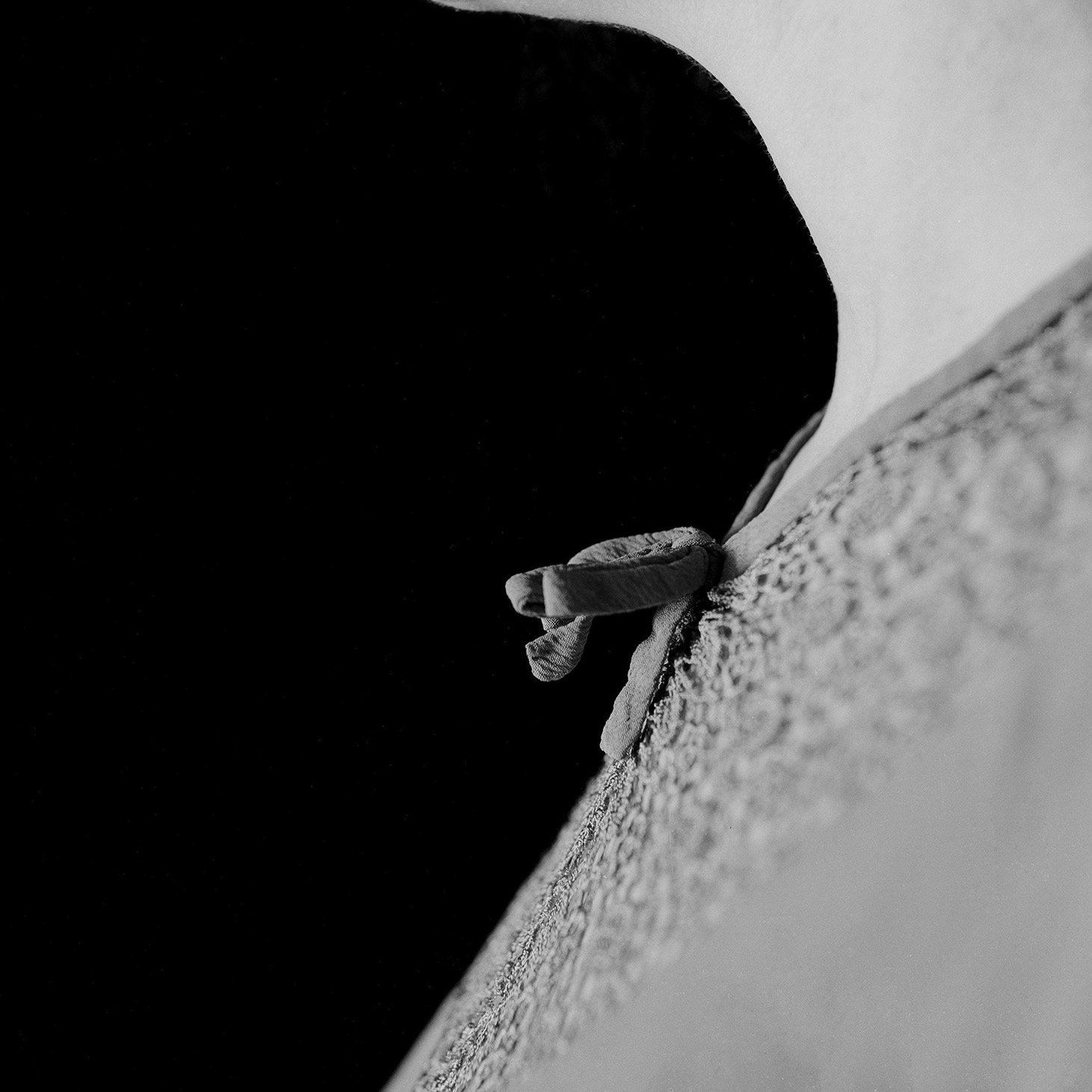
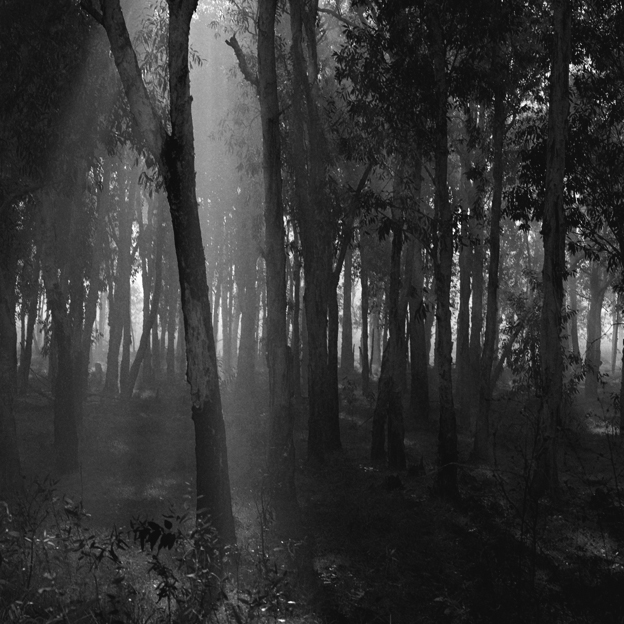
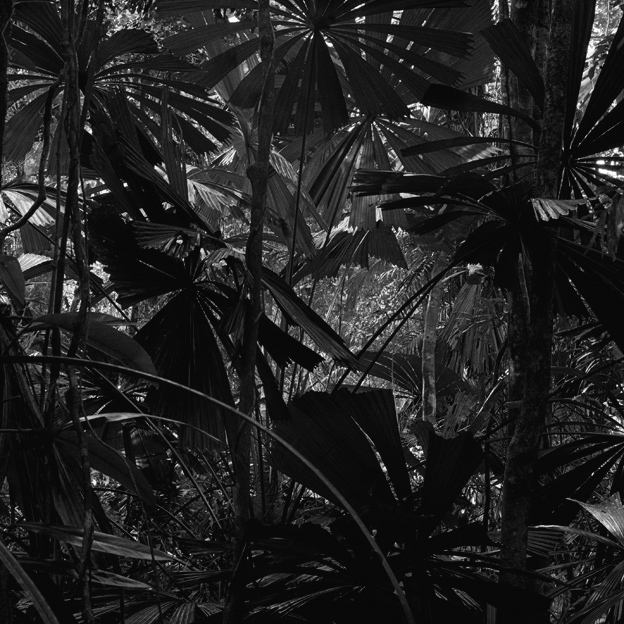
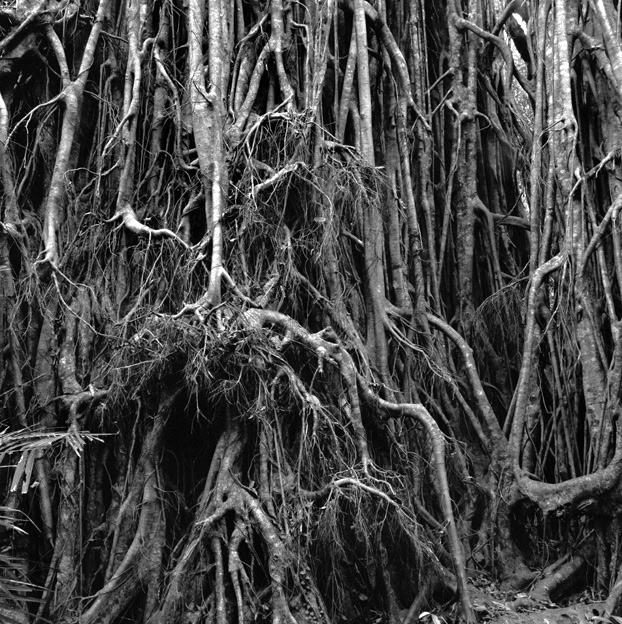
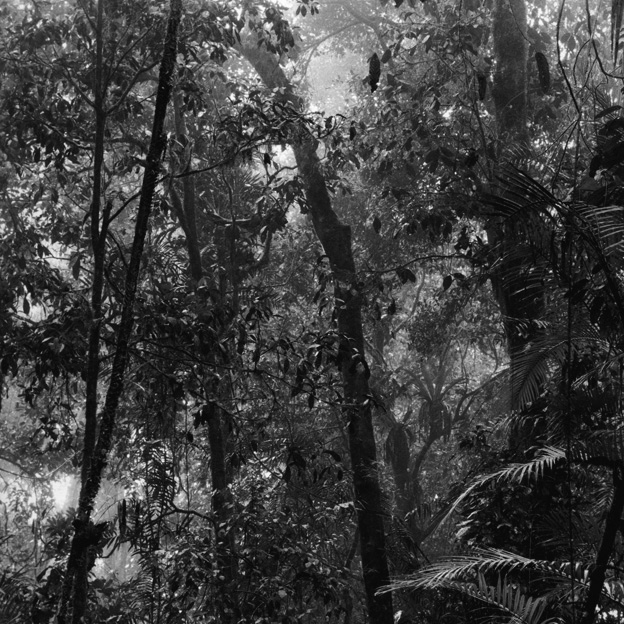
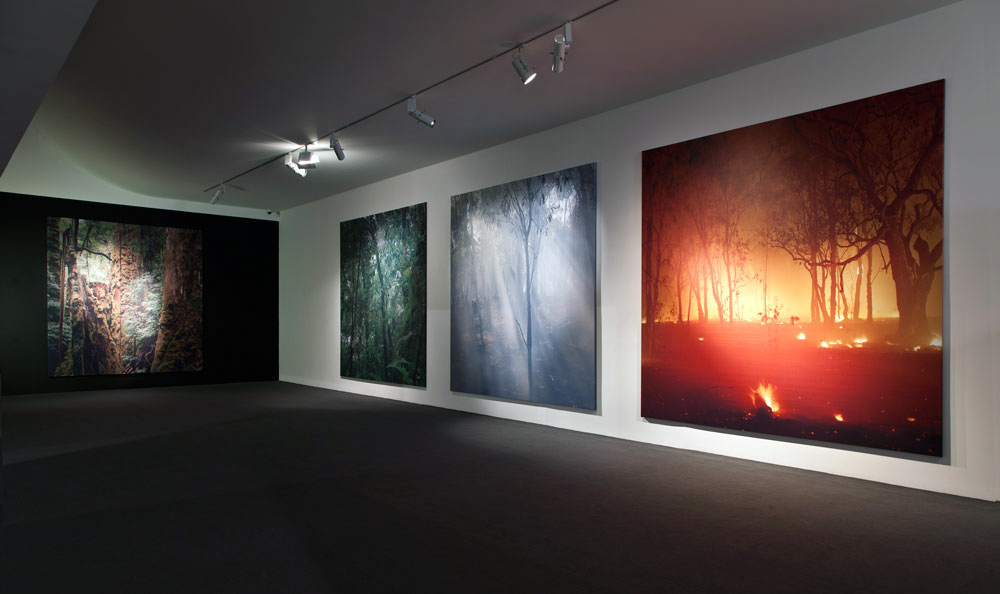
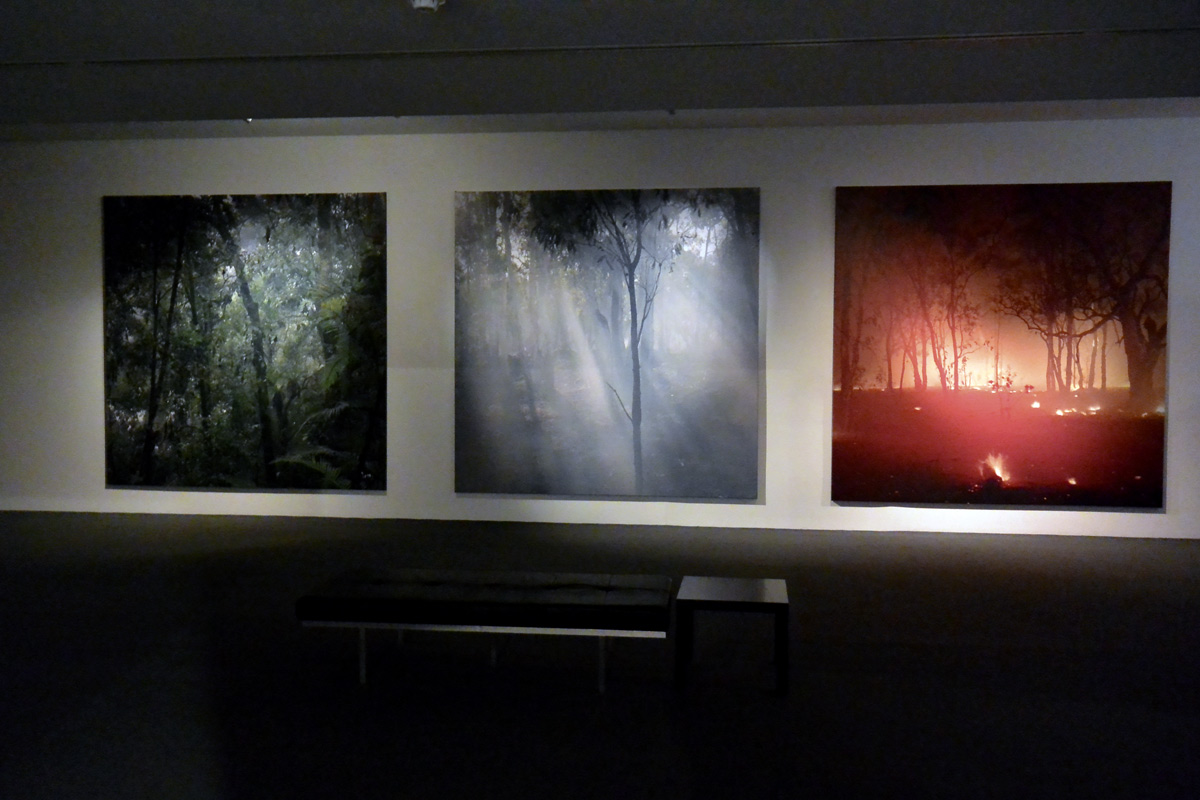
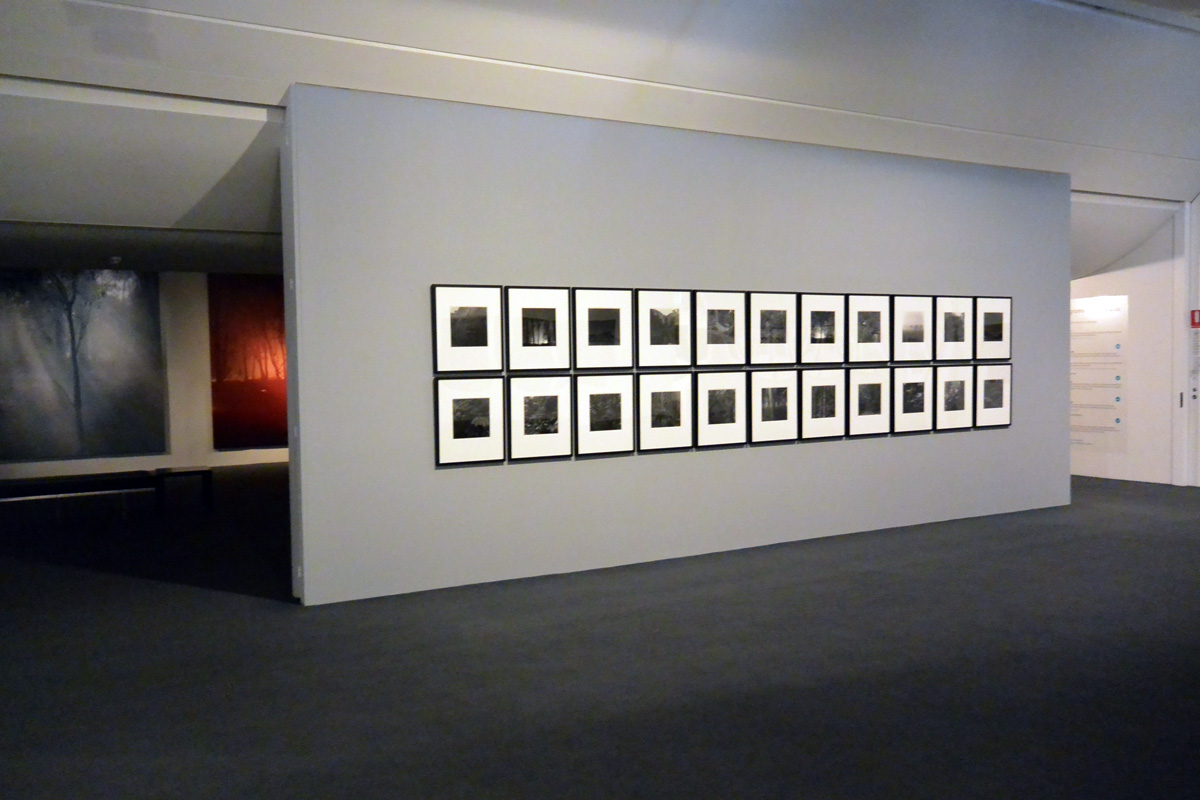
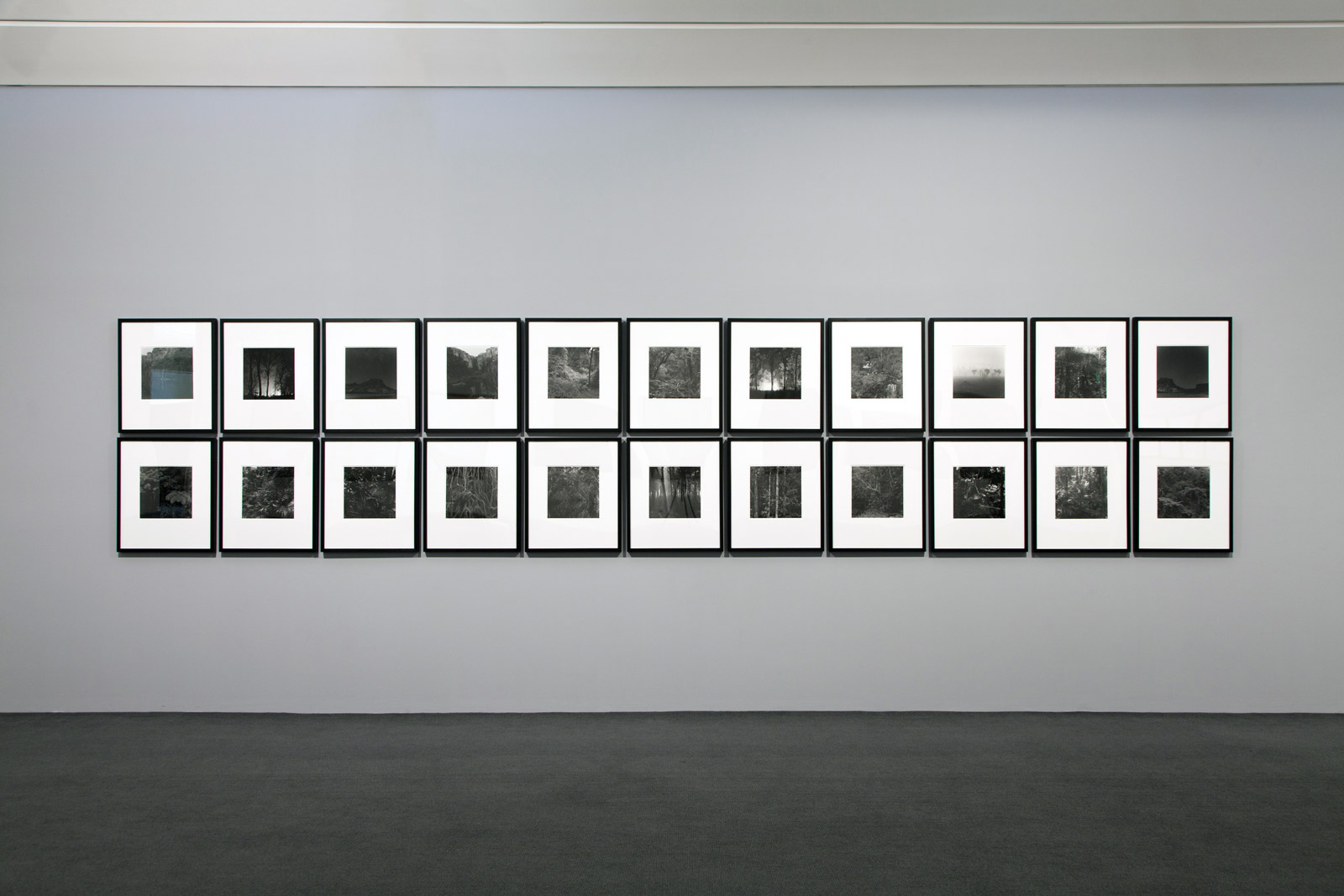
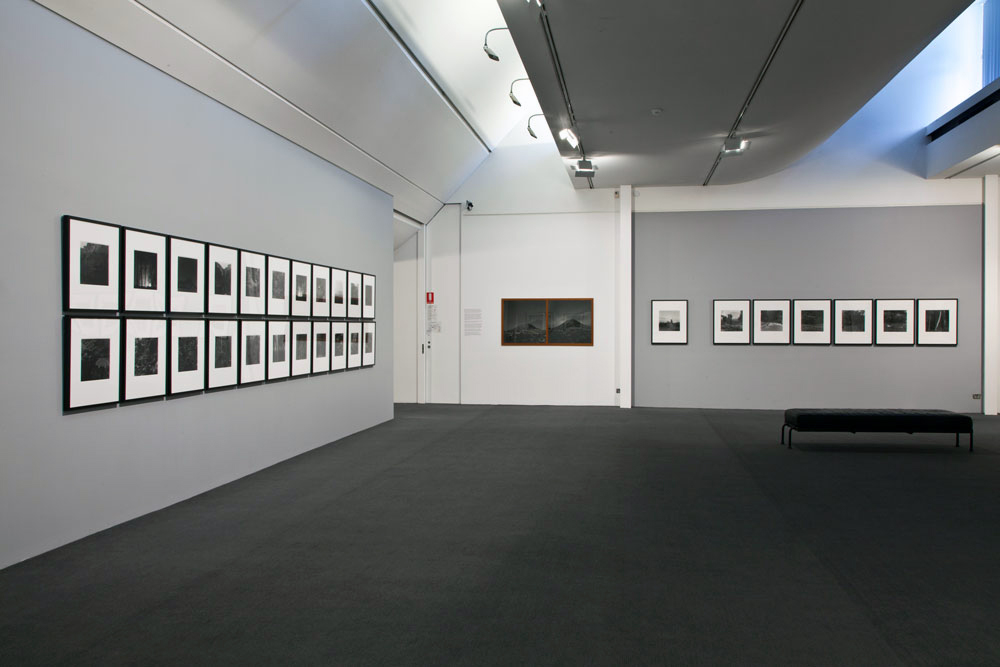
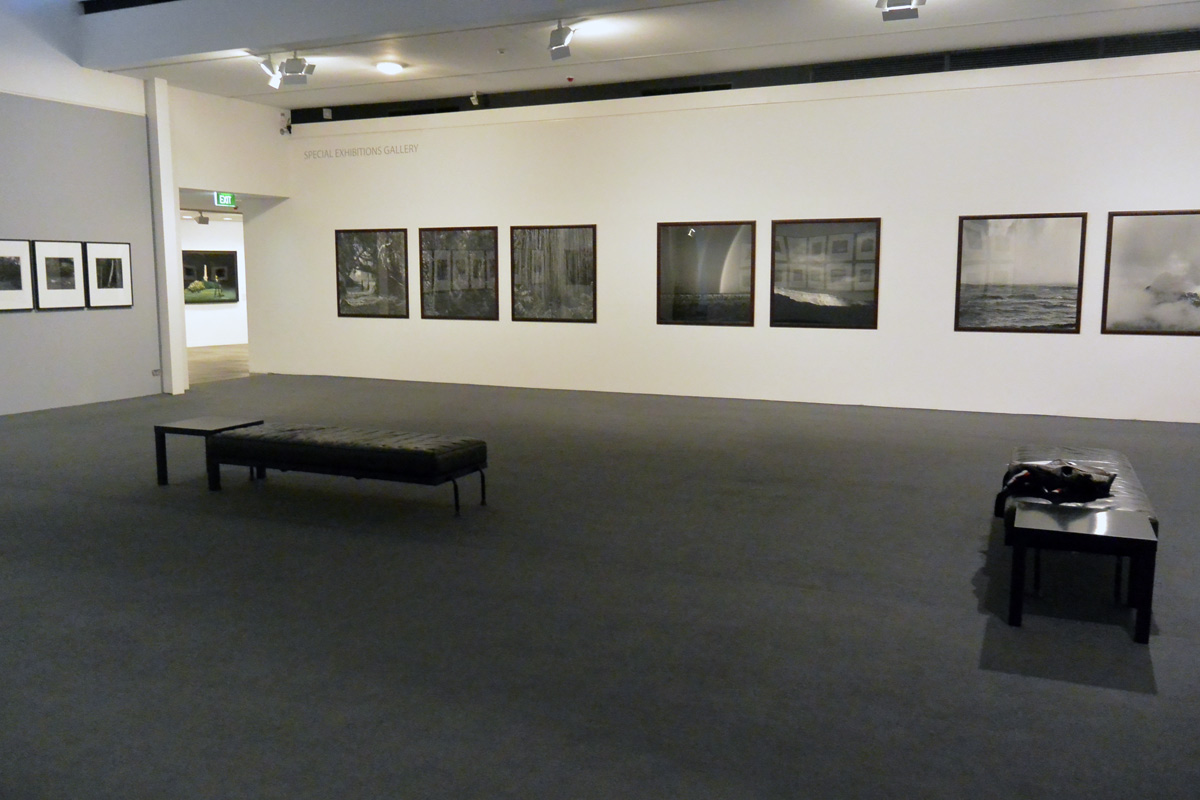
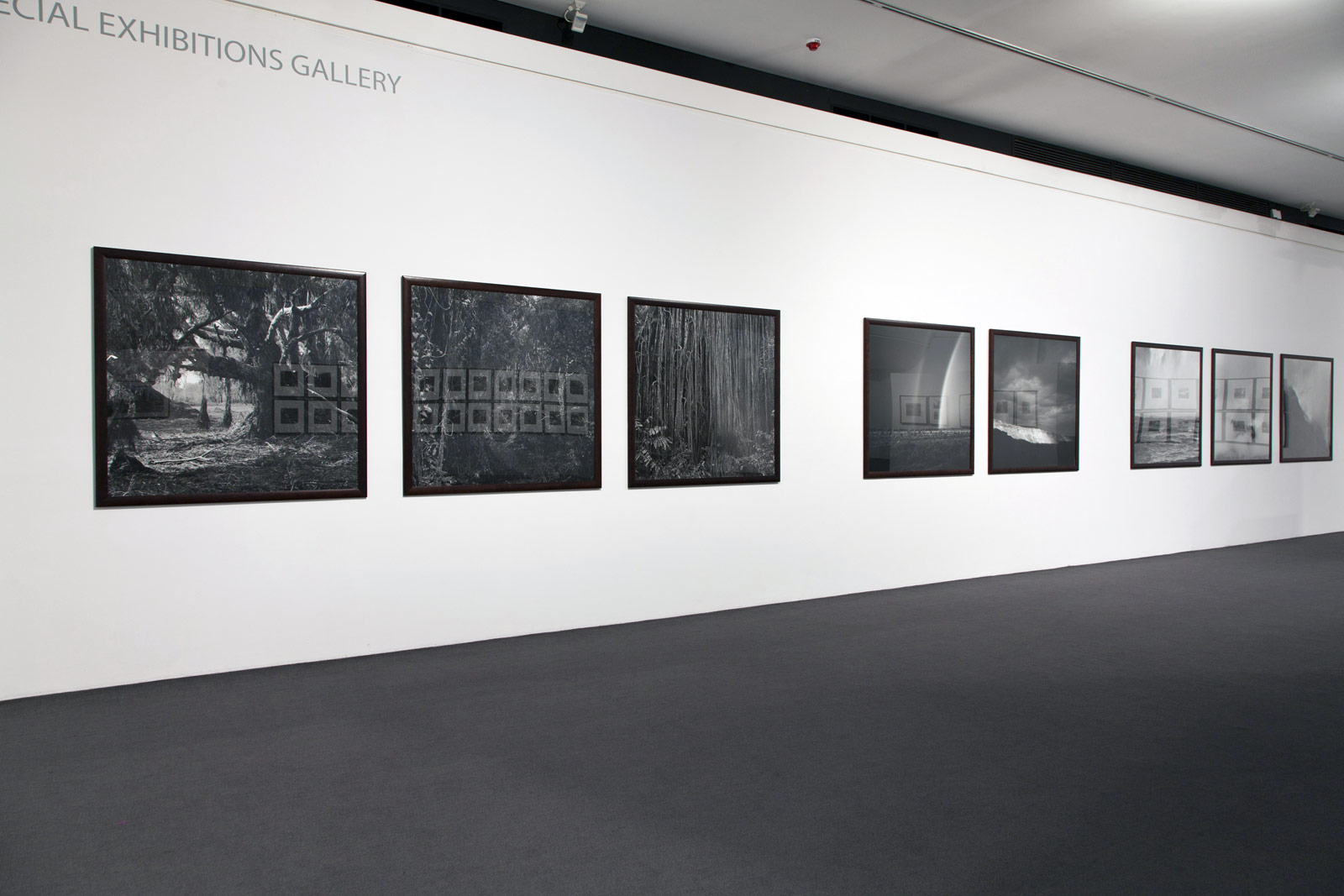
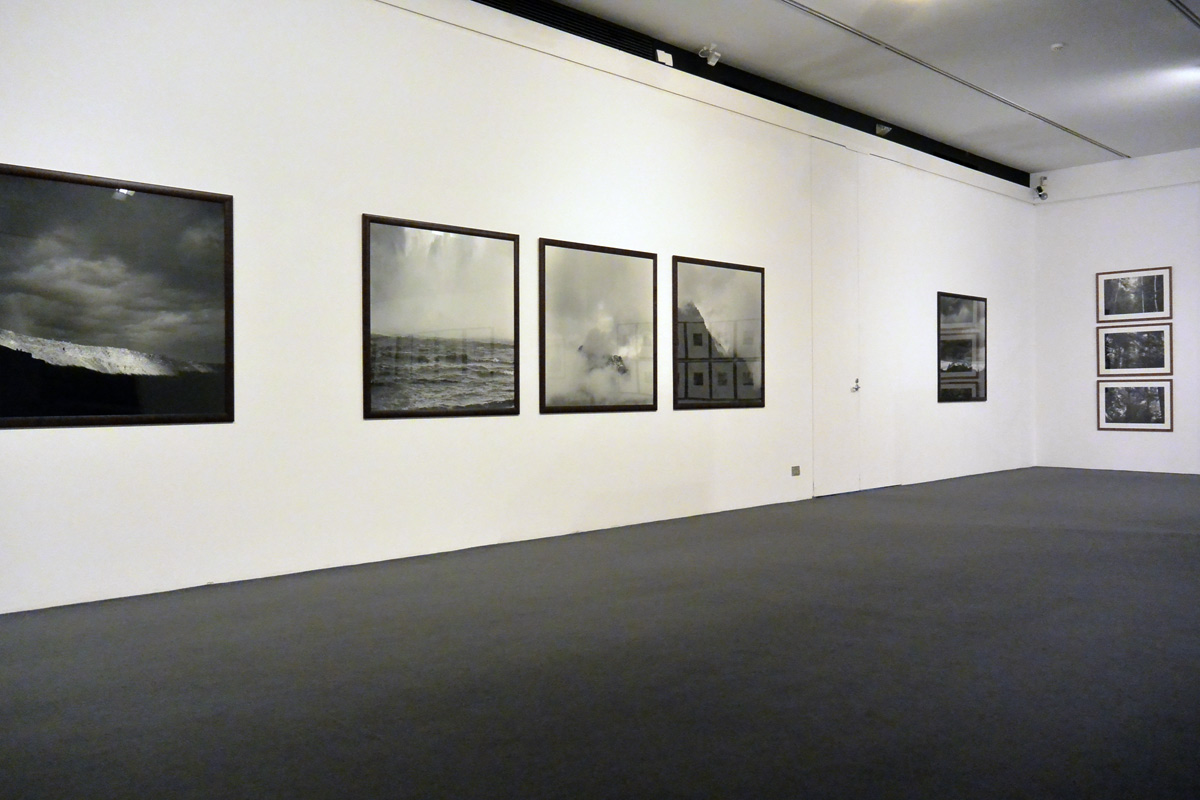
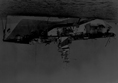
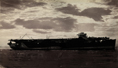
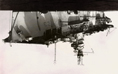
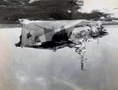
With these thoughts in mind, the two standouts in this delightful group exhibition are Claudia Terstappen and Ponch Hawkes. Terstappen’s Brazilian rainforest photographs are as well seen and exquisitely printed as ever but this time they are slightly let down by the nearness of the frame and the colour of the moulding, both of which seen to limit the breathe of the image. Hawkes’ photographs are sublime (especially the two reproduced below), the best silver gelatin photographs that I have seen by an Australian artist in since Terstappen’s last solo exhibition In the Shadow of Change at Monash Gallery of Art. They have wonderful tonality and presence, and a quietness that really lets you contemplate the image through the beauty of the print – and a snip at only $800 each framed!

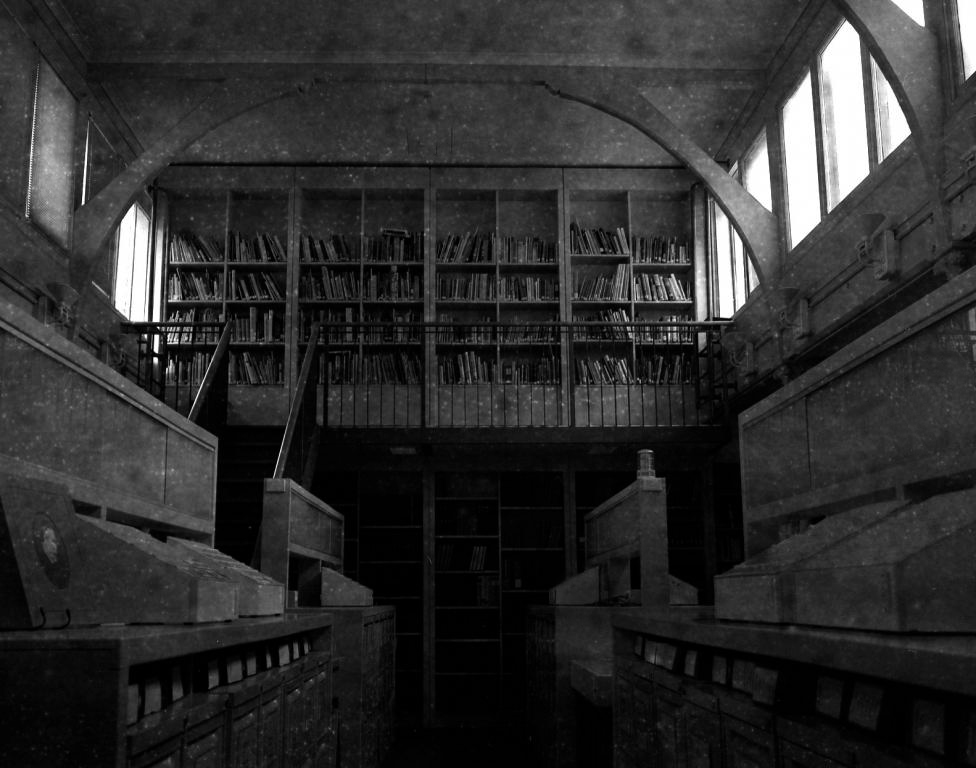
Other artists in the exhibition have singular images that are interesting (pictured below), but the major disappointment are the prints of Jane Brown. When I first saw the images of Brown’s Australian Gothic at Edmund Pearce Gallery in 2012 I said that they were, “small, darkly hewn, traditionally printed silver gelatin photographs… surrealist tinged, film noir-ish mise-en-scènes, the ones that emphasise the metaphorical darkness of the elements gathered upon the stage. Photographs such as Big TroutThe Female Factory, Adelong, New South Wales and Captain’s Flat Hotel, New South Wales really invoke a feeling of unhomely (or unheimlich), where nature is out of kilter. These images unsettle our idea of Oztraliana, our perceived sense of Self and our place in the world. They disrupt normal transmission; they transmutate the seen environment, transforming appearance, nature and form.”6 This was again the feeling that I got when I saw the series at a later exhibition at the Centre for Contemporary Photography.

Not this time. The prints shown here are much darker and have become almost ungrammatical; where the syntax of the image has broken down so that the linguistic structure of the image makes communication nearly impossible. It is not enough just to make prints darker and darker, hoping for some mystery to magically appear in the image because it won’t. This is a case of overprinting the negative, forcing the vocabulary of the image through a wish to impart something emphatic, some condition of being from the negative that has been imperfectly understood. Is this because this is Edition 2 out of 7, a different printer and a different size? I don’t know the answer to those questions, but Brown really needs to go back to the negatives and reassess the results, especially as these nearly incomprehensible prints are selling for an overinflated $2,000 each framed.

Dr Marcus Bunyan


Footnotes

1/ Crawford, William. “Photographic Syntax,” in Crawford, William. The Keepers of Light: A History and Working Guide to Early Photographic Processes. Morgan and Morgan, 1979, p. 2

2/ Ibid., p. 5

3/ Ibid., p. 6

4/ Ibid., p. 6

5/ Ibid., p. 7

6/ Bunyan, Marcus. Review: Jane Brown / Australian Gothic at Edmund Pearce Gallery, Melbourne, 6th May 2012 [Online] Cited 21st April 2014


Many thankx to Strange Neighbour for allowing me to publish the photographs in the posting. Please click on the photographs for a larger version of the image.


Emmet Gowin (American, b. 1941) 'The Hint That Is a Garden: Siena, Italy' Dedicated to Frederick Sommer, 1975


Emmet Gowin (American, b. 1941)
The Hint That Is a Garden: Siena, Italy
Dedicated to Frederick Sommer, 1975
Gelatin silver print
19.5 x 24.5cm (7 11/16 x 9 5/8 in.)
Gift of Mrs Saul Reinfeld


William Crawford. "Photographic Syntax," in William Crawford. The Keepers of Light: A History and Working Guide to Early Photographic Processes. Morgan and Morgan, 1979, p. 6.


William Crawford. “Photographic Syntax,” in William Crawford. The Keepers of Light: A History and Working Guide to Early Photographic Processes. Morgan and Morgan, 1979, p. 6.


Claudia Terstappen (Australian born Germany, b. 1959) 'Jungle I (Brazil)' 1991


Claudia Terstappen (Australian born Germany, b. 1959)
Jungle I (Brazil)
1991
From the series Ghosts at the Jucurucu
Silver gelatin print
46 x 68cm


Lloyd Stubber (Australian) 'Untitled' 2012


Lloyd Stubber (Australian)
Untitled
2012
Fibre-based silver gelatin print
11 x 14 inches


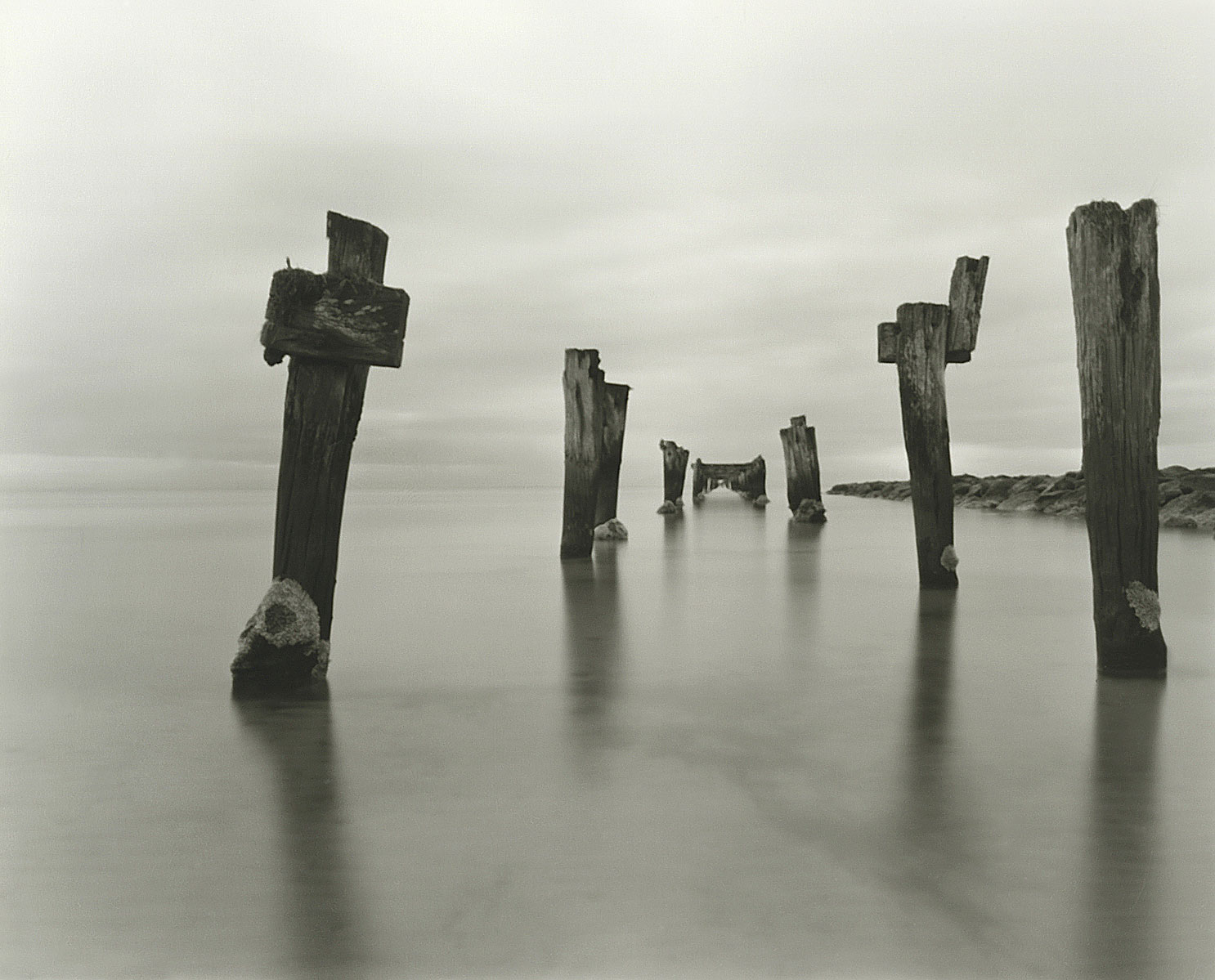
David Tatnall (Australian, b. 1955) 'Clifton Springs Jetty' 2012


David Tatnall (Australian, b. 1955)
Clifton Springs Jetty
2012
From the series Coastal Pinholes
Silver gelatin contact print
20 x 25cm


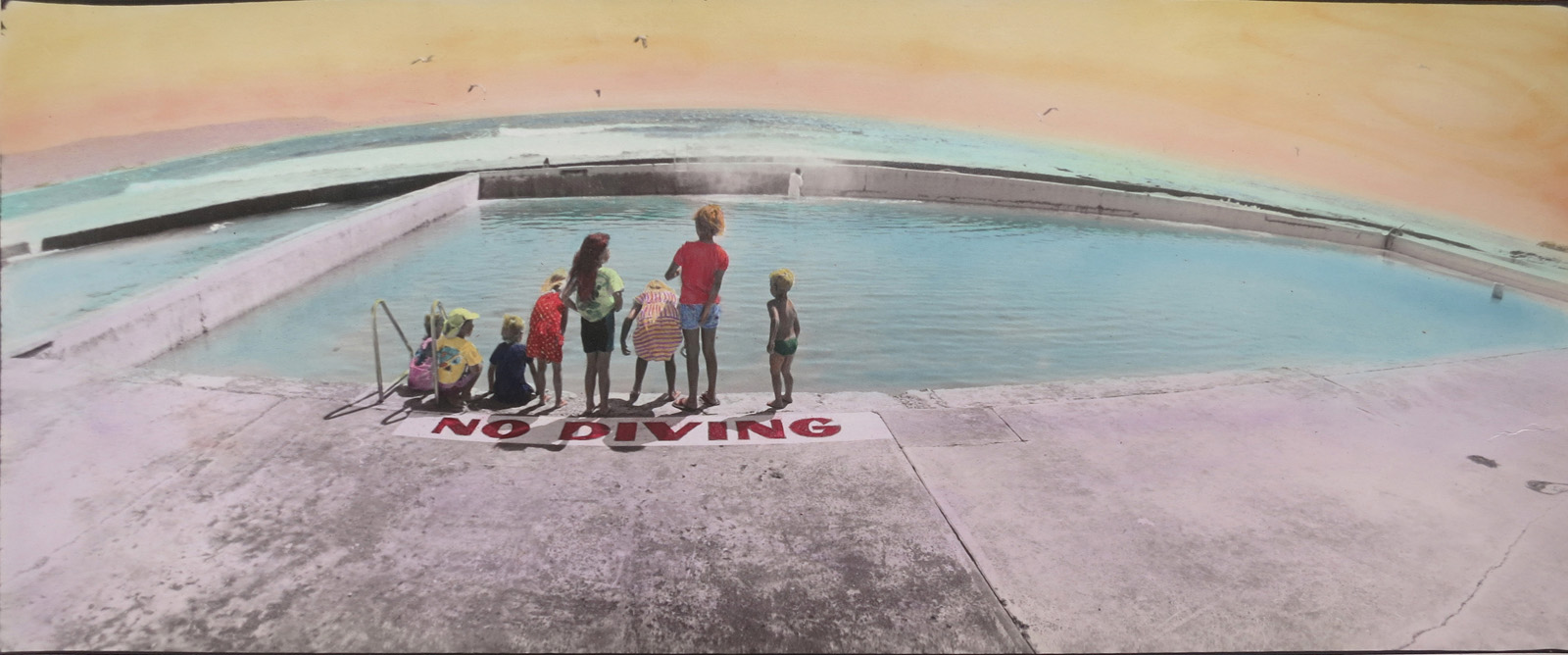
Ruth Maddison (Australian, b. 1945) 'Bellambi, NSW' 1989


Ruth Maddison (Australian, b. 1945)
Bellambi, NSW
1989
Hand coloured gelatin silver print
19.6 x 49cm
Vintage print, unique state


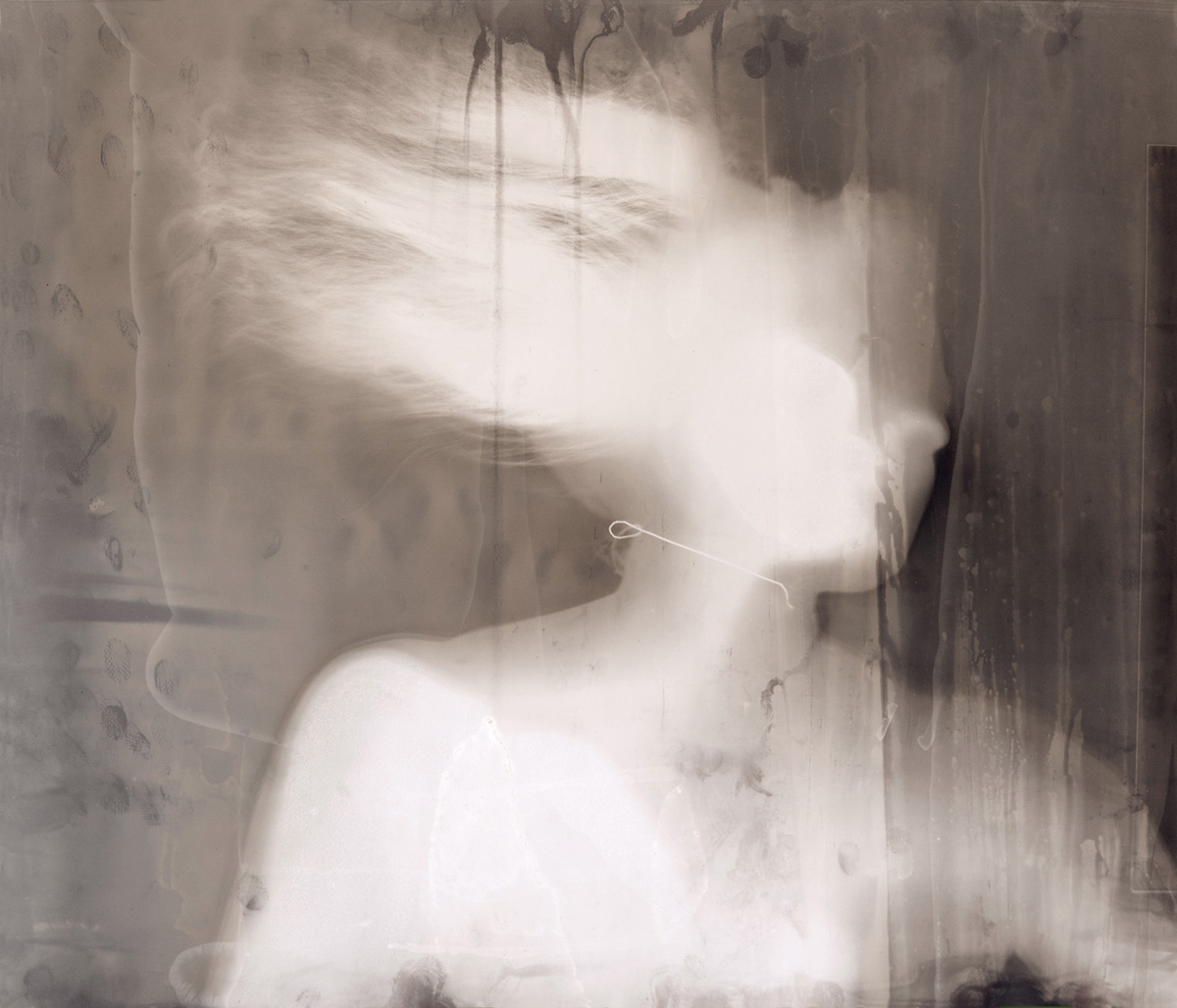
Ruth Maddison (Australian, b. 1945) 'Self-portrait #2' 2004


Ruth Maddison (Australian, b. 1945)
Self-portrait #2
2004
From the series Light touches
Sun print on black and white photographic paper
Vintage print, unique state


“The process of analogue photography is created through darkness and light. To celebrate the launch of the Strange Neighbour Darkroom this exhibition brings together a group of artists who pursue and extend the practice of analogue and darkroom photography. These artists work across many of the countless possibilities of the medium: 35mm, medium format and large format photography, and their diverse processes include pinhole photography, photograms, sun prints, fibre printing and hand colouring. Contemporary photographers are driving the current resurgence in analogue photography and Strange Neighbour is excited to be able to facilitate this irreplaceable art form. Darkroom practice is unique and magickal, alive and well.”

Press release from the Strange Neighbour website


Khem; a possible derivative of the word alchemy, the native name of Egypt, is thought to mean black. Some scholars maintain that Khem is derived from a root meaning wise.1

Alchemy is described as chemistry endowed with magic, and alchemists as those who work with metals and keep these operations secret.2 Apart from the obvious associations of working with metals (silver) and chemistry, there are more subtle and intimate parallels between the art and science of alchemy and darkroom practice.

It is common among darkroom practitioners to consider the process as ‘magic’. When most people encounter printing their first photograph in the darkroom, the simple sight of an image appearing on the paper in the developer tray seems ‘magical’. Even experienced darkroom practitioners never lose this special feeling. Exhibiting artist, Siri Hayes notes, “Watching images come up in developing tray is as mysterious and exciting as any magic show. Perhaps more so as there are no tricks except that the photographic product is the grandest of illusions.”

Distinct from many other forms of photography, darkroom based practice is now specialised, with few people having access to the knowledge, equipment and skills associated with the medium. Like a secret esoteric order, few share this wisdom, and even those willing to teach it may keep special recipes, techniques and discoveries to themselves or within a select dedicated group. Some of this information, although scientific, is not completely understood in rational terms of facts or calculations, but is more related to intuition and perception. It is technical and it is intuitive.

The complex rituals associated with the process allow practitioners to get into a headspace that is conducive to contemplation, bringing forth intuition, allowing space for chance and universal cause and effect. In this art and science there are so many variables with endless possibilities. Ruth Maddison‘s Sun prints are made without camera, film, enlarger or developer. She states, “the tonal range depends on variables like paper stock, length of time in sun or shade, whether the objects are wet or dry … and an unpredictable magic that happens when light sensitive paper is touched by light.”

In this unpredictable environment often mistakes lead to new ideas and create new methodologies. One of the charms of analogue processes is the discovery of beauty through error. Ponch Hawkes recalls this as disasters and wonderful happenstance. Claudia Terstappen remarks it is the number of variables in the darkroom that leaves the creative process wide open and it is often these inaccuracies caused by chemical reactions that lead to a new meaning. This is what makes analogue processes so valuable and irreplaceable. There are many effects in the analogue process that one can recreate with digital technologies, but not invent.

Imperfections caused by these variables or ‘mistakes’ may imbue the image with a ‘spirit’ and otherworldliness, as if the energy of a place or person has been captured. Black and white photography too has the ability to transcend time, memory and death. Jane Brown says, “I examine this a lot in my work – landscapes seem to have vestiges or traces of past life and memorials become otherworldly.” Claudia Terstappen’s work, “is motivated by the stories, beliefs and histories of the people who live there. Here people spoke about the forest spirits that one should be aware of. B+W images suggest a kind of silence.” At a symbolic level, silence is part of most sacred traditions3, and it is part of darkroom practice.

Using analogue processes and working in the darkroom can be aligned to the slow movement, of valuing quality over quantity and returning to a feeling of connectedness. For the images in this exhibition David Tatnall has used an 8 x 10 inch pinhole camera and made contact prints. He expresses of this technology, “my reasons for using this slow, cumbersome and fickle means to make photographs is because I feel it conveys the interaction of the sky and water, the presence of wind and the pulse of nature. I am particularly interested in how the long exposures and lack of sharpness make these features merge into something else… (The) simplicity: no lens, shutter or batteries, no need to upgrade, no click or buzz, no flashing lights or mega pixels no viewfinder and no distortion.” For Ruth Maddision, “she says of working with hand colouring, the pleasure of it – I love working on the real object again, and away from the screen.”

Clearly there is belief and an element of trust in the medium. Lloyd Stubber‘s images in this exhibition are taken from a one-month round the world trip. On return he processed the 15 rolls of film in his laundry. Perhaps the potential fear of loss is overwhelmed by the sense of anticipation, surprise and the flood of memories that return on seeing the work at a later date, as compared to digital, which is immediate and holds none of the mystery.

Another important distinction of darkroom and analogue practice from other forms of photography is the presence of artist’s hand throughout the entire progression of creation to final outcome. In each step of the process, significant choices are made from the many possibilities, from exposing light sensitive film in the camera, developing the film, to printing and finishing the art object. The artist’s mark is therefore not only discernible but also inherently valuable. To Ponch Hawkes, being the maker is of significance. For Terstappen, The physicality of arriving at the ‘perfect’ Gelatin Silver print – with its deep tonal ranges – is something that I highly value.

Contemporary artists are driving the current resurgence in analogue photography. This is a treasured, magickal4 and irreplaceable art form. It is with great pleasure that I declare the Strange Neighbour Darkroom open, and may it provide the space and opportunity for the love of darkroom practice to be enjoyed, shared and fostered.”

Linsey Gosper, curator, darkroom lover, 2014

1/ Francis Melville. The Book of Alchemy. Quarto Publishing plc, 2002, p. 6
2/ Kurt Seligman. Magic, Supernaturalism and Religion. Pantheon Books, 1948, p. 84
3/ Ami Ronnberg (ed.,). The Book of Symbols. Taschen, 2010, p. 676
4/ Magick, in the context of Aleister Crowley’s Thelema, is a term used to differentiate the occult from stage magic and is defined as the Science and Art of causing Change to occur in conformity with Will, including both mundane acts of will as well as ritual magic


Jane Brown (Australian, b. 1967) 'Decommissioned Art History Library, University of Melbourne' 2012-2013


Jane Brown (Australian, b. 1967)
Decommissioned Art History Library, University of Melbourne
2012-2013
Fibre-based gelatin silver print
44 x 49.5cm
Edition 2 of 7


Jane Brown (Australian, b. 1967) 'Lathamstowe' 2011- 2013


Jane Brown (Australian, b. 1967)
Lathamstowe
2011- 2013
Fibre-based, gelatin silver print
46 x 44cm
Edition 2 of 7


Ponch Hawkes (Australian, b. 1946) 'Silken Seam' 2005


Ponch Hawkes (Australian, b. 1946)
Silken Seam
2005
Silver gelatin print
34 x 34cm
Courtesy of the artist and Chrysalis Gallery, Melbourne


Ponch Hawkes (Australian, b. 1946) 'Rouleau' 2005


Ponch Hawkes (Australian, b. 1946)
Rouleau
2005
Silver gelatin print
34 x 34cm
Courtesy of the artist and Chrysalis, Melbourne


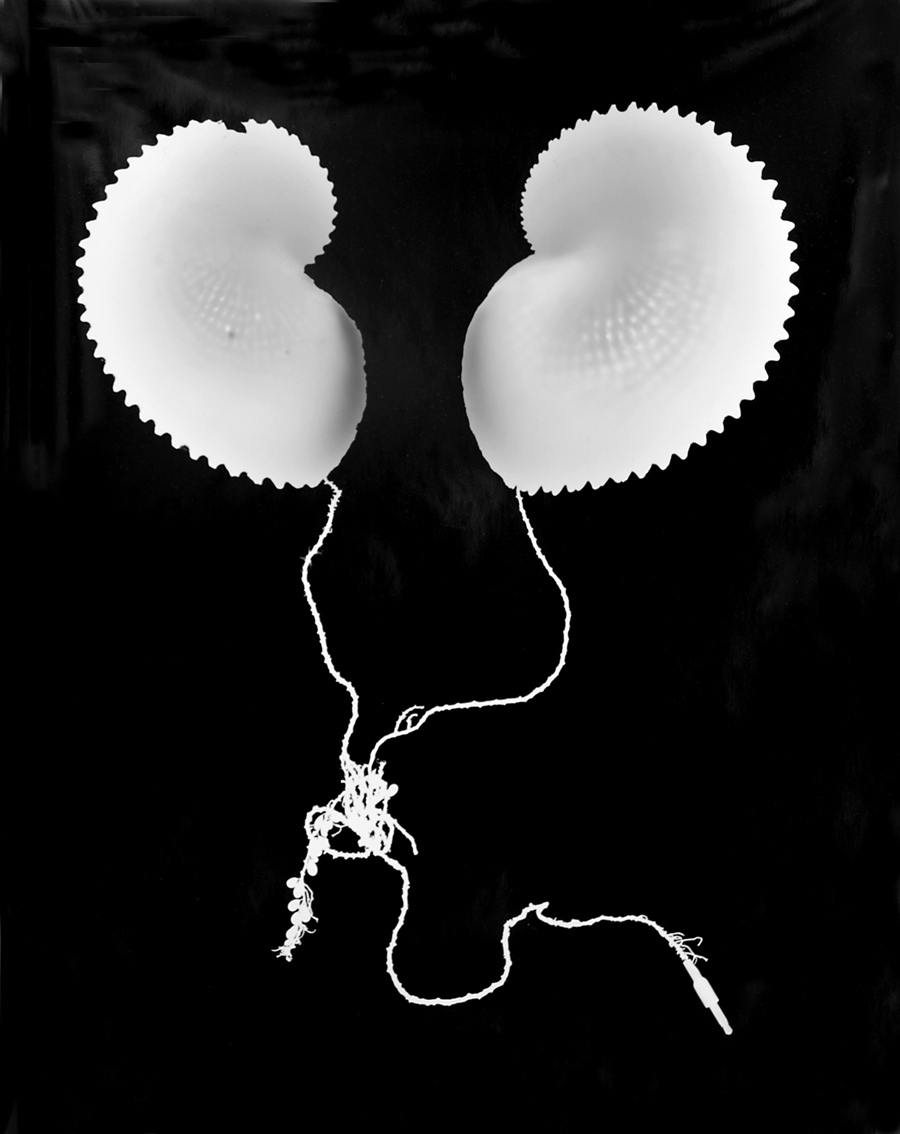
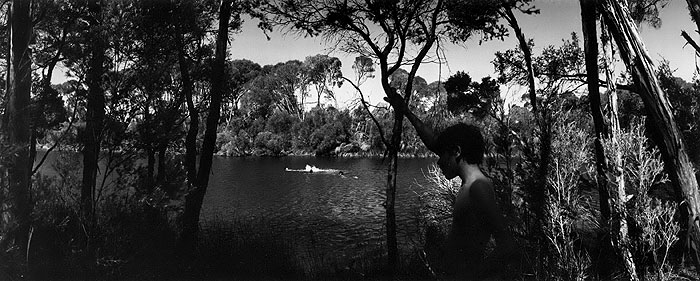
Siri Hayes (Australian, b. 1977) 'Aquatic listening device' 2009


Siri Hayes (Australian, b. 1977)
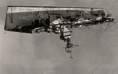
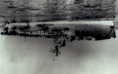
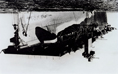
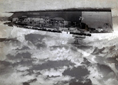
Aquatic listening device
2009
Silver gelatin print
39 x 45cm
Courtesy of the artist and M.33, Melbourne


Strange Neighbour

This gallery has now closed

LIKE ART BLART ON FACEBOOK

Back to top

Review: ‘Stephen Dupont / The White Sheet Series No. 1’ at Edmund Pearce Gallery, Melbourne

Exhibition dates: 2nd April – 3rd May 2014


Stephen Dupont (Australian, b. 1967) 'Untitled #16' 2010


Stephen Dupont (Australian, b. 1967)
Untitled #16
2010
Silver gelatin print and ink
20 x 16″ (51 x 40.5cm) / edition of 5 + 2 AP’s


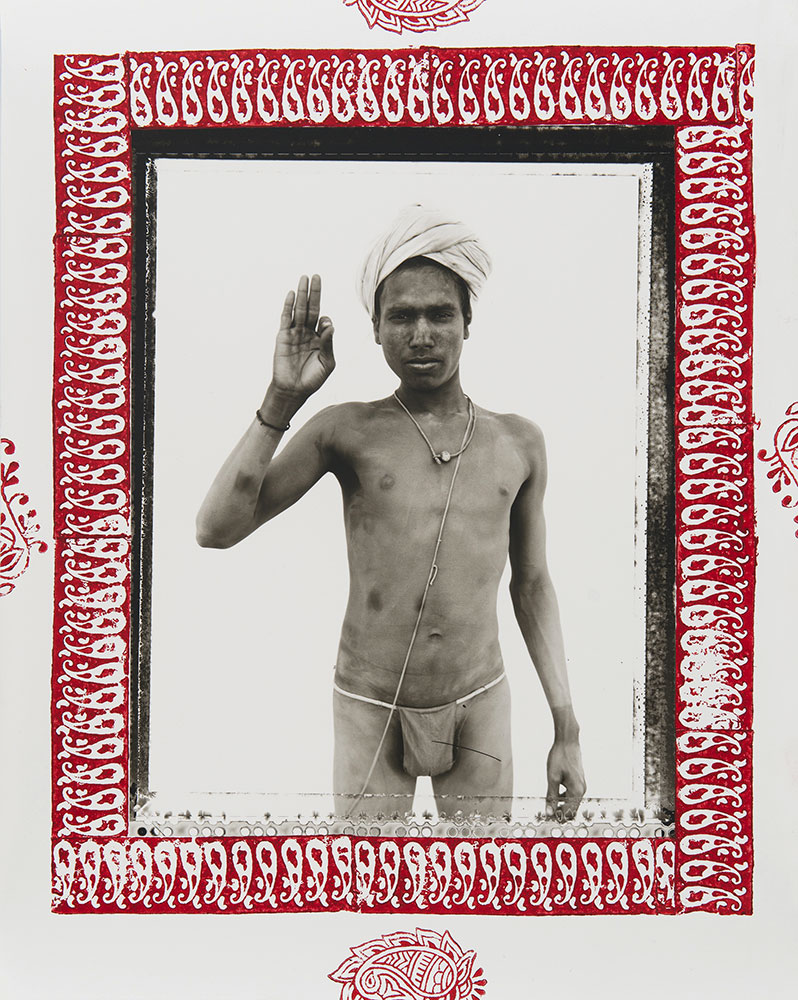
This is a wonderful exhibition by Stephen Dupont at Edmund Pearce Gallery. Using a 4″ x 5″ Polaroid type 55 and striping away the emulsion, Dupont is left with a fine grain large format black and white negative (which he can use in an enlarger) with the “Polaroid frame look”, which he incorporates into the silver gelatin prints.1

Most of the photographs are glorious, notably the ones where Dupont pulls back from his subject to reveal the context of the sitter (much like taking the mat of a Daguerreotype to reveal more of the studio hidden underneath). I particularly like where you can see two hands poking over the top of the white sheet hiding the person behind (see Untitled #08 2010, below). The spontaneity and improvisation of this act is very appealing. As Dupont observes this allows him “to reveal the audience gathering and the environment around the sheet. This is meant to give the viewer a real sense of place and time, and a window onto the streets of Haridwar.” This technique gives the images real presence, they fairly “sing” to me from the gallery wall. And then! to surround the silver with hand printed Indian textile stamps in red ink… these images are really something.

Dupont’s incisiveness at the coal face of the pictorial plane is also exemplary. Notice the construction of Untitled #14 (2010, below), and observe the arms of the protagonists. An arm is raised aloft mirroring the arm of the swami in the photograph behind and also the supporting pole of the tent at top right. His other arm points to the earth but this is crossed by the arm of an out of focus man at left, which forms a strong diagonal intervention into the image as he reaches out. The money and mobile phone, at bottom left, add to the incongruity of the scene.

I am less enamoured with Dupont’s riff on Richard Avedon’s contextless background portraits. They don’t really possess the power or presence of the photographs mentioned above or of Avedon’s portraits from the series In The American West. I would have also liked to have seen the field journal (the small images at the bottom of the posting) in the exhibition. It would have been fascinating to read the text and view the other textile stamp designs. Finally, a couple of prints at a much larger size would have been good to see, to break the regularity of the series.

Having said that, you really have to see these images in the flesh for they look so much better than when reproduced online. The red is luminous and it is a joy to see good silver gelatin prints instead of so-so digital failures (Polly Borland I hope your ears are burning). This exhibition is a perfect example of what Bill Henson was talking about in his recently curated exhibition Wildcards: Bill Henson shuffles the deck at Monash Gallery of Art (MGA) where he states that his interest “is in the photograph as an object, in the physical presence of the print or whatever kind of technology is being used to make it…”2 where the images appeal not just to the eye but to the whole body, “because photographs are first and foremost objects, their size, shape grouping and texture are as important as the images they’re recording.”3

These photographs have, as Henson notes of some photographs, “the ability to suggest some other thing and that’s what draws you in.”4 You stand in front of the best of these images and contemplate them with a sense of wonder, for they suggest to the viewer – through the hand and eye of the artist in the analogue process, through the hand of the artist when applying the wood block printing which was made with much spontaneity and feeling – other worlds of which we know very little brought close to our imagination. Through their inherent textures and tonalities, their physical presence, there is a sense of the people who populate that place, but more than that, there is a sense of our own fragility and mortality.

A feeling of anOther existence for our life if we had been born into such worlds.
And that is what makes these images so compelling.

Dr Marcus Bunyan


Footnotes

1/ According to Wikipedia, “Type 55 negatives are the famous source of the “Polaroid frame look” … the Polaroid reagent / gel is squeezed between the negative and positive. Some of the reagent is trapped underneath the onion-skin-like frame that crops the print into a perfect 4 x 5 image. This reagent however creates an impression of that frame on the negative, which is not protected. The result is a perfect negative, but with imperfect frame-like image surrounded 3 of the four sides, while the 4th side shows the impression of the connective mesh that controls aspects of the Polaroid packet’s sleeve functionality.”

2/ Interview with Bill Henson by Toby Fehily posted 01 Feb 2014 on the Art Guide Australia website [Online] Cited 18/02/2014. No longer available online

3/ Fiona Gruber. “Review of Wildcards, Bill Henson Shuffles the Deck” on the Guardian website, Wednesday 12 February 2014 [Online] Cited 16/03/2014

4/ Fehily op. cit.,


Many thankx to Edmund Pearce Gallery for allowing me to publish the photographs in the posting. Please click on the photographs for a larger version of the image.


Stephen Dupont (Australian, b. 1967) 'Untitled #08' 2010


Stephen Dupont (Australian, b. 1967)
Untitled #08
2010
Silver gelatin print and ink
20 x 16″ (51 x 40.5cm) / edition of 5 + 2 AP’s


Stephen Dupont (Australian, b. 1967) 'Untitled #14' 2010


Stephen Dupont (Australian, b. 1967)
Untitled #14
2010
Silver gelatin print and ink
20 x 16″ (51 x 40.5cm) / edition of 5 + 2 AP’s


Stephen Dupont (Australian, b. 1967) 'Untitled #04' 2010


Stephen Dupont (Australian, b. 1967)
Untitled #04
2010
Silver gelatin print and ink
20 x 16″ (51 x 40.5cm) / edition of 5 + 2 AP’s


Edmund Pearce is excited to present a solo exhibition by legendary Australian photographer Stephen Dupont, entitled The White Sheet Series Number 1. This new series was shot during India’s most important Hindu Festival, Kumbh Mela, and features portraits of pilgrims and visitors combined with hand printed Indian textile stamps.

Stephen Dupont has produced a remarkable body of visual work throughout his career; hauntingly beautiful photographs of fragile cultures and marginalised peoples. He captures the human dignity of his subjects with great intimacy and his images have received international acclaim for their artistic integrity and valuable insight into the people, culture and communities that have existed for hundreds of years, yet are fast disappearing from our world.

Mark Feeney of the Boston Globe states, “Inevitably, Dupont is an outsider; yet he’s an engaged outsider, full of calm, clear-eyed curiosity. There’s not just a sense of place in his work but also something that matters even more: a sense of the people who populate that place.”

Stephen’s work has earned him a number of photography’s most prestigious prizes, including a Robert Capa Gold Medal citation from the Overseas Press Club of America. His work has featured in influential publications such as The New Yorker, Aperture and The New York Times Magazine; and he has had major exhibitions in London, Paris, New York, Sydney, Canberra, Tokyo, and Shanghai. His photographic artist books and portfolios are held in numerous private collections and by prestigious institutions such as the National Gallery of Australia, the National Library of Australia, the British Library and the Library of Congress in Washington DC to name but a few.

Press release from the Edmund Pearce Gallery website


Stephen Dupont (Australian, b. 1967) 'Untitled #07' 2010


Stephen Dupont (Australian, b. 1967)
Untitled #07
2010
Silver gelatin print and ink
20 x 16″ (51 x 40.5cm) / edition of 5 + 2 AP’s


Stephen Dupont (Australian, b. 1967) 'Untitled #13' 2010


Stephen Dupont (Australian, b. 1967)
Untitled #13
2010
Silver gelatin print and ink
20 x 16″ (51 x 40.5cm) / edition of 5 + 2 AP’s


Stephen Dupont (Australian, b. 1967) 'Untitled #12' 2010


Stephen Dupont (Australian, b. 1967)
Untitled #12
2010
Silver gelatin print and ink
20 x 16″ (51 x 40.5cm) / edition of 5 + 2 AP’s


Stephen Dupont (Australian, b. 1967) 'Untitled #18' 2010


Stephen Dupont (Australian, b. 1967)
Untitled #18
2010
Silver gelatin print and ink
20 x 16” (51 x 40.5cm) / edition of 5 + 2 AP’s


Richard Avedon at work


Richard Avedon at work


Richard Avedon (American, 1923-2004) 'Bill Curry, drifter, Interstate 40, Yukon, Oklahoma, 6/16/80' 1980


Richard Avedon (American, 1923-2004)
Bill Curry, drifter, Interstate 40, Yukon, Oklahoma, 6/16/80
1980
from In the American West, 1979-1984


Stephen Dupont artist book


This body of work is a selection of portraits I made in 2010 at India’s most important Hindu festival called the Kumbh Mela. In one of four locations every four years Hindu pilgrims and visitors descend into the holy waters of the Ganges River to purify the soul in a spiritual ritual considered the largest peaceful gathering in the world. The photographs were taken in Haridwar of pilgrims and sadhus I chose randomly during that festival.

Inspired by an earlier series I made of anonymous portraits of Afghans in Kabul titled Axe Me Biggie, or Mr Take My Picture, but instead of an existing Afghan outdoor studio backdrop I chose the white sheet this time for its purity and simplicity. My subjects were asked to simply stand and pose before my camera. I use a white bed sheet to create an outdoor studio that not only captures my subject but also allows me to reveal the audience gathering and the environment around the sheet. This is meant to give the viewer a real sense of place and time, and a window onto the streets of Haridwar. Had I used the backdrop in a conventional way, to solely isolate a person, you’d have the impression that they were taken anywhere – New York, Sydney, or in a studio. This process is a creative choice and allows me with some control over my sitter but brings with it the spontaneity and surprise of what may take place around the zone I am working in: the gaze of someone holding the sheet that has no idea they are in the frame, or a hand holding the sheet or something else that crops up in front or behind. In the end my portraits are environmental or even landscapes.

Over many years of travel throughout India I have been collecting textile stamps and I decided to use them on my photographs. The research and experiments started in my field journal and then to the final hand printed images in this show. I wanted to create a relationship with Indian design and cloth, the Polaroid borders and the people in my pictures. Much like my photographic practice here the wood block printing was made with much spontaneity and feeling. The photographs have been handcrafted by Chris Reid at Blanco Negro using warmtone paper and processed in a specialised developer for unique tonality.

Stephen Dupont
Sydney, February 28, 2014


Edmund Pearce Gallery

This gallery has now closed.

LIKE ART BLART ON FACEBOOK

Back to top

Exhibition and book launch preview: ‘In the Folds of Hills’ by Kristian Laemmle-Ruff at The Field Institute, Melbourne

Exhibition dates: 1st – 8th May 2014

Exhibition opening and book launch: Thursday 1st May, 6 – 8.30 pm

To be opened by Robert McFarlane
Stories by Charlotte Laemmle


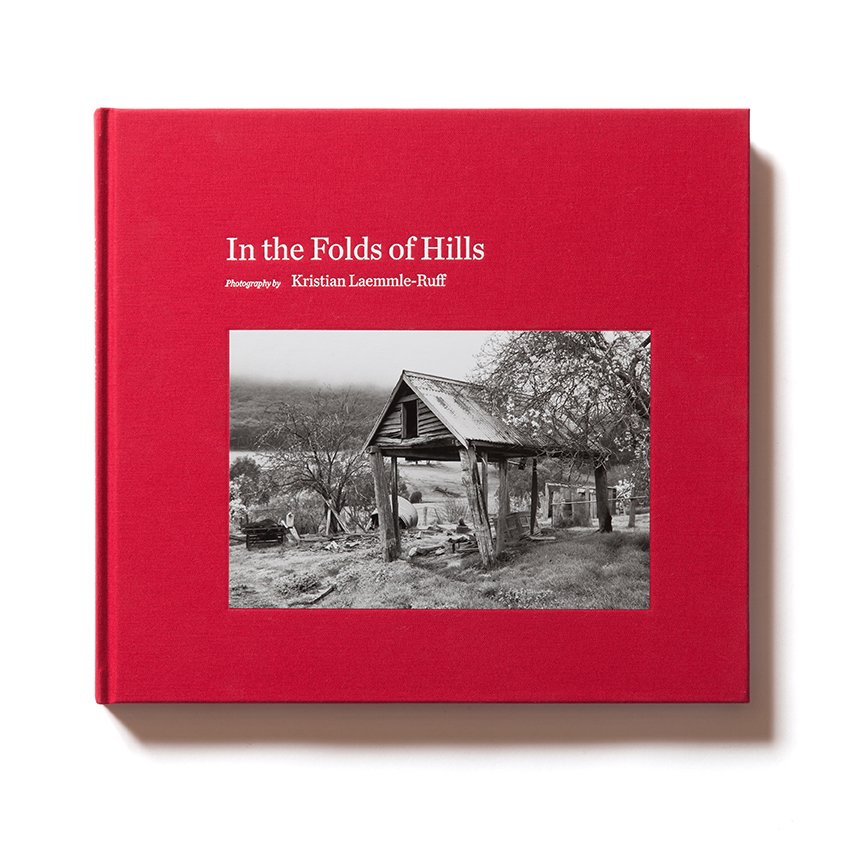
Kristian Laemmle-Ruff (Australian) 'In the Folds of Hills' book cover 2014


Kristian Laemmle-Ruff (Australian)
In the Folds of Hills book cover
2014


One of my favourite contemporary Australian photographers has a new book and exhibition!

Hopefully a review to follow but having seen a digital copy of the book, the sensitivity of the work feels admirable… unrecalled stories and photographs of people’s lives and the environments in which they live.

The book retails for $60 AUD and will be available in selected book stores nationally. It is being published by Pearce Press and includes a foreword by former prime minister Malcolm Fraser and an essay by Robert McFarlane.

Marcus


Many thankx to Kristian Laemmle-Ruff for allowing me to publish the photographs in the posting. Please click on the photographs for a larger version of the image.


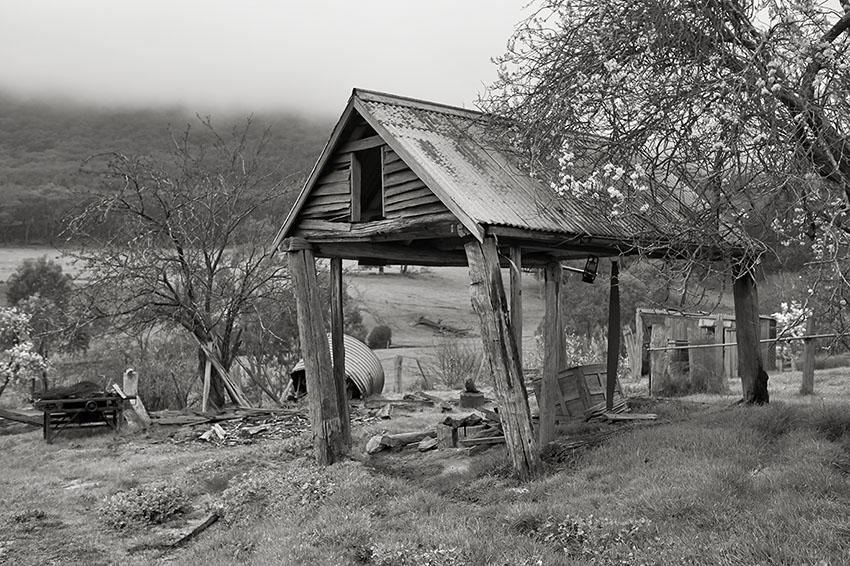
Kristian Laemmle-Ruff (Australian) 'Barn in the Mist' 2014


Kristian Laemmle-Ruff (Australian)
Barn in the Mist
2014


Foreword

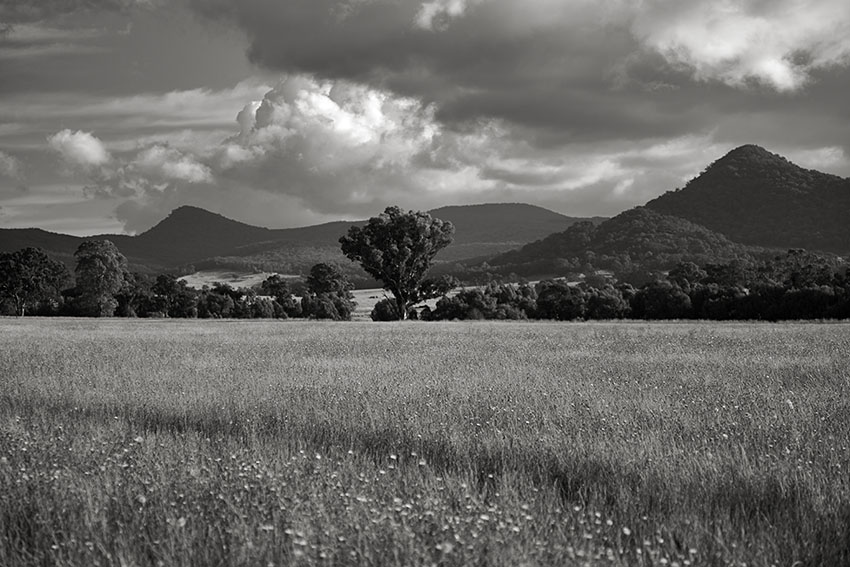
In the Folds of Hills depicts a life in the secluded valleys around Lima, a little over 100 kms from Melbourne, Victoria. Kristian Laemmle-Ruff not only has great technical control of his craft, but translates this skill into truly artistic photographs.

His images of ordinary objects from everyday life invite the viewer to slow down and contemplate. These photos create a narrative that offers us insight into the way these people live.

The portfolio focuses on individuals who have lived most, if not all their lives in this area. They would all be hard-working and modest in their possessions. Their individual characters shine through the photographs with a rugged determination and strength.

In the Folds of Hills will come to have historic significance because it captures aspects of Australian rural life, which in many parts of this country are fast disappearing.

Rt Hon Malcolm Fraser AC CH


Kristian Laemmle-Ruff (Australian) 'Lima East Valley' 2014


Kristian Laemmle-Ruff (Australian)
Lima East Valley
2014


Kristian Laemmle-Ruff (Australian) 'Ralph Pearce' 2014


Kristian Laemmle-Ruff (Australian)
Ralph Pearce
2014


Photographer’s Note

This project began with a curiosity to discover something that is quietly going unnoticed. As our cities grow and society increasingly relies on technological advances, there remain those older generations whose lives are still rooted in a past era: the early to mid 20th century. This was an era where small-scale labor-intensive livelihoods could thrive. In the face of changing needs and corporate competition these kinds of livelihoods, such as the family-owned farm, are disappearing.

Susan Sontag wrote in her book On Photography that “a beautiful subject can be the object of rueful feelings because it has aged or decayed or no longer exists … Photography is a twilight art.” This photo-series also lingers in some kind of twilight zone and has a sense of urgency; indeed one person has passed away since being photographed.

I first intended to capture day-to-day life and work in these secluded rural valleys. With subject matter so steeped in romanticism, I felt a need to explore beyond the ‘countryside’ clichés and idealisation common in the attitudes of city people. After meeting the subjects and gaining their trust, I sensed personal stories that needed to be told. To my surprise these stories were told not so much in the words spoken, but rather in the person’s material surrounds. Domestic interiors scattered with objects became allegories for human experience. These environments were full of memory.

It wasn’t uncommon for someone to still live in the house they were born in. An empty chair, a leaning barn, a clock ticking on the wall: these once mundane objects became potent symbols of their owner’s past, their hopes and their reality. Some objects suggested loss and melancholia, others embodied feelings of pride and even humour.

In the Folds of Hills is an exploration of the wisdom and rich humanity found in the characters living and working on this land. In celebrating and acknowledging them and their stories, the photo-narratives also offer a somewhat poetic insight into their inner worlds.

Kristian Laemmle-Ruff


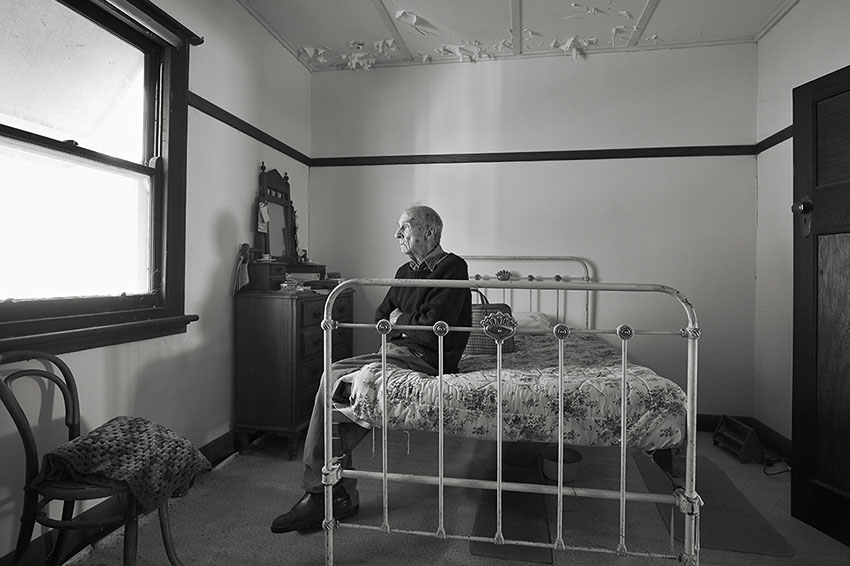
Kristian Laemmle-Ruff (Australian) 'On Mother's Bed' 2014


Kristian Laemmle-Ruff (Australian)
On Mother’s Bed
2014


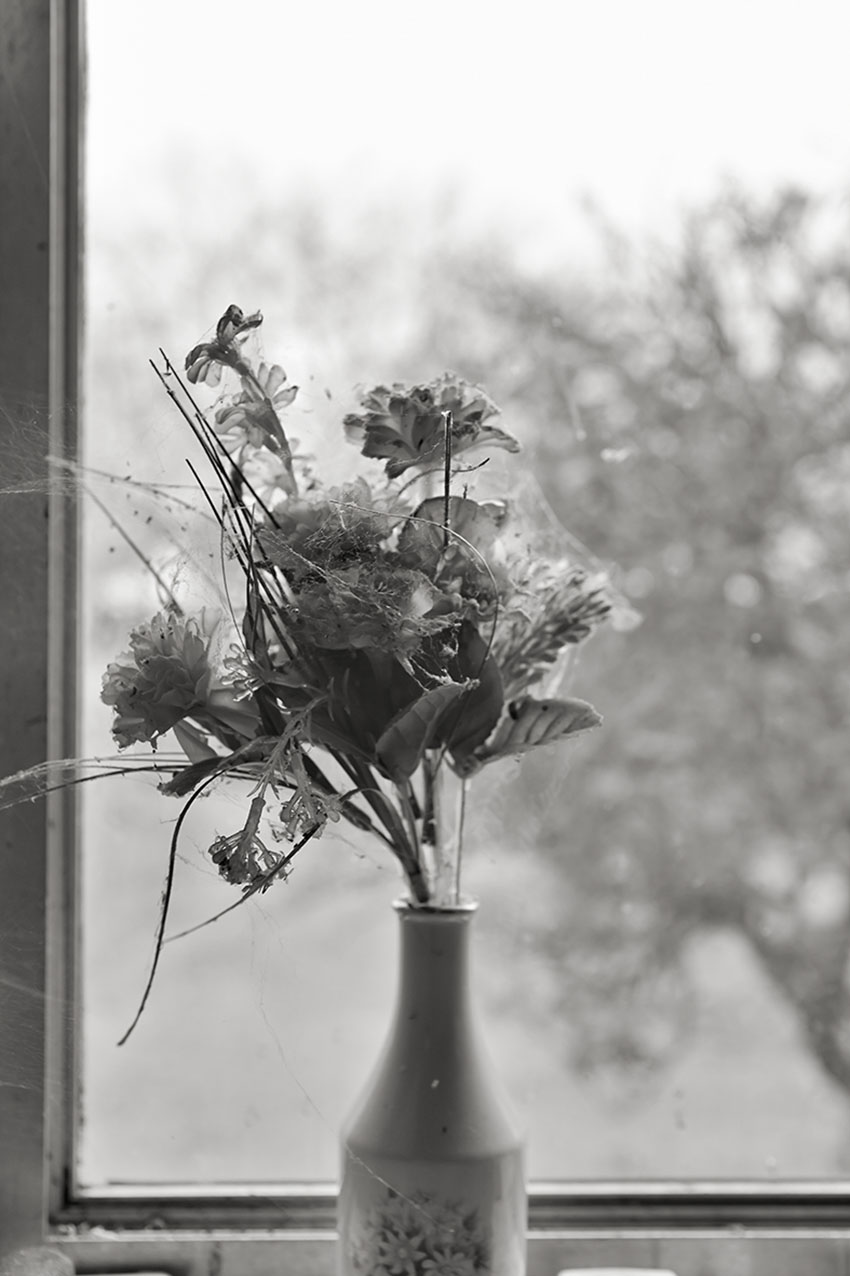
Kristian Laemmle-Ruff (Australian) 'Old Flowers' 2014


Kristian Laemmle-Ruff (Australian)
Old Flowers
2014


Ralph Pearce

Ralph’s knowledge and understanding of this part of the world is humbling. Rainfall patterns, geography and vegetation are things that matter to Ralph. He invites us to climb into his ute and drives to a stand of fabled Lima stringybarks. Few now exist in the valley. Our gentle giant is very much at home amongst the tall timbers that have been his livelihood for so many years.

“I still love mucking about in the bush,” chuckles Ralph with a twinkle in his eye. He shows us his tools, most importantly his axes, and carefully describes their variations and uses. The sheds back at the homestead hold a treasury of farming history and Ralph proudly shows us the old dairy, his shearing shed and a faithful companion, a Honda 110 motorbike. The land continues to give Ralph what he needs. His vegetable patch is impressive and the old gnarled fruit trees bear their gifts seasonally. Once a fortnight Ralph drives to Benalla for groceries and a chat. Every second Tuesday evening he travels to the nearby Moorngag Hall for a round of cards with friends from the district. Charlie Jensen, his childhood mate, collects him.

When next we visit Ralph he shows us around the rest of his house. His mother was clearly a significant influence. She died in 1985 aged ninety-eight and was blind for the last nine years of her life. Ralph cared for her. Her suitcase, packed for hospital, still sits in her room. Little has changed in the house since she died.

ABC Radio keeps Ralph informed. And informed he is. Television has never made an appearance in this house. Ralph speaks to us with the wisdom of someone who has seen many fashions and many politicians come and go. One cannot help but be touched by the simplicity and integrity of this man’s life. Ralph is a quiet gentleman, unassuming, self-reliant and comfortable within his skin.

Extract from stories by Charlotte Laemmle from the book In the Folds of Hills


Kristian Laemmle-Ruff (Australian) 'Ralph's oven' 2014


Kristian Laemmle-Ruff (Australian)
Ralph’s oven
2014


The Field Institute at The Compound Interest (Centre for the Applied Arts)
15-25 Keele Street, Collingwood, Victoria

LIKE ART BLART ON FACEBOOK

Back to top

Review: ‘Wildcards: Bill Henson shuffles the deck’ at Monash Gallery of Art, Wheelers Hill, Melbourne

Exhibition dates: 1st February – 30th March 2014

Warning: Aboriginal and Torres Strait Islander viewers should be aware that the following posting may contain images of deceased persons.


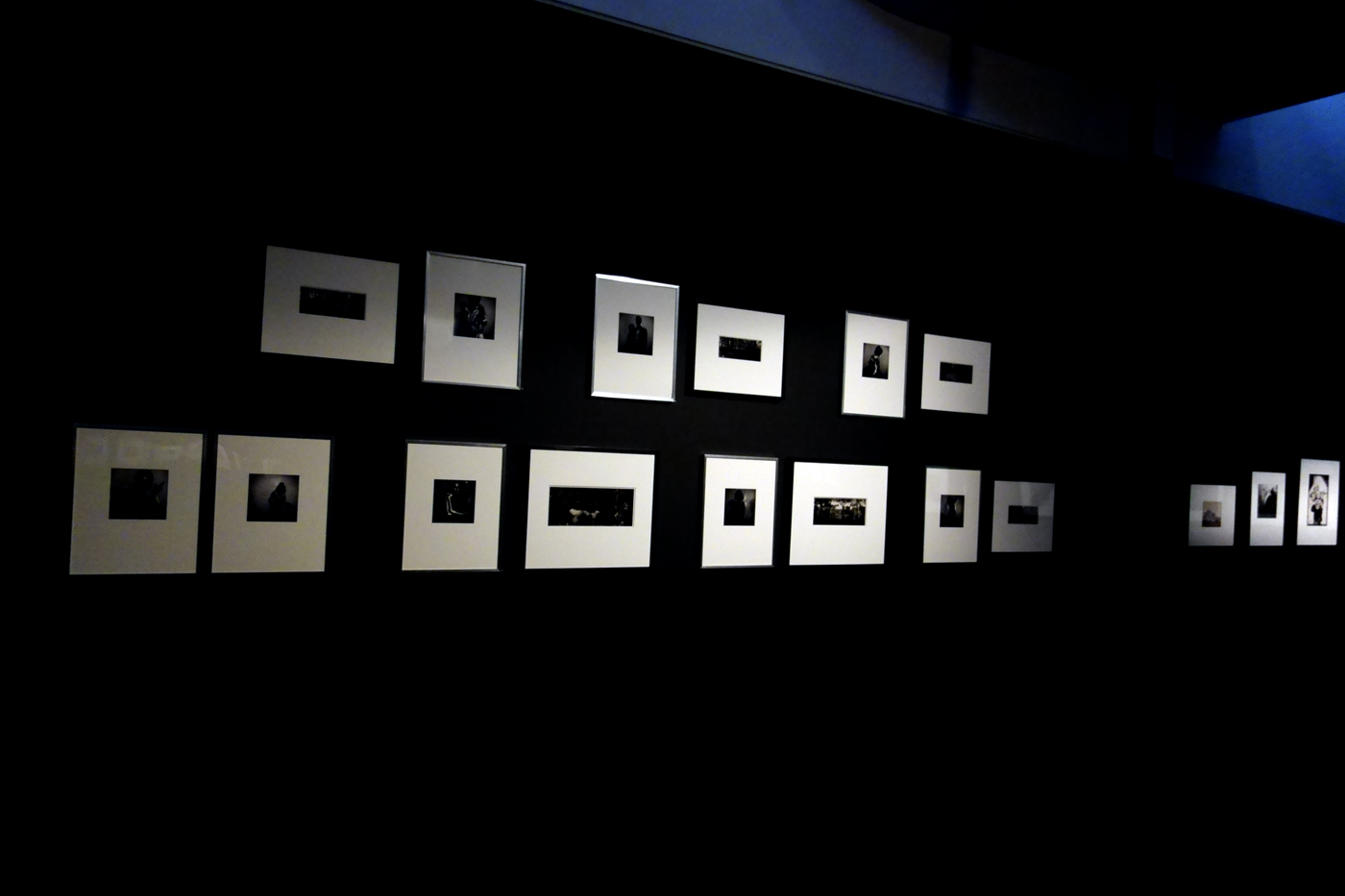
Installation photograph of 'Wildcards: Bill Henson shuffles the deck' at the Monash Gallery of Art

Installation photograph of 'Wildcards: Bill Henson shuffles the deck' at the Monash Gallery of Art


Installation photographs of Wildcards: Bill Henson shuffles the deck at the Monash Gallery of Art
Photos: Marcus Bunyan

1/ stygian gloom
2/large grouping of 14 works by Wesley Stacey


Unknown photographer. 'Untitled' c. 1900


Unknown photographer
Untitled
c. 1900
Cyanotype print
Monash Gallery of Art, City of Monash Collection
Acquired 2012


vapid [vap-id]
adjective
lacking or having lost life, sharpness, or flavour

Origin:
1650-60;  Latin vapidus;  akin to va·por [vey-per]
noun
a visible exhalation, as fog, mist, steam, smoke diffused through or suspended in the air; particles of drugs that can be inhaled as a therapeutic agent


This is an unexceptional exhibition, one that lacks jouissance in the sense of a transgressive kind of enjoyment, an investigation of the subject that gives pleasure in taking you to unexpected places. At times I felt like a somnambulist walking around this exhibition of photographs from the Monash Gallery of Art collection curated by Bill Henson, pitched into stygian darkness and listening to somewhat monotonous music. It was a not too invidious an exercise but it left me with a VAPID feeling, as though I had inhaled some soporific drug: the motion of the journey apparently not confined by a story, but in reality that story is Henson’s mainly black and white self-portrait. The photographs on the wall, while solid enough, seemed to lack sparkle. There were a couple of knockout prints (such as David Moore’s Himalaya at dusk, Sydney, 1950 below; the Untitled cyanotype c. 1900, above; and Mark Hinderaker’s delicate portrait of Fiona Hall, 1984 below) and some real bombs (the large Norman Lindsay photographs, modern reproductions printed many times their original size were particularly nauseous). And one has to ask: were the images chosen for how they were balanced on the wall or were they chosen for content?

Henson states that there was no concept or agenda when picking the 88 photographs for this exhibition, simply his INTENSITY of feeling and intuition, his intuitive response to the images when he first saw them – to allow “their aesthetics to determine their presence… our whole bodies to experience these photographs – objects as pictures as photographs.”1 Henson responded as much as possible to the thing which then becomes an iconography (which appeals to his eye) as he asks himself, why is one brush stroke compelling, and not another? The viewer can then go on a journey in which MEANING comes from FEELING, and SENSATIONS are the primary stuff of life.

One of Henson’s preoccupations, “is an interest in the photograph as an object, in the physical presence of the print or whatever kind of technology is being used to make it.”2 He would like us to acknowledge the presence and aura (Walter Benjamin) of the photograph as we stand in front of it, responding with our whole bodies to the experience, not just our eyes. He wants us to have an intensity of feeling towards these works, responding to their presence and how he has hung the works in the exhibition. “There are no themes but rather images that appeal to the eye and, indeed, the whole body. Because photographs are first and foremost objects, their size, shape grouping and texture are as important as the images they’re recording.”3

Henson insists that there was no preconceived conceptual framework for picking these particular photographs but this is being disingenuous. Henson was invited to select images from the MGA collection with the specific idea of holding an exhibition, so this is the conceptual jumping off point; he then selected the images intuitively only to then group and arrange then intuitively/conceptually – by thinking long and hard about how these images would be grouped and hung on the wall of the gallery. I would like to believe that Henson was thinking about MUSIC when he hung this exhibition, not photography. Listen to Henson talk about the pairing of Leonie Reisberg’s Portrait of Peggy Silinski, Tasmania (c. 1976, below) and Beverley Veasey’s Study of a Calf, Bos taurus (2006, below) in this video, and you will get the idea about how he perceives these photographs relate to each other, how they transcend time and space.

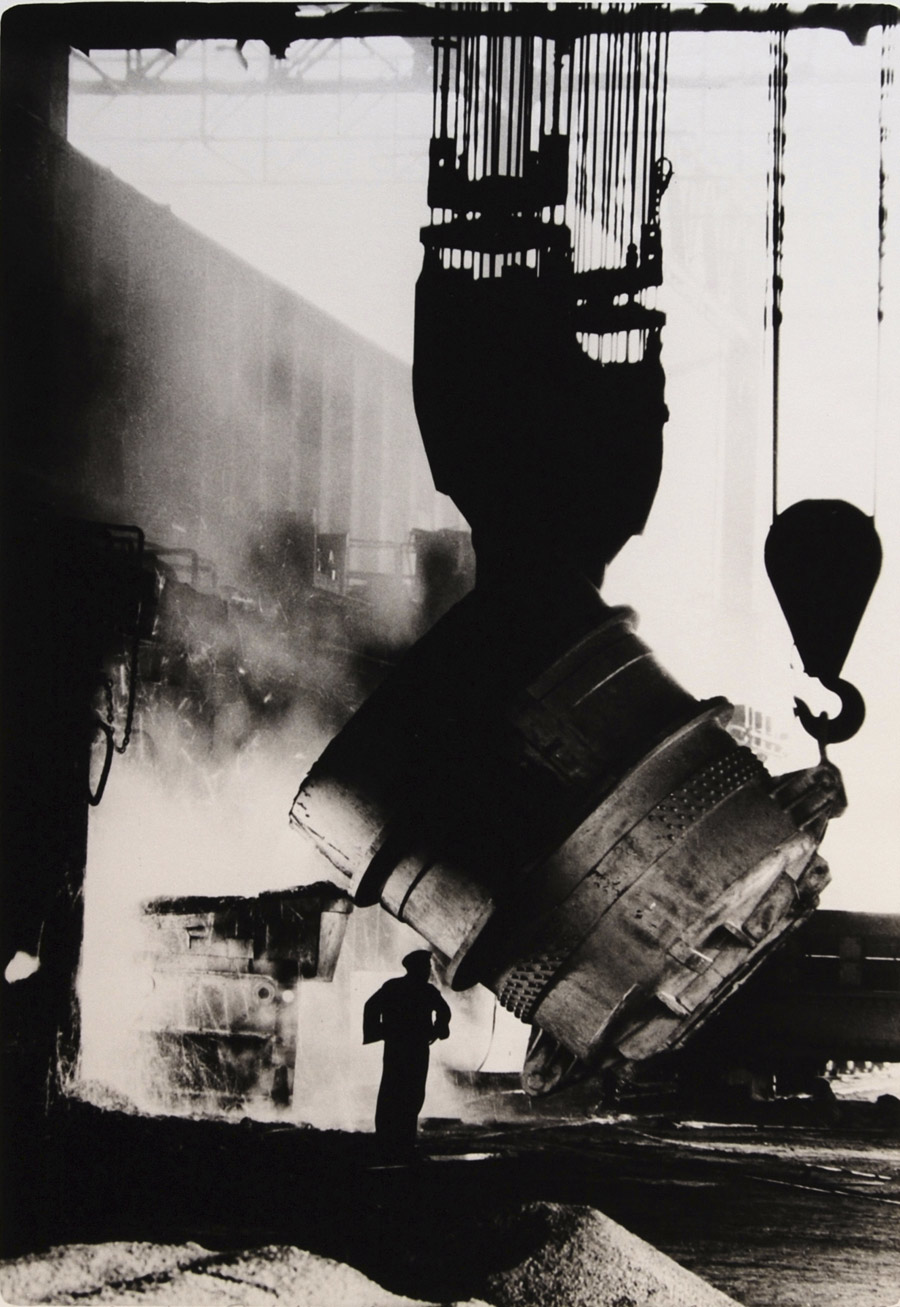
This is one of the key elements of the exhibition: how Henson pushes and pulls at time and space itself through the placing of images of different eras together. The other two key elements are how the music rises and falls through the shape of the photographs themselves; and how the figures within the images are pulled towards or pushed away from you. With regard to the rise and fall, Henson manipulates the viewer through the embodiedness of both horizontal and vertical photographs, reminding me of a Japanese artist using a calligraphy brush (see the second installation image above, where the photographs move from the vertical to the square and then onto panoramic landscape). In relation to the content of the images, there seems to be a preoccupation (a story, a theme?) running through the exhibition with the body being consumed by the landscape or the body being isolated from the landscape but with the threat of being consumed by it. Evidence of this can be seen in Wesley Stacey’s Willie near Mallacoota (1979, below) where the body almost melts into the landscape and David Moore’s Newcastle steelworks (1963, below) where the kids on the bicycles are trying to escape the encroaching doom that hovers behind them.

One of the key images in the exhibition for me also reinforces this theme – a tiny Untitled Cyanotype (c. 1900, above) in which two Victorian children are perched on a bank near a stream with the bush beyond – but there are too many of this ilk to mention here: either the figures are pulled towards the front of the frame or pushed back into the encroaching danger, as though Henson is interrogating, evidencing un / occupied space. Overall, there is an element of control and lyrical balance in how he has grouped and hung these works together, the dark hue of the gallery walls allowing the photographs to exist as objects for themselves. Henson puts things next to each other in sequences and series to, allegedly, promote UNEXPECTED conversations and connections through a series of GESTURES.

As Henson notes,

“Maybe it’s the fact that the photographs have the ability to suggest some other thing and that’s what draws you in – that’s that feeling, the thing that slips away from thought. These are really the same things that apply to our meetings with any work of art, whether it’s a piece of music or a sculpture or anything else. There’s something compelling, there’s something there that sort of animates your speculative capacity, causes you to wonder. Other times, or most of the time, that’s not the case. Certainly most of the time that’s not the case with photography.”4

.
For me, there was little WONDER in this exhibition, something that you would go ‘oh, wow’ at, some way of looking at the world that is interesting and insightful and fractures the plaisir of cultural enjoyment and identity. While the photographs may have been chosen intuitively and then hung intuitively/conceptually, I simply got very little FEELING, no ICE/FIRE  (as Minor White would say) – no frisson between his pairings, groupings and arrangements. It was all so predictable, so ho-hum. Everything I expected Henson to do… he did!

There were few unexpected gestures, no startling insight into the human and photographic condition. If as he says, “Everything comes to you through your whole body, not just through your eyes and ears,”5 and that photographs are first and foremost objects, their size, shape, grouping and texture as important as the images they’re recording THEN I wanted to be moved, I wanted to feel, to be immersed in a sensate world not a visible exhalation (of thought?), a vapor that this exhibition is. Henson might have painted an open-ended self-portrait but this does not make for a very engaging experience for the viewer. In this case, the sharing of a story has not meant the sharing of an emotion.

Dr Marcus Bunyan


1/ Interview with Bill Henson by Toby Fehily posted 01 Feb 2014 on the Art Guide Australia website [Online] Cited 18/02/2014. No longer available online

2/ Ibid.,

3/ Fiona Gruber. “Review of Wildcards, Bill Henson Shuffles the Deck” on the Guardian website, Wednesday 12 February 2014 [Online] Cited 16/03/2014

4/ Fehily op. cit.,

5/ Fehily op. cit.,


Many thankx to the Monash Gallery of Art for allowing me to publish the photographs in the posting. Please click on the photographs for a larger version of the image.


MGA Collection: Bill Henson on Leonie Reisberg and Beverley Veasey

Bill Henson talks about the photographs of Leonie Reisberg and Beverley Veasey from the MGA Collection in WILDCARDS: BILL HENSON SHUFFLES THE DECK, Monash Gallery of Art, 1 February to 30 March 2014.


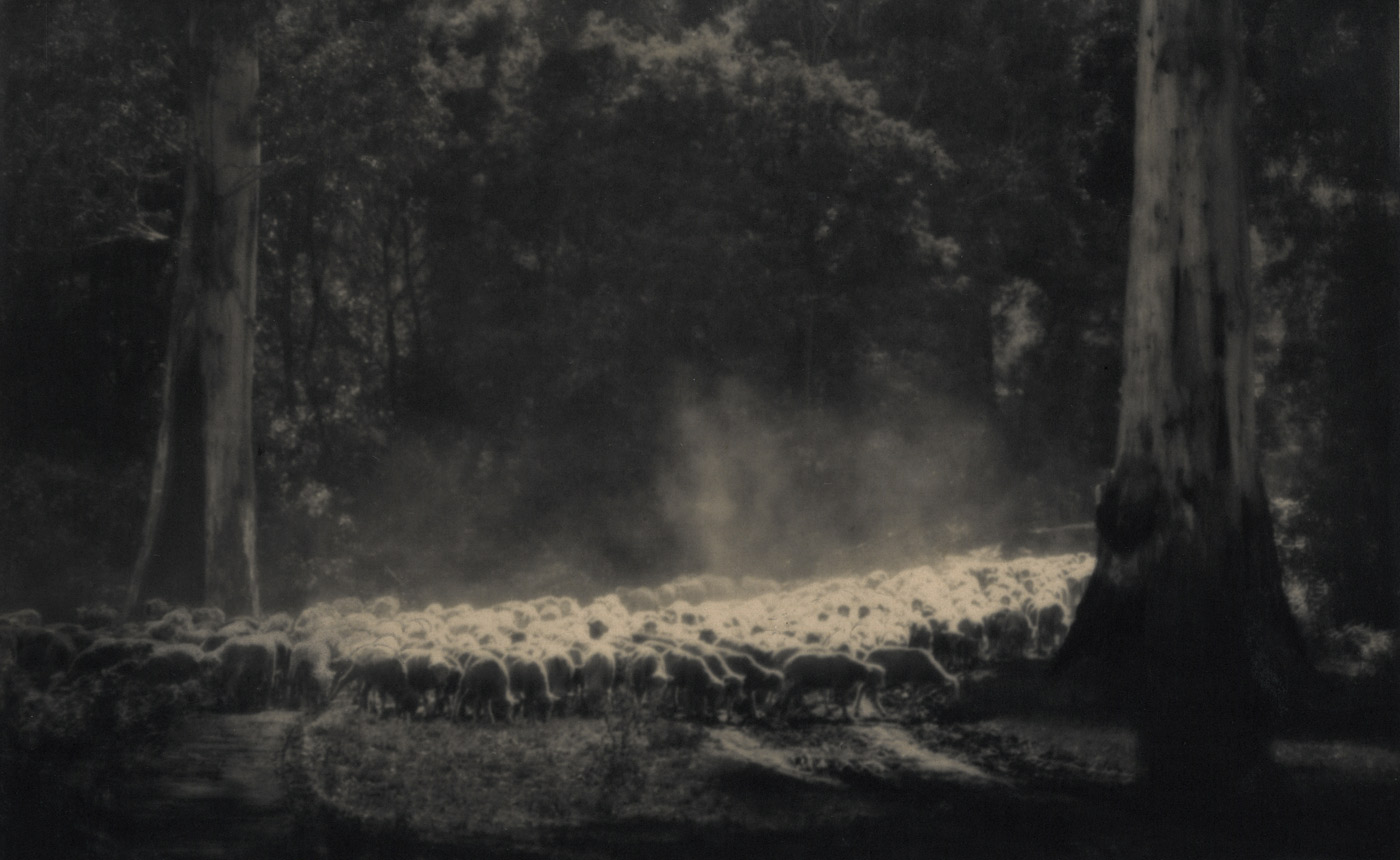
John Eaton (born United Kingdom 1881; arrived Australia 1889; died 1967) 'Sheep in clearing' c. 1920s


John Eaton (born United Kingdom 1881; arrived Australia 1889; died 1967)
Sheep in clearing
c. 1920s
Gelatin silver print
15.6 x 23.8cm
Monash Gallery of Art, City of Monash Collection
Donated by Janice Hinderaker through the Australian Government’s Cultural Gifts Program 2003


Fred Kruger (born Germany 1831; arrived Australia 1860; died 1888) 'Queen Mary and King Billy outside their mia mia' c. 1880


Fred Kruger (born Germany 1831; arrived Australia 1860; died 1888)
Queen Mary and King Billy outside their mia mia
c. 1880
Albumen print
13.4 x 20.8cm
Monash Gallery of Art, City of Monash Collection acquired 2012


David Moore (Australia 1927-2003) 'Himalaya at dusk, Sydney' 1950


David Moore (Australia 1927-2003)
Himalaya at dusk, Sydney
1950
Gelatin silver print, printed 2005
24.5 x 34.25cm
Monash Gallery of Art, City of Monash Collection donated by the Estate of David Moore 2006
Courtesy of the Estate of David Moore (Sydney)


Wesley Stacey (Australia, b. 1941) 'Willie near Mallacoota' 1979


Wesley Stacey (Australia, b. 1941)
Willie near Mallacoota
1979
From the series Koorie set
Gelatin silver print
Monash Gallery of Art, City of Monash Collection
Donated through the Australian Government’s Cultural Gifts Program by Christine Godden 2011

Published under fair use for the purpose of art criticism


David Moore (Australia, 1927-2003) 'Newcastle steelworks' 1963


David Moore (Australia, 1927-2003)
Newcastle steelworks
1963
Gelatin silver print
Monash Gallery of Art, City of Monash Collection
Acquired 1981

Published under fair use for the purpose of art criticism


One of those preoccupations is an interest in the photograph as an object, in the physical presence of the print or whatever kind of technology is being used to make it. Part of the reason for that is that photography, more than any other medium, suffers from a mistake or misunderstanding people have when they’ve seen a reproduction in a magazine or online: they think they’re seeing the original. A certain amount of photography is made with its ultimate intention being to be seen in a magazine or online, but most photography, historically, ended up in its final form as a print – a cyanotype, or a tin type or a daguerreotype or whatever it might be.”

Interview with Bill Henson by Toby Fehily posted 01 Feb 2014 on the Art Guide Australia website [Online] Cited 18/02/2014. Used under fair use for the purpose of art criticism. No longer available online.


Leonie Reisberg (Australia, b. 1955) 'Portrait of Peggy Silinski, Tasmania' c. 1976


Leonie Reisberg (Australia, b. 1955)
Portrait of Peggy Silinski, Tasmania
c. 1976
Gelatin silver print
Monash Gallery of Art, City of Monash Collection
Donated by Janice Hinderaker through the Australian Government’s Cultural Gifts Program 2003


Beverley Veasey (Australia, b. 1968) 'Study of a Calf, Bos taurus' 2006


Beverley Veasey (Australia, b. 1968)
Study of a Calf, Bos taurus
2006
Chromogenic print
Monash Gallery of Art, City of Monash Collection
Acquired 2006


I think when you look through any collection, you’re often struck by the kind of pointlessness and banality of photography. It doesn’t matter which museum in the world you look at. It’s like, “is there any need for this thing to exist at all?”. It probably comes back to the capacity of the object, the image to suggest things, the suggestive potential rather than the prescriptive, which is a given in photography of course, the evidential authority of the medium preceding any individual reading we have of particular pictures. Maybe it’s the fact that the photographs have the ability to suggest some other thing and that’s what draws you in – that’s that feeling, the thing that slips away from thought. These are really the same things that apply to our meetings with any work of art, whether it’s a piece of music or a sculpture or anything else. There’s something compelling, there’s something there that sort of animates your speculative capacity, causes you to wonder. Other times, or most of the time, that’s not the case. Certainly most of the time that’s not the case with photography.

Interview with Bill Henson by Toby Fehily posted 01 Feb 2014 on the Art Guide Australia website [Online] Cited 18/02/2014. Used under fair use for the purpose of art criticism. No longer available online.


Axel Poigant (born United Kingdom 1906; arrived Australia 1926; died 1986) 'Jack and his family on the Canning Stock Route' 1942


Axel Poigant (born United Kingdom 1906; arrived Australia 1926; died 1986)
Jack and his family on the Canning Stock Route
1942
Gelatin silver print, printed 1986
Monash Gallery of Art, City of Monash Collection
Acquired 1991


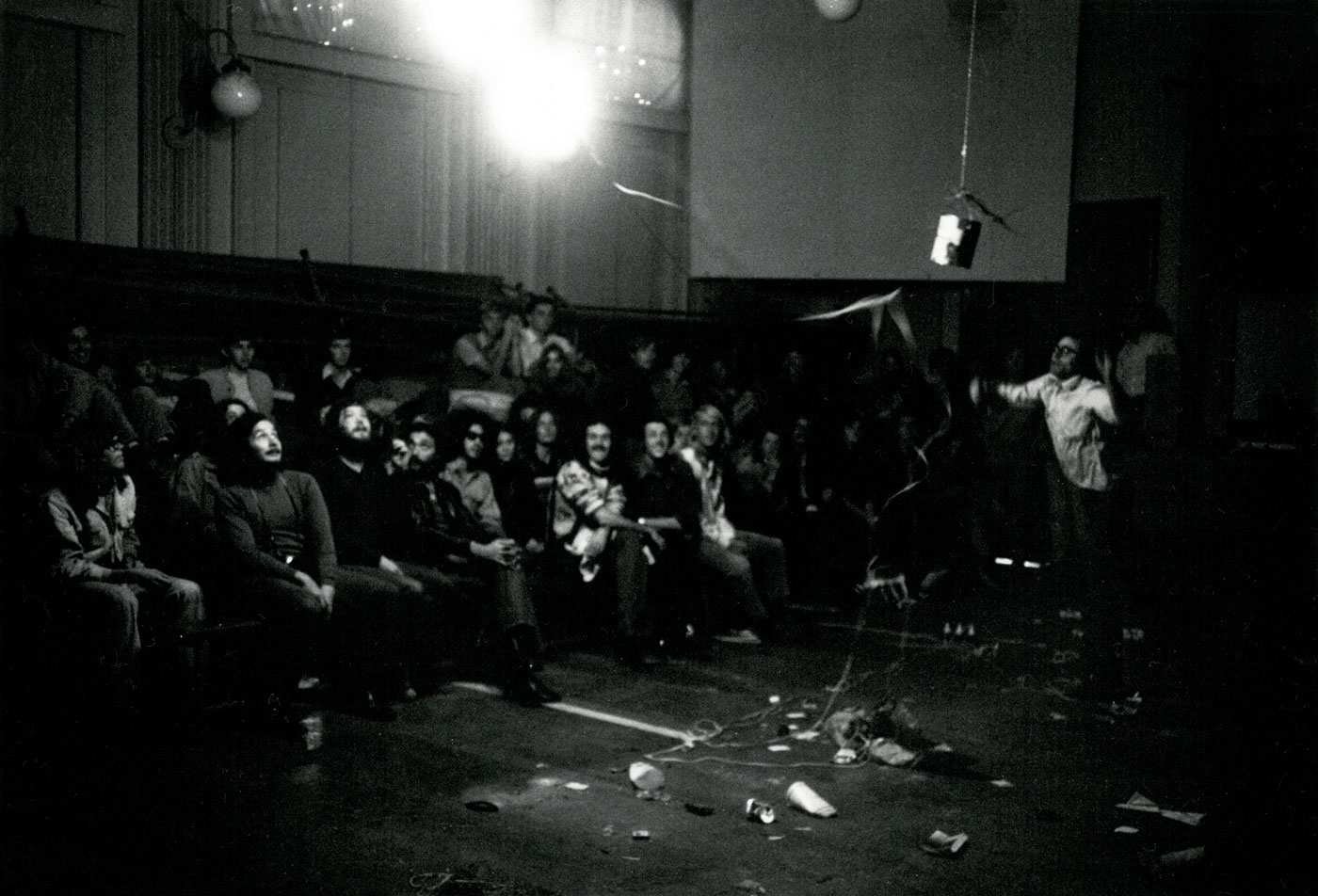
Tim Johson (Australia, b. 1947) 'Light performances' 1971-72


Tim Johson (Australia, b. 1947)
Light performances
1971-1972
Gelatin silver print
Monash Gallery of Art, City of Monash Collection
Acquired 2011


Cherine Fahd (Australia, b. 1974) 'Alicia' 2003


Cherine Fahd (Australia, b. 1974)
Alicia
2003
From the series A woman runs
Gelatin silver print
Monash Gallery of Art, City of Monash Collection
Donated through the Australian Government’s Cultural Gifts Program 2011


Wesley Stacey (Australia, b. 1941) 'Untitled' 1973


Wesley Stacey (Australia, b. 1941)
Untitled
1973
From the series Friends
Gelatin silver print
Monash Gallery of Art, City of Monash Collection
Donated by Bill Bowness 2013


That was one of the things that interested me and continues to interest me about photography: how these things inhabit the world as objects. And indeed we read them not just with our eyes but with how our whole bodies read and encounter and negotiate these objects, which happen to be photographs. And that’s very much a thing that interests me in the way that I work. I feel sometimes that I only happen to make photographs myself and that it’s a means to an end… So there’s a sense in which I’m interested in these objects that happen to be photographs and the way that they inhabit the same space that our bodies inhabit. Everything comes to you through your whole body, not just through your eyes and ears – it’s a vast amount of information. Watching something get bigger as you draw closer to it, not just matters of proximity, but texture or the way objects sit in a space when they’re lit a certain way – all of this is very interesting to me, always has been.”

Interview with Bill Henson by Toby Fehily posted 01 Feb 2014 on the Art Guide Australia website [Online] Cited 18/02/2014. Used under fair use for the purpose of art criticism. No longer available online.


Mark Hinderaker (born United States of America 1946; arrived Australia 1970; died 2004) 'Fiona Hall' 1984


Mark Hinderaker (born United States of America 1946; arrived Australia 1970; died 2004)
Fiona Hall
1984
Gelatin silver print
Monash Gallery of Art, City of Monash Collection
Donated by Janice Hinderaker through the Australian Government’s Cultural Gifts Program 2003


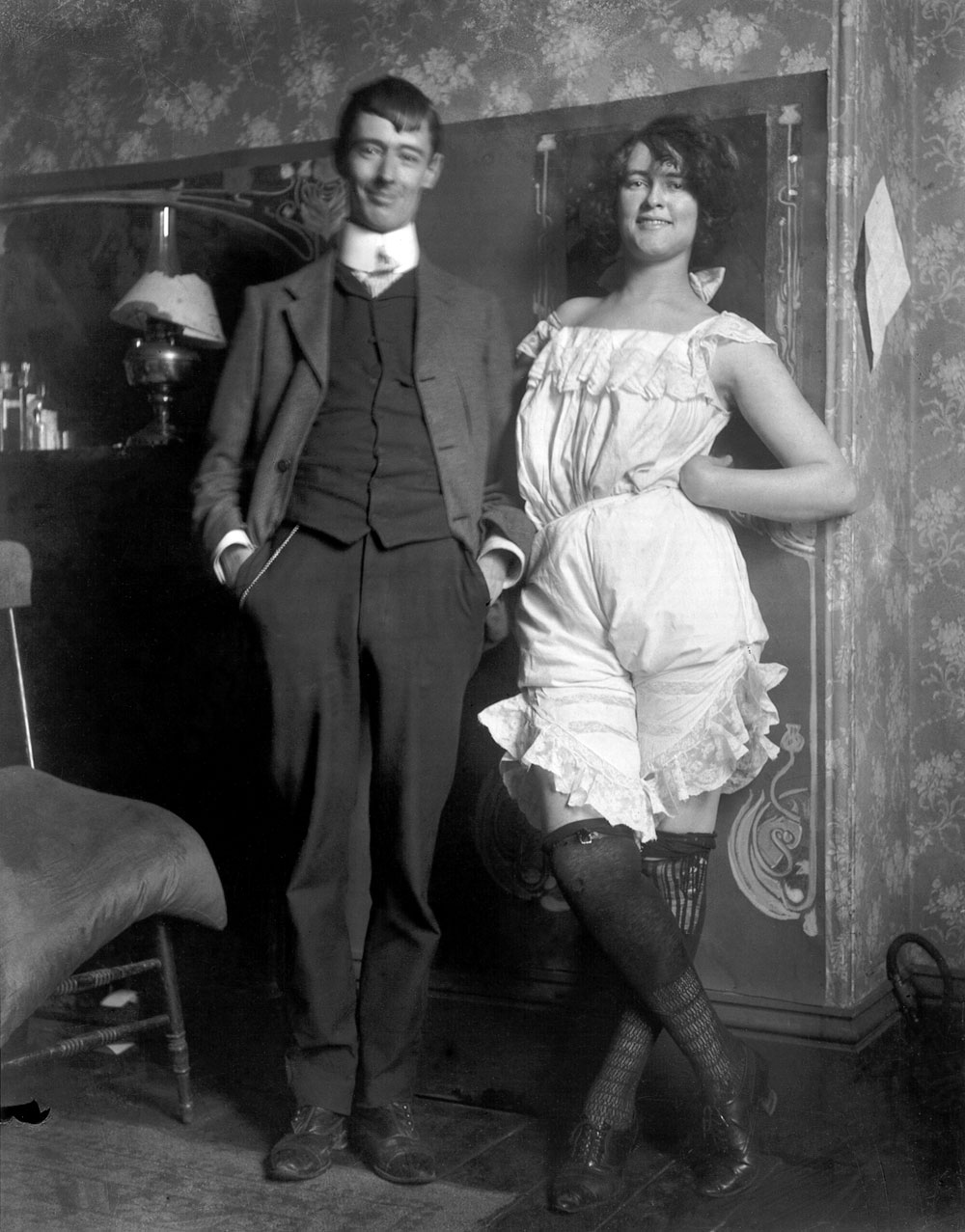
Lionel Lindsay (Australia 1874-1961) 'Norman Lindsay and Rose Soady, Bond Street studio' c. 1909


Lionel Lindsay (Australia 1874-1961)
Norman Lindsay and Rose Soady, Bond Street studio
c. 1909
Gelatin silver print, printed 2000
Monash Gallery of Art, City of Monash Collection
Donated by Katherine Littlewood 2000


Mark Strizic (born Germany 1928; arrived Australia 1950; died 2012) 'BHP steel mill, Port Kembla, 1959'


Mark Strizic (born Germany 1928; arrived Australia 1950; died 2012)
BHP steel mill, Port Kembla, 1959
1959
Gelatin silver print, printed 1999
Monash Gallery of Art, City of Monash Collection
Donated by the Bowness Family through the Australian Government’s Cultural Gifts Program 2008


Monash Gallery of Art
860 Ferntree Gully Road, Wheelers Hill
Victoria 3150 Australia
Phone: + 61 3 8544 0500

Opening hours:
Tue – Fri: 10am – 5pm
Sat – Sun: 10pm – 4pm
Mon/public holidays: closed

Monash Gallery of Art website

LIKE ART BLART ON FACEBOOK

Back to top

Exhibition preview: ‘Out of the closets, into the streets: gay liberation photography 1971-73’ at Edmund Pearce Gallery, Melbourne

Exhibition dates: Tuesday 22nd July – Saturday 26th July, 2014

Opening: Tuesday 22nd July 6-8pm
Nite Art: Wednesday 23rd July until 11pm
Artists represented: Philip Potter, John Storey, John Englart, Barbara Creed, Ponch Hawkes, Rennie Ellis

Curated by Dr Marcus Bunyan and Nicholas Henderson


Rennie Ellis (Australian, 1940-2003 'Confrontation, Gay Pride Week Picnic, Botanical Gardens 1973' 1973, printed later


Rennie Ellis (Australian, 1940-2003)
Confrontation, Gay Pride Week Picnic, Botanical Gardens 1973
1973, printed 2014
Silver gelatin photograph
© Rennie Ellis


Five days, that’s all you’ve got! Just five days to see this fabulous exhibition, so make a note of it now in your diaries…

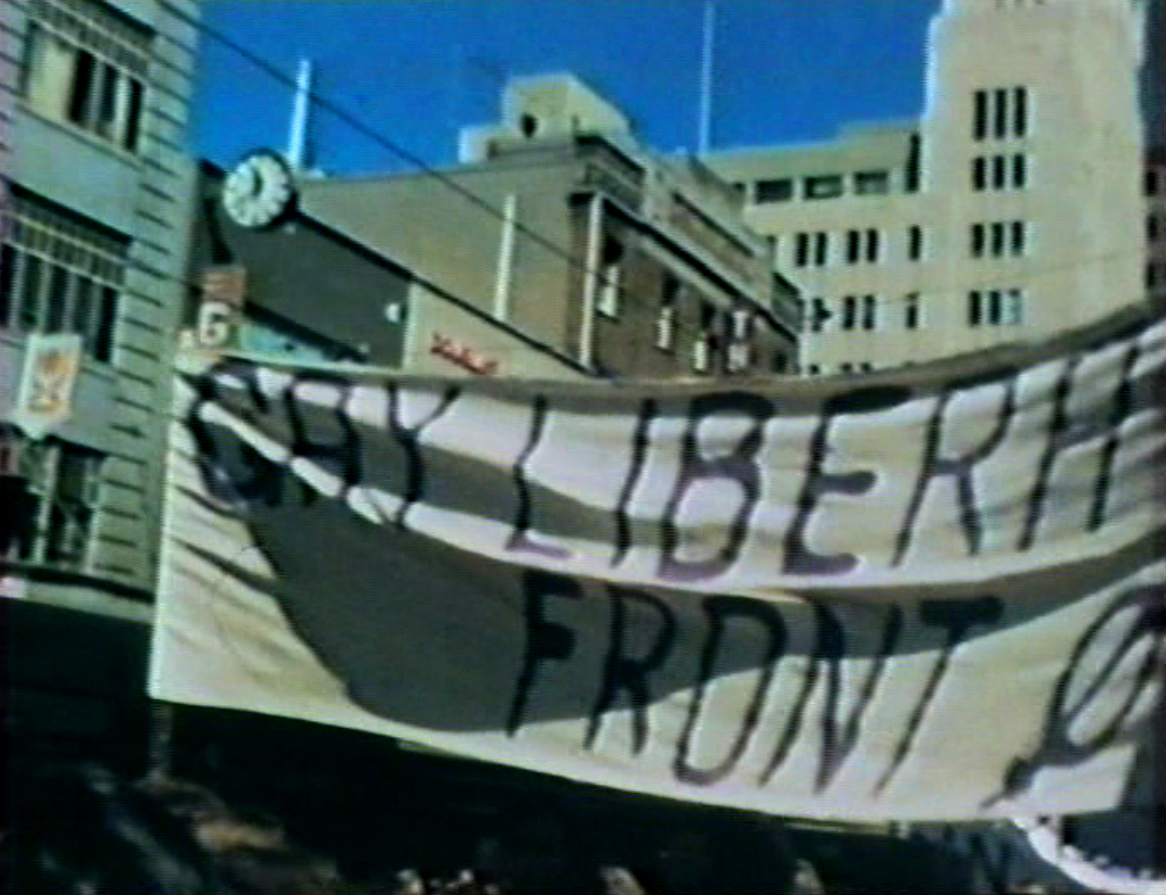
The exhibition Out of the closets, into the streets: gay liberation photography 1971-73 pictures the very beginning of the gay liberation movement in Australia through the work of Philip Potter, John Storey, John Englart, Barbara Creed, Ponch Hawkes and Rennie Ellis. The exhibition examines for the first time images from the period as works of art as much as social documents. The title of the exhibition is a slogan from the period.

As gay people found their voice in the early 1970s artists, often at the very beginning of their careers, were there to capture meetings in lounge rooms, consciousness raising groups and street protests. The liberation movement meant ‘being there’, putting your body on the line. “It was a key feature of the new left that this embodied politics couldn’t stop in the streets: that is, the public arena as conventionally understood. ‘Being there’ politically also applied to households, classrooms, sexual relations, workplaces and the natural environment.”1

Curated by Dr Marcus Bunyan and Nicholas Henderson and with a catalogue essay by Professor Dennis Altman, the show is a stimulating experience for those who want to be inspired by the history and art of the early gay liberation movement in Australia.

The exhibition coincides with AIDS 2014: 20th International AIDS Conference (20-25 July 2014) and Nite Art which occurs on the Wednesday night (23rd July 2014). The exhibition will travel to Sydney to coincide with the 14th Australia’s Homosexual Histories Conference in November at a venue yet to be confirmed.

Dr Marcus Bunyan


1/ Connell, Raewyn. “Ours is in colour: the new left of the 1960s,” in Carolyn D’Cruz and Mark Pendleton (eds.,). After Homosexual: The Legacies of Gay Liberation. Perth: UWA Publishing, 2013, p. 43.

Many thankx to all the artists for allowing me to publish the photographs in the posting. Please click on the photographs for a larger version of the image.


Phillip Potter (Australian) 'Queens' 1971


Phillip Potter (Australian)
Queens
1971, printed 2014
Digital C type print on Kodak Endura Matte
© Phillip Potter


From a series of photographs of the very first gay rights demonstration which attracts 70 people outside NSW Liberal Party headquarters in support of the pre-selection of Tom Hughes against a right wing challenge following his support for homosexual law reform.


Unknown artist. 'Cricket is homosexual' Melbourne, c. 1971 - 1973


Unknown artist
Cricket is homosexual!
Melbourne, c. 1971-1973, printed 2014
Giclee print on Hahnemuhle william turner 310gsm
© Australian Lesbian and Gay Archives


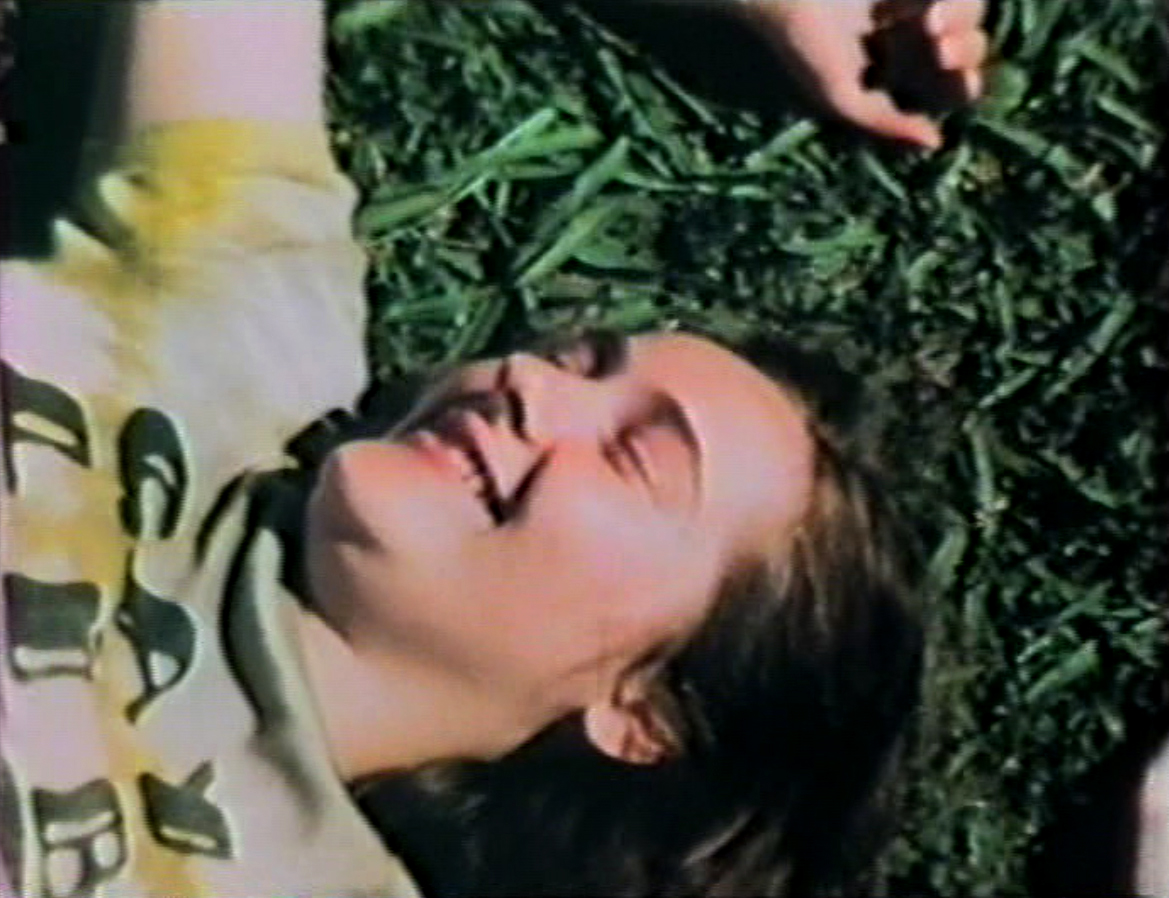
Barbara Creed (Australian, b. 1943) 'Stills from a Super 8mm film of a Women’s Liberation march' Melbourne, 1973


Barbara Creed (Australian, b. 1943)
Stills from a Super 8mm film of a Women’s Liberation march
Melbourne, 1973, printed 2014
Still from a Super 8mm film
Digital C type print on Kodak Endura Matte
© Barbara Creed


Still from a super 8mm movie of a Women’s Liberation march, Melbourne, 1973.


Barbara Creed (Australian, b. 1943) 'Stills from a Super 8mm film of a Women’s Liberation march' Melbourne, 1973


Barbara Creed (Australian, b. 1943)
Stills from a Super 8mm film of a Women’s Liberation march
Melbourne, 1973, printed 2014
Still from a Super 8mm film
Digital C type print on Kodak Endura Matte
© Barbara Creed


Still from a super 8mm movie of a Women’s Liberation march, Melbourne, 1973.


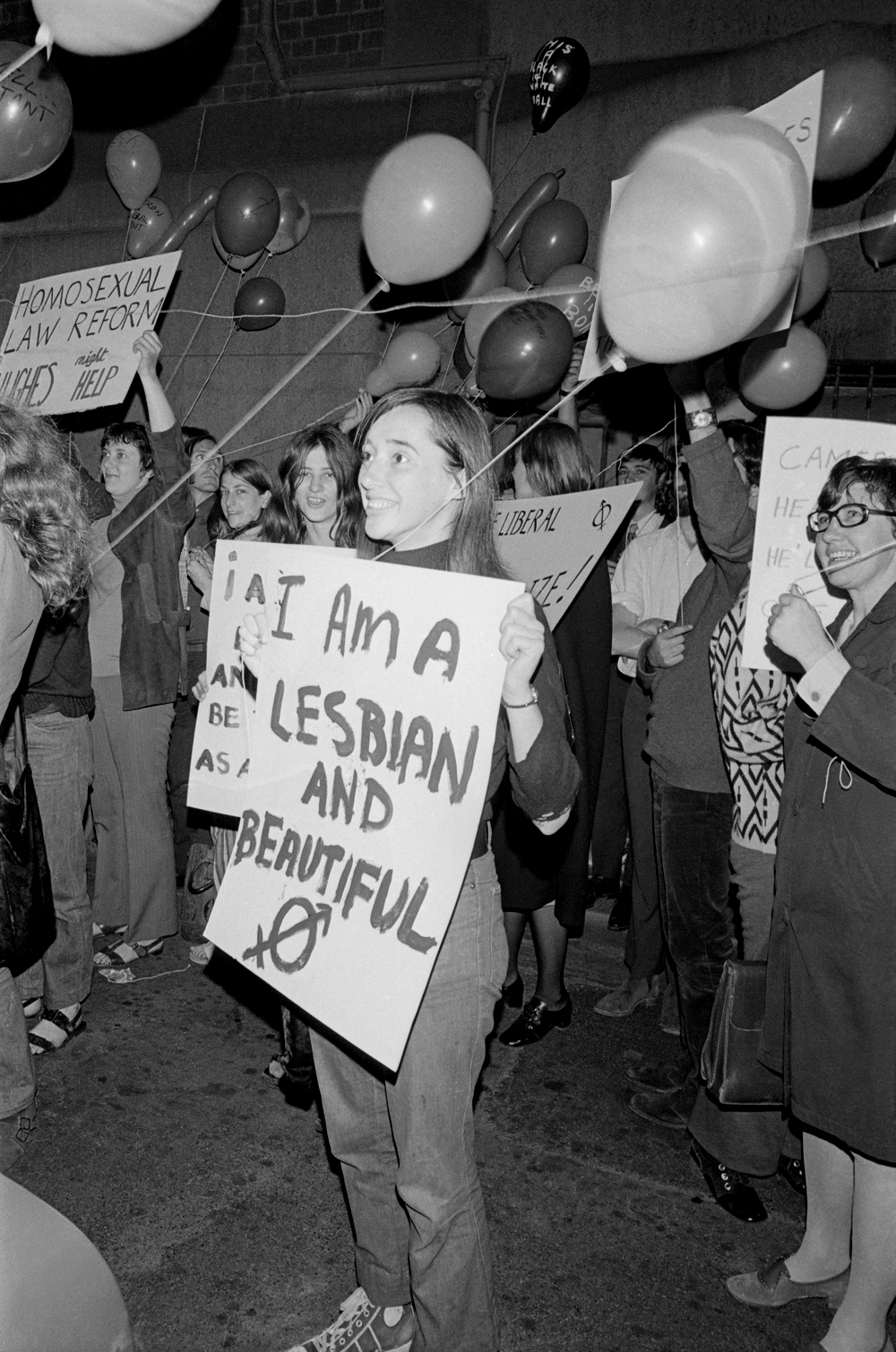
John Storey (Australian, 1950-2019) 'I am a Lesbian and Beautiful' 1971, printed 2014


John Storey (Australian, 1950-2019)
I am a Lesbian and Beautiful
1971, printed 2014
Digital C type print on Kodak Endura Matte
© John Storey


From a series of photographs of the very first gay rights demonstration which attracts 70 people outside NSW Liberal Party headquarters in support of the pre-selection of Tom Hughes against a right wing challenge following his support for homosexual law reform.


Phillip Potter (Australian) 'Policeman reading 'Camp Ink' magazine' 1971


Phillip Potter (Australian)
Policeman reading ‘Camp Ink’ magazine
1971, printed 2014
Digital C type print on Kodak Endura Matte
© Phillip Potter


From a series of photographs of the very first gay rights demonstration which attracts 70 people outside NSW Liberal Party headquarters in support of the pre-selection of Tom Hughes against a right wing challenge following his support for homosexual law reform.


Sponsored by

CPL Digital logo

For photographic services in Australia, Art Blart highly recommends CPL Digital (03) 8376 8376 cpldigital.com.au

Art Blart logo

Dr Marcus Bunyan and the best cultural archive in Australia sponsor this event artblart.com

ALGA logo

AQUA actively collects and preserves lesbian and gay material from across Australia
queerarchives.org.au

Supported by

Rennie Ellis logo

Rennie Ellis is an award winning photographer and writer (03) 9525 3862 www.rennieellis.com.au


AIDS 2014: 20th International AIDS Conference
20 July – 25 July 2014
Melbourne, Australia

Edmund Pearce Gallery

This gallery has now closed.

LIKE ART BLART ON FACEBOOK

Back to top

Review: ‘Simon Harsent / Melt: Portrait of an Iceberg’ at Edmund Pearce Gallery, Melbourne

Exhibition dates: 5th February – 1st March 2014


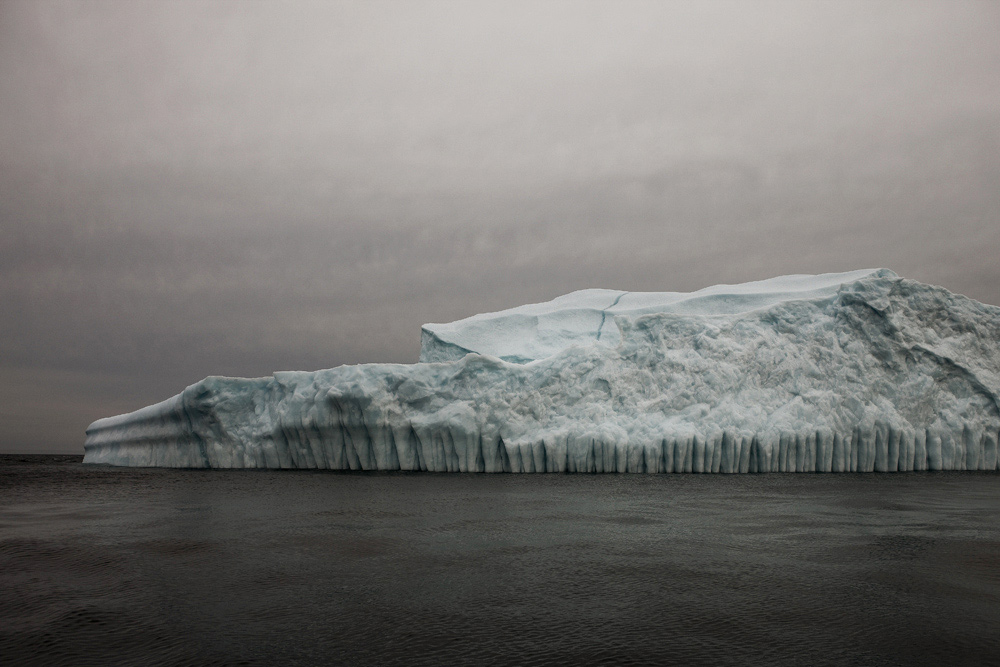
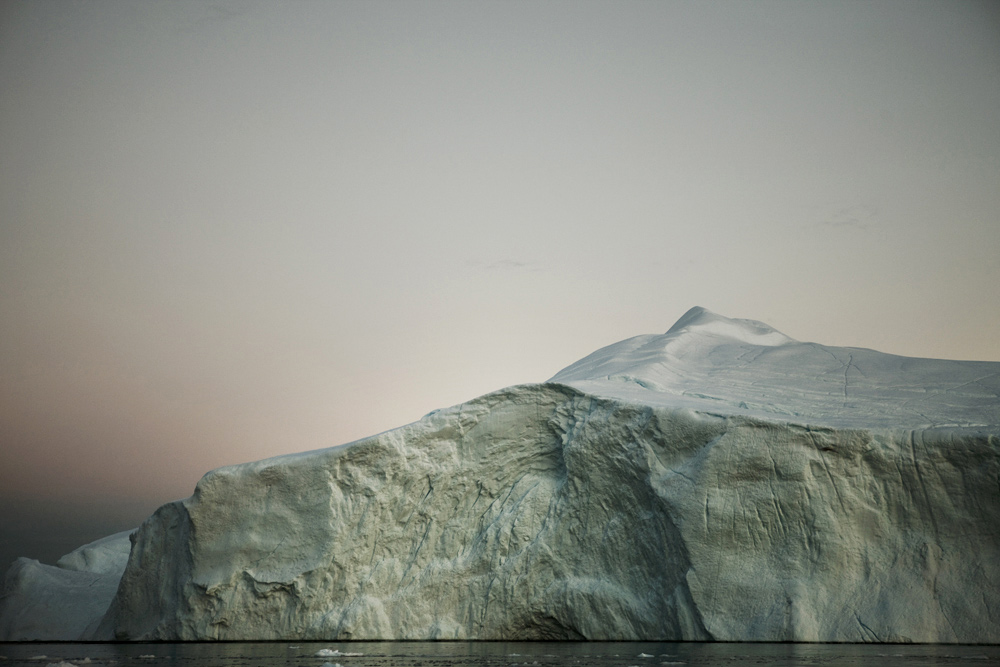
Simon Harsent (British, b. 1965) 'Melt #028a' 2008


Simon Harsent (British, b. 1965)
Melt #028a
2008
Archival Pigment Print
58.5 x 86cm
Edition of 25


A solid exhibition by Simon Harsent to open the year at Edmund Pearce Gallery, Melbourne.

Things I felt and observed

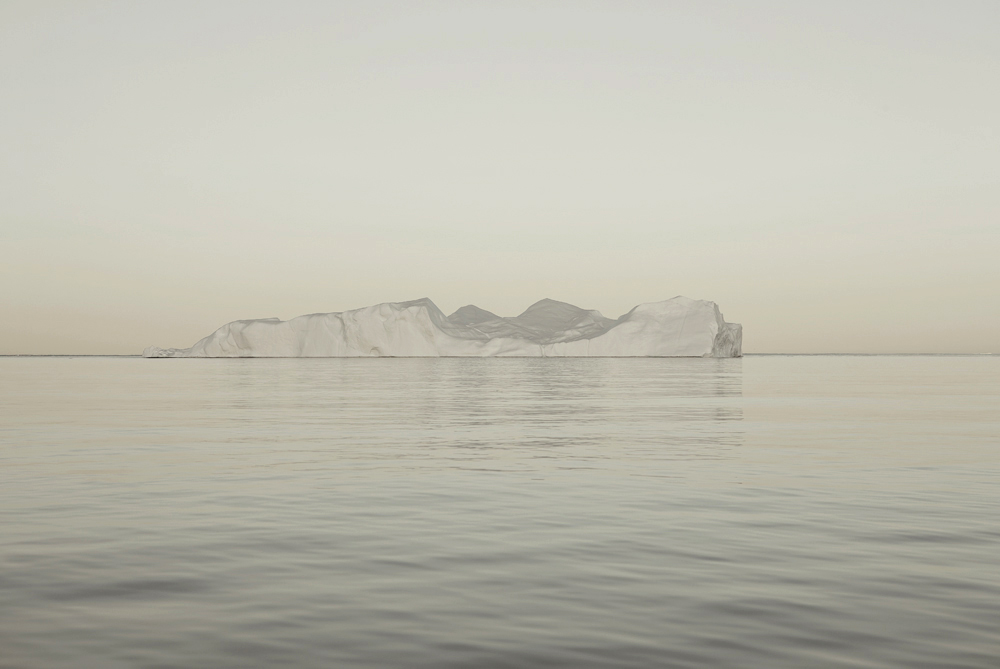
~ Harsent shows me sculptural photographs of icebergs as I have never seen them before

~ The photographs are well printed and framed, have great colour variation and work at both sizes the images are presented at

~ The horizon line of the sea rises and falls throughout the series, allowing the viewer to levitate and drop as you walk around the gallery

~ The ecological component of the exhibition, while inherent, is not overpowering. Which is a good thing

~ The non-chronological hang benefits the exhibition immensely. If the exhibition had been hung from large to small iceberg, the effect would have been too didactic

~ The Brancusi-esque forms held more interest for me, such as Melt #029, Melt #036 and Melt #039 (seen with a photograph of Brancusi’s The Newborn 1920, below), together with the intense, close-up abstract forms such as Melt #014 and Melt #023. These are superb!

Things I wanted to feel and observe

~ When viewing the series I didn’t feel Harsent’s metaphorical reflection upon his own mortality. Only in two images, Melt #042 and Melt #09 (where the sunlight hits the top of the iceberg deliciously) did I feel an anthropomorphic link to humanity

~ I didn’t feel the grandeur of these icebergs. Perhaps just one image at the largest size possible would have shook me from my reverie

~ I didn’t feel the personality of each iceberg in its own journey. In the exhibition I never knew which large iceberg had metamorphosed into which smaller iceberg. Therefore I was unsure of each iceberg’s life-span and story. For that reason these are not ontological portraits concerned with the nature and relations (the relation of one photograph and the next) of being

~ Finally, I wanted the images to push forward, to take me further on the journey. Taking the adage that two-thirds of the iceberg is always below water, I never really felt the psychological power of these objects, something dark that is hidden beneath the sea. All the icebergs are photographed in clear, calm weather. Some photographed in storms, in mist or fog, or at night would have added ineffably to the atmosphere


These are not sublime photographs. I never got that feeling from viewing the work. They come nowhere close to Alain de Botton’s wonderful prose on the significance of sublime places:

“If the world is unfair or beyond our understanding, sublime places suggest it is not surprising things should be thus. We are the playthings of the forces that laid out the oceans and chiselled the mountains. Sublime places acknowledge limitations that we might otherwise encounter with anxiety or anger in the ordinary flow of events. It is not just nature that defies us. Human life is as overwhelming, but it is the vast spaces of nature that perhaps provide us with the finest, the most respectful reminder of all that exceeds us. If we spend time with them, they may help us to accept more graciously the great unfathomable events that molest our lives and will inevitably return us to dust.”(de Botton, Alain. The Art of Travel. London: Penguin, 2002, p. 178-179.)

I never felt that the photographs transported the viewer on an emotional journey that furthers our understanding of the fragility of life both of the planet and of ourselves. And that is the one thing I wished they had of done.

Dr Marcus Bunyan


Many thankx to Edmund Pearce Gallery for allowing me to publish the photographs in the posting. Please click on the photographs for a larger version of the image.


Simon Harsent (British, b. 1965) 'Melt #026' 2008


Simon Harsent (British, b. 1965)
Melt #026
2008
Archival Pigment Print
58.5 x 86cm
Edition of 25


Simon Harsent (British, b. 1965) 'Melt #029' 2008


Simon Harsent (British, b. 1965)
Melt #029
2008
Archival Pigment Print
110 x 160cm
Edition of 10


Simon Harsent (British, b. 1965) 'Melt #039' 2008


Simon Harsent (British, b. 1965)
Melt #039
2008
Archival Pigment Print
58.5 x 86cm
Edition of 10


Simon Harsent (British, b. 1965) 'Melt #036' 2008


Simon Harsent (British, b. 1965)
Melt #036
2008
Archival Pigment Print
58.5 x 86cm
Edition of 25


Constantin Brancusi (Romanian, 1876-1957) 'The Newborn'. Version I 1920 (close to the marble of 1915)


Constantin Brancusi (Romanian, 1876-1957)
The Newborn. Version I
1920 (close to the marble of 1915)
Bronze
14.6cm x 21cm x 14.6cm
Acquired through the Lillie P. Bliss request
© 2010 Artists Rights Society (ARS), New York / ADAGP, Paris

Used under conditions of fair use for the purpose of art criticism


Simon Harsent (British, b. 1965) 'Melt #037' 2008


Simon Harsent (British, b. 1965)
Melt #037
2008
Archival Pigment Print
58.5 x 86cm
Edition of 25


Simon Harsent (British, b. 1965) 'Melt #042' 2008


Simon Harsent (British, b. 1965)
Melt #042
2008
Archival Pigment Print
58.5 x 86cm
Edition of 25


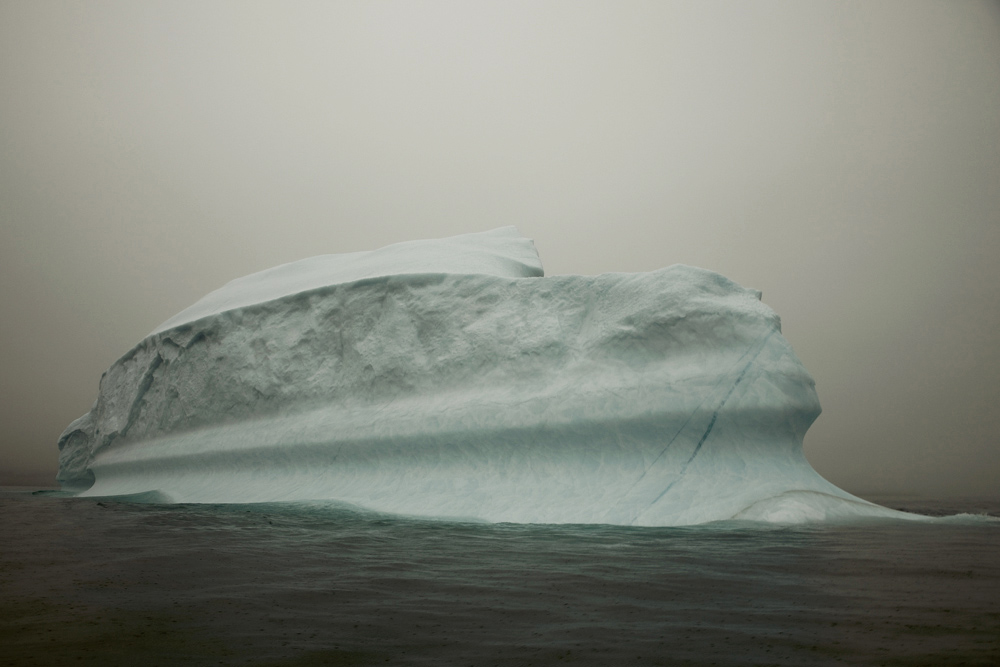
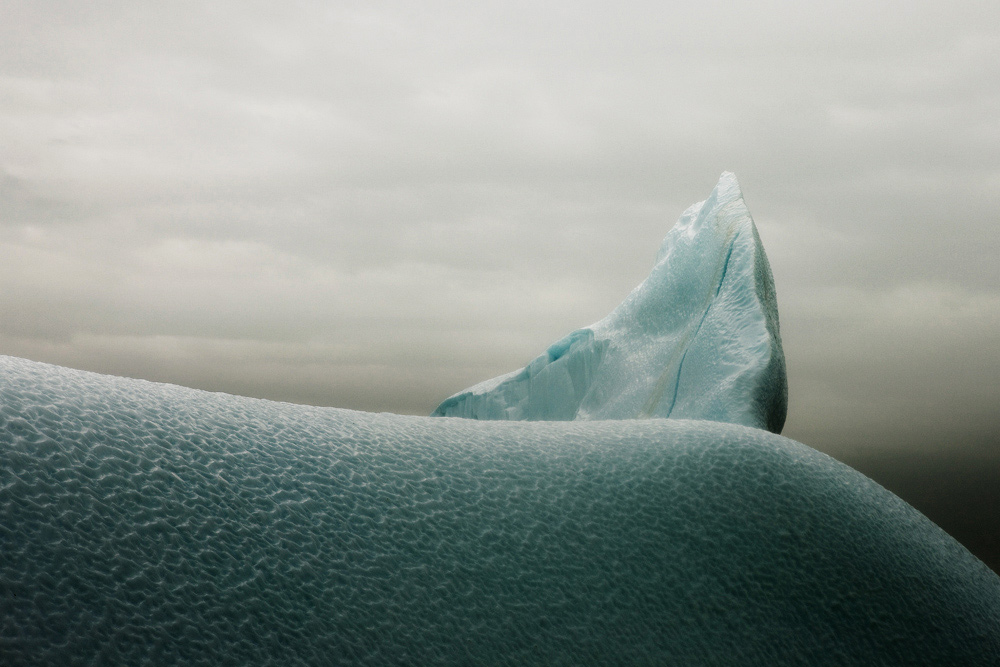
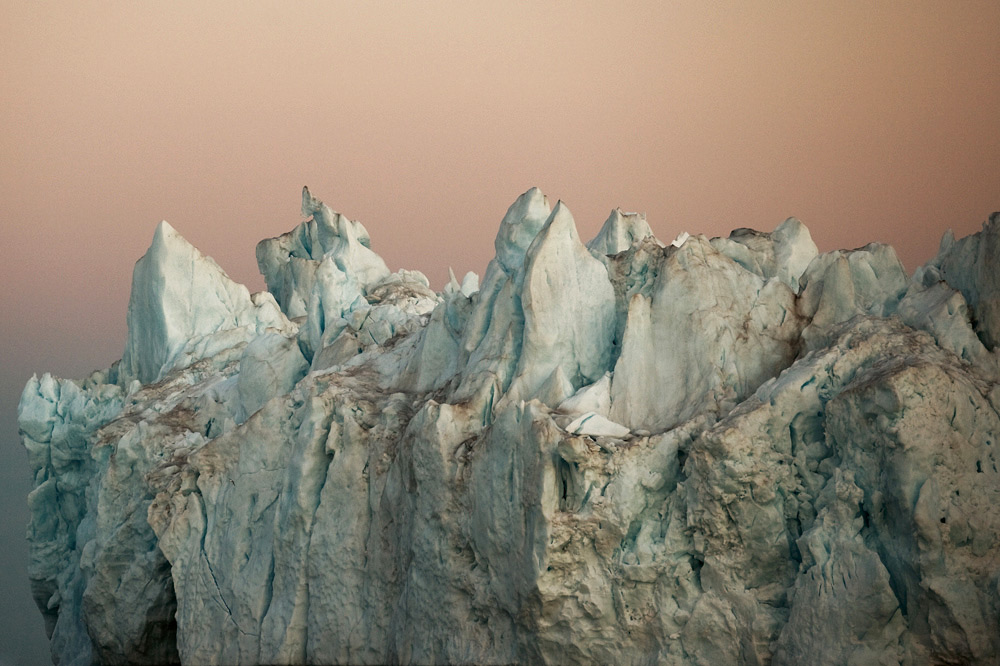
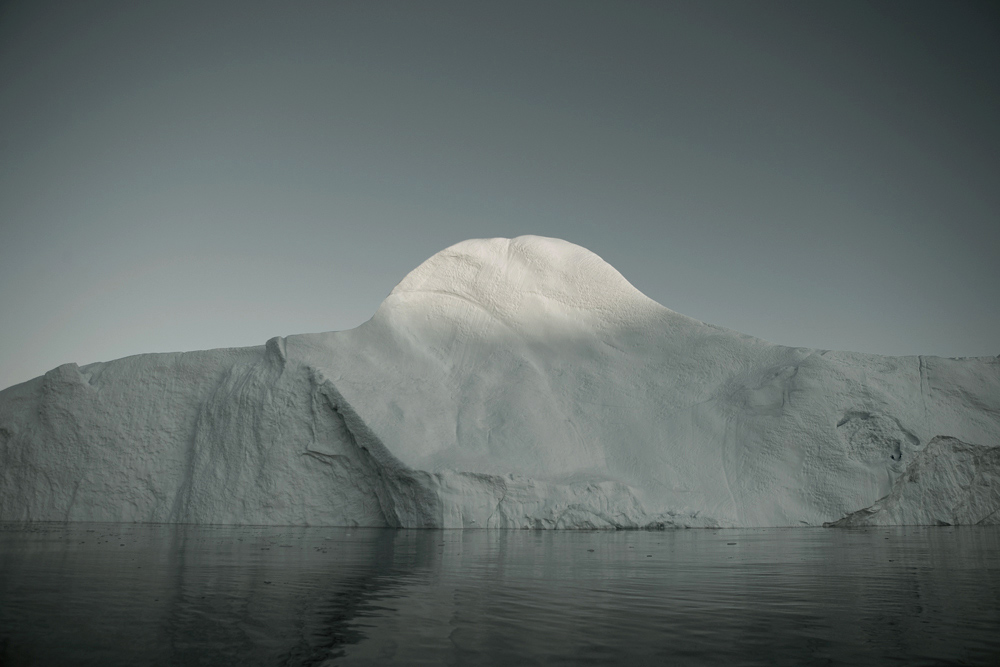
After successful exhibitions in Australia and abroad, Simon Harsent’s sublime photographic series Melt: Portrait of an Iceberg makes its Melbourne premiere at Edmund Pearce this February. The exhibition and accompanying monograph present portraits of icebergs as they travel Greenland’s Ilulissat Icefjord. The ecological story is self-evident; more sections are breaking away from the arctic ice cap and melting faster due to global warming. But the chronicle of the iceberg is, for the artist, a metaphorical reflection upon his own mortality.

Harsent states; “Seeing them first overpowering in grandeur and then, later, about to be absorbed back into the flux from which they came, is both beautiful and humbling: a metamorphosis that endows them with a life-span, each with its own personality, each with its own story.”

Born in England Simon Harsent studied photography at Watford College before moving to Australia in 1988 to establish himself as one of the country’s leading photographers. Currently based in New York, Harsent’s career has seen him win numerous national and international awards including, Cannes Lions, One Show, Clio, D&AD, and Australia’s first Cannes Grand Prix – making him one of the most awarded photographers in the world. His work is included in the permanent collection of the Queensland Art Gallery and The Powerhouse Museum. Melt: Portrait of an Iceberg was published in late 2009 to critical acclaim, reinforced by its inclusion in the prestigious D&AD and PDN Photo Annuals.

Text from the Edmund Pearce Gallery website


Simon Harsent (British, b. 1965) 'Melt #023' 2008


Simon Harsent (British, b. 1965)
Melt #023
2008
Archival Pigment Print
58.5 x 86cm
Edition of 25


Simon Harsent (British, b. 1965) 'Melt #014' 2008


Simon Harsent (British, b. 1965)
Melt #014
2008
Archival Pigment Print
58.5 x 86cm
Edition of 25


Simon Harsent (British, b. 1965) 'Melt #021' 2008


Simon Harsent (British, b. 1965)
Melt #021
2008
Archival Pigment Print
58.5 x 86cm
Edition of 25


Simon Harsent (British, b. 1965) 'Melt #010' 2008


Simon Harsent (British, b. 1965)
Melt #010
2008
Archival Pigment Print
58.5 x 86cm
Edition of 25


Simon Harsent (British, b. 1965) 'Melt #09' 2008


Simon Harsent (British, b. 1965)
Melt #09
2008
Archival Pigment Print
58.5 x 86cm
Edition of 25


Simon Harsent (British, b. 1965) 'Melt #020' 2008


Simon Harsent (British, b. 1965)
Melt #020
2008
Archival Pigment Print
58.5 x 86cm
Edition of 25


Simon Harsent (British, b. 1965) 'Melt #05' 2008


Simon Harsent (British, b. 1965)
Melt #05
2008
Archival Pigment Print
58.5 x 86cm
Edition of 25


Simon Harsent (British, b. 1965) 'Melt #03' 2008


Simon Harsent (British, b. 1965)
Melt #03
2008
Archival Pigment Print
58.5 x 86cm
Edition of 25


Simon Harsent (British, b. 1965) 'Melt #07' 2008


Simon Harsent (British, b. 1965)
Melt #07
2008
Archival Pigment Print
110 x 160cm
Edition of 10


Edmund Pearce Gallery

This gallery has now closed.

LIKE ART BLART ON FACEBOOK

Back to top

Review: ‘Claudia Terstappen: In The Shadow Of Change’ at the Monash Gallery of Art, Wheelers Hill, Melbourne

Exhibition dates: 9th November 2013 – 19th January 2014


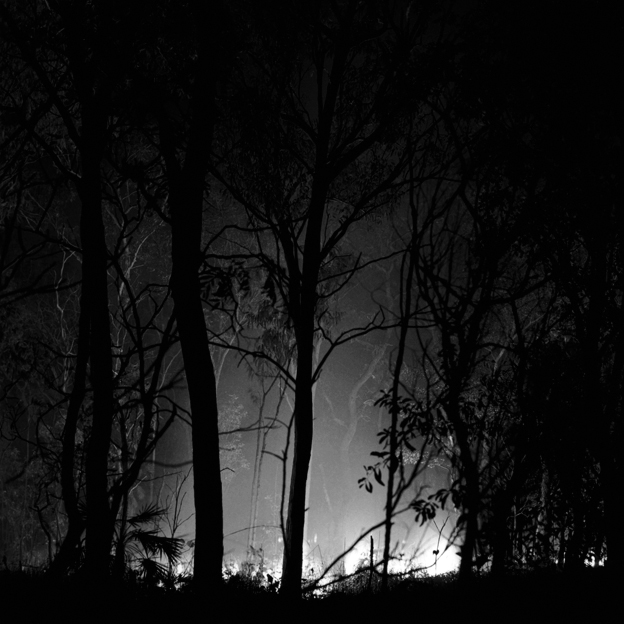
Claudia Terstappen (Australian born Germany, b. 1959) 'After the fire (Northern Territory, Australia)' 2002


Claudia Terstappen (Australian born Germany, b. 1959)
After the fire (Northern Territory, Australia)
2002
From the series Our ancestors 1990-
29 cm x 29cm


“For me, trees have always been the most penetrating preachers. I revere them when they live in tribes and families, in forests and groves. And even more I revere them when they stand alone. They are like lonely persons. Not like hermits who have stolen away out of some weakness, but like great, solitary men, like Beethoven and Nietzsche. In their highest boughs the world rustles, their roots rest in infinity; but they do not lose themselves there, they struggle with all the force of their lives for one thing only: to fulfil themselves according to their own laws, to build up their own form, to represent themselves. Nothing is holier, nothing is more exemplary than a beautiful, strong tree…

A longing to wander tears my heart when I hear trees rustling in the wind at evening. If one listens to them silently for a long time, this longing reveals its kernel, its meaning. It is not so much a matter of escaping from one’s suffering, though it may seem to be so. It is a longing for home, for a memory of the mother, for new metaphors for life. It leads home. Every path leads homeward, every step is birth, every step is death, every grave is mother.

So the tree rustles in the evening, when we stand uneasy before our own childish thoughts: Trees have long thoughts, long-breathing and restful, just as they have longer lives than ours. They are wiser than we are, as long as we do not listen to them. But when we have learned how to listen to trees, then the brevity and the quickness and the childlike hastiness of our thoughts achieve an incomparable joy. Whoever has learned how to listen to trees no longer wants to be a tree. He wants to be nothing except what he is. That is home. That is happiness.”


Herman Hesse. Bäume: Betrachtungen und Gedichte (Trees: Reflections and Poems) 1984


This is the last review of 2013 and what a cracker of an exhibition to finish the year. Without doubt this is the best pure photography exhibition I have seen this year in Melbourne. The exhibition is stimulating and enervating, the image making of the highest order in its aesthetic beauty and visual complexity. The artist explores intangible spaces which define our physical and spiritual relationship with the un/known world.

Briefly stated the bulk of the exhibition features small, square, tonally rich black and white medium format landscape images of unspoiled places from around the world taken between the mid-1980s and the early 2000s, images that possess a sense of the sublime and suggest a link to indigenous cultures. These images are hung in rows, sometimes double row grids, that flesh out the narrative that Terstappen seeks to establish. It is a beautiful, enlightening hang and whoever sequenced the work and hung the show should be congratulated for they understood the artist’s narrative and the tonal range of the printing.

In an excellent review in The Age newspaper (Wednesday December 18th 2013) the writer Robert Nelson suggests that these vistas depict something holy to an earlier or parallel civilisation. He observes that Terstappen’s images go beyond the mere picturesque because the artist applies a persistent inquiry to image making no matter where she is in the world, for “she always looks for properties that the environment shares with counterparts elsewhere.” He goes on to state that the photographs have three systematic demands that the artist places on her interpretation of the landscape: 1/ that they express something elemental (earth, air, water, fire); 2/ the scene has to sustain a dark print with a visual weight that is almost contrary to the nature of photography; and 3/ the picture must reconcile the expansive and the intimate. In her world, everything must have presence, no matter how far away, and press up against the picture plane; everything must have a certain density, a thickness of being which is not about light but about the darkness of light

“All photographs depend on light; but Terstappen’s sensibility errs to descriptions of the density of things, not their reception or reflection of sunshine or even moonlight. Her scenery is gravid with banks engorged by roots, the bulk of outcrops or the intricate tangle of overlapping forest, which is also what seems to activate the water within the air to express it heaviness… A part of the impetus behind Terstappen’s project is pictorial: how to make the most rigorous sense of multiplicity, to frame big things so that they harmonise with little things, so that everything has an equivalent weight, including the air. The corollary of this consistent investigation is a poetic respect for the natural subject matter…”


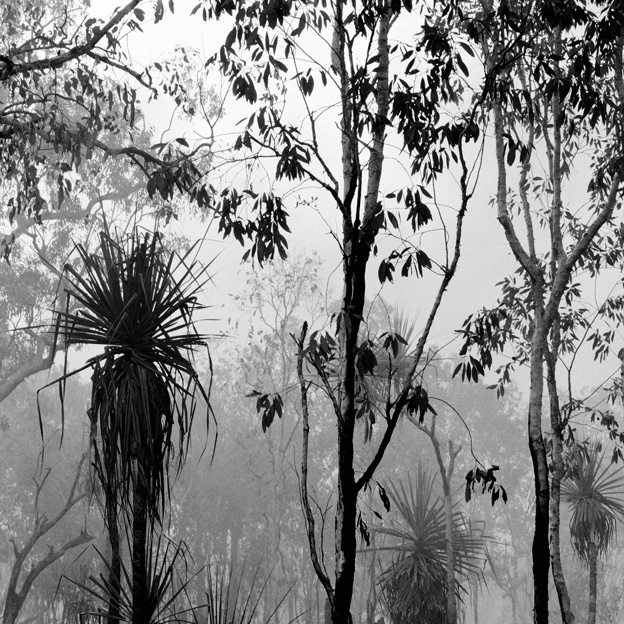
Through images of visual and conceptual beauty and complexity, Terstappen imparts a strange kind of temporality to the work. The artist layers shapes within the photographs and, befitting her training as a sculptor, pushes and pulls at the image plane like a malleable piece of clay, sometimes blocking vision at the surface of the print, sometimes allowing access to a partially accessible (psychological) interiority. For example, look at the last three images before the press release below: Cabbage trees (Queensland, Australia)Curtain fig tree (Queensland, Australia) and Alligator nest (Queensland, Australia) (all 2002). In Cabbage trees the artist creates a visual pattern, like a fabric pattern, that holds the viewer at the surface of the image while still allowing glimpses of what lies beyond; in Curtain fig tree it is as if a curtain has literally descended blocking any access to the interior; while in Alligator nest there is a beautiful, open density to the work that invites contemplation and meditation upon the scene.

In Terstappen’s work, there is always a sense of space moving back, moving from the bottom up or top down and a conscious use of a restricted tonality (no bright whites or blackest blacks). The artist blocks movement, opens it up or swirls it around. Sometimes earth becomes sky as steam turns to cloud, or rock becomes water as the two meld at the base of a waterfall. In this multiplicity, each element is given equal weight within certain atmospheres and an equilibrium is formed, to live at the heart of these images. Each complex, thoughtful image becomes a living and breathing entity.

In Terstappen’s work there is no fixed image and no single purpose, a single meaning, or one singular existence that the images propose. They transcend claims about the world arising from, for example, natural or scientific attitudes or theories of the ontological nature of the world. As the artist visualises, records the feeling of the facts, such complex and balanced images let the mind of the viewer wander in the landscape. In their fecundity the viewer is enveloped in that situation of not knowing. There is the feeling of the landscape, a sensitivity to being “lost” in the landscape, in the shadow of ‘Other’, enhanced through the modality of the printing. Dreamworld vs analytical/descriptive, there is the enigma of the landscape and its spiritual places. Yes, the sublime, but more an invocation, a plea to the gods for understanding. This phenomenological prayer allows the artist to envelop herself and the viewer in the profundity – the great depth, intensity and emotion – of the landscape. To be ‘present’ in the the untrammelled places of the world as (divine) experience.

The only doubt I have about the exhibition is the ex post facto interpretation of the archive as picturing places that are threatened by social and ecological change. As the catalogue text states, “These pictures now form part of an archive of historically significant places that are threatened by social and ecological change. This archive of spiritual sites has, over time, become an environmental archive, reminding us that photography not only has the power to bring places to life, but also to bear witness to the forces that threaten life.” If they are only now forming part of an environmental archive, what memory of sacred place did they initially respond to?

While Terstappen’s work has always focused on a physical encounter with space and an imaging of places that have deep or hidden meanings and mythical / symbolic significance, when I look at this work I do not get a strong sense of these places being under threat. Only through written (not visual) language is this environmental threat enunciated. While archives are always fluid and will always gather new meaning (look at Atget’s “documents for artists”, images that are now acknowledged as some of the most artistic and influential in the whole canon of photography), we must also acknowledge that nothing in this world remains the same, that everything changes all the time, for better or worse. The landscapes that Terstappen photographs are no more “natural” then as they are now, due to the effects of bushfires, human cultivation, erosion, habitation, hunting, farming and natural disaster. Humans cannot appeal to some vision of a world, some garden of Eden, that exists pre humanity. Who is to stay that these places in the world are disappearing or appearing? By the very act of photographing these places, Terstappen labels them, names them as inconsolable places that should never change. This is not the mysterious way of the world. I prefer to look at these places and acknowledge that this is how they looked through the eyes of this artist at this point in time. They have full presence before me, in all their mystery and majesty.

Is this textual analysis necessary for the work to succeed? I do not believe it is, in fact I believe it lessens the inherent quality of these images. Use these images to help people understand what human beings are doing to the planet by all means, but please do not try to retrofit concepts of destruction onto the work.

This minor quibble aside, I say to you that this is the most sophisticated reading of the landscape that I have seen in a long time – not just in Australia but from around the world. This is such a joy of an exhibition to see that you leave feeling engaged and uplifted. Being in the gallery on your own is a privilege that is hard to describe: to see (and feel!) landscape photography of the highest order and by an Australian artist as well. If you grant anything for your New Year’s wish you could do no better than to visit this magnificent exhibition and drink of its atmospheres.

Dr Marcus Bunyan


Many thankx to the Monash Gallery of Art for allowing me to publish the photographs in the posting. All installation photographs © Marcus Bunyan and the Monash Gallery of Art. Please click on the photographs for a larger version of the image.


Claudia Terstappen (Australian born Germany, b. 1959) 'Bushfire III (Northern Territory, Australia)' 2002


Claudia Terstappen (Australian born Germany, b. 1959)
Bushfire III (Northern Territory, Australia)
2002
From the series Our ancestors 1990-
29 cm x 29cm


Claudia Terstappen (Australian born Germany, b. 1959) 'Sickness country II (Northern Territory, Australia)' 2002


Claudia Terstappen (Australian born Germany, b. 1959)
Sickness country II (Northern Territory, Australia)
2002
From the series Our ancestors 1990-
29 cm x 29cm


Claudia Terstappen (Australian born Germany, b. 1959) 'Cabbage trees (Queensland, Australia)' 2002


Claudia Terstappen (Australian born Germany, b. 1959)
Cabbage trees (Queensland, Australia)
2002
From the series Our ancestors 1990-
29 cm x 29cm


Claudia Terstappen (Australian born Germany, b. 1959) 'Curtain fig tree (Queensland, Australia)' 2002


Claudia Terstappen (Australian born Germany, b. 1959)
Curtain fig tree (Queensland, Australia)
2002
From the series Our ancestors 1990-
29 cm x 29cm


Claudia Terstappen (Australian born Germany, b. 1959) 'Alligator nest (Queensland, Australia)' 2002


Claudia Terstappen (Australian born Germany, b. 1959)
Alligator nest (Queensland, Australia)
2002
From the series Lost world 2002-
21 cm x 21cm


Over the last thirty years Claudia Terstappen has taken photographs of places throughout the world that have spiritual resonance or associations. The basis of this exhibition is a selection of these landscapes, presented as gelatin silver prints printed by the artist between the 1980s – early 2000s.

The landscapes in this exhibition document places that have spiritual associations or significance for indigenous people, to make sense of their relationship to the land. But I now realise that the archive has taken on another set of meanings or intention. Today, these pictures form part of a vast archive of landscapes and places undergoing significant change. This archive of spiritual places has become an environmental archive.

Terstappen was born in Germany, and her landscapes are in many ways informed by her heritage. Like Australia, Germany has a particular tradition of landscape, where places of nature carry important associations for cultural understanding and a sense of belonging. Terstappen is herself part of a long tradition of German artists to explore this relationship.

Terstappen studied at the Düsseldorfer Kunstakademie, the training ground for many of Germany’s most important contemporary artists. Having been taught by the famous photographer Bernd Becher and then the architect and sculptor Erich Reusch, Terstappen has since exhibited widely throughout Europe, North America and Australia.

Text from the Monash Gallery of Art website


Claudia Terstappen originally trained a a sculptor but for over three decades she has worked in the medium of photography. In some respects, her art practice has been developed between these two artistic disciplines. She retains a strong interest in the sculptural sensation of a physical encounter in space, but she uses the two-dimensional medium of photography to document and reiterate these experiences.

Terstappen’s interest in the interplay between depth and surface is also evident in the subjects that she explores. She often photographs places that have deep or hidden meanings. This includes sites of pilgrimage, shrines of worship and landscapes invested with mythic significance. These associations are not always apparent, and often subsist as a type of secret knowledge, but they can be given tangible form through processes of story-telling and ceremonial action. Terstappen engages with these locations in order to give them a tangible photographic form, elaborating a sense of symbolic power or sublime drama across the surface of her images.

This exhibition features 75 photographs depicting places that have been invested with spiritual resonances or mythical associations, from Iceland and southern Europe to the Americas and Australia. The starting point for this exhibition is a selection of gelatin silver prints that were hand-printed by the artist between the mid-1980s and the early 2000s. These pictures now form part of an archive of historically significant places that are threatened by social and ecological change. This archive of spiritual sites has, over time, become an environmental archive; reminding us that photography not only has the power to bring places to life, but also to bear witness to the forces that threaten life.

Text from the exhibition pamphlet


Claudia Terstappen (Australian born Germany, b. 1959) 'Turtle Dreaming, Australia (Northern Territory)' 2002


Claudia Terstappen (Australian born Germany, b. 1959)
Turtle Dreaming, Australia (Northern Territory)
2002
from the series Vanishing landscapes 1987-
Gelatin silver print
120 x 120cm
Courtesy of the artist


Claudia Terstappen (Australian born Germany, b. 1959) 'Namandi spirit [Queensland, Australia]' 2002


Claudia Terstappen (Australian born Germany, b. 1959)
Namandi spirit (Queensland, Australia)
2002
from the series Our ancestors 1990-
Gelatin silver print
29 x 29cm
Courtesy  of the artist


Claudia Terstappen (Australian born Germany, b. 1959) 'Cabbage trees [Queensland, Australia]' 2002


Claudia Terstappen (Australian, born Germany 1959)
Cabbage trees (Queensland, Australia)
2002
from the series Our ancestors 1990-
Gelatin silver print
29 x 29cm
Courtesy  of the artist


Claudia Terstappen (Australian born Germany, b. 1959) 'Full moon [France]' 1997


Claudia Terstappen (Australian born Germany, b. 1959)
Full moon (France)
1997
from the series I believe in miracles 1997-
Gelatin silver print
80 x 80cm
Courtesy  of the artist


Claudia Terstappen (Australian born Germany, b. 1959) 'Mountain [Brazil]' 1991


Claudia Terstappen (Australian born Germany, b. 1959)
Mountain (Brazil)
1991
from the series Sacred mountains 1989-
Gelatin silver print
37 x 37cm
Courtesy  of the artist


Claudia Terstappen (Australian born Germany, b. 1959) 'Mountain [Las Palmas, Spain]' 1992


Claudia Terstappen (Australian born Germany, b. 1959)
Mountain (Las Palmas, Spain)
1992
from the series Sacred mountains 1989-
Gelatin silver print
49 x 49cm
Courtesy  of the artist


Claudia Terstappen (Australian born Germany, b. 1959) 'Zion Park [USA]' 1996


Claudia Terstappen (Australian, born Germany 1959)
Zion Park (USA)
1996
from the series Sacred land of the Navajo Indians 1990-
Gelatin silver print
37 x 37cm
Courtesy  of the artist


In the shadow of change features almost 100 of Claudia Terstappen’s magnificent landscape photographs. Terstappen is a German-born photographer who studied at the famous Dusseldorf art academy and is now Professor of Photography at Monash University in Melbourne.

For over three decades, Terstappen has been photographing landscapes the world over. Brazil, Colombia, Canada, Japan, USA, Iceland and Spain have been destinations for the artist, who has travelled the world looking for landscapes which have particular spiritual or mythical meanings. This search brought Terstappen to Australia in 2002; the artist now lives in Melbourne as a permanent resident.

Terstappen’s vast archive of landscape photographs has taken on significant environmental associations. As debates about the politics and impact of land use and climate change continue, Terstappen’s landscapes – from intimately scaled views of forests and riverbeds to grand views of mountains and glaciers – present a truly beautiful account of landscape photography and its contemporary significance.

As Terstappen states: ‘There is a moral dimension to looking at and photographing landscape today. Landscape photography has tremendous currency. Many of the landscapes in my photographs will have either completely disappeared or drastically changed by now. I firmly believe we need to re-establish our relationship with nature and landscape and photography can help us to achieve this.’

MGA Director and curator of the exhibition Shaune Lakin states: ‘MGA is very proud to have developed this exhibition with Claudia, which will be accompanied by a beautifully illustrated book. We have timed the exhibition to coincide with the 30-year anniversary of one of the defining moments in Australian photography, when landscape photographs actually brought about significant social and political change. It is now 30 years since Peter Dombrovskis’s now-iconic photographs of the Gordon River helped prevent construction of the Franklin Dam in Tasmania, which to this day remains one of the world’s great wilderness areas.

‘With the election of a new government and promises of a new environmental agenda, it seems a perfect time for us to reconsider the power of landscape photography and the status of environmentalism in Australia today.’

Press release from the Monash Gallery of Art website


Installation photograph of the exhibition 'Claudia Terstappen: In The Shadow Of Change' at the Monash Gallery of Art, Wheelers Hill, Melbourne

Installation photograph of the exhibition 'Claudia Terstappen: In The Shadow Of Change' at the Monash Gallery of Art, Wheelers Hill, Melbourne

Installation photograph of the exhibition 'Claudia Terstappen: In The Shadow Of Change' at the Monash Gallery of Art, Wheelers Hill, MelbourneInstallation photograph of the exhibition 'Claudia Terstappen: In The Shadow Of Change' at the Monash Gallery of Art, Wheelers Hill, Melbourne

Installation photograph of the exhibition 'Claudia Terstappen: In The Shadow Of Change' at the Monash Gallery of Art, Wheelers Hill, Melbourne

Installation photograph of the exhibition 'Claudia Terstappen: In The Shadow Of Change' at the Monash Gallery of Art, Wheelers Hill, Melbourne

Installation photograph of the exhibition 'Claudia Terstappen: In The Shadow Of Change' at the Monash Gallery of Art, Wheelers Hill, Melbourne

Installation photograph of the exhibition 'Claudia Terstappen: In The Shadow Of Change' at the Monash Gallery of Art, Wheelers Hill, Melbourne

Installation photograph of the exhibition 'Claudia Terstappen: In The Shadow Of Change' at the Monash Gallery of Art, Wheelers Hill, Melbourne

Installation photograph of the exhibition 'Claudia Terstappen: In The Shadow Of Change' at the Monash Gallery of Art, Wheelers Hill, Melbourne

Installation photograph of the exhibition 'Claudia Terstappen: In The Shadow Of Change' at the Monash Gallery of Art, Wheelers Hill, Melbourne

Installation photograph of the exhibition 'Claudia Terstappen: In The Shadow Of Change' at the Monash Gallery of Art, Wheelers Hill, Melbourne


Installation photographs of the exhibition Claudia Terstappen: In The Shadow Of Change at the Monash Gallery of Art, Wheelers Hill, Melbourne
Photos: © Marcus Bunyan


Bob Browns opening speech at artist Claudia Terstappen’s exhibition In the shadow of change at the Monash Gallery of Art (MGA) in Melbourne. Recorded on Saturday 9 November 2013.


Monash Gallery of Art
860 Ferntree Gully Road, Wheelers Hill
Victoria 3150 Australia
Phone: + 61 3 8544 0500

Opening hours:
Tuesday – Friday 10am – 5pm
Saturday – Sunday 12pm – 4pm
Mon/public holidays closed

Monash Gallery of Art website

LIKE ART BLART ON FACEBOOK

Back to top

Photographs. Marcus Bunyan. ‘upside, down’ 2013

December 2013


Marcus Bunyan (Australian, b. 1958) 'Untitled' from the series 'upside, down' 2013


Marcus Bunyan (Australian, b. 1958)
Untitled
2013
From the series upside, down 2013
Digital photograph


upside, down

Finally, I got my act together for a new series of my own work titled upside, down (2013). The series is now online on my website or you can click on the thumbnails below to go the full image. There are 30 images in the series formed as a sequence. Below is a selection of images from the series. Please click on the photographs for a larger version of the image.

People have asked me what this series is about. It’s about the suspension of belief; it’s about taking an enormous, heavy war machine and floating it in mid air and the impossibility of this; it’s about looking at this structure of destruction as a constructivist object, looking at the mass of this object; it is about the disintegration of this object (for these are poor quality scans that when enlarged will fall apart) – about raising the object up and letting it fall into the world. It is against war.

People have said to me the images look strange, that they look better the right way up. I’m glad that they are inverted for the world is a very strange place, where we make huge machines just to kill ourselves. I’m glad they look strange, I’m glad they make you feel uncomfortable. They are meant that way.

The sculptor Fredrick White has observed that the work is also about the beauty of the object, emphasising its form by inverting the mass of the ship, and also the weight, compression and displacement of space – almost like a time slippage / fracture, a time portal to another world. This is very perceptive because the work is about all of these things. I love layering the work so it reveals different things!

Dr Marcus Bunyan

Photographs are available from this series for purchase. As a guide, a digital colour 16″ x 20″ costs $1000 plus tracked and insured shipping. For more information please see my Store web page.


“The initial feeling of the series was of a curtain rising – and that strongly draws us into the drama. But the whole series is very witty, very touching and appeals very strongly to the senses. There is an inevitability about the human condition here that is very sobering. In the end the strongest of your gestures are almost ignored by the viewer who becomes aware of this atmosphere.”


Text from my friend Ian Lobb


Marcus Bunyan. 'Untitled' from the series 'upside, down' 2013 Marcus Bunyan. 'Untitled' from the series 'upside, down' 2013 Marcus Bunyan. 'Untitled' from the series 'upside, down' 2013 Marcus Bunyan. 'Untitled' from the series 'upside, down' 2013
Marcus Bunyan. 'Untitled' from the series 'upside, down' 2013 Marcus Bunyan. 'Untitled' from the series 'upside, down' 2013


Marcus Bunyan (Australian, b. 1958) 'Untitled' from the series 'upside, down' 2013


Marcus Bunyan (Australian, b. 1958)
Untitled
2013
From the series upside, down
Digital photograph


Marcus Bunyan (Australian, b. 1958) 'Untitled' from the series 'upside, down' 2013


Marcus Bunyan (Australian, b. 1958)
Untitled
2013
From the series upside, down
Digital photograph


Marcus Bunyan (Australian, b. 1958) 'Untitled' from the series 'upside, down' 2013


Marcus Bunyan (Australian, b. 1958)
Untitled
2013
From the series upside, down
Digital photograph


Marcus Bunyan (Australian, b. 1958) 'Untitled' from the series 'upside, down' 2013


Marcus Bunyan (Australian, b. 1958)
Untitled
2013
From the series upside, down
Digital photograph


Marcus Bunyan (Australian, b. 1958) 'Untitled' from the series 'upside, down' 2013


Marcus Bunyan (Australian, b. 1958)
Untitled
2013
From the series upside, down
Digital photograph


Marcus Bunyan (Australian, b. 1958) 'Untitled' from the series 'upside, down' 2013


Marcus Bunyan (Australian, b. 1958)
Untitled
2013
From the series upside, down
Digital photograph


Marcus Bunyan (Australian, b. 1958) 'Untitled' from the series 'upside, down' 2013


Marcus Bunyan (Australian, b. 1958)
Untitled
2013
From the series upside, down
Digital photograph


Marcus Bunyan (Australian, b. 1958) 'Untitled' from the series 'upside, down' 2013


Marcus Bunyan (Australian, b. 1958)
Untitled
2013
From the series upside, down
Digital photograph


Marcus Bunyan (Australian, b. 1958) 'Untitled' from the series 'upside, down' 2013


Marcus Bunyan (Australian, b. 1958)
Untitled
2013
From the series upside, down
Digital photograph


Marcus Bunyan (Australian, b. 1958) 'Untitled' from the series 'upside, down' 2013


Marcus Bunyan (Australian, b. 1958)
Untitled
2013
From the series upside, down
Digital photograph


Marcus Bunyan (Australian, b. 1958) 'Untitled' from the series 'upside, down' 2013


Marcus Bunyan (Australian, b. 1958)
Untitled
2013
From the series upside, down
Digital photograph


Marcus Bunyan website

LIKE ART BLART ON FACEBOOK

Back to top

Exhibition: ‘Melbourne Now’ at the National Gallery of Victoria, Melbourne, Part 2

Exhibition dates: 22nd November – 23rd March 2014
 

Stephen Benwell (Australian, b. 1953) 'Statue' 2012 (installation view)


Stephen Benwell (Australian, b. 1953)
Statue (installation view)
2012
Photo: Marcus Bunyan


Throughout his career a major preoccupation of Benwell’s work has been the depiction of the male figure. In 2006 he commenced a series of figurative sculptural works that explore issues relating to masculinity, naked beauty and sensuality. These works, initially inspired by eighteenth century figurines and Greco-Roman statuary, have become a significant aspect of Benwell’s recent practice. The artist contributes a group of these evocative male figures for Melbourne Now.


This is the second of a two-part posting on the huge Melbourne Now exhibition at the National Gallery of Victoria, Melbourne. The photographs in this posting are from NGV Australia at Federation Square. The first part of the posting featured work from NGV International venue in St Kilda Road. Melbourne Now celebrates the latest art, architecture, design, performance and cultural practice to reflect the complex cultural landscape of creative Melbourne.

Dr Marcus Bunyan


Many thankx to the NGV for allowing me to publish the photographs in the posting. All photographs © Dr Marcus Bunyan unless otherwise stated. Please click on the photographs for a larger version of the image. Please note: All text below the images is from the guide book.


“Melbourne is a microcosm of the global art world. This is evident not only in its possession of world-class infrastructure, but also in the multitude of tendencies, styles and modes of practice that circulate in its midst. I doubt that there is an underlying formal unity, or even a hierarchy of movements, that holds together and directs the global art world. This then begs the question: does the teeming multitude of art forms in Melbourne suggest that the local scene is an isomorph [a substance or organism that exactly corresponds in form with another] of global chaos, or a unique fragment that coexists with other entities?

The answer is paradoxical. It is our haunted and resistant sense of place that allows for both a form of belonging that is forever seeking to be elsewhere, and a unique aesthetic that anticipates the many returns of a repressed past.”


Nikos Papastergiadis. “As Melbourne in the world.” 2013


“What the show delivers in spades is a sense of the city as a place of immense creativity and subtle exploration. While non-Melburnians might be tempted to see this as an especially large example of the city’s enduring fascination with itself, when the theme is the city, the inclusion of architecture and design makes sense.

And the result is anything but narcissistic; a turn round the exhibition reveals that although Melbourne features strongly in some works, it is also curiously incidental; at the heart of the show is an examination of urban and suburban, and what it feels like to live in a rapidly changing world where old certainties no longer apply.”


Anonymous. “Melbourne Now: this exhibition changes the city’s arts landscape,” on The Guardian Australia Culture Blog, Thurs 28 November 2013 [Online] Cited 25/11/2013


Polixeni Papapetrou (Australian, 1960-2018) 'Ocean Man' 2013


Polixeni Papapetrou (Australian, 1960-2018)
Ocean Man
2013
From the series The Ghillies 2013
Pigment print
120 x 120cm
National Gallery of Victoria, Melbourne
Purchased NGV Foundation, 2013
© Polixeni Papapetrou/Administered by VISCOPY, Sydney
Photo: © National Gallery of Victoria


Papapetrou’s contribution to Melbourne Now comprises three photographs from her 2013 series The Ghillies. Working with her children as models and using the extreme camouflage costumes that are employed by the military, Papapetrou reflects on the passing of childhood and the moment when children separate themselves from their mothers. Young men often assume the costumes and identities of masculine stereotypes, hiding themselves, and their true identity, from plain sight in the process.


Michelle Hamer (Australia, b. 1975) 'Can't' 2013


Michelle Hamer (Australia, b. 1975)
Can’t
2013
Wool, plastic
52 x 67cm
Collection of the artist
© Michelle Hamer, courtesy Fehily Contemporary, Melbourne
Photo: © National Gallery of Victoria


Hamer’s contribution to Melbourne Now pairs works referencing local signage, Blame and punish the individual, 2013, and Can’t, 2013, with three earlier tapestries from her American series I Send Mixed Messages, 2013. While the contrasting palettes and particular nuances of typography, built architecture and native vegetation point to specific times and places, when amplified and dislocated Hamer’s chosen texts suggest a more universal narrative of perplexity and turmoil. The artist describes these powerful distillations as ‘revealing the small in-between moments that characterise everyday life’.
 

Patricia Piccinini (born Sierra Leone 1965, lived in Italy 1968-1972, arrived Australia 1972) 'The carrier' 2012 (installation view detail)


Patricia Piccinini (born Sierra Leone 1965, lived in Italy 1968-1972, arrived Australia 1972)
The carrier (installation view detail)
2012
Silicone, fibreglass, human and animal hair, clothing
170 x 115 x 75cm
Collection of Corbett Lyon and Yueji Lyon, Lyon Housemuseum, Melbourne, proposed gift
© Patricia Piccinini, courtesy Tolarno Galleries, Melbourne
Supported by Corbett and Yueji Lyon
Photo: © Marcus Bunyan


Piccinini’s work for Melbourne Now is The carrier, 2012, a hyper-real sculpture of a bear-like figure holding an elderly woman. With his massive, hirsute and muscular physique, the creature is almost human; there is warmth and intimacy between the mismatched couple. The figures’ relationship is ambiguous. Are they mistress and servant, or simply unlikely friends, embarked on a journey together? It is nice to believe the latter, but hard to forget that humans rarely treat other animals equitably. The carrier investigates what we want from our creations, and wonders about unexpected emotional connections that might arise between us and them.
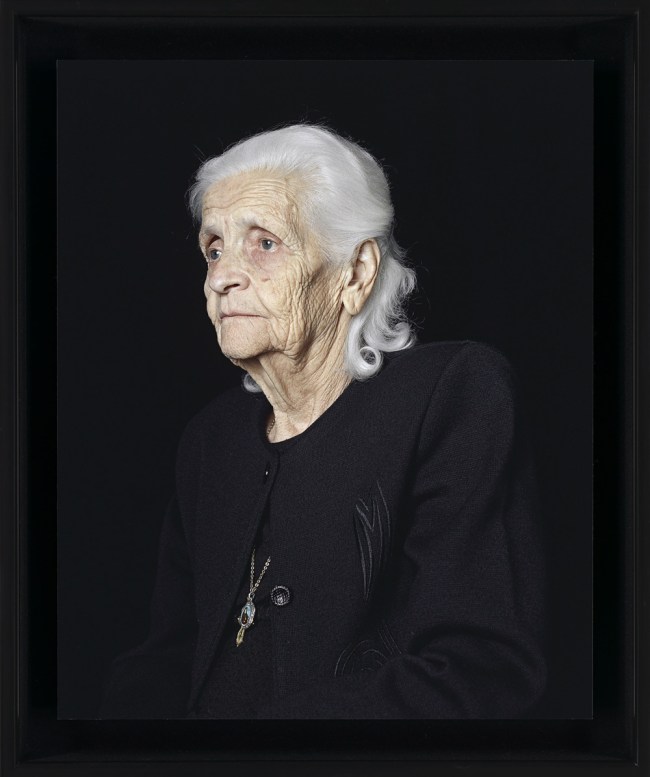
 

Georgia Metaxas (Australia, b. 1974) 'Untitled 28' 2011


Georgia Metaxas (Australia, b. 1974)
Untitled 28
2011
From The Mourners series 2011
Type C photograph
60 x 50 x 7cm
Collection of the artist
© Georgia Metaxas, courtesy of Fehily Contemporary, Melbourne
Photo: © National Gallery of Victoria


Metaxas’s contribution to Melbourne Now comprises five photographs from The Mourners series, 2011, which was first exhibited at the Centre for Contemporary Photography, Melbourne, in 2011. These stately portraits show women who have adopted the traditional practice of wearing black, symbolising perpetual mourning, following the death of their husbands. Photographed against plain black backdrops, dressed in their widows’ weeds, these women form an austere and mournful frieze.
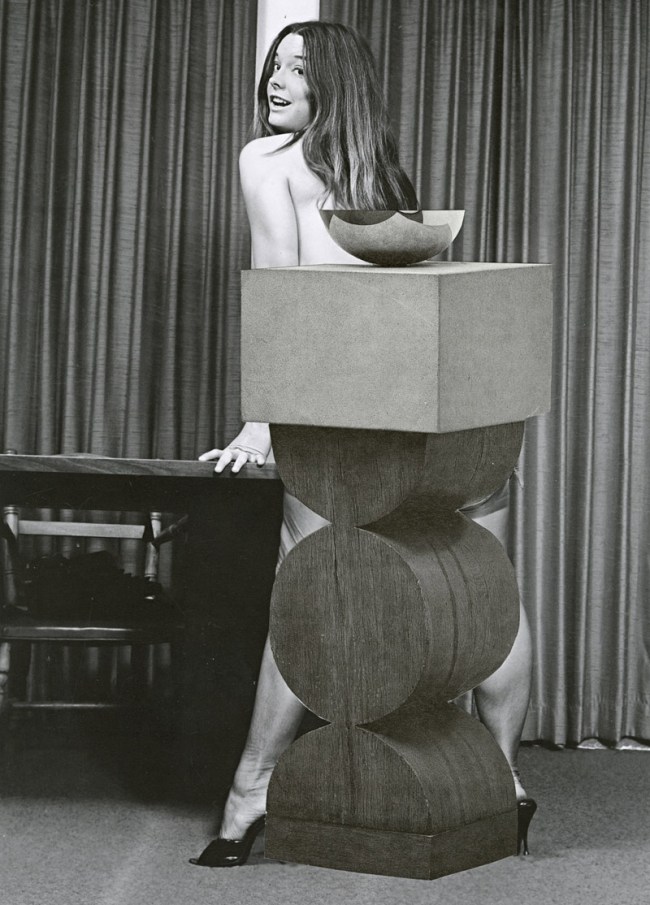
 

Stuart Ringholt (Australia, b. 1971) 'Nudes' 2013


Stuart Ringholt (Australia, b. 1971)
Nudes
2013
Collage (1-52)
29 x 30cm (each)
Collection of the artist
© Stuart Ringholt, courtesy Milani Gallery, Brisbane
Photo: © National Gallery of Victoria


Expanding the artist’s greater naturist project, Nudes, 2013, is a series of collages featuring images of twentieth-century modernist art objects and nudes taken from soft porn references. In these works, Ringholt complicates the original function of the images as the spectator considers the relationship between the nude and the work of art. Interested in how images can be transformed by simple interventions, Ringholt opens possibilities for new narratives to emerge between the nude, the object and the audience.
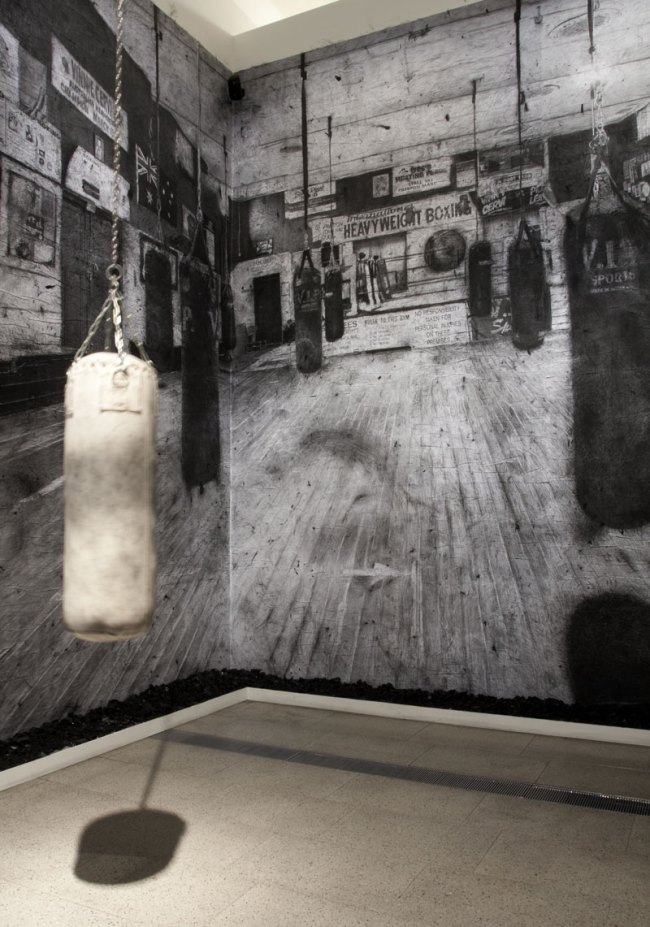
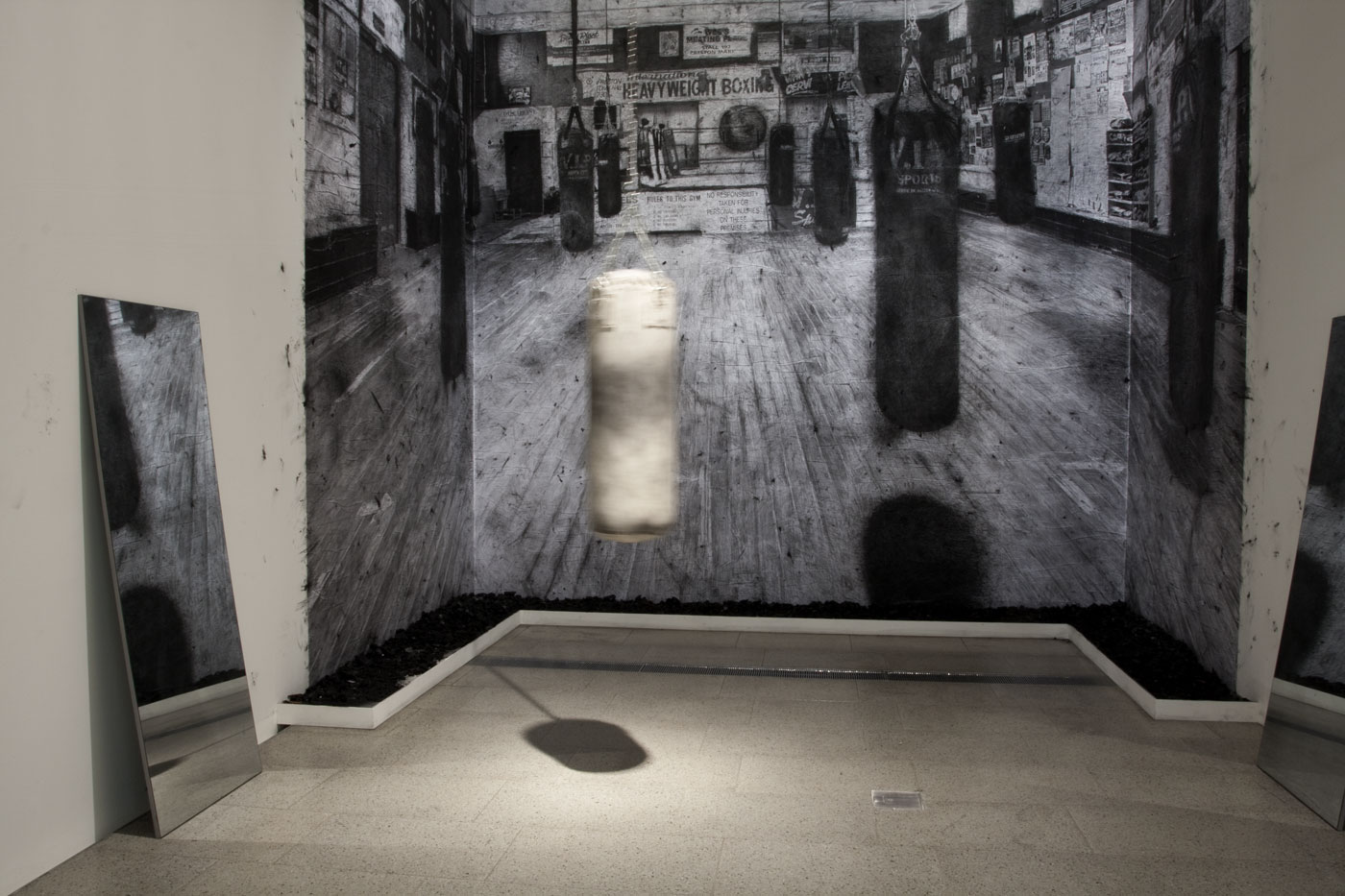
 

Richard Lewer (born New Zealand 1970, arrived Australia 2000) 'Northside Boxing Gym' 2013 (installation view detail)

Richard Lewer (born New Zealand 1970, arrived Australia 2000) 'Northside Boxing Gym' 2013 (installation view detail)


Richard Lewer (born New Zealand 1970, arrived Australia 2000)
Northside Boxing Gym (installation view details)
2013
Charcoal on existing wall, boxing bag, 5.1 sound system
550 x 480 x 480cm (installation)
Collection of the artist
© Richard Lewer, courtesy Hugo Michell Gallery, Adelaide
Photos: © Marcus Bunyan


Since challenging fellow artist Luke Sinclair to a boxing match at Melbourne’s Northside Boxing Gym in 2001 (as a performance), Lewer has remained interested in the site, training there regularly and making art about it. For Melbourne Now Lewer presents an immersive recreation of the gymnasium, featuring a large-scale charcoal wall-drawing accompanied by mirrors, sound and a sweaty boxing bag.


Hotham Street Ladies (Australia, est. 2007) 'At home with the Hotham Street Ladies' 2013 (installation view)


Hotham Street Ladies (Australia, est. 2007)
At home with the Hotham Street Ladies (installation view)
2013
Royal and buttercream icing, modelling paste, confectionary, furniture, plinths, pot plants, colour DVD, television, light fittings, heater, icing, video, chandelier, lampshade, fireplace, furniture, television, crockery, cutlery, glassware, fabric dimensions variable (installation)
NGV commission Supported by Melbourne Now Champions the Dewhurst Family
Photo: © National Gallery of Victoria


The collective’s members are Cassandra Chilton, Molly O’Shaughnessy, Sarah Parkes, Caroline Price and Lyndal Walker. Their practice embraces themes of home life, feminism and craft and explores how collaborative participation in, and contemporising of, these activities creates a distinct cultural community. Their work’s innovative combination of humour and contemporary critique with nostalgic or familiar elements makes it appealing to a wide audience. Often thought of in terms of dysfunction, the share house in their hands becomes a site of creativity, cooperation and overindulgence.

Food is a constant presence in HSL’s work, from recipe swap meets, street art and public art commissions to controversial cake entries in the Royal Melbourne Show. For Melbourne Now the group take baking and icing to a whole new level. Their installation At home with the Hotham Street Ladies, 2013, transforms the foyer of The Ian Potter Centre: NGV Australia into an icing-bombed domestic wonderland. Their commission for kids invites children and families to photograph themselves within one of the scenes from HSL’s icing- and lolly encrusted share house.
 

Lucy Irvine (Australian born Scotland, b. 1980) 'Before the after' 2013 (installation view)


Lucy Irvine (Australian born Scotland, b. 1980)
Before the after (installation view)
2013
Photo: © Marcus Bunyan


For Melbourne Now Irvine has constructed a large site-specific work at The Ian Potter Centre: NGV Australia, Before the after, 2013, which establishes a dialogue with the gallery building, its architecture and the temporality of the exhibition. Spilling out across the floor, the serpentine form is an interruption of the order of things, a writhing obsidian mass that clings to the interior of the building. At the same time the work is a nuanced meditation on the nature of surfaces and skin. Irvine’s iterative practice argues for value in the gestural, and proposes the act of making as a form of knowledge.
 

Paul Knight (Australian, b. 1976) 'Untitled' 2012


Paul Knight (Australian, b. 1976)
Untitled
2012
National Gallery of Victoria, Melbourne
Photo: © Marcus Bunyan
 

Paul Knight (Australian, b. 1976) 'Untitled' 2012


Paul Knight (Australian, b. 1976)
Untitled
2012
National Gallery of Victoria, Melbourne
Photo: © Marcus Bunyan


Knight’s recent folded photographic works extend his interest in notions of authorship, photographic agency, the relationships between observer and observed, and ideas of intimacy and love. Each scene captures a couple lying together, bodies entwined, in bed – the artist privy to an intense, personal scene of absorption. There is an evident trust between Knight and his subjects, who sleep gently, seemingly unaware of, or perhaps complicit in, his presence. The illusion is ruptured by the folding of the photographic print, which has the effect of sometimes forcing the couples closer together, other times slicing them apart. The fold intensifies the sense of intimacy and draws attention to the physical state of the photograph.


Installation view of the series 'Milk Bars of Melbourne', 2010-2013 by David Wadelton at the exhibition 'Melbourne Now'


Installation view of the series Milk Bars of Melbourne, 2010-2013 by David Wadelton at the exhibition Melbourne Now
Photo: © David Wadelton


David Wadelton (Australian, b. 1955) 'Milk Bar, Jenkens Avenue Frankston North' 2012


David Wadelton (Australian, b. 1955)
Milk Bar, Jenkens Avenue Frankston North
2012
From the series Milk Bars of Melbourne, 2010-13
Photo: © David Wadelton
 

David Wadelton (Australian, b. 1955) 'Milk Bar, Napier Street, Essendon' 2012


David Wadelton (Australian, b. 1955)
Milk Bar, Napier Street, Essendon
2012
From the series Milk Bars of Melbourne, 2010-13
Photo: © David Wadelton


For Melbourne Now, Wadelton contributes a series of recent photographs of suburban milk bars selected from his vast personal cache. Whereas these shots of corner-store facades – windows jammed with ice-cream, soft drink and newspaper logos, hand-painted typography and scrawled graffiti – echo the Pop paintings that made his name, insofar as they combine ready-made commercial symbols on the same flat, pictorial plane, the photographs’ grey-scale palette and documentary presentation differ from the futuristic aesthetic of Wadelton’s canvases. While the paintings delight in global commercial imagery, Milk Bars of Melbourne, 2010-2013, shows a local culture in terminal decline.
 

Penny Byrne (Australian, b. 1965) 'iProtest' 2012-13 (installation view details)

Penny Byrne (Australian, b. 1965) 'iProtest' 2012-13 (installation view details)


Penny Byrne (Australian, b. 1965)
iProtest (installation view details)
2012-2013
Photos: © Marcus Bunyan


While at first iProtest, 2012-2013, resembles a display of endearing souvenir-style figurines hanging on a wall, its potency is revealed on closer inspection. Each figurine is personalised with details relating to one of the many conflicts driven by mass protests around the world. Nationalism is referenced by faces painted with flags; acts of violence leave bodies dismembered and bloodied; and the cutest figurines are in fact riot police, wielding guns and dressed as clowns. The omnipresent symbol of Facebook is also ingeniously added to the work. Byrne’s crowd of modified figurines explores the way social media has become a significant tool for coordinating protests around the world.

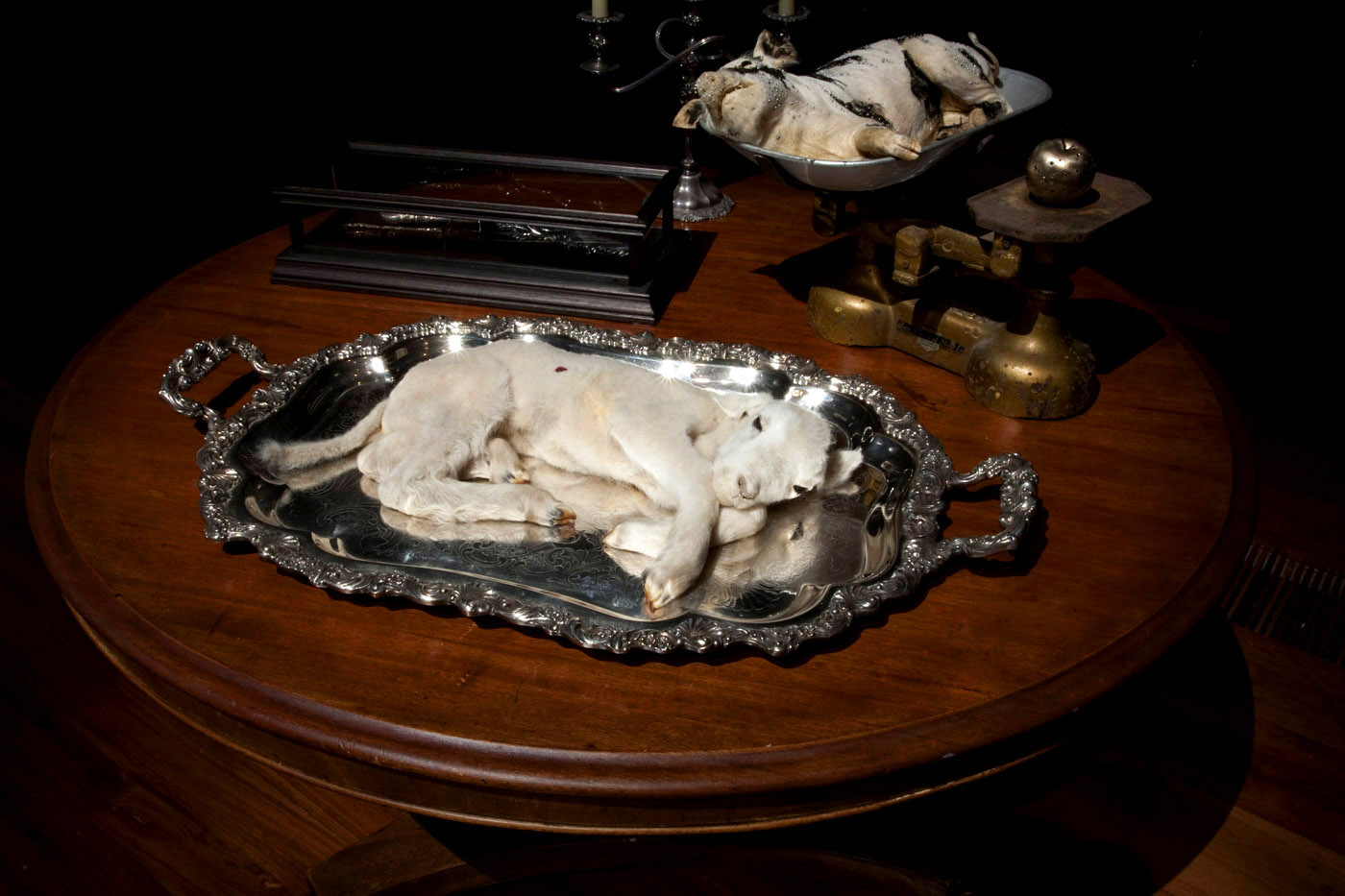
 

Julia deVille (Australian, b. 1982) 'Degustation' 2013 (installation view detail)

Julia deVille (Australian, b. 1982) 'Degustation' 2013 (installation view detail)

Julia deVille (Australian, b. 1982) 'Degustation' 2013 (installation view detail)


Julia deVille (Australian, b. 1982)
Degustation (installation view details)
2013
Photos: © Marcus Bunyan


Informed by a fascination with death, memento mori and Victorian jewellery design, deVille’s work relies on traditional techniques and involves a broad range of animals, precious and semiprecious metals and gems. The artist is a vegan and passionate advocate for the fair and just treatment of animals, and only uses animals that have died of natural causes in her work. By examining death in this distinctive way, deVille urges us to consider our own mortality and the beauty of death and remembrance. For Melbourne Now she has created an installation titled Degustation, 2013, which evokes an ornate Victorian-style dining room, filled with her sculptural pieces and works from the NGV collection.
 

Mira Gojak (Australian, b. 1963) 'Transfer station 2' 2011 (installation view)


Mira Gojak (Australian, b. 1963)
Transfer station 2 (foreground) (installation view)
2011
Photo: © Marcus Bunyan


With Transfer station 2, 2011, Gojak creates a sculptural work of unfurling, freewheeling loops, shaky erratic lines and clusters of blossoming tangles that appears like a drawing suspended in space. A high-keyed palette of cobalt blues, soft pinks and fluorescent yellows activates heavier blackened thickets that punctuate perspectives of uninterrupted space. Suspended from the ceiling by a single line, Gojak’s sculpture is a not-quite-settled upon Venn diagram. Its openness is held still in a moment, together with all the scribbled-out mistakes, digressions and exclusions, stalling or directing the movement and exchange circulating around the forms.
 

Daniel von Sturmer. 'Paradise park' 2013 (installation view detail) with Elizabeth Gower's '150 rotations' 2013 on the wall at left behind


Installation view of Daniel von Sturmer’s Paradise park 2013 (detail, foreground) with Elizabeth Gower’s 150 rotations 2013 on the wall behind (detail, left)
Photo: © Marcus Bunyan


The first version of 150 rotations was displayed recently in an exhibition, curated by Gower, that explored the appropriation and use of urban detritus as a visual art strategy by a variety of Melbourne artists. Further developed for Melbourne Now, Gower’s contribution now comprises 150 circular components, each made up of tea-bag tags, price tags and elements cut from junk mail catalogues, which colonise the wall like a galaxy of vibrant constellations. Akin to the light from long-dead stars, the familiar ephemera, which is usually thrown out, recycled or composted, now serves a new purpose and takes on a mesmeric, formal beauty.


Daniel von Sturmer (Australian, b. 1972) 'Paradise park' 2013 (installation view)

Daniel von Sturmer (Australian, b. 1972) 'Paradise park' 2013 (installation view)

Daniel von Sturmer (Australian, b. 1972) 'Paradise park' 2013 (detail)


Daniel von Sturmer (Australian, b. 1972)
Paradise park (installation views)
2013
Photos: © Marcus Bunyan


Von Sturmer’s Melbourne Now commission for kids, Paradox park, 2013, creates a space for enquiry and interaction with art, conceived with a child’s innate sense of curiosity and wonder. Paradox park comprises a large tilted plane with small circular apertures through which a child (or adventurous adult) can push their head in order to view small projections of animated objects atop and below the surface. By placing the viewer’s point of reference inside the work, von Sturmer posits experience itself as a creative act – a unique interplay between viewer and viewed.
 

Melbourne Design Now. Simone LeAmon (curator, exhibition designer) (Australia, b. 1971) Edmund Carter (exhibition designer) (Australia, b. 1983) 'Design in everyday life' 2013 (installation view)


Melbourne Design Now
Simone LeAmon (curator, exhibition designer) (Australia, b. 1971)
Edmund Carter (exhibition designer) (Australia, b. 1983)
Design in everyday life (installation view)
2013
Supported by The Hugh D. T Williamson Foundation
Photo: © Marcus Bunyan


Melbourne Design Now is the first design exhibition of its kind to be shown at the National Gallery of Victoria. A presentation of localised creative intelligence in the fields of industrial, product, furniture and object design, this project comprises more than ninety design projects from forty designers, design studios and companies. Melbourne Design Now celebrates design’s relationship to everyday life and how contemporary designers are embedding unique and serial design production with ideas, meaning and emotion to resonate with the city of Melbourne.

The breadth of design projects in this ‘exhibition within the exhibition’ intends to communicate to the public that the work of Melbourne designers is influencing discourses, future scenarios and markets both at home and around the world. Ranging from cinema cameras by Blackmagic Design to the Bolwell EDGE caravan, eco-design education tools by Leyla Acaroglu to Monash Vision Group’s direct-to-brain bionic eye, and furniture made with ancient Australian timber by Damien Wright to biodegradable lampshades by LAB DE STU, these design projects consolidate Melbourne as one of the great design cities in the world today.
 

Melbourne Design Now. Gregory Bonasera 'Palace table' 'Derby pendant light' 2013 Kate Rohde 'Ornament is Crime vessels' 2013 (installation view)

Melbourne Design Now. Gregory Bonasera 'Palace table' 'Derby pendant light' 2013 Kate Rohde 'Ornament is Crime vessels' 2013 (installation view)


Melbourne Design Now
Gregory Bonasera (Australian, b. 1965)
Palace table
Derby pendant light
2013
Kate Rohde (Australian, b. 1980)
Ornament is Crime vessels
2013
Photos: © Marcus Bunyan


Gregory Bonasera is a ceramicist with an in depth understanding of the processes utilised in the production of ceramics; a methodical thinker who works more like an industrial designer than a potter to realise his creations and to advise and collaborate with other designers on their projects. Consistently adding new works to his range of innovative functional and sculptural ceramic wares, Gregory casts his creations in fine porcelain and bone china employing a hybrid of state of the art CAD technology with traditional 270 year old ceramic production methods. His works are strongly influenced by natural forms, science, biology, botany and geometry.

Kate Rohde’s jewellery and vessels are created in resin, a signature material that features extensively in her visual art practice. These pieces take a playful, decorative approach, often incorporating elements typical of Baroque and Rococo style, drawing particularly on the decorative arts and interior design of this era. The highly ornate nature reveals, on closer inspection, that much of the patterning is drawn from flora and fauna sources. The combination of the two intersecting interests creates a psychedelic supernature.

Text from the Pieces of Eight Gallery website [Online] Cited 25/11/2013


Installation view of Jess Johnson Various titles 2013 (installation view)

Installation view of Jess Johnson Various titles 2013 (installation view)


Installation views of Jess Johnson Various titles 2013
Photos: © Marcus Bunyan


Johnson creates fantastic worlds in images that combine densely layered patterns, objects and figures within architectural settings. Cryptic words and phrases are part of her unique and idiosyncratic iconography. The artist’s drawing and installation practice is inspired by science fiction, mythological cosmology and comic books, and reflects a diverse interest in art, ranging from illuminated manuscripts to folk art traditions such as quilt making. Her contribution to Melbourne Now includes ten new drawings that depict the imagined formation of a future civilisation. These are displayed within a constructed environment featuring a raised podium, painted walls and patterned floor which, together with the drawings, offers an immersive experience.

 

'Sampling the City: Architecture in Melbourne Now' (installation view)

'Sampling the City: Architecture in Melbourne Now' (installation view)

'Sampling the City: Architecture in Melbourne Now' (installation view)


Installation views of Sampling the City: Architecture in Melbourne Now
Photos: © Marcus Bunyan


Sampling the City: Architecture in Melbourne Now reveals the complex web of personalities, factions and trajectories that make up Melbourne’s vibrant contemporary architectural culture. This project asks: What are the ideas and themes that inform Melbourne’s design culture? Who are its agitators and protagonists? How are emerging architects driving new ways of thinking? The project is in four parts:

~ A ‘super graphic’ introduction sampling Melbourne’s contemporary architectural culture

~ A projection space with architectural imagery curated to five themes: representation and the city; craftsmanship and materiality; art-engaged practice; stitching the city; and bio-futures/advanced architecture

~ An incubator/studio environment providing insight into the processes of six leading Melbourne architects: Cassandra Fahey, Make Architecture, March Studio, Muir Mendes, Studio Bird and Studio Roland Snooks

~ An intimate screening room with a video artwork by Matthew Sleeth

Sampling the City is curated by Fleur Watson, with exhibition design by Amy Muir and Stuart Geddes, projection and soundscape design by Keith Deverall, introductory narrative by Watson and Michael Spooner and built environment imagery by Peter Bennetts.
 

un Magazine. 'un Retrospective' 2013 (installation view)


un Magazine
un Retrospective (installation view)
2013
Photo: © Marcus Bunyan


For Melbourne Now, un Magazine presents un Retrospective – a selective history of artists, writers and art practice in Melbourne since 2004, as featured in the back catalogue of the magazine. Taking inspiration and content from past issues, un Retrospective assembles recent local works of art alongside correlating text – whether original essay, review or interview – from the pages of un Magazine, highlighting the relationships between criticism and practice, writers and artists, that have been fostered in the publication. un Retrospective celebrates ten years of un Magazine and contemporary art in Melbourne while providing a point of historical context within the newness of Melbourne Now.


Slave Pianos. 'Gamelan sisters' 2013 (installation view)


Slave Pianos
Gamelan sisters (installation view)
2013
Photo: © Marcus Bunyan


Slave Pianos – a collaboration between artists, composers and musicians Rohan Drape, Neil Kelly, Danius Kesminas, Michael Stevenson and Dave Nelson – make historically grounded, research-based installations and performances utilising humour, immediacy and the conflation of ‘high’ and ‘low’ idioms to suggest connections and interrelations between the largely discrete fields of music, art and architecture.

For Melbourne Now Slave Pianos present Gamelan sisters, 2013, a self-governing electromechanical ‘slave’ gamelan, which allows audience members to select pieces from a repertoire of compositions arranged by Slave Pianos via a wall-mounted console alongside related scores. The Gamelan sisters instrument features in Slave Pianos’ space opera The Lepidopters, to be performed in Indonesia and Australia in 2014, which is based on a three part science fiction story set in Indonesia commissioned from American writer and art critic Mark von Schlegell. A comic depicting the first two parts of The Lepidopters, drawn by Yogyakarta-based artist ‘Iwank’ Erwan Hersi Susanto – a member, with Kesminas, of the Indonesian art-rock collective Punkasila – is also presented in the Melbourne Now Reading Room.


The Ian Potter Centre: NGV Australia
Federation Square
Corner of Russell and 
Flinders Streets, Melbourne

Opening hours:
Daily 10am – 5pm

National Gallery of Victoria website

LIKE ART BLART ON FACEBOOK

Back to top

Exhibition: ‘Guest Relations’ by Robyn Stacey at Stills Gallery, Sydney

Exhibition dates: 9th October – 9th November 2013


Robyn Stacey (Australian, b. 1952) 'Room 1306 Mercure Potts Point, Jodi' 2013


Robyn Stacey (Australian, b. 1952)
Room 1306 Mercure Potts Point, Jodi
2013
From Guest Relations
Type C print
100 x 133cm
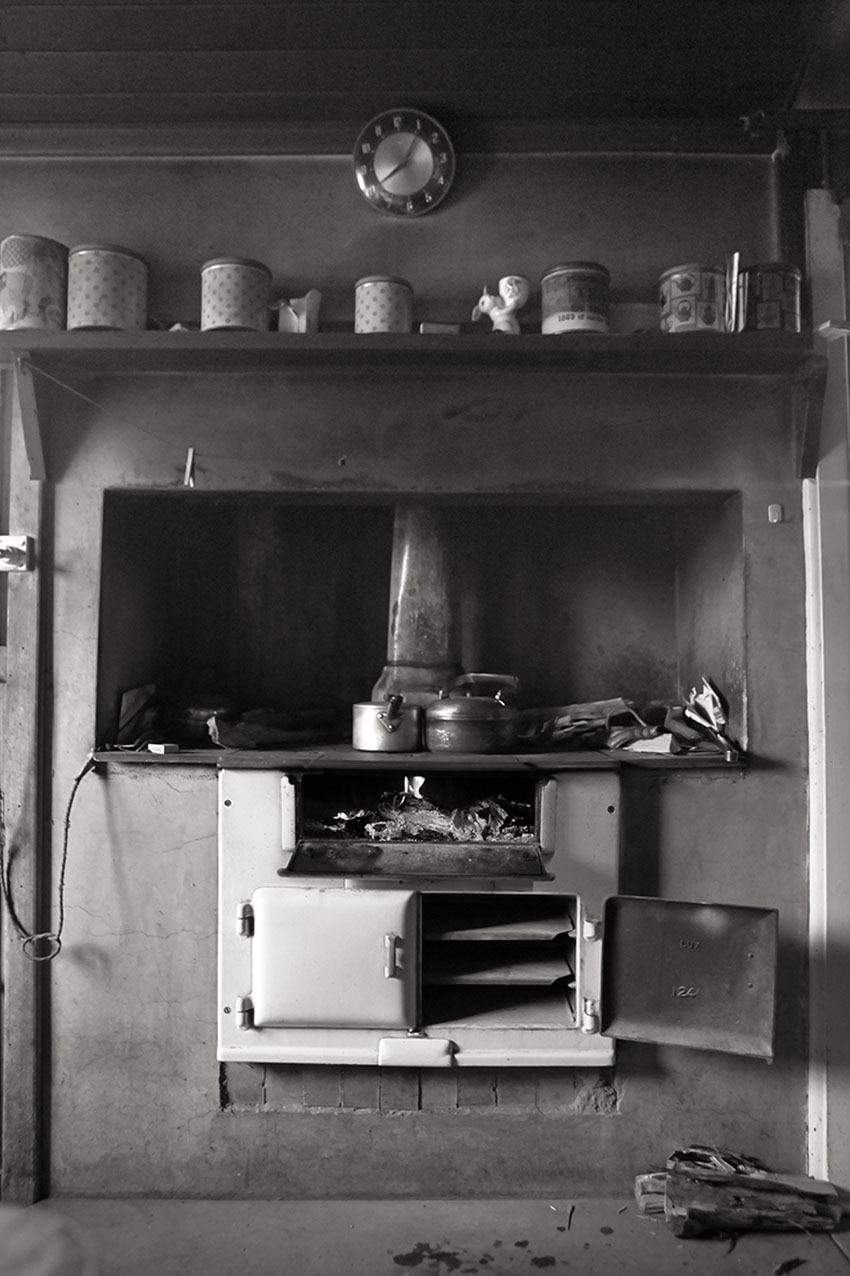


X marks the spot

Somehow these photographs just don’t work for me.

Intellectually, I appreciate the Inception-esque concept but visually and emotionally I am ambivalent towards the images. They feel more like caricatures than engaging works of art. Human beings stare blankly off into the distance, as though there was some meaningful relationship between this “dead pan” look and the upside down camera obscura image; thought bubbles appearing above the head (as in a cartoon), emanate from stilted, frozen, blank-faced human beings. Dead pan, introverted looks do not make for engaging associations – between elements in the image or between the image and the viewer.

The tableau vivants evidence little life, to wit, the oh so correctly crossed legs in Room 3907 Sofitel on Collins, Morgan; the impeccably placed photographs in Room 2515 Shangri-la, Isobel (who would ever put photographs on a bed like that?); and the artfully placed dumbells in Room 4821 Sofitel on Collins, Chris (all 2013, below). X certainly does mark the constrained, constructed spot. Paradoxically, the images that work best are the ones where the human beings are absent, because the viewer can imagine the visage (and visualised thoughts) of the occupants, without seeing them. Then, and only then, do these images work as dreamlike scenarios and fulfil the artist’s desire to produce surreal and psychological spaces which seem to materialise their inhabitants’ distant thoughts.

However, as they are presented, each element of the image feels quite divisible, and all the elements of the image never feel fully integrated with each other. Hence the images feel less than fully resolved. What this body of work needed was a bit more panache and savour faire. Perhaps more distortion of the camera obscura image and more life from the protagonists would have brought the symbiotic relationships to life. You only have to think of the murder of Ann Lively in the film Minority Report to understand how these head cloud “visualisations” have incredible psychological power. I get none of that here.

Dr Marcus Bunyan


Many thankx to Stills Gallery for allowing me to publish the photographs in the posting. Please click on the photographs for a larger version of the image. All images are copyright of the artist.


Robyn Stacey (Australian, b. 1952) 'Room 13 Cartwright, Michael and Katherine' 2013


Robyn Stacey (Australian, b. 1952)
Room 13 Cartwright, Michael and Katherine
2013
From Guest Relations
Type C print
100 x 133cm


Robyn Stacey (Australian, b. 1952) 'Room 14 Cartwright, Ocean' 2013


Robyn Stacey (Australian, b. 1952)
Room 14 Cartwright, Ocean
2013
From Guest Relations
Type C print


Robyn Stacey. 'Room 14 Cartwright, Harbour' 2013


Robyn Stacey (Australian, b. 1952)
Room 14 Cartwright, Harbour
2013
from Guest Relations
Type C print
100 x 146cm


Robyn Stacey (Australian, b. 1952) 'Room 5126 Pullman Hyde Park, Brielle' 2013


Robyn Stacey (Australian, b. 1952)
Room 5126 Pullman Hyde Park, Brielle
2013
From Guest Relations
Type C print


“Hotel rooms are waiting spaces: waiting in rooms for people to arrive, for events to start, or just waiting to go home. They are also private spaces.”


Robyn Stacey, 2013


This striking new series by leading contemporary art photographer, Robyn Stacey, combines the simplest form of the camera, the “camera obscura”, with high-end digital photography to explore a specific context: the hotel room. The project explores the fleeting and ephemeral experience and how this is captured as a moment out of time, by the photographic still. 

Through Robyn Stacey’s photography we imagine other people’s private worlds. For the past 5 years her spectacular compositions have breathed new life into the old families of Sydney, reviving their personal objects from historic collections to evoke scenes as if they’ve just exited the room, leaving only a sprinkling of crumbs. Now, for Guest Relations she has turned from high fidelity studio photography to the non-digital process of camera obscura, Stacey brings our gaze to contemporary life and the transitory meetings of private and public worlds within the modern hotel room. Like pinhole photography, the camera obscura allows light in through a tiny hole in order to project a scene from outside onto an inside surface. Stacey recreates this process with ambitious scale and in unexpected settings, transforming the interiors of high-rise city chains and quiet coastline holiday destinations, into darkrooms for dramatically projected landscape vistas.

Turning from high fidelity studio photography to the non-digital process of camera obscura, Stacey brings our gaze to contemporary life and the transitory meetings of private and public worlds within the modern hotel room. Like pinhole photography, the “camera obscura” allows light in through a tiny hole in order to project a scene from outside onto an inside surface. Stacey recreates this process with ambitious scale and in unexpected settings, transforming the interiors of high-rise city Hotel chains and quiet coastline holiday destinations, into darkrooms for dramatically projected landscape vistas.

This historical form of image making, which Caravaggio and Vermeer are said to have used to create their impressive Baroque paintings, elaborately decorates the otherwise hermetic hotels rooms by wallpapering them with the world outside their windows. Normally characterised by modern minimalism and standardised comforts, these interiors are covered with the colonnades of buildings, the cityscapes of roads, rivers and parks (Sydney, Melbourne, Brisbane), and the turquoise shores of a sunbather’s paradise, such as the Gold Coast in Qld. Businessmen, young couples, and solo travellers are actors in these dreamlike scenarios; the upside-down, reversed and distorted visual effects of camera obscura, produce surreal and psychological spaces which seem to materialise their inhabitants’ distant thoughts.

Like stills from the sets of movies, Stacey’s images offer us fragments of untold narratives. Intimate and enigmatic moments glimpse the plethora of stories we can only imagine might play out within a hotel rooms’ four walls: the melodramas of domestics, the passionate professions of love, and the time-slowing boredom and loneliness that might accompany a life spent in endless waiting. Through the theatrical and distorted view of camera obscura is revealed a roving, fragmented and homogenised portrait of contemporary life. But by imbuing the transitory with the timeless, Stacey suggests that behind these closed, generic doors, we may all be looking outwards, seeking moments of beauty, clarity and meaningful connection.

Press release from the Stills Gallery website


Robyn Stacey (Australian, b. 1952) 'Room 2016 Shangri-la, Courtney' 2013


Robyn Stacey (Australian, b. 1952)
Room 2016 Shangri-la, Courtney
2013
From Guest Relations
Type C print


Robyn Stacey (Australian, b. 1952) 'Room 3907 Sofitel on Collins, Morgan' 2013


Robyn Stacey (Australian, b. 1952)
Room 3907 Sofitel on Collins, Morgan
2013
From Guest Relations
Type C print


Robyn Stacey (Australian, b. 1952) 'Room 2515 Shangri-la, Isobel' 2013


Robyn Stacey (Australian, b. 1952)
Room 2515 Shangri-la, Isobel
2013
From Guest Relations
Type C print


Artist statement

“The project, Guest Relations, was developed for an Artist in Residency earlier this year, at the Sofitel on Collins in Melbourne, renowned for its uninterrupted panoramic views over Melbourne city. The aim of the residency was to explore the hermetic, but transient nature of the hotel room.

As the view is a significant part of the hotel experience I wanted to incorporate the external cityscape into the interior. By making the room into a camera obscura (the simplest and earliest form of pin-hole camera) the external view is then naturally projected back into the room, upside down and in reverse, allowing me to photograph the view and the room together in one image.

This visual combination creates a unique and powerful dreamlike setting that serves as the backdrop and creates an environment for the guests to be photographed in. There are no tricks – just utilising the earliest and simplest form of photography to produce spectacular cinematic results. The people in the photographs are not models and they bring their personality to the rooms, in a sense creating their own narratives. The project has since been extended to Sydney, Brisbane, Gold Coast and Sunshine Coast.”

Robyn Stacey, 2013


Robyn Stacey (Australian, b. 1952) 'Room 2015 Pullman Hyde Park, Chair Still Life' 2013


Robyn Stacey (Australian, b. 1952)
Room 2015 Pullman Hyde Park, Chair Still Life
2013
From Guest Relations
Type C print


Robyn Stacey (Australian, b. 1952) 'Room 3601 Sofitel on Collins, Mr. Hoey' 2013


Robyn Stacey (Australian, b. 1952)
Room 3601 Sofitel on Collins, Mr. Hoey
2013
From Guest Relations
Type C print
135 x 100cm


Robyn Stacey (Australian, b. 1952) 'Room 4821 Sofitel on Collins, Chris' 2013


Robyn Stacey (Australian, b. 1952)
Room 4821 Sofitel on Collins, Chris
2013
From Guest Relations
Type C print
127 x 100cm


Stills Gallery

This gallery has now closed.

Stills Gallery website

LIKE ART BLART ON FACEBOOK

Back to top