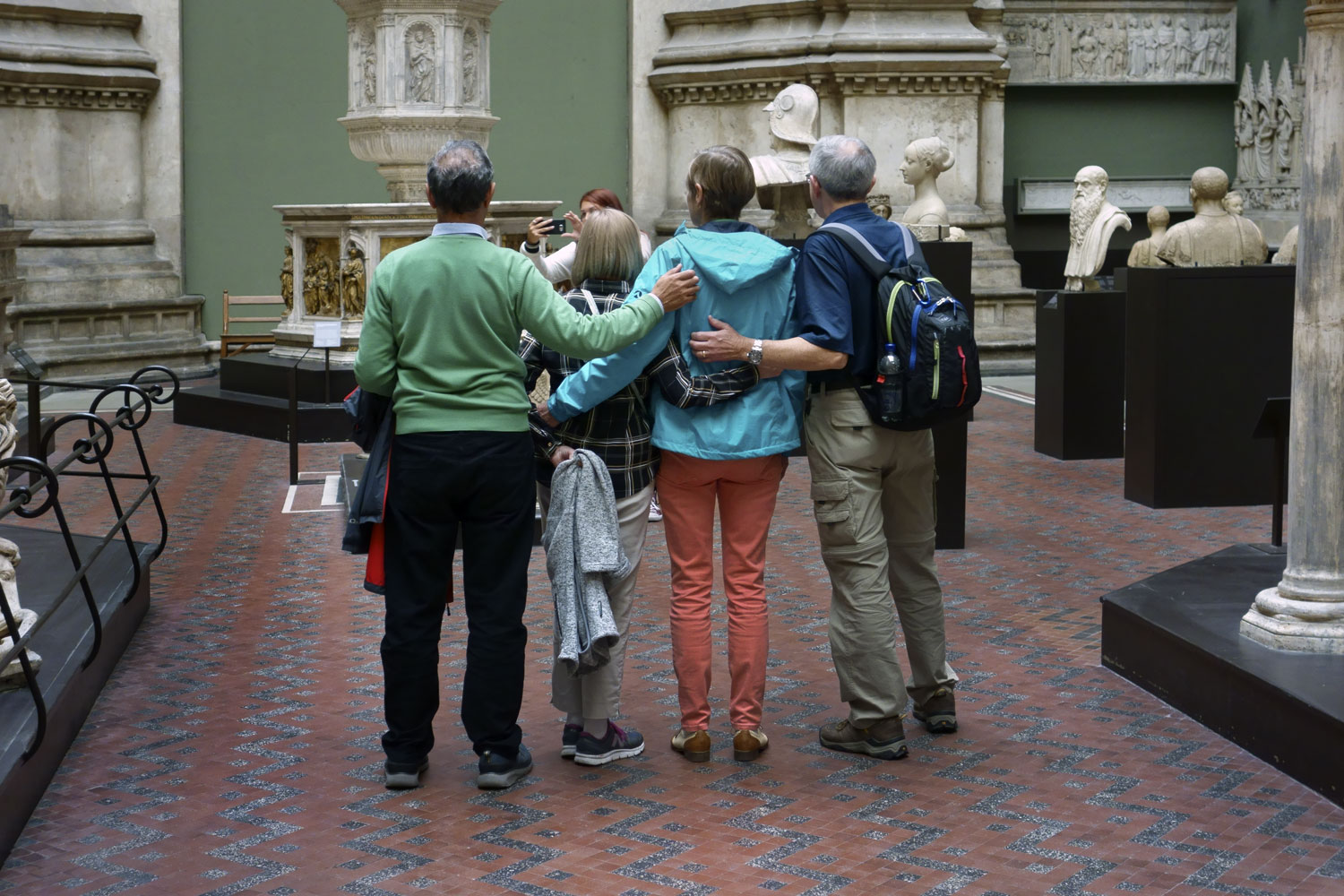
Marcus Bunyan (Australian, b. 1958) Women in orange London 2017 From the series The sun does not move 2017-2022 Digital colour photograph
This posting offers a selection of photographs from my new ninety-eight image sequence The sun does not move (2017-2022). To see the whole extended conversation please visit my website. The text below illuminates the rationale for the work…
Two students were arguing about a flag flapping in the wind. “It’s the wind that is really moving,” stated the first one. “No, it is the flag that is moving,” contended the second. A Zen master, who happened to be walking by, overheard the debate and interrupted them. “Neither the flag nor the wind is moving,” he said, “It is MIND that moves.”
The photographs in this sequence meditate on the idea that it is the mind of the viewer that constructs the spaces and meanings of these images. It is MIND that moves. The title of this sequence the sun does not move is attributed to Italian polymath Galileo Galilei.
The photographs are not a contemporary dissection of some archaic concept or hidden historical moment. They just are. Why do I make them? Because I feel impelled to be creative, to explore the spiritual in liminal spaces that I find across the earth. Ultimately, I make them for myself, to illuminate the journey that this soul is on.
With wonder and affection and empathy and feeling for the spaces placed before it. As clear as light is for the ‘mind’s eye’.
With thankx to the few “fellow travellers” for their advice and friendship.
Please click on the photographs for a larger version of the image.
Photographs are available from this series for purchase. As a guide, a digital colour 16″ x 20″ print costs $1,000 plus tracked and insured shipping. For more information please see the Store web page.
“To try to see more and better is not a matter of whim or curiosity or self-indulgence. To see or to perish is the very condition laid upon everything that makes up the universe, by reason of the mysterious gift of existence.”
Teilhard de Chardin, Seeing 1947
Marcus Bunyan (Australian, b. 1958) Brick pattern London 2017 From the series The sun does not move 2017-2022 Digital colour photograph
Marcus Bunyan (Australian, b. 1958) Sliver France 2017 From the series The sun does not move 2017-2022 Digital colour photograph
Marcus Bunyan (Australian, b. 1958) Bus depot South London 2017 From the series The sun does not move 2017-2022 Digital colour photograph
Marcus Bunyan (Australian, b. 1958) Gare du Nord Paris 2017 From the series The sun does not move 2017-2022 Digital colour photograph
Marcus Bunyan (Australian, b. 1958) Blue/White London 2017 From the series The sun does not move 2017-2022 Digital colour photograph
Marcus Bunyan (Australian, b. 1958) Tomb effigy V&A Museum, London 2017 From the series The sun does not move 2017-2022 Digital colour photograph
Marcus Bunyan (Australian, b. 1958) Float Paris 2017 From the series The sun does not move 2017-2022 Digital colour photograph
Marcus Bunyan (Australian, b. 1958) Scar Paris 2017 From the series The sun does not move 2017-2022 Digital colour photograph
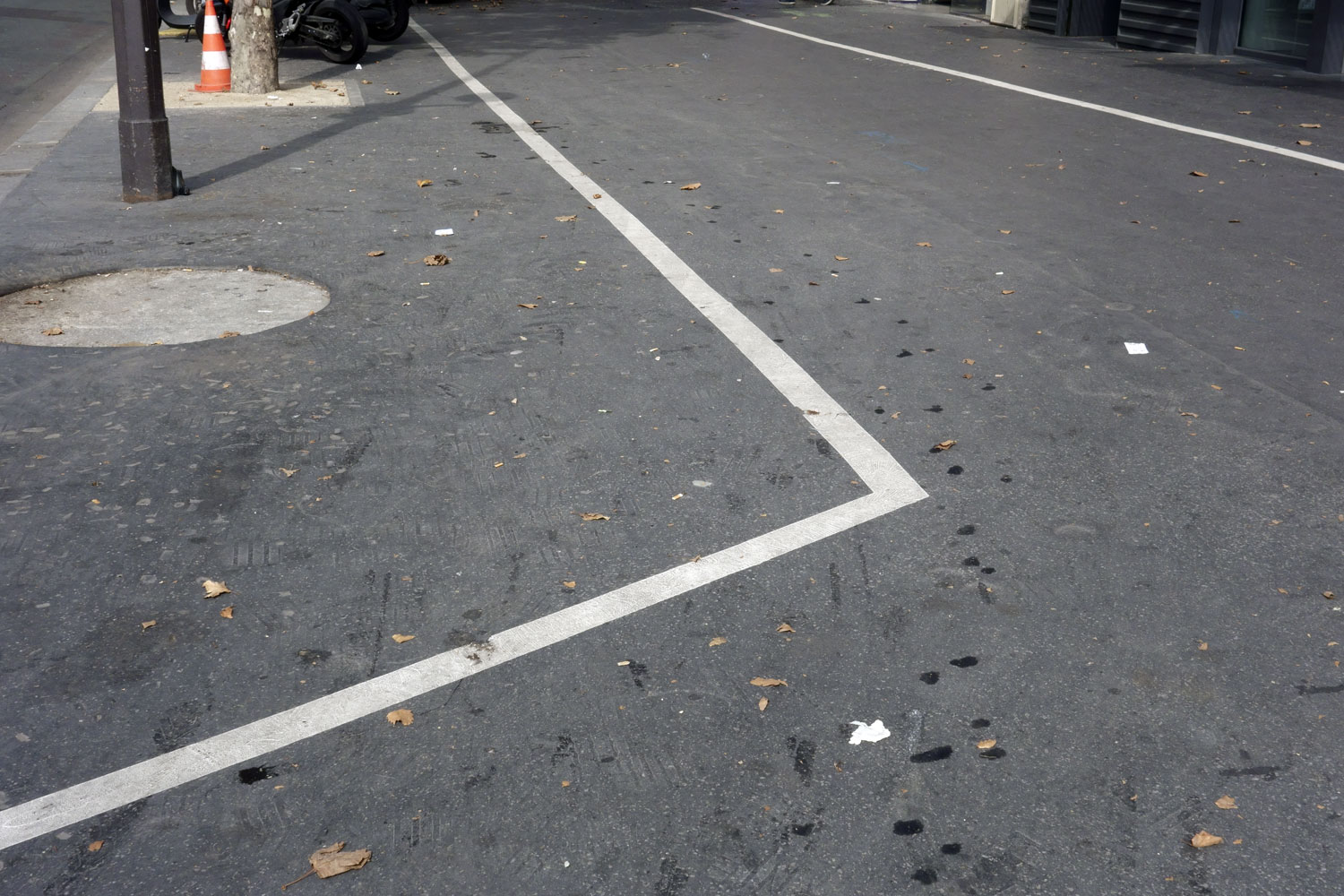
Marcus Bunyan (Australian, b. 1958) Circle, two white lines, four pieces of white and a trail of dark oil Paris 2017 From the series The sun does not move 2017-2022 Digital colour photograph
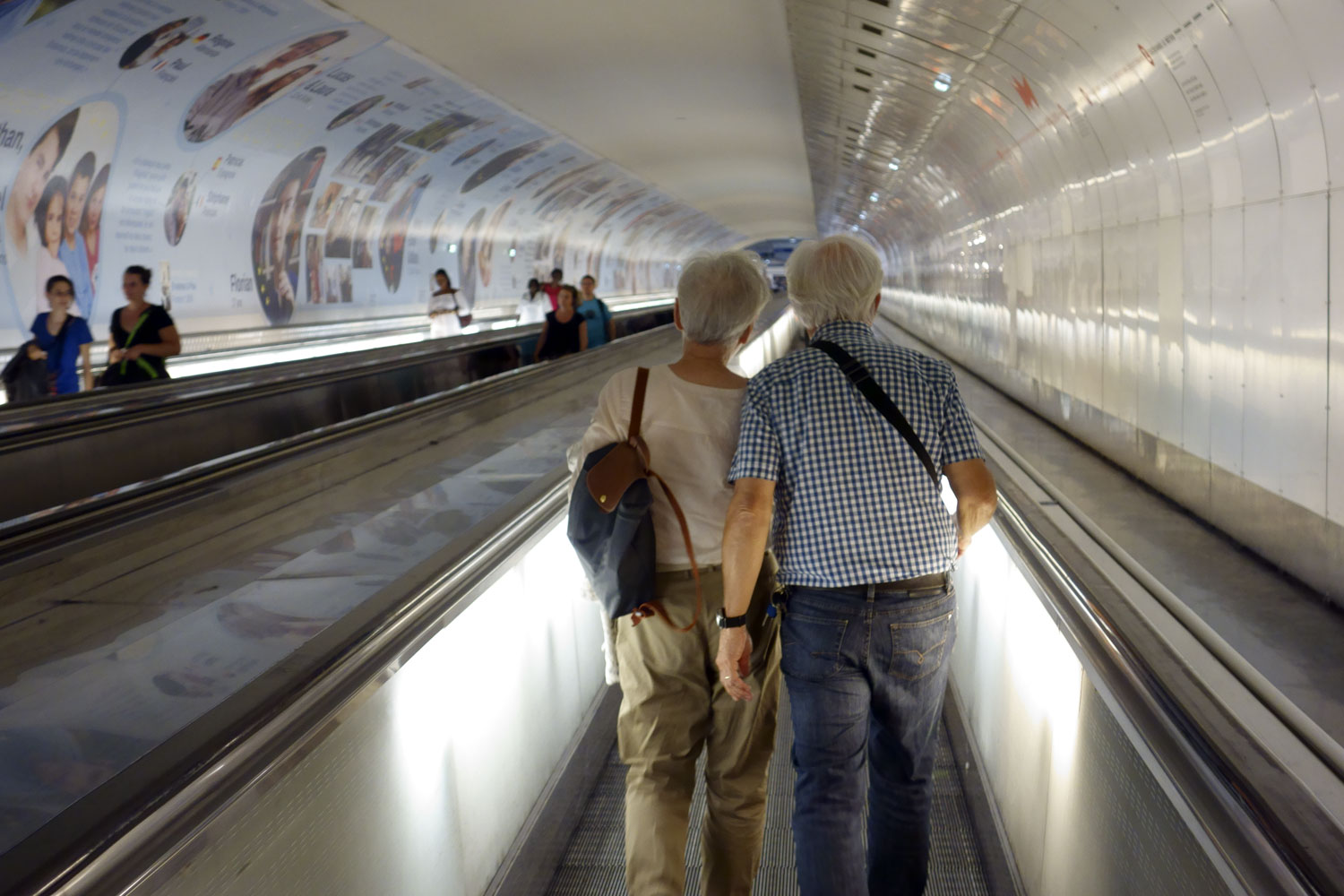
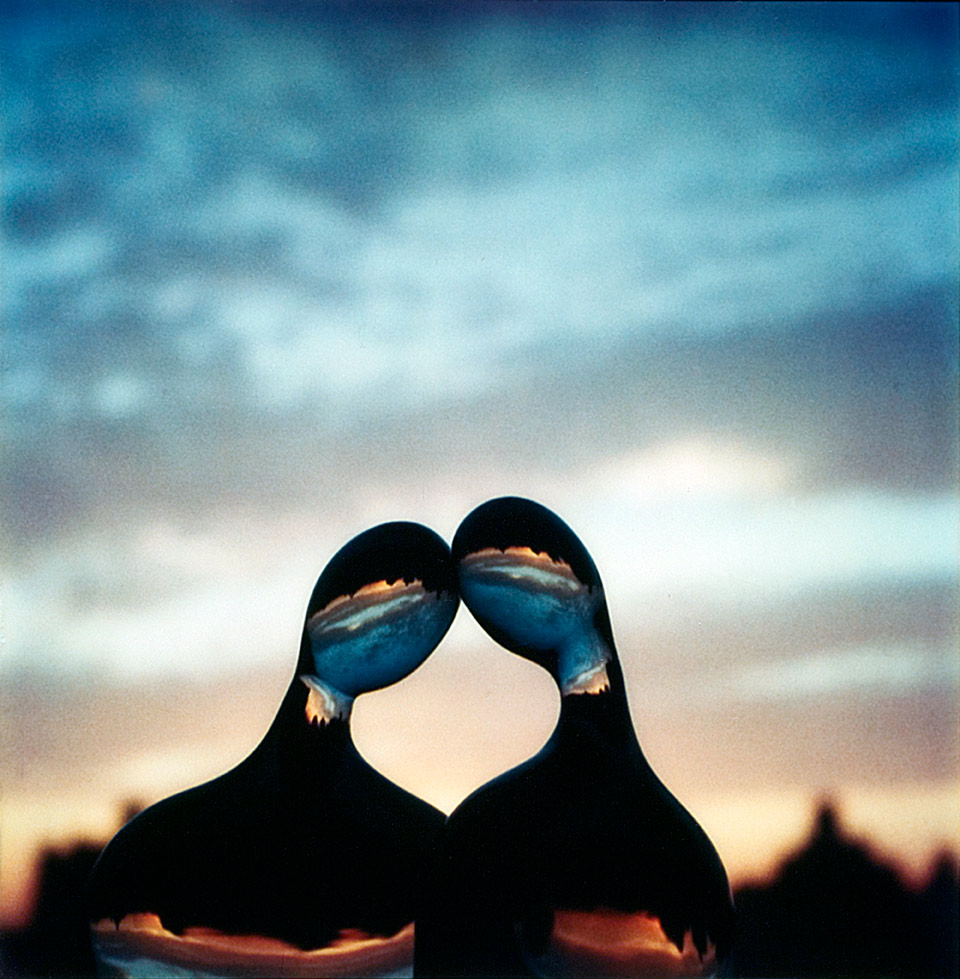
Marcus Bunyan (Australian, b. 1958) Couple in light Paris 2017 From the series The sun does not move 2017-2022 Digital colour photograph
Marcus Bunyan (Australian, b. 1958) The crossing Paris 2017 From the series The sun does not move 2017-2022 Digital colour photograph
Marcus Bunyan (Australian, b. 1958) Equilibrium Tuileries, Paris 2017 From the series The sun does not move 2017-2022 Digital colour photograph
Marcus Bunyan (Australian, b. 1958) Leaving Paris 2017 From the series The sun does not move 2017-2022 Digital colour photograph
Marcus Bunyan (Australian, b. 1958) The sun does not move, it’s your mind that moves… France 2017 From the series The sun does not move 2017-2022 Digital colour photograph
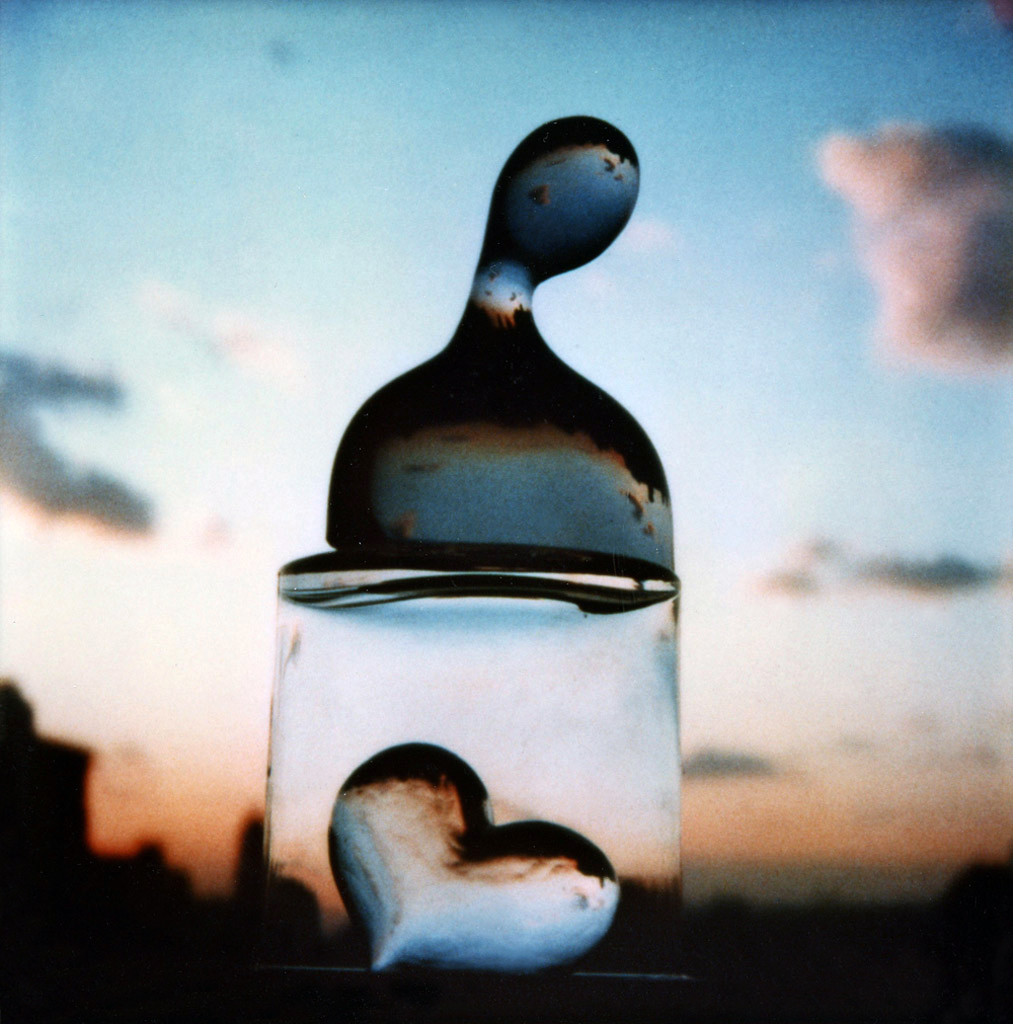
Marcus Bunyan (Australian, b. 1958) Crystallize France 2017 From the series The sun does not move 2017-2022 Digital colour photograph
Marcus Bunyan (Australian, b. 1958) Hand in hand France 2017 From the series The sun does not move 2017-2022 Digital colour photograph
Marcus Bunyan (Australian, b. 1958) We might be otherwise – we might be all Paris 2017 From the series The sun does not move 2017-2022 Digital colour photograph
Marcus Bunyan (Australian, b. 1958) Every kind of pleasure Paris 2017 From the series The sun does not move 2017-2022 Digital colour photograph
Marcus Bunyan (Australian, b. 1958) Eiffel Tower II Paris 2017 From the series The sun does not move 2017-2022 Digital colour photograph
Marcus Bunyan (Australian, b. 1958) Profusion Paris 2017 From the series The sun does not move 2017-2022 Digital colour photograph
Marcus Bunyan (Australian, b. 1958) Ancient and modern V&A Museum, London 2017 From the series The sun does not move 2017-2022 Digital colour photograph
Marcus Bunyan (Australian, b. 1958) Two black holes V&A Museum, London 2017 From the series The sun does not move 2017-2022 Digital colour photograph
Marcus Bunyan (Australian, b. 1958) The Wheel of Time V&A Museum, London 2017 From the series The sun does not move 2017-2022 Digital colour photograph
Marcus Bunyan (Australian, b. 1958) Where is the love, beauty, and truth we seek (Shelley) France 2017 From the series The sun does not move 2017-2022 Digital colour photograph
Marcus Bunyan (Australian, b. 1958) Modernisation Montparnasse, Paris 2017 From the series The sun does not move 2017-2022 Digital colour photograph
Marcus Bunyan (Australian, b. 1958) The light whose smile kindles the universe Palace of Fontainebleau, France 2017 From the series The sun does not move 2017-2022 Digital colour photograph
Marcus Bunyan (Australian, b. 1958) The unknown thought I Paris 2017 From the series The sun does not move 2017-2022 Digital colour photograph
A quick text today as I’m still not well with bronchitis.
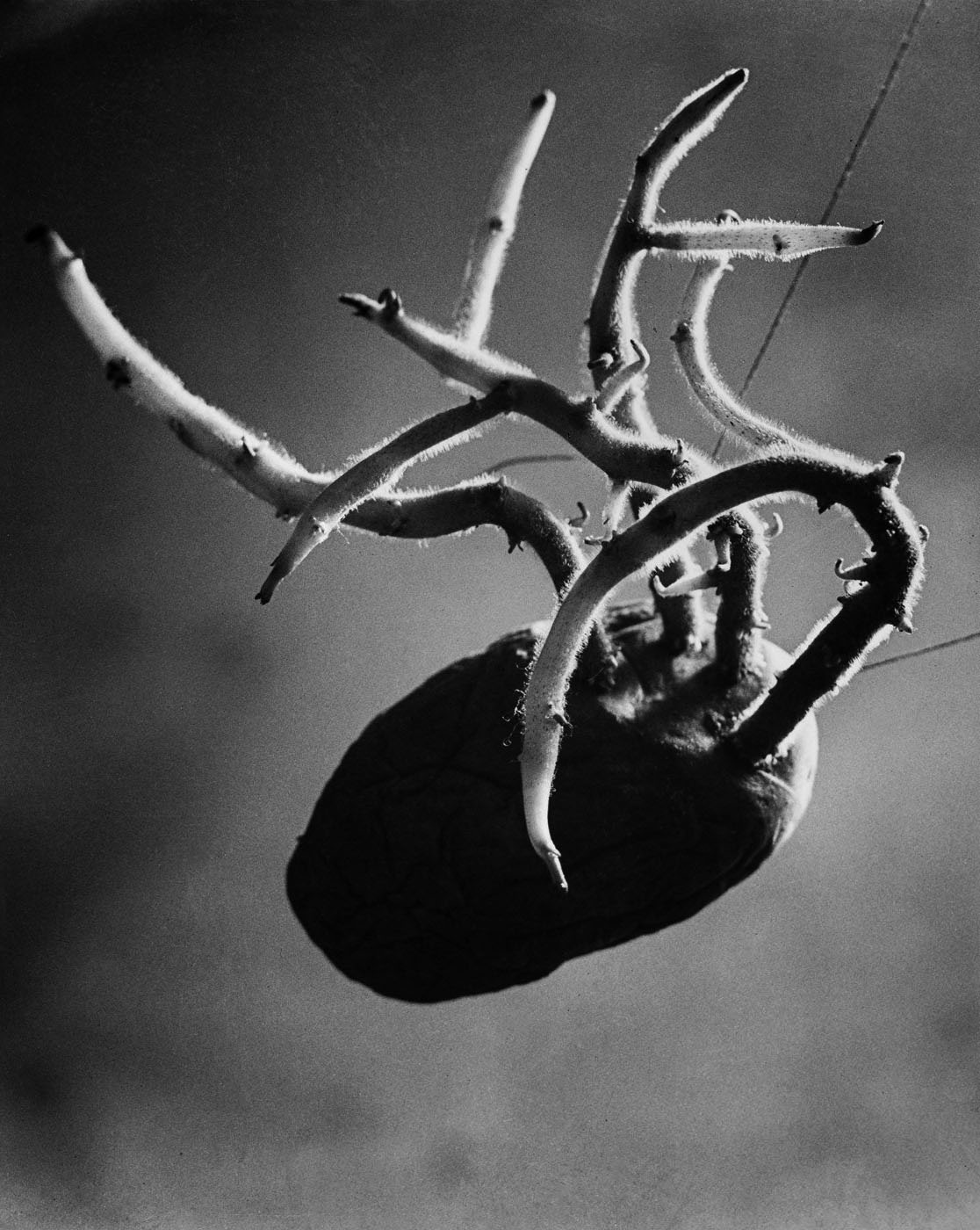
I really struggled to get images for this posting, the museum supplying 12 of the 21 photographs while I gathered the rest after seeing an installation image from the exhibition and deciphering further images from the preview to the catalogue of the exhibition on the Amazon website.
If you are interested in the subject matter – photographs of an environment where Picasso was in his element, a volcano at the epicentre of a vibrant, creative city – then I think the catalogue would be the way to go… but at close to $100 for just 152 pages the cost might seem a little excessive.
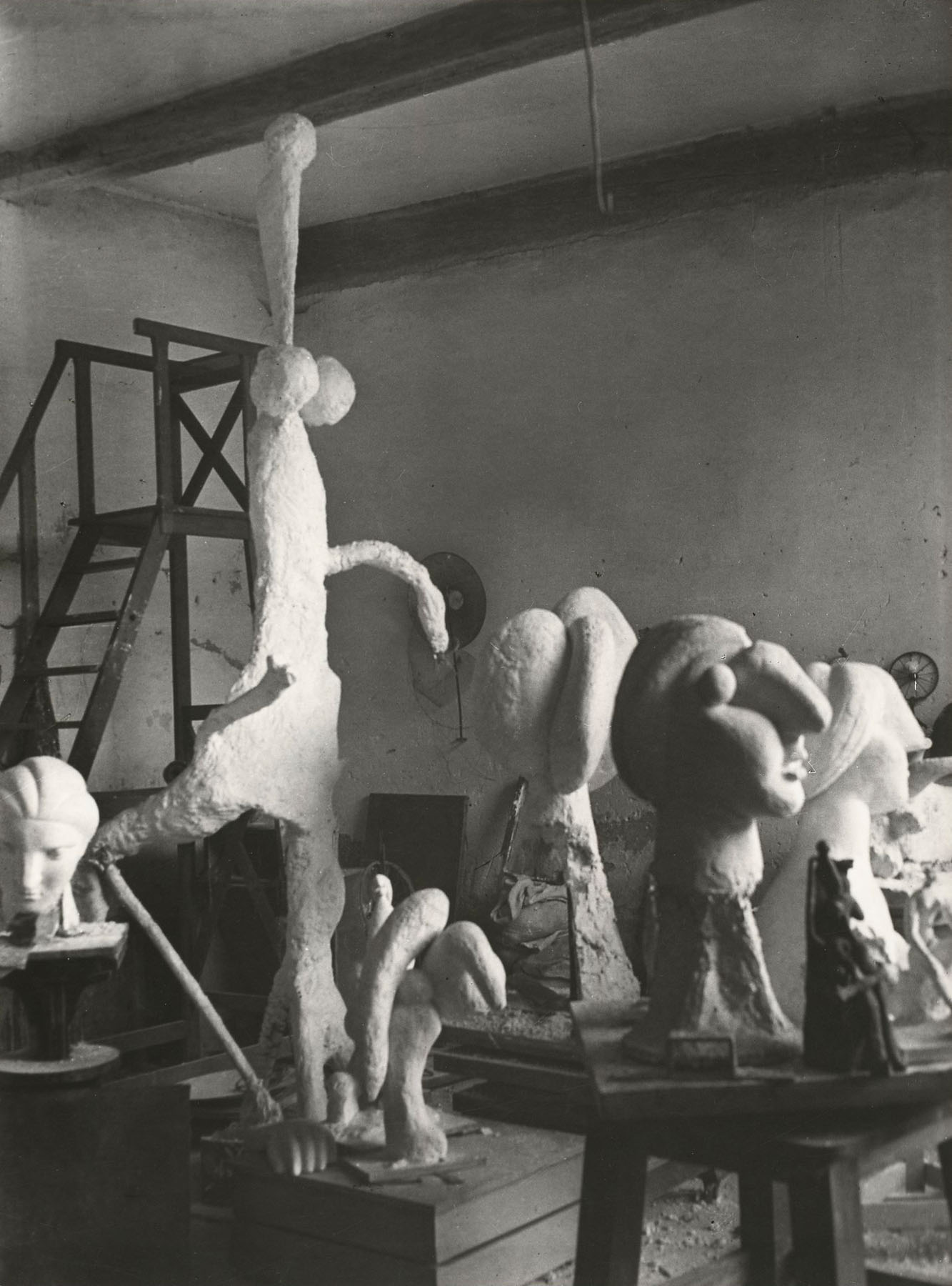
My favourite images in the posting are the two atmospheric photographs of Picasso’s sculptures in his studios.
Dr Marcus Bunyan
Many thankx to the Museo Picasso Málaga for allowing me to publish the photographs in the posting. Please click on the photographs for a larger version of the image.
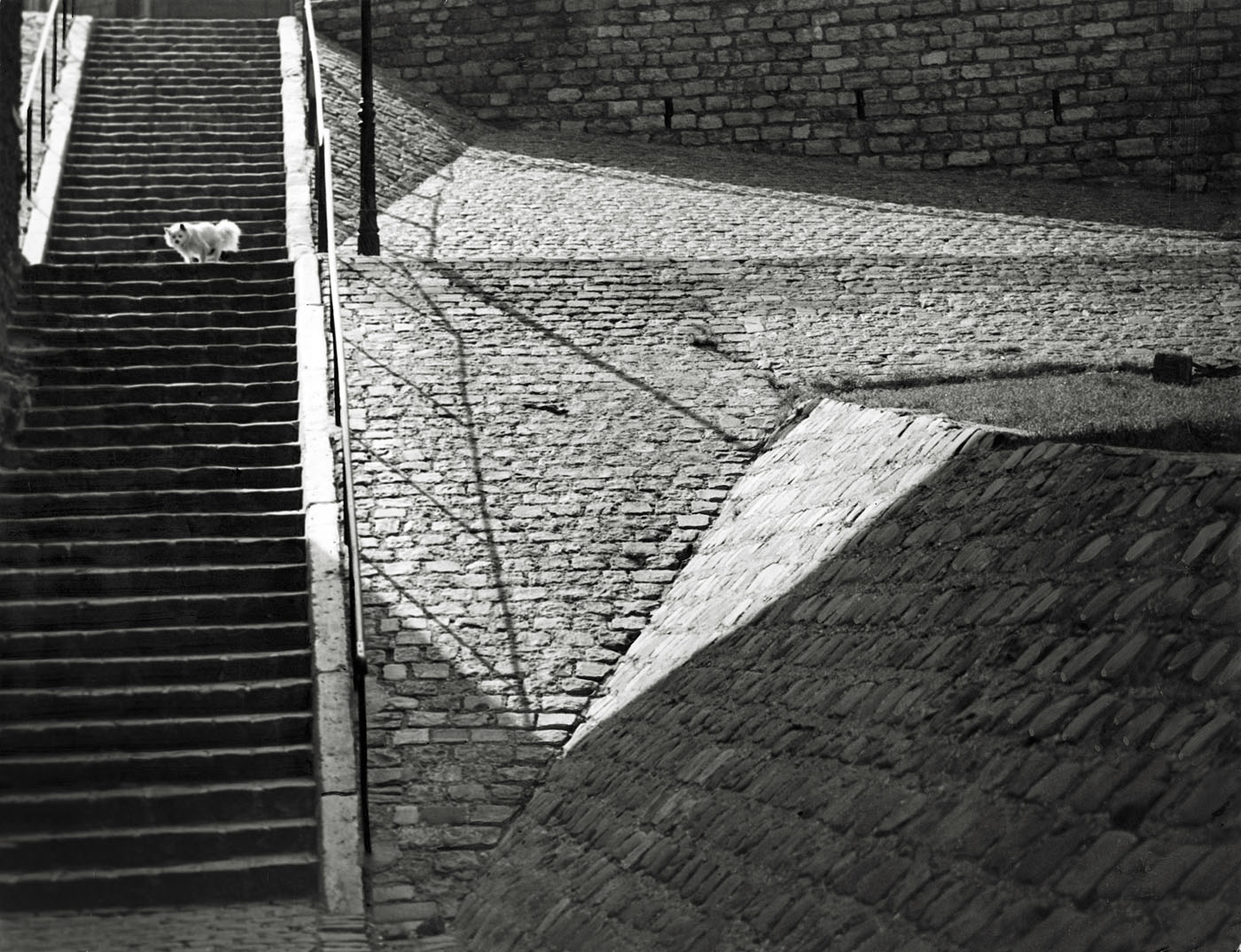
The exhibition The Paris of Brassaï. Photographs of the City Picasso Loved, presented by Museo Picasso Málaga, shows the work of one of the most famous European photographers of the first half of the 20th century. With his work, Brassaï helped to create the universal public image of Paris, the Eternal City. It is displayed here alongside works by Pablo Picasso, Pierre Bonnard, Georges Braque, Lucien Clergue, Fernand Léger, Dora Maar and Henri Michaux, and with period piece films, posters, sheet music and a large quantity of documentary material.
Brassaï’s photographs invite the viewer to wander through Paris, with its river Seine, Notre Dame, its brothels and its markets. His conjured up a superb depiction of society in his many shots of the intellectual, literary, and artistic scene of 1930s and 1940s Paris, ranging from Sartre to Beckett.
This exhibition has been organised with sponsorship from Fundación Unicaja and the special collaboration of Estate Brassaï succession, Paris; Institut Français, Seville, and Musée national Picasso-Paris. It sheds light on the professional relationship and friendship between Brassaï and Picasso, who considered Brassaï to be the best photographer of his work.
Brassaï arrived in Paris from Hungary in 1924. Little by little, he discovered the dynamic nature and the social idiosyncrasies of the great metropolis. While he initially explored the city’s nightlife, over time he began to create a precise X-ray of its architecture and its people. He joined the fascinating intellectual and artistic avant-garde community of which Picasso was a member, becoming one of its finest eyewitness photographers. But Brassaï was not just a photographer, he was also a versatile artist who drew, made sculptures, decorated, and made films.
As a photographer, Brassaï constructed a visual topography of the city of light (and shadows) in the 1930s and 40s, but this exhibition also aims to show him as a prolific creative artist. The Paris of Brassaï. Photographs of the City Picasso Loved features over 300 works, with photographs, drawings and sculptures that come mainly from the Brassaï family archives (Estate Brassaï Succession). Also on display are photographs and artworks by Pablo Picasso, alongside works by Pierre Bonnard, Georges Braque, Lucien Clergue, Fernand Léger, Dora Maar and Henri Michaux.
Films, posters, musical scores, theatre programmes and a large quantity of documentary material from the Paris of that period, make up an exhibition that takes the visitor back to an unforgettable city and time.
The structure of the exhibition comprises four sections that relate to film, the visual arts, literature, and music, based on the photographic work of one of the most famous photographers of the first half of the 20th century. The exhibition layout begins with Who is Brassaï? which displays artistic works whose main feature is their expressive freedom. Paris by Day features scenes from everyday life as if they were being shown for the first time: Paris by Night is a journey through a city of shadows that evokes the melancholy that emanated from the streets and characters. Conversations with Picasso brings together work by the two artists who enjoyed a long-lasting professional and personal relationship.
The Eye of Paris
Brassaï was the pseudonym of Gyula Halász (1899-1984), a Hungarian photographer who was best known for his work on Paris, the city where he made his career. When he was three years old, his family moved to the French capital, in the year that his father, a professor of literature, was teaching at the Sorbonne. As a young man, Brassaï studied painting and sculpture at the Academy of Fine Arts in Budapest, before joining the Cavalry of the Austro-Hungarian army during the First World War. In 1920, he went to live in Berlin to work as a journalist and to study at the University of the Arts. In 1924, he moved back to Paris, where he remained for the rest of his life. He soon made friends with writers Henry Miller (who described him in one of his books as “the eye of Paris”), León-Paul Fargue and Jacques Prévert. Inspired by his frequent night-time walks around Paris, Gyula Halász asked to borrow a camera to capture the beauty of the streets and gardens in the rain and fog. He used poetic metaphors in these pictures, leading more than one graphic reporter to describe him as a poet with a camera. He then began to sign his work with the pseudonym Brassaï. It means “the man from Brasso”, his birthplace, which is now part of Romania.
In the 1930s, Paris was by no means a feast. Various events were leaving their mark on a new age, with major financial and political repercussions. The decade began with one of the greatest financial crises the world had ever experienced: the Great Depression. This was to lead to the collapse of the financial system and to poverty for thousands of families. Europe was facing the possibility of new wars and uprisings that would lead to the rise of totalitarianism. Culture and art were not blind to these events, but art dealers and artists were irresistibly drawn to Paris, seeking in the City of Light a new artistic and personal life that matched their ideals, along with the necessary freedom to make them happen.
Brassaï’s photographic work during these years helped to construct the image we have today of the French capital, with its depictions of artistic, social and intellectual life. He took X-ray-like shots of the great city, during the day and at night, from its dark alleyways to it dazzling social and artistic scene. The exhibition The Paris of Brassaï. Photographs of the City Picasso Loved shows the modern, cosmopolitan city par excellence, in a Europe that bore the hallmarks of the great changes brought about by 19th-century industry and by the international exhibitions of the early 20th-century. It was a city that Brassaï loved, as did his colleague and friend, Pablo Picasso.
Night Walks
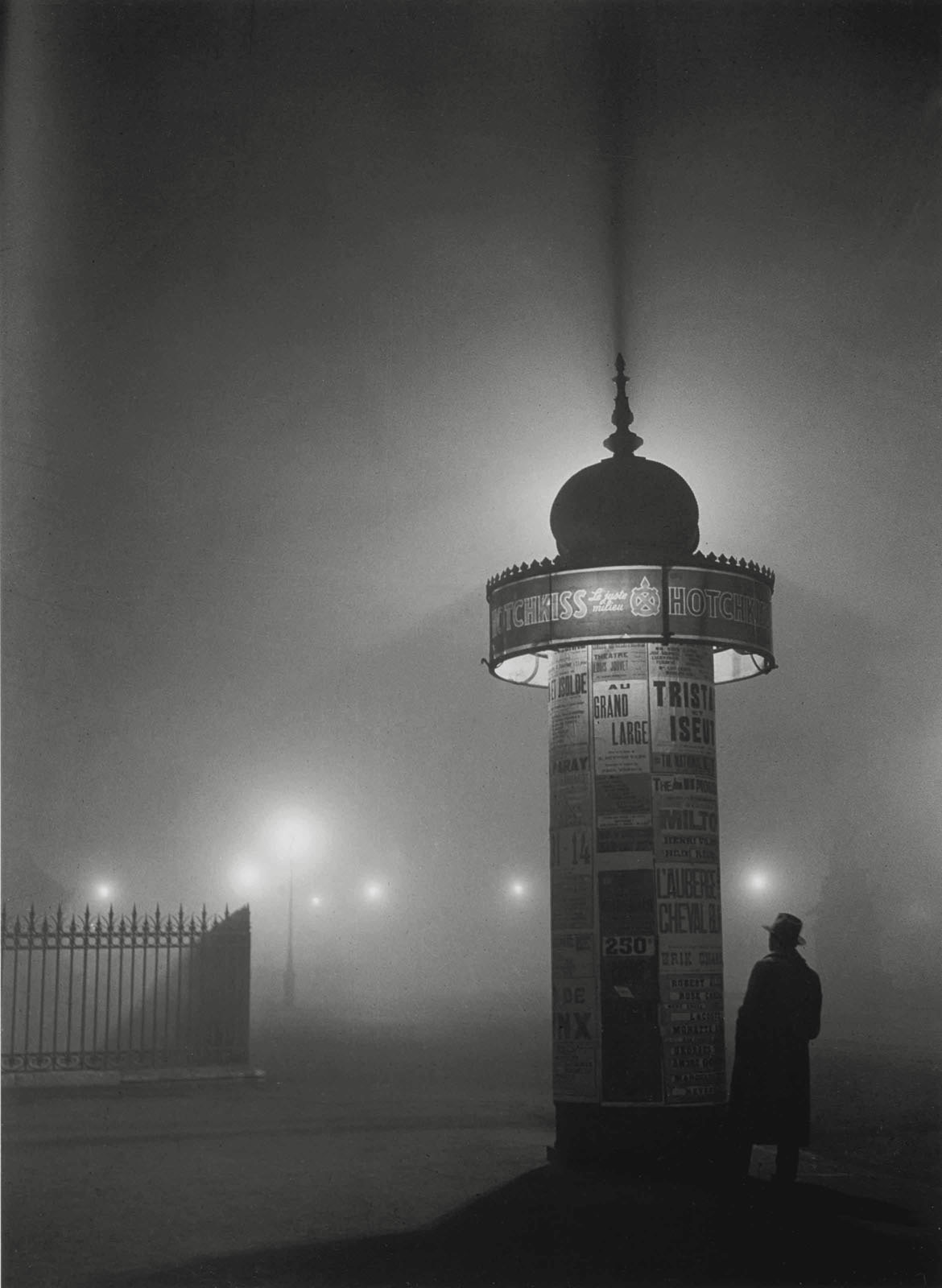
In 1932 he published his first photographic book, “Paris de Nuit”. It contained high-contrast night shots with full bleed and no margins that feature the play of light and shadow, taken on streets, squares, rooftops, street corners, gardens, buildings and monuments. During his nocturnal wanderings, smoking cigarette after cigarette, the gaslights, fog and car headlights lit up a unique Paris, transforming its rigorously classical architecture and capturing the strange beauty of the fleeting shadows. His negatives became black and white photographs with a strong sense of mystery. They are pictures that alter your perception of the familiar. “Paris de Nuit” was a cultural sensation and a well-deserved success that caught the attention of leading art magazines such as Minotaure, one of the most important cultural publications of the time.
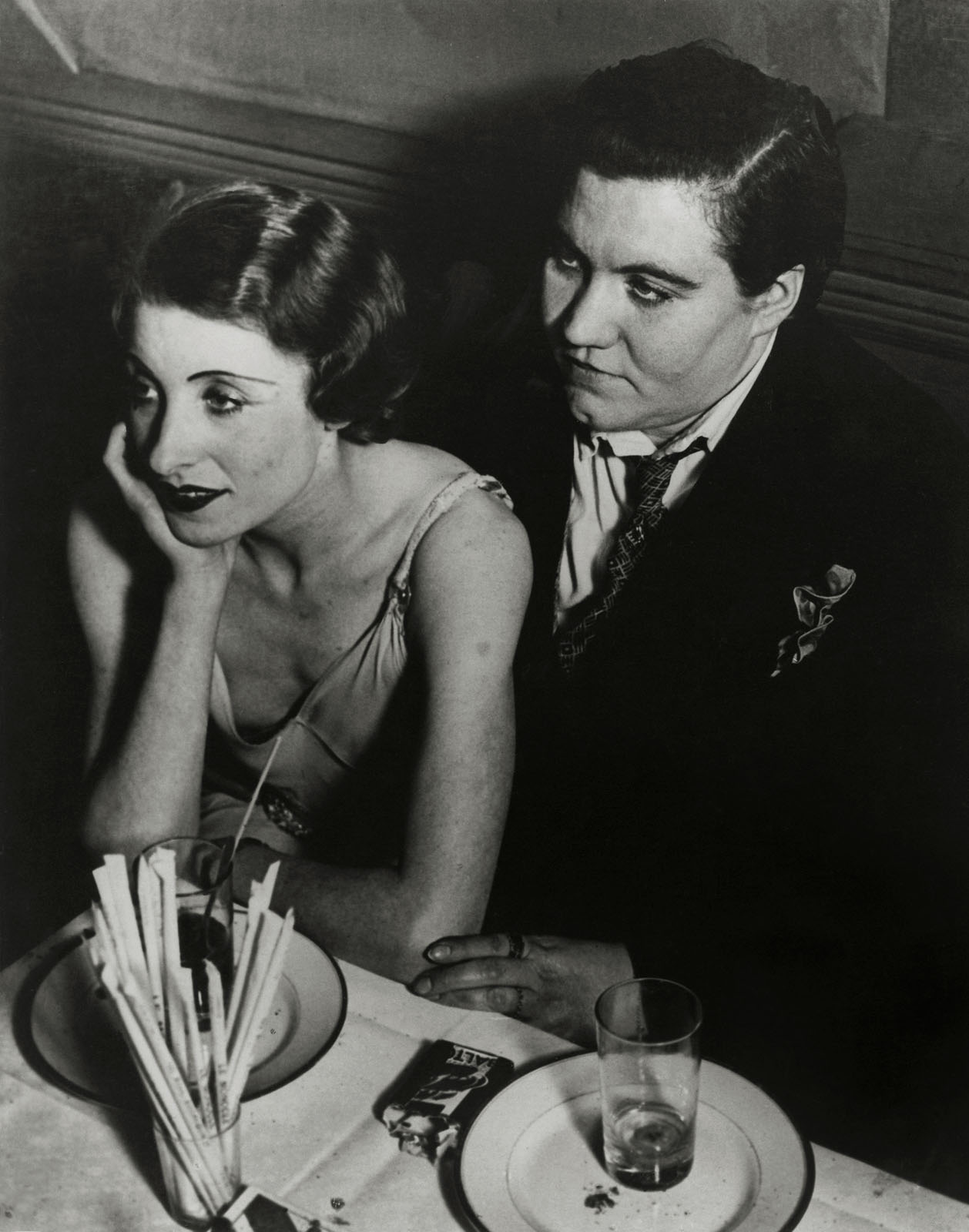
Brassaï liked to say that his birthplace was very close to that of Count Dracula, and that, like him, he was a nocturnal creature. For this reason, in several of his unforgettable photobooks he showed an alternative Paris, with scenes in brothels and bars where young gay men, lesbians and transvestites are all seen having fun. They also contain scenes from the city’s social life, high society, and intellectual circles.
Portraying the Intellectual Circles
The photographer himself described 1932 and 1933 as the most important years of his life. It was during these years that he met the key figures of Parisian cultural life, many of whom were also foreigners, and he evolved alongside the intellectual milieu and the artistic avant-garde movements that were flourishing in Paris at the time.
His earliest works coincided with the rise of Surrealism in France. The movement believed that photography encouraged a division of the poetic personality simultaneously into subject and object. But although his pictures display the same attraction to the dreamworld expressed by the surrealists, and his series on graffiti indicates his interest in the wonder of random discovery and the primitive world, Brassaï always denied belonging to the movement. His photographs, based on the traditional realist style, are evocative images that condense the atmosphere of a brief moment, without becoming documentary photography.
Brassaï was part of the Paris intellectual circle, as was Picasso, at a time when art was flourishing. He took photographs of artists who were to become the sacred monsters of our age, many of whom were his friends: Pablo Picasso, Salvador Dalí, Alberto Giacometti, as well as leading writers of the time such as Jean Genet and Henri Michaux. His portraits reveal his great skill at capturing the personality of his sitters, creating a collective portrait of the intellectual circle.
On the Walls of Paris
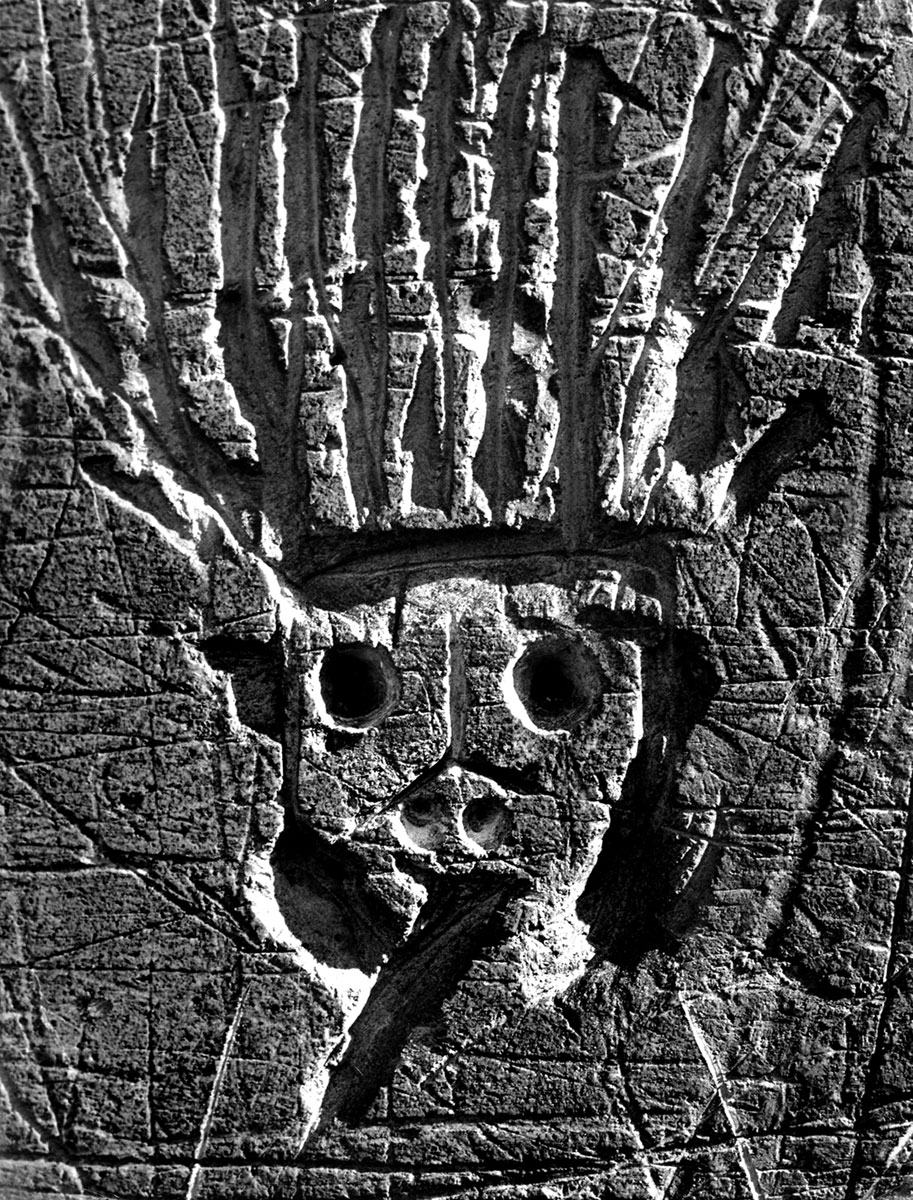
Brassaï was the first person in the history of modern photography to intuitively consider the camera as a tool with which to dissect urban life. “The eye of Paris”, as Henry Miller dubbed him in one of his essays, also directed his gaze at the drawings, marks and doodles on Paris walls. He came across these popular anonymous signs and imprints on walls during his walks along Parisian alleyways: faces, symbols, animals, handprints, the scratched-on outlines of sketches… They were captivatingly primitive, and he elevated them to the status of “Art Maudit” or Damned Art because, for him, they were more than just ways for people to express themselves.
Over the years, Brassaï compiled a catalogue of the marks that the capital’s inhabitants left on its walls, with photos that no editor would publish, until at last they were collected together in a book, Graffiti (1961), after Edward Steichen declared his admiration for this work and his intention of organising an exhibition at MoMA in New York. When Brassaï immortalised these street pictures, the term graffiti had not yet been coined, and it was not until the 1980s that it finally became classified as Urban or Street Art.
Brassaï was a prolific creative artist who also produced drawings and sculptures, wrote numerous articles and published 17 books. His film Tant qu’il y aura des bêtes won the award for the best original short film at the Cannes Film Festival in 1956, and in 1978 he won France’s Grand Prix National de la Photographie.
Brassaï / Picasso. A Friendship
Photography constantly accompanied Picasso, not only as a testimony to his life, but often revealing his personality, work and inner circle. Of all the many relationships he struck up in Paris with writers, essayists, playwrights and visual artists, the Museo Picasso Málaga exhibition focuses on the close and prolific professional relationship between Brassaï and Pablo Picasso.
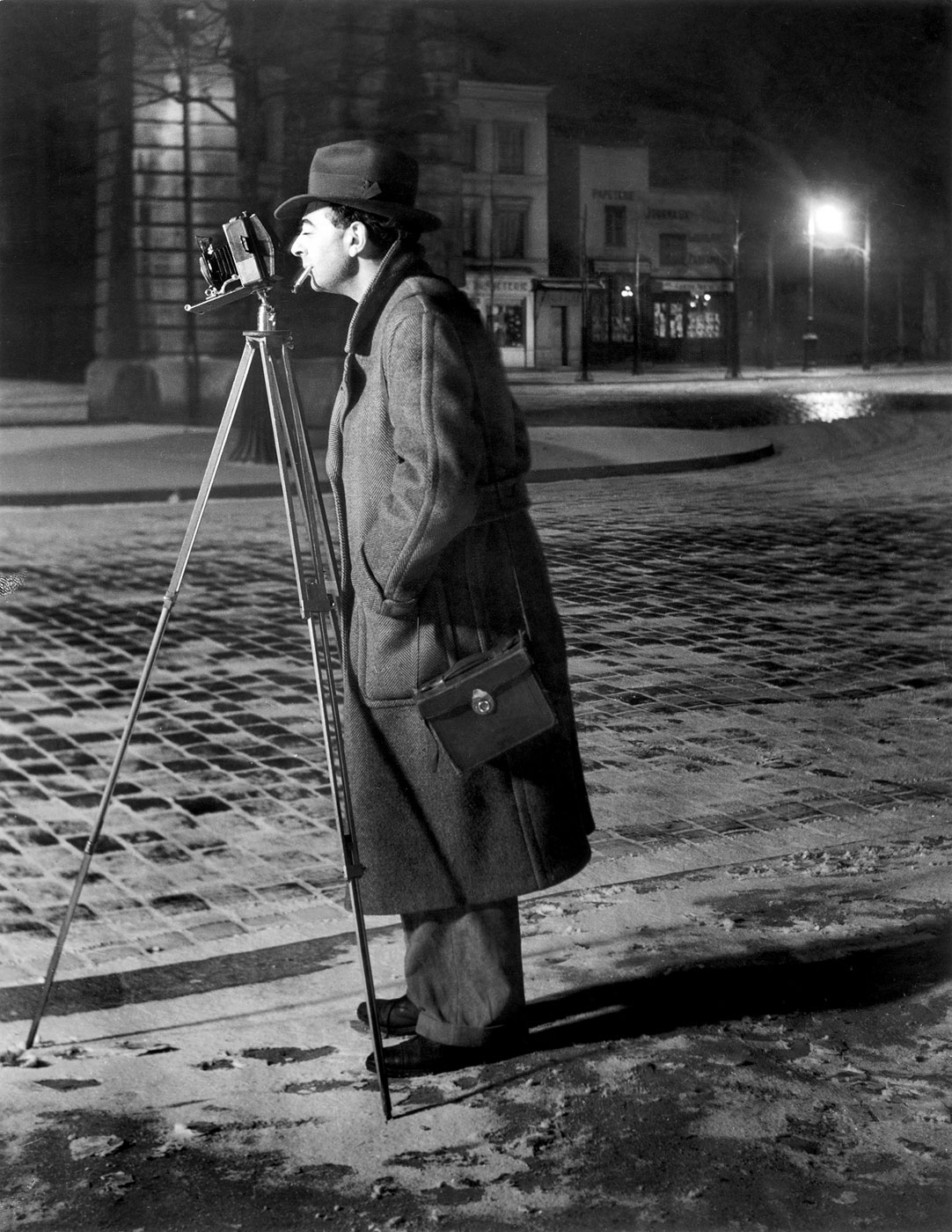
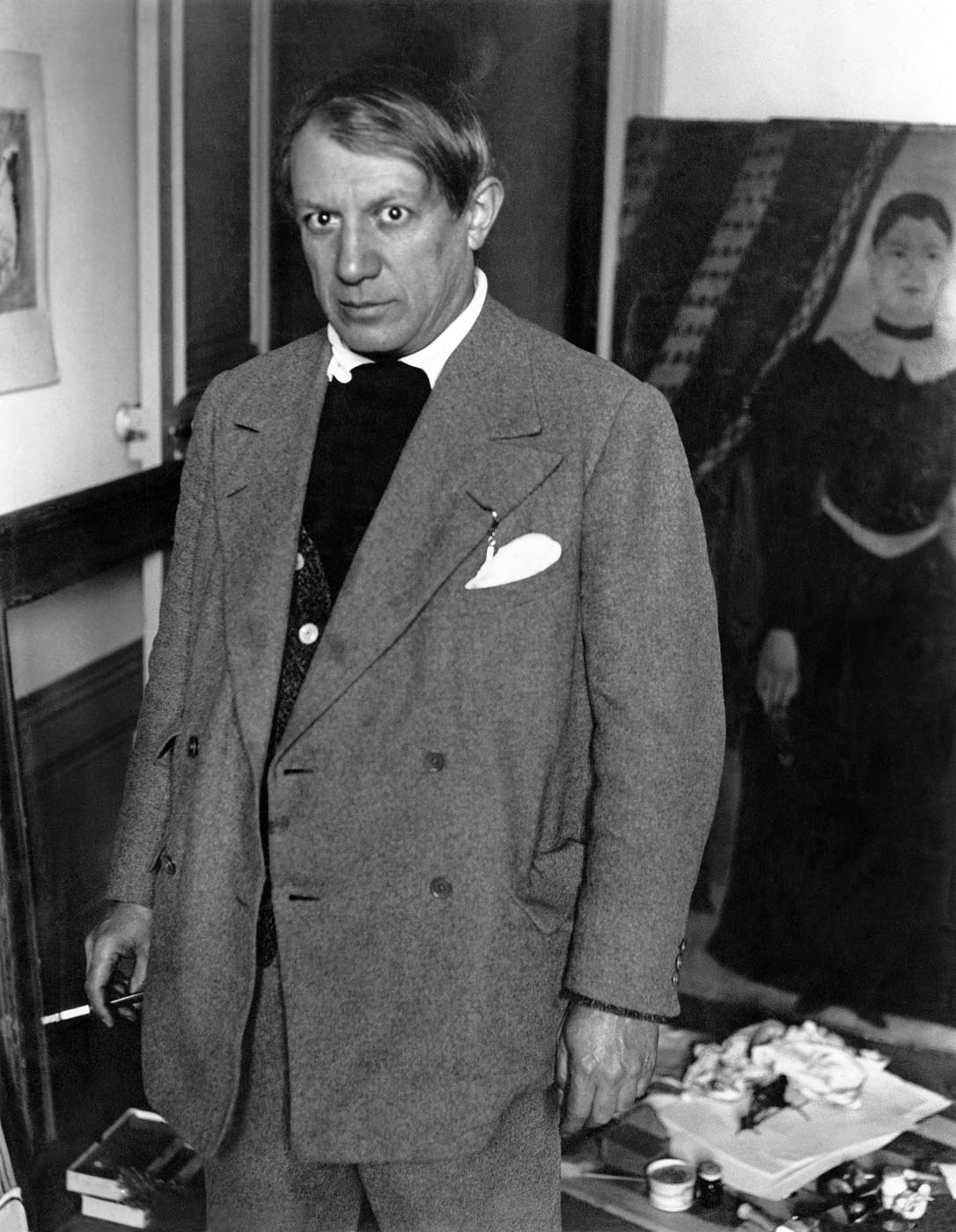
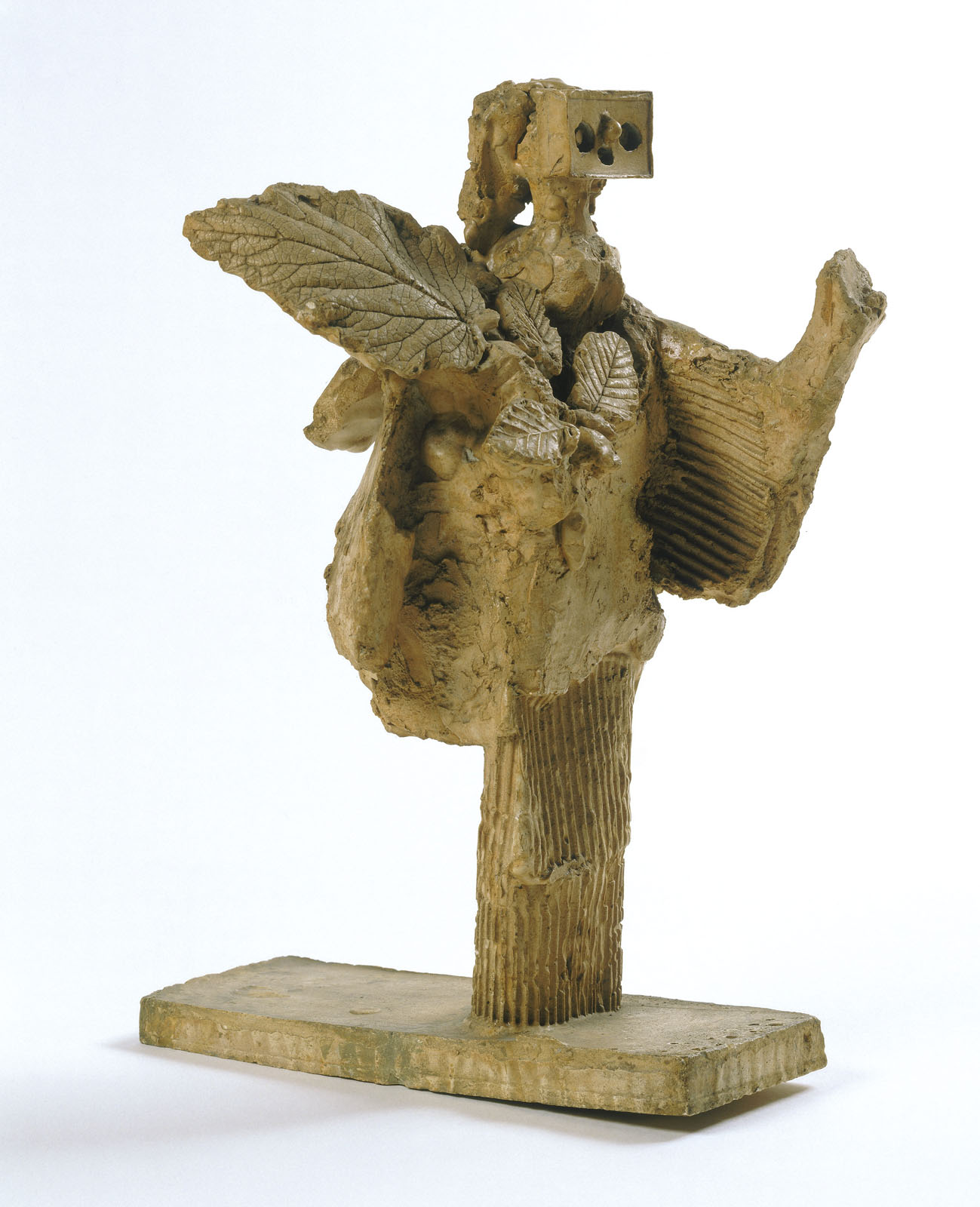
In December. 1932, the art critic Tériade invited Brassaï to take pictures of Picasso, his studio and his sculptures, to illustrate the first issue of Minotaure. This collaboration led to a long and sincere friendship that was sustained by mutual admiration. Brassaï was fascinated by Picasso’s personality, and Picasso admired the photographer’s unbiased gaze. The two friends were both foreigners in the big city: one of them was to become one of the great photographers of the 20th century, and the other, the great artist who changed the history of art. They shared an extraordinary gift for observation, as well as great curiosity. They both collected strange objects that had been thrown away and found again by chance, and they shared a keen interest in primitive art, art brut, bones, poetry and graffiti. They also had a common dislike of focussing on a single discipline, in their urge to explore other creative fields.
This obvious and very special complicity meant that Brassaï became an exceptional witness to Picasso’s private world: the places where he created art, the works themselves, his family life and his friends. Brassaï was one of the few people Picasso allowed free access to his studios, and he was the first to photograph his sculptures. The Málaga-born artist opened the doors of his studios to him in Boisgeloup, La Boétie and Grands Augustins, successively. Brassaï had a great sense of detail, he knew how to put order into disorder, and he composed his photographs in an almost architectural way, giving a new dimension to the works Picasso created and the objects and materials with which he surrounded himself.
One of the most important books in terms of getting to know Picasso, is Brassaï’s Conversations with Picasso (1964), a fascinating text that is outstanding for the immediacy and detail of a man who wrote in the same way he took pictures. This chronicle, which Brassaï illustrated with over 50 photographs, runs from September 1943 – eleven years after he first met Picasso – to September 1962. It provides us with two decades-worth of the artist’s story and, above all, of an environment where Picasso was the epicentre, while at the same time describing the history of art and the main events of those years. The relationship between Brassaï and Picasso remained intact until the Spaniard’s death in 1973. Brassaï died in the South of France in 1984 and was buried in Montparnasse cemetery, in the city that both he and Picasso loved.
For the occasion, Museo Picasso Málaga and La Fábrica have jointly published the photobook Brassaï (Paris & Picasso), which contains 105 full-page photographs and an excerpt from the text in which Henry Miller dubbed Brassaï “The eye of Paris”. This bi-lingual hardback edition is printed on coated paper, to highlight the photographs’ half-tones and nuances of light and shade. The book is now available to purchase from the Museo Picasso Málaga bookshop and is due to be distributed to Spanish, European and US bookshops.
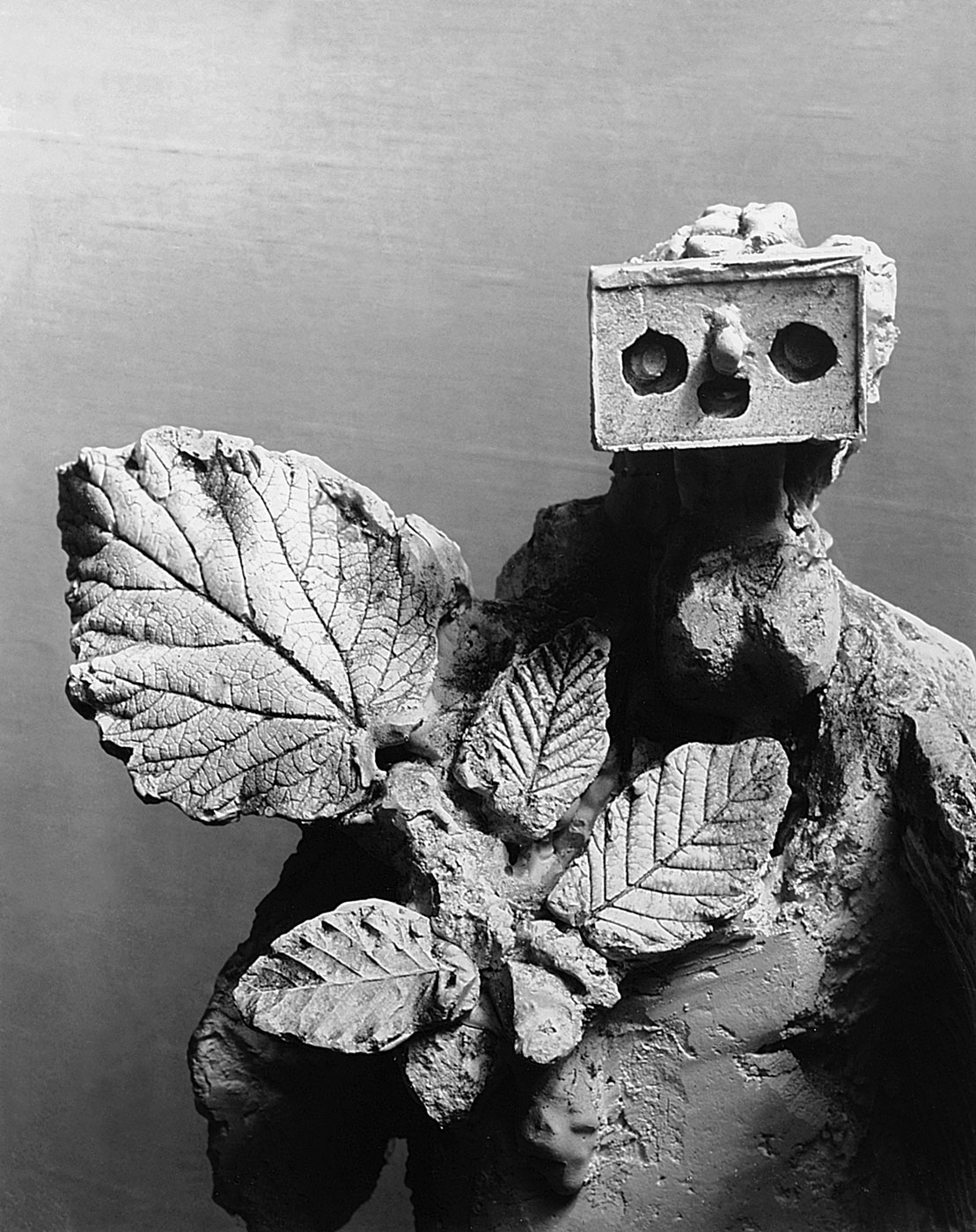
In 1930, Picasso acquires a house and land near Gisors, Normandy, with the aim of creating monumental sculptures. Of those he creates there, La femme au vase (Woman with Vase), a piece from 1933, stands out for its great symbolic weight, given that it is placed on the artist’s tomb in the Château of Vauvenargues. But it is above all the busts of Marie-Thérèse Walter, his young secret lover, who both Brassaï and Boris Kochno capture with their respective lenses in attempts to recreate the peculiar atmosphere of that country studio, inhabited by strange creatures. While Kochno’s report is that of an amateur, Brassaï’s is a commission for the first issue of Minotaure art magazine, from 1933, accompanying a text by André Breton, “Picasso dans son élément” (Picasso in his Element), which reveals Picasso as a sculptor, a facet of his work that was completely unknown until then.
Anonymous text from the Museo Picasso website Nd [Online] Cited 11/03/2022
Exhibition dates: 26th June – 27th October, 2019 Visited September 2019 posted September 2020
Curators: Matthieu Rivallin and Pia Viewing
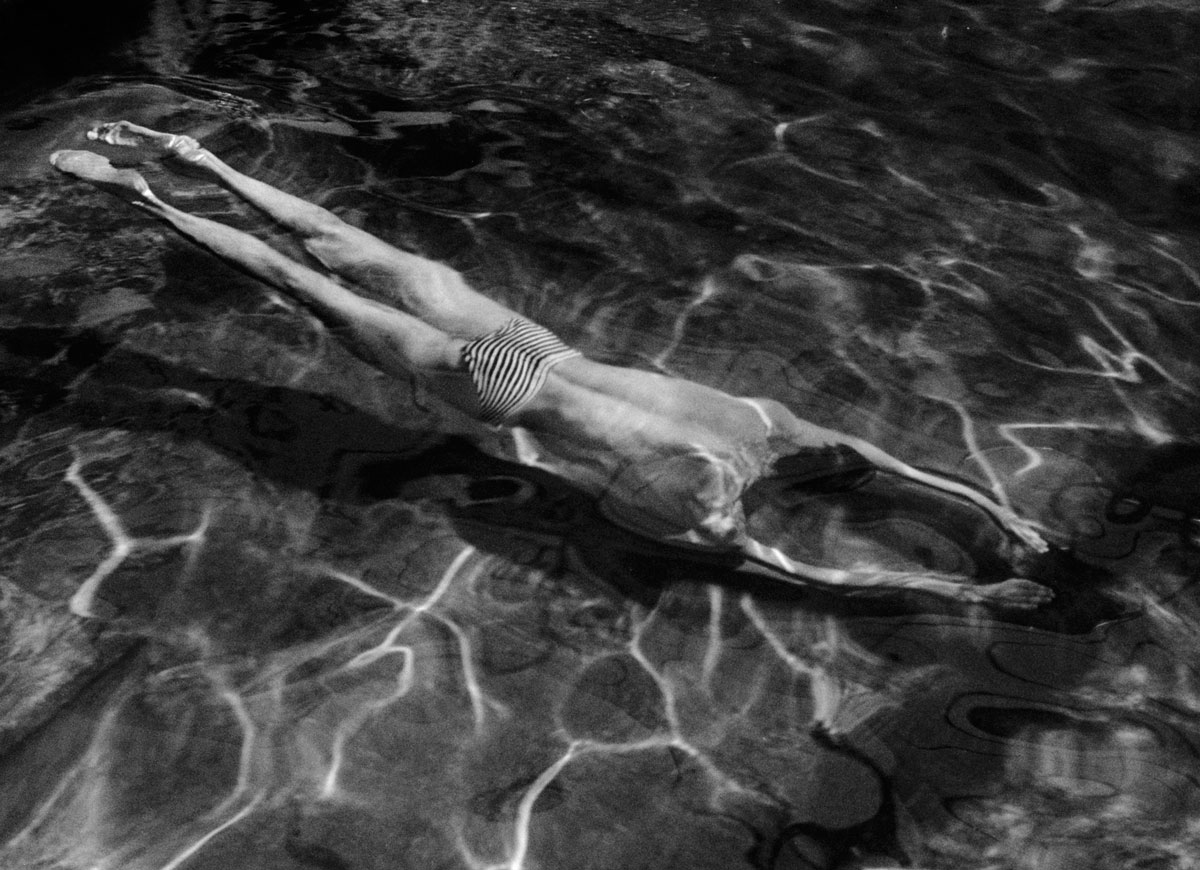
André Kertész (Hungarian, 1894-1985) Nageur sous l’eau, Esztergom Underwater swimmer, Esztergom 1918 Contact original
“”… especially haptic qualities are demanded of the deconstructionist performer, spectator, and reader; not to follow optically the ‘line of ideas’ in the text or in a picture and see only the representation proper, the surface, but to probe with the eyes the pictorial texture and even to enter the texture.”69 Such “touching” with the eye did not lead to a secure tactile experience of being firmly planted on the ground, for all grounds, all foundations, were suspect, however construed. We are, as Nietzsche knew, swimming in an endless sea, rather than standing on dry land. To “touch” a trace, groping blindly in the dark, is no more the guarantee of certainty than to see its residues.”
Gandelman, Claude. ‘Reading Pictures, Viewing Texts’. Bloomington, Indiana, 1991, p. 140 quoted in Martin Jay. ‘Downcast Eyes: The Denigration of Vision in Twentieth-Century French Thought’. Berkley: University of California Press, 1993, p. 512.
Touching with the eye
Part 2 of a large posting on the exhibition L’equilibriste, André Kertész at Jeu de Paume, Château de Tours, which I saw in Tours in September 2019.
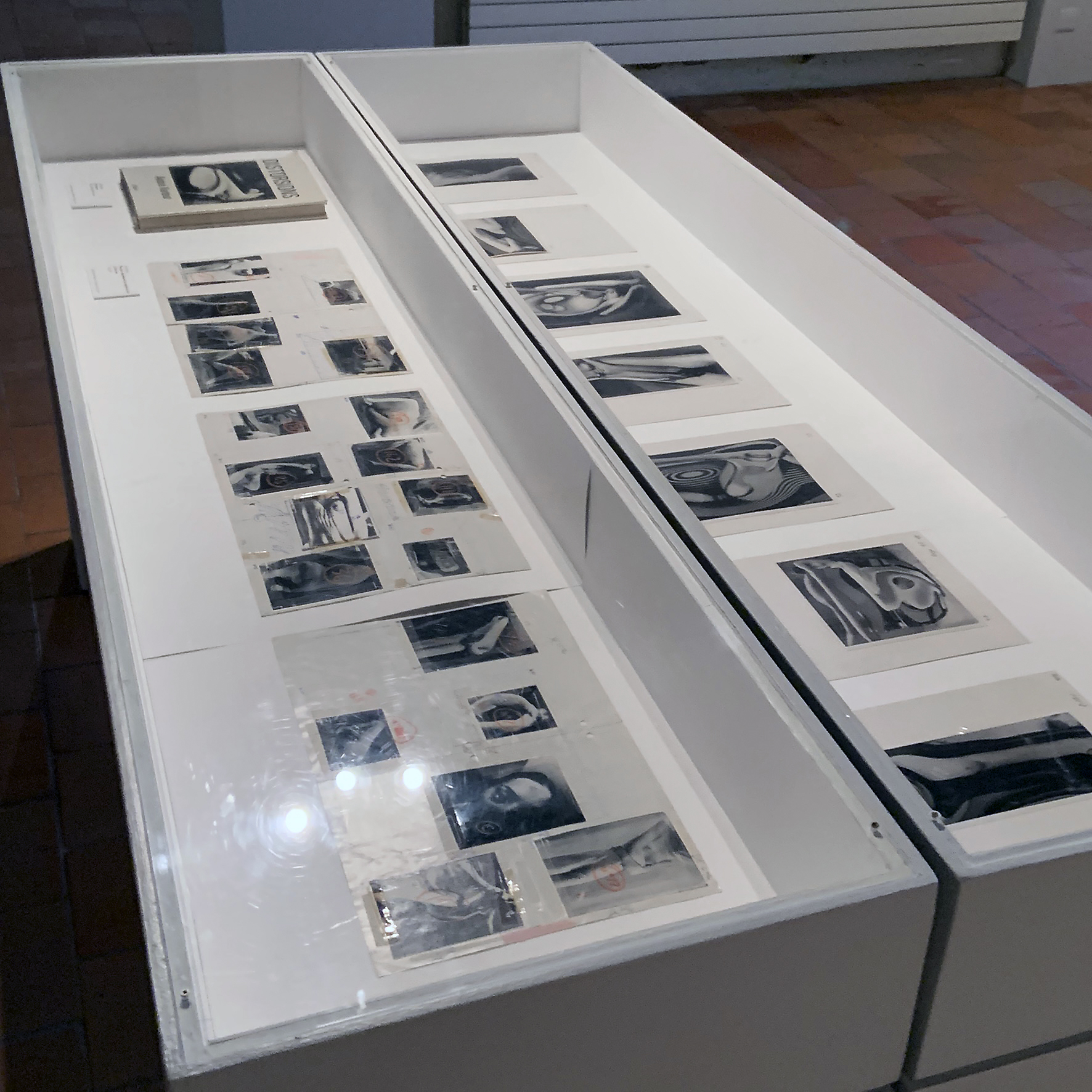
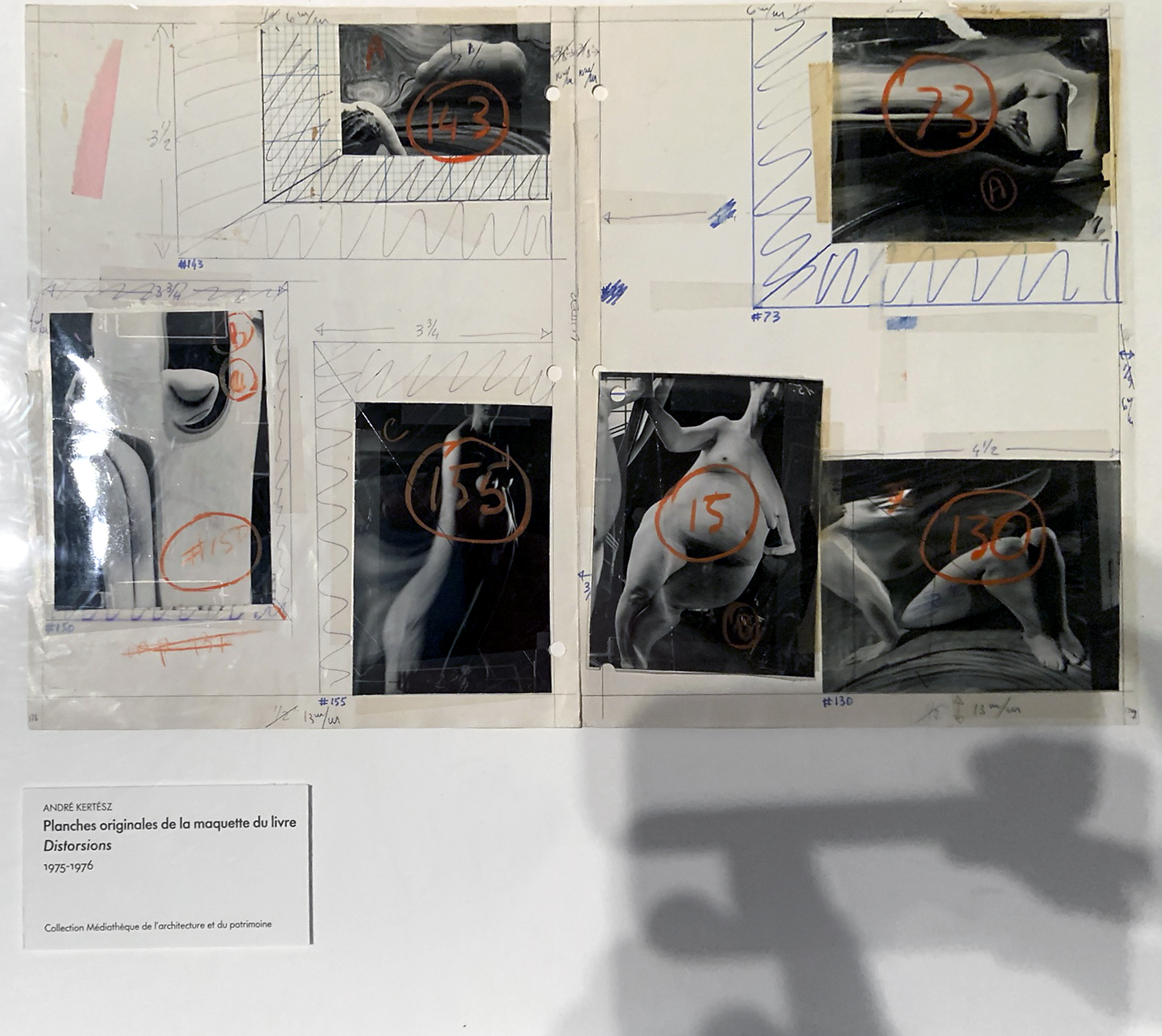
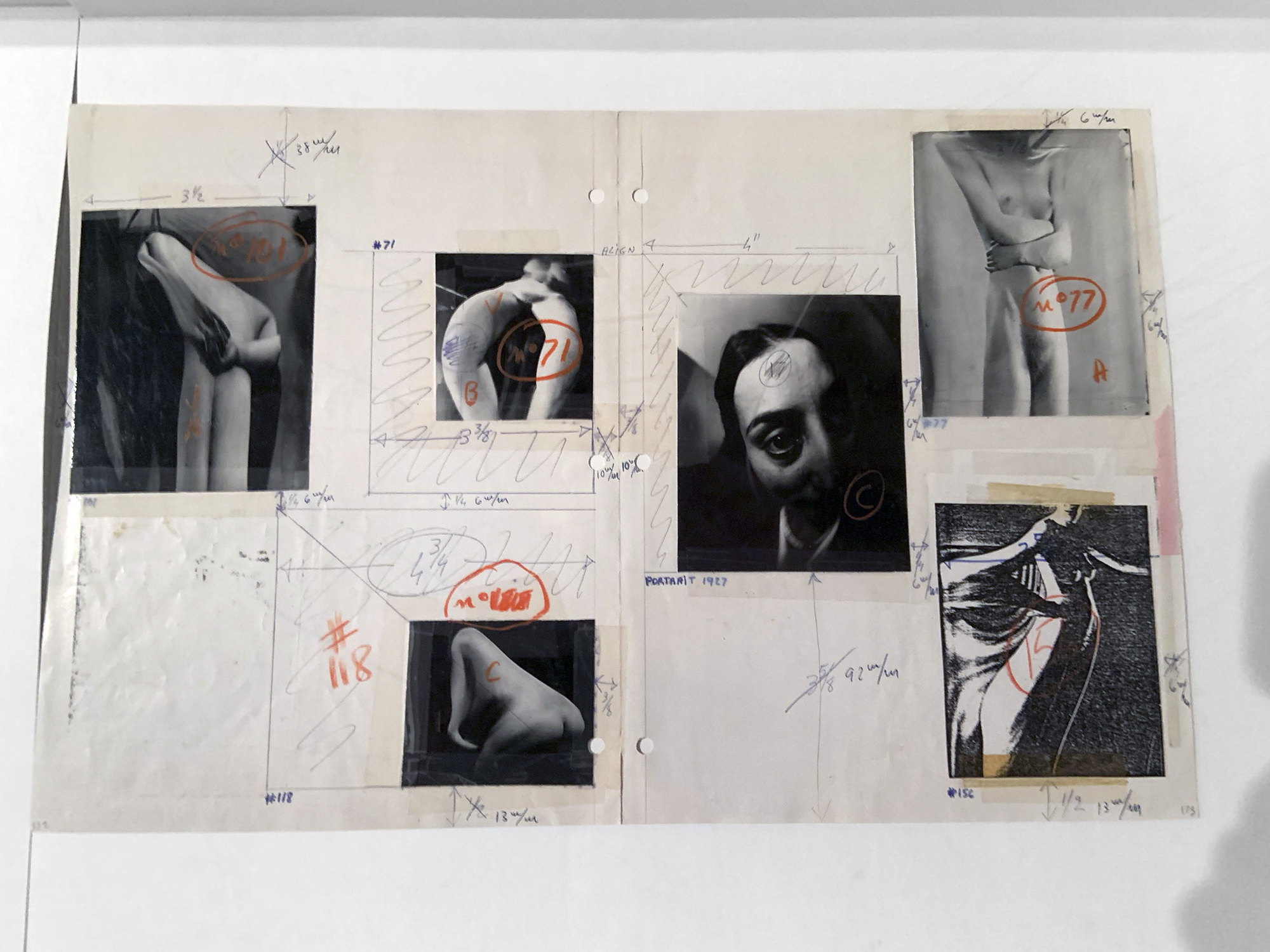
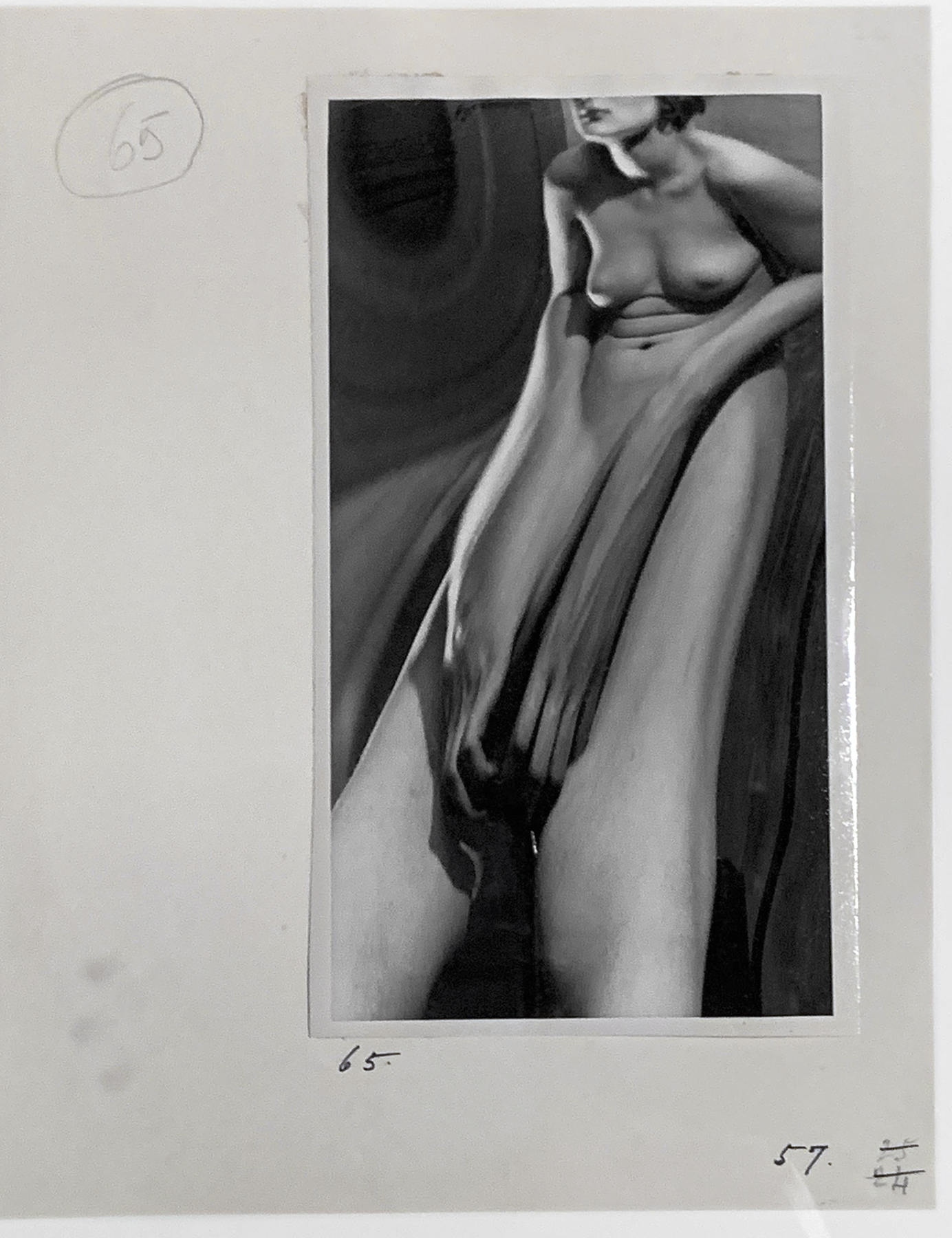
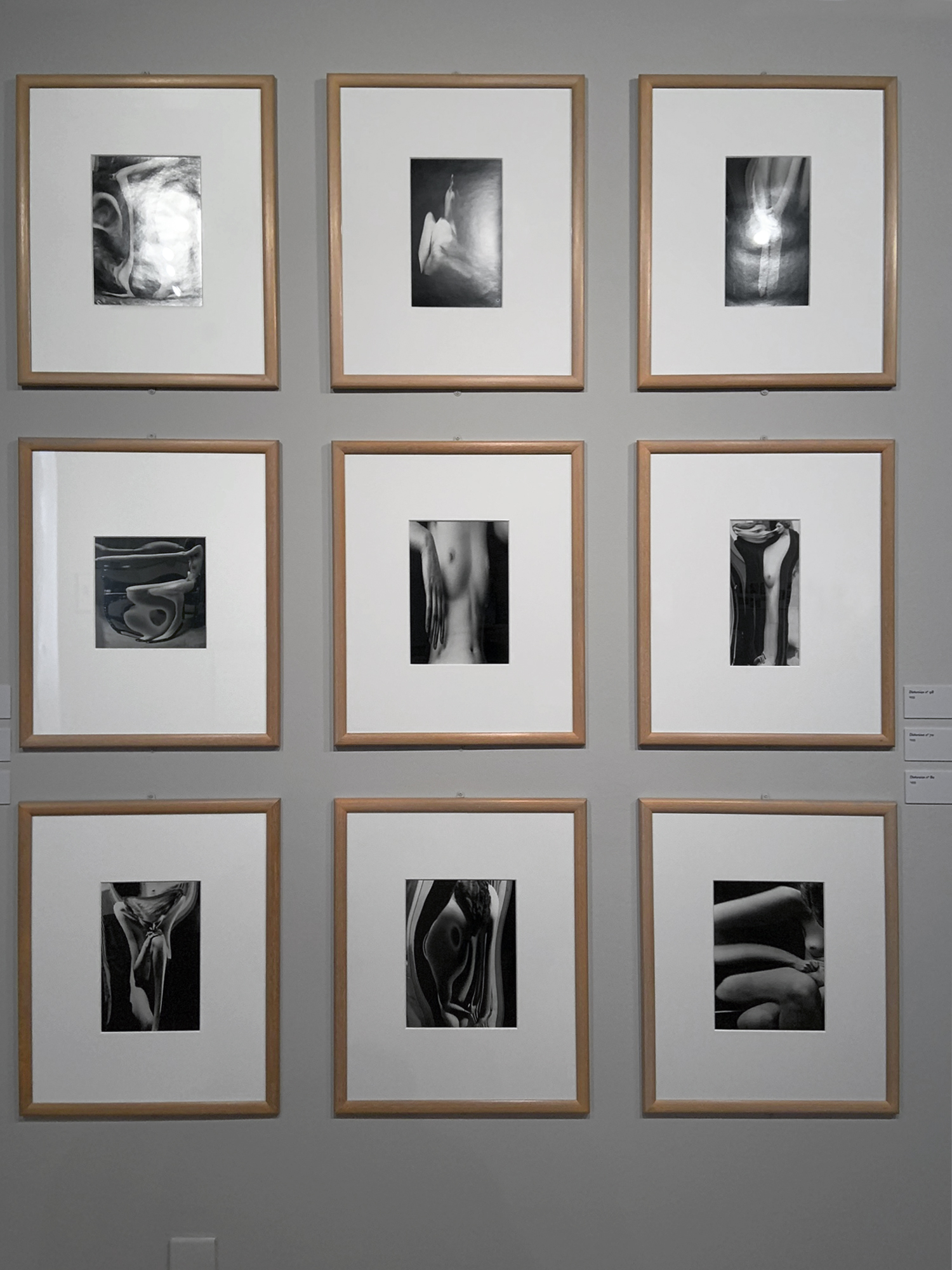
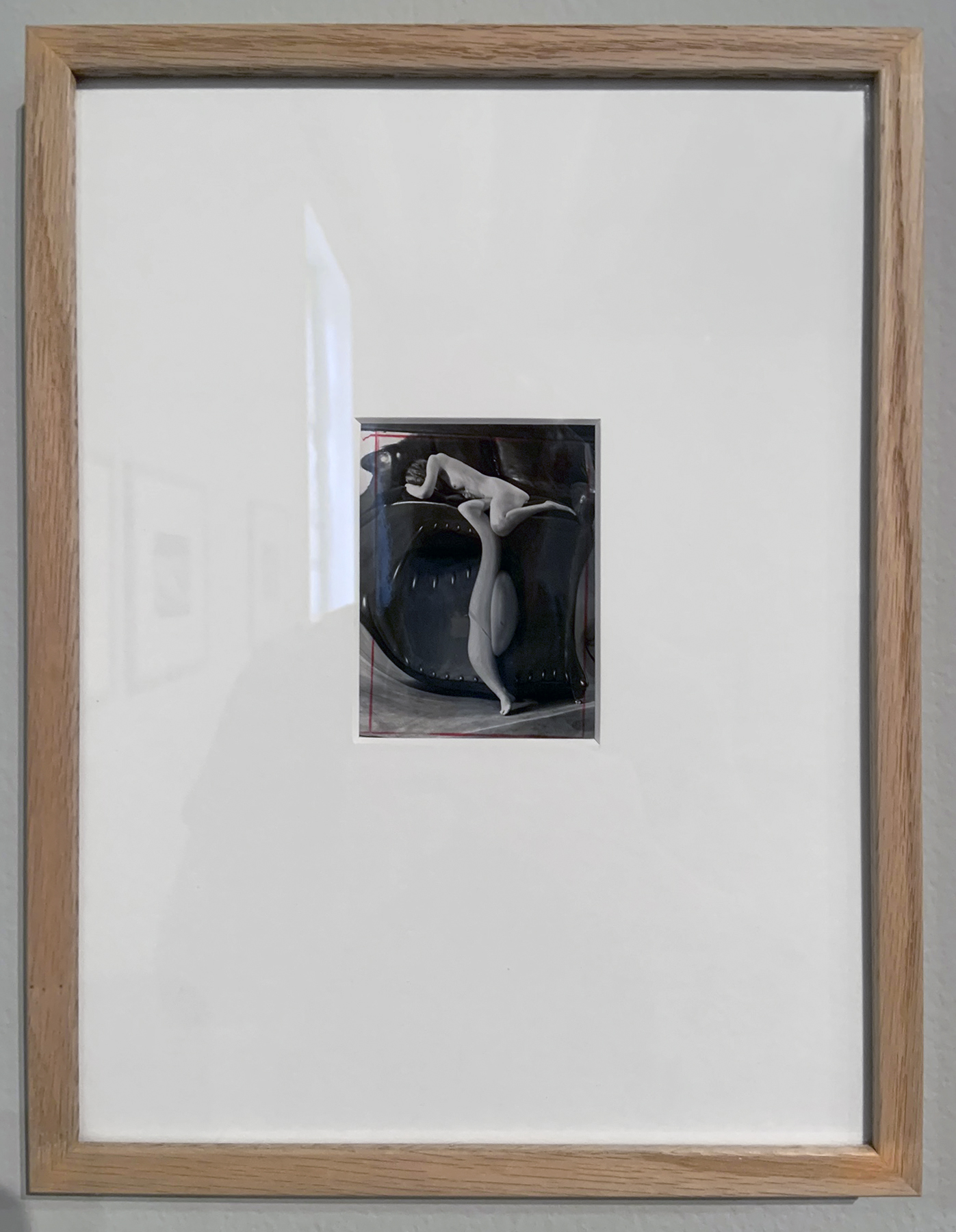
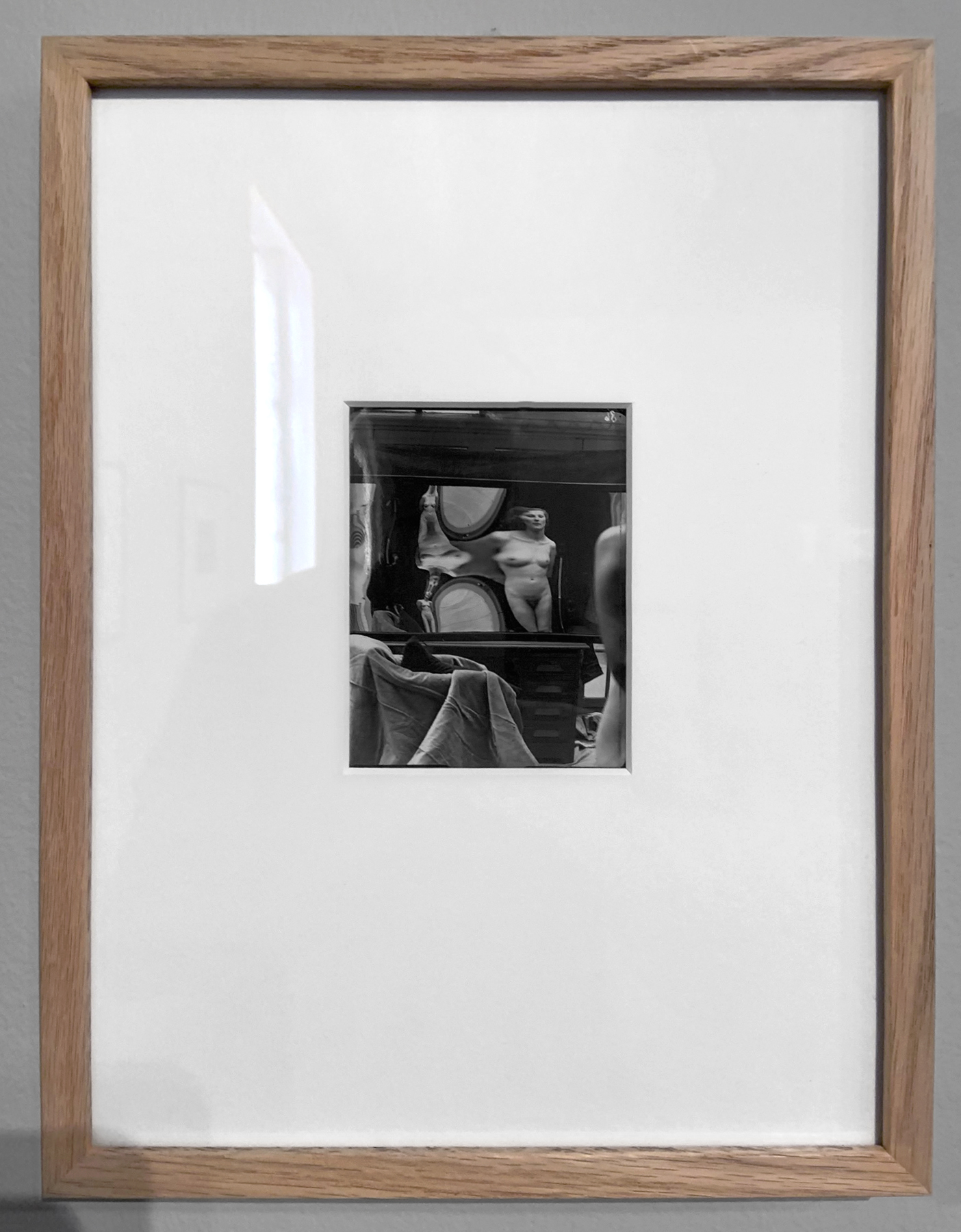
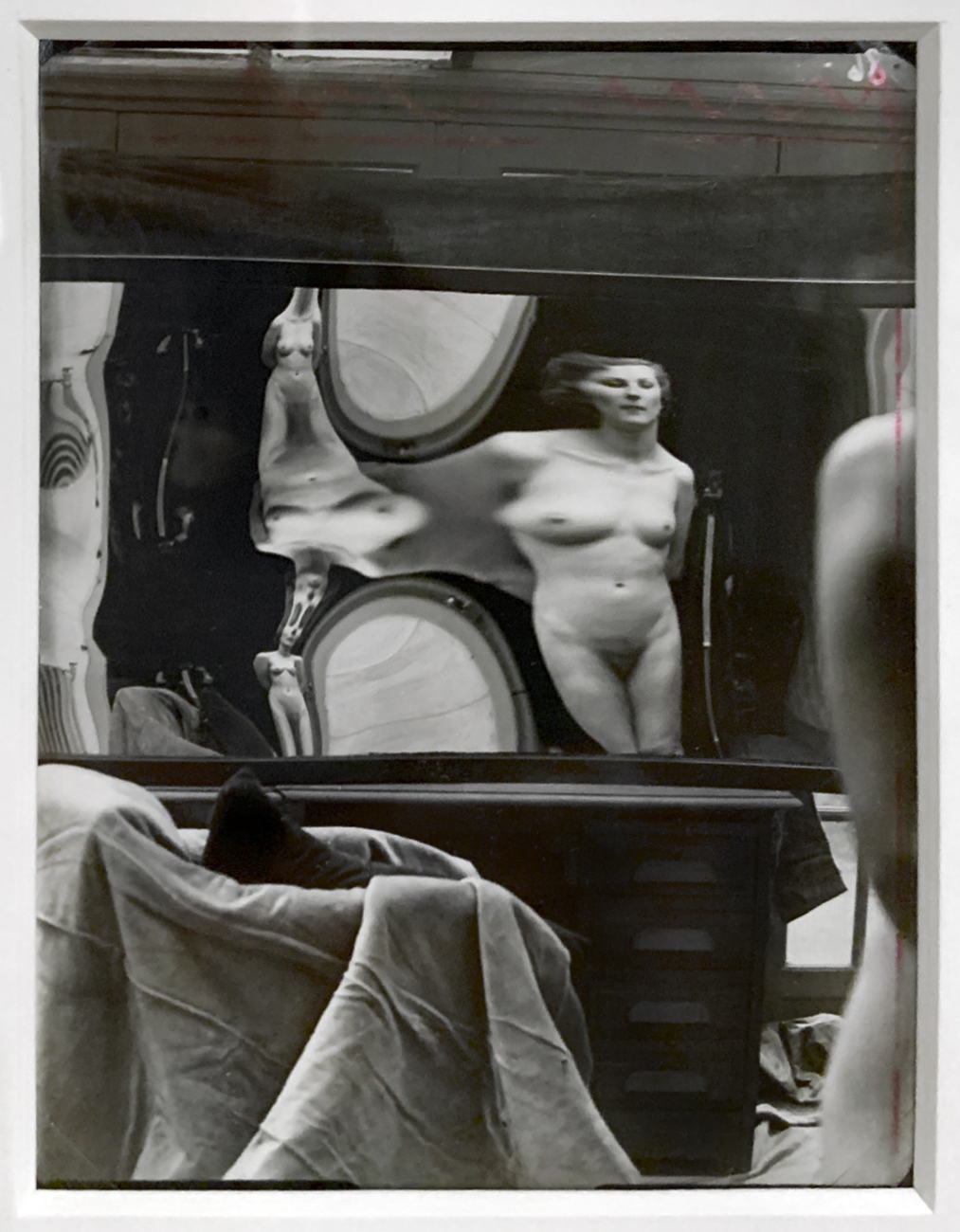
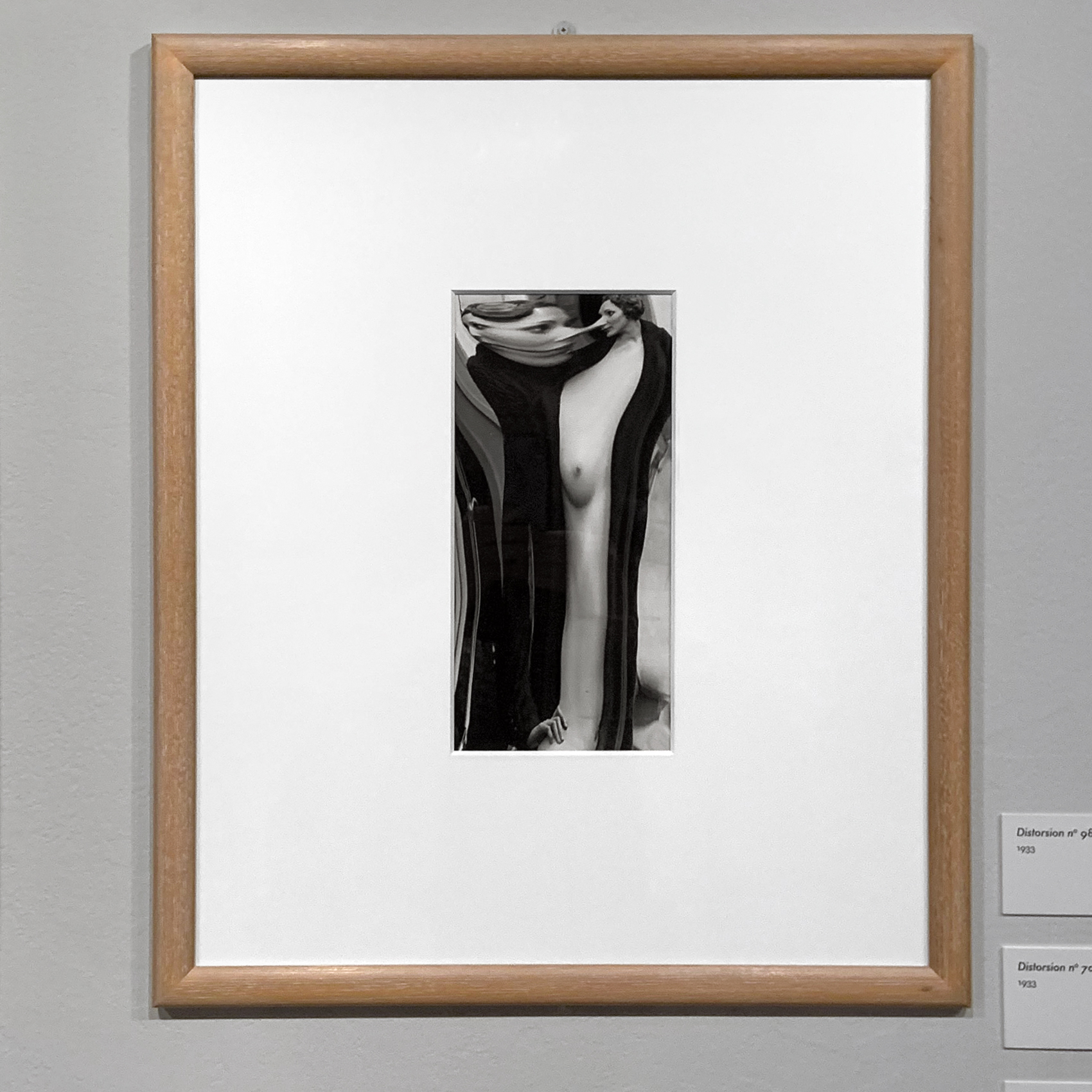
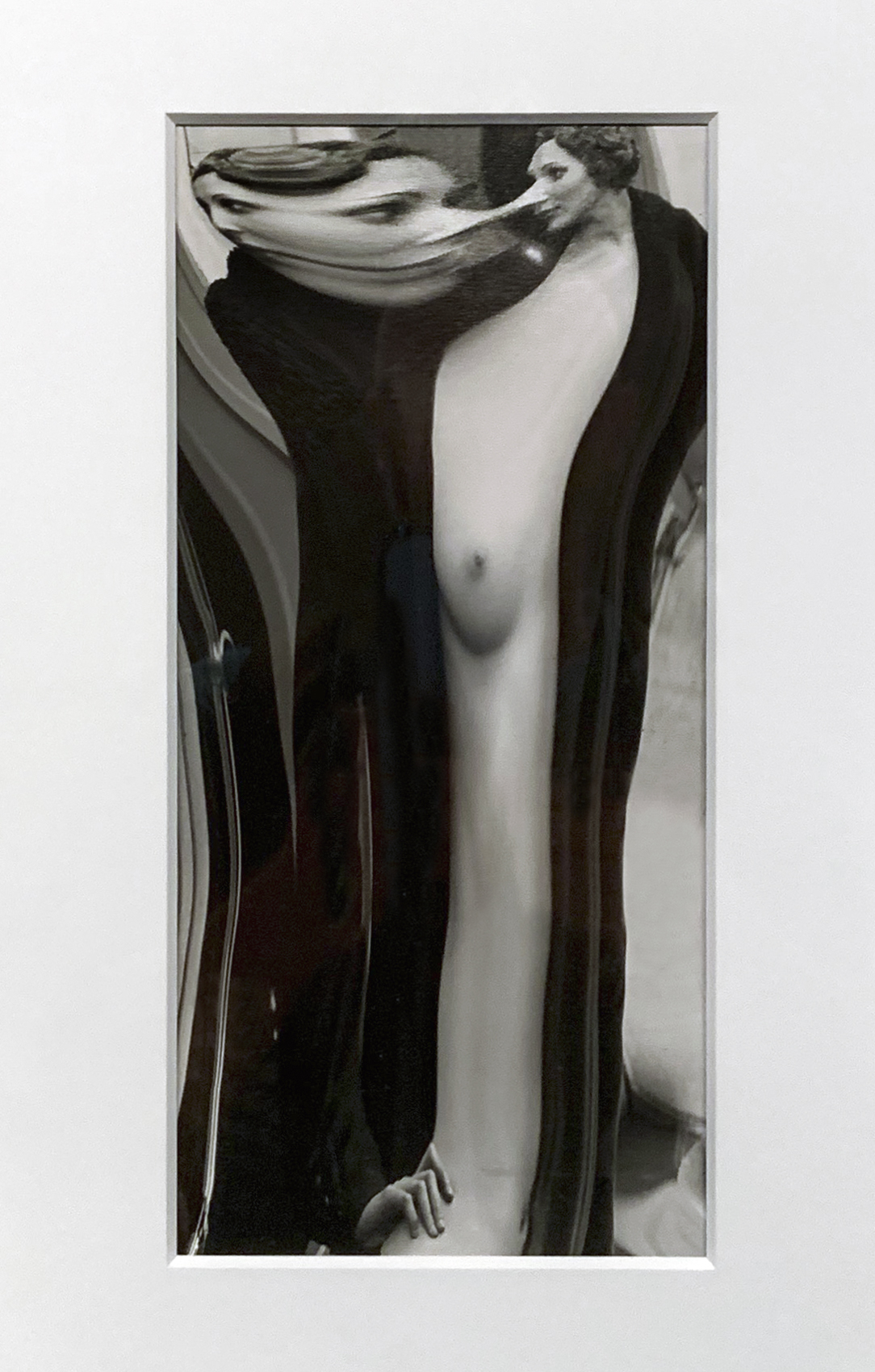
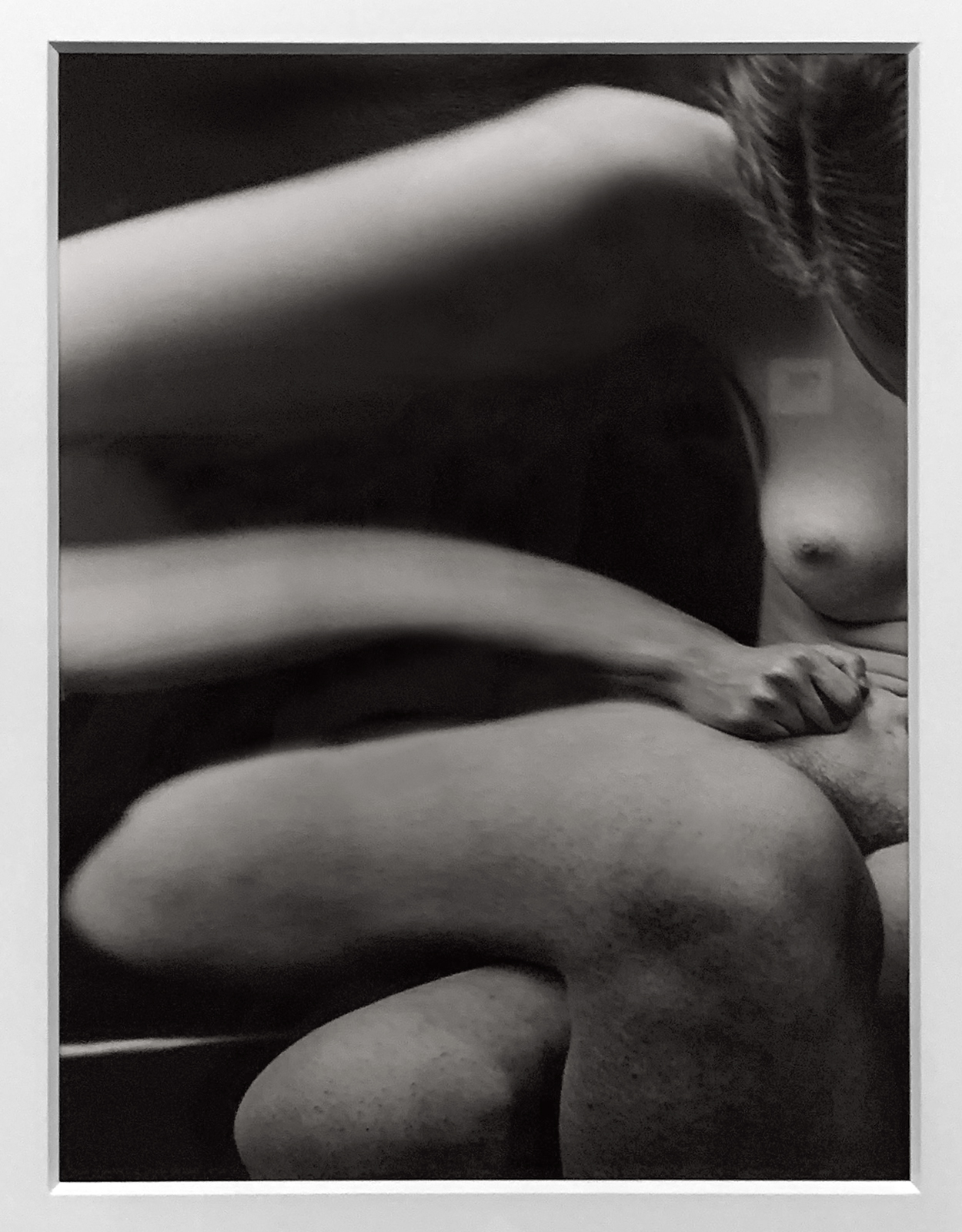
This posting contains photographs from his famous series “Distortions” (fascinating to see the original plates for the book of the same name, complete with cropping marks and red lead pencil annotations); American works from 1936 onwards, when Kertész moved to the United States to avoid the persecution of the Jews and the threat of World War II; and the late work colour Polaroids.
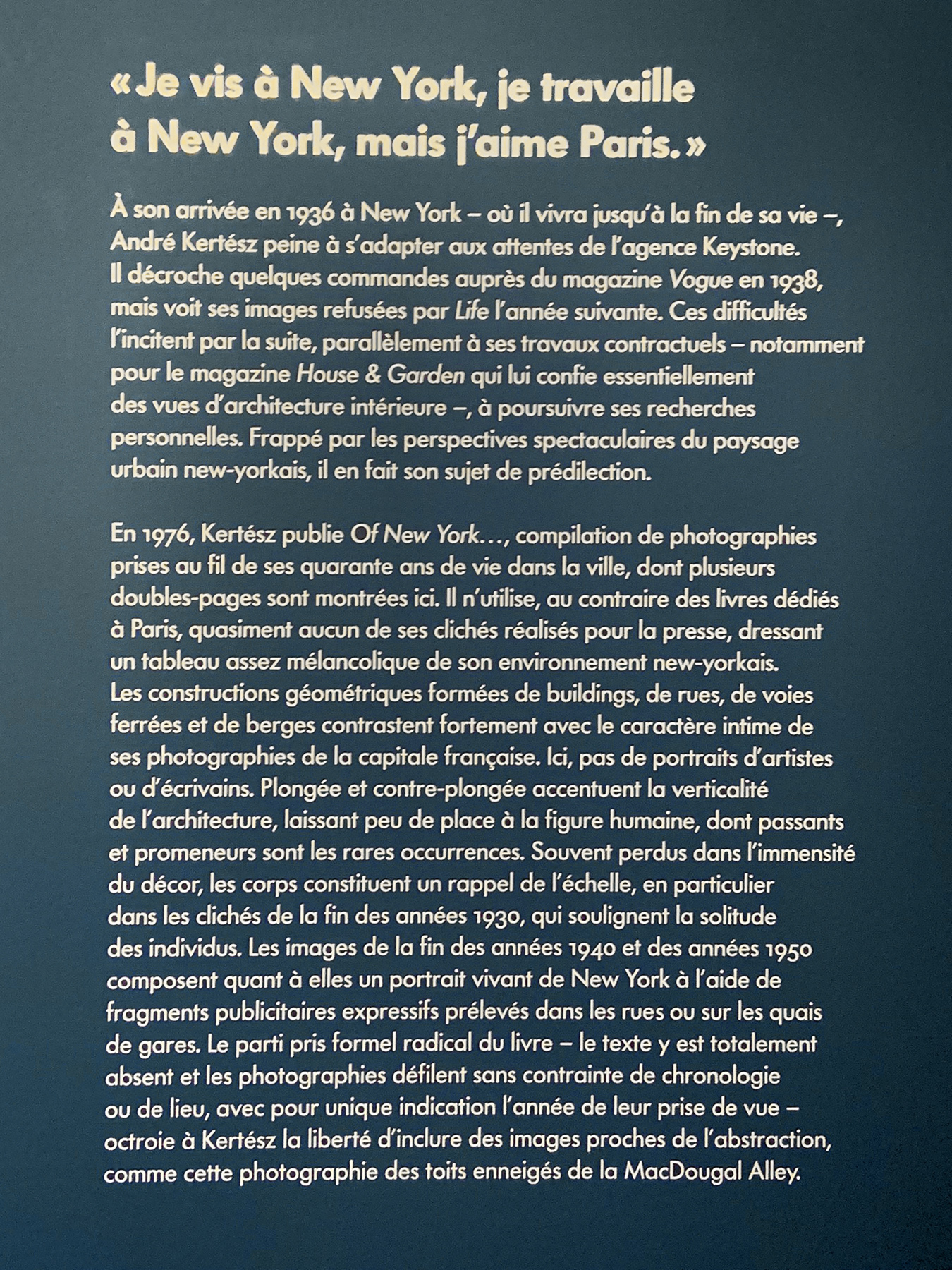
I admit that Kertész is not my favourite photographer. While I admire some of his photographs, I feel emotionally distant from most of them. Edward Clay observes in the quotation below that Kertész was “one of the most lyrical and formally inventive photographers of the twentieth-century… [His photographs] often convey a quiet mood of melancholy … He remains revered for his clarity of style and ability to blend simplicity with emotion, prizing impact over technical precision, seeking metaphors and geometry in everyday objects and scenarios, to turn the mundane into the surreal.”
Personally, I don’t find his photographs emotional nor lyrical, only a few poetic. Not melancholic, but geometric. In later works, he simplifies, simplifies, simplifies much like his friend Mondrian did. For me, the balance between sacred / geometry, the sacred geometry of the mystery of things, is often unbalanced in these images (particularly relevant, given the title of this exhibition). Is it enough just to turn the mundane into the surreal? Where does that lead the viewer? Is it enough to just observe, represent, without digging deeper.
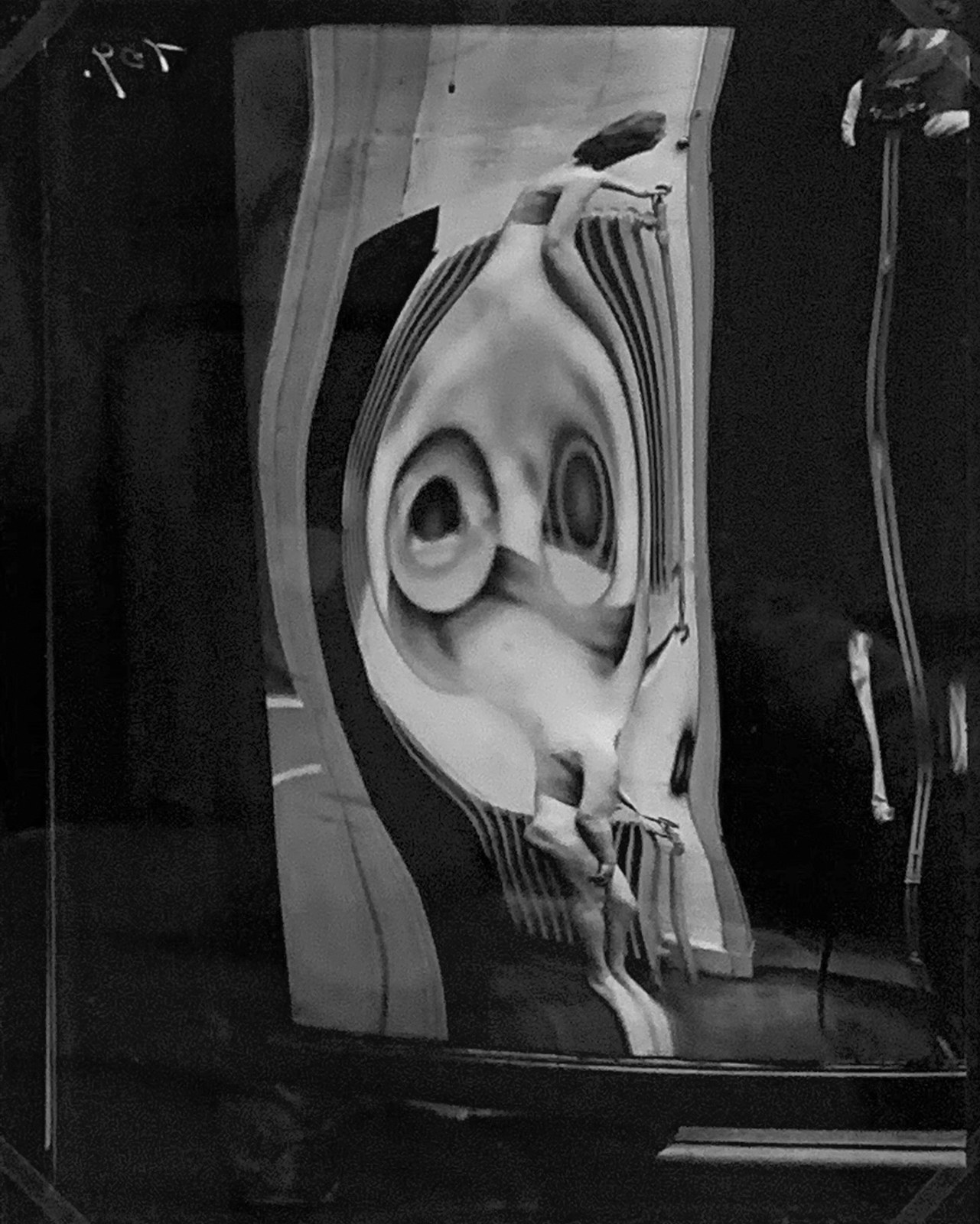
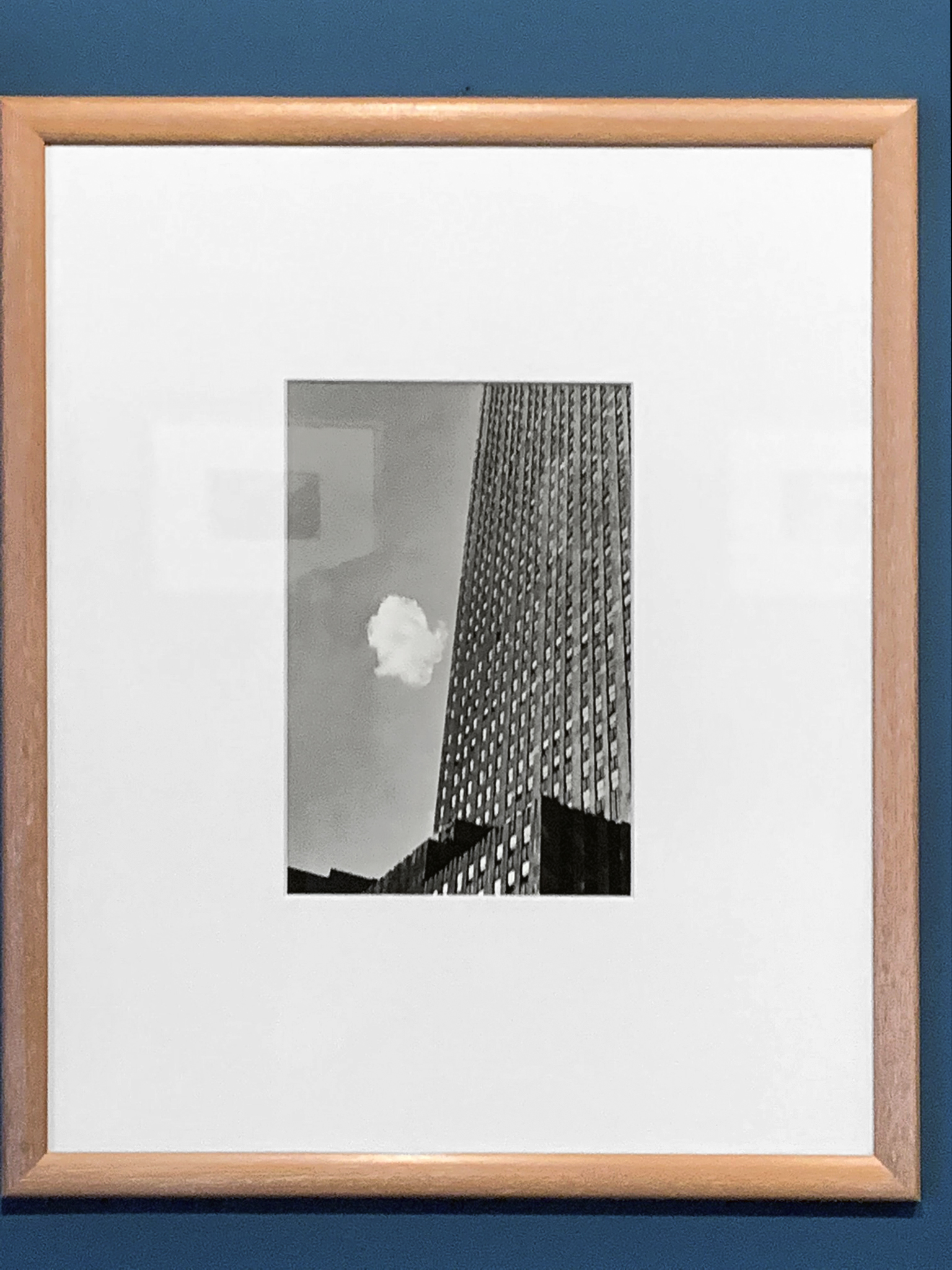
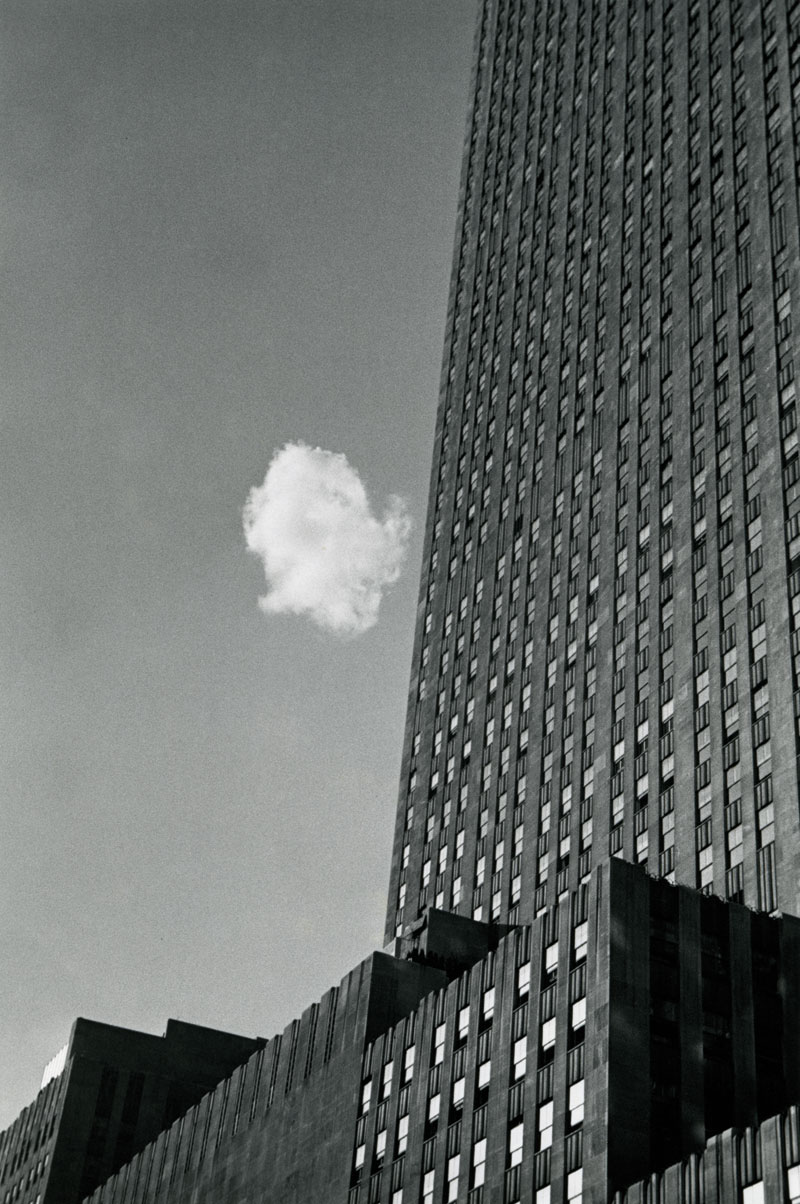
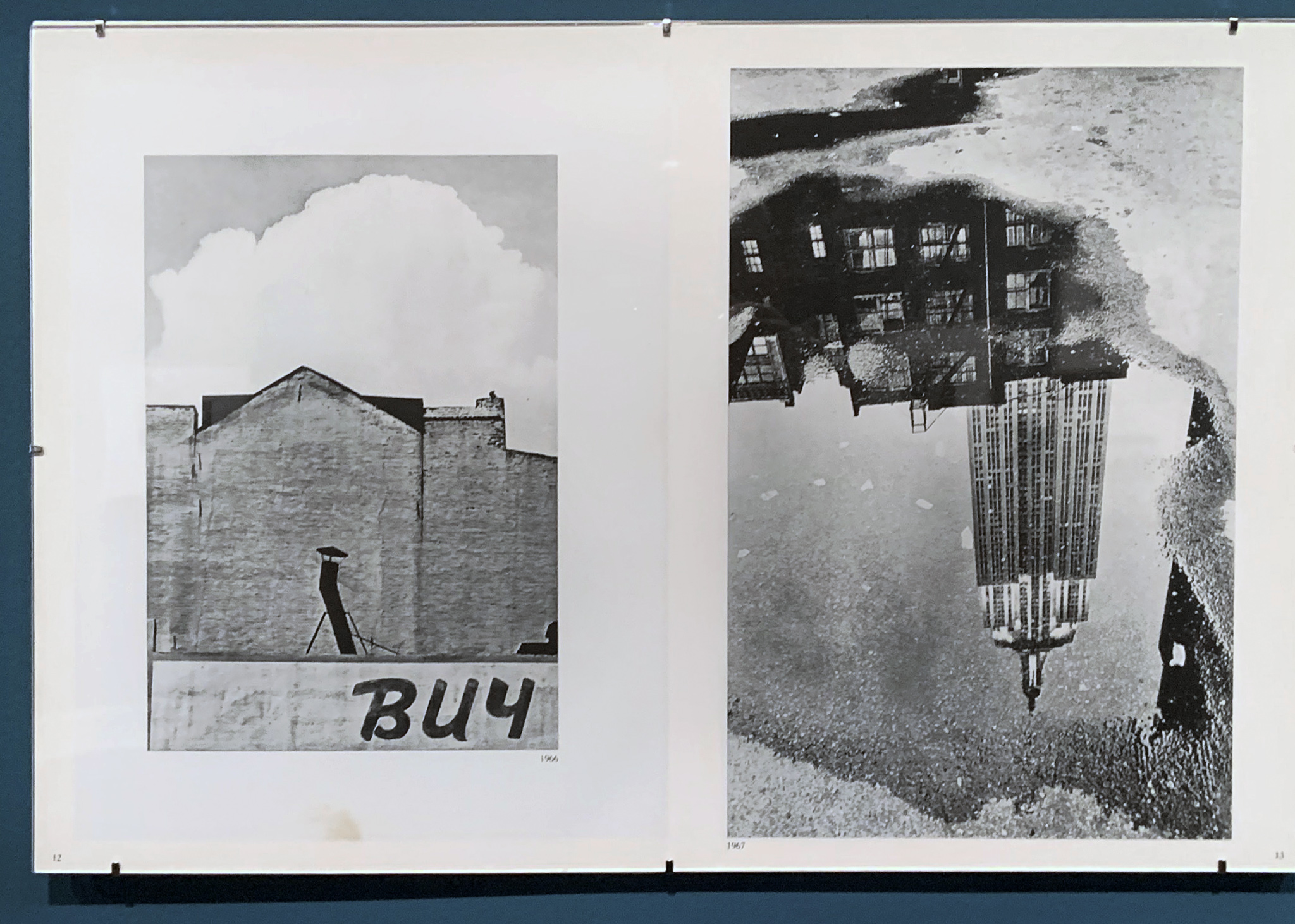
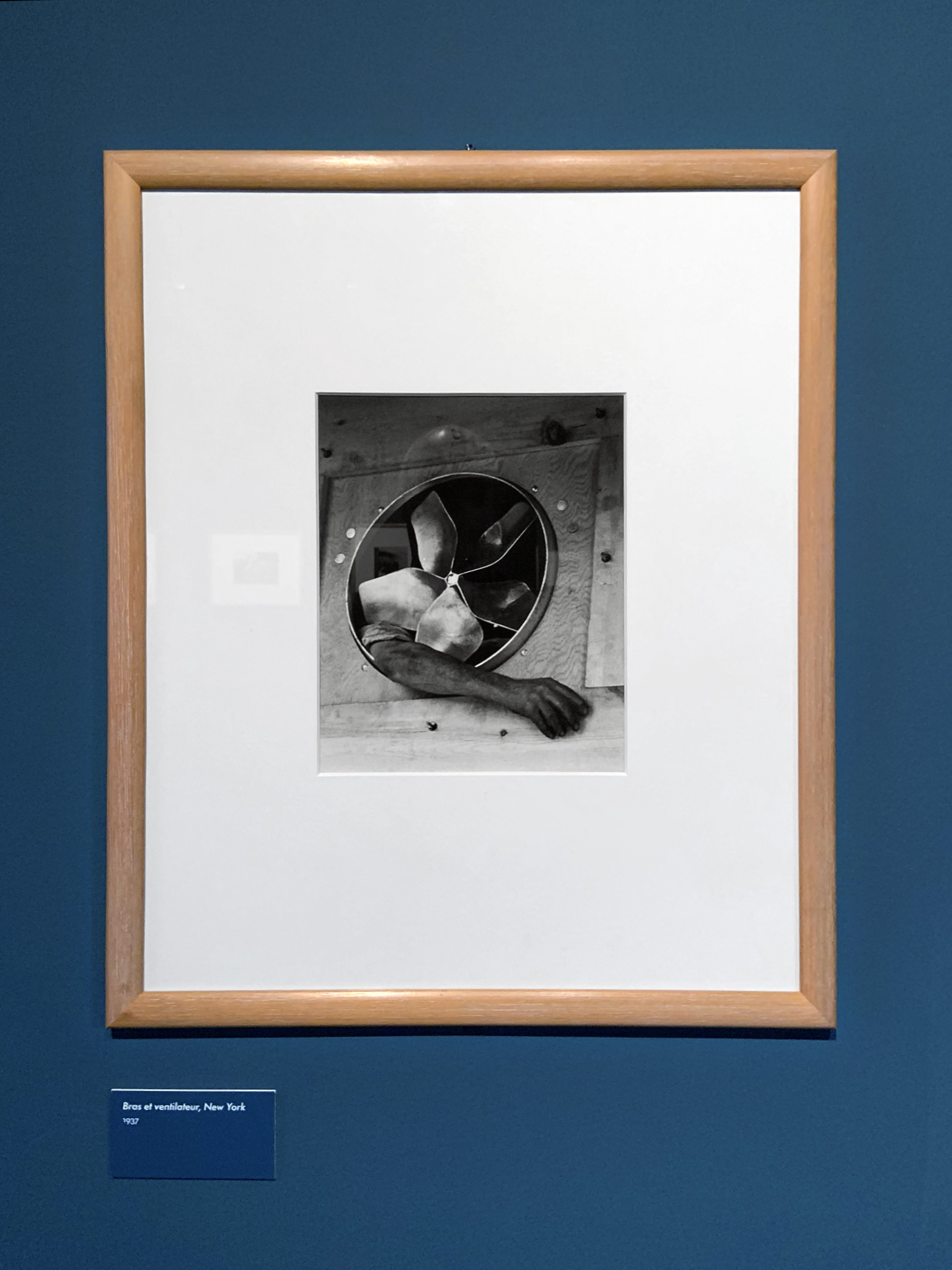
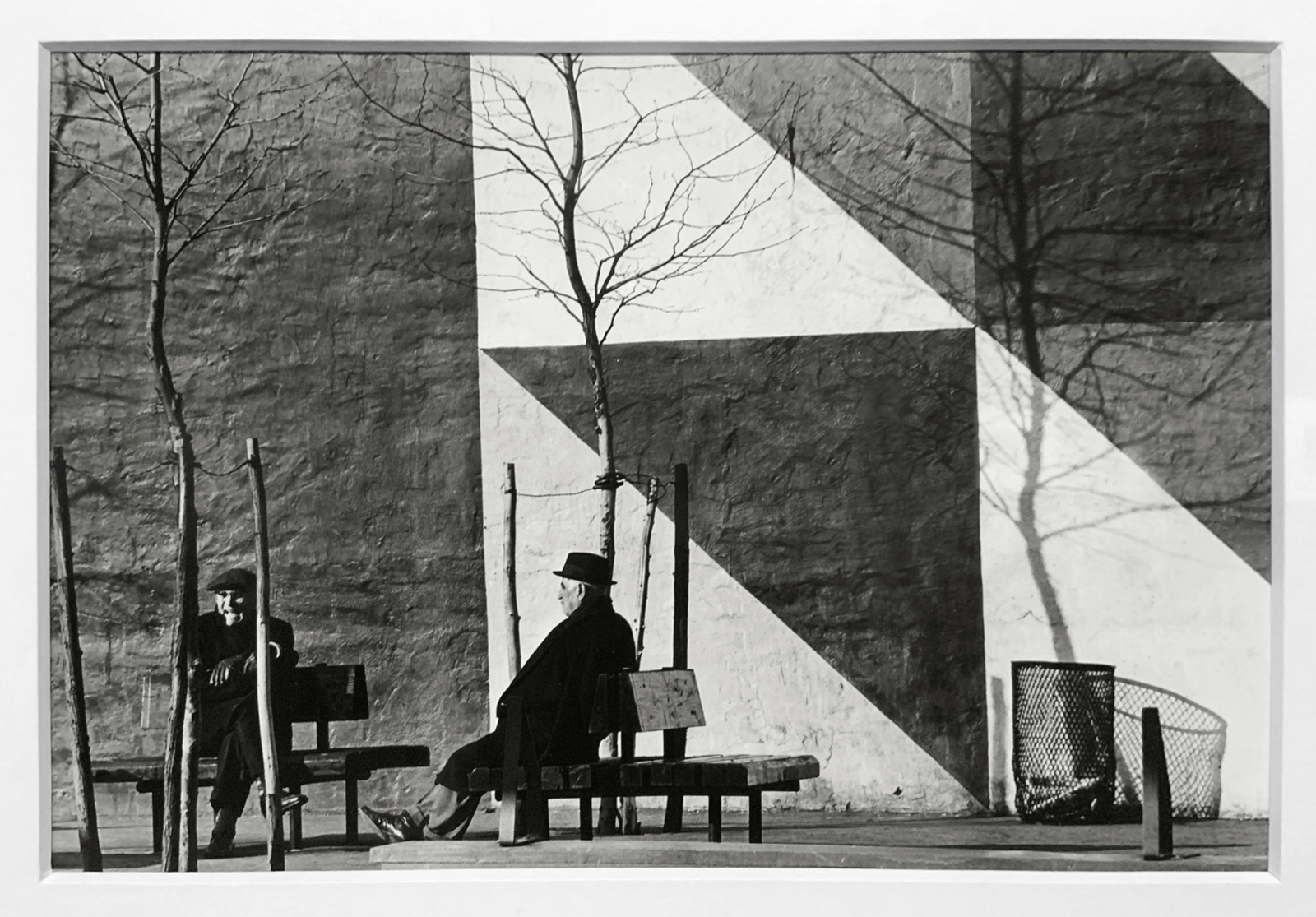
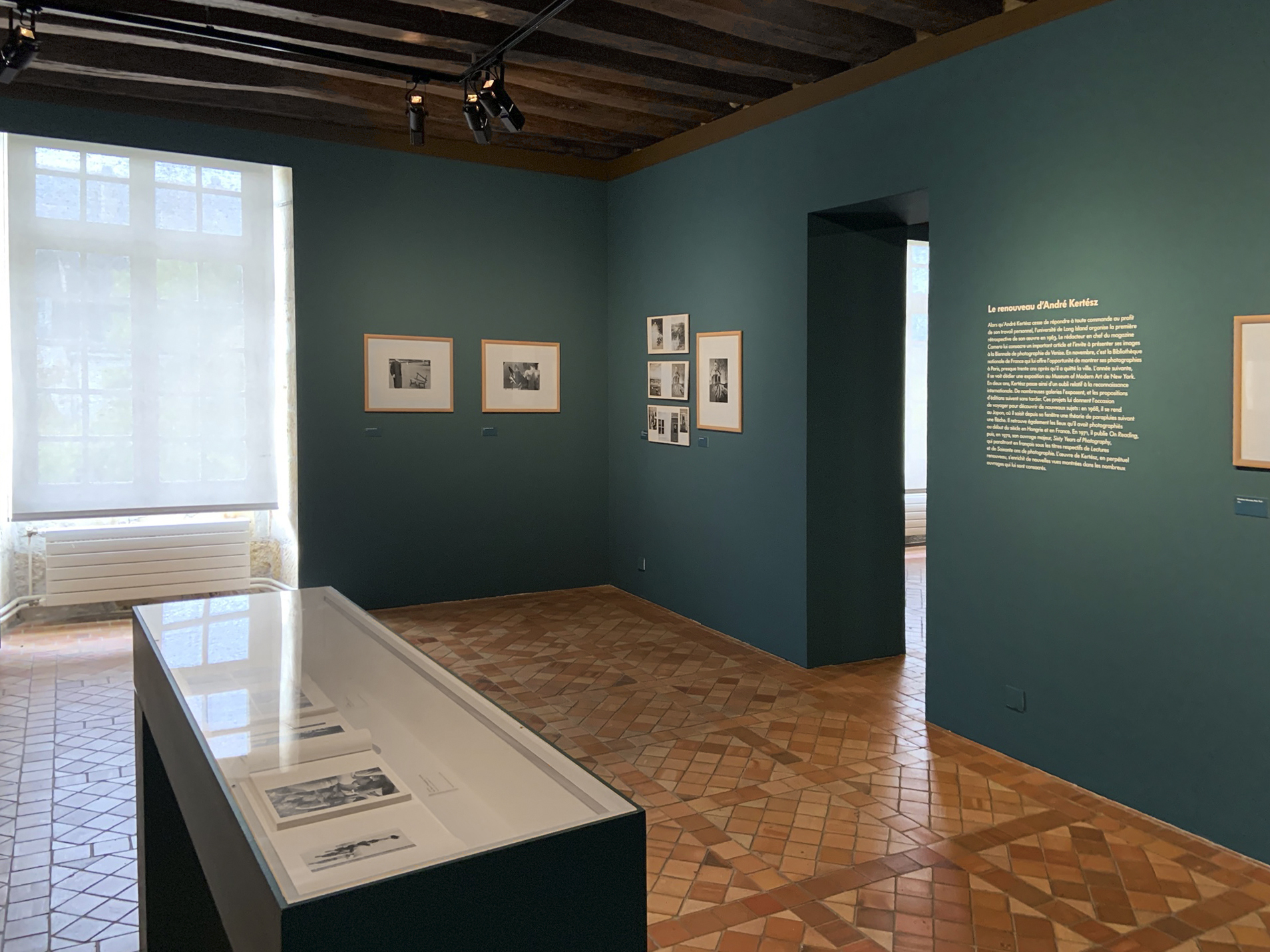
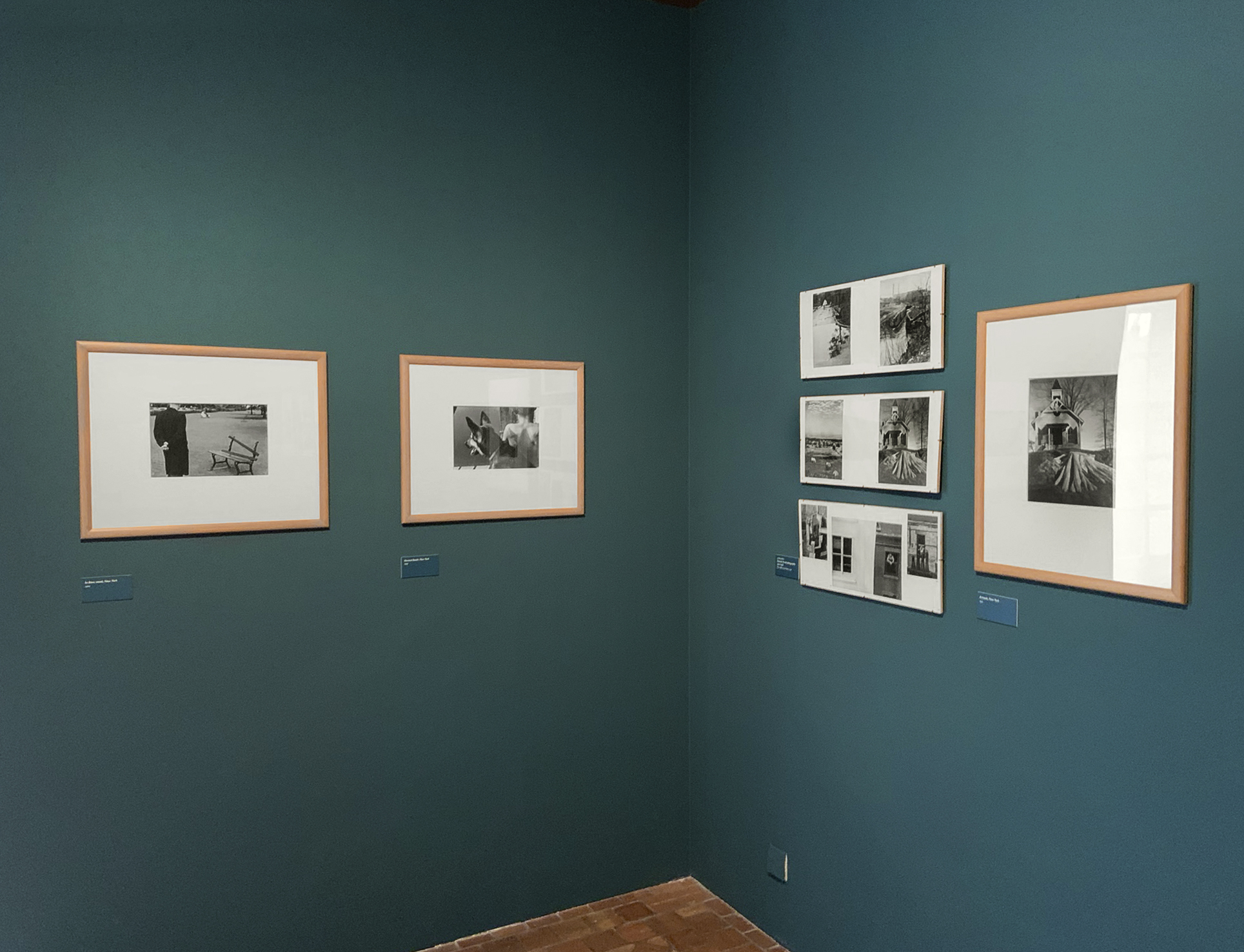
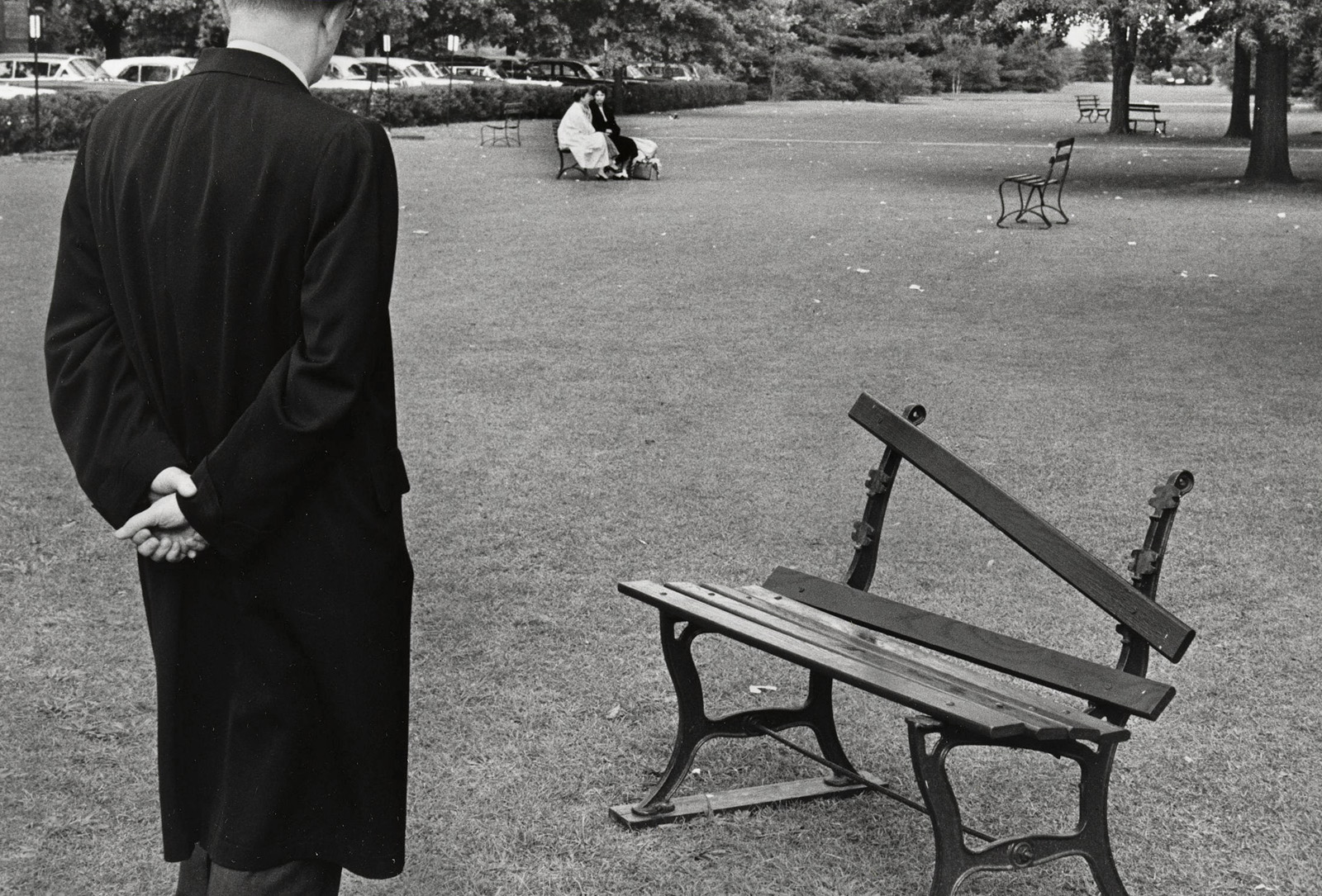
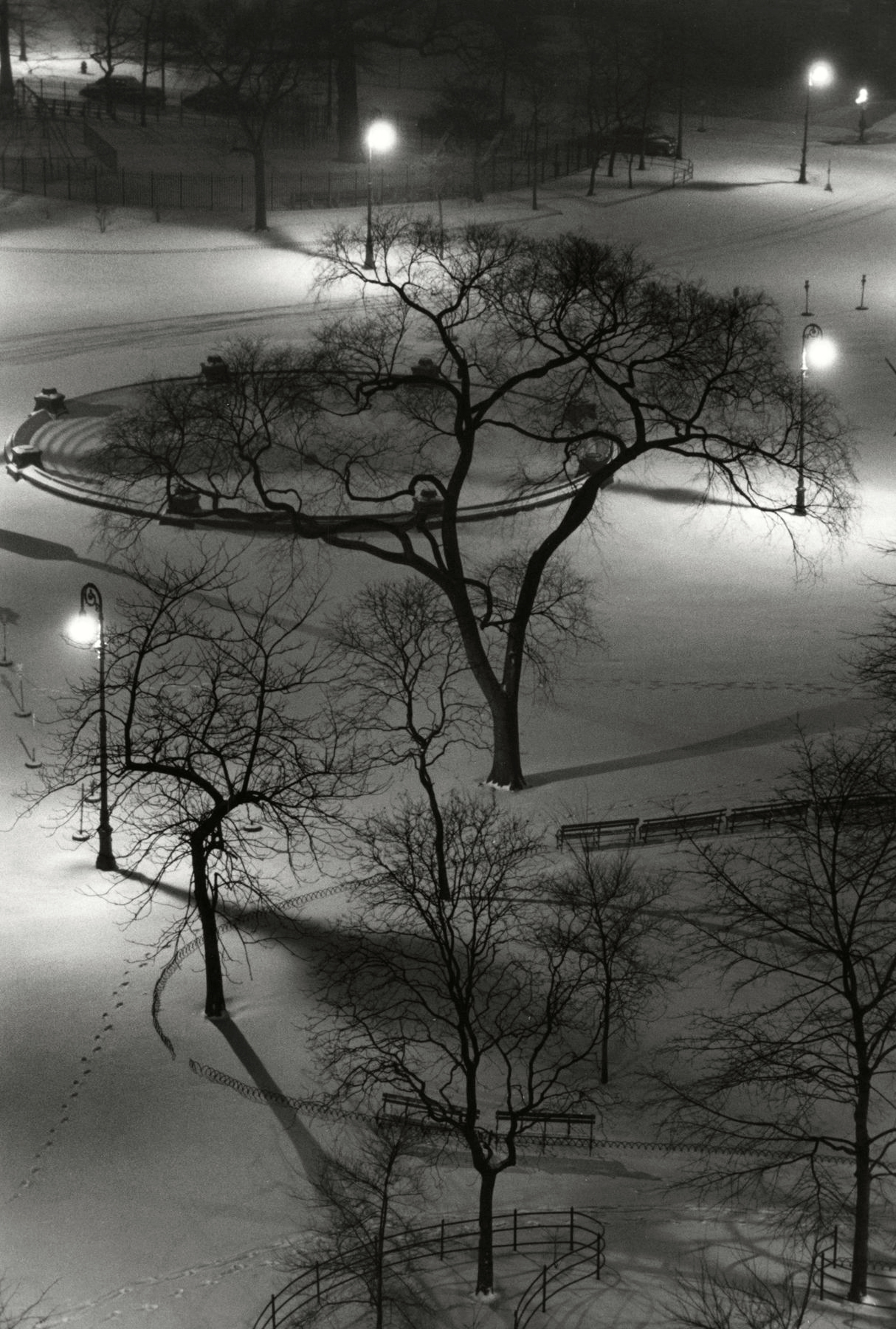
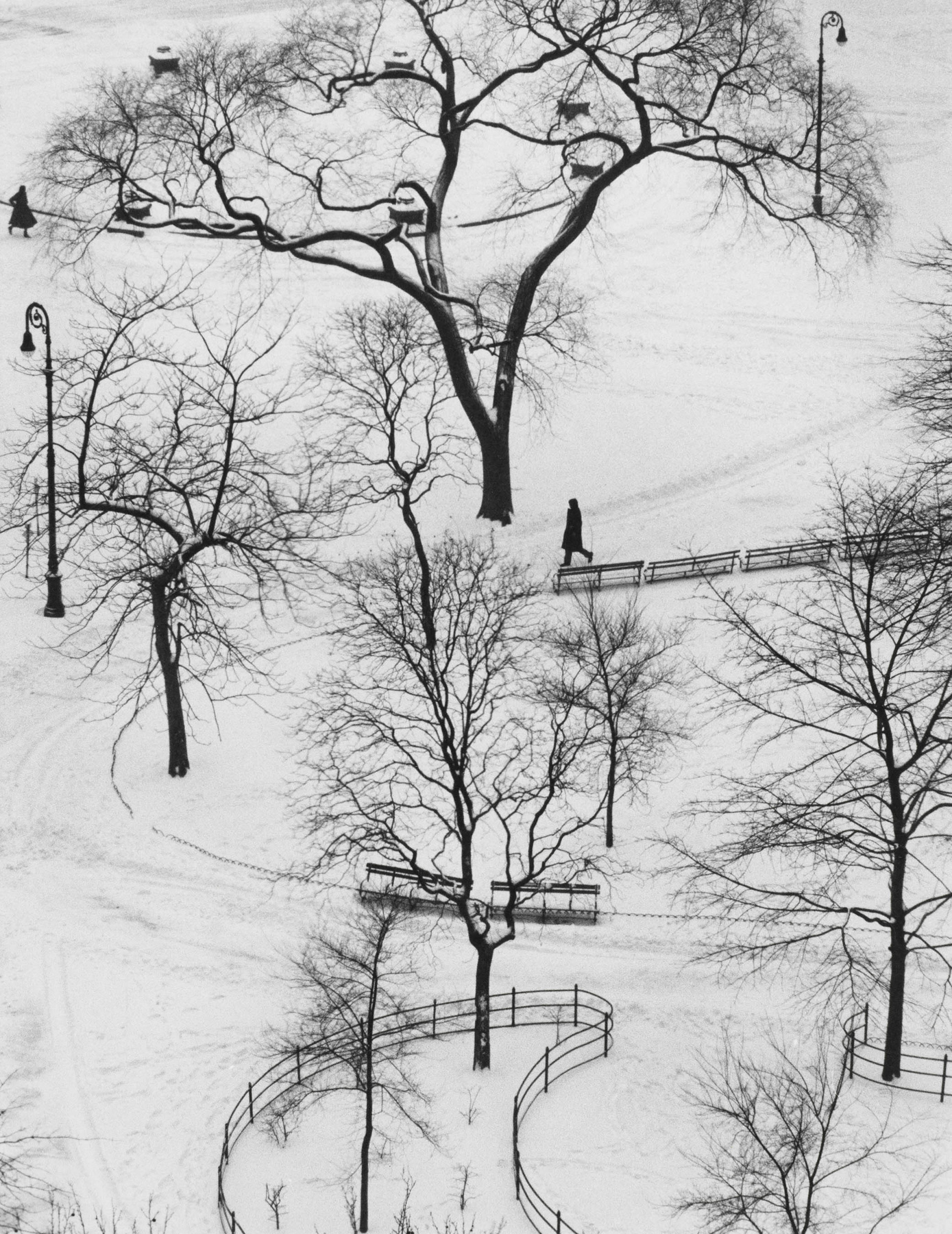
At his best, in images such as Underwater swimmer, Esztergom (1918, above), Arm and Fan, New York (1937, below) and Washington Square, New York (1954, below) there is a structured, avant-garde mystery about the reality of the world, as re/presented through the object of the photograph, it’s physical presence. In Underwater swimmer, the body is stretched and distorted by an element, water, not a man-made mirror. His photographs from Hungary, Italy and early Paris possess a sensitivity of spirit that seems to have been excised from his life, the older he got. Far too often in later images, there is a “brittleness” to his photography, in which the object of reflection sits at the surface of the image, all sparkling in unflinching light. The single cloud oh so lonely in the sterile city; the man looking at the broken bench; the “buy, buy, buy” of consumer culture. You consumer Kertész’s later images, you do not reflect on them.
“André Kertész, one of the most lyrical and formally inventive photographers of the twentieth-century, whose work advocated for spontaneity over technical precision, has left a distinctive legacy of poetic images which form a bridge between the avant-garde and geometrical precision. A roamer for much of his life, his feelings of rootlessness manifest in his work and often convey a quiet mood of melancholy. …
Claiming “I am an amateur and I intend to stay that way for the rest of my life”, Kertesz was a great source of inspiration to photographic legends such as Cartier-Bresson.
He remains revered for his clarity of style and ability to blend simplicity with emotion, prizing impact over technical precision, seeking metaphors and geometry in everyday objects and scenarios, to turn the mundane into the surreal. Nothing was too plain or ordinary for his eye, since he had a special ability to breathe life into even the most ‘unremarkable’ subjects.”
Edward Clay. “André Kertész: between poetry and geometry,” on ‘The Independent Photographer’ website, May 19th 2020 [Online] Cited 26/08/2020
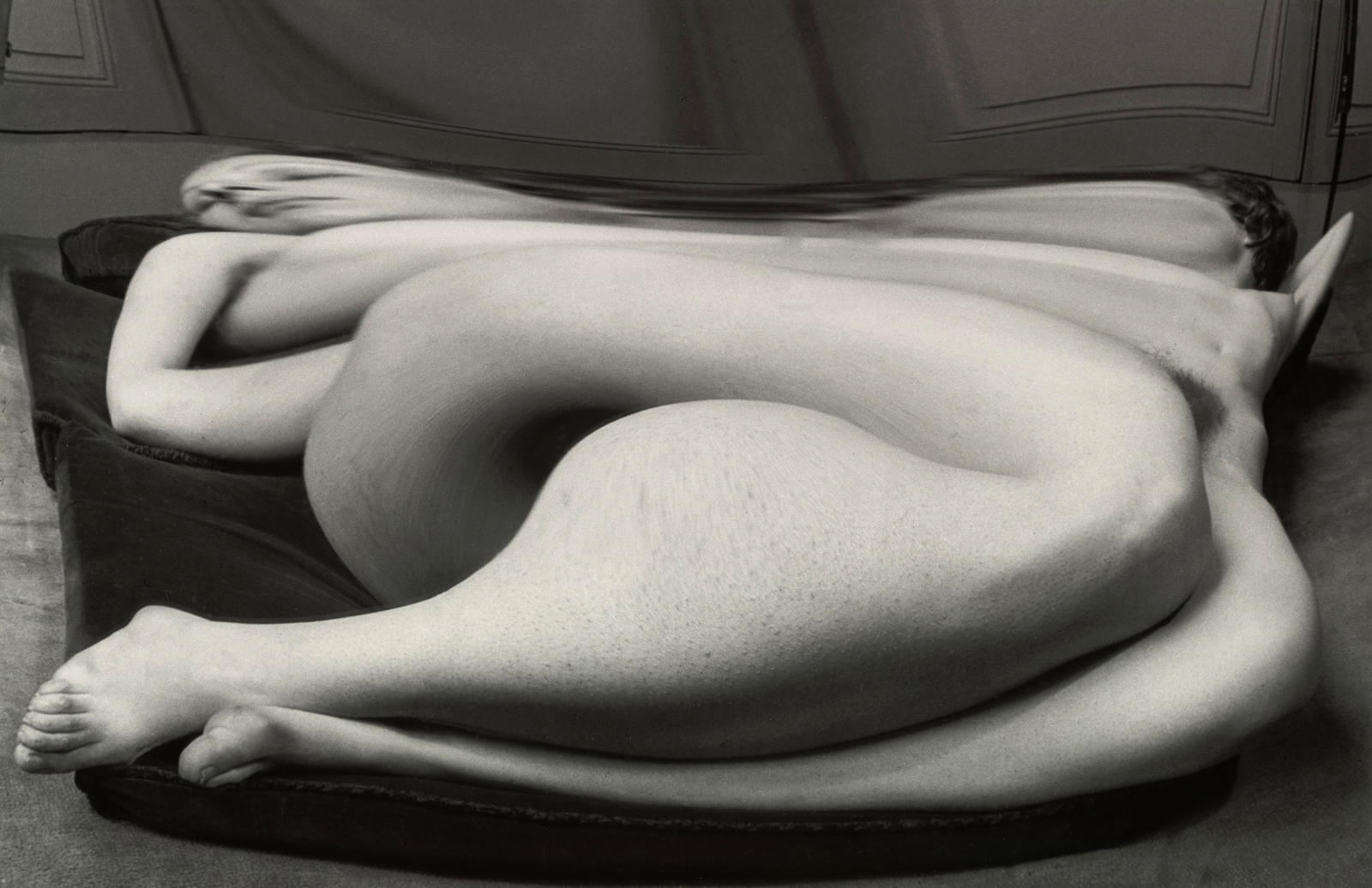
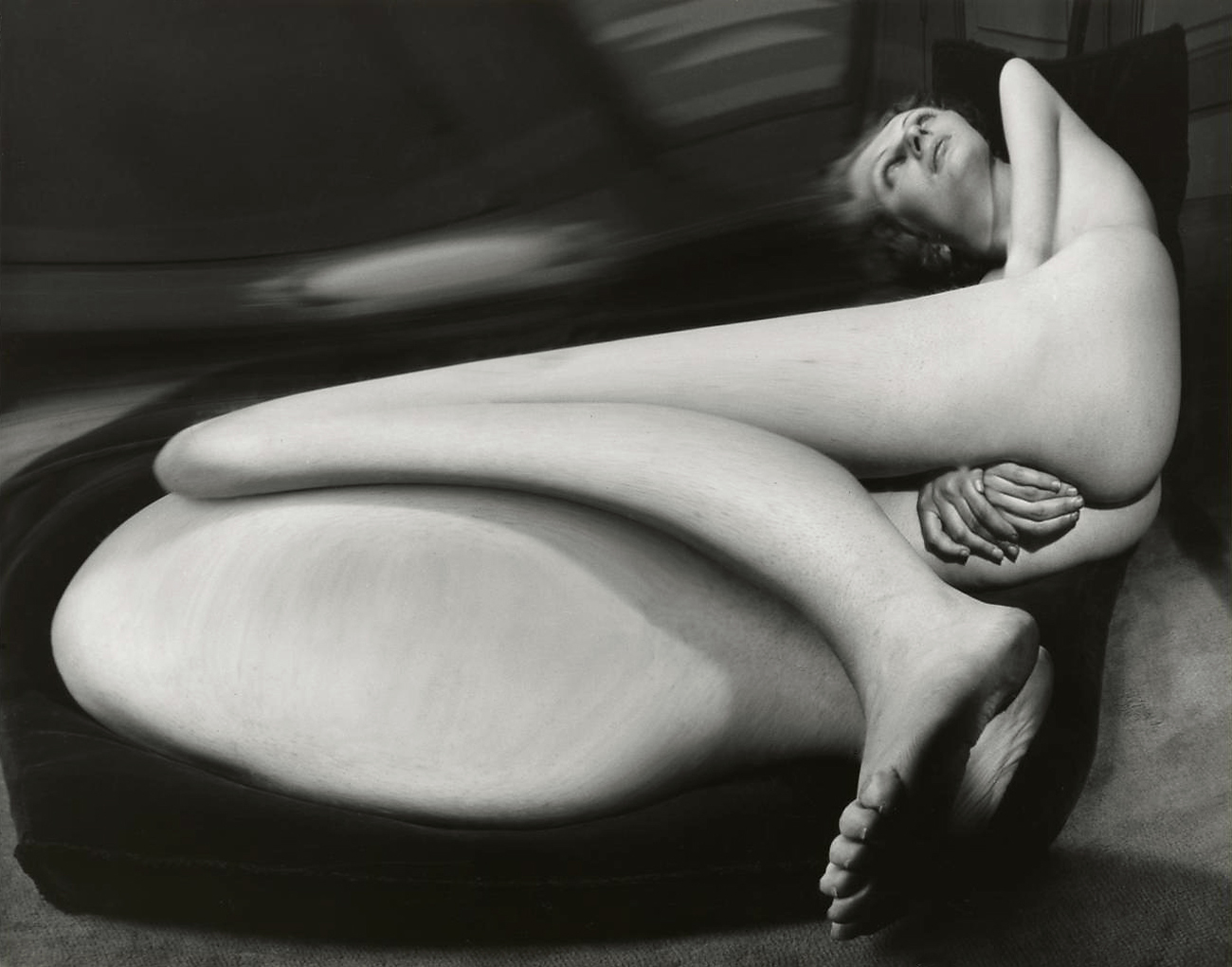
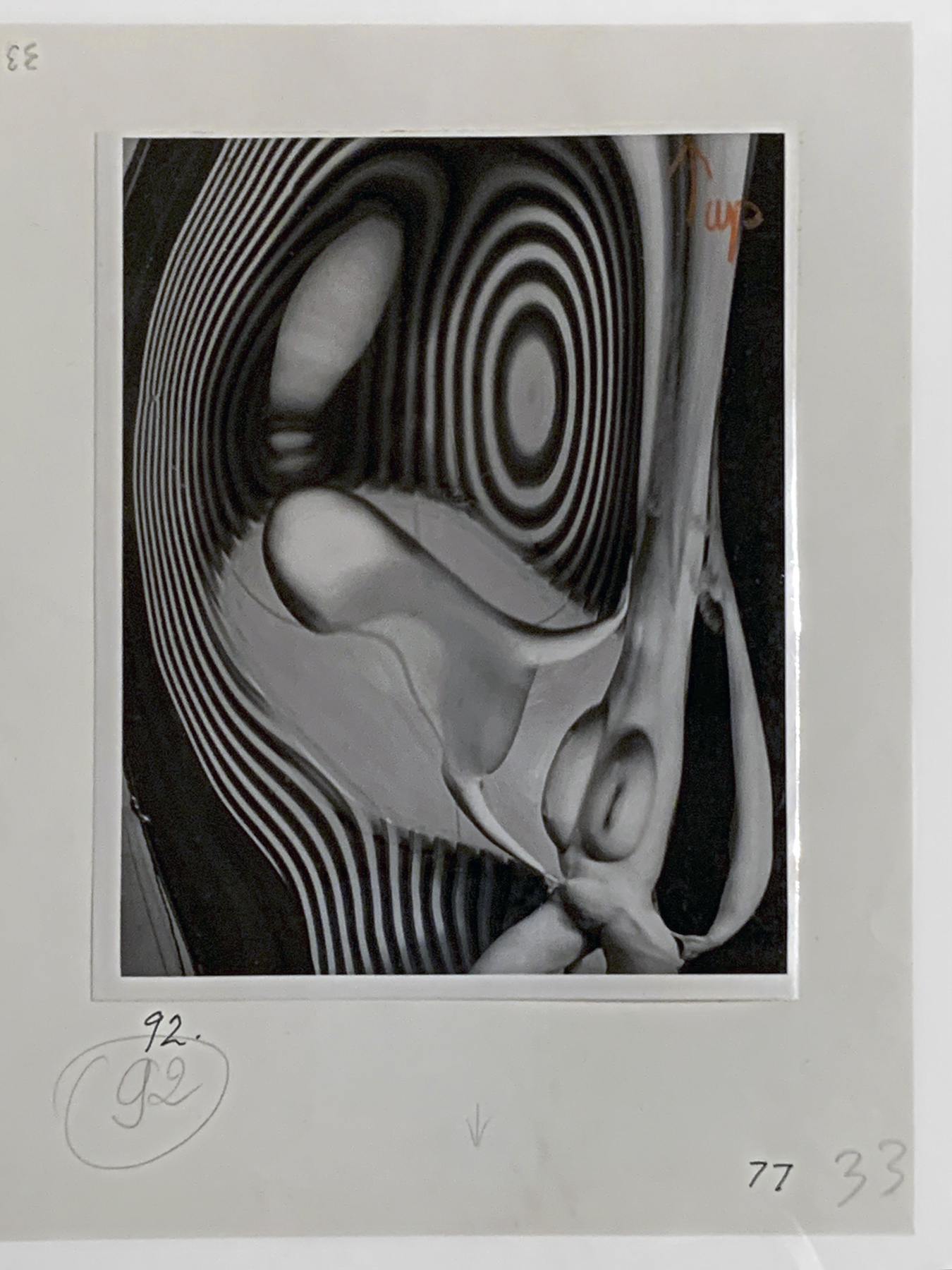
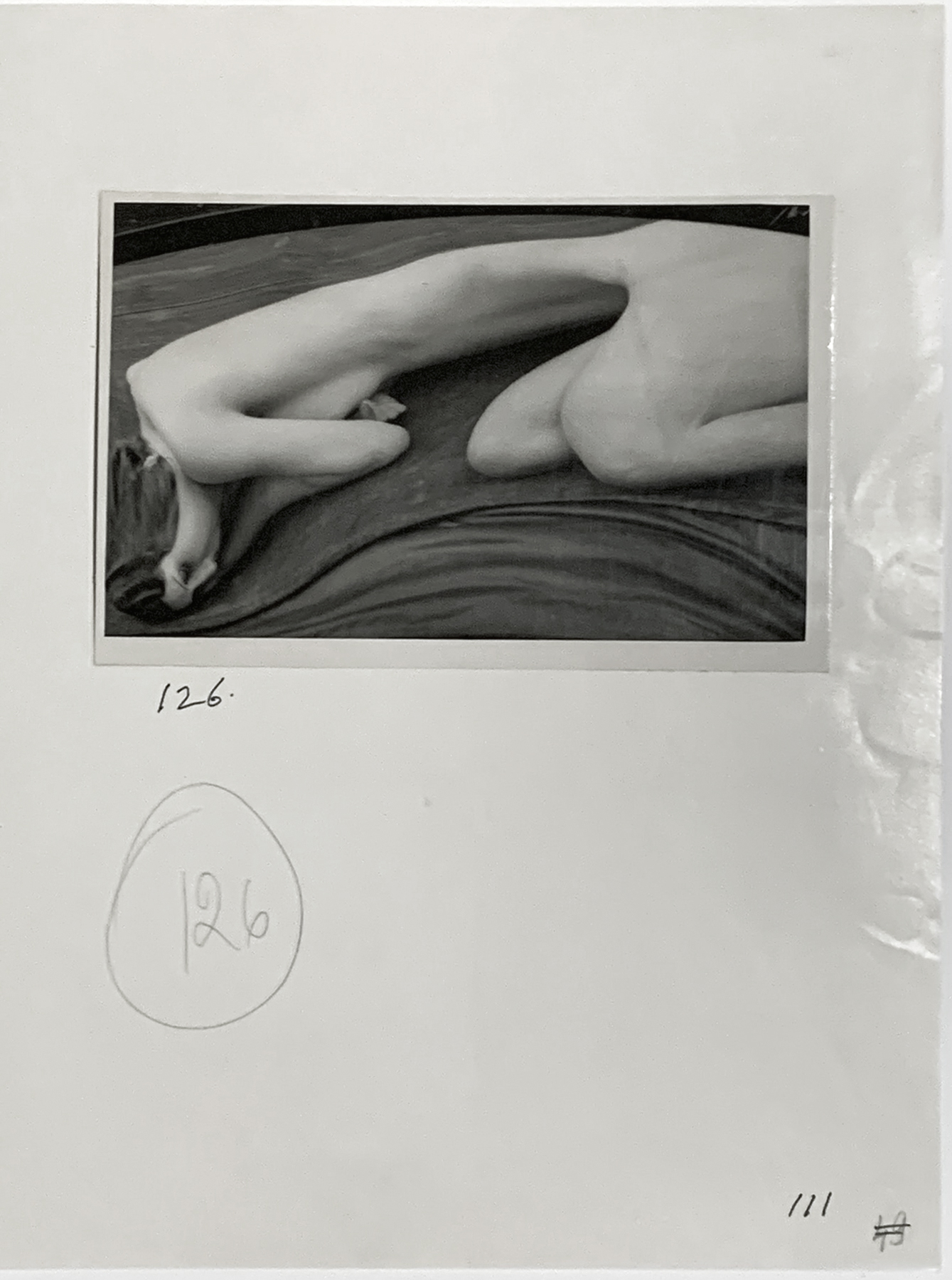
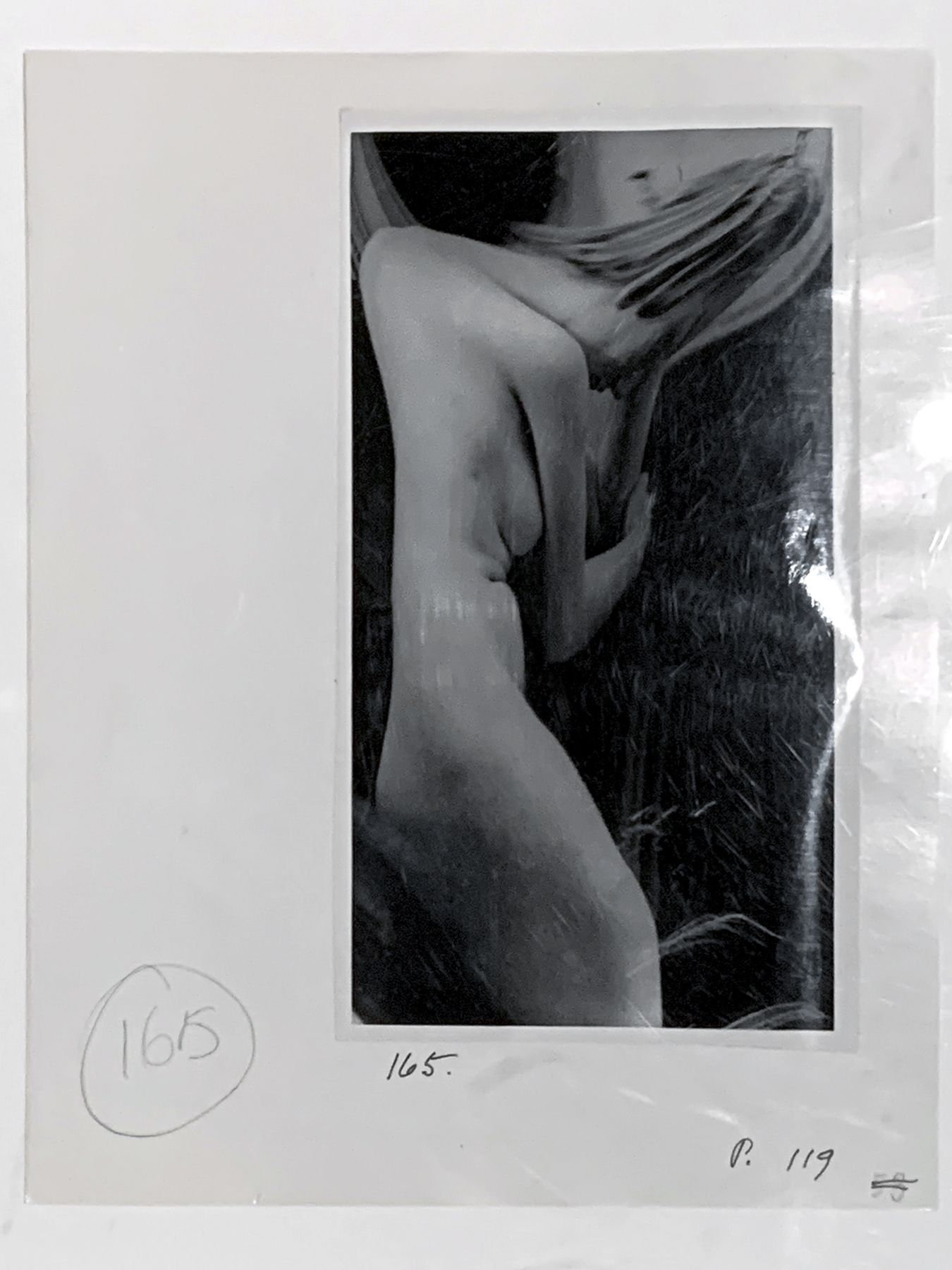
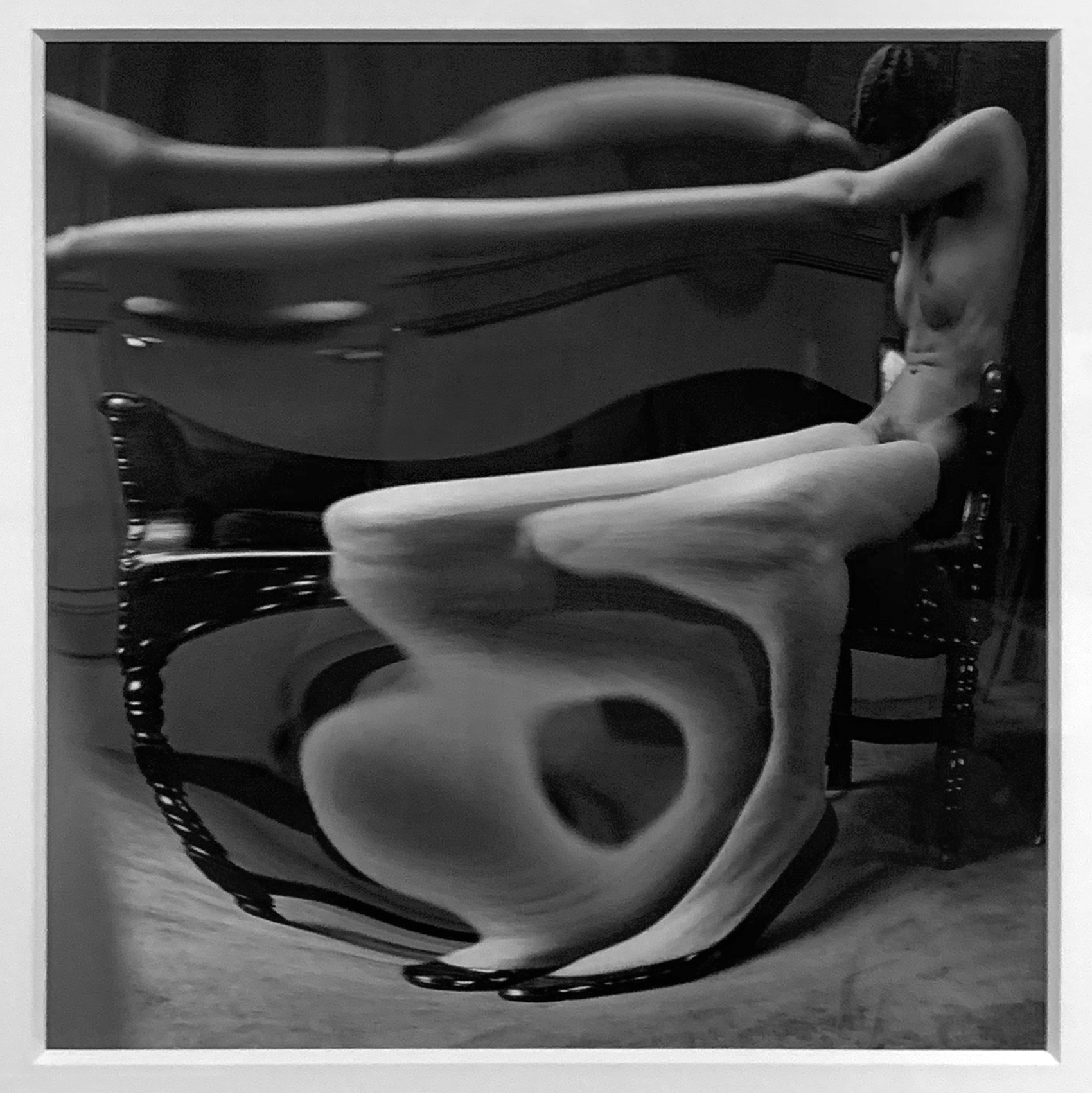
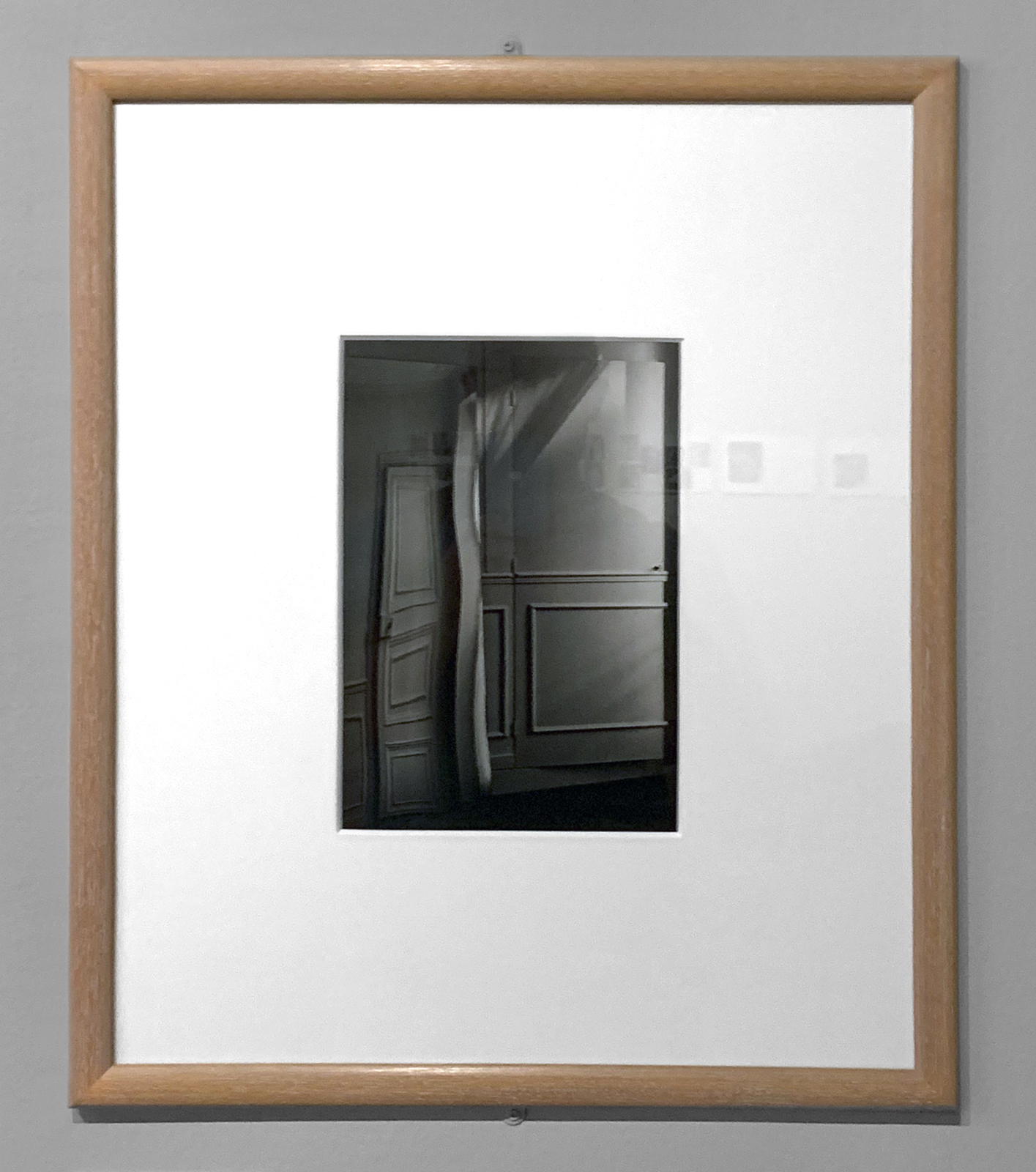
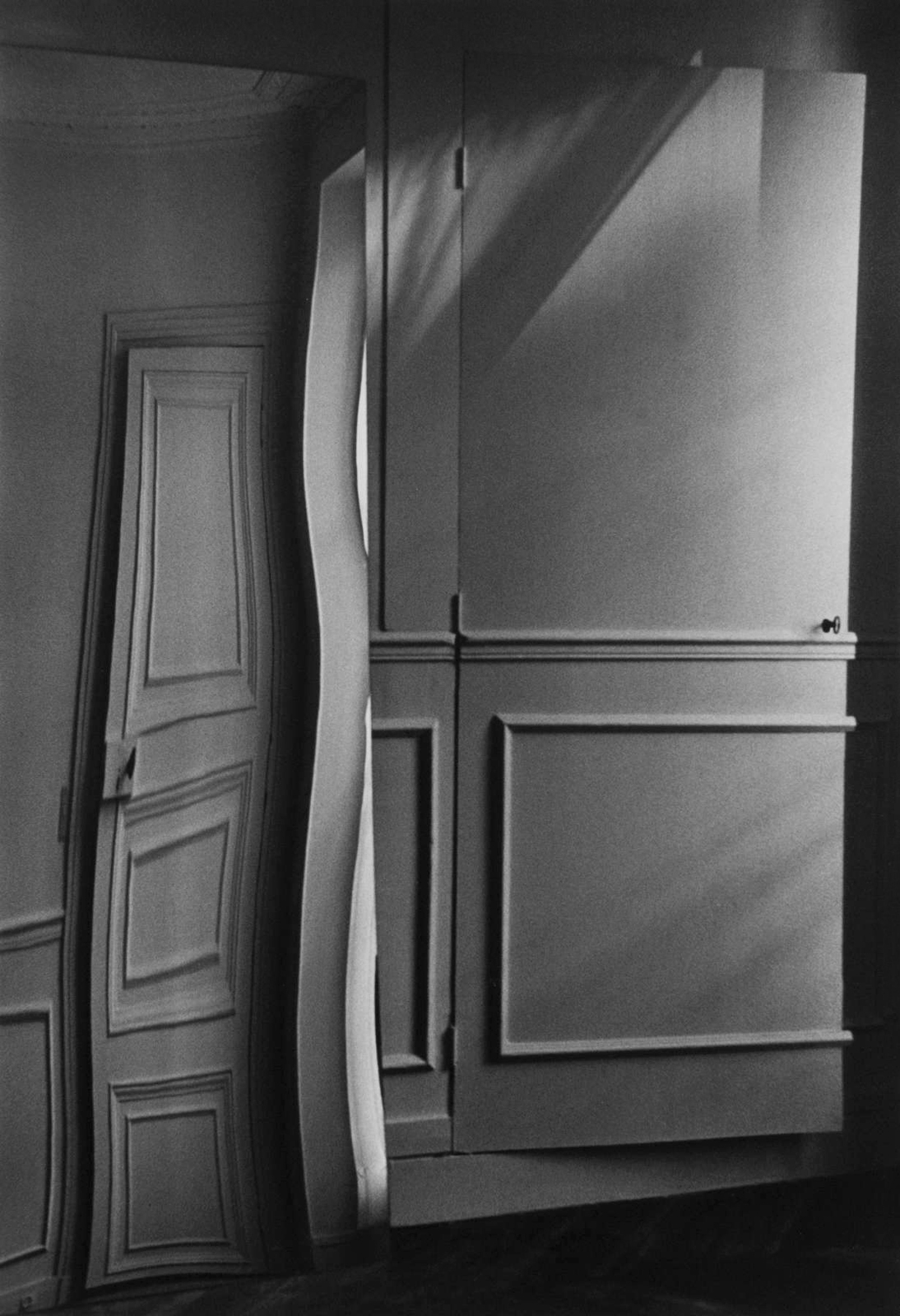
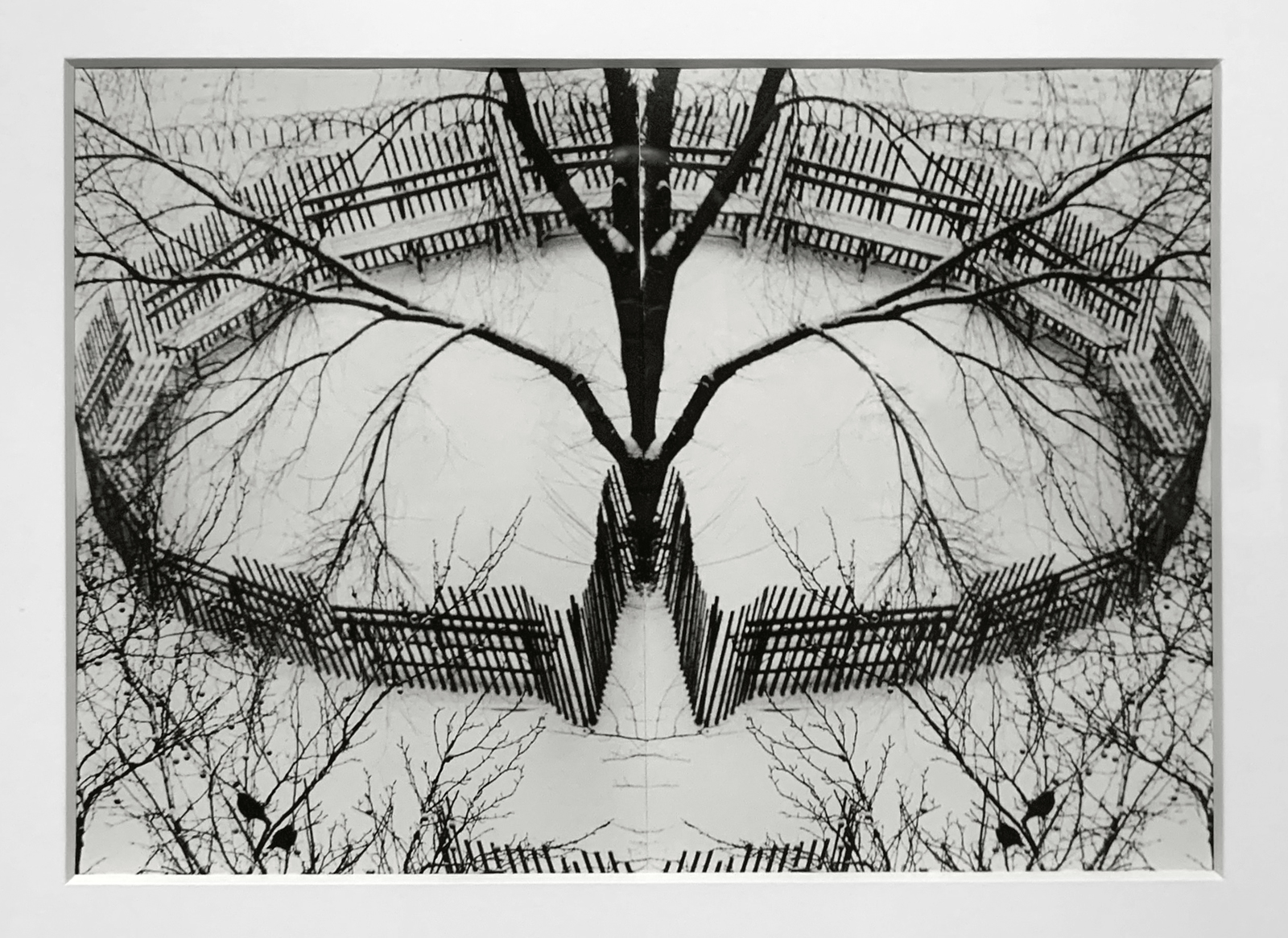
André Kertész (Hungarian, 1894-1985) Distortion #34 1933 Gelatin silver print
André Kertész (Hungarian, 1894-1985) Distortion #40 1933 Gelatin silver print
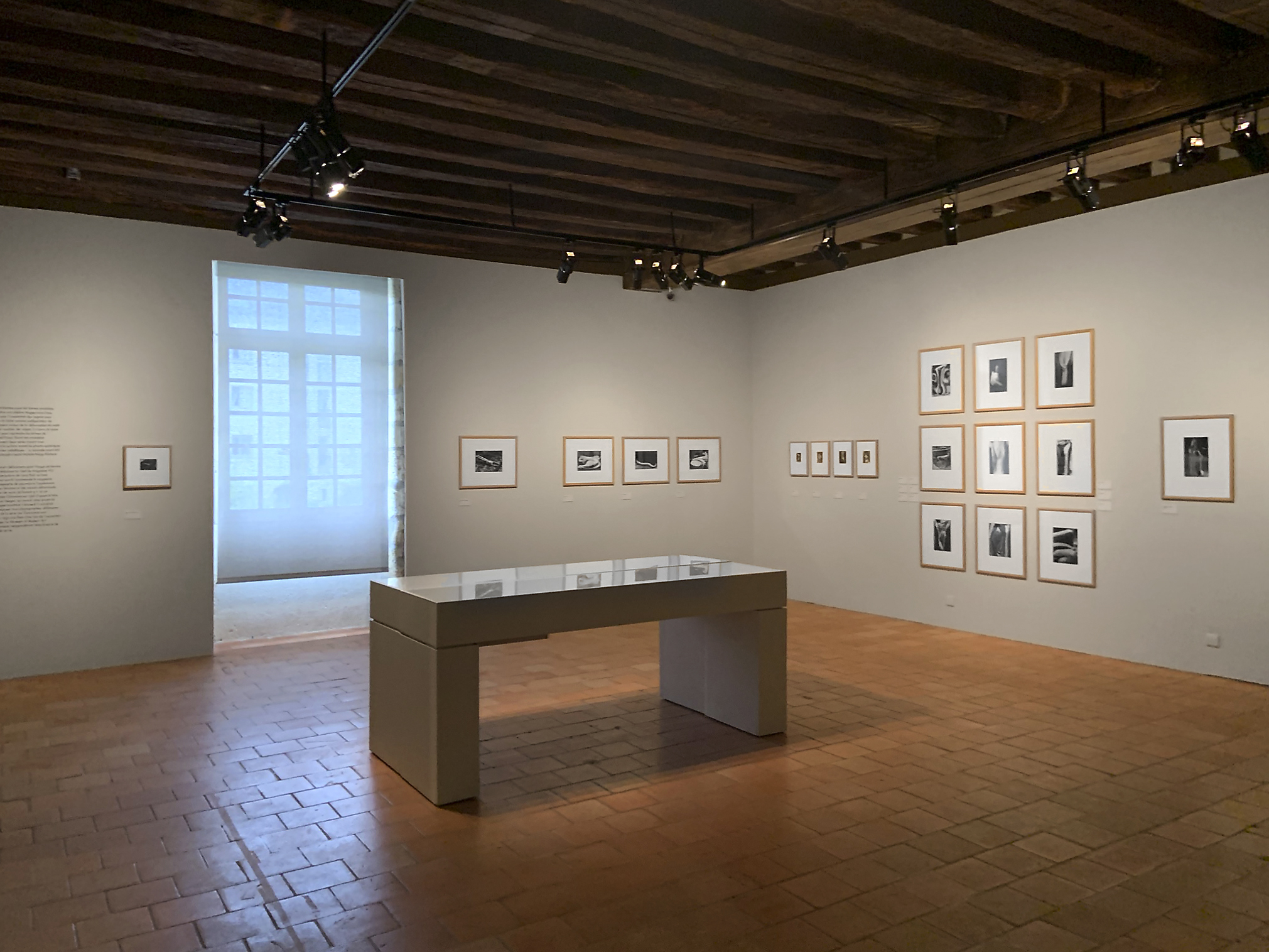
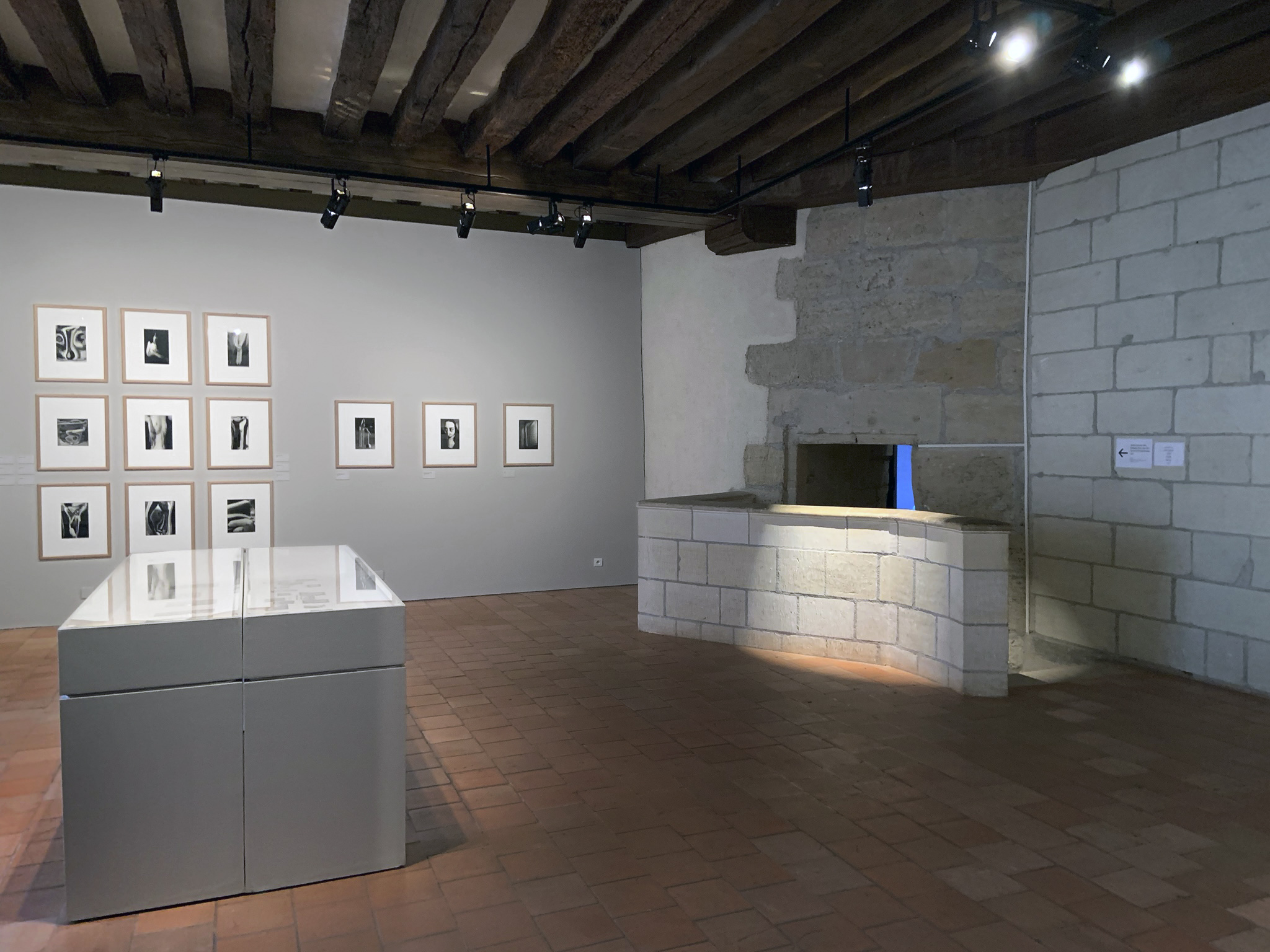
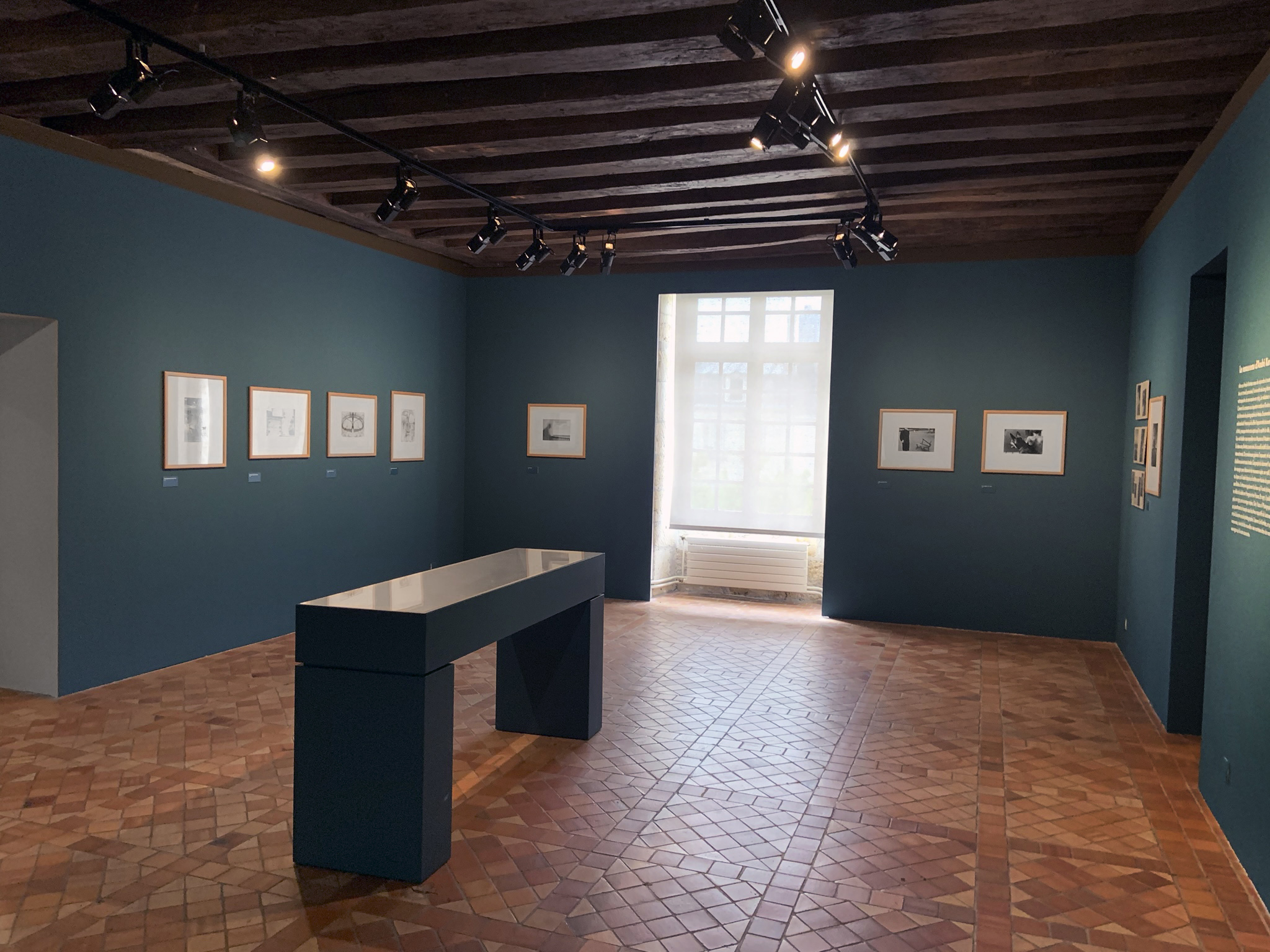
Installation views of the exhibition L’equilibriste, André Kertész at Jeu de Paume, Château de Tours showing photographs from the series Distortions, the bottom image showing at left, the photograph Underwater swimmer, Esztergom 1918 Photos: Marcus Bunyan
André Kertész (Hungarian, 1894-1985) Planches originales de la maquette du livre ‘Distortions’ (installation view) Original plates of the model of the book ‘Distortions’ 1975-1976 Collection Médiathèque de l’architecture et du patrimoine Photos: Marcus Bunyan
Installation view of the exhibition L’equilibriste, André Kertész at Jeu de Paume, Château de Tours showing photographs from the series Distortions Photo: Marcus Bunyan
André Kertész (Hungarian, 1894-1985) Distortion #60 (installation view) 1933 Contact original Photo: Marcus Bunyan
André Kertész (Hungarian, 1894-1985) Distortion #86 (installation view) 1933 Contact original Photo: Marcus Bunyan
André Kertész (Hungarian, 1894-1985) Distortion #86 (installation view) 1933 Contact original Photo: Marcus Bunyan
André Kertész (Hungarian, 1894-1985) Distortion #109 (installation view) 1933 Contact original Photo: Marcus Bunyan
André Kertész (Hungarian, 1894-1985) Distortion #6 (installation view) 1933 Contact original Photo: Marcus Bunyan
André Kertész (Hungarian, 1894-1985) Distortion #159 (installation view) 1933 Contact original Photo: Marcus Bunyan
André Kertész (Hungarian, 1894-1985) Distortion #128 (installation view) 1933 Contact original Photo: Marcus Bunyan
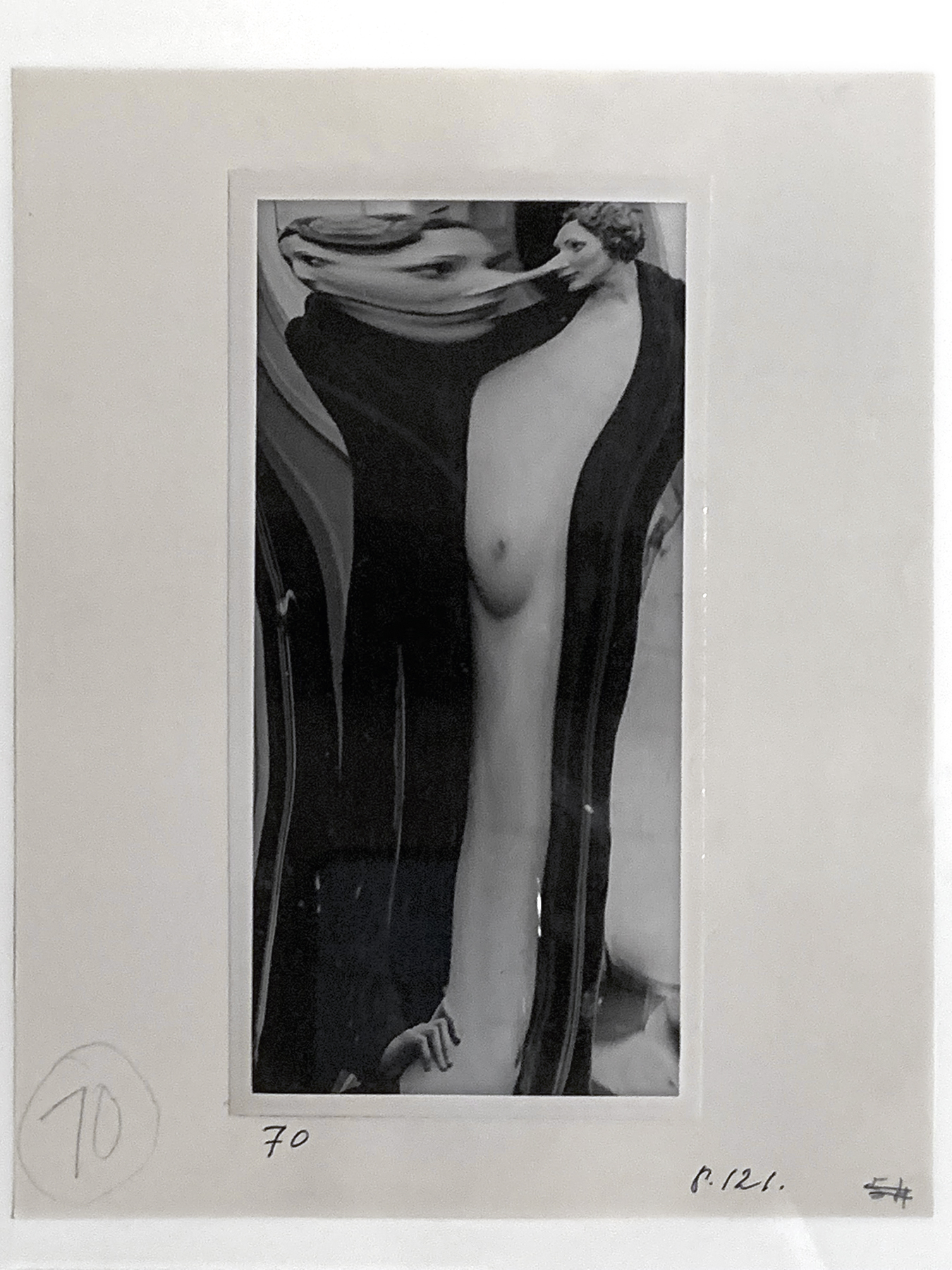
André Kertész (Hungarian, 1894-1985) Distortion #70 (installation view) 1933 Contact original Photo: Marcus Bunyan
André Kertész (Hungarian, 1894-1985) Distortion #70 (installation view) 1933 Contact original Photo: Marcus Bunyan
André Kertész (Hungarian, 1894-1985) Distortion #80 (installation view) 1933 Contact original Photo: Marcus Bunyan
André Kertész (Hungarian, 1894-1985) Distortion (installation view) 1933 Contact original Photo: Marcus Bunyan
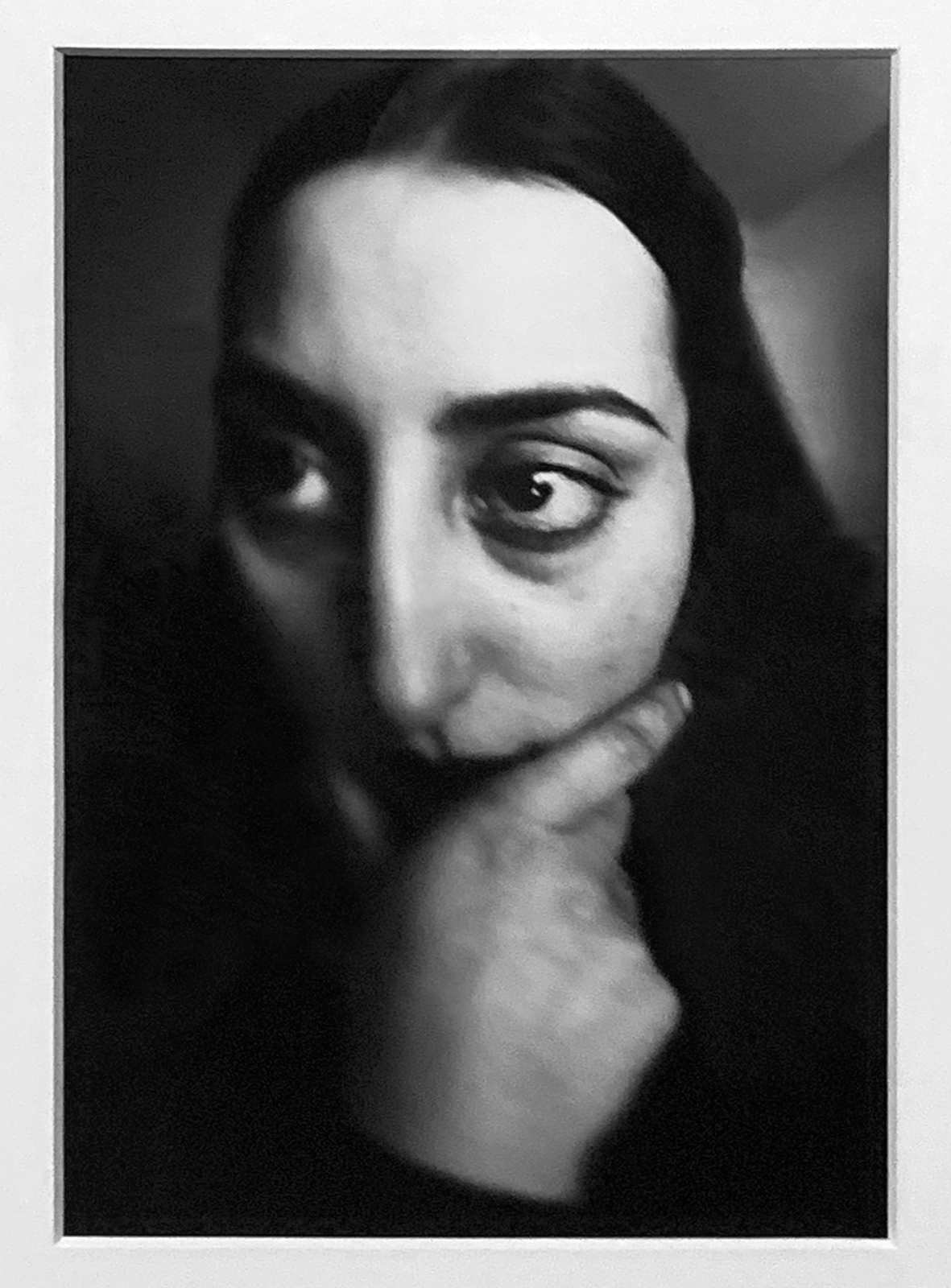
André Kertész (Hungarian, 1894-1985) Portrait déformé (Visage de femme), Paris (installation view) Distorted Portrait (Face of a Woman), Paris 1927 Gelatin silver print Photo: Marcus Bunyan
One of the twentieth century’s great photographers, André Kertész (Budapest, 1894 – New York, 1985) left a prolific body of work spanning more than seventy years (1912-1984), a blend of the poetic and the intimate with its wellspring in his Hungarian culture. The Art of Poise: André Kertész traces this singular career, showcasing compositions that bear the stamp of Europe’s avant-garde art movements, from the artist’s earliest Hungarian photographs to the blossoming of his talent in France, and from his New York years to ultimate international recognition.
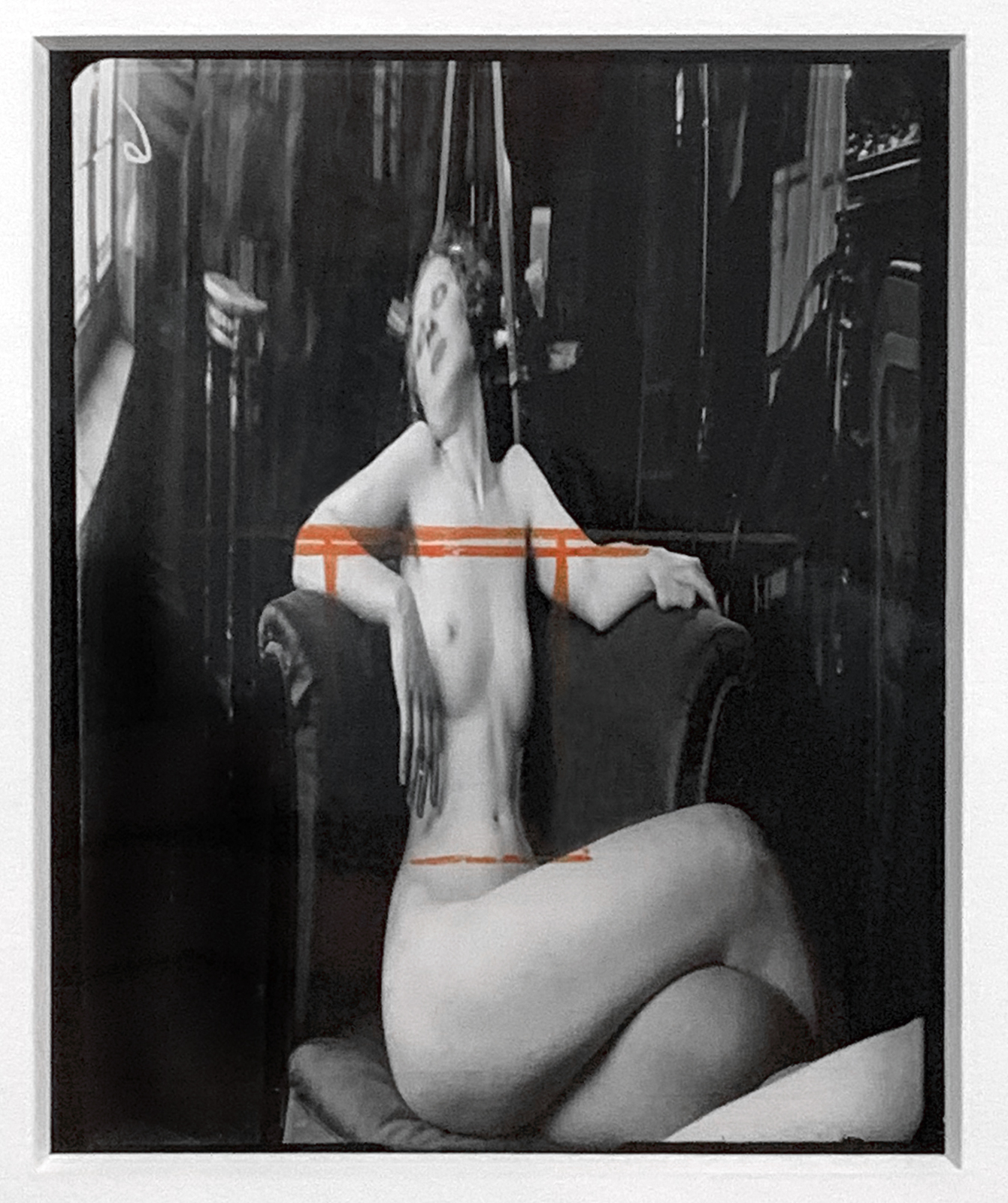
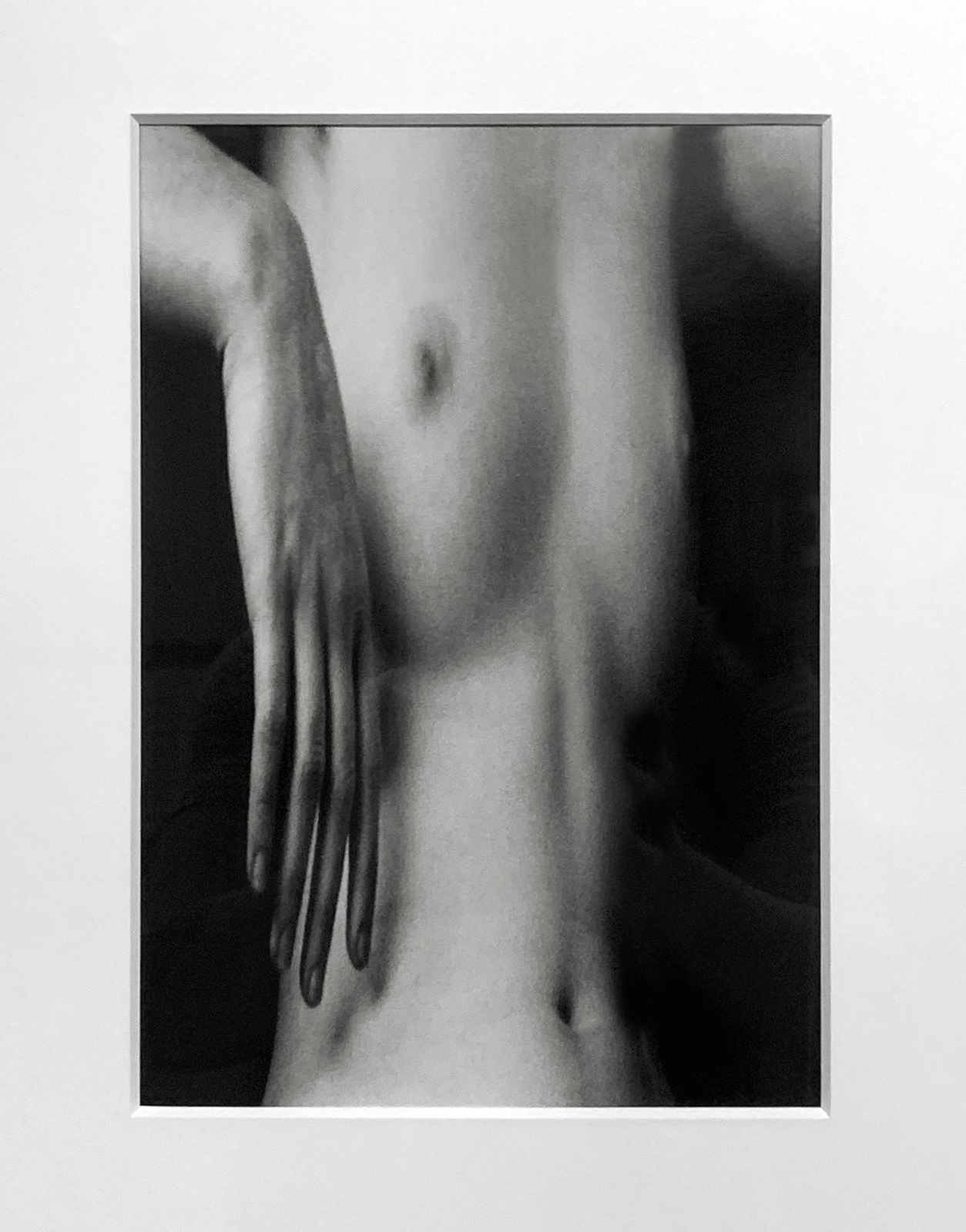
Kertész arrived in Paris in October 1925. Moving in avant-garde literary and artistic circles, he photographed his Hungarian friends, artists’ studios, street life and the city’s parks and gardens. In 1933 he embarked on his famous Distortions series of nudes deformed by funhouse mirrors, producing anamorphic images similar in spirit to the work of Pablo Picasso, Jean Arp and Henry Moore.
In addition to this profusion of activity, he explored the possibility of disseminating his work in publications. Between 1933 and the end of his life he had designed and published a total of nineteen books.
In 1936 Kertész and his wife Elizabeth left for New York, where he began with a brief assignment for Keystone, the world’s biggest photographic agency. He struggled, though, to carve out a place for himself in a context whose demands were very different from those of his Paris years.
Inspired by the rediscovery of his Hungarian and French negatives, from 1963 onwards he devoted himself solely to personal projects, and was offered retrospectives by the French National Library in Paris and MoMA in New York. This fresh recognition sparked a flurry of books in which he harked back to the high points of his oeuvre. In his last years, armed with a Polaroid, he returned to his earlier practice of everyday photography.
Text from the Jeu de Paume website for the earlier exhibition The Art of Poise: André Kertész
Text from the exhibition L’equilibriste, André Kertész at Jeu de Paume, Château de Tours
André Kertész (Hungarian, 1894-1985) La Tulipe mélancolique, New York Melancholic Tulip, New York 1939 Gelatin silver print
André Kertész (Hungarian, 1894-1985) Paris (installation view) 1984 Gelatin silver print Photo: Marcus Bunyan
André Kertész (Hungarian, 1894-1985) Paris 1984 Gelatin silver print
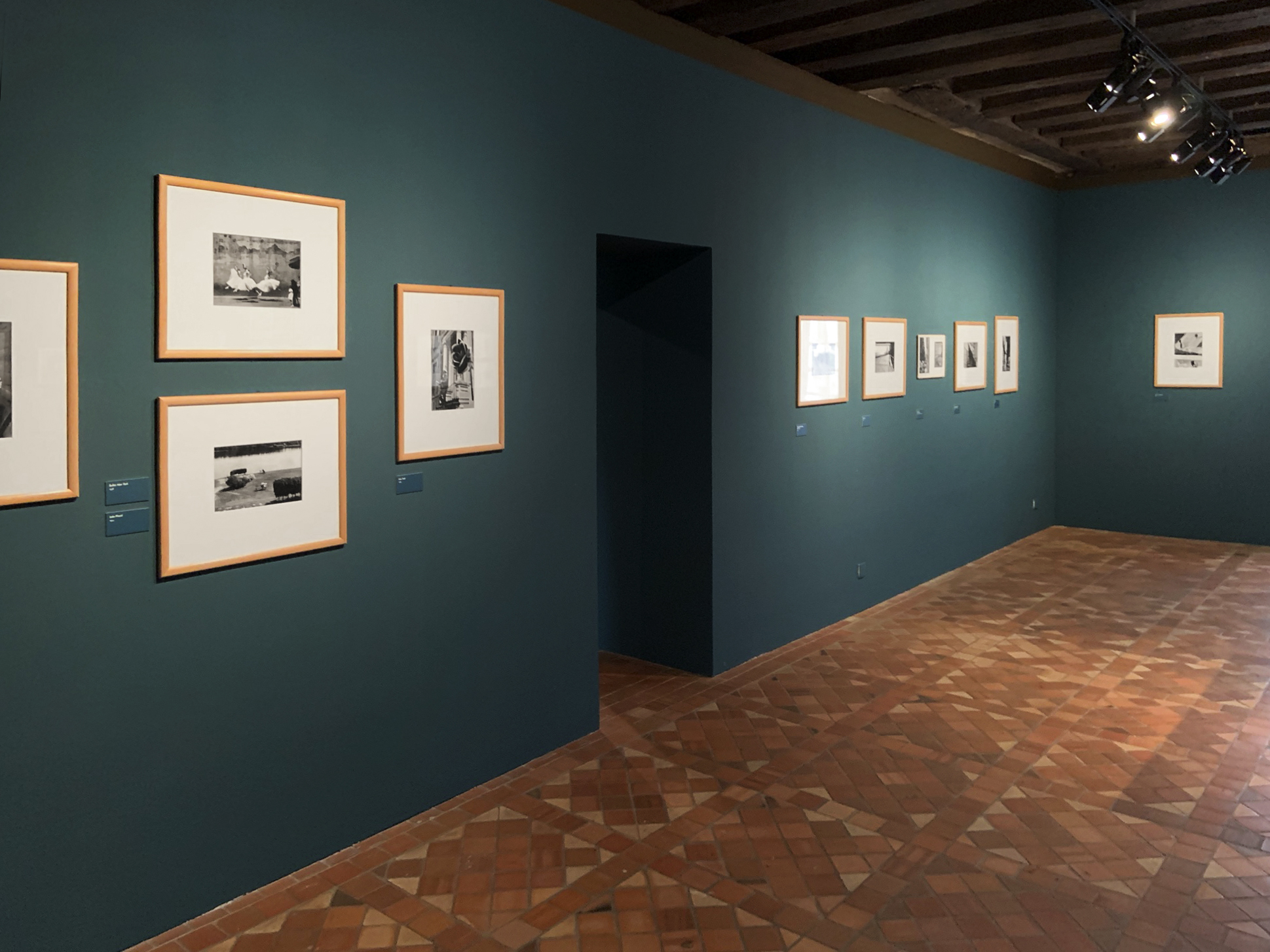
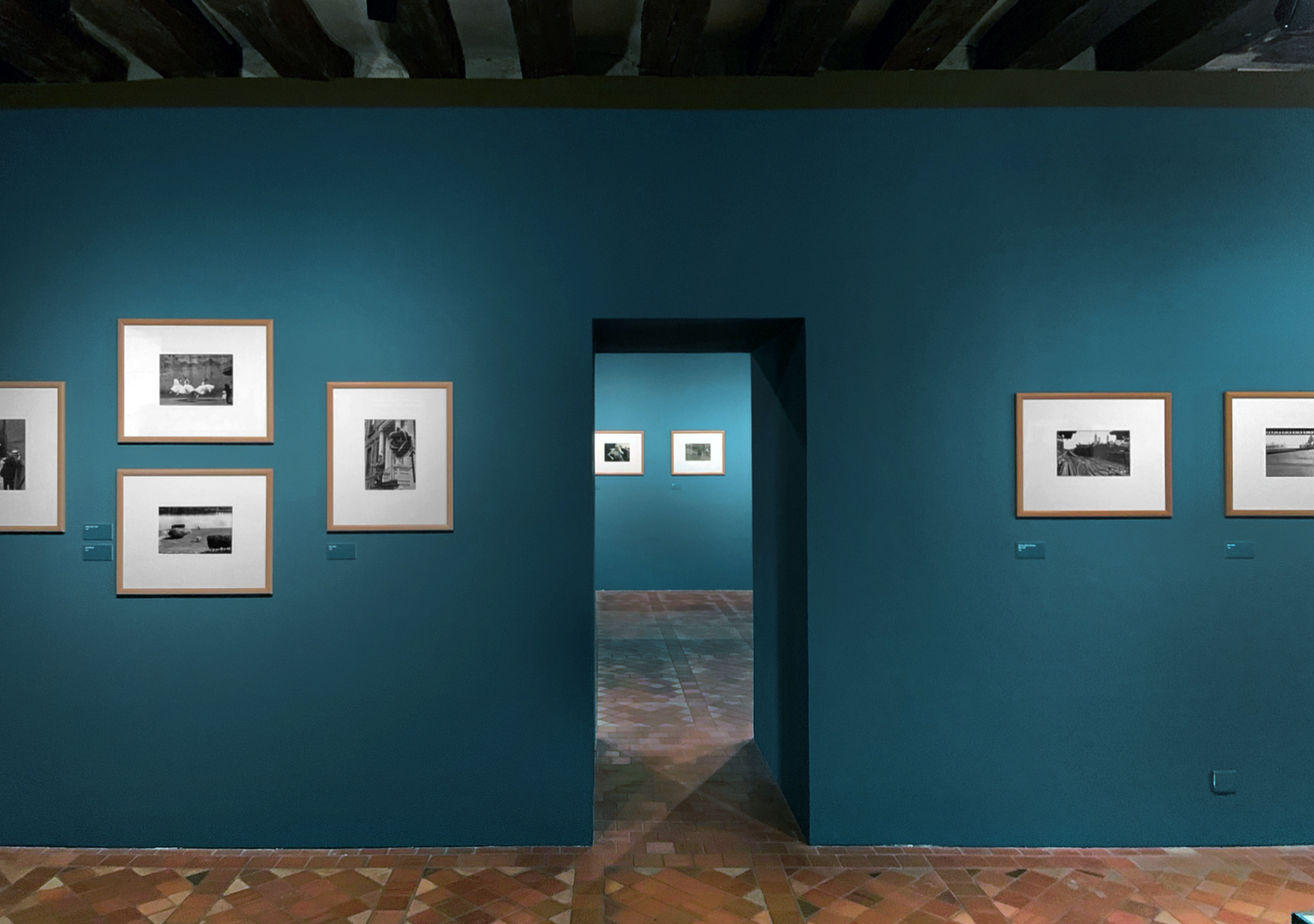
Installation views of the exhibition L’equilibriste, André Kertész at Jeu de Paume, Château de Tours showing at top left, Ballet, New York 1938; and at bottom left, Lake Placid 1954 Photos: Marcus Bunyan
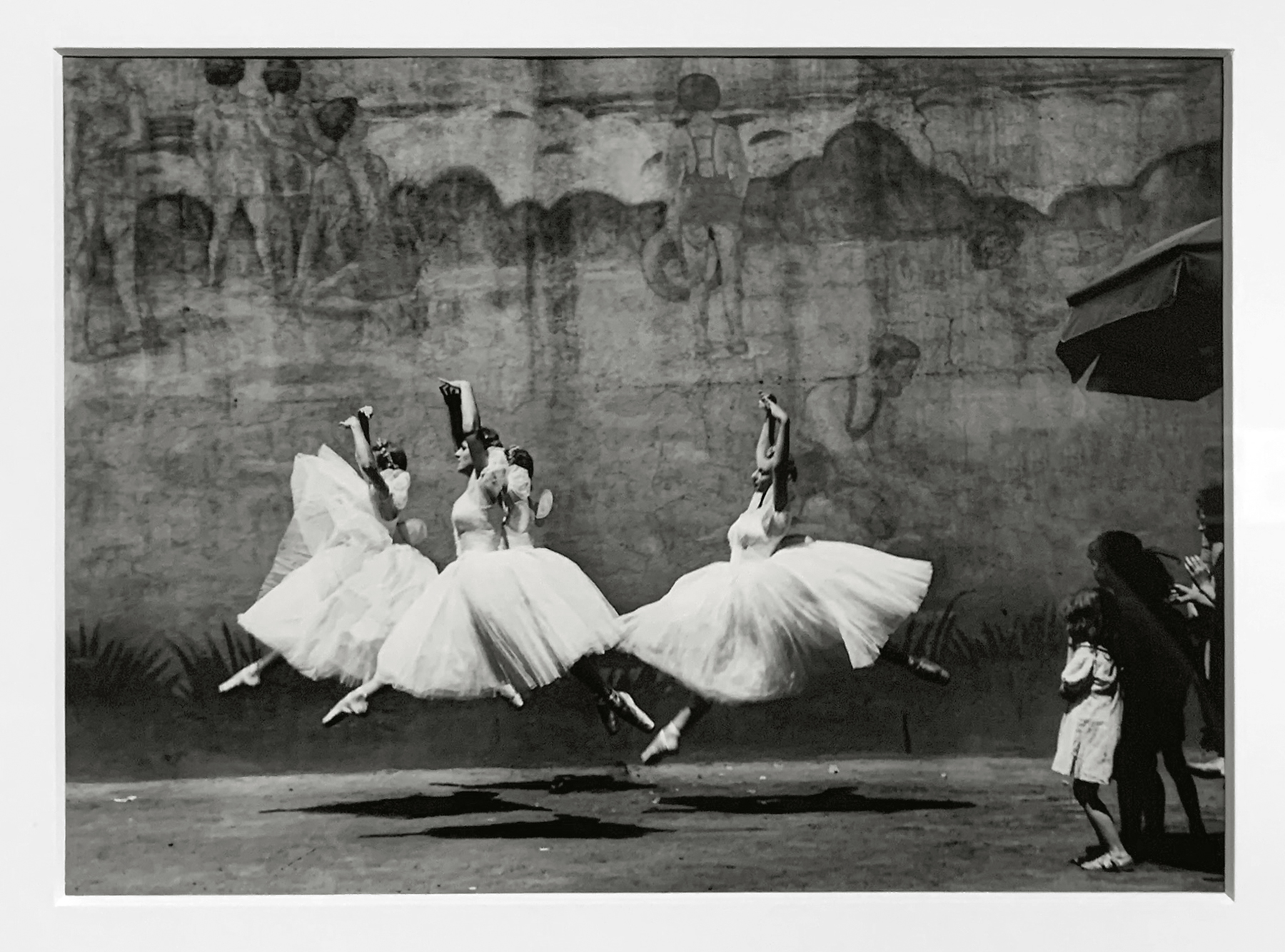
André Kertész (Hungarian, 1894-1985) Ballet, New York (installation view) 1938 Gelatin silver print Photo: Marcus Bunyan
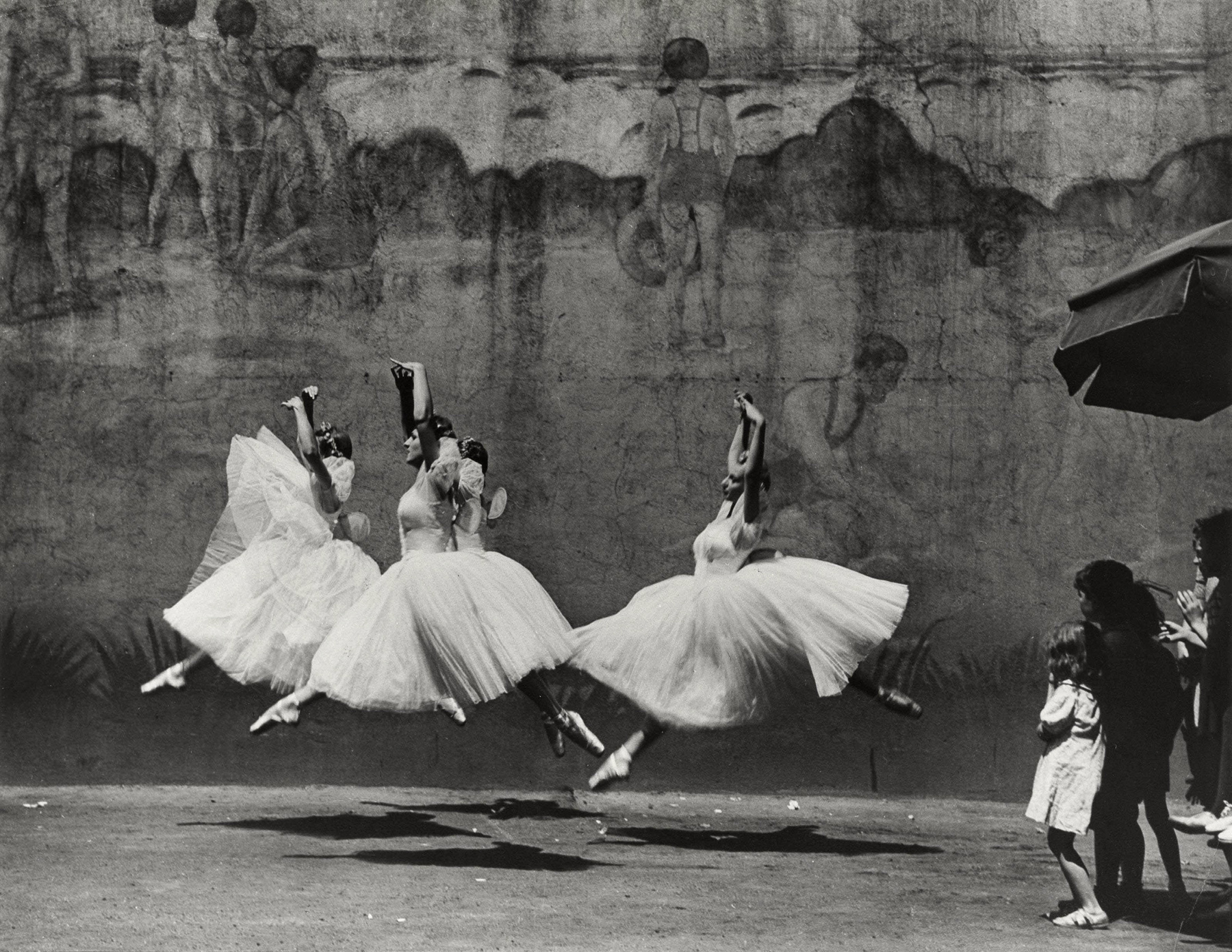
André Kertész (Hungarian, 1894-1985) Ballet, New York 1938 Gelatin silver print
André Kertész (Hungarian, 1894-1985) Lake Placid (installation view) 1954 Gelatin silver print Photo: Marcus Bunyan
André Kertész (Hungarian, 1894-1985) New York (installation view) 1937 Gelatin silver print Photo: Marcus Bunyan
André Kertész (Hungarian, 1894-1985) New York (installation view) 1939 Gelatin silver print Photo: Marcus Bunyan
André Kertész (Hungarian, 1894-1985) New York 1939 Gelatin silver print
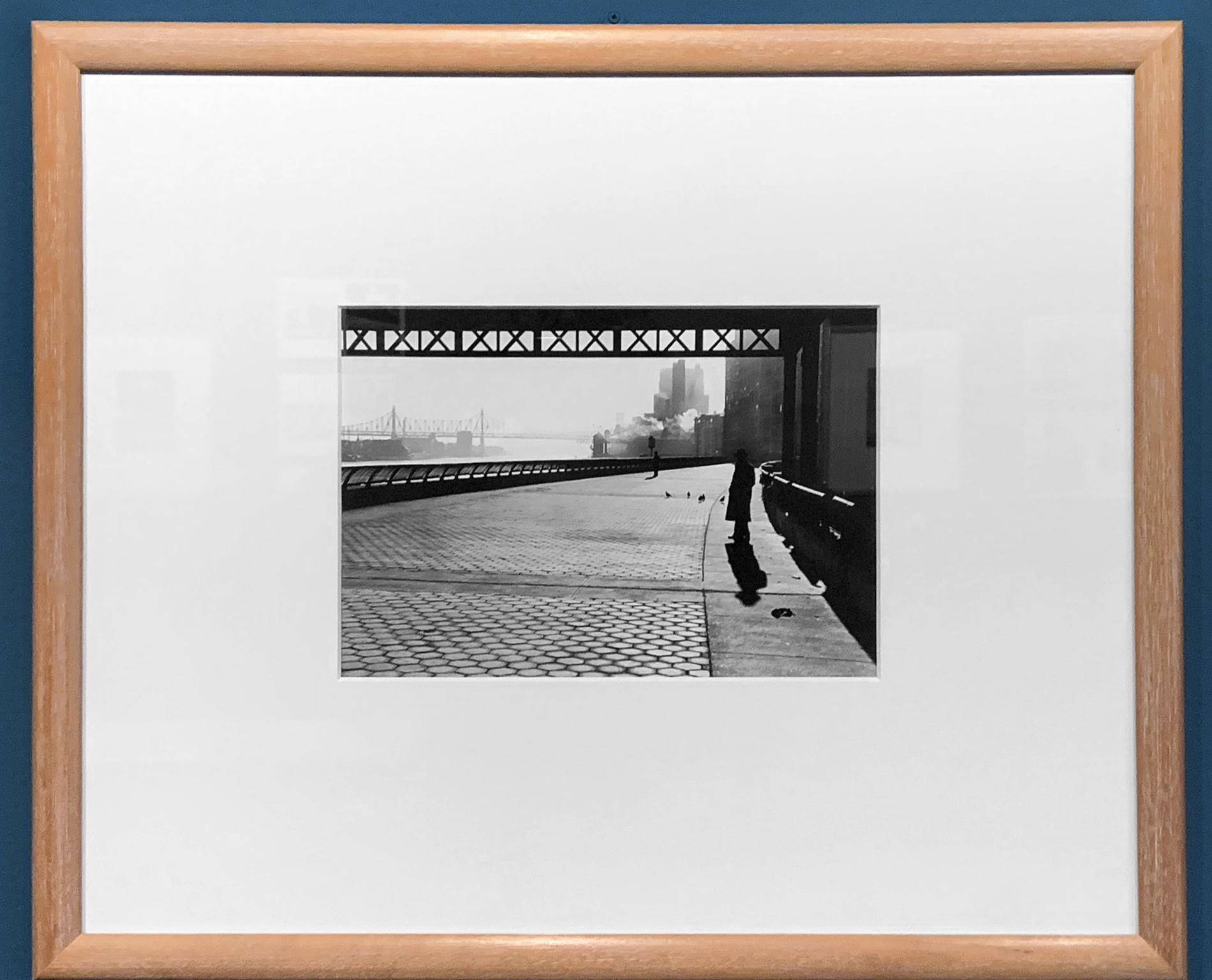
André Kertész (Hungarian, 1894-1985) New York (installation view) 1954 Gelatin silver print Photo: Marcus Bunyan
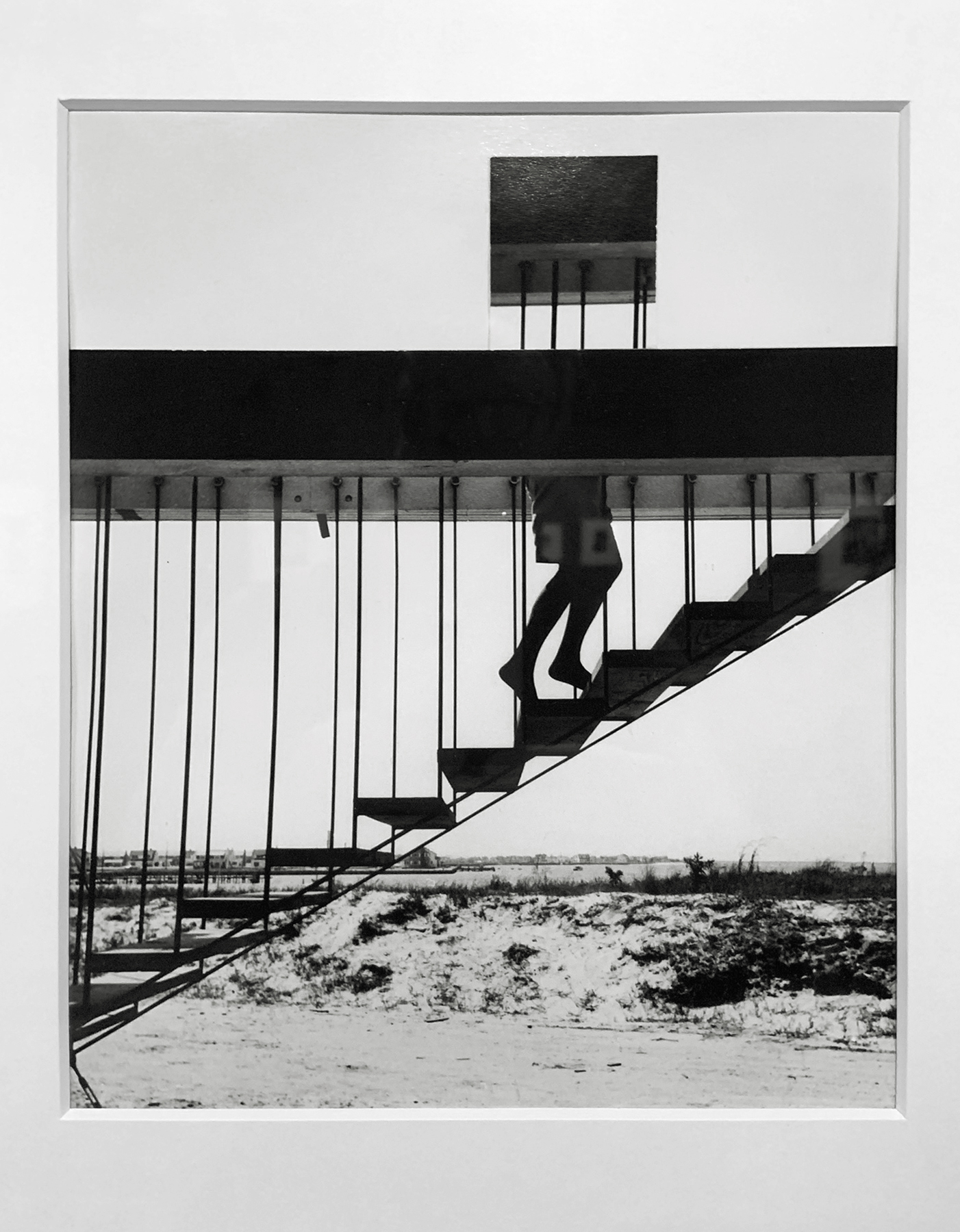
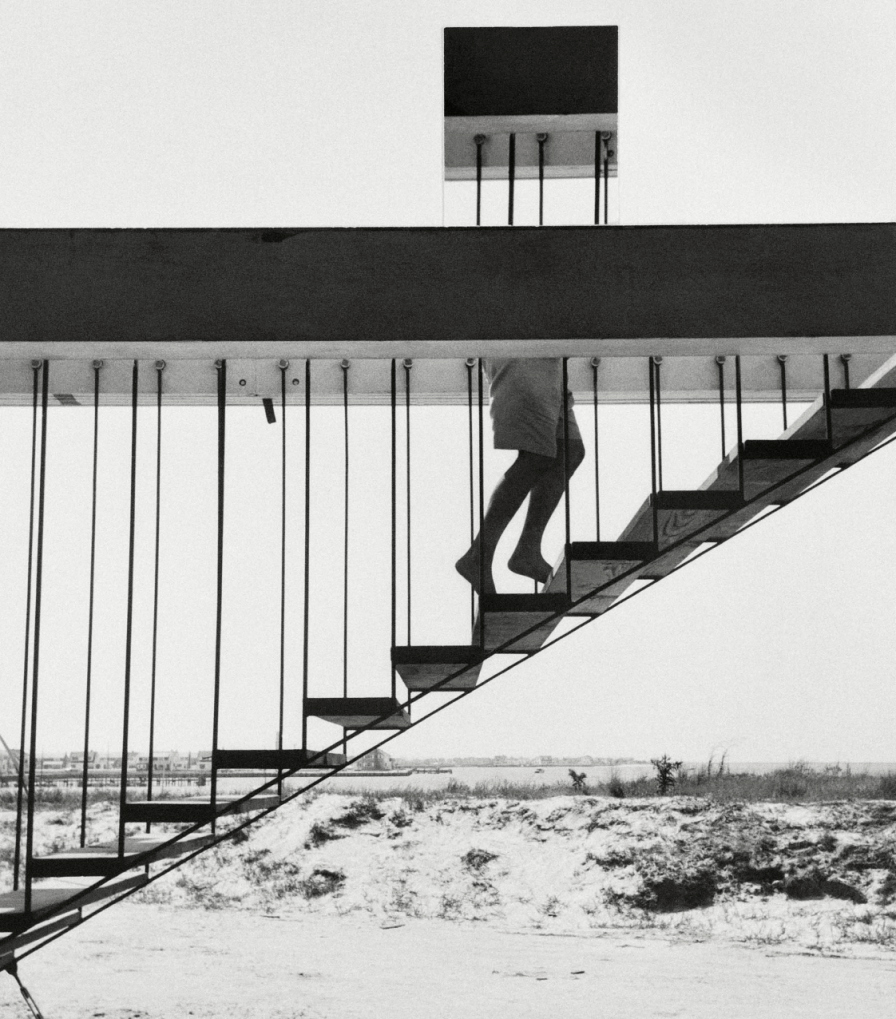
André Kertész (Hungarian, 1894-1985) Escalier, rampe, ombres et femme, New York (installation view) Staircase, banister, shadows and woman, New York 1951 Gelatin silver print Photo: Marcus Bunyan
André Kertész (Hungarian, 1894-1985) Escalier, rampe, ombres et femme, New York (installation view) Staircase, banister, shadows and woman, New York 1951 Gelatin silver print Photo: Marcus Bunyan
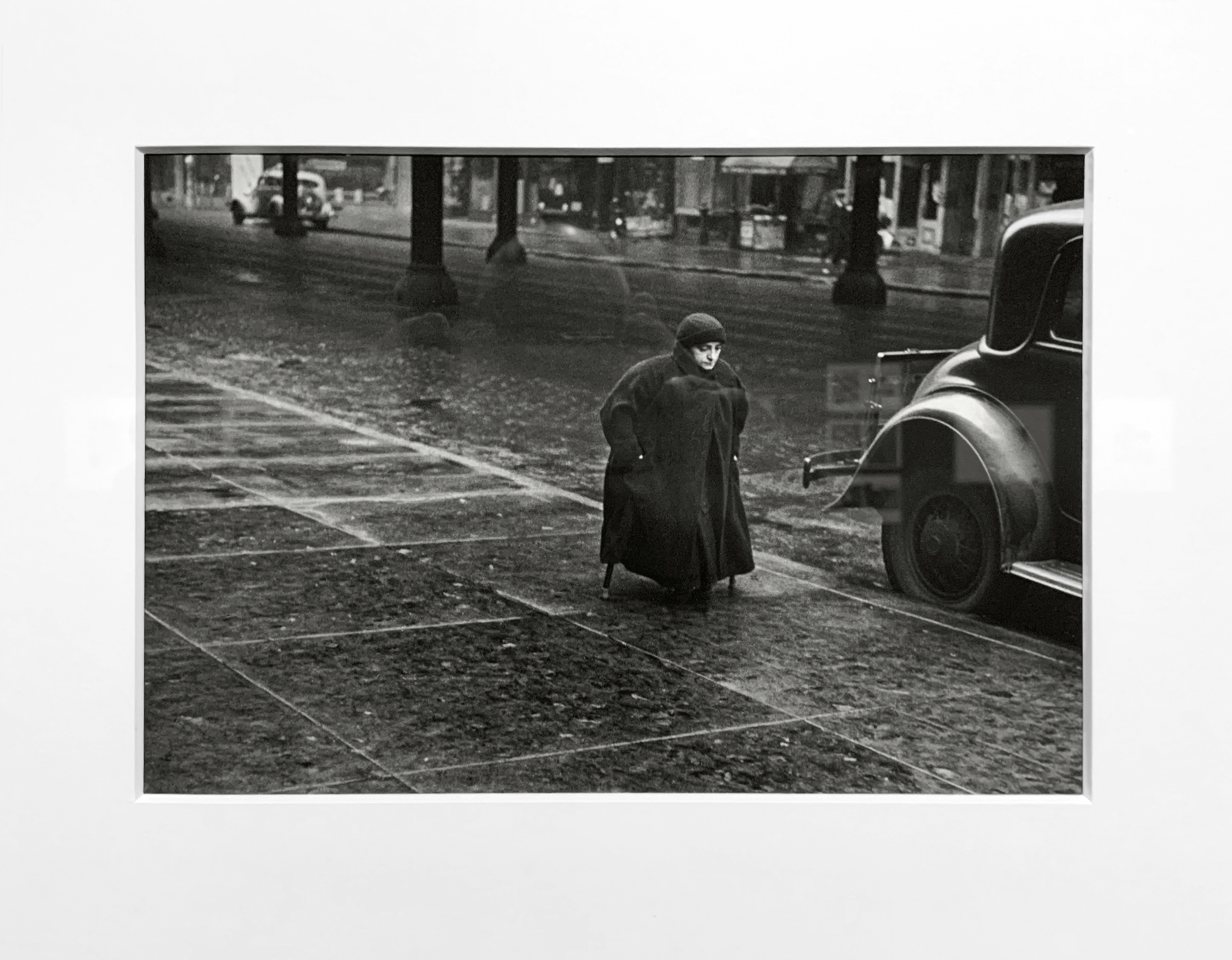
André Kertész (Hungarian, 1894-1985) “Buy”, Long Island 1963 Gelatin silver print
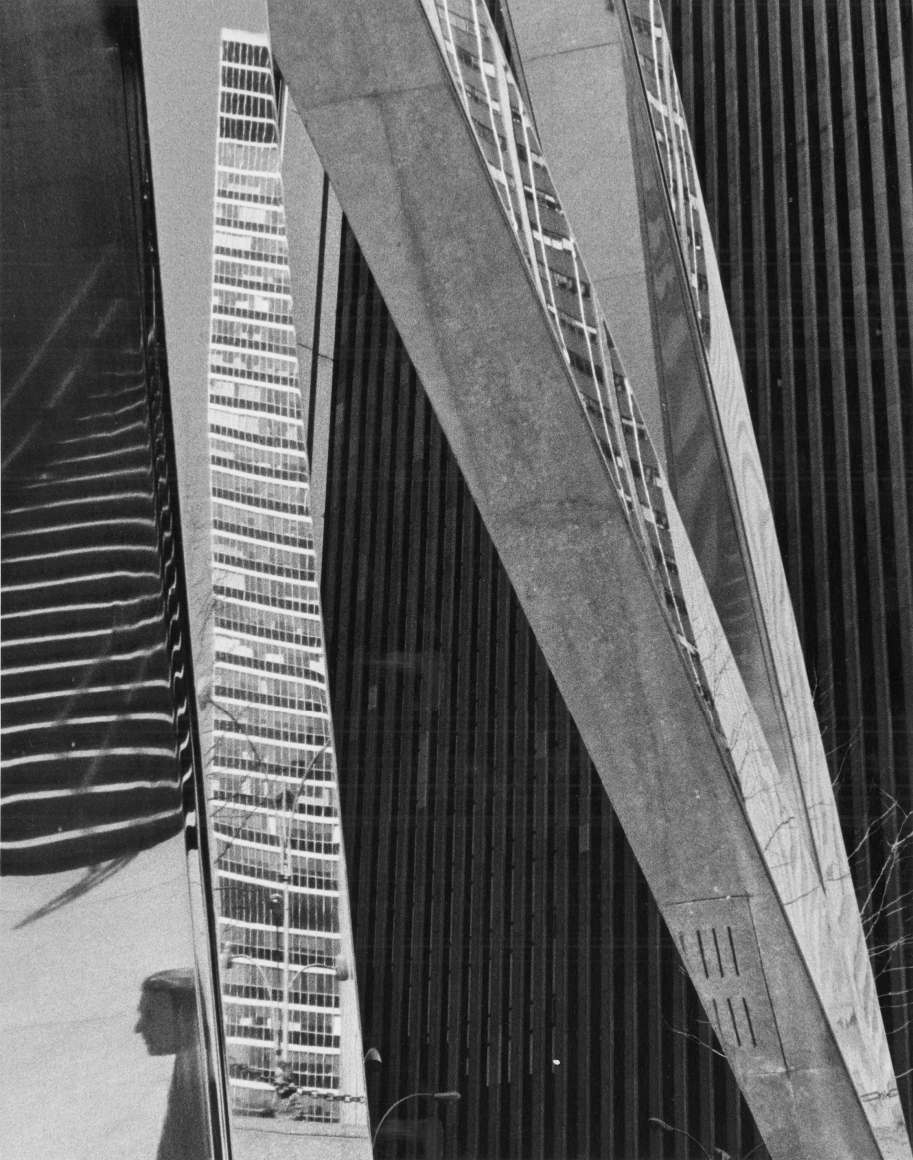
André Kertész (Hungarian, 1894-1985) 6th Avenue, New York 1973 Gelatin silver print
André Kertész (Hungarian, 1894-1985) Nuage égaré Lost cloud 1937 Photo: Marcus Bunyan
André Kertész (Hungarian, 1894-1985) Nuage égaré Lost cloud 1937 Gelatin silver print
André Kertész (Hungarian, 1894-1985) Poughkeepsie, New York (installation view) 1937 Gelatin silver print Photo: Marcus Bunyan
André Kertész (Hungarian, 1894-1985) Poughkeepsie, New York 1937 Gelatin silver print
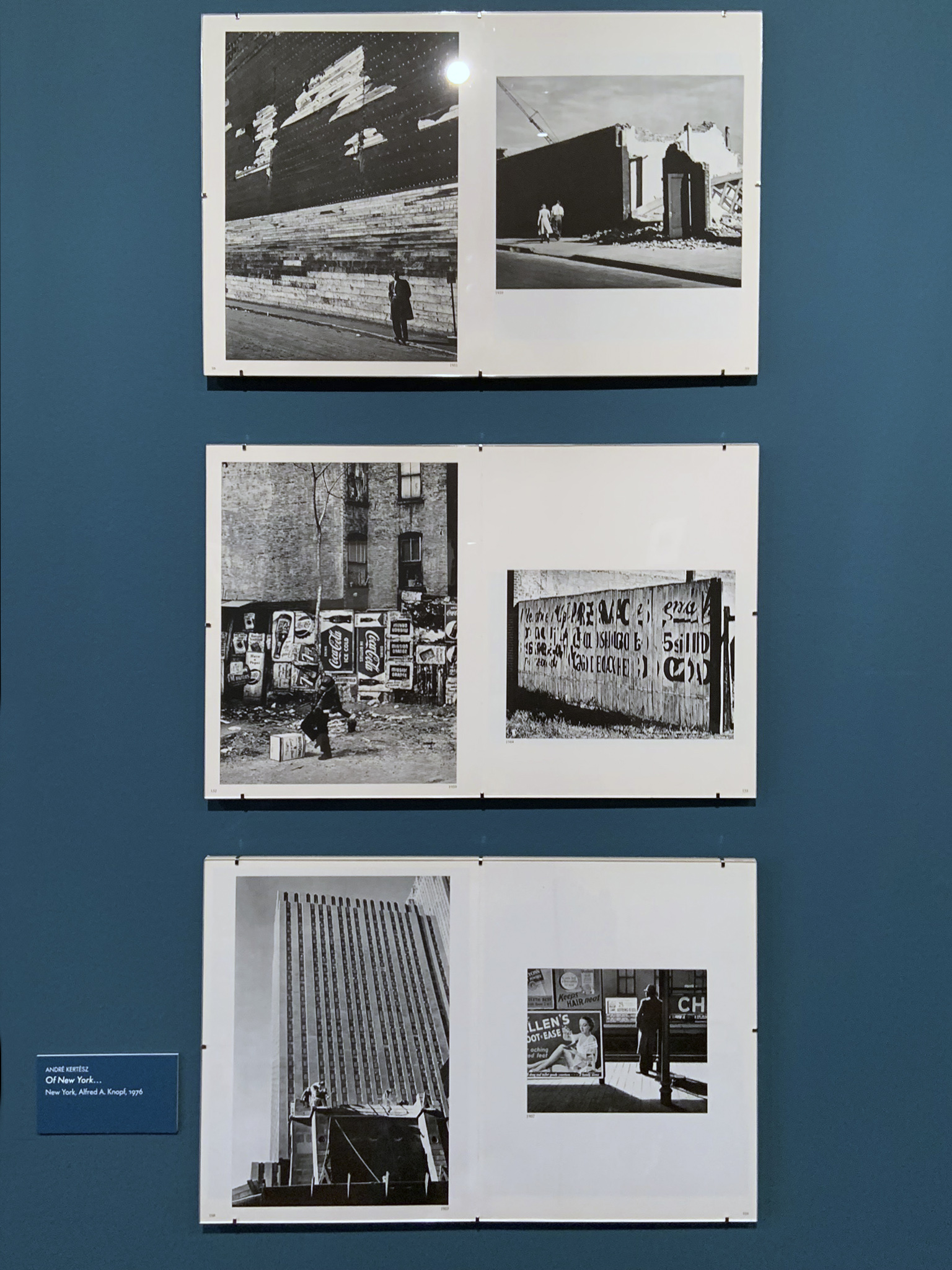
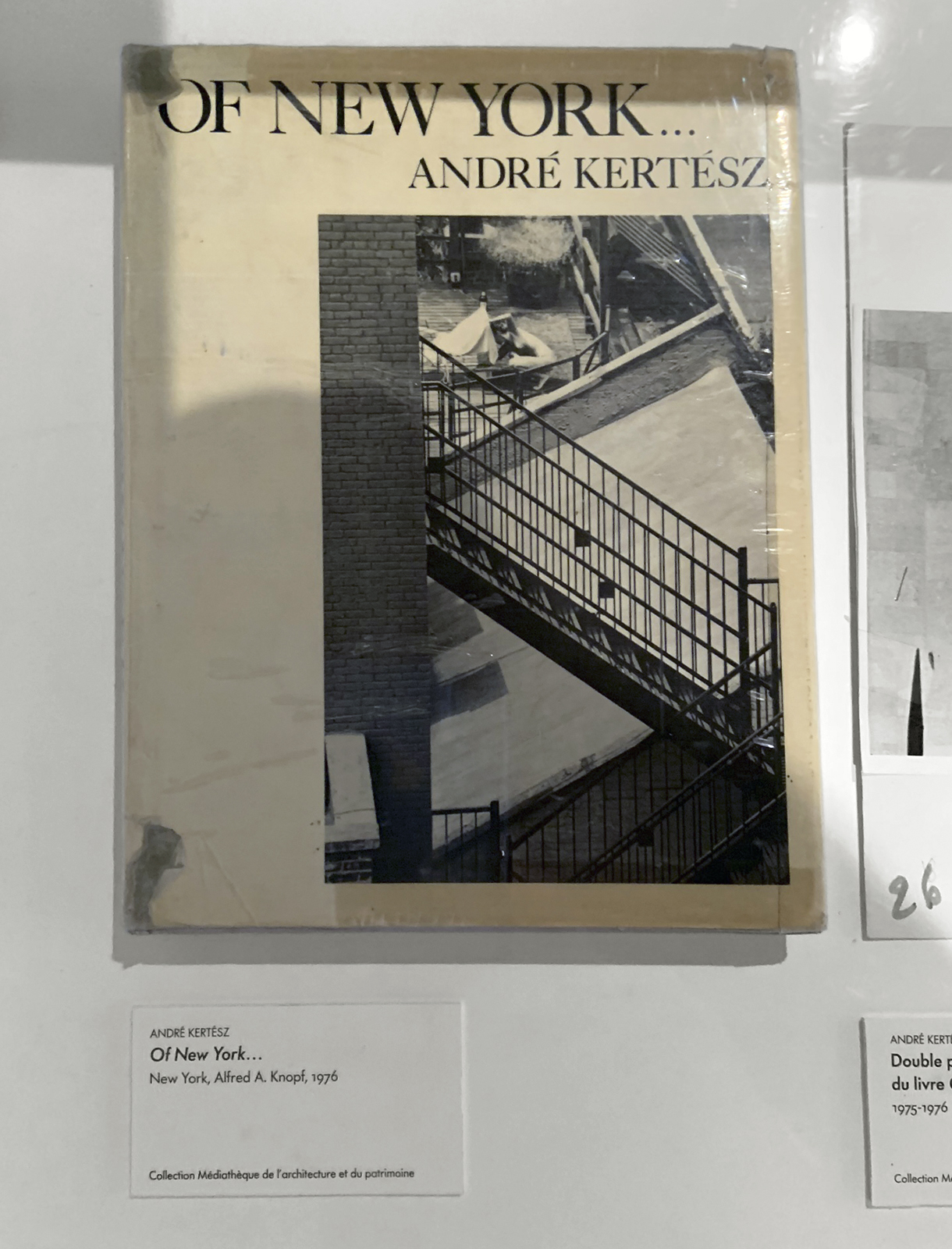
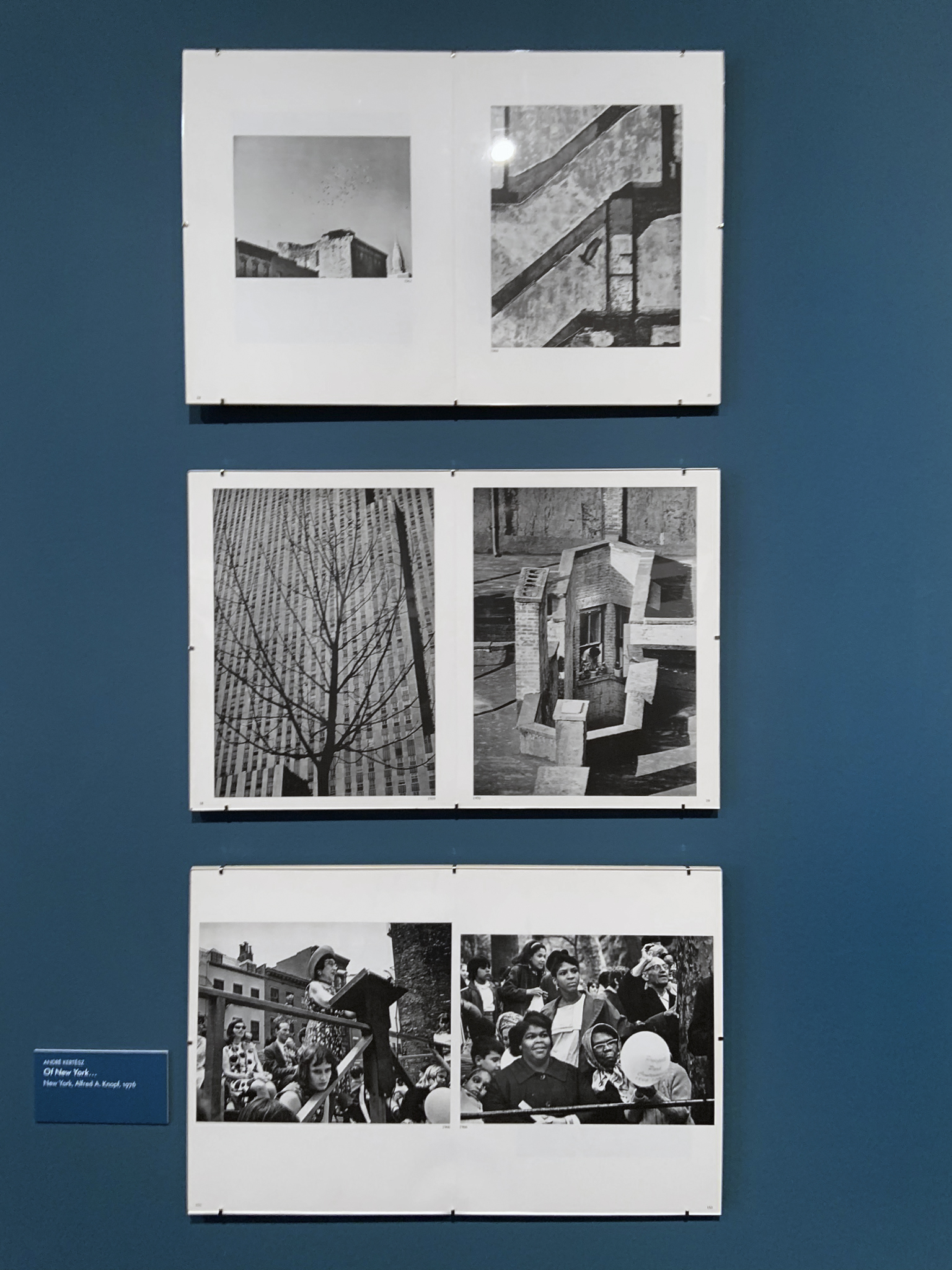
André Kertész (Hungarian, 1894-1985) Of New York… (installation view) New York, Alfred A. Knopf, 1976 Photo: Marcus Bunyan
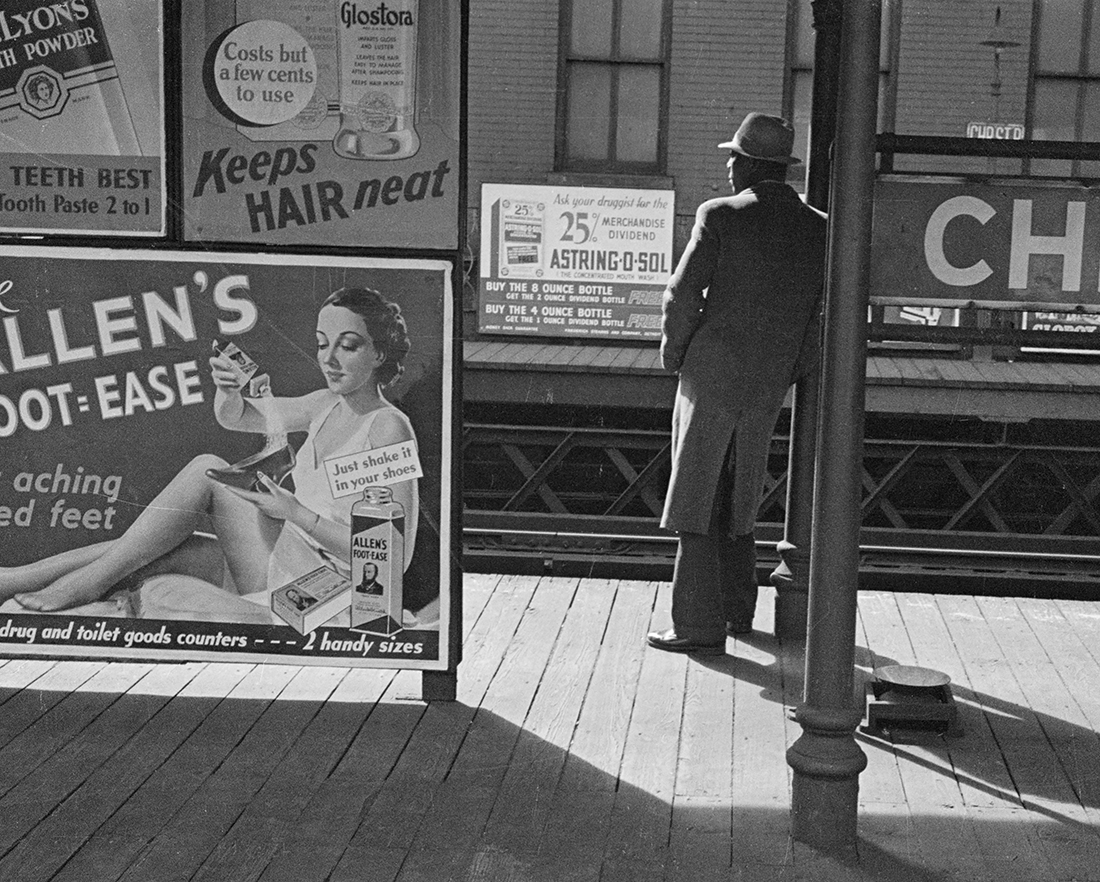
André Kertész (Hungarian, 1894-1985) New York (installation view) 1951 Gelatin silver print Photo: Marcus Bunyan
André Kertész (Hungarian, 1894-1985) Of New York… (installation view) New York, Alfred A. Knopf, 1976 Photo: Marcus Bunyan
André Kertész (Hungarian, 1894-1985) “Buy”, New York (installation view) 1966 Gelatin silver print Photo: Marcus Bunyan
André Kertész (Hungarian, 1894-1985) Of New York… (installation view) New York, Alfred A. Knopf, 1976 Photo: Marcus Bunyan
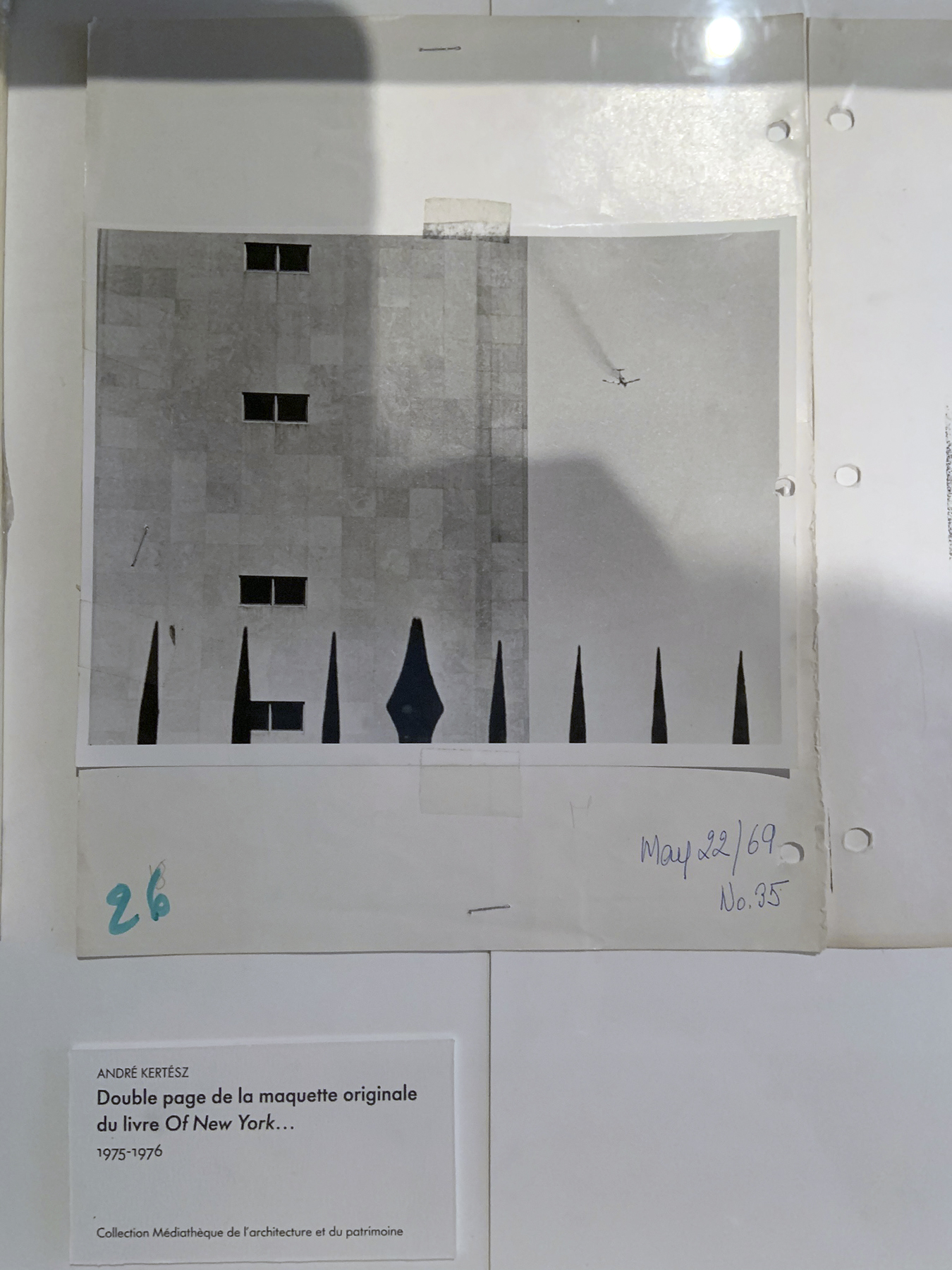
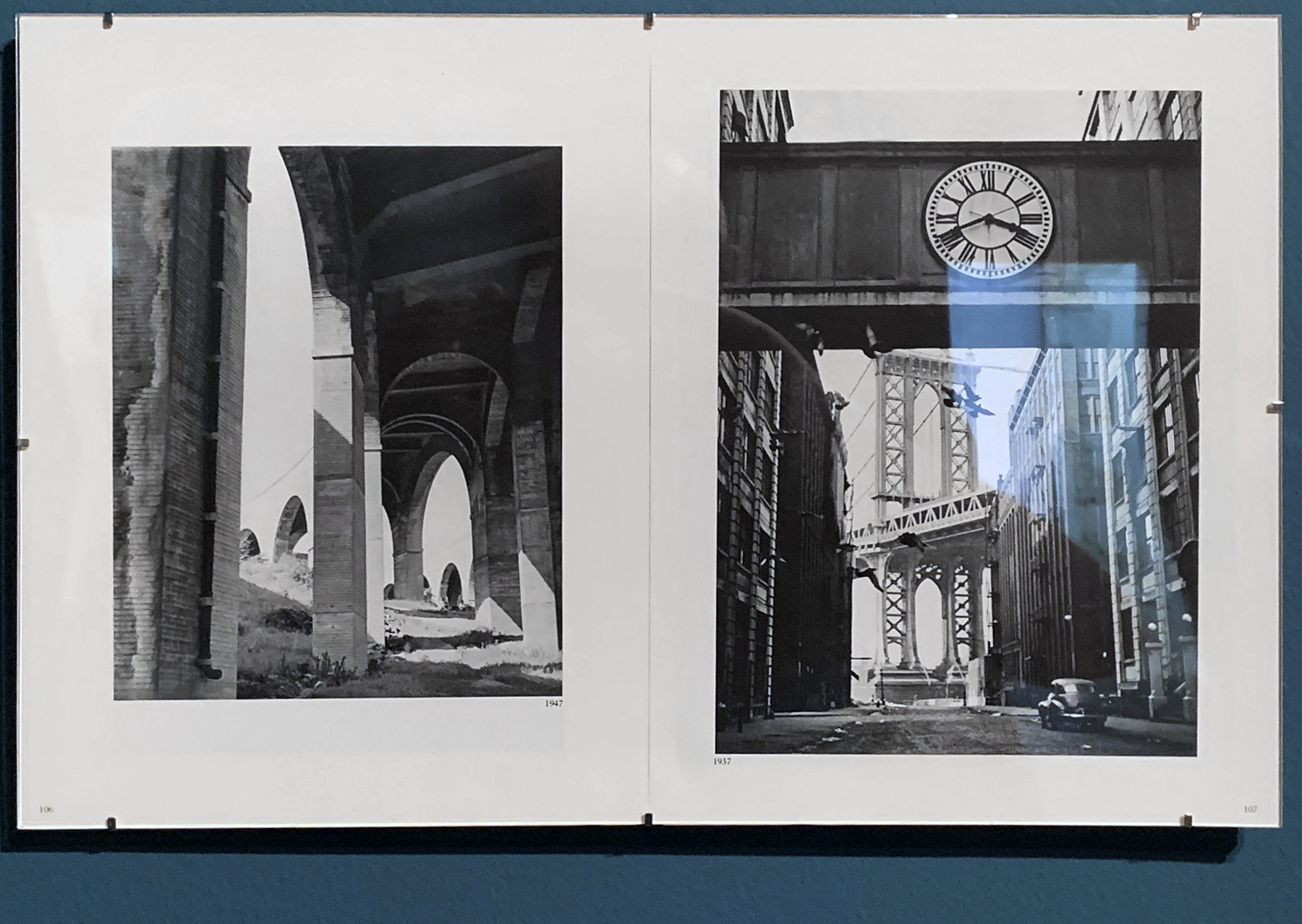
André Kertész (Hungarian, 1894-1985) Double page de la maquette originale du livre ‘Of New York…’ (installation view) Double page of the original model of the book ‘Of New York…’ 1975-76 Photo: Marcus Bunyan
Installation view of the exhibition L’equilibriste, André Kertész at Jeu de Paume, Château de Tours showing at second left, New York 1939; and at third left, New York 1936 Photo: Marcus Bunyan
André Kertész (Hungarian, 1894-1985) New York (installation view) 1939 Gelatin silver print Photo: Marcus Bunyan
André Kertész (Hungarian, 1894-1985) New York (installation view) 1936 Gelatin silver print Photo: Marcus Bunyan
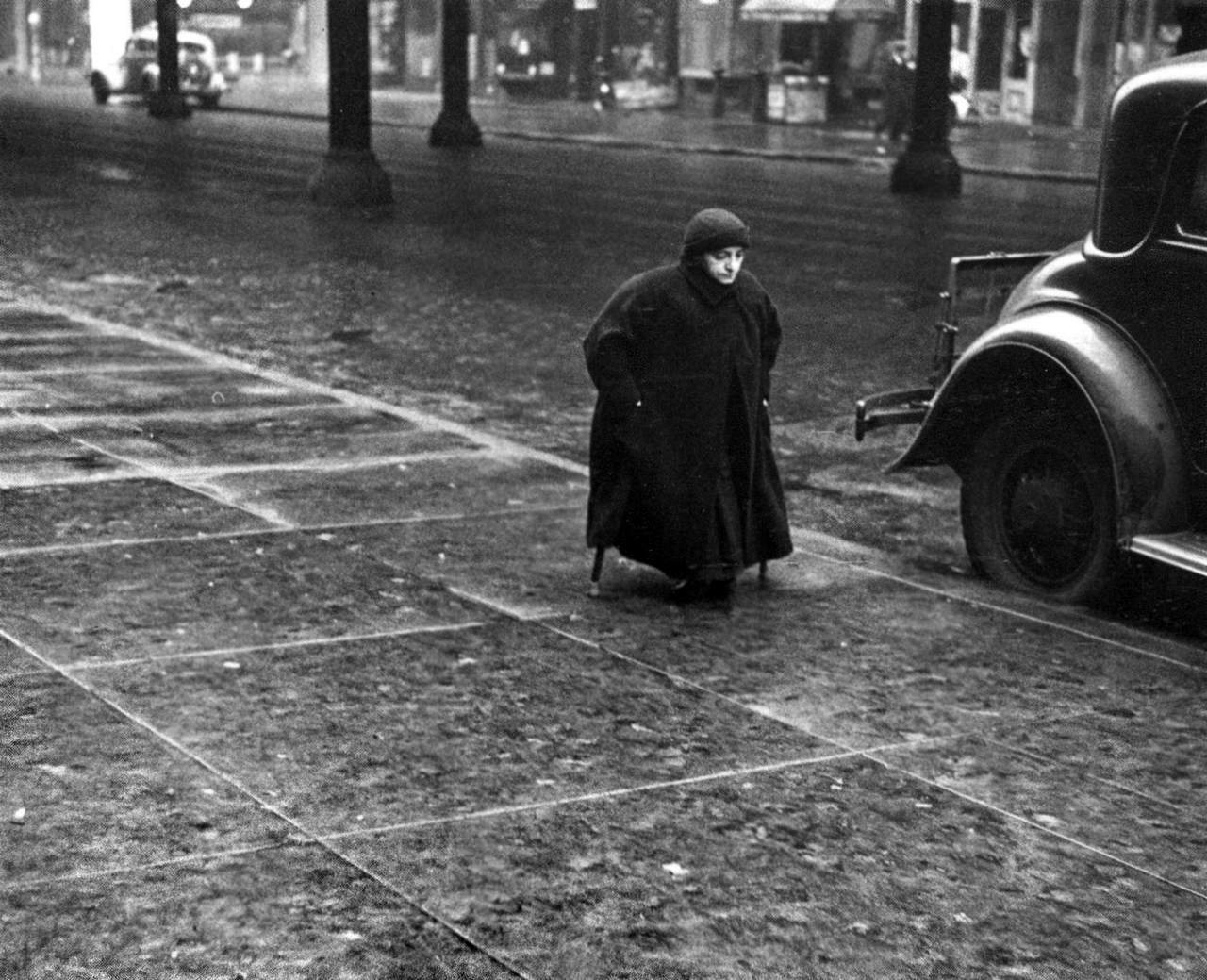
André Kertész (Hungarian, 1894-1985) New York 1936 Gelatin silver print
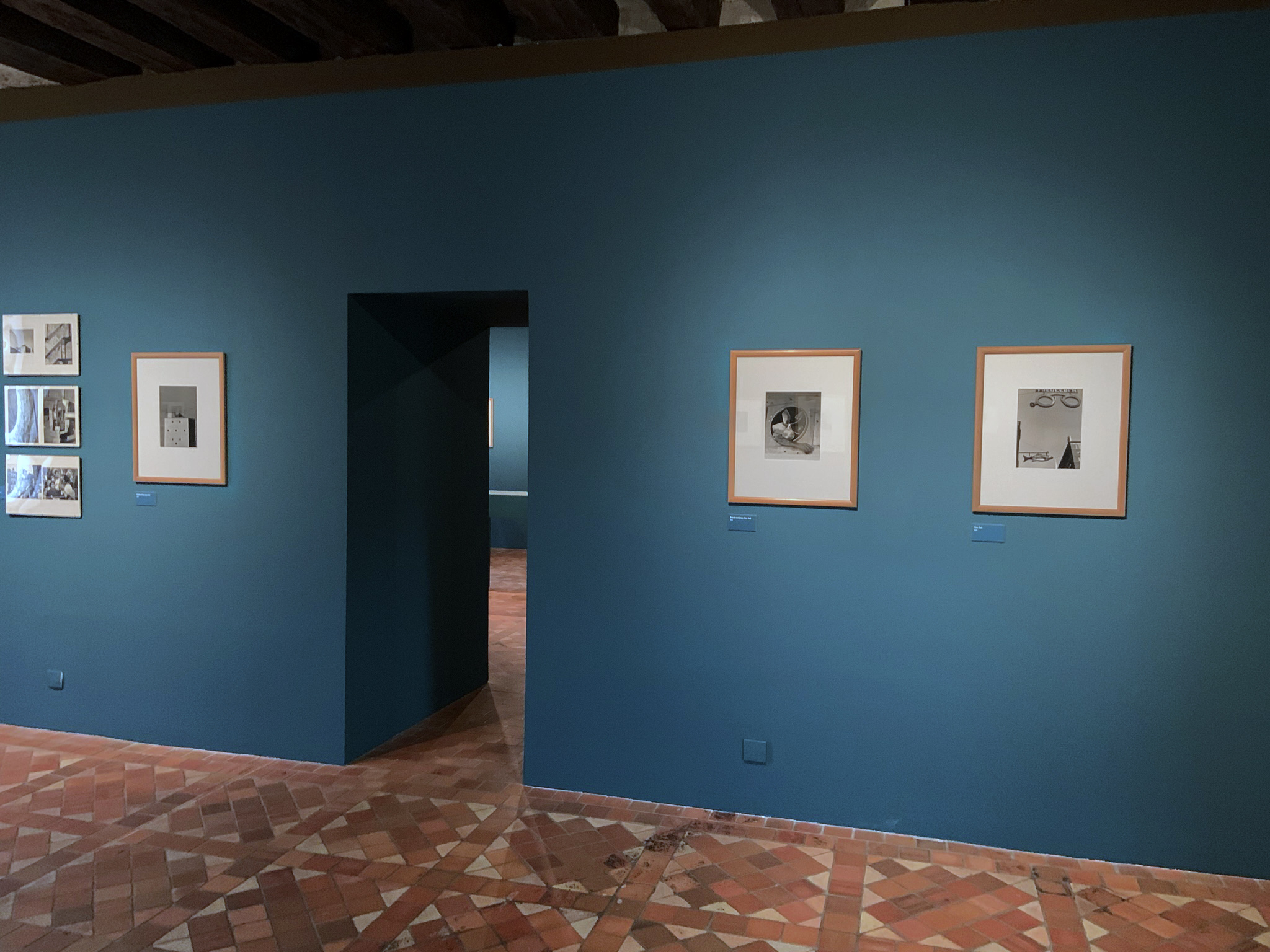
Installation view of the exhibition L’equilibriste, André Kertész at Jeu de Paume, Château de Tours showing at second right, Arm and Fan, New York 1937 Photo: Marcus Bunyan
André Kertész (Hungarian, 1894-1985) Bras et ventilateur, New York (installation view) Arm and Fan, New York 1937 Gelatin silver print Photo: Marcus Bunyan
André Kertész (Hungarian, 1894-1985) Bras et ventilateur, New York Arm and Fan, New York 1937 Gelatin silver print
André Kertész (Hungarian, 1894-1985) Of New York… (installation view) New York, Alfred A. Knopf, 1976 Photo: Marcus Bunyan
André Kertész (Hungarian, 1894-1985) New York (installation view) 1947 Gelatin silver print Photo: Marcus Bunyan
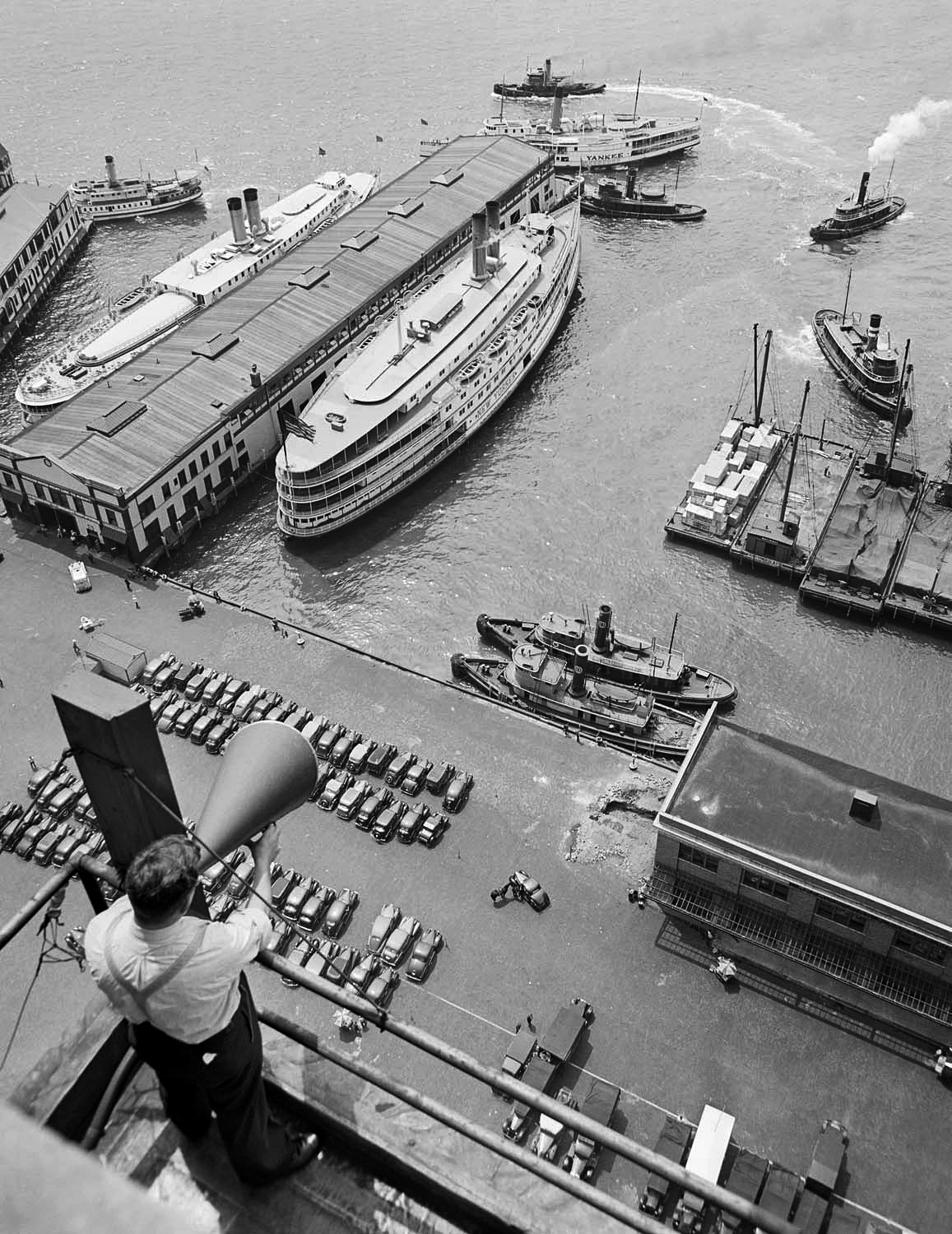
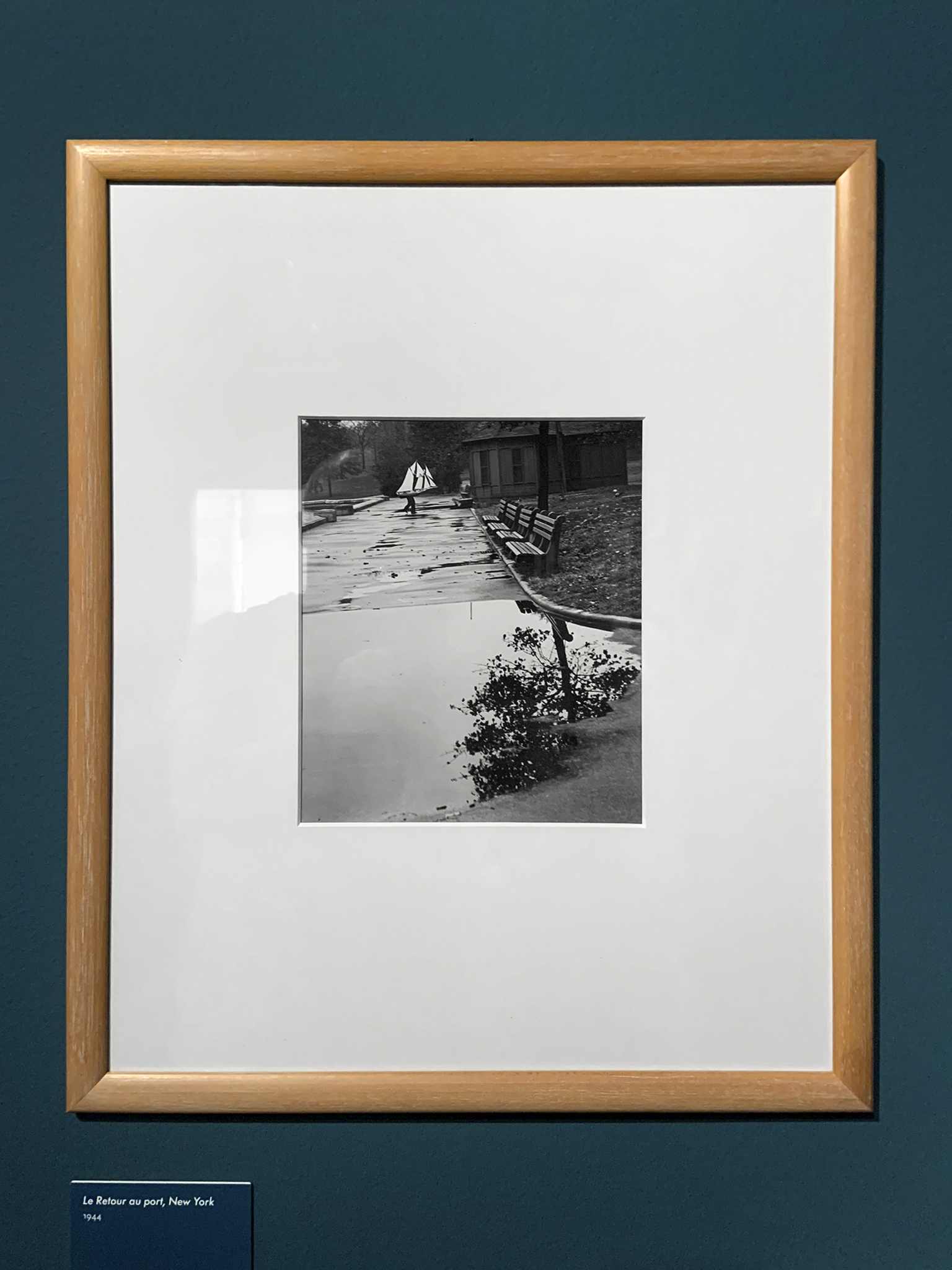
André Kertész (Hungarian, 1894-1985) Le retour au port, New York (installation view) Return to port, New York 1944 Gelatin silver print Photo: Marcus Bunyan
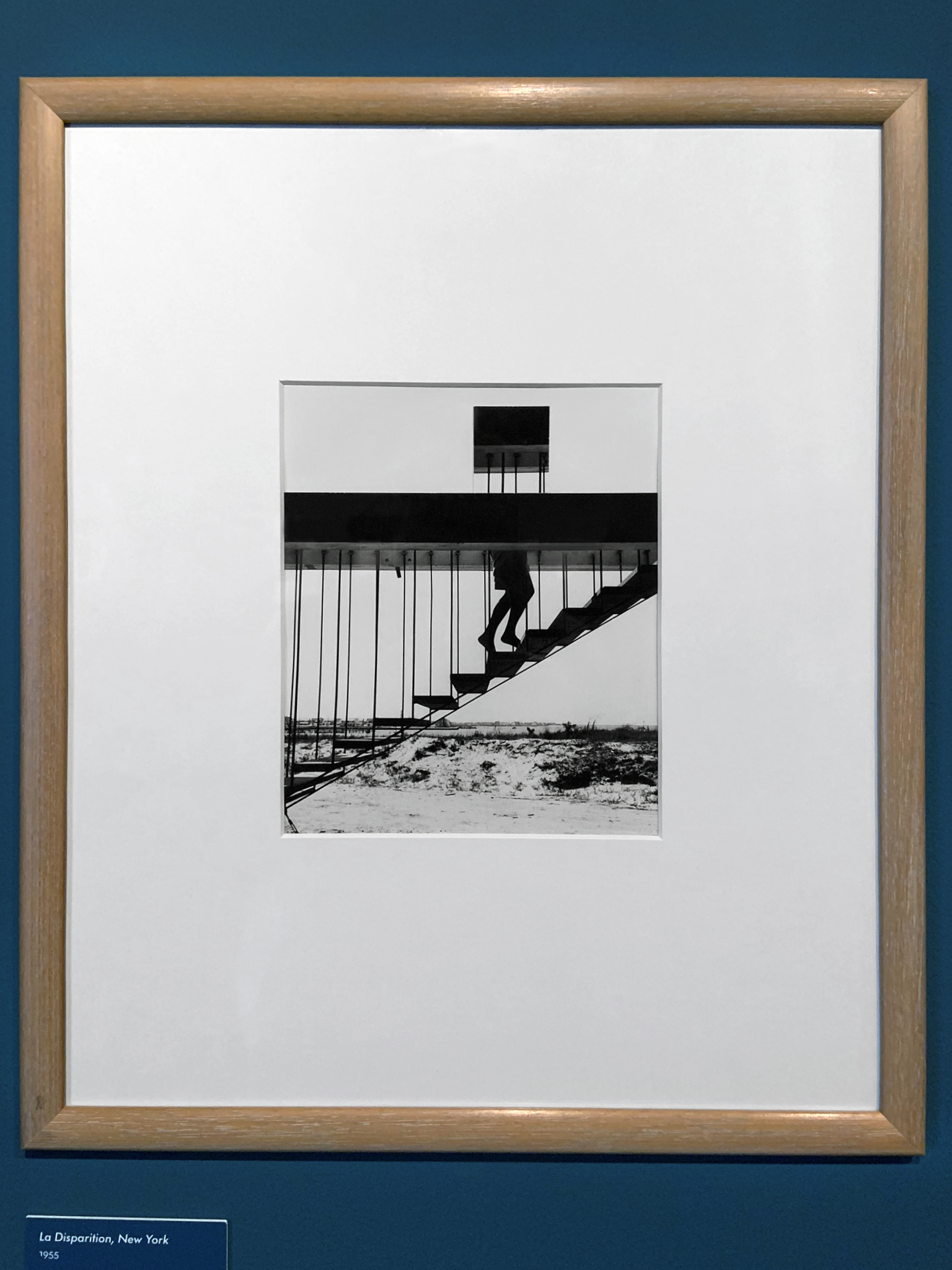
Installation view of the exhibition L’equilibriste, André Kertész at Jeu de Paume, Château de Tours showing at left, Disappearance, New York 1955 Photo: Marcus Bunyan
André Kertész (Hungarian, 1894-1985) La Disparition, New York (installation view) Disappearance, New York 1955 Gelatin silver print Photo: Marcus Bunyan
André Kertész (Hungarian, 1894-1985) La Disparition, New York (installation view) Disappearance, New York 1955 Gelatin silver print Photo: Marcus Bunyan
André Kertész (Hungarian, 1894-1985) Disappearance, New York 1955 Gelatin silver print
André Kertész (Hungarian, 1894-1985) New York (installation view) 1969 Gelatin silver print Photo: Marcus Bunyan
Text from the exhibition L’equilibriste, André Kertész at Jeu de Paume, Château de Tours
Installation views of the exhibition L’equilibriste, André Kertész at Jeu de Paume, Château de Tours showing at left in the bottom image, Broken Bench, New York 1962 Photos: Marcus Bunyan
André Kertész (Hungarian, 1894-1985) Le Banc cassé, New York Broken Bench, New York 1962 Gelatin silver print
André Kertész (Hungarian, 1894-1985) Of New York… (installation view) New York, Alfred A. Knopf, 1976 Photo: Marcus Bunyan
André Kertész (Hungarian, 1894-1985) Soixante ans de photographie (installation view) Sixty years of photography 1912-1972 Paris, éditions du Chêne, 1972 Photo: Marcus Bunyan
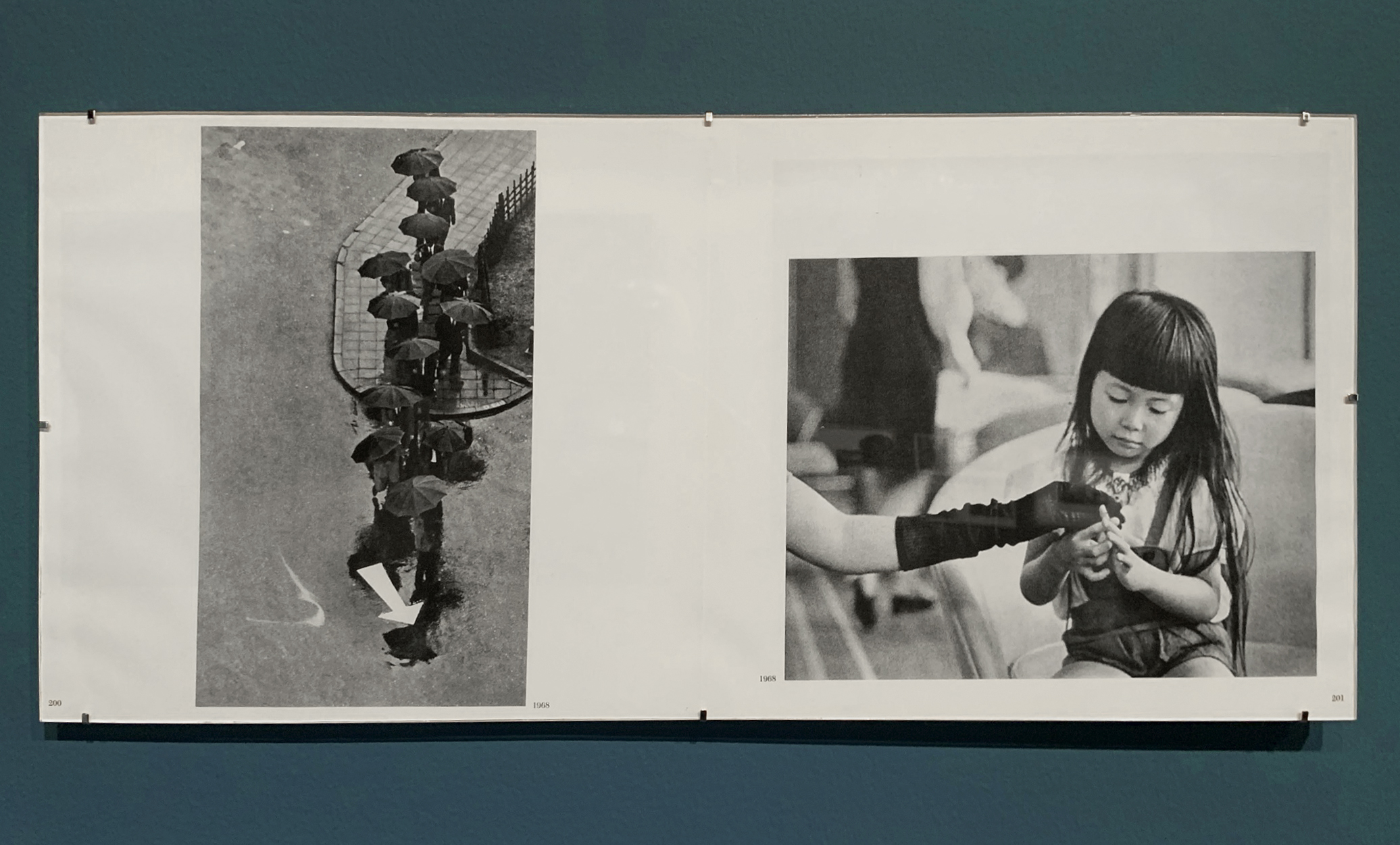
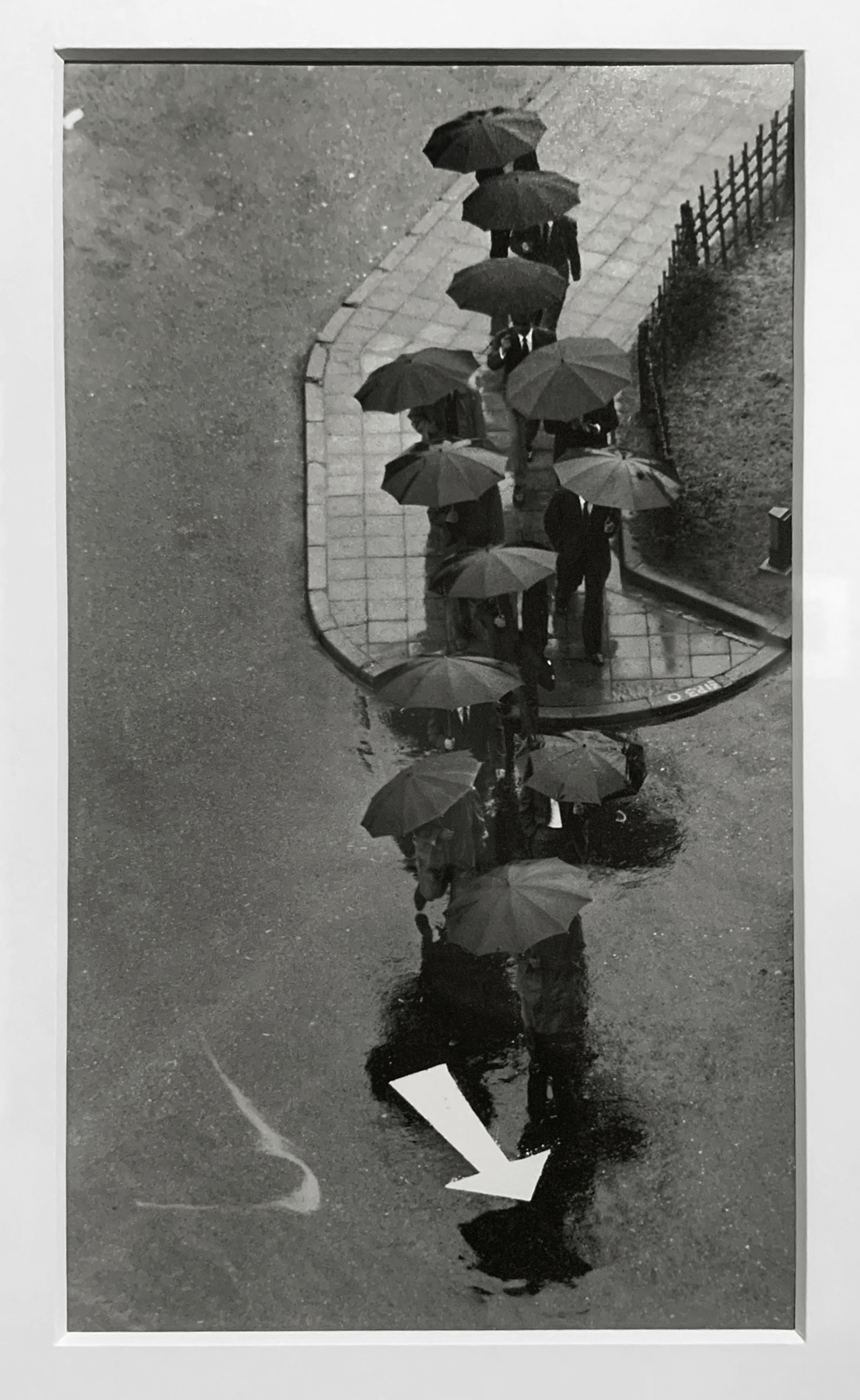
André Kertész (Hungarian, 1894-1985) Jour pluvieux, Tokyo (installation view) Rainy day, Tokyo 1968 Gelatin silver print Photo: Marcus Bunyan
André Kertész (Hungarian, 1894-1985) McDougall Alley, New York (installation view) 1965 Gelatin silver print Photo: Marcus Bunyan
André Kertész (Hungarian, 1894-1985) Washington Square, New York 1954 Gelatin silver print
André Kertész (Hungarian, 1894-1985) Washington Square, New York (installation view) 1954 Gelatin silver print Photo: Marcus Bunyan
André Kertész (Hungarian, 1894-1985) Washington Square, New York 1954 Gelatin silver print
André Kertész (Hungarian, 1894-1985) Jardin d’hiver, New York (installation view) Winter Garden, New York 1970 Gelatin silver print Photo: Marcus Bunyan
André Kertész (Hungarian, 1894-1985) Martinique 1972 Gelatin silver print
André Kertész (Hungarian, 1894-1985) Soixante ans de photographie (installation view) Sixty years of photography 1912-1972 Paris, éditions du Chêne, 1972 Photo: Marcus Bunyan
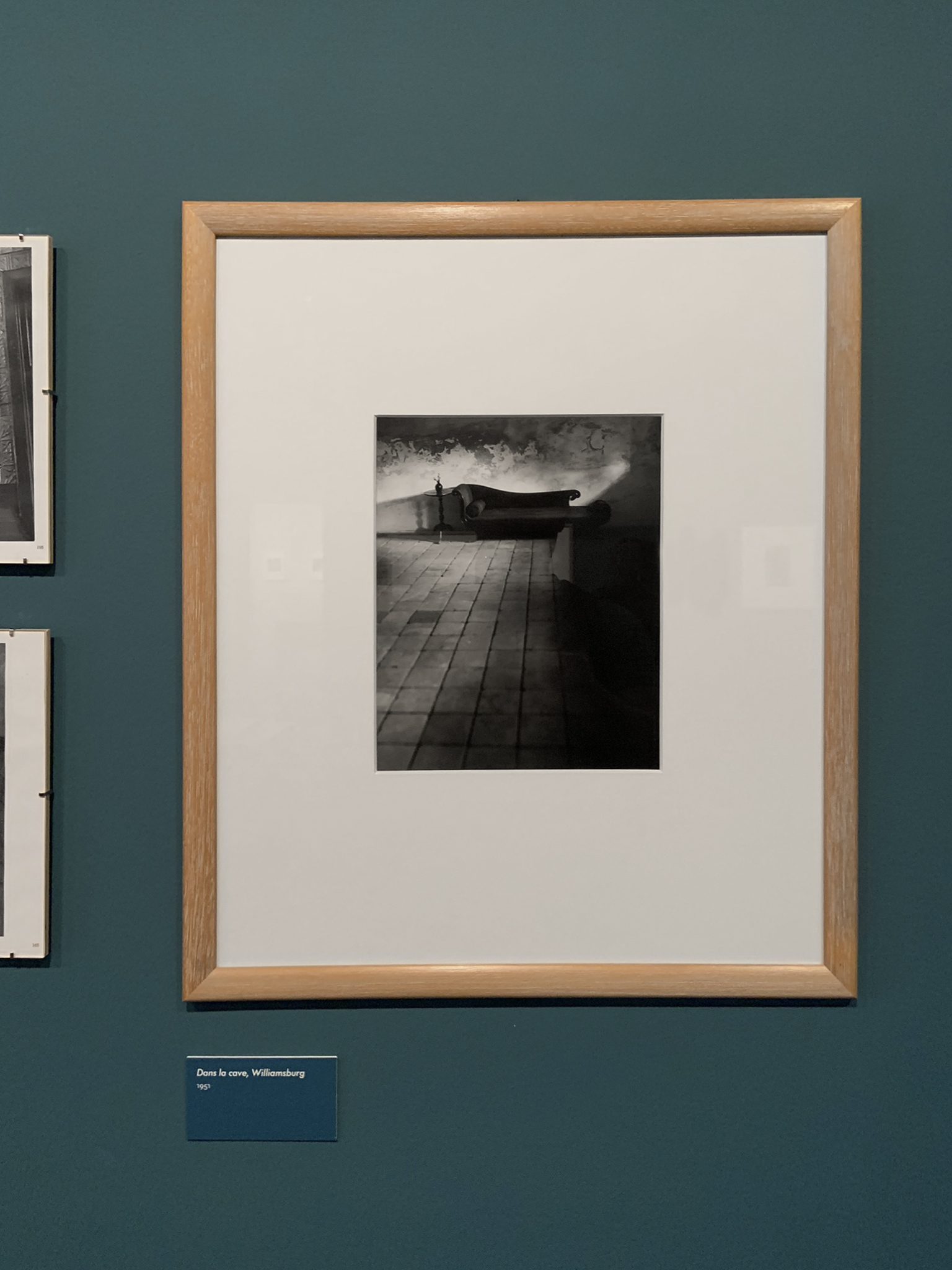
André Kertész (Hungarian, 1894-1985) Dans la cave, Williamsburg (installation view) In the cellar, Williamsburg 1951 Gelatin silver print Photo: Marcus Bunyan
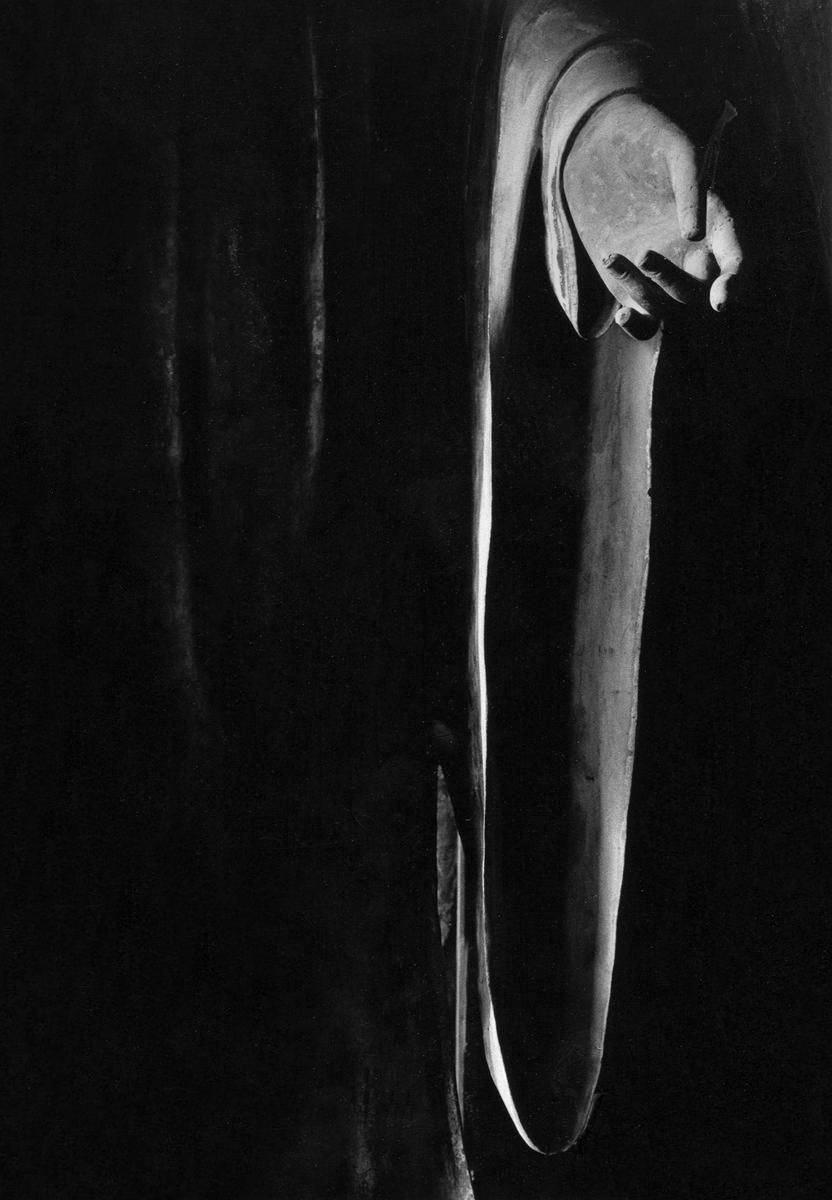
André Kertész (Hungarian, 1894-1985) Nara, Japan 1968 Gelatin silver print
Text from the exhibition L’equilibriste, André Kertész at Jeu de Paume, Château de Tours
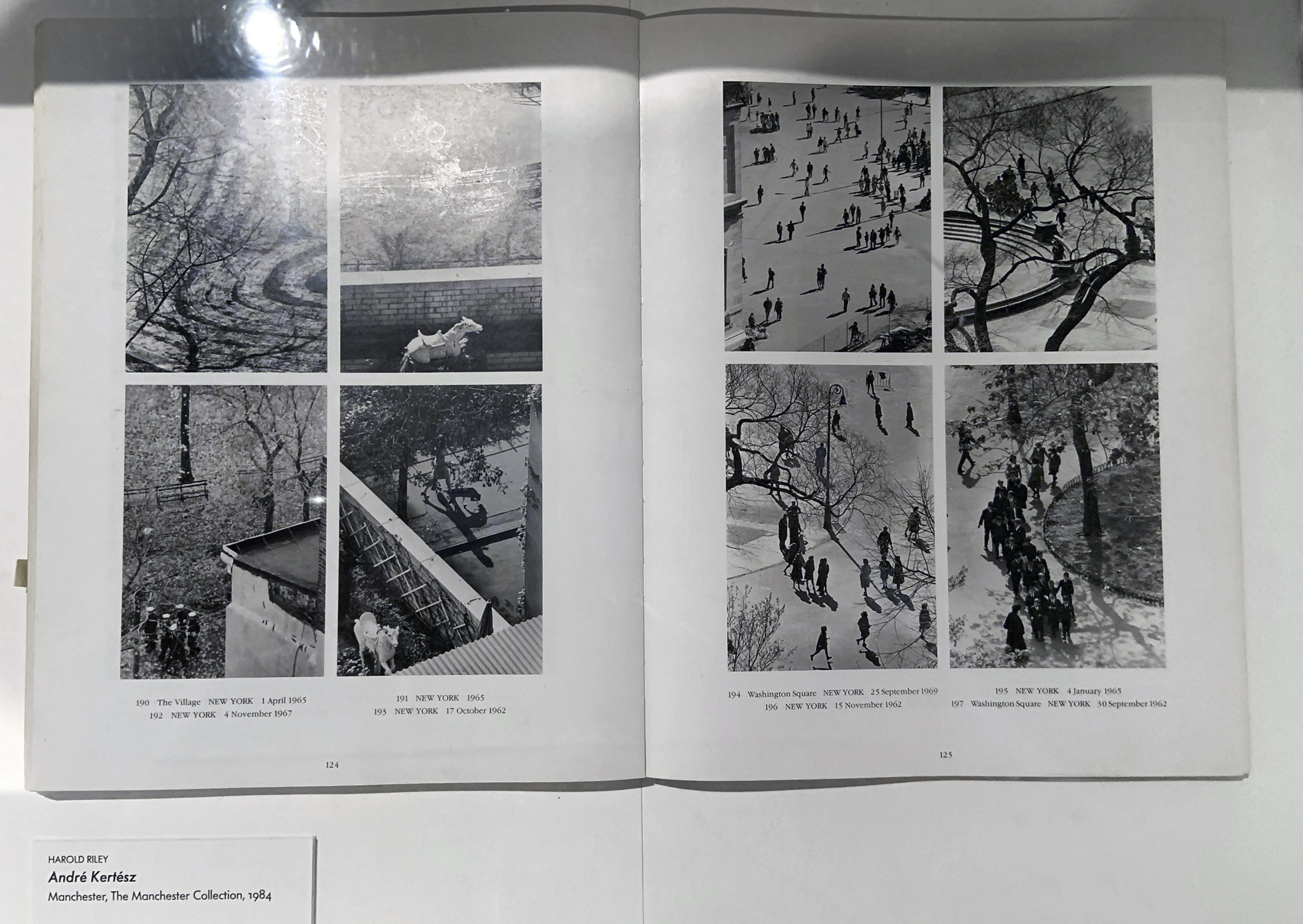
Harold Riley André Kertész (installation view) Manchester, The Manchester Collection, 1984 Collection Médiathèque de l’architecture et du patrimoine Photo: Marcus Bunyan
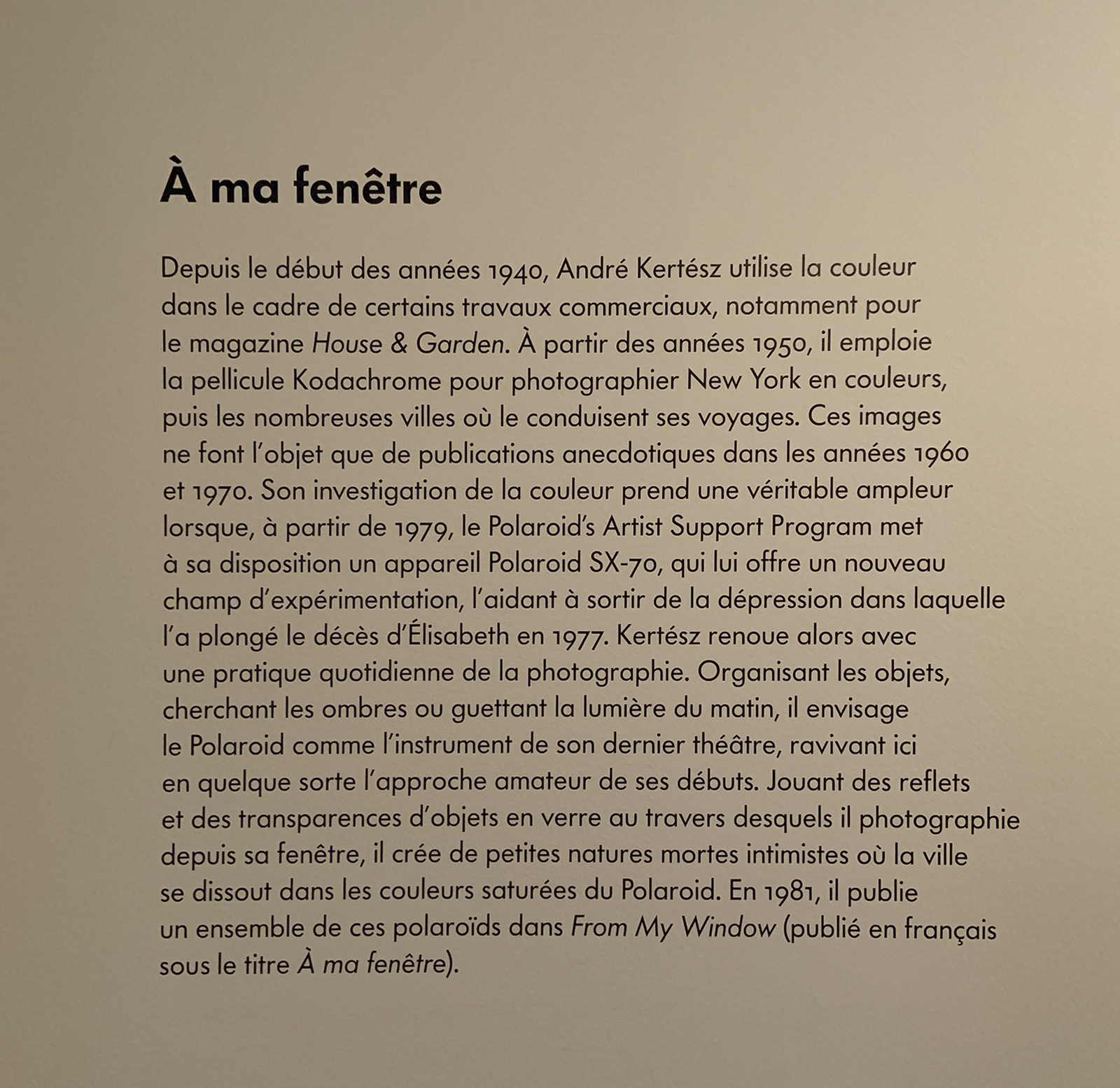
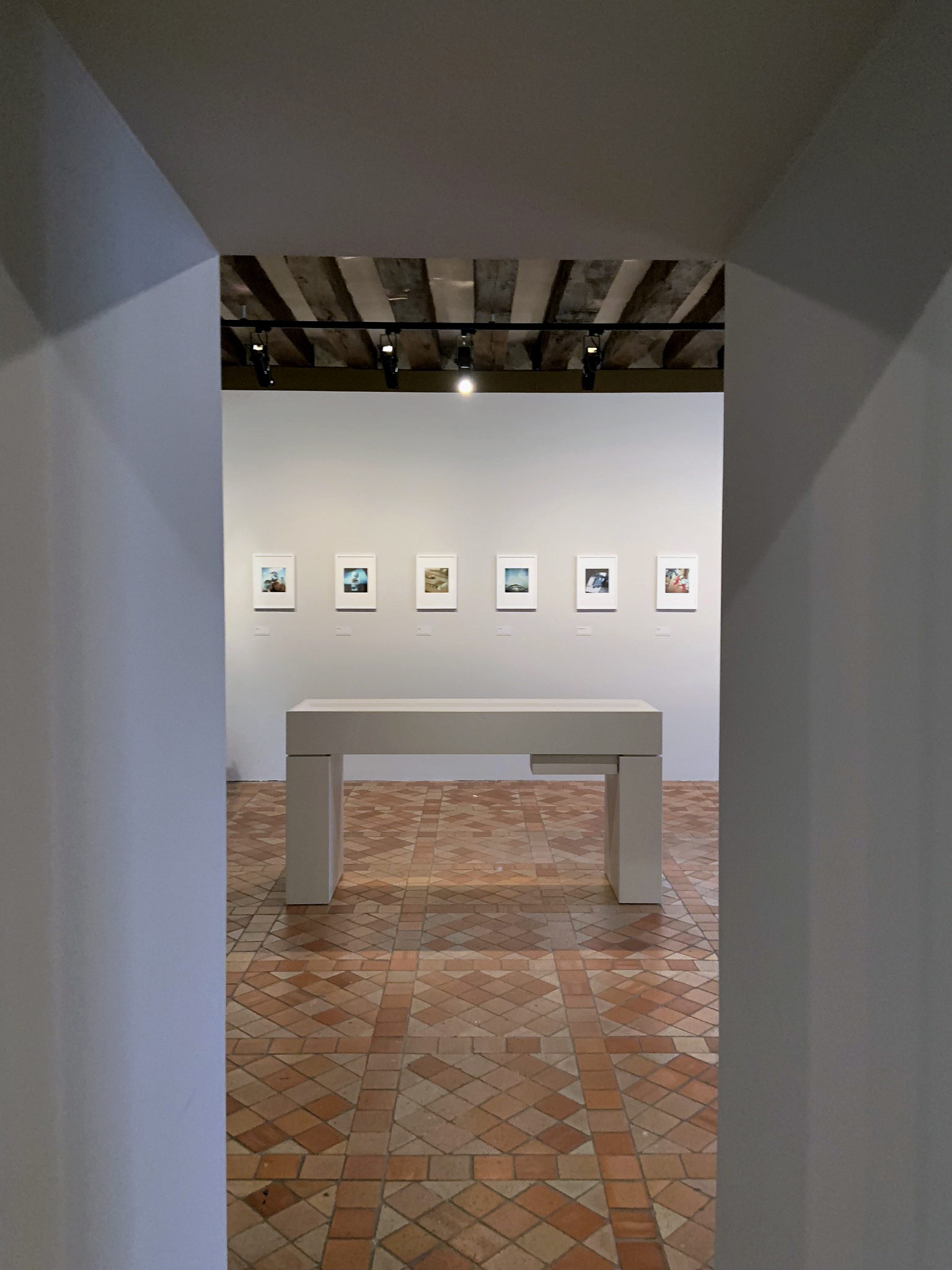
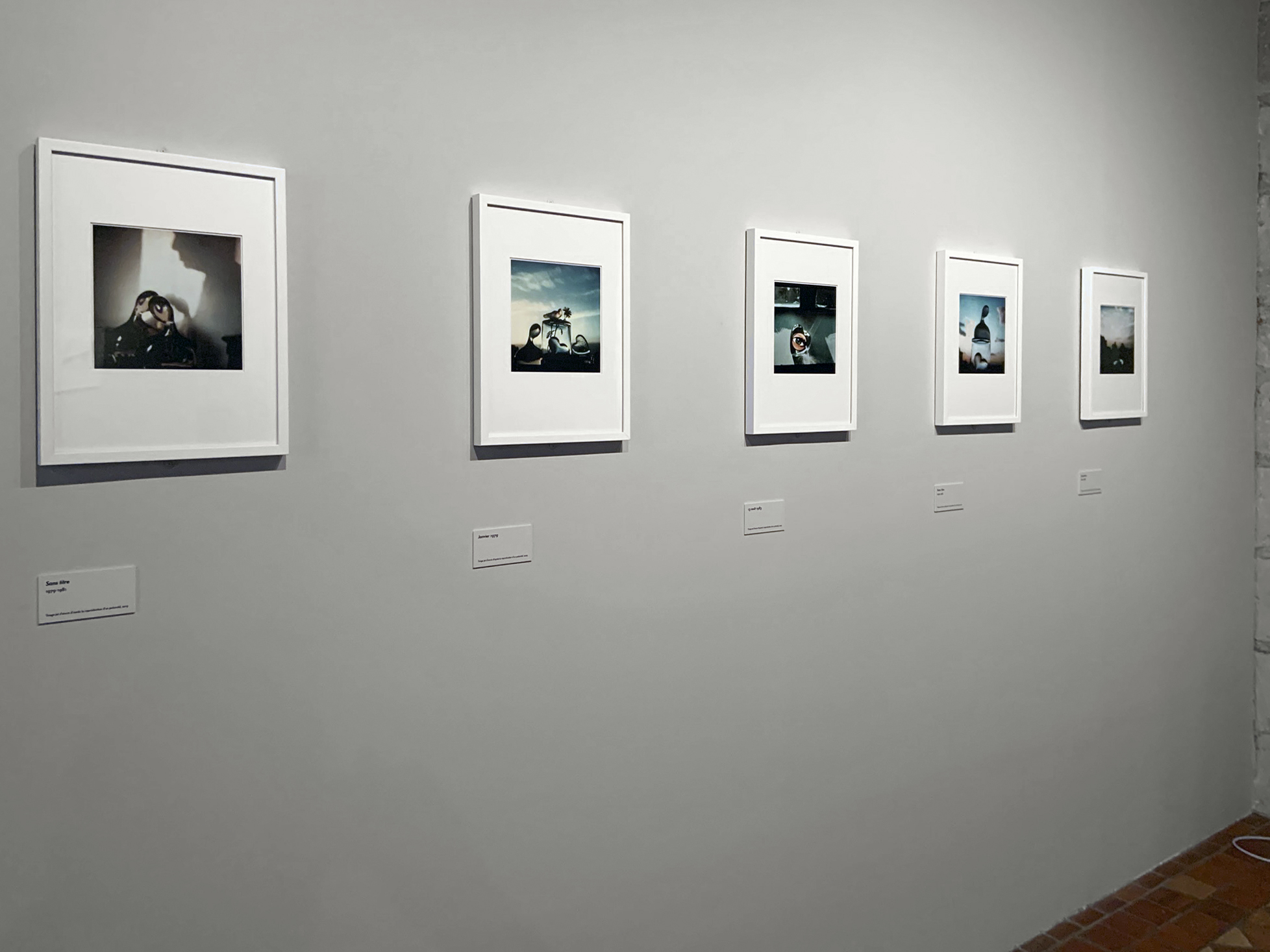
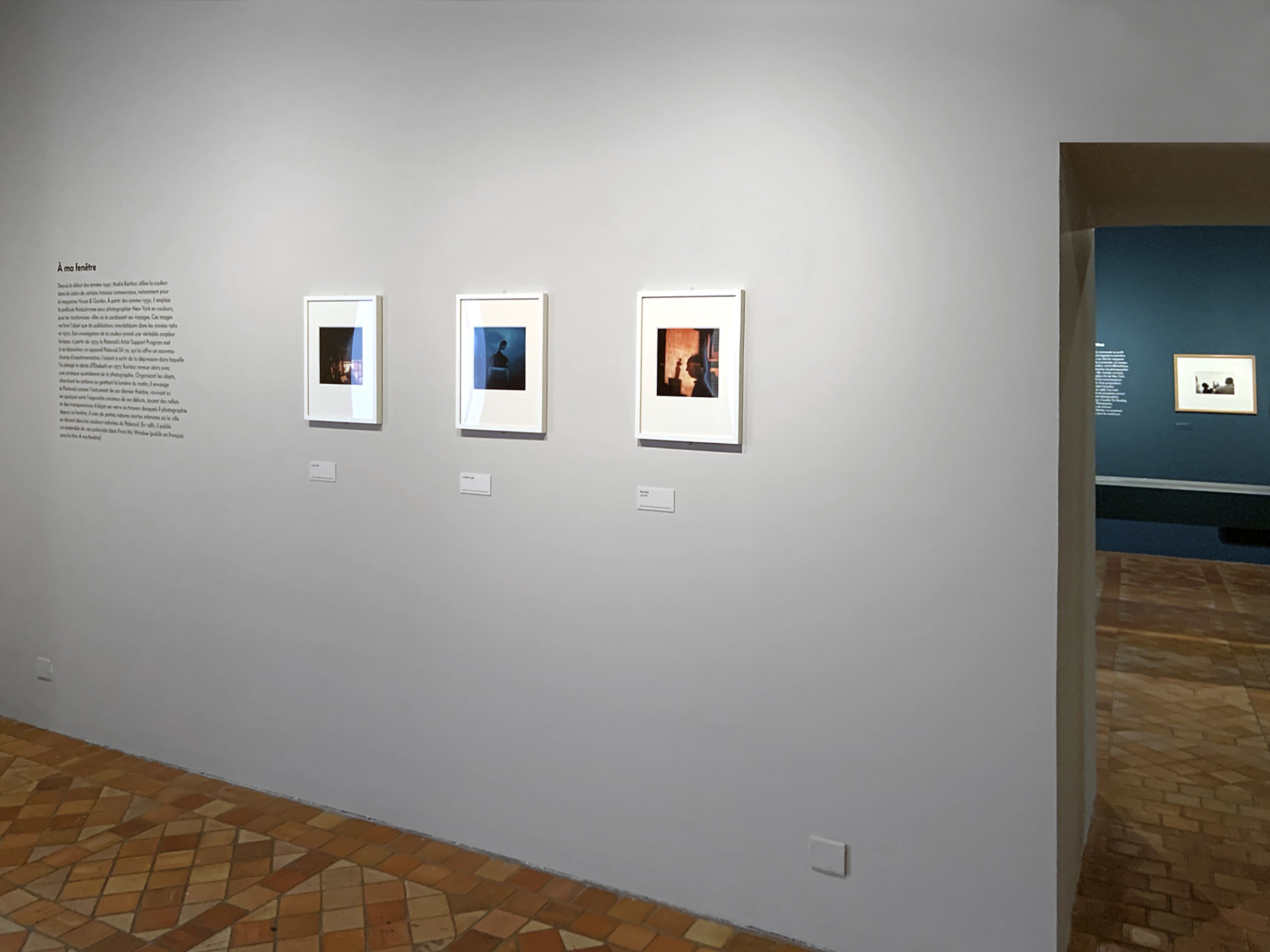
Installation views of the exhibition L’equilibriste, André Kertész at Jeu de Paume, Château de Tours showing his late Polaroid work Photos: Marcus Bunyan
André Kertész (Hungarian, 1894-1985) 12 December 1979 (installation view) 1979 Tirage jet d’encre d’après la reproduction d’un polaroid, 2019 Inkjet print from a reproduction of a polaroid, 2019 Photo: Marcus Bunyan
André Kertész (Hungarian, 1894-1985) Untitled (installation view) 1979-1981 Tirage jet d’encre d’après la reproduction d’un polaroid, 2019 Inkjet print from a reproduction of a polaroid, 2019 Photo: Marcus Bunyan
André Kertész (Hungarian, 1894-1985) June 1979 (installation view) 1979 Tirage jet d’encre d’après la reproduction d’un polaroid, 2019 Inkjet print from a reproduction of a polaroid, 2019 Photo: Marcus Bunyan
André Kertész (Hungarian, 1894-1985) 21 June 1979 (installation view) 1979 Tirage jet d’encre d’après la reproduction d’un polaroid, 2019 Inkjet print from a reproduction of a polaroid, 2019 Photo: Marcus Bunyan
André Kertész (Hungarian, 1894-1985) Untitled (installation view) 1979-1981 Tirage jet d’encre d’après la reproduction d’un polaroid, 2019 Inkjet print from a reproduction of a polaroid, 2019 Photo: Marcus Bunyan
André Kertész (Hungarian, 1894-1985) 13 August 1979 (installation view) 1979 Tirage jet d’encre d’après la reproduction d’un polaroid, 2019 Inkjet print from a reproduction of a polaroid, 2019 Photo: Marcus Bunyan
André Kertész (Hungarian, 1894-1985) July 3, 1979 1979 Tirage jet d’encre d’après la reproduction d’un polaroid, 2019 Inkjet print from a reproduction of a polaroid, 2019
André Kertész (Hungarian, 1894-1985) Untitled 1979-1981 Tirage jet d’encre d’après la reproduction d’un polaroid, 2019 Inkjet print from a reproduction of a polaroid, 2019
André Kertész (Hungarian, 1894-1985) 13 August 1983 Tirage jet d’encre d’après la reproduction d’un polaroid, 2019
Jeu de Paume at the Château de Tours 25 avenue André Malraux, 37000 Tours Phone: 02 47 70 88 46
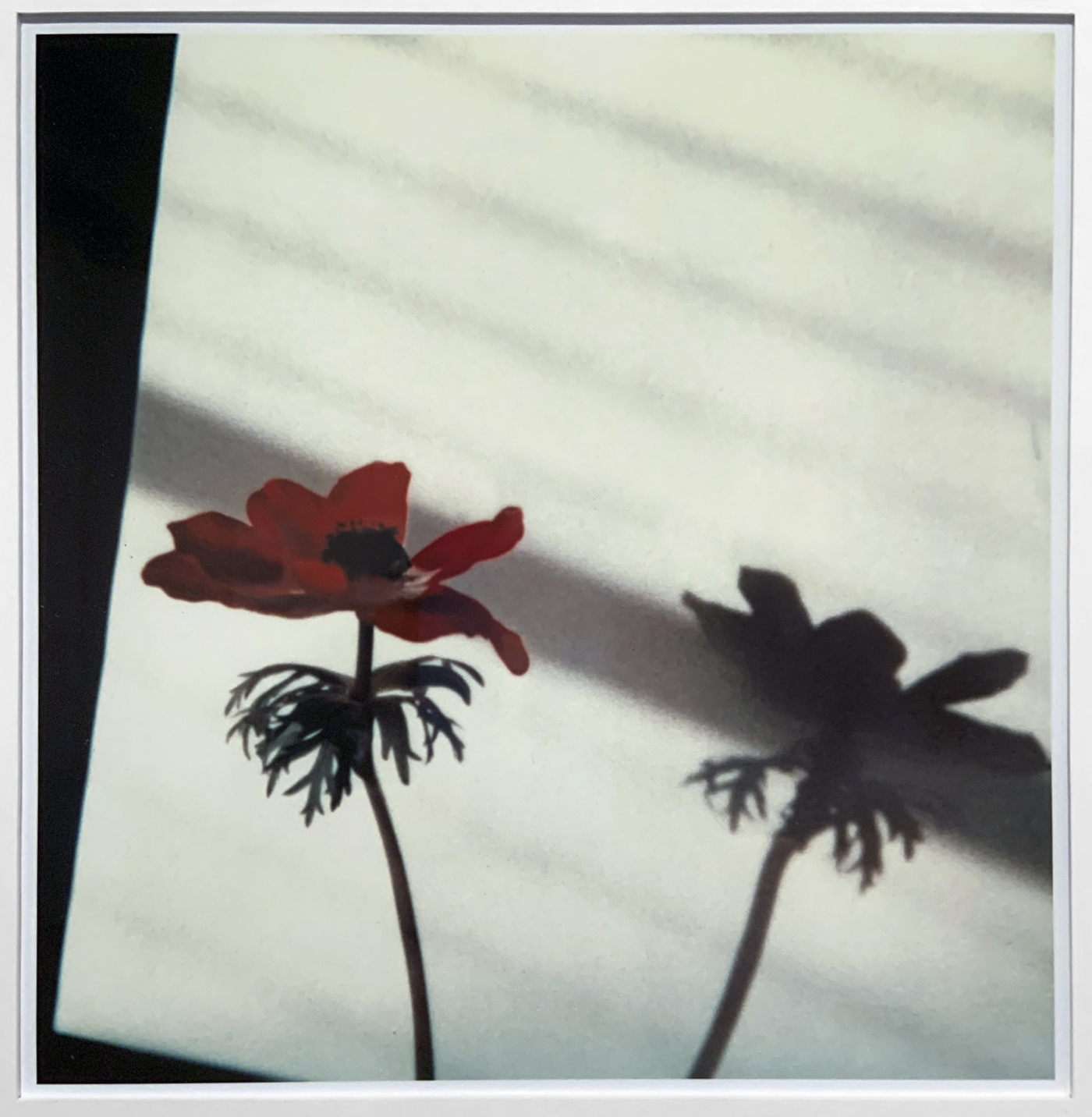
Max Dupain (Australian, 1911-1992) Embassy of Australia, Paris, France 1978 Silver gelatin print
A good friend of mine, Joyce Evans (who should know what she is talking about) observed to me that you cannot look at Dupain’s photographs of Paris without first looking at his commissioned photographs of the then new Embassy of Australia in Paris.
Unfortunately, I could only find one photograph online to show to you, Embassy of Australia, Paris, France (1978, above), but you get the idea.
Dupain’s The Paris ‘private’ series were taken during a couple of days off that he had from the commissioned job. Basically they are tourist photographs, a record of things Dupain wanted to see in Paris on one of his few overseas trips. Most of them are disappointing images, serviceable but disappointing.
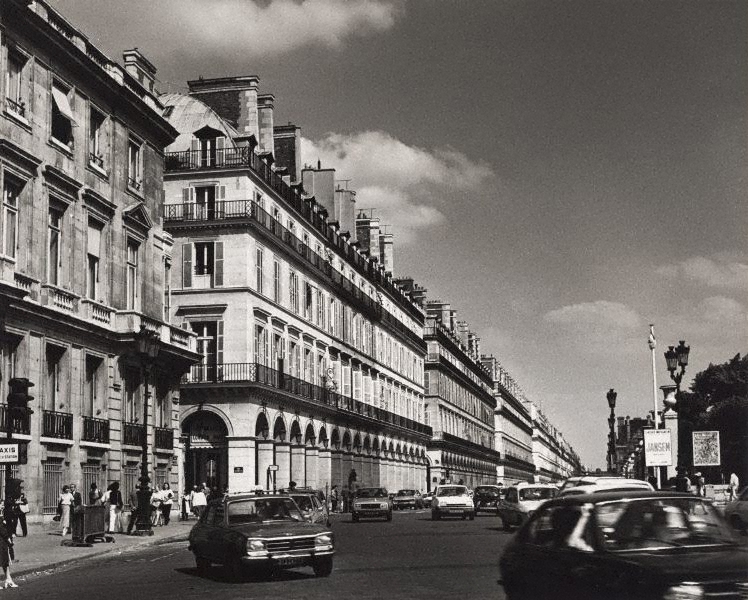
Having studied Eugène Atget I expected more from Dupain. In these photographs he tends to shoot obliquely into the object of his attention, directing the lead in and vanishing point(s) within the image. For example, in Untitled (the balustrade of Pont Alexandre III) and Untitled (Pont Alexandre III with sculptural balustrade) (both 1978, below), Dupain allows the bridge parapet to lead the eye into the image, while the vanishing point is positioned at far right. Neither are very successful as formal compositions.
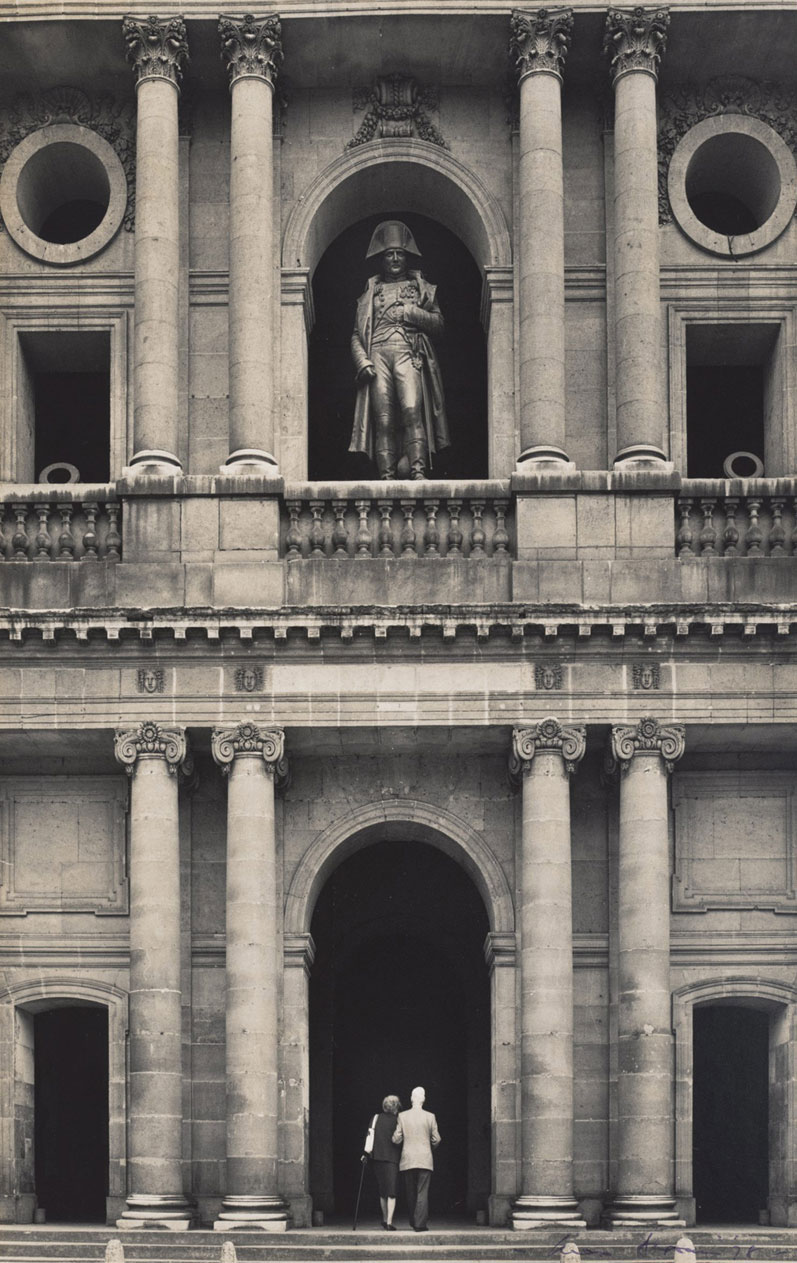
The same can be said of Untitled (statue of Maréchal Joffre, Place Joffre, Champ-de-Mars) (1978, below) with the vanishing point this time at the left of the image. More successful is Dupains’s Untitled (staircase to the park, looking toward Bassin des Serruriers, Domaine de Chantilly) (1978, below) with its foreshortened out of focus entrance, geometric planes and multiple exit points – but then he goes and spoils it with the simplistic Untitled (staircase and statue of Anne de Montmorency 1886 by Paul Dubois, Domaine de Chantilly) (1978, below) taken at the same location.
The best image from the series is undoubtedly Untitled (the statue of Christ at the portal of La Sainte-Chapelle) (1978, below) with its restrained and refined aesthetic. A beautiful image and a wondrous space. The photograph of the people at the Eiffel Tower is also a cracker.
As I said at the beginning, these are tourist art photographs of Paris, but they could have been so much more.
Dr Marcus Bunyan
Many thankx to The Art Gallery of New South Wales for allowing me to publish the photographs in the posting. Please click on the photographs for a larger version of the image.
Max Dupain (Australian, 1911-1992) is one of the leading figures of 20th-century Australian photography. The group of 21 photographs in his Paris ‘private’ series was taken when he travelled to Paris in 1978 with architect Harry Seidler to photograph the Australian Embassy, designed by Seidler. The series consists of transcendent photographs of Paris. Dupain had studied the work of Eugène Atget, and there is a similar enigmatic atmosphere to be found in Dupain’s examination of the city. Primarily depicting 18th- to 19th-century landmarks such as the ornate Alexandre III bridge, the Grand Palais and Chantilly, this compilation offers a view of the city and its environs shaped by layers of history, mythology and art.
Given to the Gallery by Penelope Seidler in memory of her husband and the photographer, this portfolio is shown alongside other photographs of made and natural structures by Dupain from the 1930s to the 1980s.
“I like to involve myself in, maybe, a small area geographically and work it out, as simple as that” said Max Dupain in a 1991 interview.1 During his lifetime the photographer visited only three countries outside of Australia. His 1978 trip to Paris was made together with architect Harry Seidler, whose newly built Australian embassy building Dupain was commissioned to document. The long professional association between the architect and the photographer stretched back to the early 1950s, soon after Seidler’s arrival in Australia. Dupain, through his expressive architectural photographs, was closely involved in popularising the modernist aesthetic espoused by Seidler’s starkly functional buildings.
Conversely, the set of 21 photographs of Paris which Dupain compiled and presented to Seidler as a personal gift, does not contain any images of modern architecture. Primarily depicting 18-19th century landmarks such as the ornate Alexandre III bridge, the Grand Palais and Versailles this compilation offers a view of the city and its environs shaped by layers of history, mythology and art. Dupain was nonetheless well read in modern French culture and aware of photographers such as Eugène Atget and Henri Cartier-Bresson.
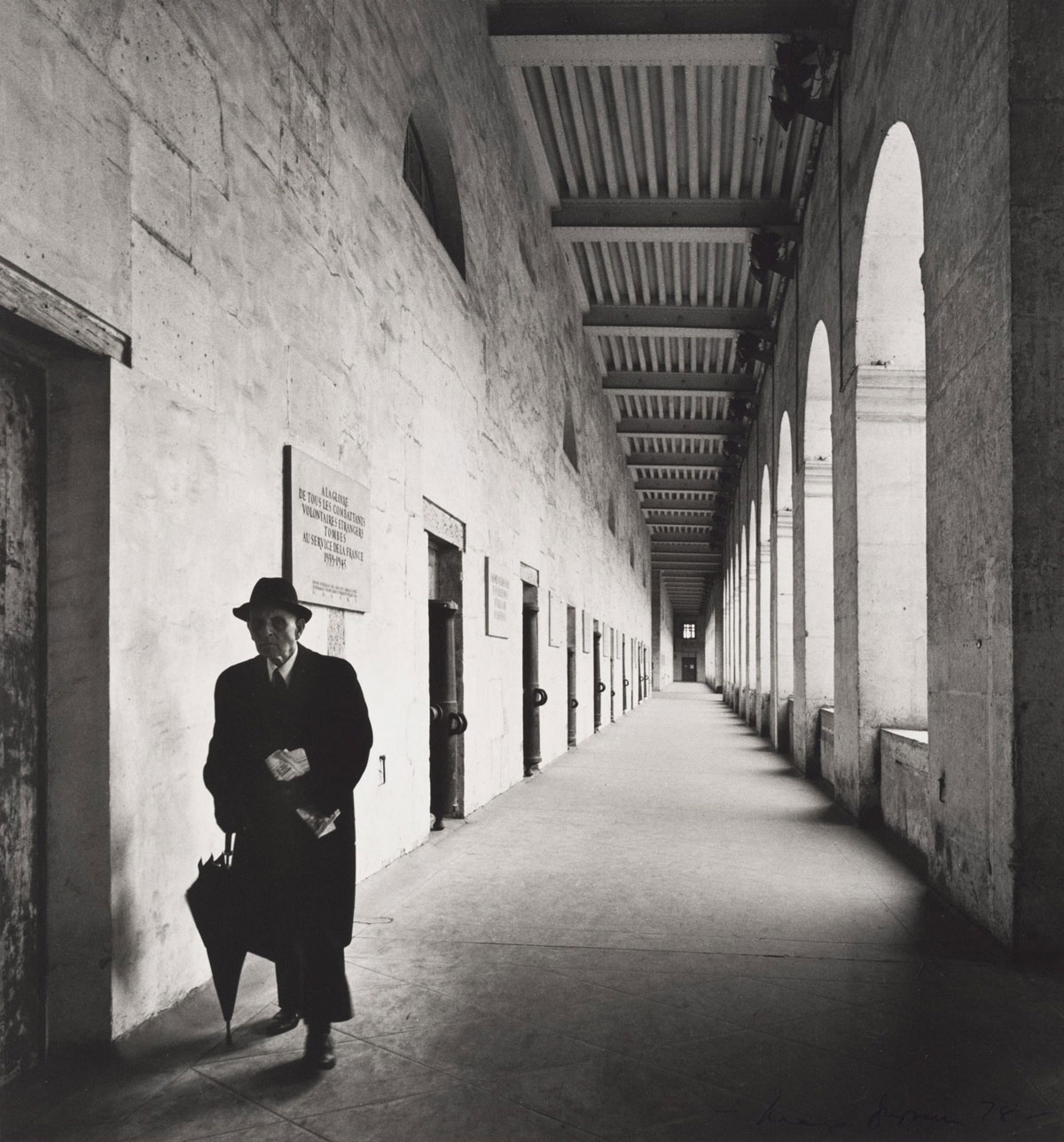
The Parisian images vary from pure architectural studies to compositions with an almost literary scope. They demonstrate Dupain’s signature trait of combining the formal and social aspects of photography. In some of the works, Dupain gives classical architecture the same reductive treatment he brought to modern buildings. Stripped of embellishments, these photographs bring to the fore the essence of order, logic and harmony which lies at the core of classicism. The presence of human figures in photographs such as that of Napoleon’s statue on the balcony of Les Invalides adds a dramatic element to the compositions. Dupain wanted “to extract every ounce of content from any exciting form and I want to give life to the inanimate.”2 Time and the built environment converge in this personal ode to Paris, manifesting the incessant flow of life and the connectedness of past with the present.
1/ Max Dupain interviewed by Helen Ennis in Max Dupain: Photographs, National Gallery of Australia, Canberra, 1991, p. 13 2/ Max Dupain, “Max Dupain – modernist”, exhibition catalogue, State library of NSW, Sydney, 2007, p. 9
Text from the Art Gallery of New South Wales website
An exhibition of 36 photographs – 21 of which were taken in Paris in 1978 by one of Australia’s most well-known photographers, Max Dupain (1911-92) – will go on display at the Art Gallery of New South Wales. Donated to the Gallery by Penelope Seidler in 2012, this will be the first time the Paris ‘private’ series portfolio will have ever been seen publicly. Max Dupain had gifted these works to renowned architect Harry Seidler and in a handwritten note he wrote:
I owe you so much. For nearly twenty five years I have dwelt on your philosophy of architecture. We register alike about clear thinking, logic of application, poetry of form etc etc. [sic] I have tremendous regard for architecture as a stabilising force in this turbulent society and I think my best work will ultimately show the significance of this by virtue of the photographed form thrown up by architecture and by engineering.
Dupain made the trip to Paris, his second outside Australia and his first to Europe, to accompany his long-time colleague and friend, Harry Seidler (1923-2006). Dupain’s task was to photograph the Australian Embassy there, which Seidler had designed (completed 1977). The pair were not only friends but shared a deep appreciation for form and light, for the modernist curves in space that can be created both architecturally and photographically.
Dupain explored many monuments around Paris. These impressions of a place he was seeing for the first time reveal his exploration of a new city and its sites, varying from formal compositions of photographic space, such as the image of Napoleon’s statue on the balcony of Les Invalides, to more personal or candid moments, as with the group of people captured beneath the Eiffel Tower. Many photographs depict 18th- and 19th-century landmarks such as the ornate Alexandre III bridge, the Grand Palais and Chantilly; the compilation offers a view of Paris and its environs shaped by layers of history, mythology and art.
Despite the diversity of subject matter across the 21 images, Dupain always maintained his signature poise and rigour, appreciation of the way light interacts with the objects it touches, and attention to the composition of photographic space through a play of scale.
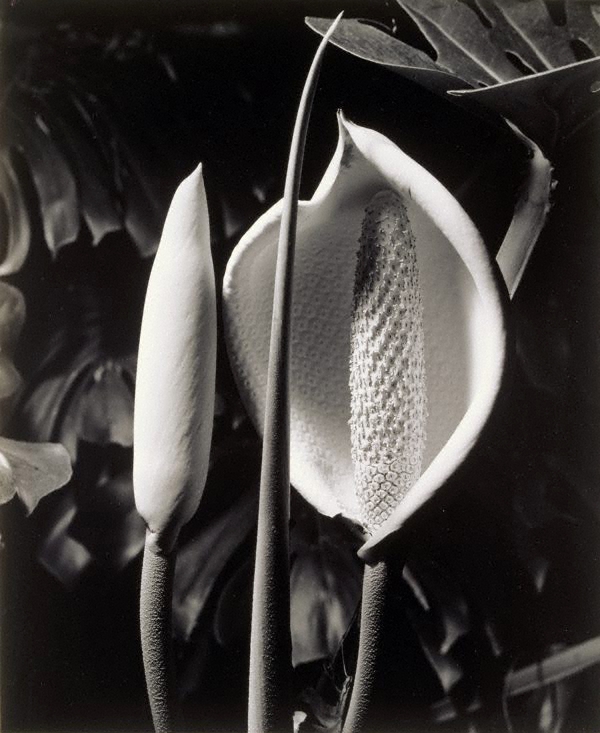
In addition to the Paris ‘private’ series, 15 of Dupain’s photographs of architectural and botanical forms will be on display. Almost all are taken in and around Sydney; some of the flowers are from Dupain’s Castlecrag garden and iconic Sydney buildings such as the Opera House are included. These images cover 50 years of the photographer’s practice from 1933 to 1983, and indicate his enduring appreciation for the order, logic and harmony which lie at the core of classicism, the movement that produced many of the iconic Parisian monuments he saw, and for the modernism which Seidler endorsed through his work.
Press release from the AGNSW website
Max Dupain (Born Australia 1911, died 1992) Pyrmont silos 1933, printed later Gelatin silver photograph Purchased 1976
Pyrmont silos is one of a number of photographs that Dupain took of these constructions in the 1930s. In all cases Dupain examined the silos from a modernist perspective, emphasising their monumentality from low viewpoints under a bright cloudless sky. Additionally, his use of strong shadows to emphasise the forms of the silos and the lack of human figures celebrates the built structure as well as providing no sense of scale. Another photograph by Dupain in the AGNSW collection was taken through a car windscreen so that the machinery of transport merges explicitly with industrialisation into a complex hard-edge image of views and mirror reflections. There were no skyscrapers in Sydney until the late 1930s so the silos, Walter Burley Griffin’s incinerators and the Sydney Harbour Bridge were the major points of reference for those interested in depicting modern expressions of engineering and industrial power.
Dupain was the first Australian photographer to embrace modernism. One of his photographs of the silos was roundly criticised when shown to the New South Wales Photographic Society but Dupain forged on regardless with his reading, thinking and experimentation. Some Australian painting and writing had embraced modernist principles in the 1920s, but as late as 1938 Dupain was writing to the Sydney Morning Herald:
“Great art has always been contemporary in spirit. Today we feel the surge of aesthetic exploration along abstract lines, the social economic order impinging itself on art, the repudiation of the ‘truth to nature criterion’ … We sadly need the creative courage of Man Ray, the original thought of Moholy-Nagy, and the dynamic realism of Edouard [sic] Steichen.”1





















































 Art Blart _ art and cultural memory archive
You must be logged in to post a comment.