Exhibition: ‘Picturing New York: Photographs from The Museum of Modern Art’ at the Irish Museum of Modern Art, Dublin

Exhibition dates: 25th November, 2009 – 7th February, 2010


Many thankx to Monica Cullinane and the Irish Museum of Modern Art for allowing me the reproduce photographs from the exhibition. Please click on the photographs for a larger version of the image.

Marcus
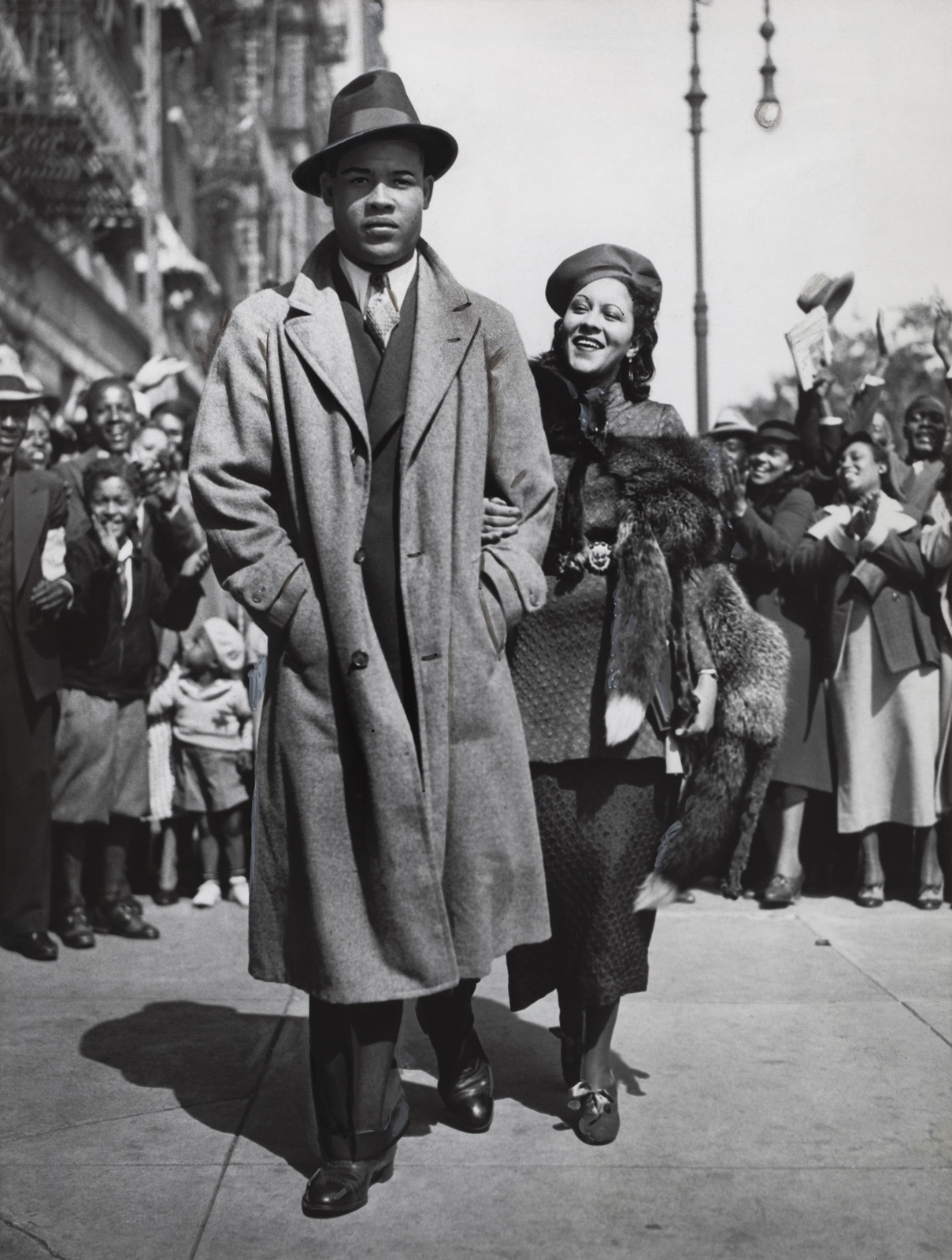
 

Times Wide World Photos (American, active 1919-1941) 'Mr. and Mrs. Joe Louis Out for a Stroll' September 25, 1935 from the exhibition 'Picturing New York: Photographs from The Museum of Modern Art' at the Irish Museum of Modern Art, Dublin, November 2009 - February 2010


Times Wide World Photos (American, active 1919-1941)
Mr. and Mrs. Joe Louis Out for a Stroll
September 25, 1935
Gelatin silver print
8 3/4 x 6 5/8″ (22.2 x 16.8cm)
The Museum of Modern Art, New York. The New York Times Collection


Cindy Sherman (American, b. 1954) 'Untitled Film Still #21' 1978 from the exhibition 'Picturing New York: Photographs from The Museum of Modern Art' at the Irish Museum of Modern Art, Dublin, November 2009 - February 2010


Cindy Sherman (American, b. 1954)
Untitled Film Still #21
1978
Gelatin silver print
7 1/2 x 9 1/2″ (19.1 x 24.1cm)
The Museum of Modern Art, New York
Horace W. Goldsmith Fund through Robert B. Menschel


Each of Sherman’s sixty-nine Untitled Film Stills (1977-1980), presents a female heroine from a movie we feel we must have seen. Here, she is the pert young career girl in a trim new suit on her first day in the big city. Among the others are the luscious librarian (#13), the chic starlet at her seaside hideaway (#7), the ingenue setting out on life’s journey (#48), and the tough but vulnerable film noir idol (#54). To make the pictures, Sherman herself played all of the roles or, more precisely, played all of the actresses playing all of the roles. In other words, the series is a fiction about a fiction, a deft encapsulation of the image of femininity that, through the movies, took hold of the collective imagination in postwar America – the period of Sherman’s youth, and the crucible of our contemporary culture.

In fact, only a handful of the Untitled Film Stills are modelled directly on particular roles in actual movies, let alone on individual stills of the sort that the studios distribute to publicise their films. All the others are inventive allusions to generic types, and so our sure sense of recognition is all the more telling. It tells us that, knowingly or not, we have absorbed the movie culture that Sherman invites us to examine as a powerful force in our lives.

Publication excerpt from The Museum of Modern Art, MoMA Highlights, New York: The Museum of Modern Art, revised 2004, originally published 1999, p. 295.
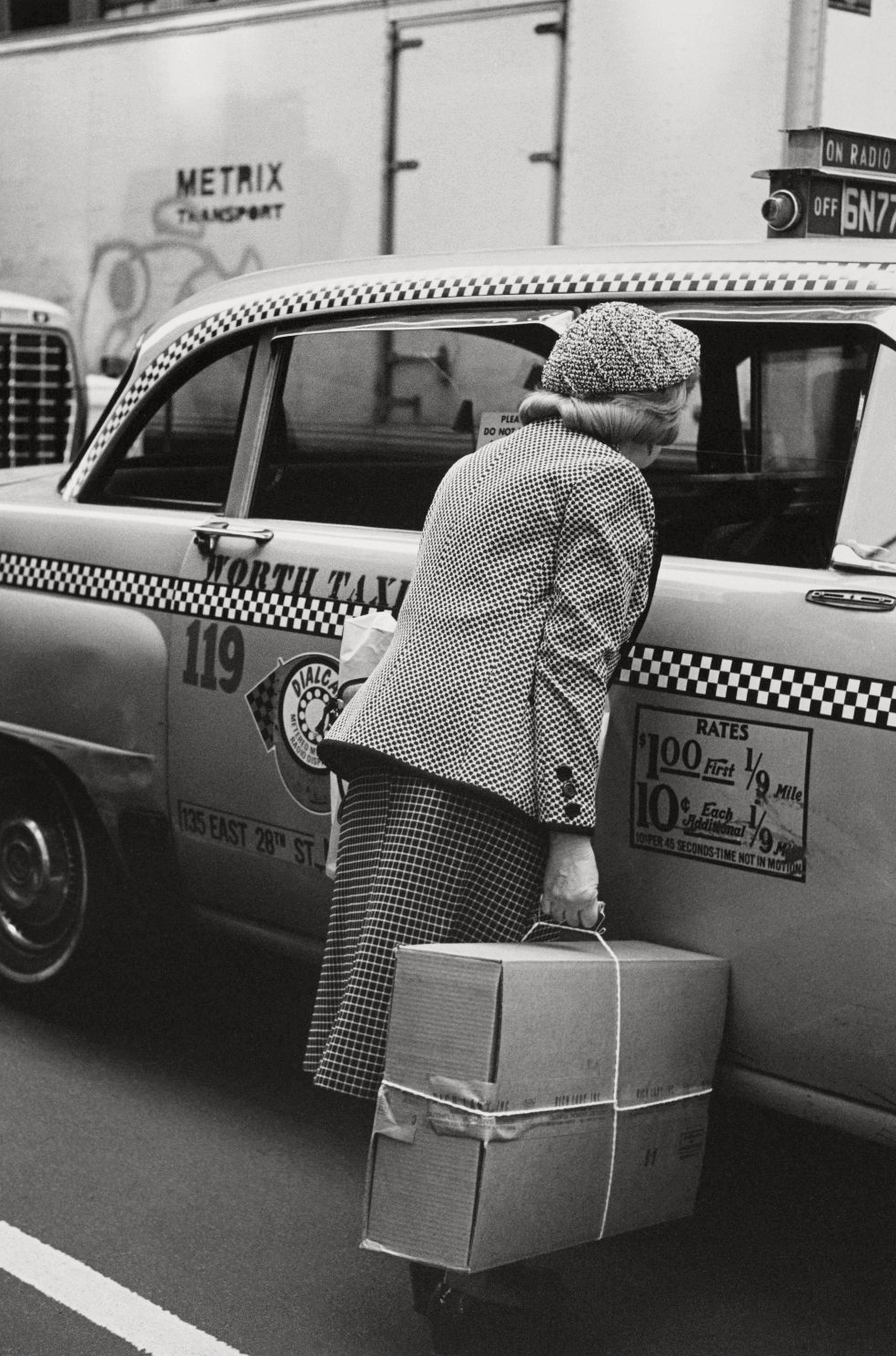
 

Helen Levitt (American, 1913-2009) 'New York' 1982 from the exhibition 'Picturing New York: Photographs from The Museum of Modern Art' at the Irish Museum of Modern Art, Dublin, November 2009 - February 2010


Helen Levitt (American, 1913-2009)
New York
1982
Gelatin silver print
9 9/16 x 6 7/16″ (24.3 x 16.4cm)
The Museum of Modern Art, New York
Gift of Marvin Hoshino in memory of Ben Maddow
© 2009 The Estate of Helen Levitt, courtesy Fraenkel Gallery, San Francisco
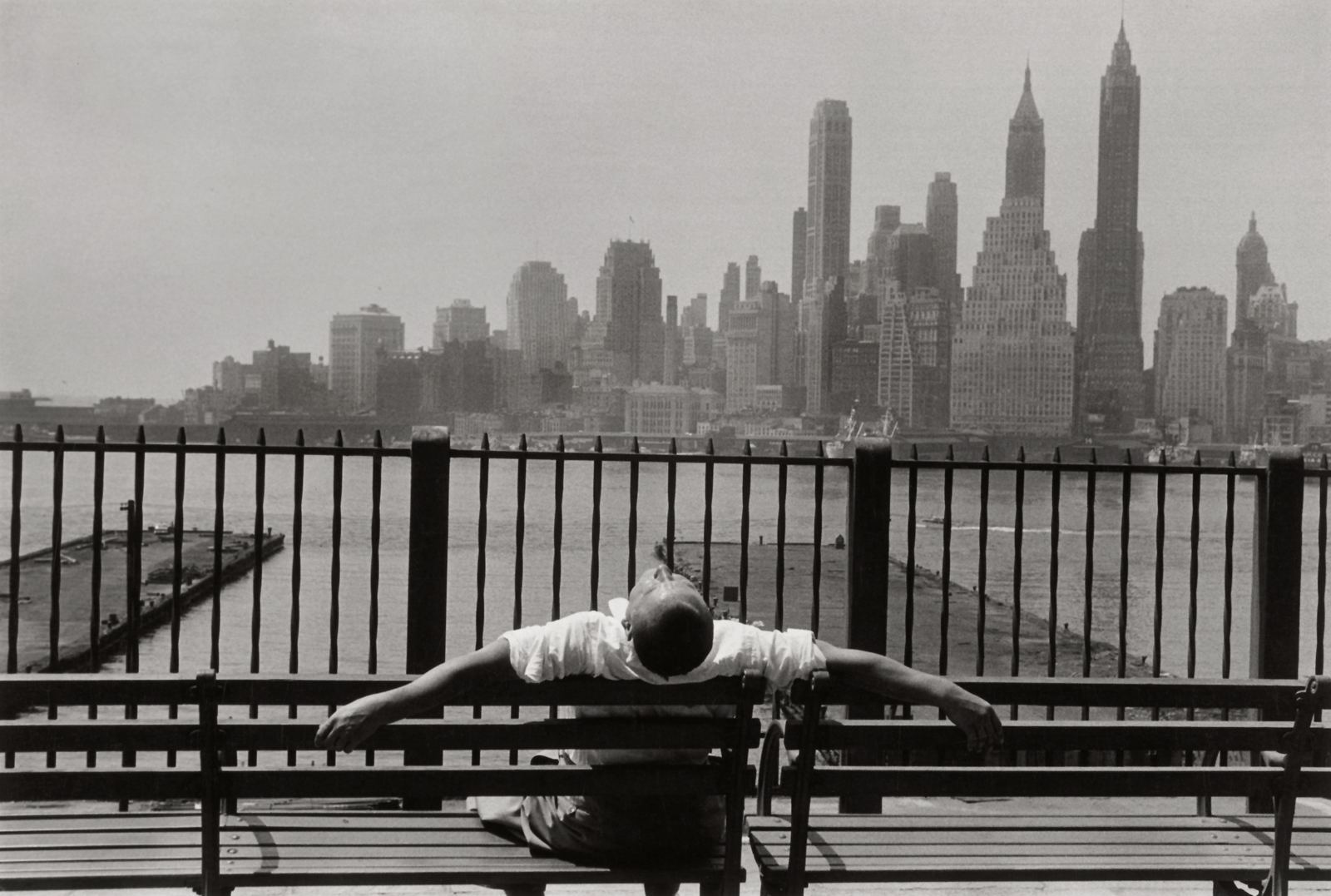
 

Louis Stettner (American, born 1922) 'Manhattan from the Promenade, Brooklyn, New York' 1954


Louis Stettner (American, 1922-2016)
Manhattan from the Promenade, Brooklyn, New York
1954
Gelatin silver print
12 1/4 x 18 1/4″ (31.1 x 46.4cm)
The Museum of Modern Art, New York. Gift of the photographer in memory of his brother, David Stettner
© 2009 Louis Stettner, courtesy Bonni Benrubi Gallery, New York


Diane Arbus (American, 1923-1971) 'Woman with Veil on Fifth Avenue, N.Y.C' 1968


Diane Arbus (American, 1923-1971)
Woman with Veil on Fifth Avenue, N.Y.C.
1968
Gelatin silver print
The Museum of Modern Art, New York


An exhibition of 145 masterworks from the photographic collection of The Museum of Modern Art (MoMA) in New York , celebrating the architecture and life of that unique city from the 1880s to the present day, opens to the public at the Irish Museum of Modern Art on Wednesday, November 25, 2009. “Picturing New York” draws on one of the most important collections of modern and contemporary photography in the world to celebrate the long tradition of photographing New York, a tradition that continues to frame and influence our perception of the city to this day. Presenting the work of some 40 photographers including such influential figures as Berenice Abbott, Diane Arbus, Garry Winogrand, Lisette Model, Alfred Stieglitz and Cindy Sherman, the exhibition features both the city and its inhabitants, from its vast, overwhelming architecture to the extraordinary diversity of its people.

The exhibition reflects photographers’ ongoing fascination with New York, a city whose vitality, energy, dynamism and sheer beauty have also inspired innumerable artists, writers, filmmakers and composers. New York’s unique architecture is explored, from elegant skyscrapers to small shop fronts; likewise the life of its citizens, from anonymous pedestrians to celebrities and politicians. The city’s characteristic optimism is caught time and again in these images, even in those taken in difficult times. Together, they present a fascinating history of the city over more than a century, from Jacob Riis’s 1888 view of bandits on the Lower East Side to Michael Wesely’s images taken during the recent expansion at MoMA.

The photographs reveal New York as a city of contrasts and extremes through images of towering buildings and tenements, party-goers and street-dwellers, hurried groups and solitary individuals. “Picturing New York” suggests the symbiosis between the city’s progression from past to present and the evolution of photography as a medium and as an art form. Additionally, these photographs of New York contribute significantly to the notion that the photograph, as a work of art, is capable of constructing a sense of place and a sense of self.

“I am thrilled that ‘Picturing New York’ will be presented in Dublin – a city whose vitality, grit, and vibrant artistic community resonates with that of New York ,” said Sarah Meister, Curator in MoMA’s Department of Photography, who organised the exhibition. “In addition, the layout and scale of the galleries at IMMA will allow this story – of New York and photography becoming modern together throughout the twentieth century – to unfold as if chapter by chapter.”

Press release from the Irish Museum of Modern Art website [Online] Cited 26/01/2010. No longer available online
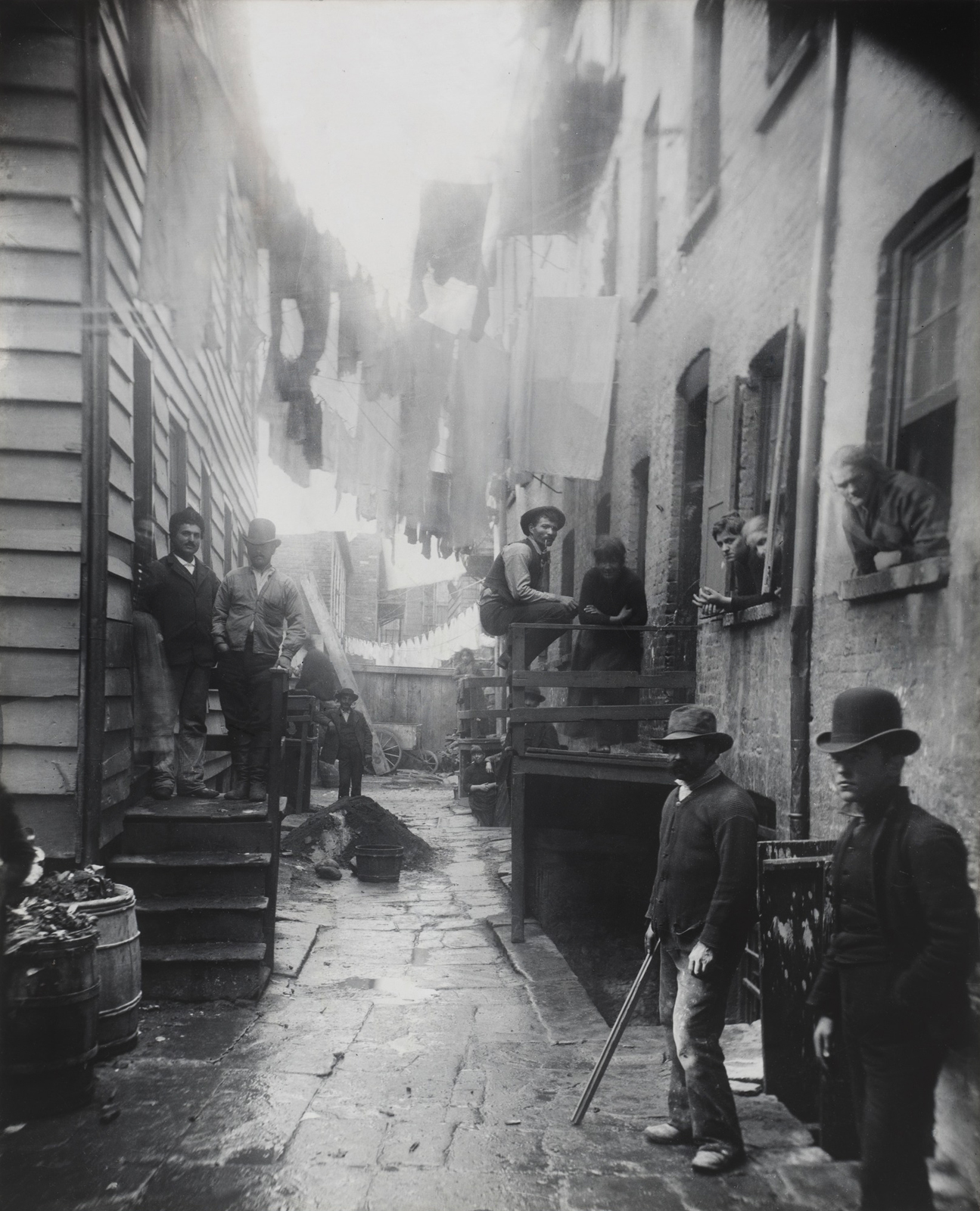
 

Jacob Riis (Danish-American, 1849-1914) 'Bandit's Roost at 59½ Mulberry Street' 1888


Jacob Riis (Danish-American, 1849-1914)
Bandit’s Roost at 59½ Mulberry Street
1888
Gelatin silver print, printed 1958
19 3/16 x 15 1/2″ (48.7 x 39.4cm)
The Museum of Modern Art, New York
Gift of the Museum of the City of New York


Late 19th-century New York City was a magnet for the world’s immigrants, and the vast majority of them found not streets paved with gold but nearly subhuman squalor. While polite society turned a blind eye, brave reporters like the Danish-born Jacob Riis documented this shame of the Gilded Age. Riis did this by venturing into the city’s most ominous neighbourhoods with his blinding magnesium flash powder lights, capturing the casual crime, grinding poverty and frightful overcrowding. Most famous of these was Riis’ image of a Lower East Side street gang, which conveys the danger that lurked around every bend. Such work became the basis of his revelatory book How the Other Half Lives, which forced Americans to confront what they had long ignored and galvanised reformers like the young New York politician Theodore Roosevelt, who wrote to the photographer, “I have read your book, and I have come to help.” Riis’ work was instrumental in bringing about New York State’s landmark Tenement House Act of 1901, which improved conditions for the poor.

Anonymous. “Bandit’s Roost, 59½ Mulberry Street,” on the Time 100 Photos website [Online] Cited 09/06/2019 no longer available online


Paul Strand (American, 1890-1976) 'Wall Street, New York' 1915


Paul Strand (American, 1890-1976)
Wall Street
1915
Gelatin silver print
The Museum of Modern Art, New York
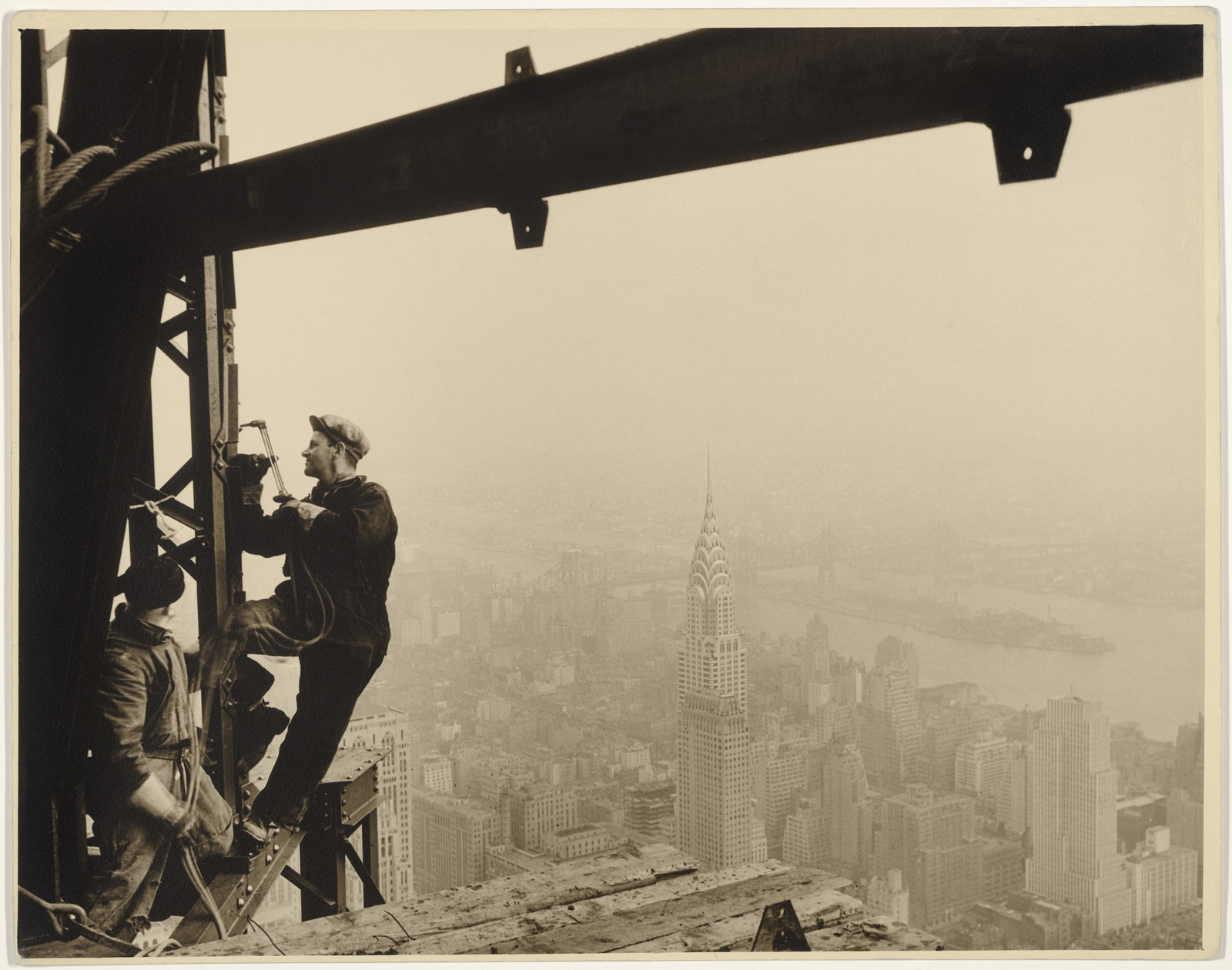
 

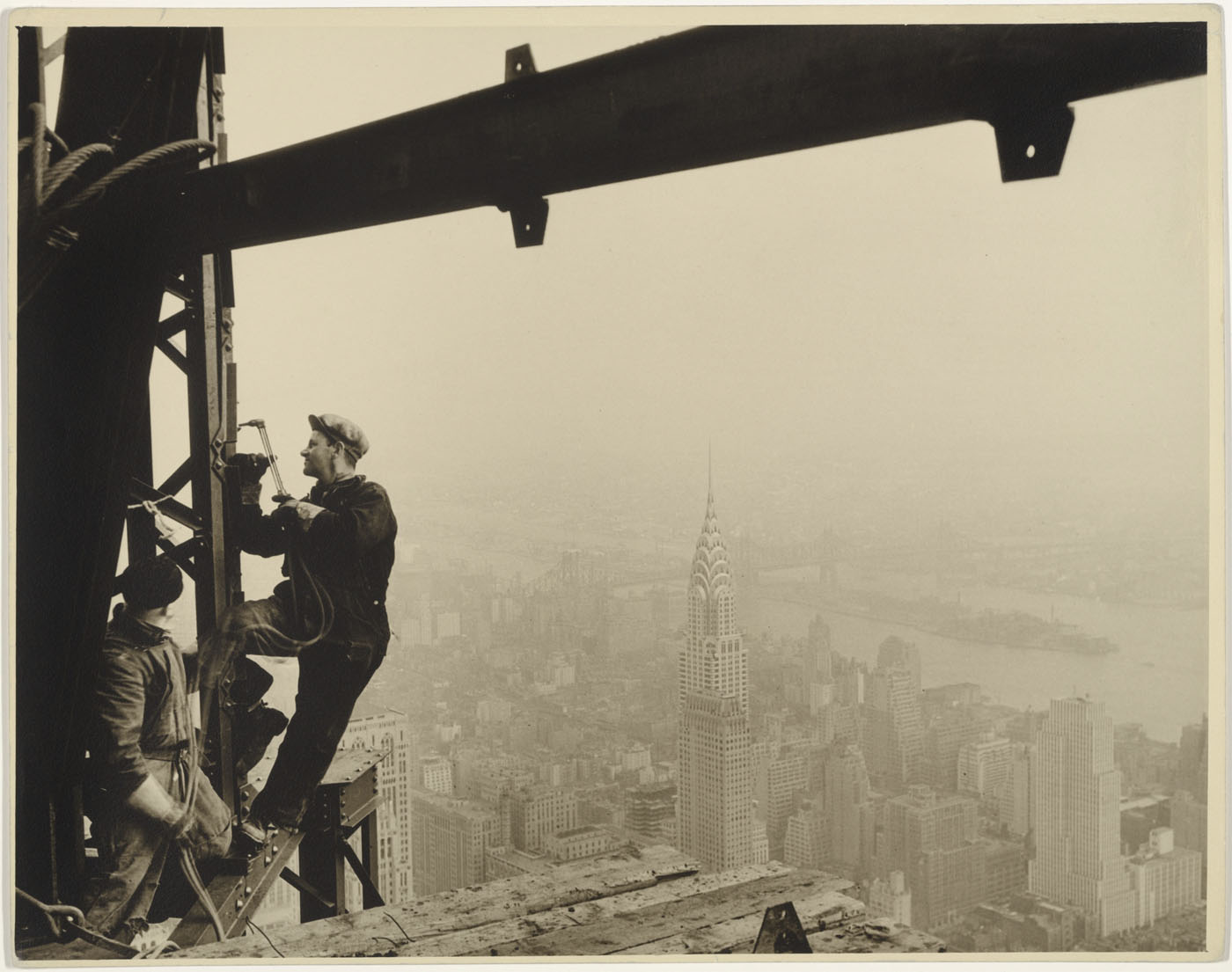
Lewis W. Hine (American, 1874-1940) 'Welders on the Empire State Building' c. 1930


Lewis W. Hine (American, 1874-1940)
Welders on the Empire State Building
c. 1930
Gelatin silver print
10 5/8 x 13 5/8″ (27 x 34.6cm)
The Museum of Modern Art, New York. Committee on Photography Fund
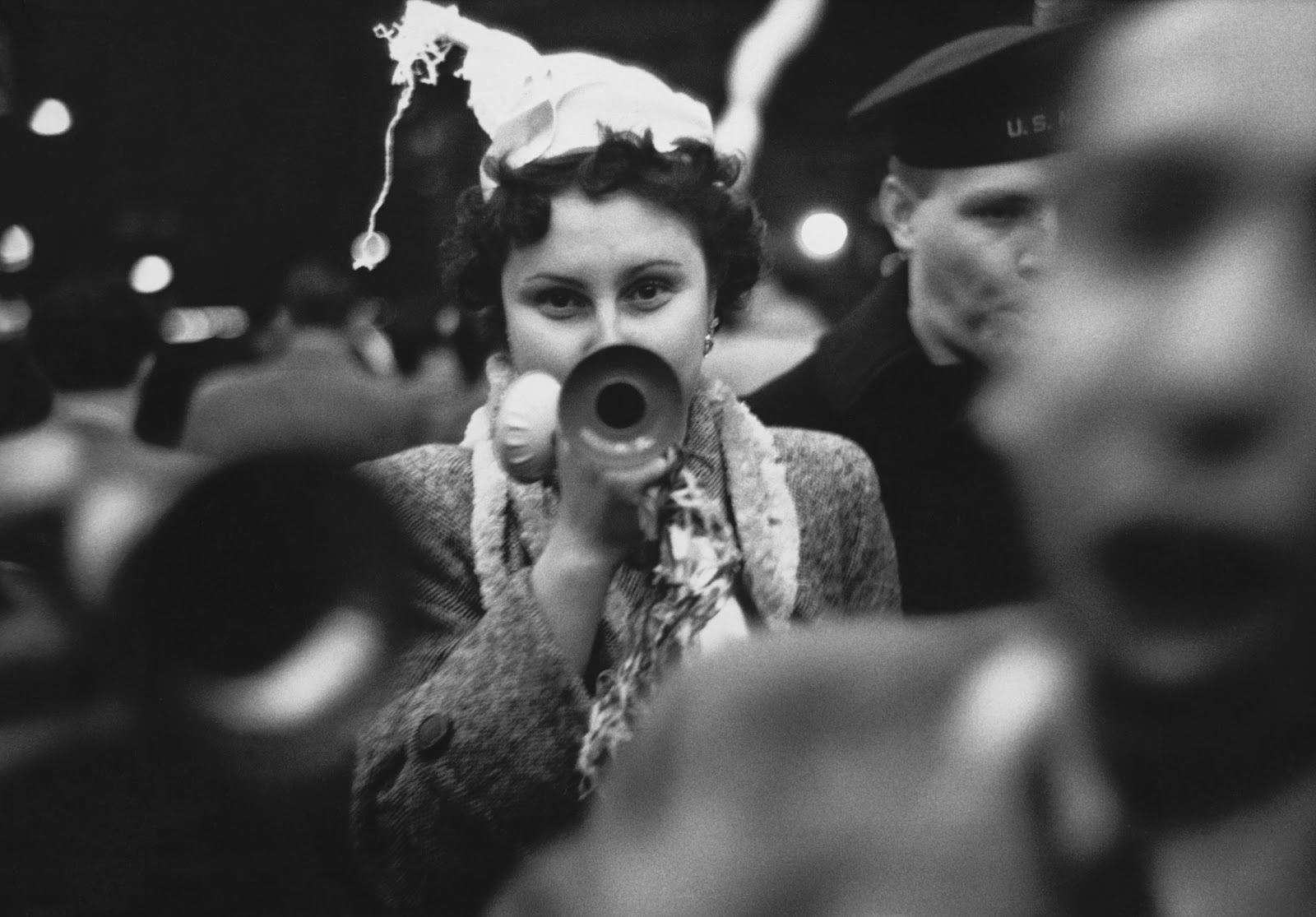
 

Dan Weiner (American, 1919-1959)
'New Year's Eve, Times Square' 1951


Dan Weiner (American, 1919-1959)
New Year’s Eve, Times Square
1951
Gelatin silver print
9 1/4 x 13 3/16″ (23.5 x 33.5cm)
The Museum of Modern Art, New York. Gift of Sandra Weiner
© 2009 Estate of Dan Weiner


Bruce Davidson (American, b. 1933) 'Untitled' from the 'Brooklyn Gang' series 1959


Bruce Davidson (American, b. 1933)
Untitled from the Brooklyn Band series
1959
Gelatin silver print
6 3/4 x 10″ (17.1 x 25.4cm)
The Museum of Modern Art, New York. Purchase
© 2019 Magnum Photos, Inc. and Bruce Davidson
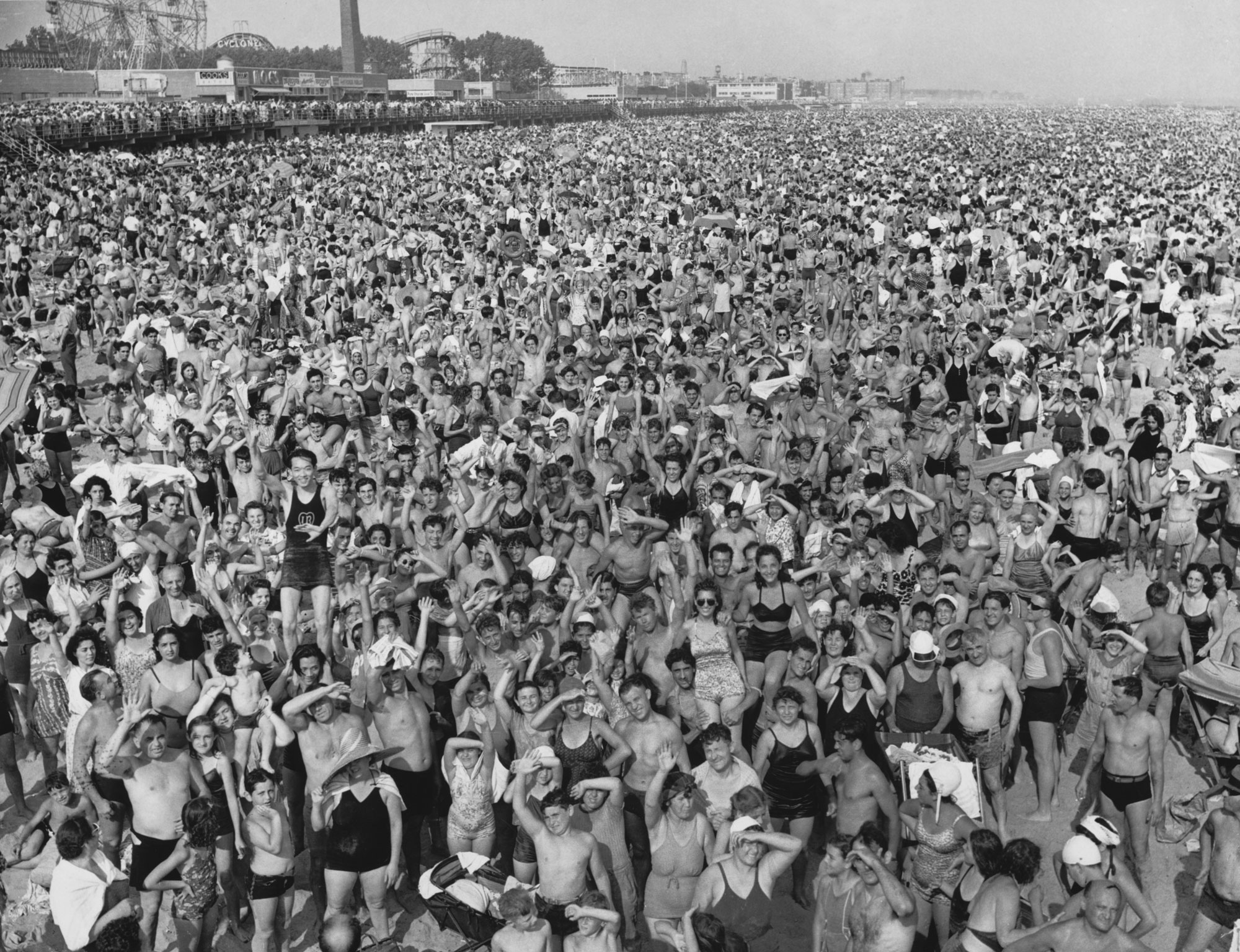
 

Weegee (Arthur Fellig) (American born Austria, 1899-1968) 'Coney Island' 1940


Weegee (Arthur Fellig) (American born Austria, 1899-1968)
Coney Island
c. 1939
Gelatin silver print
10 5/16 x 13 11/16″ (26.2 x 34.8cm)
The Museum of Modern Art, New York. Anonymous gift
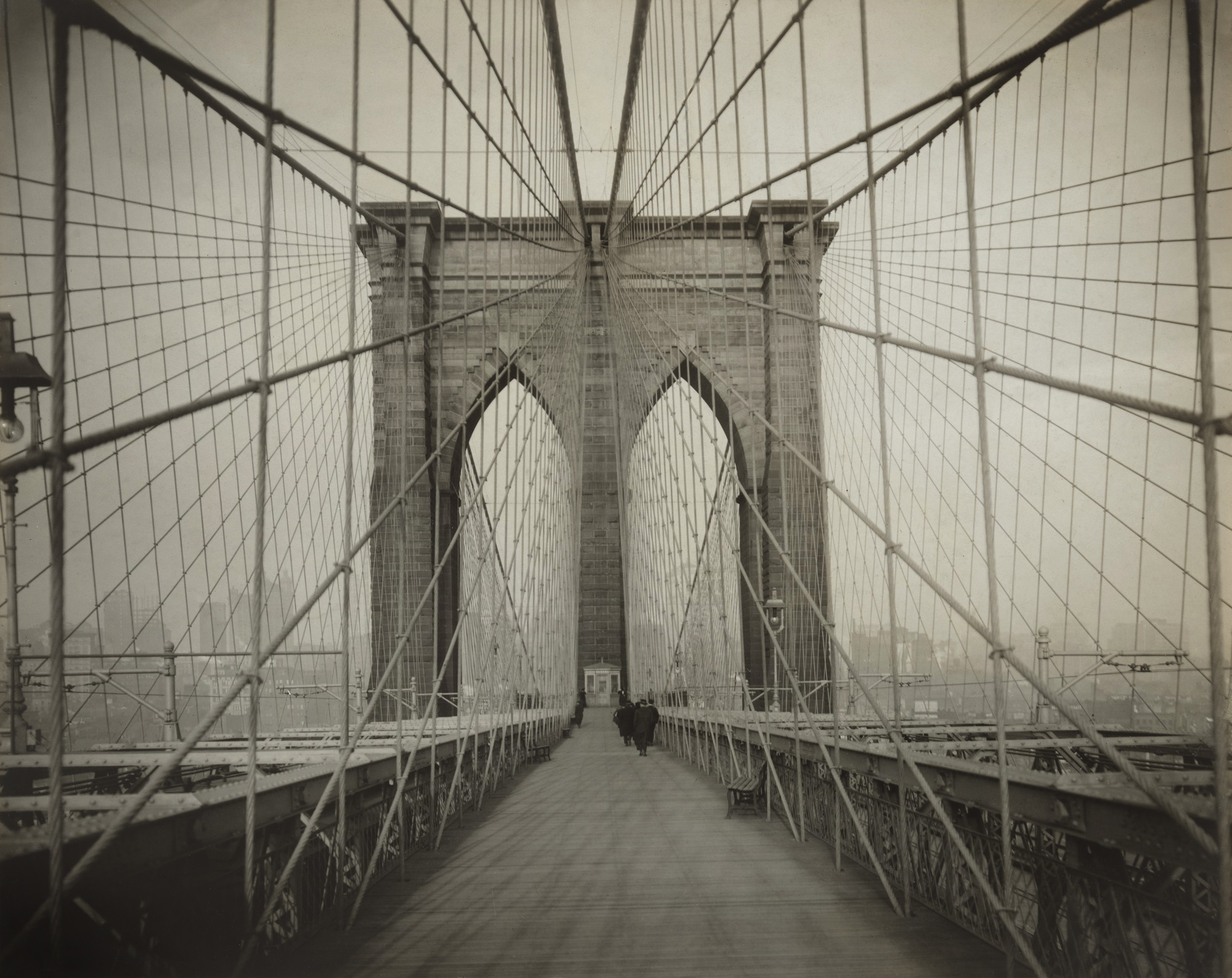
 

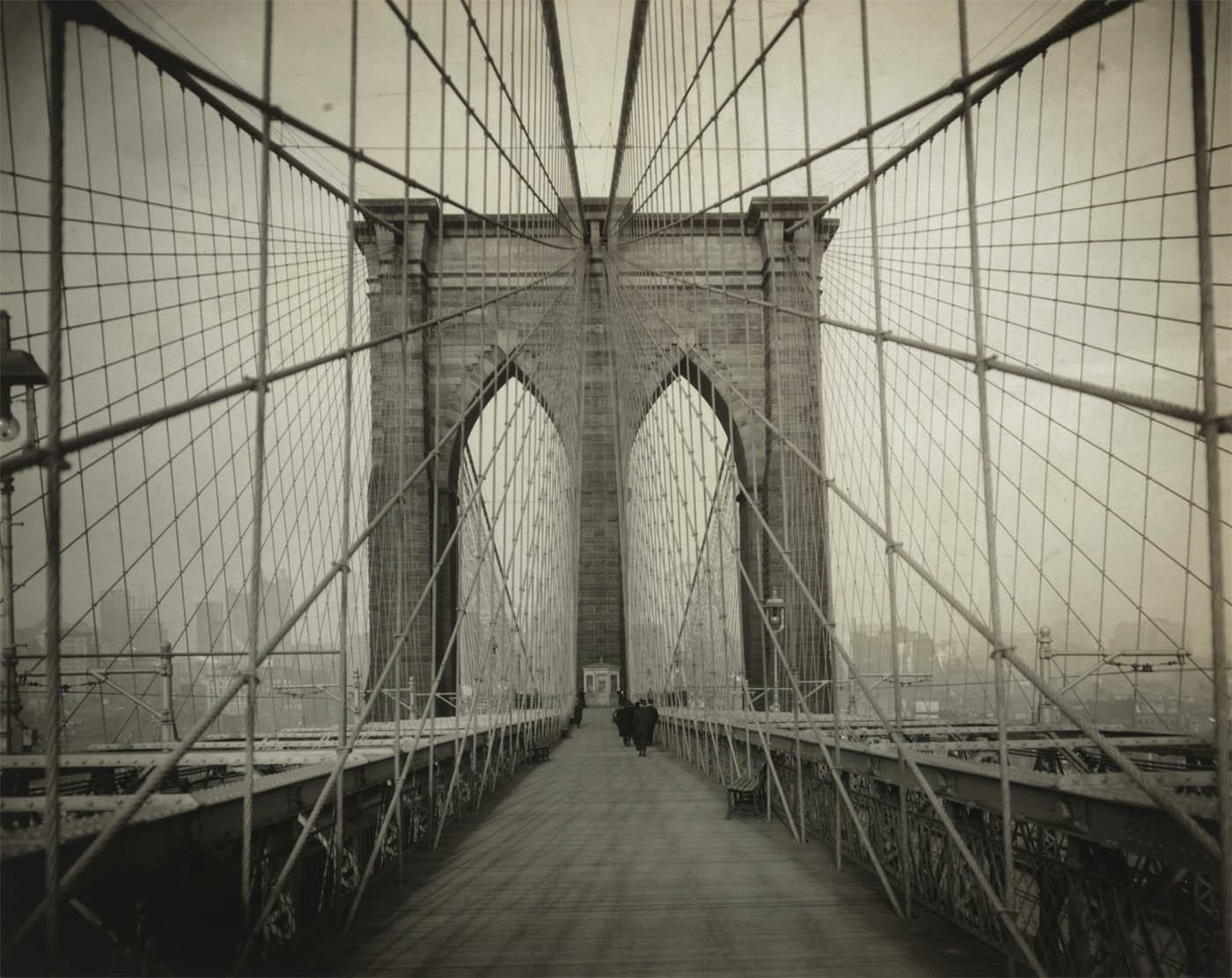
Unknown photographer. 'Brooklyn Bridge' c. 1914


Unknown photographer (American)
Brooklyn Bridge
c. 1914
Gelatin silver print
7 5/8 x 9 9/16″ (19.4 x 24.3cm)
The Museum of Modern Art, New York, The New York Times Collection
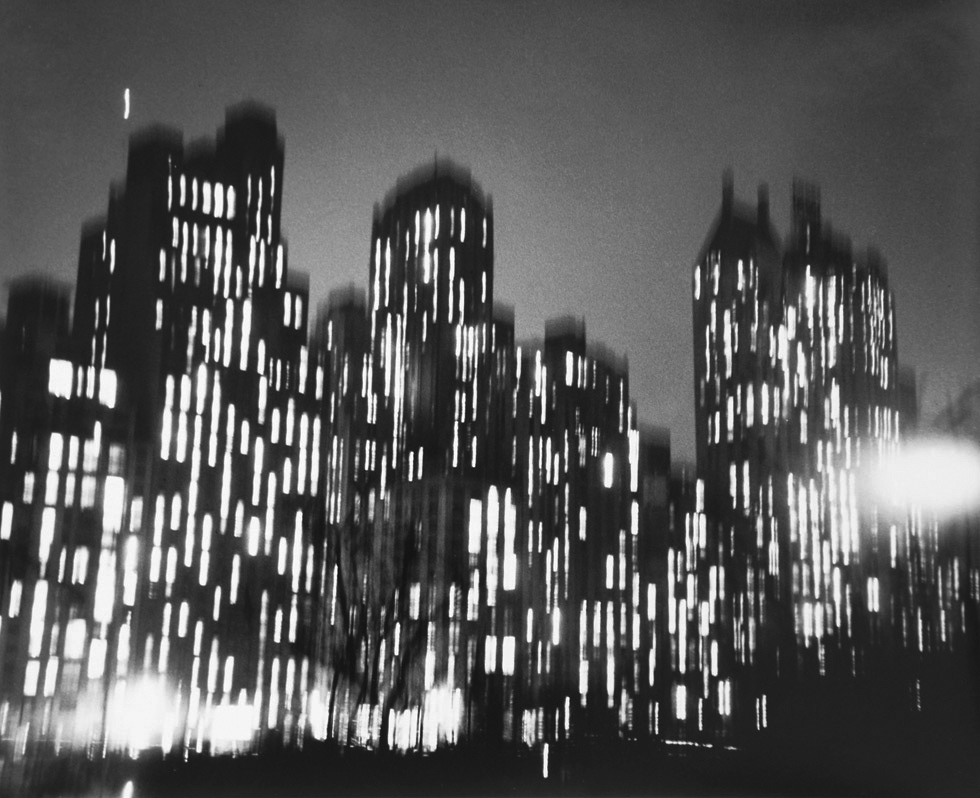
 

Ted Croner (American, 1922-2005) 'Central Park South' 1947-1948


Ted Croner (American, 1922-2005)
Central Park South
1947-1948
Gelatin silver print
The Museum of Modern Art, New York
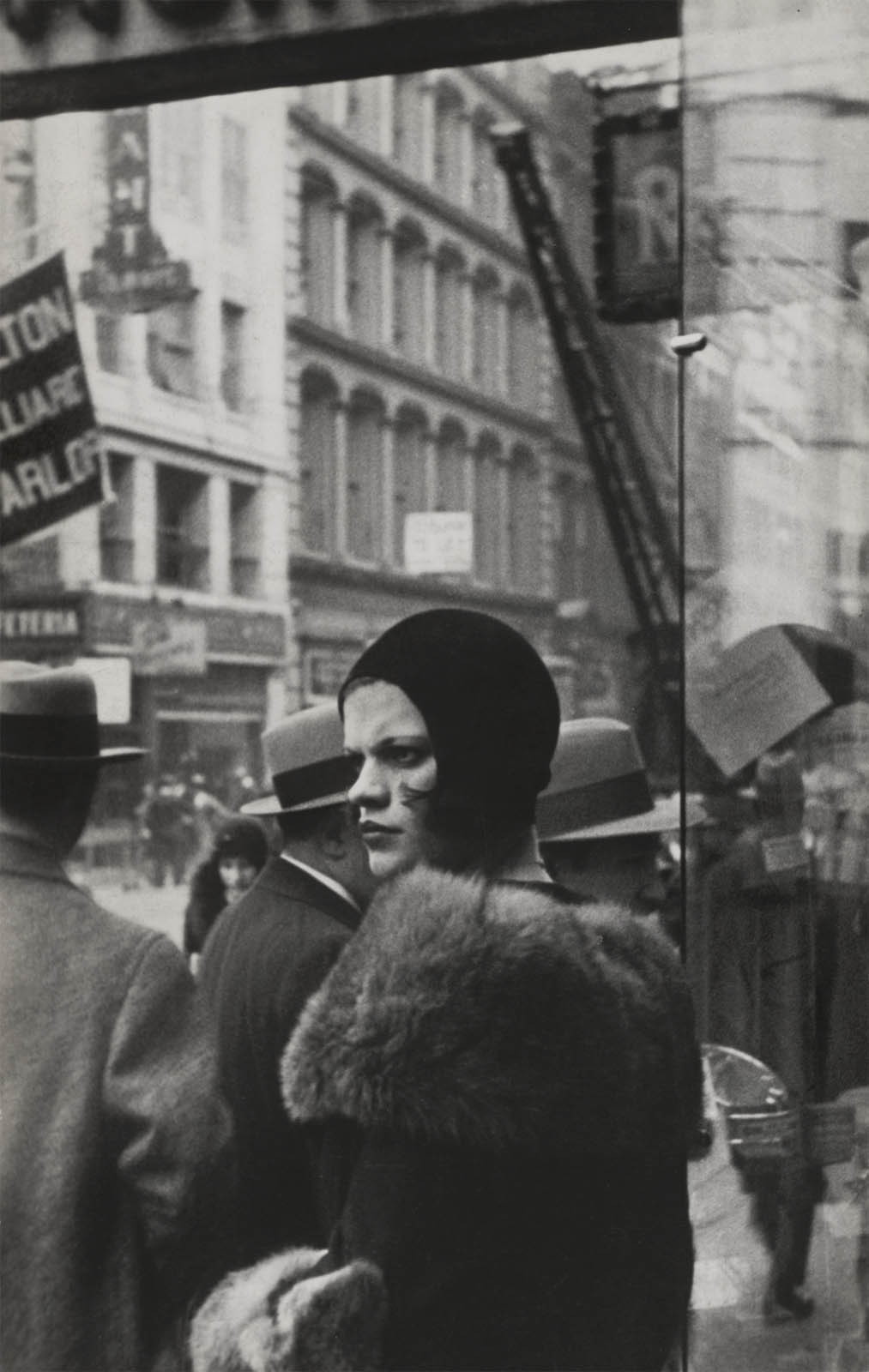
 

Walker Evans (American, 1903-1975)
'Girl in Fulton Street, New York' 1929
Screenshot


Walker Evans (American, 1903-1975)
Girl in Fulton Street, New York
1929
Gelatin silver print
7 5/16 × 4 5/8″ (18.6 × 11.7cm)
Museum of Modern Art
Gift of the artist


Bernice Abbott (American, 1898-1991) 'Night View, New York City' 1932


Bernice Abbott (American, 1898-1991)
Night View, New York City
1932
Gelatin silver print
The Museum of Modern Art, New York
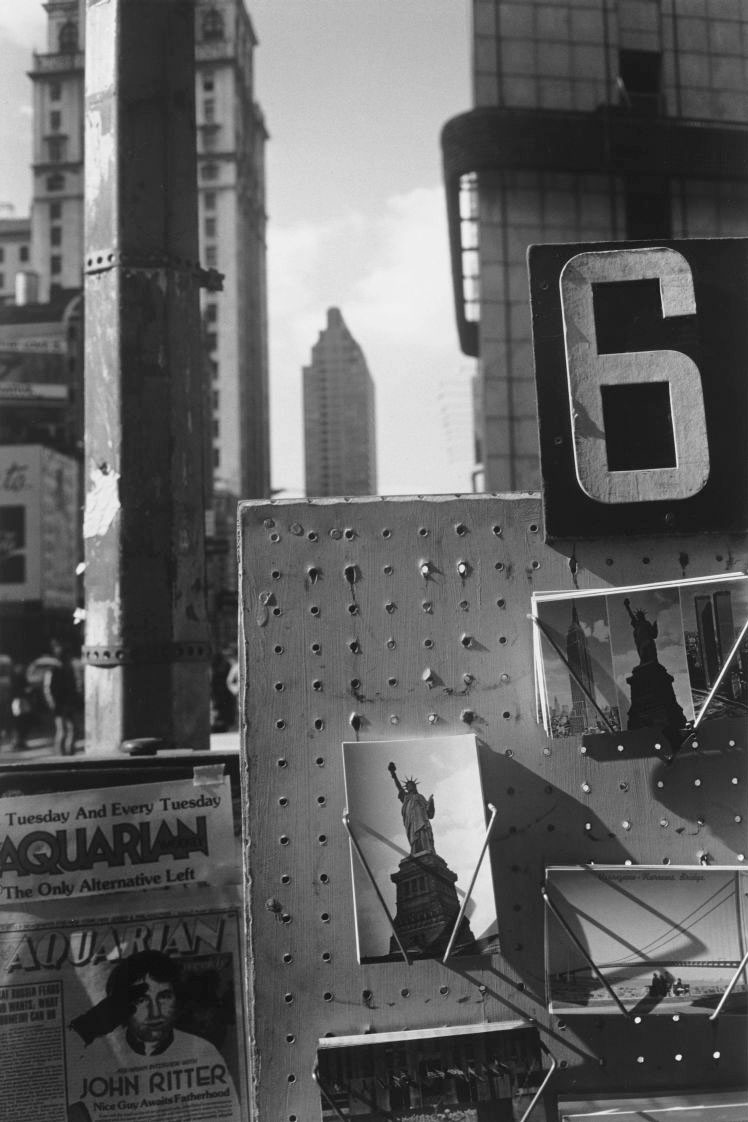
 

Lee Friedlander (American, b. 1934)
'New York City' 1980


Lee Friedlander (American, b. 1934)
New York City
1980
Gelatin silver print
The Museum of Modern Art, New York


Irish Museum of Modern Art/Áras Nua-Ealaíne na hÉireann
Royal Hospital
 Military Road
Kilmainham
Dublin 8
Ireland
Phone: +353-1-612 9900

Opening hours:
Tuesday, Thursday – Saturday: 10.00am – 5.30pm
Wednesday: 11.30am – 5.30pm
Sundays and Bank Holidays: 12pm – 5.30pm
Irish Museum of Modern Art website

LIKE ART BLACK ON FACEBOOK

Back to top

Exhibition: ‘Icons of American Photography: A Century of Photographs from the Cleveland Museum of Art’ at the Frick Art and Historical Center, Pittsburgh

Exhibition dates: 3rd October, 2009 – 3rd January, 2010

Curator: Tom Hinson, Curator of Photography


Many thankx to the Frick Art and Historical Center for allowing me to publish the photographs in the posting. Please click on the photographs for a larger version of the image.

Dr Marcus Bunyan


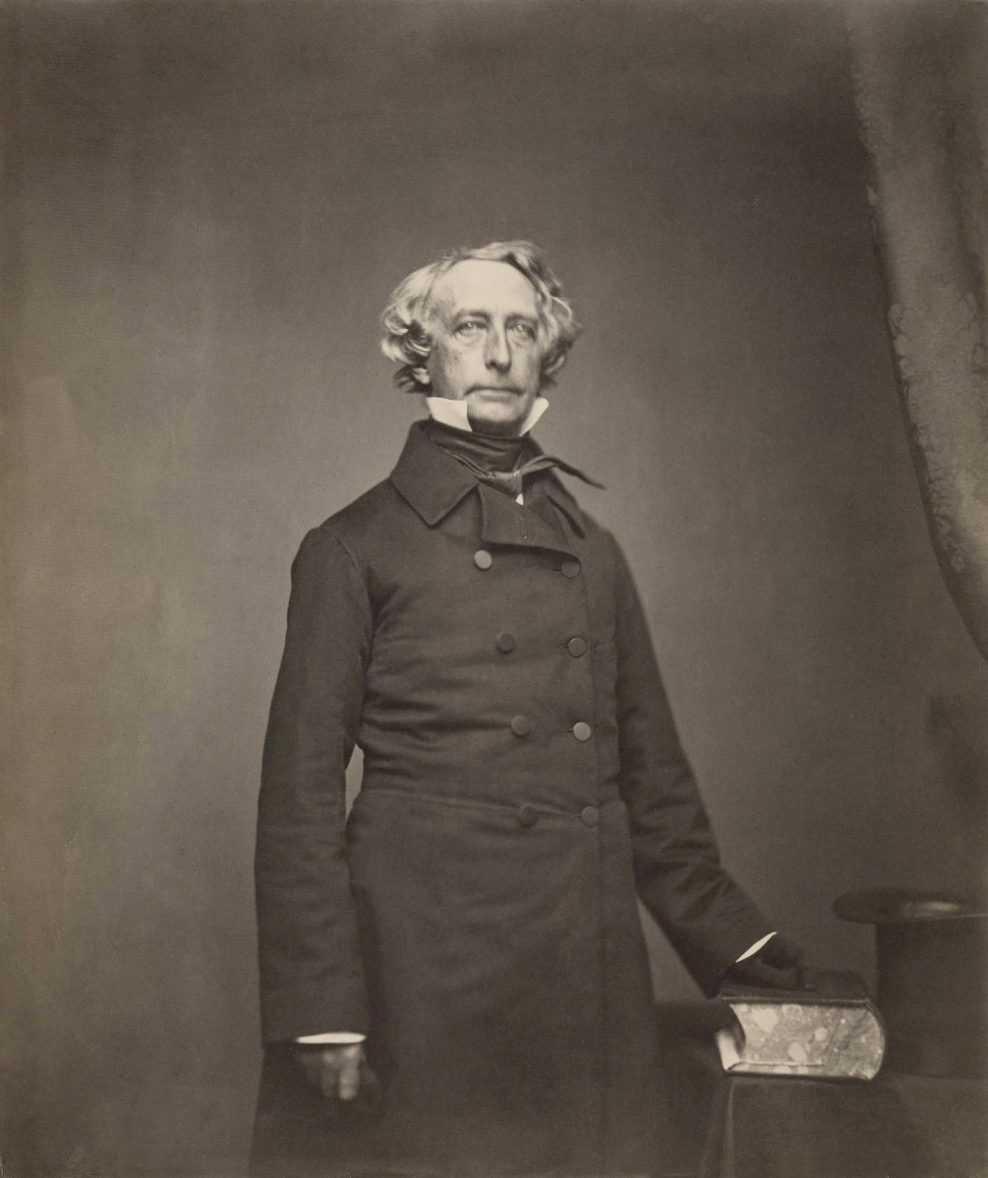
Matthew Brady (American 1823-1896) 'Prosper Whetmore' 1857


Matthew Brady (American, 1823-1896)
Prosper M. Wetmore
1857
Salted paper print from wet collodion negative
47 x 39.4cm (18 1/2 x 15 1/2 in.)
CC0 1.0 Universal


A popular author, legislator, and general in the New York State militia, Wetmore, here at age 59, still resembles Edgar Allen Poe’s description of him from a decade earlier: “about five feet eight in height, slender, neat; with an air of military compactness.” Brady’s portrait studio, with branches in New York and Washington, DC, was the most important of its era in America, thanks in part to its success in photographing political, social, and cultural figures. These early celebrity portraits, such as those of the wedding of performer Tom Thumb (seen in the centre of the gallery), could sell thousands of copies. Brady is now best known for images of the Civil War, most taken by photographers he hired.

Text from The Cleveland Museum of Art website


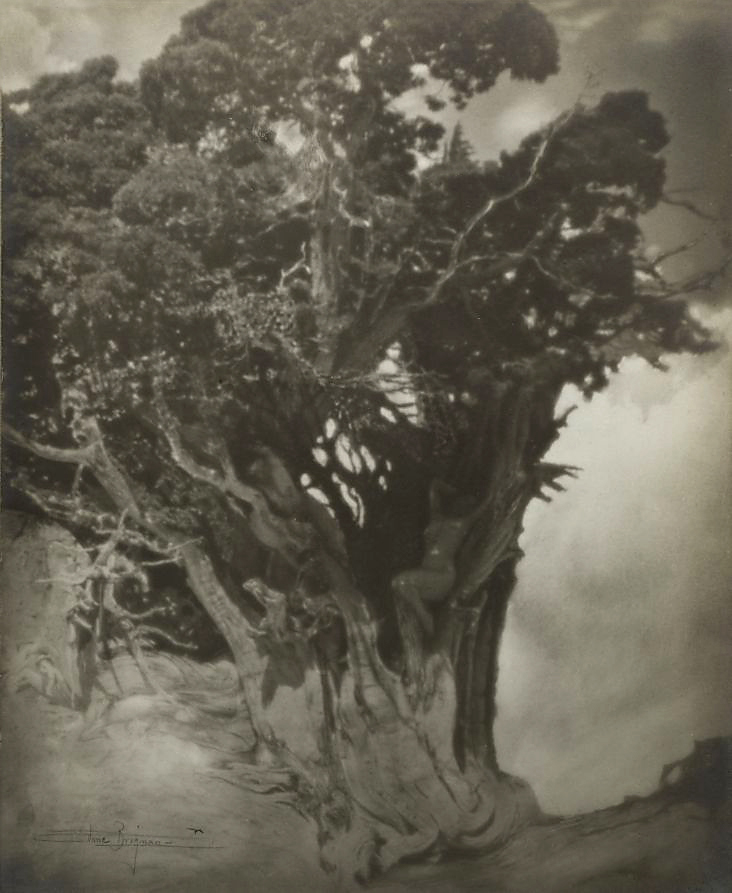
Anne W. Brigman (American, 1869-1950) 'The Hamadryads' c. 1910 from the exhibition Exhibition: 'Icons of American Photography: A Century of Photographs from the Cleveland Museum of Art' at the Frick Art and Historical Center, Pittsburgh, Oct 2009 - Jan 2010


Anne W. Brigman (American, 1869-1950)
The Hamadryads
c. 1910
Platinum print


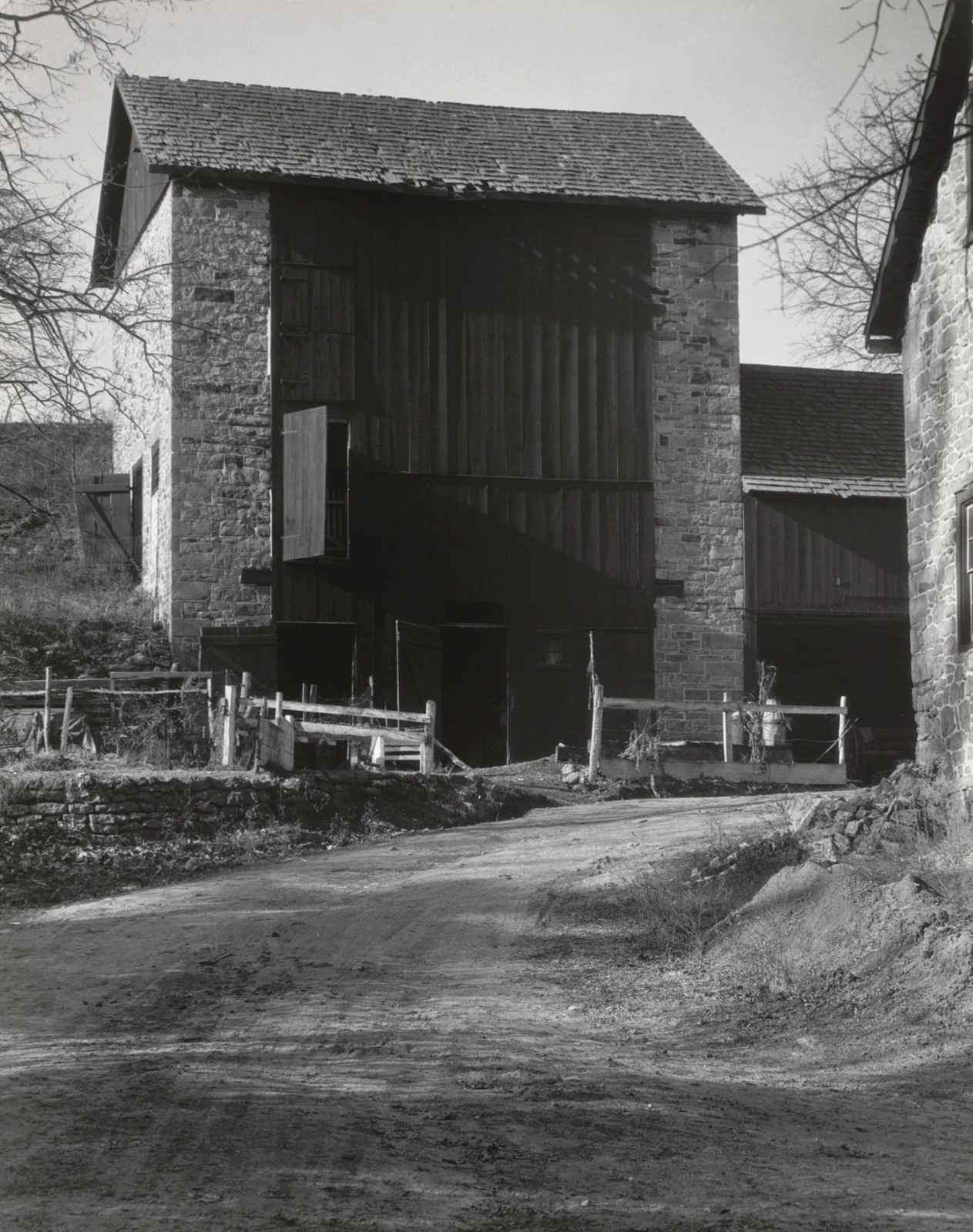
Charles Sheeler (American, 1883-1965) 'Bucks County Barn' 1915 from the exhibition Exhibition: 'Icons of American Photography: A Century of Photographs from the Cleveland Museum of Art' at the Frick Art and Historical Center, Pittsburgh, Oct 2009 - Jan 2010


Charles Sheeler (American, 1883-1965)
Bucks County Barn
1915
Gelatin silver print
9 1/4 x 7 5/16″ (23.5 x 18.6cm)


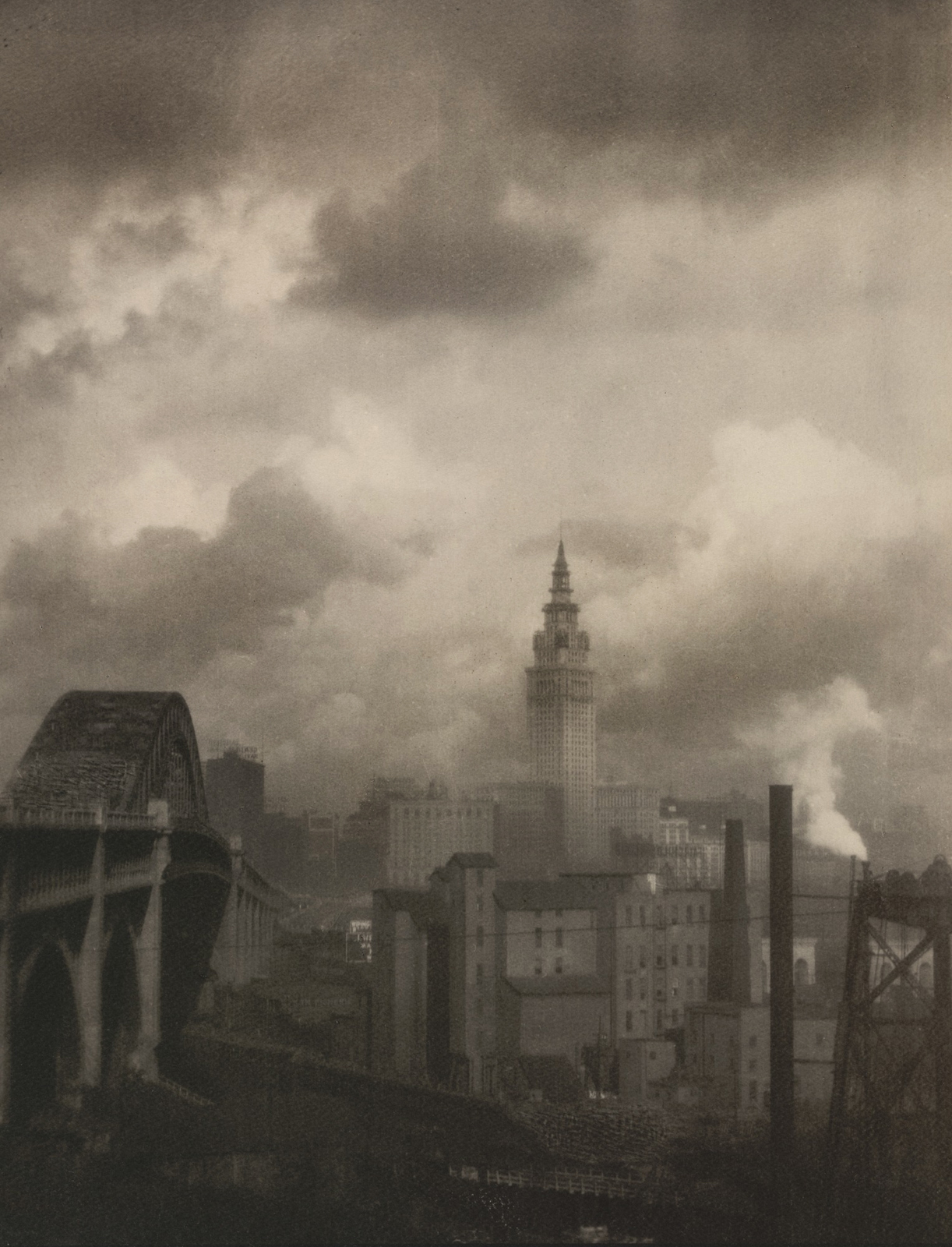
Margaret Bourke-White (American 1904-1971) 'Terminal Tower' 1928


Margaret Bourke-White (American 1904-1971)
Terminal Tower
1928
13 1/4 x 10″ (33.7 x 25.4cm)
Gelatin silver print


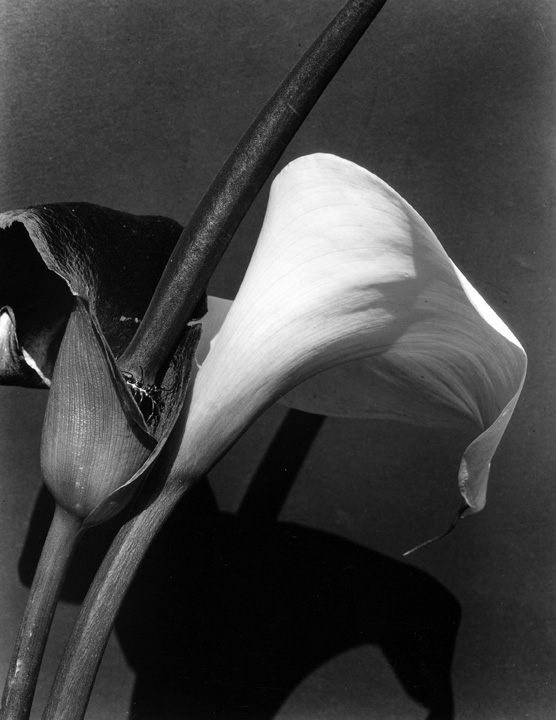
Imogen Cunningham (American, 1883-1976) 'Black and White Lilies III' 1928


Imogen Cunningham (American, 1883-1976)
Black and White Lilies III
1928
Gelatin silver print


Alfred Steiglitz (American, 1864-1946) 'Georgia O'Keefe' 1933


Alfred Steiglitz (American, 1864-1946)
Georgia O’Keefe
1933
Gelatin silver photograph


Dorothea Lange (American 1895-1965) 'Resident, Conway, Arkansas' 1938


Dorothea Lange (American, 1895-1965)
Resident, Conway, Arkansas
1938
Gelatin silver print
11 15/16 x 9 1/2 in. (30.32 x 24.13cm)


Laszlo Moholy-Nagy (Hungarian, 1895-1946) 'Untitled' 1939


Laszlo Moholy-Nagy (Hungarian, 1895-1946)
Untitled
1939
Photogram
Gelatin silver print


On October 3, 2009, Icons of American Photography: A Century of Photographs from the Cleveland Museum of Art opens at The Frick Art Museum. This exhibition is composed of fifty-nine photographs from Cleveland’s extraordinary collection that chronicle the evolution of photography in America from a scientific curiosity in the 1850s to one of the most potent forms of artistic expression of the twentieth century.

Icons of American Photography presents some of the best work by masters of the medium, like Mathew Brady, William Henry Jackson, Eadweard Muybridge, Alfred Stieglitz, Edward Steichen, Paul Strand, Edward Weston, Imogen Cunningham, Margaret Bourke-White, Dorothea Lange, Walker Evans, and Robert Frank, encompassing themes of portraiture, the Western landscape, Pictorialism, documentary photography, and abstraction.

The exhibition explores the technical developments of photography, starting with outstanding examples of daguerreotypes – a sheet of copper coated with light sensitive silver. The daguerreotype gave way to salt, albumen, and then gelatin silver prints. Technologies improved to accommodate larger sizes, easy reproduction of multiple prints from a single negative, and commercially available negative film and print papers. As we move into an increasingly digitised twenty-first century, the lure of the photographer’s magic and the mysteries of making photographic images appear on paper is still strong.

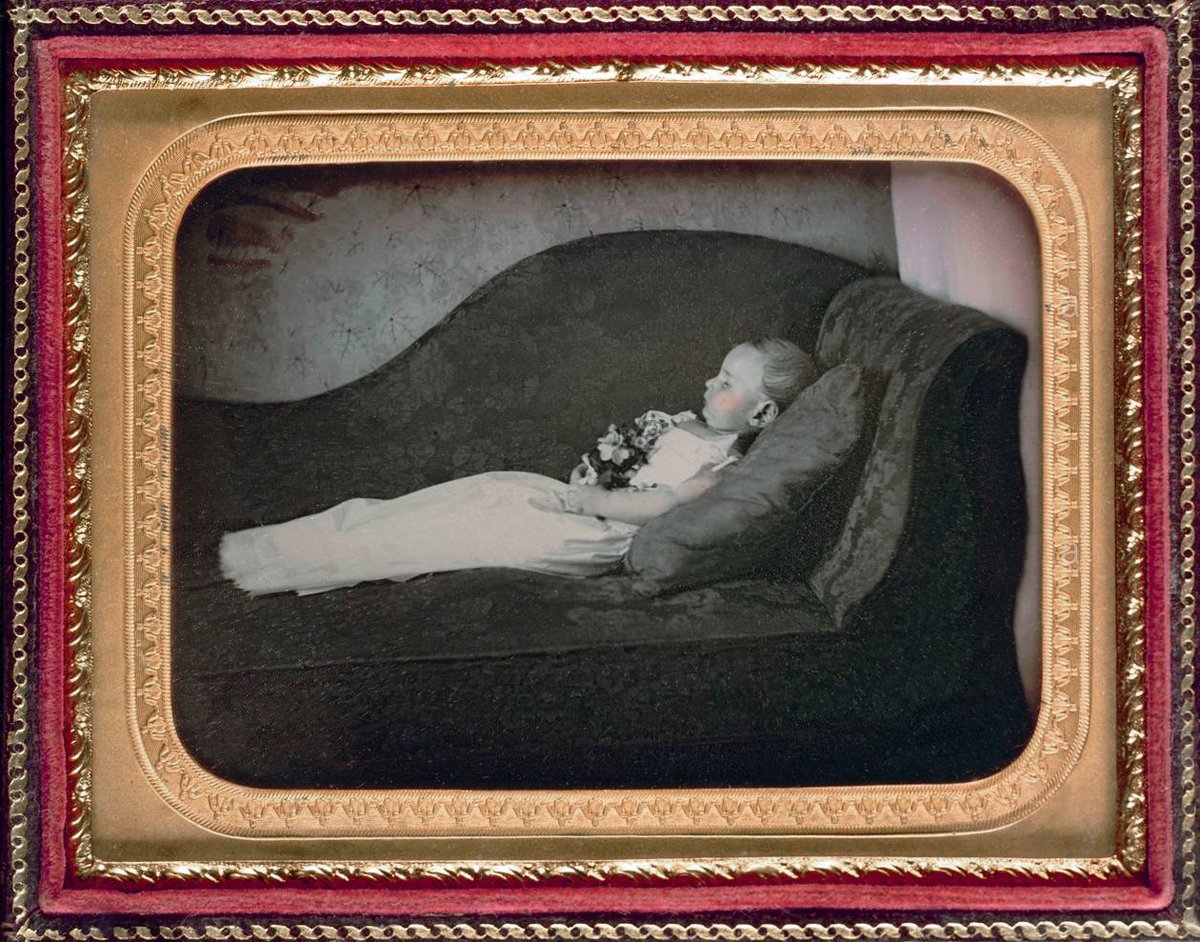
Icons of American Photography presents a remarkable chronicle of American life seen through the camera’s lens. The earliest days of photography saw a proliferation of portraiture – intimately personal and honest in composition. A rare multiple-exposure daguerreotype by Albert Southworth (1811-1894) and Josiah Hawes (1808-1901) presents the sitter in variety of poses and expressions, while the formal portrait of Prosper M. Wetmore, 1857, by Civil War-era photographer Mathew Brady (1823-1896) is more typical of early portraiture. The carefully staged daguerreotype, Dead Child on a Sofa, c. 1855, is an outstanding example of the postmortem portrait. The high rate of infant mortality throughout the 1800s made this variety of portraiture common, satisfying the emotional need of the parents to have a lasting memory of their loved one.

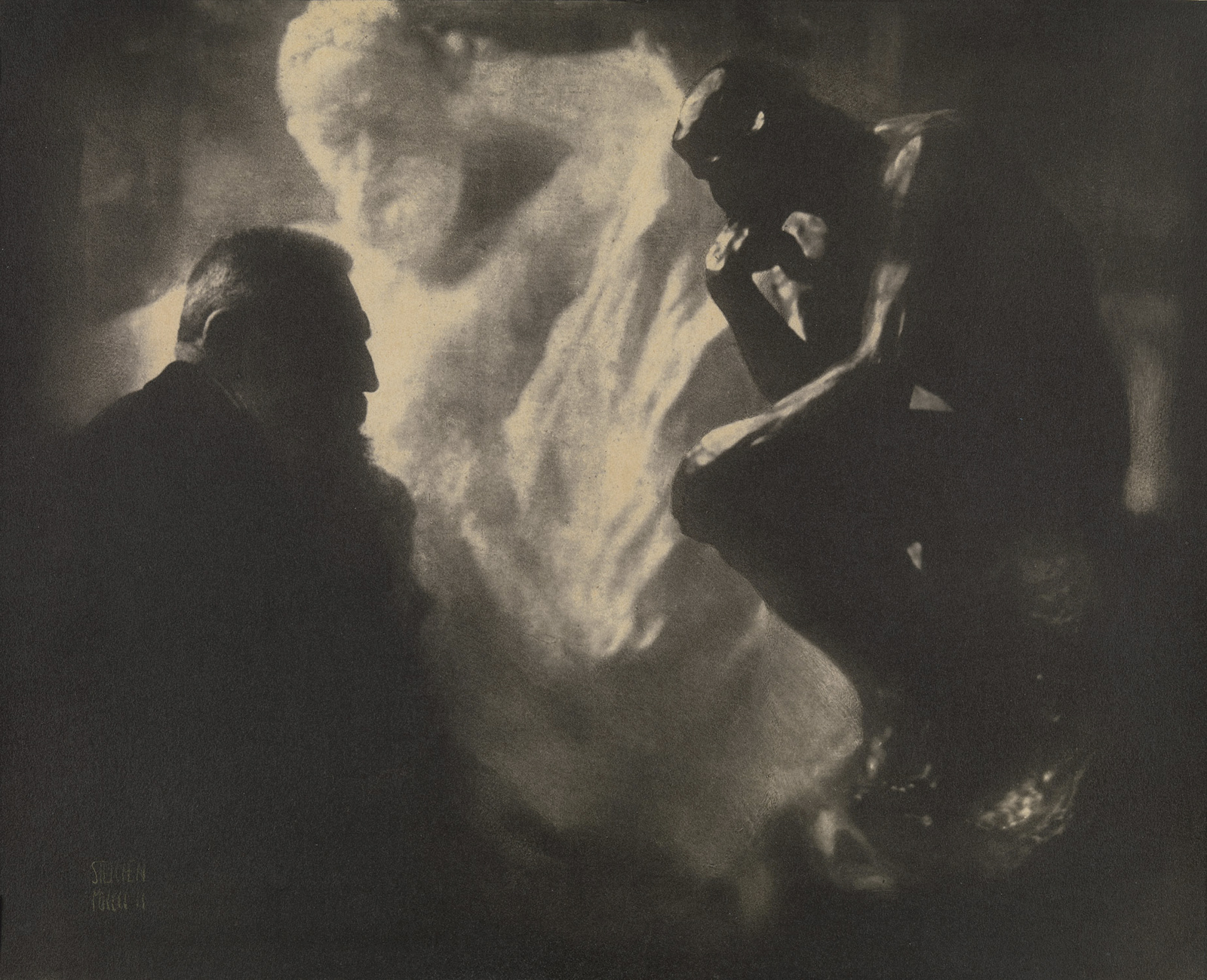
Advances in photographic processes allowed for a range of expressive qualities that were exploited by photographers with an artistic flair. In a style known as Pictorialism, works such as Hamadryads, 1910, by Anne Brigman (1869-1950) imitated the subject matter of painting. In Greek mythology a hamadryad is a nymph whose life begins and ends with that of a specific tree. In this work, two nudes representing wood nymphs were carefully placed among the flowing forms of an isolated tree in the High Sierra. The platinum print method used by Brigman allowed for a detailed, yet warm and evocative result. Edward Steichen’s Rodin the Thinker, 1902 (see below), was created from two different negatives printed together using the carbon print process. This non-silver process provided a continuous and delicate tonal range. For even greater richness, these prints were often toned, producing dense, glossy areas in either black or warm brown.

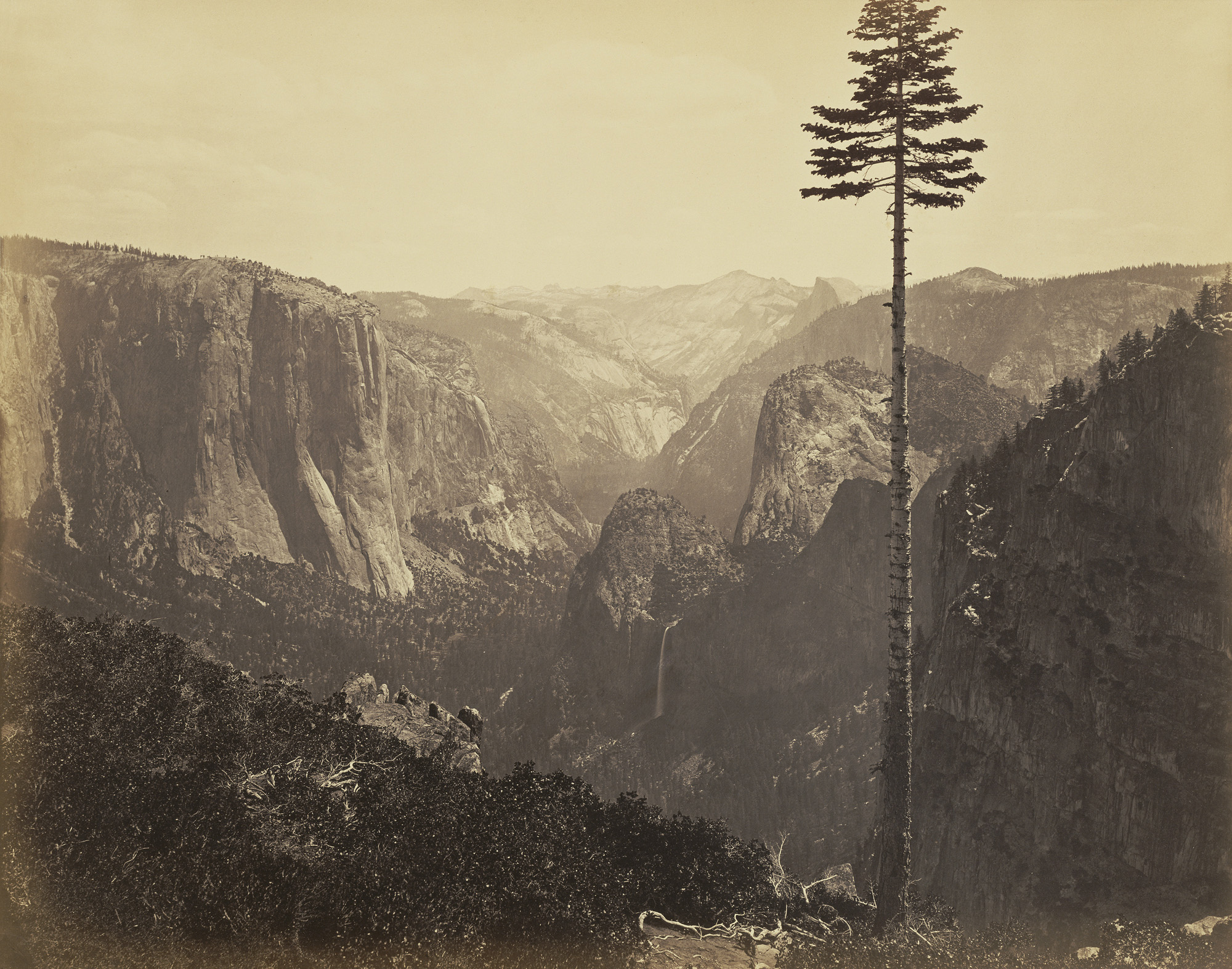
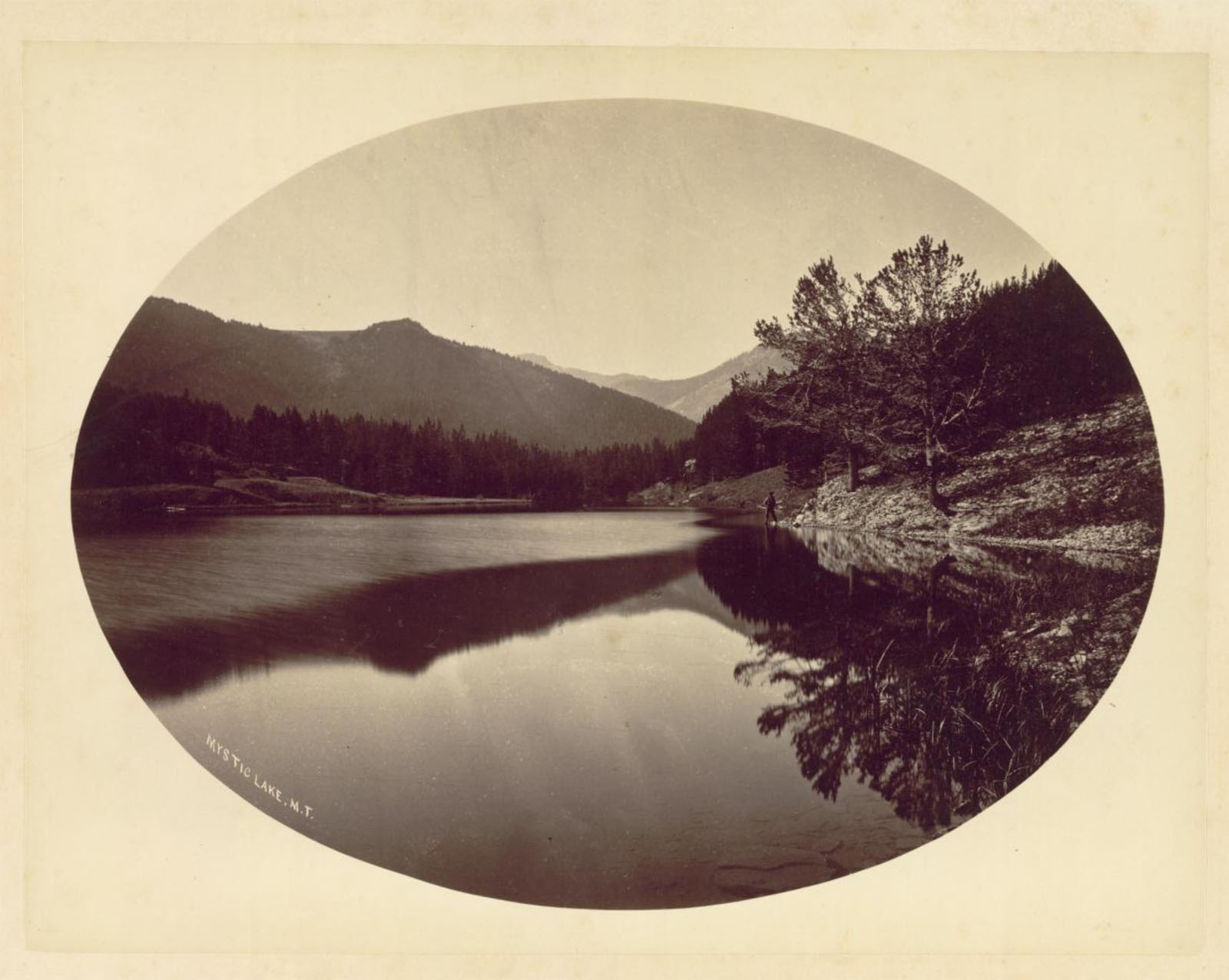
During the late nineteenth century, the U.S. Congress commissioned photographers to document the American West. Photographs by Timothy O’Sullivan (1840-1882) and William Henry Jackson (1843-1942) are the most celebrated from among this era. The exhibition includes O’Sullivan’s East Humbolt Mountains, Utah, 1868 (see below), and Jackson’s Mystic Lake, M.T., 1872 (see below), as well as Bridal Veil, Yosemite, c. 1866 (see below), by Carleton Watkins (1829-1916). Photographers carried large-format cameras with heavy glass negatives to precarious vantage points to create their sharply focused and detailed views. Decades later, Ansel Adams (1902-1984) carried on the intrepid tradition when he swerved to the side of the road and hauled his view camera to the roof of his car to make the famous image Moonrise, Hernandez, New Mexico, 1941.

Responding to the rapid growth of the twentieth century, many photographers shifted their attention from depictions of the natural world to the urban landscape. The power, energy, and romance of the city inspired varied approaches, from sweeping vistas to tight, close-up details and unusual camera angles. Margaret Bourke-White (1904-1971) established her reputation during the late 1920s by photographing industrial subjects in Cleveland. Her Terminal Tower, 1928, documents what was then the second tallest building in America. Berenice Abbot’s (1898-1991) New York, 1936 (see below), is one of many depictions of this vibrant metropolis. The human life of the city intrigued many photographers, including Helen Levitt (1913-2009) whose photographs of children are direct, unsentimental and artful; Weegee [Arthur Fellig] (1899-1968) who unflinchingly documented crime and accident scenes; and Gordon Parks (1912-2006) who chronicled the life of African Americans.

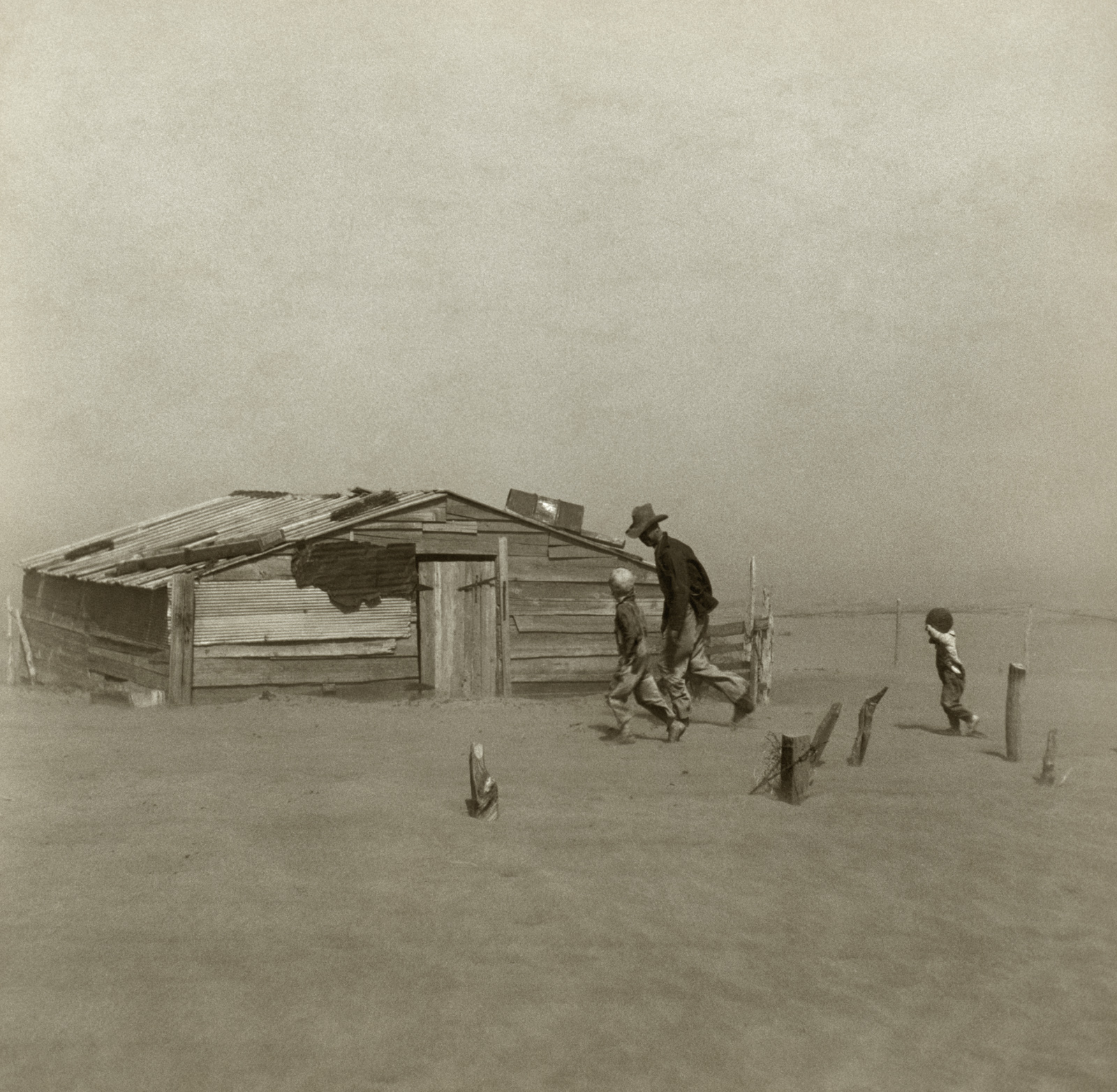
Exploiting the new medium, numerous photography projects were instituted as part of FDR’s New Deal. The most legendary was that of the Farm Security Administration (FSA) run by Roy Stryker, who hired such important photographers such as Walker Evans, Dorothea Lange, and Arthur Rothstein. One of the most iconic images of the New Deal was Dust Storm, Cimarron County, 1936 (see below), by Arthur Rothstein (1915-1985). In the spring of 1936, Rothstein made hundreds of photographs in Cimarron County in the Oklahoma panhandle, one of the worst wind-eroded areas in the United States. Out of that body of work came this gripping, unforgettable image. Dorothea Lange’s (1895-1965) work chronicled the human toll wrought by hardship in Resident, Conway, Arkansas, 1938.

As an art form, photography kept in step with formalist modern styles and an increasing trend toward abstraction. Known for his precisionist paintings, Charles Sheeler’s (1883-1965) Bucks County Barn, 1915, features a geometric composition, sharp focus, and subtle tonal range. In Black and White Lilies III, c. 1928 (see above), Imogen Cunningham (1883-1976) combined the clarity and directness of Modernism with her long-held interest in botanical imagery. For two decades she created a remarkable group of close-up studies of plants and flowers that identified her as one of the most sophisticated and experimental photographers working in America.

Photographers such as Edward Weston (1886-1958) and Paul Strand (1890-1976) employed a straight-on clarity that highlighted the abstract design of everyday objects and the world around us. A completely abstract work by artist László Moholy-Nagy (1894-1946), Untitled, 1939 (see above), is a photogram made by laying objects onto light-sensitive photographic paper and exposing it to light. The objects partially block the light to create an abstract design on the paper.

By 1960, photography had attained a prominent place not only among the fine arts, but in popular culture as well, ushering in a new era of image-based communication that has profoundly affected the arts as well as everyday life.

Icons of American Photography: A Century of Photographs from the Cleveland Museum of Art is organised by the Cleveland Museum of Art. The exhibition is curated by Tom Hinson, Curator of Photography.

Press release from the The Frick Art and Historical Center website [Online] Cited 06/12/2009 no longer available online


Unknown photographer (American) 'Dead child on a sofa' c. 1855


Unknown photographer (American)
Dead child on a sofa
c. 1855
Quarter plate daguerreotype with applied colour


Carelton Watkins (American, 1829-1916) 'Yosemite Valley from the Best General View No. 2.' 1866


Carelton Watkins (American, 1829-1916)
Yosemite Valley from the Best General View No. 2
1866
Albumen silver print


Carleton Watkins had the ability to photograph a subject from the viewpoint that allowed the most information to be revealed about its contents. In this image, he captured what he considered the best features of Yosemite Valley: Bridal veil Falls, Cathedral Rock, Half Dome, and El Capitan. By positioning the camera so that the base of the slender tree appears to grow from the bottom edge of the picture, Watkins composed the photograph so that the canyon rim and the open space beyond it seem to intersect. Although he sacrificed the top of the tree, he was able to place the miniaturised Yosemite Falls at the visual centre of the picture. To alleviate the monotony of an empty sky, he added the clouds from a second negative. This image was taken while Watkins was working for the California Geological Survey. His two thousand pounds of equipment for the expedition, which included enough glass for over a hundred negatives, required a train of six mules.

Text from the J. Paul Getty Museum website [Online] Cited 14/05/2019


Carelton Watkins (American, 1829-1916) 'Bridal Veil, Yosemite' 1866


Carelton Watkins (American, 1829-1916)
Bridal Veil, Yosemite
1866
Albumen silver print


Eadweard J. Muybridge (American born England, 1830-1904) 'Valley of Yosemite, from Rocky Ford' 1872


Eadweard J. Muybridge (American born England, 1830-1904)
Valley of Yosemite, from Rocky Ford
1872
Albumen silver print


Timothy H. O'Sullivan (American, 1840-1882) 'East Humboldt Mountains, Utah' 1868


Timothy H. O’Sullivan (American, 1840-1882)
East Humboldt Mountains, Utah
1868
Albumen print from wet collodion negative
Image: 19.7 x 27cm (7 3/4 x 10 5/8 in.)
The Cleveland Museum of Art
James Parmelee Fund


By nature and by experience gained during the Civil War, O’Sullivan was ideally suited for the physical and creative demands required of the official photographer for the geological exploration of the fortieth parallel, led by the enterprising Yale geologist Clarence King. The goal of the expedition was to survey the geological structure and natural resources of a swath of territory 100 miles wide, from the eastern slopes of the Sierra Nevada Mountains across the Great Basin to the Rocky Mountains. While on the expedition in 1867-1869 and 1872, O’Sullivan simultaneously pursued his own interest in perfecting a balanced, aesthetic style of landscape photography while providing a faithful record of the natural terrain. As typified in this print, he positioned the camera at a distance parallel to the majestic scenery, presenting a shallow, flattened depiction of space. The image describes in sharp detail the sheer beauty and rugged scale of this Western landscape.

Text from The Cleveland Museum of Art website


William Henry Jackson (American, 1843-1942) 'Mystic Lake, M.T.' 1872


William Henry Jackson (American, 1843-1942)
Mystic Lake, M.T.
1872
Albumen print from wet collodion negative
Image: 23.3 x 50.7cm (9 3/16 x 19 15/16 in.)
The Cleveland Museum of Art
John L. Severance Fund


One of the best-known 19th-century landscape photographers of the American West, Jackson took thousands of negatives between 1870 and 1888 while working for the federal government and the railroads. Beginning in 1870, he began an eight-year assignment as official photographer to the U.S. Geological and Geographical Survey of the Territories led by Ferdinand V. Hayden. This beautiful view of Mystic Lake, located at the head of the East Gallatin River, is one of the most picturesque photographs of the mountainous American West. Jackson used for the first time 11-by-14-inch negatives that captured the scene’s rich textures, the brilliant play of light and shade, and the power and romance of this enthralling vista. Jackson described the scenic lake as “well stocked with most excellent trout, it is quite a pleasure-resort, despite the difficulties to encounter in reaching it.”

Text from The Cleveland Museum of Art website


Edward Steichen (American 1879-1973) 'Rodin The Thinker' 1902


Edward Steichen (American, 1879-1973)
Rodin The Thinker
1902
Gum bichromate print


When Edward Steichen arrived in Paris in 1900, Auguste Rodin (1840-1917) was regarded not only as the finest living sculptor but also perhaps as the greatest artist of his time. Steichen visited him in his studio in Meudon in 1901 and Rodin, upon seeing the young photographer’s work, agreed to sit for his portrait. Steichen spent a year studying the sculptor among his works, finally choosing to show Rodin in front of the newly carved white marble of the “Monument to Victor Hugo,” facing the bronze of “The Thinker.” In his autobiography, Steichen describes the studio as being so crowded with marble blocks and works in clay, plaster, and bronze that he could not fit them together with the sculptor into a single negative. He therefore made two exposures, one of Rodin and the “Monument to Victor Hugo,” and another of “The Thinker.” Steichen first printed each image separately and, having mastered the difficulties of combining the two negatives, joined them later into a single picture, printing the negative showing Rodin in reverse.

“Rodin – The Thinker” is a remarkable demonstration of Steichen’s control of the gum bichromate process and the painterly effects it encouraged. It is also the most ambitious effort of any Pictorialist to emulate art in the grand tradition. The photograph portrays the sculptor in symbiotic relation to his work.

Suppressing the texture of the marble and bronze and thus emphasiSing the presence of the sculptures as living entities, Steichen was able to assimilate the artist into the heroic world of his creations. Posed in relief against his work, Rodin seems to contemplate in “The Thinker” his own alter ego, while the luminous figure of Victor Hugo suggests poetic inspiration as the source of his creativity. Recalling his response to a reproduction of Rodin’s “Balzac” in a Milwaukee newspaper, Steichen noted: “It was not just a statue of a man; it was the very embodiment of a tribute to genius.” Filled with enthusiasm and youthful self-confidence, Steichen wanted in this photograph to pay similar tribute to Rodin’s genius.

Text from the Metropolitan Museum of Art website [Online] Cited 14/05/2019


Arthur Rothstein (American 1915-1985) 'Dust Storm, Cimarron County' 1936


Arthur Rothstein (American, 1915-1985)
Dust Storm, Cimarron County
1936
Gelatin silver photograph
40.4 × 39.6cm


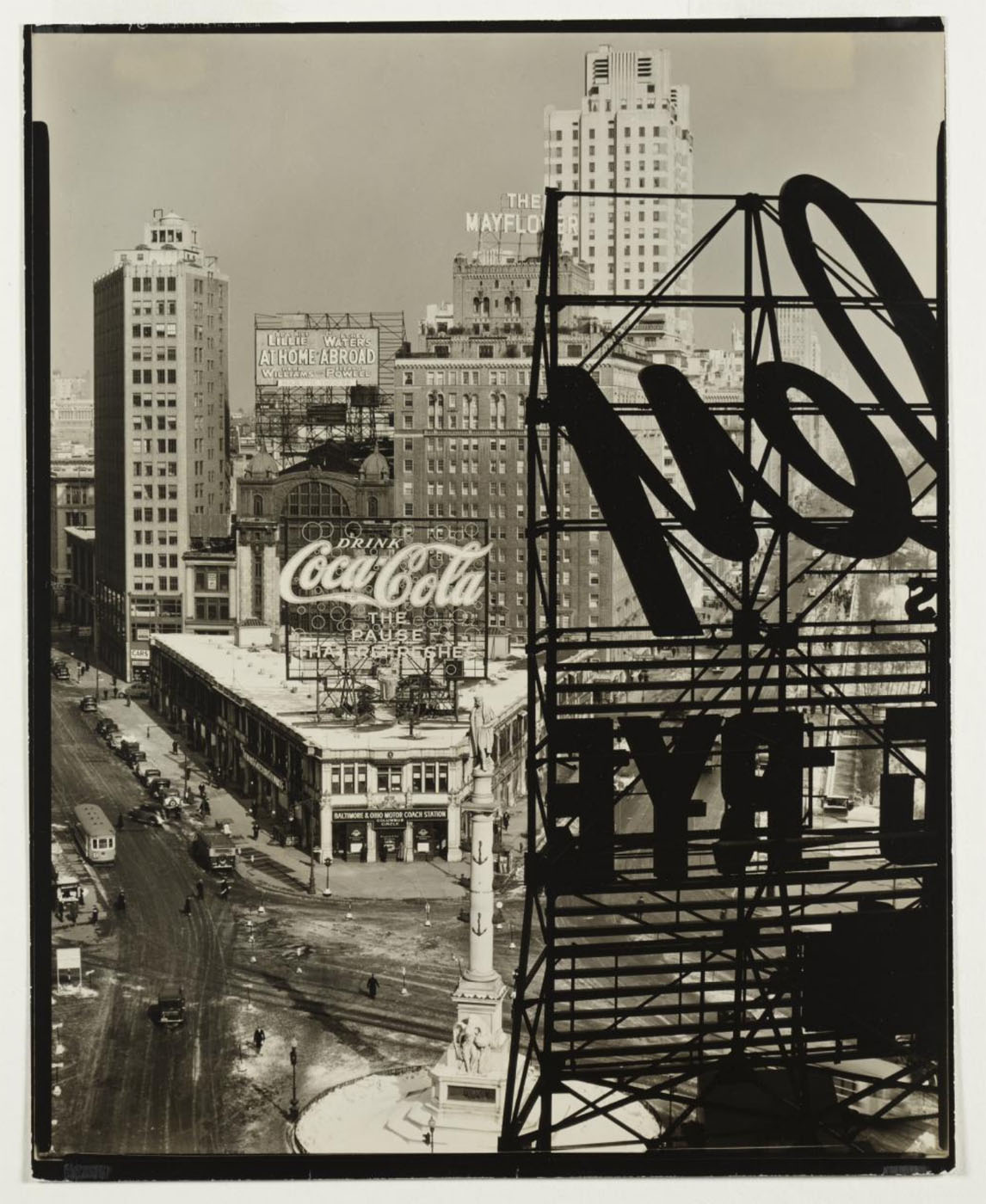
Berenice Abbott (American, 1898-1991) 'Columbus Circle' 1936


Berenice Abbott (American, 1898-1991)
Columbus Circle
1936
Gelatin silver print
Image: 24.6 x 19.6cm (9 11/16 x 7 11/16 in.)
The Cleveland Museum of Art
Sundry Purchase Fund


A native of Springfield, Ohio, Abbott studied art and photography in Paris. Arriving in New York in 1929, she was shocked by the past decade’s vertical building boom, and dedicated herself to documenting the city’s new structures and fast-disappearing historic ones. She made this image from the ninth floor of the General Motors building in New York while working for the Federal Art Project, a governmental agency that employed artists during the Depression. The statue of Columbus, at centre, is dwarfed by two advertising signs: one for Schenley rye whiskey and a landmark 80-x-50-foot display for Coca-Cola that required 3,000 incandescent bulbs.

Text from The Cleveland Museum of Art website


The Frick Art and Historical Center
7227 Reynolds Street
Pittsburgh PA 15208

Opening hours:
Tuesday – Sunday 10am – 5pm
Friday 10am – 9pm
Closed Monday

The Frick Art and Historical Center website

LIKE ART BLART ON FACEBOOK

Back to top

Exhibition: ‘A Few Frames: Photography and the Contact Sheet’ at Whitney Museum of American Art, New York

Exhibition dates: 25th September, 2009 – 3rd January, 2010


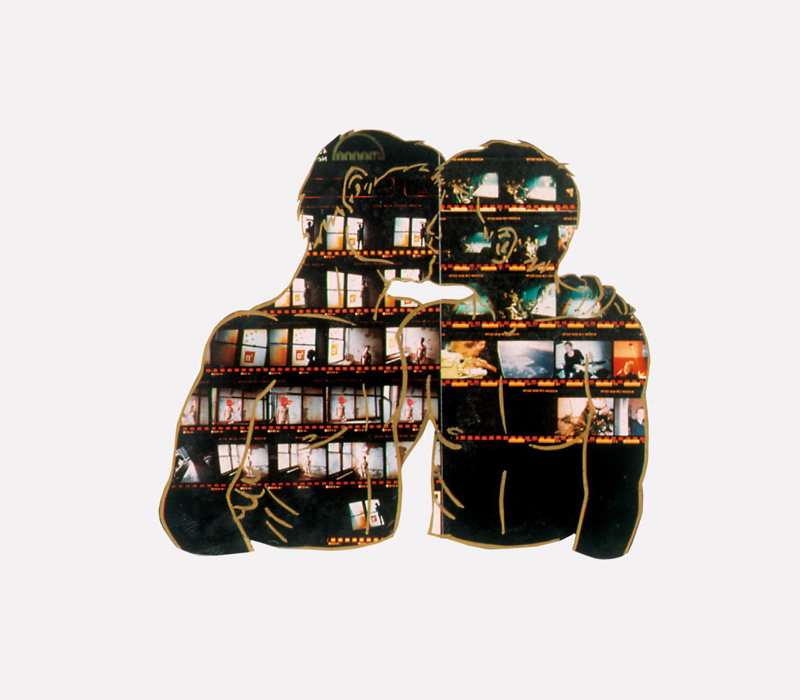
David Wojnarowicz (American, 1954-1992) 'Untitled' 1988


David Wojnarowicz (American, 1954-1992)
Untitled
1988
Synthetic polymer on two chromogenic prints
11 x 13 1/4 in. (27.9 x 33.7cm)
Whitney Museum of American Art, New York
Purchase with funds from the Photography Committee
Courtesy of The Estate of David Wojnarowicz and P.P.O.W. Gallery, New York, NY


I gently massaged more photographs of the work in the exhibition from the Whitney press office after initially only being able to download one press image! Many thankx to the Whitney for supplying more images.

As the press release mentions them by name, presumably there will be some of the Robert Frank contact sheets which you can see at the posting Looking In: Robert Frank’s The Americans and the water towers of Bernd and Hilla Becher two photographs of which can be seen at the posting Notes on a conversation with Mari Funaki.

In case you don’t know the work of artist David Wojnarowicz he was a gay man who died of HIV/AIDS aged 37 in 1992: I believe he was one of the most talented and subversive artists of his generation and his powerful images of identity, sexuality, power and death remain seared in my memory. Unfortunately there are not many good images to be found online but there is an excellent Aperture book, Aperture 137 Fall 1994 (David Wojnarowicz: Brush Fires in the Social Landscape) available from Amazon.

Dr Marcus Bunyan


Many thankx to the Whitney Museum of American Art for allowing me to publish the photographs in the posting. Please click on the photographs in the posting for a larger version of the image.


Rachel Harrison (American, b. 1966) 'Contact Sheet (should home windows...)' 1996


Rachel Harrison (American, b. 1966)
Contact Sheet (should home windows…)
1996
Chromogenic print on fibreboard
20 x 16 in.
Collection of the artist 
courtesy Greene Naftali, New York
© 2009 Rachel Harrison


In this selection of works drawn principally from the Whitney’s permanent collection, the repetitive image of the proof sheet is the leitmotif in a variety of works spanning the range of the museum’s photography collection, including the works of Paul McCarthy, Robert Frank, Ed Ruscha, and Andy Warhol. The exhibition is co-curated by Elisabeth Sussman, Whitney Curator and Sondra Gilman Curator of Photography, and Tina Kukielski, Senior Curatorial Assistant. A Few Frames opens on September 25, 2009 in the Sondra Gilman Gallery and runs through January 3, 2010.

Decisions about which photograph to exhibit or print are frequently the end result of an editing process in which the artist views all of the exposures he or she has made on a contact sheet – a photographic proof showing strips or series of film negatives – and then selects individual frames to print or enlarge. Repetition, seriality, and sequencing – inherited from the contact sheet – are evident in all of the works on view. As co-curator Tina Kukielski notes, “this presentation includes a variety of photographs that build on the formal, thematic, and technical logic of the editing process.”

The exhibition includes photo-based works from sixteen featured artists in the Whitney’s collection. The work of David Wojnarowicz and Paul McCarthy present the contact sheet as a work of art, while those of artists such as Andy Warhol, Harold Edgerton, and Robert Frank play with its repeating forms. Other works call to mind the format of the contact sheet, such as Bernd and Hilla Becher’s typological study of industrial water towers and Silvia Kolbowski’s grid of appropriated images of female fashion models.

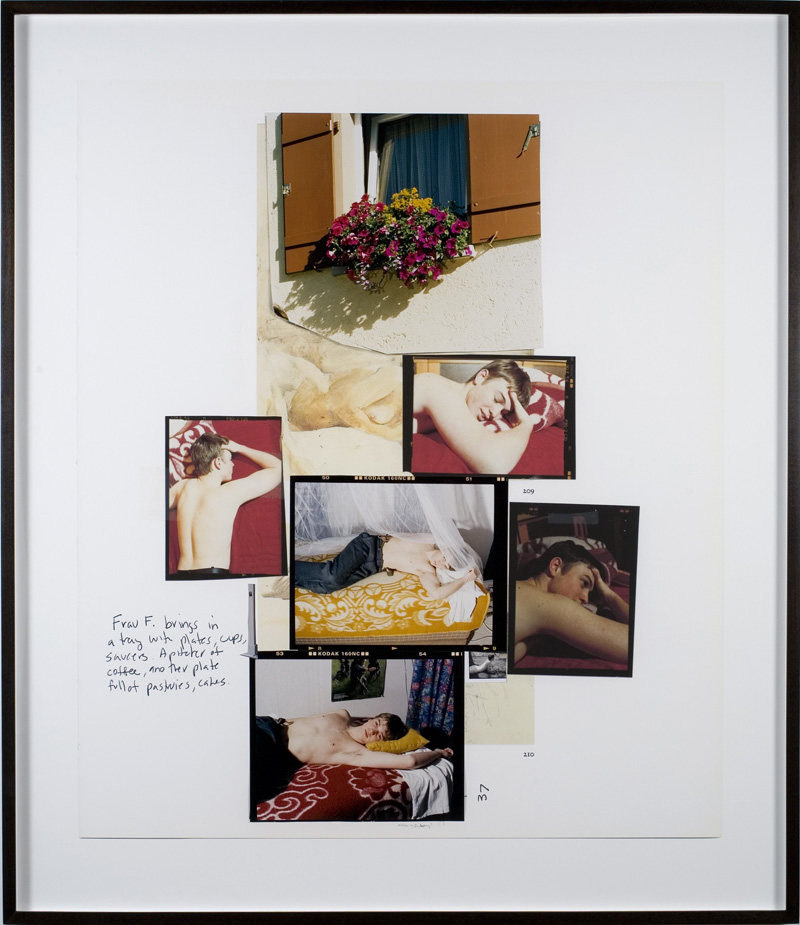
Works by contemporary artists such as Rachel Harrison and Collier Schorr in their continued interest in the contact sheet, despite perhaps growing trends toward digital photography, reveal the residual and sustained effects of this process.

Press release from the Whitney Museum of American Art website [Online] Cited 01/11/2009 no longer available online


Collier Schorr (American, b. 1963) 'Day Dream (Sky)' 2007


Collier Schorr (American, b. 1963)
Day Dream (Sky)
2007
Collage
48 x 43 in. (121.9 x 109.2cm)
Courtesy 303 Gallery, New York


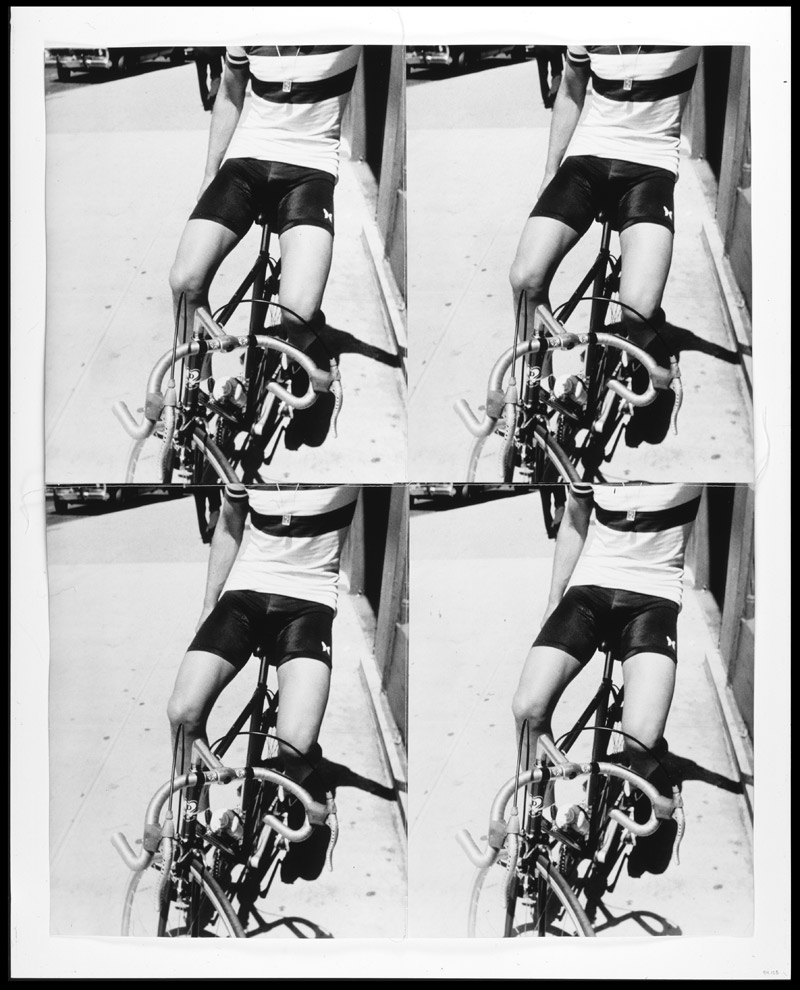
Andy Warhol (American, 1928-1987) 'Untitled (Cyclist)' 
c. 1976


Andy Warhol (American, 1928-1987)
Untitled (Cyclist)
c. 1976
Four gelatin silver prints stitched with thread
27 3/8 x 21 5/8 in. (69.5 x 54.9cm) overall
Unique Whitney Museum of American Art, New York
Gift of The Andy Warhol Foundation for the Visual Arts and purchase with funds from the Photography Committee
© 2009 The Andy Warhol Foundation for the Visual Arts, Inc. /Artists Rights Society (ARS), New York


Ellen Gallagher (American, b. 1965) 'Bouffant Pride' 2003


Ellen Gallagher (American, b. 1965)
Bouffant Pride
2003
Layered photogravure, cut-outs, collage, acrylic, plasticine, and toy eyes
Overall: 13 1/2 × 10 1/2 × 3/16in. (34.3 × 26.7 × 0.5cm)
Sheet: 13 1/2 × 10 1/2in. (34.3 × 26.7cm)
Whitney Museum of American Art, New York; purchase, with funds from the Print Committee


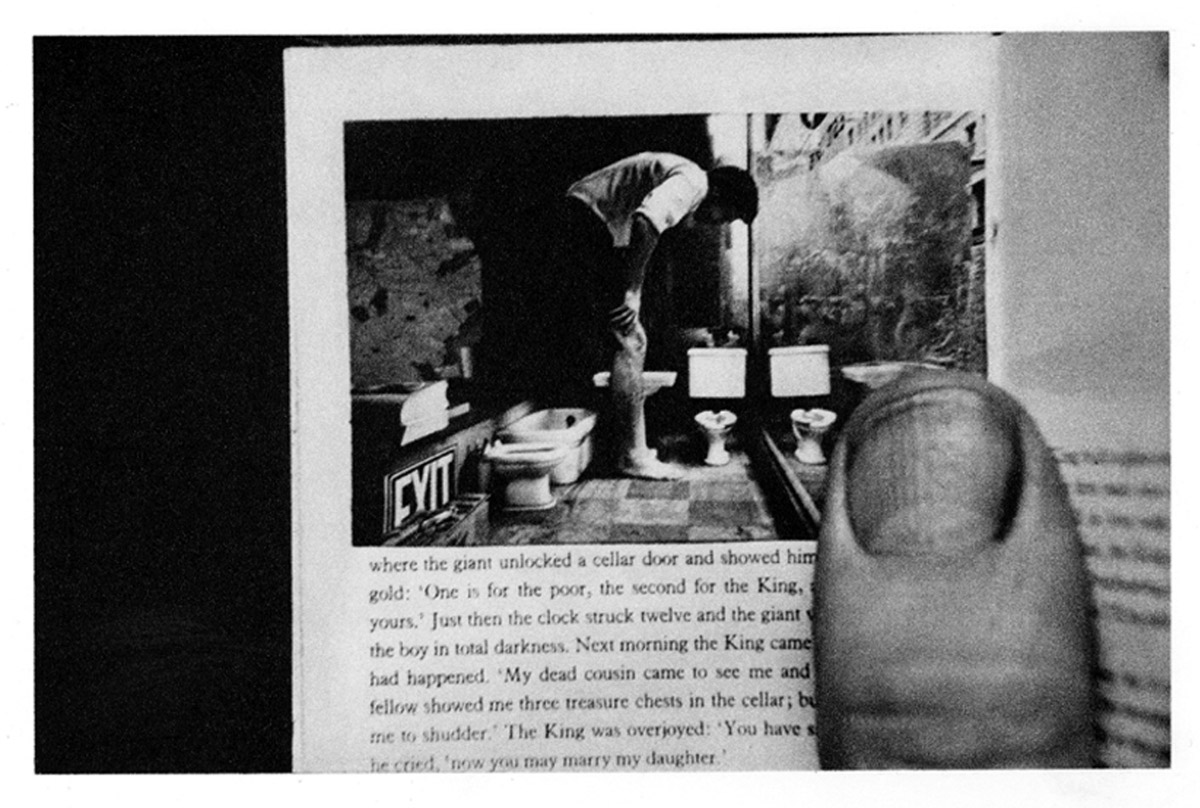
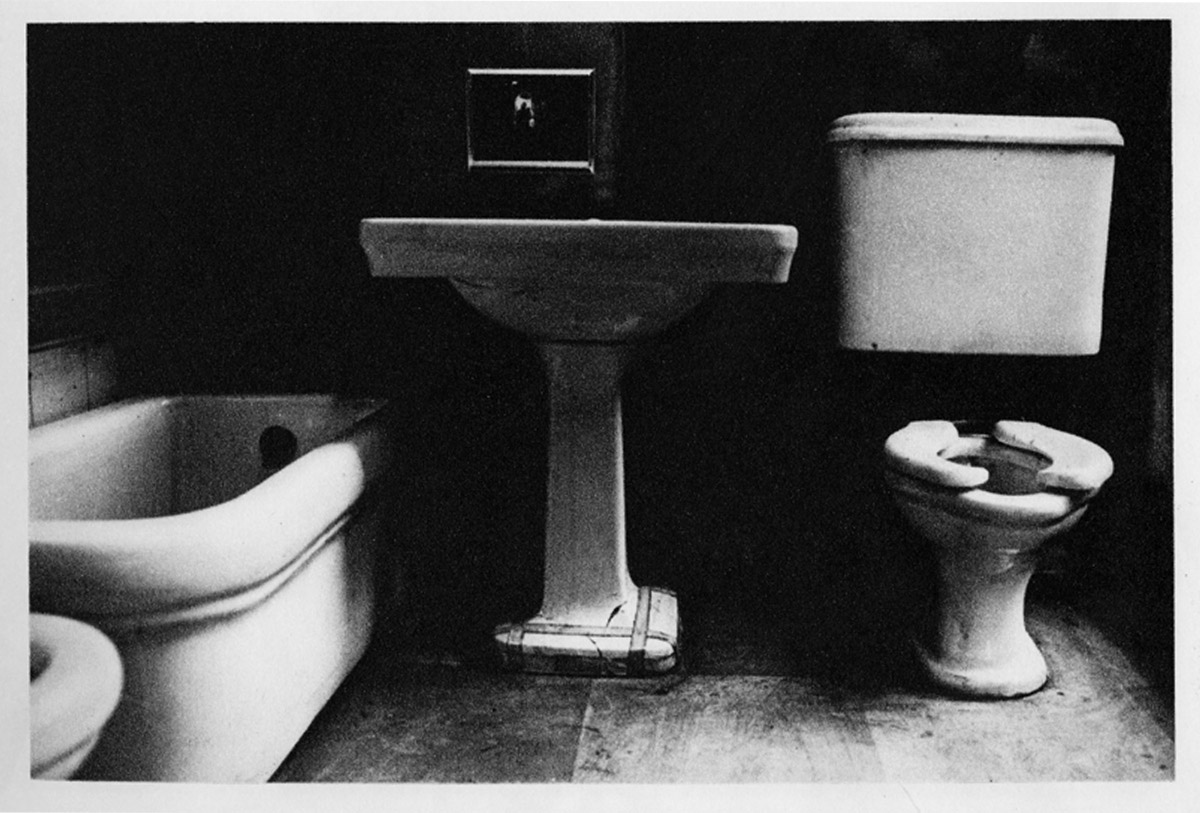
Duane Michals (American, b. 1932) 'Things are Queer' 1973

Duane Michals (American, b. 1932) 'Things are Queer' 1973

Duane Michals (American, b. 1932) 'Things are Queer' 1973

Duane Michals (American, b. 1932) 'Things are Queer' 1973

Duane Michals (American, b. 1932) 'Things are Queer' 1973

Duane Michals (American, b. 1932) 'Things are Queer' 1973

Duane Michals (American, b. 1932) 'Things are Queer' 1973

Duane Michals (American, b. 1932) 'Things are Queer' 1973

Duane Michals (American, b. 1932) 'Things are Queer' 1973


Duane Michals (American, b. 1932)
Things are Queer
1973
Nine silver gelatin prints
Whitney Museum of American Art, New York; gift of David Kezur


Edward Ruscha (American, b. 1937)
'[A Few Palm Trees Contact Sheet]'
1971


Edward Ruscha (American, b. 1937)
[A Few Palm Trees Contact Sheet]
1971
Gelatin silver print, tracing paper and crayon
Sheet: 10 × 8 1/16in. (25.4 × 20.5cm)
Overall (overlay): 9 3/4 × 8 3/16in. (24.8 × 20.8cm)
Whitney Museum of American Art, New York
Purchase, with funds from The Leonard and Evelyn Lauder Foundation, and Diane and Thomas Tuft
© Ed Ruscha


Edward Ruscha (American, b. 1937)
'[A Few Palm Trees Contact Sheet]'
1971


Edward Ruscha (American, b. 1937)
[A Few Palm Trees Contact Sheet]
1971
Gelatin silver print, tracing paper and crayon
Sheet: 10 × 8 1/16in. (25.4 × 20.5cm)
Overall (overlay): 9 3/4 × 8 3/16in. (24.8 × 20.8cm)
Whitney Museum of American Art, New York
Purchase, with funds from The Leonard and Evelyn Lauder Foundation, and Diane and Thomas Tuft
© Ed Ruscha


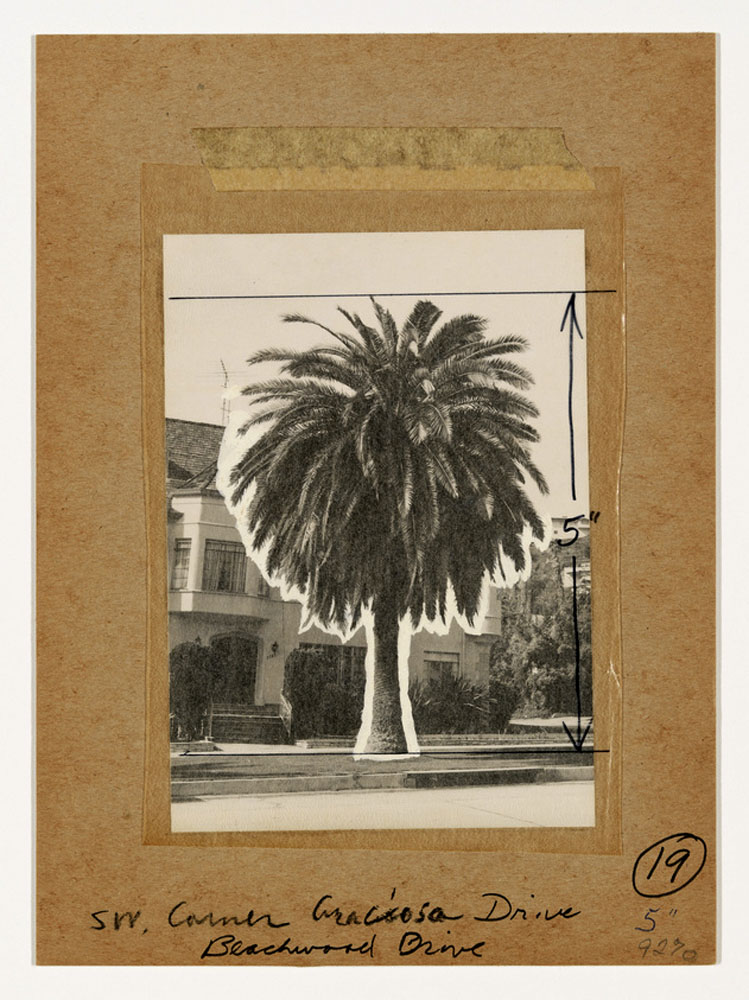
Edward Ruscha (American, b. 1937) 'Mock Up #19 (South West Corner of Graciosa Drive and Beachwood Drive)' 1971


Edward Ruscha (American, b. 1937)
Mock Up #19 (South West Corner of Graciosa Drive and Beachwood Drive)
1971
Gelatin silver print, tracing paper, pigment, pencil, and ink on board,
Image: 7 × 5in. (17.8 × 12.7cm)
Overall (overlay): 8 1/8 × 5 1/2in. (20.6 × 14cm)
Mount (board): 11 × 8in. (27.9 × 20.3cm)
Whitney Museum of American Art, New York
Purchase, with funds from The Leonard and Evelyn Lauder Foundation, and Diane and Thomas Tuft
© Ed Ruscha


Robert Frank (Swiss-American, 1924-2019) 'Mabou Winter Footage' 1977


Robert Frank (Swiss-American, 1924-2019)
Mabou Winter Footage
1977
Gelatin silver print
23 11/16 × 14 3/4″ (60.1 × 37.5cm)


Whitney Museum of American Art
945 Madison Avenue at 75th Street
New York, NY 10021
General Information: (212) 570-3600

Opening Hours:
Sunday – Monday, Wednesday – Thursday 10.30am – 6pm
Friday and Saturday 10.30am – 10pm
Closed Tuesday

Whitney Museum of American Art website

LIKE ART BLART ON FACEBOOK

Back to top

Exhibition: ‘Portraits of New York: Photographs from the MoMA’ at La Casa Encendida, Madrid

Exhibition dates: 27th March – 14th June, 2009

Curator: Sarah Hermanson Meister, associate curator of MoMA’s Department of Photography


Many thankx to La Casa Encendida for allowing me to publish the photographs in the posting. Please click on the photograph for a larger version of the image.


Paul Strand (American, 1890-1976) 'Wall Street, New York' 1915 from the exhibition 'Portraits of New York: Photographs from the MoMA' at La Casa Encendida, Madrid, March - June, 2009


Paul Strand (American, 1890-1976)
Wall Street
1915
Platinum palladium print


Wall Street is a platinum palladium print photograph by the American photographer Paul Strand taken in 1915. There are currently only two vintage prints of this photograph with one at the Whitney Museum of American Art (printed posthumously) and the other, along with negatives, at the Philadelphia Museum of Art. This photograph was included in Paul Strand, circa 1916, an exhibition of photographs that exemplify his push toward modernism.

It depicts a scene of everyday life in Manhattan’s Financial District. Workers are seen walking past the J.P. Morgan & Co. building in New York City on the famous Wall Street, of which the photograph takes its name. The photograph is famous for its reliance on the sharpness and contrast of the shapes and angles, created by the building and the workers, that lead to its abstraction. This photograph is considered to be one of Strand’s most famous works and an example of his change from Pictorialism to straight photography. Strand moved from the posed to portraying the purity of the subjects. It is one of several images that stand as marks of the turn to modernism in photography. …

Technique

This photograph depicts the J.P. Morgan building in New York City. Strand photographed “people hurrying to work past the banking building” situated on Wall Street, from which the photo takes its name. the subject depicted is a real-life subject without manipulation. The depiction of the real nature of the medium and the subject is an example of straight photography. There is no focal point, with the lines converging off of the frame of the image. The financial building take majority of the frame. Emphasis is placed on the strong shapes created by the architecture of the building. The workers are included in the image, but are faceless and are trumped in size by the massive square shapes from the building they walk past. Also, the workers are captured in motion which on film makes them appear blurry. This aesthetic that Strand creates in Wall Street is his break toward the modern, the straight photography, demonstrating that Pictorialism is no longer part of his aesthetic. Strand captured the building with clean, sharp lines. The building is covered in the high contrast, chiaroscuro. It is heavily in the shadows, but still creates an overwhelming presence over the people that walk past it. These people are also shrouded in the contrast made evident with the clean lines and black and white nature of his photos and photography as a medium. The people jump from their places, being the dark figures in the light of the sun that beams in from the left of the frame.

Strand fills the image with his recognisable aesthetic. The photo is platinum print, one of the materials frequently used by photographers of the time. Strand was unique in how he printed his photos. As stated on the George Eastman House website section Notes on Photography, Strand would make large prints from small negatives. He also left them in their matte condition that was inherent with platinum print. With his printing techniques, he “added a richness to the image.” As with the time, the photo is entirely black and white. There is a heavy contrast with the black and white areas of the photo. Strand creates diagonal shapes that pull emphasis to subject of the building and away from the people.

Aspects

Having taken Hine’s class at the Ethical Culture Fieldston School, social change became important to Strand and appeared often in his art. As a pupil of Hine, Strand learned of the social aspect his work could have. With Wall Street, he sought to portray a social message. He captured the faceless people next to the looming financial building in order to give a warning. Strand shows “the recently built J.P. Morgan Co. building, whose huge, dark recesses dwarf the passersby with the imposing powers of uniformity and anonymity.” The people cannot escape the overwhelming power that this modern establishment will have on their future and the future of America. He warns us to not be the small people that look almost ant-like next to this building that has a massive amount of control over the American economy.

Text from the Wikipedia website


Unidentified photographer. 'Brooklyn Bridge' c. 1914


Unidentified photographer
Brooklyn Bridge
c. 1914
Gelatin silver print
7 5/8 × 9 9/16″ (19.4 × 24.3cm)
Museum of Modern Art, New York
The New York Times Collection


La Casa Encendida presents an exhibition organised by the Museum of Modern Art (MoMA), New York, which showcases a fundamental part of the institution’s assets: its photography collection. Portraits of New York: Photographs from the MoMA offers an overview of the history of photography against the backdrop of this iconic metropolis through the work of more than 90 artists.

For the show’s curator Sarah Hermanson Meister, associate curator of the MoMA’s Department of Photography, “Portraits of New York amply reflects the history of synergies between this medium and the Big Apple during a period of important transformations for both. The photographs generated by the restless and constant commitment of numerous photographs to New York City have played a fundamental role in determining how New Yorkers perceive the city and themselves. These photographs have also defined the city’s image in the world’s imagination.”

Featured artists include Berenice Abbott, Diane Arbus, Richard Avedon, Margaret Bourke-White, Henri Cartier-Bresson, Harry Callahan, Walker Evans, Andreas Feininger, Larry Fink, Robert Frank, Lee Friedlander, Lewis W. Hine, William Klein, Irving Penn, Cindy Sherman, Edward Steichen, Thomas Struth and Garry Winogrand.

Text from the La Casa Encendida website


Lewis Wickes Hine (American, 1874-1940) 'Welders on the Empire State Building' c. 1930


Lewis Wickes Hine (American, 1874-1940)
Welders on the Empire State Building
c. 1930
Gelatin silver print
10 5/8 × 13 5/8″ (27 × 34.6cm)
Museum of Modern Art, New York
Committee on Photography Fund


Ted Croner (American, 1922–2005) 'Central Park South' 1947-1948 from the exhibition 'Portraits of New York: Photographs from the MoMA' at La Casa Encendida, Madrid, March - June, 2009


Ted Croner (American, 1922–2005)
Central Park South
1947-1948
Silver gelatin print
10 15/16 x 13 3/4″ (27.8 x 34.9cm)
Gift of the photographer
Museum of Modern Art, New York


Ted Croner (1922-2005) was an American photographer, described as an influential member of the New York school of photography during the 1940s and 1950s. His images are said to represent the best example of this movement.

Born in Baltimore in 1922 and raised in North Carolina, Croner developed an interest in photography while in high school. He honed his skills while serving as an aerial photographer in World War II before settling in New York City in 1947. At the urging of fashion photographer Fernand Fonssagrives, he enrolled in Alexey Brodovitch’s class at The New School where he studied with Diane Arbus, Richard Avedon and Lisette Model. During this period he produced many of his most memorable images including “Taxi, New York Night, 1947-48”, which appears on the cover of Bob Dylan’s 2006 album, Modern Times. Another of Croner’s photographs was used on the cover of Luna’s album Penthouse.

Croner also had a successful career as a fashion and commercial photographer – his work was published in Harper’s Bazaar and Vogue. He also worked extensively with corporations such as Coca-Cola and Chase Manhattan Bank. Croner is best known for his haunting night images of New York City taken in the 1940s and 1950s. He was one of several important photographers who belonged to the New York school of photography.

Text from the Wikipedia website


Arthur Fellig (Weegee) (American, 1899-1968) 'Coney Island' 1940


Arthur Fellig (Weegee) (American, 1899-1968)
Coney Island
July 22, 1940
Silver gelatin print
10 5/16 x 13 11/16″ (26.2 x 34.8cm)
Anonymous gift
Museum of Modern Art, New York
© 2019 Weegee/ICP/Getty Images


Photographs from the MoMA, which will provide an in-depth look at an essential component of the MoMA’s assets: its photography collection. Curated by Sarah Hermanson Meister, associate curator of the museum’s department of photography, the exhibition offers an overview of the history of photography through the work of over 90 artists, with the iconic city as a backdrop. It includes some of the most prestigious names in photography, such as Berenice Abbott, Diane Arbus, Harry Callahan, Henri Cartier-Bresson, Walter Evans, Lee Friedlander, Helen Levitt, Cindy Sherman, Irving Penn and Alfred Stieglitz.

For Sarah Hermanson Meister, associate curator of the MoMA’s Department of Photography, “Portraits of New York amply reflects the history of synergies of this medium and of the Big Apple during a period of important transformations for both. The photographs generated by the restless and constant commitment of numerous photographers to the city of New York have played a fundamental role in determining how New Yorkers perceive the city and themselves. These photographs have also defined the city’s image in the world’s imagination.

[…] The urban landscape of the city is a combination of the old and the new in constant evolution, and these physical transformations are repeated in the demographic changes that have characterised the city since the 1880s, when massive waves of immigrants began to arrive. This same diversity can be seen in the photography of New York of the past four decades. Just as its architects are inspired and limited by surrounding structures and building codes, and just as its inhabitants learn and rub up against each other and previous generations, so too the photographers of New York transport the visual memory of a an extensive and extraordinary repertoire of images of the city. They take on the challenge of creating new works that go beyond traditions and respond to what is new in New York.”

The exhibition curator continues: “Throughout the 20th century, numerous artists have felt inspired by New York’s combination of glamour and rawness. The city – which acquired its modernity at the same pace as photography, and in an equally impetuous and undisciplined way – has always been a theme of particular vitality for photographers, both those who have visited the city and those who live in it. On one occasion, faced with the challenge of capturing the essence of New York with a camera, the photographer Berenice Abbott wondered, “How shall the two-dimensional print in black and white suggest the flux of activity of the metropolis, the interaction of human beings and solid architectural constructions, all impinging upon each other in time?” Each of the photographs reproduced here is a unique response to that question.

New York may not be the capital of the United States, but it prides itself on being the capital of the world. Its inhabitants are intimate strangers, its avenues are constantly teeming and its buildings are absolutely unmistakeable, though they are packed so close together that it is impossible to see just one. The New York subway runs twenty-four hours a day, which has earned it the sobriquet of “the city that never sleeps.” It is the model for Gotham City, the disturbing metropolis that Batman calls home, and a symbol of independence and a wellspring of opportunities in a wide variety of films, from Breakfast at Tiffany‘s to Working Girl. And this is just a sample of the captivating and abundant raw material that the city offers to artists, regardless of the medium in which they work. However, it is the convergence of photographers in this city – in this place that combines anonymity and community, with its local flavour and global ambitions – that has created the ideal setting for the development of modern photography.

Text from the La Casa Encendida website [Online] Cited 28/04/2009. No longer available online


Bruce Davidson (American, b. 1933) 'Untitled' from the 'Brooklyn Gang' series 1959


Bruce Davidson (American, b. 1933)
Untitled from the Brooklyn Gang series
1959
Silver gelatin print
6 3/4 x 10″ (17.1 x 25.4cm)
Museum of Modern Art, New York
© 2019 Magnum Photos, Inc. and Bruce Davidson


Cindy Sherman (American, b. 1954)
'Untitled Film Still #21' 1978


Cindy Sherman (American, b. 1954)
Untitled Film Still #21
1978
Silver gelatin print
7 1/2 x 9 1/2″ (19.1 x 24.1cm)
Horace W. Goldsmith Fund through Robert B. Menschel
Museum of Modern Art, New York
© 2019 Cindy Sherman


Each of Sherman’s sixty-nine Untitled Film Stills (1977-80), presents a female heroine from a movie we feel we must have seen. Here, she is the pert young career girl in a trim new suit on her first day in the big city. Among the others are the luscious librarian (#13), the chic starlet at her seaside hideaway (#7), the ingenue setting out on life’s journey (#48), and the tough but vulnerable film noir idol (#54). To make the pictures, Sherman herself played all of the roles or, more precisely, played all of the actresses playing all of the roles. In other words, the series is a fiction about a fiction, a deft encapsulation of the image of femininity that, through the movies, took hold of the collective imagination in postwar America – the period of Sherman’s youth, and the crucible of our contemporary culture.

In fact, only a handful of the Untitled Film Stills are modelled directly on particular roles in actual movies, let alone on individual stills of the sort that the studios distribute to publicise their films. All the others are inventive allusions to generic types, and so our sure sense of recognition is all the more telling. It tells us that, knowingly or not, we have absorbed the movie culture that Sherman invites us to examine as a powerful force in our lives.

Publication excerpt from The Museum of Modern Art, MoMA Highlights, New York: The Museum of Modern Art, revised 2004, originally published 1999, p. 295.


Diane Arbus (American, 1923-1971) 'Woman with Veil on Fifth Avenue, N.Y.C' 1968


Diane Arbus (American, 1923-1971)
Woman with Veil on Fifth Avenue, N.Y.C
1968
Silver gelatin print
Museum of Modern Art, New York


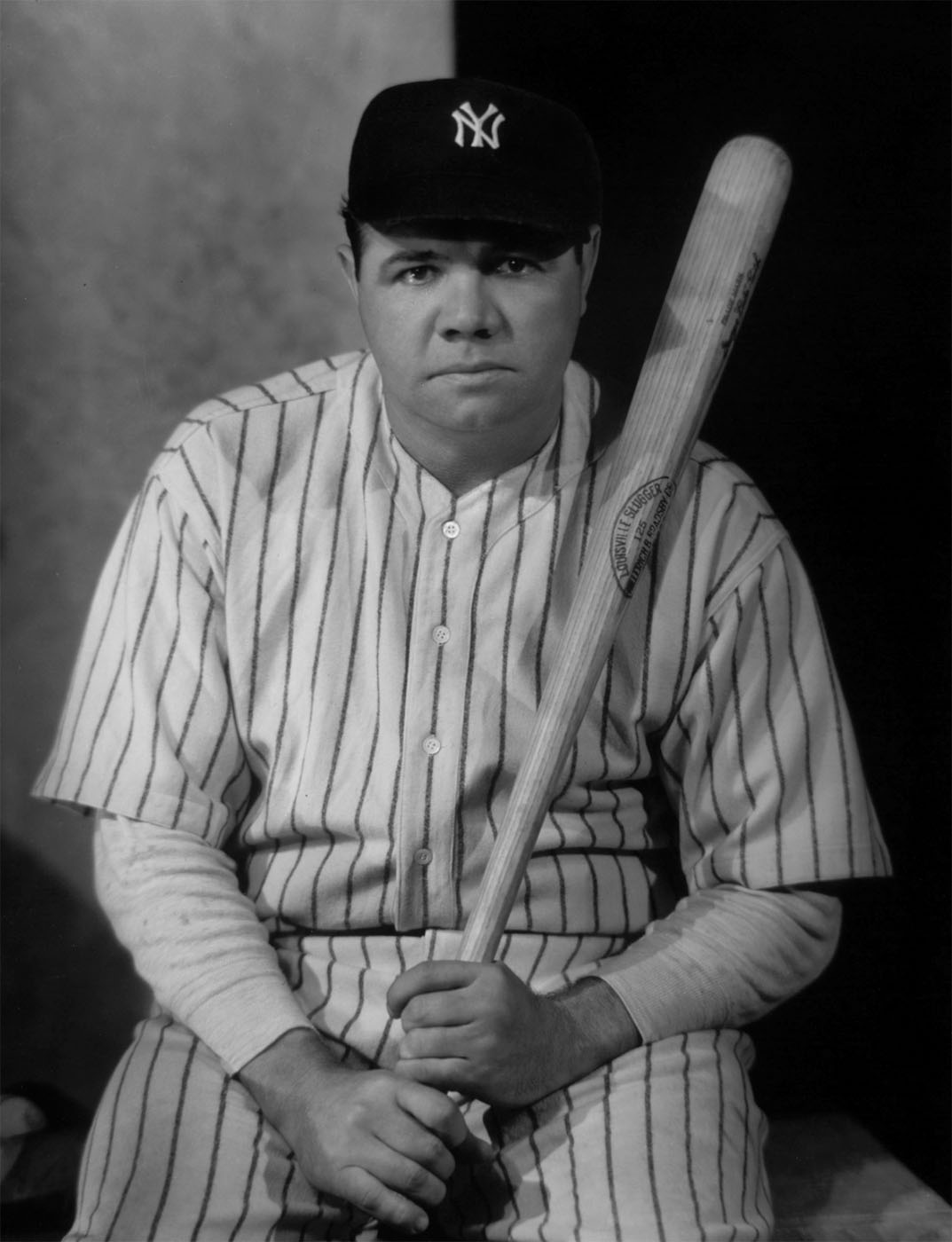
Nickolas Muray (American, 1892-1965) 'Babe Ruth' c. 1927


Nickolas Muray (American, 1892-1965)
Babe Ruth
c. 1927
Gelatin silver print
13 3/8 × 10 7/16″ (33.9 × 26.5cm)
Museum of Modern Art, New York
Gift of Mrs. Nickolas Muray


Berenice Abbott (American, 1891-1991) 'Night View, New York City' 1932


Berenice Abbott (American, 1891-1991)
Night View, New York City (New York at Night)
1932
Silver gelatin print
12 7/8 x 10 9/16″ (32.7 x 26.9cm)
Museum of Modern Art, New York
© 2019 Berenice Abbott/Commerce Graphics


La Casa Encendida
Ronda Valencia, 2 28012 Madrid

Opening hours:
La Casa Encendida is open from Monday to Sunday from 10am to 10pm every day of the year except national and Community of Madrid holidays

La Casa Encendida website

LIKE ART BLART ON FACEBOOK

Back to top

Exhibition: ‘Charting the Canyon: Photographs by Mark Klett and Byron Wolfe’ at Phoenix Art Museum

Exhibition dates: 21st March – 12th July, 2009


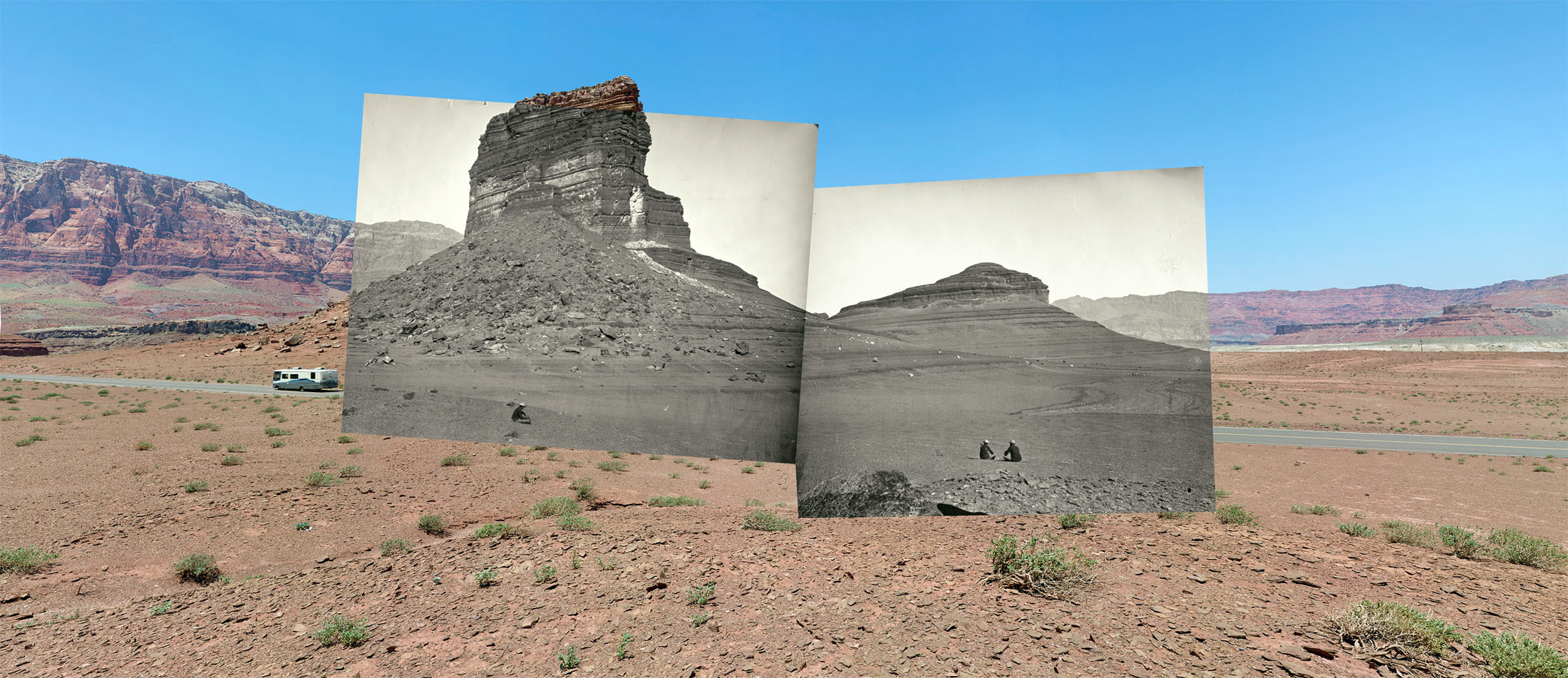
Mark Klett and Byron Wolfe. 'Rock formations on the Road to Lee's Ferry, Arizona' 2008 from the exhibition 'Charting the Canyon: Photographs by Mark Klett and Byron Wolfe' at Phoenix Art Museum, March - July, 2009


Mark Klett and Byron Wolfe
Rock formations on the Road to Lee’s Ferry, Arizona
2008
Digital inkjet print
36″ h x 76″ w

Left inset: William Bell. Plateau North of the Colorado River near the Paris 1872 (courtesy National Archives)
Right inset: William Bell. Headlands North of the Colorado River 1872 (courtesy National Archives)


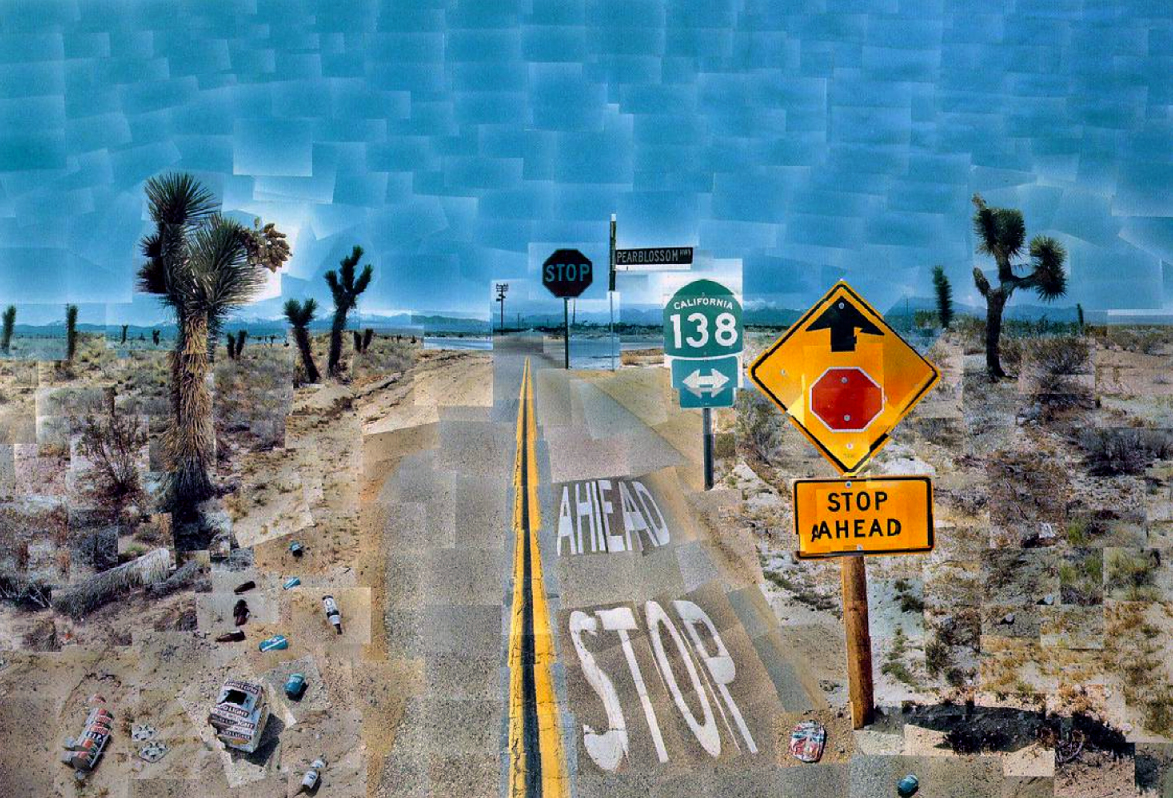
An interesting concept but I’m not entirely sure that the images are successful. Some work better than others. Perhaps it is not necessary for there to be an absolute registration across time and space, the continuation of a horizon line for example. The famous photographic collages by David Hockney are a case in point.

It doesn’t matter when the images were made, whether there is a second, or a century, between compositions. The camera and the artist are always selective, the camera always privileging one view over another view: all images are therefore constructions. Hockney pushes the boundaries of these constructions whereas I don’t think these images do to anywhere near the same extent.

There were some vaguely interesting videos on the Phoenix Art Museum website about the starting point, discovery, process and collaboration for the work which are no longer available. There is one video available on the Klett and Wolfe website.

Dr Marcus Bunyan


Many thankx to Phoenix Art Museum for allowing me to publish the photographs in the posting. Please click on the photographs for a larger version of the image.


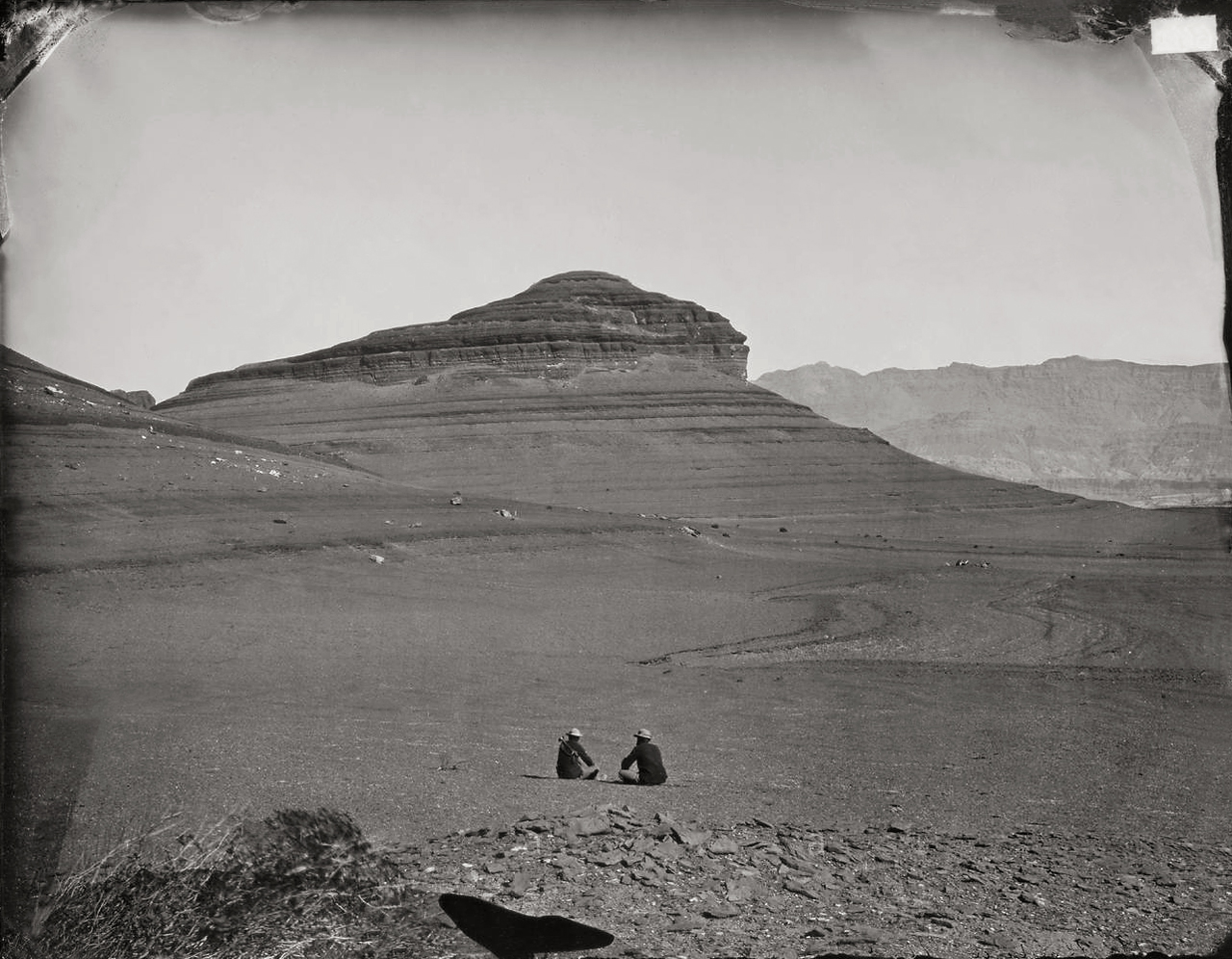
William H. Bell (1830 - January 28, 1910) 'Headlands North of the Colorado River' 1872 from the exhibition 'Charting the Canyon: Photographs by Mark Klett and Byron Wolfe' at Phoenix Art Museum, March - July, 2009


William H. Bell (American, 1830-1910)
Headlands North of the Colorado River
1872
Still Picture Records Section, Special Media Archives Services Division
Courtesy National Archives


Arizona’s Grand Canyon – natural wonder, national park, tourist attraction, sacred land – is perhaps the world’s best “photo op.” The collaborative photographic team of Mark Klett and Byron Wolfe have set out to explore this celebrated place of dramatic beauty, and Phoenix Art Museum is proud to be the first to show a comprehensive look at their powerful, thoughtful, and playful approach to the Grand Canyon.

Drawn from two seasons of fieldwork, Charting the Canyon will include about 30 photographs ranging from a modest 20 by 20-inch print to a panorama nearly 10 feet wide. Mark Klett, a Regents Professor at Arizona State University, and Byron Wolfe, a former student of Klett’s who is now a Lantis’ University Professor teaches at California State University at Chico, have been interested in rephotographing historic images since their collaboration began in 1997.

Now the pair combines their own colour photographs with imagery by 19th-century photographer J. K. Hillers and artist William Holmes and by Ansel Adams and Edward Weston, who worked at the Canyon in the early 20th century. Klett and Wolfe respond to the historic images and the Canyon itself, yielding artworks that reconsider an icon, challenge how we perceive the land, and bring a new perspective to its portrayals.

Charting the Canyon offers visual delights: the humorous layering of a 19th-century drawing with contemporary photographic details, the extension of an Ansel Adams view into a serene panorama, and the illusion of three-dimensions with a stereopticon viewer built for the twenty-first century, among others to be discovered in this unique exhibition.

Text from the Phoenix Art Museum website [Online] Cited 20/04/2009. No longer available online


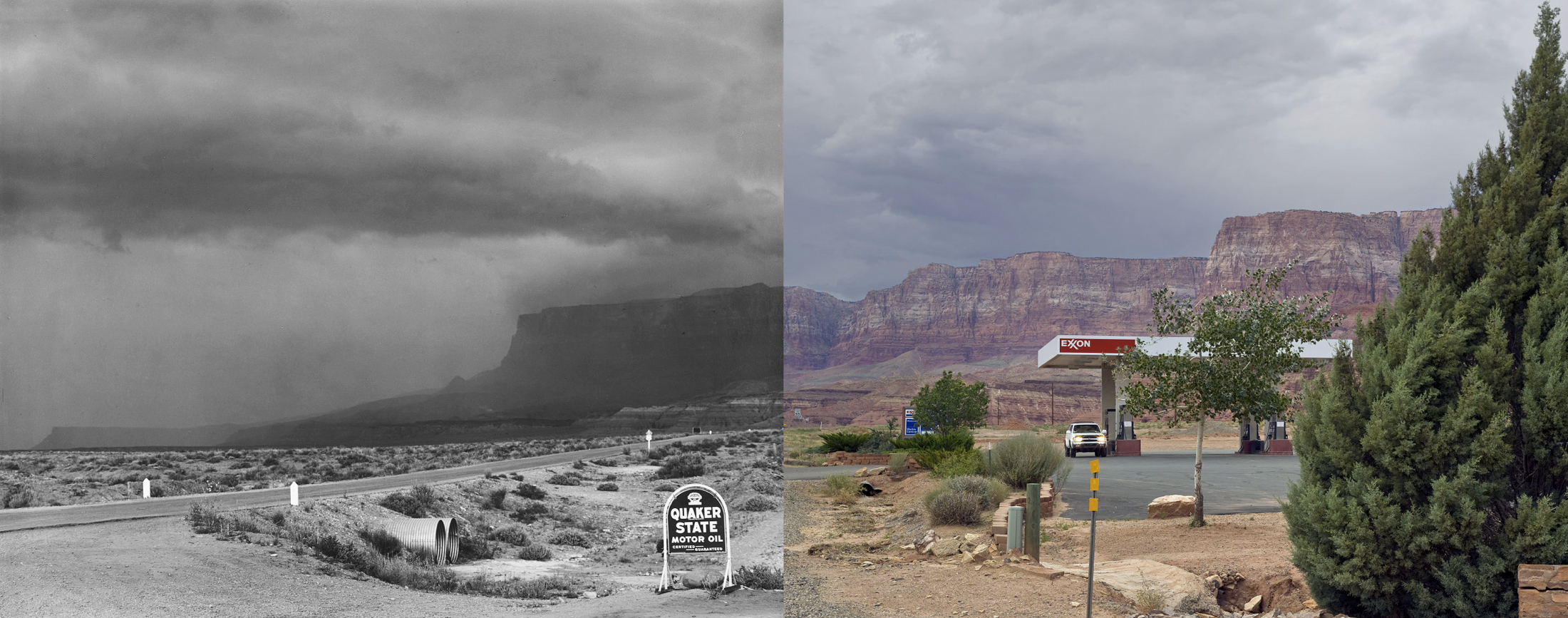
Mark Klett and Byron Wolfe. 'Sixty-six years after Edward Weston's "Storm, Arizona" From the Marble Canyon Trading Post' 2007


Mark Klett and Byron Wolfe
Sixty-six years after Edward Weston’s “Storm, Arizona” From the Marble Canyon Trading Post
2007
Digital inkjet print
16″ h x 38.75″ w

Left: Edward Weston. Storm, Arizona 1941 (courtesy of the Center for Creative Photography, Tucson)


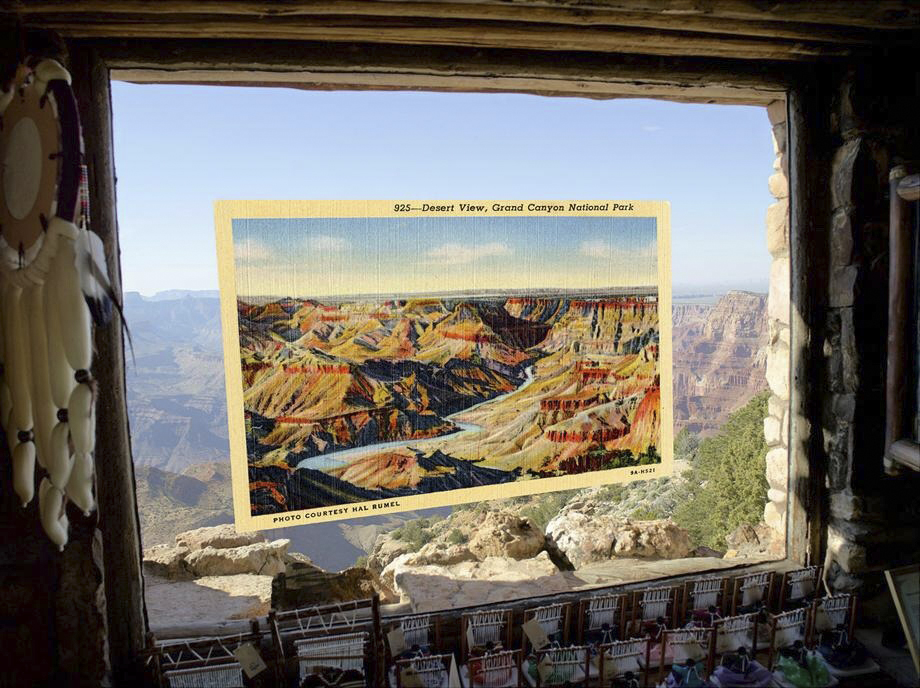
Mark Klett and Byron Wolfe. 'Desert View: from the window of the Watchtower gift shop' 2008


Mark Klett and Byron Wolfe
Desert View: from the window of the Watchtower gift shop
2008


The Grand Canyon – natural wonder, sacred ground, national park, international tourist attraction – is perhaps the world’s best “photo op.” Vivid colours, breathtaking vistas and jaw dropping canyon depths have lured photographers to Northern Arizona for years. A new exhibition, Charting the Canyon: Photographs by Mark Klett and Byron Wolfe on view at Phoenix Art Museum through July 12, 2009, explores this celebrated place of dramatic beauty with large-scale sweeping panoramas that marry 21st century colour photographs with historic drawings and images.

In 2007, Mark Klett, a Regents Professor at Arizona State University, and Byron Wolfe, a former student of Klett’s and now a Lantis’ University Professor at California State University at Chico, headed to the Grand Canyon to re-envision the many images made at the site over the last 150 years. During two summers of field work, they identified the exact locations portrayed in early photographs and drawings. From those geographic points they created new photographs that incorporate the original view. Digital versions of the historic images are inserted within the contemporary photograph, creating combined images that convey the big picture surrounding earlier artists’ depicted view.

Working collaboratively, Klett and Wolfe challenge one another to invent new ways to integrate the historic images they discover. Charting the Canyon reveals their combined invention, offering provocative ways to think about the land, its history and our role in seeing it.

“Many of the things we’re trying to do seemed impossible at first – like merging several views of a scene from different times into a continuous space, or extending one photo’s frame to include spaces from multiple vantage points,” commented Klett. “We’re intentionally using playfulness as a way to stretch ideas, a kind of free form exploration that puts a premium on creative solutions to complex space and time problems.”

“The pleasure the artists experienced in the creative process comes through in their work. Charting the Canyon is a joyful exploration allowing Museum visitors to discover the Grand Canyon in a new and thought-provoking way,” commented Rebecca Senf, Norton Family Assistant Curator of photography, Phoenix Art Museum. “Phoenix Art Museum is proud to be the first to show a comprehensive look at Klett and Wolfe’s powerful, thoughtful and playful images.”

Charting the Canyon includes 26 photographs ranging from a modest 20 by 20-inch print to a panorama 10 feet wide. Exhibition highlights include:
The humorous layering of a 19th-century drawing with contemporary photographic details.
The extension of an Ansel Adams view into a serene panorama.
The pairing of a black-and-white Edward Weston view with a colour image made 66 years later.
The illusion of three-dimensions with a stereopticon viewer built for the 21st century.

Text from Artdaily.org website


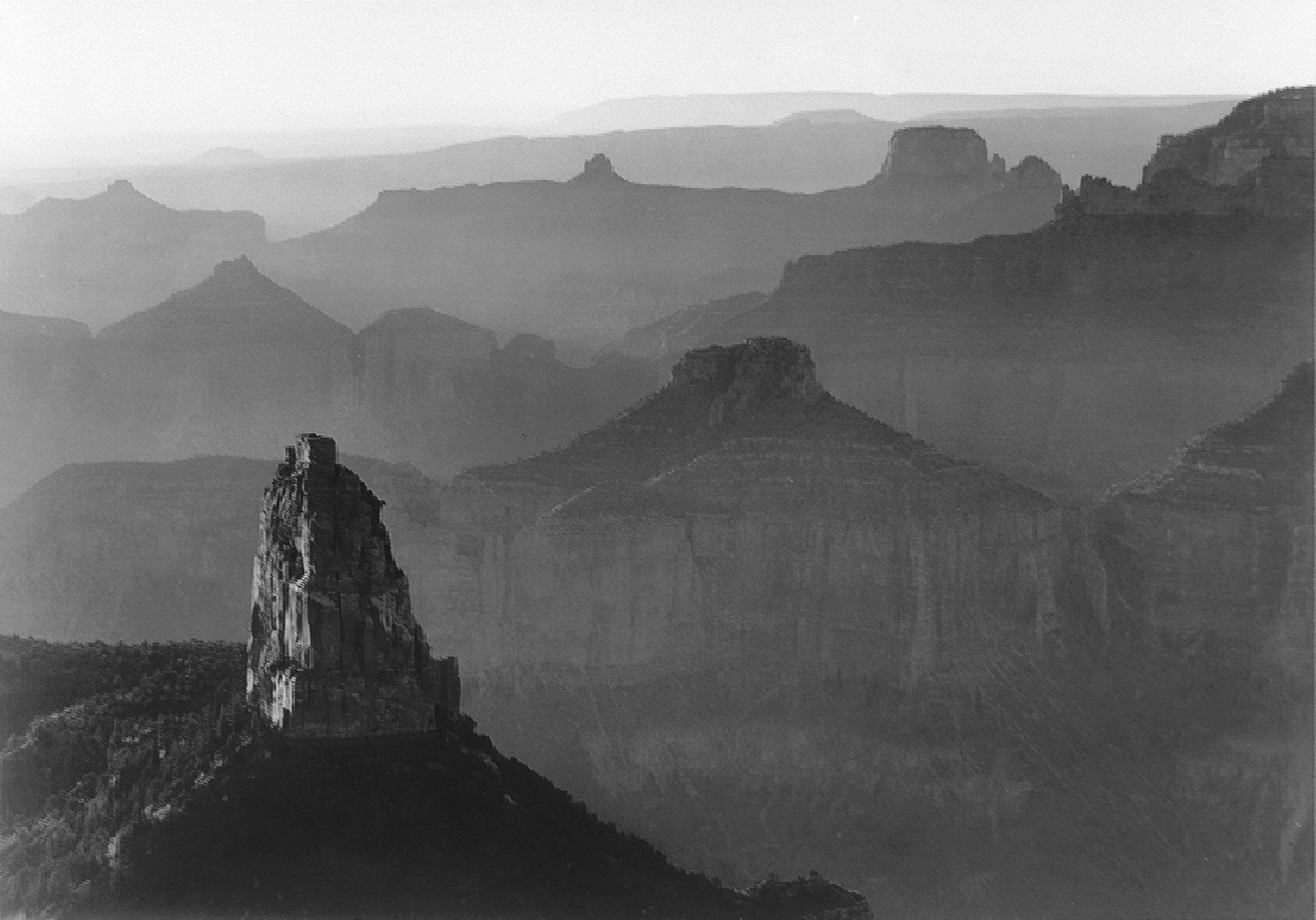
Mark Klett and Byron Wolfe. 'Point Imperial on the Grand Canyon' 2008


Mark Klett and Byron Wolfe
Point Imperial on the Grand Canyon, 50% Ansel Adams, 50% Red Wall Limestone
2008

Left: Ansel Adams. Grand Canyon National Park, Arizona 1941


Ansel Adams (1902-1984) 'Grand Canyon National Park, Arizona' 1941


Ansel Adams (American, 1902-1984)
Grand Canyon National Park, Arizona
1941
Gelatin silver print


Mark Klett and Byron Wolfe. 'Panorama from Hopi Point on the Grand Canyon, made over two days extending the view of Ansel Adams' 2007 


Mark Klett and Byron Wolfe
Panorama from Hopi Point on the Grand Canyon, made over two days extending the view of Ansel Adams
2007

Right: Ansel Adams. Grand Canyon National Park, Arizona 1941 (Courtesy of the Center for Creative Photography, Tucson, AZ)


Ansel Adams (1902-1984) 'Grand Canyon National Park, Arizona' 1941


Ansel Adams (American, 1902-1984)
Grand Canyon National Park, Arizona
1941
Gelatin silver print
Courtesy of the Center for Creative Photography, Tucson, AZ


“We’re intentionally using playfulness as a way to extend ideas, a kind of free-form exploration that puts a premium on creative solutions to complex space and time problems. Many of the things we’re trying to do seemed impossible at first – like merging several views of a scene from different times into a continuous space, or extending one photo’s frame to include spaces from multiple vantage points.”

Klett and Wolfes process of inserting historic views within contemporary photographs, or linking a number of different historic views, emphasises the possibilities of multiple interpretations of a single landscape. If we look at a photograph of the Grand Canyon, we bring to it our own cultural notions, myths, and memories, and read it based on our personal point of view. By bringing together images made throughout time, Klett and Wolfe remind us that any terrain is not only what we see and think about it in this present moment, but it is part of a long evolution of thought and use that includes the past and future, as well. The team’s photographs present time as overlapping layers, much like the stratigraphic rock of the Canyon. This unconventional presentation encourages viewers to see time as a flexible construction.

Text by Rebecca Senf, Assistant Curator of photography, Phoenix Art Museum from the exhibition brochure [Online] Cited 20/04/2009. No longer available online


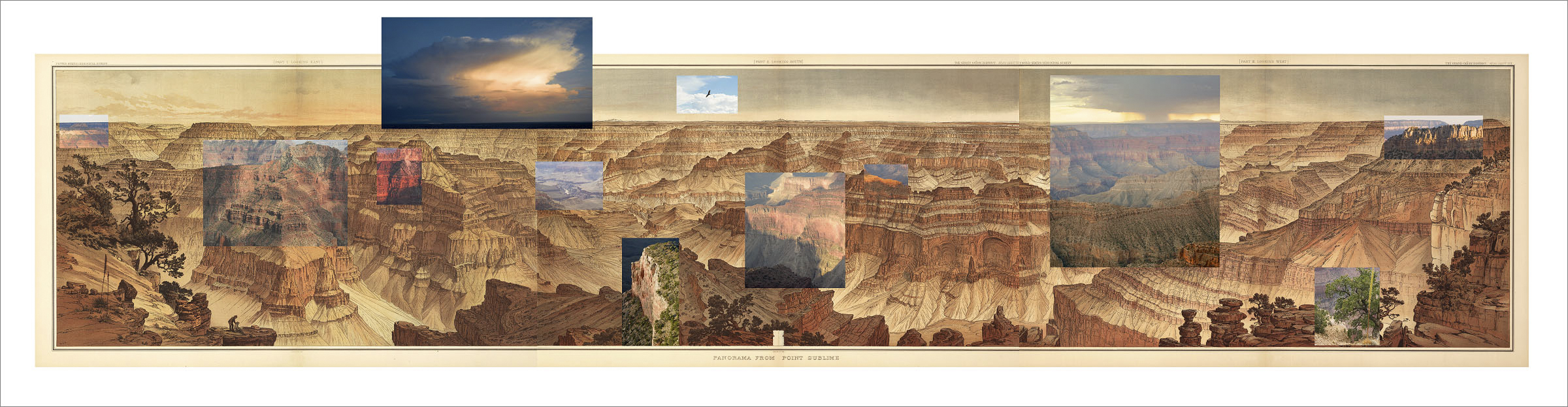
Mark Klett and Byron Wolfe. 'Details from the view at Point Sublime on the north rim of the Grand Canyon, based on the panoramic drawing by William Holmes (1882)' 2007


Mark Klett and Byron Wolfe
Details from the view at Point Sublime on the north rim of the Grand Canyon, based on the panoramic drawing by William Holmes (1882)
2007

Lithograph by William Henry Holmes, 1882. From Clarence Dutton, Atlas to Accompany the Monograph on the Tertiary History of the Grand Cañon District. (Courtesy of the Library of Congress).


David Hockney (English, b. 1937) 'Pearblossom Highway., 11 - 18th April 1986 #2' 1986


David Hockney (English, b. 1937)
Pearblossom Highway., 11-18th April 1986 #2
1986


Phoenix Art Museum
McDowell Road & Central Avenue
1625 N. Central Avenue
Phoenix, AZ 85004

Opening hours:
Monday: Closed
Tuesday: Closed
Wednesday: 10am – 9pm
Thursday – Sunday: 10am – 5pm

Phoenix Museum of Art website

Byron Wolfe website

LIKE ART BLART ON FACEBOOK

Back to top