Exhibition: ‘Lisette Model Retrospective’ at the Albertina Museum, Vienna

Exhibition dates: 30th October, 2025 – 22nd February, 2026

Curators: Walter Moser, head of the department of photography at the Albertina, with assistant curator Nina Eisterer
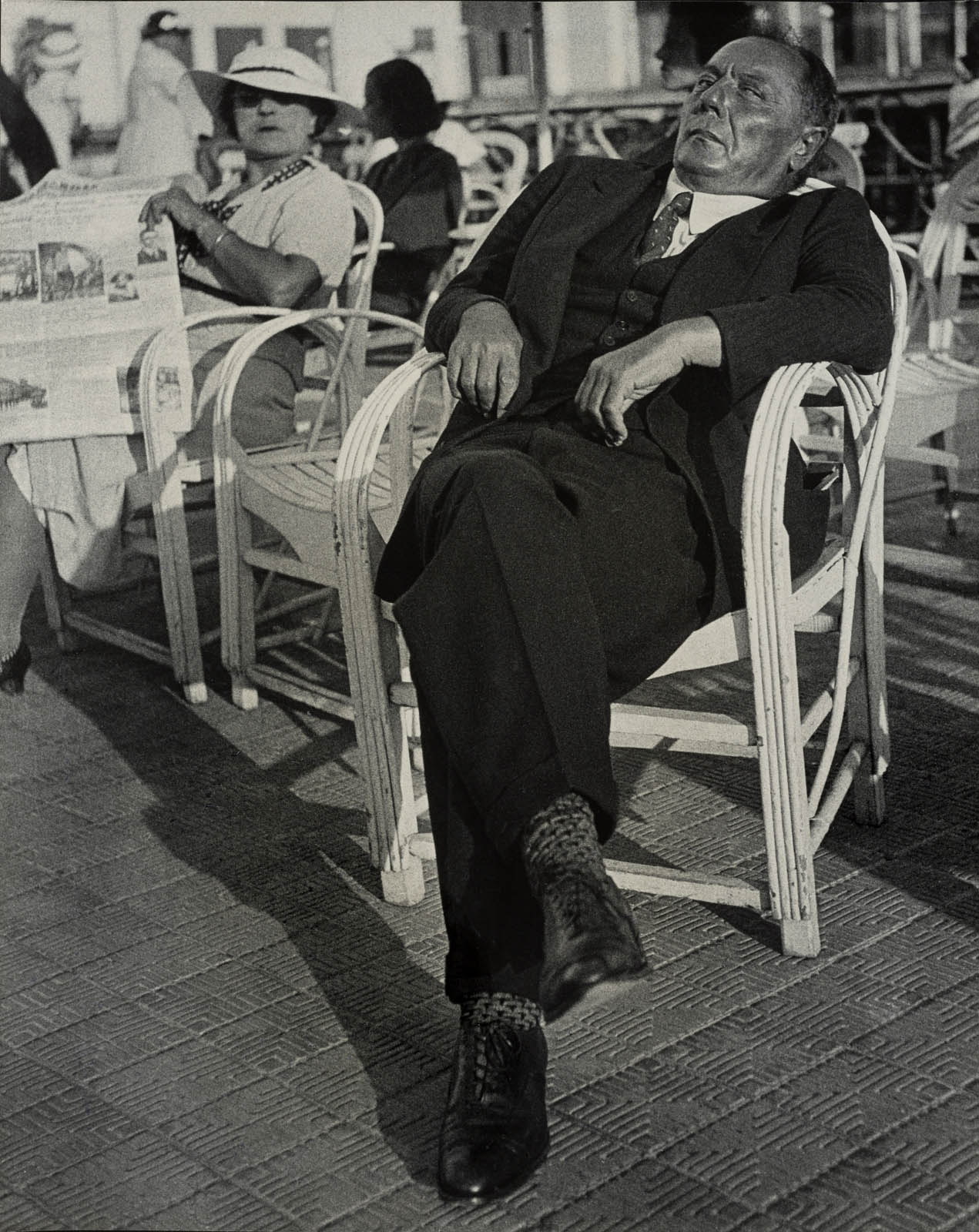
 

Lisette Model (American born Austria, 1901-1983) 'Promenade des Anglais, Nice' 1934 from the exhibition 'Lisette Model Retrospective' at The Albertina Museum, Vienna, October 2025 - February 2026


Lisette Model (American born Austria, 1901-1983)
Promenade des Anglais, Nice
1934
Gelatin silver print
50.7 x 40.4cm
Estate of Gerd Sander, Julian Sander Gallery, Cologne
© Estate of Lisette Model, courtesy of baudoin lebon and Avi Keitelman


From the gut

All the haughtiness of the upper-upper, lower-upper, socialites and high society in Promenade des Anglais, Nice (1934, below) versus all the “colour” and characters of Sammy’s Bar in New York, salt of the earth, dead beat party animals (1940-1944, below).

All the obsequious opulence of the women in Fashion Show, Hotel Pierre, New York (1940-1946, below) versus all the low angle, unbuttoned bulk of a New York bag lady in Lower East Side, New York (1940-1947, below)

Model sure doesn’t pull any punches and, perchance, you know which side of the fence she sits.

Combining social realism and emotional expression Model’s street-life scenes and portraits are shot with a razor sharp mind and eye, honed with emotional insight and social conviction, promoting “a fierce attack on the bourgeoisie of the time.” These images are shot from the gut, felt in the gut! Oooof! Kapow!

This philosophical, libertarian vision is grounded in the everydayness of working people, not in men “who sit at desks as large as thrones, who gather in solemn hemicycles, in splendid and severe seats…”

Her Promenade des Anglais photographs are incisive, cutting to the marrow, evidencing a piercing, core-level truth about the nature of power, money, humility, humanity. Knowing exactly the story she wanted to tell, Model cropped her negatives in the darkroom to get the desired, constructed photographs of the elite, this promenade of the privileged. That she passed on her wisdom to Diane Arbus is only to our benefit.

Model’s photographs in this series are more biting, satirical and oblique than those of Arbus. Direct in one way (in the placement of the camera in front of the subject) but oblique in another … in the asymmetrical placement of the figures within the picture plane, in the sly acknowledgement (or not) and resentment of the camera by the subject. Conversely, her photographs of people in nightclubs, jazz performers and the socially disadvantaged are humanist photographs of the highest order, unorthodox musical compositions that sing with light, movement, and life much more so than the square, formal attributes of the Arbus.

God bless Lisette Model for her glorious irreverence and musical lyricism.

Dr Marcus Bunyan


Many thankx to The Albertina Museum for allowing me to publish the photographs in the posting. Please click on the photographs for a larger version of the image.


“As long as man exploits man, as long as humanity is divided into masters and servants, there will be neither normality nor peace. The reason for all the evil of our time is here. Do you see these? Severe, double-breasted, elegant men who get on and off airplanes, who run in powerful cars, who sit at desks as large as thrones, who gather in solemn hemicycles, in splendid and severe seats: these men with the faces of dogs or of saints, of hyenas or eagles, these are the masters.”


Pier Paolo Pasolini


Model’s libertarian philosophy is not easy to classify… it is often stuck in the approximation of street photography… but photography, when it is great, is one! and one only!… Genres only serve to sink it into the language of commerce! The lopsided shots, the deep blacks, the stellar whites… beaded with emotional uniqueness… see the human being as an end and never as a means… they invite us to think that justice is inseparable from beauty, it is a way of doing things well, like a chair-setter, a coalman, or a bricklayer… to flee from the arrogance, imitation, and contempt that accompany social codifications… what is beautiful is naturally right… because photography is not just a linguistic quest, but precisely as a linguistic quest, it is a philosophical vision… that respects no barriers or emulates the gods… it is an original, archetypal desire, that takes precedence over everything and carries it as the absolute value of beauty and justice!


Pino Bertelli. “Lisette Model. Sulla fotografia del disinganno,” on the Phocus Magazine website Nd [Online] Cited 02/02/2026. Translated from the Italian by Google Translate. Used under fair use conditions for the purposes of education and research
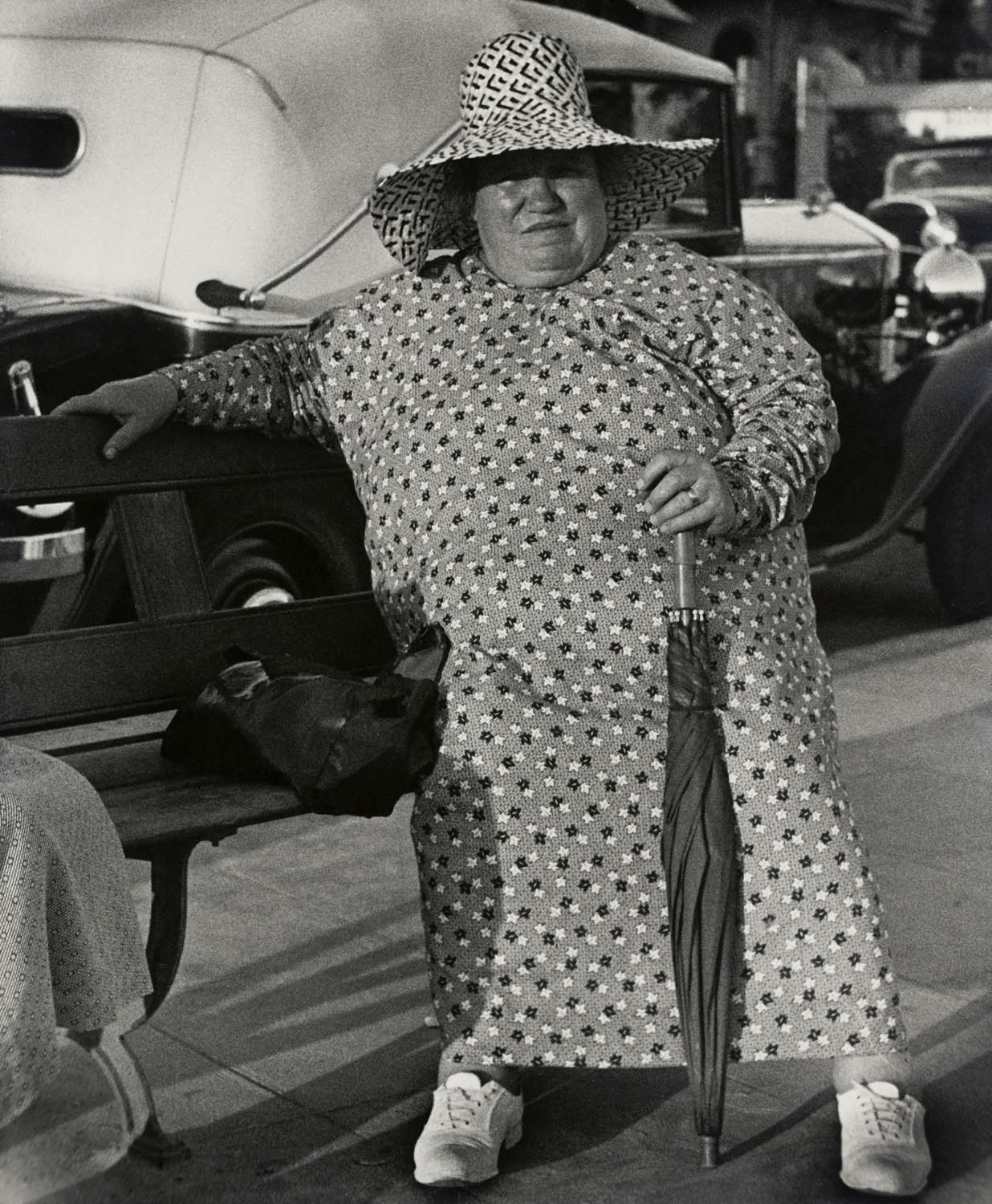


Lisette Model (American born Austria, 1901-1983) 'Promenade des Anglais, Nice' 1934


Lisette Model (American born Austria, 1901-1983)
Promenade des Anglais, Nice
1934
Gelatin silver print
43.2 x 35.4cm
The ALBERTINA Museum, Vienna
© Estate of Lisette Model, courtesy Lebon, Paris /
Keitelman, Brussels


“Visiting her mother in Nice in 1934 Model took her camera out on the Promenade des Anglais and made a series of portraits which to this day are among her most widely reproduced and widely exhibited images. With them Model declared her trademark style: Close-up, biting, satirical – almost like photographic political cartoons. In a nice bit of art history sleuthing, Thomas discovered that this series was published in the communist periodical Regards, a publication led by Ehrenburg, Gide, Gorky and Malreaux in 1935. Model, she says, never denied having published her work in Europe, but neither did she ever precisely acknowledge having done so… Thomas also relates Model’s style to the style of images published in Regards and what was being shown in small galleries – that approach, almost mocking, surely exposing, with the photographer or artist clearly separate/different if not superior from the subject – was in the air. Model perfected it, but she didn’t invent it.”

Elsa Dorfman. “Ann Thomas on Lisette Model,” on the AMERICANSUBURB X: THEORY website, June 14, 2010 [Online] Cited 03/02/2026. Used under fair use conditions for the purposes of education and research
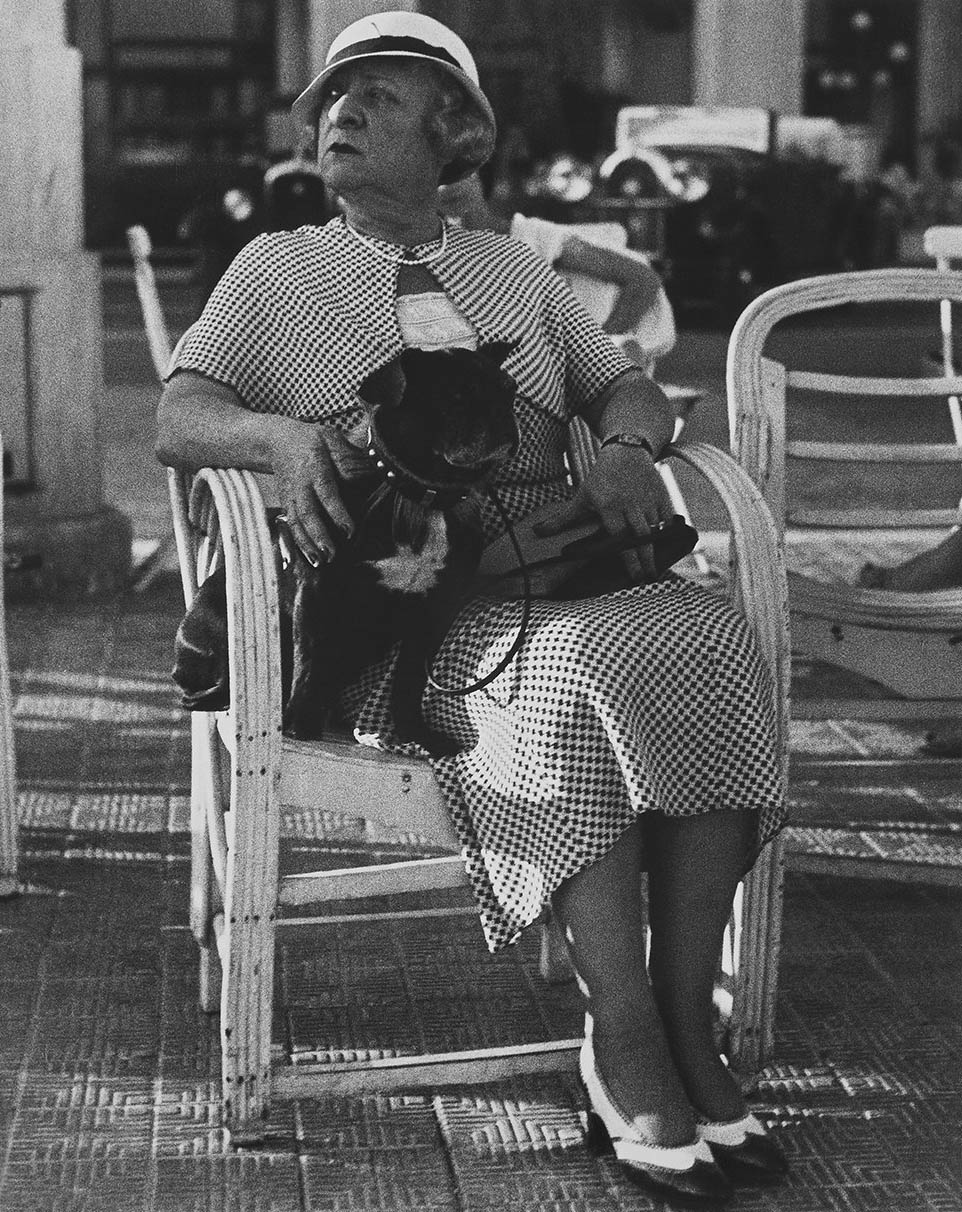
 

Lisette Model (American born Austria, 1901-1983) 'Promenade des Anglais, Nice' 1937 from the exhibition 'Lisette Model Retrospective' at The Albertina Museum, Vienna, October 2025 - February 2026


Lisette Model (American born Austria, 1901-1983)
Promenade des Anglais, Nice
1937
Gelatin silver print
50.7 x 40.4cm
Estate of Gerd Sander, Julian Sander Gallery, Cologne
© Estate of Lisette Model
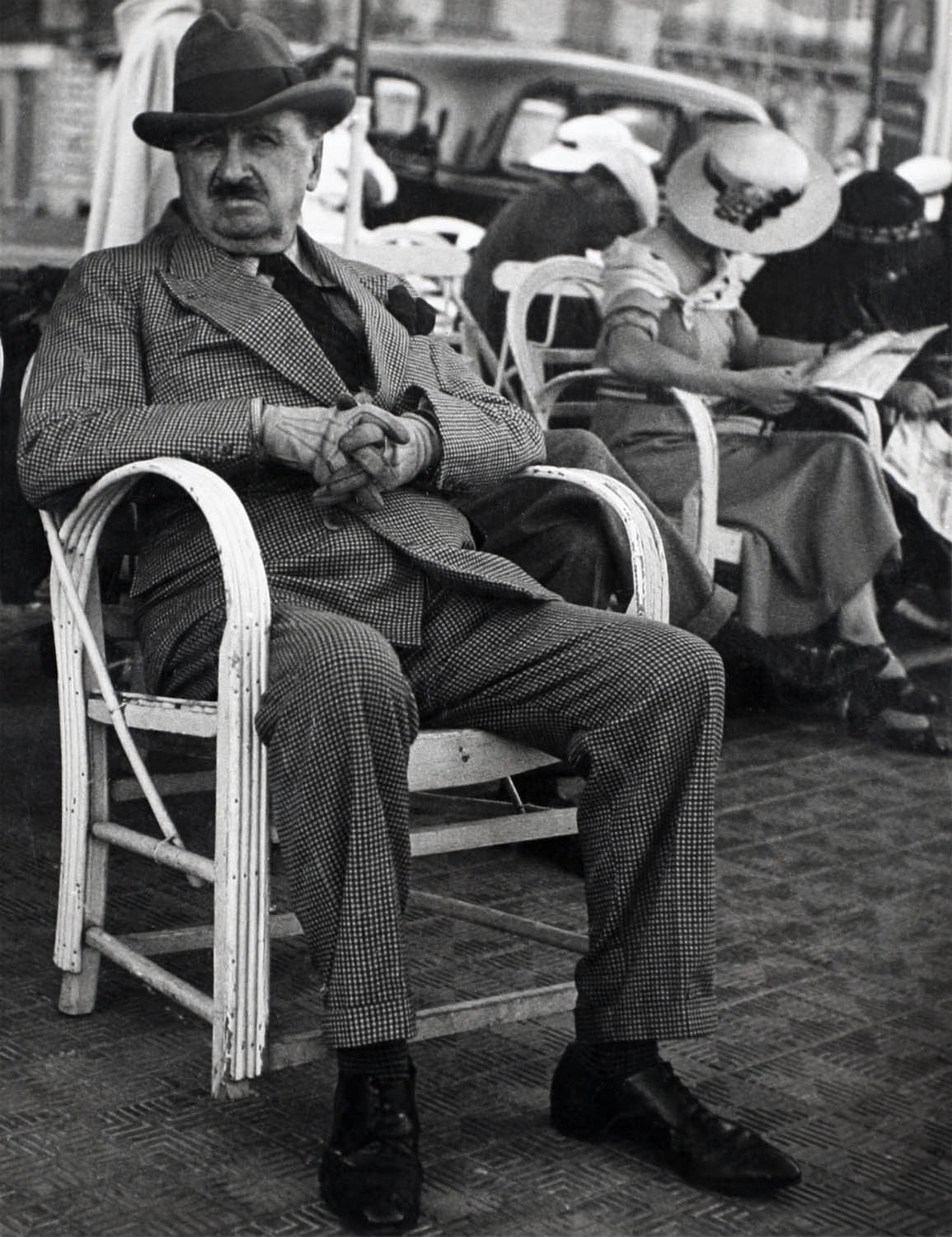
 

Lisette Model (American born Austria, 1901-1983) 'Promenade des Anglais, Nice' 1937


Lisette Model (American born Austria, 1901-1983)
Promenade des Anglais, Nice
1937
Gelatin silver print
50.7 x 40.4cm
Estate of Gerd Sander, Julian Sander Gallery, Cologne
© Estate of Lisette Model


Lisette Model (1901-1983), born into a Viennese Jewish family, is regarded as one of the 20th century’s most influential photographers. This ALBERTINA exhibition presents a broad retrospective covering her most important groups of works created between 1933 and 1959. Alongside iconic photographs such as Coney Island Bather and Café Metropole, the selection will also include seldom-seen works.

Model, following her emigration to New York in 1938, quickly rose to prominence with her pictures for magazines such as Harper’s Bazaar showing facets of urban life: the poverty of the Lower East Side, the upper class at their leisure pursuits, and night life at bars and jazz clubs. Model went on to become an influential teacher during the McCarthy Era. The exhibition features the first-ever public presentation of the original draft of her 1979 monograph, a classic of photo book history.

Text from The Albertina Museum website
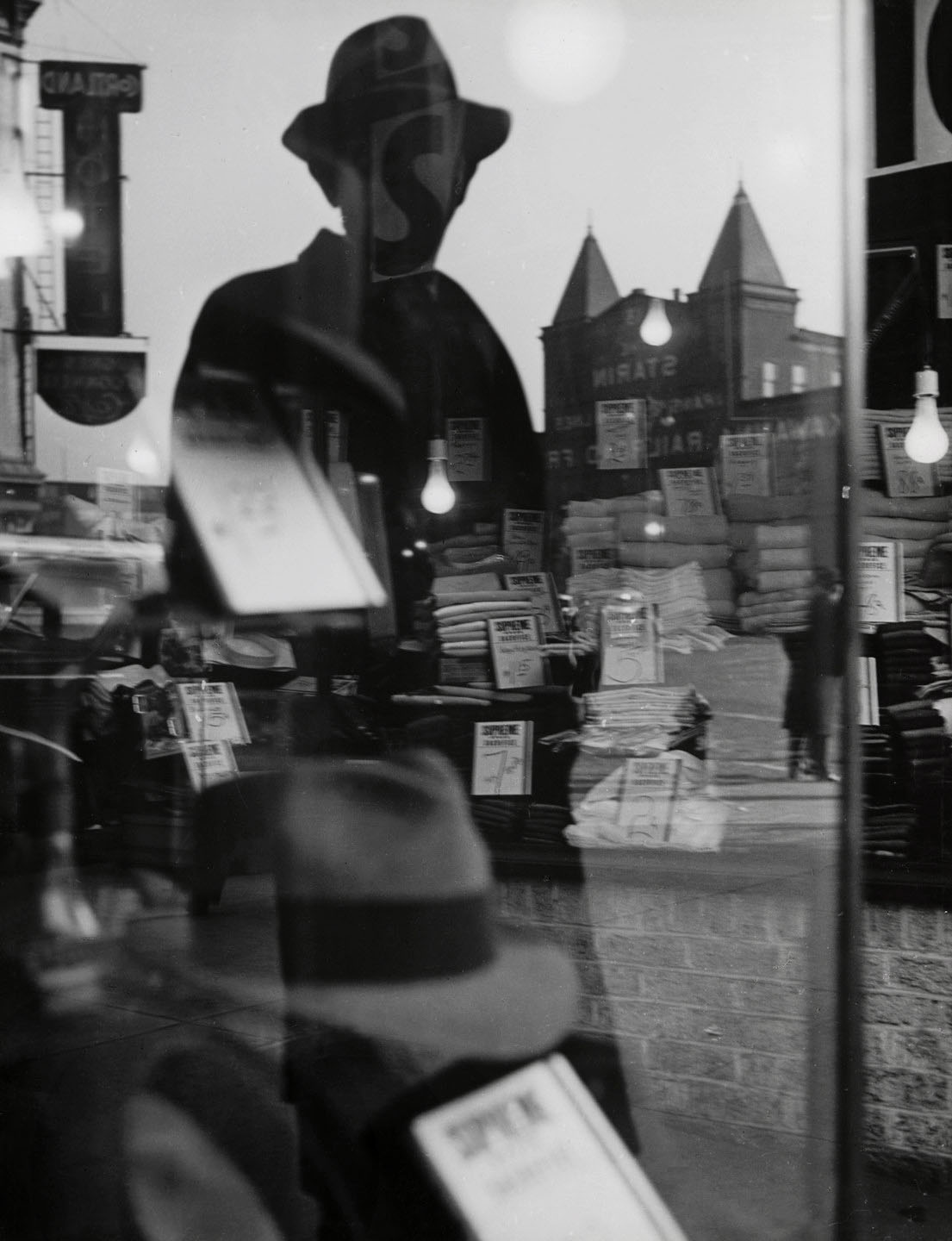
 

Lisette Model (American born Austria, 1901-1983) 'First Reflection, New York' 1939-1940, printed 1976-1981


Lisette Model (American born Austria, 1901-1983)
First Reflection, New York
1939-1940, printed 1976-1981
Gelatin silver print
Estate of Gerd Sander, Julian Sander Gallery, Cologne
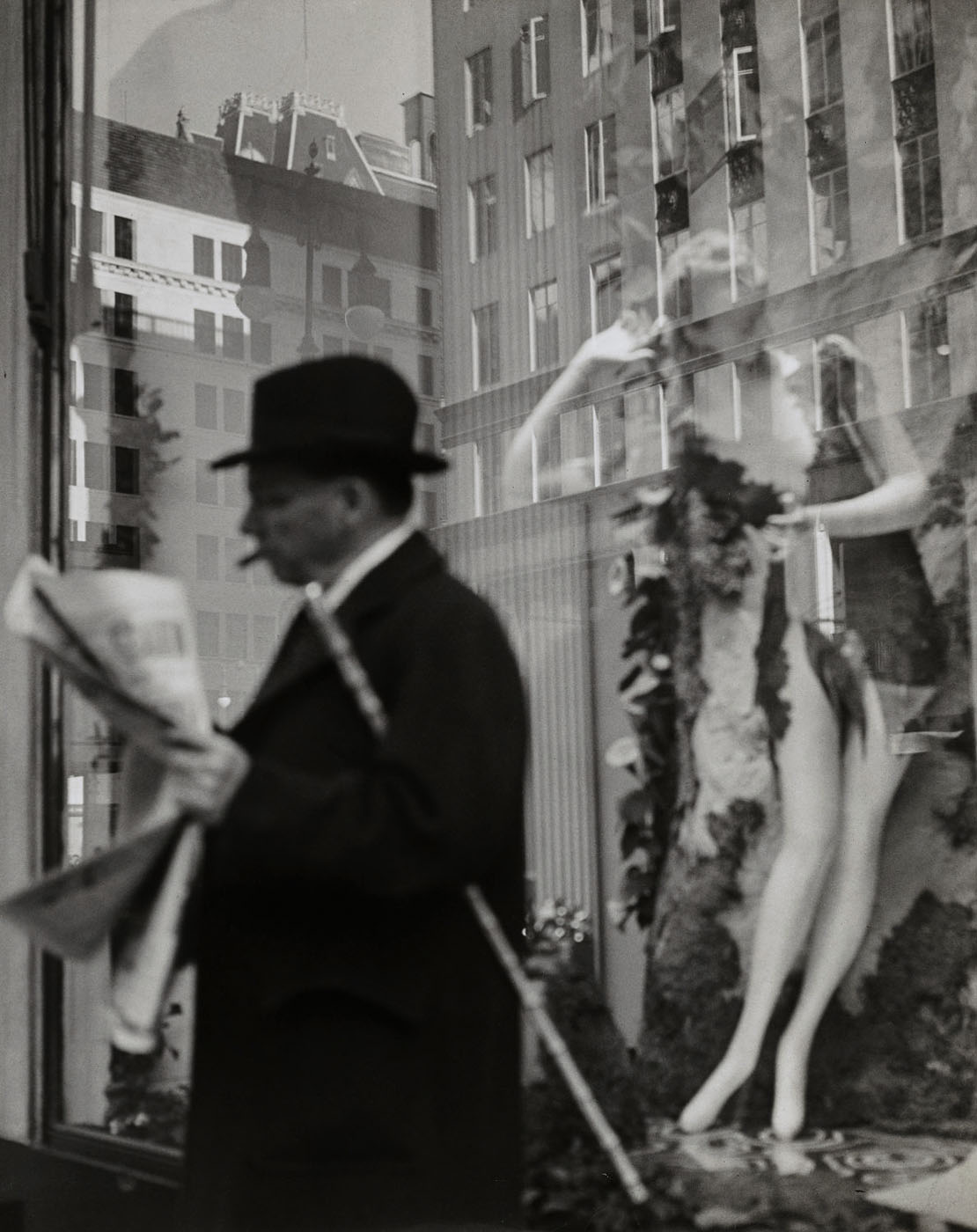
 

Lisette Model (American born Austria, 1901-1983) 'Window, Bonwit Teller, New York' 1939-1940, printed 1976-1981


Lisette Model (American born Austria, 1901-1983)
Window, Bonwit Teller, New York
1939-1940, printed 1976-1981
Gelatin silver print
Estate of Gerd Sander, Julian Sander Gallery, Cologne
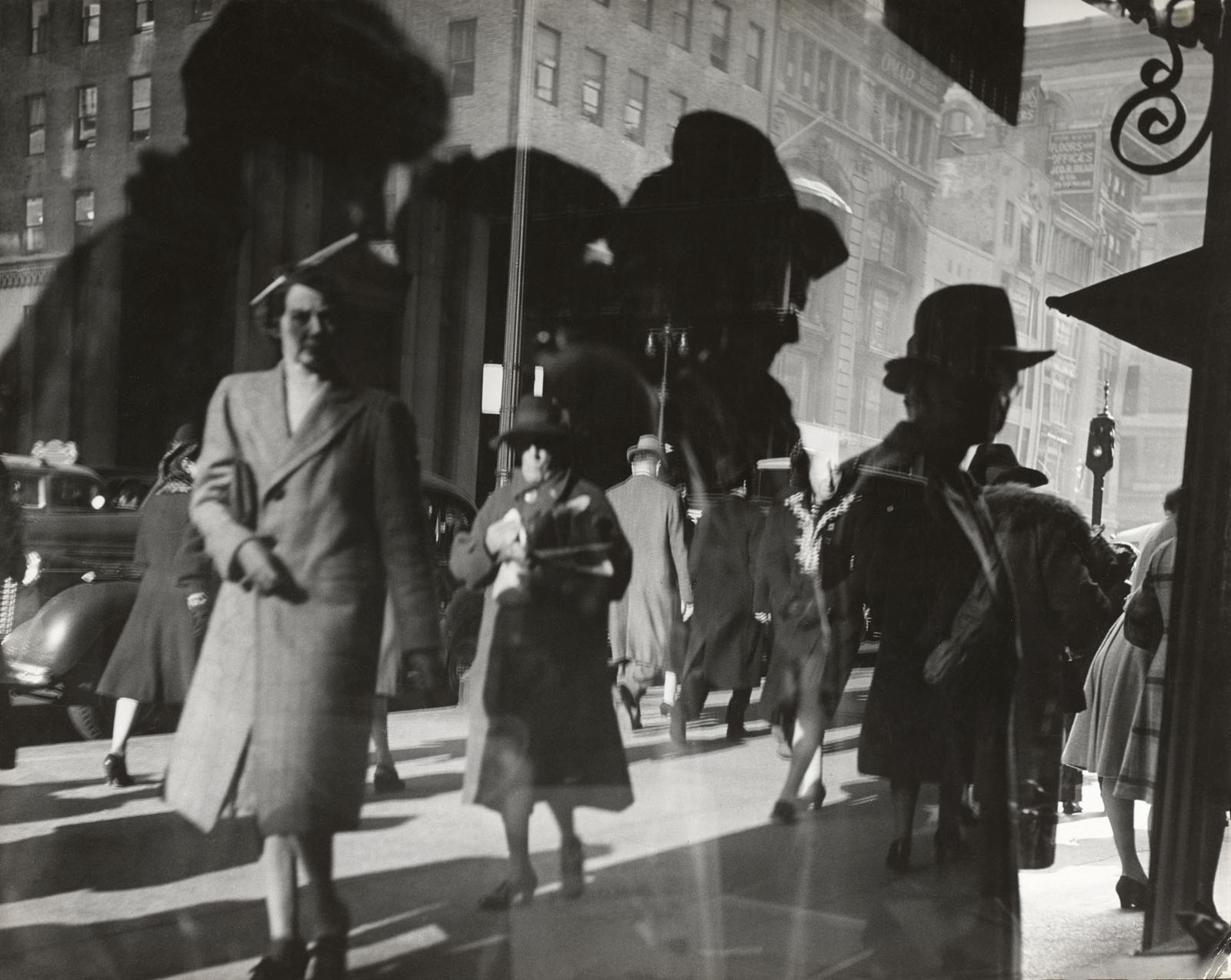
 

Lisette Model (American born Austria, 1901-1983) 'Reflections, New York' 1939-1945


Lisette Model (American born Austria, 1901-1983)
Reflections, New York
1939-1945
Gelatin silver print
26.5 x 33.4cm
The ALBERTINA Museum, Vienna
© Estate of Lisette Model, courtesy Lebon, Paris / Keitelman, Brussels
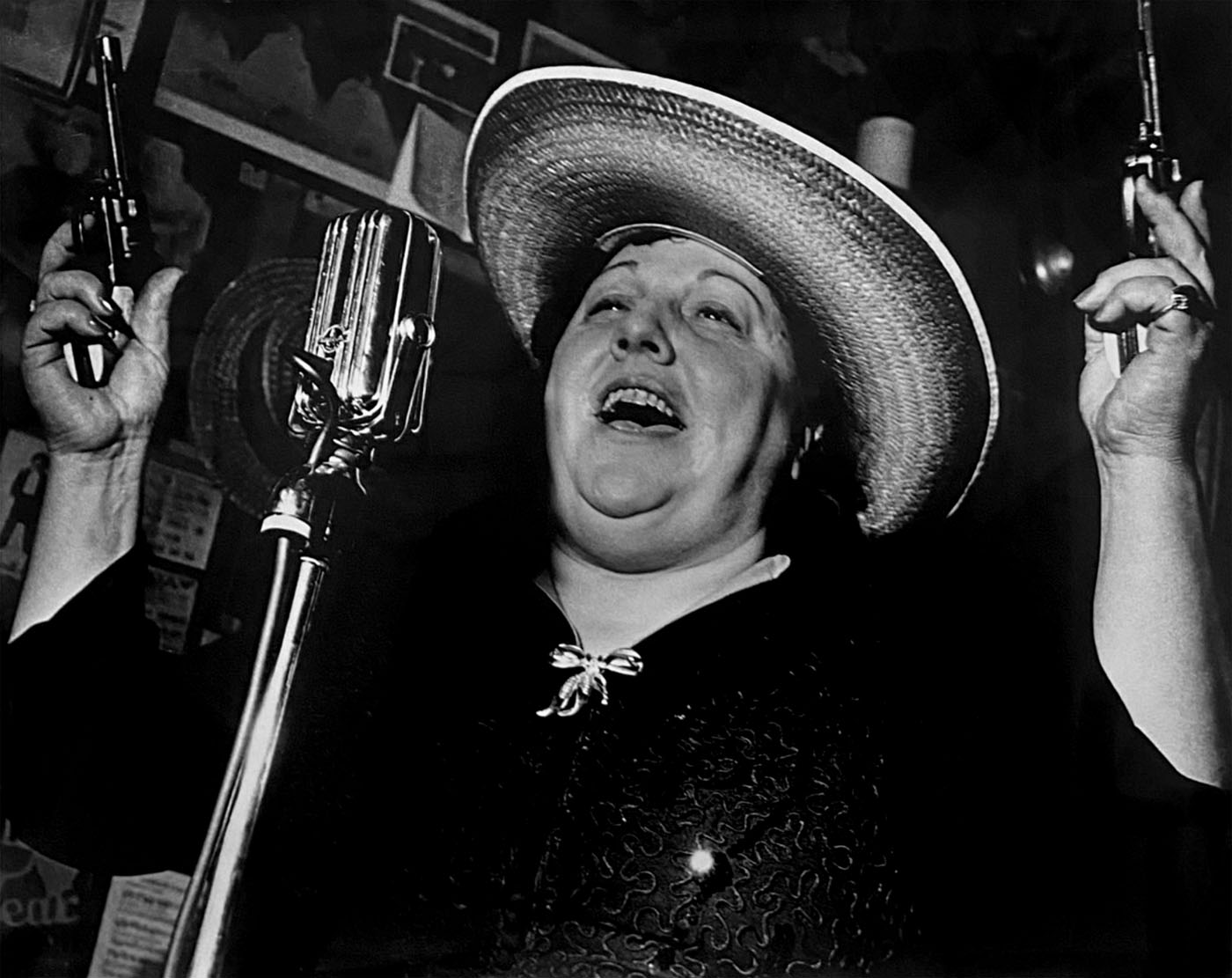
 

Lisette Model (American born Austria, 1901-1983) 'Singer, Sammy's Bar, New York' c. 1940


Lisette Model (American born Austria, 1901-1983)
Singer, Sammy’s Bar, New York
c. 1940
Gelatin silver print
© Estate of Lisette Model
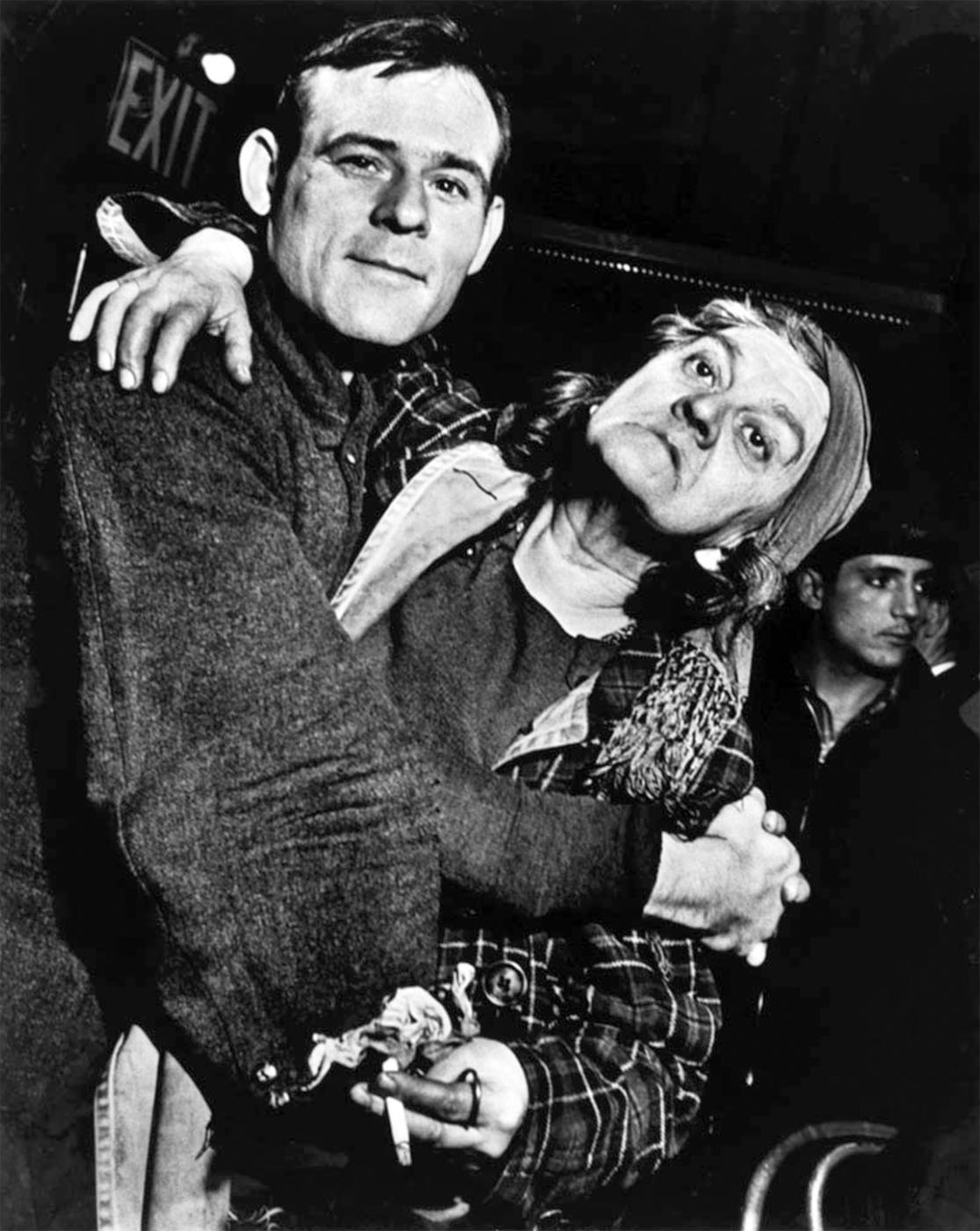
 

Lisette Model (American born Austria, 1901-1983) 'Couple Dancing' 1940


Lisette Model (American born Austria, 1901-1983)
Couple Dancing
1940
Gelatin silver print
© Estate of Lisette Model
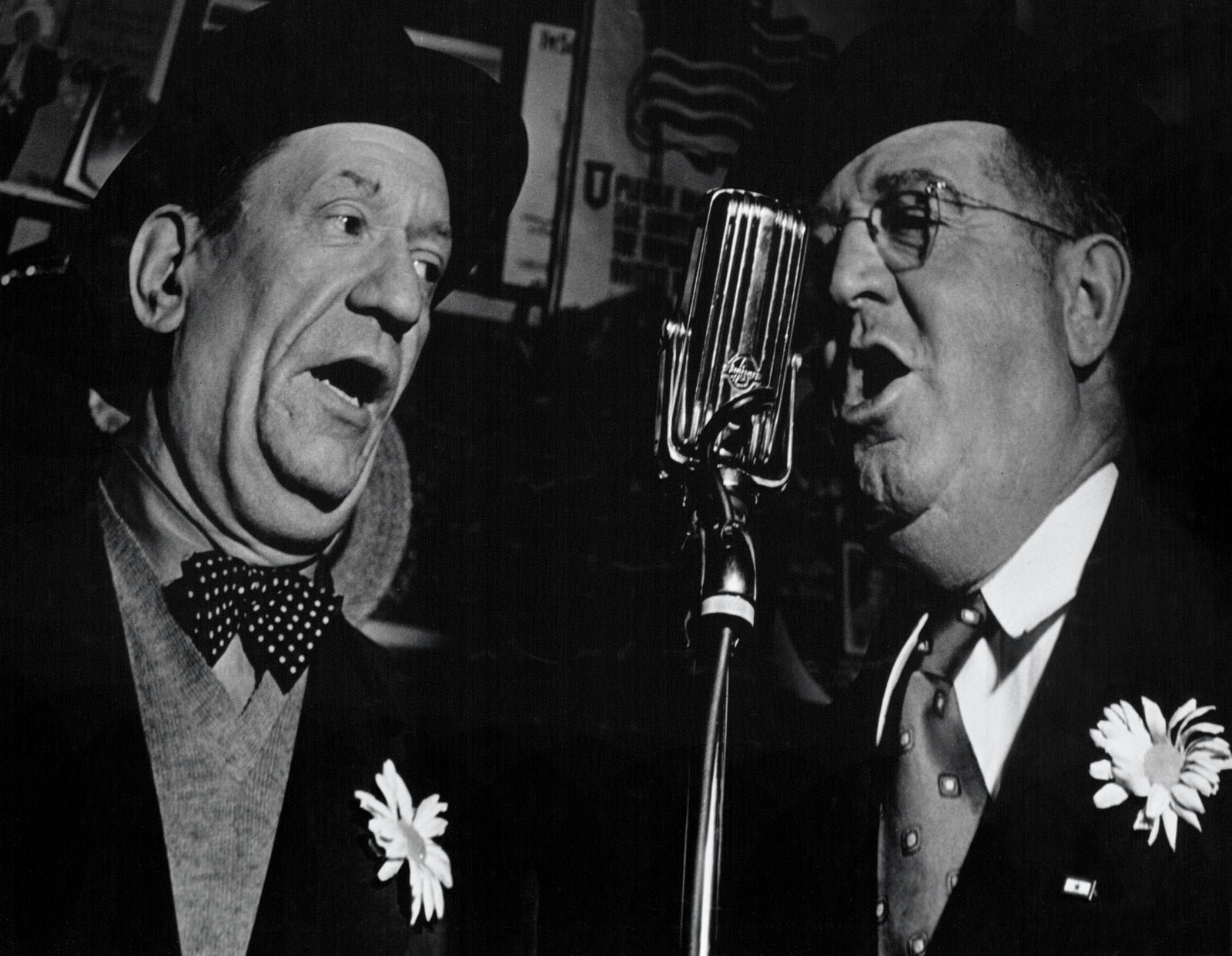
 

Lisette Model (American born Austria, 1901-1983) 'Sammy’s Bar, New York' 1940-1944


Lisette Model (American born Austria, 1901-1983)
Sammy’s Bar, New York
1940-1944
Gelatin silver print
37.8 x 49cm
The ALBERTINA Museum, Vienna – Permanent Loan Austrian Ludwig Foundation for Arts and Science
© Estate of Lisette Model, courtesy Lebon, Paris / Keitelman, Brussels


Lisette Model (American born Austria, 1901-1983) 'Sammy's' 1940-1944


Lisette Model (American born Austria, 1901-1983)
Sammy’s
1940-1944
Gelatin silver print
© Estate of Lisette Model


Born into a Viennese family with Jewish roots, Lisette Model (1901-1983) is considered one of the most internationally influential female photographers. The exhibition at the ALBERTINA Museum is the most comprehensive presentation of the artist in Austria to date and brings together her most important groups of works from 1933 to 1959. In addition to iconic photographs such as Coney Island Bather and Singer at the Metropole Café, the exhibition also includes lesser-known works that have never been shown before.

While Lisette Model initially pursued a musical education, it was only in France, where she lived from the mid-1920s, that she found her way to photography: in 1934, the self-taught photographer took her revealing series of portraits of rich idlers in Nice, which caused a sensation as a biting social critique in the heated political climate of the time. After Model emigrated to New York in 1938, she quickly made a name for herself in the vibrant art scene as a freelance photographer for style-setting magazines such as Harper’s Bazaar. She photographed the diverse and contradictory facets of urban life: Model showed the poor population of the Lower East Side district in unsparing shots, the upper class at their pleasures in confrontational portraits and the vibrant nightlife in bars and jazz clubs in dynamic series. In the late 1940s and 1950s, she created extensive groups of works outside New York.

The photos of the west coast of the USA or Venezuela are characterised by a melancholy and gloomy mood without Model losing sight of social conditions. Due to political reprisals during the McCarthy era, Model began her second, enormously influential career as a teacher. After decades of effort, the publishing house Aperture published her first monograph in 1979. The exhibition Lisette Model presents the original design of this publication, which is now a classic among photo books, for the first time.

Lisette Model

Lisette Model (1901-1983) brought about a sudden change in photography with her spectacularly direct pictures. Her immediate, humorous, frequently confrontational, yet sometimes also empathetic style of representation revolutionised traditional documentary photography. Her pictures of street-life scenes and portraits combine social realism and emotional expression: “Shoot from the gut!” was her famous credo. This retrospective brings together Model’s most important groups of works from her nearly thirty-year career, from 1933 to 1959, including works that have never been on view before.

Lisette Model was born as Elise Amelie Felicie Stern (Seybert) into an upper class Viennese family with Jewish roots in 1901. She initially pursued a musical education and from 1919 to 1921 attended courses taught by composer Arnold Schönberg at the progressive Schwarzwald School, which had been founded by Eugenie Schwarzwald. Her contact with Schönberg proved formative for Model’s artistic work. After her father’s death, Lisette Model, together with her mother and sister, moved to France in 1926, where she discovered photography. In 1934 she shot her first extensive portrait series of wealthy idlers in Nice, which caused a furor for betraying social criticism in the heated political climate of the time.

Having emigrated to New York in 1938, Model quickly made a name for herself in the art scene as a freelance photographer for such influential magazines as Harper’s Bazaar. She photographed the contrasts of urban life: in unsparing images, Model presented the impoverished population of the Lower East Side; in scathing portraits, she depicted the upper classes indulging in their pleasures; and in a number of dynamic series, she captured the pulsating nightlife of the metropolis. In the late 1940s and 1950s she created her first series of works outside New York. Due to political reprisals during the McCarthy era, Model’s artistic work stagnated. She embarked on an influential career as a teacher, shaping an entire generation of photographers, including Larry Fink, Diane Arbus, and others.

France

In 1926, Lisette Model moved to France, where she continued her vocal training, which she was forced to discontinue abruptly due to voice problems. In 1933 she turned to photography instead. The threatening political situation in Europe made it necessary for her to learn a profession, and photography offered itself as a modern field of activity especially for women. Model’s sister Olga, a trained photographer, and the artist Rogi André provided important inspiration, including the momentous advice to photograph only what aroused her passionate interest.

The economic crisis and the rise of fascism went hand in hand with a debate among committed left-wing artists about documentary photography. The central question was to what extent photography could expose social injustices and serve as a weapon in social conflicts. It is unclear how closely Model followed these debates; in later years, she remained persistently silent on the subject. Her early photographs from Paris clearly reveal a socially critical approach. Going about her work with distinct directness, she photographed sleeping homeless people and blind beggars, whom she characterised as victims of social circumstances through their bent bodies.

In July 1934, Lisette Model used a Rolleiflex to photograph a series of portraits of wealthy idlers on the Promenade des Anglais in Nice. It was synonymous with glamour and elite tourism and a popular motif at the time. Yet Model portrayed her subjects as caricatures through their facial expressions, postures, and gestures. The narrow cropping of the motifs suggests that the photographer was in close proximity to her subjects, who look condescendingly into the camera. In fact, however, Model achieved this effect in the darkroom, where she selected radically novel perspectives from the negatives.

Regards

Although Lisette Model was only at the beginning of her career, the respected communist magazine Regards published her photographs from the series Promenade des Anglais in 1935. The layout of the article juxtaposed Model’s portraits with an image of a female worker with a fishing net. The accompanying text also embeds the photographs in the ideological rhetoric of class struggle: “The Promenade des Anglais is a zoological garden where the most abominable specimens of the human species lounge in white armchairs. Their faces betray boredom, condescension, impertinent stupidity, and at times malice. These rich people, who spend most of their time dressing, adorning themselves, manicuring their nails, and applying makeup, fail to conceal the decadence and immeasurable emptiness of bourgeois thinking.”

Against the backdrop of the repressive climate of the McCarthy era in the 1950s, Lisette Model would later tone down the political content of her images from Nice. Instead, she emphasised the humour and her intuitive approach to portraiture in public spaces.

New York

In October 1938, Lisette Model emigrated to New York with her husband Evsa Model, a Jewish-Russian painter. Her first series shot there reveal her great fascination with the metropolis. The work Reflection, which makes use of reflections in shop windows, merges motifs and spaces to create an enigmatic collage. For the Running Legs photographs, Model did not point her camera upwards at the skyscrapers as usual, but looked at the feet of passersby at street level. Model experienced New York’s hectic and consumer-oriented culture as ambivalent: the dark shadows in the windows of the department stores seem threatening, and the dense crowds of legs have a claustrophobic effect. In portraits of people on Fifth Avenue and Wall Street photographed from below, Model highlights the arrogance of the pedestrians rushing by.

Shortly after her arrival in New York, Lisette Model attracted the attention of several key figures in the art and media world. Her contacts with Ralph Steiner, editor of the magazine PM’s Weekly, and Alexey Brodovitch, the legendary art director of Harper’s Bazaar, proved momentous. In 1941, Steiner published Model’s biting photographs of the Promenade des Anglais in Nice under the provocative title “Why France Fell” as an explanation for the country’s defeat in World War II. Model’s first commission for Harper’s Bazaar took her to the popular leisure destination of Coney Island, where she shot her iconic photographs of a bather with an empathetic eye. As early as 1940, the Museum of Modern Art in New York acquired one of Model’s pictures and continued to show her works in exhibitions in the following years.

Lower East Side

In one of her most extensive groups of works, Lisette Model focuses on the residents of the Lower East Side. Model’s attention to physical peculiarities and extremes becomes particularly apparent in it. Retrospectively defined cropping detaches the people from their spatial surroundings and emphasises the sitters’ statuesque monumentality.

Lisette Model shared her interest in the socially disadvantaged with photographers from the New York Photo League, an influential left-wing political association dedicated to socially committed photography. Becoming a member, Model actively participated in Photo League events and exhibited on its premises. And yet she distanced herself from her photography being categorised as political or social documentary. She also rejected accusations of portraying her models overly sarcastically, arguing instead for a humanist point-of-view that focuses on the strength and personality of her subjects. Emotional expression and social realism are inextricably linked in these photographs: the expressive bodies clearly display the burden of tough living conditions.

Entertainment

Similar to her photographs from France, Model also explored disparities in urban life in New York. The harsh images of the Lower East Side are juxtaposed with photographs of people indulging in leisure activities and amusing themselves at all kinds of shows. Model captured these scenes with a keen eye for human contradictions and bizarre moments: dressed-up ladies at a fashion show are just as much a part of this as participants in a dog show bearing a striking resemblance to their four-legged friends. Photographs taken in museums do not focus on the artworks intently viewed by visitors, but rather on the act of vision itself. With a few exceptions, the series Dog Show and Museum have only survived as negatives. They can now be presented here in digital form for the first time.

Nightlife

Lisette Model’s intuitive approach to photography reached its peak in her pictures of nightclubs. Using bright flashes, she snatched the celebrating guests and energetic performers from the darkness and in the subsequent post-editing of the images tilted the motifs to render the compositions more dynamic. The depiction of expressive gestures and people in moments of emotional tension recalls the body images of the early Viennese Expressionists, whom Model got to know through her contact with Arnold Schönberg. Model, who always vehemently denied the influence of other artists, acknowledged solely Schönberg’s impact on her work. His theory of the “emancipation of dissonance,” which expands on classical harmony, is echoed both in Model’s unorthodox compositions and in her caricatures.

The traumatic experience of exile left deep traces in Lisette Model’s work. Like the Lower East Side before, nightclubs were places populated by immigrants. They evoked a sense of social belonging and cultural familiarity in the artist.

West Coast

In 1946, Lisette Model accompanied her husband Evsa to San Francisco on an invitation from the California School of Fine Arts (CSFA). She quickly established connections with the lively photography scene on the US West Coast, where famous photographers such as Ansel Adams and Edward Weston were active. Model returned several times and in 1949 taught a course on documentary photography at the CSFA’s photography department; she continued with her teaching in New York from 1951 onward.

Model did her first major groups of works outside New York. The photographs of visitors to the opera of San Francisco rank among her most striking portraits and illustrate her strategy of bringing out individual characters by exaggerating physical peculiarities.

In 1949 an assignment for the Ladies Home Journal took Lisette Model to Reno, Nevada. She photographed women staying at so-called “divorce ranches,” waiting for their divorces to be finalised. Thanks to more liberal laws, divorce was possible in Nevada after a waiting period of just a few weeks – compared to the patriarchal rules of other states, this was an uncomplicated way for women in particular to separate from their spouses. Lisette Model’s sympathy for her sitters becomes palpable. Unlike the pictures taken in San Francisco, these portraits are less expressive, but more melancholic instead.

Venezuela

In the 1950s, in the wake of Senator Joseph McCarthy’s communist witch hunt, the Federal Bureau of Investigation (FBI) inquired into Lisette Model’s activities. Neighbours and even her grocer were questioned about the artist. In February 1954 two FBI agents finally interrogated Lisette Model and accused her of alleged membership in the communist party and of her actual affiliation with the Photo League, which had already disbanded in 1951 due to political pressure. The agents were unable to prove any wrongdoing on Model’s part, but classified her as uncooperative and recommended that she be placed on the security watch list. As a result of these accusations, Model lost some of her most important clients and was forced to supplement her income by working as a teacher.

Plagued by financial difficulties, she travelled to Caracas in 1954, accepting an invitation extended by the Venezuelan government. By then, Venezuela had been under the presidency of Marcos Evangelista Pérez Jiménez for two years – a military officer and dictator who modernised Caracas and exploited the country’s rich oil reserves. In photographs that were unusual for her in terms of motif and style, Model captured the technical infrastructure for oil production around Lake Maracaibo. Because of their gloomy atmosphere, the images were unsuitable for use in advertising and propaganda. Unsettled by the paranoia of the McCarthy era, the photographer often found it difficult to relate to her surroundings.

Jazz

As a result of the reprisals during the McCarthy era, Lisette Model photographed significantly less in the 1950s than in the promising decades before. One exception were the photographs she took during a horserace in New York in 1956, where she directed her attention at the audience instead of the competition. Her preoccupation with the subject of jazz was most intense. It is Model’s largest body of work, which developed from her photographs of New York nightclubs in the 1940s. Model was one of the few women to photograph jazz events such as the Newport Jazz Festival or concerts of the Lenox School of Jazz at the Berkshire Music Barn in Massachusetts. Highly musical herself, Model knew how to use her straightforward approach to convey the passion and intensity of the musicians’ playing as an immediate experience. No musician was photographed by her as often as Billie Holiday. One of Lisette Model’s last pictures, taken in 1959, shows the singer lying in her coffin.

In the 1950s, Model planned to publish her jazz photographs. It would have been the first monographic jazz book in history, but the project failed when her former client at Harper’s Bazaar discredited Model as a “troublemaker” and, due to her “political unreliability,” dissuaded potential financial backers.

Starting in the 1970s, Lisette Model was rediscovered in exhibitions and interviews. After years of effort, the first monograph on her work, with an introduction by Berenice Abbott, came out in 1979 with the renowned publisher Aperture. It is now considered an incunabulum within the photo book genre. The Albertina owns the hitherto unpublished dummy with original prints. Originally, the book was to be printed with a comprehensive biography of the artist penned by author Phillip Lopate. Dissatisfied with the text, Model had the manuscript withdrawn and commented on it with scathing remarks: “I thought an introduction was to be written – not that I was to be put on trial,” she noted down on the title page.

Model’s behaviour was indicative of the protective shield she had built around her private life as a result of her threatening encounter with the paranoia of the McCarthy era. In her public statements and interviews she obscured facts and details of her biography. She resisted simplistic interpretations of her work, but also concealed and marginalised references to politically explosive works, such as the publication of her photographs from Nice in the communist publication Regards in the mid-1930s.

Press release from The Albertina Museum
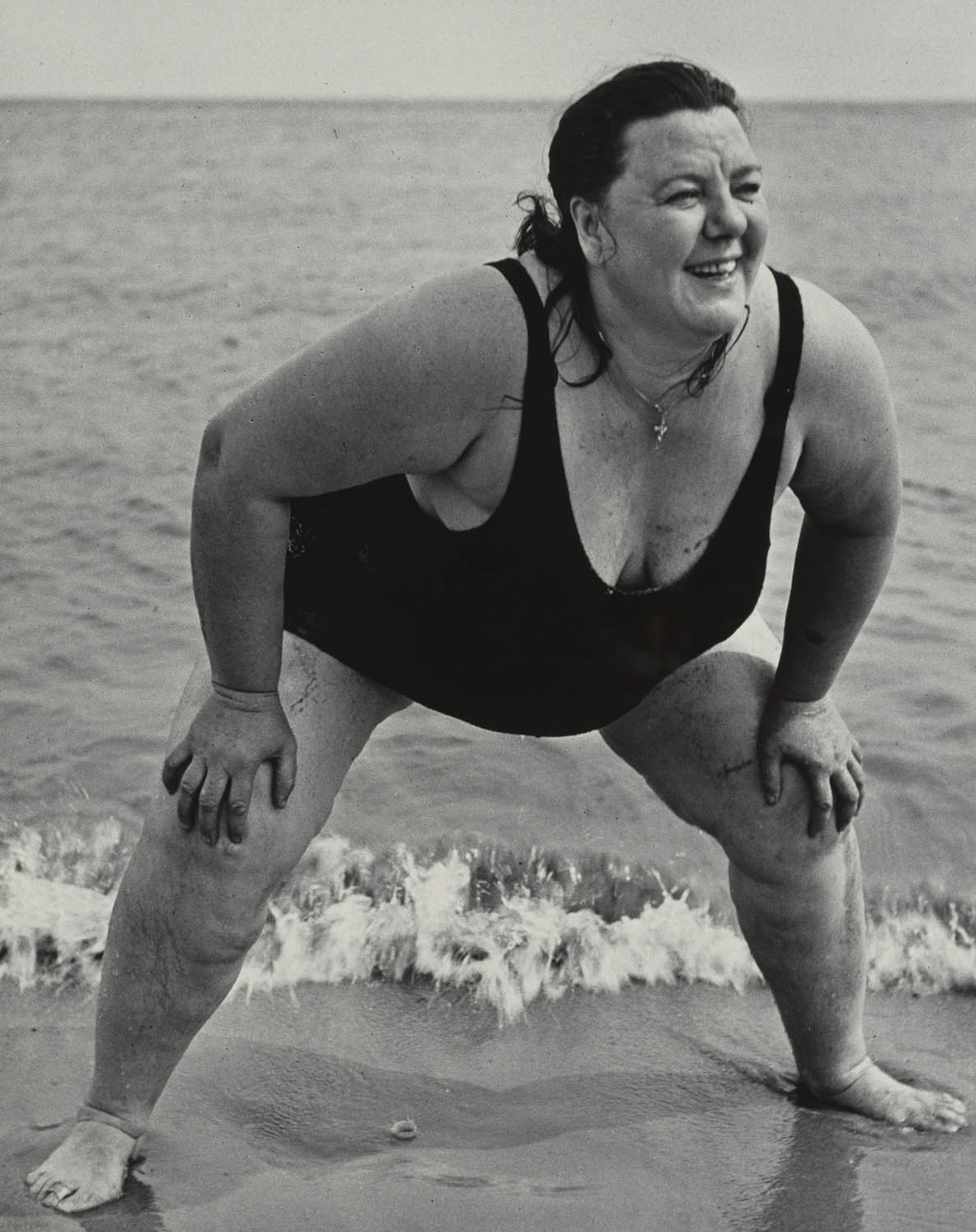
 

Lisette Model (American born Austria, 1901-1983) 'Coney Island Bather, New York' 1939-1941


Lisette Model (American born Austria, 1901-1983)
Coney Island Bather, New York
1939-1941
Gelatin silver print
49.5 × 39.3cm
Estate of Gerd Sander, Julian Sander Gallery, Cologne
©️ Estate of Lisette Model, courtesy of baudoin lebon and Avi Keitelman
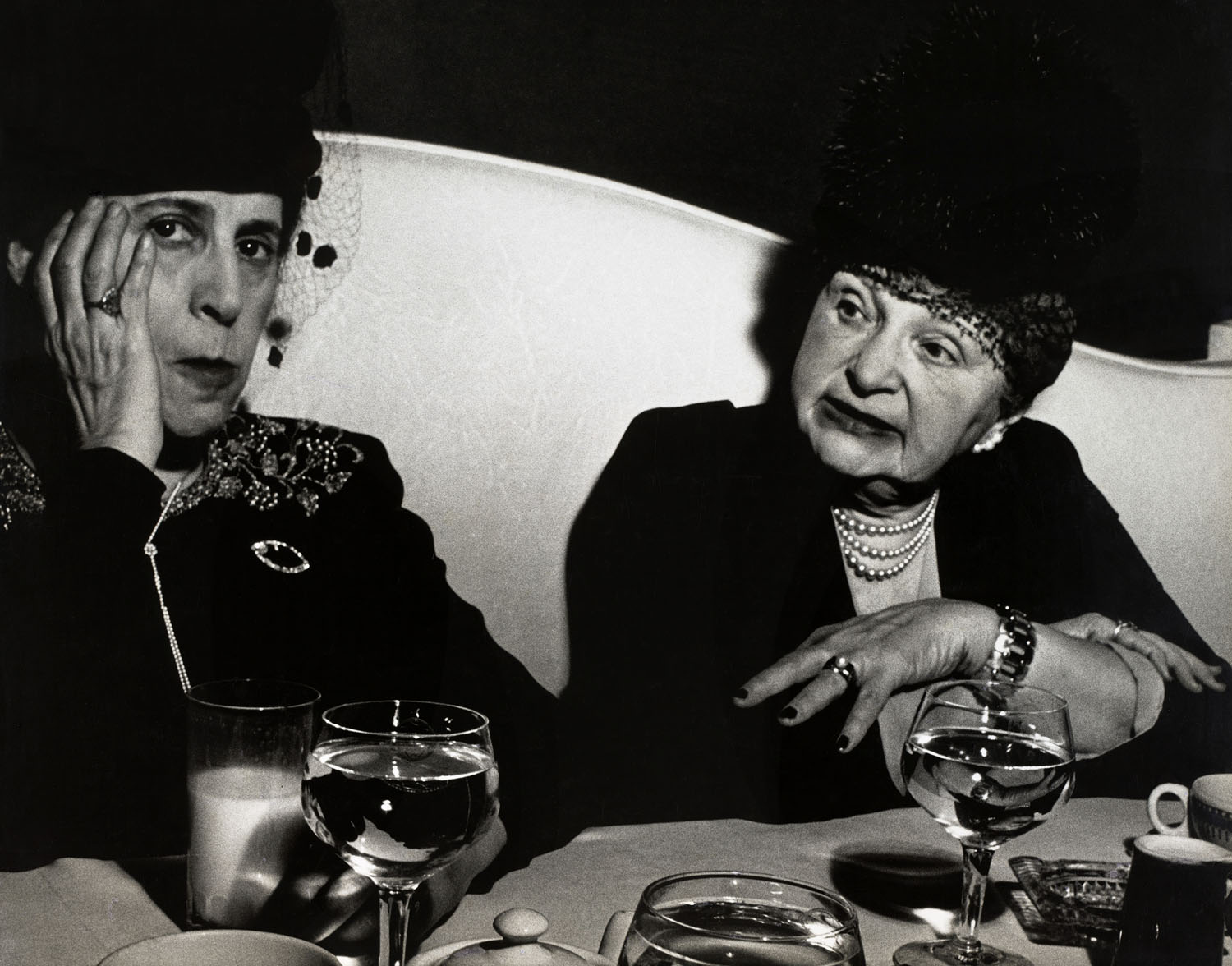
 

Lisette Model (American born Austria, 1901-1983) 'Fashion Show, Hotel Pierre, New York' 1940-1946


Lisette Model (American born Austria, 1901-1983)
Fashion Show, Hotel Pierre, New York
1940-1946
Gelatin silver print
39.3 x 49.2 cm
The ALBERTINA Museum, Vienna, Permanent Loan Austrian Ludwig Foundation for Arts and Science
© Estate of Lisette Model, courtesy Lebon, Paris / Keitelman, Brussels
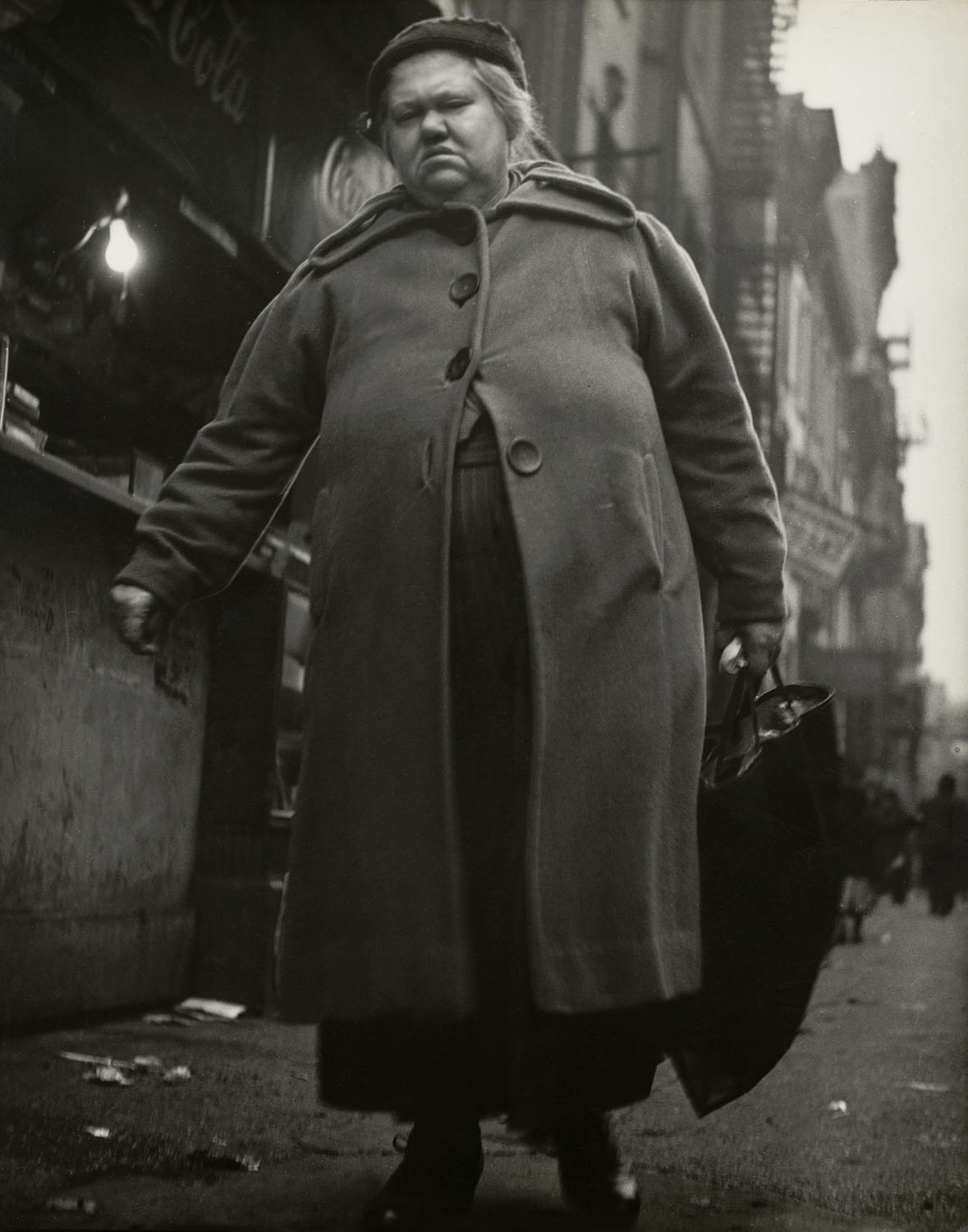
 

Lisette Model (American born Austria, 1901-1983) 'Lower East Side, New York' 1940-1947


Lisette Model (American born Austria, 1901-1983)
Lower East Side, New York
1940-1947
34.6 × 27.1cm
The ALBERTINA Museum, Vienna
© Estate of Lisette Model, courtesy Lebon, Paris / Keitelman, Brussels


Lisette Model (1901-1983) 'Albert-Alberta, Hubert's 42nd St Flea Circus, New York' 1945


Lisette Model (American born Austria, 1901-1983)
Albert-Alberta, Hubert’s Forty-second Street Flea Circus, New York
1945, printed 1980s
Gelatin silver print
Estate of Gerd Sander, Julian Sander Gallery, Cologne
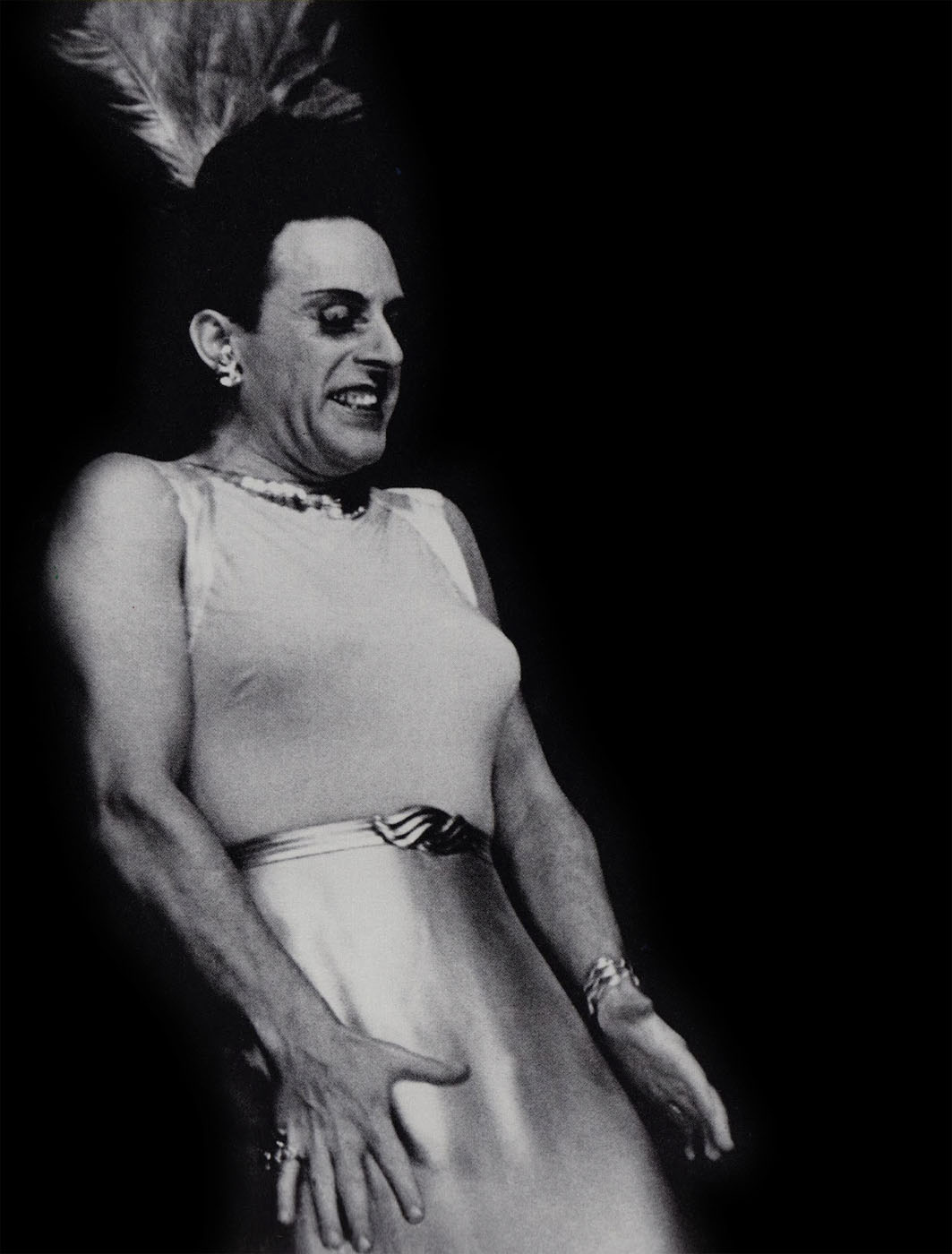
 

Lisette Model (American born Austria, 1901-1983) 'Female impersonator' c. 1945


Lisette Model (American born Austria, 1901-1983)
Female impersonator
c. 1945
Gelatin silver print
National Gallery of Canada, Ottawa
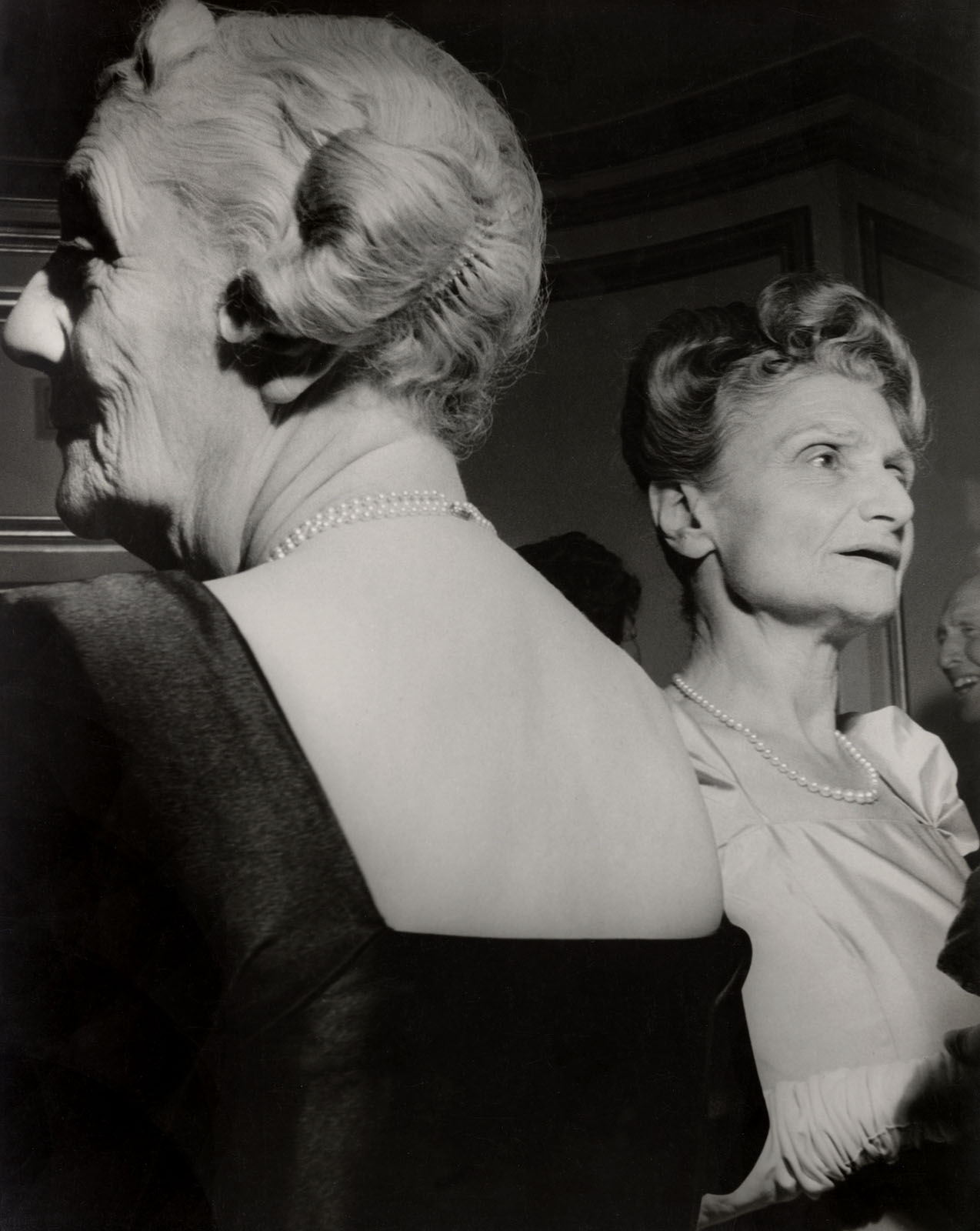
 

Lisette Model (American born Austria, 1901-1983) 'Opera, San Francisco' 1949


Lisette Model (American born Austria, 1901-1983)
Opera, San Francisco
1949
Gelatin silver print
34 × 26.6cm
The ALBERTINA Museum, Vienna
© Estate of Lisette Model, courtesy Lebon, Paris / Keitelman, Brussels


Lisette Model (American, born Austria 1901-1983) 'Opera, San Francisco' 1949


Lisette Model (American born Austria, 1901-1983)
Opera, San Francisco
1949
Gelatin silver print
© The Lisette Model Foundation


Lisette Model (American born Austria, 1901-1983)

Lisette Model (Vienna, 1901 – New York, 1983) was one of the main practitioners of North American direct photography. Born into a Jewish bourgeois family in Vienna, she studied piano and singing with Arnold Schönberg. In 1926 she moved to Paris where she became interested in painting and photography. Due to the oncoming war in Europe and growing anti-Semitism spreading throughout the continent, Model moved to New York in 1938 and began to work as a photographer for the magazine Harper’s Bazaar under the guidance of Alexey Brodovitch. She became a member of the Photo League.

Free of any sort of indoctrination, Model’s work stands out for her use of direct portraiture and for focusing on the peculiarities of the people she portrayed. Her images are full of low-angle shots, radical framings, and powerful black and white contrasts, making them greatly expressive. Some of her most renowned series – Promenade des Anglais, Reflections, and Running Legs – were produced in the French Côte d’Azur and in New York.

At the end of her career Model worked with Gerhard Sander, grandson of the photographer August Sander, who became her art dealer and lab assistant. Her work as an instructor was also notable. She began teaching in 1949 at the California School of Fine Arts and continued to teach throughout her life at other institutions such as the New School for Social Research. Her role as a professor would leave a mark on some of the most important photographers of the following generation, such as Diane Arbus, Larry Fink, and Peter Hujar, to name a few.

Text from the Fundacion MAPFRE website
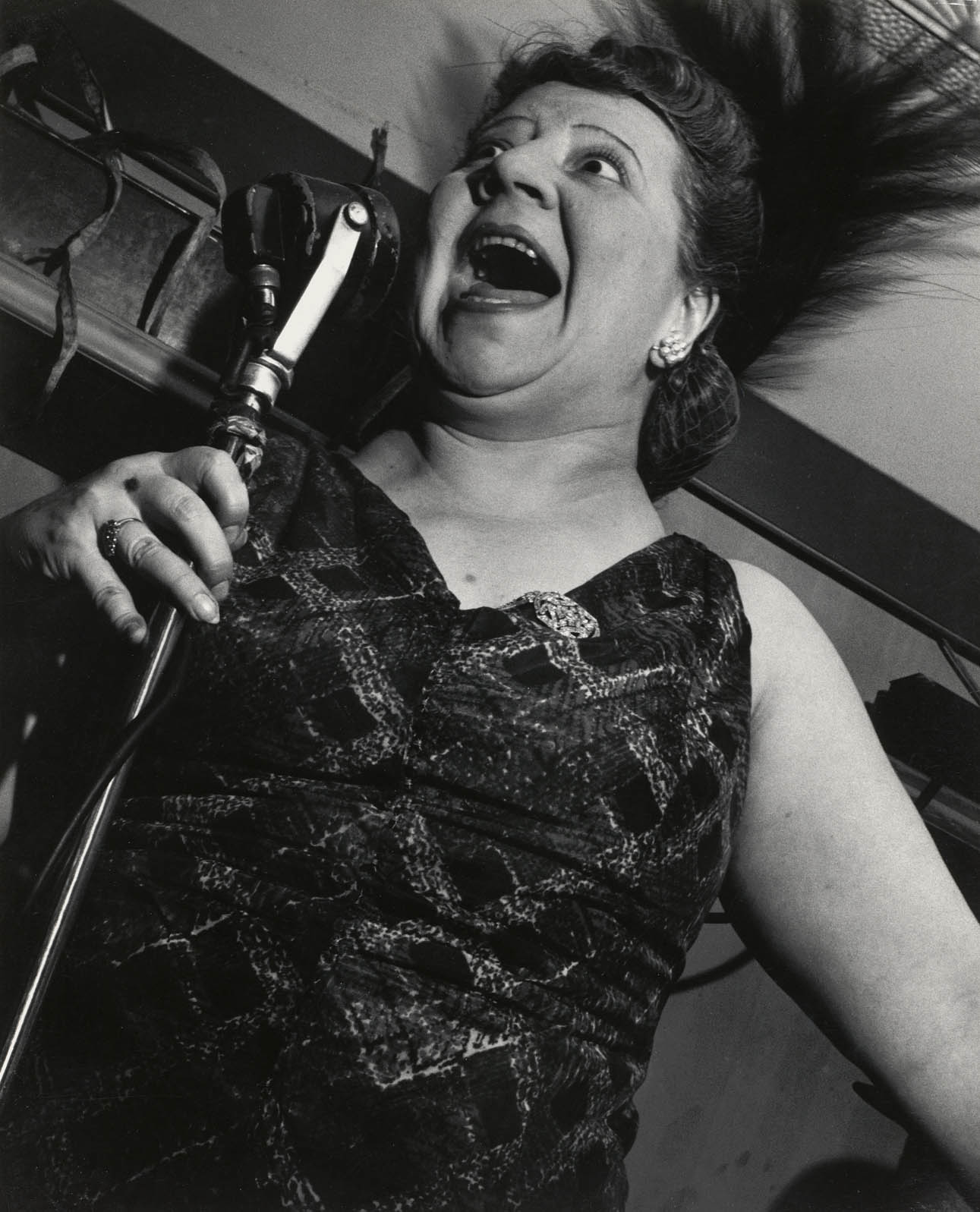
 

Lisette Model (American born Austria, 1901-1983) 'Singer at the Metropole Café, New York' 1946


Lisette Model (American born Austria, 1901-1983)
Singer at the Metropole Café, New York
1946
Gelatin silver print
49.6 x 39.8 cm
The ALBERTINA Museum, Vienna
© Estate of Lisette Model, courtesy Lebon, Paris /
Keitelman, Brussels
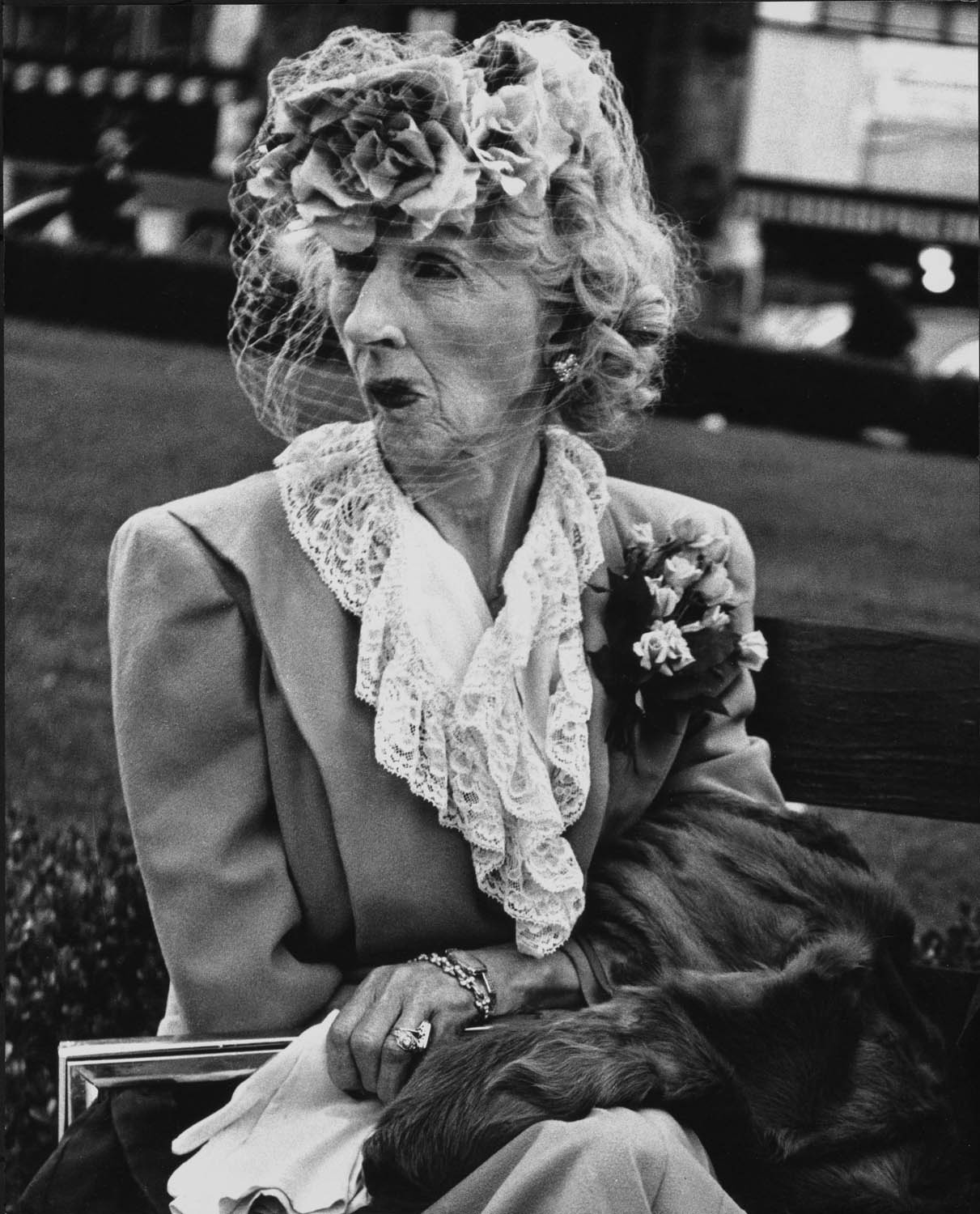
 

Lisette Model (American born Austria, 1901-1983) 'Woman with Veil, San Francisco' 1949


Lisette Model (American born Austria, 1901-1983)
Woman with Veil, San Francisco
1949
Gelatin silver print
49.8 x 10.1 cm
Estate of Gerd Sander, Julian Sander Gallery, Cologne
© Estate of Lisette Model, courtesy of baudoin lebon and Avi Keitelman


Closeness that does not comfort

Model’s photographs are close. Uncomfortably close. Faces, bodies, gestures fill the frame, often to the limit of what is bearable. The famous tight cropping, often decided only in the darkroom, frees the people from their surroundings and confronts the viewer with full presence. There is no escaping. No decorative surroundings.

And yet there is no voyeurism. No mockery. Despite all the harshness, these images carry a form of respect, often with a good dose of humor or, depending on the subject, social criticism. You sense that someone is looking here, not looking down. There is tension hanging in the air – between ruthlessness and empathy – and it keeps the work relevant to this day.

Anonymous. “Zeit hinzusehen: Lisette Model in der Albertina,” on the ViennaCultgram website Nd [online] Cited 02/02/2026. Used under fair use conditions for the purposes of education and research
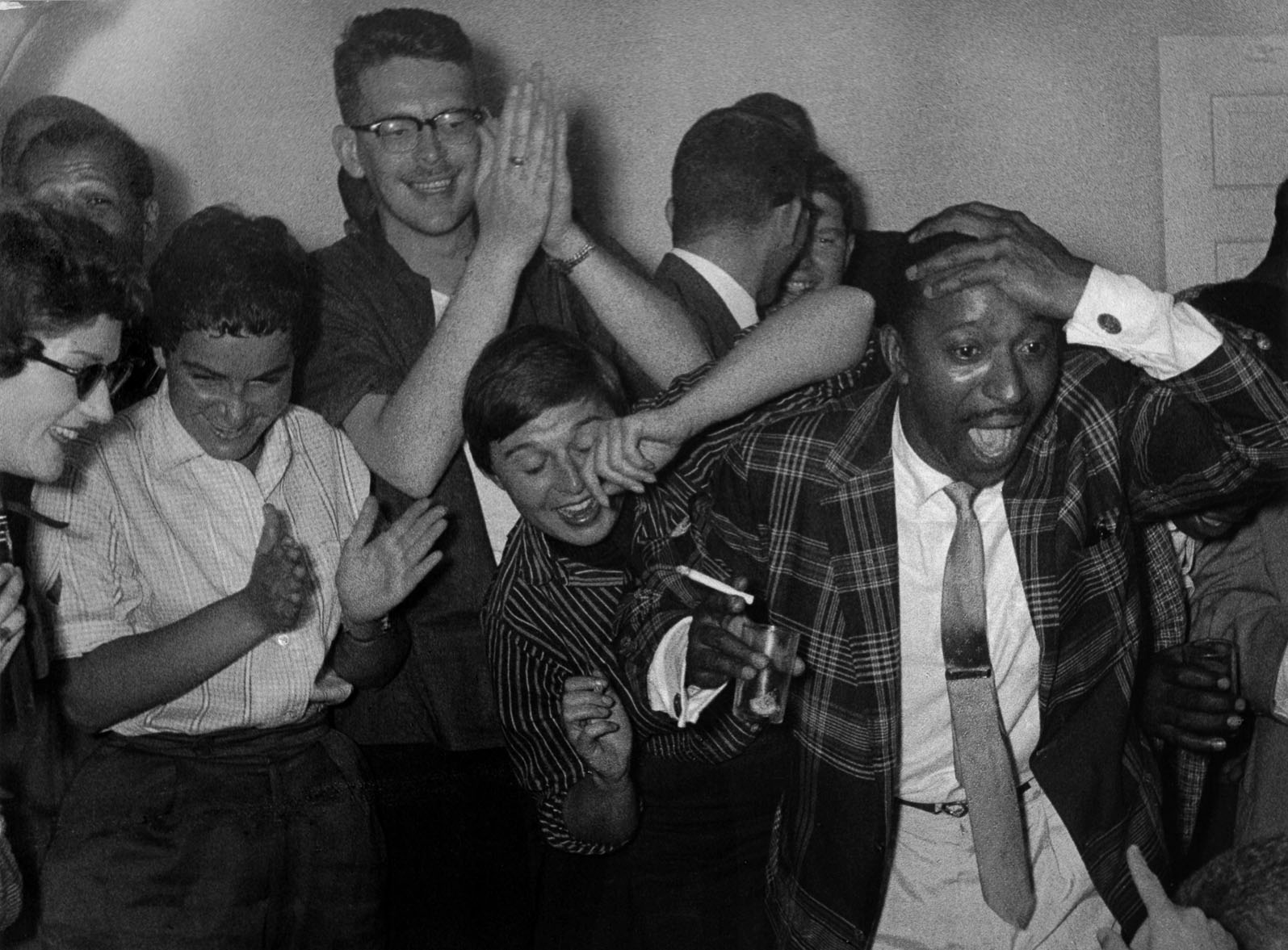
 

Lisette Model (American born Austria, 1901-1983) 'Ollie McLaughlin, Hotel Viking, Newport Jazz Festival, Rhode Island' 1956


Lisette Model (American born Austria, 1901-1983)
Ollie McLaughlin, Hotel Viking, Newport Jazz Festival, Rhode Island
1956
Gelatin silver print
27.5 × 34.9cm
© Estate of Lisette Model, courtesy of baudoin lebon and Avi Keitelman
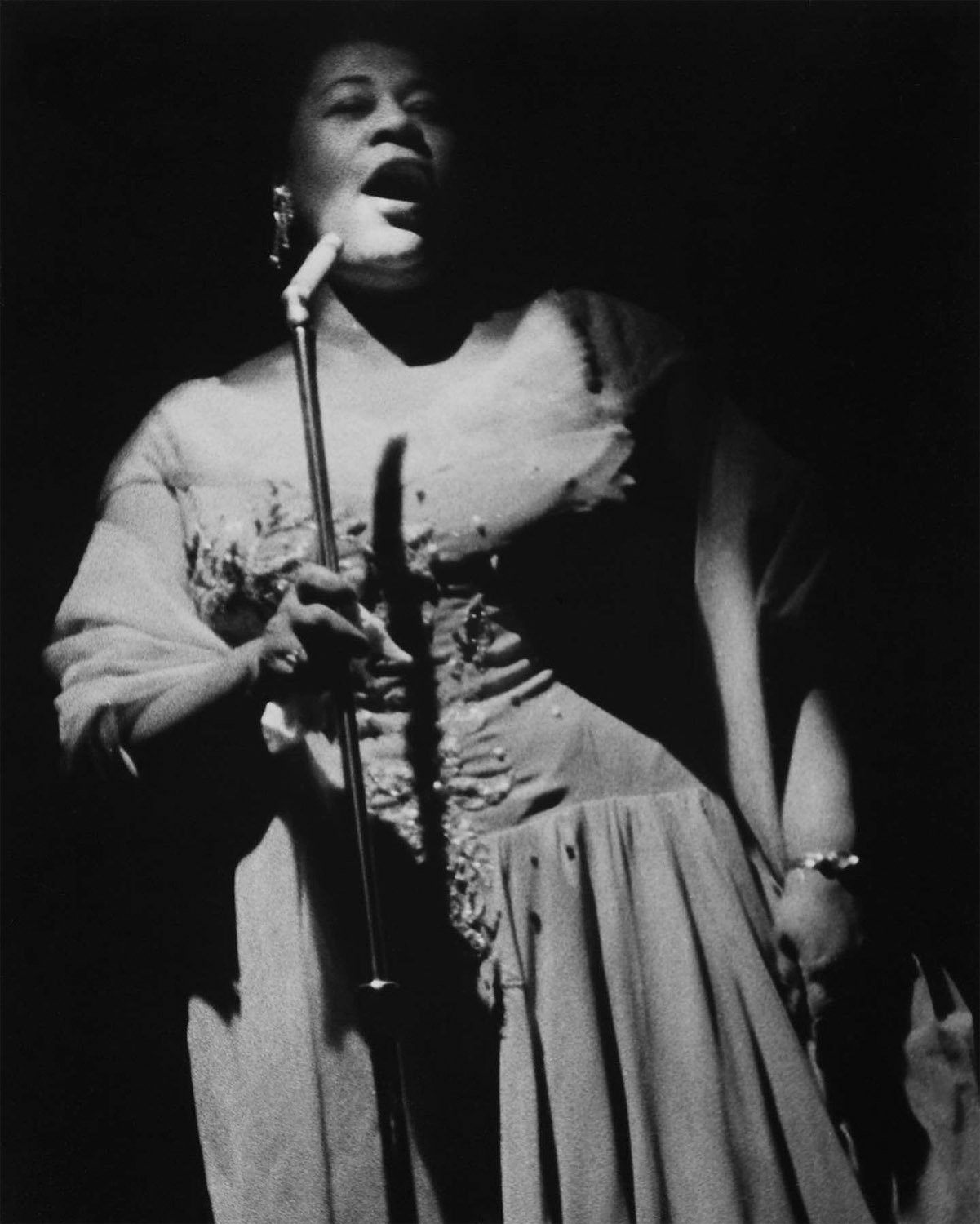
 

Lisette Model (American born Austria, 1901-1983) 'Ella Fitzgerald' 1954


Lisette Model (American born Austria, 1901-1983)
Ella Fitzgerald
1954
Gelatin silver print
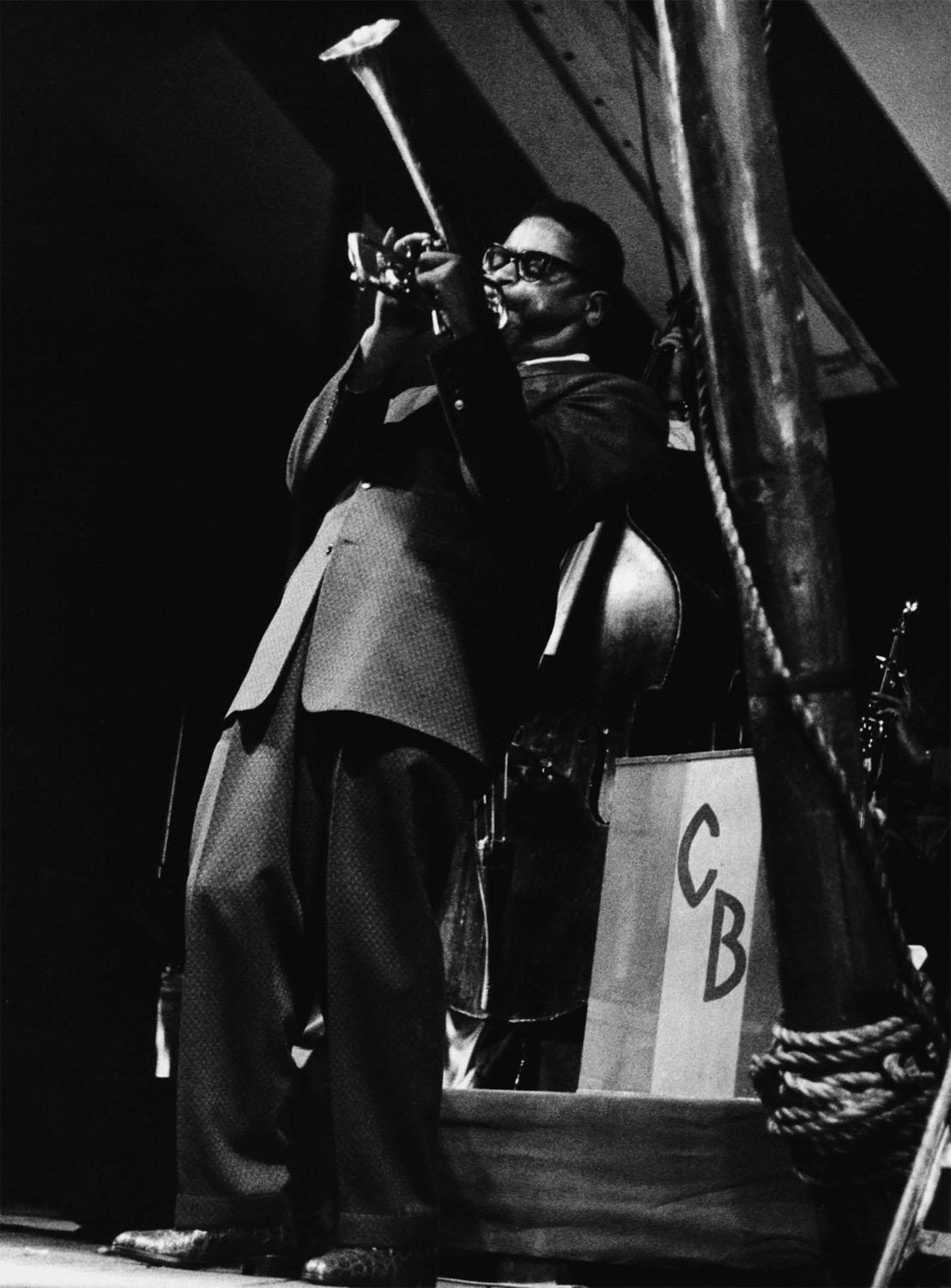
 

Lisette Model (American born Austria, 1901-1983) 'Dizzy Gillespie, New York Jazz Festival' 1956


Lisette Model (American born Austria, 1901-1983)
Dizzy Gillespie, New York Jazz Festival
1956
Gelatin silver print
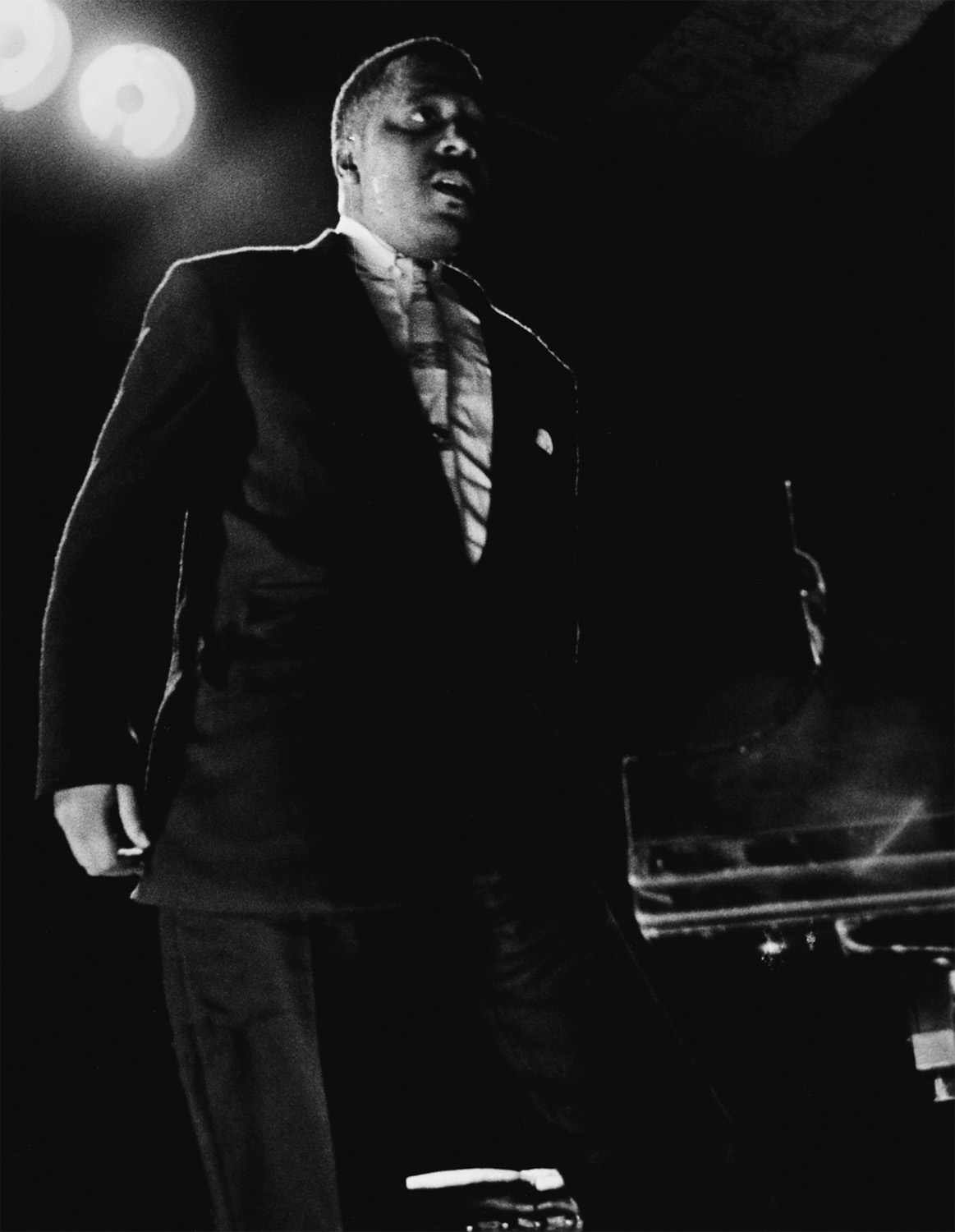
 

Lisette Model (American born Austria, 1901-1983) 'Bud Powell, New York Jazz Festival' 1957


Lisette Model (American born Austria, 1901-1983)
Bud Powell, New York Jazz Festival
1957
Gelatin silver print


The Albertina Museum
Albertinaplatz 1
1010 Vienna
Phone: +43 (0)1 534 83 0

Daily 10am – 6pm
Except Wednesday and Friday 10am – 9pm
The Albertina Museum website

LIKE ART BLART ON FACEBOOK

Back to top

Exhibition: ‘diane arbus: in the beginning’ at the Metropolitan Museum of Art, New York

Exhibition dates: 12th July – 27th November, 2016

Curator: Jeff L. Rosenheim, Curator in Charge of the Department of Photographs at The Met


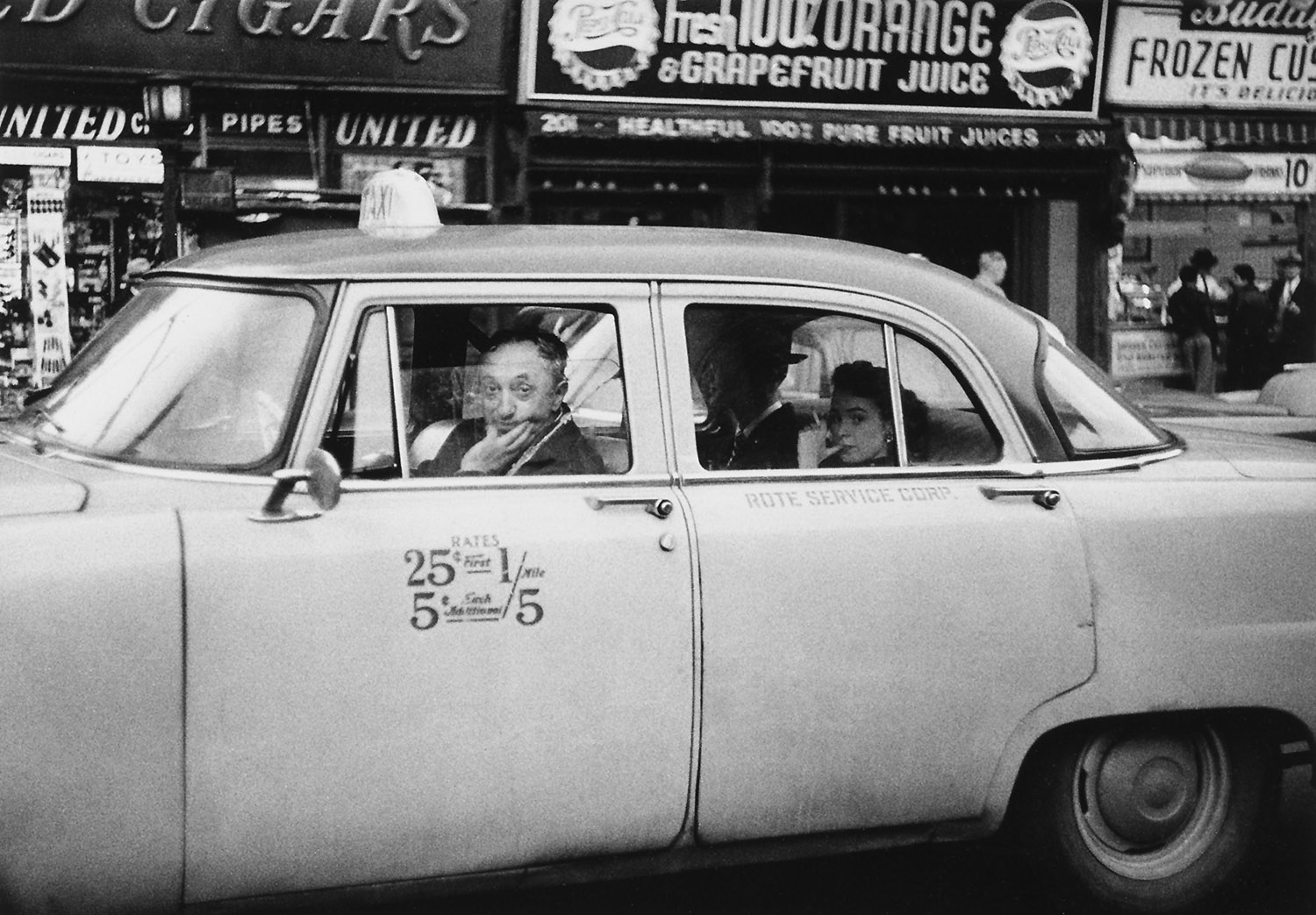
Diane Arbus (American, 1923-1971) 'Taxicab driver at the wheel with two passengers, N.Y.C. 1956' 1956 from the exhibition 'diane arbus: in the beginning' at the Metropolitan Museum of Art, New York, July - Nov, 2025


Diane Arbus (American, 1923-1971)
Taxicab driver at the wheel with two passengers, N.Y.C. 1956
1956
Silver gelatin print
© Diane Arbus/The Estate of Diane Arbus LLC


#1

This looks to be a fascinating exhibition, presenting as it does images from the first seven years of Arbus’ career as an independent artist. I wish I could see it.

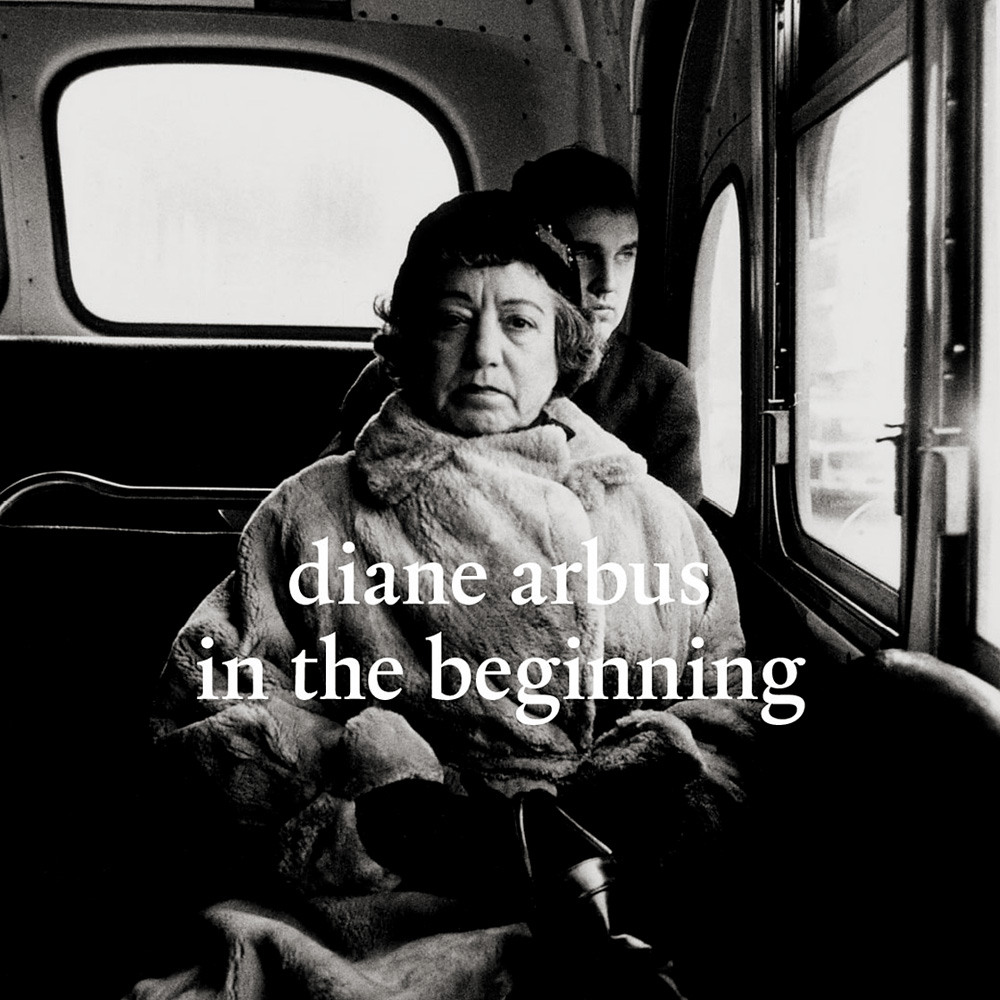
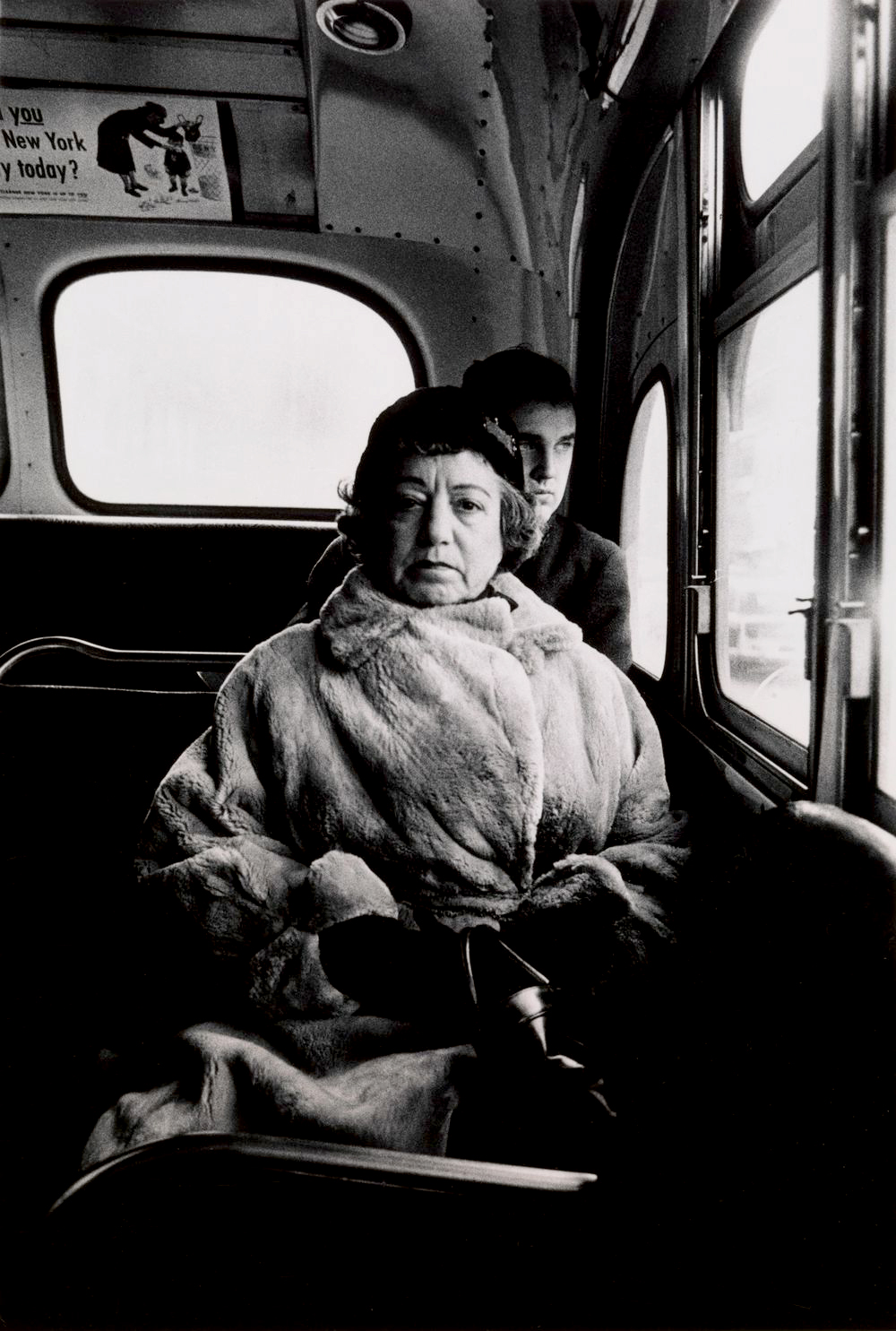
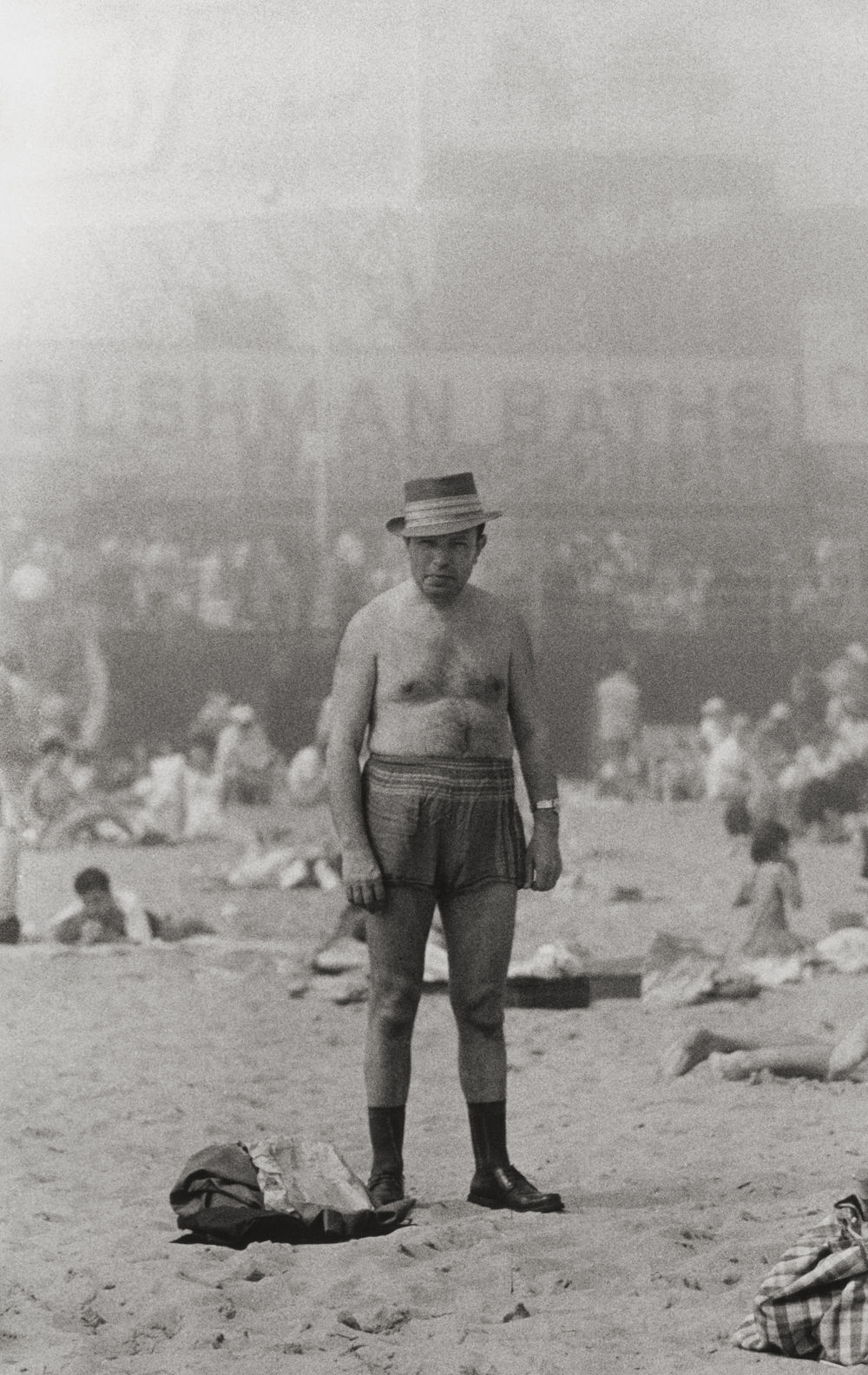
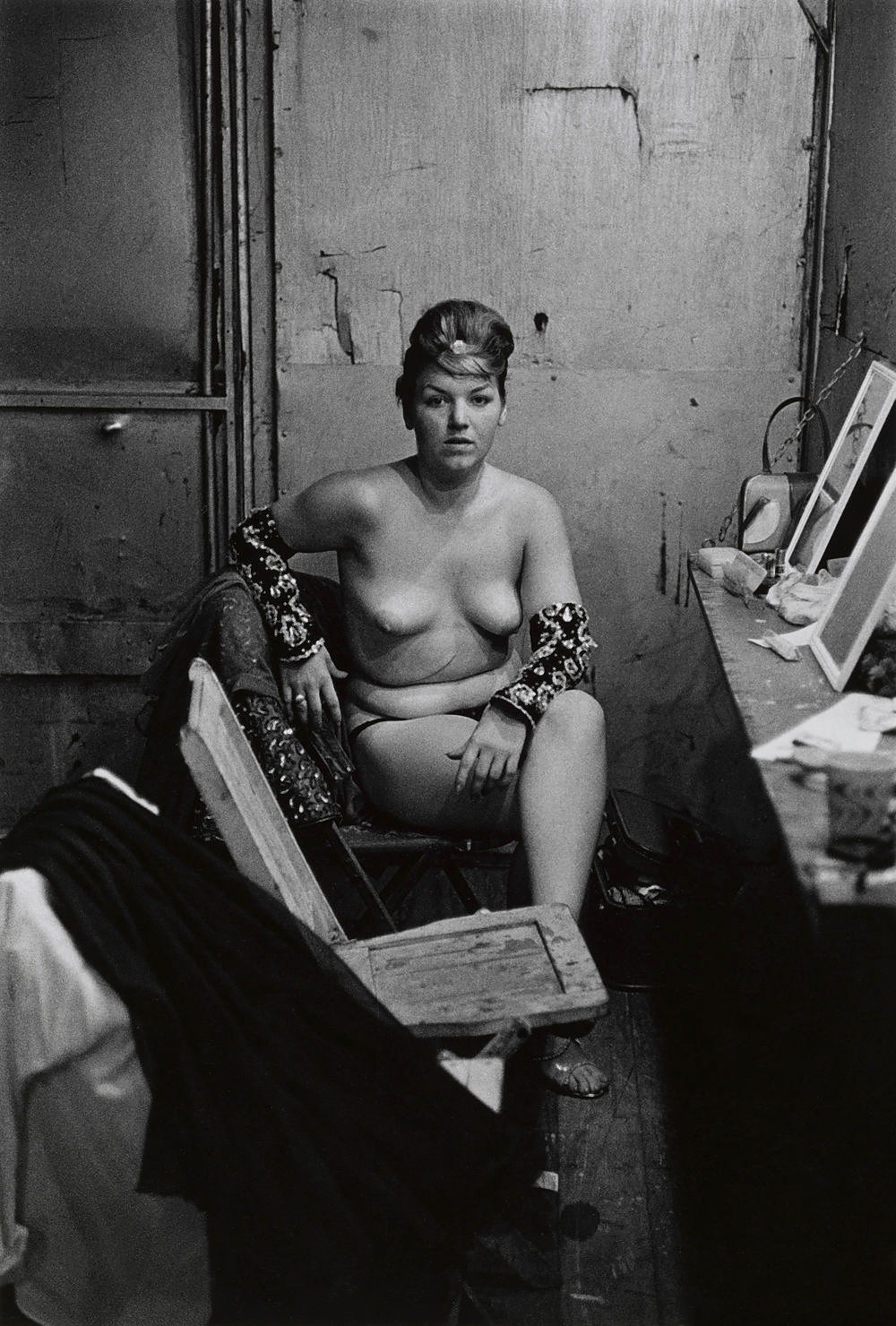
What strikes one when viewing the 35mm photographs is how loose they are in terms of the framing and composition. Most of them could do with a good crop to tighten the image frame. Stripper with Bare Breasts Sitting in Her Dressing Room, Atlantic City, N.J. 1961 would have worked better if the focus had been tightened on the central figure. Similarly, Lady on a Bus, N.Y.C. 1957 works much better as a square image as seen in the feature image for the exhibition (below). Gone is the extraneous frontal detritus which adds nothing to the image. But just feel the intensity of the withering look of the women being projected out of the photograph – it’s as if she could bit your head off at any moment. She’s not a happy camper at being photographed.

This is Arbus experimenting, feeling out the medium and trying to find her signature voice as an artist. All the later, well known elements are there: keen observation; wonderful timing; a love of intimacy and a formal, visual relationship with the subject; strong central characters; a respect for outsiders; an understanding of the pain of others; and “the poignancy of a direct personal encounter … [and] a passionate interest in the individual.”

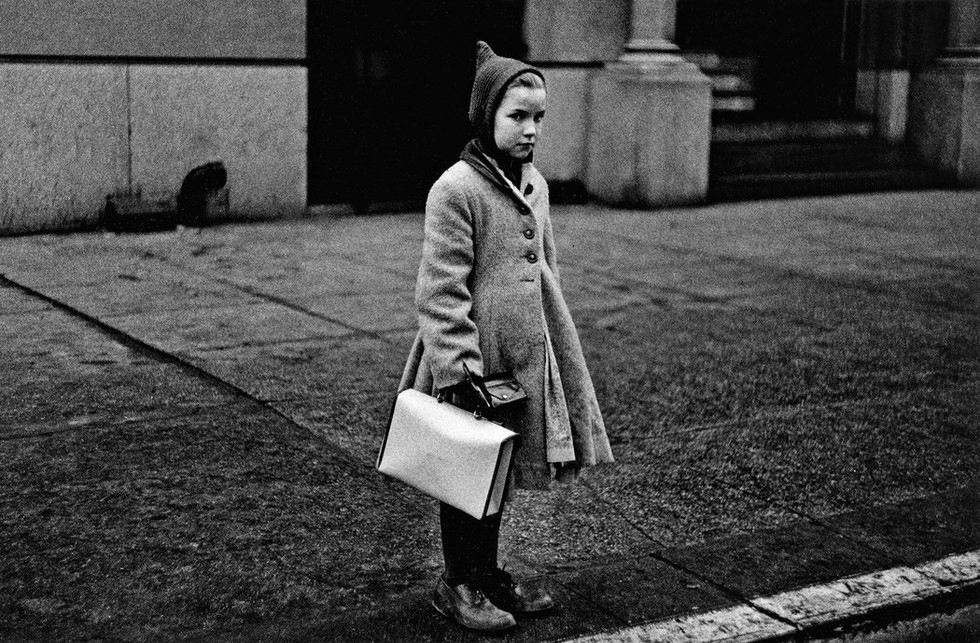
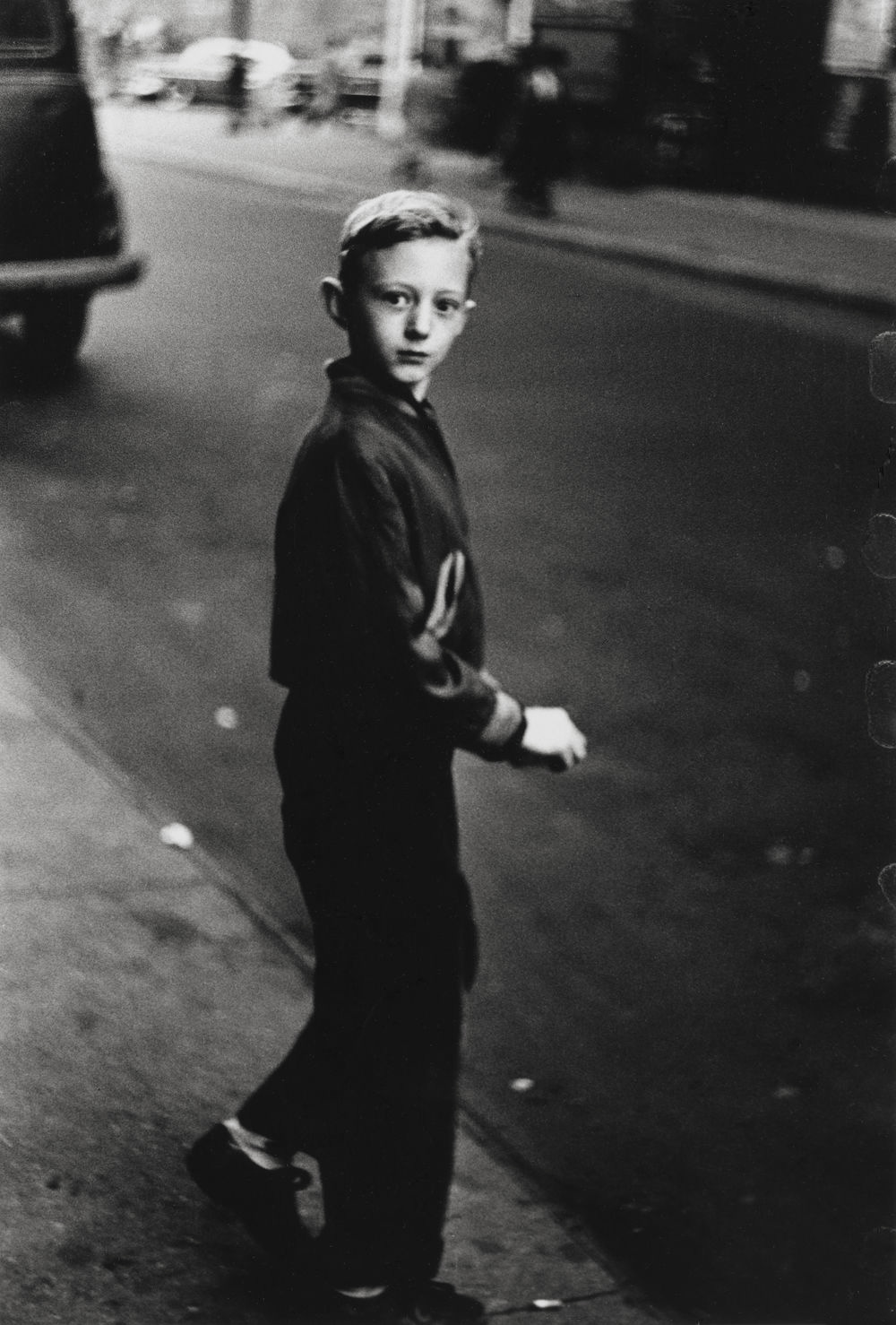
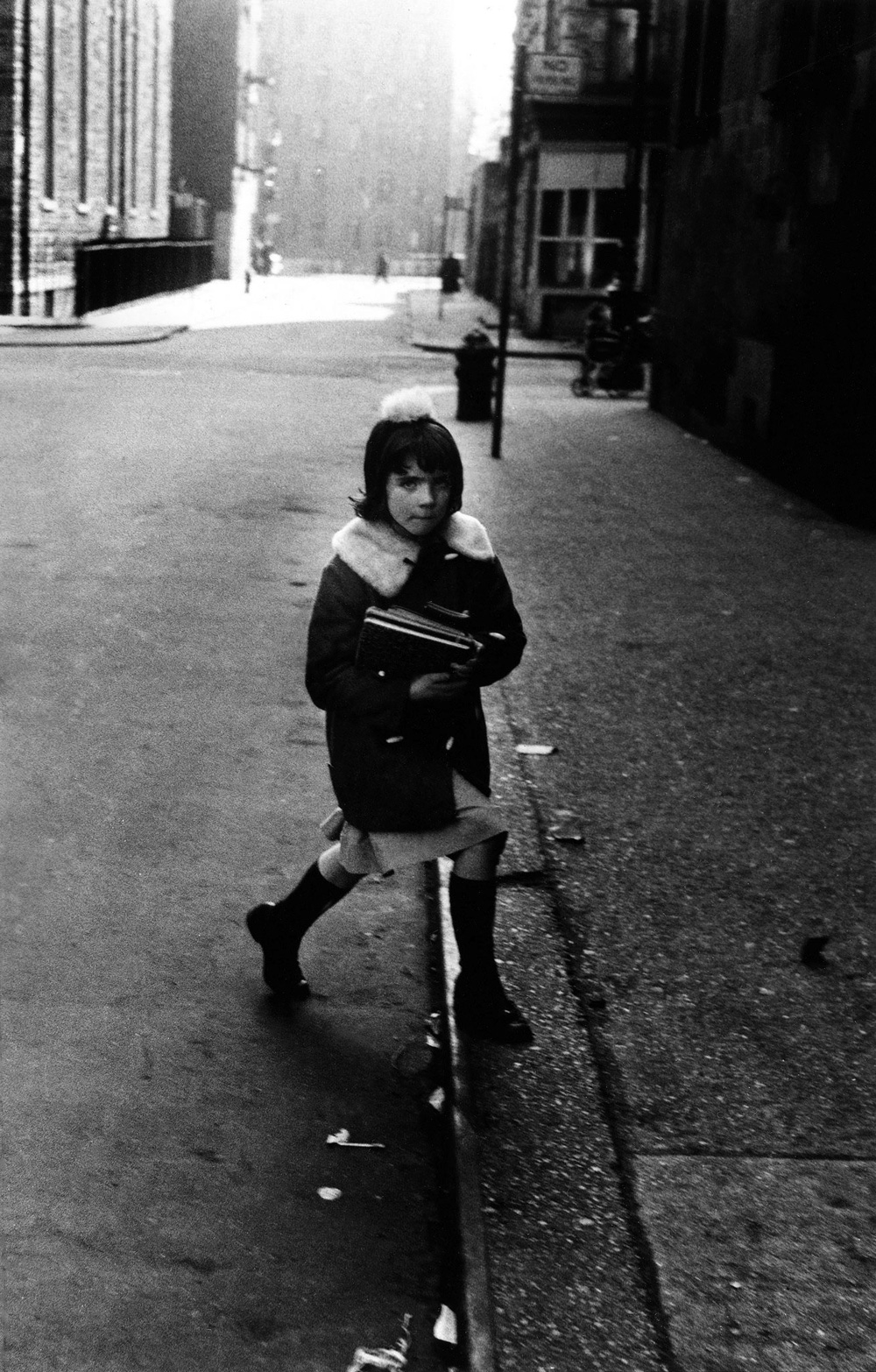
My favourite photographs in this posting are the two images Boy stepping off the curb, N.Y.C. 1957-58 and Girl with schoolbooks stepping onto the curb, N.Y.C., 1957. There is a marvellous insouciance about these photographs, “the divineness in ordinary things” embedded in the innocence of youth. We could be these people caught half-stride in their young lives, lightly stepping onto the pavement of the future. The reciprocal gaze makes us stare, and stare again… for even as those photographs are glimpses, glances of a life they become so much more, long lasting archetypes to which we can all relate. As Arthur Lubow observes citing John Szarkowski, a longtime director of photography at the Museum of Modern Art, “The reciprocal gaze that marks her early photographs would be furthered and intensified in the collaborative form of portraiture in her mature work, done with a medium-format camera. Szarkowski, for one, believed that the sharpness that larger film offered was in keeping with her aim to be both particular and mythic.”

Particular and mythic. How magical.

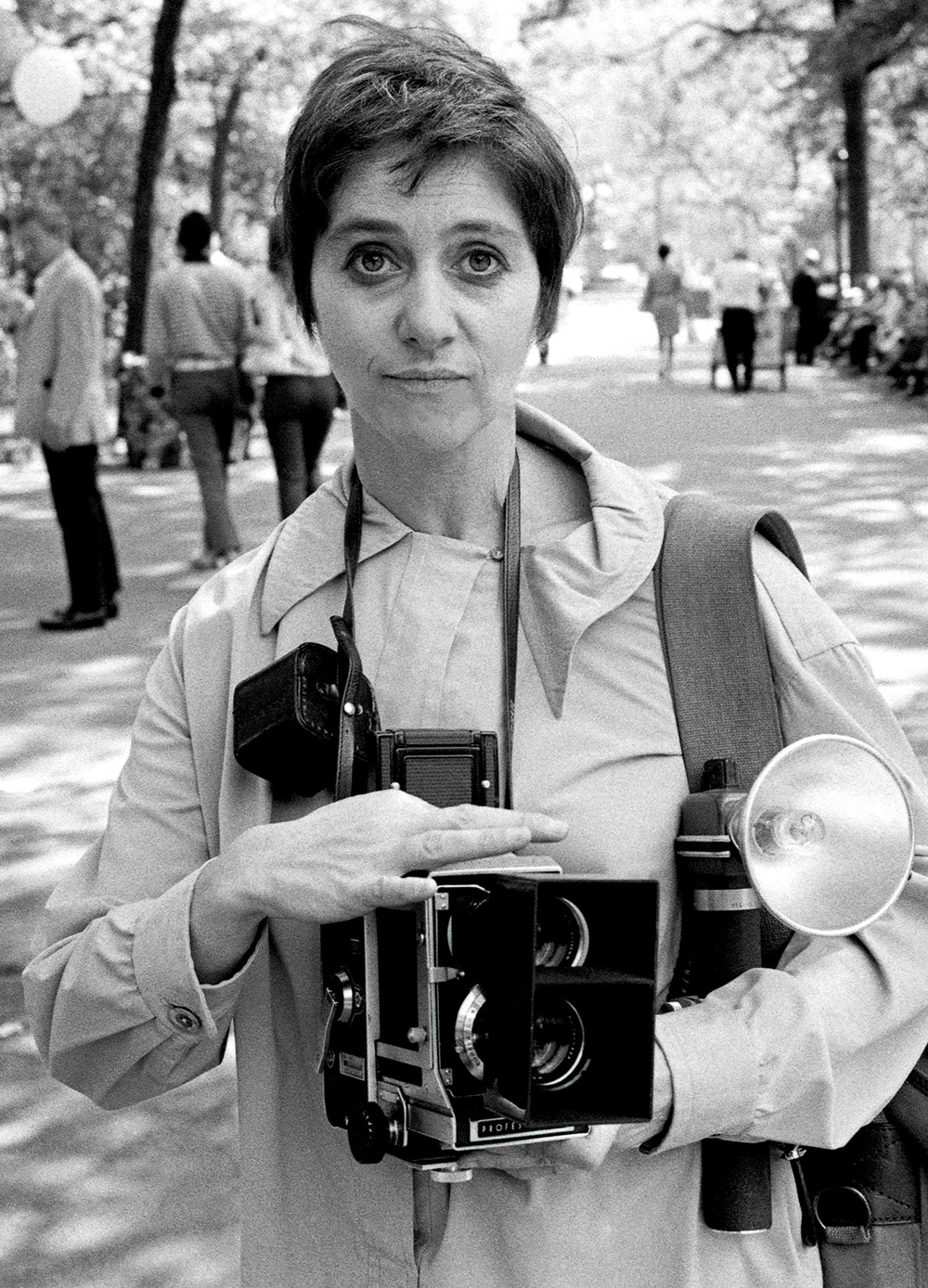
Not only did her work need the sharpness that medium format film offered, what a lot of people forget is that using a medium format camera like a Rollei is a totally different way of seeing the world. This is something that hardly anybody mentions. With a 35mm camera you bring the camera to your face and look through the viewfinder; with a medium format camera such as Arbus’ Rolleiflex or her Mamiya C330 (seen around her neck in a portrait of her in Central Park, below), the camera is held at waist level and you look down into the viewing prism of the camera… and everything is seen in reverse. I remember travelling around the world in 2000 and using a Mamiya C220 and thinking to myself, this is the most amazing experience staring down at the world, moving the camera left and right and the image moving the opposite way to what you think it will move, and then having to account for for parallax in the framing (where the image seen in the viewfinder is not framed the same as the image seen through the lens, because the viewfinder is in a slightly different position to the lens). Even with the one medium format image featured in this posting, I can just feel the different relationship of the camera and photographer to the world – in the format, in the cropping and in the previsualisation of the image. Looking down, back up to the subject, back down into the camera – instead of a horizontal perspective, both a horizontal, vertical and square perspective on the world. It’s all about feeling (in) her work. And you couldn’t really miss her if she wanted to take your photograph… look at all the equipment slung around her neck in her portrait in Central Park: twin lens hoods to stop glare, boom and large flash. She wanted you to know that she was there, to acknowledge her presence.

Arbus intuitively knew what she wanted – the presence of the person and the presence of the photographer acknowledged through a circular, two-way relationship. And we, the viewer, understand that process and acknowledge it. Hence, these photographs are not “apparently artless”, they are the very antithesis of that. They are both a thinking and feeling person’s photography. All of her photographs are intelligent investigations of the human condition which produce an empathic response in the viewer. They are a form of empathic vision in which the viewer is drawn into that magical and transcendent relationship. In my opinion, there has never been anyone like her, before or since: no devotees, followers or disciples (except, perhaps, Mary Ellen Mark). Arbus is one of a kind. She will always be my #1.

Dr Marcus Bunyan


Many thankx to the Metropolitan Museum of Art for allowing me to publish the photographs in the posting. Please click on the photographs for a larger version of the image.


The photographs from her early career reveal that the salient characteristics of her work – its centrality, boldness, intimacy and apparent artlessness – were present in her pictures since the very beginning. Arbus’s creative life in photography after 1962 is well documented and already the stuff of legend; now, for the first time, we can properly examine its origins.


'diane arbus: in the beginning' book cover


“The camera is cruel, so I try to be as good as I can to make things even.”

“I do feel I have some slight corner on something about the quality of things. I mean it’s very subtle and a little embarrassing to me but I really believe there are things which nobody would see unless I photographed them.”

“One thing that struck me early is that you don’t put into a photograph what’s going to come out. Or, vice versa, what comes out is not what you put in.”

“…I would never choose a subject for what it means to me. I choose a subject and then what I feel about it, what it means, begins to unfold.”


Diane Arbus


“I think Arbus was suggesting that just as people are looking at us and we’re looking at them every day, the pictures made us introspective as viewers. They forced us to confront our own identity. And that’s a really beautiful switch, that switcheroo. We’re looking at somebody else but we’re mindful of our voyeurism, and we’re mindful of how we ourselves are presenting. ‘How am I different? How did I become the person I am?’ That’s one of the qualifying elements of an Arbus photograph: that you feel something about you, often something that might not be comfortable.”

“Arbus’s early photographs are wonderfully rich in achievement and perhaps as quietly riveting and ultimately controversial as the iconic images for which she is so widely known. She brings us face-to-face with what she had first glimpsed at the age of 16 – “the divineness in ordinary things” – and through her photographs we begin to see it too.”


Exhibition curator Jeff L. Rosenheim


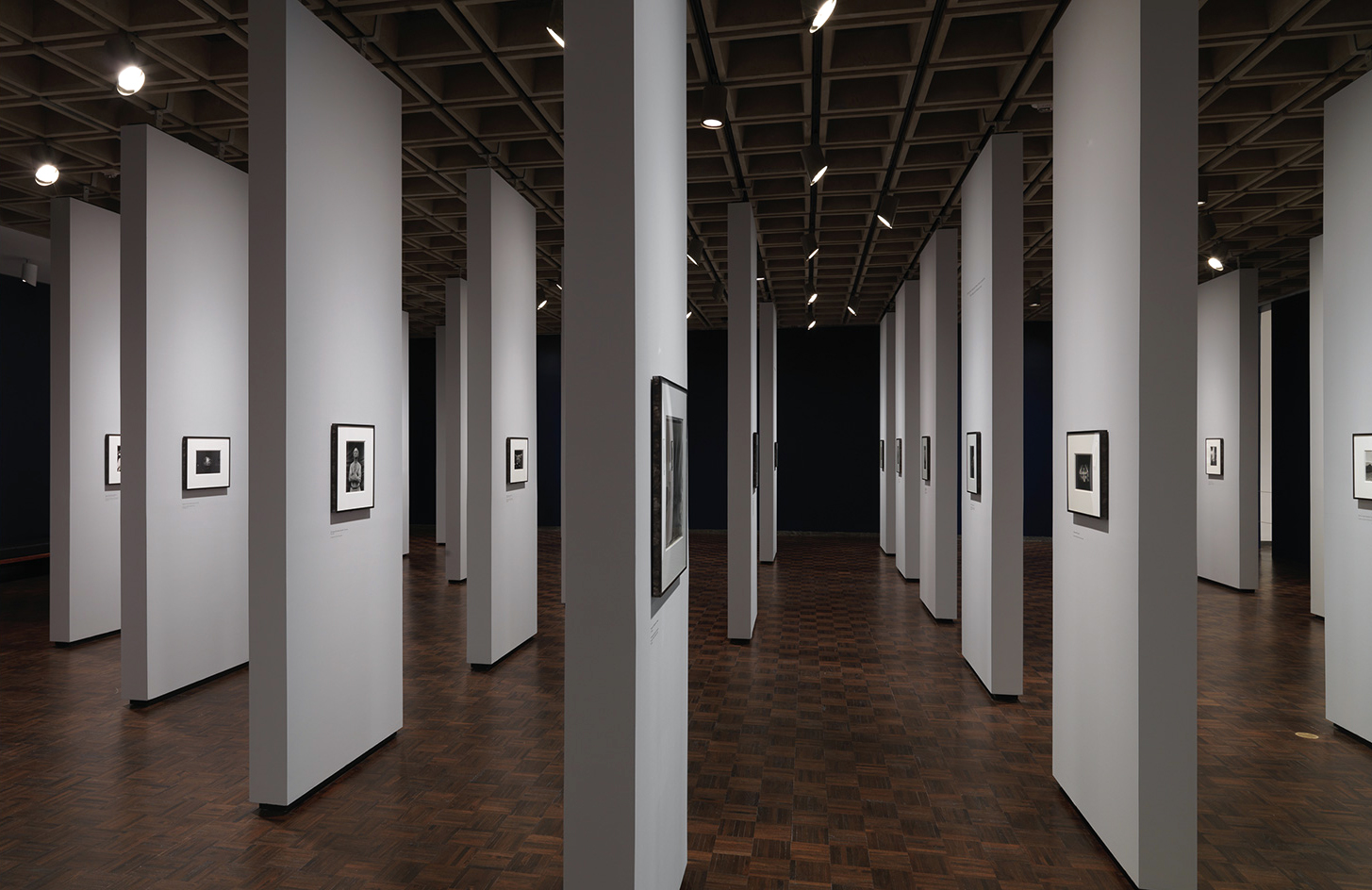
Installation view of the exhibition 'diane arbus: in the beginning' at the Metropolitan Museum of Art, New York

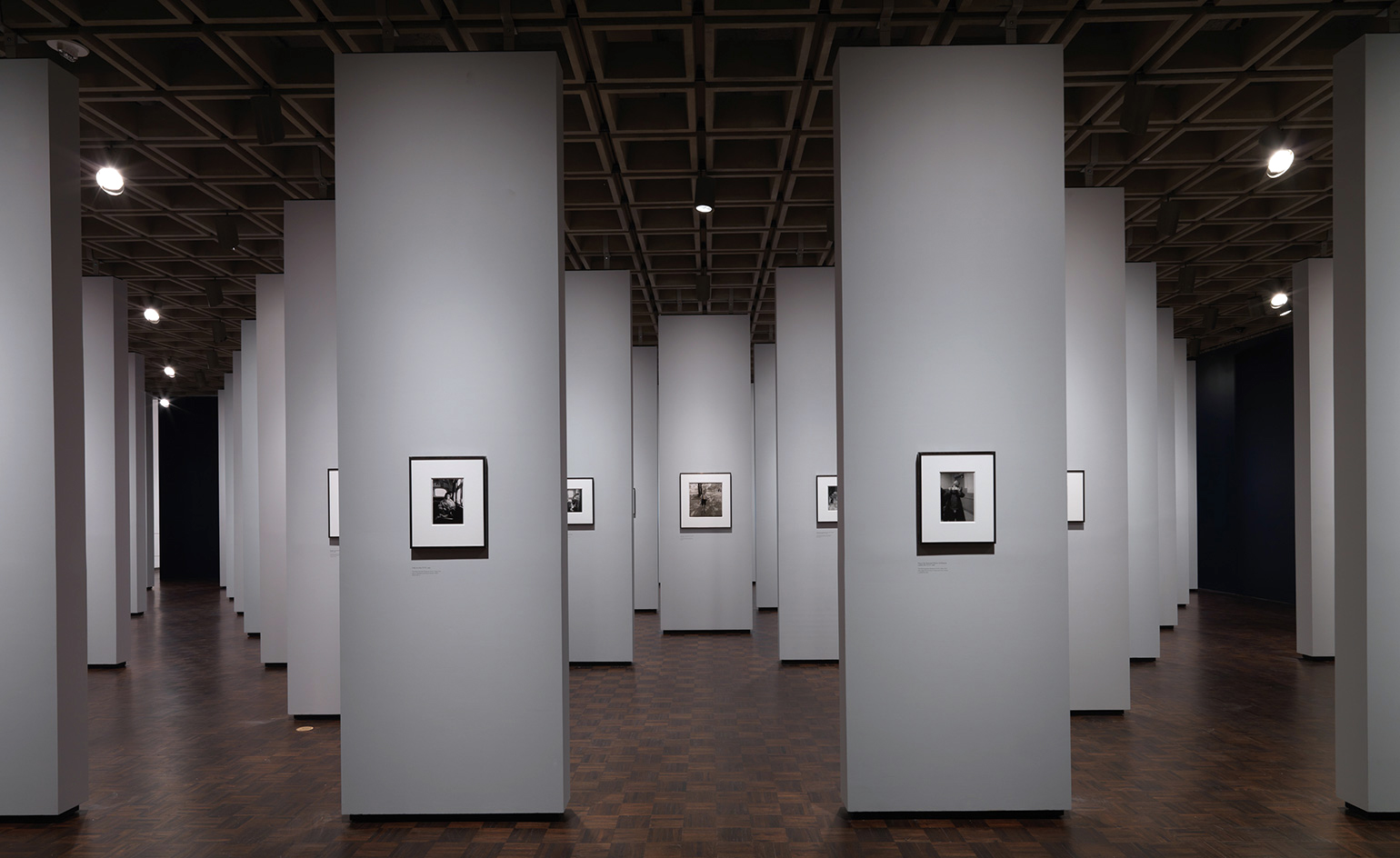
Installation view of the exhibition 'diane arbus: in the beginning' at the Metropolitan Museum of Art, New York

Installation view of the exhibition 'diane arbus: in the beginning' at the Metropolitan Museum of Art, New York


Installation views of the exhibition diane arbus: in the beginning at the Metropolitan Museum of Art, New York


This landmark exhibition features more than 100 photographs that together redefine Diane Arbus (American, 1923-1971), one of the most influential and provocative artists of the 20th century. It focuses on the first seven years of her career, from 1956 to 1962, the period in which she developed the idiosyncratic style and approach for which she has been recognised praised, criticised, and copied the world over.

Arbus made most of her photographs in New York City, where she lived and died, and where she worked in locations such as Times Square, the Lower East Side, and Coney Island. Her photographs of children and eccentrics, couples and circus performers, female impersonators and Fifth Avenue pedestrians are among the most intimate and surprising images of the era.

The majority of the photographs in the exhibition have never before been seen and are part of the Museum’s Diane Arbus Archive, acquired in 2007 by gift and promised gift from the artist’s daughters, Doon Arbus and Amy Arbus. It was only when the archive came to The Met that this remarkable early work came to be fully explored. Arbus’s creative life in photography after 1962 is well documented and already the stuff of legend; now, for the first time, we can properly examine its origins.


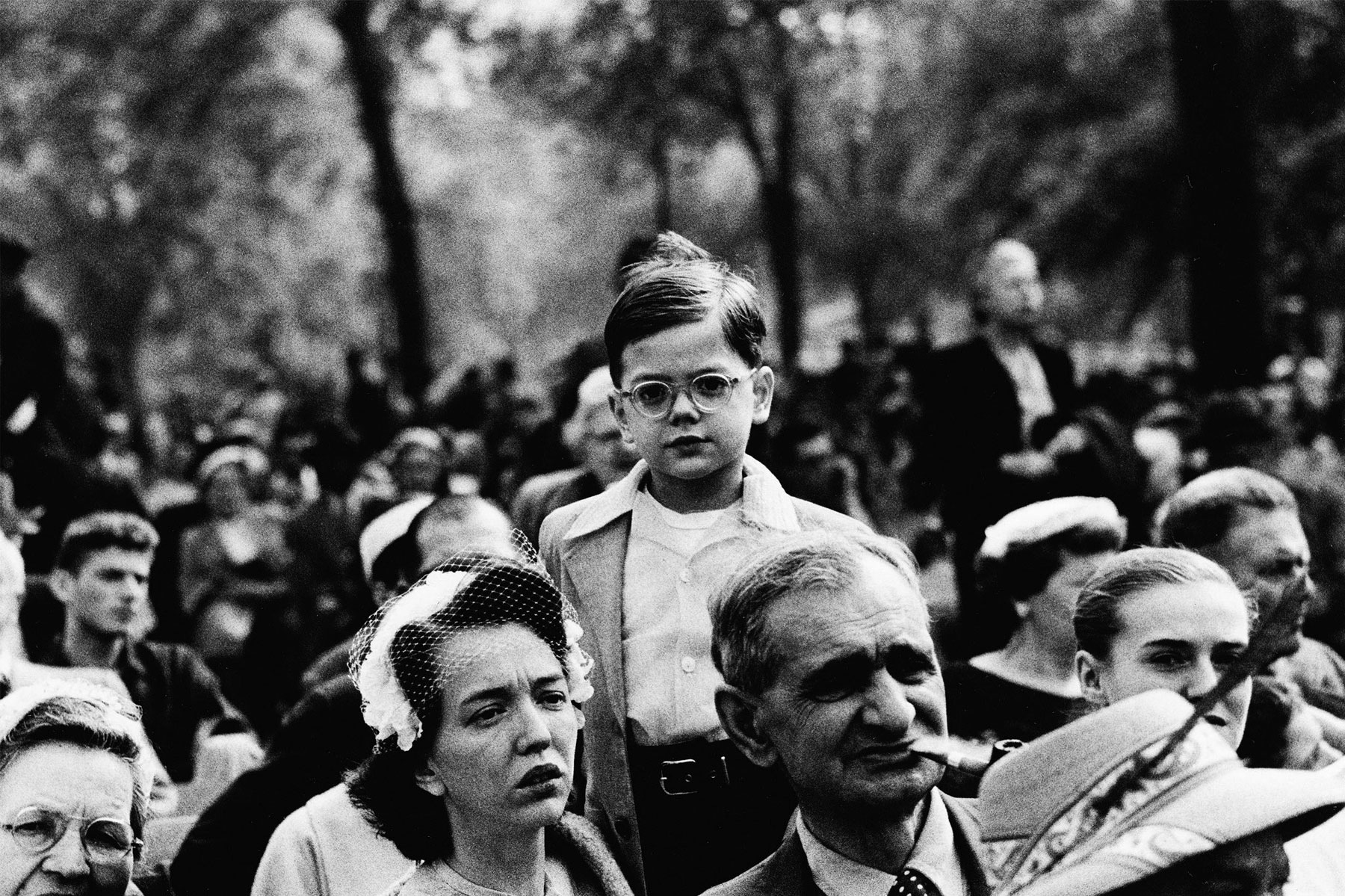
Diane Arbus (American, 1923-1971) 'Boy above a crowd, N.Y.C., 1957' 1957 from the exhibition 'diane arbus: in the beginning' at the Metropolitan Museum of Art, New York, July - Nov, 2025


Diane Arbus (American, 1923-1971)
Boy above a crowd, N.Y.C., 1957
1957
Silver gelatin print
© Diane Arbus/The Estate of Diane Arbus LLC


Diane Arbus (American, 1923-1971) 'Girl with a pointy hood and white schoolbag at the curb, N.Y.C. 1957' 1957


Diane Arbus (American, 1923-1971)
Girl with a pointy hood and white schoolbag at the curb, N.Y.C. 1957
1957
Silver gelatin print
© Diane Arbus/The Estate of Diane Arbus LLC


Diane Arbus (American, 1923-1971) 'Empty snack bar, N.Y.C., 1957' 1957


Diane Arbus (American, 1923-1971)
Empty snack bar, N.Y.C., 1957
1957
Silver gelatin print
© Diane Arbus/The Estate of Diane Arbus LLC


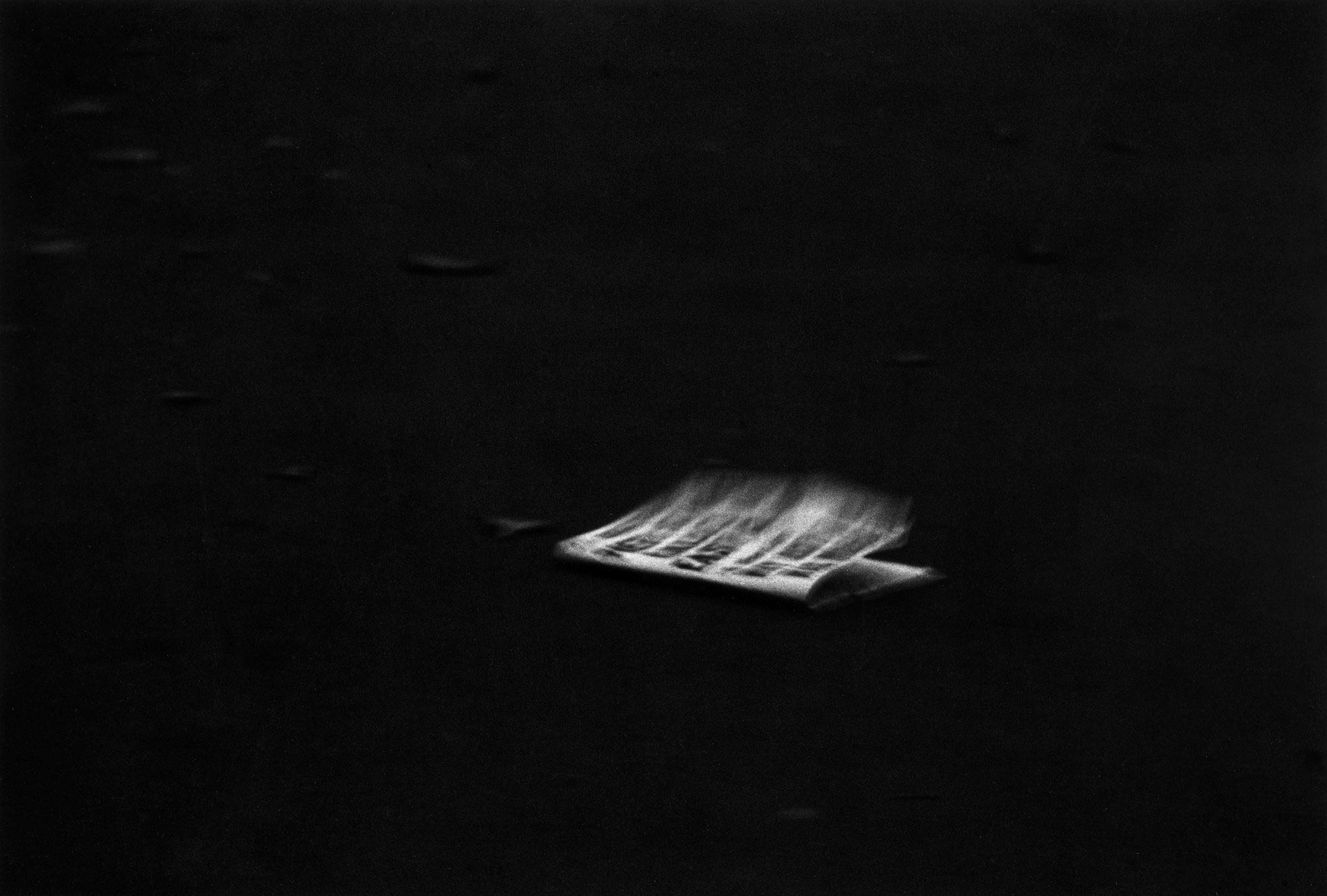
Diane Arbus (American, 1923-1971) 'Windblown headline on a dark pavement, N.Y.C., 1956' 1956


Diane Arbus (American, 1923-1971)
Windblown headline on a dark pavement, N.Y.C., 1956
1956
Silver gelatin print
© Diane Arbus/The Estate of Diane Arbus LLC


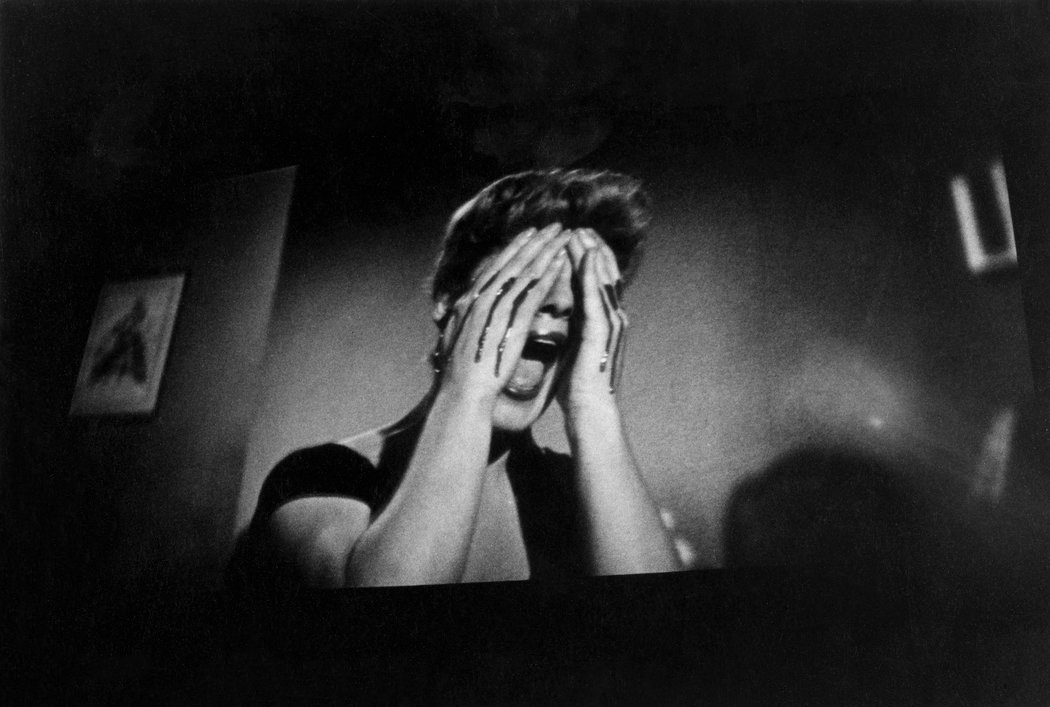
Diane Arbus (American, 1923-1971) 'Screaming woman with blood on her hands, 1961' 1961


Diane Arbus (American, 1923-1971)
Screaming woman with blood on her hands, 1961
1961
Silver gelatin print
© Diane Arbus/The Estate of Diane Arbus LLC


“This is a shot inside a theater, of a movie called ‘Horrors of the Black Museum.’ The woman is using binoculars and when she focuses, daggers come out and blind her.”


As part of the inaugural season at The Met Breuer, diane arbus: in the beginning will open on July 12, featuring more than 100 photographs that together will redefine one of the most influential and provocative artists of the 20th century. This landmark exhibition will highlight never-before-seen early work of Diane Arbus (1923-1971), focusing on the first seven years of her career, from 1956 to 1962 – the period in which she developed the idiosyncratic style and approach for which she has been recognised, praised, criticised, and copied the world over. The exhibition is made possible by the Alfred Stieglitz Society. Additional support is provided by The Horace W. Goldsmith Foundation and the Art Mentor Foundation Lucerne.

“It is a rare privilege to present an exhibition this revelatory, on an artist of Arbus’s stature. More than two-thirds of these works have never before been exhibited or published,” said Thomas P. Campbell, Director and CEO of The Met. “We sincerely thank the Estate of Diane Arbus for entrusting us to show an unknown aspect of this remarkable artist’s legacy with the camera.”

Jeff Rosenheim, Curator in Charge of the Department of Photographs, added, “Arbus’s early photographs are wonderfully rich in achievement and perhaps as quietly riveting and ultimately controversial as the iconic images for which she is so widely known. She brings us face-to-face with what she had first glimpsed at the age of 16 – ‘the divineness in ordinary things’ – and through her photographs we begin to see it too.”

diane arbus: in the beginning focuses on seven key years that represent a crucial period of the artist’s genesis, showing Arbus as she developed her style and honed her practice. Arbus was fascinated by photography even before she received a camera in 1941 at the age of 18 as a present from her husband, Allan, and made photographs intermittently for the next 15 years while working with him as a stylist in their fashion photography business. But in 1956 she numbered a roll of 35mm film #1, as if to claim to herself that this moment would be her definitive beginning. Through the course of the next seven years (the period in which she primarily used a 35mm camera), an evolution took place – from pictures of individuals that sprang out of fortuitous chance encounters to portraits in which the chosen subjects became engaged participants, with as much stake in the outcome as the photographer. This greatly distinguishes Arbus’s practice from that of her peers, from Walker Evans and Helen Levitt to Garry Winogrand and Lee Friedlander, who believed that the only legitimate record was one in which they, themselves, appear to play little or no role. In almost complete opposition, Arbus sought the poignancy of a direct personal encounter.

Arbus made most of her photographs in New York City, where she was born and died, and where she worked in locations such as Times Square, the Lower East Side, Coney Island, and other areas. Her photographs of children and eccentrics, couples and circus performers, female impersonators and Fifth Avenue pedestrians are among the most intimate and surprising images of the era. From the beginning, Arbus believed fully that she had something special to offer the world, a glimpse of its many secrets: “I do feel I have some slight corner on something about the quality of things. I mean it’s very subtle and a little embarrassing to me but I really believe there are things which nobody would see unless I photographed them.”

Nearly half of the photographs that Arbus printed during her lifetime were made between 1956 and 1962, the period covered by this exhibition. At the time of her death in 1971, much of this work was stored in boxes in an inaccessible corner of her basement darkroom at 29 Charles Street in Greenwich Village. These prints remained undiscovered for several years thereafter and were not even inventoried until a decade after her death. The majority of the photographs included in the exhibition are part of the Museum’s vast Diane Arbus Archive, acquired in 2007 by gift and promised gift from the artist’s daughters, Doon Arbus and Amy Arbus. It was only when the archive – a treasury of photographs, negatives, notebooks, appointment books, correspondence, and collections – came to The Metropolitan Museum of Art in 2007 that this seminal early work began to be fully explored.

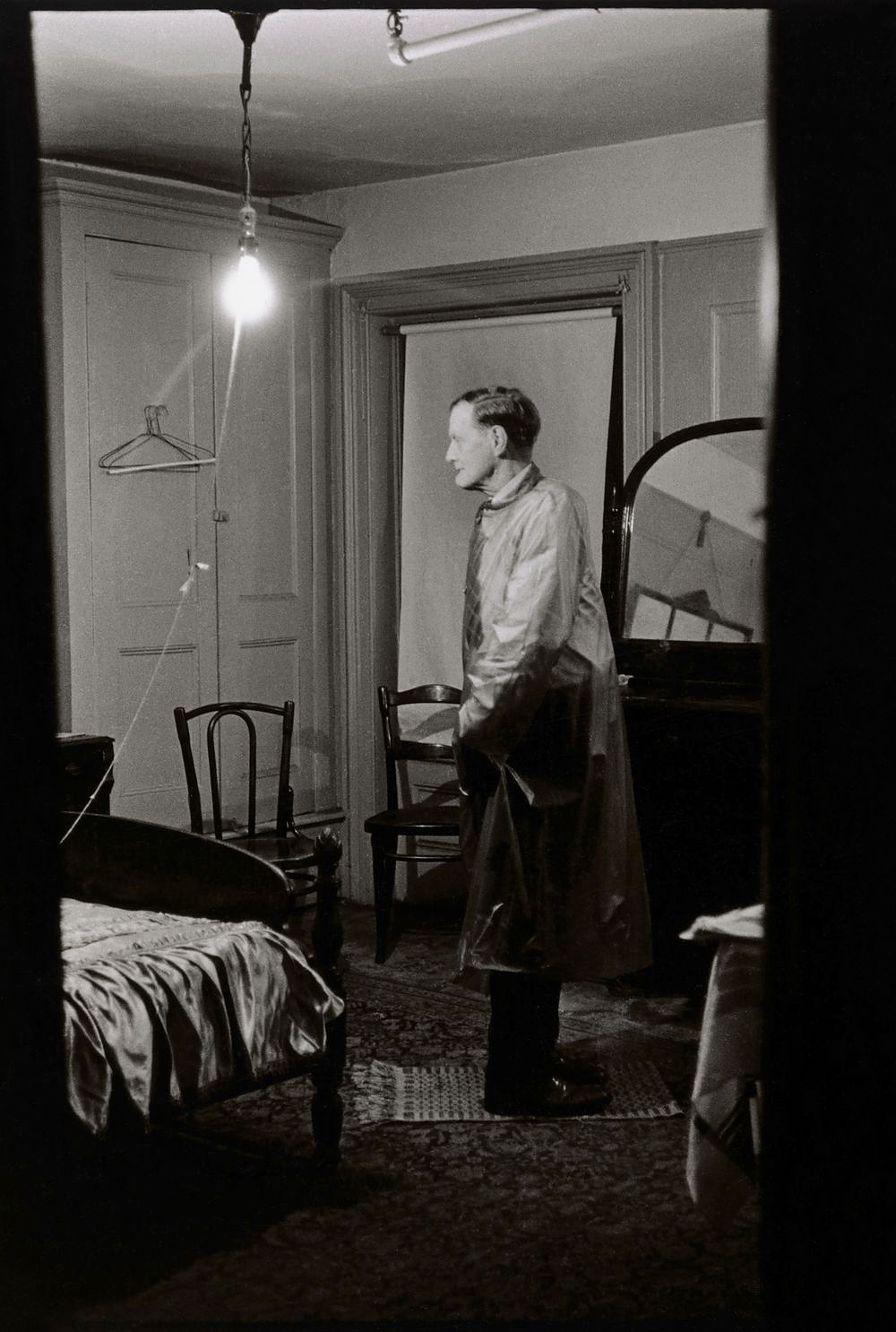
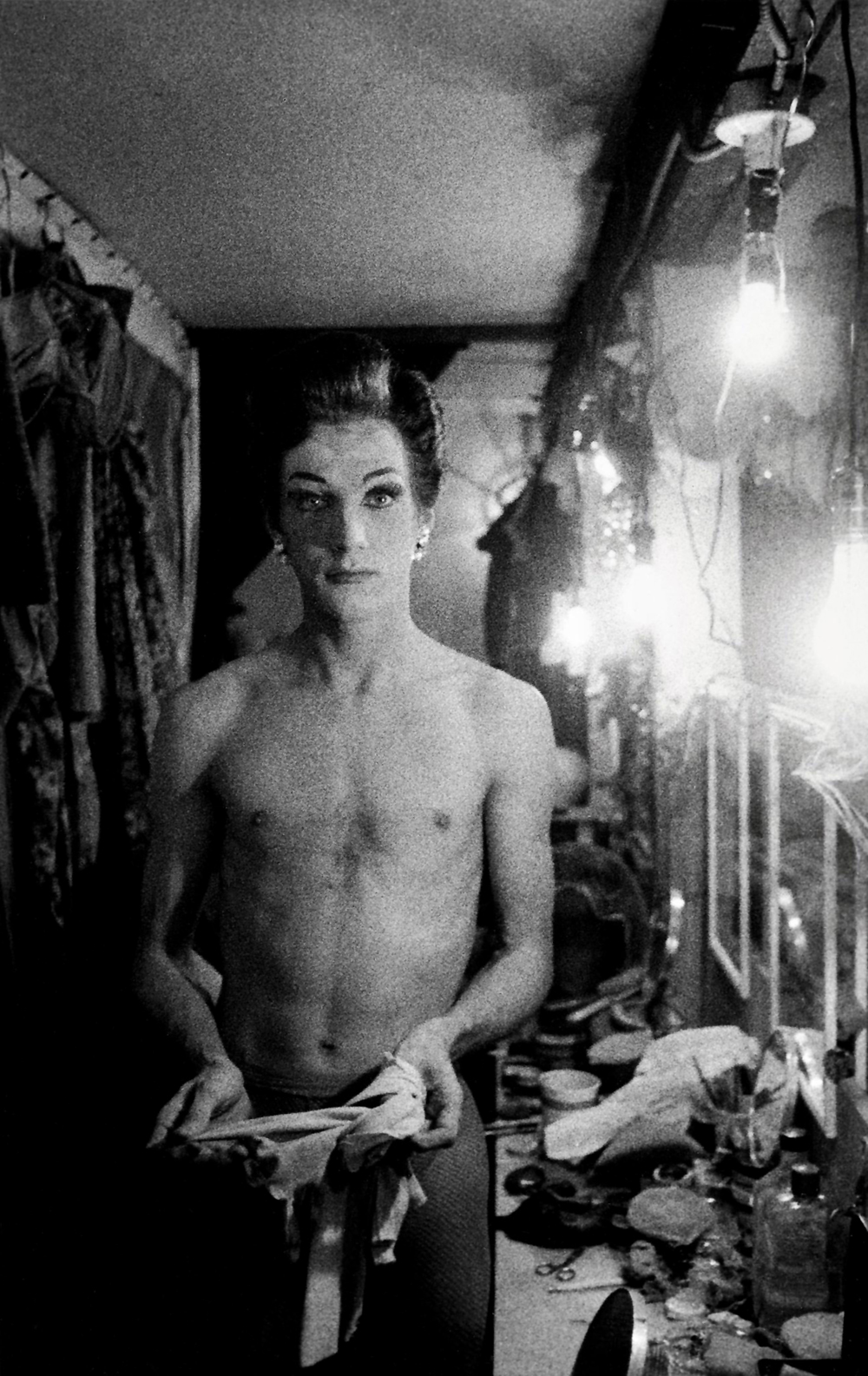
Among the highlights in the exhibition are lesser-known published works such as Lady on a bus, N.Y.C. 1957, Boy stepping off the curb, N.Y.C. 1957-58, The Backwards Man in his hotel room, N.Y.C. 1961, and Jack Dracula at a bar, New London, Conn. 1961, as well as completely unknown additions to her oeuvre, such as Taxicab driver at the wheel with two passengers, N.Y.C. 1956, Woman with white gloves and a pocket book, N.Y.C. 1956, Female impersonator holding long gloves, Hempstead, L.I. 1959, and Man in hat, trunks, socks and shoes, Coney Island, N.Y. 1960. Included among the selection of six square-format photographs from 1962 is the iconic Child with a toy hand grenade in Central Park, N.Y.C. 1962, a photograph that signals the moment when Arbus turned away from the 35mm camera and started working with the 2 1/4 inch square format Rolleiflex camera, a format that remained a distinctive attribute of her work for the rest of her life. The photographs from her early career reveal that the salient characteristics of her work – its centrality, boldness, intimacy, and apparent artlessness – were present in her pictures since the very beginning. Arbus’s creative life in photography after 1962 is well documented and already the stuff of legend; now, for the first time, we can properly examine its origins.

diane arbus: in the beginning is curated by Jeff L. Rosenheim, Curator in Charge of the Department of Photographs at The Met.

Press release from the Metropolitan Museum of Art


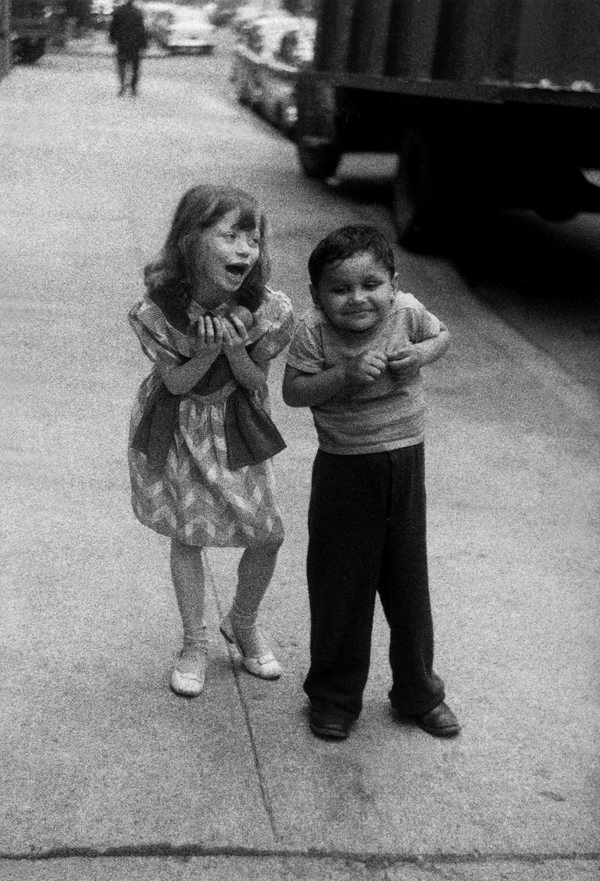
Diane Arbus (American, 1923-1971) 'Child teasing another, N.Y.C., 1960' 1960


Diane Arbus (American, 1923-1971)
Child teasing another, N.Y.C., 1960
1960
Silver gelatin print
© Diane Arbus/The Estate of Diane Arbus LLC


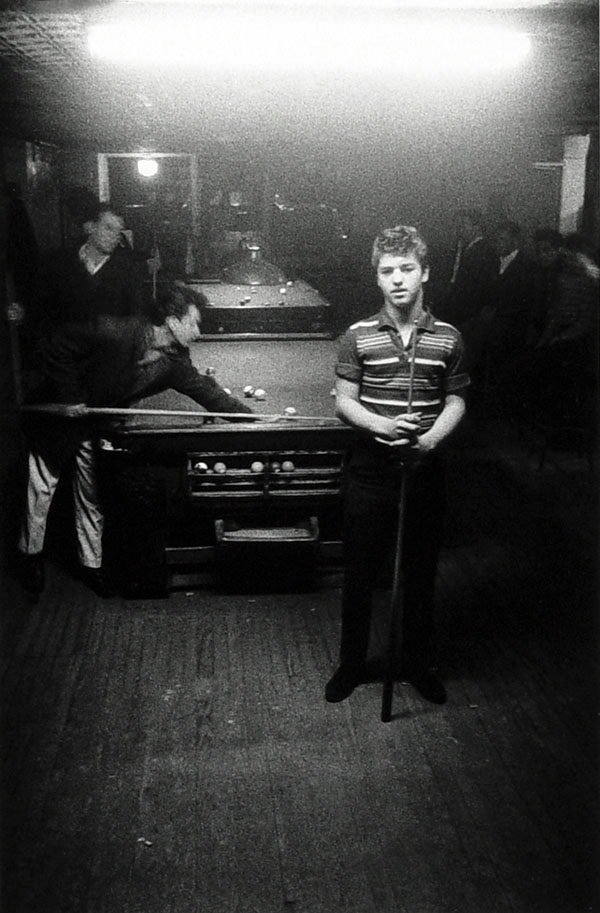
Diane Arbus (American, 1923-1971) 'Boy at the pool hall, N.Y.C., 1959' 1959


Diane Arbus (American, 1923-1971)
Boy at the pool hall, N.Y.C., 1959
1959
Silver gelatin print
© Diane Arbus/The Estate of Diane Arbus LLC


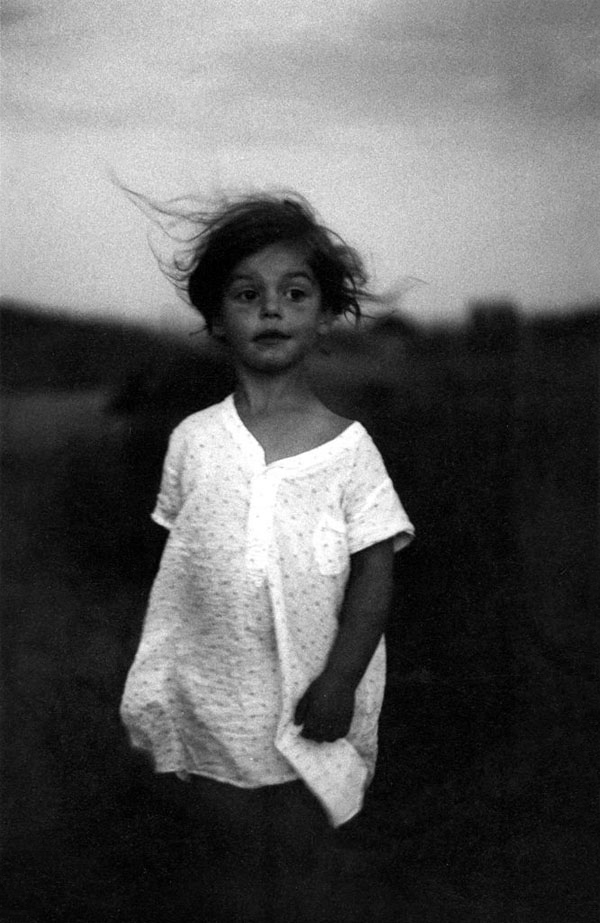
Diane Arbus (American, 1923-1971) 'Child in a nightgown, Wellfleet, Mass., 1957' 1957


Diane Arbus (American, 1923-1971)
Child in a nightgown, Wellfleet, Mass., 1957
1957
Silver gelatin print
© Diane Arbus/The Estate of Diane Arbus LLC


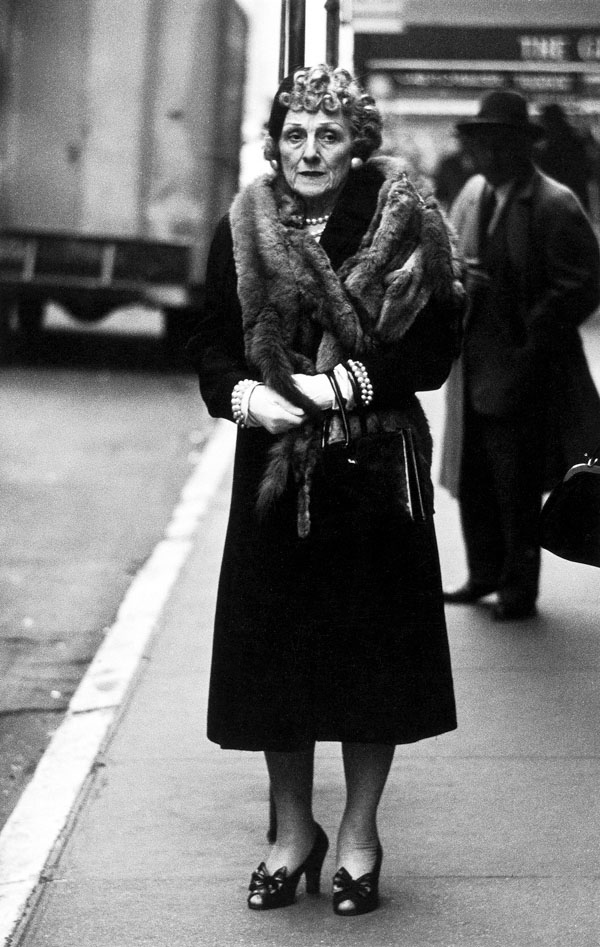
Diane Arbus (American, 1923-1971) 'Woman wearing a mink stole and bow shoes, N.Y.C., 1956' 1956


Diane Arbus (American, 1923-1971)
Woman wearing a mink stole and bow shoes, N.Y.C., 1956
1956
Silver gelatin print
© Diane Arbus/The Estate of Diane Arbus LLC


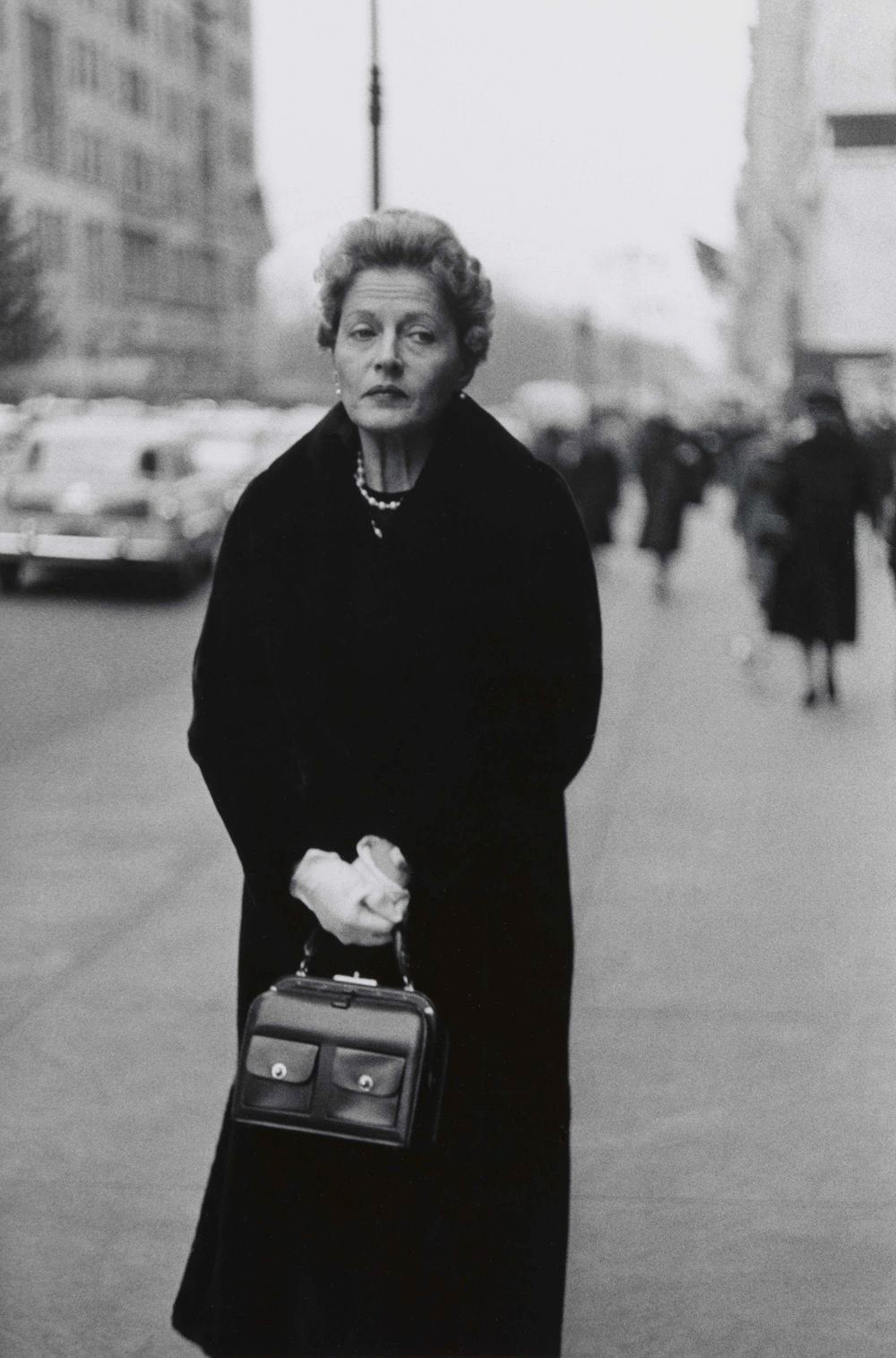
Diane Arbus (American, 1923-1971) 'Woman with white gloves and a pocket book, N.Y.C. 1956' 1956


Diane Arbus (American, 1923-1971)
Woman with white gloves and a pocket book, N.Y.C. 1956
1956
Silver gelatin print
© Diane Arbus/The Estate of Diane Arbus LLC


“We’re in the isolationist ’50s, and here’s a glamorous woman on Fifth Avenue, wearing gloves, with her pocketbook, but with this anxiety on her face.”


Diane Arbus (American, 1923-1971) 'Lady on a Bus, N.Y.C. 1957' 1957


Diane Arbus (American, 1923-1971)
Lady on a Bus, N.Y.C. 1957
1957
Gelatin silver print
8 1/2 x 5 3/4 in. (21.6 x 14.6cm)
The Metropolitan Museum of Art, New York, Gift of Danielle and David Ganek, 2005
© Diane Arbus/The Estate of Diane Arbus LLC


Jeff L. Rosenheim curator: There are many pictures from her first 50 rolls of film in the show. And you can see for yourself that she is already isolating individuals, pedestrians on Fifth Avenue. She is approaching people, and in almost every instance, it’s one image and the subject is addressing the camera. Arbus did not want to do what almost every one of her peers was doing, which she was highly aware of – she was well versed in the history of the medium; she was taking classes from Lisette Model and she had studied with Berenice Abbott and Alexey Brodovitch. What she took away from that training was this feeling that she could find her subject and they could find her in equal measure. She allowed herself to be vulnerable enough. Helen Levitt used a right-angle viewfinder so her subjects couldn’t see what she was doing. Walker Evans used the folds of his coat to hide his camera on the subway. The style of documentary photography was that you wanted to see but you didn’t want to be seen, and Arbus had a completely different method. It was to use the camera as an expressive device that allows the viewer of the photograph to be implicated by the subject looking directly at the artist.

Randy Kennedy. “The Diane Arbus You’ve Never Seen,” on the New York Times website 26 May 2016 [Online] Cited 25/10/2021


“Arbus is not without her critics and, where some people praise her ability to celebrate the marginalized and glorify the unusual, others see her work as cruel and exploitative. Lubow, however, claims that both stances oversimplify the real complexity of her work, which is perhaps where both he and Jeff Rosenheim, the curator in charge of photography at the Met, take a stab at redefining Arbus, because if we define her solely by the people she photographed, we’re missing the point.

“I think both Jeff and I realized that from the beginning she wanted to capture a moment where she was seeing and being seen, she wanted a reciprocal look,” Lubow says. “Jeff is doing that formally, and showing you that she needed it as an artist, and I’ve tried to show that she needed it as a person. She was motivated to feel and to record the response of her subject to her. That was how she felt real, this was how she felt alive.””

Krystal Grow. “Diane Arbus and the Art of Exchange,” on the Popular Photography website July 15, 2016 [Online] Cited 25/10/2021


“From the very beginning of her career, she was taking photographs to obtain a vital proof – a corroboration of her own existence. The pattern was set early. When she was 15, she described to a friend how she would undress at night in her lit bathroom and watch an old man across the courtyard watch her (until his wife complained). She not only wanted to see, she needed to be seen. As a street photographer, she dressed at times in something attention-grabbing, like a fake leopard-skin coat. She didn’t blend into the background, she jumped out of it. And she fascinated her subjects. “People were interested in Diane, just as interested in her as she was in them,” John Szarkowski, a longtime director of photography at the Museum of Modern Art, once told me…

Diane had a talent for friendship, and she maintained long-term connections with all sorts of people – eccentrics in rooming houses, freaks in sideshows, socialites on Park Avenue. She needed those relationships. But she also relied on filmed verification of her impact on others. The reciprocal gaze that marks her early photographs would be furthered and intensified in the collaborative form of portraiture in her mature work, done with a medium-format camera. Szarkowski, for one, believed that the sharpness that larger film offered was in keeping with her aim to be both particular and mythic.”

Arthur Lubow. “How Diane Arbus Became ‘Arbus’,” on the New York Times website May 26, 2016 [Online] Cited 25/10/2021


Diane Arbus (American, 1923-1971) 'Boy stepping off the curb, N.Y.C. 1957-58' 1957-1958


Diane Arbus (American, 1923-1971)
Boy stepping off the curb, N.Y.C. 1957-58
1957-1958
Silver gelatin print
© Diane Arbus/The Estate of Diane Arbus LLC


Diane Arbus (American, 1923-1971) 'Girl with schoolbooks stepping onto the curb, N.Y.C., 1957' 1957


Diane Arbus (American, 1923-1971)
Girl with schoolbooks stepping onto the curb, N.Y.C., 1957
1957
Silver gelatin print
© Diane Arbus/The Estate of Diane Arbus LLC


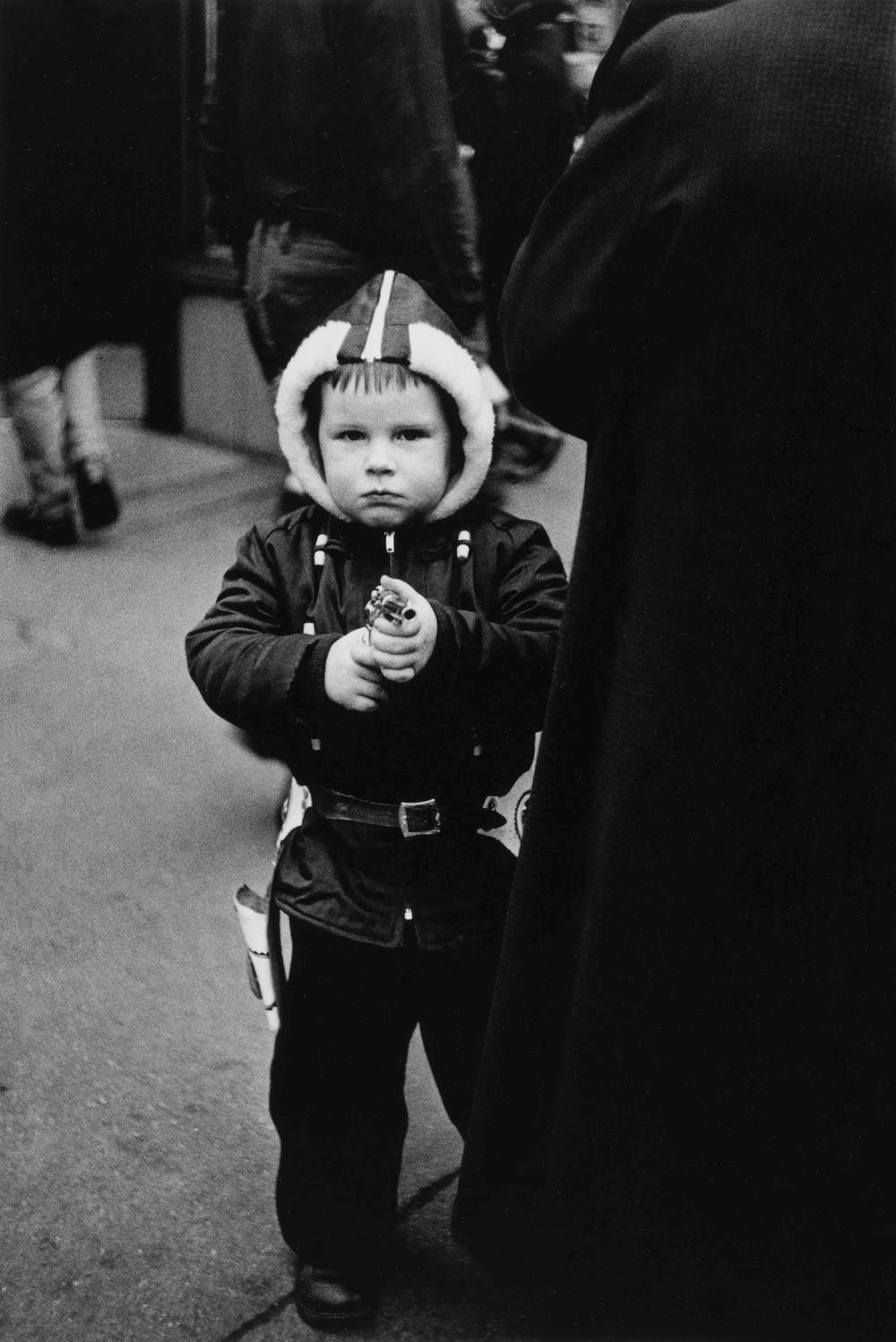
Diane Arbus (American, 1923-1971) 'Kid in a hooded jacket aiming a gun, N.Y.C., 1957' 1957


Diane Arbus (American, 1923-1971)
Kid in a hooded jacket aiming a gun, N.Y.C., 1957
1957
Silver gelatin print
© Diane Arbus/The Estate of Diane Arbus LLC


Diane Arbus (American, 1923-1971) 'Man in hat, trunks, socks and shoes, Coney Island, N.Y. 1960' 1960


Diane Arbus (American, 1923-1971)
Man in hat, trunks, socks and shoes, Coney Island, N.Y. 1960
1960
Silver gelatin print
© Diane Arbus/The Estate of Diane Arbus LLC


Diane Arbus (American, 1923-1971) 'The Backwards Man in his hotel room, N.Y.C. 1961' 1961


Diane Arbus (American, 1923-1971)
The Backwards Man in his hotel room, N.Y.C. 1961
1961
Silver gelatin print
© Diane Arbus/The Estate of Diane Arbus LLC


Diane Arbus (American, 1923-1971) 'Stripper with Bare Breasts Sitting in Her Dressing Room, Atlantic City, N.J. 1961' 1961


Diane Arbus (American, 1923-1971)
Stripper with Bare Breasts Sitting in Her Dressing Room, Atlantic City, N.J. 1961
1961
Silver gelatin print
© Diane Arbus/The Estate of Diane Arbus LLC


Diane Arbus (American, 1923-1971) 'Female impersonator holding long gloves, Hempstead, L.I., 1959' 1959


Diane Arbus (American, 1923-1971)
Female impersonator holding long gloves, Hempstead, L.I., 1959
1959
Silver gelatin print
© Diane Arbus/The Estate of Diane Arbus LLC


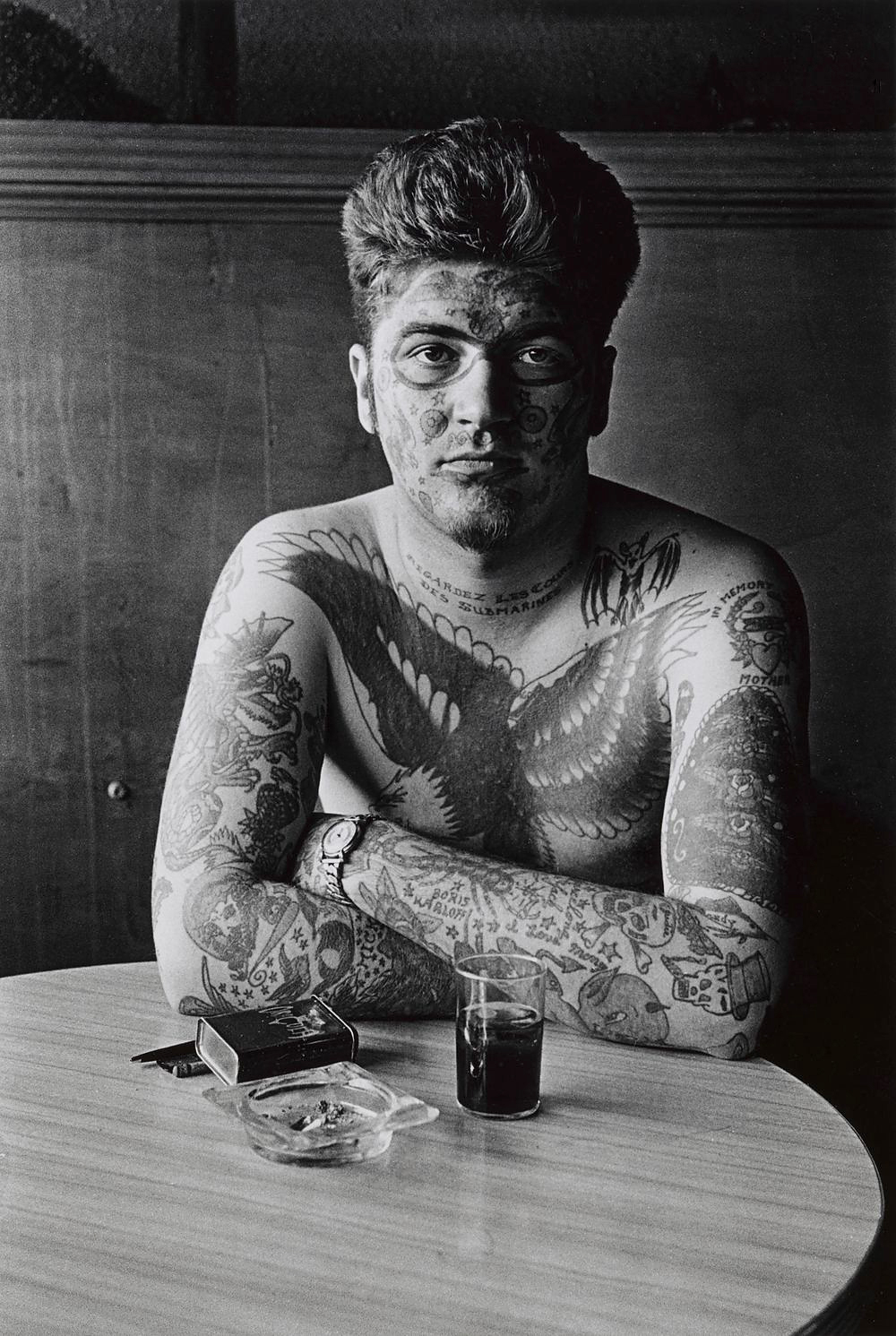
Diane Arbus (American, 1923-1971) 'Jack Dracula at a bar, New London, Conn. 1961' 1961


Diane Arbus (American, 1923-1971)
Jack Dracula at a bar, New London, Conn. 1961
1961
Silver gelatin print
© Diane Arbus/The Estate of Diane Arbus LLC


I think Arbus was suggesting that just as people are looking at us and we’re looking at them every day, the pictures made us introspective as viewers. They forced us to confront our own identity. And that’s a really beautiful switch, that switcheroo. We’re looking at somebody else but we’re mindful of our voyeurism, and we’re mindful of how we ourselves are presenting. ‘How am I different? How did I become the person I am?’ That’s one of the qualifying elements of an Arbus photograph: that you feel something about you, often something that might not be comfortable.

Randy Kennedy. “The Diane Arbus You’ve Never Seen,” on the New York Times website 26 May 2016 [Online] Cited 25/10/2021


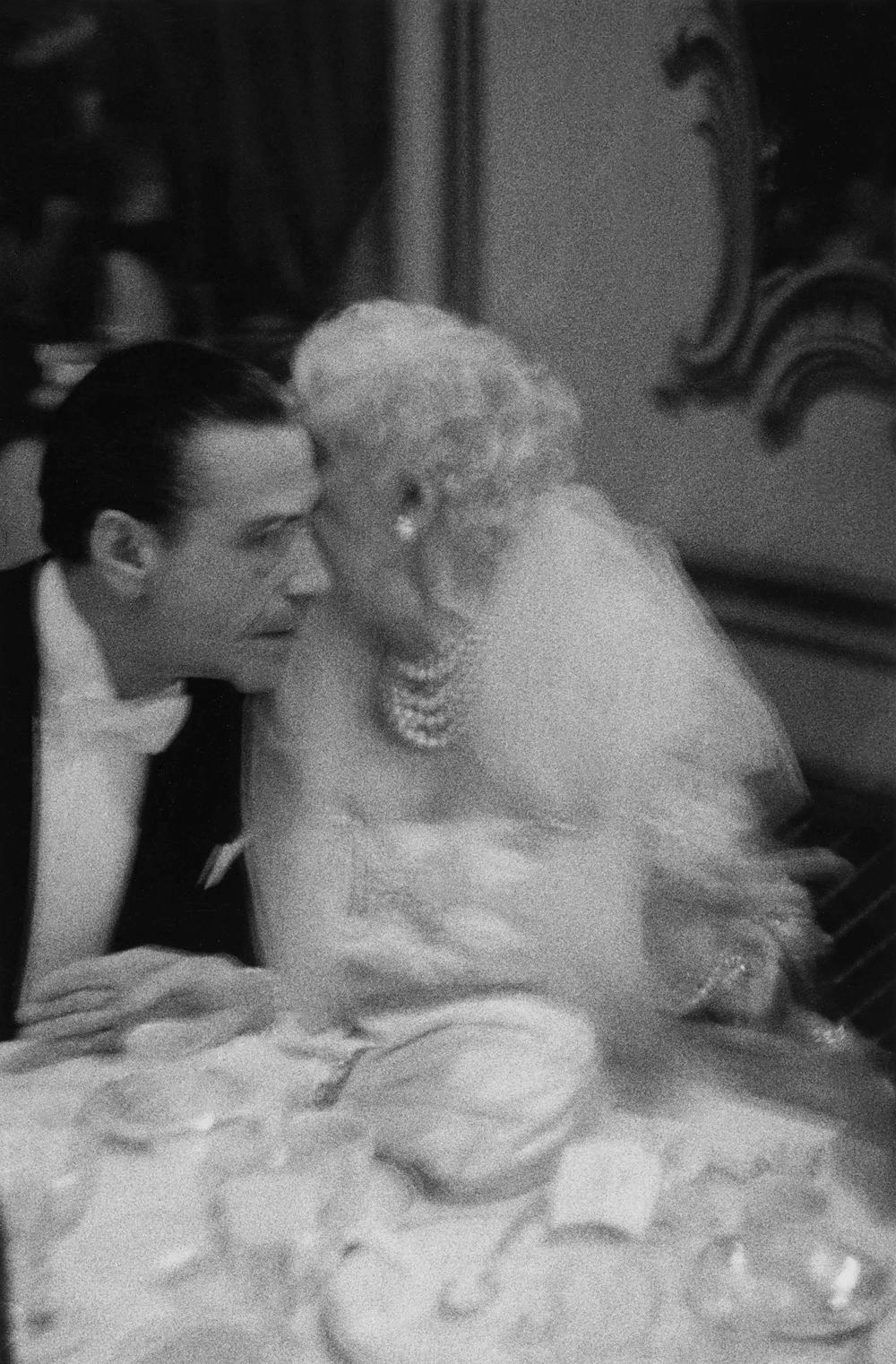
Diane Arbus (American, 1923-1971) 'Elderly Woman Whispering to Her Dinner Partner, Grand Opera Ball, N.Y.C. 1959' 1959


Diane Arbus (American, 1923-1971)
Elderly Woman Whispering to Her Dinner Partner, Grand Opera Ball, N.Y.C. 1959
1959
Silver gelatin print
© Diane Arbus/The Estate of Diane Arbus LLC


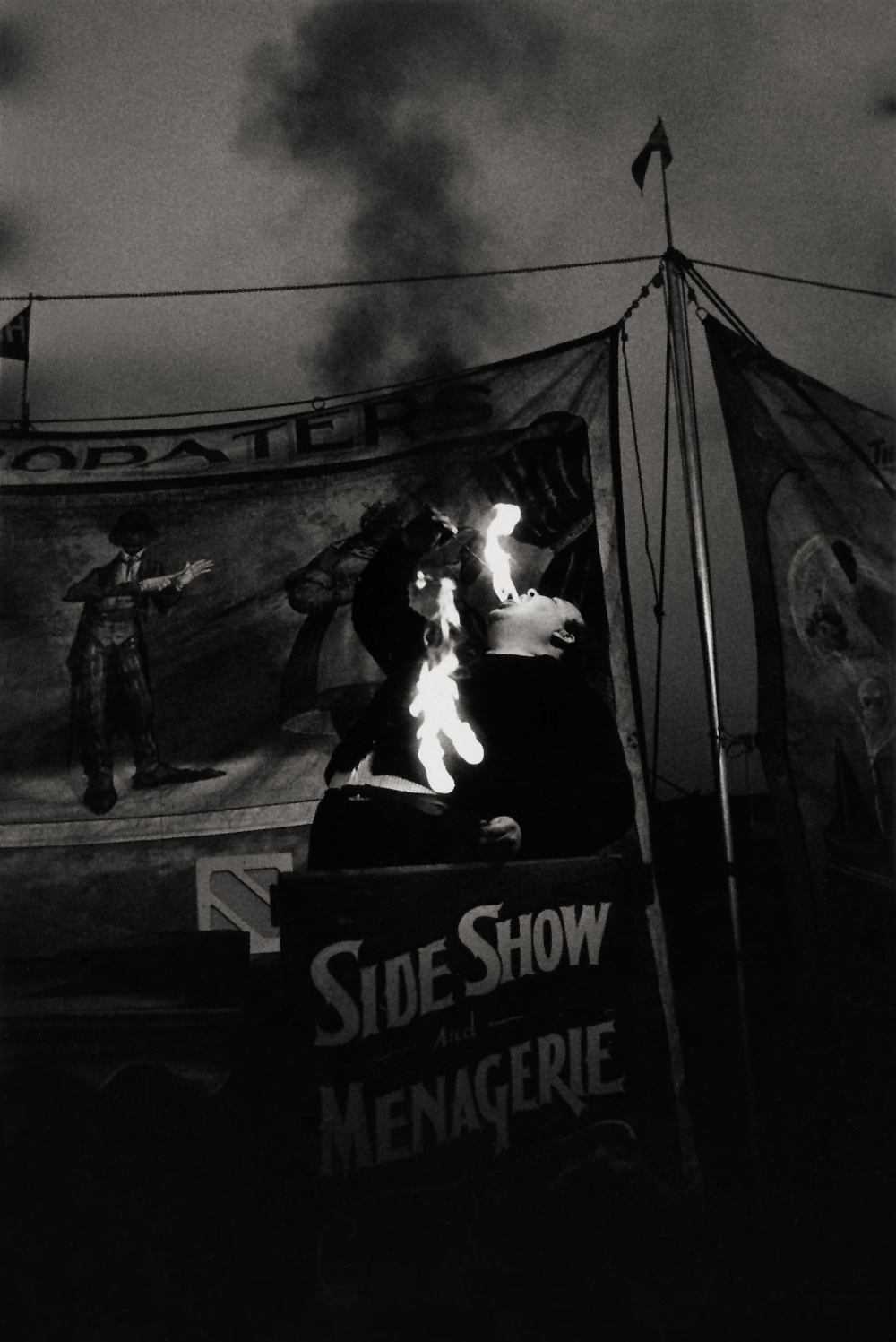
Diane Arbus (American, 1923-1971) 'Fire Eater at a Carnival, Palisades Park, N.J. 1957' 1957


Diane Arbus (American, 1923-1971)
Fire Eater at a Carnival, Palisades Park, N.J. 1957
1957
Silver gelatin print
© Diane Arbus/The Estate of Diane Arbus LLC


Diane Arbus (American, 1923-1971) 'Little man biting woman's breast, N.Y.C.' 1958


Diane Arbus (American, 1923-1971)
Little man biting woman’s breast, N.Y.C.
1958
Silver gelatin print
© Diane Arbus/The Estate of Diane Arbus LLC


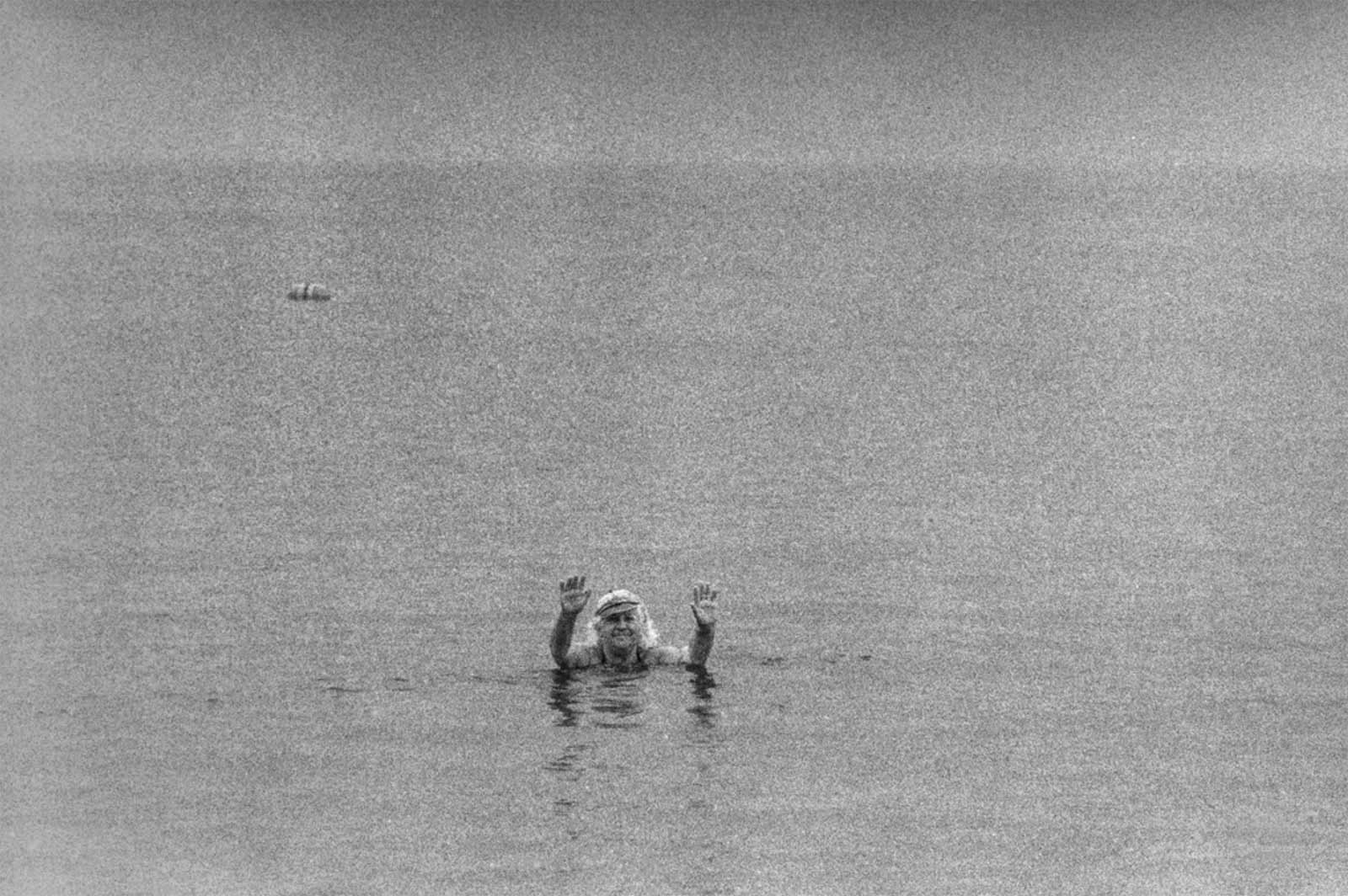
Diane Arbus (American, 1923-1971) 'Old woman with hands raised in the ocean, Coney Island, N.Y.C.' 1960


Diane Arbus (American, 1923-1971)
Old woman with hands raised in the ocean, Coney Island, N.Y.C.
1960
Silver gelatin print
© Diane Arbus/The Estate of Diane Arbus LLC


Diane Arbus (American, 1923-1971) 'Blonde receptionist behind a picture window, N.Y.C.' 1962


Diane Arbus (American, 1923-1971)
Blonde receptionist behind a picture window, N.Y.C.
1962
Silver gelatin print
© Diane Arbus/The Estate of Diane Arbus LLC


“This is the transition year, when she changed to square format. The receptionist is in a kind of diorama, not one made by the woman but by the culture.”


Diane Arbus in Central Park with her Mamiya Camera in 1967


Diane Arbus in Central Park with her Mamiya Camera (330?) in 1967


Diane Arbus (American, 1923-1971) 'Child with a toy hand grenade in Central Park, N.Y.C. 1962'


Diane Arbus (American, 1923-1971)
Child with a toy hand grenade in Central Park, N.Y.C. 1962
1962
Silver gelatin print


The Metropolitan Museum of Art
1000 Fifth Avenue at 82nd Street
New York, New York 10028-0198
Phone: 212-535-7710

Opening hours:
Sunday – Tuesday and Thursday: 10am – 5pm
Friday and Saturday: 10am – 9pm
Closed Wednesday

The Metropolitan Museum of Art website

LIKE ART BLART ON FACEBOOK

Back to top

Exhibition: ‘Hermann Landshoff: A Retrospective Photographs 1930-1970’ at the Münchner Stadtmuseum

Exhibition dates: 29th November, 2013 – 21st April, 2014

Curator: Dr. Ulrich Pohlmann, head of the museum’s photography collection, in collaboration with the publisher Andreas Landshoff


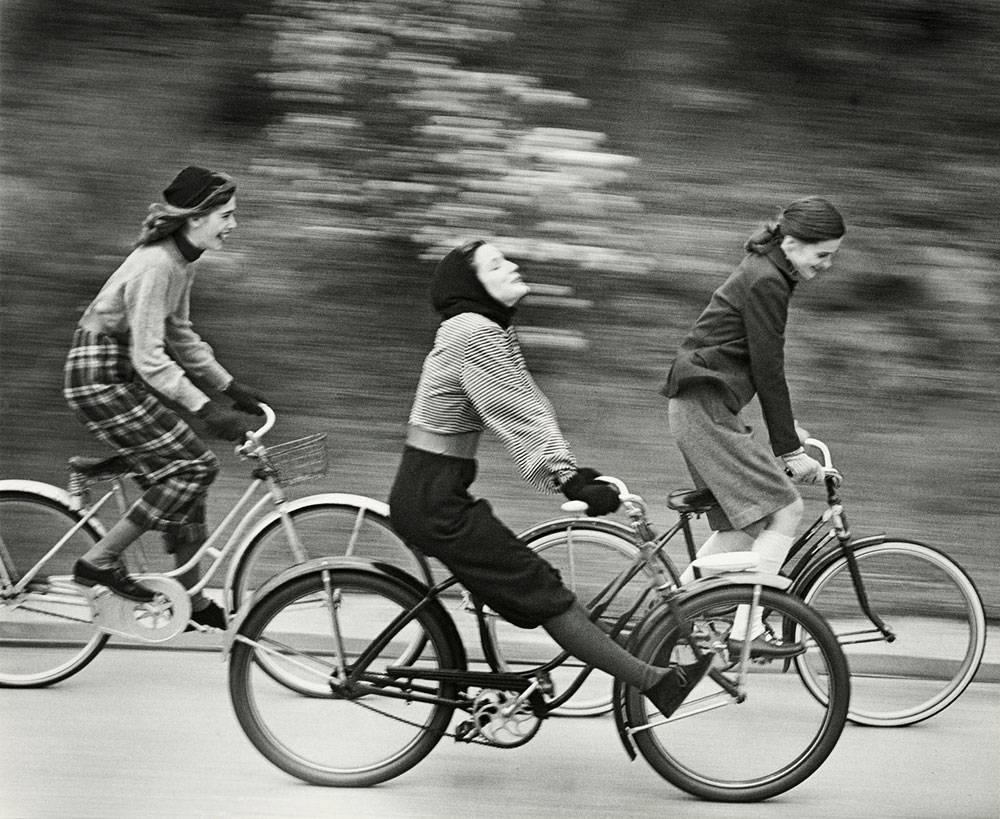
Hermann Landshoff (American-German, 1905-1986) 'The Bicyclers' Published in 'Junior Bazaar' August 1946 from the exhibition Exhibition: 'Hermann Landshoff: A Retrospective Photographs 1930-1970' at the Münchner Stadtmuseum, November 2013 - April 2014


Hermann Landshoff (American-German, 1905-1986)
The Bicyclers
Published in Junior Bazaar August 1946


Another artist who was lucky to escape Europe in the first years of the Second World War.

I would like to see the whole exhibition.

At the moment I can’t make a judgement on his work for I have not seen enough of it, but on the evidence of the images presented in this posting, I am not entirely convinced.

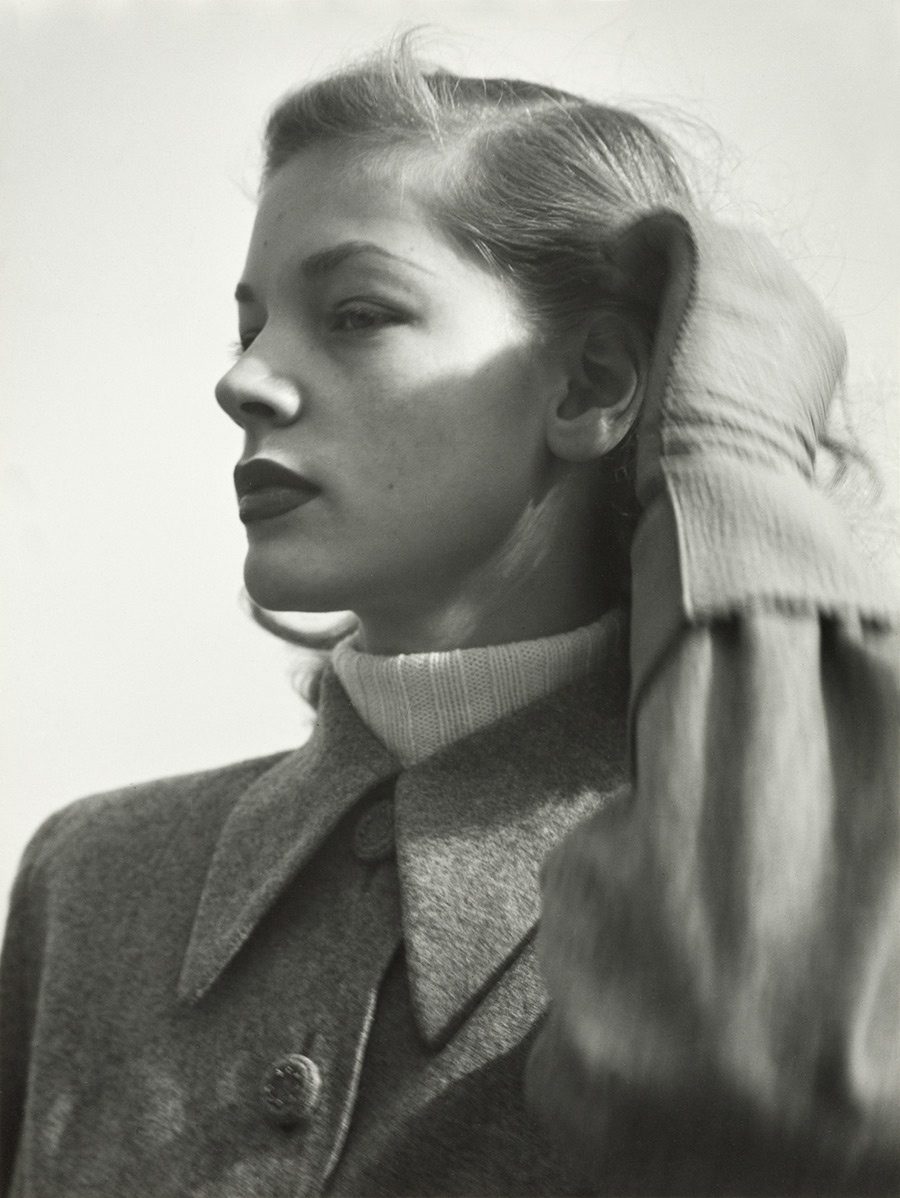
However, the photograph of Lauren Bacall in 1945 is ravishing…

Dr Marcus Bunyan


Many thankx to the Münchner Stadtmuseum for allowing me to publish the photographs in the posting. Please click on the photographs for a larger version of the image.


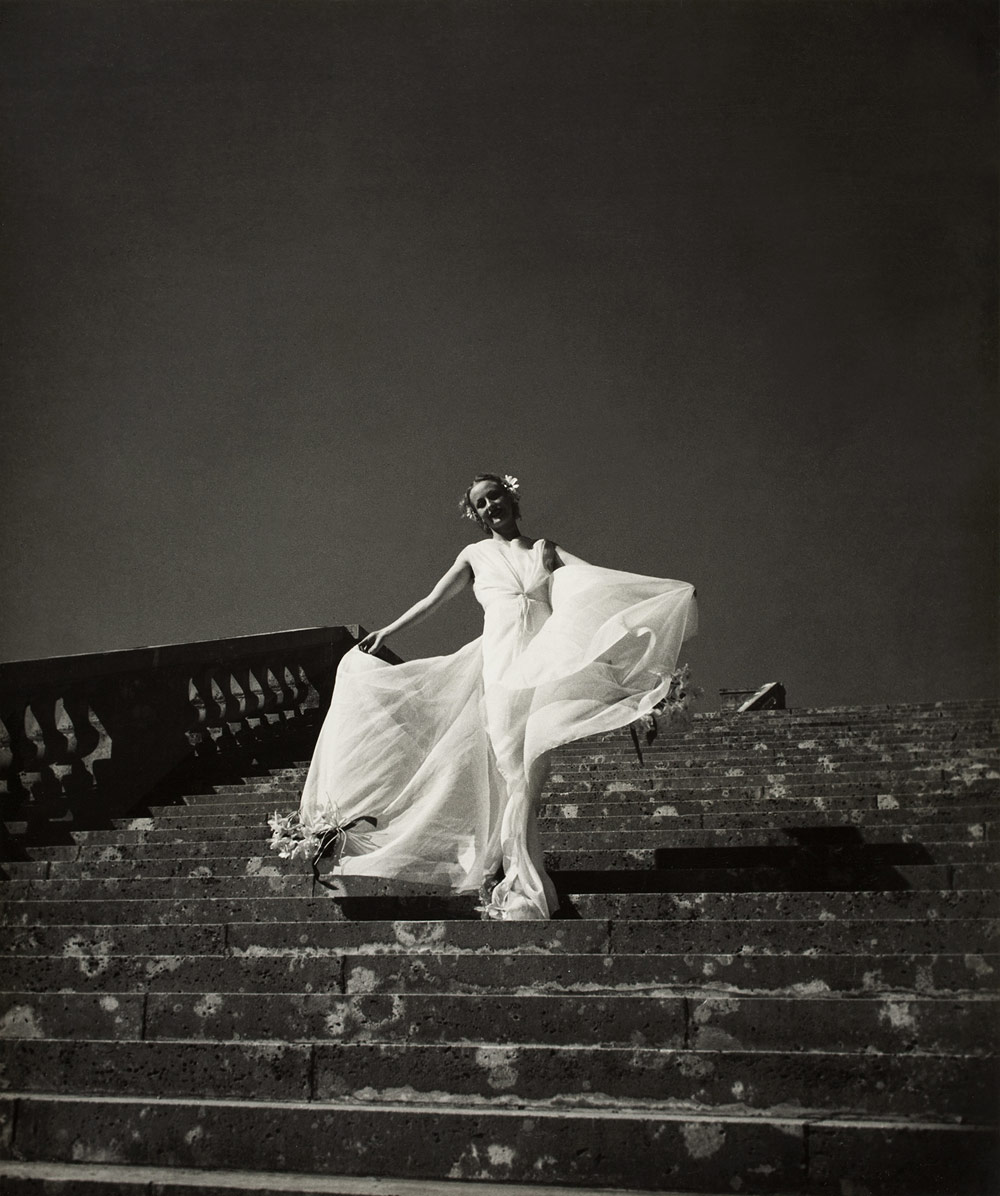
Hermann Landshoff (American-German, 1905-1986) 'Model Cora Hemmet on the Grand Versailles Staircase' 1934-1938


Hermann Landshoff (American-German, 1905-1986)
Model Cora Hemmet on the Grand Versailles Staircase
1934-1938
Gelatin silver print
Münchner Stadtmuseum Photography Collection


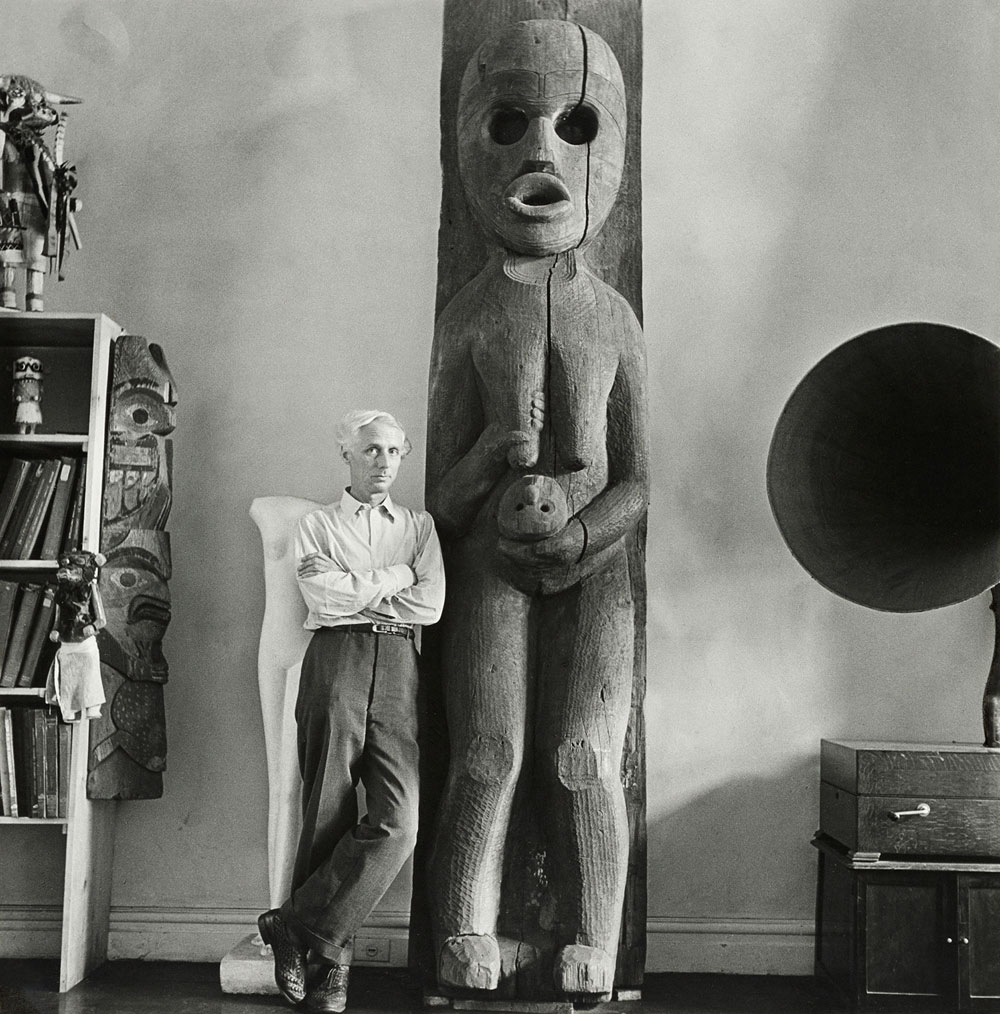
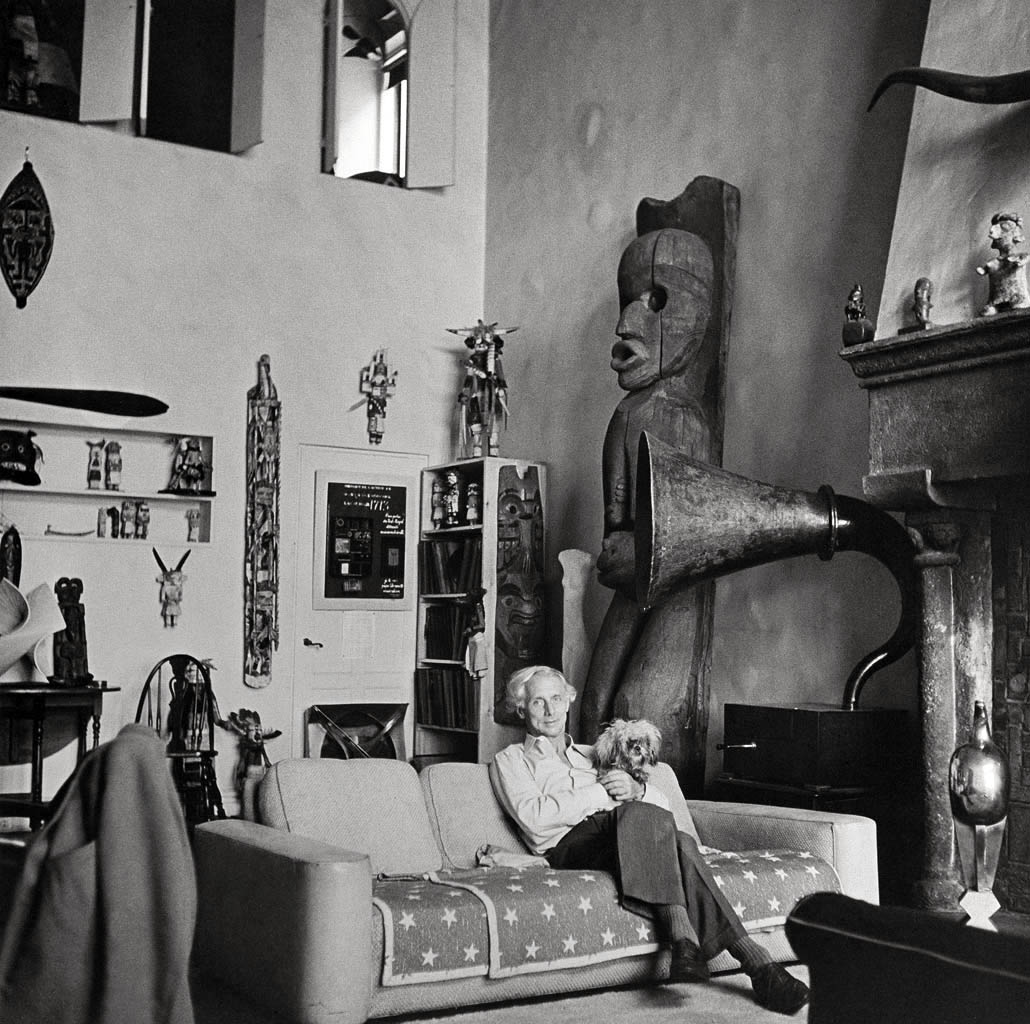
Hermann Landshoff (American-German, 1905-1986) 'Max Ernst at Peggy Guggenheim’s home, New York, fall 1942' 1942 from the exhibition Exhibition: 'Hermann Landshoff: A Retrospective Photographs 1930-1970' at the Münchner Stadtmuseum, November 2013 - April 2014


Hermann Landshoff (American-German, 1905-1986)
Max Ernst at Peggy Guggenheim’s home, New York, fall 1942
1942
Gelatin silver print
Münchner Stadtmuseum Photography Collection


Hermann Landshoff (American-German, 1905-1986) 'Max Ernst at Peggy Guggenheim's home, New York, fall 1942' 1942


Hermann Landshoff (American-German, 1905-1986)
Max Ernst at Peggy Guggenheim’s home, New York, fall 1942
1942
Gelatin silver print
Münchner Stadtmuseum Photography Collection


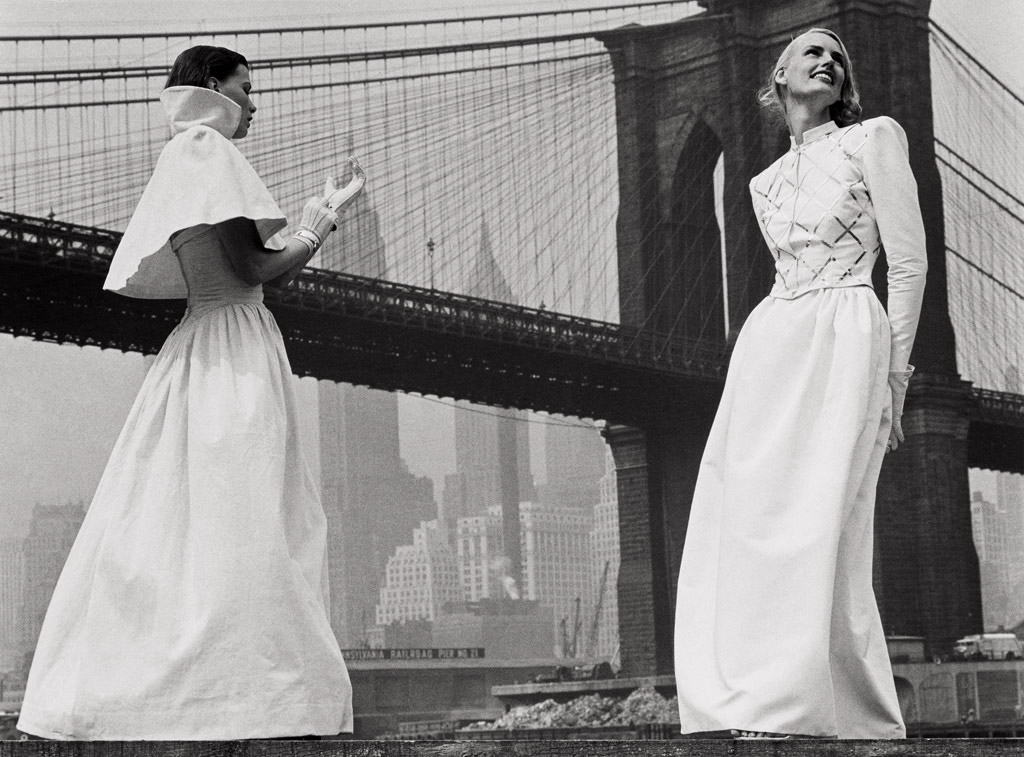
Hermann Landshoff (American-German, 1905-1986) 'Rone Compton & Lily Carlson, Brooklyn Bridge' 1946


Hermann Landshoff (American-German, 1905-1986)
Rone Compton & Lily Carlson, Brooklyn Bridge
1946
Gelatin silver print
Münchner Stadtmuseum Photography Collection


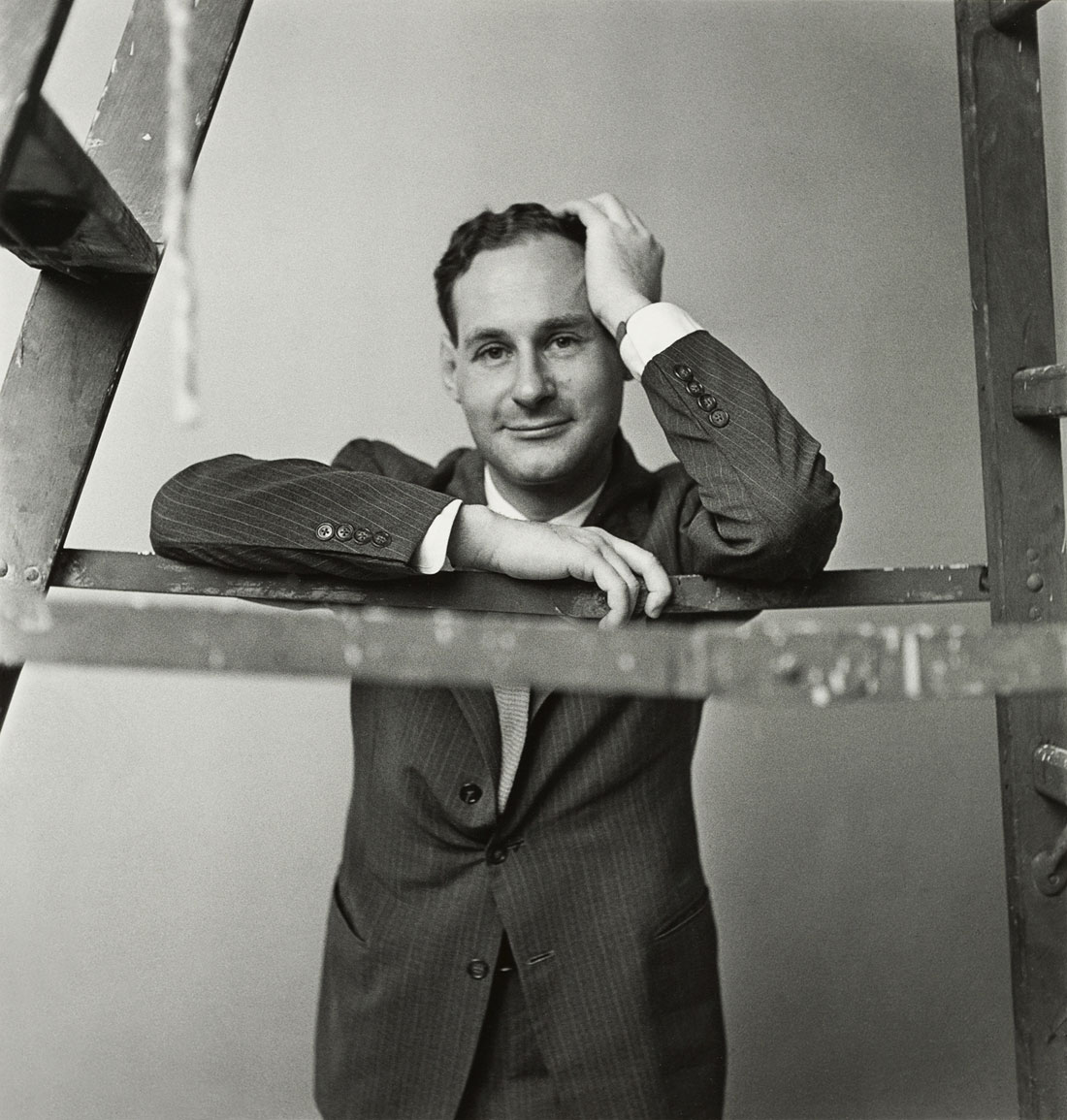
Hermann Landshoff (American-German, 1905-1986) 'Photographer Irving Penn' 1948


Hermann Landshoff (American-German, 1905-1986)
Photographer Irving Penn
1948
Gelatin silver print
Münchner Stadtmuseum Photography Collection


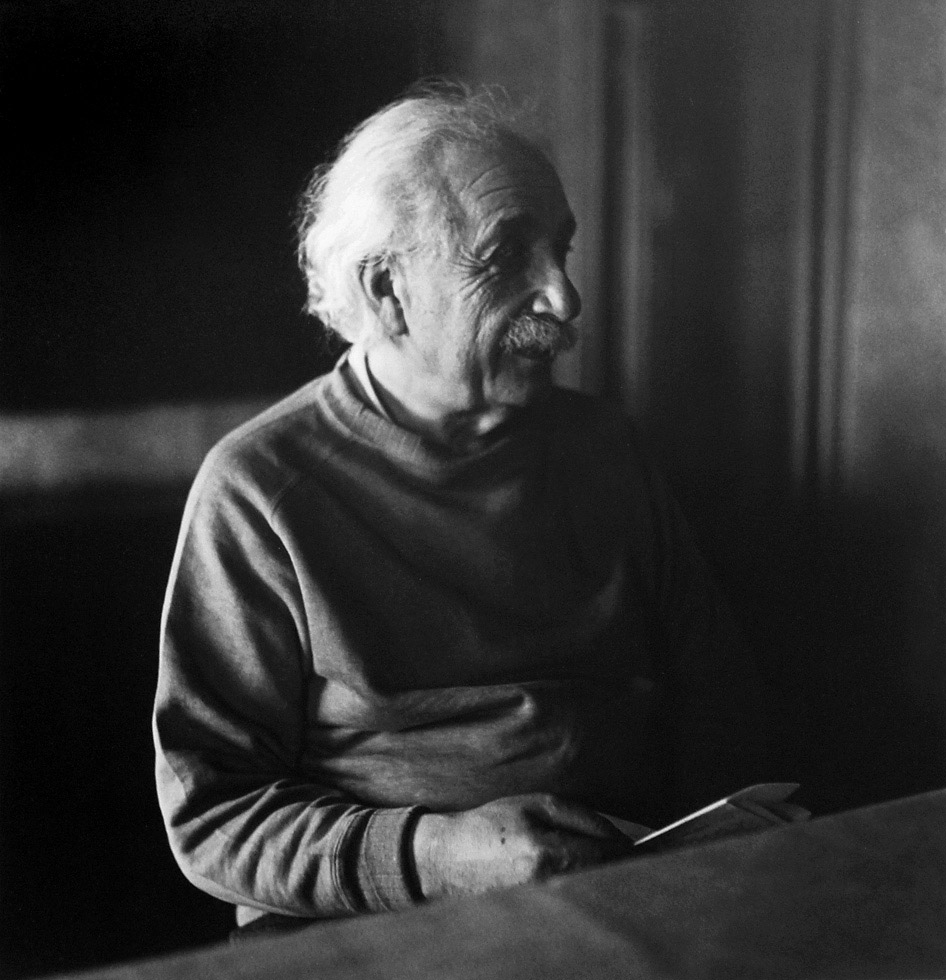
Hermann Landshoff (American-German, 1905-1986) 'Albert Einstein' c. 1950


Hermann Landshoff (American-German, 1905-1986)
Albert Einstein
c. 1950
Gelatin silver print
Münchner Stadtmuseum Photography Collection


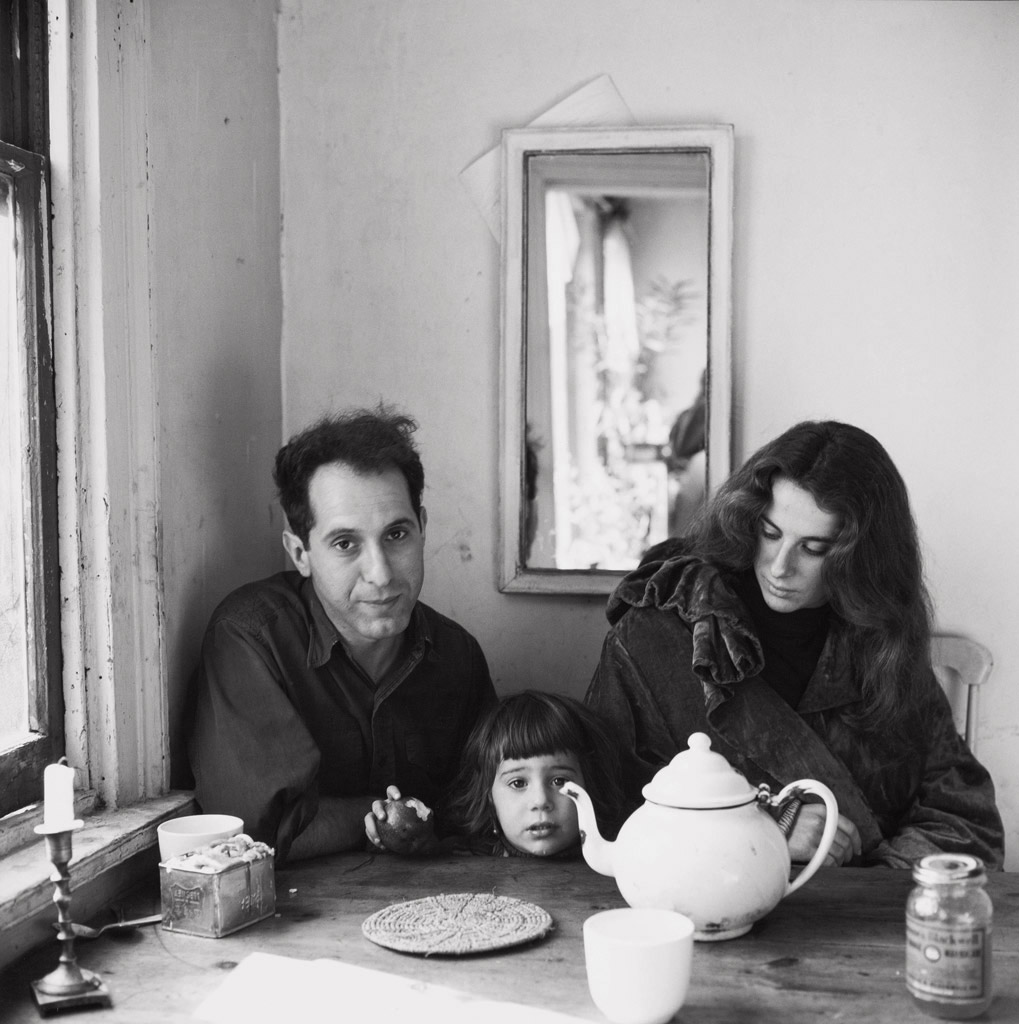
Hermann Landshoff (American-German, 1905-1986) 'Robert Frank with his wife Mary and his daughter Andrea, New York' 1956


Hermann Landshoff (American-German, 1905-1986)
Robert Frank with his wife Mary and his daughter Andrea, New York
1956
Gelatin silver print
Münchner Stadtmuseum Photography Collection


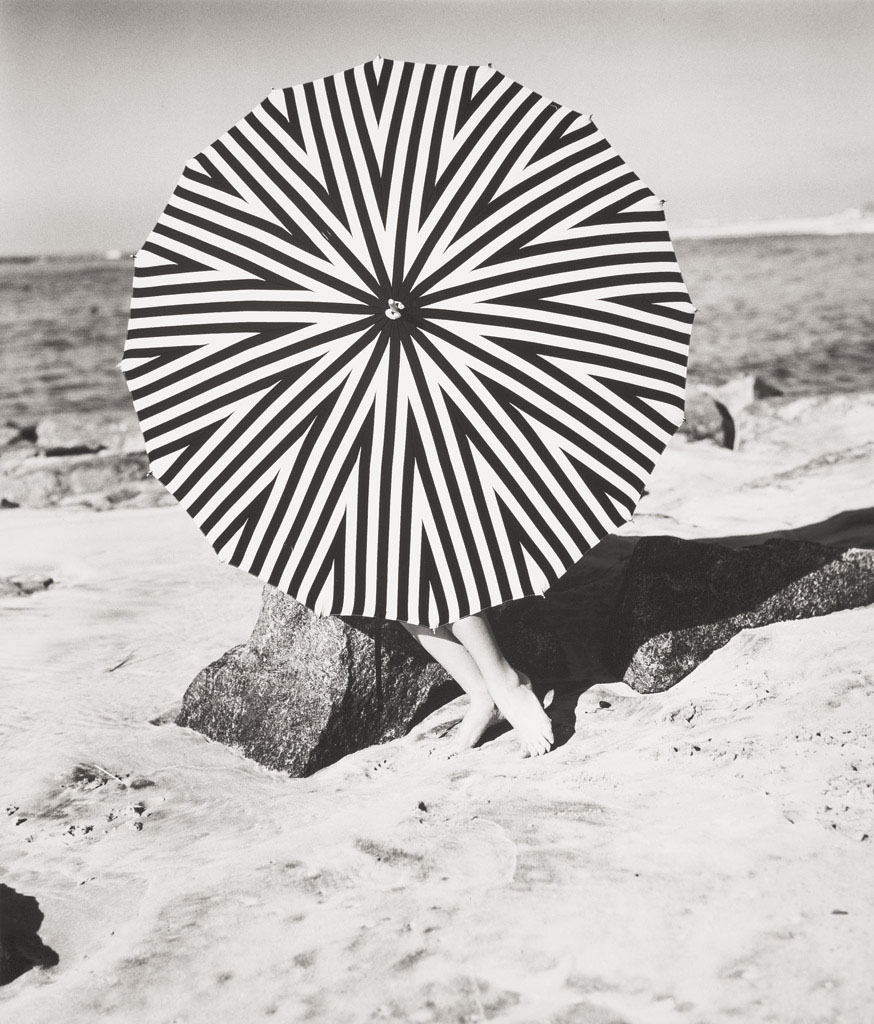
Hermann Landshoff (American-German, 1905-1986) 'The striped parasol, model Jan Rylander' 1957


Hermann Landshoff (American-German, 1905-1986)
The striped parasol, model Jan Rylander
1957
Gelatin silver print
Münchner Stadtmuseum Photography
Collection Archiv Hermann Landshoff


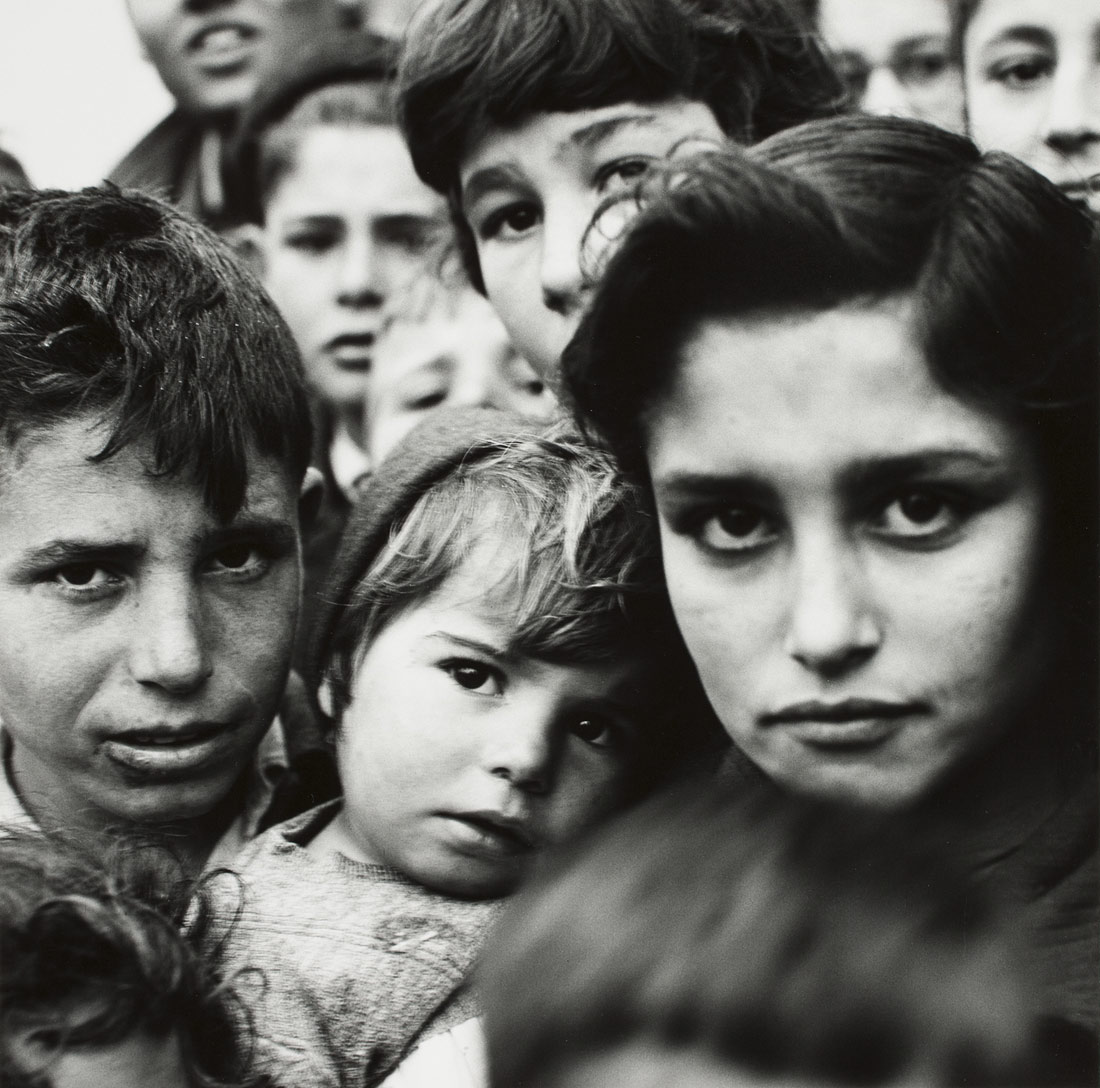
Hermann Landshoff (American-German, 1905-1986) 'Children in a Spanish village' 1957


Hermann Landshoff (American-German, 1905-1986)
Children in a Spanish village
1957
Gelatin silver print
Münchner Stadtmuseum Photography Collection


In the spring of 2012, the Münchner Stadtmuseum’s Photography Collection received a sensational addition to its archives. The complete artistic estate of German-American photographer Hermann Landshoff (1905-1986), featuring 3,600 original prints from between 1927 to 1970, were generously donated to the museum on behalf of the family by Andreas Landshoff.

Landshoff grew up in Munich-Solln as the son of a well-to-do Jewish family that was very much involved in the city’s art, literature and music scenes. His father, Ludwig Landshoff, was an internationally acclaimed musicologist and composer who was director and head of Munich’s Bach Society from 1917 to 1928. His mother, Philippine Wiesengrund, was a singer with the Royal Court Opera, while his sister Ruth Landshoff, better known by her married name of Vollmer, would become one of the founders of the conceptual art movement in the United States. In addition, writers such as Thomas Mann, Christian Morgenstern, Joachim Ringelnatz, Rainer Maria Rilke, Karl Wolfskehl and Franziska zu Reventlow were frequent visitors to his parents’ home. Another family member, the author Ruth Landshoff-Yorck, was the muse of Otto Umbehr and Paul Citroen and ran an art salon in Berlin that had a reputation as one of the most exciting meeting places for avant-garde artists in the whole of the Weimar Republic.

Other more distant relations of the family included important figures from the world of publishing such as Samuel Fischer, the founder of the S. Fischer Verlag publishing house, and Fritz H. Landshoff, who, from 1933, ran the Querido publishing house in Amsterdam which would become the most important forum for German exile literature, publishing novels by authors including Heinrich Mann, Klaus Mann, Hermann Kesten, Joseph Roth, Alfred Döblin, Lion Feuchtwanger, Anna Seghers, Ernst Toller and Arnold Zweig.

Even in his early years, Hermann Landshoff attracted attention with his cartoons and a photo reportage on Albert Einstein that was published in the Münchner Illustrierte Zeitung magazine. After training at Munich’s Kunstgewerbeschule (School of Arts and Crafts), he became a member of the circle of well-known typographer and book illustrator Fritz Helmuth Ehmcke. It was here that Landshoff met the Nuremberg illustrator Richard Lindner alongside whom he would subsequently work as part of the creative team at the Knorr & Hirth publishing house. When the Nazis seized power in 1933, Landshoff was forced to emigrate, initially settling in Paris where he worked as a fashion photographer. Between 1936 and 1939, his images were published in the popular Femina magazine and in the French edition of Vogue. He was then forced to flee France and, after an eventful journey spanning 1940 and 1941, he eventually pitched up in New York. Landshoff soon became one of the most fascinating fashion photographers to collaborate with legendary art director Alexey Brodovitch for fashion magazines such as Harper’s Bazaar, Junior Bazaar and latterly also Mademoiselle. He developed his own style as a fashion photographer, portraying the models in life-like everyday situations. American fashion photographer Richard Avedon considered himself to have been profoundly inspired by Landshoff, even being moved to claim that ‘I owe everything to Landshoff’.

There is little doubt that Hermann Landshoff is one of the last great unsung heroes in (the history of) 20th century photography. Having been quite wrongly consigned to oblivion for all these years, the time has now come for him to be rediscovered. His multi-layered works show us various sides to the age in which he lived and the lives of artists who had settled in the United States having been exiled from Europe. The exhibition offers the first chance to see Landshoff’s portraits of European artists such as Max Ernst, Richard Lindner, Leonora Carrington or Frederick Kiessler who found a new artistic home in New York under the auspices of art collector Peggy Guggenheim. It also features a number of stunning group and individual portraits of members of the New York surrealist community centred around André Breton and Marcel Duchamp.

Finally, we also have Hermann Landshoff to thank for a unique cycle of around 70 portraits of different photographers that he created between 1942 and 1960. These striking images feature old masters like Walker Evans, Paul Strand, Alfred Stieglitz, Ansel Adams, Berenice Abbott, Margaret Bourke-White, Alfred Eisenstaedt, Andreas Feininger or WeeGee alongside young, up-and-coming photographers still at the start of their careers, such as Robert Frank, Irving Penn and Richard Avedon. This pantheon of eminent photographers occupies a unique place in the history of the medium.

Other collections of images tackle the urban architecture and people of New York, focusing particularly on those on the fringes of society. The exhibition also includes several portraits of prominent physicists such as Albert Einstein as well as some of the Los Alamos scientists such as Robert Oppenheimer and his cousin Rolf Landshoff involved in building the world’s first nuclear bomb. The exhibition will show a selection of more than 250 of Landshoff’s fascinating photographs for the first time, with subjects drawn from across the entire spectrum of his work, from fashion to portraits and architecture.

Press release from the Münchner Stadtmuseum website


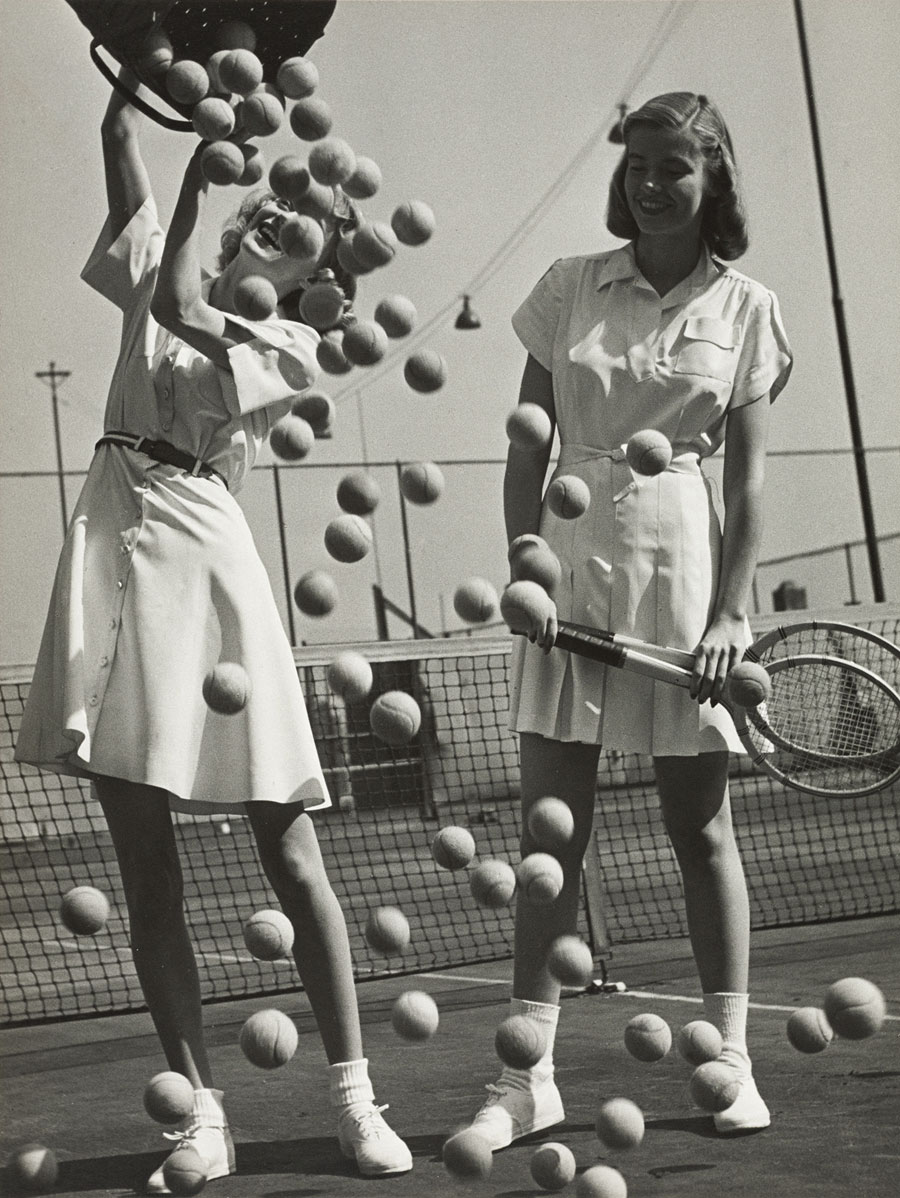
Hermann Landshoff (American-German, 1905-1986) 'Tennis balls' with models Wanda Delafield and Peggy Lloyd c. 1945


Hermann Landshoff (American-German, 1905-1986)
Tennis balls with models Wanda Delafield and Peggy Lloyd
c. 1945
Gelatin silver print
Münchner Stadtmuseum Photography Collection


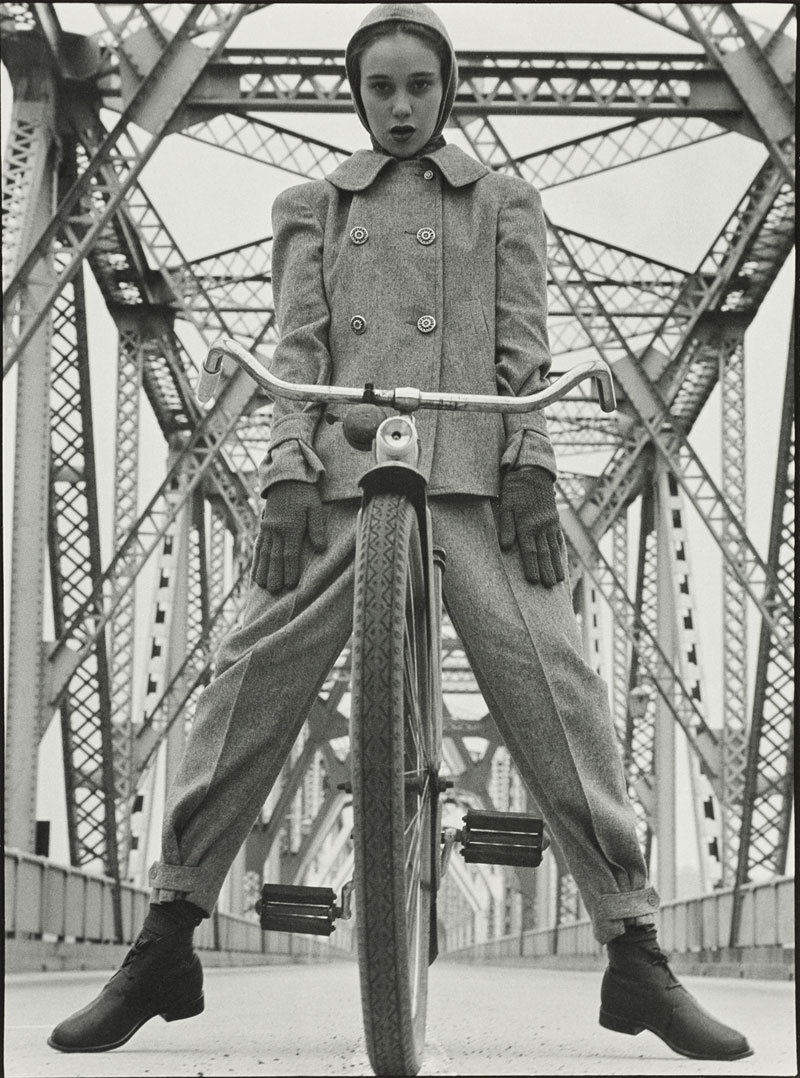
Hermann Landshoff (American-German, 1905-1986) 'Model Beth Wilson at Rip Van Winkle Bridge spanning the Hudson River, New York 1946' 1946


Hermann Landshoff (American-German, 1905-1986)
Model Beth Wilson at Rip Van Winkle Bridge spanning the Hudson River, New York 1946
1946
Gelatin silver print
Münchner Stadtmuseum Photography Collection


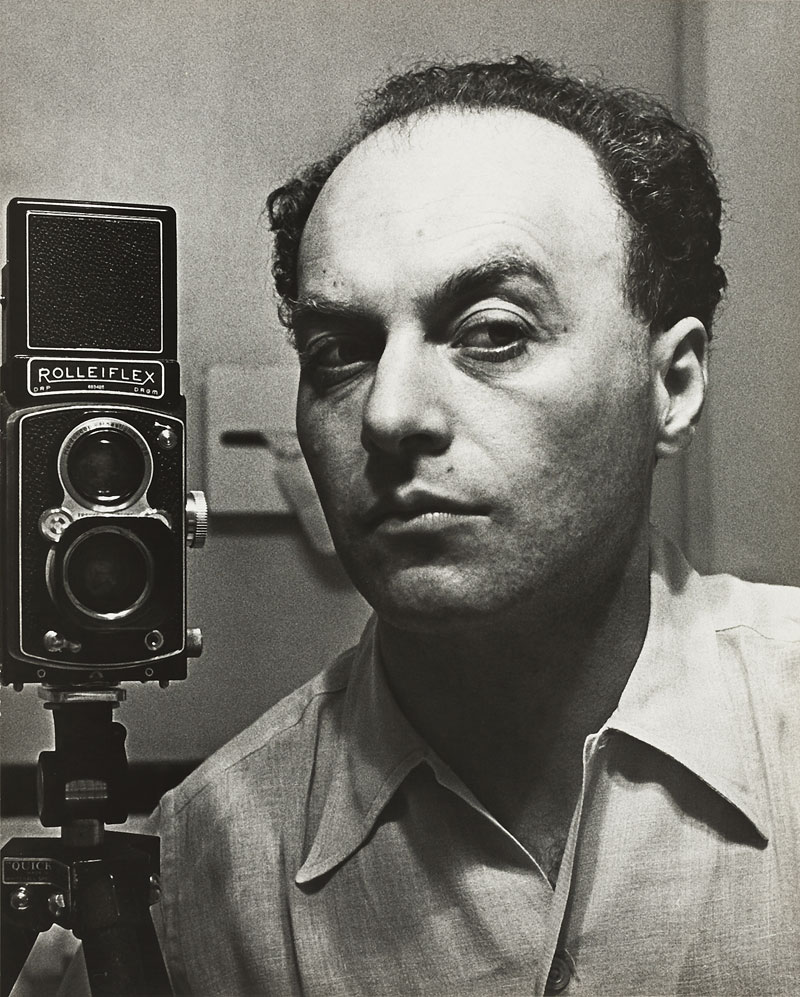
Hermann Landshoff (American-German, 1905-1986) 'Self-portrait, New York' c. 1942


Hermann Landshoff (American-German, 1905-1986)
Self-portrait, New York
c. 1942
Gelatin silver print
Münchner Stadtmuseum Photography Collection


Hermann Landshoff (American-German, 1905-1986) 'Actress Lauren Bacall, New York, 1945' 1945


Hermann Landshoff (American-German, 1905-1986)
Actress Lauren Bacall, New York, 1945
1945
Gelatin silver print
Münchner Stadtmuseum Photography Collection


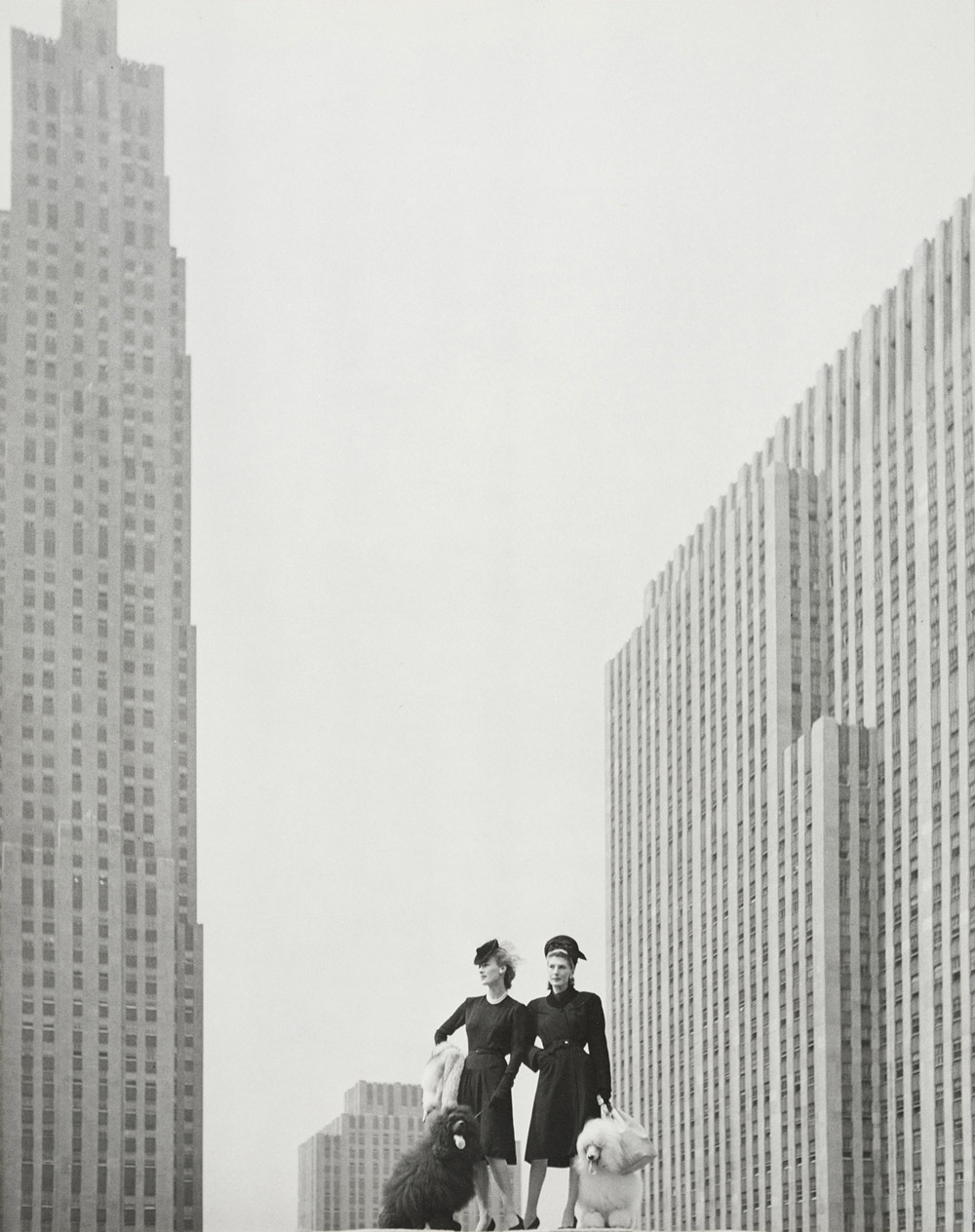
Hermann Landshoff (American-German, 1905-1986) 'On the roof of Saks Fifth Avenue Building, New York, 1942' 1942


Hermann Landshoff (American-German, 1905-1986)
On the roof of Saks Fifth Avenue Building, New York, 1942
1942
Gelatin silver print
Münchner Stadtmuseum Photography Collection


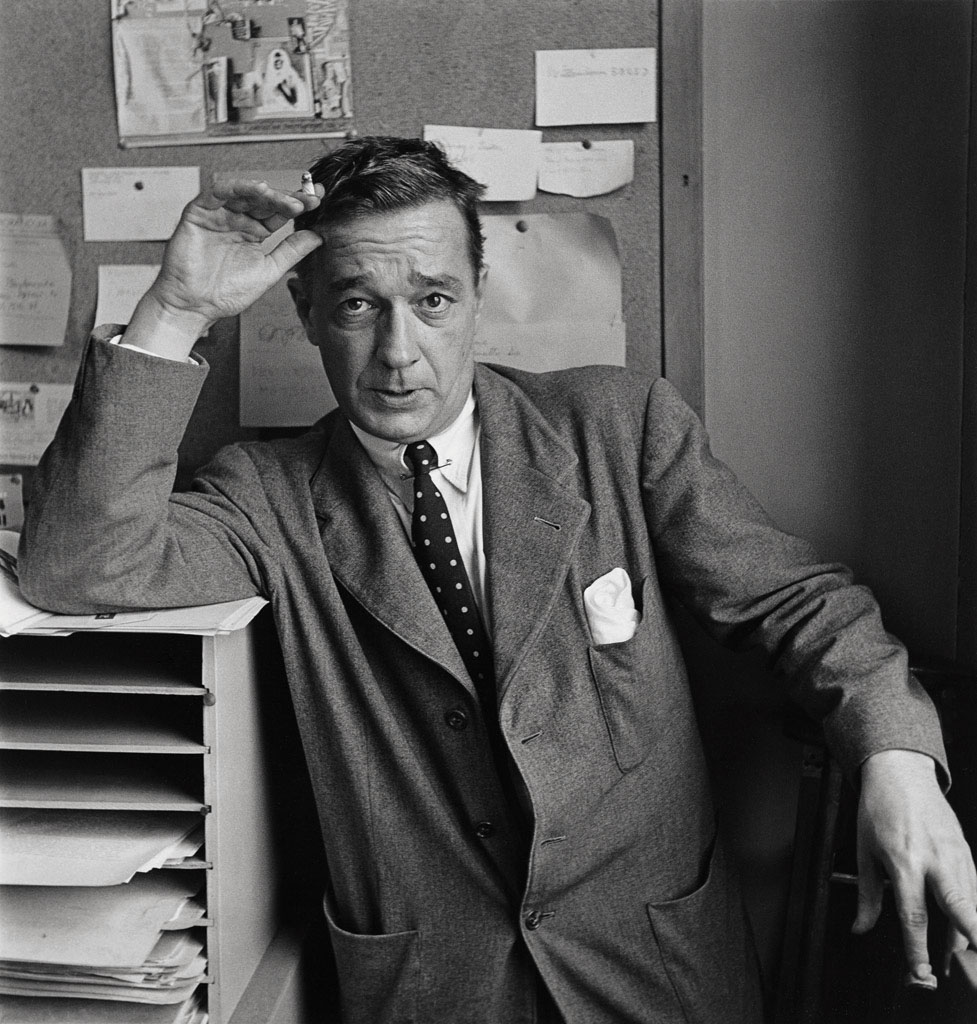
Hermann Landshoff (American-German, 1905-1986) 'Walker Evans, New York' 1948


Hermann Landshoff (American-German, 1905-1986)
Walker Evans, New York
1948
Gelatin silver print
Münchner Stadtmuseum Photography Collection


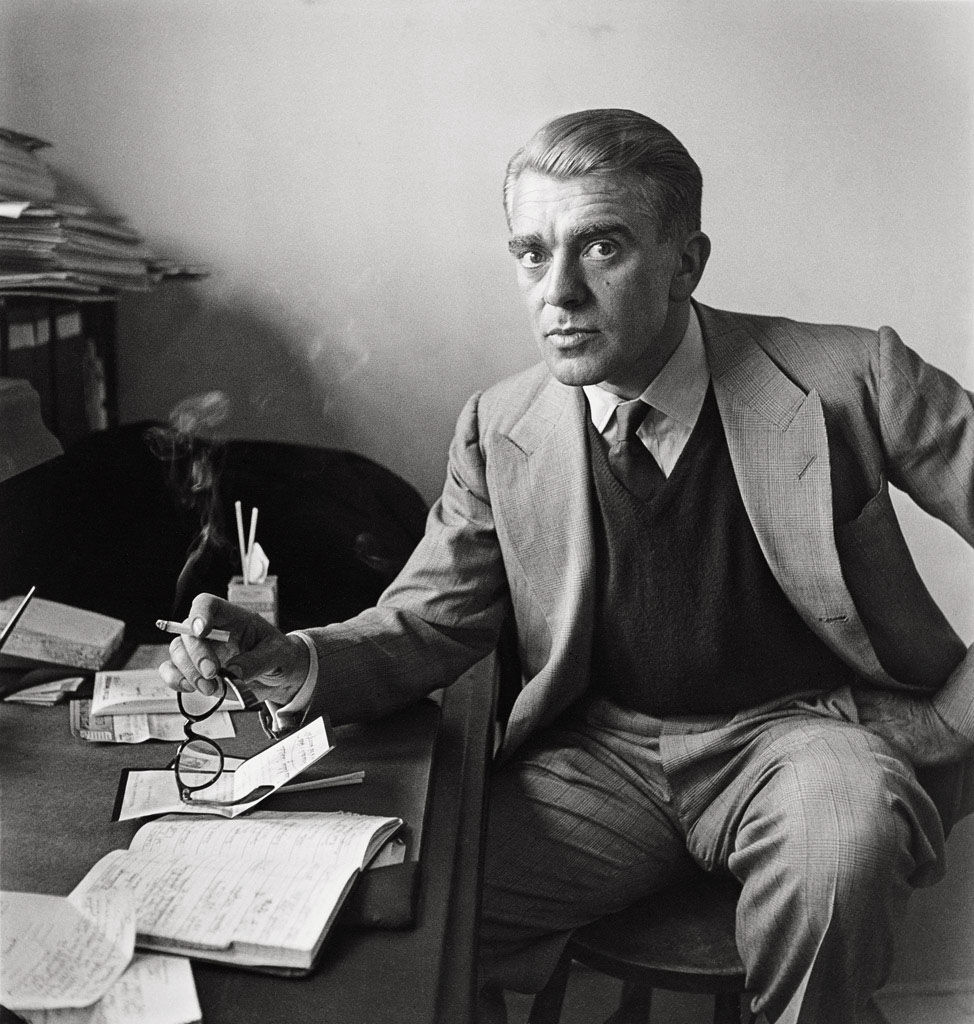
Hermann Landshoff (American-German, 1905-1986) 'Horst P. Horst, New York' 1948


Hermann Landshoff (American-German, 1905-1986)
Horst P. Horst, New York
1948
Gelatin silver print
Münchner Stadtmuseum Photography Collection


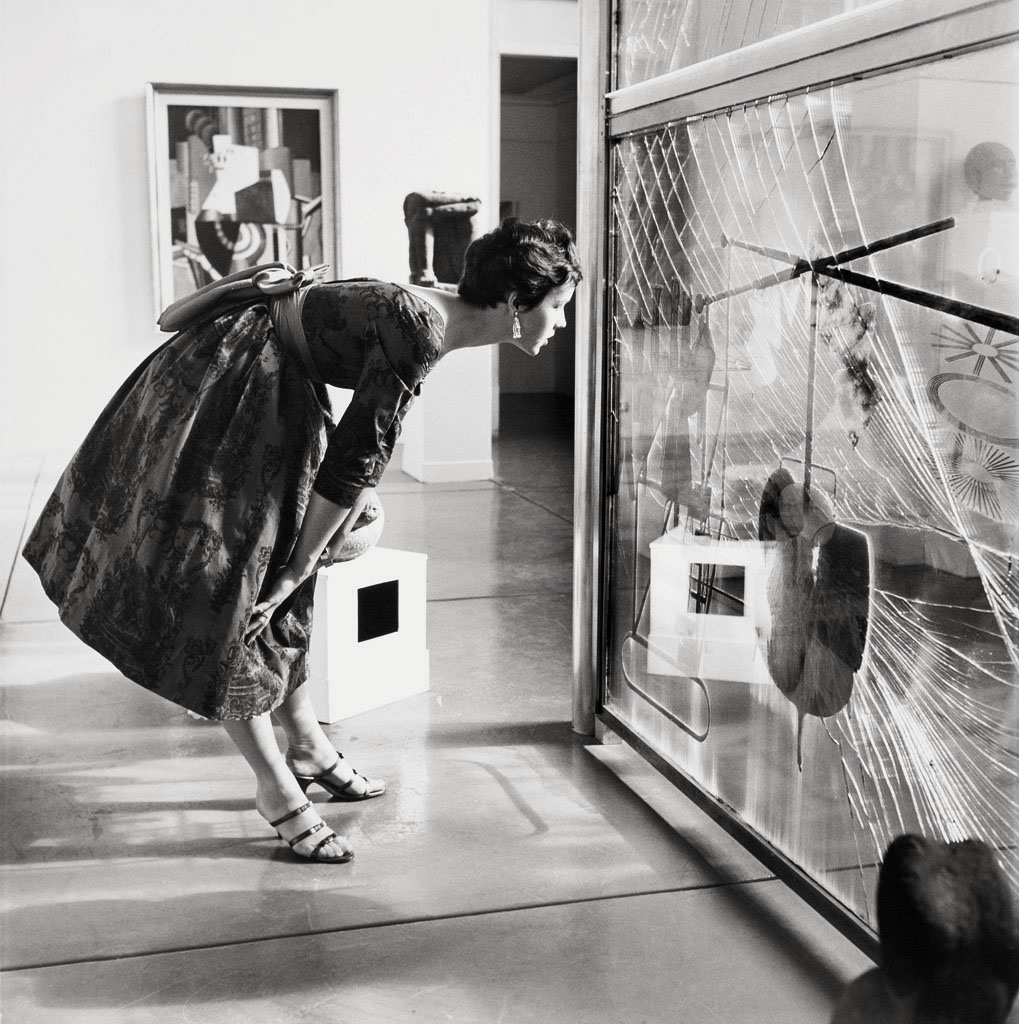
Hermann Landshoff (American-German, 1905-1986) 'Model in front of "The Large Glass" by Marcel Duchamp, Philadelphia Museum of Art' 1954


Hermann Landshoff (American-German, 1905-1986)
Model in front of “The Large Glass” by Marcel Duchamp, Philadelphia Museum of Art
1954
Gelatin silver print
Münchner Stadtmuseum Photography Collection


Münchner Stadtmuseum
St. Jakobs Platz 1
80331 München
Phone: +49-(0)89-233-22370

Opening hours:
Tuesday – Sunday 10am – 6pm
Closed on Mondays

Münchner Stadtmuseum website
LIKE ART BLART ON FACEBOOK

Back to top