Review: ‘Polixeni Papapetrou: Lost Psyche’ at Stills Gallery, Sydney

Exhibition dates: 29th October – 29th November 2014
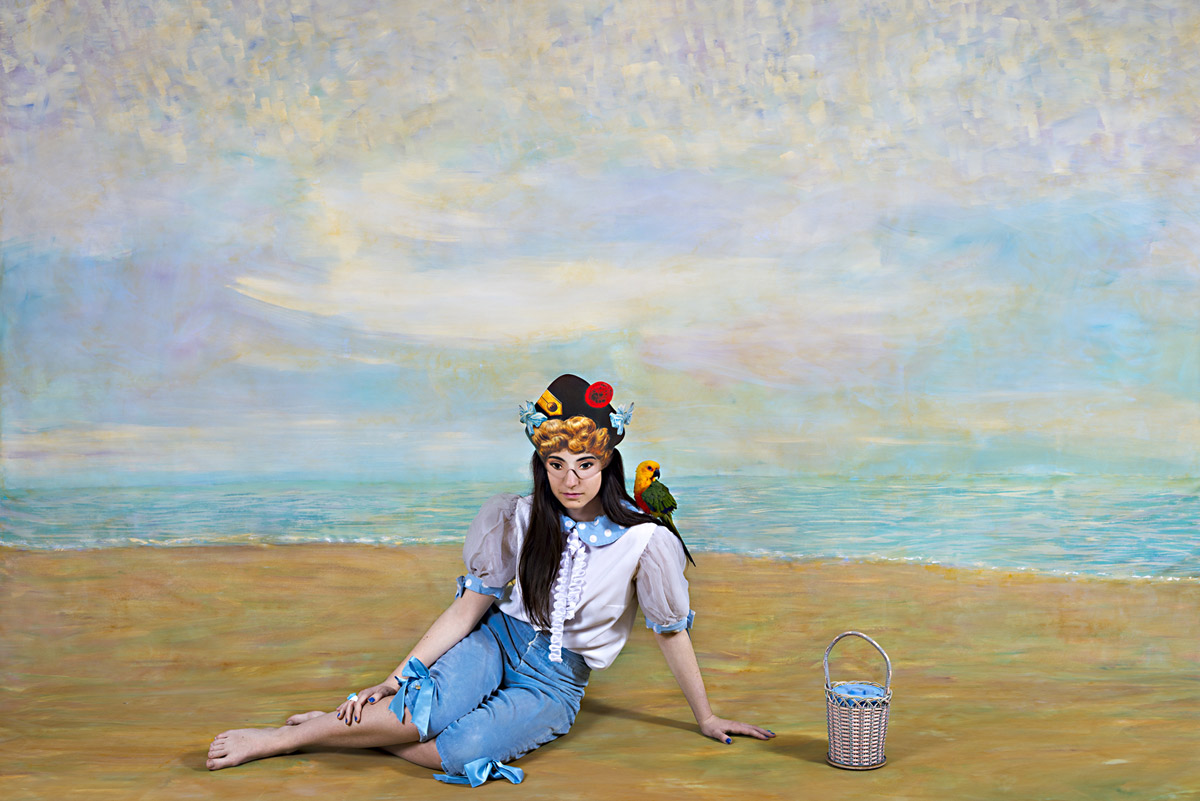
 

Polixeni Papapetrou (Australian, 1960-2018) 'The Day Dreamer' 2014


Polixeni Papapetrou (Australian, 1960-2018)
The Day Dreamer
2014
Pigment print
100 x 150cm


“Art does not reproduce the visible; rather, it makes visible.”


Paul Klee. Creative Credo [Schöpferische Konfession] 1920


When “facing” adversity, it is a measure of a person’s character how they hold themselves, what face they show to the world, and how their art represents them in that world. So it is with Polixeni Papapetrou. The courage of this artist, her consistency of vision and insightful commentary on life even while life itself is in the balance, are inspiring to all those that know her.

Papapetrou has always created her own language, integrating the temporal dissemination of the historical “case” into a two-dimensional space of simultaneity and tabulation (the various archetypes and ancient characters), into an outline against a ground of Cartesian coordinates.1 In her construction, in her observation and under her act of surveillance, Papapetrou moves towards a well-made description of the states of the body in the tables and classification of the psychological landscape. Her tableaux (the French tableau signifies painting and scene (as in tableau vivant), but also table (as in a table used to organise data)) are a classification and tabulation that is an exact “portrait” of “the” illness, the lost psyche of the title. Her images lay out, in a very visible way, the double makeover: of the outer and inner landscape.

These narratives are above all self-portraits. The idea that image, archetype and artist might somehow be one and the same is a potent idea in Papapetrou’s work. What is “rendered” visible in her art is her own spirit, for these visionary works are nothing less than concise, intimate, focused self-portraits. They speak through the mask of the commedia dell’ arte of a face half turned to the world, half immersed in imaginary worlds. The double skin (as though human soul, the psyche, is erupting from within, forcing a face-off) and triple skin (evidenced in the lack of depth of field of the landscape tableaux) propose an opening up, a revealing of self in which the anatomy (anatemnein: to tear, to open a body, to dissect) of the living is revealed. The images become an autopsy on the living and the dead: “a series of images, that would crystallize and memorize for everyone the whole time of an inquiry and, beyond that, the time of a history.”2

Papapetrou’s images become the “true retina” of seeing, close to a scientific description of a character placed on a two dimensional background (notice how the stylised clouds in The Antiquarian, 2014 match the fur hat trim). In the sense of evidence, the artist’s archetypes proffer a Type that is balanced on the edge of longing, poetry, desire and death, one that the objectivity of photography seeks to fix and stabilise. These images serve the fantasy of a memory: of a masked archetype in a made over landscape captured “exact and sincere” by the apparatus of the camera. A faithful memory of a tableau in which Type is condensed into a unique image: the visage fixed to the regime of representation,3 the universal become singular. This Type is named through the incorporated Text, the Legend: I am Day Dreamer, Immigrant, Merchant, Poet, Storyteller.

But even as these photographs seek to fix the Type, “even as the object of knowledge is photographically detained for observation, fixed to objectivity,”4 the paradox is that this kind of knowledge slips away from itself, because photography is always an uncertain technique, unstable and chaotic, as ever the psyche. In the cutting-up of bodies, cutting-up on stage, a staging aimed at knowledge – the facticity of the masked, obscured, erupting face; the corporeal surface of the body, landscape, photograph – the image makes visible something of the movements of the soul. In these heterotopic images, sites that relate to more stable sites, “but in such a way as to suspect, neutralise, or invert the set of relations that they happen to designate, mirror or reflect,”5 Papapetrou’s psyche, “creates the chain of tradition which passes a happening on from generation to generation.”6 In her commedia dell’ arte, an improvised comedy of craft, of artisans (a worker in a skilled trade), the artist fashions the raw material of experience in a unique way.7 We, the audience, intuitively recognise the type of person being represented in the story, through their half masks, their clothing and context and through the skilful dissemination of collective memory and experience.

Through her storytelling Papapetrou moves towards a social and spiritual transformation, one that unhinges the lost psyche. Her landscape narratives are a narrative of a recognisable, challenging, unstable non-linear art, an art practice that embraces “the speculative mystery of ancient roles… They’re all souls with divided emotions, torn between dream and reality, who like us, converge on the collective stage that is the world.” They are archetype as self-portrait: portraits of a searching, erupting, questioning soul, brave and courageous in a time of peril. And the work is for the children (of the world), for without art and family, extinction.

Dr Marcus Bunyan


Footnotes

1/ Adapted from Didi-Huberman, Georges. Invention of Hysteria: Charcot and the Photographic Iconography of the Salpetriere (trans. Alisa Hartz). Cambridge, Mass.: MIT Press, 2003, p. 24-25. I am indebted to the ideas of Georges Didi-Huberman for his analysis of the ‘facies’ and the experiments of Jean-Martin Charcot on hysteria at the Hôpital Salpêtrière in Paris in the 1880s.

2/ Ibid., p. 48

3/ Ibid., p. 49

4/ Ibid., p. 59

5/ Foucault, Michel. “Of Other Spaces,” in Diacritics Spring 1986, p. 24 quoted in Fisher, Jean. “Witness for the Prosecution: The Writings of Coco Fusco,” in Fusco, Coco. The Bodies That Were Not Ours. London: Routledge, 2001, pp. 226-227

6/ Fisher, Ibid., p. 227-228

7/ “One can go on and ask oneself whether the relationship of the storyteller to his material, human life, is not in itself a craftsman’s relationship, whether it is not his very task to fashion the raw material of experience, his own and that of others, in a solid, useful, and unique way.”
Benjamin
, Walter. Illuminations (trans. by Harry Zohn; edited by Hannah Arendt). New York: Schocken Books, 1968 (2007), p. 108

Many thankx to Polixeni Papapetrou and Stills Gallery for allowing me to publish the photographs in the posting. Please click on the photographs for a larger version of the image. All images copyright of the artist.


“For her, history indicates a view of culture that is more congruent with mortality, with the biological swell of great things arising and perishing, brilliant and melancholy, august and yet brittle. Without judgement, she reorients history as phenomenology: it contains a bracing dimension of loss which is congruent with that fatal sentiment lodged in our unconscious, that our very being – our psyche – is ultimately lost…

Lost Psyche is always about lost cultural innocence, where culture gets too smart and ends by messing with an earlier equilibrium. Papapetrou identifies these moments not to promote gloom but to recognise all the parallels that make for redemption. Parts of the psyche are undoubtedly lost; but Papapetrou proposes and proves that they can still be poetically contacted.”


Robert Nelson 2014
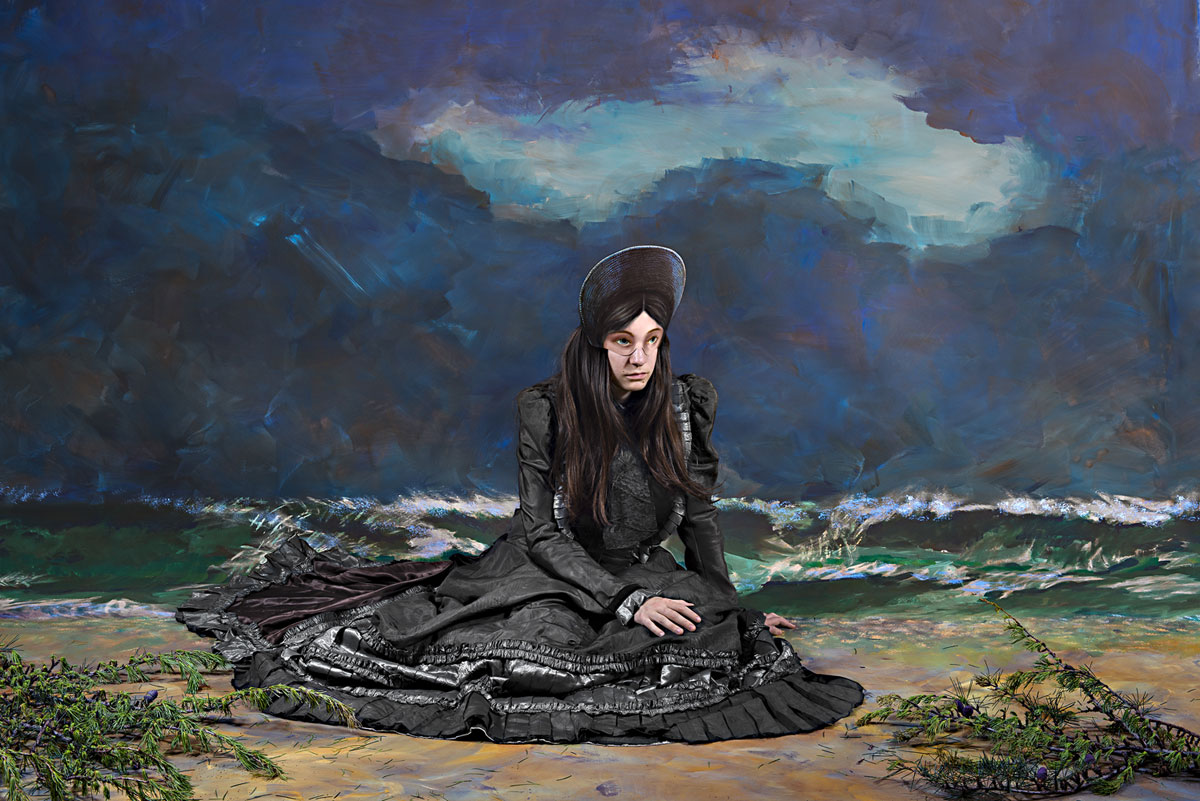


Polixeni Papapetrou (Australian, 1960-2018) 'The Immigrant' 2014


Polixeni Papapetrou (Australian, 1960-2018)
The Immigrant
2014
Pigment print
100 x 150cm
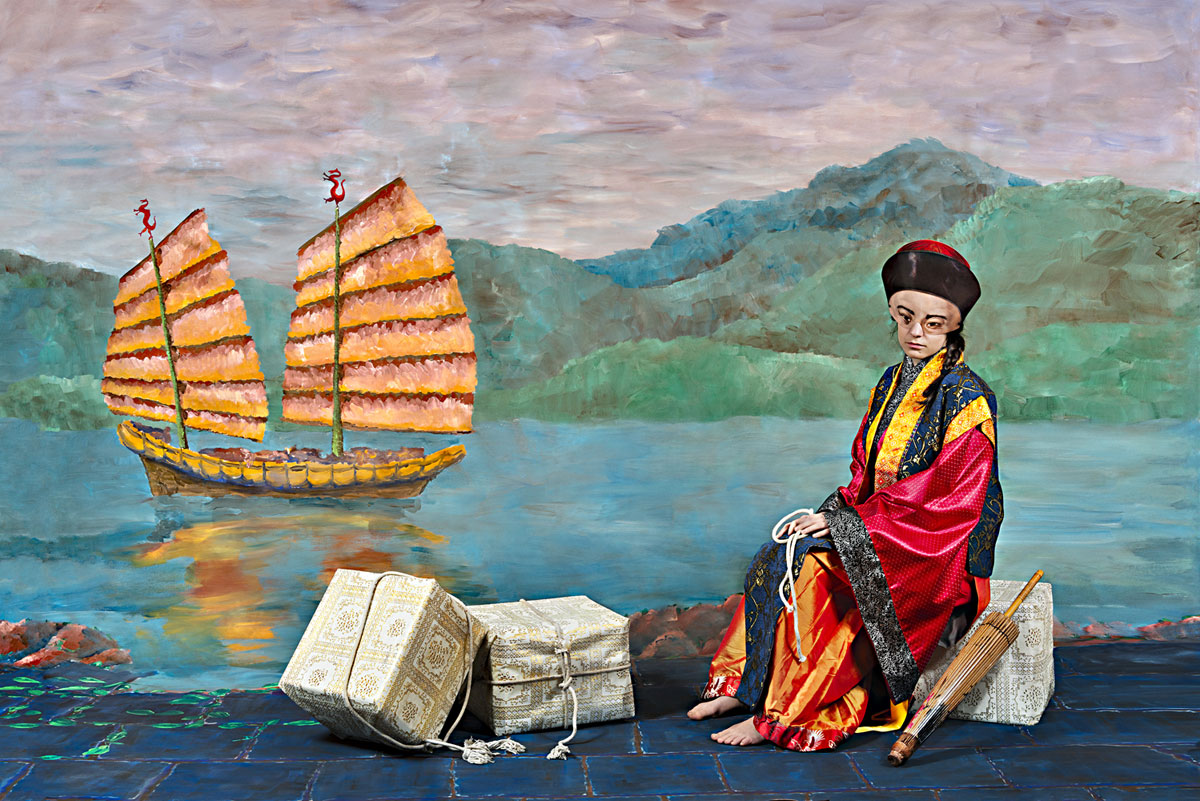
 

Polixeni Papapetrou (Australian, 1960-2018) 'The Merchant' 2014


Polixeni Papapetrou (Australian, 1960-2018)
The Merchant
2014
Pigment print
100 x 150cm
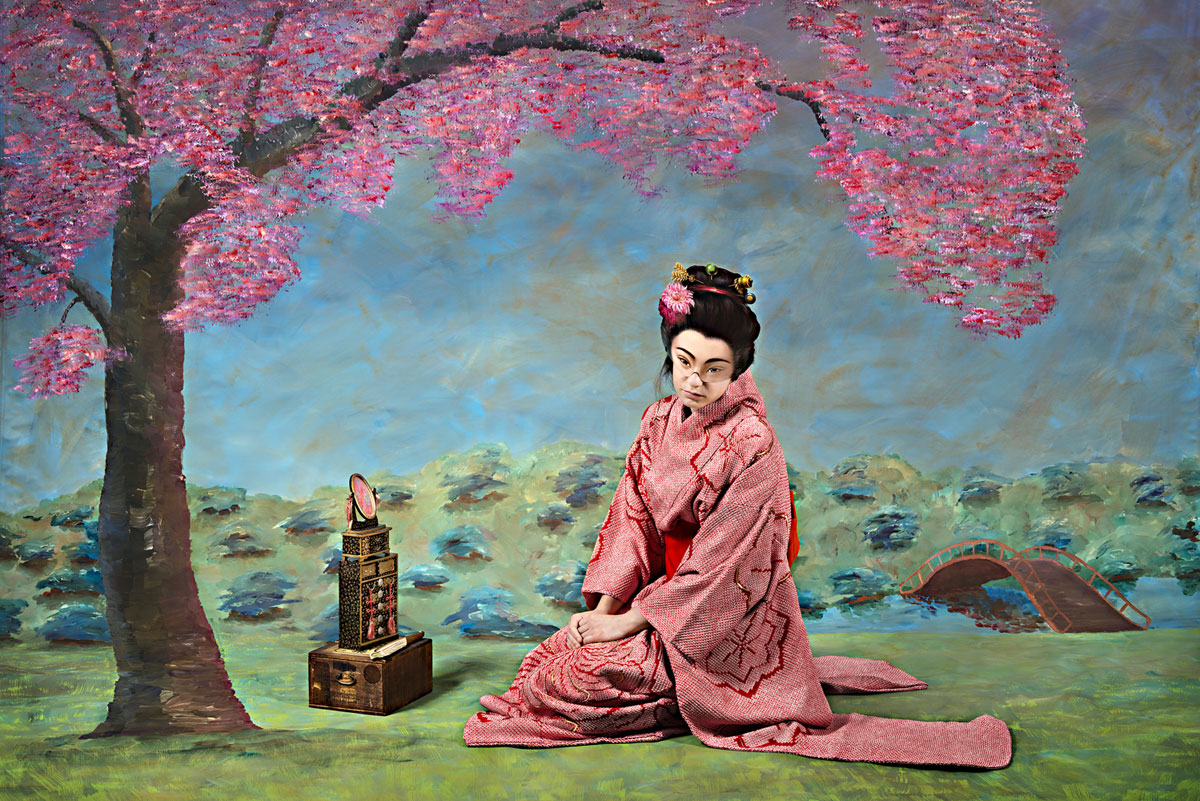
 

Polixeni Papapetrou (Australian, 1960-2018) 'The Orientalist' 2014


Polixeni Papapetrou (Australian, 1960-2018)
The Orientalist
2014
Pigment print
100 x 150cm
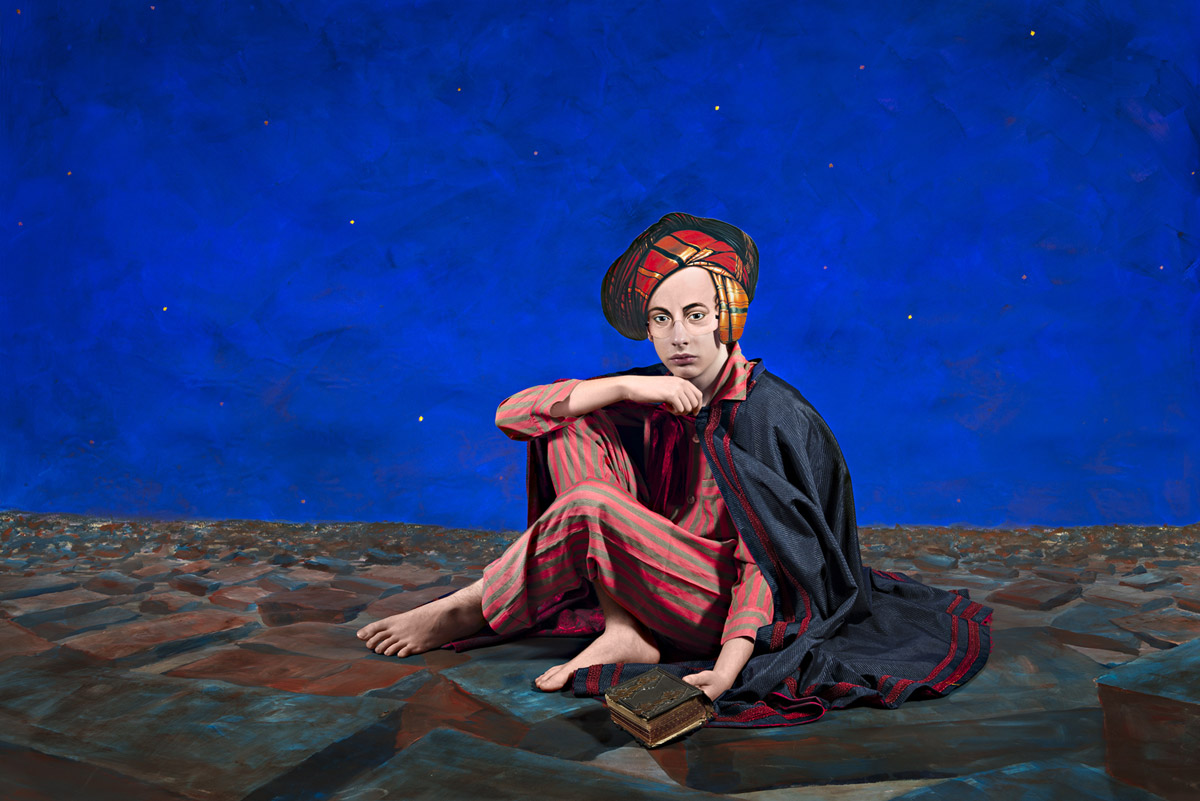
 

Polixeni Papapetrou (Australian, 1960-2018) 'The Poet' 2014


Polixeni Papapetrou (Australian, 1960-2018)
The Poet
2014
Pigment print
100 x 150cm
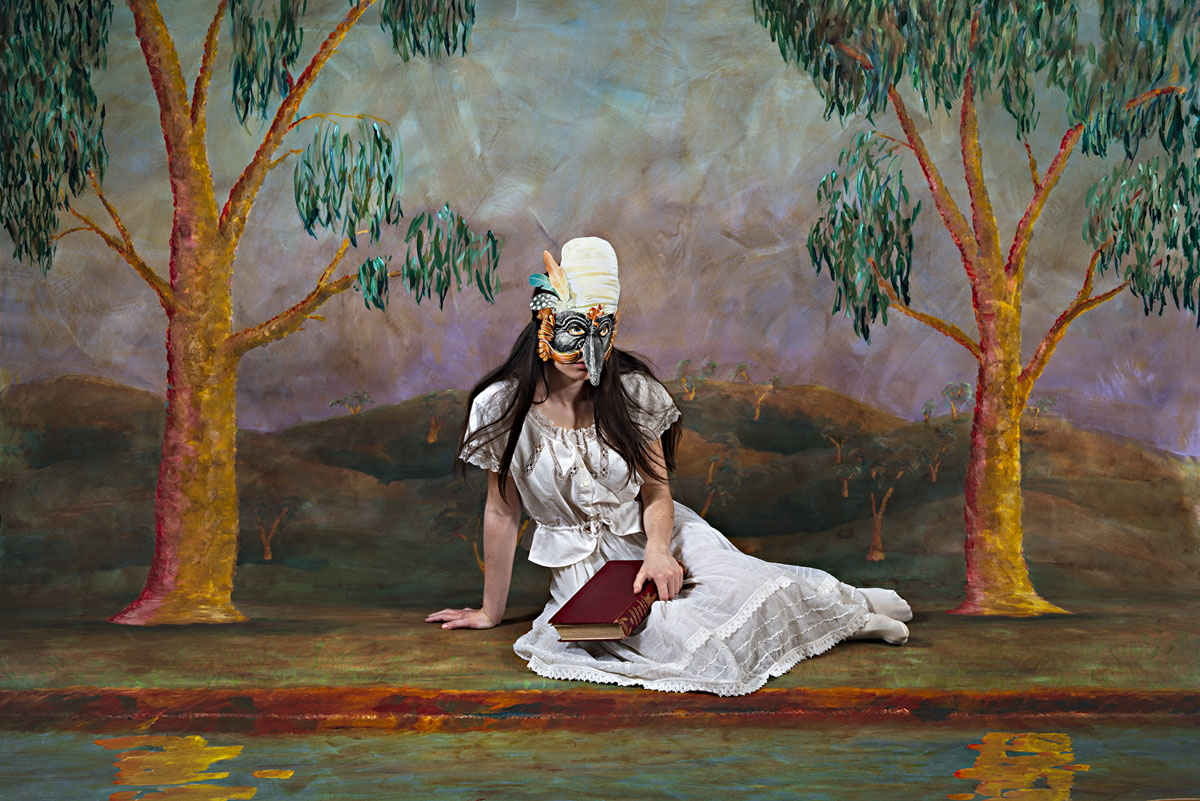
 

Polixeni Papapetrou (Australian, 1960-2018) 'The Storyteller' 2014


Polixeni Papapetrou (Australian, 1960-2018)
The Storyteller
2014
Pigment print
100 x 150cm


In Lost Psyche, Polixeni Papapetrou portrays emblematic figures that have come to the end of their tradition, their rationale, their place in the world. These intriguing and charismatic characters – the poet, the tourist, the immigrant, among others – bring to life antique Victorian paper masks. Yet, despite being cast beyond our immediate reality, their costumes harking back to earlier times, their settings to fantastical places, these archetypal figures live on in the cultural imagination.

Internationally celebrated for an oeuvre that has consistently tested the boundaries of performance and photography, reality and fantasy, childhood and adulthood, Lost Psyche marks a significant return for Papapetrou. Having extensively explored the Australian landscape as a stage for her photographic fictions, and working in response to the natural and historical dramas of our country, this series takes us back into her studio and the expansive scope of imaginary worlds.

Expressive, luscious and knowingly naïve, the painted backdrops bring to mind the simple seduction of children’s storybooks. At the same time, they reference the painting heavyweights and photographic forerunners that are celebrated within art history. Papapetrou’s image The Duchess, for instance, echoes Goya’s commanding oil painting of the Duchess of Alba (1797). Yet, in this newly imagined version, the ‘role’ of Duchess is playfully acted not endured, and like the melodrama of theatre, the dark sky and downcast actor are softened to become illustrative and symbolic – a scene in a universal story. So too, The Orientalist evokes Felix Beato’s 19th Century photographic forays in Japan, recalling his hand-colouring techniques and depictions of social ‘types’.

Consciously foregrounding this ever-present potential for art to present stereotyped representations, Papapetrou reminds us how these social roles and ‘masks’ play out within our souls and psyche’s just as they do on the cultural stage. As a metaphor for the loss of childhood, a time in which we openly switch between characters, identities and roles, this work evokes the persistence of that imagination, as it lives on within the adult world.

In Lost Psyche, the speculative mystery of ancient roles enjoys a fantastical and touching afterlife. In the contemporary world we may also entertain the inner poet, the storyteller, the clown, the connoisseur, the courtesan, the day dreamer or the dispossessed. They’re all souls with divided emotions, torn between dream and reality, who like us, converge on the collective stage that is the world.

Polixeni Papapetrou is an internationally acclaimed artist. Her works feature in significant curated exhibitions, including recently the 13th Dong Gang International Photo Festival, Korea, the TarraWarra Biennale, VIC, Remain in Light, Museum of Contemporary Art, and Melbourne Now, National Gallery of Victoria. She exhibits worldwide, including in Paris, New York, Tokyo, Seoul, Athens and Berlin. Recent solo exhibitions include Under My Skin, Northern Centre for Contemporary Art, 2014, Between Worlds in Fotogràfica Bogotá, 2013, and A Performative Paradox, Centre for Contemporary Photography, 2013. Her work is held in numerous institutional collections, including the National Gallery of Australia, National Gallery of Victoria, Museum of Contemporary Art Australia, Monash Gallery of Art, Artbank, Fotomuseo, Colombia, and the Museum of Fine Arts, Florida, USA.

Press release from Stills Gallery
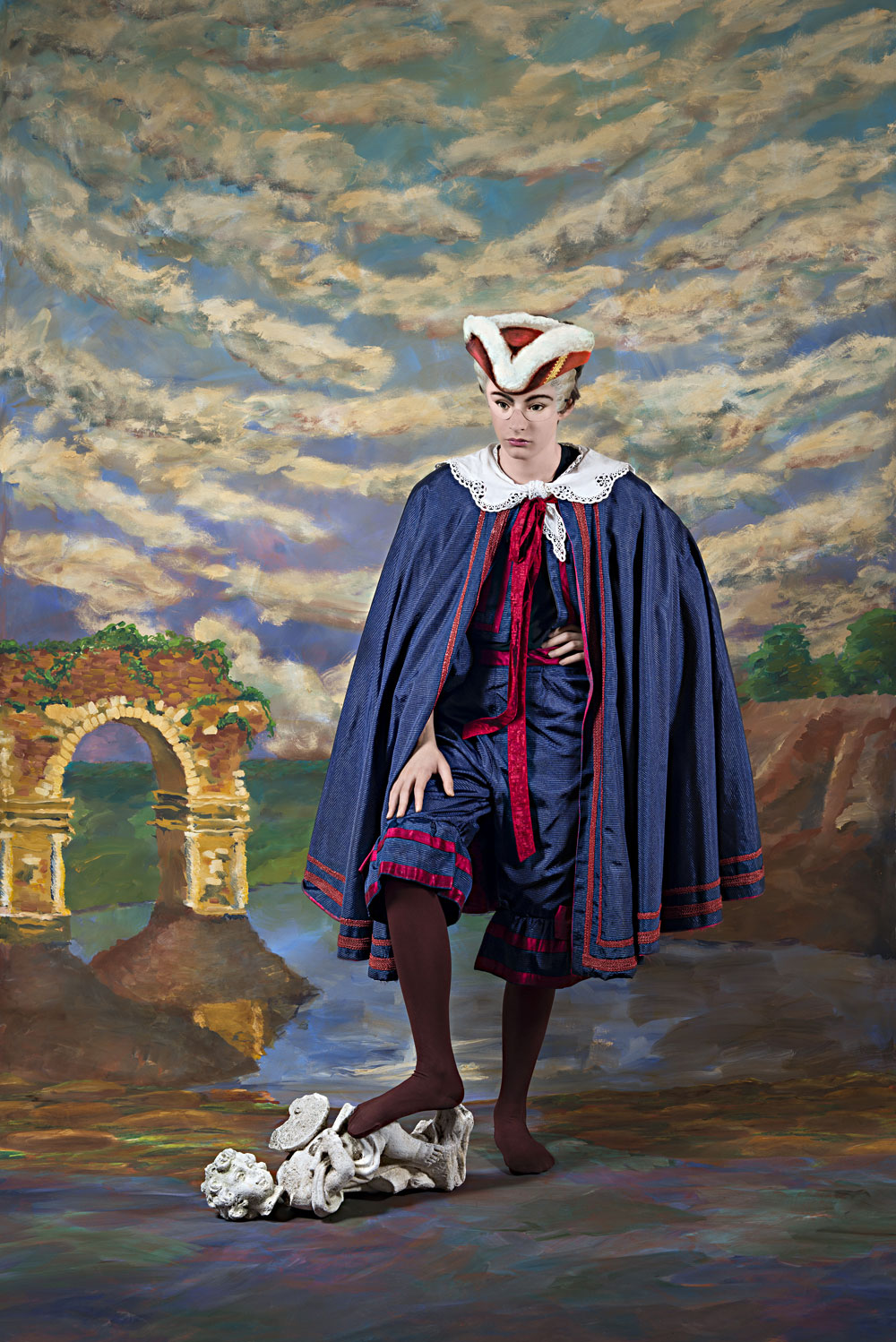
 

Polixeni Papapetrou (Australian, 1960-2018) 'The Antiquarian' 2014


Polixeni Papapetrou (Australian, 1960-2018)
The Antiquarian
2014
Pigment print
150 x 100cm


Polixeni Papapetrou (Australian, 1960-2018) 'The Duchess' 2014


Polixeni Papapetrou (Australian, 1960-2018)
The Duchess
2014
Pigment print
150 x 100cm
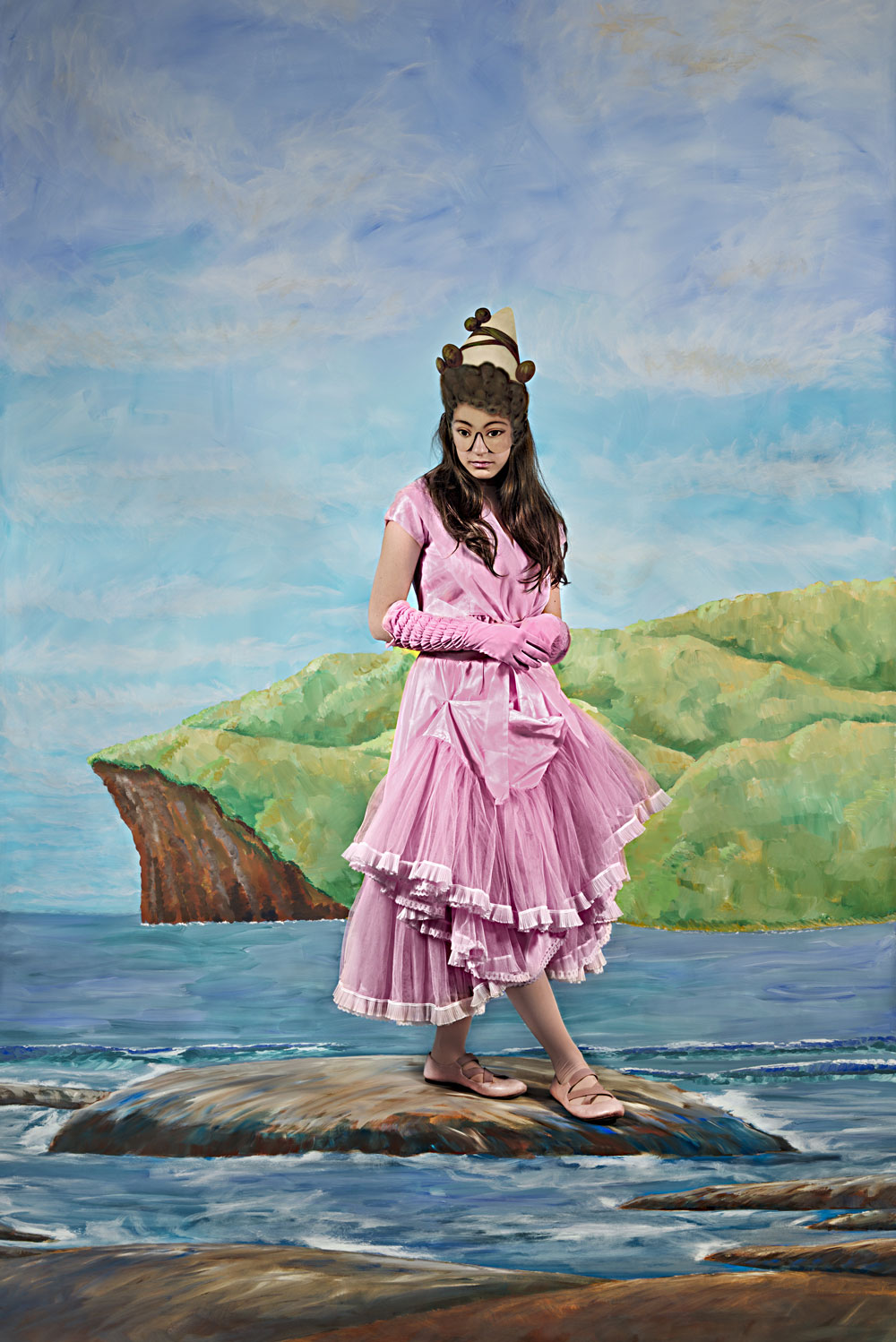
 

Polixeni Papapetrou (Australian, 1960-2018) 'The Summer Clown' 2014


Polixeni Papapetrou (Australian, 1960-2018)
The Summer Clown
2014
Pigment print
150 x 100cm
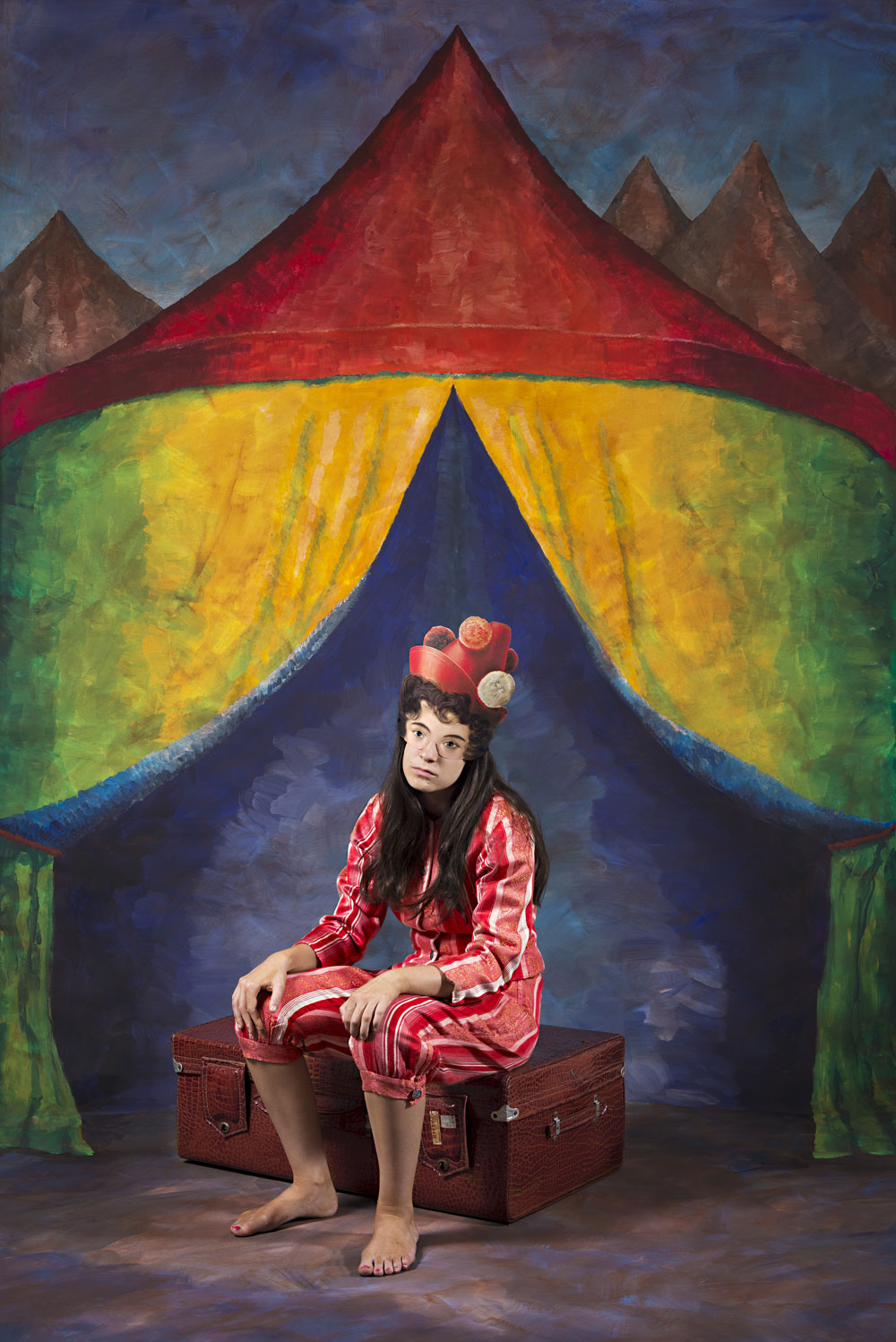
 

Polixeni Papapetrou (Australian, 1960-2018) 'The Troubadour' 2014


Polixeni Papapetrou (Australian, 1960-2018)
The Troubadour
2014
Pigment print
150 x 100cm


Stills Gallery

This gallery has now closed.

Stills Gallery website

LIKE ART BLART ON FACEBOOK

Back to top

Photographs: ‘Japanese photographic album’ c. 1920-1930s Part 1

November 2014


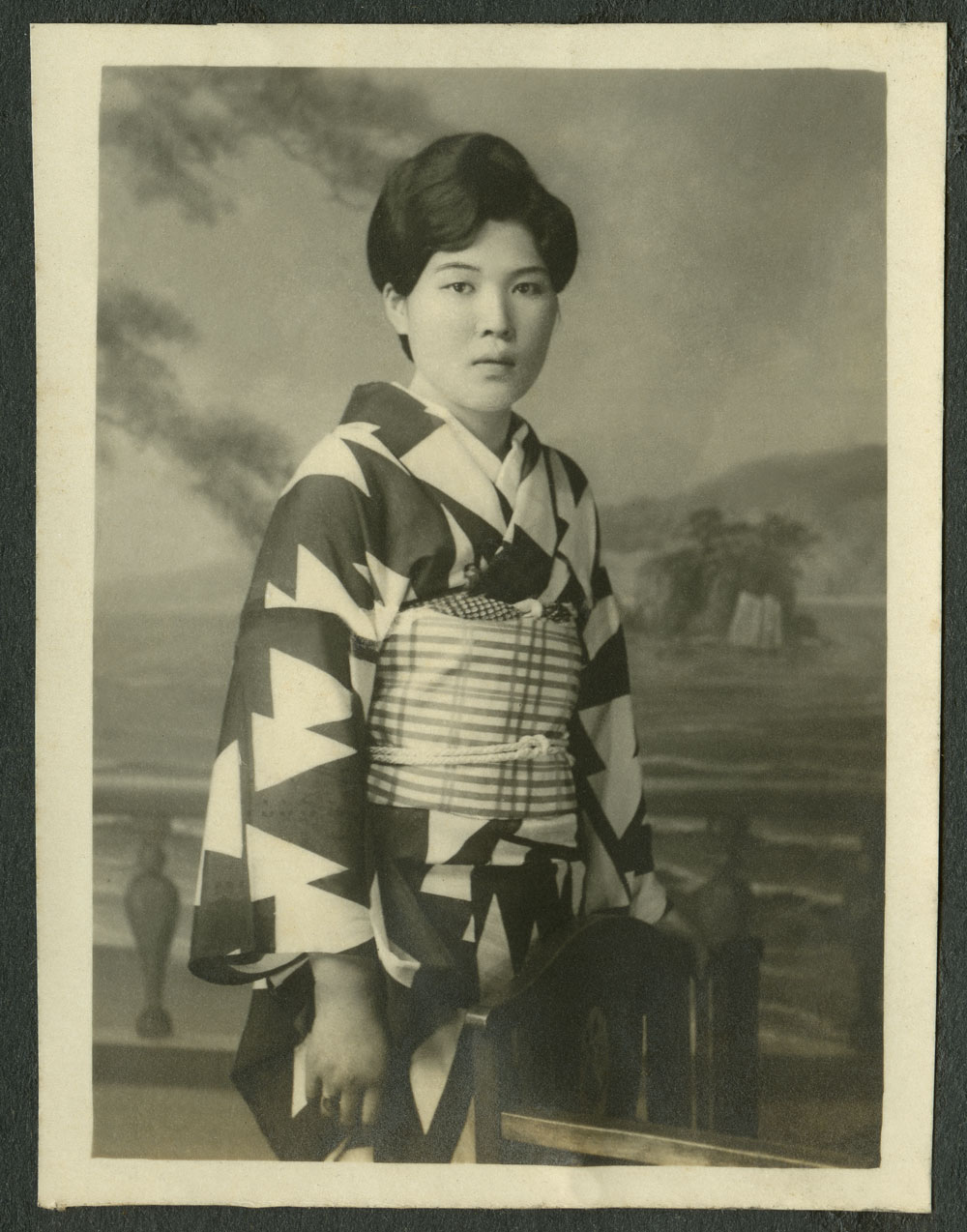
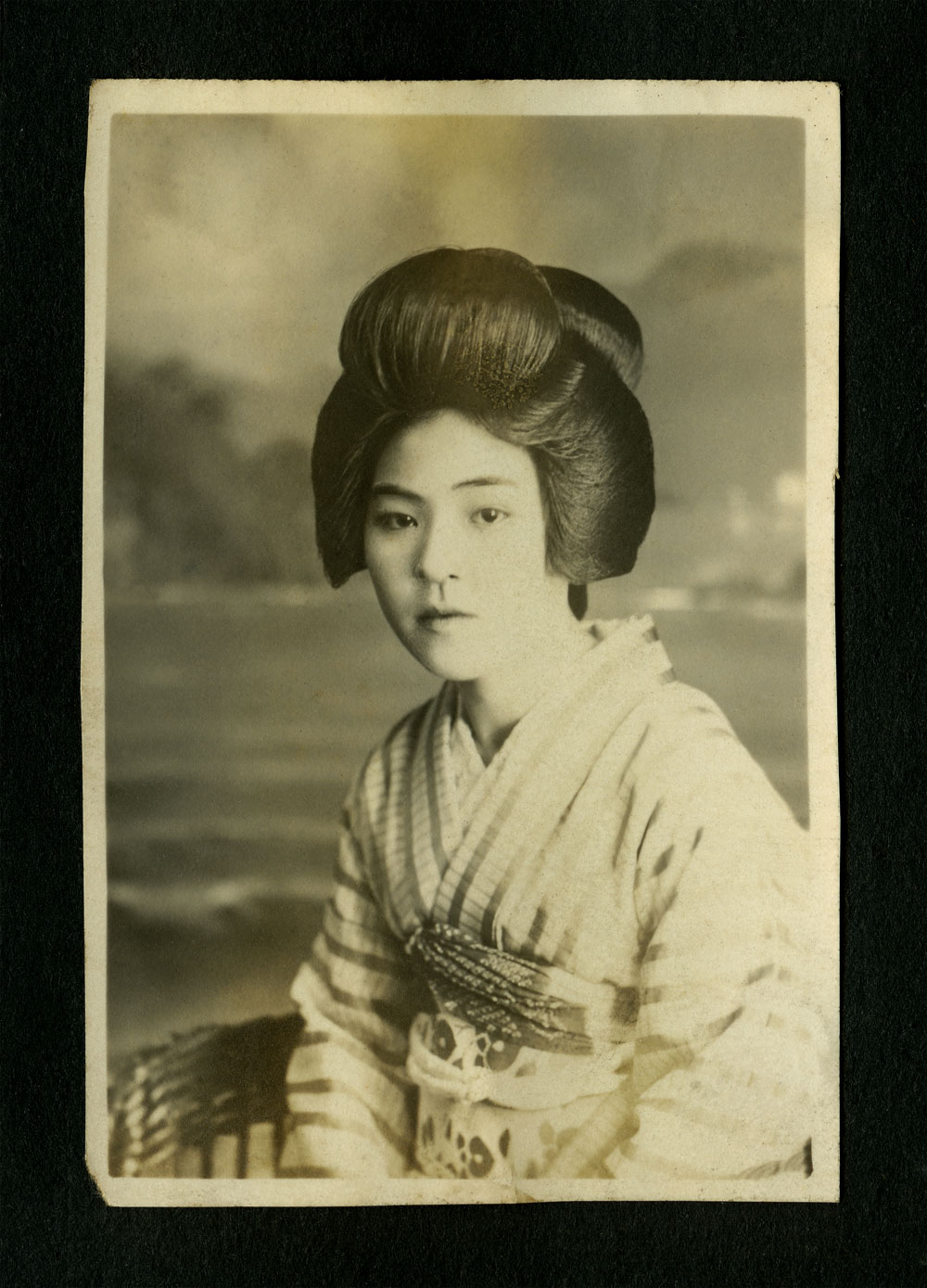
Anonymous photographer (Japanese). 'Untitled' from a Japanese family photography album c. 1920-1930s


Anonymous photographer (Japanese)
Untitled
From a Japanese family photography album
c. 1920-1930s


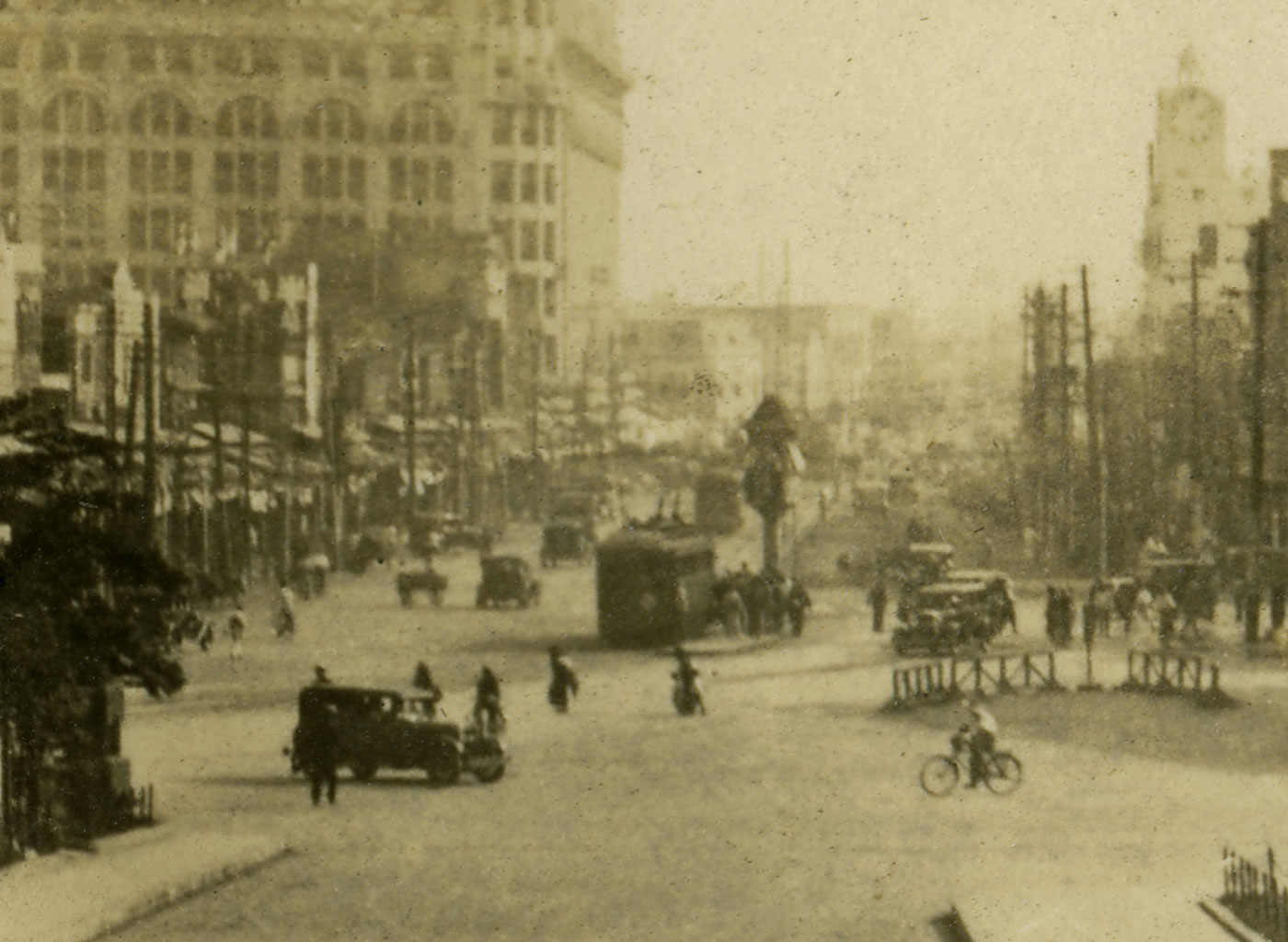
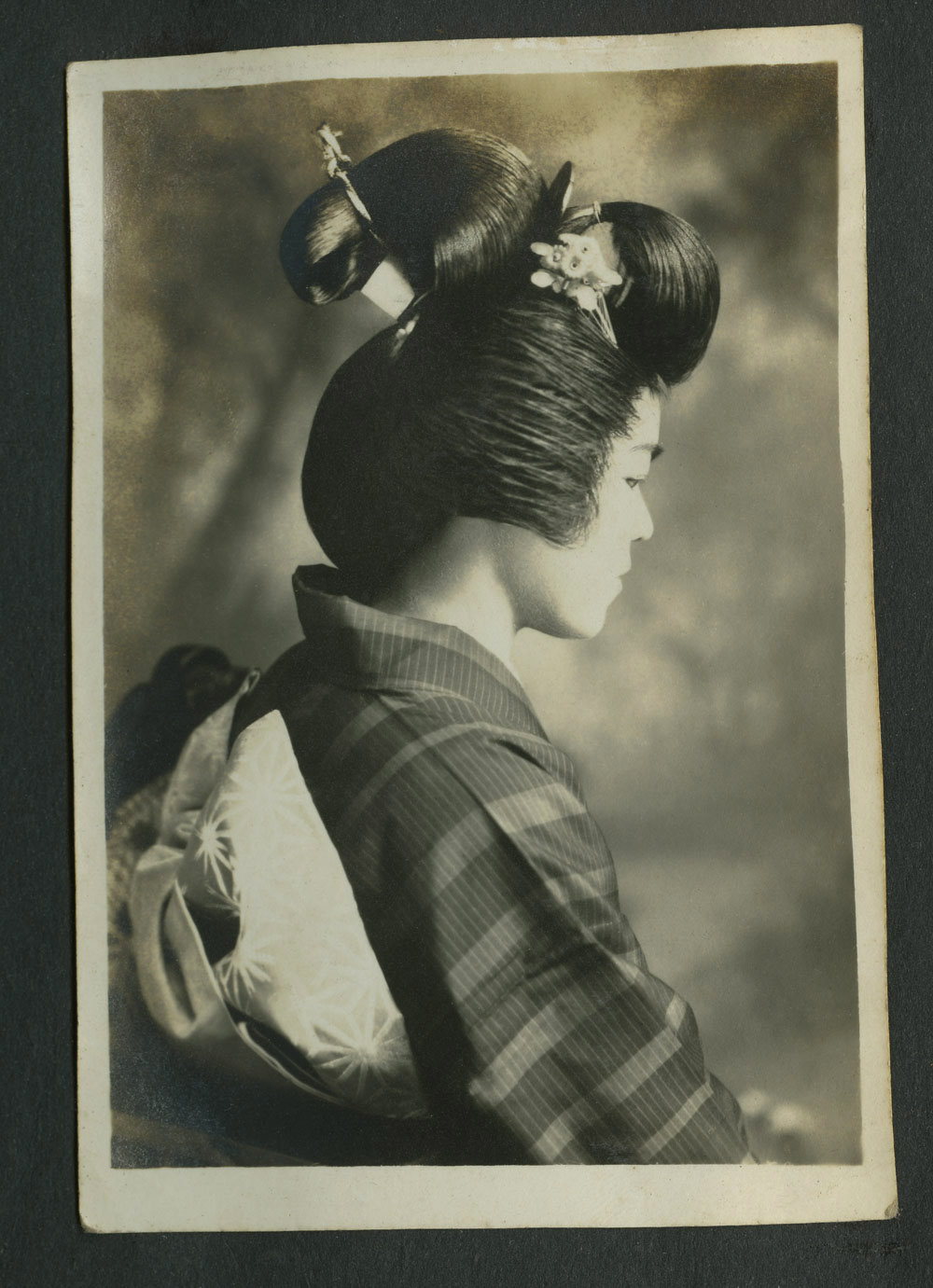
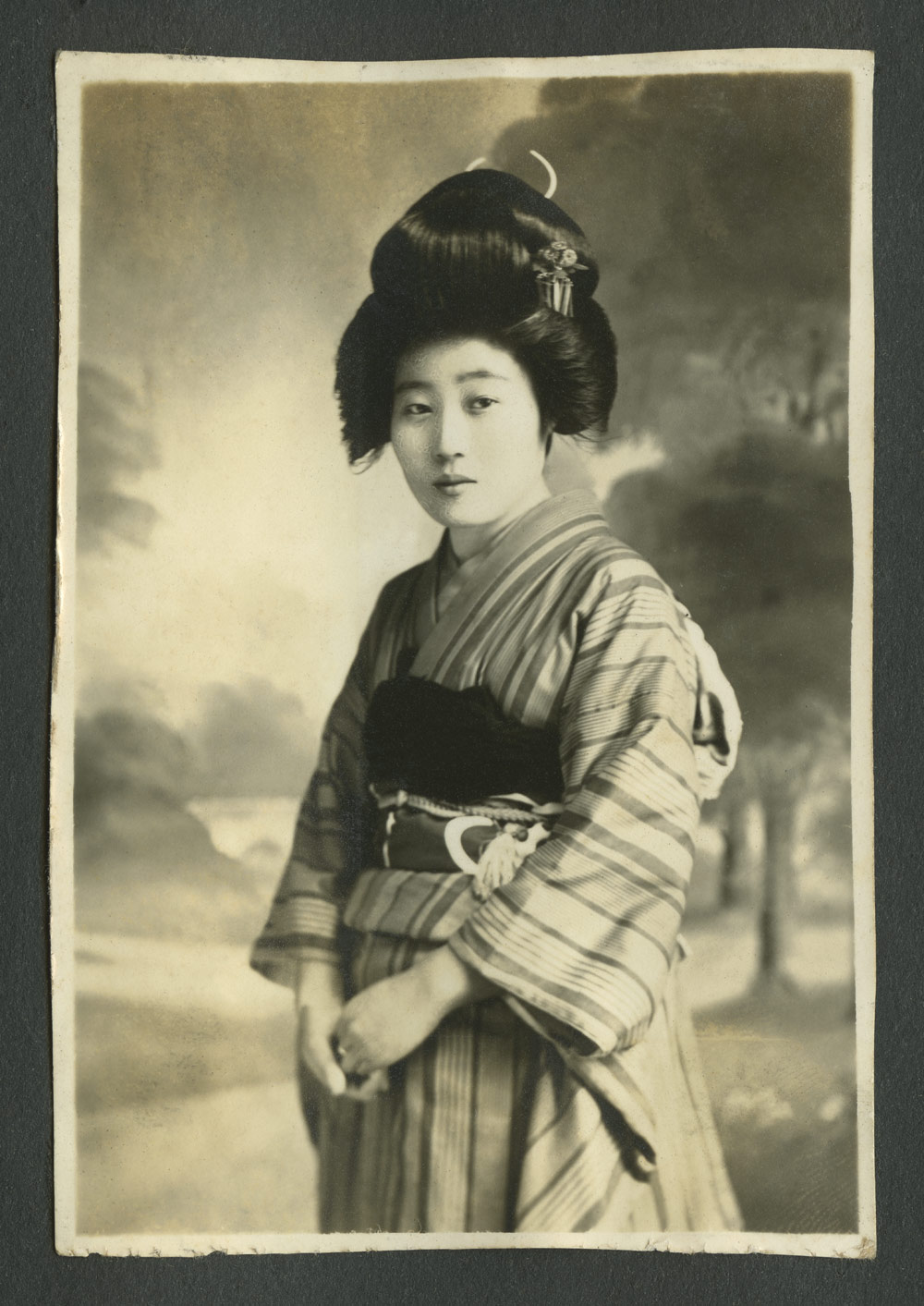
I bought an anonymous Japanese family photographic album from Daylesford in country Victoria recently for $25 (US$20). There were many images missing, but the thirty that were present are just stunning. I have been scanning them and gently digitally cleaning them since, and this is the first of three postings on the images. I love their immediacy, their vernacular language and intimate feel and the irregular shape and cut of the prints. Some of the photographs are very small in size.

The serenity, the beauty and the attention to the form of the hair is quite captivating. They have me entranced. Just delightful…

Dr Marcus Bunyan


Please click on the photographs for a larger version of the image.


Anonymous photographer (Japanese). 'Untitled [City scene]' from a Japanese family photography album c. 1920-1930s


Anonymous photographer (Japanese)
Untitled [City scene]
From a Japanese family photography album
c. 1920-1930s


Anonymous photographer (Japanese). 'Untitled' from a Japanese family photography album c. 1920-1930s (detail)


Anonymous photographer (Japanese)
Untitled [City scene] (detail)
From a Japanese family photography album
c. 1920-1930s


Anonymous photographer (Japanese). 'Untitled' from a Japanese family photography album c. 1920-1930s


Anonymous photographer (Japanese)
Untitled
From a Japanese family photography album
c. 1920-1930s


Anonymous photographer (Japanese). 'Untitled [Father with his daughter]' from a Japanese family photography album c. 1920-1930s


Anonymous photographer (Japanese)
Untitled [Father with his daughter]
From a Japanese family photography album
c. 1920-1930s


Anonymous photographer (Japanese). 'Untitled [Father with his daughter]' from a Japanese family photography album c. 1920-1930s (detail)


Anonymous photographer (Japanese)
Untitled [Father with his daughter] (detail)
From a Japanese family photography album
c. 1920-1930s


Anonymous photographer (Japanese). 'Untitled' from a Japanese family photography album c. 1920-1930s


Anonymous photographer (Japanese)
Untitled
From a Japanese family photography album
c. 1920-1930s


Anonymous photographer (Japanese). 'Untitled' from a Japanese family photography album c. 1920-1930s


Anonymous photographer (Japanese)
Untitled
From a Japanese family photography album
c. 1920-1930s


Anonymous photographer (Japanese). 'Untitled' from a Japanese family photography album c. 1920-1930s


Anonymous photographer (Japanese)
Untitled
From a Japanese family photography album
c. 1920-1930s


Anonymous photographer (Japanese). 'Untitled' from a Japanese family photography album c. 1920-1930s


Anonymous photographer (Japanese)
Untitled
From a Japanese family photography album
c. 1920-1930s


Anonymous photographer (Japanese). 'Untitled [Three women and an umbrella]' (restored) from a Japanese family photography album c. 1920-1930s


Anonymous photographer
Untitled [Three women and an umbrella] (restored)
From a Japanese family photography album
c. 1920-1930s


Anonymous photographer (Japanese). 'Untitled [Three women and an umbrella]' (umrestored) from a Japanese family photography album c. 1920-1930s


Anonymous photographer
Untitled [Three women and an umbrella] (unrestored)
From a Japanese family photography album
c. 1920-130s


Anonymous photographer (Japanese). 'Untitled' from a Japanese family photography album c. 1920-1930s


Anonymous photographer (Japanese)
Untitled
From a Japanese family photography album
c. 1920-1930s


LIKE ART BLART ON FACEBOOK

Back to top

Exhibition: ‘Transformational Imagemaking: Handmade Photography Since 1960’ at CEPA Gallery, Buffalo, NY

Exhibition dates: 19th September – 13th December 2014

Artists: Thomas Barrow, Wayne Belger, Stephen Berkman, Matthew Brandt, Dan Burkholder, Darryl Curran, Binh Danh, Rick Dingus, Dan Estabrook, Robert Fichter, Robert Flynt, Judith Golden, Betty Hahn, Robert Heinecken, Robert Hirsch, Catherine Jansen, Harold Jones, Tantana Kellner, Les Krims, William Larson, Dinh Q. Lê, David Lebe, Martha Madigan, Curtis Mann, Stephen Marc, Scott McCarney, Chris McCaw, John Metoyer, Duane Michals, Vik Muniz, Joyce Neimanas, Bea Nettles, Ted Orland, Douglas Prince, Holly Roberts, Clarissa Sligh, Keith Smith, Jerry Spagnoli, Mike & Doug Starn, Brian Taylor, Maggie Taylor, Jerry Uelsmann, Todd Walker, Joel-Peter Witkin, John Wood.

Curator: Robert Hirsch


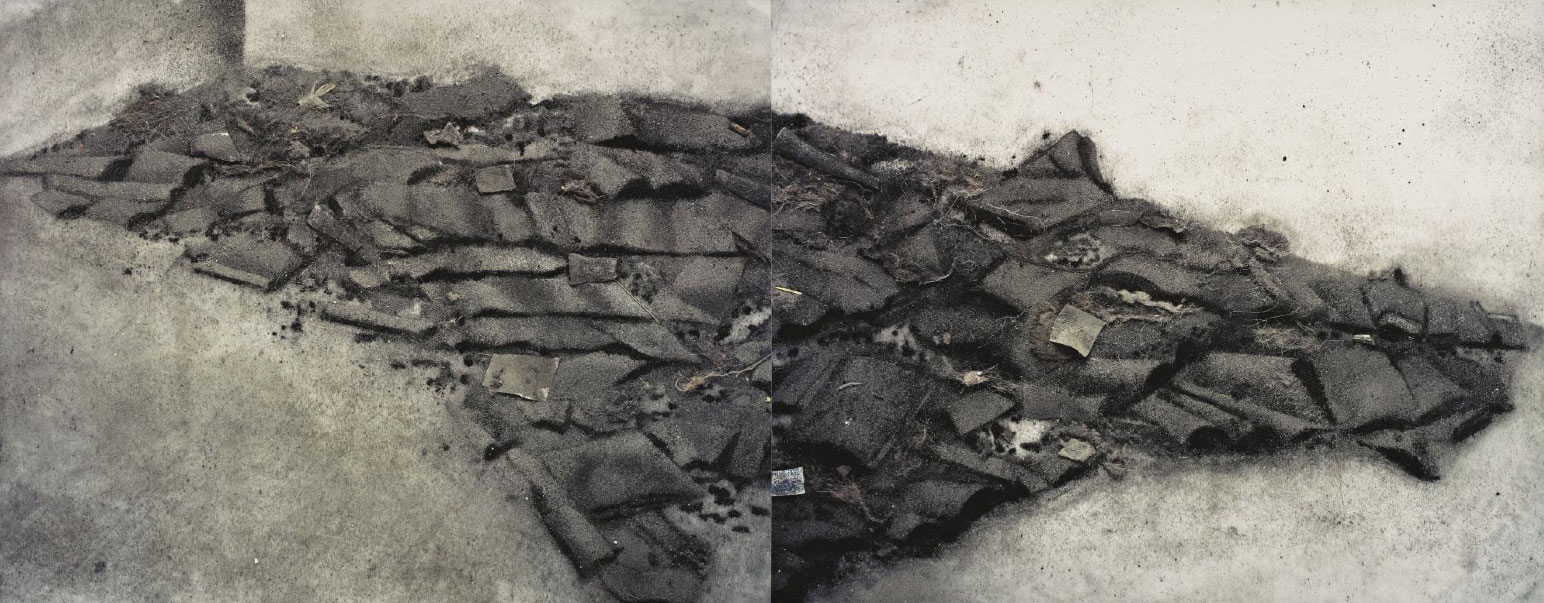
Vik Muniz (Brazilian, b. 1961) 'Picture of Dust' 2000


Vik Muniz (Brazilian, b. 1961)
Picture of Dust (Barry Le Va, Continuous and Related Activities; Discontinued by the Act of Dropping, 1967, Installed at the Whitney Museum in New Sculpture 1965-1975: Between Geometry and Gesture, February 20-June 3, 1990)
2000
From the series The Things Themselves: Picture of Dust
Framed, overall: 51 x 130 1/2 inches
Two silver dye bleach prints (Ilfochrome)
Whitney Museum of American Art, New York;/Licensed by VAGA, New York, NY


The resurgence of handmade photography in the 1960s had several sources and influences. It looked back to the “anti-tradition” of nineteenth-century romanticism, which accentuated the importance of making a highly personal response to experience and a critical response to society. It drew on contemporary popular culture. Many of the artists engaged in this movement were baby-boomers brought up on television and film, media that often portrayed photography as hip and sexy – eg. the film Blow-Up (1966) – and which drove home the significance of constructed photographic images. In addition, the widespread atmosphere of rebellion against social norms propelled the move toward handwork. The rejection of artistic standards in photography was consistent with the much broader exploration of sexual mores and gender roles that took place in the sixties. It was also consistent with the exploration of consciousness. The latter was encouraged by such counter-culture figures as Ken Kesey who, with his band of Merry Pranksters, boarded a Day-Glo bus called “Further” and took an LSD-fuelled trip across the country that echoed Dr. Timothy Leary’s decree “to tune in, turn on, and drop out.” On a broader level, the society-at-large was exposed to psychedelic exploration through Stanley Kubrick’s film 2001: A Space Odyssey (1968), which youthful audiences saw as a mysterious consciousness-expanding trip into humanity’s future. Finally, handmade photography was supported by the general growth of photographic education in the university. The ubiquity and importance of the medium in the culture at large, as well as pressure from those who championed photography from within art institutions gave credence in the post-war decades to the idea that people could study photography seriously. As new photography programs mushroomed in the universities, they produced graduates who took teaching positions in even newer programs. Many of these young teachers, who had grown up to the adage of “do your own thing,” were responsive to unconventional ways of seeing and working, and they encouraged these attitudes in their students, many of whom turned to handmade photography.

Despite the attractions of handmade photography there were in the sixties, and still are to some degree, emphatic objections to the open engagement of the hand in photographic art. One common objection is that such art constitutes a dishonest method to cover up aesthetic and technical inadequacies. Another comes from those who believe strongly in the Western tradition of positivism. These people tend to reject handmade photography on the grounds that it is unnecessarily ambiguous or irrational in its meanings. Nevertheless, more artists than ever are currently using the flexible, experiential methods of handwork. In addition to opening up an avenue to inner experience, artists find handwork attractive because it promotes inventiveness, allows for the free play of intuition beyond the control of the intellect, extends the time of interaction with an image (on the part of both the maker and the viewer), and allows for the inclusion of a wide range of materials and processes within the boundaries of photography…

[Curator] Peter C. Bunnell’s innovative exhibitions [MoMA: Photography as Printmaking (1968) and Photography Into Sculpture (1970)] demonstrated that in essence photography is nothing more than light sensitive material on a surface. The exhibitions also recognized that the way a photograph is perceived and interpreted is established by artistic and societal preconceptions about how a photographic subject is supposed to look and what is accepted as truthful. The work in the Bunnell exhibitions was indicative of a larger zeitgeist of the late 1960s that involved leaving the safety net of custom, exploring how to be more aware of and physically connected to the world, and critically examining expectations with regard to lifestyles…

In spite of post-modernism’s assault on the myth of authorship and its sardonic outlook regarding the human spirit, artists who produce handmade photography continue to believe that individuals can make a difference, that originality matters, and that we learn and understand by doing. They think that a flexible image is a human image, an imperfect and physically crafted one that possesses its own idiosyncratic sense of essence, time, and wonder. Their work can be aesthetically difficult, as it may not provide the audience-friendly narratives and well-mannered compositions some people expect. But sometimes this is necessary to get us to set aside the ordained answers to the question: “What is a photograph?” and allow us to recognise photography’s remarkable diversity in form, structure, representational content, and meaning. This acknowledgment grants artists the freedom and respect to explore the full photographic terrain, to engage the medium’s broad power of inquiry, and to present the wide-ranging complexity of our experiences, beliefs, and feelings for others to see and contemplate.

Extract from Flexible Images: Handmade American Photography, 1969-2002 by Robert Hirsch (2003) on the Light Research website [Online] Cited 14/11/2014. First published in The Society for Photographic Education’s exposure, Volume 36: 1, 2003, cover and pages 23-42. © Robert Hirsch 2003


Many thankx to CEPA Gallery for allowing me to publish the photographs in the posting. Please click on the photographs for a larger version of the image.


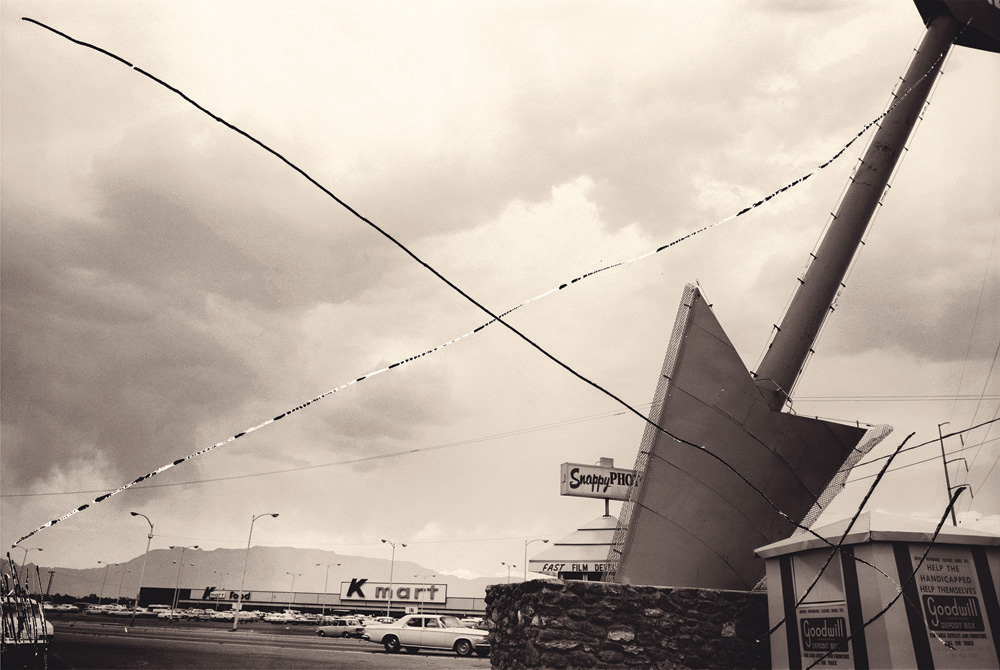
Thomas Barrow (American, b. 1938) 'Dart, Albuquerque' 1974


Thomas Barrow (American, b. 1938)
Dart, Albuquerque
1974
Fuji Crystal Archive Print


Thomas Barrow (American, b. 1938) 'f/t/s Cancellations (Brown) – Field Star' 1975


Thomas Barrow (American, b. 1938)
f/t/s Cancellations (Brown) – Field Star
1975
Gift from the Collection of Joel Deal and Betsy Ruppa
© Thomas Barrow. Museum of Art Rhode Island School of Design, Providence


Barrow scratched through his landscape negatives, calling attention to the materiality of the medium itself and the fact that regardless of how much information is given, reality remains an accumulation of belief, knowledge, and one’s own experience.


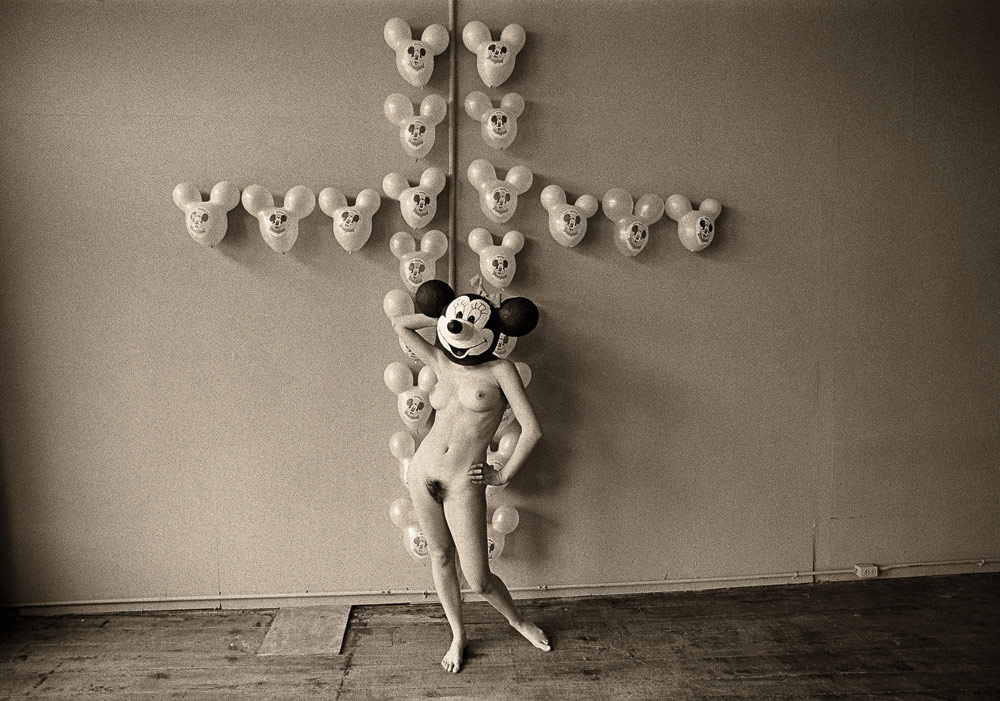
Les Krims (American, b. 1942) 'The Static Electric Effect of Minnie Mouse on Mickey Mouse Balloons' 1968


Les Krims (American, b. 1942)
The Static Electric Effect of Minnie Mouse on Mickey Mouse Balloons
1968
Kodalith Print


“Kodak Kodalith paper was a thin, matt, orthochromatic graphic arts paper that was not intended for pictorial purposes. However, when it was used for pictorial expression its responsiveness to time and temperature controls during development enabled one to produce a wide range of grainy, high-contrast, and sepia tonal effects. Its unusual handling characteristics also meant that photographers had to pull the print at precisely the “right” moment from the developer and quickly get it into the stop bath, making each print unique.”


Din Q Le (Vietnamese American, b. 1968) 'Ezekial’s Whisper' 2014


Din Q Le (Vietnamese American, b. 1968)
Ezekial’s Whisper
2014
C-print, linen tape


Ted Orland (American, b. 1941) 'Meteor!' 1998


Ted Orland (American, b. 1941)
Meteor!
1998
Hand coloured gelatin silver print


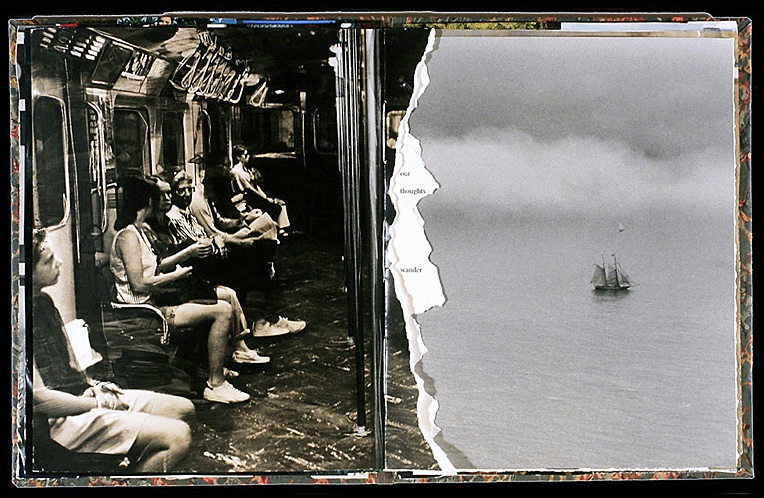
Brian Taylor (American) 'Our Thoughts Wander' 2005


Brian Taylor (American)
Our Thoughts Wander
2005
From the series Open Books
Hand bound book


Open Books

I create photographically illustrated books springing from my fascination with the book format and a love of texture in art. My imagery is inspired by the surreal and poetic moments of living in our fast-paced, modern world. I’m fascinated by how daily life in the 21st Century presents us with incredible experiences in such regularity that we no longer differentiate between what is natural and what is coloured with implausibility, humour, and irony.

These hard cover books are hand bound with marbleised paper and displayed fully opened to a photographically illustrated two-page folio spread. Each book is framed in a wooden shadowbox and presented as a wall piece. I like the idea of making art that contains some imagery which can be sensed but not seen. The underlying pages contain my photographs, snapshots, and work prints that “gave their lives” for the imagery visible in the open spread. These images lie beneath the open pages like history.

Text from the Brian Taylor Photography website [Online] Cited 12/11/2022


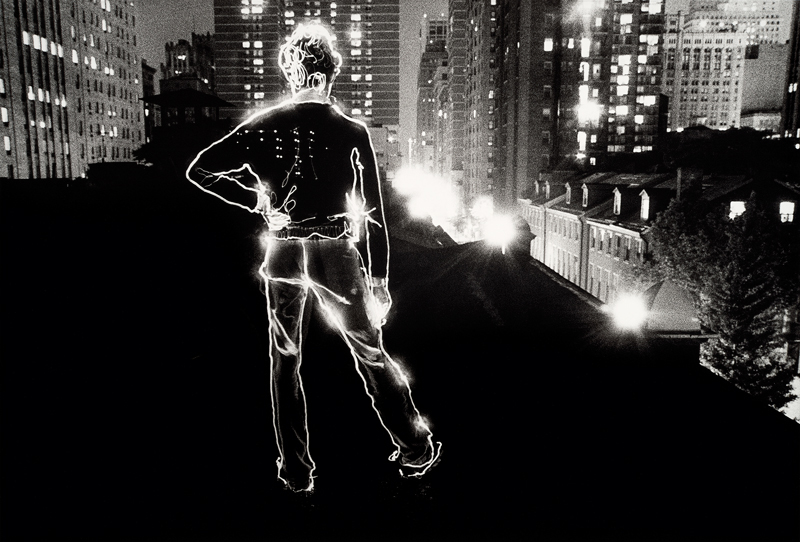
David Lebe (American, b. 1948) 'Angelo On The Roof' 1979


David Lebe (American, b. 1948)
Angelo On The Roof
1979


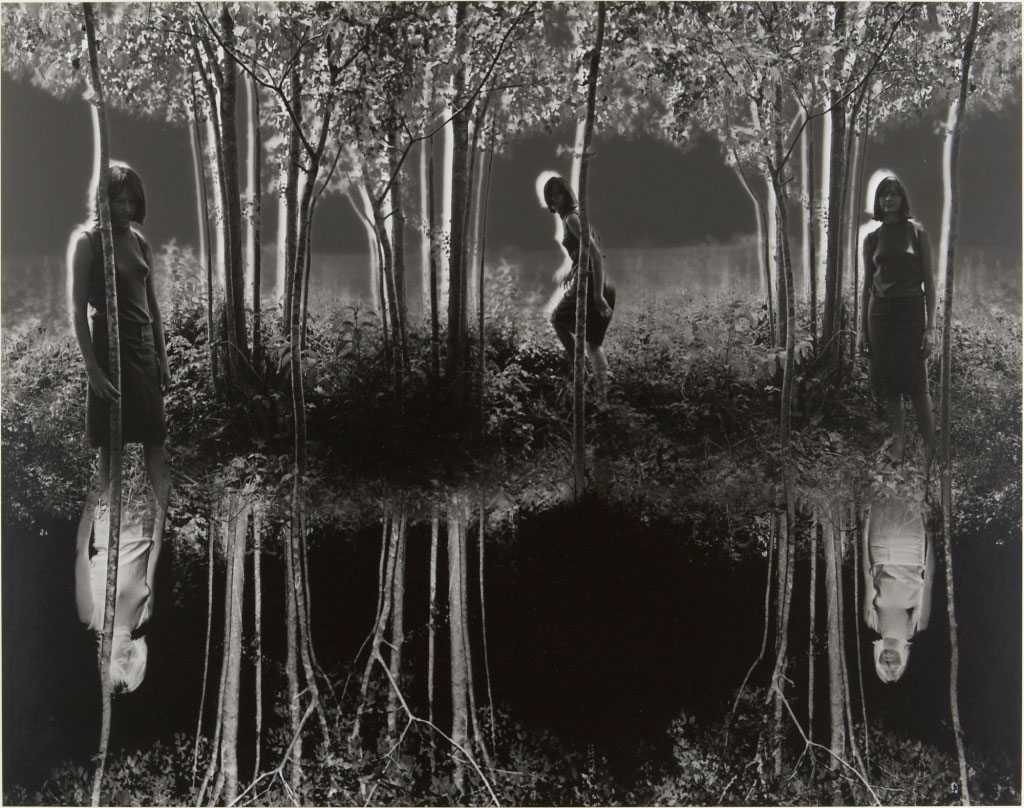
Jerry Uelsmann (American, 1934-2022) 'Small Woods where I met Myself (Final Version)' 1967


Jerry Uelsmann (American, 1934-2022)
Small Woods where I met Myself (Final Version)
1967
Gelatin silver print
25.4 x 32.3cm (10 x 12 11/16 in.)
© 1967 Jerry Uelsmann


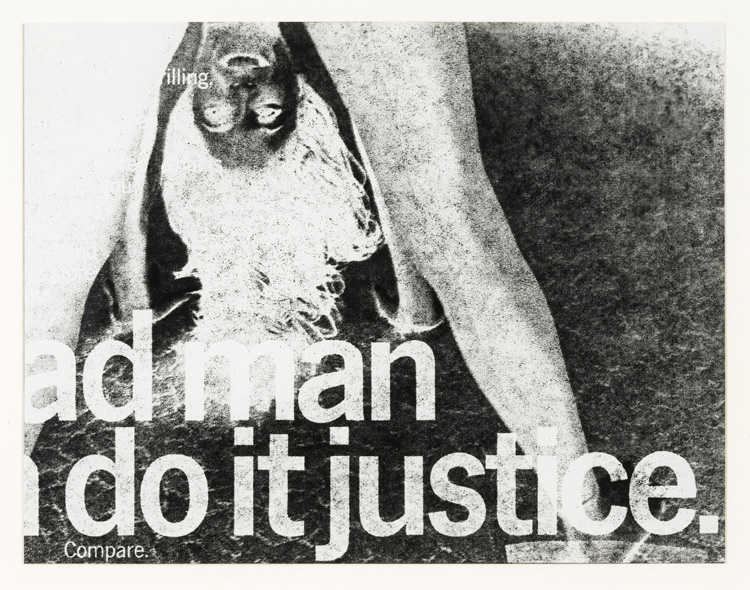
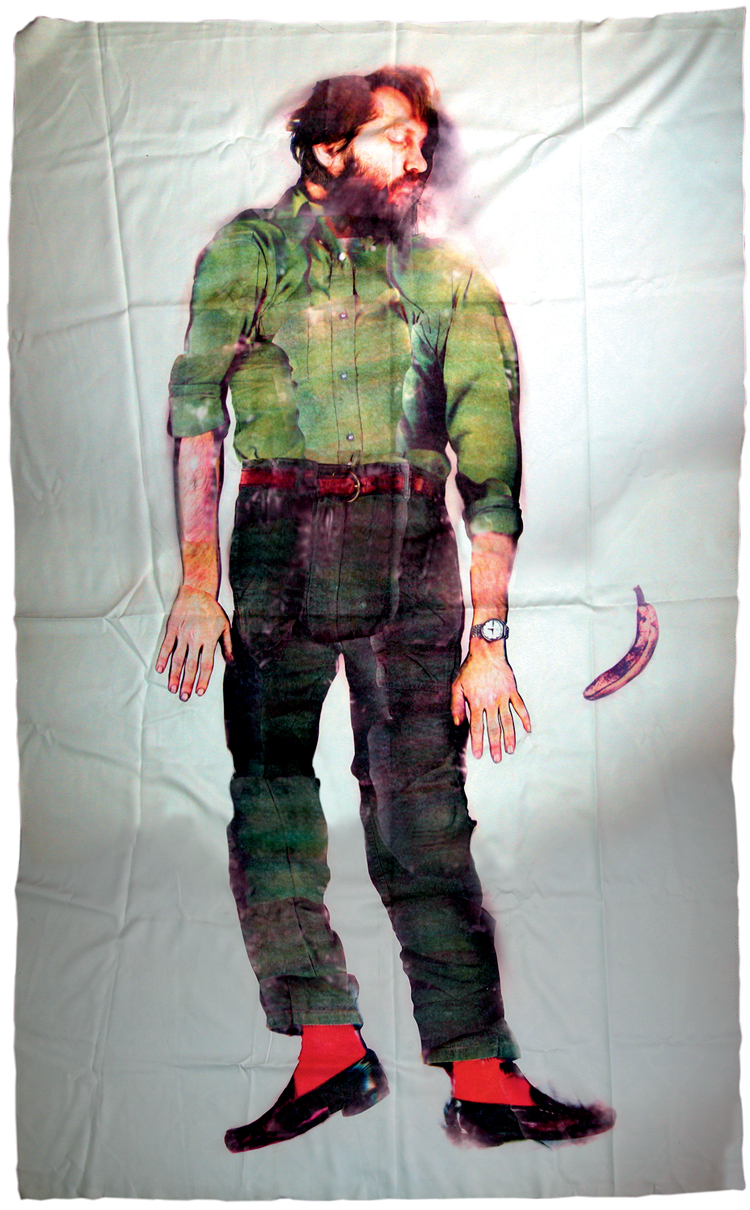
Robert Heinecken (American, 1931-2006) 'Are You Rea #15' 1968


Robert Heinecken (American, 1931-2006)
Are You Rea #15
1968
Offset lithography


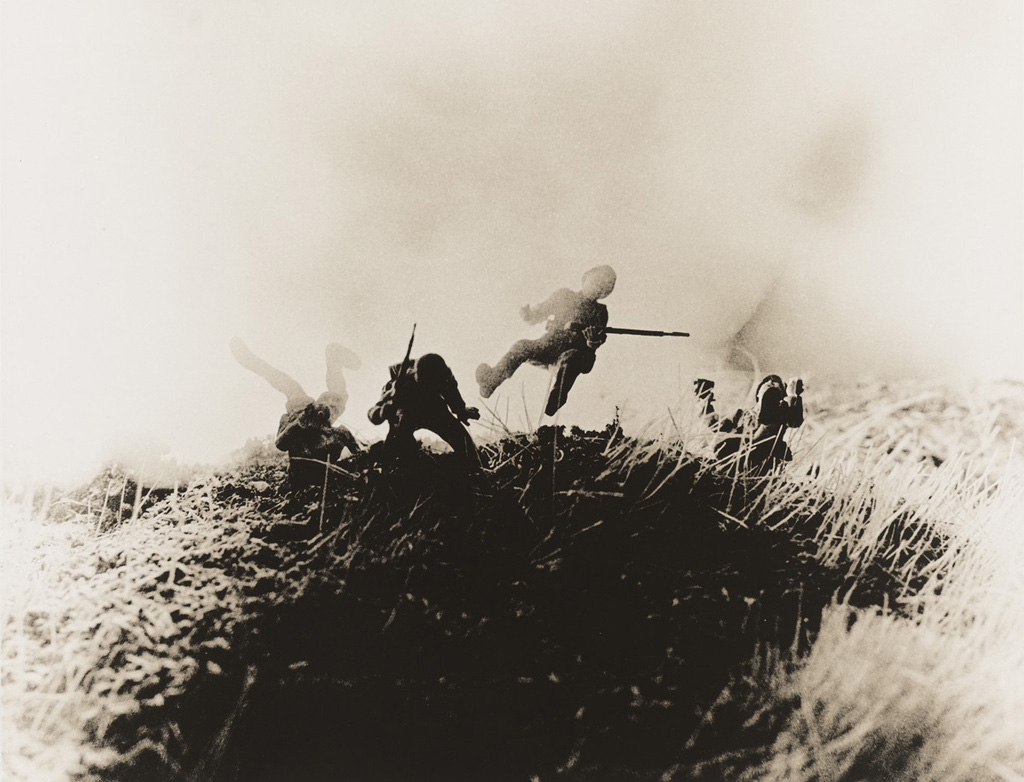
David Levinthal (American, b. 1949) and Garry Trudeau (American, b. 1948) 'Untitled', from the series 'Hitler Moves East' 1977


David Levinthal (American, b. 1949) and Garry Trudeau (American, b. 1948)
Untitled, from the series Hitler Moves East
1977
8 x 10 inches
Gelatin silver (Kodalith) print
Courtesy Paul Morris Gallery, New York City


My favourite story comes from the early days of Levinthal’s career, when he was a college student working on Hitler Moves East with Garry Trudeau. They worked with childlike enthusiasm, purchasing smoke bombs from a local theatre supply shop and growing grass inside David’s apartment to achieve maximum realism. This culminated in a huge explosion of smoke, and the photograph above. Forever making jokes, Levinthal had this to say about the situation: “I’m not even sure we had 911 those days, so that was probably helpful.” He sometimes describes incidents in which things went wrong, but thankfully this wasn’t one of those situations. Instead he successfully produced this photo and began a transition from the early works, which show toys rearranged on his linoleum floor, to photographs that are sophisticated and deceptively real looking.

Ashleigh Ferran. “From Toys to Art: Learning from David Levinthal,” on the Corcoran website August 7, 2013 [Online] Cited 02/07/2021. No longer available online


Joel-Peter Witkin (American, b. 1939) 'Poussin in Hell' 1999


Joel-Peter Witkin (American, b. 1939)
Poussin in Hell
1999
Toned gelatin silver print


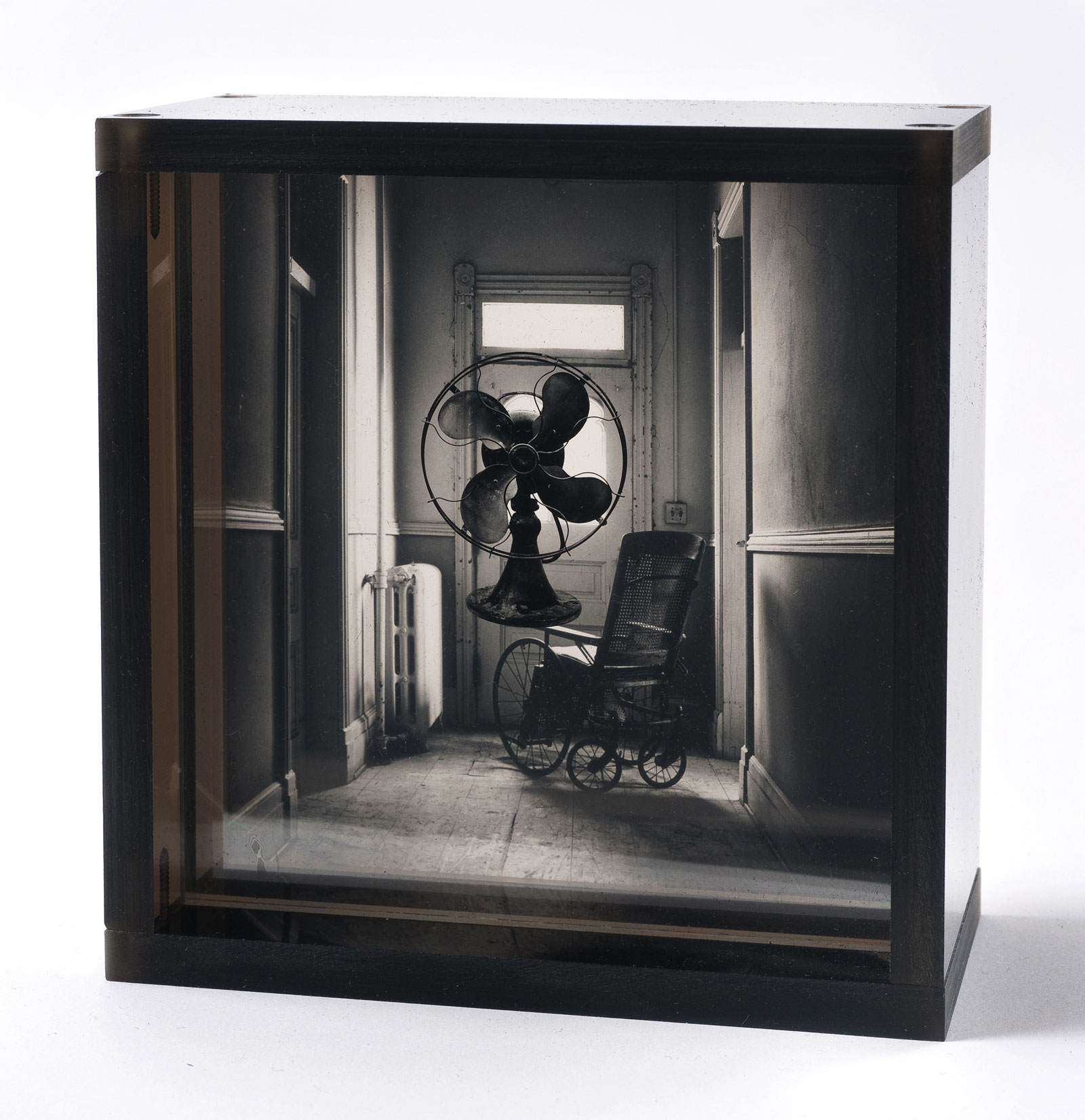
Douglas Prince (American, b. 1943) 'Untitled' 1969


Douglas Prince (American, b. 1943)
Untitled
1969
Film and Plexiglas
5 x 5 x 2.5 inches


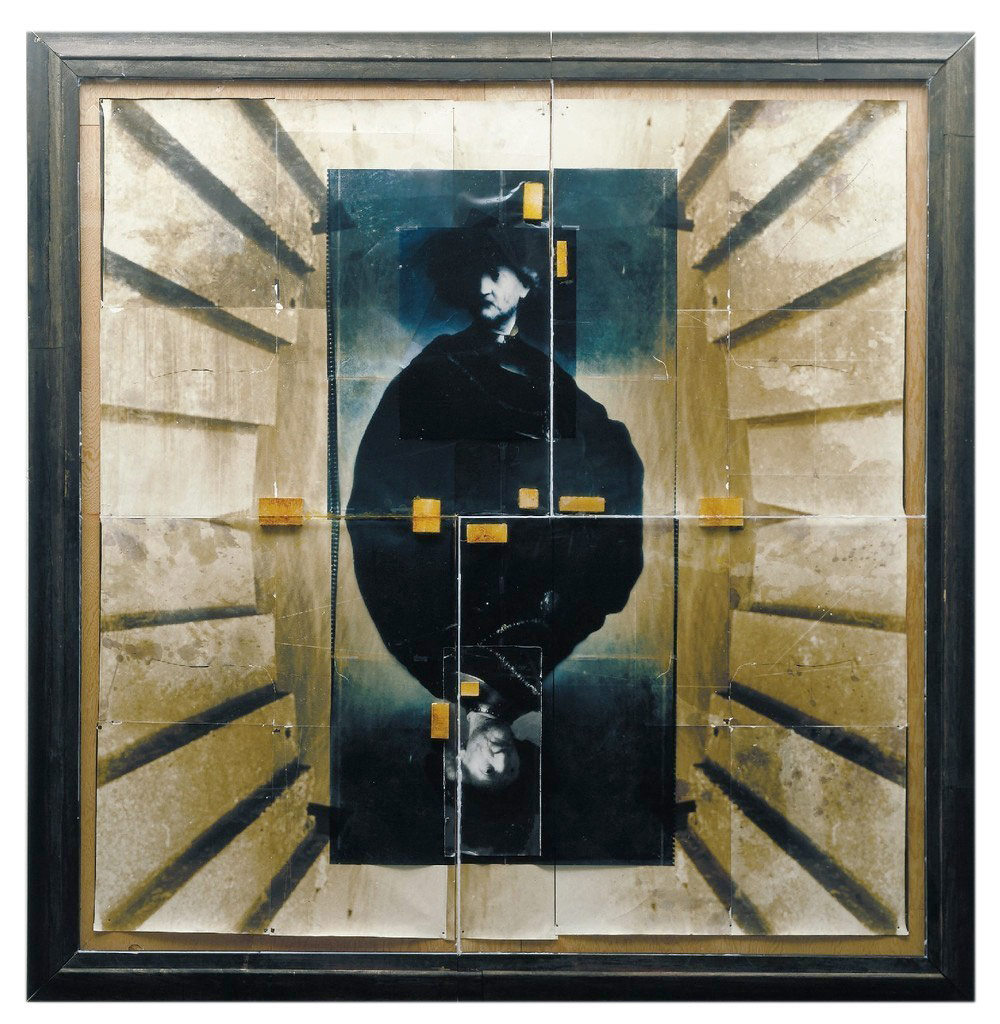
Mike and Doug Starn (American, b. 1961) 'Double Rembrandt with Steps' 1987-1988


Mike and Doug Starn (American, b. 1961)
Double Rembrandt with Steps
1987-1988
Toned gelatin silver print, toned ortho film, wood, Plexiglas, and glue.
108 x 108 inches
Collection of the Museum of Modern Art, New York, NY


CEPA Gallery is pleased to announce Transformational Imagemaking: Handmade Photography Since 1960, a companion exhibition to Robert Hirsch’s recently published book of the same title (Focal Press). This extraordinary exhibition features work by some of the most innovative photographers and imagemakers of the mid- 20th century through today; artists who redefined the notion of photography as a medium and left an indelible mark on contemporary photographic practices.

This extensive survey will include more than 140 works by over 40 artists spanning nearly 50 years of artistic practice unified by a curatorial arc rooted in notions that deviate from the purview of traditional photographic practice. Citing Robert Heinecken’s practice as the genesis of conceptual handmade photography, this exhibition charts an intricate universe of artists whose practice dispenses with the self-prescribed limitations of conventional photography in order to mine the boundless potential of the photographic medium as a conceptual conveyance.

Transformational Imagemaking is the culmination of Hirsch’s lifelong exploration into handmade photography and the artists whose practices were formed on the principle of unearthing new possibilities. Hirsch sites the catalyst for the project as an article he published in exposure in 2003 entitled “Flexible Images: Handmade American Photography, 1969-2002”. It has since expanded into a comprehensive publication that includes personal conversations with each artist conducted over a six-month period during 2013. CEPA will now elaborate further by mounting an exhibition that features a selection of each artist’s work.

In addition to Transformational Imagemaking, CEPA will also show the complete folio of Robert Heinecken’s seminal series Are You Rea (1966). Considered to be the grandfather of post-modern photographic practices and a major figure of 20th century art, Heinecken was a key figure in promoting new sentiments about photography as an art form, influencing artists such Richard Prince, Barbara Kruger, Sherrie Levine, and others. Heinecken’s rebellious spirit challenged conventions about the ways photographs represent the tangible world: “We constantly tend to misuse or misunderstand the term reality in relation to photographs. The photograph itself is the only thing that is real.”

Are You Rea (1966), created by contact printing magazine tear-outs onto photographic paper, are ghostly compositions that layer sexually suggestive images of women with fractured text. This provocative body of work, sexually charged and evocatively ambiguous, reflects an awareness of desire as a commercial commodity that begs us to question the very root of our own desires.

Press release from CEPA Gallery


Keith Smith (American, b. 1938) 'Untitled' 1972


Keith Smith (American, b. 1938)
Untitled
1972


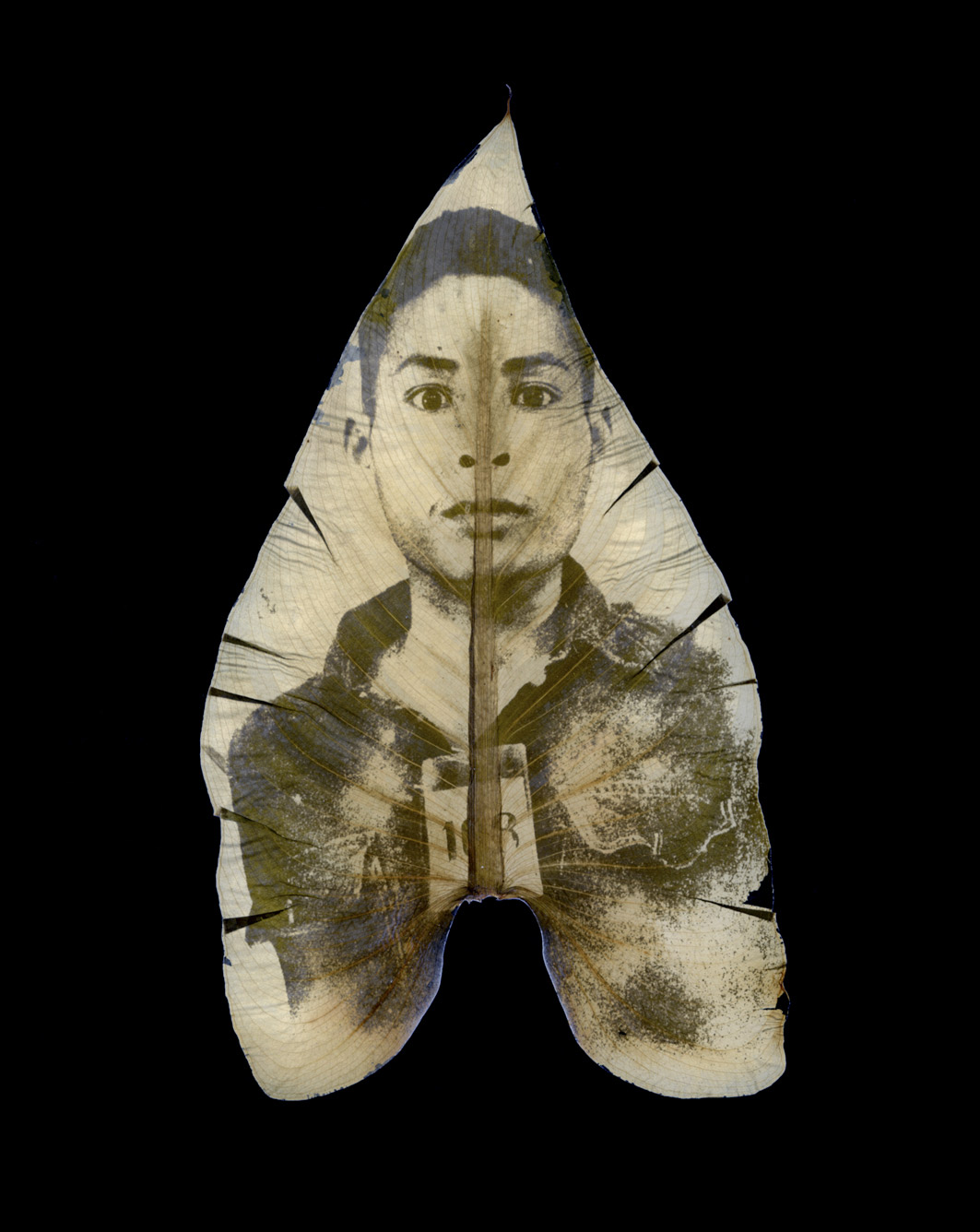
Binh Danh (American born Vietnam, b. 1977) 'The Botany of Tuol Sleng Genocide Museum #2' 2008


Binh Danh (American born Vietnam, b. 1977)
The Botany of Tuol Sleng Genocide Museum #2
2008
From the Immortality: The Remnants of the Vietnam and American War series
Chlorophyll print and resin


The chlorophyll process is an organic alternative photography process akin to the anthotype process. However, instead of printing on the crushed extract of fruit or plant matter, the prints are bleached by sunlight directly onto the surface of leaves using a positive. The resulting images are stunningly delicate and beautiful, ranging from haunting silhouettes to crisp definition. Despite the simplicity of the finished product, the process itself can be tedious with plenty of trial and error.

Drawing on the anthotype process, Danh refined a method for securing a positive directly to a live leaf and allowing sunlight to bleach the image onto its surface naturally. He has also addressed a fundamental challenge with natural photography processes; that of fixing the image to prevent further bleaching and deterioration over time. To save his work, Dah casts his finished pieces in a layer of resin allowing them to be enjoyed for years to come.

Tiffany Pereira. “The chlorophyll process,” on the Alternative Photography website [Online] Cited 02/07/2021


Dinh Q. Lê (Vietnamese, b. 1968) 'Untitled' 1998


Dinh Q. Lê (Vietnamese, b. 1968)
Untitled, from the series Cambodia: Splendor and Darkness
1998
C-print and linen tape


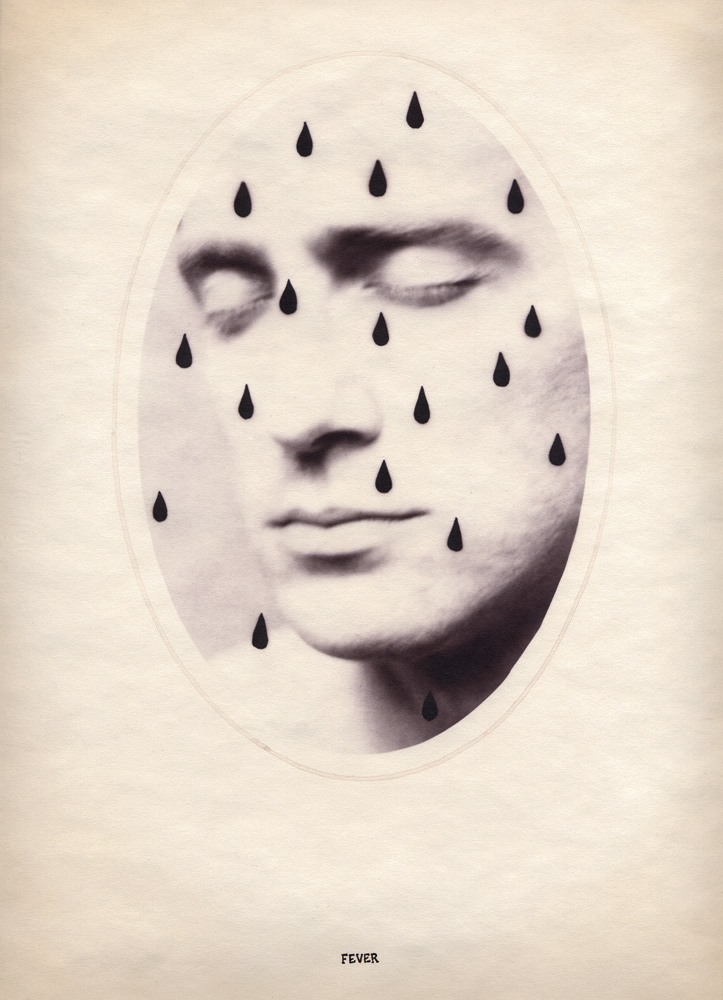
Dan Estabrook (American, b. 1969) 'Fever' 2004


Dan Estabrook (American, b. 1969)
Fever
2004
Salt print with ink and watercolor


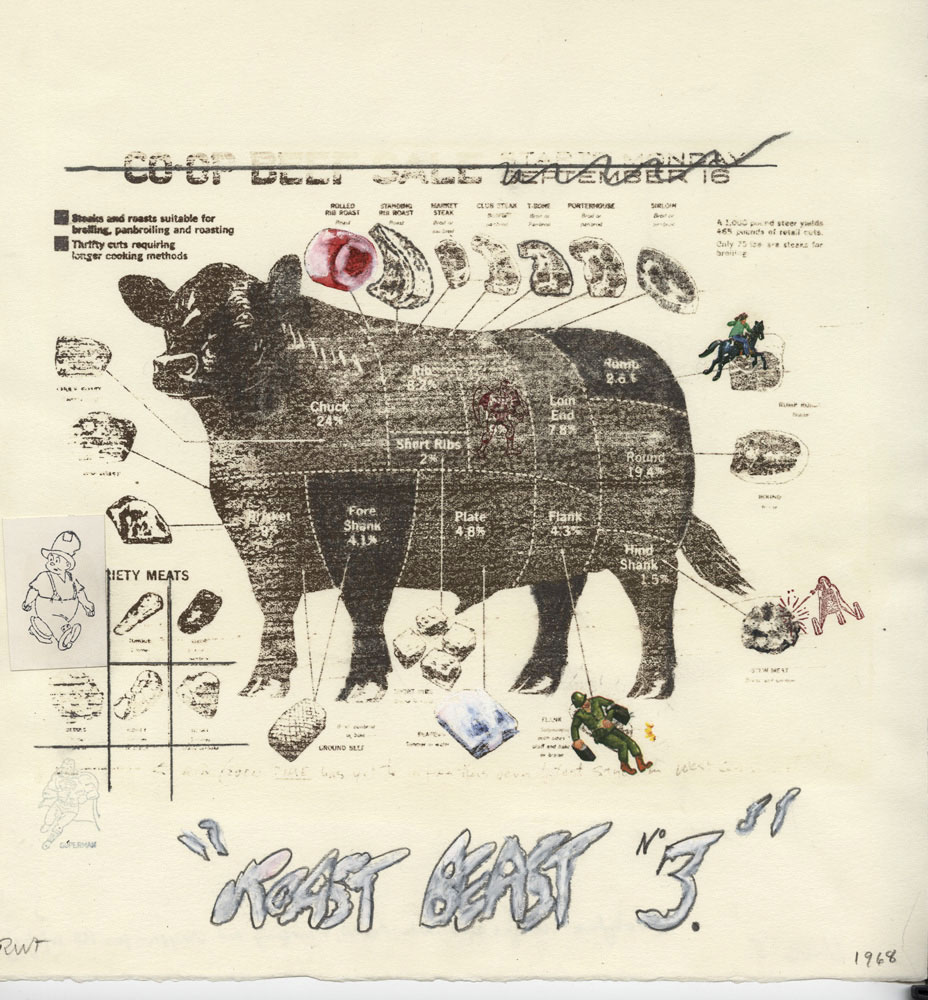
Robert Fichter (American, b. 1939) 'Roast Beast 3' 1968


Robert Fichter (American, b. 1939)
Roast Beast 3
1968
Verifax transfer with rundowns, stamping, and crayon


Robert Heinecken (American, 1931-2006) 'Are You Rea #1' 1966


Robert Heinecken (American, 1931-2006)
Are You Rea #1
1966
Offset lithography


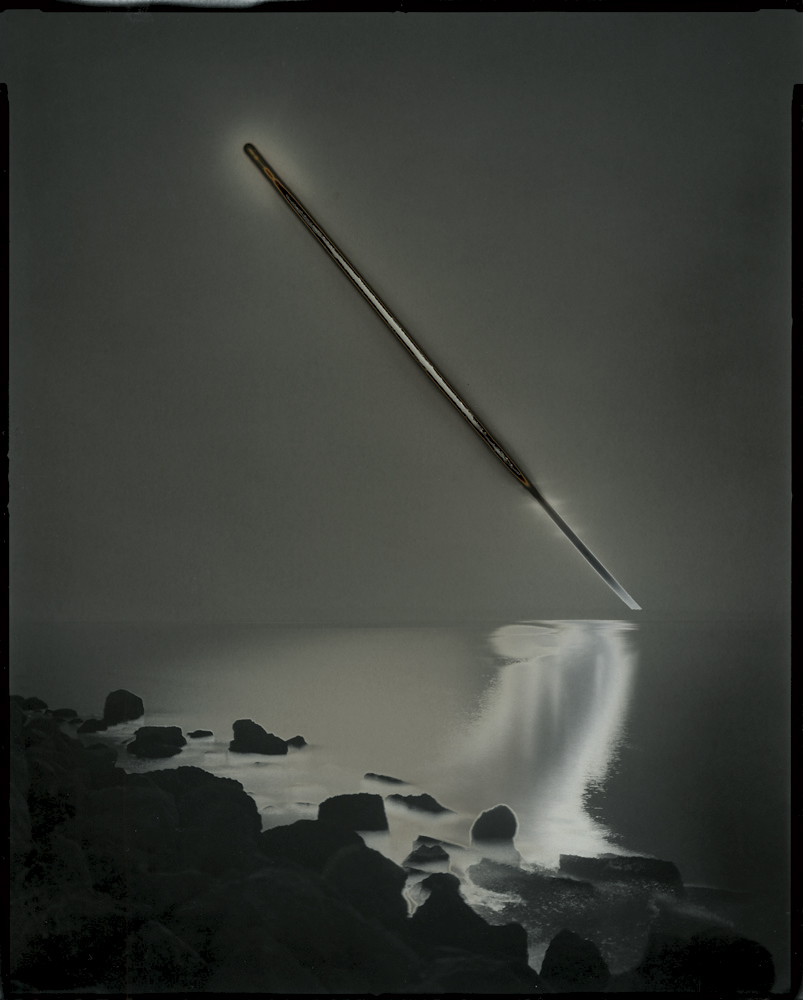
Chris McCaw (American, b. 1971) 'Sunburned GSP #676 (San Francisco Bay)' 2013


Chris McCaw (American, b. 1971)
Sunburned GSP #676 (San Francisco Bay)
2013
Gelatin Silver paper negative


Curtis Mann (American, b. 1979) 'Photographer, Scratch' 2009


Curtis Mann (American, b. 1979)
Photographer, Scratch
2009
Bleached c-print with synthetic polymer varnish


Vik Muniz (Brazilian, b. 1961) 'Atlas (Carlao)' 2008


Vik Muniz (Brazilian, b. 1961)
Atlas (Carlao)
2008
Digital C-print


CEPA Gallery
617 Main Street
Buffalo, NY 14203
Phone: (716) 856-2717

Opening hours:
Wednesday: 12.00pm – 4.00pm
Thursday: 4.00pm -7.00pm
Friday: 12:00pm – 4.00pm
Saturday: 12.00pm – 4.00pm

CEPA Gallery website

LIKE ART BLART ON FACEBOOK

Back to top

Exhibition: ‘The New Landscape: Experiments in Light by Gyorgy Kepes’ at the Cantor Arts Center at Stanford University

Exhibition dates: 23rd July – 17th November 2014


Gyorgy Kepes (American born Hungary, 1906-2001) 'Lichtenberg figures: A. R. von Hippel' 1951


Gyorgy Kepes (American born Hungary, 1906-2001)
Lichtenberg figures: A. R. von Hippel
1951
Photographic enlargement on particleboard
Lent by Department of Special Collections, Stanford University Libraries


Way to go… Abstract Expressionists eat your heart out!

Marcus


Many thankx to the Cantor Arts Center for allowing me to publish the photographs in the posting. Please click on the photographs for a larger version of the image.


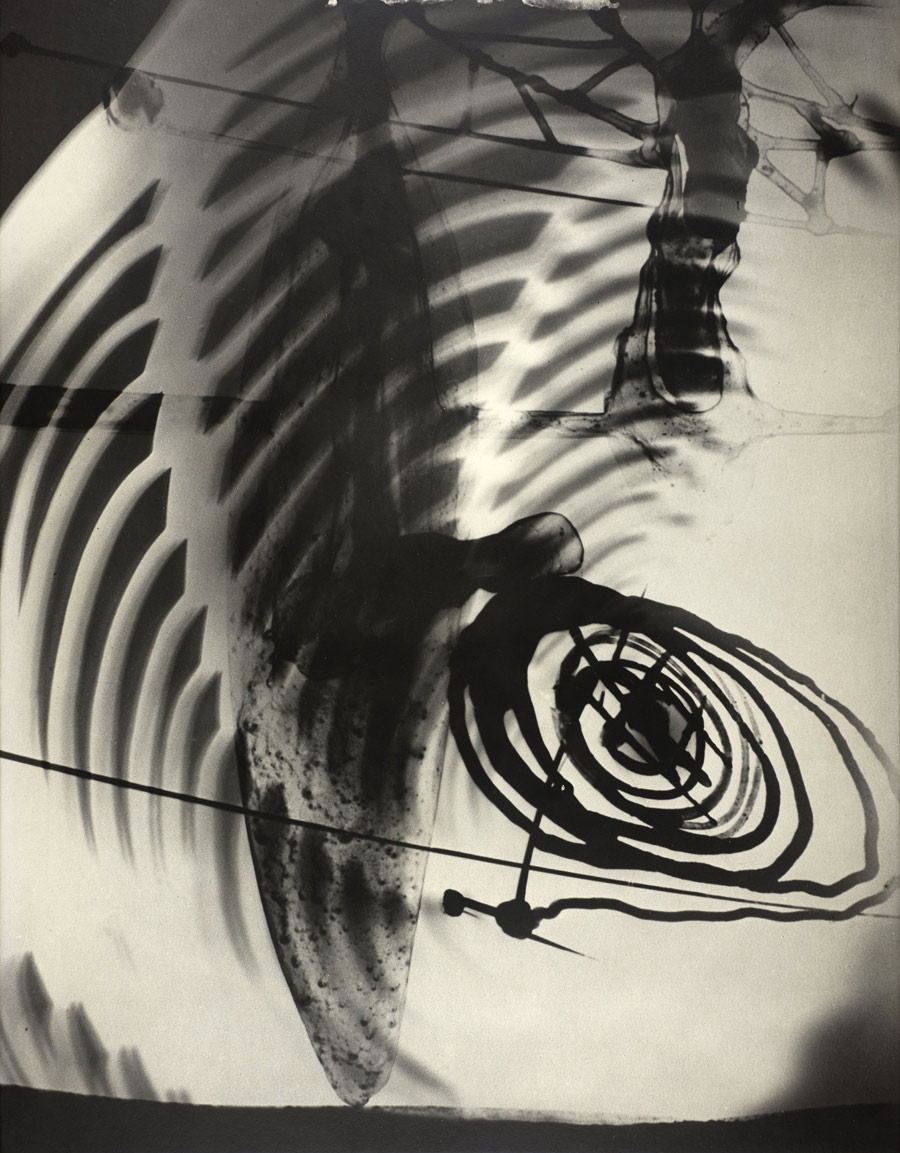
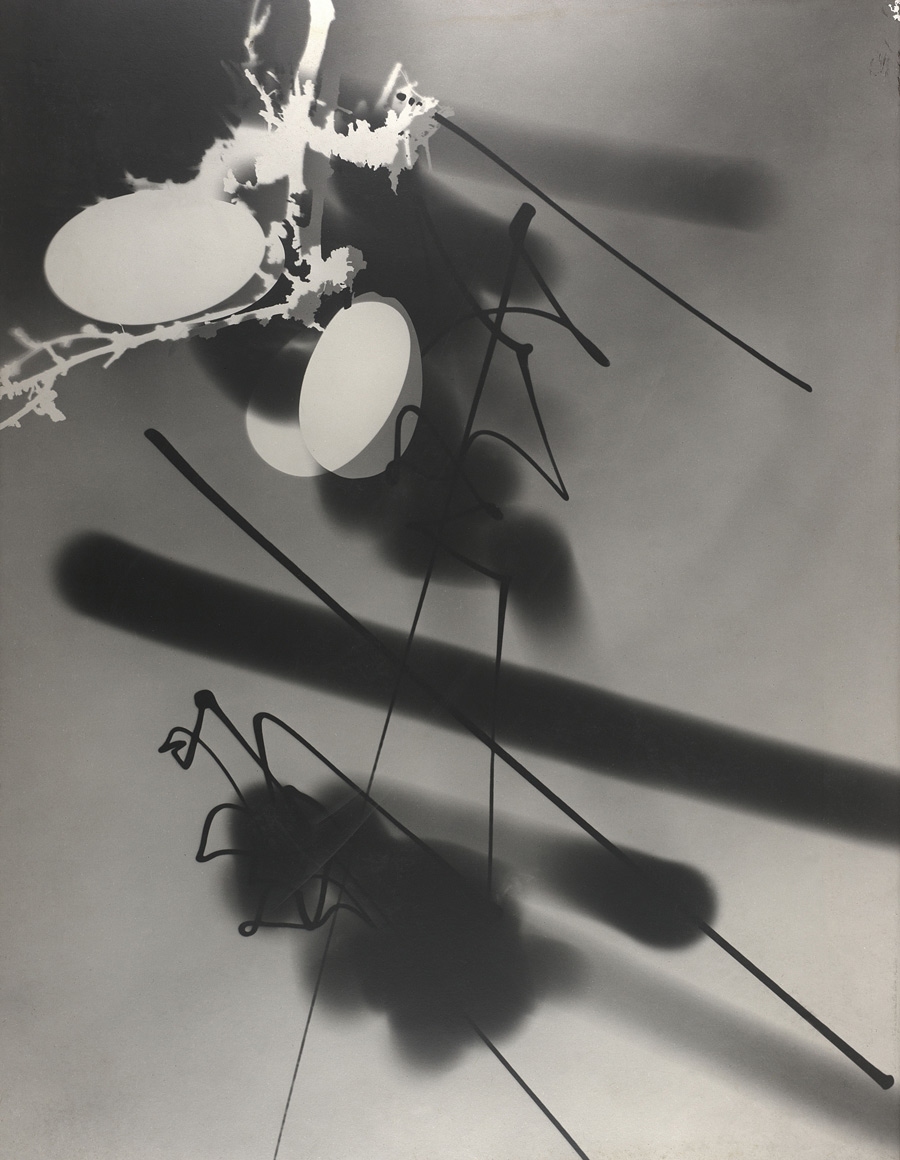
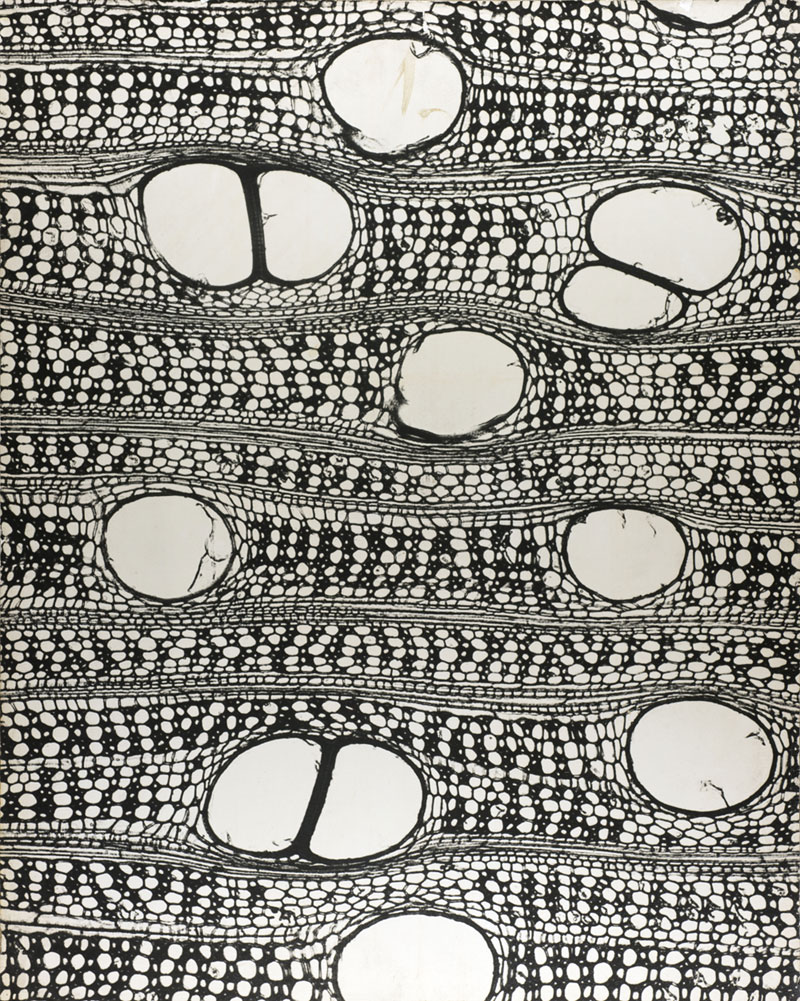
This exhibition explores the question of art’s relevance in a scientific age through the work of Hungarian-born American artist, designer, and visual theorist Gyorgy Kepes (1906-2001). Forty-five panels depict what Kepes, associated with Germany’s Bauhaus and Chicago’s New Bauhaus, called the “new landscape” of scientific imagery – microscopic minerals, cellular patterns, and tissue fibres – as well as Kepes’s own experiments with camera-less photographic techniques. The exhibition is one of the first projects resulting from a $500,000 grant awarded to the Cantor and the Department of Art & Art History from the Andrew W. Mellon Foundation to facilitate research conducted by Stanford Ph.D. candidates on the Cantor’s collection.

Text from the Cantor Arts Center website


Gyorgy Kepes (American born Hungary, 1906-2001) 'Lichtenberg figures: A. R. von Hippel' 1951


Gyorgy Kepes (American born Hungary, 1906-2001)
Lichtenberg figures: A. R. von Hippel
1951
Photographic enlargement on particleboard
Lent by Department of Special Collections, Stanford University Libraries


Gyorgy Kepes (American born Hungary, 1906-2001) 'Untitled' Date unknown


Gyorgy Kepes (American born Hungary, 1906-2001)
Untitled
Date unknown
Photographic enlargement on particleboard, date unknown
Lent by Department of Special Collections, Stanford University Libraries


Gyorgy Kepes (American born Hungary, 1906-2001) 'Untitled' Date unknown


Gyorgy Kepes (American born Hungary, 1906-2001)
Untitled
Date unknown
Photographic enlargement on particleboard, date unknown
Lent by Department of Special Collections, Stanford University Libraries


Gyorgy Kepes (American born Hungary, 1906-2001) 'Gate, Photogenic' 1948


Gyorgy Kepes (American born Hungary, 1906-2001)
Gate, Photogenic
1948
Photographic enlargement on particleboard, date unknown
Lent by Department of Special Collections, Stanford University Libraries


Gyorgy Kepes (American born Hungary, 1906-2001) 'Photogenic Painting, Photogenic' 1942


Gyorgy Kepes (American born Hungary, 1906-2001)
Photogenic Painting, Photogenic
1942
Photographic enlargement on particleboard, date unknown
Lent by Department of Special Collections, Stanford University Libraries


Gyorgy Kepes (American born Hungary, 1906-2001) 'Light Graphic, Photogenic' 1945


Gyorgy Kepes (American born Hungary, 1906-2001)
Light Graphic, Photogenic
1945
Photographic enlargement on particleboard, date unknown
Lent by Department of Special Collections, Stanford University Libraries


Gyorgy Kepes (American born Hungary, 1906-2001) 'Camel's tongue: 10X' 1951


Gyorgy Kepes (American born Hungary, 1906-2001)
Camel’s tongue: 10X
1951
Photographic enlargement on particleboard
Lent by Department of Special Collections, Stanford University Libraries


Gyorgy Kepes (American born Hungary, 1906-2001) 'Transverse section of Osmanthus wood: 50X' 1951


Gyorgy Kepes (American born Hungary, 1906-2001)
Transverse section of Osmanthus wood: 50X
1951
Photographic enlargement on particleboard
Lent by Department of Special Collections, Stanford University Libraries


Gyorgy Kepes (American born Hungary, 1906-2001) 'Transverse section of wood: 250X' 1951


Gyorgy Kepes (American born Hungary, 1906-2001)
Transverse section of wood: 250X
1951
Photographic enlargement on particleboard
Lent by Department of Special Collections, Stanford University Libraries


Cantor Arts Center at Stanford University
328 Lomita Drive at Museum Way
Stanford, CA 94305-5060
Phone: 650-723-4177

Opening hours:
Wednesday – Sunday 11am – 5pm
Closed Monday and Tuesday

Cantor Arts Center at Stanford University website

LIKE ART BLART ON FACEBOOK

Back to top

Exhibition: ‘Walker Evans. A Life’s Work’ at Martin-Gropius-Bau Berlin

Exhibition dates: 25th July – 9th November 2014


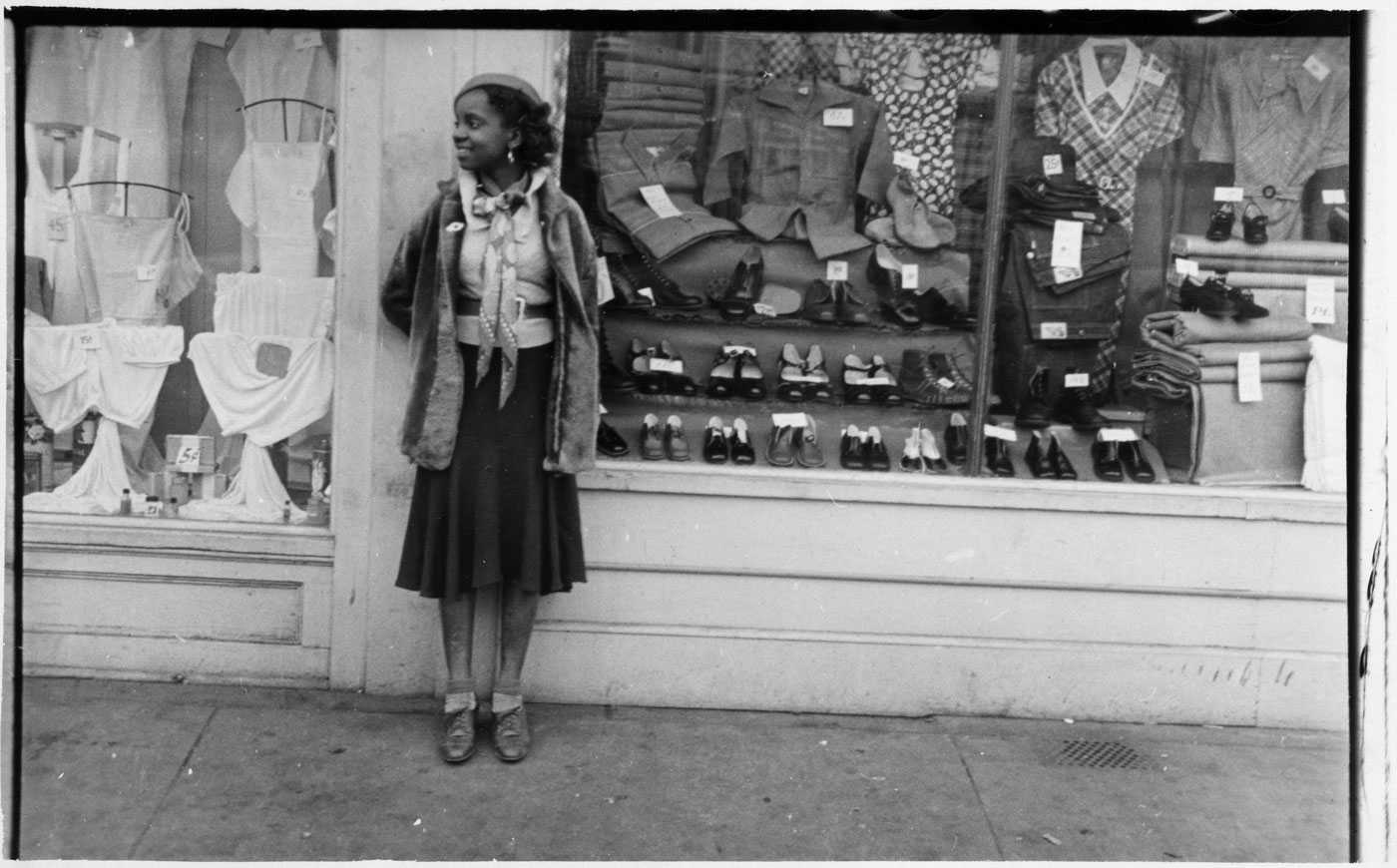
Walker Evans (American, 1903-1975) 'Young Women Outside Clothing Store' 1934-1935


Walker Evans (American, 1903-1975)
Young Women Outside Clothing Store
1934-1935
114 x 184mm
Lunn Gallery Stamp (1975)
© Walker Evans Archive, The Metropolitan Museum of Art


End of the week. Not a lot of energy or time to write an in depth piece on the wonders of Walker Evans, so just a few observations…

I like this photographer, I like him a lot. No histrionics, little subjectivity being thrown at the audience. The images are -just -so. The compositions are seemingly simple but are actually very complex. Only a skilled craftsman can make the difficult look simple. As Thomas Struth has said of his photography: ‘for me it is more interesting to try and find out something from the real than to throw something subjective in front of the audience.’

“The uninflected image gives no hints as to how it is to be interpreted, and the viewer is led to linger over what might otherwise seem an un-noteworthy, everyday vista.” It’s recognising that vista in the first place for what it is, and what else it can be, so that it ‘gives pause’ to the viewer.

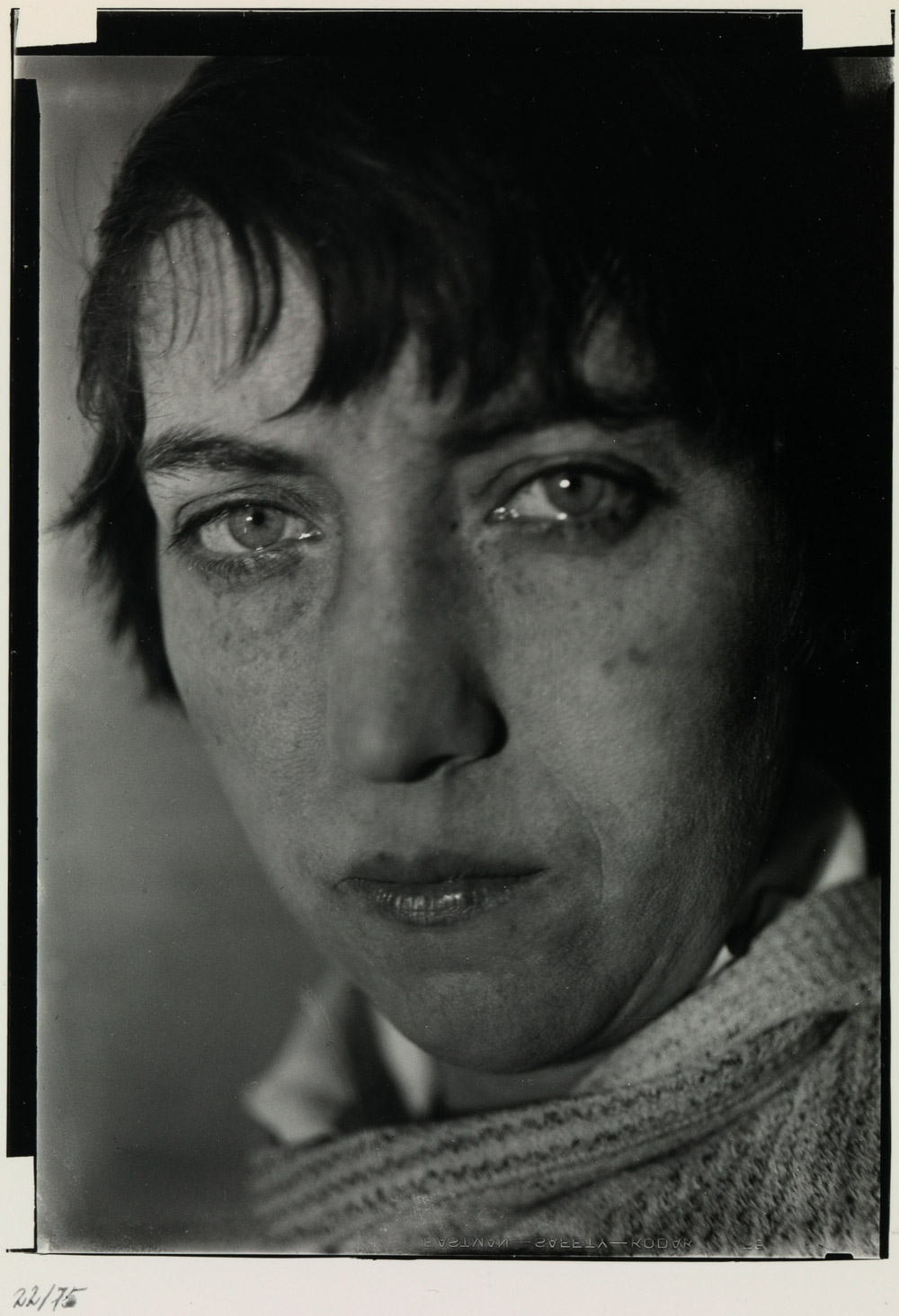
I really like the portrait of Berenice Abbott and it is also very educational. Look at the depth of field, with the view camera probably one stop past wide open. The sharpness plane is very tiny but look at the quality of the lens and how it renders the values that are slightly out of focus. What a very beautiful image and I suspect a top drawer lens. Notice also it is print 22. Walker Evans would keep a lot of prints and they were not the same. The next copy of this print might have been better (he might have worked out something to do) or it might be worse – the developer might have gone off. So it is not strictly an “edition” it is just the numbering of the prints he made.

He used every sort of camera: 8 x 10 and the smaller view formats, roll film cameras, Colour polaroid! hence the different sizes of his prints. Occasionally he did crop his images but on other occasions he took “a stance” where you knew he was about to perform and there would be no cropping. If you are really interested in this master photographer, the best Walker Evans book to get is First and Last (1978, available cheaply as a hardback on Amazon) which contains many pictures and “threads” that are dynamite… and the John Szarkowski book Walker Evans (1972) is a good one as well.

Dr Marcus Bunyan


Many thankx to Martin-Gropius-Bau for allowing me to publish the photographs in the posting. Please click on the photographs for a larger version of the image.


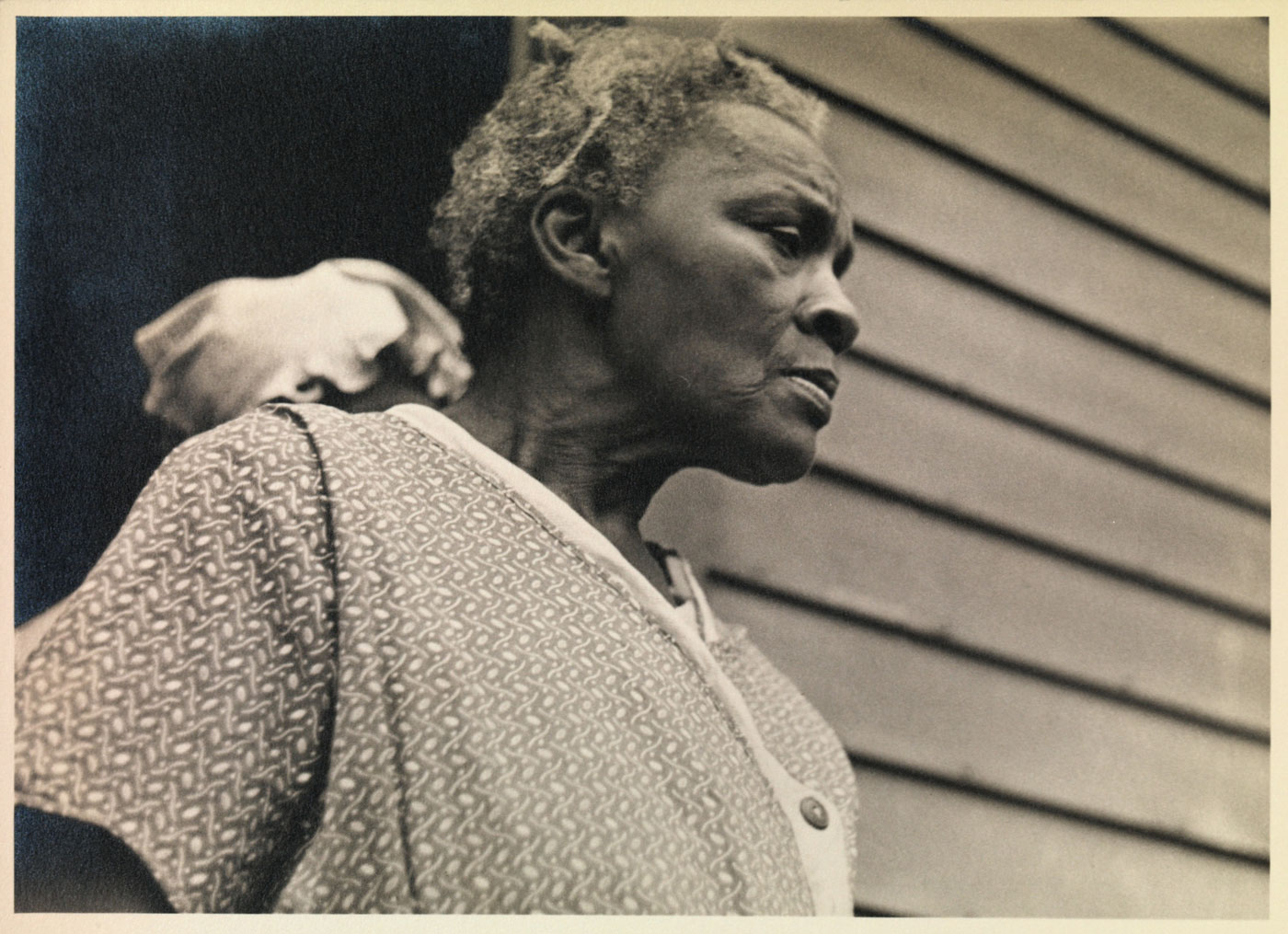
Walker Evans (American, 1903-1975) 'Two Women' Frenchquarter, New Orleans, February - March 1935


Walker Evans (American, 1903-1975)
Two Women
Frenchquarter, New Orleans, February – March 1935
155 x 219mm
Lunn Gallery Stamp (1975)
© Walker Evans Archive, The Metropolitan Museum of Art


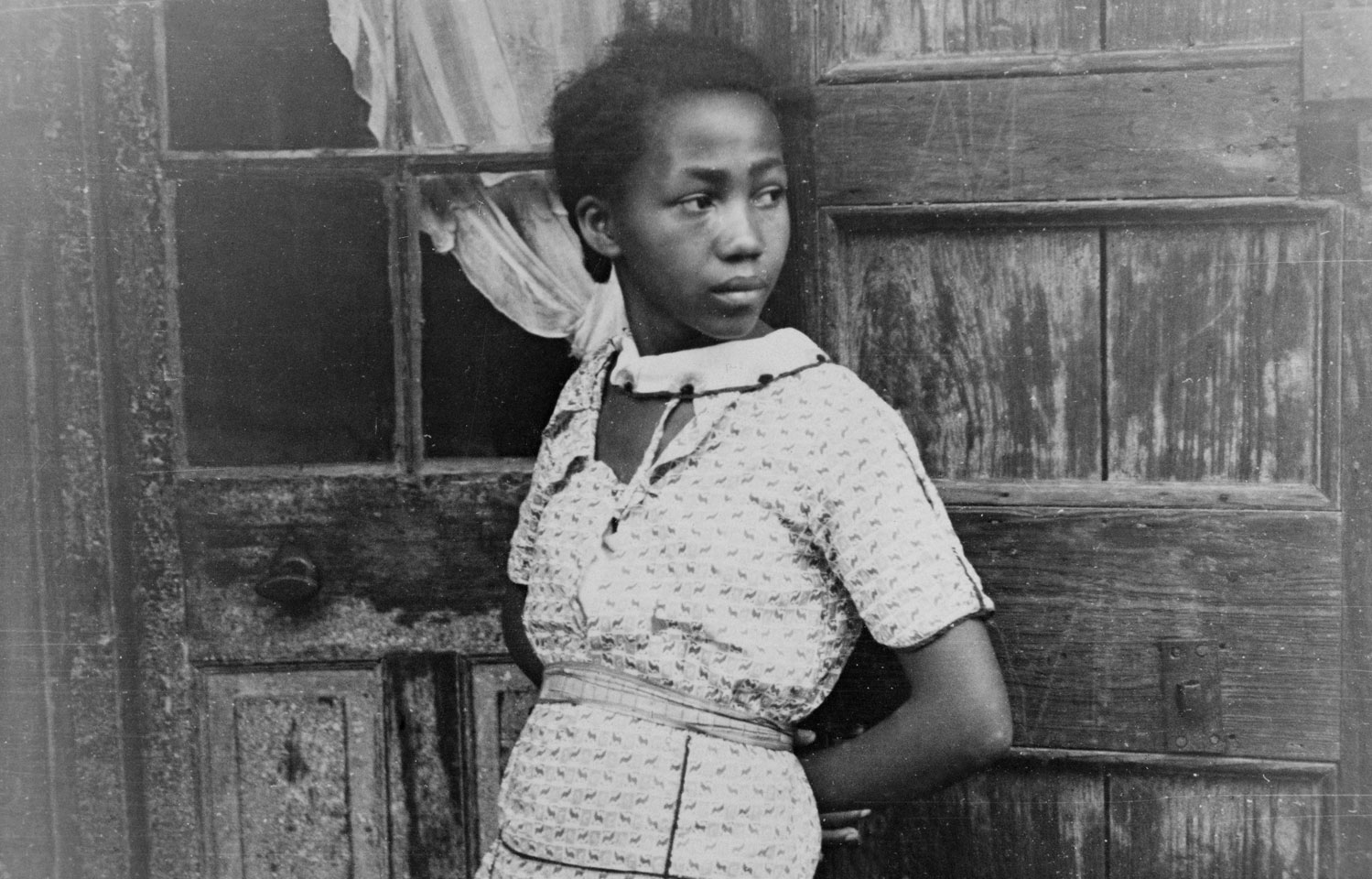
Walker Evans (American, 1903-1975) 'Girl In French Quarter' New Orleans, February - March 1935


Walker Evans (American, 1903-1975)
Girl In French Quarter
New Orleans, February – March 1935
117 x 178mm
Lunn Gallery Stamp (1975)
© Walker Evans Archive, The Metropolitan Museum of Art


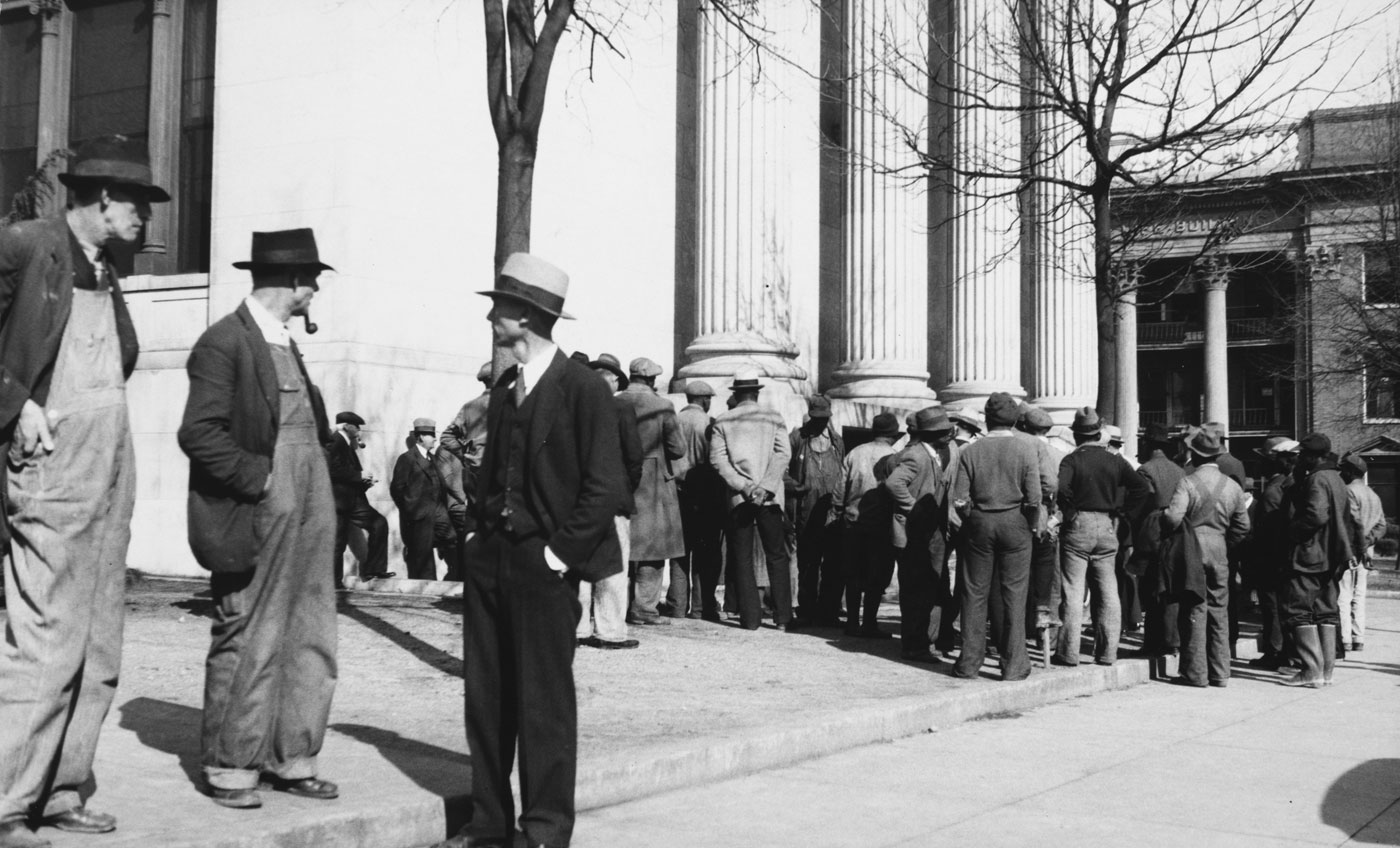
Walker Evans (American, 1903-1975) 'Crowd In Public Square' 1930s


Walker Evans (American, 1903-1975)
Crowd In Public Square
1930s
143 x 248mm
Lunn Gallery Stamp (1975)
© Walker Evans Archive, The Metropolitan Museum of Art


Walker Evans (American, 1903-1975) 'Berenice Abbott' 1929-1930


Walker Evans (American, 1903-1975)
Berenice Abbott
1929-1930
© Walker Evans Archive, The Metropolitan Museum of Art


Walker Evans (1903-1975) was one of the great personalities of 20th century photography, being an exponent of what is called the “documentary style”. His work, which spans a period of over fifty years, will be represented by well over 200 original prints from the years 1928 to 1974, taken mostly from the considerable private collection of Clark and Joan Worswick, but also from various German collections.

For decades, right up to the present, the prolific photographic oeuvre of Walker Evans has acquired an increasingly model character. In the half century of his creative activity the photographer documented in sober documentary fashion a uniquely authentic picture of America, and like no other before him showed a particular feel for both the everyday and the subtle – the American Vernacular – creating a sense of identity and historic significance.

Visitors follow both Evans’ biography and the changing face of America, from the Great Depression to the onset of stability and business as usual: early impressions of the 1920s from the New York neighbourhood he lived in; portraits of his friends and fellow artists which give some indication of the ramified cultural ambience he inhabited; specimens of 19th century architecture that have blended into the evolving cultural life about them; picture cycles from Tahiti and Cuba; images of African sculptures and masks commissioned by the New York Museum of Modern Art; and numerous photographs taken in the 1930s in the rural south of the USA, which contrast starkly with the lifestyles of those who may be seen promenading in the fashionable streets of cities like New York.

In addition to street scenes, American monuments and shop window displays far from the world of “big business”, examples of his significant subway photographs are to be seen, taken with a hidden camera. We also see interiors whose modest appointments tell of the life of those who live in them, pictures that inevitably recall Evans’ remark that “I do like to suggest people by absence”. Evans’ predilection for typography, advertising and mass-produced articles give rise to strangely fascinating shots which seem to anticipate the soon-to-emerge Pop Art and its assemblages.

While the exhibition shows icons in the history of photography, it also highlights some of the photographer’s lesser known motifs dating from the 1940s, 1950s and 1960s. These include works done for Fortune, the magazine founded by Henry Luce in 1930; pictures taken on trips to London from 1945 onwards for the periodical Architectural Forum; or during stays at Robert Frank’s Nova Scotia house in the late 1960s.

Text from the Martin-Gropius-Bau website


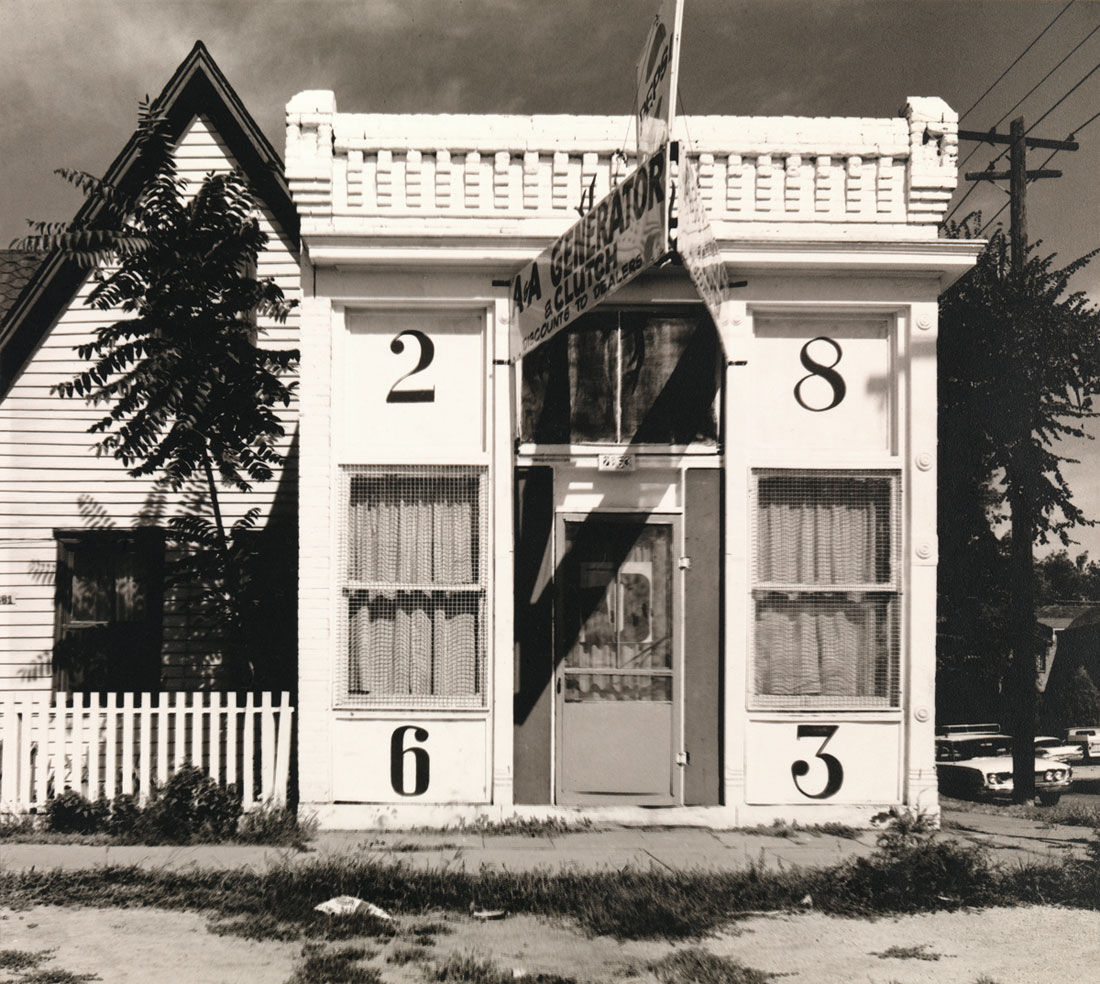
Walker Evans (American, 1903-1975) 'Façade of House with Large Numbers' Denver, Colorado, August 1967


Walker Evans (American, 1903-1975)
Façade of House with Large Numbers
Denver, Colorado, August 1967
Collection of Clark and Joan Worswick
© Walker Evans Archive, The Metropolitan Museum of Art


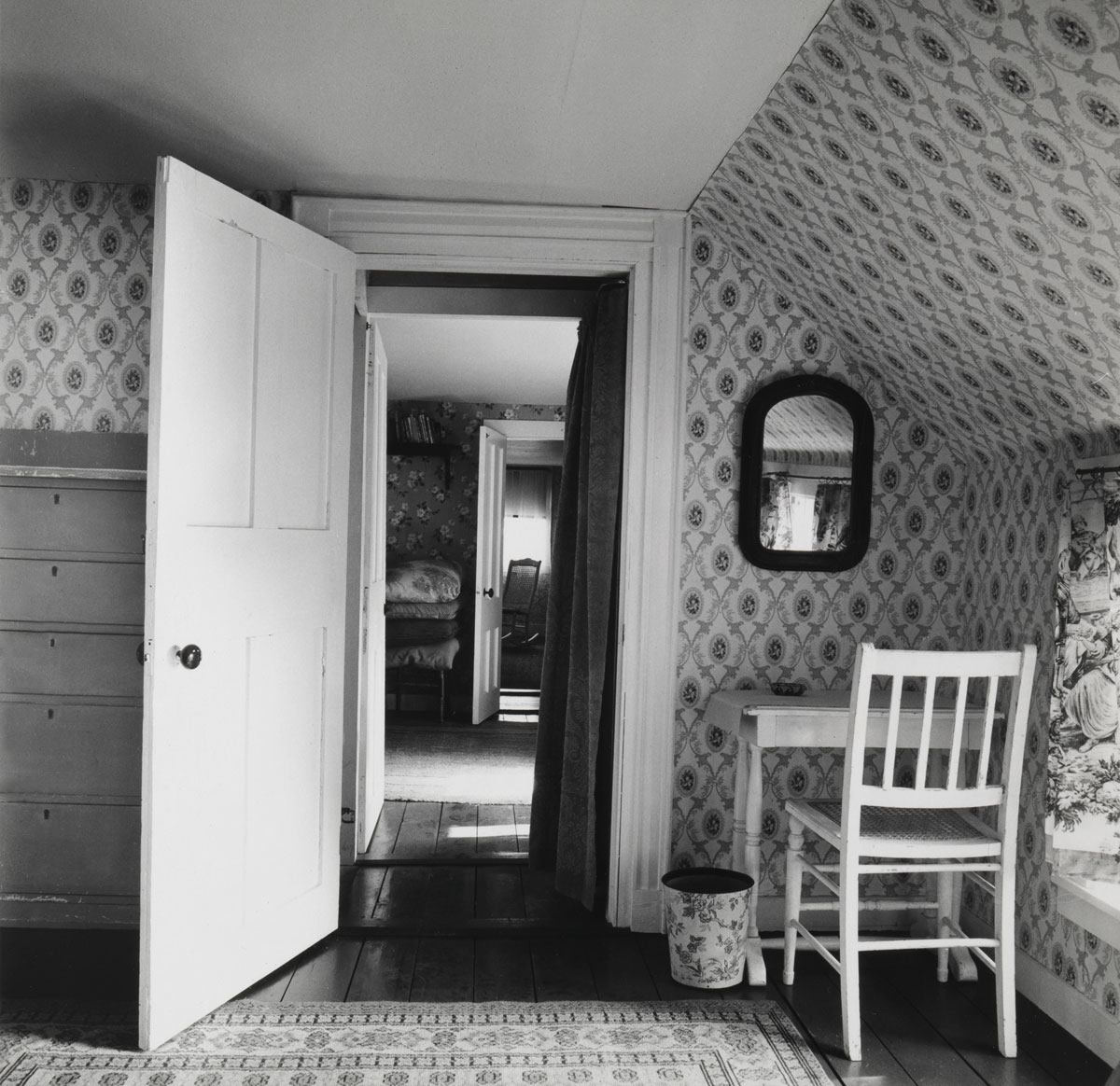
Walker Evans (American, 1903-1975) 'Interior View of Heliker/Lahotan House' Walpole, Maine, 1962


Walker Evans (American, 1903-1975)
Interior View of Heliker/Lahotan House
Walpole, Maine, 1962
Collection of Clark and Joan Worswick
© Walker Evans Archive, The Metropolitan Museum of Art


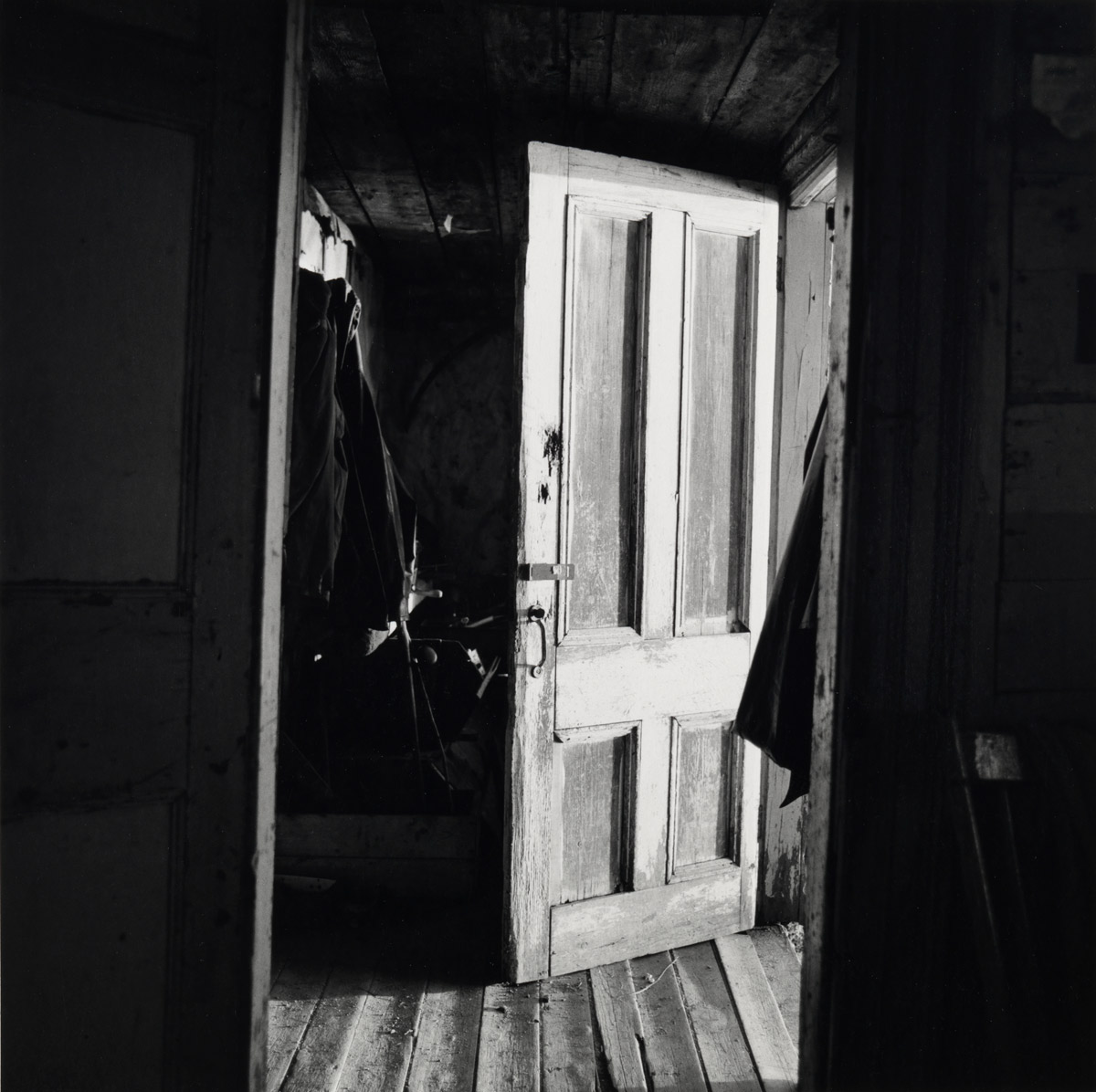
Walker Evans (American, 1903-1975) 'Interior View of Robert Frank’s House' Nova Scotia, 1969-1971


Walker Evans (American, 1903-1975)
Interior View of Robert Frank’s House
Nova Scotia, 1969-1971
Collection of Clark and Joan Worswick
© Walker Evans Archive, The Metropolitan Museum of Art


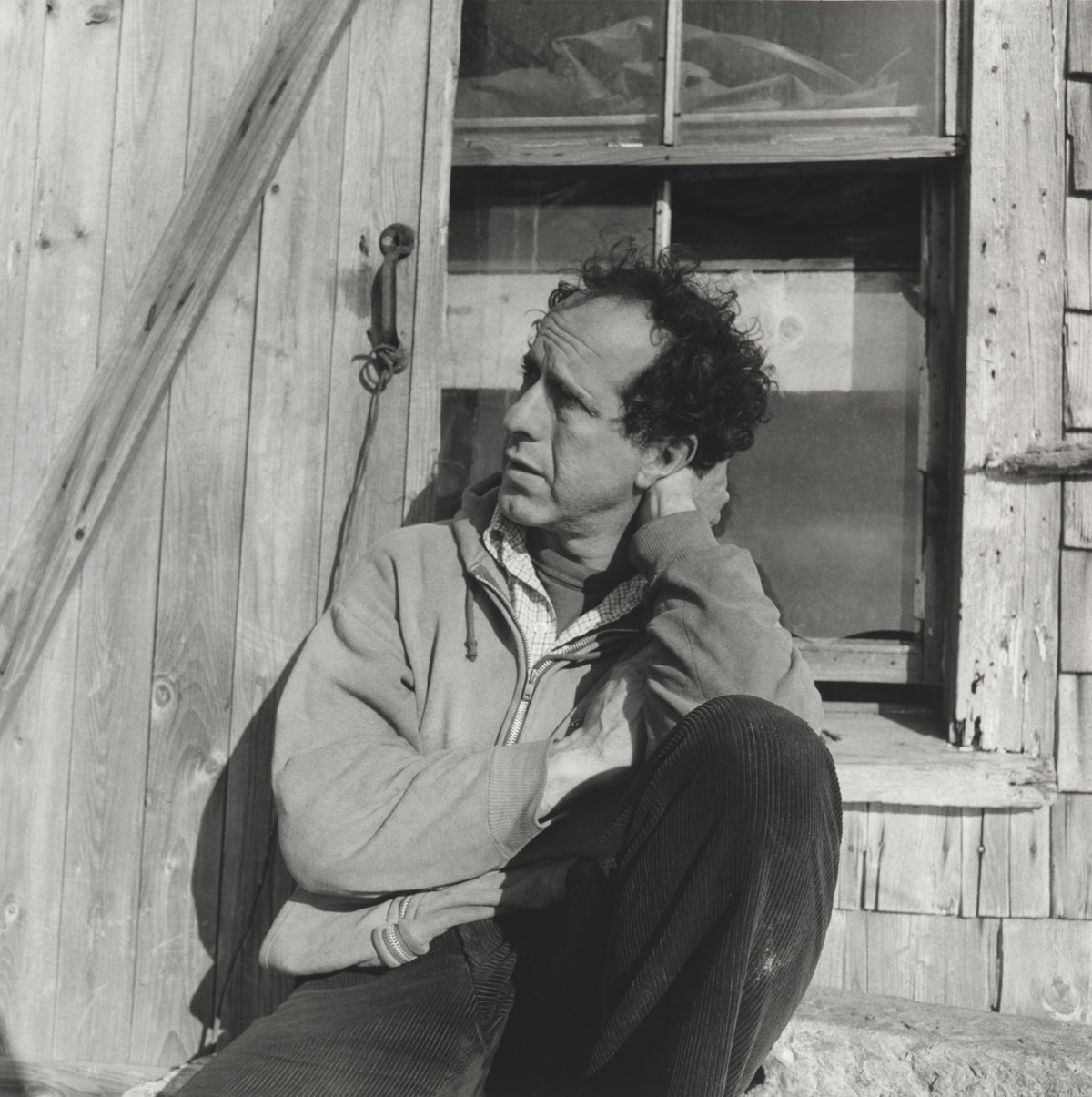
Walker Evans (American, 1903-1975) 'Robert Frank' Nova Scotia, 1969-1971


Walker Evans (American, 1903-1975)
Robert Frank
Nova Scotia, 1969-1971
Collection of Clark and Joan Worswick
© Walker Evans Archive, The Metropolitan Museum of Art


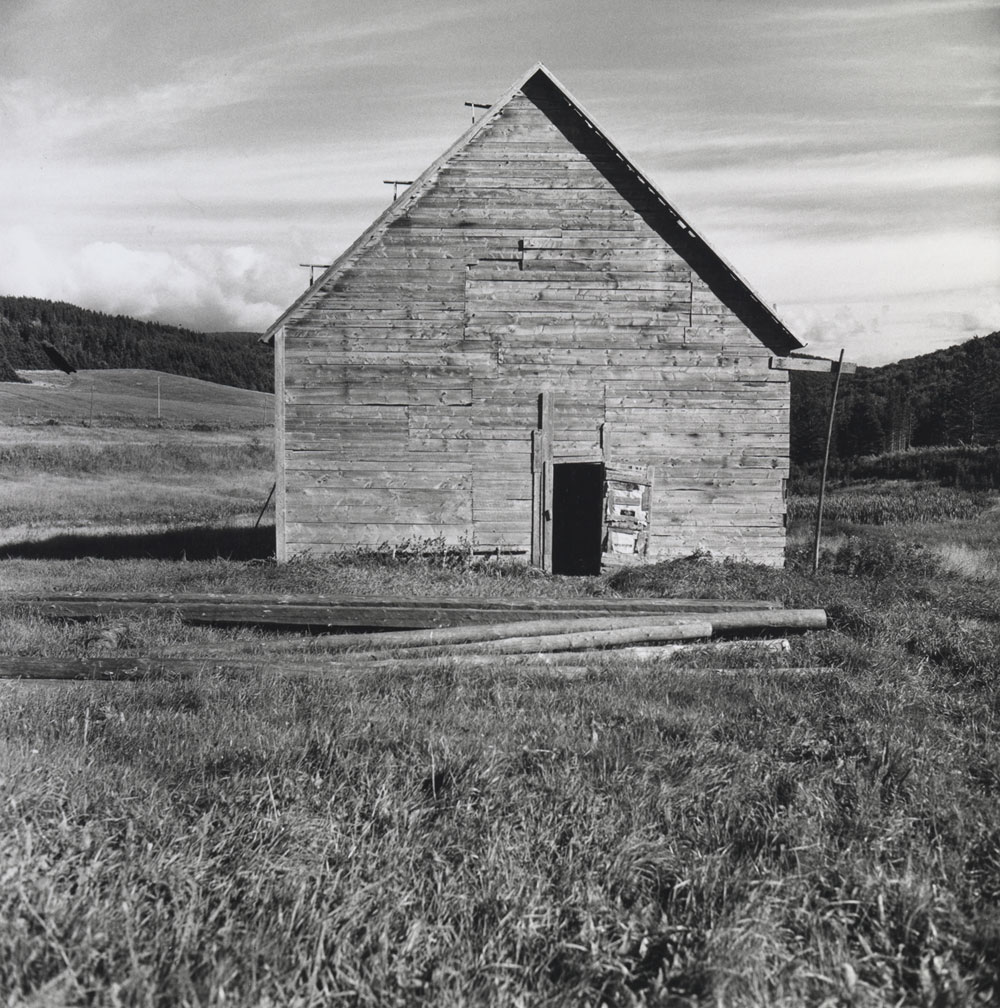
Walker Evans (American, 1903-1975) 'Barn' Nova Scotia, 1969-1971


Walker Evans (American, 1903-1975)
Barn
Nova Scotia, 1969-1971
Collection of Clark and Joan Worswick
© Walker Evans Archive, The Metropolitan Museum of Art


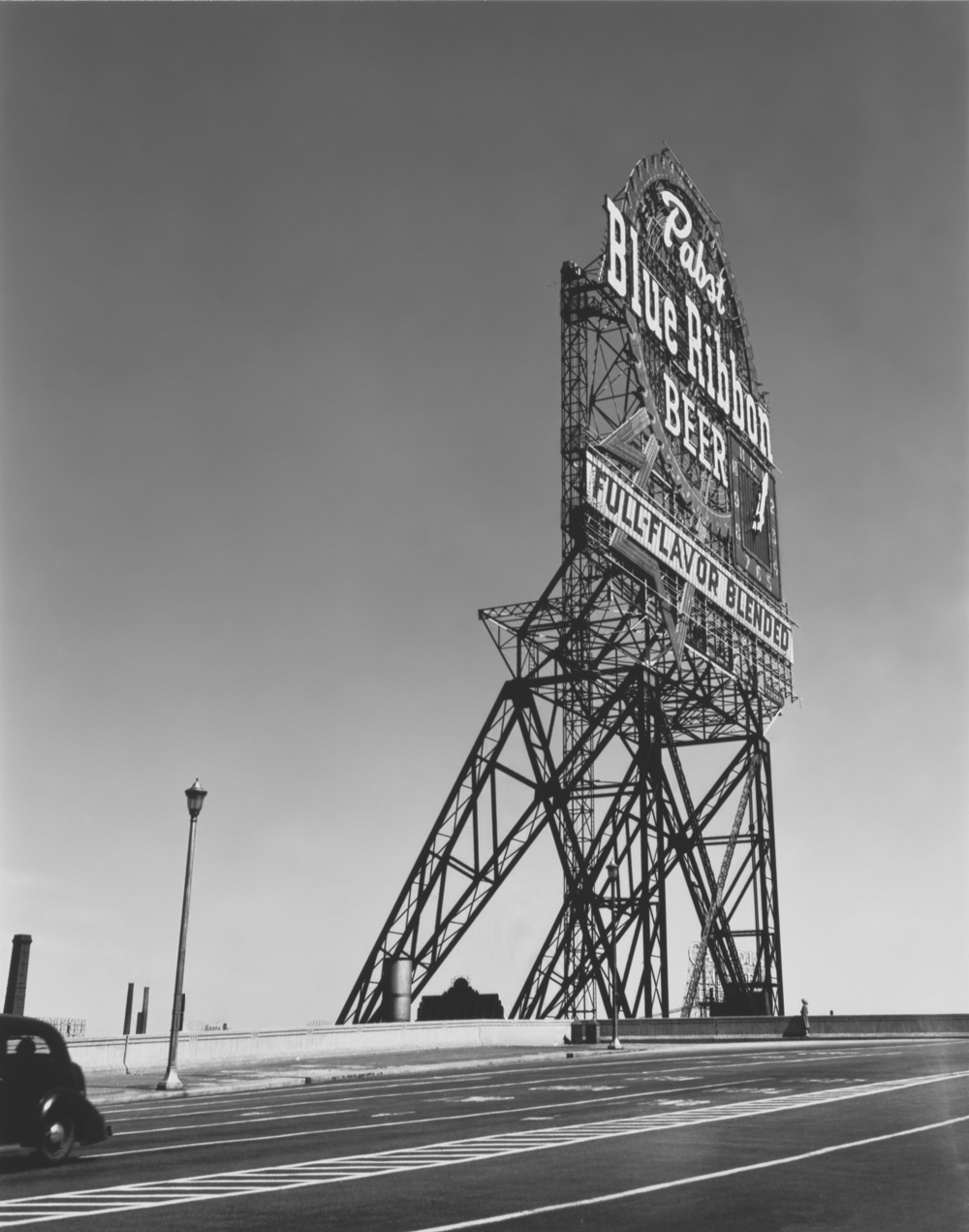
Walker Evans (American, 1903-1975) 'Pabst Blue Ribbon Sign' Chicago, Illinois, 1946


Walker Evans (American, 1903-1975)
Pabst Blue Ribbon Sign
Chicago, Illinois, 1946
Collection of Clark and Joan Worswick
© Walker Evans Archive, The Metropolitan Museum of Art


Martin-Gropius-Bau Berlin
Niederkirchnerstraße 7
Corner Stresemannstr. 110
10963 Berlin
Phone: +49 (0)30 254 86-0

Opening Hours:
Wednesday to Monday 10 – 19 hrs
Tuesday closed

Martin-Gropius-Bau website

LIKE ART BLART ON FACEBOOK

Back to top

Exhibition / text: ‘From Steam to Diesel’ at the Portobello Library, Edinburgh

Exhibition dates: 20th October – 7th November 2014


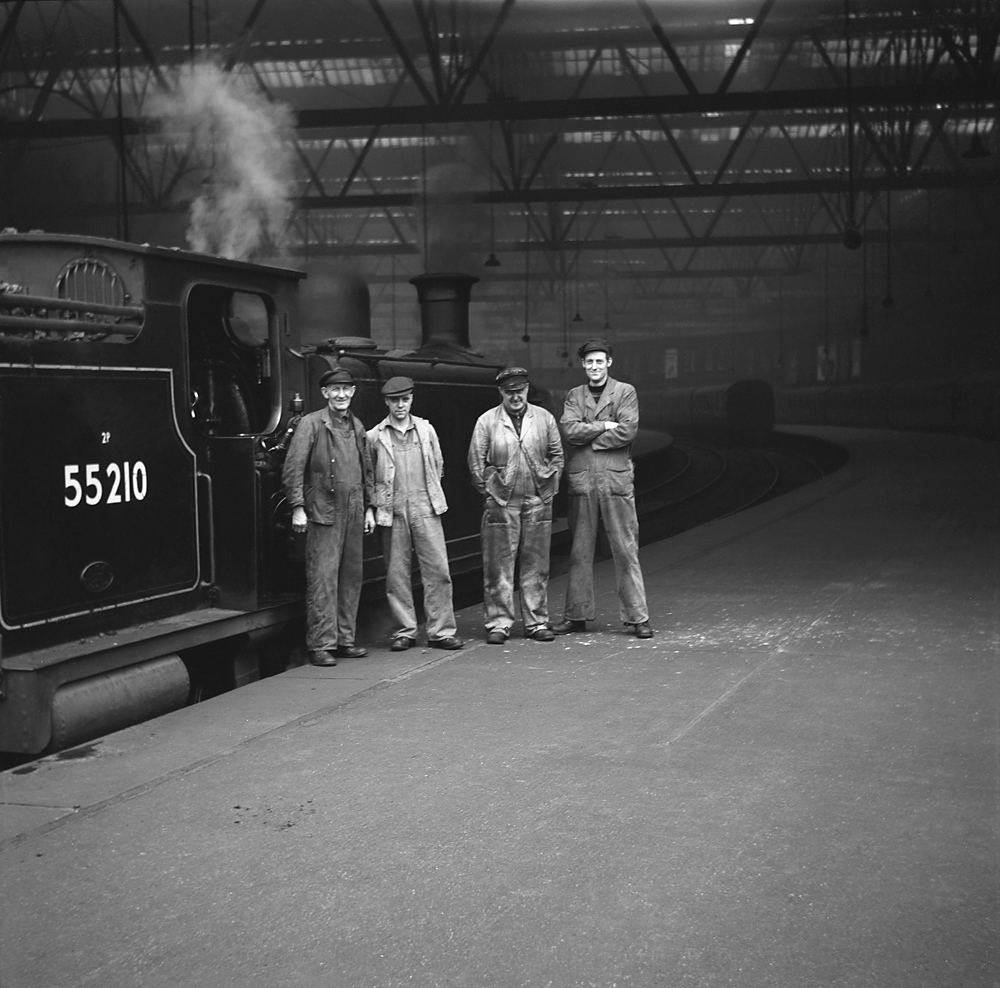
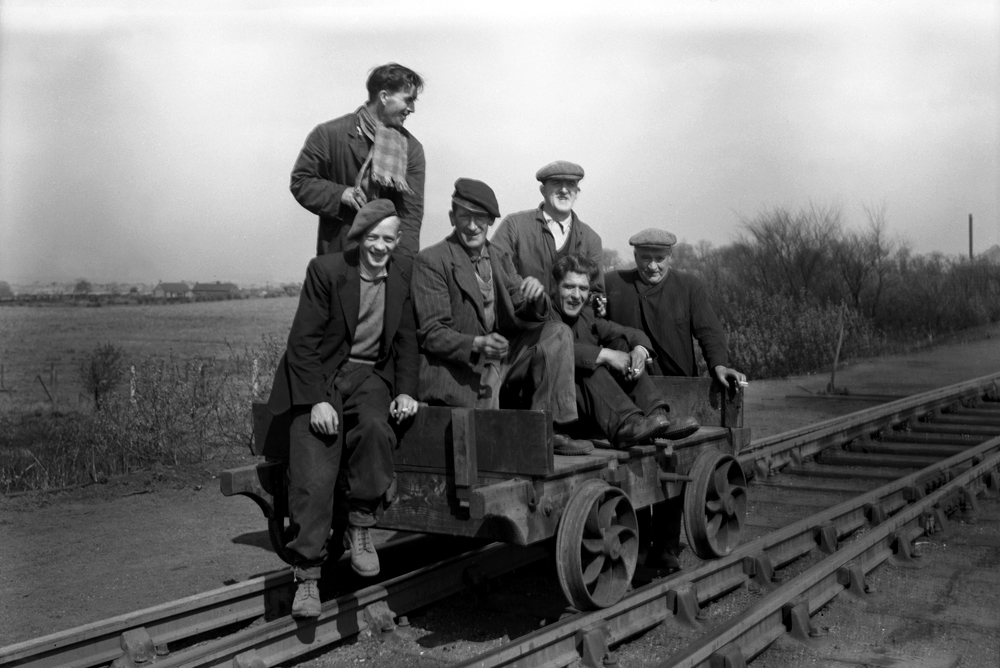
Anonymous photographer. 'Four men with loco 55210' mid-1950s to the early 1960s


Anonymous photographer
Four men with loco 55210
mid-1950s to the early 1960s
© Archie Foley and Peter Ross


This is a great project. The photographs are wonderful. At one time they could have almost been made here in Victoria, Australia.

Archie Foley who found the 500 or so railway related negatives taken by, at this stage, an anonymous British Railways engine driver was quite taken aback to get an email from half way around the world asking for some press images – but this is what this blog does, promote eclectic exhibitions of interesting photography from around the world, no matter how small they are.

I have always loved trains and the photographs of them (including the ones by Winston O. Link). Once I saw the images I think I shed a tear at the beauty of them. Archie informs me that the negatives are a mixture of 127; 6cm square and a larger 6cm x 8cm. There are notes of the cameras the photographer used and his favourite appears to have been an Isolette 11 (see below). However he also used Ikonta; Suprima; Isola and Super Isolette. These cameras have reasonable optical quality (not as good as a Rollei twin lens for example) with the advantage that they have a large negative and can be folded up and put in a jacket pocket, to be taken out when needed.

As a good friend of mine Ian Lobb observed,

“I nearly said 6×8 cm last night – I know its difficult to believe after the event, and the Isolette has the same basic shape as the Voigtlander I suspected. The Voigtlander was like some of the Rolleis and you could put in a metal mask that would allow 6 x 8, 6 x 6, 6 x 4.5 as well the full 6 x 9. I suspect the Voigtlander was a bit upmarket from the Isolette: the Agfa cameras at the time of these pictures were good cameras and (obviously) with German lenses. I don’t know if they had those masks but I am guessing you could do the same with the Isolette. One claim I have seen is that the lenses were more matched to emulsions of the 50’s and were contrasty with later emulsions. I would have to know a lot more to verify that. The pictures look optically good to me. There were some extraordinary European films in 120 stock – I caught the end of them – 12 ISO and wooden spools – and SENSATIONAL tonal scales.

Of all cameras (even 35mm), the drop front cameras like the Isolette had the best connection to the people you were photographing. I don’t mean through the viewfinder – I mean that the viewfinder was just for checking the composition – you really had to do a lot of looking over the camera. Probably the old Stieglitz Graflex was just as communicative. With the bellows extension there would be a scale on the focussing track that would tell you the distance the camera was focussed to – no other way to check!

As a kid I played with Marklin toy trains and they published a book that I still have called “The Marklin Miniature Railway and its Prototype”. It is old and faded now, but there were sections on how to do signalling etc. on your train set so that it matched the real thing etc…”


What interests me most about these stunning images is the use of space by the photographer. These railway photographs with their beautiful but naive space have an almost mythic quality to them. I know a little about photography and from my knowledge I cannot think of anyone else that handles space like this in a photograph (save for perhaps Thomas Struth and the space around the people in his museum photographs or his group portraits of people in Japan, and even then he blocks the exit for the eye behind his tableaux vivant).

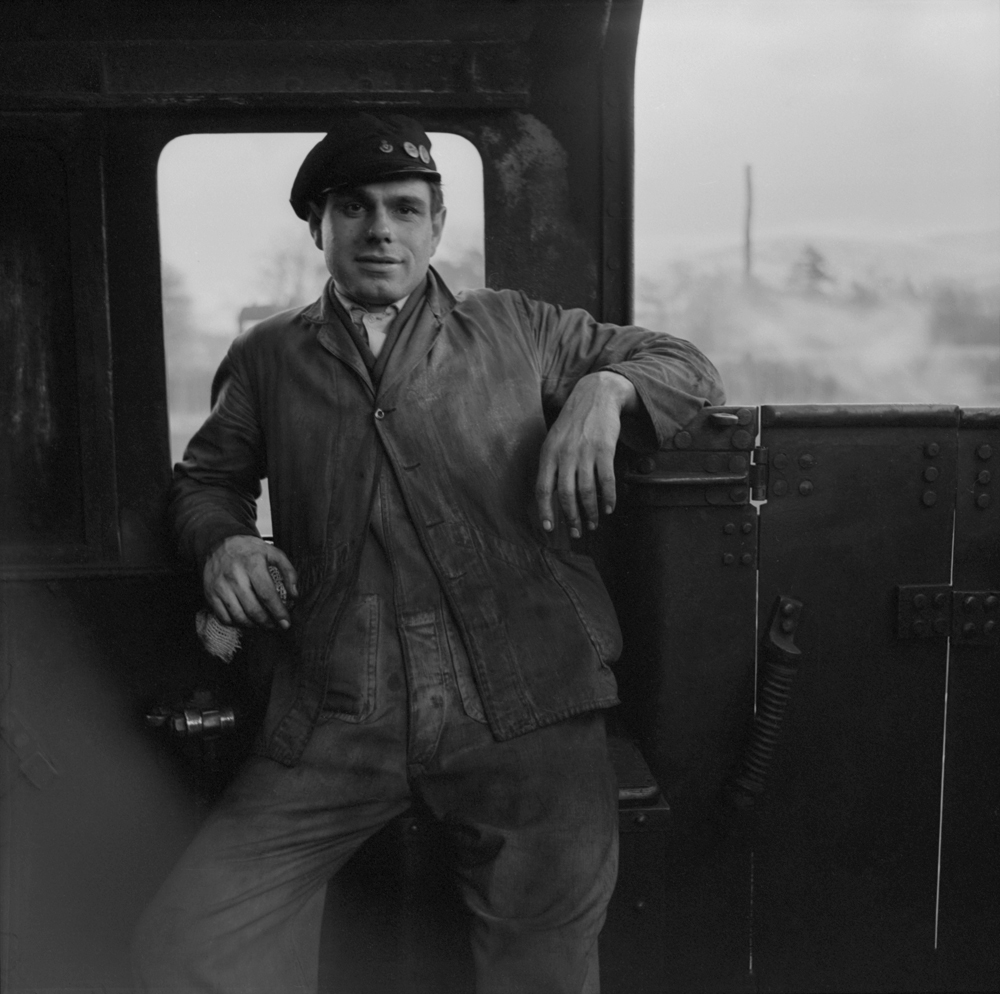
I have been racking my brains but these are really unique, especially the square format portrait shots. Look at the first photograph Four men with loco 55210 (below) and notice the expanse of platform and line of the train that leads the eye into the depiction of the four men. The light that falls on them is superlative but notice how the photographer keeps a respectful distance for this is not portrait photography which attempts to capture a fleeting, revealing moment or expression. The photographer places them as though to “encourage contemplation and investigation, inviting the viewer to reflect upon the limits of his or her knowledge of other people.” The eye scans the image for clues, giving the viewer pause to take in the scene: and low and behold what opens up behind the four men is this most magnificent space with the curve of the platform, the girders and the silence of the dark train in the distance.

As in Thomas Struth’s photographs of architectural East Berlin these photographs bring about ‘a move to investigative viewing’ which is also a ‘call to interact’. But these photographs don’t possess the base objectivity of Struth for they are a little too engaging of their space (their antithesis being the photographs by Alec Soth from his series Niagara).

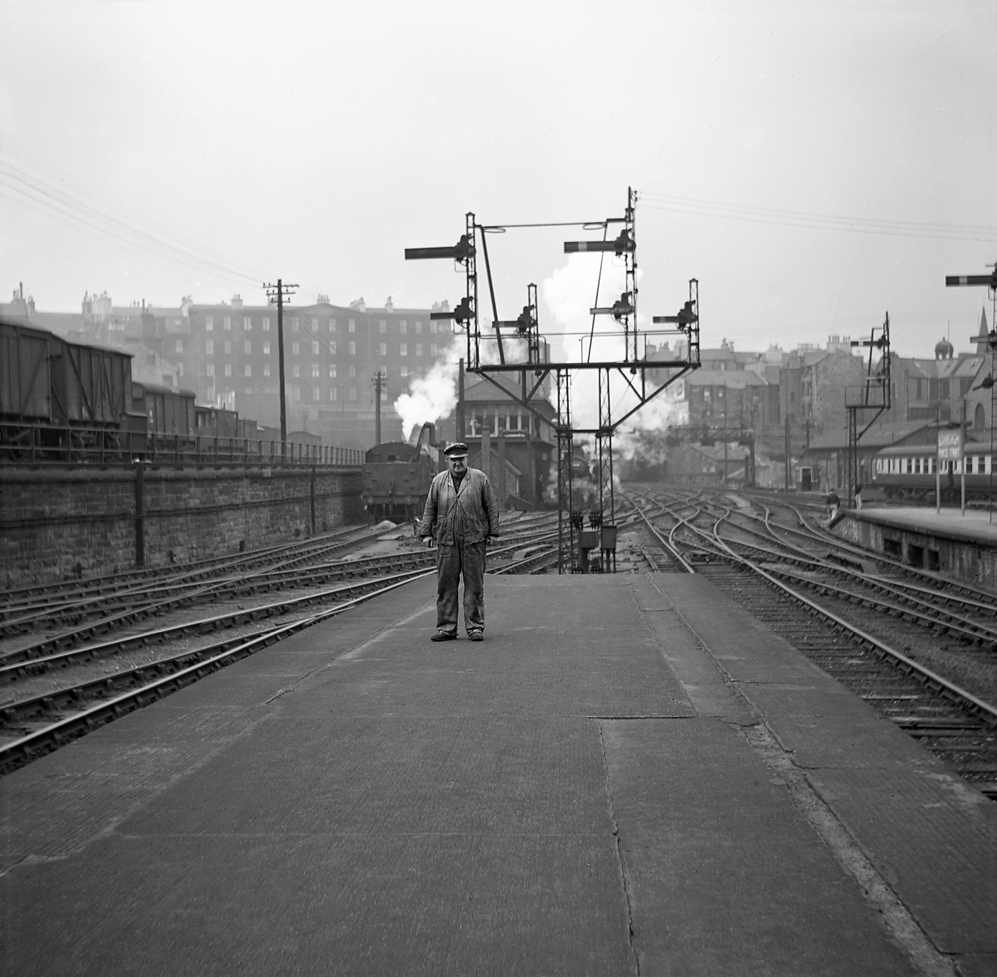
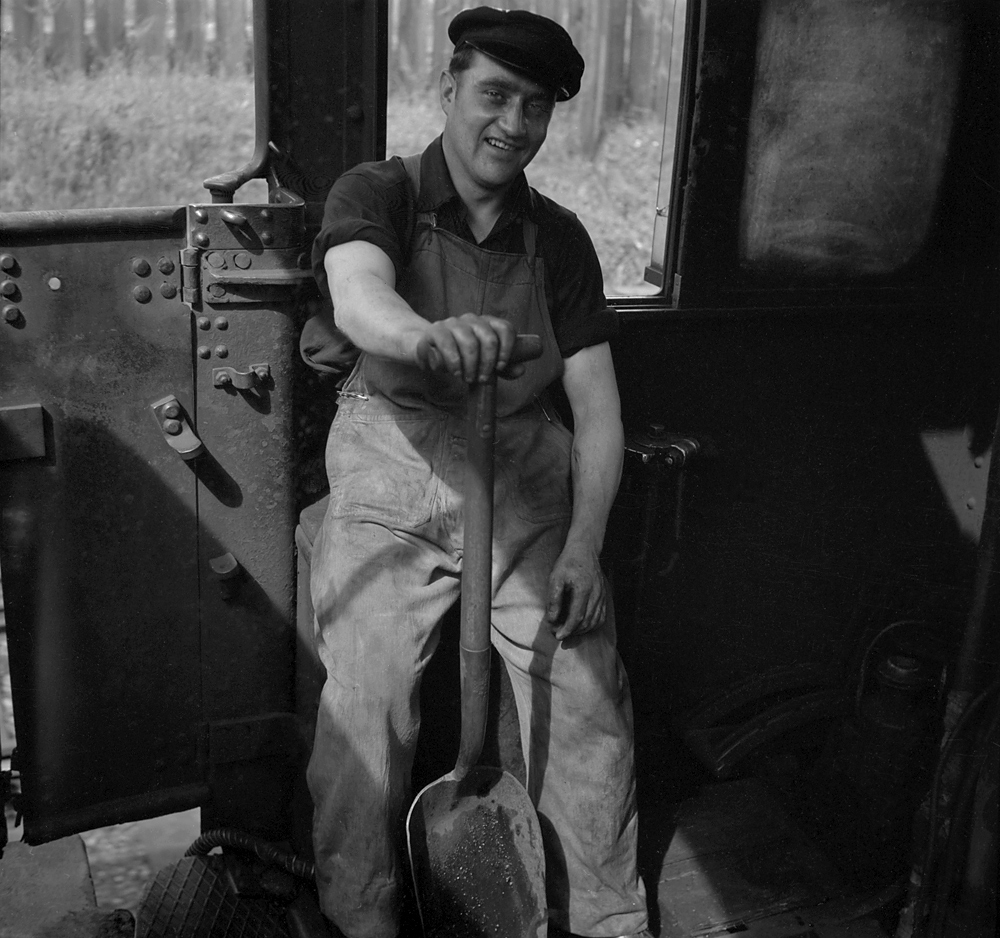
Further evidence of the sophistication of the composition of these images can be found in the two photographs Shotts Iron Work’s Signalbox and Man on platform in front of signal array (below). In the first photograph the man is embedded in the landscape, his weight shifting slightly to his right foot as his shadow falls on the fence beside him, the fence line and train tracks lead the eye into the image and off into an amorphous, infinite distance. Again, in the second photograph the figure is not front and centre but part of an ensemble as the eye is led this time by a massive horizontal plane into the image. He stands on the platform as if on the deck of an aircraft carrier. And then there are the two close up portraits, Jackie Collett at Beattock and A smiling fireman (below) where the photographer has climbed up into the intimate space of the drivers cab and got them to be comfortable enough to reveal themselves to the camera – in that light! – with those backgrounds!


The use of lenses today is proof of how difficult it is to think and feel space while taking a picture. These days everyone has a zoom lens but it is nearly always used by people to fill the frame with the main subject. But with a zoom there are infinite relationships between foreground and background if the photographer is free to move in relation to the main subject… and sometimes we are. Or to put it another way, we are able to control the degree of flattening of space with a zoom lens infinitely. If we have 2 fixed lenses we have 2 controls of space. This anonymous photographer and the German photographer Thomas Struth in particular seem to have the ability to think about this space control, and resolve it in different ways. Sometimes for Struth the quality of the space in the city streets or in a museum announces these places as pictures.

Struth is someone who has an affinity with the railway group photographs for his photographs, like these, resist immediate consumption. They make the viewer pause and think. “Discussing Struth’s work, the critic Richard Sennett has written: ‘We relate to these images as we might appreciate strangers in a crowd; we feel their presence without the need to transgress boundaries by demanding intimacy or revelation … people guard their separateness even as they present themselves directly to us.’ (Sennett p. 94.) Struth’s portraits encourage contemplation and investigation, inviting the viewer to reflect upon the limits of his or her knowledge of other people.”1 And, sotto voce, so do these photographs… The speaker gives the impression of uttering a truth which may surprise and delight.

As Archie has noted in his correspondence with me, the exhibition has been done on a shoestring budget but from small beginnings – and acorns – mighty oaks grow. All power to both Archie Foley and Peter Ross for arranging it. A book and larger exhibition would be a wonderful representation of this work. All I can say is this: that I hope this posting helps that process along for these photographs have a magnificent soul. Simply put, they are great.

Dr Marcus Bunyan


Footnotes

1/ Richard Sennett, Thomas Struth: Strangers and Friends, exhibition catalogue, Institute of Contemporary Art, London 1994 quoted in “Thomas Struth: The Shimada Family, Yamaguchi, Japan 1986” Text summary on the Tate website [Online] Cited 04/11/2014


Many thankx to Archie Foley and Peter Ross for allowing me to publish the photographs in the posting. Please click on the photographs for a larger version of the image. All images © Archie Foley and Peter Ross and may not be used without permission.

Acknowledgement: Thank you to John of Print Vision (0131 661 8855) for his advice during the preparation and for producing such excellent prints.


Anonymous photographer. 'Women workers in front of posters' mid-1950s to the early 1960s


Anonymous photographer
Women workers in front of posters
mid-1950s to the early 1960s
© Archie Foley and Peter Ross


Anonymous photographer. 'Shotts Iron Work’s Signalbox' mid-1950s to the early 1960s


Anonymous photographer
Shotts Iron Work’s Signalbox
mid-1950s to the early 1960s
© Archie Foley and Peter Ross


Anonymous photographer. 'Man on platform in front of signal array' mid-1950s to the early 1960s


Anonymous photographer
Man on platform in front of signal array
mid-1950s to the early 1960s
© Archie Foley and Peter Ross


Anonymous photographer. 'Jackie Collett at Beattock' mid-1950s to the early 1960s


Anonymous photographer
Jackie Collett at Beattock
mid-1950s to the early 1960s
© Archie Foley and Peter Ross


Anonymous photographer. 'A smiling fireman' mid-1950s to the early 1960s


Anonymous photographer
A smiling fireman
mid-1950s to the early 1960s
© Archie Foley and Peter Ross


This exhibition has been compiled from a collection of photo negatives found by Archie Foley in a collector’s fair in Portobello. As he went through the collection he was able to extract 100s of railway related negatives dating from the mid-1950s to the early 1960s that showed that the photographer must have been a British Railways engine driver. A chance meeting and conversation with local photographer and video producer, Peter E. Ross, on a bus going into Edinburgh led to the decision to mount an exhibition of photographs made from selected negatives.

As a colleague the driver/photographer was able to snap drivers, shunters, platelayers, signalmen, cleaners and others at work in locations in and around Edinburgh and, occasionally, a bit further afield. The photographs are a unique behind the scenes record of the men and women who worked on the railway and how it looked before diesel power finally replaced steam in 1968.

This is the first time that the photographs have been on public show and Archie and Peter feel privileged to be able to display, and pay tribute to, the dedication and skill of the, as yet unidentified, photographer. Neither Archie nor Peter is an expert on railways and invite visitors to use the Visitors’ Book to suggest possible locations for photographs where these are not given. Please also suggest amendments if you believe any of the captions are incorrect.

The exhibition is at Portobello Library, Rosefield Avenue from Monday, 20th October to Friday, 7th November.

Archie Foley and Peter Ross


Anonymous photographer. 'The game's a bogie' mid-1950s to the early 1960s


Anonymous photographer
The game’s a bogie
mid-1950s to the early 1960s
© Archie Foley and Peter Ross


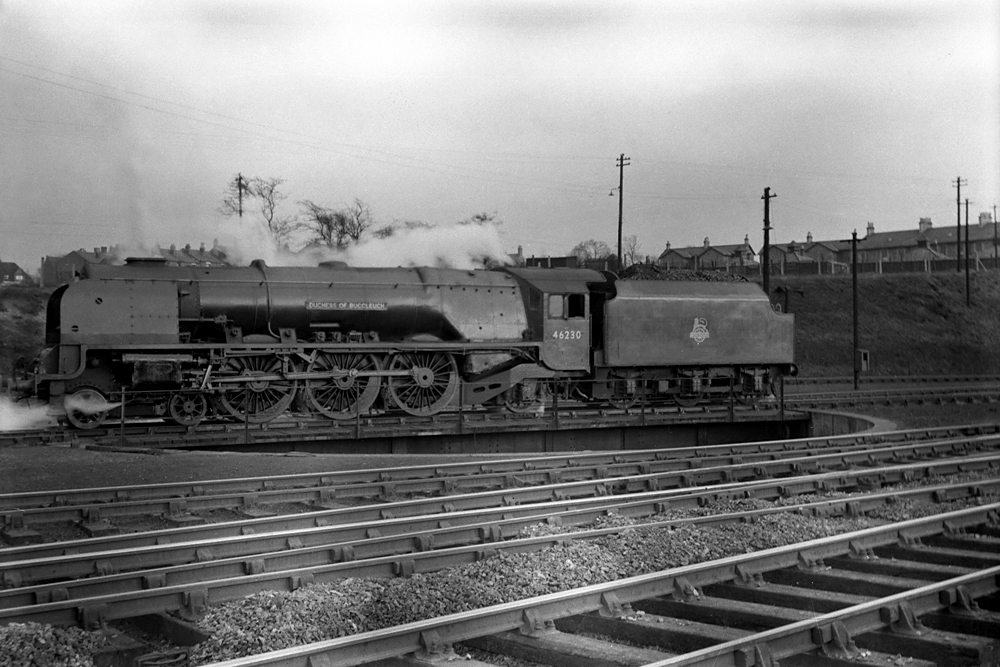
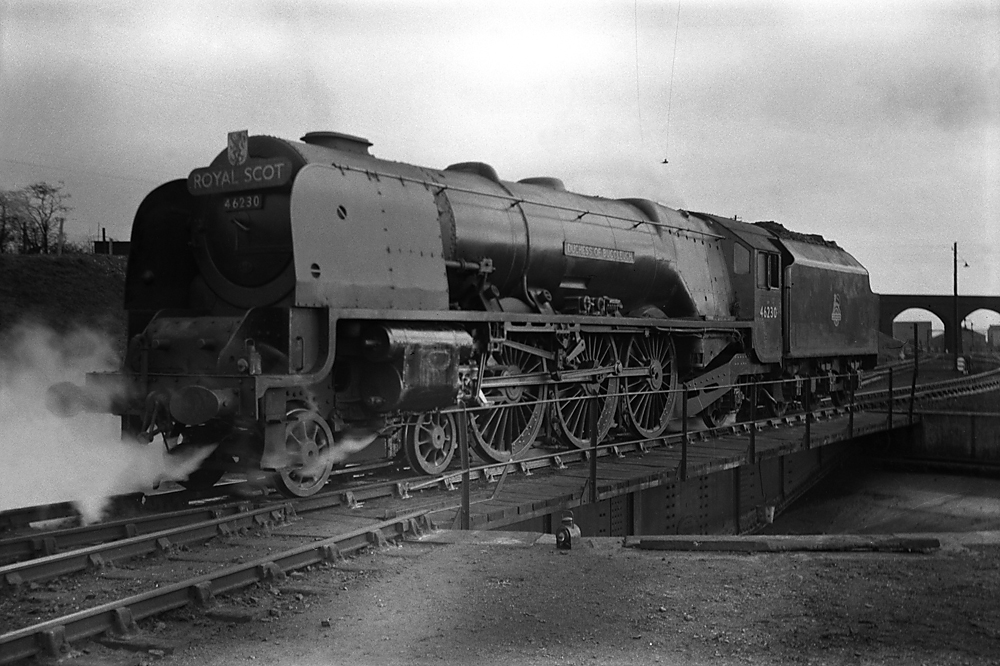
Anonymous photographer. 'Duchess of Buccleuch on turntable' mid-1950s to the early 1960s


Anonymous photographer
Duchess of Buccleuch on turntable
mid-1950s to the early 1960s
© Archie Foley and Peter Ross


Anonymous photographer. 'Duchess of Buccleuch bearing "Royal Scot" headboard' mid-1950s to the early 1960s


Anonymous photographer
Duchess of Buccleuch bearing “Royal Scot” headboard
mid-1950s to the early 1960s
© Archie Foley and Peter Ross


The two photographs above were obviously taken at the same time as each other (look at the tall trees in the background). I love how the photographer has moved across the tracks from the distance shot onto an oblique angle with the twin arches of the bridge in the background for the closer photograph. You can seen some unevenness in the development of the film in the foreground of both images but no matter, these images give real insight into how this artist was operating, what his thinking was when photographing their behemoths.


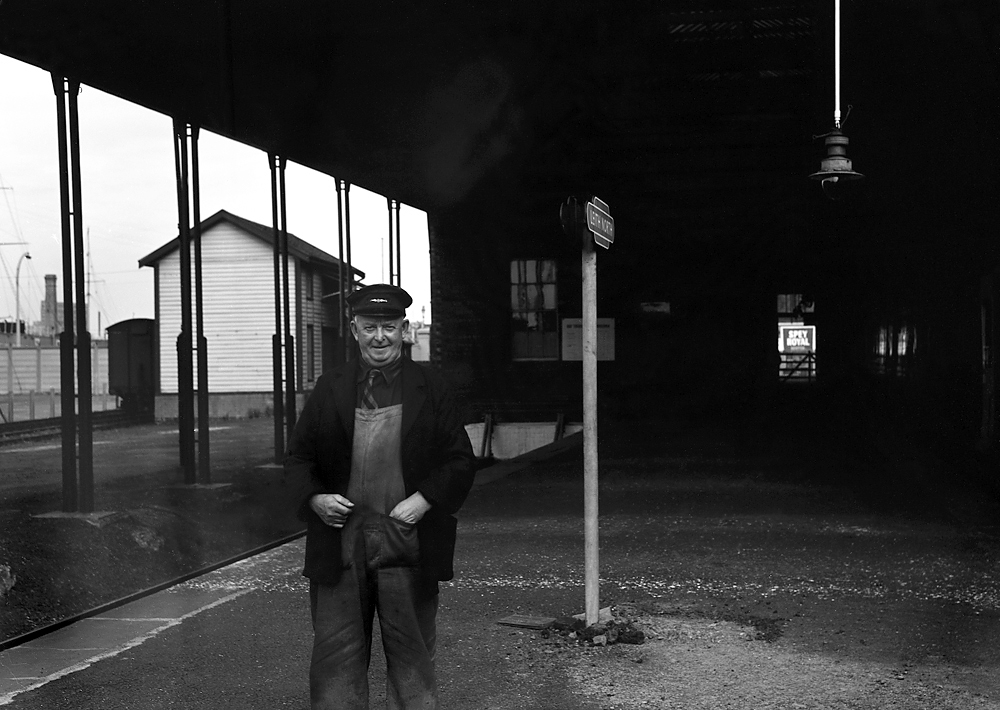
Anonymous photographer. 'The photographer in working clothes' mid-1950s to the early 1960s


Anonymous photographer
The photographer in working clothes
mid-1950s to the early 1960s
© Archie Foley and Peter Ross


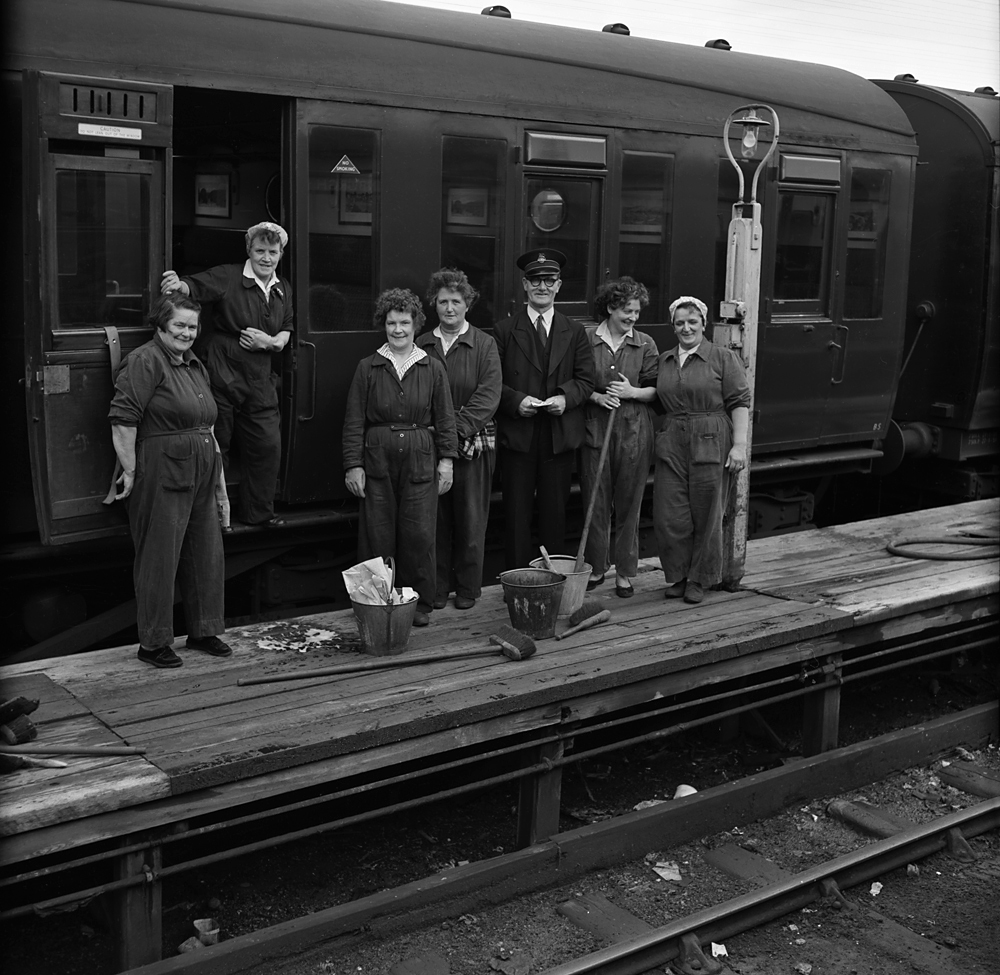
Anonymous photographer. 'Six cleaners, one man and three buckets' mid-1950s to the early 1960s


Anonymous photographer
Six cleaners, one man and three buckets
mid-1950s to the early 1960s
© Archie Foley and Peter Ross


Anonymous photographer. 'Colinton Station with guard on loco' mid-1950s to the early 1960s


Anonymous photographer
Colinton Station with guard on loco
mid-1950s to the early 1960s
© Archie Foley and Peter Ross


Anonymous photographer. 'Diesel unit with guard' mid-1950s to the early 1960s


Anonymous photographer
Diesel unit with guard
mid-1950s to the early 1960s
© Archie Foley and Peter Ross


Agfa Isolette II camera 1960s


Agfa Isolette II (1950-60), showing the characteristic wide raised centre of its top housing. The thick knurled disc on the right (of the picture) is a film-type reminder dial.


Isolette II

The Isolette II (1950-1960) was sold alongside the ‘I’; it is an alternative model offering higher specification than the ‘I’, not a successor to it. The camera was available (for at least some time) with coated 85 mm f/4.5 Agnar or Apotar or 75 mm f/3.5 Solinar lenses; however, most examples seen have the Apotar. McKeown gives a very wide range of shutters (Vario, Pronto, Prontor-S and SV, Compur Rapid and Synchro-Compur). This reflects changes in the specification over the period the camera was made (i.e. not all of these shutters were available at the same time): for example, a user’s manual (of unknown date) only lists the Pronto and Prontor SVS. The range of shutter speeds is therefore variable between examples. Some of the shutters have a delayed action. Most are synchronised (some have switchable M and X-synchronisation). On some examples of the camera, there is a shutter locking lever on the back of the top housing, to provide ‘T’ shutter by locking the release button down, where the shutter itself does not have a ‘T’ setting.

Unlike the Isolette I and all the preceding models, the film advance knob is on the right. The camera still has a swing-out spool-holder on the supply side of the film chamber. There is a double-exposure prevention interlock; this engages after releasing the shutter, and is disengaged by advancing the film. It has a red (locked) or silver (unlocked) indicator in a hole in the top-plate, next to the advance knob. Like the ‘T’ lock, this interlock acts on the body release button, so if the lock engages accidentally, or a double exposure is desired, it is still possible to release the shutter by pressing the linkage on the shutter itself (or with a cable release, on versions of the camera on which the cable attaches directly to the shutter, not the body release; they vary in this respect).

Like the Isolette I, early versions of the II have a disc-type depth-of-field indicator on the left of the top plate. On later cameras this is replaced with a film-type reminder, and the DOF scale, if any, is on the shutter face-plate.

Text from the Camera-wiki.org website


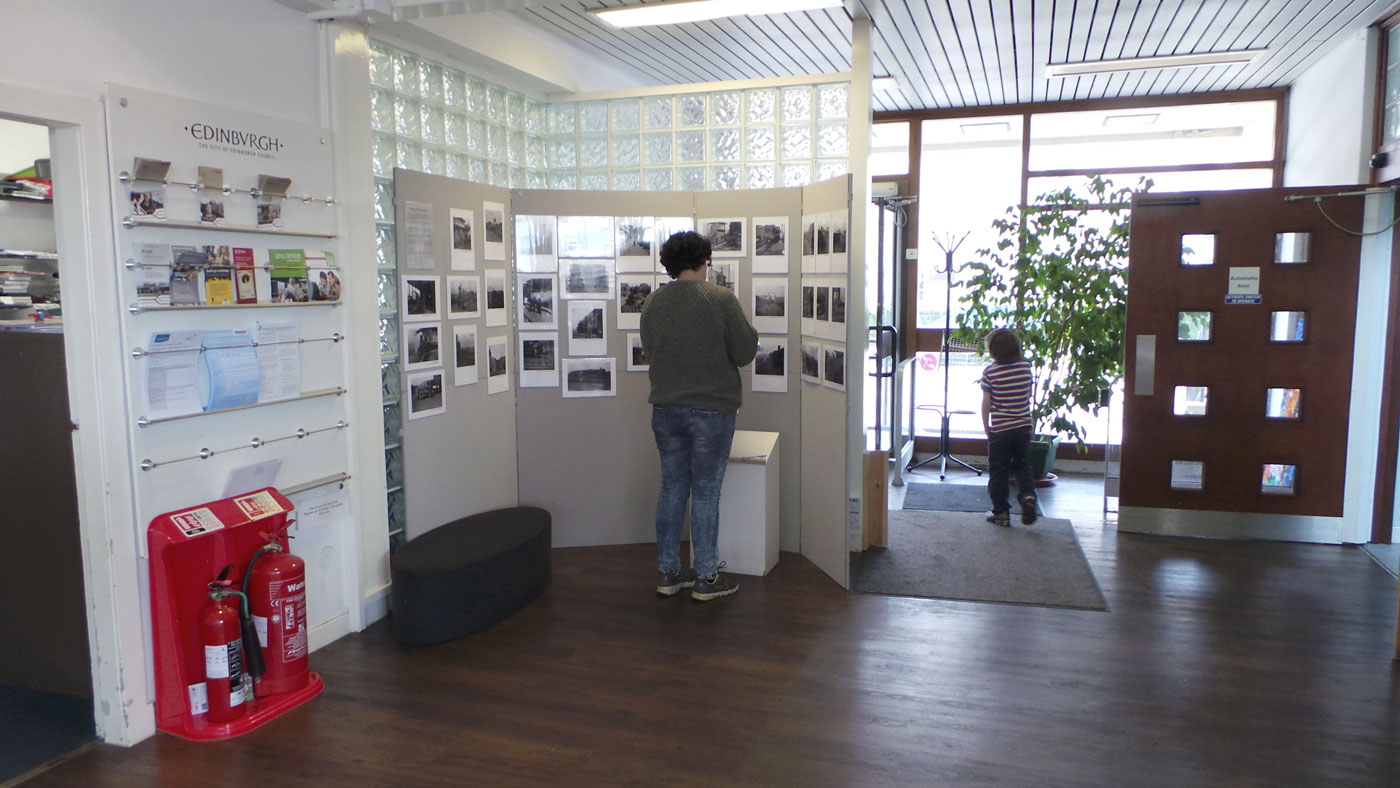
Installation photograph of the exhibition 'From Steam to Diesel' at the Portobello Library, Edinburgh


Installation photograph of one half of the exhibition From Steam to Diesel at the Portobello Library, Edinburgh. The other half of the exhibition is off camera to the right.


Portobello Library
14 Rosefield Avenue, Edinburgh,
Midlothian, EH15 1AU

Opening hours
Monday 10.00 – 20.00
Tuesday 10.00 – 20.00
Wednesday 10.00 – 20.00
Thursday 10.00 – 20.00
Friday 10.00 – 17.00
Saturday 09.00 – 17.00
Sunday 13.00 – 17.00

LIKE ART BLART ON FACEBOOK

Back to top

Review: ‘Victor Hugo: Les Misérables – From Page to Stage’ at the State Library of Victoria, Melbourne

Exhibition dates: 18th July – 9th November 2014


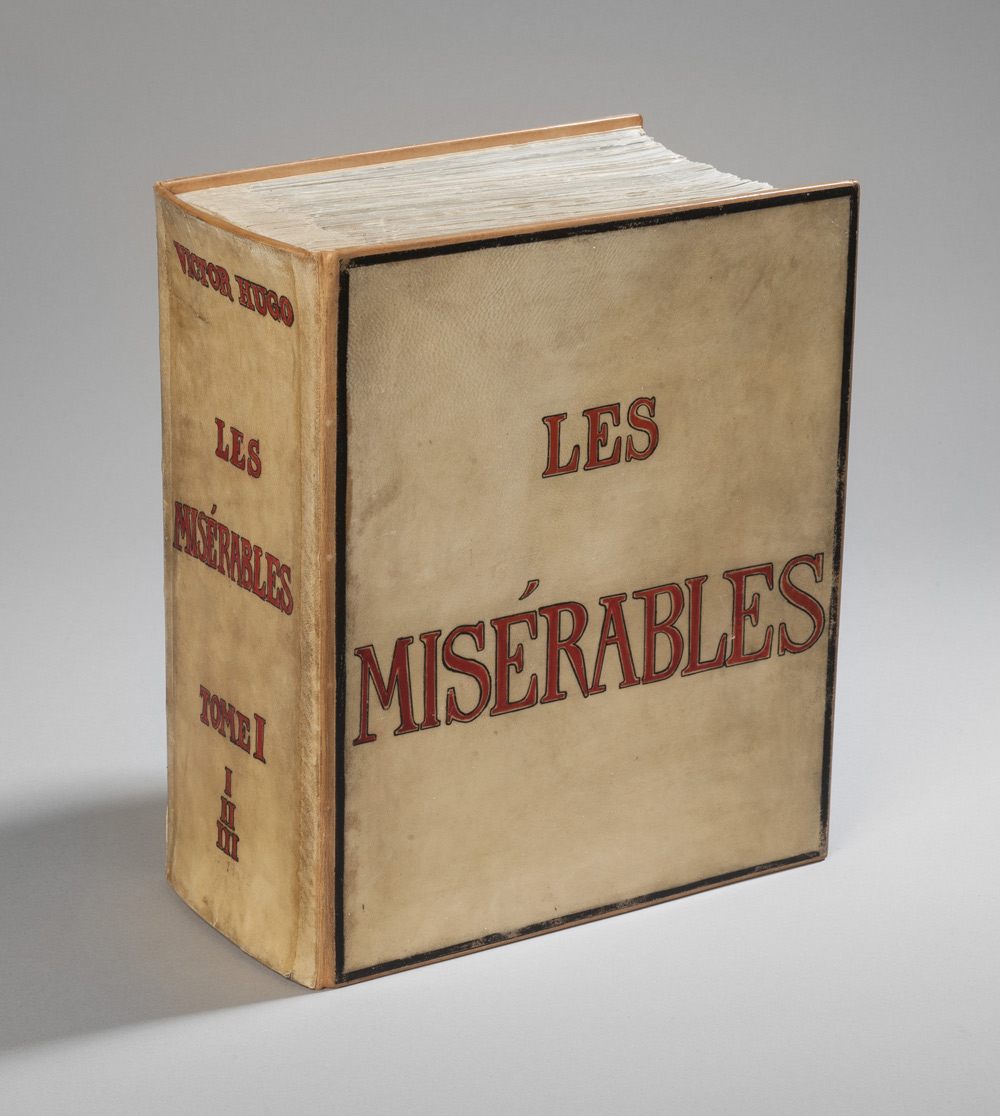
Victor Hugo (French, 1802-1885) 'Les Misérables vol. 1' 1845-1862


Victor Hugo (French, 1802-1885)
Les Misérables vol. 1
1845-1862
Autograph manuscript
Bibliothèque nationale de France


Devour the main course but don’t stay for dessert

This is an exhibition in two galleries. In the first you are not allowed to take photographs but in the second you can take as many as you want. You are told this as you enter the exhibition but the import of this incantation only becomes apparent much later in your visit.

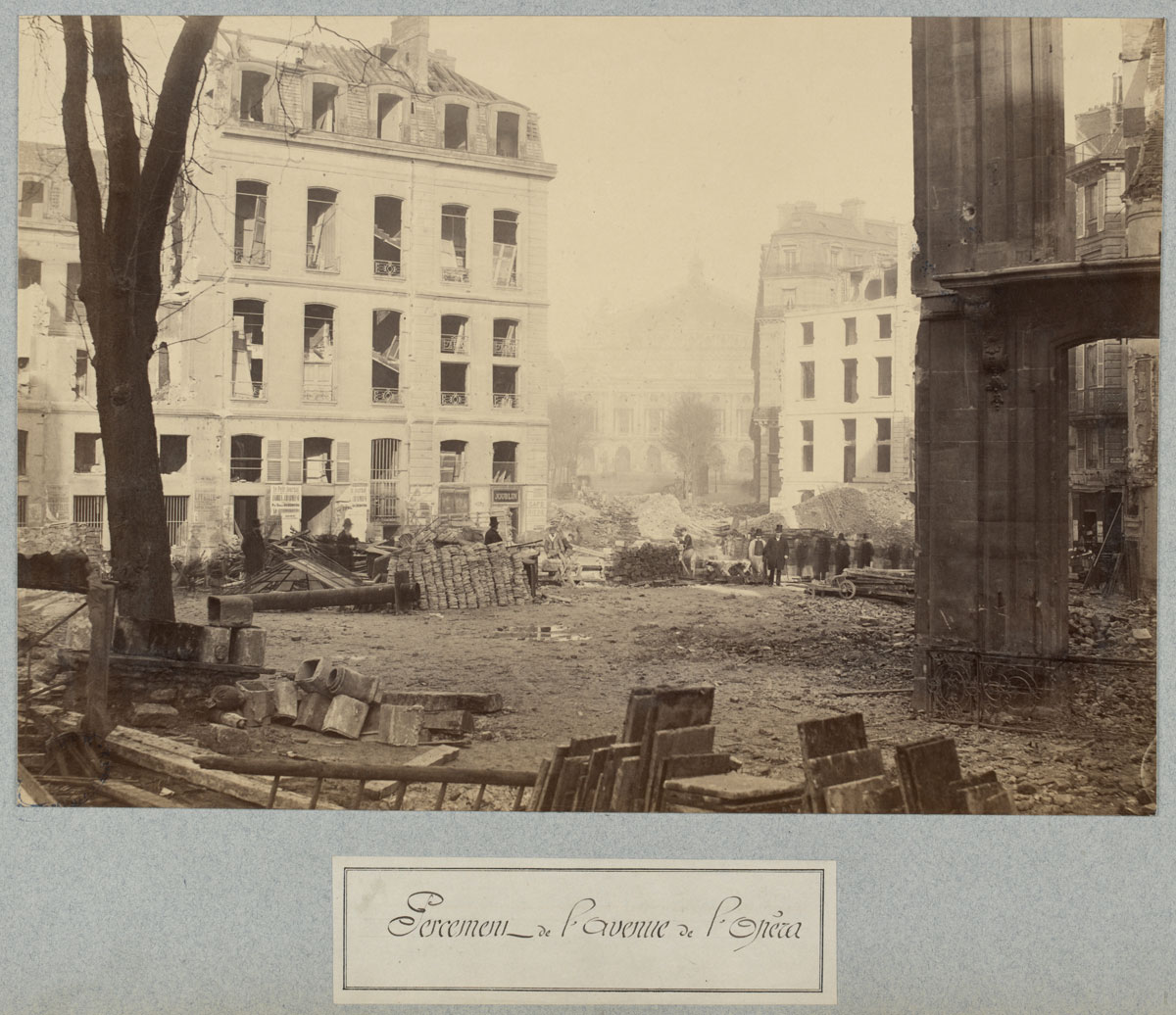
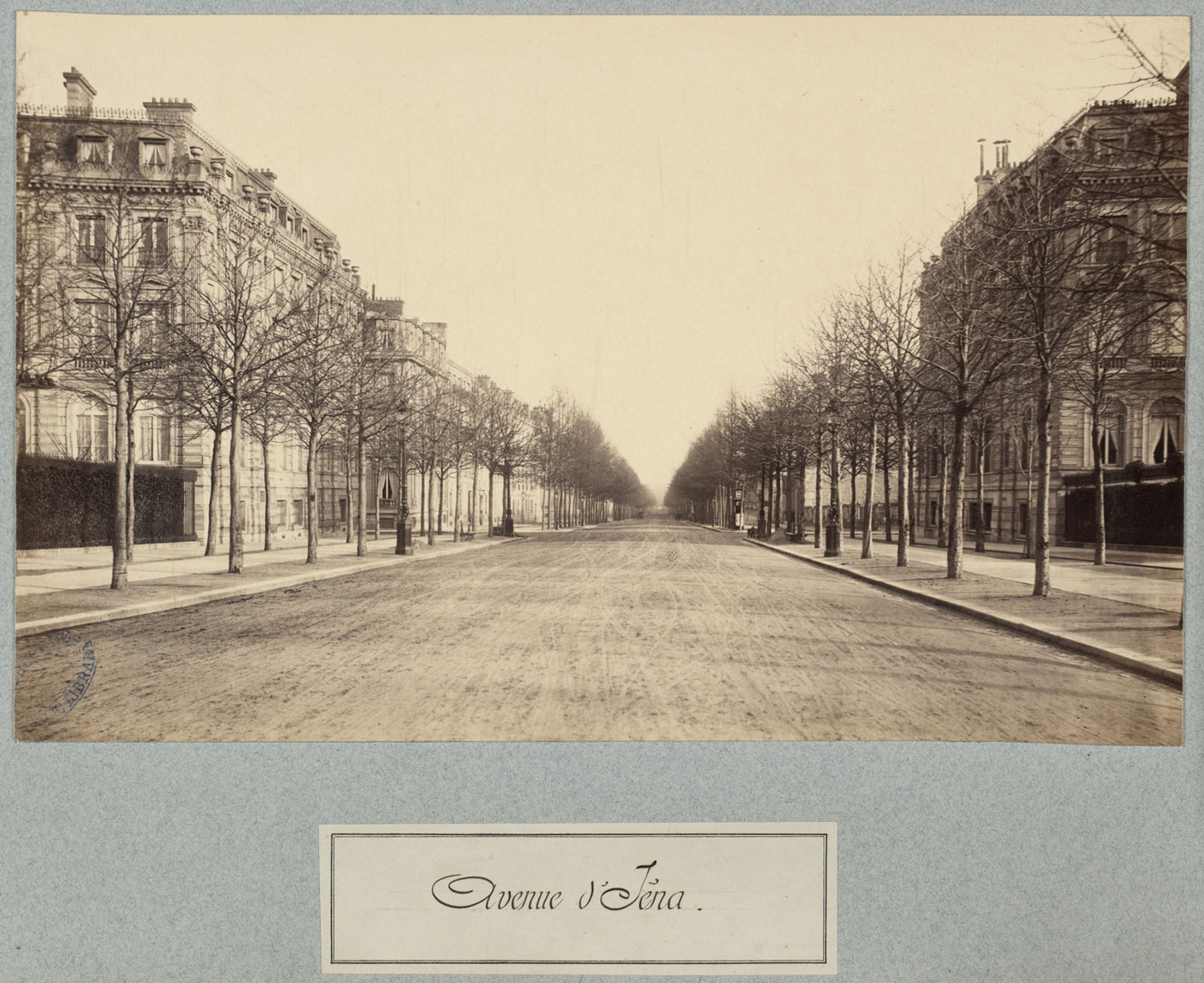
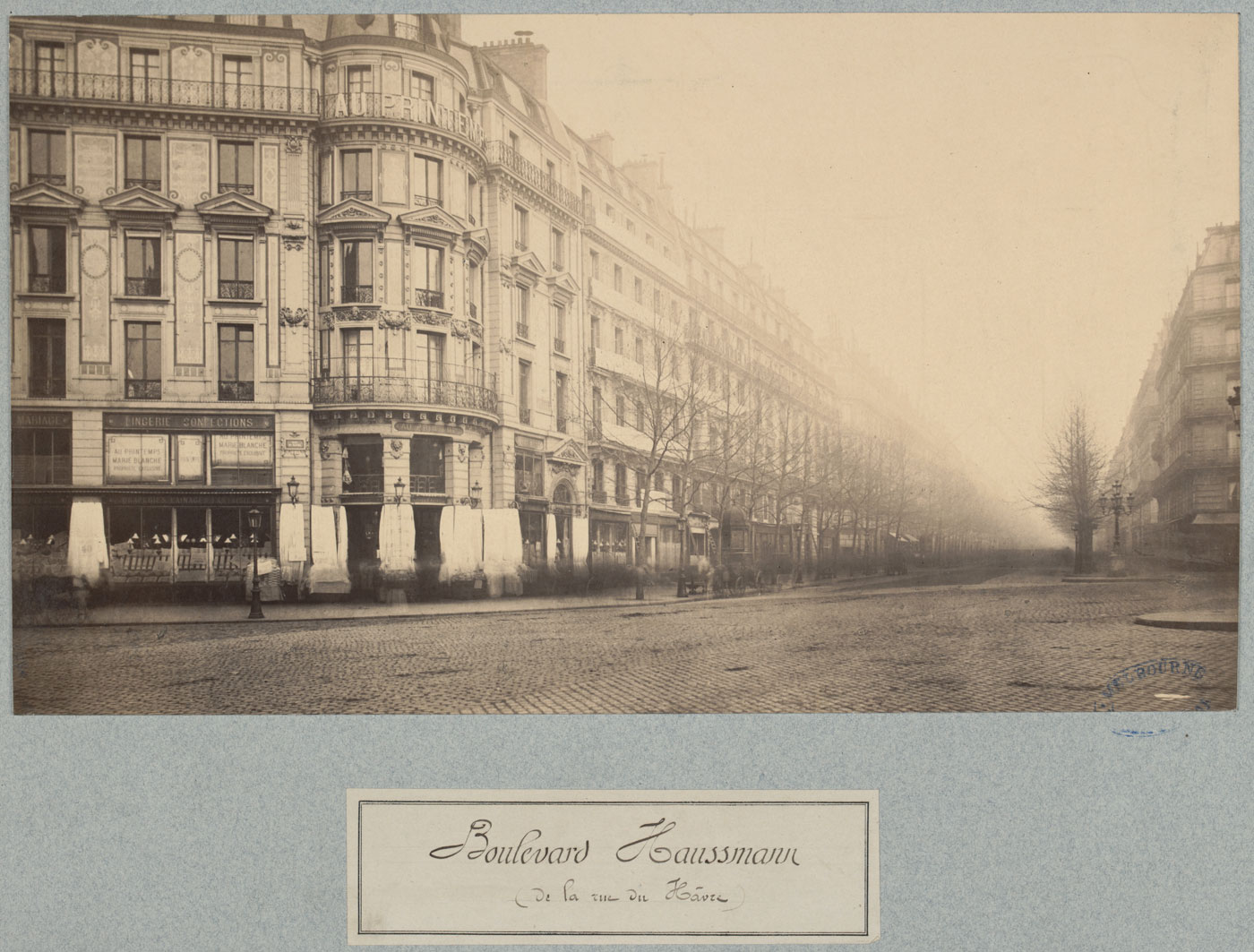
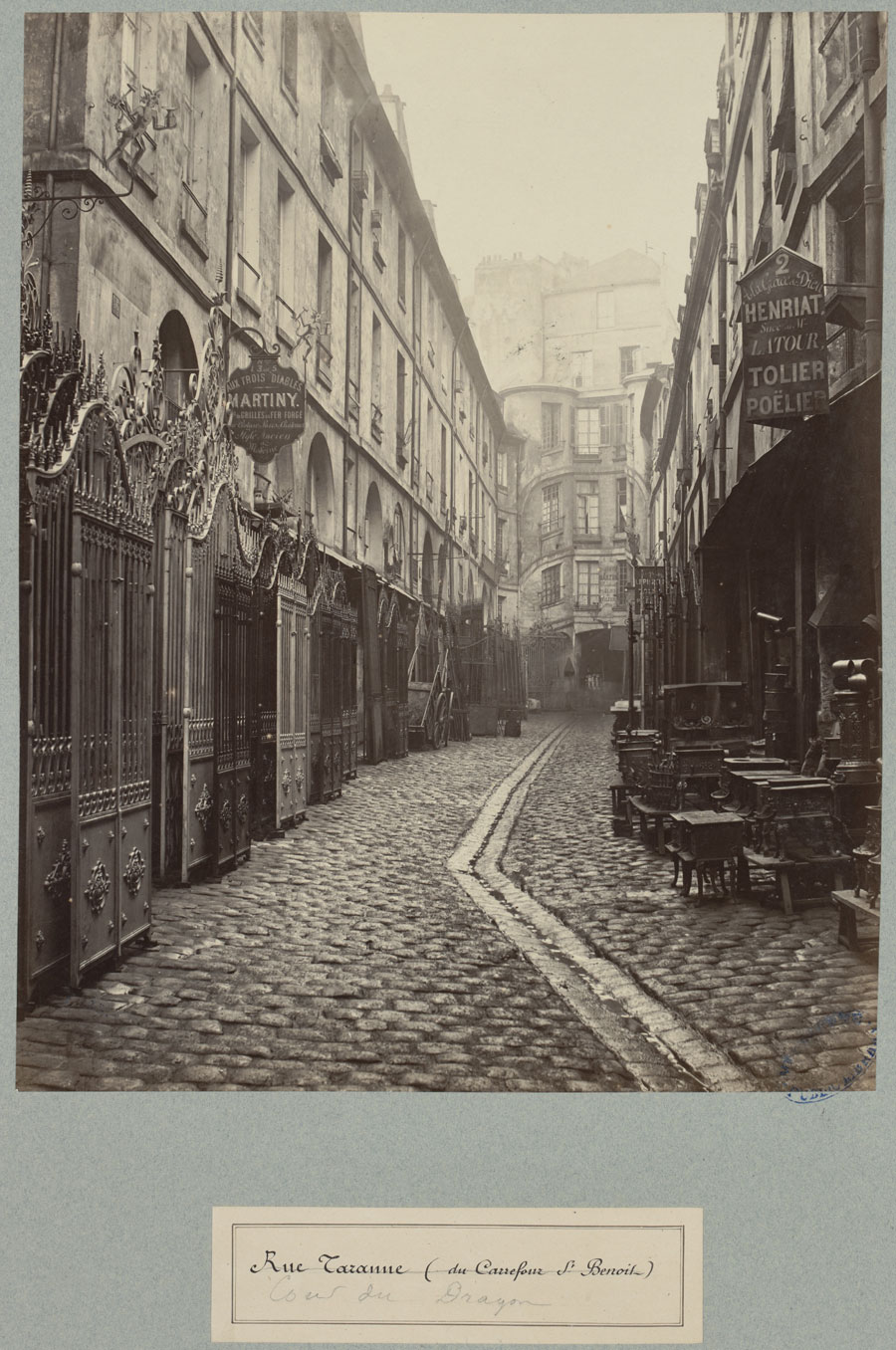
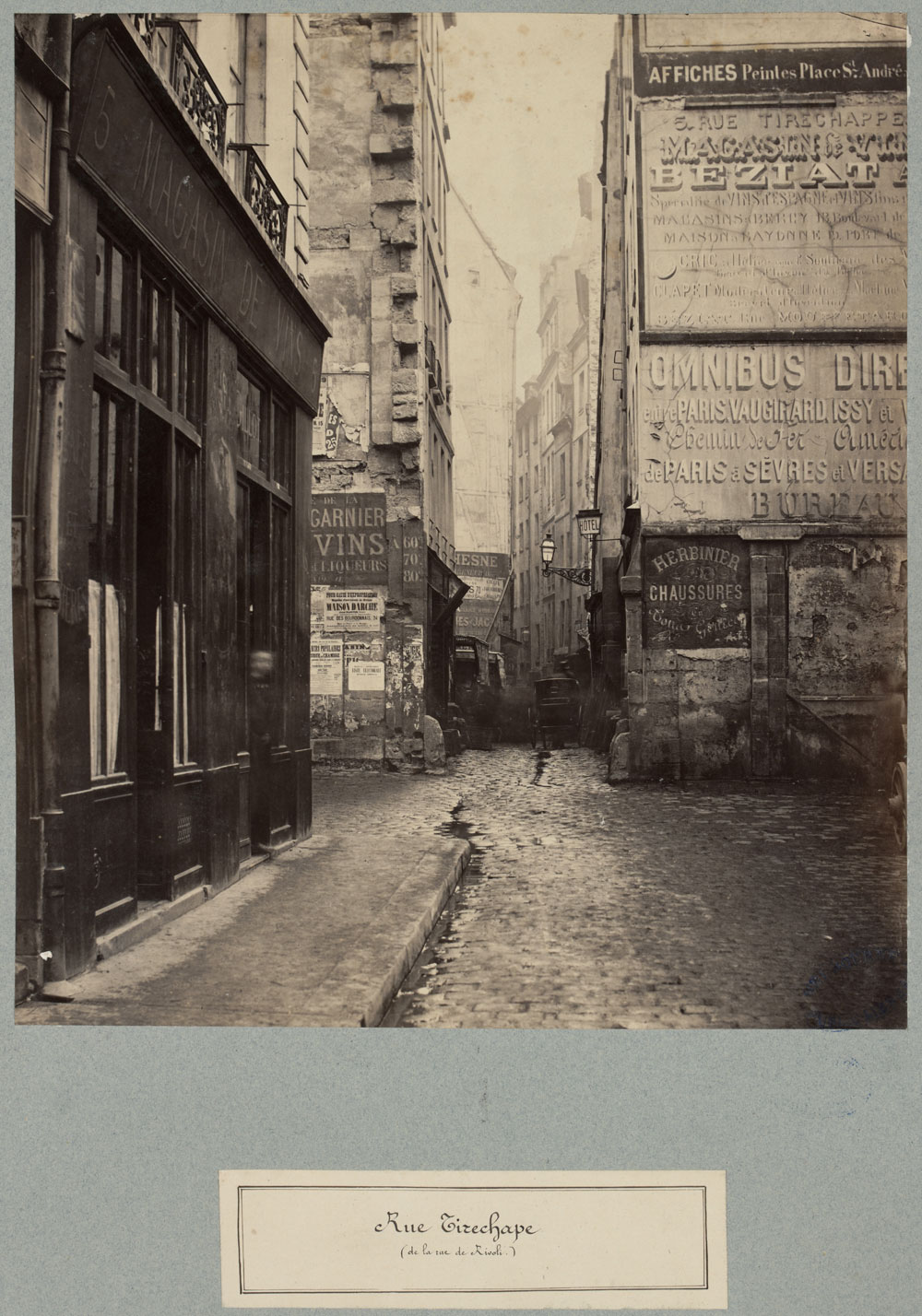
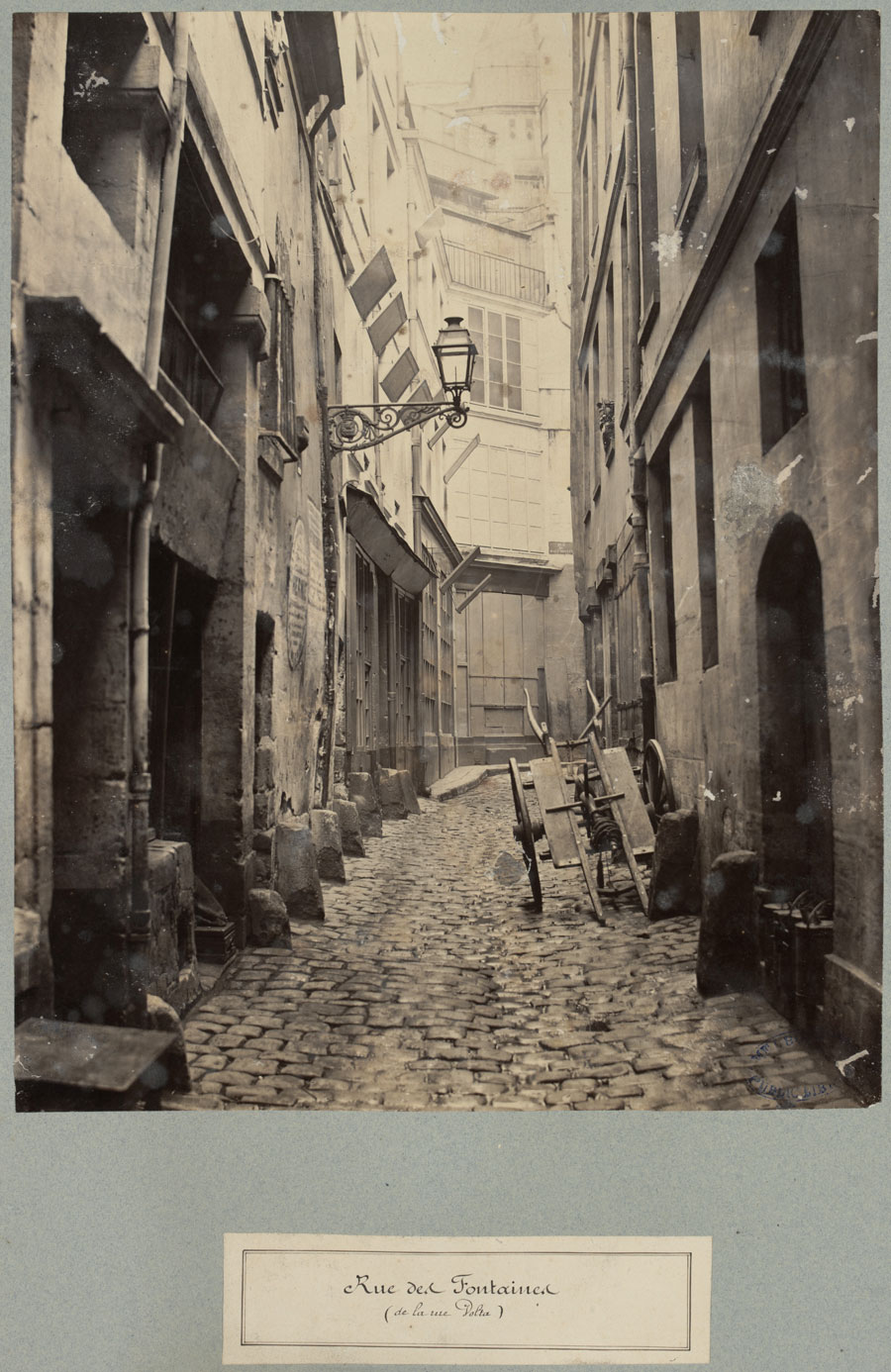
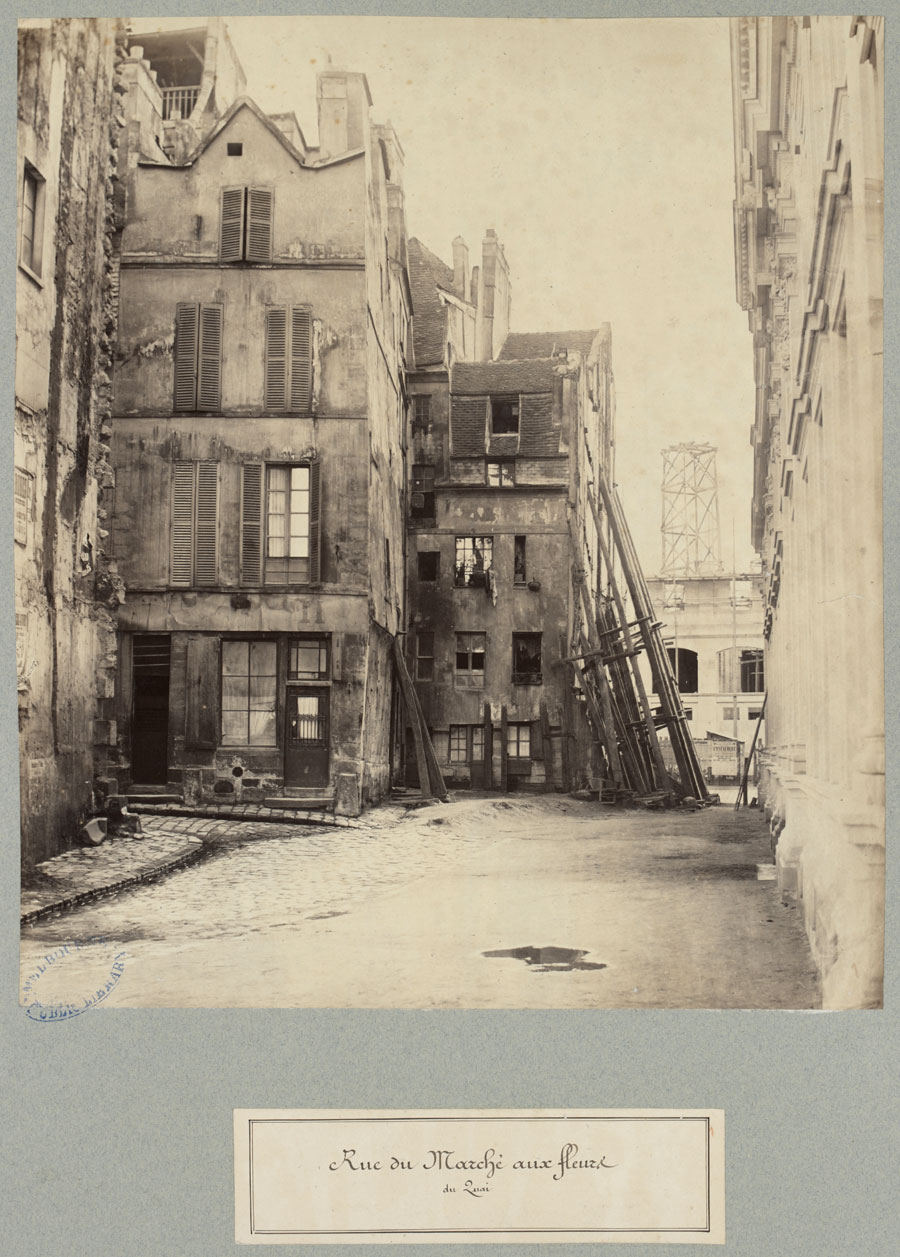
The first gallery is a profound experience: manuscripts, letters, photographs, paintings, and posters that all relate to the great man and his work Les Misérables. The Charles Marville photographs are sublime (as always) with the width of the vertical prints being the element that I noticed most on this viewing. The space that Marville manages to capture in these vertical images makes them seem almost as wide as they are high giving them an almost panoramic feel, as though the space of the image goes on forever, from side to side and into the distance. There is a wonderful sense of volume in the atmosphere, tones and textures of these images. One juxtaposition is particularly tantalising, the pairing of Marville’s Rue Tirechape (1865) with engravings such as the demolition work for constructing the Boulevard St. Germain by Maxine Lalanne (1827-1886). The illusion that one could be the other is enlightening, and there is an established association (especially in Pictorialist photography) between representation in etching and photography.1

As Philip Ebury observes,

“It has often been said that Pictorial photographs resemble works in other media. The analogy with etchings is especially striking and the comparison is more than physical. Between 1890 and the late 1920s, etching and Pictorial photography had a shared history and many similar aims. Parallels between the two disciplines in Australia had their antecedents in England. In the late nineteenth century many photographers in that country were consciously promoting artistic, as opposed to documentary work. At the same time, printmakers were reviving the art of original etching as an expressive rather than a reproductive medium.”2

But the Charles Marville photographs are not the star of the show, oh no. That is left to five things:

a) An album of which you can see only one leaf in the exhibition, Les Proscrits (‘The Exiles’) (1856, below), but that one leaf is enough. The enigma, light and intimacy of this one page is just magnificent.

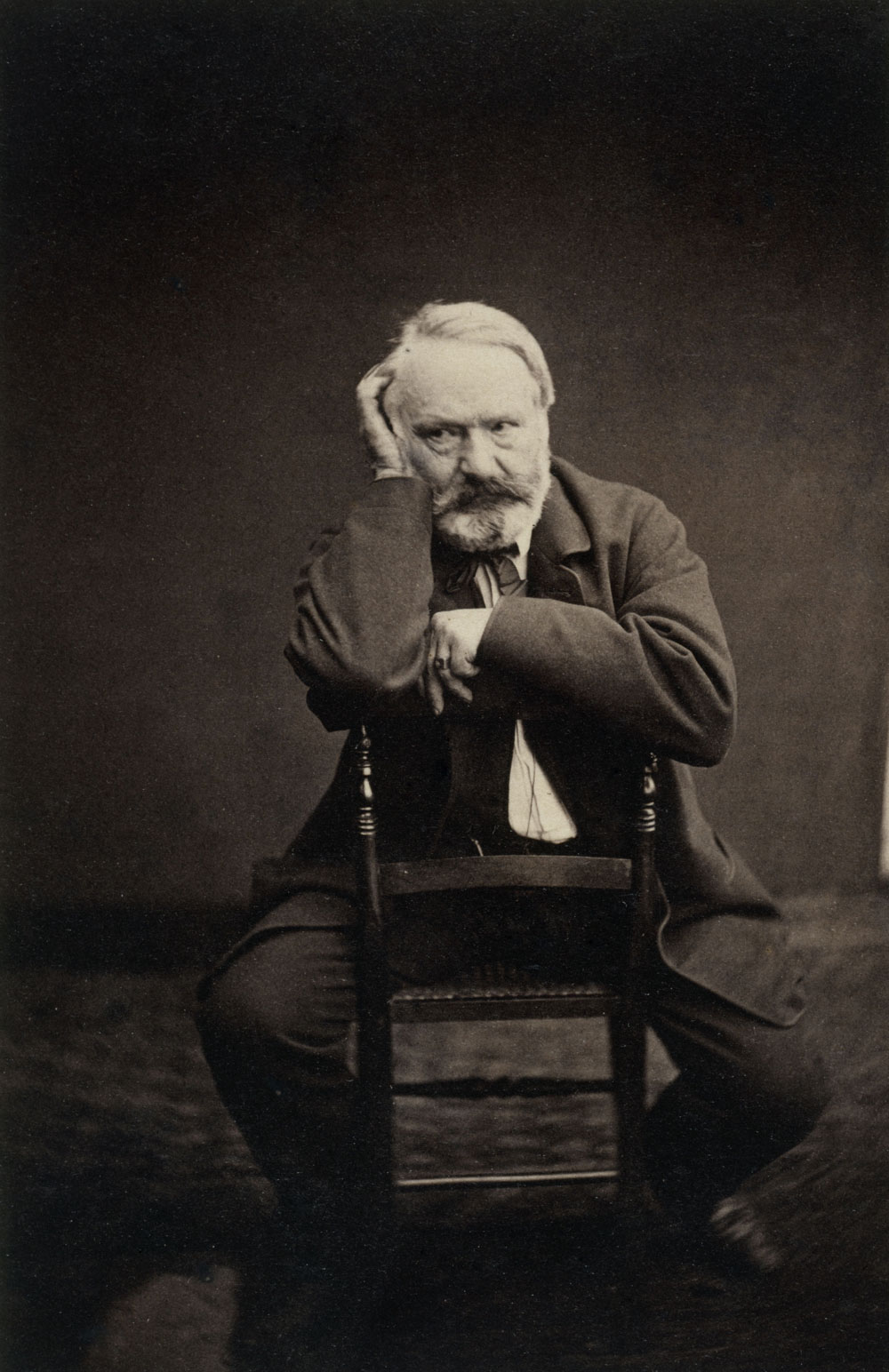
b) Equally impressive are the very small intense portraits of Victor Hugo such as the silver gelatin photograph attributed to Arsène Garnier (1820-1909) – dark, atmospheric with Neo-classical sculptures and chandeliers reflected in expansive mirrors, VH propped up by a favourite chair; or Charles Hugo’s salted paper print from a collodion negative of his father in Jersey leaning on the back of a chair (1853-1855). The intensity of these portraits is remarkable.

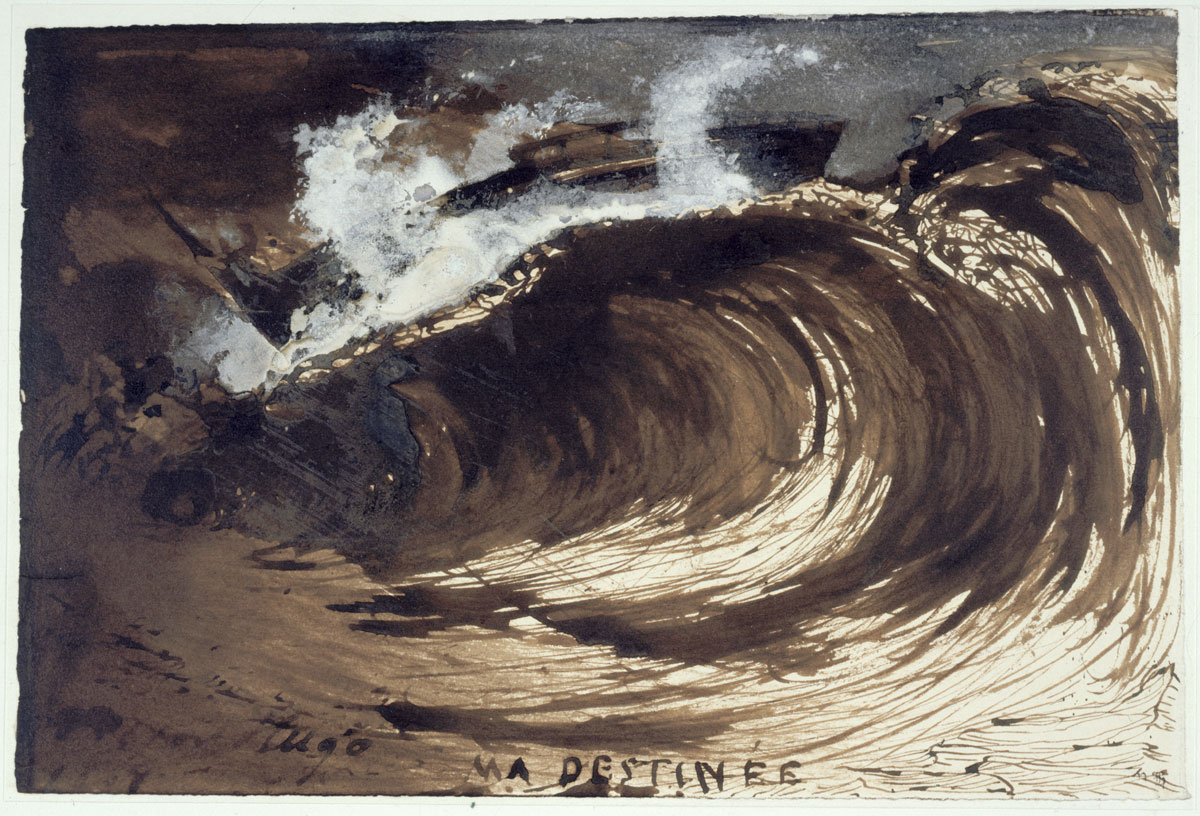
c) Victor Hugo’s own paintings, usually pen and brown ink wash on paper, are also very powerful. In images such as Ma destinée (My destiny) (1867, below) where VH wrote in direct conversation with the ocean and The bowels of the Leviathan (1866) – dark, dank labyrinthine Parisian sewers – Hugo draws you into a world of the disenfranchised, the poor, the destitute and their (and his) destiny.

d) The beautiful theatre posters (1880s-1910s) worth the price of admission on their own

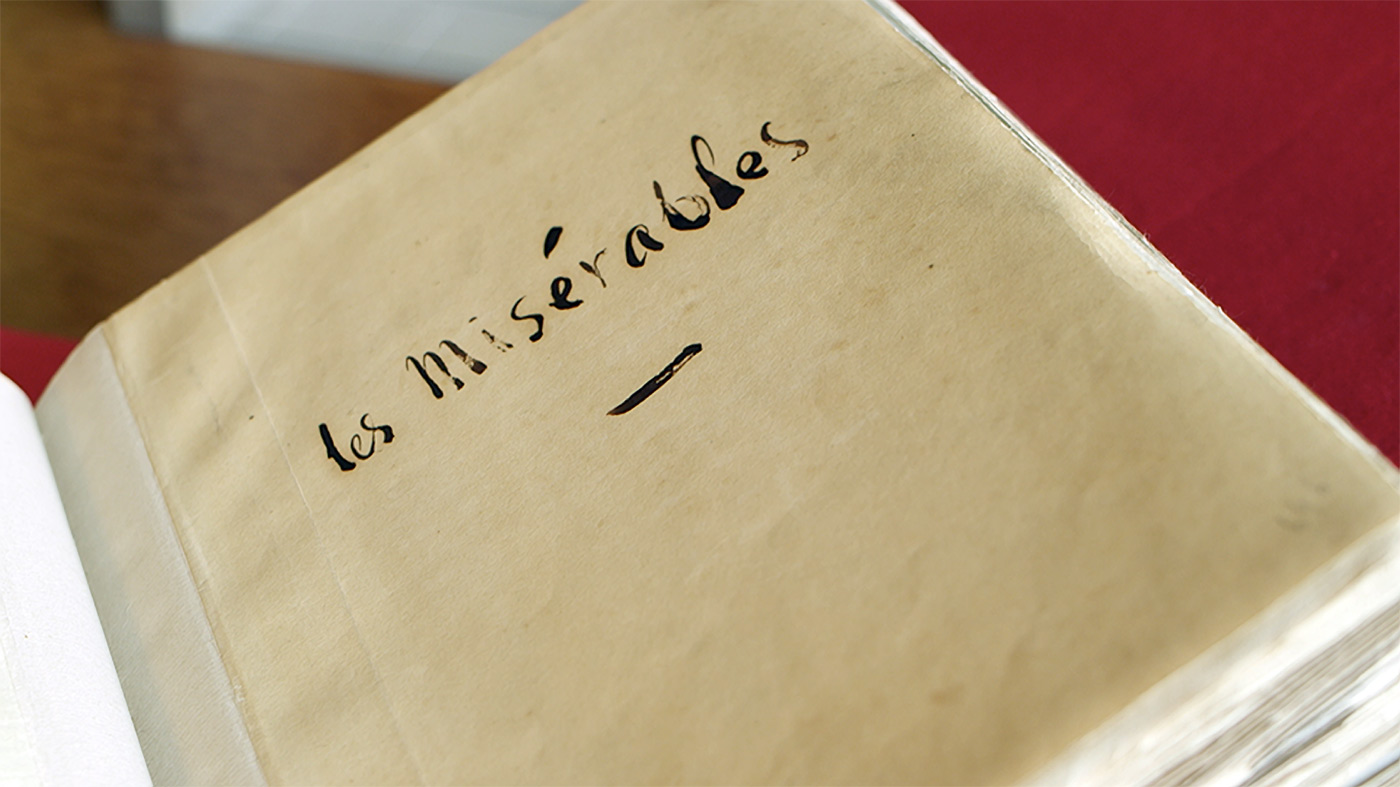
e) Leaving the best till last, the autographed manuscript Volume 1 of Les Misérables in all its glory (the first time it has ever left France), complete with revisions, crossings out and the final version in red, resting innocuously in a glass display cabinet. The psychological weight of the volume is immense. This is getting as close to the ‘source’ as you can possibly get without touching it. I remember once holding a first edition of Oscar Wilde’s The Ballad of Reading Gaol in my hand. This had that same spine tingling effect.


The first gallery assembles this incredible story and builds a glorious intensity of experience. I was on such an elevated level it was great.

And then, in literally two minutes, it was gone… No, no, no, no!

The second gallery is such a let down. It features costumes, posters, pamphlets and video in an exploration of the musical ‘phenomena’ this is the (Disney-fied) Les Misérables. A stage set from the musical with cut our heads so people can have their photo taken, and for performances; very poor quality black and white images of the sets of the theatrical productions of Les Misérables; a cardboard cut-out two-wheeled cart that is the worst thing that you could possibly see; and videos of workshops with men explaining how they are using a bandsaw to create the stage for the musical (as if I want to see that after what has gone before!). From the sublime to the ridiculous. I’m sure the kids might like it but after seeing such an amazing first half of the exhibition, for me this was like being tied with a ball and chain and dropped over the side to sink like a stone. Why do curators insist on doing this. Do they think that they always have to have a “popular” space for the family and the kids these days. That more is really more?

In this case it quite ruined what was up till then an incredible experience. So visit the exhibition for the main course (and don’t take any photos), but if I were you I would turn around after the first gallery and walk out the way I came in, thinking to myself ‘less is more!

Dr Marcus Bunyan


1/ See Ebury, Frances. “Engravers and Etchers, Pictorialists and Photographers,” Part 2, Chapter 2 in Making Pictures: Australian Pictorial Photography as Art 1897 – 1957 Volume 1. Phd thesis, The University of Melbourne, 2001, p. 73.

2/ Ibid.,


Many thankx to the State Library of Victoria for allowing me to publish the photographs in the posting. Please click on the photographs for a larger version of the image.


“As long as social damnation exists, through laws and customs, artificially creating hell at the heart of civilization and muddying a destiny that is divine with human calamity; as long as the three problems of the century – man’s debasement through the proletariat, woman’s demoralisation through hunger, the wasting of the child through darkness – are not resolved … as long as ignorance and misery exist in this world, books like the one you are about to read are, perhaps, not entirely useless.”


Victor Hugo, Hauteville House, 1 January 1862


Victor Hugo (French, 1802-1885) 'Title page of 'Les Misérables' vol. 1' 1845-1862


Victor Hugo (French, 1802-1885)
Title page of Les Misérables vol. 1
1845-1862
Autograph manuscript
Bibliothèque nationale de France


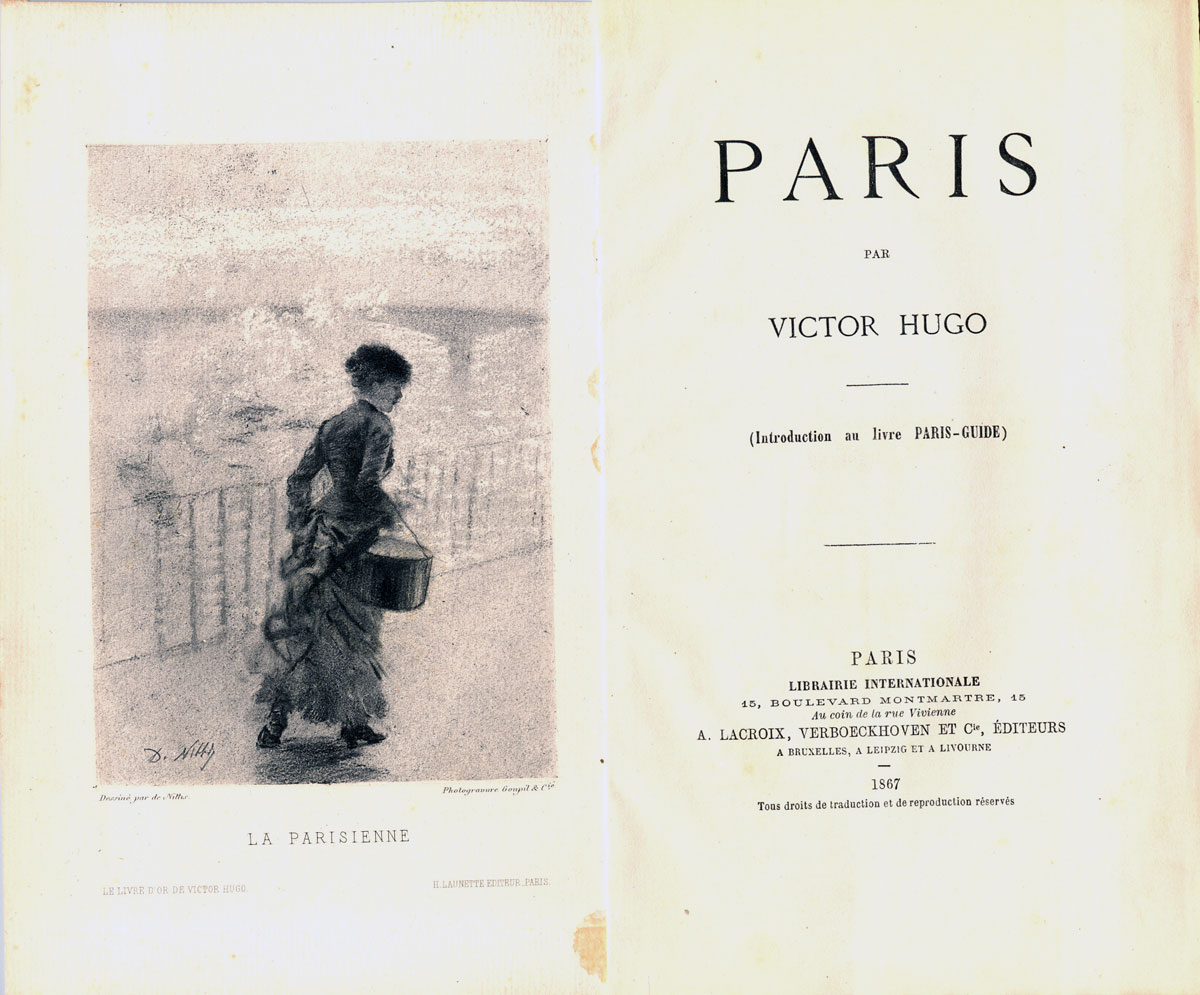
Victor Hugo (French, 1802-1885) 'Paris' Paris, 1867


Victor Hugo (French, 1802-1885)
Paris
Paris, 1867
Maison Littéraire de Victor Hugo


Victor Hugo (French, 1802-1885) 'Ma destinée (My destiny)' 1867


Victor Hugo (French, 1802-1885)
Ma destinée (My destiny)
1867
Ink and brown-ink wash
© Maisons de Victor Hugo / Roger-Viollet


'Les Proscrits' ('The Exiles') 1856


Les Proscrits (‘The Exiles’)
1856
Album of photographs
Bibliothèque nationale de France


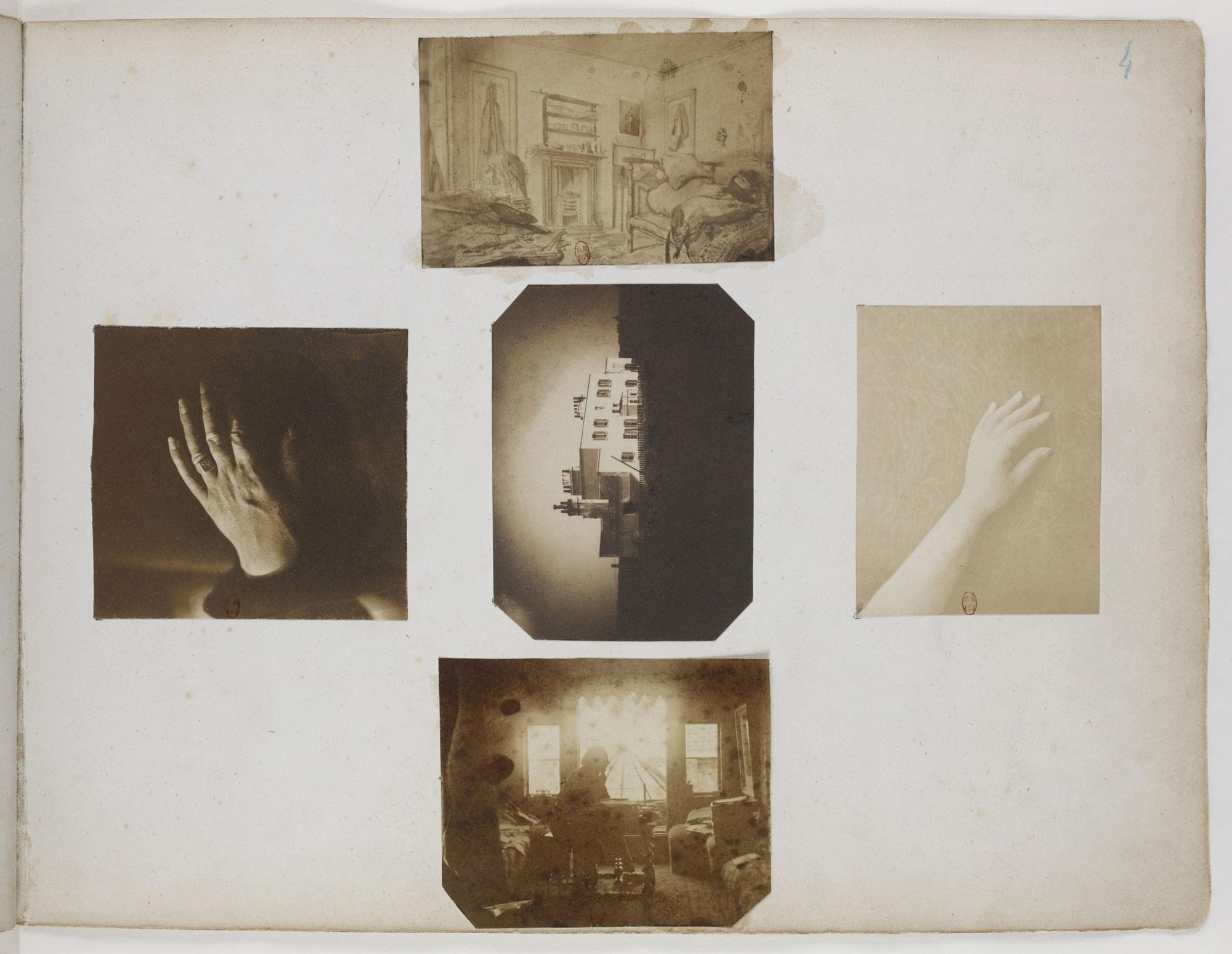
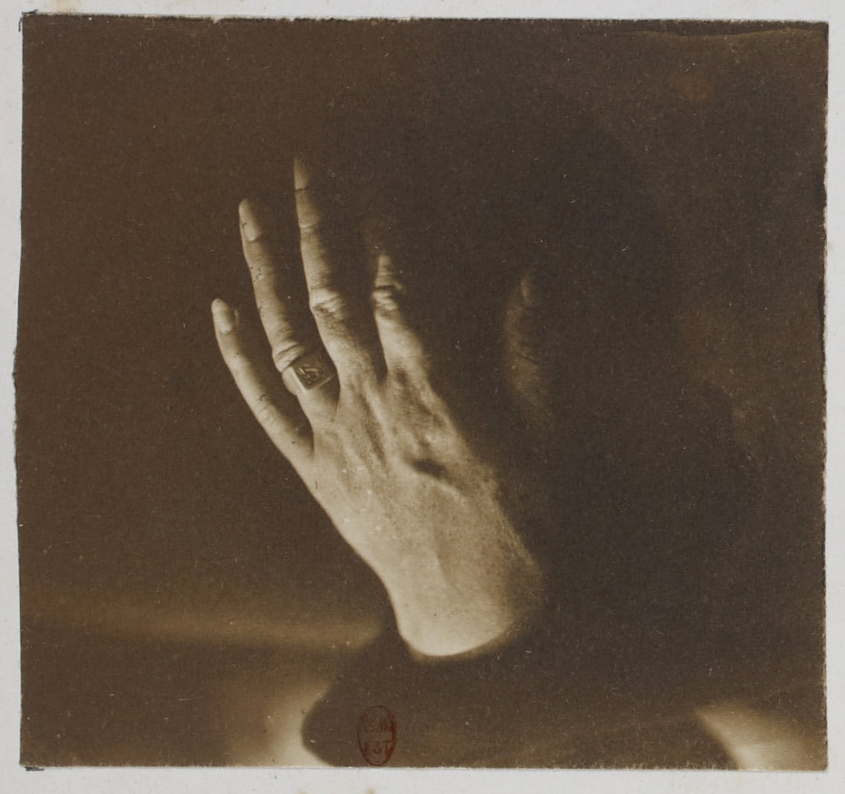
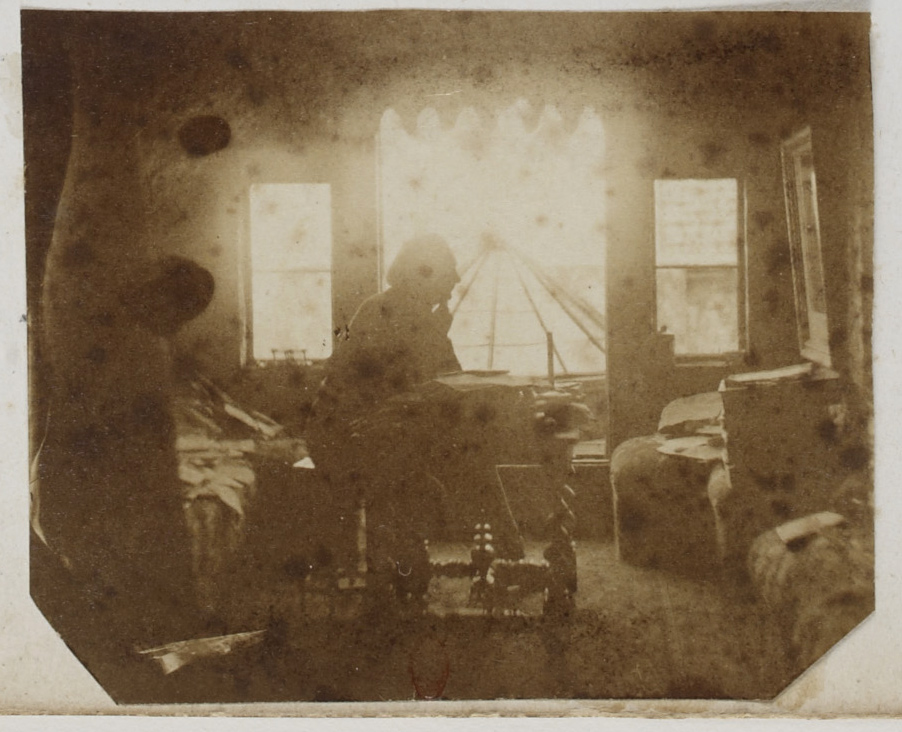
Album The Exiles – Victor Hugo and his circle of friends in exile started in Guernsey on the 1st January 1856. The album creates an allegorical portrait of VH. His family is represented by Victor Hugo’s hand (left), Adele’s hand (right), Marine Terrace their home in Jersey 1852-1856 (centre) and VH posing at his desk in his study at Hauterville House, Guernsey, where he completed Les Misérables surrounded by sunlight. The page appears in the posting the correct way up, as it appears in the album.


Les Proscrits ('The Exiles') album 1856 (detail of page)


Victor Hugo’s hand
From the album Les Proscrits (‘The Exiles’) (detail of page)
1856
Album of photographs
Bibliothèque nationale de France


'Victor Hugo posing at his desk in his study at Hauterville House, Guernsey' From the album 'Les Proscrits' ('The Exiles') 1856 (detail of page)


Victor Hugo posing at his desk in his study at Hauterville House, Guernsey
From the album Les Proscrits (‘The Exiles’) (detail of page)
1856
Album of photographs
Bibliothèque nationale de France


Edmond Bacot (French, 1814-1875) 'Victor Hugo en 1862' (Victor Hugo in 1862) 1862


Edmond Bacot (French, 1814-1875)
Victor Hugo en 1862 (Victor Hugo in 1862)
1862
Maison de Victor Hugo
Image © Edmond Bacot / Maisons de Victor Hugo / Roger-Viollet


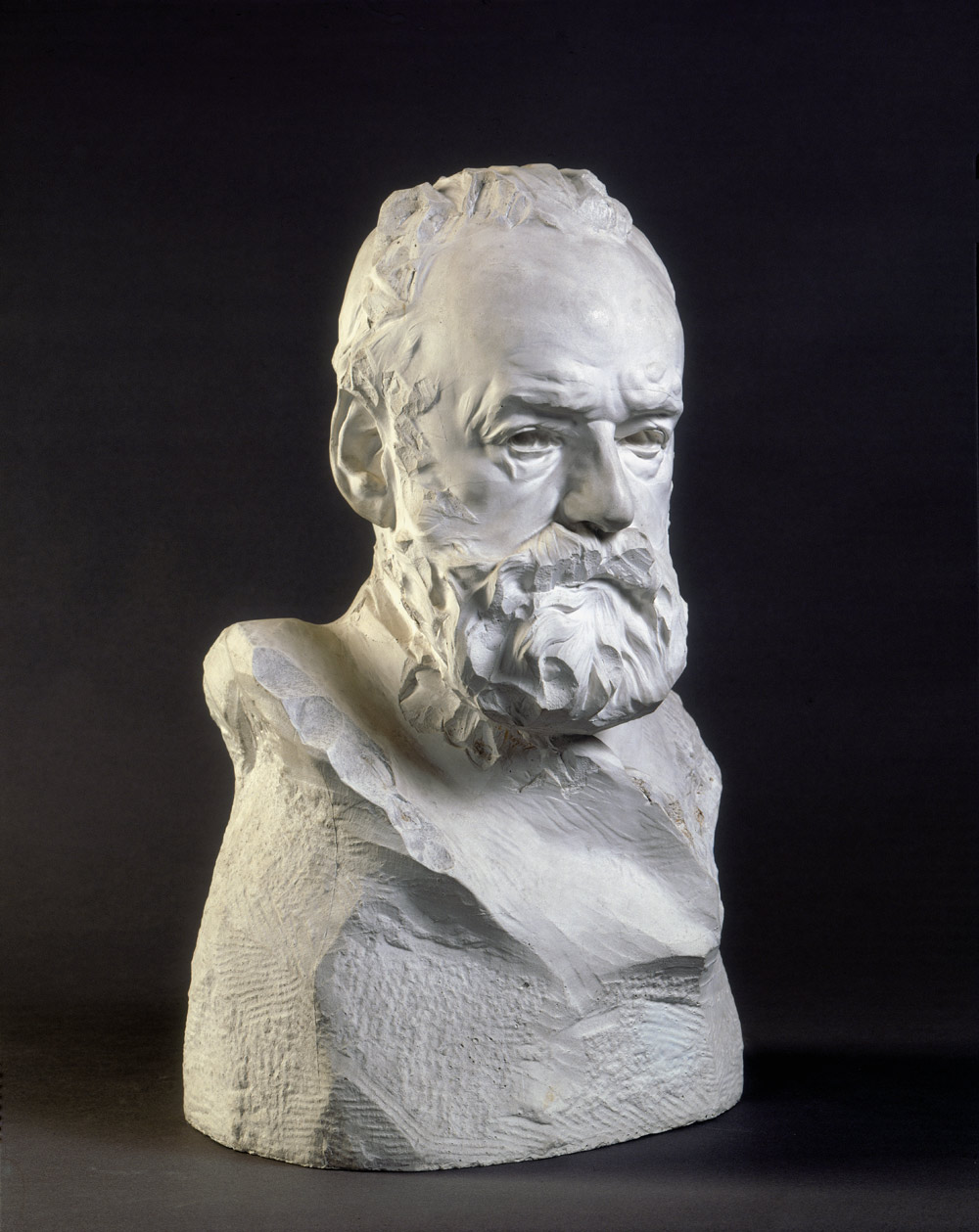
Auguste Rodin (French, 1840-1917) 'Victor Hugo, buste dit À l'Illustre Maître' (Victor Hugo, bust known as 'To the illustrious master') 1883


Auguste Rodin (French, 1840-1917)
Victor Hugo, buste dit À l’Illustre Maître (Victor Hugo, bust known as ‘To the illustrious master’)
1883
Musée Rodin


Rodin states that Hugo would not pose. “I worked out on the veranda. I observed him swiftly, but carefully as he refused to pose. He accepted to be looked at, from all angles, but he would not pose. And so I looked at his conscience. And this is how I was able to capture the real Hugo.”


When the first two volumes of Les Misérables arrived in Paris in April 1862, all 6000 copies sold in a day. Public readings were organised when copies sold out. Everyone was reading it, from the literary intelligentsia to the common people. It was also quickly translated into nine languages to reach a global audience. After only three months, 100,000 authorised copies (and countless editions on the black market) had been sold worldwide, making the novel into an unprecedented literary bestseller of western literature. In 1870 after the fall of Napoleon III, Hugo returned to France and was hailed a national hero.

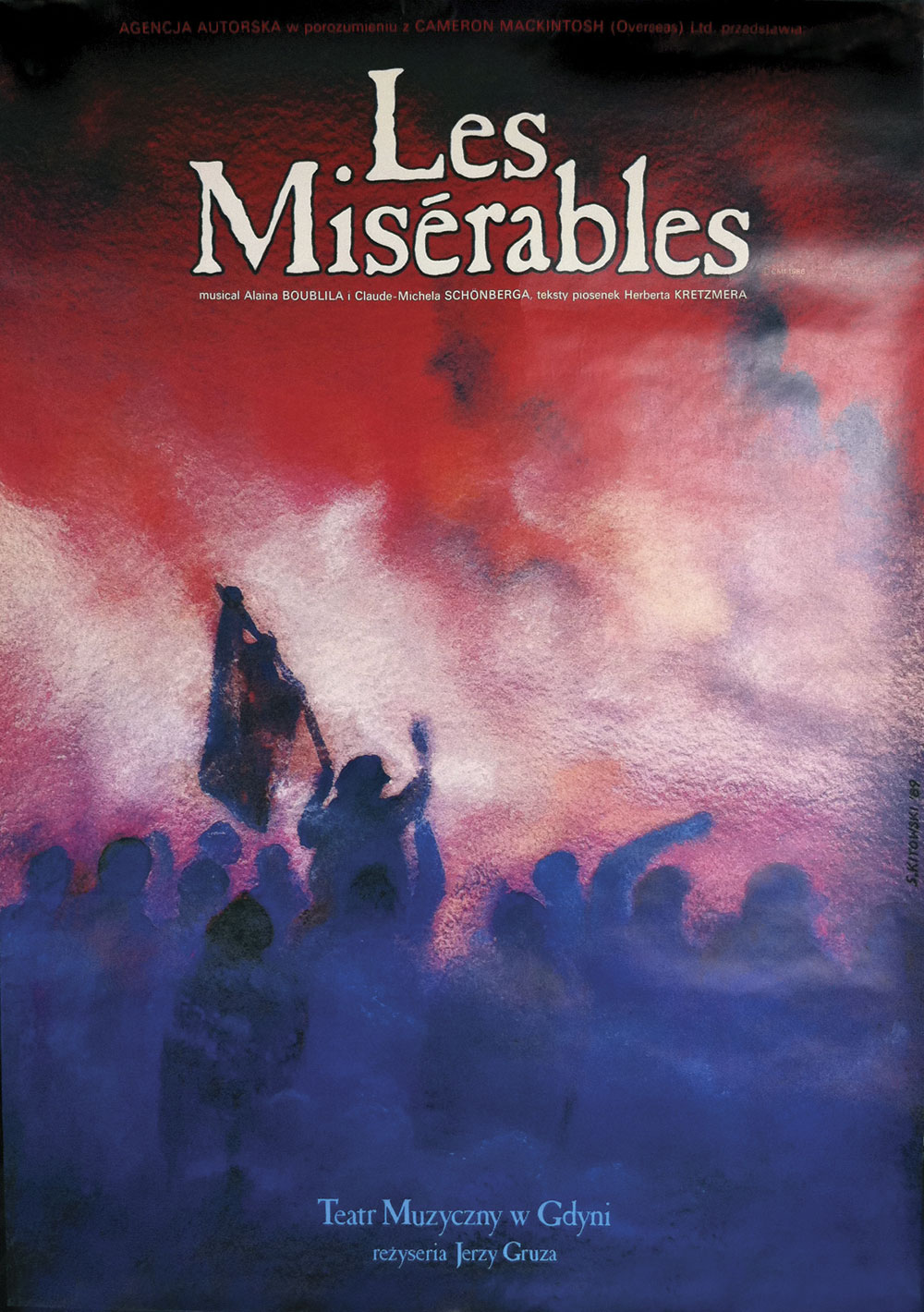
Victor Hugo’s legacy and the iconic story of Les Misérables endure to this day with various adaptations being created around the world. There have been at least 48 films, 14 animated films or TV series, radio plays, 12 television miniseries, numerous comic books, and at least 286 editions of Les Misérables published, sung and spoken. The stage musical of Boublil and Schönberg’s Les Misérables is in itself a worldwide phenomenon. It is the longest running theatre performance in London and has been seen by over 65 million people in 43 countries and in 21 languages. It returns to Melbourne in June 2014.

About Victor Hugo

Victor Hugo is considered one of the most important and influential authors of the 19th century. Through his transformative literary works and political activism, French society’s most vulnerable were given a voice in a nation ruled by those with power and privilege. Best known for his novels Les Misérables and The Hunchback of Notre Dame Hugo is also acclaimed for his theatre, essays, drawings and poetry.

Born in Besançon, France in 1802, Hugo was the son of an atheist and anti-monarchist French General and a Catholic pro-monarchist mother. A precocious talent, Hugo’s first work was published at the age of 15. His debut as a professional writer soon followed with the release of his first volume of romantic poems; Ode et poésies diverses in 1822. Many of his early romantic works drew inspiration from his childhood sweetheart and wife Adele Foucher, with whom he had four children. Another powerful female influence on Hugo’s writings was his mistress of more than fifty years, Juliette Drouet.

As Hugo’s career progressed, his aptitude and fondness for romantic literature was matched by his passion for addressing themes of disadvantage and poverty. Hugo’s first major masterpiece The Hunchback of Notre Dame published in 1831 reflected his interest in highlighting such prejudices. However, it was his greatest masterpiece, Les Misérables, that first challenged and then changed the social and political understanding of poverty, disadvantage and inherited privilege in society. In Les Misérables Hugo casts an ex-convict, Jean Valjean, as the revered protagonist and paints a villain of the character representing authority and privilege, Inspector Javert.

Hugo dedicated 17 years of his life to plan and write the epic three part story beginning in the early 1840s and finally publishing the novel in 1862. In addition to his social and political sympathies, Hugo drew from many of his own personal experiences and professional turmoil to inform the characters and themes in Les Misérables. These included the tragic drowning of his eldest daughter, Leopoldine, in a boating accident in 1843, and Hugo’s exile from France by Louis Napoleon III in 1851 – a result of his public opposition to the increasingly authoritarian rule of the self-declared emperor.

From his exile on the Channel Islands of Jersey and Guernsey where he lived for 19 years, Hugo maintained his trenchent opposition to the political status quo and the death penalty, while also publishing widely and spending three years finishing his magnum opus Les Misérables. When Les Misérables finally hit the stands in Paris in 1862 the response by the public was explosive. All 6000 copies sold out in a day, and three months later the book was an international best seller and had been translated into nine languages. Following the success of Les Misérables Hugo returned to France in 1870 after the fall of Napoleon III and was hailed a national hero. He continued to work until he died on 22 May 1885. At his state funeral it was estimated that close to two million people attended. Hugo’s wish to be buried in a pauper’s coffin was granted and his body lay in state under the Arc de Triomphe until he was interred in the Panthéon.

Today Victor Hugo’s extraordinary legacy continues. Les Misérables has been published in at least 250 editions since 1862, 48 films have been made of the story and the Boublil and Schönberg Les Misérables musical has been seen by over 65 million people worldwide in 42 countries and 22 languages, and is one of the most popular musicals of all time. Victor Hugo is remembered as an international literary giant and a French national hero.

Themes

The possibility that the condemned can rise above poverty and degradation to become good and honourable, and perhaps above all to fight for freedom of body and soul.


Charles Marville (French, 1813-1879) 'Percement de l'avenue de l'Opéra' (Clearing of the Avenue de l'Opéra) c. 1876


Charles Marville (French, 1813-1879)
Percement de l’avenue de l’Opéra (Clearing of the Avenue de l’Opéra)
c. 1876
State Library of Victoria


Charles Marville (French, 1813-1879) 'Rue Soufflot (pendant la démolition)' (Rue Soufflot [during demolition]) c. 1876-1877


Charles Marville (French, 1813-1879)
Rue Soufflot (pendant la démolition) (Rue Soufflot [during demolition])
c. 1876-1877
State Library of Victoria


Charles Marville (French, 1813-1879) 'Avenue d'Iéna' c. 1877


Charles Marville (French, 1813-1879)
Avenue d’Iéna
c. 1877
State Library of Victoria


Charles Marville (French, 1813-1879) 'Boulevard Haussmann' c. 1877


Charles Marville (French, 1813-1879)
Boulevard Haussmann
c. 1877
State Library of Victoria


Charles Marville (French, 1813-1879) 'Cour du Dragon' c. 1863-1869


Charles Marville (French, 1813-1879)
Cour du Dragon, Rue de Taranne
c. 1863-1869
State Library of Victoria


Charles Marville (French, 1813-1879) 'Rue Tirechape' c. 1863-1869


Charles Marville (French, 1813-1879)
Rue Tirechape
c. 1863-1869
State Library of Victoria


Charles Marville (French, 1813-1879) 'Rue de Fontaines' c. 1863-1869


Charles Marville (French, 1813-1879)
Rue de Fontaines
c. 1863-1869
State Library of Victoria


Charles Marville (French, 1813-1879) 'Rue du Marche aux fleurs' c. 1863-1869


Charles Marville (French, 1813-1879)
Rue du Marche aux fleurs
c. 1863-1869
State Library of Victoria


Paul Carpentier (French, 1787-1877) 'Episode du 29 juillet 1830, rue Chilperic, face á la colonnade du Louvre' (Event of 29 July 1830, rue Chilperic, before the colonnade of the Louvre) 1830


Paul Carpentier (French, 1787-1877)
Episode du 29 juillet 1830, rue Chilperic, face á la colonnade du Louvre (Event of 29 July 1830, rue Chilperic, before the colonnade of the Louvre)
1830
© Musée Carnavalet / Roger-Viollet


Charles Méryon (French, 1821-1868) 'Le petit pont' (The little bridge) 1850


Charles Méryon (French, 1821-1868)
Le petit pont (The little bridge)
1850
National Gallery of Victoria, purchased 1891


Ottavio Rodella Tavio (Italian, 1864-1910) Poster for 'I Miserabili di Victor Hugo' (Les Misérables by Victor Hugo) 1890


Ottavio Rodella Tavio (Italian, 1864-1910)
Poster for I Miserabili di Victor Hugo (Les Misérables by Victor Hugo)
1890
Bibliothèque nationale de France


'Les Misérables by Victor Hugo' New York, Classics Illustrated No. 9, 1950


Les Misérables by Victor Hugo
New York, Classics Illustrated no. 9
1950
State Library of Victoria


Design by Slawomir Kitowski. 'Les Misérables poster' 1989-2000


Design by Slawomir Kitowski
Les Misérables
poster
1989-2000
Teatr Muzyczny, Gdynia, Poland
Courtesy Cameron Mackintosh Ltd


State Library of Victoria
328 Swanston St,
Melbourne VIC 3000
Phone: (03) 8664 7000

Opening hours:
10am to 6pm daily

State Library of Victoria website

LIKE ART BLART ON FACEBOOK

Back to top

Exhibition: ‘The World c. 1914. Colour Photography Before the Great War’ at Martin-Gropius-Bau Berlin

Exhibition dates: 1st August – 2nd November 2014

Albert Kahn, Sergej M. Prokudin-Gorskii, Adolf Miethe


Stéphane Passet (French, 1875-1941) 'Morocco, Benguerir' December 1912 / January 1913


Albert Kahn, Les Archives de la planète

Stéphane Passet (French, 1875-1941)
Morocco, Benguerir
December 1912 / January 1913
Autochrome
© Musée Albert-Kahn, Departement des Hauts-de-Seine


One of the most beautiful postings that I have ever done on the blog. The colours, the people, the faces, the places: magnificent.

This was Sarajevo two years before Archduke Franz Ferdinand of Austria was assassinated there, catalyst that sparked the beginning of The Great War. Bread and dirty clothes, rough hands and mud-stained shoes.

Can you imagine the journey of Stéphane Passet in those days with plate cameras:

Turkey: September 1912
Morocco: December 1912 / January 1913
China: May 1913
Mongolia: July 1913
India: December 1913 – January 1914
France: June 1914

Marcus


Many thankx to Martin-Gropius-Bau Berlin for allowing me to publish the photographs in the posting. Please click on the photographs for a larger version of the image.


Stéphane Passet (French, 1875-1941) 'Turkey, Istanbul September' 1912


Albert Kahn, Les Archives de la planète

Stéphane Passet (French, 1875-1941)
Turkey, Istanbul
September 1912
Autochrome
© Musée Albert-Kahn, Departement des Hauts-de-Seine


Stéphane François Marie Passet (French, 1875-1941) was an amateur photographer and appointed operator on behalf of the Archives de la Planète (Archives of the Planet). This archival project began thanks to the rich French-based banker and philanthropist Albert Kahn (1860-1940), who became concerned about the Chinese cultural heritage after his part-business, part-pleasure trip to China between November 1908 and May 1909.

After his return to Paris, Kahn decided to launch the worldwide project Les Archives de la Planète. This three-decade long project distinguished itself from any other initiated at that time thanks to the compilation of a visual inventory of the world utilising ground-breaking types of media from that time, namely autochrome and film. With the utopian aim to ‘fix once and for all the aspects, the practices, and modes of human activity whose fatal disappearing is just a question of time’, Kahn hired a dozen operators to help him visualise the world, including Passet.

Biographical elements of Passet remain quite meagre. What is known is that he volunteered in the French Army for fifteen years, settled down in Paris in 1910, and worked for Kahn’s Archives de la Planète from 1912 onwards. The circumstances of his previous training as a photographer and cameraman, as well as his recruitment, remain unknown. The visual archive left to us today reveal that two trips were organised [to China] in 1912 (between May and August) and 1913 (between the end of May and the end of June). Passet and his team travelled across China, visiting and recording places such as Beijing (which composes a large part of the archive in China) and northern sites (Great Wall and Ming Tombs), Shenyang, Zhangjiakou, Qufu, Shanghai, places along the Yangtze River, and Mount Tai (hereinafter referred to as Taishan).

The Archives de la Planète ended in 1931 when Kahn was bankrupted.

Anonymous text. “Stéphane Passet,” on the Photography of China website Nd [Online] Cited 10/11/2022


Auguste Leon (French, 1857-1942) 'Bosnia-Herzegovina, Sarajevo' 15 October 1912


Albert Kahn, Les Archives de la planète

Auguste Leon (French, 1857-1942)
Bosnia-Herzegovina, Sarajevo
15 October 1912
Autochrome
© Musée Albert-Kahn, Departement des Hauts-de-Seine


Auguste Leon (French, 1857-1942) 'Bosnia-Herzegovina, Sarajevo' 15 October 1912 (detail)

Auguste Leon (French, 1857-1942) 'Bosnia-Herzegovina, Sarajevo' 15 October 1912 (detail)


Albert Kahn, Les Archives de la planète

Auguste Leon (French, 1857-1942)
Bosnia-Herzegovina, Sarajevo (details)
15 October 1912
Autochrome
© Musée Albert-Kahn, Departement des Hauts-de-Seine


Auguste Leon (French, 1857-1942), French photographer who worked for the project “Archives of the Planet” (French: Les Archives de la Planète) of millionaire French banker and philanthropist Albert Kahn (1860-1940) since 1909. Together with Jean Brin, another French photographer, they visited Macedonia during the Balkan wars in the period of 1912-1913 where they made series of autochromes (very first colour photograps) which today are in the collection of Albert Kahn museum and were published later in the publication: Macedonia in 1913 – Autochromes from the collection of the Museum Albert Kahn.


Stéphane Passet (French, 1875-1941) 'Mongolia, near Ulaanbaatar' 17 July 1913


Albert Kahn, Les Archives de la planète

Stéphane Passet (French, 1875-1941)
Mongolia, near Ulaanbaatar
17 July 1913
Autochrome
© Musée Albert-Kahn, Departement des Hauts-de-Seine


Auguste Leon (French, 1857-1942) 'Egypt, Giza' 6 January 1914


Albert Kahn, Les Archives de la planète

Auguste Leon (French, 1857-1942)
Egypt, Giza
6 January 1914
Autochrome
© Musée Albert-Kahn, Departement des Hauts-de-Seine


Stéphane Passet (French, 1875-1941) 'India, Uttar Pradesh' 19 - 21 January 1914


Albert Kahn, Les Archives de la planète

Stéphane Passet (French, 1875-1941)
India, Uttar Pradesh
19 – 21 January 1914
Autochrome
© Musée Albert-Kahn, Departement des Hauts-de-Seine


Auguste Leon (French, 1857-1942) 'Bosnia-Herzegovina, Mostar' 29 April 1913


Albert Kahn, Les Archives de la planète

Auguste Leon (French, 1857-1942)
Bosnia-Herzegovina, Mostar
29 April 1913
Autochrome
© Musée Albert-Kahn, Departement des Hauts-de-Seine


The Archives of the Planet (French: Les Archives de la Planète) was photographical endeavour to document buildings and cultures.

In 1909, Kahn travelled with his chauffeur and photographer, Alfred Dutertre to Japan on business and returned with many photographs of the journey. On his return to Europe, he decided to go back, this time with the professional photographer Augustus Leon, for a second two-month trip to South America in 1909 where he visited Uruguay, Argentina, and Brazil. All materials became the first of the “Archives of the Planet” based in Paris: a collection of colour photographs (process autochrome plates, invented by the Lumiere brothers) and movies.

This prompted him to begin a project collecting a photographic record of the entire Earth. He appointed Jean Brunhes as the project director, and sent photographers to every continent to record images of the planet using the first colour photography, autochrome plates, and early cinematography.

Professional operators were recruited and sent around the world and in France to photograph (colour) and film (the movement) as evidence “aspects, practices and modes of human activity, including the fatal disappearance is only a matter of time.” Among them, the photographer Stéphane Passet conducted between 1912 and 1914, several trips to China, Mongolia and in the British Raj (India and Pakistan), yielding several thousand Autochromes and movies on the people and customs of these country. At the same time Kahn sent his operators, including Augustus Leon, to Scandinavia and more than twenty European countries on the eve of the Great War. Kahn’s photographers began documenting France in 1914, just days before the outbreak of World War I, and by liaising with the military managed to record both the devastation of war, and the struggle to continue everyday life and agricultural work. Other parts of France are not forgotten either, Kahn sending Brittany operators to take monochromes from 1909-1931. In 1926 and 1927, it was to Japan that he sends an operator, Roger Dumas.

Between 1909 and 1931 they collected 72,000 colour photographs and 183,000 meters of film. These form a unique historical record of 50 countries, known as The Archives of the Planet. Between 1909 and 1931, it is thus some 72,000 autochrome (first global fund of early colour photography), 4000 black-and-white, and a hundred hours of footage that will be reported from fifty country. These images are the iconographic side of a large documentation project that will take other forms (publications, documentation centres, etc.) and whose goal is a better understanding of other nations for a better deal in order to prevent conflicts. The images are also projected for this purpose to the guests, often prestigious people from around the world, as well as in higher education structures.

Translated from the French Wikipedia website


Stéphane Passet (French, 1875-1941) 'Mongolia, Ulaanbaatar' 25 July 1913


Albert Kahn, Les Archives de la planète

Stéphane Passet (French, 1875-1941)
Mongolia, Ulaanbaatar
25 July 1913
Autochrome
© Musée Albert-Kahn, Departement des Hauts-de-Seine


Stéphane Passet (French, 1875-1941) 'India, Bombay' 17 December 1913


Albert Kahn, Les Archives de la planète

Stéphane Passet (French, 1875-1941)
India, Bombay
17 December 1913
Autochrome
© Musée Albert-Kahn, Departement des Hauts-de-Seine


Stéphane Passet (French, 1875-1941) 'France, Paris' 24 June 1914


Albert Kahn, Les Archives de la planète

Stéphane Passet (French, 1875-1941)
France, Paris (Family in the Rue du Pot-de-Fer)
24 June 1914
Autochrome
© Musée Albert-Kahn, Departement des Hauts-de-Seine


Auguste Leon (French, 1857-1942) 'Serbia, Krusevac' 29 April 1913


Albert Kahn, Les Archives de la planète

Auguste Leon (French, 1857-1942)
Serbia, Krusevac
29 April 1913
Autochrome
© Musée Albert-Kahn, Departement des Hauts-de-Seine


Auguste Leon (French, 1857-1942) 'Serbia, Krusevac' (detail) 29 April 1913


Albert Kahn, Les Archives de la planète

Auguste Leon (French, 1857-1942)
Serbia, Krusevac (detail)
29 April 1913
Autochrome
© Musée Albert-Kahn, Departement des Hauts-de-Seine


In commemoration of the outbreak of the First World War, the Martin-Gropius-Bau is presenting an exhibition entitled The World c. 1914 – Colour Photography Before the Great War, which features nearly forgotten colour photographs and films commissioned by the French banker Albert Kahn (1860-1940) before the First World War. As the nations of Europe were already arming themselves for battle, Kahn, who was excited by the Lumière Brothers’ colour photography process, dispatched photographers out into the world to develop a unique photo archive. Over 70,000 colour photos have survived in this collection. They represent an immense ethnographic treasure and were also intended to perform a mission of peace: Bringing the outside world closer to home. Kahn’s activities were intended to help secure the fragile peace. The exhibition brings this treasure trove of images from a long forgotten world to light.

For Albert Kahn, knowledge of peoples, buildings, landscapes and lifestyles was directly related to his desire for global peace: People who know and respect one another, and who encounter one another face to face, do not need to wage war. In 1908/09, excited by the new autochrome process of the brothers August and Louis Lumière, Kahn commissioned his photographers to document the world with the goal of assembling an archive of colour photographs from Europe, Asia and Africa. They photographed local scenes and people in typical clothing as well as monuments of cultural history. From this global treasure trove, more than 160 images have been selected for this exhibition. The autochromes from the Kahn archive form the centrepiece. The exhibition also displays images and projections by Adolf Miethe (1862-1927) and Sergei M. Prokudin-Gorskii (1863-1944).

Adolf Miethe, the inventor of a panchromatic film-coating process and thus the creator of three-colour printing, played a significant role in the development of colour photography. His presentation before the Kaiser led to a commission to create a colour documentation of German landscapes for the St. Louis World’s Fair. His work also enjoyed great popularity as collectible pictures sold with chocolate bars. This resulted in the “Stollwerck Album” – Germany’s first coloured photographic album.

Moreover, the Miethe Process inspired the Russian photographer Sergei Mikhailovich Prokudin-Gorskii. His work is present in the form of approximately twenty-five colour prints and fifty projected photos. A special item is on loan from the German Museum in Munich: The original projector with which Sergei Prokudin-Gorskii exhibited his work to Nicholas II, the last tsar. In 1909, as a result of this presentation, Prokudin-Gorskii received a commission to record the Russian Empire in 10,000 photos. Between 1909 and 1915, Gorskii made several thousand photographs of great brilliance. He documented the cultural diversity of the tsarist empire from the Crimean Peninsula to Siberia.

Text from the Martin-Gropius-Bau website


Auguste Leon (French, 1857-1942) 'Egypt, Assuan' 20 January 1914


Albert Kahn, Les Archives de la planète

Auguste Leon (French, 1857-1942)
Egypt, Assuan
20 January 1914
Autochrome
© Musée Albert-Kahn, Departement des Hauts-de-Seine


Stéphane Passet (French, 1875-1941) 'Morocco, Fes' January 1913


Albert Kahn, Les Archives de la planète

Stéphane Passet (French, 1875-1941)
Morocco, Fes
January 1913
Autochrome
© Musée Albert-Kahn, Departement des Hauts-de-Seine


Stéphane Passet (French, 1875-1941) 'China, Beijing' 26 May 1913


Albert Kahn, Les Archives de la planète

Stéphane Passet (French, 1875-1941)
China, Beijing
26 May 1913
Autochrome
© Musée Albert-Kahn, Departement des Hauts-de-Seine


Stéphane Passet (French, 1875-1941) 'Turkey, Istanbul, Pera' (today: Beyoğlu) September 1912


Albert Kahn, Les Archives de la planète

Stéphane Passet (French, 1875-1941)
Turkey, Istanbul, Pera (today: BeyoÄŸlu)
September 1912
Autochrome
© Musée Albert-Kahn, Departement des Hauts-de-Seine


Stéphane Passet (French, 1875-1941) 'Le Moulin Rouge, Boulevard de Clichy (18°) Paris' 24 June 1914


Albert Kahn, Les Archives de la planète

Stéphane Passet (French, 1875-1941)
Le Moulin Rouge, Boulevard de Clichy (18°), Paris
24th June 1914
Autochrome
© Musée Albert-Kahn, Departement des Hauts-de-Seine


Martin-Gropius-Bau Berlin
Niederkirchnerstraße 7
Corner Stresemannstr. 110
10963 Berlin
Phone: +49 (0)30 254 86-0

Opening hours:
Wednesday to Monday 10 – 19 hrs
Tuesday closed

Martin-Gropius-Bau website

LIKE ART BLART ON FACEBOOK

Back to top

Vale René Burri

October 2014


René Burri (Swiss, 1933-2014) 'Men On A Rooftop, Sao Paulo', 1960


René Burri (Swiss, 1933-2014)
Men On A Rooftop, Sao Paulo
1960
© Rene Burri/Magnum Photos


Another strong, passionate photographer has gone. One of his best images and one of my favourites is Men on a rooftop (1960, above). For more images see my earlier posting René Burri: A Retrospective at Flo Peters Gallery, Hamburg, November 2009 – January 2010.

Marcus


Please click on the photographs for a larger version of the image.


“When Burri left Zurich in the 1950s, he set out to discover the world and some sense of man’s smallness within it. Switzerland was landlocked, bordered by mountains; a camera was a way out. Even then, he worried about what he could do that was new – “when shutters rattle from morning to night in every corner of the world … when every continent is lit with the flash of cameras.” His job, he believes, has been to “trace the enormous social changes taking place in our age, conveying my thoughts and images of them.” And, more poetically, “to put the intensity that you yourself have experienced into the picture – otherwise it is just a document.” He retired from reporting once that intensity, that sense of the bigness of the world, was gone.”


Saturday February 7, 2004 The Guardian


René Burri (Swiss, 1933-2014) 'Ernesto Guevara (Che) Havana' 1963


René Burri (Swiss, 1933-2014)
Ernesto Guevara (Che) Havana
1963
© Rene Burri/Magnum Photos


René Burri (Swiss, 1933-2014) 'Brazil, Rio de Janeiro' 1960


René Burri (Swiss, 1933-2014)
Brazil, Rio de Janeiro
1960
© Rene Burri/Magnum Photos


It is with great sadness that the Musée de l’Elysée has learned of the death of René Burri, on Monday October 20 in Zurich, at the age of 81. In his later years, René Burri wished to create a foundation for the preservation of his work. The Musée de l’Elysée in Lausanne hosts the Fondation René Burri established in June 2013.

The members of the Fondation de l’Elysée as well as the Musée de l’Elysée team extend their deepest sympathies to the family. A member of Magnum, René Burri was without a doubt one of the most talented photographers of his generation. He was present wherever history was being made and an acute witness of the major events of his time.

On the occasion of his 80th year, René Burri wished to create a foundation for the conservation and promotion of his work in museums and among the public, both in Switzerland and around the world. The Musée de l’Elysée hosts the Fondation René Burri and has been working closely with the artist and his family since June 2013 toward this goal.

“Thanks to the work being undertaken by the Musée de l’Elysée, we feel confident that René Burri’s legacy, which is of universal importance, will be passed on to future generations in the best possible conditions,” says the family.

This major Swiss patrimony has been bestowed to the Musée de l’Elysée on a 20-year loan, with the possibility for renewal. The René Burri photographic archives consist of approximately 30,000 images (vintage and modern prints, contact sheets and slides), in black and white and in colour. One third of this collection has already been received by the museum and an open-air exhibition will be organised in Lausanne as early as next year.

Press release from the Musée de l’Elysée


René Burri (Swiss, 1933-2014) 'United Arab Emirates, Das Island' 1976


René Burri (Swiss, 1933-2014)
United Arab Emirates, Das Island
1976
© Rene Burri/Magnum Photos


René Burri (Swiss, 1933-2014) 'Pekin' 1989


René Burri (Swiss, 1933-2014)
Pekin
1989
© Rene Burri/Magnum Photos


René Burri (Swiss, 1933-2014) 'Nuit des images' 2013


René Burri (Swiss, 1933-2014)
Nuit des images
2013
Musee de l’Elysee
© Reto Duriet


Musée de l’Elysée
18, avenue de l’Elysée CH
1014 Lausanne
Phone: + 41 21 316 99 11

Opening hours
Wednesday – Monday 10am – 6pm
Closed Tuesday

Musée de l’Elysée website

LIKE ART BLART ON FACEBOOK

Back to top

Review: ‘Crossing Paths with Vivian Maier’ at the Centre for Contemporary Photography (CCP), Fitzroy, Melbourne

Exhibition dates: 3rd October – 26th October 2014

Artists: Cherine Fahd, Vivian Maier, Gabriella Mangano and Silvana Mangano, Debra Phillips, Patrick Pound, Clare Rae, Simone Slee, David Wadelton And Kellie Wells and Vivian Maier.

Curators: Naomi Cass, Louise Neri and Karra Rees


Vivian Maier (American, 1926-2009) 'East 108th Street. September 28, 1959, New York, NY'


Vivian Maier (American, 1926-2009)
East 108th Street. September 28, 1959, New York, NY
1959
Gelatin silver print
30.5 x 30.5cm
Vivian Maier/Maloof Collection, courtesy of Howard Greenberg Gallery


Just slightly overrated…

Apologies to the wonderful and hard working Director of the CCP Naomi Cass for what I am about to say, but this is one of the most disappointing photographic exhibitions in Melbourne this year.

Let’s start with the Australian work. There is nothing at all wrong with any of the Australian work. Some of it is very strong, such as the found images of Patrick Pound and the social documentary work of David Wadelton. The problem comes with the lack of connection to the photographs of Vivian Maier. For work that is supposed to be “crossing paths” conceptually with the images of Maier many of the connections are so esoteric as to be almost indistinguishable, so obtuse (as Tim Robbins would say in the Shawshank Redemption) as to be almost unintelligible to the uninitiated. Where the work is conceptualised around the performative context of identity and the occupation of space(s), such as in Claire Rae’s digital colour lightbox images of people jumping in the air stopped in suspended animation or the beautiful reinscription of the body in the almost dance like video work of Gabriella Mangano and Silvana Mangano, then the juxtaposition simply does not work. The ties that bind one to another simply are not strong enough to sustain the inquiry of the viewer. More interesting would have been the investigation of the concept of an artist taking photographs in her own time, hidden, secretive, and then being discovered later after she had died – which brings up issues of visibility (the cameras and her gendered own), celebrity, posthumous recreation of identity, the fame of the artist after death, and how the self-portraits fit into this theme etc…


The photographs by Vivian Maier printed by ? are far more disappointing.

Touted as the NEXT BIG THING by curators who are always looking for the next big thing and people out to make a healthy buck or two, VM is a person who has been “posthumously invented” and her work, which was largely unprinted during her lifetime, has been brought to market in a commercial process. As Abigail Solomon-Godeau notes at the end of her excellent essay “Inventing Vivian Maier” on the Jeu de Paume website:

“Here one can see how the terms of an “aesthetic” discourse within the world of contemporary photography, turning on the individual author and her work, and the far less lofty realities of market and marketing, property relations, public relations, media relations and all the other apparatuses, illuminate one another, or even collide. “Her big project,” remarks Michael Williams, “was her life,” but perhaps the even larger project is her posthumous invention.”

Abigail Solomon-Godeau. “Inventing Vivian Maier,” on the Jeu de Paume website, 16th September 2013 [Online] Cited 26/06/2021.


With this invention in mind (and the product that you want to sell being paramount), you would have thought that the people who now control her archive would have got a damn good black and white printer to print the work. But no. Some of the prints are appalling, so flat that there is little if any true black in them at all. As for the content of the images, they look better in reproduction than they do in real life.

Maier, as I have said elsewhere, is a competent photographer – but she will never be a great photographer. Periodically (and I use the word my female friend supplied) she is very good, but too often she lapses into cliche. There are lots of low depth of field photographs but the construction of the images is cold and stilted, there is little engagement it would seem but for the snap of the shutter as she wanders around city after city, keeping the resulting negatives securely hidden.

There is also little mystery in her photographs which is probably why they don’t rise to that next level: look at the photograph of the two men staring at a length of hose on the ground on a rainy street in NY. The hose just sits there, the men are caught mid-gesture… and that’s it. Lots of her photographs are like this. And there also seem to be some anger towards the world as well. If you compare the photograph of the two boys, Undated, Canada (below) with that of the twins by Diane Arbus, there seems to be a darkness and malevolence to VM’s photograph that contrasts with the mystery and joy in that of Arbus – not so much in the subject matter but in the feeling that the photographer projects towards what she is photographing.

There is a coldness when you see the prints in the flesh (like the wind whistling off Lake Michigan onto the Chicago streets), an ice chill, a lack of humour, something that is a little creepy and screwy (if you will pardon the colloquialism) about the work. She wants us to know she is there in the photograph, even when she is not physically present, as in the image September 18, 1962 (below) where the viewer understands that the photographer is down on one knee to get the shot.

There is also a healthy dose of narcissism in the photographs: the self-portraits with this serious woman peering back at us, one who’s eyes hardly ever smile (you can tell a lot from a person’s eyes!) are not psychological investigations like the self-portraits of Rembrandt as he ages throughout the years – portraits in which Rembrandt explores what it is to be him – they are something more obsessive which VM then hides under a bushel. The use of fragmentation and shadows in the two self-portraits that I have put together (New York City, September 10, 1955 and Self-Portrait; October 18, 1953, New York, NY, below) speak of a schism inside the person, one who exposes herself through photography and then possesses but disclaims the results.

People have been flocking to see the film with sold out sessions all over the city, and they were flocking into the CCP to see the exhibition last Saturday when we were there. People love the back story as it has been sold to them by “marketing, property relations, public relations, media relations and all the other apparatuses” and there has been a veritable feeding frenzy about this work: THE DISCOVERY OF KING TUT’S TOMB WITH 100,000 NEGATIVES AND ASSORTED ARTEFACTS!

Kudos to the CCP for getting these images to Australia and exhibiting them and its great to see so many people in the gallery but please, let’s understand the hype and then really look at the work. The ART in FACT is that these are not well printed images, and most of them are pretty prosaic in composition and feeling. There are maybe four really good images, but that is about it. As always, go and see for yourself and keep my words in mind.

Dr Marcus Bunyan


Many thankx to the CCP for allowing me to publish the photographs in the posting. Please click on the photographs for a larger version of the image.


Vivian Maier (American, 1926-2009) 'August 1960. Chicago, IL' 1960


Vivian Maier (American, 1926-2009)
August 1960. Chicago, IL
1960
Gelatin silver print
30.5 x 30.5cm
Vivian Maier/Maloof Collection, courtesy of Howard Greenberg Gallery


Vivian Maier (American, 1926-2009) 'Undated, Canada'


Vivian Maier (American, 1926-2009)
Undated, Canada
Nd
Gelatin silver print
30.5 x 30.5cm
Vivian Maier/Maloof Collection, courtesy of Howard Greenberg Gallery


Diane Arbus (American, 1923-1971) 'Identical twins, Roselle, N.J. 1967' 1967


Diane Arbus (American, 1923-1971)
Identical twins, Roselle, N.J. 1967
1967
© The Estate of Diane Arbus


Vivian Maier (American, 1926-2009) 'Self-Portrait, 1950ies'


Vivian Maier (American, 1926-2009)
Self-Portrait, 1950ies
c. 1950s
Gelatin silver print
30.5 x 30.5cm
Vivian Maier/Maloof Collection, courtesy of Howard Greenberg Gallery


Vivian Maier (American, 1926-2009) 'Armenian woman fighting on East 86th Street, September, 1956, New York, NY'


Vivian Maier (American, 1926-2009)
Armenian woman fighting on East 86th Street, September, 1956, New York, NY
1956
Gelatin silver print
30.5 x 30.5cm
Vivian Maier/Maloof Collection, courtesy of Howard Greenberg Gallery


Vivian Maier (American, 1926-2009) 'April 7, 1960. Florida'


Vivian Maier (American, 1926-2009)
April 7, 1960. Florida
1960
Gelatin silver print
30.5 x 30.5cm
Vivian Maier/Maloof Collection, courtesy of Howard Greenberg Gallery


Vivian Maier (American, 1926-2009) 'January 1956'


Vivian Maier (American, 1926-2009)
January 1956
1956
Gelatin silver print
30.5 x 30.5cm
Vivian Maier/Maloof Collection, courtesy of Howard Greenberg Gallery


Vivian Maier (American, 1926-2009) 'January, 1953, New York, NY'


Vivian Maier (American, 1926-2009)
January, 1953, New York, NY
1953
Gelatin silver print
30.5 x 30.5cm
Vivian Maier/Maloof Collection, courtesy of Howard Greenberg Gallery


Vivian Maier (American, 1926-2009) 'Self-Portrait, 1953'


Vivian Maier (American, 1926-2009)
Self-Portrait, 1953
1953
Gelatin silver print
30.5 x 30.5cm
Vivian Maier/Maloof Collection, courtesy of Howard Greenberg Gallery


Vivian Maier (American, 1926-2009) 'Self-Portrait, 1953'


Vivian Maier (American, 1926-2009)
Self-Portrait, 1953
1953
Gelatin silver print
30.5 x 30.5cm
Vivian Maier/Maloof Collection, courtesy of Howard Greenberg Gallery


Vivian Maier (American, 1926-2009) 'Undated, Canada'


Vivian Maier (American, 1926-2009)
Undated, Canada
Nd
Gelatin silver print
30.5 x 30.5cm
Vivian Maier/Maloof Collection, courtesy of Howard Greenberg Gallery


Vivian Maier (American, 1926-2009) 'July 1957. Chicago Suburb, IL'


Vivian Maier (American, 1926-2009)
July 1957. Chicago Suburb, I
1957
Gelatin silver print
30.5 x 30.5cm
Vivian Maier/Maloof Collection, courtesy of Howard Greenberg Gallery


Vivian Maier (American, 1926-2009) 'January 9, 1957, Florida'


Vivian Maier (American, 1926-2009)
January 9, 1957, Florida
1957
Gelatin silver print
30.5 x 30.5cm
Vivian Maier/Maloof Collection, courtesy of Howard Greenberg Gallery


One of the most atmospheric and mysterious of Maier’s photographs.


Vivian Maier (American, 1926-2009) 'Self-Portrait, New York, February 3, 1955'


Vivian Maier (American, 1926-2009)
Self-Portrait, New York, February 3, 1955
1955
Gelatin silver print
30.5 x 30.5cm
Vivian Maier/Maloof Collection, courtesy of Howard Greenberg Gallery


Vivian Maier (American, 1926-2009) 'March 1954, New York, NY'


Vivian Maier (American, 1926-2009)
March 1954, New York, NY
1954
Gelatin silver print
30.5 x 30.5cm
Vivian Maier/Maloof Collection, courtesy of Howard Greenberg Gallery


Vivian Maier (American, 1926-2009) 'May 16, 1957. Chicago, IL'


Vivian Maier (American, 1926-2009)
May 16, 1957. Chicago, IL
1957
Gelatin silver print
30.5 x 30.5cm
Vivian Maier/Maloof Collection, courtesy of Howard Greenberg Gallery


Vivian Maier (American, 1926-2009) 'June 1963. Chicago, IL'


Vivian Maier (American, 1926-2009)
June 1963. Chicago, IL
1963
Gelatin silver print
30.5 x 30.5cm
Vivian Maier/Maloof Collection, courtesy of Howard Greenberg Gallery


During her lifetime, Vivian Maier (1926-2009) produced more than 100,000 photographic images, which remained largely undiscovered until after her death. CCP celebrates this reluctant artist’s timely relevance, juxtaposing her work with contemporary Australian photography, performance and video.

Maier’s prolific body of work recording both herself and the world around her – predominately with a distinctive medium format Rolleiflex twin-lens reflex camera – is a precursor to our age of compulsive photographic documentation via smart phones and digital media. The posthumous construction of her identity is almost as compelling as her images and her ability to determine and frame a gripping moment with poignancy and beauty. Time has been Maier’s collaborator, where nostalgia plays a significant role in the popularity of her archive.

In Crossing Paths with Vivian Maier, Maier’s photography – printed well after her death – is presented with contemporary Australian artists working in still, moving and found photography and who also document the street and themselves in an equally obsessive manner.

Against the gritty street life captured by her probing lens, Patrick Pound responds with second-hand images gleaned from junk shops and the Internet, while Debra Phillips and David Wadelton make an inventory of the city and its quirky features. Maier’s self-portraits reverberate with Australian women artists who turn the camera on themselves in performative ways, in the work of Cherine Fahd, Gabriella Mangano and Silvana Mangano, Clare Rae, Simone Slee and Kellie Wells.

Text from the CCP website


Vivian Maier (American, 1926-2009) 'May 27, 1970. Chicago, IL'


Vivian Maier (American, 1926-2009)
May 27, 1970. Chicago, IL
1970
Gelatin silver print
30.5 x 30.5cm
Vivian Maier/Maloof Collection, courtesy of Howard Greenberg Gallery


Vivian Maier (American, 1926-2009) 'May 28, 1954, New York, NY'


Vivian Maier (American, 1926-2009)
May 28, 1954, New York, NY
1954
Gelatin silver print
30.5 x 30.5cm
Vivian Maier/Maloof Collection, courtesy of Howard Greenberg Gallery


Vivian Maier (American, 1926-2009) 'New York City, September 10, 1955'


Vivian Maier (American, 1926-2009)
New York City, September 10, 1955
1955
Gelatin silver print
30.5 x 30.5cm
Vivian Maier/Maloof Collection, courtesy of Howard Greenberg Gallery


Vivian Maier (American, 1926-2009) 'Self-Portrait; October 18, 1953, New York, NY'


Vivian Maier (American, 1926-2009)
Self-Portrait; October 18, 1953, New York, NY
1953
Gelatin silver print
30.5 x 30.5cm
Vivian Maier/Maloof Collection, courtesy of Howard Greenberg Gallery


Vivian Maier (American, 1926-2009) 'Undated, New York, NY'


Vivian Maier (American, 1926-2009)
Undated, New York, NY
Nd
Gelatin silver print
30.5 x 30.5cm
Vivian Maier/Maloof Collection, courtesy of Howard Greenberg Gallery


Vivian Maier (American, 1926-2009) 'Undated, New York, NY'


Vivian Maier (American, 1926-2009)
Undated, New York, NY
Nd
Gelatin silver print
30.5 x 30.5cm
Vivian Maier/Maloof Collection, courtesy of Howard Greenberg Gallery


Vivian Maier (American, 1926-2009) 'Undated, New York, NY'


Vivian Maier (American, 1926-2009)
Undated, New York, NY
Nd
Gelatin silver print
30.5 x 30.5cm
Vivian Maier/Maloof Collection, courtesy of Howard Greenberg Gallery


Vivian Maier (American, 1926-2009) 'Undated, New York, NY'


Vivian Maier (American, 1926-2009)
Undated, New York, NY
Nd
Gelatin silver print
30.5 x 30.5cm
Vivian Maier/Maloof Collection, courtesy of Howard Greenberg Gallery


Vivian Maier (American, 1926-2009) 'Undated, New York, NY'


Vivian Maier (American, 1926-2009)
Undated, New York, NY
Nd
Gelatin silver print
30.5 x 30.5cm
Vivian Maier/Maloof Collection, courtesy of Howard Greenberg Gallery


Vivian Maier (American, 1926-2009) 'New York, NY' 1954


Vivian Maier (American, 1926-2009)
New York, NY
1954
Gelatin silver print
30.5 x 30.5cm
Vivian Maier/Maloof Collection, courtesy of Howard Greenberg Gallery


Vivian Maier (American, 1926-2009) 'Self-Portrait, 1959'


Vivian Maier (American, 1926-2009)
Self-Portrait, 1959
1959
Gelatin silver print
30.5 x 30.5cm
Vivian Maier/Maloof Collection, courtesy of Howard Greenberg Gallery


Vivian Maier (American, 1926-2009) 'Undated, New York, NY'


Vivian Maier (American, 1926-2009)
Undated, New York, NY
Nd
Gelatin silver print
30.5 x 30.5cm
Vivian Maier/Maloof Collection, courtesy of Howard Greenberg Gallery


Vivian Maier (American, 1926-2009) 'October 31, 1954. New York, NY'


Vivian Maier (American, 1926-2009)
October 31, 1954. New York, NY
1954
Gelatin silver print
30.5 x 30.5cm
Vivian Maier/Maloof Collection, courtesy of Howard Greenberg Gallery


Vivian Maier (American, 1926-2009) 'July 27, 1954. New York, NY' 1954


Vivian Maier (American, 1926-2009)
July 27, 1954. New York, NY
1954
Gelatin silver print
30.5 x 30.5cm
Vivian Maier/Maloof Collection, courtesy of Howard Greenberg Gallery


Vivian Maier (American, 1926-2009) 'September 18, 1962'


Vivian Maier (American, 1926-2009)
September 18, 1962
1962
Gelatin silver print
30.5 x 30.5cm
Vivian Maier/Maloof Collection, courtesy of Howard Greenberg Gallery


Vivian Maier (American, 1926-2009) 'September 1956, New York, NY'


Vivian Maier (American, 1926-2009)
September 1956, New York, NY
1956
Gelatin silver print
30.5 x 30.5cm
Vivian Maier/Maloof Collection, courtesy of Howard Greenberg Gallery


Vivian Maier (American, 1926-2009) 'Untitled, Undated'


Vivian Maier (American, 1926-2009)
Untitled, Undated
Nd
Gelatin silver print
30.5 x 30.5cm
Vivian Maier/Maloof Collection, courtesy of Howard Greenberg Gallery


Vivian Maier (American, 1926-2009) 'Untitled, Undated'


Vivian Maier (American, 1926-2009)
Untitled, Undated
Nd
Gelatin silver print
30.5 x 30.5cm
Vivian Maier/Maloof Collection, courtesy of Howard Greenberg Gallery


Love this one, with feeling

~ The balloons for a celebration
~ The exit sign
~ How he looks distractedly off camera into the distance
~ How her hands are clenched anxiously together
~ How she looks sad and lonely, looking off camera


Vivian Maier (American, 1926-2009) 'Untitled, Undated'


Vivian Maier (American, 1926-2009)
Untitled, Undated
Nd
Gelatin silver print
30.5 x 30.5cm
Vivian Maier/Maloof Collection, courtesy of Howard Greenberg Gallery


Vivian Maier (American, 1926-2009) 'Undated, Vancouver, Canada'


Vivian Maier (American, 1926-2009)
Undated, Vancouver, Canada
Nd
Gelatin silver print
30.5 x 30.5cm
Vivian Maier/Maloof Collection, courtesy of Howard Greenberg Gallery


Vivian Maier (American, 1926-2009) 'Untitled, Undated'


Vivian Maier (American, 1926-2009)
Untitled, Undated
Nd
Gelatin silver print
30.5 x 30.5cm
Vivian Maier/Maloof Collection, courtesy of Howard Greenberg Gallery


Vivian Maier (American, 1926-2009) 'Untitled, Undated'


Vivian Maier (American, 1926-2009)
Untitled, Undated
Nd
Gelatin silver print
30.5 x 30.5cm
Vivian Maier/Maloof Collection, courtesy of Howard Greenberg Gallery


Centre for Contemporary Photography

No permanent exhibition space at the moment

Centre for Contemporary Photography website

LIKE ART BLART ON FACEBOOK

Back to top