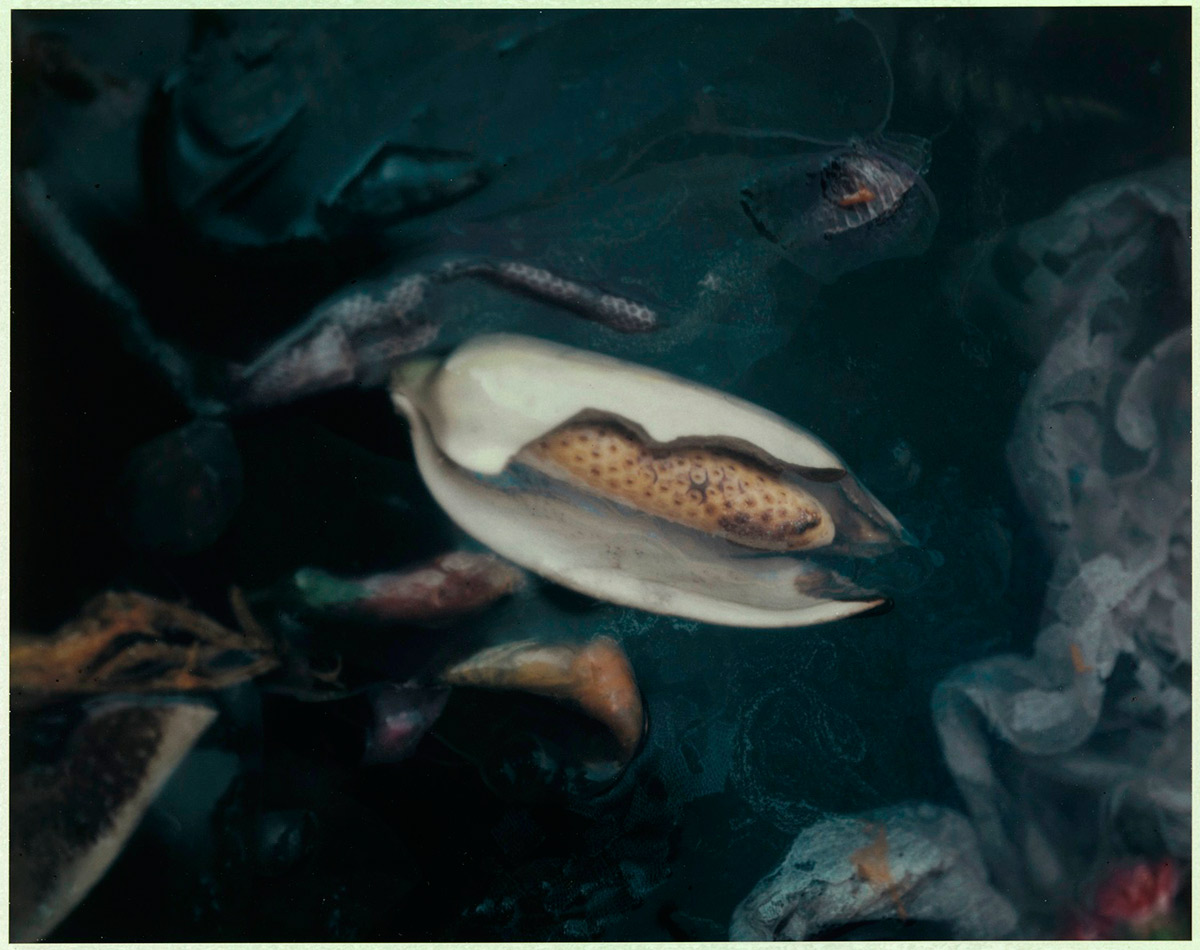
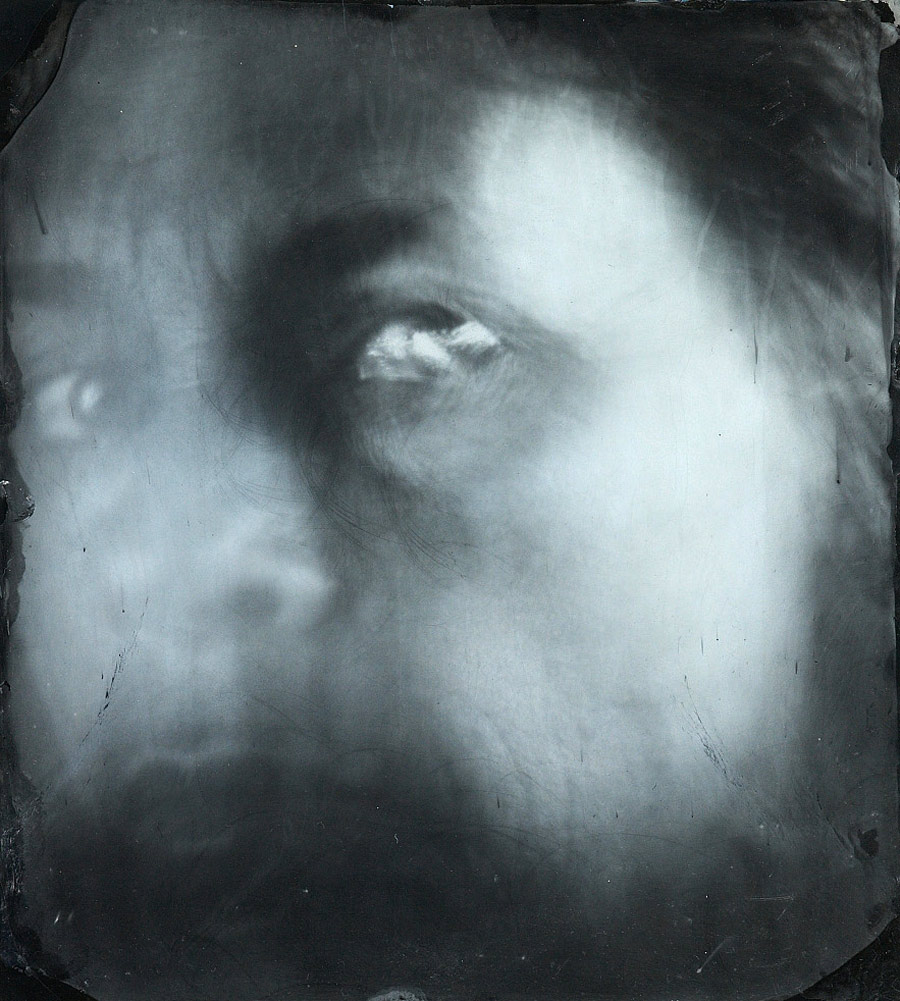
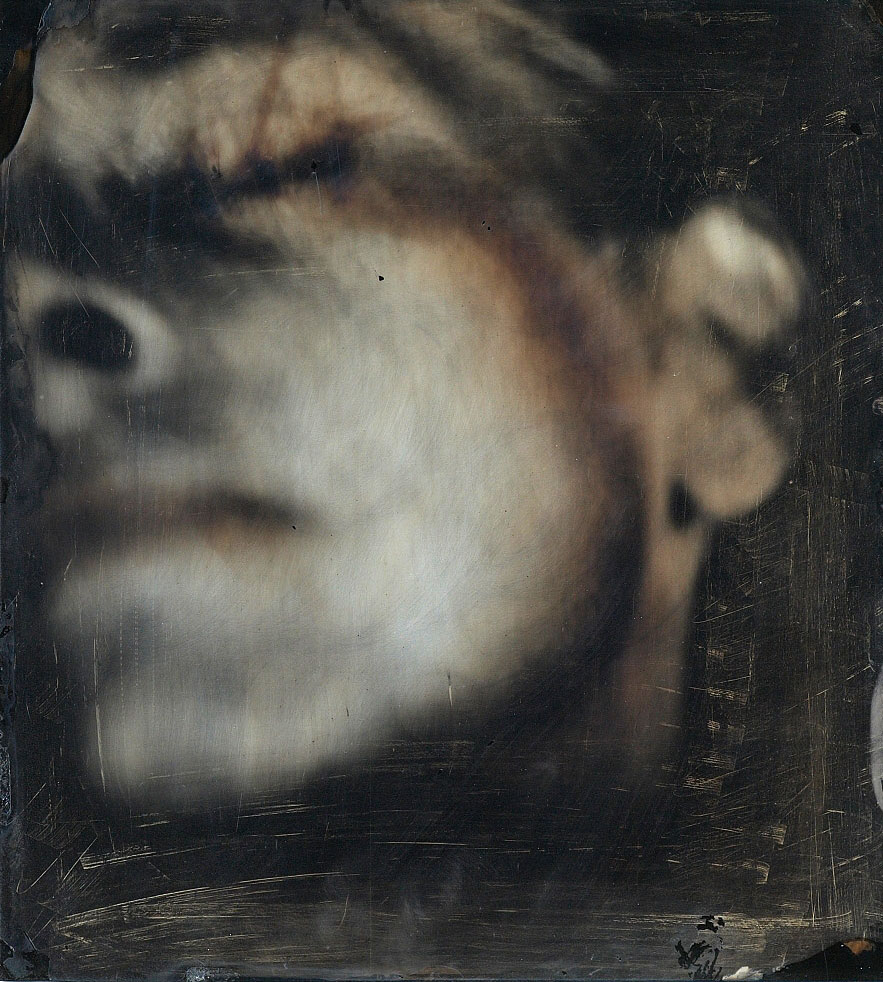
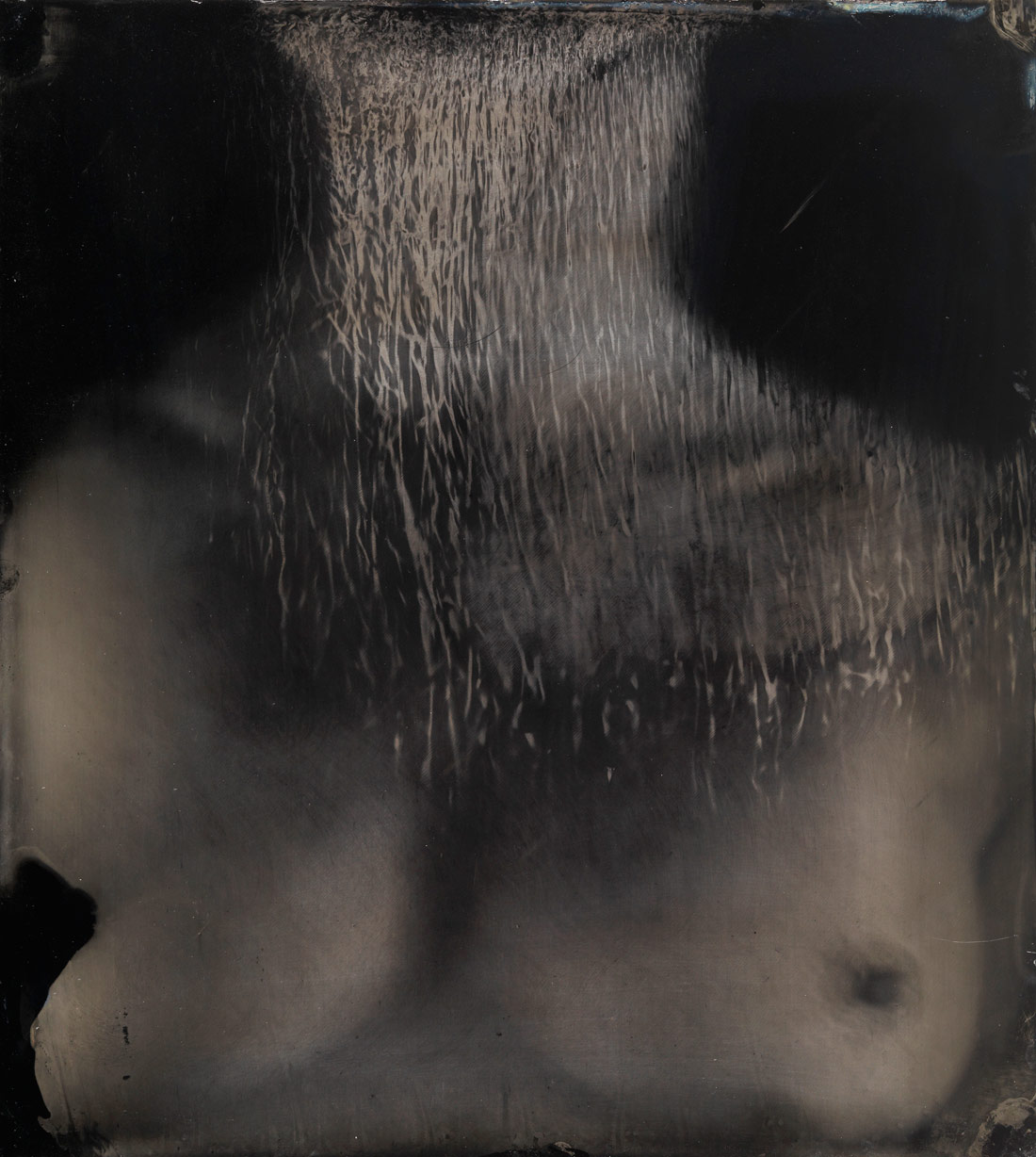
Exhibition: ‘Photography & place: Australian landscape photography, 1970s until now’ at the Art Gallery of New South Wales, Sydney

Exhibition dates: 16th March – 29th May 2011


Debra Phillips (Australian, b. 1958) 'Untitled 7 (view from model plane launch area)' 2001


Debra Phillips (Australian, b. 1958)
Untitled 7 (view from model plane launch area)
2001
From the series The world as puzzle
Two Type C photographs
68 x 80cm each
Image courtesy the artist and BREENSPACE, Sydney
© Debra Phillips


Hot on the heels of my reviews of Stormy Weather: Contemporary Landscape Photography at NGV Australia and Sidney Nolan: Drought Photographs at Australian Galleries, Melbourne comes the exhibition Photography & place: Australian landscape photography, 1970s until now at the Art Gallery of New South Wales. An insightful, eloquent text by Vigen Galstyan (Assistant curator, photographs, AGNSW) accompanies the posting.

Dr Marcus Bunyan


Many thankx to Susanne Briggs for her help and to the Art Gallery of New South Wales for allowing me to publish the photographs and the text in the posting. Please click on the photographs for a larger version of the image.


Douglas Holleley (Australia, United States of America, b. 1949) 'Bottle-brush near Sleaford Bay, South Australia' 1979


Douglas Holleley (Australia, United States of America, b. 1949)
Bottle-brush near Sleaford Bay, South Australia
1979
Four SX-70 Polaroid photographs
61 x 76cm
AGNSW collection, purchased 1982
© Douglas Holleley


Australian born and American based photographer Douglas Holleley has experimented with many aberrant photographic techniques over the course of his career. Holleley received a Bachelor of Arts in Psychology in 1971 at Macquarie University before relocating to America to undertake a Master of Fine Arts, studying at the Visual Studies Workshop in Rochester, New York between 1974 and 1976. Founded by Nathan Lyons in 1969 and affiliated with important photographers including Minor White and Frederick Sommers, the Visual Studies Workshop was a bedrock institution that fostered innovative photographic practice from the 1970s onwards. It was here that Holleley received tutelage from Ansel Adams in 1975. His early photographic output includes hand coloured black and white photographs as well as photograms and gridded arrangements of Polaroids. He later began experimenting with digital photography, applying the same principles of the photogram to his experiments with a flatbed scanner.

During the time spent studying photography in America in the 1970s Holleley became interested in Polaroid technology. When he returned to Australia in 1979, before later relocating permanently to America, Holleley commenced an extensive photographic project of documenting the Australian bush with a Polaroid SX-70 camera, effectively becoming one of the first professional practitioners of the medium in the country. The resulting images were presented as a series and published as a book – Visions of Australia – in 1980. Employing a refined formalist vocabulary, Holleley produced photographic mosaics by arranging his Polaroids into gridded compositions.

Dissected, disassembled and then collated within the pictorial frame, the landscape in Holleley’s works becomes slightly unnatural and detached. These works negate linear single point perspective by focusing on the ground and reducing the scene to a formal composite. Here, the expanse of the view and the horizon does not dominate the space of the image. The tessellating images produce a ‘whole’ that is slightly misaligned and unsettled. In some works, the photographer’s shadow is visible. It asserts itself as an ambivalent presence that is not tethered to the scene. This spectral form heightens the sense of disquiet that pervades the images.

Text from the Art Gallery of New South Wales website [Online] Cited 16/01/2020


Ian North (New Zealand, b. 1945) 'Canberra suite no 2' 1980, printed c. 1984


Ian North (New Zealand, b. 1945)
Canberra suite no 2
1980, printed c. 1984
From the series Canberra suite 1980-81
Type C photograph
37 x 45.7cm
AGNSW collection, gift of the artist
© Ian North


Ian North (New Zealand, b. 1945) 'Canberra suite no 7' 1980, printed c. 1984


Ian North (New Zealand, b. 1945)
Canberra suite no 7
1980, printed c. 1984
From the series Canberra suite 1980-81
Type C photograph
37 x 45.7cm
AGNSW collection, gift of the artist
© Ian North


Ian North is an Adjunct Professor of Visual Arts at both the University of Adelaide and the University of South Australia. He is a photographer, painter and writer, and was the founding curator of photography at the National Gallery of Australia 1980-1984. Throughout his career, he has been concerned with the legacy of Australian landscape, the impact of colonial narratives and their established visual conventions and, as a consequence, the politics of representing the subject. …

North’s methodology is concerned with the processes of vision and interaction as they have shaped the landscape. In Canberra Suite North presents an encyclopaedic record of Walter Burley Griffin’s intricately designed city, exploring the spatial interface between nature and humanity. The works are absent of human life – reminiscent of Ed Ruscha’s Twenty-six Gasoline Stations. The emotional ambivalence of the images is reflected in their use of colour, like that of postcards. As one of the first instances of larger format colour art photography in Australia, the images topographically map space as a depersonalised, banal subject. Yet their colour, like that of landscape painting, highlights flora, revealing the number of non-native plants included in Canberra’s design. As such, these artefacts of North’s private wanderings and systemic mode of looking are able to subtly critique colonialism.

Text from the Art Gallery of New South Wales website [Online] Cited 16/01/2020


EARTH SCANS AND BUSH RELEVANCES: Photography & place in Australia, 1970s till now

For many of us, landscape is a noun. A view from the window or the balcony, a strange immaterial ‘thing’ that makes people exclaim in awe, point to in pride, recall nostalgically, pose in front of or be used to bump up real estate prices. If one is an urban dweller, which most Australians are, then the landscape exists essentially as a mirage, something to create in the backyard, occasionally look at on holidays or hang on the walls. However, noted American cultural theorist and art historian W. J. T. Mitchell has proposed that we should think of landscape as a verb: an act of creation on our part that engenders cultural constructs, national identities and shared mythologies.

Photography & place is an exhibition that investigates this process of ‘landscaping’ through the work of 18 Australian photographers between the 1970s and now. Their significant contribution to representation of landscape broke new ground in what has always been a confounding topic. Indeed, as Judy Annear has pointed out in a 2008 essay in Broadsheet magazine, the practice of documenting and interpreting the notion of ‘place’ in Australian photography has been fragmentary in comparison to traditions in America, Europe or New Zealand. This reluctance to focus on the natural environment is perhaps a residue of the ‘terra nullius’ polemic, which shifted the attention of many photographers on the building of colonial Australia. Photography from the mid 19th to the early 20th century by photographers such as Charles Bayliss and Nicholas Caire actively documented the conquest of nature by white settlers, or presented views of untouched wilderness as epitomes of the picturesque: endless waterfalls, lakes, forests in twilights, enigmatic caves and an occasional nymph like creature prancing. Despite Bayliss’ efforts to show the indigenous people on their land, they are, as Helen Ennis observed in her 2007 book Photography and Australia, conspicuous by their absence: the land that we see surrounding them in early Australian photography by the likes of J.W. Lindt is often a mass-produced painted studio backdrop.

The advent of modernism in the 1930s only served to entrench the photographers deeper into the urban space. ‘Place’ is the city and it is here that industry, progress and culture shapes the Australian identity. It is still difficult to dislodge the iconic images of Max Dupain and David Moore as epitomes of Australianness, promulgated as they were through countless renditions in mass media and consumer culture. But as post-modern anxiety started to seep through the patchwork of the Australian dream, it was landscape that many critically informed photographers turned to as a tool for analysis and revision.

A number of factors conflated in the mid 1970s, engendering a radical shift in perspectives. One of the primary forces that began to reshape the approaches to landscape in Australian photography was the awareness of new artistic movements taking place in USA and Europe. The enormously influential exhibition New Topographics: Photographs of a Man-Altered Landscape held in 1975 at the George Eastman House, Rochester, consolidated the spread of minimalist and conceptually informed photography which was avidly embraced by a younger generation of Australian photographers. One can also cite the rise of the Australian greens movement in Tasmania, the increasing awareness of Indigenous cultures and rights and not the least, the phenomenon of university-educated photographers as key milestones during this decade.

Lynn Silverman, Douglas Holleley, Jon Rhodes, Wes Stacey and Marion Marrison were among the practitioners who pointed their lenses out of the city, often exploring the fringes of human settlement and sometimes as in the case of Silverman, Stacey and Holleley, venturing into the desert. The element that collectively stamps their work is the ostensible fragmentation of the landscape. Instead of the holistic, positivist postcard views of Australia, we get something resembling a lunar vista. The palpable sense of alienation in American expatriate Lynn Silverman’s striking Horizons series from 1979 echoes in the disorienting grid-based Polaroid assemblages by Holleley conjuring up a space that appears hostile and to a degree indifferent to our presence. The foreignness of these landscapes is not necessarily a malevolent force as was customary to show in a slate of Australian New Wave films of the 70s and 80s. Rather a much more meditative stance is taken in regards to our relationship to a place which has been claimed without being understood or in many ways respected. Ingeborg Tyssen’s photographs hint at existing presences, forms and phenomena which are full of life and meaning that remain perpetually unresolved to an outsider. The imported paradigms of Western culture can not take root in this environment. One could easily define the landscape photography of this period in Lynn Silverman’s words as “an orienting experience” and a belated attempt at a proper reconnaissance of the land.

The coolly detached outlook that underlines the investigative drive of most of these photographers is magnified by their adoption of serial or multi-panel formats. It was certainly a way to expand and collapse the accepted faculties of the pictorial field, challenging and questioning the accepted notions of photographic ‘truth’. Jon Rhodes demonstrates the inherent power of this simple device in his cinematically sequential Gurkawey, Trial Bay, NT 1974, which transforms a seemingly wild and uninhabitable swamp into a joyful playground of an Aboriginal child.

In some instances the photographic approach is more concerned with elucidating the nature of the photographic image itself and the way it can influence and control our perception. As Arnold Hauser has lucidly described in his groundbreaking Social History of Art, images have always been used to secure and infer political power. As such, the metamorphosis of a visual representation into an iconographic one carries within it an element of danger as images begin to seduce the viewer away from objectivity. Indeed, images of Australia have been the most relentlessly and carefully used signifiers in promoting a (colonial) national consciousness by political, commercial and cultural institutions. In this light, it is not difficult to see the works of Wes Stacey and Ian North as acts of iconoclasm. Stacey’s droll and gently parodic series The road 1973-1975, charts a snapshot journey that goes nowhere. Seemingly random, half-glimpsed shots of empty dirt roads, sunburnt grass mounds and endless highways emanate a sense of rootlessness and displacement, negating any possibility of objectification or identification with the landscape. Instead of epic grandeur and jingoism we get something that is confronting, uncomfortably real and in no way ‘advertisable’.

‘The Real’ is even more startling in Ian North’s subversive Canberra suite 1980-81, where the utopian dream capital has been reduced to banal ‘documents’ of depopulated, custom-made suburbia. The hyperreal concreteness of North’s Canberra gives the city an aura of a De Chiricoesque waking nightmare. In line with the set practices of conceptual photography of the period, North has distilled his images from any sign of formal mediation, forcing the viewer to focus on the raw content. It is through this forensic directness that the strange incongruity of human intervention within the landscape becomes ostensible.

Daniel Palmer has noted that North’s images “are highly prescient of much photography produced by artists in Australia today”. Certainly by the 1980s photographers became more actively engaged in analysing the nature / culture median. Strongly influenced by feminist and post-colonial theory, a number of practitioners used photography as a medium to document ideas rather than objective reality. Anne Ferran and Simryn Gill are particularly notable in this regard. Both artists are concerned with the historical and political dimensions of the locations they chose to photograph, resulting in multi-layered and complex strategies that require more involved intellectual interaction from the audience. Gill’s ‘staged’ photographs relate to us the agency of nature and time upon the cultural environment. Synthesis and amalgamation of outwardly irreconcilable elements – imported plants, Australian bush, cotton shirts – slowly, but surely melt into new, as yet unknown entities in Rampant 1999. The force of inevitable decay is absolute yet imbued with generative power as well. Exploring the constantly shifting certainties of what constitutes a ‘place’ the artist draws the audience into questioning its own role in this transformative process.

Ferran takes a more archaeological position in relation to her subject matter. Her eerie surveys of rather ordinary grass mounds in the series Lost to worlds 2008 become evocative paeans to obliterated lives, once we learn that the mounds are all that remain of the factories where convict women were sent to work. Looking at these shimmering ghost worlds one is reminded of Walter Benjamin’s essay The Ruin where the writer analyses the capacity of ruins to reveal the “philosophical truth content”. It is through this allegorical device that Ferran achieves a degree of rehabilitation for the absent histories she photographs.

History, in its manifold and troubling guises, is directly ‘exposed’ in the landscapes of Ricky Maynard, Michael Riley and Rosemary Laing. As Indigenous photographers, Maynard and Riley have played an important role in translating the cultural and political status of Aboriginal peoples into a ‘language’ that is universally understood. Their work remains firmly rooted in the traditions of contemporary art, yet the heavily symbolical slant shows a more ardent and personal engagement with the Australian landscape. Riley’s expressionistic series flyblown 1998 sums up in a few strategically juxtaposed metaphors the spiritual dimension of the landscape, while simultaneously revealing the diverging connotations of Australia’s fundamentally divided identity. The colonial legacy is shown as one of conquest and domination that clashes with the artist’s engagement with country. Maynard’s Portrait of a distant land 2005, explores the same dichotomy in more site specific terms. After permanently settling in Flinders Island, Maynard decided to return to the portrayal of Tasmanian Aborigines, taking a more collaborative approach. He sees this as a way of bypassing the propensity of the photographic image “to subjugate its subjects”. The resulting series is a profoundly poetic treatment that rises above social documentation to suggest the wider implications of historical change and disclose the ability of people to overcome what the artist has described as victimisation through a deeply compassionate relationship with the land. Ultimately Maynard gives us an edifying testimony to the affirmative power of the landscape as collective memory.

Interest in the political aspects of landscape photography has continued unabated into the 21st century. Yet a more philosophically inclined thread has become evident in the last two decades. No longer is it enough to deconstruct and pull apart ideas about landscape’s relationship to identity and nationhood. What photographers like Bill Henson, David Stephenson, Simone Douglas and Rosemary Laing question is the very possibility (or impossibility) of seeing itself. If positioning oneself in relation to nature seems like a distinct, albeit problematic proposition in the 1970s and 80s, the later works in the exhibition are resolutely ambivalent on the subject.

What can one grab onto when faced with the endless expanses of white in Stephenson’s The ice 1992, the terrifying darkness of Henson’s night scenes or the infuriating haze of Douglas’s twilight worlds? Perhaps the only recourse is to dissolve into the beckoning ‘forever’ of the vanishing point in Laing’s To walk on a sea of salt 2004. This void is not a boundary point between nature and culture – it is where culture ends and an entirely new state of consciousness begins: the realm of the sublime and the imagination. As history seems no longer to be trustworthy, ‘place’ can only be constructed as a metaphysical entity. It is a curious turnabout in some ways that echoes some of the early, turn-of-the-century encounters with the Australian landscape by photographers such as John Paine and Norman C. Deck. The sense of fear and awe towards the unfamiliar environment permeates their images, transcending the merely investigative / didactic motives of most colonial photography. What has eventuated from walking into this environment? Subjugation? Destruction? Incomprehension? Indifference? By going back to the point zero of the void and the sublime, contemporary photography negotiates a second attempt at engagement with nature through a renewed and deeper understanding of humanity’s symbiotic relationship with this life-giving force.

Vigen Galstyan
Assistant curator, photographs1


1/ Galstyan, Vigen. “EARTH SCANS AND BUSH RELEVANCES: Photography & place in Australia, 1970s till now,” in Look gallery magazine. Sydney: Art Gallery Society of New South Wales, 2011, pp. 25-29.


Rosemary Laing (Australian, b. 1959) 'After Heysen' 2005


Rosemary Laing (Australian, b. 1959)
After Heysen
2005
Type C photograph
110 x 252cm
On loan from The Australian Club, Melbourne
Image courtesy of the arts & Tolarno Galleries, Melbourne
© Rosemary Laing


Rosemary Laing (Australian, b. 1959) 'to walk on a sea of salt' 2004


Rosemary Laing (Australian, b. 1959)
to walk on a sea of salt
2004
Type C photograph
110 x 226.7cm
Image courtesy of the arts & Tolarno Galleries, Melbourne
© Rosemary Laing
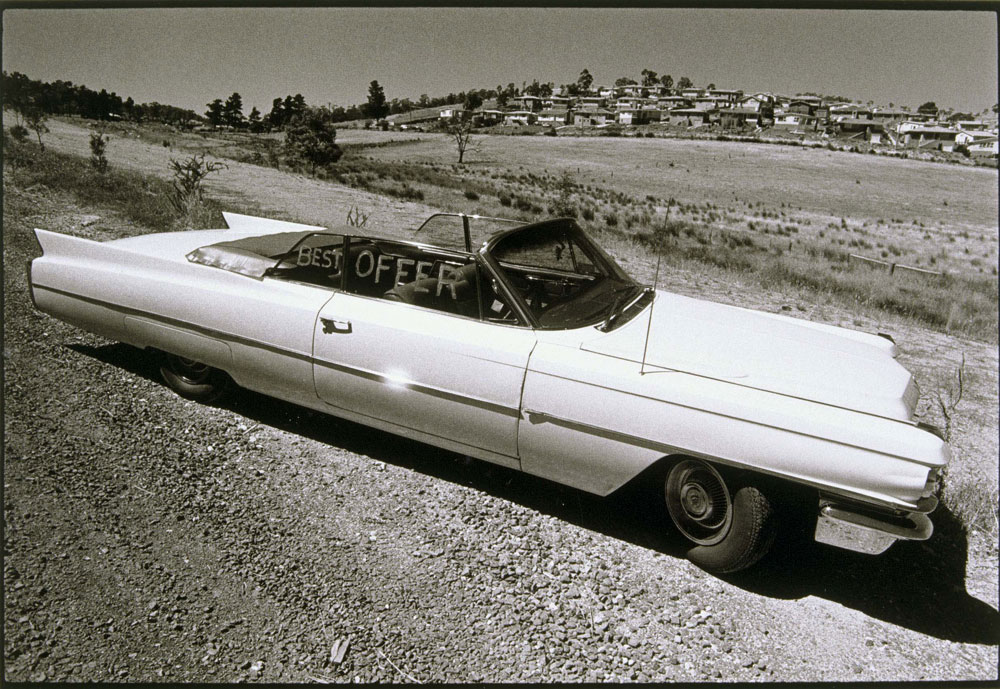
 

Jon Rhodes (Australian, b. 1947) 'Hobart, Tasmania' 1972-75 from the album 'Australia'


Jon Rhodes (Australian, b. 1947)
Hobart, Tasmania
1972-75
From the album Australia
1 of 53 gelatin silver photographs
11.9 x 17.7cm
Art Gallery of New South Wales, purchased 1980
© Jon Rhodes


Jon Rhodes (Australian, b. 1947) 'Tuncester, New South Wales' 1972-75 from the album 'Australia'


Jon Rhodes (Australian, b. 1947)
Tuncester, New South Wales
1972-75
From the album Australia
1 of 53 gelatin silver photographs
11.9 x 17.7cm
Art Gallery of New South Wales, purchased 1980
© Jon Rhodes


Michael Riley (Australian, 1960-2004) 'Untitled' 1998 from the series 'flyblown'


Michael Riley (Australian, 1960-2004)
Untitled
1998
From the series flyblown
Pigment print
82 x 107.8cm
Art Gallery of New South Wales, Sydney
Anonymous gift to the Aboriginal & Torres Strait Islander and Photography collections 2010
© Michael Riley Estate. Licensed by Viscopy, Sydney


Michael Riley (Australian, 1960-2004) 'Untitled' 1998 from the series 'flyblown'


Michael Riley (Australian, 1960-2004)
Untitled
1998
From the series flyblown
Pigment print
82 x 107.8cm
Art Gallery of New South Wales, Sydney
Anonymous gift to the Aboriginal & Torres Strait Islander and Photography collections 2010
© Michael Riley Estate. Licensed by Viscopy, Sydney


Michael Riley received his first introduction to photography through a workshop at the Tin Sheds Gallery in Sydney, 1982. A Wiradjuri / Kamilaroi man, the artist moved to Sydney from Dubbo in his late teens. He became part of a circle of young Indigenous artists drawn together in the city at that time. A founding member of the Boomalli Aboriginal Artists Co-operative Riley was also a key participant in the first exhibition of Indigenous photographers at the Aboriginal Artists Gallery, Sydney in 1986 (curator Ace Bourke). In 2003 Riley’s work was selected for the Istanbul Biennial, and in 2006 his work was permanently installed at Musée de quai Branly, Paris. A major retrospective toured nationally in 2006-2008.

Riley’s fine art photography began in black and white but he quickly progressed to large-scale colour, a format that also expanded the cinematic qualities of his images, no doubt reflecting the influence film and video were having upon the artist as he worked simultaneously with these media. He produced, for example, the documentaries Blacktracker and Tent boxers for ABC television in the late nineties.

The photographic series flyblown bears a close relationship to the film Empire which Riley created in 1997. Like the film, these photographs give expression to the artist’s concern with the impact of European culture upon that of Australia’s Indigenous population, specifically, as he described it, the ‘sacrifices Aboriginal people made to be Christian’ (Avril Quaill, ‘Marking our times: selected works of art from the Aboriginal and Torres Straight Islander Collection at the National Gallery of Australia’, National Gallery of Australia, Canberra 1996 p. 66).

Christian iconography looms large in the series, as it has across much of Riley’s work. In flyblown, an imposing reflective cross is raised in the sky. Repeated in red, gold and blue its presence is inescapable. A symbol capable of inspiring awe, fear, devotion, Riley also engages with its elegiac qualities so that it functions as memorial marker. Another image depicting a bible floating face down in water conceptualises the missionary deluge, perhaps; submersion and loss through baptism, definitely.

flyblown reverberates with a subtle ominous hum – the quiet tension that precedes a storm. The parched earth beneath a dead galah seems to ache for the rain and water promised in the other images of clouds and dark skies. The nourishment Christianity offered and the inadvertent drowning of traditional culture that often followed is implied.

Visually linking the natural environment with religious symbolism Riley articulates Indigenous spirituality’s connections to country and widens his examination beyond to examine the sustained environmental damage. The negative side effects of pastoralist Australia are indicated by contrasting images of the long grass of cattle pastures with that of drought and wildlife death.

Riley’s success in articulating these issues and complexities, incorporating religious iconography so laden by history and meaning is a testament to his sensitivity and subtlety. Allowing room for ambiguity, Riley provides space for the mixed emotions of the subject and its history.

Text from the Art Gallery of New South Wales website [Online] Cited 16/01/2020


Simryn Gill (Singapore, Malaysia, Australia, b. 1959) 'Untitled' 1999 from the series 'Rampant'


Simryn Gill (Singapore, Malaysia, Australia, b. 1959)
Untitled
1999
From the series Rampant
Gelatin silver photograph
25 x 24cm
AGNSW collection, gift of the artist, 2005
© Simryn Gill


In Rampant, Simryn Gill turned her eye once more on Australia ‘… to see if I could find friends among the local flora’. This series of photographs was shot in sub-tropical northern New South Wales and shows unnerving images of trees and plants dressed up in clothes. In the photographs these ghostly forms are seen lingering in groves of introduced plants such as bamboo, bananas, sugar cane and camphor laurels. The plants are dressed in lungis and sarongs, generic clothing from South and South- East Asia, where many of these plants originate. Rampant is a form of memento mori, a record of the aspirations that saw plants only too successfully introduced into a pristine terrain which was unable to offer any resistance to their feral ways.

French philosopher Gaston Bachelard condenses his complex thinking on creativity and the human imagination into the metaphor of a tree, with its living, evolving growth and the simultaneity of being earth bound and heaven reaching, symbolising both the real and ideal.1 However, what happens when that tree is a camphor laurel, an admirable thing in its native land but out of place and wrecking havoc along the creeks of rural New South Wales?

Many once-useful species are now noxious weeds and over-successful colonisers, despised for their commonness, their success, their over-familiarity, and for being where we feel they should not be. They disrupt the order we would like to impose and remind us of our fallibility when attempting to play god and create our own earthly Edens. The language of natural purity that we use to protect our landscape also resonates with the nationalist rhetoric used to police our borders and to decide who are acceptable new arrivals and who are illegal aliens, often determined through scales of economic and social usefulness.

Text from the Art Gallery of New South Wales website [Online] Cited 16/01/2020


1/ Gaston Bachelard, ‘The totality of the root image’, On poetic imagination and reverie, editor and translator Colette Graudin, Spring Publications, Quebec, 1987, p. 85.


    Anne Ferran (Australian, b. 1949) 'Untitled' 2008 from the series 'Lost to worlds'


    Anne Ferran (Australian, b. 1949)
    Untitled
    2008
    From the series Lost to worlds
    Gelatin silver print
    © Anne Ferran


    Anne Ferran (Australian, b. 1949) 'Untitled' 2008


    Anne Ferran (Australian, b. 1949)
    Untitled
    2008
    From the series Lost to worlds
    Gelatin silver print
    © Anne Ferran


    Wesley Stacey (Australia, b. 1941) 'The road: Outback to the city 3' 1973-1975


    Wesley Stacey (Australia, b. 1941)
    The road: Outback to the city 3
    1973-1975
    Folio 1 from “The Road” a portfolio of 280 photographs
    Fuji Colour machine print
    © Wesley Stacey


    Wesley Stacey (Australia, b. 1941) 'The road: Surfers to Hobart 15' 1973-1975


    Wesley Stacey (Australia, b. 1941)
    The road: Surfers to Hobart 15
    1973-1975
    Folio 16 from “The Road” a portfolio of 280 photographs
    Fuji Colour machine print
    © Wesley Stacey


    Wesley Stacey (Australia, b. 1941) 'The road: Port Hedland / Wittenoon / Roeburne, WA 14' 1973-1975


    Wesley Stacey (Australia, b. 1941)
    The road: Port Hedland/Wittenoon/Roeburne, WA 14
    1973-1975
    Folio 10 from “The Road” a portfolio of 280 photographs
    Fuji Colour machine print
    © Wesley Stacey


    Art Gallery of New South Wales
    Art Gallery Road, The Domain, Sydney NSW 2000, Australia

    Opening hours:
    Open every day 10am – 5pm
    except Christmas Day and Good Friday

    Art Gallery of New South Wales website

    LIKE ART BLART ON FACEBOOK

    Back to top

    Exhibition: ‘Sally Mann: The Flesh and the Spirit’ at the Virginia Museum of Fine Arts, Richmond, VA

    Exhibition dates: 13th November 2010 – 23rd January 2011


    Many thankx to the Virginia Museum of Fine Arts for allowing me to publish the photographs in the posting. Please click on the photographs for a larger version of the image.


    Sally Mann (American, b. 1951) 'Jessie #34' 2004 from the exhibition 'Sally Mann: The Flesh and the Spirit' at the Virginia Museum of Fine Arts


    Sally Mann (American, b. 1951)
    Jessie #34
    2004
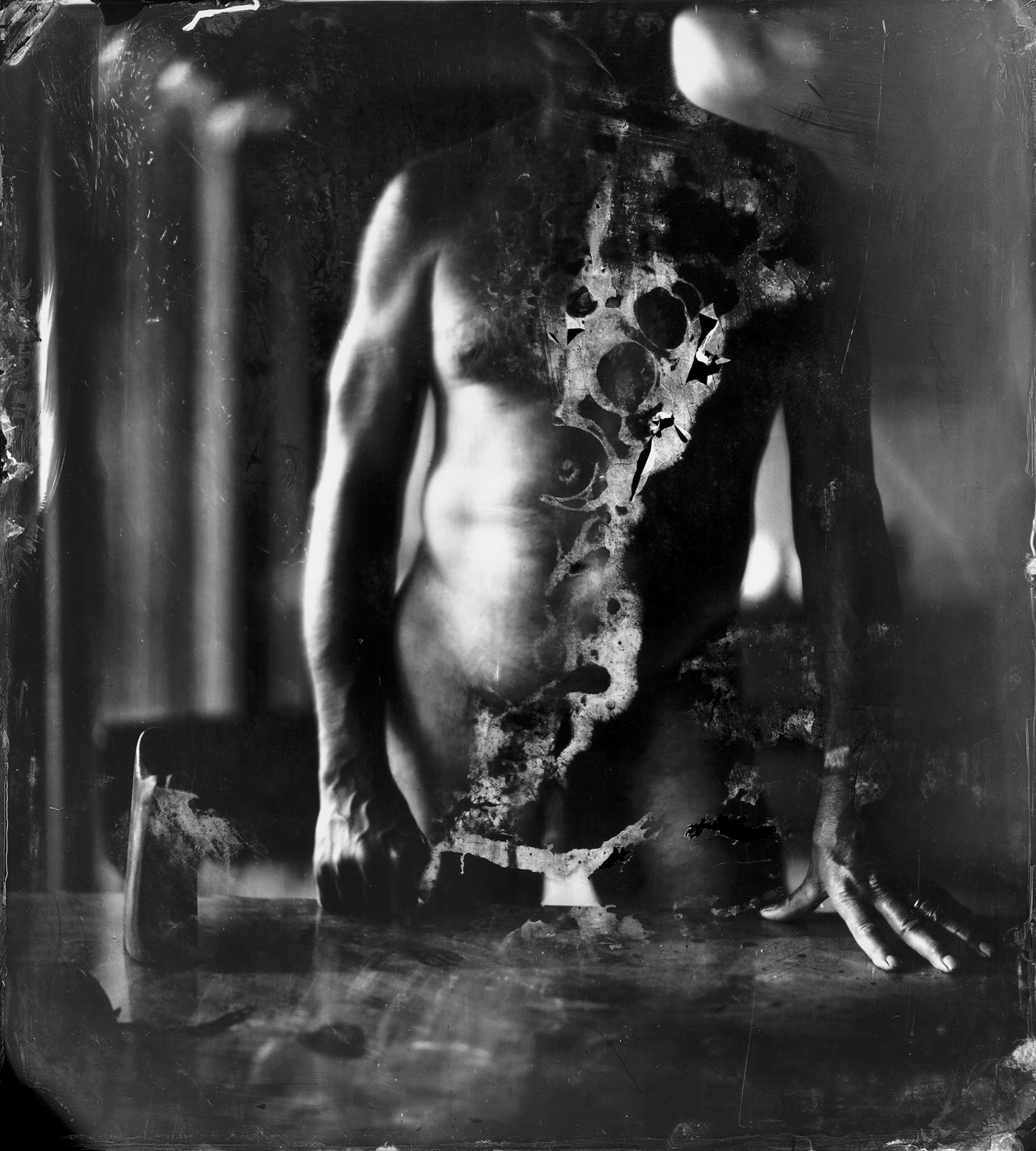
    Gelatin Silver enlargement print from 8 x 10 in. collodion wet-plate negative, with Soluvar matte varnish mixed with diatomaceous earth


    Sally Mann (American, b. 1951) 'Untitled (Still Life)' 2006 from the exhibition 'Sally Mann: The Flesh and the Spirit' at the Virginia Museum of Fine Arts


    Sally Mann (American, b. 1951)
    Untitled (Still Life)
    2006
    Ambrotype (unique collodion wet-plate positive on black glass), with sandarac varnish (15 x 13 in)


    Sally Mann (American, b. 1951) 'Untitled' 1983 from the exhibition 'Sally Mann: The Flesh and the Spirit' at the Virginia Museum of Fine Arts


    Sally Mann (American, b. 1951)
    Untitled
    1983
    Polaroid (8 x 10 in)


    Sally Mann (American, b. 1951) 'Untitled' 2000-2001 from the exhibition 'Sally Mann: The Flesh and the Spirit' at the Virginia Museum of Fine Arts


    Sally Mann (American, b. 1951)
    Untitled
    2000-2001
    Gelatin silver enlargement prints from 8 x 10 in. (20.3 x 25.4cm) collodion wet-plate negatives, with Soluvar matte varnish mixed with diatomaceous earth


    Sally Mann (American, b. 1951) 'Untitled-#4, Antietam' 2001 from the exhibition 'Sally Mann: The Flesh and the Spirit' at the Virginia Museum of Fine Arts


    Sally Mann (American, b. 1951)
    Untitled #4, Antietam
    2001
    Gelatin silver enlargement print from 8 x 10 in. collodion wet-plate


    One of the first major presentations in the United States of the bold work of contemporary photographer Sally Mann opened at the Virginia Museum of Fine Arts website (VMFA) on November 13, 2010. Exclusive to Richmond, the exhibition will continue until January 23, 2011.

    Focusing on the theme of the body, the exhibition will revolve around several entirely new series while also incorporating little-known early work. Mann is admired for her passionate use of photography to address issues of love and loss, expressed in images of her children and southern landscapes. Her recent work uses obsolete photographic methods and nearly abstract images to push the limits of her medium and to dig deeper into themes of mortality and vulnerability. The images include several powerful series of self-portraits – an entirely new subject in her work – and figure studies of her husband. Some of the works in the exhibition include nudity and other graphic material. Viewer and parental discretion is advised.

    “Sally Mann is among the top tier of photographers today. Although she is widely exhibited, we are fortunate to be one of the first U.S. museums to produce a major exhibition of her work,” says John Ravenal, the exhibition curator and Sydney and Frances Lewis Family Curator of Modern and Contemporary Art at the Virginia Museum of Fine Arts. “The fearlessness, power and deeply emotional themes of her art are both captivating and unforgettable. We are pleased to exhibit one of Virginia’s, and the nation’s, finest artists.”

    Self-examination, ageing, death, and decay are some of the subjects of the exhibition, and these are balanced by themes of beauty, love, trust, and the hopefulness of youth. Among the works are portraits of Mann’s husband, who suffers from a degenerative muscle disease. These are juxtaposed with colourful images of her children, forming a poignant comparison between youthful evanescence and the expressive capacity of the mature adult body.

    Other works offer additional perspectives on the themes of ageing and mortality. Made during a trip to the University of Tennessee Forensic Anthropology Center, Mann’s “Body Farm” images explore her fascination with the thin line between animate and inanimate, form and matter. Multi-part self-portraits represent Mann’s first extended exploration of her own face as a subject. Two self-portrait pieces consist of multiple unique photographs printed on black glass – a format known as ambrotypes – arranged in monumental grids of Mann’s likeness.

    “The focus on the body in the exhibition will offer a profound meditation on human experience,” continues Ravenal. “The sheer beauty, formal sophistication, and expressive power of the work is likely to appeal to art world and general audiences alike.”

    For her landscapes, Mann developed the method she continues to use today, involving an antique large-format view camera and the laborious process of collodion wet-plate. This method, invented in the 1850s, uses sticky ether-based collodion poured on glass, which must be exposed and developed in a matter of minutes before it dries. Unlike her nineteenth-century predecessors, who strove for perfection, Mann embraces accident. Her approach produces spots, streaks, and scars, along with piercing focus in some areas and evaporation of the image in others. These distortions – “honest” artefacts of the process – add a profoundly emotional quality to Mann’s images.

    Mann’s recent work continues to use this technique, but returns to the body as a principle subject after a decade of landscapes. Though the body has been an essential focus in Mann’s work from the beginning, this is the first time an exhibition and publication have explored it as a coherent theme.

    Born in 1951, Sally Mann has played a leading role in contemporary photography for the past 25 years. Her career began in the 1970s and fully matured in the Culture Wars of the early 1990s, when photographs of her children became embroiled in national debates about family values. In the mid-1990s, Mann turned her attention to large-scale landscapes, specifically the evocative terrain of the South, where she was born, raised and continues to live. Her landscape work raised questions about history, memory and nostalgia, and also embraced a romantic beauty that proved as troubling to some critics as the sensual images of her children had to others. By the early 2000s, she had returned to figurative subjects, adding images of her husband and herself to her work.

    Text from the Virginia Museum of Fine Arts website


    Sally Mann (American, b. 1951) 'Untitled (Self Portraits)' 2006-2007 from the exhibition 'Sally Mann: The Flesh and the Spirit' at the Virginia Museum of Fine Arts


    Sally Mann (American, b. 1951)
    Untitled (Self Portraits)
    2006-2007
    Ambrotypes (unique collodion wet-plate positives on black glass) with sandarac varnish


    Sally Mann (American, b. 1951) 'Untitled (Self Portraits)' 2006-2007 (detail)


    Sally Mann (American, b. 1951)
    Untitled (Self Portraits) (detail)
    2006-2007
    Ambrotypes (unique collodion wet-plate positives on black glass) with sandarac varnish


    Sally Mann (American, b. 1951) 'Untitled (Self Portraits)' 2006-2007 (detail)


    Sally Mann (American, b. 1951)
    Untitled (Self Portraits) (detail)
    2006-2007
    Ambrotypes (unique collodion wet-plate positives on black glass) with sandarac varnish


    Sally Mann (American, b. 1951) 'Untitled (Self Portraits)' 2006-2007 (detail)


    Sally Mann (American, b. 1951)
    Untitled (Self Portraits) (detail)
    2006-2007
    Ambrotypes (unique collodion wet-plate positives on black glass) with sandarac varnish


    Sally Mann (American, b. 1951) 'Untitled' 2007-2008 from the exhibition 'Sally Mann: The Flesh and the Spirit' at the Virginia Museum of Fine Arts


    Sally Mann (American, b. 1951)
    Untitled
    2007-2008
    Ambrotypes (unique collodion wet-plate positives on black glass), with sandarac varnish


    Sally Mann (American, b. 1951) 'Ponder Heart' 2009 from the exhibition 'Sally Mann: The Flesh and the Spirit' at the Virginia Museum of Fine Arts


    Sally Mann (American, b. 1951)
    Ponder Heart
    2009
    Gelatin silver contact print from 15 x 13 1/2-in. collodion wet-plate negative


    Sally Mann (American, b. 1951) 'Hephaestus' 2008 from the exhibition 'Sally Mann: The Flesh and the Spirit' at the Virginia Museum of Fine Arts


    Sally Mann (American, b. 1951)
    Hephaestus
    2008
    Gelatin silver contact print from 15 x 13 1/2 –in. collodion wet-plate negative


    Sally Mann (American, b. 1951) 'Was Ever Love' 2009 from the exhibition 'Sally Mann: The Flesh and the Spirit' at the Virginia Museum of Fine Arts


    Sally Mann (American, b. 1951)
    Was Ever Love
    2009
    Gelatin silver contact print from 15 x 13 1/2 –in. collodion wet-plate negative


    Virginia Museum of Fine Arts
    200 N. Boulevard
    Richmond, Virginia USA
    23220-4007

    Opening hours:
    Daily 10am – 5pm
    Wed – Friday until 9pm

    Virginia Museum of Fine Arts website

    LIKE ART BLART ON FACEBOOK

    Back to top

    Exhibition: ‘In Focus: Making A Scene’ at The J. Paul Getty Museum, Los Angeles

    Exhibition dates: 30th June – 18th October, 2009


    Hill & Adamson (Scottish, active 1843-1848) '[Lane and Peddie as Afghans]' 1843 from the exhibition 'In Focus: Making A Scene' at The J. Paul Getty Museum, Los Angeles, June - Oct, 2009


    Hill & Adamson (Scottish, active 1843-1848)
    [Lane and Peddie as Afghans]
    1843
    Salted paper print from a paper negative
    20.6 × 14.3cm (8 1/8 × 5 5/8 in.)
    The J. Paul Getty Museum


    The team of Hill and Adamson initially began making dramatic portrait photographs as studies for one of Hill’s composite paintings. They also produced costume studies, including this scene in which Arabic scholar Mr. Lane and Mr. (Peddie) Redding appear in foreign garb.


    What a fabulous selection of photographs to illustrate a fascinating “scene”. I love staged, theatrical, constructed, conceptual, collaged, surreal, imaginary, narrative photography.

    Dr Marcus Bunyan


    Many thankx to the J. Paul Getty Museum for allowing me to publish the photographs in the posting. Please click on the photographs for a larger version of the image.


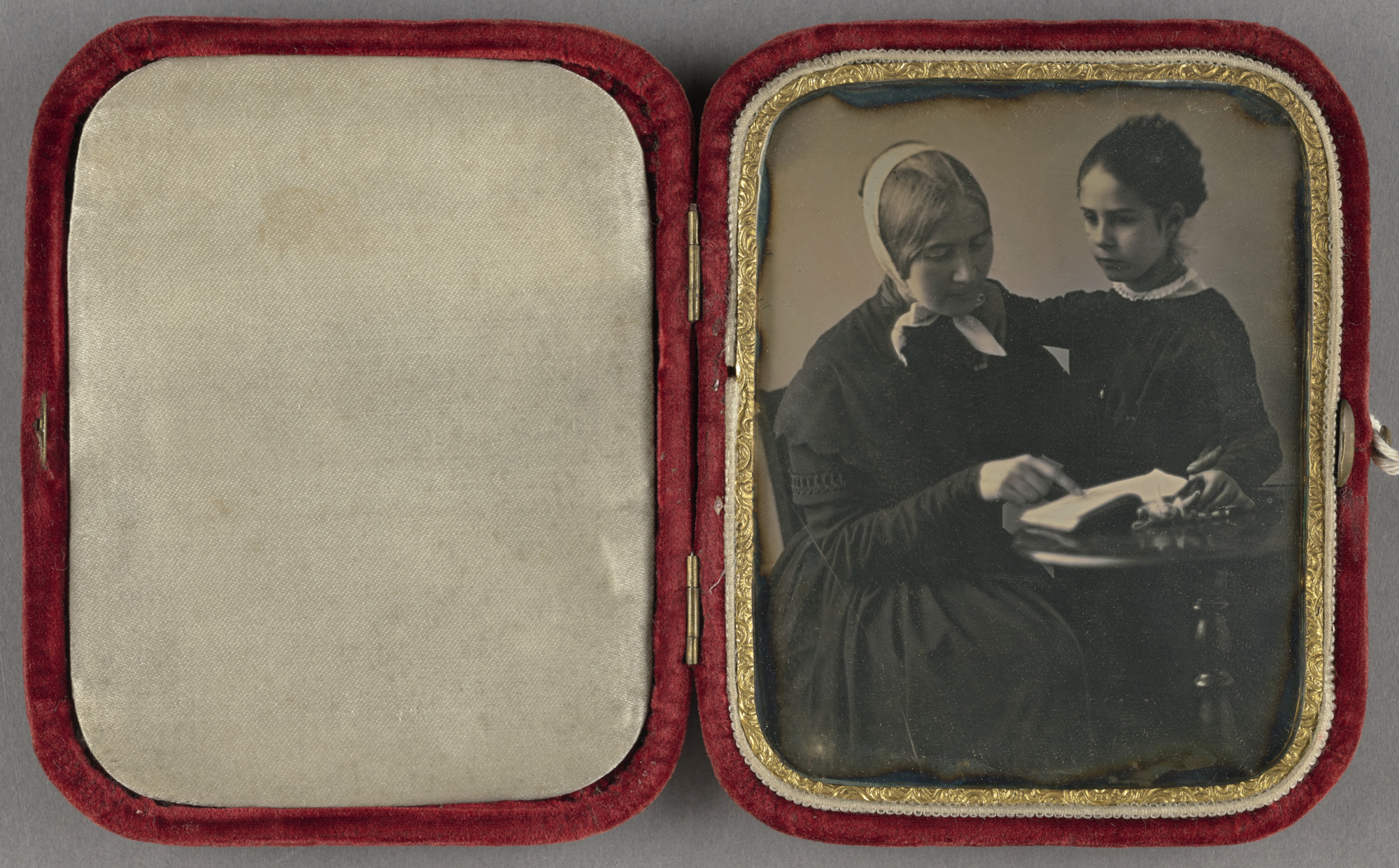
    Unknown maker, French. 'Woman Reading to a Girl' c. 1845 from the exhibition 'In Focus: Making A Scene' at The J. Paul Getty Museum, Los Angeles, June - Oct, 2009


    Unknown maker, French
    Woman Reading to a Girl
    c. 1845
    Daguerreotype
    9.1 × 7.1cm (3 9/16 × 2 13/16 in.)
    The J. Paul Getty Museum


    Through a skilful manipulation, the light coming from above and behind the figures casts the faces of mother and child in a softly modulated half-shadow. Their close grouping and familiar, intimate gestures evoke tenderness. The reflected light on the woman’s pointing finger and on the glowing white pages of the open book forms a strong visual triangle, drawing the viewer’s eye and serving to integrate and balance the composition.


    Oscar Gustave Rejlander (British, born Sweden, 1813-1875) 'The Infant Photography Giving the Painter an Additional Brush' c. 1856 from the exhibition 'In Focus: Making A Scene' at The J. Paul Getty Museum, Los Angeles, June - Oct, 2009


    Oscar Gustave Rejlander (British born Sweden, 1813-1875)
    The Infant Photography Giving the Painter an Additional Brush
    c. 1856
    Albumen silver print
    6 × 7.1cm (2 3/8 × 2 13/16 in.)
    The J. Paul Getty Museum


    Oscar Rejlander’s photograph could be read as a metaphor of his own career. The additional “brush” or image-making tool provided by photography to painters was evident from the beginnings of the medium. Many early practitioners arrived at photography from painting, as did Rejlander. Photographs were often thought of and used as sketching tools for painters. Although photographs never managed to signal the death of painting as initially predicted, they did frequently assume the function that drawing had traditionally held in relation to painting.

    Compositionally, this is an unusual photograph. Rejlander employs a narrative device from painting: the use of figures, or parts of figures, as allegorical representations for ideas. A very young child represents the infant medium of photography. The Painter appears only as a hand extending into the frame at the upper left, although the traditional arts are also represented by the sculpture reproduction in the lower left corner. The Infant Photography, identified by the camera on which the child supports himself, faces away from the camera, his features totally obscured. The mirror behind the child gives a clear reflection of Rejlander at his camera, making this image.


    Roger Fenton (English, 1819-1869) 'Contemplative Odalisque' 1858


    Roger Fenton (English, 1819-1869)
    Contemplative Odalisque
    1858
    Albumen silver print
    35.9 × 43.8cm (14 1/8 × 17 1/4 in.)
    The J. Paul Getty Museum
    Gift of Professors Joseph and Elaine Monsen


    Three years after traveling in the Crimea, Roger Fenton made a series of Orientalist photographs in his London studio using props gathered during his travels and non-Eastern models. Orientalism refers to just such romanticised depictions of imagined scenes of Muslim culture in the Ottoman Empire and its territories in the Near East and North Africa.

    Orientalist scenes were more often fiction than fact. Cultural biases and misunderstandings were laid down on paper or canvas and frequently became the only source of information on the subjects depicted. When a group of these Orientalist photographs was exhibited in 1858, one reviewer described them as “truly representing some phases in the life of this interesting people.”

    But not everyone so easily accepted Fenton’s images at face value; a more astute critic called for “the necessity of having real national types as models.” The same model shown here also appears as “Nubian” and “Egyptian” in other photographs by Fenton. This photograph may have originally been exhibited with the title The Reverie. The odalisque, meaning a slave or concubine in a harem, poses upon her sofa. Barefoot, blouse open, her surroundings convey a sensual disarray that conforms to an Orientalising fantasy of the available woman.


    Julia Margaret Cameron (British, born India, 1815-1879) 'The Rosebud Garden of Girls' June 1868


    Julia Margaret Cameron (British, born India, 1815-1879)
    The Rosebud Garden of Girls
    June 1868
    Album silver print
    29.4 × 26.7cm (11 9/16 × 10 1/2 in.)
    The J. Paul Getty Museum


    As evolutionary science and increasing secularism transformed the way Victorians understood the world, Cameron remained a devout Christian. She photographed influential public figures of her day as well as the women of her household, casting them in allegories of literary and religious subjects. Like her artistic contemporaries, the Pre-Raphaelite painters, who modelled their work on medieval religious and mythological art, Cameron intended her photographs to evince a connection between the spiritual and the natural realms.


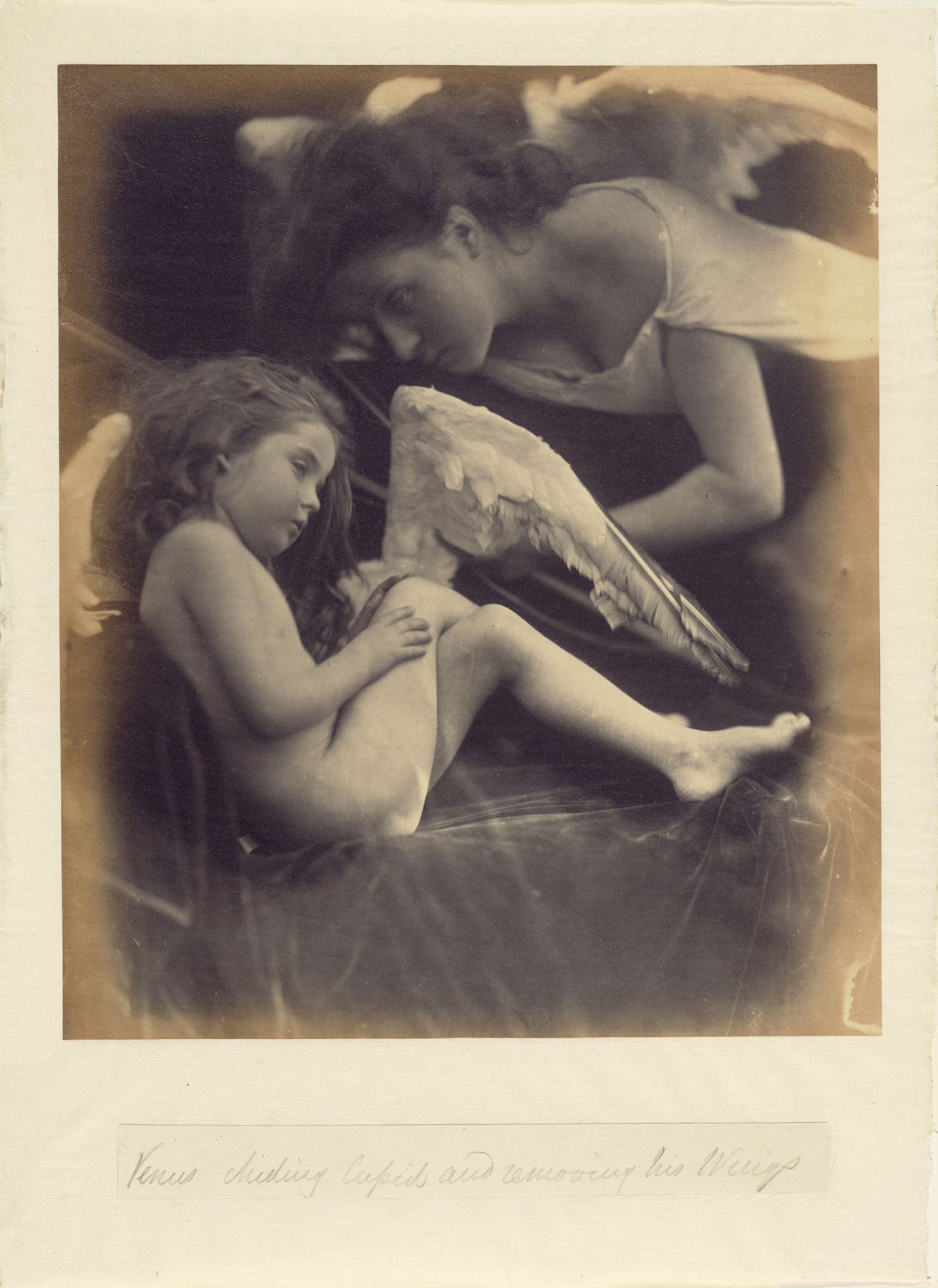
    Julia Margaret Cameron (British, born India, 1815-1879) 'Venus Chiding Cupid and Removing His Wings' 1872


    Julia Margaret Cameron (British, born India, 1815-1879)
    Venus Chiding Cupid and Removing His Wings
    1872
    Album silver print
    32.4 × 27.3cm (12 3/4 × 10 3/4 in.)
    The J. Paul Getty Museum


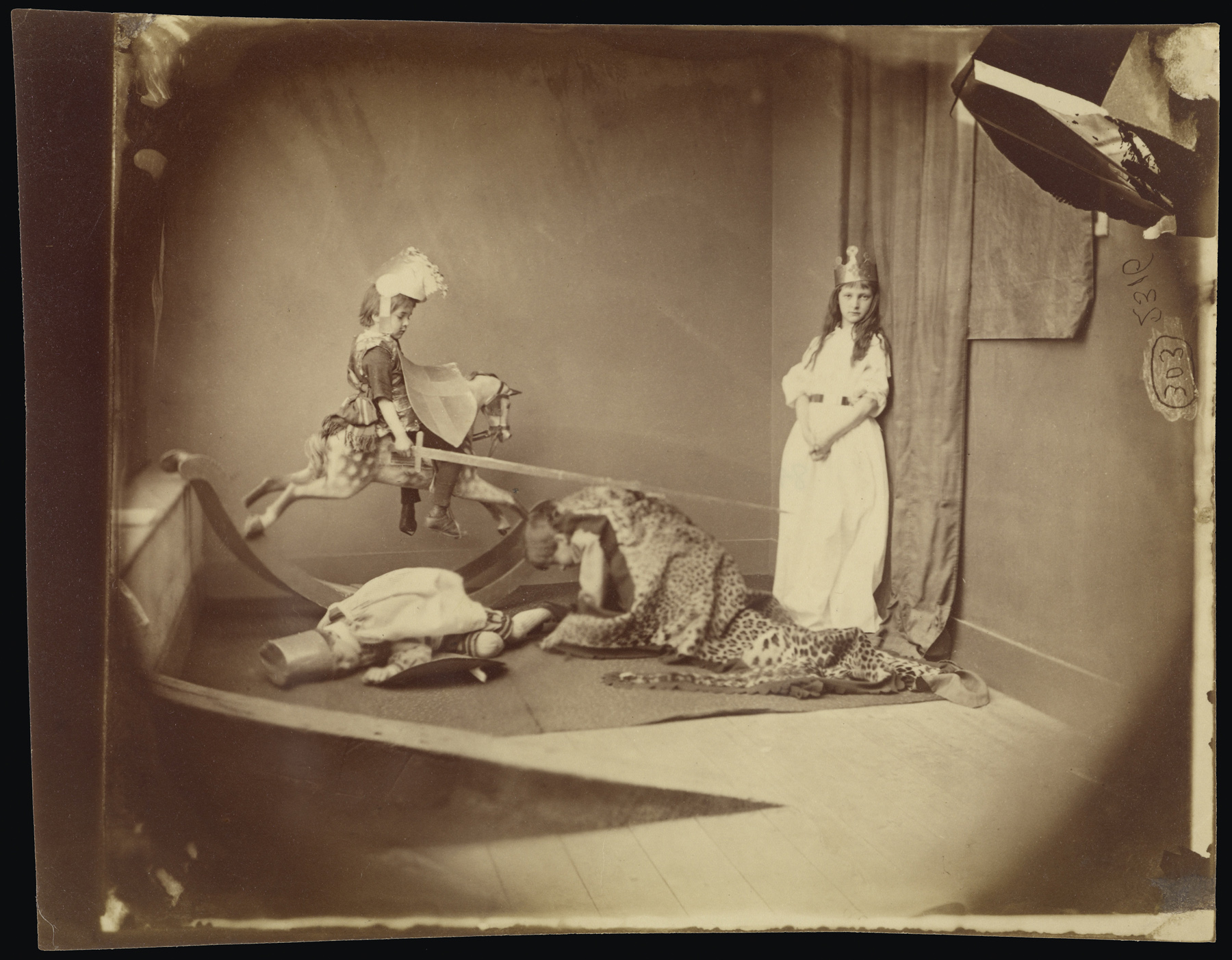
    Lewis Carroll (British, 1832-1898) 'Saint George and the Dragon' June 26, 1875


    Lewis Carroll (British, 1832-1898)
    Saint George and the Dragon
    June 26, 1875
    Albumen silver print
    12.2 × 16.2cm (4 13/16 × 6 3/8 in.)
    The J. Paul Getty Museum


    Like Alice’s Adventures in Wonderland and his other books, Carroll’s photographs are fantasies starring the children of his friends. In this production, the Kitchin siblings enacted the romantic legend of Saint George, the patron saint of England, who slayed a child-eating dragon before it devoured a princess. George later married the rescued princess and converted her pagan town to Christianity. Using crude stagecraft to reference key plot points, Carroll condensed the entire legend into a single scene in which the princess appears as both damsel in distress and bride.


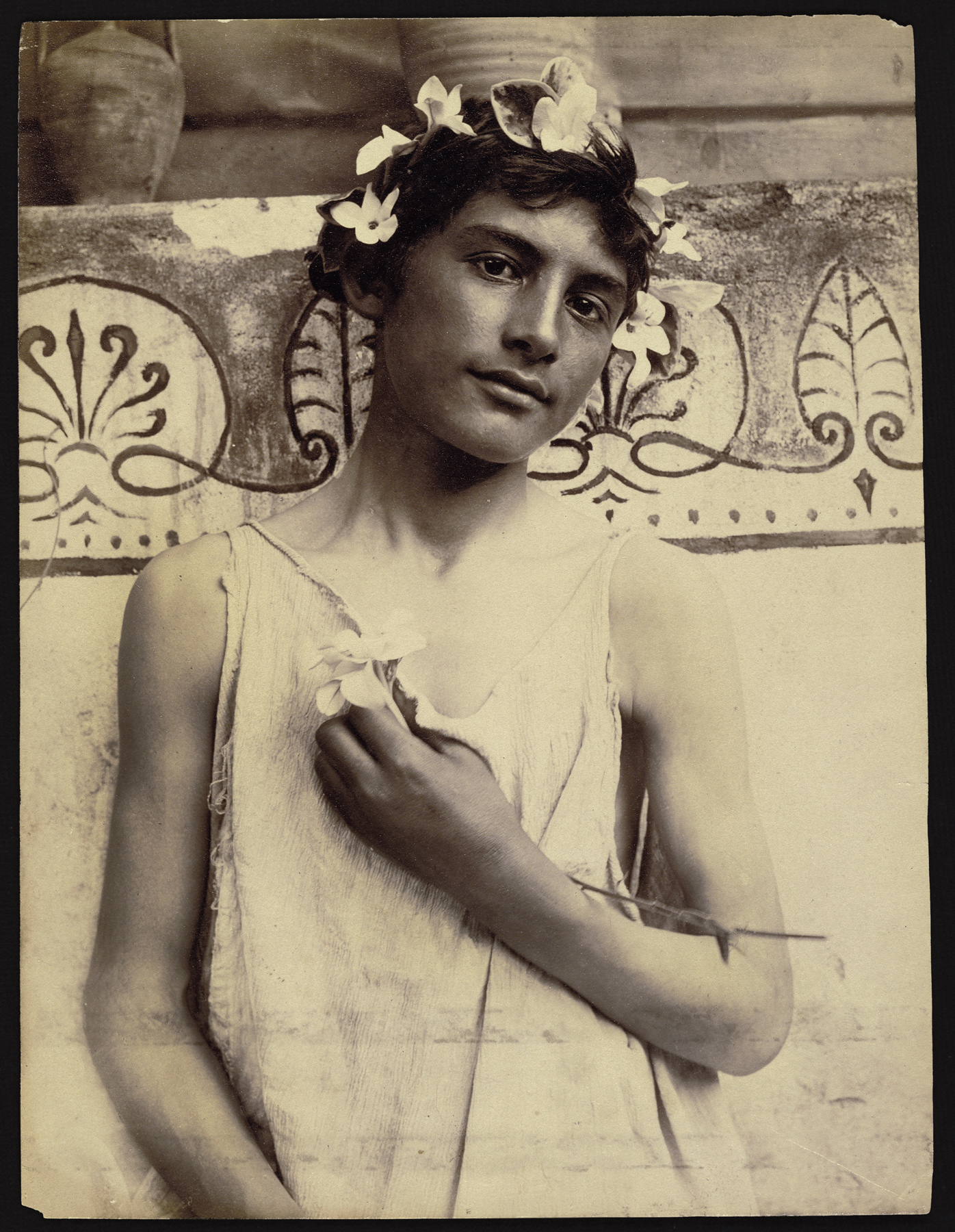
    Baron Wilhelm von Gloeden (German, 1856-1931) 'Untitled [Two Male Youths Holding Palm Fronds]' c. 1885 - 1905


    Baron Wilhelm von Gloeden (German, 1856-1931)
    Untitled [Two Male Youths Holding Palm Fronds]
    c. 1885-1905
    Albumen silver print
    23.3 × 17.5cm (9 3/16 × 6 7/8 in.)
    The J. Paul Getty Museum


    Baron Wilhelm von Gloeden (German, 1856-1931) 'L'Offerta' (The Offering) 1902


    Baron Wilhelm von Gloeden (German, 1856-1931)
    L’Offerta (The Offering)
    1902
    Albumen silver print
    22.4 × 16.8cm (8 13/16 × 6 5/8 in.)
    The J. Paul Getty Museum


    Von Gloeden left Germany and settled in a coastal town in Sicily, where he took up photography. His subjects were young native boys, whom he often photographed nude in classical compositions. Rather than reenact specific historical or literary scenes, von Gloeden mused nostalgically on the ancient Greek and Roman ancestry of his attractive models.


    Guido Rey (Italian, 1861-1935) '[The Letter]' 1908


    Guido Rey (Italian, 1861-1935)
    [The Letter]
    1908
    Platinum print
    21.9 × 17cm (8 5/8 × 6 11/16 in.)
    The J. Paul Getty Museum


    A deliberate homage to an earlier artistic style that Guido Rey admired, the composition derives from a painting made by Dutch artist Jan Vermeer in the 1600s. In this posed scene, a young suitor bearing flowers approaches a woman seated at her writing desk, with her pen poised in mid-air as she turns to greet him. A leaded glass window opens into her room, providing a natural light source for the photograph’s illumination. The mounted corner clock, decorative jar on the desk, and painting on the wall were Rey’s everyday household items or objects borrowed from friends, carefully chosen for period accuracy. Likewise, a seamstress who lived in the attic of Rey’s home in Turin created the costumes to his specifications.


    Photography, although commonly associated with truthfulness, has been used to produce fiction since its introduction in 1839. The acceptance of staging, and the degree of its application, has varied greatly depending on the genre and the historical moment, but it has persisted as an artistic approach. The photographs in this exhibition, drawn exclusively from the J. Paul Getty Museum’s collection, make no pretence about presenting the world as it exists; instead, they are the productions of directors and actors who rely on stagecraft and occasional darkroom trickery to tell stories.
 Spanning photography’s history and expressing a range of sentiments, the images in this exhibition are inspired by art history, literature, religion, and mainstream media.

    Like Alice’s Adventures in Wonderland and his other books, Lewis Carroll’s photographs are fantasies starring his friends’ children. In the image below, children enact the mythological story of Saint George, the patron saint of England, slaying a child-eating dragon before it could devour a princess.

    Life Imitating Art

    Well-represented in this exhibition are tableaux vivants (living pictures), inspired by the popular Victorian parlour game in which costumed participants posed to resemble famous works of art or literary scenes.
The genre paintings of 17th-century Dutch masters Johannes Vermeer and Pieter de Hooch fascinated Guido Rey. Not self-conscious about being slavish to the past, he carefully studied the paintings and then arranged similar tableaux for his camera. His photographs captured equally serene domestic scenes and mimicked the minute architectural details of 17th-century interiors, such as the leaded-glass windowpanes and the checkerboard floor.

    Playing Dress Up

    The exhibition also includes costume studies of people posing as literary characters and self-portraits of artists pretending to be other people. 

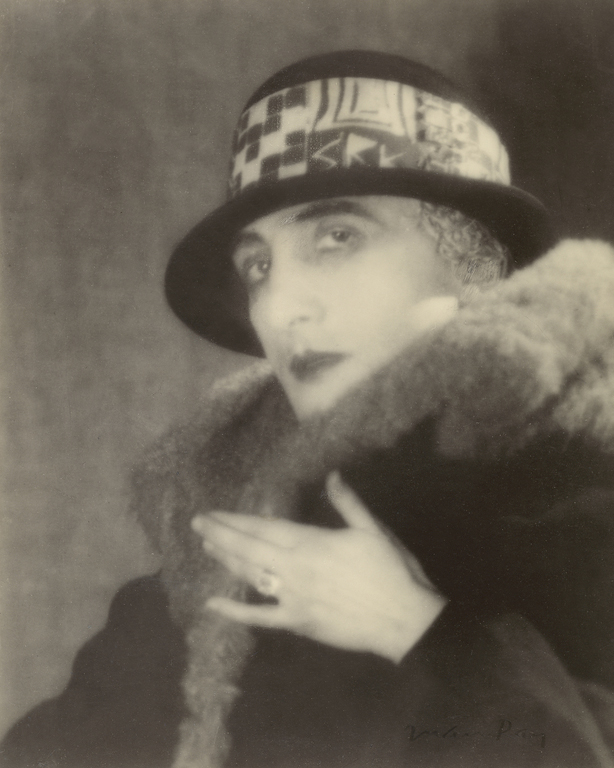
American painter and photographer Man Ray and the French artist Marcel Duchamp met in New York in 1915, and they began a playful, iconoclastic collaboration that resulted in the photograph (above), among others. Influenced by Dadaism, a cultural movement that rejected reason and logic in favour of anarchy and the absurd, their work embraced games of chance, performance, and wordplay. Here an irreverent Duchamp appears in women’s clothing as his alter ego, Rrose Sélavy, a pun on the French pronunciation “Eros, c’est la vie” (Sex, that’s life).

    Imaginary Subjects

    A number of photographs in the exhibition explore the medium’s capacity to visualise subjects of the imagination by using darkroom trickery to manipulate prints.
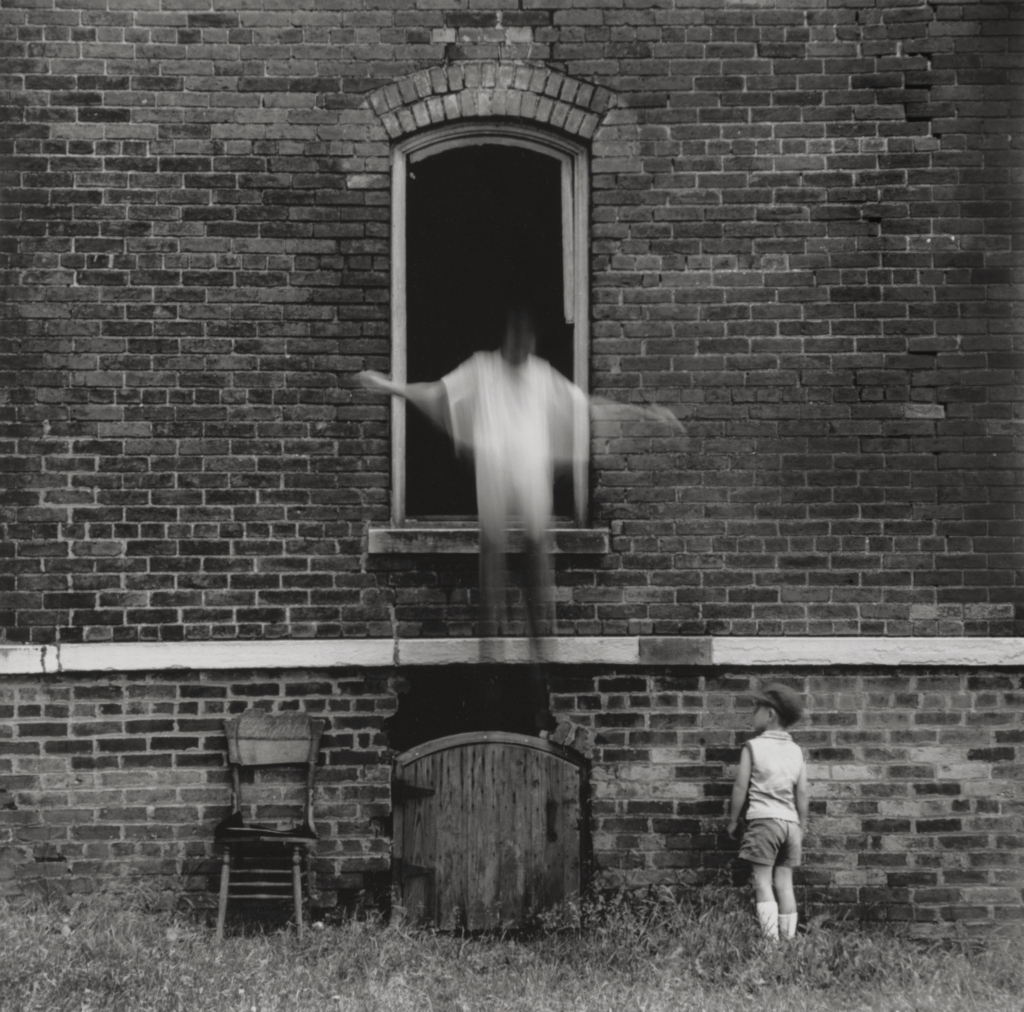
 An optician and family man, Ralph Eugene Meatyard photographed his children, friends, and neighbours enacting dramas in suburban backyards and abandoned buildings near his Lexington, Kentucky, home. He often used experimental techniques, such as multiple exposures and blurred motion. Uncanny details imbue Meatyard’s otherwise ordinary vernacular scenes with the qualities of a dream or supernatural vision.

    Theatricality as a Critical Strategy

    In recent decades there has been renewed interest in theatricality among contemporary photographers whose highly artificial scenes critique mainstream media and representation.
 In her series Family Docudrama Eileen Cowin blurs the boundaries between truth and fiction, and private behaviour and public performance. Drawing equally from family snapshots and soap operas, Cowin presents staged domestic scenes in which she and members of her family, including her identical twin sister, perform as actors. In these ambiguous, open-ended narratives, dramatic moments are exaggerated, and the camera’s glare is ever present.”

    Text from The J. Paul Getty Museum website [Online] Cited 16/04/2019


    Man Ray (American, 1890-1976) 'Rrose Sélavy (Marcel Duchamp)' 1923


    Man Ray (American, 1890-1976)
    Rrose Sélavy (Marcel Duchamp)
    1923
    Gelatin silver print
    22.1 × 17.6cm (8 11/16 × 6 15/16 in.)
    The J. Paul Getty Museum
    © Man Ray Trust ARS-ADAGP


    When Man Ray moved to Paris, he was greeted by his friend and artistic compatriot Marcel Duchamp, who introduced him to members of the Dada circle of writers and artists. The two men had collaborated in a number of creative endeavours in New York, including the creation of a female alter-ego for Duchamp named Rrose Sélavy (a pun on the French pronunciation Eros, c’est la vie “Sex, that’s life”). Man Ray photographed Duchamp several times as Rrose Sélavy.


    Man Ray (American, 1890-1976) 'Larmes' 1930


    Man Ray (American, 1890-1976)
    Larmes (Tears)
    1930-1932
    Gelatin silver print
    22.9 × 29.8cm (9 × 11 3/4 in.)
    The J. Paul Getty Museum
    © Man Ray Trust ARS-ADAGP


    Judging from his inclusion of this image in other photographic compositions, Man Ray must have considered Tears one of his most successful photographs. A cropped version of it with a single eye also appears as the first plate in a 1934 book of his photographs.

    Like the emotive expression of a silent screen star in a film still, the woman’s plaintive upward glance and mascara-encrusted lashes seem intended to invoke wonder at the cause of her distress. The face belongs to a fashion model who cries tears of glistening, round glass beads; the effect is to aestheticise the sentiment her tears would normally express. Man Ray made this photograph in Paris around the time of his breakup with his lover Lee Miller, and the woman’s false tears may relate to that event in the artist’s life.


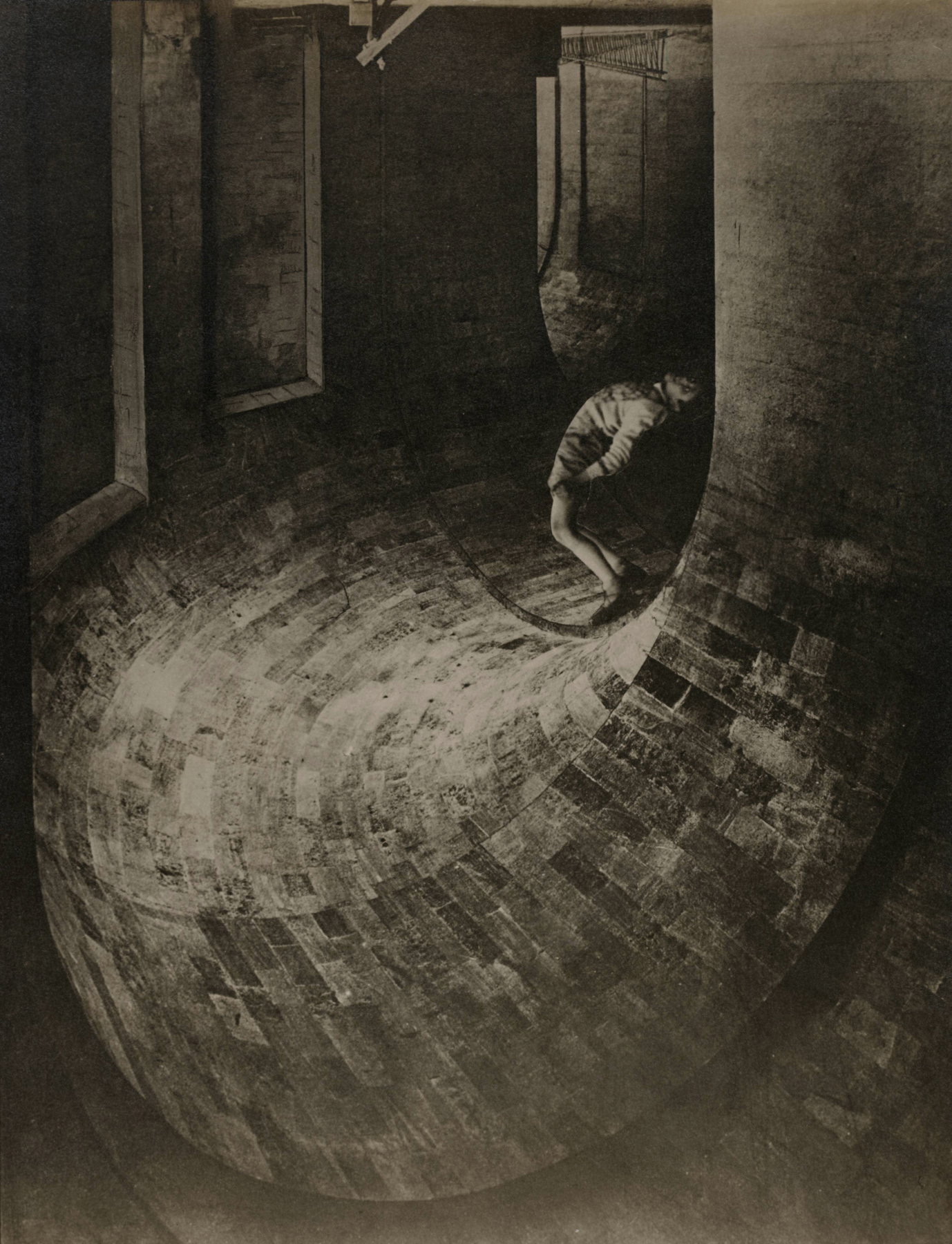
    Dora Maar (French, 1907-1997) 'Le Simulateur (The Pretender)' 1936


    Dora Maar (French, 1907-1997)
    Le Simulateur (The Pretender)
    1936
    Gelatin silver print
    26.6 × 21.7cm (10 1/2 × 8 1/2 in.)
    The J. Paul Getty Museum
    © Dora Maar Estate/Artists Rights Society (ARS), New York/ADAGP, Paris


    In this picture Dora Maar constructed her own reality by joining together several images and rephotographing them. The seamlessness of the photographic surface makes this construction believable and leaves the viewer wondering about the strange world the figure inhabits. On closer examination, the viewer may notice that the floor is an upside-down ceiling vault, that the bricked-in windows are drawn in by hand, and that the figure was added separately. Despite these discoveries, the picture resists logical interpretation.


    Ralph Eugene Meatyard (American, 1925-1972) 'Untitled (Michael and Christopher Meatyard)' 1966


    Ralph Eugene Meatyard (American, 1925-1972)
    Untitled (Michael and Christopher Meatyard)
    1966
    Gelatin silver print
    16.8 × 17.5cm (6 5/8 × 6 7/8 in.)
    The J. Paul Getty Museum
    Gift of Christopher Meatyard and Jonathan Greene
    © Estate of Ralph Eugene Meatyard


    An optician and family man, Meatyard photographed his children, friends, and neighbours enacting dramas in the suburban backyards and abandoned buildings of Lexington, Kentucky. He often used experimental techniques, such as multiple exposures and blurred motion. Uncanny details imbue Meatyard’s otherwise ordinary vernacular scenes with the qualities of a dream or supernatural vision.


    Lucas Samaras (American born Greece, b. 1936) 'Photo-Transformation' November 22, 1973


    Lucas Samaras (American born Greece, b. 1936)
    Photo-Transformation
    November 22, 1973
    Polaroid SX-70 dye diffusion print
    7.6 × 7.6cm (3 × 3 in.)
    The J. Paul Getty Museum
    © Lucas Samaras


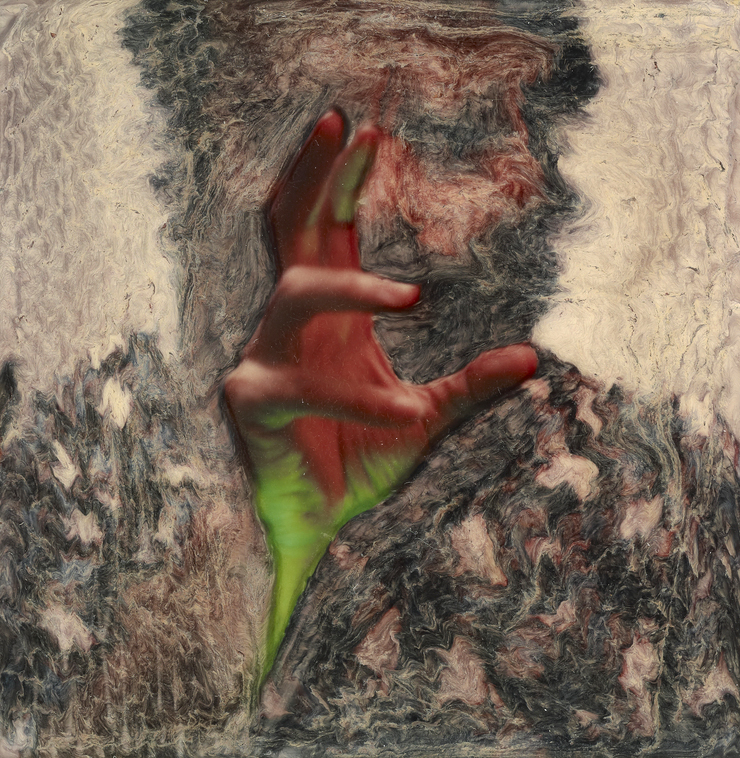
    In this self-portrait, Lucas Samaras reaches out as if trapped in the photograph. In sharp contrast to the indistinct background of his upper body, his crisply defined fingers curl forward, as if he is searching for a way to transcend a two-dimensional world of his own creation. An overriding sense of claustrophobia defines this image, underscored by the small scale of the Polaroid print. Samaras, a hermit-like person, made many Polaroid self-portraits like this in the 1970s as a means of observing himself. The images are open to a wide range of interpretation. Here, Samaras may have tried to convey the sense of isolation he experiences as a reclusive person.


    Lucas Samaras (American born Greece, b. 1936) 'Photo-Transformation' September 9, 1976


    Lucas Samaras (American born Greece, b. 1936)
    Photo-Transformation
    September 9, 1976
    Polaroid SX-70 dye diffusion print
    7.6 × 7.6cm (3 × 3 in.)
    The J. Paul Getty Museum
    © Lucas Samaras


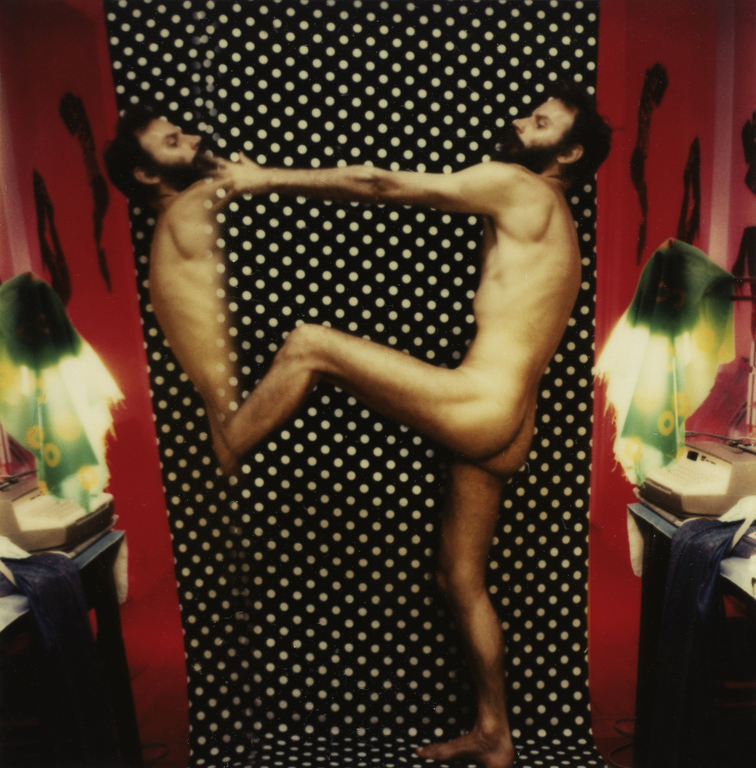
    As if engaging in a tug-of-war with himself, Lucas Samaras confronts and struggles with his own reflection in this self-portrait. The leg-less reflection is incomplete, however, giving the impression of a deformed adversary. A monochromatic polka-dot background and a vibrant green and red border act as a stage for this dramatic struggle.

    Samaras’s Photo-Transformations, which he made in the 1970s as a means to examine various facets of himself, could be understood as visual manifestations of internal conflict. They are complex psychological investigations that, according to at least one critic, illustrate one person’s efforts toward spiritual healing.


    Lucas Samaras (American, born Greece, 1936) 'Photo-Transformation, 1976'


    Lucas Samaras (American born Greece, b. 1936)
    Photo-Transformation, 1976
    1976
    Polaroid SX-70 dye diffusion print
    7.6 × 7.6cm (3 × 3 in.)
    The J. Paul Getty Museum
    © Lucas Samaras


    Submerged in narcissism, nothing remains… but “me and myself, I am my own audience, the other, contemplating my existence.”

    Made in the 1970s as a means of studying himself, Lucas Samaras’s photographs illustrate the internal struggle that can occur between conflicting aspects of one personality. Bent over a captain’s chair, Samaras rests his head as if he is at the guillotine. Another blurry form hovers above, about to violently attack the submissive figure.

    Samaras made his Photo-Transformations, a series of self-portraits, with SX-70 Polaroid film. Still wet, the film’s emulsions could be manipulated to alter the finished image. He used straight pins, rubber erasers, and other simple tools to “draw” into the developing surface. For this portrait, he created a diamond pattern over and around the dominant figure that underscores the frenzy of motion.


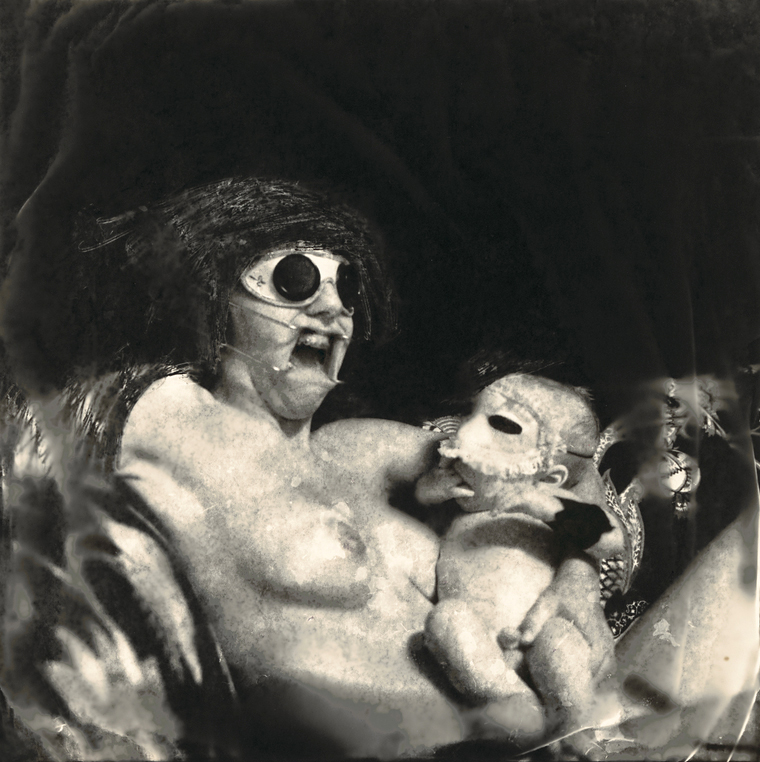
    Joel Peter-Witkin (American, born 1939) 'Mother and Child (with Retractor, Screaming)' 1979


    Joel Peter-Witkin (American, b. 1939)
    Mother and Child (with Retractor, Screaming)
    1979
    Gelatin silver print
    36 × 36cm (14 3/16 × 14 3/16 in.)
    The J. Paul Getty Museum
    © Joel-Peter Witkin


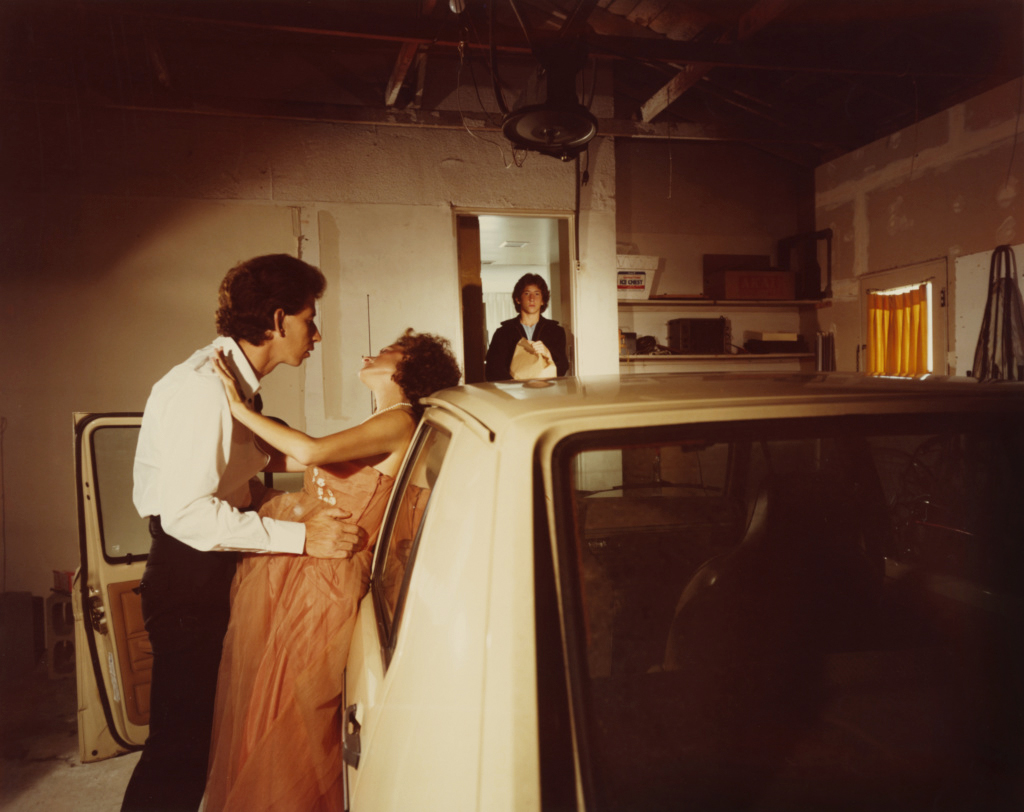
    Eileen Cowin (American, born 1947) 'Untitled' from the series 'Family Docudrama' 1980-1983


    Eileen Cowin (American, b. 1947)
    Untitled from the series Family Docudrama
    1980-1983
    Chromogenic print
    48.4 × 60.7cm (19 1/16 × 23 7/8 in.)
    The J. Paul Getty Museum
    Purchased with funds provided by the Photographs Council
    © Eileen Cowin


    In her series Family Docudrama Cowin blurs the boundaries between truth and fiction, and private behaviour and public performance. Drawing equally from family snapshots and soap operas, she presents staged domestic scenes in which she and members of her family, including her identical twin sister, perform as actors. In these ambiguous, open-ended narratives, dramatic moments are exaggerated and the camera’s glare is ever present.


    The J. Paul Getty Museum
    1200 Getty Center Drive
    Los Angeles, California 90049

    Opening hours:
    Daily 10am – 5.30pm

    The J. Paul Getty Museum website

    LIKE ART BLART ON FACEBOOK

    Back to top

    Exhibition: ‘William Wegman: Fay’ at the Akron Art Museum, Ohio

    Exhibition dates: 16th May – 16th August, 2009


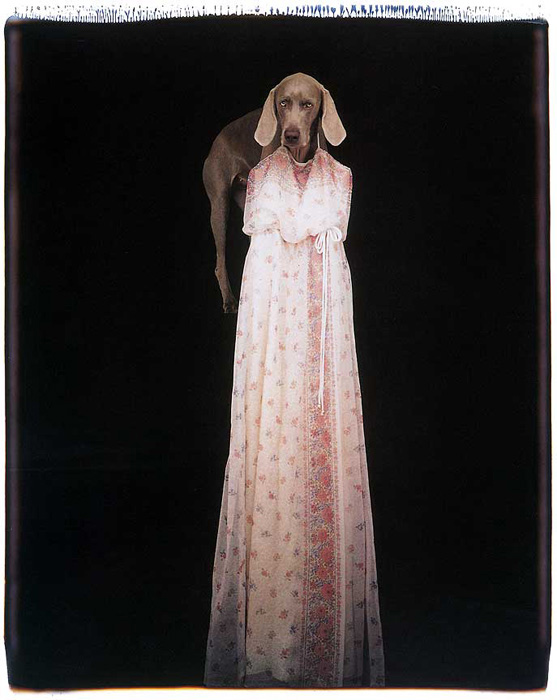
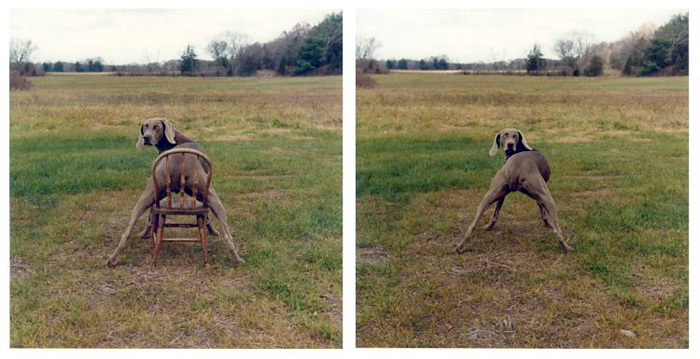
    William Wegman (American, b. 1943) 'Front Facade' 1993 from the exhibition 'William Wegman: Fay' at the Akron Art Museum, Ohio, May - Aug, 2009


    William Wegman (American, b. 1943)
    Front Facade
    1993
    Polaroid
    Courtesy of the artist


    A selection of photographs of Fay by William Wegman. Gotta love that dog!

    Marcus


    Many thankx to the Akron Art Museum for allowing me to publish the photographs in the posting. Please click on the photographs for a larger version of the image.


    William Wegman (American, b. 1943) 'Miss Mit' 1993 from the exhibition 'William Wegman: Fay' at the Akron Art Museum, Ohio, May - Aug, 2009


    William Wegman (American, b. 1943)
    Miss Mit
    1993
    Polaroid
    Courtesy of the artist


    William Wegman (American, b. 1943) 'On Set' 1994


    William Wegman (American, b. 1943)
    On Set
    1994
    Polaroid
    Courtesy of the artist


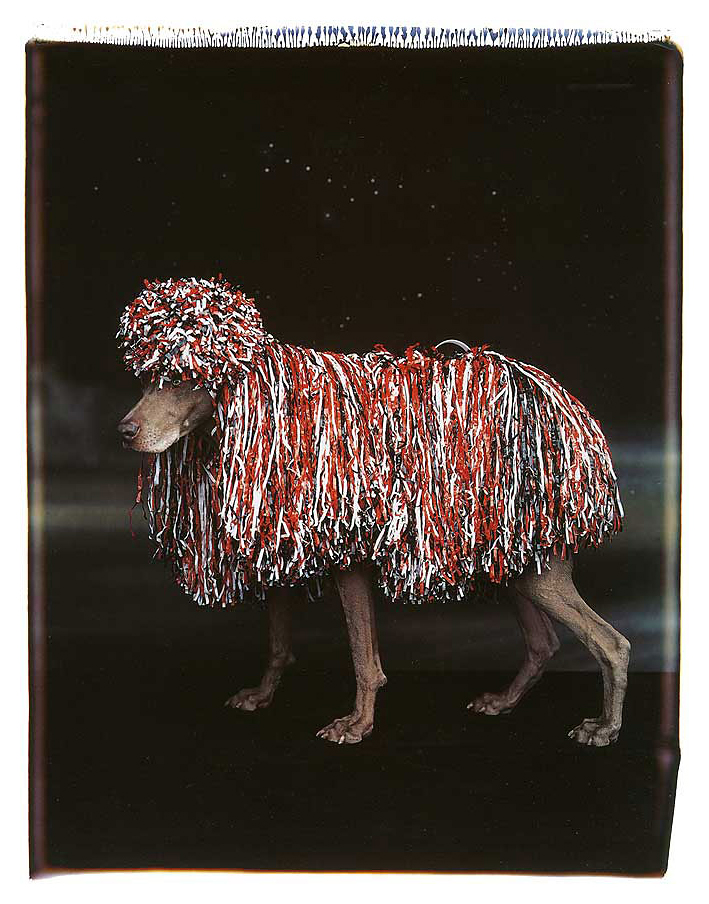
    William Wegman (American, b. 1943) 'Patriotic Poodle' 1994


    William Wegman (American, b. 1943)
    Patriotic Poodle
    1994
    Polaroid
    Courtesy of the artist


    The Akron Art Museum is deeply honoured to be one of only two venues to present William Wegman: Fay, a wonderfully witty and moving exhibition about the artistic collaboration between William Wegman (b. 1943) and his celebrated Weimaraner Fay (1984-1995).

    The breadth of Wegman’s audience is truly remarkable. In addition to being internationally renowned in art circles, he is one of the few artists to successfully disseminate his work – especially the photographs, videos and books featuring his beloved Weimaraner dogs – through the mass media.

    Wegman is a conceptual artist who works in many different media. Born in Holyoke, Massachusetts, in 1943, he graduated from the Massachusetts College of Art in 1965 with a BFA in painting. Subsequently, he enrolled in the Masters painting and printmaking program at the University of Illinois. In 1970, he moved to southern California and began exhibiting his photographs. He was one of the earliest artists to explore video and has used photography for over four decades.

    While living in California, Wegman acquired Man Ray, a Weimaraner whom he named after the surrealist French photographer. The dog became his partner in both life and art during their 12 year collaboration. Man Ray became so famous that, upon his passing, he was named ‘Man of the Year’ by the New York City newspaper The Village Voice.

    Grief-stricken by Ray’s death, Wegman made the decision not to get another dog, but some years later he came to meet another Weimaraner:

    “When we first met in Memphis, Tennessee, she was six months old and her name was Cinnamon Girl. I named her Fay after Fay Wray, of course, but also after my first colour Polaroid with Man Ray and the nail polish, which I had titled Fay Ray. Her fur was taupe, lighter and warmer-toned than Man Ray’s, and she had yellow eyes like in a Rousseau painting. I had no intention of photographing Fay. Man Ray was irreplaceable. I didn’t want to mar my memory of him.

    … In a short time Fay matured from a coltish youth into a Garboesque beauty. My pictures grew with her. Now she was the muse, the adored one. Skin-deep beauty became the soul of my work.”William Wegman, Polaroids, New York, 2002


    Fay had a chameleon-like quality very different from Man Ray’s concrete presence. The bond between the artist and his muse is undeniable. Images of Fay balanced upon an ironing boarding in Sphinx (1987) and coolly starting into the lens from beneath a black net in Netted (1988) show her deep trust in Wegman. His work with Fay captures the canine in a spectrum of emotions. Her huge, expressive citron eyes convey in one shot tragedy and in the next, joy. A series of photographs show Fay swathed in human clothing, posed as a woman, with the human arms and legs of her co-model. The canine appears part human, her expression incredibly familiar. Fay also posed with a variety of props, from roller-skates to masks of fruit, flowers and other found objects.

    The Akron Art Museum is fortunate to be able to include in this exhibition not just black and white photographs but also large format Polaroids and chromogenic (colour) prints, from the artist’s personal collection. In addition to 56 still photographs, extensive selections from Wegman’s videos featuring Fay will be on continuous view in the exhibition.”

    Text from the Akron Art Museum website


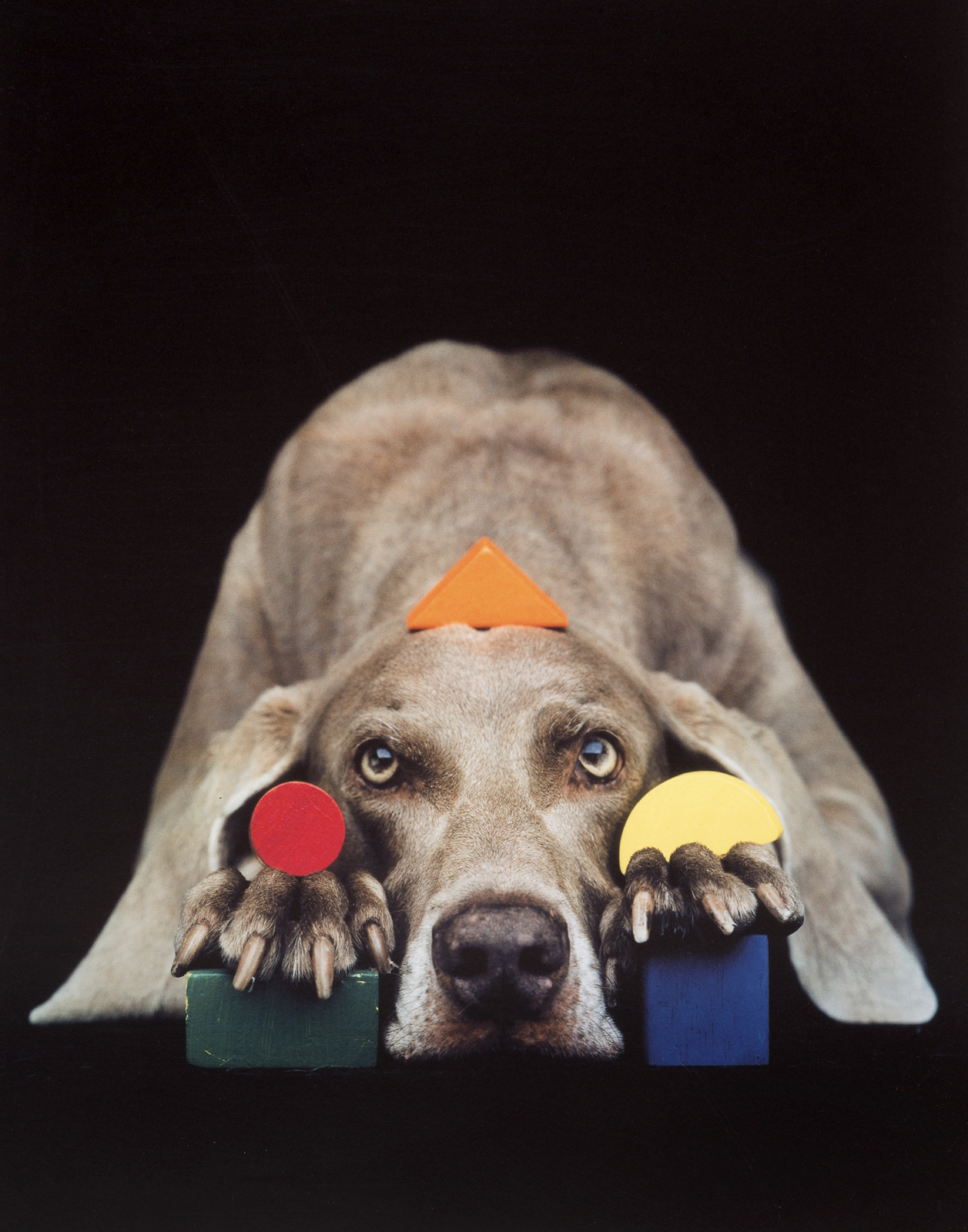
    William Wegman (American, b. 1943) 'Basic Shapes In Color' 1993


    William Wegman (American, b. 1943)
    Basic Shapes In Color
    1993
    Chromogenic colour print
    24″ x 20″
    Courtesy of the artist


    William Wegman (American, b. 1943) 'Fay Ray' 1988


    William Wegman (American, b. 1943)
    Fay Ray
    1988
    Gelatin silver print
    16.2 x 16.2cm. (6.4 x 6.4 in.)
    Courtesy of the artist


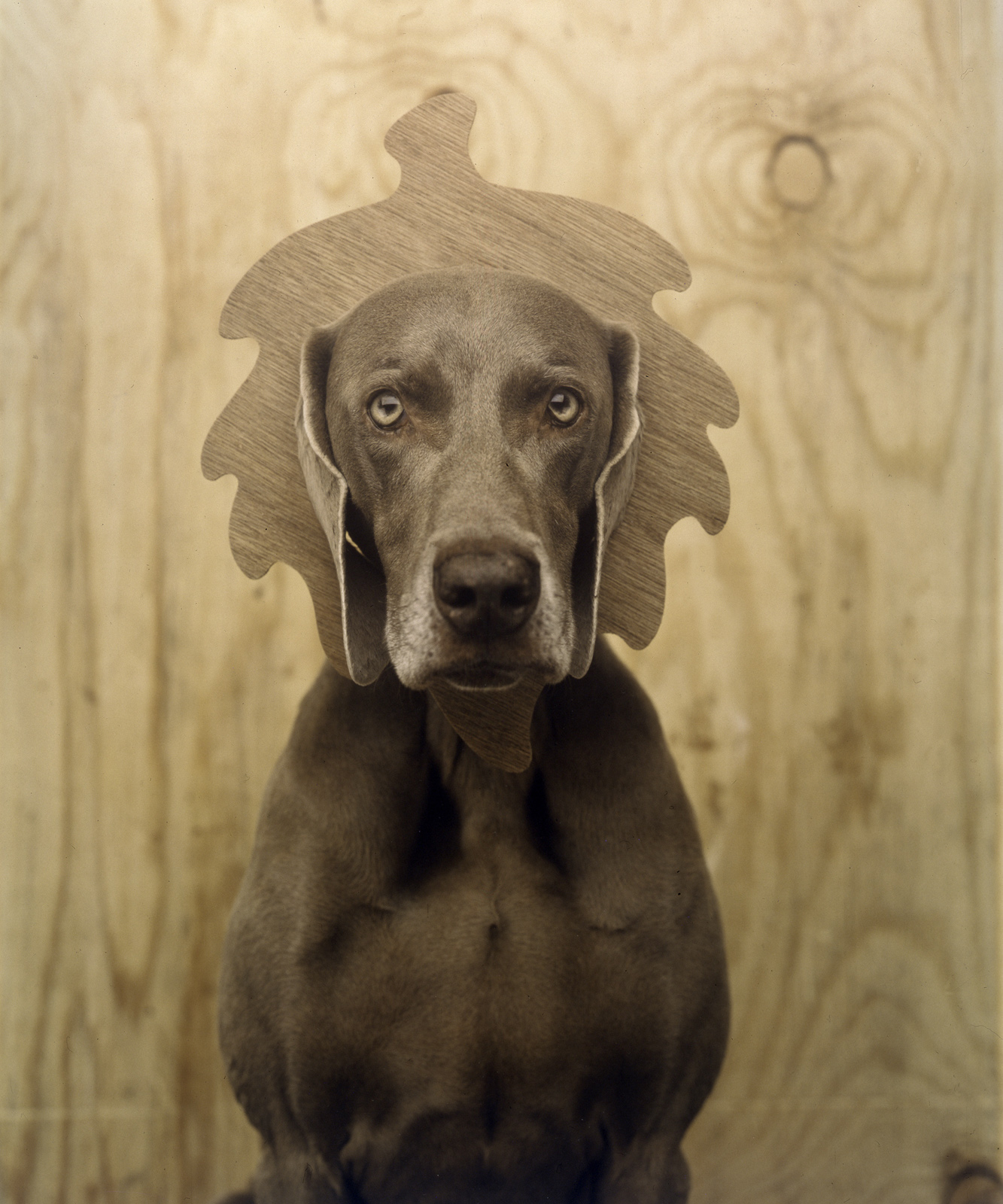
    William Wegman (American, b. 1943) 'Oaken' 1992


    William Wegman (American, b. 1943)
    Oaken
    1992
    Chromogenic colour print
    Courtesy of the artist


    William Wegman (American, b. 1943) 'Lawn Chair' 1988


    William Wegman (American, b. 1943)
    Lawn Chair
    1988
    Chromogenic colour print
    Courtesy of the artist


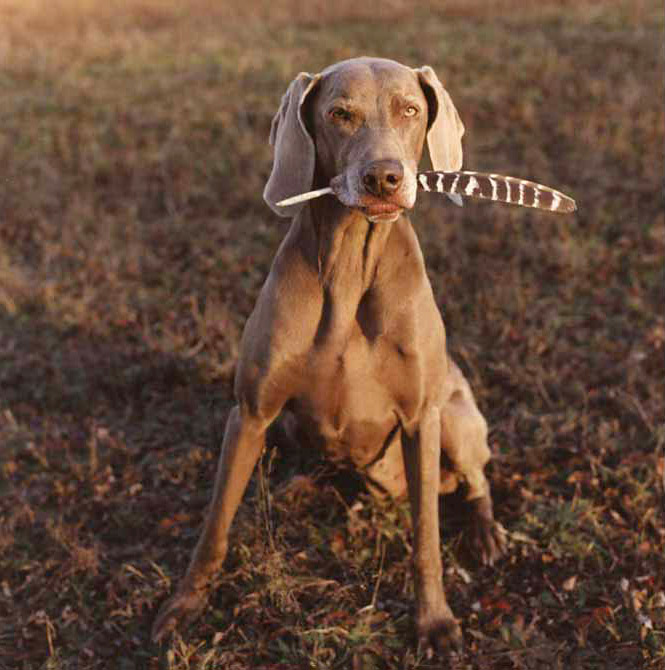
    William Wegman (American, b. 1943) 'Retriever' 1994


    William Wegman (American, b. 1943)
    Retriever
    1994
    Chromogenic colour print
    Courtesy of the artist


    William Wegman (American, b. 1943) 'U-Tree' 1992


    William Wegman (American, b. 1943)
    U-Tree
    1992
    Chromogenic colour print
    Courtesy of the artist


    William Wegman (American, b. 1943) 'Untitled (Ghent Fay with Apples)' 1990


    William Wegman (American, b. 1943)
    Untitled (Ghent Fay with Apples)
    1990
    Chromogenic colour print
    Courtesy of the artist


    Akron Art Museum
    One South High
    Akron, Ohio 44308

    Opening hours
    Wednesday, Friday, Saturday, and Sunday: 11.00am – 5.00pm
    Thursday: 11.00am – 8.00pm
    Closed: Monday and Tuesday

    Akron Art Museum website

    William Wegman website

    LIKE ART BLART ON FACEBOOK

    Back to top

    Exhibition: ‘Polaroids and Portraits: A Photographic Legacy of Andy Warhol’ at the Krannert Art Museum, Champaign IL

    Exhibition dates: 30th January – 24th May, 2009

    Curator: Kathryn Koca


    Many thank to the Krannert Art Museum, Champaign IL for allowing me to publish the photographs in the posting. Please click on the photographs for a larger version of the image.


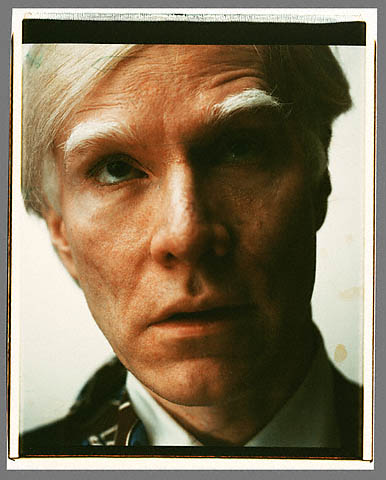
    Andy Warhol (American, 1928-1987) 'Self portrait' Polaroid 1979 from the exhibition 'Polaroids and Portraits: A Photographic Legacy of Andy Warhol' at the Krannert Art Museum, Champaign IL, jan - May, 2009


    Andy Warhol (American, 1928-1987)
    Self portrait
    1979
    Polaroid


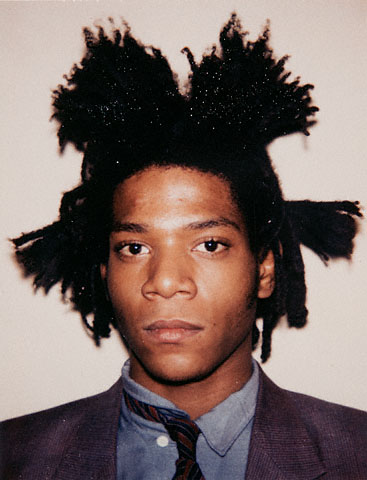
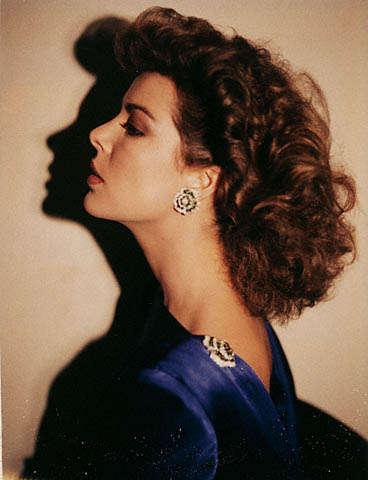
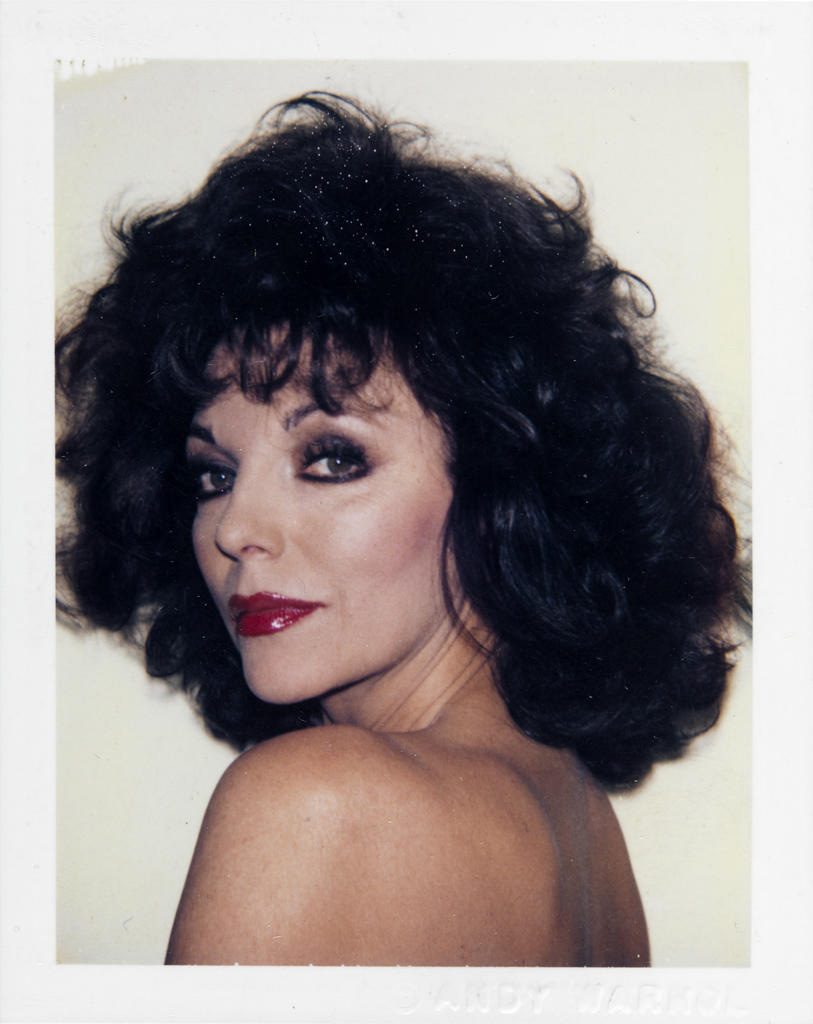
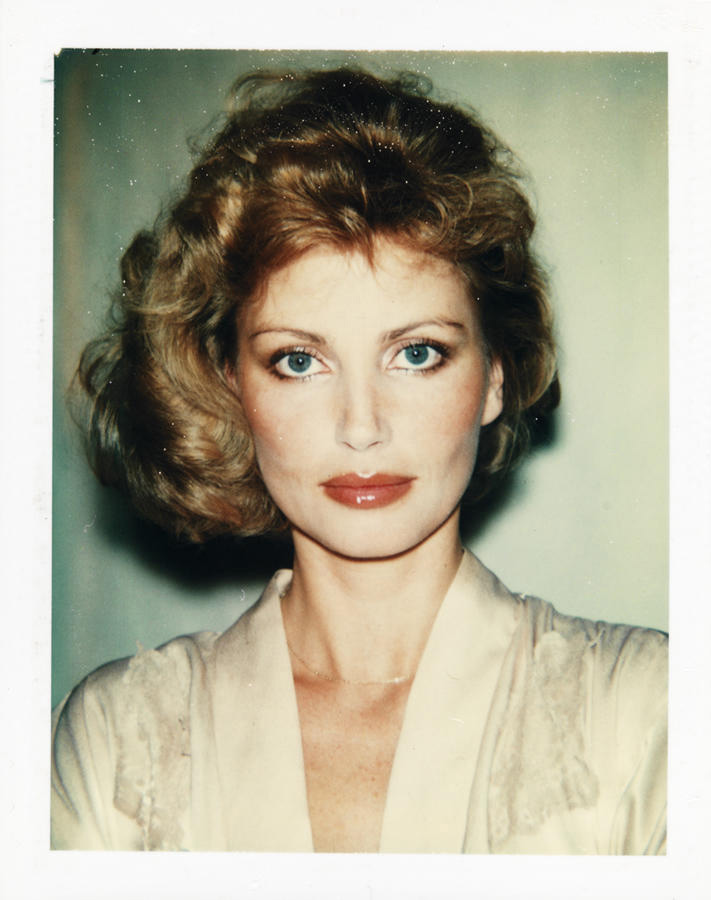
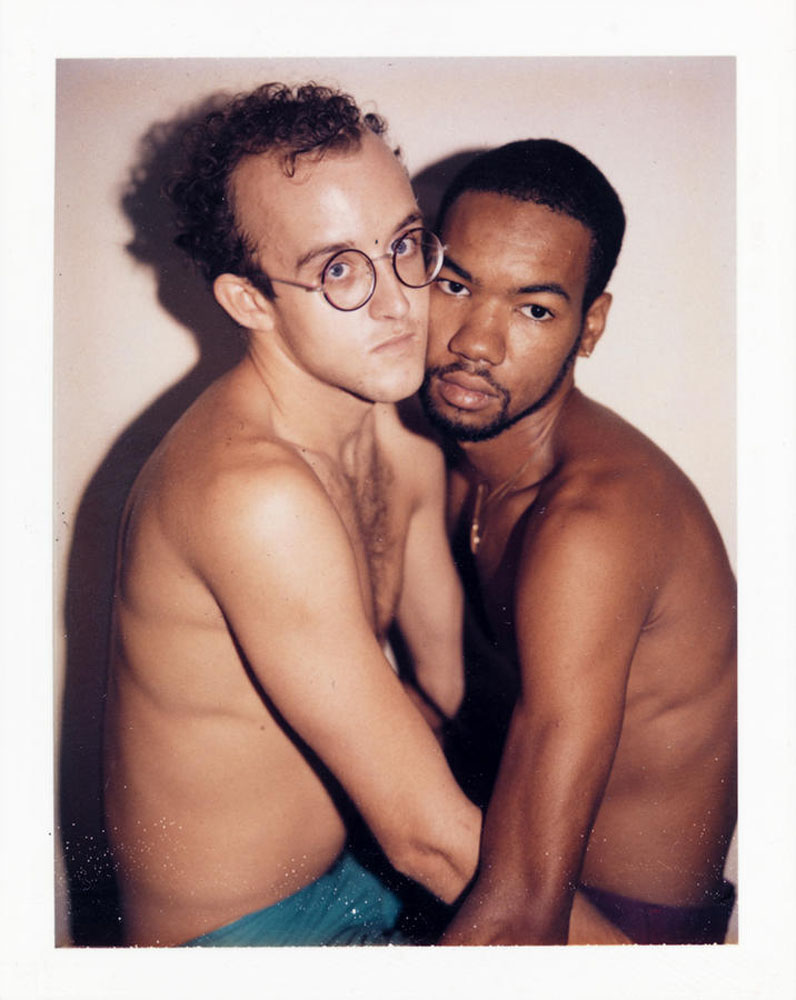
    Polaroids and Portraits presents a selection of the 152 photographs that the Krannert Art Museum graciously received from the Andy Warhol Photographic Legacy Program. Established in 2007 to commemorate the Warhol Foundation’s twentieth anniversary, the Legacy Program gifted over 28,500 original photographs to 183 college and university museums and galleries across the country with the hope of enabling wider access to these more seldom seen works. This exhibition displays both Polaroid and silver gelatin portraits of celebrities, socialites, and unknowns, all photographed with varying degrees of wit, humour, and intimacy. These photographs complicate our notion of the artist’s persona as wholly immersed in this world of glamour, presenting Warhol as not only a prolific photographer, but a man grappling with his own identity as a famous artist.

    Text from the Krannert Art Museum website


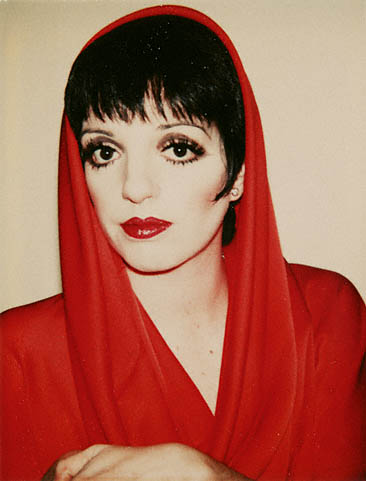
    Andy Warhol (American, 1928-1987) 'Liza Minnelli' Polaroid 1977 from the exhibition 'Polaroids and Portraits: A Photographic Legacy of Andy Warhol' at the Krannert Art Museum, Champaign IL, jan - May, 2009


    Andy Warhol (American, 1928-1987)
    Liza Minnelli
    1977
    Polaroid


    Andy Warhol (American, 1928-1987) 'Jean-Michel Basquiat' Polaroid 1982


    Andy Warhol (American, 1928-1987)
    Jean-Michel Basquiat
    1982
    Polaroid


    Andy Warhol (American, 1928-1987) 'Princess Caroline of Monaco' Polaroid 1981


    Andy Warhol (American, 1928-1987)
    Princess Caroline of Monaco
    1981
    Polaroid


    Andy Warhol (American, 1928-1987) 'Joan Collins' 1985


    Andy Warhol (American, 1928-1987)
    Joan Collins
    1985
    Polaroid


    Andy Warhol (American, 1928-1987) 'Evelyn Kuhn' 1978


    Andy Warhol (American, 1928-1987)
    Evelyn Kuhn
    1978
    Polaroid


    Andy Warhol (American, 1928-1987) 'Keith Haring and Juan Dubose' 1983


    Andy Warhol (American, 1928-1987)
    Keith Haring and Juan Dubose
    1983
    Polaroid


    Krannert Art Museum
    500 East Peabody Drive
    Champaign, Illinois 61820
    United States
    Phone: (217) 244-0516

    Opening hours:
    Tuesday – Saturday 10am – 4pm
    Thursday open until 8pm when classes are in session
    Closed Sunday and Monday

    The Krannert Museum of Art website

    LIKE ART BLART ON FACEBOOK

    Back to top