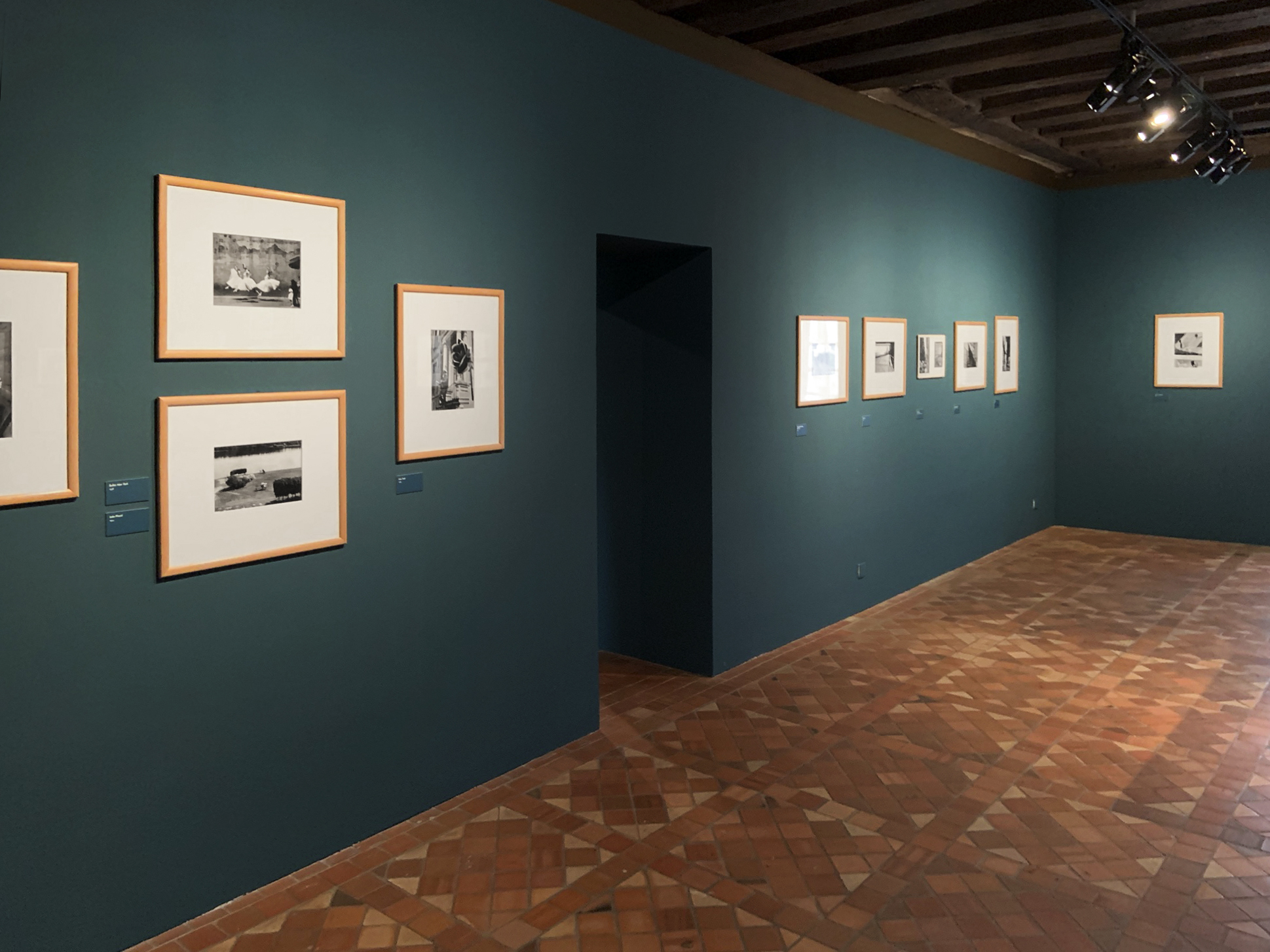
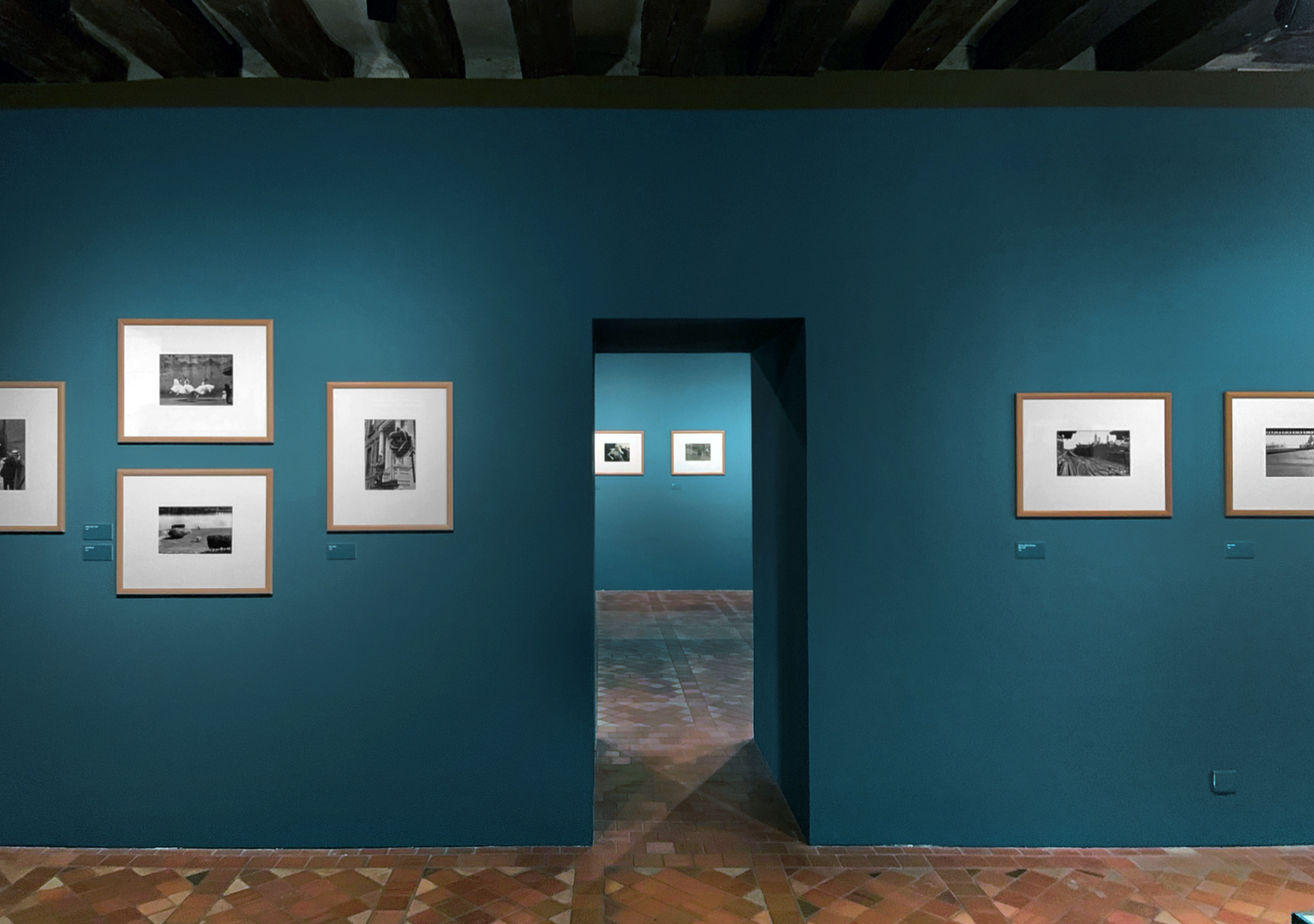
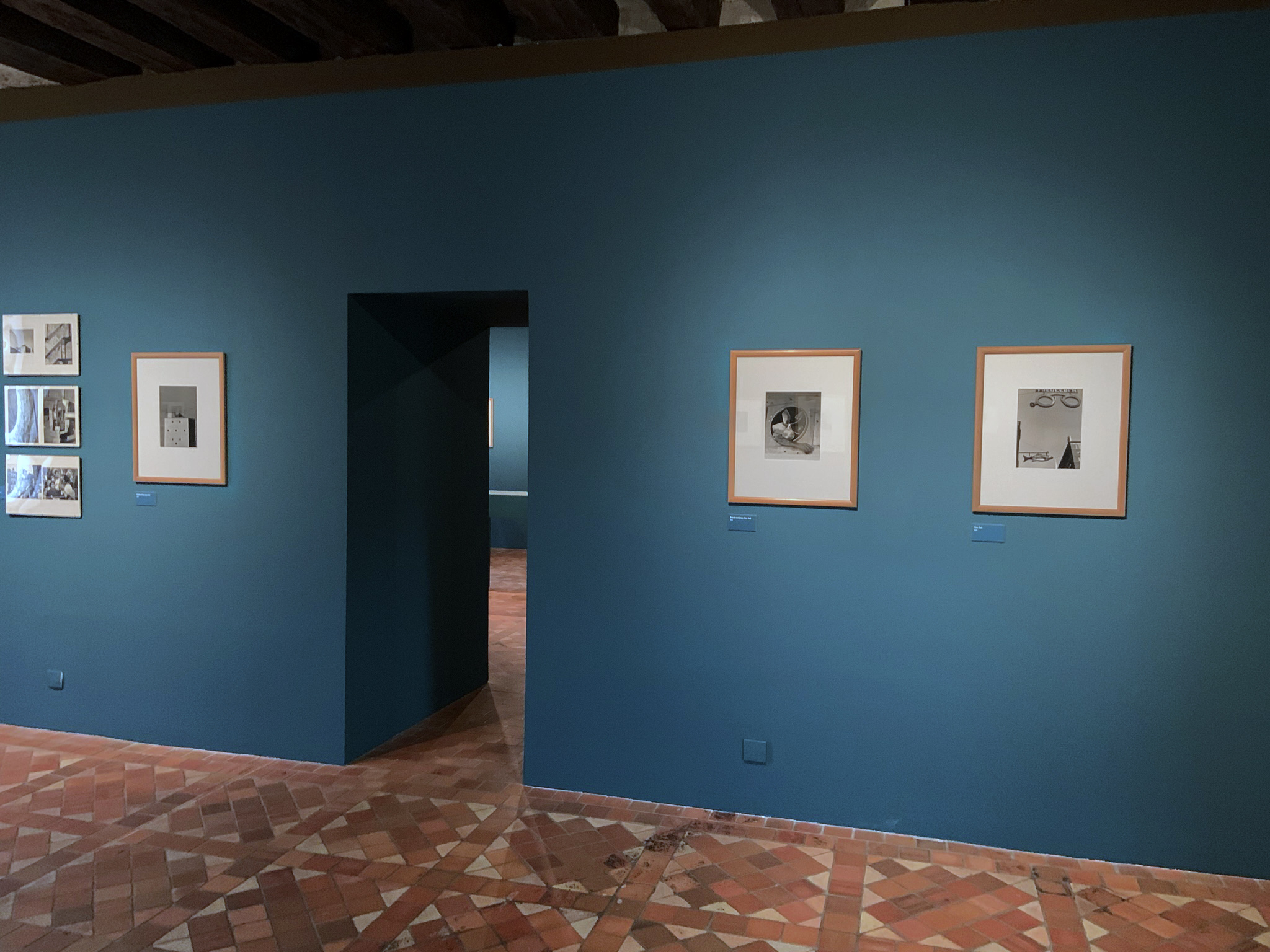
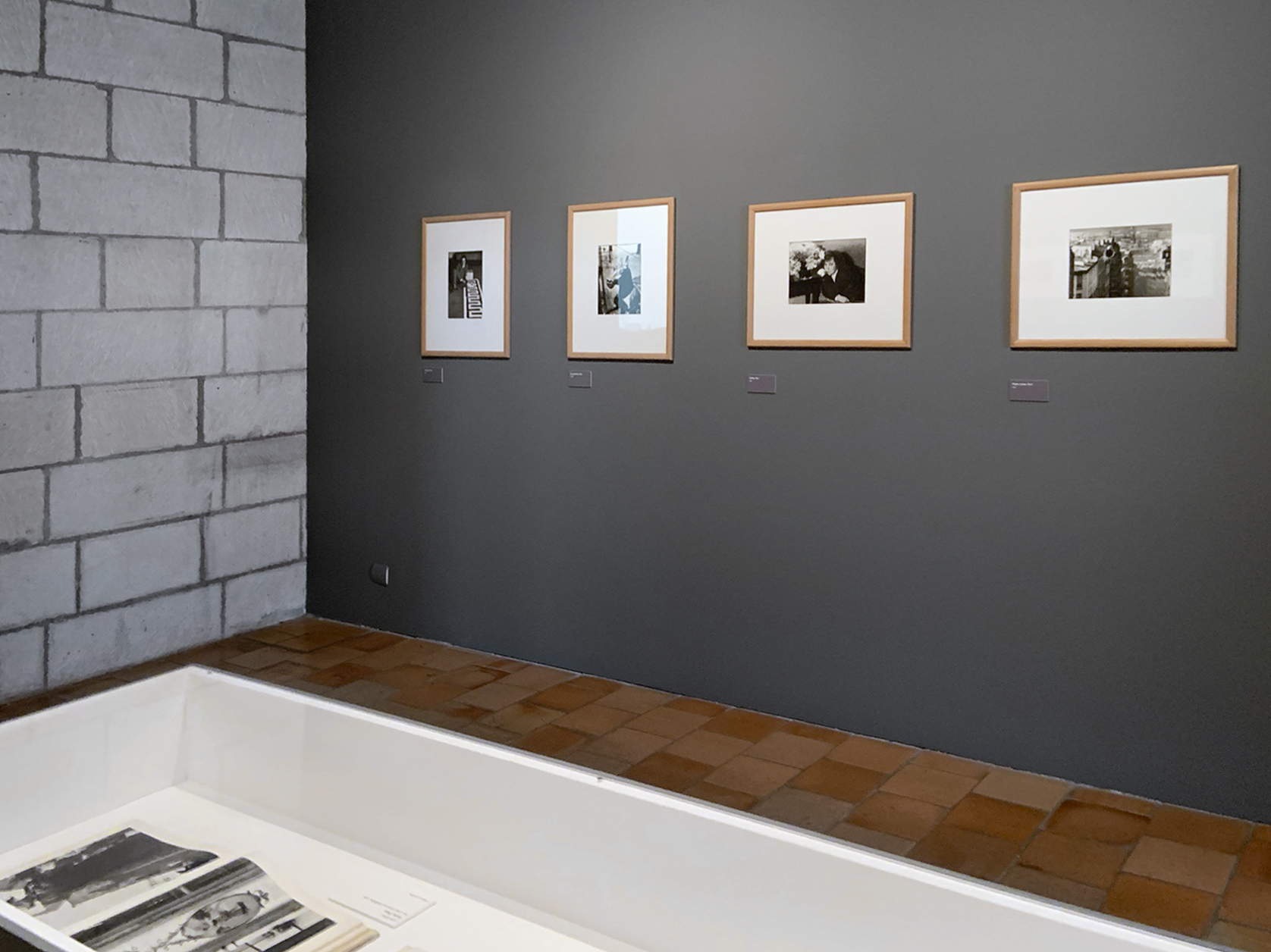
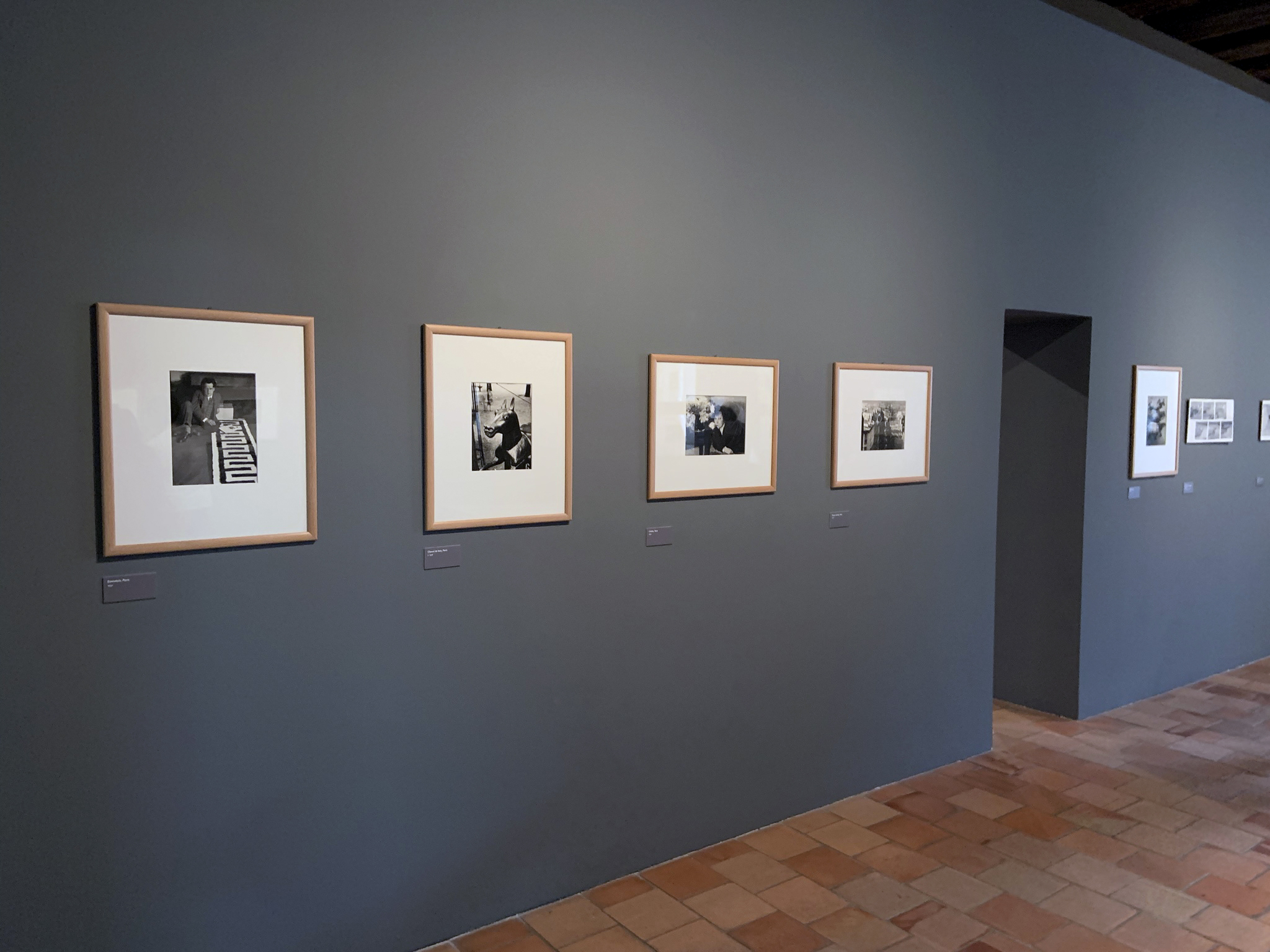
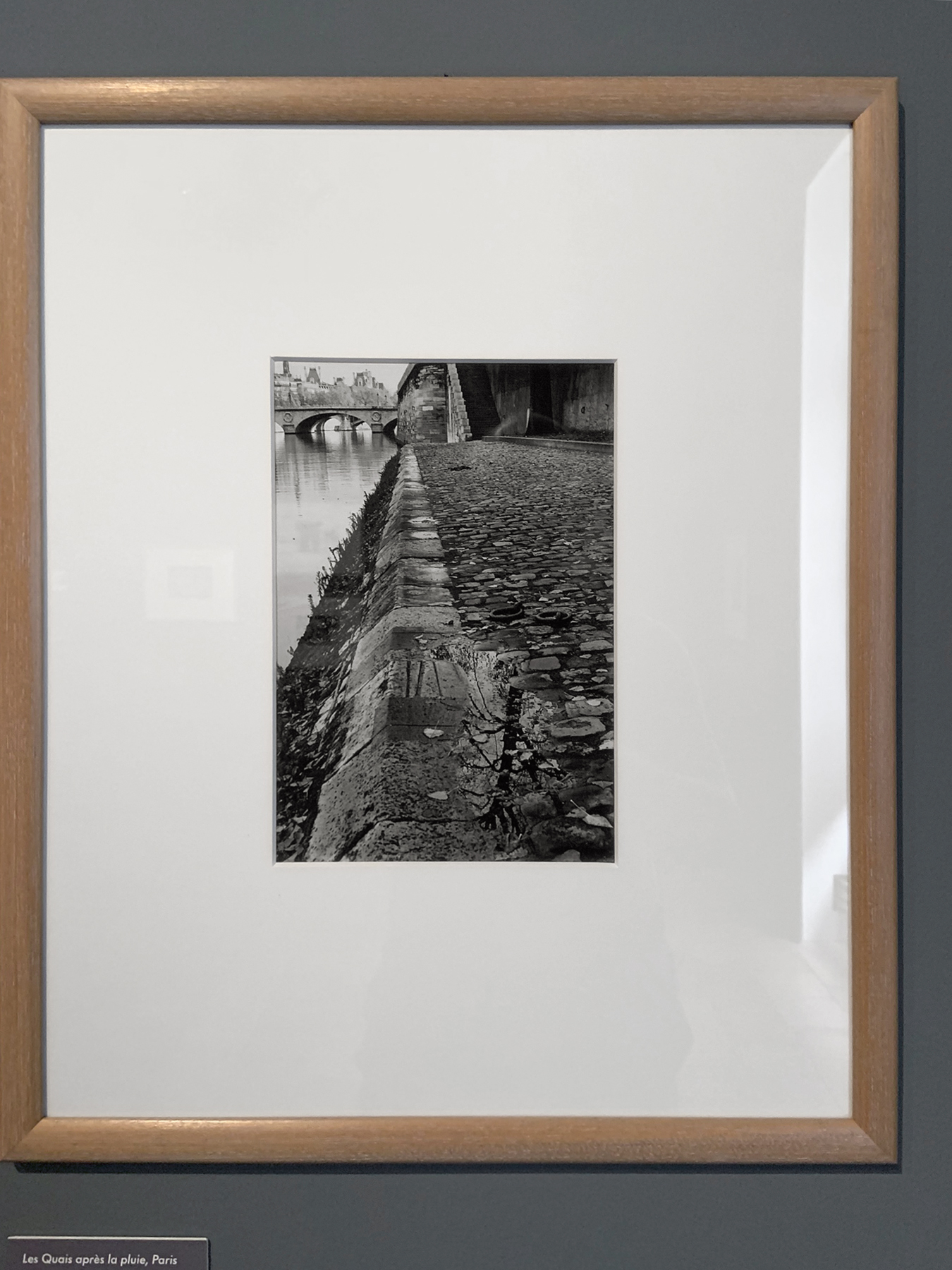
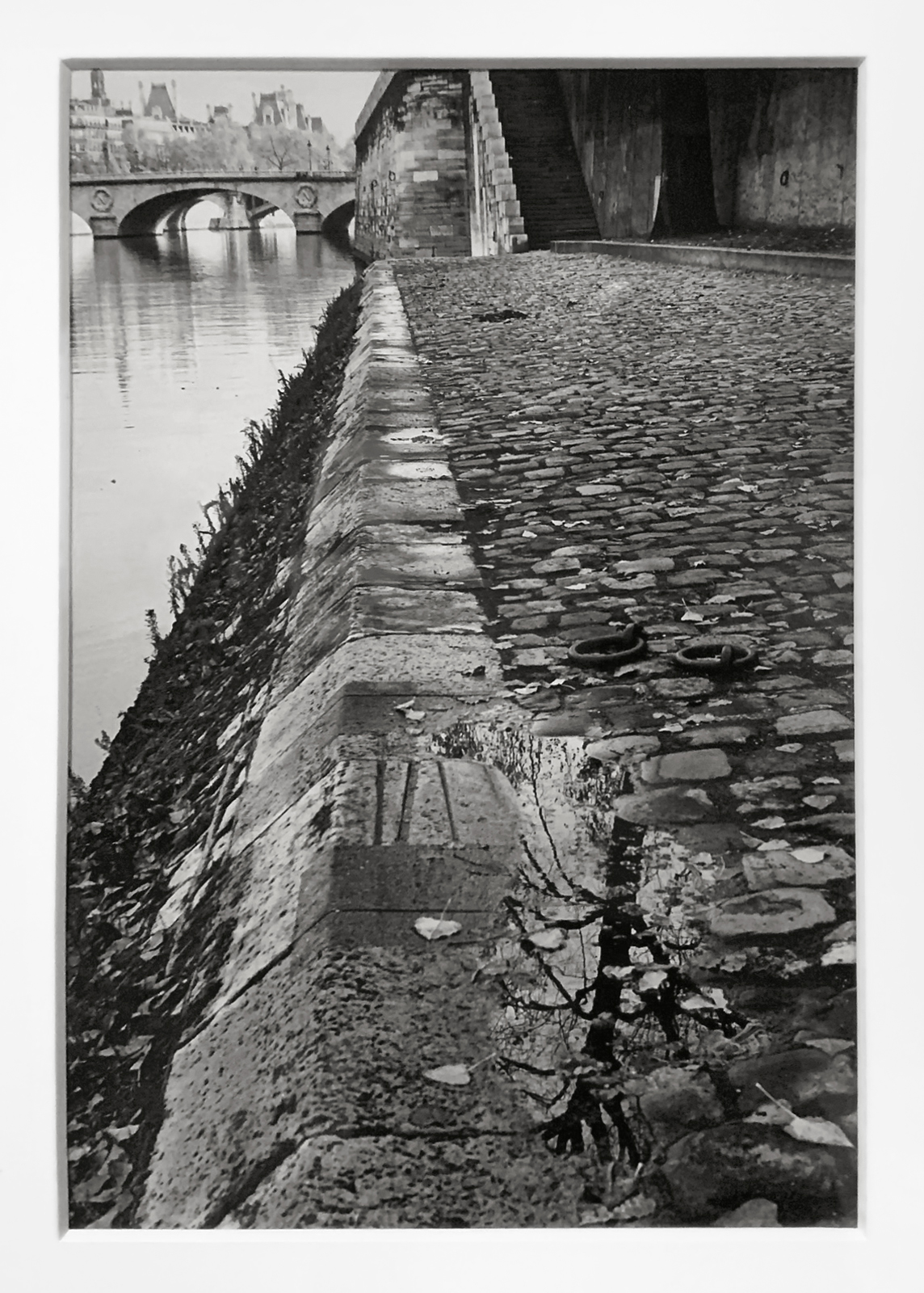
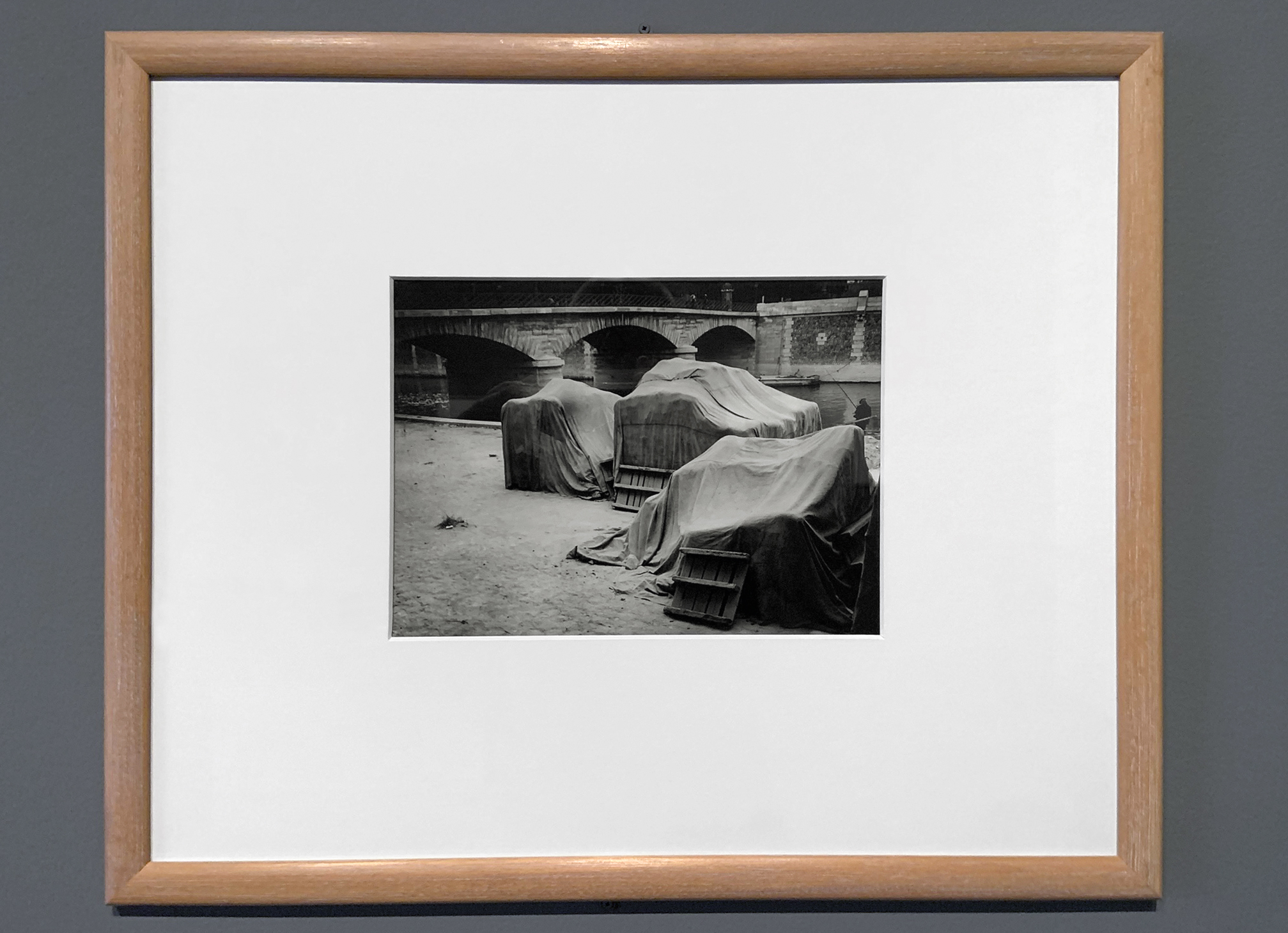
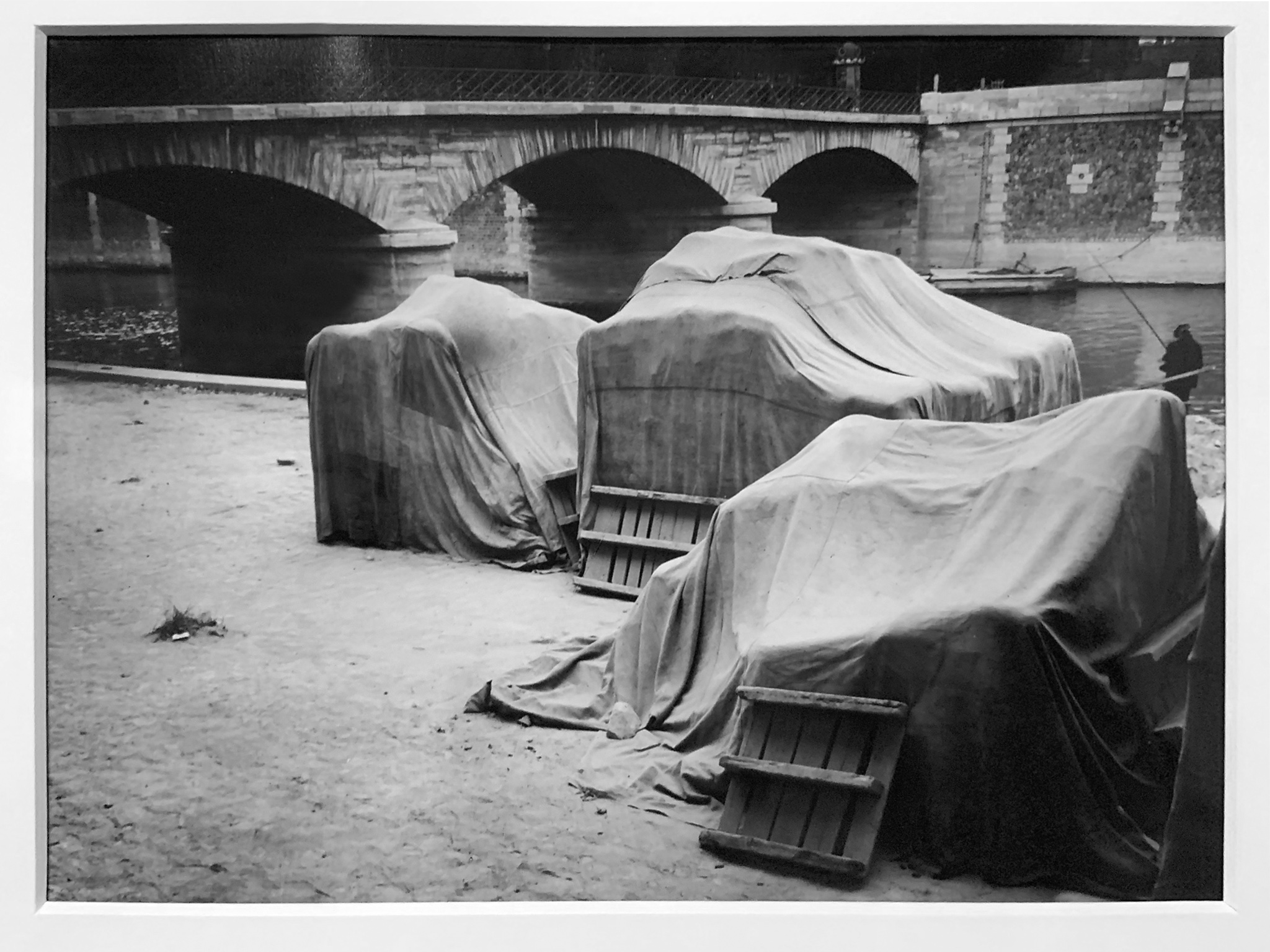
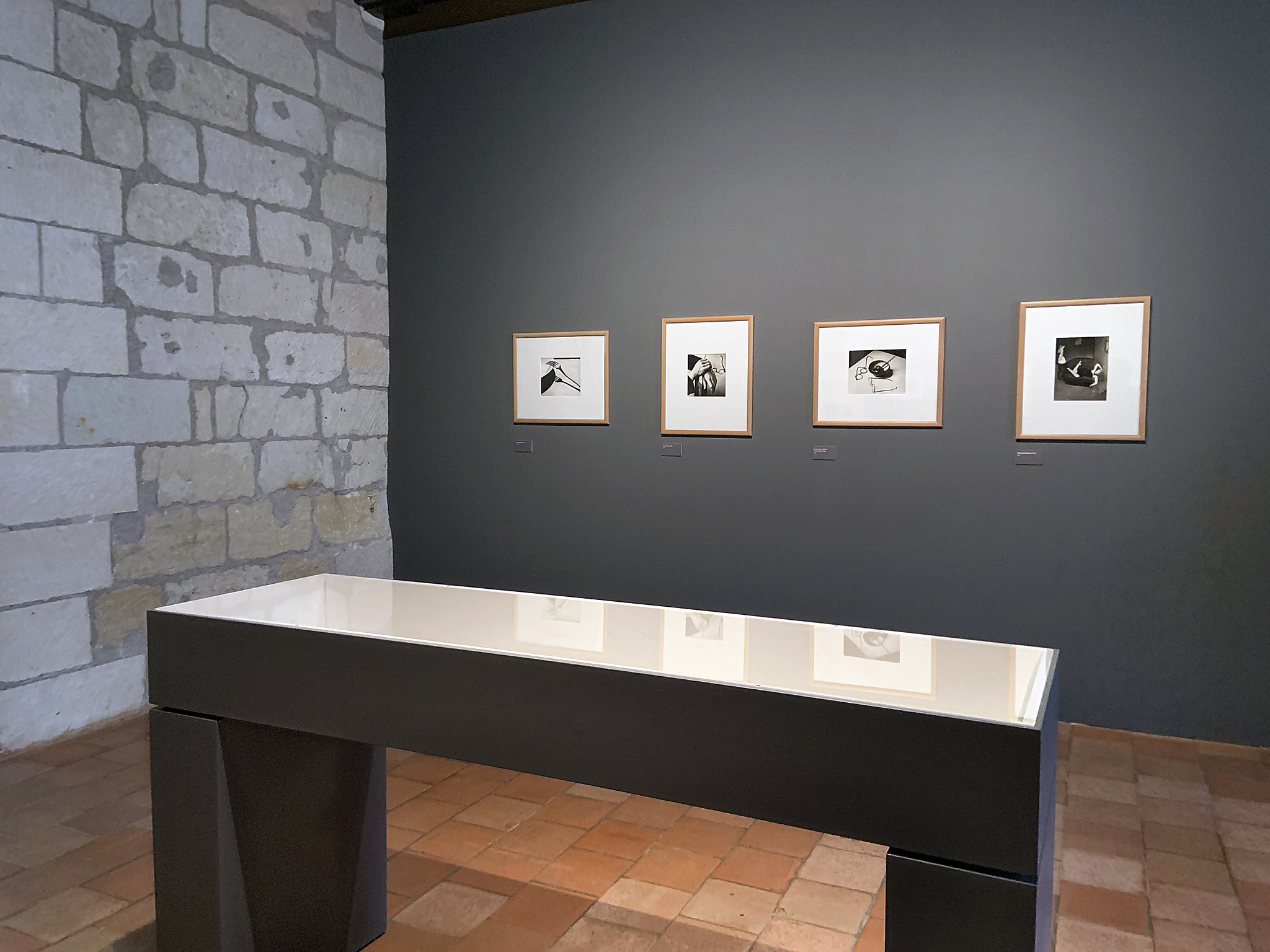
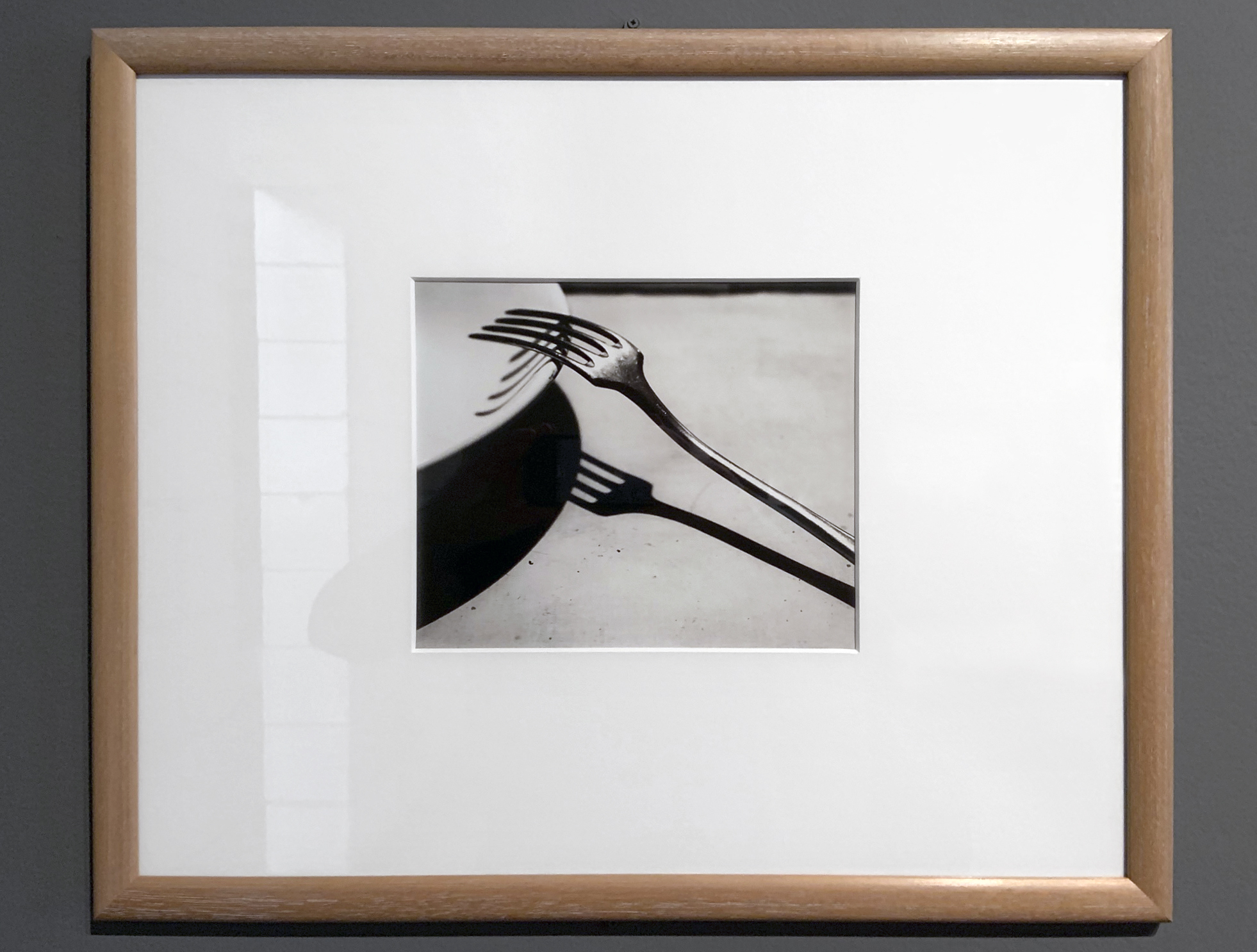
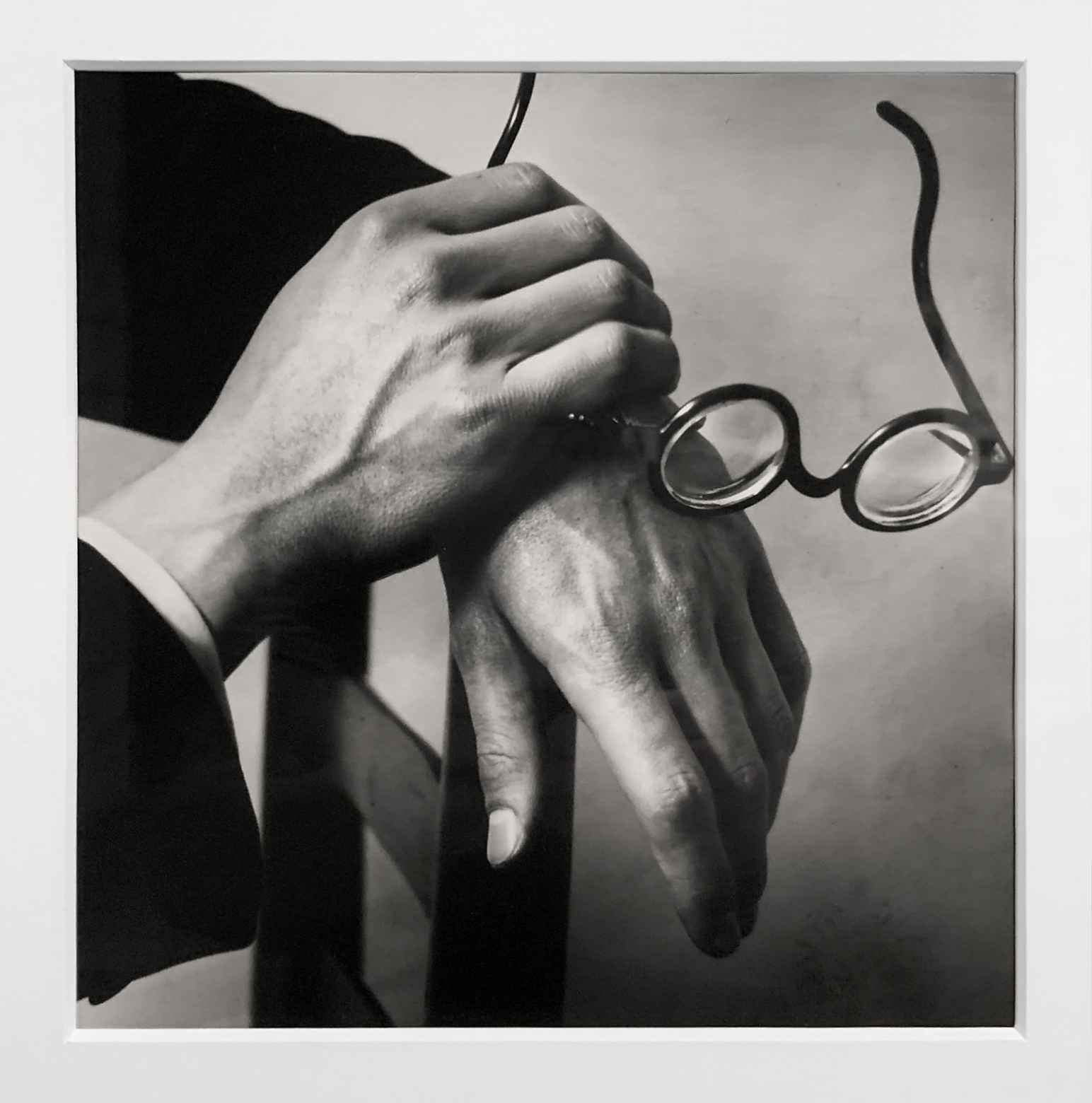
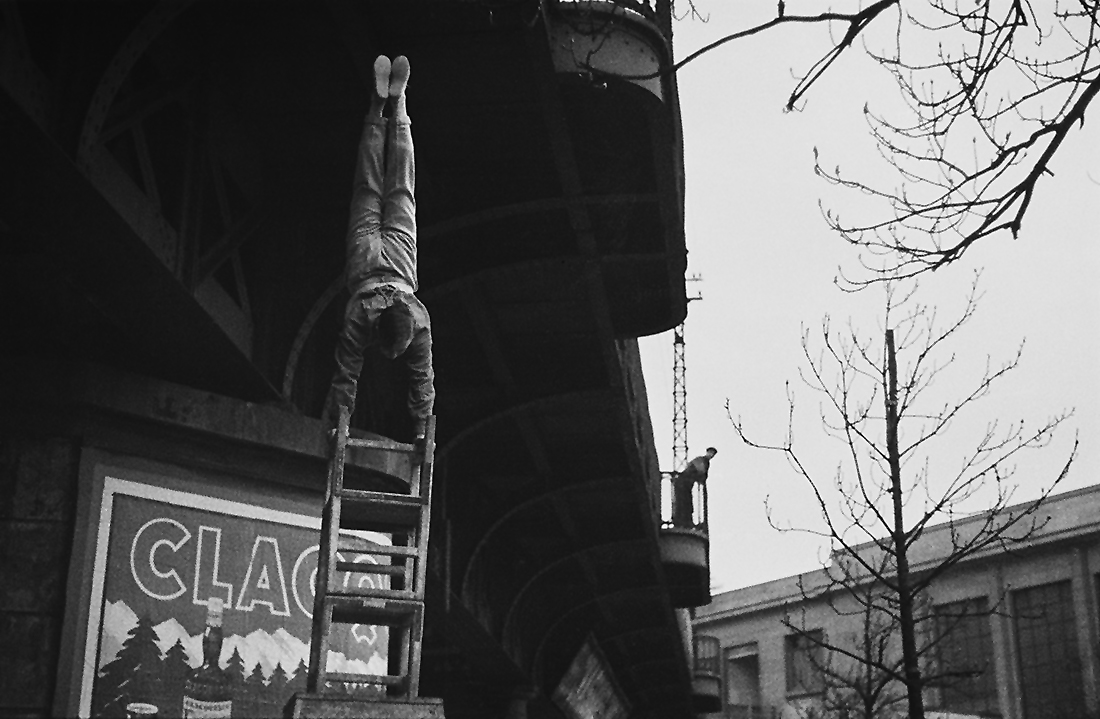
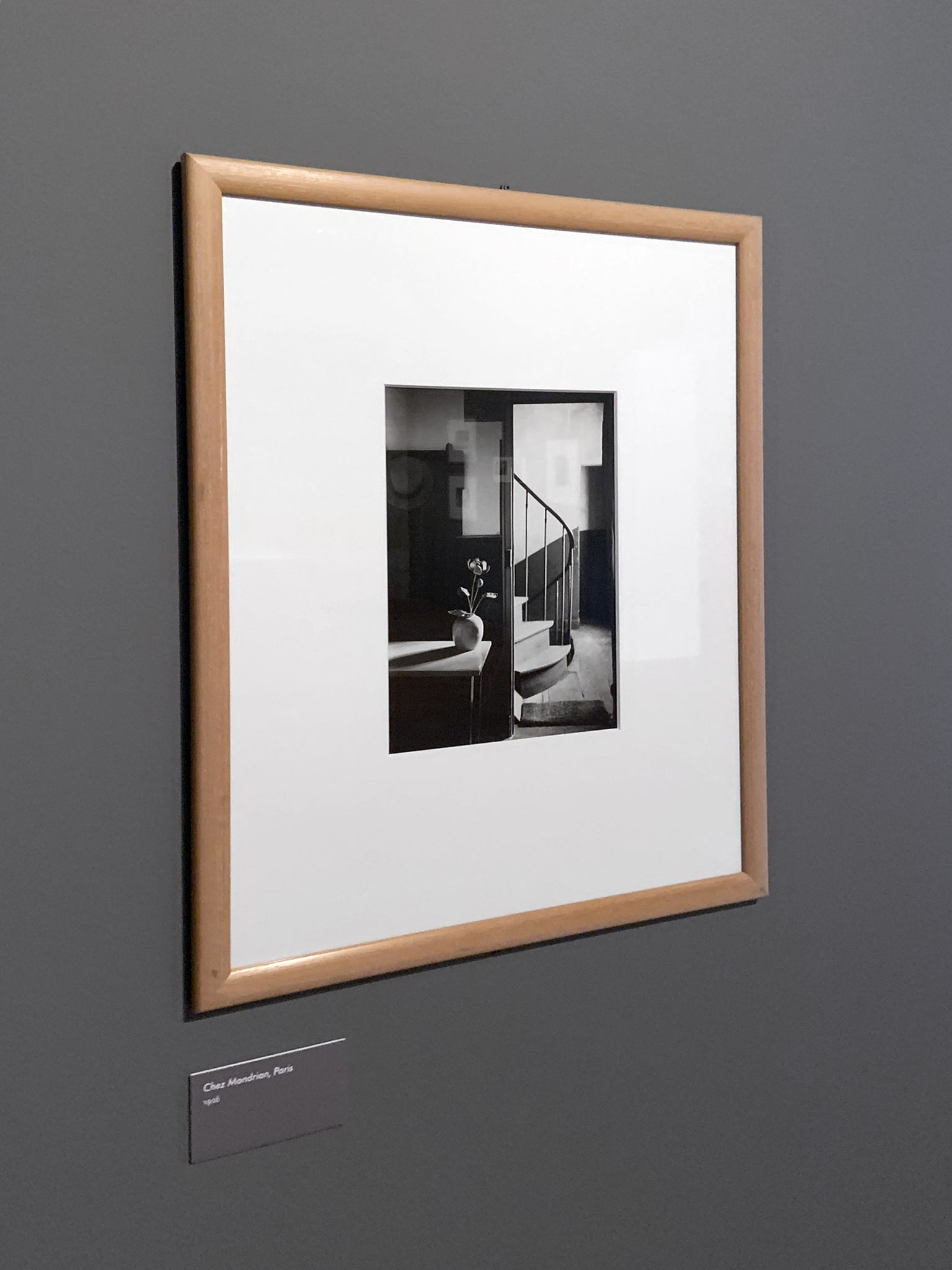
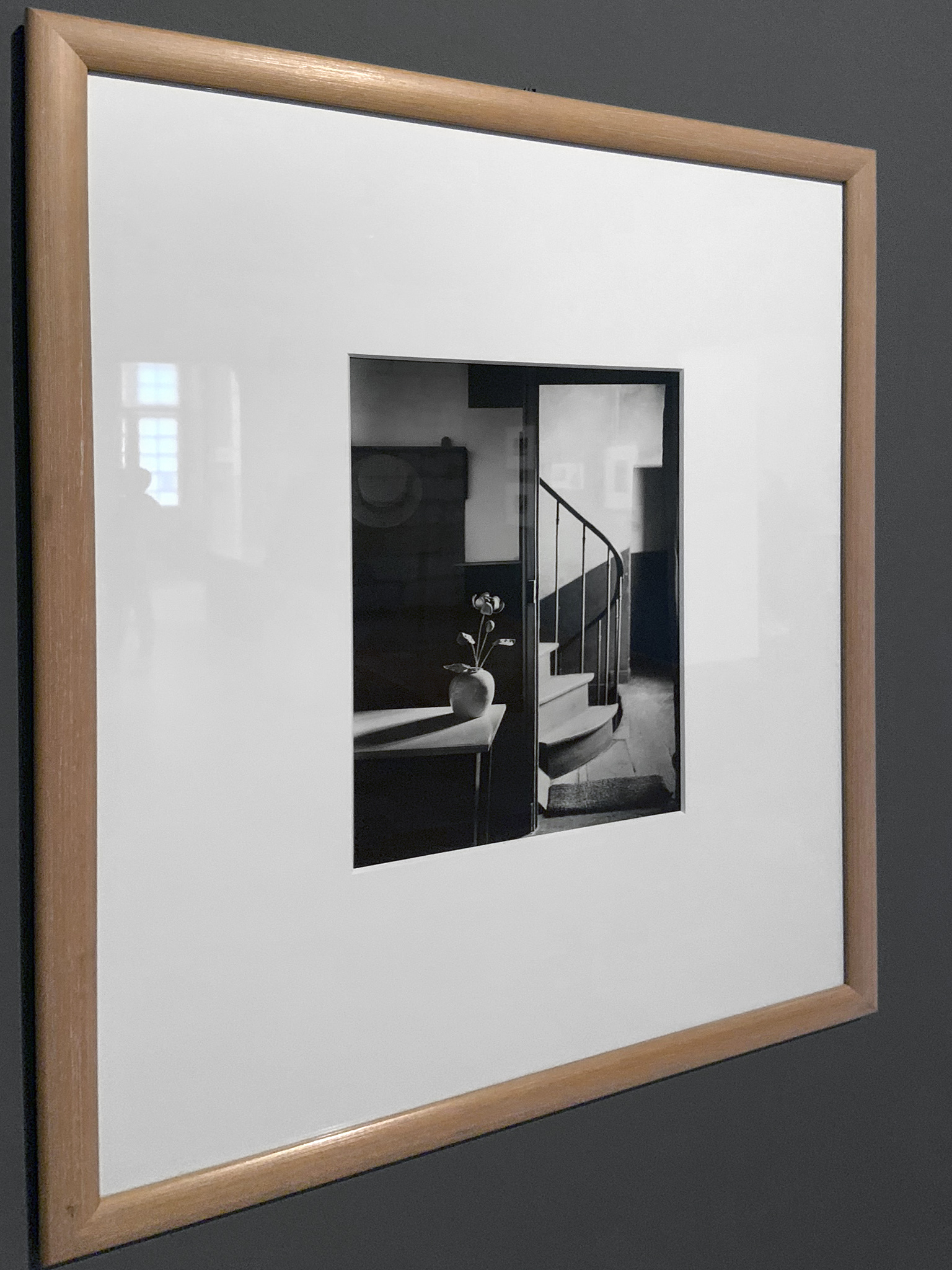
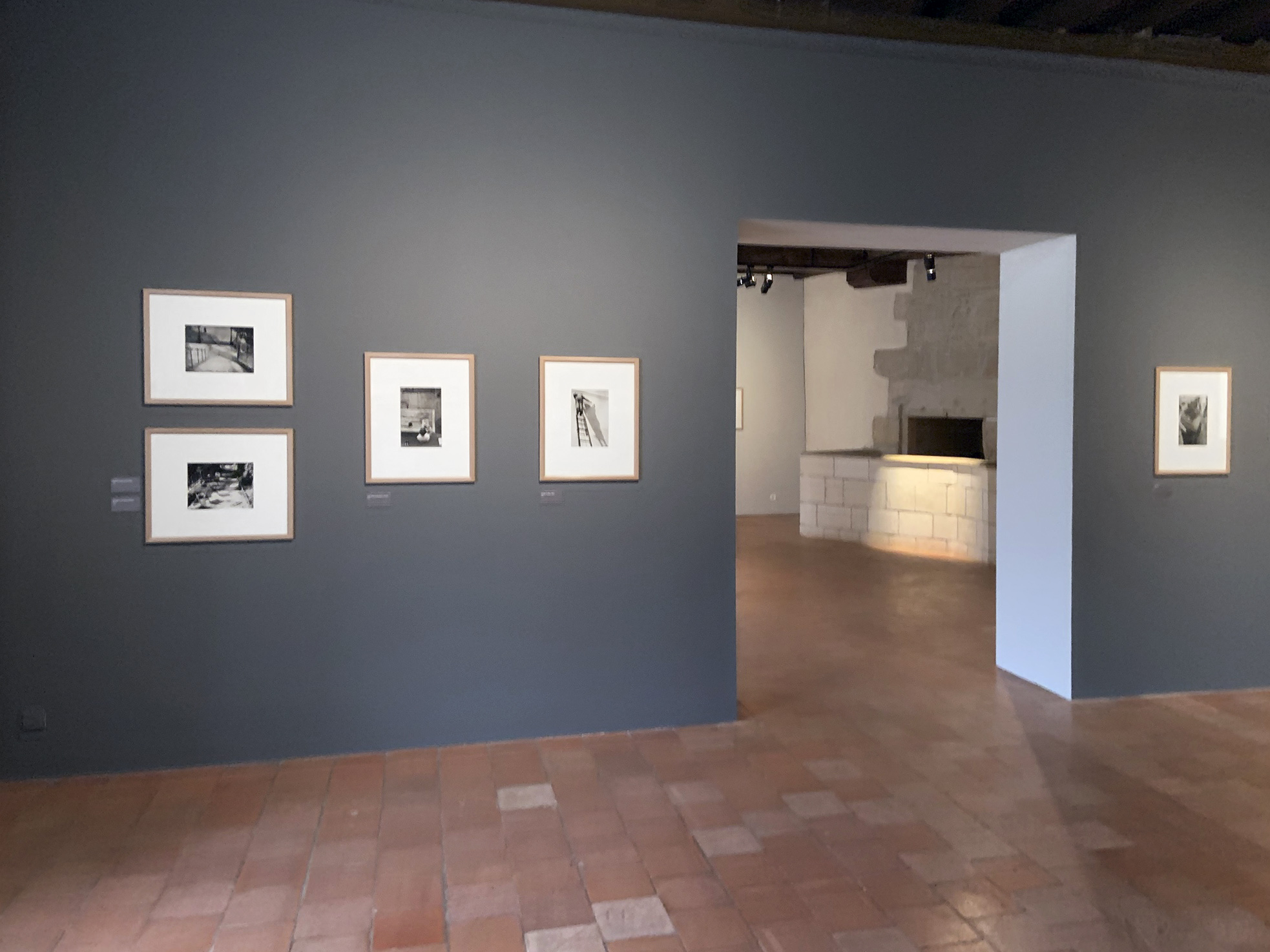
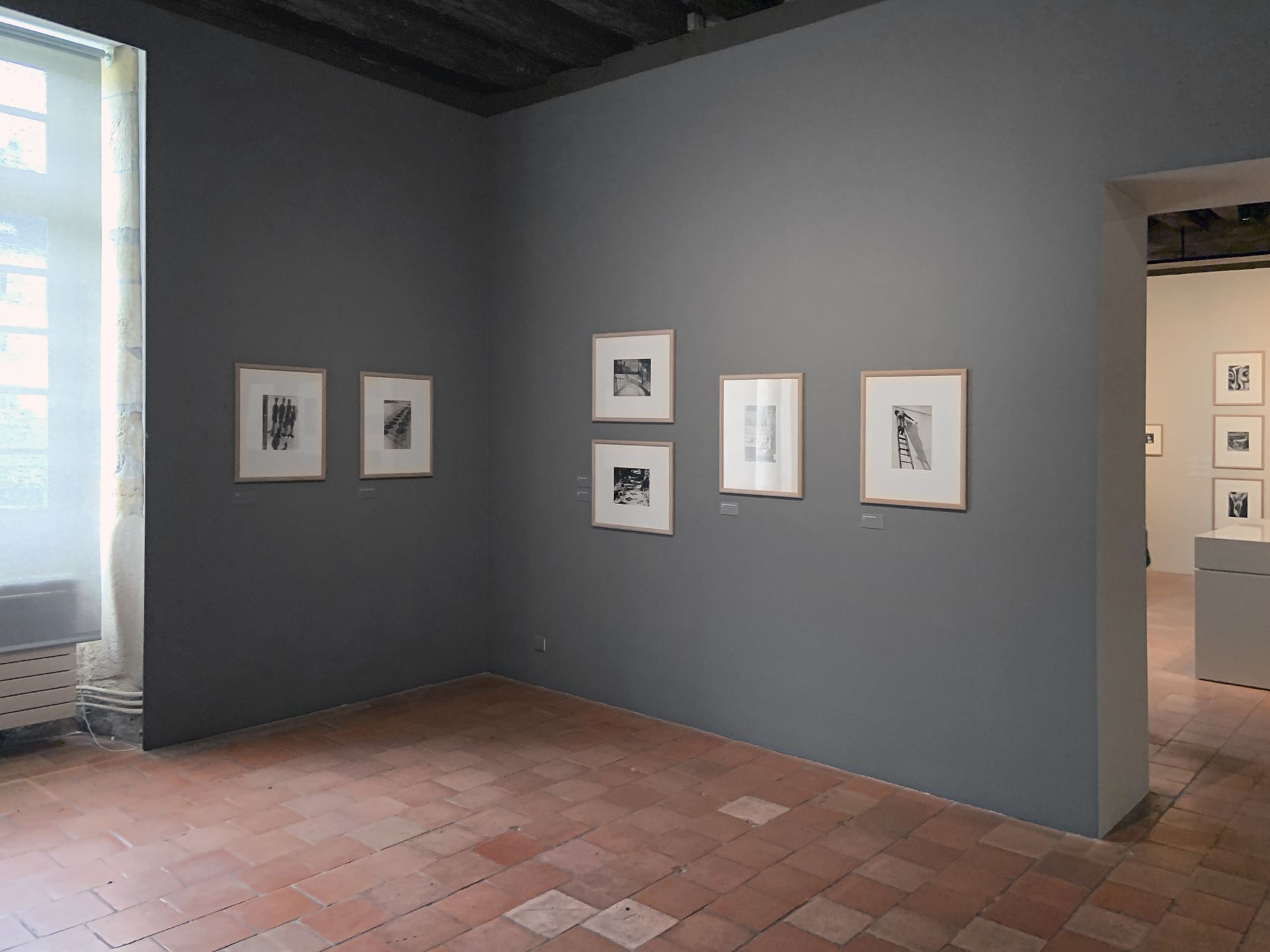
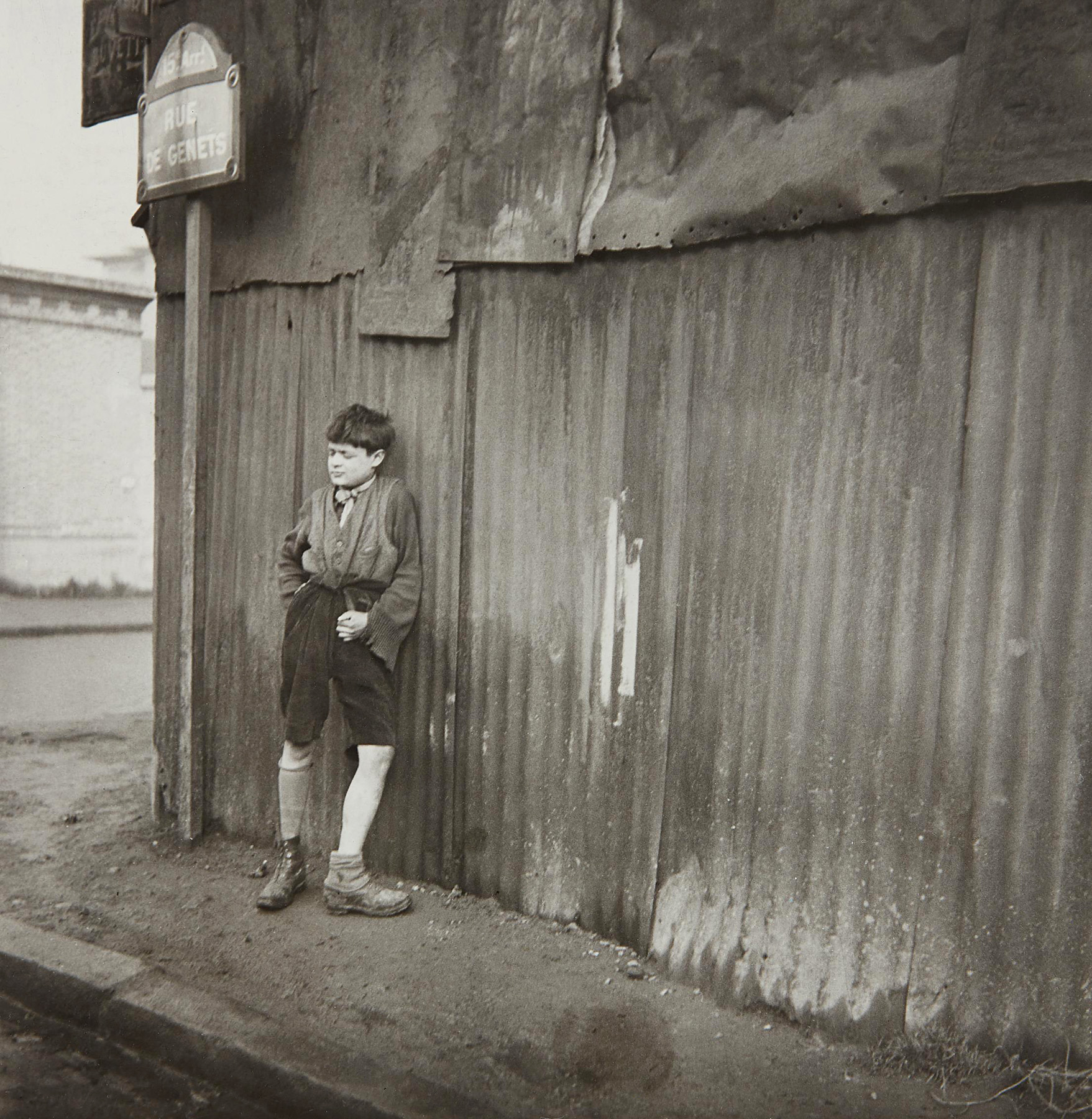
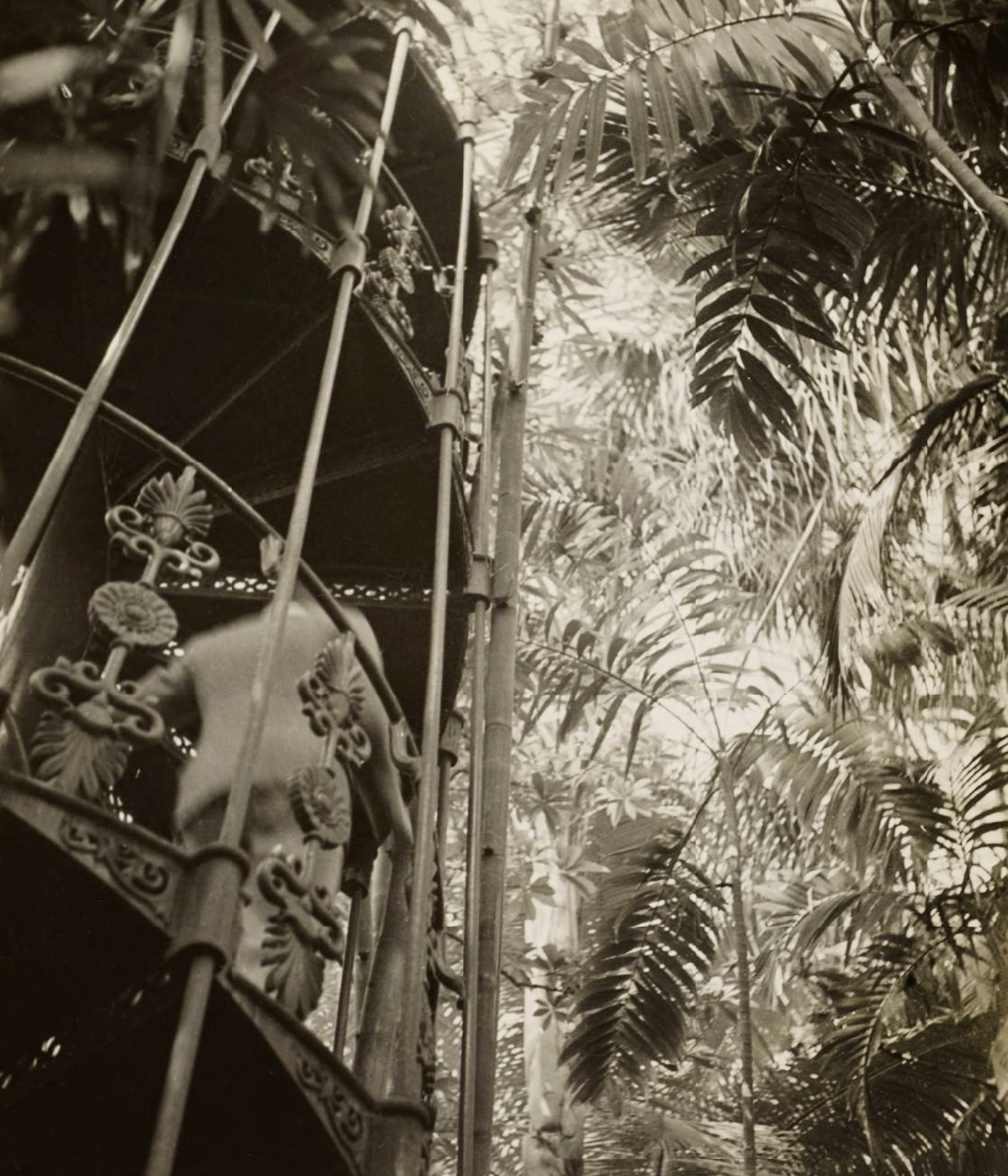
Exhibition: ‘Eugène Atget, Voir Paris’ at the Fondation Henri Cartier-Bresson, Paris

Exhibition dates: 3rd June – 19th September, 2021

Curators: Anne de Mondenard, Head of the Photography and Digital Images Department, musée Carnavalet – Histoire de Paris Agnès Sire, Artistic director, Fondation HCB


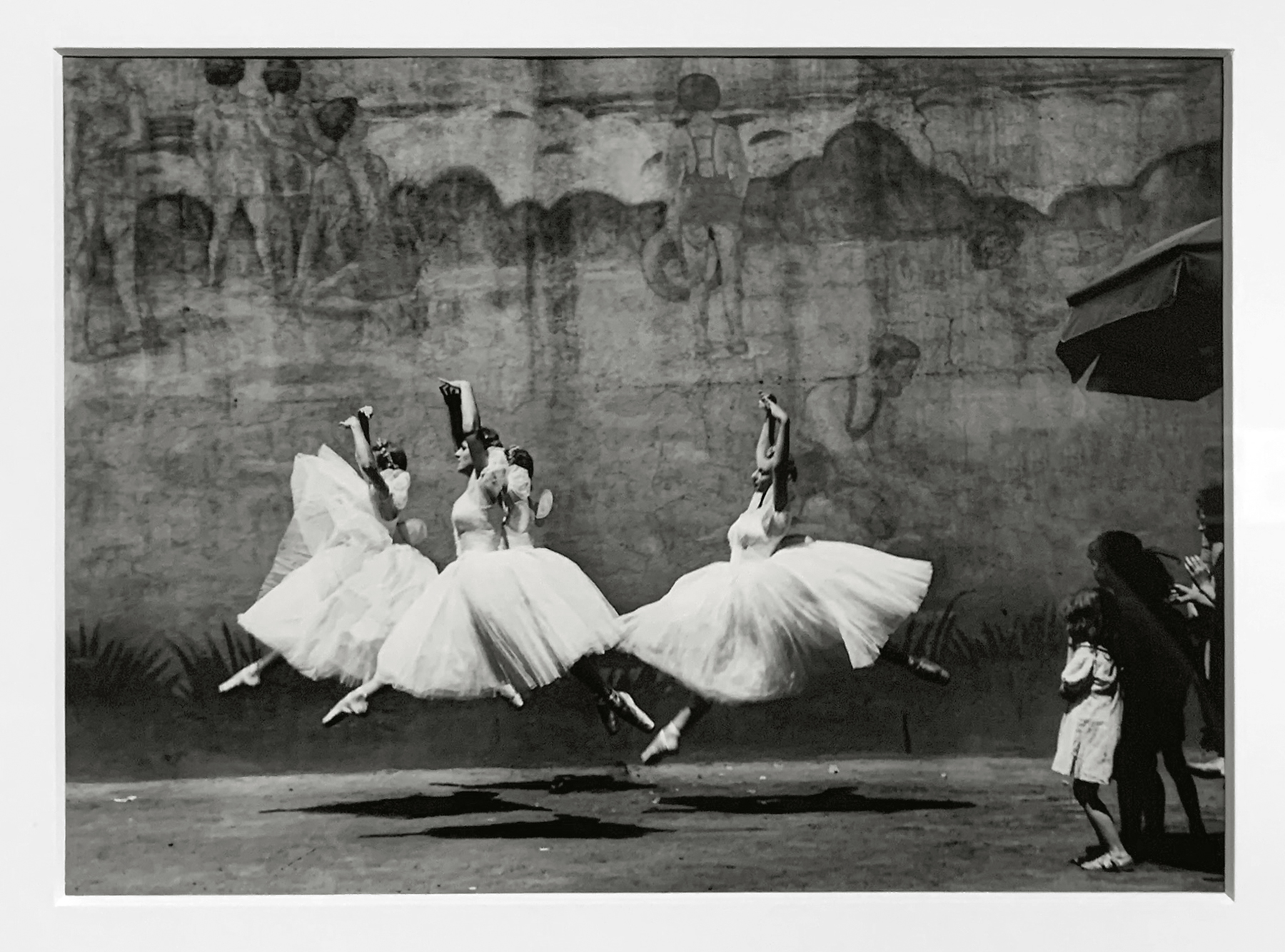
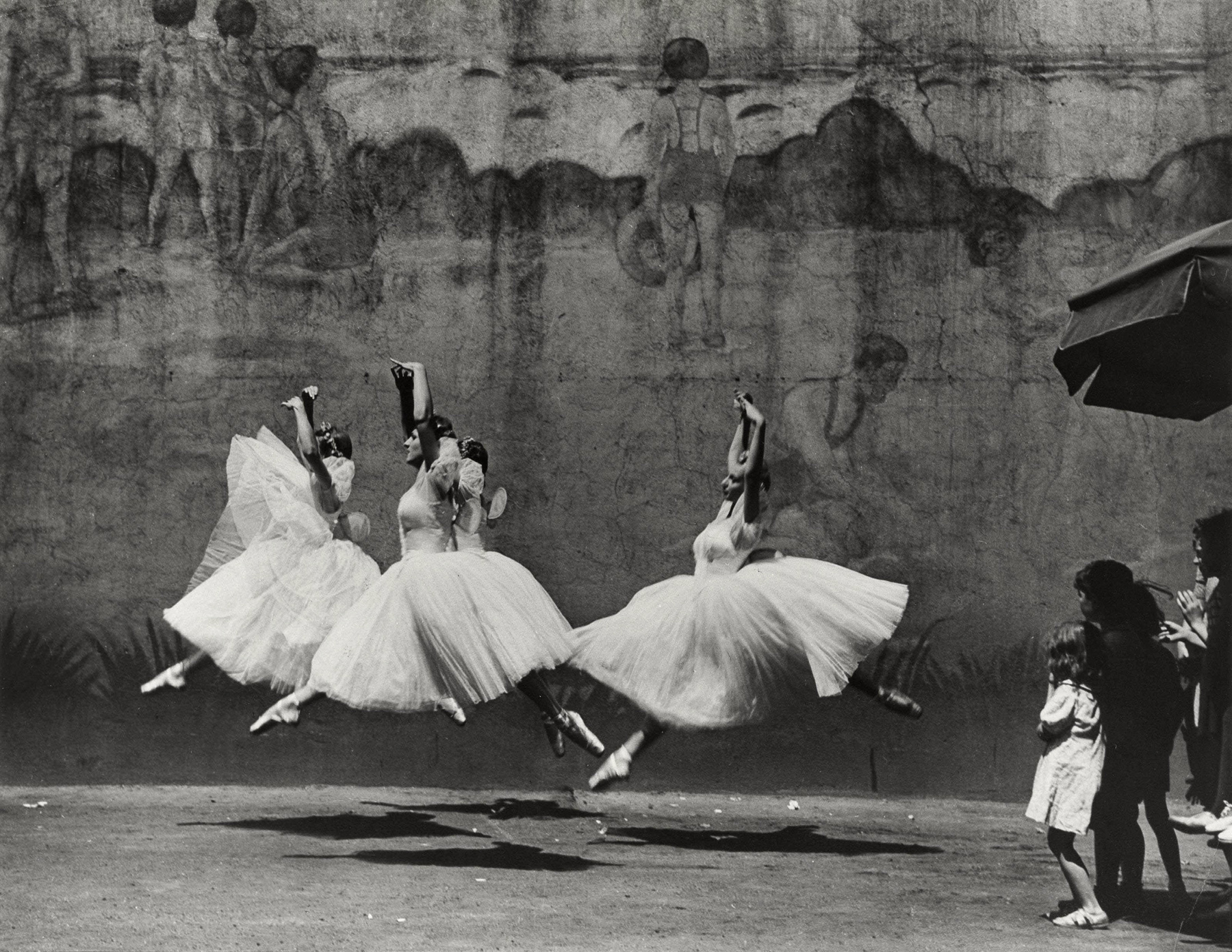
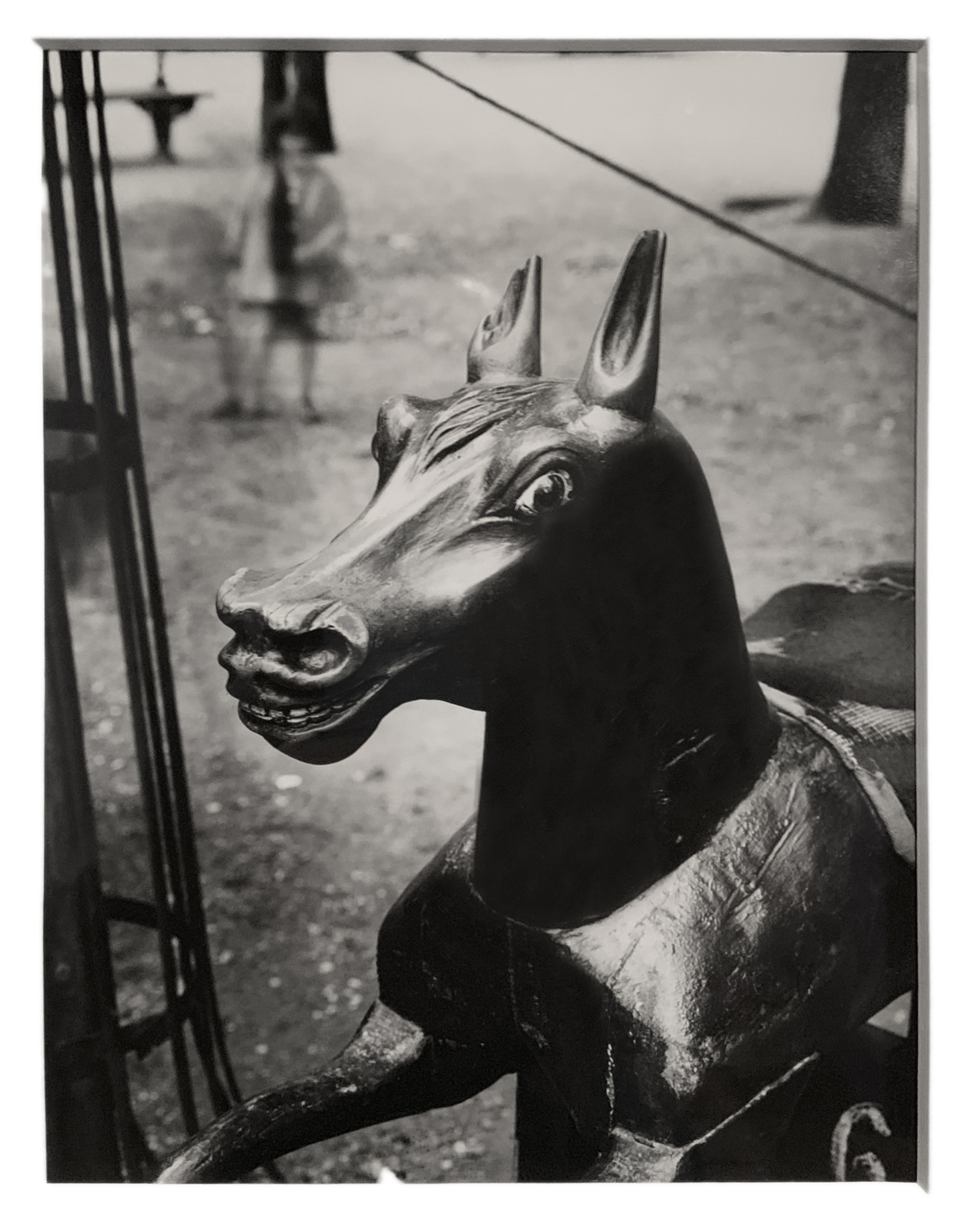
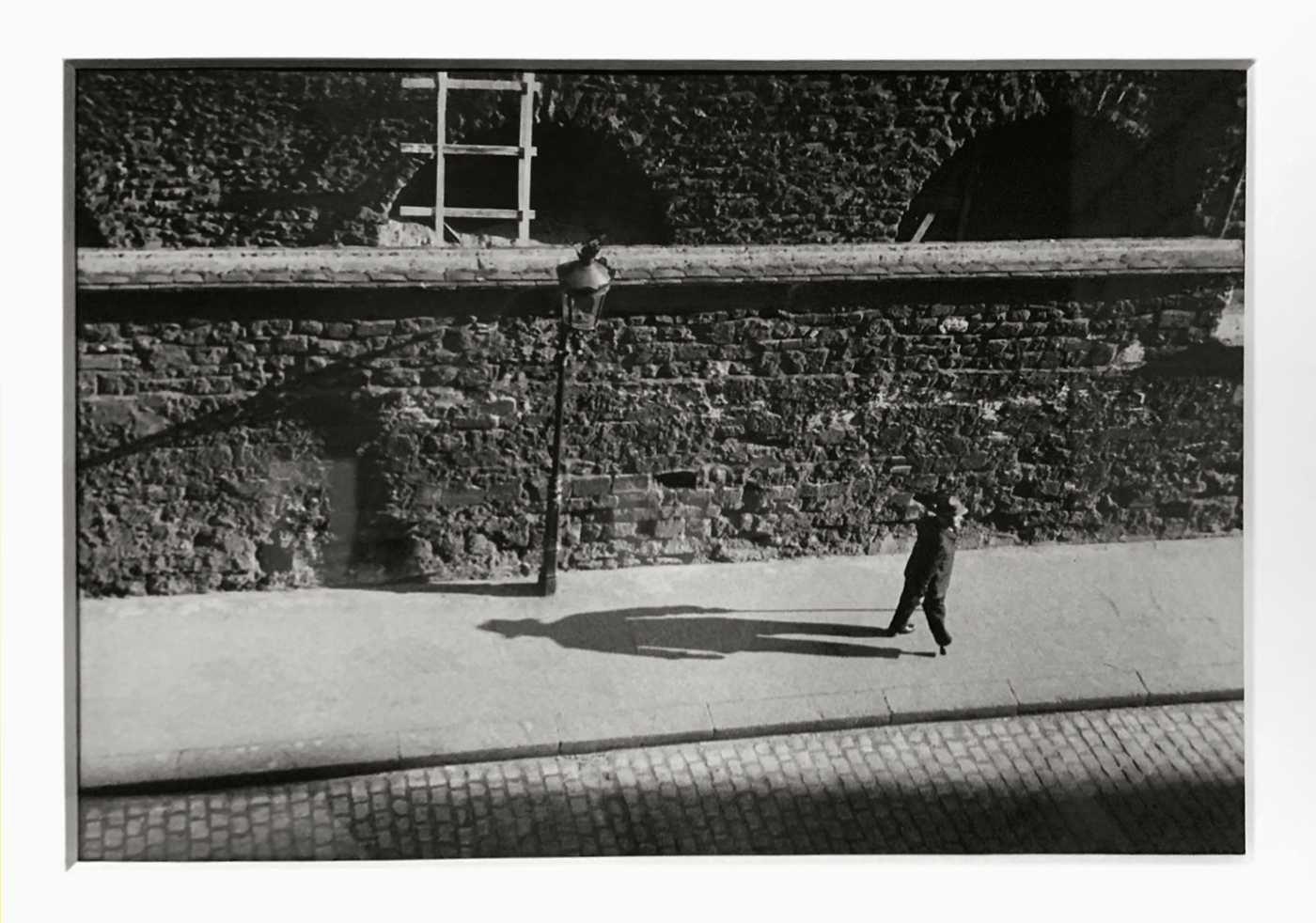
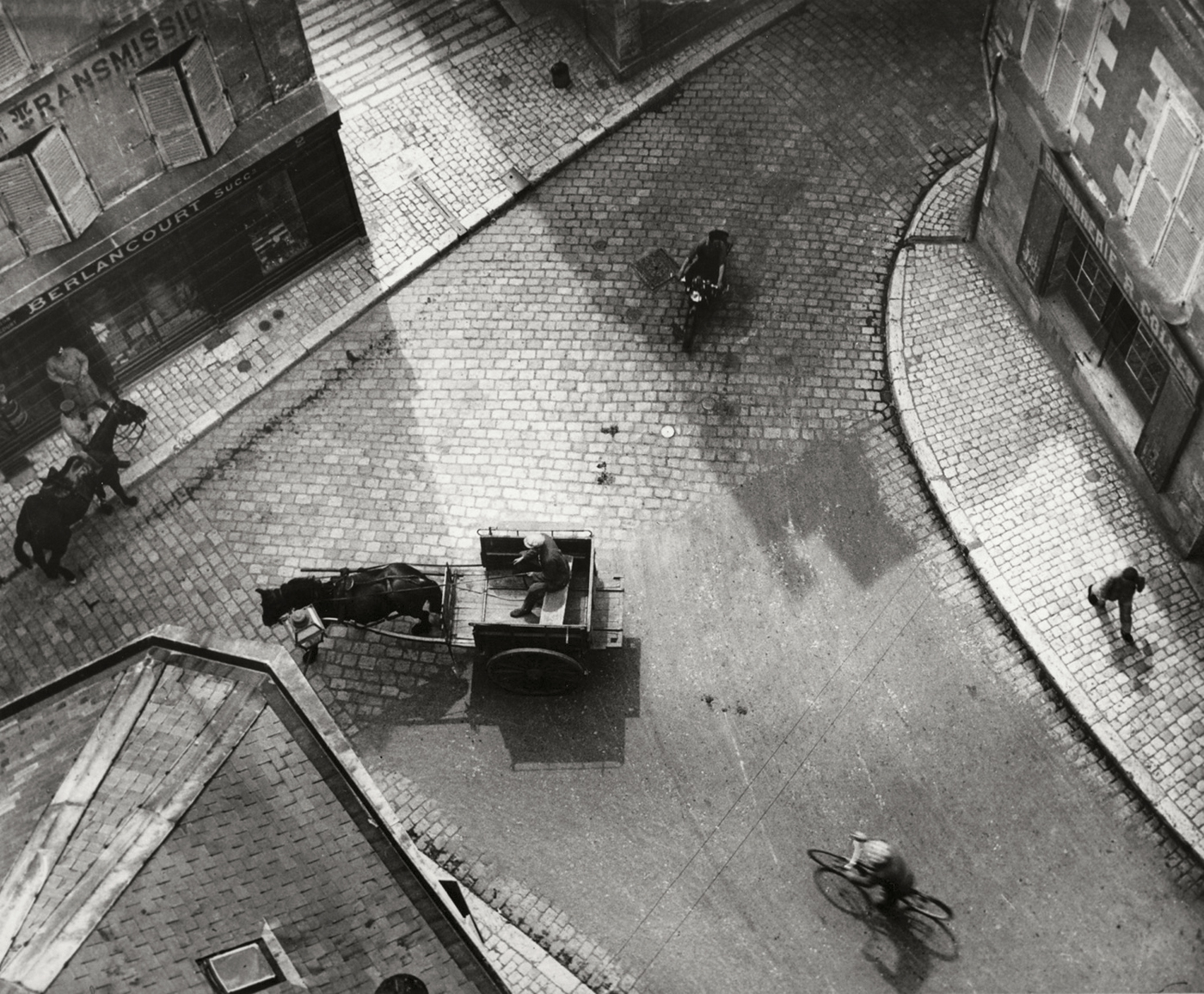
Eugène Atget (French, 1857-1927) 'Parc Delessert, XVIe' 1914 from the exhibition 'Eugène Atget, Voir Paris' at the Fondation Henri Cartier-Bresson, Paris, June - Sept, 2021


Eugène Atget (French, 1857-1927)
Parc Delessert, XVIe
1914
Albumen print
© Paris Musées / musée Carnavalet – Histoire de Paris


The power of imagination


“Imagination is more important than knowledge. For knowledge is limited to all we know and understand, while imagination embraces the entire world, and all there ever will be to know and understand.”


Albert Einstein


Imagination, or Visualisation, may be simply defined as the formation of mental images or pictures. It helps us form images of the world – in the case of Atget, images of Old Paris – in which the viewer can value the experience of walking in the city, Paris, walking in the footsteps of history through the gaze of the artist, our gaze.

If we exercise our imagination we can resist, and subvert, our presumed reality – undermining the so-called reality of the world, a world in which we are rationally and relationally forced to understand how things are and how they work.

This is what artists do… they undermine the logic of the world through being exposed to the qualities instantiated in the physical world, and by then stepping aside from that world they exercise their imagination to create, to imagine, to expose themselves (much like a photographic plate) to the perceptions of an external physical world viewed from multiple perspectives.

Thus, “Imagination … plays a central role in empirical cognition by serving as the basis for both memory and the creative arts. In addition it also plays a kind of mediating role between the faculties of sensibility and understanding. Kant calls this mediating role a “transcendental function” of the imagination. It mediates and transcends by being tied in its functioning to both faculties. On one hand, it produces sensible representations, and is thus connected to sensibility. On the other hand, it is not a purely passive faculty but rather engages in the activity of bringing together various representations, as does memory, for example. Kant explicitly connects understanding with this kind of active mental processing.”1

How appropriate for the visualisations of Atget, purported documents for artists but in an alternative reality, poetic concepts (of his imagination) in which he “invites us to exercise our gaze, to consider the complexity of the world as the source of our faculty of imagination.”

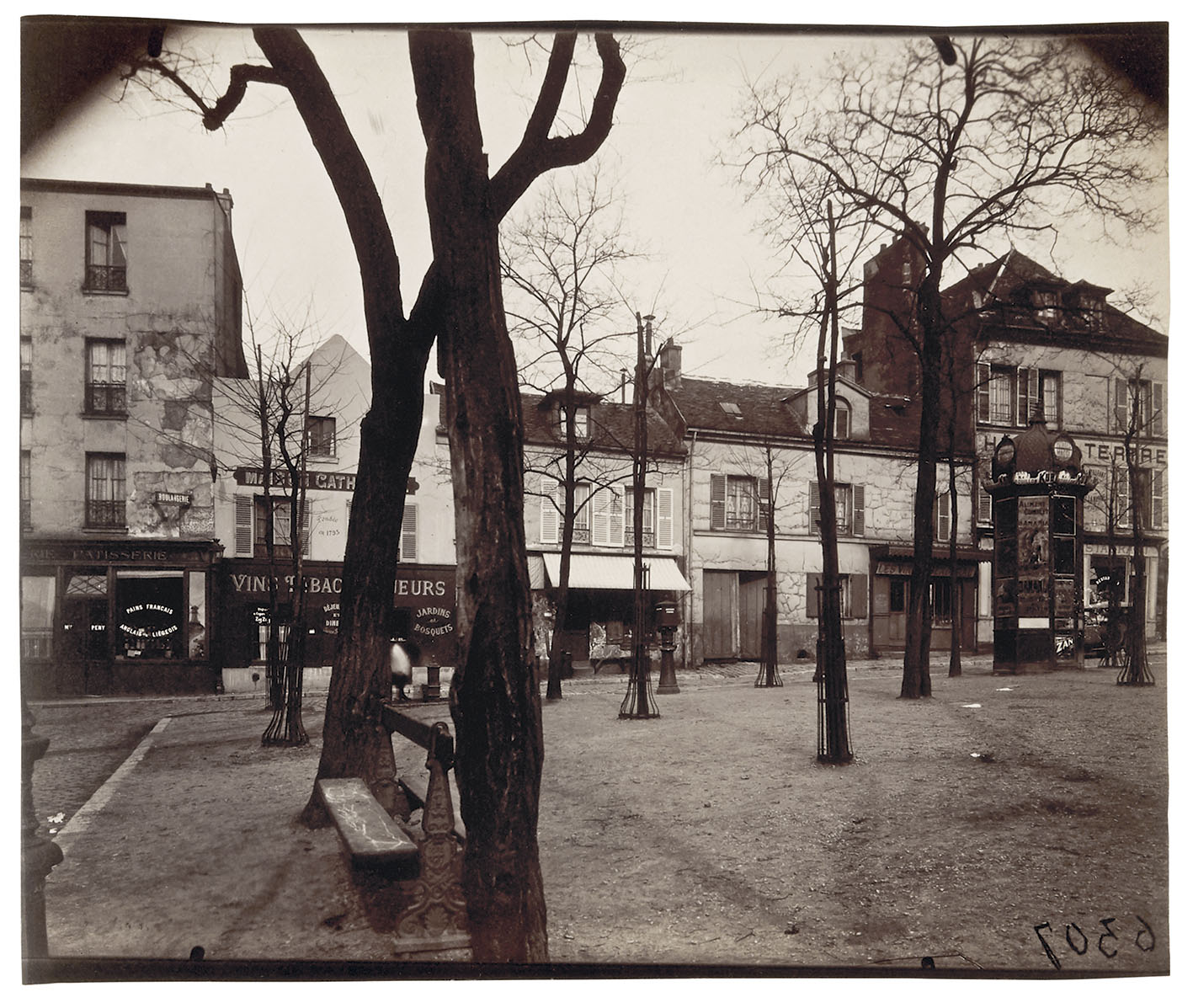
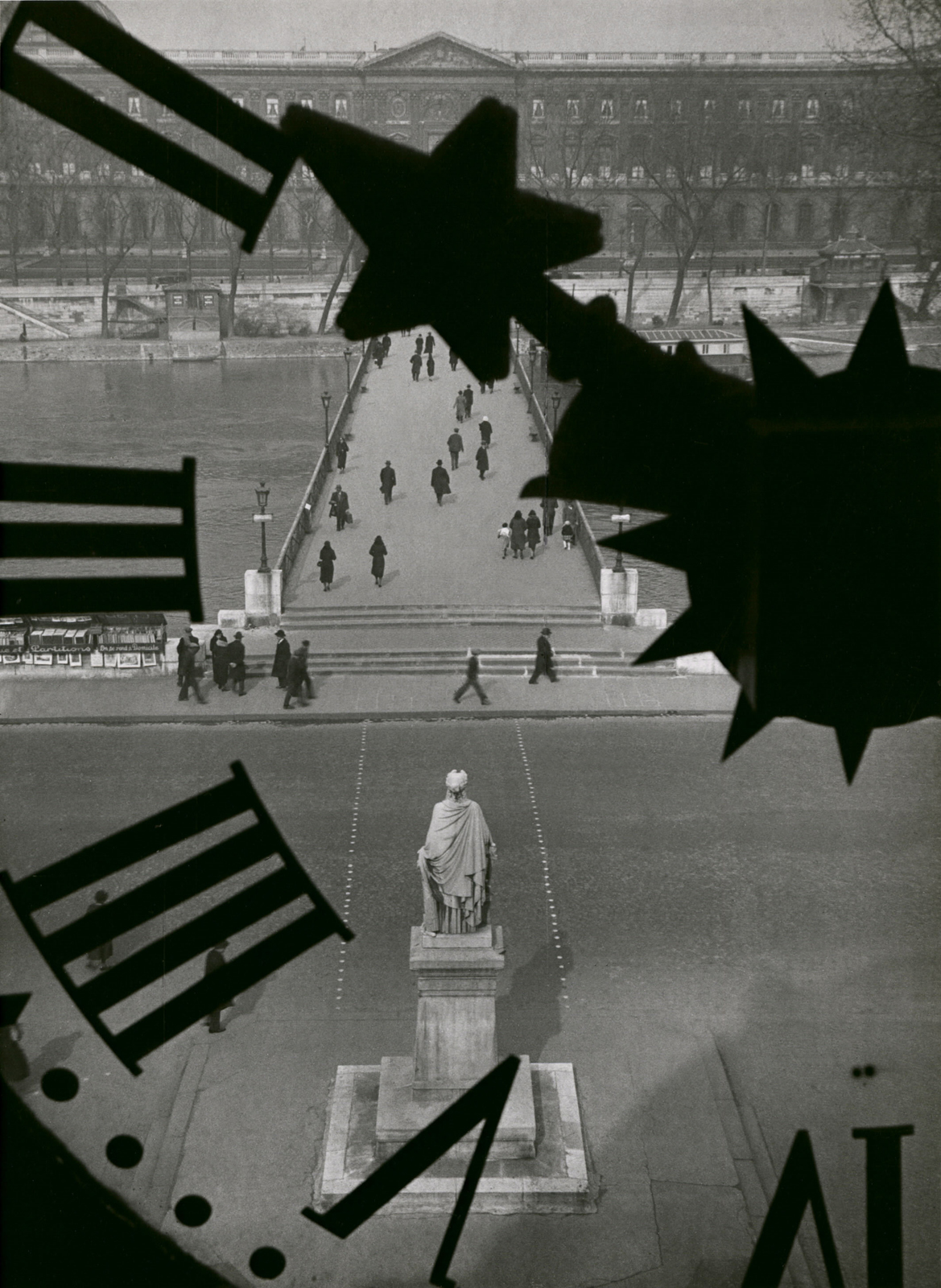
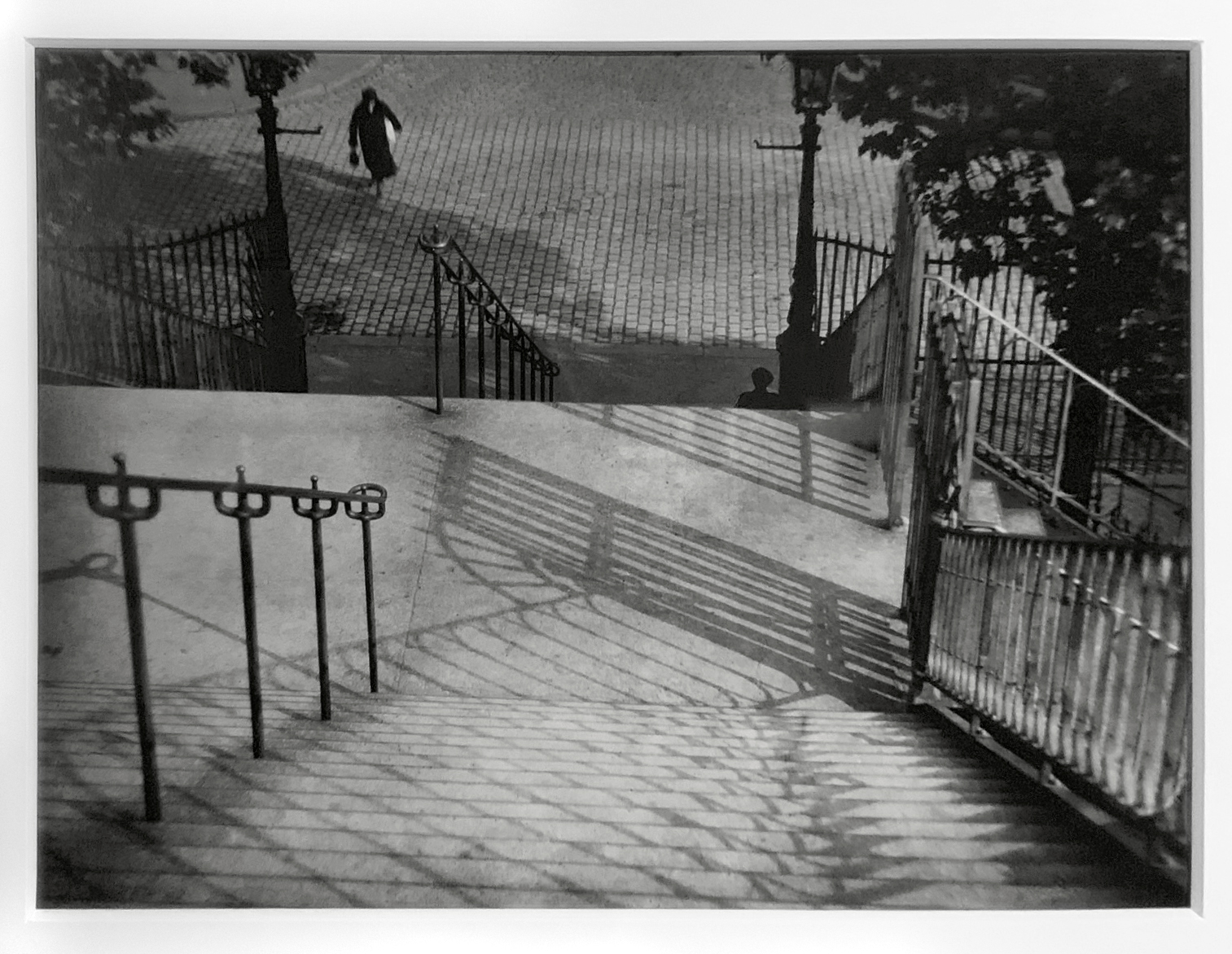
You only have to look at one image to imagine Atget lugging his large plate camera to the Place du Tertre, Montmartre in 1922 (below); scouting the square in the 18th arrondissement of Paris near the Basilica of the Sacré Cœur; setting up the camera on its heavy tripod, throwing the dark cloth over his head and then focusing the composition on the ground glass – to then place a tree dissected by another tree directly in your eye line, and starting half way up the tree.2 Who would do that!

It gives you the shivers… the scene is just a little too real. It appears from the transcendental function of the imagination as surrealist “other”. It is un/real. Super real.

Dr Marcus Bunyan


1/ Colin McLear. “Kant: Philosophy of Mind,” on the Internet Encyclopaedia of Philosophy website [Online] Cited 20/06/2021.

2/ Also note how far the camera front has moved beyond the circle of light from the lens – so vertical parallels stay parallel.


Many thankx to the Fondation HCB for allowing me to publish the photographs in the posting. Please click on the photographs for a larger version of the image.


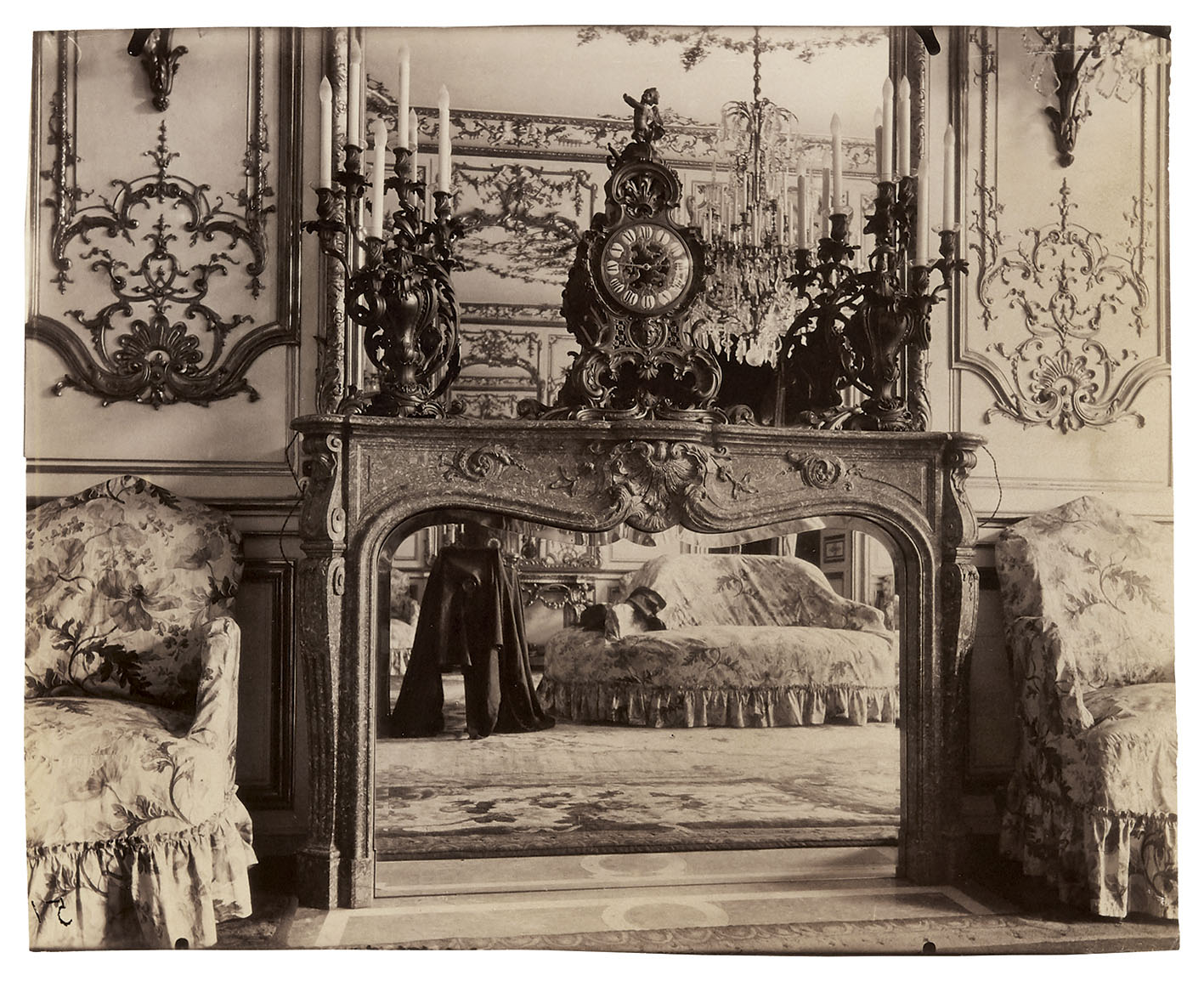
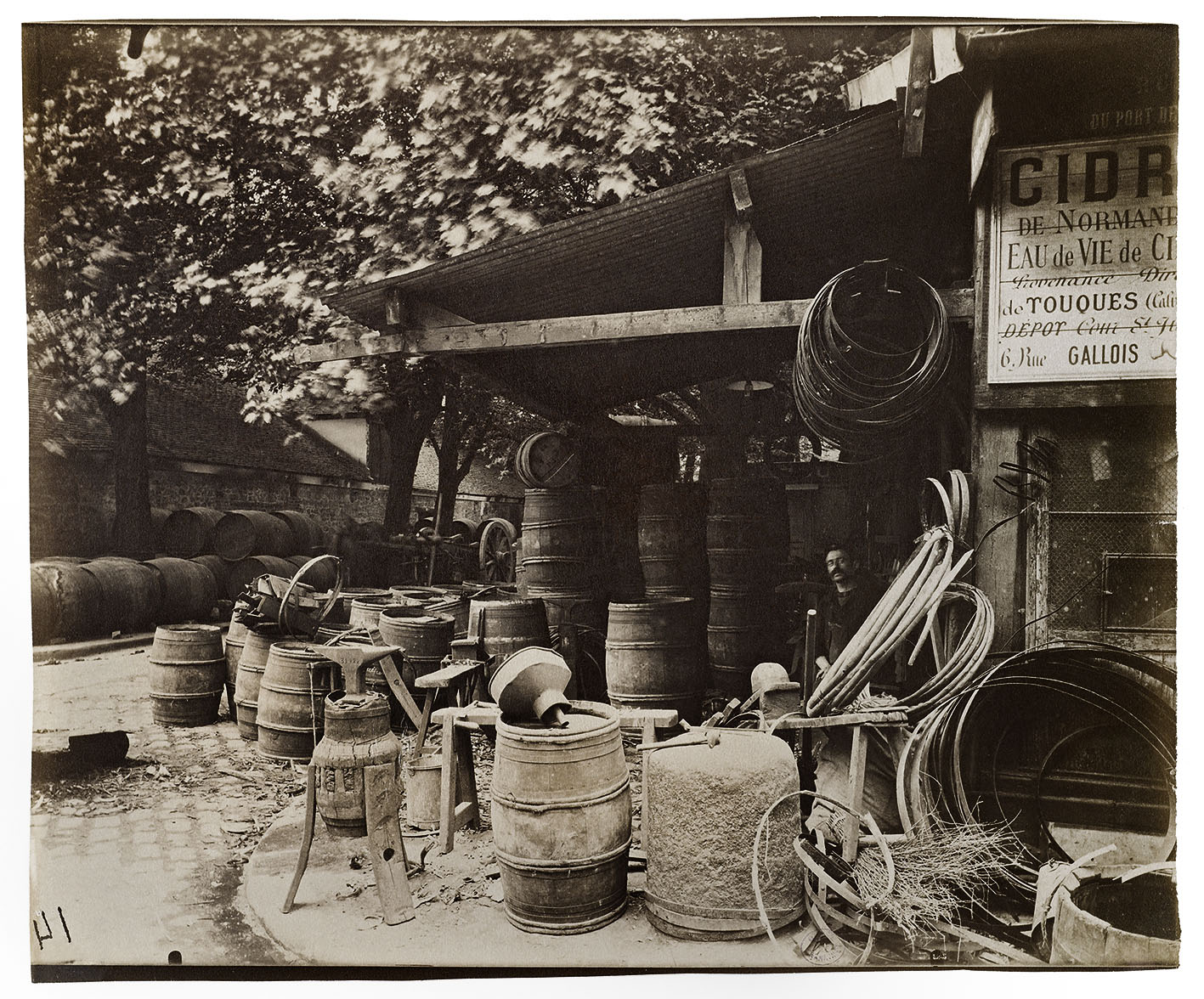
Eugène Atget gave up a career as an actor in order to pursue a relatively new art: photographic recording. From the most classical architecture to the most remote courtyards, Atget, more interested in the city, obsessively depicted a Paris marked by history, offering his prints to painters and libraries. Characters that show up in the frame blend into the background.

Atget said little to nothing about his own work. Reported statements served to define his project as essentially documentary, but it was his direct, poetic approach that fascinated many of his contemporaries. This produced contradictory commentary on his unusual oeuvre. He was fundamentally independent, a bit austere, and fostered neither intellectual concepts nor artistic principles as foundations from which to value experience. He invites us to exercise our gaze, to consider the complexity of the world as the source of our faculty of imagination.


Interview des commissaires de l’exposition Eugène Atget – Voir Paris


Eugène Atget (French, 1857-1927) 'Église Saint-Médard, Ve' 1900-1901 from the exhibition 'Eugène Atget, Voir Paris' at the Fondation Henri Cartier-Bresson, Paris, June - Sept, 2021


Eugène Atget (French, 1857-1927)
Église Saint-Médard, Ve (Church of Saint-Médard, Ve)
1900-1901
Albumen print
© Paris Musées / musée Carnavalet – Histoire de Paris


Eugène Atget (French, 1857-1927) 'Ambassade d'Autriche, 57, rue de Varenne, VIIe' 1905


Eugène Atget (French, 1857-1927)
Ambassade d’Autriche, 57, rue de Varenne, VIIe (Austrian embassy, 57, rue de Varenne, VIIe)
1905
Albumen print
© Paris Musées / musée Carnavalet – Histoire de Paris


Eugène Atget (French, 1857-1927) 'Un coin de l'entrepôt de Bercy, rue Léopold, XIIe' 1913


Eugène Atget (French, 1857-1927)
Un coin de l’entrepôt de Bercy, rue Léopold, XIIe (A corner of the Bercy warehouse, rue Léopold, XIIe)
1913
Albumen print
© Paris Musées / musée Carnavalet – Histoire de Paris


Eugène Atget (French, 1857-1927) 'Maison de Balzac, 24, rue Berton, XVIe' 1913


Eugène Atget (French, 1857-1927)
Maison de Balzac, 24, rue Berton, XVIe
1913
Albumen print
© Paris Musées / musée Carnavalet – Histoire de Paris


Eugène Atget (French, 1857-1927) 'Place du Tertre, Montmartre, XVIIIe' 1922


Eugène Atget (French, 1857-1927)
Place du Tertre, Montmartre, XVIIIe
1922
Albumen print
© Paris Musées / musée Carnavalet – Histoire de Paris


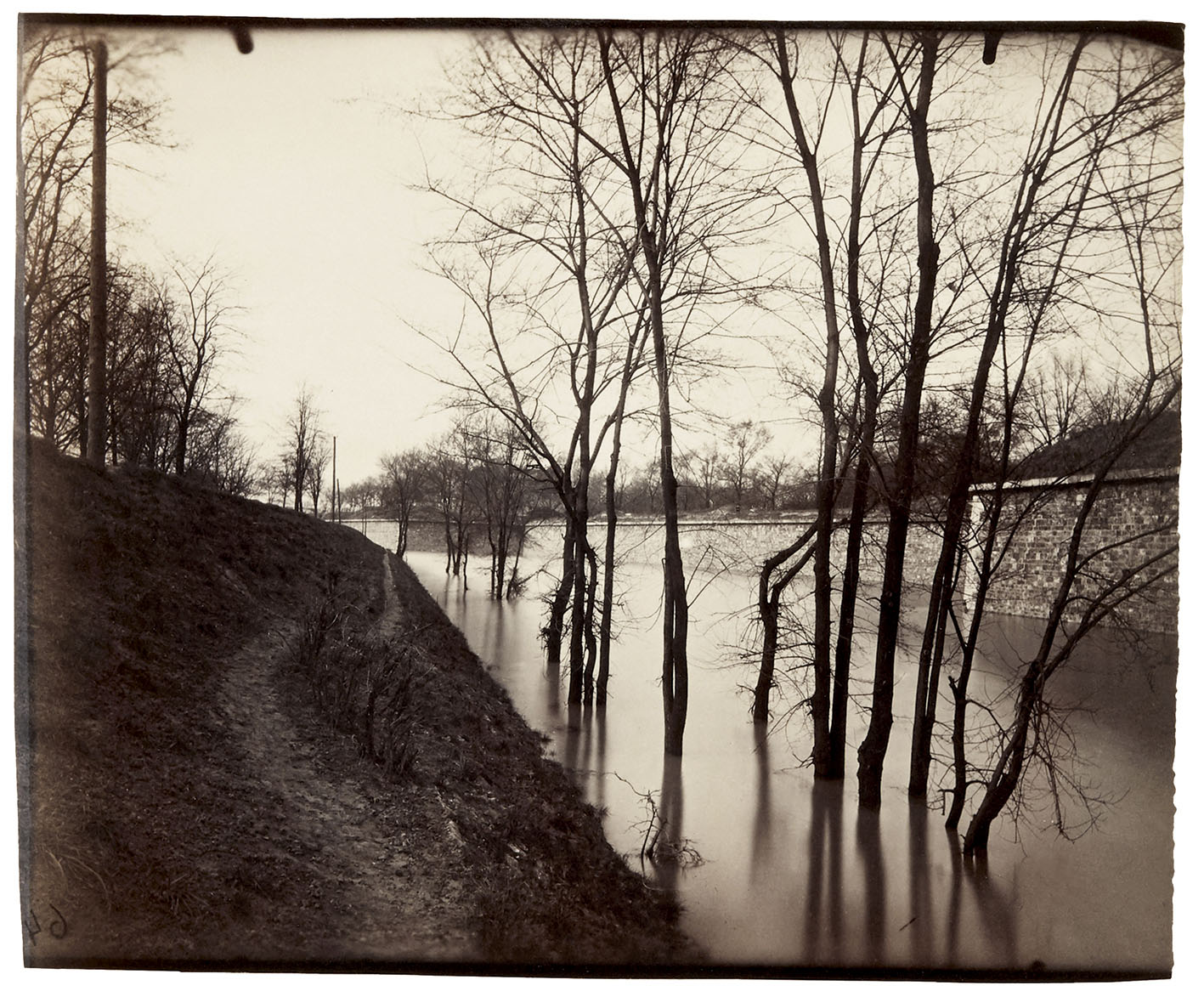
Eugène Atget (French, 1857-1927) 'Fortifications, porte de Sèvres, XVe' 1923


Eugène Atget (French, 1857-1927)
Fortifications, porte de Sèvres, XVe
1923
Albumen print
© Paris Musées / musée Carnavalet – Histoire de Paris


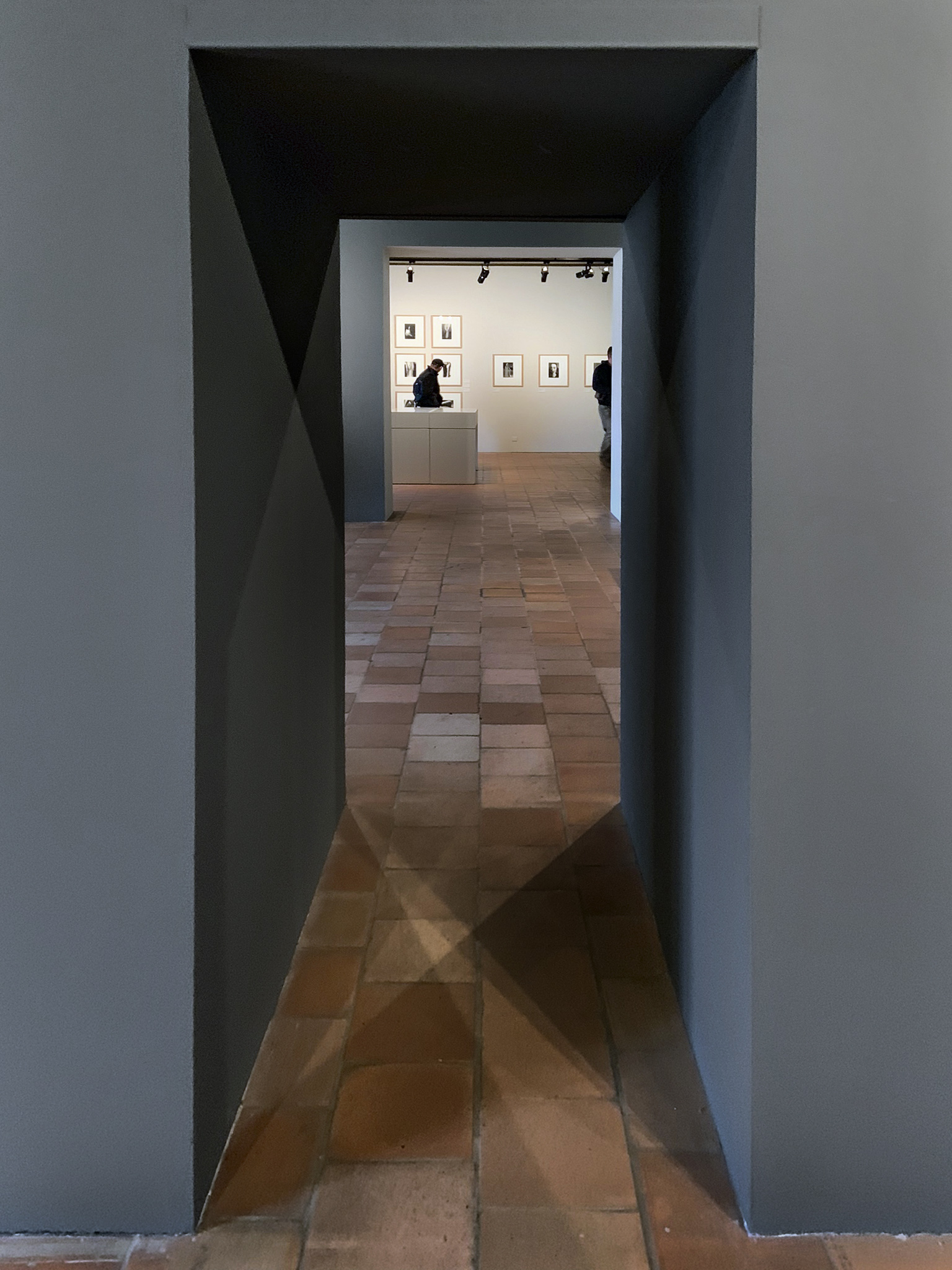
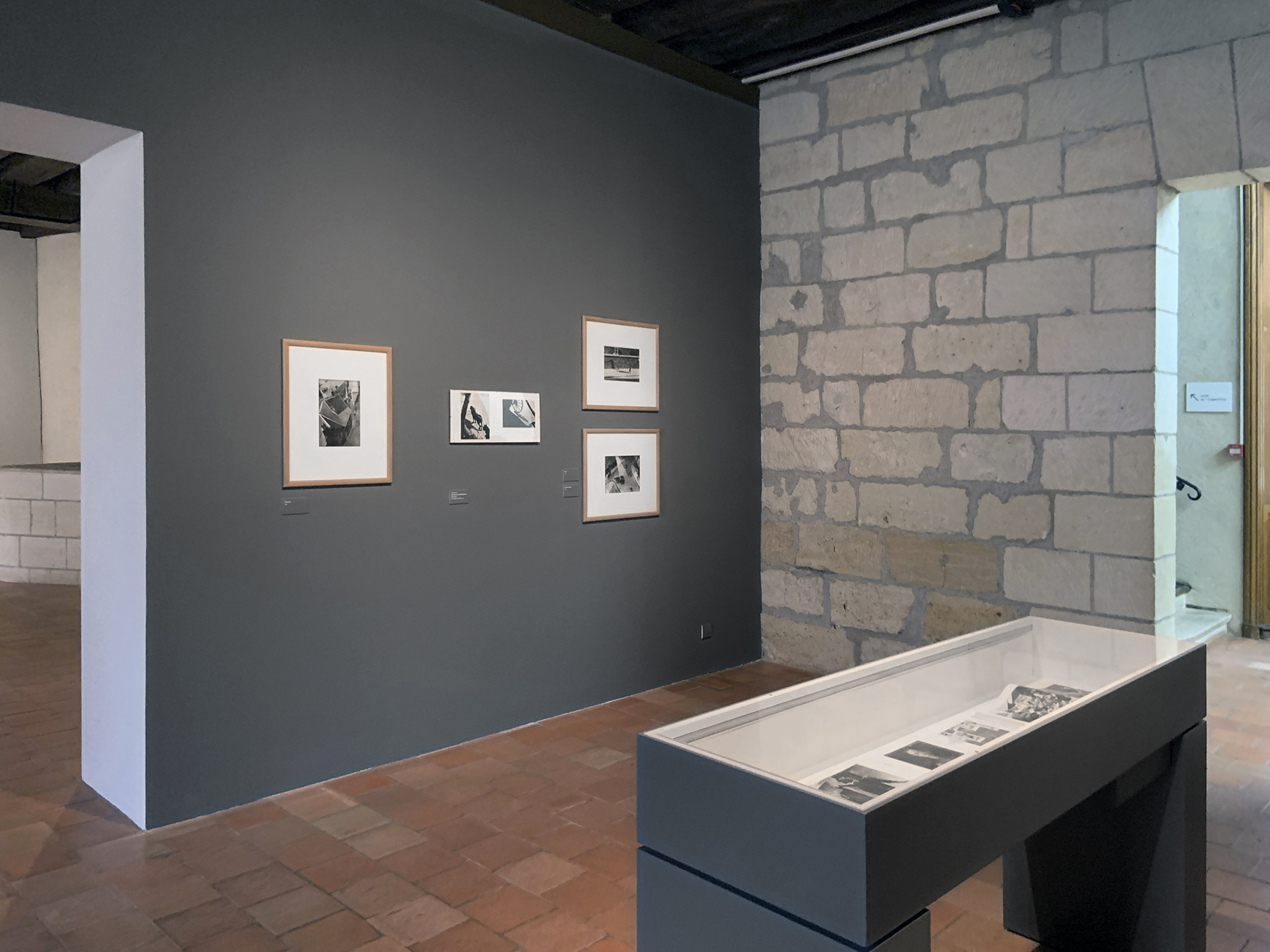
This exhibition, presented at the Fondation HCB, is the fruit of long research efforts jointly undertaken by the two institutions throughout the musée Carnavalet – Histoire de Paris’ collections. The result is an outstanding presentation of the oeuvre of Eugène Atget (1857-1927), a unique figure and photography pioneer. Above all an artisan, Atget’s prolific output of photographs was intended for artists and lovers of the old Paris; he rose to fame posthumously. A forerunner of modernity is seen in his work by art critics and photographers, among them Henri Cartier-Bresson, whose early work sought to imitate Atget. Paris’ place within the oeuvre of Cartier-Bresson is also the subject of an exhibition at the musée Carnavalet from June 15 to October 31, a project in partnership with the Fondation HCB.

First acknowledged in the United States and by the French surrealist scene before finding acclaim with succeeding generations of photographers, Atget still exerts unprecedented influence in the 21st century, though reception of his work remains mixed. Bearing a view camera and glass plates, he often captured his subject at dawn. For almost thirty years, he sought to make a collection of the Paris of his time. He also explored city limits, what is known as “the zone”. Today, his images of nearly‑deserted streets, store fronts, and courtyards evidence urban change at the turn of the 20th century.

Beyond its documentary aspects, Atget’s photography expresses a deep aesthetic sensibility, illustrating the incalculable contribution he made to the medium. As Paris changed, Atget’s work method evolved accordingly, becoming more and more sensitive to the light and to atmospheric effects. This devotion to detail (using a modest subject matter), in contrast to the triumphant pictorialism of the time, is also singularly modern, allowing a notion of pleasure to surface – one which is rarely mentioned in reference to Atget. The exhibition and its accompanying publication propose sharing this pleasure.

The exhibition is organised by the musée Carnavalet – Histoire de Paris, Paris-Musées and the Fondation Henri Cartier-Bresson. The musée Carnavalet – Histoire de Paris houses a collection of over 9,000 prints by Atget, the largest archive on the photographer. The exhibition Eugène Atget – Voir Paris presents a selection of around 150 of the artist’s original prints.

Biography

Eugène Atget was born in Libourne, France in 1857. He gave up a career as an actor and took up photography starting in 1888. He was self-taught. In 1890, he began producing material for use by artists: shots of plants, landscapes and diverse objects. In 1897, he started to take photographs of the Paris of his time systematically, attentive to scenes of urban life, architectural detail and the capital’s topography. Towards the end of his life, he met Man Ray’s assistant, Berenice Abbott, who took two portraits of him. He died in Paris in 1927. Abbott learned of his death just as she was planning to offer him the portraits. Along with gallerist Julien Levy and Atget’s executor, André Calmettes, Abbott aided in rescuing Atget’s studio archive, the recognition of his work through various publications, and the admission of the Abbott / Levy collection to the New York Museum of Modern Art’s collection in 1968.


Eugène Atget (French, 1857-1927) 'Cabaret de l'Homme armé, 25, rue des Blancs-Manteaux, IVe' September 1900


Eugène Atget (French, 1857-1927)
Cabaret de l’Homme armé, 25, rue des Blancs-Manteaux, IVe
September 1900
Albumen print
© Paris Musées / musée Carnavalet – Histoire de Paris


Eugène Atget (French, 1857-1927) 'Ancien hôtel Sully-Charost, 11, rue du Cherche-Midi, VIe' 1904


Eugène Atget (French, 1857-1927)
Ancien hôtel Sully-Charost, 11, rue du Cherche-Midi, VIe (Former Sully-Charost hotel, 11, rue du Cherche-Midi, VIe)
1904
Albumen print
© Paris Musées / musée Carnavalet – Histoire de Paris


Eugène Atget (French, 1857-1927) 'Vieille maison, 6, rue de Fourcy, IVe' 1910


Eugène Atget (French, 1857-1927)
Vieille maison, 6, rue de Fourcy, IVe (Old house, 6, rue de Fourcy, IVe)
1910
Albumen print
© Paris Musées / musée Carnavalet – Histoire de Paris


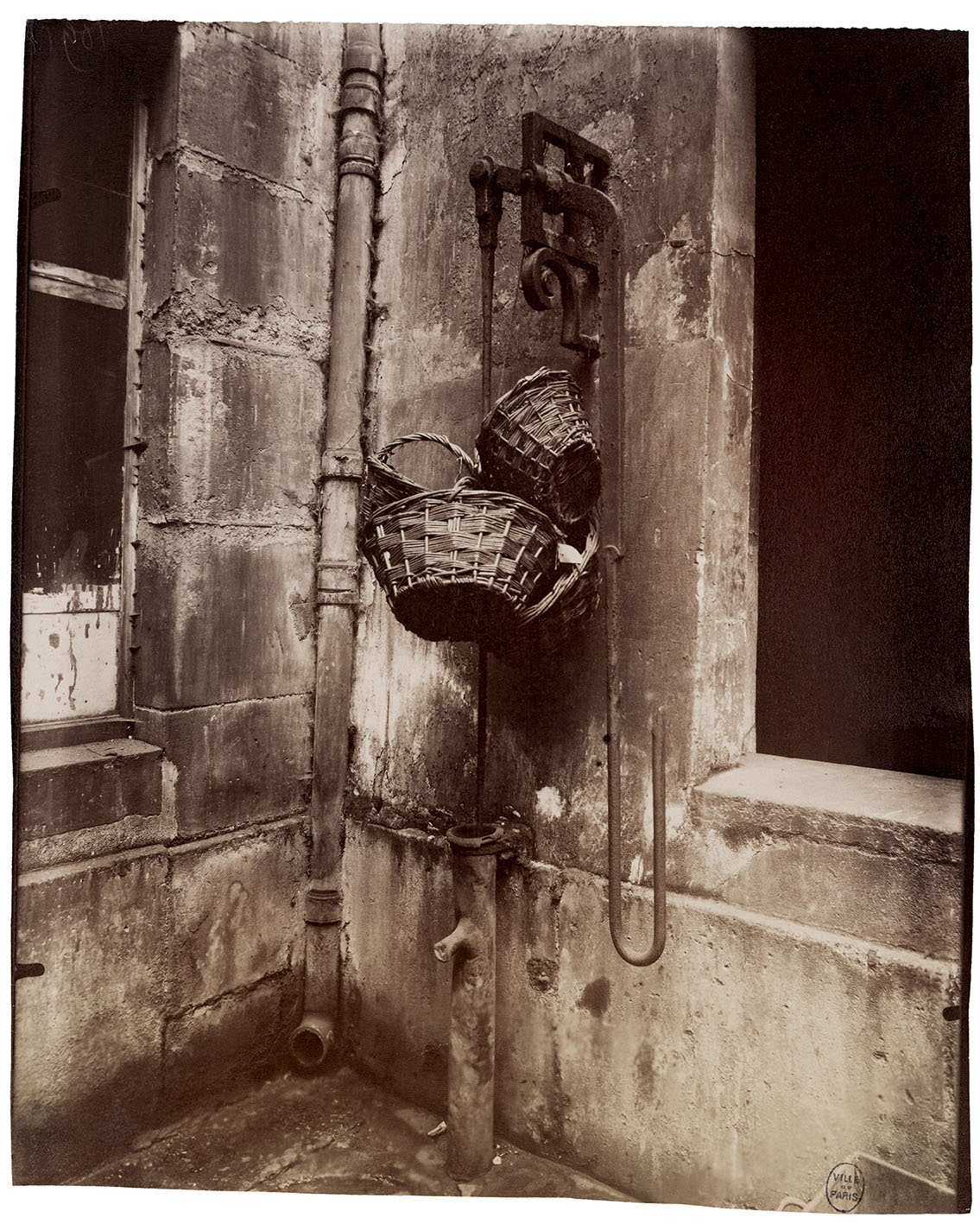
Eugène Atget (French, 1857-1927) 'Fontaine du passage des Singes, 6, rue des Guillemites, IVe' 1911


Eugène Atget (French, 1857-1927)
Fontaine du passage des Singes, 6, rue des Guillemites, IVe
1911
Albumen print
© Paris Musées / musée Carnavalet – Histoire de Paris


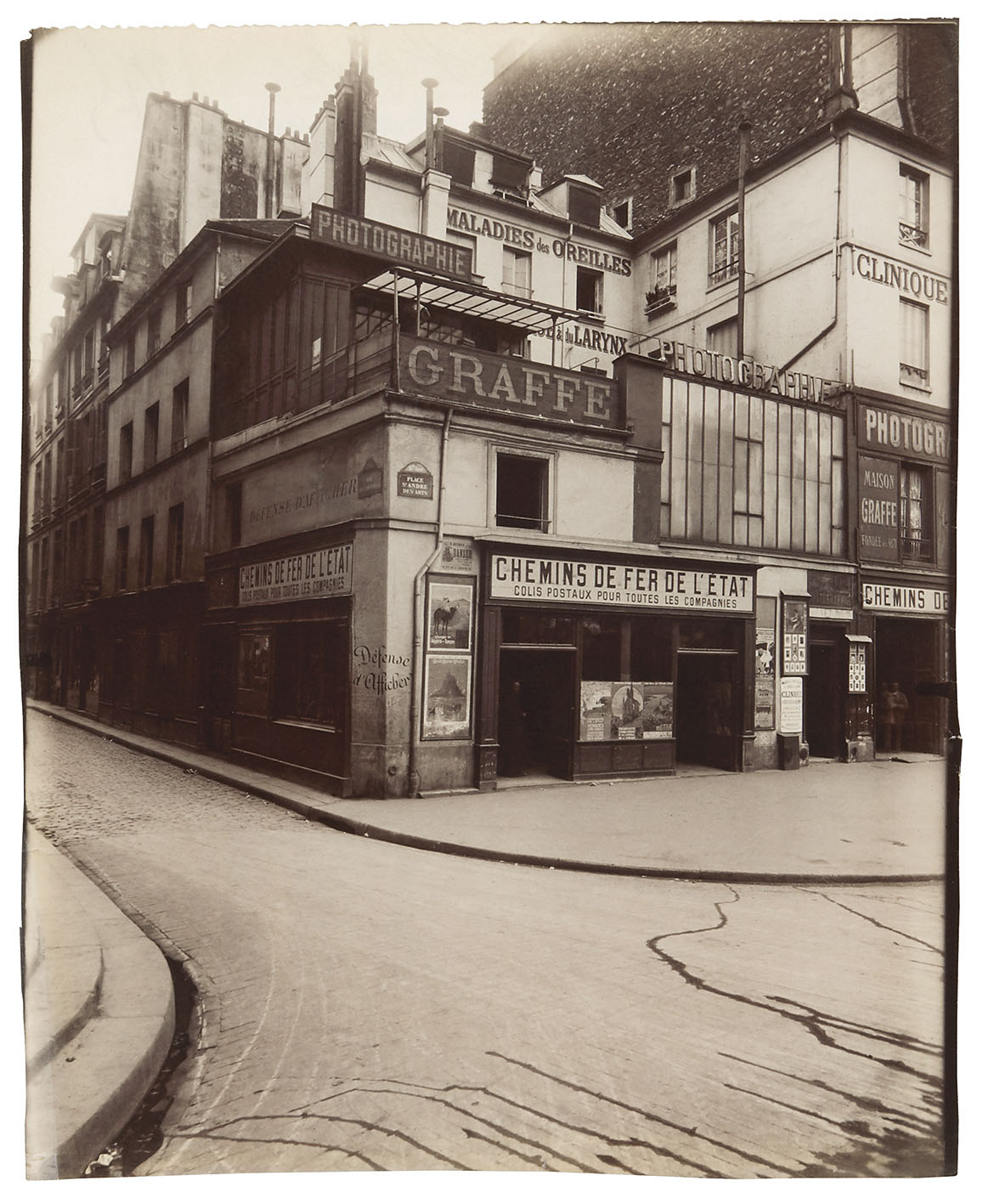
Eugène Atget (French, 1857-1927) 'Coin de la place Saint-André-des-Arts et de la rue Hautefeuille, VIe' 1912


Eugène Atget (French, 1857-1927)
Coin de la place Saint-André-des-Arts et de la rue Hautefeuille, VIe (Corner of Place Saint-André-des-Arts and Rue Hautefeuille, VIe)
1912
Albumen print
© Paris Musées / musée Carnavalet – Histoire de Paris


Eugène Atget (French, 1857-1927) 'Un coin du pont Marie, IVe' 1921


Eugène Atget (French, 1857-1927)
Un coin du pont Marie, IVe (A corner of Marie bridge, IVe)
1921
Albumen print
© Paris Musées / musée Carnavalet – Histoire de Paris


Eugène Atget (French, 1857-1927) 'Rue des Chantres, IVe' 1923


Eugène Atget (French, 1857-1927)
Rue des Chantres, IVe
1923
Albumen print
© Paris Musées / musée Carnavalet – Histoire de Paris


Fondation Henri Cartier-Bresson
79 rue des Archives
75003 Paris

Opening hours:
Tuesday – Sunday
11am – 7pm
Closed on Mondays

Fondation Henri Cartier-Bresson website

LIKE ART BLART ON FACEBOOK

Back to top

Photographs: ‘The “Green Ticket” roundup – first roundup of Jews in France during World War II’, Memorial de la Shoah, Paris

May 2021


Harry Croner (German, 1903-1992) 'Untitled [Japy Gymnasium: the arrested men are parked in the stands upstairs]' May 14, 1941 from 'The "Green Ticket" roundup – first roundup of Jews in France during World War II', Memorial de la Shoah, Paris


Harry Croner (German, 1903-1992)
Untitled [Japy Gymnasium: the arrested men are parked in the stands upstairs]
May 14, 1941


Japy Gymnasium: the arrested men are parked in the stands upstairs. The centre of the gymnasium is emptied. Only police officers circulate. The first stage of the roundup has already taken place: the summoned Jews have entered the mousetrap. We see for the first time the interior of Japy and the hundreds of Jewish men crowded together.


Death, duplicity and dishonour

Recently discovered at a Normandy flea market, these photographs by German photographer Harry Croner are taken from 5 contact sheets of 35mm negatives (probably taken on a Leica or similar). These documentary photographs are efficient, well seen, silent and in light of subsequent events… eloquent and emotional. They depict the first roundup of French Jews in Paris on May 14, 1941 at the Japy Gymnasium and a day later at the internment camps into which they were placed.

Lured to several places across the city in a pre-planned trap, Jews were “summoned to town halls across the city for what was billed as routine registration. Instead, the 3,747 men who showed up were arrested by the French authorities… As far as the Japy gymnasium is concerned, 1,061 Jews are summoned at 7.00 am; 800 respond to the summons. When they arrive, they are checked and detained inside the gymnasium. The person accompanying them is asked to go to their home and return with a suitcase containing their personal belongings.”

Today, we know that these images are probably the last photographs of these men alive that were ever taken. They were held in the internment camps for a year before being deported to the Auschwitz-Birkenau death camp. A year later during the “during the Vel’ d’Hiv’ Roundup of July 16 and 17, 1942, it is the families’ turn to be arrested and detained in these same camps before their deportation to the Auschwitz-Birkenau camp”

In collusion with and at the behest of their Nazi overlords, this was not the French government’s finest hour.

The roundup – overseen by the Germans, supervised by government officials (through the General Commissariat for Jewish Affairs, created by the Vichy State in March 1941 and run by fascist and anti-Semite Louis Darquier de Pellepoix, Commissioner-General for Jewish Affairs), enforced by the French police – was undertaken with alacrity, complicity and a ruthless efficiency.


The ironic aspect of these photographs is that Harry Croner, the German Army photographer, was soon after kicked out of the German Army after it was discovered that his father was Jewish. “In 1940 Croner was drafted and came to the Western Front as a war correspondent, but was then dismissed as “unfit for military service” because of his Jewish father. Back in Berlin, he worked in his shop for a while. In 1944, Croner was sent to a labour camp and in March 1945 was taken prisoner by the Americans, from which he was not released until April 1946.” So Croner ended up in the very place, a concentration camp, which he depicted so efficiently a few years earlier.

The head of the museum’s photography department Lior Lalieu-Smadja has wondered whether this knowledge of his Jewish father made Croner capture these Jewish men in a more humane light than other propaganda photographs of the same event. In an emotional sense I would say “yes” to this question, but in a technical sense, I do not think so. I don’t think the knowledge of his heritage would have influenced the aesthetic and pictorial construction of the images. In the photographs we can observe a wonderful balance within the picture frame – the use of strong intersectional points, the use of diagonals (the angle of the buses in Arrested men leave the gymnasium by bus for Austerlitz station), the use of near to far, the massing of bodies in crowd scenes, the use of flash, evidence of the decisive moment (Arrested men leave the gymnasium by bus for Austerlitz station) as the gendarme and the man turn to look at the camera coupled with the attitude of the man’s leg as he kisses his partner goodbye, and the use of the punctum in the image… the couple sitting on the stairs at top right in Inside the Japy Gymnasium, Paris XI, place of arrest of foreign Jews on May 14, 1941; the boy with his hands in his pockets in Japy gymnasium: some men still arrive carrying their summons; and the women staring out of the window of the Boutique à Louer at far right in Arrested men leave the gymnasium by bus for Austerlitz station, reminiscent of the ghostly faces of men pictured by Eugène Atget staring out of the windows of Parisian bars and cafés.

But above all these are now, today, emotional photographs, ultimately a memorialisation of the soon to be dead, photographs of people that we know are soon to be dead. They are gut wrenching in their simplicity, heart wrenching in their emotional power – the anguish of the women, that last kiss, the stoicism and calm of the men – as we trace the journey of the condemned. We can literally follow the route of one unknown man (see the first three images below) to his known fate.

A final thought enters my head… would Croner have still been in the German Army for the rest of the war, part of the Nazi war machine, if it was not discovered that his father was Jewish? Would he have hidden that fact in order to survive while at the same time serving the fascists even as they killed his own kind? The paradox of this seemingly absurd and contradictory proposition, might have been undeniable.

Dr Marcus Bunyan


All photographs digitally cleaned and balanced by Dr Marcus Bunyan. Many thankx to the Memorial de la Shoah for allowing me to publish the photographs in the posting. Please click on the photographs for a larger version of the image.


“Pure evil operates tidily, silently and seems so stylish.”


Jane Silberman


“The French gendarmes had licence to slap, beat, kick, whip, or insult any prisoner who broke the [Drancy] camp rules, but since these rules were never published it meant that they could ill-treat whomever they wanted whenever they wanted – and, with one or two honourable exceptions, this is just what they did. In 1942, when there were female and male prisoners in the camp, the French commandant of the camp, Marcelin Vieux, was seen whipping a woman for being too slow to move away from the middle of the yard. Another inmate remembered Vieux punching inmates and beating them with his truncheon. He also vividly recalled his two violently anti-Semitic French subordinates, who never went on patrol without their truncheons at the ready. Dr. Falkenstein, another prisoner, saw one of these men hit a four-year-old girl so hard that he knocked her unconscious.”


David Drake. ‘Paris at War: 1939-1944’. Harvard University Press, 2015, p. 209.


5 contact sheets were recently discovered by the Shoah Memorial, retracing photo after photo of the fate of the Jews summoned by the “green ticket round-up”, the context of the raid, the German and French sponsors and especially the families excluded until now from the known propaganda photos of this roundup. While the press echoed it at the time, the official images were intended to be dehumanising and humiliating for these foreign Jews. The emotion and the dismay of these families, shown in these photos, are a rare illustration of the Shoah in France.


Harry Croner (German, 1903-1992) 'Untitled [Japy Gymnasium: the arrested men peer outside the upper windows of the gymnasium]' May 14, 1941 (detail) from 'The "Green Ticket" roundup – first roundup of Jews in France during World War II', Memorial de la Shoah, Paris


Harry Croner (German, 1903-1992)
Untitled [Japy Gymnasium: the arrested men peer outside the upper windows of the gymnasium] (detail)
May 14, 1941


Harry Croner (German, 1903-1992) 'Untitled [Men boarding a train at Austerlitz station for the Loiret camps]' May 14, 1941 (detail)


Harry Croner (German, 1903-1992)
Untitled [Men boarding a train at Austerlitz station for the Loiret camps] (detail)
May 14, 1941


Harry Croner (German, 1903-1992) 'Untitled [Theodor Dannecker oversees the transfer of the rounded up Jews to the Austerlitz station]' May 14, 1941 (detail)


Harry Croner (German, 1903-1992)
Untitled [Theodor Dannecker oversees the transfer of the rounded up Jews to the Austerlitz station] (detail)
May 14, 1941


Never-before-seen photos going on display in Paris this week shine a light on a dark moment in France’s role in rounding up Jews to send to Nazi death camps during World War II. The “green ticket round-up” was first carried out in Paris on May 14 and 15, 1941, with more than 6,000 foreign-born Jews summoned to town halls across the city for what was billed as routine registration. Instead, the 3,747 men who showed up were arrested by the French authorities and shipped to camps south of Paris. Thousands more were rounded up in the following months.

They were held there for a year before being deported to the Auschwitz death camp.

By chance, a stash of 98 photos from the first green ticket round-up, taken by a German soldier on propaganda duty, were recently discovered by the Memorial de la Shoah, the Holocaust Museum of Paris.

Most were taken at the Japy sports hall in the city’s 11th arrondissement, where close to 1,000 were arrested, and where the photos are being put on display from Friday, exactly 80 years on. One shows SS officer Theodor Dannecker, who was in charge of implementing the “Final Solution” in France, alongside French police commissioner Francois Bard in the hall. Others show couples embracing outside, unaware that they would never see each other again.

“These photos are important because we see the opposite of Nazi propaganda that tried to depict these people as sub-human ‘parasites’,” said Lior Lalieu-Smadja, who heads the museum’s photography department. Was that a deliberate move by the photographer? “One has to wonder,” said Lalieu-Smadja, not least because the photographer was identified as Harry Croner, who was soon after kicked out of the German army after it was discovered that his father was Jewish.

The photos were bought years ago by an antiques dealer in Normandy who had found them at a flea market. He pulled them out of storage recently and contacted the museum, who informed him they were the only known pictures from the infamous round-up. Little else is known about the photos’ journey.

“The only thing we know for certain is that once they were taken, they were sent directly to Berlin. The photographer himself could not keep them, which makes this discovery even more incredible,” said Lalieu-Smadja.

Press release from the Memorial de la Shoah website


Harry Croner (German, 1903-1992) 'Untitled [Inside the Japy Gymnasium, Paris XI, place of arrest of foreign Jews on May 14, 1941]' May 14, 1941


Harry Croner (German, 1903-1992)
Untitled [Inside the Japy Gymnasium, Paris XI, place of arrest of foreign Jews on May 14, 1941] [with Theodor Dannecker at third right]
May 14, 1941


A German delegation with SS Theodor Dannecker, responsible for Jewish affairs in France, and French led by the prefect of police François Bard, comes to inspect the operation.


Harry Croner (German, 1903-1992) 'Untitled [Japy gymnasium: relatives, often wives and their children, are asked to separate from the summoned men]' May 14, 1941


Harry Croner (German, 1903-1992)
Untitled [Japy gymnasium: relatives, often wives and their children, are asked to separate from the summoned men]
May 14, 1941


Japy gymnasium: relatives, often wives and their children, are asked to separate from the summoned men. They are asked to come back with some things for 2 to 3 days. The reasons given are the same: “examination of the situation”.


Harry Croner (German, 1903-1992) 'Untitled [Japy gymnasium: relatives, often wives and their children, are asked to separate from the summoned men]' May 14, 1941 (detail)


Harry Croner (German, 1903-1992)
Untitled [Japy gymnasium: relatives, often wives and their children, are asked to separate from the summoned men] (detail)
May 14, 1941


Harry Croner (German, 1903-1992) 'Untitled [Japy gymnasium: some men still arrive carrying their summons]' May 14, 1941


Harry Croner (German, 1903-1992)
Untitled [Japy gymnasium: some men still arrive carrying their summons]
May 14, 1941


Japy gymnasium: some men still arrive carrying their summons and are received by the police who guard the entrance to the gymnasium. Women with children arrive with suitcases and packages. The following scenes show them standing in line and waiting their turn to hand over the suitcases.


Harry Croner (German, 1903-1992) 'Untitled [Japy gymnasium: some men still arrive carrying their summons]' May 14, 1941 (detail)


Harry Croner (German, 1903-1992)
Untitled [Japy gymnasium: some men still arrive carrying their summons] (detail)
May 14, 1941


Harry Croner (German, 1903-1992) 'Untitled [Japy gymnasium: families waiting to hand over the suitcases to their loved ones]' May 14, 1941


Harry Croner (German, 1903-1992)
Untitled [Japy gymnasium: families waiting to hand over the suitcases to their loved ones]
May 14, 1941


Green Ticket roundup: The Shoah Memorial discovers a previously unpublished photo-reportage

The Shoah Memorial announces the recent acquisition of five contact sheets, totalling 98 photographs. This as yet unreleased photo-reportage accurately details every step of the first mass arrest of Jews in Paris by the French police forces on the orders of the German authorities 80 years ago, on May 14, 1941.

The discovery in detail

The Shoah Memorial has purchased five contact sheets – documenting the location of the roundup known as the “Green Ticket” on May 14, 1941 – from two specialised collectors. The contact sheets acquired by the Memorial, numbered 182 to 187 (contact sheet 185 is missing), represent 98 photographs. The photographer’s five rolls of film provide a reality that differs greatly from the photos released by the collaborationist press alone. For the first time, the location of the arrests as well as the protagonists of the roundup are captured from multiple angles. Dehumanised until then by propaganda and even completely erased from reportages, the families of the detainees are shown during their emotional farewells, before the very eyes of onlookers and neighbours. The most important element of this discovery, which is indispensable to history and to the duty of remembrance, allows us to follow the trajectory of these rounded-up men, from their arrival at the Japy gymnasium – the site of the trap, in Paris – up to their internment in the camps of the Loiret.

What the photographs reveal

The 98 photographs printed on contact sheets give a chronological, step-by-step run-down of the roundup.

1/ The first images show the protagonists of the roundup engaged in a discussion inside the Japy gymnasium. The two German and French sponsors are perfectly recognisable:
– Théodor Dannecker (1913-1945), who represents Eichmann in France and heads Section IV J of the Gestapo, in charge of Jewish affairs
– Admiral François Bard (1889-1944), the recently appointed Prefect of the Paris Police

2/ The Japy photo series: the arrested men are confined to the upper floor bleachers. The first stage of the roundup has already taken place: the Jews who have been summoned have entered the trap. These as yet unreleased photos show the interior of Japy and the hundreds of Jewish men crowded together, as well as those accompanying them, often their wives

3/ The exterior of Japy: men are still arriving carrying their summons and are received by the police officers at the entrance to the gymnasium. They bid farewell to their families while a line of women and children is formed. They wait to hand over clothes to their loved ones

4/ The neighbourhood is closed off. Neighbours are at their windows. Families are pushed to the back of the street and wait to hear from their loved one. They have anguished faces. The police blocks the street, then evacuates it

5/ Men of all ages who have been arrested come out one by one, watched over by police officers and carrying their belongings, board buses parked just outside the gymnasium, rue Japy

6/ The arrival at the Paris-Austerlitz railway station through the rear entrance to the station

7/ At Pithiviers, a previously unpublished view of the black hangar – of which there were no images until now – during the internment of the Jews, which will subsequently serve as the registration centre for the Vel’ d’Hiv’ detainees and for deportations

The “Green Ticket” roundup: first roundup of Jews in France during World War II

The “Green Ticket” Roundup is the first mass arrest of Jews in Paris, and it takes place on Wednesday May 14, 1941. These unsuspecting men, mainly foreigners from Eastern Europe are summoned on Wednesday morning by the Police Prefecture with a “green ticket” for a “status review” and asked to be accompanied by a relative or friend.

The men, most of them family men who were army volunteers at the beginning of the war and therefore fought for France, expect a verification of their status. Fleeing antisemitism and persecutions in their countries of origin – Poland, USSR, Romania, Czechoslovakia – and believing that they will find refuge in the land of freedom, they are arrested chiefly because they are Jewish and foreigners.

Several assembly points are indicated on the “green tickets”: the Caserne Napoléon (in the 4th arrondissement), the Caserne des Minimes (in the 3rd arrondissement), 52 rue Edouard Pailleron (in the 19th arrondissement), 33 rue de la Grange-aux-belles (in the 10th arrondissement) and the Japy gymnasium (in the 11th arrondissement) as well as other centres in the arrondissement police stations and Paris suburbs.

As far as the Japy gymnasium is concerned, 1,061 Jews are summoned at 7.00 am; 800 respond to the summons. When they arrive, they are checked and detained inside the gymnasium. The person accompanying them is asked to go to their home and return with a suitcase containing their personal belongings.

After that, the 3,700 arrested Jews are taken to the Paris-Austerlitz railway station in special buses, under the supervision of French police officers, and interned in the Pithiviers and Beaune-la-Rolande camps (in the Loiret). They spend more than a year there before being deported directly to the Auschwitz-Birkenau camp by Convoy #4 on June 25, 1942, #5 on June 28, 1942 and #6 on July 17, 1942. During the Vel’ d’Hiv’ Roundup of July 16 and 17, 1942, it is the families’ turn to be arrested and detained in these same camps before their deportation to the Auschwitz-Birkenau camp between July and September 1942.

Propoganda photographs

As of the Armistice on June 25, 1940, the press is muzzled in France by the German occupier, and press photography is placed under censorship control. The Propaganda Kompanie (PK), set up within the Wehrmacht, is made up of photographers, cameramen, radio and press reporters, who are equipped with high-performance photographic material. This unit, under the direct control of Germany’s Minister of Propaganda, Joseph Goebbels, is in charge of documenting the historic dimension of the military effort and producing propaganda reports for foreign countries, for the press and for domestic agencies.

The Shoah Memorial

The Shoah Memorial, Europe’s largest archives center dedicated to the history of the Shoah, is a place of remembrance, of education and of transmission on the history of the genocide of the Jews during World War II in Europe. Today it incorporates five sites: the Shoah Memorial in Paris and the Shoah Memorial in Drancy, the Lieu de mémoire du Chambon-sur-Lignon (Haute-Loire), the CERCIL Musée – Mémorial des Enfants du Vel d’Hiv (Loiret), and the Centre culturel Jules Isaac de Clermont-Ferrand (Puy-de-Dôme).

Opened to the public on January 27, 2005 in the historic Marais district, the Paris site provides multiple spaces and an awareness program catering to all audiences: a permanent exhibition on the Holocaust and the history of the Jews in France during World War II; a temporary exhibition space; an auditorium programming screenings and symposia; The Wall of Names on which the names of 76,000 Jewish men, women and children deported from France between 1942 and 1944 as part of the “Final Solution” are engraved; the documentation center (50 million archive materials and 1,500 sound archives, 350,000 photographs, 3,900 drawings and objects, 12,000 posters and postcards, 30,000 cinema documents, 14,500 movie titles including 2,500 testimonials, and 80,000 books) and its reading room; educational spaces where children’s workshops and activities for classrooms and teachers take place; a specialty bookstore.

Better understanding the history of the Holocaust is also aimed at preventing the return of hatred and all forms of intolerance today. The Memorial has also been working for more than a decade on education programs focusing on other genocides of the 20th century, such as the genocide of the Tutsis in Rwanda, or the Armenian genocide.

Press release from the Shoah Memorial


Harry Croner (German, 1903-1992) 'Untitled [Japy Gymnasium: the arrested men peer outside the upper windows of the gymnasium]' May 14, 1941


Harry Croner (German, 1903-1992)
Untitled [Japy Gymnasium: men arrested awaiting their fate in the mousetrap that the Japy gymnasium has become]
May 14, 1941


Harry Croner (German, 1903-1992) 'Untitled [Japy Gymnasium: men arrested awaiting their fate in the mousetrap that the Japy gymnasium has become]' May 14, 1941 (detail)


Harry Croner (German, 1903-1992)
Untitled [Japy Gymnasium: men arrested awaiting their fate in the mousetrap that the Japy gymnasium has become] (detail)
May 14, 1941


Harry Croner (German, 1903-1992) 'Untitled [The inhabitants of the district discover the fate of their now captive neighbours]' May 14, 1941


Harry Croner (German, 1903-1992)
Untitled [The inhabitants of the district discover the fate of their now captive neighbours]
May 14, 1941


The inhabitants of the district discover the fate of their now captive neighbours and the unusual emotion that reigns around the Japy gymnasium.


Harry Croner (German, 1903-1992) 'Untitled [The inhabitants of the district discover the fate of their now captive neighbours]' May 14, 1941 (detail)


Harry Croner (German, 1903-1992)
Untitled [The inhabitants of the district discover the fate of their now captive neighbours] (detail)
May 14, 1941


Harry Croner (German, 1903-1992)

West Berlin stage: Harry Croner’s photographs from four decades

For 40 years, press photographer Harry Croner (German, 1903-1992) accompanied life in Halbstadt with his camera: the reconstruction and creation of new landmarks, large and small events, celebrities from culture and politics, especially what happened on the city’s stages. His acquaintance with many artists living and visiting Berlin made it possible for him to take impressive snapshots and portraits. Croner’s photographic work, which is being presented for the first time with this selection, is the chronicle of an era and at the same time an homage to a small island of world politics, which was above all one thing, the big stage for culture.

Late career as a photographer

Harry Croner was born on March 16, 1903 in Berlin. From 1920 to 1922 he completed a commercial apprenticeship, worked for various automobile companies as an advertising manager and finally as a travel representative for Bayerische Motorenwerke. When he set up his own photo business in Berlin-Wilmersdorf in 1933, he probably already had a career as a photographer in mind. In addition to selling cameras and accessories, he also took portraits. In 1940 Croner was drafted and came to the Western Front as a war correspondent, but was then dismissed as “unfit for military service” because of his Jewish father. Back in Berlin, he worked in his shop for a while. In 1944, Croner was sent to a labour camp and in March 1945 was taken prisoner by the Americans, from which he was not released until April 1946.

The estate

With the support of the Prussian Sea Trade Foundation, the extensive archive (around 100,000 black and white photographs and over 1.3 million negatives) was acquired in February 1989. A representative part of the estate was digitised in 2013, supported by the Digitalization Service of the State of Berlin. accessible online.

Text from the Stiftung Stadtmuseum Berlin website [Online] Cited 20/05/2021 translated from the German by Google Translate


Harry Croner (German, 1903-1992) 'Untitled [Arrested men leave the gymnasium by bus for Austerlitz station]' May 14, 1941


Harry Croner (German, 1903-1992)
Untitled [Arrested men leave the gymnasium by bus for Austerlitz station]
May 14, 1941


After a few hours, the men left the scene under police custody and had to board requisitioned buses for transfer to the Austerlitz station.


Harry Croner (German, 1903-1992) 'Untitled [Arrested men leave the gymnasium by bus for Austerlitz station]' May 14, 1941


Harry Croner (German, 1903-1992)
Untitled [Arrested men leave the gymnasium by bus for Austerlitz station]
May 14, 1941


Harry Croner (German, 1903-1992) 'Untitled [Arrested men leave the gymnasium by bus for Austerlitz station]' May 14, 1941 (detail)


Harry Croner (German, 1903-1992)
Untitled [Arrested men leave the gymnasium by bus for Austerlitz station] (detail)
May 14, 1941


Harry Croner (German, 1903-1992) 'Untitled [Arrested men leave the gymnasium by bus for Austerlitz station]' May 14, 1941


Harry Croner (German, 1903-1992)
Untitled [Arrested men leave the gymnasium by bus for Austerlitz station]
May 14, 1941


Harry Croner (German, 1903-1992) 'Untitled [Arrested men leave the gymnasium by bus for Austerlitz station]' May 14, 1941 (detail)


Harry Croner (German, 1903-1992)
Untitled [Arrested men leave the gymnasium by bus for Austerlitz station] (detail)
May 14, 1941


Harry Croner (German, 1903-1992) 'Untitled [Men boarding a train at Austerlitz station for the Loiret camps]' May 14, 1941


Harry Croner (German, 1903-1992)
Untitled [Men boarding a train at Austerlitz station for the Loiret camps]
May 14, 1941


Harry Croner (German, 1903-1992) 'Untitled [Men boarding a train at Austerlitz station for the Loiret camps]' May 14, 1941 (detail)


Harry Croner (German, 1903-1992)
Untitled [Men boarding a train at Austerlitz station for the Loiret camps] (detail)
May 14, 1941


The 3,710 men arrested in Paris at the various summons were transferred to the Austerlitz station to be interned in the Pithiviers and Beaune-la-Rolande camps. Four convoys of passenger wagons are formed, two convoys with 2140 men to the camp of Beaune-la-Rolande and two convoys with 1570 men to that of Pithiviers. These convoys arrive on the afternoon of May 14.


Harry Croner (German, 1903-1992) 'Untitled [Theodor Dannecker oversees the transfer of the rounded up Jews to the Austerlitz station]' May 14, 1941


Harry Croner (German, 1903-1992)
Untitled [Theodor Dannecker oversees the transfer of the rounded up Jews to the Austerlitz station]
May 14, 1941


Theodor Dannecker oversees the transfer of the rounded up Jews to the Austerlitz station. His presence in the photos in this roundup shows that he followed and supervised the entire roundup.


Theodor Dannecker (German, 1913-1945)

Theodor Dannecker (German, 27 March 1913 – 10 December 1945) was an SS-captain (Hauptsturmführer), and an associate of Adolf Eichmann. As a specialist on Nazi anti-Jewish policies (Judenberater), he was one of those who orchestrated the Final Solution in several countries during the World War II genocide of European Jews in what became known as the Holocaust … In December 1945, Dannecker was arrested by the United States Army, and, on 10 December, he committed suicide in Bad Tölz. …

From September 1940 until July 1942, Dannecker was leader of the Judenreferat at the SD office in Paris, where he ordered and oversaw round ups by French Police. More than 13,000 Jews were deported to Auschwitz concentration camp where most died in the Final Solution. …

Dannecker developed under Eichmann into one of the SS’s most ruthless and experienced experts on the “Jewish Question”, and his involvement in the genocide of European Jewry was one of primary responsibility. A passage from a 1942 report by Dannecker illustrates how the “Jewish Question” was handled in France:

“Subject: Points for the discussion with the French State Secretary for Police, Bousquet… The recent operation for arresting stateless Jews in Paris has yielded only about 8,000 adults and about 4,000 children. But trains for the deportation of 40,000 Jews, for the moment, have been put in readiness by the Reich Ministry of Transport. Since the deportation of the children is not possible for the time being, the number of Jews ready for removal is quite insufficient. A further Jewish operation must therefore be started immediately. For this purpose Jews of Belgian and Dutch nationality may be taken into consideration, in addition to the former German, Austrian, Czech, Polish and Russian Jews who have so far been considered as being stateless. It must be expected, however, that this category will not yield sufficient numbers, and thus the French have no choice but to include those Jews who were naturalised in France after 1927, or even after 1919.”1

Text from the Wikipedia website

1/ “Eichmann trial – The District Court Sessions”. Nizkor Project. 9 May 1961. Retrieved 23 December 2013


Harry Croner (German, 1903-1992) 'Untitled [Theodor Dannecker oversees the transfer of the rounded up Jews to the Austerlitz station]' May 14, 1941 (detail)


Harry Croner (German, 1903-1992)
Untitled [Theodor Dannecker oversees the transfer of the rounded up Jews to the Austerlitz station] (detail)
May 14, 1941


Harry Croner (German, 1903-1992) 'Untitled [Theodor Dannecker oversees the transfer of the rounded up Jews to the Austerlitz station]' May 14, 1941 (detail)


Harry Croner (German, 1903-1992)
Untitled [Theodor Dannecker oversees the transfer of the rounded up Jews to the Austerlitz station] (detail)
May 14, 1941


Harry Croner (German, 1903-1992) 'Untitled [The photos were taken the day after the raid at the Pithiviers and Beaune-la Rolande camps]' May 15, 1941


Harry Croner (German, 1903-1992)
Untitled [The photos were taken the day after the raid at the Pithiviers and Beaune-la Rolande camps]
May 15, 1941


The photos were taken the day after the raid at the Pithiviers and Beaune-la Rolande camps. The men had to settle in cold and unsanitary barracks under construction. The straw that will serve as mattresses in the bedsteads is still outside the barracks.


Harry Croner (German, 1903-1992) 'Untitled [The day after the raid, the men arrested at the Pithiviers camp]' May 15, 1941


Harry Croner (German, 1903-1992)
Untitled [The day after the raid, the men arrested at the Pithiviers camp]
May 15, 1941


Harry Croner (German, 1903-1992) 'Untitled [The day after the raid, the men arrested at the Pithiviers camp]' May 15, 1941 (detail)


Harry Croner (German, 1903-1992)
Untitled [The day after the raid, the men arrested at the Pithiviers camp] (detail)
May 15, 1941


Harry Croner (German, 1903-1992) 'Untitled [Green Ticket Roundup, the next day at the Pithiviers camp. The black hut can be seen where the Vel d'Hiv raids will be recorded in 1942]' May 15, 1941


Harry Croner (German, 1903-1992)
Untitled [Green Ticket Roundup, the next day at the Pithiviers camp. The black hut can be seen where the Vel d’Hiv raids will be recorded in 1942]
May 15, 1941


Harry Croner (German, 1903-1992) 'Untitled [The day after the roundup of the Billet Vert, a French gendarme posted on a watchtower in the Beaune-la-Rolande camp]' May 15, 1941


Harry Croner (German, 1903-1992)
Untitled [The day after the roundup of the Billet Vert, a French gendarme posted on a watchtower in the Beaune-la-Rolande camp]
May 15, 1941


The gendarme to the left of the photo, posted in a watchtower, monitoring the Beaune-la-Rolande camp, is the emblematic photo from the film Nuit et Brouillard, censored when it was released in 1955.


Nuit Et Brouillard (Night and Fog)
Alain Resnais
1955


Holocaust, Hebrew Sho’ah, Yiddish and Hebrew Ḥurban (“Destruction”), the systematic state-sponsored killing of six million Jewish men, women, and children and millions of others by Nazi Germany and its collaborators during World War II. The Germans called this “the final solution to the Jewish question.” The word Holocaust is derived from the Greek holokauston, a translation of the Hebrew word ‘olah, meaning a burnt sacrifice offered whole to God. This word was chosen because in the ultimate manifestation of the Nazi killing program – the extermination camps – the bodies of the victims were consumed whole in crematoria and open fires.


Memorial de la Shoah
17, rue Geoffroy l’Asnier
75004 Paris
Phone: + 33 (0)1 42 77 44 72

Opening hours:
Sunday – Friday 10am – 6pm

Memorial de la Shoah website

LIKE ART BLART ON FACEBOOK

Back to top

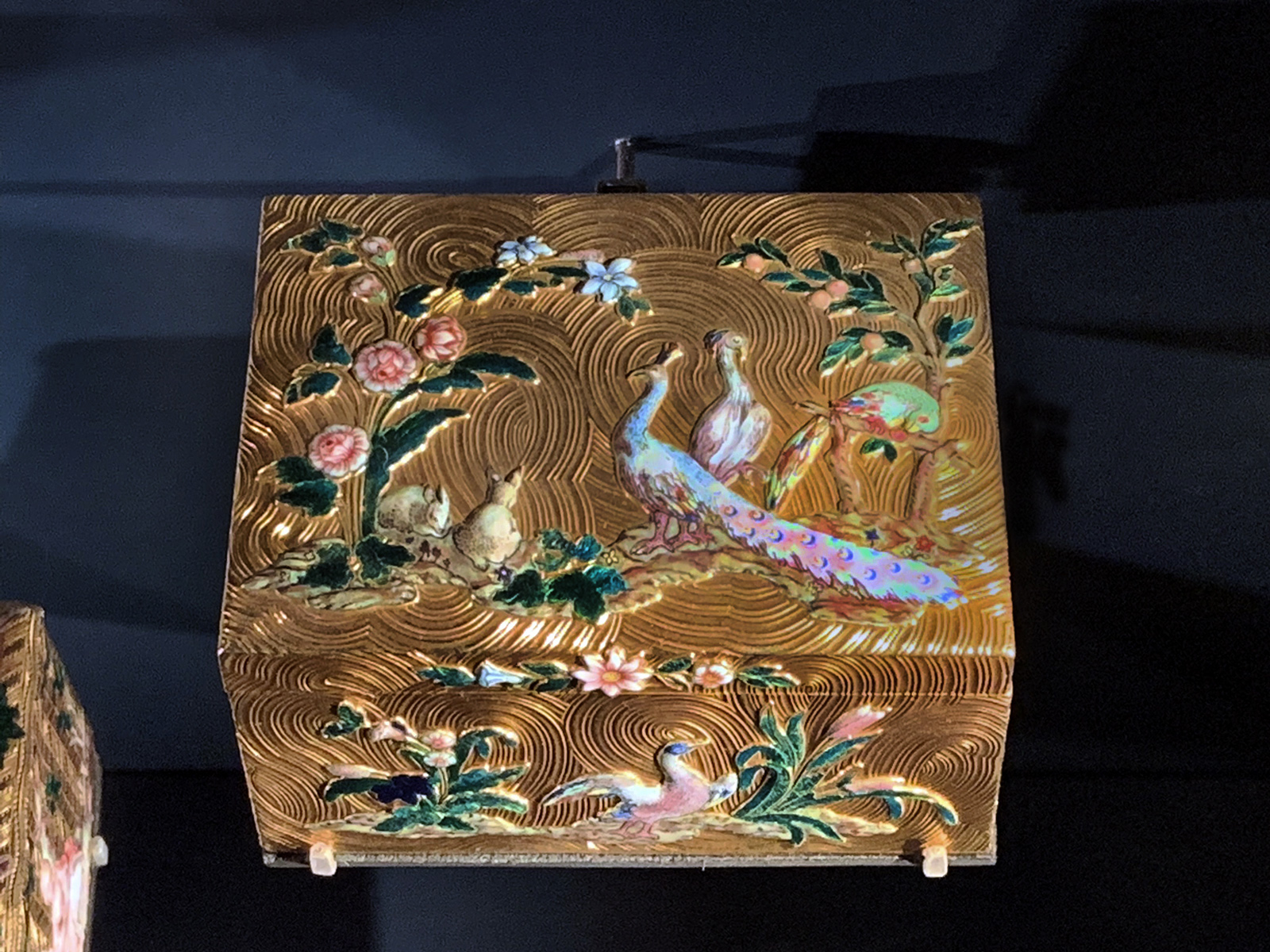
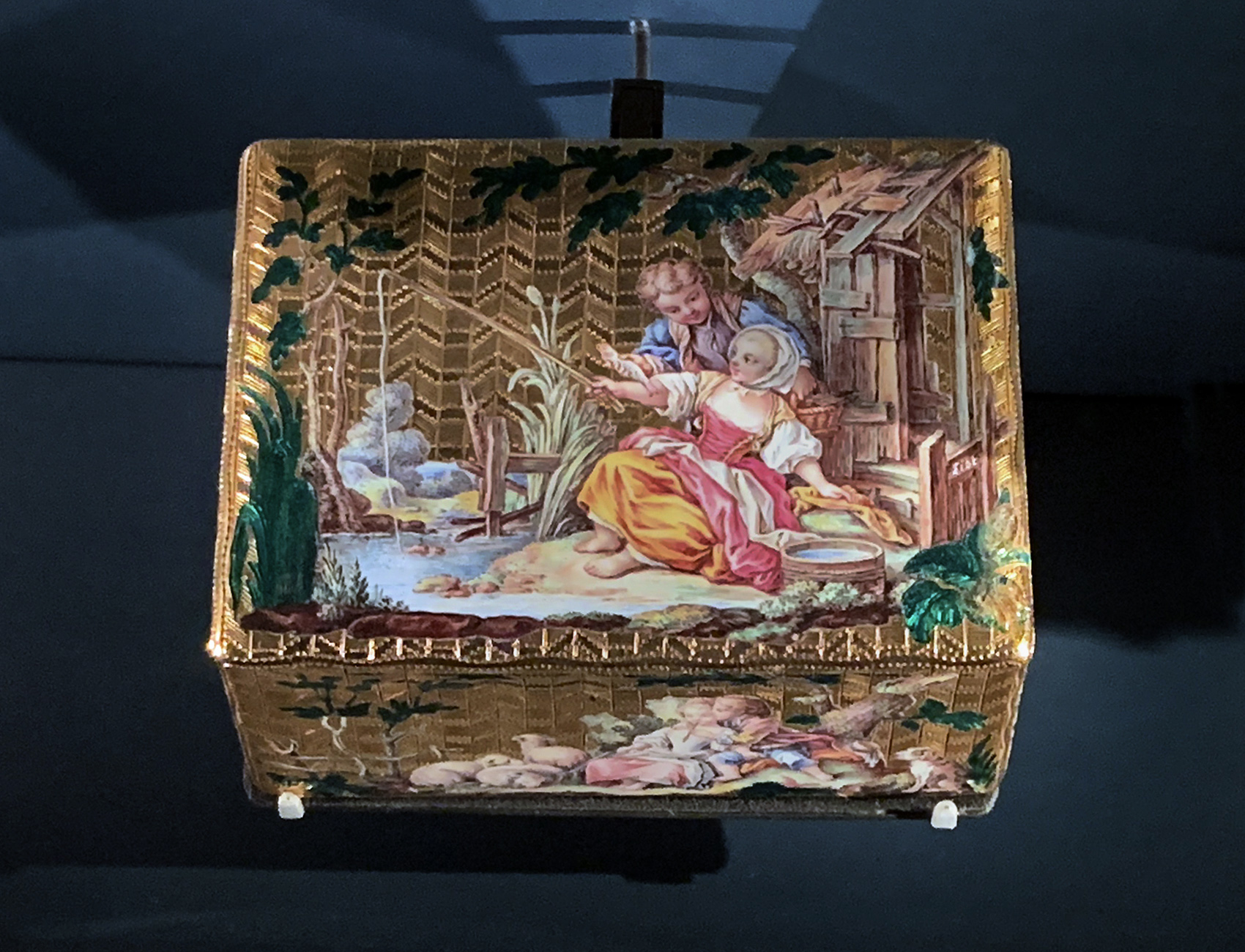
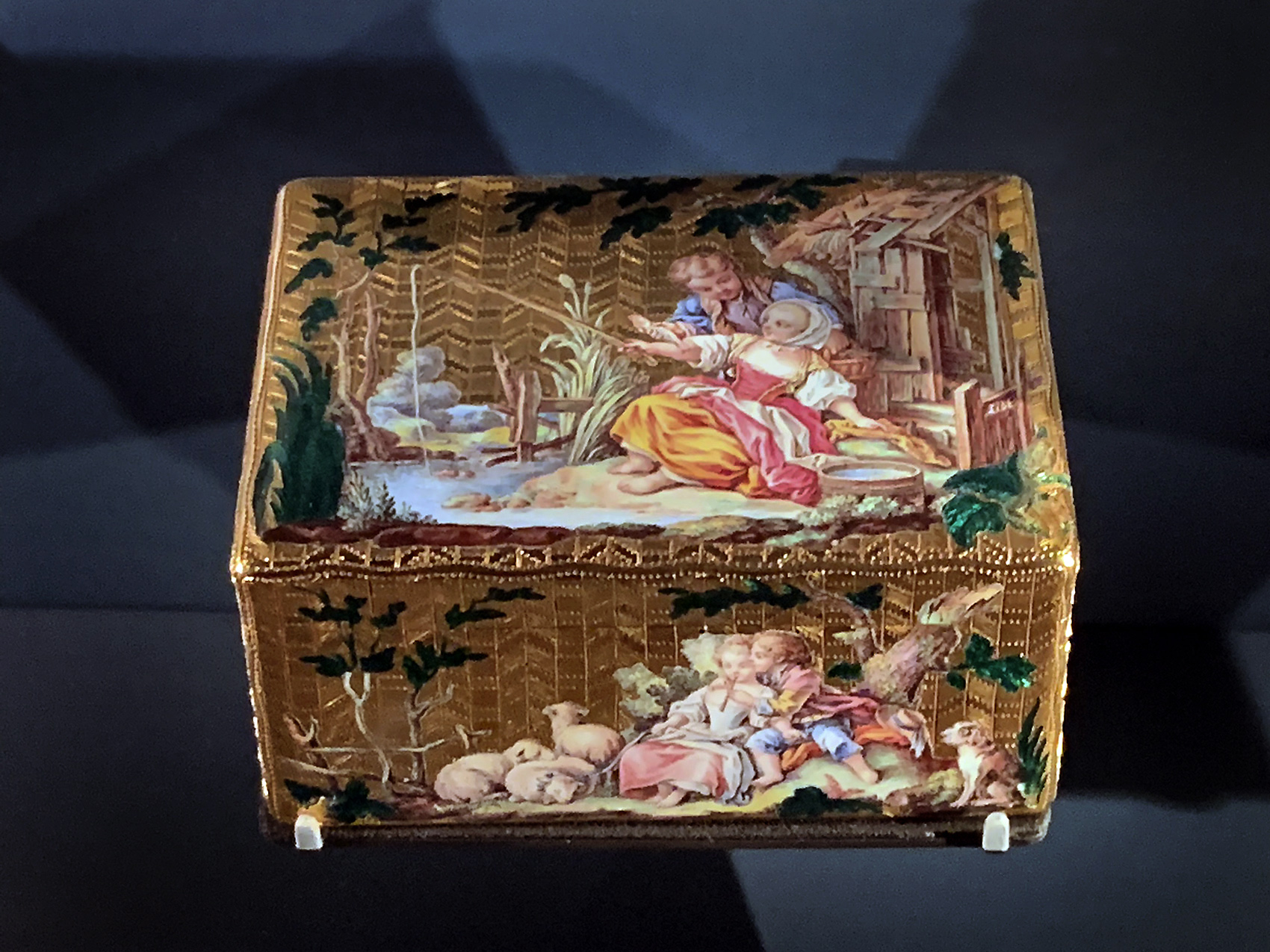
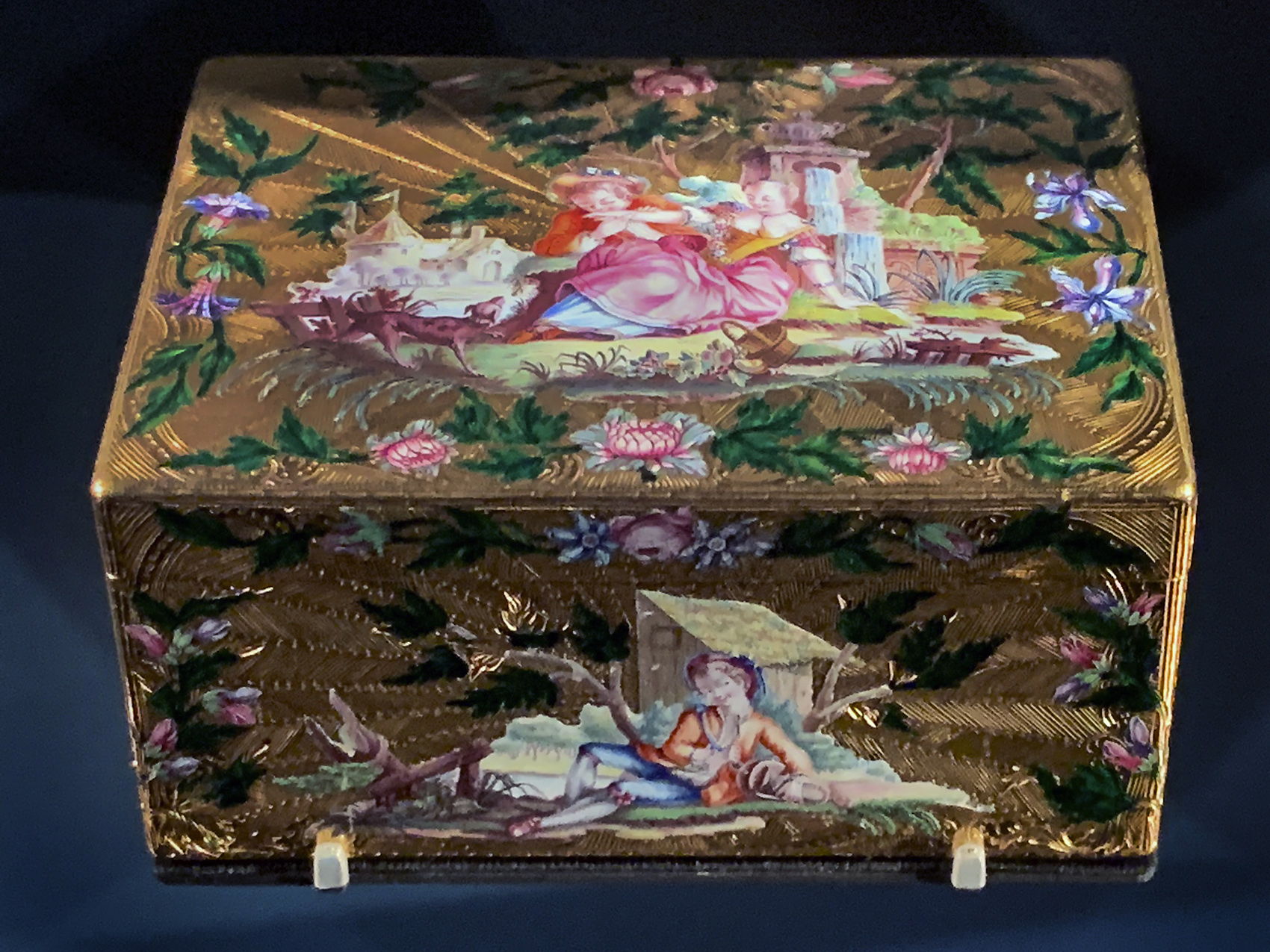
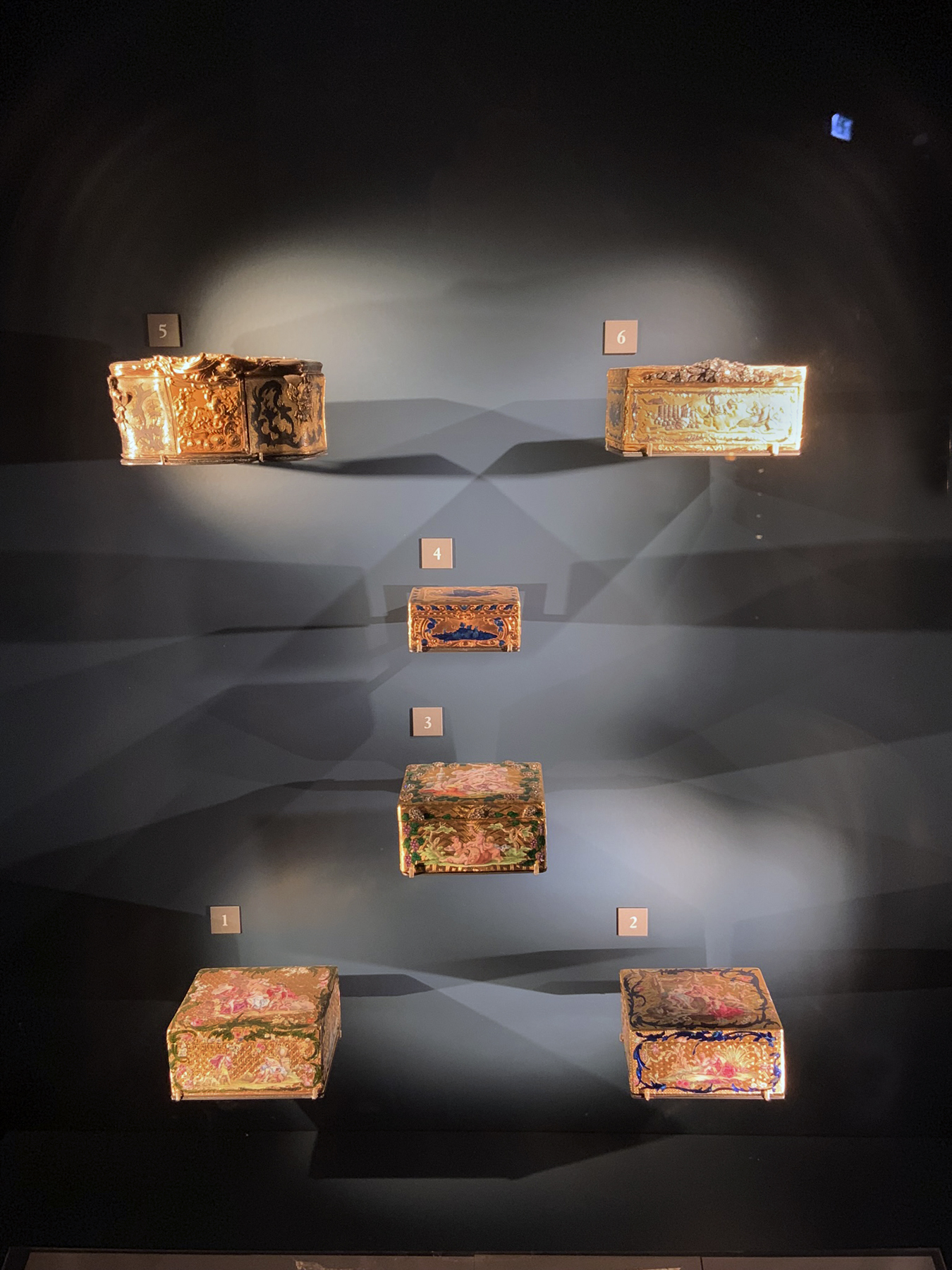
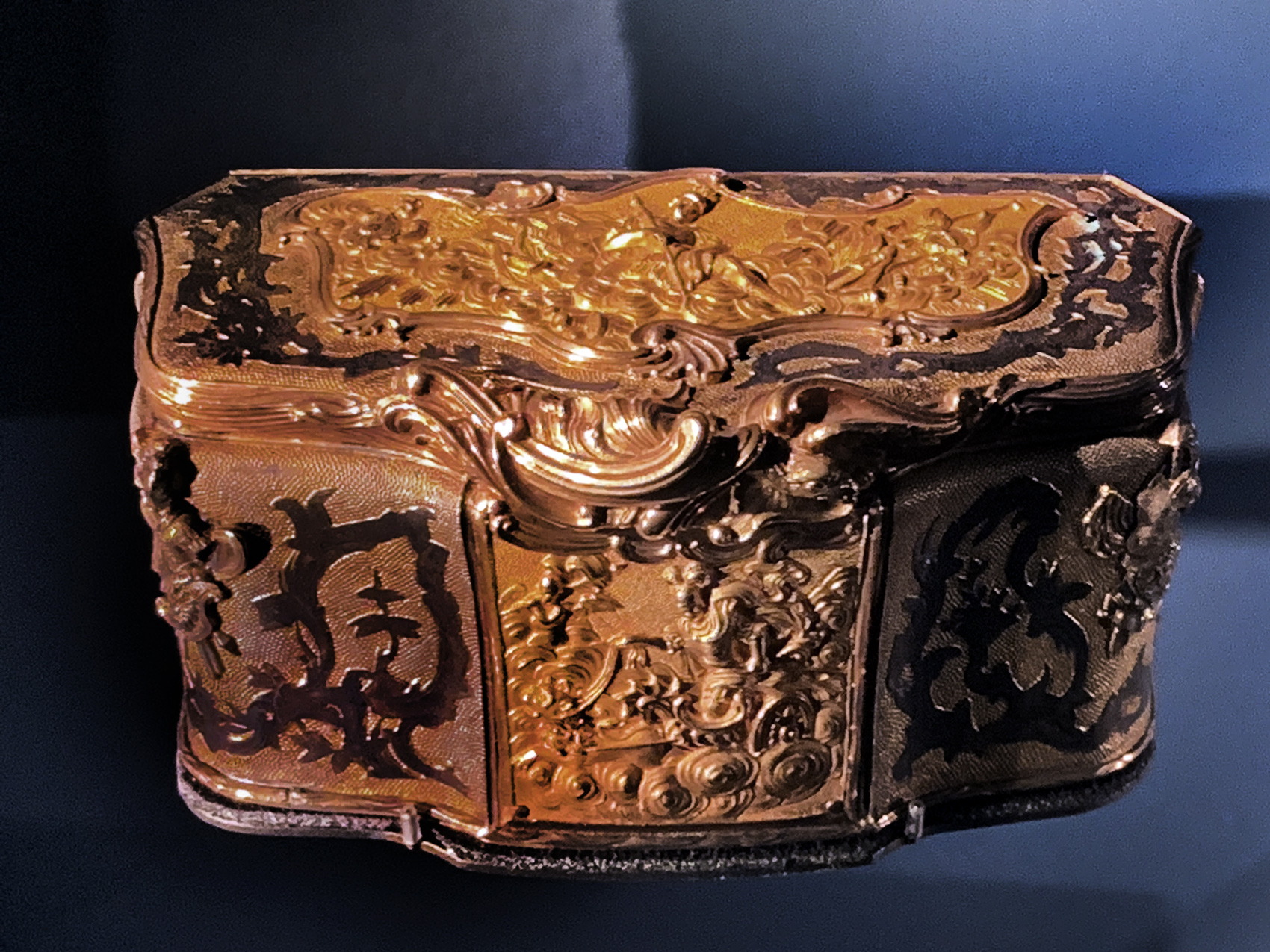
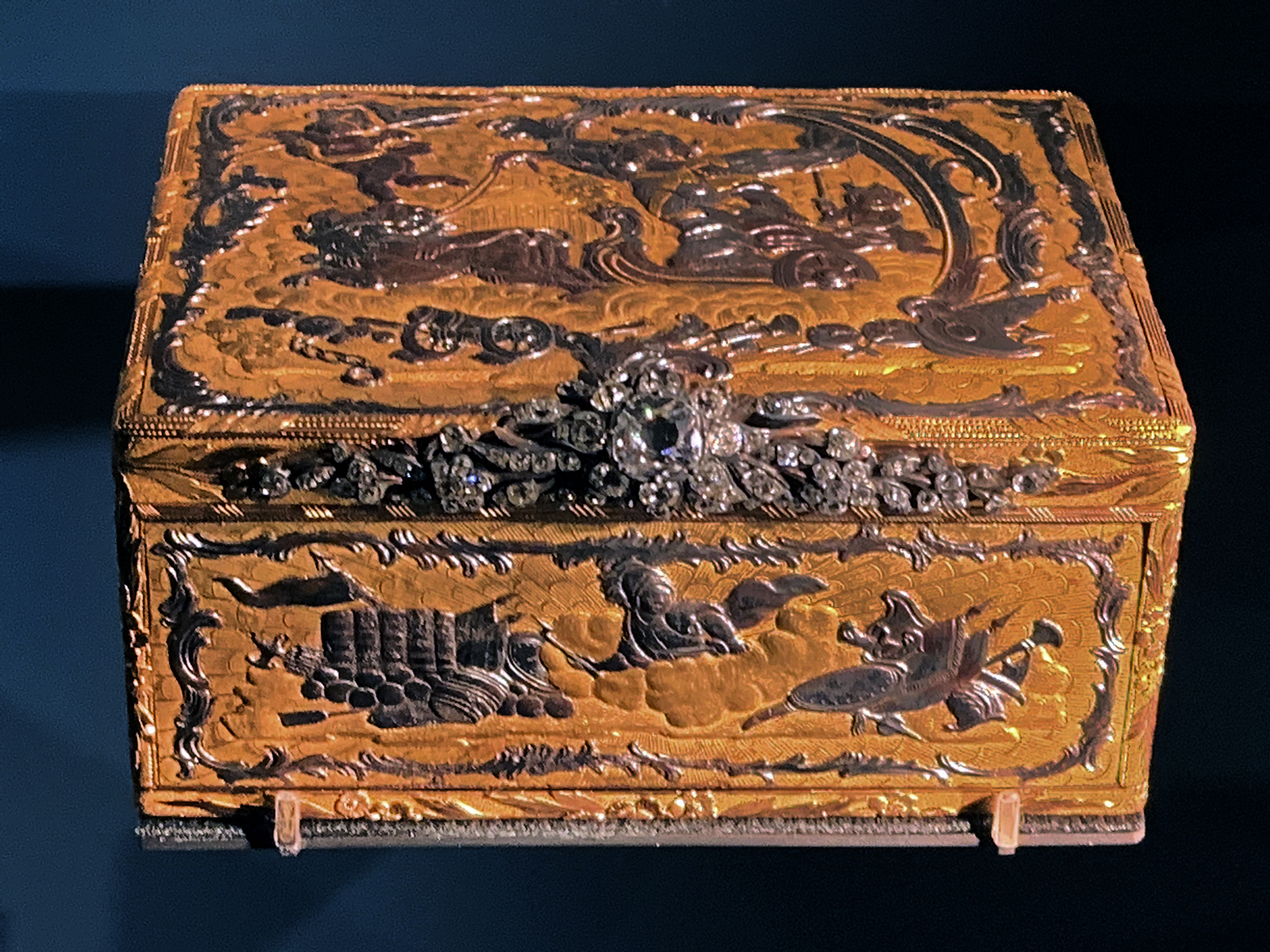
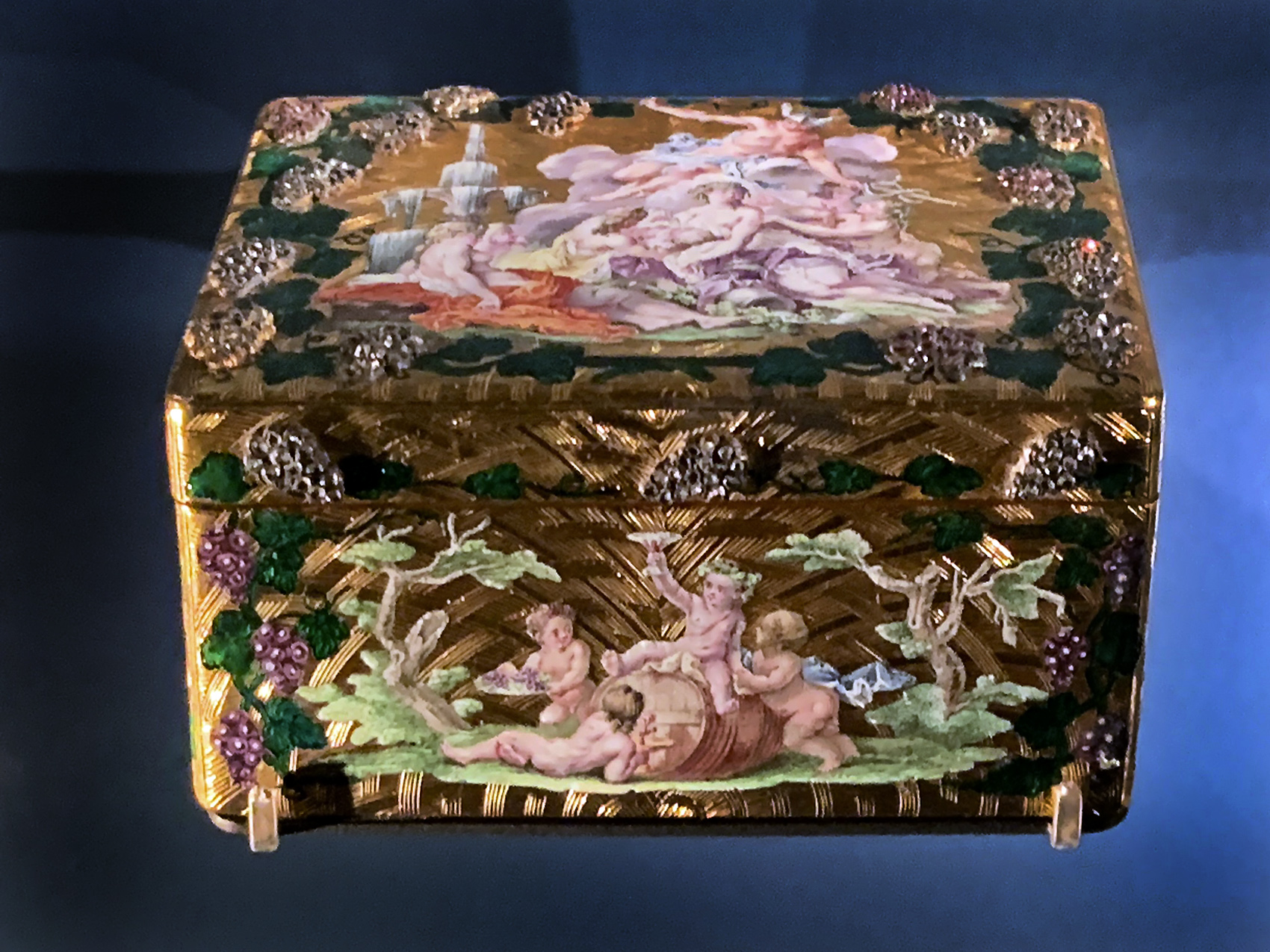
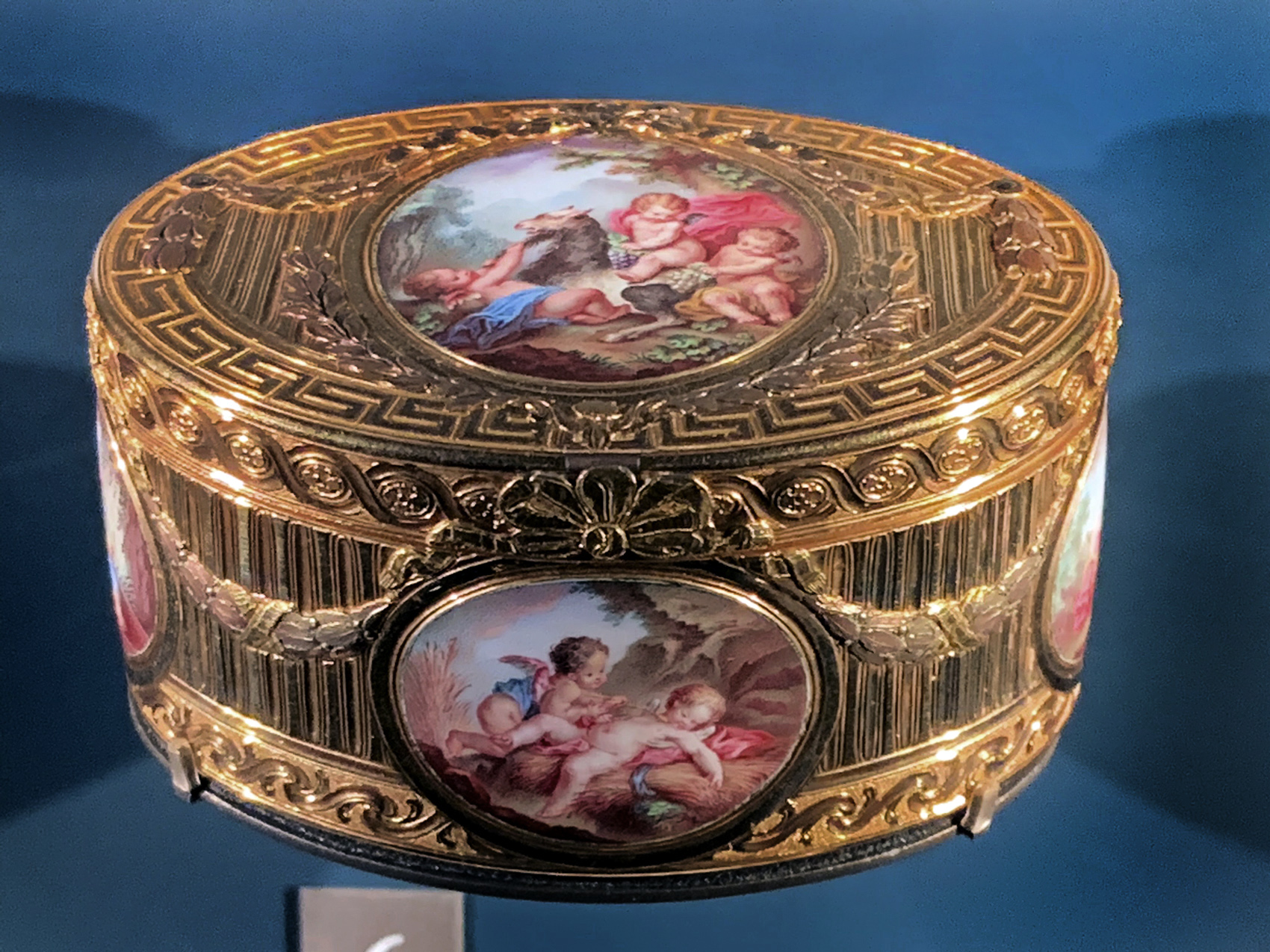
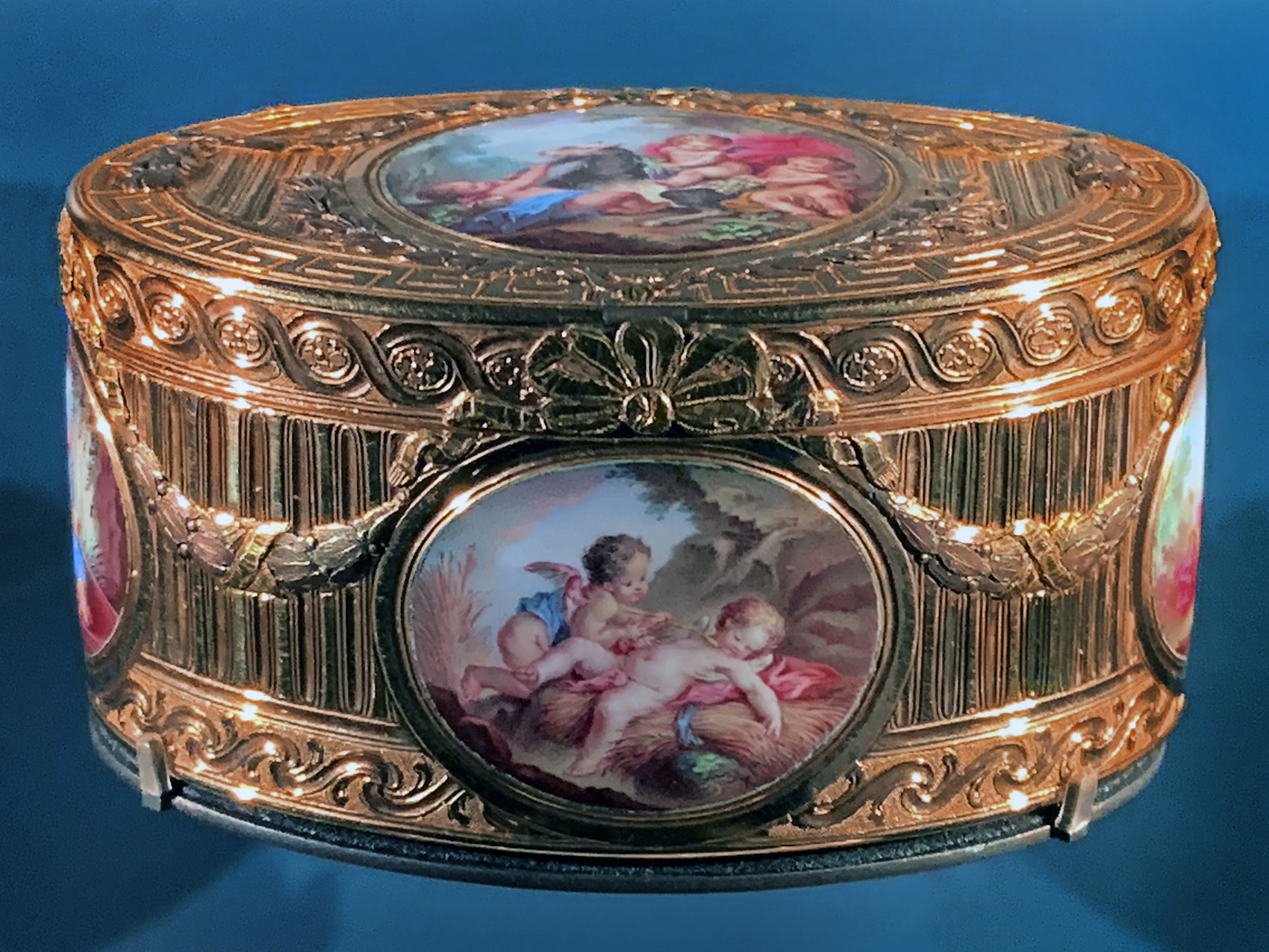
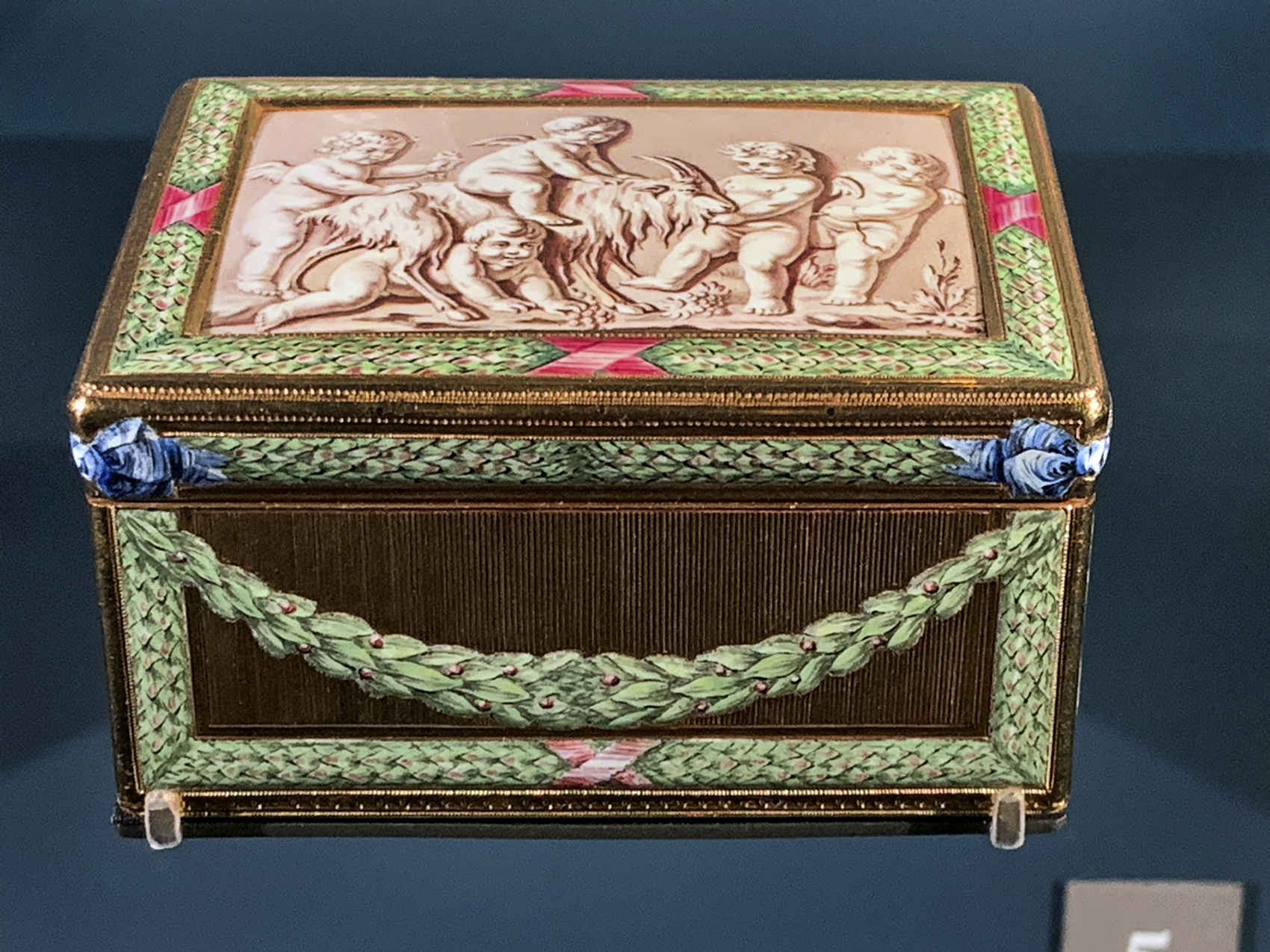
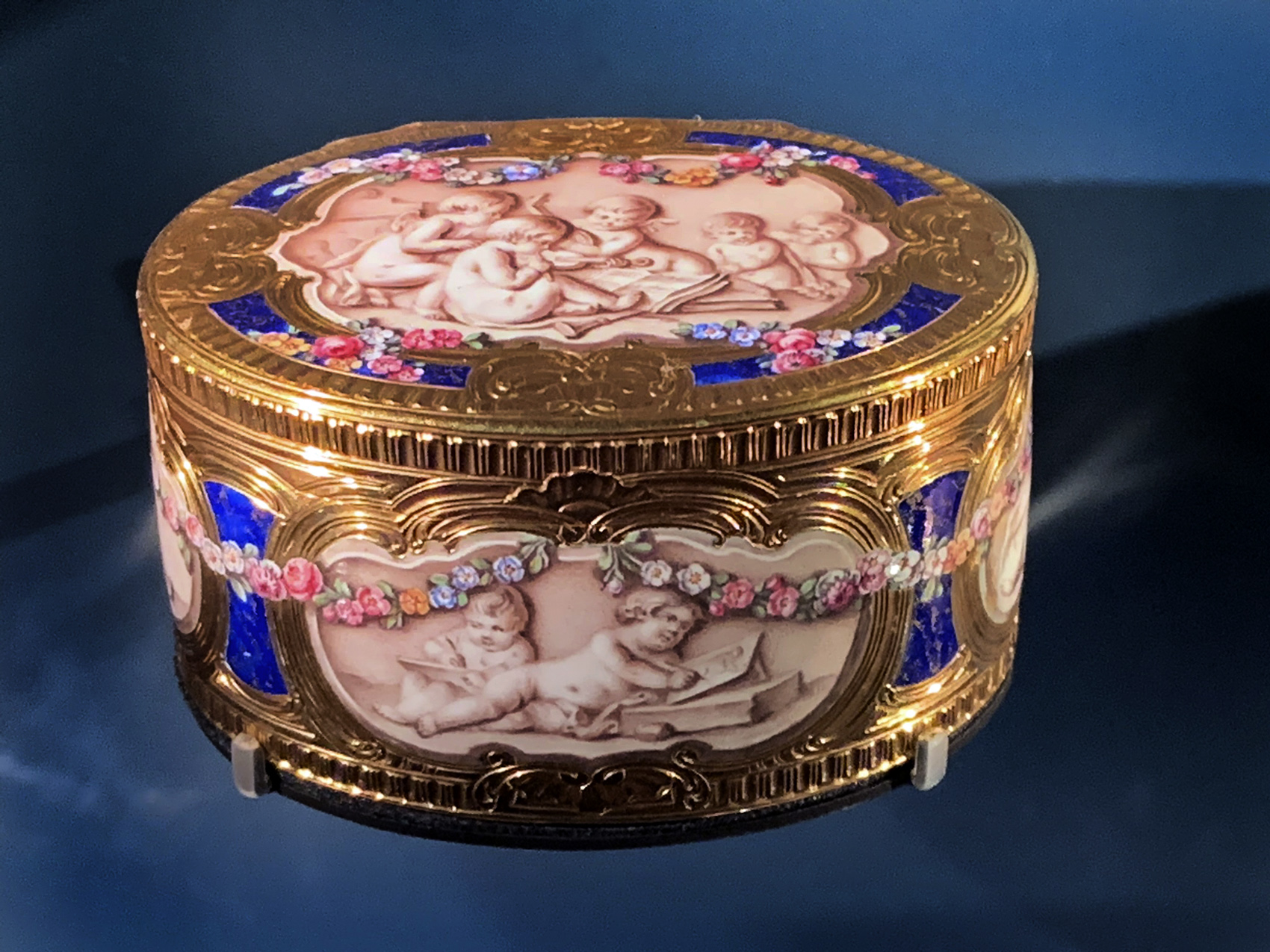
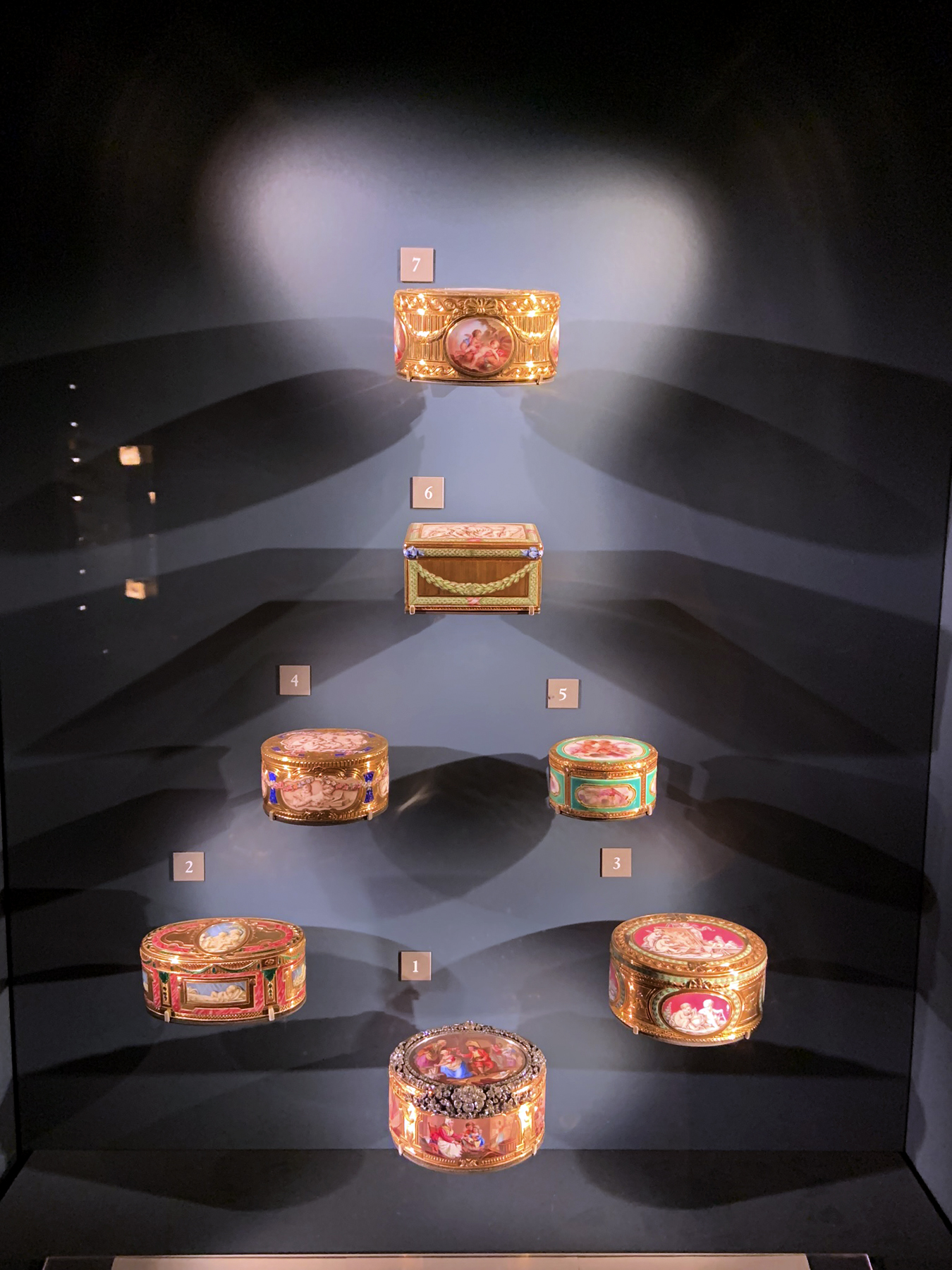
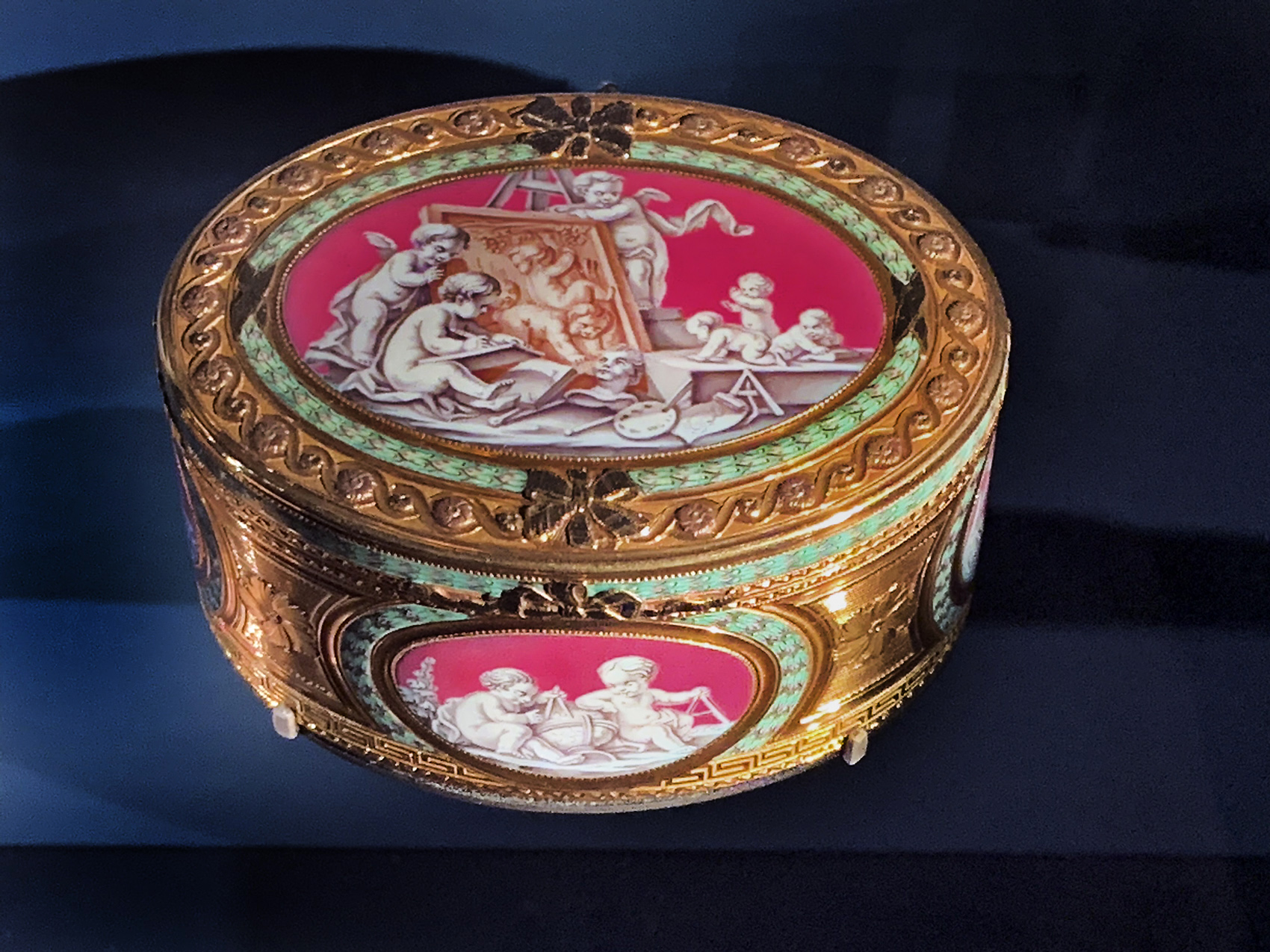
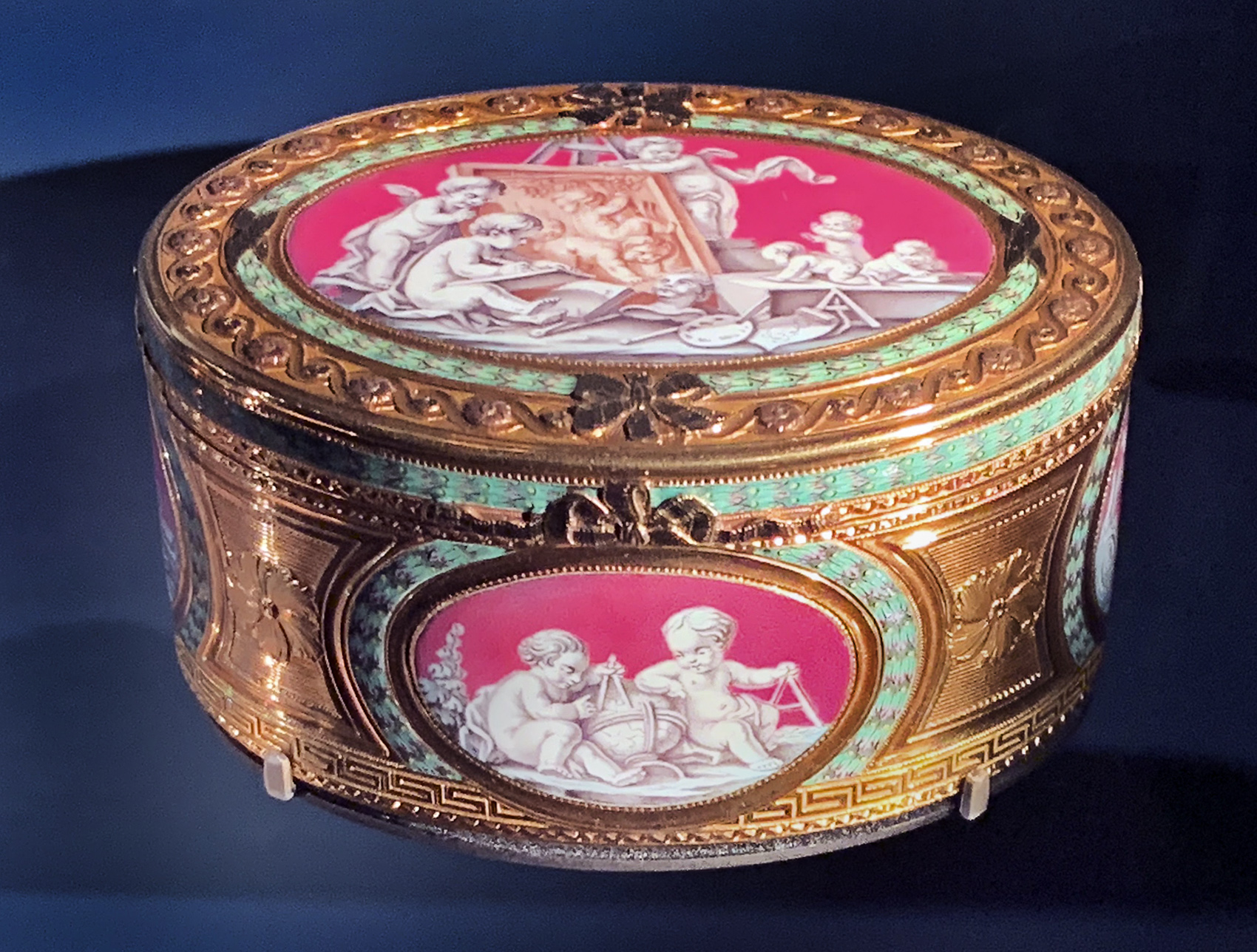
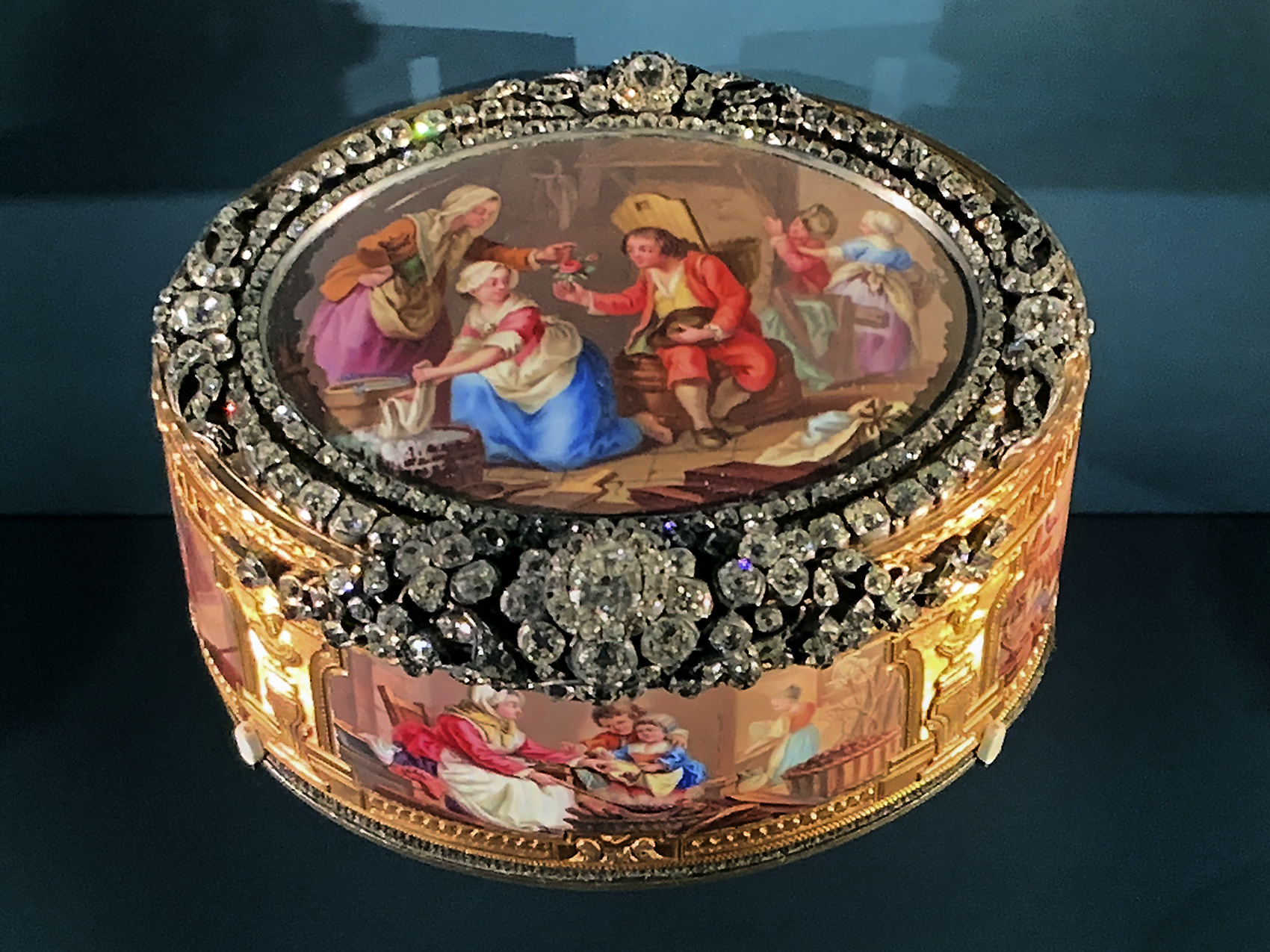
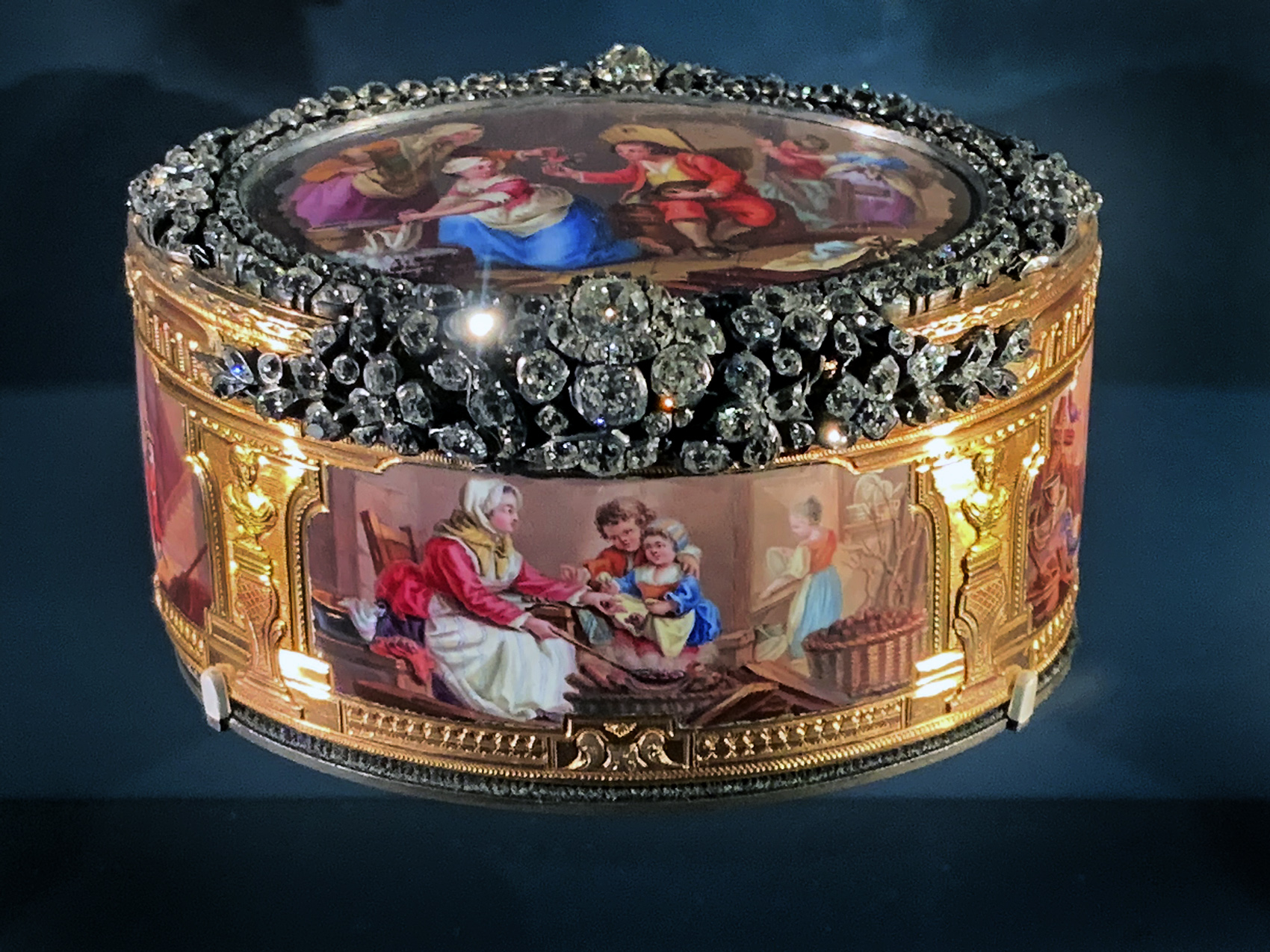
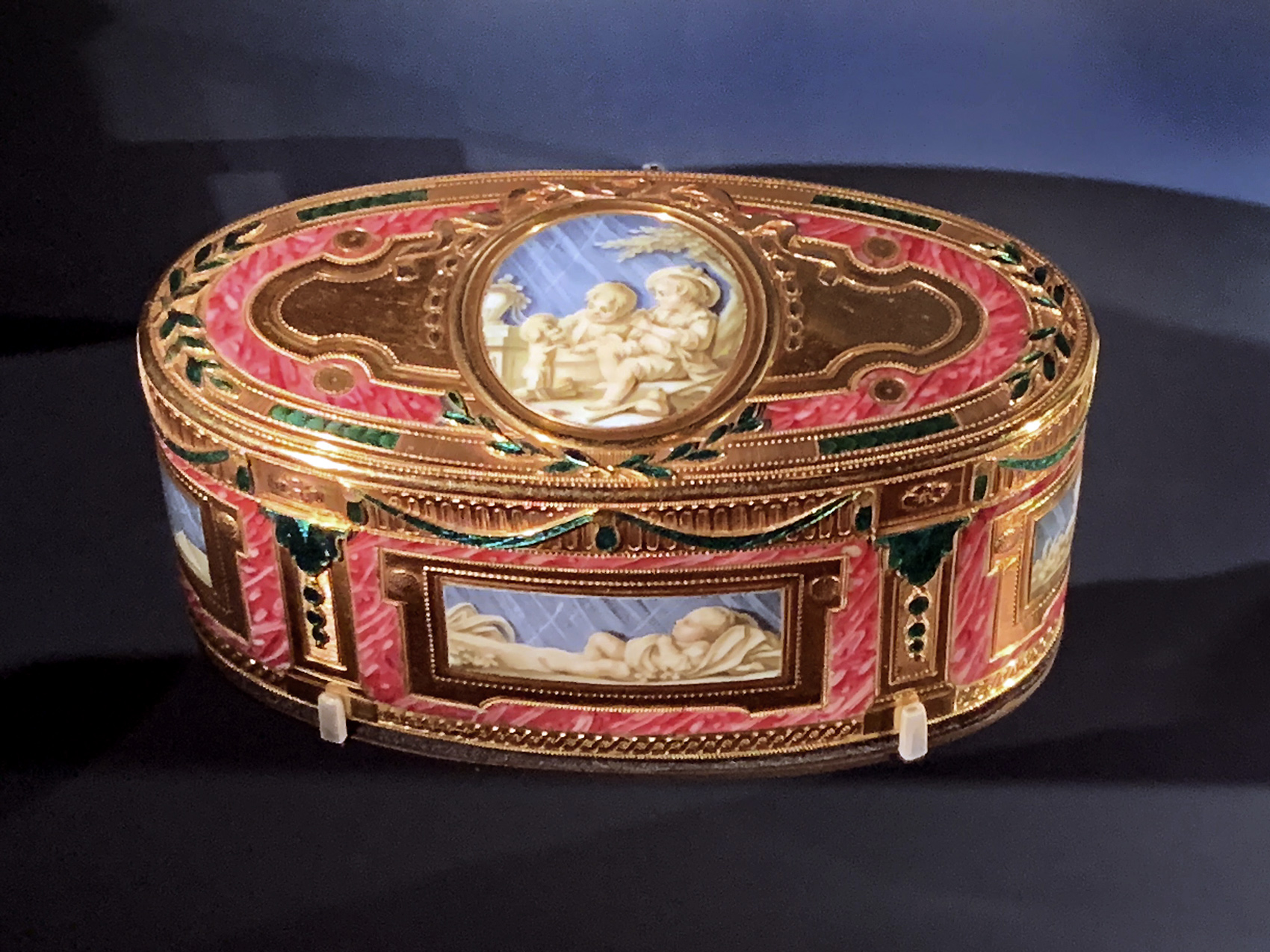
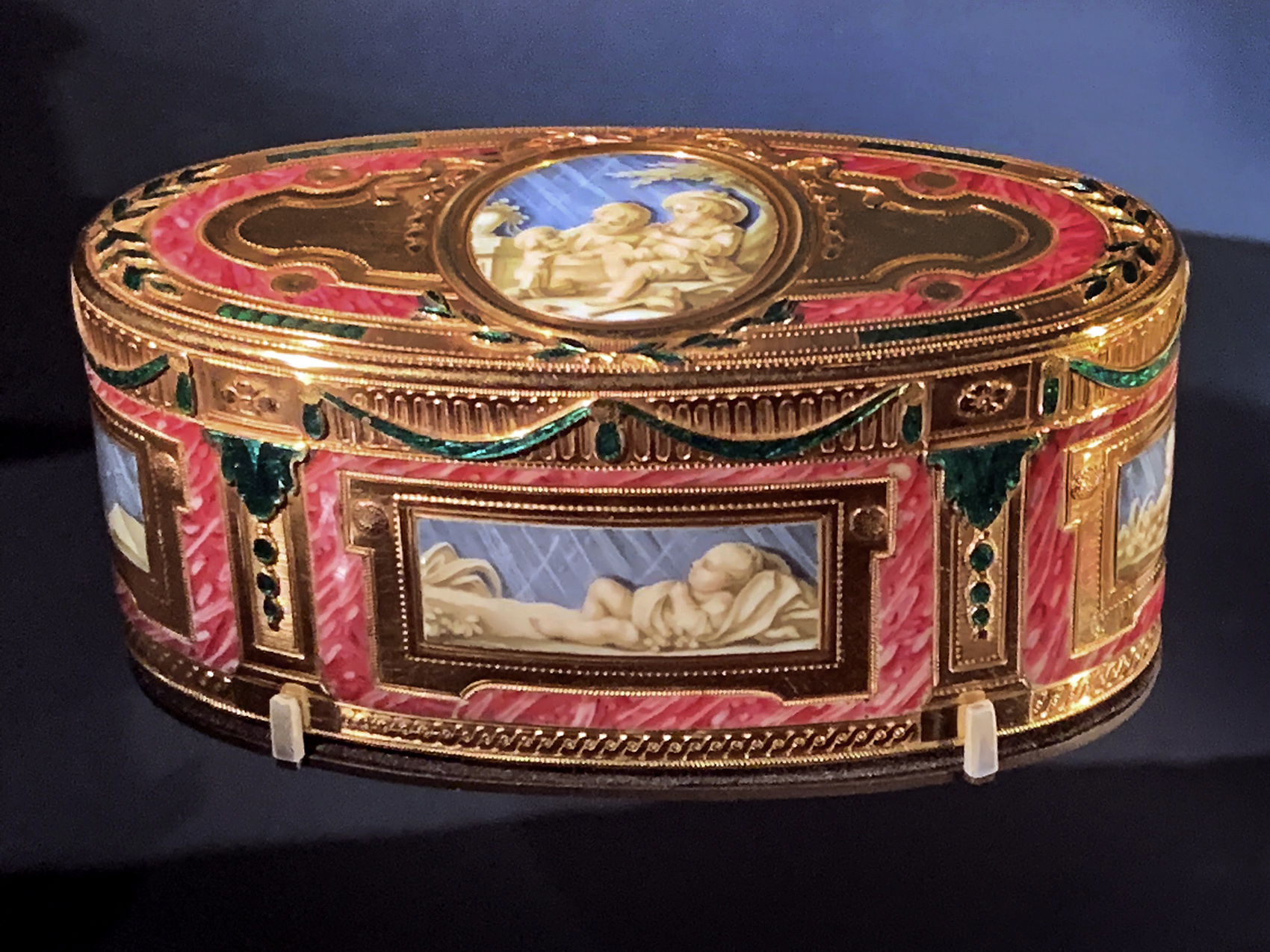
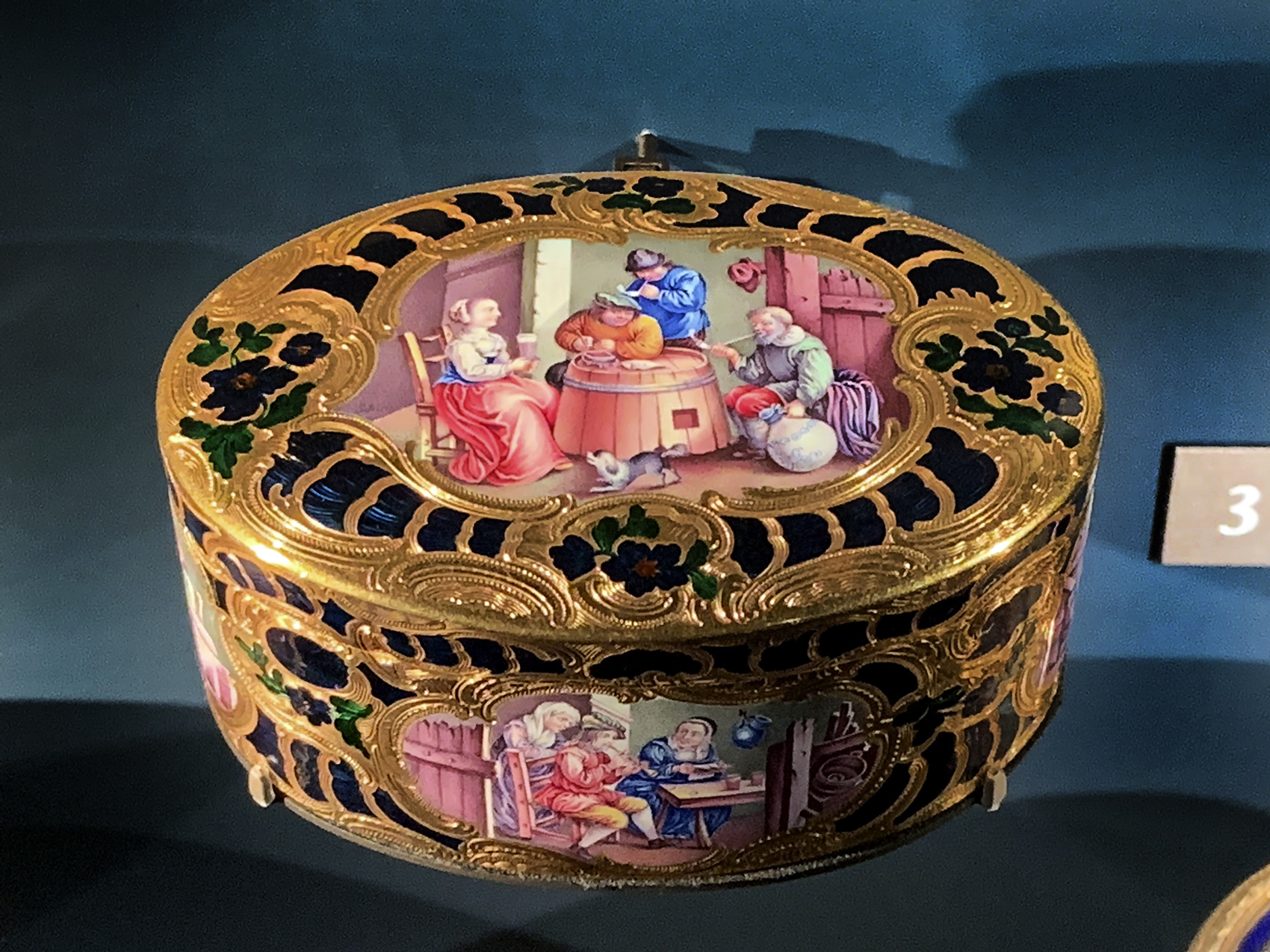
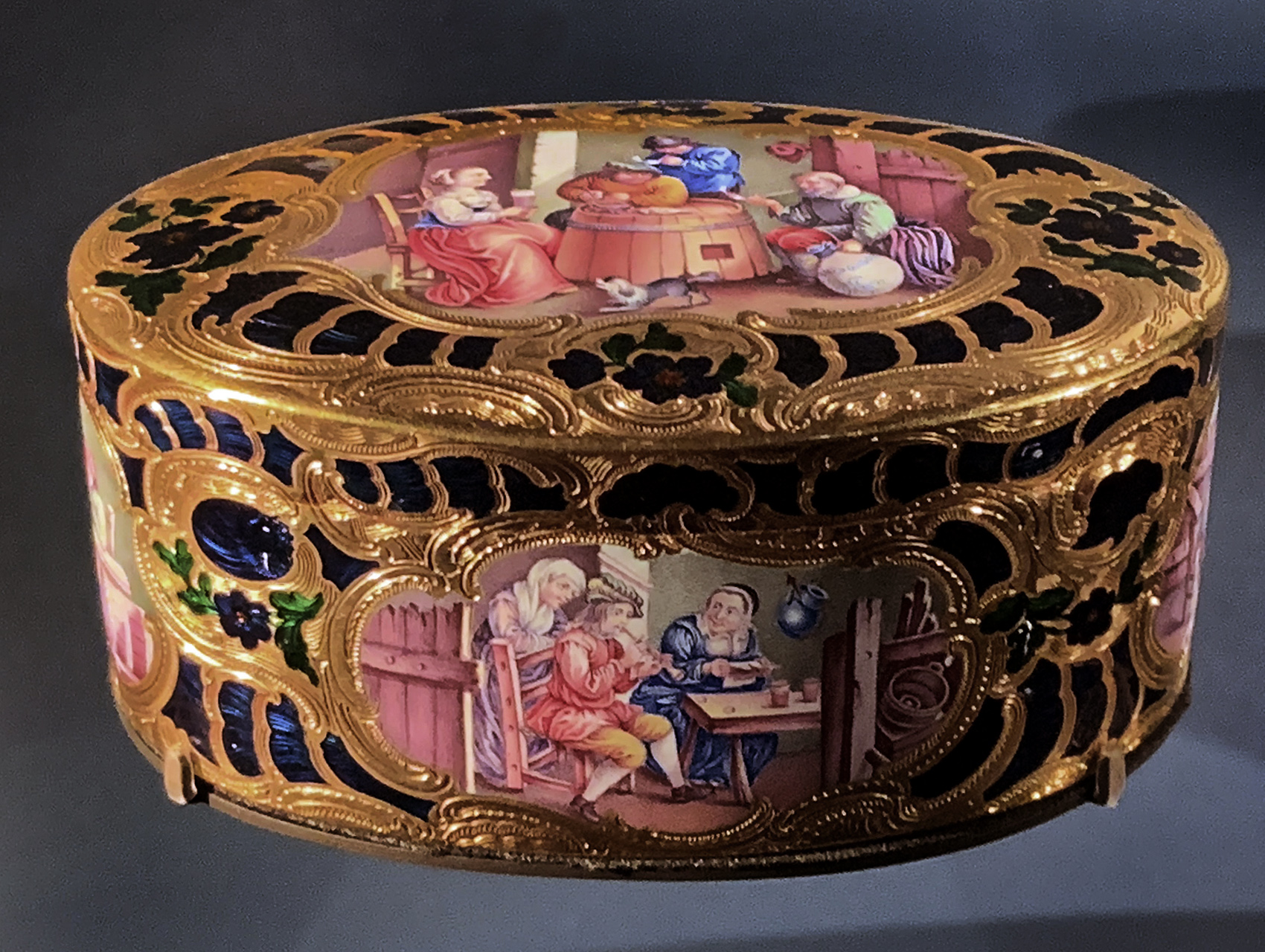
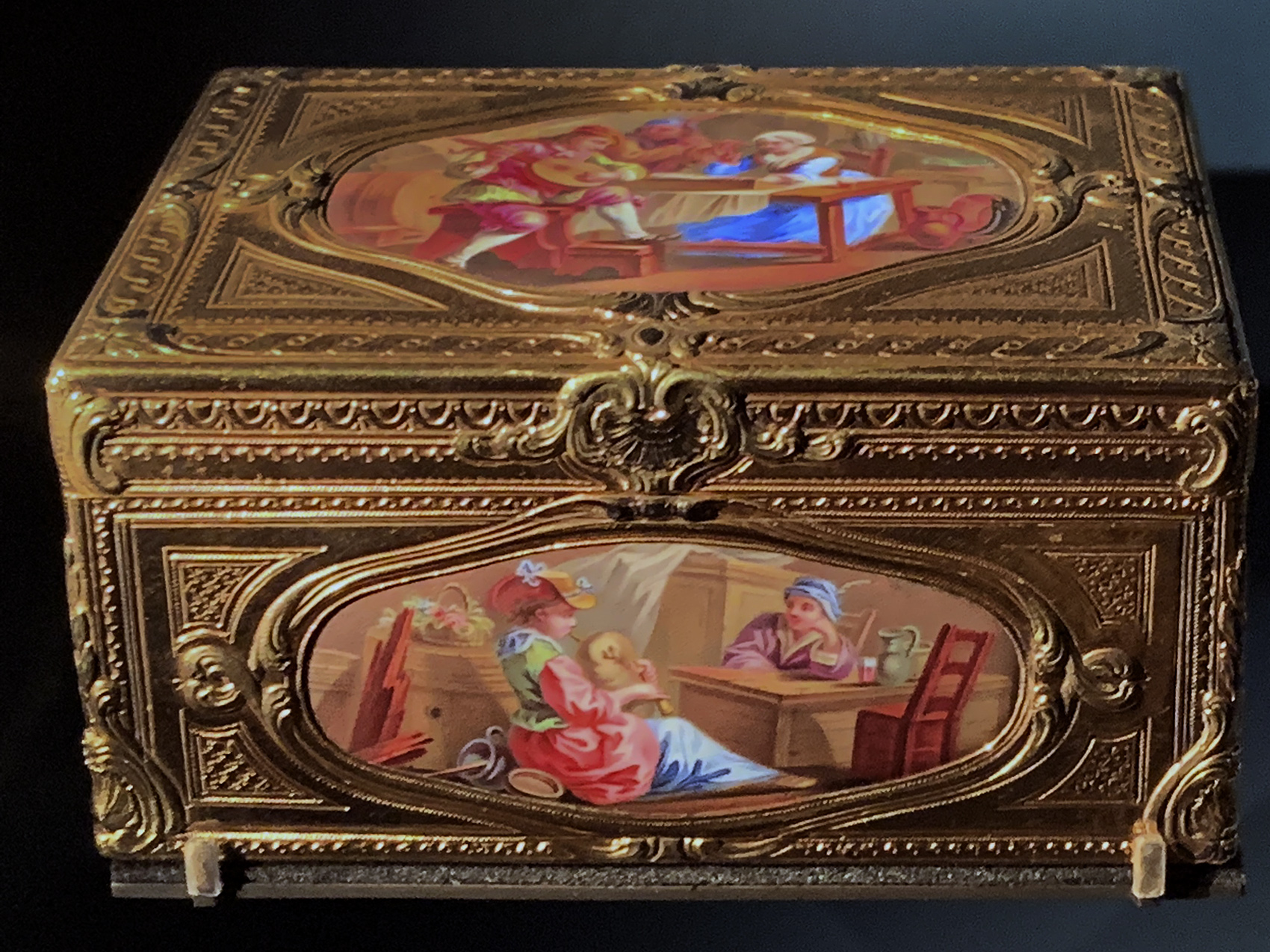
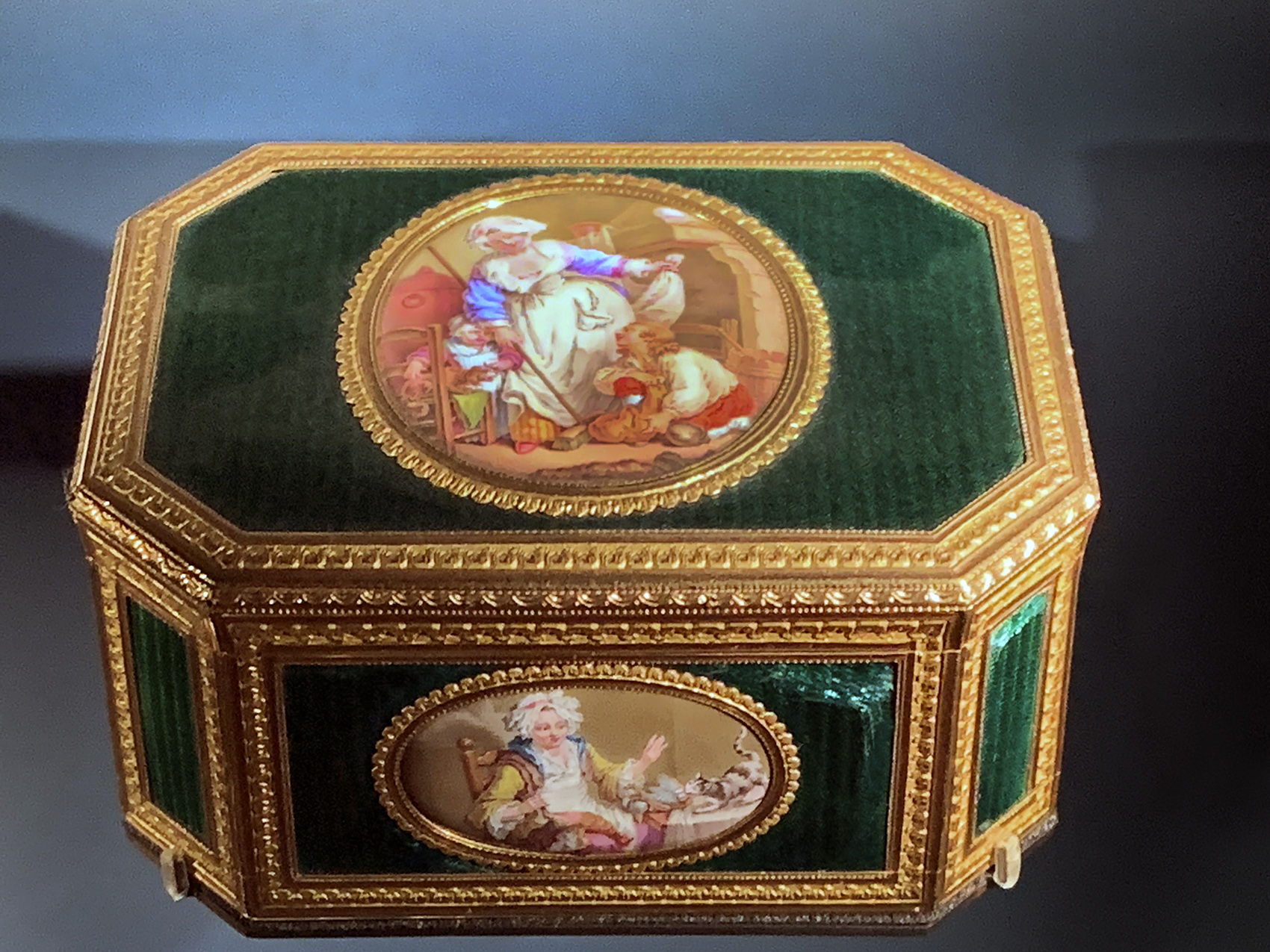
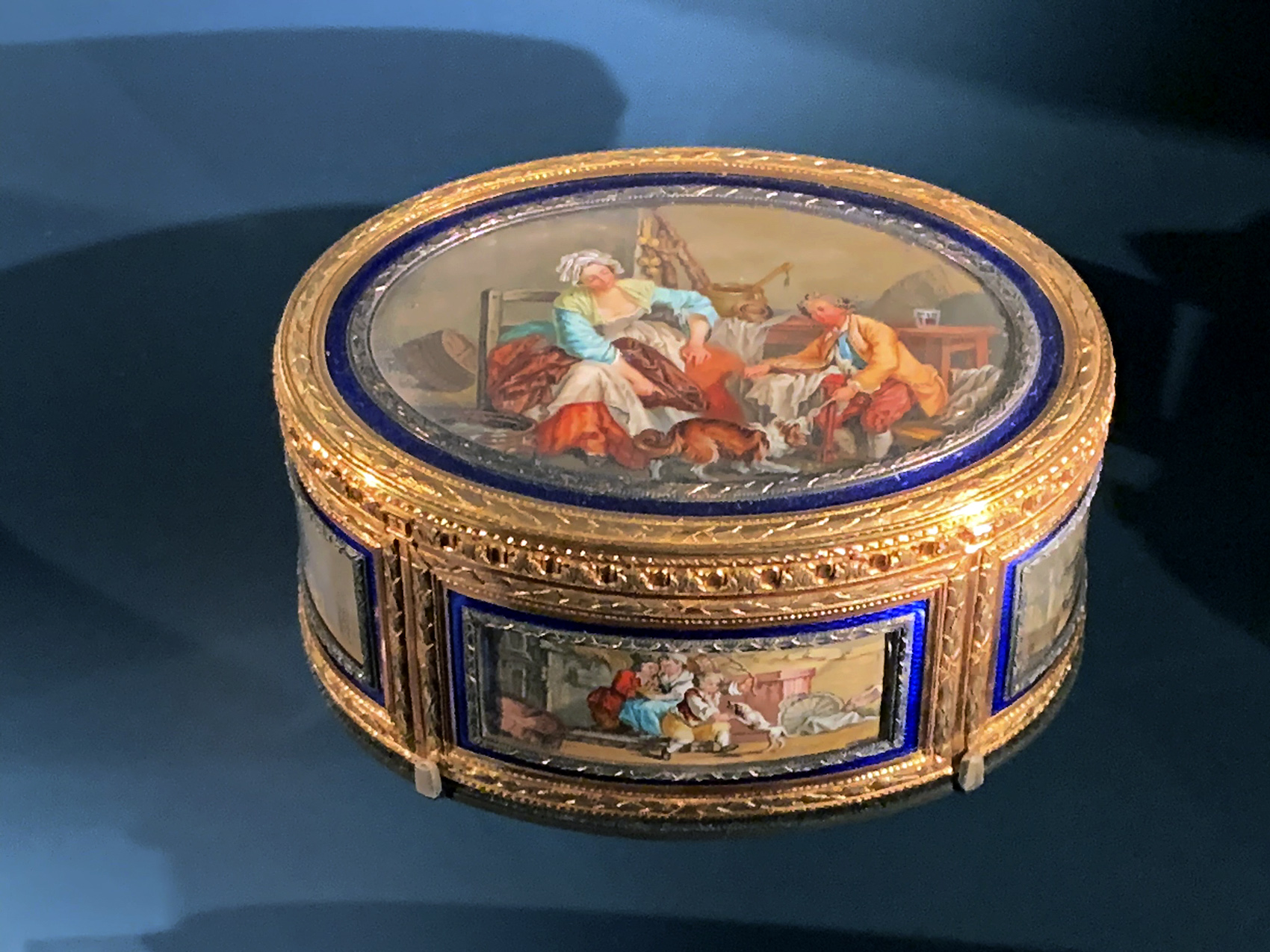
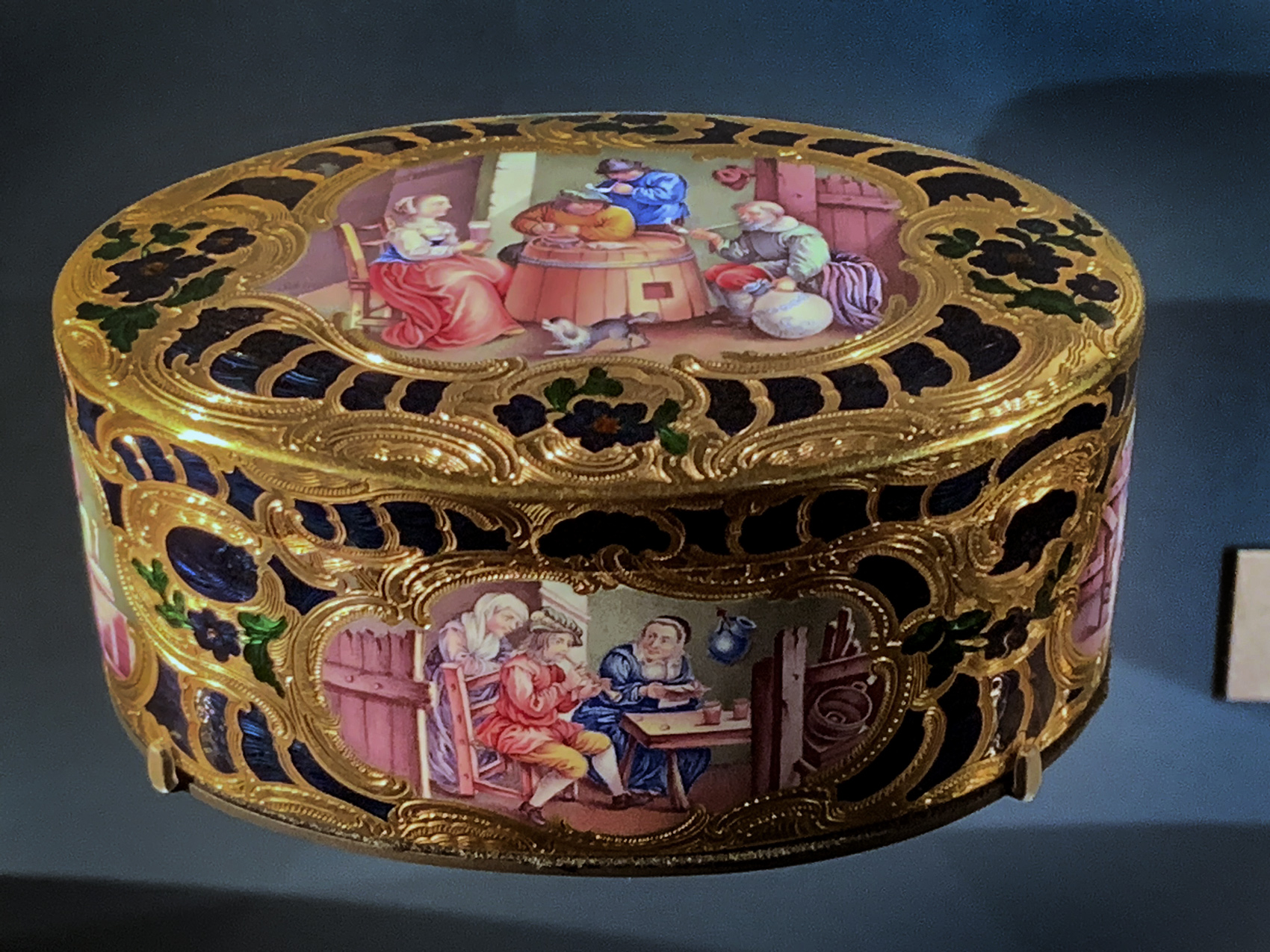
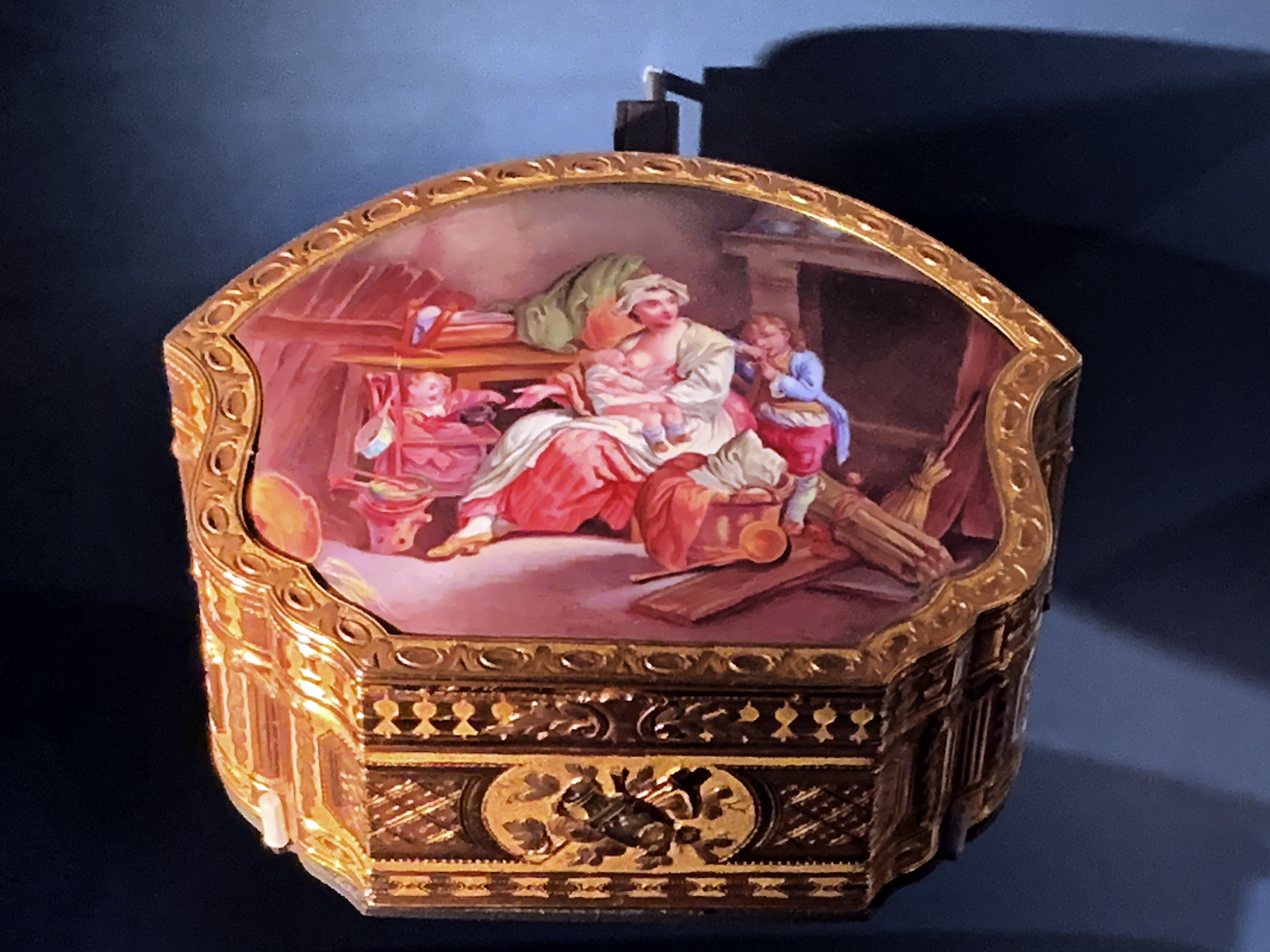
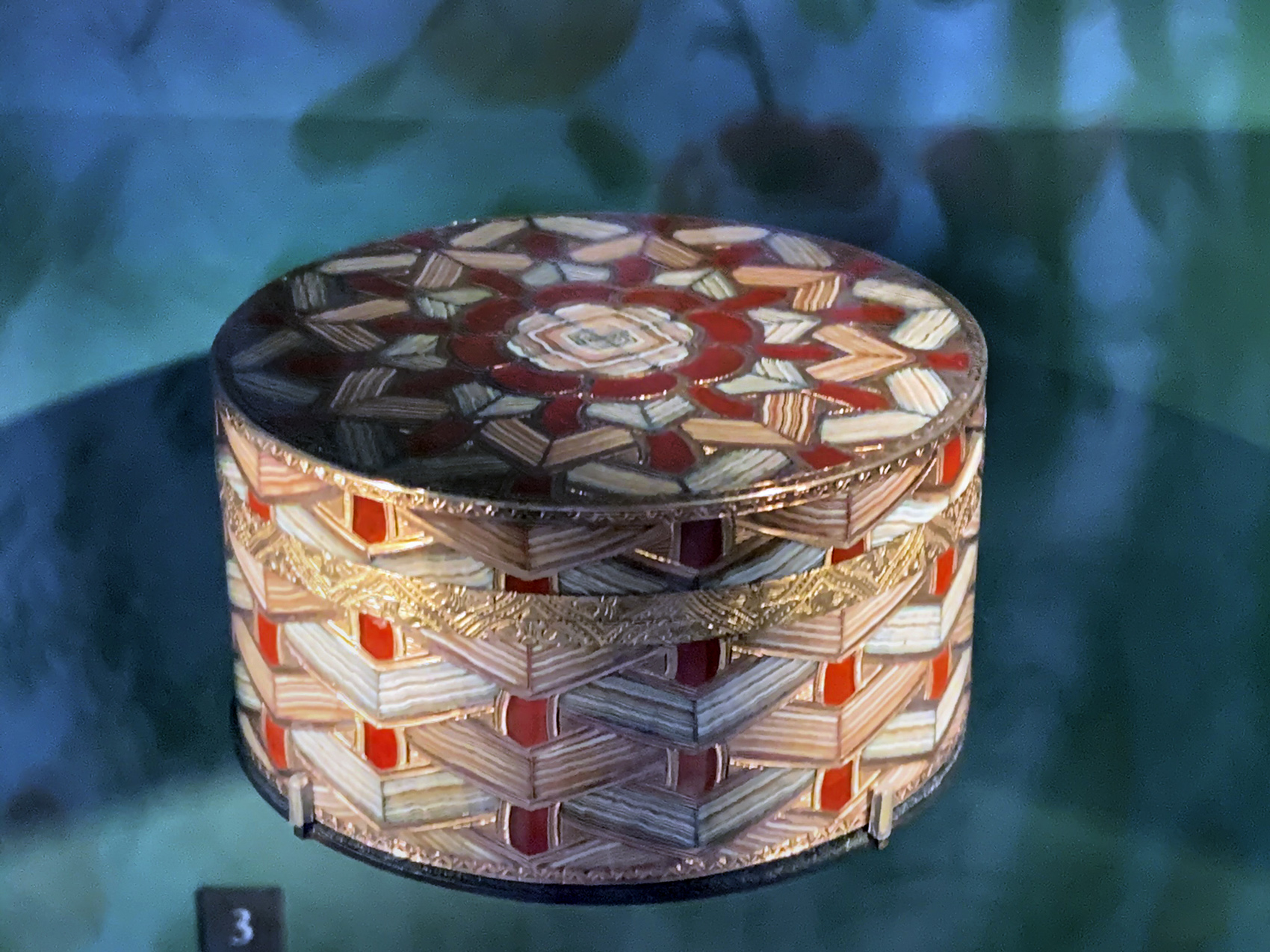
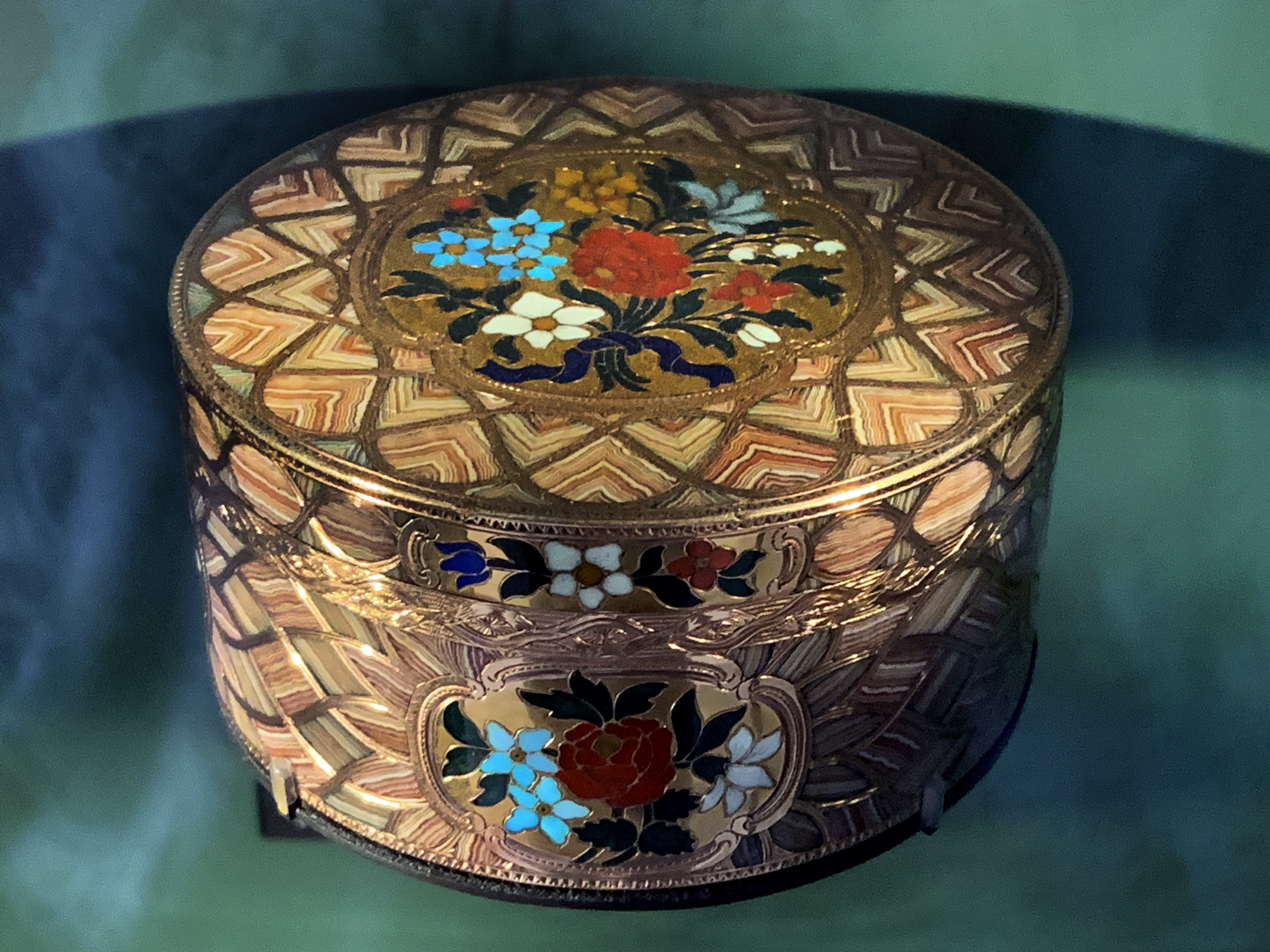
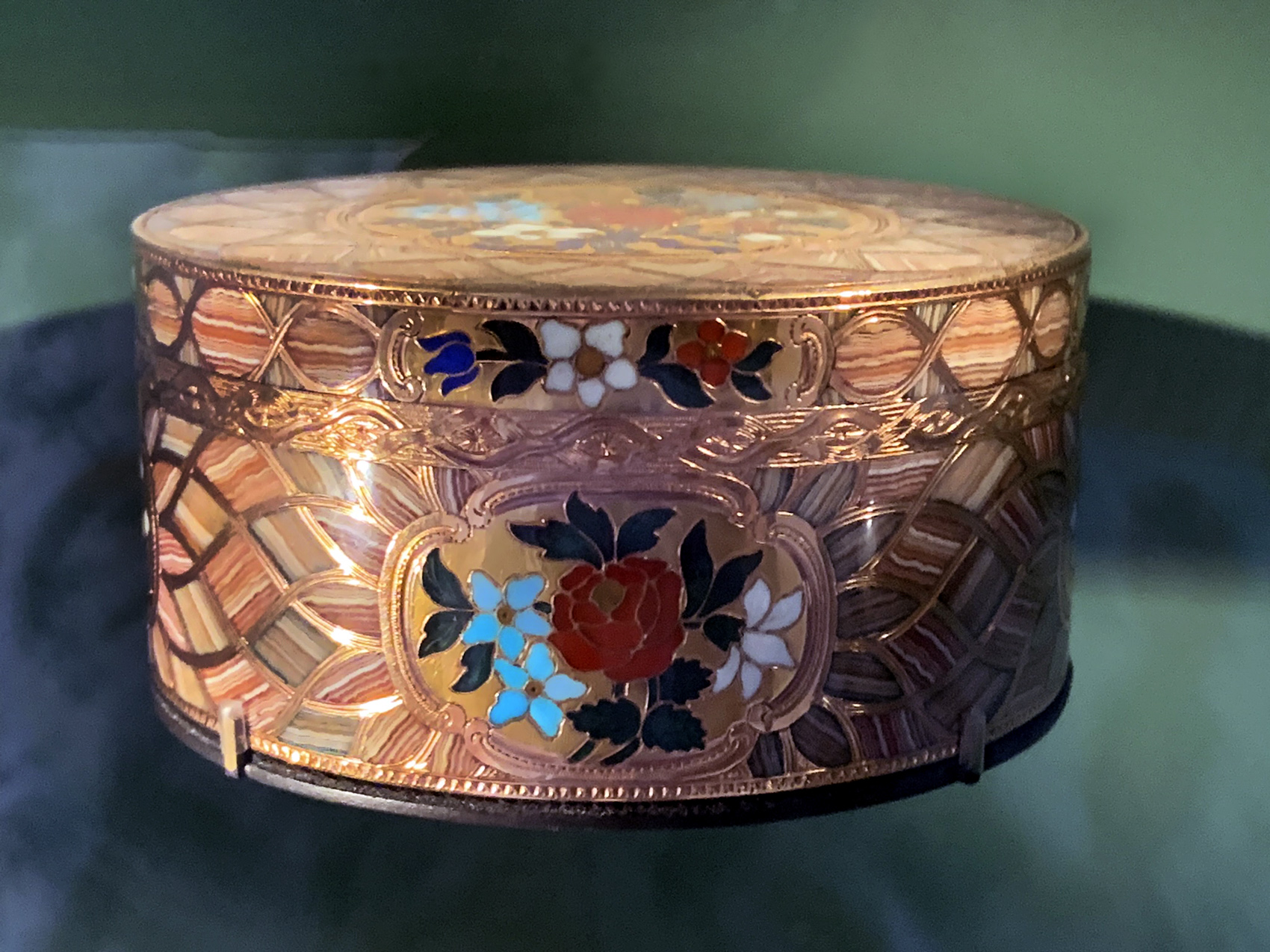
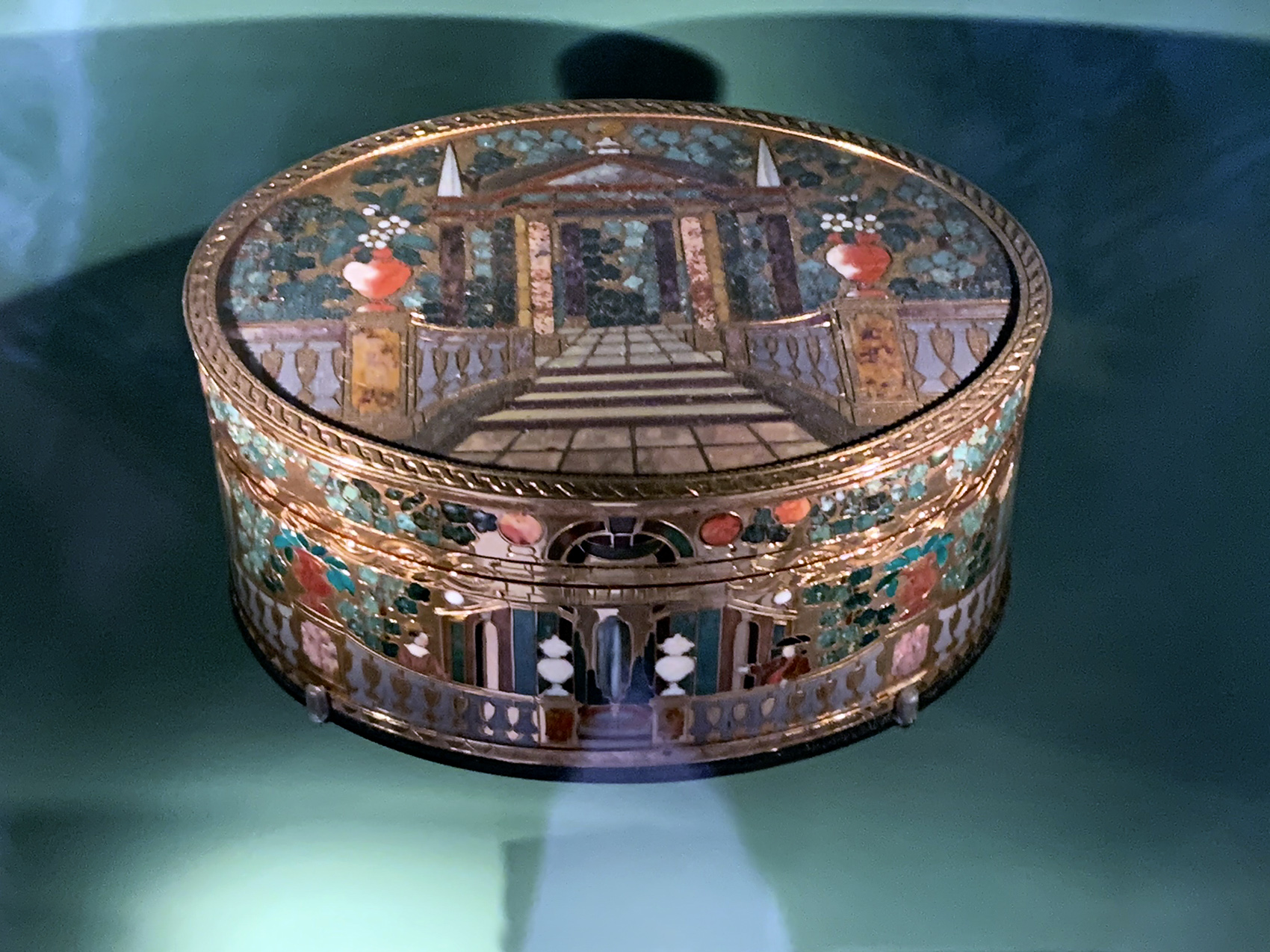
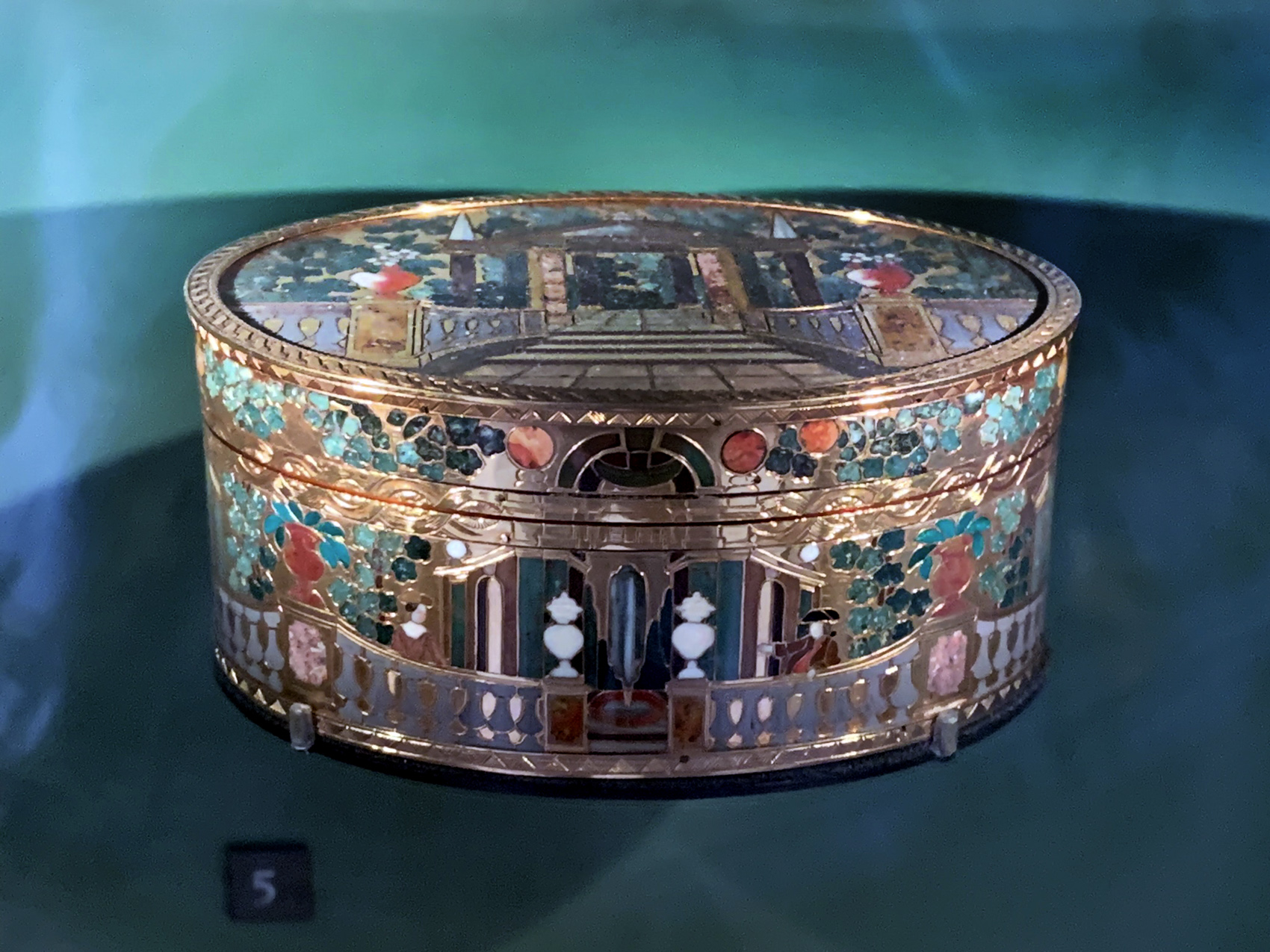
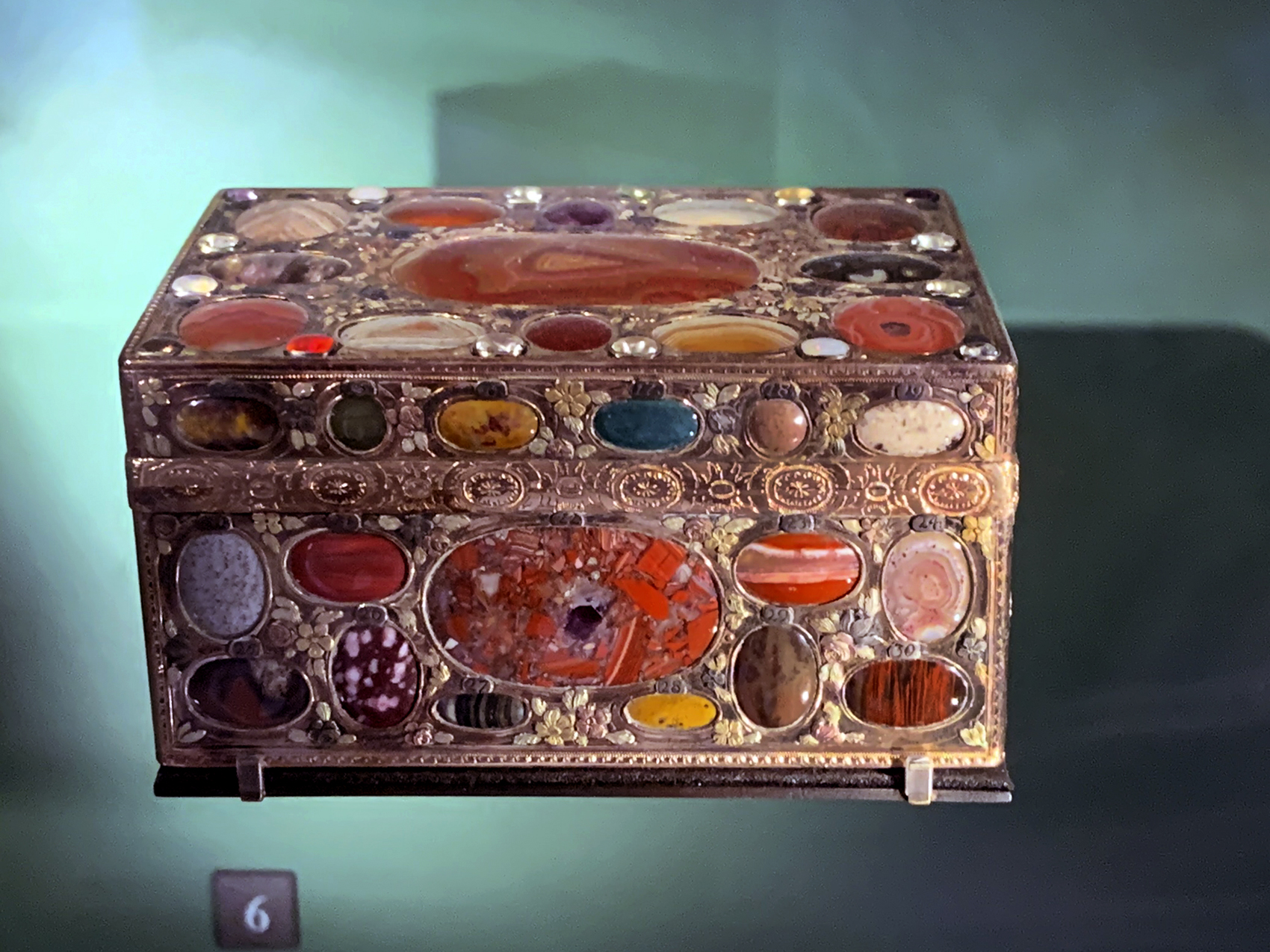
Objet d’art: French and German enamelled boxes at the Louvre, Paris

December 2020


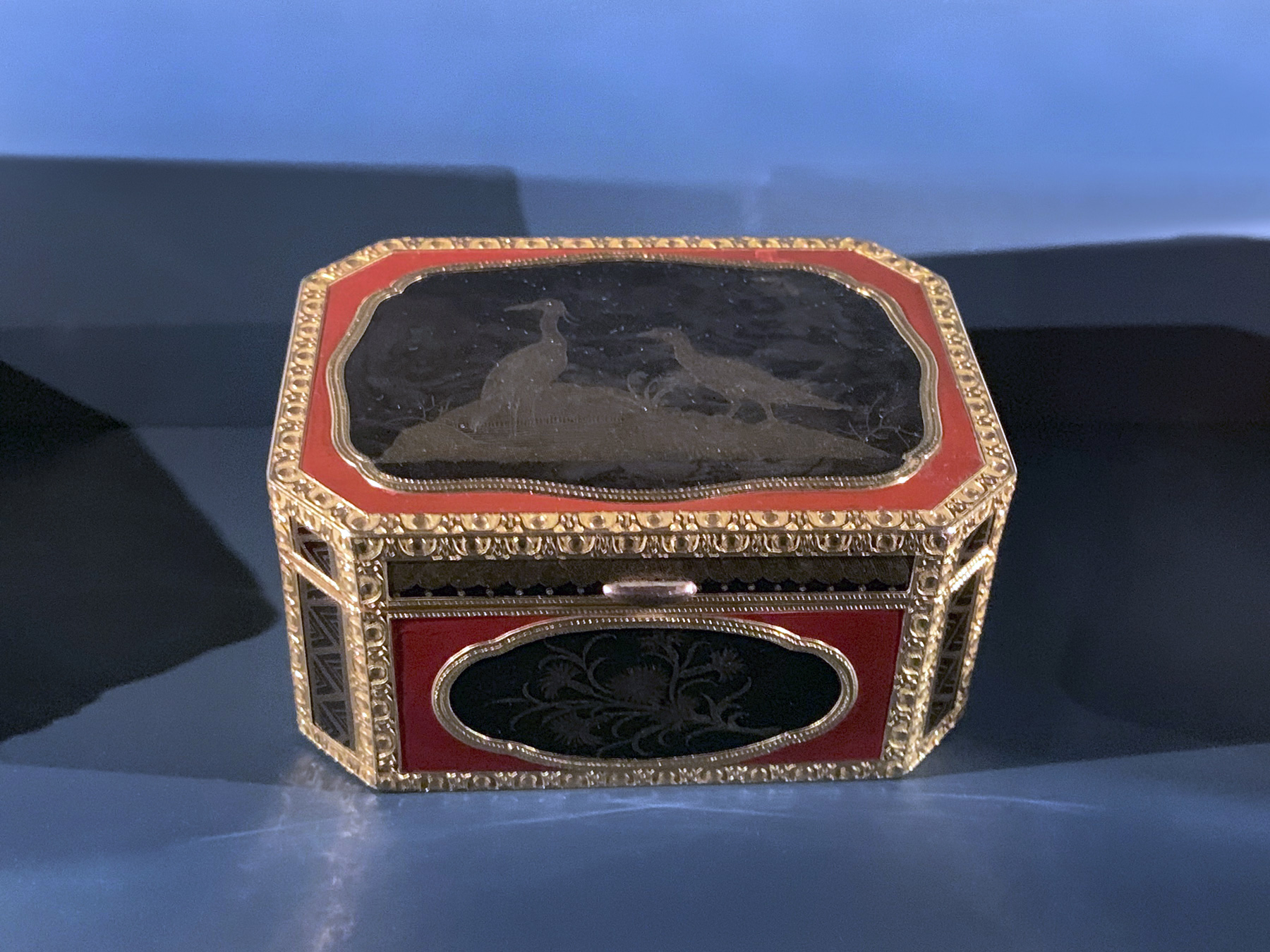
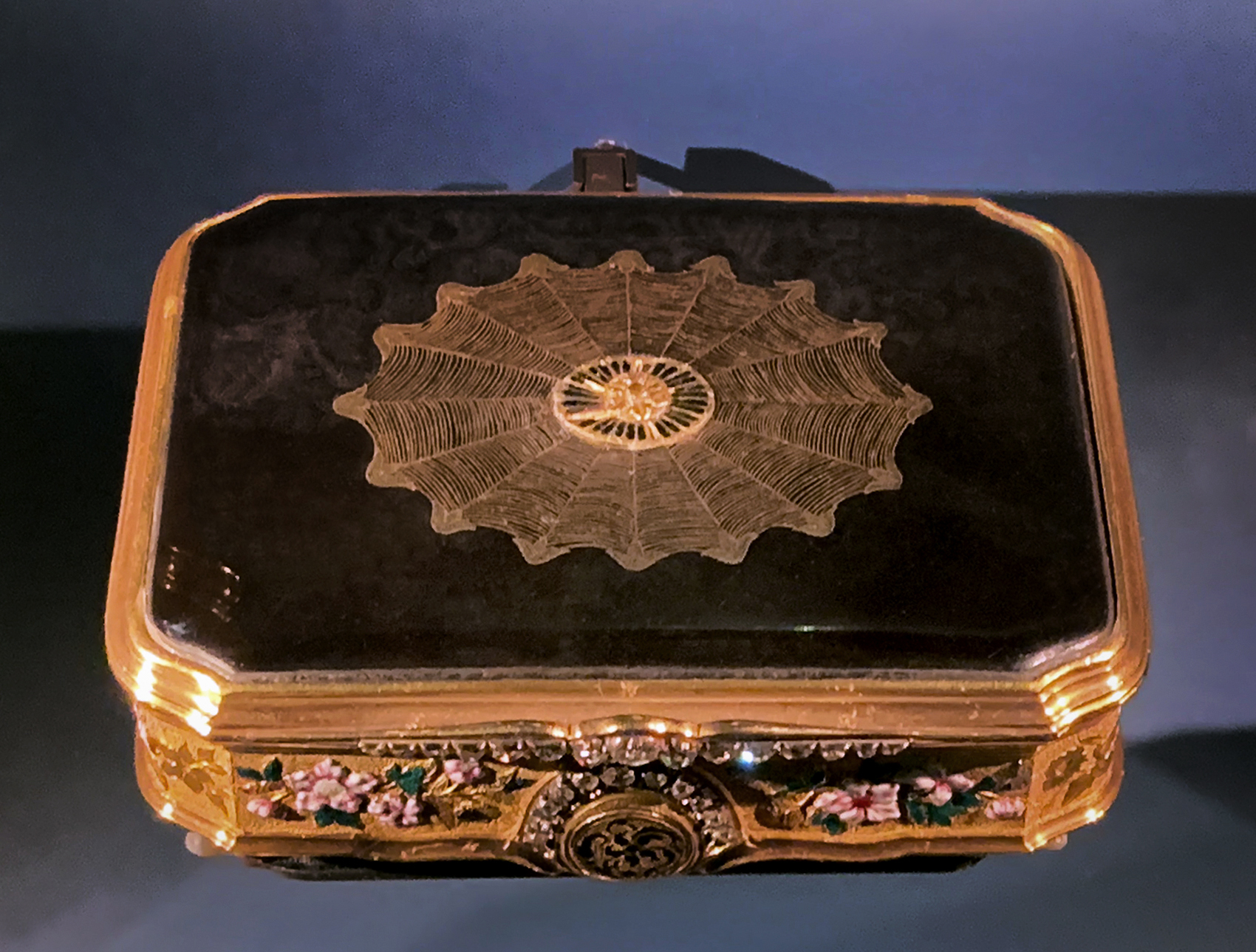
J.M. Tiron (goldsmith) 'Cage-mounted snuffbox with lacquer panels' Paris, 1761-1762 from the posting Objet d'art: French and German enamelled boxes at the Louvre, Paris


J.M. Tiron (goldsmith)
Cage-mounted snuffbox with lacquer panels
Paris, 1761-1762
Gold, lacquer
Photo: Marcus Bunyan


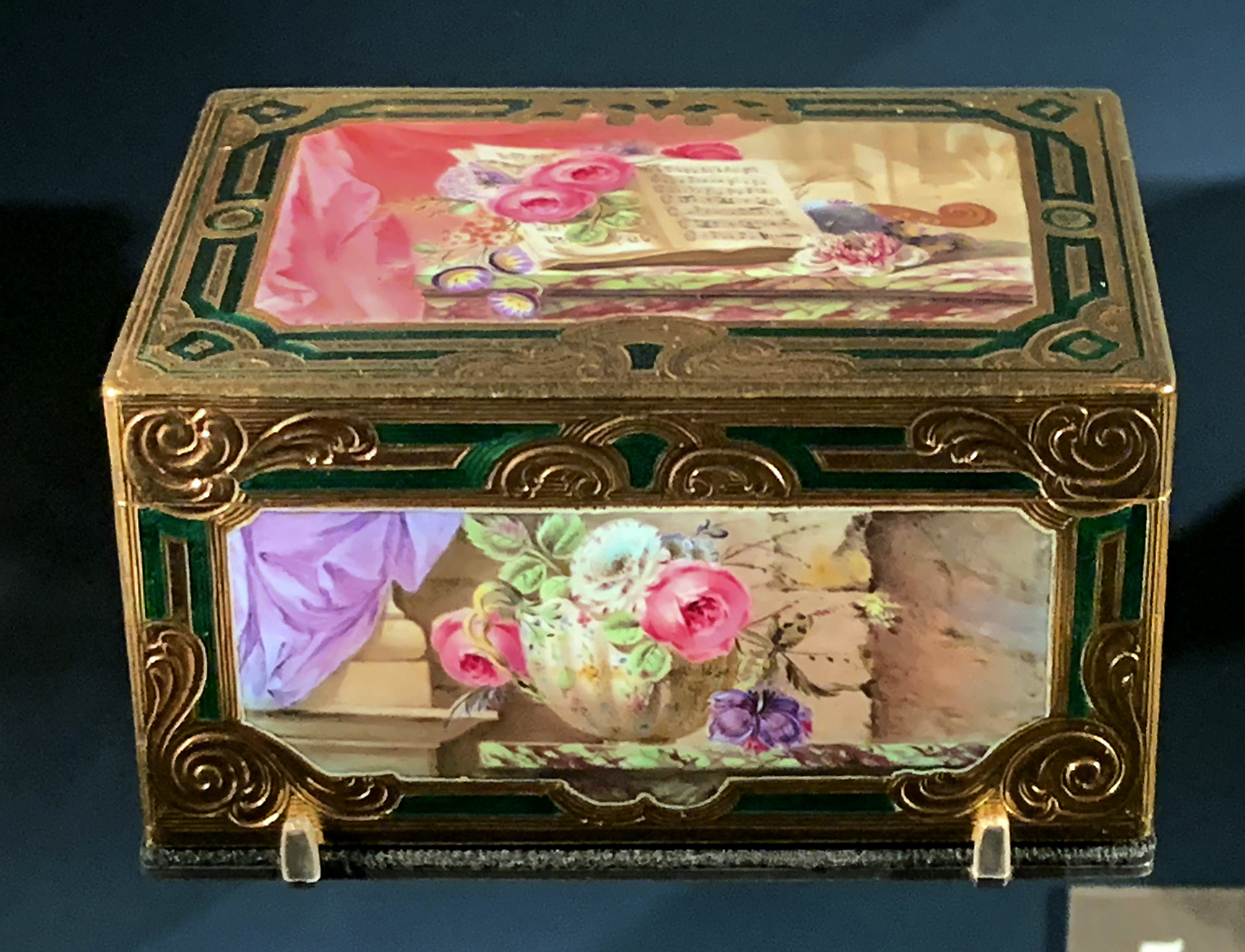
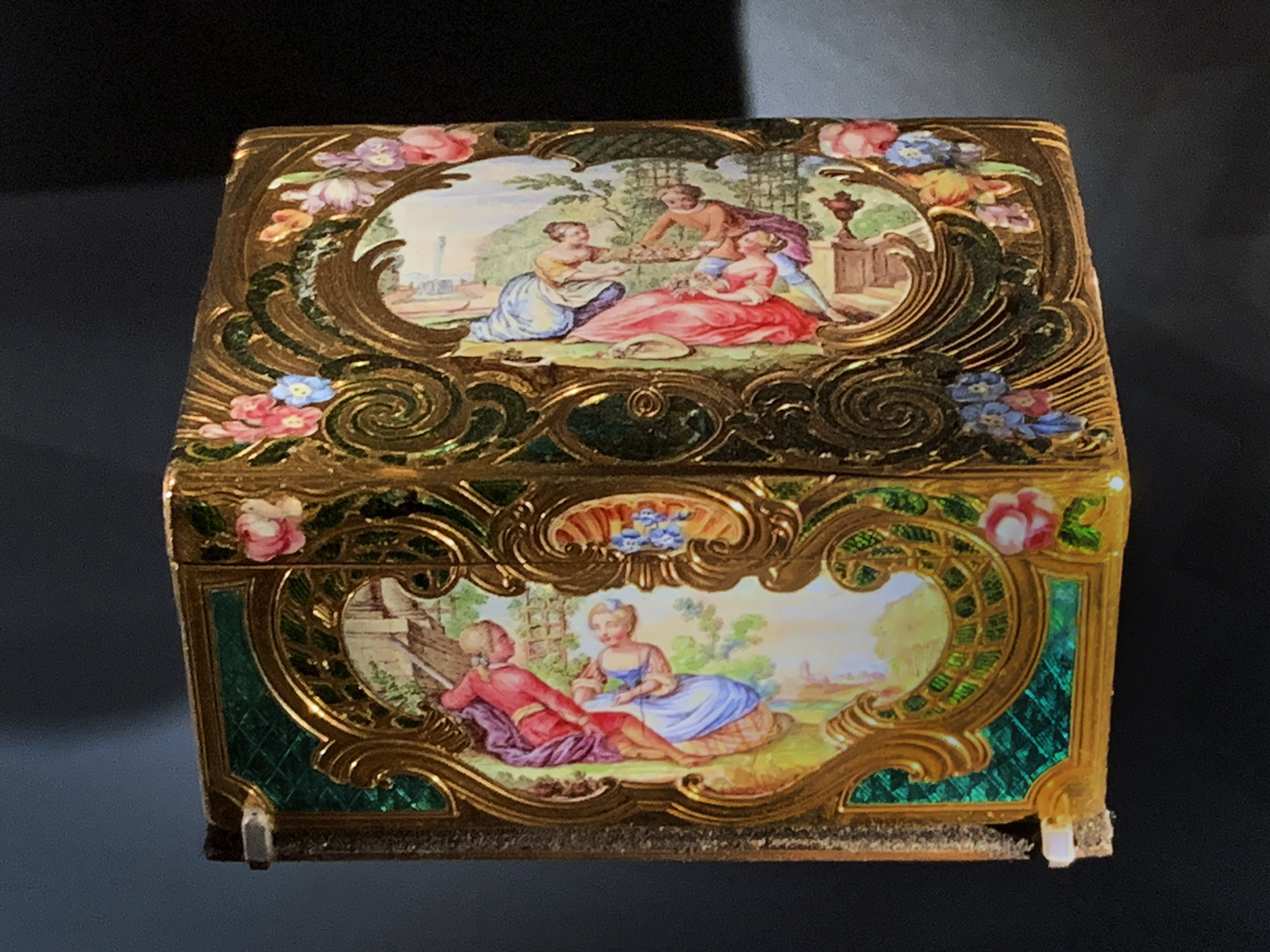
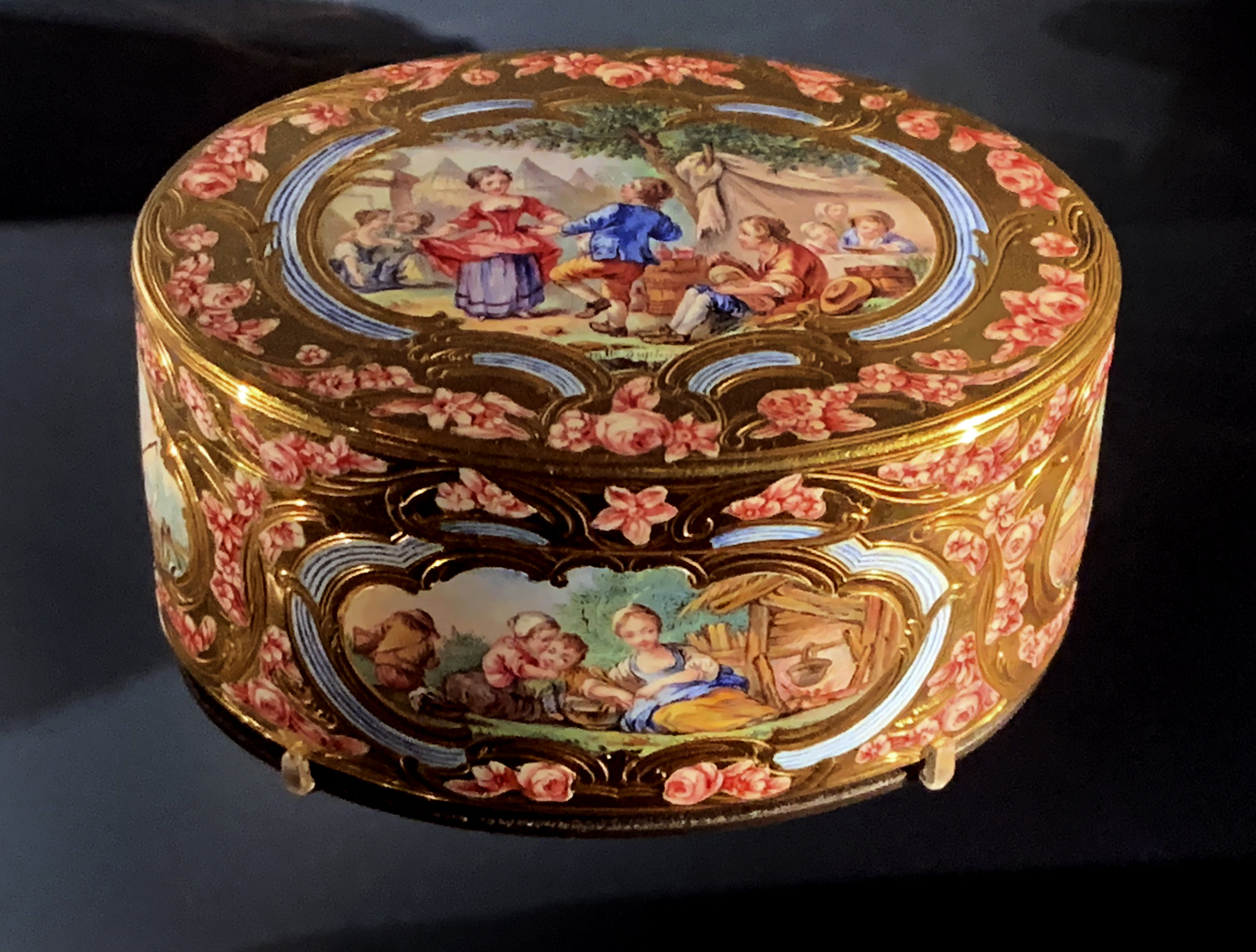
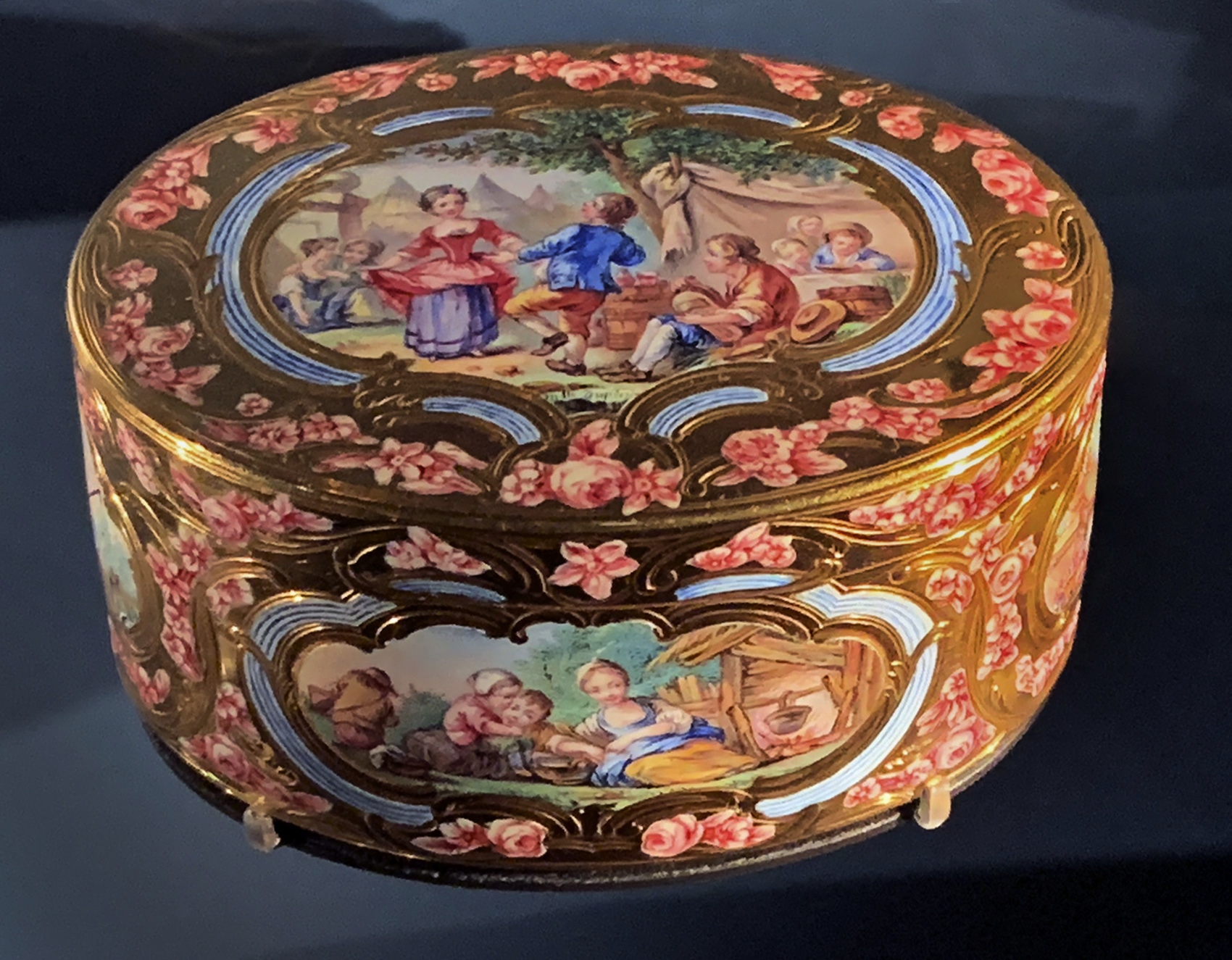
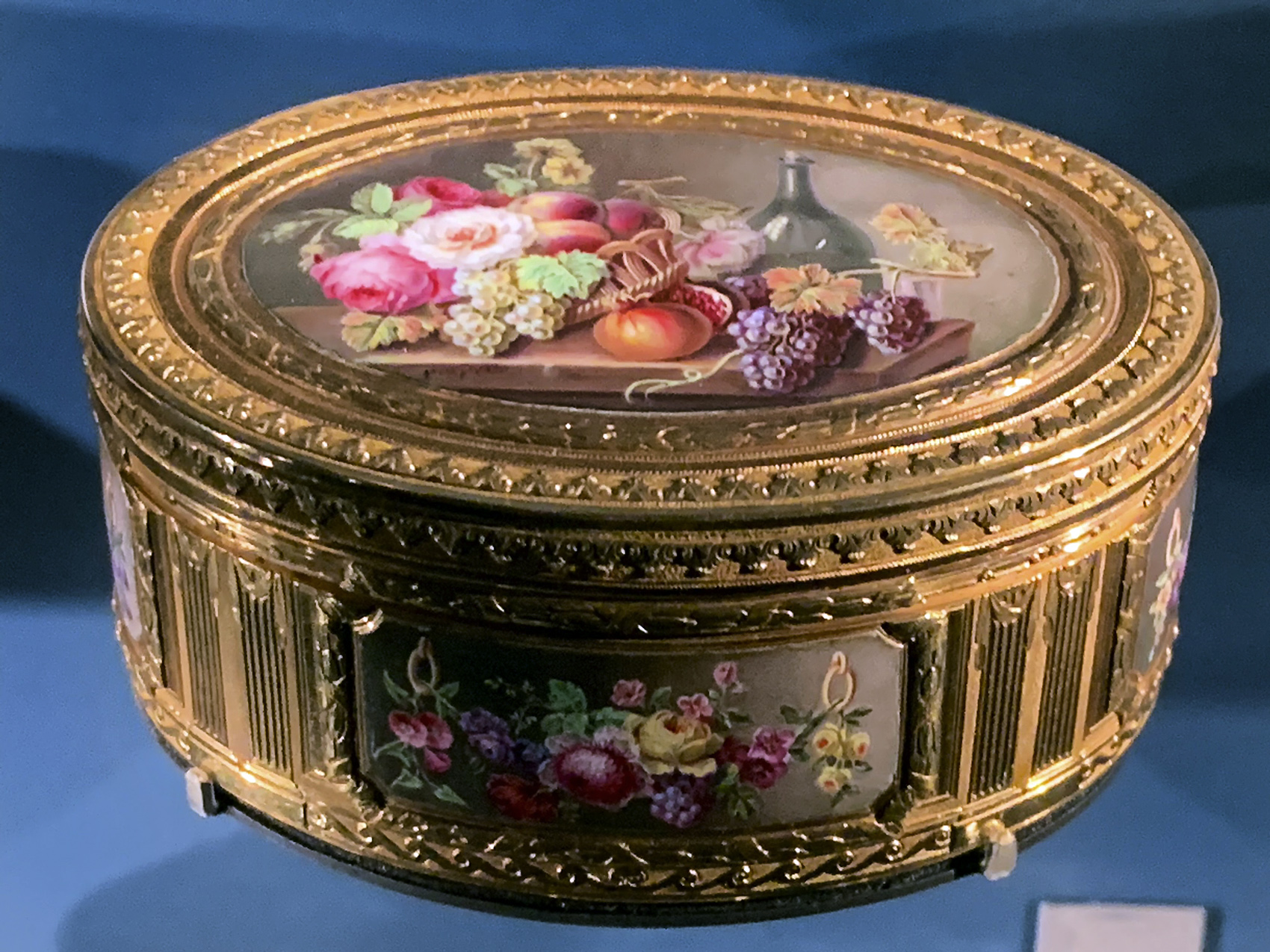
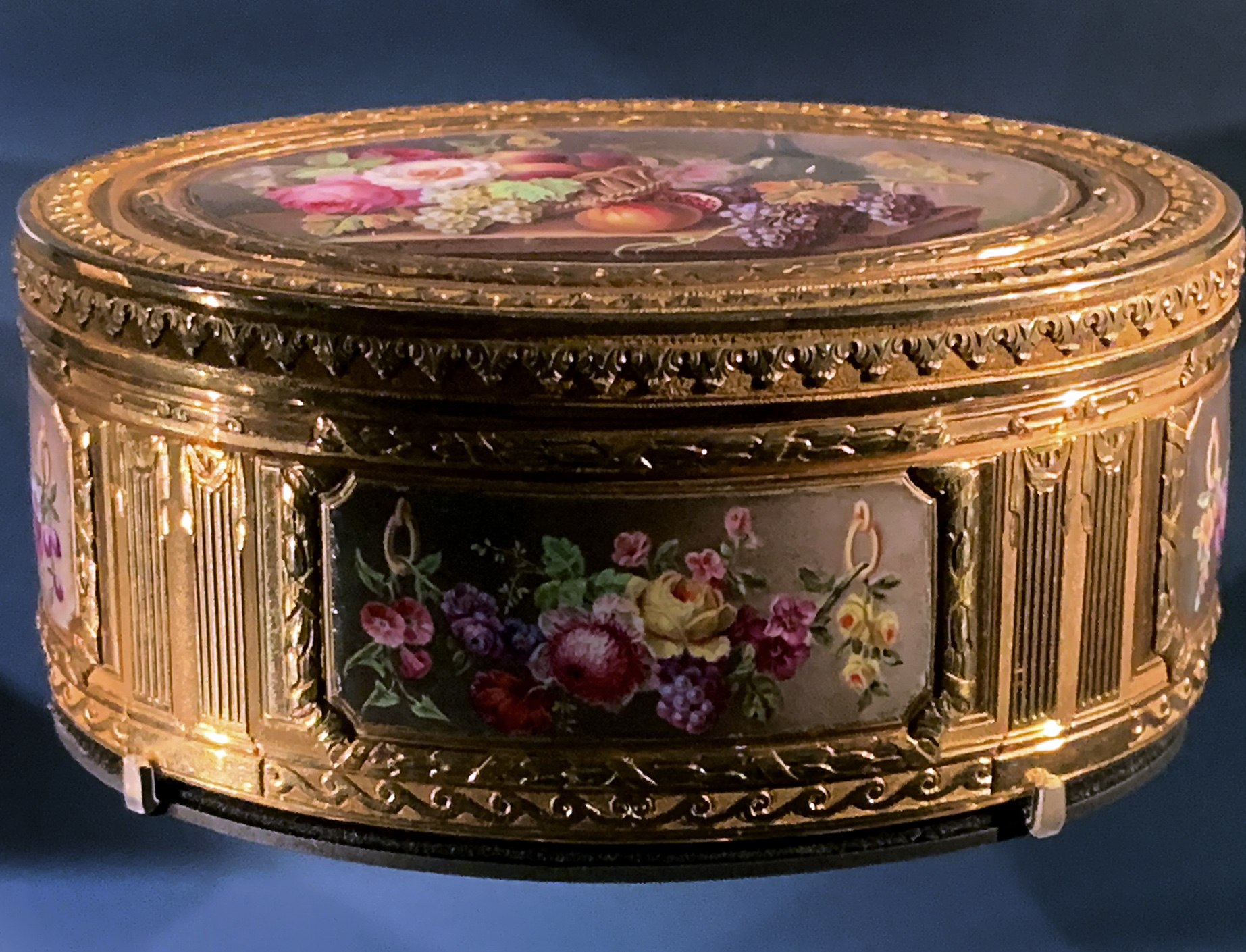
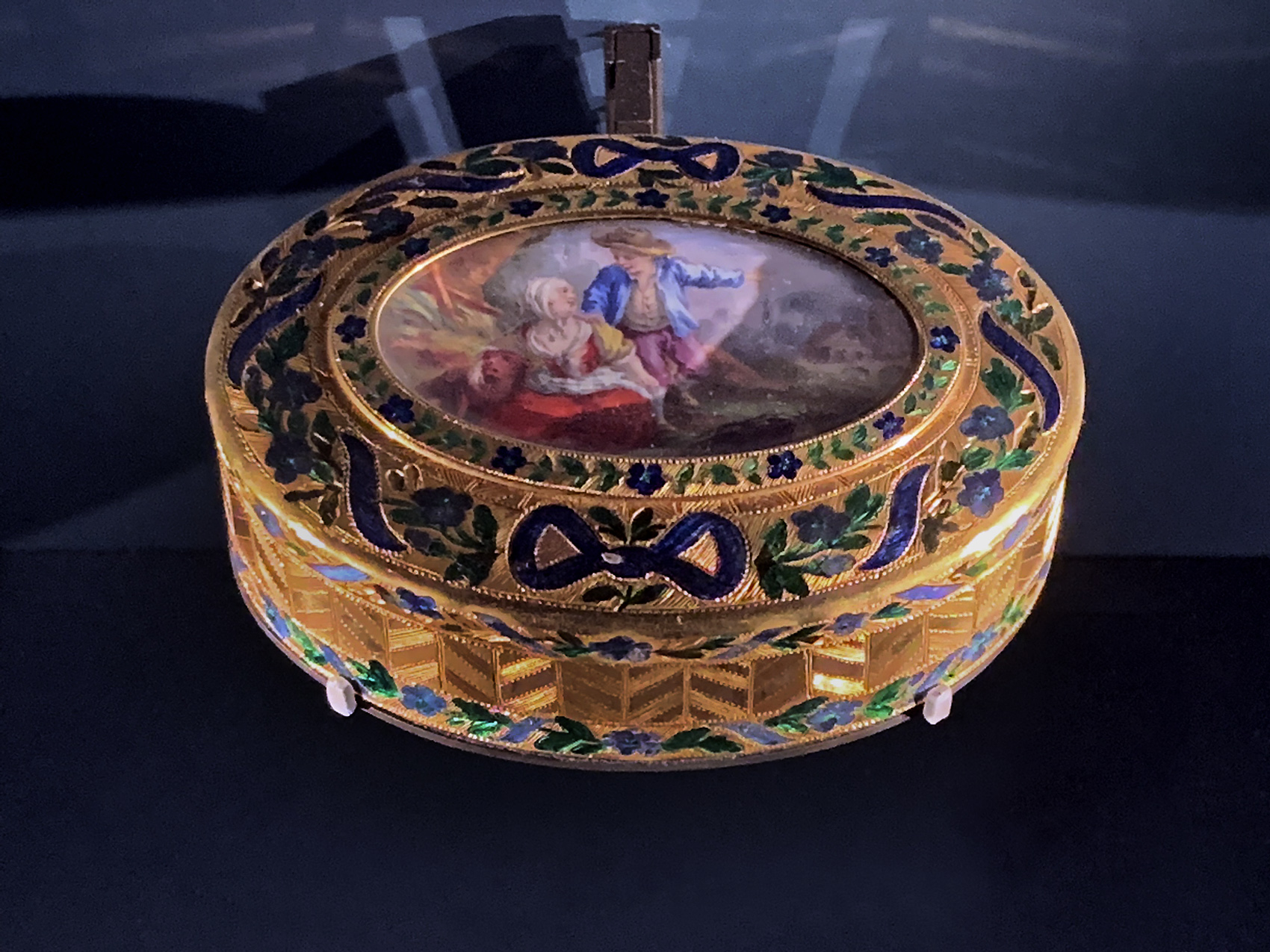
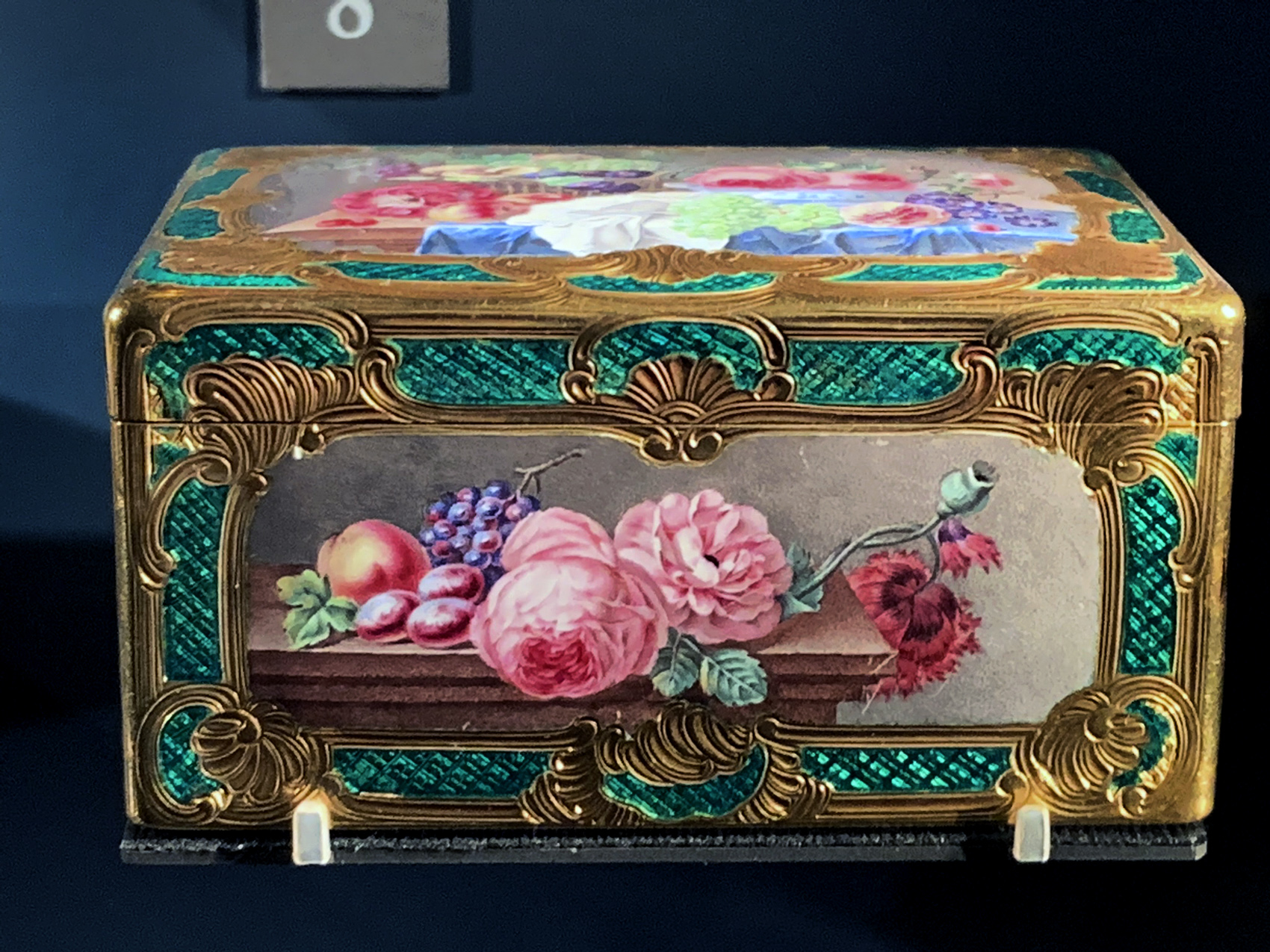
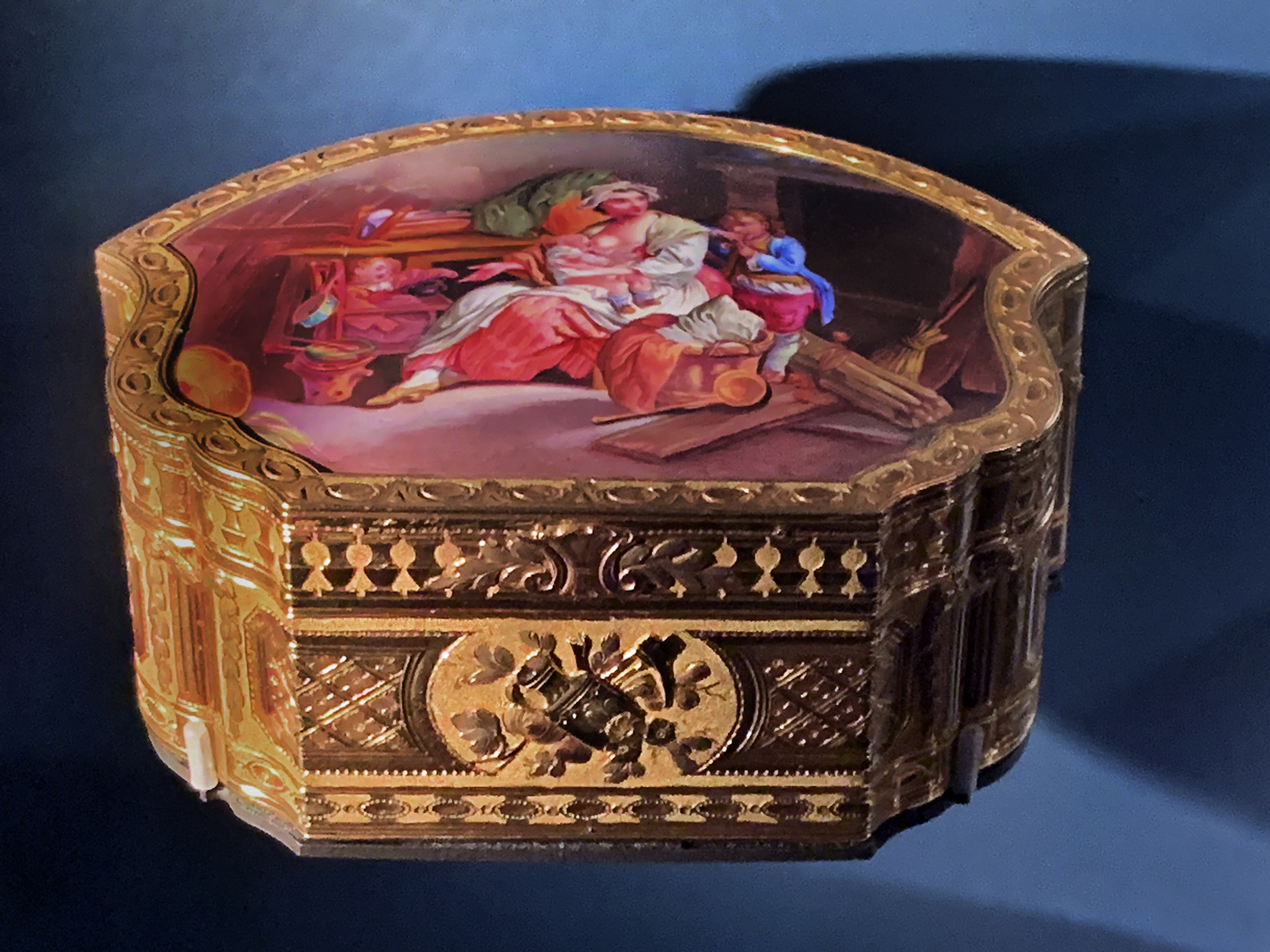
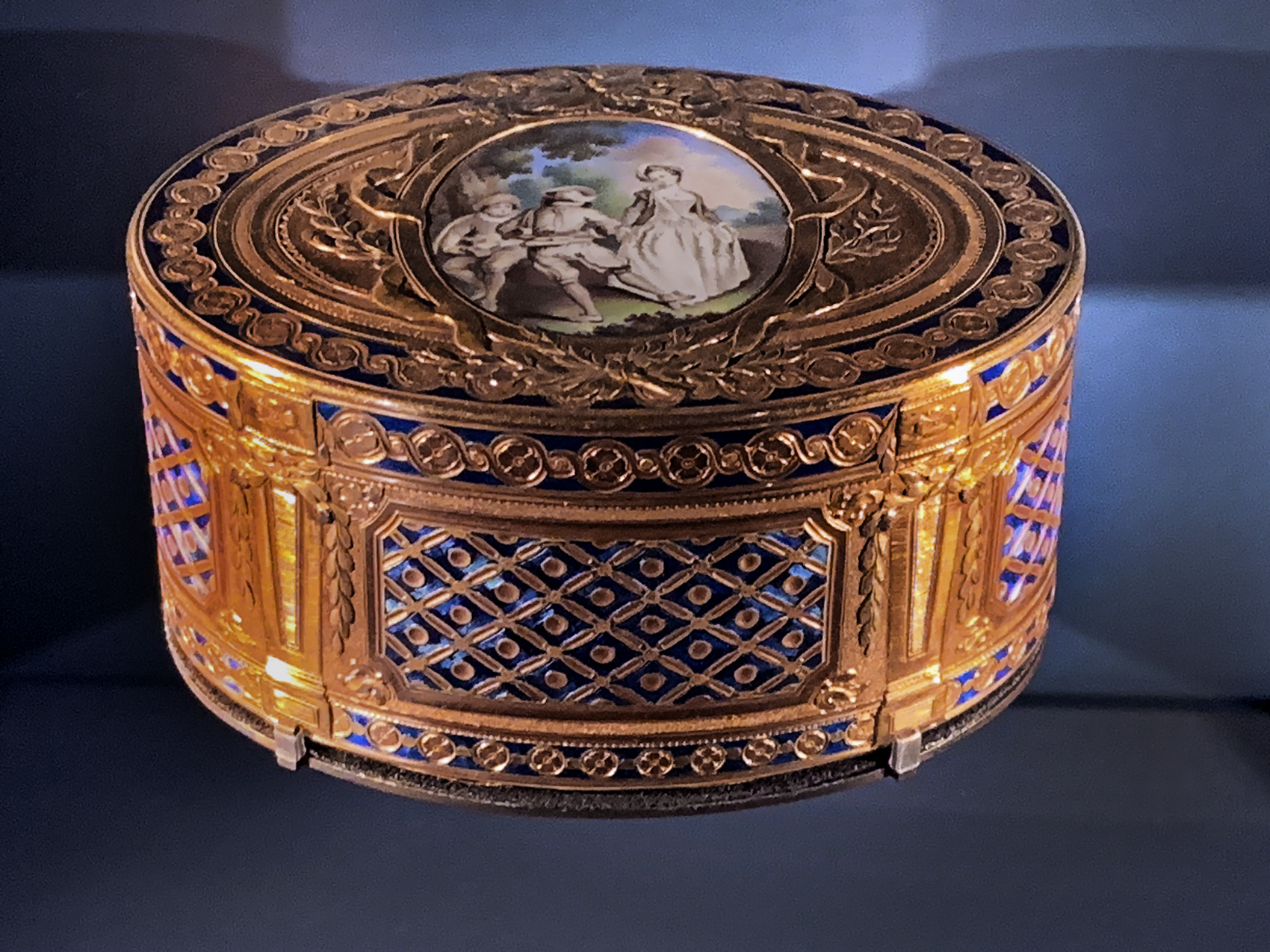
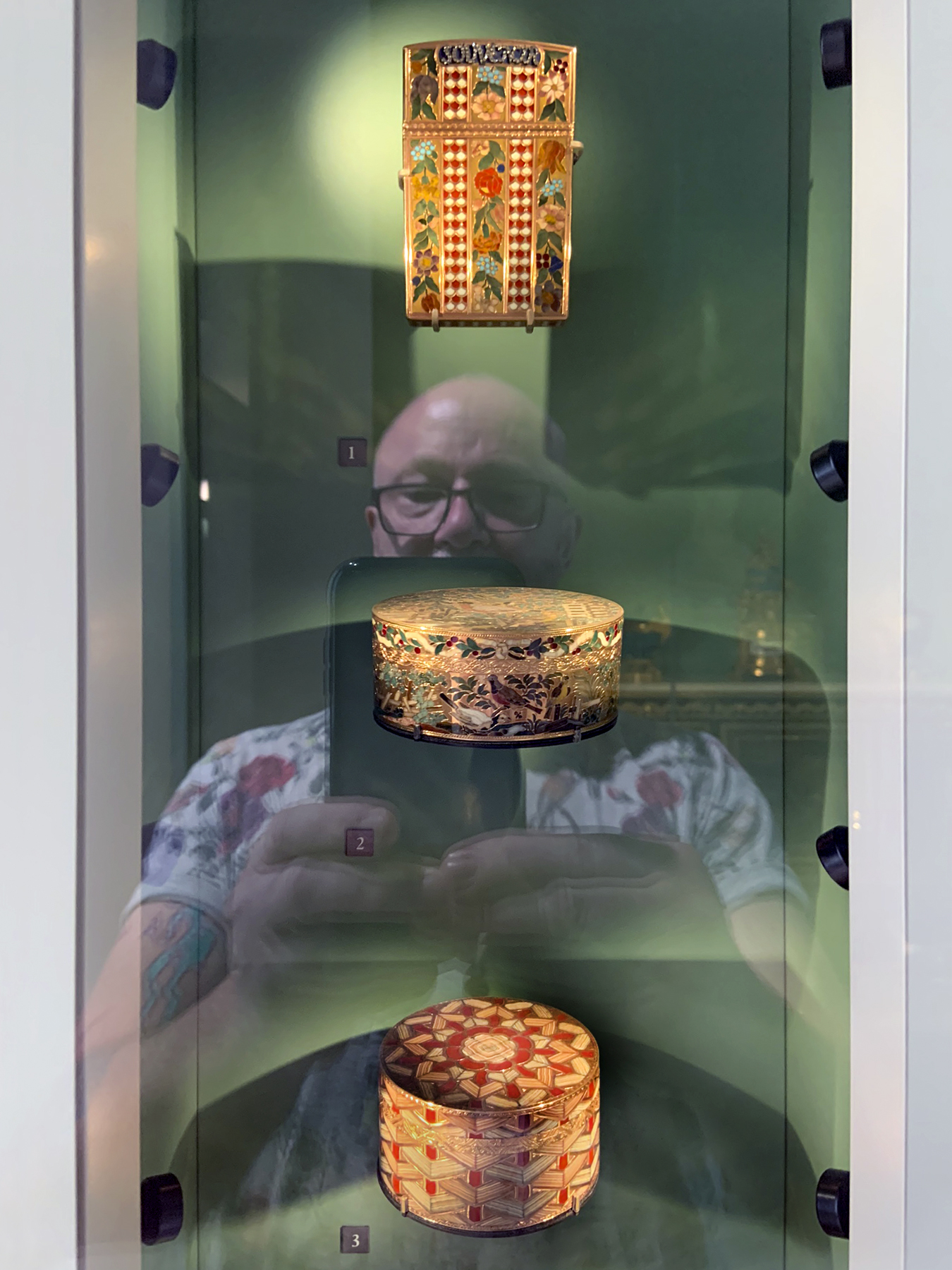
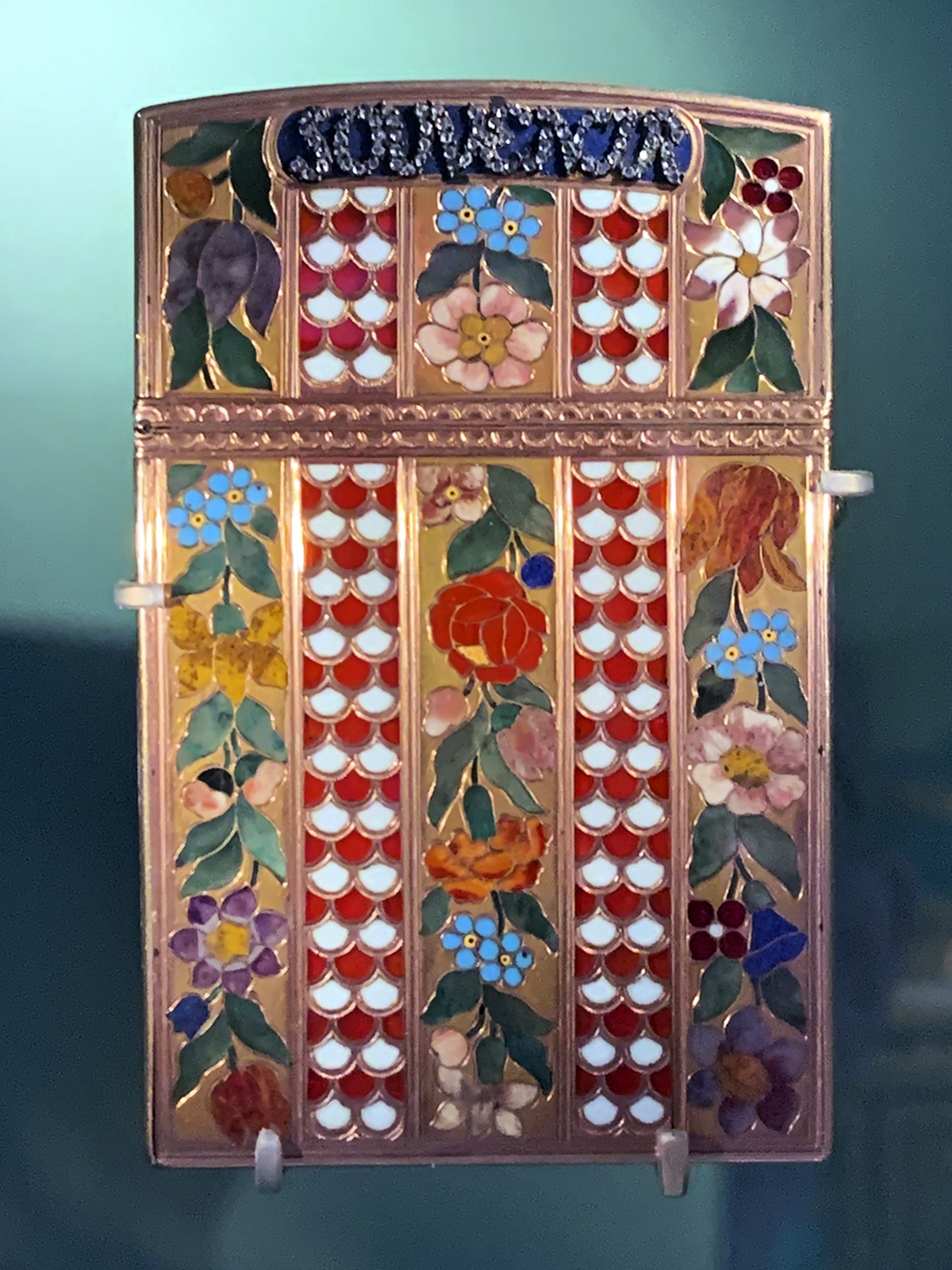
I love boxes. Enamelled boxes, gold boxes, silver boxes, wooden boxes, Persian boxes, Chinese boxes, Japanese boxes… any type of small box. They are just so beautiful, sensual in the hand.

My friend Terrence likes boxes.

This posting is for Terrence.

Marcus

PS. These boxes were made during the reign of Louis XV of France. Historians generally criticise his reign, citing how reports of his corruption embarrassed the monarchy and wars drained the treasury and contributed to the French Revolution of 1789. No wonder there was a revolution: just as with Tsar Nicholas II of Russia and his patronage of the jeweller Fabergé, it is always a question of the haves and the have nots.


All iPhone images © Dr Marcus Bunyan. Please click on the photographs for a larger version of the image.


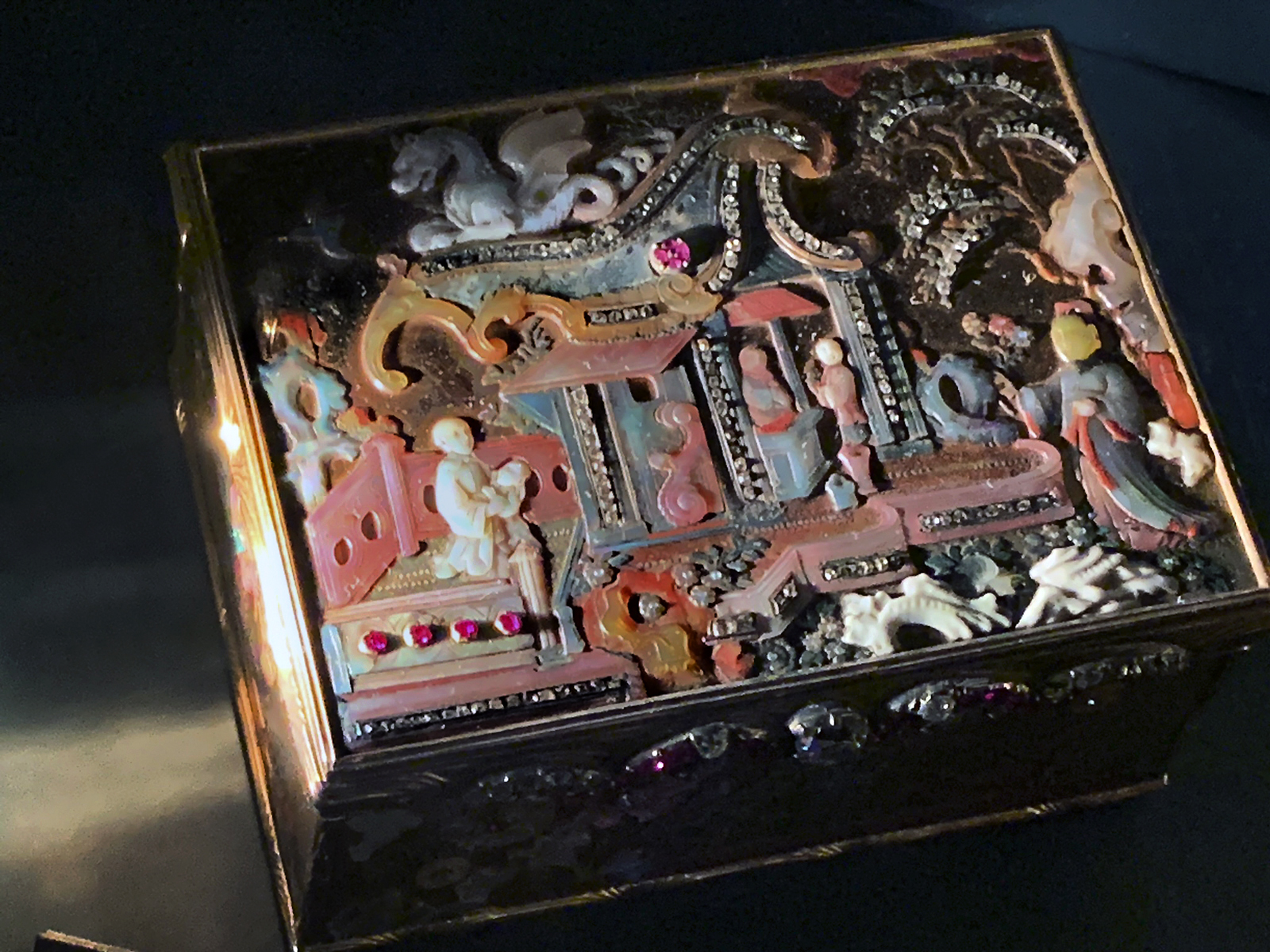
A. Filassier. 'Snuffbox with oriental temple' Paris, 1742-1743 Objet d'art: French and German enamelled boxes at the Louvre, Paris


A. Filassier
Snuffbox with oriental temple
Paris, 1742-1743
Gold, diamonds, rubies, pearls
Photo: Marcus Bunyan


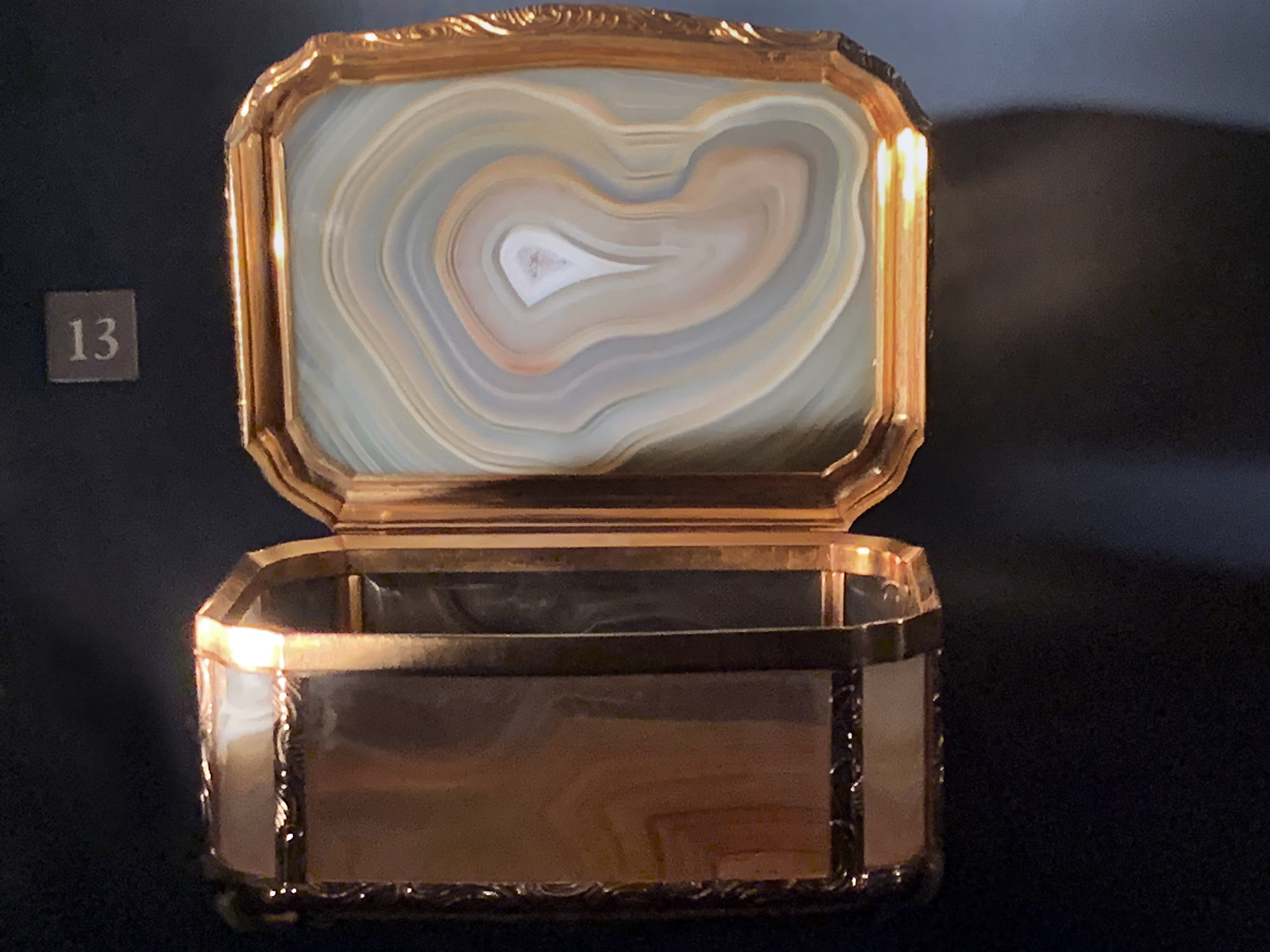
Jean Ducrollay (goldsmith) 'Snuffbox' Paris, 1750-1752


Jean Ducrollay (goldsmith)
Snuffbox
Paris, 1750-1752
Gold, agate
Photo: Marcus Bunyan


N. Bouillerut (goldsmith) 'Snuffbox' Paris, 1731-1732


N. Bouillerut (goldsmith)
Snuffbox
Paris, 1731-1732
Gold, agate
Photo: Marcus Bunyan


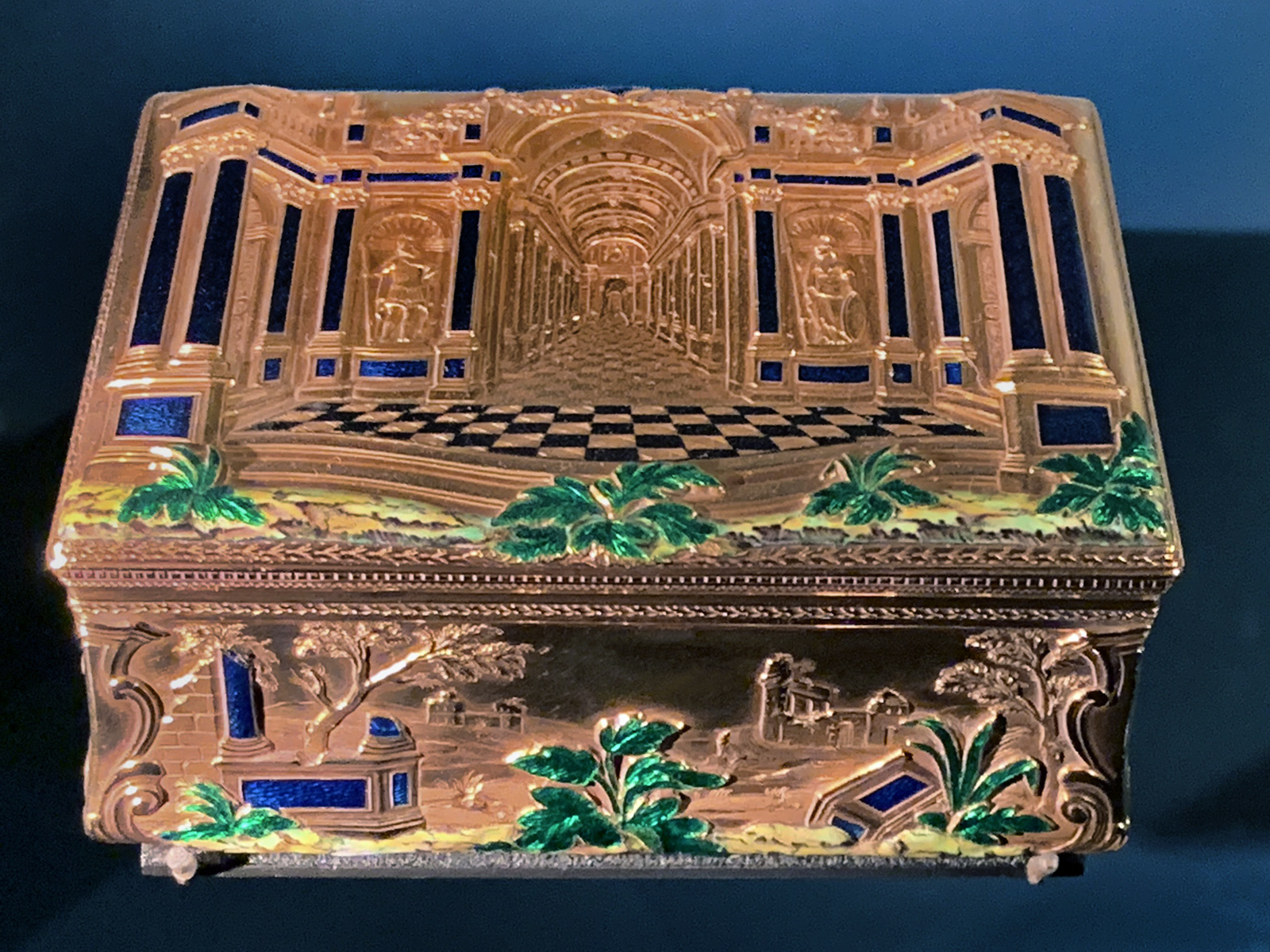
P.F. Delafons. 'Architectural views' 1747-1750


P.F. Delafons
Architectural views
1747-1750
Chiseled and enamelled gold
Photo: Marcus Bunyan


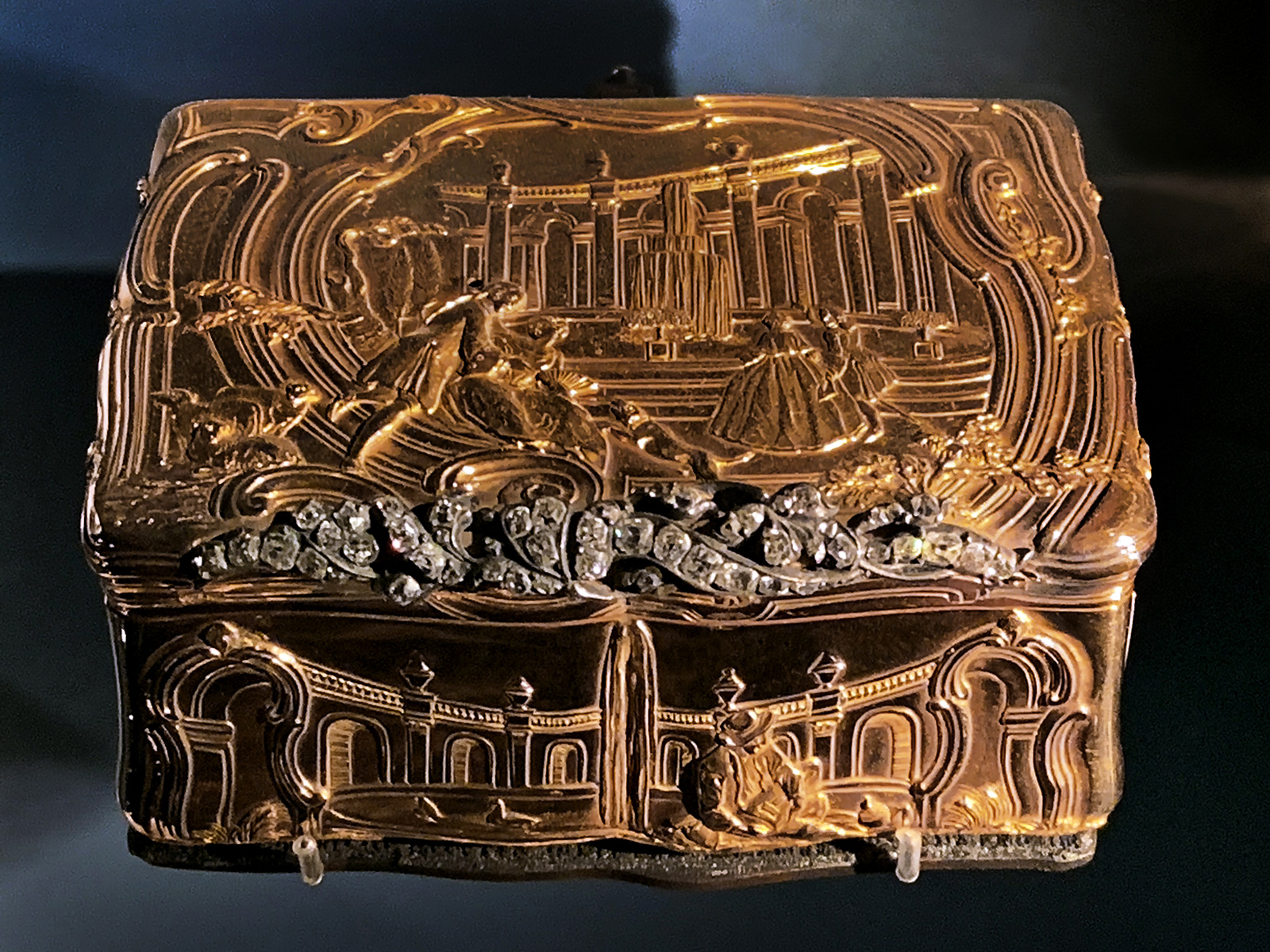
J.F. Breton. 'Gallant conversation' Paris, 1753-1754


J.F. Breton
Gallant conversation
Paris, 1753-1754
Two-coloured gold, diamonds
Photo: Marcus Bunyan


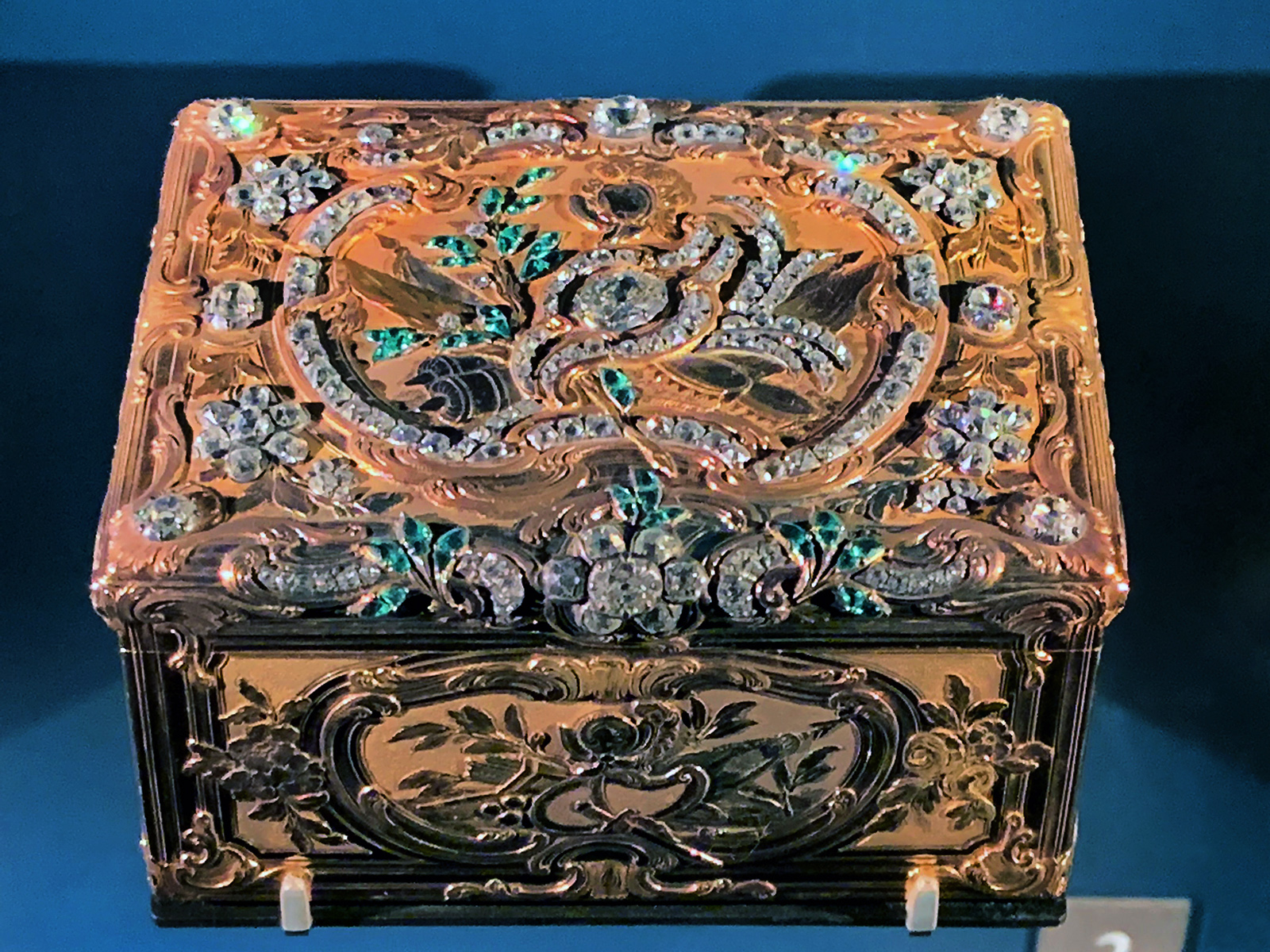
D.F. Pointreau. 'Military themes' Paris, 1759-1760


D.F. Pointreau
Military themes
Paris, 1759-1760
Four-coloured gold (white, yellow, green, rose), diamonds, emeralds
Photo: Marcus Bunyan


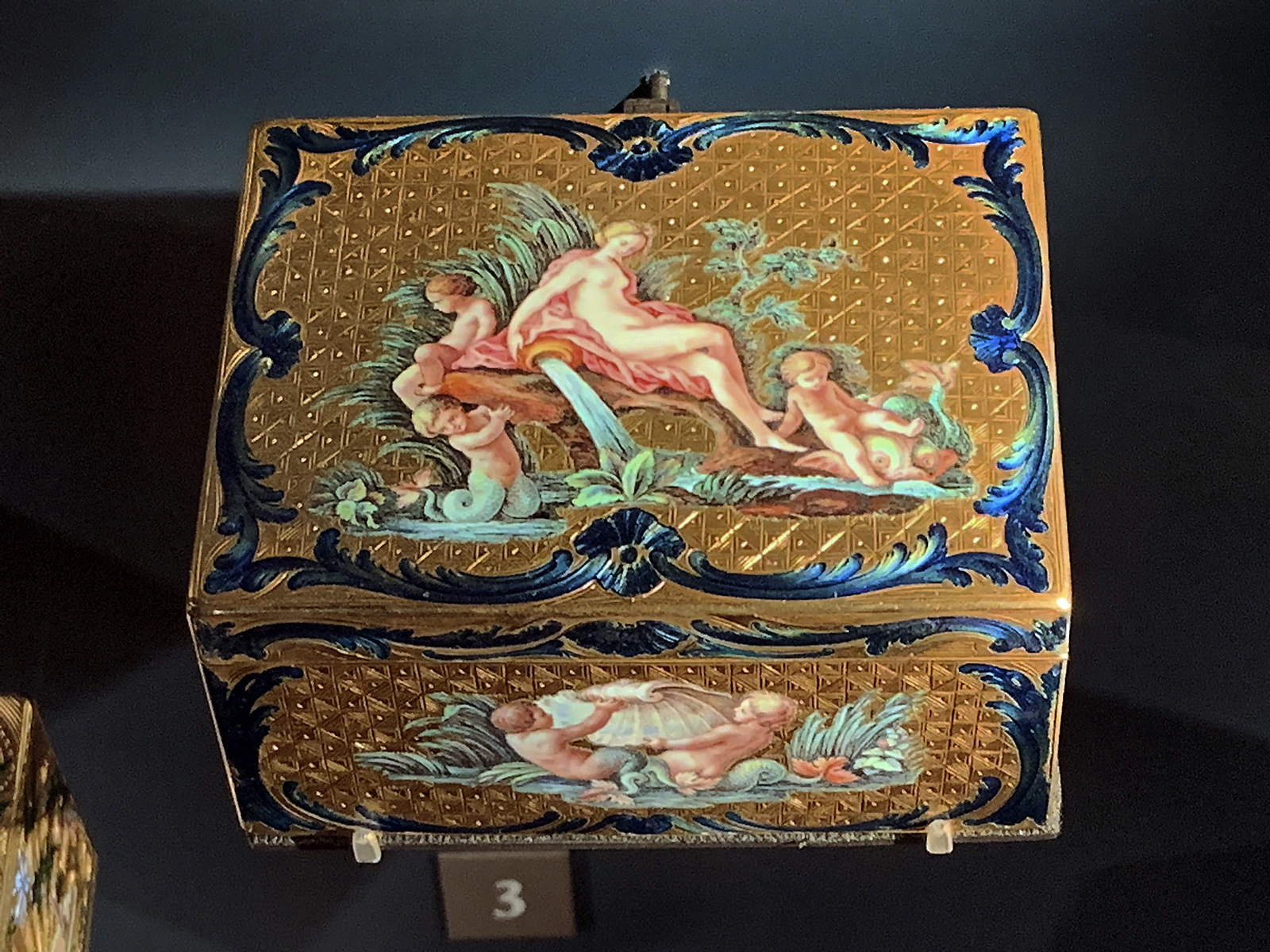
J.M. Lequin and C. Perron. 'Nymphs and tritons' Paris, 1750-1752


J.M. Lequin and C. Perron
Nymphs and tritons
Paris, 1750-1752
Photo: Marcus Bunyan


J.M. Lequin. 'Birds' Paris, 1749-1750


J.M. Lequin
Birds
Paris, 1749-1750
Photo: Marcus Bunyan


Jean Ducrollay. 'Children', after Boucher Paris, 1754-1755

Jean Ducrollay. 'Children', after Boucher Paris, 1754-1755


Jean Ducrollay
Children, after Boucher
Paris, 1754-1755
Photo: Marcus Bunyan


Jean Moynat. 'Amorous scenes' 1753-1754


Jean Moynat
Amorous scenes
1753-1754
Photo: Marcus Bunyan


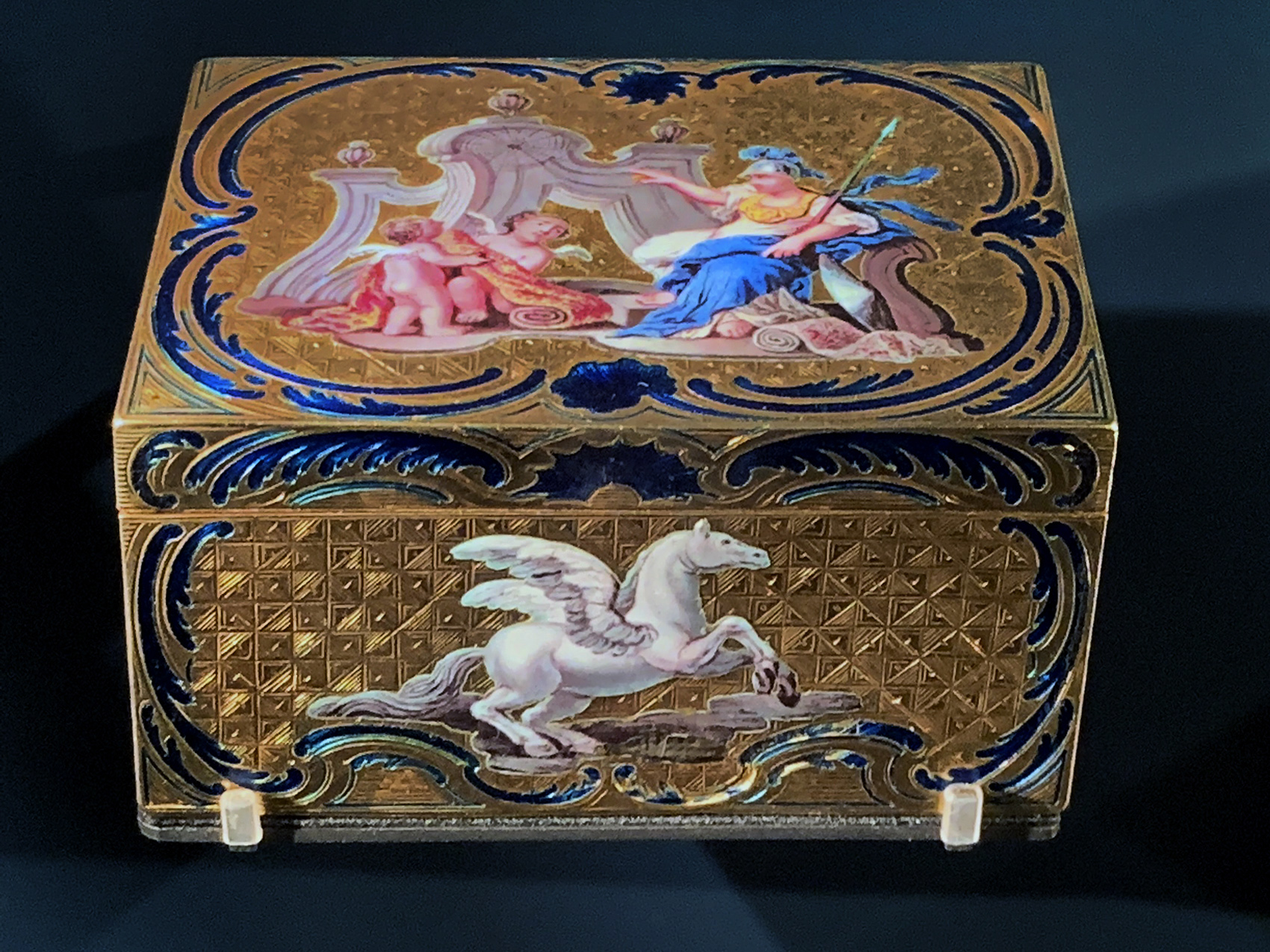
J.M. Lequin. 'Minerva, Mercury, Pegasus' 1750-1752


J.M. Lequin
Minerva, Mercury, Pegasus
1750-1752
Gold, guilloche enamels, painted enamels
Photo: Marcus Bunyan


Sweet boxes and snuffboxes, gifts of the king and royal portraits, 1668-1781


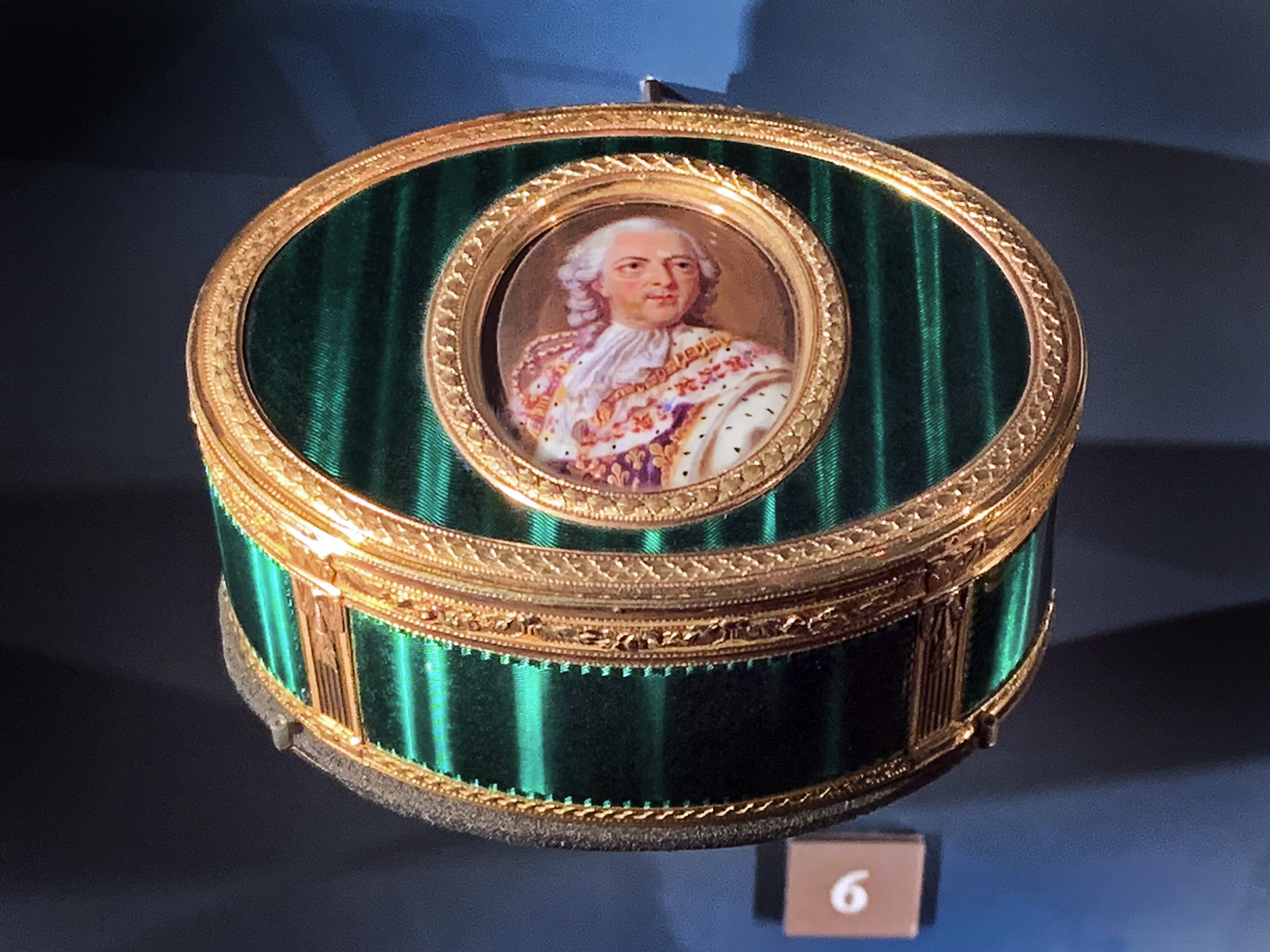
P.F. Drais (goldsmith) 'Louis XV' 1768-1769


P.F. Drais (goldsmith)
Louis XV
1768-1769
Photo: Marcus Bunyan


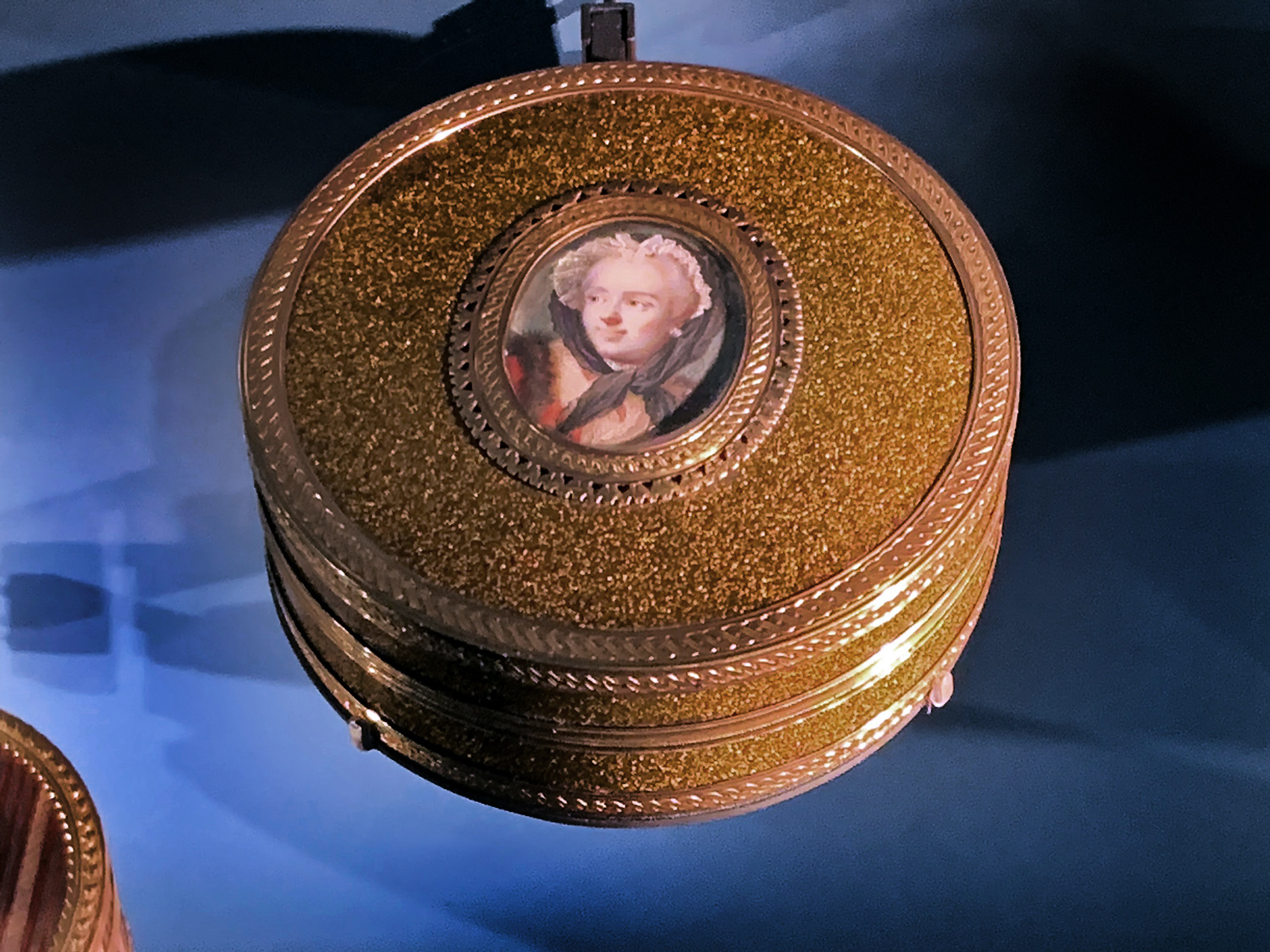
J.M. Nattier (attributed) 'Marie Leczinska' Paris, 1775-1781


J.M. Nattier (attributed)
Marie Leczinska
Paris, 1775-1781
Atelier des Martin, vernisseurs
Gold
Photo: Marcus Bunyan


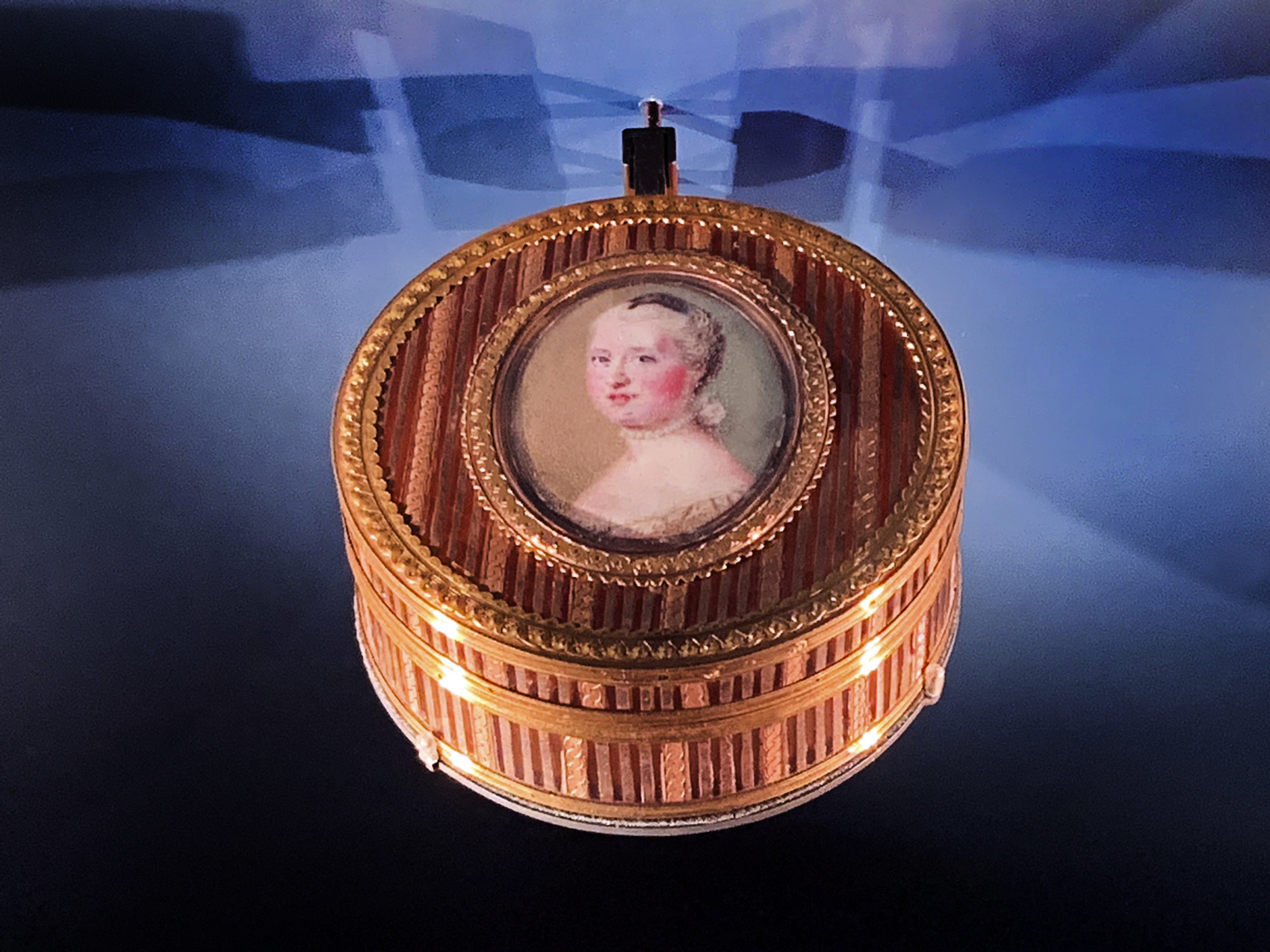
J.M. Nattier (attributed) 'Marie Leczinska' Paris, 1775-1781


J.M. Nattier (attributed)
Marie Leczinska
Paris, 1775-1781
Atelier des Martin, vernisseurs
Gold
Photo: Marcus Bunyan


French enamelled box


French enamelled box
Photo: Marcus Bunyan


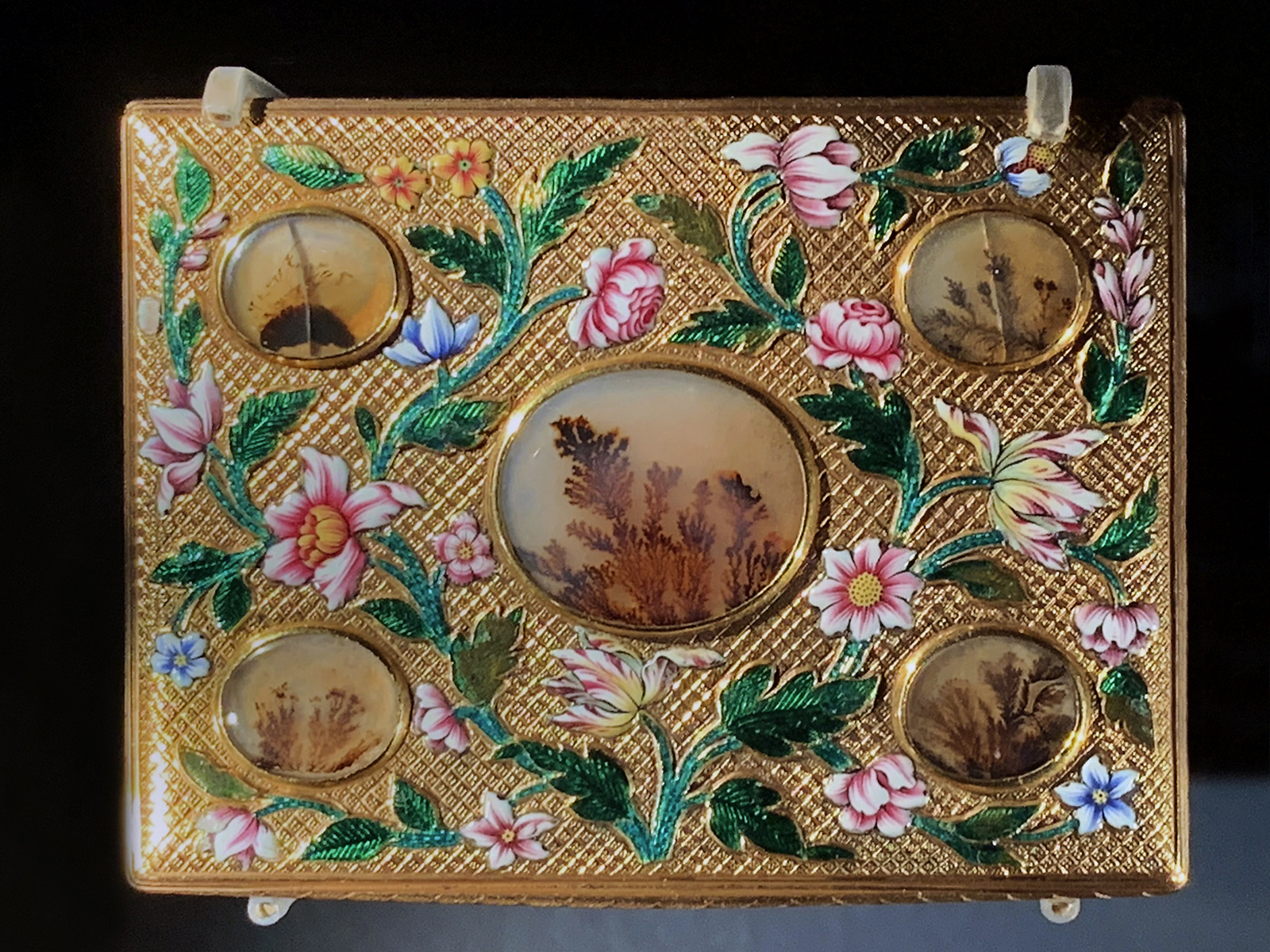
Chased and enamelled gold snuffboxes with compartments


French enamelled box


French enamelled box with flowers
Photo: Marcus Bunyan


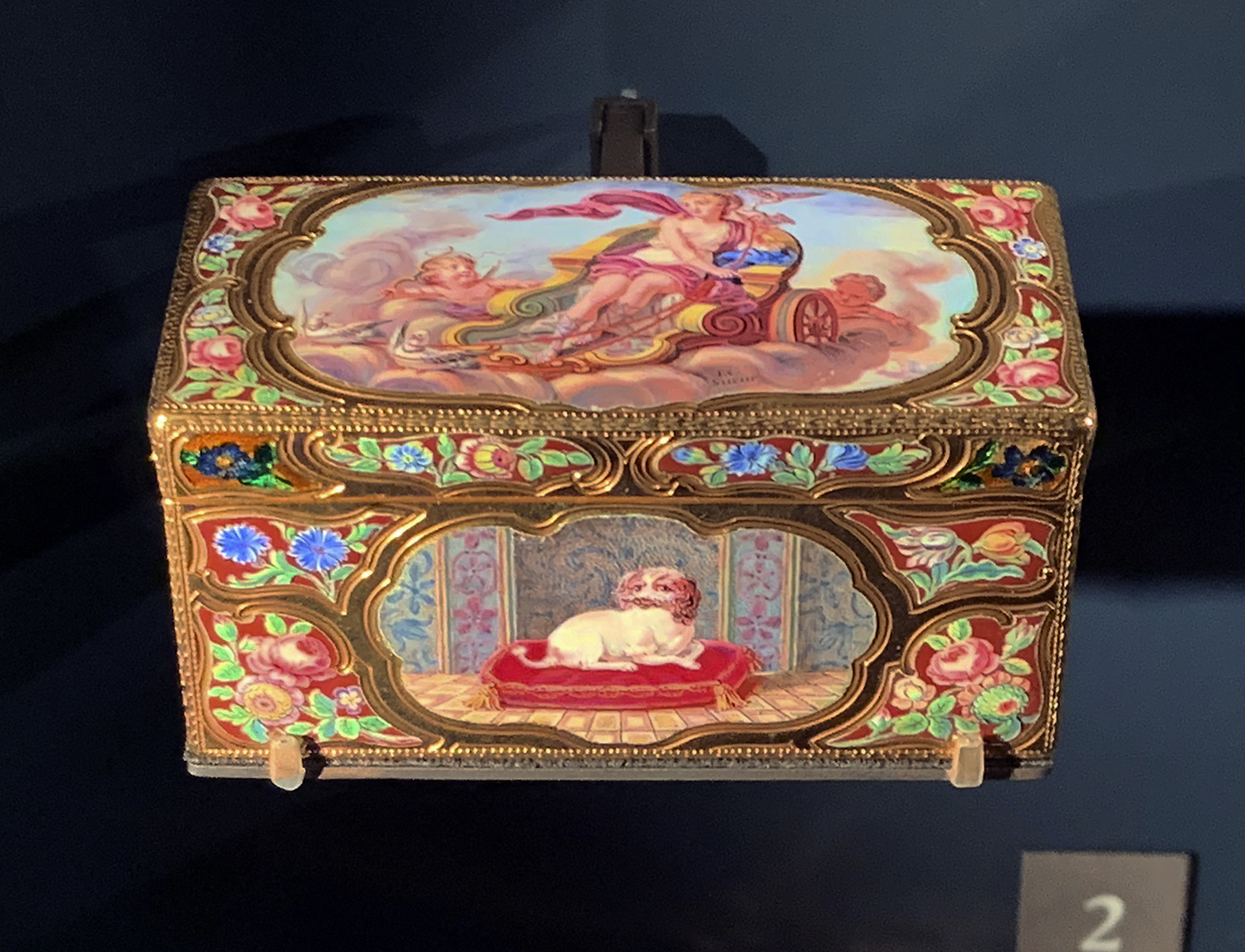
Jean Ducrollay. 'The Chariot of Venus' Paris, 1755-1756


Jean Ducrollay
The Chariot of Venus
Paris, 1755-1756
Photo: Marcus Bunyan


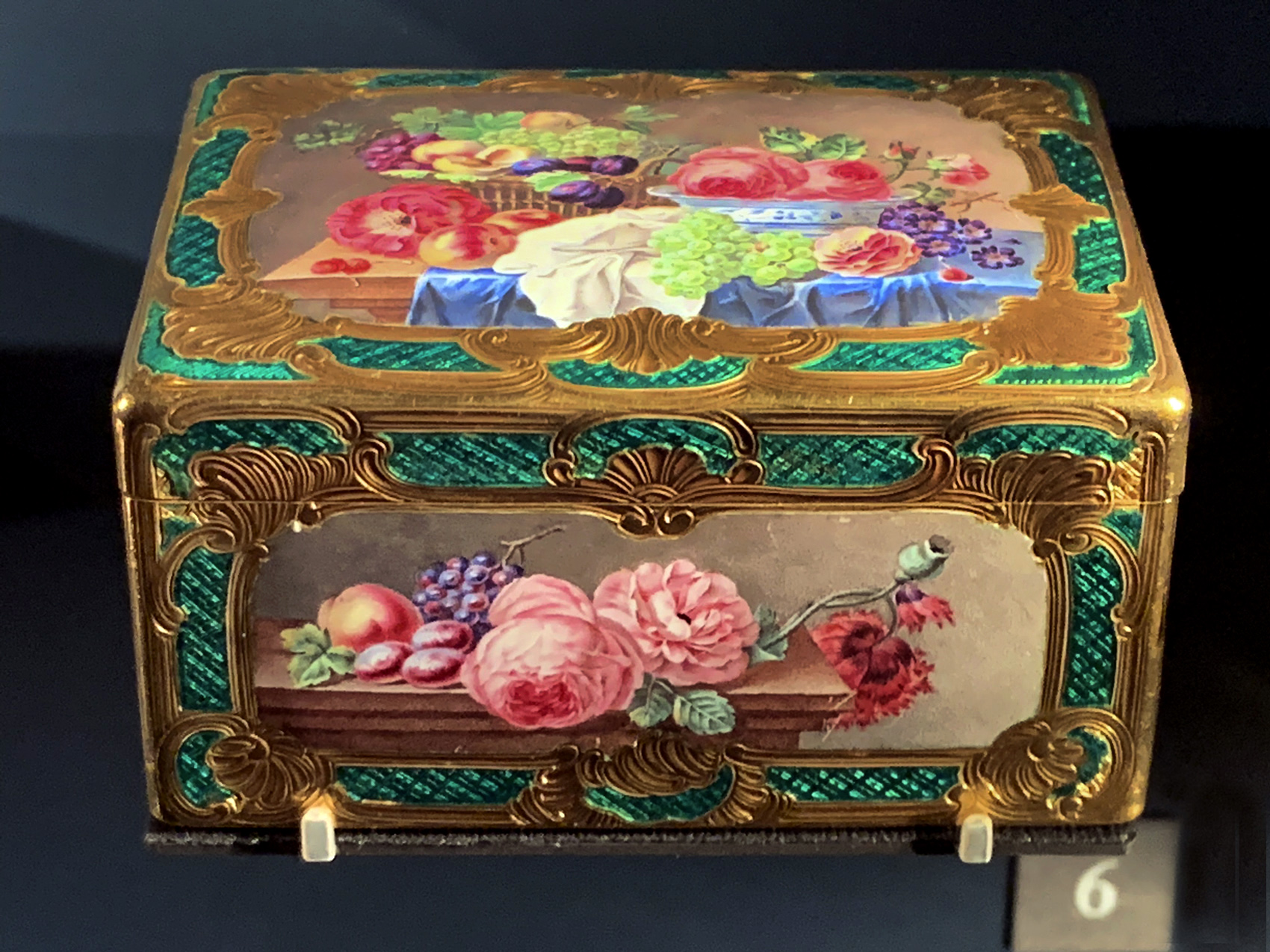
Jean Moynat. 'Basket of fruit and flowers' Paris, 1754-1755


Jean Moynat
Basket of fruit and flowers
Paris, 1754-1755
Photo: Marcus Bunyan


Jean Moynat. 'Musical subjects' Paris, 1758-1759


Jean Moynat
Musical subjects
Paris, 1758-1759
Photo: Marcus Bunyan


Noel Harivilliers. 'Figures on greenery' Paris, 1752-1753


Noel Harivilliers
Figures on greenery
Paris, 1752-1753
Photo: Marcus Bunyan


Jean George. 'Rustic scenes' Paris, 1755-1756

Jean George. 'Rustic scenes' Paris, 1755-1756


Jean George
Rustic scenes
Paris, 1755-1756
Photos: Marcus Bunyan


Paul Robert. 'Still lifes' Paris, 1763-1764

Paul Robert. 'Still lifes' Paris, 1763-1764


Paul Robert
Still lifes
Paris, 1763-1764
Photos: Marcus Bunyan


French enamelled box


French enamelled box
Photo: Marcus Bunyan


Jean Ducrollay. 'Flowers and fruit' Paris, 1756-1757


Jean Ducrollay
Flowers and fruit
Paris, 1756-1757
Photo: Marcus Bunyan


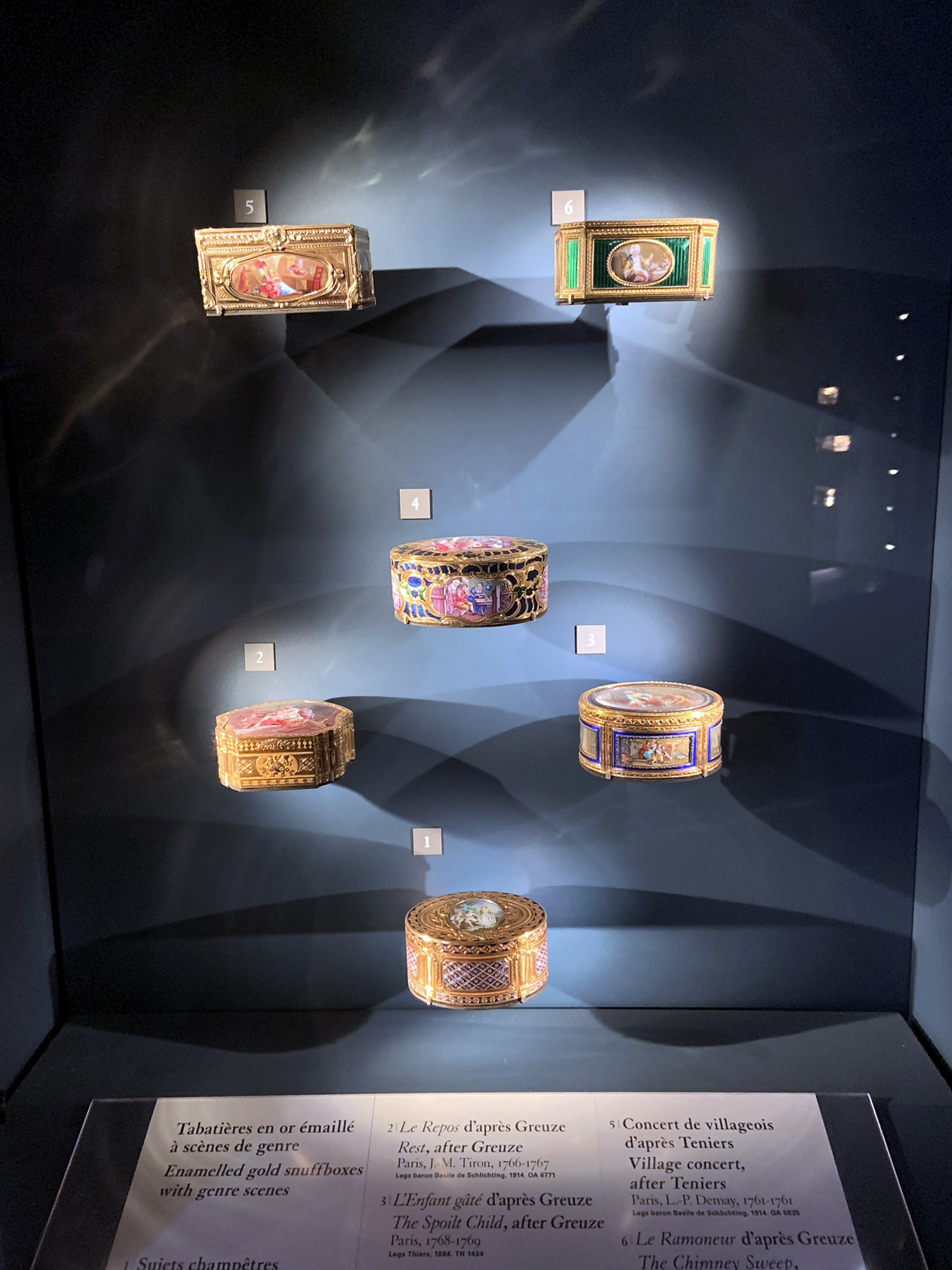
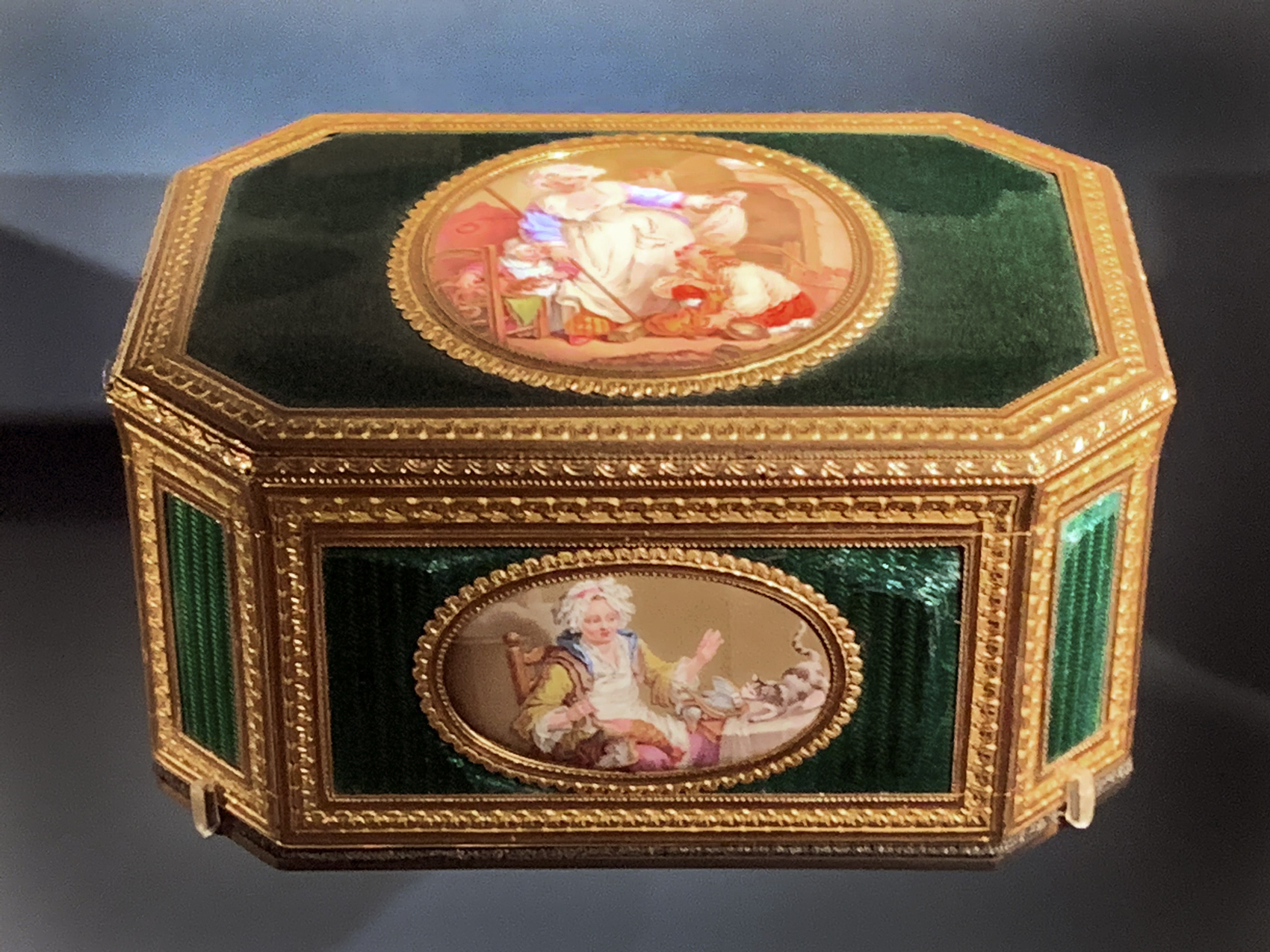
Enamelled gold snuffboxes with genre scenes


 Installation view of French enamelled boxes, Louvre, Paris


Installation view of French enamelled boxes, Louvre, Paris
Photo: Marcus Bunyan


French enamelled box


French enamelled box
Photo: Marcus Bunyan


French enamelled box


French enamelled box
Photo: Marcus Bunyan


French enamelled box

French enamelled box


French enamelled box
Photos: Marcus Bunyan


French enamelled box


French enamelled box
Photo: Marcus Bunyan


French enamelled box

French enamelled box


French enamelled box
Photos: Marcus Bunyan


French enamelled box

French enamelled box


French enamelled box
Photos: Marcus Bunyan


French enamelled box

French enamelled box


French enamelled box
Photos: Marcus Bunyan


French enamelled box


French enamelled box
Photo: Marcus Bunyan


Installation view of French enamelled boxes, Louvre, Paris


Installation view of French enamelled boxes, Louvre, Paris
Photo: Marcus Bunyan


French enamelled box

French enamelled box


French enamelled box
Photos: Marcus Bunyan


French enamelled box

French enamelled box


French enamelled box
Photos: Marcus Bunyan


French enamelled box

French enamelled box


French enamelled box
Photos: Marcus Bunyan


French enamelled box

French enamelled box


French enamelled box
Photos: Marcus Bunyan


French enamelled box


French enamelled box
Photo: Marcus Bunyan


Installation view of French enamelled boxes, Louvre, Paris


Installation view of French enamelled boxes, Louvre, Paris
Photo: Marcus Bunyan


French enamelled box

French enamelled box


French enamelled box
Photos: Marcus Bunyan


'The Spoilt Child', after Greuze Paris 1768-1769


The Spoilt Child, after Greuze
Paris 1768-1769
Photo: Marcus Bunyan


French enamelled box


French enamelled box
Photo: Marcus Bunyan


J.M. Tiron. 'Rest', after Greuze Paris, 1766-1767

J.M. Tiron. 'Rest', after Greuze Paris, 1766-1767


J.M. Tiron
Rest, after Greuze
Paris, 1766-1767
Photos: Marcus Bunyan


French enamelled box


French enamelled box
Photo: Marcus Bunyan


German hardstone boxes


Installation view of German hardstone boxes, Louvre, Paris


Installation view of German hardstone boxes, Louvre, Paris
Photo: Marcus Bunyan


J.C. Neuber (goldsmith) 'Tablet case' Dresden, c. 1775-1780


J.C. Neuber (goldsmith)
Tablet case
Dresden, c. 1775-1780
Gold, diamonds, hard stones
Photo: Marcus Bunyan


J.C. Neuber (goldsmith) 'Snuffbox' Dresden, c. 1770-1780


J.C. Neuber (goldsmith)
Snuffbox
Dresden, c. 1770-1780
Gold, agate, tourmaline
Photo: Marcus Bunyan


J.C. Neuber (goldsmith) 'Snuffbox' Dresden, c. 1760-1770

J.C. Neuber (goldsmith) 'Snuffbox' Dresden, c. 1760-1770


J.C. Neuber (goldsmith)
Snuffbox
Dresden, c. 1760-1770
Gold, hard stones
Photos: Marcus Bunyan


German hardstone box

German hardstone box


German hardstone box
Photos: Marcus Bunyan


German hardstone box


German hardstone box
Photo: Marcus Bunyan


LIKE ART BLART ON FACEBOOK

Back to top

Exhibition: ‘Robert Frank – Memories’ at the Fotostiftung Schweiz, Winterthur, Zürich

Exhibition dates: 12th September, 2020 – 10th January, 2021

Curator: Martin Gasser


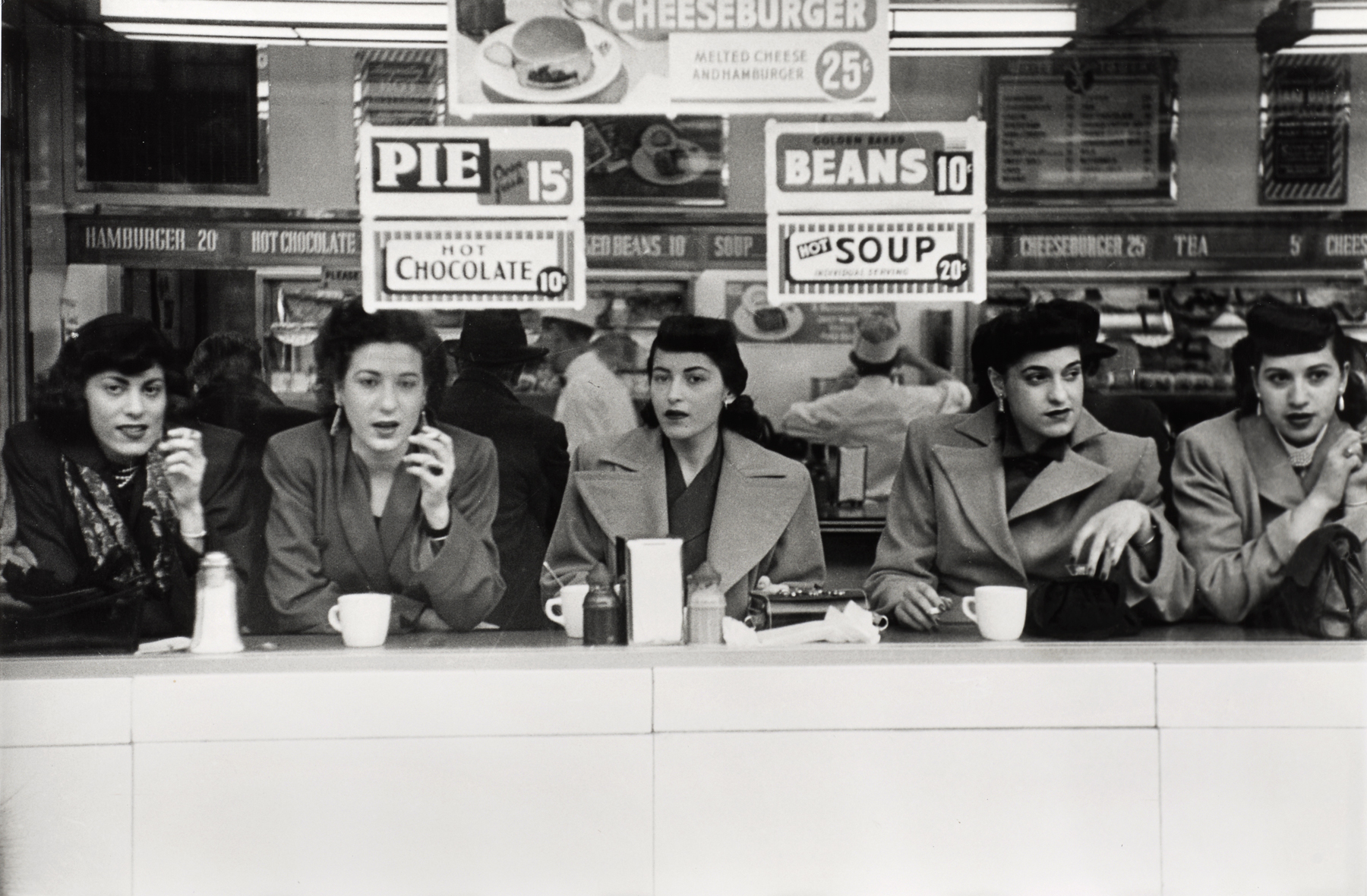
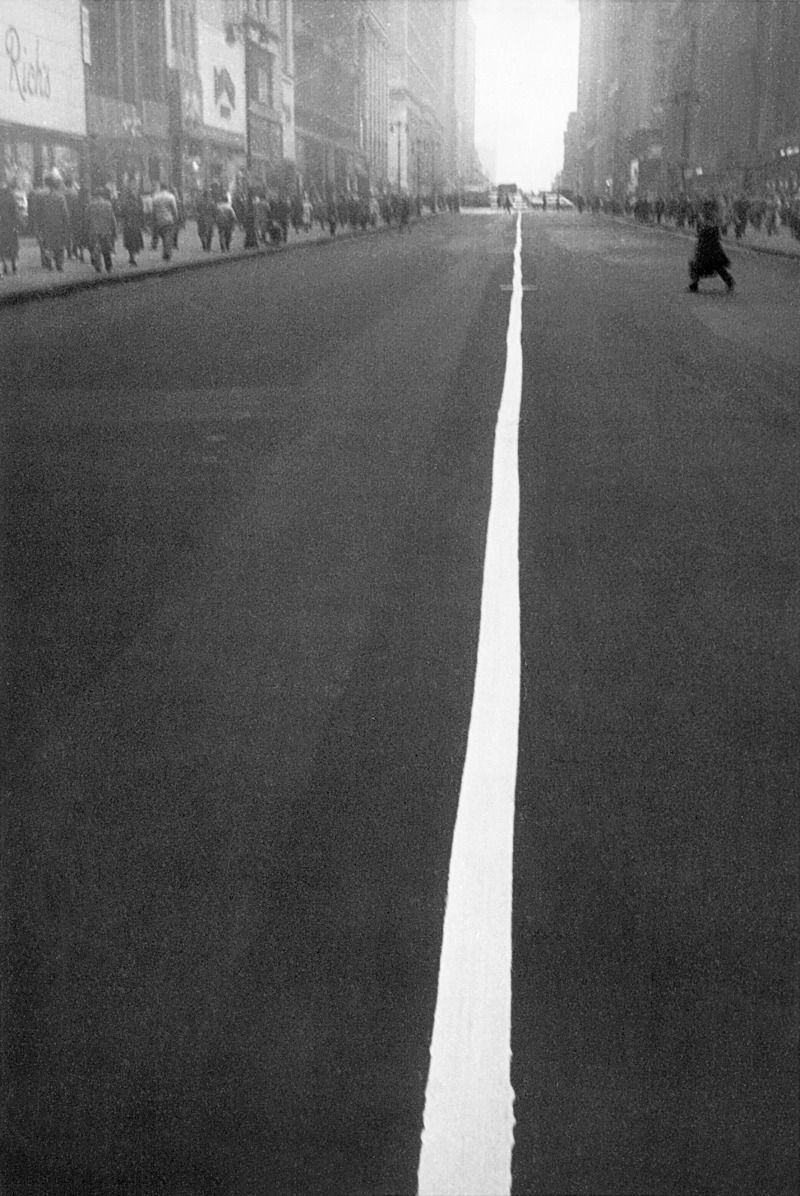
Robert Frank (Swiss, 1924-2019) 'White Tower, New York' 1948 from the exhibition 'Robert Frank – Memories' at the Fotostiftung Schweiz, Winterthur, Zürich, Sept 2020 - Jan 2021


Robert Frank (Swiss, 1924-2019)
White Tower, New York
1948
Gelatin silver print
© Andrea Frank Foundation; courtesy Pace/MacGill Gallery, New York


An interesting selection of media images, including some early Swiss and American photographs, which are rarely seen.

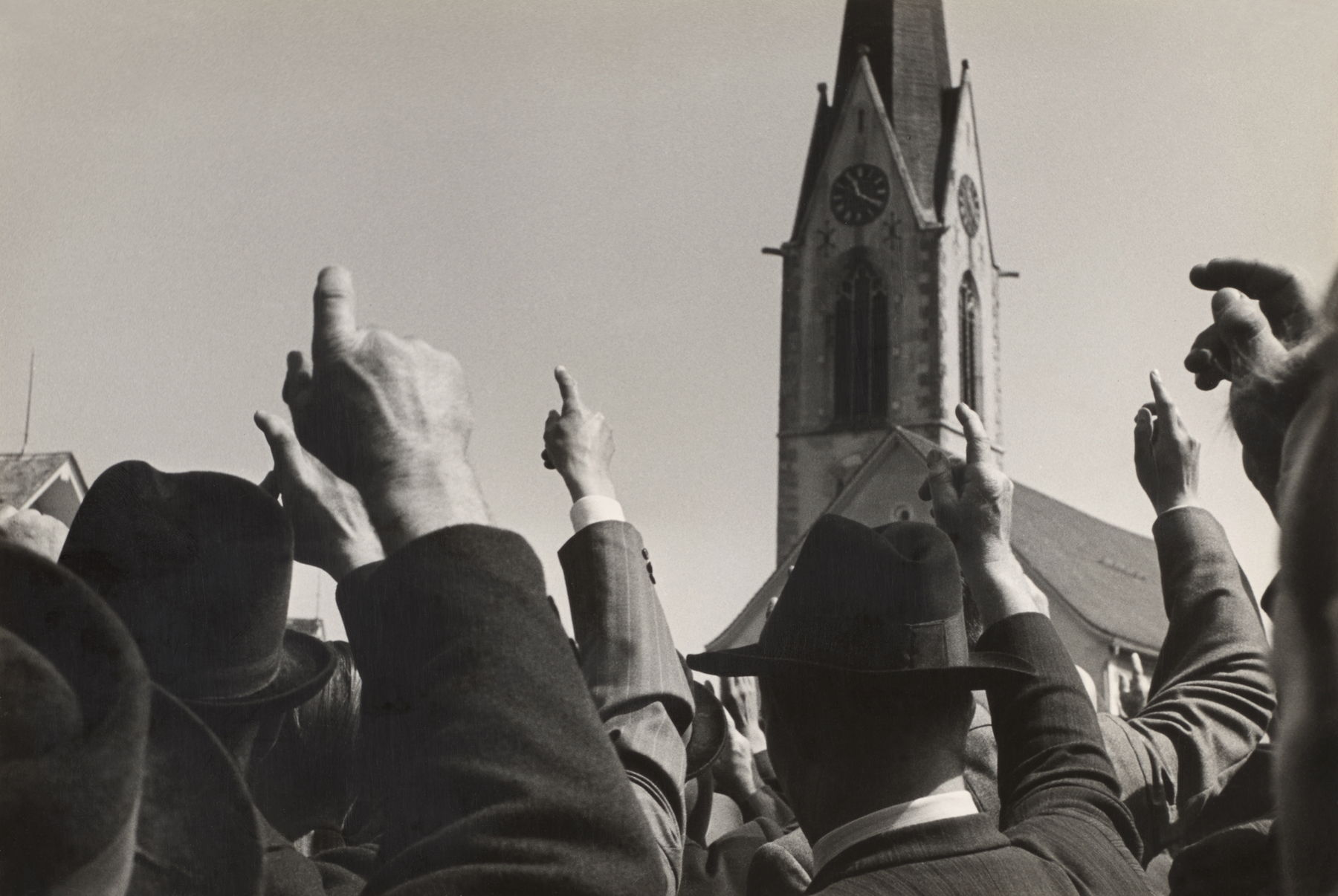
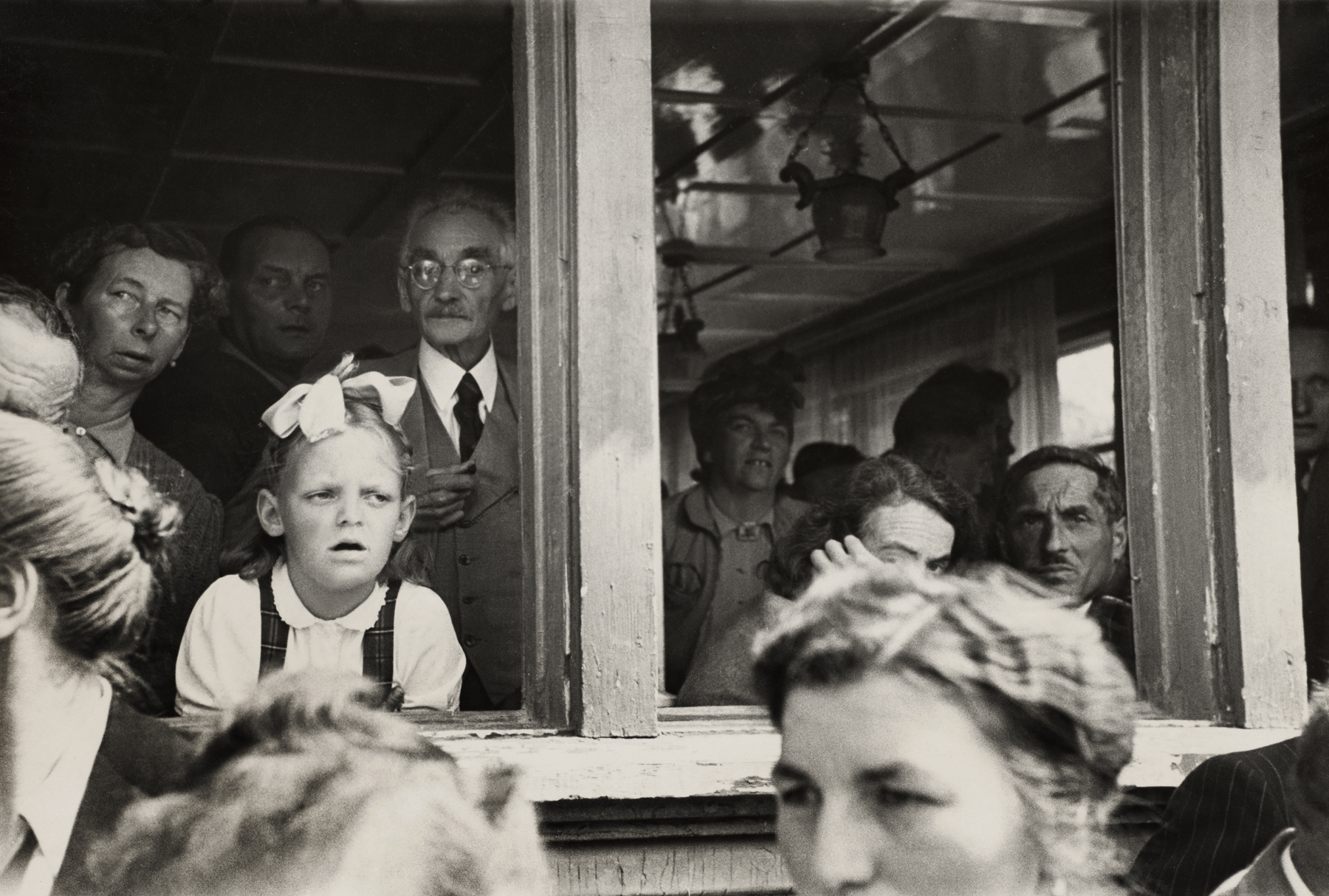
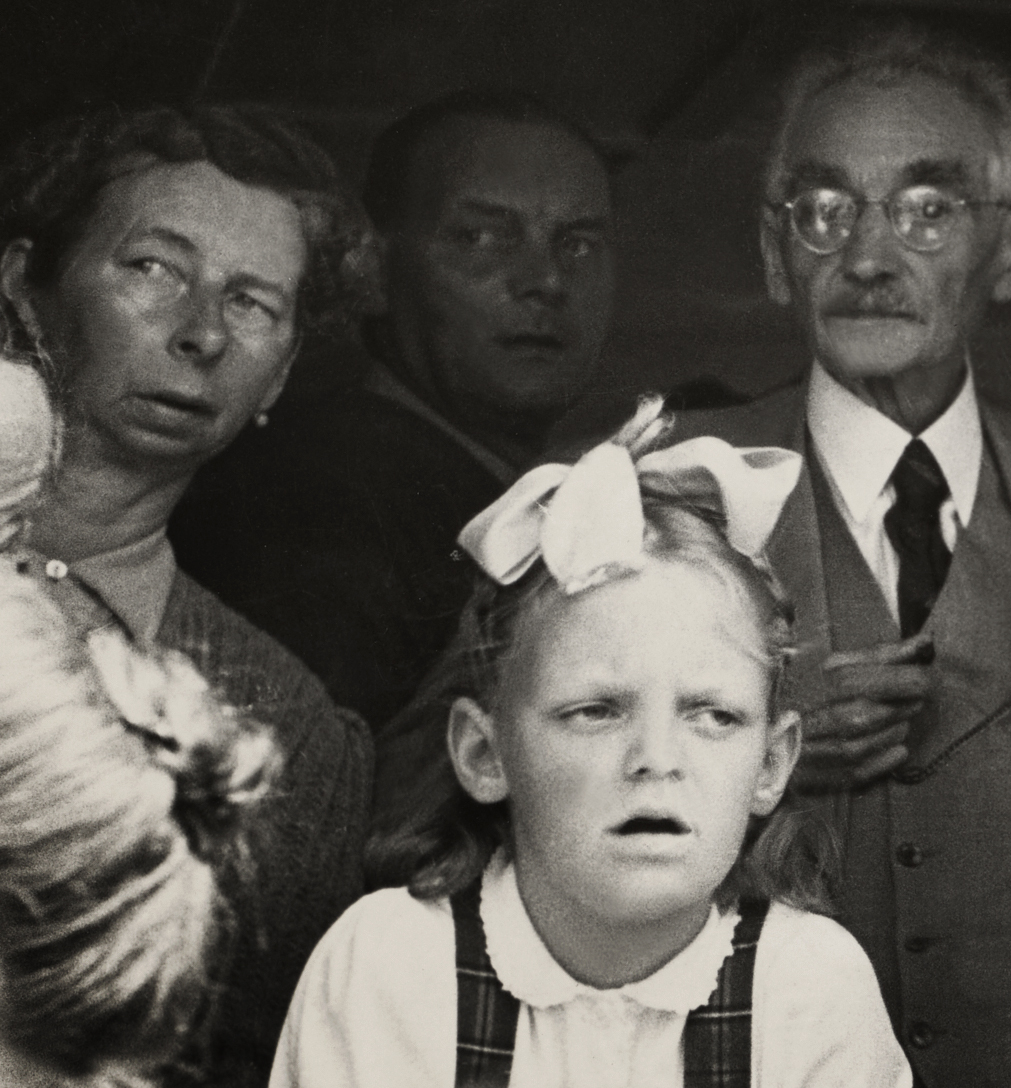
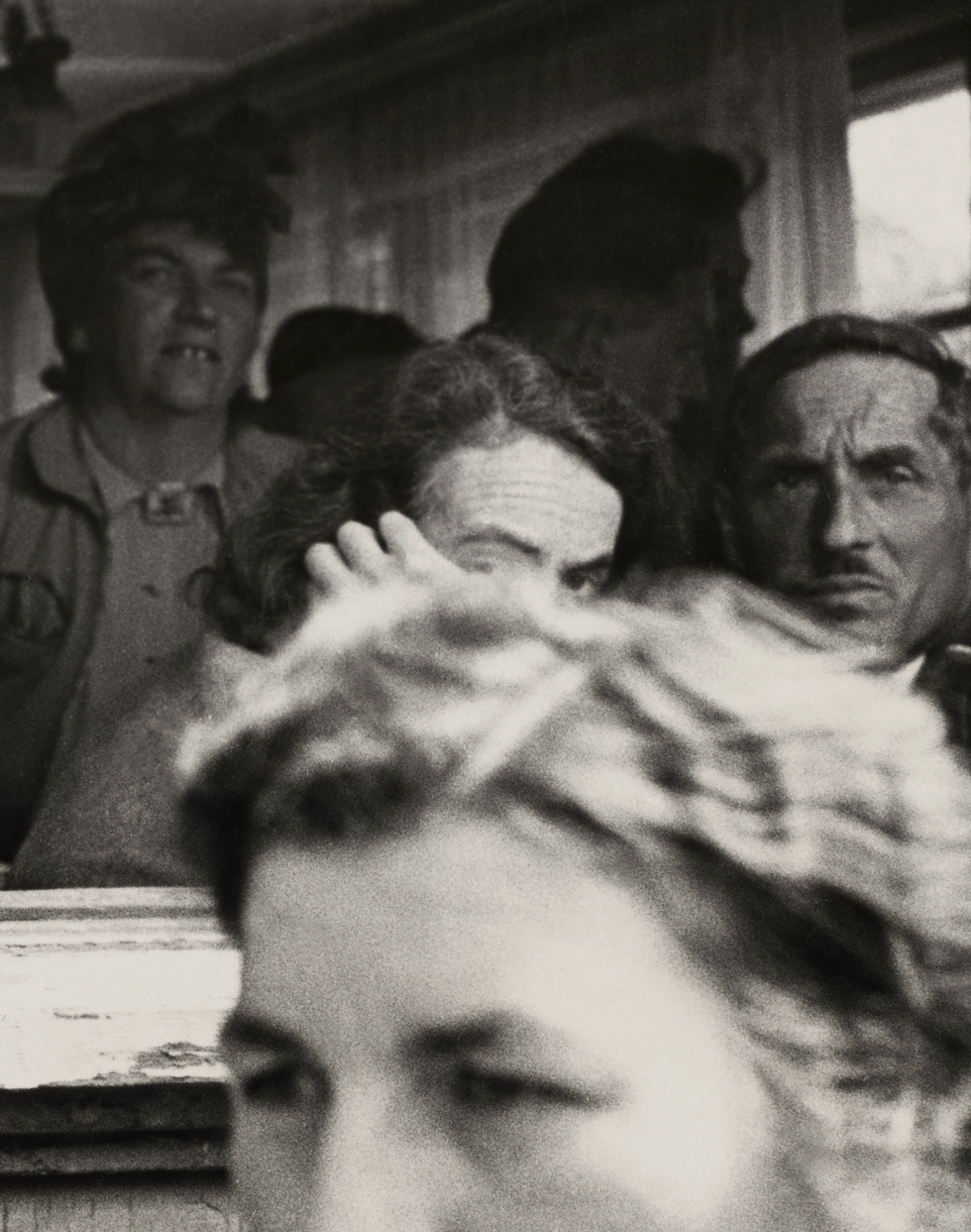
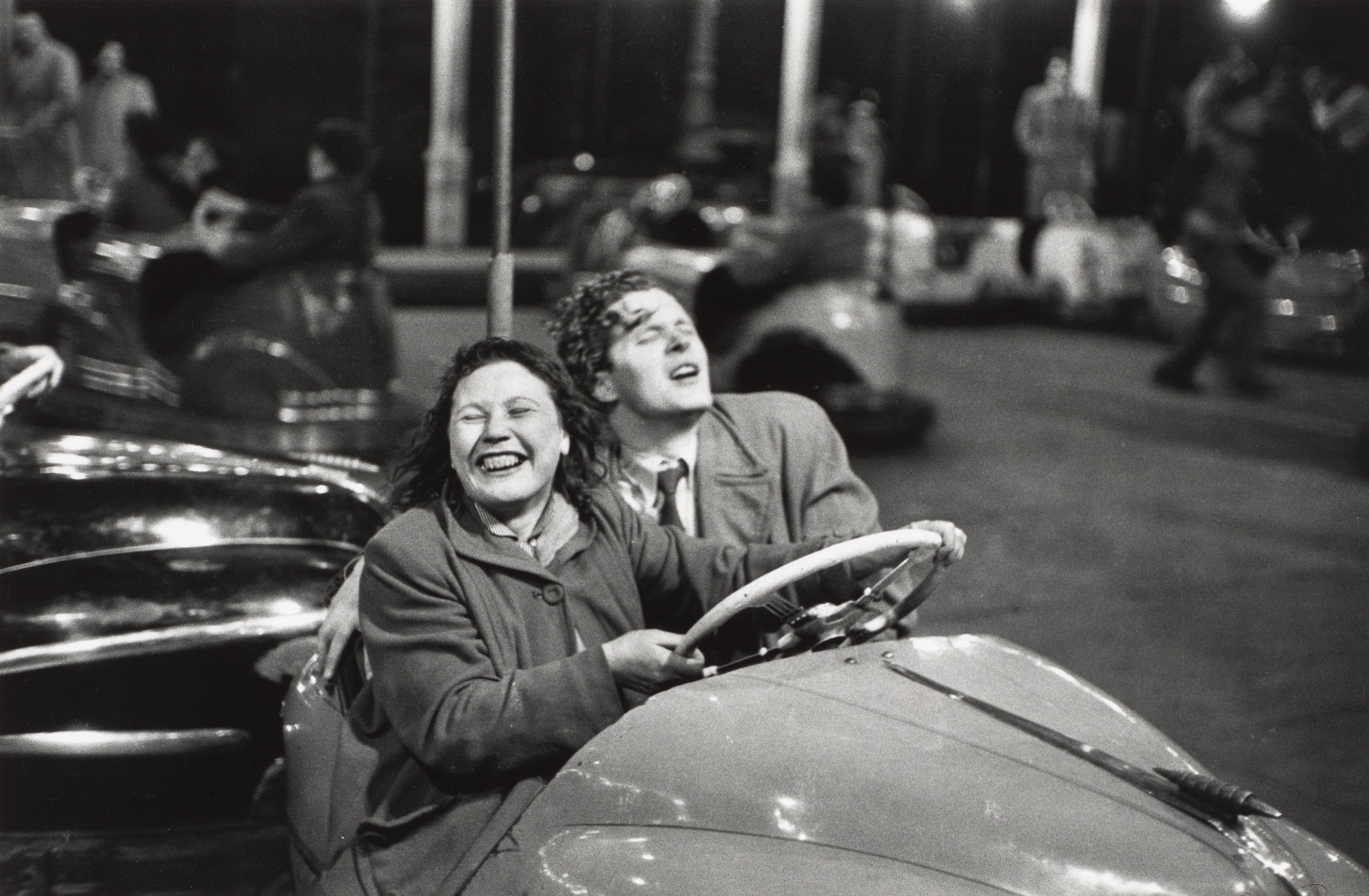
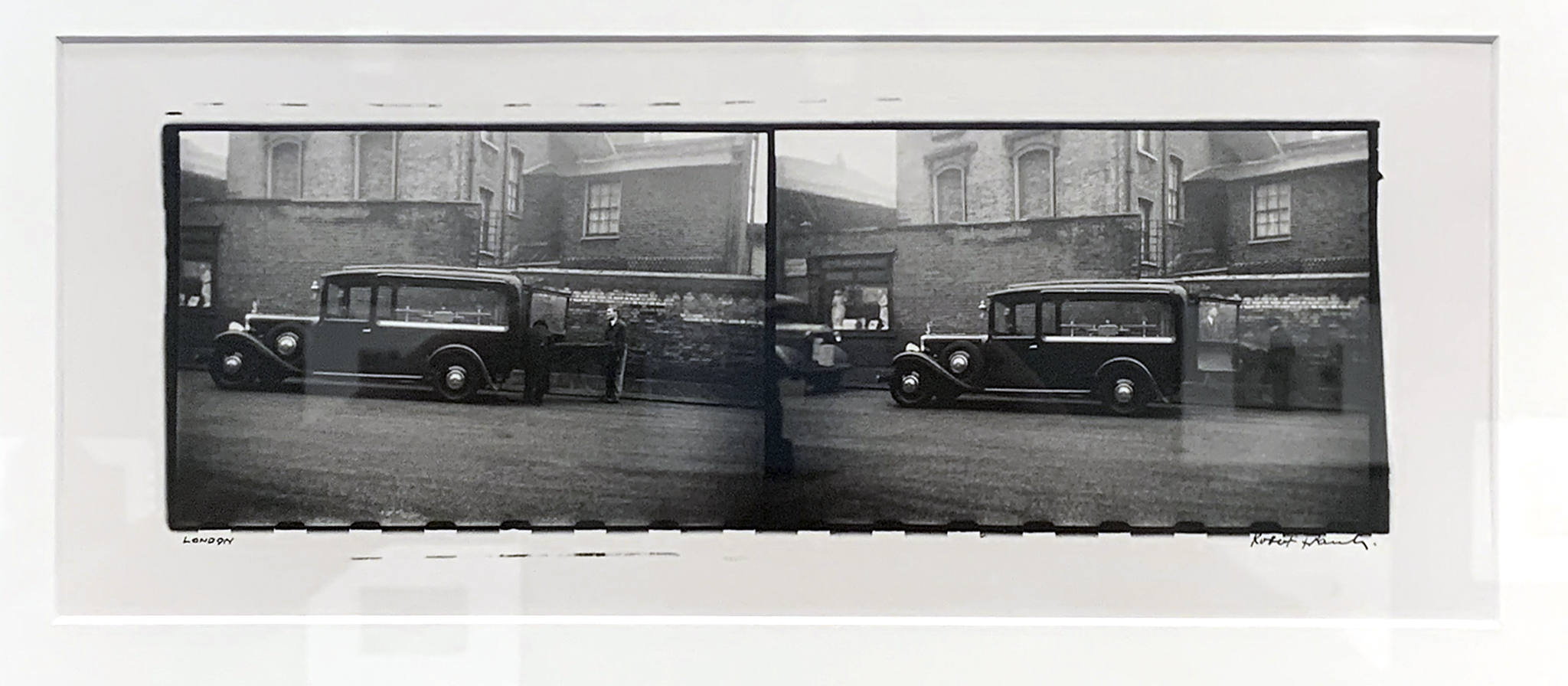
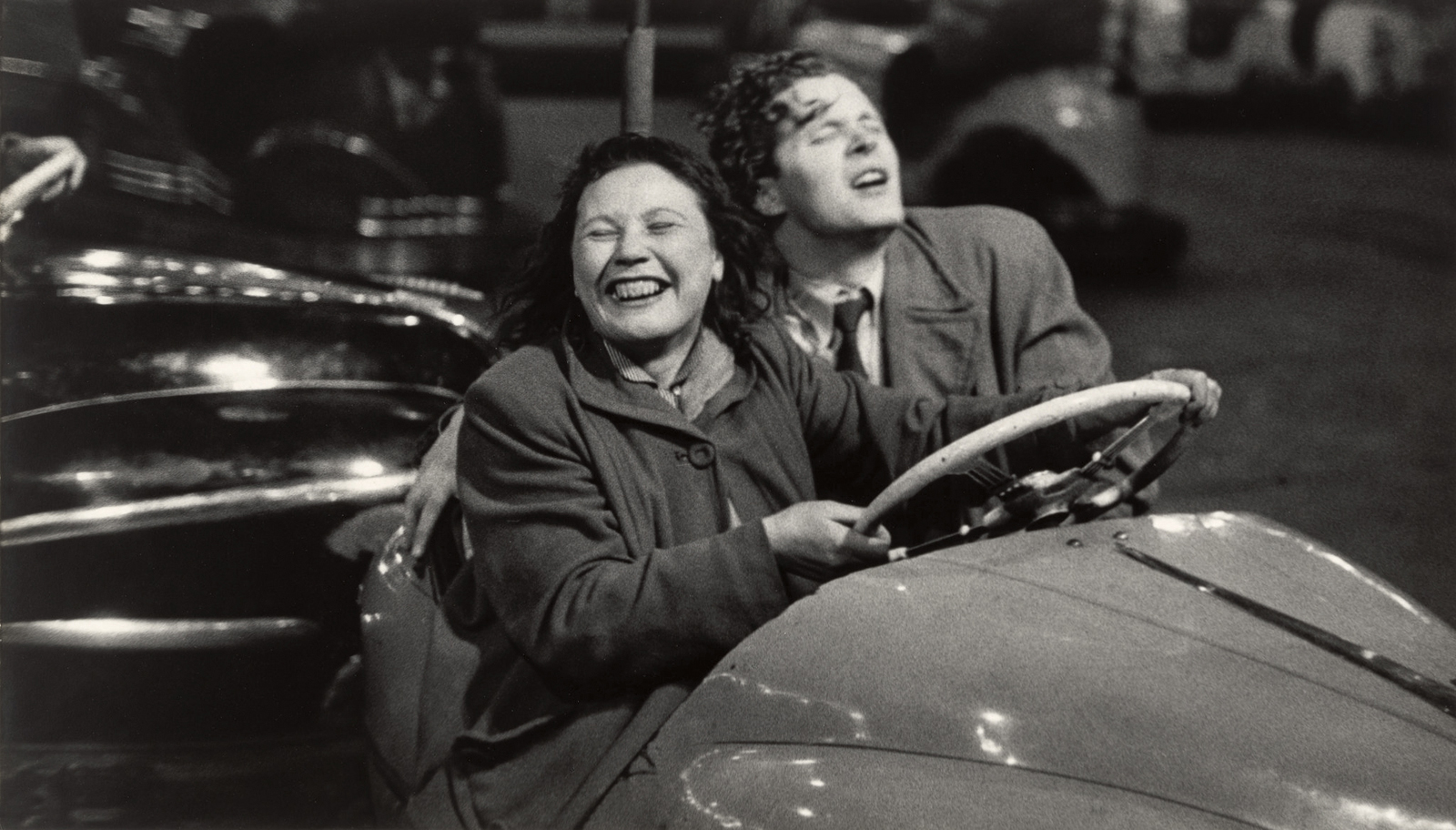
Frank’s perceptiveness of human beings and their context of being and becoming is incredible. Look at the faces in Landsgemeinde, Hundwil (1949, below), Paris (1952, below) and the attitude of the bodies, surmounted by the sun (top left), in London (1951, below).

“It is important to see what is invisible to others.”

Dr Marcus Bunyan


Many thankx to Fotostiftung Schweiz for allowing me to publish the photographs in the posting. Please click on the photographs for a larger version of the image.


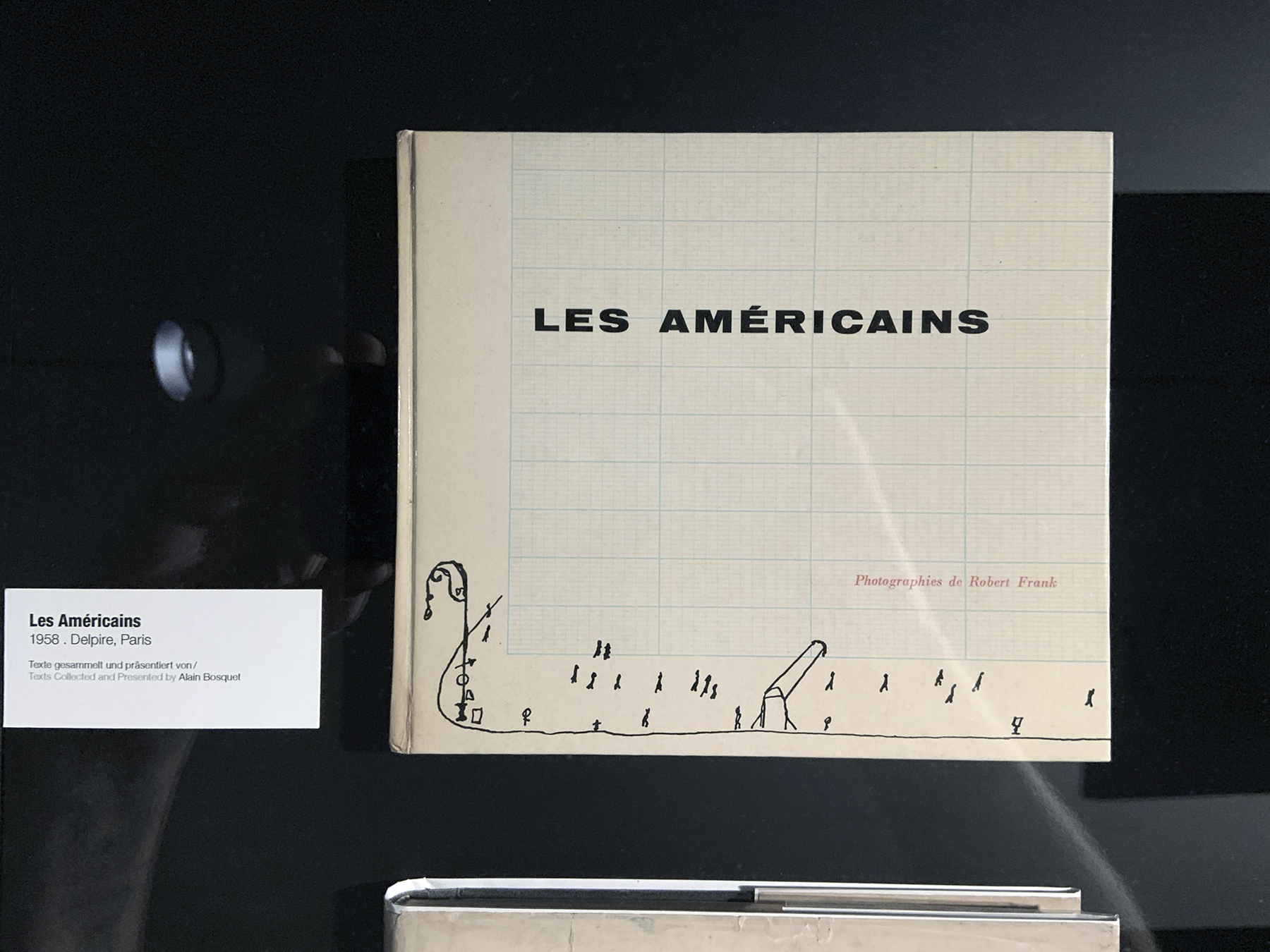
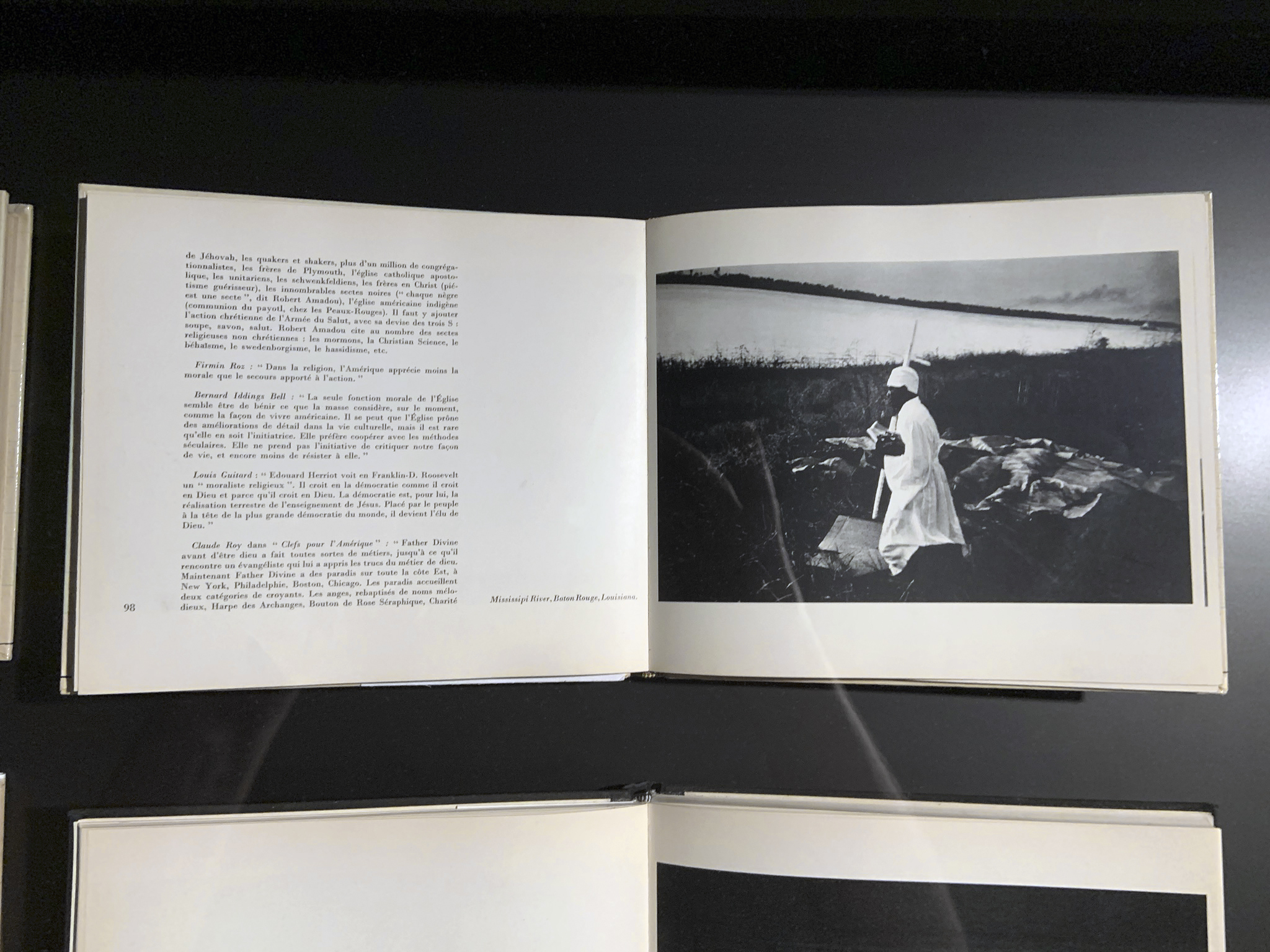
The recently deceased Robert Frank is widely regarded as one of the most important photographers of our time. His book The Americans, first published in Paris in 1958 and then in New York the following year, is quite possibly the most influential photo book of the 20th century. As a kind of photographic road movie, it sketches a gloomy social portrait that served as a wake-up call to all of America at the time. And his personal style, alternating between documentary and subjective expression, radically changed post-war photography. But The Americans wasn’t merely a spontaneous stroke of genius. Frank’s early works already feature back stories and side plots that are closely connected to the themes and images of his legendary book. The Fotostiftung Schweiz holds a collection of lesser-known works – many of which were donated by the artist – which illustrate the consolidation of Frank’s subjective style. In addition to essays from Switzerland and Europe, it also includes works from early 1950s America that are on par with the well-known classics, but remained unpublished for editorial reasons. At the heart of the exhibition Robert Frank – Memories is the narrative force of Frank’s visual language, which developed in opposition to all conventions and only received international recognition when Frank had already abandoned photography and turned to the medium of film.

The exhibition is accompanied by a presentation of the books that publisher Gerhard Steidl produced with Robert Frank over a period of more than 15 years.


Robert Frank (Swiss, 1924-2019) 'New York City' 1948 from the exhibition 'Robert Frank – Memories' at the Fotostiftung Schweiz, Winterthur, Zürich, Sept 2020 - Jan 2021


Robert Frank (Swiss, 1924-2019)
New York City
1948
Gelatin silver print
© Andrea Frank Foundation; courtesy Pace/MacGill Gallery, New York


Robert Frank (Swiss, 1924-2019) 'Landsgemeinde, Hundwil' 1949


Robert Frank (Swiss, 1924-2019)
Landsgemeinde, Hundwil
1949
Gelatin silver print
© Andrea Frank Foundation; courtesy Pace/MacGill Gallery, New York


Robert Frank (Swiss, 1924-2019) 'Landsgemeinde, Hundwil' 1949


Robert Frank (Swiss, 1924-2019)
Landsgemeinde, Hundwil
1949
Gelatin silver print
© Andrea Frank Foundation; courtesy Pace/MacGill Gallery, New York


Robert Frank (Swiss, 1924-2019) 'Landsgemeinde, Hundwil' 1949 (detail)


Robert Frank (Swiss, 1924-2019)
Landsgemeinde, Hundwil (detail)
1949
Gelatin silver print
© Andrea Frank Foundation; courtesy Pace/MacGill Gallery, New York


Robert Frank (Swiss, 1924-2019) 'Landsgemeinde, Hundwil' 1949 (detail)


Robert Frank (Swiss, 1924-2019)
Landsgemeinde, Hundwil (detail)
1949
Gelatin silver print
© Andrea Frank Foundation; courtesy Pace/MacGill Gallery, New York


Robert Frank (Swiss, 1924-2019) 'London' 1951


Robert Frank (Swiss, 1924-2019)
London
1951
Gelatin silver print
© Andrea Frank Foundation; courtesy Pace/MacGill Gallery, New York


Robert Frank (Swiss, 1924-2019) 'Paris' 1952


Robert Frank (Swiss, 1924-2019)
Paris
1952
Gelatin silver print
© Andrea Frank Foundation; courtesy Pace/MacGill Gallery, New York


Robert Frank (Swiss, 1924-2019) 'New York City' early 1950s


Robert Frank (Swiss, 1924-2019)
New York City
early 1950s
Gelatin silver print
© Andrea Frank Foundation; courtesy Pace/MacGill Gallery, New York


Robert Frank, who was born in Zurich in 1924 and died last year in Canada, is widely regarded as one of the most important photographers of our time. Over the course of decades, he has expanded the boundaries of photography and explored its narrative potential like no other. Robert Frank travelled thousands of miles between the American East and West Coasts in the mid-1950s, going through nearly 700 films in the process. A selection of 83 black-and-white images from this blend of diary, sombre social portrait and photographic road movie would leave its mark on generations of photographers to come. The photobook The Americans was first published in Paris, followed by the US in 1959 – with an introduction by Beat writer Jack Kerouac, no less. Off-kilter compositions, cut-off figures and blurred motion marked a new photographic style teetering between documentation and narration that would have a profound impact on postwar photography.

It is quite possibly the single most influential book in the history of photography; however, rather than being a spontaneous stroke of genius, Frank had worked on his subjective visual language for years. Many of his photographs from Switzerland, Europe and South America, as well as his rarely shown works from the USA in the early 1950s, are on a par with the famous classics from The Americans. The photographer’s early work, which remained unpublished for editorial reasons and is therefore little known to this day, reveals connections to those iconic pictures that still define our image of America, even today.

At the heart of the exhibition Robert Frank – Memories is the narrative force of Robert Frank’s visual language, which developed in opposition to all conventions and only received international recognition after Frank had already abandoned photography and turned to the medium of film. The exhibition mainly features vintage silver gelatin prints from the collection of the Fotostiftung Schweiz, which either come from the former collection of Robert Frank’s long-time friend Werner Zryd (now owned by the Swiss Confederation) or were donated to the Fotostiftung Schweiz by the artist himself. They are complemented by a number of loans from the Fotomuseum Winterthur. A presentation of the books and films that publisher Gerhard Steidl released with Robert Frank over a period of more than 15 years accompanies the exhibition (in the corridor leading to the library and in the seminar room).

Early Work

In March 1947, Robert Frank arrived in New York following an adventurous journey on a cargo ship. The young, ambitious photographer had found Switzerland too stifling and he hoped to gain new freedom in America liberated from social and family obligations. The photographer carried a 6×6 Rolleiflex and a small spiral-bound book of 40 photographs taken during his apprentice years from 1941 to 1946. This portfolio included landscapes, portraits, personal photojournalistic works, and meticulously executed still lifes, all of which reveal that the 22-year old was a highly skilled photographer. It is therefore unsurprising that influential Harper’s Bazaar art director Alexey Brodovitch swiftly hired Frank as an assistant photographer after seeing his portfolio and first test photos.

In the magazine’s in-house photo studio, Frank photographed fashion industry products from clinical shots of women’s shoes and every imaginable accessory to laboriously staged fashion shoots and occasionally even photojournalistic assignments offering a little more freedom. Frank was successful and rose through the ranks, but quickly realised that this industry cared only about money, an attitude to which he couldn’t reconcile himself. Only a few months later, he quit his job in order to be able to work wholly free of constraints. He traveled to Peru and Bolivia the following year and often used his 35 mm Leica. Later he recalled: “I was making a kind of diary. I was very free with the camera. I didn’t think of what would be the correct thing to do; I did what I felt good doing. I was like an action painter.”

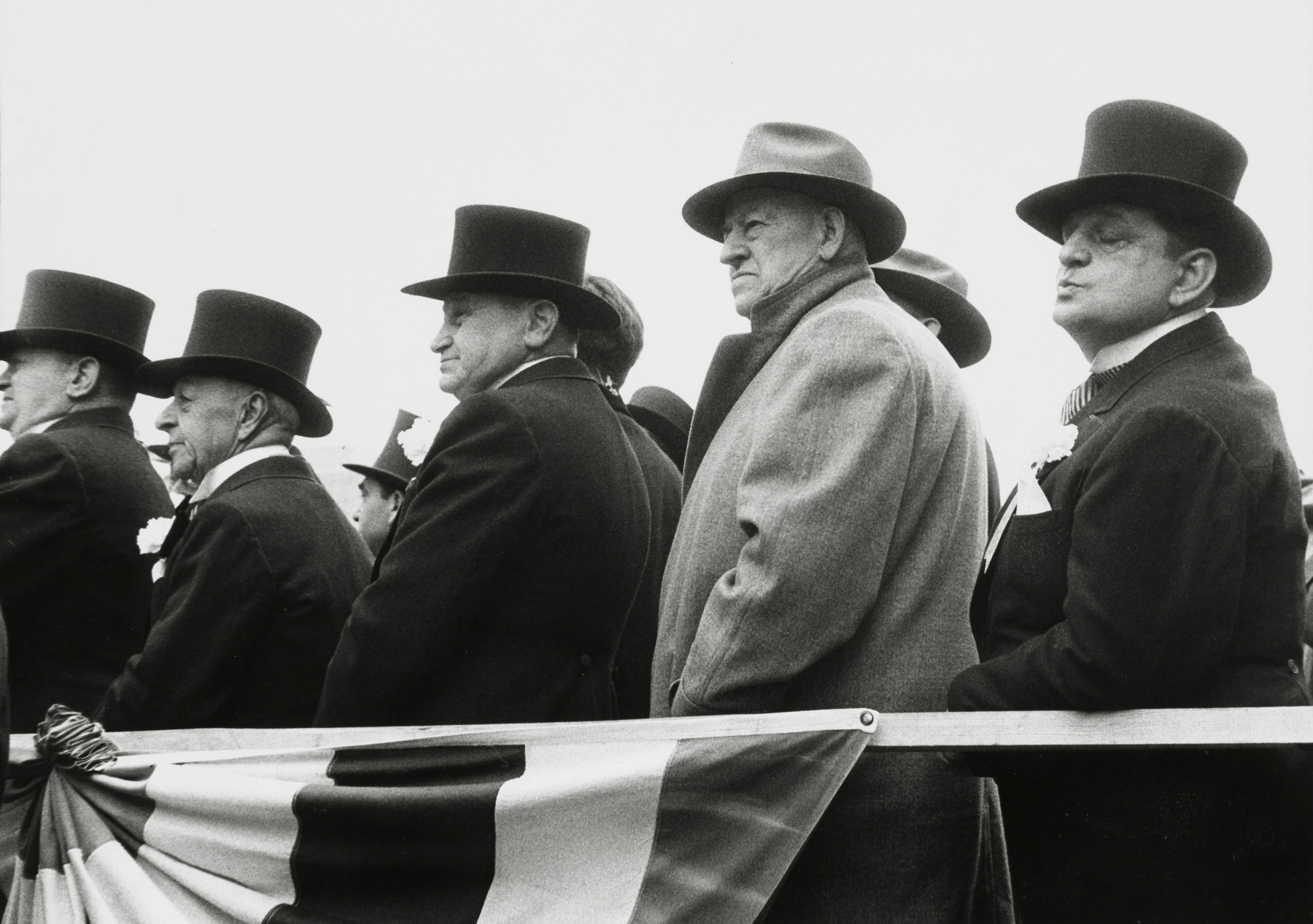
Frank returned to Europe in spring 1949. He photographed the yearly cantonal assembly in the Swiss canton of Appenzell Ausserrhoden, during which citizens (exclusively men back then) voted by a show of hands. However, he was unsuccessful in placing this story with a major periodical, even though he circulated the images via the acclaimed agency Magnum. Evidently, Frank had focused too little on the actual events. He was more interested in the bystanders’ stances than in the pomp of government officials wearing tailcoats and top hats. His photographs of this assembly prefigure the penetrating and critical gaze he would later level on America’s societal and political landscape. Here as there, his was an outsider’s subjective and inward looking perspective.

Black White and Things

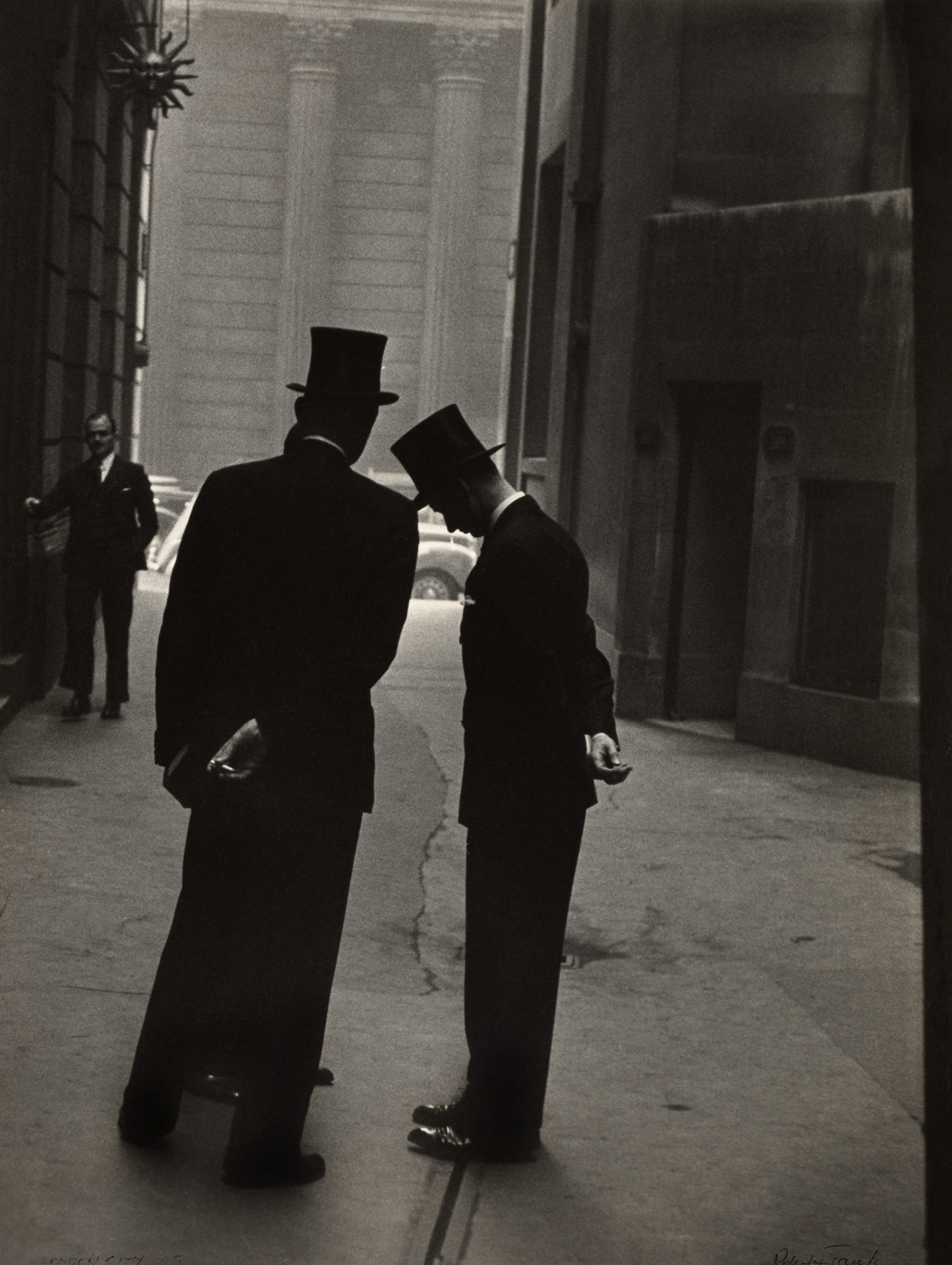
In late 1949, the international magazine Camera published a first selection of Robert Frank’s work. The accompanying text described him as a photographer who loved “truth and unvarnished reality”, as someone “whose thirst for experience compelled him to get out and capture life with his camera”. Indeed, Frank worked chiefly in Paris, London, and Spain between 1949 and 1953, frequently traveling between Europe and the US. He reported on a bullfighter in Spain and observed life in London’s financial district. In Paris he took pictures of objects – mostly chairs and flowers – photographs he assembled in an album dedicated to his future wife. In subsequent years, he shook off any sentimental tendencies.

Frank continued his attempts to publish both smaller and more substantial stories and photo essays in glossy magazines such as Life, but with limited success. His reportage on Welsh coal miner Ben James, which appeared in U.S. Camera 1955 annual, was a rare exception. But Frank found himself less and less able to reconcile himself with the conventional view of photography as a universal language accessible to all. Instead, he increasingly distanced himself from print media’s expectations and developed a strong aversion to what he once termed stereotypical “Life stories”, “those goddamned stories with a beginning and an end”.

In autumn 1952, Frank created Black White and Things with his Zurich-based friend Werner Zryd. This handmade book comprising 34 photographs was an attempt to counter these expectations with something new: an intuitively ordered series of photos with neither text nor linear narrative structure, introduced simply by Saint-Exupéry’s famed lines from The Little Prince: “It is only with the heart that one can see rightly; what is essential is invisible to the eye.” Accordingly, Black White and Things is a kind of three-part visual poem: “Black” evokes death, materialism, loneliness, and anonymity; “White” evokes home, love, religion, and camaraderie; and “Things” engages with diametrical oppositions such as friendship and cruelty, and affection and solitude. The order and pairing of the images sparks thoughts, associations, and feelings. Yet Frank’s evocative arrangement is intentionally ambiguous and open: “Something must be left for the onlooker, he must have something to see. It is not all said for him.”

America, America

After a further trip to New York – which he assured his mother would be his last – Robert Frank applied for a Guggenheim fellowship in October 1954. His project proposal was for an “observation and record of what one naturalised American finds to see in the United States that signifies the kind of civilisation born here and spreading elsewhere”. The result was to be a book, for which he had already won support from Arnold Kübler, the long-standing editor of the Zurich-based culture magazine Du, and Robert Delpire, a young publisher in Paris. Thanks to help from Alexey Brodovitch, Walker Evans, Edward Steichen and others, Frank was the first European photographer to be awarded this generous fellowship. The award made it possible for him to set off on his now-legendary road trips across the US in spring 1955.

Over almost two years, Frank took more than 20,000 photographs on his travels. He made roughly 1,000 work prints in the autumn and winter of 1956-57, which he pinned to the walls and laid on the floor of his apartment. At the time his home was East Village, New York, where artists including Alfred Leslie and Willem de Kooning also lived. Over many months Frank made countless passes through his photographs, eliminating those images he was unsure of and focusing on specific themes. He constantly rearranged the selection that was gradually coming together until he had a first mocked-up book with just under 90 images and the provisional title America, America. Frank took this book with him when he traveled to Europe in summer 1957, showing it to Delpire and his Swiss photographer friend Gotthard Schuh.

Over the years, the America photographs not included in his final selection disappeared into archives and collections or even got lost altogether. Only recently has it been possible to ascertain that many of the rejected and unpublished photographs were of the same caliber as the 83 book images Frank and Delpire agreed on. Frank’s contact sheets show that these photos were often taken directly before or after the images that have become icons of photographic history. Rather than putting forth a single message, Frank’s dark take on 1950s America contains impressive variations, facets, and excursuses that made a powerful impression on many, including his early supporter, Schuh. Schuh wrote to his young friend: “I don’t know America, but your photographs frighten me because in them you show, with visionary alertness, things that affect us all.”

The Americans

Following the first French edition of Les Américains, Robert Frank’s book was published as The Americans in New York in 1959. The English edition dropped the cover illustration and the selection of texts on America (which Delpire had insisted on over Frank’s protests), and added an introduction by Jack Kerouac. Frank had much in common with the Beat poets, though he only met them after his Guggenheim-funded travels. Like Kerouac’s main character in On the Road, Frank crisscrossed the country with apparent aimlessness, working spontaneously. Moreover, his work shares a stylistic consonance with Beat literature: Frank had abandoned all technical conventions and photographed intuitively instead. Many of his photographs are underexposed and grainy; they frame a scene and omit key details; their horizons are slanting and the lighting is often murky. Frank’s focus was the everyday, the fleeting, and the marginal. People are shown turning away from the camera, and his landscapes are desolate and bleak, “really more like Russia”, as Frank once remarked to Kerouac. He flouted the rules he had learned during his early training as a photographer in Switzerland in order to be as true as possible to his subjective experience and to capture unvarnished reality.

Kerouac’s introduction begins with the words: “That crazy feeling in America when the sun is hot on the streets and music comes out of the jukeboxes or from a nearby funeral, that’s what Robert Frank has captured in tremendous photographs taken as he traveled on the road around practically forty-eight states in an old used car (on Guggenheim Fellowship) and with the agility, mystery, genius, sadness and strange secrecy of a shadow photographed scenes that have never been seen before on film …” The Americans is a long, poetic image arc with cross-references, digressions, and associations, but also mental leaps and ambiguities, which provoked many critics. Although most acknowledged that Frank’s photographs were highly powerful, they read his take on Americans as a malicious attack on the country. Frank, a Jewish foreigner, was resented for picking up on the racism, hollow patriotism, commodified cheer, and political corruption lurking behind the façade of American society. Even before his groundbreaking book was published, Robert Frank wrote: “Above all, I know that life for a photographer cannot be a matter of indifference. Opinion often consists of a kind of criticism. But criticism can come out of love. It is important to see what is invisible to others.”

Martin Gasser, Curator


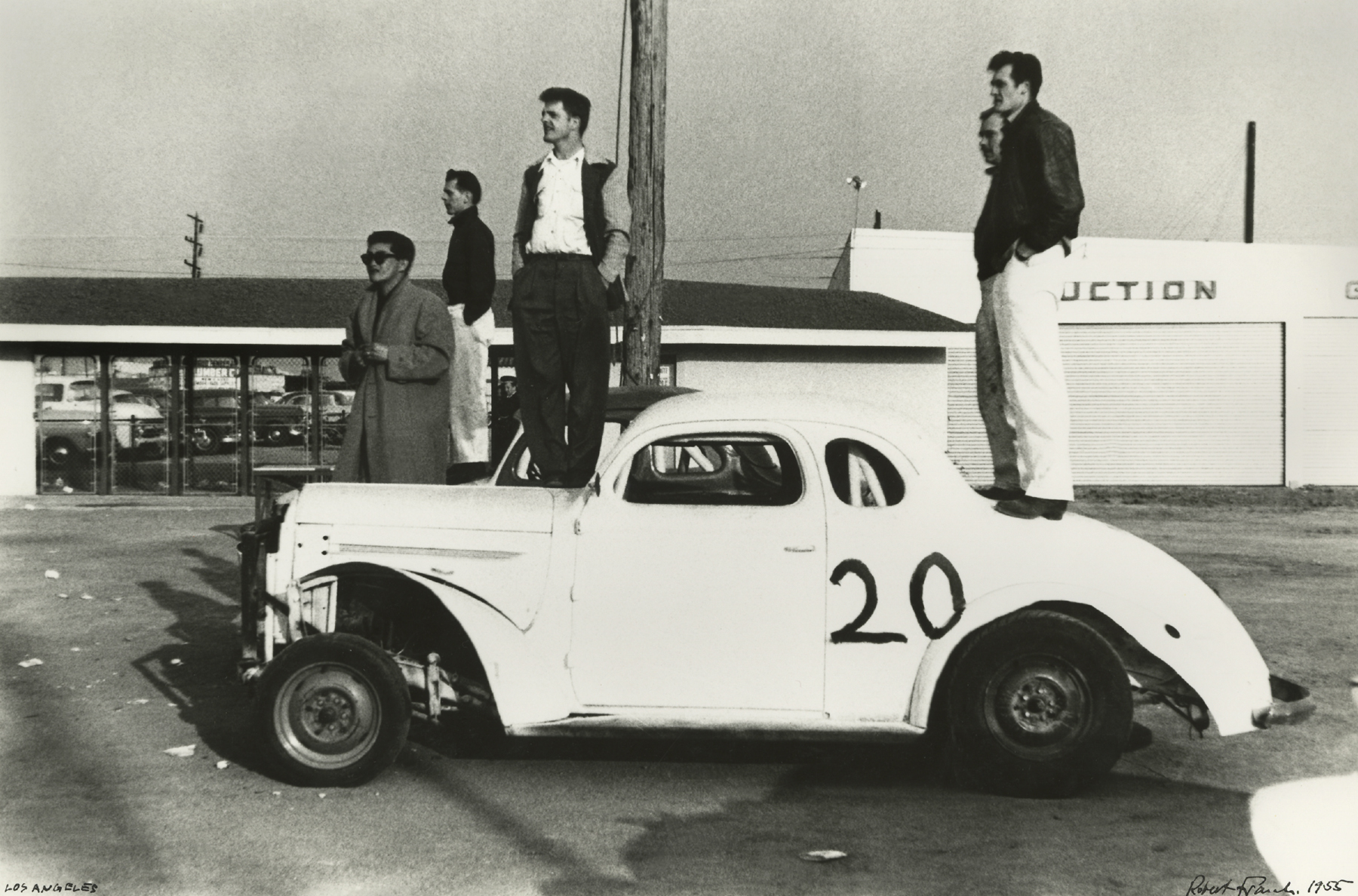
Robert Frank (Swiss, 1924-2019) "Los Angeles" 1955


Robert Frank (Swiss, 1924-2019)
“Los Angeles”
1955
Gelatin silver print
© Andrea Frank Foundation; courtesy Pace/MacGill Gallery, New York


Robert Frank (Swiss, 1924-2019) 'City fathers – Hoboken, New Jersey' 1955


Robert Frank (Swiss, 1924-2019)
City fathers – Hoboken, New Jersey
1955
Gelatin silver print
© Andrea Frank Foundation; courtesy Pace/MacGill Gallery, New York


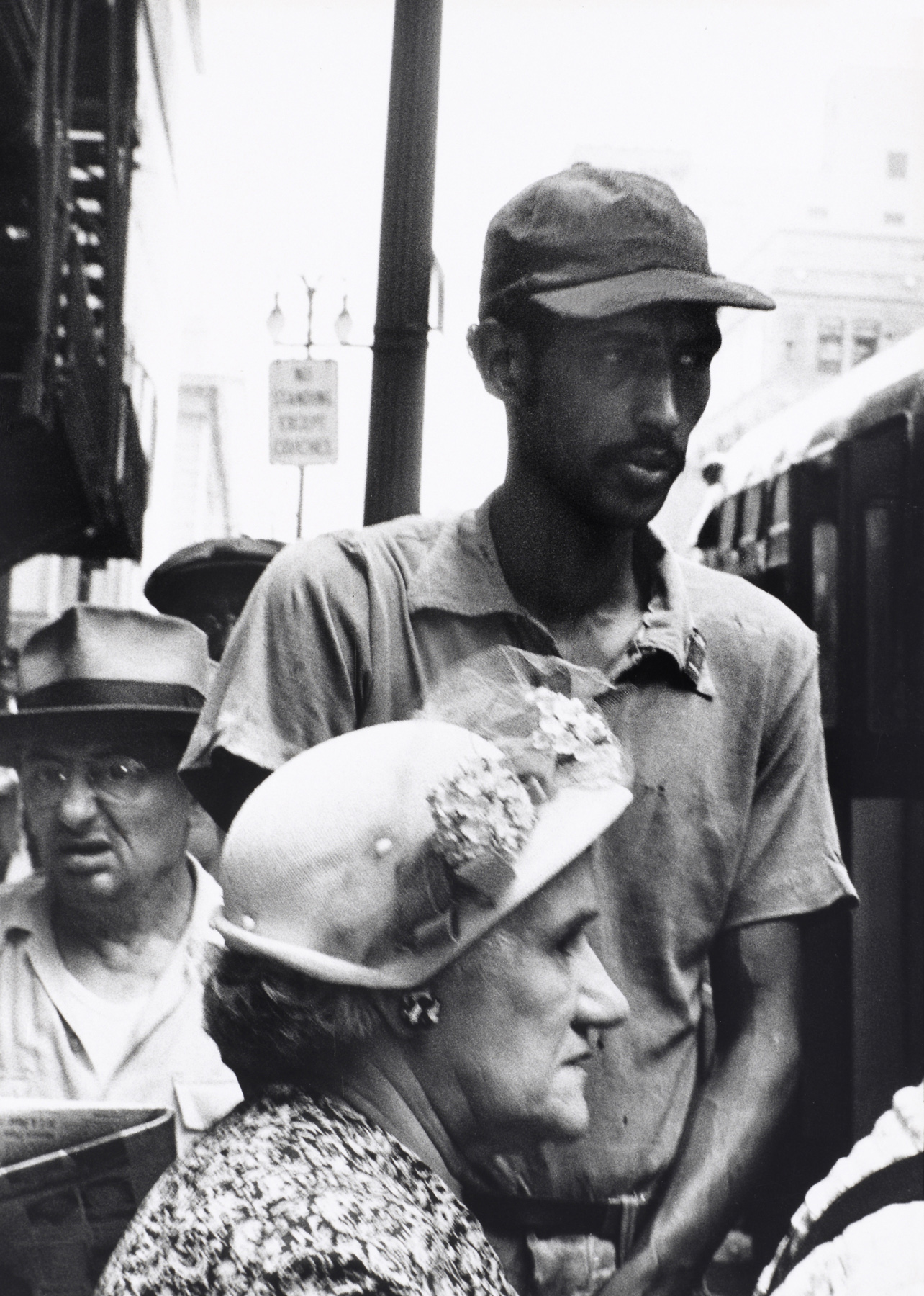
Robert Frank (Swiss, 1924-2019) 'Bus-Stop, Detroit' 1955


Robert Frank (Swiss, 1924-2019)
Bus-Stop, Detroit
1955
Gelatin silver print
© Andrea Frank Foundation; courtesy Pace/MacGill Gallery, New York


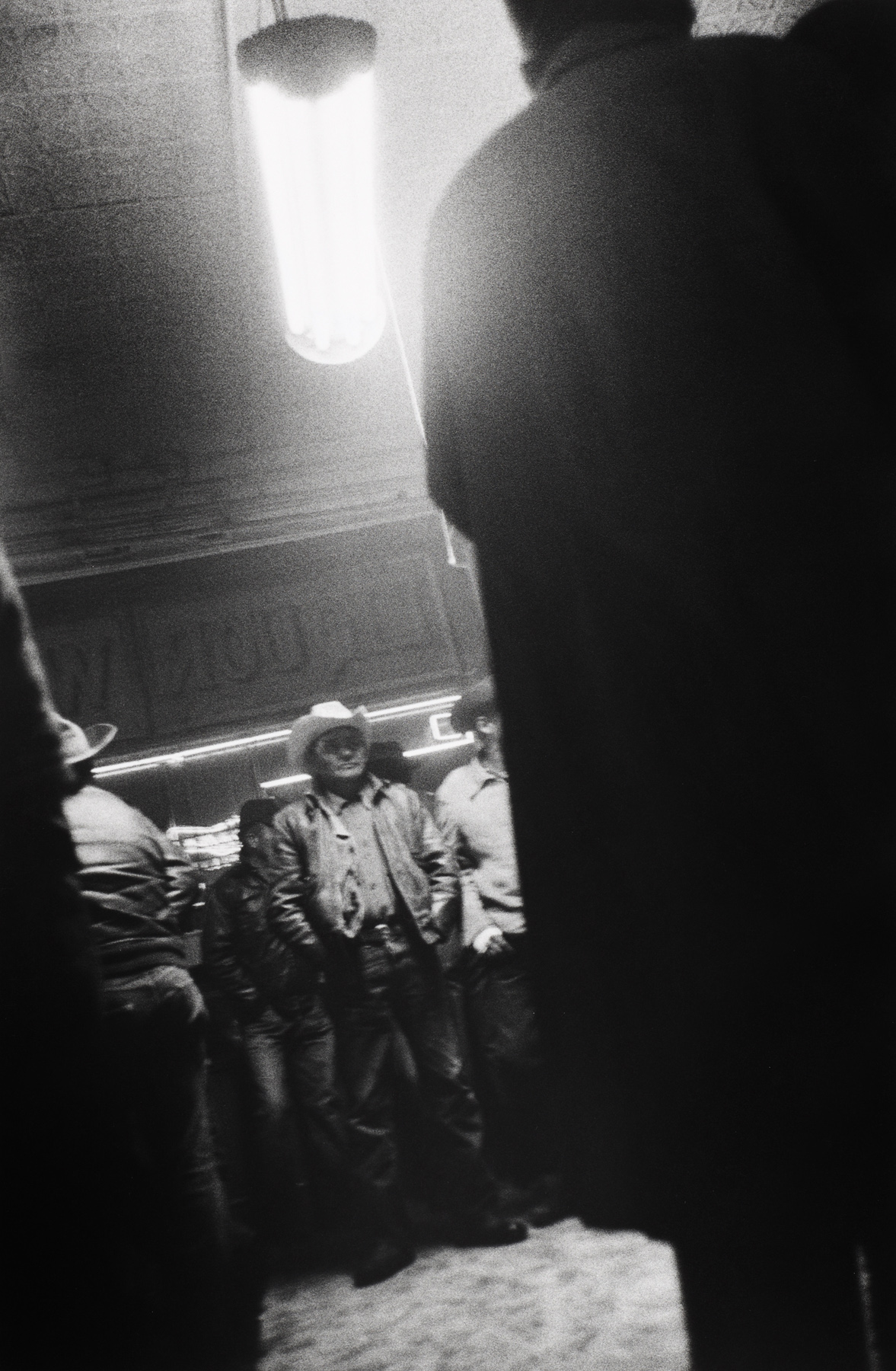
Robert Frank (Swiss, 1924-2019) 'Bar – Gallup, New Mexico' 1955


Robert Frank (Swiss, 1924-2019)
Bar – Gallup, New Mexico
1955
Gelatin silver print
© Andrea Frank Foundation; courtesy Pace/MacGill Gallery, New York


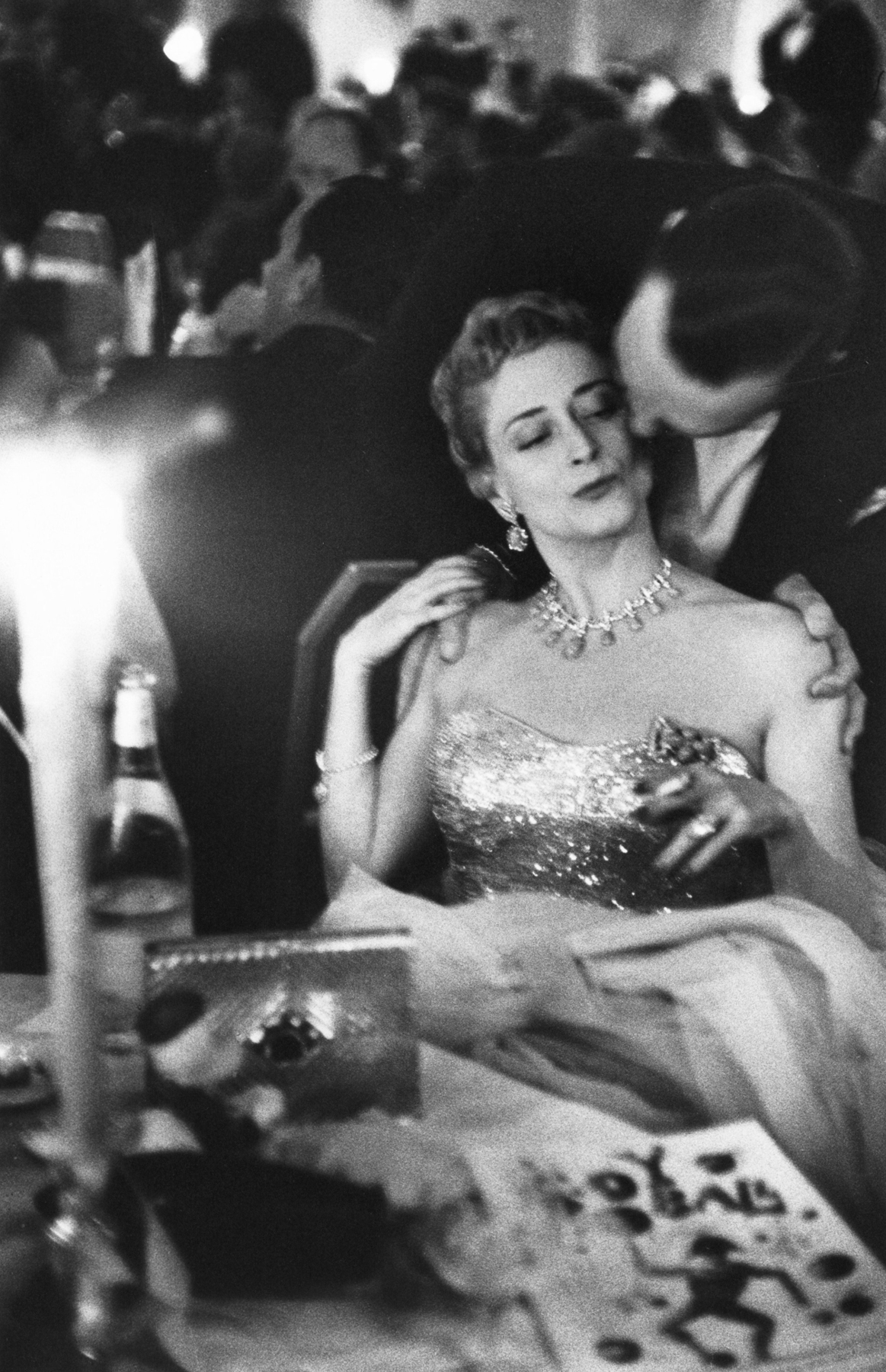
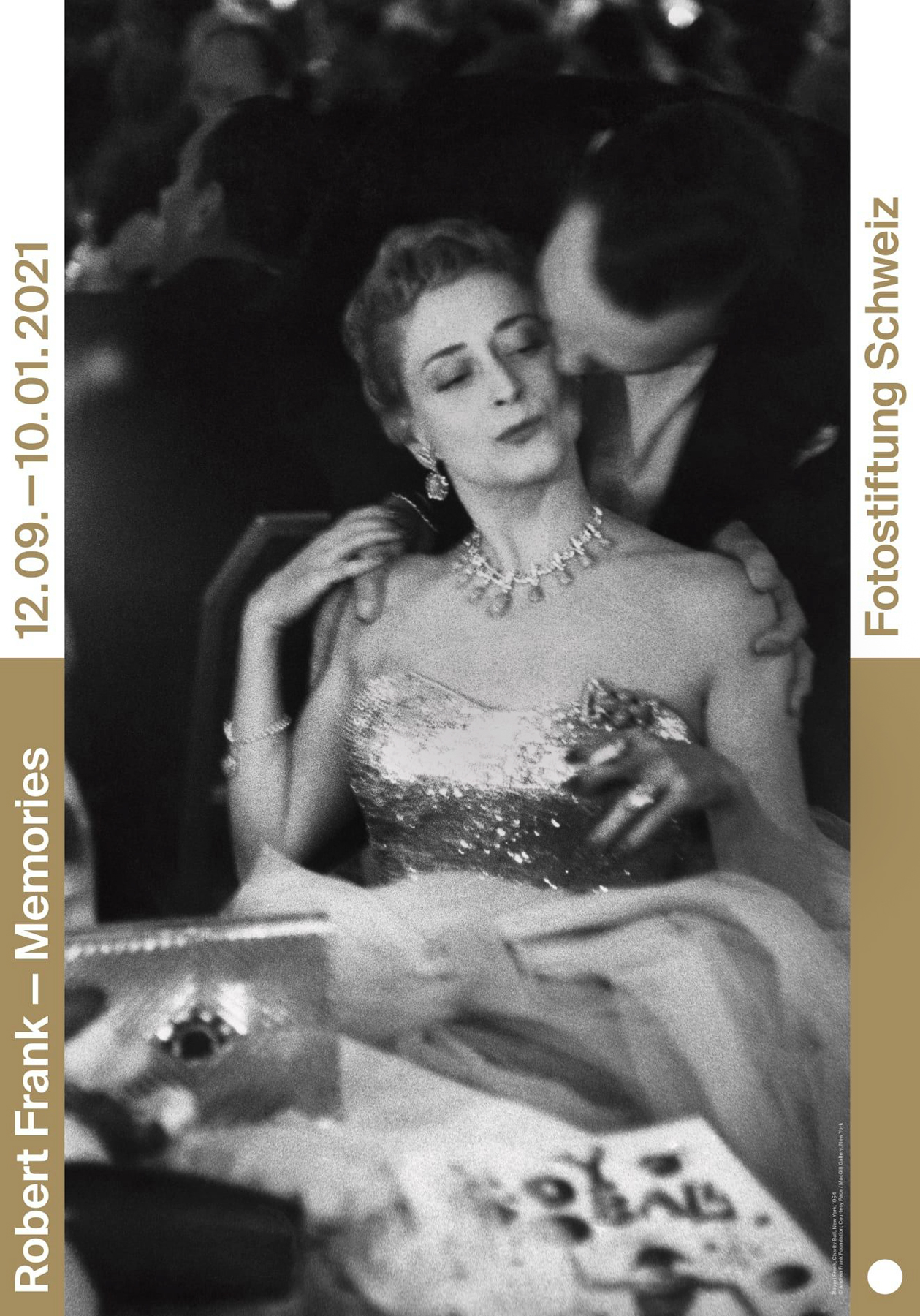
Robert Frank (Swiss, 1924-2019) 'Charity Ball – New York' 1954


Robert Frank (Swiss, 1924-2019)
Charity Ball – New York
1954
© Andrea Frank Foundation; courtesy Pace / MacGill Gallery, New York
Collection of the Swiss Photo Foundation


Müller + Hess, Wendelin Hess and Jesse Wyss, Basel / Zurich


Müller + Hess, Wendelin Hess and Jesse Wyss, Basel / Zurich


Fotostiftung Schweiz
Grüzenstrasse 45
CH-8400 Winterthur (Zürich)
Phone: +41 52 234 10 30

Opening hours:
Tuesday – Sunday 11am – 6pm
Wednesday 11am – 8pm
Closed on Mondays

Fotostiftung Schweiz website

LIKE ART BLART ON FACEBOOK

Back to top

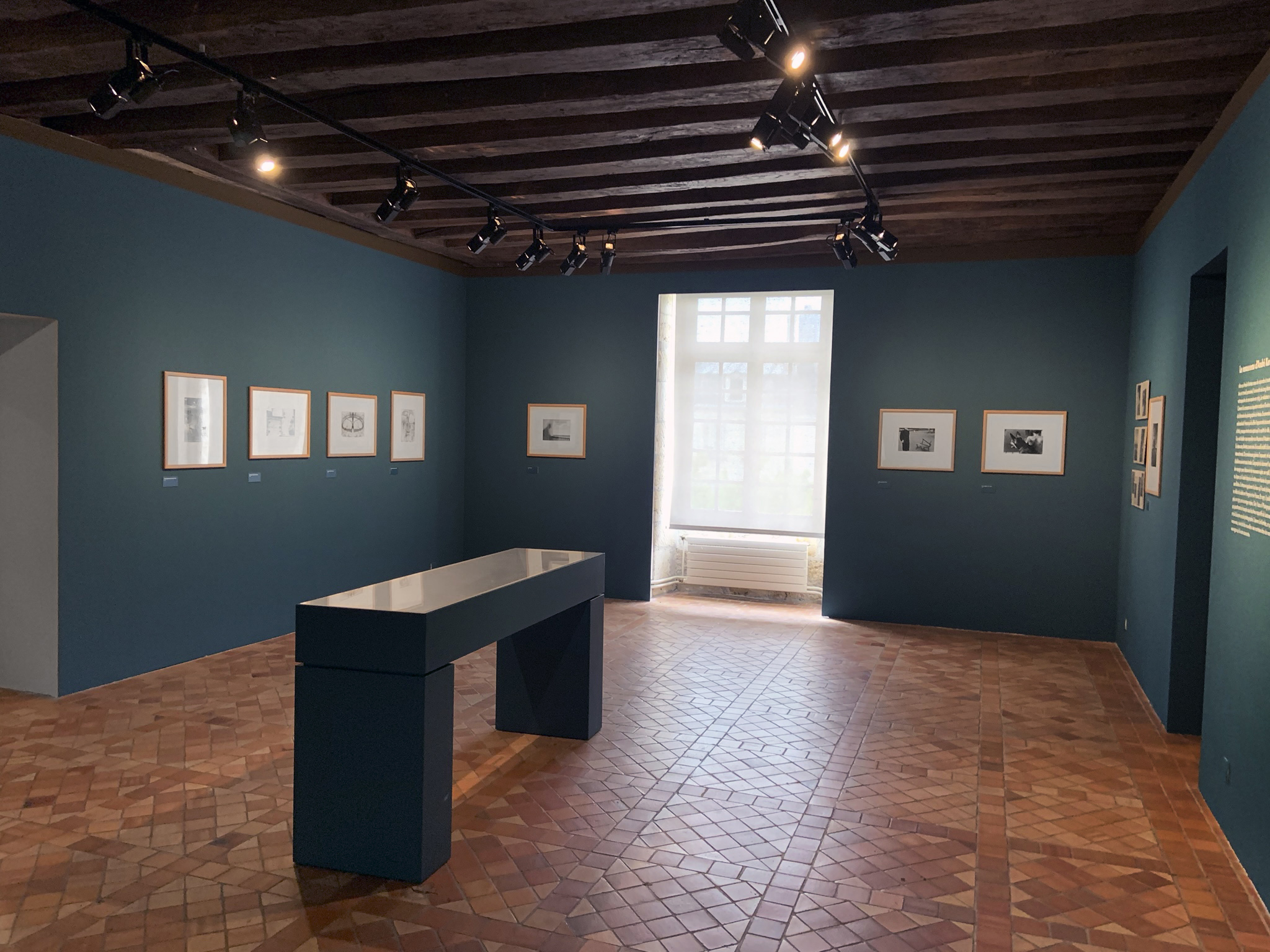
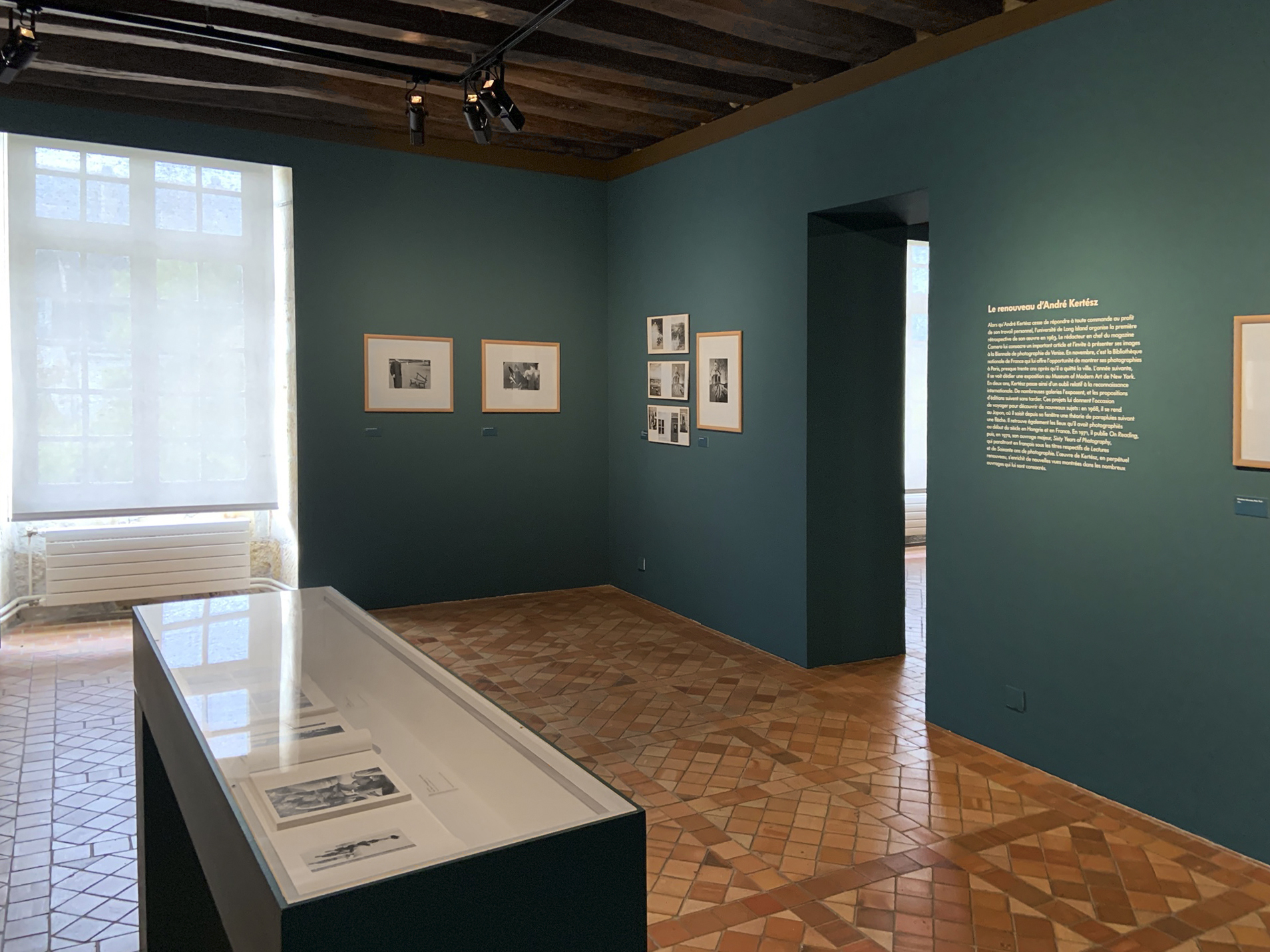
European photographic research tour exhibition: ‘L’equilibriste, André Kertész’ at Jeu de Paume, Château de Tours Part 2

Exhibition dates: 26th June – 27th October, 2019
Visited September 2019 posted September 2020

Curators: Matthieu Rivallin and Pia Viewing


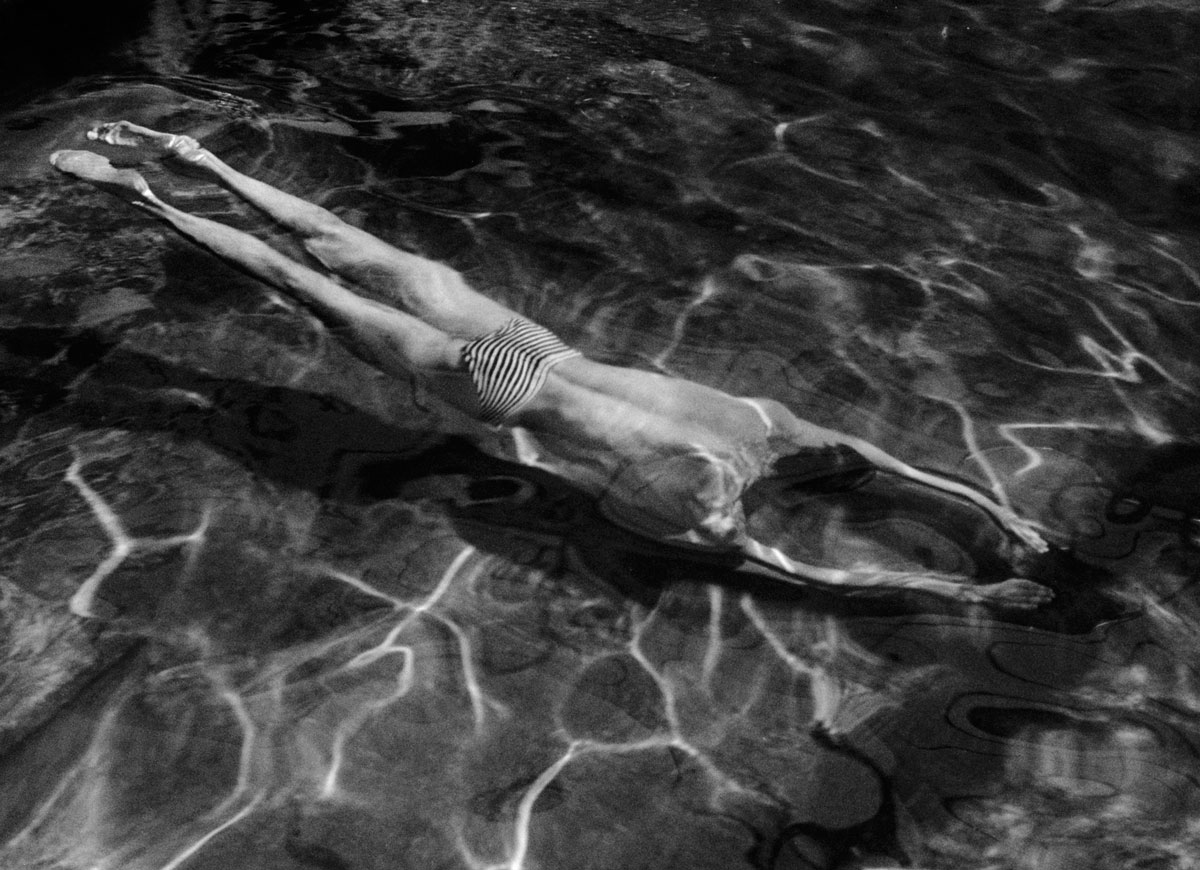
André Kertész (Hungarian, 1894-1985) 'Nageur sous l'eau, Esztergom' (Underwater swimmer, Esztergom) 1918 from the exhibition 'L'equilibriste, André Kertész' at Jeu de Paume, Château de Tours Part 2, June - Oct, 2019


André Kertész (Hungarian, 1894-1985)
Nageur sous l’eau, Esztergom
Underwater swimmer, Esztergom
1918
Contact original


“”… especially haptic qualities are demanded of the deconstructionist performer, spectator, and reader; not to follow optically the ‘line of ideas’ in the text or in a picture and see only the representation proper, the surface, but to probe with the eyes the pictorial texture and even to enter the texture.”69 Such “touching” with the eye did not lead to a secure tactile experience of being firmly planted on the ground, for all grounds, all foundations, were suspect, however construed. We are, as Nietzsche knew, swimming in an endless sea, rather than standing on dry land. To “touch” a trace, groping blindly in the dark, is no more the guarantee of certainty than to see its residues.”


Gandelman, Claude. ‘Reading Pictures, Viewing Texts’. Bloomington, Indiana, 1991, p. 140 quoted in Martin Jay. ‘Downcast Eyes: The Denigration of Vision in Twentieth-Century French Thought’. Berkley: University of California Press, 1993, p. 512.


Touching with the eye

Part 2 of a large posting on the exhibition L’equilibriste, André Kertész at Jeu de Paume, Château de Tours, which I saw in Tours in September 2019.

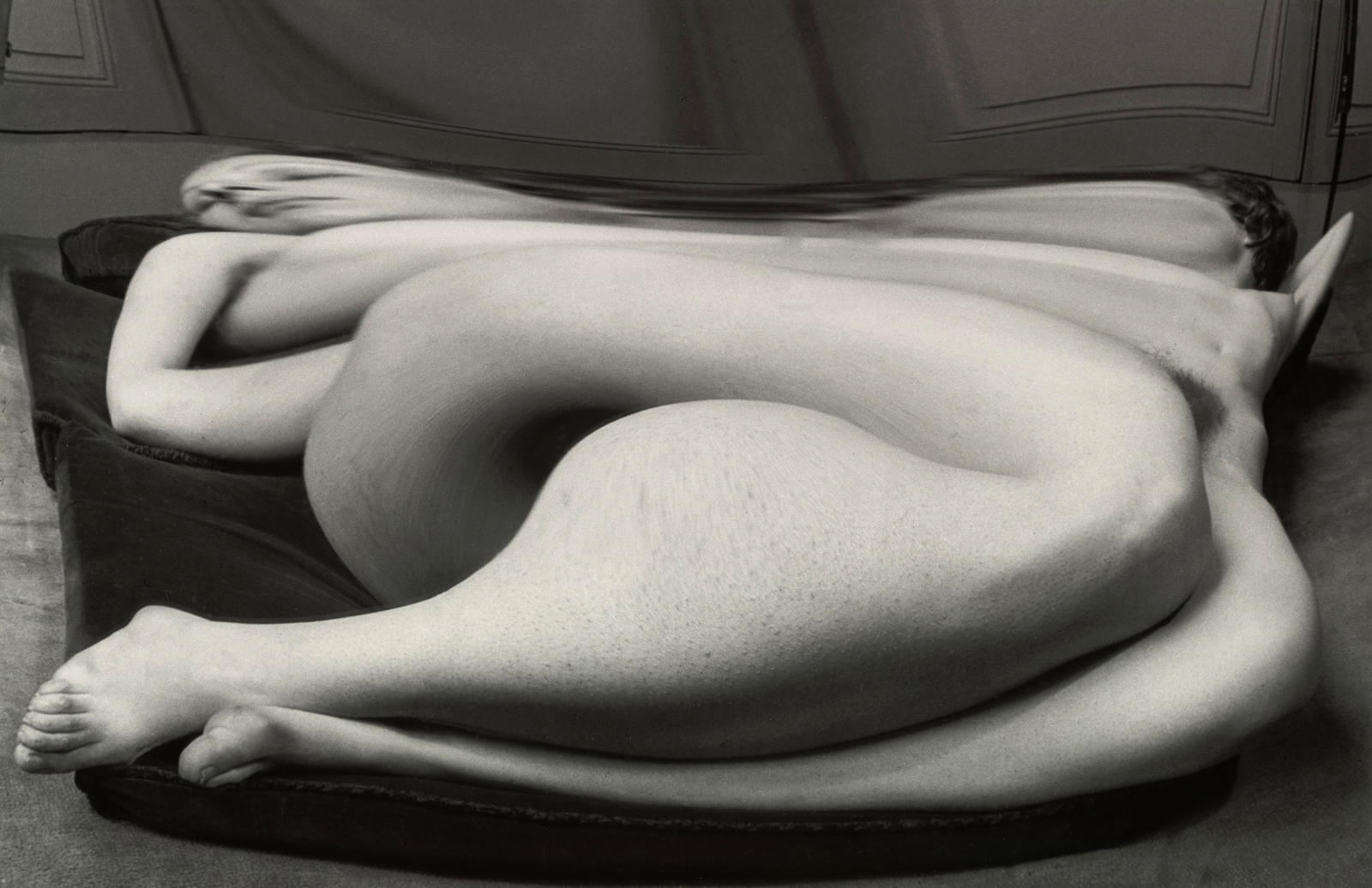
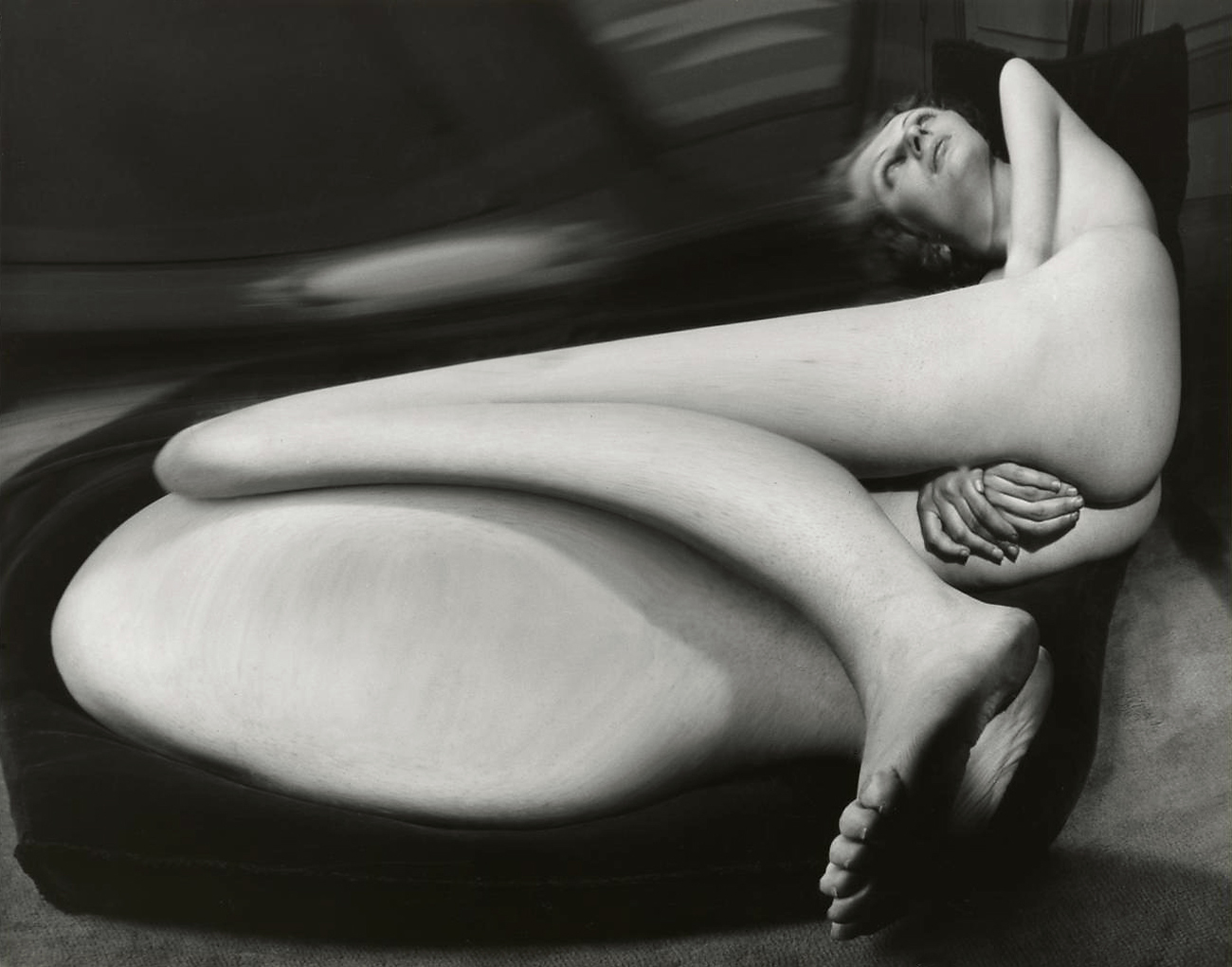
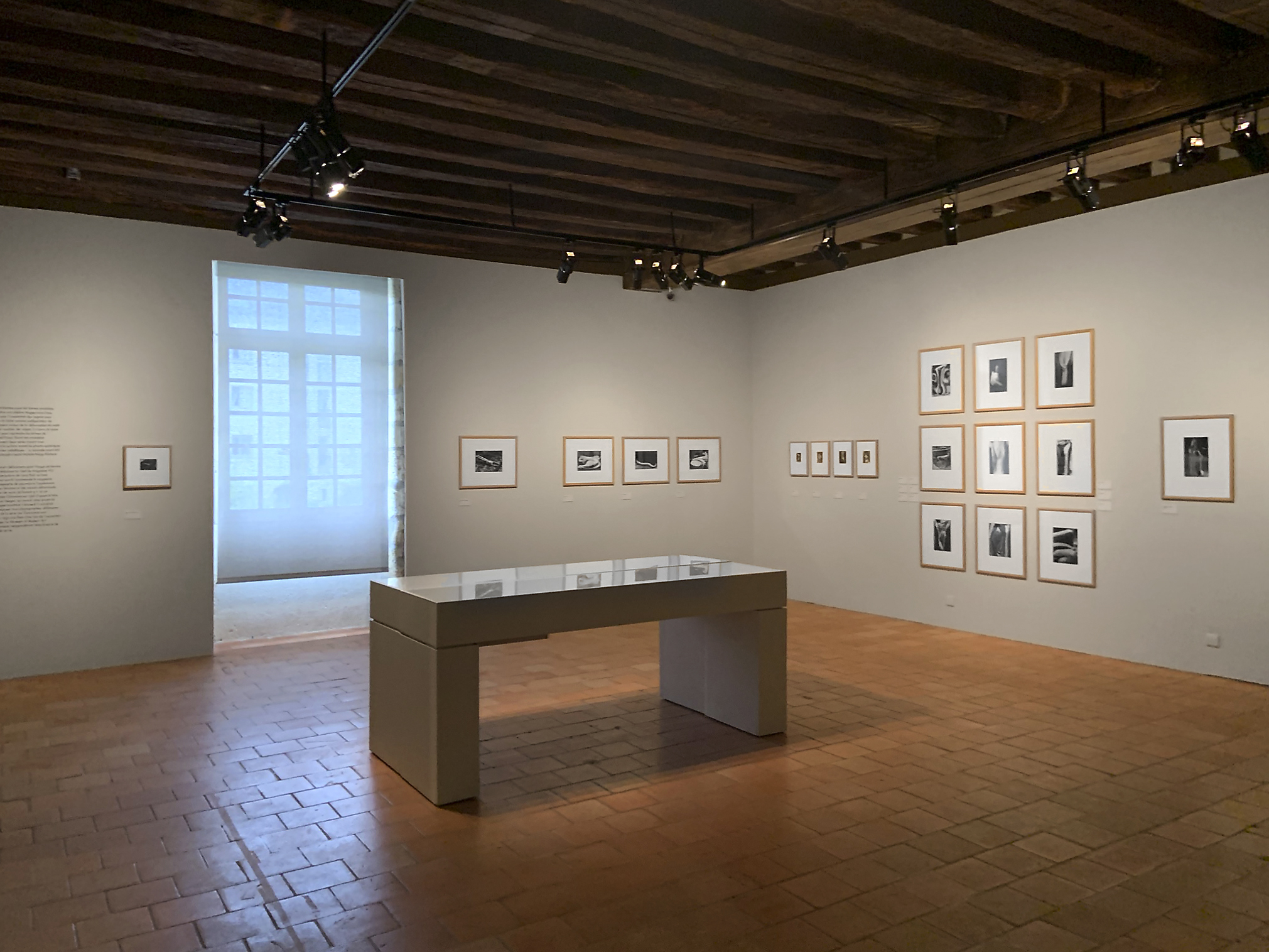
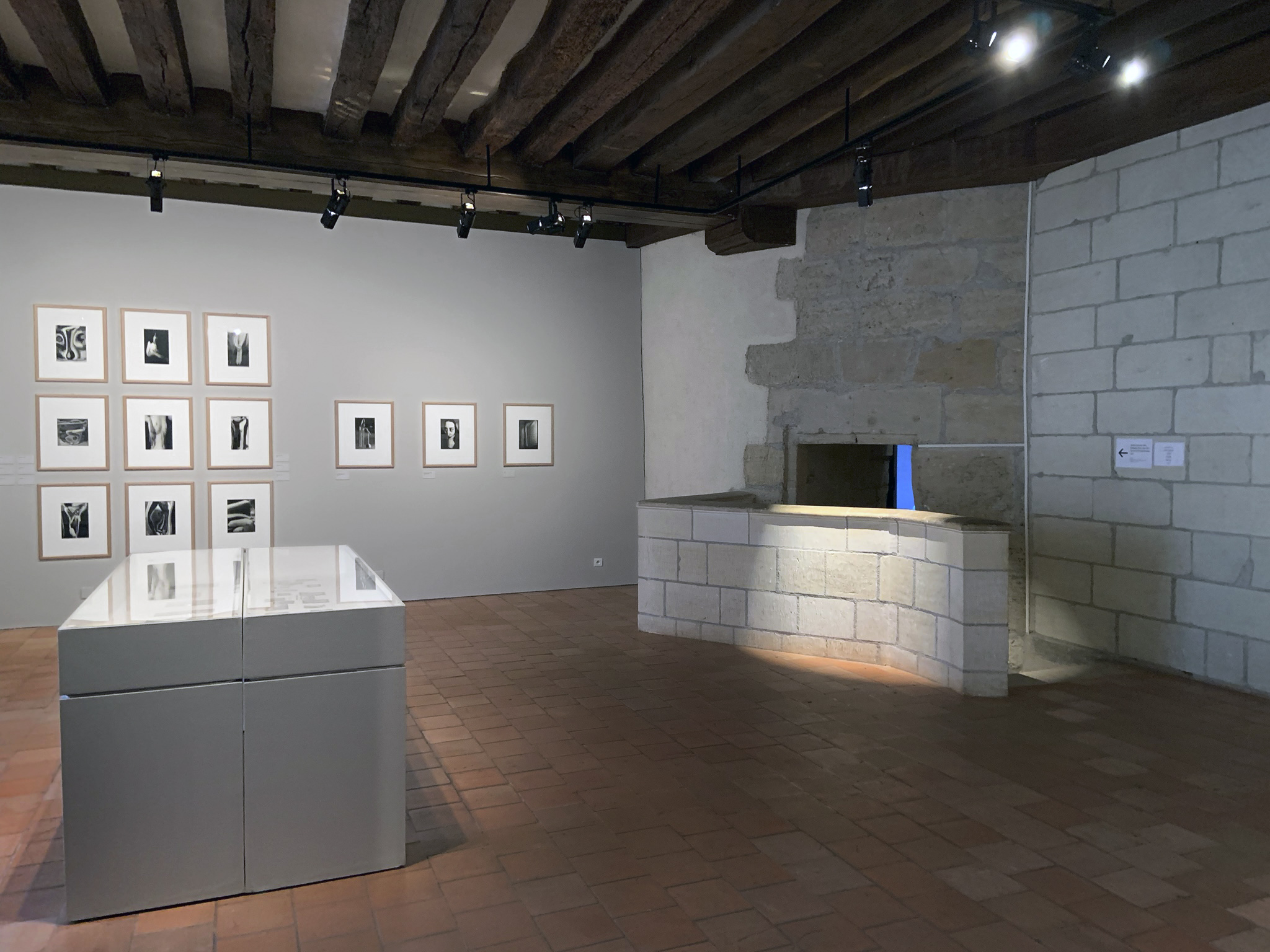
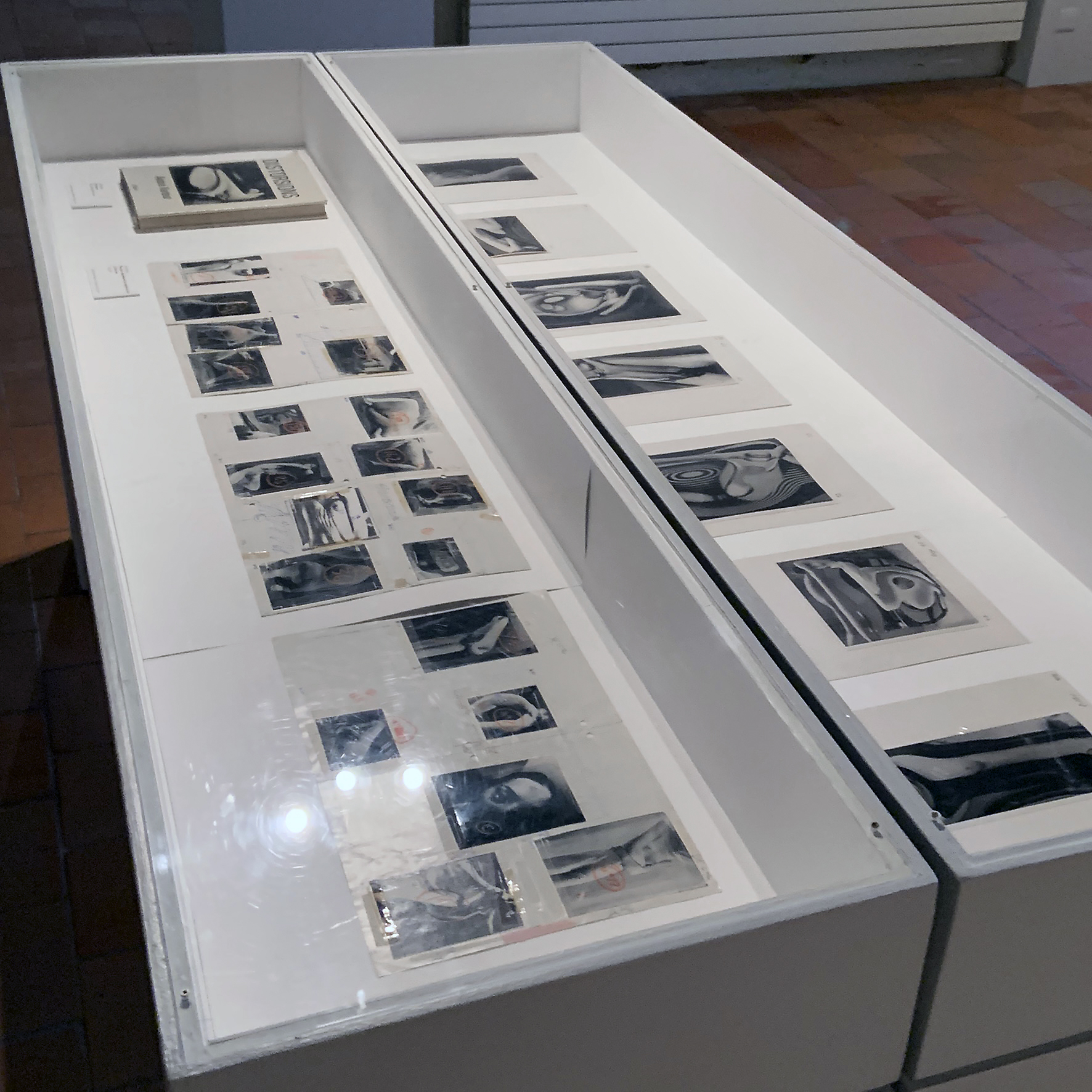
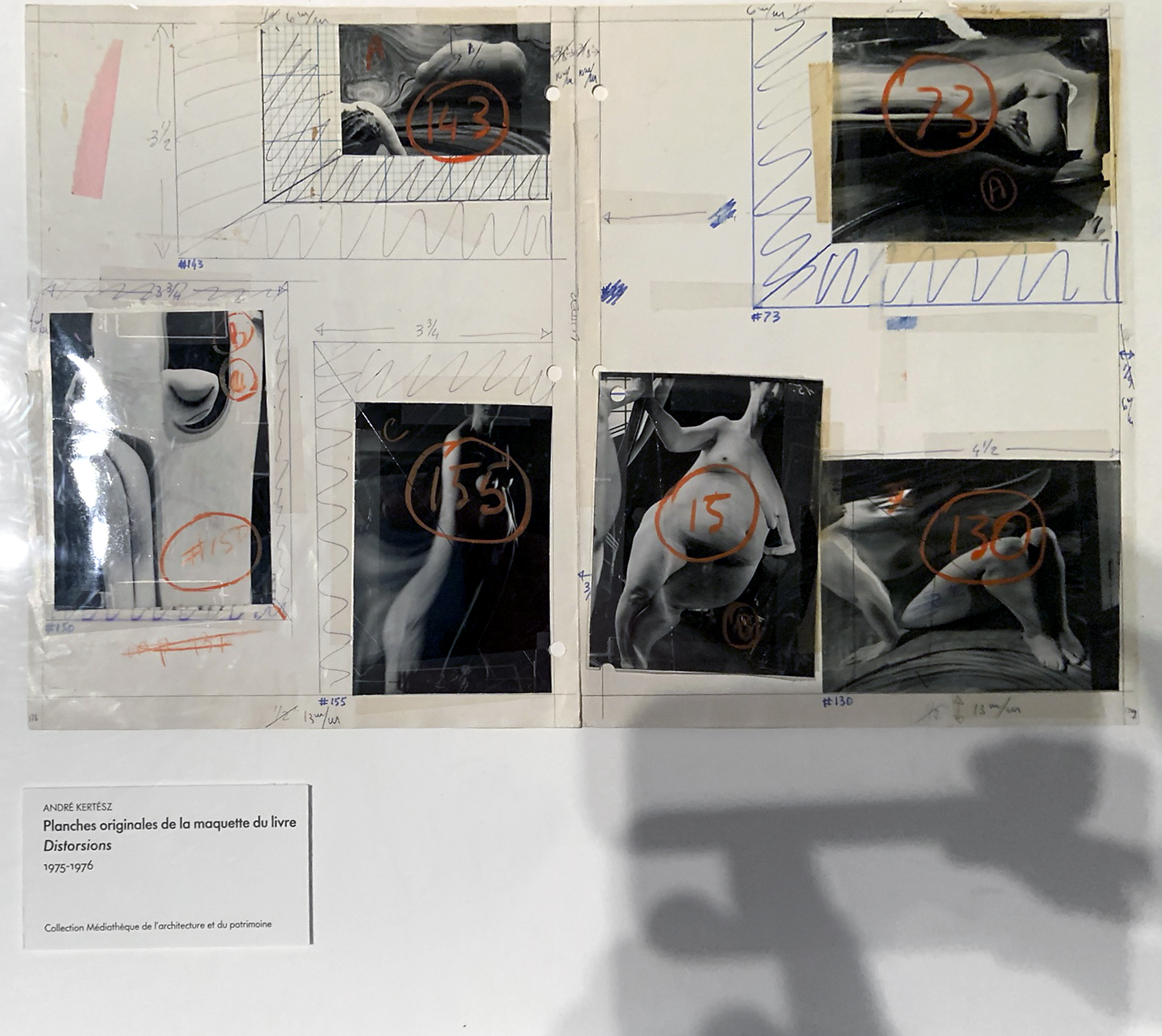
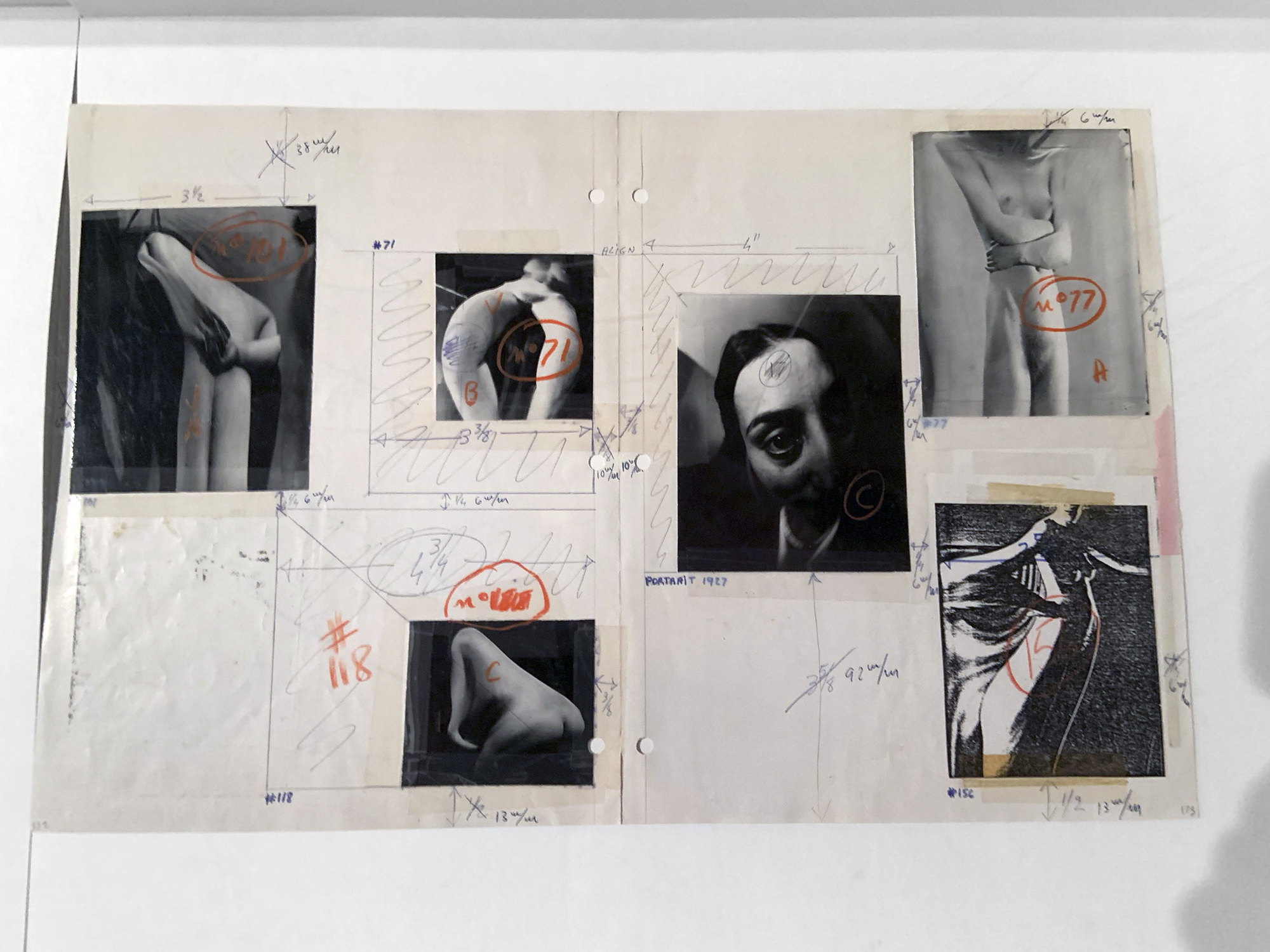
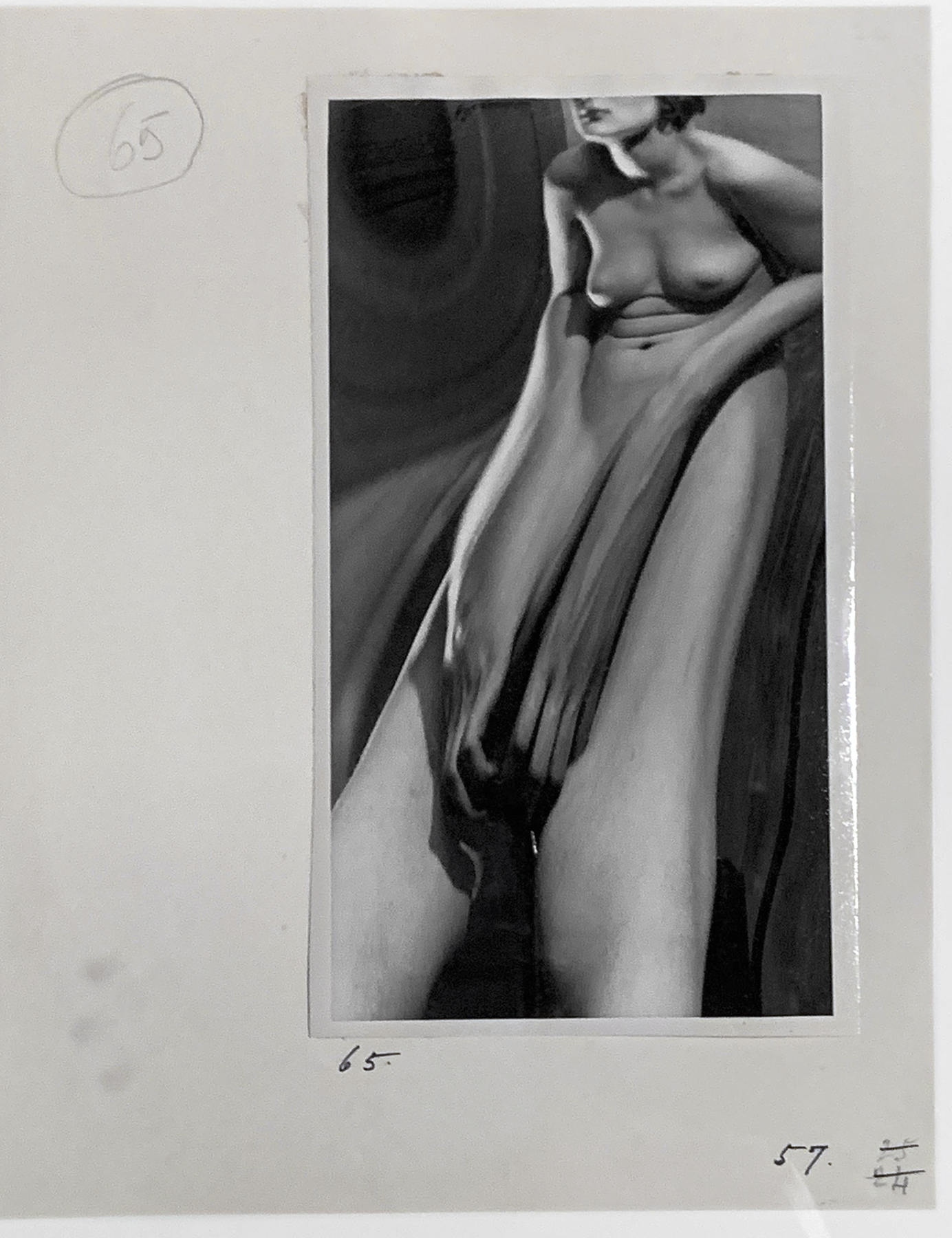
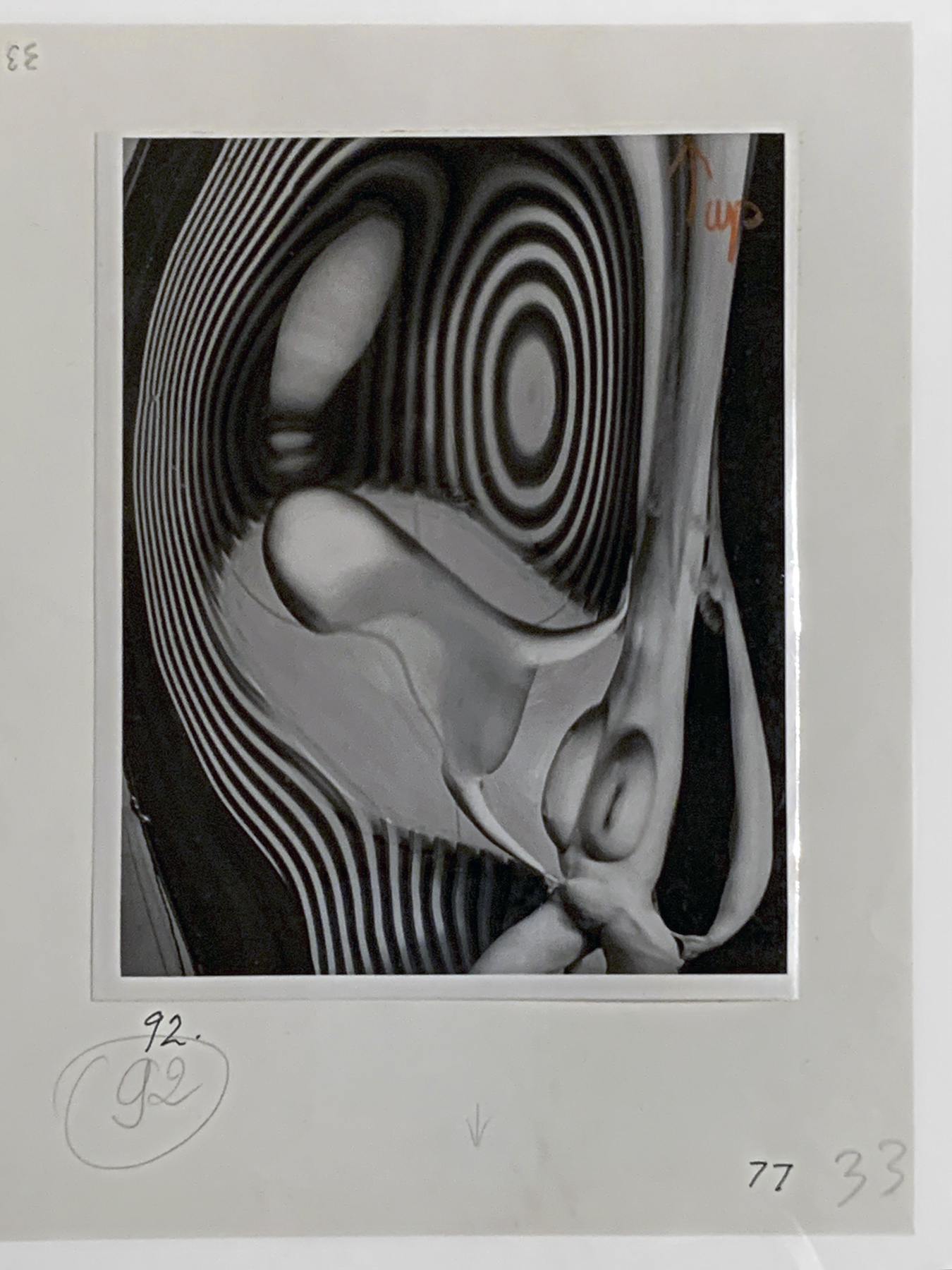
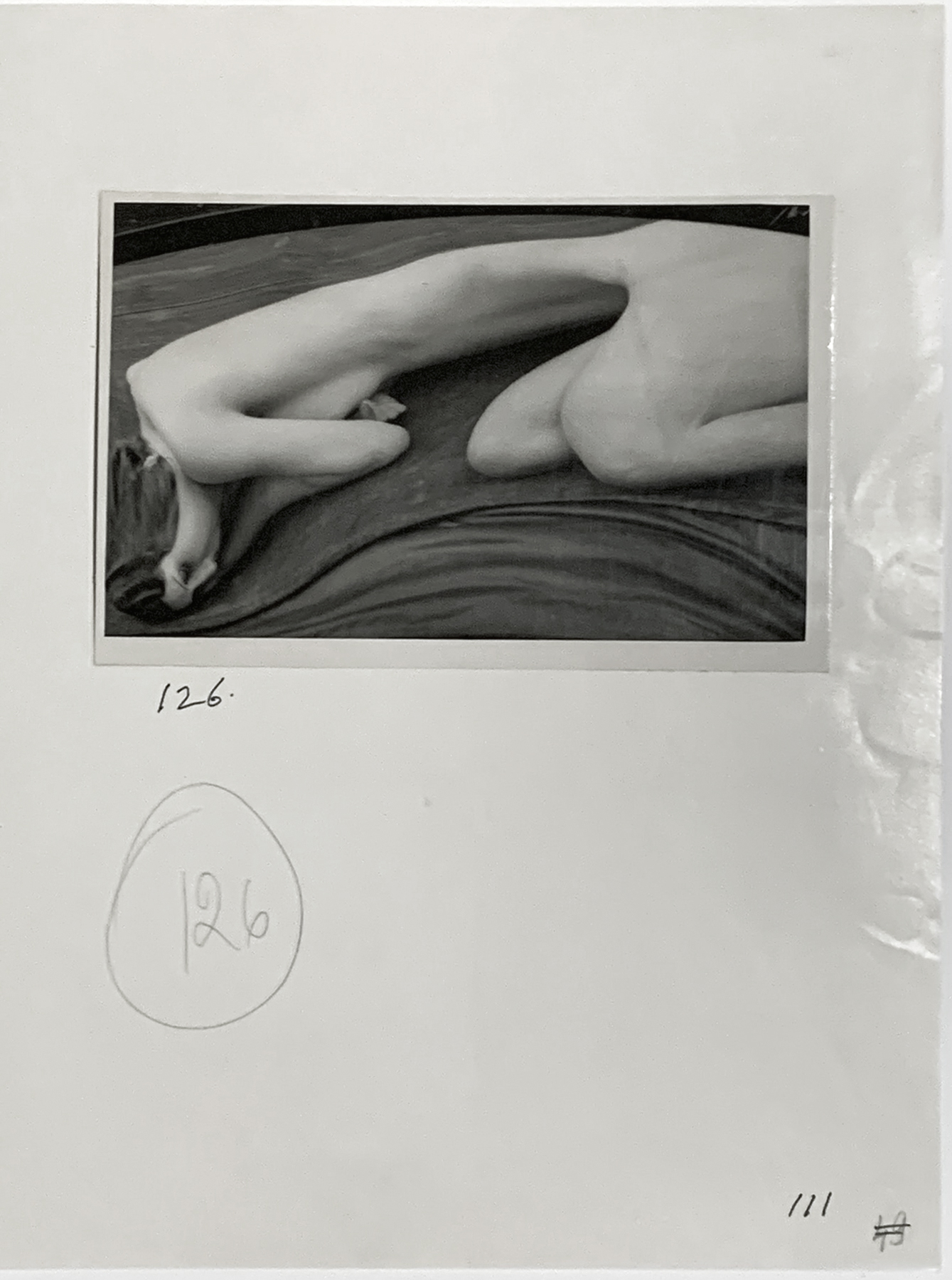
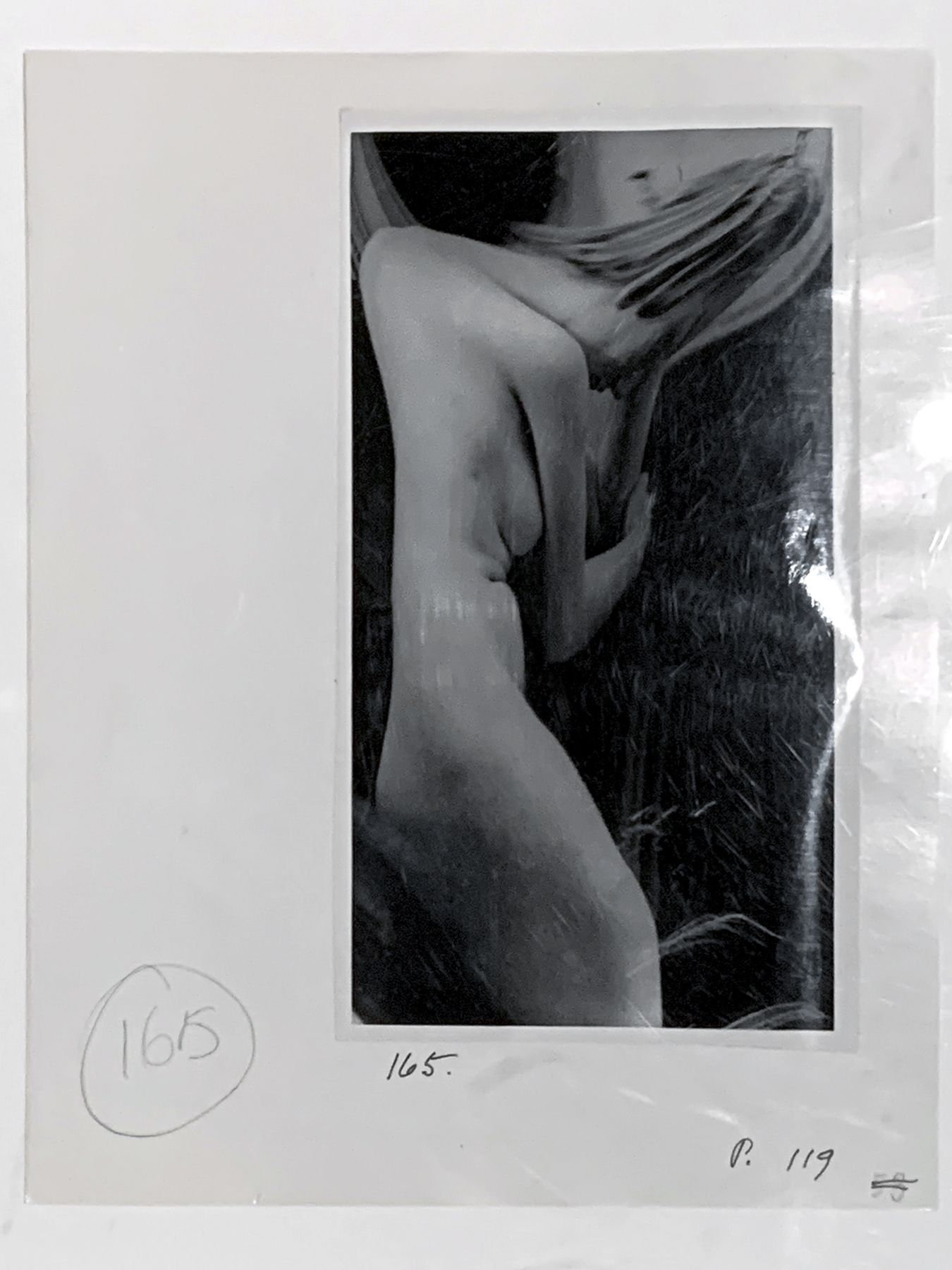
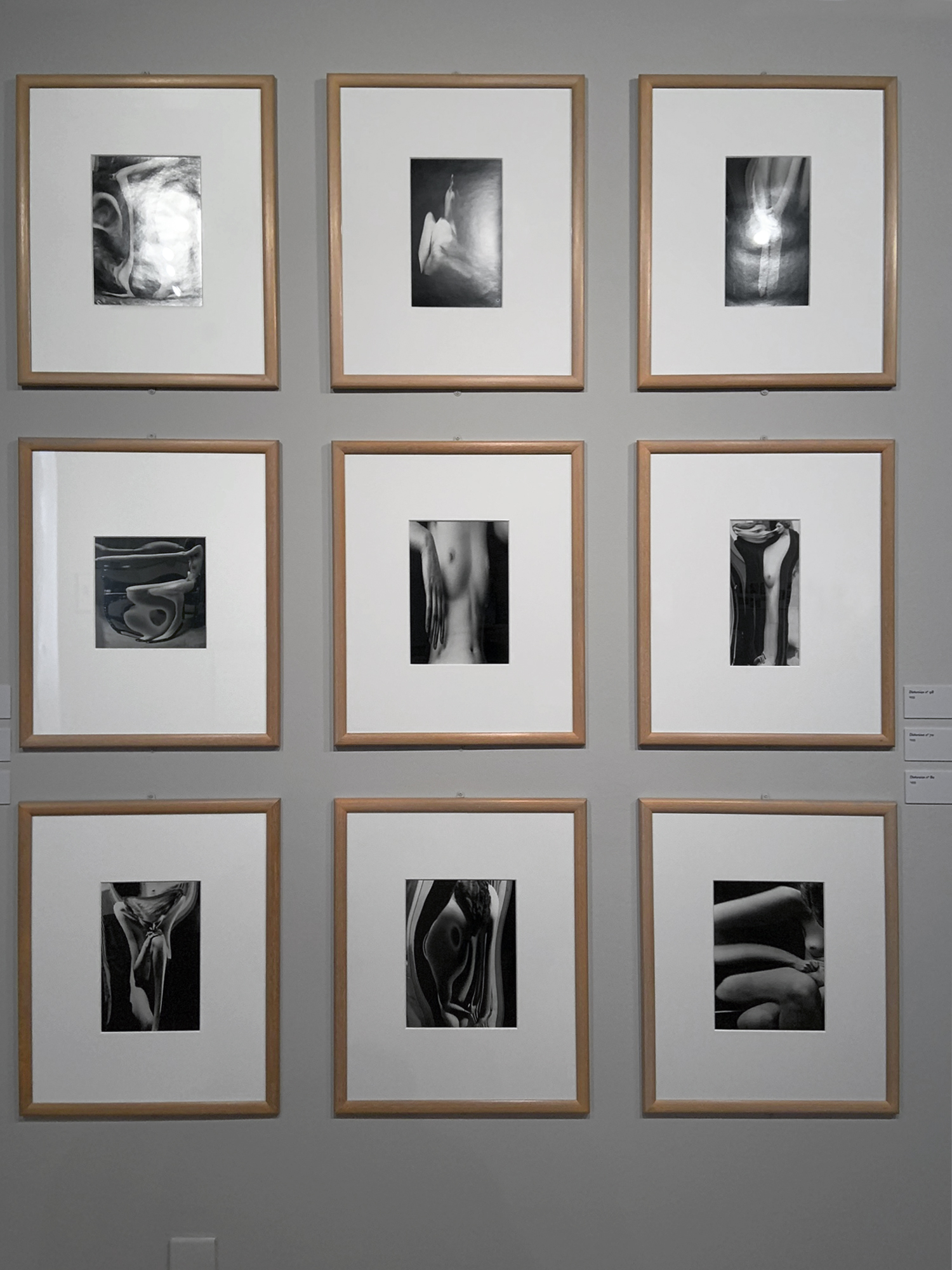
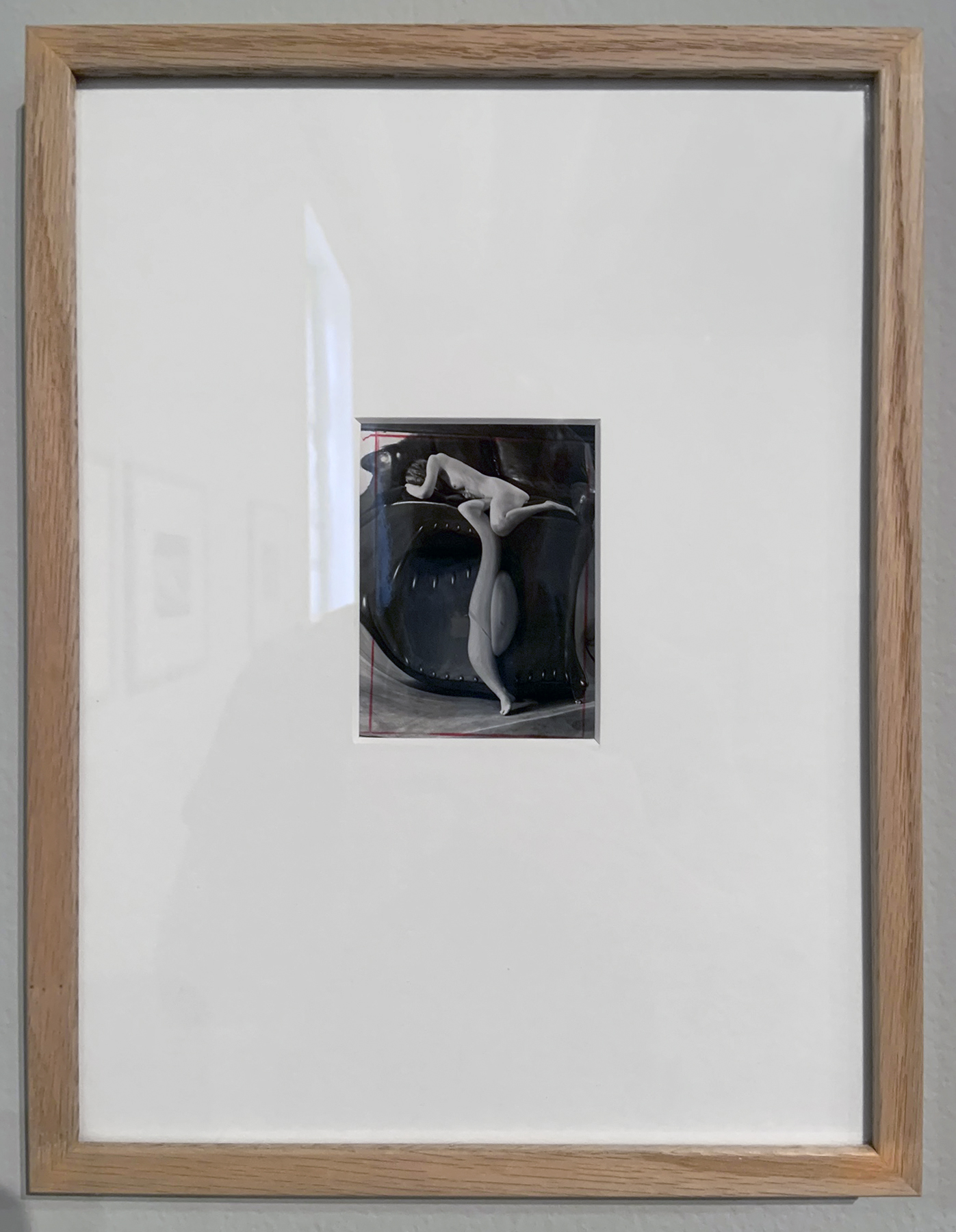
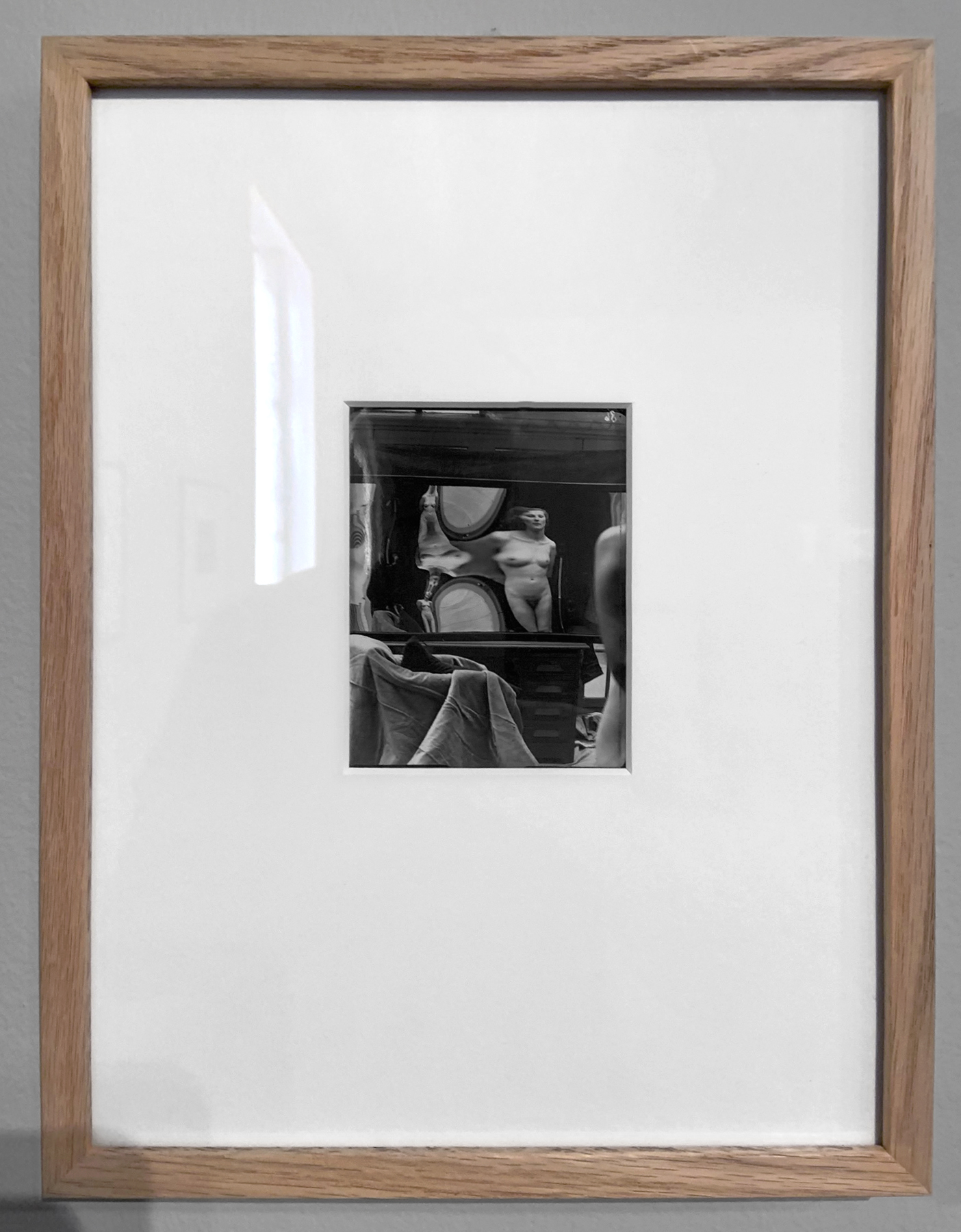
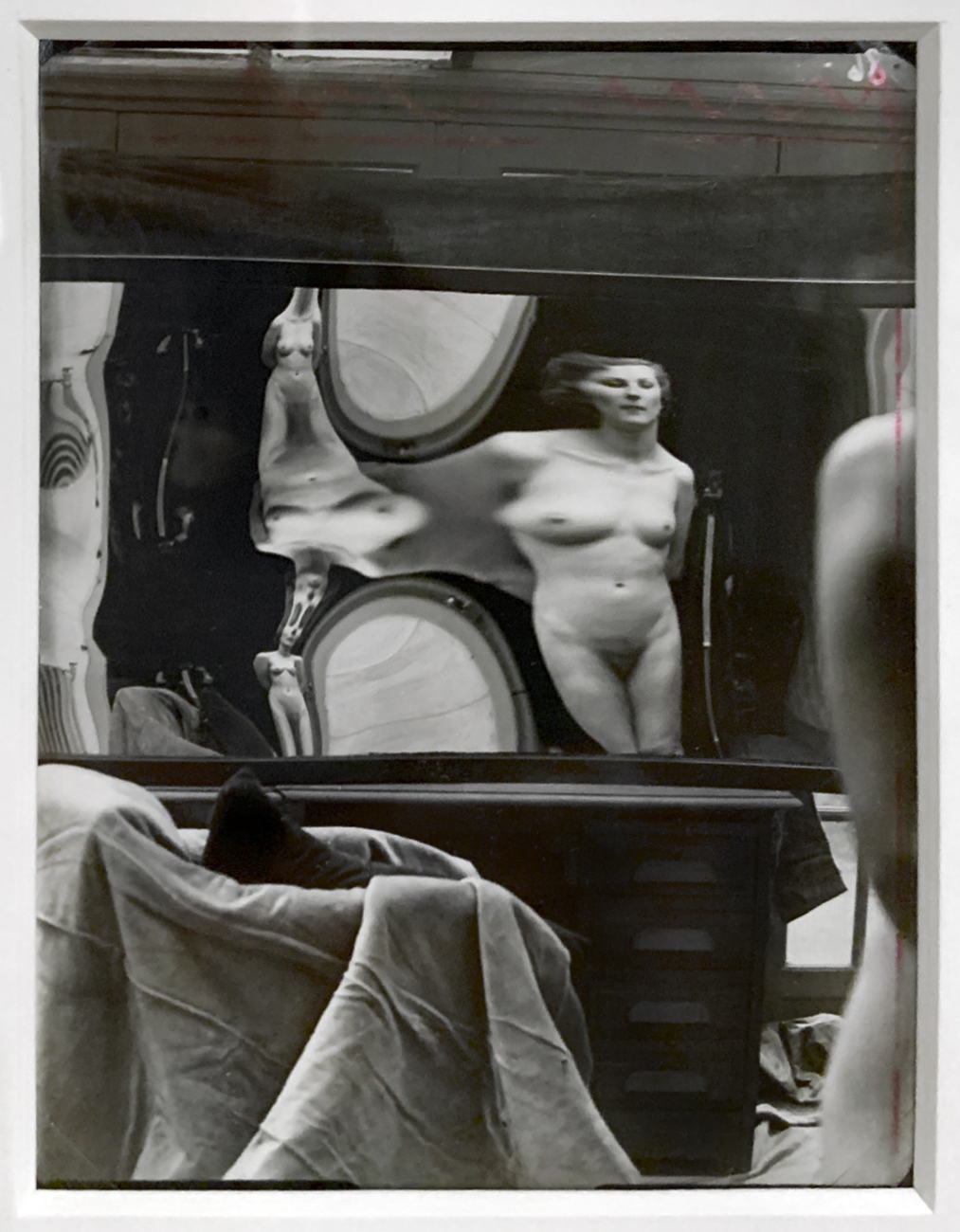
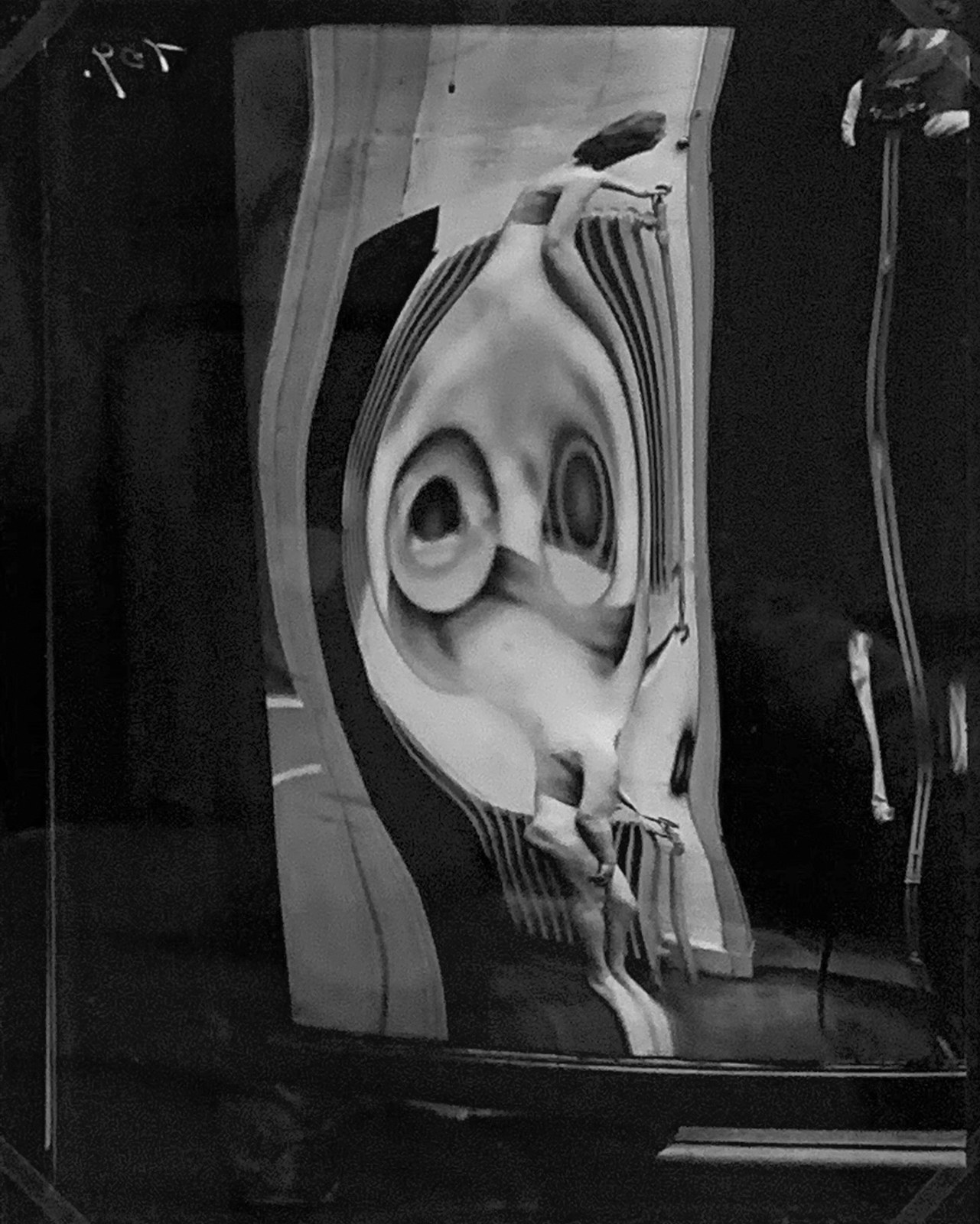
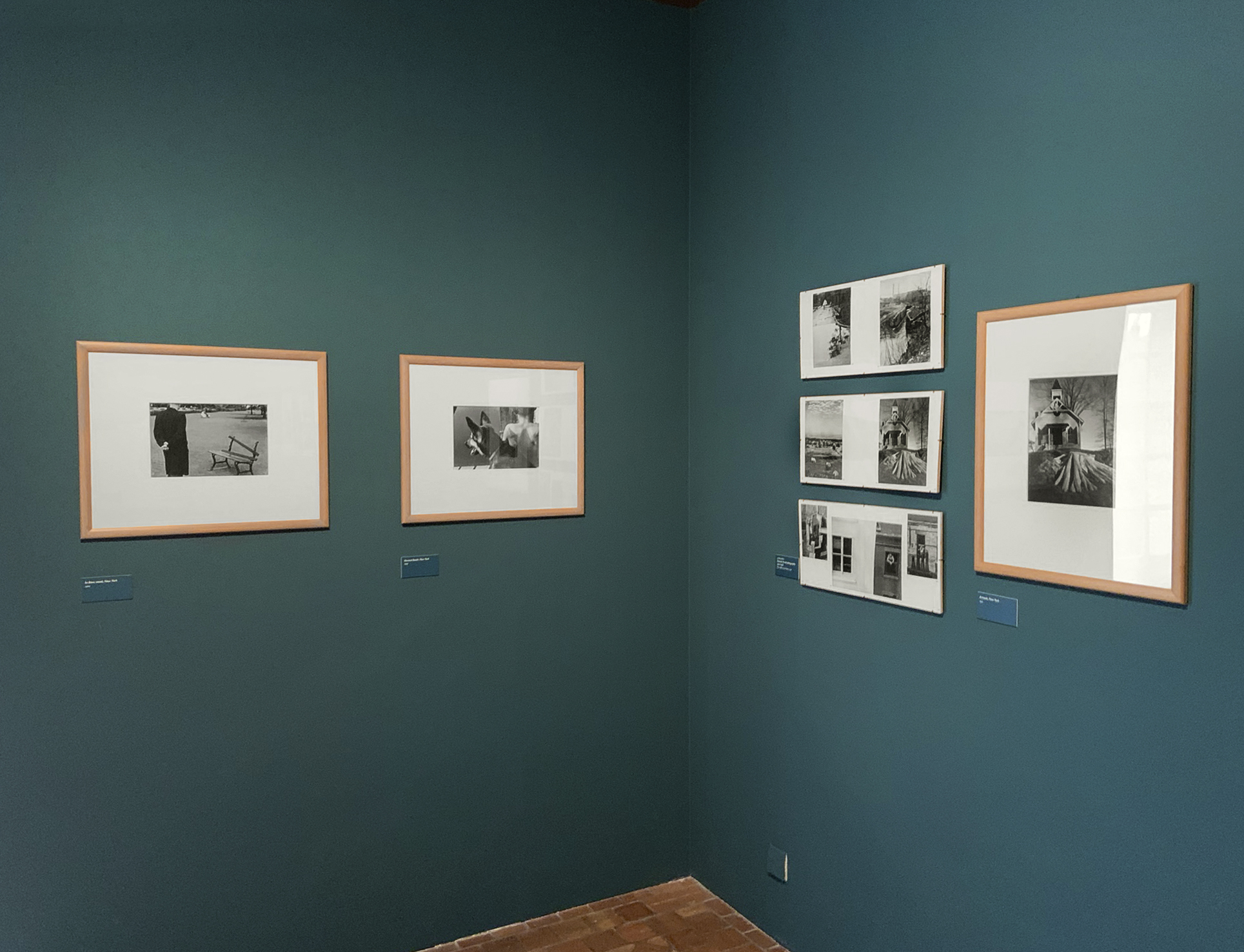
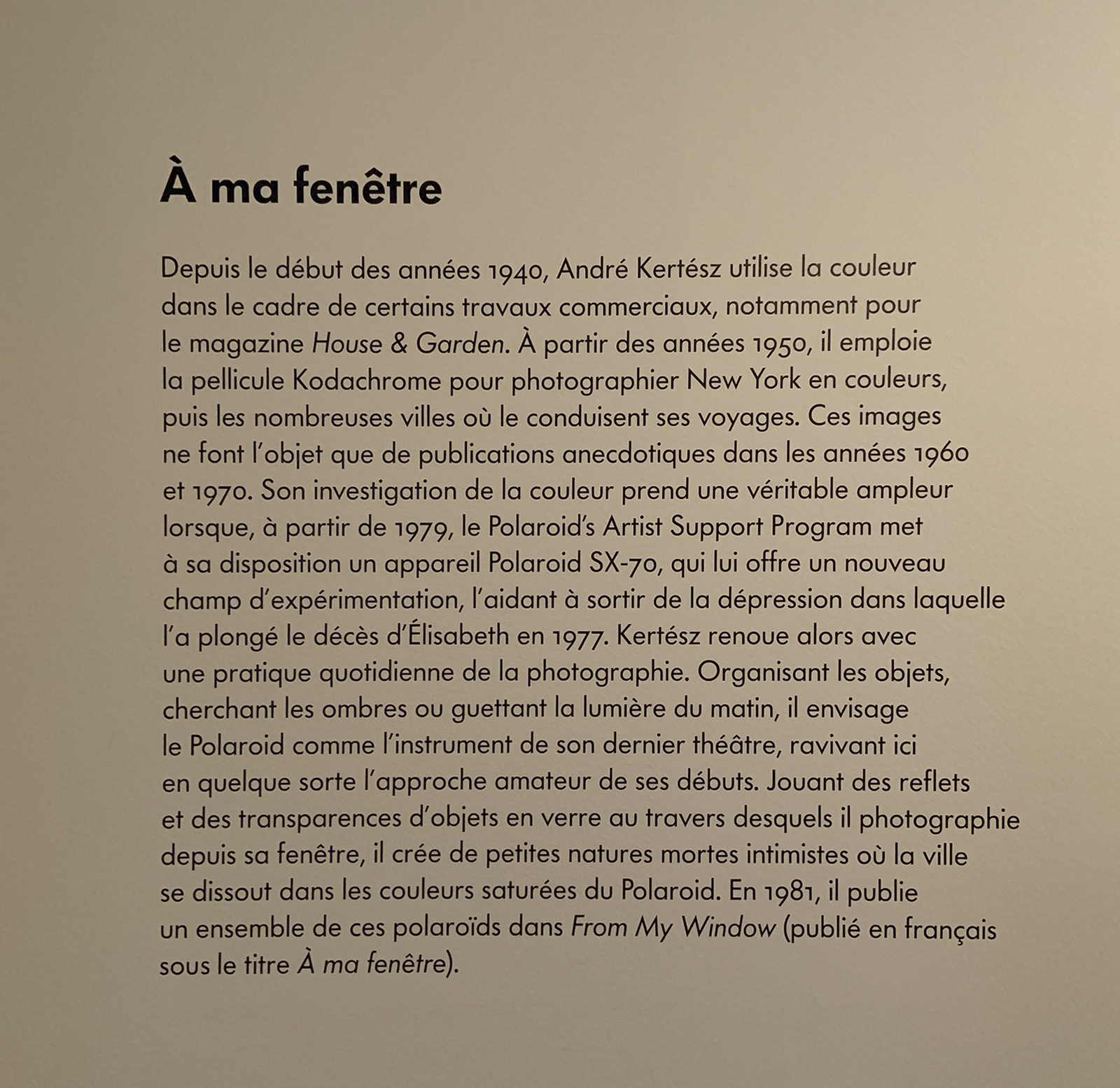
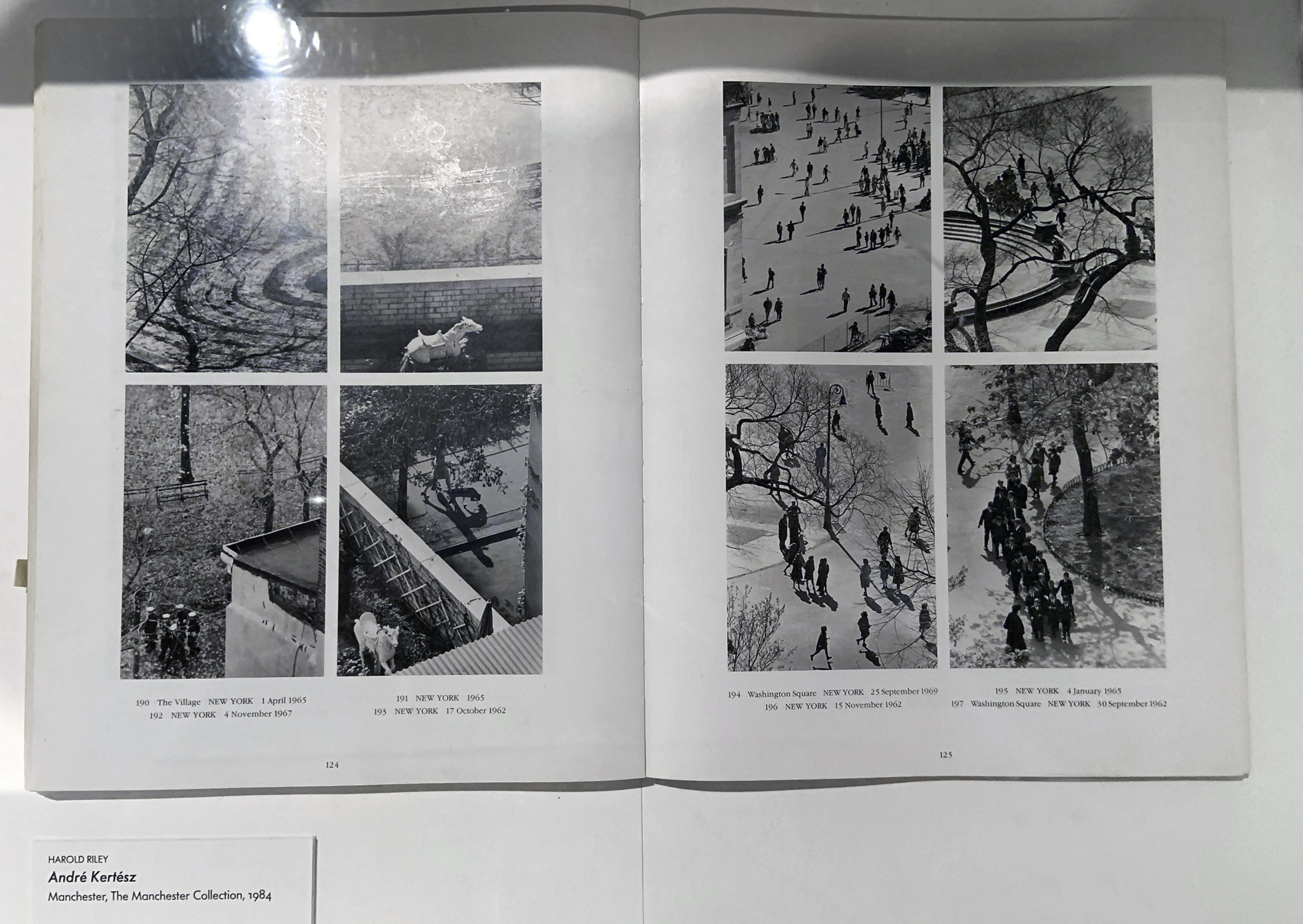
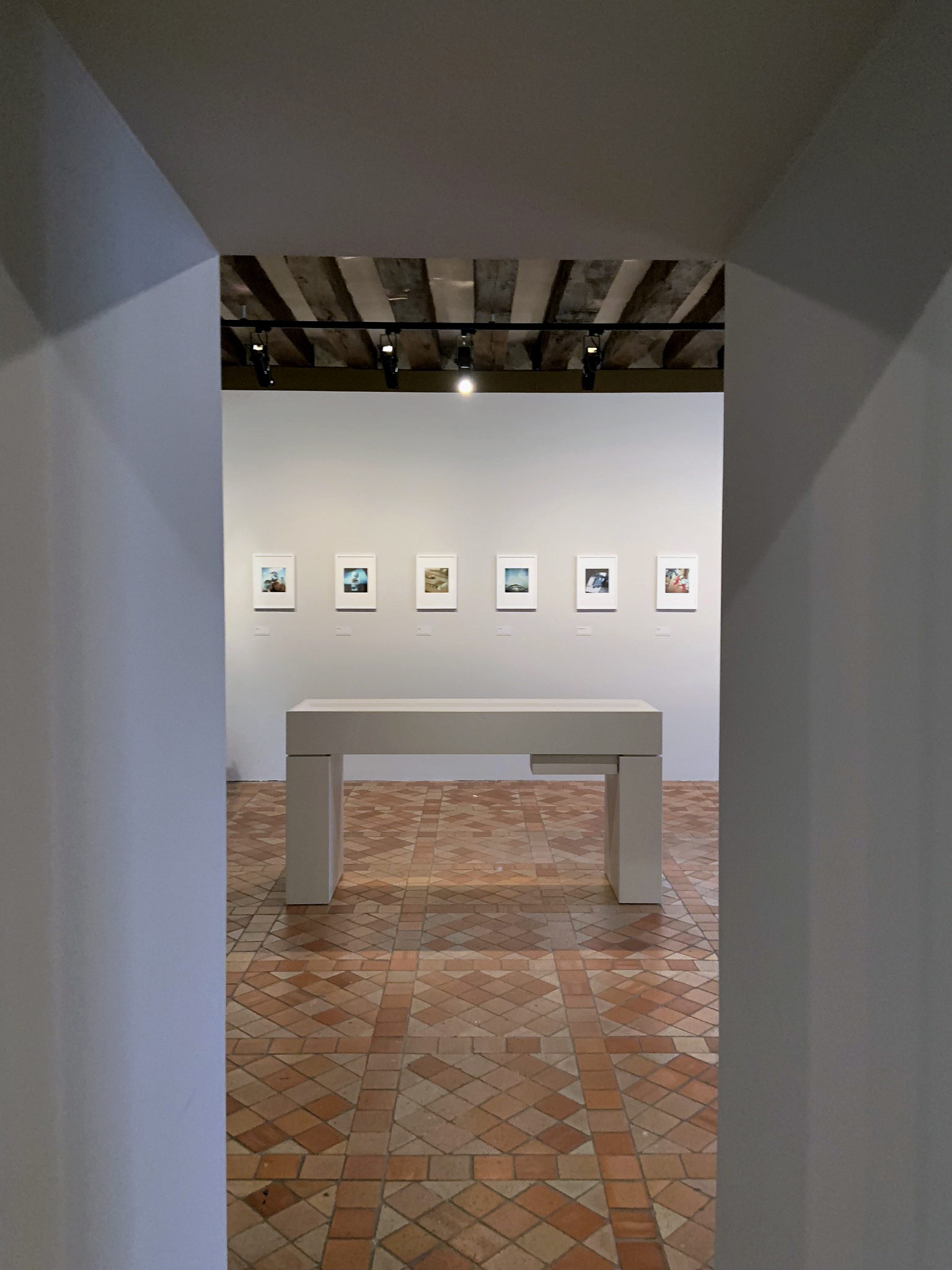
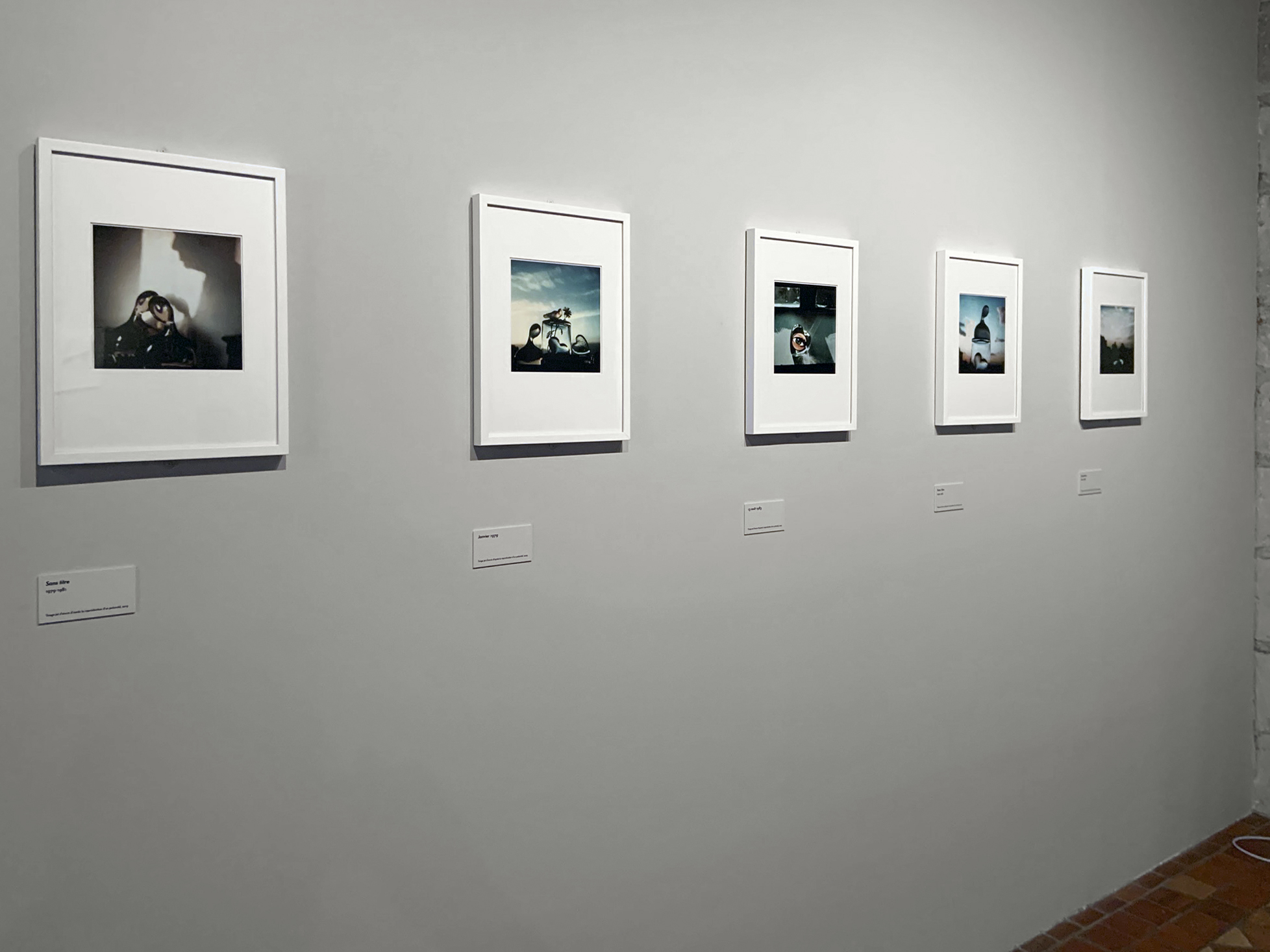
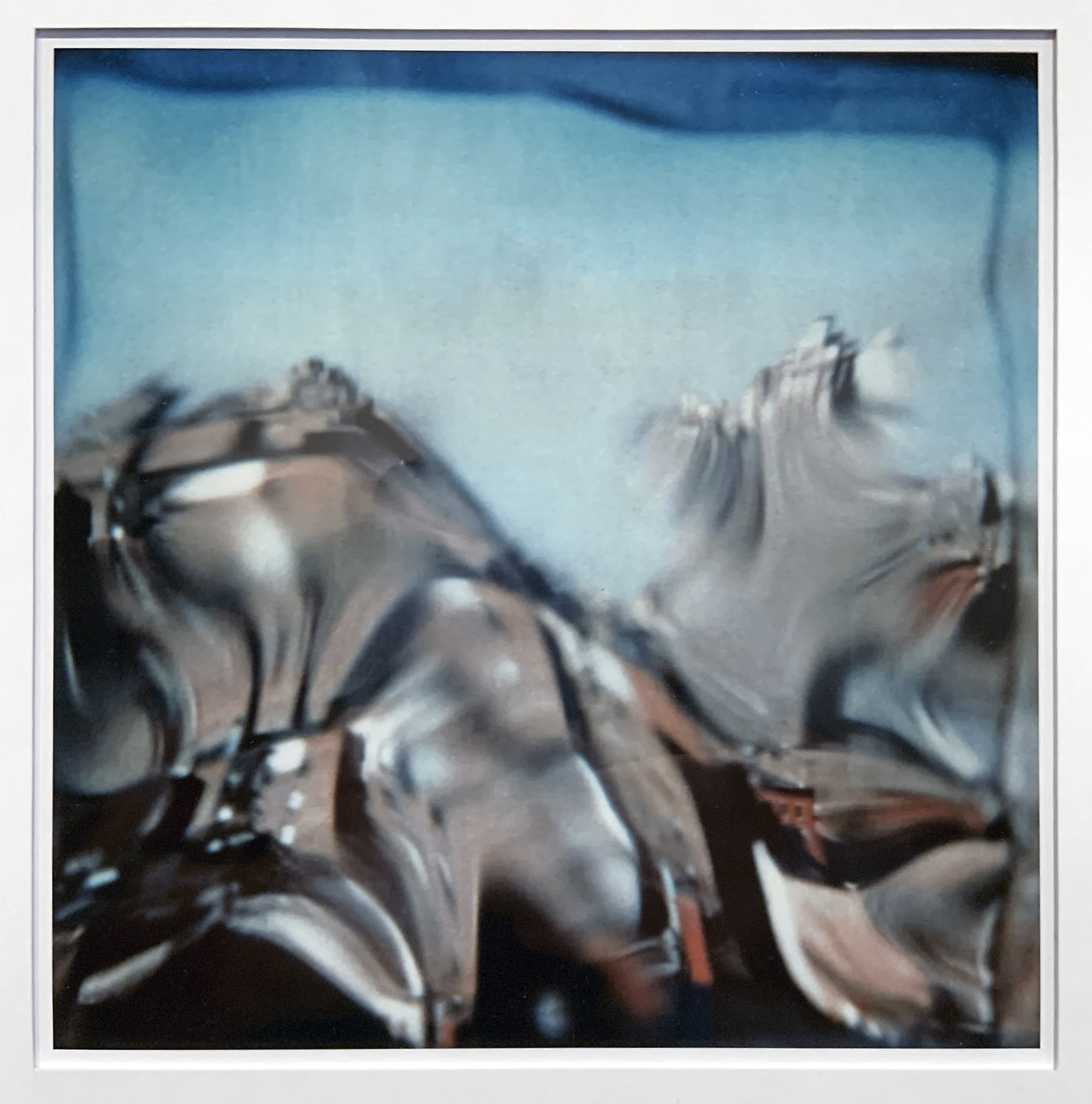
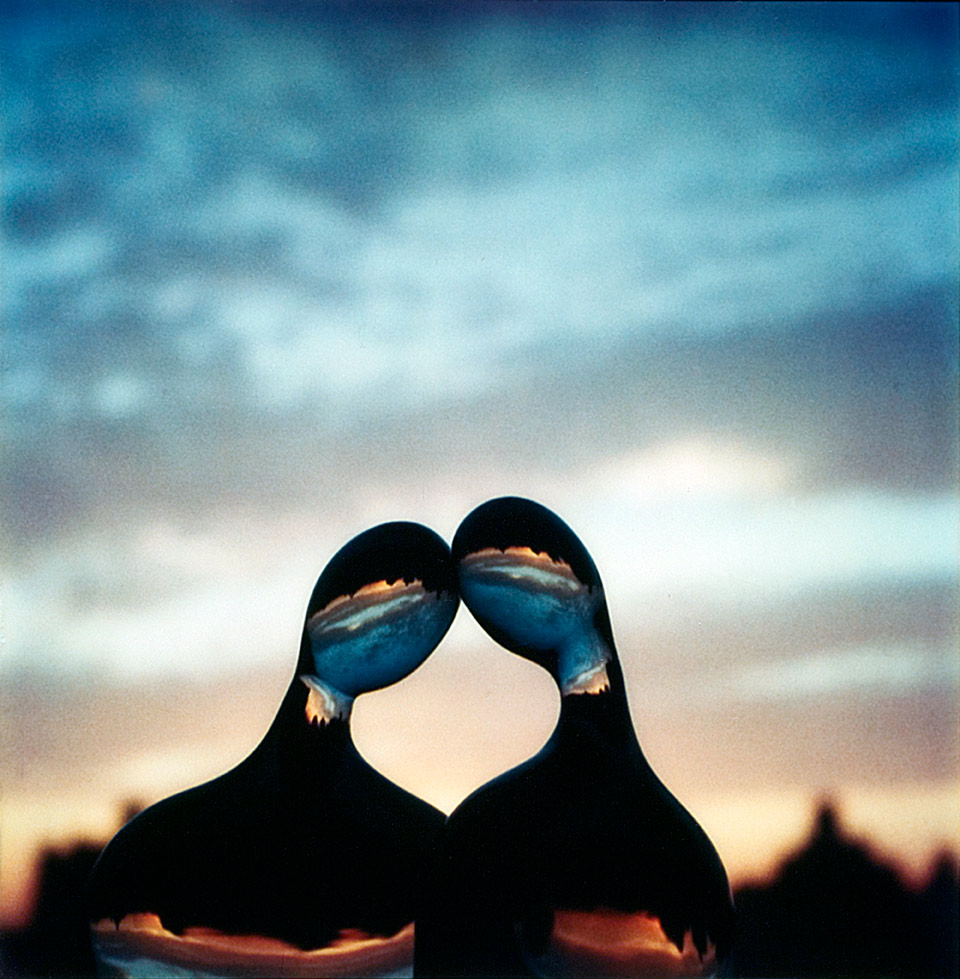
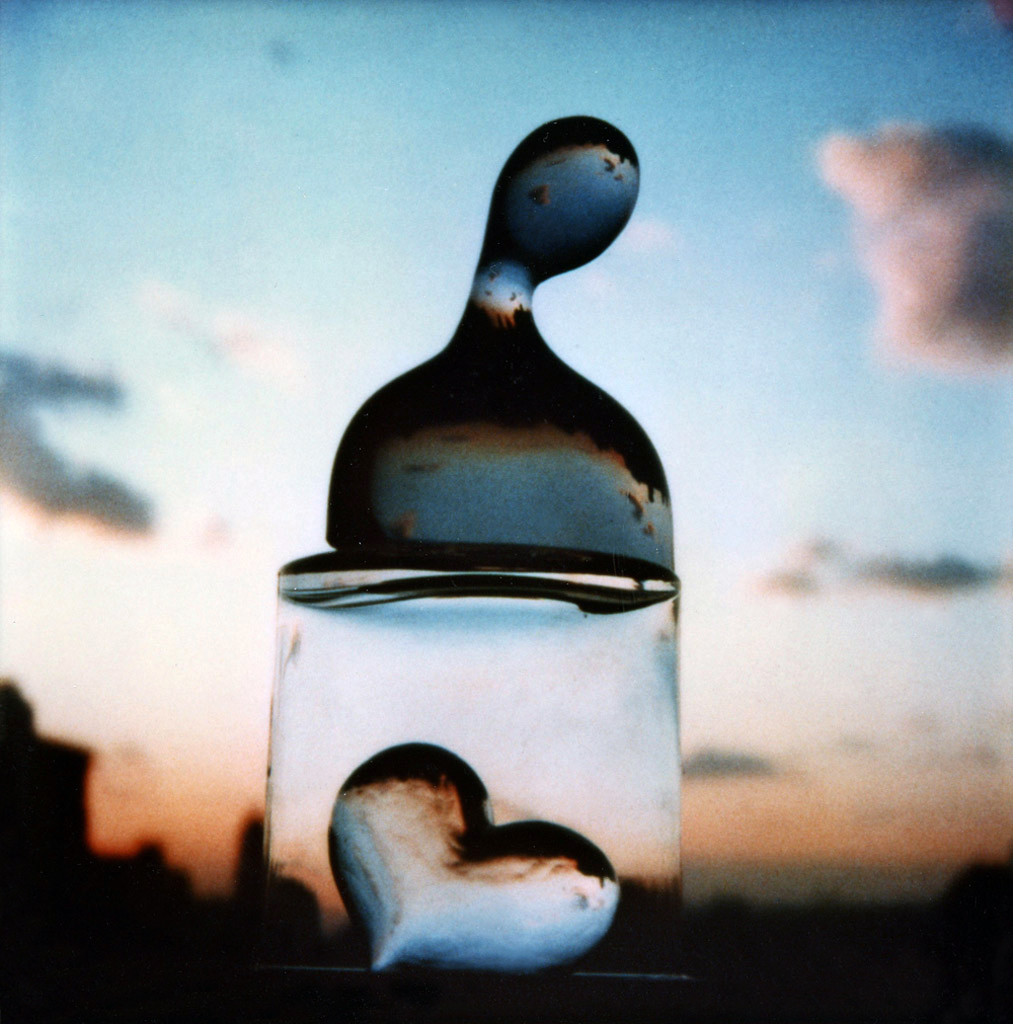
This posting contains photographs from his famous series “Distortions” (fascinating to see the original plates for the book of the same name, complete with cropping marks and red lead pencil annotations); American works from 1936 onwards, when Kertész moved to the United States to avoid the persecution of the Jews and the threat of World War II; and the late work colour Polaroids.

I admit that Kertész is not my favourite photographer. While I admire some of his photographs, I feel emotionally distant from most of them. Edward Clay observes in the quotation below that Kertész was “one of the most lyrical and formally inventive photographers of the twentieth-century… [His photographs] often convey a quiet mood of melancholy … He remains revered for his clarity of style and ability to blend simplicity with emotion, prizing impact over technical precision, seeking metaphors and geometry in everyday objects and scenarios, to turn the mundane into the surreal.”

Personally, I don’t find his photographs emotional nor lyrical, only a few poetic. Not melancholic, but geometric. In later works, he simplifies, simplifies, simplifies much like his friend Mondrian did. For me, the balance between sacred / geometry, the sacred geometry of the mystery of things, is often unbalanced in these images (particularly relevant, given the title of this exhibition). Is it enough just to turn the mundane into the surreal? Where does that lead the viewer? Is it enough to just observe, represent, without digging deeper.

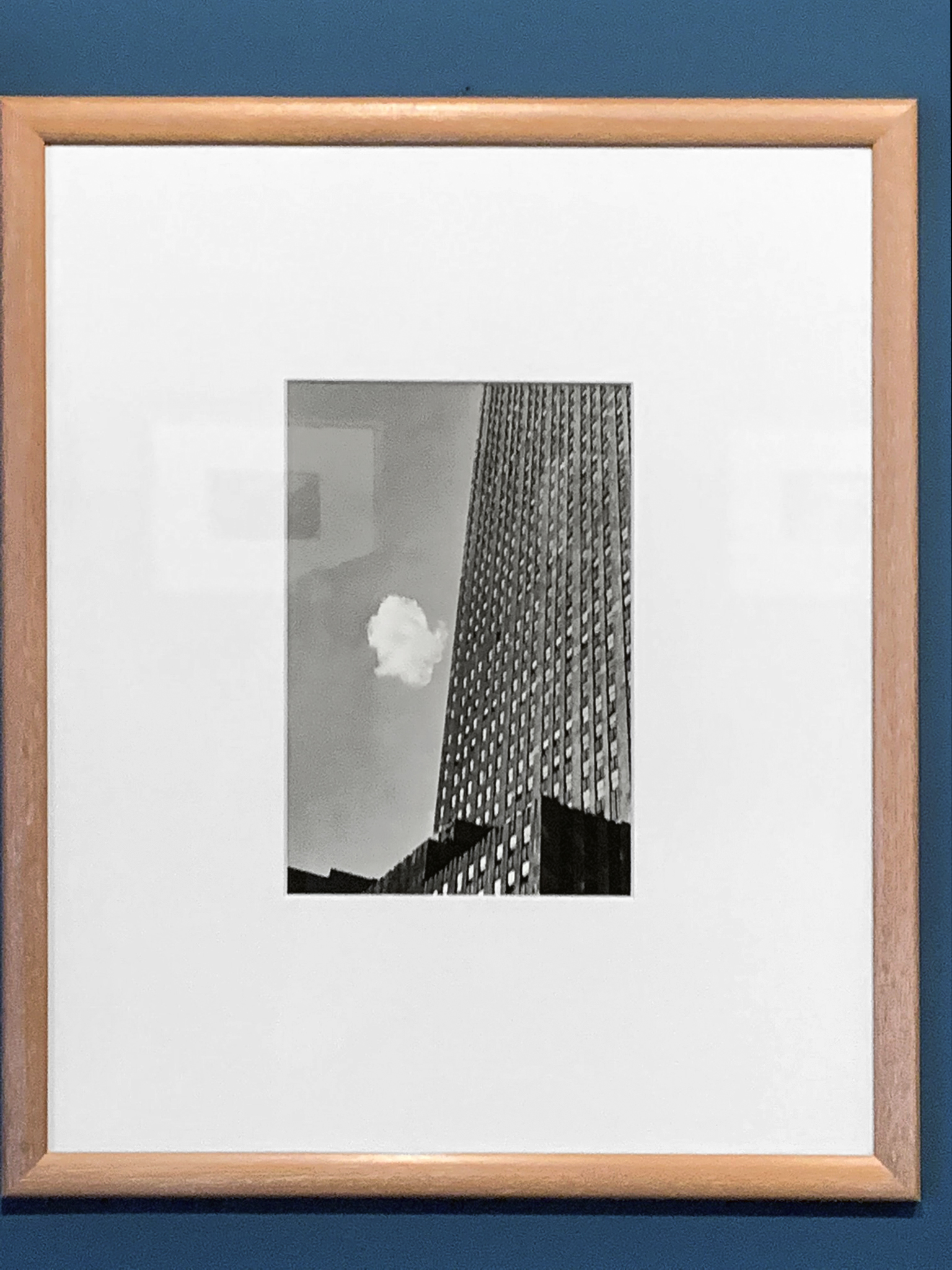
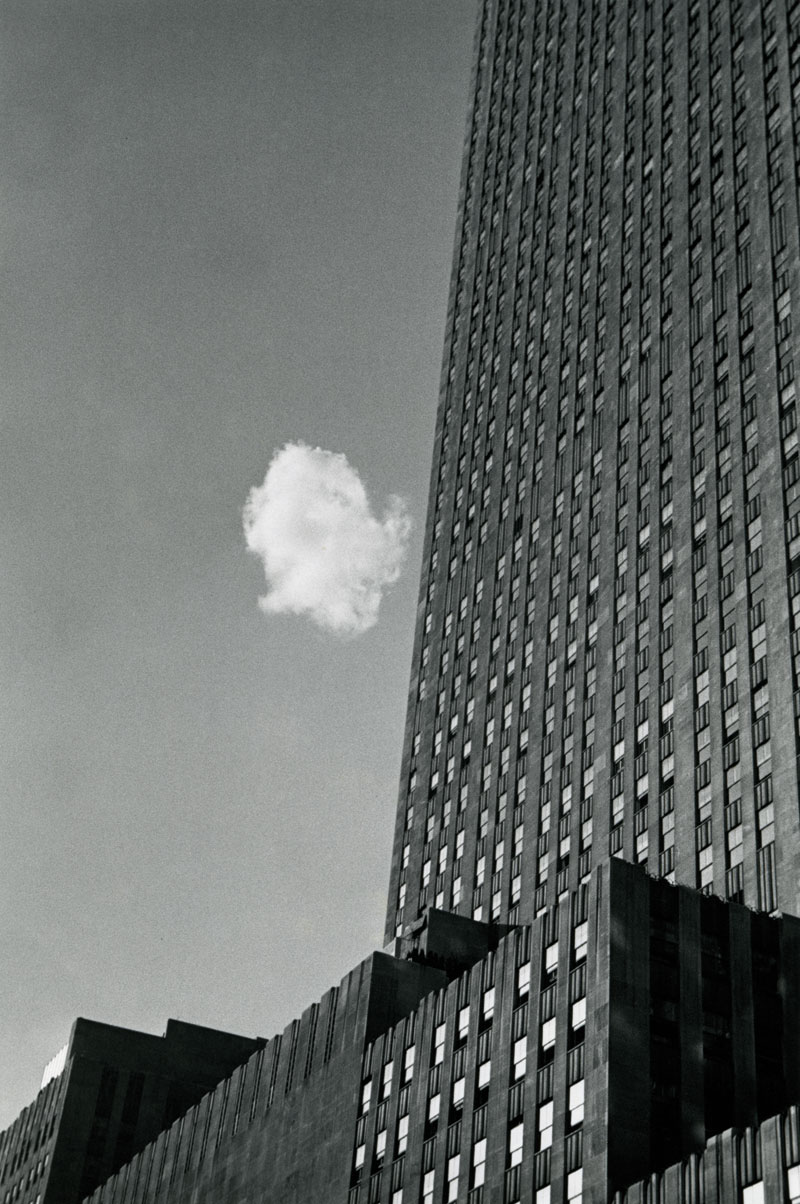
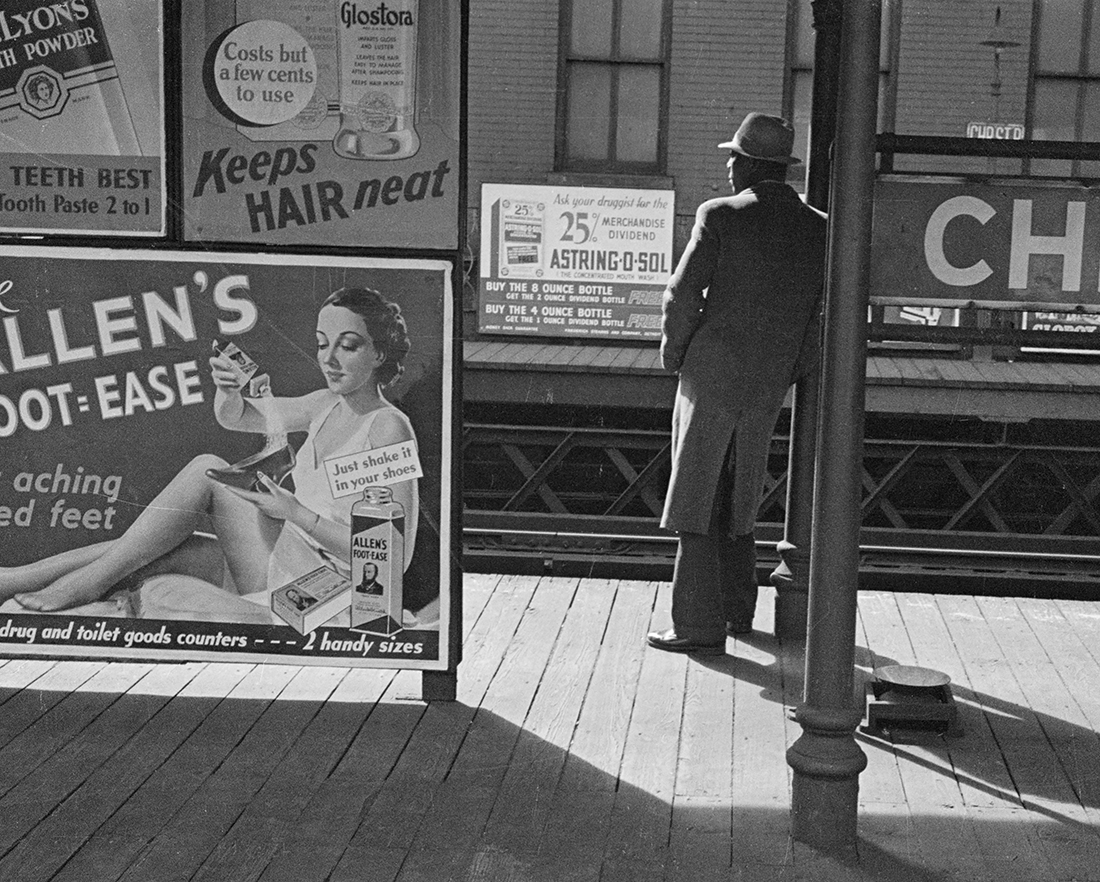
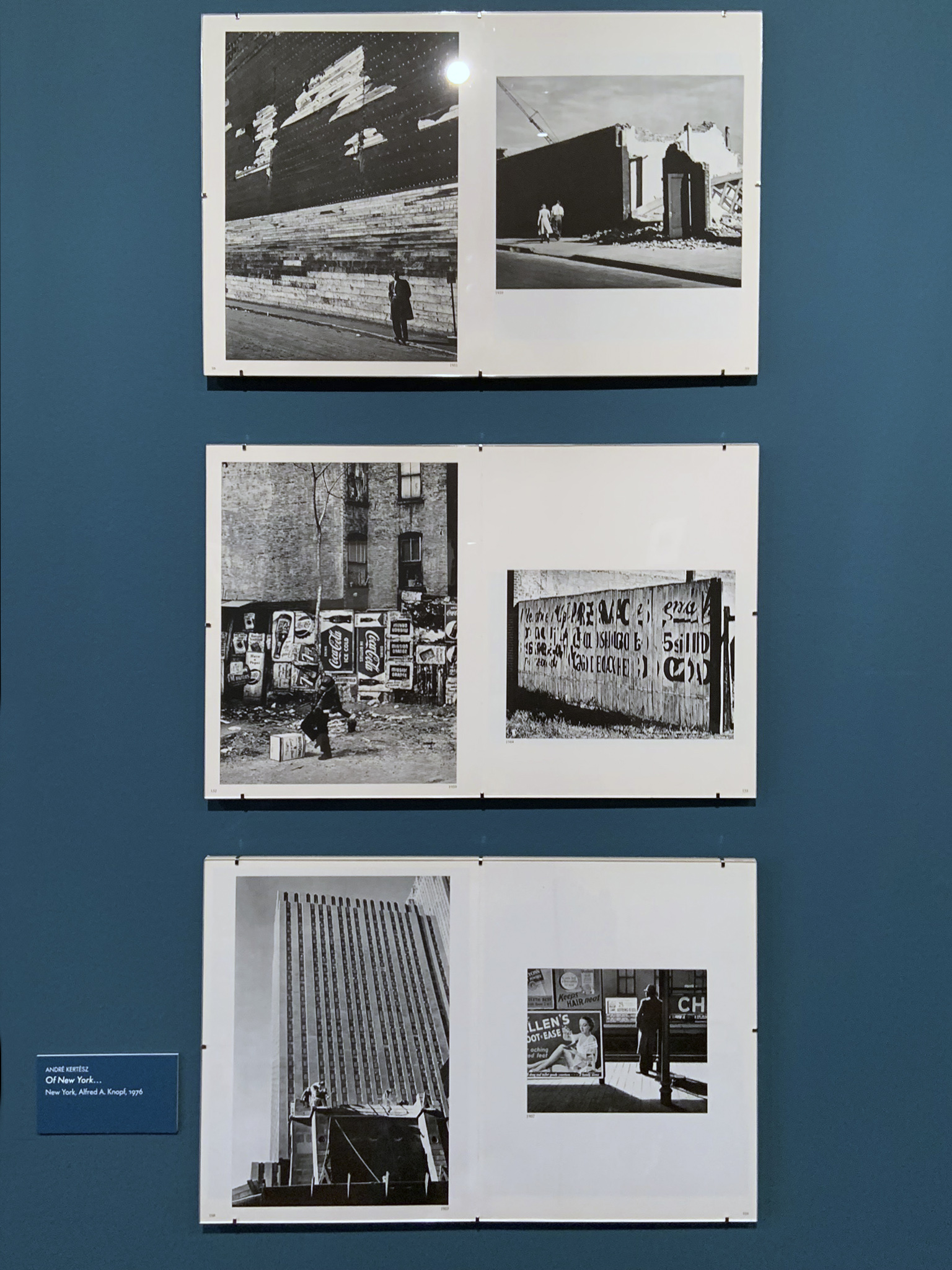
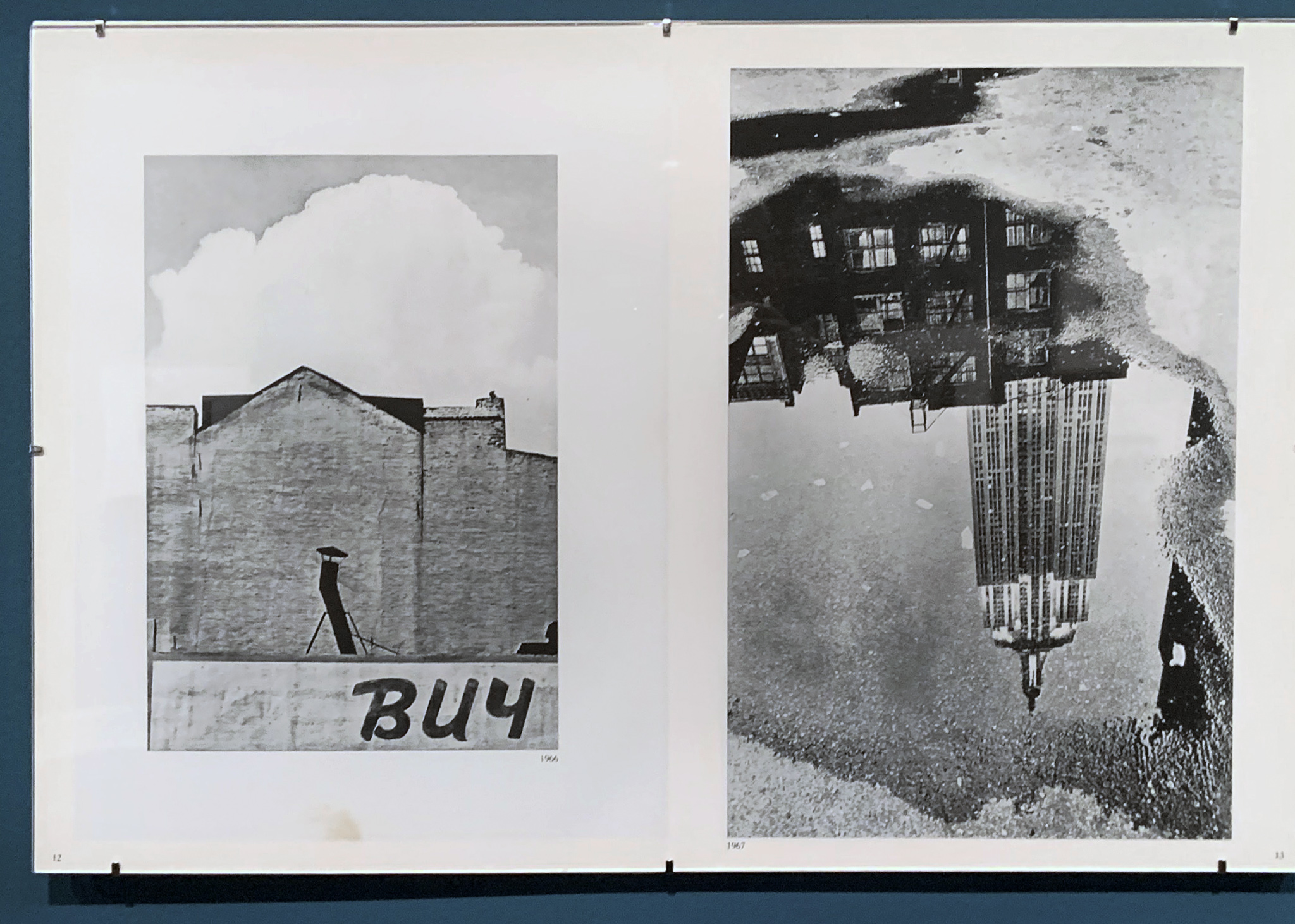
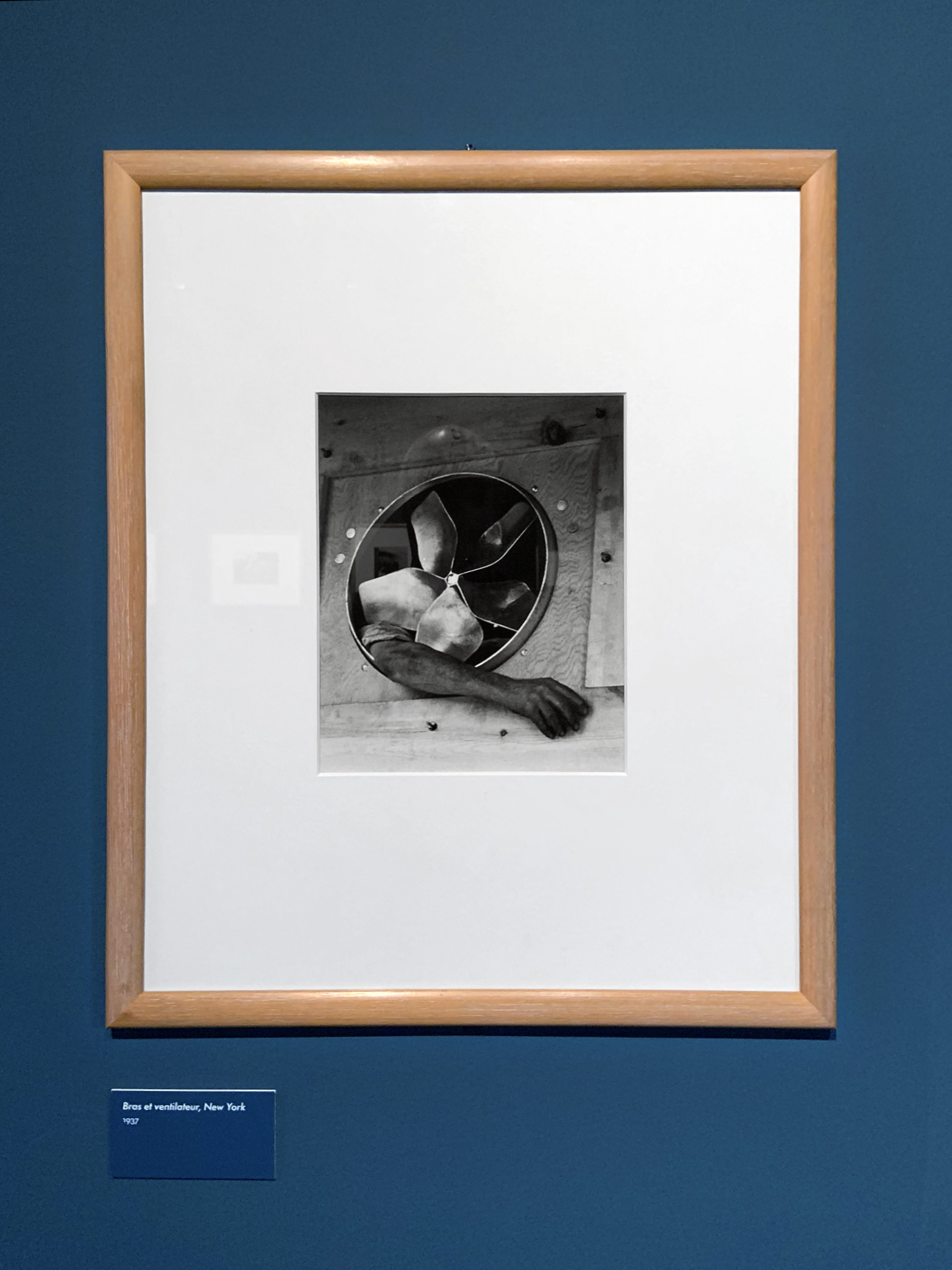
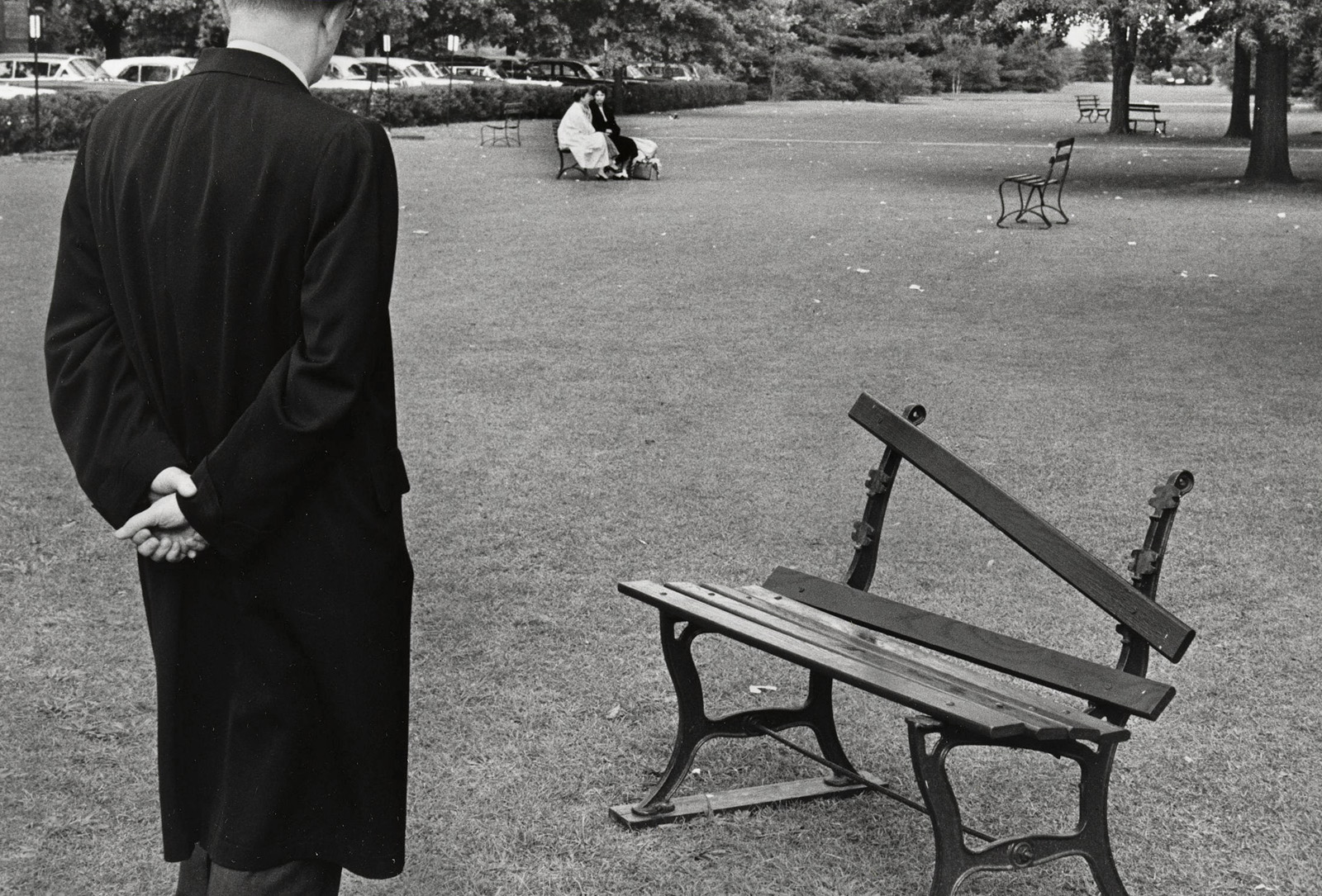
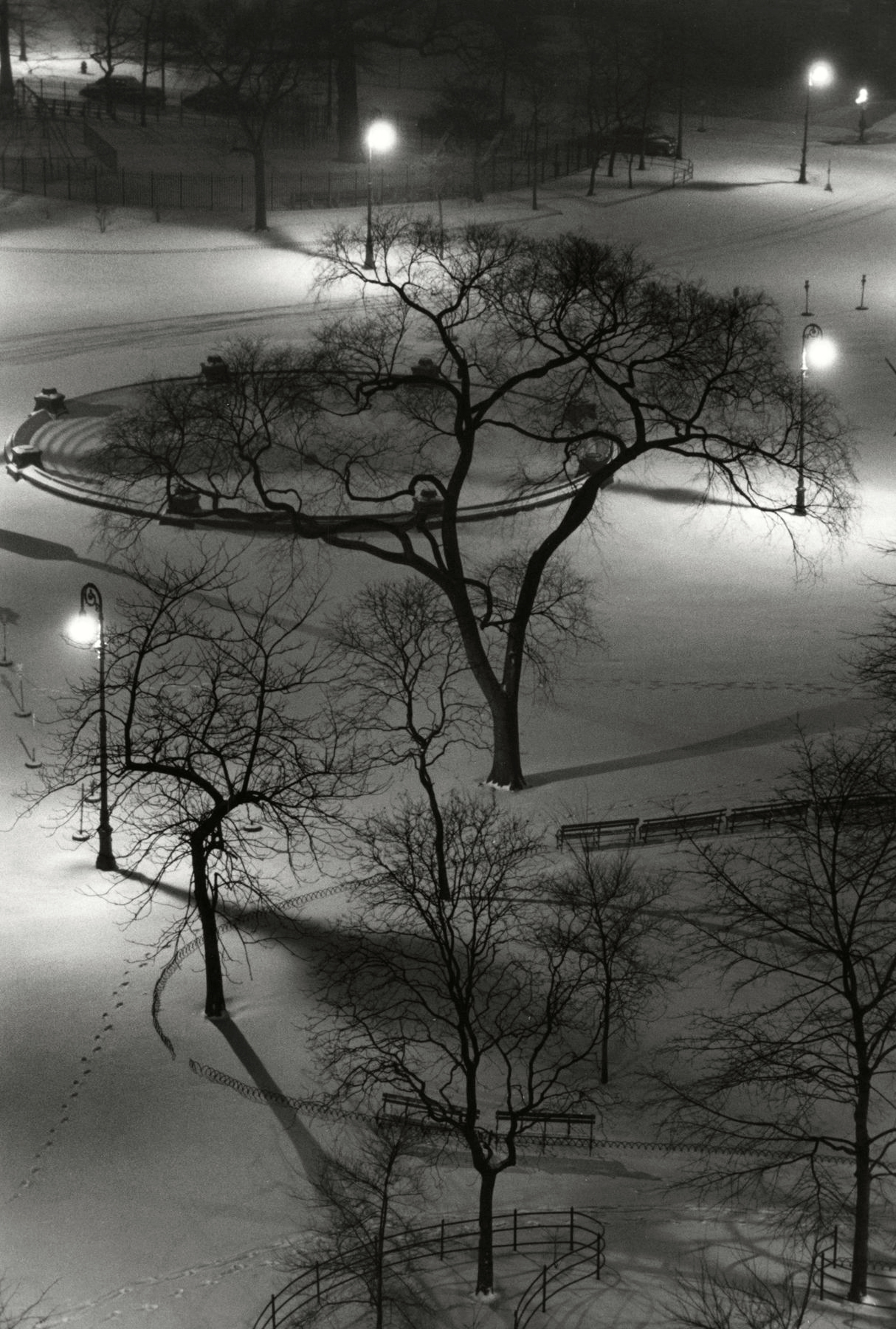
At his best, in images such as Underwater swimmer, Esztergom (1918, above), Arm and Fan, New York (1937, below) and Washington Square, New York (1954, below) there is a structured, avant-garde mystery about the reality of the world, as re/presented through the object of the photograph, it’s physical presence. In Underwater swimmer, the body is stretched and distorted by an element, water, not a man-made mirror. His photographs from Hungary, Italy and early Paris possess a sensitivity of spirit that seems to have been excised from his life, the older he got. Far too often in later images, there is a “brittleness” to his photography, in which the object of reflection sits at the surface of the image, all sparkling in unflinching light. The single cloud oh so lonely in the sterile city; the man looking at the broken bench; the “buy, buy, buy” of consumer culture. You consumer Kertész’s later images, you do not reflect on them.

Dr Marcus Bunyan


All iPhone installation photographs © Marcus Bunyan. Please click on the photographs for a larger version of the image. View Part 1 of the posting.


“André Kertész, one of the most lyrical and formally inventive photographers of the twentieth-century, whose work advocated for spontaneity over technical precision, has left a distinctive legacy of poetic images which form a bridge between the avant-garde and geometrical precision. A roamer for much of his life, his feelings of rootlessness manifest in his work and often convey a quiet mood of melancholy. …

Claiming “I am an amateur and I intend to stay that way for the rest of my life”, Kertesz was a great source of inspiration to photographic legends such as Cartier-Bresson.

He remains revered for his clarity of style and ability to blend simplicity with emotion, prizing impact over technical precision, seeking metaphors and geometry in everyday objects and scenarios, to turn the mundane into the surreal. Nothing was too plain or ordinary for his eye, since he had a special ability to breathe life into even the most ‘unremarkable’ subjects.”


Edward Clay. “André Kertész: between poetry and geometry,” on ‘The Independent Photographer’ website, May 19th 2020 [Online] Cited 26/08/2020


André Kertész (Hungarian, 1894-1985) 'Distortion #34' 1933 from the exhibition 'L'equilibriste, André Kertész' at Jeu de Paume, Château de Tours Part 2, June - Oct, 2019


André Kertész (Hungarian, 1894-1985)
Distortion #34 
1933
Gelatin silver print


André Kertész (Hungarian, 1894-1985) 'Distortion #40' 1933


André Kertész (Hungarian, 1894-1985)
Distortion #40
1933
Gelatin silver print


Installation view of the exhibition 'L'equilibriste, André Kertész' at Jeu de Paume, Château de Tours

Installation view of the exhibition 'L'equilibriste, André Kertész' at Jeu de Paume, Château de Tours

Installation view of the exhibition 'L'equilibriste, André Kertész' at Jeu de Paume, Château de Tours

Installation view of the exhibition 'L'equilibriste, André Kertész' at Jeu de Paume, Château de Tours showing at left, the photograph 'Underwater swimmer, Esztergom' 1918


Installation views of the exhibition L’equilibriste, André Kertész at Jeu de Paume, Château de Tours showing photographs from the series Distortions, the bottom image showing at left, the photograph Underwater swimmer, Esztergom 1918
Photos: Marcus Bunyan


André Kertész (Hungarian, 1894-1985) 'Original plates of the model of the book 'Distortions'' 1975-1976 (installation view)

André Kertész (Hungarian, 1894-1985) 'Original plates of the model of the book 'Distortions'' 1975-1976 (installation view)

André Kertész (Hungarian, 1894-1985) 'Original plates of the model of the book 'Distortions'' 1975-1976 (installation view)

André Kertész (Hungarian, 1894-1985) 'Original plates of the model of the book 'Distortions'' 1975-1976 (installation view)

André Kertész (Hungarian, 1894-1985) 'Original plates of the model of the book 'Distortions'' 1975-1976 (installation view)

André Kertész (Hungarian, 1894-1985) 'Original plates of the model of the book 'Distortions'' 1975-1976 (installation view)

André Kertész (Hungarian, 1894-1985) 'Original plates of the model of the book 'Distortions'' 1975-1976 (installation view)

André Kertész (Hungarian, 1894-1985) 'Original plates of the model of the book 'Distortions'' 1975-1976 (installation view)

André Kertész (Hungarian, 1894-1985) 'Original plates of the model of the book 'Distortions'' 1975-1976 (installation view)

André Kertész (Hungarian, 1894-1985) 'Original plates of the model of the book 'Distortions'' 1975-1976 (installation view)


André Kertész (Hungarian, 1894-1985)
Planches originales de la maquette du livre ‘Distortions’ (installation view)
Original plates of the model of the book ‘Distortions’ 
1975-1976
Collection Médiathèque de l’architecture et du patrimoine
Photos: Marcus Bunyan


Installation view of the exhibition 'L'equilibriste, André Kertész' at Jeu de Paume, Château de Tours


Installation view of the exhibition L’equilibriste, André Kertész at Jeu de Paume, Château de Tours showing photographs from the series Distortions
Photo: Marcus Bunyan


André Kertész (Hungarian, 1894-1985) 'Distortion #60' 1933 (installation view)


André Kertész (Hungarian, 1894-1985)
Distortion #60 (installation view)
1933
Contact original
Photo: Marcus Bunyan


André Kertész (Hungarian, 1894-1985) 'Distortion #86' 1933 (installation view)


André Kertész (Hungarian, 1894-1985)
Distortion #86 (installation view)
1933
Contact original
Photo: Marcus Bunyan


André Kertész (Hungarian, 1894-1985) 'Distortion #86' 1933 (installation view)


André Kertész (Hungarian, 1894-1985)
Distortion #86 (installation view)
1933
Contact original
Photo: Marcus Bunyan


André Kertész (Hungarian, 1894-1985) 'Distortion #109' 1933 (installation view)


André Kertész (Hungarian, 1894-1985)
Distortion #109 (installation view)
1933
Contact original
Photo: Marcus Bunyan


André Kertész (Hungarian, 1894-1985) 'Distortion #6' 1933 (installation view)


André Kertész (Hungarian, 1894-1985)
Distortion #6 (installation view)
1933
Contact original
Photo: Marcus Bunyan


André Kertész (Hungarian, 1894-1985) 'Distortion #159' 1933 (installation view)


André Kertész (Hungarian, 1894-1985)
Distortion #159 (installation view)
1933
Contact original
Photo: Marcus Bunyan


André Kertész (Hungarian, 1894-1985) 'Distortion #128' 1933 (installation view)


André Kertész (Hungarian, 1894-1985)
Distortion #128 (installation view)
1933
Contact original
Photo: Marcus Bunyan


André Kertész (Hungarian, 1894-1985) 'Distortion #70' 1933 (installation view)


André Kertész (Hungarian, 1894-1985)
Distortion #70 (installation view)
1933
Contact original
Photo: Marcus Bunyan


André Kertész (Hungarian, 1894-1985) 'Distortion #70' 1933 (installation view)


André Kertész (Hungarian, 1894-1985)
Distortion #70 (installation view)
1933
Contact original
Photo: Marcus Bunyan


André Kertész (Hungarian, 1894-1985) 'Distortion #80' 1933 (installation view)


André Kertész (Hungarian, 1894-1985)
Distortion #80 (installation view)
1933
Contact original
Photo: Marcus Bunyan


André Kertész (Hungarian, 1894-1985) 'Distortion' 1933 (installation view)


André Kertész (Hungarian, 1894-1985)
Distortion (installation view)
1933
Contact original
Photo: Marcus Bunyan


André Kertész (Hungarian, 1894-1985) 'Distorted Portrait (Face of a Woman), Paris' 1927 (installation view)


André Kertész (Hungarian, 1894-1985)
Portrait déformé (Visage de femme), Paris (installation view)
Distorted Portrait (Face of a Woman), Paris
1927
Gelatin silver print
Photo: Marcus Bunyan


One of the twentieth century’s great photographers, André Kertész (Budapest, 1894 – New York, 1985) left a prolific body of work spanning more than seventy years (1912-1984), a blend of the poetic and the intimate with its wellspring in his Hungarian culture. The Art of Poise: André Kertész traces this singular career, showcasing compositions that bear the stamp of Europe’s avant-garde art movements, from the artist’s earliest Hungarian photographs to the blossoming of his talent in France, and from his New York years to ultimate international recognition.

Kertész arrived in Paris in October 1925. Moving in avant-garde literary and artistic circles, he photographed his Hungarian friends, artists’ studios, street life and the city’s parks and gardens. In 1933 he embarked on his famous Distortions series of nudes deformed by funhouse mirrors, producing anamorphic images similar in spirit to the work of Pablo Picasso, Jean Arp and Henry Moore.

In addition to this profusion of activity, he explored the possibility of disseminating his work in publications. Between 1933 and the end of his life he had designed and published a total of nineteen books.

In 1936 Kertész and his wife Elizabeth left for New York, where he began with a brief assignment for Keystone, the world’s biggest photographic agency. He struggled, though, to carve out a place for himself in a context whose demands were very different from those of his Paris years.

Inspired by the rediscovery of his Hungarian and French negatives, from 1963 onwards he devoted himself solely to personal projects, and was offered retrospectives by the French National Library in Paris and MoMA in New York. This fresh recognition sparked a flurry of books in which he harked back to the high points of his oeuvre. In his last years, armed with a Polaroid, he returned to his earlier practice of everyday photography.

Text from the Jeu de Paume website for the earlier exhibition The Art of Poise: André Kertész


Text from the exhibition 'L'equilibriste, André Kertész' at Jeu de Paume, Château de Tours


Text from the exhibition L’equilibriste, André Kertész at Jeu de Paume, Château de Tours


André Kertész (Hungarian, 1894-1985) 'La Tulipe mélancolique, New York' (Melancholic Tulip, New York) 1939


André Kertész (Hungarian, 1894-1985)
La Tulipe mélancolique, New York
Melancholic Tulip, New York
1939
Gelatin silver print


André Kertész (Hungarian, 1894-1985) 'Paris' 1984 (installation view)


André Kertész (Hungarian, 1894-1985)
Paris (installation view)
1984
Gelatin silver print
Photo: Marcus Bunyan


André Kertész (Hungarian, 1894-1985) 'Paris' 1984


André Kertész (Hungarian, 1894-1985)
Paris
1984
Gelatin silver print


Installation view of the exhibition 'L'equilibriste, André Kertész' at Jeu de Paume, Château de Tours showing at top left, 'Ballet, New York' 1938; and at bottom left, 'Lake Placid' 1954

Installation view of the exhibition 'L'equilibriste, André Kertész' at Jeu de Paume, Château de Tours showing at top left, 'Ballet, New York' 1938; and at bottom left, 'Lake Placid' 1954


Installation views of the exhibition L’equilibriste, André Kertész at Jeu de Paume, Château de Tours showing at top left, Ballet, New York 1938; and at bottom left, Lake Placid 1954
Photos: Marcus Bunyan


André Kertész (Hungarian, 1894-1985) 'Ballet, New York' 1938 (installation view)


André Kertész (Hungarian, 1894-1985)
Ballet, New York (installation view)
1938
Gelatin silver print
Photo: Marcus Bunyan


André Kertész (Hungarian, 1894-1985) 'Ballet, New York' 1938


André Kertész (Hungarian, 1894-1985)
Ballet, New York
1938
Gelatin silver print


André Kertész (Hungarian, 1894-1985) 'Lake Placid' 1954 (installation view)


André Kertész (Hungarian, 1894-1985)
Lake Placid (installation view)
1954
Gelatin silver print
Photo: Marcus Bunyan


André Kertész (Hungarian, 1894-1985) 'New York' 1937 (installation view)


André Kertész (Hungarian, 1894-1985)
New York (installation view)
1937
Gelatin silver print
Photo: Marcus Bunyan


André Kertész (Hungarian, 1894-1985) 'New York' 1939 (installation view)


André Kertész (Hungarian, 1894-1985)
New York (installation view)
1939
Gelatin silver print
Photo: Marcus Bunyan


André Kertész (Hungarian, 1894-1985) 'New York' 1939


André Kertész (Hungarian, 1894-1985)
New York
1939
Gelatin silver print


André Kertész (Hungarian, 1894-1985) 'New York' 1954 (installation view)


André Kertész (Hungarian, 1894-1985)
New York (installation view)
1954
Gelatin silver print
Photo: Marcus Bunyan


André Kertész (Hungarian, 1894-1985) Escalier, rampe, ombres et femme, New York (installation view) 'Staircase, banister, shadows and woman, New York' 1951 (installation view)


André Kertész (Hungarian, 1894-1985)
Escalier, rampe, ombres et femme, New York (installation view)
Staircase, banister, shadows and woman, New York

1951
Gelatin silver print
Photo: Marcus Bunyan


André Kertész (Hungarian, 1894-1985) Escalier, rampe, ombres et femme, New York (installation view) 'Staircase, banister, shadows and woman, New York' 1951 (installation view)


André Kertész (Hungarian, 1894-1985)
Escalier, rampe, ombres et femme, New York (installation view)
Staircase, banister, shadows and woman, New York

1951
Gelatin silver print
Photo: Marcus Bunyan


André Kertész (Hungarian, 1894-1985) '"Buy", Long Island' 1963


André Kertész (Hungarian, 1894-1985)
“Buy”, Long Island
1963
Gelatin silver print


André Kertész (Hungarian, 1894-1985) '6th Avenue, New York' 1973


André Kertész (Hungarian, 1894-1985)
6th Avenue, New York
1973
Gelatin silver print


André Kertész (Hungarian, 1894-1985) 'Nuage égaré' 'Lost cloud' 1937 (installation view)


André Kertész (Hungarian, 1894-1985)
Nuage égaré
Lost cloud
1937
Photo: Marcus Bunyan


André Kertész. 'Lost Cloud' New York, 1937


André Kertész (Hungarian, 1894-1985)
Nuage égaré
Lost cloud
1937
Gelatin silver print


André Kertész (Hungarian, 1894-1985) 'Poughkeepsie, New York' 1937 (installation view)


André Kertész (Hungarian, 1894-1985)
Poughkeepsie, New York (installation view)
1937
Gelatin silver print
Photo: Marcus Bunyan


André Kertész (Hungarian, 1894-1985) 'Poughkeepsie, New York' 1937


André Kertész (Hungarian, 1894-1985)
Poughkeepsie, New York
1937
Gelatin silver print


André Kertész (Hungarian, 1894-1985) 'Of New York…' New York, Alfred A. Knopf, 1976 (installation view)


André Kertész (Hungarian, 1894-1985)
Of New York… (installation view)
New York, Alfred A. Knopf, 1976
Photo: Marcus Bunyan


André Kertész (Hungarian, 1894-1985) 'New York' 1951 (installation view)


André Kertész (Hungarian, 1894-1985)
New York (installation view)
1951
Gelatin silver print
Photo: Marcus Bunyan


André Kertész (Hungarian, 1894-1985) 'Of New York…' New York, Alfred A. Knopf, 1976 (installation view)


André Kertész (Hungarian, 1894-1985)
Of New York… (installation view)
New York, Alfred A. Knopf, 1976
Photo: Marcus Bunyan


André Kertész (Hungarian, 1894-1985) '"Buy", New York' 1966 (installation view)


André Kertész (Hungarian, 1894-1985)
“Buy”, New York (installation view)
1966
Gelatin silver print
Photo: Marcus Bunyan


André Kertész (Hungarian, 1894-1985) 'Of New York…' New York, Alfred A. Knopf, 1976 (installation view)


André Kertész (Hungarian, 1894-1985)
Of New York… (installation view)
New York, Alfred A. Knopf, 1976
Photo: Marcus Bunyan


André Kertész (Hungarian, 1894-1985) 'Of New York…' New York, Alfred A. Knopf, 1976 (installation view)


André Kertész (Hungarian, 1894-1985)
Double page de la maquette originale du livre ‘Of New York…’ (installation view)
Double page of the original model of the book ‘Of New York…’
1975-76
Photo: Marcus Bunyan


Installation view of the exhibition 'L'equilibriste, André Kertész' at Jeu de Paume, Château de Tours showing at second left, 'New York' 1939; and at third left, 'New York' 1936


Installation view of the exhibition L’equilibriste, André Kertész at Jeu de Paume, Château de Tours showing at second left, New York 1939; and at third left, New York 1936
Photo: Marcus Bunyan


André Kertész (Hungarian, 1894-1985) 'New York' 1939 (installation view)


André Kertész (Hungarian, 1894-1985)
New York (installation view)
1939
Gelatin silver print
Photo: Marcus Bunyan


André Kertész (Hungarian, 1894-1985) 'New York' 1936 (installation view)


André Kertész (Hungarian, 1894-1985)
New York (installation view)
1936
Gelatin silver print
Photo: Marcus Bunyan


André Kertész (Hungarian, 1894-1985) 'New York' 1936


André Kertész (Hungarian, 1894-1985)
New York
1936
Gelatin silver print


Installation view of the exhibition 'L'equilibriste, André Kertész' at Jeu de Paume, Château de Tours showing at second right, 'Arm and Fan, New York' 1937


Installation view of the exhibition L’equilibriste, André Kertész at Jeu de Paume, Château de Tours showing at second right, Arm and Fan, New York 1937
Photo: Marcus Bunyan


André Kertész (Hungarian, 1894-1985) 'Bras et ventilateur, New York' 'Arm and Fan, New York' 1937 (installation view)


André Kertész (Hungarian, 1894-1985)
Bras et ventilateur, New York (installation view)
Arm and Fan, New York
1937
Gelatin silver print
Photo: Marcus Bunyan


André Kertész (Hungarian, 1894-1985) 'Arm and Fan, New York' 1937


André Kertész (Hungarian, 1894-1985)
Bras et ventilateur, New York
Arm and Fan, New York
1937
Gelatin silver print


André Kertész (Hungarian, 1894-1985) 'Of New York…' New York, Alfred A. Knopf, 1976 (installation view)


André Kertész (Hungarian, 1894-1985)
Of New York… (installation view)
New York, Alfred A. Knopf, 1976
Photo: Marcus Bunyan


André Kertész (Hungarian, 1894-1985) 'New York' 1947 (installation view)


André Kertész (Hungarian, 1894-1985)
New York (installation view)
1947
Gelatin silver print
Photo: Marcus Bunyan


André Kertész (Hungarian, 1894-1985) 'Le retour au port, New York' 'Return to port, New York' 1944 (installation view)


André Kertész (Hungarian, 1894-1985)
Le retour au port, New York (installation view)
Return to port, New York
1944
Gelatin silver print
Photo: Marcus Bunyan


Installation view of the exhibition 'L'equilibriste, André Kertész' at Jeu de Paume, Château de Tours showing at left, 'Disappearance, New York' 1955


Installation view of the exhibition L’equilibriste, André Kertész at Jeu de Paume, Château de Tours showing at left, Disappearance, New York 1955
Photo: Marcus Bunyan


André Kertész (Hungarian, 1894-1985) 'La Disparition, New York' 'Disappearance, New York' 1955 (installation view)


André Kertész (Hungarian, 1894-1985)
La Disparition, New York (installation view)
Disappearance, New York
1955
Gelatin silver print
Photo: Marcus Bunyan


André Kertész (Hungarian, 1894-1985) 'La Disparition, New York' 'Disappearance, New York' 1955 (installation view)


André Kertész (Hungarian, 1894-1985)
La Disparition, New York (installation view)
Disappearance, New York
1955
Gelatin silver print
Photo: Marcus Bunyan


André Kertész (Hungarian, 1894-1985) 'Disappearance, New York' 1955


André Kertész (Hungarian, 1894-1985)
Disappearance, New York
1955
Gelatin silver print


André Kertész (Hungarian, 1894-1985) 'New York' 1969 (installation view)


André Kertész (Hungarian, 1894-1985)
New York (installation view)
1969
Gelatin silver print
Photo: Marcus Bunyan


Text from the exhibition 'L'equilibriste, André Kertész' at Jeu de Paume, Château de Tours


Text from the exhibition L’equilibriste, André Kertész at Jeu de Paume, Château de Tours


Installation view of the exhibition 'L'equilibriste, André Kertész' at Jeu de Paume, Château de Tours

Installation view of the exhibition 'L'equilibriste, André Kertész' at Jeu de Paume, Château de Tours

Installation view of the exhibition 'L'equilibriste, André Kertész' at Jeu de Paume, Château de Tours

Installation view of the exhibition 'L'equilibriste, André Kertész' at Jeu de Paume, Château de Tours showing at left, 'Broken Bench, New York' 1962


Installation views of the exhibition L’equilibriste, André Kertész at Jeu de Paume, Château de Tours showing at left in the bottom image, Broken Bench, New York 1962
Photos: Marcus Bunyan


André Kertész (Hungarian, 1894-1985) 'Le Banc cassé, New York' (Broken Bench, New York) 1962


André Kertész (Hungarian, 1894-1985)
Le Banc cassé, New York
Broken Bench, New York

1962
Gelatin silver print


André Kertész (Hungarian, 1894-1985) 'Of New York…' New York, Alfred A. Knopf, 1976 (installation view)


André Kertész (Hungarian, 1894-1985)
Of New York… (installation view)
New York, Alfred A. Knopf, 1976
Photo: Marcus Bunyan


André Kertész (Hungarian, 1894-1985) 'Soixante ans de photographie' 'Sixty years of photography' 1912-1972 (installation view)


André Kertész (Hungarian, 1894-1985)
Soixante ans de photographie (installation view)
Sixty years of photography
1912-1972
Paris, éditions du Chêne, 1972
Photo: Marcus Bunyan


André Kertész (Hungarian, 1894-1985) 'Jour pluvieux, Tokyo' 'Rainy day, Tokyo' 1968 (installation view)


André Kertész (Hungarian, 1894-1985)
Jour pluvieux, Tokyo (installation view)
Rainy day, Tokyo
1968
Gelatin silver print
Photo: Marcus Bunyan


André Kertész (Hungarian, 1894-1985) 'McDougall Alley, New York' 1965 (installation view)


André Kertész (Hungarian, 1894-1985)
McDougall Alley, New York (installation view)
1965
Gelatin silver print
Photo: Marcus Bunyan


André Kertész (Hungarian, 1894-1985) 'Washington Square, New York' 1954


André Kertész (Hungarian, 1894-1985)
Washington Square, New York
1954
Gelatin silver print


André Kertész (Hungarian, 1894-1985) 'Washington Square, New York' 1954 (installation view)


André Kertész (Hungarian, 1894-1985)
Washington Square, New York (installation view)
1954
Gelatin silver print
Photo: Marcus Bunyan


André Kertész (Hungarian, 1894-1985) 'Washington Square, New York' 1954


André Kertész (Hungarian, 1894-1985)
Washington Square, New York
1954
Gelatin silver print


André Kertész (Hungarian, 1894-1985) 'Winter Garden, New York' 1970 (installation view)


André Kertész (Hungarian, 1894-1985)
Jardin d’hiver, New York (installation view)
Winter Garden, New York
1970
Gelatin silver print
Photo: Marcus Bunyan


André Kertész (Hungarian, 1894-1985) 'Martinique' 1972


André Kertész (Hungarian, 1894-1985)
Martinique
1972
Gelatin silver print


André Kertész (Hungarian, 1894-1985) 'Soixante ans de photographie' 'Sixty years of photography' 1912-1972 (installation view)


André Kertész (Hungarian, 1894-1985)
Soixante ans de photographie (installation view)
Sixty years of photography
1912-1972
Paris, éditions du Chêne, 1972
Photo: Marcus Bunyan


André Kertész (Hungarian, 1894-1985) 'In the cellar, Williamsburg' 1951 (installation view)


André Kertész (Hungarian, 1894-1985)
Dans la cave, Williamsburg (installation view)
In the cellar, Williamsburg
1951
Gelatin silver print
Photo: Marcus Bunyan


André Kertész (Hungarian, 1894-1985) 'Nara, Japan' 1968


André Kertész (Hungarian, 1894-1985)
Nara, Japan
1968
Gelatin silver print


Text from the exhibition 'L'equilibriste, André Kertész' at Jeu de Paume, Château de Tours


Text from the exhibition L’equilibriste, André Kertész at Jeu de Paume, Château de Tours


Harold Riley. 'André Kertész' Manchester, The Manchester Collection, 1984  (installation view)


Harold Riley
André Kertész (installation view)
Manchester, The Manchester Collection, 1984
Collection Médiathèque de l’architecture et du patrimoine
Photo: Marcus Bunyan


Installation view of the exhibition 'L'equilibriste, André Kertész' at Jeu de Paume, Château de Tours

Installation view of the exhibition 'L'equilibriste, André Kertész' at Jeu de Paume, Château de Tours

Installation view of the exhibition 'L'equilibriste, André Kertész' at Jeu de Paume, Château de Tours

Installation view of the exhibition 'L'equilibriste, André Kertész' at Jeu de Paume, Château de Tours showing his late Polaroid work


Installation views of the exhibition L’equilibriste, André Kertész at Jeu de Paume, Château de Tours showing his late Polaroid work
Photos: Marcus Bunyan


André Kertész (Hungarian, 1894-1985) '12 December 1979' (installation view)


André Kertész (Hungarian, 1894-1985)
12 December 1979 (installation view)
1979
Tirage jet d’encre d’après la reproduction d’un polaroid, 2019
Inkjet print from a reproduction of a polaroid, 2019
Photo: Marcus Bunyan


André Kertész (Hungarian, 1894-1985) 'Untitled' 1979-1981 (installation view)


André Kertész (Hungarian, 1894-1985)
Untitled (installation view)
1979-1981
Tirage jet d’encre d’après la reproduction d’un polaroid, 2019
Inkjet print from a reproduction of a polaroid, 2019
Photo: Marcus Bunyan


André Kertész (Hungarian, 1894-1985) 'June 1979' (installation view)


André Kertész (Hungarian, 1894-1985)
June 1979 (installation view)
1979
Tirage jet d’encre d’après la reproduction d’un polaroid, 2019
Inkjet print from a reproduction of a polaroid, 2019
Photo: Marcus Bunyan


André Kertész (Hungarian, 1894-1985) '21 June 1979' (installation view)


André Kertész (Hungarian, 1894-1985)
21 June 1979 (installation view)
1979
Tirage jet d’encre d’après la reproduction d’un polaroid, 2019
Inkjet print from a reproduction of a polaroid, 2019
Photo: Marcus Bunyan


André Kertész (Hungarian, 1894-1985) 'Untitled' 1979-1981 (installation view)


André Kertész (Hungarian, 1894-1985)
Untitled (installation view)
1979-1981
Tirage jet d’encre d’après la reproduction d’un polaroid, 2019
Inkjet print from a reproduction of a polaroid, 2019
Photo: Marcus Bunyan


André Kertész (Hungarian, 1894-1985) '13 August 1979' (installation view)


André Kertész (Hungarian, 1894-1985)
13 August 1979 (installation view)
1979
Tirage jet d’encre d’après la reproduction d’un polaroid, 2019
Inkjet print from a reproduction of a polaroid, 2019
Photo: Marcus Bunyan


André Kertész (Hungarian, 1894-1985) 'July 3, 1979
'


André Kertész (Hungarian, 1894-1985)
July 3, 1979

1979
Tirage jet d’encre d’après la reproduction d’un polaroid, 2019
Inkjet print from a reproduction of a polaroid, 2019


André Kertész (Hungarian, 1894-1985) 'Untitled' 1979-1981


André Kertész (Hungarian, 1894-1985)
Untitled
1979-1981
Tirage jet d’encre d’après la reproduction d’un polaroid, 2019
Inkjet print from a reproduction of a polaroid, 2019


André Kertész (Hungarian, 1894-1985) '13 August 1983'


André Kertész (Hungarian, 1894-1985)
13 August
1983
Tirage jet d’encre d’après la reproduction d’un polaroid, 2019


Jeu de Paume at the Château de Tours
25 avenue André Malraux, 37000 Tours
Phone: 02 47 70 88 46

Opening hours:
Tuesday – Sunday 2pm – 6pm
Closed on Monday

Jeu de Paume website

LIKE ART BLART ON FACEBOOK

Back to top

European photographic research tour exhibition: ‘L’equilibriste, André Kertész’ at Jeu de Paume, Château de Tours Part 1

Exhibition dates: 26th June – 27th October, 2019
Visited September 2019 posted August 2020

Curators: Matthieu Rivallin and Pia Viewing


Entrance to the exhibition 'L'equilibriste, André Kertész' at Jeu de Paume, Château de Tours


Entrance to the exhibition L’equilibriste, André Kertész at Jeu de Paume, Château de Tours
Photo: Marcus Bunyan


equilibrist, noun: an acrobat who performs balancing feats, especially a tightrope walker.

Part 1 of a large posting on the exhibition L’equilibriste, André Kertész at Jeu de Paume, Château de Tours, which I saw in Tours in September 2019.

This was the most disappointing of the “grand master” exhibitions that I saw on my European photographic research tour, mainly because the photographs were all modern prints, and there seemed to be a lot of “filler” in the exhibition – namely, reproductions of late book layouts scattered generously throughout the rooms (see installation photographs below).

Having said that, it was still a great joy to see Kertész’s photographs, especially some of the photographs which are hard to find online. Here are images such as Görz, Italy 1915 and Abony 1921 which I have never seen before, together with rare Paris images such as Attelage, Paris 1925; Wooden horse, Paris c. 1926; The Quays after the rain, Paris 1963; Behind Notre-Dame, Paris 1925; Paris 1931; Legs, Paris 1928; Study of lines and shadow 1927 and Saint-Gervais-les-Bains, Savoie 1929 – none of which have been available in a large size online before.

Together with the three intense, brooding, suspended still life (The Fork, Paris 1928; Composition, Paris 1928 and Glasses and Pipe of Mondrian, Paris 1926) and the sublime, modernist Chez Mondrian, Paris 1926, one of the most outstanding photographs in the posting, and one of Kertész’s most famous images, is Burlesque dancer, Paris 1926. The circular tensioning of the image is immaculate. The form of the twisting male torso at left with its upraised right hand leads the eye to the drawing at top centre, which then descends to the framed female form at right which inverts the male form with the right hand of the female now raised. The eye then descends to the reclining dancer, the zig-zag arms and legs perfectly composed, her left hand touching the ground like the Bhumisparsha mudra which symbolises the Buddha’s enlightenment under the bodhi tree, when he summoned the earth goddess (quite apt) … while her left leg completes the circle, pointing towards the twisting legs of the male statue. The split of the male legs are reinforced by those in the female print, and complimented by the exquisite folds of the dancers silky dress, unnoticed until you really look at the print.

I will comment more comprehensively in Part 2 of the posting on Kertész’s Leica-ed world.

Dr Marcus Bunyan


All iPhone installation photographs © Marcus Bunyan. Please click on the photographs for a larger version of the image. View Part 2 of the posting.


Exposition “L’équilibriste, André Kertész” au Jeu de Paume, Tours


Entrance to the exhibition 'L'equilibriste, André Kertész' at Jeu de Paume, Château de Tours, with a poster of 'Rainy Day, Tokyo' 1968


Entrance to the exhibition L’equilibriste, André Kertész at Jeu de Paume, Château de Tours, with a poster of Rainy Day, Tokyo 1968
Photo: Marcus Bunyan


Entrance text to the exhibition 'L'equilibriste, André Kertész' at Jeu de Paume, Château de Tours


Entrance text to the exhibition L’equilibriste, André Kertész at Jeu de Paume, Château de Tours
Photo: Marcus Bunyan


Installation view of the exhibition 'L'equilibriste, André Kertész' at Jeu de Paume, Château de Tours


Installation view of the exhibition L’equilibriste, André Kertész at Jeu de Paume, Château de Tours with at left top, Friends, Esztergom 1917; at left bottom, Little geese, Esztergom 1918; at second left, Hungarian landscape 1914; at fifth left, Abony 1921; at seventh left, Young Gypsy 1918; at second right, Traveling violinist, Abony 1921 and at far right, Cellist 1916
Photo: Marcus Bunyan


André Kertész (Hungarian, 1894-1985) 'Les Amis, Esztergom' 'Friends, Esztergom' 1917 (installation view)


André Kertész (Hungarian, 1894-1985)
Les Amis, Esztergom (installation view)
Friends, Esztergom
1917
Gelatin silver print
Photo: Marcus Bunyan


André Kertész (Hungarian, 1894-1985) 'Petites oies, Esztergom' 'Little geese, Esztergom' 1918 (installation view)


André Kertész (Hungarian, 1894-1985)
Petites oies, Esztergom (installation view)
Little geese, Esztergom
1918
Gelatin silver print
Photo: Marcus Bunyan


André Kertész (Hungarian, 1894-1985) 'Paysage hongrois' 'Hungarian landscape' 1914 (installation view)


André Kertész (Hungarian, 1894-1985)
Paysage hongrois (installation view)
Hungarian landscape
1914
Gelatin silver print
Photo: Marcus Bunyan


Installation view of the exhibition 'L'equilibriste, André Kertész' at Jeu de Paume, Château de Tours (installation view)


André Kertész (Hungarian, 1894-1985)
Paysage hongrois (installation view)
Hungarian landscape
1914
Gelatin silver print
Photo: Marcus Bunyan


André Kertész (Hungarian, 1894-1985) 'Abony' 1921 (installation view)


André Kertész (Hungarian, 1894-1985)
Abony (installation view)
1921
Gelatin silver print
Photo: Marcus Bunyan


André Kertész (Hungarian, 1894-1985) 'Abony' 1921 (installation view)


André Kertész (Hungarian, 1894-1985)
Abony (installation view)
1921
Gelatin silver print
Photo: Marcus Bunyan


André Kertész (Hungarian, 1894-1985) 'Jeune Tzigane' 'Young Gypsy' 1918 (installation view)


André Kertész (Hungarian, 1894-1985)
Jeune Tzigane (installation view)
Young Gypsy
1918
Gelatin silver print
Photo: Marcus Bunyan


André Kertész (Hungarian, 1894-1985) 'Violoniste ambulant, Abony' 'Traveling violinist, Abony' 1921 from the exhibition 'L'equilibriste, André Kertész' at Jeu de Paume, Château de Tours Part 1, June - Oct, 2019


André Kertész (Hungarian, 1894-1985)
Violoniste ambulant, Abony 
Traveling violinist, Abony
1921
Gelatin silver print


André Kertész (Hungarian, 1894-1985) 'Violoncelliste' 'Cellist' 1916 (installation view)


André Kertész (Hungarian, 1894-1985)
Violoncelliste (installation view)
Cellist
1916
Gelatin silver print
Photo: Marcus Bunyan


Installation view of the exhibition 'L'equilibriste, André Kertész' at Jeu de Paume, Château de Tours


Installation view of the exhibition L’equilibriste, André Kertész at Jeu de Paume, Château de Tours with at left, Lovers, Budapest 1915
Photo: Marcus Bunyan


André Kertész (Hungarian, 1894-1985) 'Hungarian Memories' 1982 (installation view)


André Kertész (Hungarian, 1894-1985)
Hungarian Memories (installation view)
1982
New York, New York Graphic Society / Boston, Little, Brown and Company
Photo: Marcus Bunyan


André Kertész (Hungarian, 1894-1985) 'Lovers, Budapest' 1915 from the exhibition 'L'equilibriste, André Kertész' at Jeu de Paume, Château de Tours Part 1, June - Oct, 2019


André Kertész (Hungarian, 1894-1985)
Lovers, Budapest
1915
Gelatin silver print


André Kertész (Hungarian, 1894-1985) 'Garçon endormi, Budapest' 'Sleeping boy, Budapest' 1912 (installation view)


André Kertész (Hungarian, 1894-1985)
Garçon endormi, Budapest (installation view)
Sleeping boy, Budapest
1912
Gelatin silver print
Photo: Marcus Bunyan


André Kertész (Hungarian, 1894-1985) 'Mon frère imitant le "scherzo"' 'My brother as a "Scherzo"' 1919 (installation view)


André Kertész (Hungarian, 1894-1985)
Mon frère imitant le “scherzo” (installation view)
My brother as a “Scherzo”
1919
Gelatin silver print
Photo: Marcus Bunyan


André Kertész (Hungarian, 1894-1985) 'Mon frère imitant le "scherzo"' 'My brother as a "Scherzo"' 1919 from the exhibition 'L'equilibriste, André Kertész' at Jeu de Paume, Château de Tours Part 1, June - Oct, 2019


André Kertész (Hungarian, 1894-1985)
Mon frère imitant le “scherzo”
My brother as a “Scherzo”
1919
Gelatin silver print


André Kertész (Hungarian, 1894-1985) 'Mon frère tel Icare, Dunaharaszti' 'My brother like Icarus, Dunaharaszti' 1919 André Kertész (Hungarian, 1894-1985) 'Mon frère tel Icare, Dunaharaszti' 'My brother like Icarus, Dunaharaszti' 1919 (installation view)


André Kertész (Hungarian, 1894-1985)
Mon frère tel Icare, Dunaharaszti (installation view)
My brother like Icarus, Dunaharaszti
1919
Gelatin silver print
Photo: Marcus Bunyan


André Kertész (Hungarian, 1894-1985) 'Mon frère tel Icare, Dunaharaszti' 'My brother like Icarus, Dunaharaszti' 1919 (installation view)


André Kertész (Hungarian, 1894-1985)
Mon frère tel Icare, Dunaharaszti (installation view)
My brother like Icarus, Dunaharaszti
1919
Gelatin silver print
Photo: Marcus Bunyan


Text from the exhibition 'L'equilibriste, André Kertész' at Jeu de Paume, Château de Tours


Text from the exhibition L’equilibriste, André Kertész at Jeu de Paume, Château de Tours
Photo: Marcus Bunyan


André Kertész (Hungarian, 1894-1985) 'Hungarian Memories' 1982 (installation view)


André Kertész (Hungarian, 1894-1985)
Hungarian Memories (installation view)
1982
New York, New York Graphic Society
Photo: Marcus Bunyan


Installation view of the exhibition 'L'equilibriste, André Kertész' at Jeu de Paume, Château de Tours


Installation view of the exhibition L’equilibriste, André Kertész at Jeu de Paume, Château de Tours with at centre bottom, Görz, Italy 1915, and at far right, Forced march towards the front 1915
Photo: Marcus Bunyan


André Kertész (Hungarian, 1894-1985) 'Görz, Italy' 1915 (installation view)


André Kertész (Hungarian, 1894-1985)
Görz, Italy (installation view)
1915
Gelatin silver print
Photo: Marcus Bunyan


André Kertész (Hungarian, 1894-1985) 'Marche forcée vers le front, entre Lonié et Mitulen, Pologne' 'Forced march towards the front, between Lonie and Mitulen, Poland' 1915 (installation view)


André Kertész (Hungarian, 1894-1985)
Marche forcée vers le front, entre Lonié et Mitulen, Pologne (installation view)
Forced march towards the front, between Lonie and Mitulen, Poland
1915
Gelatin silver print
Photo: Marcus Bunyan


Installation view of the exhibition 'L'equilibriste, André Kertész' at Jeu de Paume, Château de Tours


Installation view of the exhibition L’equilibriste, André Kertész at Jeu de Paume, Château de Tours with at left, Meudon 1928 at second right top, Quai d’Orsay, Paris 1926
Photo: Marcus Bunyan


André Kertész (Hungarian, 1894-1985) 'Meudon' 1928


André Kertész (Hungarian, 1894-1985)
Meudon
1928
Gelatin silver print


Text from the exhibition 'L'equilibriste, André Kertész' at Jeu de Paume, Château de Tours


Text from the exhibition L’equilibriste, André Kertész at Jeu de Paume, Château de Tours
Photo: Marcus Bunyan


André Kertész (Hungarian, 1894-1985) 'Quai d'Orsay, Paris' 1926


André Kertész (Hungarian, 1894-1985)
Quai d’Orsay, Paris
1926
Gelatin silver print


Installation view of the exhibition 'L'equilibriste, André Kertész' at Jeu de Paume, Château de Tours


Installation view of the exhibition L’equilibriste, André Kertész at Jeu de Paume, Château de Tours with at left, Attelage, Paris 1925; at second left, 60 years of photography 1912-1972; and at fifth left, Trottoir, Paris 1929
Photo: Marcus Bunyan


André Kertész (Hungarian, 1894-1985) 'Attelage, Paris' 'Coupling, Paris' 1925 (installation view)


André Kertész (Hungarian, 1894-1985)
Attelage, Paris (installation view)
Coupling, Paris
1925
Gelatin silver print
Photo: Marcus Bunyan


André Kertész (Hungarian, 1894-1985) 'Soixante ans de photographie' '60 years of photography' 1912-1972 (installation view)


André Kertész (Hungarian, 1894-1985)
Soixante ans de photographie (installation view)
60 years of photography
1912-1972
Paris, éditions du Chêne, 1972
Photo: Marcus Bunyan


André Kertész (Hungarian, 1894-1985) 'Trottoir, Paris' 'Sidewalk, Paris' 1929


André Kertész (Hungarian, 1894-1985)
Trottoir, Paris
Sidewalk, Paris
1929
Gelatin silver print


Installation view of the exhibition 'L'equilibriste, André Kertész' at Jeu de Paume, Château de Tours

Installation view of the exhibition 'L'equilibriste, André Kertész' at Jeu de Paume, Château de Tours

Installation view of the exhibition 'L'equilibriste, André Kertész' at Jeu de Paume, Château de Tours


Installation views of the exhibition L’equilibriste, André Kertész at Jeu de Paume, Château de Tours with at second left, Cheval de bois, Paris c. 1926; and at third left, Colette, Paris 1930. In the display cabinet is Marquette originale du livre non publié ‘Paris Automne’ December 1963
Photo: Marcus Bunyan


André Kertész (Hungarian, 1894-1985) 'Maquette originale du livre non publié Paris Automne' December 1963 (installation view)


André Kertész (Hungarian, 1894-1985)
Marquette originale du livre non publié ‘Paris Automne’ (installation view)
Original maquette from the unpublished book ‘Paris Automne’
December 1963
Collection Médiathèque de l’architecture et du patrimoine
Photo: Marcus Bunyan


André Kertész (Hungarian, 1894-1985) 'Cheval de bois, Paris' 'Wooden horse, Paris' c. 1926 (installation view)


André Kertész (Hungarian, 1894-1985)
Cheval de bois, Paris (installation view)
Wooden horse, Paris
c. 1926
Gelatin silver print
Photo: Marcus Bunyan


André Kertész (Hungarian, 1894-1985) 'Colette, Paris' 1930


André Kertész (Hungarian, 1894-1985)
Colette, Paris
1930
Gelatin silver print


This summer at the Jeu de Paume Château de Tours, the retrospective exhibition The equilibrist, André Kertész: 1912-1982 is dedicated to the great Hungarian naturalised American photographer (1894-1985). His work was in tune with his life and his feelings: from his beginnings in Hungary to the development of his talent in France, from his years of isolation in New York to his international recognition.

A major player in the Parisian artistic scene during the interwar period, André Kertész, whose career spanned more than seventy years, is today recognised as one of the most influential photographers of the 20th century. His abundant work, with compositions marked by the European avant-garde – especially from Eastern Europe – finds its source in his Hungarian culture, which combines poetry and intimacy.

His beginnings in his native country are an important step for this autodidact whose realistic approach differs from the pictorial-influenced fine art photography dear to the Hungarian photographers of his generation. Enlisted in the Austro-Hungarian army during the First World War, he depicts the daily life of soldiers and develops a poetry of the moment, far from heroic or dramatic acts of arms. After the war, he tried to make photography his profession.

In October 1925, he landed in Paris where he frequented avant-garde literary and artistic circles and photographed his friends from the Hungarian diaspora, the street scenes and the Parisian gardens. In France as in Germany, the press, in particular the magazine VU, orders reports and illustrations from him. From 1927, he had a personal exhibition at the Au Sacre du Printemps gallery. In 1933, he produced his famous series of Distortions which shows naked bodies reflected in a distorting mirror. This intense activity led him to design his own books; over the course of his life, he published nineteen of them, including Paris vu par André Kertész (1934).

In 1936, Kertész left for New York to honour a contract with the Keystone agency. However, he struggles to find his place in the face of sponsors with requests far removed from his Parisian years. A few exhibitions as well as the publication of Day of Paris (1945) were not enough to establish him as one of the main representatives of avant-garde photography in the United States. From 1963, the largest museums offered him the opportunity to exhibit his images. This recognition is accompanied by the publication of numerous books which allow him to review his work.

Produced from the collection of negatives and contact prints bequeathed by the photographer to France in 1984, The equilibrist, André Kertész is the fruit of the joint work of the Mediatheque of Architecture and Heritage, which preserves these archives today, and the Jeu de Paume. Consisting of around a hundred modern silver prints made in 1995 by Yvon Le Marlec, the shooter with whom Kertész collaborated in Paris, this exhibition revolves around the major books that the latter published during his lifetime. Through prints, original models and reproductions of pages from her works, she traces the close relationship that Kertész has forged throughout her life between her photographic and editorial practices, composing a visual narration that describes the interwar period in Europe and nearly fifty years in the United States.

Text from the Jeu de Paume website


André Kertész (Hungarian, 1894-1985) 'Les Quais après la pluie, Paris The' 'Quays after the rain, Paris' 1963 (installation view)


André Kertész (Hungarian, 1894-1985)
Les Quais après la pluie, Paris (installation view)
The Quays after the rain, Paris
1963
Gelatin silver print
Photo: Marcus Bunyan


André Kertész (Hungarian, 1894-1985) 'Les Quais après la pluie, Paris The' 'Quays after the rain, Paris' 1963 (installation view)


André Kertész (Hungarian, 1894-1985)
Les Quais après la pluie, Paris (installation view)
The Quays after the rain, Paris
1963
Gelatin silver print
Photo: Marcus Bunyan


André Kertész (Hungarian, 1894-1985) 'Derrière Notre-Dame, Paris' 'Behind Notre-Dame, Paris' 1925 (installation view)


André Kertész (Hungarian, 1894-1985)
Derrière Notre-Dame, Paris (installation view)
Behind Notre-Dame, Paris
1925
Gelatin silver print
Photo: Marcus Bunyan


André Kertész (Hungarian, 1894-1985) 'Derrière Notre-Dame, Paris' 'Behind Notre-Dame, Paris' 1925 (installation view)


André Kertész (Hungarian, 1894-1985)
Derrière Notre-Dame, Paris (installation view)
Behind Notre-Dame, Paris
1925
Gelatin silver print
Photo: Marcus Bunyan


André Kertész (Hungarian, 1894-1985) 'La Tour Eiffel, Paris' 1929 (installation view)


André Kertész (Hungarian, 1894-1985)
La Tour Eiffel, Paris (installation view)
Eiffel Tower, Paris
1929
Gelatin silver print
Photo: Marcus Bunyan


André Kertész (Hungarian, 1894-1985) 'Le pont des arts, Paris' 'The bridge of Arts, Paris' 1932


André Kertész (Hungarian, 1894-1985)
Le pont des arts, Paris
The bridge of Arts, Paris
1932
Gelatin silver print


Installation view of the exhibition 'L'equilibriste, André Kertész' at Jeu de Paume, Château de Tours

Installation view of the exhibition 'L'equilibriste, André Kertész' at Jeu de Paume, Château de Tours

Installation view of the exhibition 'L'equilibriste, André Kertész' at Jeu de Paume, Château de Tours

Installation view of the exhibition 'L'equilibriste, André Kertész' at Jeu de Paume, Château de Tours


Installation views of the exhibition L’equilibriste, André Kertész at Jeu de Paume, Château de Tours with at left, Touraine 1930; at right top, Paris 1931; and at right bottom, Carrefour, Blois 1930
Photo: Marcus Bunyan


André Kertész (Hungarian, 1894-1985) 'Touraine' 1930 (installation view)


André Kertész (Hungarian, 1894-1985)
Touraine (installation view)
1930
Gelatin silver print
Photo: Marcus Bunyan


André Kertész (Hungarian, 1894-1985) 'Paris' 1931 (installation view)


André Kertész (Hungarian, 1894-1985)
Paris
1931
Gelatin silver print
Photo: Marcus Bunyan


André Kertész (Hungarian, 1894-1985) 'Carrefour, Blois' 1930 (installation view)


André Kertész (Hungarian, 1894-1985)
Carrefour, Blois (installation view)
1930
Gelatin silver print
Photo: Marcus Bunyan


André Kertész (Hungarian, 1894-1985) 'Carrefour, Blois' 1930


André Kertész (Hungarian, 1894-1985)
Carrefour, Blois
1930
Gelatin silver print


Installation view of the exhibition 'L'equilibriste, André Kertész' at Jeu de Paume, Château de Tours


Installation view of the exhibition L’equilibriste, André Kertész at Jeu de Paume, Château de Tours with at left, La Fourchette, Paris 1928; at second left, Composition, Paris 1928; at second right, Les Lunettes et la Pipe de Mondrian, Paris 1926; and at right, Burlesque dancer, Paris 1926
Photo: Marcus Bunyan


André Kertész (Hungarian, 1894-1985) 'La Fourchette, Paris' 'The Fork, Paris' 1928 (installation view)


André Kertész (Hungarian, 1894-1985)
La Fourchette, Paris (installation view)
The Fork, Paris
1928
Gelatin silver print
Photo: Marcus Bunyan


André Kertész (Hungarian, 1894-1985) 'La Fourchette, Paris' 'The Fork, Paris' 1928 (installation view)


André Kertész (Hungarian, 1894-1985)
La Fourchette, Paris (installation view)
The Fork, Paris
1928
Gelatin silver print
Photo: Marcus Bunyan


André Kertész (Hungarian, 1894-1985) 'Composition, Paris' 1928 (installation view)


André Kertész (Hungarian, 1894-1985)
Composition, Paris (installation view)
Les Mains de Paul Arma (The Hands of Paul Arma)

1928
Gelatin silver print
Photo: Marcus Bunyan


André Kertész (Hungarian, 1894-1985) 'Composition, Paris' 1928 (installation view)


André Kertész (Hungarian, 1894-1985)
Composition, Paris (installation view)
Les Mains de Paul Arma (The Hands of Paul Arma)

1928
Gelatin silver print
Photo: Marcus Bunyan


André Kertész (Hungarian, 1894-1985) 'Composition, Paris' 1928


André Kertész (Hungarian, 1894-1985)
Composition, Paris
Les Mains de Paul Arma (The Hands of Paul Arma)

1928
Gelatin silver print


André Kertész (Hungarian, 1894-1985) 'Les Lunettes et la Pipe de Mondrian, Paris' 'Glasses and Pipe of Mondrian, Paris' 1926 (installation view)


André Kertész (Hungarian, 1894-1985)
Les Lunettes et la Pipe de Mondrian, Paris (installation view)
Glasses and Pipe of Mondrian, Paris
1926
Gelatin silver print


André Kertész (Hungarian, 1894-1985) 'Les Lunettes et la Pipe de Mondrian, Paris' 'Glasses and Pipe of Mondrian, Paris' 1926


André Kertész (Hungarian, 1894-1985)
Les Lunettes et la Pipe de Mondrian, Paris
Glasses and Pipe of Mondrian, Paris
1926
Gelatin silver print


André Kertész (Hungarian, 1894-1985) 'Danseuse burlesque, Paris' 'Burlesque dancer, Paris' 1926 (installation view)


André Kertész (Hungarian, 1894-1985)
Danseuse burlesque, Paris (installation view)
Burlesque dancer, Paris
1926
Gelatin silver print


André Kertész (Hungarian, 1894-1985) 'Danseuse burlesque, Paris' Burlesque dancer, Paris 1926


André Kertész (Hungarian, 1894-1985)
Danseuse burlesque, Paris
Burlesque dancer, Paris
1926
Gelatin silver print


Text from the exhibition 'L'equilibriste, André Kertész' at Jeu de Paume, Château de Tours


Installation view of the exhibition L’equilibriste, André Kertész at Jeu de Paume, Château de Tours with at left, Legs, Paris 1928; at third left, Fun fair, Paris 1931; and at right, Latin Quarter, Paris 1926
Photo: Marcus Bunyan


André Kertész (Hungarian, 1894-1985) 'Jambes, Paris' 'Legs, Paris' 1928 (installation view)


André Kertész (Hungarian, 1894-1985)
Jambes, Paris (installation view)
Legs, Paris
1928
Gelatin silver print
Photo: Marcus Bunyan


André Kertész (Hungarian, 1894-1985) 'Soixante ans de photographie' 'Sixty years of photography' 1912-1972 (installation view)


André Kertész (Hungarian, 1894-1985)
Soixante ans de photographie (installation view)
Sixty years of photography
1912-1972
Paris, éditions du Chêne, 1972


André Kertész (Hungarian, 1894-1985) 'Fête foraine, Paris' 'Fun fair, Paris' 1931


André Kertész (Hungarian, 1894-1985)
Fête foraine, Paris
Fun fair, Paris
1931
Gelatin silver print
Photo: Marcus Bunyan


André Kertész (Hungarian, 1894-1985) 'Quartier Latin, Paris' 'Latin Quarter, Paris' 1926


André Kertész (Hungarian, 1894-1985)
Quartier Latin, Paris
Latin Quarter, Paris
1926
Gelatin silver print


André Kertész (Hungarian, 1894-1985) 'Chez Mondrian, Paris' 1926 (installation view)

André Kertész (Hungarian, 1894-1985) 'Chez Mondrian, Paris' 1926 (installation view)


André Kertész (Hungarian, 1894-1985)
Chez Mondrian, Paris (installation views)
1926
Gelatin silver print
Photos: Marcus Bunyan


André Kertész (Hungarian, 1894-1985) 'Chez Mondrian, Paris' 1926


André Kertész (Hungarian, 1894-1985)
Chez Mondrian, Paris
1926
Gelatin silver print


“I went to [Piet Mondrian’s] studio and instinctively tried to capture in my photographs the spirit of his paintings. He simplified, simplified, simplified. The studio with its symmetry dictated the composition. He has a vase with a flower, but the flower was artificial. It was coloured by him to match the studio.” ~ André Kertész

Decades after this photograph was made, André Kertész recalled the circumstances surrounding its creation. The composition is neatly divided in half: on the left is the intimate interior of the room in which Kertész stood, showing Mondrian’s straw boater on a peg and a table with the flower mentioned above. The vase perches precariously near the edge of the table, as if Kertész moved it to include it in the photographic frame. On the right, seen through a doorway, the curving banister and stairs soften the profusion of right angles and straight lines in the foyer.

Text from the J. Paul Getty website [Online] Cited 27/09/2020


Although Mondrian imposed rigid geometric order on everything in the apartment, Kertész found deviations in the curves of the staircase, vase, and the round boater hat hanging on the rack. (The hat belonged to the photographer’s friend Michel Seuphor, a painter and writer who authored a book on Mondrian, who had accompanied Kertész to the studio.) This photograph has become one of Kertész’s most famous, although it was not published until 1943. It was known previously only through exhibitions, including Kertész’s first exhibition in 1927 at the Parisian gallery Au Sacre du Printemps.

Text from the Art Institute of Chicago website [Online] Cited 27/09/2020


Installation view of the exhibition 'L'equilibriste, André Kertész' at Jeu de Paume, Château de Tours

Installation view of the exhibition 'L'equilibriste, André Kertész' at Jeu de Paume, Château de Tours


Installation view of the exhibition L’equilibriste, André Kertész at Jeu de Paume, Château de Tours with at second left, Chairs, Champs-Elysées, Paris, 1930; at centre top, Study of lines and shadow 1927; and at right, Peintre d’ombre, Paris 1926
Photo: Marcus Bunyan


André Kertész (Hungarian, 1894-1985) 'Chairs, Champs-Élysées, Paris' 1929


André Kertész (Hungarian, 1894-1985)
Chairs, Champs-Élysées, Paris
1929
Gelatin silver print


André Kertész (Hungarian, 1894-1985) 'Étude de lignes et d'ombre' 'Study of lines and shadow' 1927 (installation view)


André Kertész (Hungarian, 1894-1985)
Étude de lignes et d’ombre (installation view)
Study of lines and shadow

1927
Gelatin silver print


André Kertész (Hungarian, 1894-1985) 'Saint-Gervais-les-Bains, Savoie' 1929 (installation view)


André Kertész (Hungarian, 1894-1985)
Saint-Gervais-les-Bains, Savoie (installation view)
1929
Gelatin silver print
Photo: Marcus Bunyan


André Kertész (Hungarian, 1894-1985) 'Peintre d'ombre, Paris' 'Shadow painter, Paris' 1926 (installation view)


André Kertész (Hungarian, 1894-1985)
Peintre d’ombre, Paris
Shadow painter, Paris
1926
Gelatin silver print
Photo: Marcus Bunyan


Installation view of the exhibition 'L'equilibriste, André Kertész' at Jeu de Paume, Château de Tours


Installation view of the exhibition L’equilibriste, André Kertész at Jeu de Paume, Château de Tours
Photo: Marcus Bunyan


Jeu de Paume at the Château de Tours
25 avenue André Malraux, 37000 Tours
Phone: 02 47 70 88 46

Opening hours:
Tuesday – Sunday 2pm – 6pm
Closed on Monday

Jeu de Paume website

LIKE ART BLART ON FACEBOOK

Back to top

Exhibition: ‘Dora Maar’ at Tate Modern, London

Exhibition dates: 20th November 2019 – 15th March 2020

Curators: Dora Maar is curated by Karolina Ziebinska-Lewandowska, Curator, Centre Pompidou, Paris, Damarice Amao, Assistant Curator, Centre Pompidou, Paris and Amanda Maddox, Associate Curator, the J. Paul Getty Museum, Los Angeles with Emma Lewis, Assistant Curator, Tate Modern. The Tate Modern presentation is curated by Emma Lewis, Assistant Curator with Emma Jones, Curatorial Assistant, Tate Modern.


Dora Maar (French, 1907-1997) 'Untitled (Hand-Shell)' 1934 from the exhibition 'Dora Maar' at Tate Modern, London, November 2019 - March 2020


Dora Maar (French, 1907-1997)
Untitled (Hand-Shell)
1934
Gelatin silver print on paper
401 x 289 mm
Centre Pompidou, Musée national d’art moderne, Paris
Photo © Centre Pompidou, MNAM-CCI, Dist. RMN-Grand Palais
Image Centre Pompidou, MNAM-CCI © ADAGP, Paris and DACS, London 2019


What a creative woman. But yet another abused by the ego of a male, that of her lover, Picasso.

Beth Gersh-Nesic observes, “Was Dora Maar’s brilliant career cut short by the typical conflicts facing professional women in the 1930s, and even today? Or was she a victim of Picasso’s psychological abuse, which chipped away at her original confidence? Was she compromised to the point that she only wanted to please the man she loved? According to art historian John Richardson, Dora Maar sacrificed her gifts on the altar of her art god, her idol, Picasso. Based on the early Surrealist photographs we see in her retrospective, one can only wish she hadn’t taken up with Picasso, for it seems she might have achieved far more in her lifetime without him.”

What we can say is that Maar left behind a strong body of photographic work – from fashion and commercial, to restrained, classical formalism with surrealist inflections; from street photography to “the stuff of delirium and nightmare, [which] taps into the unconscious, internalised sublime”, her Portrait of Ubu (1936, below) reminding me strongly of William Blake’s painting The Ghost of a Flea (c. 1819). Ubu is “a ghastly being of indeterminate origin and melancholy aspect… [an idea] something like l’informe, the concept Maar’s lover Georges Bataille coined to describe his fellow-Surrealists’ admiration for all things larval and grotesquely about-to-be.” Ubu is a her dark notion of a street “urchin”.

Her warped photomontages are technical marvels. “”She captures the mysterious,” Caws wrote, “in a combination of the unresolved and the sharply angled. This frequently creates a sense of ambiguity, even menace.” Caws notes that Dora Maar responded to Louis Aragon’s invocation “for each person there is one image to find that will disturb the whole universe.” Maar’s images managed to “disturb and reveal” with a bit of the macabre mixed in.”

But her images are more than a bit of this and a bit of that. They possess a utilitarian feeling in the enunciation of their menace, which makes them all the more effective when impinging on our waking dreams. Susan Sontag notes, “Photographs are perhaps the most mysterious of all the objects that make up, and thicken, the environment we recognise as modern” (Sontag, On Photography, p. 2). Thicken is the critical word. Maar’s photographs thicken our atmospheric (and mental) miasma, prescient of our modern world full of dark passages: pitch black sewers, fatbergs, drone strikes, bush fire skies, virus, murder and mayhem. In the back of my head. My eyes. Roll, roll, roll. Skewered. Roasted.

Dr Marcus Bunyan


Many thankx to the Tate Britain for allowing me to publish the photographs in the posting. Please click on the photographs for a larger version of the image.


The most accomplished examples of Maar’s art are the photomontages of 1935 and 1936. There were already many vaults and arches in her Mont-Saint-Michel pictures; now she took the cloistral galleries of the Orangerie at Versailles, upended them so that they looked like sewers, and populated them with cryptic beings engaged in arcane rituals or dramas. In “The Simulator,” [below] a boy from one of her street photographs is bent backward at an obscene angle; Maar has retouched his eyes so that they roll back in his head toward us, like one of those thrashing hysterics photographed in the nineteenth century. In “29 Rue d’Astorg” (below) – of which Maar made several versions, black-and-white and hand-coloured – a human figure with a curtailed, avian head is seated beneath arches that have been subtly warped in the darkroom.


Brian Dillon. “The Voraciousness and Oddity of Dora Maar’s Pictures,” on The New Yorker website May 21, 2019 [Online] Cited 23/11/2019


During the 1930s, Dora Maar’s provocative photomontages became celebrated icons of surrealism.

Her eye for the unusual also translated to her commercial photography, including fashion and advertising, as well as to her social documentary projects. In Europe’s increasingly fraught political climate, Maar signed her name to numerous left-wing manifestos – a radical gesture for a woman at that time.

Her relationship with Pablo Picasso had a profound effect on both their careers. She documented the creation of his most political work, Guernica 1937. He painted her many times, including Weeping Woman 1937. Together they made a series of portraits combining experimental photographic and printmaking techniques.

In middle and later life Maar withdrew from photography. She concentrated on painting and found stimulation and solace in poetry, religion, and philosophy, returning to her darkroom only in her seventies.

This exhibition will explore the breadth of Maar’s long career in the context of work by her contemporaries.

Text from the Tate Modern website


Dora Maar (French, 1907-1997) 'Woman sitting in profile, the bust dressed in a blouse made of tattoo patterns drawn on the photograph' c. 1930 from the exhibition 'Dora Maar' at Tate Modern, London, November 2019 - March 2020


Dora Maar (French, 1907-1997)
Woman sitting in profile, the bust dressed in a blouse made of tattoo patterns drawn on the photograph
c. 1930
Gelatin silver print
Private Collection
© Estate of Dora Maar / DACS 2019, All Rights Reserved


Dora Maar (French, 1907-1997) 'Child with a Beret' c. 1932


Dora Maar (French, 1907-1997)
Child with a Beret
c. 1932
Gelatin silver print
Courtesy VEGAP / Museo Nacional Centro de Arte Reina Sofia


Dora Maar (French, 1907-1997) 'Barcelona, Saleswomen in the Butcher Shop' 1933


Dora Maar (French, 1907-1997)
Barcelona, Saleswomen in the Butcher Shop
1933
Silver Gelatin Print
48.7 x 38.8cm
Private Collection
© Adagp, Paris 2019
Photo: © Fotogasull


Dora Maar (French, 1907-1997) 'Blind Street Peddler, Barcelona' 1933


Dora Maar (French, 1907-1997)
Blind Street Peddler, Barcelona
1933
Gelatin silver print
Image: 39.3 x 29.3cm (15 1/2 x 11 9/16 in.)
Gift of David Raymond
The Cleveland Museum of Art
© 2013 Artists Rights Society (ARS), New York / ADAGP, Paris
 

Dora Maar (French, 1907-1997) 'Street Boy on the Corner of the rue de Genets' 1933
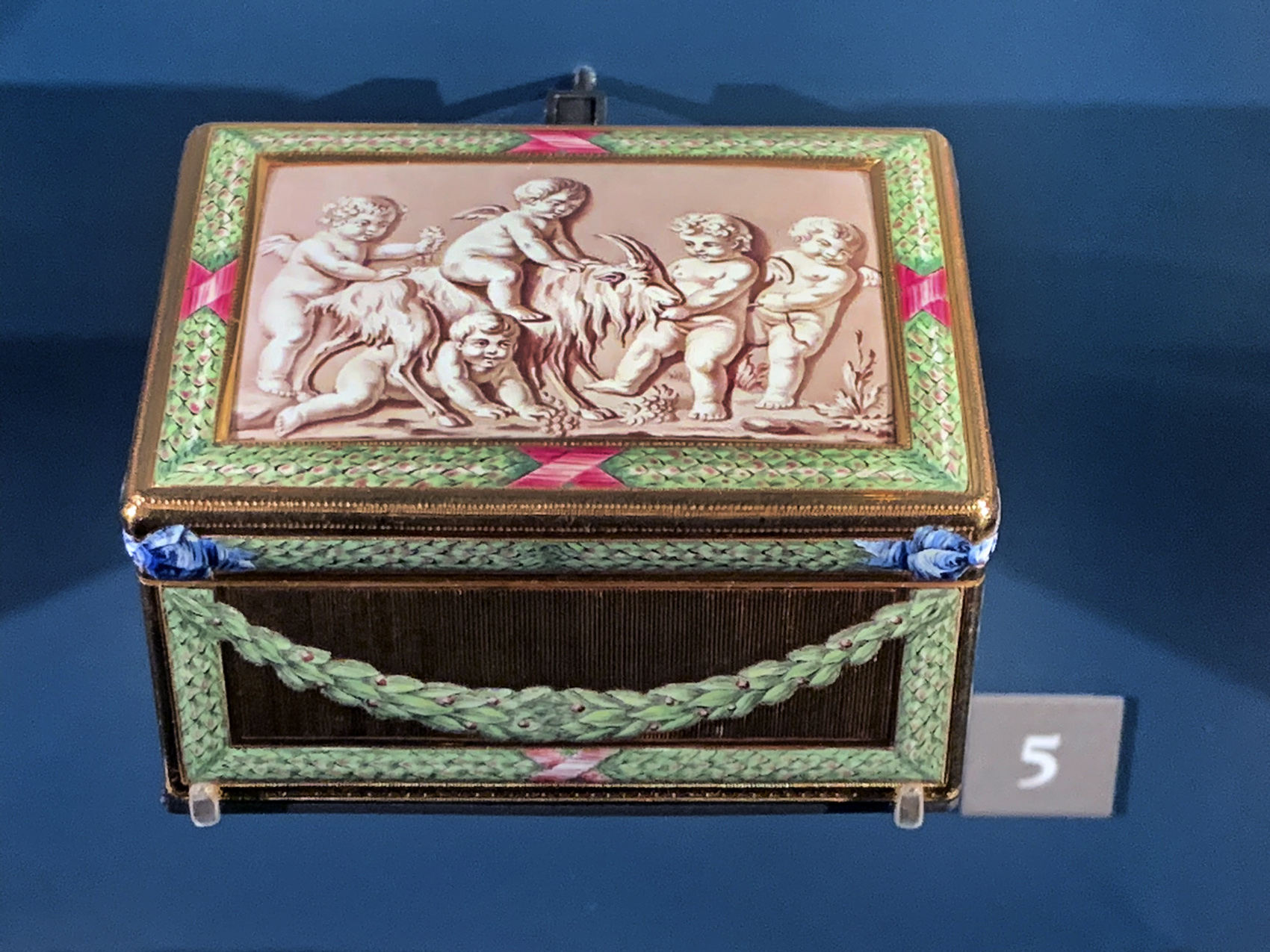
 

Dora Maar (French, 1907-1997)
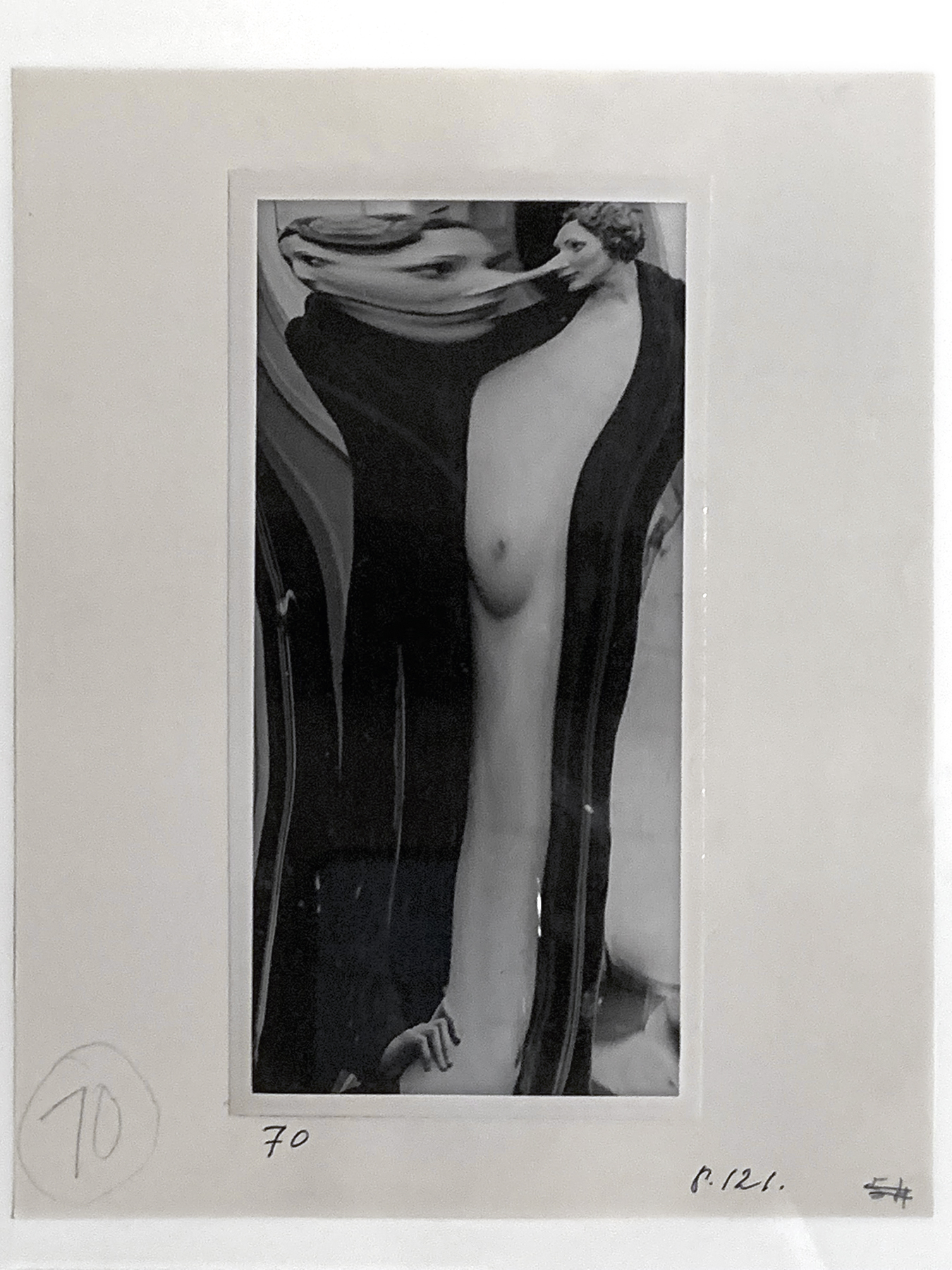
Street Boy on the Corner of the rue de Genets
1933
Gelatin silver print
Harvard Art Museums/ Fogg Museum, Richard and Ronay Menschel Fund for the Acquisition of Photographs
© ADAGP, Paris and DACS, London 2019


Dora Maar (French, 1907-1997) 'Repent for the Kingdom of Heaven is at Hand' 1934


Dora Maar (French, 1907-1997)
Repent for the Kingdom of Heaven is at Hand
1934
Gelatin silver print
Sheet: 24.3 × 18cm (9 9/16 × 7 1/16 in.)
© Dora Maar Estate/Artists Rights Society (ARS), New York/ADAGP, Paris
Gift of David and Marcia Raymond


Dora Maar (French, 1907-1997) 'Stairwell and Plants in Kew Gardens' 1934


Dora Maar (French, 1907-1997)
Stairwell and Plants in Kew Gardens
1934
Gelatin silver print, ferrotyped
Image: 28 x 24cm (11 x 9 7/16 in.)
John L. Severance Fund
The Cleveland Museum of Art
© 2013 Artists Rights Society (ARS), New York / ADAGP, Paris


Dora Maar (French, 1907-1997) 'Pearly King collecting money for the Empire Day' 1935


Dora Maar (French, 1907-1997)
Pearly King collecting money for the Empire Day
1935
Gelatin silver print
Tate
© Estate of Dora Maar / DACS 2019, All Rights Reserved


Dora Maar (French, 1907-1997) 'Carousel at Night' 1931-1936


Dora Maar (French, 1907-1997)
Carousel at Night
1931-1936
Gelatin silver print, ferrotyped
Image: 25 x 19.8cm (9 13/16 x 7 13/16 in.)
John L. Severance Fund
The Cleveland Museum of Art
© 2013 Artists Rights Society (ARS), New York / ADAGP, Paris


Installation view of the exhibition 'Dora Maar' at Tate Modern, 2019

Installation view of the exhibition 'Dora Maar' at Tate Modern, 2019 showing the photographs 'Untitled (Nude)' 1930s (left) and 'Untitled (Nude)' c. 1938 (right)


Installation views of the exhibition Dora Maar at Tate Modern, 2019 showing, in the bottom image, the photographs Untitled (Nude) 1930s (left) and Untitled (Nude) c. 1938 (right)


Dora Maar (French, 1907-1997) 'Assia' 1934


Dora Maar (French, 1907-1997)
Assia
1934
Gelatin silver print
26.4 x 19.5cm


This autumn, Tate Modern presents the first UK retrospective of the work of Dora Maar (1907-1997) whose provocative photographs and photomontages became celebrated icons of surrealism. Featuring over 200 works from a career spanning more than six decades, this exhibition shows how Maar’s eye for the unusual also translated to her commercial commissions, social documentary photographs, and paintings – key aspects of her practice which have, until now, remained little known.

Born Henriette Théodora Markovitch, Dora Maar grew up between Argentina and Paris and studied decorative arts and painting before switching her focus to photography. In doing so, Maar became part of a generation of women who seized the new professional opportunities offered by advertising and the illustrated press. Tate Modern’s exhibition will open with the most important examples of these commissioned works. Around 1931, Maar set up a studio with film set designer Pierre Kéfer specialising in portraiture, fashion photography and advertising. Works such as Untitled (Les années vous guettent) c. 1935 – believed to be an advertising project for face cream that Maar made by overlaying two negatives – will reveal Maar’s innovative approach to constructing images through staging, photomontage and collage. Striking nude studies such as that of famed model Assia Granatouroff will also reveal how women photographers like Maar were beginning to infiltrate relatively taboo genres such as erotica and nude photography.

During the 1930s, Maar was active in left-wing revolutionary groups led by artists and intellectuals. Reflecting this, her street photography from this time shot in Barcelona, Paris and London captured the reality of life during Europe’s economic depression. Maar shared these politics with the surrealists, becoming one of the few photographers to be included in the movement’s exhibitions and publications. A major highlight of the show will be outstanding examples of this area of Maar’s practice, including Portrait d’Ubu 1936, an enigmatic image thought to be an armadillo foetus, and the renowned photomontages 29, rue d’Astorg c. 1936 and Le Simulateur 1935. Collages and publications by André Breton, Georges Hugnet, Paul and Nusch Eluard, and Jacqueline Lamba will place Maar’s work in context with that of her inner circle.

In the winter of 1935-1936 Maar met Pablo Picasso and their relationship of around eight years had a profound effect on both their careers. She documented the creation of his most political work Guernica 1937, offering unprecedented insight into his working process. He in turn immortalised her in the motif of the ‘weeping woman’. Together they made a series of portraits that combined experimental photographic and printmaking techniques, anticipating her energetic return to painting in 1936. Featuring rarely seen, privately-owned canvases such as La Conversation 1937 and La Cage 1943, and never-before exhibited negatives from the Dora Maar collection at the Musée National d’art Moderne, the exhibition will shed new light on the dynamic between these two artists during the turbulent wartime years.

After the Second World War, Maar began dividing her time between Paris and the South of France. During this period, she explored diverse subject matter and styles before focusing on gestural, abstract paintings of the landscape surrounding her home. Though these works were exhibited to acclaim in London and Paris into the 1950s, Maar gradually withdrew from artistic circles. As a result, the second half of her life became shrouded in mystery and speculation. The exhibition will reunite over 20 works from this little-known – yet remarkably prolific – period. Dora Maar concludes with a substantial group of camera-less photographs that she made in the 1980s when, four decades after all but abandoning the medium, Maar returned to her darkroom.

Dora Maar is curated by Karolina Ziebinska-Lewandowska, Curator, Centre Pompidou, Paris, Damarice Amao, Assistant Curator, Centre Pompidou, Paris and Amanda Maddox, Associate Curator, the J. Paul Getty Museum, Los Angeles with Emma Lewis, Assistant Curator, Tate Modern. The Tate Modern presentation is curated by Emma Lewis, Assistant Curator with Emma Jones, Curatorial Assistant, Tate Modern.

The exhibition will be accompanied by a fully-illustrated catalogue jointly published by Tate and the J. Paul Getty Museum and a programme of talks and events in the gallery.

Press release from Tate Britain [Online] Cited 16/11/2019


Installation view of the exhibition 'Dora Maar' at Tate Modern, 2019 showing at second left, 'Untitled (Study of Beauty)' (c. 1931)


Installation views of the exhibition Dora Maar at Tate Modern, 2019 showing at second left, Untitled (Study of Beauty) (c. 1931, below)


Dora Maar. 'Untitled (Study of Beauty)' c. 1931


Dora Maar (French, 1907-1997)
Untitled (Study of Beauty)
c. 1931
Gelatin silver print
© 2013 Artists Rights Society (ARS), New York / ADAGP, Paris


Dora Maar (French, 1907-1997) 'Untitled (Lee Miller)' c. 1933


Dora Maar (French, 1907-1997)
Untitled (Lee Miller) (multiple exposure)
c. 1933
Gelatin silver print


Dora Maar (French, 1907-1997) 'Untitled (Mannequin sitting in profile in dress and evening jacket)' c. 1932-1935


Dora Maar (French, 1907-1997)
Untitled (Mannequin sitting in profile in dress and evening jacket)
c. 1932-1935
Gelatin silver print enhanced with colours
29.9 x 23.8cm
Collection Centre Pompidou, Paris, Musée national d’art moderne, Centre de création industrielle
© ADAGP, Paris, 2019


Dora Maar (French, 1907-1997) 'Untitled (Fashion photograph Model star)' c. 1935


Dora Maar (French, 1907-1997)
Untitled (Fashion photograph Model star)
c. 1935
Gelatin silver print
300 x 200 mm
Collection Therond
© ADAGP, Paris and DACS, London 2019


Dora Maar (French, 1907-1997) 'Model in Swimsuit' 1936


Dora Maar (French, 1907-1997)
Model in Swimsuit
1936
Gelatin silver on paper
197 x 167 mm
The J. Paul Getty Museum, Los Angeles
© ADAGP, Paris and DACS, London 2019


Dora Maar (French, 1907-1997) 'Portrait of Lise Deharme, at home in front of her birdcage' 1936


Dora Maar (French, 1907-1997)
Portrait of Lise Deharme, chez elle devant sa cage a oiseaux
Portrait of Lise Deharme, at home in front of her birdcage 
1936
Gelatin silver print


Dora Maar (French, 1907-1997) 'Publicity Study, Pétrole Hahn' 1934-1935


Dora Maar (French, 1907-1997)
Publicity Study, Pétrole Hahn
1934-1935
Silver gelatin print on a flexible support in cellulose nitrate
17.6 x 24cm
Collection Centre Pompidou, Paris, Musée national d’art moderne Centre de création industrielle
© Adagp, Paris 2019
Photo: © Centre Pompidou, MNAM-CCI / Dist. RMN-GP


Associated with Pierre Kéfer from 1930 to 1934, she collaborated in 1931 on the photographic illustration of the art historian Germain Bazin’s book Le Mont Saint-Michel (1935). She then shared a studio with Brassaï, after which Emmanuel Sougez, the spokesman for the New Photography movement, became her mentor. Her work met the aesthetic criteria of the time: close-ups of flowers and objects, and photograms in the style of Man Ray. She also took portraits, original publicity shots, and fashion and erotic photographs. In 1934, while traveling alone in Spain, Paris and London, she shot a vast number of urban views (posters, shop windows, ordinary people). Both a passionate lover and committed intellectual, she became the mistress of the filmmaker Louis Chavance and of the writer Georges Bataille, whom she met in a left-wing activist group. She signed the Contre-Attaque manifesto and rubbed shoulders with the agitprop artistic group Octobre. A close friend of Jacqueline Lamba, who became Breton’s wife, she was fully involved in the surrealist group, of whose members she made many portraits. At the height of her creativity in 1935-1936, she composed strange and bold photomontages, the most famous being 29, rue d’Astorg and The Simulator (both below). Some of her compositions verge on eroticism, like the photomontage showing fingers crawling out of a shell and sensually digging into the sand (Untitled, 1933-1934, top). She also used her city photographs as backdrops for unsettling scenes: her Portrait of Ubu (1936, below) – in fact the picture of an armadillo foetus – conforms to the surrealists’ fascination for macabre and deformity.

Anne Reverseau. “Dora Maar,” from the Dictionnaire universel des créatrices on the Archives of Women Artists Research & Exhibitions website [Online] Cited 16/11/2019


Dora Maar (French, 1907-1997) 'Les yeux' c. 1932-1935


Dora Maar (French, 1907-1997)
Les yeux (The eyes)
c. 1932-1935
Silver print on flexible media
29.5 x 23.5cm
© Centre Pompidou, MNAM-CCI, Dist. RMN-Grand Palais
Image Centre Pompidou, MNAM-CCI, © ADAGP, Paris


Dora Maar (French, 1907-1997) 'Untitled' 1935


Dora Maar (French, 1907-1997)
Untitled
1935
Photomontage
232 x 150 mm
Musée National d’Art Moderne – Centre Pompidou (Paris, France)
© Estate of Dora Maar / DACS 2019, All Rights Reserved


When Maar began her career, the illustrated press was expanding quickly. This created a growing market for experimental photography. Maar embraced this opportunity, exploring the creative potential of staged images, darkroom experiments, collage and photomontage.

Most of Maar’s work had one thing in common: an uncanny atmosphere. Her connection to the surrealists led her to create fantastical images. This included using photomontage to bring together contrasting images and reflect the workings of the unconscious mind.

Unlike many other photomontage creators of this time, Maar did not use photographs taken from illustrated newspapers or magazines. Instead the images often came from her own work, including both street and landscape photography. This experimentation and obvious construction became a defining feature of Maar’s work.

Anonymous text from “Seven Things to Know: Dora Maar,” on the Tate website [Online] Cited 16/11/2019


Installation view of the exhibition 'Dora Maar' at Tate Modern, 2019 showing at second left, 'Arcade' (1934)


Installation view of the exhibition Dora Maar at Tate Modern, 2019 showing at second left, Arcade (1934, see below)


Dora Maar. 'Arcade' 1934


Dora Maar (French, 1907-1997)
Arcade
1934
Photomontage


Dora Maar (French, 1907-1997) 'Danger' 1936


Dora Maar (French, 1907-1997)
Danger
1936
Gelatin silver print


Dora Maar (French, 1907-1997) '29 rue d'Astorg' c. 1936


Dora Maar (French, 1907-1997)
29 rue d’Astorg
c. 1936
Photograph, hand-coloured gelatin silver print on paper
294 x 244 mm
Collection Centre Pompidou, Paris. Musée national d’art moderne Centre de création industrielle
Photo: © Centre Pompidou, MNAM-CCI / P. Migeat / Dist. RMN-GP
© ADAGP, Paris and DACS, London 2019


Dora Maar (French, 1907-1997) 'The Simulator' 1936


Dora Maar (French, 1907-1997)
The Simulator
1936
Silver gelatin print printed on a carton
27 x 22.2cm (excluding the margin)
Gift from Marguerite Arp-Hagenbach in 1973
Collection Centre Pompidou, Paris Musée national d’art moderne, Centre de création industrielle
© Adagp, Paris 2019
Photo: © Centre Pompidou, MNAM-CCI / P. Migeat / Dist. RMN-GP


Maar’s early photomontages look almost as modish and styled as her fashion work. From a shell resting on sand, a dummy hand protrudes, with delicate fingers and painted nails, just like Maar’s own (see top image). In a way, the image could be by one of many photographers of the period – Cecil Beaton, say, or Angus McBean – who politely surrealised their pictures, as if the artistic movement were merely a visual style. Except: there is something ominously self-involved about this hybrid thing. The shell and hand recall Bataille’s obsessions with crustaceans, mollusks, and orphaned or butchered body parts. The hand rhymes with similar ones in the photographs of Claude Cahun, where they sometimes have masturbatory implications. And what are we to make of the storm-lit, gothic sky that looms over this auto-curious object?

The most accomplished examples of Maar’s art are the photomontages of 1935 and 1936. There were already many vaults and arches in her Mont-Saint-Michel pictures; now she took the cloistral galleries of the Orangerie at Versailles, upended them so that they looked like sewers, and populated them with cryptic beings engaged in arcane rituals or dramas. In “The Simulator,” (above) a boy from one of her street photographs is bent backward at an obscene angle; Maar has retouched his eyes so that they roll back in his head toward us, like one of those thrashing hysterics photographed in the nineteenth century. In “29 Rue d’Astorg” (above) – of which Maar made several versions, black-and-white and hand-coloured – a human figure with a curtailed, avian head is seated beneath arches that have been subtly warped in the darkroom.

Brian Dillon. “The Voraciousness and Oddity of Dora Maar’s Pictures,” on The New Yorker website May 21, 2019 [Online] Cited 23/11/2019


Dora Maar also participated in the Surrealists’ group exhibitions, such as the one at Charles Ratton’s Gallery in 1936, wherein her Portrait of Ubu became the “icon of Surrealism,” according to her biographer Mary Ann Caws in her exceptional book Picasso’s Weeping Woman: The Life and Art of Dora Maar (2000). “She captures the mysterious,” Caws wrote, “in a combination of the unresolved and the sharply angled. This frequently creates a sense of ambiguity, even menace.” (p. 20) Caws notes that Dora Maar responded to Louis Aragon’s invocation “for each person there is one image to find that will disturb the whole universe.” Maar’s images managed to “disturb and reveal” with a bit of the macabre mixed in. (p. 71)

Beth Gersh-Nesic. “Picasso’s Weeping Woman as Artist Instead of Muse: Dora Maar’s Retrospective at Centre Pompidou,” on the Bonjour Paris website July 24, 2019 [Online] Cited 23/11/2019


Installation view of the exhibition 'Dora Maar' at Tate Modern, 2019 showing Maar's photographs 'Portrait of Ubu' (1936, left), 'Untitled (Hand-Shell)' (1934, top middle) and 'Danger' (1936, bottom right)


Installation view of the exhibition Dora Maar at Tate Modern, 2019 showing Maar’s photographs Portrait of Ubu (1936, left), Untitled (Hand-Shell) (1934, top middle) and Danger (1936, bottom right) Photo: Tate (Andrew Dunkley)


Dora Maar (French, 1907-1997) 'Portrait of Ubu' 1936


Dora Maar (French, 1907-1997)
Portrait of Ubu
1936
Silver gelatin print
24 x 18cm
Collection Centre Pompidou, Paris, Musée national d’art moderne, Centre de création industrielle
© Adagp, Paris
Photo: © Centre Pompidou, MNAM-CCI / P. Migeat / Dist. RMN-GP


In 1936, at the summit of her celebrity as a photographic artist, Dora Maar showed her picture “Portrait of Ubu” in the International Surrealist Exhibition, at the New Burlington Galleries, London. Named after a scatological, ur-Surrealist play by Alfred Jarry, from 1896, the black-and-white photograph shows a ghastly being of indeterminate origin and melancholy aspect. Maar would never say what the clawed, scaly creature was, nor where she had come across it. Her Ubu has elements of Jarry’s porcine, louse-like original, and, with its doleful eye and drooping ears, it also resembles an ass or an elephant. Scholars generally agree that the monster is in fact an armadillo foetus, preserved in a specimen jar. It is also an idea: something like l’informe, the concept Maar’s lover Georges Bataille coined to describe his fellow-Surrealists’ admiration for all things larval and grotesquely about-to-be.

Brian Dillon. “The Voraciousness and Oddity of Dora Maar’s Pictures,” on The New Yorker website May 21, 2019 [Online] Cited 23/11/2019


Installation view of the exhibition 'Dora Maar' at Tate Modern, 2019 showing her series of portrait photomontages from the mid-1930s


Installation view of the exhibition Dora Maar at Tate Modern, 2019 showing her series of portrait photomontages from the mid-1930s (see below)


Dora Maar (French, 1907-1997) 'Double Portrait with Hat' c. 1936-1937


Dora Maar (French, 1907-1997)
Double Portrait with Hat
c. 1936-37
Gelatin silver print, montage with handwork on negative
Image: 29.8 x 23.8cm (11 3/4 x 9 3/8 in.)
Gift of David Raymond
The Cleveland Museum of Art
© Artists Rights Society (ARS), New York / ADAGP, Paris


To produce this complex image, Maar sandwiched together two negatives of the same model, one frontal and one profile, scavenged from a magazine assignment on springtime hats, and painted the background and hat (or decomposing halo?) onto the negative. Softening the emulsion, she scraped and lifted it off, techniques that involve destruction and suggest disintegration. The face evokes Picasso’s depictions of female faces, especially his 1938 paintings of weeping women for which Maar was the model. Although the divided face is not Maar’s, it is tempting to interpret it as a reflection of her emotional state at the time, torn between her career and independence and Picasso’s demands and potent personality. frontal and one profile, scavenged from a magazine assignment on springtime hats, and painted the background and hat (or decomposing halo?) onto the negative. Softening the emulsion, she scraped and lifted it off, techniques that involve destruction and suggest disintegration. The face evokes Picasso’s depictions of female faces, especially his 1938 paintings of weeping women for which Maar was the model. Although the divided face is not Maar’s, it is tempting to interpret it as a reflection of her emotional state at the time, torn between her career and independence and Picasso’s demands and potent personality.

Text from The Cleveland Museum of Art website [Online] Cited 16/11/2019


Dora Maar (French, 1907-1997) 'Profile portrait with glasses and hat' 1930-1935


Dora Maar (French, 1907-1997)
Profile portrait with glasses and hat
1930-1935
Gelatin silver print
© Dora Maar Estate/Artists Rights Society (ARS), New York/ADAGP, Paris


Dora Maar (French, 1907-1997) 'Man looking inside a sidewalk inspection door, London' c. 1935


Dora Maar (French, 1907-1997)
Man looking inside a sidewalk inspection door, London
c. 1935
Gelatin silver print
Collection of Michael Mattis and Judith Hochberg, New York
Courtesy art2art Circulating Exhibitions
© Estate of Dora Maar / DACS 2019, All Rights Reserved​


Maar became involved with the surrealists from 1933 and was one of the few artists – and even fewer women – to be included in the surrealists’ exhibitions. She became close to the group because of their shared left-wing politics at a time of social and civil unrest in France.

Maar’s photography and photomontages explore surrealist themes such as eroticism, sleep, the unconscious and the relationship between art and reality. Cropped frames, dramatic angles, unexpected juxtapositions and extreme close-ups are used to create surreal images. Contrasting with the idea of a photograph as a factual record, Maar’s scenes disorientate the viewer and create new worlds altogether.

Anonymous text from “Seven Things to Know: Dora Maar,” on the Tate website [Online] Cited 16/11/2019


Installation view of the exhibition 'Dora Maar' at Tate Modern, 2019 showing Maar's photographs 'Portrait of Nusch Éluard' (1935, left) and 'Les années vous guettent' (The Years are Waiting for You) (1932, right)


Installation view of the exhibition Dora Maar at Tate Modern, 2019 showing Maar’s photographs Portrait of Nusch Éluard (1935, left) and Les années vous guettent (The Years are Waiting for You) (1932, right)


Dora Maar (French, 1907-1997) 'Portrait of Nusch Éluard' 1935


Dora Maar (French, 1907-1997)
Portrait of Nusch Éluard
1935
Gelatin silver print


Dora Maar (French, 1907-1997) 'Les années vous guettent' (The Years are Waiting for You) 1932


Dora Maar (French, 1907-1997)
Les années vous guettent (The Years are Waiting for You)
1932
Gelatin silver print
© Dora Maar Estate/Artists Rights Society (ARS), New York/ADAGP, Paris


Dora Maar (French, 1907-1997) 'Untitled' c. 1940


Dora Maar (French, 1907-1997)
Untitled
c. 1940
Gelatin silver print


Eileen Agar (1899-1991) 'Photograph of Dora Maar and Pablo Picasso on the beach' September 1937


Eileen Agar (British-Argentinian, 1899-1991)
Photograph of Dora Maar and Pablo Picasso on the beach
September 1937
Gelatin silver print
68 x 60 mm
Taken in Juan-les-pins, France
Tate Archive
Presented to Tate Archive by Eileen Agar in 1989 and transferred from the photograph collection in 2012


Eileen Agar (1899-1991) 'Photograph of Dora Maar, Nusch Éluard, Pablo Picasso and Paul Éluard on the beach' September 1937


Eileen Agar (British-Argentinian, 1899-1991)
Photograph of Dora Maar, Nusch Éluard, Pablo Picasso and Paul Éluard on the beach
September 1937
Gelatin silver print
66 x 66 mm
Taken in Juan-les-pins, France
Tate Archive
Presented to Tate Archive by Eileen Agar in 1989 and transferred from the photograph collection in 2012


Dora Maar (French, 1907-1997) 'Portrait of Picasso, Paris, studio 29, rue d'Astorg' Winter, 1935


Dora Maar (French, 1907-1997)
Portrait of Picasso, Paris, studio 29, rue d’Astorg
Winter, 1935
Silver gelatin negative on flexible support in cellulose nitrate
12 x 9cm
Collection Centre Pompidou, Paris Musée national d’art moderne Centre de création industrielle
© Adagp, Paris 2019
Photo: © Centre Pompidou, MNAM-CCI / Dist. RMN-GP


Dora Maar (French, 1907-1997) 'Portrait of Pablo Picasso' 1936


Dora Maar (French, 1907-1997)
Portrait of Pablo Picasso
1936
Pastel on paper
57.5 x 45cm
Private collection, Yann Panier
Courtesy Galerie Brame and Lorenceau
© Adagp, Paris 2019
© The Museum of Fine Arts, Houston


Pablo Picasso (Spanish, 1881-1973) 'Portrait of Dora Maar' 1937


Pablo Picasso (Spanish, 1881-1973)
Portrait of Dora Maar
1937
Musée National Picasso-­Paris
Copyright RMN-Grand Palais, Mathieu Rabeau and Succession Picasso, 2018


Dora Maar (French, 1907-1997) 'Guernica' May-June, 1937


Dora Maar (French, 1907-1997)
Guernica
May-June, 1937
Gelatin silver print
Musée National Picasso-­Paris
Copyright RMN-Grand Palais, Mathieu Rabeau and Succession Picasso, 2018


Dora Maar. 'Picasso working on "Guernica"' 1937


Dora Maar (French, 1907-1997)
Picasso working on “Guernica”
1937
Gelatin silver print
Courtesy VEGAP / Museo Nacional Centro de Arte Reina Sofia


Dora Maar. 'Picasso working on "Guernica"' 1937


Dora Maar (French, 1907-1997)
Picasso working on “Guernica”
1937
Gelatin silver print
Courtesy VEGAP / Museo Nacional Centro de Arte Reina Sofia


Installation view of the exhibition 'Dora Maar' at Tate Modern, 2019 showing Maar's painting 'The Conversation' 1937


Installation view of the exhibition Dora Maar at Tate Modern, 2019 showing Maar’s painting The Conversation 1937
Photo: Tate (Andrew Dunkley)


Dora Maar (French, 1907-1997) 'The Conversation' 1937


Dora Maar (French, 1907-1997)
The Conversation
1937
Oil on canvas
162 x 130cm
Fundación Almine y Bernard Ruiz-Picasso para el Arte, Madrid
© FABA © ADAGP, Paris and DACS, London 2019
Photo: Marc Domage


“I must dwell apart in the desert,” the artist and surrealist photographer Dora Maar once said. “I want to create an aura of mystery about my work. People must long to see it.

“I’m still too famous as Picasso’s mistress to be accepted as a painter.”

These words form part of a conversation recorded by Maar’s friend, the art writer James Lord, in his memoir “Picasso and Dora.” During the exchange, the French artist also explains how she rationalised the work of her later years, given that she rarely exhibited and was not in demand. …

With its deliberate focus on their art, the exhibition doesn’t address certain troubling questions about the pair’s unequal personal relationship. In her memoirs, Picasso’s later lover, Françoise Gilot, recounted the brutal bullying to which the artist subjected Maar. Picasso once described the time that Maar and a previous lover, Marie-Thérèse Walter, came to blows in his studio as one of his “choicest memories.”

It’s a subject Maar didn’t shy away from in her art, painting herself alongside Walter in “The Conversation,” one of the works on show at the Tate Modern. Maar is depicted facing away while Walter looks directly at the viewer.

During the aforementioned exchange with James Lord, Maar told the writer that Picasso’s portraits of her were “lies.” But the struggle for recognition she went on to describe is more insightful – that she had to survive in the “desert” to be celebrated on her own terms.

Max Ramsay. “Dora Maar is no longer Picasso’s ‘Weeping Woman’,” on the CNN website 20th November 2019 [Online] Cited 23/11/2019


Pablo Picasso (Spanish, 1881-1973) 'Dora Maar seated' 1938


Pablo Picasso (Spanish, 1881-1973)
Dora Maar seated
1938
Ink, gouache and oil paint on paper on canvas
Support: 689 x 625 mm
Frame: 925 x 685 x 120 mm
Tate
Purchased 1960


In late 1935 or early 1936, Maar met Pablo Picasso. They became lovers soon afterwards. She was at the height of her career, while he was emerging from what he described as ‘the worst time of my life’. He had not sculpted or painted for months.

Their relationship had a huge affect on both their careers. Maar documented the creation of Picasso’s most political work, Guernica 1937, encouraged his political awareness and educated him in photography. Specifically, Maar taught Picasso the cliché verre technique – a complex method combining photography and printmaking.

Picasso painted Maar in numerous portraits, including Weeping Woman 1937. However, Maar explained that she felt this wasn’t a portrait of her. Instead it was a metaphor for the tragedy of the Spanish people. Picasso also encouraged Maar to return to painting. The flattened features and bold outlines of the cubist-style portraits Maar made at this time suggest Picasso’s influence. By 1940 her passport listed her profession as ‘photographer-painter’.

Anonymous text from “Seven Things to Know: Dora Maar,” on the Tate website [Online] Cited 16/11/2019


Installation view of the exhibition 'Dora Maar' at Tate Modern, 2019 showing portraits of the artist by numerous artists


Installation view of the exhibition Dora Maar at Tate Modern, 2019 showing portraits of the artist by numerous artists, some of which you can see below


Dora Maar (French, 1907-1997) 'Self-portrait with Fan' 1930


Dora Maar (French, 1907-1997)
Self-portrait with Fan
1930
Gelatin silver print


Emmanuel Sougez (French, 1889-1972) 'Dora Maar' Paris, 1934


Emmanuel Sougez (French, 1889-1972)
Dora Maar
Paris, 1934
Gelatin silver print


Dora Maar considered the French commercial photographer Emmanuel Sougez (1889-1972) her mentor. Her first commission was a book on Mont-Saint-Michel written by art critic Germain Bazin. She collaborated with the stage-set designer Pierre Kéfer in 1931. From that experience they formed a business partnership, set up at first in his parents’ garden in Neuilly and then moving to their own studio at 9 rue Campagne-Première, lent by the Polish photographer Harry Ossip Meerson (1910-1991), younger brother of the cinema art director Lazare Meerson (1900-1938), who had worked with Kéber at Film Albatros studio in the mid-1920s. Harry Meerson also lent out his darkroom to the Hungarian photographer Brassai (Gyula Halász, 1899-1984), who became Dora Maar’s close friend. Her contact with Brassai brought her into the Surrealist circle.

The Kéfer-Dora Maar studio produced glamorous, innovative images for advertising and portraits, becoming part of the booming industry of commercial photography in glossy magazines. It was a fertile context for Dora Maar’s imagination. Her perspective on the modern women of the 1930s produced models oozing with elegant sensuality. Cool, natural, sometimes athletic, sometimes aristocratic, the Kéfer-Dora Maar female gave off a whiff of eroticise insouciance that emanated from Dora’s own disposition. This conceptualisation of contemporary beauty fed the appetite for luxury and leisure time activities, despite the Great Depression. It was a fantasy for some, a reality for others. During this period of working intensely with Pierre Kéfer, Dora had affairs with the filmmaker Louis Chavance (c. 1932-1933) and the erotically transgressive writer Georges Bataille (late 1933-1934). The Kéfer-Dora Maar studio closed in 1934.

Beth Gersh-Nesic. “Picasso’s Weeping Woman as Artist Instead of Muse: Dora Maar’s Retrospective at Centre Pompidou,” on the Bonjour Paris website July 24, 2019 [Online] Cited 23/11/2019


Man Ray (American, 1890-1976) 'Portrait of Dora Maar' 1936


Man Ray (American, 1890-1976)
Portrait of Dora Maar
1936
Gelatin silver print


Rogi André (née Rosa Klein) 'Dora Maar, Paris' 1941


Rogi André (née Rosa Klein) (French born Hungary, 1900-1970)
Dora Maar, Paris
1941
Gelatin silver print
6 1/2 x 4 1/2 in. (16.5 x 11.4cm)


Brassaï (French-Hungarian, 1899-1984) 'Dora Maar in her workshop rue de Savoie' 1943


Brassaï (French-Hungarian, 1899-1984)
Dora Maar dans son atelier rue de Savoie (Dora Maar in her workshop rue de Savoie)
1943
Gelatin silver print
© Adagp, Paris 2019 / Estate Brassaï – RMN-Grand Palais


Izis (Israel Bidermanas) (Lithuanian-Jewish, 1911-1980) 'Dora Maar' 1946


Izis (Israel Bidermanas) (Lithuanian-Jewish, 1911-1980)
Dora Maar
1946
Gelatin silver print


Izis (Israel Bidermanas) (Lithuanian-Jewish, 1911-1980)

Israëlis Bidermanas (17 January 1911 in Marijampolė – 16 May 1980 in Paris), who worked under the name of Izis, was a Lithuanian-Jewish photographer who worked in France and is best known for his photographs of French circuses and of Paris.

Upon the liberation of France at the end of World War II, Izis had a series of portraits of maquisards (rural resistance fighters who operated mainly in southern France) published to considerable acclaim. He returned to Paris where he became friends with French poet Jacques Prévert and other artists. Izis became a major figure in the mid-century French movement of humanist photography – also exemplified by Brassaï, Cartier-Bresson, Doisneau, Sabine Weiss and Ronis – with “work that often displayed a wistfully poetic image of the city and its people.”

For his first book, Paris des rêves (Paris of Dreams), Izis asked writers and poets to contribute short texts to accompany his photographs, many of which showed Parisians and others apparently asleep or daydreaming. The book, which Izis designed, was a success. Izis joined Paris Match in 1950 and remained with it for twenty years, during which time he could choose his assignments.

Text from the Wikipedia website


Irving Penn (American, 1917-2009) 'Dora Maar' France 1948


Irving Penn (American, 1917-2009)
Dora Maar
France 1948
Gelatin silver print


Dora Maar (French, 1907-1997) 'Still life' 1941


Dora Maar (French, 1907-1997)
Still life
1941
Oil on canvas
© Adagp, Paris, 2019
Photo: © Centre Pompidou, MNAM-CCI / P. Migeat / Dist. RMN-GP


Dora Maar (French, 1907-1997) 'Still Life with Jar and Cup' 1945


Dora Maar (French, 1907-1997)
Still Life with Jar and Cup
1945
Oil on canvas
45.5 x 50cm
Private Collection
© Adagp, Paris, 2019
Photo: © Centre Pompidou, MNAM-CCI / P. Migeat / Dist. RMN-GP


Dora Maar (French, 1907-1997) 'Landscape in Lubéron' 1950's


Dora Maar (French, 1907-1997)
Landscape in Lubéron
1950’s
Private collection of Nancy B. Negley
© Adagp © Brice Toul


Although the late works are not as significant contributions to the history of art as her Surrealist photomontages, they inform our knowledge of this Parisian artist’s accomplishments in general and beg the question: Was Dora Maar’s brilliant career cut short by the typical conflicts facing professional women in the 1930s, and even today? Or was she a victim of Picasso’s psychological abuse, which chipped away at her original confidence? Was she compromised to the point that she only wanted to please the man she loved? According to art historian John Richardson, Dora Maar sacrificed her gifts on the altar of her art god, her idol, Picasso. Based on the early Surrealist photographs we see in her retrospective, one can only wish she hadn’t taken up with Picasso, for it seems she might have achieved far more in her lifetime without him.

Beth Gersh-Nesic. “Picasso’s Weeping Woman as Artist Instead of Muse: Dora Maar’s Retrospective at Centre Pompidou,” on the Bonjour Paris website July 24, 2019 [Online] Cited 23/11/2019


Installation view of the exhibition 'Dora Maar' at Tate Modern, 2019 showing Maar's paintings and photograms from the 1950s-1980s


Installation view of the exhibition Dora Maar at Tate Modern, 2019 showing Maar’s paintings and photograms from the 1950s-1980s (see below)


Dora Maar (French, 1907-1997) 'Untitled' c. 1957


Dora Maar (French, 1907-1997)
Untitled
c. 1957
Watercolour
© Adagp, Paris 2019
Photo: © Centre Pompidou


Dora Maar (French, 1907-1997) 'Untitled' 1980s


Dora Maar (French, 1907-1997)
Untitled
1980s
Gelatin silver print
23.5 × 17.4cm (9 1/4 × 6 7/8 in.)
© Dora Maar Estate/Artists Rights Society (ARS), New York/ADAGP, Paris

Abstract photogram


The 1940s brought a series of traumas. Maar’s father left Paris for Argentina, her mother and best friend Nusch Eluard both died suddenly, her relationship with Picasso ended, and friends went into exile. The difficulty of this time is reflected in some of her work from this period.

Maar was included in many group and solo exhibitions in the 1940s and 1950s. In the mid-1940s she began to spend more time in rural surroundings of Ménerbes in the south of France. Here she regained her confidence as a painter and developed her own style of abstract landscapes. Exhibited across Europe, this work received very positive reviews.

In the 1980s, Maar returned to photography. However, she was no longer interested in photographing life on the street. Instead, Maar was interested in what she could create in the darkroom and experimented with hundreds of photograms (camera-less photographs).

Dora Maar died on July 16, 1997, at 89 years old. Throughout her life she created a vast and varied range of work, much of which was only discovered after her death.

Anonymous text from “Seven Things to Know: Dora Maar,” on the Tate website [Online] Cited 16/11/2019


Dora Maar (French, 1907-1997) 'Untitled' c. 1980


Dora Maar (French, 1907-1997)
Untitled
c. 1980
Gelatin silver print
23.5 × 30cm (9 1/4 × 11 13/16 in.)
© Dora Maar Estate/Artists Rights Society (ARS), New York/ADAGP, Paris


Dora Maar (French, 1907-1997) 'Untitled' 1980s


Dora Maar (French, 1907-1997)
Untitled
1980s
Silver gelatin print
9 x 6cm
Collection Centre Pompidou, Paris. Musée national d’art moderne Centre de création industrielle
© Adagp, Paris
Photo: © Centre Pompidou, MNAM-CCI / P. Migeat / Dist. RMN-GP


Dora Maar (French, 1907-1997) 'Untitled' c. 1980


Dora Maar (French, 1907-1997)
Untitled
c. 1980
Silver gelatin print
9 x 6cm
Collection Centre Pompidou, Paris. Musée national d’art moderne Centre de création industrielle
© Adagp, Paris
Photo: © Centre Pompidou, MNAM-CCI / P. Migeat / Dist. RMN-GP


Tate Modern
Bankside
London SE1 9TG
United Kingdom

Opening hours:
Daily 10.00 – 18.00

Tate Modern website

LIKE ART BLART ON FACEBOOK

Back to top

European research tour exhibition: ‘Into the Night: Cabarets and Clubs in Modern Art’ at the Barbican Art Gallery, UK Part 2

Exhibition dates: 4th October, 2019 – 19th January, 2020
Visited October 2019 posted January 2020

Curator: Florence Ostende


Theo van Doesburg (Dutch, 1883-1931) 'The Ciné-bal (cinema-ballroom) at Café L'Aubette, Strasbourg, designed by Theo van Doesburg' 1926-1928 from the exhibition 'Into the Night: Cabarets and Clubs in Modern Art' at the Barbican Art Gallery, Oct 2019 - Jan 2020


Theo van Doesburg (Dutch, 1883-1931)
The Ciné-bal (cinema-ballroom) at Café L’Aubette, Strasbourg, designed by Theo van Doesburg
1926-1928
Image: Collection Het Nieuwe Instituut, donation Van Moorsel, archive (code): DOES, inv.nr AB5252


Part 2 on this exceptional exhibition. Of particular interest here are:

the inspired paintings and drawings by Jeanne Mammen of Berlin nightlife which documents “the changing role of women and offer rare images of queer female desire.” Her work, associated with the New Objectivity and Symbolism movements, is incisive and sympathetic in its observation of difference and “depravity”. Her line is strong and the characterisation, assured;

Elfriede Lohse-Wächtler’s “scenes of Hamburg after dark [which] convey a raw sense of possibility through bold line, clashing colour and startling imagery.” The attitude of the hands in the painting Lissy (1931, below) balanced by the simplicity of the chair at left, and the furious line and bleeding, washes of watercolour of the men at the table at right – replete with their protruding, predatory teeth – make this a compelling image.

I think I might have found myself a new art hero.

Dr Marcus Bunyan


Many thankx to the Barbican Art Gallery for allowing me to publish the media photographs in the posting. All installation images are iPhone images © Dr Marcus Bunyan unless otherwise stated. Please click on the photographs for a larger version of the image. See Part 1 of the posting with my comments on the exhibition.


Strasbourg L'Aubette 1928 wall text from the exhibition Theo van Doesburg (Dutch, 1883-1931) 'The Ciné-bal (cinema-ballroom) at Café L'Aubette, Strasbourg, designed by Theo van Doesburg' 1926-1928 from the exhibition 'Into the Night: Cabarets and Clubs in Modern Art' at the Barbican Art Gallery, Oct 2019 - Jan 2020

Strasbourg L'Aubette 1928 wall text Theo van Doesburg (Dutch, 1883-1931) 'The Ciné-bal (cinema-ballroom) at Café L'Aubette, Strasbourg, designed by Theo van Doesburg' 1926-1928 from the exhibition 'Into the Night: Cabarets and Clubs in Modern Art' at the Barbican Art Gallery, Oct 2019 - Jan 2020


Strasbourg: L’Aubette 1928 wall text
Photos: Marcus Bunyan


Installation view of the exhibition 'Into the Night: Cabarets and Clubs in Modern Art' at the Barbican Art Gallery, Oct 2019 - Jan 2020


Into the Night: Cabarets and Clubs in Modern Art
Installation view Barbican Art Gallery 4 October 2019 – 19 January 2020
© Tristan Fewings / Getty Images


Installation view of the exhibition 'Into the Night: Cabarets and Clubs in Modern Art' at the Barbican Art Gallery, Oct 2019 - Jan 2020

Installation view of the exhibition 'Into the Night: Cabarets and Clubs in Modern Art' at the Barbican Art Gallery, Oct 2019 - Jan 2020

Installation view of the exhibition 'Into the Night: Cabarets and Clubs in Modern Art' at the Barbican Art Gallery, Oct 2019 - Jan 2020


Installation views of the exhibition Into the Night: Cabarets and Clubs in Modern Art at the Barbican Art Gallery, London
Photos: Marcus Bunyan


Theo van Doesburg (Dutch, 1883-1931) 'L'Aubette: Projet de composition pour le sol du café-brasserie et du café-restaurant' (L'Aubette: Design for a composition for the floor of the café-brasserie and the café-restaurant) 1927 (installation view)


Theo van Doesburg (Dutch, 1883-1931)
L’Aubette: Projet de composition pour le sol du café-brasserie et du café-restaurant (L’Aubette: Design for a composition for the floor of the café-brasserie and the café-restaurant) (installation view)
1927
Gouache and graphite pencil on tracing paper
Paris, Centre Pompidou – Museé national d’art moderne – Centre de création industrielle
Photo: Marcus Bunyan


Theo van Doesburg (Dutch, 1883-1931) 'L'Aubette: Projet de composition pour le sol du café-brasserie et du café-restaurant' (L'Aubette: Design for a composition for the floor of the café-brasserie and the café-restaurant) 1927 (installation view)


Theo van Doesburg (Dutch, 1883-1931)
L’Aubette: Projet de composition pour le sol du café-brasserie et du café-restaurant (L’Aubette: Design for a composition for the floor of the café-brasserie and the café-restaurant) (installation view)
1927
Gouache and graphite pencil on tracing paper
Paris, Centre Pompidou – Museé national d’art moderne – Centre de création industrielle
Photo: Marcus Bunyan


Theo van Doesburg (Dutch, 1883-1931) 'Final colour design for the screen wall of the Ciné-Dancing at L'Aubette' 1927 (installation view)


Theo van Doesburg (Dutch, 1883-1931)
Final colour design for the screen wall of the Ciné-Dancing at L’Aubette (installation view)
1927
East India ink and paint on paper
Collection Het Nieuwe Instituut, Rotterdam. Gift Van Moorsel
Photo: Marcus Bunyan


Theo van Doesburg Ciné-Dancing wall text from the exhibition 'Into the Night: Cabarets and Clubs in Modern Art' at the Barbican Art Gallery, Oct 2019 - Jan 2020


Theo van Doesburg Ciné-Dancing wall text
Photo: Marcus Bunyan


Installation view of the exhibition 'Into the Night: Cabarets and Clubs in Modern Art' (downstairs gallery, room recreation)


Into the Night: Cabarets and Clubs in Modern Art (downstairs gallery, room recreation)
Installation view Barbican Art Gallery 4 October 2019 – 19 January 2020
© Tristan Fewings / Getty Images


Downstairs gallery, room recreation


Sophie Taeuber-Arp (Swiss, 1889-1943) 'Aubette 63' 1927 (installation view)


Sophie Taeuber-Arp (Swiss, 1889-1943)
Aubette 63 (installation view)
1927
Gouache on paper
Musée d’Art Moderne et Contemporain de Strasbourg
Photo: Marcus Bunyan


Paris: Loïe Fuller 1890s wall text from the exhibition 'Into the Night: Cabarets and Clubs in Modern Art' at the Barbican Art Gallery, Oct 2019 - Jan 2020

Paris: Loïe Fuller 1890s wall text from the exhibition 'Into the Night: Cabarets and Clubs in Modern Art' at the Barbican Art Gallery, Oct 2019 - Jan 2020


Paris: Loïe Fuller 1890s wall text
Photos: Marcus Bunyan


Unknown photographer (attributed to Falk Studio). 'Loie Fuller' c. 1901


Unknown photographer (attributed to Falk Studio)
Loïe Fuller
c. 1901
Courtesy of the Library of Congress, Prints and Photographs Division, Washington, DC


1895-1908 Loie Fuller’s Serpentine Dance (highlights from the greatest movie pioneers’ films)

Many of the earliest filmmakers chose Loie Fuller’s Serpentine Dance as a subject for one or more films: the Skladanowsky brothers (1895), Dickson and Heise for Edison Manifacturing Company (1895), Dickson for American Mutoscope (1896), Lumière (1896), Demeny (1897), possibly Alice Guy (1899+1900+1902), Méliès (1899), G.A. Smith (1902), De Chomon (1902+1908) and many others.

Loie Fuller was a pioneer of modern dance and of theatrical lighting effects. She developed this dance in 1891 and combined her choreography with silk costumes illuminated by multi-colored lighting of her own design. In several of the Serpentine Dance movies her lighting has been reinterpreted through hand-colored effects. Fuller also had a successful Fire Dance of which elements are often incorporated in filmed Serpentine Dance performances (yet rarelymentioned).

It is unclear whether any performance by Loie Fuller herself has ever been filmed. Possibly all of the featured dancers are imitators, although Segundo de Chomon’s 1902 film title “Loie Fuller” makes a strong claim.

 Text from the YouTube website

Magnificent! Not Loïe Fuller but one of her many imitators. She refused to be captured on film.


Henri de Toulouse-Lautrec (French, 1864-1901) 'Miss Loïe Fuller' 1893 (installation view)

Henri de Toulouse-Lautrec (French, 1864-1901) 'Miss Loïe Fuller' 1893 (installation view)

Henri de Toulouse-Lautrec. 'Miss Loïe Fuller' 1893 wall text from the exhibition 'Into the Night: Cabarets and Clubs in Modern Art' at the Barbican Art Gallery, Oct 2019 - Jan 2020


Installation views of the exhibition Into the Night: Cabarets and Clubs in Modern Art at the Barbican Art Gallery, London showing the work of Henri de Toulouse-Lautrec
Photos: Marcus Bunyan


Henri de Toulouse-Lautrec (French, 1864-1901) 'Miss Loïe Fuller' 1893


Henri de Toulouse-Lautrec (French, 1864-1901)
Miss Loïe Fuller
1893
Bibliothèque de l’Institut National d’Histoire de l’Art, Collections Jacques Doucet
Inv. no. NUM EM TOULOUSE-LAUTREC 49 e
Courtesy Bibliothèque de l’Institut National d’Histoire de l’Art, Collections Jacques Doucet


Installation view showing Jules Chéret (French, 1836-1932) 'Folies Bergere La Loie Fuller' lithographs from the exhibition 'Into the Night: Cabarets and Clubs in Modern Art' at the Barbican Art Gallery, Oct 2019 - Jan 2020

Jules Chéret (French, 1836-1932) 'Fioles Bergère, La Loïe Fuller' 1893 (installation view)


Jules Chéret (French, 1836-1932)
Fioles Bergère, La Loïe Fuller (installation view)
1893
Lithograph
Paris, Musée des Arts Décoratifs
Photos: Marcus Bunyan


Jules Chéret (French, 1836-1932) 'Folies Bergère, La Danse du Feu' (The Fire Dance) 1897 (installation view)


Jules Chéret (French, 1836-1932)
Folies Bergère, La Danse du Feu (The Fire Dance) (installation view)
1897
Lithograph
Paris, Musée des Arts Décoratifs
Photos: Marcus Bunyan


Paris: Chat Noir 1880s-90s wall text from the exhibition 'Into the Night: Cabarets and Clubs in Modern Art' at the Barbican Art Gallery, Oct 2019 - Jan 2020

Paris: Chat Noir 1880s-90s wall text from the exhibition 'Into the Night: Cabarets and Clubs in Modern Art' at the Barbican Art Gallery, Oct 2019 - Jan 2020


Paris: Chat Noir 1880s-90s wall text
Photos: Marcus Bunyan


Installation view of the exhibition 'Into the Night: Cabarets and Clubs in Modern Art' at the Barbican Art Gallery, London

Installation view of the exhibition 'Into the Night: Cabarets and Clubs in Modern Art' at the Barbican Art Gallery, London


Installation views of the exhibition Into the Night: Cabarets and Clubs in Modern Art at the Barbican Art Gallery, London
Photos: Marcus Bunyan


Henri Rivière (French, 1864-1951) 'Poster for the performances Clairs de lune by Georges Fragerolle, L'honnête gendarme by Jean Richepin and Le treizième travail d'Hercule by Eugène Courboin (Le Chat Noir, 16 December 1896)' (installation view)


Henri Rivière (French, 1864-1951)
Poster for the performances Clairs de lune by Georges Fragerolle, L’honnête gendarme by Jean Richepin and Le treizième travail d’Hercule by Eugène Courboin (Le Chat Noir, 16 December 1896) (installation view)
Cliché and letterpress printing in black on wove paper on linen
58.7cm x 42.2cm
Van Gogh Museum, Amsterdam
Photo: Marcus Bunyan


Installation view of the exhibition 'Into the Night: Cabarets and Clubs in Modern Art' at the Barbican Art Gallery, London showing Henri Rivière and Henry Somm's shadow theatre

Installation view of the exhibition 'Into the Night: Cabarets and Clubs in Modern Art' at the Barbican Art Gallery, London showing Henri Rivière and Henry Somm's shadow theatre

Installation view of the exhibition 'Into the Night: Cabarets and Clubs in Modern Art' at the Barbican Art Gallery, London showing Henri Rivière and Henry Somm's shadow theatre

Installation view of the exhibition 'Into the Night: Cabarets and Clubs in Modern Art' at the Barbican Art Gallery, London showing Henri Rivière and Henry Somm's shadow theatre wall text

Installation view of the exhibition 'Into the Night: Cabarets and Clubs in Modern Art' at the Barbican Art Gallery, London showing Henri Rivière and Henry Somm's shadow theatre wall text


Installation views of the exhibition Into the Night: Cabarets and Clubs in Modern Art at the Barbican Art Gallery, London showing Henri Rivière and Henry Somm’s shadow theatre and wall text
Photos: Marcus Bunyan


Installation view of the exhibition 'Into the Night: Cabarets and Clubs in Modern Art' (downstairs gallery, room recreation)

Installation view of the exhibition 'Into the Night: Cabarets and Clubs in Modern Art' (downstairs gallery, room recreation)


Into the Night: Cabarets and Clubs in Modern Art (downstairs gallery, room recreation)
Installation view Barbican Art Gallery 4 October 2019 – 19 January 2020
© Tristan Fewings / Getty Images


Downstairs gallery, room recreation


Adolphe-Leon Wilette (French, 1857-1926) 'La Vierge verte' (The Green Virgin) c. 1881 (installation view)


Adolphe-Leon Wilette (French, 1857-1926)
La Vierge verte (The Green Virgin) (installation view)
c. 1881
Oil on canvas
Collection Zimmerli Art Museum at Rutgers University
Photo: Marcus Bunyan


In this oil study for a stained-glass window exhibited inside the cabaret, the black cat is held aloft in adoration under the full moon, as though part of an occult ceremony. The ‘chat’ noir’ of the cabaret’s title was celebrated throughout its design, symbolising fierce independence as well as night-time frolics. It gazes imperiously at the onlooker from Théophile-Alexandre Steinlen’s famous posters, perches on a crescent moon in Adolphe-Léon Willette’s street sign, and endangers pet goldfish in humorous cartoons.

Wall text from the exhibition


Installation view of the exhibition 'Into the Night: Cabarets and Clubs in Modern Art' at the Barbican Art Gallery, London


Installation view of the exhibition Into the Night: Cabarets and Clubs in Modern Art at the Barbican Art Gallery, London
Photo: Marcus Bunyan


Théophile-Alexandre Steinlen (Swiss-born French, 1859-1923) 'Réouverture du cabaret du Chat Noir' (Reopening of the Chat Noir Cabaret) 1896 (installation view)


Théophile-Alexandre Steinlen (Swiss-born French, 1859-1923)
Réouverture du cabaret du Chat Noir (Reopening of the Chat Noir Cabaret) (installation view)
1896
Lithograph
Victoria and Albert Museum, London
Photo: Marcus Bunyan


Théophile-Alexandre Steinlen (Swiss-born French, 1859-1923) 'Réouverture du cabaret du Chat Noir' (Reopening of the Chat Noir Cabaret) 1896


Théophile-Alexandre Steinlen (Swiss-born French, 1859-1923)
Réouverture du cabaret du Chat Noir (Reopening of the Chat Noir Cabaret)
1896
Victoria and Albert Museum, London
© Victoria and Albert Museum, London


George Auriol (French, 1863-1938) 'Théâtre du Chat Noir (Couverture aux coquelicots)' (Programme for the Chat noir Theatre (Cover with Poppies)) 1890 (installation view)


George Auriol (French, 1863-1938)
Théâtre du Chat Noir (Couverture aux coquelicots) (Programme for the Chat noir Theatre (Cover with Poppies)) (installation view)
1890
Photomechanical print
Bibliothèque nationale de France, Paris
Photo: Marcus Bunyan


Opening 4 October 2019, Into the Night: Cabarets and Clubs in Modern Art explores the social and artistic role of cabarets, cafés and clubs around the world. Spanning the 1880s to the 1960s, the exhibition presents a dynamic and multi-faceted history of artistic production. The first major show staged on this theme, it features both famed and little-known sites of the avant-garde – these creative spaces were incubators of radical thinking, where artists could exchange provocative ideas and create new forms of artistic expression. Into the Night offers an alternative history of modern art that highlights the spirit of experimentation and collaboration between artists, performers, designers, musicians and writers such as Henri de Toulouse-Lautrec, Loïe Fuller, Josef Hoffmann, Giacomo Balla, Theo van Doesburg and Sophie Taeuber-Arp, as well as Josephine Baker, Jeanne Mammen, Aaron Douglas, Jacob Lawrence, Ramón Alva de la Canal and Ibrahim El-Salahi.

Focusing on global locations from New York to Tehran, London, Paris, Mexico City, Berlin, Vienna and Ibadan, Into the Night brings together over 350 works rarely seen in the UK, including paintings, drawings, prints, photographs, films and archival material. Liberated from the confines of social and political norms, many of the sites provided immersive, often visceral experiences, manifesting the ideals of the artists and audiences who founded and frequented them. The exhibition features full-scale recreations of specific spaces, such as the multi-coloured ceramic tiled bar of the Cabaret Fledermaus in Vienna (1907), designed by Josef Hoffmann for the Wiener Werkstätte, and the striking abstract composition of the Ciné-Dancing designed by Theo van Doesburg for L’Aubette in Strasbourg (1926-1928). The exhibition will feature a soundscape created by hrm199, the studio of acclaimed artist Haroon Mirza, specifically commissioned for the show.

Jane Alison, Head of Visual Arts, Barbican, said: “Into the Night casts a spotlight on some of the most electrifying cabarets and clubs of the modern era. Whether a creative haven, intoxicating stage or liberal hangout, all were magnets for artists, designers and performers to come together, collaborate and express themselves freely. Capturing the essence of these global incubators of experimentation and cross-disciplinarity, immersive 1:1 scale interiors will take the visitor on a captivating journey of discovery.”

Into the Night begins in Paris, on the eve of the 20th century, with two thrilling and iconic locations of the avant-garde. The theatrical shadow plays of the Chat Noir in the 1880s are brought to life through original silhouettes and works that decorated the interior of the cabaret, which acted as a forum for satire and debate for figures such as founder Rodolphe Salis, artist Henri Rivière and composer Erik Satie. The captivating serpentine dances of Loïe Fuller staged at the Folies Bergère in the 1890s were trail-blazing experiments in costume, light and movement. Henri de Toulouse-Lautrec captured her performances in his extraordinary series of delicately hand-coloured lithographs, brought together for the exhibition. Visitors will encounter the immersive “Gesamtkunstwerk” (total work of art) design of the Cabaret Fledermaus (1907) in Vienna by the Wiener Werkstätte, where experimental cabaret productions were staged. The exhibition includes original documentation of Oskar Kokoschka’s exuberant puppet theatre and Gertrude Barrison’s expressionist dance.

The Cave of the Golden Calf (1912), an underground haunt in Soho epitomising decadence and hedonism, is evoked through designs for the interior by British artists Spencer Gore and Eric Gill, as well as Wyndham Lewis’s highly stylised programmes for the eclectic performance evenings – advertised at the time as encompassing “the picturesque dances of the South, its fervid melodies, Parisian wit, English humour.” In Zurich, the radical atmosphere of the Cabaret Voltaire (1916) is manifested through absurdist sound poetry and fantastical masks that deconstruct body and language, evoking the anarchic performances by Hugo Ball, Emmy Hennings and Marcel Janco. This is the birthplace of Dada, where humour, chaos and ridicule reign. Two significant clubs in Rome provide insights into the electrifying dynamism of Futurism in Italy in the 1920s. Giacomo Balla’s mesmerising Bal Tic Tac (1921) is summoned by colour-saturated designs for the club’s interior, capturing the swirling movement of dancers. Also on show are drawings and furnishings for Fortunato Depero’s spectacular inferno-inspired Cabaret del Diavolo (1922) which occupied three floors representing heaven, purgatory and hell. Depero’s flamboyant tapestry writhes with dancing demons, expressing the club’s motto “Tutti all’inferno!!! (Everyone to hell!!!)”.

A few years later, a group of artists and writers from the radical movement Estridentismo, including Ramón Alva de la Canal, Manuel Maples Arce and Germán Cueto, began to meet at the Café de Nadie (Nobody’s Café) in Mexico City, responding to volatile Post-Revolutionary change and the urban metropolis. The ¡30-30! group expressed its values by holding a major print exhibition (partially reassembled here) in a travelling circus tent open to all. Meanwhile in Strasbourg, Theo van Doesburg, Hans Arp and Sophie Taeuber-Arp worked together to create the L’Aubette (1926-1928), conceived as the ultimate “deconstruction of architecture”, with bold geometric abstraction as its guiding principle. The vast building housed a cinema-ballroom, bar, tearoom, billiards room, restaurant and more, each designed as immersive environments.

After a period of restraint in Germany during the First World War, the 1920s heralded an era of liberation and the relaxation of censorship laws. Numerous clubs and bars in metropolitan cities, such as Berlin, playing host to heady cabaret revues and daring striptease; the notorious synchronised Tiller Girls are captured in Karl Hofer’s iconic portrait. Major works by often overlooked female artists such as Jeanne Mammen and Elfriede Lohse-Wächtler, as well as George Grosz, Otto Dix and Max Beckmann, capture the pulsating energy of these nightclubs and the alternative lifestyles that flourished within them during the 1920s and 1930s. During the same time in New York, the literary and jazz scenes thrived and co-mingled in the predominantly African American neighbourhood of Harlem, where black identity was re-forged and debated. Paintings and prints by Aaron Douglas and Jacob Lawrence convey the vibrant atmosphere and complex racial and sexual politics of the time, while poetry by Langston Hughes and early cinema featuring Duke Ellington shed light on the rich range of creative expression thriving within the city.

Into the Night also celebrates the lesser known but highly influential Mbari Artists and Writers Club, founded in the early 1960s in Nigeria. Focusing on two of the club’s key locations, in Ibadan and Osogbo, the exhibition explores how they were founded as laboratories for postcolonial artistic practices, providing a platform for a dazzling range of activities – including open-air dance and theatre performances, featuring ground breaking Yoruba operas by Duro Ladipo and Fela Kuti’s Afro-jazz; poetry and literature readings; experimental art workshops; and pioneering exhibitions by African and international artists such as Colette Omogbai, Ibrahim El-Salahi and Uche Okeke. Meanwhile in Tehran, Rasht 29 emerged in1966 as a creative space for avant-garde painters, poets, musicians and filmmakers to freely discuss their practice. Spontaneous performances were celebrated and works by artists like Parviz Tanavoli and Faramarz Pilaram hung in the lounge while a soundtrack including Led Zeppelin and the Beatles played constantly.

The exhibition is curated and organised by Barbican Centre, London, in collaboration with the Belvedere, Vienna.

Press release from the Barbican Art Gallery [Online] Cited 28/12/2019


Berlin: Weimar Nightlife 1920s-30s wall text from the exhibition 'Into the Night: Cabarets and Clubs in Modern Art' at the Barbican Art Gallery, Oct 2019 - Jan 2020

Berlin: Weimar Nightlife 1920s-30s wall text from the exhibition 'Into the Night: Cabarets and Clubs in Modern Art' at the Barbican Art Gallery, Oct 2019 - Jan 2020

Berlin: Weimar Nightlife 1920s-30 wall text from the exhibition 'Into the Night: Cabarets and Clubs in Modern Art' at the Barbican Art Gallery, Oct 2019 - Jan 2020


Berlin: Weimar Nightlife 1920s-30s wall text from the exhibition
Photos: Marcus Bunyan


Rudolf Schlichter (German, 1890-1955) 'Damenkneipe' (Women's Club) c. 1925


Rudolf Schlichter (German, 1890-1955)
Damenkneipe (Women’s Club)
c. 1925
Private collection
© Viola Roehr v. Alvensleben, Munich
Photo: akg-images


Rudolf Schlichter (German, 1890-1955) 'Damenkneipe' (Women's Club) c. 1925 (installation view)


Rudolf Schlichter (German, 1890-1955)
Damenkneipe (Women’s Club) (installation view)
c. 1925
Photo: Marcus Bunyan


Installation view of the exhibition 'Into the Night: Cabarets and Clubs in Modern Art' at the Barbican Art Gallery, London with Rudolf Schlichter's 'Damenkneipe' (Women's Club) c. 1925 at left, followed by work by Jeanne Mammen


Installation view with Rudolf Schlichter’s Damenkneipe (Women’s Club) c. 1925 at left, followed by work by Jeanne Mammen
Photo: Marcus Bunyan


Jeanne Mammen (German, 1890-1976) 'Bar' c. 1930 (installation view)


Jeanne Mammen (German, 1890-1976)
Bar (installation view)
c. 1930
Ömer Koç Collection
Photo: Marcus Bunyan


Jeanne Mammen (German, 1890-1976) 'Bar' c. 1930


Jeanne Mammen (German, 1890-1976)
Bar
c. 1930
Ömer Koç Collection
© DACS, 2019


Jeanne Mammen (German, 1890-1976) 'Bierseidelbetrachtung I' (The Contemplative Drinkers I) c. 1929 (installation view)

Jeanne Mammen (German, 1890-1976) 'Bierseidelbetrachtung I' (The Contemplative Drinkers I) c. 1929 (installation view detail)


Jeanne Mammen (German, 1890-1976)
Bierseidelbetrachtung I (The Contemplative Drinkers I) (installation views)
c. 1929
Watercolour and pencil on paper
Ömer Koç Collection
Photos: Marcus Bunyan


Jeanne Mammen (German, 1890-1976) 'Untitled (Vor dem Auftritt)' (Before the Performance) c. 1928 (installation view)

Jeanne Mammen (German, 1890-1976) 'Untitled (Vor dem Auftritt)' (Before the Performance) c. 1928 (installation view)


Jeanne Mammen (German, 1890-1976)
Untitled (Vor dem Auftritt) (Before the Performance) (installation views)
c. 1928
Jeanne Mammen Foundation at Stadtmuseum Berlin
Photos: Marcus Bunyan


Jeanne Mammen (German, 1890-1976) 'Café Nollendorf' c. 1931 (installation view)


Jeanne Mammen (German, 1890-1976)
Café Nollendorf (installation view)
c. 1931
Watercolour and India ink over pencil
Private collection
Photo: Marcus Bunyan


Jeanne Mammen’s paintings and drawings of Berlin nightlife document the changing role of women and offer rare images of queer female desire. In contrast to the bitingly satirical images characteristic of George Grosz and Max Beckmann, Mammen sympathetically portrays her mostly female figures. Café Nollendorf is one of several by Mammen published in Curt Moreck’s subversive 1931 Guide to ‘Depraved’ Berlin (shown nearby). It illustrates his account of a lesbian club for ‘open-minded’ clientele. Mammen was also a successful commercial artist, recording modern fashions and mores in popular magazines.

Wall text from the exhibition


Otto Dix (German, 1891-1969) 'Anita Berber' 1925 (installation view)


Otto Dix (German, 1891-1969)
Anita Berber (installation view)
1925
Pastel on paper
Private collection
Photo: Marcus Bunyan


Otto Dix met the 26-year-old cabaret dancer and silent film star Anita Berber in Dūsseldorf in 1925. Berber was among the most provocative performers of her time, appearing at major Berlin venues like the Wintergarten and the Apollo, as well as the political cabaret Schall und Rauch and the lesbian club Topkeller. In her notorious dance ‘Cocaine’, accompanied by Camille Saint-Saëns’ Valse mignonne (1896), Berber played a sex worker and addict, wearing a leather corset with her breast exposed. Simulating trembles of pain, she dances spasms of hallucination before collapsing on the floor. Despite her theatrical makeup, Dix’s portrait offers a more intimate side of Berber.

Wall text from the exhibition


Installation view of the exhibition 'Into the Night: Cabarets and Clubs in Modern Art' at the Barbican Art Gallery, London showing on the left, the work of Dodo Burgner and on the right, the work of George Grosz


Installation view of the exhibition Into the Night: Cabarets and Clubs in Modern Art at the Barbican Art Gallery, London showing on the left, the work of Dodo Burgner and on the right, the work of George Grosz.
Photo: Marcus Bunyan


Dodo (Dodo Burgner, German, 1927-1933) 'Revue neger (Josephine Baker)' c. 1926 (installation view)


Dodo (Dodo Burgner, German, 1927-1933)
Revue neger (Josephine Baker) (installation view)
c. 1926
Gouache over pencil on cardboard
Collection Krümmer, Hamburg
Photo: Marcus Bunyan


Dodo (Dodo Burgner, German, 1927-1933) 'The Fortune Teller', published in 'ULK' February 1929 (installation view)

Dodo (Dodo Burgner, German, 1927-1933) 'The Fortune Teller', published in 'ULK' February 1929 (installation view)


Dodo (Dodo Burgner, German, 1927-1933)
The Fortune Teller, published in ULK (installation views)
February 1929
Gouache over pencil on cardboard
Collection Krümmer, Hamburg
Photos: Marcus Bunyan


George Grosz (German, 1893-1959) 'Schönheit, dich will ich preisen' (Beauty, Thee Will I Praise) 1923 (installation view)

George Grosz (German, 1893-1959) 'Schönheit, dich will ich preisen' (Beauty, Thee Will I Praise) 1923 (installation view)


George Grosz (German, 1893-1959)
Schönheit, dich will ich preisen (Beauty, Thee Will I Praise) (installation views)
1923
Offset lithograph
Publisher: Malik-Verlag, Berlin
Printer: Kunstanstalt Dr. Selle & Co. A.G. Berlin
Photos: Marcus Bunyan


Installation view of the exhibition 'Into the Night: Cabarets and Clubs in Modern Art' at the Barbican Art Gallery, London


Installation view of the exhibition Into the Night: Cabarets and Clubs in Modern Art at the Barbican Art Gallery, London
Photos: Marcus Bunyan


Installation view of the exhibition 'Into the Night: Cabarets and Clubs in Modern Art' at the Barbican Art Gallery, London showing at left, Elfriede Lohse-Wächtler's 'Ausblick im Nachtlokal' (View of a Nightclub) 1930


Installation view of the exhibition Into the Night: Cabarets and Clubs in Modern Art at the Barbican Art Gallery, London showing at left, Elfriede Lohse-Wächtler’s Ausblick im Nachtlokal (View of a Nightclub) 1930
Photo: Marcus Bunyan


Elfriede Lohse-Wächtler (German, 1899-1940) 'Ausblick im Nachtlokal' (View of a Nightclub) 1930 (installation view)

Elfriede Lohse-Wächtler (German, 1899-1940) 'Ausblick im Nachtlokal' (View of a Nightclub) 1930 (installation view)


Elfriede Lohse-Wächtler (German, 1899-1940)
Ausblick im Nachtlokal (View of a Nightclub) (installation view)
1930
Pastel on paper
Private collection, Berlin
Photos: Marcus Bunyan


Elfriede Lohse-Wächtler 'Ausblick im Nachtlokal' (View of a Nightclub) wall text from the exhibition 'Into the Night: Cabarets and Clubs in Modern Art' at the Barbican Art Gallery, Oct 2019 - Jan 2020


Elfriede Lohse-Wächtler Ausblick im Nachtlokal (View of a Nightclub) wall text
Photo: Marcus Bunyan


Elfriede Lohse-Wächtler (German, 1899-1940) 'Ausblick im Nachtlokal' (View of a Nightclub) 1930


Elfriede Lohse-Wächtler (German, 1899-1940)
Ausblick im Nachtlokal (View of a Nightclub)
1930
Private collection, Berlin


Installation view of the exhibition 'Into the Night: Cabarets and Clubs in Modern Art' at the Barbican Art Gallery, London showing at left, Elfriede Lohse-Wächtler's 'Lissy' (1931) and at right, Karl Hofer's 'Tiller Girls' (before 1927)


Installation view of the exhibition Into the Night: Cabarets and Clubs in Modern Art at the Barbican Art Gallery, London showing at left, showing at left, Elfriede Lohse-Wächtler’s Lissy (1931) and at right, Karl Hofer’s Tiller Girls (before 1927)
Photo: Marcus Bunyan


Elfriede Lohse-Wächtler (German, 1899-1940) 'Lissy' 1931 (installation view)

Elfriede Lohse-Wächtler (German, 1899-1940) 'Lissy' 1931 (installation view)

Elfriede Lohse-Wächtler (German, 1899-1940) 'Lissy' 1931 (installation view)

Elfriede Lohse-Wächtler (German, 1899-1940) 'Lissy' 1931 (installation view detail)


Elfriede Lohse-Wächtler (German, 1899-1940)
Lissy (installation views)
1931
Watercolour and pencil on paper
Private collection. Courtesy Städel Museum, Frankfurt
Photos: Marcus Bunyan


Elfriede Lohse-Wächtler (born Anna Frieda Wächtler; 4 December 1899 – 31 July 1940) was a German painter of the avant-garde whose works were banned as “degenerate art”, and in some cases destroyed, in Nazi Germany. She was murdered in a former psychiatric institution at Sonnenstein castle in Pirna under Action T4, a forced euthanasia program of Nazi Germany. Since 2000, a memorial centre for the T4 program in the house commemorates her life and work in a permanent exhibition.

Life

Elfriede Lohse-Wächtler grew up in a middle-class family, but left at the age of 16 to study at the Royal Arts School Dresden from 1915 to 1918 (fashion, then applied graphics). From 1916 to 1919, she also attended drawing and painting courses at the Dresden Art Academy. She came into contact with the Dresden Secession Group 1919 and became part of the circle of friends around Otto Dix, Otto Griebel, and Conrad Felixmüller. Renting part of the studio of the latter near the Dresden city center she made a living with batiks, postcards and illustrations.

In June 1921, she married the painter and opera singer Kurt Lohse [de], following him to Görlitz in 1922 and in 1925 to Hamburg. The marriage was a difficult one and the couple separated several times in the following years. In 1926, Elfriede Lohse-Wächtler joined the Federation of female Hamburgian artists and art lovers; in 1928. she was able to participate in some exhibitions of the New Objectivity.

In 1929, she suffered a nervous breakdown because of financial and partnership difficulties and was committed to a psychiatric institution in Hamburg-Friedrichsberg. During the two months’ stay she painted the Friedrichsberg heads, a piece of work consisting of about 60 drawings and pastels, mainly portraits of fellow patients. After her recovery and a final separation from Kurt Lohse (in 1926), she had a very creative phase. She painted numerous paintings of Hamburg’s harbor, scenes from the life of workers and prostitutes, and pitiless self-portraits. But despite some exhibitions, sales, and smaller grants, she lived in grinding poverty.

Due to financial problems and increasing social isolation, she returned to her parents’ home in Dresden by midyear 1931. When her mental state worsened her father admitted her to the state mental home at Arnsdorf in 1932. There she was diagnosed with schizophrenia. From 1932 to 1935 she was still creatively active, drawing portraits and creating arts and crafts. After Kurt Lohse divorced her in May 1935 she was incapacitated due to “incurable insanity”.

After refusing to consent to a sterilisation, she was denied the permission to go out of the hospital any more. In December 1935, she underwent a forced surgical sterilisation in the Dresden-Friedrichstadt women’s hospital on the grounds of Nazi eugenicist policies. After this traumatic event she never painted again. In 1940 she was deported to the former psychiatric institution at Pirna-Sonnenstein (located in the Sonnenstein castle in Pirna), where, on 31 July, she was murdered along with the majority of the other residents as part of the Nazi “euthanasia” program, Action T4. The official cause of death was “pneumonia with myocardial insufficiency”. In the years of 1940 and 1941, a total of 13,720 mainly mentally ill or handicapped people were gassed by Nazis in this institution formerly well known for its humanistic traditions.

Text from the Wikipedia website


Installation view of the exhibition 'Into the Night: Cabarets and Clubs in Modern Art' at the Barbican Art Gallery, London showing at left, Karl Hofer's 'Tiller Girls' (before 1927)


Installation view of the exhibition Into the Night: Cabarets and Clubs in Modern Art at the Barbican Art Gallery, London showing at left, Karl Hofer’s Tiller Girls (before 1927)
Photo: Marcus Bunyan


Karl Hofer. 'Tiller Girls' before 1927 (installation view)


Karl Hofer (German, 1878-1955)
Tiller Girls (installation view)
before 1927
Photo: Marcus Bunyan


Karl Hofer (German, 1878-1955) 'Tiller Girls' before 1927


Karl Hofer (German, 1878-1955)
Tiller Girls
before 1927
Kunsthalle Emden – Stiftung Henri und Eske Nannen
© Elke Walford, Fotowerkstatt Hamburg


Installation view of the exhibition 'Into The Night: Cabarets And Clubs In Modern Art' showing at left, Elfriede Lohse-Wächtler's 'Lissy' (1931); and at centre, Karl Hofer's 'Tiller Girls' (before 1927)


Into the Night: Cabarets and Clubs in Modern Art
Installation view Barbican Art Gallery 4 October 2019 – 19 January 2020 showing at left, Elfriede Lohse-Wächtler’s Lissy (1931, above); and at centre, Karl Hofer’s Tiller Girls (before 1927, above)
© Tristan Fewings / Getty Images


Installation view of the exhibition 'Into the Night: Cabarets and Clubs in Modern Art' at the Barbican Art Gallery, London showing at left, Karl Hofer's 'Tiller Girls' (before 1927); and at third from left, Erna Schmidt-Caroll's 'Chansonette' (Singer) (c. 1928)


Installation view of the exhibition Into the Night: Cabarets and Clubs in Modern Art at the Barbican Art Gallery, London showing at left, Karl Hofer’s Tiller Girls (before 1927, above); and at third from left, Erna Schmidt-Caroll’s Chansonette (Singer) (c. 1928, below)
Photo: Marcus Bunyan


Erna Schmidt-Caroll (German, 1896-1964) 'Chansonette' (Singer) c. 1928 (installation view)

Erna Schmidt-Caroll (German, 1896-1964) 'Chansonette' (Singer) c. 1928 (installation view)


Erna Schmidt-Caroll (German, 1896-1964)
Chansonette (Singer) (installation views)
c. 1928
Private collection
© Estate Erna Schmidt-Caroll
Photos: Marcus Bunyan


Erna Schmidt-Caroll (German, 1896-1964) 'Chansonette' (Singer) c. 1928


Erna Schmidt-Caroll (German, 1896-1964)
Chansonette (Singer)
c. 1928
Private collection
© Estate Erna Schmidt-Caroll


Installation view of the exhibition 'Into the Night: Cabarets and Clubs in Modern Art' at the Barbican Art Gallery, London showing the work of George Grosz and Max Beckmann


Installation view of the exhibition Into the Night: Cabarets and Clubs in Modern Art at the Barbican Art Gallery, London showing the work of George Grosz and Max Beckmann
Photo: Marcus Bunyan


George Grosz (German, 1893-1959) 'Menschen in Cáfe' (People in a Cáfe) 1917 (installation view)


George Grosz (German, 1893-1959)
Menschen in Cáfe (People in a Cáfe) (installation view)
1917
Black ink and pen on paper
On loan from the Trustees of the British Museum
Photo: Marcus Bunyan


Max Beckmann (German, 1884-1950) 'Nackttanz' (Striptease), from 'Berliner Reise' (Trip to Berlin) 1922 (installation view)


Max Beckmann (German, 1884-1950)
Nackttanz (Striptease), from Berliner Reise (Trip to Berlin) (installation view)
1922
Lithograph, one from a portfolio of eleven (including cover)
Publisher: J.B. Neumann, Berlin
Photo: Marcus Bunyan


Jeanne Mammen (German, 1890-1976) 'Sie reprasentiert!' (She Represents!), published in 'Simplicissimus' vol. 32, no 47, February 1928


Jeanne Mammen (German, 1890-1976)
Sie reprasentiert! (She Represents!), published in Simplicissimus vol. 32, no 47, February 1928
Printed magazine
Jeanne Mammen Foundation at Stadtmuseum Berlin
Photo: Marcus Bunyan


Jeanne Mammen (German, 1890-1976) 'Maskenball' (Masked Ball), published in 'Jugend' vol. 34, no 5, January 1929


Jeanne Mammen (German, 1890-1976)
Maskenball (Masked Ball), published in Jugend vol. 34, no 5, January 1929
Printed magazine
Jeanne Mammen Foundation at Stadtmuseum Berlin
Photo: Marcus Bunyan


Jeanne Mammen (German, 1890-1976) 'Fasting' (Carnival), published in Simplicissimus vol. 34, no 46, February 1930


Jeanne Mammen (German, 1890-1976)
Fasting (Carnival), published in Simplicissimus vol. 34, no 46, February 1930
Printed magazine
Jeanne Mammen Foundation at Stadtmuseum Berlin
Photo: Marcus Bunyan


Unknown photographer. 'Slide on the Razor', performance as part of the Haller Revue 'Under and Over', Berlin, 1923


Unknown photographer
‘Slide on the Razor’, performance as part of the Haller Revue ‘Under and Over’, Berlin, 1923
Courtesy Feral House


Ibadan & Osogbo Mbari Clubs 1961-66 wall text from the exhibition 'Into the Night: Cabarets and Clubs in Modern Art' at the Barbican Art Gallery, Oct 2019 - Jan 2020

Ibadan & Osogbo Mbari Clubs 1961-66 wall text from the exhibition 'Into the Night: Cabarets and Clubs in Modern Art' at the Barbican Art Gallery, Oct 2019 - Jan 2020

Ibadan & Osogbo Mbari Clubs 1961-66 wall text from the exhibition 'Into the Night: Cabarets and Clubs in Modern Art' at the Barbican Art Gallery, Oct 2019 - Jan 2020


Ibadan & Osogbo Mbari Clubs 1961-66 wall text
Photos: Marcus Bunyan


Installation view of the exhibition 'Into the Night: Cabarets and Clubs in Modern Art' at the Barbican Art Gallery, London showing at left, Twins Seven-Seven 'Devil's Dog' (1964) and at right, Twins Seven-Seven 'THE BEAUTIFUL LADY and THE FULLBODIED GENTLEMAN THAT REDUCED TO HEAD' (1967)


Installation view of the exhibition Into the Night: Cabarets and Clubs in Modern Art at the Barbican Art Gallery, London showing at left, Twins Seven-Seven Devil’s Dog (1964) and at right, Twins Seven-Seven THE BEAUTIFUL LADY and THE FULLBODIED GENTLEMAN THAT REDUCED TO HEAD (1967)
Photo: Marcus Bunyan


Twins Seven-Seven. 'Devil's Dog' (1964) (installation view detail)


Twins Seven-Seven
Devil’s Dog (installation view detail)
1964
Ink, gouache and varnish  on paper
Iwalewahaus, Universitat Bayreuth
Photos: Marcus Bunyan


Twins Seven-Seven. 'THE BEAUTIFUL LADY and THE FULLBODIED GENTLEMAN THAT REDUCED TO HEAD' 1967 (installation view)

Twins Seven-Seven. 'THE BEAUTIFUL LADY and THE FULLBODIED GENTLEMAN THAT REDUCED TO HEAD' 1967  (installation view)


Twins Seven-Seven
THE BEAUTIFUL LADY and THE FULLBODIED GENTLEMAN THAT REDUCED TO HEAD (installation views)
1967
Gouache on paper
Iwalewahaus, Universitat Bayreuth
Photos: Marcus Bunyan


Installation view of the exhibition 'Into the Night: Cabarets and Clubs in Modern Art' at the Barbican Art Gallery, London showing at left, Muraina Oyelami's 'Burial Ground (1967) with Georgina Beier's 'Gelede' (1966) third from right


Installation view of the exhibition Into the Night: Cabarets and Clubs in Modern Art at the Barbican Art Gallery, London showing at left, Muraina Oyelami’s Burial Ground (1967) with Georgina Beier’s Gelede (1966) third from right
Photo: Marcus Bunyan


Muraina Oyelami (Nigerian, b. 1940) 'Burial Ground' 1967 (installation view)

Muraina Oyelami (Nigerian, b. 1940) 'Burial Ground' 1967 (installation view)

Muraina Oyelami (Nigerian, b. 1940) 'Burial Ground' 1967 (installation view detail)


Muraina Oyelami (Nigerian, b. 1940)
Burial Ground (installation views)
1967
Oil on board
Collection of M.K. Wolford
Photos:
Marcus Bunyan


Georgina Beier (British, 1938-2021) 'Gelede' 1966 (installation view)


Georgina Beier (British, 1938-2021)
Gelede (installation view)
1966
Woodcut
Iwalewahaus, Universitat Bayreuth
Photo: Marcus Bunyan


Installation view of the exhibition 'Into the Night: Cabarets and Clubs in Modern Art' at the Barbican Art Gallery, London showing at second left, Valente Malangatana Ngwenya's 'Untitled' (1961)


Installation view of the exhibition Into the Night: Cabarets and Clubs in Modern Art at the Barbican Art Gallery, London showing at second left, Valente Malangatana Ngwenya’s Untitled (1961)
Photo: Marcus Bunyan


Valente Malangatana Ngwenya (Mozambican, 1936-2011) 'Untitled' 1961 (installation view)

Valente Malangatana Ngwenya (Mozambican, 1936-2011) 'Untitled' 1961 (installation view)


Valente Malangatana Ngwenya (Mozambican, 1936-2011)
Untitled (installation views)
1961
Oil on canvas
Iwalewahaus, Universität Bayreuth
Photos: Marcus Bunyan


The programme at the Mbari clubs was highly international: in addition to artists from across Africa, those from Europe, the Caribbean and the UA (particularly African Americans) were often invited to participate. When Mozambican artist Malangatana exhibited in Ibadan in 1962, Uli Beier’s accompanying text described his work as ‘wild and powerful but it is more than that. Far from being repelled by the scenes of horror, we are brought under an irresistible spell. For Malangatana’s work also contains a strong element of human sympathy and suffering and agony… he is full of stories. The artist was closely involved in the struggle against Portuguese rule in Mozambique and many of his works can be seen as allegories of colonial oppression.

Wall text from the exhibition


Colette Omogbai (Nigeria, b. 1942) 'Agony' 1963 (installation view)


Colette Omogbai (Nigeria, b. 1942)
Agony (installation view)
1963
Oil on hardboard
Iwalewahaus, Universität Bayreuth
Photo: Marcus Bunyan


Collete Omogbai held her first solo exhibition at the Mbari club in Ibadan in 1963, while still a student. Deconstructing the body ith saturated colours and jagged shapes, Agony conveys great emotional intensity. Omogbai’s highly expressive forms reflect the modernist ideas advocated in her 1965 manifesto, ‘Man Loves What is “Sweet” and Obvious’, in which she parodied mainstream taste: “‘Give us reality’, Man proclaims, ‘if possible, the reality as real as that of Bouguereau… No touch of black’.” Like many of the works in this section, it was acquired by Mbari founder Ulli Beier and later entered the collection of the University of Bayreuth in Germany.

Wall text from the exhibition


Colette Omogbai (Nigeria, b. 1942) 'Agony' c. 1963


Colette Omogbai (Nigeria, b. 1942)
Agony
c. 1963
Iwalewahaus|DEVA, University of Bayreuth
© Colette Omogbai


Twins Seven-Seven. 'Untitled (Devil's Dog)' 1964 (installation view)

Twins Seven-Seven. 'Untitled (Devil's Dog)' 1964 (installation view detail)


Twins Seven-Seven
Untitled (Devil’s Dog) (installation views)
1964
Iwalewahaus, Universität Bayreuth
Photos: Marcus Bunyan


Twins Seven-Seven 'Devil's Dog' wall text from the exhibition 'Into the Night: Cabarets and Clubs in Modern Art' at the Barbican Art Gallery, Oct 2019 - Jan 2020


Devil’s Dog wall text
Photo: Marcus Bunyan


Twins Seven-Seven. 'Untitled (Devil's Dog)' 1964


Twins Seven-Seven
Untitled (Devil’s Dog)
1964
Iwalewahaus, Universität Bayreuth
© DACS, 2019. Courtesy DEVA|Iwalewahaus, University of Bayreuth and CBCIU, Oshogbo


Interior courtyard of the Mbari Artists' and Writers' Club, Ibadan, with murals by Uche Okeke © Centre for Black Culture and International Understanding (CBCIU), Osogbo, Oshun State, Nigeria / Iwalewahaus, University of Bayreuth, Germany


Interior courtyard of the Mbari Artists’ and Writers’ Club, Ibadan, with murals by Uche Okeke
© Centre for Black Culture and International Understanding (CBCIU), Osogbo, Oshun State, Nigeria / Iwalewahaus, University of Bayreuth, Germany


Installation view of the exhibition 'Into The Night: Cabarets And Clubs In Modern Art'

Installation view of the exhibition 'Into The Night: Cabarets And Clubs In Modern Art'


Into the Night: Cabarets and Clubs in Modern Art
Installation view Barbican Art Gallery 4 October 2019 – 19 January 2020
© Tristan Fewings / Getty Images


Installation view of the exhibition 'Into the Night: Cabarets and Clubs in Modern Art' at the Barbican Art Gallery showing some of the publishing output of the Mbari clubs

Installation view of the exhibition 'Into the Night: Cabarets and Clubs in Modern Art' at the Barbican Art Gallery showing some of the publishing output of the Mbari clubs

Installation view of the exhibition 'Into the Night: Cabarets and Clubs in Modern Art' at the Barbican Art Gallery showing some of the publishing output of the Mbari clubs

Installation view of the exhibition 'Into the Night: Cabarets and Clubs in Modern Art' at the Barbican Art Gallery showing some of the publishing output of the Mbari clubs

Installation view of the exhibition 'Into the Night: Cabarets and Clubs in Modern Art' at the Barbican Art Gallery showing some of the publishing output of the Mbari clubs

Installation view of the exhibition 'Into the Night: Cabarets and Clubs in Modern Art' at the Barbican Art Gallery showing some of the publishing output of the Mbari clubs

Installation view of the exhibition 'Into the Night: Cabarets and Clubs in Modern Art' at the Barbican Art Gallery showing some of the publishing output of the Mbari clubs

Installation view of the exhibition 'Into the Night: Cabarets and Clubs in Modern Art' at the Barbican Art Gallery showing some of the publishing output of the Mbari clubs

Installation view of the exhibition 'Into the Night: Cabarets and Clubs in Modern Art' at the Barbican Art Gallery showing some of the publishing output of the Mbari clubs

Installation view of the exhibition 'Into the Night: Cabarets and Clubs in Modern Art' at the Barbican Art Gallery showing some of the publishing output of the Mbari clubs

Installation view of the exhibition 'Into the Night: Cabarets and Clubs in Modern Art' at the Barbican Art Gallery showing some of the publishing output of the Mbari clubs

Installation view of the exhibition 'Into the Night: Cabarets and Clubs in Modern Art' at the Barbican Art Gallery showing some of the publishing output of the Mbari clubs

Installation view of the exhibition 'Into the Night: Cabarets and Clubs in Modern Art' at the Barbican Art Gallery showing some of the publishing output of the Mbari clubs

Installation view of the exhibition 'Into the Night: Cabarets and Clubs in Modern Art' at the Barbican Art Gallery showing some of the publishing output of the Mbari clubs

Installation view of the exhibition 'Into the Night: Cabarets and Clubs in Modern Art' at the Barbican Art Gallery showing some of the publishing output of the Mbari clubs

Installation view of the exhibition 'Into the Night: Cabarets and Clubs in Modern Art' at the Barbican Art Gallery showing some of the publishing output of the Mbari clubs

Installation view of the exhibition 'Into the Night: Cabarets and Clubs in Modern Art' at the Barbican Art Gallery showing some of the publishing output of the Mbari clubs

Installation view of the exhibition 'Into the Night: Cabarets and Clubs in Modern Art' at the Barbican Art Gallery showing some of the publishing output of the Mbari clubs and wall text

Installation view of the exhibition 'Into the Night: Cabarets and Clubs in Modern Art' at the Barbican Art Gallery showing some of the publishing output of the Mbari clubs and wall text


Installation views of the exhibition Into the Night: Cabarets and Clubs in Modern Art at the Barbican Art Gallery showing some of the publishing output of the Mbari clubs and wall text
Photos: Marcus Bunyan


London Cave of the Golden Calf wall text from the exhibition 'Into the Night: Cabarets and Clubs in Modern Art' at the Barbican Art Gallery, Oct 2019 - Jan 2020

London Cave of the Golden Calf wall text from the exhibition 'Into the Night: Cabarets and Clubs in Modern Art' at the Barbican Art Gallery, Oct 2019 - Jan 2020


London Cave of the Golden Calf wall text
Photos: Marcus Bunyan


Installation view of the exhibition 'Into the Night: Cabarets and Clubs in Modern Art' at the Barbican Art Gallery


Installation view of the exhibition Into the Night: Cabarets and Clubs in Modern Art at the Barbican Art Gallery
Photo: Marcus Bunyan


Spencer Gore (British, 1878-1914) 'Design for Tiger Hunting Mural in the Cabaret Theatre Club' 1912 (installation view)


Spencer Gore (British, 1878-1914)
Design for Tiger Hunting Mural in the Cabaret Theatre Club (installation view)
1912
Oil and pencil on card
Yale Center for British Art, Paul Mellon Fund
Photo: Marcus Bunyan


Spencer Gore (British, 1878-1914) 'Design for Deer Hunting Mural in the Cabaret Theatre Club 1912' (installation view)


Spencer Gore (British, 1878-1914)
Design for Deer Hunting Mural in the Cabaret Theatre Club (installation view)
1912
Oil and chalk on paper
Yale Center for British Art, Paul Mellon Fund
Photo: Marcus Bunyan


None of the original decorations from the Cave of the Golden Calf survive except for Eric Gill’s carved bull calf. Contemporaneous reports, however, describe their collective impact as intense, conveying a hedonistic energy. Gore’s murals depicted an Arcadian hunt, with frisking tigers and deep portrayed in glowing colours. The Times recounted ‘mural decorations representing we should not care to say what precise stage beyond impressionism – they would easily, however, turn into appalling goblins after a little too much supper in the cave’. The artists then at the forefront of modernism in Britain, were dubbed ‘Troglodytes’ or ‘Cave-dwellers’ by the press.

Wall text from the exhibition


Installation view of the exhibition 'Into the Night: Cabarets and Clubs in Modern Art' at the Barbican Art Gallery showing some of the works by Wyndham Lewis


Installation view of the exhibition Into the Night: Cabarets and Clubs in Modern Art at the Barbican Art Gallery showing some of the works by Wyndham Lewis (below)
Photo: Marcus Bunyan


Wyndham Lewis (English, 1882-1957) 'Kermesse' 1912 (installation view)

Wyndham Lewis (English, 1882-1957) 'Kermesse' 1912 (installation view)


Wyndham Lewis (English, 1882-1957)
Kermesse (installation views)
1912
Gouache, watercolour, pen and black ink, black wash and graphite on paper
Yale Center for British Art, Paul Mellon Fund
Photos: Marcus Bunyan


Wyndham Lewis designed the cabaret’s programme and posted as well as some of its interior decorations, which are now lost. His large oil painting, Kermesse (1912), whose dynamic figures evoked a carnival spirit hung on the club’s wall; only this drawing now survives. Along with other British modernist contemporaries, Lewis was fascinated by dance during this period, producing multiple works that may have been inspired by the cabaret’s ‘exotic’ programme.

Wall text


Wyndham Lewis (English, 1882-1957) 'Drop curtain design' 1912 (installation view)

Wyndham Lewis (English, 1882-1957) 'Drop curtain design' 1912 (installation view)


Wyndham Lewis (English, 1882-1957)
Drop curtain design (installation views)
1912
Pencil, black in and watercolour on paper
V&A Theatre and Performance, London
Photos: Marcus Bunyan


Wyndham Lewis (English, 1882-1957) 'Indian Dance' 1912 (installation view)


Wyndham Lewis (English, 1882-1957)
Indian Dance (installation view)
1912
Chalk and watercolour on paper
Tate, Purchased 1955
Photo: Marcus Bunyan


Harlem Jazz Clubs and Cabarets 1920s-40s wall text from the exhibition 'Into the Night: Cabarets and Clubs in Modern Art' at the Barbican Art Gallery, Oct 2019 - Jan 2020

Harlem Jazz Clubs and Cabarets 1920s-40s wall text from the exhibition 'Into the Night: Cabarets and Clubs in Modern Art' at the Barbican Art Gallery, Oct 2019 - Jan 2020

Harlem Jazz Clubs and Cabarets 1920s-40s wall text from the exhibition 'Into the Night: Cabarets and Clubs in Modern Art' at the Barbican Art Gallery, Oct 2019 - Jan 2020


Harlem Jazz Clubs and Cabarets 1920s-1940s wall text
Photos: Marcus Bunyan


Installation view of the exhibition 'Into the Night: Cabarets and Clubs in Modern Art' at the Barbican Art Gallery

Installation view of the exhibition 'Into the Night: Cabarets and Clubs in Modern Art' at the Barbican Art Gallery showing at left, Jacob Lawrence's 'Vaudeville' (1951); at second left, William H, Johnson's 'Jitterbugs (III)' (c. 1941); at second right, William H, Johnson's 'Jitterbugs (II)' (c. 1941); and at right, Edward Burra's 'Savoy Ballroom, Harlem' (1934)


Installation view of the exhibition Into the Night: Cabarets and Clubs in Modern Art at the Barbican Art Gallery showing at left in the bottom image, Jacob Lawrence’s Vaudeville (1951); at second left, William H, Johnson’s Jitterbugs (III) (c. 1941); at second right, William H, Johnson’s Jitterbugs (II) (c. 1941); and at right, Edward Burra’s Savoy Ballroom, Harlem (1934)
Photos: Marcus Bunyan


Jacob Lawrence (American, 1917-2000) 'Vaudeville' 1951 (installation view)

Jacob Lawrence (American, 1917-2000) 'Vaudeville' 1951 (installation view)


Jacob Lawrence (American, 1917-2000)
Vaudeville (installation view)
1951
Egg tempera and pencil on Fibreboard
Hirshhorn Museum and Sculpture Garden
Photos: Marcus Bunyan


in this work, Lawrence pays tribute to his formative experiences watching vaudeville performances at the Apollo Theater as a young man during the Harlem renaissance. He later recalled, ‘I wanted a staccato-type thing – raw, sharp, rough – that’s what I tried to get’. The vibrant composition reveals Lawrence’s virtuoso handling of colour and form. The patterned backdrop comprises circles, triangles and organic forms in myriad colours, interlocking to create a syncopated, rhythmic effect. In contrast to their carnivalesque costumes and the comedic nature of vaudeville, the figure bear sorrowful expressions, perhaps reflecting the ‘melancholy-comic’ mood that contemporary Harlem writer Claude McKay identified as central to the black American experience.

Wall text from the exhibition


William H. Johnson (American, 1901-1970) 'Jitterbugs (III)' c. 1941 (installation view)


William H. Johnson (American, 1901-1970)
Jitterbugs (III) (installation view)
c. 1941
Oil on plywood
Smithsonian American Art Museum
Gift of the Harmon Foundation
Photo: Marcus Bunyan


William H. Johnson (American, 1901-1970) 'Jitterbugs (II)' c. 1941 (installation view)


William H. Johnson (American, 1901-1970)
Jitterbugs (II) (installation view)
c. 1941
Oil on paperboard
Smithsonian American Art Museum
Gift of the Harmon Foundation
Photo: Marcus Bunyan


Edward Burra (English, 1905-1976) 'Savoy Ballroom, Harlem' 1934 (installation view)

Edward Burra (English, 1905-1976) 'Savoy Ballroom, Harlem' 1934 (installation view)


Edward Burra (English, 1905-1976)
Savoy Ballroom, Harlem (installation views)
1934
Gouache and watercolour on paper
Omer Koc Collection
Photos: Marcus Bunyan


Aaron Douglas (American, 1899-1979) 'Dance' c. 1930 (installation view)


Aaron Douglas (American, 1899-1979)
Dance (installation view)
c. 1930
Gouache on illustration board
Collection of Dr Anita White
Photo: Marcus Bunyan


Aaron Douglas (American, 1899-1979) 'Dance' c. 1930


Aaron Douglas (American, 1899-1979)
Dance
c. 1930
© Heirs of Aaron Douglas/VAGA at ARS, NY and DACS, London 2019


Aaron Douglas (American, 1899-1979) 'Untitled (Dancers and Cityscape)' c. 1928 (installation view)

Aaron Douglas (American, 1899-1979) 'Untitled (Dancers and Cityscape)' c. 1928 (installation view)


Aaron Douglas (American, 1899-1979)
Untitled (Dancers and Cityscape) (installation views)
c. 1928
Ink on paper
Private collection
Photos: Marcus Bunyan


Tehran Rasht 29 1966-69 wall text from the exhibition 'Into the Night: Cabarets and Clubs in Modern Art' at the Barbican Art Gallery, Oct 2019 - Jan 2020

Tehran Rasht 29 1966-69 wall text from the exhibition 'Into the Night: Cabarets and Clubs in Modern Art' at the Barbican Art Gallery, Oct 2019 - Jan 2020


Tehran Rasht 29 1966-69 wall text
Photos: Marcus Bunyan


Installation view of the exhibition 'Into the Night: Cabarets and Clubs in Modern Art' at the Barbican Art Gallery showing the Tehran Rasht 29 1966-69 section

Installation view of the exhibition 'Into the Night: Cabarets and Clubs in Modern Art' at the Barbican Art Gallery

Installation view of the exhibition 'Into the Night: Cabarets and Clubs in Modern Art' at the Barbican Art Gallery

Installation view of the exhibition 'Into the Night: Cabarets and Clubs in Modern Art' at the Barbican Art Gallery


Installation views of the exhibition Into the Night: Cabarets and Clubs in Modern Art at the Barbican Art Gallery showing the Tehran Rasht 29 1966-69 section
Photos: Marcus Bunyan


Kamran Diba (Iranian, b. 1937) 'I'm a Clever Waterman' 1966 (installation view)


Kamran Diba (Iranian, b. 1937)
I’m a Clever Waterman (installation view)
1966
Lithograph (reproduction of lost painting)
Collection Kamran Diba
Photo: Marcus Bunyan


I’m a Clever Waterman was first created during a performance by artist and architect Kamran Diba and his contemporaries, which combined movement and live music with live painting. Faramarz Pilaram added the calligraphic text, which includes the work’s enigmatic title and the number 29, reflecting the importance of the Rasht 29 club to their artistic circle. The painting was shown at the bar area at Rasht but was lost during the 1979 Iranian Revolution: only the print survives now.

Wall text from the exhibition


Kamran Diba (Iranian, b. 1937) 'I'm a Clever Waterman' 1966


Kamran Diba (Iranian, b. 1937)
I’m a Clever Waterman
1966
Collection Kamran Diba
© Kamran Diba


Leyl Matine-Daftary (Iranian, 1937-2007) 'Still-life' 1962 (installation view)


Leyl Matine-Daftary (Iranian, 1937-2007)
Still-life (installation view)
1962
Oil on canvas
Mohammed Afkhami Collection
Photo: Marcus Bunyan


Parviz Tanavoli (Iranian, b. 1937) 'Heech and Hands' 1964


Parviz Tanavoli (Iranian, b. 1937)
Heech and Hands
1964
Collection Parviz Tanavoli
© Parviz Tanavoli


Parviz Tanavoli (Iranian, b. 1937) 'Cage, cage, cage' 1966 (repaired 2009) (installation view)


Parviz Tanavoli (Iranian, b. 1937)
Cage, cage, cage (installation view)
1966 (repaired 2009)
Wood, metal, feather, glass, paint and light
Tate
Photo: Marcus Bunyan


Parviz Tanavoli (Iranian, b. 1937) 'Boohoo, boohoo, boohoo, or her, or a gazelle' 1966 (installation view)


Parviz Tanavoli (Iranian, b. 1937)
Boohoo, boohoo, boohoo, or her, or a gazelle (installation view)
1966
Wood, paint, plexiglass and metal
Collection Parviz Tanavoli
Photo: Marcus Bunyan


Throughout the 1960s Iran’s economy was rapidly industrialising. Tanavoli began incorporating found industrial elements into his work, scouring welding shops, blacksmiths, potteries and street vendors for salvage. Boohoo, boohoo, boohoo, or her, or a gazelle, which was shown at Rasht 29, incorporates the decorative grille motif that recurs in the artists work. Playfully juxtaposed with elements from pop culture, the grille alludes to the traditional design of a saqqakhaneh, the sacred commemorative water fountains from which the artistic community took its name.

Wall text from the exhibition


Faramarz Pilaram (Iranian, 1937-1982) 'Untitled (Composition 8)' c. 1960-65 (installation view)


Faramarz Pilaram (Iranian, 1937-1982)
Untitled (Composition 8) (installation view)
c. 1960-1965
Ink, metallic paint and acrylic on paper
Mohammed Afkhami Collection
Photo: Marcus Bunyan


Barbican Art Gallery
Silk Street, London
EC2Y 8DS

Opening hours:
Sat – Wed 10am – 6pm
Thu – Fri 10am – 8pm

Barbican Art Gallery website

LIKE ART BLART ON FACEBOOK

Back to top

European photographic research tour exhibition: ‘Robert Frank. Unseen’ at C/O Berlin

Exhibition dates: 13th September – 30th November, 2019
Visited September 2019 posted January 2020


Installation view of the exhibition 'Robert Frank. Unseen' at C/O Berlin


Installation view of the exhibition Robert Frank. Unseen at C/O Berlin
Photo: Marcus Bunyan


Utopian dreaming / dystopian dreams

Synchronicity… when I visited this exhibition on the 16th September 2019, the grand man had only died the previous week on the 9th September 2019.

This was a fabulous exhibition of mainly VINTAGE prints (see labels) at C/O Berlin, with the added bonus of seeing many Robert Frank photographs I had never seen before.

Thoughts

1/ The vintage prints were much larger than I had thought they would be

2/ The English photographs were very impressive. A similar tonal range to Josef Sudek’s prints in these works i.e. no hard blacks or whites zones 2.5-8

3/ The Americans – to actually see a large vintage print of the Trolley Car was incredible. The Black American man’s face was only his mouth, nose and eyes, the rest was completely dark

4/ The vintage prints seemed more whimsical than the later prints: not so much contrast. Sometimes edges bleed off, grain was large, depth of field low, skylines askew. Frank loved his silhouettes and chiaroscuro


It was a great pleasure to see these iconic photographs together in one place. Several times I had to catch my breath as one famous image followed another. But then there were images I had never seen before. Mostly vintage prints as well… as close to Frank’s original vision as you can get. More poetic, more spontaneous, than the later prints. The United States photographs form a road trip of impressions, a reflective and elegiac poem to the American dream.

It’s not often that you can say that an artist changed how we see and interpret the world but that is the case. Through his seminal work The Americans, Frank’s importance to the history of photography and visual culture cannot be denied. Americans didn’t like the mirror that was held up to their society by an outsider, a European Jew. Frank certainly wasn’t afraid to picture the underbelly of America – a phlegmatic portrait of a disaffected and divided country that still has great relevance today.

Dr Marcus Bunyan


All installation photographs © Marcus Bunyan. Please click on the photographs for a larger version of the image.


Installation view of the exhibition 'Robert Frank. Unseen' at C/O Berlin showing photographs titled 'Landsgemeinde / Cantonal Assembly Hundwil, Schweiz' (1949)

Installation view of the exhibition 'Robert Frank. Unseen' at C/O Berlin showing photographs titled 'Landsgemeinde / Cantonal Assembly Hundwil, Schweiz' (1949)


Installation views of the exhibition Robert Frank. Unseen at C/O Berlin showing photographs titled Landsgemeinde / Cantonal Assembly Hundwil, Schweiz (1949). Later silver gelatin prints. No individual titles. Donation of the artist.
Photos: Marcus Bunyan


Robert Frank (Swiss-American, 1924-2019) 'Landsgemeinde / Cantonal Assembly Hundwil, Schweiz' 1949 (installation view) at the exhibition 'Robert Frank. Unseen' at C/O Berlin

Robert Frank (Swiss-American, 1924-2019) 'Landsgemeinde / Cantonal Assembly Hundwil, Schweiz' 1949 (installation view) at the exhibition 'Robert Frank. Unseen' at C/O Berlin

Robert Frank (Swiss-American, 1924-2019) 'Landsgemeinde / Cantonal Assembly Hundwil, Schweiz' 1949 (installation view) at the exhibition 'Robert Frank. Unseen' at C/O Berlin


Robert Frank (Swiss-American, 1924-2019)
Landsgemeinde / Cantonal Assembly Hundwil, Schweiz (installation views)
1949
Gelatin silver photograph, later print
Donation of the artist
Photos: Marcus Bunyan


Installation view of the exhibition 'Robert Frank. Unseen' at C/O Berlin

Installation view of the exhibition 'Robert Frank. Unseen' at C/O Berlin


Installation views of the exhibition Robert Frank. Unseen at C/O Berlin
Photos: Marcus Bunyan


Robert Frank (Swiss-American, 1924-2019) 'Peru' 1948 (installation view)


Robert Frank (Swiss-American, 1924-2019)
Peru (installation view)
1948
Gelatin silver photograph, later print
Collection Fotomuseum Winterthur
Permanent loan of the Volkart Stiftung
Photo: Marcus Bunyan


'Robert Frank. Unseen' wall text


Robert Frank. Unseen wall text
Photo: Marcus Bunyan


Robert Frank (Swiss-American, 1924-2019) 'Geneva' 1945 (installation view)


Robert Frank (Swiss-American, 1924-2019)
Geneva (installation view)
1945
Gelatin silver photograph, later print
Donation of the artist
Photo: Marcus Bunyan


Robert Frank (Swiss-American, 1924-2019) 'Geneva' 1945 (installation view)


Robert Frank (Swiss-American, 1924-2019)
Geneva (installation view)
1945
Gelatin silver photograph, later print
Donation of the artist
Photo: Marcus Bunyan


Robert Frank (Swiss-American, 1924-2019) 'Geneva' 1944-45 (installation view)


Robert Frank (Swiss-American, 1924-2019)
Geneva (installation view)
1944-1945
Vintage gelatin silver print
Donation of the artist
Photo: Marcus Bunyan


Robert Frank (Swiss-American, 1924-2019) 'New York' c. 1949


Robert Frank (Swiss-American, 1924-2019)
New York
c. 1949
Vintage silver gelatin print
Donation of the artist


Robert Frank (Swiss-American, 1924-2019) 'Times Square, New York' 1949 (installation view)


Robert Frank (Swiss-American, 1924-2019)
Times Square, New York (installation view)
1949
Gelatin silver photograph, later print
Donation of the artist
Photo: Marcus Bunyan


'Robert Frank. Unseen' wall text


Robert Frank. Unseen wall text
Photo: Marcus Bunyan


Installation view of the exhibition 'Robert Frank. Unseen' at C/O Berlin


Installation view of the exhibition Robert Frank. Unseen at C/O Berlin
Photo: Marcus Bunyan


Robert Frank (Swiss-American, 1924-2019) 'Portfolio. 40 Photos' 1941-46 (installation view)

Robert Frank (Swiss-American, 1924-2019) 'Portfolio. 40 Photos' 1941-46 (installation view)


Robert Frank (Swiss-American, 1924-2019)
Portfolio. 40 Photos (installation views)
1941-1946
First Edition Steidl, Göttingen, 2000
Photos: Marcus Bunyan


Installation view of the exhibition 'Robert Frank. Unseen' at C/O Berlin

Installation view of the exhibition 'Robert Frank. Unseen' at C/O Berlin


Installation views of the exhibition Robert Frank. Unseen at C/O Berlin
Photos: Marcus Bunyan


Robert Frank (Swiss-American, 1924-2019) 'Mississippi, St Louis' 1948 (installation view)


Robert Frank (Swiss-American, 1924-2019)
Mississippi, St Louis (installation view)
1948
Vintage gelatin silver print
Property of the Confédération Suisse, Federal Office of Culture, Bern
Photo: Marcus Bunyan


Robert Frank (Swiss-American, 1924-2019) 'Paris' 1949 (installation view)


Robert Frank (Swiss-American, 1924-2019)
Paris (installation view)
1949
Gelatin silver photograph, later print
Donation of the artist
Photo: Marcus Bunyan


Robert Frank (Swiss-American, 1924-2019) 'Paris' 1949 (installation view)


Robert Frank (Swiss-American, 1924-2019)
Paris (installation view)
1949
Vintage gelatin silver print
Donation of the artist
Photo: Marcus Bunyan


Installation view of the exhibition 'Robert Frank. Unseen' at C/O Berlin

Installation view of the exhibition 'Robert Frank. Unseen' at C/O Berlin


Installation views of the exhibition Robert Frank. Unseen at C/O Berlin
Photos: Marcus Bunyan


Robert Frank (Swiss-American, 1924-2019) 'Mary and Pablo, New York' 1951 (installation view)

Robert Frank (Swiss-American, 1924-2019) 'Mary and Pablo, New York' 1951 (installation view)


Robert Frank (Swiss-American, 1924-2019)
Mary and Pablo, New York (installation views)
1951
Vintage gelatin silver print
Property of the Confédération Suisse, Federal Office of Culture, Bern
Photos: Marcus Bunyan


Robert Frank (b. 1924 in Zurich, d. 2019 in Nova Scotia, Canada) traveled thousands of kilometres between America’s East and West coasts, taking almost 30,000 photographs. Just 83 black-and-white pictures from this mixture of diary, social portrait, and photographic road movie have influenced generations of photographers after him. Frank’s book The Americans was first published in Paris before it was released in the United States in 1959 with an introduction by the Beat novelist Jack Kerouac. Oblique angles, cropped figures, and blurred movement became the hallmarks of a new photographic style that would change the course of postwar photography. In 1985, Franks photographs have been displayed in Germany for the first time – in the Amerika Haus in Berlin. Now, C/O Berlin presents contact sheets, first editions, and vintage material from the photographer’s early work at the same place. His time in Switzerland, travels through Europe and South America, and unpublished pictures from the United States in the 1950s will be shown together with famous classic photos from The Americans.

Robert Frank. Unseen reveals the narrative power of a visual language that Frank developed long before it earned him international recognition.

The exhibition was organised in cooperation with the Fotostiftung Schweiz, Winterthur.

Robert Frank was born in Zurich in 1924. A trained photographer, he traveled to New York for the first time in 1947, where he found a position at the Harper’s Bazaar photo studio. He worked between Europe and the US for several years and in 1950, Edward Steichen invited him to participate in the 51 American Photographers exhibition at Museum of Modern Art, New York. Frank freelanced for Life, McCall’s, Look, Vogue and other magazines. In 1955, he was the first European to receive a prestigious Guggenheim fellowship that funded a comprehensive photo series for which he traveled across America. The result was the seminal photobook The Americans (1959). Following the volume’s unexpected success, the photographer turned to film. His later work juxtaposed Polaroids and autobiographical text fragments. This year Frank published his most recent book, Good Days Quiet, at the age of 95. Frank’s photographs have been exhibited internationally, most recently at Les Rencontres d’Arles (2018); Albertina, Vienna (2018); Art Institute of Chicago (2017); Museum Folkwang, Essen (2014); and at Tate Modern, London (2004). His films were shown at C/O Berlin in 2009. Robert Frank lived in New York and in Nova Scotia, Canada, where he died on September 9, 2019.

Text from the C/O Berlin [Online] Cited 28/12/2019


Installation view of the exhibition 'Robert Frank. Unseen' at C/O Berlin

Installation view of the exhibition 'Robert Frank. Unseen' at C/O Berlin

Installation view of the exhibition 'Robert Frank. Unseen' at C/O Berlin

Installation view of the exhibition 'Robert Frank. Unseen' at C/O Berlin


Installation views of the exhibition Robert Frank. Unseen at C/O Berlin showing at bottom, photographs of London
Photos: Marcus Bunyan


Robert Frank (Swiss-American, 1924-2019) 'London' 1951 (installation view)


Robert Frank (Swiss-American, 1924-2019)
London (installation view)
1951
Vintage gelatin silver print
Property of the Confédération Suisse, Federal Office of Culture, Bern
Photo: Marcus Bunyan


Robert Frank (Swiss-American, 1924-2019) 'Paris' 1949 (installation view)


Robert Frank (Swiss-American, 1924-2019)
Paris (installation view)
1949
Vintage gelatin silver print
Property of the Confédération Suisse, Federal Office of Culture, Bern
Photo: Marcus Bunyan


Installation view of the exhibition 'Robert Frank. Unseen' at C/O Berlin


Installation view of the exhibition Robert Frank. Unseen at C/O Berlin showing at right a photograph of London
Photos: Marcus Bunyan


Robert Frank (Swiss-American, 1924-2019) 'London' 1951 (installation view)


Robert Frank (Swiss-American, 1924-2019)
London (installation view)
1951
Vintage gelatin silver print
Arnold Kübler Archive
Photo: Marcus Bunyan


Robert Frank (Swiss-American, 1924-2019) 'London' 1951


Robert Frank (Swiss-American, 1924-2019)
London
1951
Vintage gelatin silver print
Arnold Kübler Archive


Robert Frank (Swiss-American, 1924-2019) 'London' 1951 (installation view)

Robert Frank (Swiss-American, 1924-2019) 'London' 1951 (installation view)

Robert Frank (Swiss-American, 1924-2019) 'London' 1951 (installation view)


Robert Frank (Swiss-American, 1924-2019)
London (installation views)
1951
Gelatin silver photographs, later prints
Permanent loan of the Friends of the Fotostiftung Schweiz
Photos: Marcus Bunyan


Robert Frank (Swiss-American, 1924-2019) 'London' 1951


Robert Frank (Swiss-American, 1924-2019)
London
1951
Gelatin silver photograph, later print
Permanent loan of the Friends of the Fotostiftung Schweiz


Robert Frank (Swiss-American, 1924-2019) 'Paris' 1952


Robert Frank (Swiss-American, 1924-2019)
Paris
1952
Gelatin silver photograph, later print
Donation of the artist


America


'Robert Frank. Unseen' wall text


Robert Frank. Unseen wall text
Photo: Marcus Bunyan


Installation view of the exhibition 'Robert Frank. Unseen' at C/O Berlin showing at left, 'Nevada' (1956); at second left, 'Los Angeles' (1956); and at right, 'On the road to Carolina' (1955)


Installation view of the exhibition Robert Frank. Unseen at C/O Berlin showing at left, Nevada (1956); at second left, Los Angeles (1956); and at right, On the road to Carolina (1955)
Photo: Marcus Bunyan


Robert Frank (American, 1924-2019) 'Nevada' 1956 (installation view)


Robert Frank (American, 1924-2019)
Nevada (installation view)
1956
Vintage gelatin silver print
Donation of the artist
Photo: Marcus Bunyan


Robert Frank (Swiss-American, 1924-2019) 'Los Angeles' 1956 (installation view)


Robert Frank (American, 1924-2019)
Los Angeles (installation view)
1956
Vintage gelatin silver print
Donation of the artist
Photo: Marcus Bunyan


Robert Frank (Swiss-American, 1924-2019) 'On the road to Carolina' 1955 (installation view)


Robert Frank (American, 1924-2019)
On the road to Carolina (installation view)
1955
Vintage gelatin silver print
Donation of the artist
Photo: Marcus Bunyan


Robert Frank (Swiss-American, 1924-2019) 'Route US 91, leaving Blackfoot, Idaho' 1956 (installation view)

Robert Frank (Swiss-American, 1924-2019) 'Route US 91, leaving Blackfoot, Idaho' 1956 (installation view)


Robert Frank (Swiss-American, 1924-2019)
Route US 91, leaving Blackfoot, Idaho (installation views)
1956
Gelatin silver photograph, later print
Donation of the artist
Photos: Marcus Bunyan


Robert Frank (Swiss-American, 1924-2019) 'U.S. 91, leaving Blackfoot, Idaho' 1956


Robert Frank (Swiss-American, 1924-2019)
Route US 91, leaving Blackfoot, Idaho
1956
Gelatin silver photograph, later print
Donation of the artist


Installation view of the exhibition 'Robert Frank. Unseen' at C/O Berlin showing at left, 'Florida' (1956); at third left, 'New York City' (early 1950s); and at right, 'Ranch Market, Hollywood' (1955-1956)


Installation view of the exhibition Robert Frank. Unseen at C/O Berlin showing at left, Florida (1956); at third left, New York City (early 1950s); and at right, Ranch Market, Hollywood (1955-1956)
Photo: Marcus Bunyan


Robert Frank (Swiss-American, 1924-2019) 'New York City' early 1950s (installation view)


Robert Frank (Swiss-American, 1924-2019)
New York City (installation view)
early 1950s
Vintage gelatin silver photograph
Donation of the artist
Photo: Marcus Bunyan


Robert Frank (Swiss-American, 1924-2019) 'Florida' 1956 (installation view)


Robert Frank (American, 1924-2019)
Florida (installation view)
1956
Gelatin silver print
Swiss Foundation for Photography Collection, Winterthur
Photo: Marcus Bunyan


Robert Frank (Swiss-American, 1924-2019) 'Florida' 1956


Robert Frank (American, 1924-2019)
Florida
1956
Gelatin silver print
© Robert Frank
Courtesy Swiss Foundation for Photography Collection, Winterthur


Robert Frank (Swiss-American, 1924-2019) 'New York City' early 1950s (installation view)


Robert Frank (American, 1924-2019)
New York City (installation view)
early 1950s
Vintage gelatin silver photograph
Donation of the artist
Photo: Marcus Bunyan


Installation view of the exhibition 'Robert Frank. Unseen' at C/O Berlin showing at left, 'Bar – Gallup, New Mexico' (1955) and at right, 'Rodeo – New York City' (1954)


Installation view of the exhibition Robert Frank. Unseen at C/O Berlin showing at left, Bar – Gallup, New Mexico (1955) and at right, Rodeo – New York City (1954)
Photo: Marcus Bunyan


Robert Frank (Swiss-American, 1924-2019) 'Rodeo - New York City' 1954 (installation view)

Robert Frank (Swiss-American, 1924-2019) 'Rodeo - New York City' 1954 (installation view)


Robert Frank (Swiss-American, 1924-2019)
Rodeo – New York City (installation views)
1954
Vintage gelatin silver print
Property of the Confédération Suisse, Federal Office of Culture, Bern
Photos: Marcus Bunyan


Robert Frank (Swiss-American, 1924-2019) 'Rodeo – New York City' 1954


Robert Frank (Swiss-American, 1924-2019)
Rodeo – New York City
1954
Vintage gelatin silver print
Property of the Confédération Suisse, Federal Office of Culture, Bern


Installation view of the exhibition 'Robert Frank. Unseen' at C/O Berlin showing at right, 'Charity Ball, New York' 1954


Installation view of the exhibition Robert Frank. Unseen at C/O Berlin showing at right, Charity Ball, New York 1954
Photo: Marcus Bunyan


Robert Frank (Swiss-American, 1924-2019) 'Charity Ball, New York' 1954 (installation view)

Robert Frank (Swiss-American, 1924-2019) 'Charity Ball, New York' 1954 (installation view)


Robert Frank (American, 1924-2019)
Charity Ball, New York (installation views)
1954
Vintage gelatin silver print
Property of the Confédération Suisse, Federal Office of Culture, Bern
Photos: Marcus Bunyan


Robert Frank (Swiss-American, 1924-2019) 'Charity Ball, New York' 1954


Robert Frank (Swiss-American, 1924-2019)
Charity Ball, New York
1954
Vintage gelatin silver print
Property of the Confédération Suisse, Federal Office of Culture, Bern


Installation view of the exhibition 'Robert Frank. Unseen' at C/O Berlin

Installation view of the exhibition 'Robert Frank. Unseen' at C/O Berlin showing at left 'Bar – New York' (1955) followed by, 'Yom Kippur – East River, New York City' (1954)


Installation views of the exhibition Robert Frank. Unseen at C/O Berlin showing at left in the bottom photograph, Bar – New York (1955) followed by, Yom Kippur – East River, New York City (1954)
Photos: Marcus Bunyan


Robert Frank (Swiss-American, 1924-2019) 'Los Angeles' 1955 (installation view)


Robert Frank (Swiss-American, 1924-2019)
Los Angeles (installation view)
1955
Vintage gelatin silver photograph
Donation of the artist
Photo: Marcus Bunyan


Robert Frank (Swiss-American, 1924-2019) 'Los Angeles' 1955


Robert Frank (Swiss-American, 1924-2019)
Los Angeles
1955
Vintage gelatin silver photograph
Donation of the artist


Robert Frank (Swiss-American, 1924-2019) 'Wanamaker Fire, 10th Street East, New York' 1956 (installation view)


Robert Frank (Swiss-American, 1924-2019)
Wanamaker Fire, 10th Street East, New York (installation view)
1956
Vintage gelatin silver print
Donation of the artist
Photo: Marcus Bunyan


Robert Frank (Swiss-American, 1924-2019) 'Bar - New York' 1955 (installation view)


Robert Frank (Swiss-American, 1924-2019)
Bar – New York (installation view)
1955
Gelatin silver photograph, later print
Donation of the artist
Photo: Marcus Bunyan


Robert Frank (Swiss-American, 1924-2019) 'Bar, New York City' 1955-1956


Robert Frank (Swiss-American, 1924-2019)
Bar – New York
1955
Gelatin silver photograph, later print
Donation of the artist


Robert Frank (Swiss-American, 1924-2019) 'Yom Kippur - East River, New York City' 1954 (installation view)


Robert Frank (Swiss-American, 1924-2019)
Yom Kippur – East River, New York City (installation view)
1954
Vintage gelatin silver print
Property of the Confédération Suisse, Federal Office of Culture, Bern
Photo: Marcus Bunyan


Robert Frank (Swiss-American, 1924-2019) 'USA' 1950s (installation view)


Robert Frank (Swiss-American, 1924-2019)
USA (installation view)
1950s
Vintage gelatin silver print
Donation of the artist
Photo: Marcus Bunyan


Robert Frank (Swiss-American, 1924-2019) 'Contact Sheet 62 / Factory, Detroit' 1955 (installation view)

Robert Frank (Swiss-American, 1924-2019) 'Contact Sheet 62 / Factory, Detroit' 1955 (installation view)


Robert Frank (Swiss-American, 1924-2019)
Contact Sheet 62 / Factory, Detroit (installation views)
1955
From The Americans. 81 Contact Sheets.
Yugensha, Tokyo/Motomura Kazuhiko, 2009
Private Collection
Photos: Marcus Bunyan


Robert Frank (Swiss-American, 1924-2019) 'Contact Sheet 31 / U.S. 91, Leaving Blackfoot, Idaho' 1956 (installation view)

Robert Frank (Swiss-American, 1924-2019) 'Contact Sheet 31 / U.S. 91, Leaving Blackfoot, Idaho' 1956 (installation view)


Robert Frank (Swiss-American, 1924-2019)
Contact Sheet 31 / U.S. 91, Leaving Blackfoot, Idaho (installation views)
1956
From The Americans. 81 Contact Sheets.
Yugensha, Tokyo/Motomura Kazuhiko, 2009
Private Collection
Photos: Marcus Bunyan


Robert Frank (Swiss-American, 1924-2019) 'Contact Sheet 18 / Trolley, New Orleans' 1955 (installation view)

Robert Frank (Swiss-American, 1924-2019) 'Contact Sheet 18 / Trolley, New Orleans' 1955 (installation view)


Robert Frank (Swiss-American, 1924-2019)
Contact Sheet 18 / Trolley, New Orleans (installation views)
1955
From The Americans. 81 Contact Sheets.
Yugensha, Tokyo/Motomura Kazuhiko, 2009
Private Collection
Photos: Marcus Bunyan


Installation view of the exhibition Robert Frank. Unseen at C/O Berlin


Installation view of the exhibition Robert Frank. Unseen at C/O Berlin showing wall text
Photo: Marcus Bunyan


Robert Frank (Swiss-American, 1924-2019) 'Bryant Park, New York' around 1955 (installation view)


Robert Frank (Swiss-American, 1924-2019)
Bryant Park, New York (installation view)
around 1955
Vintage gelatin silver print
Donation of the artist
Photo: Marcus Bunyan


Robert Frank (Swiss-American, 1924-2019) '42nd Street, New York' early 1950s (installation view)


Robert Frank (Swiss-American, 1924-2019)
42nd Street, New York (installation view)
early 1950s
Vintage gelatin silver print
Donation of the artist
Photo: Marcus Bunyan


Robert Frank (Swiss-American, 1924-2019) '41st Street and 7th Avenue' 1953 (installation view)


Robert Frank (Swiss-American, 1924-2019)
41st Street and 7th Avenue (installation view)
1953
Vintage gelatin silver print
Donation of the artist
Photo: Marcus Bunyan


Robert Frank (Swiss-American, 1924-2019) 'Les Américans' book cover (installation view)

Robert Frank (Swiss-American, 1924-2019) 'Les Américans' pages (installation view)


Robert Frank (Swiss-American, 1924-2019)
Les Américans book cover and pages (installation views)
1958
Delpire. Paris


Robert Frank (Swiss-American, 1924-2019) 'Gli Americani' book cover (installation view)


Robert Frank (Swiss-American, 1924-2019)
Gli Americani book cover (installation view)
1959


Robert Frank (Swiss-American, 1924-2019) 'The Americans' book cover (installation view)

Robert Frank (Swiss-American, 1924-2019) 'The Americans' pages (installation view)


Robert Frank (Swiss-American, 1924-2019)
The Americans book cover and pages (installation views)
1959
Grove Press, New York


Robert Frank (Swiss-American, 1924-2019) 'Trolley - New Orleans' 1955 (installation view)


Robert Frank (Swiss-American, 1924-2019)
Trolley – New Orleans (installation view)
1955
Vintage gelatin silver print
Property of the Confédération Suisse, Federal Office of Culture, Bern
Photo: Marcus Bunyan


Robert Frank (Swiss-American, 1924-2019) 'Trolley - New Orleans' 1955 (installation view)


Robert Frank (Swiss-American, 1924-2019)
Trolley – New Orleans (installation view)
1955
Vintage gelatin silver print
Property of the Confédération Suisse, Federal Office of Culture, Bern
Photo: Marcus Bunyan


Robert Frank (Swiss-American, 1924-2019) 'Trolley, New Orleans' 1955


Robert Frank (Swiss-American, 1924-2019)
Trolley – New Orleans
1955
Vintage gelatin silver print
Property of the Confédération Suisse, Federal Office of Culture, Bern


Installation view of the exhibition Robert Frank. Unseen at C/O Berlin showing at left, 'Parade – Hoboken, New Jersey' (1955) and at right, 'City Fathers – Hoboken, New Jersey' (1955)


Installation views of the exhibition Robert Frank. Unseen at C/O Berlin showing at left, Parade – Hoboken, New Jersey (1955) and at right, City Fathers – Hoboken, New Jersey (1955)
Photos: Marcus Bunyan


Robert Frank (Swiss-American, 1924-2019) 'Parade - Hoboken, New Jersey' 1955 (installation view)


Robert Frank (Swiss-American, 1924-2019)
Parade – Hoboken, New Jersey (installation view)
1955
Vintage gelatin silver print
Property of the Confédération Suisse, Federal Office of Culture, Bern
Photo: Marcus Bunyan


Robert Frank (Swiss-American, 1924-2019) 'City Fathers - Hoboken, New Jersey' 1955 (installation view)

Robert Frank (Swiss-American, 1924-2019) 'City Fathers - Hoboken, New Jersey' 1955 (installation view)


Robert Frank (Swiss-American, 1924-2019)
City Fathers – Hoboken, New Jersey (installation views)
1955
Vintage gelatin silver print
Property of the Confédération Suisse, Federal Office of Culture, Bern
Photos: Marcus Bunyan


Robert Frank (Swiss-American, 1924-2019) 'City fathers – Hoboken, New Jersey' 1955


Robert Frank (Swiss-American, 1924-2019)
City Fathers – Hoboken, New Jersey
1955
Vintage gelatin silver print
Property of the Confédération Suisse, Federal Office of Culture, Bern


Installation view of the exhibition 'Robert Frank. Unseen' at C/O Berlin

Installation view of the exhibition 'Robert Frank. Unseen' at C/O Berlin


Installation views of the exhibition Robert Frank. Unseen at C/O Berlin
Photos: Marcus Bunyan


Installation view of the exhibition 'Robert Frank. Unseen' at C/O Berlin

Installation view of the exhibition 'Robert Frank. Unseen' at C/O Berlin


Installation views of the exhibition Robert Frank. Unseen at C/O Berlin
Photos: Marcus Bunyan


C/O Berlin Foundation, Amerika Haus,
Hardenbergstraße 22–24, 10623 Berlin
Phone: +49 30 2844416 62

Opening hours:
Daily 11am – 8pm

C/O Berlin website

LIKE ART BLART ON FACEBOOK

Back to top

Exhibition: ’68. Pop and Protest’ at the Museum für Kunst und Gewerbe Hamburg (MKG)

Exhibition dates: 18th October, 2018 – 17th March, 2019

Artists: Eero Aarnio | Jefferson Airplane | Michelangelo Antonioni | Richard Avedon | Günter Beltzig | Wolf Biermann | Big Brother and the Holding Company | Roman Brodmann | Pierre Cardin | Joe Colombo | Gerd Conradt | André Courrèges | Harun Farocki | Rainer Werner Fassbinder | Peter Handke | Haus-Rucker-Co | Jimi Hendrix | Helmut Herbst | Dennis Hopper | Theo Gallehr | Rudi Gernreich | Jean-Luc Godard | Gerhard von Graevenitz | F.C. Gundlach | Jasper Johns | Günther Kieser | Alexander Kluge | Yves Saint Laurent | Scott McKenzie | Egon Monk | Werner Nekes & Dore O. | Verner Panton | D.A. Pennebaker | Gaetano Pesce | Rosa von Praunheim | Paco Rabanne | Otis Redding | Kurt Rosenthal | Helke Sander | Ettore Sottsass | The Mamas & the Papas | The Who | Thomas Struck | Bernd Upnmoor | Roger Vadim | Valie Export | Agnès Varda | Wolf Vostell | Andy Warhol | Peter Weiss | Hans-Jürgen Wendt | Charles Wilp et al.


Ronald Traeger (American, 1936-1968) ‘Twiggy’ June 1966

Animation of Ronald Traeger’s photographs of Twiggy taken in June 1966 from the exhibition 68. Pop and Protest at the Museum für Kunst und Gewerbe Hamburg (MKG) 18th October 2018 – 17th March 2019


1968: the year that changed the world through radical action

From a posting about one revolutionary year in the 20th century (1918/19), we move 50 years in time to a another revolutionary year in that century: 1968.

I had wanted to do a posting on this exhibition and the 1968: Changing Times exhibition at the National Library of Australia (1st March 2018 – 12th August 2018) to compare and contrast what was happening in Australia and around the world in this most revolutionary year. But the six crappy press images that the National Library of Australia supplied were not worthy of a posting. Australian galleries in general and those in Canberra more particularly (I’m talking about you National Gallery of Australia!), really need to lift their game supplying media images. They are way behind the times in terms of understanding the importance of good media images to independent writers and critics.

In Australia, Prime Minister Harold Holt disappeared in the surf at Cheviot Beach, Victoria, presumed drowned in December 1967. A new prime minister, John Gorton, was sworn in in January 1968. Australians were dying in greater numbers in Vietnam; Aboriginal land rights issues vexed the Australian cabinet; and the White Australia policy of Old Australia, soon to be swept away in 1973, was still in full force. “Billy Snedden, the Minister for Immigration, said that Australians, and certainly the government, did not want a multiracial society. Sir Horace Petty, the Victorian Agent-General in London, explained that ‘the trouble comes when a black man marries a white woman. No one worries if a white man is silly enough to marry a black woman’.” (Text from the National Archives of Australia website [Online] Cited 01/03/2019. No longer available online)

Around the world, 1968 seemed to be the year where all the stars aligned in terms of protest against hegemonic masculinity, racism, war and social inequality.

1/ The assassinations of Martin Luther King Jr (civil rights movement) and Robert F. Kennedy (engagement with youth, social change, civil rights) shocked the world. Race riots rock America including the Orangeburg massacre, and riots in Baltimore, Washington, New York City, Chicago, Detroit, Louisville, Pittsburgh and Miami. U.S. President Lyndon B. Johnson signs the Civil Rights Act of 1968

2/ The frustrations of youth boiled over in the Paris student riots of 1968 (protests against capitalism, consumerism, American imperialism and traditional institutions, values and order), leading to a “volatile period of civil unrest in France during May 1968 was punctuated by demonstrations and major general strikes as well as the occupation of universities and factories across France”

3/ The Chinese Cultural Revolution of 1968 called for revolutionary committees to be established to help preserve the ideological purity of the Chinese Revolution

4/ Muhammad Ali toured American student campuses giving hundreds of anti-Vietnam war speeches; protestors massed outside the White House at all hours. Eventually 4 students were killed at the Kent State Shootings by the U.S. National Guard during a demonstration on 4 May 1970

5/ A Viet Cong officer named Nguyễn Văn Lém is executed by Nguyễn Ngọc Loan, a South Vietnamese National Police Chief. The event is photographed by Eddie Adams (Saigon Execution (General Nguyen Ngoc Loan executing a Viet Cong prisoner in Saigon). The photo makes headlines around the world, eventually winning the 1969 Pulitzer Prize, and sways U.S. public opinion against the war

6/ The Polish 1968 political crisis, also known in Poland as March 1968 or March events pertains to a series of major student, intellectual and other protests against the government of the Polish People’s Republic. Student protests also start in Belgrade, Yugoslavia

7/ The Prague Spring was a period of political liberalisation and mass protest in Czechoslovakia as a Communist state after World War II. It began on 5 January 1968, when reformist Alexander Dubček was elected First Secretary of the Communist Party of Czechoslovakia (KSČ), and continued until 21 August 1968, when the Soviet Union and other members of the Warsaw Pact invaded the country to suppress the reforms during the Warsaw Pact invasion of Czechoslovakia

8/ In the following year, the Stonewall riots took place, a series of spontaneous, violent demonstrations by members of the gay (LGBT) community against a police raid that took place in the early morning hours of June 28, 1969, at the Stonewall Inn in the Greenwich Village neighbourhood of Manhattan, New York City. They are widely considered to constitute the most important event leading to the gay liberation movement and the modern fight for LGBT rights in the United States, the official starting point of gay liberation, a movement that had been building momentum since the 1950s

(R)evolution was in the air.

Dr Marcus Bunyan


Many thankx to Museum für Kunst und Gewerbe Hamburg for allowing me to publish the photographs in the posting. Please click on the photographs for a larger version of the image.


Paris Riots (1968)


Günter Zint (German, b. 1941) 'Berlin, 1968 (Class struggle demonstration APO)' from the exhibition '68. Pop and Protest' at the Museum für Kunst und Gewerbe Hamburg (MKG), Oct 2018 - March 2019


Günter Zint (German, b. 1941)
Berlin, 1968 (Class struggle demonstration APO)
Silver gelatin print
© Panfoto, Hamburg


Günter Zint (German, 1941) 'Hamburg, 1968'


Günter Zint (German, b. 1941)
Hamburg, 1968
Silver gelatin print
© Panfoto, Hamburg


Günter Zint (German, 1941) 'Paris, 1968 (Horst Wolf on car)'


Günter Zint (German, b. 1941)
Paris, 1968 (Horst Wolf on car)
Silver gelatin print
© Panfoto, Hamburg


Rainer Werner Fassbinder (West German, 1945-1982) 'Katzelmacher' 1969 (still) from the exhibition '68. Pop and Protest' at the Museum für Kunst und Gewerbe Hamburg (MKG), Oct 2018 - March 2019


Rainer Werner Fassbinder (West German, 1945-1982)
Katzelmacher (film still)
1969
Scene with Hanna Schygulla, Hans Hirschmüller, Rudolf Waldemar Brem, Lilith Ungerer and Hannes Gromball
Black and white film, 88 min.
© RWFF Fotoarchiv


Katzelmacher is a 1969 West German film directed by Rainer Werner Fassbinder. The film centres on an aimless group of friends whose lives are shaken up by the arrival of an immigrant Greek worker, Jorgos (played by Fassbinder himself, in an uncredited role).

In this unflinching German drama by Rainer Werner Fassbinder, a group of young slackers, including the couple Erich (Hans Hirschmuller) and Marie (Hanna Schygulla), spend most of their time hanging out in front of a Munich apartment building. When a Greek immigrant named Jorgos (played by Fassbinder), moves in, however, their aimless lives are shaken up. Soon new tensions arise both within the group and with Jorgos, particularly when Marie threatens to leave Erich for the outsider.


Katzelmacher | A Greek from Greece | 1969 | Dir. R. W. Fassbinder

Katzelmacher is a 1969 West German film directed by Rainer Werner Fassbinder. The film centres on an aimless group of friends whose lives are shaken up by the arrival of an immigrant Greek worker, Jorgos played by Fassbinder himself, in an uncredited role.

Rainer Werner Fassbinder directs and stars in this film, impersonating Jorgos, a Greek man who immigrated to a small German town to work. However, when he arrives, he is faced with the local residents, who find his status as a foreigner strange, as well as his communist conviction. Jorgos tries to please his new neighbours, thereby arousing the interest of some women in the city and achieving relative success with the beauties. Consequently, he provokes more hostile behaviour in the men of the city. Greeted and reviled in Germany upon its release, Katzelmacher helped the controversial Fassbinder gain international prominence with a strong, provocative and controversial film.

What is a “Katzelmacher”?

“Katzelmacher” is a Bavarian slang term, meaning vaguely “troublemaker,” though a monograph from New York’s Museum of Modern Art insists on a more literal meaning: “cat-screwer”.


The exhibition 68. Pop and Protest brings together all the defining pictures, movies, texts and sounds of this era forming a complex atmospheric picture. The Museum für Kunst und Gewerbe Hamburg (MKG) will display about 200 objects including music installations, fashion, movies, photos, posters, design objects, historical documents and spatial ensembles such as Verner Panton’s Spiegel canteen, which show what moved and motivated people in 1968 – in Hamburg, Germany and the rest of the world: awareness of their own rights, and the possibility to advocate their opinions publically through protest and revolt.

The year 1968 is shaken by dramatic events which lead to protests, and promote revolutionary ideas. At the same time, a global cultural revolution is initiated that imaginatively revolts against conservative authoritarian structures, propagates sexual freedom, and demands equality for all people. Various avant-garde forms of expression in all artistic departments are the non-violent weapons of the time: progressive music, unconventional styles, bold designs, contentious theatre, and socio-critical cinema d’auteur.

Furthermore, there is an unprecedented desire for critical discourse, public discussion, and civil disobedience. A common thread is hope; hope that the world will turn into a fairer place, that society will get more just, and that people will become better; hope that political suppression will stop, that borders will be overcome, walls will get torn down, and that sexuality will be non-exploitative.

It is more important than ever to once again consolidate these ideas of freedom and self-determination in our collective memory. Current events show that central aspects of a free and democratic way of life are at stake (again): individual development of the self, fundamental rights such as freedom of speech and freedom of the press, democratic participation, and first and foremost open-mindedness towards what and whom we don’t know.

Text from the Museum für Kunst und Gewerbe Hamburg [Online] Cited 11/02/2019


Ronald Traeger (American, 1936-1968) 'Twiggy' June 1966 from the exhibition '68. Pop and Protest' at the Museum für Kunst und Gewerbe Hamburg (MKG), Oct 2018 - March 2019


Ronald Traeger (American, 1936-1968)
Twiggy
June 1966
© Tessa Traeger


Fashion as a statement

When maladjusted outfits become consumer society, materialism and conventionality are put to the test. After short time, the looks can be found in the department stores: the protest mode is moving from subculture to mainstream. In haute couture, designs are related to the changing society set, in which gender assignments stumble and a relaxed handling of physicality and sexuality is propagated.


Installation view of the exhibition '68. Pop and Protest' at the Museum für Kunst und Gewerbe Hamburg (MKG)

Installation view of the exhibition '68. Pop and Protest' at the Museum für Kunst und Gewerbe Hamburg (MKG)

Installation view of the exhibition '68. Pop and Protest' at the Museum für Kunst und Gewerbe Hamburg (MKG)

Installation view of the exhibition '68. Pop and Protest' at the Museum für Kunst und Gewerbe Hamburg (MKG)

Installation view of the exhibition '68. Pop and Protest' at the Museum für Kunst und Gewerbe Hamburg (MKG)


Installation views of the exhibition 68. Pop and Protest at the Museum für Kunst und Gewerbe Hamburg (MKG)
Photos: Michaela Hille


The exhibition 68. Pop and Protest brings together all the defining pictures, movies, texts and sounds of this era forming a complex atmospheric picture. The Museum für Kunst und Gewerbe Hamburg (MKG) will display about 200 objects including music installations, fashion, movies, photos, posters, design objects, historical documents and spatial ensembles such as Verner Panton’s Spiegel canteen, which show what moved and motivated people in 1968 – in Hamburg, Germany and the rest of the world: awareness of their own rights, and the possibility to advocate their opinions publically through protest and revolt.

The year 1968 is shaken by dramatic events which lead to protests, and promote revolutionary ideas. At the same time, a global cultural revolution is initiated that imaginatively revolts against conservative authoritarian structures, propagates sexual freedom, and demands equality for all people. Various avant-garde forms of expression in all artistic departments are the non-violent weapons of the time: progressive music, unconventional styles, bold designs, contentious theatre, and socio-critical cinema d’auteur.

Furthermore, there is an unprecedented desire for critical discourse, public discussion, and civil disobedience. A common thread is hope; hope that the world will turn into a fairer place, that society will get more just, and that people will become better; hope that political suppression will stop, that borders will be overcome, walls will get torn down, and that sexuality will be non-exploitative.

It is more important than ever to once again consolidate these ideas of freedom and self-determination in our collective memory. Current events show that central aspects of a free and democratic way of life are at stake (again): individual development of the self, fundamental rights such as freedom of speech and freedom of the press, democratic participation, and first and foremost open-mindedness towards what and whom we don’t know.


Atelier Populaire. 'La base continue le combat' 1968


Atelier Populaire
La base continue le combat
1968
Silk screen
65.4 x 50cm
Museum für Kunst und Gewerbe Hamburg


La révolution est dans la rue – The revolution is on the street

In 1968, France is experiencing serious unrest, with a general strike. In the democratically organised Atelier Populaire, rehearsing artists and workers have productive co-operation: hundreds of protest motifs are printed in their thousands as posters, which create and shape the Parisian cityscape. La beauté est dans la rue – not only the revolution, but also the beauty of the road reached.


Gert Wiescher (German, b. 1944) 'Che Guevara' 1968


Gert Wiescher (German, b. 1944)
Che Guevara
1968
Offset print
86 x 61 cm
© VG Bild-Kunst, Bonn 2018


Straße als Massenmedium – Street as Mass Medium

Public space becomes a central place of expression, the protesters getting their messages to the mass media and conveyed to the general public. But strong pictures are needed: the political actions offer in their skilful staging, great visual attraction potential. All means of expression unites an understanding of democracy, the current rules and power structures in the (media) public, performatively questioned.

Street as Mass Medium

In May 1968, France experiences severe riots. Students and workers take a stand for mutual political demands for reforms as well as for cries for international solidarity which leads to a “wild general strike”: They occupy factories and public facilities such as faculties of Paris’ art college Ecole des Beaux-Arts. The printing workshop is opened as an Atelier Populaire to give everyone the chance to publically express their own views by creating posters. Artists and workers productively collaborate in this democratically structured space: the community collectively consults about how the protest messages should look like, and everyone can be a printer. Within a few weeks, hundreds of protest pictures – printed thousand fold – are spread across the city and can be seen everywhere. Universities are breeding grounds for protests; this is also true for the Federal Republic of Germany. Here, students discuss controversial opinions in an academic discourse, and organise resistance. In the light of global protests against the Vietnam War and Western economic colonialism, they express basic criticism of the political landscape. Their criticism also addresses education policy, elitist structures, emergency laws, and the German media landscape. The street is the place for the non-parliamentary opposition to utter their opinions. In the fight for political recognition and public attention, performative actions are more and more successful. Sit-ins, teach-ins, rallies, happenings and demonstrations offer creative provocation, and civil disobedience in combination with well-known forms of protest such as flyers and posters, all of which arouses high visual sensations and great media response. These different forms of action range from giving out paper bags with caricatures depicting the ruling Persian couple, which Kommune 1 does in 1967 at a demonstration against their visit in Berlin, to the famous banner saying “Unter den Talaren – Muff von 1000 Jahren” (“underneath their robes – fustiness of a thousand years”), with which undergraduates demand university reforms on the 9th November in 1967 at the University of Hamburg; these protests also include knocking down the monument of colonial civil servant Hermann von Wissmann in Hamburg as a statement against the “ongoing exploitation of the Third World.”


Manfred Sohr. 'Rektoratswechsel im Audimax der Universität Hamburg' Change of rectorate in the main auditorium of the University of Hamburg 1967


Manfred Sohr
Rektoratswechsel im Audimax der Universität Hamburg
Change of rectorate in the main auditorium of the University of Hamburg
“Unter den Talaren – Muff von 1000 Jahren” (“underneath their robes – fustiness of a thousand years”)

1967
Photographic agency Conti-Press
© Staatsarchiv Hamburg


Die Wahrheit ist radikal – The truth is radical

The universities are the germ cells of the protest: right and left groups claim the opinion of (academic) youth and the interests of society for themselves. Each as truth, propagated views are sometimes radically represented. In the fight for attention and political perception, actions are used that are between creation and provocation and cause civil disobedience.


Rainer Hachfeld (German, b. 1939) Distribution: Kommune 1 Karikatur / caricature: 'Schah-Masken (Mohammad Reza Pahlavi, Farah Pahlavi) / Shah masks' 1967

Rainer Hachfeld (German, b. 1939) Distribution: Kommune 1 Karikatur / caricature: 'Schah-Masken (Mohammad Reza Pahlavi, Farah Pahlavi) / Shah masks' 1967


Rainer Hachfeld (German, b. 1939)
Distribution: Kommune 1
Karikatur / caricature: Schah-Masken (Mohammad Reza Pahlavi, Farah Pahlavi) / Shah masks
1967
Paper
Hamburger Institut für Sozialforschung
Photo: MKG


Harun Farocki (German, 1944-2014)
Die Worte des Vorsitzenden (The words of the chairman)
1967
Black and White film
16mm, 3 min.
© Deutsche Kinemathek – Museum für Film und Fernsehen, Berlin


Harun Farocki (German, 1944-2014) 'Die Worte des Vorsitzenden' (The words of the chairman) 1967 (videostill)


Harun Farocki (German, 1944-2014)
Die Worte des Vorsitzenden (The words of the chairman) (videostill)
1967
Black and White film
16mm, 3 min.
© Deutsche Kinemathek – Museum für Film und Fernsehen, Berlin


Diana Davies (American, b. 1938) 'Protestor at Weinstein Hall demonstration for the rights of gay people on campus' 1970


Diana Davies (American, b. 1938)
Protestor at Weinstein Hall demonstration for the rights of gay people on campus
1970
Silver gelatin print
Diana Davies, The New York Public Library Digital Collections
© Diana Davies


Power to the people

The social discourse is characterised by civil rights movements, including feminist groups, the gay movement and the Civil Rights Movement of the African American population in the US. Racism, intolerance and discrimination are systematically and openly denounced. The means of protest range from demonstrations and information campaigns about civil disobedience to partly artistic, partly militant actions up to armed resistance.

Talking ’bout my Generation

In the 1960s, a pop revolution conquers the Western hemisphere, starting in Great Britain and the USA which conclusively establishes rock music as a generation-defining phenomenon and expression of an international way of life. This marks a paradigm shift in entertainment music that defines rock and pop as an essential part of youth and subculture with an existential identity-establishing function. For adolescents, English music also means separating themselves from the generation of their parents and the (fake) bourgeois Schlager music idyll. In only a short time, bands rise from playing in underground clubs to performing on big stages. One of the reasons is the growing festival scene that starts in 1967 with the Monterey Pop Festival and peaks in 1969 with Woodstock. The exhibition will feature the concert movie Monterey Pop that shows ground breaking performances by Jimi Hendrix, as he sets his guitar on fire, Jefferson Airplane, The Who, The Mamas & the Papas and more, which will give visitors the chance to dive into the festival atmosphere of the time. Concert posters, record covers and audio stations with the most famous songs bring the world of 68 to life. Already established musical genres are mixed, psychedelic rock captures the hippies‘ drug influenced style of life, experimental arrangements and instrumentation produce completely new electronically amplified and distorted sounds. Records are conceptualised as complete art works. As a consequence, a visual cross-media language evolves that includes psychedelic poster or album cover designs and extravagant style presentations of the rock stars themselves. Pop culture becomes the international language of an entire generation.


D.A. Pennebaker (American, b. 1925) 'Monterey Pop' (filmstill) 1968


D.A. Pennebaker (American, 1925-2019)
Monterey Pop (filmstill)
1968
16mm
© 1982 Pennebaker Hegedus Films, Inc. and The Monterey International Pop Festival, Inc.


Talking ’bout my generation

Rock music finally establishes itself as generation-determining phenomenon and an expression of an international lifestyle. This is accompanied by a cross-media visual language, from psychedelic poster and cover design to extravagant fashion staging of the rock stars. Pop Culture becomes the international language of a whole generation, that is in turn incorporated by the cultural industry.


Monterey Pop Official Trailer

The Monterey Pop Festival ran for three days in June 1967. For most of the five shows, the arena was jammed to bursting with perhaps as many as 10,000 people. The live performances were spectacularly successful. Janis Joplin, who was singing with Big Brother and the Holding Company, pulled out all the stops with a raw, powerful performance that helped establish her as the preeminent female rock singer of her day.

The Who climaxed a brilliant set by smashing their equipment at the conclusion of “My Generation”. Jimi Hendrix (in the American debut of the Jimi Hendrix Experience) offered an awesome display of his virtuosity as a guitarist and as a showman, humping his Marshall amplifiers and then setting his Stratocaster ablaze. Another highlight was Ravi Shankar’s meditative afternoon of Indian ragas. And then there was Otis Redding, the dynamic soul man turned in what many present believe was the festival’s best performance. ABC offered $400,000 for network rights to Pennebaker’s film (which was released in theatres after ABC decided it was too far out for the TV audience).


Günther Kieser (German, b. 1930) 'Jimi Hendrix Experience' 1969


Günther Kieser (German, 1930-2023)
Jimi Hendrix Experience
1969
Offset print
118.9 x 84.1cm
Photo: Museum für Kunst und Gewerbe Hamburg
© Günther Kieser


Karl Georg Günther Kieser (born March 24, 1930 in Kronberg im Taunus; † March 22 , 2023 in Offenbach) was a German graphic designer and sculptor.

Since the 1960s, he has been particularly well-known for his poster design for the German Jazz Festival in Frankfurt and his posters for events organised by the Lippmann + Rau concert agency, and is considered one of the most important German designers of jazz and rock posters. He also worked for the jazz label Blue Note.


Stages of Revolt

The performing arts are said to have a great political clout, and the stage becomes the place for social debates. Classical plays are reviewed regarding its political messages, and newly written plays accuse the bourgeois establishment. The shrine-like status of museums is challenged by wearing jeans to openings, no evening dresses, no champagne. The theatre leaves established institutions behind; companies are formed that take their messages to the streets. They no longer respect the division between actor/actress and spectator, exaggerated in Peter Handke’s Publikumsbeschimpfung (1966, Offending the Audience), or in Hans Werner Henze’s oratory Floß der Medusa (The raft of the Medusa) in which he criticises “the authority of humans over humans”. For its premiere with the NDR radio symphony orchestra, Henze puts a portrait of Che Guevara and a red flag on stage. Actors / actresses exit erratically, there is tumult, cries for Ho Chi Minh, an overwhelming police presence, and arrests – the show is stopped eventually. Art and life merge into each other, as can be seen in collectives like Rainer Werner Fassbinder’s antiteater in Munich. Such creative communities see themselves as antitheses to the middle-class, which could never give birth to any relevant art, because of its saturated complacency.


Filmstill from 'Publikumsbeschimpfung', premiere in Frankfurt am Main, 1966


Filmstill from Publikumsbeschimpfung, premiere in Frankfurt am Main, 1966
Director: Claus Peymann , Aufzeichnung des HR


Bühnen der Revolte – Stages of revolt

The performing arts have major political clout and the stage becomes more about sociable Debates. The theatre leaves the institution, new pieces emerge and bring charges against the educated middle class Establishment. The border between actor and spectator is no longer respected, the audience is called to action. Art and life merge into collectives like Fassbinders antiteater and Steins Schaubühne.


Publikumsbeschimpfung (Offending the Audience)
A speech piece by Peter Handke
World premiere in the Frankfurt Theater am Turm 1966
Director: Claus Peymann
Sprecher: Michael Gruner, Ulrich Hase, Claus-Dieter Reents, Rüdiger Vogler


Hans Werner Henze (1926-2012)
Das Floß der Medusa (1968)
The Raft of the Frigate “Medusa”


Abschied von gestern (Yesterday Girl), Alexander Kluge, 1966


The Old Film is Dead

In 1962, a young generation of filmmakers demands the aesthetic, thematic and economical reorientation of the German cinematic landscape, as expressed in their Oberhausener Manifest. The economic crisis of the film industry in the 1960s and international innovative movements like the Nouvelle Vague, lead them to clearly distance themselves from both the NS history and sentimental films with regional background (Heimatfilm) as well as the Karl May and Edgar Wallace franchise and the like. The 26 signers seek intellectual liberation through radically turning to film d’auteur and to independent productions apart from already established studio business. These filmmakers reject the conventional uplifting entertainment conventions of the time, and like to provoke the audience – impressively shown in Alexander Kluge’s Abschied von gestern (Yesterday Girl). Thus, the critical avant-garde of the Neuer Deutscher Film, including the works of Rainer Werner Fassbinder and others, is internationally successful. In 1967, in the wake of the American experimental and underground cinema, the Hamburger Filmmacher Cooperative is founded. Without any state funding or need to submit to corporate profit values, the partly autodidactic filmmakers realize unconventional projects, distribute them through their independent network, and establish their own public sphere of the Andere Kino (Other Cinema) with their several days long film-ins. Inexpensive substandard films and super 8 cameras forward a vital underground scene, which primarily produces short films that fathom the dividing lines between visual arts and filmic experiments.


Alexander Kluge (German, b. 1932) 'Abschied von gestern' (Yesterday Girl) (videostill) 1966


Alexander Kluge (German, b. 1932)
Abschied von gestern (Yesterday Girl) (videostill)
1966
Black and White film, 88 min.
Courtesy/Copyright: Alexander Kluge


Der alte Film ist tot – The old film is dead

1962 calls a young generation of filmmakers with the Oberhausen Manifesto the aesthetic, content and economic realignment of German film. The collective project borders on the Nazi-film-burdened past and the presence marked by Heimatfilm. Many of the films refuse entertainment conventions, but provoke the emotional and sociopolitical reflection in the audience.


Gerd Conradt (b. 1941) 'Farbtest - Rote Fahne' (Colour test - Red Flag) (videostill) 1968


Gerd Conradt (German born Poland, b. 1941)
Farbtest – Rote Fahne (Colour test – Red Flag) (videostill)
1968
Colour film 16 mm, 12 min.
© Gerd Conradt, Mandala Vision


Gerd Conradt (born May 14, 1941 in Schwiebus) is a German cameraman, director, author and lecturer in video practice. His films and video programs are mostly portraits – conceptually designed time pictures, often as long-term documentaries.


Werner Nekes (German, 1944-2017), Dore O. (German, b. 1946) 'Jüm Jüm' (videostill) 1967


Werner Nekes (German, 1944-2017), Dore O. (German, 1946-2022)
Jüm Jüm (videostill)
1967
Experimental film
© Ursula Richert-Nekes


Dore O. was born on 9 August 1946 in Mülheim an der Ruhr, Germany. She was a director and actress, known for Kaskara (1974), Blonde Barbarei (1972) and Alaska (1969).

Born Dore Oberloskammp in 1946, Dore O. was a painter before turning to film in the late ’60s, a not uncommon shift for young West German artists at the time, swept up as many of them were by the anti-imperialist and anti-fascist ideals of the New Left. The medium’s powers of documentation were considered key in the struggle against the prevailing social order, inspiring a rethinking of the means of artistic production and distribution that resulted in the proliferation of film collectives across the country. …

Dore often collaborated with her husband, the artist Werner Nekes; the two codirected Dore’s first film, the 1968 short Jüm-Jüm – a percussive concatenation of stationary shots that show a woman swinging in front of a large painting of a phallus – and they shared an affinity for vintage optical devices (Nekes was a collector). Their work both relied on an inventive manipulation of celluloid film, though Dore in particular used techniques like double exposure, rear projections, and superimposition to get at a new kind of language, a way of seeing whose logic was related more to the intuitively expressive powers of music than any rational principle. Dore’s fascination with the parameters of perception – how film can disrupt and expand them – is perhaps most obviously apparent in Kaskara (1974), composed almost entirely of the passageways (doors, windows, mirrors) that recur throughout Dore’s oeuvre, and which are here multiplied and dense with reflective layers. Shot in the couple’s summer cottage in Sweden, the film finds a man, Nekes, floating in and around the house, with superimpositions dissolving the boundaries between the landscape and the rooms, collapsing exterior and interior into one unified reality.

Beatrice Loayza. “Remain in Light: Rediscovering Dore O.’s cinema of the self,” on the Artforum website June 16, 2022 [Online] Cited 21/05/2023


Rainer Werner Fassbinder (German, 1945-1982) 'Katzelmacher' 1969


Rainer Werner Fassbinder (German, 1945-1982)
Katzelmacher
1969
Rainer Werner Fassbinder, Hanna Schygulla
Black and White film, 88 min.
© RWFF Fotoarchiv


Valie Export (Austrian, b. 1940) 'Tapp und Tastkino' / 'Tap and Touch Cinema' (detail) 1968


VALIE EXPORT (Austrian, b. 1940)
Tapp und Tastkino / Tap and Touch Cinema (detail)
1968
© sixpackfilm


“As usual, the film is ‘shown’ in the dark. But the cinema has shrunk somewhat – only two hands fit inside it. To see (i.e. feel, touch) the film, the viewer (user) has to stretch his hands through the entrance to the cinema. At last, the curtain which formerly rose only for the eyes now rises for both hands. The tactile reception is the opposite of the deceit of voyeurism. For as long as the citizen is satisfied with the reproduced copy of sexual freedom, the state is spared the sexual revolution. Tap and Touch Cinema is an example of how re-interpretation can activate the public.”

Valie Export


This outdoor action on Munich’s Stachus square translates the concept of expanded cinema and the cinema’s fairground roots into the ‘first immediate women’s film’, as the artist describes her ‘Tap and Touch Cinema’. ‘Public’ accessibility – restricted to 30 seconds per person – is noisily proclaimed by Peter Weibel. A direct demonstration of cinema as a projection space for male fantasies, this still ironic transgression of the border between art and life is an early indication of Valie Export’s often risky, but always resolute, deployment of her own body in later works.

Text by Martina Boero from the YouTube website [Online] Cited 01/03/2019. No longer available online


At age twenty-eight, Waltraud Hollinger changed her name to VALIE EXPORT, in all uppercase letters, to announce her presence in the Viennese art scene. Eager to counter the male-dominated group of artists known as the Vienna Actionists including Günter Brus, Otto Mühl, Hermann Nitsch, and Rudolf Schwarzkogler she sought a new identity that was not bound by her father’s name (Lehner) or her former husband’s name (Hollinger). Export was the name of a popular cigarette brand. This act of provocation would characterise her future performances, especially TAPP und TASTKINO (TOUCH and TAP Cinema) and Aktionhose: Genitalpanik (Action Pants: Genital Panic). Challenging the public to engage with a real woman instead of with images on a screen, in these works she illustrated her notion of “expanded cinema,” in which film is produced without celluloid; instead the artist’s body activates the live context of watching. Born of the 1968 revolt against modern consumer and technical society, her defiant feminist action was memorialised in a picture taken the following year by the photographer Peter Hassmann in Vienna. VALIE EXPORT had the image screen printed in a large edition and fly-posted it in public spaces.

Text from the MoMA website, gallery label from Transmissions: Art in Eastern Europe and Latin America, 1960-1980, September 5, 2015 – January 3, 2016 [Online] Cited 12/02/2019


F.C. Gundlach (German, 1926-2021) 'Grace Coddington wearing red blouse and mini skirt by Missoni' 1969


F.C. Gundlach (German, 1926-2021)
Grace Coddington wearing red blouse and mini skirt by Missoni
1969
Cibachrome
50.1 x 38.8cm
Museum für Kunst und Gewerbe Hamburg
© F.C. Gundlach


Mündig und mobil – Of age and mobile

The design scene responds to the urge for freedom with a colourful drive during 1968. Right angles, hard edges and solid colour do not fit the modern attitude to life. Individual home accessories solve the interior design problem, from the assembly line. Furniture is no longer made for eternity; uncomplicated and practical is the new design ethos and above all, it is mobile. Design is no longer used for status determination; this also applies to fashion. Originality is more important than noble material and refined cuts.

Fashion as a Statement

The different clothing styles of the generation of 1968 express more than a mere taste of fashion. Fashion becomes a political statement. Elements of hippie and ethnic looks, pieces of uniforms, or uncommon revealing styles challenge society’s conventions. In many families, the generation conflict shows itself in arguments about the mini skirt, ascribed to fashion designer Mary Quant. While parents are worried about indecent provocation and for their daughters to carelessly sexualise themselves, for adolescents, the mini skirt expresses their desire for autonomy and a form-fitting style of clothes. Soon, these outfits can also be found in the shop windows of department stores: Protest fashion finds its way from subculture into mainstream. Originally designed as a promotional tool for the paper industry, the paper dress achieves an enthusiastic success in 1966 in the USA and Europe. Women’s magazines distribute these inexpensive A-line mini dresses which are used as a vehicle for advertising in electoral campaigns throughout the USA in 1968. Designed as Poster Dresses by graphic designer Harry Gordon, they represent the new and fast-paced fashion world showing the growing impact of pop art and pop culture. All-over prints range from everyday motifs to poems by leftist writer Allen Ginsberg, and even the portrait of Bob Dylan – the voice of a young critically thinking generation. The fashion avant-garde is interested in the social function of fashion and its normative effects. Designs such as the business pants suit for women by Yves Saint Laurent and Rudi Gernreich’s unisex bathing suit reflect a changing society, question gender norms, and propagate a free approach to body and sexuality.


Paper Dress "Campaign Dress" 1966-1968


Paper Dress “Campaign Dress”
1966-1968
Cellulose/Nylon non-woven
Acquired with funds of the Campe’schen Historischen Stiftung
Museum für Kunst und Gewerbe Hamburg


Paper Dress "Big Ones for 68" 1966-1968


Paper Dress “Big Ones for 68”
1966-1968
Cellulose/Nylon non-woven
Acquired with funds of the Campe’schen Historischen Stiftung
Museum für Kunst und Gewerbe Hamburg


Paper Dress 1966-1968


Paper Dress
1966-1968
Cellulose/Nylon non-woven
Acquired with funds of the Campe’schen Historischen Stiftung
Museum für Kunst und Gewerbe Hamburg


Art: Up against the Wall!

Global mass protests also mobilise visual artists. Andy Warhol, Wolf Vostell, Jasper Johns and others use posters, the artistic mass medium of the time, to criticise world events. Their poster aesthetics reflect contemporary artistic trends such as pop art and Fluxus, drawing on an unlimited repertoire of forms of expression: They use montages, collages, photography and xylography; a multifacetedness that matches their diverse voices and their political agendas.


Wolf Vostell (German, 1932-1998) 'Umfunktionierungen' (Reinterpretations) 1969


Wolf Vostell (German, 1932-1998)
Umfunktionierungen (Reinterpretations)
1969
Offset printing
© VG Bild-Kunst, Bonn 2018


Art: up against the wall!

The political trouble spots find global resonance and motivate prominent artists to political opinions. Posters, the artistic mass medium of the time, articulate a critical attitude. The aesthetics includes different expressions: from montages and collages via photographic cut-up to woodcut techniques. This multifariousness, artistic practice corresponds to the polyphony of the actors and their political concerns.

Wolf Vostell

Wolf Vostell (14 October 1932 – 3 April 1998) was a German painter and sculptor, considered one of the early adopters of video art and installation art and pioneer of Happening and Fluxus. Techniques such as blurring and Dé-coll/age are characteristic of his work, as is embedding objects in concrete and the use of television sets in his works.

Wolf Vostell was born in Leverkusen, Germany, and put his artistic ideas into practice from 1950 onwards. In 1953, he began an apprenticeship as a lithographer and studied at the Academy of Applied Art in Wuppertal. Vostell created his first Dé-collage in 1954. In 1955-1956, he studied at the École Nationale Superieur des Beaux Arts in Paris and in 1957 he attended the Düsseldorf Academy of Arts. Vostell’s philosophy was built around the idea that destruction is all around us and it runs through all of the twentieth century. He used the term Dé-coll/age, (in connection with a plane crash) in 1954 to refer to the process of tearing down posters, and for the use of mobile fragments of reality. Vostell’s working concept of décollage is as a visual force that breaks down outworn values and replaces them with thinking as a function distanced from media.

His first Happening, Theater is in the Street, took place in Paris in 1958, and incorporated auto parts and a TV. In 1958, he took part in the first European Happening in Paris and he produced his first objects with television sets and car parts. He was impressed by the work of Karlheinz Stockhausen, which he encountered in 1964 in the electronic studios of the German radio station WDR, and in 1959 he created his electronic TV Dé-coll/age. It marked the beginning of his dedication to the Fluxus Movement, which he co-founded in the early 1960s. Vostell was behind many Happenings in New York, Berlin, Cologne, Wuppertal and Ulm among others. In 1962, he participated in the Festum Fluxorum, an international event in Wiesbaden together with Nam June Paik, George Maciunas. In 1963 Wolf Vostell became a pioneer of Video art and Installation with his work 6 TV Dé-coll/age shown at the Smolin Gallery in New York, and now in the collection of the Museo Reina Sofía in Madrid. The Smolin Gallery sponsored two innovative Wolf Vostell events on TV; the first, Wolf Vostell and Television Decollage, featured visitors to the gallery who were encouraged to create poster art on the walls. In 1967 his Happening Miss Vietnam dealt with the subject of the Vietnam war. In 1968, he founded Labor e.V., a group that was to investigate acoustic and visual events, together with Mauricio Kagel, and others.

Wolf Vostell was the first artist in art history to integrate a television set into a work of art. This installation was created in 1958 under the title The black room is now part of the collection of the art museum Berlinische Galerie in Berlin. Early works with television sets are Transmigracion I-III from 1958 and Elektronischer Dé-coll/age Happening Raum (Electronic Dé-coll/age Happening Room) an Installation from 1968.

Text from the Wikipedia website


Wes Wilson (b. 1937) 'Jefferson Airplane... at the Fillmore' 1966


Wes Wilson (American, 1937-2020)
Jefferson Airplane… at the Fillmore
1966
Offset Print
56 x 35.5cm
Museum für Kunst und Gewerbe Hamburg
© Wes Wilson


Robert Wesley Wilson (July 15, 1937 – January 24, 2020) was an American artist and one of the leading designers of psychedelic posters. Best known for designing posters for Bill Graham of The Fillmore in San Francisco, he invented a style that is now synonymous with the peace movement, the psychedelic era and the 1960s. In particular, he was known for inventing and popularizing a “psychedelic” font around 1966 that made the letters look like they were moving or melting.

His style was heavily influenced by the Art Nouveau movement. Wilson was considered to be one of “The Big Five” San Francisco poster artists, along with Alton Kelley, Victor Moscoso, Rick Griffin, and Stanley Mouse.

Text from Wikipedia website


Günter Beltzig (German designer, b. 1941) Brüder Beltzig, Wuppertal (manufacturer) 'Floris' 1967


Günter Beltzig (German designer, 1941-2022)
Brüder Beltzig, Wuppertal (manufacturer)
Floris
1967
Polyester
Photo: Museum für Kunst und Gewerbe Hamburg


The international design avant-garde aspires to revolutionise the established Bauhaus guiding principle “form follows function”. The spirit of departure and the desire for creative innovation characterise the new generation of designers, often in artistic collective works. Nothing is more wrong than a standstill. Some seating furniture almost appears as socio-political statement and proverbially shows a new attitude. Form now follows the idea.


Form follows idea

In the 1960s, the international design avant-garde strives towards an opposition to the so far prevalent Bauhaus dogma “form follows function”. This new generation oftentimes works in artistic collectives with passion for creative innovation. Objects to sit on should no longer mean that people are forced into an unnatural posture, it is rather the furniture such as the slack beanbag chair Sacco by Piero Gatti, Cesare Paolini and Franco Teodoro, or the unconventional chair Floris by Günter Beltzig that should adapt to forms and needs of people. These new approaches in product design show ideas and a new attitude towards life of a nonconformist, dynamic and critical generation. Some seating furniture seems to be a downright socio-political statement that proverbially presents a new stance. Now, form follows idea. In 1968, the publishing house Spiegel entrusts Danish architect and designer Verner Panton with the design of the interior of their new building in Hamburg. For every story, he uses a different colour of the rainbow, consistently designing everything in one tone – from the colour of the wall to the ashtray – and creates a pop art icon. In the course of the years, the colours of the offices get whitewashed. Only the red-orange-purple Spiegel canteen has survived unaltered, since 2011 it is located in the MKG as a Period Room.


Joe Colombo (Italian, 1930-1971 (designer) 'Elda' 1963/1964


Joe Colombo (Italian, 1930-1971) (designer)
Elda
1963/1964
Museum of Arts and Crafts Hamburg


Günter F. Ris (German, 1928-2005) (designer) and Herbert Selldorf (German, 1929-2012) (designer) Rosenthal Möbel (manufacturer) 'Armchair "Sunball"' 1969-1971


Günter F. Ris (German, 1928-2005) (designer) and Herbert Selldorf  (German, 1929-2012) (designer)
Rosenthal Möbel (manufacturer)
Armchair “Sunball”
1969-1971
Polyester, Aluminium, polyurethane foam, cotton cord, synthetics
Property of the Stiftung Hamburger Kunstsammlungen
Photo: Hersteller


Gaetano Pesce (Italian, 1939-2024) (designer) Fa. Cassina and Busnelli (manufacturer) 'Armchair Donna UP5 with Bambino UP6' 1969


Gaetano Pesce (Italian, 1939-2024) (designer)
Fa. Cassina and Busnelli (manufacturer)
Armchair Donna UP5 with Bambino UP6
1969
Polyurethane foam and Nylon-jersey
Photo: Hersteller


Gaetano Pesce is an Italian architect and a design pioneer of the 20th century. Pesce was born in La Spezia in 1939, and he grew up in Padua and Florence. During his 50-year career, Pesce has worked as an architect, urban planner, and industrial designer. His outlook is considered broad and humanistic, and his work is characterised by an inventive use of color and materials, asserting connections between the individual and society, through art, architecture, and design to reappraise mid-twentieth-century modern life.


Piero Gatti Piero Gatti (Italian, 1940-2017) (designer) Cesare Paolini (Italian, 1937-1983) and Franco Teodoro (Italian, 1939-2005) Fa. Zanotta, Milan (manufacturer) 'Italien Sacco' 1968


Piero Gatti (Italian, 1940-2017), Cesare Paolini (Italian, 1937-1983) and Franco Teodoro (Italian, 1939-2005) (designers)
Fa. Zanotta, Milan (manufacturer)
Italien Sacco
1968
PVC and Polystyrene
Photo: Museum für Kunst und Gewerbe Hamburg


Between Consumption Binge and Space Age

While in the 1950s in the beginning of the Miracle on the Rhine, it was most important for the population to cover the basic needs, the following decades are characterised by a consumption binge. Growing prosperity and a rapidly expanding choice of goods increases the desire for more and more consumer items and luxuries. Changing life styles challenge the commodity producing and the advertising industry. Zeitgeist aspects such as mobility, belief in progress, emancipation, individualism, and cult of the body gain in importance, also in terms of consumer behaviour. Desires are pre-formulated by an advertising industry which has a broad audience across all media with its TV ads, press advertising, and poster campaigns. They draw a picture of a hedonistic society between materialism and alleged expansion of consciousness that ultimately combines lifestyle aspects of youth culture with contemporary product design. Advertisements for items such as Afri-Cola or the Astro-Lavalampe (Astro lava lamp) by Edward Craven-Walker promise ecstatic sensory impressions without the use of drugs. The lava lamp, inspired by the science fiction movie Barbarella, becomes a popular accessory in clubs and living rooms; and to this day, it is representative for the psychedelic look of the time.

The 1960s are characterised by technophilia and optimistic belief in progress. The “Race to the Moon” is a battle between the political system of the United States of America and communist Russia. The era of space travel influences futuristic aesthetics, produces innovative materials, thus, inspiring new consumerist ideas. Furniture, electronic devices, everyday objects and fashion use the Space Age look, and define a creative Zeitgeist. Paco Rabanne is the futuristic designer of the 1960s. The trained architect frees himself of the traditions of haute couture and uses unusual materials. His martial mini dress (1966) has no threads at all: metal rings link aluminium plates and only allow minimal flexibility for the wearer. André Courrèges’ space collection from 1964 to 1965 shows girls from the moon in angular clothes with helmet-like hats and glasses made out of plastic with curved eye-slits as a stylish protection against space radiation.

In 1968 on Christmas Eve, NASA’s snapshot of the earth forever changes the way we see her. For the first time, a world audience views an “Earthrise” over the horizon of the moon through the eyes of the Apollo 8 astronauts. The iconic picture is henceforth symbolic of the preciousness of planet earth and the uniqueness of earthly life; and it makes people think about how to responsibly treat this world that seems to be so small and fragile from a distance.

Press release from the Museum für Kunst und Gewerbe Hamburg Cited 11/02/2019


Paco Rabanne (Spanish, 1934-2023) 'Minidress' 1966


Paco Rabanne (Spanish, 1934-2023)
Minidress
1966
Aluminium, metal rings, metal studs
L 74cm
Museum für Kunst und Gewerbe
Photo: Maria Thrun/MKG


Francisco Rabaneda Cuervo (18 February 1934 – 3 February 2023), more commonly known under the pseudonym of Paco Rabanne (French: [pako ʁaban]; Spanish: [ˈpako raˈβan]), was a Spanish fashion designer.

Rabanne rose to prominence as an enfant terrible of the fashion world in the 1960s with his use of unconventional materials such as metal and plastic in his clothing, and for his incorporation of futuristic elements in his designs, gaining notoriety for his space-age style. He collaborated with a range of iconic fashion houses and designed costumes for films, such as Barbarella. Rabanne was also the recipient of several awards, including the Legion of Honour, which recognised his contributions to the arts and fashion.

In addition to his fashion work, Rabanne was known for his fragrances. He created a number of highly successful scents, including 1 Million and Lady Million.

Text from the Wikipedia website


Verner Panton (Danish, 1926-1998) 'Spiegel-Canteen, Snackbar' 1969


Verner Panton (Danish, 1926-1998)
Spiegel-Canteen, Snackbar
1969
Photo: Michael Bernhardi/Spiegel Verlag, 2011


Verner Panton (Danish, 1926-1998) 'Spiegel-Canteen, Orange Dining Room' 1969


Verner Panton (Danish, 1926-1998)
Spiegel-Canteen, Orange Dining Room
1969
Photo: Michael Bernhardi/Spiegel Verlag, 2011


Von “Rauschhülle” bis Filmkulisse – From “noise cover” to film set

In 1968, Spiegel-Verlag commissioned the Danish architect and designer Verner Panton with the interior design of the new publishing house in Hamburg. He declines the colour gamut of the rainbow – consistently he designs everything uniformly in one tone. But taste changes and the rooms are painted white. The canteen alone remains spared and is now a listed building. Since the move the publisher is in the Museum of Arts and Crafts Hamburg.

Verner Panton (13 February 1926 – 5 September 1998) is considered one of Denmark’s most influential 20th-century furniture and interior designers. During his career, he created innovative and futuristic designs in a variety of materials, especially plastics, and in vibrant and exotic colours. His style was very “1960s” but regained popularity at the end of the 20th century; as of 2004, Panton’s most well-known furniture models are still in production (at Vitra, among others).


Museum für Kunst und Gewerbe Hamburg
Steintorplatz, 20099 Hamburg

Opening hours:
Tuesday to Sunday 10am – 6pm
Thursday 10am – 9pm
Closed Mondays

Museum fur Kunst und Gewerbe Hamburg website

LIKE ART BLART ON FACEBOOK

Back to top