Review: ‘McLean Edwards: Songs from the Ghost Ship’ at Karen Woodury Gallery, Melbourne

Exhibition dates: 20th May – 13th June, 2009
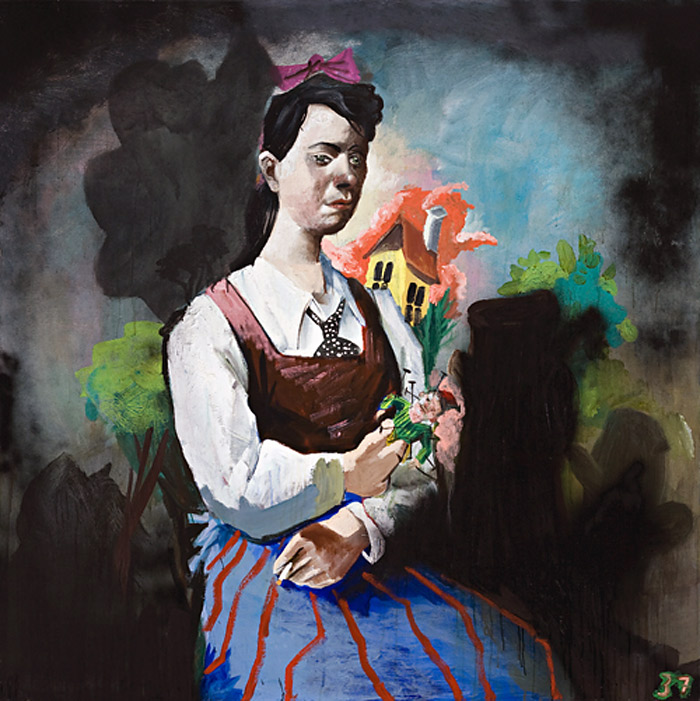
 

McLean Edwards (Australian, b. 1972) 'Fifty-Fifty' 2009 from the exhibition 'McLean Edwards: Songs from the Ghost Ship' at Karen Woodury Gallery, Melbourne, May - June, 2009


McLean Edwards (Australian, b. 1972)
Fifty-Fifty
2009


The next show on our marvellous walkabout were the eclectic paintings of McLean Edwards at Karen Wodbury Gallery, Melbourne. Continuing the carnivalesque theme from the previous review these heterogeneous paintings are a knockout with their wonderful, layered presence – they really command the viewer to look at them and celebrate the characters within them. Whimsical, ironic and full of humour these phantasmagorical images of creatures cast adrift with the night sky as background are fabulous assemblages of colour, form and storytelling.

Further to the evidences noted in the text on the website (the coils, the curling smoke, the starry night sky) one can also say other things about the paintings. There is an effervescence of colour within the blocking of clothing areas. There is the disproportionate size of the hands and bulbous noses of the characters, the shortening of the feet so that the figures almost become caricatures – but hold back from this through the mastery of the painting, through the intent of the artist. There is the symbology of other elements within the pictures: a doll with pins stuck in it’s body being clasped in a clumpy hand, a small house protruding over the protagonists shoulder (Fifty-Fifty); beetles on tree stumps with human faces (Hey, Bastard, Hey); and flowers, teapots and small humans appearing from around the edges of the larger characters in several of the works (Julia 1 and Night Nurse #2 for example). The numbers in the paintings were also puzzling but it turns out that they represent the age of the artist when he painted the works.

Finally one must acknowledge the carnivalesque in the paintings – their fun at playing dress-ups, the almost Alice in Wonderland fantasy and humour of the characterisations. There is an almost androgynous feeling to these characters as some of the female faces seem almost male. Personally I had a feeling that the artist is investigating the subconscious of Carl Jung’s ‘anima’ and ‘animus’ – the feminine inner personality of the male (anima) and the masculine inner personality of the female (animus). These states are manifested by appearing as figures in dreams and so they seem here: the anima or animus vies for attention by projecting itself onto others, here projecting itself outwards onto the painted surface.

My friend and I really enjoyed this exhibition. We were captivated by these songs, going back to the work again and again to tease out the details, to feel connection to the work. These are not lonely isolated figures but sublime emanations of inner states of being expertly rendered in glorious colour. And they made us laugh – what more could you ask for!

Dr Marcus Bunyan


Many thankx to Karen Woodbury Gallery for allowing me to publish the art work in the posting. Please click on the photographs for a larger version of the image.
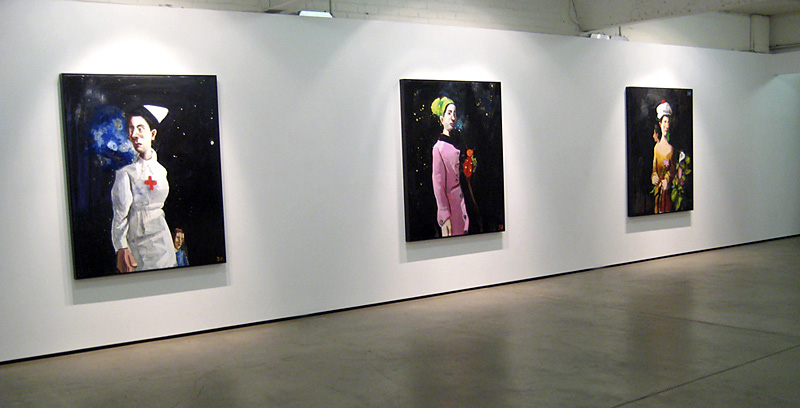


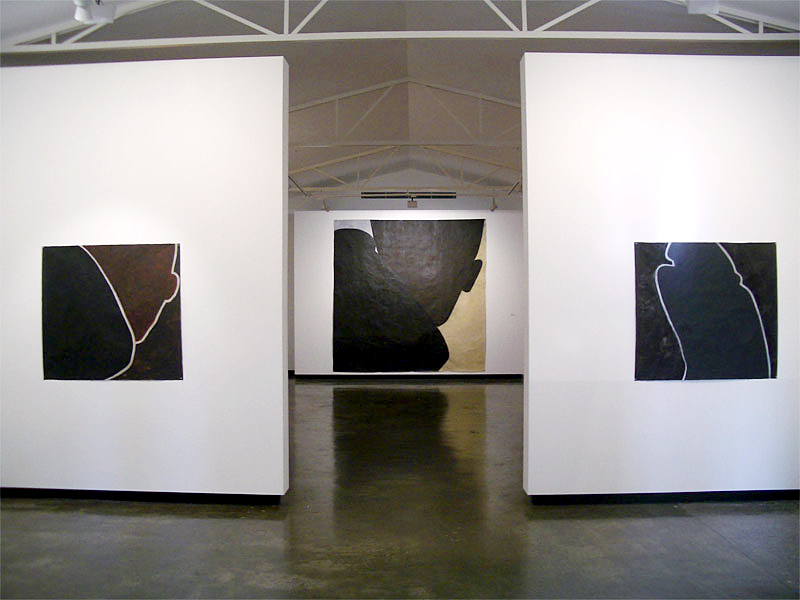
Installation view of the exhibition  'McLean Edwards: Songs from the Ghost Ship' at Karen Woodbury Gallery, Melbourne

Installation view of the exhibition  'McLean Edwards: Songs from the Ghost Ship' at Karen Woodbury Gallery, Melbourne


Installation views of McLean Edwards: Songs from the Ghost Ship at Karen Woodbury Gallery, Melbourne


McLean Edwards (Australian, b. 1972) 'Venus' 2009 from the exhibition 'McLean Edwards: Songs from the Ghost Ship' at Karen Woodury Gallery, Melbourne, May - June, 2009


McLean Edwards (Australian, b. 1972)
Venus
2009


McLean Edwards (Australian, b. 1972) 'Hey, Bastard, Hey' 2009


McLean Edwards (Australian, b. 1972)
Hey, Bastard, Hey
2009


McLean Edwards (Australian, b. 1972) 'Restoration' 2009


McLean Edwards (Australian, b. 1972)
Restoration
2009


“McLean’s works are theatrical, comical, eccentric and often political with the employment of symbolic imagery. His painting technique involves a painterly layering to create a defined and textured surface.

In this most recent series, Songs from the Ghost Ship, semi-fictional characters are set against the dark starry night sky. The exhibition includes nine oil paintings in addition to four works on paper. One of the works on paper shares its name with the exhibition, depicting a jumpered man with a white ghost looking over his shoulder.

The ink on paper work introduces a theme prominent throughout the exhibition, that of wafting smoke. Emanating either from a clasped cigarette or an iconic green curled mosquito coil, the smoke, in elegant strokes of white, grey, tan or black, draw the eye to the face of the central figures. The figures, often with the light of the moon or stars behind them only partially illuminating their faces, stare into the distance or coyly at the viewer, almost unaware of their solitary state against the night sky. The coil appears elsewhere, surreptitiously working its way into the dark pink weave of Twiggy’s jacket, or the blue and red dress of Venus, in the tyre marks of the Arctic Traveller or the grassy landscape in Hey, Bastard, Hey. The soft curl and filigree detail of both the smoke and the mosquito coil are similarly echoed by elements in other works, through the organic features of flowers, leaves and bugs.

Adrift at night, these haunting figures are about to embark on a journey, either from the wharf at the edge of an ocean, as in Venus, or across the vast ice of the Arctic, through the mist and smoke.”

Text from the Karen Woodbury website [Online] Cited 28/05/2009. No longer available online


McLean Edwards (Australian, b. 1972) 'For Elsa (Twiggy)' 2009


McLean Edwards (Australian, b. 1972)
For Elsa (Twiggy)
2009
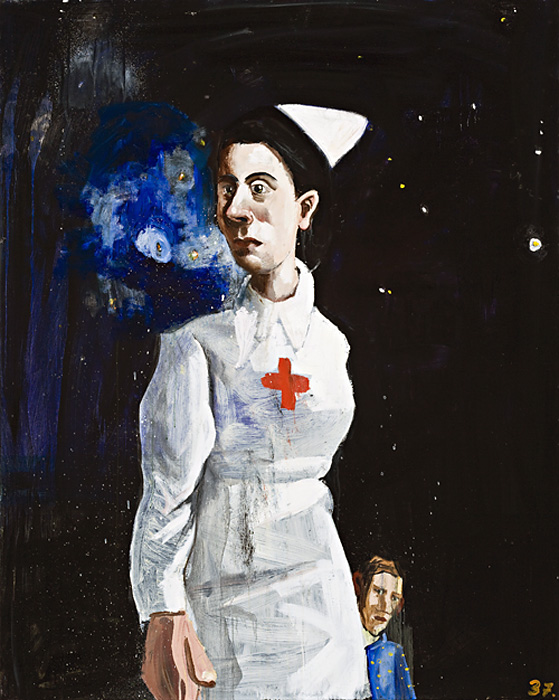
 

McLean Edwards (Australian, b. 1972) 'Night Nurse #2' 2009


McLean Edwards (Australian, b. 1972)
Night Nurse #2
2009


Karen Woodbury Gallery

This gallery is now closed.
LIKE ART BLART ON FACEBOOK

Back to top

Review: ‘Desire’ paintings and video by Judith Wright at Sophie Gannon Gallery, Melbourne

Exhibition dates: 19th May – 13th June, 2009


Installation view of Judith Wright's exhibition 'Desire' at Sophie Gannon Gallery, Melbourne

Installation view of Judith Wright's exhibition 'Desire' at Sophie Gannon Gallery, Melbourne


Installation views of Judith Wright’s exhibition Desire at Sophie Gannon Gallery, Melbourne


On a beautiful sunny Autumn afternoon in Melbourne I made a visit to Space Furniture on Church Street to ogle at the wondrous designs and then to the galleries of Albert Street in Richmond for three outstanding painting exhibitions: John Beard at John Buckley Gallery, McLean Edwards at Karen Woodbury Gallery and Judith Wright at Sophie Gannon Gallery. First cab off the rank is Judith Wright but reviews of the other two shows will follow…

There is a part in Jim Jarmusch’s film Ghost Dog: The Way of the Samurai (1999) where the anti-hero stares into the eyes of a dog and Jarmusch just holds the scene for what seems like an eternity. The camera observes the infinite bond between human and animal, an almost palpable connection across time and space, with an unflinching eye. The same can be said of Judith Wright’s encaustic paintings (also known as hot wax painting, involves using heated beeswax to which coloured pigments are added) but here she pushes the relationship further – into an investigation of the animal in the human and vice versa, and their erotic charge when placed together. Here is the carnivalesque at it most daring, most paired back, revealing in quiet Zen like compositions the dissolution of boundaries between both states of being.

Nominally based on the symbology of characters presented in two videos in the exhibition (masked figures playing with each other, a comical goats head with horns being one figure) the paintings are much more interesting than the videos. Painted on Japanese paper in wax and acrylic the biomorphic forms of babies heads, torsos and sculpted free forms and designs suggestive of living organisms address the title of the exhibition: desire!

Wright plays with scale and form, using earth tones and a luminous palette of oranges, yellows and pinks. Her shape-shifting paintings work to unhinge stagnant systems of thought that surround identity and the body. The waxed Japanese paper adds to the sensuality of the skin-like work. A baby seems to feed on a double nipple but the nipple has missed the mouth and is invading the eye. Forms intersect and the sensual shapes slip over each other: as in the Zen idea of ‘satori’ or enlightenment attained when two circles intersect here we have the intersection of an erotic enlightenment.

As Russian theorist Mikhail Bakhtin notes the carnivalesque is the contravention of normal laws of behaviour, “and he proposes that the carnivalesque is also the home of the grotesque, where otherwise antithetical properties or characteristics are matched together in the same being: beast with human, youth with age, male with female.”1

“The carnival offers the chance to have a new outlook on the world, to realise the relative nature of all that exists, and to enter a completely new order of things.”2


And this is what these paintings propose: a new order of things, a chance for desires formed of new pleasures.

As Michel Foucault has observed,

“The possibility of using our bodies as a possible source of very numerous pleasures is something that is very important. For instance, if you look at the traditional construction of pleasure, you see that bodily pleasure, or pleasures of the flesh, are always drinking, eating and fucking. And that seems to be the limit of the understanding of our bodies, our pleasures … It is very interesting to note, for instance, that for centuries people generally, as well as doctors, psychiatrists, and even liberation movements, have always spoken about desire, and never about pleasure. “We have to liberate our desire,” they say. No! We have to create new pleasure. And then maybe desire will follow.”3


In their luminosity, in their skin-like textures, in their balance between the colour of the paper, the dark voids and the brown of babies heads we feel the sharp intake of the cold breathe of winter on the nostrils – we feel an evocation of new pleasure, of possible desires within us and the loosening of the grip of conformity. Like the perfect placement of rocks in a Japanese garden and the ripples of the gravel, of a reality that swirls around them these paintings open hearts and minds to inner states of being unexperienced before. And yes, I did enjoy the ride.

Dr Marcus Bunyan


Many thankx to Sophie Gannon Gallery for allowing me to publish the art work in the posting. Please click on some of the photographs for a larger version of the image.


1/ Buchbinder, David. Masculinities and Identities. Melbourne: Melbourne University Press, 1994, p. 53. For a discussion of carnivalesque see Bakhtin, Mikhail. Rabelais and his World (trans. Hélène Iswolsky). Bloomington: Indiana University Press, 1984, pp. 196-277, 303-367.

2/ Bakhtin, Mikhail. Rabelais and his World (trans. Hélène Iswolsky). Bloomington: Indiana University Press, 1984, p. 34.

3/ Gallagher, Bob and Wilson, Alexander. “Sex and the Politics of Identity: An Interview with Michel Foucault,” in Thompson, Mark. Gay Spirit: Myth and Meaning. New York: St. Martin’s Press, 1987, p. 31.


Judith Wright video installation


Judith Wright (Australian, b. 1945) 'Desire [14]' 2009 from the exhibition 'Desire' paintings and video by Judith Wright at Sophie Gannon Gallery, Melbourne, May - June, 2009


Judith Wright (Australian, b. 1945)
Desire [14]
2009
Acrylic and wax on Japanese paper
200 x 200cm


Judith Wright (Australian, b. 1945) 'Desire [5]' 2009 from the exhibition 'Desire' paintings and video by Judith Wright at Sophie Gannon Gallery, Melbourne, May - June, 2009


Judith Wright (Australian, b. 1945)
Desire [5]
2009
Acrylic and wax on Japanese paper
100 x 100cm


Judith Wright (Australian, b. 1945) 'Desire [7]' 2009


Judith Wright (Australian, b. 1945)
Desire [7]
2009
Acrylic and wax on Japanese paper
100 x 100cm


Judith Wright (Australian, b. 1945) Desire [16]' 2009


Judith Wright (Australian, b. 1945)
Desire [16]
2009
Acrylic and wax on Japanese paper
300 x 300cm


Judith Wright (Australian, b. 1945) 'The Gift [2]' 2009


Judith Wright (Australian, b. 1945)
The Gift [2]
2008
Acrylic and wax on Japanese paper


Judith Wright (Australian, b. 1945) 'The Gift [7]' 2008


Judith Wright (Australian, b. 1945)
The Gift [7]
2008
Acrylic and wax on Japanese paper


Sophie Gannon Gallery
2, Albert Street, Richmond, Melbourne
Phone: +61 3 9421 0857

Opening hours:
Tuesday – Saturday 11am – 5pm

Sophie Gannon Gallery website

LIKE ART BLART ON FACEBOOK

Back to top

Review: ‘Exotic Queensland: Recent Painting’ by Anne Marie Graham at Gallery 101, Melbourne

Exhibition dates: 6th May – 30th May, 2009


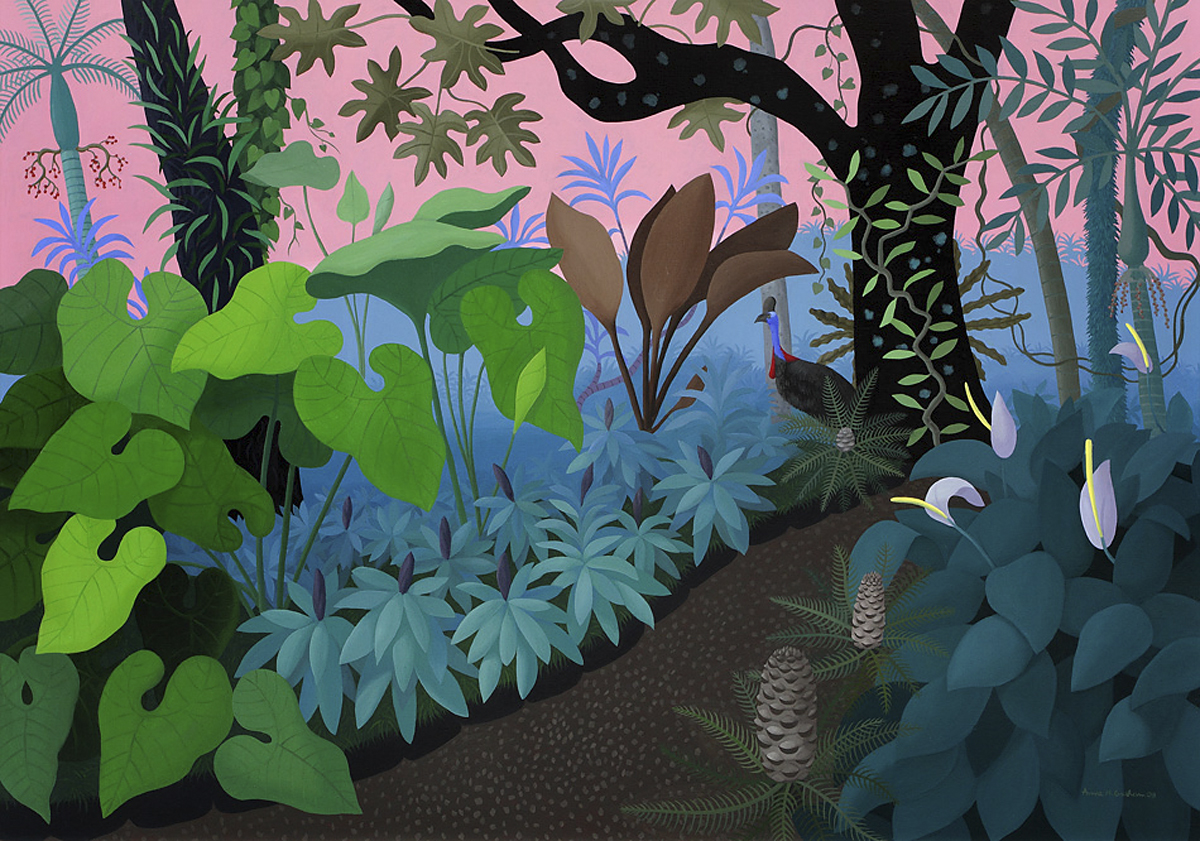
Anne Marie Graham (Australian born Austria, b. 1925) 'Jungle with Cassowary' 2008


Anne Marie Graham (Australian born Austria, b. 1925)
Jungle with Cassowary
2008
Oil on Linen
106 x 150cm
National Museum for Women in Arts, Washington


I was walking around Anne Marie Graham’s new exhibition of painting at Gallery 101, Melbourne having read a review of her work on the gallery wall where the reviewer compared the structure of the work to the essentialness of the paintings of Giotto. A lady approached me and said, “You don’t want to believe everything that you read.”

And I said, “I don’t. I make up my own mind.”

This was the artist Anne Marie Graham.

We had a wonderful conversation about her work talking about space, colour and form. This is what Graham’s work is about. No conceptual arguments are needed. The work addresses the landscape in a magical way, drawing the viewer into the compositions like a piece of music. The viewer finds entrances and passageways, spaces through the images which open up a dialogue with the landscape.

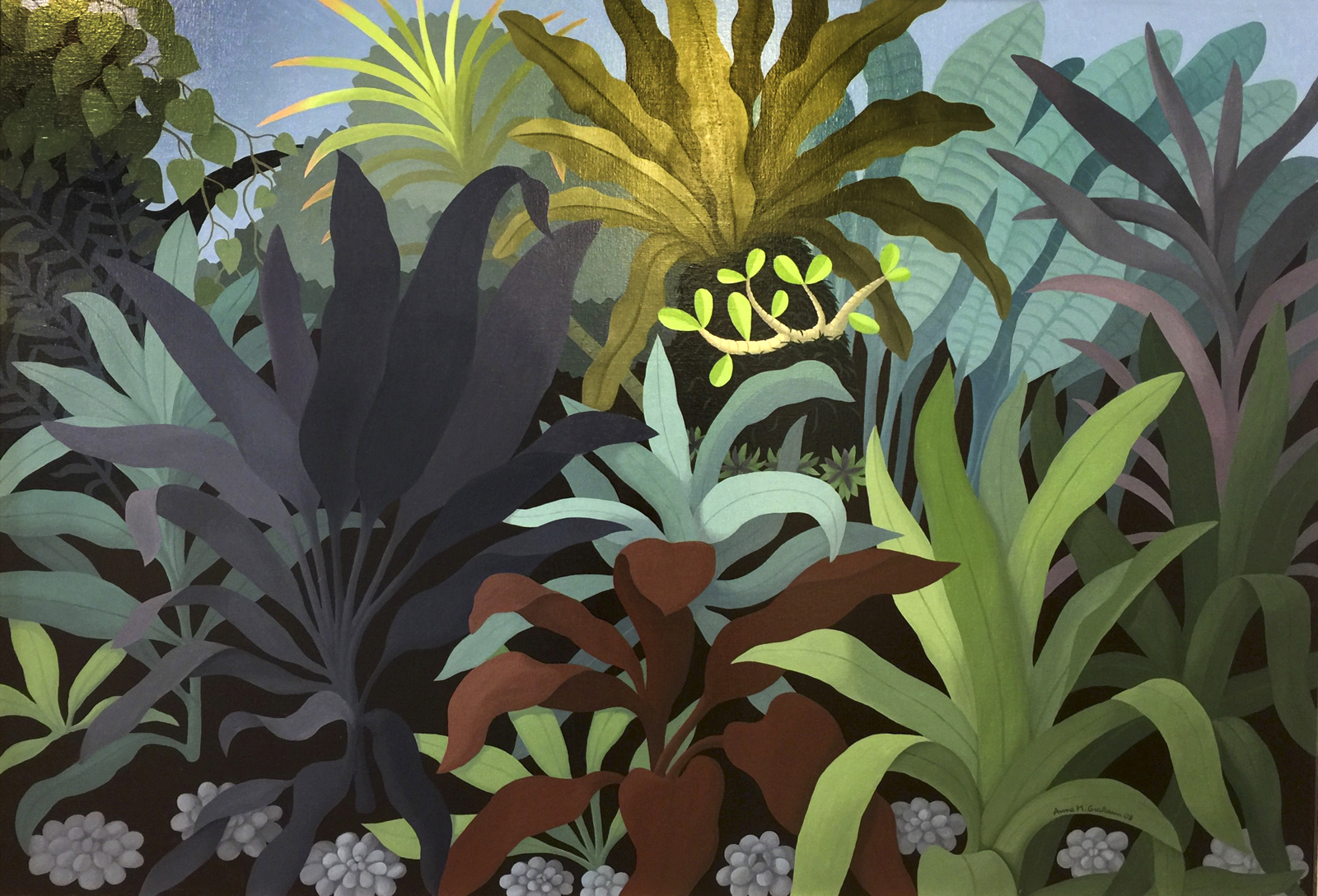
Using repeated patterns and layered construction, from bottom to top, from front to back, the images subtly push and pull the viewer: space quietly recedes and comes towards the viewer. Complimentary bands of colours are muted except for stunning highlight colours – the red of flowers, the blue of leaves or the unexpected pink or yellow of a background. The forms and textures delight. Dr Sheridan Palmer is correct, these paintings have an almost hypnotic effect, meditative and peaceful. They make you feel good!

Their presence is undeniable. For such complex paintings, which on the surface seem very simple (a difficult task to accomplish); for such essential representations that address the heart of the matter… their affect is powerful.

Graham’s refined aesthetic allows the viewer to engage with the poetic spaces she creates, allowing them to appreciate the colour fields, plants and landscapes she orchestrates and to be subsumed into their fold. Here we come to understand the diverse empathy of an artist who lays it all ‘on the line’ and knows how to do so in a brilliant way.

A talented artist and a nice lady as well – what more can you ask for!

Dr Marcus Bunyan


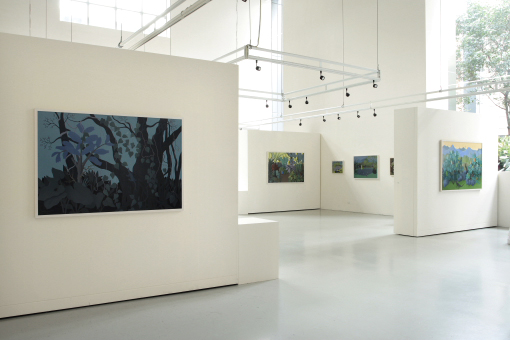
Installation view of Anne Marie Graham's exhibition 'Exotic Queensland: Recent Painting' at Gallery 101, Melbourne

Installation view of Anne Marie Graham's exhibition 'Exotic Queensland: Recent Painting' at Gallery 101, Melbourne


Exotic Queensland: Recent Painting installation views at Gallery 101, Melbourne


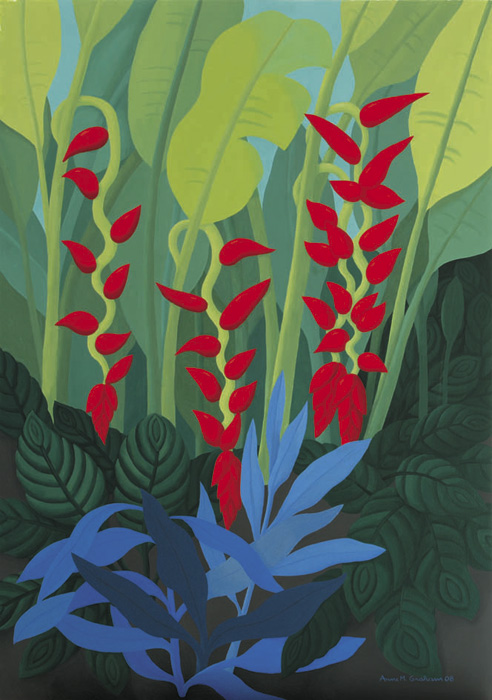
These landscapes are inspired by the areas around Noosa, the Glasshouse Mountains and the Botanic Gardens in Cairns. Look at the bromeliads, those cousins of the pineapple that store pools of water in their depths. And the helliconias – they’re also called lobster-claw plants and you can see why! Look at the massive scarlet tassels set against tropical green – and not just the one green but the subtlest of shades and tones in combination.

‘If there’s a God, it must be there’, says Anne of the Cairns Botanical Gardens. ‘The inventiveness and colours, the lushness and tropical exuberance and shapes. I still can’t overcome this enthusiasm’. There is an analogy with Eugene von Guérard here. Like Ann, he was born in Vienna and was also a precisely scientific observer of nature, ever mindful that the world is a thing far greater than us: that the hand of God (for want of a better word) can be found in very leaf and every grain of sand.

How much further in both place and mood could Anne possibly have travelled from the order and long humanist traditions of her childhood home in Austria? In these Queensland paintings you’ll discover cockatoos, a water dragon, a fat goanna, ibises in the lotus pond, and the shy endangered cassowary almost hidden in the jungle. And look at the sky in that painting – the rosiest pink of a twilight had tells us tomorrow will be a perfect day.

Jane Clark
Senior Research Curator, Museum of Old and New Art, Hobart

Extract from speech given at the opening of the exhibition Exotic Queensland, Gallery 101 Melbourne May 2009


Anne Marie Graham (Australian born Austria, b. 1925) 'Water Dragon with Banksias' 2008


Anne Marie Graham (Australian born Austria, b. 1925)
Water Dragon with Banksias
2008


Anne Marie Graham (Australian born Austria, b. 1925) 'Heliconia No. 1' 2008


Anne Marie Graham (Australian born Austria, b. 1925)
Heliconia No. 1
2008
Oil on Linen
106 x 150cm


Anne Marie Graham (Australian born Austria, b. 1925) 'Variations in Green and Mauve' 2008


Anne Marie Graham (Australian born Austria, b. 1925)
Variations in Green and Mauve
2008
Oil on linen
106 x 150cm


“Anne Marie Graham’s painting career now spans more than six decades. Observed with a penetrating and affectionate gaze, her images are beautiful records of Australia’s vast landscape. Each work is an engagingly optimistic view, evoking the mystery and fragility of Australia’s rich environment. This survey of recent paintings concentrates on the tropical Queensland landscapes around Noosa and the Cairns Botanic Gardens.

As she casts he vision over mountains, rain forests and panoramic vistas or as she leads us into an intimate world of gardens, winding pathways and potted plants, we find ourselves amongst large succulents, variegated foliage, ferns and brilliant flowers, visually engaging at a Lilliputian level in her richly orchestrated fields and forests. In these locations she constructs marvellous labyrinthine worlds that reveal layers of muted colours, folding forms and textures that induce a most extraordinary hypnotic spell.”

Dr Sheridan Palmer, Art Curator, from the catalogue essay


Anne Marie Graham (Australian born Austria, b. 1925) 'Heliconia No. 2' 2008


Anne Marie Graham (Australian born Austria, b. 1925)
Heliconia No. 2
2008


GALLERY 101

This gallery has now closed.

LIKE ART BLART ON FACEBOOK

Back to top

Two exhibitions by photographer John Wood: ‘On the Edge of Clear Meaning’ at Grey Art Gallery, New York and ‘Quiet Protest’ at the International Center of Photography, New York

Exhibition dates: Grey Art Gallery, 12th May – 18th July, 2009; International Center of Photography, 15th May – 6th September, 2009


Fantastic to see such a talented artist, a truly ground breaking artist, get the recognition he so richly deserves!


Grey Art Gallery

John Wood (American, 1922-2012) 'Untitled' 1986-1989 from the exhibition 'On the Edge of Clear Meaning' at Grey Art Gallery, New York, May - July, 2009


John Wood (American, 1922-2012)
Untitled
1986-1989
Stained gelatin silver print from paper stencil


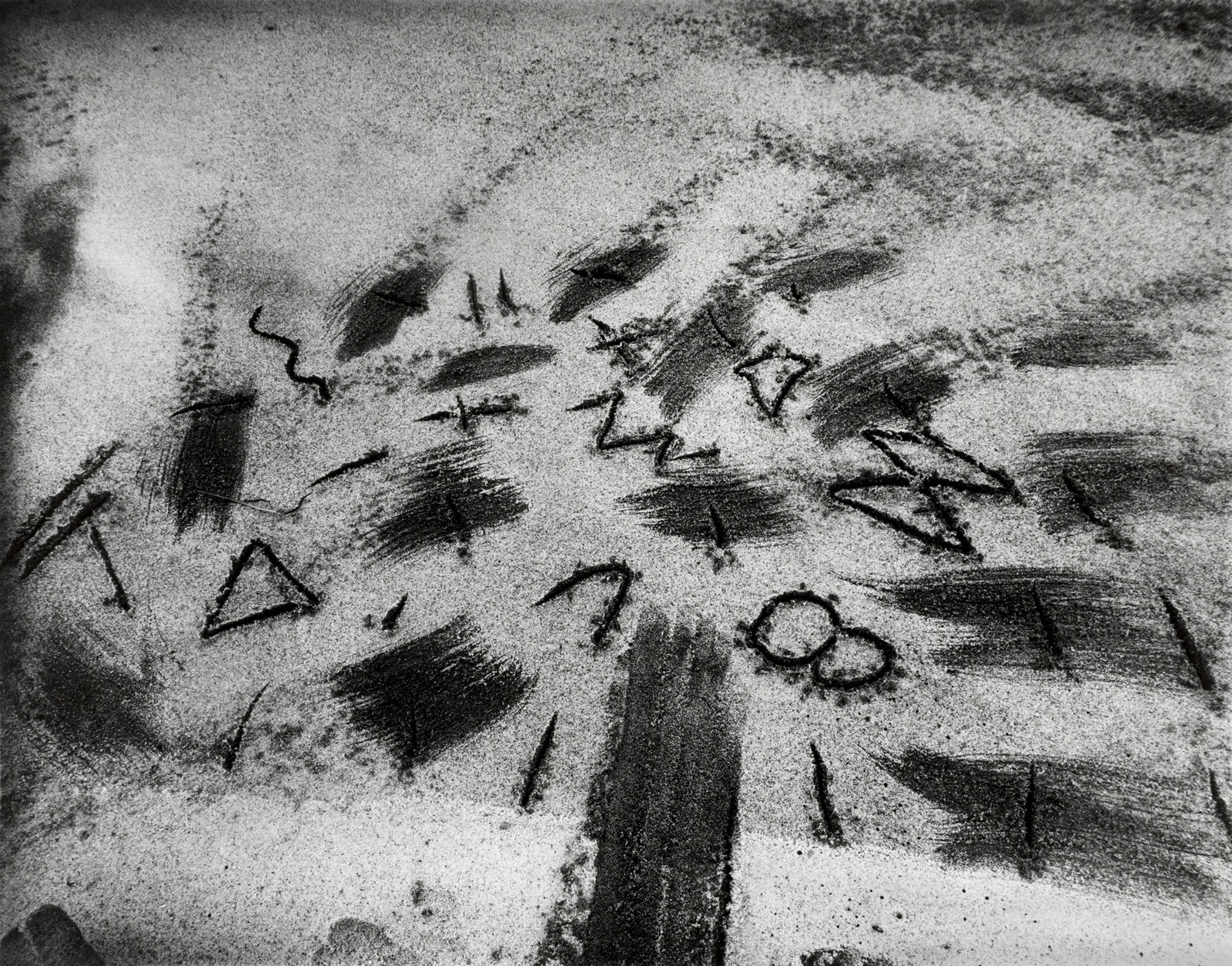
John Wood (American, 1922-2012) 'Beach Drawing' 1983 from the exhibition 'On the Edge of Clear Meaning' at Grey Art Gallery, New York, May - July, 2009


John Wood (American, 1922-2012)
Beach Drawing
1983
Gelatin silver print
14 15/16 x 19 1/8″ (37.8 x 48.5cm)


John Wood: On the Edge of Clear Meaning, on view at the Grey Art Gallery from May 12 through July 18, 2009, is the most comprehensive exhibition of the artist’s work to date. Featuring the full range of his career from the 1960s to the present, the show includes over 150 photographs, mixed-media works, and artists’ books. A selection of Wood’s photomontages, Quiet Protest, will be on view concurrently at the International Center of Photography.

John Wood (born 1922) has consistently challenged traditional photography, often incorporating painting, drawing, and collage as well as cliché verre, solarisation, and offset lithography. The artist emphasises the role of drawing in his work: “Mark making, calligraphy, the kinetic motion of the movement of the hand, are very important to me; probably more important than anything else.” Transgressing the boundaries of “pure photography,” his eclectic practice has helped usher in alternative approaches to the medium. With their adroit manipulations of picture and text, his diaristic, multi-media compositions anticipate today’s digital imagery. On the Edge of Clear Meaning is Wood’s first museum retrospective, spanning his career from the early 1960s to the present.

His early childhood was marked by the Depression, and his family moved frequently. After serving in the Army Air Corps as a B-17 pilot during World War II, he enrolled at the Institute of Design in Chicago. Wood trained as a visual designer and photographer, studying with Harry Callahan and Art Sinsabaugh to hone both conceptual and formal issues in his work. He left Chicago to teach photography and printmaking at the School of Art and Design at Alfred University in Alfred, New York, where he would live for thirty-five years. He now resides in Baltimore, Maryland with his wife, Laurie Snyder, who teaches photography at the Maryland Institute College of Art. They migrate each summer to their home and studio in Ithaca, New York.

In keeping with the Grey Art Gallery’s tradition of presenting the work of under-represented artists, this exhibition introduces John Wood as a master of various multi-media processes and testifies to his insatiable curiosity about new materials and repeated use of favourite sources. Through disciplined but lively investigation of different media, the artist eroded traditional definitions of photography and produced work that is both powerful and subtle. As Lynn Gumpert, Director of the Grey, notes, “John Wood has been a life-long teacher, inspiring and training numerous students, artists, and arts professionals. We are honoured to bring the breadth of his work to New York City, home to many art schools, colleges, and universities.”

Text from the Grey Art Gallery website and press release [Online] Cited 10/05/2009. No longer available online


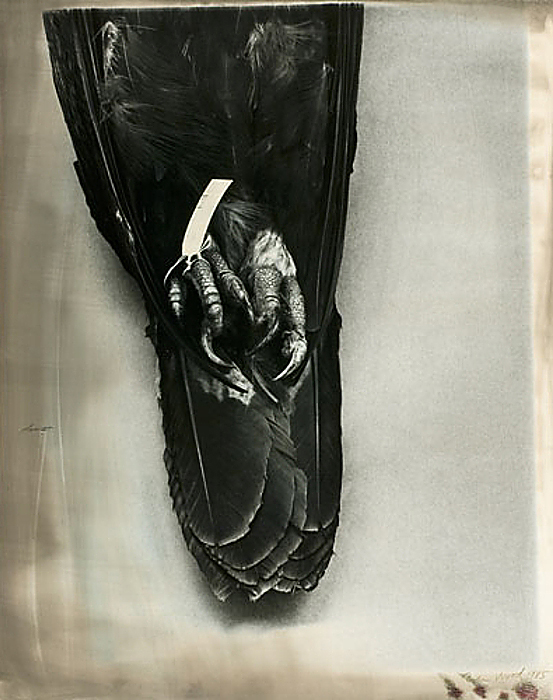
John Wood (American, 1922-2012) 'Eagle Pelt' 1985


John Wood (American, 1922-2012)
Eagle Pelt
1985
Gelatin silver print
20 1/8 x 15 3/8″


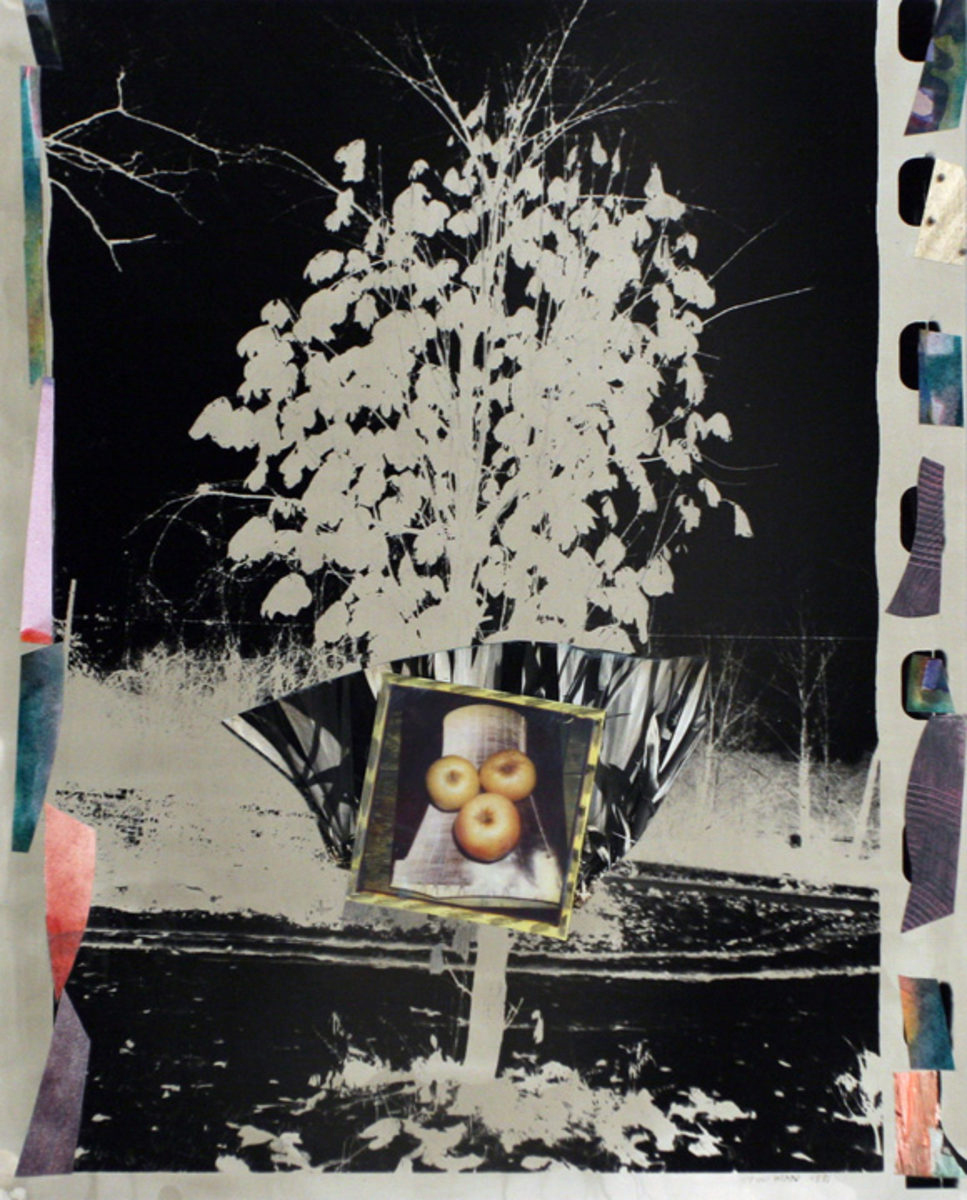
John Wood (American, 1922-2012) 'Pear Tree, Cooling Tower, and Apples' 1991


John Wood (American, 1922-2012)
Pear Tree, Cooling Tower, and Apples
1991
Collage, gelatin silver print, Polaroid SX70, and paper
19 1/4 x 15 3/8″


John Wood (American, 1922-2012) 'Blackbird, Some Have Hunger' 1986


John Wood (American, 1922-2012)
Blackbird, Some Have Hunger
1986
Collage, cyanotype, and graphite
20 x 24″


International Center of Photography

Quiet Protest is a series of photographic works by the noted mixed media artist and educator John Wood, spanning a period from the 1960s through the 1990s. Part of a larger retrospective at New York University’s Grey Art Gallery, the “Quiet Protest” series explores political and social issues of the day through thoughtful photo montage pieces that exist in marked contrast to more traditional aggressive documentary photography. Rather than offering explanations or promoting solutions, Wood’s manipulated photographs present contemplative routes into issues ranging from the Vietnam War to domestic gun violence to ecological concerns. As Wood wrote in 1970, ” …maybe the time has come for creative photography to encompass the large problems without propaganda or journalism…”

Text from the International Center of Photography website [Online] Cited 10/05/2009. No longer available online


John Wood (American, 1922-2012) 'Rifle, Bullets and Daises' 1967 from the exhibition 'Quiet Protest' at the International Center of Photography, New York, May - Sept, 2009


John Wood (American, 1922-2012)
Rifle, Bullets and Daises
1967


John Wood (American, 1922-2012) 'Triangle in the Landscape: Eleven Second 90 Degree Turn of a Paper Triangle' August 6, 1985 (Hiroshima Day) from the exhibition 'Quiet Protest' at the International Center of Photography, New York, May - Sept, 2009


John Wood (American, 1922-2012)
Triangle in the Landscape: Eleven Second 90 Degree Turn of a Paper Triangle
August 6, 1985 (Hiroshima Day)


John Wood (1922-2012)

John Cheney Wood (July 10, 1922 – July 20, 2012) was an American artist and educator who challenged traditional photography and often incorporated other mediums into his work. He was born in California in 1922. In 1943 he volunteered for the Army Air Corps, where he served as a B-17 pilot until 1945. At the time of his death he lived in Baltimore, Maryland, with artist Laurie Snyder.

Wood had the ability to work across a variety of artistic forms, from straight photography, collage, cliché verre, solarization, mixed media, offset lithography to drawing. Wood moved freely between conceptual and visual exploration, not adhering to a single style. Although he often raised questions about political, social and environmental issues, he avoided promoting personal solutions or adding narratives to the images. The artist instead preferred to focus on the viewer’s interpretation and the possibility for multiple meanings.

Text from the Wikipedia website


John Wood (American, 1922-2012) 'Loon, Drawer and Bomb' 1987


John Wood (American, 1922-2012)
Loon, Drawer and Bomb
1987
Collage, cyanotype, and toned silver gelatin print


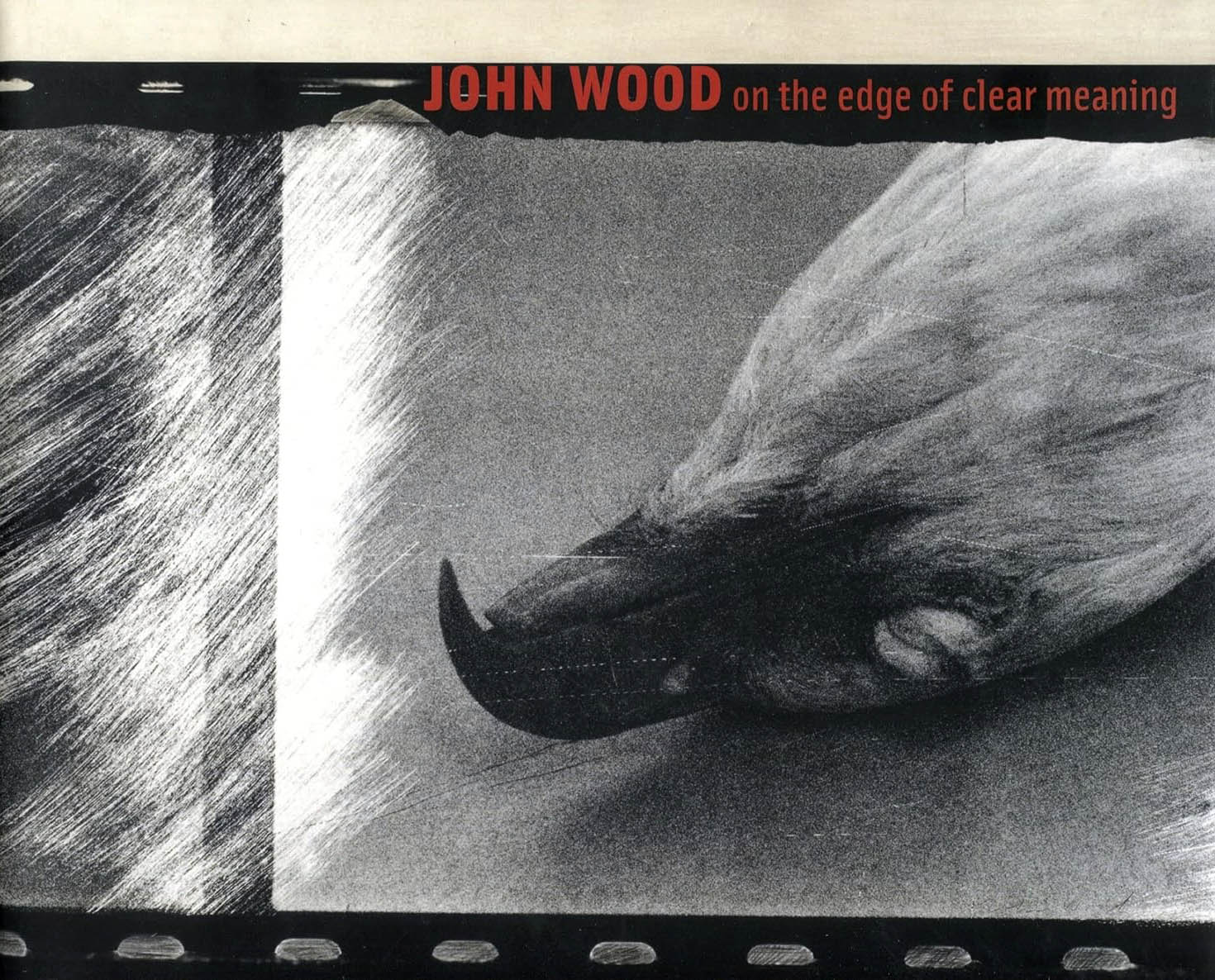
'John Wood: On the Edge of Clear Meaning' book cover


John Wood: On the Edge of Clear Meaning book cover


Book

In his introductory essay to this monograph – featuring the diverse photo practice that has characterised John Wood’s nearly 50-year career – David Levi Strauss states, “In photo-historical terms, Wood is thought of as one of those renegades who went against ‘pure photography’ by incorporating drawing, painting, collage and every other technique he could get his hands on (not to mention explicit political content), into his practice, thus ushering in the multi-media of the 1960s that caused crisis in ‘straight photography.’ Long before it became the signal medium of the avant-garde, collage was a folk art, practiced by children, lovers and grandmothers.” This comprehensive volume accompanies a retrospective that begins in Rochester, New York at The George Eastman House, The Memorial Art Gallery and the Visual Studies Workshop, then travels to The International Center for Photography and The Grey Art Gallery in New York before concluding at Syracus’ Light Work gallery.

John Wood: On the Edge of Clear Meaning by David Strauss et al (Hardcover) 2008

Available from the Amazon website


Grey Art Gallery
New York University
100 Washington Square East

Opening hours:
Monday – Friday: 12.00 – 5.00pm
Closed weekends

Grey Art Gallery website

International Center of Photography
79 Essex Street New York, NY 10002
between Delancey Street and Broome Street

Opening hours:
Wednesday – Monday: 11.00am – 7.00pm
Closed Tuesdays

International Center of Photography website

LIKE ART BLART ON FACEBOOK

Back to top

Opening 3: ‘So It Goes’ exhibition by Laith McGregor at Helen Gory Galerie, Melbourne

Exhibition dates: 6th May – 23rd May, 2009


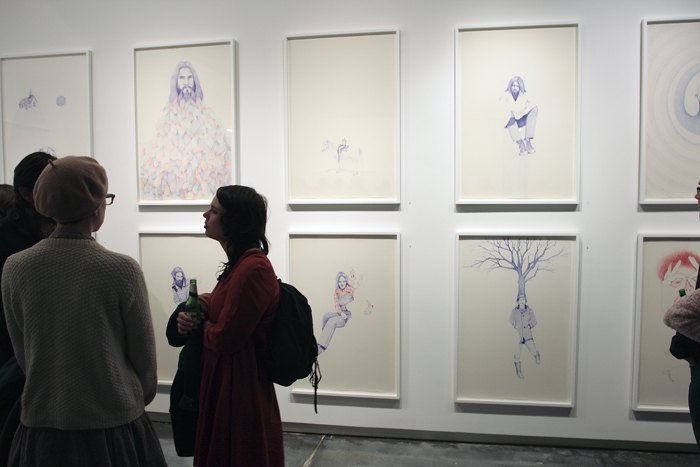
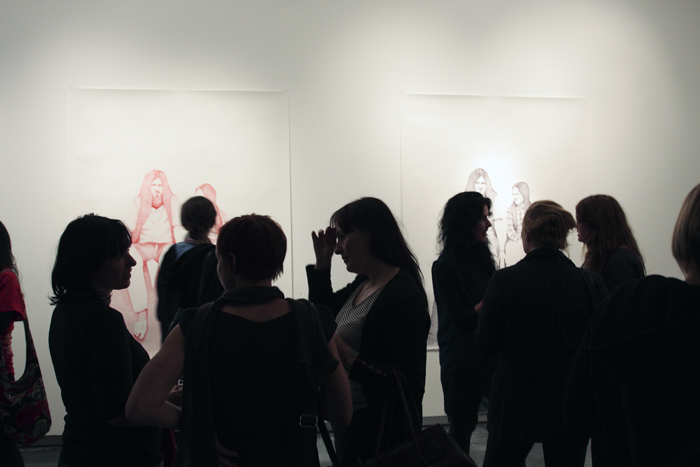
Opening night crowd at 'So It Goes' by Laith McGregor at Helen Gorie Gallery, Melbourne

Opening night crowd at 'So It Goes' by Laith McGregor at Helen Gorie Gallery, Melbourne


Opening night crowd at So It Goes by Laith McGregor at Helen Gory Galerie, Melbourne with the works My kinda of Blue (red) and My kind of blue (black) behind


The opening of the night – simply spectacular!

Great crowd, great atmosphere, great work.

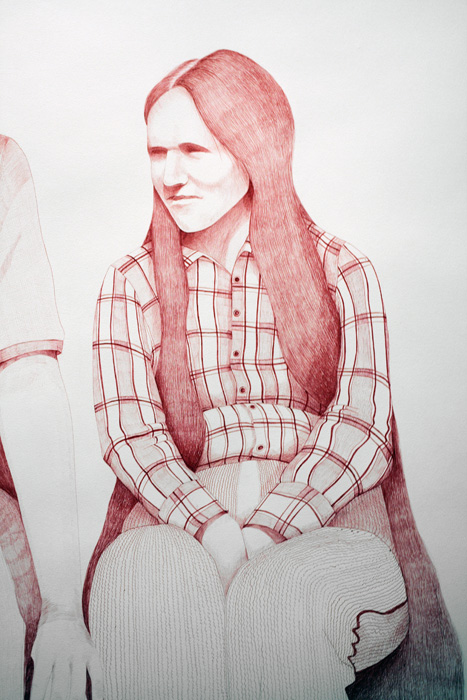
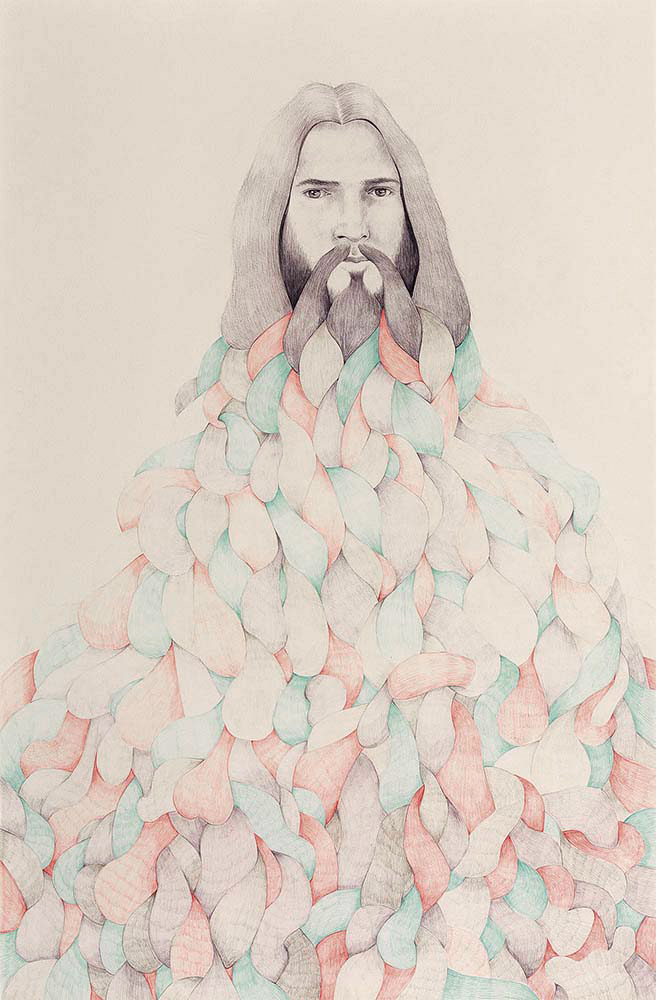
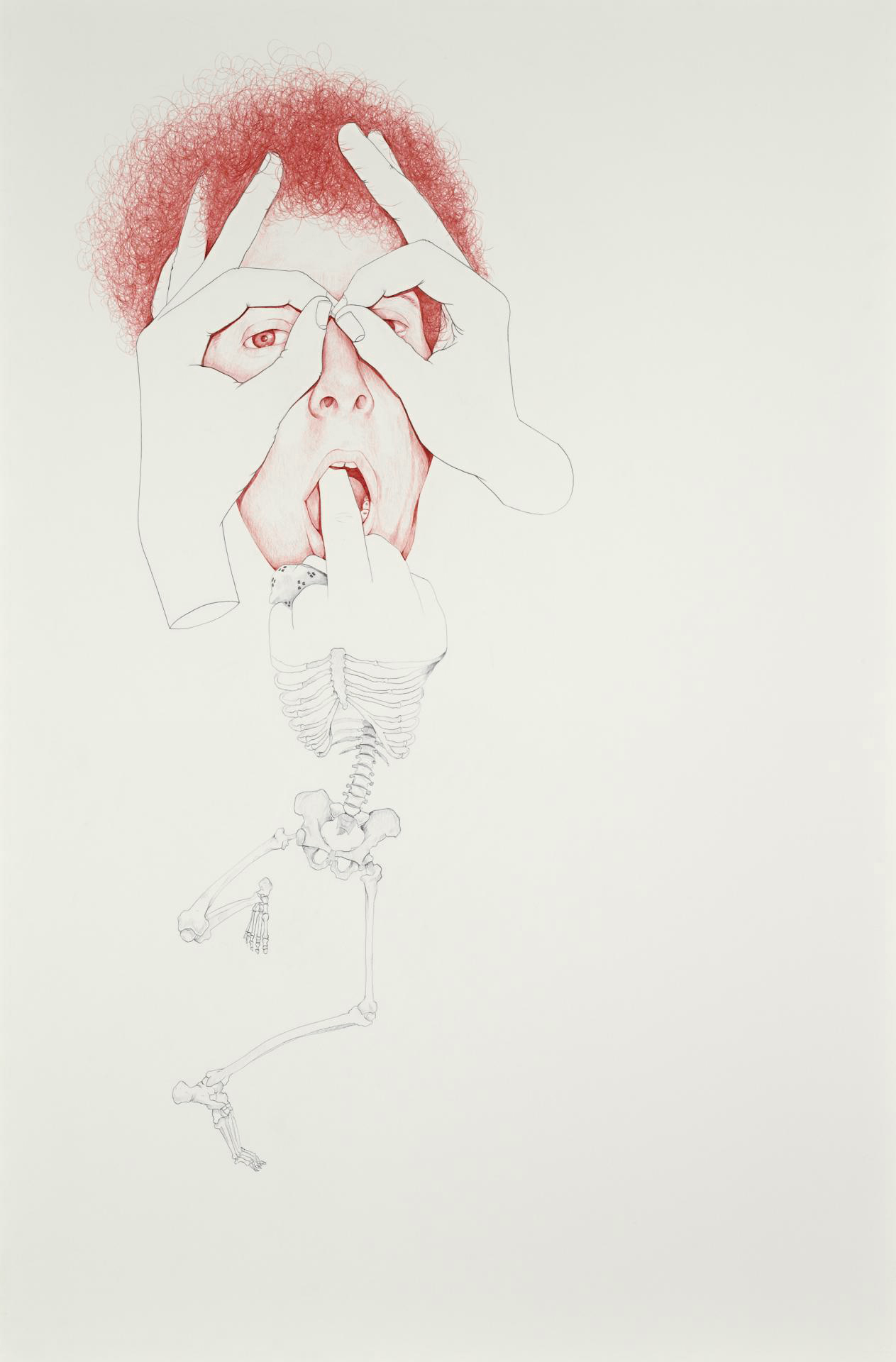
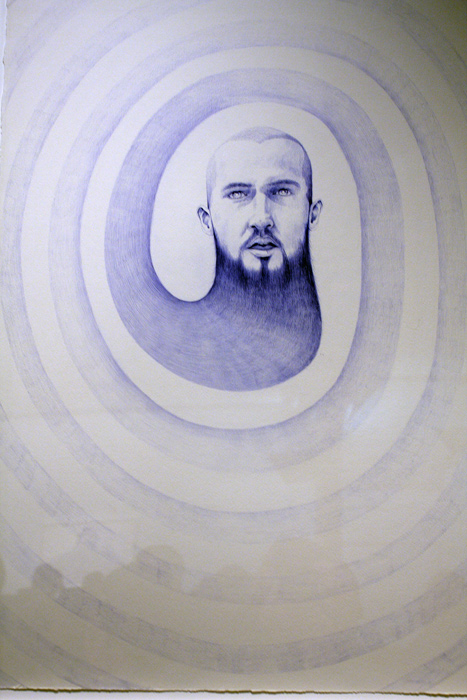
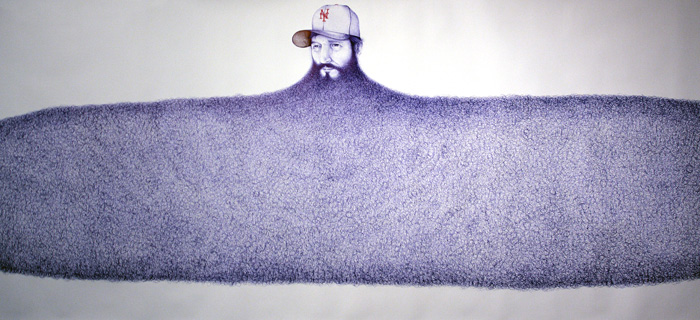
Winner of the Robert Jacks Drawing Prize in 2008, the artist’s work in biro and oil is outstanding. I have never seen such art made using a biro before: truly inspiring. Inventive, funny, poignant and outrageous this is a must see show. Don’t miss it!

Dr Marcus Bunyan


Laith McGregor (Australian, b. 1977) 'My kind of blue (black)' 2009 from the exhibition 'So It Goes' exhibition by Laith McGregor at Helen Gory Galerie, Melbourne, May, 2009


Laith McGregor (Australian, b. 1977)
My kind of blue (black)
2009
Ballpoint pen on paper


Laith McGregor. 'My kinda of Blue (red)' 2009 (detail) from the exhibition 'So It Goes' by Laith McGregor at Helen Gory Galerie, Melbourne, May, 2009


Laith McGregor (Australian, b. 1977)
My kinda of Blue (red) (detail)
2009
Red and blue ballpoint on paper


Laith McGregor (Australian, b. 1977) 'Wiking' 2009 from the exhibition 'So It Goes' by Laith McGregor at Helen Gory Galerie, Melbourne, May, 2009


Laith McGregor (Australian, b. 1977)
Wiking
2009
Biro on paper
100.5 x 66.5 cm


Laith McGregor (Australian, b. 1977) 'Puppy dancing with cougar' 2009


Laith McGregor (Australian, b. 1977)
Puppy dancing with cougar
2009
Red and black ballpoint pen on paper
101.0 × 67.0cm
National Gallery of Victoria, Melbourne
Purchased, Victorian Foundation for Living Australian Artists, 2009
© Courtesy of the Artist and Station Gallery


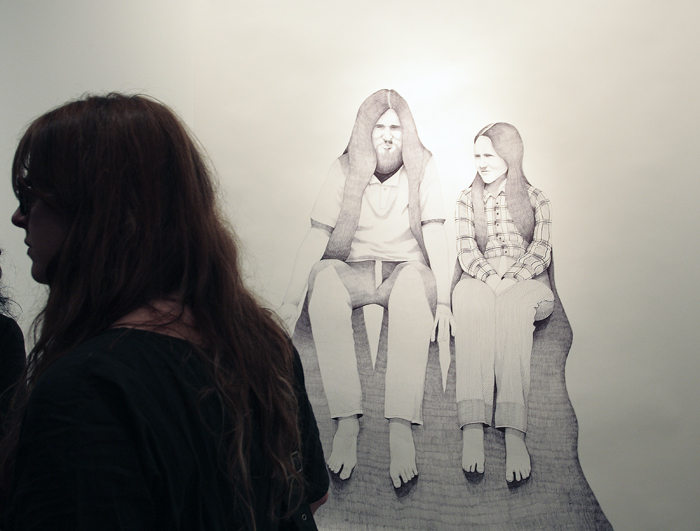
“McGregor’s work blurs the boundaries between portraiture, memory and imagination. Into each picture, drawn from and nourished by his past, notions of the unconscious mind are introduced and investigated and the certainty of memory and markers are challenged and slowly unravelled. Figurative forms metamorphose into uncanny, exaggerated, and often incongruous images and arrangements. Beards are grossly elongated, hair extends seamlessly to form a tree or a cocoon that envelopes a face and a neck transforms into a weighted mound in ‘portraits’ that are at once warm, playful and pensive. “It’s important for me to see the imagery appear otherworldly, whimsical and strange. I want it to be amusing and serious simultaneously, for the work to push and pull between its contrasting qualities.”

In So It Goes it is his mother and father, who according to Laith ‘kinda looks like Jesus’, that are the subject of his gaze.”

Text from the Helen Gory Galerie website [Online] Cited 07/05/2009. No longer available online


Laith McGregor (Australian, b. 1977) 'Vertigo' 2009


Laith McGregor (Australian, b. 1977)
Vertigo
2009
Blue and black ballpoint on paper


Laith McGregor (Australian, b. 1977) 'The Last Bastion' 2009 (detail)


Laith McGregor (Australian, b. 1977)
The Last Bastion (detail)
2009
Ballpoint on paper


Laith McGregor (Australian, b. 1977) 'The Last Bastion' 2009 (detail)


Laith McGregor (Australian, b. 1977)
The Last Bastion (detail)
2009
Ballpoint on paper


Helen Gory Galerie

Helen Gory Galerie is now closed.

LIKE ART BLART ON FACEBOOK

Back to top

Exhibition: ‘Frida Kahlo: Through the Lens of Nickolas Muray’ at the Albright-Knox Art Gallery, Buffalo NY

Exhibition dates: 8th May – 5th July, 2009


Nickolas Muray (American, 1892-1965) 'Frida with Olmeca Figurine, Coyoacan' 1939 from the exhibition 'Frida Kahlo: Through the Lens of Nickolas Muray' at the Albright-Knox Art Gallery, Buffalo NY, May - July, 2009


Nickolas Muray (American, 1892-1965)
Frida with Olmeca Figurine, Coyoacan
1939
Colour print, assembly (Carbro) process


Forty-seven exquisite colour and black-and-white photographs of the Mexican artist Frida Kahlo by the American photographer Nickolas Muray are featured in this exhibition organised and circulated by Smith Kramer Fine Art Services. Muray and Kahlo first met in Mexico in 1931 and soon began a love affair that lasted ten years and continued as an enduring friendship throughout their lives. The photographs, selected from the Nickolas Muray Archives, capture the exotic mystery and proud beauty of Frida Kahlo through the eyes of this accomplished portrait photographer, who loved her deeply. Organised at the Albright-Knox by Associate Curator Holly E. Hughes, the exhibition will also include reproductions of Kahlo’s letters to Muray, explanatory wall texts, and an educational brochure.

Text from the Albright-Knox Art Gallery website [Online] Cited 01/05/2009. No longer available online


Many thankx to the Albright-Knox Art Gallery for allowing me to publish the photographs in the posting. Please click on the photographs for a larger version of the image.


Nickolas Muray (American, 1892-1965) 'Frida, Mexico, 1940' c. 1940 from the exhibition 'Frida Kahlo: Through the Lens of Nickolas Muray' at the Albright-Knox Art Gallery, Buffalo NY, May - July, 2009


Nickolas Muray (American, 1892-1965)
Frida, Mexico, 1940
c. 1940
Colour print, assembly (Carbro) process


Nickolas Muray (American, 1892-1965) 'Frida with her sister Cristina, Nickolas Muray, and Rosa Covarrubias, Coyoacán' 1939


Nickolas Muray (American, 1892-1965)
Frida with her sister Cristina, Nickolas Muray, and Rosa Covarrubias, Coyoacán
1939
Colour print, assembly (Carbro) process


Nickolas Muray (American, 1892-1965) 'Frida Painting the Two Fridas, Coyoacan' 1939


Nickolas Muray (American, 1892-1965)
Frida Painting the Two Fridas, Coyoacan
1939
Silver gelatin print


Nickolas Muray (American, 1892-1965) 'Frida with Nick in her Studio, Coyoacán' 1941


Nickolas Muray (American, 1892-1965)
Frida with Nick in her Studio, Coyoacán
1941
Silver gelatin print


Nickolas Muray (American, 1892-1965) 'Frida with Granizo, Coyoacán' 1939


Nickolas Muray (American, 1892-1965)
Frida with Granizo, Coyoacán
1939
Silver gelatin print


Nickolas Muray (American, 1892-1965) 'Frida in the Dining Area, Coyoacán' 1941


Nickolas Muray (American, 1892-1965)
Frida in the Dining Area, Coyoacán
1941
Gelatin silver print


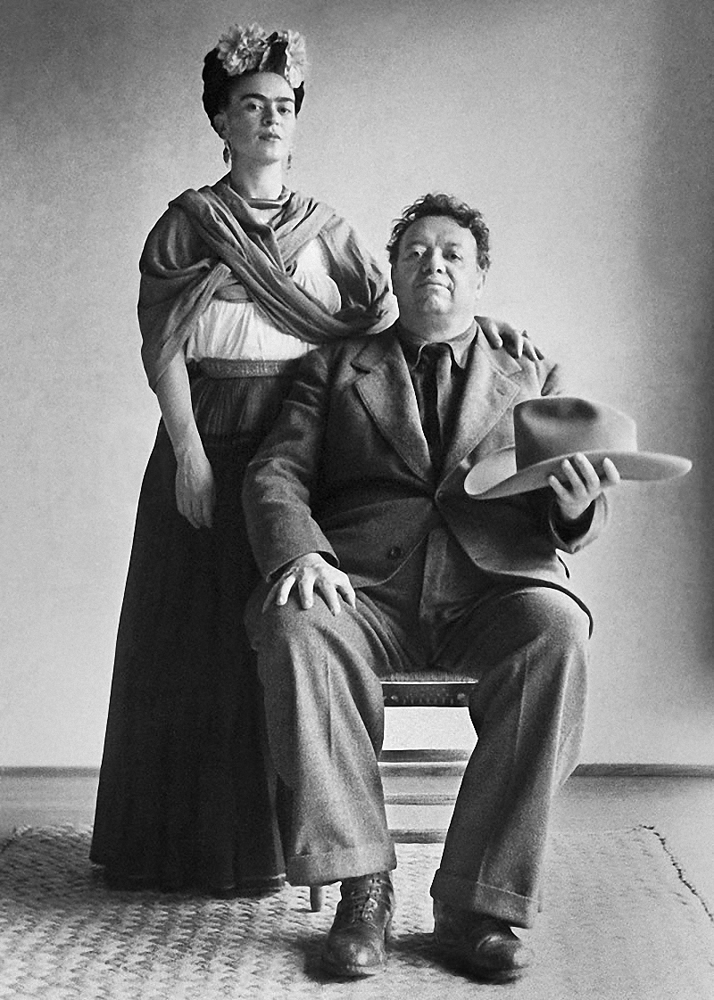
Nickolas Muray (American, 1892-1965) 'Frida and Diego, San Angel' 1941


Nickolas Muray (American, 1892-1965)
Frida and Diego, San Angel
1941
Gelatin silver print


Nickolas Muray (American, 1892-1965) 'Frida Kahlo' c. 1940


Nickolas Muray (American, 1892-1965)
Frida Kahlo
c. 1940
Colour print, assembly (Carbro) process


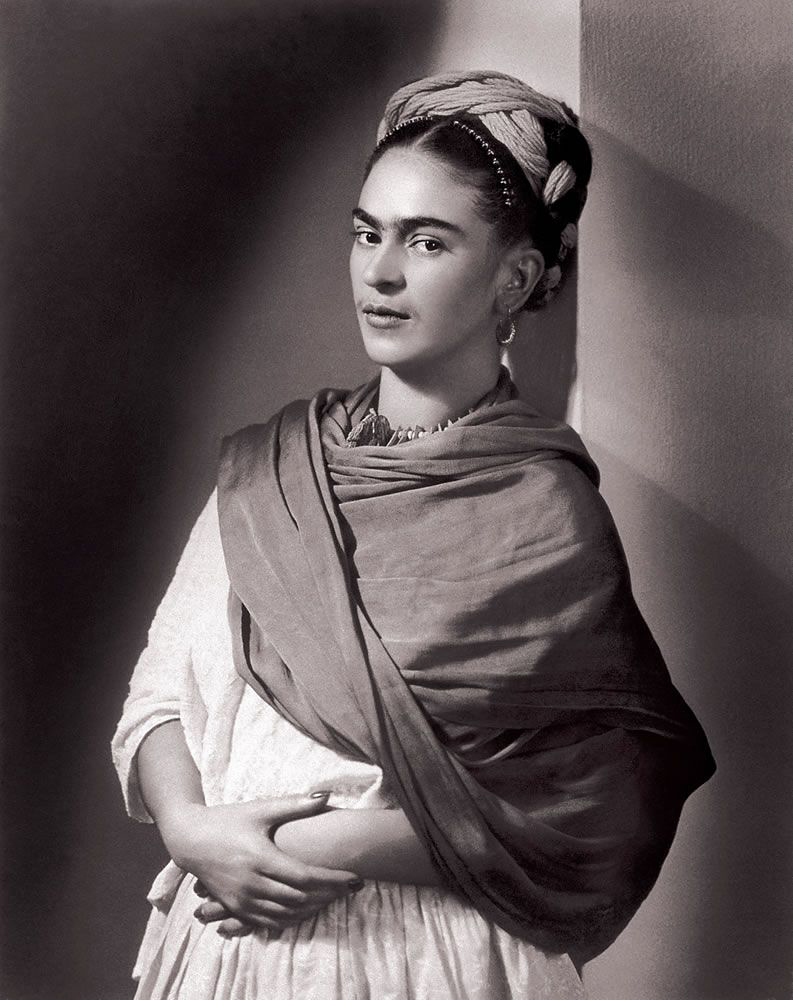
Nickolas Muray (American, 1892-1965) 'The Breton Portrait' 1939


Nickolas Muray (American, 1892-1965)
The Breton Portrait
1939
Silver gelatin print


Nickolas Muray (American, 1892-1965) 'Frida with Magenta Rebozo, New York' 1939


Nickolas Muray (American, 1892-1965)
Frida with Magenta Rebozo, New York
1939
Colour print, assembly (Carbro) process


Nickolas Muray (American, 1892-1965) 'Frida with Magenta Rebozo, New York' 1939


Nickolas Muray (American, 1892-1965)
Frida with Magenta Rebozo, New York
1939
Colour print, assembly (Carbro) process


Nickolas Muray

In 1913, with the threat of war in Europe, Muray sailed to New York City, and was able to find work as a colour printer in Brooklyn.

By 1920, Muray had opened a portrait studio at his home in Greenwich Village, while still working at his union job as an engraver. In 1921 he received a commission from Harper’s Bazaar to do a portrait of the Broadway actress Florence Reed; soon after he was having photographs published each month in Harper’s Bazaar, and was able to give up his engraving job. In 1922 he also made a portrait of the dancer Desha Delteil.

Muray quickly became recognised as an important portrait photographer, and his subjects included most of the celebrities of New York City. In 1926, Vanity Fair sent Muray to London, Paris, and Berlin to photograph celebrities, and in 1929 hired him to photograph movie stars in Hollywood. He also did fashion and advertising work. Muray’s images were published in many other publications, including Vogue, Ladies’ Home Journal, and The New York Times.

Between 1920 and 1940, Muray made over 10,000 portraits. His 1938 portrait of Frida Kahlo, made while Kahlo sojourned in New York, attending her exhibit at the Julien Levy Gallery, became the best known and loved portrait made by Muray. Muray and Kahlo were at the height of a ten-year love affair in 1939 when the portrait was made. Their affair had started in 1931, after Muray was divorced from his second wife and shortly after Kahlo’s marriage to Mexican muralist painter Diego Rivera. It outlived Muray’s third marriage and Kahlo’s divorce and remarriage to Rivera by one year, ending in 1941. Muray wanted to marry, but when it became apparent that Kahlo wanted Muray as a lover, not a husband, Muray took his leave for good and married his fourth wife, Peggy Muray. He and Kahlo remained good friends until her death, in 1954.

After the market crash, Muray turned away from celebrity and theatrical portraiture, and become a pioneering commercial photographer, famous for his creation of many of the conventions of colour advertising. He was considered the master of the three-color carbro process. His last important public portraits were of Dwight David Eisenhower in the 1950s.

Text from the Wikipedia website


Nickolas Muray (American, 1892-1965) 'Frida With Hand at Her Throat, Mexico City' 1940


Nickolas Muray (American, 1892-1965)
Frida With Hand at Her Throat, Mexico City
1940
Colour print, assembly (Carbro) process


Nickolas Muray (American, 1892-1965) 'Frida leaning on a sculpture by Mardonio Magaña, Coyoacán, Mexico' 1940


Nickolas Muray (American, 1892-1965)
Frida leaning on a sculpture by Mardonio Magaña, Coyoacán, Mexico
1940
Colour print, assembly (Carbro) process


Nickolas Muray (American, 1892-1965) 'Frida in Pink and Green Blouse, Coyoacán' 1938


Nickolas Muray (American, 1892-1965)
Frida in Pink and Green Blouse, Coyoacán
1938
Colour print, assembly (Carbro) process


Nickolas Muray (American, 1892-1965) 'Friday on White Bench, New York' 1939


Nickolas Muray (American, 1892-1965)
Frida on White Bench, New York
1939
Colour print, assembly (Carbro) process


An exhibition of photographs of the acclaimed Mexican artist Frida Kahlo taken by her friend and lover, the internationally renowned portrait photographer Nickolas Muray (1892-1965), will be on view at the Albright-Knox Art Gallery from May 8 through July 5, 2009. Frida Kahlo: Through the Lens of Nickolas Muray, From the Collection of the Nickolas Muray Archives celebrates Kahlo’s life and work and comprises approximately fifty colour and black-and-white photographs, along with archival material, including excerpts from letters between Kahlo and Muray. The installation in Buffalo will feature Frida Kahlo’s Self- Portrait with Monkey, 1938, from the Albright-Knox Art Gallery’s Permanent Collection.

Born in Hungary in 1892, Nickolas Muray came to the United States in 1913, marking the beginning of his forty-five-year career living and working in New York City. Originally hired by Condé Nast Publications to prepare illustrations for magazines, in 1920 Muray set up a photography studio at his home in Greenwich Village. Following an assignment in 1921 for Harper’s Bazaar magazine to photograph the Broadway star Florence Reed, Muray’s career as a portrait and celebrity photographer took off. Soon he was photographing “everybody who was anybody” and his work was regularly featured in such publications as Vanity Fair, Vogue, and Ladies’ Home Journal.

Nickolas Muray and Frida Kahlo first met in Mexico in 1931 and soon began a love affair that lasted ten years and continued as a friendship that endured all their lives. The images included in this exhibition, dating from 1937 to 1940, were taken during the height of the couple’s on-again, off-again, ten-year love affair. The photographs included were selected from the Nickolas Muray Archives and capture the exotic mystery and proud beauty of Frida Kahlo through the eyes of this accomplished portrait photographer who loved her deeply.

Text from the Artdaily.org website


Frida Kahlo (Mexican, 1907-1954) 'Self-Portrait with Monkey' 1938


Frida Kahlo (Mexican, 1907-1954)
Self-Portrait with Monkey
1938
Oil on masonite
40.6 cm × 30.5cm (16.0 in × 12.0 in)
Albright-Knox Art Gallery, Buffalo, New York


Of her 143 self-portraits, 55 include Kahlo’s pets. It is as though she saw them as an extension of her own self and being. Spider monkeys are known to have long, spindly legs and arms that look almost disproportionate to their body. Their strange appearance may have reflected Kahlo’s own discomfort with her physical body. Having contracted polio at an early age, she had one leg that was thinner than the other. She used colourful, large skirts to cover the disfigurement.

Kahlo doted on her pet monkeys. In her self-portraits, they are often shown sitting close to her, physically enfolding or grasping her in some way. They appear to be protective, friendly and gentle.

In many cultures, monkeys are used to symbolise lascivious, or primal behaviour. They are a mirror image of man, reminding him of his animal nature and close proximity to the natural world. Through monkeys, man sees his own connection to the animal kingdom with its uncontrollable, primal urges. In renaissance art, fettered monkeys were often used to symbolise men who are entrapped or bound by their desires.

In Kahlo’s paintings, monkeys do not appear in this way. They are more gentle, child-like and tender. Partially due to their wild natures, monkeys are often associated with fertility or lust in Mexican mythology. Kahlo’s trust and connection with her pets may have been in part due to her own feelings of inadequacy and frustration around her inability to carry to children. One of the reasons feminists celebrate Kahlo’s work is her unabashed claim to her own sexuality. She was not afraid to acknowledge her own sexual feelings or desires.

In Kahlo’s painting, the monkeys appear loyal. It feels as though Kahlo is connected with the creatures in some way. There is a bond there. Never the less, the monkeys also often appear by Kahlo’s shoulder or back, reflecting the image of a ‘monkey on your back’, a phrase commonly used to describe a problem or burden of some kind. With their association with animal nature, disfigured or primal humanity and lascivious primal urges, Kahlo may have felt at once supported by and burdened by her connection to her animal ancestors.

Extract from Kitty Jackson. “Symbolism in Art: Frida Kahlo – Self Portrait with Monkey,” on the ArtDependence Magazine website, September 4, 2017 [Online] Cited 20/01/2019


Nickolas Muray (American, 1892-1965) 'Frida in Front of the Cactus Organ Fence, San Angel' 1938


Nickolas Muray (American, 1892-1965)
Frida in Front of the Cactus Organ Fence, San Angel
1938
Colour print, assembly (Carbro) process


Nickolas Muray (American, 1892-1965) 'Frida with Blue Satin Blouse, New York' 1939


Nickolas Muray (American, 1892-1965)
Frida with Blue Satin Blouse, New York
1939
Colour print, assembly (Carbro) process


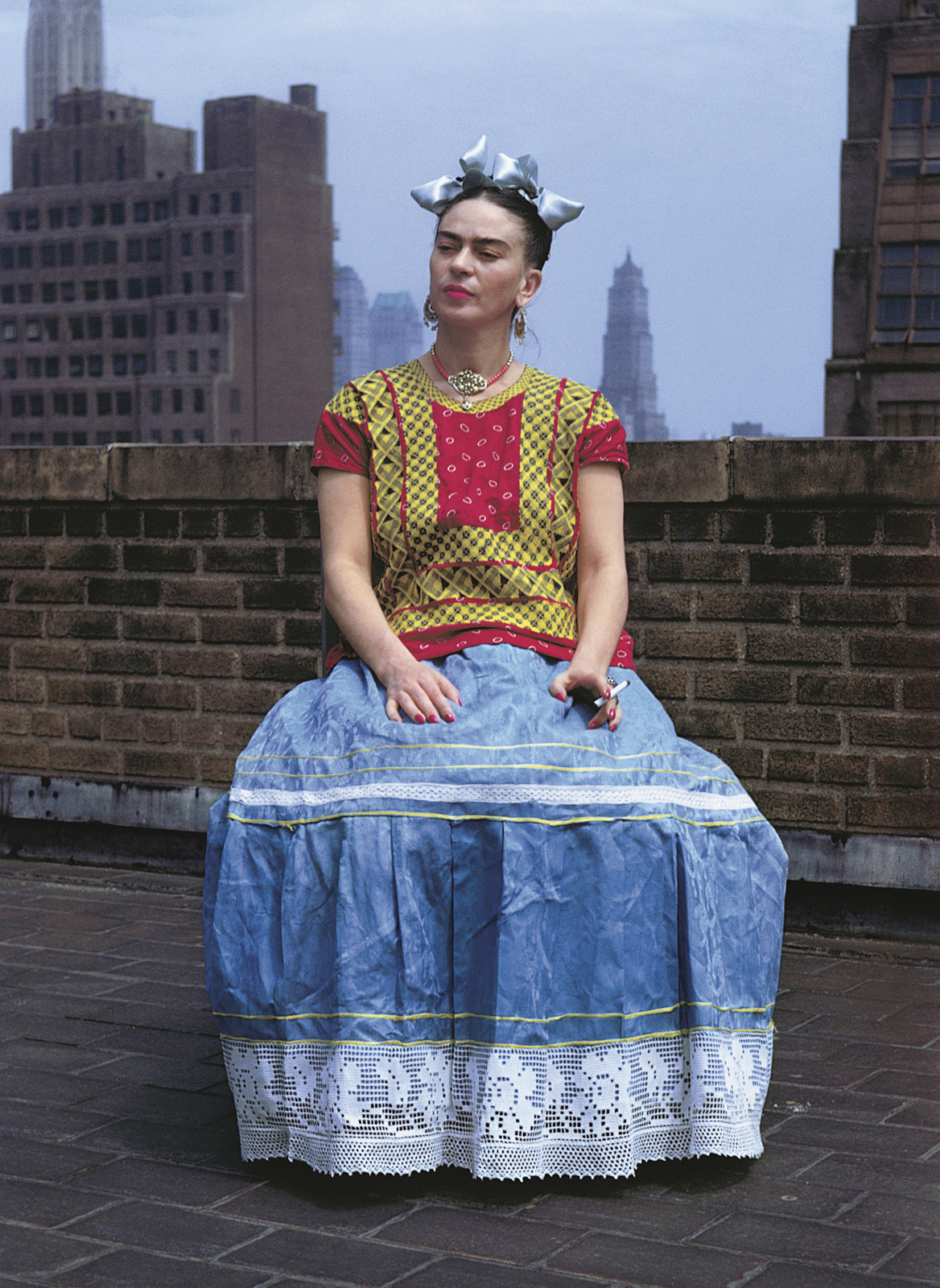
Nickolas Muray (American, 1892-1965) 'Frida on Rooftop, New York' 1946


Nickolas Muray (American, 1892-1965)
Frida on Rooftop, New York
1946
Colour print, assembly (Carbro) process


Nickolas Muray (American, 1892-1965) 'Cristina and Frida, New York' 1946


Nickolas Muray (American, 1892-1965)
Cristina and Frida, New York
1946
Colour print, assembly (Carbro) process


Albright-Knox Art Gallery
1285 Elmwood Avenue
Buffalo, New York 14222-1096

Opening hours:
Tuesday – Sunday 10am – 5pm
Closed Mondays, Tuesdays, and Independence, Thanksgiving, Christmas, and New Year’s Days

Albright-Knox Art Gallery website

LIKE ART BLART ON FACEBOOK

Back to top

Review: ‘triestement (more-is u thrill-o)’ exhibition by Domenico De Clario at John Buckley Gallery, Melbourne

Exhibition dates: 22nd April – 9th May, 2009


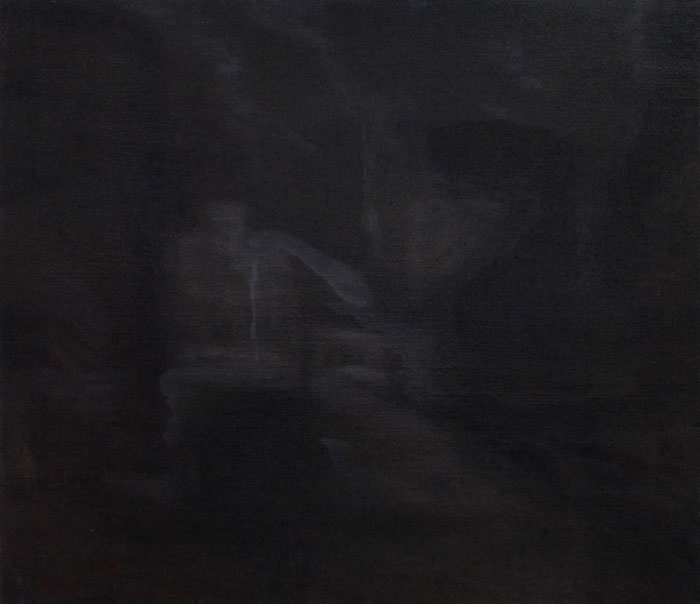
Domenico de Clario (Australian born Italy, b. 1947) 'u (renoir’s garden)' 2008/09 from the exhibition 'triestement (more-is u thrill-o)' by Domenico De Clario at John Buckley Gallery, Melbourne, April - May, 2009


Domenico de Clario (Australian born Italy, b. 1947)
u (renoir’s garden)
2008/09
Oil on canvas


Based on the music of melancholy that inhabits the shadows of the paintings of Montmarte by the French artist Maurice Utrillo, Domenico de Clario’s exhibition of paintings at John Buckley Gallery in Melbourne is a major achievement. This is a superlative exhibition of focused, resonant work beautifully and serenely installed in the gallery space.

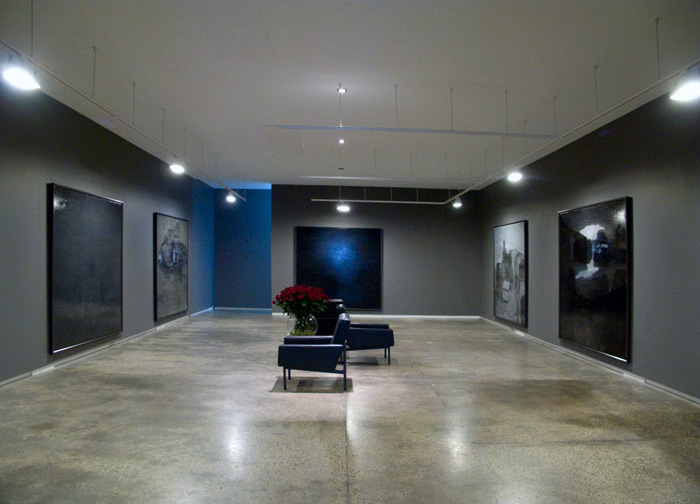
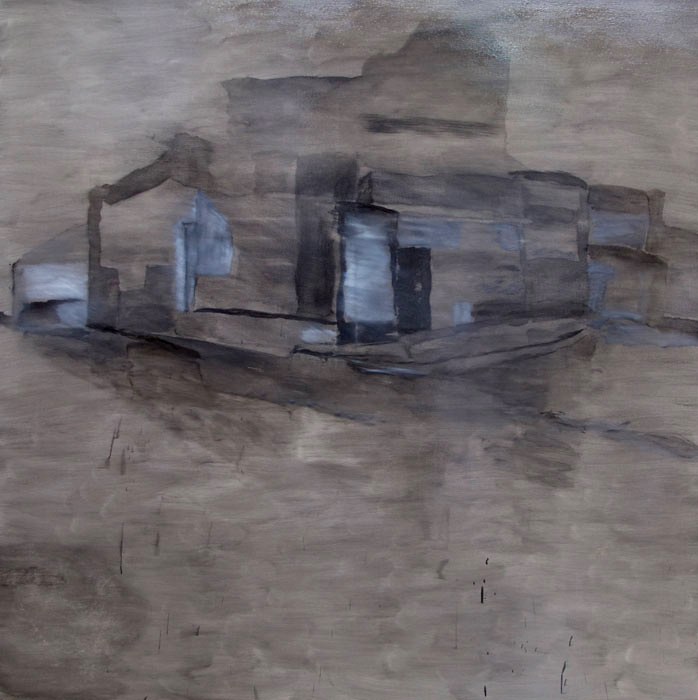
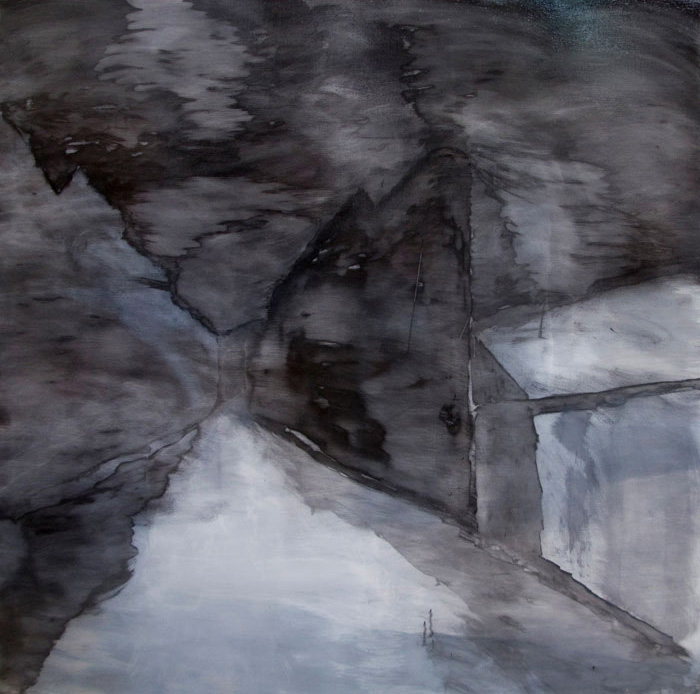
The exhibition features seven small and seven large oil and acrylic on canvas paintings that envelop the viewer in a velvety quietness, an intense stillness accompanied by ambient music composed by de Clario himself. All fourteen paintings are reinterpretations of works by Utrillo picked at random by de Clario that strip away surface matter to reveal the shadow substance that lays at the anxious heart of Utrillo’s meta/physical body of work (Utrillo was an alcoholic at fourteen and spent numerous periods in sanatoriums). When de Clario was fifteen he was fascinated by a small book on Utrillo and found that his paintings reminded him of his childhood, growing up in the town of Trieste. Recently he noticed that the word ‘triestement’ was used to mean, essentially, an investigation of sadness, of melancholy and started an investigation into the life and work of Utrillo. From this dialogue the paintings for the exhibition have emerged as de Clario found the ‘more is’ of Utrillo, the anima of his presence within the work.

The small abstract paintings (such as renoir’s garden, above) are dark and miasmic, vaporous emanations of atmosphere that contain traces of Utrillo’s lifelong battle with the black dog but it is the seven large paintings facing each other in the main gallery space that are at the heart of de Clario’s project. They are magnificent.

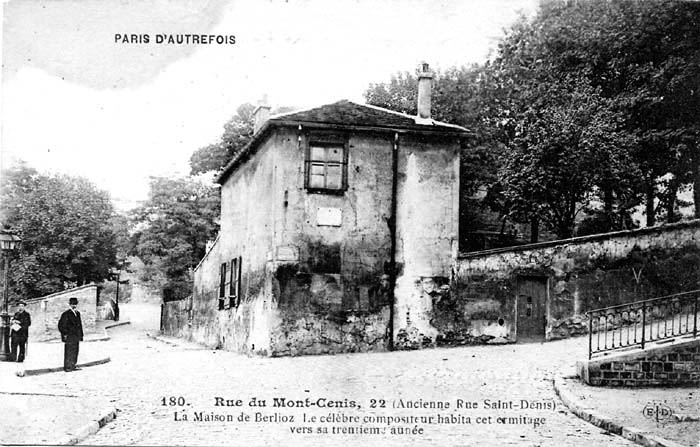
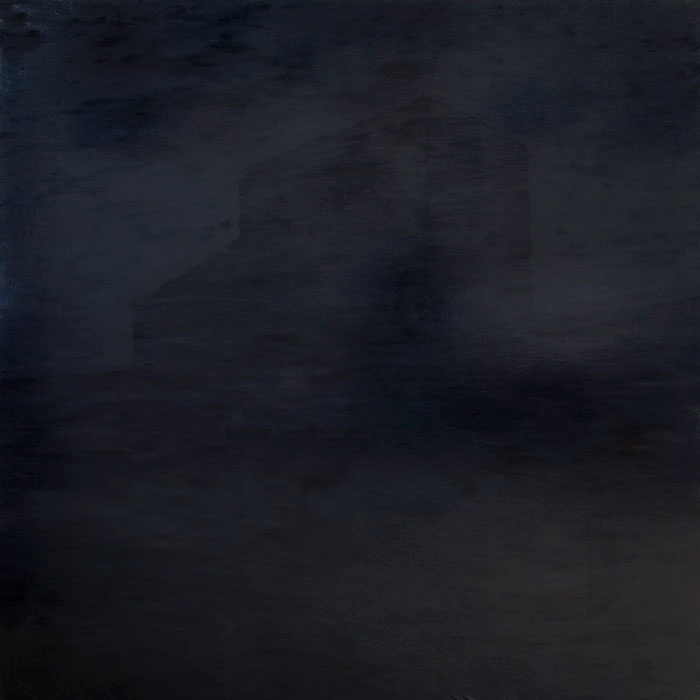
Painted in a limited colour palette of ochres, greys and blacks the works vibrate with energy. Cezanne-like spatial representations are abstracted and the paint bleeds across the canvas forming a maze of buildings. Walls and hedges loom darkly over roadways, emanations of heads and figures float in the picture plane and the highlight white of snow hovers like a spectral figure above buildings. These are elemental paintings where the shadow has become light and the light is shadow, meanderings of the soul in space. In the painting i (the house of hector berlioz – night) below, the single dark line of the house rises from the plain; the shadowy haze of recognition sits in the subconscious like the trace of our own mortality. My mind made an association with the modernist photograph by Paul Strand of the church at Taos (see photo at bottom of posting) with the looming bulk of the ramparts: it’s funny how things just click into place.

“The watergaw, the faint rainbow glimmering in chittering light, provides a sort of epiphany, and MacDiarmid connects the shimmer and weakness and possible revelation in the light behind the drizzle with the indecipherable look he received from his father on his deathbed … Each expression, each cadence, each rhyme is as surely and reliably in place as a stone on a hillside.”Seamus Heaney1


To paint these works de Clario was open and receptive to the idea of the letting go. In the wonderfully erudite catalogue essay he says he felt like he was standing under a waterfall experiencing the joyful bliss of substance, material, surface, shadow, blandness, light, plenitude and triestement while acknowledging that he could never capture them and that their value could only be fully understood once he abandoned any thought of possessing them. Like Seamus Heaney in the quotation above, de Clario experienced the glimmering in chittering light, the possible revelation in the light behind the drizzle (of the shadow) and he then paints the trace of Utrillo’s subconscious anima, the indecipherable look of his triestement. de Clario feels the fluid relationship between substance and appearance; he understands that Utrillo is embedded in the position of each building and stone, in the cadences and rhymes of the paintings of Montmarte. de Clario interprets this knowledge in a Zen like rendition of shadow substance in his paintings. Everything has it’s place without possession of here and there, dark and light.

For my part it was my soul responding to the canvases. I was absorbed into their fabric. As in the dark night of the soul my outer shell gave way to an inner spirituality stripped of the distance between viewer and painting. I felt communion with this man, Utrillo, with this art, de Clario, that brought a sense of revelation in the immersion, like a baptism in the waters of dark light. For art this is a fantastic achievement. Highly recommended.

Dr Marcus Bunyan


1/ Heaney, Seamus. The Redress of Poetry. London: Faber and Faber, 1995, pp. 107-108.


Please click on the artwork for a larger version of the image.


Domenico de Clario (Australian born Italy, b. 1947) 'l (le lapin agile - snow coming)' 2008/09 from the exhibition 'triestement (more-is u thrill-o)' by Domenico De Clario at John Buckley Gallery, Melbourne, April - May, 2009


Domenico de Clario (Australian born Italy, b. 1947)
l (le lapin agile – snow coming)
2008/09
Oil on canvas


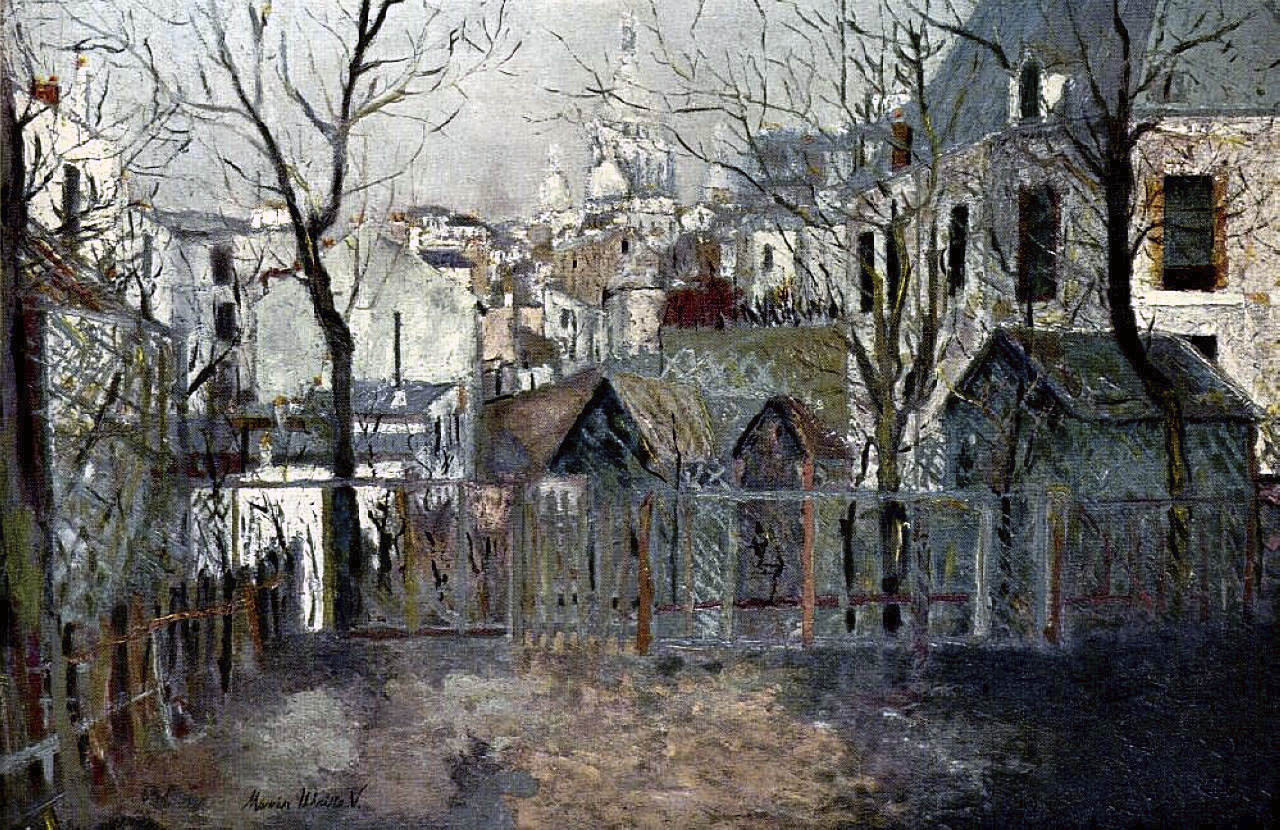
Maurice Utrillo (French, 1883-1955) 'Renoir's Garden' 1909-1910


Maurice Utrillo (French, 1883-1955)
Renoir’s Garden
1909-1910
Oil on canvas


Installation view of 'triestement (more-is u thrill-o)' by Domenico De Clario at John Buckley Gallery

Installation view of 'triestement (more-is u thrill-o)' by Domenico De Clario at John Buckley Gallery


Installation views of triestement (more-is u thrill-o) by Domenico De Clario at John Buckley Gallery


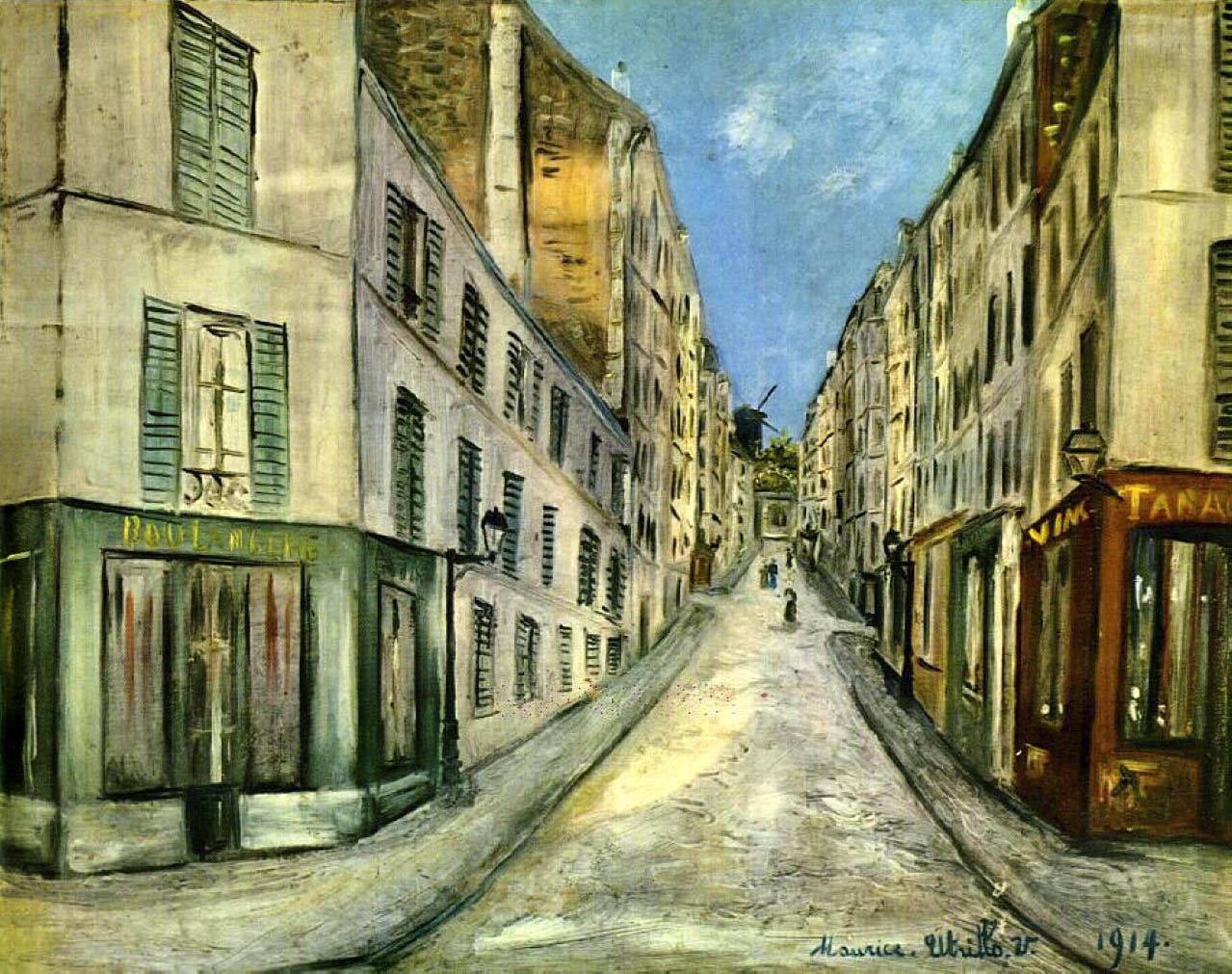
Maurice Utrillo (French, 1883-1955) 'Paris Street' 1914


Maurice Utrillo (French, 1883-1955)
Paris Street
1914
Oil on canvas


Domenico de Clario (Australian born Italy, b. 1947) 'r (rue ravignan - le bateau lavoir)' 2008/09


Domenico de Clario (Australian born Italy, b. 1947)
r (rue ravignan – le bateau lavoir)
2008/09
Oil on canvas


Domenico de Clario (Australian born Italy, b. 1947) 'l (le lapin agile and rue du mont cenis - snow receding)' 2008/09


Domenico de Clario (Australian born Italy, b. 1947)
l (le lapin agile and rue du mont cenis – snow receding)
2008/09
Oil on canvas


Domenico de Clario (Australian born Italy, b. 1947) 'o (la grande maison blanche – snow clouds massing)' 2008/09


Domenico de Clario (Australian born Italy, b. 1947)
o (la grande maison blanche – snow clouds massing)
2008/09
Oil on canvas


Is there any limit, I thought, to the kinds of shadows that might be transmuted into light? And is this because the key component of the nature of shadow is its deep longing for a transmutation to light?

As a consequence of these thoughts I arrived at the question that animates the core of this current project; what, I asked myself, might the original shadow-substance Utrillo experienced and subsequently transmutes into the paintings we known, have looked like? What shadow images did Utrillo first see, or even imagine, before he transmuted them into colour? …

Utrillo must have believed that the outer world of coloured light belonged exclusively to others, for he never succeeded in releasing himself from the dark inner shadows that engulfed him. Though he struggled much to reach the light he accepted shadow as constituting his world and worked ceaselessly to offer us images that reflected this side’s plenitude.

Perhaps the luminous surfaces of his paintings functioned as the thin membrane that separates the outer world of cacophonously coloured light from the velvety grey inner world of the monotic anxiety he inhabited. Upon that thought the momentousness of his gift became apparent to me …

For the purposes of this present project I believe that the shadow substance laying beneath the architecture of Utrillo’s streetscapes existed within the artist long before his paintings came into being. This non-substance generated the appearance of matter on the paintings’ surfaces and more significantly it gradually came to contain the spirit of his Montmarte-body.

The process of removing matter results in an obvious absence of substance but paradoxically this leads me to feel that here, under all this discarded visible matter, an invisible substance that has always contained more than matter awaits to be revealed. This leads to the provisional conclusion that the primal trace of normally unseen shadow is far richer than any material constituting appearance, containing as it does infinitely more substance than appearance.

Astonishing paradox; infinite substance can only be discovered once all matter is removed.

Text from the catalogue essay by Domenico de Clario [Online] Cited 26/04/2009. No longer available online


Maurice Utrillo (French, 1883-1955) 'Berlioz House' 1910


Maurice Utrillo (French, 1883-1955)
Berlioz House
1910
Oil on canvas


Postcard of Hector Berlioz House Nd


Anonymous
Postcard of Hector Berlioz House
Nd


Domenico de Clario (Australian born Italy, b. 1947) 'i (the house of hector berlioz - night)' 2008/09


Domenico de Clario (Australian born Italy, b. 1947)
i (the house of hector berlioz – night)
2008/09
Oil on canvas


Paul Strand (American, 1890-1976) Inverted colour burn of his photograph 'Church, Ranchos de Taos' New Mexico 1932


Paul Strand (American, 1890-1976)
Inverted colour burn of his photograph Church, Ranchos de Taos New Mexico 1932


John Buckley Gallery

This gallery has now closed.

LIKE ART BLART ON FACEBOOK

Back to top

Around the galleries: Derek O’Connor at Karen Woodbury Gallery, Peter Cole ‘Elements + Memories’ at John Buckley Gallery, Melbourne

April 2009


In a mad dash around town I managed to see the Derek O’Connor and Peter Cole exhibitions before they finished and also the Siri Hayes En Plein Air exhibition of photographs at Gallerysmith (see next post).

Marcus


Please click on the art work for a larger version of the image.


Derek O’Connor paintings at Karen Woodbury Gallery

An intense show of small oil paintings that really draw you into their composition. They are paintings of tremendous energy and layering, the surface being in a constant state of flux. The paintings become metaphors for the bodies existence in space, corporeal landscapes full of sensation ‘neither rational nor cerebral’. They become a mediation and a meditation upon life itself – complex, convulsive, concentrated energy that focuses the viewers attention so that they cannot look away.


Derek O'Connor (Australian born England, b. 1959) 'Horizontal' 2008 from the exhibition Derek O'Connor paintings at Karen Woodbury Gallery


Derek O’Connor (Australian born England, b. 1959)
Horizontal
2008


Derek O'Connor (Australian born England, b. 1959) 'Horizontal' 2008 from the exhibition Derek O'Connor paintings at Karen Woodbury Gallery


Derek O’Connor (Australian born England, b. 1959)
Horizontal
2008


“Working with his tools of palette knives and brushes, he sets into motion a train of repetitions, of speeds and slowness1 applying and scrapping paint away in an attempt to move from a position of not knowing towards knowing. He brings … an intense physical and mental awareness to the rhythms of his own movements, his own body. At such moments time seems to expand – to become infinite.

In erasing from his project the world of appearances, Derek O’Connor embraces something else – the realm of ‘sensation’. Sensation is an open painterly expression which resists definition. The Modernist painter Paul Cezanne described sensation as a “logic of the senses” which is neither rational nor cerebral2 … For Derek, the subject of his painting appears to be the act of making itself. Here subject and object collapse (folding into itself) so that sensation is experienced through the materiality of paint, via the movements of the artists’ body to affect the bodies of others.”

Paul Uhlmann from the catalogue essay


1/ Deleuze, G. and Guattari, F. A Thousand Plateaus. London: Continuum, 1987, pp. 292-300
2/ Deleuze, G. The Logic of Sensation. London: Continuum, 2003, p. 42


Derek O'Connor (Australian born England, b. 1959) 'Irregular' 2008


Derek O’Connor (Australian born England, b. 1959)
Irregular
2008


Karen Woodbury Gallery

This gallery has closed.


Peter Cole ‘Elements + Memories’ at John Buckley Gallery 18th March – 9th April 2009

A decidedly underwhelming show by Peter Cole at John Buckley Gallery only redeemed by the amazing Elemental Landscape series of 64 small sculptural pieces displayed as a frieze (see below). The large free standing sculptural works fail to impress with their minimalist Ikea-esque cut out style – especially when viewed from the rear of the work. One would have thought that a sculptor, making several free standing pieces that are going to be walked around in a gallery space, would have designed the work to be viewed ‘in the round’. As it is all the perfection of the clinical front of the works is undone by brackets and screws holding the whole thing together when viewed from the flattened rump. This is pretty, surface work that lacks substance and insight, pretty shapes and cut outs and targets that allude to memory but are just stylised glossy magazine representations of it.

On the other hand the Elemental Landscape series of sculptures is just magical – playful, ever inventive, wonderfully contemporary, beautifully resolved in concept and manufacture, in their use and bending of geometric shapes, the sculptures really are fantastic when seen ‘in situ’ as a whole. Visit the exhibition just to see this work – buy some pieces and make your own elemental landscape!

Dr Marcus Bunyan


Peter Cole (Australian, b. 1947) 'Elements + Memories' installation views at John Buckley Gallery, Melbourne


Peter Cole (Australian, b. 1947)
Elements + Memories installation views at John Buckley Gallery, Melbourne (first and second image)
Bar 4 – Shibuya 2009 (third image)
Garden – Yoyogi 2009 (fourth image)


In Peter D Cole’s stunning and ambitious exhibition Elements + Memories he creates a playful interactive work titled Elemental Landscape. Utilising his highly stylised modernist and reductionist technique – influenced at an early age by studies of Miro and Calder – Cole presents 64 small sculptural pieces of varying colour and shape of which the audience is encouraged to create their own compositions. Cole also presents three large-scale sculptures drawing on memories of his times in Japan.

Cole’s distinct skill of distilling the landscape and architecture into separate elements and symbols is in itself evocative of traditional minimal Japanese aesthetic and he has created a series of works which draw upon Japanese interiors and streetscapes and the gardens of the Sakura Matsuri (Cherry Blossom festival).

Text from John Buckley Gallery website [Online] Cited 01/04/2009. No longer available online


Peter Cole. 'Elemental Landscape' 2009

Peter Cole (Australian, b. 1947) 'Elemental Landscape' 2009

Peter Cole (Australian, b. 1947) 'Elemental Landscape' 2009

Peter Cole (Australian, b. 1947) 'Elemental Landscape' 2009


Peter Cole (Australian, b. 1947)
Elemental Landscape
2009


John Buckley Gallery

This gallery has closed.

LIKE ART BLART ON FACEBOOK

Back to top

Opening 2: ‘Colour, Time’ by David Thomas at Nellie Castan Gallery, Melbourne

Exhibition dates: 2nd April – 2nd May, 2009

Opening: Thursday 2nd April 2009


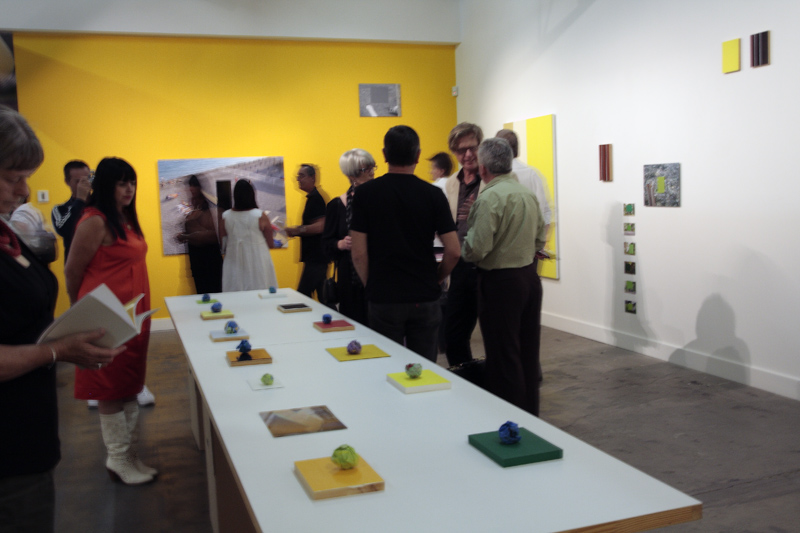
Opening night crowd at 'Colour, Time' by David Thomas at Nellie Castan Gallery, Melbourne, 2nd April, 2009


Opening night crowd at Colour, Time by David Thomas with from right to left Farbenfreude Series: Movement of Colour, Heart (Large) 2008; Farbenfreude Series: Amid Dark and Light (Dark Painting) 2008; and Farbenfreude Series: A Gentle Pasing (Large) 2008 on back wall
Photo: Marcus Bunyan


“A photographed real space and an expanding undefinable painting space (the non-figurative form) confront each other. The result is a coexistence of various models of space, a coexistence and entanglement of inconsistent things.”


Christoph Dahlhausen. David Thomas EIKON nr 53, Vienna, Austria, 2006


A slow burn painting, photography and composites show at Nellie Castan Gallery. Minimalist grid paintings combine with squares of colour taken out of photographs (again! as at the recent Richard Grigg show at Block Projects). This supposedly imparts profundity to insubstantial and mundane photographs that aim to comment on the existential nature of our being through the presence / absence of the missing spatio-temporal slice. This exhibition just didn’t hit the spot for me. Nice to catch up with Jason Smith Director of Heide Museum of Modern Art who was in attendance.

Dr Marcus Bunyan


Many thankx to Nellie Castan Gallery for allowing me to publish the photographs in the posting. Please click on the photographs for a larger version of the image.


Opening night crowd at 'Colour, Time' by David Thomas at Nellie Castan Gallery, Melbourne, 2nd April, 2009


Opening night crowd at Colour, Time by David Thomas with the series Length of Time 2009 on table
Photo: Marcus Bunyan


David Thomas (Australian born Northern Ireland, b. 1951) 'Length of Time Series: Blue tape on red monochrome' 2009


David Thomas (Australian born Northern Ireland, b. 1951)
Length of Time Series: Blue tape on red monochrome
2009
Photo: Marcus Bunyan


David Thomas (Australian born Northern Ireland, b. 1951) 'End of Summer: Homage a Tati (small splash) 2009


David Thomas (Australian born Northern Ireland, b. 1951)
End of Summer: Homage a Tati (small splash)
Enamel on photograph
2009


Opening night crowd in front of David Thomas' 'Black Reflection Painting: For William Barak' 2009


Opening night crowd in front of David Thomas’ Black Reflection Painting: For William Barak 2009
Photo: Marcus Bunyan


Nellie Castan Gallery

This gallery closed in 2013.

LIKE ART BLART ON FACEBOOK

Back to top

Exhibition: ‘Picturing America: Photorealism in the 1970s’ at Deutsche Guggenheim, Berlin

Exhibition dates: 7th March – 10th May, 2009


Many thankx to the Deutsche Guggenheim for allowing me to publish the art work in the posting. Please click on the art work for a larger version of the image.


“My paintings are about light, about the way things look in their environment and especially about how things look painted. Form, colour and space are at the whim of reality, their discovery and organisation is the assignment of the realist painter.”

~ Ralph Goings


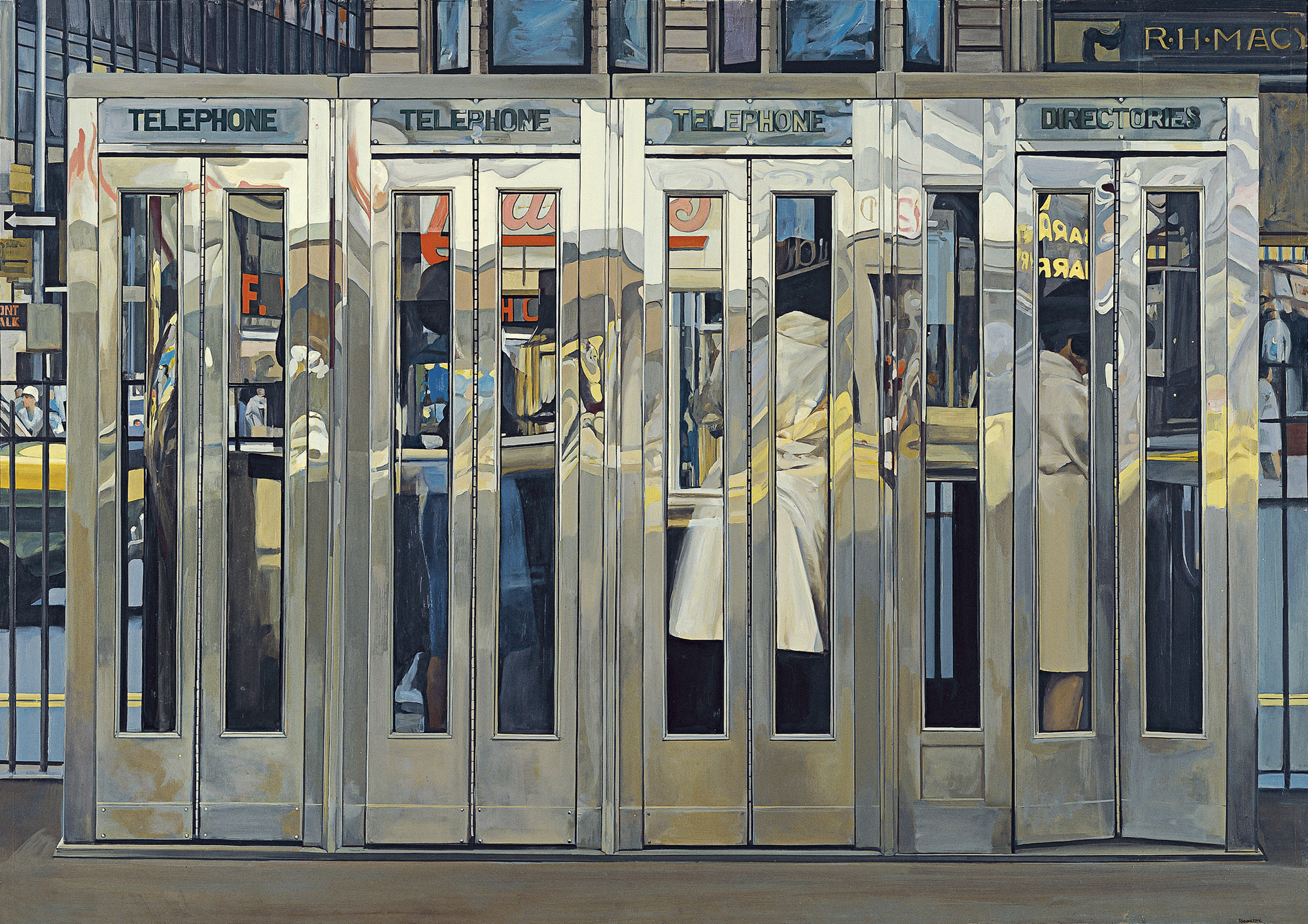
Richard Estes (American, b. 1932) 'Telephone Booths' 1967 from the exhibition 'Picturing America: Photorealism in the 1970s' at Deutsche Guggenheim, Berlin, March - May, 2009


Richard Estes (American, b. 1932)
Telephone Booths
1967


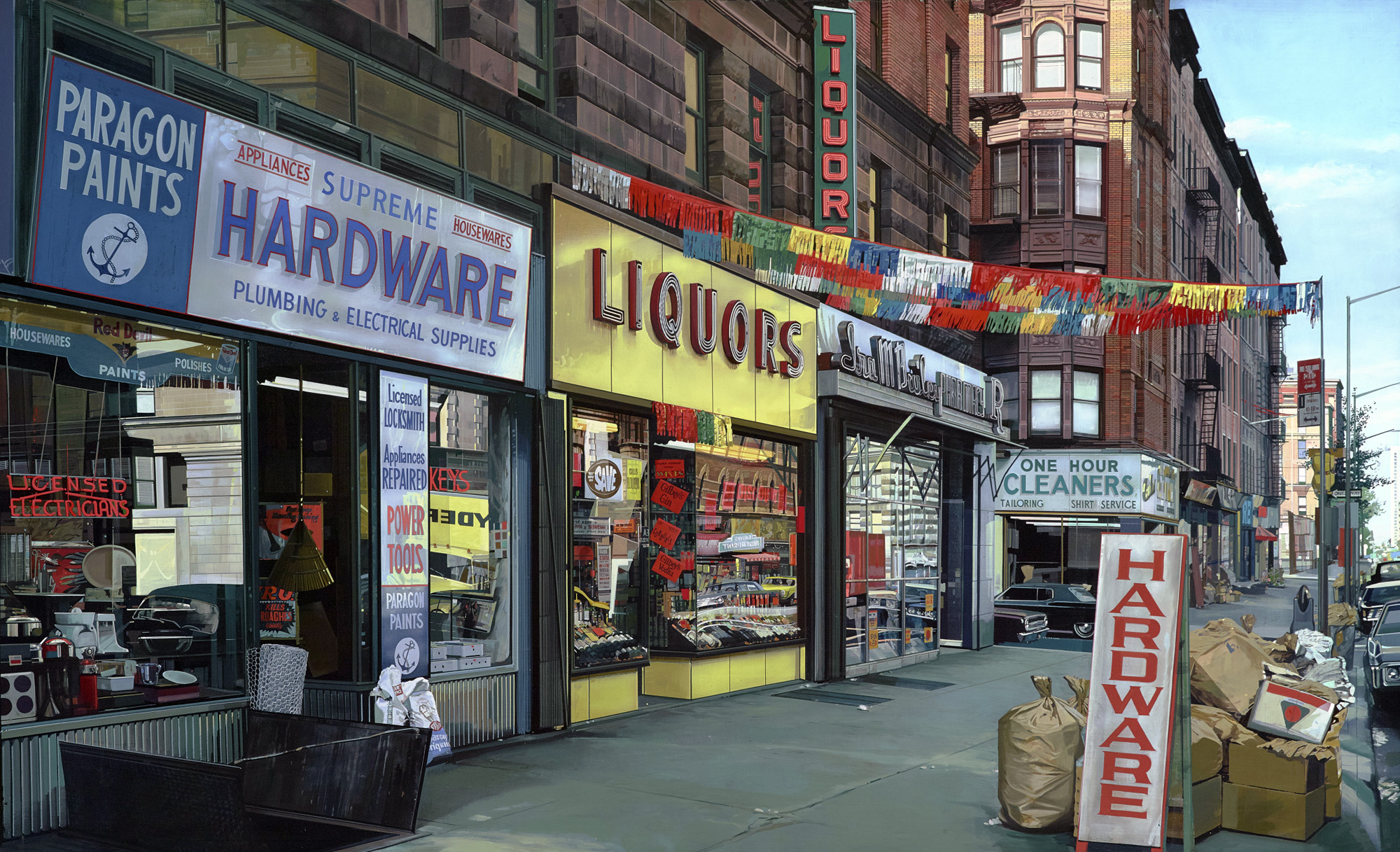
Richard Estes (American, b. 1932) 'Supreme Hardware' 1974 from the exhibition 'Picturing America: Photorealism in the 1970s' at Deutsche Guggenheim, Berlin, March - May, 2009


Richard Estes (American, b. 1932)
Supreme Hardware
1974


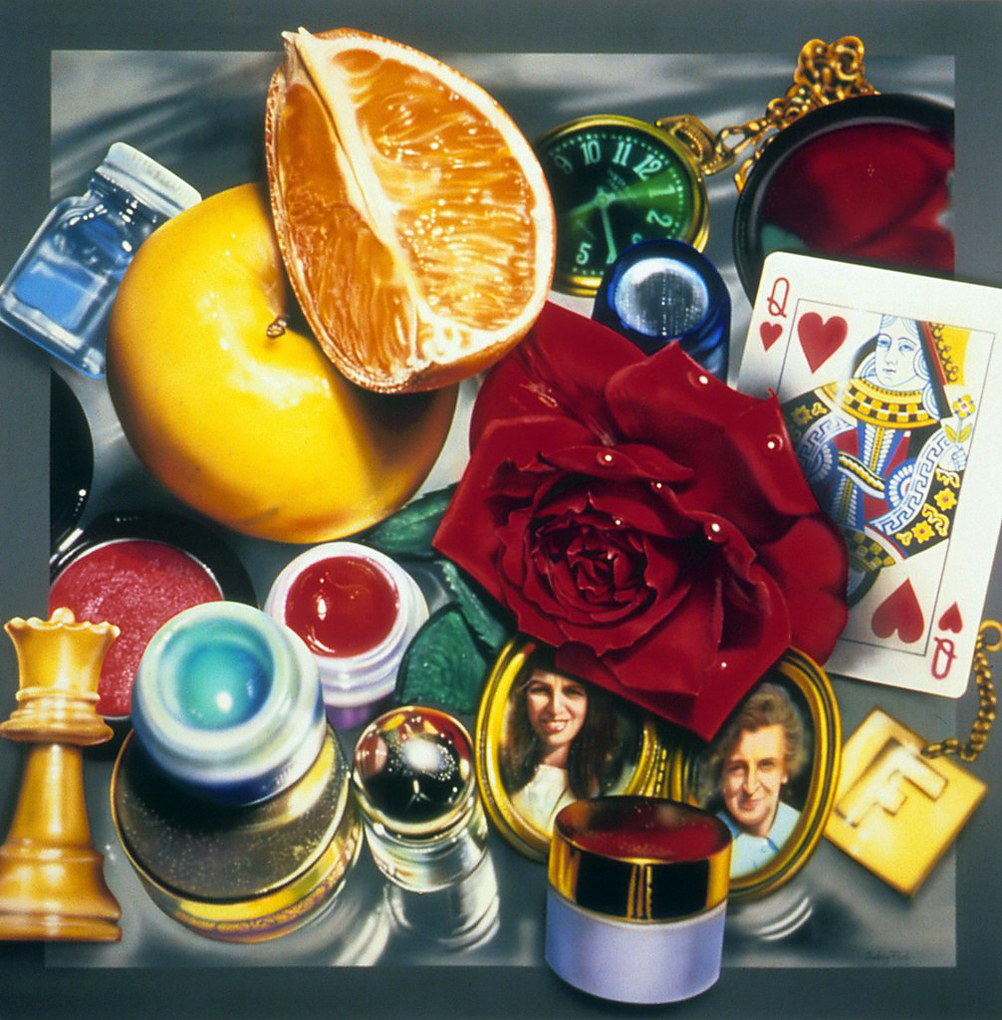
Audrey Flack (American, b. 1931) 'Queen' 1976


Audrey Flack (American, 1931-2024)
Queen
1976


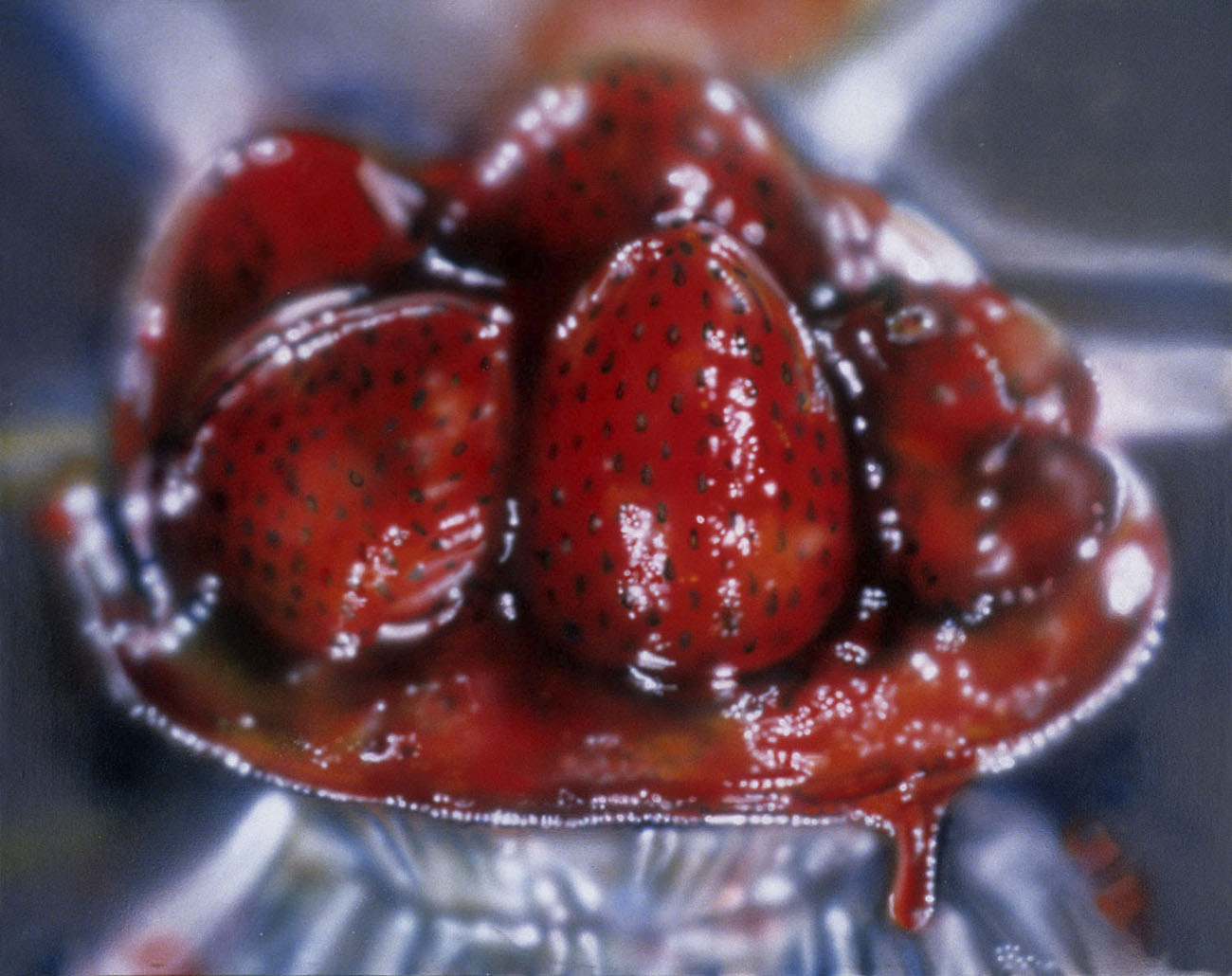
Audrey Flack (American, 1931-2024) 'Strawberry Tart' 1974


Audrey Flack (American, 1931-2024)
Strawberry Tart
1974
Oil on canvas
24 x 30 inches


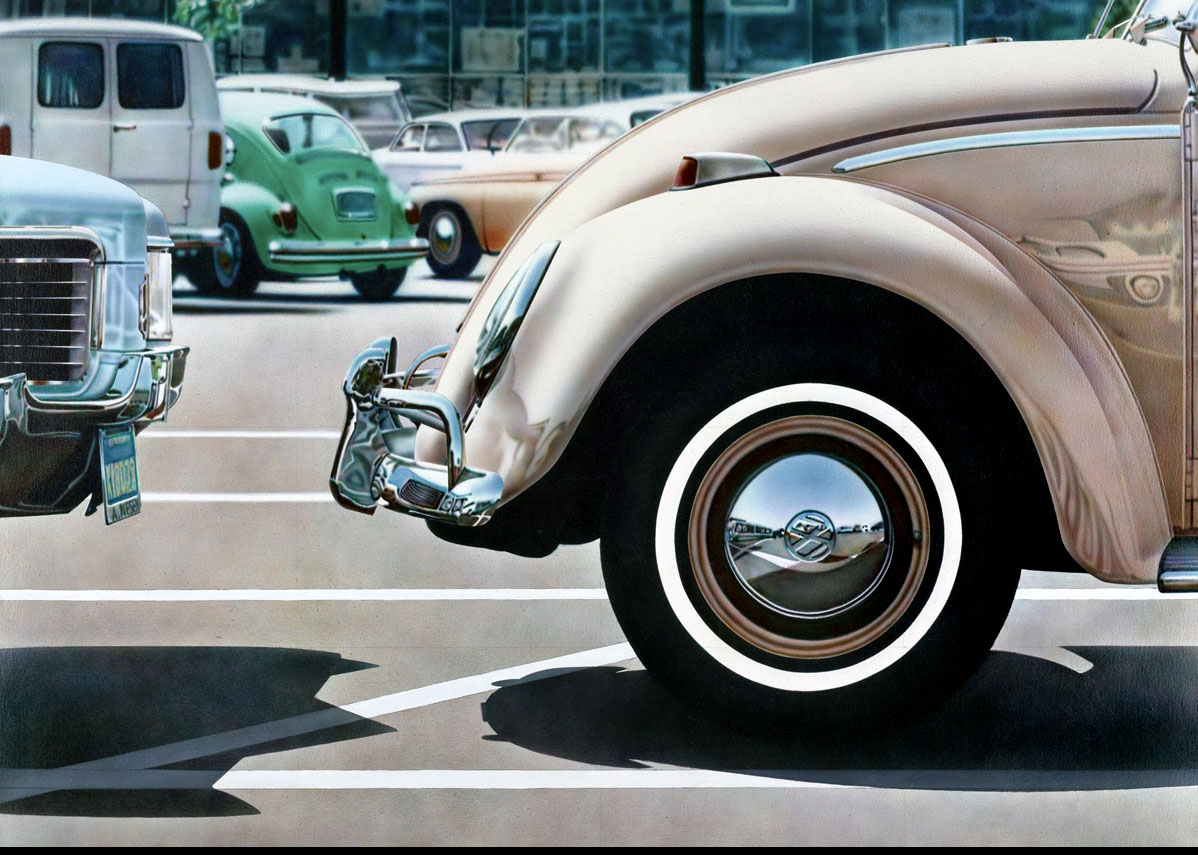
Don Eddy (American, b. 1944) 'Untitled' 1971


Don Eddy (American, b. 1944)
Untitled
1971


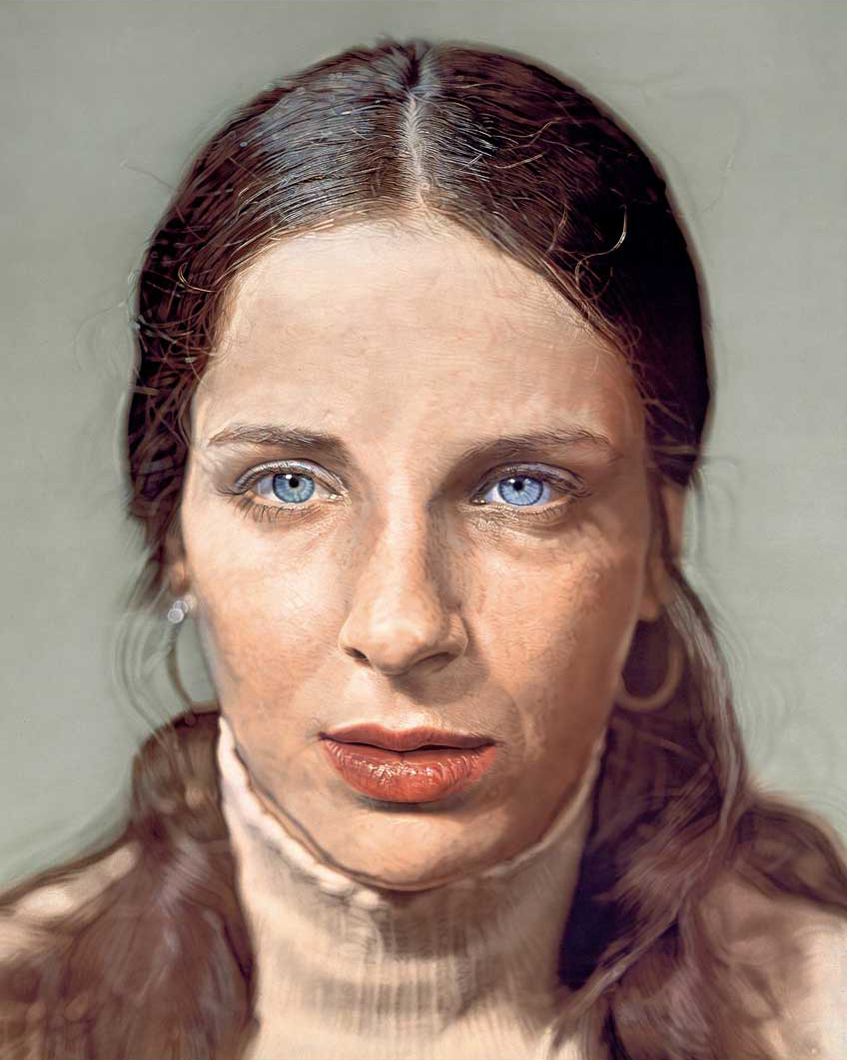
Chuck Close (American, 1940-2021) 'Leslie' 1973


Chuck Close (American, 1940-2021)
Leslie
1973


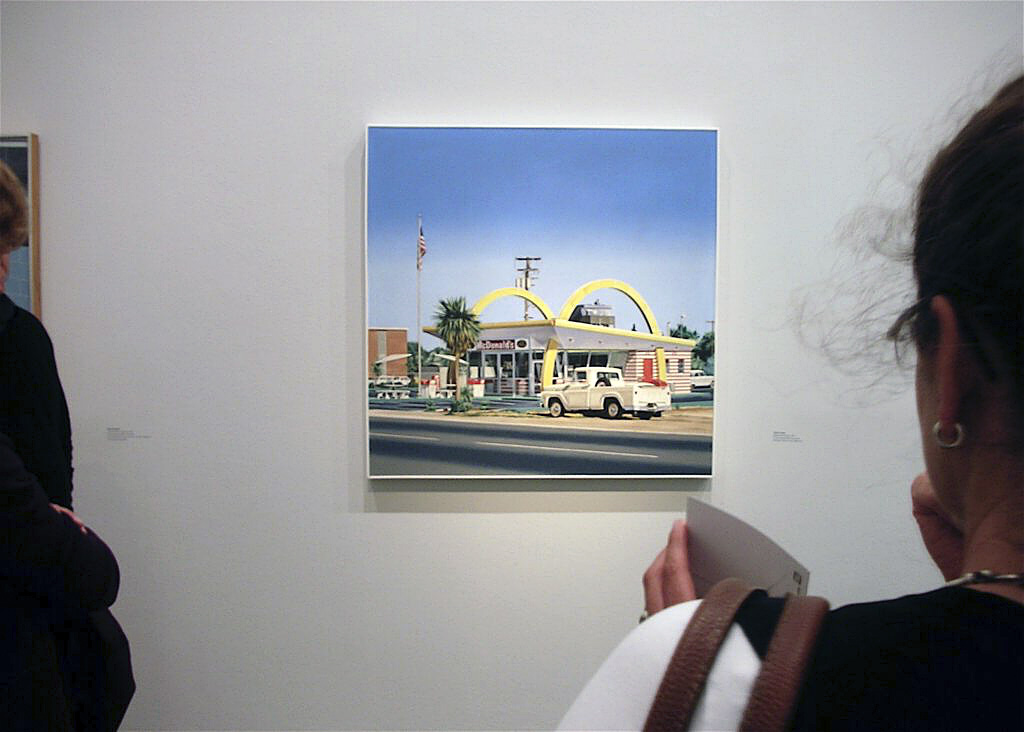
Ralph Goings (American, 1928-2016) 'McDonalds Pick Up' 1970 (installation view)


Ralph Goings (American, 1928-2016)
McDonalds Pick Up (installation view)
1970
41 x 41 inches
Oil on canvas
Collection of Marilyn and Ivan Karp


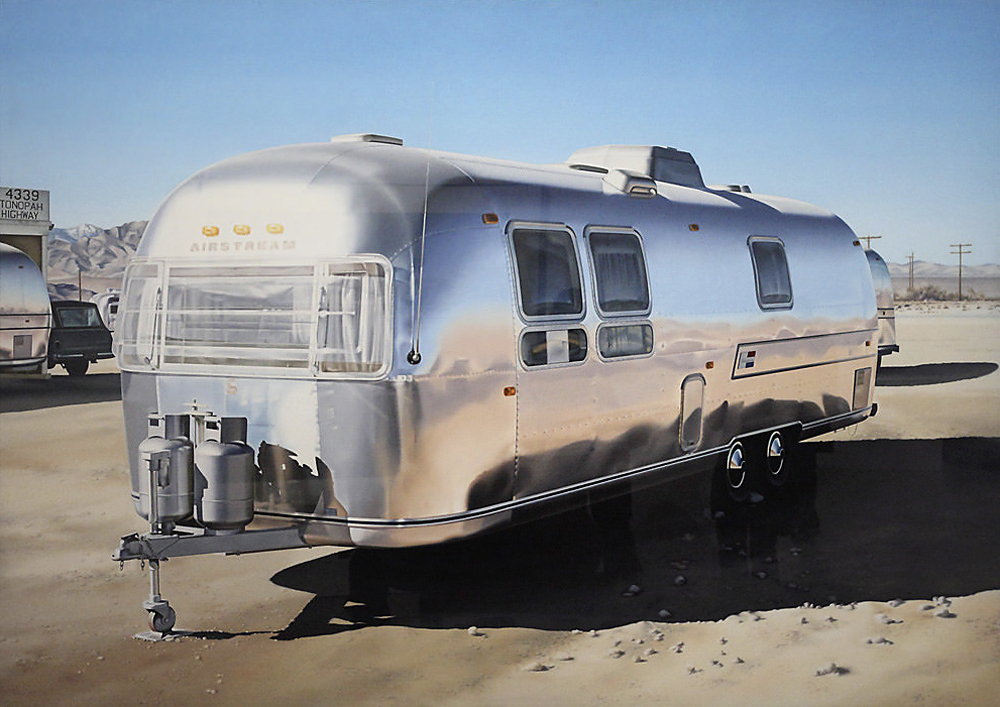
Ralph Goings (American, 1928-2016) 'Airstream' 1970


Ralph Goings (American, 1928-2016)
Airstream
1970


Ralph Goings (American, 1928-2016) 'Dicks Union General' 1971


Ralph Goings (American, 1928-2016)
Dicks Union General
1971
Oil on canvas


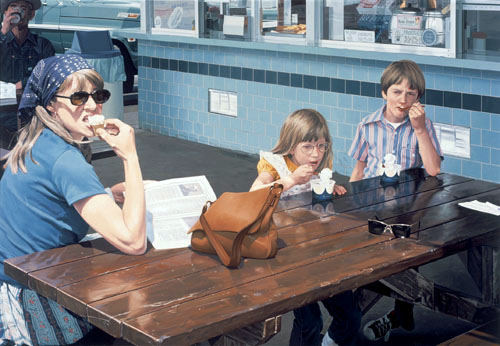
By the end of the 1960s, a number of young artists working in the United States had begun making large-scale realist paintings directly from photographs. With often meticulous detail, they portrayed the objects, places, and people that defined urban and suburban everyday life in America. In contrast to the Pop artists, they did not present their ubiquitous, often mundane, subject matter in a glamorised or ironic manner. They sought instead to achieve a great degree of objectivity and precision in the execution of their work in an effort to stay more or less faithful to the mechanically generated images that served as their source material. They developed various means of systematically translating photographic information onto canvas. In prioritising the way the camera sees over the way the eye sees, they underscored the complexity of the relationship between the reproduction and the reproduced as well as the impact of photography on the perception of both daily life and reality in general.

A number of terms were proposed in quick succession to describe this novel approach to painting, chief among them Super-Realism, Hyperrealism, and Photorealism. The artists identified as Photorealists neither formed a coherent group nor considered themselves to be part of a movement, and a number of them actively challenged their association with the label. Nevertheless, in the late 1960s and 1970s, the seventeen artists in Picturing America: Photorealism in the 1970s – Robert Bechtle, Charles Bell, Tom Blackwell, Chuck Close, Robert Cottingham, Don Eddy, Richard Estes, Audrey Flack, Franz Gertsch, Ralph Goings, Ron Kleemann, Richard McLean, Malcolm Morley, Stephen Posen, John Salt, Ben Schonzeit, and Paul Staiger – were exploring a related set of issues, methods, and subjects that led critics, curators, and art historians to both exhibit and write about their work as a coherent trend in contemporary art. Picturing America focuses on this formative, defining period in the history of Photorealism.

The exhibition includes thirty-one paintings, a number of them the most iconic and masterful works of 1967-1982, for example Richard Estes’s Telephone Booths (1967, above) and Chuck Close’s Leslie (1973, above). Picturing America is divided into four sections, three exploring key themes of Photorealist painting during the 1970s – Reflections on the City, Culture of Consumption, and American Life – and a fourth dedicated to a portfolio of ten lithographs made on the occasion of Documenta 5 in 1972, which featured the first major group showing of Photorealism.

Text from the Deutsche Guggenheim website


Picturing Americas – American Photorealism in the 70s

Vernissage video of “Picturing Americas”, an art exhibition about American Photorealism in the 1970s, presented in Berlin by Deutsche Guggenheim, a joint venture between Deutsche Bank and the Solomon R. Guggenheim Foundation in New York. The exhibition (March – May 2009) was the first major showing of American Photorealism in Germany since “documenta 5” in 1972.

The video includes interviews of Valerie Hillings, Assistant Curator, Solomon R. Guggenheim Museum, and interviews with the following artists: Ron Kleemann, Robert Bechtle, Tom Blackwell. You can also enjoy stills of selected pictures shown at the exhibition. Video courtesy of VernissageTV (VTV).

Text from the YouTube website


Robert Bechtle (American, 1932-2020) 'Foster's Freeze, Escalon' 1975


Robert Bechtle (American, 1932-2020)
Foster’s Freeze, Escalon
1975


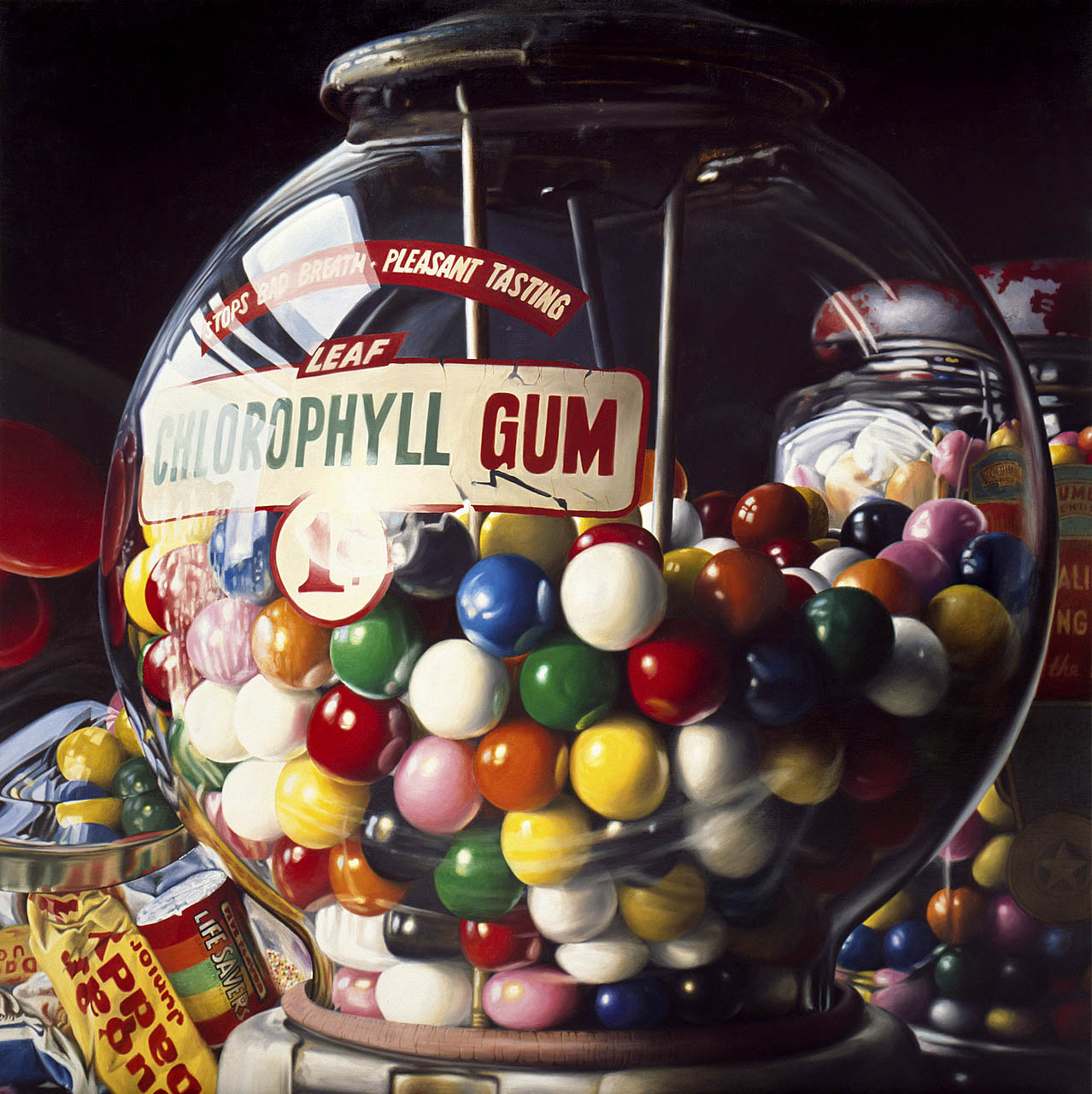
Charles Bell (American, 1935-1995) 'Gum Ball No. 10: "Sugar Daddy"'
1975


Charles Bell (American, 1935-1995)
Gum Ball No. 10: “Sugar Daddy”
1975
Oil on canvas
66 x 66 inches


Charles Bell was born in 1935 in Tulsa, Oklahoma. Although Bell became interested in art at a young age, he never received formal training. In 1957, he completed a BBA at the University of Oklahoma, Norman, and did not decide to pursue an artistic career until the early 1960s after touring in the U.S. Navy. At this point in time, he was working in the San Francisco Bay Area, where he was drawn to the vibrantly colored paintings of Richard Diebenkorn and Wayne Thiebaud. Other artistic influences Bell has cited range from Pop art to the realisms of Jan Vermeer and Salvador Dalí. It was through the painter Donald Timothy Flores, however, that Bell learned technique, most notably trompe l’oeil, while working in the former’s San Francisco studio. Under Flores, Bell painted mostly small-scale landscapes and still lifes, which earned him the Society of Western Artists Award in 1968.

In 1967 Bell relocated to New York, where he set up his first studio. Two years later he began showing at New York’s Meisel Gallery run by Louis K. Meisel, who popularized the term “Photorealism” and helped establish the style as a movement. Bell embraced a photo-based technique in his work not only for the way it renders imperceptible details visible, but also for how he saw the close-up photographic view as emblematic of contemporary visual experience steeped in a daily bombardment of media imagery. Bell carried out his Photorealist works by photographing his subjects in still-life compositions and painting from his image. 

Although Photorealism emerged as a national phenomenon, certain general qualities distinguish the coastal approaches to the movement. While the majority of the West Coast Photorealists preferred landscapes, particularly images of cars, trucks, and homes within an overall landscape, Bell, like many of the New York–based Photorealists, focused on still life. Bell transformed everyday subject matter by enlarging ordinary objects like Raggedy Ann dolls and gumball machines to an unusually grand scale. His subjects are typically familiar objects associated with childhood, consumer culture, and play, and thus capable of resonating with a broad audience. By focusing on larger-than-life subjects, Bell’s paintings also deny narrative readings of his work. He has described his approach to selecting subject matter as more of an emotional than intellectual process. The hyperrealistic precision of his technique, combined with an exaggerated scale, produces a sensation that oscillates between familiarity and unfamiliarity, thus engaging the viewer sensually and emotionally. The exploration of light remains a persistent theme throughout Bell’s oeuvre, from his earliest treatments of light on mostly opaque surfaces to his interest in reflected and refracted light on transparent materials, as seen in the gumball machine series (1971-77). These investigations gave way to his subsequent interest in objects illuminated from within, such as pinball machines, which he began in 1977.

Text from the Guggenheim website


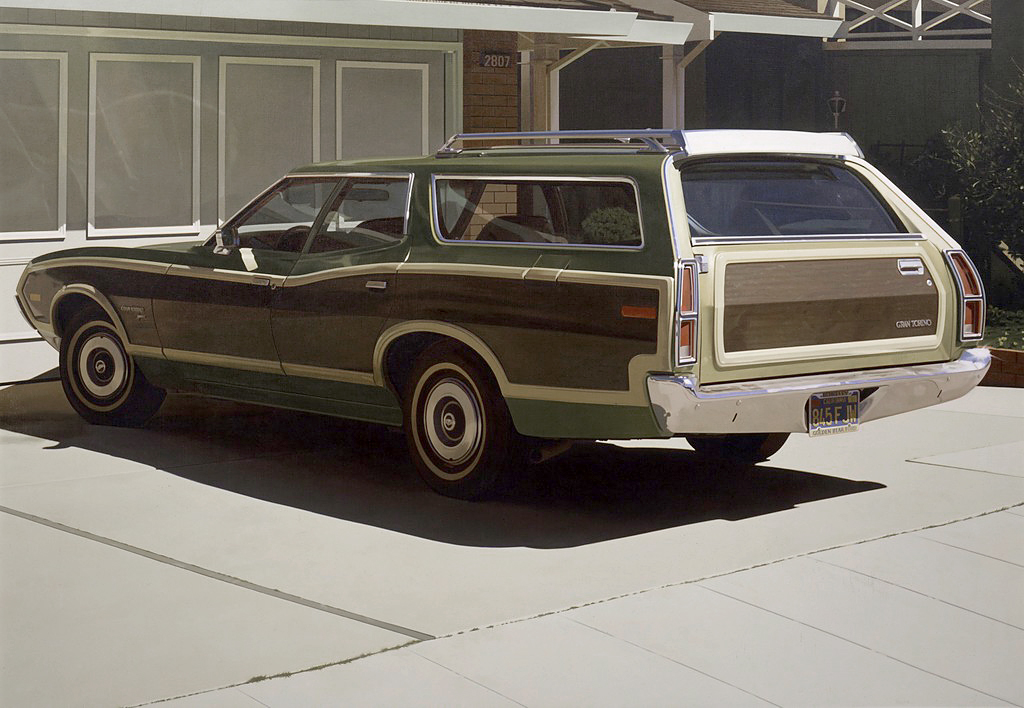
Robert Bechtle (American, 1932-2020) 'Alameda Gran Torino' 1974


Robert Bechtle (American, 1932-2020)
Alameda Gran Torino
1974


Ron Kleemann (American, 1937-2014) 'Big Foot Cross' 1977-1978


Ron Kleemann (American, 1937-2014)
Big Foot Cross
1977-1978
Acrylic on canvas
54 x 78 inches


Deutsche Guggenheim

This museum closed in 2013.

LIKE ART BLART ON FACEBOOK

Back to top