Exhibition: ‘Berlin Courtyards: Between Everyday Life, Work, and Encounters’ at the Museum Ephraim-Palais, Berlin

Exhibition dates: 18th July, 2025 – 18th January, 2026


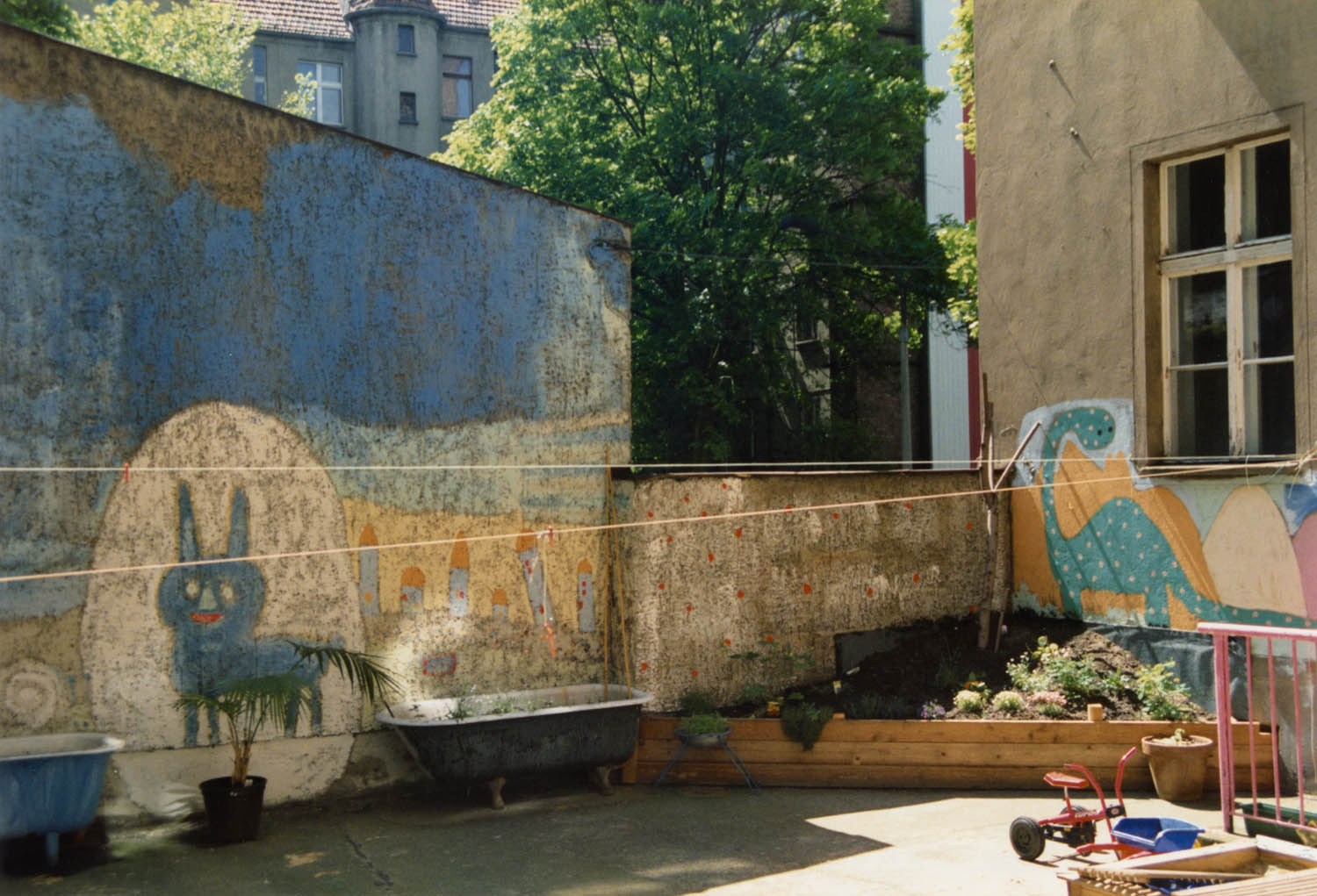
André Kirchner (German, b. 1958) 'Stralauer Straße, Ecke Waisenstraße' from the series 'Nachtrag Berlin' 1990-1992 ('Stralauer Straße, corner of Waisenstraße' from the series 'Addendum Berlin') from the exhbition 'Berlin Courtyards: Between Everyday Life, Work, and Encounters' at the Museum Ephraim-Palais, Berlin, July 2025 - January 2026


André Kirchner (German, b. 1958)
Stralauer Straße, Ecke Waisenstraße
From the series Nachtrag Berlin 1990-1992
Silver bromide baryta paper
34cm x 46cm
Collection of the Berlin City Museum Foundation
© André Kirchner
Reproduction: Dorin Alexandru Ionita, Berlin


This is one of those wonderful, idiosyncratic exhibitions that Art Blart has always liked to promote: small, occluded histories that have great importance to local people; spaces and histories that deserve to be acknowledged in a wider sphere; microcosms of everyday life, work and encounters expanded into the macrocosm of the universe, making us aware of the importance of the seemingly in/consequential in this dance of death we call life.

“This exhibition delves into how these spaces have fostered social and cultural exchange since the 19th century, becoming living capsules of history and community. They reflect the complexities of urban life, showcasing how people shape their surroundings and creating a unique atmosphere that has long inspired artists.” (Press release)

Dr Marcus Bunyan


Many thankx to the Museum Ephraim-Palais for allowing me to publish the photographs in the posting. Please click on the photographs for a larger version of the image.


Hans Baluschek (German, 1870-1935) 'Fleisch am Knochen' (Meat on the Bone) 1924 from the exhbition 'Berlin Courtyards: Between Everyday Life, Work, and Encounters' at the Museum Ephraim-Palais, Berlin, July 2025 - January 2026


Hans Baluschek (German, 1870-1935)
Fleisch am Knochen (Meat on the Bone)
Berlin, 1924
Pen and black ink on paper
27.7cm x 35.2cm
Collection of the Berlin City Museum Foundation
Reproduction: Michael Setzpfandt, Berlin


Heinrich Zille (German, 1858-1929) "Eine kleine Freundin hat doch jedermann, eine kleine Freundin braucht man dann und wann…" ("Everyone has a little friend, and one needs a little friend now and then...") 1924


Heinrich Zille (German, 1858-1929)
“Eine kleine Freundin hat doch jedermann, eine kleine Freundin braucht man dann und wann…” (“Everyone has a little friend, and one needs a little friend now and then…”)
Berlin, 1924
Lithograph on laid paper
45.5cm x 36.8cm
Collection of the Berlin City Museum Foundation


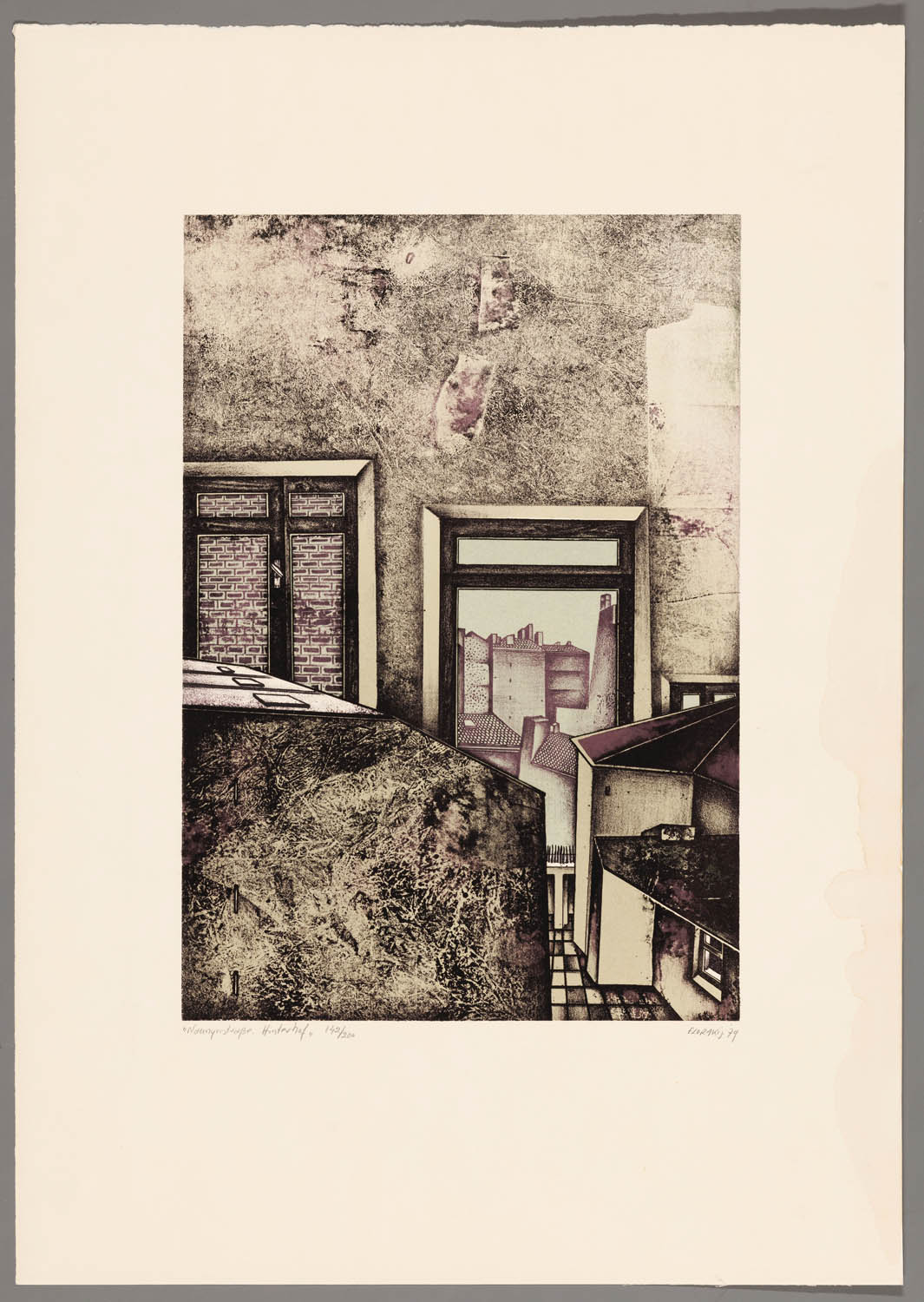
Mathèos Florakis (Greek, b. 1935) 'Naunynstraße, Hinterhof' 1979


Mathèos Florakis (Greek, b. 1935)
Naunynstraße, Hinterhof
1979
Coloured lithograph on paper
59cm x 42cm
© MathËos Florakis – Stiftung Stadtmuseum Berlin
Reproduction: Michael Setzpfandt Berlin


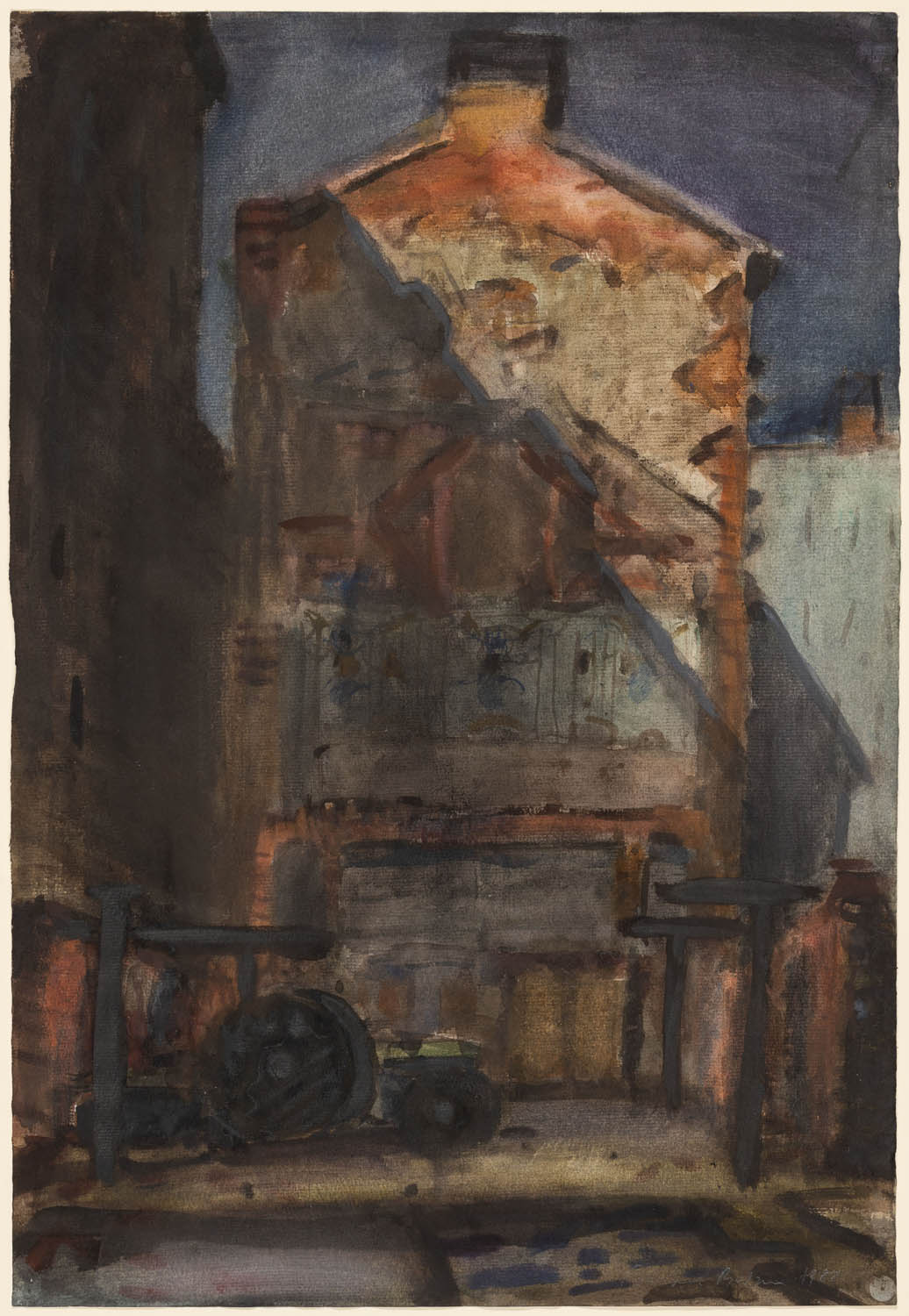
Manfred Butzmann (German, b. 1942) 'Giebelwand (Chausseestraße 16)' (Gable wall (Chausseestraße 16)) 1988


Manfred Butzmann (German, b. 1942)
Giebelwand (Chausseestraße 16) (Gable wall (Chausseestraße 16))
1988
Watercolour on laid paper
49.8cm x 34cm
© VG Bild-Kunst, Bonn
Reproduction: Michael Setzpfandt, Berlin


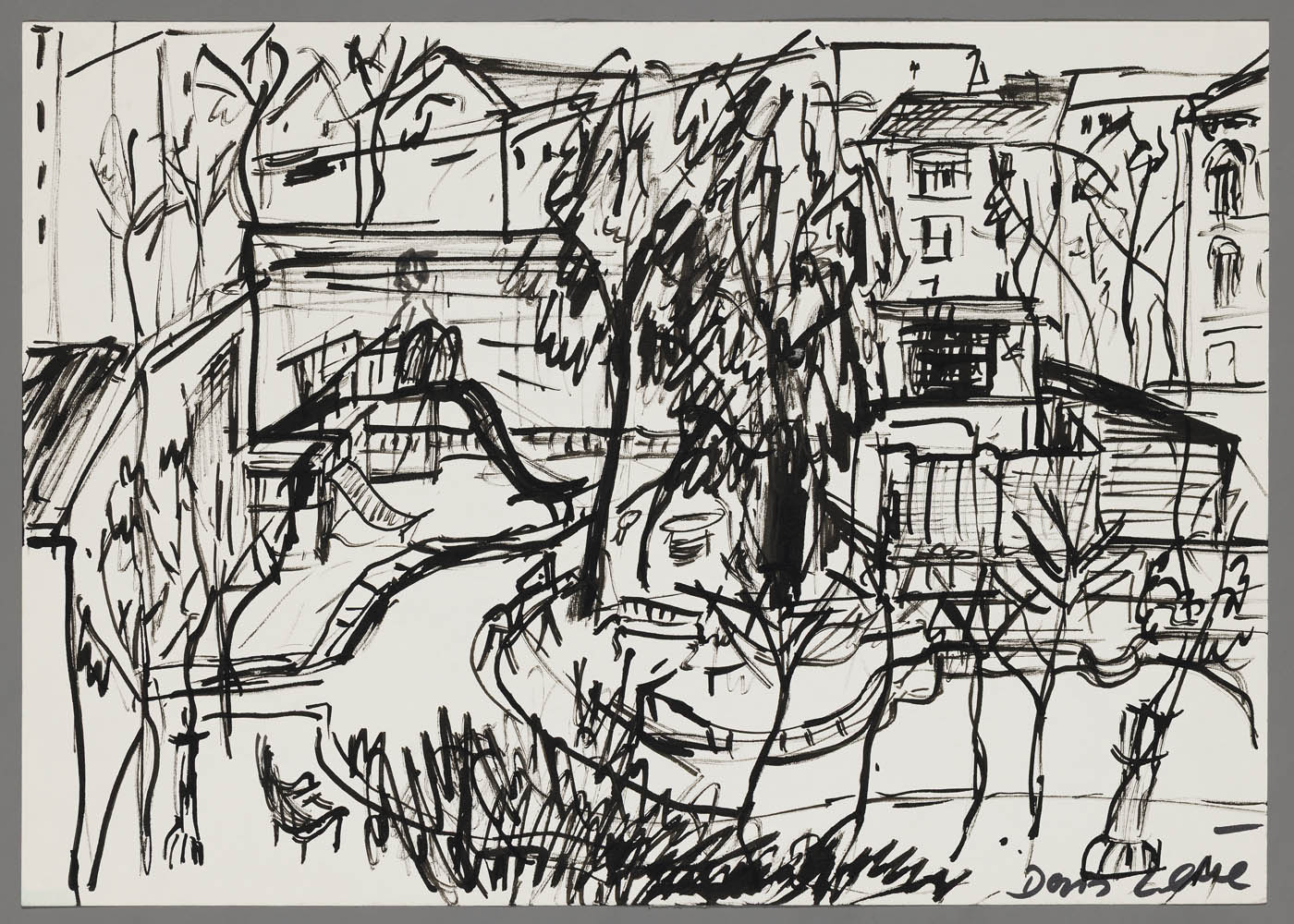
Doris Leue (German, b. 1954) 'Hirschhof' 1999


Doris Leue (German, b. 1954)
Hirschhof
Berlin, 1999
Pen and ink on paper
29.5cm x 42cm
Purchased with funds from the German Class Lottery Berlin by the Cultural Administration of the Berlin Senate, 2024
© Doris Leue
Reproduction: Michael Setzpfandt, Berlin


Ever wondered about the secret lives tucked away behind Berlin’s bustling streets?

The Museum Ephraim-Palais is inviting you on a captivating journey with its new exhibition, “Berlin Courtyards: Between Everyday Life, Work, and Encounters,” running from July 18, 2025, to January 18, 2026.

From cozy residential nooks to bustling commercial hubs and serene artist retreats, Berlin’s courtyards tell the vibrant story of a city constantly evolving. This exhibition delves into how these spaces have fostered social and cultural exchange since the 19th century, becoming living capsules of history and community. They reflect the complexities of urban life, showcasing how people shape their surroundings and creating a unique atmosphere that has long inspired artists.

“Berlin Courtyards” brings together nearly 100 striking photographs and graphics from the vast collection of the Stadtmuseum Berlin. Visitors will discover gems from legendary artists like Heinrich Zille, Hans Baluschek, and Manfred Hamm, alongside contemporary perspectives from photographers like André Kirchner and Günther Steffen.

Adding a fresh layer to the historical narrative are new artistic works by urban researchers Duygu Örs and Sinthujan Varatharajah, specially commissioned for the show. Their multi-sensory exploration of Wedding’s backyards, using texts, photos, videos, and sound, offers an intimate look at these overlooked spaces.

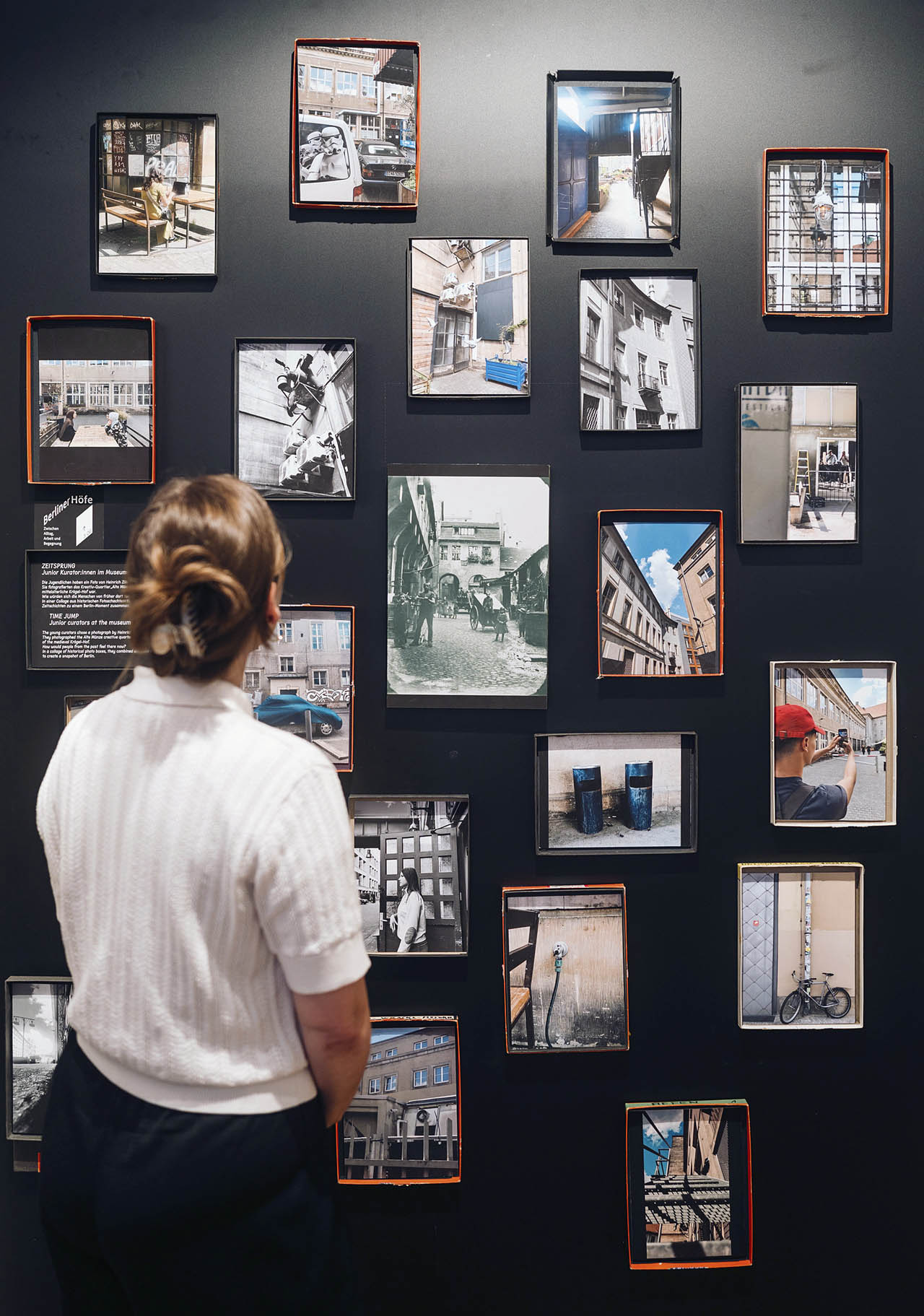
What’s more, the exhibition features a dynamic display of modern-day Berlin courtyards, crowdsourced through the Stadtmuseum Berlin’s “Berlin now!” photo campaign. You’ll see 40 framed photos on the walls, plus 50 smaller photo cards that visitors can rearrange, literally co-creating the exhibition experience. Due to overwhelming interest, the “Berlin now!” photo call has been extended until September 18, giving photography enthusiasts more time to submit their own unique views of Berlin’s courtyards. Selected photos will even be rotated into the framed display in October!

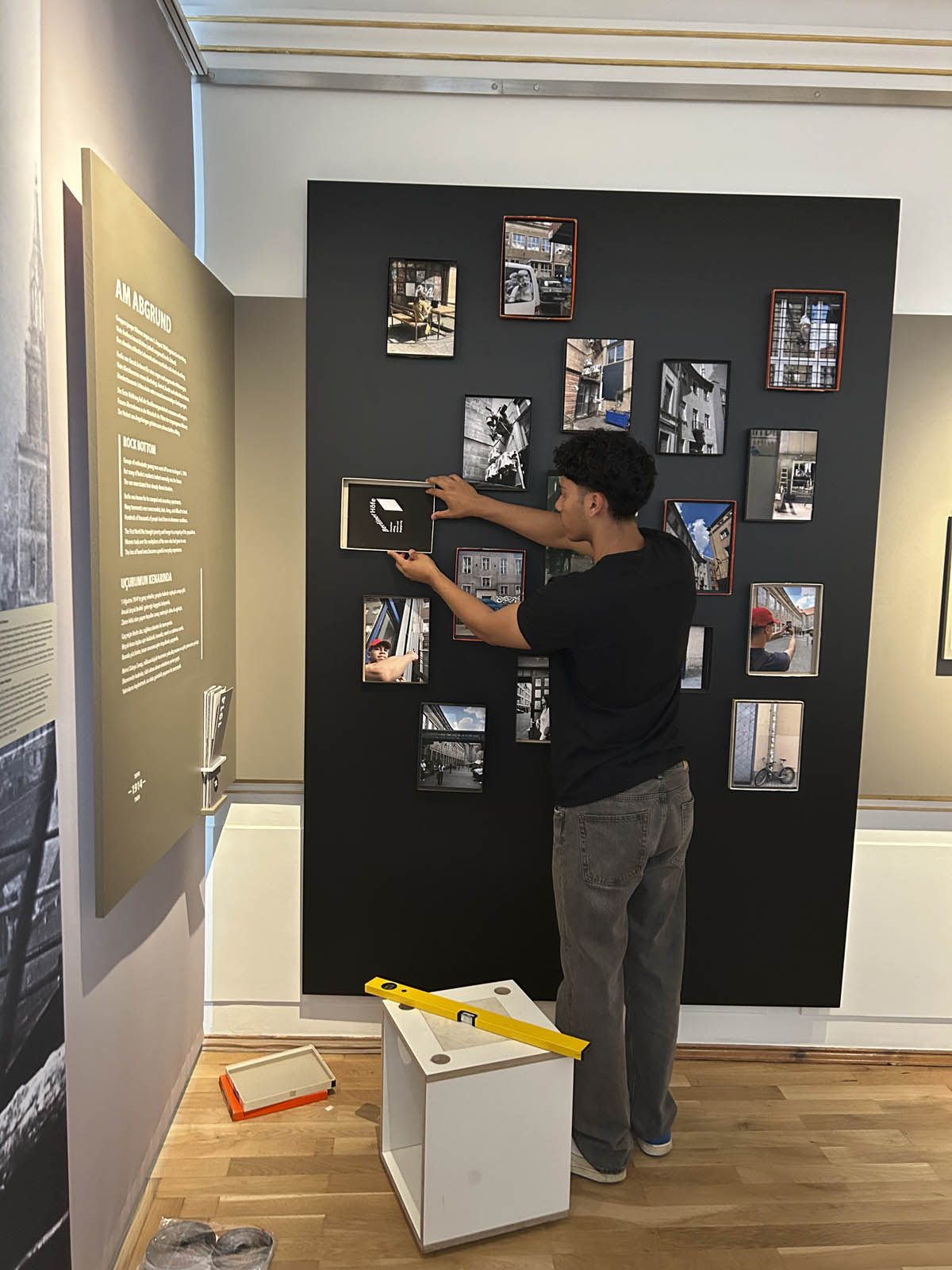
Adding another exciting dimension, junior curators from the Refik-Veseli School in Kreuzberg, mentored by Yella Hoepfner, will share their own “courtyard stories” across five dedicated areas within the Museum Ephraim-Palais, including spaces within the “BerlinZEIT” permanent exhibition. Their personal narratives will engage in a dialogue with objects from the Stadtmuseum Berlin’s collection, offering fresh, youthful insights.

Don’t miss this chance to experience Berlin from a new perspective, delving into the hidden heart of its neighborhoods through the eyes of both historical and contemporary artists.

Press release from Museum Ephraim-Palais


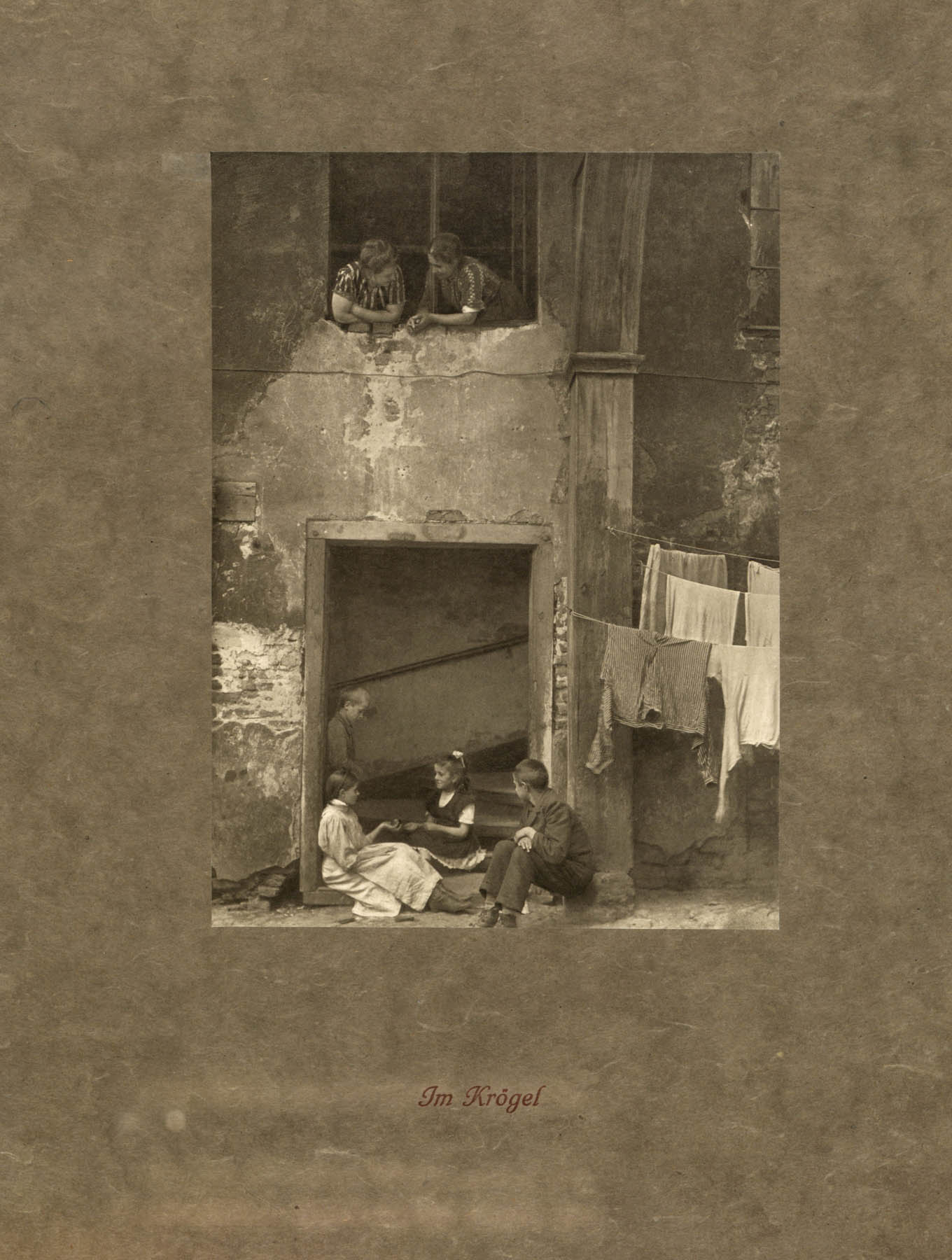
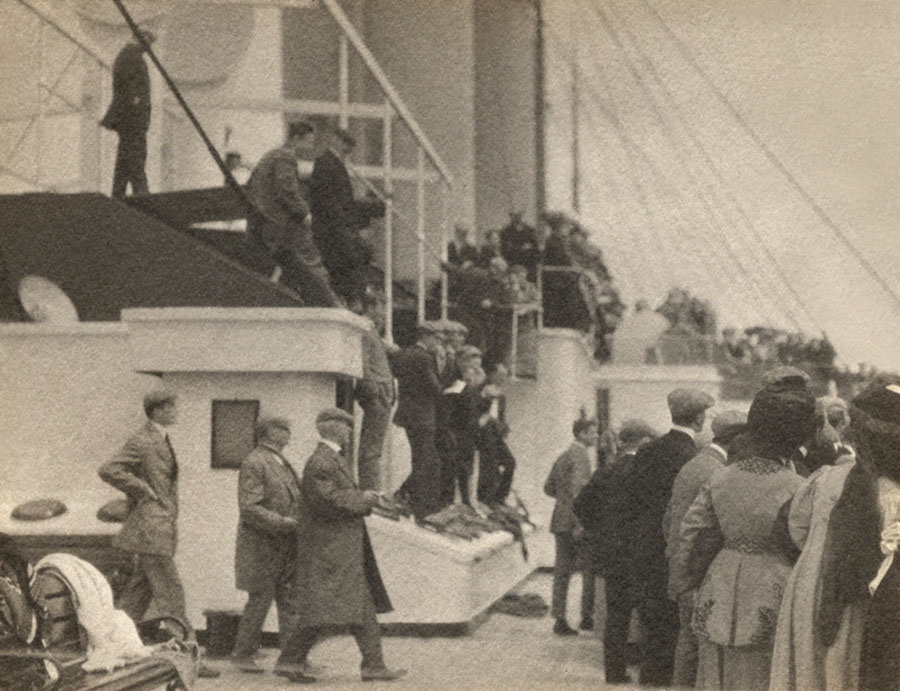
Rudolf Dührkoop (German, 1848-1918) From the portfolio 'Das malerische Berlin, Band 1' (Picturesque Berlin, Volume 1) 1911


Rudolf Dührkoop (German, 1848-1918)
From the portfolio Das malerische Berlin, Band 1 (Picturesque Berlin, Volume 1)
1911


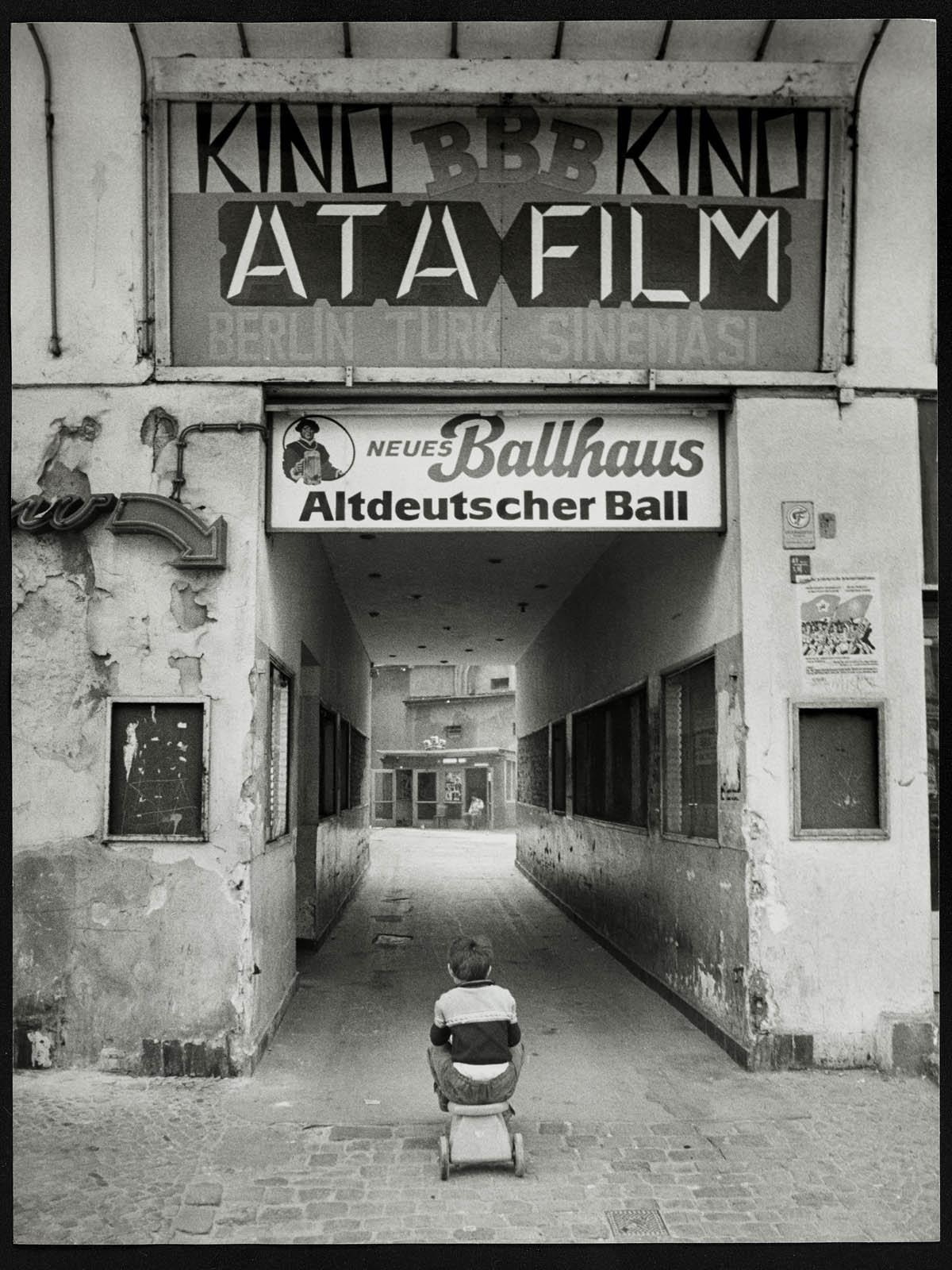
Ludwig Binder (German born Serbia, 1928-1980) 'Hofeinfahrt Kottbusser Straße 6' (Courtyard entrance at Kottbusser Straße 6) c. 1976


Ludwig Binder (German born Serbia, 1928-1980)
Hofeinfahrt Kottbusser Straße 6 (Courtyard entrance at Kottbusser Straße 6)
c. 1976
Ludwig Binder’s Photographic Estate – Positives – 43 images titled Ausländer-Läden-Kino
Photograph
24cm x 18.2cm
© Stiftung Stadtmuseum Berlin, Ludwig Binder


Manfred Hamm (German, b. 1944) 'Goerz'sche Höfe, Rheinstraße' 1978


Manfred Hamm (German, b. 1944)
Goerz’sche Höfe, Rheinstraße
Berlin, 1978
Photograph, baryta paper
22cm x 28.1cm
© Stiftung Stadtmuseum Berlin


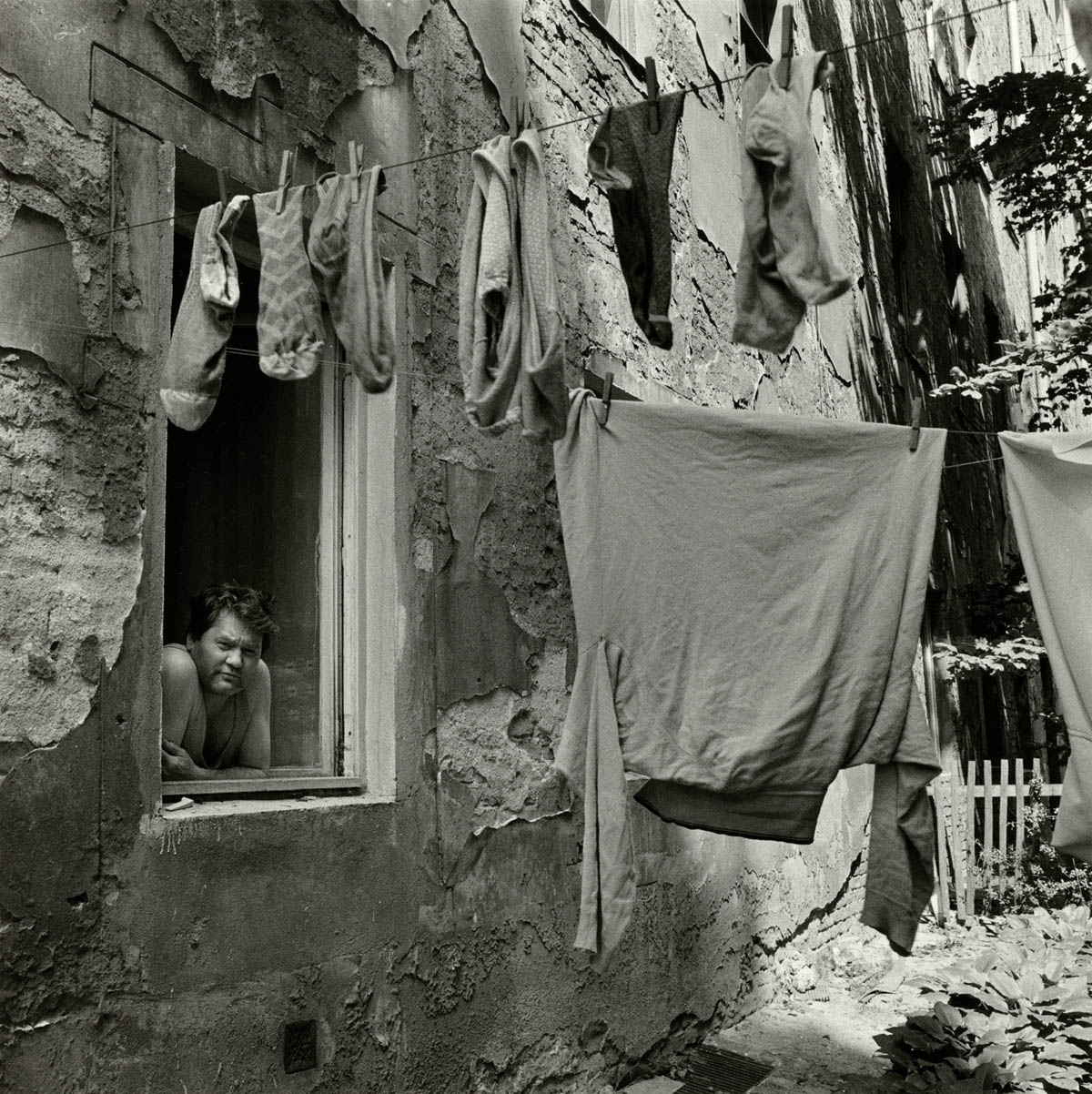
Reinhard Münch (German, b. 1951) From the series 'Das Haus Dunckerstr. 16 in Berlin 1058' (The House at Dunckerstrasse 16 in Berlin, 1058) 1985


Reinhard Münch (German, b. 1951)
From the series Das Haus Dunckerstr. 16 in Berlin 1058 (The House at Dunckerstrasse 16 in Berlin, 1058)
1985
Baryta paper, silver gelatin
24.9cm x 24.9cm
© Reinhard Münch


Ergun Çağatay (Turkish, 1937-2018) From the report: "Türken in Deutschland. Die zweite Generation" ("Turks in Germany. The Second Generation") 1989/90


Ergun Çağatay (Turkish, 1937-2018)
From the report: “Türken in Deutschland. Die zweite Generation” (“Turks in Germany. The Second Generation”)
1989/90


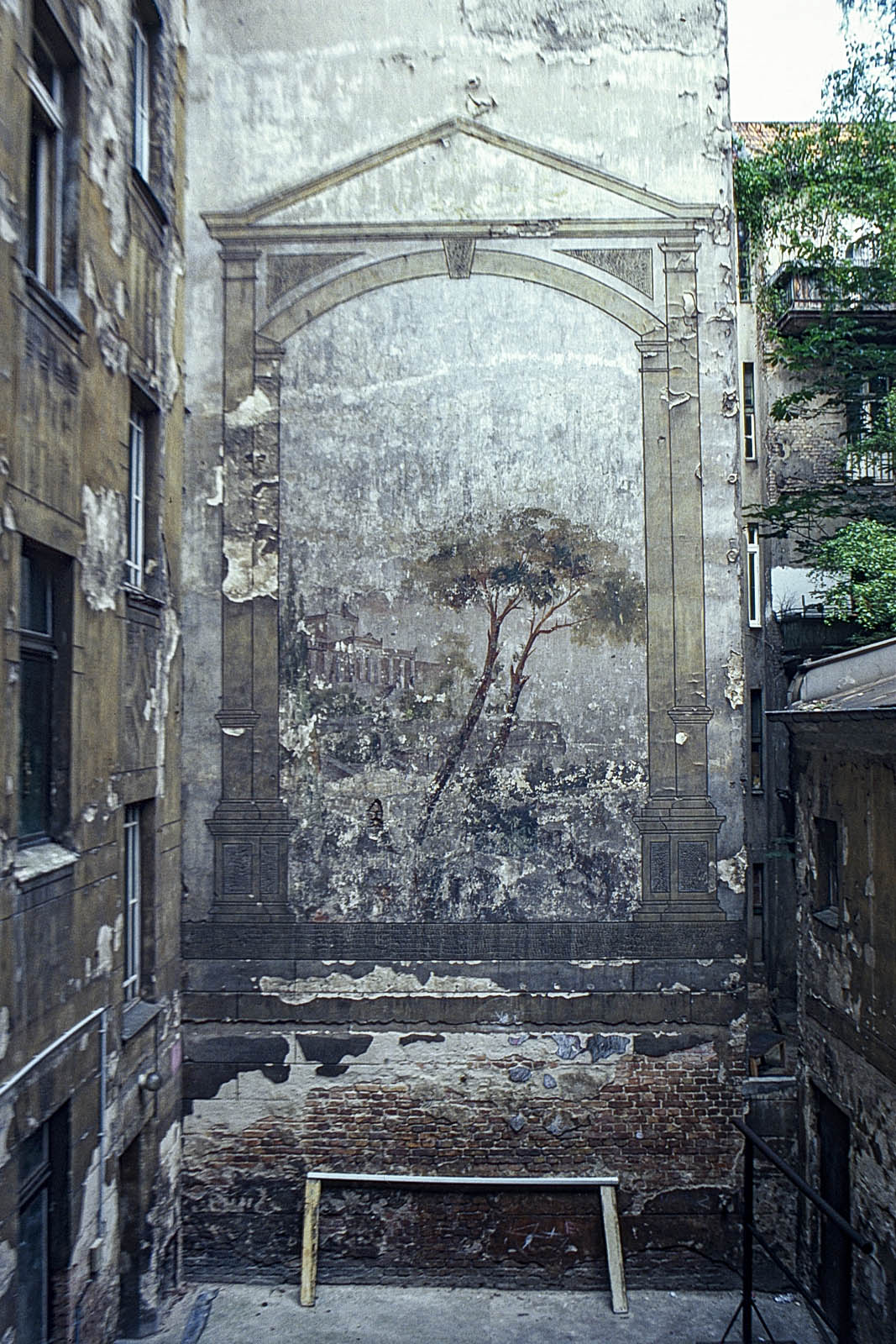
Werner Brunner (German, b. 1941) From the series 'Berliner Wandbilder' (Berlin Murals) 1974-1990 (Berlin-Prenzlauer Berg, Esmarchstraße 26, I. Hinterhof)


Werner Brunner (German, b. 1941)
Berlin-Prenzlauer Berg, Esmarchstraße 26, I. Hinterhof
From the series Berliner Wandbilder (Berlin Murals) 1974-1990
Hahnemühle Digital Fine Art, inkjet printing
30cm x 20cm
© Werner Brunner
Reproduction: Dorin Alexandru Ionita, Berlin


Dr. Barbara Hansen. '"Motive aus dem Osten Berlins 1993-1998. Höfe", Hof in Ostberlin' um 1995 ('"Motives from East Berlin 1993-1998. Courtyards" Courtyard in East Berlin' around 1995)


Dr. Barbara Hansen
“Motive aus dem Osten Berlins 1993-1998. Höfe”, Hof in Ostberlin
(“Motives from East Berlin 1993-1998. Courtyards” Courtyard in East Berlin)

Berlin, around 1995
Colour photograph on PE paper
Approx. 10 x 15cm (HF and QF)
© Stiftung Stadtmuseum Berlin


Unknown photographer. 'Hoffest in der Falckensteinstraße 27' (Garden festival at Falckensteinstraße 27) 1920


Unknown photographer
Hoffest in der Falckensteinstraße 27 (Garden festival at Falckensteinstraße 27)
1920
Postcard
From the collection of Eberhard Müller


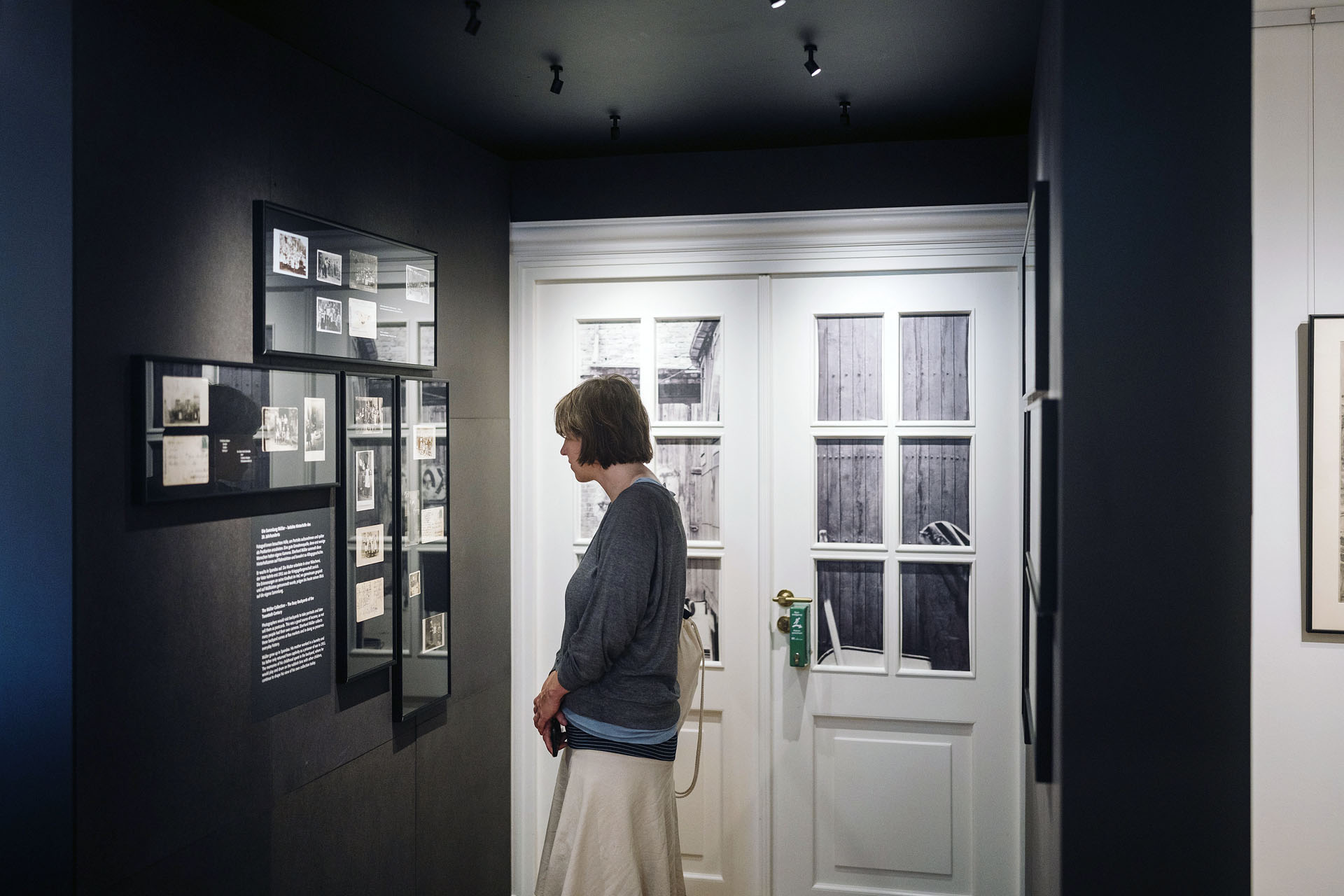
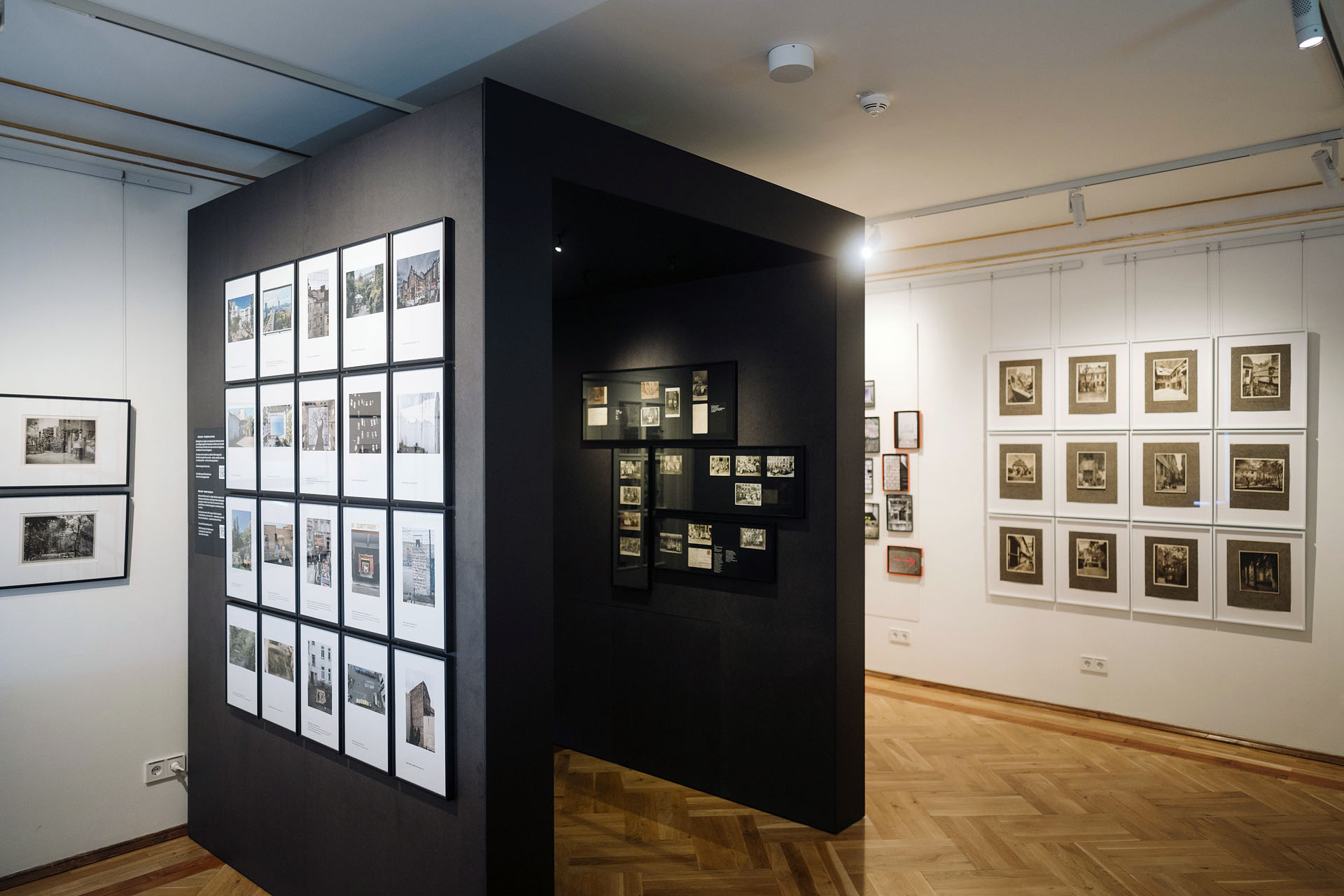
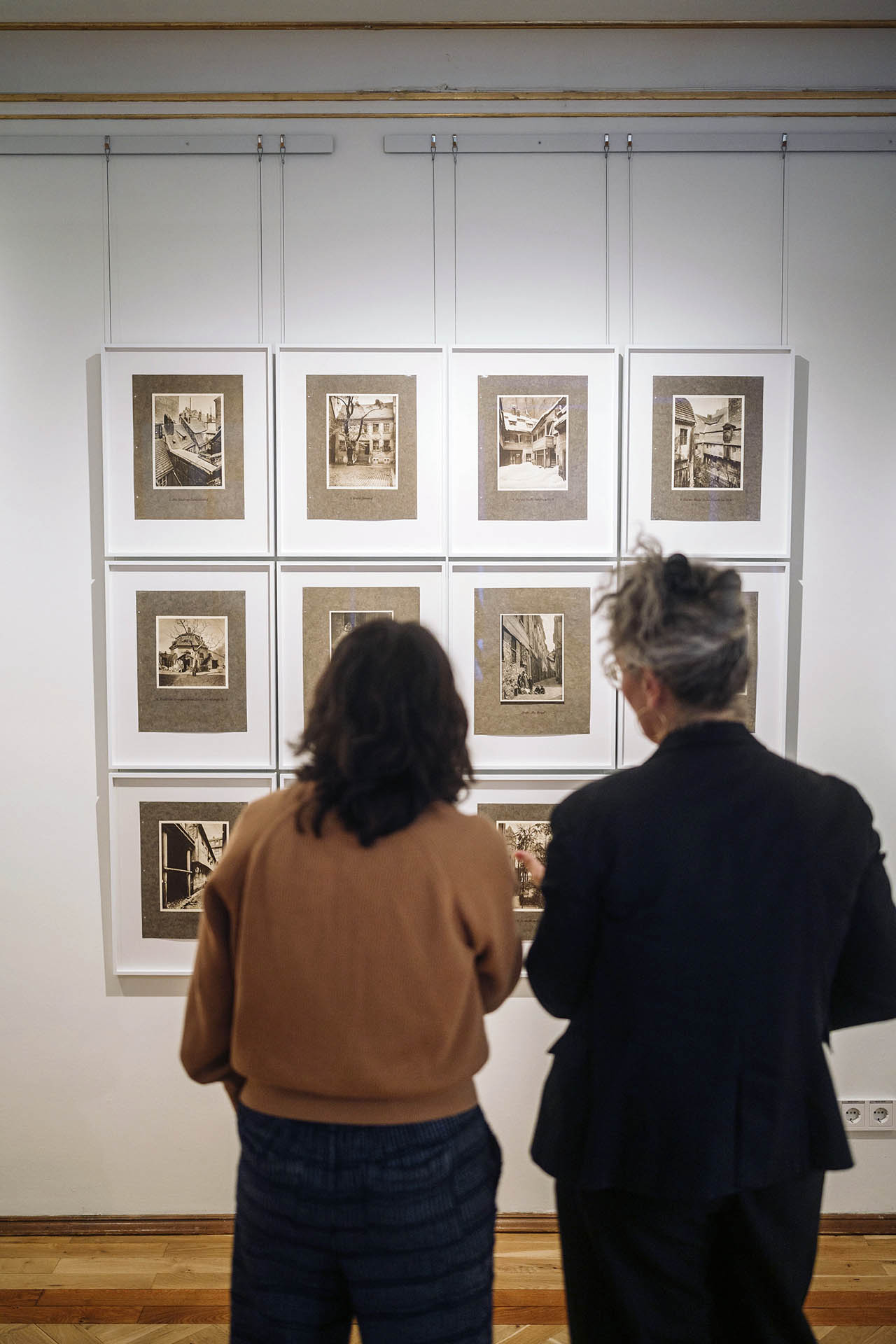
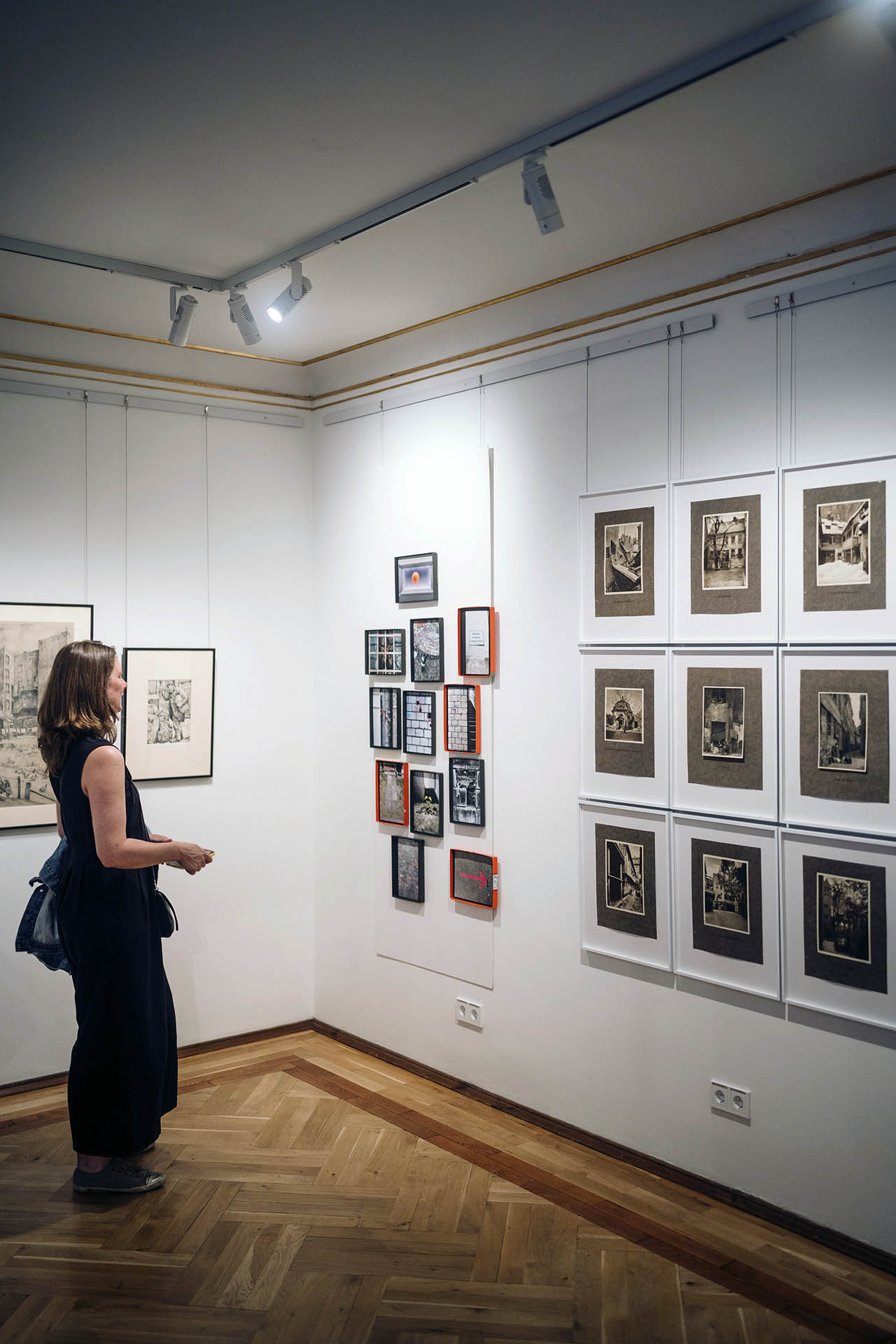
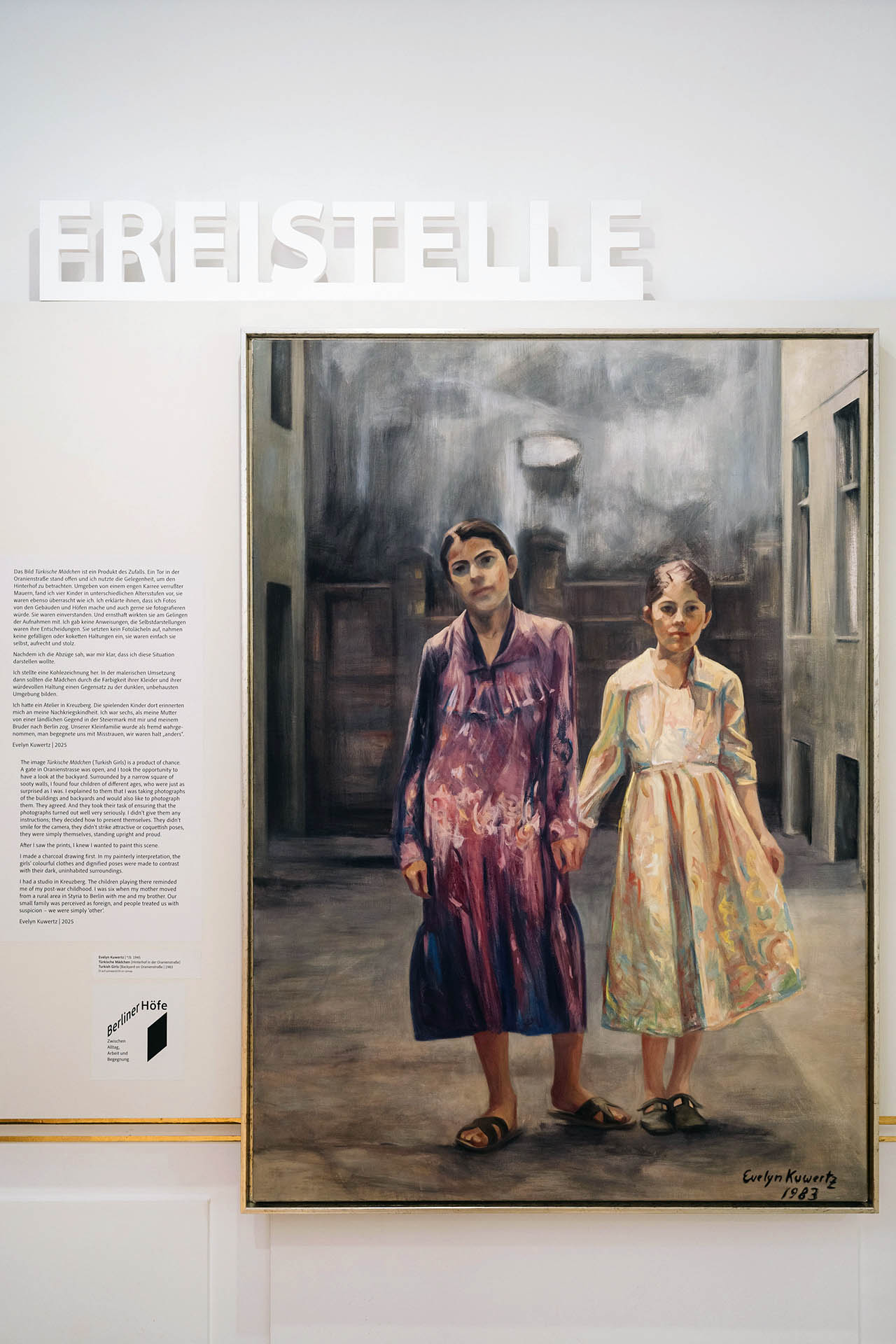
Installation view of the exhibition 'Berlin Courtyards: Between Everyday Life, Work, and Encounters' at the Museum Ephraim-Palais, Berlin, July 2025 - January 2026


Installation views of the exhibition Berlin Courtyards: Between Everyday Life, Work, and Encounters at the Museum Ephraim-Palais, Berlin, July 2025 – January 2026
Photos: Alexander Rentsch


Yella Hoepfner. 'Junior Curator at Refik-Veseli-Schule' 2025


Yella Hoepfner
Junior Curator of the Refik Veseli School
2025
© Yella Hoepfner


Berlin backyards have a lot to tell. Since the industrial revolution in the 19th century at the latest, Berlin has been a center of attraction for people from other regions of Germany and from other countries. The history of the city has therefore always been a history of migration.

Due to enormous population growth, spatial expansion and structural densification, Berlin is characterised by backyards like no other city. They are used for residential, educational, commercial, artistic, culinaric and many other purposes. Their history is diverse, just like the people who live there. With the special exhibition “Berliner Höfe” (Berlin Backyards) on the 3rd floor of the Museum Ephraim-Palais, the Stadtmuseum Berlin invites you to explore these urban spaces between past and present.

The backyards are exemplary of urban coexistence with all its contradictions. They show how people shape space. And they encourage us to take a closer look: What can backyards tell us about Berlin? What about ourselves? In short: What is going on there?

Graphics, photography and history

The special atmosphere of the Berlin backyards has repeatedly inspired graphic artists, draughtsmen and photographers to create images. In the exhibition, highlights from the museum collection meet the artistic works of urban researchers Duygu Örs and Sinthujan Varatharajah, which were created especially for “Berliner Höfe”. Using sounds and light, they deal with different sensory impressions from backyards that Örs and Varatharajah encountered in Wedding.

In addition, the junior curators from the Refik Veseli School in Kreuzberg and their mentor Yella Hoepfner present their own spaces in the permanent exhibition “BerlinZEIT” on the first and second floors of the museum. Their individual stories interact with objects from the collection.

Biographical data

Duygu Örs is a researcher, art educator and curator specialising in cultural and urban research. Since 2019 she has headed the education and mediation work of the Berlin Biennale for Contemporary Art, since 2025 with Jas Wenzel. At the Institute for Sociology and Cultural Organisation (ISKO) at Leuphana University Lüneburg, she is working on the role of the museum in the ‘Right to the City’ movement.‍ She is also a co-founder of the curatorial research collective Curating through Conflict with Care (CCC). Translated with DeepL.com (free version)

Sinthujan Varatarajah (சிந்துஜன் வரதராஜா) writes and researches in Berlin. As a political geographer, Varatarajah focuses on issues of statelessness, im-/mobility and displacement from the perspective of infrastructure, logistics and building culture. Varatarajah has published several books since 2022. Varatarajah’s next book, ‘Where Time Stands Still’, will be published by Carl Hanser Verlag in spring 2026.

Text from the Museum Ephraim-Palais website


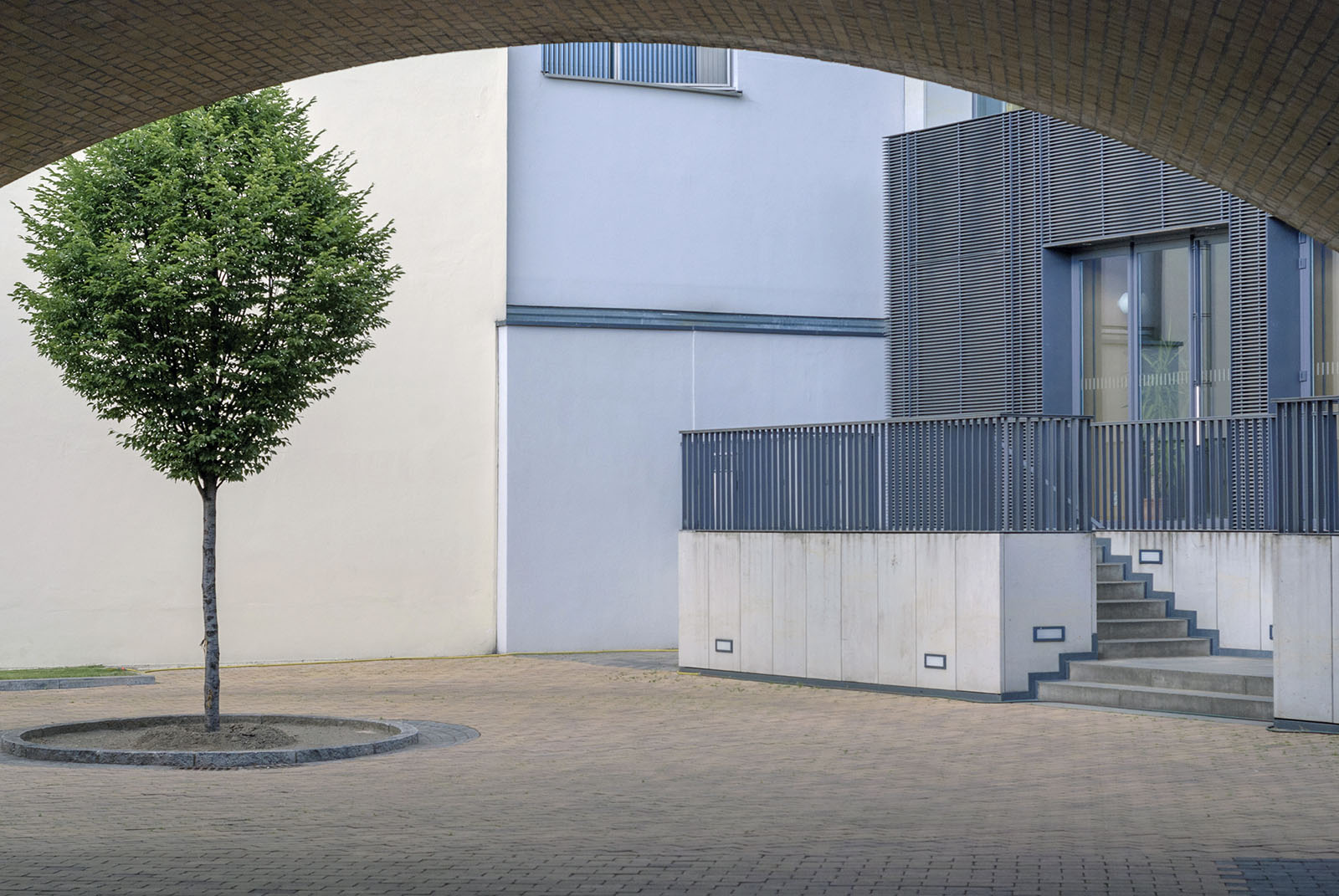
Lotti Nass (German, b. 1950) 'Hof mit Baum' (Courtyard with Tree) 2010


Lotti Nass (German, b. 1950)
Hof mit Baum (Courtyard with Tree)
2010
© Lotti Nass


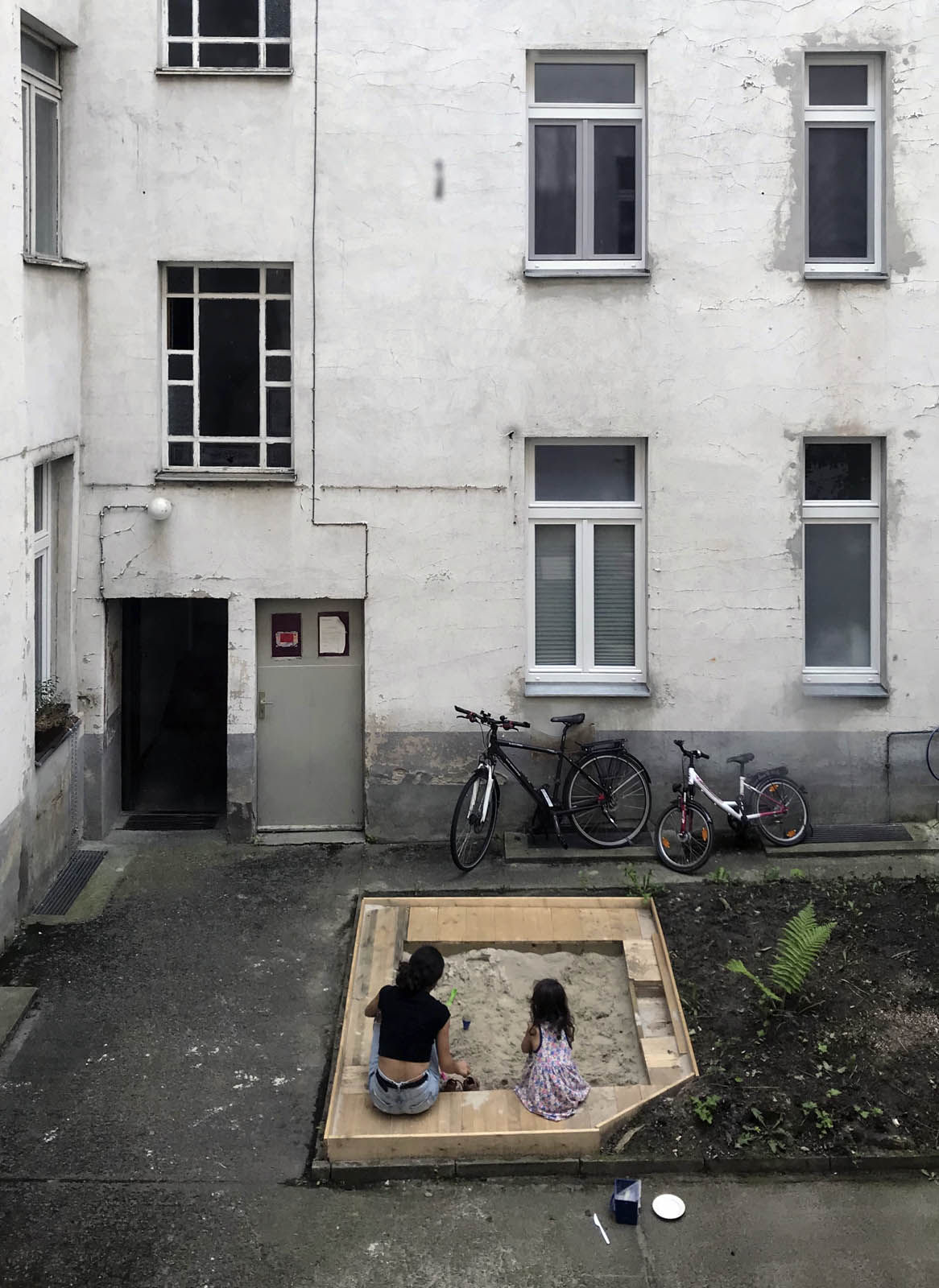
Andreas Metz. 'In der Sandkiste' (In the Sandbox) 2020


Andreas Metz
In der Sandkiste (In the Sandbox)
2020


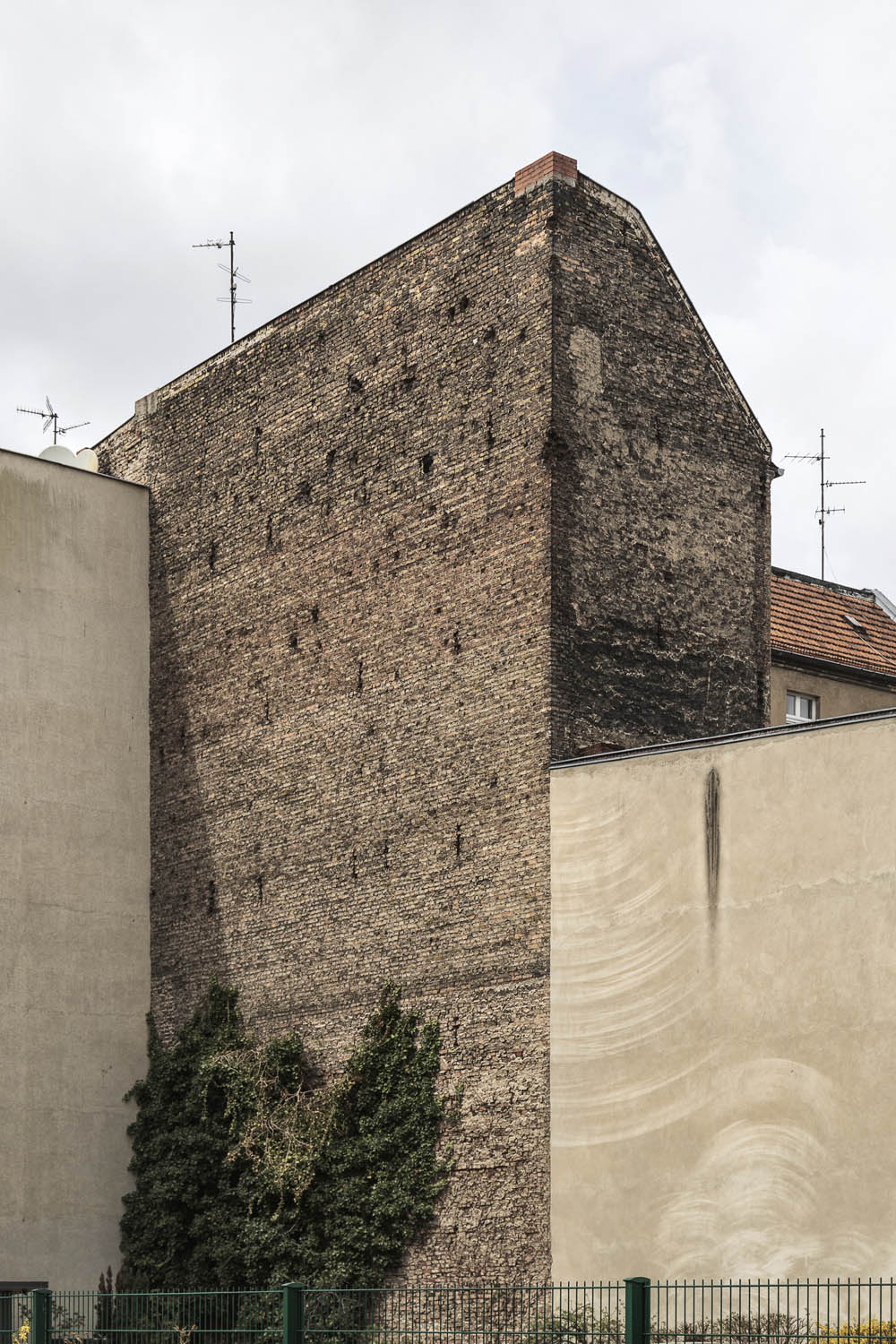
Birgit Hantke. 'Waldstraße, Moabit' 2021


Birgit Hantke (German)
Waldstraße, Moabit
2021
© Birgit Hantke


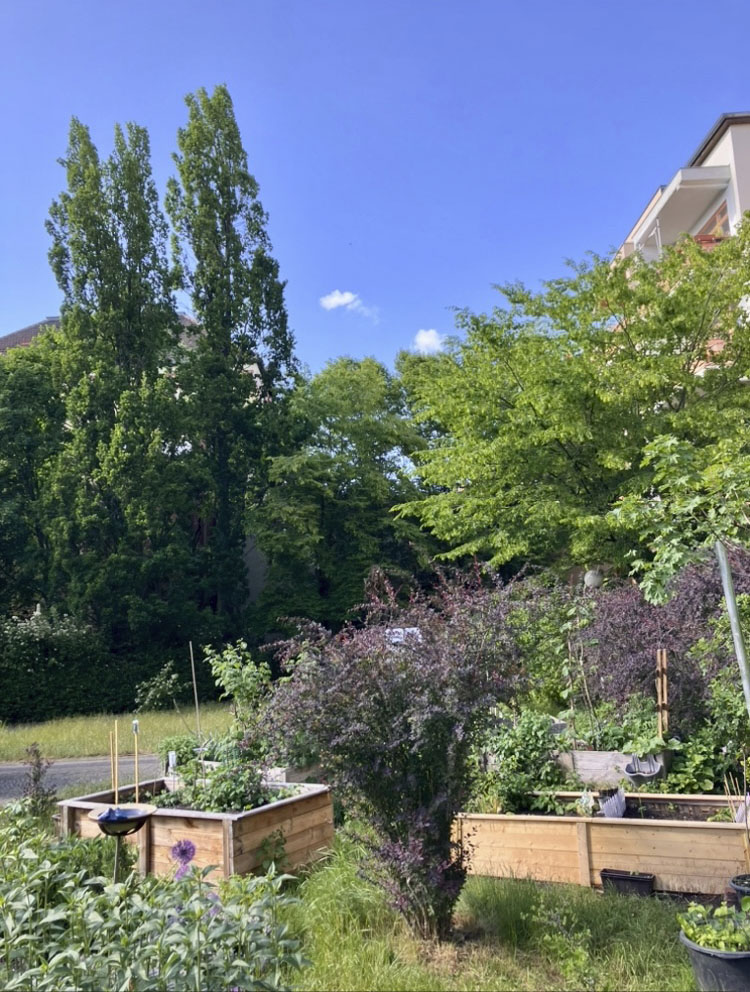
Andrea Steiner. 'Doch die Toscana?' (But Tuscany?) 2025


Andrea Steiner
Doch die Toscana? (But Tuscany?)
2025
© Andrea Steiner


Duygu Örs and Sinthujan Varatharajah. 'Untitled' 2025


Duygu Örs and Sinthujan Varatharajah
Untitled
2025


Museum Ephraim-Palais
Poststraße 16
10178 Berlin

Opening hours:
Tue – Sun 10am – 6pm (also on public holidays)
Mon closed

Museum Ephraim-Palais website

LIKE ART BLART ON FACEBOOK

Back to top

Exhibition: ‘Australian Tonalism: A selection from the John and Peter Perry Collection’ at the Town Hall Gallery, Hawthorn, Melbourne

Exhibition dates: 7th May – 27th July, 2025


Edgar Finlay (Australian, 1893-1974) 'Untitled Streetscape' 1919 from the exhibition 'Australian Tonalism: A selection from the John and Peter Perry Collection' at the Town Hall Gallery, Hawthorn, Melbourne, May - July, 2025


Edgar Finlay (Australian, 1893-1974)
Untitled Streetscape
1919
Oil on board
32.2 x 27.2cm


This is a near perfect exhibition of Australian Tonalist paintings from the John and Peter Perry Collection at the Town Hall Gallery, Hawthorn, Melbourne.

From the beautiful colour of the gallery walls which compliments the art work to the subtle grouping of the paintings to the individual nuances in style of each artist’s work … this is a stunning exhibition which envelops the viewer in the paintings sublime, minimalist intimacies.

From portrait to landscape, from cityscape to still life, I was enraptured by the presence of each painting. Blow Monet or Cezanne, here is Australian colour, context, identity, place, perspective at its suffused finest!

I have always adored the work of Clarice Beckett (Australian, 1887-1935) ever since I saw her paintings at Lauraine Diggins Fine Art way back in 2015, and normally she would be the start of the show … but not here. Here she is surrounded by visions / visionaries of equal stature, led by the redoubtable painter and teacher Max Meldrum (Australian, 1875-1955).

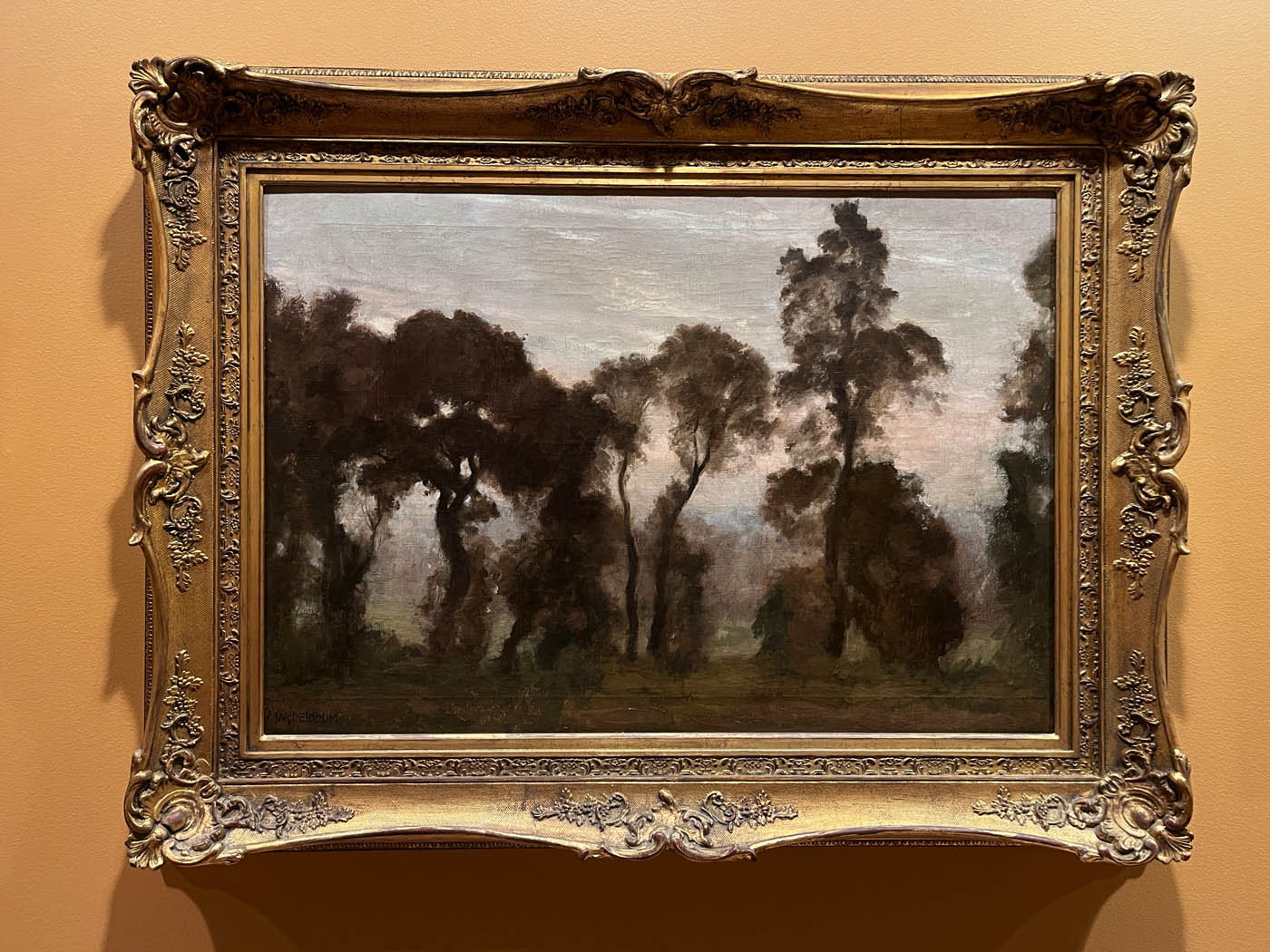
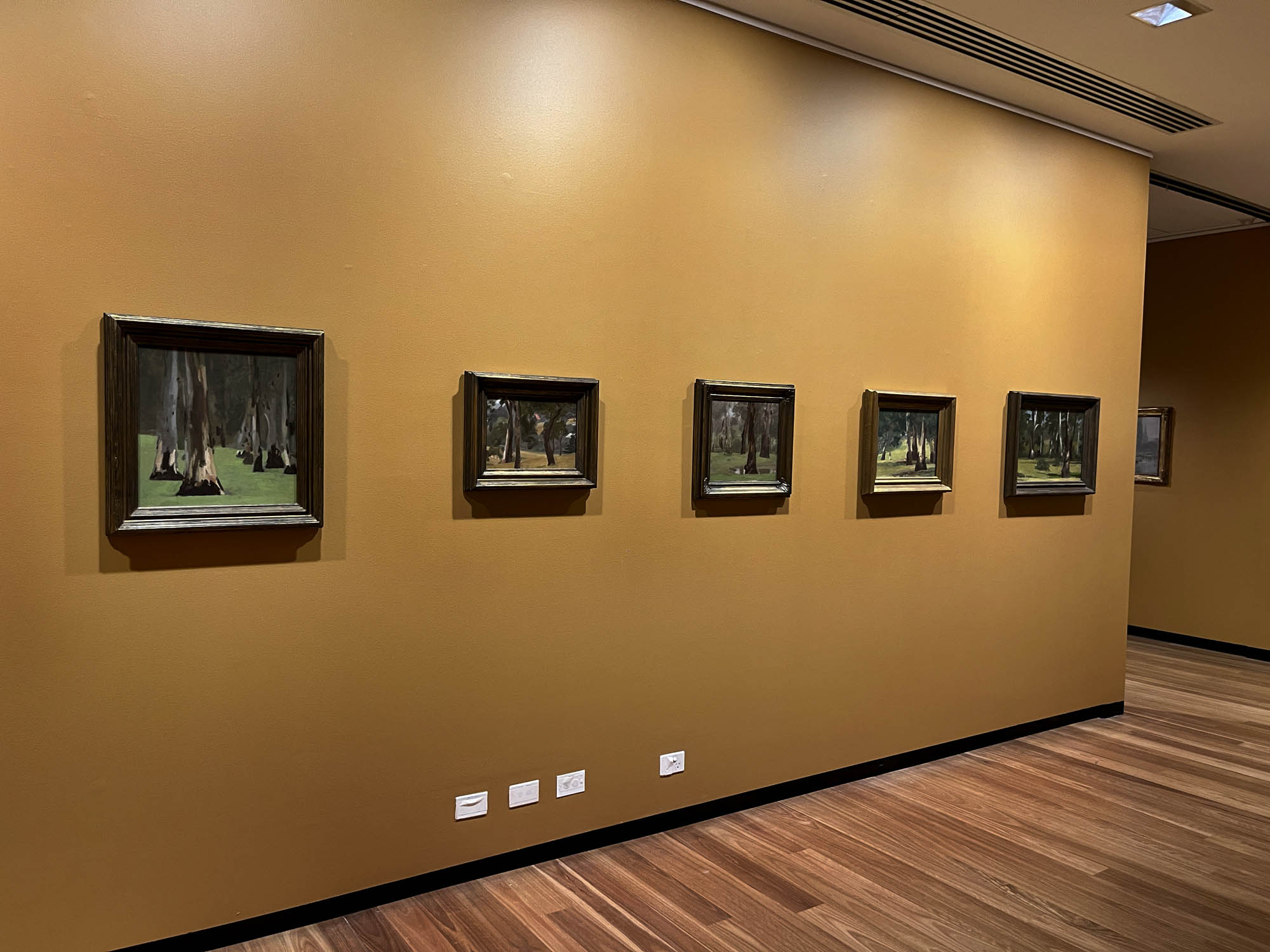
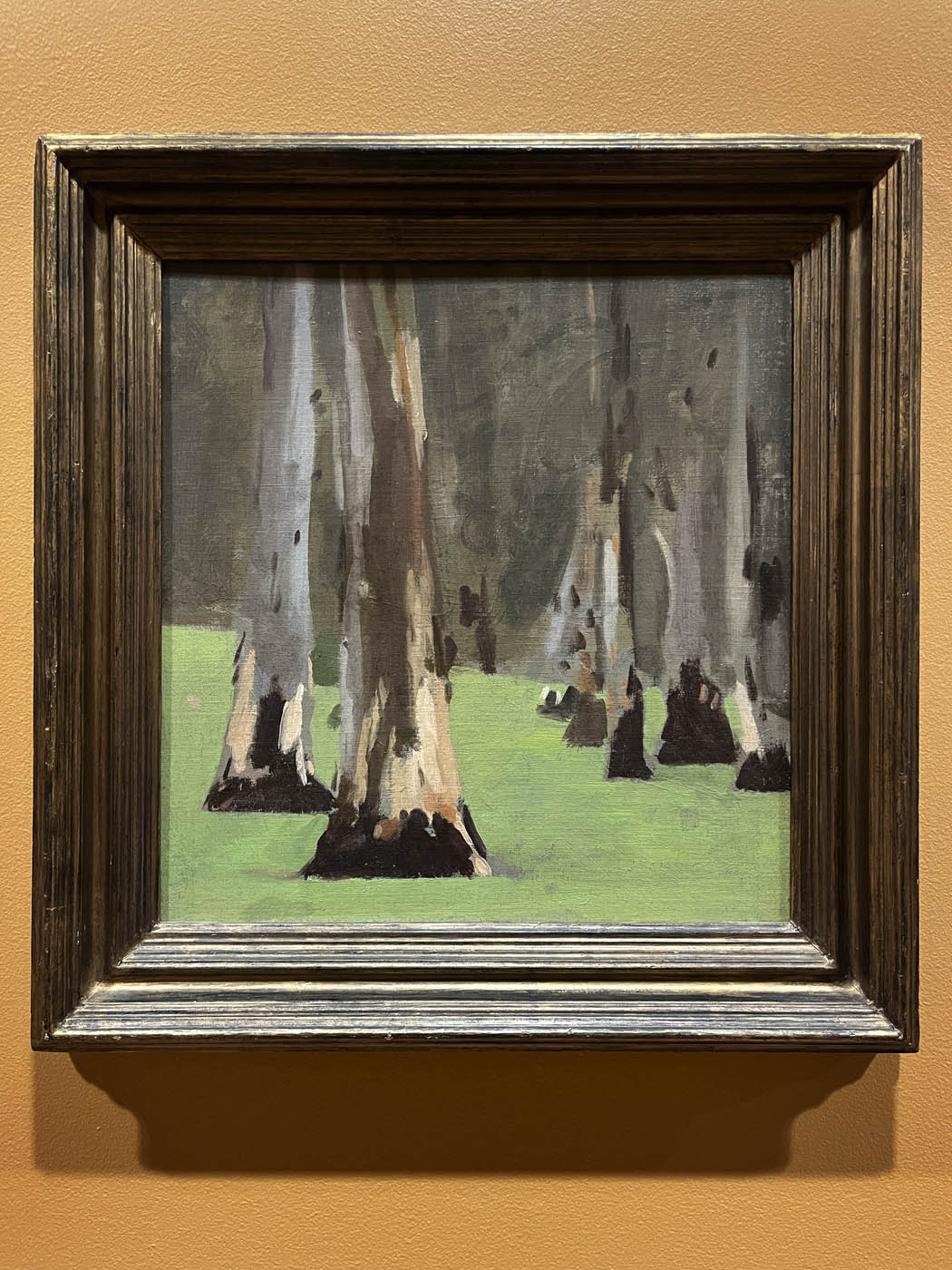
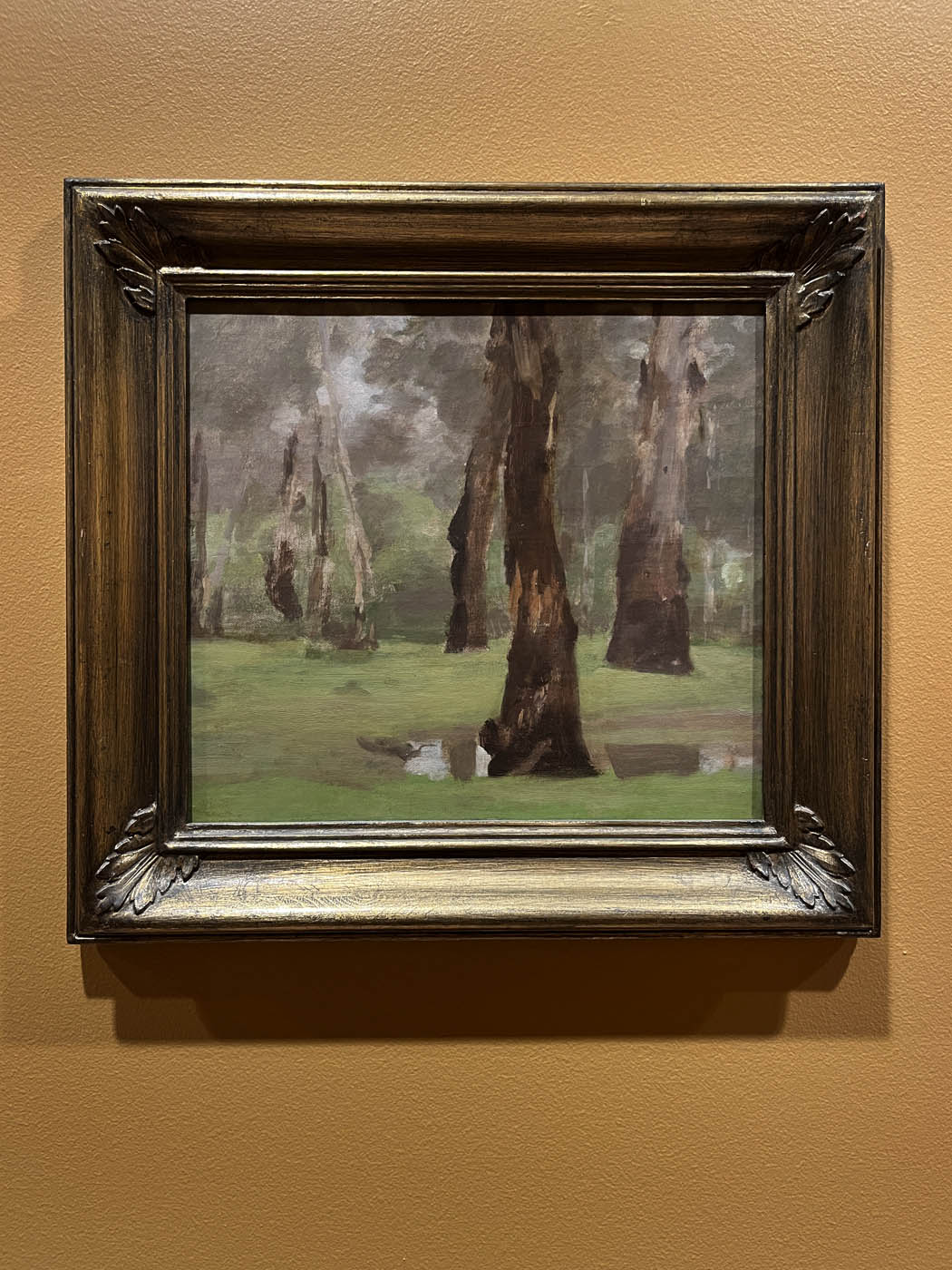
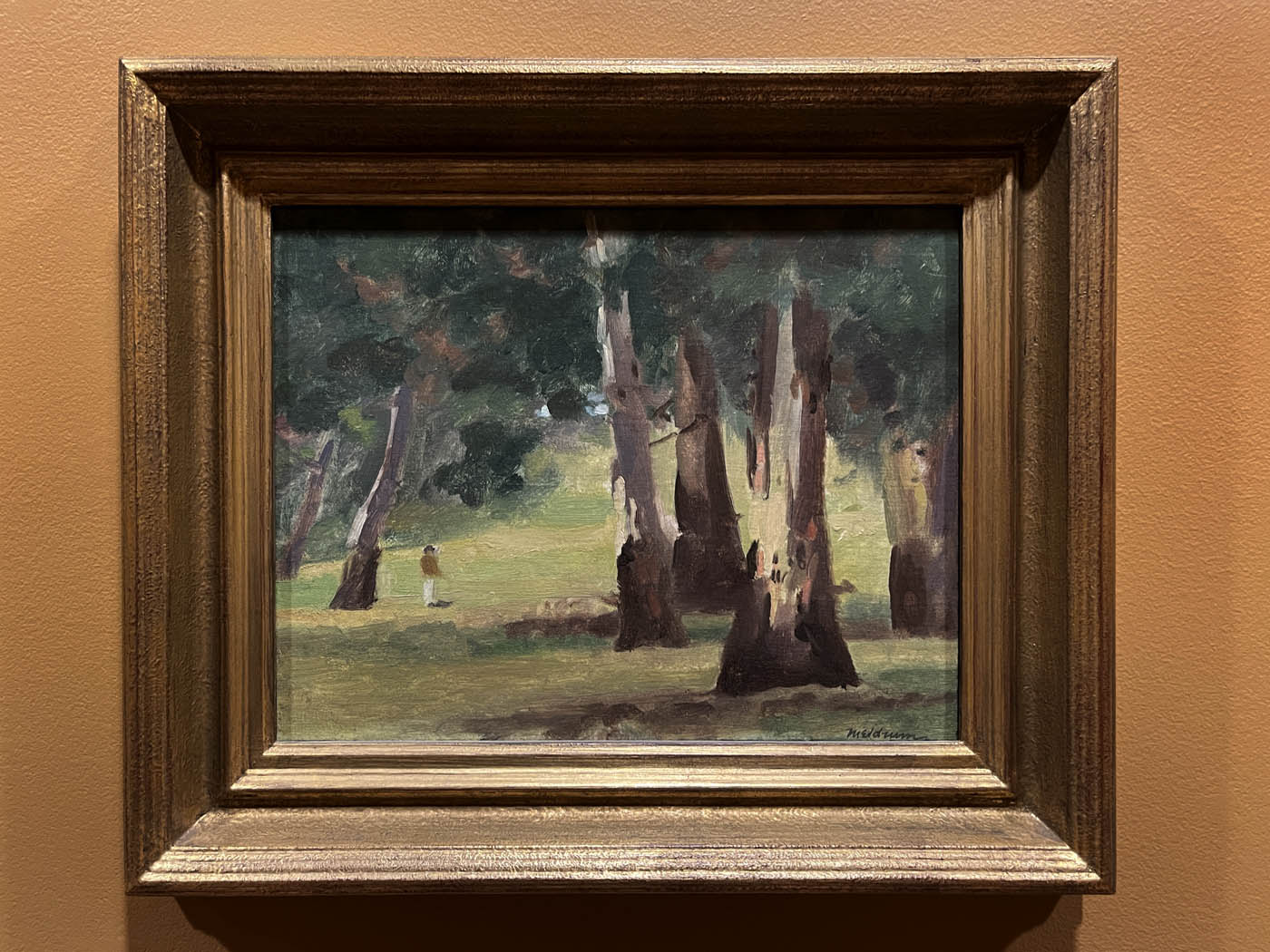
The wall of five of his paintings of trees (see installation photo below) including The Glade, Eltham (c. 1920, below), The Pool (1923, below), The Bottom of the Hill (Eltham Reserve) (1925, below) is one of the most rigorous conceptual investigations into that subject I have seen in Australian painting, yet at the same time I was emotionally moved by their subtle nuances of form, tone and inhabitation. It was as though the artist had internalised the transcendence of his subject.

Believe me when I say that I inhaled the canvases in this exhibition, I breathed their suffused glow.

It was a real privilege to see the exhibition and to be able to construct this post. There are not many reproductions of Australian Tonalist paintings online by many of these artists so here is a record their achievement, and that of John and Peter Perry for having the foresight and perspicacity to collect them.

Enveloped in a pall of opaque density I see clearly.

Dr Marcus Bunyan


Please click on the photographs for a larger version of the image. All installation photographs © Marcus Bunyan


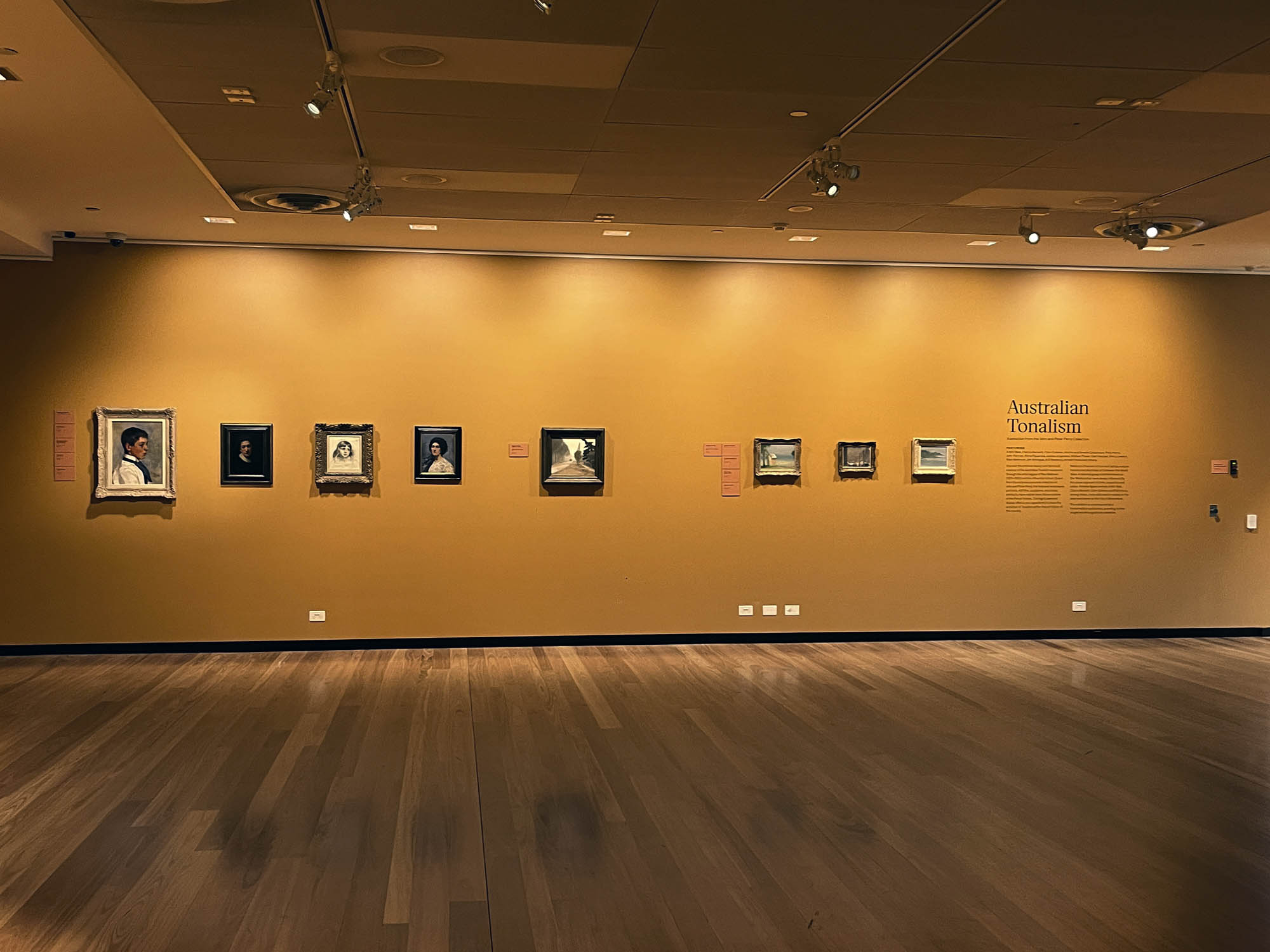
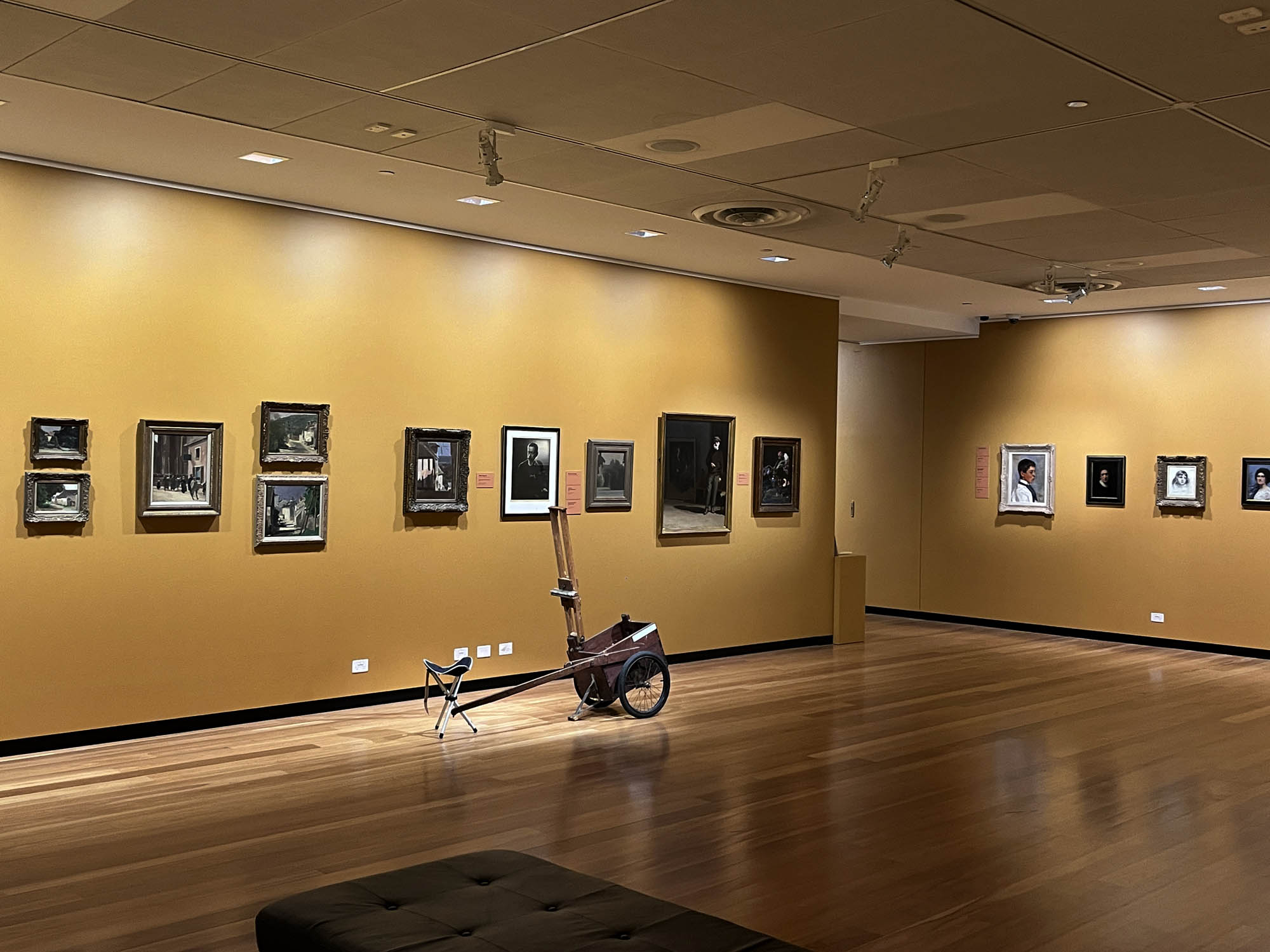
Installation view of the exhibition 'Australian Tonalism: A selection from the John and Peter Perry Collection' at the Town Hall Gallery, Hawthorn, Melbourne, May - July, 2025


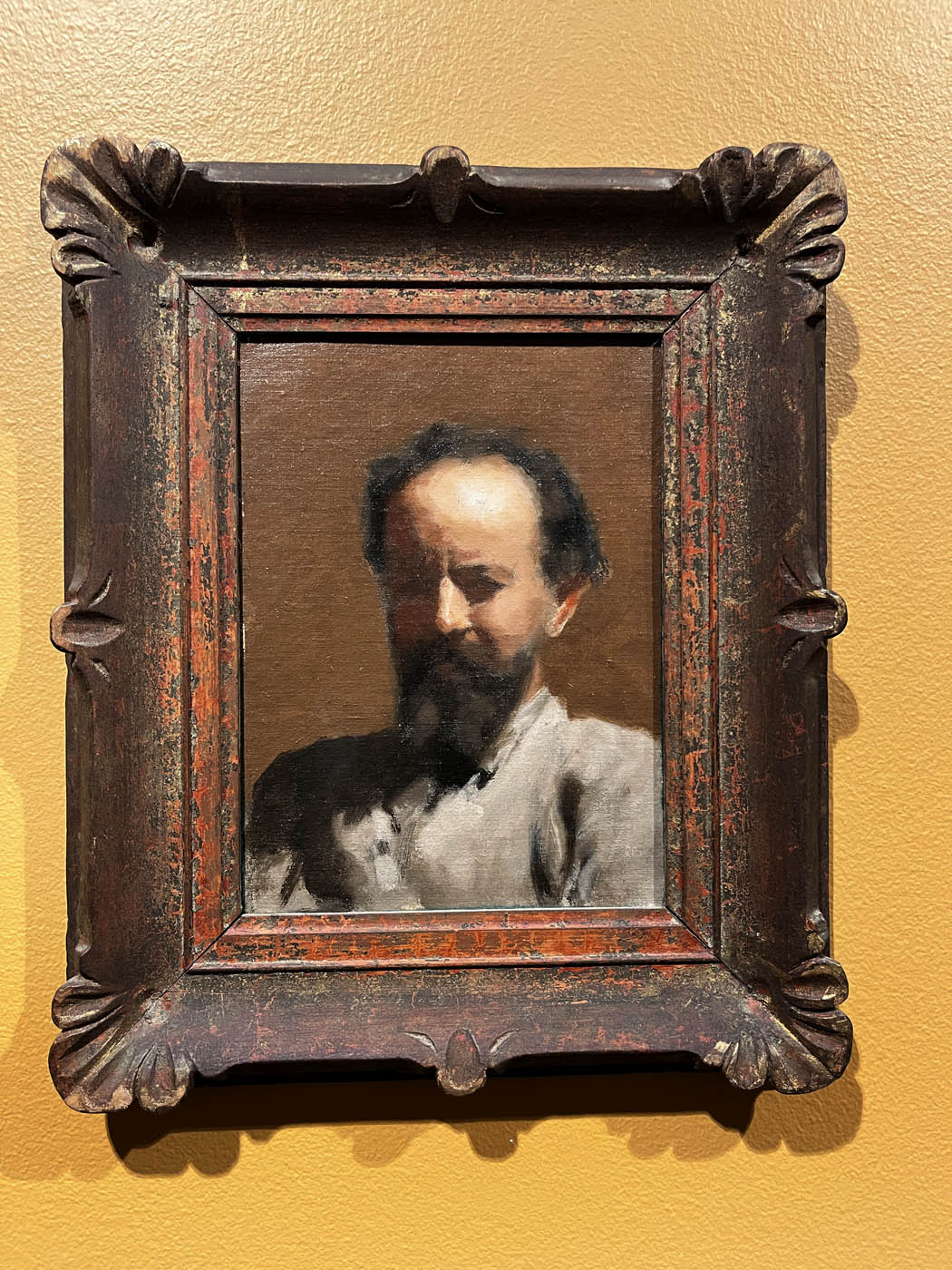
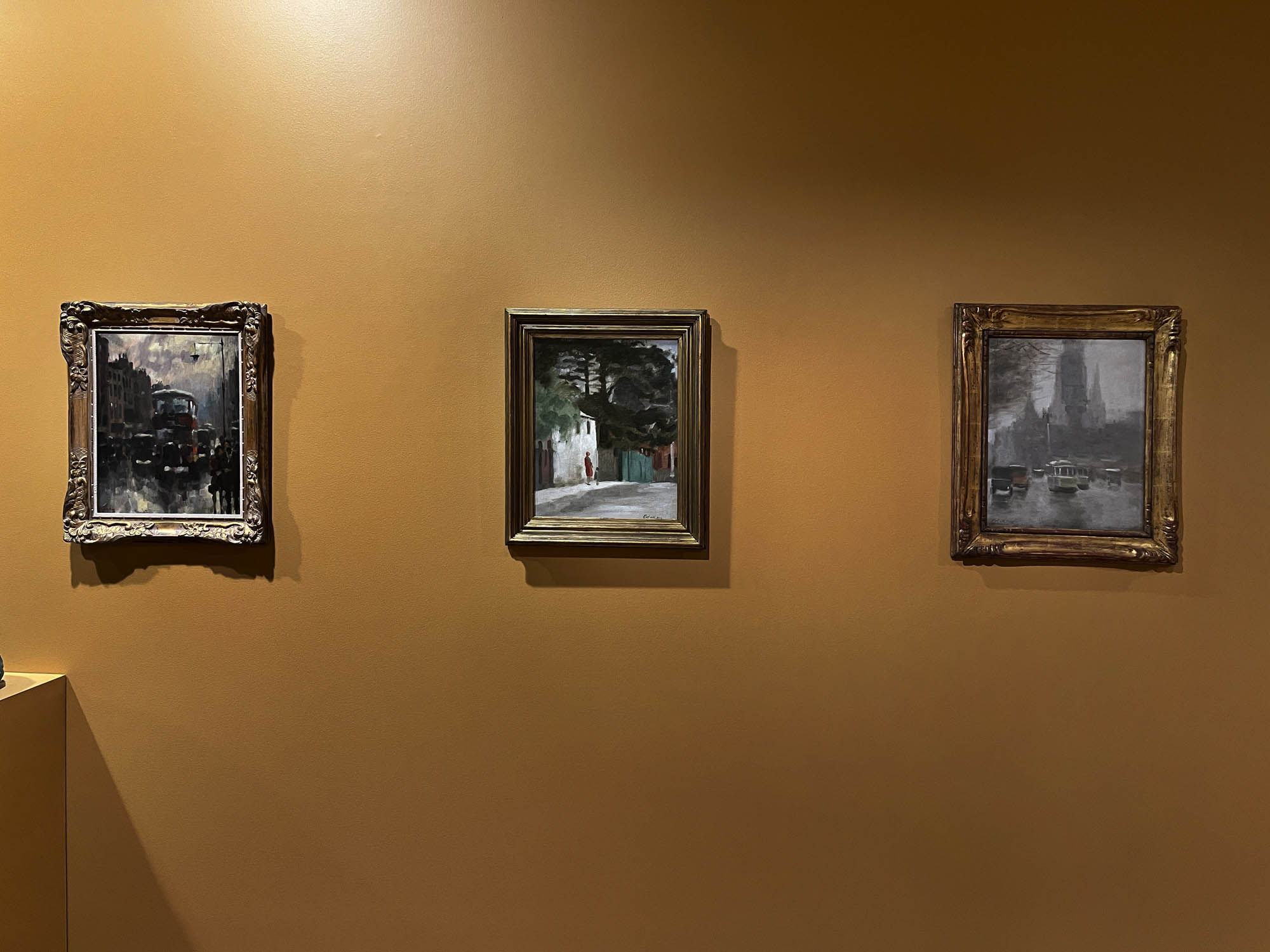
Installation view of the exhibition Australian Tonalism: A selection from the John and Peter Perry Collection at the Town Hall Gallery, Hawthorn, Melbourne, May – July, 2025 showing at left, George Coates’ portrait of Max Meldrum, c. 1895 (below); at centre, Edgar Finlay’s Untitled Streetscape 1919 (above); and at right, three paintings by Clarice Beckett (below)


Australian Tonalism

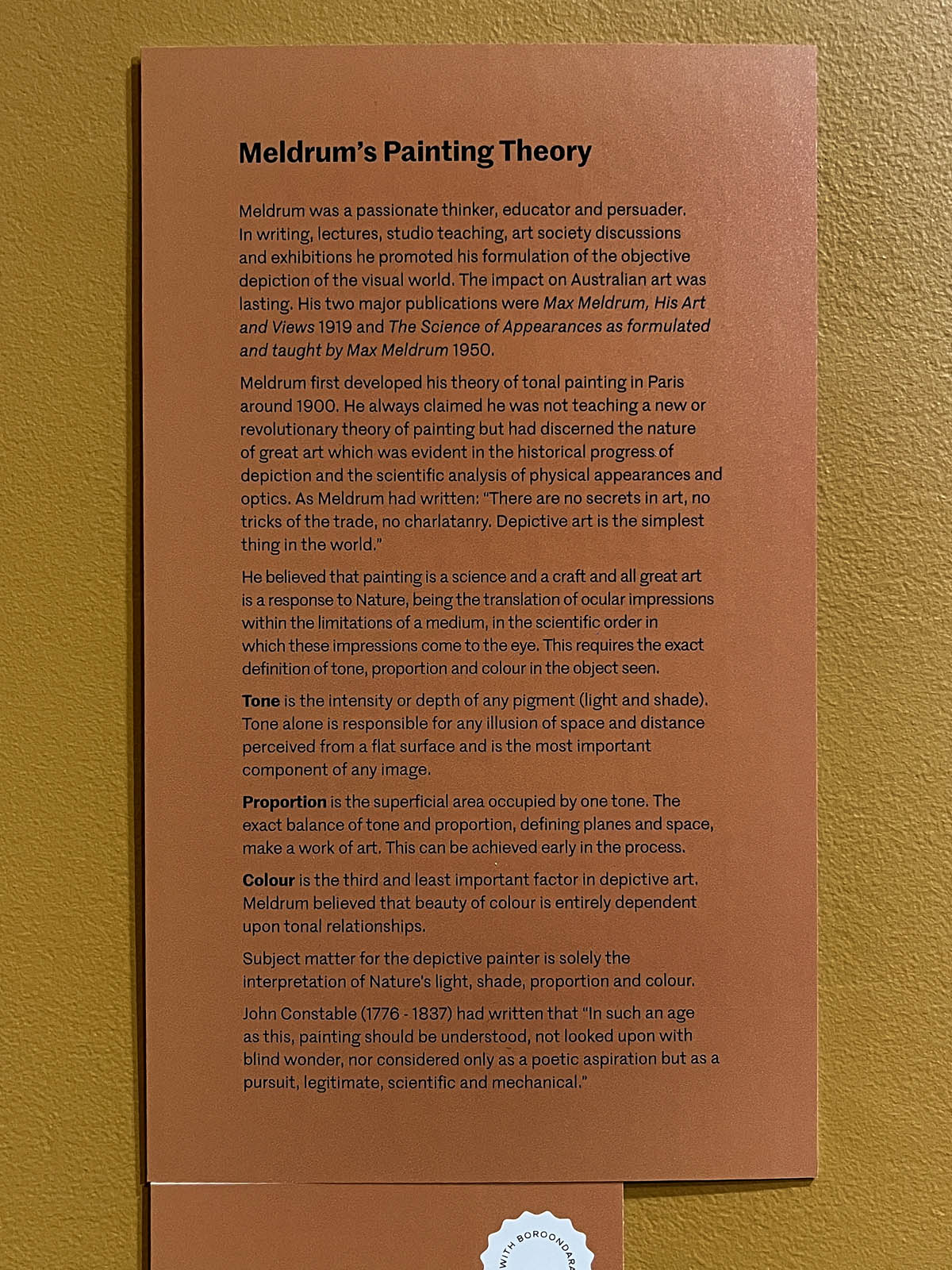
Australian Tonalism is characterised by a particular “misty” or atmospheric quality created by the Meldrum painting method of building “tone on tone”. Tonalism developed from Meldrum’s “Scientific theory of Impressions”; claiming that social decadence had given artists an exaggerated interest in colour and, to their detriment, were paying less attention to tone and proportion. Art, he said, should be a pure science based on optical analysis; its sole purpose being to place on the canvas the first ordered tonal impressions that the eye received. All adornments and narrative and literary references should be rejected.

Tonalism opposed Post-Impressionism and Modernism, and is now regarded as a precursor to Minimalism and Conceptualism. The whole movement had been under fierce controversy and they were without doubt the most unpopular group of artists, in the eyes of most other artists, in the history of Australian art. Influential Melbourne artist and teacher George Bell described Australian Tonalism as a “cult which muffles everything in a pall of opaque density”.

Text from the Wikipedia website


George Coates (Australian, 1869-1930) 'Max Meldrum' c. 1895


George Coates (Australian, 1869-1930)
Max Meldrum
c. 1895
Oil on canvas
49.7 x 39.5cm


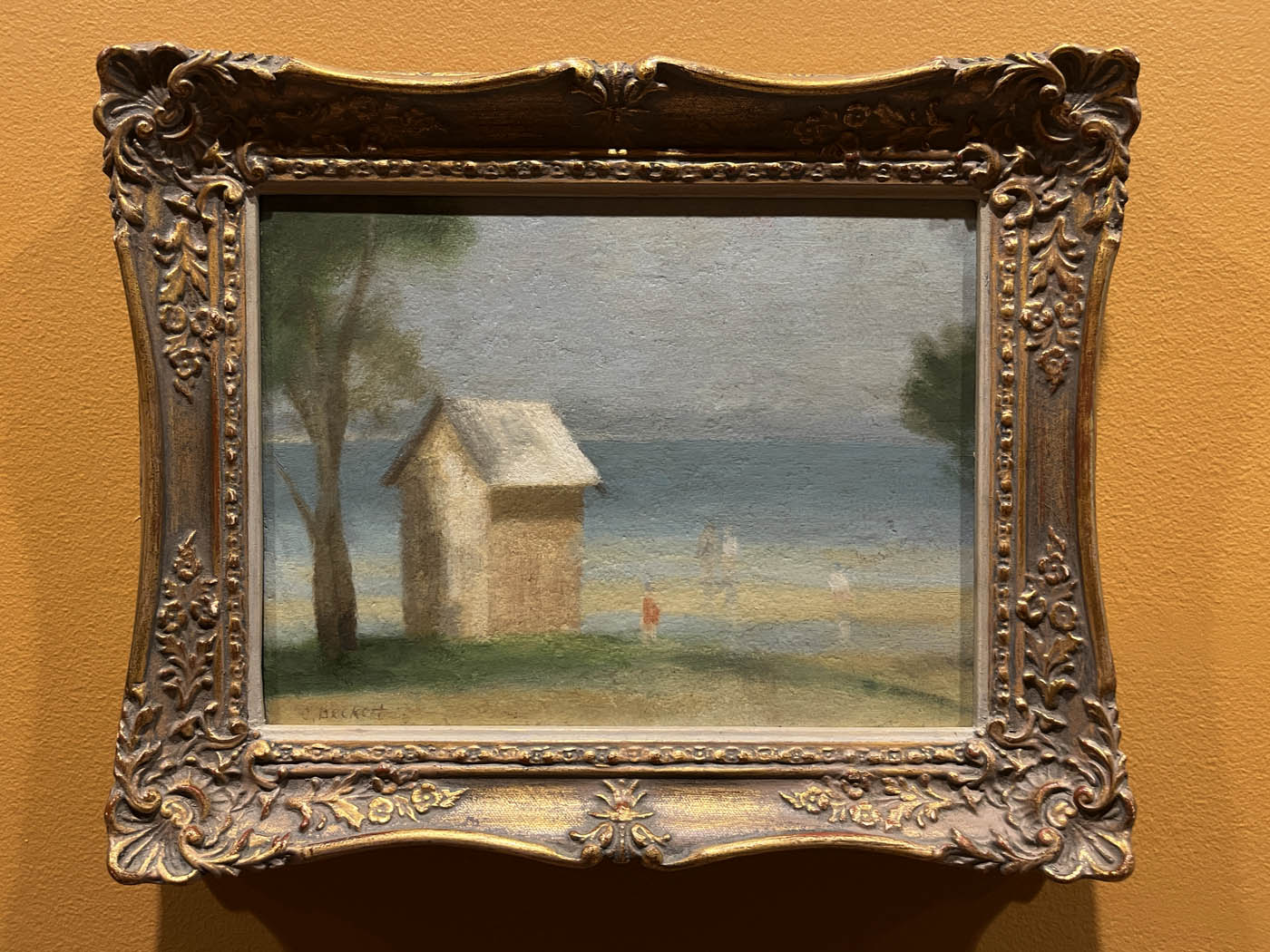
Clarice Beckett (Australian, 1887-1935) 'The Solitary Bathing Box' c. 1933


Clarice Beckett (Australian, 1887-1935)
The Solitary Bathing Box
c. 1933
Oil on beaver board
22.7 x 30cm


Clarice Beckett (Australian, 1887-1935) 'Street Scene (Collins Street)' c. 1931


Clarice Beckett (Australian, 1887-1935)
Street Scene (Collins Street)
c. 1931
Oil on canvas board
17.6 x 24cm


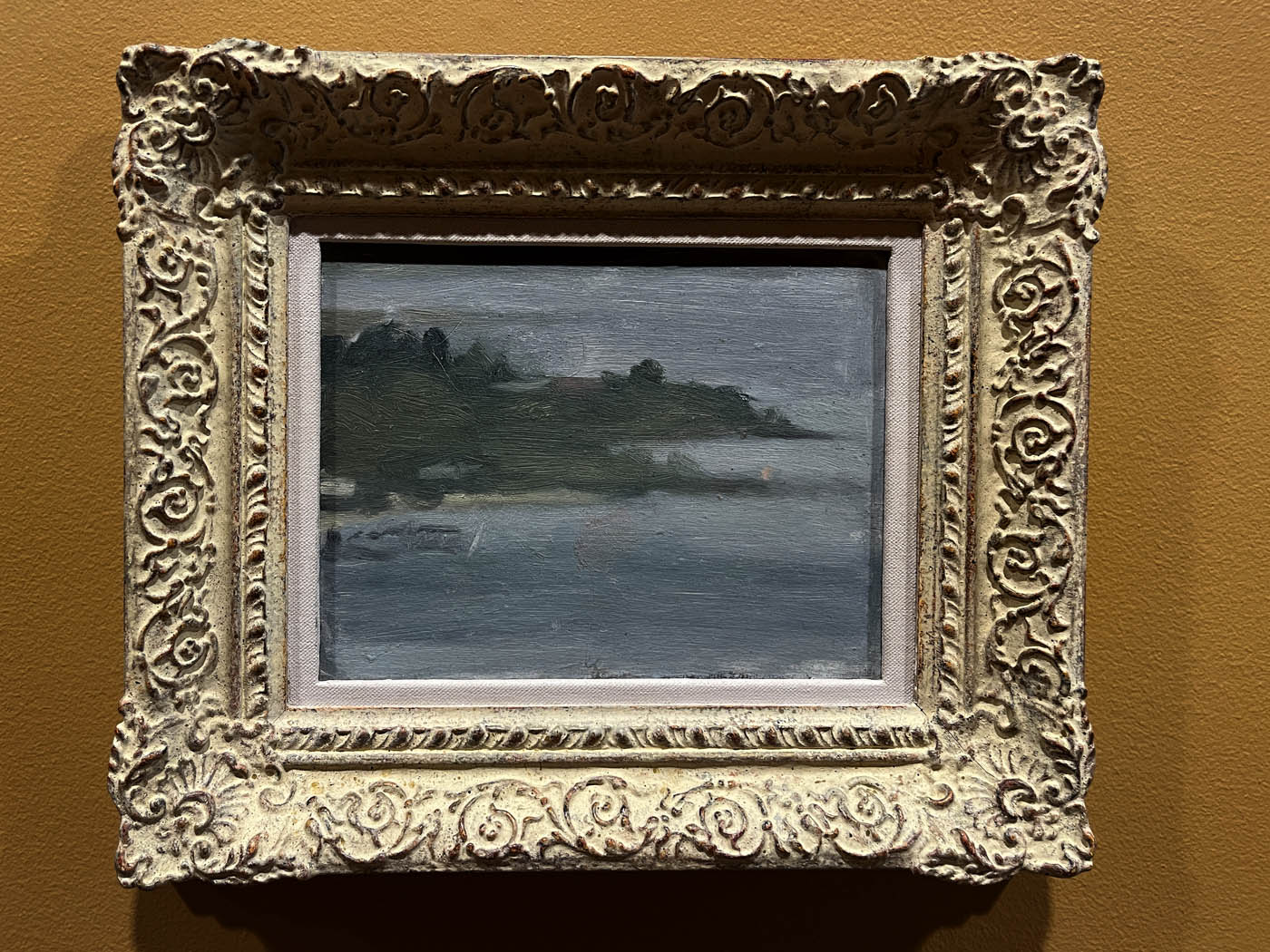
Clarice Beckett (Australian, 1887-1935) '(Beaumaris Coast)' c. 1927


Clarice Beckett (Australian, 1887-1935)
(Beaumaris Coast)
c. 1927
Oil on academy board
17.7 x 23.5cm


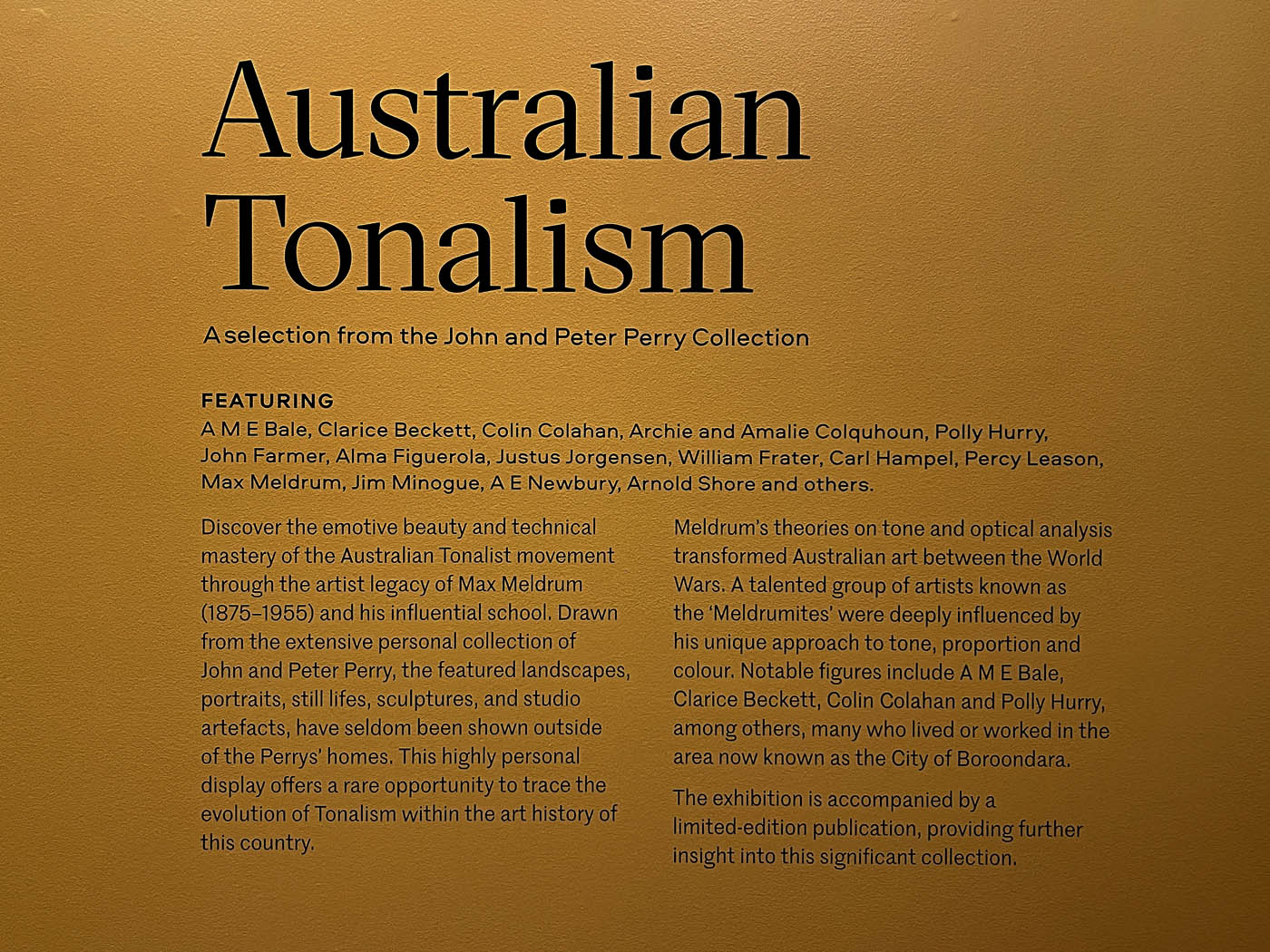
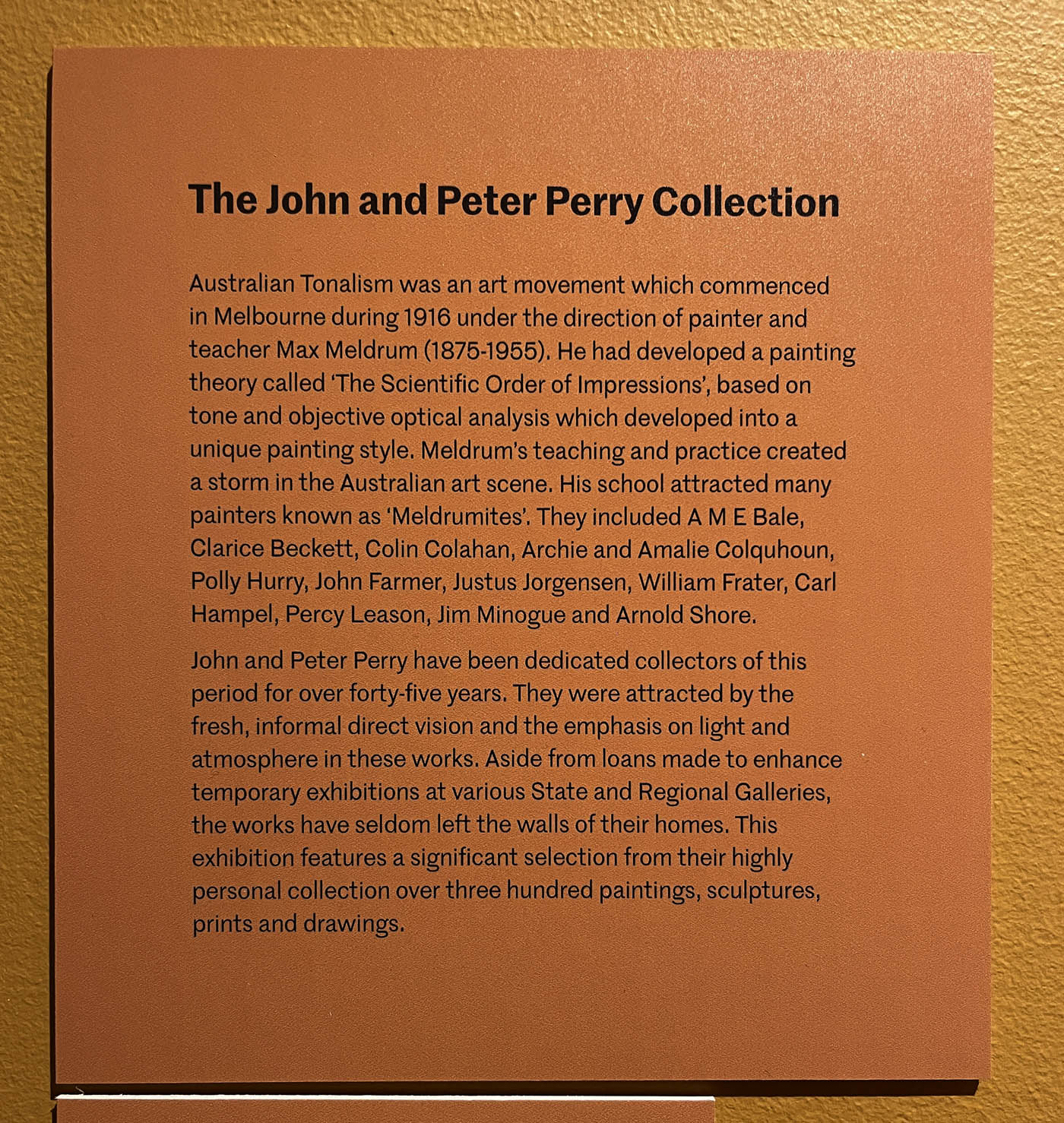
'Australian Tonalism' wall text
'Australian Tonalism' wall text The John and Peter Perry Collection


Wall text from the exhibition Australian Tonalism: A selection from the John and Peter Perry Collection at the Town Hall Gallery, Hawthorn, Melbourne, May – July, 2025


Installation view of the exhibition 'Australian Tonalism: A selection from the John and Peter Perry Collection' at the Town Hall Gallery, Hawthorn, Melbourne, May - July, 2025 showing the work of Carl Hampel


Installation view of the exhibition Australian Tonalism: A selection from the John and Peter Perry Collection at the Town Hall Gallery, Hawthorn, Melbourne, May – July, 2025 showing the work of Carl Hampel


Carl Hampel (Australian, 1891-1940) 'At Eltham' 1920 from the exhibition 'Australian Tonalism: A selection from the John and Peter Perry Collection' at the Town Hall Gallery, Hawthorn, Melbourne, May - July, 2025


Carl Hampel (Australian, 1891-1940)
At Eltham
1920
Oil on prepared board
30.5 x 23cm


Carl Hampel (Australian, 1891-1940) 'Coming Light' c. 1924 and 'Evening' 1920


Carl Hampel (Australian, 1891-1940)
Coming Light
c. 1924
Evening
1920


Installation view of the exhibition 'Australian Tonalism: A selection from the John and Peter Perry Collection' at the Town Hall Gallery, Hawthorn, Melbourne, May - July, 2025
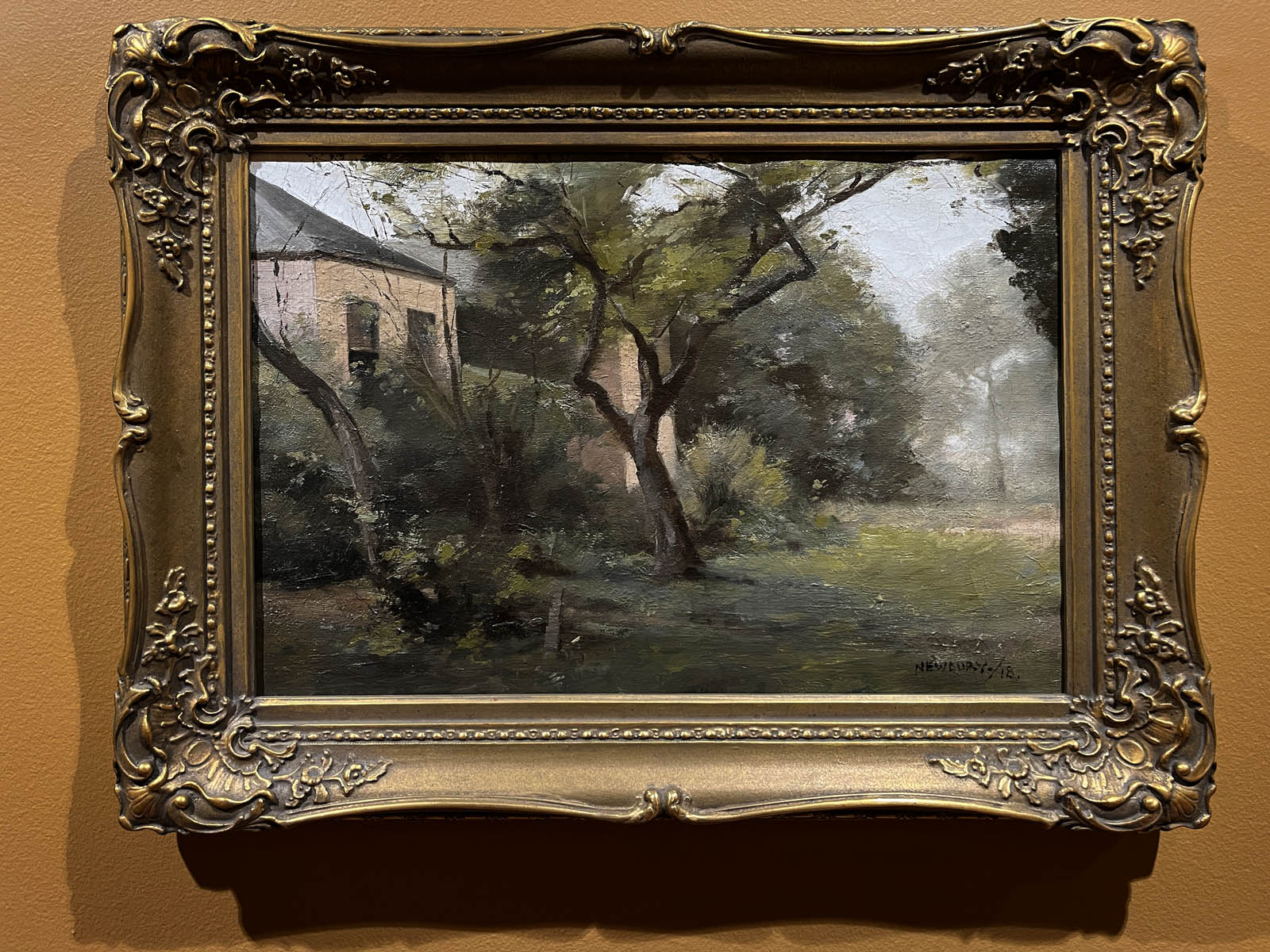
Installation view of the exhibition 'Australian Tonalism: A selection from the John and Peter Perry Collection' at the Town Hall Gallery, Hawthorn, Melbourne, May - July, 2025 showing at left the work of A E Newbury


Installation view of the exhibition Australian Tonalism: A selection from the John and Peter Perry Collection at the Town Hall Gallery, Hawthorn, Melbourne, May – July, 2025 showing at left in the bottom image the work of A E Newbury


A E Newbury (Australian, 1891-1941) 'White Gum and Pines' 1919; 'Morning Light' 1919; and 'The Old Garden' 1919


A E Newbury (Australian, 1891-1941)
White Gum and Pines
1919
Morning Light
1919
The Old Garden
1919


A E Newbury (Australian, 1891-1941) 'The Old Garden' 1919


A E Newbury (Australian, 1891-1941)
The Old Garden
1919
Oil on prepared board
30.5 x 23cm


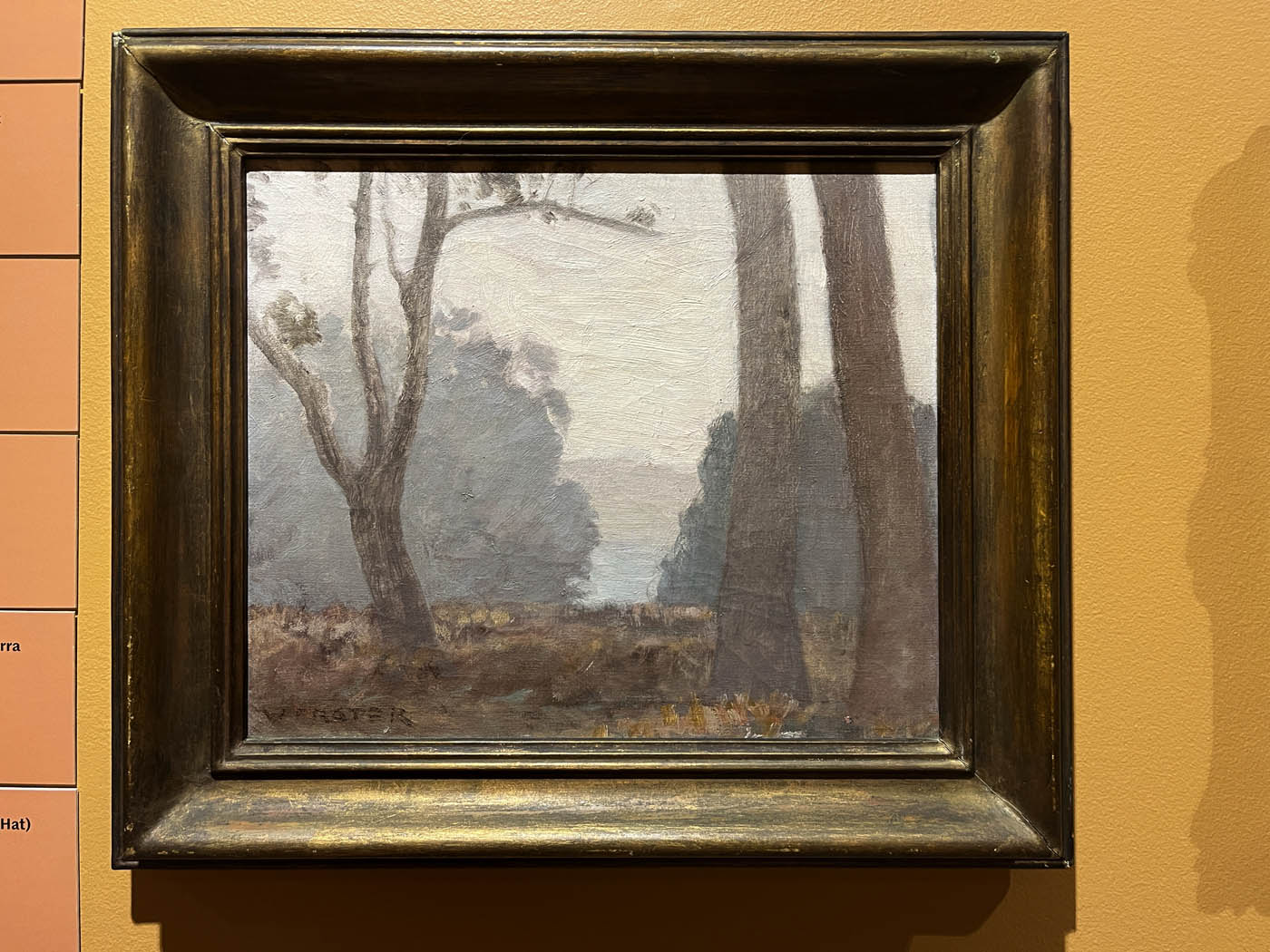
Installation view of the exhibition 'Australian Tonalism: A selection from the John and Peter Perry Collection' at the Town Hall Gallery, Hawthorn, Melbourne, May - July, 2025 showing the work of William Frater


Installation view of the exhibition Australian Tonalism: A selection from the John and Peter Perry Collection at the Town Hall Gallery, Hawthorn, Melbourne, May – July, 2025 showing the work of William Frater


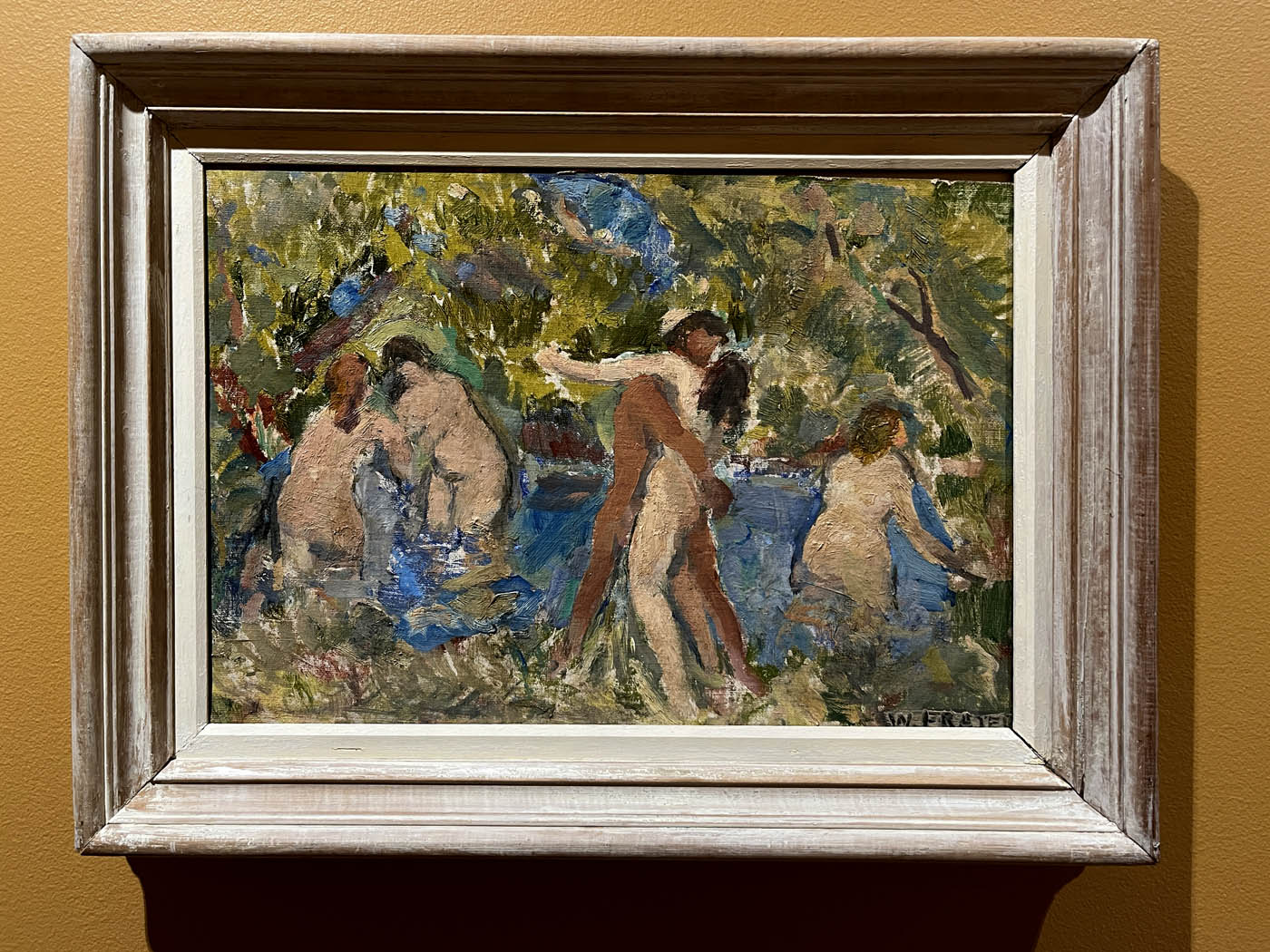
William Frater (Scottish, 1890-1974) 'Untitled Landscape' c. 1920


William Frater (Scottish, 1890-1974)
Untitled Landscape
c. 1920
Oil on canvas
30 x 41.5cm


William Frater (Scottish, 1890-1974) 'Olympus' c. 1928


William Frater (Scottish, 1890-1974)
Olympus
c. 1928
Oil on canvas on board
32 x 46cm


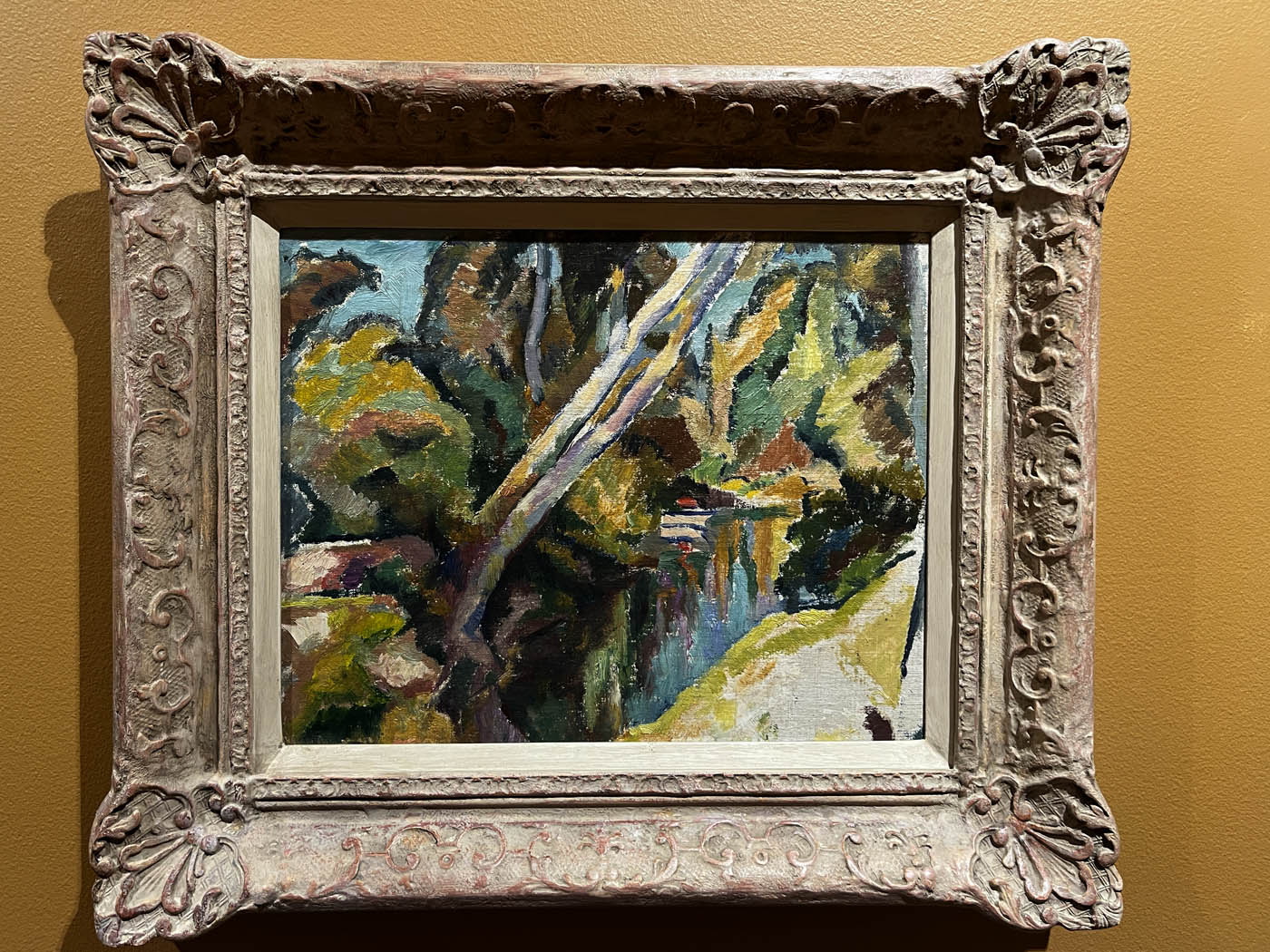
William Frater (Scottish, 1890-1974) 'Tree forms on the Yarra' c. 1926


William Frater (Scottish, 1890-1974)
Tree forms on the Yarra
c. 1926
Oil on canvas on board
30.5 x 39cm


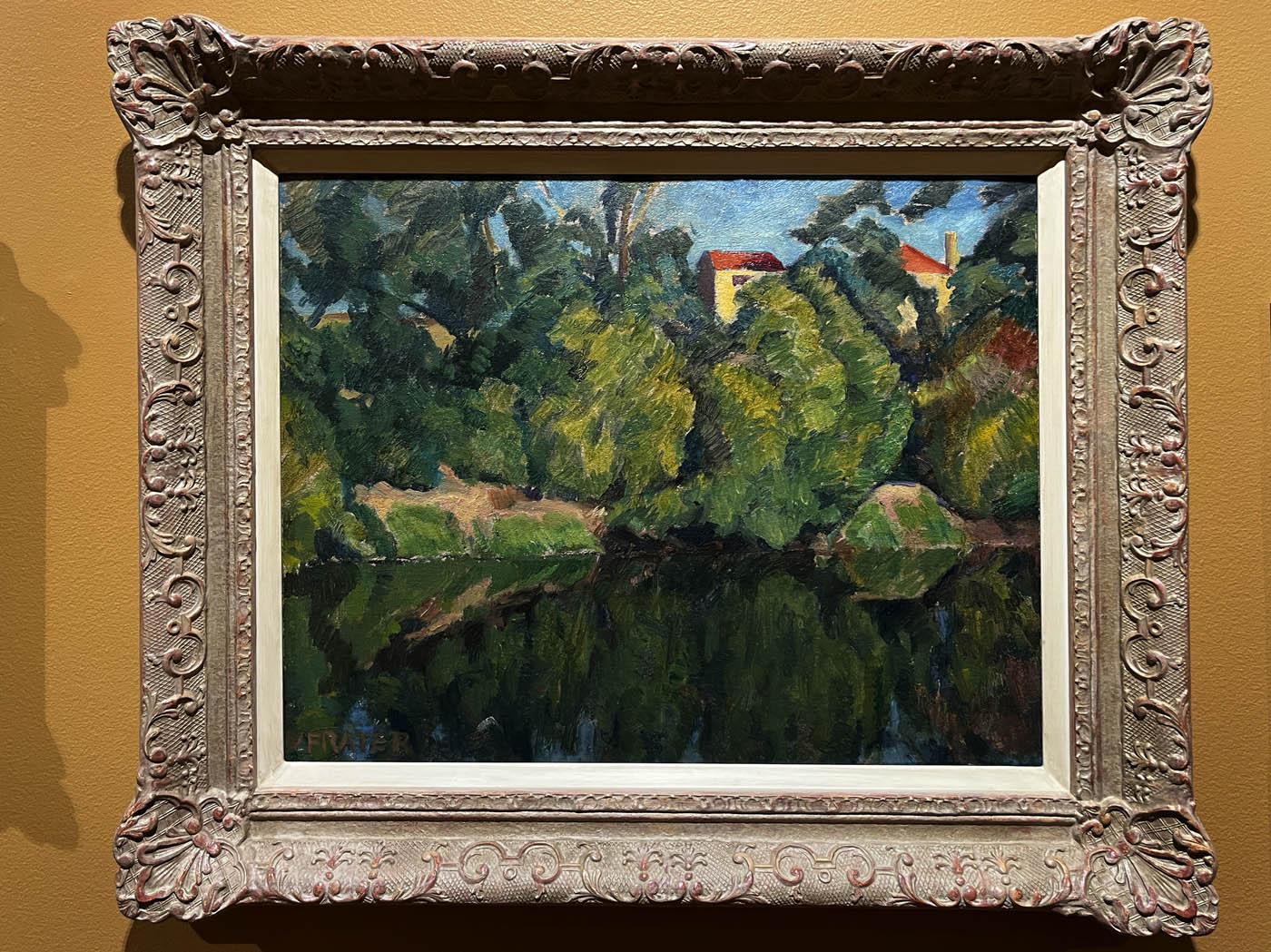
William Frater (Scottish, 1890-1974) 'The River (Homage to Cezanne)' 1930


William Frater (Scottish, 1890-1974)
The River (Homage to Cezanne)
1930
Oil on board
43 x 54.5cm


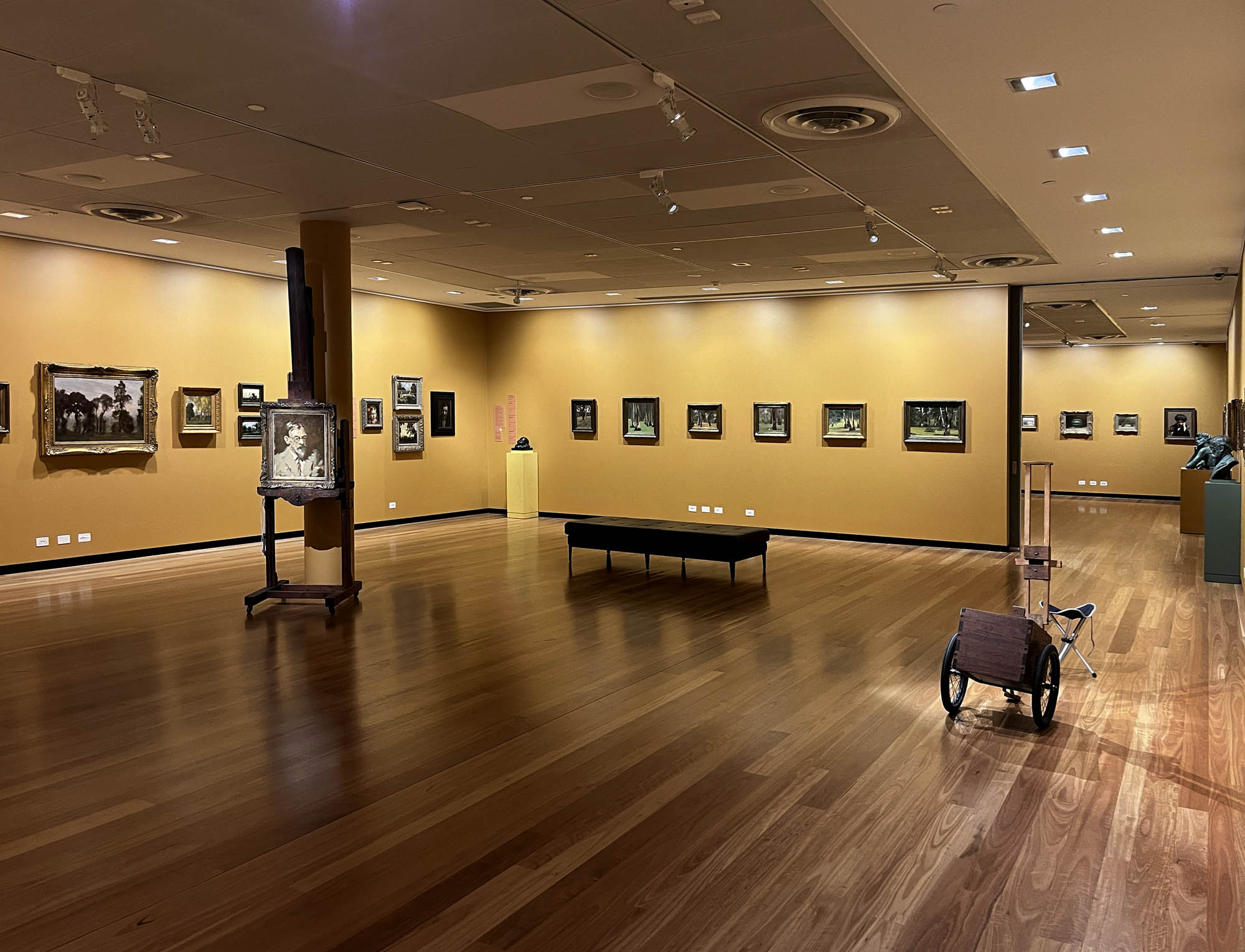
Installation view of the exhibition 'Australian Tonalism: A selection from the John and Peter Perry Collection' at the Town Hall Gallery, Hawthorn, Melbourne, May - July, 2025


Installation views of the exhibition Australian Tonalism: A selection from the John and Peter Perry Collection at the Town Hall Gallery, Hawthorn, Melbourne, May – July, 2025


Discover the artistic legacy of Max Meldrum (1875-1955) in this exhibition showcasing the lifelong dedication of John and Peter Perry to collecting works by this pioneering Australian artist and his influential school. Meldrum, a key figure in 20th-century Australian art, revolutionised the painting scene between the two World Wars, creating a distinctive style that has left a lasting imprint on the nation’s artistic landscape. 

The exhibition features a selection of works from a collection of over 320 pieces, including paintings, sculptures, drawings, and etchings. Highlights include landscapes from both France and Australia, still lifes, portraits and animal studies – all embodying the unique approach of Meldrum and his followers. The ‘Meldrumites’ – a talented group of artists such as A M E Bale, Clarice Beckett, Colin Colahan and Polly Hurry – were deeply influenced by Meldrum’s teachings, and their works are also prominently featured. Many of these artists either lived or worked in the area now known as the City of Boroondara. 

Also on display are fascinating studio artifacts, including plaster casts, palettes and photographs, offering a deeper insight into the artists’ creative processes. The exhibition will be accompanied by a limited-edition publication, providing further context and reflection on this significant collection. 

Featuring: A M E Bale, Clarice Beckett, Colin Colahan, Archie and Amalie Colquhoun, Polly Hurry, John Farmer, Alma Figuerola, Justus Jorgensen, William Frater, Carl Hampel, Percy Leason, Max Meldrum, Jim Minogue, A E Newbury, Arnold Shore and others.

Text from the Boroondara Arts website


Installation view of the exhibition 'Australian Tonalism: A selection from the John and Peter Perry Collection' at the Town Hall Gallery, Hawthorn, Melbourne, May - July, 2025


Installation view of the exhibition Australian Tonalism: A selection from the John and Peter Perry Collection at the Town Hall Gallery, Hawthorn, Melbourne, May – July, 2025


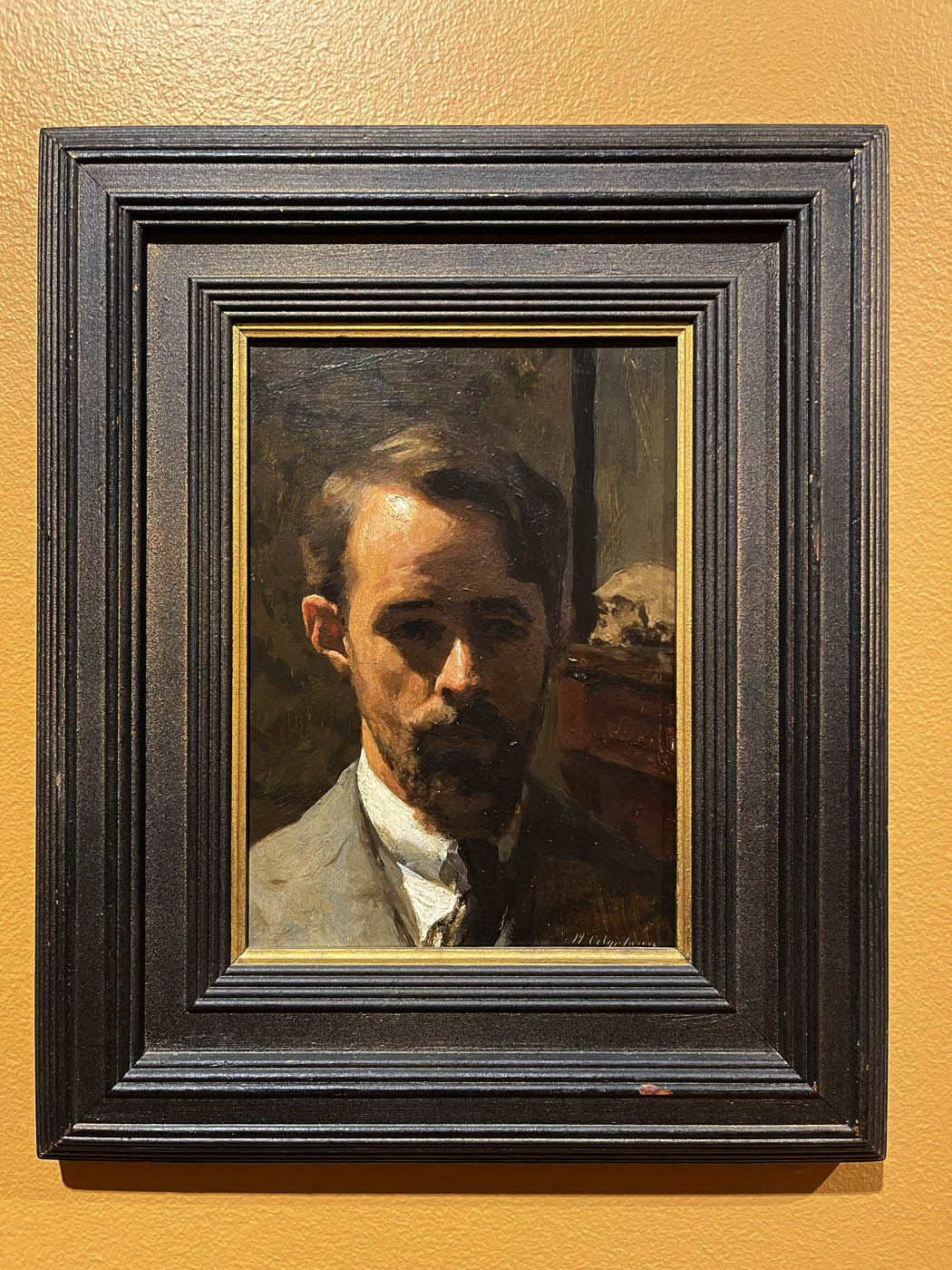
A D Colquhoun (Australian, 1894-1983) 'Self Portrait' c. 1922


A D Colquhoun (Australian, 1894-1983)
Self Portrait
c. 1922
Oil on oak panel
21 x 15.8cm


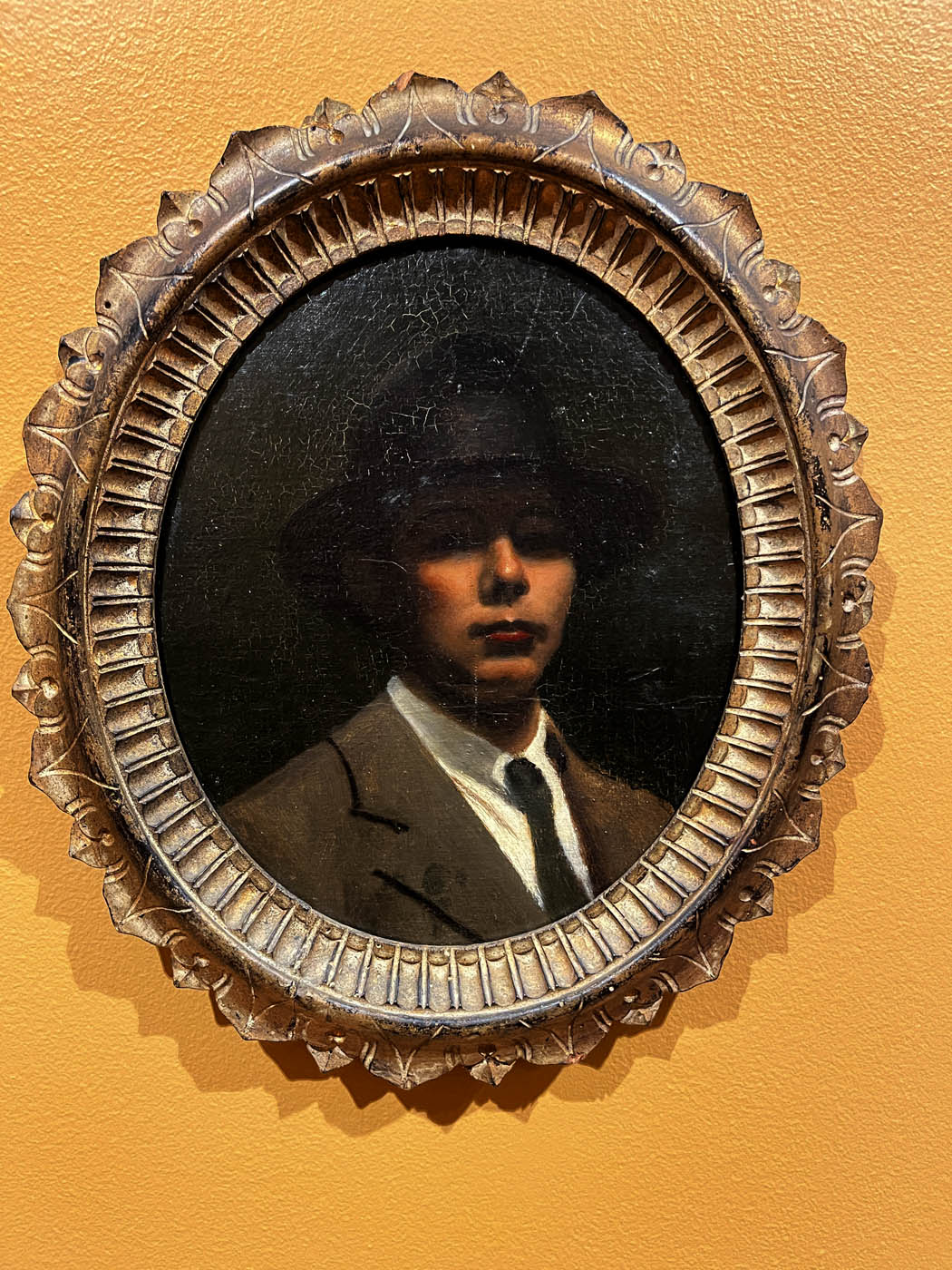
L August Cornehls (Australian, 1887-1962) 'Self Portrait' c. 1924


L August Cornehls (Australian, 1887-1962)
Self Portrait
c. 1924
Oil on canvas on cardboard
26.7 x 22cm (oval)


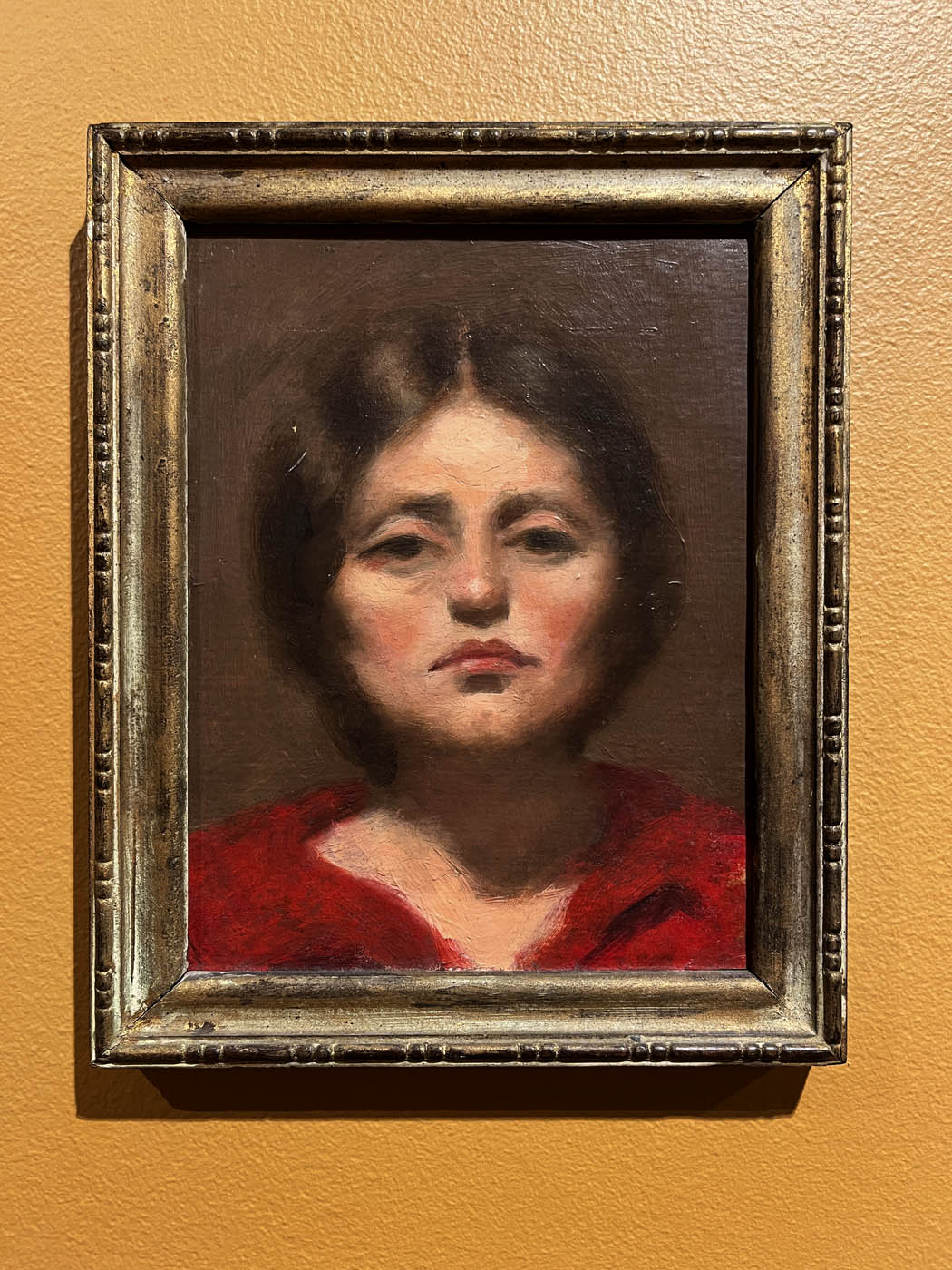
Alma Figuerola (Australian, 1902-1970) 'Self Portrait' c. 1926


Alma Figuerola (Australian, 1902-1970)
Self Portrait
c. 1926
Oil on cardboard
19.5 x 15cm


John Farmer (Australian, 1897-1989) 'Self portrait' c. 1926


John Farmer (Australian, 1897-1989)
Self portrait
c. 1926
Oil on canvas
20.5 x 15.3cm


'Australian Tonalism' wall text Meldrum's Painting Theory


Australian Tonalism wall text Meldrum’s Painting Theory


Installation view of the exhibition 'Australian Tonalism: A selection from the John and Peter Perry Collection' at the Town Hall Gallery, Hawthorn, Melbourne, May - July, 2025 showing the work of Max Meldrum


Installation views of the exhibition Australian Tonalism: A selection from the John and Peter Perry Collection at the Town Hall Gallery, Hawthorn, Melbourne, May – July, 2025 showing the work of Max Meldrum


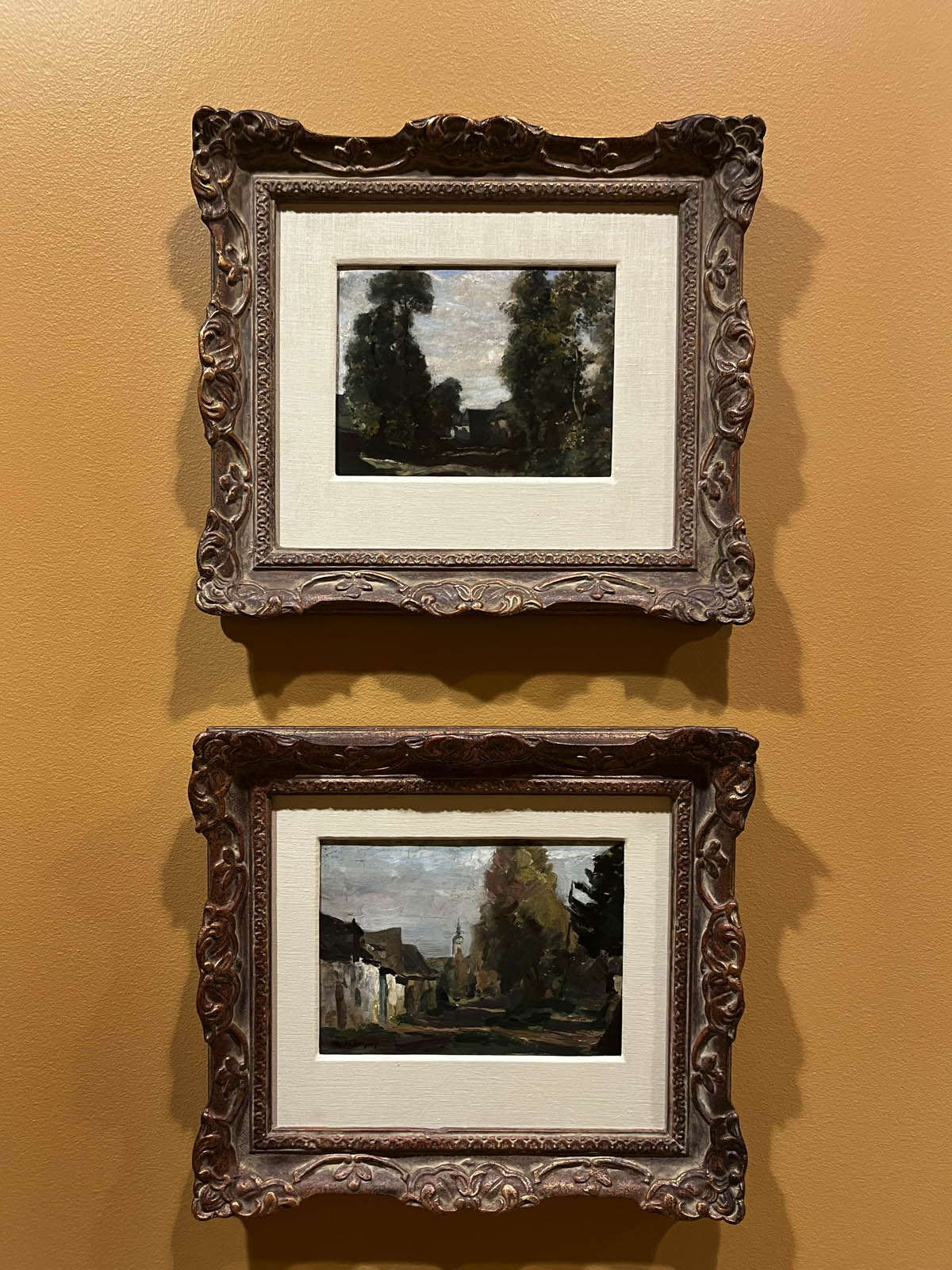
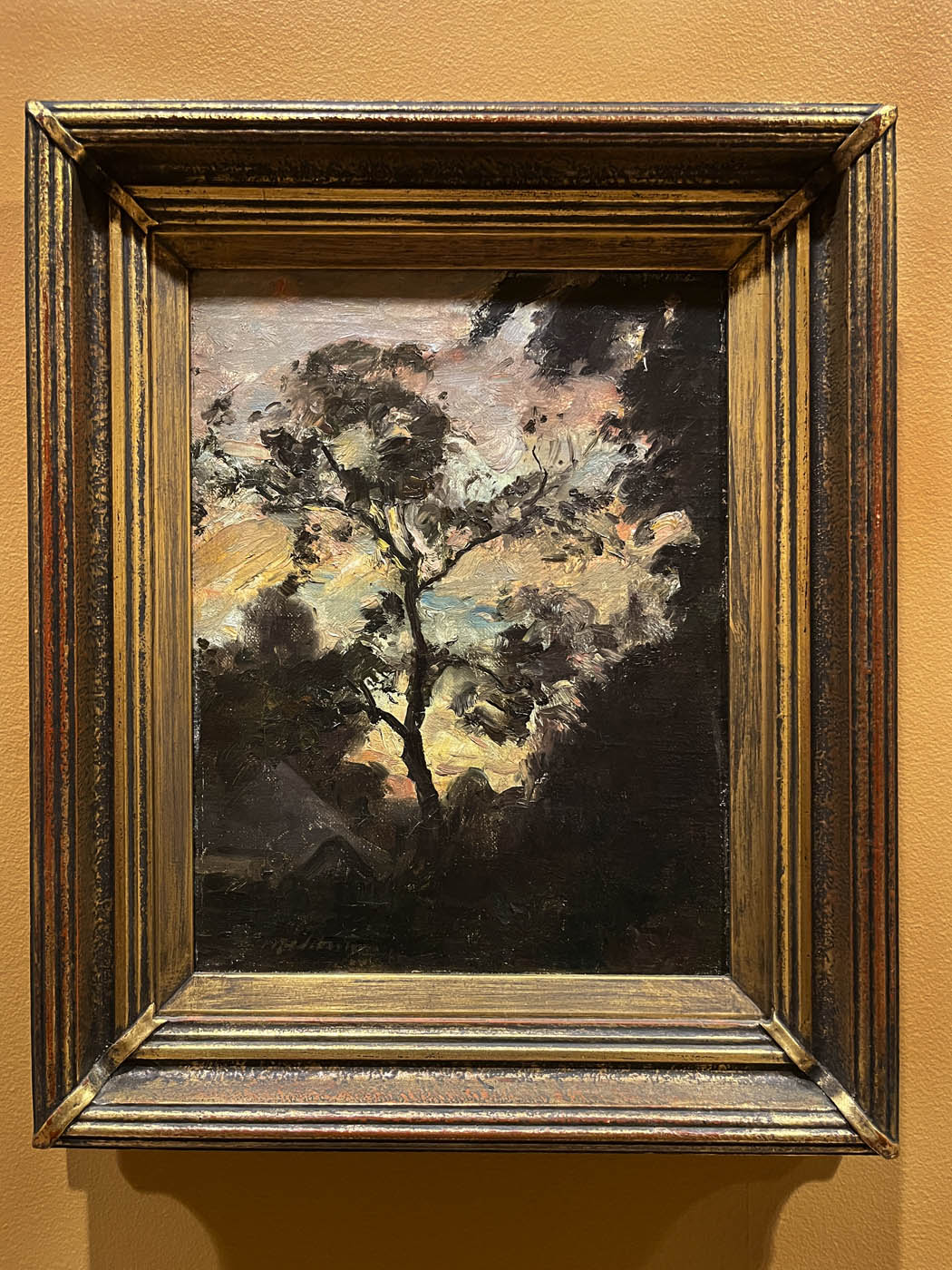
Max Meldrum (Scottish, 1875-1955) 'Brume' (Mist) c. 1907 and 'Study, Le Clocher' c. 1908


Max Meldrum (Scottish, 1875-1955)
Brume (Mist)
c. 1907
Study, Le Clocher
c. 1908


Max Meldrum (Scottish, 1875-1955) 'Lever de Soleil' (Sunrise) 1910


Max Meldrum (Scottish, 1875-1955)
Lever de Soleil (Sunrise)
1910
Oil on canvas
35 x 26.8cm


Max Meldrum (Scottish, 1875-1955) 'Chene et Peupliers' (Oak Tree and Poplars) c. 1907


Max Meldrum (Scottish, 1875-1955)
Chene et Peupliers (Oak Tree and Poplars)
c. 1907
Oil on canvas
33.5 x 32cm


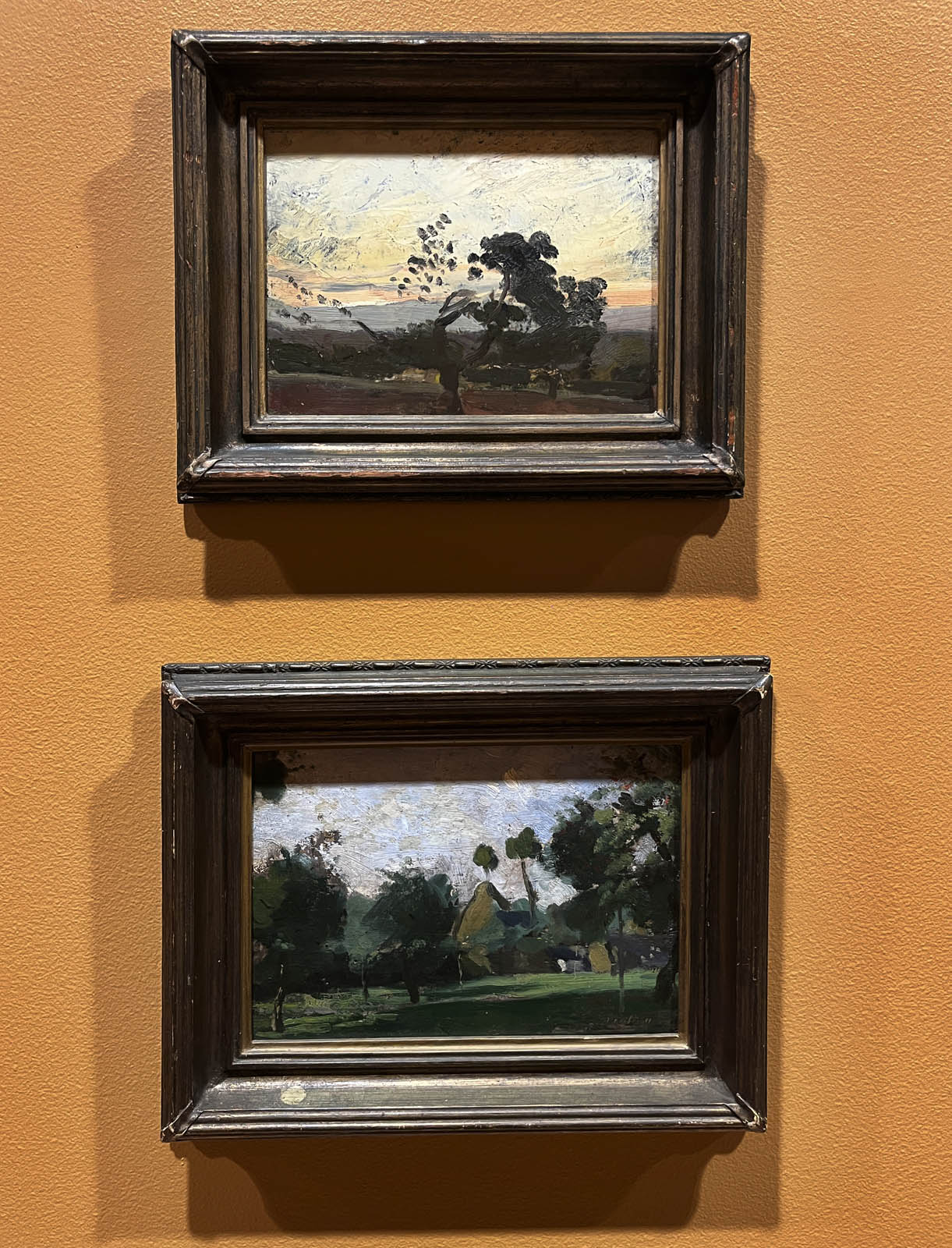
Max Meldrum (Scottish, 1875-1955) 'Esquisse' (Sketch) c. 1904 and 'Haystacks, Brittany' c. 1908


Max Meldrum (Scottish, 1875-1955)
Esquisse (Sketch)
c. 1904
Haystacks, Brittany
c. 1908


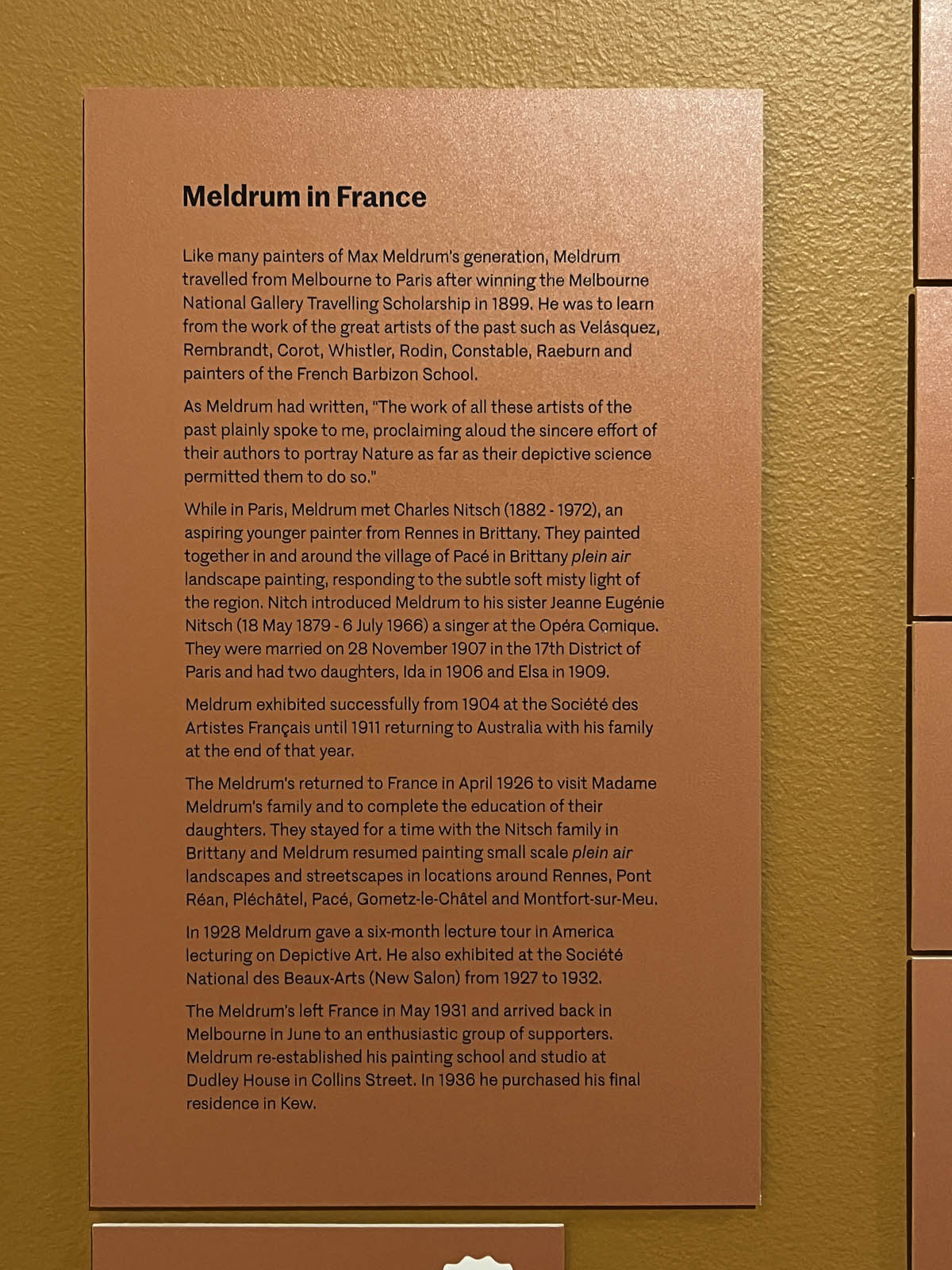
'Australian Tonalism' wall text Meldrum in France


Australian Tonalism wall text Meldrum in France


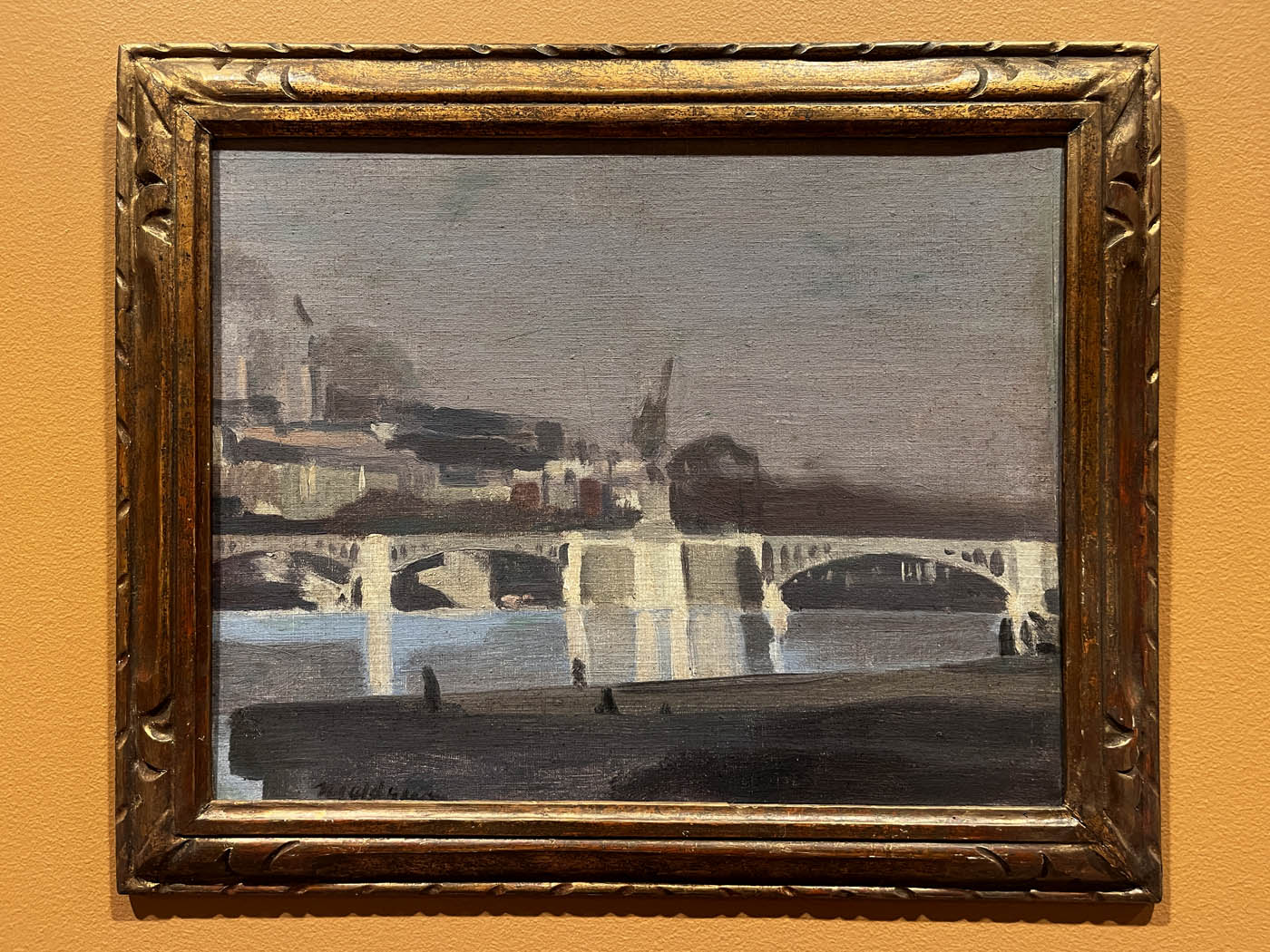
Max Meldrum (Scottish, 1875-1955) 'Pont de Grenelle, Paris' 1929


Max Meldrum (Scottish, 1875-1955)
Pont de Grenelle, Paris
1929
Oil on canvas sketching panel
33.3 x 40.5cm


Installation view of the exhibition 'Australian Tonalism: A selection from the John and Peter Perry Collection' at the Town Hall Gallery, Hawthorn, Melbourne, May - July, 2025 showing the work of Max Meldrum


Installation view of the exhibition Australian Tonalism: A selection from the John and Peter Perry Collection at the Town Hall Gallery, Hawthorn, Melbourne, May – July, 2025 showing the work of Max Meldrum


Max Meldrum (Scottish, 1875-1955) 'The Glade, Eltham' c. 1920


Max Meldrum (Scottish, 1875-1955)
The Glade, Eltham
c. 1920
Oil on canvas on board
44 x 42cm


Max Meldrum (Scottish, 1875-1955) 'The Pool' 1923


Max Meldrum (Scottish, 1875-1955)
The Pool
1923
Oil on canvas on board
34 x 37.5cm


Max Meldrum (Scottish, 1875-1955) 'The Bottom of the Hill (Eltham Reserve)' 1925


Max Meldrum (Scottish, 1875-1955)
The Bottom of the Hill (Eltham Reserve)
1925
Oil on canvas on board
32.5 x 42cm


Installation view of the exhibition 'Australian Tonalism: A selection from the John and Peter Perry Collection' at the Town Hall Gallery, Hawthorn, Melbourne, May - July, 2025


Installation view of the exhibition Australian Tonalism: A selection from the John and Peter Perry Collection at the Town Hall Gallery, Hawthorn, Melbourne, May – July, 2025


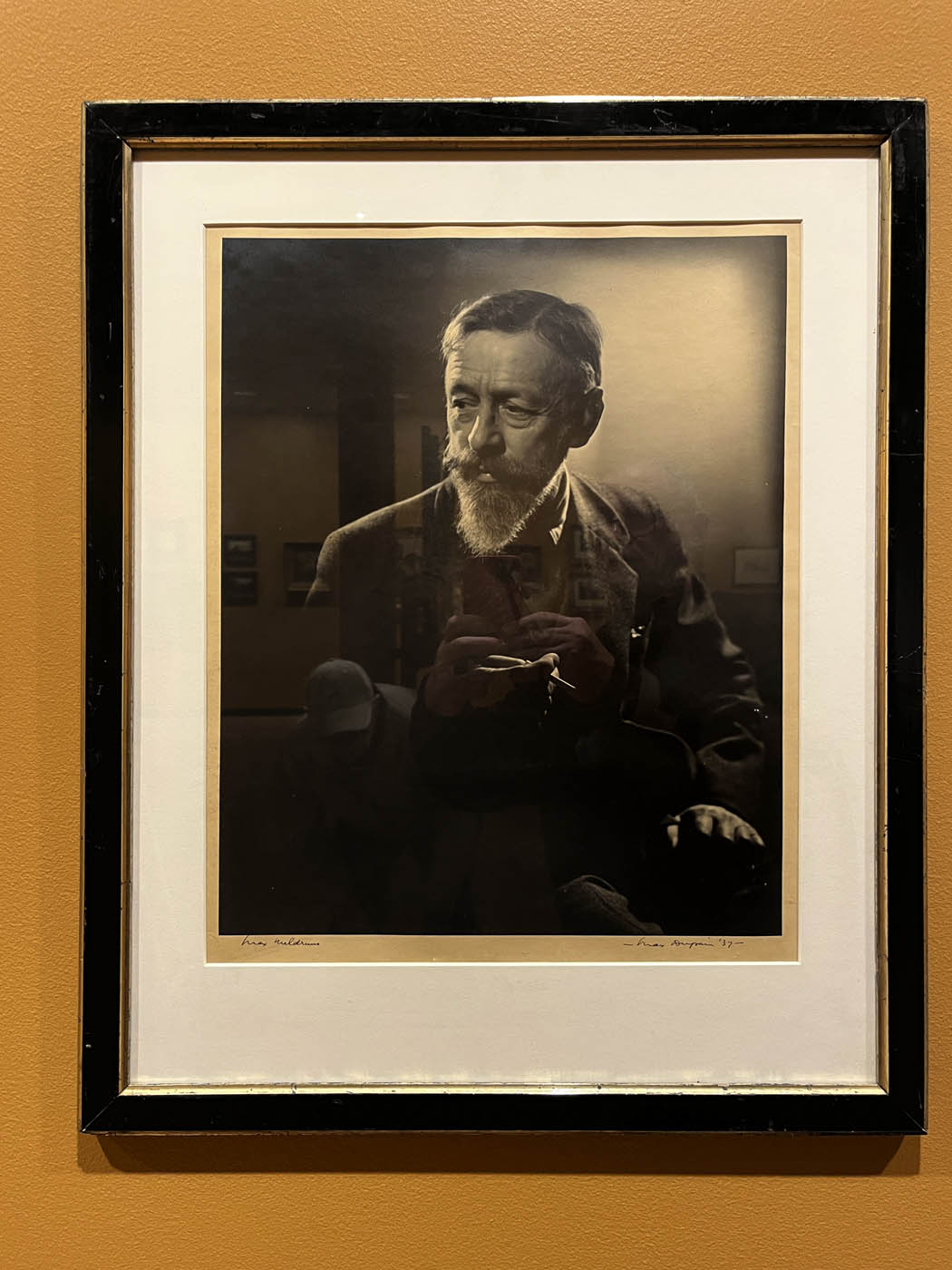
Max Dupain (Australian, 1911-1992) 'Photograph of Max Meldrum' 1937


Max Dupain (Australian, 1911-1992)
Photograph of Max Meldrum
1937
Gelatin silver photograph
47.5 x 33.7cm (image)


Installation view of the exhibition 'Australian Tonalism: A selection from the John and Peter Perry Collection' at the Town Hall Gallery, Hawthorn, Melbourne, May - July, 2025 showing the work of Colin Colahan


Installation views of the exhibition ‘Australian Tonalism: A selection from the John and Peter Perry Collection’ at the Town Hall Gallery, Hawthorn, Melbourne, May – July, 2025 showing the work of Colin Colahan


Colin Colahan (Australian, 1897-1987) 'Bridge Road, Evening' c. 1929


Colin Colahan (Australian, 1897-1987)
Bridge Road, Evening
c. 1929
Oil on linen on board
33 x 40.8cm


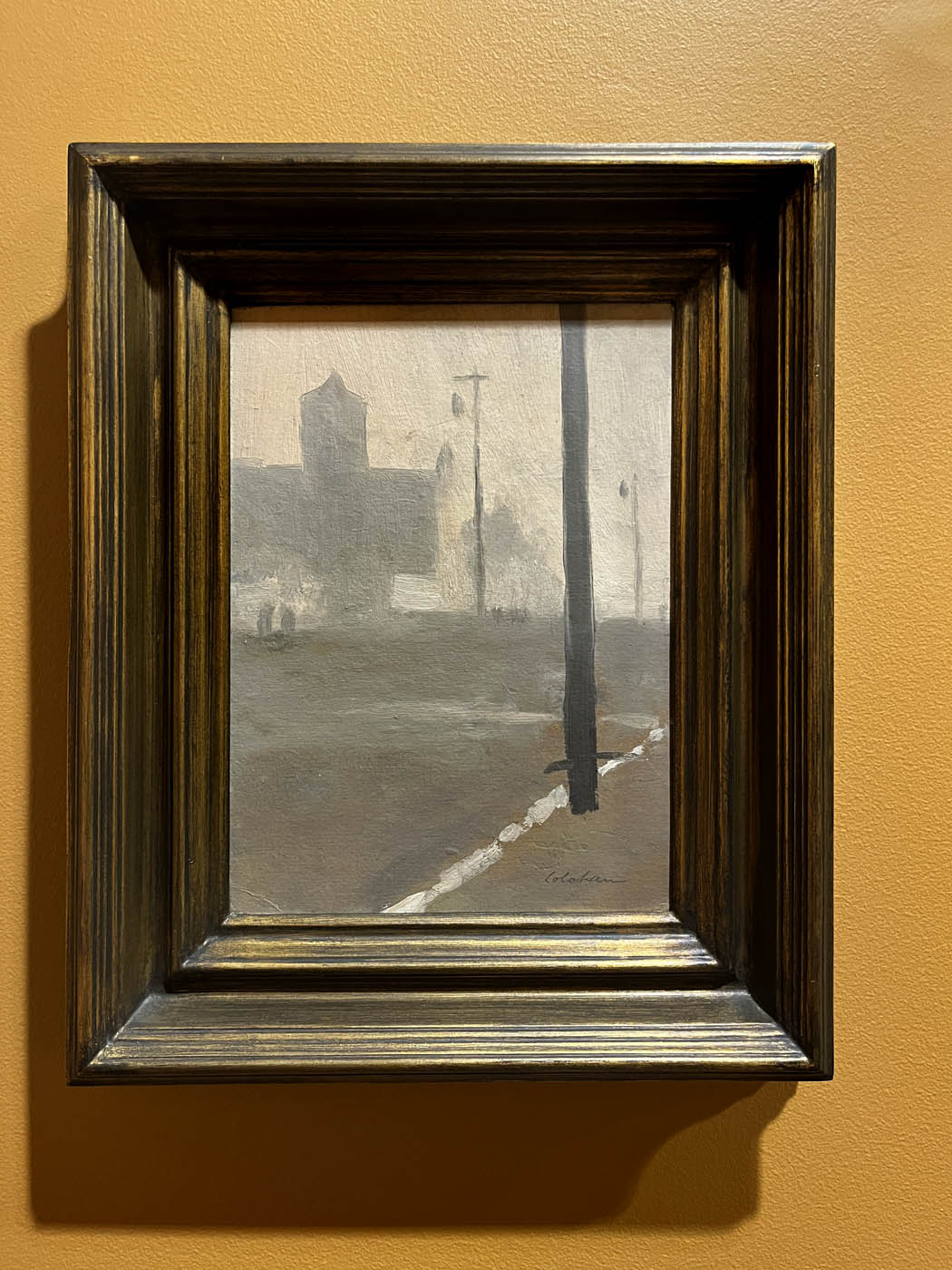
Colin Colahan (Australian, 1897-1987) 'Untitled (Streetscape)' 1919


Colin Colahan (Australian, 1897-1987)
Untitled (Streetscape)
1919
Oil on cardboard
32.2 x 23cm


Colin Colahan (Australian, 1897-1987) 'Kings Road, Chelsea' 1940


Colin Colahan (Australian, 1897-1987)
Kings Road, Chelsea
1940
Oil on board
46 x 38cm


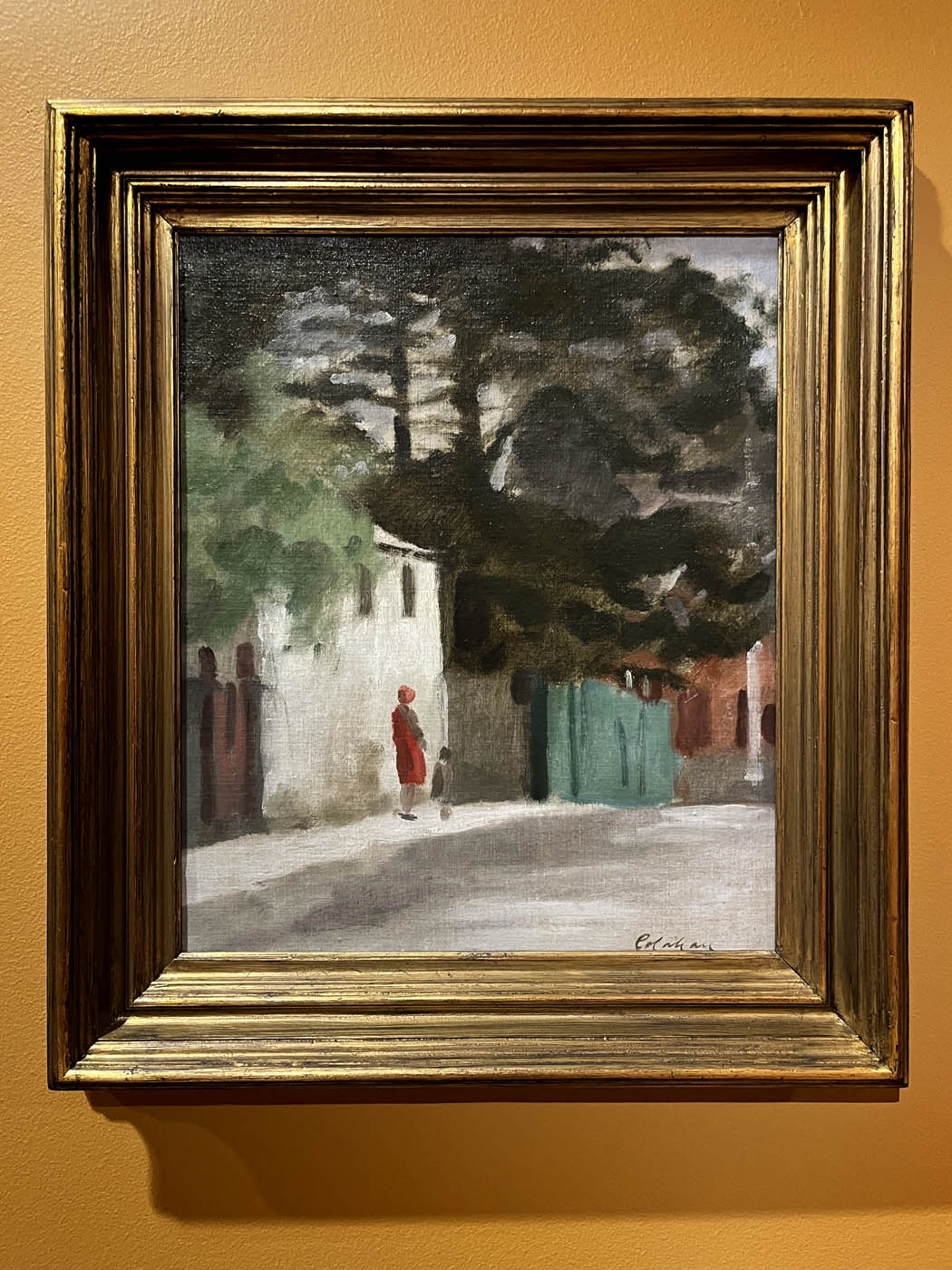
Colin Colahan (Australian, 1897-1987) 'The Green Fence' 1930


Colin Colahan (Australian, 1897-1987)
The Green Fence
1930
Oil on canvas on board
45.3 x 38cm


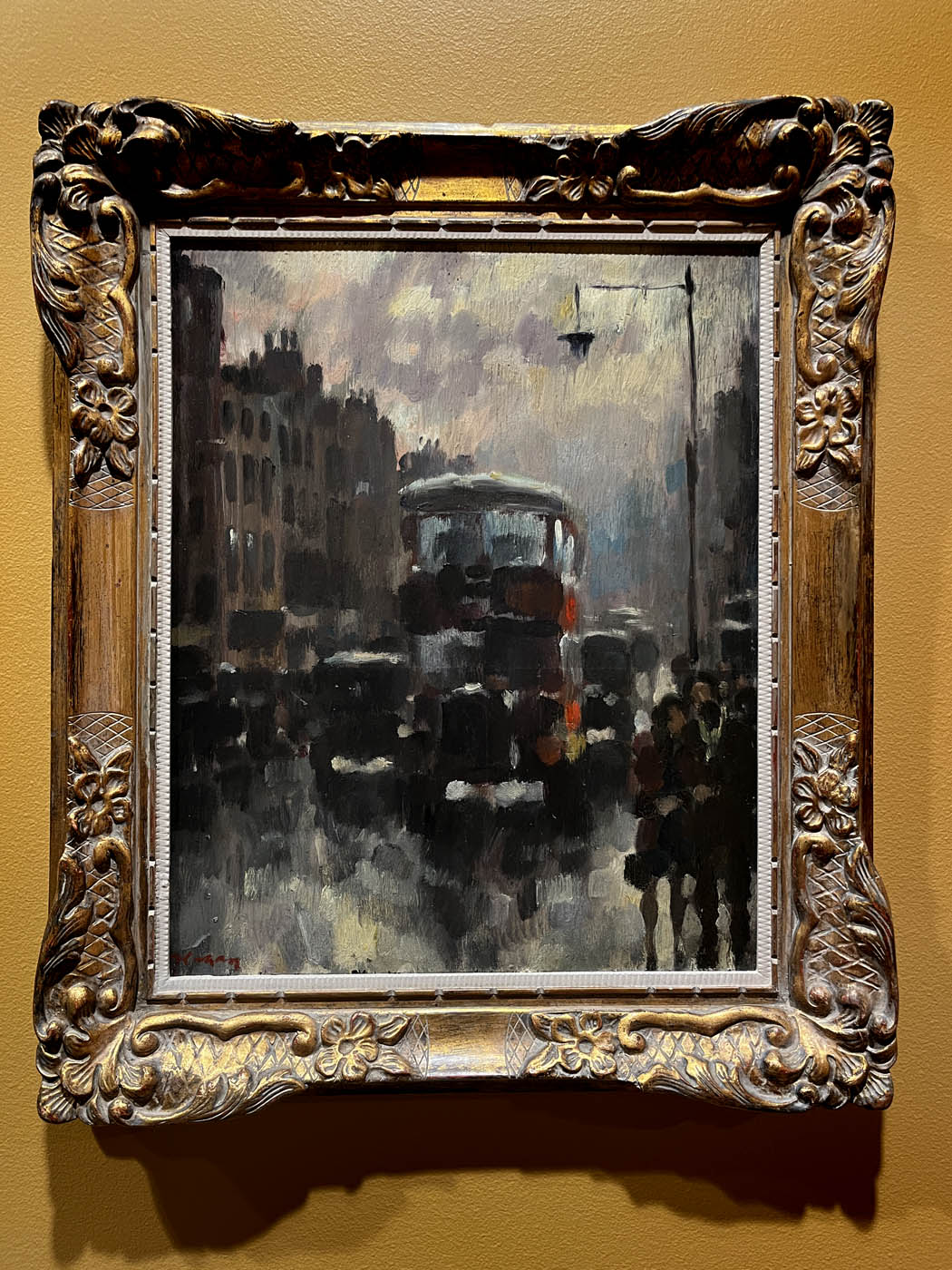
Colin Colahan (Australian, 1897-1987) 'Swanston Street, Melbourne' c. 1930


Colin Colahan (Australian, 1897-1987)
Swanston Street, Melbourne
c. 1930
Oil on canvas on board
45 x 37.7cm


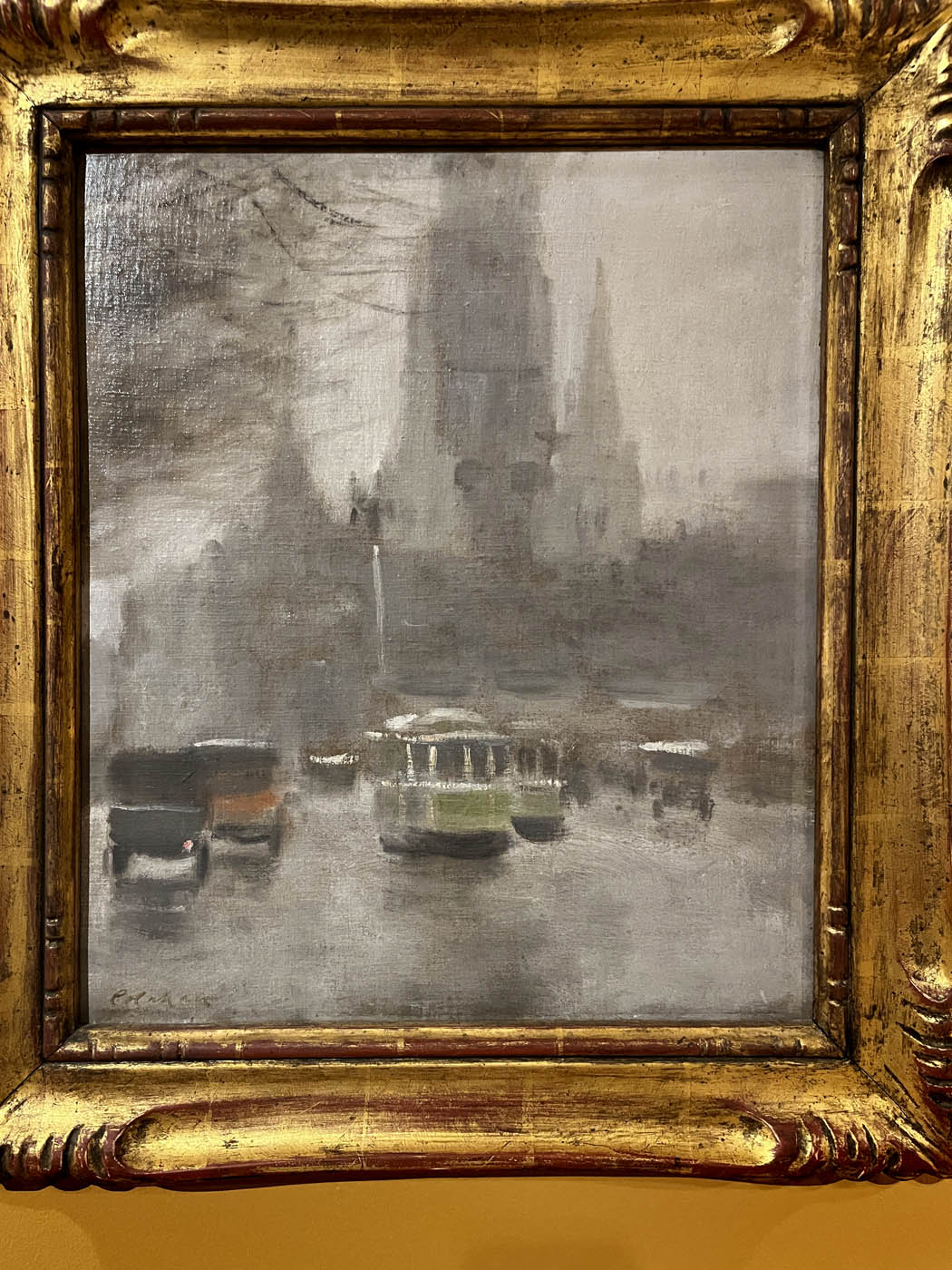
Colin Colahan (Australian, 1897-1987) 'Swanston Street, Melbourne' c. 1930 (detail)


Colin Colahan (Australian, 1897-1987)
Swanston Street, Melbourne (detail)
c. 1930
Oil on canvas on board
45 x 37.7cm

Tone, Proportion and Colour: A Brief Overview of the Exhibition

John R. Perry, March 2025

In 1974 Peter and I purchased a small sketch of a Brittany sunset by Max Meldrum. We have continued collecting works by Meldrum and painters associated with him for over forty-five years. Our aim has been to develop a representative, well composed collection of quality work by Australian Tonalists. The emphasis has been on Meldrum’s earlier works and those of his early associates. His work was at its most sensitive and his influence greatest in this period.

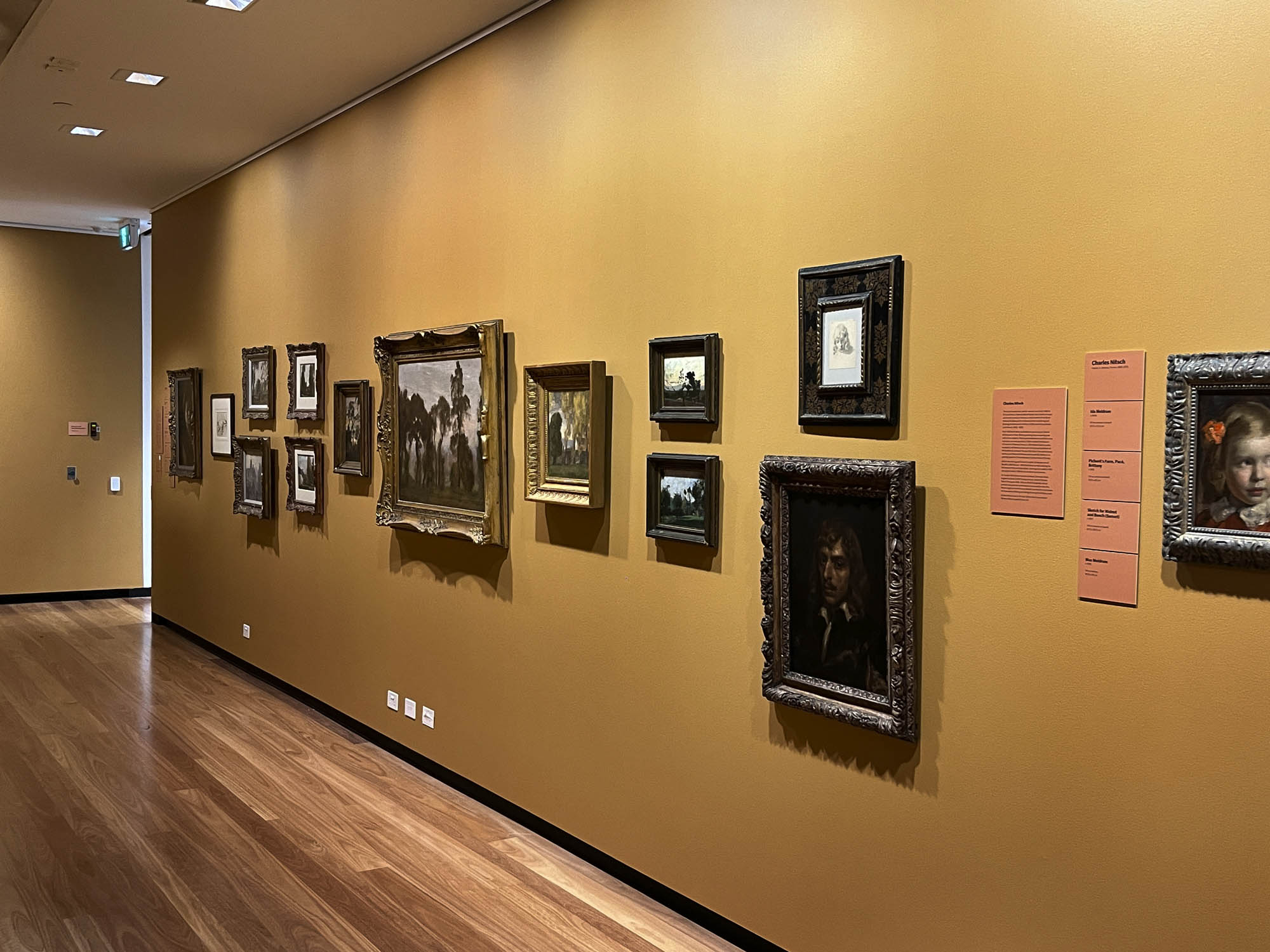
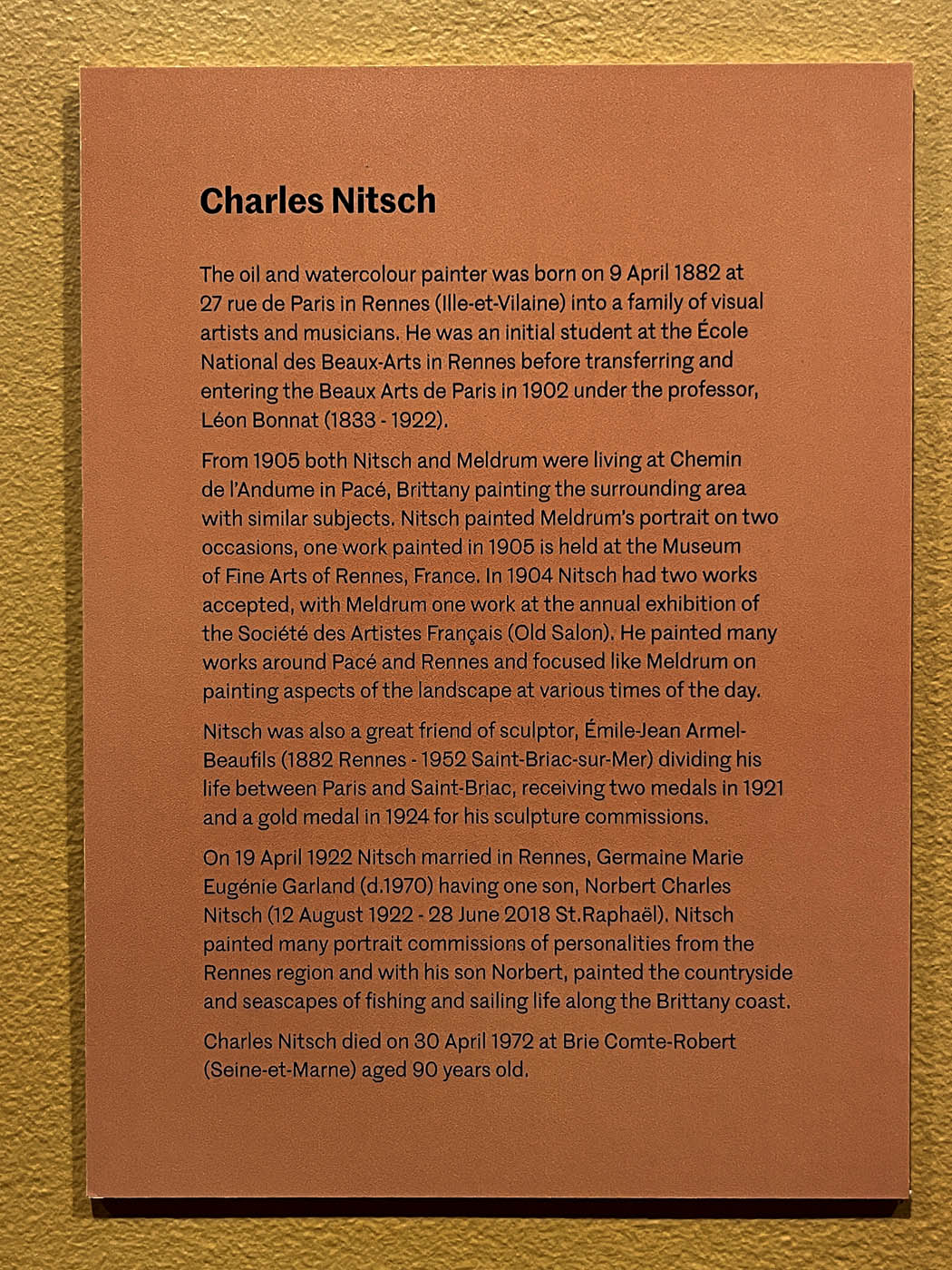
We have in this exhibition some of Meldrum’s rare early French landscapes including several by his brother-in-law Charles Nitsch. There are also works which I believe to be the first truly modern Australian paintings, produced at Eltham in 1917. Meldrum developed a simplified approach to his art and two works, The Three Trees (1917) and Cloudy Summer Afternoon, Eltham (1917) illustrate this progress. They give a true sense of space and atmosphere, all the more striking when seen with what a direct and simple means these effects are obtained. These compact and luminous studies show us the first evidence of the painter putting his perceptual theory into practice.

William Frater and Arnold Shore were major figures in the development of the modern movement in Melbourne and are included in this exhibition to illustrate the influence Meldrum had on these two under-appreciated painters…

The works of Clarice Beckett and Polly Hurry are generally one of soft-focus, for these lovers of mist and crepuscular fogs pay homage to the painters Eugene Carriere and James McNeill Whistler. The works of John Farmer, A E Newbury and to some degree Richard McCann, evolved into their respective personal styles which owe more to Camille Corot than to Meldrum. Their landscapes of subtle delicacy and feathery texture elicit many comparisons with the work of the great French Barbizon School painters…

Having both decided early on our collecting paths, that conventional collecting was not for us, we decided to be more objective, learning to appreciated and admire the work of the Australian Tonalists. As our collection grew, we were willing to leave the beat track, avoiding art dealers, art writers and critics, committing ourself to dealing directly with those painters associated with the Tonalist movement.

Like John Constable, Meldrum believed that, “… in such an age as this, painting should be understood, not looked on with blind wonder, nor considered only as a poetic aspiration, but as a pursuit legitimate, scientific and mechanical.”2


John Constable, quoted in The Letters of John Constable, ed. by R.B. Beckett (London: Longmans, Green and Co., 1955), p. 530.


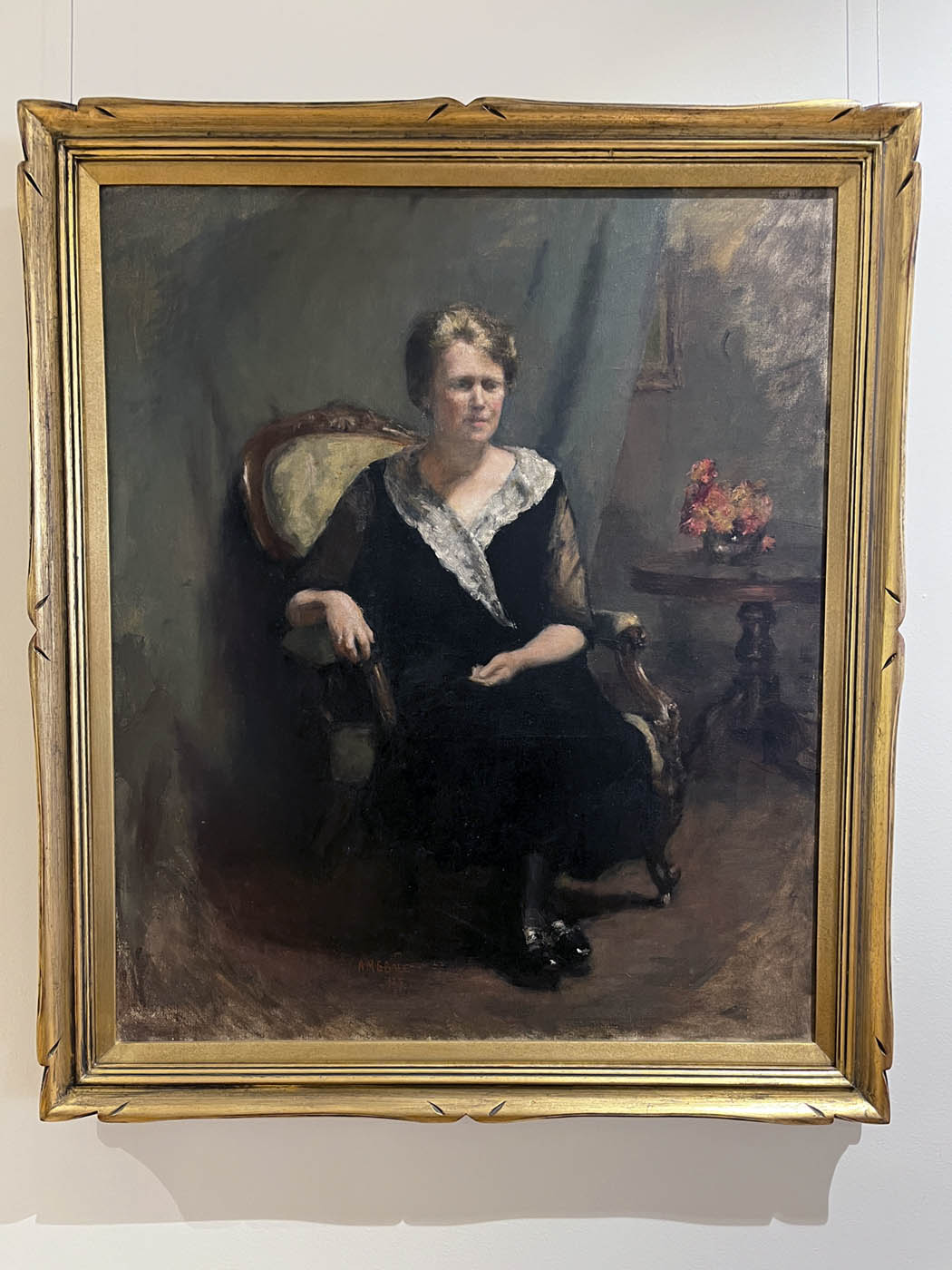
Alice Marian Ellen Bale (Australian, 1875-1955) 'Self portrait' 1925


Alice Marian Ellen Bale (Australian, 1875-1955)
Self portrait
1925
Oil on canvas
75 x 62.5cm
Town hall Gallery Collection


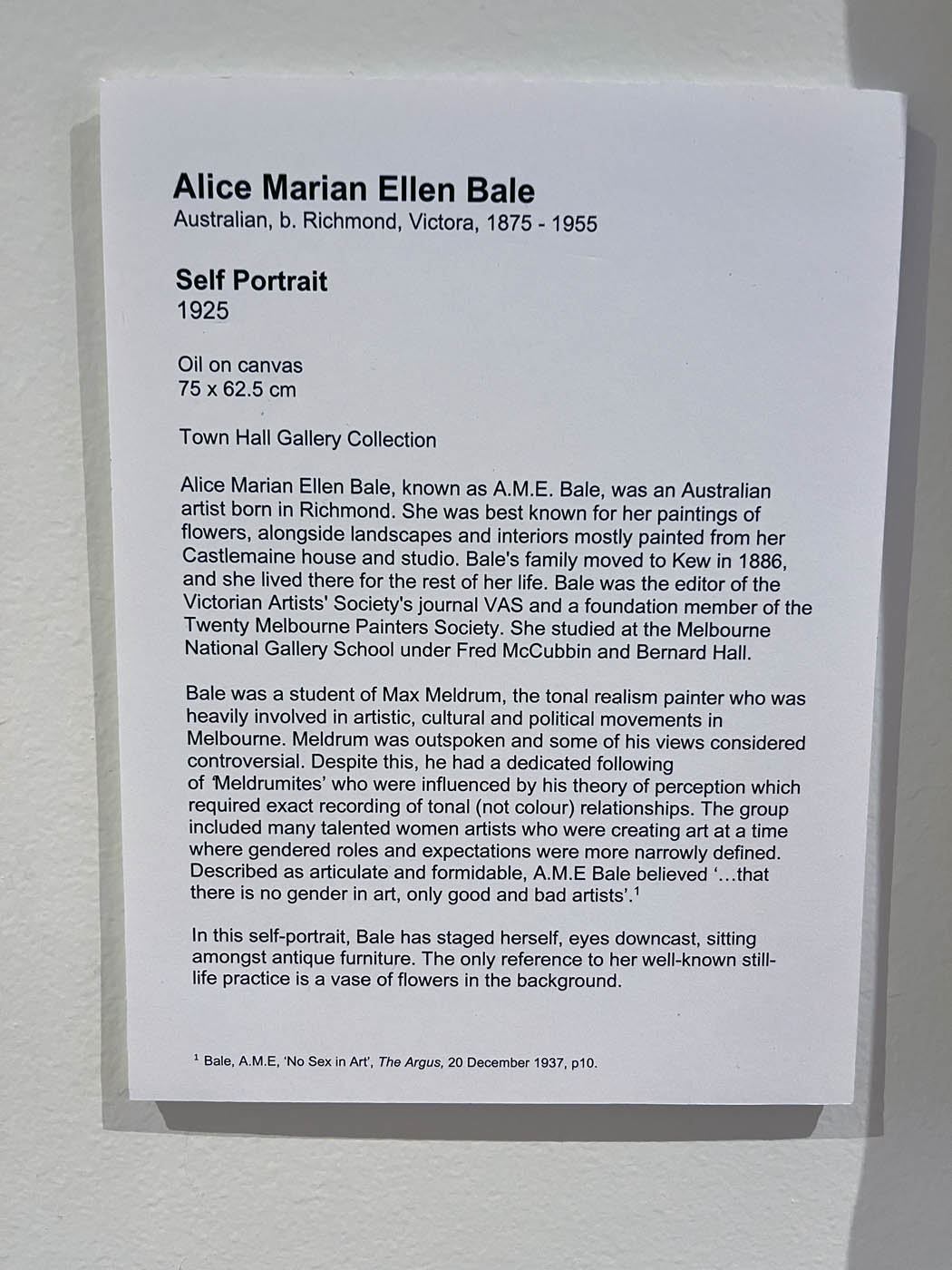
'Australian Tonalism' Alice Bale self portrait wall text


Australian Tonalism Alice Bale self portrait wall text


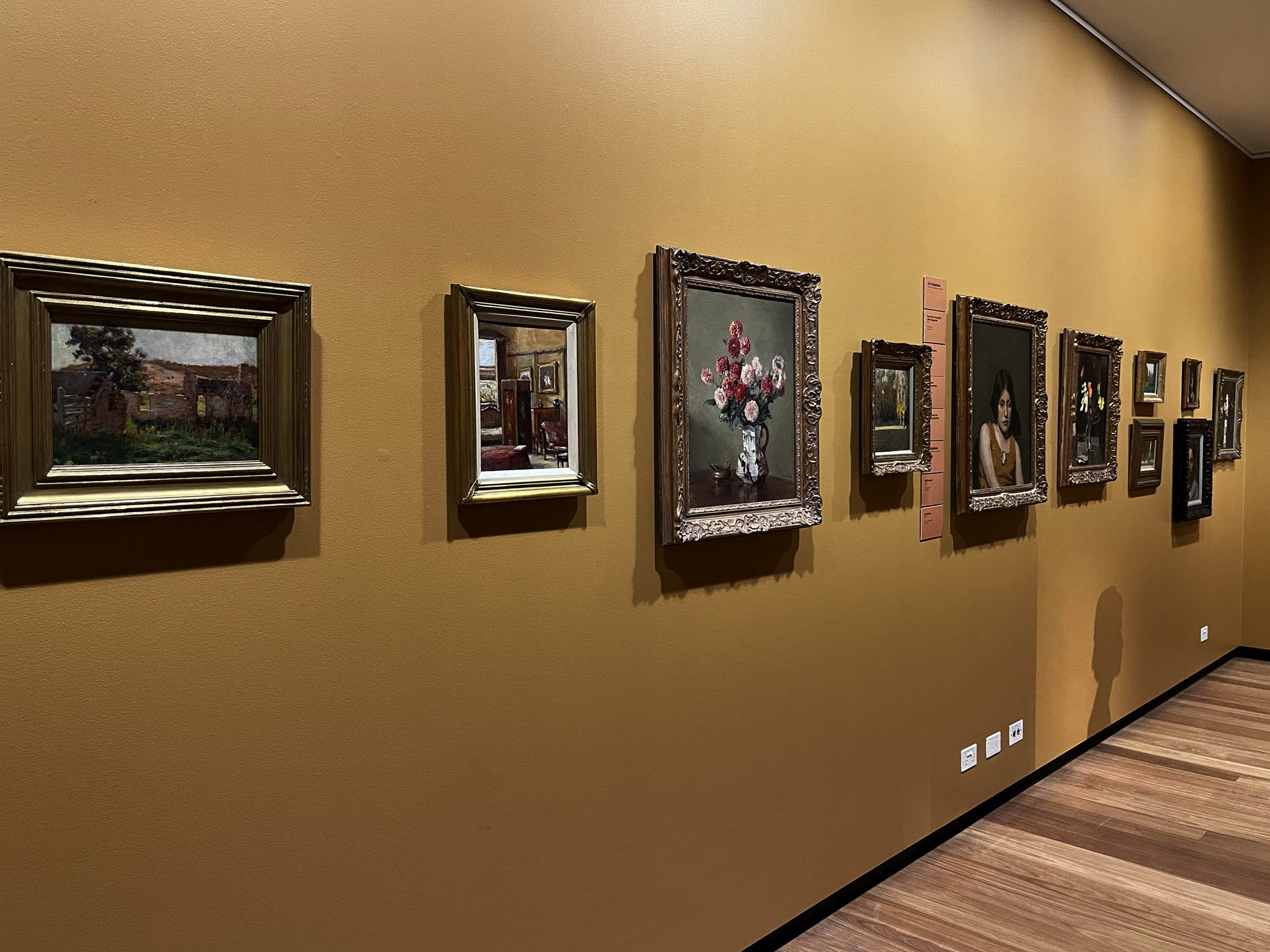
Installation view of the exhibition 'Australian Tonalism: A selection from the John and Peter Perry Collection' at the Town Hall Gallery, Hawthorn, Melbourne, May - July, 2025 showing the work of A M E Bale


Installation view of the exhibition Australian Tonalism: A selection from the John and Peter Perry Collection at the Town Hall Gallery, Hawthorn, Melbourne, May – July, 2025 showing the work of A M E Bale


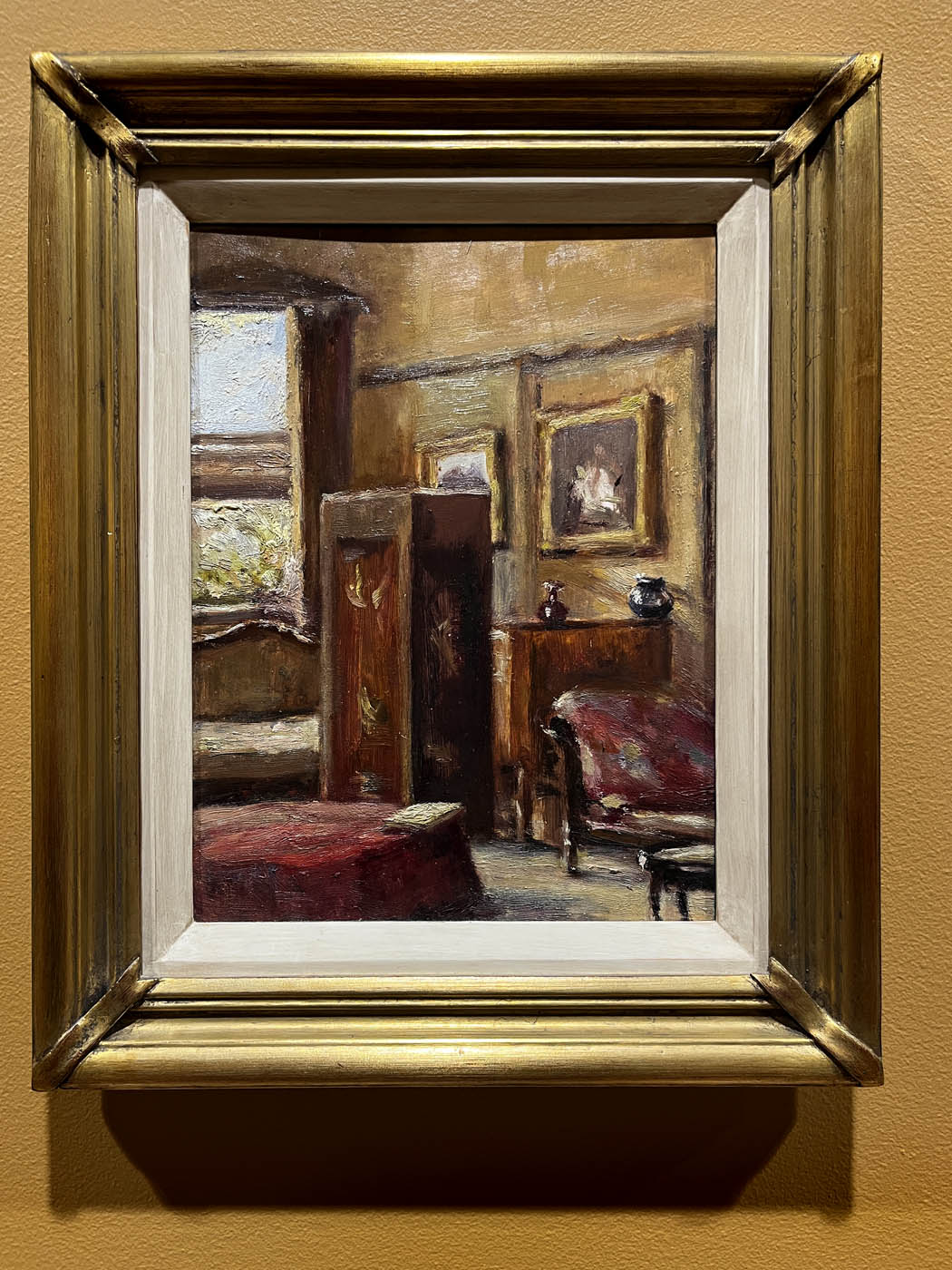
A M E Bale (Australian, 1876-1955) 'Interior (83 Walpole Street, Kew)' c. 1928


A M E Bale (Australian, 1876-1955)
Interior (83 Walpole Street, Kew)
c. 1928
Oil on board
31 x 23.5cm


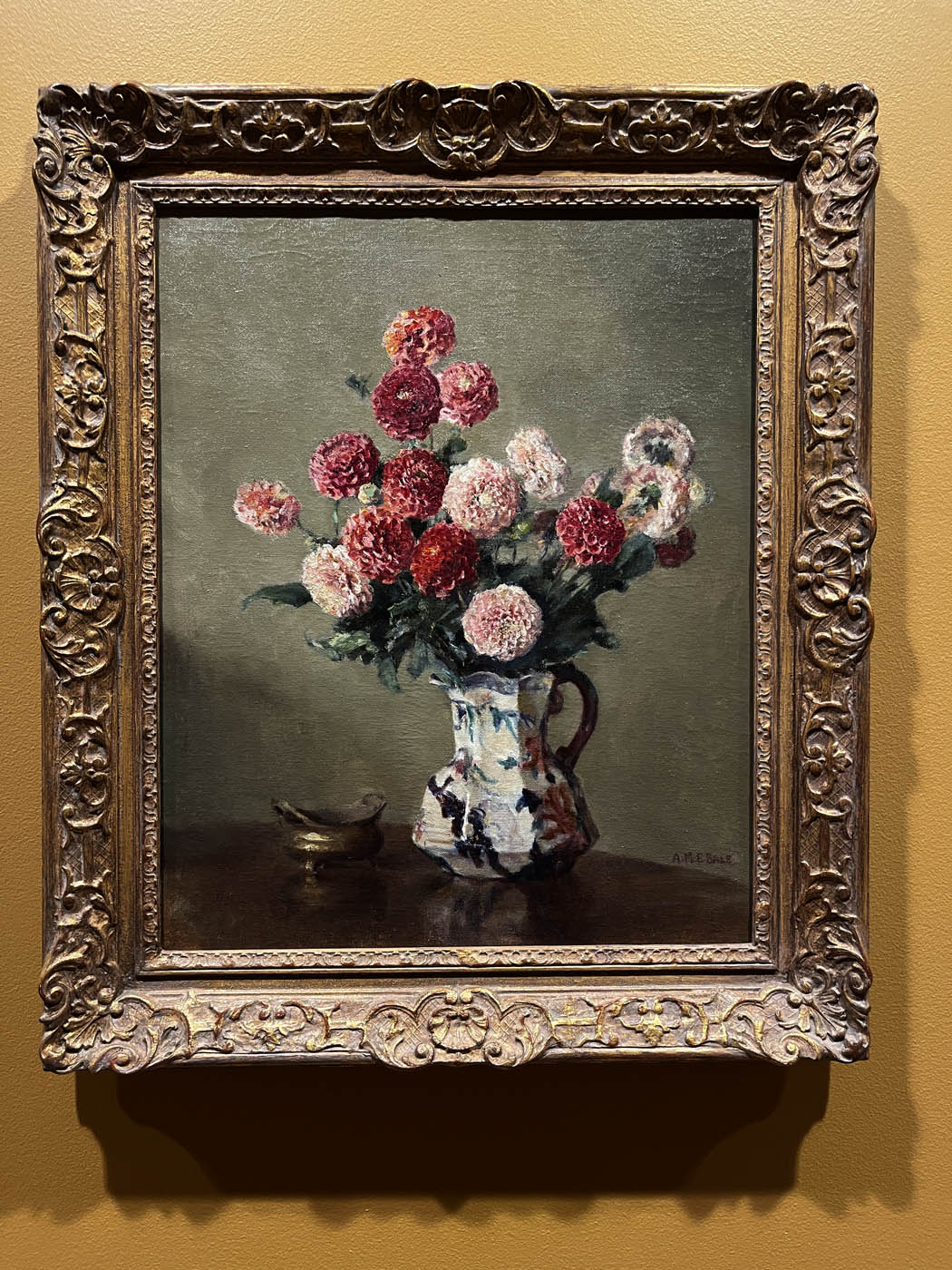
A M E Bale (Australian, 1876-1955) 'Pompon Dahlias' c. 1936


A M E Bale (Australian, 1876-1955)
Pompon Dahlias
c. 1936
Oil on canvas
56 x 46cm


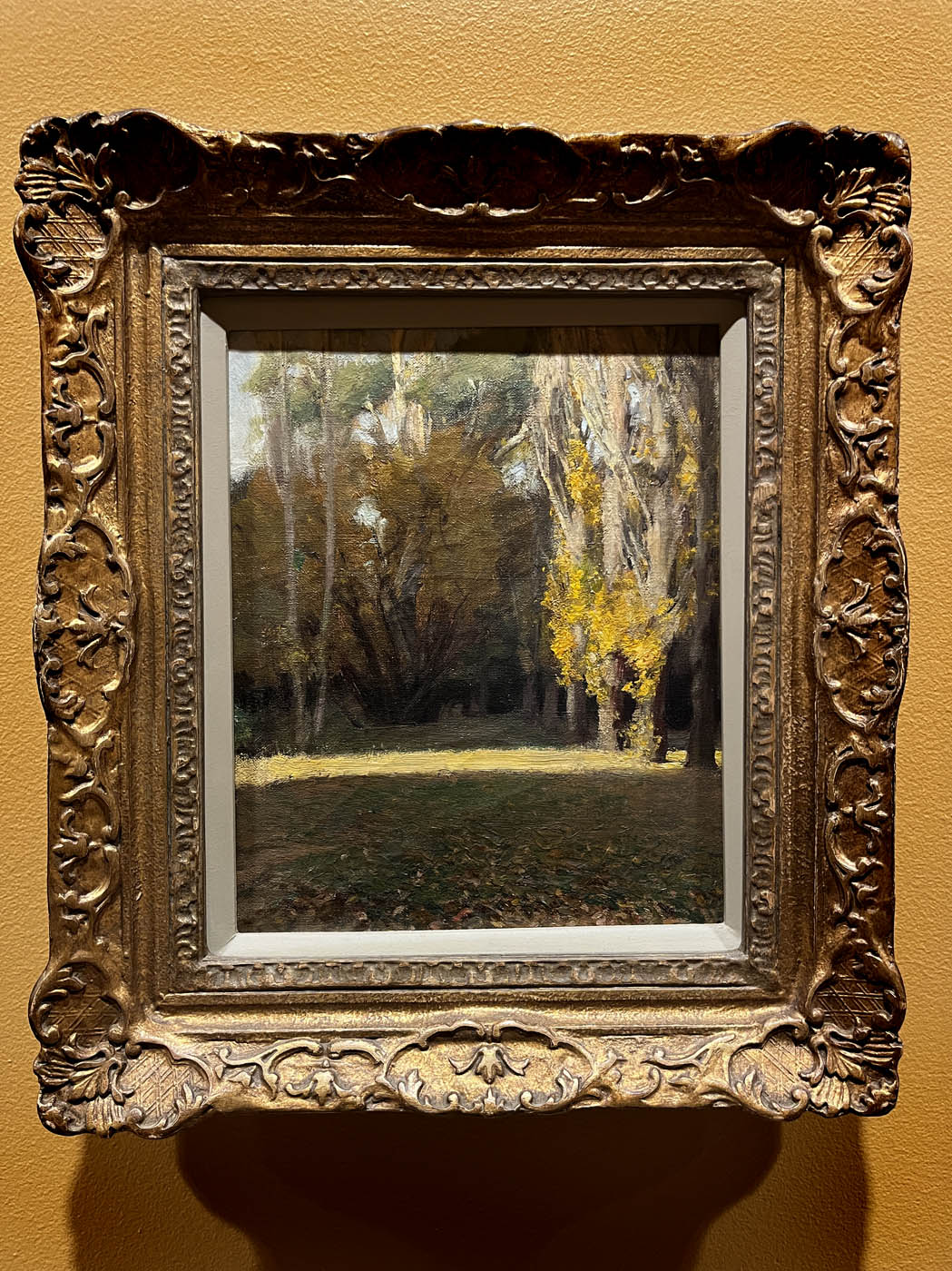
A M E Bale (Australian, 1876-1955) 'In Castlemaine Gardens (The Wall of Poplars)' 1922


A M E Bale (Australian, 1876-1955)
In Castlemaine Gardens (The Wall of Poplars)
1922
Oil on canvas
28.5 x 23cm


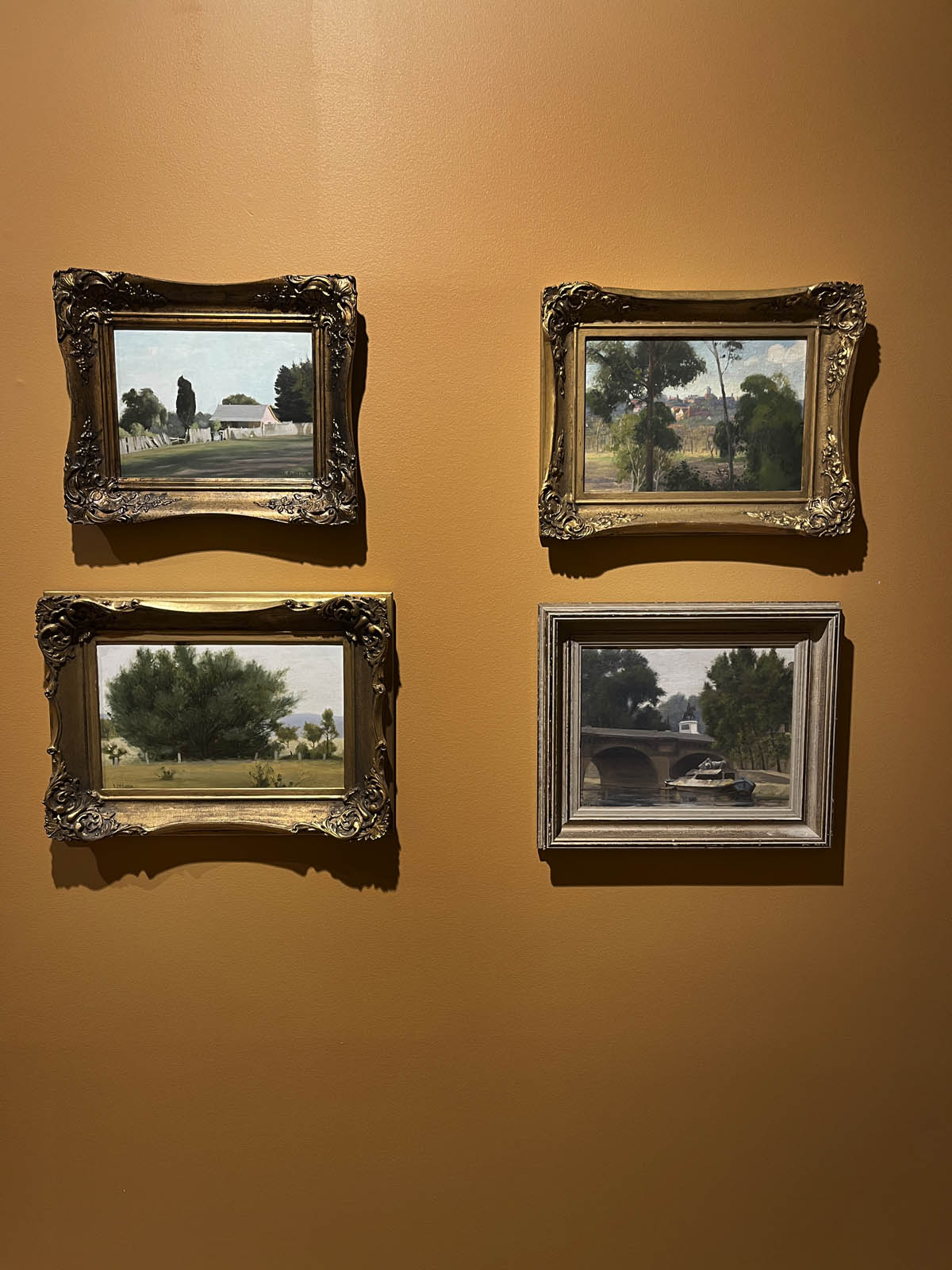
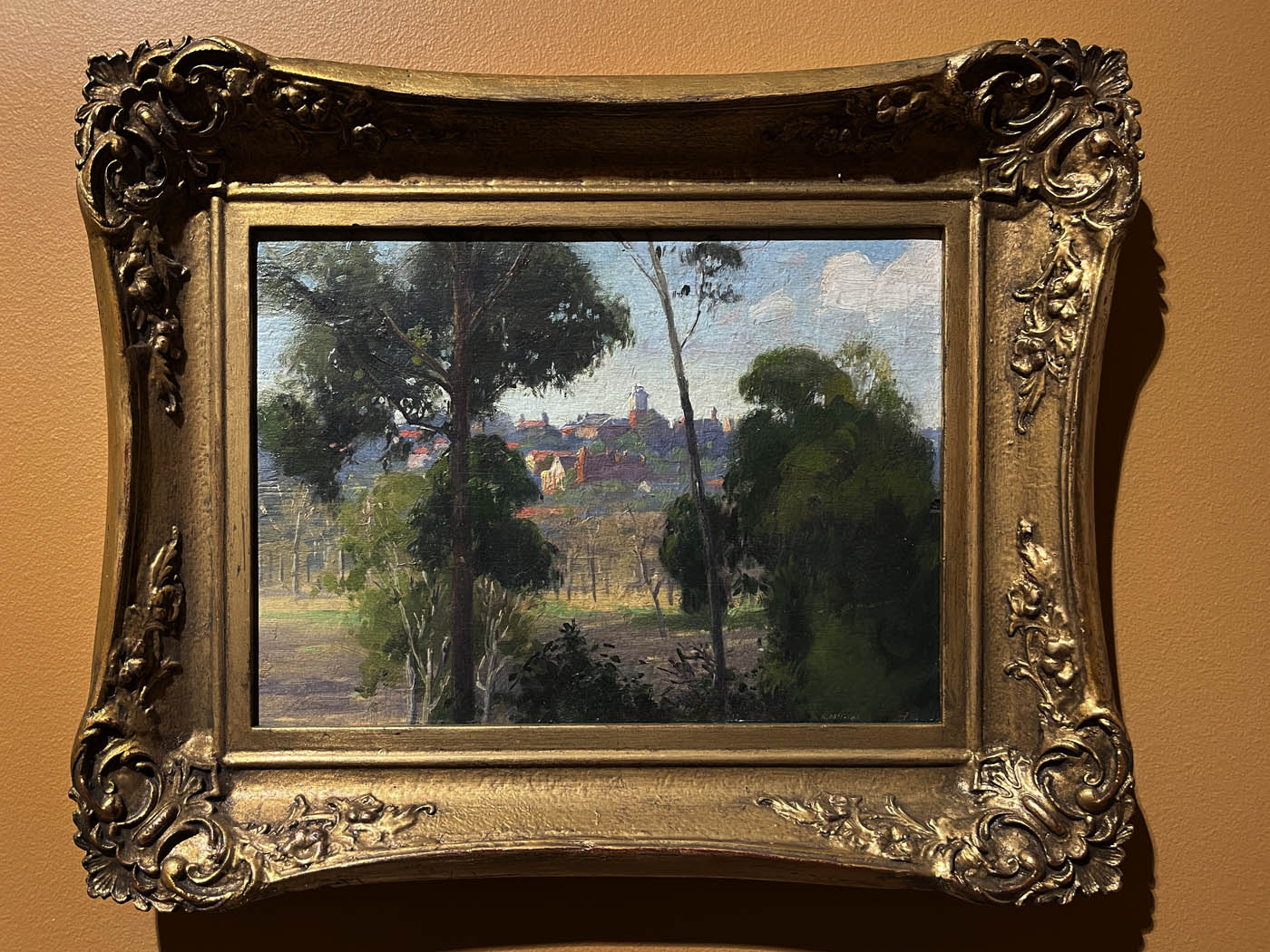
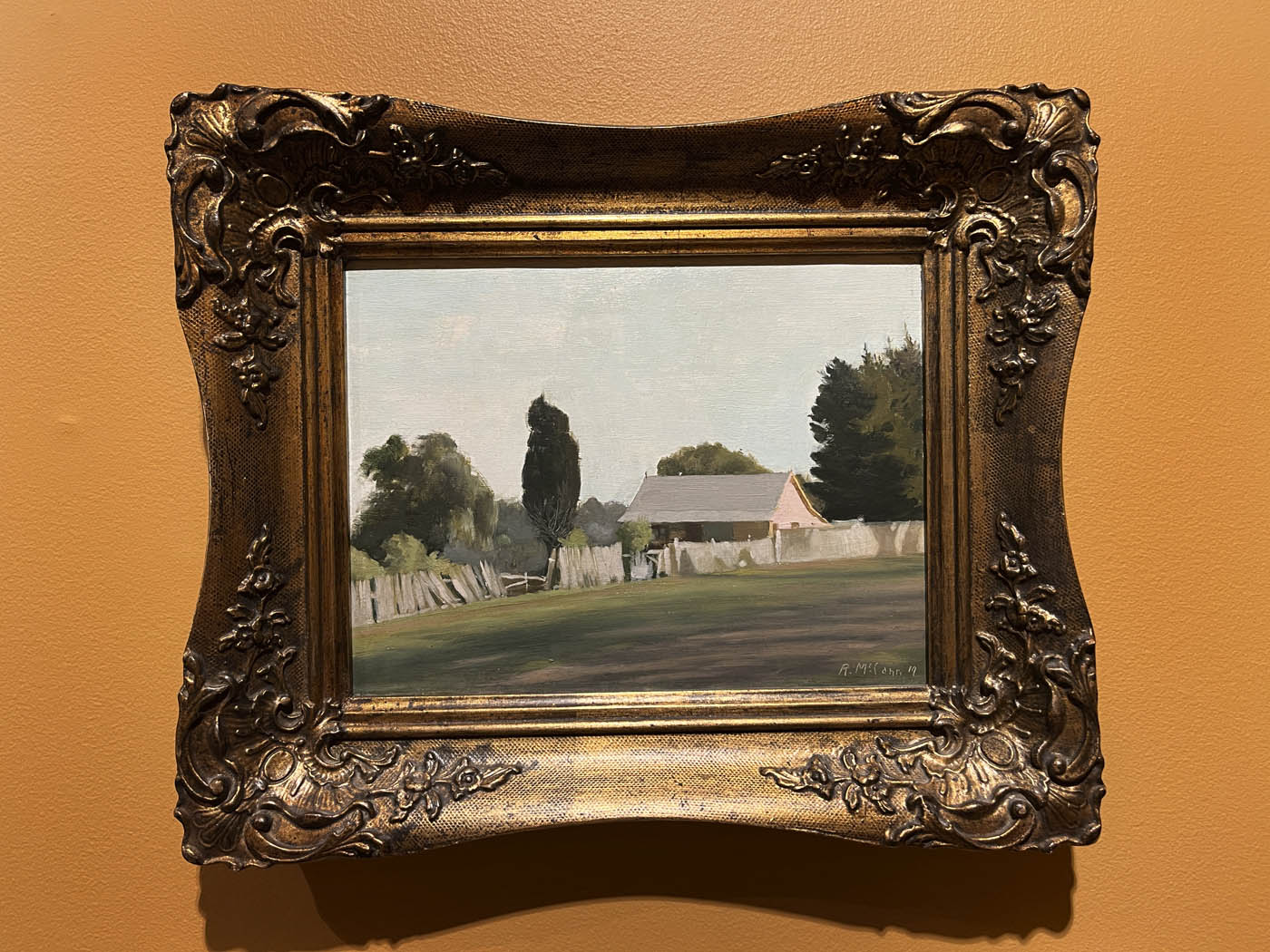
Richard McCann (Australian, 1889-1970) 'The Cottage' 1919; 'Eltham' c. 1920; 'Heyington from Hawthorn' 1927; and 'Pont Neuf & Henri IV, Paris' 1924


Richard McCann (Australian, 1889-1970)
The Cottage
1919
Eltham
c. 1920
Heyington from Hawthorn
1927
Pont Neuf & Henri IV, Paris
1924


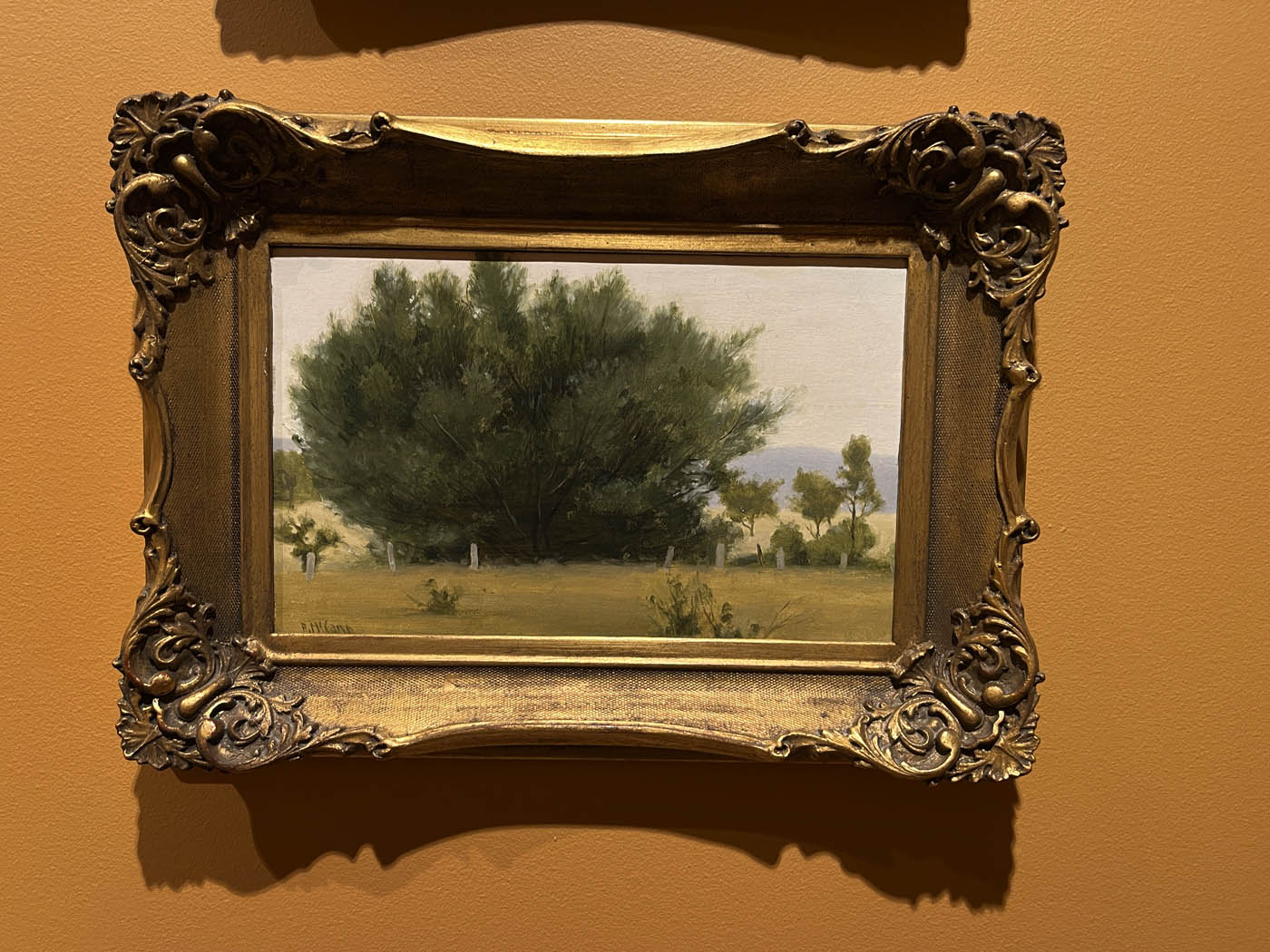
Richard McCann (Australian, 1889-1970) 'Eltham' c. 1920


Richard McCann (Australian, 1889-1970)
Eltham
c. 1920
Oil on academy board
24.5 x 39.5cm


Richard McCann (Australian, 1889-1970) 'Heyington from Hawthorn' 1927


Richard McCann (Australian, 1889-1970)
Heyington from Hawthorn
1927
Oil on cedar panel
24 x 35cm


Richard McCann (Australian, 1889-1970) 'The Cottage' 1919


Richard McCann (Australian, 1889-1970)
The Cottage
1919
Oil on academy board
24 x 30.5cm


Justus Jorgensen (Australian, 1893-1975) 'On the way to Toulon, Cassis' 1927


Justus Jorgensen (Australian, 1893-1975)
On the way to Toulon, Cassis
1927
Oil on canvas on flyboard
32.5 x 40.5cm


Justus Jorgensen (Australian, 1893-1975) 'Cassis' 1927


Justus Jorgensen (Australian, 1893-1975)
Cassis
1927
Oil on canvas on board
40.5 x 33cm


John Rowell (Australian, 1894-1973) 'The Roadway' c. 1920 and William Rowell (Australian, 1898-1946) 'The Barn' 1926


John Rowell (Australian, 1894-1973)
The Roadway
c. 1920
Oil on canvas on flyboard
21.7 x 21.5cm

William Rowell (Australian, 1898-1946)
The Barn
1926
Oil on academy board
28.5 x 30.5cm


Charles Nitsch (French, 1882-1972) 'Picherit's Farm, Pace, Brittany' c. 1910


Charles Nitsch (French, 1882-1972)
Picherit’s Farm, Pace, Brittany
c. 1910
Oil on cotton on board
32.5 x 40cm


'Australian Tonalism' wall text Charles Nitsch


Australian Tonalism wall text Charles Nitsch


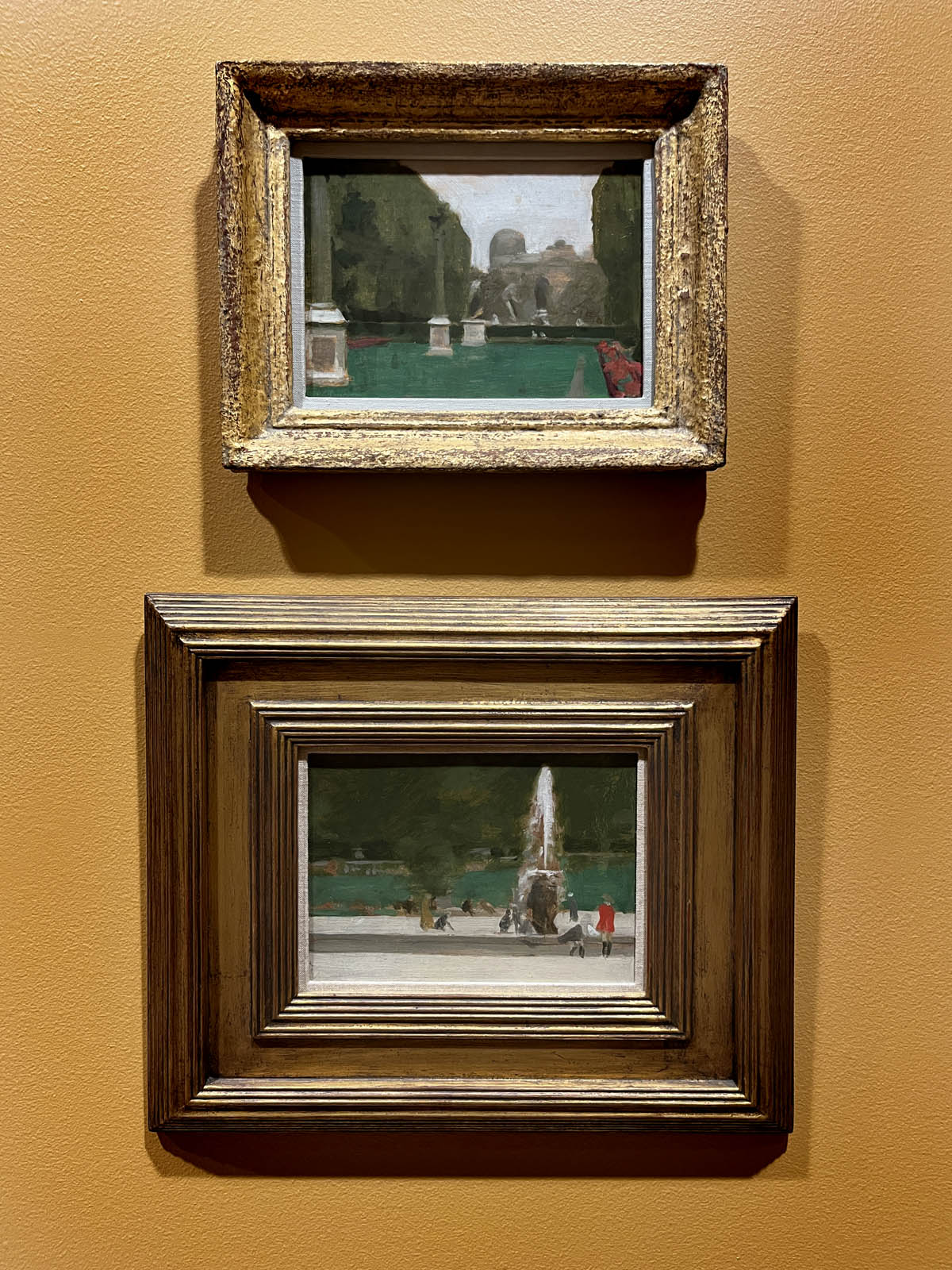
A D Colquhoun (Australian, 1894-1983) 'The Avenue de l'Observatoire' 1925 and 'The Fountain in the Luxembourg Gardens' c. 1925


A D Colquhoun (Australian, 1894-1983)
The Avenue de l’Observatoire
1925
The Fountain in the Luxembourg Gardens
c. 1925


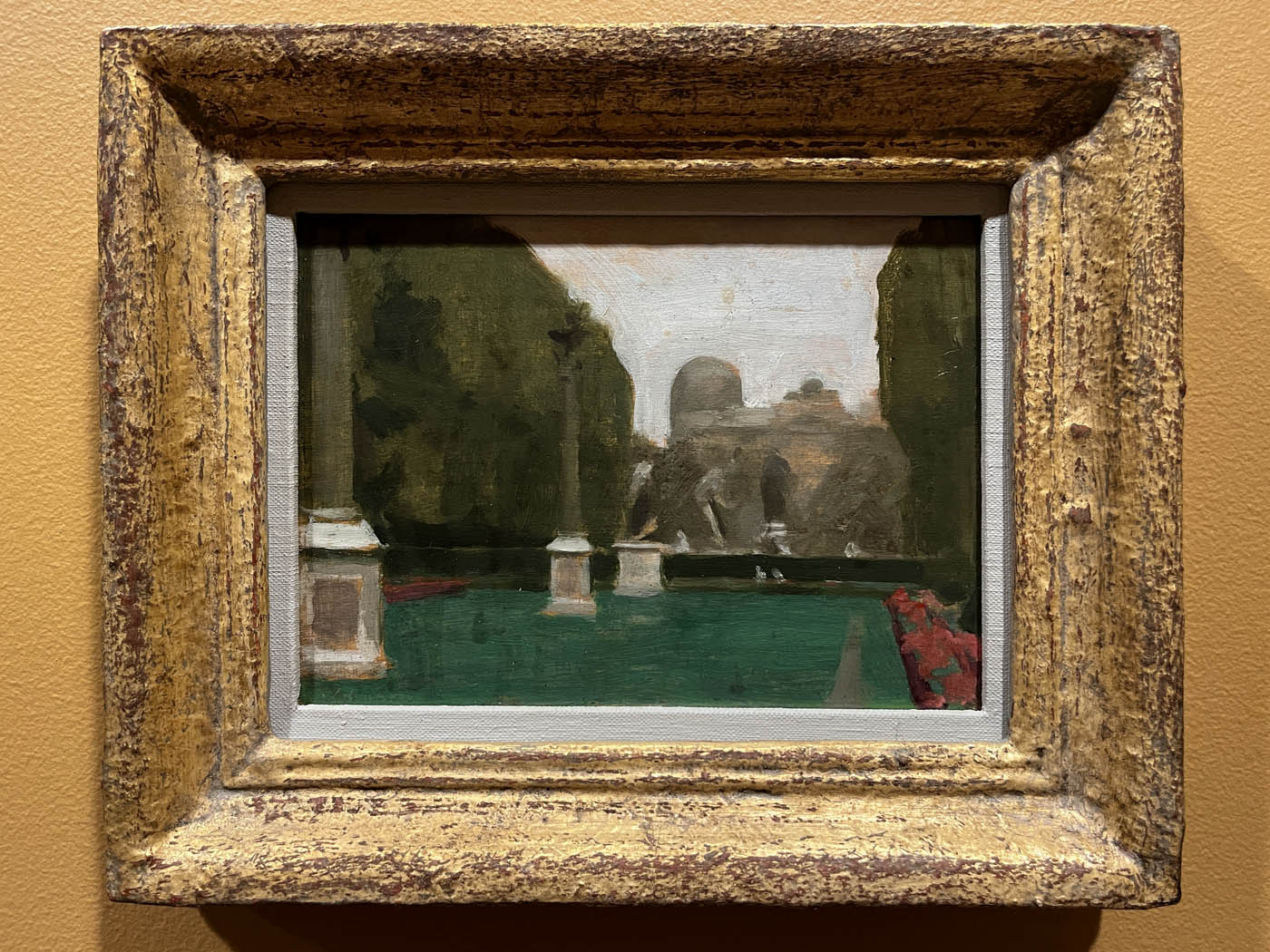
A D Colquhoun (Australian, 1894-1983) 'The Avenue de l'Observatoire' 1925


A D Colquhoun (Australian, 1894-1983)
The Avenue de l’Observatoire
1925
Oil on wood panel
16 x 21.6cm


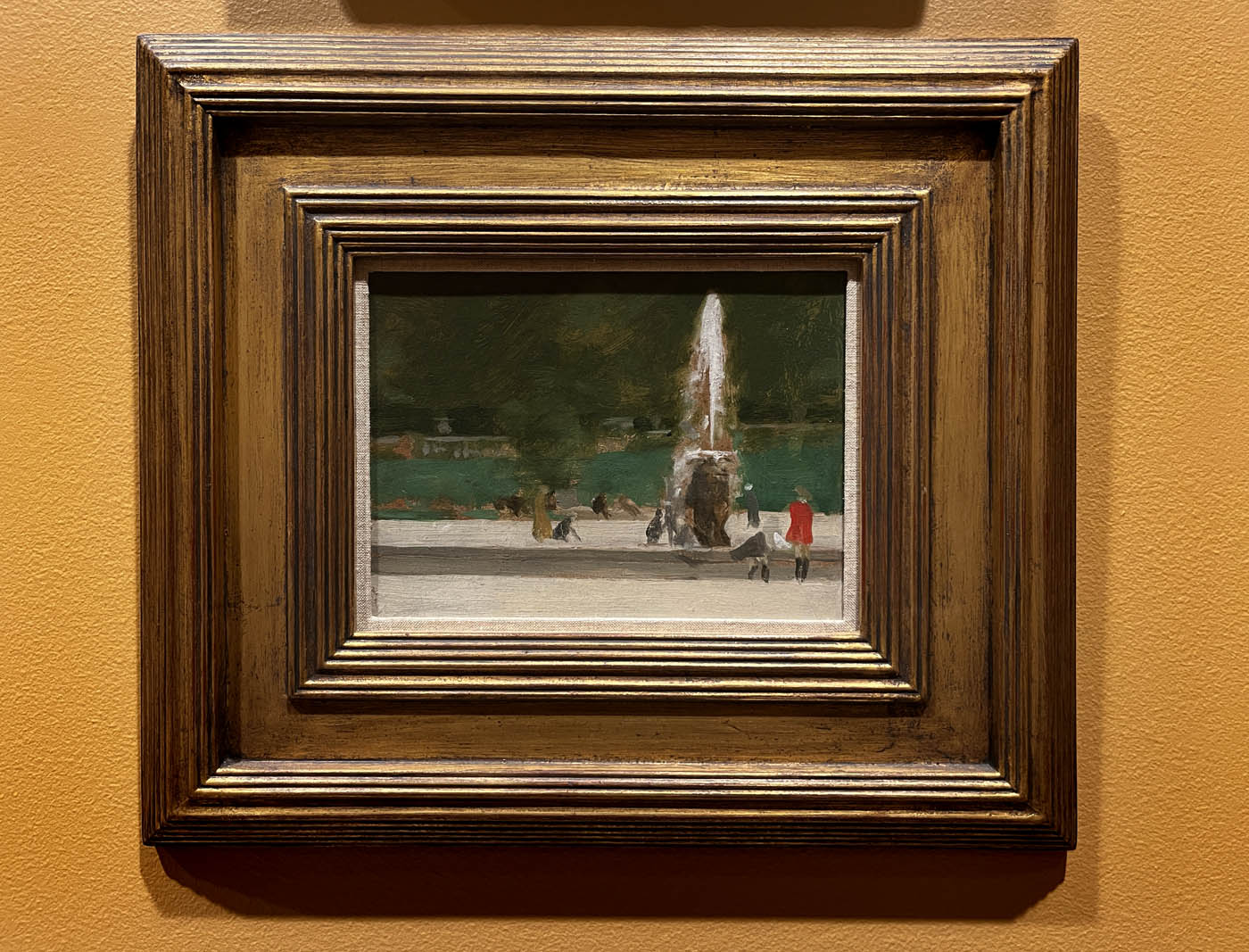
A D Colquhoun (Australian, 1894-1983) 'The Fountain in the Luxembourg Gardens' c. 1925


A D Colquhoun (Australian, 1894-1983)
The Fountain in the Luxembourg Gardens
c. 1925
Oil on board
15.8 x 21.5cm


John Farmer (Australian, 1897-1989) 'Misty Morning, London' 1934 (detail)


John Farmer (Australian, 1897-1989)
Misty Morning, London (detail)
1934
Oil on canvas on board
19 x 24cm


Town Hall Gallery
360 Burwood Road Hawthorn VIC 3122
Phone: (03) 9278 4770

Opening hours:
Mon to Fri, 9am – 5pm
Saturday, 12pm – 4pm

Boroondara Arts website

LIKE ART BLART ON FACEBOOK

Back to top

Exhibition: ’31 Women. An Exhibition by Peggy Guggenheim’ at Fundación MAPFRE, Madrid

Exhibition dates: 19th September, 2024 – 5th January, 2025

Curator: Patricia Mayayo

Artists: Djuna Barnes / Xenia Cage / Leonora Carrington / Leonor Fini / Suzy Frelinghuysen / Elsa von Freytag-Loringhoven / Meraud Guinness Guevara / Anne Harvey / Valentine Hugo / Buffie Johnson / Frida Kahlo / Jacqueline Lamba / Eyre de Lanux / Gypsy Rose Lee / Hazel McKinley / Aline Meyer Liebman / Louise Nevelson / Meret Oppenheim / Milena Pavlovic-Barilli / Barbara Poe-Levee Reis / Irene Rice Pereira / Kay Sage / Gretchen Schoeninger / Sonja Sekula / Esphyr Slobodkina / Hedda Sterne / Sophie Taeuber-Arp / Dorothea Tanning / Julia Thecla / Pegeen Vail Guggenheim / Maria Helena Vieira da Silva


Aline Meyer Liebman (American, 1879-1966) 'Gray Day (Sand Dunes)' c. 1929 from the exhibition '31 Women. An Exhibition by Peggy Guggenheim' at Fundación MAPFRE, Madrid, Sept 2024 - Jan 2025


Aline Meyer Liebman (American, 1879-1966)
Gray Day (Sand Dunes)
c. 1929
Gouache on board
35.5 x 48cm
The 31 Women Collection
© 2022-2024 JPS Artworks LLC


Short biography: Aline Meyer Liebman (1879-1966). Born in Los Angeles, Aline Meyer Liebman studied at the Art Students League in New York and received the support of Georgia O’Keeffe and Alfred Stieglitz. By the 1930s she had already become a consolidated artist and was the subject of a solo show at Walker Galleries in 1936. Meyer Liebman was also known for her work as a collector of art and photography. She acquired works by O’Keeffe, Stieglitz, Edward Weston, and Max Ernst, among others. Liebman kept a broad circle of relationships with key people in the New York art world, such as Peggy Guggenheim, who included her work Painted Dream (1935) in Exhibition by 31 Women. Other notable facets include her political and philanthropic work: aside from supporting President Roosevelt, she became a member of the New York League of Women Voters and designed a poster for the organization in 1944.


While it is fantastic to see this “recreation” (many of the original art works are unknown or missing and others have been substituted by the same artist in their place) of Peggy Guggenheim’s 1943 Exhibition by 31 Women “organised in her New York gallery ‘Art of This Century’, one of the first exhibitions in the United States to showcase works exclusively by European and American women,” I am conflicted by this exhibition. Conflicted, conflicted, conflicted.

Wealthy white women uses influence and money to promote women artists when no one else would, a patron reinforcing female participation introducing “well-established figures within the artistic landscape as well as emerging talent.” But I have a feeling that this group of female artists was part of an elite cohort – a privileged, internalist, internationalist, undoubtedly incestuous (in terms of knowing each other) clique of humans that knew the right people, especially through their connections with male artists.

As ever with the art world, it’s not what you know it’s who you know. Which artist has the ear of which curator; which artist is “fashionable” at the moment; and which artist is supported by which patron and gallery. It’s all about connections, and these women, whether emerging or established, had those connections. They were part of an educated elite that was at one and the same time, both exclusive and excluding (no Black American or Asian artists here… think of the times!)

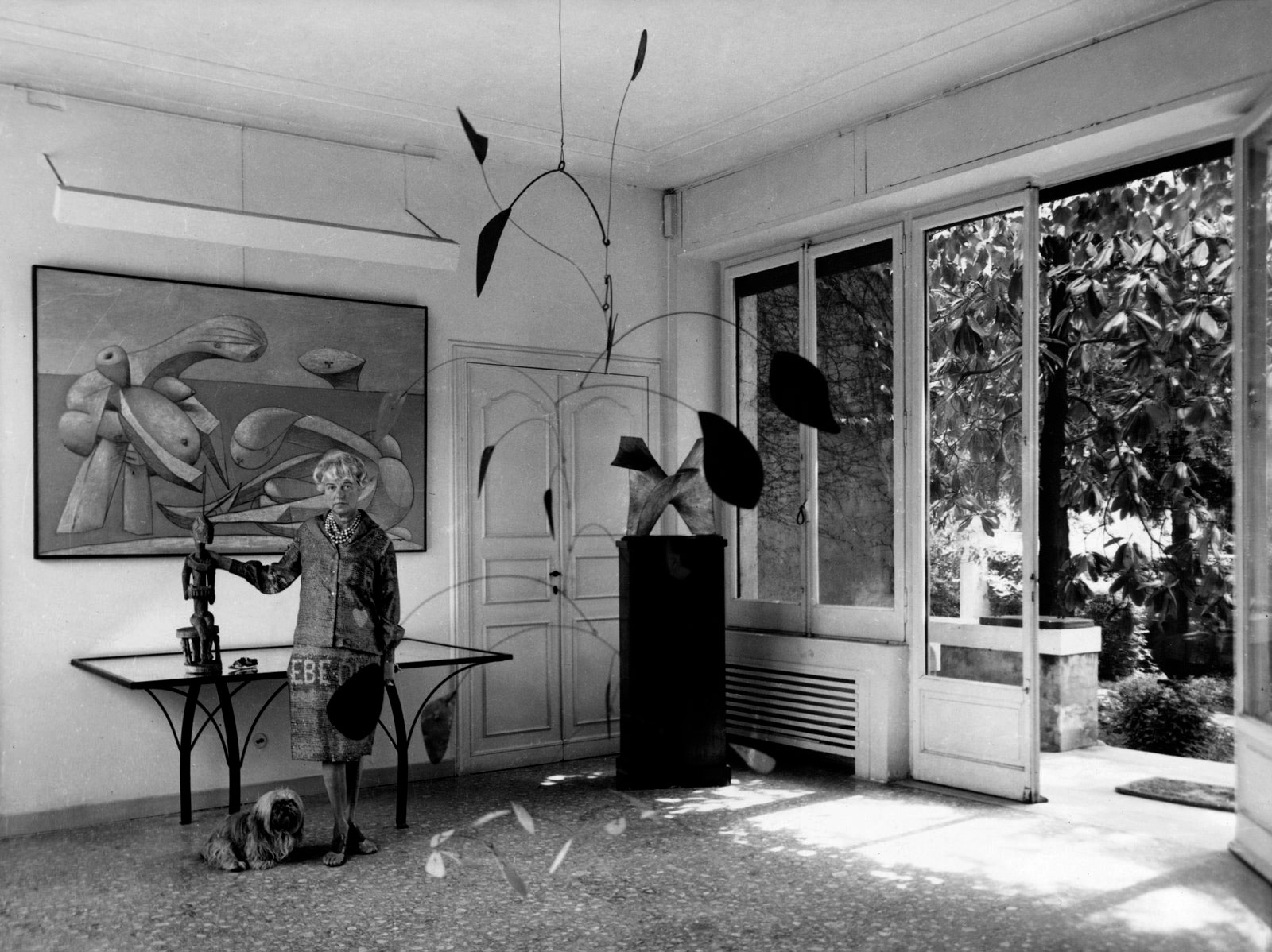
And while the relationship between art and bourgeois life central to an earlier ideal of culture (the artist and their patron) has changed since the Second World War and the playing field has become much more egalitarian, my cynicism and socialism still rails at those with power and how they withhold their largesse. You only have to look at the photograph of Peggy Guggenheim in the entrance hall of her eighteenth century Venetian palace or the naming of so many galleries in art museums after wealthy patrons to understand what I mean.

What did it mean for these women artists, at what level was it a recognition of their undoubted skill as artists, when so many largely vanished without trace?

Dr Marcus Bunyan


Many thankx to Fundación MAPFRE for allowing me to publish the photographs in the posting. Please click on the photographs for a larger version of the image.


The idea of the artist as central member of a spiritual elite embodying an alternative to Philistine commercialism, or even pointing the way to humankind’s salvation, has powered a variety of movements as different as Aestheticism, Realism, Dada, De Stijl, and Russian Constructivism. This was the conception of culture that crystallized in the notion of the avant-garde, whose “function” – in Clement Greenberg’s classic formulation of 1939 – was “to find a path along which it would be possible to keep culture moving in the midst of ideological confusion and violence.”[1]

Greenberg’s text touchingly reveals the double sense of the idea of culture, as both redeeming force of the existing system and as a sort of critique by enactment of an alternative set of values. In this conception, the essence of art, incarnated in the avant-garde, is its alienation from the norms of bourgeois society (hence, in the case of modernist abstraction, its abandonment of going systems of representation). On the other hand, Greenberg acknowledged that “No culture can develop without a social basis, without a source of stable income” and even that “in the case of the avant-garde, this was provided by an elite among the ruling class of that society from which it assumed itself to be cut off, but to which it has always remained attached by an umbilical cord of gold. The paradox is real.”[2]

This paradox is nothing but the place of culture in capitalist society, in its most concentrated form. Given the distinctive social character of art objects, as handmade luxury goods in a world dominated by mechanized mass production, they offer both their producers and their consumers an experience outside the “everyday life” of the market. Expressive, in its very freedom from monetary considerations, of the power of money and of the access to free time made possible by money, art is a token and a perk of social distinction for those who own and even for those who merely appreciate it. The artist, as producer of this token, shares in the distinction, though (for the most part) not in the wealth that supports the social practice of art as a whole. It was the very separation of the world of cultural production from the norm of capitalist investment and production that made it potentially so valuable. By means of critique, culture cleanses modern society of the sin of commercialism, allowing its dominating classes to see themselves as worthy inheritors of the position of the aristocracy they displaced.

The picture I have sketched here, hardly a novel one, evidently owes a great deal to Pierre Bourdieu’s analysis of what he calls “the field of cultural production.” That analysis reveals in particular the close relation between, on the one hand, the social antagonism between the producers of culture and the upper-class consumers from whom they are separated by style of life and self-conception as well as degree of social power, and, on the other, the fact that “the cult of art and the artist… is one of the necessary components of the bourgeois ‘art of living,’ to which it brings a ‘supplément d’âme,’ its spiritualistic point of honor.”[3] This cultural system, evolved during the nineteenth century, survived until well into the twentieth. But the last twenty years have seen the acceleration of a process of change, whose origin is traceable to the end of the Second World War.[4] What changed was not the centrality of the “cult of art” to the bourgeois “art of living” but the felt antipathy between art and bourgeois life central to the earlier ideal of culture.


Paul Mattick. “After the Gold Rush,” on the American Society for Aesthetics website 2010 [Online] Cited 12/12/2024


1/ C. Greenberg, “Avant-garde and Kitsch,” in idem, Art and Culture (Boston: Beacon Press, 1961), p. 5.
2/ Ibid., p. 8
3/ P. Bourdieu, The Field of Cultural Production (New York: Columbia University Press, 1993), p. 44.
4/ For an in-depth discussion, see Katy Siegel, Since ’45: American Art in the Age of Extremes (London: Reaktion, 2016)


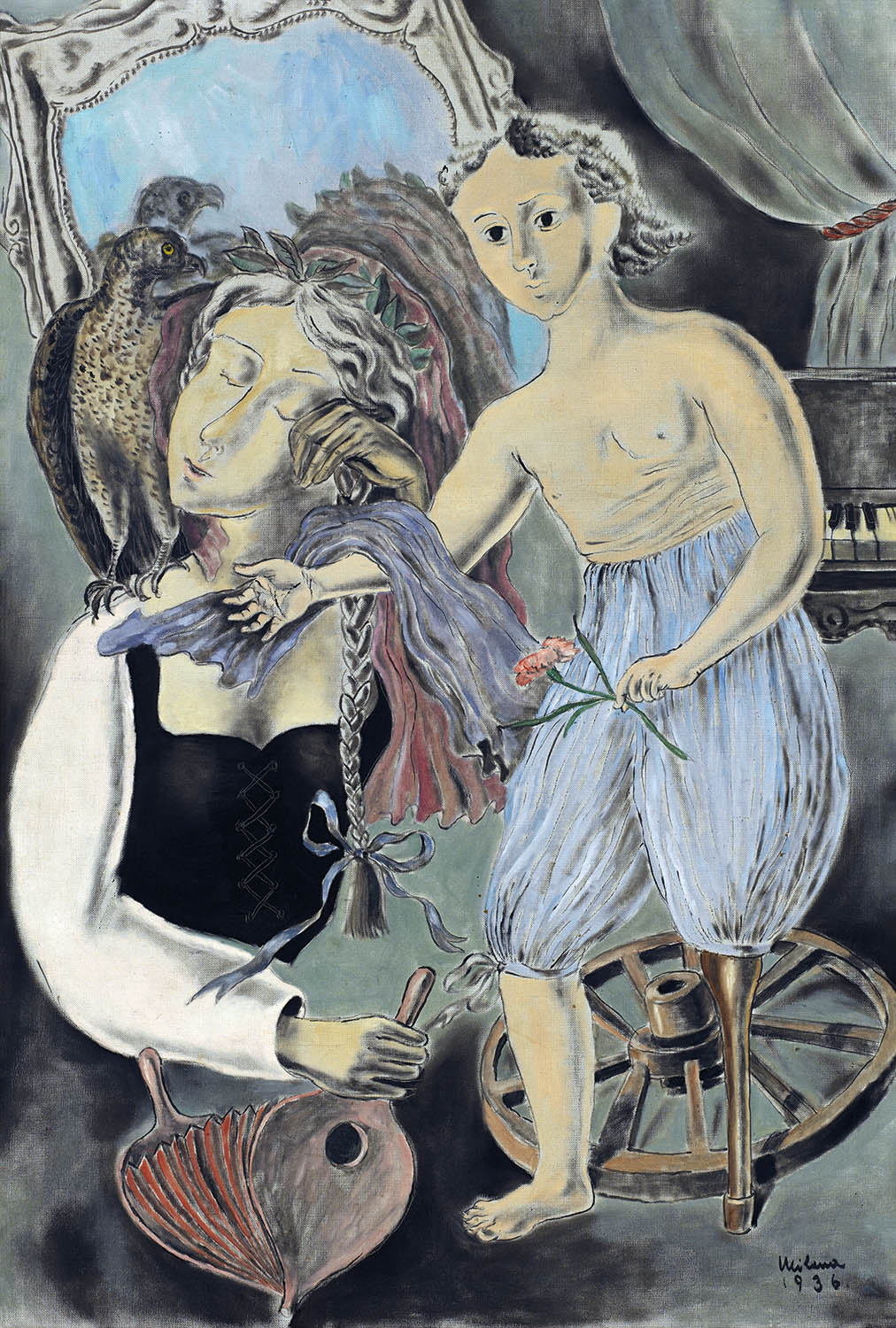
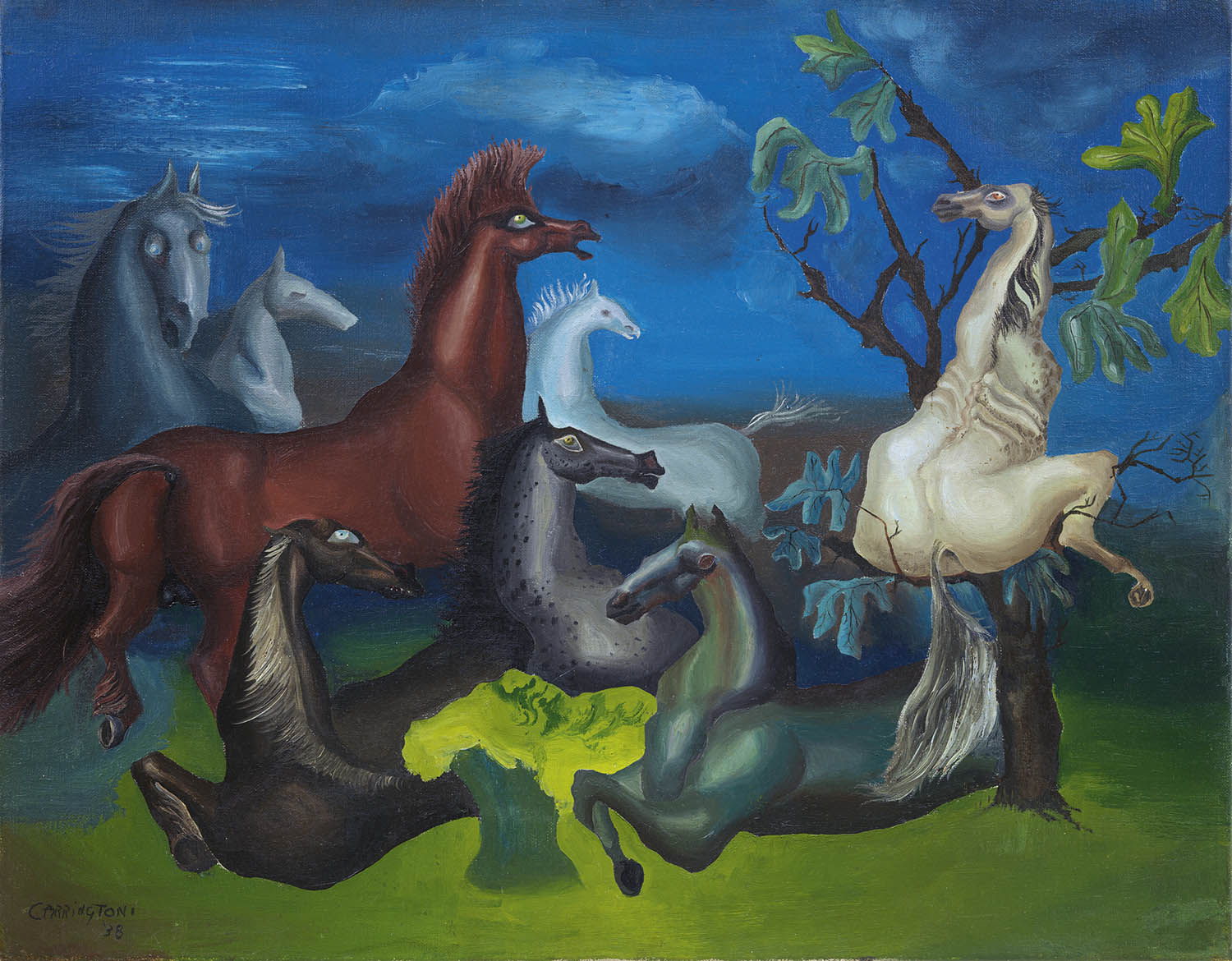
Installation view of the exhibition '31 Women. An Exhibition by Peggy Guggenheim' at Fundación MAPFRE showing at left, Milena Pavlovic-Barilli's 'Juno and Vulcan' (1936); at second left, Leonora Carrington's 'The Horses of Lord Candlestick' (1938); and at right, Buffie Johnson's 'The Middle Way / The Great Mother Rules the Sky (Astor Mural)' (1949-1959)


Installation view of the exhibition 31 Women. An Exhibition by Peggy Guggenheim at Fundación MAPFRE showing at left, Milena Pavlovic-Barilli’s Juno and Vulcan (1936, below); at second left, Leonora Carrington’s The Horses of Lord Candlestick (1938, below); and at right, Buffie Johnson’s The Middle Way / The Great Mother Rules the Sky (Astor Mural) (1949-1959, below)


In 1943, the renowned art collector Peggy Guggenheim organised in her New York gallery ‘Art of This Century’, one of the first exhibitions in the United States to showcase works exclusively by European and American women, titled Exhibition by 31 Women. The show was conceived by Guggenheim in collaboration with Marcel Duchamp, and the artists were selected by a jury whose members included André Breton, Max Ernst and Duchamp himself. Guggenheim, as the sole woman on the jury, was in a privileged position to provide a female perspective in the selection process.

These women, many of whom were associated with Surrealism or abstraction, maintained an ambiguous position within both trends. Often, they employed these styles to reformulate and challenge them, preserving their independence and shedding light on the patriarchal assumptions underlying these artistic movements.

31 Women. An Exhibition by Peggy Guggenheim presents a curated selection and reinterpretation of that initiative, including all the artists featured in the original show. With this exhibition, the Foundation aims not only to honor Peggy Guggenheim’s significant role as one of the foremost patrons and collectors of the 20th century, but also shift the narrative away from viewing these women primarily through their connections with male artists. Instead, it highlights the networks of collaboration, solidarity, and friendship they established among themselves.

Text from the Fundación MAPFRE website


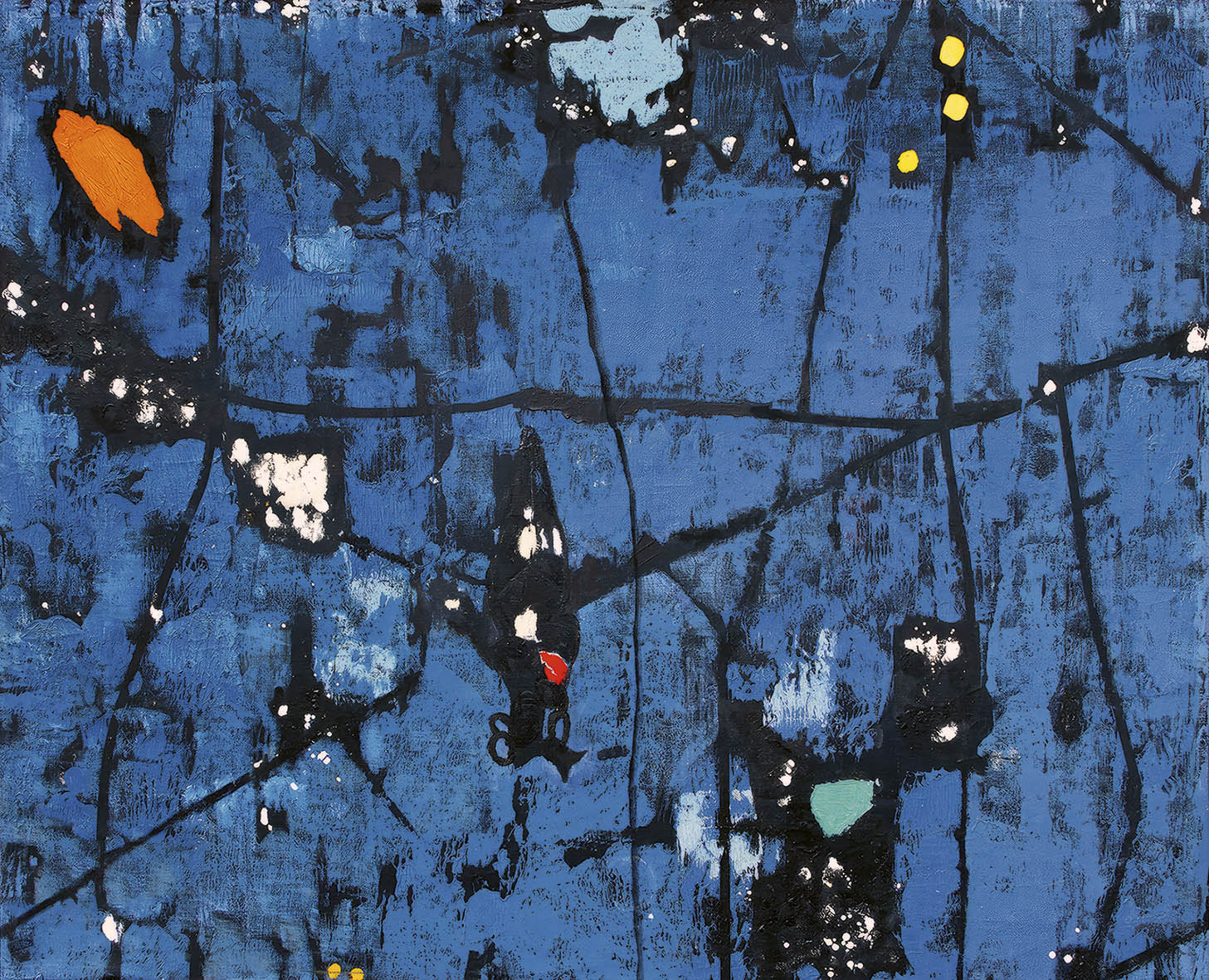
Sonja Sekula (American, 1918-1963) 'Waiting for Foam' 1944 from the exhibition '31 Women. An Exhibition by Peggy Guggenheim' at Fundación MAPFRE, Madrid, Sept 2024 - Jan 2025


Sonja Sekula (American, 1918-1963)
Waiting for Foam
1944
Oil on canvas
40.3 x 49.8cm
The 31 Women Collection
© Estate of Sonja Sekula
© 2022-2024 JPS Artworks LLC


Short biography: Sonja Sekula (1918-1963). Born in Lucerne from a Hungarian father and a Swiss mother, Sonja Sekula emigrated to New York in 1936, where her father had moved their family business. In 1938 she attempted suicide for the first time and from that point onward began suffering from mental health issues. Through her well-connected family, Sekula was able to meet André Breton and other European Surrealists in the early 1940s. In mid-decade, she travelled to Mexico and came into contact with Frida Kahlo and Leonora Carrington. Later, she traversed the northeastern United States, discovering the imagery of Native American people. The primitivist symbols in her canvases are interwoven with decorative patterns, intense colours, and a juxtaposition of viewpoints. At the time, Sekula’s work was well received by critics, some suggesting that there was a hidden symbolism related to her homosexuality. Aside from including her painting Composition at Exhibition by 31 Women, Peggy Guggenheim dedicated a solo exhibition to Sekula’s work in 1946. Two years later Sonja Sekula joined the Betty Parsons Gallery, which would host five solo exhibitions between 1948 and 1957. In 1951, a day after the opening of her third exhibition, she suffered a nervous breakdown. The artist spent the following years coming in and out of mental health clinics in the United States and Switzerland. In 1963 she committed suicide in her Zurich studio.


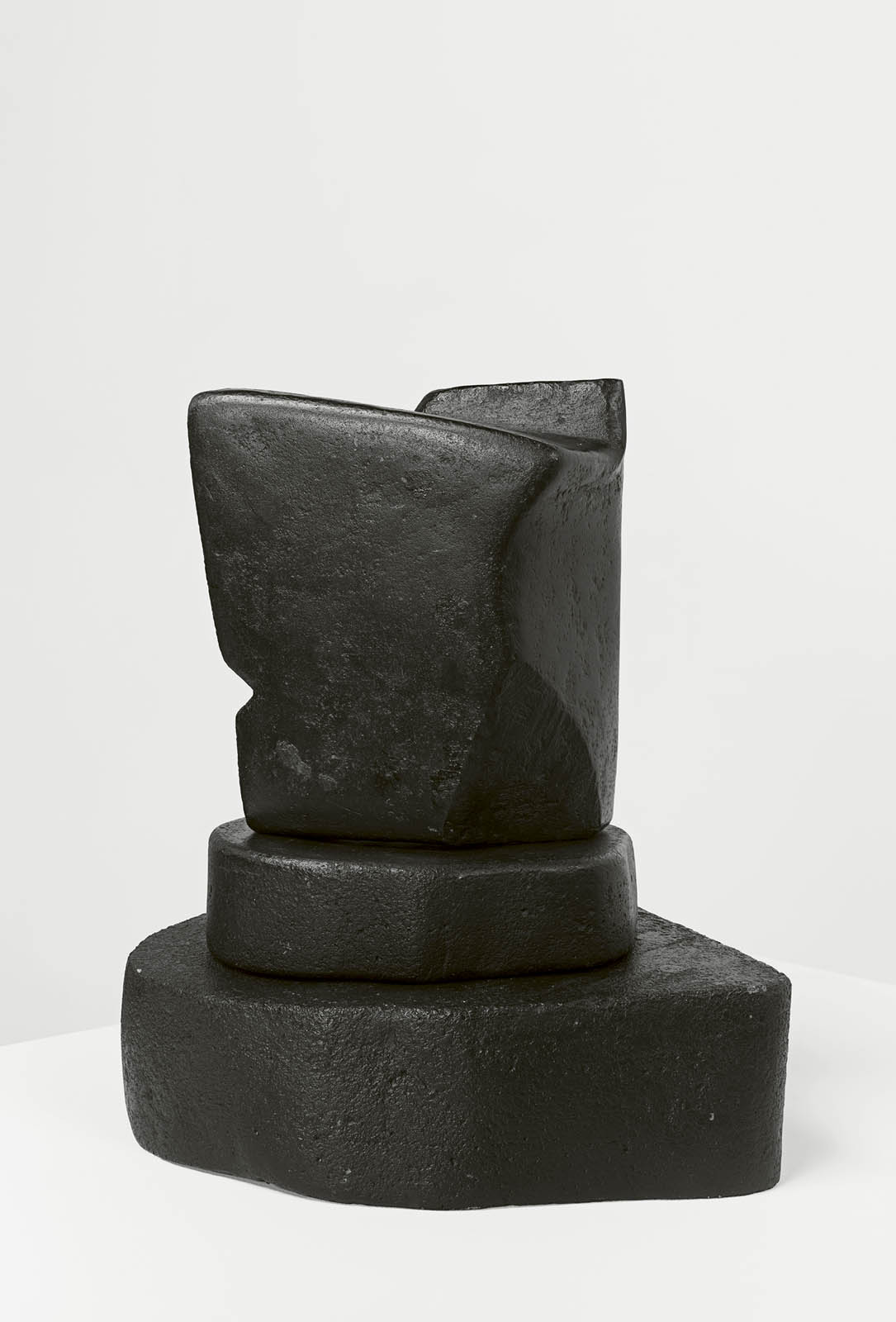
Louise Nevelson (American, 1899-1988) 'Untitled' 1933 from the exhibition '31 Women. An Exhibition by Peggy Guggenheim' at Fundación MAPFRE, Madrid, Sept 2024 - Jan 2025


Louise Nevelson (American, 1899-1988)
Untitled
1933
Black painted terracotta
The 31 Women Collection
© Louise Nevelson, VEGAP, Madrid, 2024
© 2022-2024 JPS Artworks LLC


Short biography: Louise Nevelson (1899-1988). Born in Ukraine, Louise Nevelson emigrated to the United States with her family at the age of six. After studying in Germany under Hans Hofmann, she settled in New York, where she met Frida Kahlo and Diego Rivera. Nevelson collaborated on one of Rivera’s murals while receiving lessons from George Grosz and Chaim Gross. Her first terracotta works – painted in black and often subject to the application of a form of engraving – reveal the influence of Central American art that she had come to know through Kahlo and Rivera. Furthermore, Louise Nevelson participated in the association American Abstract Artists (AAA) and was often in the company of Frederick Kiesler and Peggy Guggenheim, who selected her work Column for Exhibition by 31 Women. In the 1950s she began to accumulate a large collection of wooden fragments, which would give rise to her most characteristic working method. First, she painted each piece black, white, or gold. Later, she piled and stored the fragments. Finally, she assembled the pieces in large abstract constructions. In 1956 she began to use milk cartons and wood to produce small embedded reliefs, combining them to create increasingly large ensembles. Her work received much critical acclaim after her participation in the Moon Garden Plus exhibition in New York, in 1958.


Highlight

Fundación MAPFRE presents 31 Women. An Exhibition by Peggy Guggenheim, featuring works by thirty-one artists who participated in Exhibition by 31 Women, a show organised in 1943 by Peggy Guggenheim at her Art of This Century gallery in New York. Most of these creators, who came from Europe and the United States, were linked to the Surrealist movement or to abstraction, and included both well-established figures within the artistic landscape as well as emerging talent.

The exhibition highlights Peggy Guggenheim’s important role as a patron, addressing the context in which the artists she became associated with at her New York gallery developed their work, as well as the networks of collaboration that were established between them.

KEYS

Art Also Belongs to Women

In her famous article of 1971, “Why Have There Been No Great Women Artists”, Linda Nochlin stated: “In the field of art history, the white Western male viewpoint, has been unconsciously accepted as the viewpoint of the art historian.” This text finally advocated the role played by many women who had been dismissed on the basis of their gender throughout the history of art and have only recently begun to occupy the place they deserve – along with writers, mathematicians, philosophers, etc. The artists featured in 31 Women. An Exhibition by Peggy Guggenheim, such as Frida Kahlo, Maria Helena Vieira da Silva, Valentine Hugo, and Dorothea Taning, could easily figure in Nochlin’s list, which included figures such as Artemisia Gentileschi, Angelica Kauffmann, Safo, Jane Austen, Virginia Woolf, Gertrude Stein, and Emily Dickinson.

Surrealism

Surrealism, a term coined by Guillaume Apollinaire in 1917, refers to the movement led by André Breton, who defined it as “Psychic automatism in its pure state, by which one proposes to express – verbally, by means of the written word, or in any other manner – the actual functioning of thought.” Rooted in Dadaism and Sigmund Freud’s theories of psychoanalysis, Surrealists expressed themselves through writing, photography, performance, painting, collage, and music. Although Surrealism in principle advocated gender equality and supported the work of women artists, in practice women were considered almost as objects, rather than creative subjects.

Peggy Guggenheim

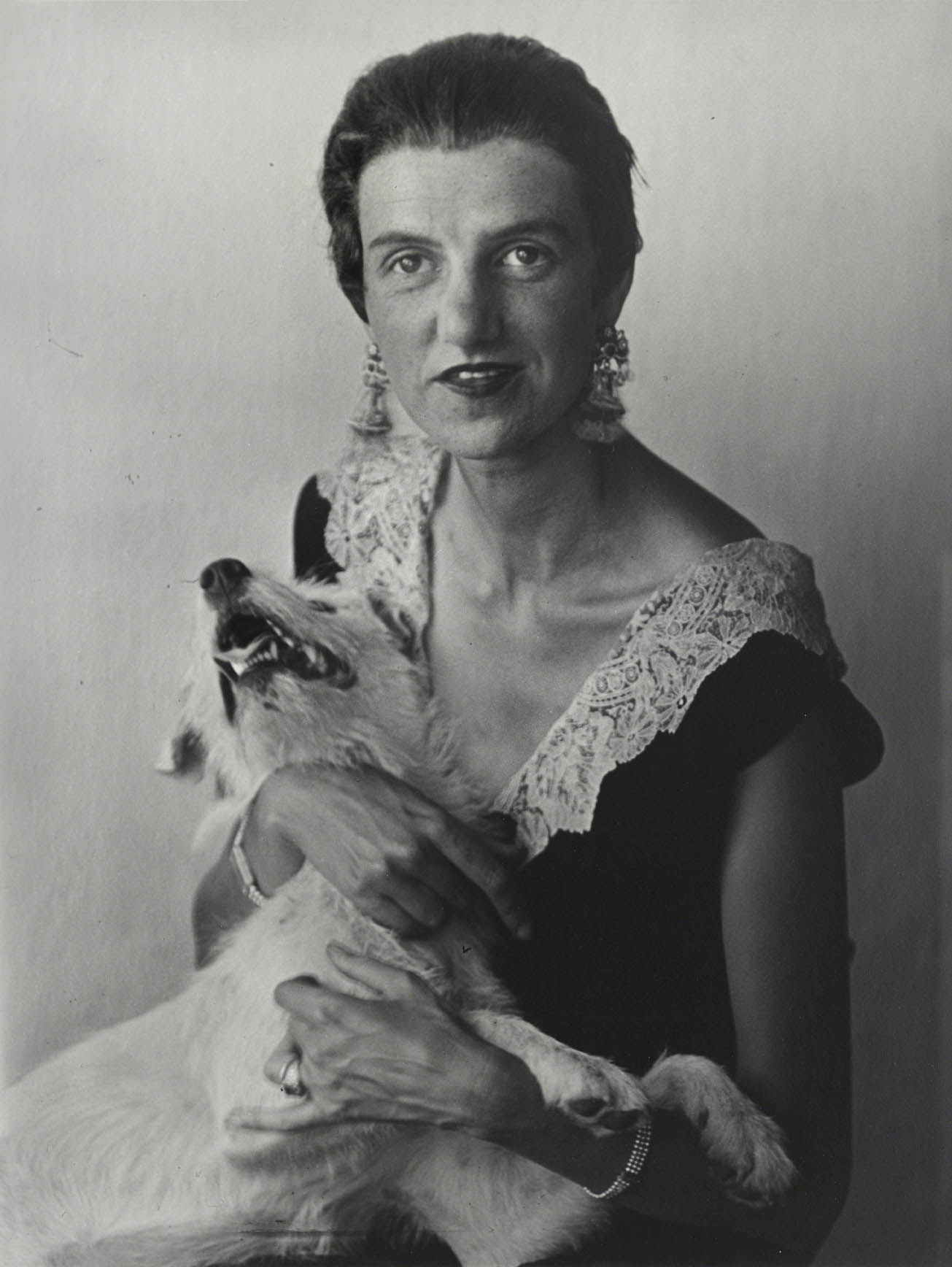
Patron and art lover, Peggy Guggenheim (New York, 1898 – Padova, 1979) was one of the most important collectors and promoters of avant-garde art of the 20th century. The daughter of Benjamin Guggenheim and Florette Seligman, and niece of Solomon R. Guggenheim, founder of the Guggenheim Museum in New York, she decided to move to Europe in 1921. In Paris she established relationships with Marcel Duchamp, Constantin Brancusi, and Djuna Barnes, among others. Later, she settled in London, where she opened her first gallery in 1938. Under the name Guggenheim Jeune, the gallery featured works by Vasili Kandinsky and Yves Tanguy. Prior to the Nazi occupation of France, Guggenheim returned to Paris and acquired some of the most important works in her collection, which she managed to take with her when she fled to the United States.

In 1942, once she had settled in New York, Guggenheim opened the Art of This Century Gallery on West 57th street. Aside from displaying her own collection, the space became a platform for young artists, among which were the women who took part in Exhibition by 31 Women.

THE EXHIBITION

In 1943 the renowned collector Peggy Guggenheim organised one of the first exhibitions dedicated exclusively to the work of European and North American women artists at her New York gallery Art of This Century. Titled Exhibition by 31 Women, the show was conceived by Guggenheim in collaboration with Marcel Duchamp. The selection of artists was carried out by a jury whose members included André Breton, Max Ernst, and Duchamp himself. As the only woman in the jury, Guggenheim was able to contribute a female perspective to the process. In the press release, the gallerist herself presented the exhibition as a “testimony to the fact that the creative ability of women is by no means restricted to the decorative vein, as could be deduced from the history of art by women throughout the ages.” Her objective was to present the work of these creators as independent artists, distancing them from the traditional roles they had been given as muses or models.

The list of works published for the exhibition did not contain photographs, only titles, which were often quite unspecific, such as “still life” or “composition”. With the exception of a few cases, it is difficult to ascertain which works were on display at 31 Women.

31 Women. An Exhibition by Peggy Guggenheim presents a selection and a reinterpretation of The 31 Women Collection repository; a collection created by the North American producer and collector Jenna Segal in 2020, featuring works by the same artists who participated in the historic exhibition of 1943.

Through this exhibition, Fundación MAPFRE aims to disseminate the work and vision conceived by Peggy Guggenheim at her New York Gallery, further breaking with the narrative that has often valued the contributions of women artists in terms of their relationships with male artists, while focusing more specifically on the networks of collaboration, solidarity, and friendship that were established between them. Associated mostly with Surrealism or abstraction, these women used said languages in an effort to reformulate and question them, maintaining their independence and highlighting the patriarchal precepts such movements were based on.

All of the works on display – close to forty – belong to The 31 Women Collection. Likewise, the exhibition also features photographs, publications, and other pieces; contextualising and complementing the show’s approximation to the scene of North American women artists of the time. Along with the exceptional loan from The 31 Women Collection, the exhibition is also supported by the Vitra Design Museum, the Lafuente Archive, and the Museo Nacional Centro de Arte Reina Sofía Documentation Center.

The exhibition discourse is articulated in different sections, the first of which introduces the viewer to the work carried out by Peggy Guggenheim at her Art of This Century gallery, and in particular her support of women artists of the time. The following sections pose an approximation to some of the main thematic axes and strategies explored by the creators featured in Exhibition by 31 Women, who sought to assert their independence and avoid clichés associated with the label “female artist” that were commonplace in the world of art at the time.

Art of This Century

In 1942 Peggy Guggenheim opened the Art of This Century gallery on the top floor of a building on West 57th Street in New York. Determined to create a space that would generate expectation, she hired the Austrian architect Frederick Kiesler, who designed custom furniture – one piece being featured in this exhibition – and projected a groundbreaking exhibition device to stimulate interactions between viewers and artworks.

The space had a profound impact on the artistic scene through a program of solo exhibitions that Guggenheim dedicated to numerous artists who would later become some of the most renowned creators of their time. The gallery also became an essential meeting point for European and North American avant-gardes. Among the most important initiatives developed by Guggenheim at her gallery were her support and promotion of the work of women artists, not only through group exhibitions, such as Exhibition by 31 Women and later The Women (1945), but also through the solo shows dedicated to some of the participants in said exhibitions, such as Sonja Sekula or Irene Rice Pereira.

The “Self” as Art

The role played by self-representation in the work of these artists was fundamental in their claim for independence and in their efforts to assert their identity versus traditional art historiography, in which women – when mentioned – appeared as secondary figures relegated to the roles of muses, wives, or companions of their male counterparts. Furthermore, in order to construct identities that were different to those assigned to them and escape from the gender roles imposed by the patriarchal society of the time, they adopted a number of languages that included autobiographical components, costumes, performances, and self-portraiture. This can be observed in works such as Woman in Armor I, by Leonor Fini, or Untitled (Self-Portrait), by Dorothea Tanning, for example.

In their quest to escape from social expectations and gender roles, self-representation became one of the creative strategies most widely adopted by women artists in the first half of the 20th century. Through elaborate costumes and extravagant make-up, which they wore in their daily lives or during improvised performances, Elsa von Freytag-Loringhoven and Leonor Fini constructed alternate identities that allowed them to elude the rigid female behavioral models determined by bourgeois ideology. Likewise, Hedda Sterne, Dorothea Tanning, and Meret Oppenheim spoke of their interest in blurring the boundaries of conventionally constructed identities through doubling, masquerades, and the confusion of reality against its reflection, which can be observed in their self-portraits. Similarly, Gypsy Rose Lee reinvented the genre of striptease – traditionally linked to popular culture – by challenging the contemporary understanding of the pose and of female nudes.

Elsa von Freytag-Loringhoven, Gypsy Rose Lee, and Leonora Carrington completed their self-creation work with the writing of their autobiographies, which seamlessly combined reality and invention. Writing novels about themselves allowed these artists to reflect on aspects of their past that might have been considered lurid – for instance, becoming the victim of rape by a group of men in Madrid as Carrington recounted in Down Below – or imagining alternative narratives of their lives. In similar fashion, Leonor Fini frequently took photographs of herself posing in black feather wigs and other props through which she fabricated imaginary personalities. Both Elsa von Freytag-Loringhoven and Gypsy Rose Lee, who had worked as dancers and strippers in burlesque shows and as professional models in art schools, were very aware of the need to take control of their own image, subverting the passive role that muses and female models still played within the avant-garde.


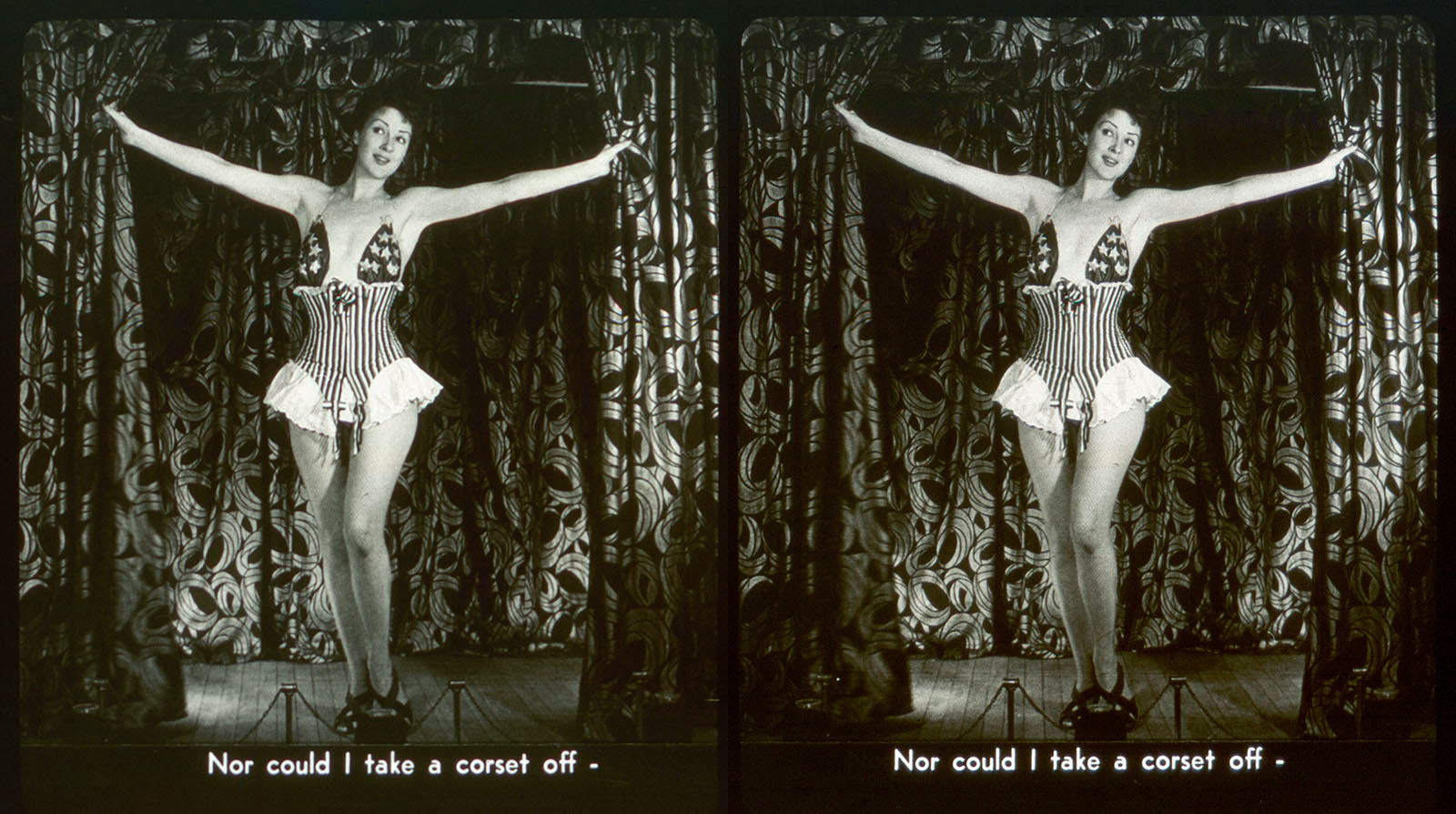
Gypsy Rose Lee (American, 1911-1970) 'Gypsy Rose Lee images for Tru-Vue stereoscope film: Striptease Stereoview #1306 Burlesque' 1933 (detail)


Gypsy Rose Lee (American, 1911-1970)
Gypsy Rose Lee images for Tru-Vue stereoscope film: Striptease Stereoview #1306 Burlesque (detail)
1933
Vintage Tru-Vue 16 pictures in film (13 of Gypsy Rose Lee)
The 31 Women Collection


Gypsy Rose Lee began performing as a stripper in burlesque shows and went on to appear in Broadway theaters. Her stripteases were greatly successful, allowing her to transform the genre. The fact that she talked while striping was truly groundbreaking and enabled her to draw attention away from the mere act of stripping, while presenting herself as a modern and entertaining woman. Likewise, her enunciation was unlike street slang: she recited with an outlandish high-class accent and incorporated phrases in French.

Short biography: Gypsy Rose Lee (1911-1970). Born under the name Rose Luise Hovick into a working-class family that performed in vaudeville theaters in Seattle, Washington, Gypsy Rose Lee began to work as a stripper in burlesque shows at the age of sixteen and went on to perform at important Broadway theaters. Her acts were enormously popular at the time, granting the genre respect and transforming it into something beyond the act of stripping. She began to collect works of art in the 1940s. Among such purchases were works by Max Ernst. This opened the doors to meetings with Peggy Guggenheim, who at that time was married to the German painter and would host the encounters at her house. In Exhibition by 31 Women, she exhibited a collage titled Self-Portrait. In 1957 Gypsy Rose Lee published her autobiography, culminating the life-long self-promotion and self-invention work that drove her entire career.


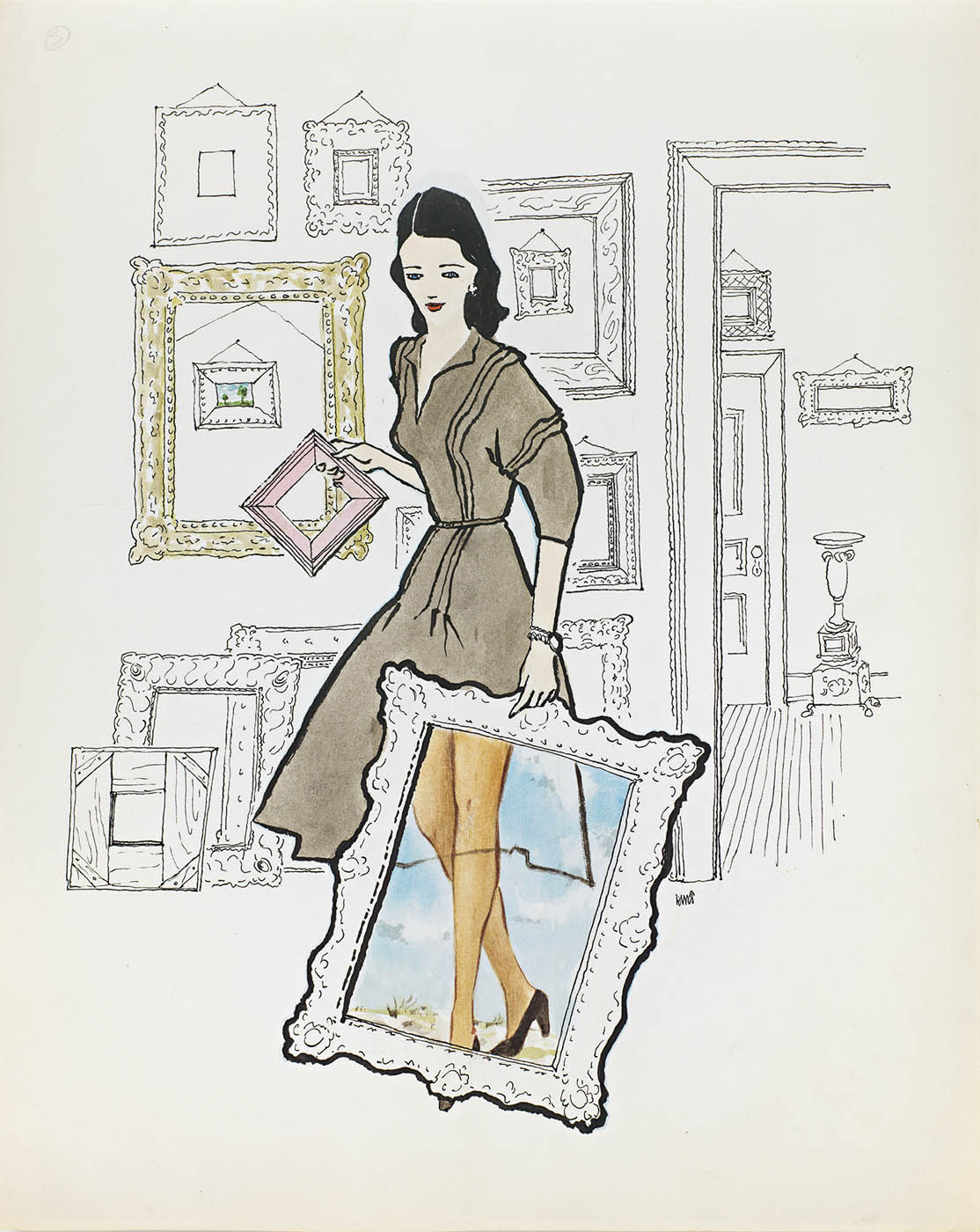
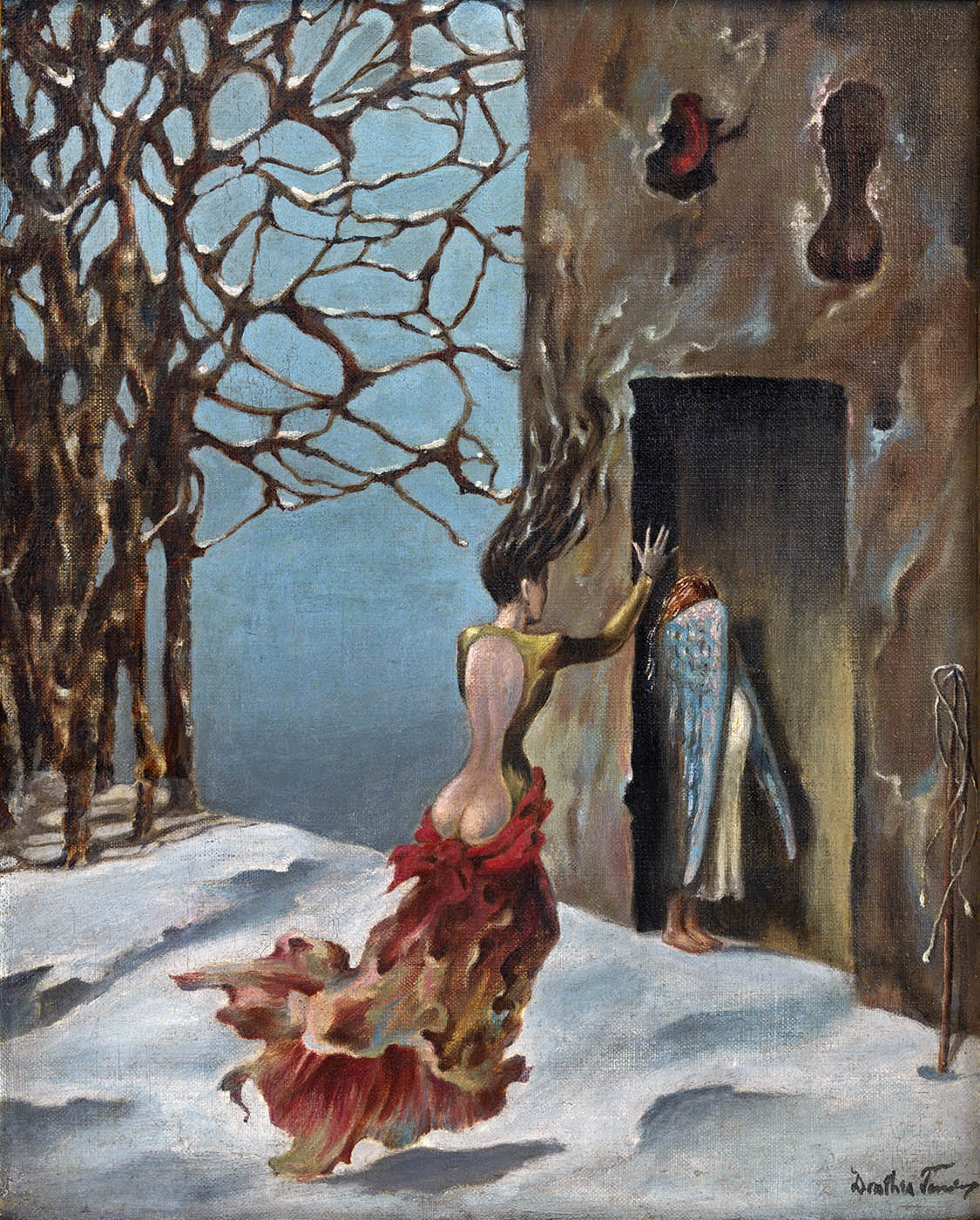
Dorothea Tanning (American, 1910-2012) 'Untitled (Self-Portrait)' c. 1940


Dorothea Tanning (American, 1910-2012)
Untitled (Self-Portrait)
c. 1940
Watercolour, ink and crayon on paper
36.5 x 29.2cm
The 31 Women Collection
© The estate of Dorothea Tanning, VEGAP, Madrid, 2024
© 2022-2024 JPS Artworks LLC


In this self-portrait from the early 1940s, Dorothea Tanning experimented with the limits of reality and representation. In a style akin to fashion figurines that often appeared in women’s magazines of the time, the artist portrayed herself in a room full of empty canvases. Her naked legs are reflected onto a framed glass that is pointed at the viewer, creating an impossible interplay of mirrors and altering the relationship between reality and reflection; inside and out.

Short biography: Dorothea Tanning (1910-2012). Born in a small town in Illinois, where she lived a solitary childhood, Dorothea Tanning developed an interest in dreams and fantasy since she was a child. After visiting Fantastic Art, Dada, Surrealism (1936) at MoMA, she felt attracted to Surrealism and travelled to Paris three years later with the objective of coming into contact with said group. Although she was forced to cut her stay short due to the outbreak of the war, the paintings she created upon her return to New York are proof of her strong Surrealist bias. In 1942, following the advice of gallerist Julien Levy, Max Ernst visited her studio and selected the works Birthday and Children’s Game for Exhibition by 31 Women. The visit also signified the beginning of a relationship between Tanning and Ernst, who separated from Peggy Guggenheim and married the artist in 1946. From the 1930s to the late 90s Tanning developed a prolific career. Her paintings, ballet designs, soft sculptures, and literary works reflect some of her recurring obsessions: the subversion of the bourgeoise domestic space, metamorphosis, the power of imagination, the gothic novel, and non-conventional images of girls and feminine figures.


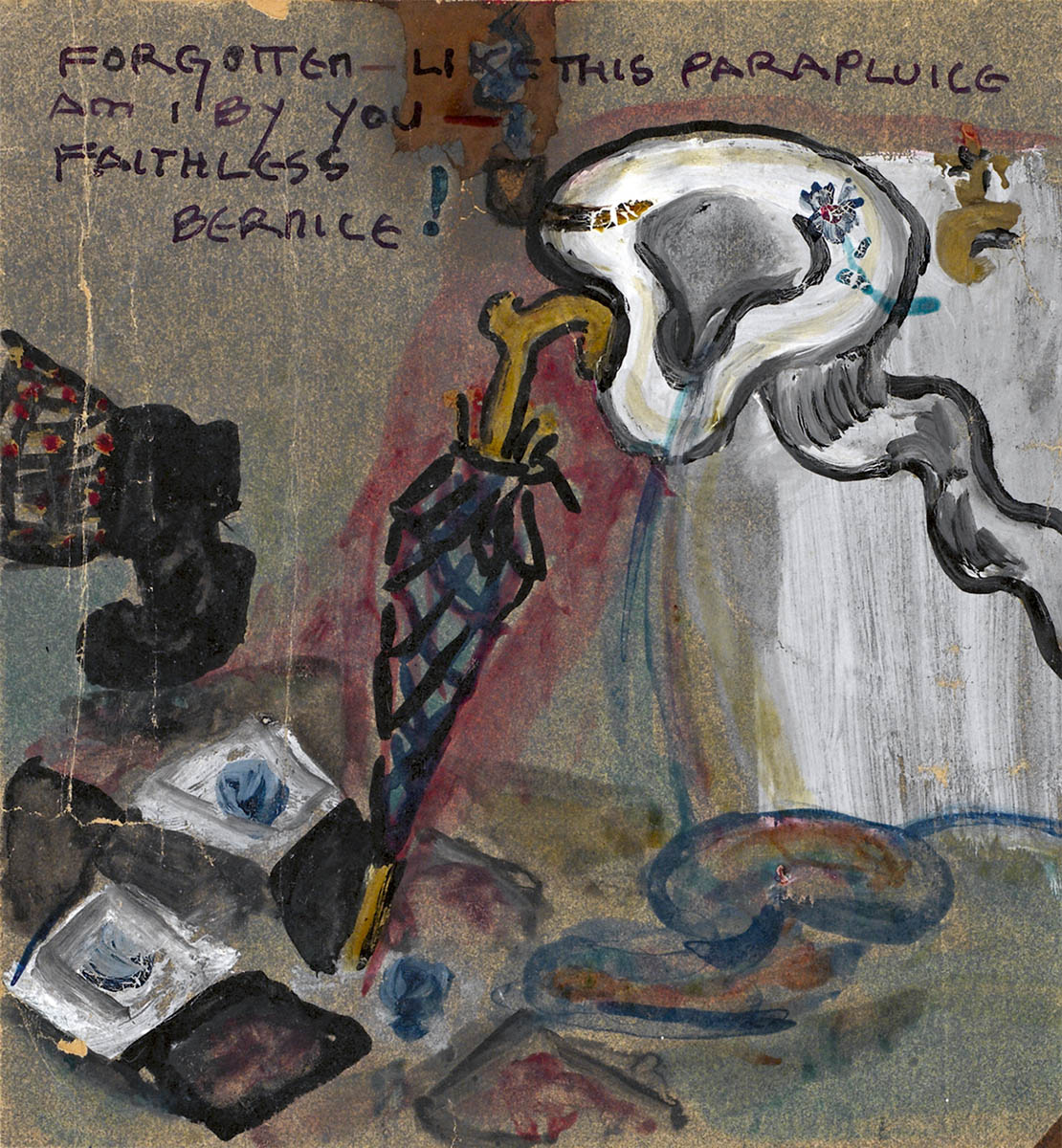
Elsa von Freytag-Loringhoven (German, 1874-1927) 'Forggtten Like This Parapluie Am I By You - Faithless Bernice!' 1923-1924


Elsa von Freytag-Loringhoven (German, 1874-1927)
Forggtten Like This Parapluie Am I By You – Faithless Bernice!
1923-1924
Gouache on foil
13 x 12cm
The 31 Women Collection
© 2022-2024 JPS Artworks LLC


The autobiographical component of this work has been linked to the closed umbrella, which lies uselessly at the center of the image and represents the loneliness felt by Elsa von Freytag-Loringhoven at a point when she had been abandoned by those who supported her both emotionally and financially. The treading foot that appears on the left of the composition symbolizes the passing of the years. The title of the work also expands on this notion, which is a direct interpellation to her friend and patron Berenice Abbott. On the other hand, the silhouette of the urinal alludes to the famous readymade by Marcel Duchamp, a work that a number of recent studies have attributed to Freytag-Loringhoven.

Short biography: Elsa von Freytag-Loringhoven (1874-1927). Born in Germany under the name Else Plötz, she became known as Else Endell, Else Greve, and finally Elsa von Freytag-Loringhoven through her numerous marriages over the course of several decades; evidence of her early interest in constructing herself as a character. At the age of eighteen she settled in Berlin, where she began to study art and worked as a variety artist and model. In 1913 she emigrated to New York and joined the Dadaist circle that gathered around the collectors Louise and Walter Arensberg. Elsa von Freytag’s work spanned several genres: poetry, autobiography, art, and artistic self-representation. Aside from producing sculptures with found elements, she used materials rescued from the streets and objects stolen from department stores to create costumes that she wore at Greenwich Village balls and during her walks through New York, combining them with striking make-up, extravagant hairdos, and other decorations. One of the objects she created with fragments from plumbing materials was on display at Exhibition by 31 Women. In 1923 she returned to Berlin and shortly after settled in Paris, where she scraped a living with the help of friends like Berenice Abbott and Djuna Barnes. She died under uncertain circumstances in 1927. Very few of her performances where documented and her work remained invisible to a great extent until the early 21st century. Some research suggests that she was the author of the famous readymade Fountain, considered one of Marcel Duchamp’s key works.


Strangely Familiar

In 1919 Freud coined the term unheimlich – which roughly translates into English as “ominous” or “uncanny”, and into French as “unsettling strangeness”. This aesthetic category, which is verging on beautiful, was adopted by the Surrealist movement and generally alludes to things that are familiar and attractive, but simultaneously produce a sense of unease and rejection. This is the underlying feeling in Gray Day (Sand Dunes), by Aline Meyer Liebman, or in the still lives by Meraud Guinness Guevara and Meret Oppenheim, which portray decontextualised familiar objects, provoking a sense of unease that is hard to explain. This sensation is accentuated in Spanish Customs by Dorothea Tanning and in Kay Sage’s The Fourteen Daggers, in which two mysterious figures covered in fabric seem to ascend a staircase to the sky.

Hence, Aline Meyer Liebman’s yellowish dunes are striking for their anthropomorphic forms, the Connecticut night sky appears as a fantastic explosion of flowers and stars in Jacqueline Lamba’s painting, and the viewer is unsettled by the incongruent characters and scenes that disrupt the peacefulness in Hazel McKinley and Pegeen Vail’s colourful landscapes. Furthermore, familiar objects seem to have lost their usual meaning in the puzzling dreamlike still lives by Meraud Guinness Guevara, Anne Harvey, Meret Oppenheim, and Gypsy Rose Lee, while Eyre de Lanux and Evelyn Wild’s rug designs combine primitivist and avant-garde elements that question the ideals of purity associated with modern domestic interiors. Kay Sage and Dorothea Tanning’s paintings are particularly unnerving as they transform the bourgeois house into a strange territory inhabited by ghostly figures and elongated shadows.


Dorothea Tanning (American, 1910-2012) 'Spanish Customs' 1943


Dorothea Tanning (American, 1910-2012)
Spanish Customs
1943
Oil on canvas
25.4 x 20.3cm
The 31 Women Collection
© The estate of Dorothéa Tanning, VEGAP, Madrid, 2024
© 2022-2024 JPS Artworks LLC


Meret Oppenheim (Swiss born Germany, 1913-1985) 'Souvenir of the Lunch in fur' 1936 / 1972


Meret Oppenheim (Swiss born Germany, 1913-1985)
Souvenir of the Lunch in fur
1936 / 1972
Fabric, paper, artificial fur and artificial flowers encased under glass
16.7 × 19.8cm
The 31 Women Collection
© Meret Oppenheim / VEGAP, Madrid, 2024
© 2022-2024 JPS Artworks LLC


Produced in 1972, this piece is a reinterpretation of one of Meret Oppenheim’s most renowned works, Déjeuner en Fourrure, which was on display for the first time in 1936 – the year it was produced – at an exhibition dedicated to Surrealist objects. The work garnered much recognition and was selected by Peggy Guggenheim for Exhibition by 31 Women. Dipleased by always seeing her name associated with this work, the artist wanted to make an ironic version of her infamous mug, recreating it with cheap materials: a perfect kitsch souvenir of the iconic work.

Short biography: Meret Oppenheim (1913-1985). Born in Berlin into a family of the liberal bourgeoisie, Meret Oppenheim studied at Rudolf Steiner’s school in Basel. Between 1932 and 1937 she spent much of her time in Paris, where she became close to the Surrealist movement. The photographs in which she posed for Man Ray and the enormous success of her objects – in particular Déjeuner en Fourrure [Breakfast with Furs] from 1936, acquired by MoMA and also on display at Exhibition by 31 Women – make her a Surrealist muse of sorts. Later, she expressed her irritation at seeing her name associated solely to that work and to Surrealism. In 1937 Oppenheim returned to Basel, where she battled depression and produced very little until 1954, when she resumed her artistic work with great impetus. Myths, dreams, literary sources, Jung’s psychoanalysis, gender roles, and social stereotyping were interwoven within her work, which also incorporated magical objects, poems, photographs, theatre costumes, and textile designs.


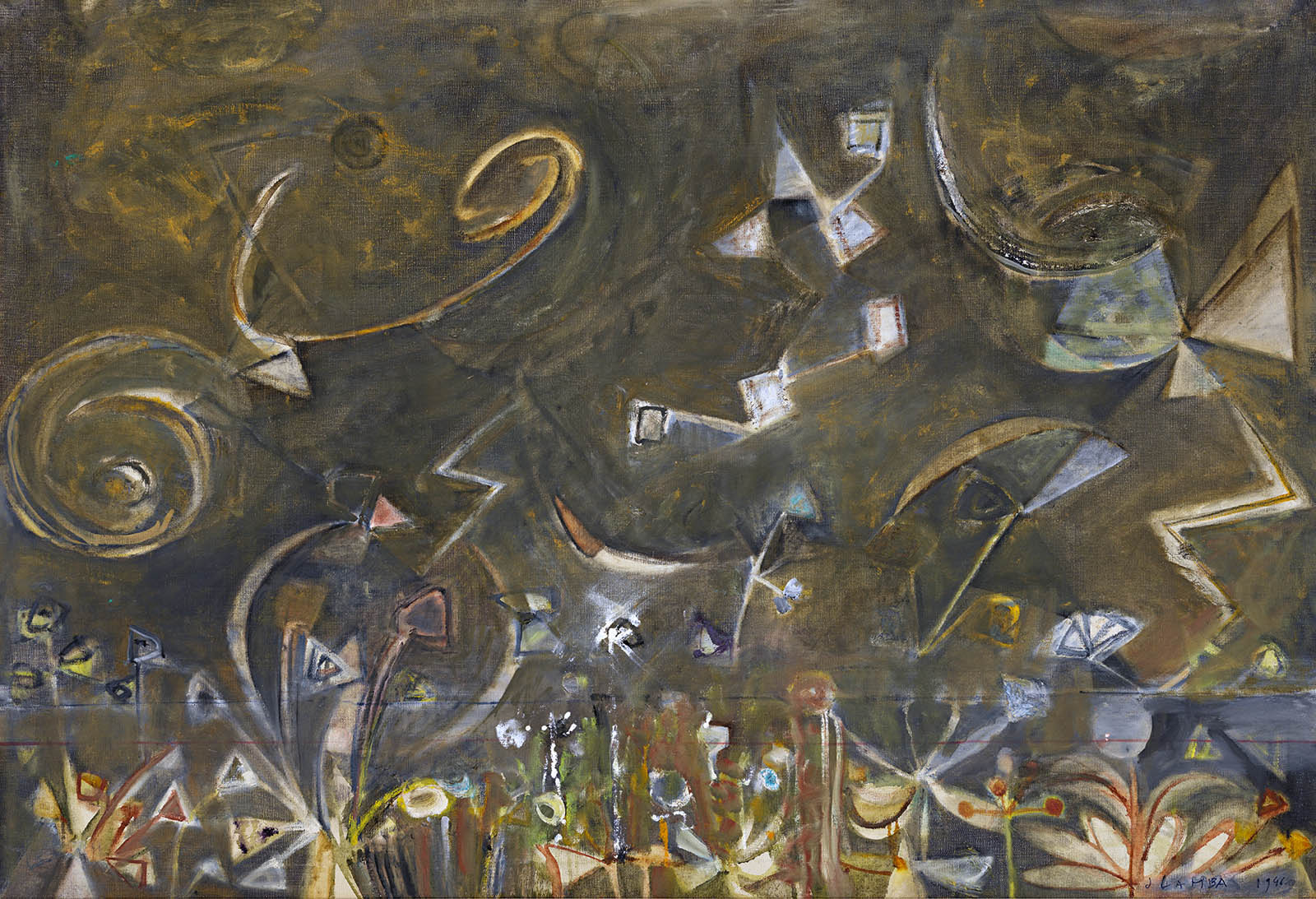
Jacqueline Lamba (French, 1910-1993) 'Roxbury, stars' 1946


Jacqueline Lamba (French, 1910-1993)
Roxbury, stars
1946
Oil on canvas
The 31 Women Collection
© Jacqueline Lamba, VEGAP, Madrid, 2024
© 2022-2024 JPS Artworks LLC


In the mid-1940s, Jacqueline Lamba and the North American Surrealist artist David Hare took a trip together through the western United States, where they came into contact with the cosmology and art of the indigenous peoples of North America. The typical brown colours of Amerindian fabrics dominate the palette of this canvas, in which Lamba portrayed the surroundings of her house in Roxbury and captured the unexpected reality that lies hidden behind a seemingly mundane landscape.

Short biography: Jacqueline Lamba (1910-1993). Born in France, Jacqueline Lamba spent her early years in Egypt, where her father – an engineer – passed away in a car accident in 1914. She returned to Paris with her mother and attended the École de l’Union Centrale des Arts Décoratifs. After the passing of her mother in 1927 Lamba survived with the meager wages she earned from her design work. Fascinated by André Breton’s Communicating Vessels, she began an intense and difficult romantic relationship with him. The couple married shortly after and had a daughter named Aube. Jacqueline Lamba always lamented being more recognised as Breton’s muse than for her collages, cadavre exquis, objects, and paintings, which would soon be on display at Surrealist exhibitions. In 1938 she travelled to Mexico with her husband. The couple was hosted by Diego Rivera and Frida Kahlo, whom she established a profound relationship with. Thanks to the patronage of Peggy Guggenheim, Lamba and Breton settled in New York in 1941 as they fled from the Nazis. Lamba exhibited her work at the inaugural show of the Art of This Century Gallery and participated in Exhibition by 31 Women. In 1944 she divorced Breton and began a relationship with David Hare. They settled in Connecticut in 1948 and had a son. Lamba lost interest in Surrealism and veered toward abstraction, focusing on the mythologies of indigenous populations from Mexico and the United Sates. In 1954, after separating from Hare, she returned to Paris and destroyed much of her prior work. She later confessed that she had first tried to please Breton and then Hare with her paintings, ensuring that she would only paint to please herself from that point onward. In 1967 the most comprehensive exhibition dedicated to her work in her lifetime was hosted at the Musée Picasso in Antibes.


Kay Sage (American, 1898-1963) 'The Fourteen Daggers' 1942


Kay Sage (American, 1898-1963)
The Fourteen Daggers
1942
Oil on canvas
40.6 × 33.3cm
The 31 Women Collection
© 2024 Estate of Kay Sage / VEGAP
© 2022-2024 JPS Artworks LLC


The conversion of domestic space into unusual territory reached its pinnacle in works such as this one. Sage imagined a bizarre interior space that opens up to a door behind which lies a staircase leading to the sky. The scene is inhabited by two ghostly figures covered in fabric that cast elongated shadows on the ground and accentuate the air of mystery. The motif of the open door reappears in Dorothea Tanning’s oil painting Spanish Customs, also on display in this room.

Short biography: Kay Sage (1898-1963). Born under the name Katherine Linn Sage into a wealth family from Albany, Kay Sage spent most of her childhood travelling through Europe with her mother, who had divorced her father in 1908. Although she never received a formal education, she went on to study at the Corcoran School of Art in Washington D. C. and at the British Academy in Rome, where she settled in 1920. Aside from coming into contact with the local artistic scene, Sage met Prince Ranieri di San Faustino, whom she married in 1925. During their ten years as a married couple, Sage dedicated little time to art. In 1937 she moved to Paris, where she came into contact with the members of the Surrealist group and began a romantic relationship with the painter Yves Tanguy, whom she married in 1941. With the outbreak of World War II, the couple migrated to Connecticut, where they would reside for the following years. During that period Sage developed her own style: uninhabited landscapes intersected by austere architectural forms, shadows, and floating fabrics that are simultaneously recognisable and enigmatic. Peggy Guggenheim selected her painting from 1942 At the Appointed Time – today preserved at the Newark Museum of Art – for Exhibition by 31 Women. In 1955 Tanguy died suddenly. This event led Sage into depression. Coupled with eyesight problems, she drifted away from painting. In the late 1950s she began to produce collages and write poetry. However, in January of 1963 Sage took her own life.


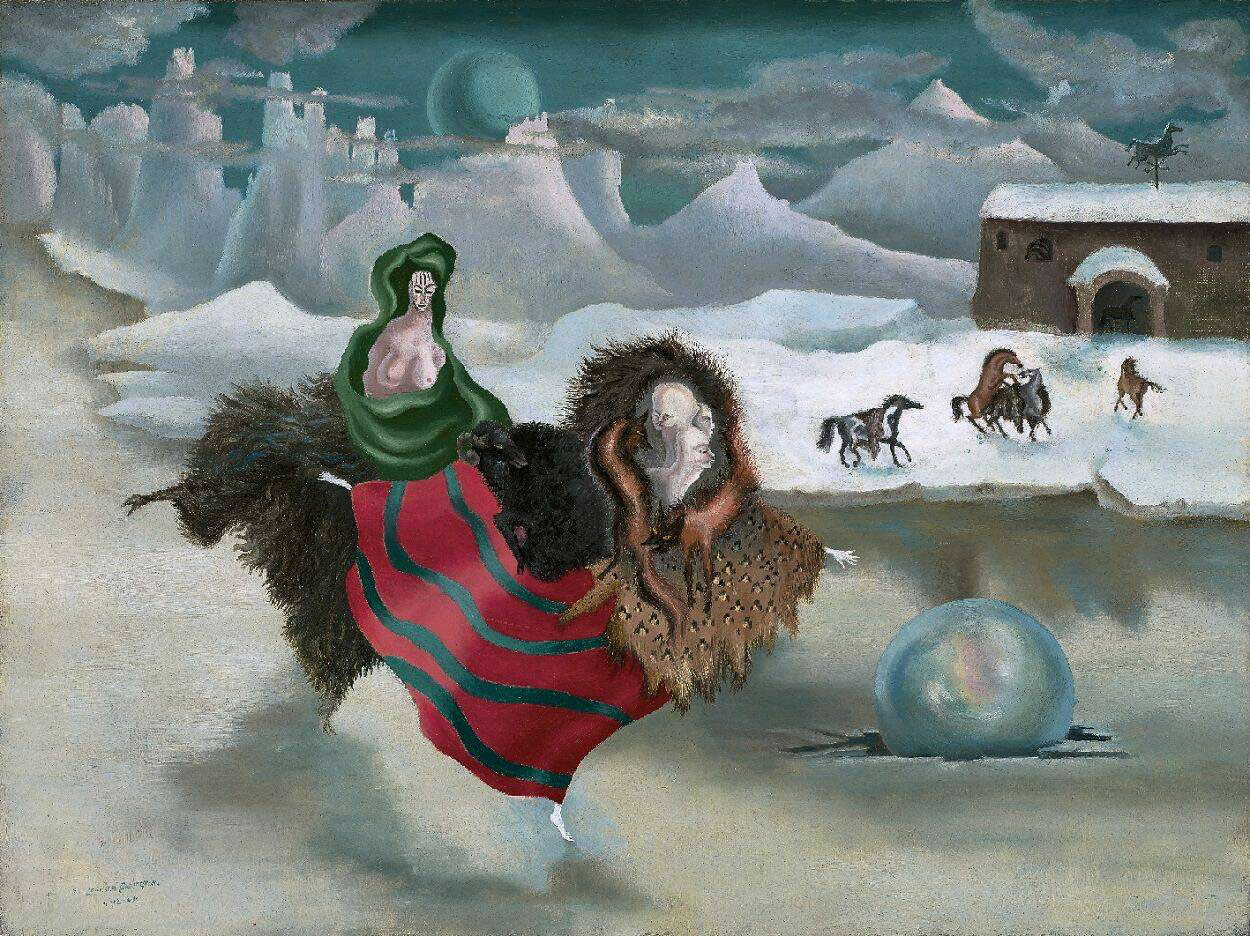
Bestiaries

Many of the artists featured in this exhibition – particularly those whose works are more closely linked with Surrealism – experimented with multiple personalities, which led them to identify themselves with animals that became their alter egos. As noted by Patricia Mayayo, curator of the show, “the animals embodied the search for other mythical or imaginary worlds where they could finally be free”. Hence, the female body is transformed into an eagle, a crow, or a deer in the works of Barbara Poe-Levee Reis, Milena Pavlovic-Barilli, Julia Thecla, and Frida Kahlo, while in Leonora Carrington’s The Horses of Lord Candlestick, the horse simultaneously embodies the dreaded paternal figure and the artist herself.

Women artists close to Surrealism granted particular importance to the representation of animals. Such is the case with works by Barbara Poe-Levee Reis and Milena Pavlovic-Barilli, in which animals often inhabited fictional landscapes or mythical worlds where women could imagine themselves freed from patriarchal norms. Likewise, in works by Julia Thecla, Frida Kahlo, and Leonor Fini, the depiction of women’s bodies being transformed into crows, deer, and cats refers to an alternate reality in which humans and animals are hybridized. Djuna Barnes imagined a collection of grotesque women with animal-like traits that challenged normative understandings of the feminine in an illustrated book of poems published in 1915. Valentine Hugo was inspired by the animals of the zodiac when designing costumes for a theatrical performance that took place at the Théâtre Champs-Elysées in Paris. Lastly, in Leonora Carrington’s painting, the horse appears as a more ambivalent figure that simultaneously embodies patriarchal authority and the liberation of women.

Since the 1930s, women had a growing presence in Surrealist initiatives. For example, in 1936 Leonor Fini, Valentine Hugo, Meret Oppenheim, and Sophie Taeuber-Arp participated in the exhibition Art, Dada, Surrealism hosted at MoMA. Six years later, Leonora Carrington and Kay Sage exhibited their work at First Papers of Surrealism, organised by André Breton and Marcel Duchamp in New York . Women also collaborated on the movement’s publications, either as authors or as illustrators; an example of which includes the series of eighteen drawings that Hugo produced in 1951 for Paul Éluard’s book of poems Le Phénix. Peggy Guggenheim’s work as a patron undoubtedly helped to reinforce female participation. Many of the artists included in the exhibition of 1943 had attended the meetings between North Americans and exiled Europeans organised by the collector at her house in New York. Some of the works on display at 31 Women were reproduced in the double issue of the Surrealist magazine VVV in 1943; an acknowledgement that most likely contributed to the show’s repercussion.


Valentine Hugo (French, 1887-1968) 'Fish. Costume project for the Théâtre des Champs-Elysées, Paris' 1950


Valentine Hugo (French, 1887-1968)
Fish. Costume project for the Théâtre des Champs-Elysées, Paris
1950
Pastel sobre papel negro
28.5 × 16cm
The 31 Women Collection
© Valentine Hugo, VEGAP, Madrid, 2024
© 2022-2024 JPS Artworks LLC


Short biography: Valentine Hugo (1887-1968). Born in Boulogne-sur-Mer under the name Valentine Gross, Valentine Hugo possessed a natural talent for drawing since her childhood. She studied at the École des Beaux-Arts in Paris, produced illustrations for fashion magazines, and frequently attended Diaghilev’s Ballets Russes. Inspired by the subject of dance, her drawings and paintings were on display at the Thèatre des Champs-Elysées in 1913. A friend of Erik Satie and Jean Cocteau, she also collaborated she also collaborated on thaeatrical sets and designs with Jean Hugo, her husband at the time. In 1926 she met André Breton – whom she would establish a short-lived romantic relationship with – and joined the circle of Surrealists. She participated in the exhibition Fantastic Art, Dada, Surrealism (MoMA, 1936), in the development of numerous cadavre exquis, and the illustration of Surrealist books. The influence of Surrealism can be perceived in her constructions, which are based on the unexpected encounter with objects and materials, as well as in the importance she grants to motifs such as dreams, night-time atmospheres, the marvelous, and ghostly apparitions. The drawing that was featured at Exhibition by 31 Women – which has since been lost – was poignantly titled Dream of 17/1/34. Hugo remained in France during the war, after which she focused on illustration, writing books of poems, and the production of theater costumes and sets.


Leonor Fini (Argentine-Italian, 1907-1996) 'Woman in Armor I' 1938


Leonor Fini (Argentine-Italian, 1907-1996)
Woman in Armor I
1938
Oil on canvas
37 x 27cm
The 31 Women Collection
© Leonor Fini, VEGAP, Madrid, 2024
© 2022-2024 JPS Artworks LLC


Short biography: Leonor Fini (1907-1996). Born in Argentina into a family marked by a dominant father, Leonor Fini fled with her mother to Trieste, Italy, when she was still a young girl. Fini taught herself art. At the age of seventeen she left the family home and moved to Milan and later to Paris, where her interest in the world of dreams and the unconscious led her to come into contact with the Surrealists. Although she was not officially part of the group, she participated in important Surrealist exhibitions such as Fantastic Art, Dada, Surrealism at MoMA in 1936. Hybrid figures such as the sphynx dominate her paintings, a motif she also explored through costumes and self-representation. The painting that was on display at Exhibition by 31 Women was in fact titled The Shepherdess of the Sphinxes. During the war she remained in Europe. Between 1944 and 1972, aside from continuing to paint, she focused intensely on the design of theatrical costumes and sets.


Milena Pavlovic-Barilli (Serbian, 1909-1945) 'Juno and Vulcan' 1936


Milena Pavlovic-Barilli (Serbian, 1909-1945)
Juno and Vulcan
1936
Oil on canvas
95.3 × 64.8cm
The 31 Women Collection
© 2022-2024 JPS Artworks LLC


The painting by Pavlovic draws from various sources: Mannerist art from the 16th century, Magical Realism, and Surrealism. It also incorporates motifs and mythical figures from classical antiquity, such as the Roman goddess Juno and her son Vulcan, protagonists of this canvas. The use of diluted colours, the impression that the characters are floating in space, and the apparently incongruent combination of a wide range of elements (the eagle, the piano, the wheel, the drapery, the bouquet of flowers, and the mirror) grant this painting a dreamlike and mysterious atmosphere.

Short biography: Milena Pavlovic-Barilli (1909-1945). Born in Serbia into a family with artistic inclinations, Milena Pavlovic-Barilli studied art in Munich between 1926 and 1928. There she was introduced to painting, fashion illustration, and drawing, creating an iconography based on stylised figures and wavy lines in which the influence of Art Nouveau is combined with echoes of orient. In 1931 she settled in Paris, where she came into contact with figures of Surrealism, such as André Breton, Jean Cocteau, and Paul Valéry. Regardless, her work drifted into a style that critics considered closer to Magical Realism. Everyday life was fused with fantasy in her paintings, while space was filled with enigmatic symbols: ancient columns that levitate, veiled faces of women, winged youths painted in pale hues, all of which grants her work a supernatural feel. She lived in New York between 1939 and 1945, where she focused on fashion illustration and costume and set designs for the theater. Her paintings, populated with elongated figures in architectural environments that seem rooted in the Renaissance, reflect her admiration for Mannerism. In 1940 she exhibited her work at the Julien Levy Gallery and established ties with the group of Surrealist immigrants. Her work Insomnia (1942) – which has since been lost – was on display at Exhibition by 31 Women. Her premature death in an accident in 1945 cut her career shot. In 1962 the Milena Pavlovic-Barilli Museum opened its doors at the house where she was born. The museum includes a broad selection of her paintings, drawings, letters, and personal objects.


Leonora Carrington (Mexican born United Kingdom, 1917-2011) 'The Horses of Lord Candlestick' 1938


Leonora Carrington (Mexican born United Kingdom, 1917-2011)
The Horses of Lord Candlestick
1938
Oil on canvas
35.5 ×46cm
The 31 Women Collection
© 2024 Estate of Leonora Carrington / VEGAP
© 2022-2024 JPS Artworks LLC


Short biography: Leonora Carrington (1917-2011). Born into a wealthy English family, Leonora Carrington was fascinated by fairy tales and fantasy literature since she was a young girl. She studied art in Florence, Paris, and London under the guidance of Amédée Ozenfant. Her first works recreate legendary worlds populated by hybrid animal species and powerful female figures. In 1936 she discovered Surrealism during a visit to the International Surrealist Exhibition. Two years later she settled in the south of France with Max Ernst – whom she had established a relationship with – in an old house that the couple transformed into a work of total art. Carrington began to publish her first books containing short stories. In 1940, after the outbreak of the war and the arrest of Max Ernst, she fled to Madrid, where she became the victim of rape and was subsequently admitted to a psychiatric hospital in Santander; she would recount this experience in her book Down Below. After managing to migrate to New York in 1941 she participated in a number of initiatives promoted by exiled Surrealists, such as the exhibition First Papers of Surrealism and the magazine VVV. Peggy Guggenheim included two of her works The Horses of Lord Candlestick (1938, above) and the Joy of Skating (1941, below) in Exhibition by 31 Women. In 1943 Carrington settled in Mexico, where she would live until her death. She integrated into the community of exiled artists along with Kati Horna, Remedios Varo, and Benjamin Péret. Her paintings re-elaborated old themes and she delved into new ones: fantasy literature, female divinities, alchemy, magic, and Mexican mythologies.


Leonora Carrington (Mexican born United Kingdom, 1917-2011) 'Joy of Skating' 1941


Leonora Carrington (Mexican born United Kingdom, 1917-2011)
Joy of Skating
1941
Oil on canvas
© 2024 Estate of Leonora Carrington / VEGAP


Djuna Barnes (American, 1892-1982) 'The Book of Repulsive Women, 4th image in the 1st edition' 1915


Djuna Barnes (American, 1892-1982)
The Book of Repulsive Women, 4th image in the 1st edition
1915
The 31 Women Collection


In the modern age of Taylorism and Fordism, women played a vital role in the functioning of the American system by efficiently arranging domestic life with a precision similar to that of the nation’s industry. In contrast with this mechanical monotony, Barnes imagined the “repulsive women” that appear in her poems and drawings as the antithesis of the model housewife. Some of these figures, such as the woman with donkey ears and animal-like features that can be observed in one of her illustrations, manage to question the very the boundaries of humanity.

Short biography: Djuna Barnes (1892-1982). Born in a colony of artists north of New York, Djuna Barnes studied art at the Pratt Institute and at the Art Students League. In 1915 she settled in the bohemian neighborhood of Greenwich Village, where she began her career as an artist and a writer. That same year she published The Book of Repulsive Women, a collection of poems that included her own illustrations, and began to work as a journalist. Best known for her experimental novel from 1936, Nightwood, Barnes cultivated all genres: narrative, poetry, theater, and journalism. In 1921 she moved to Paris, where she began a romantic relationship with the sculptor Thelma Wood and began to frequent the avant-garde circles of the Rive Gauche, establishing friendships with Gertrude Stein, Berenice Abbott, Natalie Clifford Barney, Elsa von Freytag-Loringhoven, and Peggy Guggenheim herself. With the outbreak of World War II, she moved back to New York, where her work Portrait of Alice was put on display at Exhibition by 31 Women. 


The Middle Way: Languages of Abstraction

Although many of the artists who participated in 31 Women fell within the sphere of influence of Surrealism, some of them were more inclined toward abstract languages. In the 1930s the North American art scene was dominated by social realism and regionalism. In an effort to promote abstraction, the association American Abstract Artists (AAA) was founded, an association which included members such as Suzy Frelinghuysen, Louise Nevelson, Irene Rice Pereira, and Esphyr Slobodkina. Abstraction began to progressively dominate the artistic landscape of North America and was configured in a way that highlighted the ideal of masculinity, whose epitome was Jackson Pollock. In the face of a discourse that hailed the language of expressionism as a reflection of the North American male, many of these artists opted to explore a “middle way” that could account for all of the possibilities afforded by abstraction. A great example of this can be found in The Middle Way / The Great Mother Rules the Sky (Astor Mural) by Buffie Johnson.

The association American Abstract Artists (AAA) was founded in 1936 with the objective of fostering the development of abstraction in the United States. It included members such as Suzy Frelinghuysen, Louise Nevelson, Irene Rice Pereira, and Esphyr Slobodkina. It is no coincidence that Slobodkina was one of the artists included by Ad Reinhardt in his vignette “How to Look at Modern Art in America” (1946), in which he traced the family tree of North American modern art. Other creators participated in key initiatives for the renovation of abstract practice in the United States, such as Gretchen Schoeninger, who attended the experimental art school New Bauhaus, founded by László Moholy-Nagy – a former professor at the historic German Bauhaus – in Chicago in 1947. Regardless, few artists who took part in 31 Women occupy an important place in the dominant narratives of North American abstract art. As Xenia Cage jokingly suggested in a collage produced from one of Jackson Pollock’s action paintings, perhaps the value of these artist’s works is compromised by the strong exaltation of masculinity, which at the time was characteristic of discourse. Buffie Johnson became aware of the marginalisation suffered by women in Abstract Expressionist circles early on. In the 1940s, determined to give value to female legacies, she undertook a research project on the imagery of the goddess mothers of antiquity, culminating in a book published in 1988.

The exhibition concludes with a relationship map detailing the connections established between the thirty-one artists who participated in the exhibition and Peggy Guggenheim. By highlighting the network of professional and personal links they constructed, the chart depicts the important role these artists played as agents in the art scene of the time beyond traditional conceptions of women artists as supporting characters.


Suzy Frelinghuysen (American, 1911-1988) 'Untitled (Brahms Abstract)' 1945


Suzy Frelinghuysen (American, 1911-1988)
Untitled (Brahms Abstract)
1945
Oil and collage on Masonite


Suzy Frelinghuysen was part of the group of artists known as The Park Avenue Cubists, who proposed a reinterpretation of European Cubist heritage from a North American perspective. In her works, Frelinghuysen combined the influence of Synthetic Cubism, which she expanded on through the use of blue, lavender, and rusty hues, with constant references to the world of music; a field in which the artist also excelled as an opera singer.

Short biography: Suzy Frelinghuysen (1911-1988). Born into a wealthy family from Newark, New Jersey, Suzy Frelinghuysen was part of the group of artists knowns as The Park Avenue Cubists, along with Albert Eugene Gallatin, Charles G. Shaw, and George L. K. Morris – whom she married in 1935 – who advocated for a reinterpretation of European Cubist heritage from a North American perspective. In 1937 Frelinghuysen joined the association American Abstract Artists (AAA), founded in an effort to promote the development of abstract art in the United States, whose members included Louise Nevelson, Irene Rice Pereira, and Esphyr Slobodkina. After the war she temporarily quit art to focus on music, becoming a renowned opera singer. In her work, which was included in important group shows such as Exhibition by 31 Women, the influence of Synthetic Cubism was combined with constant references to the world of music.


Esphyr Slobodkina (American born Russia, 1908-2002) 'Peacock Garden' 1938


Esphyr Slobodkina (American born Russia, 1908-2002)
Peacock Garden
1938
Oil on board


From the late 1930s, Slobodkina developed a style of her own based on the poetic combination of curved forms painted in lyrical hues. Along with the influence of Cubism and the technique of collage, the artist also demonstrated her interest in sewing and working with scraps, which she learned from her mother, a professional seamstress. One of the defining traits of her work was its interdisciplinary nature: aside from painting, Slobodkina created assemblages, produced murals, illustrated children’s books, and designed costumes and jewellery.

Short biography: Esphyr Slobodkina (1908-2002). Originally from Siberia, Esphyr Slobodkina moved to Manchuria with her family in order to escape from the Soviet Revolution. Since she was a child, she studied in the fields of art and music. In 1928 she moved to New York on her own, where she continued her studies at the National Academy of Design. From the late 1930s she developed her own style based on a combination of wavy forms in lyrical tones that, along with the influence of Cubism and collage, reflect her interest in the tradition of decorative arts from her native country. Her work stands out for its interdisciplinary nature: aside from painting, Slobodkina focused on assemblage, murals, the illustration of children’s books, and on jewelry and costume design. As one of the founders of the association American Abstract Artists (AAA), which she presided – also acting as treasurer and secretary – Slobodkina played an important role in the promotion of abstraction in the United States. Alfred H. Barr, director of MoMA, recommended her work to Peggy Guggenheim, who decided to include Memories (1942) – which has since been lost – in Exhibition by 31 Women.


Buffie Johnson (American, 1912-2006) 'The Middle Way / The Great Mother Rules the Sky (Astor Mural)' 1949-1959


Buffie Johnson (American, 1912-2006)
The Middle Way / The Great Mother Rules the Sky (Astor Mural)
1949-1959
Oil on canvas
124.5 × 152.4cm
The 31 Women Collection
© Estate of Buffie Johnson


Between 1949 and 1959, Buffie Johnson produced what is considered one of her most important works: a great mural intended to decorate the Astor Theater in New York. This project was a true challenge for all those who negated women’s ability to create large format paintings. Thanks to the recovery of the mural by part of the Women’s Caucus prior to the theater’s demolition in 1982, some fragments, such as the one on display in this exhibition, are today part of public and private collections.

Short biography: Buffie Johnson (1912-2006). Born in New York, Buffie Johnson studied art at the University of Los Angeles. She later spent two years in Paris, where she established a friendship with Sonia Delaunay and other painters of the Parisian avant-garde. After completing her studies at the Académie Julian, she settled in New York in 1939. Johnson began to frequent several artistic circles, such as Peggy Guggenheim’s, who invited her to participate in Exhibition by 31 Women with the painting Déjeuner sur mer (1942). Outraged by the response of a Time Magazine critic who refused to review the exhibition arguing that he had never heard of outstanding women creators, Johnson attempted to publish an article on women artists that was rejected by several art magazines. This experience entailed the first awakening of her feminist consciousness. During the 1950s her work pivoted toward Abstract Expressionism. In parallel to her artistic career, she received a grant to study the imagery of the goddess mothers of antiquity, a work she would publish in 1988. Johnson’s early interest in the matriarchal tradition, which would also be reflected in many of her paintings, was embraced by second wave feminism in the late 1960s; a movement the artist would be actively involved in.


Sophie Taeuber-Arp (Swiss, 1889-1943) and Jean (Hans) Arp (German-French, 1886-1966) 'Vertical-Horizontal Composition [Conceived by Sophie Taeuber-Arp and executed in relief by Jean Arp]' 1927-1928 / 1943-1956


Sophie Taeuber-Arp (Swiss, 1889-1943) and Jean (Hans) Arp (German-French, 1886-1966)
Vertical-Horizontal Composition [Conceived by Sophie Taeuber-Arp and executed in relief by Jean Arp]
1927-1928 / 1943-1956
Oil on wood relief mounted on pavatex
The 31 Women Collection
© Arp Jean / Hans Arp, VEGAP, Madrid, 2024
© 2022-2024 JPS Artworks LLC


Sophie Taeuber-Arp produced works that were marked by the dissolution of artistic hierarchies and were very much her own. She experimented with painting, dance, sculpture, tapestry design, and puppet making. Vertical-Horizontal Composition might be related to the designs that the artist produced for the Café Aubette in Strasbourg. Taeuber-Arp’s protagonism in this work of total art, conceived on the basis of a dialogue between different artistic disciplines, has nevertheless been overshadowed by Jean Arp and Theo Van Doesburg’s participation in the project.

Short biography: Sophie Taeuber-Arp (1889-1943). Born in the Alpine city of Davos, Sophie Taeuber-Arp studied in Munich and Hamburg, where she absorbed the ideals of artistic fusion from the Arts and Crafts movement. She moved to Zurich during the outbreak of World War I and became involved in the Dada movement along with her future husband Hans Arp. She taught arts and crafts at the Zurich School of Commerce – a job that would support the couple for the following years – while attending expressive dance classes under Rudolf von Laban. She developed a style of work very much of her own, marked by the dissolution of artistic hierarchies. Taeuber-Arp experimented with painting, dance, furniture design, tapestries, interior design, and the construction of puppets and assemblages. In 1929 she quit teaching and moved to a house on the outskirts of Paris with her husband. Like other creators linked to non-objective art, she reacted to the push of Surrealism by becoming involved in associations such as Cercle et Carré and Abstraction-Création. In 1941 the couple left Paris fleeing from the arrival of the Nazis. They stayed at Peggy Guggenheim’s house in Veyrier for a few days before heading to the south of France. They decided not to leave Europe and sought refuge in Zurich. In 1943 Taeuber-Arp died in Zurich due to accidental poisoning from a heater.


Catalogue

Along with the reproduction of works on display and other materials within the exhibition, the catalogue includes an essay by Patricia Mayayo, curator of the show and professor of Art History at the Universidad Autónoma in Madrid, and a text by Lekha Hileman Waitoller, curator at the Guggenheim Museum in Bilbao. The publication also includes a succinct biography of each artist and a relationship map depicting the connections between Peggy Guggenheim and the artists featured in Exhibition by 31 Women.


Meret Oppenheim (Swiss born Germany, 1913-1985) 'Untitled (Helene Mayer)' 1936


Meret Oppenheim (Swiss born Germany, 1913-1985)
Untitled (Helene Mayer)
1936
The 31 Women Collection


Helene Julie Mayer (1910-1953) was a German-born fencer who won the gold medal at the 1928 Olympics in Amsterdam, and the silver medal at the 1936 Olympics in Berlin. She competed for Nazi Germany in Berlin, despite having been forced to leave Germany in 1935 and resettle in the United States because she was of Jewish descent.


Hedda Sterne (American born Romania, 1910-2011) 'Self Portrait' 1936-1939


Hedda Sterne (American born Romania, 1910-2011)
Self Portrait
1936-1939
The 31 Women Collection


Short biography: Hedda Sterne (1910-2011). Born in Bucharest, Romania, under the name Hedwig Lindenberg, Hedda Sterne came into contact with her city’s Dada and Constructivist scenes from a young age. In 1928 she moved to Vienna and later to Paris, where she continued her studies attending the Académie de la Grande Chaumière and the studios of Fernand Léger and André Lhote. The following year she began to study philosophy and art history at the University of Bucharest. In 1932 she married her classmate Frederick Stern, whom she separated from a few years later. She came into contact with Parisian Surrealism through Romanian Surrealist Victor Brauner, which would greatly influence her early work. Thanks to recommendations by Brauner and Jean Arp, Peggy Guggenheim included several of Sterne’s collages in a group exhibition at her Guggenheim Jeune gallery in London. In 1941 she settled in New York, in an apartment close to Guggenheim’s mansion, who invited her to participate in her meetings of “exiled Surrealists” and included her work in Exhibition by 31 Women and The Women. Sterne also participated in important Surrealist exhibitions such as First Papers of Surrealism (1942). After the war she joined the Betty Parsons gallery, taking part in the circles of Abstract Expressionism. She was the only woman present in the famous image of the North American abstraction group “The Irascibles”, published in Life Magazine in 1951. Sterne would later express her discomfort in being more famous for her presence in said photograph than for her extensive career.


Peggy Guggenheim (1898-1979) in the entrance hall of her eighteenth century Venetian palace


Peggy Guggenheim (1898-1979) in the entrance hall of her eighteenth century Venetian palace. Hanging from the ceiling is a 1941 Alexander Calder mobile and behind her is a 1937 painting by Picasso titled On The Beach.
The 31 Women Collection
Photo: Keystone Features/Getty Images


Berenice Abbott (American, 1898-1991) 'Peggy Guggenheim' 1926


Berenice Abbott (American, 1898-1991)
Peggy Guggenheim
1926
Gelatin Silver Print
The 31 Women Collection
© 2024 Estate of Berenice Abbott


Berenice Abbott (American, 1898-1991) [attributed to] 'Peggy Guggenheim poses at her Art of This Century Gallery in New York, October 22, 1942'


Berenice Abbott (American, 1898-1991) [attributed to]
Peggy Guggenheim poses at her Art of This Century Gallery in New York, October 22, 1942
© AP Photo / Tom Fitzsimmons
© 2024 Estate of Berenice Abbott


Fundación MAPFRE
Recoletos Exhibition Hall
Paseo Recoletos 23, 28004 Madrid

Opening hours:
Mondays (except holidays): 2pm – 8pm
Tuesday to Saturday: 11am – 8pm
Sunday and holidays: 11am – 7pm

Fundación MAPFRE website

LIKE ART BLART ON FACEBOOK

Back to top

Exhibition: ‘Photo-Secession: Painterly Masterworks of Turn-of-the-Century Photography’ at the Utah Museum of Fine Arts, Salt Lake City

Exhibition dates: 24th August – 29th December 2024


Peter Henry Emerson (British born Cuba, 1856-1936) 'Poling the Marsh Hay' c. 1885 from the exhibition 'Photo-Secession: Painterly Masterworks of Turn-of-the-Century Photography' at the Utah Museum of Fine Arts, Salt Lake City, August - December 2024


Peter Henry Emerson (British born Cuba, 1856-1936)
Poling the Marsh Hay
c. 1885
Platinum print on paper


Id est / that is

Voluptuous = relating to or characterised by luxury or sensual pleasure

Sensual = late Middle English (in the sense ‘sensory’): from late Latin sensualis, from sensus (see sense)

Sense = various; including:

~ a reasonable or comprehensible rationale i.e. the latent and emerging Modernism inherent in Photo-Secession photographs

~ the way in which a situation [in this case the “reading” of a photograph] can be interpreted i.e. the interpretation of Photo-Secession photographs as either Pictorialist, Modernist or a combination of both

~ a keen intuitive awareness of or sensitivity to the presence or importance of something i.e. the feeling of the photographer towards the object of their attention, revealed in the print, whether that be a nude, a building, pears and an apple or the side of a white barn

~ to be aware of (something) without being able to define exactly how one knows i.e. to be able to detect, recognise, and feel that ineffable “something” that emanates from the object of (y)our attention… in the act of creativity, in the act of seeing

Bringing something to our senses

Thus, the older I get the more I appreciate the faculty of feeling, thought and meaning that is revealed in these revolutionary photographs.

Dr Marcus Bunyan


Many thankx to the Utah Museum of Fine Arts for allowing me to publish the photographs in the posting. Please click on the photographs for a larger version of the image.


Quotes on Walls

“Why, Mr. Stieglitz, you won’t insist that a photograph can possibly be a work of art – you are a fanatic!”


Luigi Palma de Cesnola, Director of the Metropolitan Museum of Art, reportedly said to Alfred Stieglitz, 1902


“The painter need not always paint with brushes, he can paint with light itself. Modern photography has brought light under control and made it as truly art-material as pigment or clay. … The photographer has demonstrated that his work need not be mechanical imitation. He can control the quality of his lines, the spacing of his masses, the depth of his tones and the harmony of his gradations. He can eliminate detail, keeping only the significant. More than this, he can reveal the secrets of personality. What is this but Art?”


Arthur Wesley Dow, 1921


“The photographer’s problem therefore, is to see clearly the limitations and at the same time the potential qualities of his medium… without tricks of process or manipulation, through the use of straight photographic methods. … Photography is only a new road from a different direction but moving toward the common goal, which is Life.”


Paul Strand, 1917


“Pictorial photography owes its birth to the universal dissatisfaction of artist photographers in front of the photographic errors of the straight print. Its false values, its lack of accents, its equal delineation of things important and useless, were universally recognised and deplored by a host of malcontents… I consider that, from an art point of view, the straight print of today is not a whit better than the straight print of fifteen years ago. If it was faulty then it is still faulty now.”


Robert Demachy, 1907


“Gum, diffused lenses, (ultra) glycerining, were of experimental interest once. … Most of these are of more value historically than artistically. The prints are neither painting (or its equivalents) nor photographs. Let the photographer make a perfect photograph. It will be straight and beautiful – a true photograph.”


Alfred Stieglitz, 1919


Photo-Secession: Painterly Masterworks of Turn-of-the-Century Photography celebrates an intrepid group of photographers, led by preeminent photographer Alfred Stieglitz, who fought to establish photography as fine art, coequal with painting and sculpture at the turn of the 20th century. The Photo-Secession movement took cues from European modernists – who seceded from centuries-old academic traditions – to demonstrate photographic pictures’ aesthetic, creative, and skilful value as art. An homage to Stieglitz, Photo-Secession includes some of the very images that established the appreciation of photography’s artistic merits.

The UMFA will present this exhibition concurrently with Blue Grass, Green Skies: American Impressionism and Realism from the Los Angeles County Museum of Art to draw attention to the cyclical dialogue between painting and photography in the late 19th and early 20th centuries. During this period, photographers manipulated their images at various stages of production to imitate painterly effects, while painters worked and reworked their oils to imitate the immediacy of photography, demonstrating a remarkable reciprocity between these two art forms.

Text from the Utah Museum of Fine Arts website


Installation view of the exhibition 'Photo-Secession: Painterly Masterworks of Turn-of-the-Century Photography' at the Utah Museum of Fine Arts showing the work of Heinrich Kühn

Installation view of the exhibition 'Photo-Secession: Painterly Masterworks of Turn-of-the-Century Photography' at the Utah Museum of Fine Arts showing the work of Heinrich Kühn


Installation view of the exhibition Photo-Secession: Painterly Masterworks of Turn-of-the-Century Photography at the Utah Museum of Fine Arts showing the work of Heinrich Kühn
Image courtesy of the Utah Museum of Fine Arts


Installation view of the exhibition 'Photo-Secession: Painterly Masterworks of Turn-of-the-Century Photography' at the Utah Museum of Fine Arts showing at centre from left to right, Bernard Shea Horne 'Doorway Abstraction'; Drahomir Josef Ruzicka 'The Arch, Pennysylvannia Station' c. 1920; Arnold Genthe 'Acoma Pueblo, New Mexico' c. 1920; William E. Dassonville 'The Great Highway, San Francisco' c. 1905


Installation view of the exhibition Photo-Secession: Painterly Masterworks of Turn-of-the-Century Photography at the Utah Museum of Fine Arts showing at centre from left to right, Bernard Shea Horne Doorway Abstraction; Drahomir Josef Ruzicka The Arch, Pennysylvannia Station c. 1920; Arnold Genthe Acoma Pueblo, New Mexico c. 1920; William E. Dassonville The Great Highway, San Francisco c. 1905


Installation view of the exhibition 'Photo-Secession: Painterly Masterworks of Turn-of-the-Century Photography' at the Utah Museum of Fine Arts showing from top left to right, Edward Steichen 'Lotus, Mount Kisco' 1915; Edward Steichen 'Calla Lily' c. 1921; Edward Steichen 'Three pears and an apple' c. 1921; Edward Steichen 'Blossom of White Fingers' c. 1923


Installation view of the exhibition Photo-Secession: Painterly Masterworks of Turn-of-the-Century Photography at the Utah Museum of Fine Arts showing from top left to right, Edward Steichen Lotus, Mount Kisco 1915; Edward Steichen Calla Lily c. 1921; Edward Steichen Three pears and an apple c. 1921; Edward Steichen Blossom of White Fingers c. 1923


Installation view of the exhibition 'Photo-Secession: Painterly Masterworks of Turn-of-the-Century Photography' at the Utah Museum of Fine Arts

Installation view of the exhibition 'Photo-Secession: Painterly Masterworks of Turn-of-the-Century Photography' at the Utah Museum of Fine Arts


Installation view of the exhibition Photo-Secession: Painterly Masterworks of Turn-of-the-Century Photography at the Utah Museum of Fine Arts


Installation view of the exhibition 'Photo-Secession: Painterly Masterworks of Turn-of-the-Century Photography' at the Utah Museum of Fine Arts showing in the display cabinet issues of the magazine 'Camera Work', 1903-1917. Edited by Alfred Stieglitz and Edward Steichen


Installation view of the exhibition Photo-Secession: Painterly Masterworks of Turn-of-the-Century Photography at the Utah Museum of Fine Arts showing in the display cabinet issues of the magazine Camera Work, 1903-1917. Edited by Alfred Stieglitz and Edward Steichen


The Role of Camera Work

One of the key platforms for the Photo-Secession movement was the influential journal Camera Work, edited by Stieglitz and Steichen. Published from 1903 to 1917, Camera Work featured the work of Photo-Secessionists alongside essays and critiques that championed the artistic potential of photography. The journal played a crucial role in shaping public and critical perceptions of photography, providing a space for photographers to showcase their work and engage in intellectual discourse.

Adelaide Ryder. “The Photo-Secession Movement: Pioneering Artistry in Early Photography,” on the UMFA website Nd [Online] Cited 22/10/2024


Introduction

This exhibition celebrates 26 intrepid artists at the turn of the 20th century who sought to establish photography as a fine art equal to long-established media like painting, sculpture, drawing, and printmaking. This movement in the United States centred on the group dubbed the Photo-Secession. While each of the Photo-Secessionists had their distinctive approaches, their works are hand-crafted photographic prints of traditional artistic subjects, such as landscape, portraiture, figure study, and still life. This combination of painterly imagery and printmaking is also known as Pictorialism.

The passionate leader and tenacious advocate of the Photo-Secession was Alfred Stieglitz, who advanced the visions of the most ambitious photographers of the time, including Heinrich Kühn, Gertrude Käsebier, Edward Steichen, Paul Strand, and Clarence White. Stieglitz tirelessly promoted art photography through his exhibition space in New York City – the Little Galleries of the Photo-Secession and later called simply 291 – as well as through the journals he edited – Camera Notes (1897-1903) and Camera Work (1903-1917).

This exhibition also covers the breakup of the Photo-Secession, as some photographers rejected Pictorialism while others remained staunchly committed to it. The Photo-Secession itself irrevocably split apart around 1917. Artists led by Stieglitz, Steichen, and Strand switched to Straight Photography, an approach involving sharp focus and direct printing of the original shot. Artists led by Käsebier and White continued to innovate through painterly approaches using soft focus and manipulated prints.

The works in this exhibition represent some of the most influential artists and iconic images of the period as well as superb examples of a variety of photographic printing techniques, including platinum, gum-bichromate, carbon, cyanotype, and bromoil.

All works of art this exhibition are from the private collection of Michael Mattis and Judith Hochberg. This exhibition is organised by art2art Circulating Exhibitions.

The Rebirth of Art Photography in Europe

In the first few decades after the invention of photography in 1839, painters played an instrumental role in the development of this new medium. Artist-photographers like D.O. Hill in Edinburgh and Gustave Le Gray in Paris exhibited their photographs alongside paintings, drawings, and prints. The novelty of the photograph led to the proliferation of portrait studios and mass-produced views of famous monuments or exotic locales for the tourist trade. By the 1860s photography was considered a bourgeois technical profession. The Kodak camera, first issued in 1888, further popularised photography with its roll film, simple controls, and reasonable cost of one dollar (about $33 today).

Even as more and more individuals could access the means to make photos, artist-photographers advocated for the status of their medium and demanded a differentiation between their work and the products of point-and-shoot cameras. In 1889 Peter Henry Emerson published the book Naturalistic Photography for Students of the Art, which proposed a role for landscape photographers equal to esteemed painters like Camille Corot and Jean-François Millet. Emerson’s publication was a clarion call for a new generation of artistic photographers, and Pictorialism was born.

Pictorialist photographers enthusiastically pursued their new movement, pioneering soft-focus lenses and manipulatable printing methods. Soon they were forming regional clubs across Europe and resumed exhibiting their prints as art. The photographers that formed the t in London were particularly active and influential, and Pictorialism spread to other cultural centres like Paris, Berlin, and Vienna.

Alfred Stieglitz and the American Pictorialist Movement

Born in Hoboken, New Jersey, but educated largely in Germany, Alfred Stieglitz (1864-1946) watched the flowering of European Pictorialism with a mixture of aesthetic appreciation and fierce competitiveness, writing in 1892:

“Every unbiased critic will grant that we [American photographers] are still many lengths in the rear, apparently content to remain there, inasmuch as we seem to lack the energy to strive forward – to push ahead with that American will-power which is so greatly admired by the whole civilised world.”

Energised by European Pictorialism, Stieglitz championed juried photographic salons in Boston, New York, and Philadelphia. He also edited a series of increasingly ambitious journals about Pictorialist photography, starting with The American Amateur Photographer in 1893, then Camera Notes in 1897, and finally Camera Work starting in 1903. He inaugurated and named the Photo-Secession movement through the landmark exhibition he curated in 1903 at the National Arts Club in New York, which comprised 162 works by 32 artists. The name “Photo-Secession” referred to European avant-garde artistic movements, and in his own words, “Photo-Secession actually means a seceding from the accepted idea of what constitutes a photograph.” Eventually European artists would also be invited to join the Photo-Secession.

In 1905 Stieglitz opened a space at 291 Fifth Avenue in New York, the Little Galleries of the Photo-Secession, later simply called 291. It was the first retail gallery devoted to photography. He supported the venture with his own resources and generous assistance from others, and Edward Steichen was his steadfast associate. By 1915 Stieglitz was also showing avant-garde painting and sculpture at 291, including works by Pablo Picasso, Henri Matisse, and Constantin Brâncuși. Thus, he sought to demonstrate the idea that all art forms were on par with and informed one another.

Close Collaborations and the Sudden End of the Photo-Secession

From 1907 to 1910 Alfred Stieglitz and Clarence White closely collaborated on photographs and a landmark photography exhibition. In 1907 they made a series of 60 nudes, Stieglitz posing the models and White focusing the camera and making most of the prints. The following year, Stieglitz devoted an entire issue of Camera Work to White. In 1910 Stieglitz and White co-curated the International Exhibition of Pictorial Photography at Buffalo’s Albright Gallery (now Albright Knox Gallery). This historic project that included over 600 prints is now regarded as the apex of the Photo-Secession. It was also the final monument of the movement, as each of the major Pictorialists, White included, broke away from Stieglitz in the years that followed.

Significant reasons for the end of the Photo-Secession were Stieglitz’s authoritarian personality and disdain for photographers who needed to earn a living rather than exclusively pursue art for art’s sake. Philosophical differences also explain the rupture. Stieglitz had come to believe that Pictorialism had run its course. The irony was that the Photo-Secession had established photography as fine art through images that imitated other art forms by manipulation at every stage of the process – from lens to negative to print. Their pictures to varying degrees used methods that denied the very essence of photography. Stieglitz asserted that it was time to abandon the “painterly photograph” and to champion photography as fine art with compelling pictures that were truly photographic.

Late Pictorialism and the Clarence White School

As the artist Georgia O’Keeffe, Alfred Stieglitz’s partner for 30 years, acknowledged, “He was either loved or hated – there wasn’t much in between.” For reasons both personal and professional, most of the leading Photo-Secessionists chose not to follow Stieglitz and Paul Strand into Straight Photography. Many clustered instead around Clarence White, who in his gentle and encouraging manner was the antithesis of Stieglitz. In 1914 White founded the Clarence White School of Photography in New York City. In 1916 White along with Gertrude Käsebier and Alvin Langdon Coburn co-founded Pictorial Photographers of America; this new society welcomed members of all backgrounds and published the new journal Photo-Graphic Art.

The Clarence White School continued to be a locus for the training of new photographers until 1940, under the guidance of White’s widow Jane White after his death in 1925. Among the most prominent students of Clarence White are Karl Struss, Anne Brigman, Laura Gilpin, and Doris Ulmann, all of whom are represented in this exhibition. Other notable pupils of White include Margaret Bourke-White, Anton Bruehl, Paul Outerbridge, and Dorothea Lange.

Straight Photography, Edward Steichen, and Paul Strand

The final section of this exhibition focuses on Straight Photography and two of Alfred Stieglitz’s most notable protégés, Edward Steichen and Paul Strand. Between them, they pioneered leading branches of 20th-century American photography.

With the entry of the United States into World War I, both Steichen and Strand were drafted into the U.S. Army. Steichen was a photographer for the Army Air Service Signal Corps in Europe, and Strand was an X-ray technician in the Army Medical Corps. In the years immediately after WWI, they each turned their attention to photographing the natural world: flowers and fruit in Steichen’s case, and toadstools, grasses, and ferns in Strand’s. Both would return to photographing their gardens in the final years of their lives.

Outside the naturalist realm, Steichen and Strand’s paths diverged.

Steichen, an extrovert, pioneered modern fashion and advertising photography for the Condé Nast magazines Vogue and Vanity Fair. Later he was named Director of the Department of Photography at the Museum of Modern Art in New York, where he organised the landmark exhibition, Family of Man, which traveled to 37 countries on six continents and was seen by an estimated nine million people.

Strand, an introvert, traveled to remote places around the world, documenting the landscape, architecture, and people, his work exuding a respect for the dignity of the labouring class, which he absorbed from his mentor, Lewis Hine. Overall, Strand’s profoundly humanist scenes of everyday life influenced a generation of socially conscious photographers who documented the 20th-century crises of the Dust Bowl, the Great Depression, World War II, and more.

Heinrich Kühn

In the late 19th century, European Pictorialism was divided into two camps. On the one side were the purist photographers who, aside from a softening of the lens, opposed extensive manipulation of the negative or the print for artistic effect. On the other side were those who derided “button-pushers” and viewed the “straight” photograph as merely the raw material from which to create an artistic print through elaborate handiwork.

The leader of this latter camp was Heinrich Kühn (1866-1944). Eschewing Modernist tendencies, he chose traditional subject matter of painting from the 17th through 19th centuries: still life, figural studies, and genre scenes. His preference for gum-bichromate and bromoil printmaking techniques, which allowed for extensive manipulation, were intended to provoke the reaction in the viewer: is that really a photograph?

Born in Dresden, Kühn moved to Innsbruck, Austria, after youthful studies in science and medicine. Thanks to a sizeable inheritance, he could devote himself to artistic photography, joining both the Linked Ring in London and Stieglitz’s Photo-Secession in the United States. A trans-Atlantic correspondence with Stieglitz began in 1899 and lasted three decades. They congratulated one another on their latest triumphs and encouraged each other through professional and personal disappointments. In 1909, with Stieglitz’s assistance, Kühn organised the International Photographic Exhibition in Dresden, one of the high points of Pictorialism.

Later in life, Kühn filed multiple patents in photochemistry and camera technology related to Pictorialist photography, but none earned him any money. Tastes had changed, and the painterly photograph had become a quaint curiosity.

Gertrude Käsebier

Gertrude Käsebier (1852-1934) was 37 years old, married, and had three children by the time she began studying art at the Pratt Institute. She had originally purchased a camera to make portraits of her children, but Pratt encouraged its women students to earn a living in the arts. By 1897 she opened a one-room commercial portrait studio in New York City. Her ambition was to make “not maps of faces, but likenesses that are biographies, to bring out in each photograph the essential personality that is variously called temperament, soul, humanity.”

Recognition for Käsebier’s talent and ability came swiftly. In 1898 the painter William Merritt Chase, judging the Philadelphia Photographic Salon, called her work “as fine as anything that [Anthony] Van Dyck has ever done.” For Stieglitz, who organised her first solo show in 1899 at the Camera Club of New York, Käsebier was “beyond dispute the leading portrait photographer in this country.” That year, she sold one of her photographs for the unheard-of sum of $100 (almost $3,800 today).

However, by the time that the Brooklyn Museum honoured Käsebier with a career retrospective in 1929, Pictorialist photography had fallen so far out of fashion that the exhibition was not even reviewed in major journals.

Clarence Hudson White

Clarence Hudson White (1871-1925) was a modest, soft-spoken, entirely self-taught genius from America’s heartland. Raised in the small town of Newark, Ohio, he eked out a living as a bookkeeper for a wholesale grocer; each week he saved enough to purchase two glass plates for his camera. He specialised in gorgeously back-lit domestic interior scenes featuring his friends and members of his close-knit extended family.

White’s contributions to the 1898 Philadelphia Photographic Salon were so highly praised that, like Gertrude Käsebier, he was appointed a judge for the following year. The annual salons of the Newark Camera Club that he organised featured the nation’s preeminent Pictorialists and were the direct precursor to Stieglitz’s Photo-Secession. Indeed, the 1900 salon featured his friend and latest discovery, Edward Steichen of Milwaukee.

From 1907 onwards, both in New York City and during summers in rural Maine, White was also America’s foremost teacher of photography. Many of the leading American photographers of the 20th century studied at the Clarence White School.

Paul Strand

In 1915 Alfred Stieglitz found in the young Paul Strand (1890-1976) the leader of a remarkable new direction in photography. Strand had been a senior at the Ethical Culture High School in 1907 when he first visited Gallery 291 on a class trip with his photography teacher, Lewis Hine, whose poignant documents of immigrants and child labor were staples of the Progressive Movement. Eight years later, after thousands of hours in the darkroom at the New York Camera Club, Strand returned to 291 with a portfolio of platinum prints that pointed the way to a new era. Stieglitz deemed them “brutally direct, devoid of all flim-flam, devoid of trickery and of any ‘ism’. These photographs are the direct expression of today.” Stieglitz not only offered Strand an exhibition at 291, but also devoted the final two issues of Camera Work exclusively to him.

What was so compelling and inspiring to Stieglitz in Strand’s photography? His portfolio contained pictures of urban street life and architecture, as well as powerful close-ups of weathered New York faces (influenced by Lewis Hine), boldly composed still lifes, and shadow abstractions taken on a porch in Twin Lakes, Connecticut.

As for photography’s future, Strand and Stieglitz saw eye to eye. In his essay in Camera Work, Strand called for the universal adoption of Straight Photography “without tricks of process or manipulation.” In a provocative lecture at the Clarence White School, Strand condemned “this so-called pictorial photography, which is nothing but an evasion of everything photographic.”


Works by Emerson, Post, Evans, and Sutcliffe


Frank Meadow Sutcliffe (British, 1853-1941) 'The Water Rats' 1886 from the exhibition 'Photo-Secession: Painterly Masterworks of Turn-of-the-Century Photography' at the Utah Museum of Fine Arts, Salt Lake City, August - December 2024


Frank Meadow Sutcliffe (British, 1853-1941)
The Water Rats
1886
Platinum print on paper


Sutcliffe was a member of the British photographic society the Linked Ring, which sought to make their work recognised as fine art. He operated a portrait studio in the seaside town of Whitby in North Yorkshire but is remembered for his charming, naturalistic depictions of local life. This photograph resulted in his excommunication by local clergy for its “corrupting” effects. Today this is his best-known photograph, regarded as a study of pure childhood joy.


Frederick H. Evans (British, 1853-1943) 'Poplars on a French River' c. 1900


Frederick H. Evans (British, 1853-1943)
Poplars on a French River
c. 1900
Platinum print on paper


Peter Henry Emerson (British born Cuba, 1856-1936) 'Gathering Water Lilies' c. 1885


Peter Henry Emerson (British born Cuba, 1856-1936)
Gathering Water Lilies
c. 1885
Platinum print on paper


In addition to his photographic work, Emerson wrote persuasively that photography could match – and even surpass – painting as an emotive art form. His writings were influential to the young Alfred Stieglitz, with whom he corresponded over four decades.

All from the Collection of Michael Mattis and Judith Hochberg


Works by Thiollier


Félix Thiollier (French, 1842-1914) 'Landscape in Bugey' c. 1885


Félix Thiollier (French, 1842-1914)
Landscape in Bugey
c. 1885
Carbon print on paper


Thiollier’s photographic career is a fairly recent discovery, highlighted in the first ever retrospective of his career at the Musée d’Orsay in Paris in 2012.

From the Collection of Michael Mattis and Judith Hochberg


Works by Kühn


Heinrich Kühn (Austrian born Germany, 1866-1944) 'Nude in Morning Sun' c. 1920


Heinrich Kühn (Austrian born Germany, 1866-1944)
Nude in Morning Sun
c. 1920
Multiple bromoil transfer print on Japanese tissue paper


Heinrich Kühn (Austrian born Germany, 1866-1944) 'Female torso in sunlight' c. 1920


Heinrich Kühn (Austrian born Germany, 1866-1944)
Female torso in sunlight
c. 1920


Heinrich Kühn (Austrian born Germany, 1866-1944) 'Walter at Easel' c. 1909


Heinrich Kühn (Austrian born Germany, 1866-1944)
Walter at Easel
c. 1909
Gum-bichromate print on paper


Heinrich Kühn (Austrian born Germany, 1866-1944) 'Still Life with Fruit and Pottery' c. 1896


Heinrich Kühn (Austrian born Germany, 1866-1944)
Still Life with Fruit and Pottery
c. 1896
Gum-bichromate print on paper with an applied watercolour wash


Kühn’s still lifes deliberately recall paintings from earlier centuries. This scene – his first published image – contains similar elements to 17th-century still-life compositions. He even included insects, which are traditional references to mortality called memento mori (reminders of death). Can you spot the housefly?

All from the Collection of Michael Mattis and Judith Hochberg


Portraits by Steichen


Edward Steichen (American born Luxembourg, 1879-1973) 'George Frederic Watts, London' 1901


Edward Steichen (American born Luxembourg, 1879-1973)
George Frederic Watts, London
1901
Varnished platinum print on paper


This dramatic profile portrait of the English Pre-Raphaelite painter was the first in what Steichen termed his “Great Men” series. Steichen wrote about his approach to portraiture, “I aim for the expression of something psychological. I am not satisfied with the mere reproduction of features and expression.”

Published in Camera Work, 14, 1906


Edward Steichen (American born Luxembourg, 1879-1973) 'The Photographer's Best Model: George Bernard Shaw, London' 1907


Edward Steichen (American born Luxembourg, 1879-1973)
The Photographer’s Best Model: George Bernard Shaw, London
1907
Platinum print on paper


Steichen was elated after his photographic sitting with Shaw, writing to Stieglitz: “Well I’ve seen and done Shaw (photographically of course). He’s the nicest kind of fellow imaginable – genial and boyish – there is a little of the sardonic about him as you see him but when you get the camera at him you are tempted with possibilities in that way. He seems to know a lot about photography and certainly skilfully bluffs you into believing he knows it all.”

Published in Camera Work, 42/43, 1913

All from the Collection of Michael Mattis and Judith Hochberg


Glossary of Photographic Printing Methods and Terms from the History of Photography

Gelatin Silver Print

For over a century, from the 1880s until the digital era, the gelatin silver print was the most common technique for producing black-and-white photographs. The paper is coated with a binder layer of gelatin incorporating light-sensitive silver chloride or silver bromide. The paper is exposed under a negative, either by contact-printing or through an enlarger, then chemically developed, stopped, fixed, and dried. In the process, the silver salts are reduced to metallic silver, which carries the image. The overall color of the print can be altered through toning.

Cyanotype

A sheet of paper is sensitised in a solution of potassium ferricyanide and ferric ammonium citrate. After contact-printing under a negative, the iron compounds form an insoluble blue (“cyan”) dye known as Prussian blue. Apart from its occasional artistic use, the only regular use of the cyanotype was in copying architectural plans, thus called “blueprints.”

Platinum or Palladium Print

A platinum print is produced by sensitising a sheet of paper with platinum and iron salts. The sheet is then contact-printed under a negative until a faint image is visible. The print is developed in a potassium oxalate solution that dissolves unexposed iron salts and transforms the platinum salts into metallic platinum, which intensifies the image. Mercury chloride can be added to the solution to give a warmer tone. Unlike a silver print, where the image lives in a gelatin binder layer on top of the paper (akin to a watercolour), the image in a platinum print is embedded in the paper fibres (akin to an oil painting). The rich mid-tone range and matte surface made the platinum print the favoured medium for the Pictorialist photographers, from P.H. Emerson onward. When the price of platinum spiked during World War I, palladium was introduced as a more affordable (and generally warmer-toned) substitute.

Pigment Prints

The following processes are known as pigment prints, because the photographic image is carried by inks or pigments, rather than by metallic particles like silver, iron, or platinum.

Gum Bichromate Print

A sheet of paper is coated with diluted gum-arabic mixed with coloured pigment and light-sensitive potassium bichromate. During exposure under a negative, the bichromate causes the coloured gum-arabic to harden in proportion to the amount of light received. The areas not exposed to light remain soluble in water, and the print is developed by washing away the soluble areas, leaving a positive image on the paper. The prints can be exposed and reprinted numerous times with different coloured pigments, as well as manipulated by brushing away more pigmented gum during the washing stage.

Bromoil (Transfer) Print

This process does not begin with a negative, but rather with a gelatin silver print that is bleached in a solution of potassium bromide. The bleaching removes the silver-based image and selectively hardens the underlying gelatin in proportion to the image density. The sheet is then hand-coloured with an oil-based ink, which is selectively absorbed depending on the hardness of the gelatin: the softer areas contain more water, which repels the oil-based ink. An inked print is sometimes used as a kind of printing plate for transferring the image to another sheet of paper (a bromoil transfer print).

Photogravure

This is a sophisticated photomechanical process used for reproducing photographs in ink in a large edition. It is a form of intaglio printing, in which a photographic image is acid-etched into a copper plate. The relief image is then inked and printed. Alfred Stieglitz’s magazine Camera Work was largely printed in photogravure.

The Photo-Secession

This was the brief but influential artistic movement led by American Alfred Stieglitz during the years 1902–1915 that championed photography as an art form that was as aesthetic, creative, and skilful as traditional media like painting, drawing, watercolour, and printmaking. The European artistic movement Secessionism inspired the name Photo-Secession, and both movements were committed to Modernism by seceding from centuries-old academic traditions.

Pictorialism / Pictorialist

The approach to photography in which artists sought to make images that imitated the tradition of paintings through photographic prints. Pictorialist photographers used soft focus lenses and manipulated both their negatives and printing media to create their prints.

The Linked Ring

Also known as the Brotherhood of the Linked Ring, this photographic society founded in 1892 in London promoted photography as a form of art and was influential for the American society of the Photo-Secession.

Straight Photography

The approach to photography in which artists use sharp focus and print directly from their negatives with minimal or no manipulation.

Camera Notes

Camera Notes was the journal of the Camera Club of New York, edited by Alfred Stieglitz from 1897 to 1902. Under Stieglitz’s editorship, the purposes of Camera Notes were “to take cognisance also of what is going on in the photographic world at large, to review new processes and consider new instruments and agents as they come into notice; in short to keep our members in touch with everything connected with the progress and elevation of photography.”

Camera Work

Camera Work was the journal about contemporary photography that Alfred Stieglitz edited and published with the assistance of Edward Steichen from 1903 to 1917. The goal of this journal “devoted largely to the interests of pictorial photography” was “to issue quarterly an illustrated publication which will appeal to the ever-increasing ranks of those who have faith in photography as a medium of individual expression, and, in addition, to make converts of many at present ignorant of its possibilities.”

This glossary has been edited from primary sources and text by Ina Schmidt-Runke, Meike Harder, and Andreas Gruber.


The Photo-Secession Movement: Pioneering Artistry in Early Photography

By Adelaide Ryder, head photographer and digital assets manager at the UMFA

The Birth of the Photo-Secession Movement

This fall the Utah Museum of Fine Arts will exhibit Photo-Secession: Painterly Masterworks of Turn-of-the-Century Photography. This exhibition of art photography from the early 20th century will be on view from August 24 to December 29, 2024. Who were the Photo-Secessionists and why was their work so pivotal to the advancement of photography as an art form?

In the mid-19th century photography was regarded as a complex technical field that only a trained professional could do. By the 1880s, however, the hand-held camera had become affordable and easy to use, and the “snapshot” became commonplace. Smaller, easier-to-use cameras and the ability to send the film off to a lab for development gave the public accessibility to the medium in a new way. This technological advancement greatly affected the professional photography business, as people began to question the skills needed to make a photograph when “anyone could push a button.”

How did photographers respond to this shift in aesthetics and business? Many searched for ways to use photography to express abstract ideas or subjective points of view, shifting from using photography to document objective likeness to illustrating subjective conditions or the subject’s inner state. This helped elevate the photographer’s status, as the expressive ability of the person behind the camera became as important as the subject. Photographers embraced symbolism and started printing with complex techniques like gum bichromate to elevate their craft above the basic snapshot. Two significant movements were born from this struggle to gain recognition as a legitimate form of artistic expression rather than simply a means of mechanical documentation: Pictorialism and the Photo-Secession.

The camera was seen as a tool, and many felt that photographs visually lacked the “artist’s hand,” an essential factor in calling something “art.” The Photo-Secession movement, founded by Alfred Stieglitz in 1902, aimed to change this perception. Stieglitz and his contemporaries believed photography deserved the same artistic consideration as painting and sculpture. They aimed to elevate photography to fine art, emphasizing the photographer’s vision and creativity over mere technical skill. Stieglitz said the Photo-Secession was founded “loosely to hold together those Americans devoted to pictorial photography in their endeavour to compel its recognition, not as a handmaiden of art, but as a distinctive medium of individual expression.” (Camera Work, no. 6, April 1904.)

The Photo-Secession movement emerged from the broader Pictorialist movement, which dominated photographic art in the late 19th and early 20th centuries. While both movements sought to establish photography as an art form, the Photo-Secessionists emerged with their own philosophy.

Similarities

Artistic Expression: The Photo-Secession and Pictorialism emphasized the photographer’s role as an artist rather than a mere technician. They believed that photography should convey the photographer’s vision and emotional intent.

Aesthetic Quality: Both movements valued the aesthetic quality of photographs. They often employed techniques like soft focus, manipulation of light, and careful composition to create visually striking images.

Influence of Painting: Both were heavily influenced by the aesthetics of painting, particularly Impressionism and Symbolism. They sought to create images that were painterly in style, blurring the lines between photography and traditional fine arts.

Differences

Philosophical Focus: Pictorialism focused on creating images that looked like paintings, often using elaborate darkroom techniques to achieve a painterly effect. Photo-Secession, while also influenced by painting, emphasised the photographer’s personal expression and the inherent qualities of the photographic medium, sometimes even embracing the “snapshot” aesthetic if it helped to illustrate more hidden ideas and thoughts.

Technical Innovation: The Photo-Secessionists were more open to embracing the amateur artist and experimentation in techniques and technologies, whereas the Pictorialists held on to the traditional hierarchy of the European artistic schools of the time. Photo-Secessionists saw innovation as a means to expand photography’s artistic potential.

Subject Matter: Pictorialists focused on romanticized and idealized subjects, such as landscapes, portraits, and allegorical scenes. The Photo-Secessionists, on the other hand, explored a wider range of subjects, including urban scenes, modern life, and abstract forms. They embraced art movements like Cubism and Futurism, reflecting a broader and more progressive vision of art.

Exhibition and Display: The Photo-Secessionists were disenchanted with the outdated salons and gate-keeping ways of many photo schools commonly practiced in Europe. They began publications like The American Amateur Photographer, Camera Notes, and Camera Work to help give a platform to young photographers and people practicing these new ways of image making.

Adelaide Ryder. “The Photo-Secession Movement: Pioneering Artistry in Early Photography,” on the UMFA website Nd [Online] Cited 22/10/2024


Who were the Photo-Secessionists?

Works by Stieglitz

Alfred Stieglitz: The Visionary Leader

Alfred Stieglitz was a driving force behind the Photo-Secession movement. His passion for photography galvanized his dedication to promoting it as an art form. He saw photography as a means of personal expression. He helped catapult the idea that image-making can happen in the darkroom, during the printing process, as much as in the camera.

Stieglitz’s photograph The Steerage (1907, below) is one of the most iconic images in the history of photography. This powerful image captures the crowded lower deck of a transatlantic steamer, where people traveled in steerage class, the part of the ship with accommodations for those with the cheapest tickets. The Steerage is celebrated for its striking composition, which combines geometric shapes and human forms to create a dynamic and balanced visual narrative. Stieglitz considered this photograph one of his most outstanding achievements, as it encapsulated his transition to straight photography, which embraced photographs looking like photographs rather than the painterly qualities of Pictorialism. This photograph shows his ability to convey the complexity and depth of human experience through a single image. The photograph is a masterpiece of visual artistry and a compelling social document, reflecting the conditions and aspirations of early 20th century immigrants.

Adelaide Ryder. “The Photo-Secession Movement: Pioneering Artistry in Early Photography,” on the UMFA website Nd [Online] Cited 22/10/2024


Alfred Stieglitz (American, 1864-1946) 'The Steerage' 1907


Alfred Stieglitz (American, 1864-1946)
The Steerage
1907
Hand-pulled photogravure on paper


This photograph has become the iconic image of the Photo-Secession and has legendary status. In June 1907 he sailed to Europe to visit family and booked a first-class cabin. On a stroll around the ship, he encountered a bustling scene of labourers and their families traveling in steerage class, the part of the ship with accommodations for those with the cheapest tickets. With a single four-by-five-inch glass plate left in his camera, Stieglitz shot what would be regarded as a definitive masterpiece of both photography and Modernism.

About making this picture Stieglitz recalled: “There were men and women and children on the lower deck of the steerage. There was a narrow stairway leading to the upper deck of the steerage, a small deck right on the bow of the steamer. To the left was an inclining funnel and from the upper steerage deck there was fastened a gangway bridge that was glistening in its freshly painted state. It was rather long, white, and during the trip remained untouched by anyone. On the upper deck, looking over the railing, there was a young man with a straw hat. The shape of the hat was round. He was watching the men and women and children on the lower steerage deck. A round straw hat, the funnel leaning left, the stairway leaning right, the white drawbridge with its railing made of circular chains – white suspenders crossing on the back of a man in the steerage below, round shapes of iron machinery, a mast cutting into the sky, making a triangular shape. I saw shapes related to each other. I saw a picture of shapes and underlying that the feeling I had about life.”


Alfred Stieglitz (American, 1864-1946) 'The Hand of Man' 1902


Alfred Stieglitz (American, 1864-1946)
The Hand of Man
1902
Hand-pulled photogravure on paper

All from the Collection of Michael Mattis and Judith Hochberg


Works by Käsebier

Gertrude Käsebier: The Master of Portraiture

Gertrude Käsebier was known for her compelling portraits and allegorical imagery. Käsebier’s work transcended traditional portrait photography by infusing her images with a deep sense of intimacy and character. She believed that a photograph should reveal the inner essence of its subject, and her portraits are renowned for capturing the personality and spirit of the people she photographed.

Käsebier’s approach to portraiture was both innovative and empathetic. This image from the UMFA’s permanent collection is a perfect example of how she photographed women and children, presenting them with dignity and respect at a time when they were not the usual subjects of portraiture. Her work challenged conventional representations and highlighted her subjects’ emotional depth and individuality.

Adelaide Ryder. “The Photo-Secession Movement: Pioneering Artistry in Early Photography,” on the UMFA website Nd [Online] Cited 22/10/2024


Gertrude Käsebier (American, 1852-1934) 'Untitled (Billiard Game)' c. 1909


Gertrude Käsebier (American, 1852-1934)
Untitled (Billiard Game)
c. 1909
Platinum print on paper


Gertrude Käsebier (American, 1852-1934) 'Mother and Two Children' 1899


Gertrude Käsebier (American, 1852-1934)
Mother and Two Children
1899
Platinum print on paper


Gertrude Käsebier (American, 1852-1934) 'Serbonne (A Day in France)' 1901


Gertrude Käsebier (American, 1852-1934)
Serbonne (A Day in France)
1901
Platinum print on paper


Both Pumpkin Pie, Voulangis and Serbonne (A Day in France) were set in France in 1901, when the artist was chaperoning art students. The young man in both scenes is Edward Steichen at age 22, whose interest in photography was then budding.

Serbonne is Käsebier’s chaste reference to Édouard Manet’s famous painting Le Déjeuner sur l’herbe (The Luncheon on the Grass) of 1863. An example of ultra-soft focus, this photo was reproduced in the inaugural issue of Camera Work, which was devoted to Käsebier.

Published in Camera Work, 1, 1903


Gertrude Käsebier (American, 1852-1934) 'The Heritage of Motherhood' 1904


Gertrude Käsebier (American, 1852-1934)
The Heritage of Motherhood
1904
Gum-bichromate print on paper


This portrays the children’s book author Agnes Rand Lee in mourning after the sudden death of her daughter from illness. A contemporary photographer and critic deemed this image “one of the strongest things that Käsebier has ever done, and one of the saddest and most touching that I have ever seen.” Käsebier extensively manipulated the gum-bichromate process to make this print appear like a charcoal drawing.


Gertrude Käsebier (American, 1852-1934) 'Mother and Child' c. 1900


Gertrude Käsebier (American, 1852-1934)
Mother and Child
c. 1900
Multiple gum-bichromate print on paper


The subject of mother and child was a frequent one for Pictorialists, especially Käsebier and Clarence White. The contrast between the tiny infant and the mighty tree gives this image additional symbolic meaning.


Gertrude Käsebier (American, 1852-1934) 'The Picture Book' 1903


Gertrude Käsebier (American, 1852-1934)
The Picture Book
1903
Platinum print on paper


Alfred Stieglitz had a print of this photograph in his personal collection, which he bequeathed to the Metropolitan Museum of Art in New York.

Published in Camera Work, 10, 1905

All from the Collection of Michael Mattis and Judith Hochberg


Works by Evans


Frederick Evans (British, 1853-1943) 'Aubrey Beardsley' 1893


Frederick H. Evans (British, 1853-1943)
Aubrey Beardsley
1893
Platinum print on paper


Evans, a member of the British art photography group the Linked Ring, was close friends with prominent authors and artists, such as George Bernard Shaw and Aubrey Beardsley. Portrayed here around age 20, Beardsley was a talented artist, designer, and illustrator, whose promising career was cut short by tuberculosis just five years after this photo was made.


Frederick H. Evans (British, 1853-1943) 'Alvin Langdon Coburn in Eastern Clothing' 1901


Frederick H. Evans (British, 1853-1943)
Alvin Langdon Coburn in Eastern Clothing
1901
Platinum print on paper


Coburn was a precocious young American artist. An eighth birthday gift of a Kodak camera sparked his interest in photography. By age 16 Coburn had moved to London to work with his cousin the photographer F. Holland Day, whose portrait by Gertrude Käsebier is in this exhibition. After being included in a landmark exhibition at the Royal Photographic Society, Coburn returned to New York and apprenticed with Käsebier. By the tender age of 20, he became a founding member of the Photo-Secession and launched an international career dividing his time between New York, London, and Paris.

All from the Collection of Michael Mattis and Judith Hochberg


Works by Dow


Arthur Wesley Dow (American, 1857-1922) 'Silhouetted Trees' c. 1910


Arthur Wesley Dow (American, 1857-1922)
Silhouetted Trees
c. 1910
Cyanotype print on paper


A painter, printmaker, and photographer, Dow is mainly remembered today as a pioneering educator who taught in New York at the Pratt Institute, Art Students League, and Teacher’s College of Columbia University. Among Dow’s students were Gertrude Käsebier, Alvin Langdon Coburn, Charles Sheeler, and Georgia O’Keeffe. Dow also hired Clarence White to teach photography at Columbia, thereby launching White’s important teaching career.

From the Collection of Michael Mattis and Judith Hochberg


Works by Haviland


Paul Burty Haviland (American, 1880-1950) 'Ship Deck' 1910


Paul Burty Haviland (American, 1880-1950)
Ship Deck
1910
Platinum print on paper


Haviland was an amateur photographer from a young age and grew up immersed in the arts. His grandfather was an early photography critic in Paris, and his father owned Haviland porcelain factory in Limoges, France. As the New York representative of the family business, Haviland happened to meet Alfred Stieglitz in 1908. Just two years later he became associate editor of Camera Work and helped financially support Stieglitz’s gallery 291.

All from the Collection of Michael Mattis and Judith Hochberg


Works by Struss


Karl Struss (American, 1886-1981) 'Cables' 1912


Karl Struss (American, 1886-1981)
Cables
1912
Gelatin silver print on paper


Struss was a star pupil of Clarence White and became a favourite of Alfred Stieglitz and the youngest member of the Photo-Secession. He is best known for his compelling cityscapes of New York, including the view of the Singer Building through the cables of the Brooklyn Bridge and the dramatic Flatiron Building, Twilight.


Karl Struss (American, 1886-1981) 'Flatiron Building, Twilight' c. 1915


Karl Struss (American, 1886-1981)
Flatiron Building, Twilight
c. 1915
Gelatin silver print on paper


Struss eventually broke away from Stieglitz and cofounded the society of the Pictorial Photographers of America along with Clarence White and Gertrude Käsebier in 1916. He … accepted a job as a cameraman for filmmaker Cecil B. DeMille. Struss would become one of the most prolific Hollywood cinematographers with 150 films, an Academy Award, and three Academy nominations to his credit.

All from the Collection of Michael Mattis and Judith Hochberg


Nudes by Stieglitz and White


Clarence Hudson White (American, 1871-1925) 'Reflected Nude' 1909


Clarence Hudson White (American, 1871-1925)
Reflected Nude
1909
Platinum print on paper


Alfred Stieglitz (American, 1864-1946) and Clarence Hudson White (American, 1871-1925) 'Nude Posed in Doorway (Miss Thompson)' 1907


Alfred Stieglitz (American, 1864-1946) and Clarence Hudson White (American, 1871-1925)
Nude Posed in Doorway (Miss Thompson)
1907
Platinum print on paper


Alfred Stieglitz (American, 1864-1946) and Clarence Hudson White (American, 1871-1925) 'The Torso' 1907


Alfred Stieglitz (American, 1864-1946) and Clarence Hudson White (American, 1871-1925)
The Torso
1907
Palladium print on paper


This is likely the most widely reproduced nude by Photo-Secession artists.

After their personal and professional rupture, Stieglitz wrote White a letter that specifically referred to their collaboration in 1907. Stieglitz insisted “that my name be not mentioned by you in connection with either the prints or the negatives” and further instructed White to erase his name from any prints they had jointly signed. Despite this vitriol, Stieglitz retained in his personal collection two prints of The Torso, one of them jointly signed in pencil.

Published in Camera Work, 27, 1909

All from the Collection of Michael Mattis and Judith Hochberg


Images of O’Keeffe by Stieglitz


Alfred Stieglitz (American, 1864-1946) 'Georgia O'Keeffe' 1918


Alfred Stieglitz (American, 1864-1946)
Georgia O’Keeffe
1918
Palladium print on paper


Alfred Stieglitz (American, 1864-1946) 'Georgia O'Keeffe (Fixing Hair)' 1919-1921


Alfred Stieglitz (American, 1864-1946)
Georgia O’Keeffe (Fixing Hair)
1919-1921
Palladium print on paper


Over two decades, Stieglitz made over 300 photos of O’Keeffe, producing an extraordinary and candid portrait of the artist. She recalled, “I was photographed with a kind of heat and excitement and in a way wondered what it was all about.” The directness and intimacy of this series of photos differ from the idealised nudes that Stieglitz and White made together during the heyday of the Photo-Secession.

All from the Collection of Michael Mattis and Judith Hochberg


Works by White

Clarence Hudson White: The Romantic

Clarence Hudson White was celebrated for his romanticised and intimate approach to photography. His 1904 image The Kiss perfectly illustrates his unique style. This platinum print on paper captures a tender moment with a soft focus and gentle lighting. The Kiss portrays an intimate scene imbued with a sense of emotional depth. White’s use of the platinum printing process, which provides a broad tonal range and exquisite detail, enhances the image’s delicate and dreamlike quality. His work reflects the movement’s early emphasis on creating photographs that evoke the emotional and aesthetic qualities of fine art while also paving the way for future explorations in photographic expression.

Adelaide Ryder. “The Photo-Secession Movement: Pioneering Artistry in Early Photography,” on the UMFA website Nd [Online] Cited 22/10/2024


Clarence H. White (American, 1871-1925) 'The Bubble' 1898, printed 1905


Clarence Hudson White (American, 1871-1925)
The Bubble
1898
Platinum print on paper


This image was exhibited at the 1898 Philadelphia Photographic Salon to great acclaim. Fellow photographer and critic Joseph Keiley commented, “Like most of Mr. White’s pictures, it is a well nigh perfect piece of composition whose subject with subtle poetry stimulates and leaves much to the imagination.”


Clarence Hudson White (American, 1871-1925) 'The Mirror' 1912


Clarence Hudson White (American, 1871-1925)
The Mirror
1912
Platinum print on paper


Clarence Hudson White (American, 1871-1925) 'The Kiss' 1904


Clarence Hudson White (American, 1871-1925)
The Kiss
1904
Platinum print on paper


This is one of White’s best known photographs. Despite his separation from White, Stieglitz kept prints of both The Kiss and The Bubble in his personal collection throughout his life.

All from the Collection of Michael Mattis and Judith Hochberg


Works by followers of White

Anne Brigman: The Feminine Mystic of Photo-Secession

Anne Brigman was known for her evocative and mystical imagery. She often placed herself within her compositions, challenging traditional gender roles and expectations. Her connection to the Photo-Secession movement was cemented through her association with Alfred Stieglitz, who published her work in Camera Work and admired her innovative spirit.

Brigman’s 1911 photograph The Pine Sprite exemplifies her distinctive style. The image features a nude female figure intertwined with the natural landscape, blending the human form seamlessly with the rugged environment. This work reflects Brigman’s themes of femininity, nature, and freedom, aligning with the Photo-Secessionist emphasis on personal expression and artistic experimentation. Brigman’s contributions highlighted the movement’s inclusive spirit, showcasing how female photographers could assert their voices and artistic visions in a male-dominated field.

Adelaide Ryder. “The Photo-Secession Movement: Pioneering Artistry in Early Photography,” on the UMFA website Nd [Online] Cited 22/10/2024


Anne Brigman (American, 1869-1950) 'The Shadow on My Door (Self Portrait)' 1921


Anne Brigman (American, 1869-1950)
The Shadow on My Door (Self Portrait)
1921
Gelatin silver print on paper


Anne Brigman (American, 1869-1950) 'The Pine Sprite' 1911 from the exhibition 'Photo-Secession: Painterly Masterworks of Turn-of-the-Century Photography' at the Utah Museum of Fine Arts, Salt Lake City, August - December 2024


Anne Brigman (American, 1869-1950)
The Pine Sprite
1911
Gelatin silver print on paper


Brigman was for a long time the only Californian member of the Photo-Secession. She was a free spirit and pagan whose woodsy nudes inspired by fantasy and folklore were frequently reproduced in Camera Work.


Laura Gilpin (American, 1891-1979) 'Ghost Rock, Garden of the Gods, Colorado' 1919


Laura Gilpin (American, 1891-1979)
Ghost Rock, Garden of the Gods, Colorado
1919
Palladium print on paper


An amateur photographer from Colorado Springs, Gilpin moved to New York to study with Clarence White in 1916. This photograph was one of Gilpin’s first successes after returning home in 1919, the beginning of her decades-long career as one of the most notable photographers of the West and Southwest.

All from the Collection of Michael Mattis and Judith Hochberg


In 1916 Gilpin enrolled at the Clarence H. White School of Photography in New York. Two years later, she returned to her native Colorado Springs and became one of the few women to pursue landscape photography.

This is her depiction of the Garden of the Gods, a scenic rock formation in Colorado Springs. It captures the stillness and otherworldly quality of the area. The photograph also reflects an emphasis on the evocation of mood rather than on descriptive detail.

Text from the National Gallery of Art Facebook page


Edward Steichen

Edward J. Steichen: The Innovator

Edward J. Steichen, a close associate of Stieglitz, brought a unique perspective to the Photo-Secession movement. Steichen was not only a photographer but also a painter, which influenced his photographic style. He experimented with various techniques, including soft focus and manipulation of light, to create both ethereal and visually striking images.

An avid gardener, Steichen propagated and grew a bountiful garden at his French country house. This image of a calla lily is rendered with exquisite detail and tonal richness. Steichen’s botanical images showcase his ability to find harmony between nature and art. His meticulous composition and sensitivity to light transform a simple flower into a work of art, reflecting his painterly approach to photography. His botanical works contributed to the Photo-Secession movement by highlighting the artistic potential of natural forms.

Adelaide Ryder. “The Photo-Secession Movement: Pioneering Artistry in Early Photography,” on the UMFA website Nd [Online] Cited 22/10/2024


Edward Steichen (American born Luxembourg, 1879-1973) 'Lotus, Mount Kisco' 1915 from the exhibition 'Photo-Secession: Painterly Masterworks of Turn-of-the-Century Photography' at the Utah Museum of Fine Arts, Salt Lake City, August - December 2024


Edward Steichen (American born Luxembourg, 1879-1973)
Lotus, Mount Kisco
1915
Gelatin silver print on paper


Edward Steichen (American born Luxembourg, 1879-1973) 'Calla Lily' c. 1921


Edward Steichen (American born Luxembourg, 1879-1973)
Calla Lily
c. 1921
Platinum print on paper


Steichen had previously photographed flowers in compositions that placed delicate floral arrangements next to women figured as ideals of feminine beauty. In contrast, here he presents the lotus and calla lily in sharp focus and as singular subjects without overt metaphorical meaning.


Edward Steichen (American born Luxembourg, 1879-1973) 'Three Pears and an Apple' 1921


Edward Steichen (American born Luxembourg, 1879-1973)
Three Pears and an Apple
1921
Gelatin silver print on paper


On making this picture Steichen wrote: “I was particularly interested in a method of representing volume, scale, and a sense of weight. In my small greenhouse I constructed a tent of opaque blankets. From a tiny opening, I directed light against one side of the covering blanket, and this light, reflected from the blanket, was all. I made a series of exposures that lasted more than two days and one night. As the nights were cool, everything, including the camera, contracted and the next day expanded. Instead of producing one meticulously sharp picture, the infinitesimal movement produced a succession of slightly different sharp images, which optically fused as one. Here for the first time in a photograph, I was able to sense volume as well as form.”


Edward Steichen (American born Luxembourg, 1879-1973) 'Blossom of White Fingers' c. 1923


Edward Steichen (American born Luxembourg, 1879-1973)
Blossom of White Fingers
c. 1923
Gold-toned gelatin silver print on paper


This study of the graceful hands of Steichen’s wife with ultra-soft focus and high-key lighting and printed on gold-toned gelatin paper is one of the rare instances of Steichen using Pictorialist methods after the end of the Photo-Secession.


Edward Steichen (American born Luxembourg, 1879-1973) 'Backbone and Ribs of a Sunflower' c. 1920


Edward Steichen (American born Luxembourg, 1879-1973)
Backbone and Ribs of a Sunflower
c. 1920
Gelatin silver print on paper


Steichen was a knowledgeable botanist and spent five decades photographing the life cycle of sunflowers. This is one of his earliest studies of the plant. He became fascinated with spirals in nature, writing, “I found some form of the spiral in most succulent plants and in certain flowers, particularly in the seed pods of the sunflower.”


Edward Steichen (American born Luxembourg, 1879-1973) 'Advertising Study for Coty Lipstick' 1929


Edward Steichen (American born Luxembourg, 1879-1973)
Advertising Study for Coty Lipstick
1929
Gelatin silver print on paper


Steichen is credited as a founding figure of modern advertising and fashion photography. From 1923 to 1938, he served as chief photographer for the Condé Nast magazines Vogue and Vanity Fair. He had extensive experience in graphic design and advertising from his youth and earlier career. He had designed posters as a young man for a lithographic printer in Milwaukee. As Alfred Stieglitz’s associate on Camera Work from 1903 to 1917, Steichen produced the logo, typeface, and page layouts.

All from the Collection of Michael Mattis and Judith Hochberg


Works by Strand


Paul Strand (American, 1890-1976) 'Central Park' 1915-1916 from the exhibition 'Photo-Secession: Painterly Masterworks of Turn-of-the-Century Photography' at the Utah Museum of Fine Arts, Salt Lake City, August - December 2024


Paul Strand (American, 1890-1976)
Central Park
1915-1916
Platinum print on paper


Urban life preoccupied Strand and in the 1920s would become a central subject of Modernist photographers around the world. From a Central Park overpass Strand identified this interesting composition with the bright, sinuous path dividing the picture plane. The decisive moment to snap the shutter occurred with the appearance of the two advancing figures and their angular shadows.


Paul Strand (American, 1890-1976) 'Speckled Toadstool, Georgetown, Maine' 1927


Paul Strand (American, 1890-1976)
Speckled Toadstool, Georgetown, Maine
1927
Waxed platinum print on paper


Strand continued to use platinum printing long after most other photographers adopted gelatin silver papers, which were more efficient and versatile and had a glossier surface. His prints in platinum are highly regarded for capturing minute detail and a wide range of tonal values.


Paul Strand (American, 1890-1976) 'Cobweb in the Rain, Georgetown, Maine' 1928


Paul Strand (American, 1890-1976)
Cobweb in the Rain, Georgetown, Maine
1928
Gelatin silver print on paper

All from the Collection of Michael Mattis and Judith Hochberg


Works of Straight photography


Charles Sheeler (American, 1883-1965) 'Side of White Barn, Bucks County' 1917


Charles Sheeler (American, 1883-1965)
Side of White Barn, Bucks County
1917
Gelatin silver print on paper


A painter and photographer, Sheeler became a close friend of Alfred Stieglitz as the Photo-Secession dissolved. This photographic study of line, shape, and tone recalls the hard-edged style of Sheeler’s paintings. Only the chickens appearing at the bottom edge give a sense of scale to the barn.


Alvin Langdon Coburn: The Avant-Garde Creator

Alvin Langdon Coburn pushed the boundaries of photography with his innovative Vortographs, created in 1916-1917. These images are considered some of the first abstract photographs, born from Coburn’s desire to create art that combined the physical with the spiritual. By placing a vortoscope, a triangular arrangement of mirrors and prisms, over a camera’s lens, Coburn created complex images of kaleidoscopic and geometric patterns that simplify the photograph to the essential elements of light and form. This technique broke away from traditional photographic representation, emphasising form, structure, and abstraction. The Vortographs were influenced by the Vorticist movement, which celebrated dynamic and abstract art. Coburn’s pioneering work with these images marked a significant departure from Pictorialism, embracing modernist principles and demonstrating the artistic potential of photography beyond mere depiction. The Vortographs stand as a testament to Coburn’s visionary approach and contributions to the evolution of photographic art.

Adelaide Ryder. “The Photo-Secession Movement: Pioneering Artistry in Early Photography,” on the UMFA website Nd [Online] Cited 22/10/2024


Alvin Langdon Coburn (British American, 1882-1966) 'Vortograph' 1917


Alvin Langdon Coburn (British American, 1882-1966)
Vortograph
1917
Gelatin silver print on paper


Coburn was one of the Photo-Secessionists who rejected Pictorialism. In his 1916 essay “The Future of Pictorial Photography,” he called for abstraction in photography, concluding, “it is my hope that photography may fall in line with all the other arts, and with her infinite possibilities, do things stranger and more fascinating than the most fantastic dreams.” Coburn created vortographs like this by placing a devise with three mirrors between his camera and subject. When he exhibited them to great fanfare in London in 1917, Ezra Pound proclaimed: “The Camera is freed from Reality!”

All from the Collection of Michael Mattis and Judith Hochberg


Utah Museum of Fine Arts
University of Utah campus
Marcia and John Price Museum Building
410 Campus Center Drive

Opening hours:
Tuesday – Sunday 10am – 5pm
Closed Mondays

Utah Museum of Fine Arts website

LIKE ART BLART ON FACEBOOK

Back to top

Photos: ‘Album Horace Vernet’

November 2024


'Album Horace Vernet' front cover


Album Horace Vernet front cover
30 cartes des visite
16cm high x 11cm wide x 3.5cm deep


I purchased this small photo album from an op shop (charity shop) in Melbourne, Australia.

It features 29 carte de visite by the French firm Goupil & Cie of the paintings of the French history painter Horace Vernet (1789-1863) – painter of battles, portraits, and Orientalist and modern national subjects.

“The Universal Exposition of 1855, at which he was represented by twenty-four paintings, crowned his popular and official success. His reputation among artists and critics, on the other hand, was not uncontested. Baudelaire scathingly referred to him as “un militaire qui fait de la peinture,” and while his painstaking factuality and the sheer magnitude of his production commanded respect, the prosy shallowness of his realism, his stylistic banality, and the stridency of his chauvinism were early noted and contributed to the eventual neglect of his work. At the time of his death in 1863, Vernet, a member of thirty academies, was nevertheless France’s most famous artist, admired and imitated throughout Europe and deeply imbedded in popular culture.”1

The only photograph not by Goupil & Cie in the whole album is the second photograph in the album, a portrait of the painter by Bingham (Robert Jefferson Bingham, English 1825-1870). The photograph can be dated to between 1861 when Bingham’s photographic studio in Paris was at Rue de la Rochefoucauld and 1863 when Vernet died. This also helps date the compilation of the whole album.

Dr Marcus Bunyan

1/ Anonymous. “Horace Vernet,” on the National Gallery of Art website Nd [Online] Cited 13/10/2024

Please click on the photographs for a larger version of the image.

PLEASE NOTE: the photographs appear in the posting in the order they appear in the album.


Goupil & Cie (photographer), Paris 19, Boulevard Montmartre. London, La Haye, Berlin, New York. 'After a painting by Horace Vernet (French, 1789-1863) The Studio of Horace Vernet (Interieur d un Atelier) 1824' c. 1860-1863

Goupil & Cie (photographer), Paris 19, Boulevard Montmartre. London, La Haye, Berlin, New York. 'After a painting by Horace Vernet (French, 1789-1863) The Studio of Horace Vernet (Interieur d un Atelier) 1824' c. 1860-1863

Goupil & Cie (photographer), Paris 19, Boulevard Montmartre. London, La Haye, Berlin, New York. 'After a painting by Horace Vernet (French, 1789-1863) The Studio of Horace Vernet (Interieur d un Atelier) 1824' c. 1860-1863


Goupil & Cie (photographer), Paris 19, Boulevard Montmartre
London, La Haye, Berlin, New York
After a painting by Horace Vernet (French, 1789-1863) The Studio of Horace Vernet (Interieur d un Atelier) 1824
c. 1860-1863
Carte de visite


Goupil & Cie was at Boulevard Montmartre between the 1850s-1880s


Bingham (photographer) Robert Jefferson Bingham (English, 1825-1870) Photographie De S.M. La Reine D’Angleterre. Medaille de 1ere Classe 1855. 58 Rue de Larochefoucualt, Paris. 'Portrait of Horace Vernet (French, 1789-1863)' 1861-1863

Bingham (photographer) Robert Jefferson Bingham (English, 1825-1870) Photographie De S.M. La Reine D'Angleterre. Medaille de 1ere Classe 1855. 58 Rue de Larochefoucualt, Paris. 'Portrait of Horace Vernet (French, 1789-1863)' 1861-1863


Bingham (photographer) Robert Jefferson Bingham (English, 1825-1870)
Photographie De S.M. La Reine D’Angleterre
Medaille de 1ere Classe 1855
58 Rue de Larochefoucualt, Paris
Portrait of Horace Vernet (French, 1789-1863)
1861-1863
Carte de visite


Operated at Rue de la Rochefoucauld, 58 from 1861 until 1870.


Born in 1825 near Leicester in England, Bingham had a background in chemistry. He was particularly interested in photographic processes, and published a treatise on this subject in 1848. He later became the first writer to outline the possible use of collodion in photographs and the self-proclaimed ‘Inventeur du procédé collodion’. Bingham first exhibited his photographs of landscapes and of copies of paintings in London at The Great Exhibition in 1851. In 1859 he established a photographic portrait studio in Paris, which thrived throughout the 1860s and continued under his name even after his death in Brussels in 1870.

Text from the National Portrait Gallery website


Bingham also made photographs of the Exposition Universelle of 1855 in Paris. His ability to take some 2500 photographs at relatively high speeds on this occasion encouraged other photographers to use the collodion process for their work as well, helping it become the most popular method from 1855 until about 1880. Henry Cole sent him at the same time to the Louvre to photograph the masterpieces of the museum collection. At some point in 1851 1855, or 1859, Bingham moved to Paris to work there as a photographer, at first together with the American Warren T. Thompson until Thompson returned to England in 1856. Bingham not only worked at the 1855 Exposition, but also displayed his own life-size portraits, for which he won a Medal First Class. Due to a lack of commercial success, however, he soon stopped producing these huge photographs and stuck to more standard formats.

His work at the Louvre inspired him to make photographic portraiture a commercial enterprise, and in 1857 he opened his new atelier in the Nouvelle Athènes quarter of Paris, one of the hotspots of artistic activity at the time. He became friends with many artists, photographing them and their works, and started on a new project, a photographic collection of the works of the recently deceased painter Paul Delaroche. Published in 1858, it was the first photographic catalogue raisonné. It was followed over the next few years by similar works about other artists, including one in 1860 on Ary Scheffer and another one with photographs of the major works of the 1860 Salon. Smaller works with only a handful of photographs were produced for particular collections and for the Napoleon Museum in Amiens.

Anonymous. “Robert Jefferson Bingham,” on the Wikipedia website


Goupil & Cie (photographer), Paris 19, Boulevard Montmartre. London, La Haye, Berlin, New York. 'After a painting by Horace Vernet (French, 1789-1863) Battle near Vitebsk 1812' c. 1860-1863

Goupil & Cie (photographer), Paris 19, Boulevard Montmartre. London, La Haye, Berlin, New York. 'After a painting by Horace Vernet (French, 1789-1863) Battle near Vitebsk 1812' c. 1860-1863

Goupil & Cie (photographer), Paris 19, Boulevard Montmartre. London, La Haye, Berlin, New York. 'After a painting by Horace Vernet (French, 1789-1863) Battle near Vitebsk 1812' c. 1860-1863


Goupil & Cie (photographer), Paris 19, Boulevard Montmartre
London, La Haye, Berlin, New York
After a painting by Horace Vernet (French, 1789-1863) Battle near Vitebsk 1812
c. 1860-1863
Carte de visite


Goupil & Cie (photographer), Paris 19, Boulevard Montmartre. London, La Haye, Berlin, New York. 'After a painting by Horace Vernet (French, 1789-1863) Napoleon Bonaparte leading his troops over the bridge of Arcole 1826' c. 1860-1863

Goupil & Cie (photographer), Paris 19, Boulevard Montmartre. London, La Haye, Berlin, New York. 'After a painting by Horace Vernet (French, 1789-1863) Napoleon Bonaparte leading his troops over the bridge of Arcole 1826' c. 1860-1863

Goupil & Cie (photographer), Paris 19, Boulevard Montmartre. London, La Haye, Berlin, New York. 'After a painting by Horace Vernet (French, 1789-1863) Napoleon Bonaparte leading his troops over the bridge of Arcole 1826' c. 1860-1863


Goupil & Cie (photographer), Paris 19, Boulevard Montmartre
London, La Haye, Berlin, New York
After a painting by Horace Vernet (French, 1789-1863) Napoleon Bonaparte leading his troops over the bridge of Arcole 1826
c. 1860-1863
Carte de visite


Goupil & Cie (photographer), Paris 19, Boulevard Montmartre. London, La Haye, Berlin, New York. 'After a painting by Horace Vernet (French, 1789-1863) La Barrière de Clichy. Défense de Paris, March 30, 1814' c. 1860-1863

Goupil & Cie (photographer), Paris 19, Boulevard Montmartre. London, La Haye, Berlin, New York. 'After a painting by Horace Vernet (French, 1789-1863) La Barrière de Clichy. Défense de Paris, March 30, 1814' c. 1860-1863

Goupil & Cie (photographer), Paris 19, Boulevard Montmartre. London, La Haye, Berlin, New York. 'After a painting by Horace Vernet (French, 1789-1863) La Barrière de Clichy. Défense de Paris, March 30, 1814' c. 1860-1863


Goupil & Cie (photographer), Paris 19, Boulevard Montmartre
London, La Haye, Berlin, New York
After a painting by Horace Vernet (French, 1789-1863) La Barrière de Clichy. Défense de Paris, March 30, 1814
c. 1860-1863
Carte de visite


Goupil & Cie (photographer), Paris 19, Boulevard Montmartre. London, La Haye, Berlin, New York. 'After a painting by Horace Vernet (French, 1789-1863) Napoleon reviewing the Guard in the place du Carrousel, c. 1841-1842' c. 1860-1863

Goupil & Cie (photographer), Paris 19, Boulevard Montmartre. London, La Haye, Berlin, New York. 'After a painting by Horace Vernet (French, 1789-1863) Napoleon reviewing the Guard in the place du Carrousel, c. 1841-1842' c. 1860-1863


Goupil & Cie (photographer), Paris 19, Boulevard Montmartre
London, La Haye, Berlin, New York
After a painting by Horace Vernet (French, 1789-1863) Napoleon reviewing the Guard in the place du Carrousel, c. 1841-1842
c. 1860-1863
Carte de visite


Goupil & Cie (photographer), Paris 19, Boulevard Montmartre. London, La Haye, Berlin, New York. 'After a painting by Horace Vernet (French, 1789-1863) Napoleon bids farewell to his Guard at Fontainebleau on 20 April 1814 (1824)' c. 1860-1863

Goupil & Cie (photographer), Paris 19, Boulevard Montmartre. London, La Haye, Berlin, New York. 'After a painting by Horace Vernet (French, 1789-1863) Napoleon bids farewell to his Guard at Fontainebleau on 20 April 1814 (1824)' c. 1860-1863

Goupil & Cie (photographer), Paris 19, Boulevard Montmartre. London, La Haye, Berlin, New York. 'After a painting by Horace Vernet (French, 1789-1863) Napoleon bids farewell to his Guard at Fontainebleau on 20 April 1814 (1824)' c. 1860-1863


Goupil & Cie (photographer), Paris 19, Boulevard Montmartre
London, La Haye, Berlin, New York
After a painting by Horace Vernet (French, 1789-1863) Napoleon bids farewell to his Guard at Fontainebleau on 20 April 1814 (1824)
c. 1860-1863
Carte de visite


Goupil & Cie (photographer), Paris 19, Boulevard Montmartre. London, La Haye, Berlin, New York. 'After a painting by Horace Vernet (French, 1789-1863) The Lion Hunt 1836' c. 1860-1863

Goupil & Cie (photographer), Paris 19, Boulevard Montmartre. London, La Haye, Berlin, New York. 'After a painting by Horace Vernet (French, 1789-1863) The Lion Hunt 1836' c. 1860-1863

Goupil & Cie (photographer), Paris 19, Boulevard Montmartre. London, La Haye, Berlin, New York. 'After a painting by Horace Vernet (French, 1789-1863) The Lion Hunt 1836' c. 1860-1863


Goupil & Cie (photographer), Paris 19, Boulevard Montmartre
London, La Haye, Berlin, New York
After a painting by Horace Vernet (French, 1789-1863) The Lion Hunt 1836
c. 1860-1863
Carte de visite


Goupil & Cie (photographer), Paris 19, Boulevard Montmartre. London, La Haye, Berlin, New York. 'After a painting by Horace Vernet (French, 1789–1863) Chasse Aux Sangliers dans la Plaine de Sahara (Wild Boar Hunting in the Sahara Plain) 1838' c. 1860-1863

Goupil & Cie (photographer), Paris 19, Boulevard Montmartre. London, La Haye, Berlin, New York. 'After a painting by Horace Vernet (French, 1789–1863) Chasse Aux Sangliers dans la Plaine de Sahara (Wild Boar Hunting in the Sahara Plain) 1838' c. 1860-1863

Goupil & Cie (photographer), Paris 19, Boulevard Montmartre. London, La Haye, Berlin, New York. 'After a painting by Horace Vernet (French, 1789–1863) Chasse Aux Sangliers dans la Plaine de Sahara (Wild Boar Hunting in the Sahara Plain) 1838' c. 1860-1863


Goupil & Cie (photographer), Paris 19, Boulevard Montmartre
London, La Haye, Berlin, New York
After a painting by Horace Vernet (French, 1789–1863) Chasse Aux Sangliers dans la Plaine de Sahara (Wild Boar Hunting in the Sahara Plain) 1838
c. 1860-1863


Goupil & Cie (photographer), Paris 19, Boulevard Montmartre. London, La Haye, Berlin, New York. 'After a painting by Horace Vernet (French, 1789–1863) Unknown title Nd' c. 1860-1863

Goupil & Cie (photographer), Paris 19, Boulevard Montmartre. London, La Haye, Berlin, New York. 'After a painting by Horace Vernet (French, 1789-1863) Unknown title Nd' c. 1860-1863


Goupil & Cie (photographer), Paris 19, Boulevard Montmartre
London, La Haye, Berlin, New York
After a painting by Horace Vernet (French, 1789-1863) Unknown title Nd
c. 1860-1863
Carte de visite


Goupil & Cie (photographer), Paris 19, Boulevard Montmartre. London, La Haye, Berlin, New York. 'After a painting by Horace Vernet (French, 1789–1863) Le Giaour, vainqueur d'Hassan (The Giaour conquers Hassan) c. 1827' c. 1860-1863

Goupil & Cie (photographer), Paris 19, Boulevard Montmartre. London, La Haye, Berlin, New York. 'After a painting by Horace Vernet (French, 1789–1863) Le Giaour, vainqueur d'Hassan (The Giaour conquers Hassan) c. 1827' c. 1860-1863


Goupil & Cie (photographer), Paris 19, Boulevard Montmartre
London, La Haye, Berlin, New York
After a painting by Horace Vernet (French, 1789–1863) Le Giaour, vainqueur d’Hassan (The Giaour conquers Hassan) c. 1827
c. 1860-1863
Carte de visite


Horace Vernet (French, 1789-1863) 'Le Giaour, vainqueur d'Hassan' c. 1827


Horace Vernet (French, 1789-1863)
Le Giaour, vainqueur d’Hassan
c. 1827
Oil on canvas
25 5/8 x 21 in. (65 x 54cm)
Public domain


Goupil & Cie (photographer), Paris 19, Boulevard Montmartre. London, La Haye, Berlin, New York. 'After a painting by Horace Vernet (French, 1789-1863) Cavalier arabe, dit aussi 'La Retraite' (Arabian horseman, also called 'The Retreat’) 1839' c. 1860-1863

Goupil & Cie (photographer), Paris 19, Boulevard Montmartre. London, La Haye, Berlin, New York. 'After a painting by Horace Vernet (French, 1789-1863) Cavalier arabe, dit aussi 'La Retraite' (Arabian horseman, also called 'The Retreat’) 1839' c. 1860-1863


Goupil & Cie (photographer), Paris 19, Boulevard Montmartre
London, La Haye, Berlin, New York
After a painting by Horace Vernet (French, 1789-1863) Cavalier arabe, dit aussi ‘La Retraite’ (Arabian horseman, also called ‘The Retreat’) 1839
c. 1860-1863
Carte de visite


Horace Vernet (French, 1789-1863) 'Cavalier arabe, dit aussi 'La Retraite'' 1839


Horace Vernet (French, 1789-1863)
Cavalier arabe, dit aussi ‘La Retraite’
1839
Oil on panel
40.8 x 33.5cm (16 x 13 1/4 in.)
Purchased or commissioned by Baron Jean-Conrad Hottinguer (1803-1866) and paid by him to Vernet in 1840; then collection of Baroness Hottinguer, in 1874
Public domain


Goupil & Cie (photographer), Paris 19, Boulevard Montmartre. London, La Haye, Berlin, New York. 'After a painting by Horace Vernet (French, 1789-1863) Louis-Philippe, accompagné de ses fils, sortant à cheval du château de Versailles (King Louis-Philippe escorted by his sons leaving Versailles on June 10, 1837) 1846' c. 1860-1863

Goupil & Cie (photographer), Paris 19, Boulevard Montmartre. London, La Haye, Berlin, New York. 'After a painting by Horace Vernet (French, 1789-1863) Louis-Philippe, accompagné de ses fils, sortant à cheval du château de Versailles (King Louis-Philippe escorted by his sons leaving Versailles on June 10, 1837) 1846' c. 1860-1863

Goupil & Cie (photographer), Paris 19, Boulevard Montmartre. London, La Haye, Berlin, New York. 'After a painting by Horace Vernet (French, 1789-1863) Louis-Philippe, accompagné de ses fils, sortant à cheval du château de Versailles (King Louis-Philippe escorted by his sons leaving Versailles on June 10, 1837) 1846' c. 1860-1863


Goupil & Cie (photographer), Paris 19, Boulevard Montmartre
London, La Haye, Berlin, New York
After a painting by Horace Vernet (French, 1789-1863) Louis-Philippe, accompagné de ses fils, sortant à cheval du château de Versailles (King Louis-Philippe escorted by his sons leaving Versailles on June 10, 1837) 1846
c. 1860-1863
Carte de visit


Horace Vernet (French, 1789-1863) 'Louis-Philippe, accompagné de ses fils, sortant à cheval du château de Versailles (King Louis-Philippe escorted by his sons leaving Versailles on June 10, 1837)' 1846


Horace Vernet (French, 1789–1863)
Louis-Philippe, accompagné de ses fils, sortant à cheval du château de Versailles (King Louis-Philippe escorted by his sons leaving Versailles on June 10, 1837)
1846
Oil on canvas
Height: 368cm
Width: 397.5cm
Musée national du Château de Versailles
Public domain


Goupil & Cie (photographer), Paris 19, Boulevard Montmartre. London, La Haye, Berlin, New York. 'After a painting by Horace Vernet (French, 1789-1863) Judith and Holofernes 1829' c. 1860-1863

Goupil & Cie (photographer), Paris 19, Boulevard Montmartre. London, La Haye, Berlin, New York. 'After a painting by Horace Vernet (French, 1789-1863) Judith and Holofernes 1829' c. 1860-1863


Goupil & Cie (photographer), Paris 19, Boulevard Montmartre
London, La Haye, Berlin, New York
After a painting by Horace Vernet (French, 1789-1863) Judith and Holofernes 1829
c. 1860-1863
Carte de visite


Goupil & Cie (photographer), Paris 19, Boulevard Montmartre. London, La Haye, Berlin, New York. 'After a painting by Horace Vernet (French, 1789-1863) Judith with the head of Holofernes Nd' c. 1860-1863

Goupil & Cie (photographer), Paris 19, Boulevard Montmartre. London, La Haye, Berlin, New York. 'After a painting by Horace Vernet (French, 1789-1863) Judith with the head of Holofernes Nd' c. 1860-1863


Goupil & Cie (photographer), Paris 19, Boulevard Montmartre
London, La Haye, Berlin, New York
After a painting by Horace Vernet (French, 1789-1863) Judith with the head of Holofernes Nd
c. 1860-1863
Carte de visite


Goupil & Cie (photographer), Paris 19, Boulevard Montmartre. London, La Haye, Berlin, New York. 'After a painting by Horace Vernet (French, 1789-1863) Rebecca and Eleazar at the well (1835, now lost)' c. 1860-1863

Goupil & Cie (photographer), Paris 19, Boulevard Montmartre. London, La Haye, Berlin, New York. 'After a painting by Horace Vernet (French, 1789-1863) Rebecca and Eleazar at the well (1835, now lost)' c. 1860-1863


Goupil & Cie (photographer), Paris 19, Boulevard Montmartre
London, La Haye, Berlin, New York
After a painting by Horace Vernet (French, 1789-1863) Rebecca and Eleazar at the well (1835, now lost)
c. 1860-1863
Carte de visite


Goupil & Cie (photographer), Paris 19, Boulevard Montmartre. London, La Haye, Berlin, New York. 'After a painting by Horace Vernet (French, 1789-1863) Pie VIII porté dans la basilique de Saint-Pierre à Rome (Pius VIII brought to the Basilica of Saint Peter in Rome) 1829' c. 1860-1863

Goupil & Cie (photographer), Paris 19, Boulevard Montmartre. London, La Haye, Berlin, New York. 'After a painting by Horace Vernet (French, 1789-1863) Pie VIII porté dans la basilique de Saint-Pierre à Rome (Pius VIII brought to the Basilica of Saint Peter in Rome) 1829' c. 1860-1863


Goupil & Cie (photographer), Paris 19, Boulevard Montmartre
London, La Haye, Berlin, New York
After a painting by Horace Vernet (French, 1789-1863) Pie VIII porté dans la basilique de Saint-Pierre à Rome (Pius VIII brought to the Basilica of Saint Peter in Rome) 1829
c. 1860-1863
Carte de visite


Horace Vernet (French, 1789-1863) 'Pie VIII porté dans la basilique de Saint-Pierre à Rome (Pius VIII brought to the Basilica of Saint Peter in Rome)' 1829


Horace Vernet (French, 1789-1863)
Pie VIII porté dans la basilique de Saint-Pierre à Rome (Pius VIII brought to the Basilica of Saint Peter in Rome)
1829
Oil on canvas
Height: 385cm (12.6 ft)
Width: 329cm (10.7 ft)
Museum of the History of France
Public domain


Goupil & Cie (photographer), Paris 19, Boulevard Montmartre. London, La Haye, Berlin, New York. 'After a painting by Horace Vernet (French, 1789-1863) Repudiation Of Hagar 1837' c. 1860-1863

Goupil & Cie (photographer), Paris 19, Boulevard Montmartre. London, La Haye, Berlin, New York. 'After a painting by Horace Vernet (French, 1789-1863) Repudiation Of Hagar 1837' c. 1860-1863


Goupil & Cie (photographer), Paris 19, Boulevard Montmartre
London, La Haye, Berlin, New York
After a painting by Horace Vernet (French, 1789-1863) Repudiation Of Hagar 1837
c. 1860-1863
Carte de visite


Goupil & Cie (photographer), Paris 19, Boulevard Montmartre. London, La Haye, Berlin, New York. 'After a painting by Horace Vernet (French, 1789-1863) Le Marché d'esclaves (Slave market) 1836' c. 1860-1863

Goupil & Cie (photographer), Paris 19, Boulevard Montmartre. London, La Haye, Berlin, New York. 'After a painting by Horace Vernet (French, 1789-1863) Le Marché d'esclaves (Slave market) 1836' c. 1860-1863


Goupil & Cie (photographer), Paris 19, Boulevard Montmartre
London, La Haye, Berlin, New York
After a painting by Horace Vernet (French, 1789-1863) Le Marché d’esclaves (Slave market) 1836
c. 1860-1863
Carte de visite


Horace Vernet (French, 1789-1863) 'Le Marché d'esclaves (Slave market)' 1836


Horace Vernet (French, 1789-1863)
Le Marché d’esclaves (Slave market)
1836
Oil on canvas
Height: 65cm (25.5 in)
Width: 54cm (21.2 in)
Alte Nationalgalerie
Public domain


Goupil & Cie (photographer), Paris 19, Boulevard Montmartre. London, La Haye, Berlin, New York. 'After a painting by Horace Vernet (French, 1789-1863) An Algerian Lady Hawking 1839' c. 1860-1863

Goupil & Cie (photographer), Paris 19, Boulevard Montmartre. London, La Haye, Berlin, New York. 'After a painting by Horace Vernet (French, 1789-1863) An Algerian Lady Hawking 1839' c. 1860-1863


Goupil & Cie (photographer), Paris 19, Boulevard Montmartre
London, La Haye, Berlin, New York
After a painting by Horace Vernet (French, 1789-1863) An Algerian Lady Hawking 1839
c. 1860-1863
Carte de visite


Goupil & Cie (photographer), Paris 19, Boulevard Montmartre. London, La Haye, Berlin, New York. 'After a painting by Horace Vernet (French, 1789-1863) Châtelaine partant pour la chasse (Chatelaine leaving for the hunt) 1840' c. 1860-1863

Goupil & Cie (photographer), Paris 19, Boulevard Montmartre. London, La Haye, Berlin, New York. 'After a painting by Horace Vernet (French, 1789-1863) Châtelaine partant pour la chasse (Chatelaine leaving for the hunt) 1840' c. 1860-1863


Goupil & Cie (photographer), Paris 19, Boulevard Montmartre
London, La Haye, Berlin, New York
After a painting by Horace Vernet (French, 1789-1863) Châtelaine partant pour la chasse (Chatelaine leaving for the hunt) 1840
c. 1860-1863
Carte de visite


Goupil & Cie (photographer), Paris 19, Boulevard Montmartre. London, La Haye, Berlin, New York. 'After a painting by Horace Vernet (French, 1789-1863) Bonaparte after the Battle of Bassano 1848' c. 1860-1863

Goupil & Cie (photographer), Paris 19, Boulevard Montmartre. London, La Haye, Berlin, New York. 'After a painting by Horace Vernet (French, 1789-1863) Bonaparte after the Battle of Bassano 1848' c. 1860-1863


Goupil & Cie (photographer), Paris 19, Boulevard Montmartre
London, La Haye, Berlin, New York
After a painting by Horace Vernet (French, 1789-1863) Bonaparte after the Battle of Bassano 1848
c. 1860-1863
Carte de visite


Goupil & Cie (photographer), Paris 19, Boulevard Montmartre. London, La Haye, Berlin, New York. 'After a painting by Horace Vernet (French, 1789-1863) The Arab Tale-teller 1833' c. 1860-1863

Goupil & Cie (photographer), Paris 19, Boulevard Montmartre. London, La Haye, Berlin, New York. 'After a painting by Horace Vernet (French, 1789-1863) The Arab Tale-teller 1833' c. 1860-1863

Goupil & Cie (photographer), Paris 19, Boulevard Montmartre. London, La Haye, Berlin, New York. 'After a painting by Horace Vernet (French, 1789-1863) The Arab Tale-teller 1833' c. 1860-1863


Goupil & Cie (photographer), Paris 19, Boulevard Montmartre
London, La Haye, Berlin, New York
After a painting by Horace Vernet (French, 1789-1863) The Arab Tale-teller 1833
c. 1860-1863
Carte de visite


Goupil & Cie (photographer), Paris 19, Boulevard Montmartre. London, La Haye, Berlin, New York. 'After a painting by Horace Vernet (French, 1789-1863) Joseph's Coat 1853' c. 1860-1863

Goupil & Cie (photographer), Paris 19, Boulevard Montmartre. London, La Haye, Berlin, New York. 'After a painting by Horace Vernet (French, 1789-1863) Joseph's Coat 1853' c. 1860-1863


Goupil & Cie (photographer), Paris 19, Boulevard Montmartre
London, La Haye, Berlin, New York
After a painting by Horace Vernet (French, 1789-1863) Joseph’s Coat 1853
c. 1860-1863
Carte de visite


Goupil & Cie (photographer), Paris 19, Boulevard Montmartre. London, La Haye, Berlin, New York. 'After a painting by Horace Vernet (French, 1789-1863) Première messe en Kabylie (First mass in Kabylie) 1854' c. 1860-1863

Goupil & Cie (photographer), Paris 19, Boulevard Montmartre. London, La Haye, Berlin, New York. 'After a painting by Horace Vernet (French, 1789-1863) Première messe en Kabylie (First mass in Kabylie) 1854' c. 1860-1863


Goupil & Cie (photographer), Paris 19, Boulevard Montmartre
London, La Haye, Berlin, New York
After a painting by Horace Vernet (French, 1789-1863) Première messe en Kabylie (First mass in Kabylie) 1854
c. 1860-1863
Carte de visite


Horace Vernet (French, 1789-1863) 'Première messe en Kabylie (First mass in Kabylie)' 1854


Horace Vernet (French, 1789-1863)
Première messe en Kabylie (First mass in Kabylie)
1854
Oil on canvas
Cantonal Museum of Fine Arts
Public domain


Goupil & Cie (photographer), Paris 19, Boulevard Montmartre. London, La Haye, Berlin, New York. 'After a painting by Horace Vernet (French, 1789-1863) Daniel dans la fosse aux lions (Daniel in the Lions' Den) 1857' c. 1860-1863

Goupil & Cie (photographer), Paris 19, Boulevard Montmartre. London, La Haye, Berlin, New York. 'After a painting by Horace Vernet (French, 1789-1863) Daniel dans la fosse aux lions (Daniel in the Lions' Den) 1857' c. 1860-1863


Goupil & Cie (photographer), Paris 19, Boulevard Montmartre
London, La Haye, Berlin, New York
After a painting by Horace Vernet (French, 1789-1863) Daniel dans la fosse aux lions (Daniel in the Lions’ Den) 1857
c. 1860-1863
Carte de visite


Goupil & Cie (photographer), Paris 19, Boulevard Montmartre. London, La Haye, Berlin, New York. 'After a painting by Horace Vernet (French, 1789-1863) Mountain Hunters Nd' c. 1860-1863

Goupil & Cie (photographer), Paris 19, Boulevard Montmartre. London, La Haye, Berlin, New York. 'After a painting by Horace Vernet (French, 1789-1863) Mountain Hunters Nd' c. 1860-1863


Goupil & Cie (photographer), Paris 19, Boulevard Montmartre
London, La Haye, Berlin, New York
After a painting by Horace Vernet (French, 1789-1863) Mountain Hunters Nd
c. 1860-1863
Carte de visite


Goupil & Cie (photographer), Paris 19, Boulevard Montmartre. London, La Haye, Berlin, New York. 'After a painting by Horace Vernet (French, 1789-1863) Le Zouave trappiste (The Trappist Zouave) 1856' c. 1860-1863

Goupil & Cie (photographer), Paris 19, Boulevard Montmartre. London, La Haye, Berlin, New York. 'After a painting by Horace Vernet (French, 1789-1863) Le Zouave trappiste (The Trappist Zouave) 1856' c. 1860-1863


Goupil & Cie (photographer), Paris 19, Boulevard Montmartre
London, La Haye, Berlin, New York
After a painting by Horace Vernet (French, 1789-1863) Le Zouave trappiste (The Trappist Zouave) 1856
c. 1860-1863
Carte de visite


Goupil & Cie (photographer), Paris 19, Boulevard Montmartre. London, La Haye, Berlin, New York. 'After a painting by Horace Vernet (French, 1789-1863) Zouaves at the Malakoff 1856' c. 1860-1863

Goupil & Cie (photographer), Paris 19, Boulevard Montmartre. London, La Haye, Berlin, New York. 'After a painting by Horace Vernet (French, 1789-1863) Zouaves at the Malakoff 1856' c. 1860-1863


Goupil & Cie (photographer), Paris 19, Boulevard Montmartre
London, La Haye, Berlin, New York
After a painting by Horace Vernet (French, 1789-1863) Zouaves at the Malakoff 1856
c. 1860-1863
Carte de visite


Horace Vernet (French, 1789-1863) 'Zouaves at the Malakoff' 1856


Horace Vernet (French, 1789-1863)
Zouaves at the Malakoff
1856
Oil on canvas
Height: 39.7cm (15.6 in)
Width: 33.9cm (13.3 in)
Royal Collection
Public domain


Goupil & Cie (photographer), Paris 19, Boulevard Montmartre. London, La Haye, Berlin, New York. 'After a painting by Horace Vernet (French, 1789-1863) The scene of war 1861' c. 1860-1863

Goupil & Cie (photographer), Paris 19, Boulevard Montmartre. London, La Haye, Berlin, New York. 'After a painting by Horace Vernet (French, 1789-1863) The scene of war 1861' c. 1860-1863

Goupil & Cie (photographer), Paris 19, Boulevard Montmartre. London, La Haye, Berlin, New York. 'After a painting by Horace Vernet (French, 1789-1863) The scene of war 1861' c. 1860-1863


Goupil & Cie (photographer), Paris 19, Boulevard Montmartre
London, La Haye, Berlin, New York
After a painting by Horace Vernet (French, 1789-1863) The scene of war 1861
c. 1860-1863
Carte de visite


'Album Horace Vernet' back cover


Album Horace Vernet back cover
30 cartes des visite
16cm high x 11cm wide x 3.5cm deep


LIKE ART BLART ON FACEBOOK

Back to top

Exhibition: ‘Now You See Us: Women Artists in Britain 1520-1920’ at Tate Britain, London

Exhibition dates: 16th May – 13th October 2024

Curator: Tabitha Barber


Attributed to Levina Teerlinc (Flemish, 1510-1576) 'Portrait of a Lady holding a Monkey' 1560s


Attributed to Levina Teerlinc (Flemish, 1510-1576)
Portrait of a Lady holding a Monkey
1560s
Watercolour and bodycolour heightened with gold and silver
Image: 46 × 46 mm
Frame, circular: 62 × 62 mm
Victor Reynolds and Richard Chadwick


There have been some mixed reviews of this exhibition – “tremendous show… an archaeological dig into the nation’s cultural past” (Jonathan Jones in The Guardian); “niggardly photography section… Only rarely do women’s art and women’s history spark together in this show… For even the best of the artists here are occasionally represented by the least of their works, quite apart from the mystifying omissions.” (Laura Cumming in The Guardian).

Indeed, Laura Cumming poses an interesting question: “Here is a dilemma straight away: which should take precedence, the painting or the fact? Should the show present art on its own terms, or as instance, evidence, expression of social history? It is an extremely complex remit…”

Having not been to London to see the exhibition I can only make generalised comment, but in my opinion the presentation should be a combination of both – art and social history – recognising that one does not exist, emerge, without the other. Art does not live in a bubble isolated from society and society itself is influenced by new ideas, new concepts of art. It’s not the chicken and the egg, it’s the scramble to make sense of living in this world using art as an expression, a (real, surreal, revolutionary, dream, abstract etc…) vision of the world that surrounds us.

Just from compiling this posting I have been enlightened as to the lives of many artists that I had never heard of before. I have admired their work and learnt about their lives and the conditions under which they worked. The exhibition has brought into my consciousness (and the consciousness of others) artists that I would have never have known about. It tells their stories in however fragmented a way … but at least it tells them. And that is a very good thing.

My particular favourites in the posting are three portraits where the sitter stares directly at you: Joan Carlile’s perceptive Portrait of a Lady Wearing an Oyster Satin Dress (1650s, below) so captivating of gaze, so incisive in its simplicity; Maria Cosway’s beautifully rendered Self Portrait (Nd, below) such a luminous and engaging presence; and Gwen John’s powerful Self-Portrait (1902, below) vibrant of colour, full of self-assurance. Wonderful evocations of humanity.

Scottish artist Dame Ethel Walker observes,

“There is no such thing as a woman artist. There are only two kinds of artist – bad and good.”


And that is what his exhibition gives you the obligation to do: to educate yourself, to make yourself a little more informed, to use your brain, eyes, and heart …and make up your own mind about the merit of the work.

I for one are very grateful for that opportunity.

Dr Marcus Bunyan

PS. I have added relevant text from the large print guide and other bibliographic information from accredited sources to illuminate the works presented.


Many thankx to the Tate for allowing me to publish the art work and photographs in the posting. Please click on the photographs for a larger version of the image.


Installation view of the exhibition 'Now You See Us Women Artists in Britain 1520-1920' at Tate Britain showing at right, Lucy Kemp-Welch's 'Colt Hunting in the New Forest' 1897


Installation view of the exhibition Now You See Us Women Artists in Britain 1520-1920 at Tate Britain showing at right, Lucy Kemp-Welch’s Colt Hunting in the New Forest 1897


Spanning 400 years, this exhibition follows women on their journeys to becoming professional artists. From Tudor times to the First World War, artists such as Mary Beale, Angelica Kauffman, Elizabeth Butler and Laura Knight paved a new artistic path for generations of women. They challenged what it meant to be a working woman of the time by going against society’s expectations – having commercial careers as artists and taking part in public exhibitions.

Including over 150 works, the show dismantles stereotypes surrounding women artists in history, who were often thought of as amateurs. Determined to succeed and refusing to be boxed in, they daringly painted what were usually thought to be subjects for male artists: history pieces, battle scenes and the nude.

The exhibition sheds light on how these artists championed equal access to art training and academy membership, breaking boundaries and overcoming many obstacles to establish what it meant to be a woman in the art world.

Text from the Tate Britain website


Installation view of the exhibition 'Now You See Us Women Artists in Britain 1520-1920' at Tate Britain showing Artemisia Gentileschi's 'Self-Portrait as the Allegory of Painting (La Pittura)' c. 1638-1639


Installation view of the exhibition Now You See Us Women Artists in Britain 1520-1920 at Tate Britain showing Artemisia Gentileschi’s Self-Portrait as the Allegory of Painting (La Pittura) c. 1638-1639 (below)


Artemisia Gentileschi (Italian, 1593-1653) 'Self-Portrait as the Allegory of Painting (La Pittura)' c. 1638-1639 (installation view)


Artemisia Gentileschi (Italian, 1593-1653)
Self-Portrait as the Allegory of Painting (La Pittura)
c. 1638-1639
Oil on canvas
98.6 x 75.2cm (support, canvas/panel/stretcher external)
Royal Collection Trust
© His Majesty King Charles III 2024


Artemisia Gentileschi (Italian, 1593-1653) 'Self-Portrait as the Allegory of Painting (La Pittura)' c. 1638-1639


Artemisia Gentileschi (Italian, 1593-1653)
Self-Portrait as the Allegory of Painting (La Pittura)
c. 1638-1639
Oil on canvas
98.6 x 75.2cm (support, canvas/panel/stretcher external)
Royal Collection Trust
© His Majesty King Charles III 2024


Gentileschi claimed that ‘all the … Princes’ displayed her self-portrait in their galleries. In addition to this work, Charles I owned another self-portrait, which is now lost. Here, Gentileschi uses her own image to portray the allegorical figure of Pittura (also the Italian feminine noun for painting), who she depicts in a working apron before an easel absorbed in the act of creation.

Text from the exhibition large print guide


As a self-portrait the painting is particularly sophisticated and accomplished. The position in which Artemisia has portrayed herself would have been extremely difficult for the artist to capture, yet the work is economically painted, with very few pentiments. In order to view her own image she may have arranged two mirrors on either side of herself, facing each other. Depicting herself in the act of painting in this challenging pose, the angle and position of her head would have been the hardest to accurately render, requiring skilful visualisation.

Text from the Royal Collection Trust website


Installation view of the exhibition 'Now You See Us Women Artists in Britain 1520-1920' at Tate Britain showing Artemisia Gentileschi's 'Susanna and the Elders' c. 1638-1640


Installation view of the exhibition ‘Now You See Us Women Artists in Britain 1520-1920’ at Tate Britain showing Artemisia Gentileschi’s Susanna and the Elders c. 1638-1640 (below)
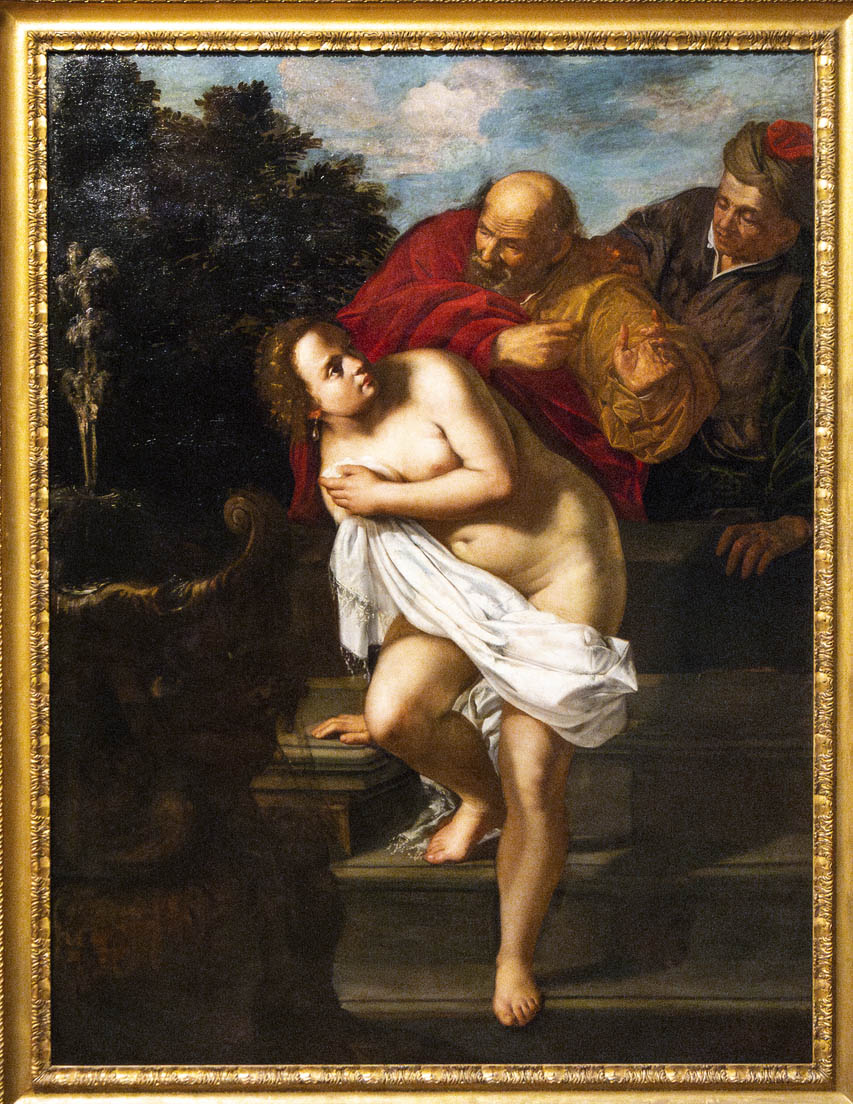
 

Artemisia Gentileschi (Italian, 1593-1653) 'Susanna and the Elders' c. 1638-1640 (installation view)


Artemisia Gentileschi (Italian, 1593-1653)
Susanna and the Elders
c. 1638-1640
Oil on canvas
189.0 x 143.2cm (support, canvas/panel/stretcher external)
Royal Collection Trust / © His Majesty King Charles III 2024


Artemisia Gentileschi (Italian, 1593-1653) 'Susanna and the Elders' c. 1638-1640


Artemisia Gentileschi (Italian, 1593-1653)
Susanna and the Elders
c. 1638-1640
Oil on canvas
189.0 x 143.2cm (support, canvas/panel/stretcher external)
Royal Collection Trust / © His Majesty King Charles III 2024


Likely commissioned by Queen Henrietta Maria, this work was displayed in her Withdrawing Chamber in Whitehall Palace. The subject is an Old Testament narrative on virtue and faith. Susanna, bathing in privacy, is spied on by two elders who attempt to sexually assault her. When she resists them, the men accuse her of adultery. Susanna is arrested and about to be put to death until the men are questioned, and her innocence is revealed. Here, Gentileschi depicts Susanna as vulnerable and fearful, shielding her nakedness. She returned to the subject throughout her career.

Text from the exhibition large print guide


This spring, Tate Britain will present Now You See Us: Women Artists in Britain 1520-1920. This ambitious group show will chart women’s road to being recognised as professional artists, a 400-year journey which paved the way for future generations and established what it meant to be a woman in the British art world. The exhibition covers the period in which women were visibly working as professional artists, but went against societal expectations to do so.

Featuring over 100 artists, the exhibition will celebrate well-known names such as Artemisia GentileschiAngelica Kauffman, Julia Margaret Cameron and Gwen John, alongside many others who are only now being rediscovered. Their careers were as varied as the works they produced: some prevailed over genres deemed suitable for women like watercolour landscapes and domestic scenes. Others dared to take on subjects dominated by men like battle scenes and the nude, or campaigned for equal access to training and membership of professional institutions. Tate Britain will showcase over 200 works, including oil painting, watercolour, pastel, sculpture, photography and ‘needlepainting’ to tell the story of these trailblazing artists.

Now You See Us will begin at the Tudor court with Levina Teerlinc, many of whose miniatures will be brought together for the first time in four decades, and Esther Inglis, whose manuscripts contain Britain’s earliest known self-portraits by a woman artist. The exhibition will then look to the 17th century. Focus will be given to one of art history’s most celebrated women artists, Artemisia Gentileschi, who created major works in London at the court of Charles I, including the recently rediscovered Susanna and the Elders 1638-40, on loan from the Royal Collection for the very first time. The exhibition will also look to women such as Mary BealeJoan Carlile and Maria Verelst who broke new ground as professional portrait painters in oil.

In the 18th century, women artists took part in Britain’s first public art exhibitions, including overlooked figures such as Katherine Read and Mary Black; the sculptor Anne Seymour Damer; and Margaret Sarah Carpenter, a leading figure in her day but little heard of now. The show will look at Angelica Kauffman and Mary Moser, the only women included among the Founder Members of the Royal Academy of Arts; it took 160 years for membership to be granted to another woman. Women artists of this era are often dismissed as amateurs pursuing ‘feminine’ occupations like watercolour and flower painting, but many worked in these genres professionally: needlewoman Mary Linwood, whose gallery was a major tourist attraction; miniaturist Sarah Biffin, who painted with her mouth, having been born without arms and legs; and Augusta Withers, a botanical illustrator employed by the Horticultural Society.

The Victorian period saw a vast expansion in public exhibition venues. Now You See Us will showcase major works by critically appraised artists of this period, including Elizabeth Butler (née Thompson)‘s monumental The Roll Call 1874 (Butler’s work prompted critic John Ruskin to retract his statement that “no women could paint”), and nudes by Henrietta Rae and Annie Swynnerton, which sparked both debate and celebration. The exhibition will also look at women’s connection to activism, including Florence Claxton‘s satirical ‘Woman’s Work’: A Medley 1861 which will be on public display for the first time since it was painted; and an exploration of the life of Barbara Leigh Smith Bodichon, an early member of the Society of Female Artists who is credited with the campaign for women to be admitted to the Royal Academy Schools. On show will be the student work of women finally admitted to art schools, as well as their petitions for equal access to life drawing classes.

The exhibition will end in the early 20th century with women’s suffrage and the First World War. Women artists like Gwen John, Vanessa Bell and Helen Saunders played an important role in the emergence of modernism, abstraction and vorticism, but others, such as Anna Airy, who also worked as a war artist, continued to excel in conventional traditions. The final artists in the show, Laura Knight and Ethel Walker, offer powerful examples of ambitious, independent, confident professionals who achieved critical acclaim and – finally – membership of the Royal Academy.

Press release from Tate Britain
 

Joan Carlile (English, 1606-1679) 'The Carlile Family with Sir Justinian Isham in Richmond Park' 1650s


Joan Carlile (English, 1606-1679)
The Carlile Family with Sir Justinian Isham in Richmond Park
1650s
Oil on canvas
Lamport Hall
CC BY-NC-ND
 

Joan Carlile (English, 1600-1679) 'Portrait of a Lady Wearing an Oyster Satin Dress' 1650s


Joan Carlile (English, 1600-1679)
Portrait of a Lady Wearing an Oyster Satin Dress
1650s
Oil on canvas
30.8 x 25.5cm
National Portrait Gallery, London
Government Art Collection
Purchased from Philip Mould Ltd, 2018


Joan Carlile or Carlell or Carliell (c. 1606-1679), was an English portrait painter. She was one of the first British women known to practise painting professionally. Before Carlile, known professional female painters working in Britain were born elsewhere in Europe, principally the Low Countries.


Installation view of the exhibition 'Now You See Us Women Artists in Britain 1520-1920' at Tate Britain showing at left, Joan Carlile's 'Portrait of an Unknown Lady known as Elizabeth Murray, Countess of Dysart and Duchess of Lauderdale' 1650s; and at right, 'Portrait of an Unknown Lady' 1650-1655


Installation view of the exhibition Now You See Us Women Artists in Britain 1520-1920 at Tate Britain showing at left, Joan Carlile’s Portrait of an Unknown Lady known as Elizabeth Murray, Countess of Dysart and Duchess of Lauderdale 1650s (below); and at right, Portrait of an Unknown Lady 1650-1655 (below)
 

Joan Carlile (English, 1606-1679) 'Portrait of an Unknown Lady' 1650-1655 (installation view)


Joan Carlile (English, 1606-1679)
Portrait of an Unknown Lady (installation view)
1650-1655
Oil on canvas
Support: 1107 × 900 mm
Frame: 1205 × 1012 × 73 mm
Photo: Tate
 

Joan Carlile (English, 1606-1679) 'Portrait of an Unknown Lady known as Elizabeth Murray, Countess of Dysart and Duchess of Lauderdale' 1650s


Joan Carlile (English, 1606-1679)
Portrait of an Unknown Lady known as Elizabeth Murray, Countess of Dysart and Duchess of Lauderdale
1650s
Oil on canvas
The Bute Collection at Mount Stuart


Here, Carlile uses the same white satin dress seen in a nearby painting. The pose, with the sitter elegantly gathering a handful of fabric, is taken from works by Charles I’s portrait painter, Flemish artist Anthony van Dyck (1599-1641). The sitter is sometimes identified as Elizabeth Murray, Countess of Dysart and Duchess of Lauderdale. She was Carlile’s near neighbour in Petersham, at Ham House. The broken columns in the background are often used to symbolise loss.

Text from the exhibition large print guide


Joan Carlile (English, 1606-1679) 'Portrait of an Unknown Lady' 1650-1655


Joan Carlile (English, 1606-1679)
Portrait of an Unknown Lady
1650-1655
Oil on canvas
Support: 1107 × 900 mm
Frame: 1205 × 1012 × 73 mm
Photo: Tate


Portraits by Joan Carlile are rare and this is one of only approximately ten that can be identified. Of these, two are in public collections (Ham House, Surrey, and National Portrait Gallery, London), while others are held in historic house collections and family trusts in the United Kingdom, for example Lamport Hall, Burghley House and Berkeley Castle. Carlile seems to have specialised in small-scale full length portraits of figures, usually female, set in large landscape or garden settings. The composition employed here, in which the figure holds the skirt of her dress with one hand and shawl with another, was most likely a template arrangement. It appears in two other portraits, one showing the figure facing the same way as here, the other in reverse, but with both figures wearing the same white satin dress. This repeated composition adds weight to the proposition that Carlile was a professional artist. The wife of Lodowick Carlile (or Carlell), a minor poet and dramatist who also held the office of Gentleman of the Bows to Charles I, Joan Carlile lived with her husband in Petersham, a suburb of London. However, in 1653 their neighbour, Brian Duppa, recorded that ‘the Mistress of the Family intends for London, where she meanes to make use of her skill to som more Advantage then hitherto she hath don’ (quoted in Toynbee and Isham 1954, p.275). In 1654 Carlile is recorded as living in London’s Covent Garden, then the heart of the artistic community (see Burnett 2004/2010, accessed 2 October 2015).

Text from the Tate website


Joan Carlile challenged societal expectations by becoming one of Britain’s first professional women artists in the 1600s, earning her living as an oil painter. Initially employed in King Charles I’s household, Carlile liked to paint in her spare time. With the outbreak of the Civil War, she began painting to support herself.

Carlile moved to Covent Garden in the 1650s – then the centre of the art world – and set up a successful commercial portrait business. Her template of carefully posed figures in silk gowns against landscape backgrounds, seen here in Portrait of an Unknown Lady (1650-5), proved extremely popular. Admired as a professional artist in her lifetime, only a small number of her portraits still exist, some which have never been seen in public.

Text from the Tate website


In her Portrait of an Unknown Lady (1650-1655) the astonishing nacreous lustre of the sitter’s white silk gown, shown full length, shines against the foil of the dull brown foliage behind her. At this point, the Civil War had ended but the restoration of the monarchy was still in the future, and Carlile’s painting, with its overt celebration of luxury and leisure (the spotless pale fabric speaks of both) seems provocative.

It is possible that Carlile taught Anne Killigrew (1660-1685), an accomplished painter and poet whose family encouraged her creative pursuits, although it’s not clear if she ever painted professionally. Only a handful of Killigrew’s works survive today, including Venus Attired by the Three Graces, which reveals her interest in mythological scenes.

Although she died of smallpox aged just 25, Killigrew stands alongside Beale and Carlile as one of Britain’s first female artists.

Alicia Foster. “Blazing a trail: Britain’s first women artists deserve to be better known,” on the Art UK website 13 May 2024 [Online] Cited 03/09/2024
 

Anne Killigrew (English, 1660-1685) 'Venus Attired by the Three Graces' c. 1680


Anne Killigrew (English, 1660-1685)
Venus Attired by the Three Graces
c. 1680
Oil on canvas
Support: 1120 × 950 mm
Frame: 1282 × 1102 × 63 mm
Falmouth Art Gallery
Purchased with the assistance of the Victoria and Albert Museum Purchase Grant Fund, Heritage Lottery Fund, the Art Fund, the Beecroft Bequest, Falmouth Decorative and Fine Arts Society, the Estate of Barry Hughes in memory of Grace and Thomas Hughes and generous donations from local supporters
Public domain


Anne Killigrew has been described as the most celebrated female English prodigy of the Seventeeth Century. A poet and artist of great beauty and repute, Killigrew died of smallpox at the age of just 25. Anne’s exceptional qualities as an artist and a poet were highly praised in her short lifetime. The poet John Dryden dedicated a poem to her in which he refers directly to this picture: ‘Where nymphs of brightest form appear, and shaggy satyrs standing near’ (from ‘To the Pious Memory of the Accomplished Young Lady Mrs Anne Killigrew Excellent In The Two Sister-Arts of Poesy And Painting: An Ode’). Anne Killigrew worked at the Royal Court of King James II as Lady-in-Waiting to the Queen. Anne’s grandfather, Sir William Killigrew, was the Governor of Pendennis Castle, and his son, Dr Henry Killigrew moved to London to work as chaplain to King Charles I. He later became master of the Savoy Hospital.

Text from the Falmouth Art Gallery website
 

Mary Beale (English, 1633-1699) 'Sketch of the Artist's Son, Bartholomew Beale, Facing Left' c. 1660


Mary Beale (English, 1633-1699)
Sketch of the Artist’s Son, Bartholomew Beale, Facing Left
c. 1660
Oil on paper
Support: 325 × 245 mm
Frame: 421 × 340 × 32 mm
Tate
Purchased 2010
Photo: Tate


In the late 1650s and early 1660s Beale and her family were living on Hind Court, off Fleet Street in London. She painted privately and had a painting room in her home. Her husband had a civil service position as Deputy Clerk of the Patents. Portrait sittings of family and friends were often social occasions, with conversation and dinner afterwards. It is in this period that Beale produced small oil sketches on paper of family members, particularly her two young sons. Whether they relate to larger oil on canvas portraits is unclear.

This oil sketch of a young boy, shown in three-quarter profile, is of Mary Beale’s eldest son Bartholomew, baptised in 1656. His appearance, both in age and costume, is very similar to that in Mary Beale’s Self-portrait with her family (Geffrye Museum, London), painted c. 1659-60, before the birth of her youngest son Charles. It relates closely to another sketch of Bartholomew in oil on paper painted at the same time, Sketch of the Artist’s Son, Bartholomew Beale, in Profile c. 1660 (Tate T13245). Whether these sketches are connected to the production of the Geffrye Museum portrait, or were simply executed at around the same time, is not known. They are painted in oil on paper, which seems to have been a feature of Beale’s working method in the early 1660s but is not known in her later career, when she made preparatory sketches in chalk on paper or in oil on canvas (see, for example, Portrait of a Young Girl c. 1679-81, Tate T06612). When this sketch was made, the Beale family was living in Hind Court, off Fleet Street in London, where Mary Beale’s husband, Charles, was employed as Deputy Clerk of the Patents Office. It is difficult to determine whether Beale had much of a commercial portrait practice at this date, but documents certainly record the production of portraits of family and friends. In her ‘painting room’, Beale had ‘pencills [sic.], brushes, goose & swan fitches’, as well as ‘quantities of primed paper to paint on’ (George Vertue, transcription of Charles Beale’s 1661 notebook, now lost, quoted in Barber 1999, p. 16).

Text from the Tate website


Installation view of the exhibition 'Now You See Us Women Artists in Britain 1520-1920' at Tate Britain showing Mary Beale’s 'Anne Sotheby' (1676-1677)


Installation view of the exhibition Now You See Us Women Artists in Britain 1520-1920 at Tate Britain showing Mary Beale’s Anne Sotheby 1676-1677 


Mary Beale (English, 1633-1699) 'Anne Sotheby' 1676-1677


Mary Beale (English, 1633-1699)
Anne Sotheby
1676-1677
Oil on canvas
Tate
Purchased with funds provided by the Nicholas Themans Trust 2024


Beale’s husband kept a daily record of her activities in the studio. Two of his over 30 notebooks and a few partial transcripts are still known. They record Beale’s sitters, her painting stages, her painting materials and her prices. For her commissioned works, she borrowed poses from the portraits of the court artist Peter Lely (1618-1680). Anne Sotheby’s pose is taken from his portrait of Lady Essex Finch. Beale charged £10 for paintings of this size. Her sons acted as studio assistants; her youngest, Charles, was paid to paint the drapery in this portrait.

Text from the exhibition large print guide


Mary Beale (née Cradock) (1633-1699) was an English portrait painter. She was part of a small band of female professional artists working in London. Beale became the main financial provider for her family through her professional work – a career she maintained from 1670/71 to the 1690s. Beale was also a writer, whose prose Discourse on Friendship of 1666 presents a scholarly, uniquely female take on the subject. Her 1663 manuscript Observations, on the materials and techniques employed “in her painting of Apricots”, though not printed, is the earliest known instructional text in English written by a female painter. Praised first as a “virtuous” practitioner in “Oyl Colours” by Sir William Sanderson in his 1658 book Graphice: Or The use of the Pen and Pensil; In the Excellent Art of PAINTING, Beale’s work was later commended by court painter Sir Peter Lely and, soon after her death, by the author of “An Essay towards an English-School”, his account of the most noteworthy artists of her generation.

Text from the Wikipedia website
 

Mary Beale (English, 1633-1699) 'Mary Beale' c. 1666


Mary Beale (English, 1633-1699)
Mary Beale
c. 1666
Oil on canvas
109.2 x 87.6cm
National Portrait Gallery, London
Purchased, 1912
CC BY-NC-ND


Beale is shown holding an unframed canvas on which are sketch portraits of her two sons, Bartholomew (1656-1709) and Charles (1660-1714?)


Mary Beale (English, 1633-1699) 'Self Portrait' c. 1675


Mary Beale (English, 1633-1699)
Self Portrait
c. 1675
Oil on sacking
89 x 73cm
West Suffolk Heritage Service
Purchased
CC BY-NC-ND


The early English portrait painter Mary Beale (1622/1623-1699) had a father who was an amateur artist, miniature painter and a collector of paintings (her family owned work by Peter Paul Rubens and Anthony van Dyck) and her husband, Charles, was also an amateur painter and ran her studio in London’s fashionable Pall Mall.

Unusually, in her case, her talent was matched by her spouse’s high regard of it, and she was allowed to supersede him and establish a professional career. She took on female apprentices, though no records of their subsequent careers survive.

Alicia Foster. “Blazing a trail: Britain’s first women artists deserve to be better known,” on the Art UK website 13 May 2024 [Online] Cited 03/09/2024


Exhibition guide

Now You See Us: Women Artists in Britain 1520-1920 celebrates over 100 women who forged public careers as artists. The exhibition begins with the earliest recorded women artists working in Britain. It ends with women’s place in society fundamentally changed by the First World War and the first women gaining the right to vote. Across these 400 years, women were a constant presence in the art world. Now You See Us explores these artists’ careers and asks why so many have been erased from mainstream art histories.

Organised chronologically, the exhibition follows women who practised art as a livelihood rather than an accomplishment. The chosen works were often exhibited at public exhibitions, where these artists sold their art and made their reputations. Most of the women featured belonged to a social class that gave them the time and opportunity to develop their talents. Many were the daughters, sisters or wives of artists. Yet even these women were regarded differently. Now You See Us charts their fight to be accepted as professional artists on equal terms with men.

Many of the exhibited works reflect prejudiced notions of the most appropriate art forms and subjects for women. Others challenge the commonly held belief that women were best suited to ‘imitation’, proving they have always been capable of creative invention. From painting epic battle scenes to campaigning for access to art academies, these women defied society’s limited expectations of them and forged their own paths. Yet so many of their careers have been forgotten and artworks lost. Drawing on the artists’ own writings, art criticism, and new and established research, this exhibition attempts to restore these women to their rightful place in art history. Now You See Us aims to ensure these artists are not only seen but remembered.

Women at the Tudor Courts

There are significant gaps in our knowledge of women’s artistic lives in the sixteenth century. As is the case for many artists in this exhibition, their lives are poorly documented and often hidden behind those of their husbands and fathers. The problems this presents are evident in this room.

Susanna Horenbout (1503-1554) and Levina Teerlinc (c. 1510s-1576) are among the earliest women in Britain to be named as artists. Their reputations are clearly recorded. In 1521, Horenbout’s skill was admired by the German painter and printmaker Albrecht Dürer (1471-1528), and in 1567, both artists were praised by the Italian historian Lodovico Guicciardini (1521-1589). Yet no works by Horenbout have been identified, and those attributed to Teerlinc are not certain.

Horenbout and Teerlinc were both daughters of Flemish manuscript illuminators and were likely trained in their family workshops. Both arrived in England to work at the court of Henry VIII. But as women, they were not employed as artists. While Horenbout’s brother Lucas Horenbout (1490-1544) was Henry VIII’s painter, she served Anne of Cleves as one of her Gentlewomen of the Privy Chamber. Teerlinc served Elizabeth I likewise. This does not mean that they did not paint – at court, their artistic talents would have been a distinguishing skill – but, as is a common feature of this exhibition, written histories have failed to record their activities.

Working in a different context – as a scribe and calligrapher – the works of Esther Inglis (1571-1624) can be identified. Inglis authored more than 60 manuscript books and included her name and self-portrait in many. Raised in Scotland, she may have learnt the art of calligraphy from her mother, Marie Presot (active 1569-1574).

Artemisia Gentileschi

Italian artist Artemisia Gentileschi arrived in London in c. 1638-9 by invitation of Charles I. Like other European rulers, Charles I employed artists of international reputation to signal the cultural sophistication of his court. Gentileschi had prestigious patrons across Europe, including the Grand Duke of Tuscany and Philip IV of Spain. She was the first woman to be a member of the Academy of the Arts of Drawing in Florence, and in Rome, her house had been ‘full of cardinals and princes’. Gentileschi’s fame as an artist was augmented by her status as a woman.

In London, Gentileschi worked for Charles I and Queen Henrietta Maria. Records suggest she produced seven works for the royal collection. These included self-portraits and large history paintings, with subject matter drawn from classical history, mythology, and the Bible. Only the two displayed here are still known. Gentileschi often placed women at the centre of her works, depicting narratives that celebrate their strength and virtue. Susanna and the Elders is an example of the kind of work for which Gentileschi was celebrated.

Gentileschi achieved in her lifetime what many women who came after her had to fight to attain: she was a professional artist who ran her own studio, was a member of an art academy, worked from life models and was ranked as a serious artist alongside men. Despite this, Gentileschi’s status has fluctuated over time, and the artist has faded in and out of art history.

Early accounts of Gentileschi’s work focus on her personal life as much as her painting. Like many of the women artists who came after her, the details of her biography continue to dictate interpretations of her work.

The First Professionals

In 1658, historian William Sanderson (c. 1586-1676) published Graphice. The use of the pen and pensil. Or, The most excellent art of painting. The publication lists contemporary artists practising in England. He includes four women working in oil paint: ‘Mrs Carlile’ (Joan Carlile), ‘Mrs Beale’ (Mary Beale), ‘Mrs Brooman’ (probably Sarah Broman) and ‘Mrs Weimes’ (Anne Wemyss). Carlile and Beale are believed to be two of the earliest British women to have worked as professional artists. Very little is known about Broman or Wemyss beyond snatches of information in archives.

This short list highlights how unusual it was for British women to pursue art as a profession in the seventeenth century. Women had little agency over their own lives and were subject first to their fathers and then their husbands. Limited to the domestic sphere, they were not expected to conduct public lives. Many women painted privately with no thought of turning it into a career. While young men began as apprentices or assistants in the studios of professionals, this route was not open to most women.

In the seventeenth century women writers, poets, playwrights and artists began to give voice to those questioning their secondary status and petitioning for women’s rights. They argued that it was lack of education, not ‘weak minds’ that limited their opportunities. This fight for equality and access to education runs throughout the exhibition.

The First Exhibitors

The first public art exhibition in Britain took place in London in 1760, and art shows soon became an important part of the city’s social calendar. Founded in 1768, the Royal Academy quickly emerged as a driving force in cultural life, with its Summer Exhibition attracting tens of thousands of visitors every year. Other venues, including the Society of Artists and the British Institution also hosted exhibitions.

Women artists played an active part in this competitive world. An estimated 900 women exhibited their work between 1760 and 1830. Angelica Kauffman and Mary Moser were both founding members of the Royal Academy (although, as women, they weren’t awarded full membership and were excluded from the Academy’s council meetings and governance). Despite this precedent, it would take more than 150 years for the next woman to be elected to membership.

Kauffman is one of the few women artists of the eighteenth century whose profile has been sustained. Many others made names for themselves, but their careers are not well documented. Even Moser is less well known, perhaps because she painted flowers while Kauffman pursued the ‘high genre’ of history painting, depicting historical, mythological and biblical narratives.

Art critics of the time often criticised women for their ‘weak’ figurative work, yet they were denied access to life-drawing classes. Women artists also had to battle social expectations. Publishing a private or studio address in an exhibition catalogue was a signal of commercial practice, but painting for money was considered improper. Women artists of higher social rank were listed as ‘honorary’ exhibitors; some exhibited simply as ‘a Lady’, and after marriage, many switched their status from ‘commercial’ to ‘amateur’.

‘Just What Ladies Do For Amusement’

In 1770, the Royal Academy banned ‘Needle-work, artificial Flowers, cut Paper, Shell-work, or any such baubles’ from its exhibitions. They also banned works that were copies. Other categories of art that the Academy considered ‘lower’, such as miniature painting, pastel and watercolour were also treated dismissively. Joshua Reynolds (1723-1792), the Academy’s President, said that working in pastel was unworthy of real artists and was ‘just what ladies do when they paint for their own amusement’.

These ‘lower arts’ were ones that women practised the most. Small in scale and considered less technically challenging than oil painting, they demanded less equipment and could be pursued at home. They were taught to middle and upper-class girls and were the realm of women who pursued art as amateur accomplishment.

Despite this, these art forms offered opportunities for women to earn a living. Many turned miniature painting, needlework and pastel into lucrative professional careers, supplementing their income through tutoring. Their patrons were often women, and some boasted large, fashionable clienteles and even galleries which became tourist attractions.

Founded in 1754, the Society for the Encouragement of Arts, Manufactures and Commerce (the Society of Arts) offered cash prizes and medals in many categories, including the ‘polite arts’. Awards were given for patterns for embroidery, copies of prints, drawings of statues and of ‘beasts, birds, fruit or flowers’, as well as landscapes. Some prizes were specifically intended for young women. The Society was a stepping stone to a career and many of the artists in this exhibition won medals. Yet most of the women recorded as submitting work for competition can no longer be identified beyond their names.

Flowers

In the eighteenth and nineteenth centuries, painting flowers was considered a suitably delicate pursuit for women. Imitating nature (rather than demonstrating creative or imaginative flair) was thought to be an appropriate outlet for women’s artistic skills. Flowers were also at the heart of respectable hobbies like embroidery, botany and gardening. In the 1850s, the women’s periodical the Ladies’ Treasury called flower painting ‘a ladylike and truly feminine accomplishment’. When Mary Moser exhibited Cymon and Iphigenia (based on a poem by John Dryden, 1631-1700) at the Royal Academy in 1789, a reviewer urged her to stick to flowers. She painted flowers ‘transcendently’, he noted, and should do ‘nothing else’.

Many women were employed as professional illustrators, recording plant species for horticulturists and botanical publishers. Some conducted hybrid careers, working as illustrators and drawing tutors while exhibiting flower paintings for a wider market. In the Victorian era, critics applauded several women artists as leaders of the genre. Yet the idea that flower painting, especially in watercolour, was an exclusively amateur pastime has damaged the legacies of many accomplished artists who successfully worked within this genre.

Victorian Spectacle

Grand exhibitions were a defining part of the Victorian art world. The Royal Academy, the leading art institution since 1768, was still Britain’s most prestigious exhibition venue, but was later criticised for its traditional conservatism. New venues, such as London’s Grosvenor Gallery, which opened in 1877, became rival spaces, and exhibitions in Liverpool and Manchester offered fresh opportunities for exhibiting artists. The Victorian era was also the age of World Fairs. Major exhibitions were held in London and Paris, and in 1893, the World’s Exposition in Chicago was visited by over 25 million people.

This room explores the successes of women artists on this public stage. Many of the works on display were shown in these exhibitions. They won international medals, praise from art critics and public recognition. Yet women tackling ‘male’ subjects, such as battle scenes, caused surprise. Opinion was also divided on women painting the nude: some thought it immoral, others brave.

Exhibitions gave women a public platform to build substantial reputations, and some became popular names. Despite this, membership of the Royal Academy, which was a mark of professional recognition, remained out of reach. As a result, women had no automatic exhibiting rights and were reliant on committees of men selecting their works for exhibition. Without institutional support, they had to navigate the commercial art market on their own.

Women artists’ campaigns for access to the Academy joined calls for greater equality in society. From the 1850s, women petitioned for equal rights to education and work, as well as women’s suffrage. These causes are reflected in the works in this room.

Watercolour

Watercolour was considered one of the ‘polite arts’ best suited to women. However, there were few opportunities to practice professionally. The principal watercolour societies – the Old (founded in 1804) and the rival New (founded in 1807 and reconstituted in 1831) – restricted the membership of women. Membership of the Old was limited to six women (in practice, usually four), while the New admitted around ten.

In both societies, women were confined to the category of ‘Lady Members’ until the end of the nineteenth century. They had no say in governance and were denied access to the financial premiums awarded to full members. Since the annual exhibitions of both societies were closed to non-members, most women had limited opportunities to exhibit their work.

Against these odds, many women water colourists achieved significant commercial and critical success. They enjoyed solo shows and developed commercial relationships with dealers, taking control of their careers.

In 1857, a group of women founded the Society of Female Artists (later, the Society of Lady Artists in c. 1869, then the Society of Women Artists in 1899) to promote the work of women artists in Britain.

Photography

The announcement of photography in 1839 marked a major shift in the art world. In its first decades, photography was a laborious practice that required an understanding of chemistry and optics, as well as expensive equipment. It needed more money, specialist instruction and time than most other art forms. For women who had access to these privileges, the medium provided new opportunities.

From its foundation in 1853, the Photographic Society of London welcomed women members. However, they rarely attended meetings, which were scheduled in the evenings when women required a chaperone to leave the house. The atmosphere of the meetings was described as a ‘men’s club’ and it wasn’t until 1898 that the Society belatedly banned smoking ‘in respect of ladies’ attendance’. Meetings often included papers on new techniques and equipment, providing significant benefits to those who were able to join.

Women participated in London’s first public photographic exhibitions at the Royal Society of Arts in 1852-3 and at the Photographic Society in 1854. The Amateur Photographic Association, established in 1861, also welcomed women from its outset. In the 1890s and early 1900s, London’s Photographic Salon became a key venue. Founded by the Linked Ring Brotherhood, who promoted photography as a fine art, Salon exhibitors included women from across Europe and the US. A photograph of British photographer Carine Cadby in silhouette, examining one of her glass plate negatives, featured on the cover of the 1896 Salon catalogue. Despite this, women were not elected as members of the Linked Ring until 1900. By 1909, they numbered just 8 among 63 men.

Art School

Women were excluded from enrolment at the Royal Academy Schools, Britain’s principal art academy, until 1860. Laura Herford (1831-1870) was the first woman admitted. She had submitted her work for consideration using only her initials and was assumed to be a man. Once women gained entry, they were determined to achieve equal access to training.

Women were barred from the Academy’s life-drawing classes until 1893. Their exclusion from this vital component of art education was justified on many grounds. Chiefly, it was to ‘protect’ women’s supposed modesty, but also because they were considered amateurs who lacked the intellectual capacity to practice art at the highest level. Women students marshalled critical support for their cause and submitted petitions. Life drawing was considered essential to the training of men pursuing careers as artists. Why, they argued, was it not also essential for women?

The Female School of Art, founded in 1842, provided another route into art education. Like several regional schools, such as that in Manchester, it encouraged women into vocational careers in design. Women also had access to private academies, including Sass’s and Leigh’s (later Heatherleys) in London, which prepared students for admission to the Royal Academy Schools. And some women artists, such as Louise Jopling, established their own art school.

In 1871, the founding of the Slade School of Fine Art at University College London signalled a fundamental change of attitudes. From the outset, the Slade offered women an education on equal terms with men. Studying from life models was a central focus of teaching and by the turn of the century, women students outnumbered men by three to one. Access to life drawing had been regarded as the last barrier to equal opportunity. Now they could study from life, some critics argued it was up to women to prove they could be successful artists.

Being Modern

The first two decades of the twentieth century saw rapid change for women, with their rights, roles and opportunities evolving at an unprecedented pace. The First World War signalled a decisive change for women’s place in society and in 1918, after decades of campaigning, some women finally gained the right to vote.

At the same time, the art world was also changing. New art groups and exhibiting societies rejected tradition and promoted modernist aesthetics. Instead of figurative realism, they privileged form, colour and experimentation. Many saw modernism as an opportunity for greater artistic freedom. However, despite growing liberalism in art and society, women artists still faced challenges. The New English Art Club became a rival exhibiting venue to the Royal Academy but was slow to admit women. The Camden Town Group labelled itself ‘progressive’ but openly excluded women.

While modernism is often presented as the dominant movement of the early twentieth century, it doesn’t account for all artistic production of the period. Membership of the Royal Academy, an exhibiting venue many now regarded as too traditional, remained a symbolic goal for many women. When Annie Swynnerton was elected an Associate Member in 1922, Laura Knight said she had broken down the ‘barriers of prejudice’. In 1936, Knight was elected a Royal Academician, becoming the first woman to achieve full membership since the eighteenth century.

The artworks in the final room of the exhibition explore this complex period. Their variety reveals women forging their own paths and pursuing professional careers with purpose and confidence. While many chose not to challenge traditional artistic values, they pushed the boundaries of what was expected of them, paving the way for generations of women artists who came after them.

Text from the Tate exhibition guide
 

Mary Delany (English, 1700-1788) 'Rubus Odoratus' 1772-1782


Mary Delany (English, 1700-1788)
Rubus Odoratus
1772-1782
The British Museum
Bequeathed by Augusta Hall, Baroness Llanover in 1897


Delany was not a professional artist. However, she pursued art with a seriousness of purpose, working in a range of artistic and decorative mediums. She was in her early seventies when she turned to botanical collage, which stemmed from the Dutch art known as knipkunst or schaarkunst. Over the course of a decade, Delany created nearly one thousand botanically accurate collages of plants made from intricately cut pieces of coloured paper. In this collage, Delany shows a flowering raspberry, which was introduced to Britain from North America in 1770.

Text from the exhibition large print guide
 

Mary Knowles (English, 1733-1807) 'Needlework Picture' 1779


Mary Knowles (English, 1733-1807)
Needlework Picture
1779
Silk (textile), wool, giltwood, glass (material) embroidered, dyeing
89.2 x 84.5cm (frame, external)
Royal Collection Trust / © His Majesty King Charles III 2024


Mary Morris Knowles, born of a Quaker family in Rugeley, Staffordshire, was celebrated as much for her intellect, religious conviction and unusual powers of conversation as for her skill with the needle. A friend of the poetess Anna Seward (‘The Swan of Lichfield’) and of Dr Johnson, she is now regarded as an important early protagonist of the feminist viewpoint in English cultural life. Her support for the abolition of slavery, her investigation into mystical science and her knowledge of garden design, in addition to her accomplishment as a needlewoman, suggest the breadth of her interests. In 1771 she was introduced by her fellow Quaker Benjamin West to Queen Charlotte, who remained on terms of friendship with her over the next thirty years and whose interest in female accomplishments, notably needlework, was well known. Mrs Knowles’s visits to Buckingham House included an occasion in 1778 on which she presented her 5-year-old son George to the King and Queen.

Following the first visit in 1771, the Queen commissioned Mrs Knowles to make a copy of Zoffany’s portrait of George III in needlework or ‘needle painting’ as it was also known. This technique ‘so highly finished, that it has all the softness and Effect of painting’ was achieved with a combination of irregular satin-stitch and long-and-short stitch, worked on hand-woven tammy in an arbitrary pattern and at speed, using fine wool dyed in a wide range of colours under her own supervision. Eight years later Mrs Knowles embroidered the self portrait showing her at work on the Zoffany which, like the earlier piece, she signed with initials and dated. This appears always to have been in the Royal Collection and was presumably also commissioned by Queen Charlotte.

Text from the Royal Collection Trust website
 

Mary Black (English, c. 1737-1814) 'Messenger Monsey (1693-1788)' 1764


Mary Black (English, c. 1737-1814)
Messenger Monsey (1693-1788)
1764
Oil on canvas
127 x 101.6cm
Gift from Frederick Walford, 1877
Royal College of Physicians, London
CC BY-NC-ND


This portrait of the physician Messenger Monsey (1694-1788) is Black’s only known oil painting. Black likely hoped it was a step towards establishing herself as a professional artist, but the issue of payment caused friction. Black hope to charge her client £25, half the amount charged by leading portraitist Joshua Reynolds, but after Monsey’s complaint offered to drop it to a quarter. Monsey considered Black’s expectation of a fee improper. He claimed it would damage her reputation if word got out, and even referred to her as a ‘slut’ in a letter to his cousin.

Wall text from the exhibition


Little is known of the father-and-daughter artists Thomas and Mary Black. Thomas was mainly employed painting draperies for more successful painters, and Mary usually painted copies of old masters. In a letter from Monsey to Mary Black, the doctor wrote: ‘I was bedevilled to let you make your first attempt upon my gracefull person… drawn like a Hog in armour’.

Text from the Art UK website


Black was clearly unfazed by awkward sitters. She built a flourishing artistic practice, painting and teaching the aristocracy, earning enough to live independently (she never married) and keep servants and a horse and carriage at her London home. She died there in old age just as the nineteenth century began.

Alicia Foster. “Blazing a trail: Britain’s first women artists deserve to be better known,” on the Art UK website 13 May 2024 [Online] Cited 03/09/2024


Mary Moser RA (English, 1744-1819) 'Standing Female Nude' Nd


Mary Moser RA (English, 1744-1819)
Standing Female Nude
Nd
Black and white chalk on grey-green paper
49 x W 30.2cm
The Fitzwilliam Museum, Cambridge


As women were excluded from life drawing classes, many took their own steps to improve their anatomical knowledge. They sketched from casts and statues and copied from other artists’ drawings and anatomy books. These rare works show that some artists found ways around these restrictions, although little is known about how Moser and Stone accessed life models.

Text from the exhibition large print guide


Mary Moser RA (English, 1744-1819) 'Flowers in a vase, which stands on a ledge' 1765


Mary Moser RA (English, 1744-1819)
Flowers in a vase, which stands on a ledge
1765
Watercolour and bodycolour on paper
The Syndics of the Fitzwilliam Museum, University of Cambridge


From the same series as the work nearby, this watercolour represents Sagittarius. The vase is filled with a cascade of late flowering plants: asters, chrysanthemums and rare pale nerines, captured in the cold light of winter. In addition to her professional profile as a Royal Academician, Moser acted as a royal tutor. She was part of Queen Charlotte’s circle and taught the princesses botany, embroidery and flower painting. She worked alongside other artists, including Meen and Delany, whose work is also displayed in this room.

Text from the exhibition large print guide


Admired for her striking paintings of flowers, Mary Moser was recognised for her talent from a very young age. She trained with her father, an acclaimed artist and goldsmith, winning her first medal for flower drawing at 14. At just 24, she became one of only two female founders of the Royal Academy, alongside Angelica Kauffman.

Moser painted portraits and historical scenes, but her skilled floral still life works, like Flowers in a vase, which stands on a ledge (1765), were praised by critics. Though still life was traditionally seen as a ‘lesser subject’, her floral works were so widely appreciated she received royal commissions, including one from Queen Charlotte. Despite recognition and the exhibition of many paintings, few of Moser’s works survive today.

Text from the Tate website
 

Mary Moser RA (English, 1744-1819) 'Vase of Flowers' Between 1758 and 1819


Mary Moser RA (English, 1744-1819)
Vase of Flowers
Between 1758 and 1819
Oil on canvas
72.1 x W 53.6cm
The Fitzwilliam Museum
Gift from Major the Hon. Henry Rogers Broughton, 1966


The exquisite attention to detail in her painting, with its beads of dew and butterflies on the wing, was perhaps nurtured by seeing her father’s work; as a goldsmith and medallion maker, this was also his talent. But the gorgeous sensuality – seen also in her approach to the nude figure – was entirely her own. She married, aged 53, but also had an affair with the estranged husband of another artist: Maria Hadfield Cosway (1759-1839).

Alicia Foster. “Blazing a trail: Britain’s first women artists deserve to be better known,” on the Art UK website 13 May 2024 [Online] Cited 03/09/2024


Installation view of the exhibition 'Now You See Us Women Artists in Britain 1520-1920' at Tate Britain showing Angelica Kauffman's 'Colouring' 1778-1780


Installation view of the exhibition Now You See Us Women Artists in Britain 1520-1920 at Tate Britain showing Angelica Kauffman’s Colouring 1778-1780 (below)
 

Angelica Kauffman RA (Swiss, 1741-1807) 'Colouring' 1778-1780


Angelica Kauffman RA (Swiss, 1741-1807)
Colouring
1778-1780
Oil on canvas
1260 x 1485 x 25 mm
© Royal Academy of Arts, London
Photo: John Hammond


This painting is part of a set of the four [titled ‘Elements of Art’] commissioned from Kauffman by the Royal Academy to decorate the ceiling of the Royal Academy’s new Council Room in Somerset House which opened in 1780. …

Kauffman represented each of her four Elements of Art as women. Female personifications of abstract concepts and values were commonplace in European art but depicting all four as women was unusual. Design (or Disegno), in particular, was known as ‘the father of all the arts’ and was traditionally depicted as a man, often in contrast to Colour or Painting personified as a woman (see Baumgartel). In Design and Colouring, the women are physically engaged in the act of creating whereas in Composition and Invention they are shown in contemplation. In Invention the figure looks to the sky for inspiration and in Composition she is deep in thought with her head resting on her hand in the traditional gesture of melancholy or reverie.

Text from the Royal Academy website


Installation view of the exhibition 'Now You See Us Women Artists in Britain 1520-1920' at Tate Britain showing at centre, Maria Cosway's 'Georgiana as Cynthia from Spenser's 'Faerie Queene'' 1781-1882; and at right, Cosway's 'A Persian Lady Worshipping the Rising Sun' 1784


Installation view of the exhibition Now You See Us Women Artists in Britain 1520-1920 at Tate Britain showing at centre, Maria Cosway’s Georgiana as Cynthia from Spenser’s ‘Faerie Queene’ 1781-1782 (below); and at right, Cosway’s A Persian Lady Worshipping the Rising Sun 1784 (below)
 

Maria Cosway (Italian-English 1760-1838) 'Georgiana as Cynthia from Spenser's 'Faerie Queene'' 1781-1782


Maria Cosway (Italian-English 1760-1838)
Georgiana as Cynthia from Spenser’s ‘Faerie Queene’
1781-1782
Oil on canvas
Chatsworth House
Reproduced by permission of Chatsworth Settlement Trustees / Bridgeman Images
Public domain
 

Maria Cosway (Italian-English 1760-1838) 'A Persian Lady Worshipping the Rising Sun' 1784


Maria Cosway (Italian-English 1760-1838)
A Persian Lady Worshipping the Rising Sun
1784
Oil on canvas
61 x 73.7cm
Sir John Soane’s Museum
Gift from the artist, 1822
By courtesy of the Trustees of Sir John Soane’s Museum, London
CC BY-NC-ND


As well as portraits, Cosway exhibited history paintings. This work was shown at the Royal Academy in 1784. Although only a few of Cosway’s history pictures can be located now, paintings such as this one were well known through reproductions made by leading engravers and print publishers. Cosway’s success was hindered by her husband, who did not like her to paint professionally. She reflected later that had he permitted it, she would have ‘made a better painter, but left to myself by degrees, instead of improving, I lost what I brought from Italy of my early studies.’

Text from the exhibition large print guide
 

Maria Cosway (Italian-English 1760-1838) 'Bouquet of Flowers' 1780


Maria Cosway (Italian-English 1760-1838)
Bouquet of Flowers
1780
Watercolour on paper
The Courtauld, London (Samuel Courtauld Trust)
Bequeathed by Sir Robert Clermont Witt, 1952
CC BY-NC-ND
 

Maria Cosway (Italian-English 1760-1838) 'The Judgement of Korah, Dathan and Abiram' c. 1801


Maria Cosway (Italian-English 1760-1838)
The Judgement of Korah, Dathan and Abiram
c. 1801
Pen, ink and oil on canvas
37.5 x 29.2cm
Yale Center for British Art
Paul Mellon Collection
CC BY-NC-ND
 

Maria Cosway (1759-1838) (after) 'Self Portrait' Nd


Maria Cosway (1759-1838) (after)
Self Portrait
Nd
Oil on canvas
61 x W 50.8cm
Temple Newsam House, Leeds Museums and Galleries
Bequeathed by Sam Wilson, 1925
CC BY-NC-ND
 

Sarah Biffin (English, 1784-1850) 'Self-portrait' c. 1821


Sarah Biffin (English, 1784-1850)
Self-portrait
c. 1821
Watercolour and bodycolour on ivory
Private collection


Biffin, whose baptism record notes that she was born ‘without arms or legs’, taught herself to sew, write and paint using her mouth and shoulder. She wrote that, as a child, ‘I was continually practising every invention; till at length I could, with my mouth – thread a needle – tie a knot – do fancy work – cut out and make my own dresses’.

Text from the exhibition large print guide
 

Installation view of the exhibition 'Now You See Us Women Artists in Britain 1520-1920' at Tate Britain showing at left, Clara Maria Pope's 'Peony' 1822; and at right, Pope's 'Peony' 1821


Installation view of the exhibition Now You See Us Women Artists in Britain 1520-1920 at Tate Britain showing at left, Clara Maria Pope’s Peony 1822 (below); and at right, Pope’s Peony 1821 (below)
 

Clara Maria Pope (British, 1767-1831) 'Peony' 1822


Clara Maria Pope (British, 1767-1831)
Peony
1822
Bodycolour on card
The Trustees of the Natural History Museum, London
Courtesy the Natural History Museum
 

Clara Maria Pope (British, 1767-1831) 'Peony' 1821


Clara Maria Pope (British, 1767-1831)
Peony
1821
Bodycolour on card
The Trustees of the Natural History Museum, London
Courtesy the Natural History Museum


Pope appears in museum records under many names: Clara Leigh, Clara Wheatley (her first husband was the artist Francis Wheatley, 1747-1801), Clara Maria Pope (she married actor Alexander Pope in 1807) and Mrs Alexander Pope. Her changes of name have obscured her career as an artist. She exhibited watercolour landscapes and portraits, miniatures and genre works, but above all, Pope was an artist of flowers. She worked for the leading botanical publisher Samuel Curtis (1779-1860). The scientifically accurate peonies depicted here are 2 of 11 designs. They may have been intended as plates for a work that was never published.

Text from the exhibition large print guide
 

Augusta Innes Withers (English, 1792-1877) 'The Canon Hall Muscat Grape' c. 1825


Augusta Innes Withers (English, 1792-1877)
The Canon Hall Muscat Grape
c. 1825
Watercolour on paper
444 × 352 mm
RHS Lindley Collections
Courtesy the Royal Horticultural Society, Lindley Library


Withers was employed by the Horticultural Society to make official ‘portraits’ of varieties of fruit growing in their orchards. The quality of Withers’s work meant her high fees were not questioned. Here, she paints sunlight glowing through grapes and the translucency of the skin of gooseberries in great detail. Withers drew and handcoloured engraved illustrations in the Horticultural Society’s Transactions and made illustrations of fruit for John Lindley’s Pomological Magazine in 1828 (Lindley was Secretary of the Society). Withers was also regarded as one of the best teachers of botanical illustration.

Text from the exhibition large print guide
 

Installation view of the exhibition 'Now You See Us Women Artists in Britain 1520-1920' at Tate Britain showing at left, Rebecca Solomon's 'Sherry, Sir?' c. 1858-1862; and at right, Solomon's 'A Young Teacher' 1861


Installation view of the exhibition Now You See Us Women Artists in Britain 1520-1920 at Tate Britain showing at left, Rebecca Solomon’s Sherry, Sir?
c. 1858-1862 (below); and at right, Solomon’s A Young Teacher 1861 (below)
 

Rebecca Solomon (English, 1832-1886) 'Sherry, Sir?' c. 1858-1862


Rebecca Solomon (English, 1832-1886)
Sherry, Sir?
c. 1858-1862
Oil on canvas
Private collection


Solomon often painted scenes of domestic life and interiors, which were considered more suitable subjects for women artists than history painting. Solomon’s domestic scenes include subtle commentary on social hierarchies. Sherry, Sir? depicts a maid with a silver tray. It reprises a well-known painting of the same title, painted by William Powell Frith (1819-1909) in 1851, but unlike Frith’s painting, Solomon draws attention to domestic labour and the hierarchies of a middle-class home. Solomon was the sister of artists Abraham Solomon (1823-1862) and Simeon Solomon (1840-1905).

Text from the exhibition large print guide


Rebecca Solomon (London 26 September 1832 – 20 November 1886 London) was a 19th-century English Pre-Raphaelite draftsman, illustrator, engraver, and painter of social injustices. She is the second of three children who all became artists, in a prominent Jewish family. …

Solomon’s artistic style was typical of popular 19th-century painting at the time and falls under the category of genre painting. She used her visual images to critique ethnic, gender and class prejudice in Victorian England. When Solomon started painting genre scenes, her work demonstrated an observant eye for class, ethnic and gender discrimination. Solomon’s paintings reflect a combination of interest in the theatre and commitment to social consciousness that is not exist in other artist’s painting in the nineteenth century.

Text from the Wikipedia website


Solomon painted in a more equivocal manner… She [the subject of the painting] is equally attractive and demure, but, by being painted from the side and against the background of a middle-class interior, the viewer is invited to reflect on her social status.

This is framed in a genre painting and by no means a piece with pretensions to social realism, but Solomon seems to be underlining the definite restrictions on this young woman’s position in society.

The pictures hanging behind her may contribute to that interpretation of the artist. They are not yet identified, but it seems that on the left we are shown an allegorical subject later than Gainsborough or Reynolds, depicting a young peasant boy or young peasant girl holding a dog in a landscape. On the right, a more specific engraving of a genre painting from Solomon’s own time showing what appears to be an itinerant family of street vendors. By placing his servant girl between these two paintings, Solomon seems to be asking us to compare.

José Luis Jiménez García. “La otra versión de la ‘Sherry Girl’,” on the Diario de Jerez website 07 June 2023 [Online] Cited 28/08/2024 Translated from the Spanish by Google Translate
 

Rebecca Solomon (English, 1832-1886) 'A Young Teacher' 1861


Rebecca Solomon (English, 1832-1886)
A Young Teacher
1861
Oil on canvas
61 by 51cm
Tate and the Museum of the Home


Rebecca Solomon’s painting is a complex reflection on gender, race, religion and education in mid-nineteenth century London. As with many of her works, it considers women who worked in better-off households as professional carers. In A Young Teacher, Solomon modifies a traditional domestic scene between mother and child, with the surrounding books stressing the theme of learning. The woman at the centre of the image was modelled by Jamaican-born Fanny Eaton, who became a prominent muse for many Victorian artists and featured in some of the most iconic paintings of the Pre-Raphaelite period. …

Believed to be the first Jewish woman to become a professional artist in England, Rebecca Solomon’s work shone a light on inequality and prejudice at a time when these subjects were far from mainstream. She was active in social reform movements, including as part of a group of 38 artists who petitioned the Royal Academy of Arts to open its schools to women.

Text from the Tate website
 

Emily Osborn (English, 1828-1925) 'Nameless and Friendless. "The rich man's wealth is his strong city: the destruction of the poor is their poverty (Proverbs: 10:15)' 1857


Emily Osborn (English, 1828-1925)
Nameless and Friendless.
“The rich man’s wealth is his strong city: the destruction of the poor is their poverty” (Proverbs: 10:15)
1857
Oil on canvas
Support: 825 × 1038 mm
Frame: 1042 × 1258 × 75 mm
Tate
Purchased with assistance from Tate Members, the Millwood Legacy and a private donor 2009
Creative Commons CC BY-NC-ND 4.0 DEED


Osborn exhibited widely and was supported by wealthy patrons. She was also part of the ‘rights of woman’ debate, campaigning for more public roles for women. Nameless and Friendless, exhibited at the Royal Academy in 1857, dramatises the difficulties faced by women artists. Osborn shows a young woman offering a painting to a sceptical dealer. With no reputation (‘Nameless’) and no connections (‘Friendless’), she has little chance of a sale. Behind her, two leering men emphasise the impression of her isolation and vulnerability.

Text from the exhibition large print guide


Installation view of the exhibition 'Now You See Us Women Artists in Britain 1520-1920' at Tate Britain showing Emily Mary Osborn's 'Barbara Bodichon (1827-1891)' Nd (below)


Installation view of the exhibition Now You See Us Women Artists in Britain 1520-1920 at Tate Britain showing Emily Mary Osborn’s Barbara Bodichon (1827-1891) Nd (below)
 

Emily Mary Osborn (1828-1925) 'Barbara Bodichon (1827-1891)' Nd (installation view)


Emily Mary Osborn (1828-1925)
Barbara Bodichon (1827-1891) (installation view)
Nd
Oil on canvas
120 x 97cm
Girton College, University of Cambridge


Martha Darley Mutrie (British, 1824-1885) 'Wild Flowers at the Corner of a Cornfield' 1855-1860


Martha Darley Mutrie (British, 1824-1885)
Wild Flowers at the Corner of a Cornfield
1855-1860
Oil on canvas
Support: 821 × 632 mm
Frame: 958 × 781 × 65 mm
Photo: Tate (Seraphina Neville)


Martha Darley Mutrie is considered one of the leading painters of flowers active in Britain in the nineteenth century. She was born in Ardwick, near Manchester. She trained together with her sister, the painter Annie Feray Mutrie (1826-1893), under George Wallis (1811-1891) at the Manchester School of Design from 1844 to 1846, and also undertook private lessons with him. The sisters began exhibiting at the Royal Manchester Institution from 1845 and at the Royal Academy, London, showing there consistently from the early 1850s. Their work was regularly well received by the critics. Mutrie and her sister moved to London in 1854, where they painted flowers in interior settings, carefully arranged, and also outdoors in mock natural settings.

Despite the prominence of women artists painting still lifes and flowers, the men practitioners of the genre, such as George Lance (1802-1864) and William Henry ‘Birds Nest’ Hunt (1790-1864), received greater critical and institutional attention. Martha and Annie Mutrie achieved success that was otherwise rare for women working as artists at the time.

The art critic John Ruskin admired both artists’ work and wrote about one of Annie’s pictures in his review of the 1855 Royal Academy exhibition. In his review Ruskin suggested that she abandon artificial compositions and paint instead ‘some banks of flowers in wild country, just as they grow’ (John Ruskin, Notes on Some of the Principal Pictures Exhibited at the Royal Academy, London, 1855). This painting might be seen as a response to Ruskin’s insight and the advances in science that in the 1850s brought a new focus to the study of nature, with arguments over beauty and truth.

Text from the Tate website
 

Florence Claxton (British, 1838-1920) ''Woman's Work': A Medley' 1861


Florence Claxton (British, 1838-1920)
‘Woman’s Work’: A Medley
1861
Oil on canvas
Martin Beisly Fine Art, London


In the 1850s, Claxton became part of the UK’s first organised movement for women’s rights. Woman’s Work satirises women’s opportunities for professional employment. At its centre a group of women fawn at the feet of a man seated below a statue of the Golden Calf – a false idol. Confined by
a surrounding wall, doors to professions such as medicine are shut to the women. Only the artist Rosa Bonheur has managed to scale the wall’s heights. The painting was exhibited at London’s National Institution for Fine Arts in 1861 and received mixed reviews. Some praised its comic strength but others described it as ‘vulgar’.

Text from the exhibition large print guide
 

Julia Margaret Cameron (British born India, 1815-1879) 'Mountain Nymph, Sweet Liberty' 1865


Julia Margaret Cameron (British born India, 1815-1879)
Mountain Nymph, Sweet Liberty
1865
Albumen print
Wilson Centre of Photography


Annie Keene (1842/3-1901) was an artist’s model at the Royal Academy Schools. Cameron showed Keene’s portrait at the 1866 Hampshire and Isle of Wight Loan Exhibition, and it was for sale at her 1868 exhibition at London’s German Gallery. In this photograph, Cameron’s shallow depth-of-field gives a bold effect. Her friend, the scientist and photographic innovator John Herschel (1792-1871), praised the portrait as ‘a most astonishing piece of high relief – She is absolutely alive and thrusting out her head from the paper into the air’.

Text from the exhibition large print guide
 

Elizabeth Butler (British, 1846-1933) 'The Roll Call' 1874


Elizabeth Butler (British, 1846-1933)
The Roll Call
1874
Oil on canvas
93.3 x 183.5cm (support, canvas/panel/stretcher external)
Royal Collection Trust
© Royal Collection Trust / His Majesty King Charles III 2024


Butler specialised in battle paintings, challenging society’s expectations of women artists. The exhibition of The Roll Call at the Royal Academy in 1874 was one of the greatest art sensations of the nineteenth century. It was praised by Academicians and hung ‘on the line’ (the most prestigious, eye-level position). The painting proved so popular with the public that a policeman had to be stationed nearby to protect the adjacent paintings. Queen Victoria summoned the work to Buckingham Palace for a private viewing, and the copyright sold for the enormous sum of £1,200.

Text from the exhibition large print guide


The Roll Call captured the imagination of the country when exhibited at the Royal Academy in 1874, turning the artist into a national celebrity. So popular was the painting that a policeman had to be stationed before it to hold back the crowds and it went on to tour the country in triumph. The painting’s focus on the endurance and bravery of ordinary soldiers without reference to the commanders of the army accorded with the mood of the times and the increasing awareness of the need for social and military reforms.

Though the public had been exposed to other images of the Crimean War, primarily prints, photographs and newspaper illustrations, never before had the plight of ordinary soldiers been portrayed with such realism. Butler researched her subject by studying A. W. Kinglake’s seminal history of the Crimean War, as well as by consulting veterans of the Crimea, several of whom served as models for the painting. She also painstakingly sought out uniforms and equipment from the Crimean period in order to be correct in the smallest military details. The sombre mood and simple yet dramatic composition Butler achieved in The Roll Call vividly epitomised the grimness not only of the Crimean War but of all wars.

Text from the Royal Collection Trust website


Installation view of the exhibition 'Now You See Us Women Artists in Britain 1520-1920' at Tate Britain showing at left, Louise Jopling's 'Through the Looking-Glass' 1875; and at right, Jopling's 'A Modern Cinderella' 1875


Installation view of the exhibition Now You See Us Women Artists in Britain 1520-1920 at Tate Britain showing at left, Louise Jopling’s Through the Looking-Glass 1875 (below); and at right, Jopling’s A Modern Cinderella 1875 (below)


Louise Jopling (English, 1843-1933) 'Through the Looking-Glass' 1875


Louise Jopling (English, 1843-1933)
Through the Looking-Glass
1875
Oil paint on canvas
Support: 539 × 437 mm
Tate
Purchased with funds provided by the Nicholas Themans Trust and Tate Patrons 2024
Photo: Tate (Sonal Bakrania)


This is a self-portrait Jopling made while pregnant with her son, Lindsay, in 1875.

Jopling was one of the most successful and best-known women artists of the late nineteenth century. She exhibited regularly and, from the 1880s, ran her own art school for women. Jopling hosted receptions and established connections with many artists and art dealers. She carefully planned the exhibition of her work by choosing venues appropriate to each painting’s scale and ambition. Jopling sent this self-portrait to the Society of Lady Artists in 1875. In the same year, A Modern Cinderella, hanging nearby, was shown at the Royal Academy. Both works were purchased by the dealer Agnew: this work for £26, but Cinderella for £262.

Text from the exhibition large print guide


Tabitha Barber, curator of the exhibition, said: “What’s happened to Jopling’s legacy is the story of what’s happened to most women artists … They have been regarded, studied and judged differently.”

Jopling, who in 1901 became one of the first women admitted to the Royal Society of British Artists, was a celebrated artist in her day, Barber said. Her patrons included the de Rothschild family, and the Grosvenor Gallery founders Sir Coutts and Lady Lindsay. “At a time when women weren’t allowed to be members of the Royal Academy, her works were exhibited there almost every year and spoken about in the press. She was reviewed by male art critics, and reviewed well.”

Jopling’s paintings were also commercially successful, selling for some of the highest prices that British female artists could command – albeit far less than their male contemporaries.

“She is among a handful of female artists who were society figures and household names – and it just seems so astonishing that they’re so little known now,” said Barber.

Donna Ferguson. “Tate Britain acquires first painting by pioneering English female artist overlooked for a century,” on The Guardian website 12 May 2024 [Online] Cited 02/09/2024


Louise Jopling (English, 1843-1933) 'A Modern Cinderella' 1875 (installation view)


Louise Jopling (English, 1843-1933)
A Modern Cinderella
1875
Oil on canvas
Support: 910 × 700 mm
Private collection


Louise Jopling (English, 1843-1933) 'A Modern Cinderella' 1875


Louise Jopling (English, 1843-1933)
A Modern Cinderella
1875
Oil on canvas
Support: 910 × 700 mm
Private collection


A Modern Cinderella shows a model removing her fine clothes at the end of a painting session. A glimpse of Jopling’s easel can be seen in the mirror’s reflection. In 1875, Jopling exhibited this work at the Royal Academy. There, the model’s naked shoulder was cause for criticism. Although one reviewer thought it was ‘quite harmless’, a picture dealer’s wife reportedly said that ‘she could never hang such a thing in her house’. Jopling also showed the painting at the 1878 Exposition Universelle in Paris, where she had also trained.

Text from the exhibition large print guide


If this is, indeed, a self-portrait, Jopling has painted herself as somewhere in the liminal space between the social groups she simultaneously belonged to and was excluded from. Despite Jopling’s notoriety and prominence among high-class Pre-Raphaelite artist circles, she experienced a high degree of discrimination. In 1883, she was commissioned to paint a portrait for 150 guineas but lost her employment in favour of Sir John Everett Millais, who requested 1000 guineas for the same project (Clement). In the traditional circles of high society, Jopling was looked down upon for pursuing a career in the fine arts, which was inherently a masculine task. The woman in the image is either taking the dress off or putting it on, but either way, has turned her back to her easel, which could be interpreted as forfeiting a part of her true identity to fit either end of the accepted spectrum of femininity. The underclothing she portrays herself in fit the Pre-Raphaelite aesthetic style of dress, which fit natural waists and emphasised a woman’s beauty through medieval and Greek-inspired silhouettes (Shrimpton, Jayne. Victorian Fashion. Shire Publications, 2016). The inclusion of this white aesthetic dress, as well as the scandalous drop of the strap is a signal of societal rebellion against traditional beauty norms. The woman in the image could also be read as shedding the skin of the two dresses before her to reveal her true, natural, artistic self below.

Emily Goldstein. “‘A modern Cinderella, 1875. Oil on Canvas’ by Louise Jopling,” on the COVE Studio website 23/10/2020 [Online] Cited 02/09/2024


Marianne Stokes (Austrian, 1855-1927) 'The Passing Train' 1890


Marianne Stokes (Austrian, 1855-1927)
The Passing Train
1890
Oil on canvas
Support: 600 × 760 mm
Frame: 885 × 955 mm
Private collection


Marianne Stokes (née Preindlsberger; 1855-1927) was an Austrian painter. She settled in England after her marriage to Adrian Scott Stokes (1854-1935), the landscape painter, whom she had met in Pont-Aven. Stokes was considered one of the leading women artists in Victorian England.


Annie Louisa Swynnerton ARA (British, 1844-1933) 'Mater Triumphalis' 1892


Annie Louisa Swynnerton ARA (British, 1844-1933)
Mater Triumphalis
1892
Paris, musée d’Orsay
Donated by Edmund Davis, 1915


Swynnerton campaigned for women’s suffrage, access to professional training, and equal opportunities. She rebelled against the belief that ‘women could not paint’. Exhibited at the New Gallery in 1892, Mater Triumphalis was regarded as a bold work. It brought Swynnerton international recognition, winning a medal at the 1893 World Exposition in Chicago. Despite this, Swynnerton received mixed reviews from British critics. They were impressed by the artist’s skill and the painting’s ‘quivering life’ but found the ‘frank realism’ of the woman’s naked body disconcerting.

Text from the exhibition large print guide
 

Installation view of the exhibition 'Now You See Us Women Artists in Britain 1520-1920' at Tate Britain showing Henrietta Rae's 'Psyche before the throne of Venus' 1894


Installation view of the exhibition Now You See Us Women Artists in Britain 1520-1920 at Tate Britain showing Henrietta Rae’s Psyche before the throne of Venus 1894 (below)
 

Henrietta Rae (British, 1859-1928) 'Psyche before the throne of Venus' 1894


Henrietta Rae (British, 1859-1928)
Psyche before the throne of Venus
1894
Oil paint on canvas
Support: 1941 × 3058 × 31 mm
Frame: 2525 × 3826 × 270 mm
Lent from a private collection, courtesy of Martin Beisly Fine Art


Rae was determined not to be pigeonholed as a ‘woman artist’. She painted classical nude compositions despite the belief that they were not a suitable subject for women artists. Against these odds, Psyche Before the Throne of Venus was a success at the 1894 Royal Academy Exhibition, and Rae received praise from critics as well as members of the Academy. The periodical The Englishwoman’s Review described the painting as ‘the most ambitious and successful woman’s work yet exhibited – one which could not have been executed a few years ago, when we had not the opportunity of studying from the life’.

Text from the exhibition large print guide


Installation view of the exhibition 'Now You See Us Women Artists in Britain 1520-1920' at Tate Britain showing Lucy Kemp-Welch's 'Colt Hunting in the New Forest' 1897


Installation view of the exhibition Now You See Us Women Artists in Britain 1520-1920 at Tate Britain showing Lucy Kemp-Welch’s Colt Hunting in the New Forest 1897


One of the most important pieces of art ever inspired by the New Forest was a painting by Lucy Kemp-Welch (1869-1958), entitled ‘Colt Hunting in the New Forest’. This painting was exhibited at the Royal Academy in 1897, when she was only 26 years old. It was an impressive canvas measuring 1537 x 3060 mm (approximately 5ft x 10ft) and was described as depicting ‘a wide glade in the forest, along which race a number of colts unwilling to relinquish their liberty and to fall into the hands of the four mounted lads who try to catch them’.[1] Lucy Kemp-Welch was born in Bournemouth, in 1869, and spent much of her time wandering in the New Forest, where she ‘personally studied the wild ponies in this pleasant part of England’.[2] Her love of horses and wild ponies remained with her all her life. In order to capture the energy and excitement of the pony drifts for ‘Colt Hunting’ she actually had the full-sized canvas transported to the Forest, where she sketched from life, as the commoners galloped their ponies past her. When the painting was exhibited at the Royal Academy it caused a sensation and was promptly purchased for £525.00.[3] The buyers were trustees of the Chantrey Bequest, who administered a large sum of money left in the will of Sir F. L. Chantrey to obtain works of art by British artists, in order to create a national collection. It was only the third time, since its creation in 1875, that the Chantrey Bequest had purchased artwork by a woman. Lucy Kemp-Welch became a celebrity overnight.[4]

In the same year that Lucy Kemp-Welch exhibited ‘Colt Hunting in the New Forest’, the Tate Galley was built and her painting was transferred to this new, public collection. However, ‘Colt Hunting’ was immediately archived and has never been publicly exhibited. Indeed, there are rumours that the Tate Gallery loaned the painting to the Royal Academy during the Blitz ‘in the hope that the Luftwaffe’s friendly bombs might rid them of this monstrous woman’s work for good’.[5] It is difficult to conceive of the prejudice against women in the late Victorian period and early 20th century, particularly women such as Lucy Kemp-Welch, who stepped out of the roles proscribed to them by a patriarchal society.[6] Her sympathies for the suffragette movement certainly didn’t endear her to the male-establishment figures that controlled the art world. She nevertheless continued to paint and made a successful, and award winning (Paris Salon) career as an artist.

newforestcommoner. “Lucy Kemp-Welch: Colt Hunting in the New Forest,” on the New Forest Commoner website November 27, 2016 [Online] Cited 28/08/2024
 

Gwen John (Welsh, 1876-1939) 'Self-Portrait' 1902


Gwen John (Welsh, 1876-1939)
Self-Portrait
1902
Oil on canvas
Tate
Purchased 1942
Photo: Tate (Mark Heathcote and Samuel Cole)


John exhibited this self-portrait at the New English Art Club (NEAC) in 1900. It was her debut as an exhibitor. The NEAC had been founded as a forward-thinking artists’ group, created out of dissatisfaction with the art establishment, exemplified by the conservative Royal Academy. Tutors from the Slade, where John had trained, were on the NEAC committee. Despite its progressive stance, in 1900 John was one of only 16 women exhibitors among 75 men. John’s choice to show a self-portrait was perhaps a deliberate assertion of her presence.

Text from the exhibition large print guide


Here is a dilemma straight away: which should take precedence, the painting or the fact? Should the show present art on its own terms, or as instance, evidence, expression of social history? It is an extremely complex remit…

[Laura] Knight is strongly represented with a sequence of cliff-edge paintings; but what about her near-namesake, Winifred Knights? The Deluge is a shattering masterpiece of British modernism, painted in 1920 and thus eligible, yet not here. And why are the ethereal and supremely original blue cyanotypes of Anna Atkins (1799-1871) missing from the niggardly photography section, along with Christina Broom (1862-1939), pioneering photojournalist, whose stirring portraits of suffragettes would have been so apt?

The show is thick with flowers, descending from Delany right down to Helen Allingham’s twee cottage gardens, all ready for their postcard reproductions. And if Allingham, then why not the visionary genius of Beatrix Potter? Weak pre-Raphaelite schlock fills the largest gallery, along with Victorian pieties such as Emily Osborn’s distressed gentlewoman, eyes downcast, awaiting the verdict of a dealer on her latest canvas, while two male artists leer in the background. Nameless and Friendless is terminally mawkish.

Only rarely do women’s art and women’s history spark together in this show. You see it in Ethel Wright’s fabulous 1912 portrait of the suffragette Una Dugdale Duval, in an arsenical green dress beneath a wallpaper of ludicrous fighting cocks, where Wright’s modern bravado exactly meets that of her sitter. And you see it in Gwen John’s immortal 1902 self-portrait, small and distanced, light catching her eyelashes in an atmosphere of hushed stillness, so direct and yet so self-contained: the momentous assertion of reticence.

That epochal image appears on the exhibition posters, perhaps promising too much. For even the best of the artists here are occasionally represented by the least of their works, quite apart from the mystifying omissions. The theme of Now You See Us is undoubtedly riveting. The captions (and the excellent catalogue) are superbly written. But art is trumped by social history too often in this show, words overshadowing images.

Laura Cumming. “Now You See Us: Women Artists in Britain 1520-1920 review – revelations and mystifying omissions,” on The Guardian website 19 May 2024 [Online] Cited 02/09/2024


Gwen John (Welsh, 1876-1939) 'Chloë Boughton-Leigh (1868-1947)' 1904-1908


Gwen John (Welsh, 1876-1939)
Chloë Boughton-Leigh (1868-1947)
1904-1908
Oil on canvas
58.4 x 38.1cm
Tate
Purchased 1925


Gwendolen Mary John (22 June 1876 – 18 September 1939) was a Welsh artist who worked in France for most of her career. Her paintings, mainly portraits of anonymous female sitters, are rendered in a range of closely related tones. Although in her lifetime, John’s work was overshadowed by that of her brother Augustus and her mentor and lover Auguste Rodin, awareness and esteem for John’s artistic contributions has grown considerably since her death.

Gwen John trained at the Slade School of Art in London, where her brother Augustus was also a student. She settled in Paris in 1904, working as a model, becoming Rodin’s mistress and immersing herself in the artistic world of the metropolis. She lived in France for the rest of her life, exhibiting on both sides of the Channel. The portrait shown here is of a Paris friend, Chloë Boughton-Leigh. The subdued colouring, short foreground and self-absorption of the sitter create a deeply intense atmosphere. John showed it in London, at the New English Art Club.

Text from the WikiArt website


Minna Keene (née Bergmann, Canadian born Germany, 1861-1943) 'Decorative Study No. 1, Pomegranates' c. 1906


Minna Keene (née Bergmann, Canadian born Germany, 1861-1943)
Decorative Study No. 1, Pomegranates
c. 1906
Carbon print


The subject of this photograph is believed to be of Violet Keene, Minna Keene’s daughter.
 

Installation view of the exhibition 'Now You See Us Women Artists in Britain 1520-1920' at Tate Britain showing Ethel Wright's 'The Music Room, Portrait of Una Dugdale' 1912


Installation view of the exhibition Now You See Us Women Artists in Britain 1520-1920 at Tate Britain showing Ethel Wright’s The Music Room, Portrait of Una Dugdale 1912 (below)


Ethel Wright (British, 1866-1939) 'The Music Room, Portrait of Una Dugdale' 1912 (installation view)


Ethel Wright (British, 1866-1939)
The Music Room, Portrait of Una Dugdale (installation view)
1912
Oil on canvas
Private collection


This portrait of suffragette and women’s rights activist Una Dugdale Duval (1879-1975) was exhibited at the Stafford Gallery in October 1912. Its flat areas of colour and bold outlines represent a stylistic shift for Wright, who had exhibited at the Royal Academy since the 1880s. Wright shows Duval as cultured and sophisticated, dressed in green, a suffrage colour. Wright made the work the same year Duval made national news for her refusal to promise to obey her husband during their marriage vows. In 1913, Duval published a pamphlet, Love and Honour but Not Obey.

Text from the exhibition large print guide
 

Ethel Wright (British, 1866-1939) 'The Music Room, Portrait of Una Dugdale' 1912


Ethel Wright (British, 1866-1939)
The Music Room, Portrait of Una Dugdale
1912
Oil on canvas
Private collection


Vanessa Bell (English, 1879-1961) 'Still Life on Corner of a Mantelpiece' 1914


Vanessa Bell (English, 1879-1961)
Still Life on Corner of a Mantelpiece
1914
Oil on canvas
Support: 559 × 457 mm
Frame: 614 × 512 × 49 mm
Tate
Purchased 1969
© Estate of Vanessa Bell


In 1913, Bell left the Friday Club for the short-lived exhibiting society, the Grafton Group. It included artists who were experimenting with post-impressionism. She was also a founding member of the Omega Workshops. Based in Bloomsbury’s Fitzroy Square, the Workshops aimed to remove the false divisions between fine and decorative arts. The mantelpiece in this painting was in Bell’s house at 46 Gordon Square in London. The objects on it include handmade paper flowers from the Omega Workshops. Bell’s use of an unconventional low viewpoint, fractured, abstracted forms and bright colours show her exploring different techniques associated with twentieth-century art movements.

Text from the exhibition large print guide


Dame Laura Knight DBE RA RWS (English, 1877-1970) 'A Dark Pool' 1917


Dame Laura Knight DBE RA RWS (English, 1877-1970)
A Dark Pool
1917
Oil on canvas
460 × 458 mm
Tyne & Wear Archives & Museums, Laing Art Gallery, Newcastle upon Tyne
© Estate of Dame Laura Knight. All rights reserved 2024 / Bridgeman Images
Image credit: Laing Art Gallery


Anna Airy (English, 1882-1964) 'Shop for Machining 15-inch Shells: Singer Manufacturing Company, Clydebank, Glasgow' 1918


Anna Airy (English, 1882-1964)
Shop for Machining 15-inch Shells: Singer Manufacturing Company, Clydebank, Glasgow
1918
Oil on canvas
Support: Height 1828 mm., Width 2133 mm
© Imperial War Museum


In 1918, Airy received a commission from the Imperial War Museum, thereby becoming Britain’s first official woman war artist. Her 1.7 by 1.8-metre canvases depict munitions production and war-related heavy industry. She later recalled the hot and dangerous conditions in which she worked. A former Slade student, Airy enjoyed a high public profile, won through exhibition and good reviews at the Royal Academy. In 1915, an art critic hailed her as ‘the most accomplished artist of her sex’. Airy was aware, however, of the prejudice women artists still faced. Galleries and buyers, she said, felt ‘safer with a man’.

Text from the exhibition large print guide
 

Anna Airy (English, 1882-1964) 'Study for 'The L Press: Forging the Jacket of an 18-inch Gun, Armstrong-Whitworth Works, Openshaw'' 1918


Anna Airy (English, 1882-1964)
Study for ‘The L Press: Forging the Jacket of an 18-inch Gun, Armstrong-Whitworth Works, Openshaw’
1918
Oil on canvas
Private collection
 

Olive Edis (British, 1876-1955) 'War' 1919


Olive Edis (British, 1876-1955)
War
1919
Carbon print on paper
Wilson Centre for Photography


Edis was Britain’s first woman war photographer. She was commissioned by the Imperial War Museum to photograph the activities of servicewomen on duty in France and Flanders. This bleak, blasted landscape captures the impact of the First World War.

Text from the exhibition large print guide


Installation view of the exhibition 'Now You See Us Women Artists in Britain 1520-1920' at Tate Britain


Installation view of the exhibition Now You See Us Women Artists in Britain 1520-1920 at Tate Britain showing Dame Ethel Walker’s Decoration The Excursion of Nausicaa 1920 (below)
 

Dame Ethel Walker DBE ARA (Scottish, 1861-1951) 'Decoration: The Excursion of Nausicaa' 1920


Dame Ethel Walker DBE ARA (Scottish, 1861-1951)
Decoration: The Excursion of Nausicaa
1920
Oil on canvas
1835 × 3670 mm
Tate
Purchased 1924
Photo: Tate


Writing to J. B. Manson (Monday, 2 June, no year given, but almost certainly 1924), the artist described her work thus:’… Nausicaa early one lovely summer’s morning goes to her father and mother – the King and Queen – to ask permission to have a waggon and mules given to her to take her and her attendants and to fill it with the clothes of the palace that require washing, also with dainties and wine and good food for a forthcoming picnic – and go down to the river adjoining the sea to wash them – which he gives her. On arriving at the river they unharness the mules and are unpacking or unloading the waggons of the clothes and the food for the picnic, and are beginning to wash them in the river. A little wood divides the sea from the river where the goat girl – kneeling by the tree near her goats – hears the strange voices that are sounding in her usually silent little wood. To show it is the sea a girl, nude, has stepped up on to the bank after bathing….’ The story is based on Book VI of the Odyssey: ‘… they spread/The raiment orderly along the beach/Where dashing tides …/… leaving the garments, stretch’d/ In noon-day fervour of the sun, to dry.’

Text from the Tate website


In her lifetime Scottish artist Ethel Walker was celebrated for her trailblazing paintings of the female form. A teacher before she painted fulltime, she developed her own unique style – large, mural-like paintings, which she called her ‘decorations.’ Walker often painted male and female nudes confidently placing female sensuality at the centre of her work, as seen in Decoration: The Excursion of Nausicaa (1920). Its dream-like vision of a feminist utopia was ahead of its time.

Working steadily for decades, she achieved many professional milestones, exhibiting around the world and representing Britain at the Venice Biennale four times. In 1943, Walker was made a Dame of the British Empire, and after her death The Times called her ‘the most important woman artist of her time.’ Despite this, it is only now that her artistic legacy is finally being recognised.

Text from the Tate website


‘There is no such thing as a woman artist. There are only two kinds of artist – bad and good.’

– Ethel Walker


Tate Britain
Millbank, London SW1P 4RG
United Kingdom
Phone: +44 20 7887 8888

Opening hours:
10.00am – 18.00pm daily

Tate Britain website

LIKE ART BLART ON FACEBOOK

Back to top

Exhibition: ‘Álbum de salón y alcoba (The Bedroom and Dressing Room Album). Instalación de David Trullo’ at Museo Nacional de Artes Decorativas, Madrid

Exhibition dates: 24th April – 22nd September, 2024


Kaulak (Antonio Cánovas del Castillo y Vallejo) (Spanish, 1862-1933) 'Studio portrait' 1921-1922


Kaulak (Antonio Cánovas del Castillo y Vallejo) (Spanish, 1862-1933)
Studio portrait
1921-1922
Photographic positive
Museo Nacional de Artes Decorativas, Madrid


Kaulak (22 December 1862 – 13 September 1933), was a Spanish photographer, art critic, editor and amateur painter. His uncle was prime minister Antonio Cánovas del Castillo, assassinated in 1897 by an anarchist, hence his use of a pseudonym; the meaning of which is unexplained, although the word appears to be of Basque origin.


What fabulousesness!

An archive of ‘galant photography’ and other art works illustrating the intimate public and private scenes of a couple in Spain in the 1920s-1930s which builds a memory, a narrative. The exhibition combines photographs and documentation of the most varied kinds, with elements of the daily life of its time.

“… above all [the exhibition] makes us reflect on our own archives: what we keep and what we discard, what we hide and what we reveal, how we build and invent our own history, how we want to be remembered and what we leave to those who come after us.”

The appreciation and enjoyment of difference pictured through photography and art, telling a story otherwise long forgotten.

I have added appropriate bibliographic text where possible.

Dr Marcus Bunyan


Many thankx to the Museo Nacional de Artes Decorativas for allowing me to publish the photographs in the posting. Please click on the photographs for a larger version of the image.


Anonymous photographer. 'Portrait' c. 1935


Anonymous photographer
Portrait
c. 1935
Photographic positive
Museo Nacional de Artes Decorativas, Madrid


The Museo Nacional de Artes Decorativas (MNAD) in Madrid, a state museum of the Ministry of Culture of Spain, joins the PHotoESPAÑA 2024 festival with the opening of Álbum de salón y alcoba. Una instalación de David Trullo, which can be visited free of charge until September 22.

From a forgotten collection that contained public -or living room- photographs and private -or bedroom- scenes of a couple in the 20s and 30s of the last century, the visual artist David Trullo has made this exhibition. The installation is “the result of opening an unnoticed time capsule and putting it in context with pieces from the museum and other collections to explore the limits of intimacy, leading the viewer to surpass them.”

In addition to putting a “rediscovered treasure” into context, the installation offers a review of how photographic documentation is exhibited and interpreted. It also proposes to reflect “on our own archives: what we keep and what we discard, what we hide and what we reveal, how we construct and invent our own history, how we want to be remembered and what we leave to those who come after us.”

The installation is, in itself, an album that captures the intimacy and public life of the 1920s and 1930s, combining the most varied photographs and documentation with elements of the everyday life of her time. It includes pieces and archives from several private collections, the Museo Sorolla, the Muséu del Pueblo d’Asturies, the Museo Nacional del Teatro de Almagro, the Asociación para la Enseñanza de la Mujer-Fundación Fernando de Castro and the Museo de Historia de Madrid, among others.

Between “the living room” and “the bedroom” a route is traced that goes from the preservation of intimate albums – among which a positive by Kaulak stands out, – through the first advances in amateur photography, to the ‘galant photography’, more or less erotic, and other genres of popular culture that include among its protagonists Tórtola Valencia, Sara Montiel, Conchita Piquer or the queer copla singer Miguel de Molina.

Text from the Museo Nacional de Artes Decorativas website


'Advertising design for 'Florido y Cía'' (Florido and Co.) c. 1930


Advertising design for ‘Florido y Cía’ (Florido and Co.)
c. 1930
Watercolour on paper
Museo Nacional de Artes Decorativas, Madrid


Anonymous photographer. 'Miguel de Molina' 1937


Anonymous photographer
Miguel de Molina
1937
Photographic positive
Colección Pedro Víllora


Miguel Frías de Molina (Málaga, April 10, 1908 – Buenos Aires, March 4, 1993), known artistically as Miguel de Molina, was a Spanish singer of copla. Tortured, expelled from Spain and later persecuted by the Franco dictatorship for being a “faggot and a red”, he settled in Argentina in 1946, invited by Eva Perón.

He had an unmistakable personal style combining cabaret, flamenco dancing, deep vocal emotionalism, spectacular costumes and a narcissistic stage persona that made him extremely popular with audiences. His gay identity was openly acknowledged with a sense of humour that was very close to what today would be recognised as ‘low camp.’ Between 1936 and 1942 Molina spent most of the Spanish Civil War on Republican ground. This together with his homosexuality and sympathies for the Left had disastrous consequences for his career. He left Spain for Argentina, where he was hugely successful. But life in exile was not easy and the Argentinean government soon threatened him with expulsion. Molina credited the direct intervention of Eva Perón with helping him stay in the country and continue his career. Unfortunately his overt support for the Perón government made him a despised figure once the Peróns were driven from power. The rampant homophobia of the changed political climate and the cultural shift that accompanied it proved detrimental to his mental and emotional health, prompting him to withdraw from artistic life in 1960. While many personalities who were faced with persecution under Francoism were being rediscovered in the 1980s, Molina, by then bitter and withdrawn, languished in obscurity. It was not until two films that celebrated his life were released a decade later that his uniquely stylised performances and colourful life would finally be celebrated.

Anonymous. “Miguel de Molina – Nominee,” on The Legacy Project website Nd [Online] Cited 21/08/2024


Anonymous maker. 'Fan' c. 1925


Anonymous maker
Fan

c. 1925
Lacquered wood and painted and corrugated paper
Museo Nacional de Artes Decorativas, Madrid
Photo: Masú del Amo


Bruno Zach (Austrian born Ukraine, 1891-1935) (designer) 'Figure of a woman with a fur coat' c. 1920


Bruno Zach (Austrian born Ukraine, 1891-1935) (designer)
Figure of a woman with a fur coat
c. 1920
Cast bronze
Museo Nacional de Artes Decorativas, Madrid
Photo: Fabián Álvarez


Bruno Zach (6 May 1891 – 20 February 1935) was an Austrian art deco sculptor of Ukrainian birth who worked in the early-to-mid 20th century. His output included a wide repertoire of genre subjects, however he is best known for his erotic sculptures of young women.


'Muchas Gracias' (Thank You) Magazine, Year VII - No. 344' September 13, 1930


Muchas Gracias (Thank You) Magazine, Year VII – No. 344
September 13, 1930
Museo Nacional de Artes Decorativas, Madrid


Translated text at the bottom of the magazine:

Thank you very much
For this rascal
We want to tell this little bitch that it fits her well. But we stumbled upon the fit.


Oswald Haerdtl (Austrian, 1899-1959) 'Cocktail set' 1924


Oswald Haerdtl (Austrian, 1899-1959)
Cocktail set
1924
mouth-blown glass
Museo Nacional de Artes Decorativas, Madrid
Photo: Lucía Morate


Oswald Haerdtl was an important Austrian architect, designer, and architecture teacher.

He studied under Kolo Moser and Oskar Strnad at the Wiener Kunstgewerbeschule, and entered Josef Hoffmann’s master class in 1922, soon becoming his assistant. From 1935 to 1959, he was head of the architecture department. His teaching, architectural projects, and international connections, to Italy and France in particular, made him a lasting influence on post-war Modernism in Vienna, bringing a sense of lightness and elegance into the design vocabulary.

Text from the J & L Lobmeyr website


Ramón Peinador Checa (Spanish, 1897-1964) Advertising design for 'Perfumes Oriente' 1925


Ramón Peinador Checa (Spanish, 1897-1964)
Advertising design for ‘Perfumes Oriente’
1925
Wash on paper
Museo Nacional de Artes Decorativas, Madrid
Photo: Javier Rodríguez Barrera


Ramón Peinador Checa (Madrid, December 25, 1897 – Mexico City, May 26, 1964) was a Spanish painter, draftsman, engraver, illustrator, designer and decorator who, exiled in Mexico, became a naturalised citizen of that country.


Photography lies and deceives us. What the camera shows us is staged, either by us or by the eye of the person who creates the images. What we commonly call a “photographic archive” is nothing more than a fragmented collection transformed over the years, with which a memory, a narrative, is built.

From a forgotten collection containing public photographs -or from the living room- and private scenes -or from the bedroom- of a couple in the twenties and thirties of the last century, the visual artist David Trullo proposes this installation.

It is the result of opening an unnoticed time capsule and putting it in context with the pieces of the twentieth century that put an end to the monopoly of the professional photographer. Cameras and processes are simplified and photography is becoming an essential accessory for any occasion, and not only for amateurs, including the female sector: the Kodak Petite from 1926 is promoted as a camera ‘for smart and modern girls’.

In addition to putting a rediscovered treasure into context, the installation proposes a review of the way photographic documentation is displayed and interpreted, but above all it makes us reflect on our own archives: what we keep and what we discard, what we hide and what we reveal, how we build and invent our own history, how we want to be remembered and what we leave to those who come after us.

During this period, Madrid reinvented itself and became as cosmopolitan as other European cities, although it was the bourgeois and aristocratic elites who truly enjoyed it. A surprising and varied sexual atmosphere also emerged, along with new ways of understanding bodies, identities and relationships that were reflected in publications, advertising and photography, with the so-called ‘galant photography’ flourishing within it.

The National Museum of Decorative Arts joins PHotoESPAÑA 2024 with David Trullo’s installation ‘Album of living room and bedroom’

~ With a selection of images from the public and the private, the visual artist discovers a photographic capsule that time has preserved to be reread from the present day

~ The tour includes everything from photographic positives by Kaulak to portraits of Sara Montiel, Conchita Piquer or the queer copla singer Miguel de Molina

The National Museum of Decorative Arts (MNAD), a state museum of the Ministry of Culture, is joining the PHotoESPAÑA 2024 festival with the inauguration of ‘Album of living room and bedroom. Installation by David Trullo’, which can be visited free of charge until September 22.

From a forgotten collection containing public photographs  – or from the living room –  and private scenes  – or from the bedroom – of a couple in the 1920s and 1930s, the visual artist David Trullo has created this proposal. The installation is “the result of opening an unnoticed time capsule and putting it in context with the pieces from the museum and from other collections to explore the limits of intimacy, leading the viewer to surpass them.”

In addition to putting a “rediscovered treasure” into context, the installation offers a review of the way of exhibiting and interpreting photographic documentation. It also suggests reflecting “on our own archives: what we keep and what we discard, what we hide and what we reveal, how we build and invent our own history, how we want to be remembered and what we leave to those who come after us.”
From living room to bedroom

The installation is, in itself, an album that captures the intimacy and public life of the 1920s and 1930s, combining photographs and documentation of the most varied kinds, with elements of the daily life of its time. It features pieces and archives from various private collections, from the Sorolla Museum, the Muséu del Pueblo d’Asturies, the Museo Nacional del Teatro de Almagro, the Asociación para la Enseñanza de la Mujer-Fundación Fernando de Castro or the Museo de Historia de Madrid, among others. Between “the living room” and “the bedroom” there is a journey that goes from the conservation of intimate albums – among which a positive by Kaulak stands out – through the first advances in photography for amateurs, to reaching ‘galant photography’, more or less erotic, and other genres of popular culture that include among their protagonists Tórtola Valencia, Sara Montiel, Conchita Piquer or the queer copla singer Miguel de Molina.

Text from the National Museum of Decorative Arts exhibition press dossier


Antonio Peyró (Spanish, 1882-1954) 'The Baticola (Elena Plá Toda)' 1934


Antonio Peyró (Spanish, 1882-1954)
The Baticola (Elena Plá Toda)
1934
Glazed ceramic
Museo Nacional de Artes Decorativas, Madrid
Photo: Masú del Amo


Antonio Peyró Mezquita was a Spanish ceramist.


''Reciprocal pleasure', cover by Josep Renau Berenguer' 1933


‘Reciprocal pleasure’, cover by Josep Renau Berenguer
1933
Museo Nacional de Artes Decorativas, Madrid
Photo: Masú del Amo


Josep Renau Berenguer (Spanish, 1907-1982) was an artist and communist revolutionary, notable for his propaganda work during the Spanish Civil War. Among his production, he is remarkable for his art deco period, his political propaganda during the Spanish Civil War, the photo murals of the Spanish Pavilion in the International Exhibition of 1937 in Paris, a series of photomontages titled Fata Morgana or The American Way of Life, and murals and paintings made in Mexico, such as Tropic, dated in 1945.

Text from the Wikipedia website


Louis Majorelle (French, 1859-1926) (designer) 'Sofa' 1901-1926


Louis Majorelle (French, 1859-1926) (designer)
Sofa
1901-1926
Silk velvet
Museo Nacional de Artes Decorativas, Madrid
Photo: Lucía Morate


Louis-Jean-Sylvestre Majorelle, usually known simply as Louis Majorelle, (26 September 1859 – 15 January 1926) was a French decorator and furniture designer who manufactured his own designs, in the French tradition of the ébéniste. He was one of the outstanding designers of furniture in the Art Nouveau style, and after 1901 formally served as one of the vice-presidents of the École de Nancy.

Louis Majorelle is one of those who contributed the most to the transformation of furniture. Thanks to posterity, we recognise today a piece of furniture from him as we recognise a piece of furniture from André Charles Boulle and Charles Cressent, the french Prince regent’s favourite artists. During the early 18th century, Cressent replaced the magnificence of ebony and tortoiseshell associated with tin and copper by the softer harmonies of foreign woods. Like him, Louis Majorelle dressed the elegant structure of Art Nouveau furniture with exotic wood inlays.

Text from the Wikipedia website


Álvaro Retana (Spanish born Philippines, 1890-1970) 'Figure for Celia Gámez' c. 1920


Álvaro Retana (Spanish born Philippines, 1890-1970)
Figure for Celia Gámez
c. 1920
Ink and graphite on paper
Colección Pedro Víllora


Álvaro Retana Ramírez de Arellano (Batangas, Philippines, August 26, 1890 – Torrejón de Ardoz, Madrid, February 10, 1970) was a writer, journalist, cartoonist, fashion designer, musician, libertine and Spanish couplet lyricist.

Celia Gámez Carrasco (August 25, 1905 – December 10, 1992) was an Argentinian film actress, and one of the icons of the Golden Age of Spanish theatre. She was more commonly known in Franco’s Spain, particularly in her later years, as La Protegida.


Vitín Cortezo (Spanish, 1908-1978) 'Figure for Celia Gámez' 1939


Vitín Cortezo (Spanish, 1908-1978)
Figure for Celia Gámez
1939
Mixed technique on paper
Colección Pedro Víllora


Víctor María Cortezo Martínez-Junquera, also known as Vitín Cortezo (Madrid, June 10, 1908 – March 2, 1978) was a Spanish painter, illustrator, costume designer and set designer.


Anonymous maker. 'Bloomers and cotton slip with silk knit stockings' c. 1930


Anonymous maker
Bloomers and cotton slip with silk knit stockings
c. 1930
Museo Nacional de Artes Decorativas, Madrid
Photo: Fabián Álvarez


Karl Klaus and Franz Staudigl 'Figure (Serapis Wahliss series)' 1913-1914


Karl Klaus and Franz Staudigl
Figure (Serapis Wahliss series)
1913-1914
Painted and glazed ceramic
Museo Nacional de Artes Decorativas, Madrid
Photo: Fabián Álvarez


Karl Klaus (Austrian, 1889-1925) was a student of Josef Hoffmann. The figure was designed for Serapis-Wahliss, a noted Viennese retailer and manufacturer of porcelain. Franz Staudigl was an Austrian painter born 1885 – died 1944.


Anonymous photographer. 'Concha Piquer' 1927


Anonymous photographer
Concha Piquer
1927
Photographic positive
Museo Nacional del Teatro, Almagro


María de la Concepción Piquer López (13 December 1906 – 12 December 1990), better known as Concha Piquer (and sometimes billed as Conchita Piquer), was a Spanish singer and actress. She was known for her work in the copla form, and she performed her own interpretations of some of the key pieces in the Spanish song tradition, mostly works of the mid-20th century trio of composers Antonio Quintero, Rafael de León y Manuel Quiroga.


Anonymous maker. 'Perfume bottles' 1850-1900


Anonymous maker
Perfume bottles
1850-1900
Engraved and gilded silver and blown glass
Museo Nacional de Artes Decorativas. Madrid
Photo: Fabián Álvarez


Anonymous maker / Paul Koruna, Paris (no dates) (photographer). 'Promotional poster for 'Rosalío'' Nd


Anonymous maker
Paul Koruna, Paris
(no dates) (photographer)
Promotional poster for ‘Rosalío’
Nd
Montage of photographic positives
Colección Ramón Gato


Anonymous maker / Paul Koruna, Paris (no dates) (photographer). 'Promotional poster for 'Rosalío'' Nd. 'Promotional poster for 'Rosalío'' Nd (detail)

Anonymous maker / Paul Koruna, Paris (no dates) (photographer). 'Promotional poster for 'Rosalío'' Nd. 'Promotional poster for 'Rosalío'' Nd (detail)

Anonymous maker / Paul Koruna, Paris (no dates) (photographer). 'Promotional poster for 'Rosalío'' Nd. 'Promotional poster for 'Rosalío'' Nd (detail)

Anonymous maker / Paul Koruna, Paris (no dates) (photographer). 'Promotional poster for 'Rosalío'' Nd. 'Promotional poster for 'Rosalío'' Nd (detail)


Anonymous maker
Paul Koruna, Paris (no dates) (photographer)
Promotional poster for ‘Rosalío’ (details)
Nd
Montage of photographic positives
Colección Ramón Gato


Anonymous maker. 'Manila shawl' 1876-1925


Anonymous maker
Manila shawl
1876-1925
Embroidered silk
Museo Nacional de Artes Decorativas, Madrid
Photos: Javier Rodríguez Barrera


National Museum of Decorative Arts
c/ Montalbán, 12. Madrid

Opening hours
Tuesday – Saturday: 9.30am – 3.00pm
Sundays and holidays: 10.00am – 3.00pm
Afternoons (Thursday): 5.00pm – 8.00pm

National Museum of Decorative Arts website

LIKE ART BLART ON FACEBOOK

Back to top
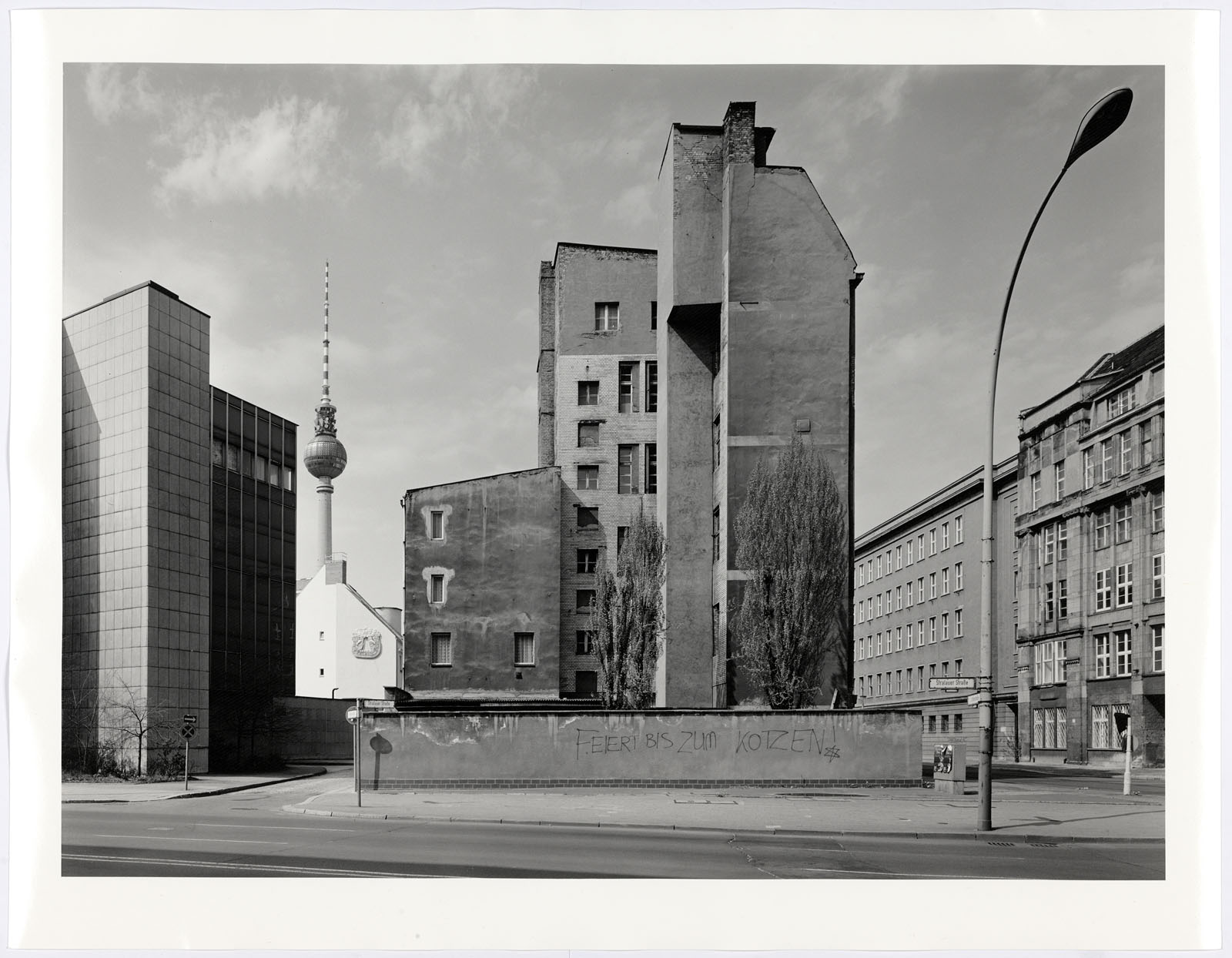
Exhibition: ‘Rosario de Velasco’ at the Museo Nacional Thyssen-Bornemisza, Madrid

Exhibition dates: 18th June to 15th September 2024

Curators: Toya Viudes de Velasco and Miguel Lusarreta


Rosario de Velasco (Spanish, 1904-1991) 'Adam and Eve' (Adán y Eva) 1932


Rosario de Velasco (Spanish, 1904-1991)
Adam and Eve (Adán y Eva)
1932
Oil on canvas
109 x 134cm
Museo Nacional Centro de Arte Reina Sofía, Madrid
Photo credit: Museo Nacional Centro de Arte Reina Sofía Photographic Archive
© Rosario de Velasco, VEGAP, Madrid, 2024


(hidden) in plain sight

When Museo Nacional Thyssen-Bornemisza, Madrid sent me an email about this exhibition I was captivated by the beautiful paintings of Rosario de Velasco, an artist who I had never hear of before, and I decided to do a posting on the exhibition.

Rosario de Velasco was part of the “return to order” movement in Spain which was a style that combined tradition and modernity, associated with a revival of classicism and realistic painting. The paintings are stylish with clean lines and finely honed forms. Among other influences, they evoke Cubism in the tilting of perspective and De Chirico in the slightly twisted perspective of the architectural landscape scenes (for example, see Portrait of Doctor Luis de Velasco (Retrato del doctor Luis de Velasco) c. 1933 below) … while also incorporating magic realism (a style which presents a realistic view of the world while incorporating magical elements) in their story telling.


The press release and various commentators link de Velasco’s paintings to the Italian Novecento and German New Objectivity (Neue Sachlichkeit) movements and there are visible connections to these movements in the work. De Velasco stated that Novecento was an influence on her art practice. But while there are surface similarities in style to the likes of Christian Schad, for example, I believe that de Velasco’s work is of a different order: for New Objectivity was described by art historian G.F. Hartlaub, as ‘new realism bearing a socialist flavour’. And while de Velasco’s work bears a working class flavour it is anything but socialist.

While New Objectivity mines the satirical, debauched air of decadence of the Weimar Republic, de Velasco’s paintings are a paen (perhaps even a sermon) to motherhood, heterosexuality, religiosity, utopianism and the fascist desire for a clean, lean and muscular art. Figurative stylisation and idealisation are used to evidence this desire for wholesomeness in her paintings of gypsies, peasants and working people (just as the stereotypical form of modern realist painting imposed by Stalin following his rise to power after the death of Lenin in 1924 crushed all extant art movements in Russia including the wonderful, briefly flowering Ukrainian modernist movement).

Indeed, glossed over by the press release in a paragraph or two, is the fact that de Velasco believed in the ideas of the Spanish fascists, in “the ideas of the Falange Española de las JONS and José Antonio Primo de Rivera [which] led her to collaborate with the magazine Vértice between 1937 and 1946, where she illustrated the ideology of the new regime.”1 Her art was placed at the service of propaganda and as an artist she benefitted from being on the side of the regime.

It’s a prickly question: Is her ideology complicit with her art? Can you separate the artist from the art?

And the answer is, no you can’t.

In Rosario de Velasco’s paintings the ideology slips behind the surface but it is still there. Witness the diabolical power of destruction rained down on a civilian population in Picasso’s painting Guernica (1937) – “an emotional response to war’s senseless violence ” – when compared to de Resario’s very Catholic, idealistic preternatural interpretation of a massacre in her The Massacre of the Innocents (La matanza de los inocentes) (1936, below). “She covers up with religious aura what was actually going on.”2

With the transition to democracy in Spain starting after the death of Franco in November 1975, “the exiled and forgotten republican artists were recovered, Rosario de Velasco was ignored both for her genre and for her ideology.”3 But now with her rehabilitation – noun: the action of restoring someone to former privileges or reputation after a period of disfavour – in her privilege, her special right to speak as an artist to all, we must not be blinded to the fact that de Velasco’s art is authoritarian utopian erasing social libertarian hiding dystopian destruction.

As my good friend, writer and philosopher Associate Professor James McArdle commented on Rosario de Velasco’s work: “I think we can admire the art but we must be knowing of its seduction, and be prepared to see straight through it to that layer of ideology ‘hidden in plain sight’.”4

Personally, I believe that it’s not so much hidden in plain sight, but right there in plain sight. If you are an informed, aware, sentient human being you know these things, you feel these things, and you can see these things.

There is never any excuse for a collective forgetting or cultural amnesia of the ideologies of the past for, with the rise of the far right around the world, they are returning to haunt us.

Dr Marcus Bunyan


1/ Anonymous. “La matanza de los inocentes,” on the  on the Museo Belles Arts Valencia website Nd [Online] Cited 05/09/2024. Translated by Google Translate from the Spanish text

2/ Associate Professor James McArdle email to the author, 04/09/2024

3/ Anonymous. “La matanza de los inocentes,” on the  on the Museo Belles Arts Valencia website Nd [Online] Cited 05/09/2024. Translated by Google Translate from the Spanish text

4/ Associate Professor James McArdle email to the author, 04/09/2024


Many thankx to the Museo Nacional Thyssen-Bornemisza for allowing me to publish the photographs in the posting. Please click on the photographs for a larger version of the image.


“Rosario de Velasco is part of the “return to order” movement in Spain, parallel to the German New Objectivity and the Italian Novecento, with a style that combines tradition and modernity. The artist admired masters such as Giotto, Mantegna, Piero de la Francesca, Durero, Velázquez and Goya, but also the vanguardists, such as De Chirico, Braque or Picasso and the protagonists of that return to order in Germany and Italy that she met through of magazines and exhibitions held in the 1920s in Madrid.”


Cristina Perez. “La fuerza bíblica de Rosario de Velasco ilumina el Museo Thyssen,” (The biblical force of Rosario de Velasco illuminates the Thyssen Museum) on the rtve website 18.06.2024 [Online] Cited 14/08/2024. Translated from the Spanish by Google Translate


The return to order (French: retour à l’ordre) was a European art movement that followed the First World War, rejecting the extreme avant-garde art of the years up to 1918 and taking its inspiration from classical art instead. The movement was a reaction to the war. Cubism was partially abandoned even by its co-creator Picasso. Futurism, which had praised machinery, dynamism, violence and war, was rejected by most of its adherents. The return to order was associated with a revival of classicism and realistic painting.


Text from the Wikipedia website


Installation view of the exhibition 'Rosario de Velasco' at the Museo Nacional Thyssen-Bornemisza 

Installation view of the exhibition 'Rosario de Velasco' at the Museo Nacional Thyssen-Bornemisza 

Installation view of the exhibition 'Rosario de Velasco' at the Museo Nacional Thyssen-Bornemisza 

Installation view of the exhibition 'Rosario de Velasco' at the Museo Nacional Thyssen-Bornemisza showing Velasco's 'Adam and Eve' (1932)


Installation view of the exhibition Rosario de Velasco at the Museo Nacional Thyssen-Bornemisza showing in the bottom image, Velasco’s Adam and Eve (1932, above)


Installation view of the exhibition 'Rosario de Velasco' at the Museo Nacional Thyssen-Bornemisza showing Velasco's 'Portrait of Doctor Luis de Velasco' (c. 1933)


Installation view of the exhibition Rosario de Velasco at the Museo Nacional Thyssen-Bornemisza showing Velasco’s Portrait of Doctor Luis de Velasco (c. 1933, below)


Rosario de Velasco (Spanish, 1904-1991) 'Portrait of Doctor Luis de Velasco' (Retrato del doctor Luis de Velasco) c. 1933


Rosario de Velasco (Spanish, 1904-1991)
Portrait of Doctor Luis de Velasco (Retrato del doctor Luis de Velasco)
c. 1933
Oil on canvas
114 x 84cm
José A. de Velasco Collection
© Rosario de Velasco, VEGAP, Madrid, 2024


Otto Dix (German, 1891-1969) 'The Jeweller Karl Krall' (Der Juwelier Karl Krall) 1923


Otto Dix (German, 1891-1969)
The Jeweller Karl Krall (Der Juwelier Karl Krall)
1923
Oil on canvas
Kunst- und Museumsverein im Von der Heydt-Museum Wuppertal

This painting is not in the exhibition and is used under fair use conditions for the purposes of education and research.


The Museo Nacional Thyssen-Bornemisza is jointly organising with the Museo de Bellas Artes de Valencia an exhibition on the Spanish figurative painter Rosario de Velasco (Madrid, 1904 – Barcelona, 1991).

Curated by Miguel Lusarreta and Toya Viudes de Velasco, the artist’s great-niece, the exhibition features 30 paintings from the 1920s to 1940s (the earliest and the most important from Velasco’s career) and a section on her activities as an illustrator. Alongside well known works from museum collections, such as the famous oil Adam and Eve from the Museo Nacional Centro de Arte Reina Sofía, with which the artist obtained the second-prize medal for painting at the National Fine Arts Exhibition in 1932, or The Massacre of the Innocents (1936) from the Museo de Bellas Artes de Valencia, there will be others on display for the first time that have remained with Velasco’s family and in private collections, some unlocated until recently and only found and identified in the past few years.

Through a selection of paintings, drawings and illustrations and employing an approach that combines general art-historical issues and also explores aesthetic, social and political aspects, the exhibition aims to rediscover and reassess the work of one of the great Spanish women artists of the first half of the 20th century.

Following its showing in Madrid the exhibition will be seen at the Museo de Bellas Artes de Valencia from 7 November 2024 to 16 February 2025.

Text from the Museo Nacional Thyssen-Bornemisza website


Rosario de Velasco (Spanish, 1904-1991) 'Seamstress Asleep' (Costurera dormida) c. 1930


Rosario de Velasco (Spanish, 1904-1991)
Seamstress Asleep
c. 1930
Oil on canvas
56 × 75cm
Private collection
Photo: Jonás Bel
© Rosario de Velasco, VEGAP, Madrid, 2024


Rosario de Velasco (Spanish, 1904-1991) 'Still Life with Fish' (Bodegón con peces) c. 1930


Rosario de Velasco (Spanish, 1904-1991)
Still Life with Fish (Bodegón con peces)
c. 1930
Oil on canvas
42 × 60cm
Ibáñez Museum Collection, Olula del Rio
© Rosario de Velasco, VEGAP, Madrid, 2024


Rosario de Velasco (Spanish, 1904-1991) 'Things' (Cosas) 1933


Rosario de Velasco (Spanish, 1904-1991)
Things (Cosas)
1933
Oil on canvas
45.5 × 65.5cm
Private collection
© Rosario de Velasco, VEGAP, Madrid, 2024


Rosario de Velasco (Spanish, 1904-1991) 'Untitled, (The Children's Room)' / Sin título (El cuarto de los niños) 1932-1933


Rosario de Velasco (Spanish, 1904-1991)
Untitled, (The Children’s Room) / Sin título (El cuarto de los niños)
1932-1933
Oil on canvas
55 × 73cm
Museo Nacional Centro de Arte Reina Sofía, Madrid
Photo: Archivo Fotográfico Museo Nacional Centro de Arte Reina Sofía
© Rosario de Velasco, VEGAP, Madrid, 2024


Rosario de Velasco remains one of the least known artists of the 1930s in Spain. Her academic training in Madrid took place alongside Fernando Álvarez de Sotomayor and, above all, was the result of her avid curiosity for the Italian Novecento and the German New Objectivity. This interest came to her through magazines and the contemplation of the work of authors such as Carlo Carrà, Felice Casorati and Ardengo Soffici at the Palacio de Exposiciones del Retiro in 1928.

Her approach to the ideas of the Falange Española de las JONS and José Antonio Primo de Rivera led her to collaborate with the magazine Vértice between 1937 and 1946, where she illustrated the ideology of the new regime. In this context we must place the canvas The Massacre of the Innocents (1936), in which Rosario de Velasco used a religious theme to create a work with clear political content created with the aim of mobilising society. The work was presented at the National Exhibition of Fine Arts inaugurated on July 4, 1936 by the President of the Republic, Manuel Azaña, at the Palacio de Cristal in Madrid.

This drift from realism towards political action was a frequent trend at a turbulent time in the history of Spain when art was placed at the service of propaganda. However, with democracy, the exiled and forgotten republican artists were recovered, Rosario de Velasco was ignored both for her genre and for her ideology. The flood of 1957 only deepened the marginalisation of The Massacre of the Innocents and left the painting covered in mud and with water marks for years. The magnificent and disturbing work was attributed to Ricardo Verde based on the monogram with which Rosario de Velasco signed her works, with the initials of her name, RV, until in 1995 its authorship was returned to the artist.

Anonymous. “La matanza de los inocentes,” on the  on the Museo Belles Arts Valencia website Nd [Online] Cited 05/09/2024. Translated by Google Translate from the Spanish text


The Spanish Civil War marked a turning point in Rosario’s life. Her Falangist militancy and her family environment led her to leave Madrid, traveling first to Valencia and then to Barcelona, ​​where she met the doctor Javier Farrerons, who would become her husband. Thanks to Farrerons, Rosario was released from the Modelo prison in Barcelona, ​​where she was detained. After the war, he settled in Barcelona with his family and continued to participate in various exhibitions, albeit less frequently.

In 1939, she participated in the National Exhibition of Painting and Sculpture in Valencia, and in 1940 she presented her first individual exhibition in Barcelona. Over the following years, she also exhibited in Madrid, at events such as the National Exhibition of Fine Arts in 1941 and 1954, as well as in various galleries. In 1944, she was selected for the II Salón de los Once, organised by the Academia Breve de Crítica de Arte, an initiative by Eugenio d’Ors to promote post-war art.

Redacción. “Rosario de Velasco: Entre Giotto y Picasso, un estilo único en la pintura española,” (Rosario de Velasco: Between Giotto and Picasso, a unique style in Spanish painting) on the GenexiGente website 28/05/2024 [Online] Cited 14/08/2024, Translated from the Spanish by Google Translate


The outbreak of the Civil War, her Falangist militancy and her family environment lead her to leave Madrid. She travels first to Valencia and then to Barcelona, ​​in Sant Andreu de Llavaneres, where she meets the ophthalmologist Javier Farrerons, her future husband, and who managed to free her from the Modelo prison in Barcelona, ​​where she was detained. Viudes de Velasco explains that “thanks to God, she was in prison for one night because she had the immense luck that the doctor in the prison was a very good friend of the one who later became her husband, and that same night they took her out. The next day her cellmate was shot. That marked her life and she didn’t want to talk about the war again.”

Cristina Perez. “La fuerza bíblica de Rosario de Velasco ilumina el Museo Thyssen,” (The biblical force of Rosario de Velasco illuminates the Thyssen Museum) on the rtve website 18.06.2024 [Online] Cited 14/08/2024. Translated from the Spanish by Google Translate


Dora Maar (French, 1907-1997) 'Guernica' May-June, 1937


Dora Maar (French, 1907-1997)
Guernica
May-June, 1937
Gelatin silver print

This photograph is not in the exhibition and is used under fair use conditions for the purposes of education and research.


Rosario de Velasco (Spanish, 1904-1991) 'The Massacre of the Innocents' (La matanza de los inocentes) 1936


Rosario de Velasco (Spanish, 1904-1991)
The Massacre of the Innocents (La matanza de los inocentes)
1936
Oil on canvas
164 × 167.5cm
Museo de Bellas Artes de Valencia
Photo: Museo de Bellas Artes de Valencia
© Rosario de Velasco, VEGAP, Madrid, 2024


The Museo Nacional Thyssen-Bornemisza is jointly presenting with the Museo de Bellas Artes de Valencia an exhibition on the Spanish figurative painter Rosario de Velasco (Madrid, 1904 – Barcelona, 1991). Curated by Miguel Lusarreta and Toya Viudes de Velasco, the artist’s great-niece, the exhibition brings together around 30 paintings from the 1920s to the 1940s – the earliest and the most important from Velasco’s career – and also has a section on her work as an illustrator.

The exhibition, which is benefiting from the support of the Region of Madrid and the City Council of Madrid, aims to present and draw attention to the work of one of the great Spanish women artists of the first half of the 20th century. In addition to well-known paintings from museum collections, such as the famous oil Adam and Eve (1932) from the Museo Nacional Centro de Arte Reina Sofía, The Massacre of the Innocents (1936) from the Museo de Bellas Artes de Valencia, Maragatos (1934) from the Museo del Traje, Madrid, and Carnival (before 1936) from the Centre Pompidou, Paris, the exhibition features works still with the artist’s family and in private collections and others that have only been rediscovered and located in the past few months. Following its showing in Madrid, the exhibition will be presented at the Museo de Bellas Artes de Valencia from 7 November 2024 to 16 February 2025.

Rosario de Velasco’s work represents an outstanding example of the so-called “return to order” in Spain, a movement parallel to German New Objectivity and Italian Novecento with a style that combined tradition and modernity. Velasco admired painters such as Giotto, Masaccio, Piero della Francesca, Mantegna, Velázquez and Goya, but also avant-garde figures such as De Chirico, Braque, Picasso and the exponents of the “return to order” in Germany and Italy, whom she encountered via magazines and exhibitions held in Madrid in the 1920s.

The exhibition also focuses on Velásco’s activities as an illustrator, revealing a graphic artist of great versatility. This is evident, for example, in her illustrations for the 1928 edition of Stories for dreaming by María Teresa León and Stories for my grandchildren (1932) by Carmen Karr.

Rosario de Velasco (Madrid, 1904 – Barcelona, 1991)

Born into a very traditional and religious family in Madrid, Rosario de Velasco began to study art aged fifteen at the academy of the genre painter Fernando Álvarez de Sotomayor, a member of the Royal San Fernando Academy of Fine Arts and two-time director of the Museo del Prado. Dating from that period is her Self-portrait (1924), which she signed with a monogram consisting of the initials R, D and V. Inspired by Dürer’s monogram, it has been fundamental to locating some of the artist’s paintings.

The young artist was, however, aware that she needed to go beyond tradition and assimilate the new trends and avant-gardes in her desire to compete as an equal in a largely male world. Her openness and cultural curiosity led her to associate with numerous creators of her generations, particularly women painters and writers such as Maruja Mallo, Rosa Chacel and María Teresa León. Other women friends included Mercedes Noboa, Matilde Marquina, Concha Espina and Lilí Álvarez, the tennis champion whom Velasco painted in the 1930s and with whom she enjoyed playing the sport. De Velasco was also a tireless traveller and enjoyed mountaineering, skiing and rock climbing.

In 1924, the year she completed her studies, the artist participated in the National Fine Arts Exhibition in Madrid and also produced her first illustrations. By the 1930s Rosario de Velasco had established a considerable reputation, taking part in numerous group shows and competitions, such as the National Fine Arts Exhibition of 1932 in which she presented the canvas Adam and Eve, which earned her a second prize medal in the Painting category. The work was exhibited together with all the other entries in the Palacio de Exposiciones in the Retiro park and in various exhibitions organised by the Society of Iberian Artists held in Copenhagen and Berlin, where it was warmly praised by critics for its power and originality and Velasco was singled out as the major discovery of the season. The work is startling in its play of perspective, employing a bird’s-eye view, a device also used in various still lifes and in (Untitled) The Children’s Room (1932-33), another work in the collection of the Museo Reina Sofía, in which the artist disrupts the space through an original arrangement of objects that recalls Cubism.

The majority of Velasco’s most important works date from that decade: Maragatos, which was awarded second prize in the National Painting competition of 1932; The Massacre of the Innocents (1936), which for many years was attributed to Ricardo Verde due to the signature “RV”, until it was correctly attributed to De Velasco in 1995; and Laundresses (1934), a wedding gift to her brother, Dr Luis de Velasco, who appears in another work in the present exhibition.

In 1935 Gypsies was selected to participate in the Carnegie International, an exhibition of artists from different countries organised by the Carnegie Museum of Art in Pittsburgh. Velasco’s work shared space with that of Carlo Carrá, Otto Dix, Edward Hopper and Georgia O’Keeffe, as well as Picasso and Dalí. Lost for years, the painting has only recently been located and is one of the major discoveries made during the preparation of this exhibition.

On the outbreak of the Spanish Civil War the artist’s membership of the Falange and her family context led her to leave Madrid. She went first to Valencia and later to Barcelona, to Sant Andreu de Llavaneres where she met a doctor, Javier Farrerons, who later became her husband and who succeeded in liberating her from the Modelo prison in Barcelona where she was being held. After the war the artist settled in Barcelona with her husband and their daughter María del Mar.

In 1939 Velasco participated in the National Exhibition of Painting and Sculpture in Valencia and in 1940 presented her first solo exhibition, in Barcelona. Over the following years she continued to exhibit in Madrid although less often, for example at the National Fine Arts Exhibitions of 1941 and 1954, and at various galleries. In 1944 Velasco was selected for the 2nd Salón de los Once, organised by the Academia Breve de Crítica de Arte, founded by Eugenio d’Ors to promote art of the immediate post-war period. D’Ors was one of the well known figures in the artist and her husband’s circle of friends, together with Dionisio Ridruejo, Pere Pruna and Carmen Conde, among others.

The recent search for works by Velasco which was undertaken via the social media and the media in general has resulted in the identification in private collections of both celebrated works of which all trace had been lost, such as Things (1933), Motherhood (1933), Gypsies (1934) and Pensive Woman (1935), as well as various illustrations for books and a preparatory drawing for the oil painting Carnival (before 1936). It has also brought to light some previously completely unknown works such as Still Life with Fish (c. 1930) and Girls with a Doll (1937).

Press release from the Museo Nacional Thyssen-Bornemisza


Rosario de Velasco (Spanish, 1904-1991) ''The Bluebird', drawing for the cover of María Teresa León's book 'Cuentos para soñar'' (El pájaro azul 1927. Dibujo para la cubierta del libro Cuentos para soñar de María Teresa León, 1927) 1927


Rosario de Velasco (Spanish, 1904-1991)
The Bluebird, drawing for the cover of María Teresa León’s book Cuentos para soñar (El pájaro azul 1927. Dibujo para la cubierta del libro Cuentos para soñar de María Teresa León, 1927)
1927
Mixed media on paper
41 x 27.5cm
Gonzalez Rodriguez Collection
Photo: Jonás Bel
© Rosario de Velasco, VEGAP, Madrid, 2024


Rosario de Velasco (Spanish, 1904-1991) ''The White Leaves of a Waterlily Half Opened', drawing for María Teresa León's book 'Cuentos para soñar'' (Las blancas hojas de nenúfar se entreabrieron, 1927. Dibujo para el libro Cuentos para soñar de María Teresa León) 1927


Rosario de Velasco (Spanish, 1904-1991)
The White Leaves of a Waterlily Half Opened, drawing for María Teresa León’s book Cuentos para soñar (Las blancas hojas de nenúfar se entreabrieron, 1927. Dibujo para el libro Cuentos para soñar de María Teresa León)
1927
Mixed media on paper
50 × 32.3cm
Gonzalez Rodriguez Collection
Photo: Jonás Bel
© Rosario de Velasco, VEGAP, Madrid, 2024


Rosario de Velasco (Spanish, 1904-1991) ''The Hullabaloo Gave Him Serious Nightmares', drawing for María Teresa León’s book 'Cuentos para soñar' (Tales to dream about)' (La algarabía ciudadana proporcionó serias pesadillas 1927. Dibujo para el libro Cuentos para soñar de María Teresa León) 1927


Rosario de Velasco (Spanish, 1904-1991)
The Hullabaloo Gave Him Serious Nightmares, drawing for María Teresa León’s book Cuentos para soñar (Tales to dream about) (La algarabía ciudadana proporcionó serias pesadillas, 1927. Dibujo para el libro Cuentos para soñar de María Teresa León)
1927
Ink on paper
42.3 × 32.5cm
Gonzalez Rodriguez Collection
Photo: Jonás Bel
© Rosario de Velasco, VEGAP, Madrid, 2024


Rosario de Velasco (Spanish, 1904-1991) ''Dear Crab, Leave the Crane', drawing for 'Mi libro ideal'' (Querido cangrejo, deja la grulla, 1933. Dibujo para Mi libro ideal de varios autores) 1933


Rosario de Velasco (Spanish, 1904-1991)
Dear Crab, Leave the Crane, drawing for Mi libro ideal (Querido cangrejo, deja la grulla, 1933. Dibujo para Mi libro ideal de varios autores)
1933
Ink on paper
31.2 × 21.4cm
Gonzalez Rodriguez Collection
Photo: Jonás Bel
© Rosario de Velasco, VEGAP, Madrid, 2024


Rosario de Velasco (Spanish, 1904-1991) 'Motherhood' (Maternidad) 1933


Rosario de Velasco (Spanish, 1904-1991)
Motherhood (Maternidad)
1933
Oil on canvas
99 × 89cm
Private collection
© Rosario de Velasco, VEGAP, Madrid, 2024


Rosario de Velasco (Spanish, 1904-1991) 'Gypsies' (Gitanos) 1934


Rosario de Velasco (Spanish, 1904-1991)
Gypsies (Gitanos)
1934
Oil on canvas
95 × 132cm
Private collection
© Rosario de Velasco, VEGAP, Madrid, 2024


Otto Dix (1891-1969) 'Reclining Woman on a Leopard Skin' 1927


Otto Dix (German, 1891-1969)
Reclining Woman on a Leopard Skin
1927
Oil paint on panel
680 x 980mm
© DACS 2017. Collection of the Herbert F. Johnson Museum of Art, Cornell University. Gift of Samuel A. Berger

This painting is not in the exhibition and is used under fair use conditions for the purposes of education and research.


Dix was a key supporter of the New Objectivity (Neue Sachlichkeit) movement, a name coined after an exhibition held in Mannheim, Germany in 1925. Described by art historian G.F. Hartlaub, as ‘new realism bearing a socialist flavour’, the movement sought to depict the social and political realities of the Weimar Republic.


Rosario de Velasco (Spanish, 1904-1991) 'Woman with Towel' (Mujer con toalla) 1934


Rosario de Velasco (Spanish, 1904-1991)
Woman with Towel (Mujer con toalla)
1934
Oil on canvas
82 × 76cm
Private collection
© Rosario de Velasco, VEGAP, Madrid, 2024


Rosario de Velasco (Spanish, 1904-1991) 'Pensive Woman' (Pensativa) 1935


Rosario de Velasco (Spanish, 1904-1991)
Pensive Woman (Pensativa)
1935
Oil on canvas
57.5 × 72cm
Emilia Casal Piga and Guillermo González Hernández Collection
© Rosario de Velasco, VEGAP, Madrid, 2024


Installation view of the exhibition 'Rosario de Velasco' at the Museo Nacional Thyssen-Bornemisza showing at left, de Velsaco's 'Laundresses / The Washerwomen' (Lavanderas) 1934


Installation view of the exhibition Rosario de Velasco at the Museo Nacional Thyssen-Bornemisza showing at left, de Velsaco’s Laundresses / The Washerwomen (Lavanderas) 1934 (below)


Rosario de Velasco (Spanish, 1904-1991) 'Laundresses or The Washerwomen' (Lavanderas) 1934


Rosario de Velasco (Spanish, 1904-1991)
Laundresses / The Washerwomen (Lavanderas)
1934
Oil on canvas
209 × 197cm
Private collection
Photo: Jonás Bel
© Rosario de Velasco, VEGAP, Madrid, 2024


Rosario de Velasco (Spanish, 1904-1991) 'Maragatos' 1934


Rosario de Velasco (Spanish, 1904-1991)
Maragatos
1934
Oil on canvas
210 × 150cm
Museo del Traje, Madrid
Photo: Museo del Traje. Centro de Investigación del Patrimonio Etnológico, Madrid
© Rosario de Velasco, VEGAP, Madrid, 2024


Rosario de Velasco (Spanish, 1904-1991) 'Carnival' (Carnavalina) 1936


Rosario de Velasco (Spanish, 1904-1991)
Carnival (Carnavalina)
1936
Watercolour and graphite on cardboard
29.7 × 21.2cm
Fundación Colección ABC
© Rosario de Velasco, VEGAP, Madrid, 2024


Rosario de Velasco (Spanish, 1904-1991) 'Carnival' (Carnaval) Prior to 1936


Rosario de Velasco (Spanish, 1904-1991)
Carnival (Carnaval)
Prior to 1936
Oil on canvas
115 × 110cm
Centre Pompidou, París, Musée national d’art moderne/Centre de création industrielle, adquisición del Estado, 1936
Photo: Centre Pompidou, MNAM-CCI, Dist. GrandPalaisRmn / Bertrand Prévost
© Rosario de Velasco, VEGAP, Madrid, 2024


Installation view of the exhibition 'Rosario de Velasco' at the Museo Nacional Thyssen-Bornemisza showing de Velsaco's 'Retrato de la familia Bastos' (Portrait of the Bastos family) 1936 Oil on canvas


Installation view of the exhibition Rosario de Velasco at the Museo Nacional Thyssen-Bornemisza showing de Velsaco’s Retrato de la familia Bastos (Portrait of the Bastos family) 1936 Oil on canvas


Rosario de Velasco (Spanish, 1904-1991) 'Girls with Doll' (Niñas con muñeca) 1937


Rosario de Velasco (Spanish, 1904-1991)
Girls with Doll (Niñas con muñeca)
1937
Oil on canvas
84.7 × 61.8cm
Private collection
© Rosario de Velasco, VEGAP, Madrid, 2024


Installation view of the exhibition 'Rosario de Velasco' at the Museo Nacional Thyssen-Bornemisza showing at left, de Velsaco's 'Lilí Álvarez' 1938


Installation view of the exhibition Rosario de Velasco at the Museo Nacional Thyssen-Bornemisza showing at left, de Velsaco’s Lilí Álvarez 1938 (below)


Rosario de Velasco (Spanish, 1904-1991) 'Lilí Álvarez' 1938


Rosario de Velasco (Spanish, 1904-1991)
Lilí Álvarez
1938
Oil on board
97.8 × 71.8cm
Lopez-Chicheri Daban Family Collection
Photo: Jonás Bel
© Rosario de Velasco, VEGAP, Madrid, 2024


Rosario de Velasco (Spanish, 1904-1991) 'María del Mar en Vilanova' 1943


Rosario de Velasco (Spanish, 1904-1991)
María del Mar en Vilanova
1943
Oil on canvas
117 × 89cm
Private collection
© Rosario de Velasco, VEGAP, Madrid, 2024


Anonymous photographer. 'Rosario de Velasco painting' 1920s


Anonymous photographer
Rosario de Velasco painting
1920s


Anonymous photographer. 'Rosario de Velasco painting 'Laundresses / The Washerwomen' (Lavanderas)' 1934


Anonymous photographer
Rosario de Velasco painting ‘Laundresses / The Washerwomen’ (Lavanderas)
1934
Archive of the Rosario de Velasco family


Museo Nacional Thyssen-Bornemisza
Paseo del Prado, 8. 28014, Madri

Opening hours:
Tuesday – Sunday, 10am – 7pm
Saturdays, 10 am – 9 pm
Closed on Mondays

Museo Nacional Thyssen-Bornemisza website

LIKE ART BLART ON FACEBOOK

Back to top
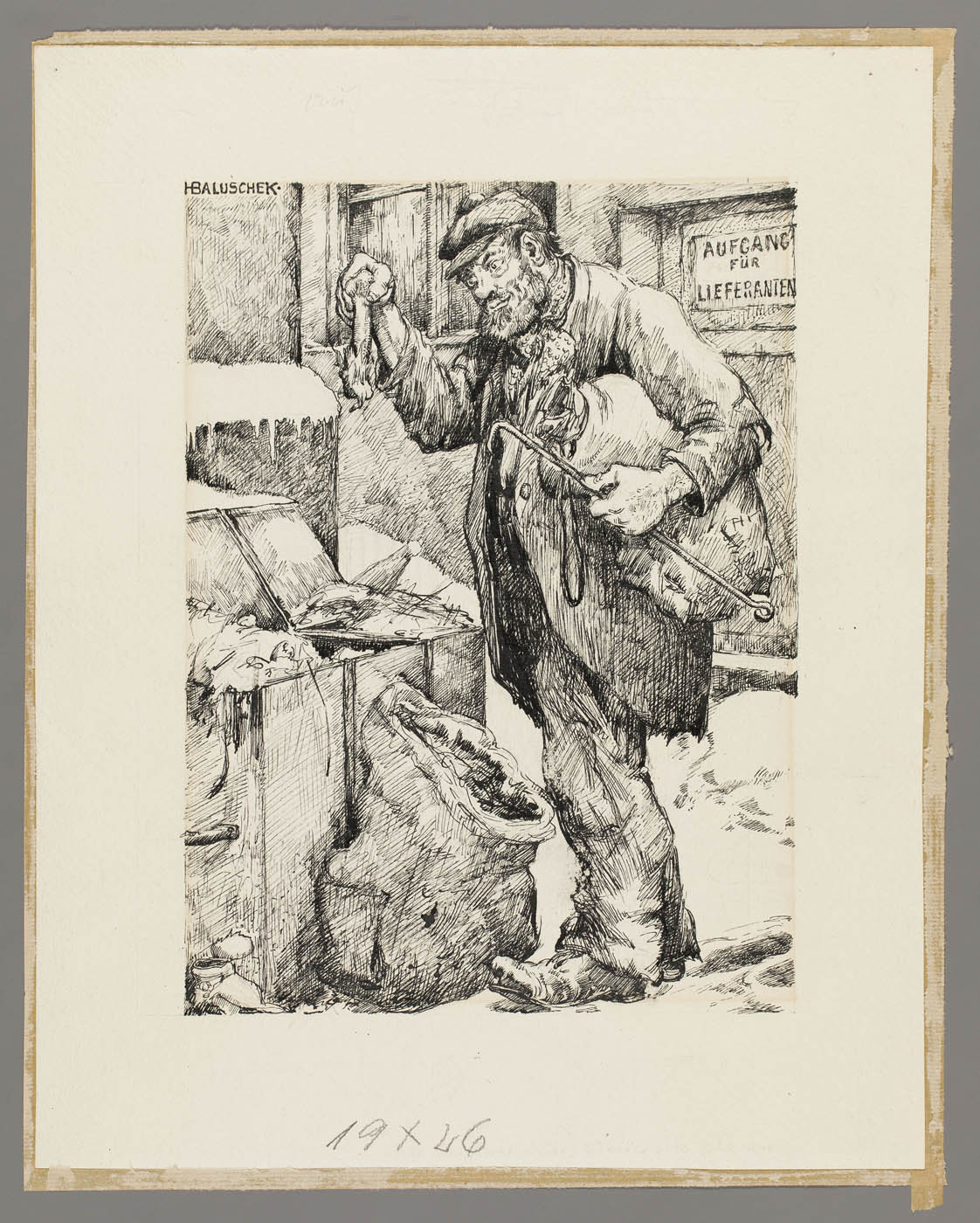
Exhibition: ‘Suburbia. Building the American Dream’ at the Centre de Cultura Contemporània de Barcelona | CCCB

Exhibition dates: 20th March – 8th September 2024

Curators: Philipp Engel and Francesc Muñoz


'Suburbia. Building the American Dream' exhibition poster


Suburbia. Building the American Dream exhibition poster


An offer you can’t refuse

“The “American dream” can be summed up in a mental image that seems frozen in time: a home of one’s own, surrounded by lawns, with a pool in the back garden and a couple of cars slumbering in the garage… Suburbia. Building the American Dream draws us into the imaginary of the idyllic family home and shows how this lifestyle has been sold and promoted by fiction and the entertainment industry.” (Text from the CCCB website)


To me, there has always be something slightly askew, slightly out of kilter about the “American dream”. It promotes a generalised simulation of a imaginary reality, sold as a lifestyle, more fiction than fact. It is the ghost of desire that haunts the everyday reality of life, entirely on the side of demand: I want therefore I must have.

This desire must be satiated in the nuclear family, the white picket fence, the idyllic family home, the loveable children – as much a surface that reflects the approbation of others as for the sustenance of the self. As Anthony Giddens observes we are inescapably involved in a

“‘reflexive project of the self’: this project is reflexive because it involves unremitting self-monitoring, self-scrutiny, planning and ordering of all elements of our lives appearances and performances in order to marshal them into a coherent narrative called ‘the self’. We have to interpret the past and plan the future in relation to an identity we are attempting to constitute in a particularly immediate and transient social present. Consumerism is central to this self-obsession. This is partly because we not only have to choose a self, but (as Foucault’s line of argument also indicates) have to constitute ourselves as a self who choses, a consumer.”1


The American Dream endeavours to direct the identity we are attempting to constitute (through consumerism), so that it fits into a particularly conformist idea of a wholesome life: patriarchal, hegemonic, puritan (most important in America), god fearing, white – a particularly hyperreal simulation of a world that never existed in the first place. An imaginary construction.2

Photographs reinforce this “imaginary” state of being, this desire for the American Dream. As the wonderful Victor Burgin observes,

“The structure of presentation – point-of-view and frame – is intimately implicated in the reproduction of ideology (the ‘frame of mind’ of our ‘points-of-view’). More than any other textual system, the photograph presents itself as ‘an offer you can’t refuse’. The characteristics of the photographic apparatus position the subject in such a way that the object photographed serves to conceal the textuality of the photograph itself – substituting passive receptivity for active (critical) reading. … With most photographs we see, […] decoding and investiture takes place instantaneously, unselfconsciously, ‘naturally’; but it does take place – the wholeness, coherence, identity, which we attribute to the depicted scene is a projection, a refusal of an impoverished reality in favour of an imaginary plenitude. The imaginary object here, however, is not ‘imaginary’ [as in fictive] in the usual sense of the word, it is seen, it has a projected image.”3 (My bold and italics)


The photographs of the American Dream, then, deny an impoverished reality in favour of a desired imaginary plenitude. You too can live the dream, because you have seen the evidence of the projected image, and this imaginary identification can have very real effects.

In the desire for the dream we witness (elsewhere in the world) the egocentric obsession of some of the builders in the British series “Grand Designs” where people mortgage themselves up to the hilt, become sick, have marriage breakdowns and can’t finish the project, because of a dream… to build huge houses with 7 bedrooms and 4 bathrooms that no one in their right mind needs to build for 2 people. Or the case of the Australian Melissa Caddick who, in a Ponzi scheme stole A$30 million from investors, including her friends and family, in order to appear a successful business woman. “Caddick used the proceeds of her crimes to acquire “all the trappings of wealth” and that her “success was all a façade and the financial services business was an elaborate front for Ms. Caddick’s Ponzi scheme”.”4

Ego is reinforced by the image reflected back to us by the photograph.

Christopher Lasch comments that, “The proliferation of recorded images undermines our sense of reality. As Susan Sontag observes in her study of photography, “Reality has come to seem more and more like what we are shown by cameras.” We distrust our perceptions until the camera verifies them. Photographic images provide us with the proof of our existence, without which we would find it difficult even to reconstruct a personal history…”5

Photographs posit a reality that promotes the dream, that verifies the dream, as ‘an offer you can’t refuse’.

Thankfully, some of the contemporary artists in this posting (I particularly like the work of Weronika Gęsicka) undermine the utopian ideal through wit, humour and critical inquiry.

Dr Marcus Bunyan


1/ Anthony Giddens. Modernity and Self-Identity: Self and Society in the Late Modern Age. Polity Press, Cambridge, 1991

2/ “In sociology, the imaginary as a Lacanian term refers to an illusion and fascination with an image of the body as coherent unity, deriving from the dual relationship between the ego and the specular or mirror image… “The term ‘imaginary’ is obviously cognate with ‘fictive’ but in its Lacanian sense it is not simply synonymous with fictional or unreal; on the contrary, imaginary identifications can have very real effects.””

David Macey, “Introduction”, Jacques Lacan, The Four Fundamental Concepts of Psycho-Analysis. London, 1994, p. xxi  quoted in “Imaginary (sociology)” on the Wikipedia website [Online] Cited 01/09/2024

3/ Victor Burgin (ed.,). Thinking Photography. Macmillan, Basingstoke, 1982, pp. 146-148.

4/ Farid Assaf SC quoted in Kate McClymont. “Melissa Caddick’s ‘trappings of wealth’ a front for her Ponzi scheme”. The Sydney Morning Herald 29 June 2021 in “Melissa Caddick,” on the Wikipedia website [Online] Cited 01/09/2024

5/ Christopher Lasch. The Culture of Narcissism. W.W.Norton and Company, New York, 1978, p. 48.


Many thankx to the Centre de Cultura Contemporània de Barcelona for allowing me to publish the photographs in the posting. Please click on the photographs for a larger version of the image.


Inside the exhibition: Suburbia. Building the American Dream 

Philipp Engel, curator of the exhibition “Suburbia”, examines the origin and vast expansion of residential neighbourhoods in the United States, an urban model centred on constructing large swathes of single-family homes on the outskirts of cities. Engel reflects on the allure that suburban landscapes have stirred in Western culture while highlighting the main issues and contradictions of the model, including segregation, safety paranoia and unsustainable consumption of water and energy.


Introduction

Greg Stimac (American, b. 1976) 'Chandler, Arizona' 2006 From 'Mowing the Lawn' portfolio


Greg Stimac (American, b. 1976)
Chandler, Arizona
2006
From Mowing the Lawn portfolio
Impressió digital Museum of Contemporary Photography, Columbia College Chicago


Who hasn’t longed for the American dream? A big house with a garden, a swimming pool and a couple of cars in the garage. A quiet, safe place to live as a family, close to nature in a people-friendly neighbourhood. This exhibition traces the cultural history of a lifestyle ideal that has been endlessly reproduced on television, in advertising and in cinema, and analyses the validity and the most controversial aspects of its urban planning model.

Suburbia. Building the American Dream draws us into the imaginary of the idyllic family home and shows how this lifestyle has been sold and promoted by fiction and the entertainment industry. The exhibition goes back to the origins of residential neighbourhoods in the early nineteenth century, explains how they developed massively in the 1950s, and reviews the economic, political and social context of their relentless expansion across the United States.

Now, when more and more families are pursuing their own version of the dream on the outskirts of cities, it is a good moment to analyse the contradictions of an urban planning model based on social, ethnic and gender segregation.

The dream of living in a house with a swimming pool is still very much alive today and has been exported all over the world. The exhibition shows the impact of this highly unsustainable model, based on constant car use, with examples of developments around Barcelona and Madrid.

With abundant historical material, period documentaries, photographs, paintings, films and series, novels and magazines, works of art and everyday objects, the exhibition places us in the mental paradise of the suburb and invites us to rethink the value of the city and public space today.

Suburbia. Building the American Dream presents the work of foremost creators who, from different points of view, help us to take a critical look at the famed American way of life: Jessica Chou, Gregory Crewdson, Thomas Doyle, Gerard Freixes, Rodrigo Fresán, Gabriele Galimberti, Weronika Gesicka, Benjamin Grant, Todd Hido, Joel Meyerowitz, Matthias Müller, Blanca Munt, Alberto Ortega, Bill Owens, Sheila Pree Bright, León Siminiani, Todd Solondz, Amy Stein, Greg Stimac, Angela Strassheim, Deborah Stratman, Ed & Deanna Templeton, Kate Wagner and Christopher Willan.

Text from the CCCB website


Joel Meyerowitz (American, b. 1938) 'Land. Provincetown' 1976


Joel Meyerowitz (American, b. 1938)
Land. Provincetown
1976
Archival pigment print
Collecció Pancho Saula i Michelle Ferrara / Galeria Alta, Andorra


Joel Meyerowitz (American, b. 1938) 'Dusk, New Jersey' 1978


Joel Meyerowitz (American, b. 1938)
Dusk. New Jersey
1978
Archival pigment print
Collecció Pancho Saula i Michelle Ferrara / Galeria Alta, Andorra


The “American dream” can be summed up in a mental image that seems frozen in time: a home of one’s own, surrounded by lawns, with a pool in the back garden and a couple of cars slumbering in the garage. Suburbia. Building the American Dream traces the cultural history of a lifestyle ideal shared far and wide by literature, television, advertising and cinema, and analyses the most controversial aspects of an urban planning model that has spread beyond US territory and reached our shores. Journalist Philipp Engel curates this exhibition with geographer Francesc Muñoz collaborating as adviser on the model in the local context.

Suburbia. Building the American Dream draws us into the imaginary of the idyllic family home and shows how this lifestyle has been sold and promoted by fiction and the entertainment industry. The exhibition goes back to the origins of residential neighbourhoods in the early nineteenth century, explains how they developed massively in the 1950s, and reviews the economic, political and social context of their relentless expansion across the United States.

Since the 1990s most of the American population has lived in this sprawling urban mass that has continued to spread, even beyond US borders. At a time when more and more families are pursuing their own version of the dream on city outskirts, the exhibition analyses the contradictions of an urban planning model based on social, ethnic and gender segregation. It also shows the impact of this highly unsustainable model, based on constant car use, with examples of developments around Barcelona and Madrid. With abundant historical material, photographs, paintings, audiovisuals, literature, works of art and everyday objects, the exhibition situates us in the mental paradise of the model of residential development inspired by American suburbia, and invites us to rethink the value of the city and public space today.

Suburbia. Building the American Dream decodes an almost abstract landscape that is still valid in pop culture. It does so through the work of foremost creators who help us take a critical look at the famed American way of life. It includes works by Jessica Chou, Gregory Crewdson, Thomas Doyle, Gerard Freixes, Gabriele Galimberti, Weronicka Gęsicka, Benjamin Grant, Todd Hido, Joel Meyerowitz, Matthias Müller, Blanca Munt, Alberto Ortega, Bill Owens, Sheila Pree Bright, León Siminiani, Amy Stein, Greg Stimac, Angela Strassheim, Deborah Stratman, Ed & Deanna Templeton, Kate Wagner and Christopher Willan, among others.


Installation view of the exhibition 'Suburbia. Building the American Dream' at the Centre de Cultura Contemporània de Barcelona | CCCB

Installation view of the exhibition 'Suburbia. Building the American Dream' at the Centre de Cultura Contemporània de Barcelona | CCCB

Installation view of the exhibition 'Suburbia. Building the American Dream' at the Centre de Cultura Contemporània de Barcelona | CCCB

Installation view of the exhibition 'Suburbia. Building the American Dream' at the Centre de Cultura Contemporània de Barcelona | CCCB showing photographs by Charlotte Brooks

Installation view of the exhibition 'Suburbia. Building the American Dream' at the Centre de Cultura Contemporània de Barcelona | CCCB showing visitors looking at satellite images of US cities and suburbs that show their grid layout


Installation views of the exhibition Suburbia. Building the American Dream at the Centre de Cultura Contemporània de Barcelona | CCCB showing in the second image photographs by Charlotte Brooks (below); and in the bottom image, visitors looking at satellite images of US cities and suburbs that show their grid layout
© Alice Brazzit, CCCB, 2024


Charlotte Brooks (American, 1918-2014) '[Image from LOOK - Job 57-7621 titled Myers family]' 20th December 1957


Charlotte Brooks (American, 1918-2014)
[Image from LOOK – Job 57-7621 titled Myers family]
20th December 1957
Film negative
Look magazine photograph collection (Library of Congress)
Library of Congress Prints and Photographs Division Washington, D.C.


Installation view of the exhibition 'Suburbia. Building the American Dream' at the Centre de Cultura Contemporània de Barcelona | CCCB showing photographs by Gregory Crewdson


Installation view of the exhibition Suburbia. Building the American Dream at the Centre de Cultura Contemporània de Barcelona | CCCB showing photographs by Gregory Crewdson (below)


Gregory Crewdson (American, b. 1962) 'Untitled (Dream House)' 2002


Gregory Crewdson (American, b. 1962)
Untitled (Dream House)
2002
Digital C-print
29 x 44 inches


American photographer Gregory Crewdson is best known for his uncanny images of deceptively serene suburban life.  Using Hollywood film techniques and elaborate sets, Crewdson creates what he calls “frozen moments”: meticulously staged scenes whose narrative meaning remains a mystery.  Throughout this series, special attention is paid to light.  The twilight setting favoured by the photographer functions as a metaphor, an eerie evocation of the darkness on the edge of town.

Crewdson created this twelve-part portfolio, Dream House, as a commission for The New York Times Magazine in 2002.  The cinematic character of these frozen vignettes is underscored by the use of Hollywood actors (Gwyneth Paltrow, Tilda Swinton, and Philip Seymour Hoffman among others) whose celebrity contrasts with the “Anytown” anonymity of their environments.

Text from the Mutual Art website


Gregory Crewdson (American, b. 1962) 'Julianne Moore (Dream House)' 2002


Gregory Crewdson (American, b. 1962)
Julianne Moore (Dream House)
2002
Digital C-print
29 x 44 inches


Sections of the exhibition

Planning A Dream

When the Industrial Revolution reached the USA in the first half of the 19th century, big cities became engines of progress, but they were also seen as dangerous places, in contrast with the opulent nature of the New World. With the emergence of the railway, the tram and the automobile, the mobility revolution prompted the gradual colonisation of city outskirts, transforming the countryside into residential neighbourhoods.

From Llewellyn Park (New Jersey) to Tuxedo Park (New York), throughout the 19th century the first gated communities began to pop up across the United States. At the end of the century, after the West was won, the appearance of the tram gave the middle classes access to the periphery, giving rise to a new type of housing that led to an orderly arrangement of city grids. But it wasn’t until the popularisation of the famous Ford Model T that the US landscape was radically transformed, crisscrossed by roads that became freeways. The automobile became a symbol of freedom, marking the birth of the suburbs that were to spring up everywhere.

This first section includes historical material like the original lithograph View of New York by John William Hill (1836); The American Woman’s Home by Catharine Beecher, the bible of “domestic feminism”; a Ford T Touring (1923) produced by General Motors, and films like The Suburbanite (1908), among other Harold Lloyd and Buster Keaton classics.


Alexander Jackson Davis (American, 1803–1892) 'Villa for David Codwise, near New Rochelle, NY (project; elevation and four plans)' 1835


Alexander Jackson Davis (American, 1803–1892)
Villa for David Codwise, near New Rochelle, NY (project; elevation and four plans)
1835
Pen and ink, watercolour, graphite
Sheet: 14 5/16 x 9 in. (36.4 x 22.9 cm)
Metropolitan Museum of Art, New York
Harris Brisbane Dick Fund, 1924
Public domain


Alexander Jackson Davis (American, 1803-1892) 'Ericstan, for John J. Herrick, Tarrytown, New York (perspective)' 1855


Alexander Jackson Davis (American, 1803–1892)
Ericstan, for John J. Herrick, Tarrytown, New York (perspective)
1855
Watercolour, ink, and graphite on paper
25 5/16 x 30in. (64.3 x 76.2cm)
Metropolitan Museum of Art, New York
Harris Brisbane Dick Fund, 1924
Public domain


Davis’ most successful castellated villa was built for dry-goods merchant John J. Herrick. The design was dominated by an enormous three-story circular tower facing west over the Hudson River. The tower housed an extraordinary circular parlor that had an intricately vaulted ceiling springing from a massive central cluster of delicate Gothic columns. Ericstan was demolished in 1944.


After Alexander Jackson Davis (American, 1803-1892) Friend & Aub (Publisher Philadelphia, Pennsylvania) 'Map of Llewellyn Park and Villa Sites, on Eagle Ridge in Orange & West Bloomfield' 1857


After Alexander Jackson Davis (American, 1803-1892)
Friend & Aub (Publisher Philadelphia, Pennsylvania)
Map of Llewellyn Park and Villa Sites, on Eagle Ridge in Orange & West Bloomfield
1857
Lithograph
14 7/16 x 23 7/16 in. (36.7 x 59.6cm)
Metropolitan Museum of Art, New York
Harris Brisbane Dick Fund, 1924
Public domain


Morse & Fronti (Charles W. Morse and J. Fronti) 'Residence of Mr. E. Hooker, Fremont Ave., Orange, N.J.' 1860


Morse & Fronti (Charles W. Morse and J. Fronti)
Residence of Mr. E. Hooker, Fremont Ave., Orange, N.J.
1860
The Miriam and Ira D. Wallach Division of Art, Prints and Photographs: Photography Collection
The New York Public Library
Public domain


Currier & Ives (Publisher, New York active between 1856-1907) 'Sunnyside on the Hudson' 1856-1871


Currier & Ives (Publisher, New York active between 1856-1907)
Sunnyside on the Hudson
1856-1871
Hand coloured lithograph
Library of Congress Prints and Photographs Division Washington, D.C.
Public domain


Currier & Ives (Publisher, New York active between 1856-1907) 'Sunnyside on the Hudson' 1856-1871 (detail)


Currier & Ives (Publisher, New York active between 1856-1907)
Sunnyside on the Hudson (detail)
1856-1871
Hand coloured lithograph
Library of Congress Prints and Photographs Division Washington, D.C.
Public domain


Currier & Ives (Publisher, New York active between 1856-1907) 'American railroad scene: lightning express trains leaving the junction' 1874


Currier & Ives (Publisher, New York active between 1856-1907)
American railroad scene: lightning express trains leaving the junction
1874
Hand coloured lithograph
Library of Congress Prints and Photographs Division Washington, D.C.
Public domain


Advertising by Samuel. E. Gross 'August Gast & Co. New York' c. 1900


Advertising by Samuel. E. Gross.
August Gast & Co. New York
c. 1900
Lithography
Library of Congress


Advertising by Samuel. E. Gross 'August Gast & Co. New York' c. 1900 (detail)


Advertising by Samuel. E. Gross.
August Gast & Co. New York (detail)
c. 1900
Lithography
Library of Congress


Anonymous photographer / Bain News Service (publisher) 'Skaters on the lake at Tuxedo Park' 1910


Anonymous photographer
Bain News Service
(publisher)
Skaters on the lake at Tuxedo Park
1910
Glass negative
Library of Congress Prints and Photographs Division Washington, D.C.
Public domain


Anonymous photographer. 'Thomas Edison in the garden of his residence in Glenmont' 1917


Anonymous photographer
Thomas Edison in the garden of his residence in Glenmont
1917
Thomas Edison National Historical Park, West Orange, New Jersey


Anonymous photographer. 'General Motors Pavilion: Futurama, Norman Bel Geddes. New York World's Fair. General Motors – Crowds leading into Futurama' 1939


Anonymous photographer
General Motors Pavilion: Futurama, Norman Bel Geddes. New York World’s Fair. General Motors – Crowds leading into Futurama
1939
New York World’s Fair 1939-1940 records
Manuscripts and Archives Division, The New York Public Library
Public domain


'Catalog of the Aladdin company selling houses by mail' 1950


Catalog of the Aladdin company selling houses by mail
1950
Courtesy Historic New England


'Federal Housing Administration, Minneapolis and St. Paul, Minnesota' c. 1950


Federal Housing Administration, Minneapolis and St. Paul, Minnesota
c. 1950
Courtesy Minnesota Streetcar Museum, Minneapolis


The advertisement reads, “With a small down payment your rent money will buy a home. Consult your architect, builder, material dealer or any participating financial institution. Federal Housing Administration.”


The Suburban Room

The suburban explosion was first and foremost demographic, occurring as World War II soldiers returned, eager to set up home. There was no room for them in the crowded cities. With the support of the state, which offered generous loans, suburbs were built using the Fordist assembly-line production logic. It was the “American way of life”, the start of a collective dream that fascinated the whole world.

And so the baby boom took place in 11 million single-family homes fitted with all kinds of electrical domestic appliances, presided over by a brand new television set on which the new suburbanites watched idealised versions of themselves with identical skin colour and the same war experiences, age, mortgage and feeling of uprootedness. The media echoed this phenomenon, and cinema and literature reflected this standardised landscape in which a wife waited at home for her husband with a drink for him in her hand, children went everywhere by bicycle, and everyone had barbecues on Sundays.

Sponsored by the state, Suburbia became a paradise that excluded racial minorities. But little by little, by the sixties, the gates of paradise were opened to African Americans and other minorities, giving rise to a white exodus, the white flight.

As well as a variety of historical material, this section reviews sitcoms portraying the suburbs, from the 1940s to the present day. It also includes the famous illustration New Kids in the Neighborhood by Norman Rockwell and a broad selection of the photographs that make up Bill Owens’ Suburbia (1972), the first book of photographs about this American urban planning model.


Arthur S. Siegel (American, 1913-1978) 'Detroit, Michigan. Riot at the Sojourner Truth homes, a new U.S. federal housing project, caused by white neighbours' attempt to prevent Negro tenants from moving in. Mounted police and whites' Detroit 1942


Arthur S. Siegel (American, 1913-1978)
Detroit, Michigan. Riot at the Sojourner Truth homes, a new U.S. federal housing project, caused by white neighbours’ attempt to prevent Negro tenants from moving in. Mounted police and whites
Detroit 1942
Library of Congress
Public domain


General Electric advertisement 'It's a promise' 1945


General Electric advertisement
It’s a promise
1945
Private collection, Barcelona


Anonymous photographer. 'Aerial view of Levittown' 1949


Anonymous photographer
Aerial view of Levittown
1949
Courtesy Levittown Public Library


'Mural of household appliance advertisements published in different American magazines' 1947-1962


Mural of household appliance advertisements published in different American magazines
1947-1962


'Mural of household appliance advertisements published in different American magazines' 1947-1962 (detail)

'Mural of household appliance advertisements published in different American magazines' 1947-1962 (detail)

'Mural of household appliance advertisements published in different American magazines' 1947-1962 (detail)

'Mural of household appliance advertisements published in different American magazines' 1947-1962 (detail)


Mural of household appliance advertisements published in different American magazines (details)
1947-1962


Getting to Work. The Trials to U.S. commuters 'Time', January 18, 1960


Getting to Work. The Trials to U.S. commuters
Time, January 18, 1960
Library of Catalonia, Barcelona


John Cheever 'Time', March 27, 1964


John Cheever
Time, March 27, 1964
Library of Catalonia, Barcelona


Norman Rockwell (American, 1894-1978) 'New Kids in the Neighbourhood' 1967


Norman Rockwell (American, 1894-1978)
New Kids in the Neighbourhood
1967
Lithograph
Norman Rockwell Museum Collection


Bill Owens (American, b. 1938) 'Suburbia, Cul de sac, Pleseanton, California' 1972


Bill Owens (American, b. 1938)
Suburbia, Cul de sac, Pleseanton, California
1972
Gelatin silver
Bill Owens Archive, Milan


Bill Owens (American, b. 1938) 'I don't feel that Richie playing with guns will have a negative effect on his personality. (He already wants to be a policeman.)' 1972


Bill Owens (American, b. 1938)
I don’t feel that Richie playing with guns will have a negative effect on his personality. (He already wants to be a policeman.)
1972
Gelatin silver
Bill Owens Archive, Milan


The Residential Nightmare

And night fell on Suburbia. What had been a dream became a nightmare. The idea of a safe, healthy, happy place was gradually contaminated with fears, terrors and paranoias. Doors were bolted and alarms installed. After all, in the American Gothic tradition, the house, often haunted, had always been a source of horror – evil lurked there. With the appearance of mass-produced housing, a new sub genre called Suburban Gothic was consolidated, and began to manifest itself both in literature and in cinema. Unlike the traditional Gothic, in this new landscape the family residence was no longer tied to a specific territory, as it had been in New England; now, with its white picket fence and green lawn, it could be anywhere in the country. And evil came from outside, it threatened to invade the home and even undermine it. Under the guise of shiny normality, American suburbs always conceal cracks through which terror creeps.

To illustrate this residential nightmare, we take in historical materials of the atomic age, photographs of the dark side of suburbia by Amy Stein, Todd Hido, Gregory Crewdson, Angela Strassheim and Gabriele Galimberti, and Kate Wagner’s installation, McMansionHell. Alberto Ortega, an artist from Seville resident in the US who has devoted himself to painting the suburbs at night, presents two works for the first time at the CCCB.


Todd Hido (American, b. 1968) 'Untitled #2214' 1998


Todd Hido (American, b. 1968)
Untitled #2214
1998
From the series House Hunting


Angela Strassheim (American, b. 1969) 'Untitled (Elsa)' 2005


Angela Strassheim (American, b. 1969)
Untitled (Elsa)
2005
Left Behind series
Courtesy of the artist


Installation view of the exhibition 'Suburbia. Building the American Dream' at the Centre de Cultura Contemporània de Barcelona | CCCB showing the work of Gabriele Galimberti from the series 'The Ameriguns' with at top right, 'Joel, Lynne, Paige and Joshua (44, 43, 5 and 11 years old) – central Texas' 2021; and at bottom right, 'Eric Arnsberger (30) and Morgan Gagnier (22) – Lake Forest, California' 2021


Installation view of the exhibition Suburbia. Building the American Dream at the Centre de Cultura Contemporània de Barcelona | CCCB showing the work of Gabriele Galimberti from the series The Ameriguns with at top right, Joel, Lynne, Paige and Joshua (44, 43, 5 and 11 years old) – central Texas 2021; and at bottom right, Eric Arnsberger (30) and Morgan Gagnier (22) – Lake Forest, California 2021
© Alice Brazzit, CCCB, 2024


Gabriele Galimberti (Italian, b. 1977) 'Joel, Lynne, Paige and Joshua (44, 43, 5 and 11 years old) – central Texas' 2021


Gabriele Galimberti (Italian, b. 1977)
Joel, Lynne, Paige and Joshua (44, 43, 5 and 11 years old) – central Texas
2021
Digital printing
Courtesy of the artist


Gabriele Galimberti (Italian, b. 1977) 'Avery Skipalis (33) – Tampa, Florida' 2021


Gabriele Galimberti (Italian, b. 1977)
Avery Skipalis (33) – Tampa, Florida
2021
Digital printing
Courtesy of the artist


Avery Skipalis (33) stands with her firearms in front of her house in Tampa, Florida, USA. Her son looks on from a window. Avery joined the US Air Force when she was 17, and after serving in the UAE, Japan and Germany, left to start a company that offers firearms safety classes to adults and children.


Alberto Ortega (American born Spain, b. 1976) 'Annunciation' 2023


Alberto Ortega (American born Spain, b. 1976)
Annunciation
2023
Oil on aluminium panel
Courtesy of the artist


Alberto Ortega (Sevilla, Spain 1976) creates oil paintings made after miniature sets that he builds as references. The small-scale sets enable him to recreate suburban scenes using details that recall the 1950s. Since he’s able to control the angle and point of view, the lighting, the location of every element, much like a film director would do, his works have a strong cinematic feel.

As an immigrant to the United States, Alberto is intrigued by American suburban life as depicted in film, literature, and visual art. Through these images of American homes, buildings, and neighbourhoods, he portrays society and some of its contradictions. These scenes represent hopes and dreams, the threat of their failure, and alienation.

Text from the Alberto Ortega website


Kate Wagner (American, b. 1993) 'Observations from McMansion Hell' 2023


Kate Wagner (American, b. 1993)
Observations from McMansion Hell
2023
Digital print on palboard
Courtesy of the artist


McMansion Hell is a blog that humorously critiques McMansions, large suburban homes typically built from the 1980s to 2008 and known for their stylistic attempt to create the appearance of affluence using mass-produced architecture. The website is run by Kate Wagner, an architectural writer. …

The blog uses Wagner’s commentary atop images of the interiors and exteriors of McMansions, using arrows to note features she finds questionable or in poor taste. Besides critiquing the homes themselves, the website also criticises the perceived material culture of wastefulness McMansions can represent, gives anecdotes of situations when McMansions have been a poor financial investment, and provides other essays on urban planning and architectural history. The blog offers subscriptions with bonus content, generating sufficient funding for Wagner to work on the blog full-time.

Text from the Wikipedia website


Post-Suburbia?

The appearance of New Urbanism in the 1990s began to herald the inevitable death of Suburbia due to the announced depletion of oil that has not yet occurred. Meanwhile, Suburbia continues to spread, transform and diversify. Today, 8 out of 10 Americans live in sprawl and single-family homes, representing 75% of the residential areas where new generations continue to dream of living. This is a new suburbia that is more open but also more unequal.

This suburb is made up of very diverse communities, as captured by the cameras of the photographers Sheila Pree Bright (who portrays African American life around Atlanta) and Jessica Chou (who immortalises the Asian community in Monterrey Park, California). New lifestyles also proliferate there, like at Huntington Beach, a “contemporary suburb” and surfing capital featured in the works of artist and skateboarder Ed Templeton.

This section also focuses on the environmental impact of this highly polluting city model, through the apocalyptic bonsai of artist Thomas Doyle and the satellite photographs of Benjamin Grant, a lethal panorama of the effects of the sprawling city.


Thomas Doyle (American, b. 1976) 'Proxy (Haven Ln.)' 2012


Thomas Doyle (American, b. 1976)
Proxy (Haven Ln.)
2012
Mixed media
Courtesy of the artist


Thomas Doyle work mines the debris of memory through the creation of intricate worlds sculpted in 1:43 scale and smaller. Often sealed under glass, the works depict the remnants of things past – whether major, transformational experiences, or the quieter moments that resonate loudly throughout a life. In much the way the mind recalls events through the fog of time, the works distort reality through a warped and dreamlike lens.

Text from the Ronchini Gallery website


Weronika Gęsicka (Polish, b. 1984) 'Untitled #16' 2015-2017 From the series 'Traces'


Weronika Gęsicka (Polish, b. 1984)
Untitled #16
2015-2017
From the series Traces
Digital printing
Courtesy of the artist and Jednostka Gallery, Warsaw


For her series “Traces”, Polish artist Weronika Gęsicka searched through various online image databases for photographs from the 1940s to the 1960s that in her eyes reflect the American way of life at that time. Many of these scenes are full of clichés, showing happy-looking people in an apparently perfect world. The exact origin of the pictures is not verifiable. As a result, they are a mixture of advertisements and private photos. Gęsicka manipulates the idyllic scenes in a playful way by digitally distorting the images. In doing so, she does not follow a strict pattern, but instead decides intuitively what detail she finds fascinating and will edit. In this way, the rather stereotypical scenes of suburban American life are transformed into a humorous, but also uncomfortable reality. Covered faces, deformed bodies and peculiar superimpositions create a distorted version of the American dream. Gęsicka’s photos are characterised by a discomforting, almost oppressive mood that sometimes only reveals itself at second glance: young men at a tea dance, whose heads are submerged in the cleavages of their oversized female partners, family members hidden behind a curtain at the dinner table, or a father coming home from work, separated by a trench from his children, who are running towards him.

In “Traces”, Weronika Gęsicka questions how we perceive images. In doing so, she makes us aware that even the medium of photography, which allegedly reflects reality, is not objective. Each photograph merely satisfies a perception of what is happening and, in the photographer’s eye, remains a subjective likeness. By modifying the images, she is playing with the observer, who is initially confident that he can quickly classify and identify the scene – until he notices that nothing in these pictures is as it seems at first glance.

Anonymous. “Weronika Gęsicka: A Disconcerting Idyll,” on the Deutsche Börse Photography Foundation website Nd [Online] Cited 13/08/2024


Weronika Gęsicka (Polish, b. 1984) 'Untitled #52' 2015-2017 From the series 'Traces'


Weronika Gęsicka (Polish, b. 1984)
Untitled #52
2015-2017
From the series Traces
Digital printing
Courtesy of the artist and Jednostka Gallery, Warsaw


Ed Templeton (American, b. 1972) 'Contemporary Suburbium' 2017


Ed Templeton (American, b. 1972)
Contemporary Suburbium
2017
Digital printing on baryta paper
Courtesy of Roberts Projects, Los Angeles


Jessica Chou (American born Taiwan, b. 1985) 'The Mark Keppel High School Dance Team at the 2019 Miss Dance Drill Team USA National Dance Competition' 2019


Jessica Chou (American born Taiwan, b. 1985)
The Mark Keppel High School Dance Team at the 2019 Miss Dance Drill Team USA National Dance Competition
2019
Digital printing
Courtesy of the artist


Benjamin Grant (American, b. 1984) 'Berwyn, Illinois' 2023


Benjamin Grant (American, b. 1984)
Berwyn, Illinois
2023
Digital printing
Images created by Overview, source images
© Nearmap


Overview takes its inspiration from Daily Overview – an Instagram account established by author Benjamin Grant. Since he began the project in December 2013, his daily posts have both delighted and challenged his audience from all corners of the globe. For Overview, Grant has curated and created more than 200 original images by stitching together numerous high-resolution satellite photographs. With each Overview, Grant aims to not only inspire a fresh perspective of our planet but also encourage a new understanding of what human impact looks like. He lives and rides his bike in New York City.

Text from the Penguin Books website


Benjamin Grant (American, b. 1984) 'Berwyn, Illinois' 2023 (detail)


Benjamin Grant (American, b. 1984)
Berwyn, Illinois (detail)
2023
Digital printing
Images created by Overview, source images
© Nearmap


Sprawl Reaches Our Shores

The formation of Suburbia as a cultural phenomenon in Catalonia is a reality historically ignored by narratives about the Catalan process of urbanisation, too focused on city growth and the ideological differentiation between an urban, Barcelona-based Catalonia and an “inner” Catalonia, the birthplace of what still today we call the “countryside”.

Suburban Catalonia shows how, in many territories, urban growth no longer corresponds to the well-known metaphor of city growth as an “oil stain”. In fact, an endless mass of oil stains has spread across the territory, giving rise to the same cloned reality everywhere: regional urban sprawl. The sprawl that is so commonplace today developed with the motorisation of society starting in the latter half of the 20th century as part and parcel of a very heterogeneous cultural discourse: the ideological propaganda of the American way of life mixed with local traditions derived from criticism of the built-up, crowded industrial city popularly disseminated in expressions such as “la caseta i l’hortet” (a little house and a garden) that idealised rural life. The path leading from those initial suburban choices to today’s regional urban sprawl is not a straight one, making the Catalan suburb a world yet to be discovered.

Christopher Willan has made a photographic reportage about the Catalan suburban world specially for the exhibition, which also includes Blanca Munt’s installation Mira-Sol Alert about the neighbourhood’s paranoid state of alert and an audiovisual piece by filmmaker León Siminiani that closes the exhibition.


Pere Torné Esquius (Spanish, 1879-1936) 'The rocking chair' 1913


Pere Torné Esquius (Spanish, 1879-1936)
The rocking chair (El balancí)
1913
Oil on canvas
National Art Museum of Catalonia, Barcelona


For different reasons, the singular work of the painter, illustrator and cartoonist Pere Torné Esquius (Barcelona 1879 – Flavancourt, France, 1936) doesn’t fit in with either the modernist proposals or the noucentista style (turn of the century), even though the latter considered him to be one of theirs.

Settled in Paris from 1905 onwards, although he would often return to Barcelona to regularly exhibit there, his work, of apparent simplicity, responded to a certain primitivism which was somewhat naive and with a strong French influence. His painting, highly singular, maintained pictorial and atmospheric values which provided the whole production with a sense of unity.

The favourite topics of Torné Esquius were interior or secluded spaces, such as gardens or living rooms, humble or of artisan extraction. It is worth highlighting, very often, the absence of the human figure and the main presence of inanimate elements that on occasions would cause a disturbing or even alarming effect. He also produced other genres such as landscapes or portraits.

Despite the fact that he was a painter, his professional work was based on illustration, focused on three main lines: children’s literature, the illustration of literary texts and the collaboration in magazines and periodical publications, often satirical, such as Papitu, Picarol or Le Rire, amongst others.

Anonymous. “Torné Esquius. Poetics of the Everyday,” on the Museu Nacional D’Art De Catalunya website 2017 [Online] Cited 13/08/2024


'XXIII Barcelona International Exhibition Fair, 1955. USA Pavilion. OITF: Office of International Trade Fair. Single-family house model: "house beautiful prefabricated"' 1955


XXIII Barcelona International Exhibition Fair, 1955. USA Pavilion. OITF: Office of International Trade Fair. Single-family house model: “house beautiful prefabricated”
1955
Historical Archive of the College of Architects of Catalonia


Barcelona Metropolitan Area. 'Orthophoto. Dispersed urbanisation in the municipality of Corbera de Llobregat' 2015


Barcelona Metropolitan Area
Orthophoto. Dispersed urbanisation in the municipality of Corbera de Llobregat
2015


Blanca Munt (Spanish, b. 1997) 'Mira-sol alert' 2023


Blanca Munt (Spanish, b. 1997)
Mira-sol alert
2023
Digital printing
Courtesy of the artist


In 2019, photographer Blanca Munt engaged in a neighbourhood chat group created to surveil her own neighbourhood and alert to any potential home burglaries or other suspicious activity. What is initially presented as an effective tool for the neighbours soon becomes a source of speculation, suspicion and paranoia. The seemingly quiet community life in a neighbourhood of well-lit streets and conventional homes founders due to the actual burglaries, but also due to the disintegration of the idea of community when personal security is at stake: mistrust, typically based on suspicious appearance or behaviour, now extends to any neighbours who fail to rigorously conform to the group’s purpose.

With a clean and sober design reminiscent of a real estate or security company brochure, the dispassionate pictures portrayed in Mira-sol Alert intertwine with the mental images stemming from an inflamed rhetoric, which gradually take shape as we learn the self-interested views of the different actors in this landscape – neighbours, suspects, police officers, local authorities – and which appeal strongly to our fears and contradictions. In her own words, Blanca Munt calls for a “reflection on the tension between the privilege of living in a peaceful place and the constant sense of lurking threat encouraged by our current culture of fear.”

Text from the Dalpine website


Christopher Willan (British lives Spain) 'Sant Quirze del Vallès' 2023


Christopher Willan (British lives Spain)
Sant Quirze del Vallès
2023
Digital printing
Courtesy of the artist


Christopher Willan (British lives Spain) 'Els Trullols Park-1' 2023


Christopher Willan (British lives Spain)
Els Trullols Park-1
2023
Digital printing
Courtesy of the artist


The Curators

Philipp Engel: Graduate in Modern Literature from the University of Toulouse, with a thesis on Bret Easton Ellis. After ten years in the music sales and distribution business, he started to work as a cultural journalist, specializing in cinema and literature. He is currently a contributor to various periodicals, such as Cultura(s), El Mundo, Cinemanía, Sofilm and Coolt.

Francesc Muñoz: Lecturer in Urban Geography, director of the Observatory of Urban Planning at the Universitat Autònoma de Barcelona, and professor at the Università IUAV di Venezia. He has received prizes such as the Prize for the Best Doctoral Thesis Attending to Human Values in Engineering (UPC, 2004) and the Bonaplata Award for the exhibition The Light Factory, about the power station in Sant Adrià de Besòs (2014). He has curated shows such as the commemorative exhibition of 30 years of democratic town councils, Local, Local! The City to Come (CCCB, 2010), and the exhibition Architectures on the Waterfront (Fundació Mies van der Rohe, 2019), and was a member of the Cerdà Year Advisory Board (2010).

Press release from the CCCB


Centre de Cultura Contemporània de Barcelona | CCCB
Montalegre, 5 – 08001 Barcelona
Phone: (+34) 933 064 100

Opening hours:
From Tuesday to Sunday and bank holidays 11.00 – 20.00
Closed Monday

Centre de Cultura Contemporània de Barcelona | CCCB website

LIKE ART BLART ON FACEBOOK

Back to top
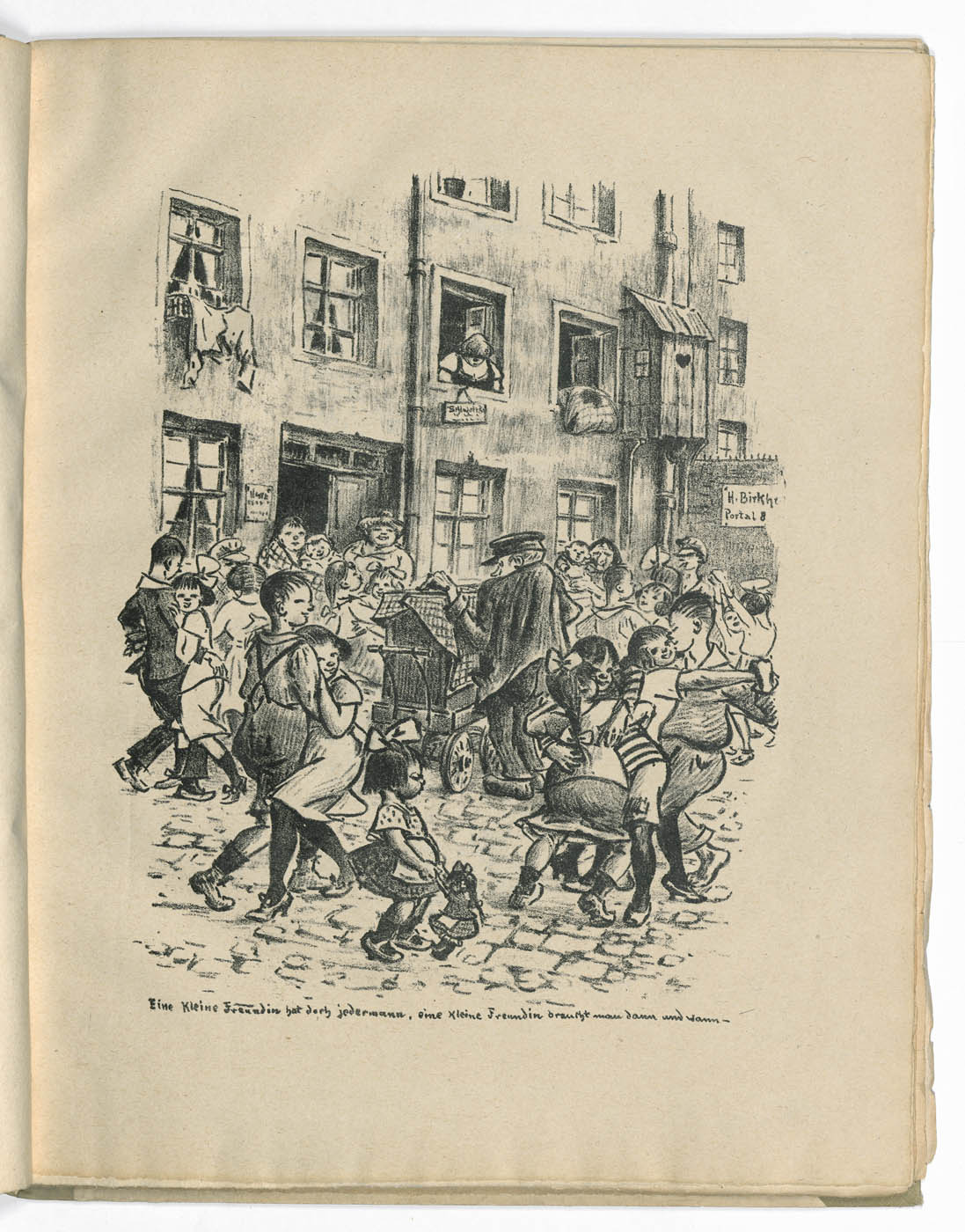
Exhibition: ‘Raja Deen Dayal: King of Indian Photographers’ at Cleveland Museum of Art

Exhibition dates: 23rd April 2023 – 4th February 2024


Raja Deen Dayal (Indian, 1844-1905) 'Album of 37 photographs' c. 1887-1888


Raja Deen Dayal (Indian, 1844-1905)
Album of 37 photographs
c. 1887-1888
37 albumen prints
Cleveland Museum of Art
Purchase from the J. H. Wade Fund


There are some beautiful photographs in this mid-week posting by the most eminent Indian photographer of the 19th century, Raja Deen Dayal (Indian, 1844-1905).

Dayal had access to the upper echelons of British and Indian society where he photographed in the Western tradition of formal portraiture and more personal views of the British occupiers and Indian nobility, namely the Maharaja of the semi-independent “princely states” of central India.

“Dayal posed and composed Indian royalty exactly as he did his photographs of British leadership, with the most important person in the center, often surrounded by advisers and subordinates. Head-on to the camera, stately but not overly formal, viceroys and rajahs alike became accessibly human but at imposing removes.”1


Will Heinrich in an article for the New York Times observes that what really stands out, what is really shocking are “the rows of Indian servants lined up like stiff accessories behind rickshaws, buggies and English garden parties” and the fact that “they were photographed that way by an Indian photographer complicates any easy read of what they mean.” And that none of the Indian servants is identified.

This should not be shocking at all… for the Indian world, as the British world, was all about status and power. You can see British servants lined up outside and behind the owners of stately homes in the United Kingdom. And they won’t be named. That’s because their social status made them invisible in name if not in physical appearance. They were servants.

And it should come as no surprise that Dayal photographs Indians in the way that he does because he aspired to enter the highest levels of British and Indian society – through his talent yes but also using that talent to advance his social climbing and social standing. By imitating Westernised portraiture of the ruling class both British and Indian, he sought to cement his stature as one of the country’s top photographers, picturing both the country and people through “an archive of depictions of meaningful sites, important occasions, and significant people that was essential to running a profitable studio.”
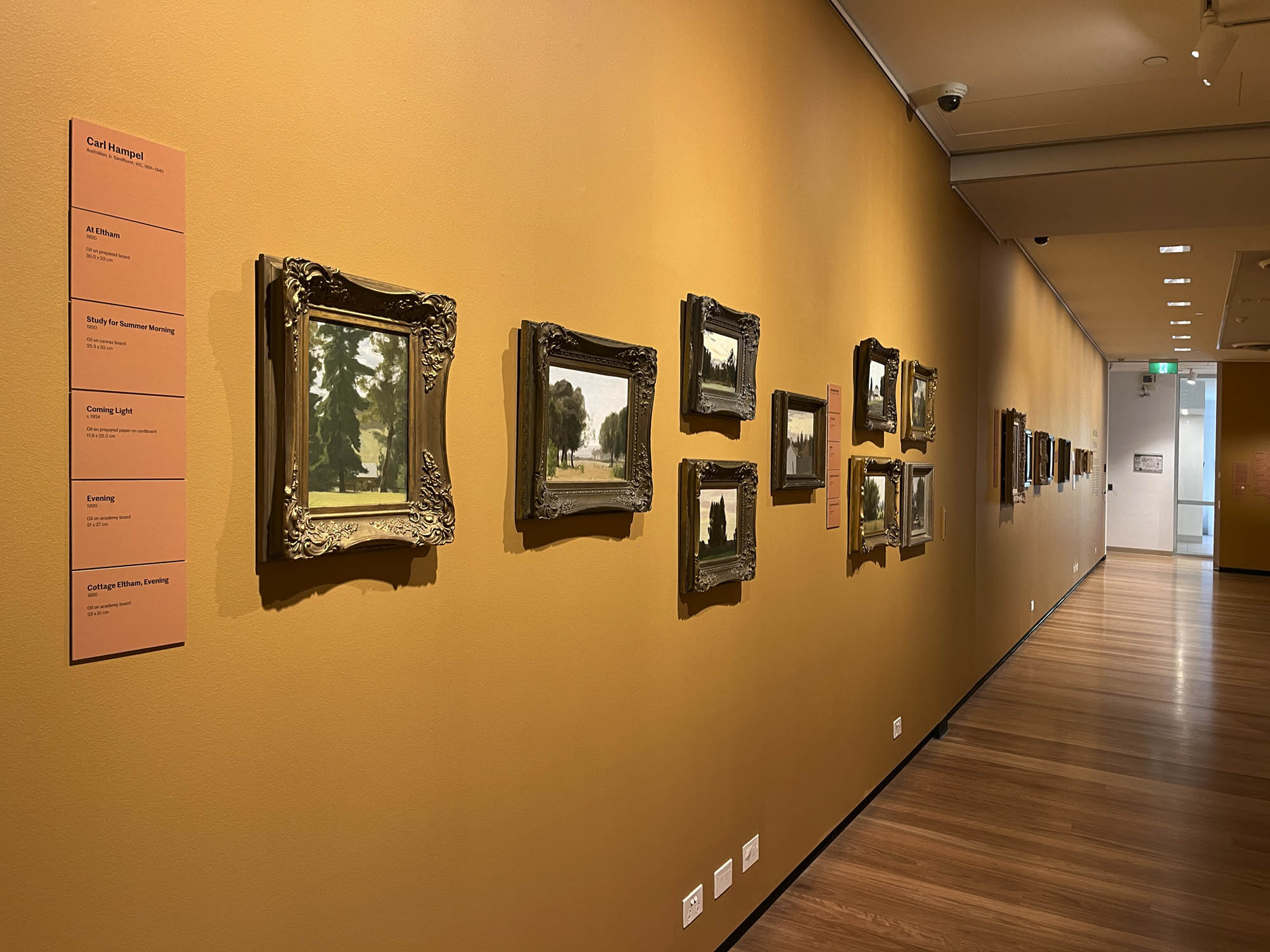
He took photographs of superb pictorial refinement and luxurious tonality. Through his talent and business acumen he became a man of importance, he had access to the upper echelons of society and his name is still known today … unlike all the anonymous men (and one woman) who are lost to the mists of time.

Dr Marcus Bunyan

1/ Will Heinrich. “The Photographer Who Immortalized British Viceroys and Maharajahs,” on The New York Times website August 31st, 2023 [Online] Cited 04/09/2023


Many thankx to the Cleveland Museum of Art for allowing me to publish the photographs in the posting. Please click on the photographs for a larger version of the image.


A map of central and northern India showing some of the cities where Dayal took photographs in this posting


A map of central and northern India showing some of the cities where Dayal took photographs in this posting.


Raja Deen Dayal (Indian, 1844-1905) 'Detachment of Bhopal Battalion at Indore' 1886


Raja Deen Dayal (Indian, 1844-1905)
Detachment of Bhopal Battalion at Indore
1886
Albumen print
Image: 19.1 x 26.5cm (7 1/2 x 10 7/16 in.)
Paper: 19.1 x 26.5cm (7 1/2 x 10 7/16 in.)
Cleveland Museum of Art
Purchase from the J. H. Wade Fund


In state and military portraits, people seated in chairs and in the middle are generally of the highest rank. Amid these Indian soldiers sits a lone British officer. The Bhopal Battalion had seen combat just six years earlier during the Second Anglo-Afghan War, helping to keep Afghanistan a British-friendly buffer against Russia’s desire to expand into India. This detachment includes a number of Sikhs, identifiable by their neatly trimmed beards and turbans that cover their ears. Members of that religious group were avidly recruited by the British Indian Army due to their reputed ferocity and courage in battle.


Raja Deen Dayal (Indian, 1844-1905) 'Detachment of Bhopal Battalion at Indore' 1886 (detail)


Raja Deen Dayal (Indian, 1844-1905)
Detachment of Bhopal Battalion at Indore (detail)
1886
Albumen print
Image: 19.1 x 26.5cm (7 1/2 x 10 7/16 in.)
Paper: 19.1 x 26.5cm (7 1/2 x 10 7/16 in.)
Cleveland Museum of Art
Purchase from the J. H. Wade Fund


Raja Deen Dayal (Indian, 1844-1905) 'The Duke and Duchess of Connaught, with Col. Adam, Captain H.V. Benett, Col. Becher, Gen. Knowles, Captain Herbert, Col. Cavaye, Mrs. Cavaye, and Gen. R. Gellispie, Mhow' 1887


Raja Deen Dayal (Indian, 1844-1905)
The Duke and Duchess of Connaught, with Col. Adam, Captain H.V. Benett, Col. Becher, Gen. Knowles, Captain Herbert, Col. Cavaye, Mrs. Cavaye, and Gen. R. Gellispie, Mhow
1887
Albumen print
Image: 19.1 x 26.6cm (7 1/2 x 10 1/2 in.)
Paper: 19.1 x 26.6cm (7 1/2 x 10 1/2 in.)
Purchase from the J. H. Wade Fund


This gathering of British military officers was occasioned by the visit of Queen Victoria’s seventh child, Prince Arthur, Duke of Connaught and Strathearn (1850-1942) (seated, second from left). His wife, Princess Louise Margaret of Prussia, is the woman on the right. As commander in chief of the Bombay Presidency from 1886 to 1890, the prince performed military inspections and embarked on diplomatic missions throughout India. Dignitaries’ visits were routinely commemorated with a professional photograph. The photographer often took the image for free, counting on the purchase of prints by those wanting to feature the dignitary in their parlours on walls and tables or in albums.


In 2016, the museum acquired 37 photographs made by Raja Deen Dayal (1844-1905), hailed as the first great Indian photographer. This exhibition marks the Cleveland debut of these rare images, all of which come from a single album and were shot in 1886 and 1887, an important juncture in the artist’s life. On display alongside Dayal’s photographs are historical Indian paintings, textiles, clothing, and jewellery from the museum’s collection. These objects provide viewers with insight into the cultural context and help translate the objects in the photographs from monochrome into colour.

Dayal was a surveyor working for the British government when he took up photography as a hobby in 1874. In 1885, he attempted to make it his career and by 1887 had cemented his stature as one of the country’s top photographers, British or Indian. This rare early album pictures both the maharajas of princely India and the British colonial elite.
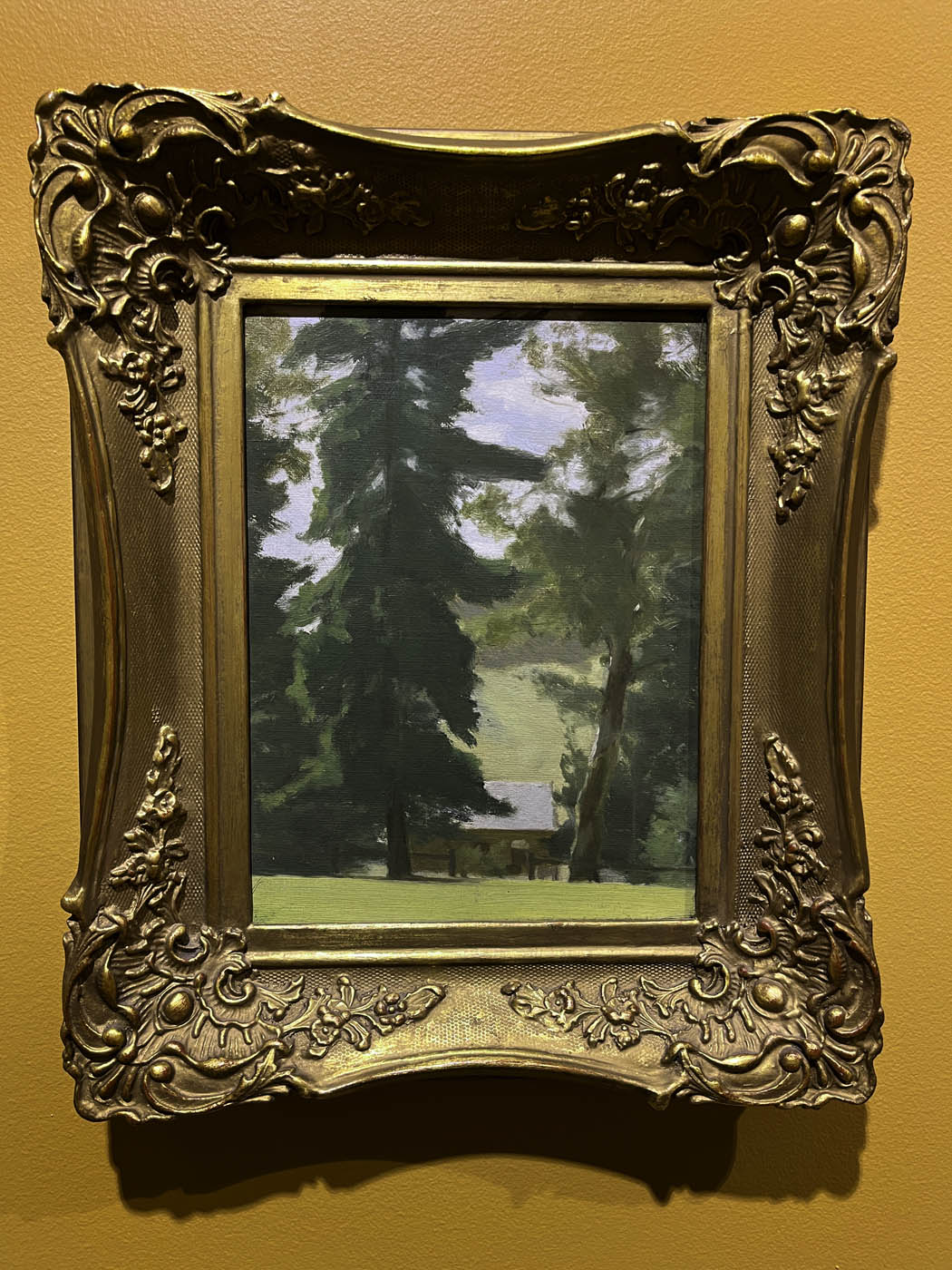
Dayal produced formal portraits but also more personal views of the Indian nobility. In a moving portrait of a 10-year-old maharaja, Dayal reveals the boy beneath the crown. Weighed down by necklaces and jewels, he occupies a chair that is too tall for him; his stockinged feet curl under so they touch the ground.

Dayal’s talent also won him access to the highest levels of British society. He photographed government meetings and leisurely afternoons of badminton and picnics, costume parties, and even a private moment of communion between an Englishman and his bulldog. Dayal portrayed how the British brought England with them to India and in some images, the Indian servants who supported that lifestyle. The photographer cultivated his relationship with the military by documenting troop manoeuvres, several views of which are included.
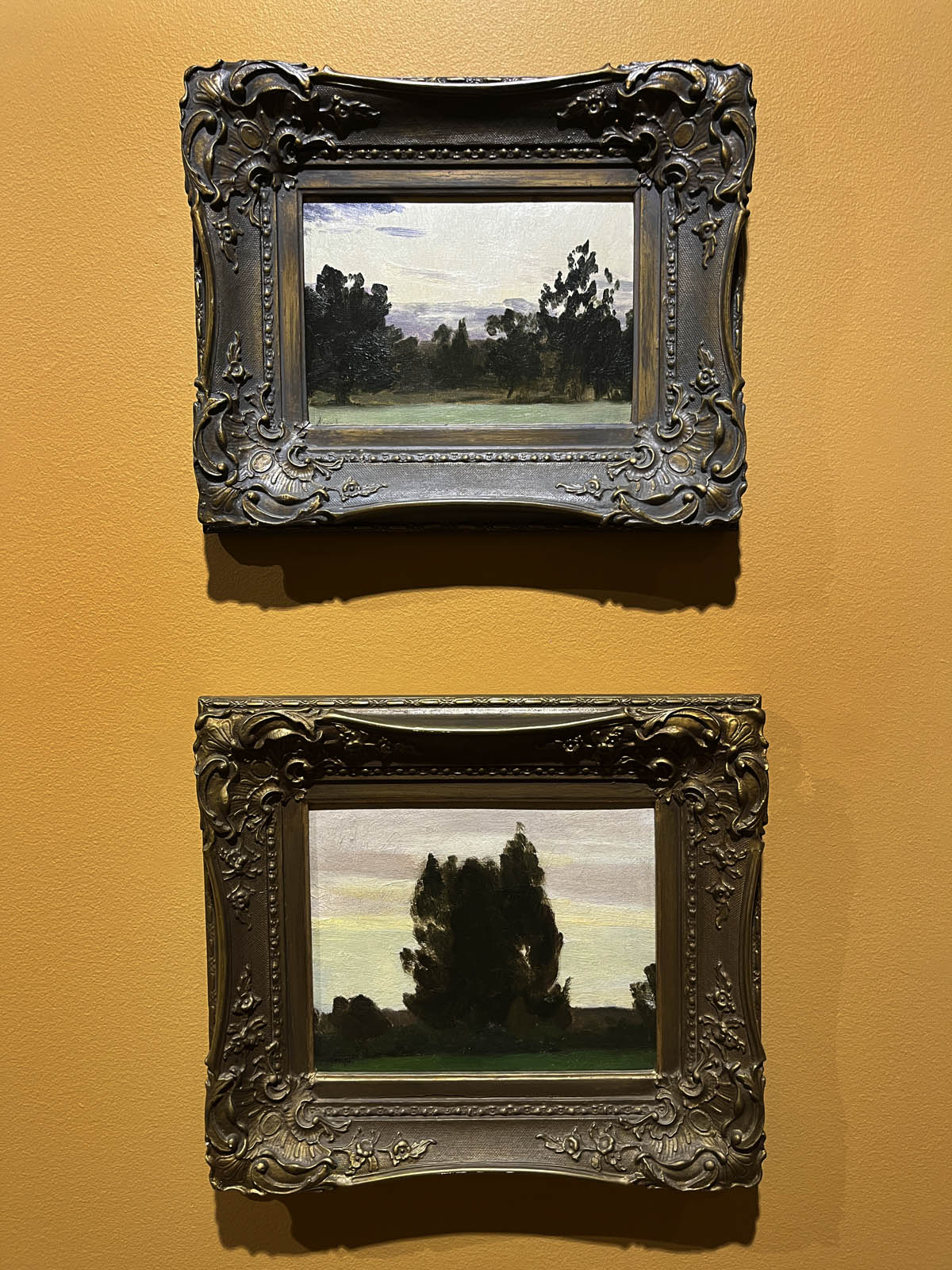
Visually striking, seductively charming, and highly informative, these photographs and objects offer new insights into the early career of India’s most important 19th-century photographer and into British and Indian life at the height of the colonial “Raj.”

Text from the Cleveland Museum of Art website


Unknown artist (Central India, Madhya Pradesh) 'A Ruler Seated on a Terrace Worshipping at a Shrine of Radha and Krishna' c. 1800


Unknown artist (Central India, Madhya Pradesh)
A Ruler Seated on a Terrace Worshipping at a Shrine of Radha and Krishna
c. 1800
Gum tempera and gold on paper
25.1 x 20cm (9 7/8 x 7 7/8 in.)
Purchase and partial gift from the Catherine and Ralph Benkaim Collection; Severance and Greta Millikin Purchase Fund


A noble clad in a black woollen shawl and a red turban, both with delicate floral embroidery, kneels before a small shrine with icons of Krishna fluting alongside his lover Radha. An attendant dressed in white holds a fly whisk that denotes the kneeling figure’s royal status. The black sky with light horizon suggests that the sun has recently set. In spite of the individualised facial features, this noble remains unidentified. Both figures have rosaries of rudraksha beads usually worn by followers of Shiva, instead of Krishna.


Unknown maker (Indian) 'Ornament' 1800s


Unknown maker (Indian)
Ornament

1800s
Gold with green enamel ground, white sapphires, rubies, and pearls
Diameter: 5.2 cm (2 1/16 in.)
Gift of Mr. and Mrs. J. H. Wade


Circular ornaments were worn as pendants, sewn onto textiles, or pinned into hair. The decorative motif made of colourful gems depicting flowering plants was introduced during the reign of the Mughal emperor Shah Jahan (1628-1658) and remained popular through the 1800s.


Unknown maker (Indian) 'Medallion' 1800s


Unknown maker (Indian)
Medallion
1800s
Silver gilt with rubies and emeralds
Diameter: 5.4 cm (2 1/8 in.)
Gift of Mr. and Mrs. J. H. Wade


Circular ornaments were worn as pendants, sewn onto textiles, or pinned into hair. The decorative motif made of colorful gems depicting flowering plants was introduced during the reign of the Mughal emperor Shah Jahan (1628-1658) and remained popular through the 1800s.


Unknown maker (Indian) 'Pendant'  1700s


Unknown maker (Indian)
Pendant 
1700s
Northwestern India, Rajasthan, Rajput Kingdom of Jaipur
Gold, emerald, diamonds, enamel, and pearl
Overall: 7.4 x 4.8 cm (2 15/16 x 1 7/8 in.)
Bequest of Anne Jessop Smith
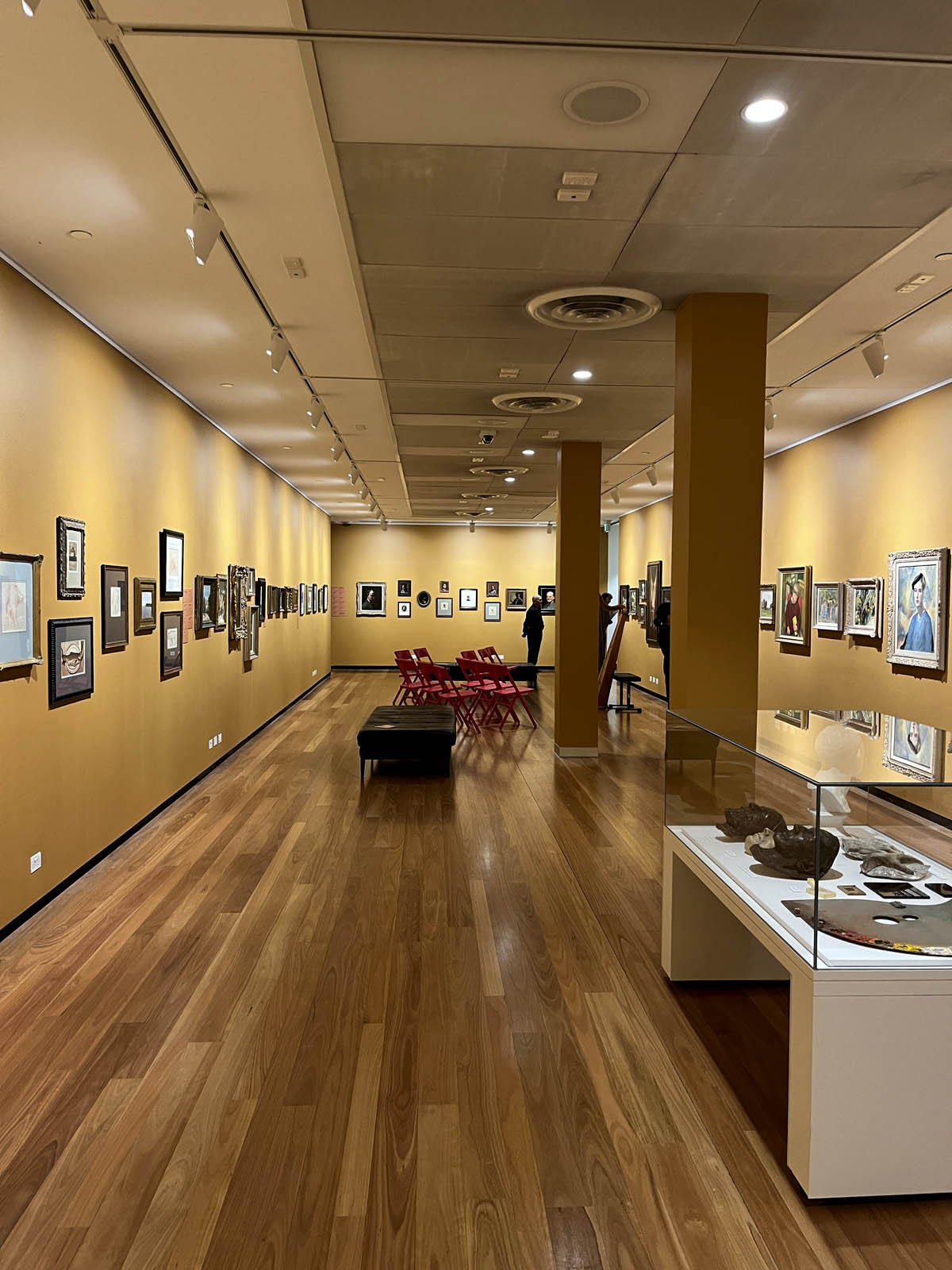
 

The large green emerald on one side of this pendant was probably imported to India from Columbia. Delicately incised with a lotus blossom, a symbol of the sun, it is surrounded by inset diamonds in organic, petal-like shapes. Emeralds, especially prized for their green colour, were associated with the planet Mercury in Hindu astrology and with the power to ward off evil in Islam. On the reverse, a peacock and two peahens surrounded by flowers are rendered using blue, green, and red glass.


Attributed to Balchand (Indian, active 1595 - c. 1650) 'Portrait of Murad Bakhsh (1624-1661)' c. 1635; borders c. 1700s


Attributed to Balchand (Indian, active 1595 – c. 1650)
Portrait of Murad Bakhsh (1624-1661)
c. 1635; borders c. 1700s
Mughal India, court of Shah Jahan (reigned 1628-1658)
Gum tempera and gold on paper
Overall: 28.4 x 25.7cm (11 3/16 x 10 1/8 in.)
Painting: 4.3 x 3.5cm (1 11/16 x 1 3/8 in.)
Gift in honour of Madeline Neves Clapp; Gift of Mrs. Henry White Cannon by exchange; Bequest of Louise T. Cooper; Leonard C. Hanna Jr. Fund; From the Catherine and Ralph Benkaim Collection


The miniature portrait of a Mughal prince is now mounted on an album page. Originally, it was in a gemstone setting as a “portrait jewel” to be worn by family and supporters at court. India’s ruling elite had been wearing portrait jewels since Sir Thomas Rowe (about 1581-1655) presented British portrait miniatures and cameos to the Mughal emperor as part of a diplomatic gift in 1616, when he successfully negotiated for British access to India’s ports.


Raja Deen Dayal (Indian, 1844-1905) 'His Highness Maharaja Scindia of Gwalior' 1887


Raja Deen Dayal (Indian, 1844-1905)
His Highness Maharaja Scindia of Gwalior
1887
Albumen print
Image: 25.5 x 18.4cm (10 1/16 x 7 1/4 in.)
Paper: 25.5 x 18.4cm (10 1/16 x 7 1/4 in.)
Cleveland Museum of Art
Purchase from the J. H. Wade Fund


Ten-year-old Madho Rao Scindia, the Maharaja of Gwalior (1876-1925; reigned 1886-1925), inherited the throne one year before this photograph was taken. Acceptance of both Indian and British cultural influences can be seen in the contrast of his garb, which is Indian from turban to shoe, with the Western-style furniture, clock, and books. Reflected in the glass balls on the table, which may be an inkwell or perfume jar, are the other people in the room during the shot. The person on the left in the top ball may be the photographer, Lala Deen Dayal.
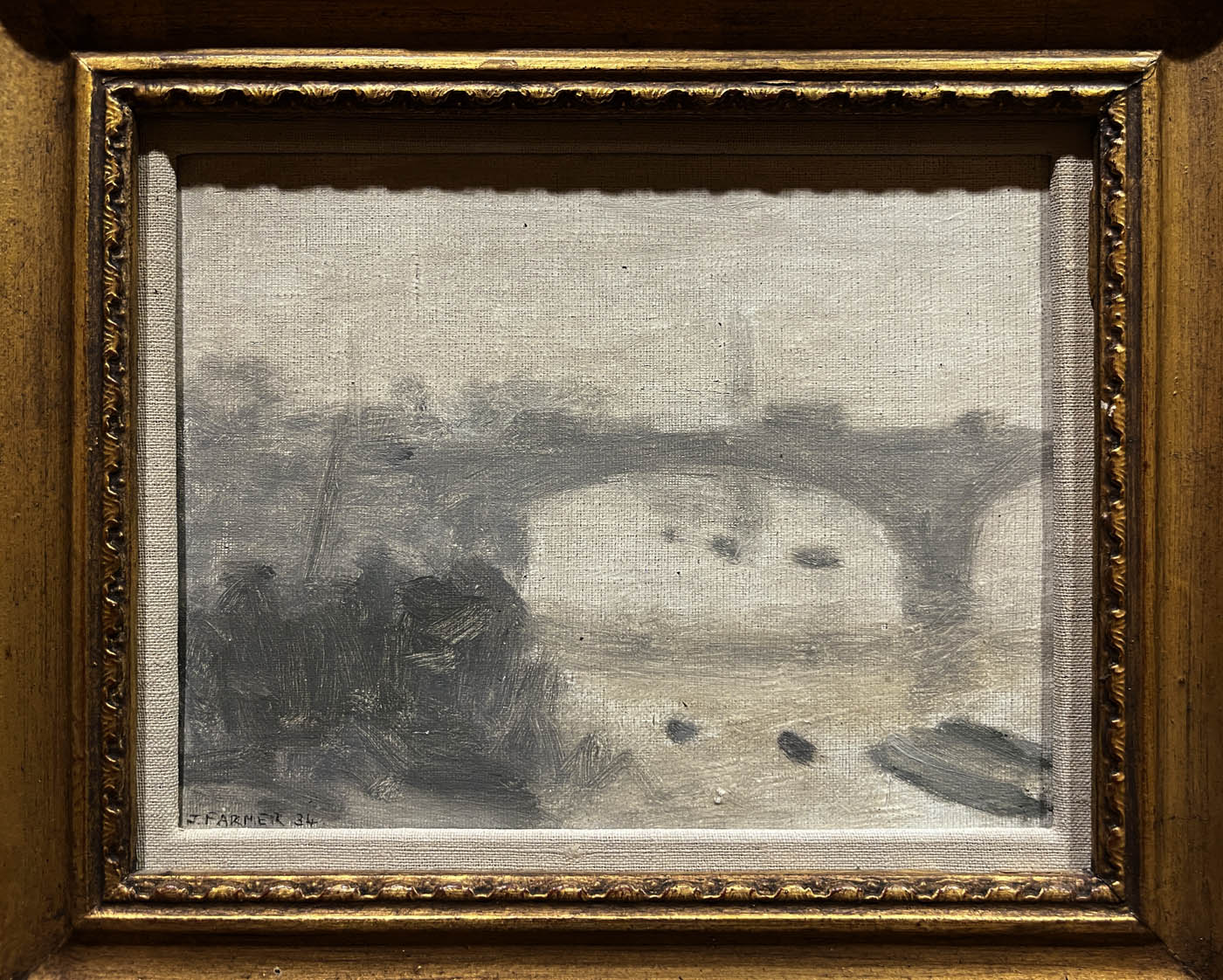
 

Raja Deen Dayal (Indian, 1844-1905) 'His Highness Maharaja Scindia of Gwalior' 1887 (detail)


Raja Deen Dayal (Indian, 1844-1905)
His Highness Maharaja Scindia of Gwalior (detail)
1887
Albumen print
Image: 25.5 x 18.4cm (10 1/16 x 7 1/4 in.)
Paper: 25.5 x 18.4cm (10 1/16 x 7 1/4 in.)
Cleveland Museum of Art
Purchase from the J. H. Wade Fund


In 1887, a photographer named Lala Deen Dayal took a picture of Frederick Temple-Blackwood, First Marquess of Dufferin and Ava [below]. The men were in Shimla, in the foothills of the Himalayas, because the British colonial government in India moved there every summer to escape the heat of Kolkata. Dufferin was the British viceroy, and Dayal, who had worked as a surveyor for the colonial government before leaving to pursue his passion as a freelancer, was his official photographer.

Dayal posed Dufferin, a short, balding, goateed, intelligent-looking man, at the center of the photo, behind a round table covered in a patterned cloth. To either side of him sit three other men, all seven constituting the Supreme Council of Government of India. Beneath them is an enormous, intricately patterned carpet; behind them, a nondescript curtain and rough wooden walls. They look like what they were: fresh conquerors who hadn’t yet built themselves palaces.

They also look pretty discomfited by the camera in what were still its early days. Two look at the viceroy, who leans aside to deliver some incidental remark; one gazes at the floor; two stare stiffly into nowhere; and only one councillor, like a faint glimmer of self-awareness within the raj, peers suspiciously into the lens.

The photograph became one of a deep file of stock images available in Dayal’s shop. One souvenir album, assembled by an unidentified purchaser and later broken apart, was partially acquired by the Cleveland Museum of Art in 2016. In “Raja Deen Dayal: King of Indian Photographers,” the museum combines this cache of 37 photographs with roughly contemporary miniature paintings and objets to create a small but incisive look at cross-cultural projections of power – Dayal was official photographer to the British military commander in chief, too, as well as to the Nizam of Hyderabad, who gave him the title Raja.

An acute wall label next to “His Eminence Commander in Chief and Party, Simla” [below] draws attention to the tiger skin on the floor, flung carelessly under British feet; beside the photo, on the gallery wall, to illustrate the Indian association of this animal with royalty, hangs a 19th century painting from Rajasthan showing a “Tiger Hunt of Ram Singh II.”

It’s just one of the show’s many examples of the casual degradations of imperial rule, which also include an English-style silver teapot with a goddess for a handle, and a painting of an Indian servant walking British dogs – a mordant wall label notes that Indian art traditionally pictured “dogs and jackals” only in cremation grounds. But it’s the rows of Indian servants lined up like stiff accessories behind rickshaws, buggies and English garden parties that really stand out. They’re shocking, but the fact that they were photographed that way by an Indian photographer complicates any easy read of what they mean.

Also in 1887, give or take a year or two, Dayal made a portrait of “His Highness the Maharaja of Rewa,” one of the semi-independent “princely states” of central India. Draped in gold and jewels, with a stylized footprint of Vishnu painted on his forehead, slumping comfortably sideways in an ornate chair with his stocking feet curled underneath, the boy king is pretty much the opposite of the severely styled Dufferin. But Dayal posed and composed Indian royalty exactly as he did his photographs of British leadership, with the most important person in the center, often surrounded by advisers and subordinates. Head-on to the camera, stately but not overly formal, viceroys and rajahs alike became accessibly human but at imposing removes. In retrospect, Dayal’s pictures aren’t just portraits of royal and imperial power – they’re portraits of the nascent power of photography.

Will Heinrich. “The Photographer Who Immortalized British Viceroys and Maharajahs,” on The New York Times website August 31st, 2023 [Online] Cited 04/09/2023


Unknown maker (Indian) 'Cap' 1800s


Unknown maker (Indian)
Cap
1800s
Velvet embroidered with gilt-silver–wrapped silk thread (zari); silk: lining; rubies, pearls, and spinels
Overall: 6.3 x 15.2 x 15.2 cm (2 1/2 x 6 x 6 in.)
Gift of Mr. and Mrs. J. H. Wade 1916.1477


Historically in India, head coverings were worn in outdoor and formal contexts and can signal age, allegiance, and status among Indian men and boys. A low round cap such as this was worn primarily by the well-educated aristocratic boys in the king’s circle. The painstaking process of creating the ornament involved wrapping gilt-silver wire of various dimensions around a silk thread core to create a textured appearance for the flowers and vines.


Raja Deen Dayal (Indian, 1844-1905) 'Maharaja of Rewa and Classmates' 1886


Raja Deen Dayal (Indian, 1844-1905)
Maharaja of Rewa and Classmates
1886
Albumen print
Image: 19.8 x 27.1cm (7 13/16 x 10 11/16 in.)
Paper: 19.8 x 27.1cm (7 13/16 x 10 11/16 in.)
Cleveland Museum of Art
Purchase from the J. H. Wade Fund


Deen Dayal uses the arrangement of people and the architecture to point to the most important person in the photograph. Here, the Maharaja of Rewa is placed front and center. In this image, the young maharaja is shown with Indian teachers, but the instructional tools are Western: bound books and a raised relief globe (with Asia visible).


Raja Deen Dayal (Indian, 1844-1905) 'Maharaja of Rewa and Sardars' 1886


Raja Deen Dayal (Indian, 1844-1905)
Maharaja of Rewa and Sardars
1886
Albumen print
Image: 19.7 x 26.9cm (7 3/4 x 10 9/16 in.)
Paper: 19.7 x 26.9cm (7 3/4 x 10 9/16 in.)
Cleveland Museum of Art
Purchase from the J. H. Wade Fund


Deen Dayal uses the arrangement of people and the architecture to point to the most important person in the photograph. Here, the Maharaja of Rewa is placed front and centre. “Sardars,” inscribed on the picture’s mount, refers to the military officials surrounding him. After 1858, British influence dictated that Indian rulers be educated in European history and ideas as well as their local culture and history.


Raja Deen Dayal (Indian, 1844-1905) 'Maharaja of Rewa in Prayer' 1886


Raja Deen Dayal (Indian, 1844-1905)
Maharaja of Rewa in Prayer
1886
Albumen print
Image: 20 x 27.2cm (7 7/8 x 10 11/16 in.)
Paper: 20 x 27.2cm (7 7/8 x 10 11/16 in.)
Cleveland Museum of Art
Purchase from the J. H. Wade Fund


Performing religious devotions was part of a maharaja’s duty to protect his kingdom. Praying before an altar, the maharaja fingers prayer beads and sits opposite a mirror, an auspicious object in Hindu worship. The lines painted on the men’s foreheads indicate that they are devotees of the Hindu god Vishnu. This group portrait demonstrates three ways rulers serve the state: by being a military commander, a worldly scholar, and, in this image, an observant Hindu.


Raja Deen Dayal (Indian, 1844-1905) 'His Highness the Maharaja of Rewa' 1886


Raja Deen Dayal (Indian, 1844-1905)
His Highness the Maharaja of Rewa
1886
Albumen print
Image: 20 x 27.2cm (7 7/8 x 10 11/16 in.)
Paper: 20 x 27.2cm (7 7/8 x 10 11/16 in.)
Purchase from the J. H. Wade Fund


Deen Dayal’s status as an Indian person may have helped him gain access to Indian rulers at the start of his career. The year before he received the patronage of British officials, Deen Dayal photographed ten-year-old Venkat Raman Singh (1876-1918; reigned 1880-1918), the Maharaja of Rewa. The studio portrait reveals the boy beneath the crown. He straddles a Western-style chair that is too tall for him, curling under his stockinged feet so they touch the floor. One of his many necklaces holds a painted or photographic portrait similar to the portrait jewel pendant in the nearby case.


Raja Deen Dayal (Indian, 1844-1905) 'His Highness the Maharaja of Rewa' 1886


Raja Deen Dayal (Indian, 1844-1905)
His Highness the Maharaja of Rewa
1886
Albumen print
Image: 26.7 x 20.3cm (10 1/2 x 8 in.)
Paper: 26.7 x 20.3cm (10 1/2 x 8 in.)
Cleveland Museum of Art
Purchase from the J. H. Wade Fund


Deen Dayal’s status as an Indian person may have helped him gain access to Indian rulers at the start of his career. The year before he received the patronage of British officials, Deen Dayal photographed ten-year-old Venkat Raman Singh (1876-1918; reigned 1880-1918), the Maharaja of Rewa. The studio portrait reveals the boy beneath the crown. He straddles a Western-style chair that is too tall for him, curling under his stockinged feet so they touch the floor. One of his many necklaces holds a painted or photographic portrait similar to the portrait jewel pendant in the nearby case.


Unknown maker (Indian) 'Turban Ornament (Sarpech)' 1800s


Unknown maker (Indian)
Turban Ornament (Sarpech)
1800s
Gilt silver with diamonds, rubies, emeralds, topaz, blue sapphires, yellow sapphire
Overall: 10.2 x 8.4cm (4 x 3 5/16 in.)
Gift of Mr. and Mrs. J. H. Wade


This type of ornament would have been affixed to the front of a turban as an emblem of high noble status. The raised central element mimics the shape of an eagle feather or plume.


Unknown artist (Indian) 'Royal Elephant Ramkali with a Mahout' c. 1761


Unknown artist (Indian)
Royal Elephant Ramkali with a Mahout
c. 1761
Northwestern India, Rajasthan, Rajput kingdom of Mewar, Udaipur, Court of Ari Singh (reigned 1761-73)
Gum tempera, ink, and gold on paper
Painting: 20.6 x 21.4cm (8 1/8 x 8 7/16 in.)
Overall: 24.1 x 25cm (9 1/2 x 9 13/16 in.)
Gift of Dr. Norman Zaworski


The mahout (elephant driver), directs the confident female elephant at a brisk trot, with bells swinging in response to her movements. This painting belongs to a series depicting the elephants in the royal stables at Udaipur, each one named in the upper margin. Elephants have been a potent emblem for royalty in India for more than three thousand years.


Raja Deen Dayal (Indian, 1844-1905) 'Ramkishore Singh of Rewa' 1886


Raja Deen Dayal (Indian, 1844-1905)
Ramkishore Singh of Rewa
1886
Albumen print
Image: 20.3 x 27.3cm (8 x 10 3/4 in.)
Paper: 20.3 x 27.3cm (8 x 10 3/4 in.)
Cleveland Museum of Art
Purchase from the J. H. Wade Fund


Ramkishore Singh, likely a high-ranking official or merchant, is depicted twice in the album, each time aboard a luxurious type of transport. In one photograph [above], he rides atop an elephant, a creature associated with India, power, and fortitude, preceded by an attendant on horseback. In the other [below], he rides in a European-style carriage pulled by two horses, flanked by attendants on camels (native to parts of India) and horses. Like the images of Britons in their carriages and rickshaws, these depictions suggest the sitter’s wealth through his possession of servants, animals, and vehicles.


Raja Deen Dayal (Indian, 1844-1905) 'Ramkishore Singh of Rewa' 1886


Raja Deen Dayal (Indian, 1844-1905)
Ramkishore Singh of Rewa
1886
Albumen print
Image: 18.6 x 27cm (7 5/16 x 10 5/8 in.)
Paper: 18.6 x 27cm (7 5/16 x 10 5/8 in.)
Cleveland Museum of Art
Purchase from the J. H. Wade Fund


Raja Deen Dayal (Indian, 1844-1905) 'Colonel F. G. Oldham, Simla' 1887


Raja Deen Dayal (Indian, 1844-1905)
Colonel F. G. Oldham, Simla
1887
Albumen print
Image: 13 x 20.3cm (5 1/8 x 8 in.)
Paper: 13 x 20.3cm (5 1/8 x 8 in.)
Cleveland Museum of Art
Purchase from the J. H. Wade Fund


In Deen Dayal’s shots of large groups, the sitters are artfully arranged in close proximity, some even touching. But in his family portraits, at least in this album, the individuals are separated. Francis Oldham (1839-1923), an engineer at the India Public Works Department, poses with his wife Nora, their son Brian, an unidentified woman, and rickshaw drivers.


Raja Deen Dayal (Indian, 1844-1905) 'Colonel H.R. Thuillier and His Wife Emmeline Williams Thuillier, Simla' 1887


Raja Deen Dayal (Indian, 1844-1905)
Colonel H.R. Thuillier and His Wife Emmeline Williams Thuillier, Simla
1887
Albumen print
Image: 18.1 x 26.1cm (7 1/8 x 10 1/4 in.)
Paper: 18.1 x 26.1cm (7 1/8 x 10 1/4 in.)
Cleveland Museum of Art
Purchase from the J. H. Wade Fund


In Deen Dayal’s shots of large groups, the sitters are artfully arranged in close proximity, some even touching. But in his family portraits, at least in this album, the individuals are separated. The above image features Colonel H. R. Thuillier (1838-1922) holding his horse’s bridal, his wife Emmeline, their two terriers, and rickshaw drivers. Thuillier became the surveyor general of India the year this photograph was taken by Deen Dayal, who had just given up surveying for photography.


Raja Deen Dayal (Indian, 1844-1905) 'Colonel H.R. Thuillier and His Wife Emmeline Williams Thuillier, Simla' 1887 (detail)


Raja Deen Dayal (Indian, 1844-1905)
Colonel H.R. Thuillier and His Wife Emmeline Williams Thuillier, Simla (detail)
1887
Albumen print
Image: 18.1 x 26.1cm (7 1/8 x 10 1/4 in.)
Paper: 18.1 x 26.1cm (7 1/8 x 10 1/4 in.)
Cleveland Museum of Art
Purchase from the J. H. Wade Fund


Raja Deen Dayal (Indian, 1844-1905) 'His Honor The Lieutenant Governor of the Punjab and Party, Simla' 1887


Raja Deen Dayal (Indian, 1844-1905)
His Honor The Lieutenant Governor of the Punjab and Party, Simla
1887
Albumen print
Image: 19.5 x 27.4cm (7 11/16 x 10 13/16 in.)
Paper: 19.5 x 27.4cm (7 11/16 x 10 13/16 in.)
Cleveland Museum of Art
Purchase from the J. H. Wade Fund


This photograph may commemorate a family reunion of the Lyalls. In 1887 James Lyall (1838-1916) (possibly on the left) was appointed lieutenant governor of the Punjab region, the same year that his elder brother Alfred Lyall (1835-1911) (second from left) retired as lieutenant governor of North-Western Provinces. After recovering from a serious illness, Alfred visited James in Simla. The women are likely Alfred’s daughter Mary Evelina Lyall (1868-1948) (left) and “Mrs. Lyall,” possibly Mary’s aunt, James Lyall’s wife. A master at staging group portraits, Deen Dayal used symmetry, proximity, height, and other formal devices to indicate the sitters’ interrelationships and relative ranks.


Raja Deen Dayal (Indian, 1844-1905) 'Lord Dufferin and the Supreme Council of Government of India' 1887


Raja Deen Dayal (Indian, 1844-1905)
Lord Dufferin and the Supreme Council of Government of India, Simla
1887
Albumen print
Image: 19.4 x 27.3cm (7 5/8 x 10 3/4 in.)
Paper: 19.4 x 27.3cm (7 5/8 x 10 3/4 in.)
Cleveland Museum of Art
Purchase from the J. H. Wade Fund


Each summer, the British government left the heat of Calcutta for Simla in the foothills of the Himalayas, where this photograph was taken. In 1885 Deen Dayal began spending his summers there to be near the officials, who were both subjects and clients. The viceroy, or British ruler, of India, Frederick Temple-Blackwood, 1st Marquess of Dufferin and Ava (1826-1902), sits at the centre of this staged meeting of the Supreme Council. Deen Dayal made images of Lord Dufferin and his wife, herself an amateur photographer, that led to his appointment as photographer to the viceroy, which resulted in access to other members of the British elite.


Raja Deen Dayal (Indian, 1844-1905) 'His Eminence Commander in Chief and Party, Simla' 1887


Raja Deen Dayal (Indian, 1844-1905)
His Eminence Commander in Chief and Party, Simla
1887
Albumen print
Image: 19.5 x 27.2cm (7 11/16 x 10 11/16 in.)
Paper: 19.5 x 27.2cm (7 11/16 x 10 11/16 in.)
Cleveland Museum of Art
Purchase from the J. H. Wade Fund


In 1887 Deen Dayal was appointed photographer to the commander in chief of the British Indian Army, Field Marshal Frederick Roberts (1832-1914) (seated, third from left). This casually dressed group of Roberts’s family and friends had just enjoyed a week of formal events, including a “fancy dress” ball celebrating the 50th anniversary of Queen Victoria’s accession to the throne. That party inaugurated a ballroom built onto Roberts’s home. The following day, Roberts was made Knight Commander of the Order of the Indian Empire. The tiger skin attests to British success at big game hunting. Its use as a rug reveals a very different attitude toward this favoured pastime among the British than the Indians, for whom it symbolised royal power.


Unknown artist (Indian) 'Tiger Hunt of Ram Singh II' c. 1830-1840


Unknown artist (Indian)
Tiger Hunt of Ram Singh II
c. 1830-1840
Northwestern India, Rajasthan, Rajput kingdom of Kota, court of Ram Singh II (reigned 1826–66)
Gum tempera, ink, and gold on paper
Painting: 25.3 x 49.1cm (9 15/16 x 19 5/16 in.)
Seventy-fifth anniversary gift of Dr. Norman Zaworski


Set against the dramatic backdrop of the cliffs that define the landscape of the small princely kingdom of Kota, a majestic tiger has just been shot by the king. Noisemakers with a firebrand drive the tiger out of the forest, and men at the right keep bears at bay. The women and musicians in two small boats look on in admiration.


Raja Deen Dayal (Indian, 1844-1905) 'His Eminence Commander in Chief and Party, Simla' 1887 (detail)
 

Raja Deen Dayal (Indian, 1844-1905)
His Eminence Commander in Chief and Party, Simla (detail)
1887
Albumen print
Image: 19.5 x 27.2cm (7 11/16 x 10 11/16 in.)
Paper: 19.5 x 27.2cm (7 11/16 x 10 11/16 in.)
Cleveland Museum of Art
Purchase from the J. H. Wade Fund


In 2016, the museum acquired 37 photographs by Raja Deen Dayal (1844-1905), hailed as the first great Indian photographer. These images, which show the British ruling elite in India and two boy maharajas and their nobles, had all once been part of a single photo album. Popular from the 1850s until the spread of digital photography in the 1990s, photo albums are precious mementos of a time or place. They served as status symbols and objects that defined one’s identity for future generations.

The album in question had been ordered from the photographer’s studio around 1888, probably by a male British official serving in or visiting India in late 1887 or 1888. This exhibition marks the United States debut of these rare, early photographs by Deen Dayal. On display alongside them are historical Indian paintings and luxurious textiles, clothing, and jewelry from the museum’s collection that help bring the photographs to life.

The client would have chosen which images he wanted in the volume, and he seems to have greatly favored portraits. Captions elegantly handwritten in English on the mounts identify the subjects. Most of the prints came from Deen Dayal’s stock images – an archive of depictions of meaningful sites, important occasions, and significant people that was essential to running a profitable studio. Nonetheless, it is likely that the purchaser of the album met many of the British individuals he selected – perhaps had tea or dinner at their homes – and spent time at a number of the locales depicted. If the visitor was on official business, he may even have been received at the courts of these maharajas. After all, this album was a souvenir of his time in India, something to jog his own memory in the future and to pass down the story of his glorious adventure in India to later generations.

How personal were this man’s connections with the sitters? A young woman identified as Miss Lyall appears in three different photographs and a Mrs. Lyall (most likely a sister-in-law but possibly a mother) in two of them. Was the album commissioned by someone courting Miss Lyall, perhaps even her future husband? We may never know, even though we can track the biographies of many of the British sitters and of the two 10-year-old maharajas, both of whom remained on the throne for almost 40 years.

What do these images, taken 135 years ago by an Indian whose business relied heavily on a British clientele, suggest about the British colonists and the Indian people over whom they ruled? Deen Dayal portrayed how the British brought England with them to India and, in a number of pictures, the Indian servants who supported that colonial lifestyle. These servants are never identified or even referred to in the captions. We see them posing alongside the British horses and dogs they walk, feed, and groom; hovering in the background at a picnic ready to offer more food; and standing at attention behind British carriages.

Visually striking, seductively charming, and providing much food for thought, Deen Dayal’s photographs and the related Indian art objects offer new insights into the early career of India’s most important historic photographer and into British and Indian life in late 19th-century India.

Anonymous. “The Photos of Raja Deen Dayal: The first great Indian photographer,” in Cleveland Art, 2023 issue 2 Nd [Online] Cited 04/09/2023


Raja Deen Dayal (Indian, 1844-1905) 'Miss Lyall, Simla' 1887


Raja Deen Dayal (Indian, 1844-1905)
Miss Lyall, Simla
1887
Albumen print
Image: 12.4 x 20.3cm (4 7/8 x 8 in.)
Paper: 12.4 x 20.3 cm (4 7/8 x 8 in.)
Cleveland Museum of Art
Purchase from the J. H. Wade Fund


Raja Deen Dayal (Indian, 1844-1905) 'Miss Lyall, Simla' 1887 (detail)


Raja Deen Dayal (Indian, 1844-1905)
Miss Lyall, Simla (detail)
1887
Albumen print
Image: 12.4 x 20.3cm (4 7/8 x 8 in.)
Paper: 12.4 x 20.3 cm (4 7/8 x 8 in.)
Cleveland Museum of Art
Purchase from the J. H. Wade Fund


Raja Deen Dayal (Indian, 1844-1905) 'Mrs. and Miss Lyall, Simla' 1887


Raja Deen Dayal (Indian, 1844-1905)
Mrs. and Miss Lyall, Simla
1887
Albumen print
Image: 19.9 x 27cm (7 13/16 x 10 5/8 in.)
Paper: 19.9 x 27cm (7 13/16 x 10 5/8 in.)
Cleveland Museum of Art
Purchase from the J. H. Wade Fund


A number of Deen Dayal’s Simla portraits include rickshaws, which were items of great novelty, being found in India only in Simla at the time. The two-wheeled, human-powered passenger cart first appeared in Japan around 1870 and was introduced to Simla around 1880 by a Scottish missionary. The town’s steep hills required four drivers, two to pull and two to push. Horse-drawn buggies were another common means of transport. Miss Lyall and Mrs. Lyall also appear in the photograph, suggesting that they had a significant personal relationship with the purchaser of the album.


Raja Deen Dayal (Indian, 1844-1905) 'Mrs. and Miss Lyall, Simla' 1887 (detail)


Raja Deen Dayal (Indian, 1844-1905)
Mrs. and Miss Lyall, Simla (detail)
1887
Albumen print
Image: 19.9 x 27cm (7 13/16 x 10 5/8 in.)
Paper: 19.9 x 27cm (7 13/16 x 10 5/8 in.)
Cleveland Museum of Art
Purchase from the J. H. Wade Fund


Raja Deen Dayal (Indian, 1844-1905) 'Sir Auckland Colvin and Family, Simla' 1887


Raja Deen Dayal (Indian, 1844-1905)
Sir Auckland Colvin and Family, Simla
1887
Albumen print
Image: 20 x 26.9cm (7 7/8 x 10 9/16 in.)
Paper: 20 x 26.9cm (7 7/8 x 10 9/16 in.)
Cleveland Museum of Art
Purchase from the J. H. Wade Fund


Deen Dayal’s large glass plate negatives and view camera required daylight to capture people without a blur, so his large group portraits are usually set before the sitters’ homes in their gardens. The equipment also dictated that scenes be carefully posed, not candid, shots. Sir Auckland Colvin (1838-1908) and his daughters were photographed in 1887, the year he became lieutenant governor of North-Western Provinces, a position his father had once held. The sitters are arranged so they orbit two framed photographs displayed on a table, presumably depictions of Colvin’s deceased wife and son. Thanks to photography, the entire Colvin family was reunited.


Raja Deen Dayal (Indian, 1844-1905) 'Picnic party, Mashobra' 1887


Raja Deen Dayal (Indian, 1844-1905)
Picnic party, Mashobra
1887
Albumen print
Image: 19.3 x 26.1cm (7 5/8 x 10 1/4 in.)
Paper: 19.3 x 26.1cm (7 5/8 x 10 1/4 in.)
Cleveland Museum of Art
Purchase from the J. H. Wade Fund


This scene is from one of many lavish entertainments hosted by caterer, restaurateur, and hotelier Federico Peliti (Italian, 1844-1914) at his forested country estate outside Simla. In the photograph, Peliti is on horseback and his wife Judith on the swing. Swings have a long history as items of leisurely pleasure in Europe and India. Badminton, which originated in England in 1873, was popular in India. Deen Dayal may have been invited to document this gathering because he and Peliti, an amateur photographer, both belonged to the Photographic Society of Bombay.


Raja Deen Dayal (Indian, 1844-1905) 'Picnic party, Mashobra' 1887 (detail)


Raja Deen Dayal (Indian, 1844-1905)
Picnic party, Mashobra (detail)
1887
Albumen print
Image: 19.3 x 26.1cm (7 5/8 x 10 1/4 in.)
Paper: 19.3 x 26.1cm (7 5/8 x 10 1/4 in.)
Cleveland Museum of Art
Purchase from the J. H. Wade Fund


Raja Deen Dayal (Indian, 1844-1905) 'Reverend Loche at Neemuch' 1887


Raja Deen Dayal (Indian, 1844-1905)
Reverend Loche at Neemuch
1887
Albumen print
Image: 19.4 x 26.5cm (7 5/8 x 10 7/16 in.)
Paper: 19.4 x 26.5cm (7 5/8 x 10 7/16 in.)
Cleveland Museum of Art
Purchase from the J. H. Wade Fund


This building is a “dak bungalow,” one of the British government guesthouses that were central to the lives of British travellers in India. This network of houses offered places to eat, stay, rent fresh horses, and conduct business while traveling between residences. The bungalows’ wide latticed verandahs admitted breezes, kept out pests, and provided some privacy. The average British Indian military household had at least six servants; eleven Indian servants are shown here, including the only Indian woman pictured in this exhibition. Many images in this album show servants, but they are never mentioned in the captions.


Raja Deen Dayal (Indian, 1844-1905) 'Heavy Field Battery, Jhansi' 1886


Raja Deen Dayal (Indian, 1844-1905)
Heavy Field Battery, Jhansi
1886
Albumen print
Image: 18.3 x 27cm (7 3/16 x 10 5/8 in.)
Paper: 18.3 x 27cm (7 3/16 x 10 5/8 in.)
Cleveland Museum of Art
Purchase from the J. H. Wade Fund


Exercises involving elephant batteries, which were exotic to European eyes, attracted spectators; photographs of them were excellent souvenirs of these military forces employed by the British Indian Army. Elephants had been employed in warfare in India since at least the 500s BC, but with the advent of heavy artillery, their function switched from attack to support. They transported big guns and supplies and worked in logging and construction. It took many cattle to pull a load that could be handled by two elephants.


Raja Deen Dayal (Indian, 1844-1905) 'Jhansi Fort and Elephant Battery' 1886


Raja Deen Dayal (Indian, 1844-1905)
Jhansi Fort and Elephant Battery
1886
Albumen print
Image: 19.4 x 27.2 cm (7 5/8 x 10 11/16 in.)
Paper: 19.4 x 27.2 cm (7 5/8 x 10 11/16 in.)
Purchase from the J. H. Wade Fund


Raja Deen Dayal (Indian, 1844-1905) 'Mr. Brown's Horses, Jhansi' 1887


Raja Deen Dayal (Indian, 1844-1905)
Mr. Brown’s Horses, Jhansi
1887
Albumen print
Image: 18.9 x 27.6cm (7 7/16 x 10 7/8 in.)
Paper: 18.9 x 27.6cm (7 7/16 x 10 7/8 in.)
Cleveland Museum of Art
Purchase from the J. H. Wade


Imported into India in great numbers by the British, horses were used for both transportation and sports such as riding, polo, and racing. Caring for the animals fell largely to Indian servants. Captions on the photographs’ mounts specify the owners of these animals (note that Major Sparks also has a monkey and pet deer). However, none of the Indian servants is identified. Nor would they have received a copy of the photograph because of their low social status, which was far below that of Deen Dayal.


Teapot (Indian) c. 1860-1890


Teapot (Indian)
c. 1860-1890
Silver
Overall: 14 x 21 x 13.5 cm (5 1/2 x 8 1/4 x 5 5/16 in.)
Gift of Dr. Ranajit K. Datta


Made either for export or to appeal to the British community living in colonial splendor in India, this pot is a rare testament to the influence of the British Empire on consumer design during the period. Shri Lakshmi, the Hindu goddess of wealth, crowns the vessel as an apt divinity to preside over the horse races depicted on the belly of the teapot.


Raja Deen Dayal (Indian, 1844-1905) 'Treacher and Co.'s Shop in the Fort, Bombay' 1886


Raja Deen Dayal (Indian, 1844-1905)
Treacher and Co.’s Shop in the Fort, Bombay
1886
Albumen print
Image: 19.6 x 26.3cm (7 11/16 x 10 3/8 in.)
Paper: 19.6 x 26.3cm (7 11/16 x 10 3/8 in.)
Cleveland Museum of Art
Purchase from the J. H. Wade Fund


The English in India approximated life back home instead of adopting local ways. This image, probably one of Deen Dayal’s stock photographs, proved to those back in England that the comforts of home were readily available in India. Treacher’s, a multi-story emporium in Bombay, offered a plethora of products ranging from drugs, wine, and electro-medical instruments to silver tea sets and rocking horses. Many goods were imported, but some local craftsmen had mastered traditional European forms for objects including furniture and silver.


Raja Deen Dayal (Indian, 1844-1905) 'Treacher and Co.'s Shop in the Fort, Bombay' 1886 (detail)


Raja Deen Dayal (Indian, 1844-1905)
Treacher and Co.’s Shop in the Fort, Bombay (detail)
1886
Albumen print
Image: 19.6 x 26.3cm (7 11/16 x 10 3/8 in.)
Paper: 19.6 x 26.3cm (7 11/16 x 10 3/8 in.)
Cleveland Museum of Art
Purchase from the J. H. Wade Fund


Cleveland Museum of Art
11150 East Boulevard
Cleveland, Ohio 44106

Opening hours:
Tuesdays, Thursdays, Saturdays, Sundays 10.00am – 5.00pm
Wednesdays, Fridays 10.00am – 9.00pm
Closed Mondays

Cleveland Museum of Art website

LIKE ART BLART ON FACEBOOK

Back to top