Exhibition: ‘Monika Tichacek, To all my relations’ at Karen Woodbury Gallery, Richmond

Exhibition dates: 4th May – 28th May 2011
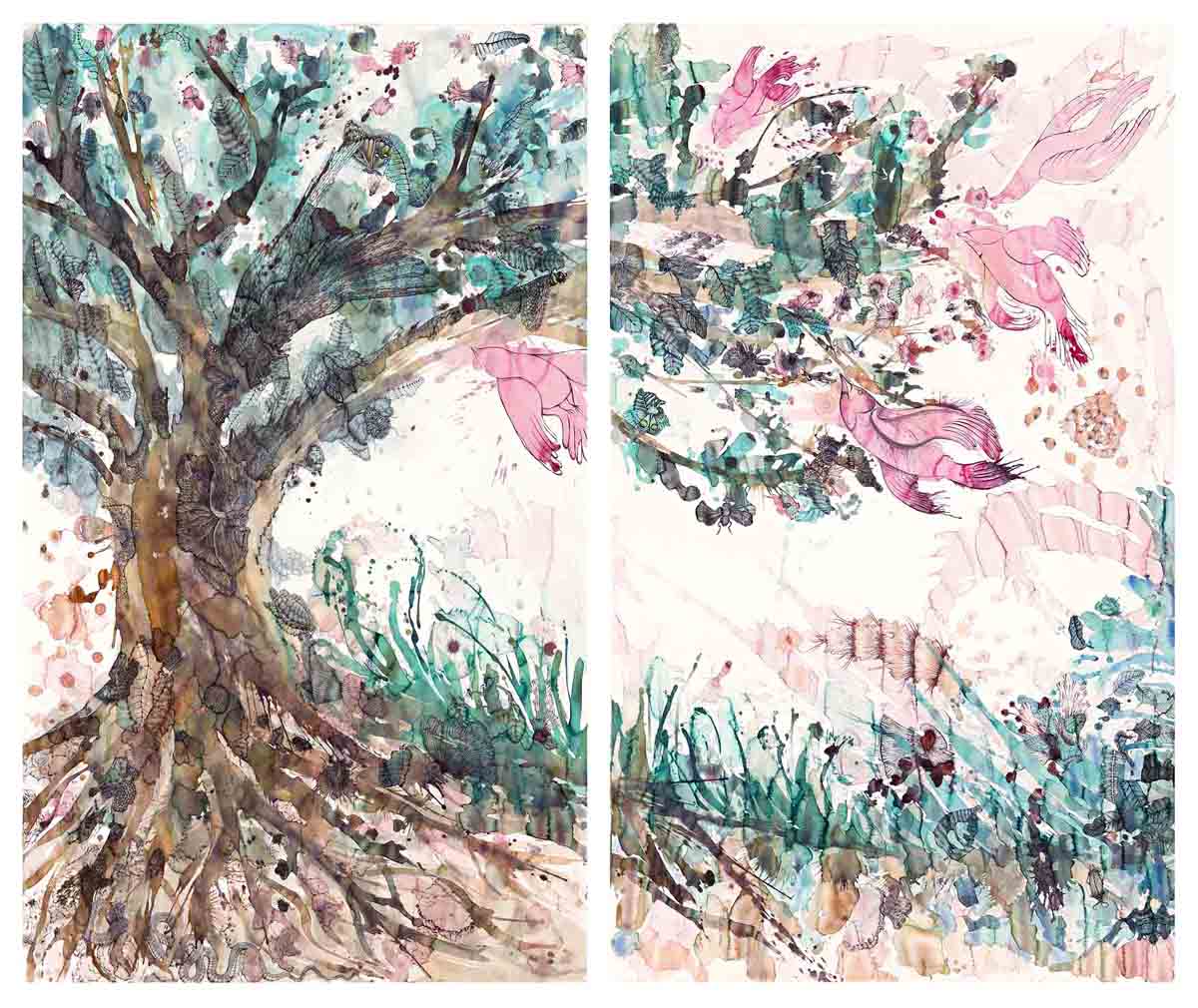
 

Monika Tichacek (Australian, b. 1975 Switzerland) 'To all my relations' 2011


Monika Tichacek (Australian, b. 1975 Switzerland)
To all my relations
2011
Diptych
Gouache, pencil and watercolour on paper
244 x 300cm overall


This is a stupendous exhibition by Monika Tichacek, at Karen Woodbury Gallery. One of the highlights of the year, this is a definite must see!

The work is glorious in it’s detail, a sensual and visual delight (make sure you click on the photographs to see the close up of the work!). The riotous, bacchanalian density of the work is balanced by a lyrical intimacy, the work exploring the life cycle and our relationship to the world in gouache, pencil & watercolour. Tichacek’s vibrant pink birds, small bugs, flowers and leaves have absolutely delicious colours. The layered and overlaid compositions show complete control by the artist: mottled, blotted, bark-like wings of butterflies meld into trees in a delicate metamorphosis; insects are blurred becoming one with the structure of flowers in a controlled effusion of life. The title of the exhibition, To all my relations,

“has inspired an understanding that all animist cultures’ peoples have who live in close relationship to the earth. We are all related, we all exist in an interdependent system. The ecosystem is such an unbelievably complex, harmonious system. Every drop of rain, every insect, every micro-organism has its place for the perfect functioning and health of nature… The title is an acknowledgement and honouring of all that is live-giving, every little element that makes up the big picture of life on earth.”1

It was very difficult to pull myself away from the beauty and intimate polyphony of voices contained within the work. I loved it!

Dr Marcus Bunyan


1/ O’Sullivan, Jane. “Artist Interview: Monika Tichacek,” on Australian Art Collector website, 19th May 2011 [Online] Cited 21/05/2010 no longer available online


Many thankx to Karen Woodbury Gallery for allowing me to publish the photographs and Art Guide Australia for allowing me to publish the text in the posting. The text by Dylan Rainforth was commissioned by Art Guide Australia and appears in the May/June 11 issue of Art Guide Australia magazine. Please click on the photographs for a larger version of the image.


Monika Tichacek (Australian, b. 1975 Switzerland) 'To all my relations' 2011 (detail)


Monika Tichacek (Australian, b. 1975 Switzerland)
To all my relations (detail)
2011
Diptych
Gouache, pencil and watercolour on paper
244 x 300cm overall


Monika Tichacek (Australian, b. 1975 Switzerland) 'To all my relations' 2011 (detail)


Monika Tichacek (Australian, b. 1975 Switzerland)
To all my relations (detail)
2011
Diptych
Gouache, pencil and watercolour on paper
244 x 300cm overall
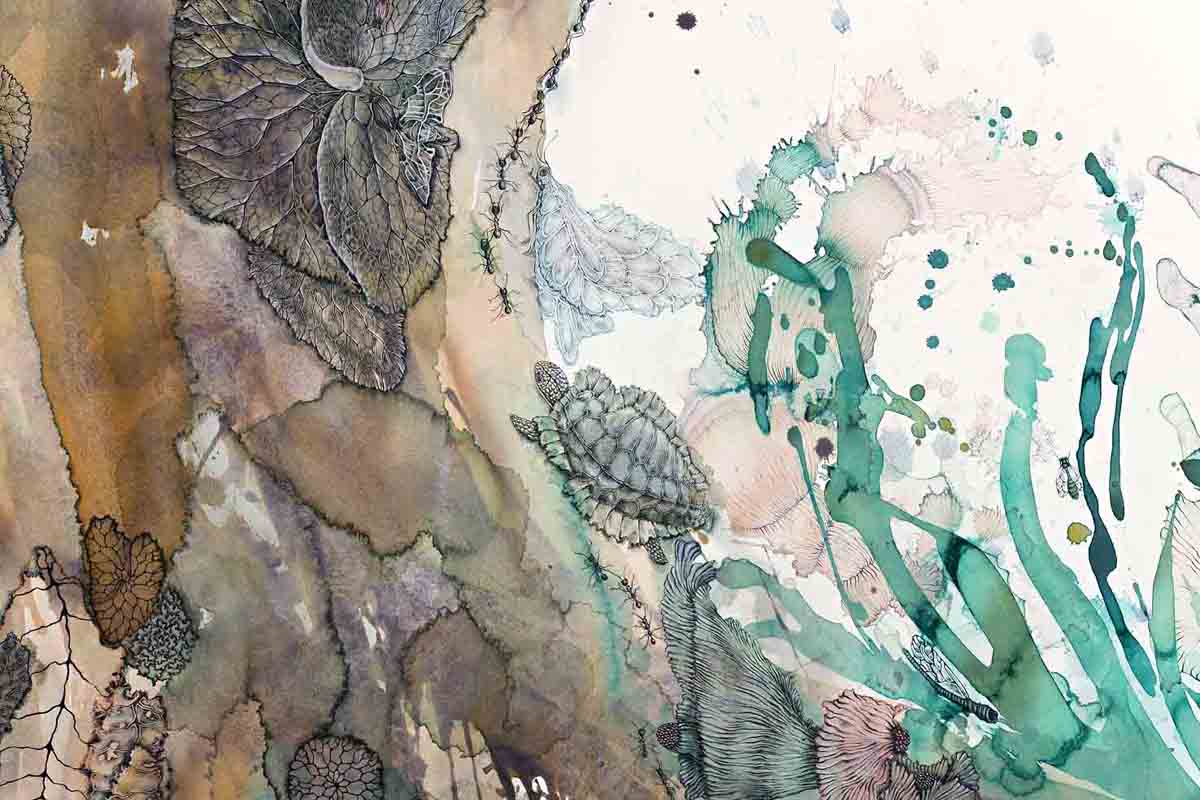
 

Monika Tichacek (Australian, b. 1975 Switzerland) 'To all my relations' 2011 (detail)


Monika Tichacek (Australian, b. 1975 Switzerland)
To all my relations (detail)
2011
Diptych
Gouache, pencil and watercolour on paper
244 x 300cm overall


The Cycle of Nature – Monika Tichacek’s To All My Relations

Dylan Rainforth

Anyone used to the immaculately controlled, exactingly lit photographic and video mise en scène that Swiss-born artist Monika Tichacek presented in such series as The Shadowers, for which she won the prestigious Anne Landa Award for Video and New Media Arts in 2007, may be surprised by the direction her work has taken in her latest exhibition. To All My Relations consists entirely of works on paper – watercolour and ink drawings that evince a tension between abstract, gestural shapes and bleeds of colour, recalling (just for convenience’s sake) Kandinsky, and intricately rendered natural forms that owe more to the scientific, zoological and botanical narratives of the Endeavour voyages of Captain Cook, Joseph Banks and the artist Sydney Parkinson.

The work has come out of an intensive period over the last few years in which Tichacek spent considerable time in the jungles of South America and the deserts of the United States, as well as time spent in the New South Wales bush and studying nature books. “I’m getting more and more interested in the cellular, microscopic imagery that you get when you enlarge something and peer deeper into the structure of how material elements are composed, and that really coincides with my interest in Eastern philosophies of Buddhism and many other things too. I guess I’m looking as deeply into the nature of something as is possible but I’m trying not to do it so much with my mind – but of course that’s very challenging,” she says, laughing lightly.

“The exploration of feeling is quite important to me – it’s quite a departure from what I used to do, which were certainly works that came from a very inner landscape but then the execution would be very conceptual, obviously – it had to be and this new work is much more intimate.”

That challenge to the rational, objective Western subject is informed by Tichacek’s exposure to indigenous traditions in South America and other places.

“In 2006 I had a research grant and I went to the Amazon because I wanted to look more deeply into animist cultures, meaning cultures that really see the land as living and as alive with energy and with spirit or ‘beingness’. So I went to the Amazon and spent quite a long time there and also in the mountains in Peru and saw a little bit of Central America and also North America in the desert. I spent time there and really learnt a lot about their indigenous ways and got to participate in a lot of things and experience a lot of things. In the Amazon shamanic tradition there is a process – they call it dieting – you spend a few months more or less alone, existing on very limited foods. You get very little, limited food and very little contact and they give you different traditional plants that, through the communion they do, they are ‘told’ to give you. And you are encouraged to connect with this plant for its healing properties to come through. So that was quite an amazing time to get quite still…”

The exhibition title comes from a Native American ceremony. According to Tichacek, “It’s always said when entering the sweat lodge and it’s an acknowledgement of being related to everything in nature, every being, the understanding that without all these other relations one wouldn’t exist. In those cultures it’s much more understood – we’ve lost that understanding because we can just buy things in the supermarket and eat them but if we lived that way we would probably remember a lot more that we are closely related to everything around us.”

From this perspective we can see that this new work is not a complete departure from Tichacek’s earlier work after all, yet its intentions are radically different. Both the natural world and shamanistic knowledge played their part in The Shadowers. Professor Anne Marsh has described Tichacek’s video, played out in a violent scene occurring between three women (one of whom Marsh characterises as a witch doctor or shaman) in a forest environment, as stretch[ing] the boundaries between body art, ritual and sado-masochism by assaulting the senses and transgressing the social realm. In psychoanalytic terms it tears at the screen of the real and immerses the viewer into the abject world of instinctual response where language has no authority.” [i]

Pain, sado-masochism, ritual and endurance certainly have their place in shamanistic traditions – one need only think of any number of initiation rites – but now Tichacek is looking for a less conflicted relationship with nature. “The work has always been very personal and I guess in The Shadowers that nature relationship was starting to come in but it was very tense and very violent and very confused. The continuation of that theme is still there – the exploration of how to understand the experience of the self and what we are doing here and how we come to exist. That’s definitely been there before but this new work is more in the realm of psychology and the previous works are more in the realm of the female body.”

To All My Relations will present several drawings, with one in particular being conceived on a massive scale that Tichacek intends to convey the sense of awe we experience when surrounded by nature. The artist will also stage a performance – something her interdisciplinary practice has always embraced – at the opening. Although she had not completely determined the details when I spoke to her the performance was inspired by a drawing she made a few years ago and will symbolically connect the artist’s body to the roots of a tree.

“I always feel like [performance serves] to bring my body into it. Although I feel like my body’s very much in these drawings there’s something about performance that’s really physically present.”

Dylan Rainforth.


Monika Tichacek (Australian, b. 1975 Switzerland) 'To all my relations' 2011 (detail)


Monika Tichacek (Australian, b. 1975 Switzerland)
To all my relations (detail)
2011
Diptych
Gouache, pencil and watercolour on paper
244 x 300cm overall


Monika Tichacek (Australian, b. 1975 Switzerland) 'To all my relations' 2011 (detail)


Monika Tichacek (Australian, b. 1975 Switzerland)
To all my relations (detail)
2011
Diptych
Gouache, pencil and watercolour on paper
244 x 300cm overall
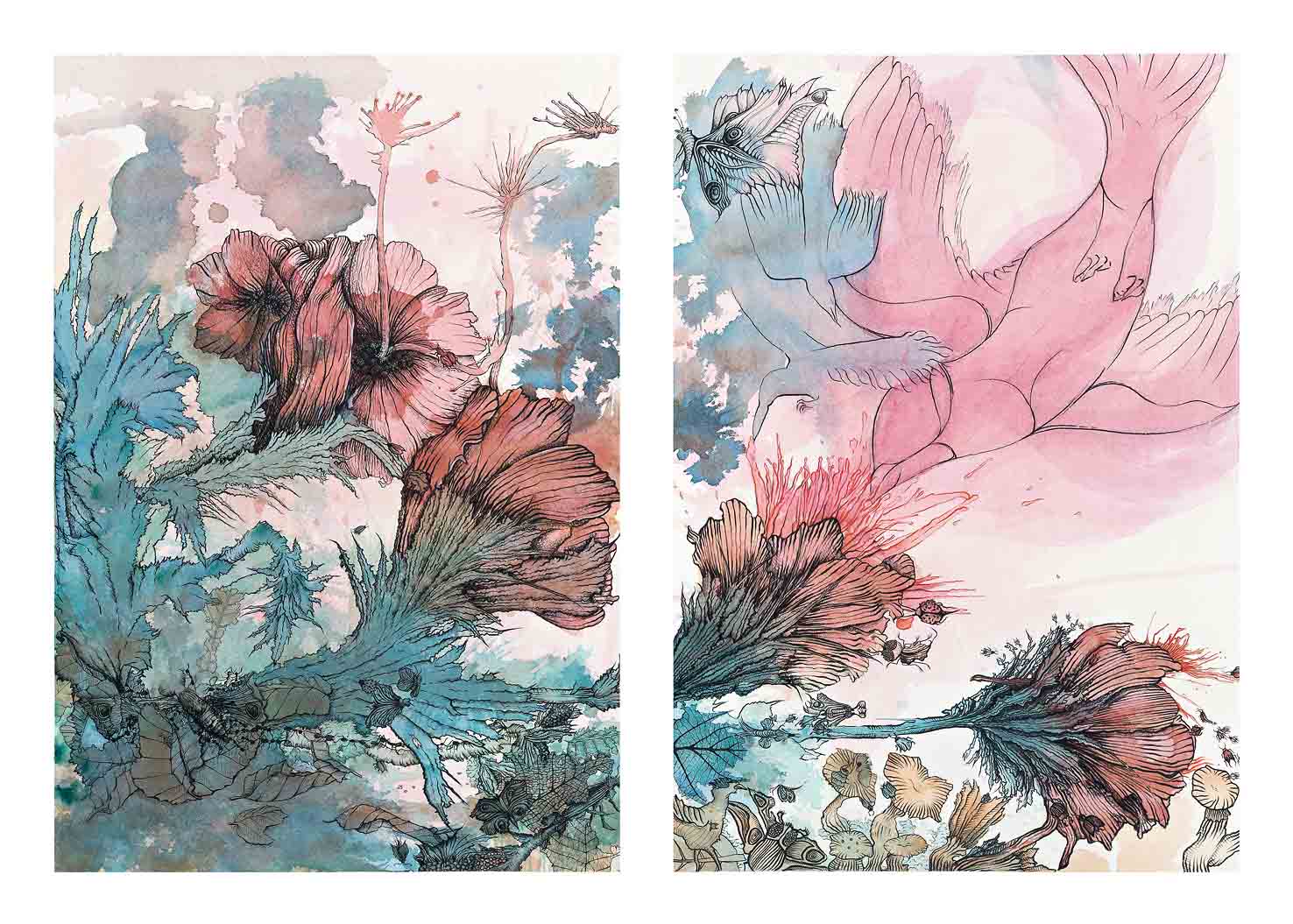
 

Monika Tichacek (Australian, b. 1975 Switzerland) 'Birth of generosity' 2011


Monika Tichacek (Australian, b. 1975 Switzerland)
Birth of generosity
2011
Diptych
Pencil and watercolour on paper
70 x 114cm overall
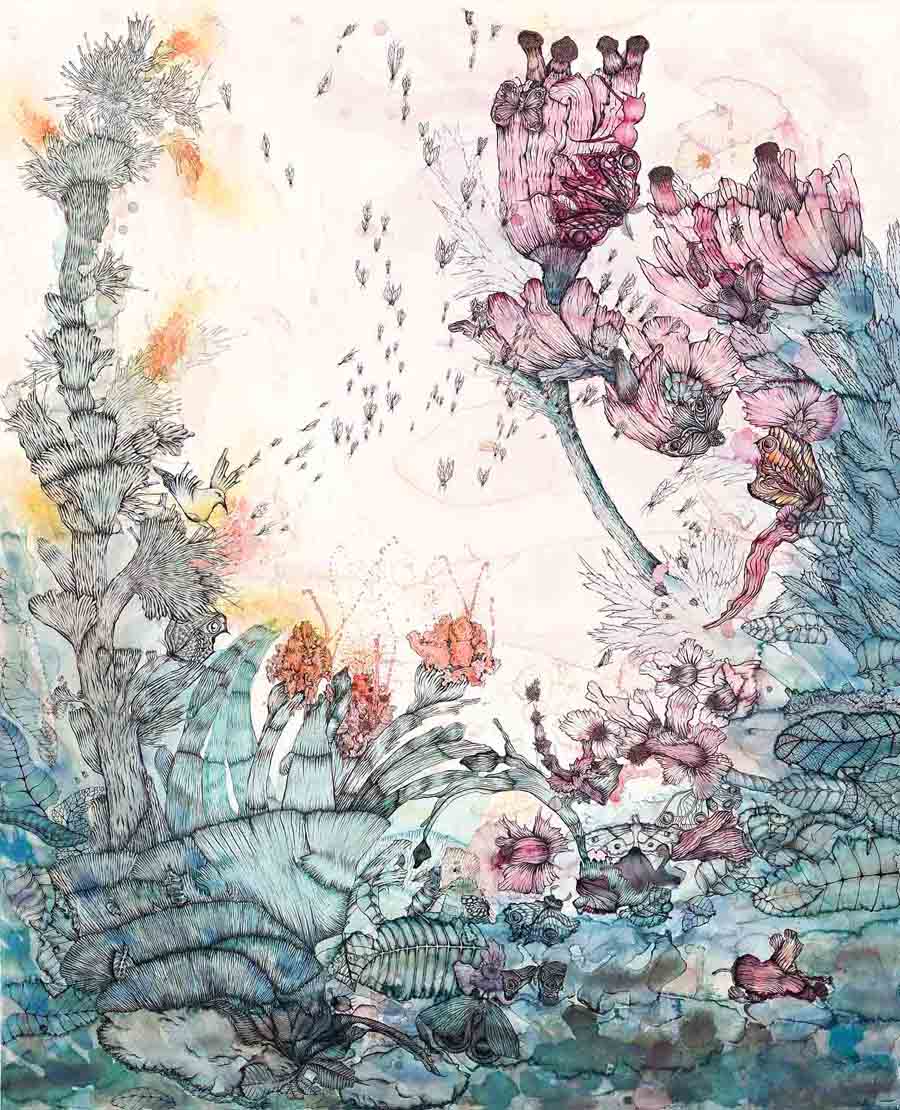
 

Monika Tichacek (Australian, b. 1975 Switzerland) 'Transmission' 2011


Monika Tichacek (Australian, b. 1975 Switzerland)
Transmission
2011
Pencil and watercolour on paper
150 x 125cm


Karen Woodbury Gallery

This gallery has now closed

LIKE ART BLART ON FACEBOOK

Back to top

Marcus Bunyan black and white archive: ‘The Regent Theatre’ series 1991

May 2011


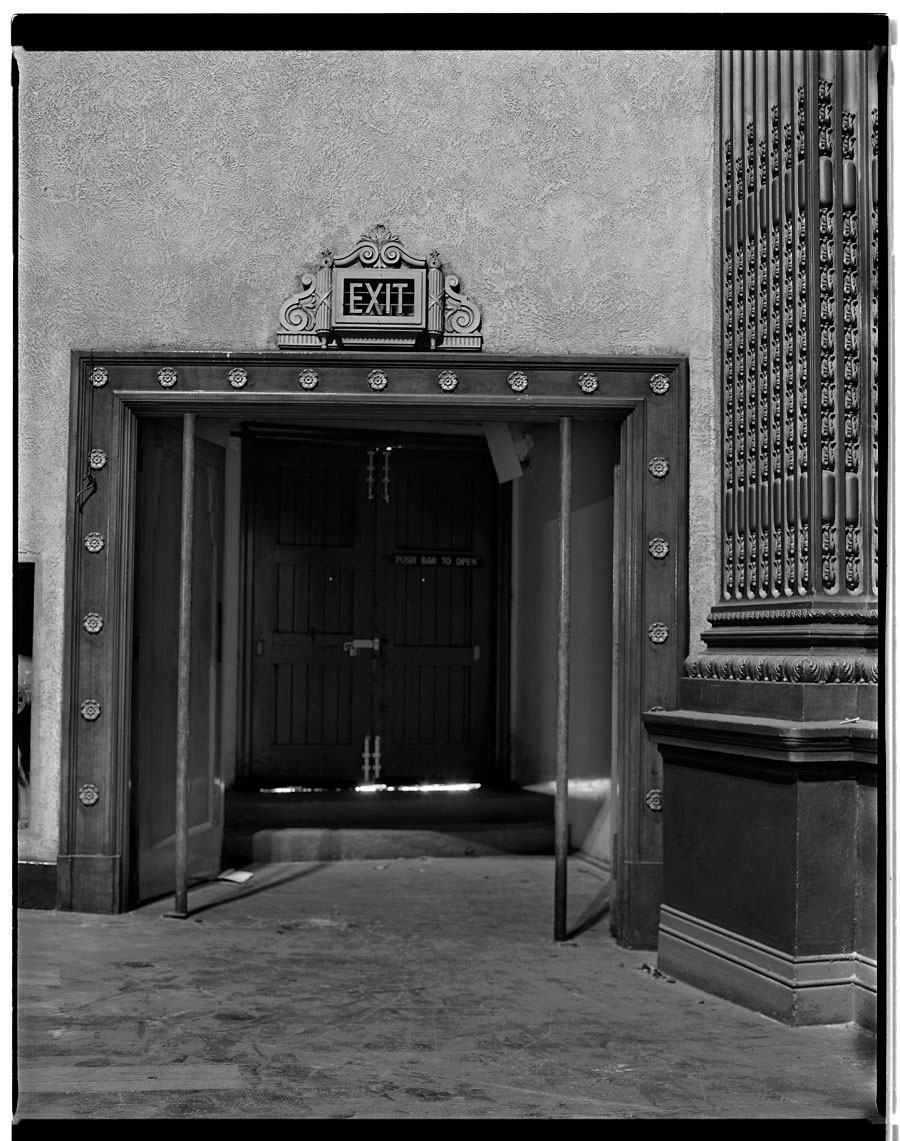
After undertaking an Issues in Art Conservation subject for my Master of Art Curatorship at the University of Melbourne I have become more aware of the fragility of my black and white fibre-based prints and negatives. I have therefore decided to scan my medium format negatives (taken on my trusty Mamiya RZ67) and made during the years 1991-1997, to preserve them in the form of an online archive as a process of active memory, so that the images are not lost forever.

These photographs were images of my life and imagination at the time of their making, the ideas I was thinking about and the people that surrounded me. As such they form part of life – of Melbourne, of Australia and of humanity in general. The preservation of such moments in time are vital to the continuing enrichment of culture. See more of my early black and white photographs on the Marcus Bunyan black and white archive 1991-1997 page.

All images © Marcus Bunyan. Please click on the photographs for a larger version of the image.

Photographs are available from this series for purchase. As a guide, a vintage 8″ x 10″ silver gelatin print costs $700 plus tracked and insured shipping. For more information please see my store web page.


1991

The Regent Theatre series

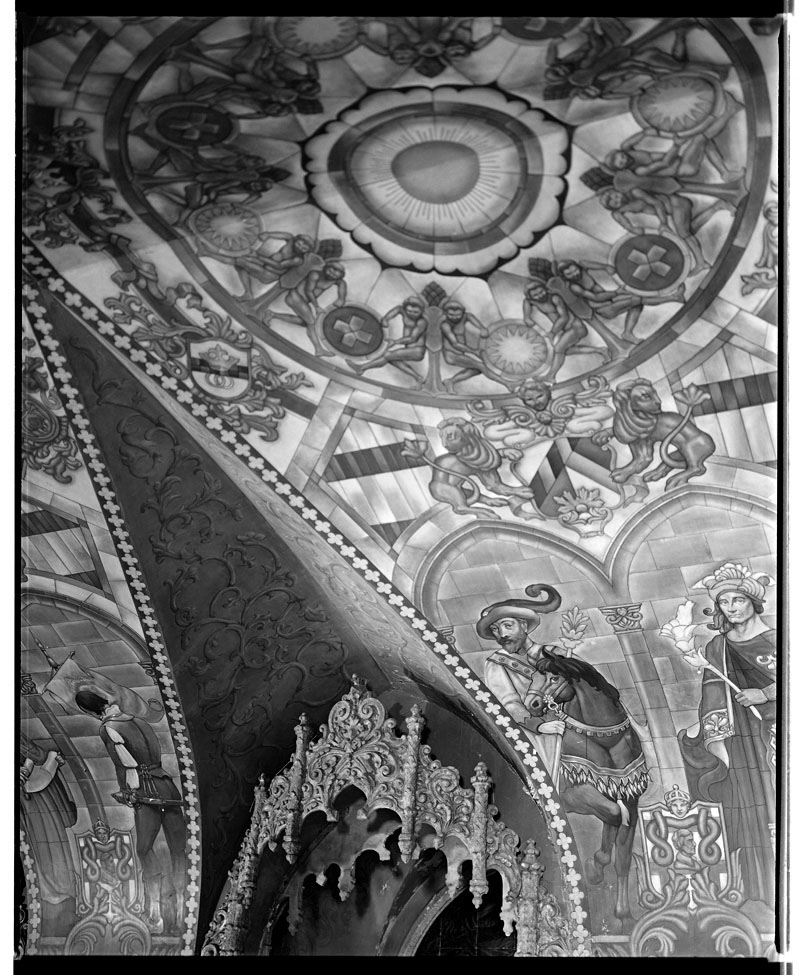
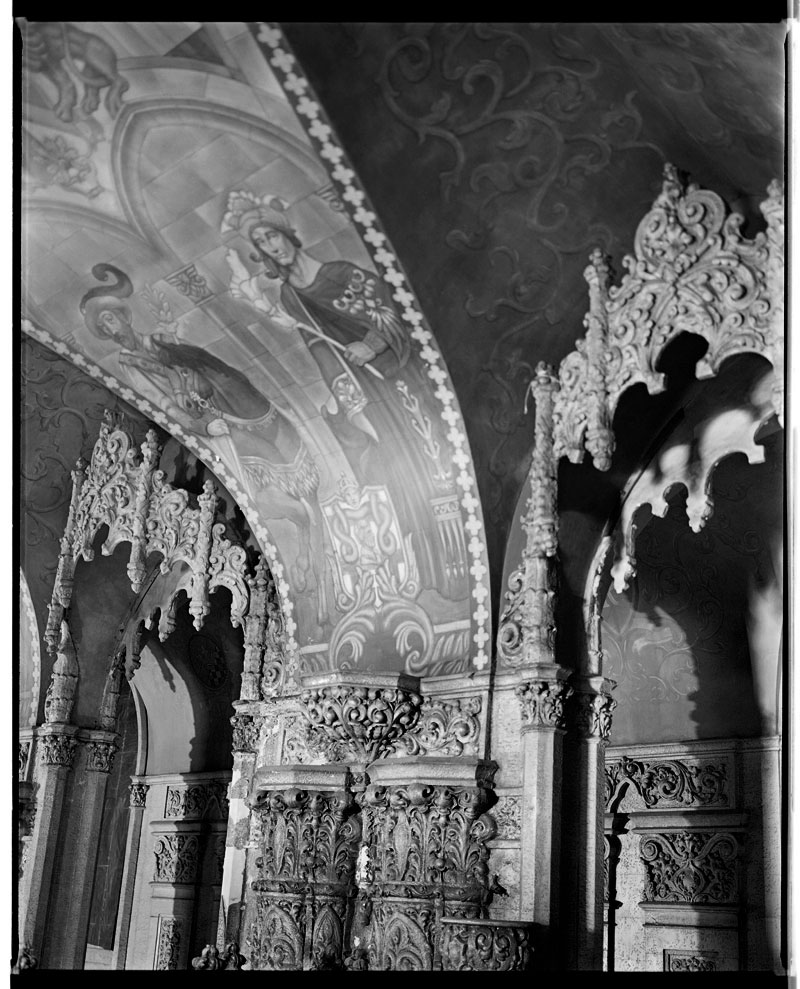
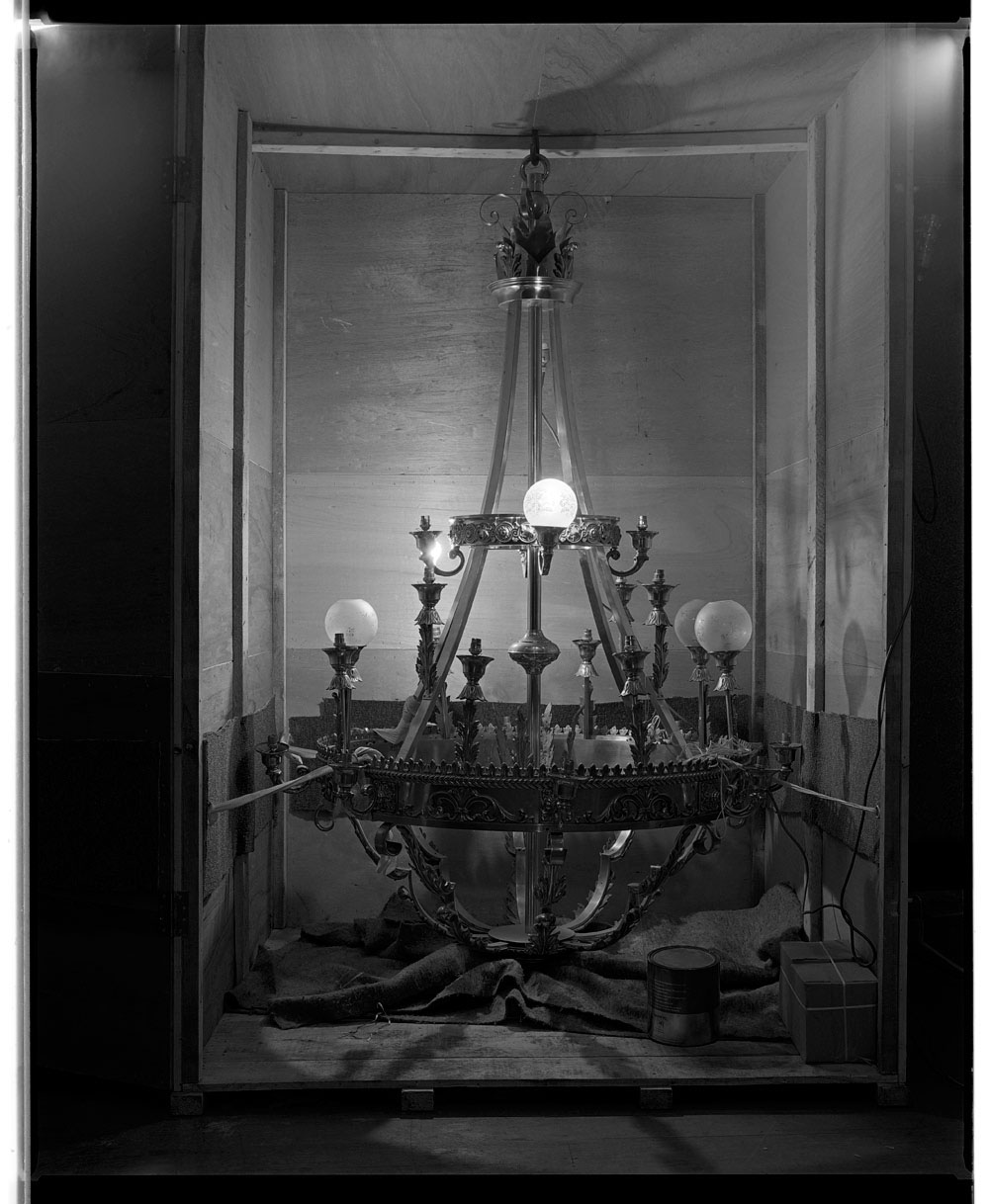
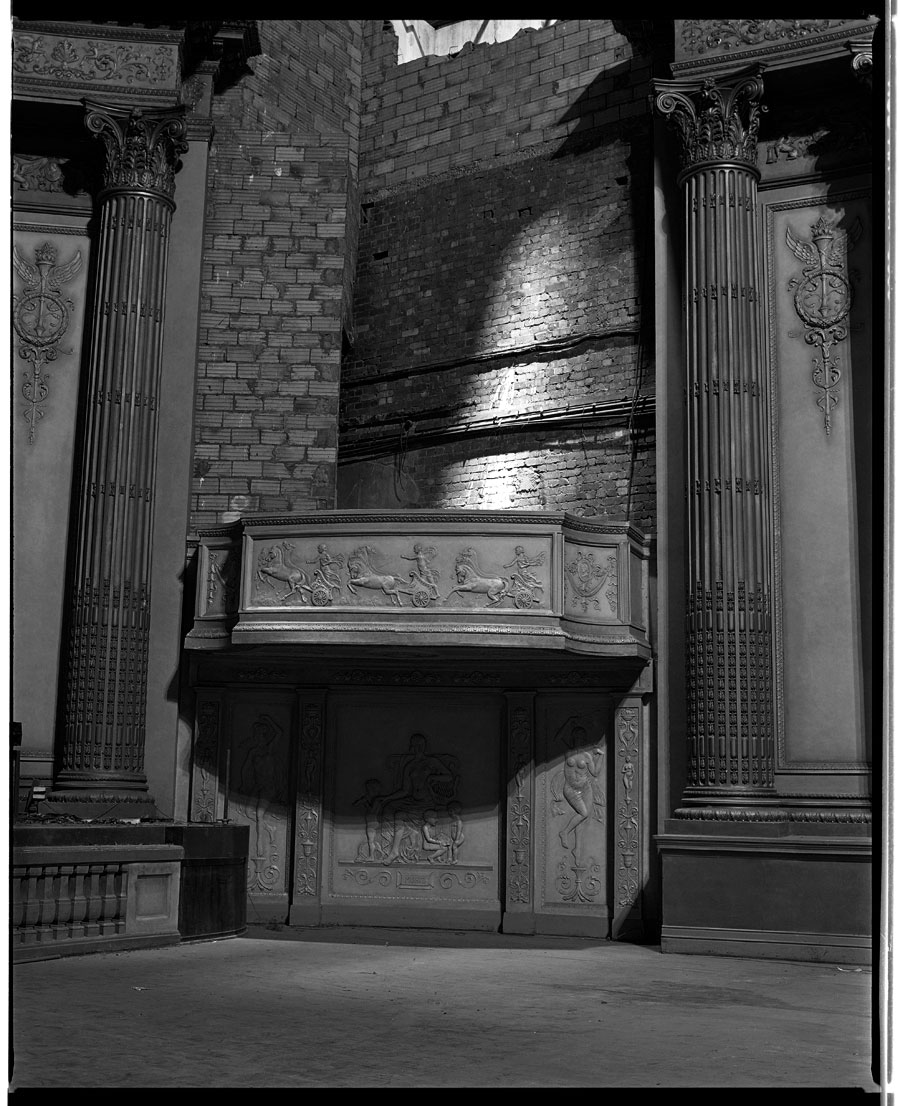
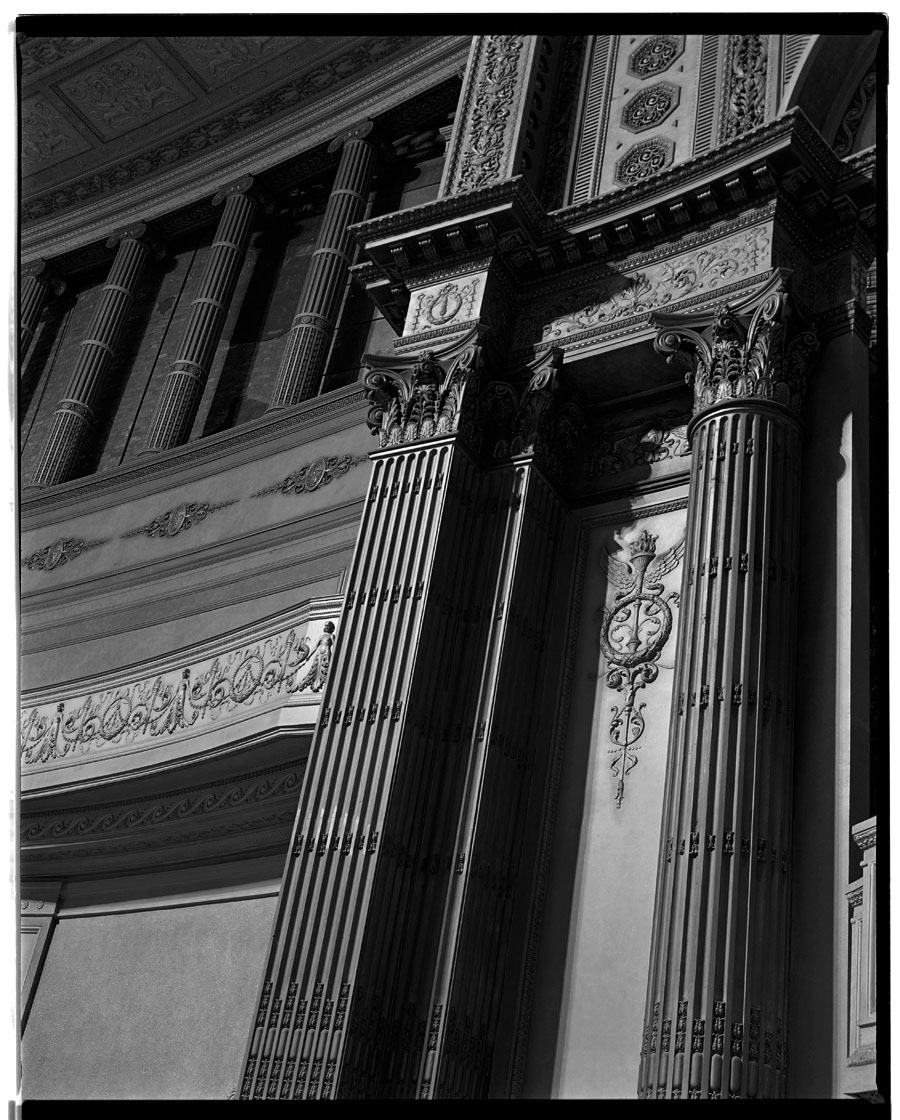
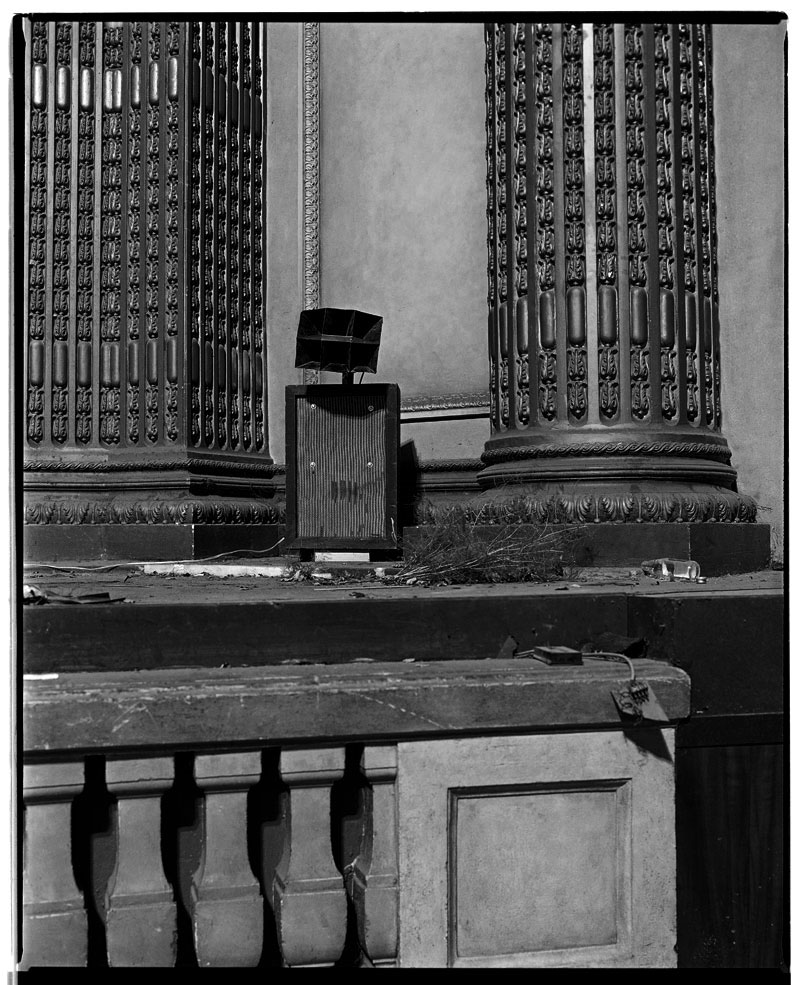
The photographs of the dilapidated Regent Theatre in Collins Street, Melbourne were taken with the permission of the National Trust after the theatre had been closed for 21 years on an open day when the theatre was open to the public. The series formed part of my first solo exhibition Of Magic, Music and Myth held in 1991 at a hairdressing salon in High Street, Prahran, Melbourne. All photographs © Marcus Bunyan.


Marcus Bunyan (Australian, b. 1958) 'Untitled' from 'The Regent Theatre' series 1991


Marcus Bunyan (Australian, b. 1958)
Untitled from The Regent Theatre series
1991
Vintage gelatin silver print
© Marcus Bunyan


Marcus Bunyan (Australian, b. 1958)
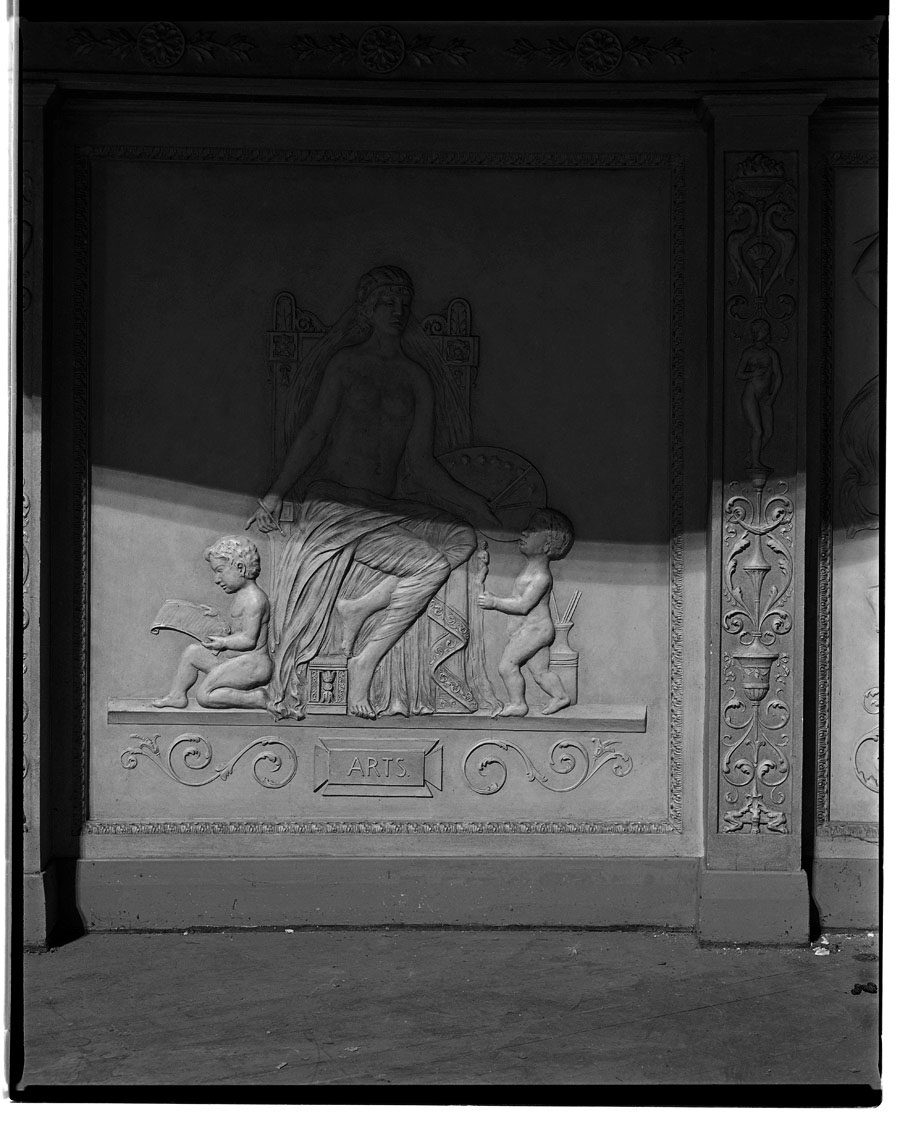
'Arts' from 'The Regent Theatre' series 1991


Marcus Bunyan (Australian, b. 1958)
Arts from The Regent Theatre series
1991
Vintage gelatin silver print
© Marcus Bunyan


Marcus Bunyan (Australian, b. 1958) 'Untitled' from 'The Regent Theatre' series 1991


Marcus Bunyan (Australian, b. 1958)
Untitled from The Regent Theatre series
1991
Vintage gelatin silver print
© Marcus Bunyan


Marcus Bunyan (Australian, b. 1958) 'Untitled' from 'The Regent Theatre' series 1991


Marcus Bunyan (Australian, b. 1958)
Untitled from The Regent Theatre series
1991
Vintage gelatin silver print
© Marcus Bunyan


Marcus Bunyan (Australian, b. 1958) 'Untitled' from 'The Regent Theatre' series 1991


Marcus Bunyan (Australian, b. 1958)
Untitled from The Regent Theatre series
1991
Vintage gelatin silver print
© Marcus Bunyan


Marcus Bunyan (Australian, b. 1958) 'Coronation' from 'The Regent Theatre' series 1991


Marcus Bunyan (Australian, b. 1958)
Coronation from The Regent Theatre series
1991
Vintage gelatin silver print
© Marcus Bunyan


Marcus Bunyan (Australian, b. 1958) 'Exit' from 'The Regent Theatre' series 1991


Marcus Bunyan (Australian, b. 1958)
Exit from The Regent Theatre series
1991
Vintage gelatin silver print
© Marcus Bunyan


Marcus Bunyan (Australian, b. 1958) 'Music and Light' from 'The Regent Theatre' series 1991


Marcus Bunyan (Australian, b. 1958)
Music and Light from The Regent Theatre series
1991
Vintage gelatin silver print
© Marcus Bunyan


Marcus Bunyan (Australian, b. 1958) 'Music' from 'The Regent Theatre' series 1991


Marcus Bunyan (Australian, b. 1958)
Music from The Regent Theatre series
1991
Vintage gelatin silver print
© Marcus Bunyan


Marcus Bunyan (Australian, b. 1958) 'Nocturne' from 'The Regent Theatre' series 1991


Marcus Bunyan (Australian, b. 1958)
Nocturne from The Regent Theatre series
1991
Vintage gelatin silver print
© Marcus Bunyan


Marcus Bunyan (Australian, b. 1958) 'Untitled' from 'The Regent Theatre' series 1991


Marcus Bunyan (Australian, b. 1958)
Untitled from The Regent Theatre series
1991
Vintage gelatin silver print
© Marcus Bunyan


Marcus Bunyan (Australian, b. 1958) 'Untitled' from 'The Regent Theatre' series 1991


Marcus Bunyan (Australian, b. 1958)
Untitled from The Regent Theatre series
1991
Vintage gelatin silver print
© Marcus Bunyan


Marcus Bunyan (Australian, b. 1958) 'Six-coned speaker with pillars' from 'The Regent Theatre' series 1991


Marcus Bunyan (Australian, b. 1958)
Six-coned speaker with pillars from The Regent Theatre series
1991
Vintage gelatin silver print
© Marcus Bunyan


Marcus Bunyan (Australian, b. 1958) 'Stairs, bannister, bowl and pillars' from 'The Regent Theatre' series 1991


Marcus Bunyan (Australian, b. 1958)
Stairs, bannister, bowl and pillars from The Regent Theatre series
1991
Vintage gelatin silver print
© Marcus Bunyan


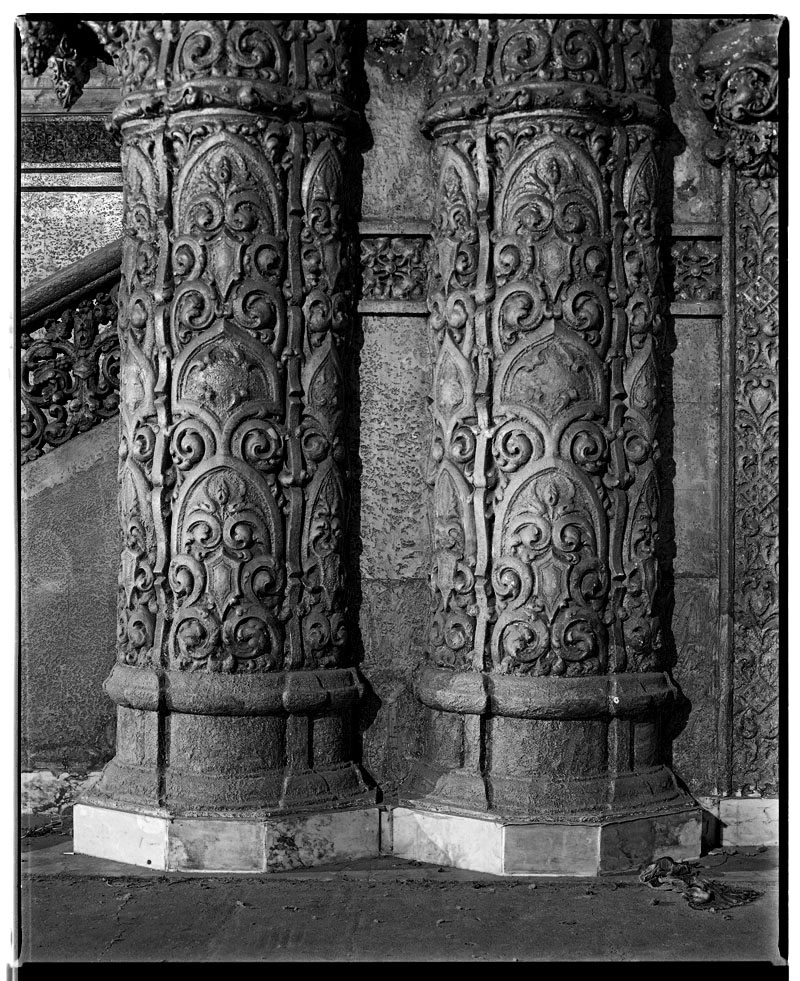
Marcus Bunyan (Australian, b. 1958) 'Twin pillars' from 'The Regent Theatre' series 1991


Marcus Bunyan (Australian, b. 1958)
Twin pillars from The Regent Theatre series
1991
Vintage gelatin silver print
© Marcus Bunyan


Marcus Bunyan black and white archive 1991-1997

LIKE ART BLART ON FACEBOOK

Back to top

Review: ‘Bill Henson’ at Tolarno Galleries, Melbourne

Exhibition dates: 30th March – 21st April 2011


Bill Henson (Australian, b. 1955) 'Image No.9 from an Untitled sequence 1977' 1977


Bill Henson (Australian, b. 1955)
Image No. 9 from an Untitled sequence 1977
1977
Gelatin silver print


This is an exquisite exhibition by one of Australia’s preeminent artists. Like Glenn Gould playing a Bach fugue, Bill Henson is grand master in the performance of narrative, structure, composition, light and atmosphere. The exhibition features thirteen large colour photographs printed on lustre paper (twelve horizontal and one vertical) – nine figurative of adolescent females, two of crowd scenes in front of Rembrandt paintings in The Hermitage, St. Petersburg (including the stunning photograph that features The return of the prodigal son c. 1662 in the background, see below) and two landscapes taken off the coast of Italy. What a journey this exhibition takes you on!

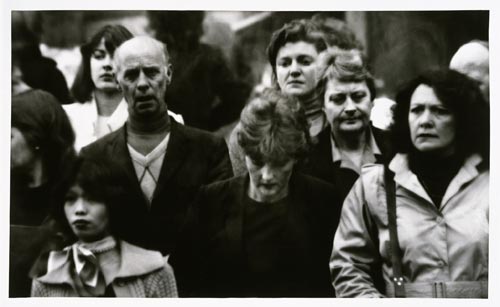
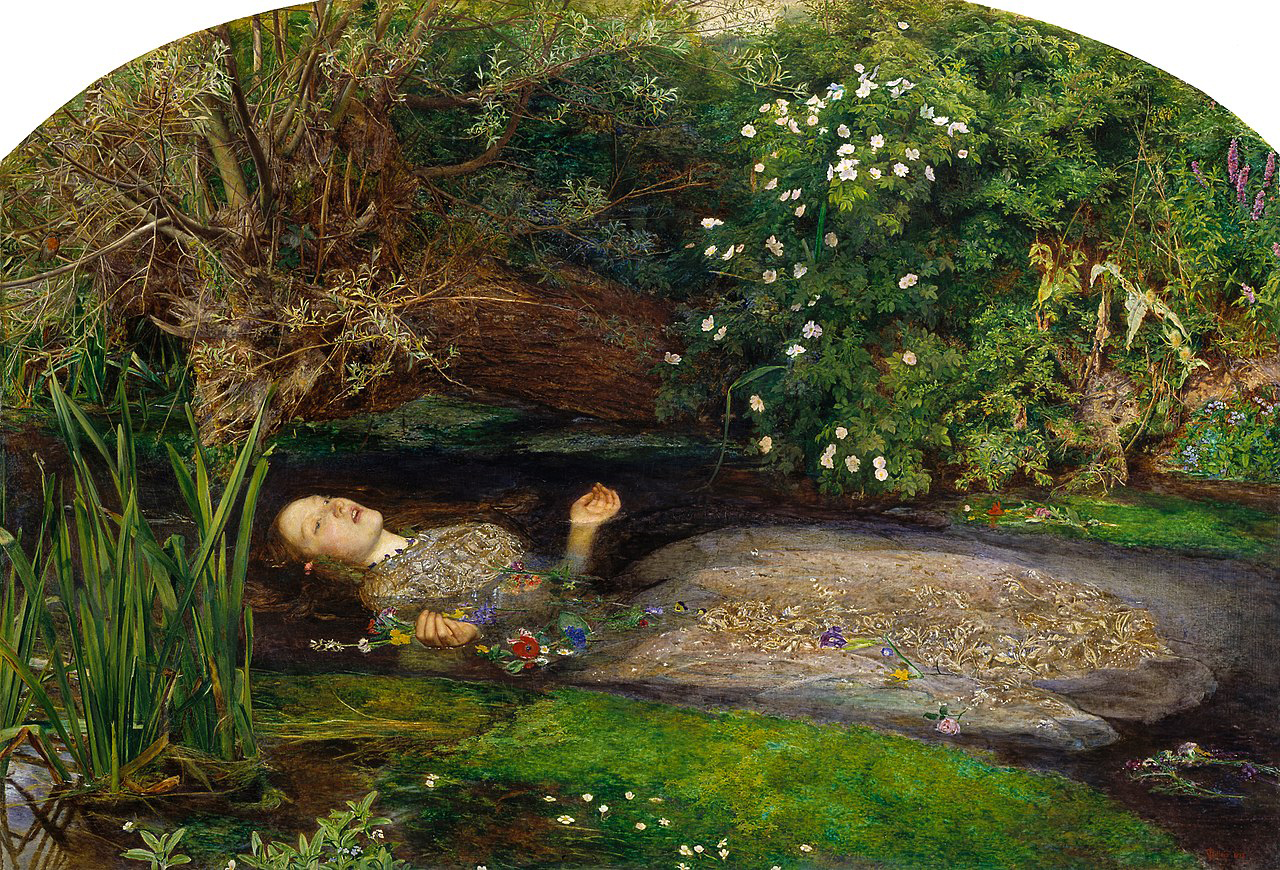
Throughout his career Henson has carefully and thoughtfully mined the history of art to create personal mythologies that have wider universal implications. His work is a spiral feeding back into itself. As it ascends so it expands. His inquiry has been consistent and persuasive – themes and techniques that were evident in the very first photographs still appear many years later. For example, the very early photograph Image No.9 from an Untitled sequence 1977 (above) features a Mannerist-influenced elongated body, a form that appears in the latest exhibition in several of the works. Other influences have been, in early work, the Baroque (Untitled 1983/84, below), Rembrandt’s use of chiaroscuro in the Paris Opera Project (Untitled 21/51, below), the Pre-Raphaelite (used in most of his figurative work, especially in the faces, see below). In the current exhibition the influence of Caravaggio on the form of the body and the relationship between a work and Leonardo da Vinci’s Head of Christ (c. 1494-1495, below) is evident as is the implementation of a flattened perspective that is opposed to the principles of linear perspective, used in Dutch still life of the 17th century (see ‘The Art of Describing’1) that Henson employed in early photographs of crowds (Untitled 1980/82, below) – now reappearing in the two photographs taken in front of the Rembrandt paintings.

Henson’s vulnerable bodies have always been marked, bruised and subject to distress, emerging into the light in fragments – unsure in their relationship to life, spirit and mortality. His naked adolescent subjects occupy interstitial spaces: the gap between spaces full of structure, between childhood and adulthood – fluid spaces of adventure, exploration and problematic transience. Using this metaphor the photographs invite the viewer to examine their own social identity for this is never fixed and stable, is always in a state of flux; we, the viewer, have an intimate relationship to this period in our life not as some distant memory but with a sense of wonder and appreciation.

The new photographs, with their languorous, limpid figures have a certain malaise to them – the disintegrating body, the surface of the skin all blotchy hues of blue, pink and purple as if diseased – are translucent like a chrysalis … the inner light seeming to magically emerge from under the skin. As John McDonald in his excellent article (an essential read!) in The Age comments,

“The bodies of teenagers are transformed into living sculptures, infused with a slivery-blue sheen, every bruise and blemish captured in unsettling detail. Henson does not provide us with fantasy objects; he makes us feel how lonely it can be within our own skins. These are disturbing images but not because they feature naked adolescents. They are disturbing because they have the beauty of old master paintings or antique statuary but depict beings of flesh and blood. They are disturbing because they touch parts of the psyche we might prefer to avoid, stripping away the social self, leaving us as defenceless as a snail without its shell.”2

As McDonald notes, these bodies are more melancholy than erotic although they do possess, powerfully, that ability to image “the primeval deity who embodies not only the force of love but also the creative urge of ever-flowing nature, the firstborn Light for the coming into being and ordering of all things in the cosmos.”3 In this sense they emerge from darkness into the (dying of the) Light and possess a foreboding sense of death as well as elegiac sensuality: the placement of a hand, the hair of a person enveloped in darkness languidly resting on an exposed stomach, easily missed if not being attentive to the image.

Henson’s photographs have been said by many to be haunting but his images are more haunted than haunting. There is an indescribable element to them (be it the pain of personal suffering, the longing for release, the yearning for lost youth or an understanding of the deprecations of age), a mesmeric quality that is not easily forgotten. The photographs form a kind of afterimage that burns into your consciousness long after the exposure to the original image has ceased. Haunted or haunting they are unforgettable.

Dr Marcus Bunyan


1/ See Alpers, Svetlana. The Art of Describing: Dutch Art in the Seventeenth Century. University Of Chicago Press, 1984

2/ McDonald, John. “Bill Henson,” in The Age newspaper. April 9th 2011 [Online] Cited 17/04/2011

3/ Anon. “Eros,” on Wikipedia [Online] Cited 17/04/2011


Many thankx to Jan Minchin and Tolarno Galleries for allowing me to publish the four photographs from the exhibition in the posting. Please click on the photographs for a larger version of the image. All photographs © the artist and Tolarno Galleries.

All photographs published other than the ones supplied by Tolarno Galleries are published under fair dealing for the purposes of criticism or review (Commonwealth of Australia Consolidated Acts: Copyright Act 1968 – Sect 41).


Bill Henson (Australian, b. 1955) 'Untitled' 1980/82


Bill Henson (Australian, b. 1955)
Untitled
1980/1982
Gelatin silver photograph
28 × 47cm


David Bailly (Dutch, 1584-1657) 'Self-Portrait with Vanitas Symbols' c. 1651


David Bailly (Dutch, 1584-1657)
Self-Portrait with Vanitas Symbols
c. 1651
Oil on canvas


Bill Henson (Australian, b. 1955) 'Untitled' 1983-84 Triptych


Bill Henson (Australian, b. 1955)
Untitled 1983/84
1983-1984
Triptych
Type C colour photograph
Each 98.3 x 73.6cm


Bill Henson (Australian, b. 1955) 'Untitled 21/51' 1990-91


Bill Henson (Australian, b. 1955)
Untitled 21/51
1990-1991
Paris Opera Project
Type C photograph
127 × 127cm
Series of 50
Edition of 10 + 2 A/Ps


Bill Henson (Australian, b. 1955) 'Untitled #125' 2000-03


Bill Henson (Australian, b. 1955)
Untitled #125
2000/2003
LMO SH163 N15A
Type C photograph
127 × 180cm
Edition of 5 + 2 A/Ps


Sir John Everett Millais (English, 1829-1896) 'Ophelia' 1851-1852


Sir John Everett Millais (English, 1829-1896)
Ophelia
1851-1852
Oil on canvas
Tate Britain


Tolarno Galleries is pleased to present Bill Henson’s most recent body of work.

Comprising 13 photographs depicting glowing interiors, stunning landscapes and softly lit figures, this exhibition shows, as David Malouf declared in 1988, that ‘Bill Henson is a maker of magic.’

Henson’s spellbinding new works push photography into the realm of painting. His masterly compositions, captured at twilight, remind us of Caravaggio. Hauntingly beautiful, they express a palpable tenderness through subtle gestures and exquisite modulations of colour. Such photographs tell us why Bill Henson is one of Australia’s leading contemporary artists.

Born in Melbourne, he had his first solo exhibition, at the age of 19, at the National Gallery of Victoria in 1975. Since then he has exhibited extensively in Australia and internationally. In 1995 he represented Australia at the Venice Biennale with his celebrated series of cut-screen photographs.

In 2003 his work appeared in Strangers: The First ICP Triennial of Photography and Video at the International Center of Photography, New York.

A major survey of his work was held at the Art Gallery of New South Wales and the National Gallery of Victoria in 2005. This landmark exhibition attracted record visitor numbers for a contemporary art exhibition in Australia. The following year he exhibited a major body of work in Twilight: Photography in the magic Hour at the Victoria and Albert Museum, London.

Press release from Tolarno Galleries


Bill Henson (Australian, b. 1955) 'Untitled' 2010/11


Bill Henson (Australian, b. 1955)
Untitled
2010/2011
NH SH346 N10B
Archival inkjet pigment print
127 x 180cm
Edition of 5


Bill Henson (Australian, b. 1955) 'Untitled' 2009/10


Bill Henson (Australian, b. 1955)
Untitled
2009/2010
CL SH733 N35B
Archival inkjet pigment print
127 x 180cm
Edition of 5


Bill Henson (Australian, b. 1955) 'Untitled' 2009/10


Bill Henson (Australian, b. 1955)
Untitled
2009/2010
CL SH767 N17B
Archival inkjet pigment print
127 x 180cm
Edition of 5


Bill Henson (Australian, b. 1955) 'Untitled' 2009/10


Bill Henson (Australian, b. 1955)
Untitled
2009/2010
NH SH353 N33D
Archival inkjet pigment print
127 x 180cm
Edition of 5


Leonardo da Vinci (Italian, 1452-1519) 'Study for the head of Christ for The Last Supper [Testa di Cristo]' c. 1494-1495


Leonardo da Vinci (Italian, 1452-1519)
Study for the head of Christ for The Last Supper [Testa di Cristo]
c. 1494-1495
Drawing on paper
40 x 32cm
Pinacoteca di Brera, Milano


Tolarno Galleries
Level 4, 104 Exhibition Street
Melbourne VIC 3000
Australia
Phone: 61 3 9654 6000

Opening hours:
Tuesday – Friday 10am – 5pm
Saturday 1pm – 4pm

Tolarno Galleries website

LIKE ART BLART ON FACEBOOK

Back to top

Review: ‘In Spates’ by Sam Shmith at Arc One Gallery, Melbourne

Exhibition dates: 29th March – 23rd April 2011


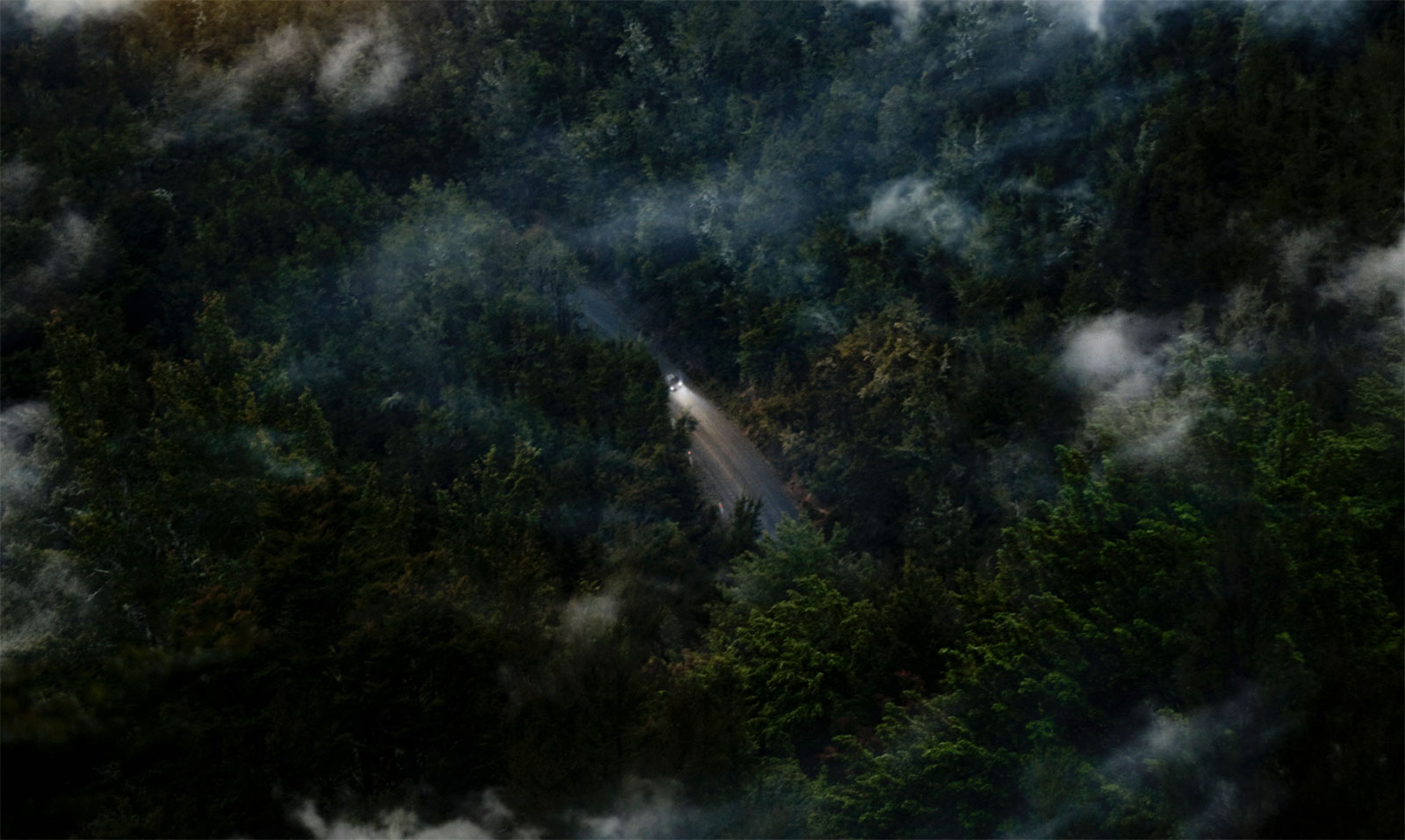
Sam Shmith (Australian born England, b. 1980) 'Untitled (In Spates 2)' 2011


Sam Shmith (Australian born England, b. 1980)
Untitled (In Spates 2)
2011
125 x 75cm
Pigment print on archival rag


The Digital Punctum

Spate, definition: A sudden flood, rush, or outpouring

This is a visually strong body of work by Sam Shmith that thematically hangs together beautifully in the Arc One Gallery space. The mystery, the sublime and the journey are well handled by the artist. As a spectral ‘body’ the photographs work together to create a new form of hallucination, one that haunts and perturbs the mind, like a disturbing psychological thriller a la David Lynchian ‘Twin Peaks’. The work, as a whole, becomes a meta-narrative and as Shmith develops as an artist, they seem to me like work that has journeyed to the point of departure. The viewer is (not really) flying, (not really) floating above the clouds observing the meta-narrative, creating a visual memory of things. Spectral luminescences, not-quite-right perspectives, the photograph as temporal hallucination.

Shmith’s photographs are constructed from “30-40 photographs per pictorial narrative” taken during the day and then digitally darkened: the clouds from Queensland, the cities from here, the cars from there. To be honest the clouds and cities could be from anywhere they are just part of the process. Shmith’s technique is interesting to know and then is quickly forgotten when looking at the photographs – like reading, it does not become the meaning (just a layer) of the work. The images, when constructed (however!) take me to other spaces and memories, opening up new vistas in my imagination.


Shmith’s series acts as a punctum, working to create an unitary impression on the mind that pricks my consciousness. The whole work becomes punctum. This is a very interesting and powerful proposition.

The punctum, as argued by Barthes in Camera Lucida, relies on the QUESTION OF INTENTIONALITY – the detail that pricks and wounds is an unconscious act on the part of the photographer – not one of intention. It cannot be perceived by the photographer or indeed anyone else in the present. In other words, when the photographer photographs the total object, he cannot not not photograph the part object, which is what the punctum is:

“Hence the detail which interests me is not, or a least not strictly, intentional, and probably must not be so; it occurs in the field of the photographer thing like a supplement that is at once inevitable and graceful; it does not necessarily attest to the photographer’s art; it says only that the photographer was there, or else, still more simply, that he could not not photograph the partial object at the same time as the total object … The photographer’s “second sight” does not consist in “seeing” but in being there. And above all, imitating Orpheus, he must not turn back to look at what he is leading – what he is giving to me!” (CL 47/CC 79-80)

As Michael Fried observes in his analysis of Camera Lucida, the punctum is “antitheatrical” in the sense that we see it for ourselves and are not shown it by the photographer: it is not consciously constructed by the photographer but unconsciously captured as part of the total object:

“As Fried has argued, the experience of the punctum lives or dies for Barthes according to the absence of presence of intentionality on the part of the photographer; if there is visible intention, there is no punctum. That the punctum can exist only in the absence of intention is consistent, Fried claims, with his distinction between “seeing” (understood positively as antitheatrical) and “being shown” (understood negatively as theatrical). The possibility of the punctum is cancelled if bound to the photographer’s intention – if we are shown what can only be seen. As Fried states: “The punctum, we might say, is seen by Barthes but not because it has been shown to him by the photographer, for whom it does not exist; as Barthes recognizes, ‘it occurs [only] in the photographic field of the photographed thing,’ which is to say that it is not a pure artefact of the photographic event.”1


This changes in digital photography, especially with photographs such as Shmith’s constructed from 30-40 photographs. Here the construction can only be intentional (or can it?), dissolving the relation between referent and photograph, the unseen nature of punctum and the ability to not not photograph the part object:

“Fried mentions the subject I have in mind when he says digital photographs undermine the condition of the punctum by making it impossible that “a partial object in the photograph that might otherwise prick or wound me may never have been part of a total object, which itself may be a digital construction” (Michael Fried, “Barthes’s Punctum,” Critical Inquiry 31, Spring 2005, p.563). In the sentence just preceding that, Fried notes that digitalization “threatens to dissolve the ‘adherence’ of the referent to the photograph,” thus ending the fundamental claim that “the photographer could not not photograph the partial object at the same time as the total object.”2

But the digital punctum still exists. Shmith’s work is evidence of this. It exists in the mind of the artist and viewer, external to rather than strictly “in” or “of” the image:

“Curiously, however, Barthes does claim in Camera Lucida that the punctum may also be of the mind, or at the level of remembrance, rather than strictly “in” or “of” the image: “… the punctum (is) revealed only after the fact, when the photograph is no longer in front of me and I think back on it. I may know better a photograph I remember than a photograph I am looking at, as if direct vision oriented its language wrongly, engaging it in an effort of description which will always miss its point of effect, the punctum” (Roland Barthes, Camera Lucida: Reflections on Photography, trans. Richard Howard (New York: Hill and Wang, 1981), 53.) Indeed, the punctum is a most difficult thing to pin down, or, should one say, to prick. Fried recognizes the truly aporetic [characterised by an irresolvable internal contradiction or logical disjunction] nature of the punctum when he points to certain affinities between the literalist work of the Minimalists and the punctum, whereby the Minimalists understood the relationship between the literalist work and the beholder as ’emphatically not determined by the work itself’, suggesting that meaning in literalism was essentially indeterminate.”3

As James Elkins has observed, the punctum, or the image’s antitheatricality, is not necessarily threatened by digitalisation either through the detaching of the referent from the photograph or through the detaching of the part object from the full object within the image itself.

“The presence and efficaciousness of the part object are independent of digitalisation because the concept of the part object arises from a certain understanding of the internal structure of pictures and objects. Part objects can be found as readily in photographs of galaxies, which are assembled from layers of cleaned and enhanced digital images, as in the background of Wessing’s Nicaragua. Nor does the detachment of the photograph from its referent threaten the operation of the punctum because photographs with subjects that are wholly digitally constructed can be understood as having overlooked elements waiting to be discovered by each viewer.”4


My belief is that the digital photographer can evidence punctum in the construction of image through an anticipation of it’s affect – either consciously or unconsciously. Not through the ‘placement’ inside disparate texts but a holistic embedding through intertextuality. The punctum becomes the (non)intentional ground of discovery – the part part object if you like – the prick among many photographs now created as one, in this case 30-40 turned into one pictorial narrative. The punctum does not have to be part of a total object and digitalisation does not undermine the punctum; it may even enhance it so that, in this case, the whole series becomes punctum.

Shmith’s series and individual photographs within the series work best when the artist lets go of his consciousness and lets the ‘thing itself’ emerge, like a Japanese haiku poem. While consciously constructed by the artist the haiku takes on a life and meaning of it’s own outside the confines of intentionality.

“The artist can proffer a ‘releasement toward things’ (Heidegger, Martin. Discourse on Thinking. New York: Harper & Row, 1966, pp. 55-56), a coexistence between a conscious and unconscious way of perceiving which sustains the mystery of the object confusing the distinction between real time and sensual time, between inside and outside, input and output becoming neither here nor there. The mystery of the image is not to be found in its emasculation (in the sense of it’s deprivation of vigour) but by being attentive to the dropping a way of awareness, of memory, imagination, and the fixed gaze of desire through the glimpsing of a coexistence between a conscious and unconscious way of perceiving, a ‘releasement towards things’ which enables the seeing of the ‘Thing Itself’.”5

While Shmith’s series works as a whole and there are some wonderful individual images occasionally the artist has become too conscious of the punctum, the marks he intentionally makes. There are too many planes in clouds, the marking of these planes loosing their aura of (in)significance. They should be discovered afresh, “overlooked elements waiting to be discovered by each viewer,” not intentionally placed and shown by the artist. The series needed other themes embedded within them to allow the viewer to discover, to journey – more! As I said in the opening paragraph the photographs seems to me like work that has journeyed to the point of departure.

And what an exciting departure it is, for what happens next is in his, and our, imagination.

Dr Marcus Bunyan


1/ Fried, Michael. “Barthes’s Punctum,” in Critical Inquiry 31, Spring 2005 quoted in Hughes, Gordon. “Camera Lucida, Circa 1980,” in Batchen, Geoffrey (ed.,). Photography Degree Zero: Reflections on Roland Barthes’s Camera Lucida. Cambridge, MA: MIT Press, 2009

2/ Elkins, James. “What Do We Want Photography To Be?” in Batchen, Geoffrey (ed.,). Photography Degree Zero: Reflections on Roland Barthes’s Camera Lucida. Cambridge, MA: MIT Press, 2009, pp. 176-177

3/ Haraldsson, Arni. “Fried’s Turn,” on Fillip website, Spring 2004 [Online] Cited 12/04/2011. fillip.ca/content/frieds-turn

4/ Elkins, Op. cit.

5/ Bunyan, Marcus. “Spaces That Matter: Awareness and Entropia in the Imaging of Place,” 2002, on the Academia.edu website [Online] Cited 20/07/2022. https://www.academia.edu/4885768/Spaces_That_Matter_Awareness_and_Entropia_in_the_Imaging_of_Place_October_2002_


Many thankx to Angela Connor for her help and to Arc One Gallery for allowing me to publish the text and photographs in the posting. Please click on the photographs for a larger version of the image.


Sam Shmith (Australian born England, b. 1980) 'Untitled (In Spates 7)' 2011


Sam Shmith (Australian born England, b. 1980)
Untitled (In Spates 7)
2011
50 x 30cm
Pigment print on archival rag


Sam Shmith (Australian born England, b. 1980) 'Untitled (In Spates 14)' 2011


Sam Shmith (Australian born England, b. 1980)
Untitled (In Spates 14)
2011
50 x 30cm
Pigment print on archival rag


Sam Shmith’s photographs resemble the opening scenes of a Hollywood blockbuster. By harnessing our collective imagination, each image is charged with mystery and intrigue, leaving the viewer to draw their own conclusions about the narrative embedded in each of the works.

Digitally layered from an image bank of over 60,000 self-shot images, Sam’s twenty-two new landscapes choreograph a series of temporal clues into single images that simultaneously obliterate all references to a particular locality. His works are a hybrid of images from his personal archives, composited so that each journey is no longer distinct, but melded to create their single, artificial realities.

Influenced by François Truffaut’s film Day for Night (1973), the works are shot during the day, and meticulously transformed into twilight scenes. Reworking and repeating particular motifs, these elaborately constructed works are broken up into four distinct groups – sky, mountains, cities and roads. The centre of the frame concentrates an immediate human intervention enveloped by mountainous panoramas, vaporous clouds or close foliage to create a murky tension between the encompassing landscape and specks of synthetic light. Intuitively composited from between 30 to 40 photographs per pictorial narrative, the works are shot from cars, aeroplanes and hot air balloons producing mood scenes that have athematic unity.

Through his methods Sam fashions an unconventional approach to landscape photography. Citing the melancholic landscapes of Bill Henson, the suburban malaise of Gregory Crewdson and drawing motivation from Alfred Stieglitz’s Equivalents, In Spates communicates the artist’s devotional dedication to the emotive importance of the genre. Though isolation appears as a common theme in his work, Sam’s observations should also be considered as an arbitrary moment viewed from afar, evoking a feeling of alienation and disengagement between the environment and ourselves.

Text from the Arc One Gallery press release


Sam Shmith (Australian born England, b. 1980) 'Untitled (In Spates 5)' 2011


Sam Shmith (Australian born England, b. 1980)
Untitled (In Spates 5)
2011
125 x 75cm
Pigment print on archival rag


Sam Shmith (Australian born England, b. 1980) 'Untitled (In Spates 21)' 2011


Sam Shmith (Australian born England, b. 1980)
Untitled (In Spates 21)
2011
125 x 75cm
Pigment print on archival rag


Arc One Gallery
45 Flinders Lane
Melbourne, 3000
Phone: (03) 9650 0589

Opening hours:
Wed – Sat 11am – 5pm

Arc One Gallery website

LIKE ART BLART ON FACEBOOK

Back to top

Review: ‘Antony Gormley: MEMES’ at Anna Schwartz Gallery, Melbourne

Exhibition dates: 17th March – 23rd April 2011


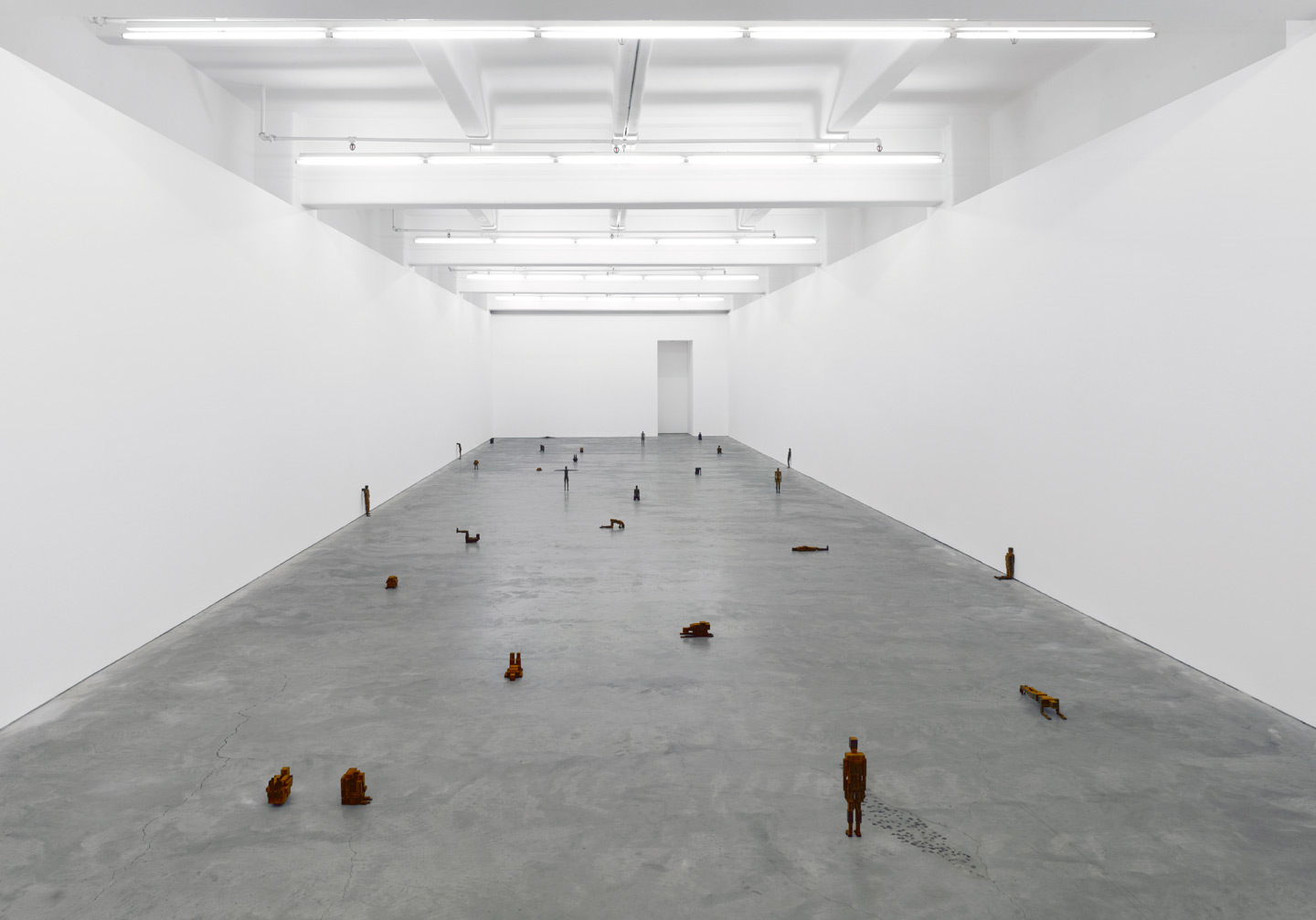
Antony Gormley (British, b. 1950)
'MEMES' installation view, Anna Schwartz Gallery, Melbourne
2011


Antony Gormley (British, b. 1950)
MEMES installation view, Anna Schwartz Gallery, Melbourne
2011
Photograph by Tim Griffith
Courtesy the artist and Anna Schwartz Gallery Melbourne and Sydney


The size of the figures surprises the viewer on entering the gallery.

Then observe the figures engagement with the gallery space.

The tensioning points between figures, wall and floor are fantastic.

“Placed directly on the floor they become acupuncture points within the volume of the space, allowing the viewer to become conscious, through the disparity of scale, of his/her own mass and spatial displacement as s/he moves around and amongst the works.” (Antony Gormley text, see below)

The figures lean, are lopsided, collapse, pose, are reordered and reconfigured.

They teeter on the edge of cracks in the gallery floor (perhaps a metaphor for humans standing before the abyss).

They form yoga poses.

They are Transformers (some of them remind me of the Star Wars ‘AT-AT’ Storm Troop Carrier, the ones that look like deadly mechanical elephants).

The figures self-replicate 27 communal blocks in different assemblages.

There seems to be a (metaphyiscal?) connection between the figures, through gesture, across space.

“A meme acts as a unit for carrying cultural ideas, symbols, or practices, which can be transmitted from one mind to another through writing, speech, gestures, rituals, or other imitable phenomena. Supporters of the concept regard memes as cultural analogues to genes, in that they self-replicate, mutate, and respond to selective pressures.” (Wikipedia)

They mutate, much as the human is mutating into the posthuman.

“The randomness to which mutation testifies is implicit in the very idea of pattern, for only against the background of nonpattern can pattern emerge. Randomness is the contrasting term that allows pattern to be understood as such.” (see below)

Dr Marcus Bunyan

PS. We were down on our hands and knees looking at the figures (just like some of their configurations) and this gave a whole new perspective to the work.


Many thankx to the artist and Anna Schwartz Gallery for allowing me to publish the text and photographs in the posting. Please click on the photographs for a larger version of the image. All images courtesy the artist and Anna Schwartz Gallery Melbourne and Sydney.


“What happens in the case of mutation? Consider the example of the genetic code. Mutation normally occurs when some random event (for example, a burst of radiation or a coding error) disrupts an existing pattern and something else is put in its place instead. Although mutation disrupts pattern, it also presupposes a morphological standard against which it can be measured and understood as mutation. We have seen that in electronic textuality, the possibility for mutation within the text are enhanced and heightened by long coding chains. We can now understand mutation in more fundamental terms. Mutation is critical because it names the bifurcation point at which the interplay between pattern and randomness causes the system to evolve in a new direction. It reveals the productive potential of randomness that is also recognized within information theory when uncertainty is seen as both antagonistic and intrinsic to information.

We are now in a position to understand mutation as a decisive event in the psycholinguistics of information. Mutation is the catastrophe in the pattern/randomness dialectic analogous to castration in the presence / absence dialectic. It marks a rupture of pattern so extreme that the expectation of continuous replication can in longer be sustained. But as with castration, this only appears to be a disruption located at a specific moment. The randomness to which mutation testifies is implicit in the very idea of pattern, for only against the background of nonpattern can pattern emerge. Randomness is the contrasting term that allows pattern to be understood as such.”


Hayles, Katherine. How We Became Posthuman: Virtual Bodies in Cybernetics, Literature, and Informatics. Chicago: University of Chicago Press, 1999, pp. 30-33


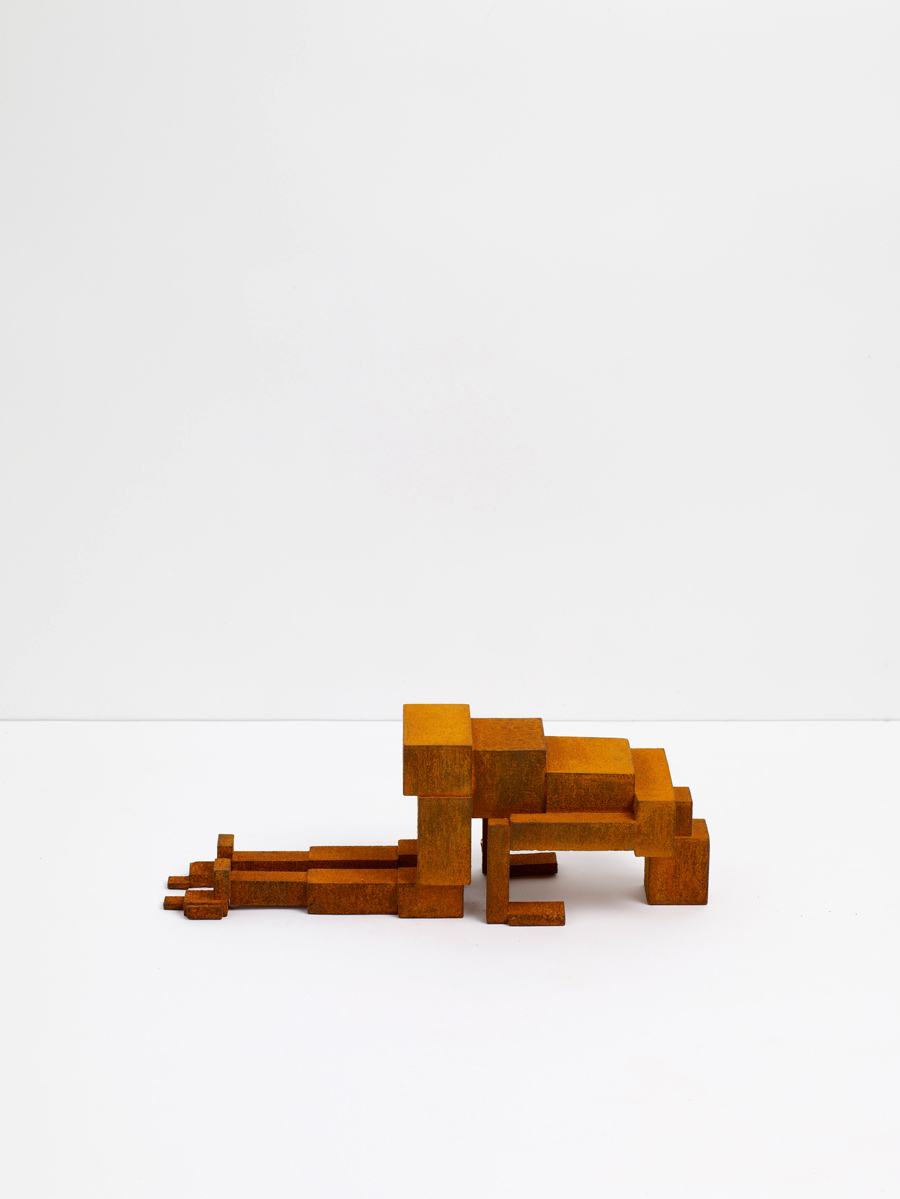
Antony Gormley (British, b. 1950) 'MEME CXXVII' 2011


Antony Gormley (British, b. 1950)
MEME CXXVII
2011
Cast iron
37.3 x 9.3 x 7.8cm
Photograph by Stephen White
Courtesy the artist and Anna Schwartz Gallery Melbourne and Sydney


A Meme is a cultural analogue to a gene. Forms that are transmitted in thought or behaviour from one body to another, responding to conditional environments, self-replicating and capable of mutation.

The miniature or the model allows the totality of a body to be seen at once. These small solid iron works use the formal language of architecture to replace anatomy and construct volumes to articulate a range of 32 body postures. The ambition is to make intelligible forms that form an abstract lexicon of body-posture but which nevertheless carry the invitation of empathy and the transmission of states of mind.

Displayed widely spaced within the architecture of Anna Schwartz Gallery in Melbourne, the works interface with the architecture of the gallery. Placed directly on the floor they become acupuncture points within the volume of the space, allowing the viewer to become conscious, through the disparity of scale, of his/her own mass and spatial displacement as s/he moves around and amongst the works.

This will be the first time that the Memes series, begun in 2007, will be shown together. The space of art as a reflexive test ground in which the direct experience of the viewer becomes the ground of meaning is a continual quest in this artist’s work and continues the exploration of scale seen in the expanded dimensions of FIRMAMENT at Anna Schwartz Gallery Sydney in February 2010, and the miniature scale of ASIAN FIELD, seen in the Sydney Biennale of 2008.

Antony Gormley

Text from the Anna Schwartz website


Antony Gormley (British, b. 1950) 'MEME CXLI' 2011


Antony Gormley (British, b. 1950)
MEME CXLI
2011
Cast iron
4.5 x 9.5 x 36.4cm
Photograph by Stephen White
Courtesy the artist and Anna Schwartz Gallery Melbourne and Sydney


Antony Gormley (British, b. 1950) 'MEME CXXIX' 2011


Antony Gormley (British, b. 1950)
MEME CXXIX
2011
Cast iron
10 x 7.7 x 29cm
Photograph by Stephen White
Courtesy the artist and Anna Schwartz Gallery Melbourne and Sydney


Anna Schwartz Gallery
185 Flinders Lane
Melbourne, Victoria 3000

Opening hours:
Tuesday – Friday 12 – 5pm
Saturday 1 – 5pm

Anna Schwartz Gallery website

LIKE ART BLART ON FACEBOOK

Back to top

Exhibition: ‘Subterranean’ at Arts Project Australia, Northcote

Exhibition dates: 19th March – 27th April 2011

Curator: Katie Jacobs


Kate Knight. 'Not titled (blue and green bird)' 2009


Kate Knight (Australian)
Not titled (blue and green bird)
2009
ceramic
7 x 30 x 7cm
Image courtesy the artist and Arts Project Australia


One of the most – no, the most vibrant and exciting place to visit at last year’s Melbourne Art Fair was the Arts Project Australia stand. What a buzz the place had! They have an interesting gallery in Northcote that is well worth a visit. Coming up at the end of April is a retrospective of the work of Alan Constable that spans twenty years – including the wonderful cameras he makes. Posting about this exhibition to follow.

Dr Marcus Bunyan


Many thankx to Arts Project Australia for allowing me to publish the photographs in the posting. Please click on the photographs for a larger version of the image.


Valerio Ciccone (Australian, b. 1970) 'Fish' 2010


Valerio Ciccone (Australian, b. 1970)
Fish
2010
ceramic
3.5 x 24 x 15cm
Image courtesy the artist and Arts Project Australia


Bold in form and colour to the intricate and subtle, Subterranean is an exhibition that celebrates the possibilities of the ceramic form at Arts Project Australia from Saturday 19 March until Wednesday 27 April 2011.

From domestic and functional forms to work referencing popular culture and narrative fiction, this exhibition showcases the possibilities of ceramics.

The imitative nature of clay has inspired many Arts Project artists. Popular culture, narrative fiction and two-dimensional images from National Geographic magazines provide the foundation for new sculptures by Rebecca Scibilia, Tim Noble and Ruth Howard.

Several of the featured artists are also interested in the functional potential of ceramics, specifically that of domestic ceramic objects such as vases and teapots. Fiona Longhurst and Kaye McDonald are inspired by existing ceramic items to create their own exquisite versions with intricate detailed surface drawings and colourful glaze patterns.

The artistic process is one of technical experimentation, investigation and discovery, seen in the ceramic work of Valerio Ciccone, Alan Constable, Kelvin Heffernan, Paul Hodges, Ruth Howard, Thomas Iacono, Kate Knight, Fiona Longhurst, Chris Mason, Karen McCullough, Kaye McDonald, Cameron Noble, Jodie Noble, Tim Noble, Chris O’Brien, Lisa Reid, Rebecca Scibilia, Malcolm Sturrock and Terry Williams.

Subterranean has been curated by Katie Jacobs.

Arts Project Australia is a not for profit organisation that has been supporting artists with intellectual disabilities since 1974. Our inner city studio and gallery exist to nurture and promote artists as they develop their body of work. We rely on government funds, personal and philanthropic donations and commissions from artwork sales to continue our work.

Text from Arts Project Australia


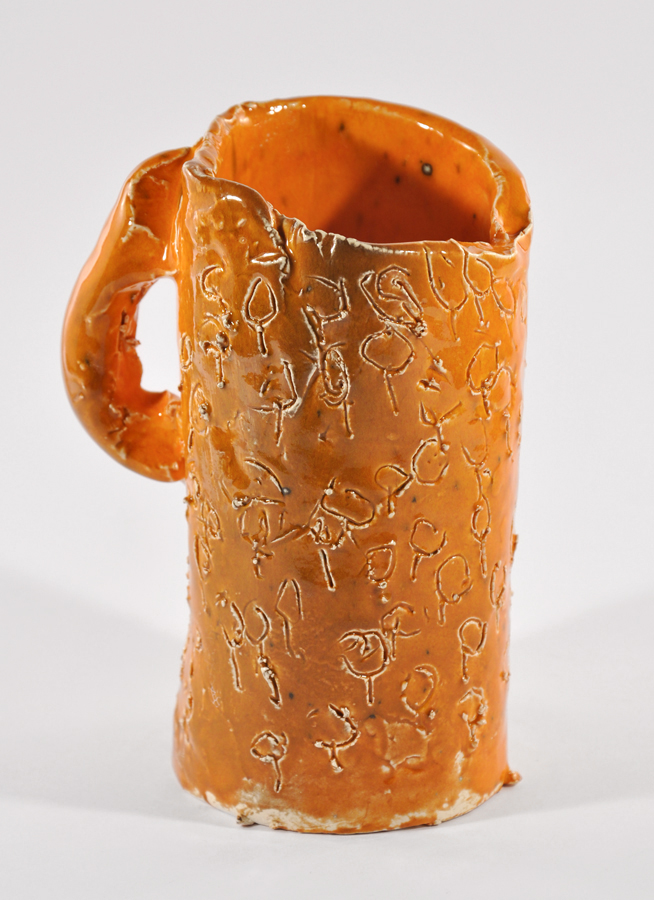
Kaye McDonald. 'Not titled (orange mug)' 2010


Kaye McDonald (Australian, b. 1946)
Not titled (orange mug)
2010
ceramic
16 x 11 x 9cm
Image courtesy the artist and Arts Project Australia


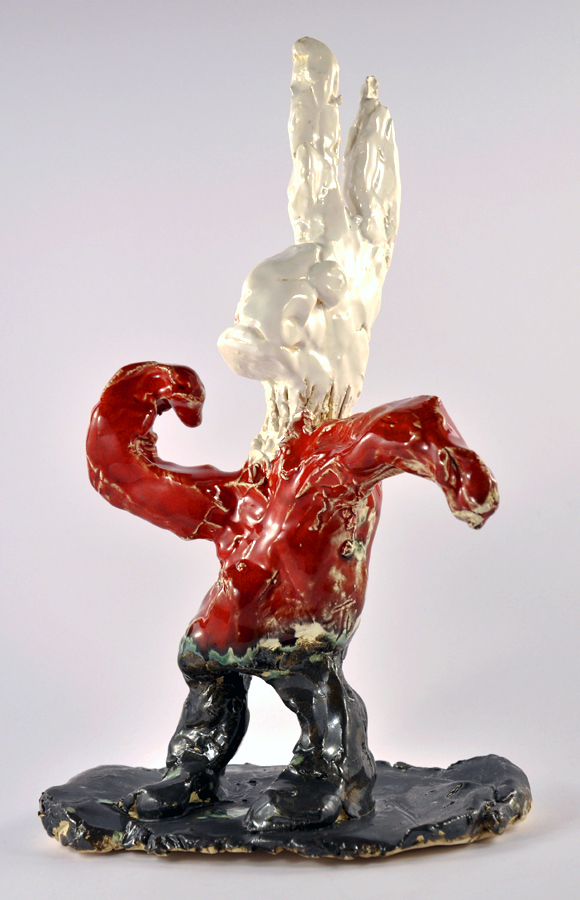
Malcolm Sturrock (Australian, b. 1944) 'Not titled (rabbit in red jumper)' 2010


Malcolm Sturrock (Australian, b. 1944)
Not titled (rabbit in red jumper)
2010
ceramic
29 x 19 x 12cm
Image courtesy the artist and Arts Project Australia


Arts Project Australia

Studio
24 High Street
Northcote Victoria 3070
Phone: + 61 3 9482 4484

Gallery
Level 1 Perry Street building
Collingwood Yards
Enter via 35 Johnson Street or 30 Perry Street, Collingwood
Phone: +61 477 211 699

Opening hours:
Wednesday – Friday 11am – 5pm
Saturday & Sunday 12 – 4pm

Arts Project Australia website

LIKE ART BLART ON FACEBOOK

Back to top

Photographs: Marcus Bunyan. ‘The Symbolic Order (cartes de visite)’ 2011

March 2011


Marcus Bunyan (Australian, b. 1958)
'Untitled' 2011 From the series 'The Symbolic Order (cartes de visite)'


Marcus Bunyan (Australian, b. 1958)
Untitled
2011
From the series The Symbolic Order (cartes de visite)
Digital photograph


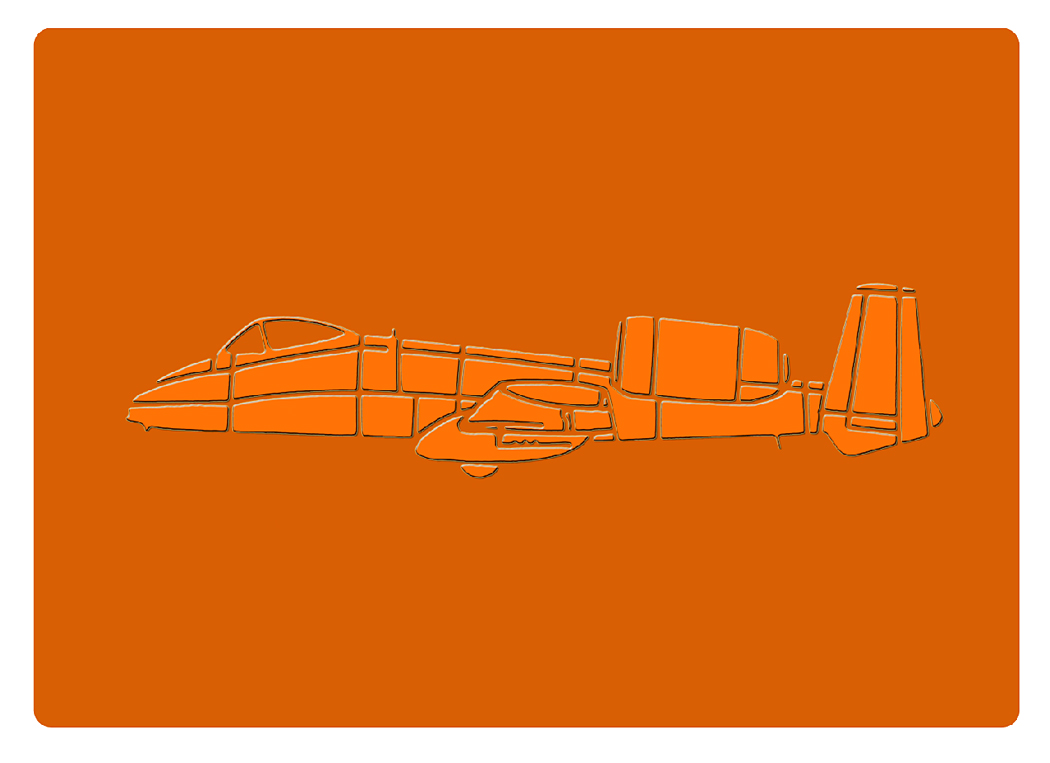
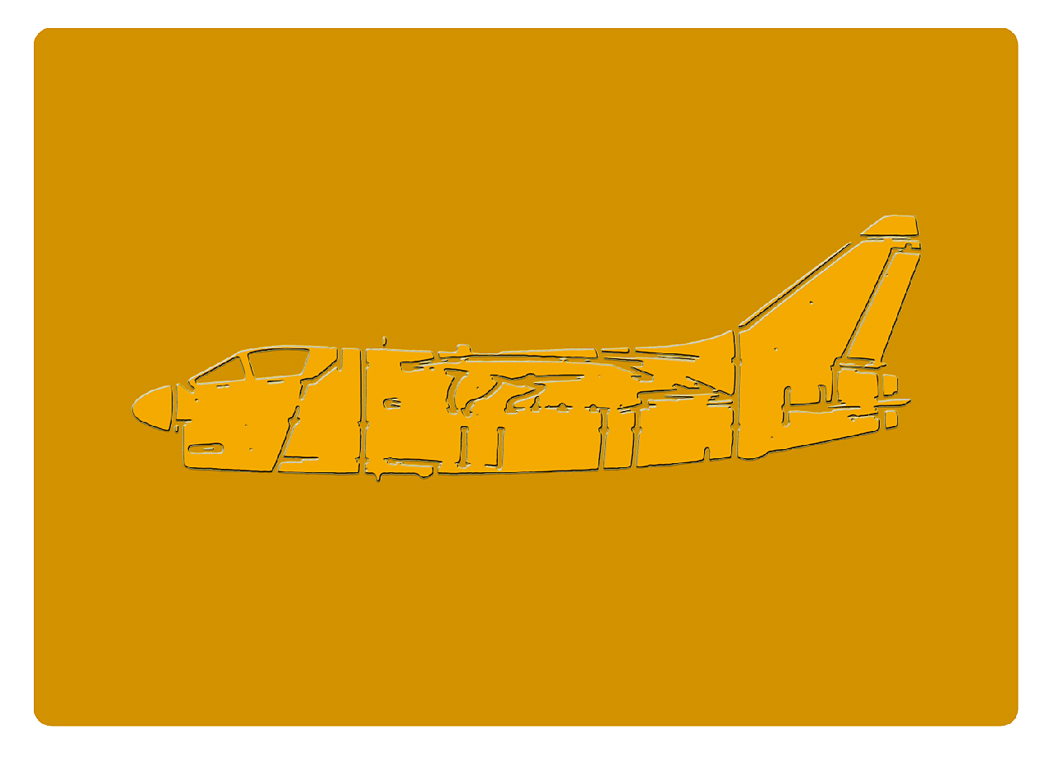
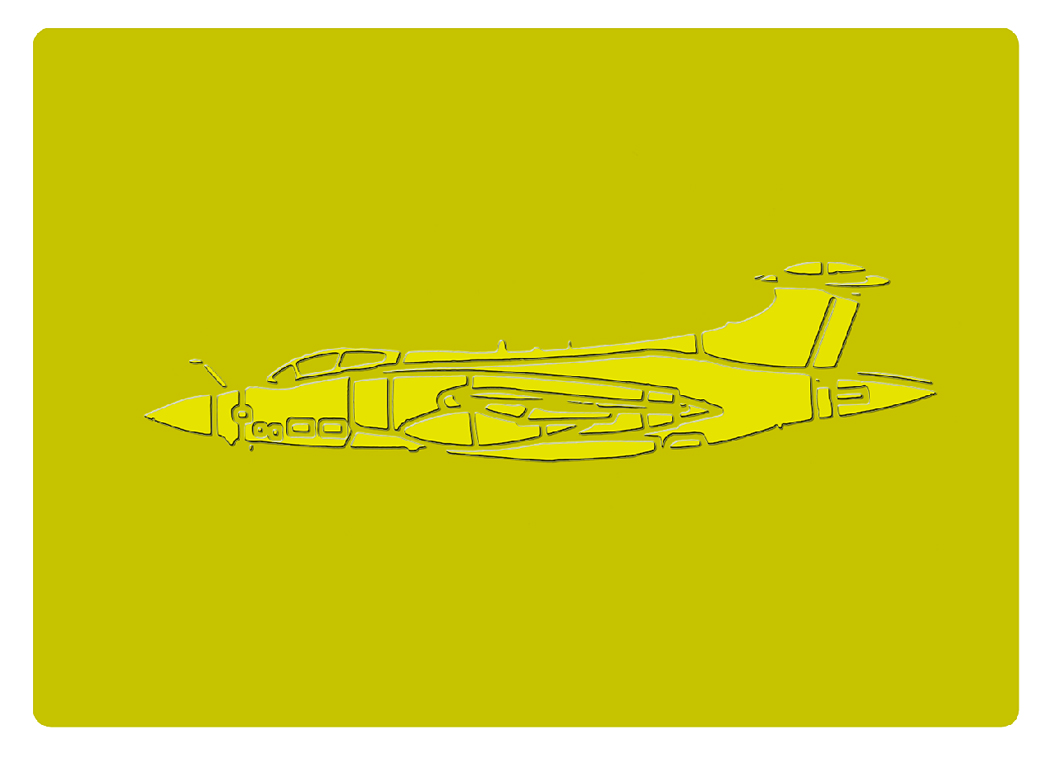
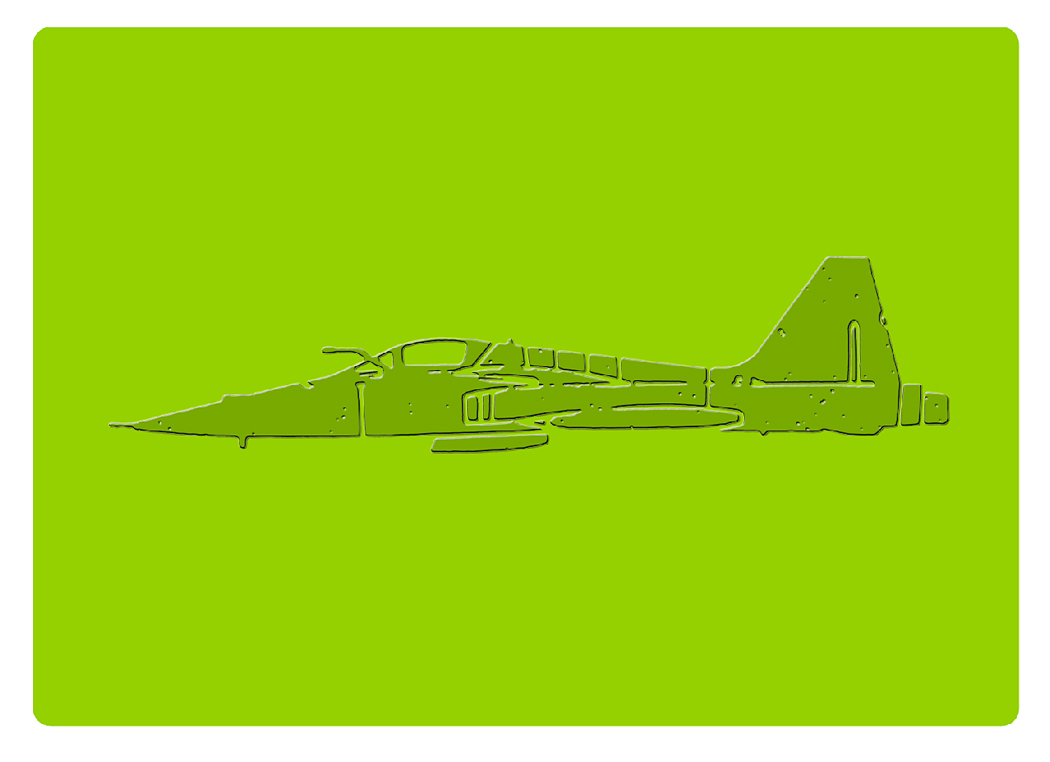
The body of work The Symbolic Order (cartes de visite) 2011 is now online on my website. There are 23 images in the series of modulated fighter aircraft recognition cards that cycle through the colour wheel. Below is a selection of images from the series.

I hope you like the work!

Marcus


Please click on the photographs for a larger version of the image.

Photographs are available from this series for purchase. As a guide, a digital colour 16″ x 20″ costs $1000 plus tracked and insured shipping. For more information please see my Store web page.


Marcus Bunyan (Australian, b. 1958)
'Untitled' 2011 From the series 'The Symbolic Order (cartes de visite)'


Marcus Bunyan (Australian, b. 1958) 'Untitled' 2011 From the series 'The Symbolic Order (cartes de visite)'


Marcus Bunyan (Australian, b. 1958) 'Untitled' 2011 From the series 'The Symbolic Order (cartes de visite)'


Marcus Bunyan (Australian, b. 1958) 'Untitled' 2011 From the series 'The Symbolic Order (cartes de visite)'


Marcus Bunyan (Australian, b. 1958) 'Untitled' 2011 From the series 'The Symbolic Order (cartes de visite)'


Marcus Bunyan (Australian, b. 1958) 'Untitled' 2011 From the series 'The Symbolic Order (cartes de visite)'


All photographs: Untitled from the series The Symbolic Order (cartes de visite) 2011 by Marcus Bunyan

See the whole series on my website.


Marcus Bunyan website

LIKE ART BLART ON FACEBOOK

Back to top

Review: ‘Sidney Nolan: Drought Photographs’ at Australian Galleries, Melbourne

Exhibition dates: 3rd March – 27th March 2011

Curator: Damian Smith


Sidney Nolan (Australian, 1917-1992) 'Untitled (desiccated horse carcass sitting up)' 1952


Sidney Nolan (Australian, 1917-1992)
Untitled (desiccated horse carcass sitting up)
1952
Archival inkjet print
23 x 23cm


“In the meantime the landscape presents scenes of desolation which mark the memory of all who see it. Thousands of carcasses are strewn on the baked and cracked plains. There is a brooding air of almost Biblical intensity over millions of acres which bear no trace of surface waters. The dry astringent air extracts every drop of moisture from the grass, leaving it so brittle that it breaks under foot with the tinkling of thin glass.”


Sidney Nolan. Epic Drought in Australia 1952


“Peering into the pantry, which held a particular fascination for me, my eye was caught by several jars of preserved fruit that stood on the otherwise empty shelves and by a few dozen diminutive crimson apples on the sill of the window darkened by the yew tree outside. And as I looked on these apples which shone through the half-light … the quite outlandish thought crossed my mind that these things … had all outlasted me …”


W.G. Sebald. The Rings of Saturn 1988


This is a superb exhibition of 61 black and white photographs by Sidney Nolan. The photographs were shot using a medium format camera and are printed in square format from the original 1952 negatives. They were taken near the Birdsville Track in Queensland and were commissioned at the time by the Brisbane newspaper The Courier Mail. Although not intended to be studies for the later ‘Drought paintings’ they have become, were the beginning of, can be seen as, preparatory ideas pre sketching and painting.

There are two proof sets of the Drought Photographs (including the one displayed on the gallery wall) that are printed on a cool-toned Type C photographic paper (analogue to digital to analogue) at about 8″ square. These are the less successful of the prints for the “beauty is in the box.” The more impressive prints are the edition of 10 that is for sale, either as individual prints or as a whole folio, that are printed at approximately 10″ square on a slightly warm-toned Canson Infinity 310 gsm archival inkjet paper (analogue to digital). These are the knockout prints with lots of mid-toned hues – for the warm tone of the paper more closely matches the feel of the dusty Outback. They possess a very “inky” atmosphere and wonderful light. Make sure that you get the gallery staff to show you some of these prints!

The work itself is a joy to behold. The photographs hang together like a symphony, rising and falling, with shape emphasising aspects of form. The images flow from one to another. The formal composition of the mummified carcasses is exemplary, the resurrected animals (a horse, for example, propped up on a fifth leg) and emaciated corpses like contemporary sculpture. Here I am reminded of some of the work of Henry Moore.

The handling of the tenuous aspects of human existence in this uniquely Australian landscape is also a joy to behold. Through an intimate understanding of how to tension the space between objects within the frame Nolan’s seemingly simple but complex photographs of the landscape are previsualised by the artist in the mind’s eye before he even puts the camera to his face. Unfortunately I don’t have any photographs to show you of these works but for me they were one of the highlights of the exhibition, rivalling any of the work of the Farm Security Administration (FSA) photographers photographing in the American Dustbowl during the 1930s. Finally, some great Australian landscape photographs!!

As the curator Damian Smith notes of both strands, “Throughout the series emphasis shifts from detached observation to intimate contemplation – between the forces of the outer landscape to the darkness of the animals’ inner being.”

I would not say the landscapes are ‘detached observation’. Both forms require intimate contemplation.

 
Let us investigate the presence of these images further.

“Barthes mentions the apparently “universal” experiences of birth and death, experiences that, he points out, are in fact always mediated by historical and thus political circumstances. Echoing a famous remark by Bertolt Brecht, he contends that “the failure of photography seems to me to be flagrant in this connection: to reproduce death or birth tells us, literally, nothing.””1

“To reproduce death or birth tells us, literally, nothing.” Hence, you could argue, through an appeal to nostalgia for a mythology of the Australian bush we are held at the surface of an identity. Drought, desolation, despair, death. But these photographs go beyond the reproduction of death, go beyond mere nostalgia, by pushing the prick of consciousness, Barthes punctum, into a sense of spatial immediacy and temporal anteriority – an experience Barthes “sums up as the “having-been-there” that is the basis of every photograph’s sense of witness.”2

The new punctum becomes other than the detail – no longer of form but of intensity, of Time: conjuring past, present and future in a single image.3 We, the viewer, bring our own associations to the image, our knowledge of drought in this big land – the knowledge that this drought has happened, it did happen and it will happen again and again and again in the future, probably with more frequency than it does now. The photograph becomes an active, mental representation of the material world. It becomes the world’s ‘essence’.

The photographs stand for something else, some other state of being, much as this work can be seen as one small aspect of Nolan’s art that stands for the whole – a close examination of a small part of something that represents the whole, like a sail represents a yacht, a metonymic resonance. They tell us something through time, of life and death. As the great author W. G. Sebald eloquently observes in his quotation at the top of this posting these things outlast us – in our imagination.

Dr Marcus Bunyan

 1/ Batchen, Geoffrey. “Palinode: An Introduction to Photography Degree Zero,” in Batchen, Geoffrey (ed.,). Photography Degree Zero: Reflections on Roland Barthes’s Camera Lucida. Cambridge, MA: MIT Press, 2009, p. 6
2/ Ibid., pp. 8-9
3/ Ibid., p. 13


Many thankx to Ingrid Oosterhuis (General Manager Melbourne) for her help and to Australian Galleries for allowing me to publish the text and the photographs in the posting. Please click on the photographs for a larger version of the image.


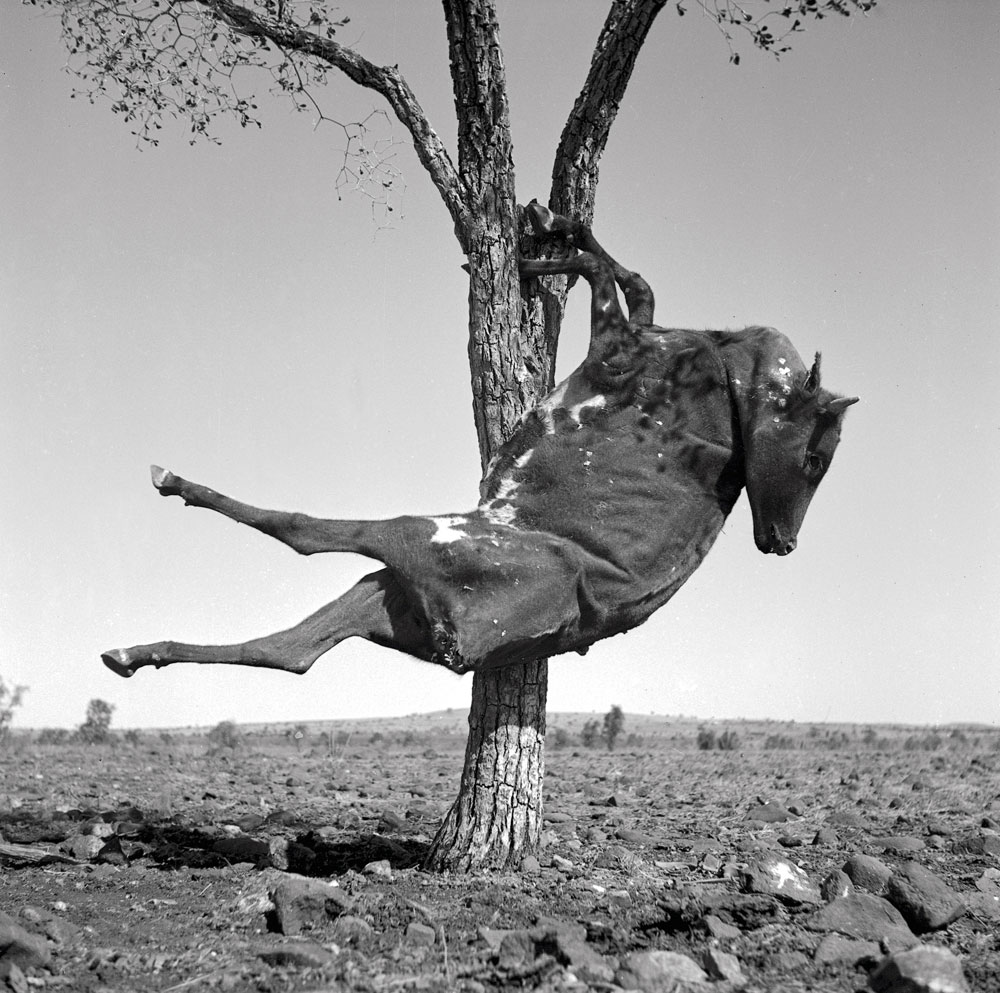
Sidney Nolan (Australian, 1917-1992) 'Untitled (calf carcass in tree)' 1952


Sidney Nolan (Australian, 1917-1992)
Untitled (calf carcass in tree)
1952
Archival inkjet print
23 x 23cm


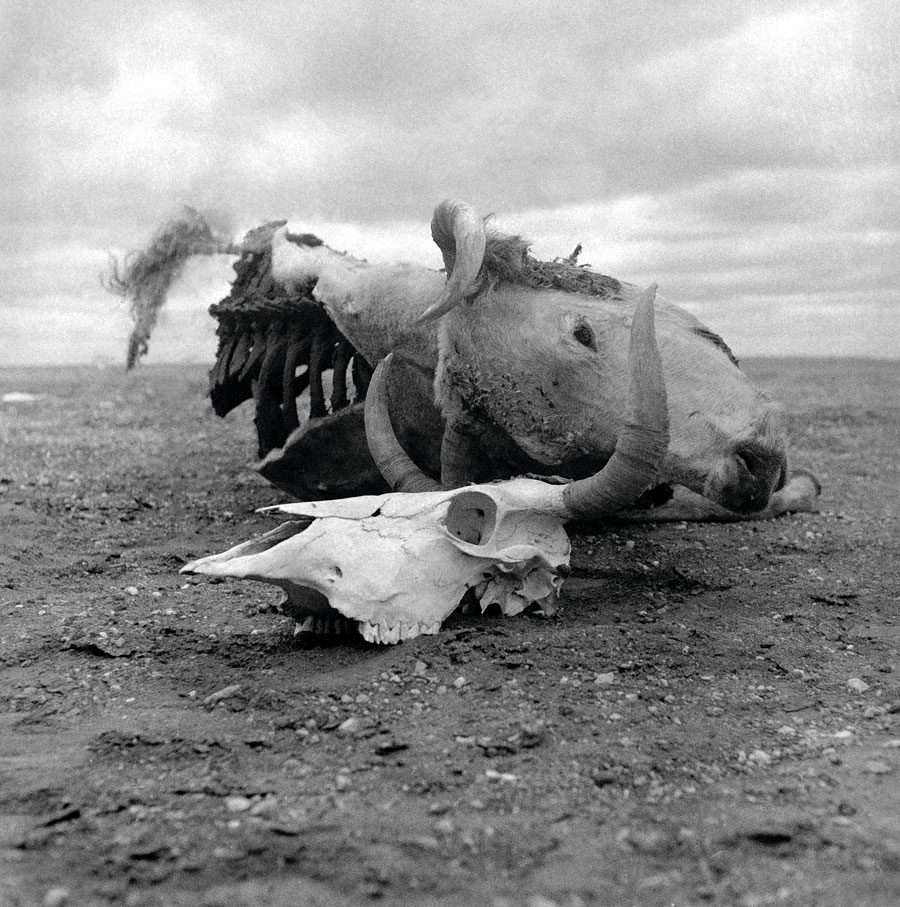
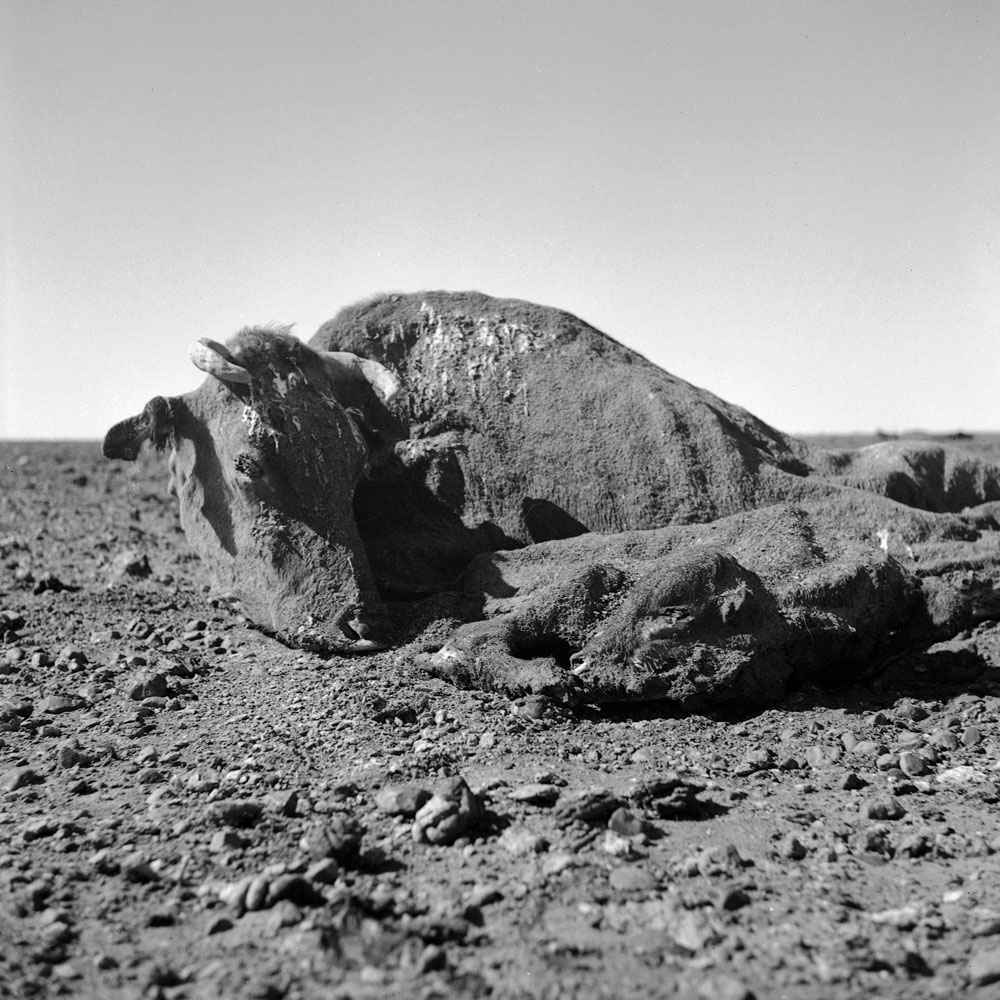
In 1952 Sidney Nolan was commissioned by the Brisbane newspaper The Courier Mail to travel through far northern Queensland to record his impressions of one of the worst droughts in Australia’s history. Throughout this journey Nolan took numerous black and white photographs using a medium format camera, resulting in a host of startling and memorable images. Focusing on both the macabre spectre of the many animal carcasses strewn across the landscape and on the singular dwellings announcing a tenuous human presence, Nolan created numerous iconic images.

Having returned to Australia after an extended period traveling in Europe, Nolan commented that the animal carcasses reminded him of the petrified bodies he had seen at Pompeii. Throughout the series emphasis shifts from detached observation to intimate contemplation – between the forces of the outer landscape to the darkness of the animals’ inner being. With their carefully composed compositions the photographs represent a dramatic shift from the artist’s earlier photographic experiments. In place of a prior spontaneity, drought-stricken animal carcases are framed in formally rigorous compositions, the moment seemingly trapped in time.

For the first time this exhibition includes the complete and unabridged series of Sidney Nolan’s Drought Photographs, including images previously unavailable for public exhibition.

Damian Smith
Archivist for the Nolan Estate 1996-1999


Sidney Nolan (Australian, 1917-1992) 'Untitled (camp bed)' 1952


Sidney Nolan (Australian, 1917-1992)
Untitled (camp bed)
1952
Archival inkjet print
23 x 23cm


Epic Drought in Australia

Australia has not a very long history, but it is long enough to indicate that she must expect a major drought once every decade. Even so the present drought which the north and west of the continent is enduring, is by far the worst in living memory.

Rivers which have not been dry for over a century are now beds of hot sand, and even the aborigines can find no parallel in their mythology for a drought of this magnitude.

To cattle raising areas, failure of the annual monsoonal rains spells near tragedy. Of a total of 11.4 million beef cattle 1.5million have already perished.

The position is complicated by the lack of a railway connecting the North-centre of Australia with the eastern seaboard. Had such a railway been in existence many thousands of cattle could have been shifted to agistment areas and saved. As it is, the cattle must survive journeys from 500 to 1500 miles on stock routes, and this is generally impossible owing to the weakened positions of the animals. Thus cattle men must face the prospect of watching their herds dwindle until at least the end of the year when there is the probability of early summer storms bringing relief.

In the meantime the landscape presents scenes of desolation which mark the memory of all who see it. Thousands of carcasses are strewn on the baked and cracked plains. There is a brooding air of almost Biblical intensity over millions of acres which bear no trace of surface waters. The dry astringent air extracts every drop of moisture from the grass, leaving it so brittle that it breaks under foot with the tinkling of thin glass.

Death takes on a curiously abstract patter under these arid conditions. Carcasses of animals are preserved in strange shapes which have often a kind of beauty, or even grim elegance.

Over the whole country there is a silence in which men and animals bring forth the qualities necessary for survival. Patience, endurance – and for many Australians, a bitter and salty attitude of irony.

Sidney Nolan, August 1952

Text from the Australian Galleries website [Online] Cited 18/03/2011 no longer available online


Sidney Nolan (Australian, 1917-1992) 'Untitled (cow in tree)' 1952


Sidney Nolan (Australian, 1917-1992)
Untitled (cow in tree)
1952
Archival inkjet print
23 x 23cm


Sidney Nolan (Australian, 1917-1992) 'Untitled (Brian the stockman mounting dead horse)' 1952


Sidney Nolan (Australian, 1917-1992)
Untitled (Brian the stockman mounting dead horse)
1952
Archival inkjet print
23 x 23cm


Australian Galleries is delighted to present this fascinating exhibition of selected photographs by Sidney Nolan curated by Damian Smith, Archivist for the Nolan Estate 1996-1999.

Smith states in the accompanying exhibition catalogue:

“In 1952 Sidney Nolan was commissioned by the Brisbane newspaper The Courier Mail to travel through far northern Queensland to record his impressions of one of the worst droughts in Australia’s history. Throughout this journey Nolan took numerous black and white photographs using a medium format camera, resulting in a host of startling and memorable images. Focusing on both the macabre spectre of the many animal carcasses strewn across the landscape and on the singular dwellings announcing a tenuous human presence, Nolan created numerous iconic images. This exhibition includes the complete and unabridged series of Sidney Nolan’s Drought Photographs, including images previously unavailable for public exhibition.”

In his 1952 essay Epic Drought in Australia Sidney Nolan remarked on the poignancy of the images, noting the following:

“Death takes on a curiously abstract patter under these arid conditions. Carcasses of animals are preserved in strange shapes which have often a kind of beauty, or even grim elegance.”

To coincide with the exhibition Drought Photographs, Australian Galleries will be showing a selection of Drought Drawings by Sidney Nolan that include works previously exhibited at the National Gallery of Victoria, in it’s landmark survey of Nolan’s work Desert Drought in 2003.

Sidney Nolan Drought Photographs
Curated by Damian Smith

In 2010 Damian Smith established Words For Art, a consultancy specialising in art writing and curatorial projects.

Damian has always had a strong interest in Nolan’s work, he was appointed the inaugural archivist for the estate of Sidney Nolan in 1996. Since that time he has curated numerous Nolan exhibitions including a major exhibition, Unmasked: Sidney Nolan and Ned Kelly 1950-1990 for the Heide Museum of Modern Art in 2006.

Building up to the Heide exhibition, Damian was based at Sidney Nolan’s home ‘The Rodd’ at Herefordshire, a 16th Century manor on the border of England and Wales. During that research period he developed an interest in Nolan’s life-long engagement with photography. He discovered vintage prints of Nolan’s photographs of outback Australia and the devastating drought in far northern Queensland, which were included in the landmark survey Sidney Nolan: Desert and Drought, at the National Gallery of Victoria in 2003. The exhibition included previously unseen photographic images from 1949 to 1952.

In the NGV exhibition, numerous small-scale contact prints showing Nolan’s ‘Drought animals’ were featured, as were larger black and white prints from the same series. Additional small-scale prints were sourced as well through Nolan’s step-daughter Jinx Nolan. Of note was Nolan’s now famous Untitled (Brian the stockman mounting a dead horse at Wave Hill Station), 1952, a startling image that first featured in the 1961 Thames & Hudson monograph Sidney Nolan, where it appeared titled Desert.

Having researched and written about these images, Damian recognised that Nolan had spent many hours studying the images, notating them and ultimately using them in the development of his now famous Drought paintings. Nolan offered the photographs to Life Magazine, New York in a bid to bring this extraordinary series to public attention. This bid was unsuccessful.

After all of the years since these photographs were taken, Damian made the decision to resurrect Nolan’s photographs working closely with Sidney Nolan’s widow Mary Nolan, nee Boyd. The result being this exhibition at Australian Galleries, Melbourne in 2011.

Keen to preserve the artist’s vision, the photographs have been produced to a scale consistent with the vintage prints and all are printed from the original negatives which were discovered at ‘The Rodd’.

Text from Australian Galleries Melbourne


Sidney Nolan (Australian, 1917-1992) 'Untitled (cow carcass and cow skull)' 1952


Sidney Nolan (Australian, 1917-1992)
Untitled (cow carcass and cow skull)
1952
Archival inkjet print
23 x 23cm


Sidney Nolan (Australian, 1917-1992) 'Untitled (cow and calf carcass covered in dirt I)' 1952


Sidney Nolan (Australian, 1917-1992)
Untitled (cow and calf carcass covered in dirt I)
1952
Archival inkjet print
23 x 23cm


Australian Galleries
35 Derby Street [PO Box 1183]
Collingwood 3066
Phone: +61 3 9417 4303

Opening hours:
Open 7 days 10am – 6pm

Australian Galleries website

LIKE ART BLART ON FACEBOOK

Back to top

Review: ‘Navigating Widely’ by Vanila Netto at Arc One Gallery, Melbourne

Exhibition dates: 1st March – 26th March 2011


Vanila Netto (Brazil, b. 1963) 'Pole Relief' 2011


Vanila Netto (Brazil, b. 1963)
Pole Relief
2011
50 x 50cm
Archival pigment ink on cotton rag paper


“There’s an odd diaristic quality to Vanila Netto’s photographic, still life, video and neon works. What at first might seem like a hotchpotch of gestures, assemblages and moments reveals a lateral narrative – still points on a fluid map.”


Dan Rule in The Age newspaper


Netto’s work moves from one place to another, Navigating Widely. Some elements are more successful than others. The grainy colour field photographs of extruded objects (foam packing, the detritus of cardboard) fail to impress lacking the fidelity that the subject matter requires and the ability to integrate successfully into the lateral narrative. The Super 8 film transferred to digital video It is time to bridge (2011) is excellent, evoking as it does the utopian ideals of industrialisation, planes and rockets becoming “permanent and sedentary residents” of an abandoned dream park. The diptych neon installation Elation, Deflation (Inner Tubes) (2011) is also effective in evoking the interface between human and machine.

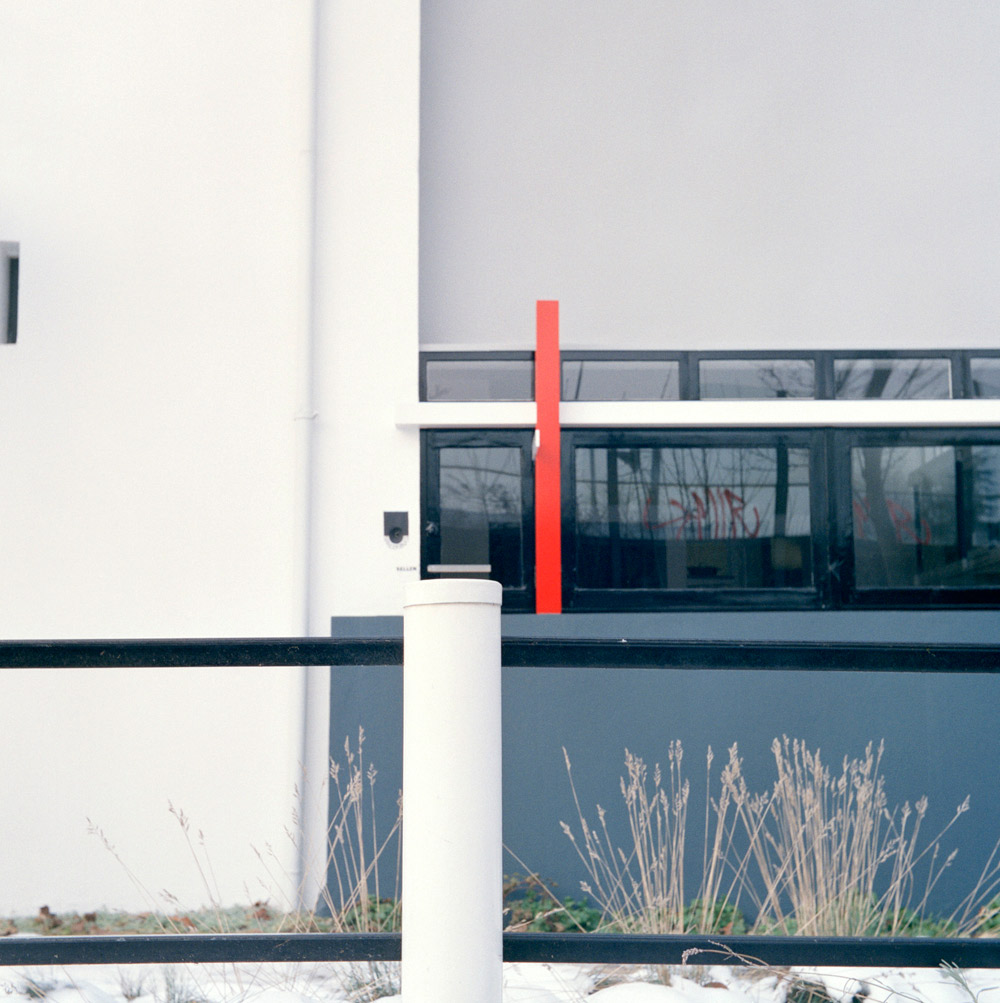
The best work in the exhibition is the series of small square format, analogue colour photographs that have been printed digitally (see photographs below). There is a lovely spatial resistance in these photographs – hints of colour, slices, markings on walls, the collision of opposites – that elevates them above the rest of the exhibition. In these photographs, the punctum pricks our consciousness but is it enough? Although these are interesting photographs, are they photographs that you would remember in a week, a month or a year? More was needed to hang your hat on, perhaps an ambiguous sense of Time that stretched the frame of reference.

Overall, the hotchpotch of gestures, assemblages and moments needed a more substantial grounding and, for me, became points on a confused map: a collection of complexities, both global and personal, that needed a focusing of rationale and conceptualisation. Less is more! Drawing what are some good ideas and threads together in a simplified form would add to the strength of the work for there is talent here. Perhaps concentrating on one idea and exploring it more fully would be a step along the path. I look forward to the next literation.

Dr Marcus Bunyan


Many thanxk to Angela Connor for her help and to Arc One Gallery for allowing me to publish the photographs in the posting. Please click on the photograph for a larger version of the image.


Vanila Netto (Brazil, b. 1963) 'Colossus' 2011


Vanila Netto (Brazil, b. 1963)
Colossus
2011
100 x 100cm
Archival pigment ink on cotton rag paper


Vanila Netto (Brazil, b. 1963) 'Mir' 2011


Vanila Netto (Brazil, b. 1963)
Mir
2011
50 x 50cm
Archival pigment ink on cotton rag paper


Vanila Netto (Brazil, b. 1963) 'Wheeling Consorts' 2011


Vanila Netto (Brazil, b. 1963)
Wheeling Consorts
2011
50 x 50cm
Archival pigment ink on cotton rag paper


Vanila Netto (Brazil, b. 1963) 'Solaris' 2011


Vanila Netto (Brazil, b. 1963)
Solaris
2011
50 x 50cm
Archival pigment ink on cotton rag paper


Vanila Netto (Brazil, b. 1963) 'Air Buzzing' 2011


Vanila Netto (Brazil, b. 1963)
Air Buzzing
2011
50 x 50cm
Archival pigment ink on cotton rag paper


Arc One Gallery
45 Flinders Lane
Melbourne, 3000
Phone: (03) 9650 0589

Opening hours:
Wed – Sat 11am – 5pm

Arc One Gallery website

LIKE ART BLART ON FACEBOOK

Back to top

Review: ‘Rosemary Laing: leak’ at Tolarno Galleries, Melbourne

Exhibition dates: 26th February – 19th March 2011


Rosemary Laing (Australian, b. 1959) 'Jim' 2010


Rosemary Laing (Australian, b. 1959)
Jim
2010
From the series Leak
C Type photograph
Large image size 110 x 238cm
Framed size 127 x 255cm
Edition of 8


You have just got to love these!

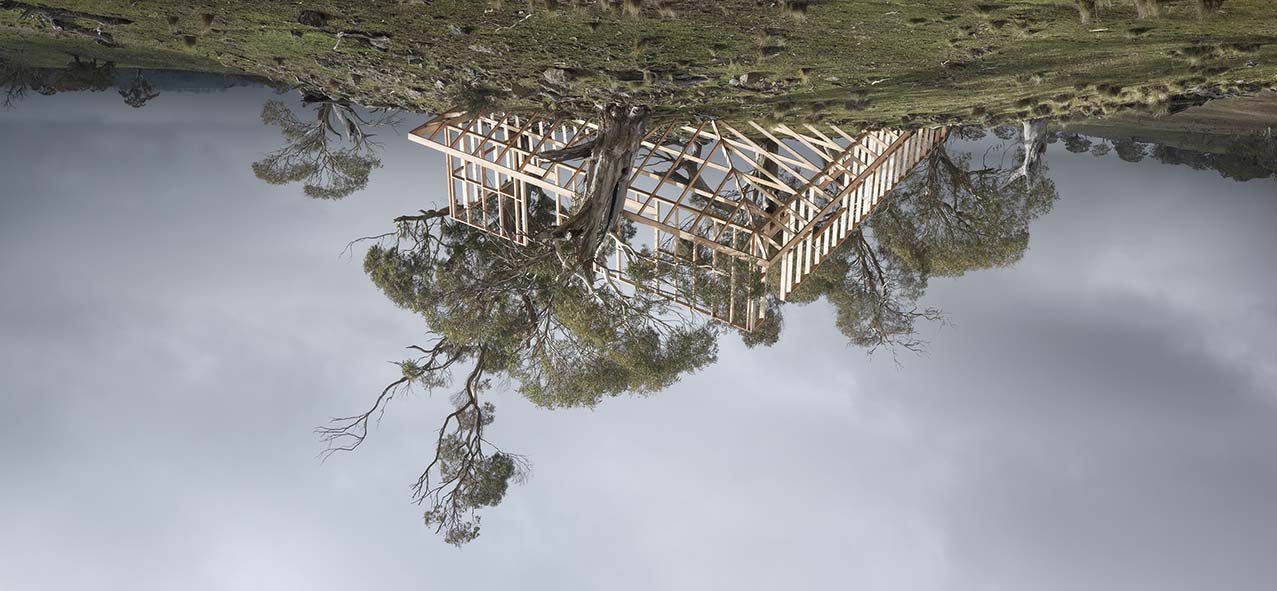
A wonderful suite of five panoramic photographs, framed in white, inhabit the beautiful space of Tolarno Galleries, Melbourne. The photographs, different angles of the same bleached bone inverted skeleton of a house that was constructed by five builders in the Australian landscape around Cooma, New South Wales (no Photoshop tricks here!) have a subdued colour palette of misty greys and greens – all except one that has a vibrant blue sky with clouds, a man with his sheep dogs and a flock of sheep. Two of the photographs are framed upside down, one photograph a closer study from the same angle.

The house on the hill is surrounded by wondrous light gently highlighting the wooden bones of the building embedded into the landscape in a context that is soon to become another suburban housing estate. The skeleton rises up (and falls into the sky) like a foundering ship amongst mysterious gum trees, surrounded by broken stumps and littered branches. The best photograph (top, below) has the effect of the bones being lit up like a giant puzzle.

Examining ‘the encroachment of suburban development and the socio-economic and environmental pressures on the Australian landscape’ these photographs, named after the characters from Patrick White’s novel The Twyborn Affair, are ecologically aware and politically astute, as well as being fine photographs. The title of the exhibition, leak, perfectly sums up the osmotic nature of the encroachment of human habitation upon the ‘natural’ environment, which is already a mediated landscape due to European farming techniques and clearance of the landscape. But this is not a one way discourse; what do we call the ‘new’ Australian bush? What if the humpy invaded suburbia and pushed back the tide?

I would love to see different types of houses in different contexts. I want to see more these are so good!

Dr Marcus Bunyan


Many thankx to Jan Minchin (Director) and Tolarno Galleries for allowing me to publish the photographs in the posting. Please click on the photographs for a larger version of the image. Both images courtesy of the artist and Tolarno Galleries © Rosemary Laing.


Rosemary Laing (Australian, b. 1959) 'Prowse' 2010


Rosemary Laing (Australian, b. 1959)
Prowse
2010
From the series Leak
C Type photograph
Large image size 110 x 247cm
Framed size 127 x 264cm
Edition of 8


Rosemary Laing (Australian, b. 1959) 'Aristide' 2010


Rosemary Laing (Australian, b. 1959)
Aristide
2010
From the series Leak
C Type photograph
60 x 122cm
Edition of 8


Rosemary Laing (Australian, b. 1959) 'Eddie' 2010


Rosemary Laing (Australian, b. 1959)
Eddie
2010
From the series Leak
Type C photograph
Framed 127.0 x 274.6cm
Edition of 8


Tolarno Galleries
Level 4
104 Exhibition Street
Melbourne VIC 3000
Australia
Phone: 61 3 9654 6000

Opening hours:
Tue – Fri 10am – 5pm
Sat 1pm – 4pm

Tolarno Galleries website

LIKE ART BLART ON FACEBOOK

Back to top