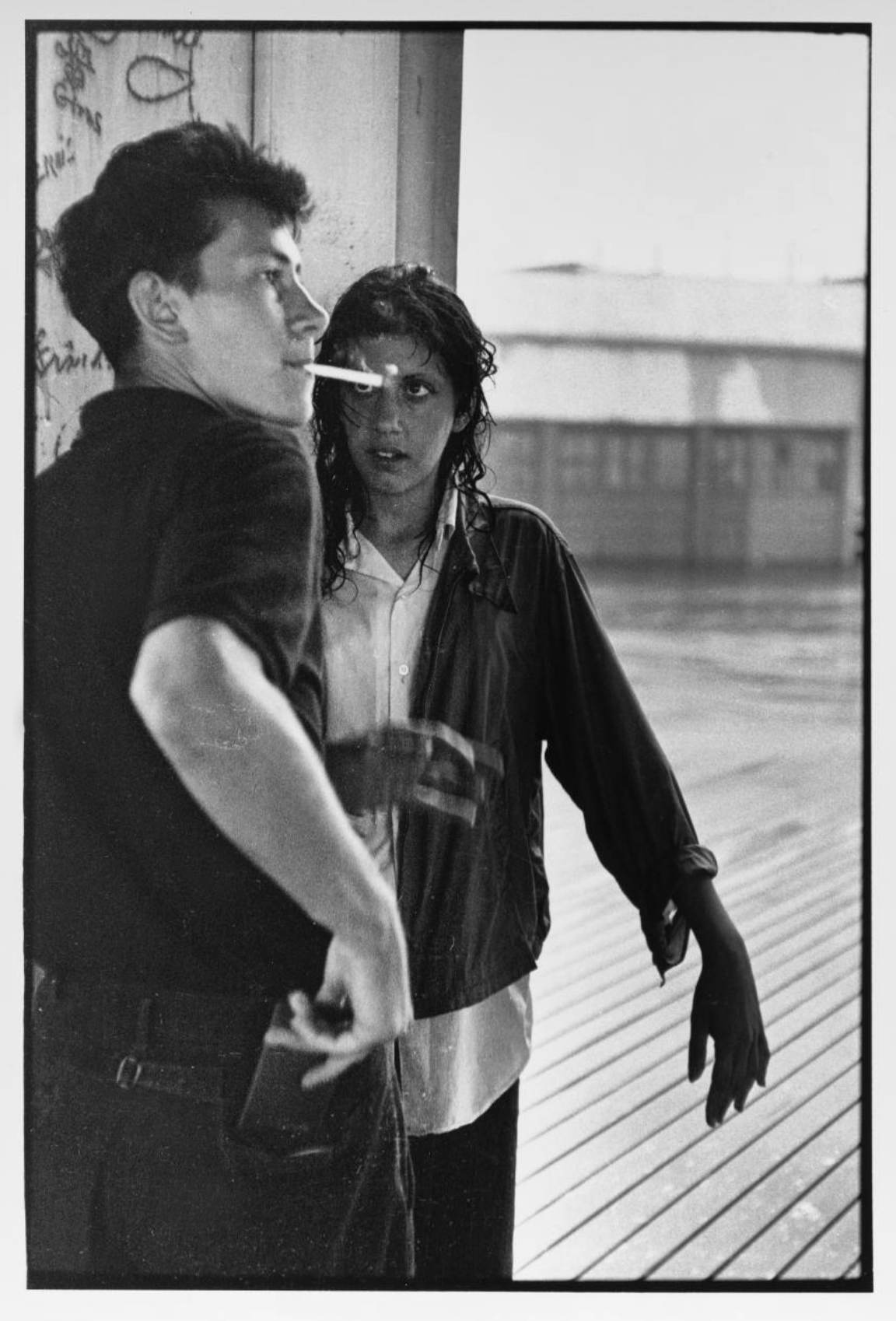
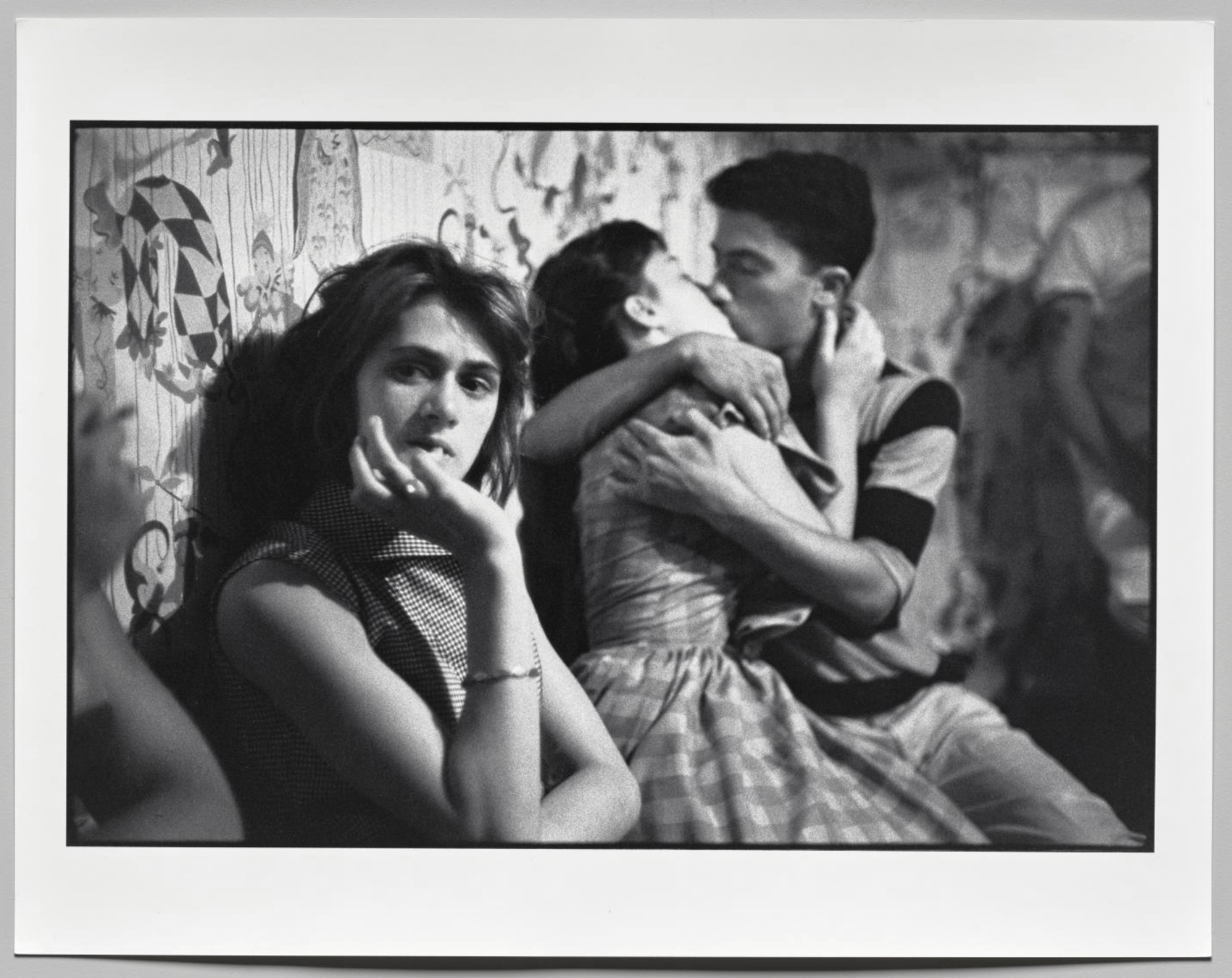
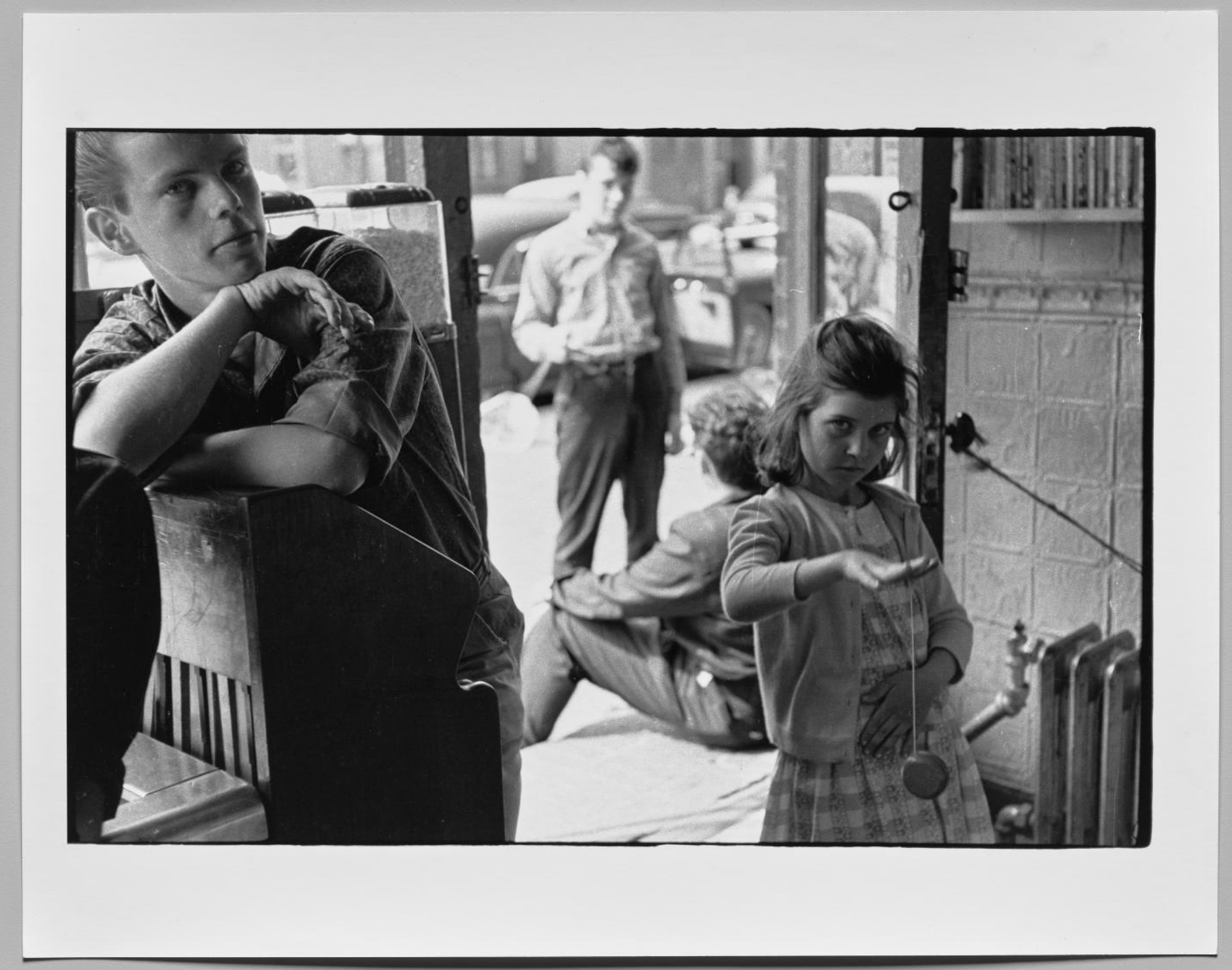
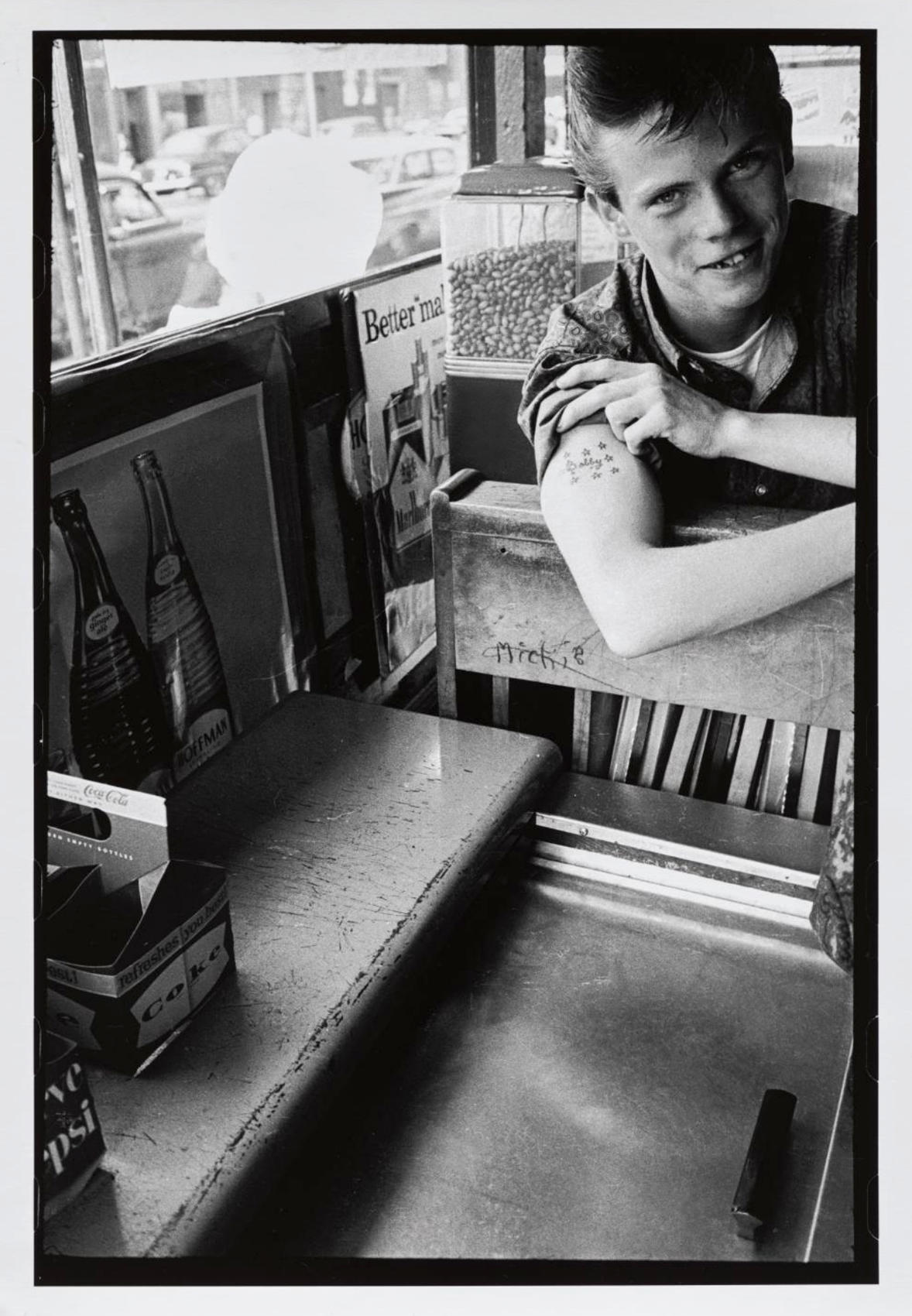
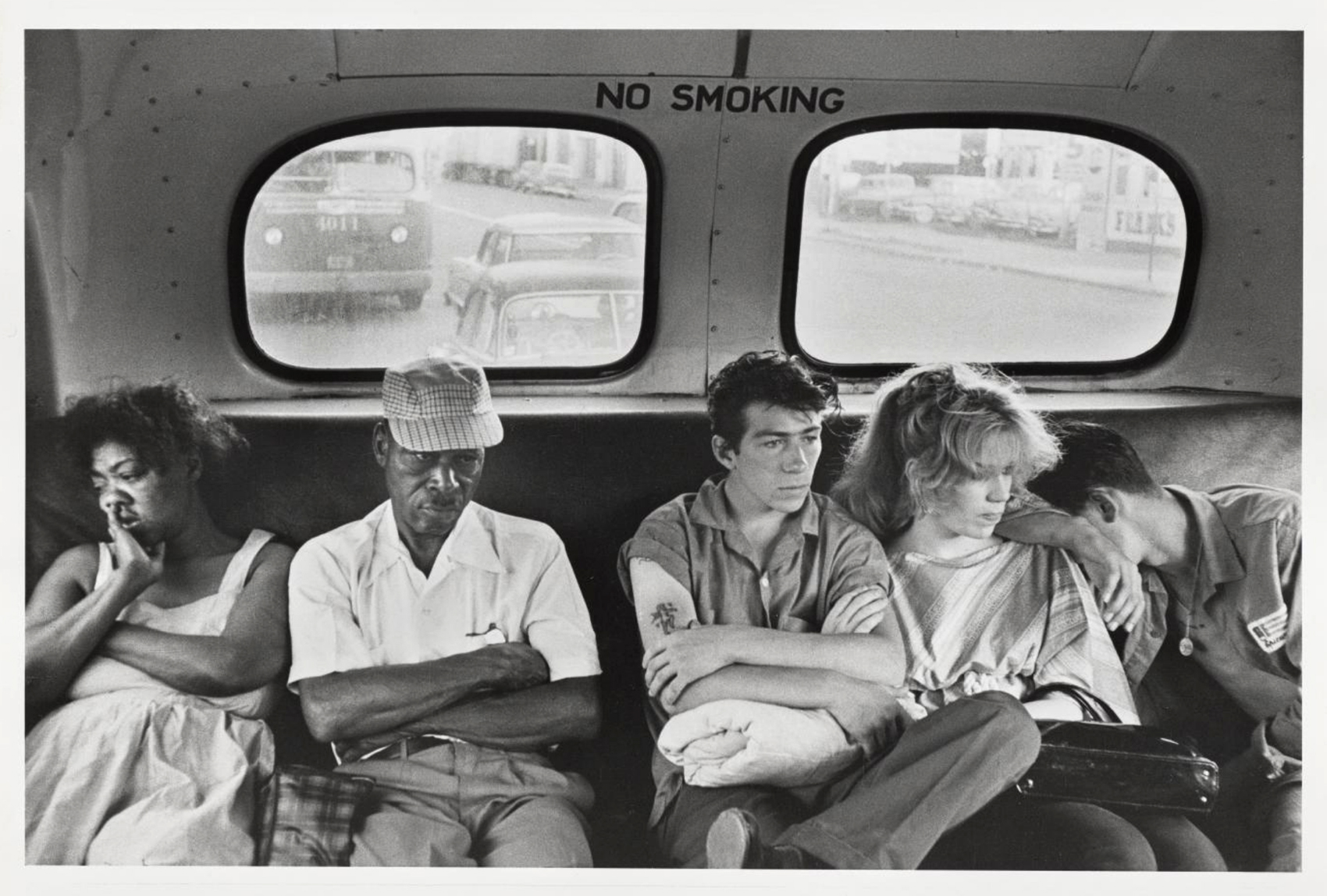
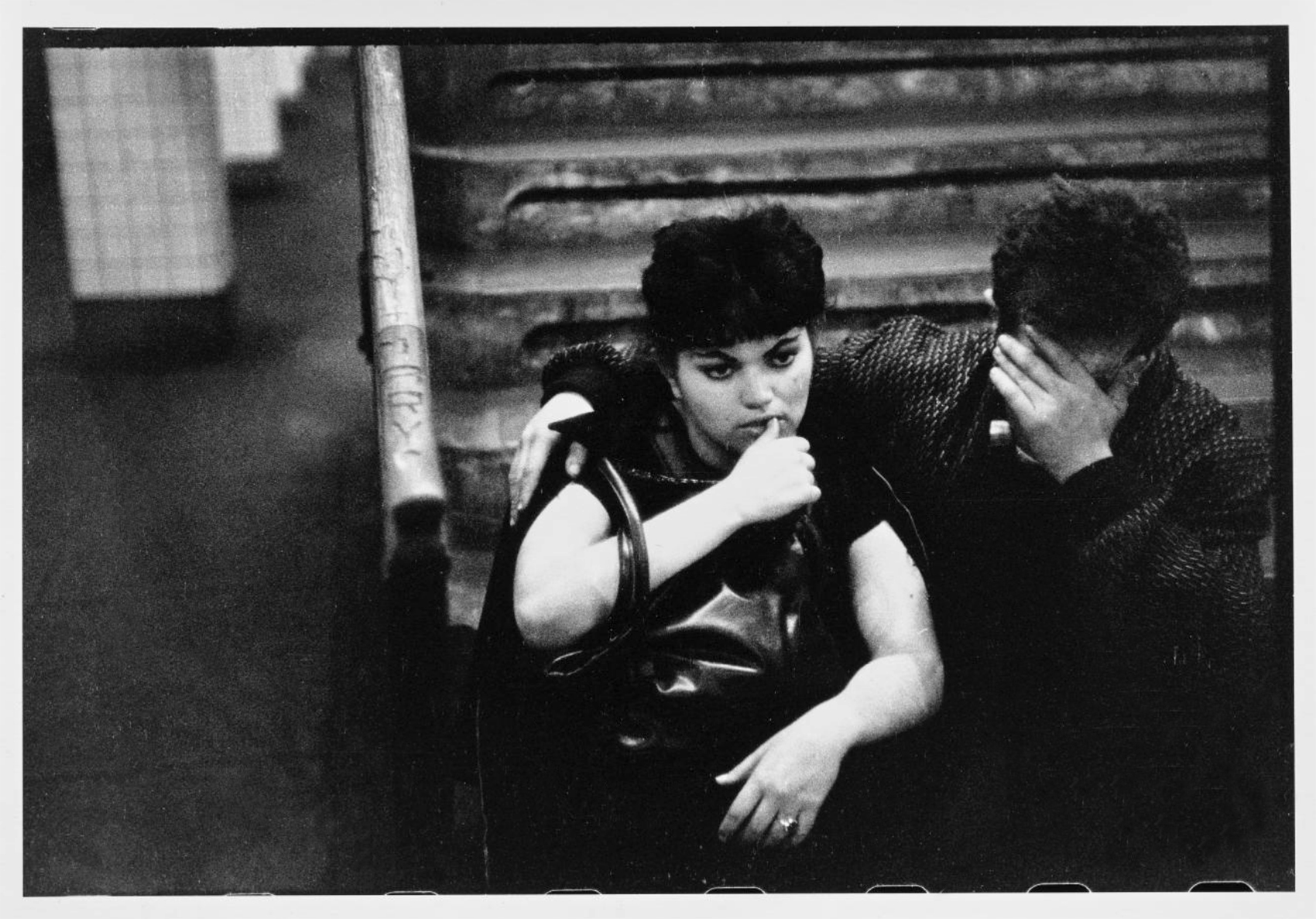
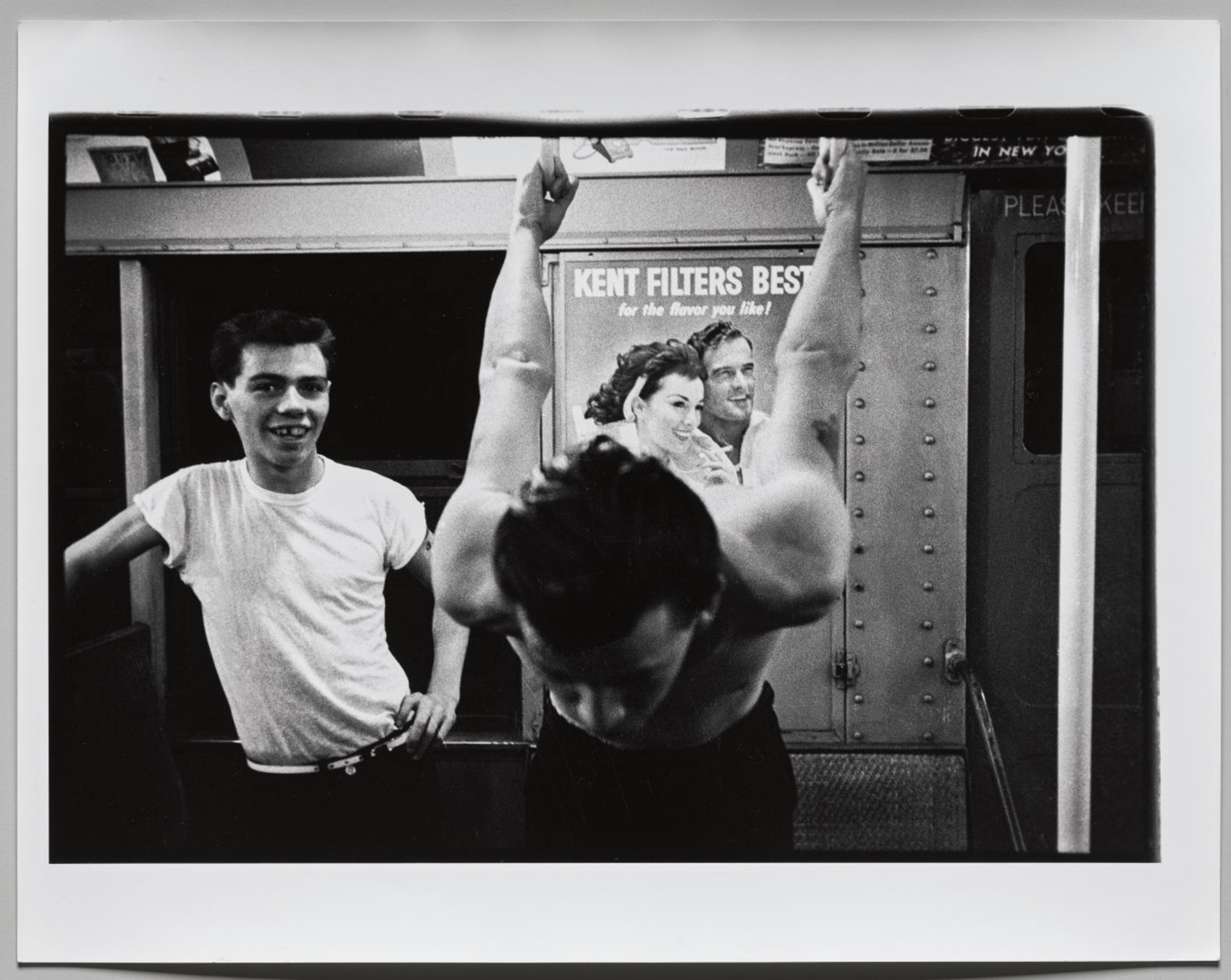
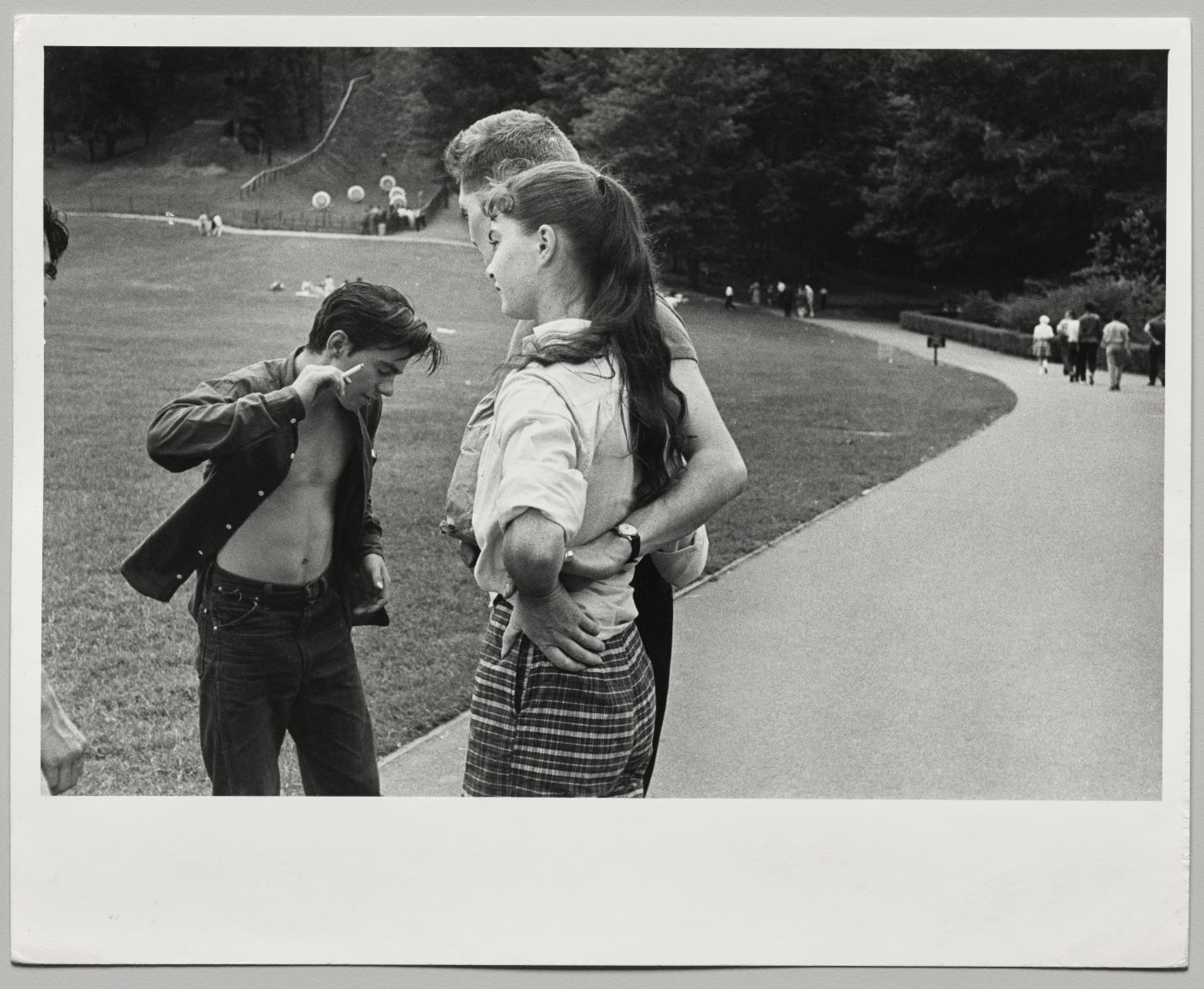
Exhibition: ‘Robert Frank – Memories’ at the Fotostiftung Schweiz, Winterthur, Zürich

Exhibition dates: 12th September, 2020 – 10th January, 2021

Curator: Martin Gasser


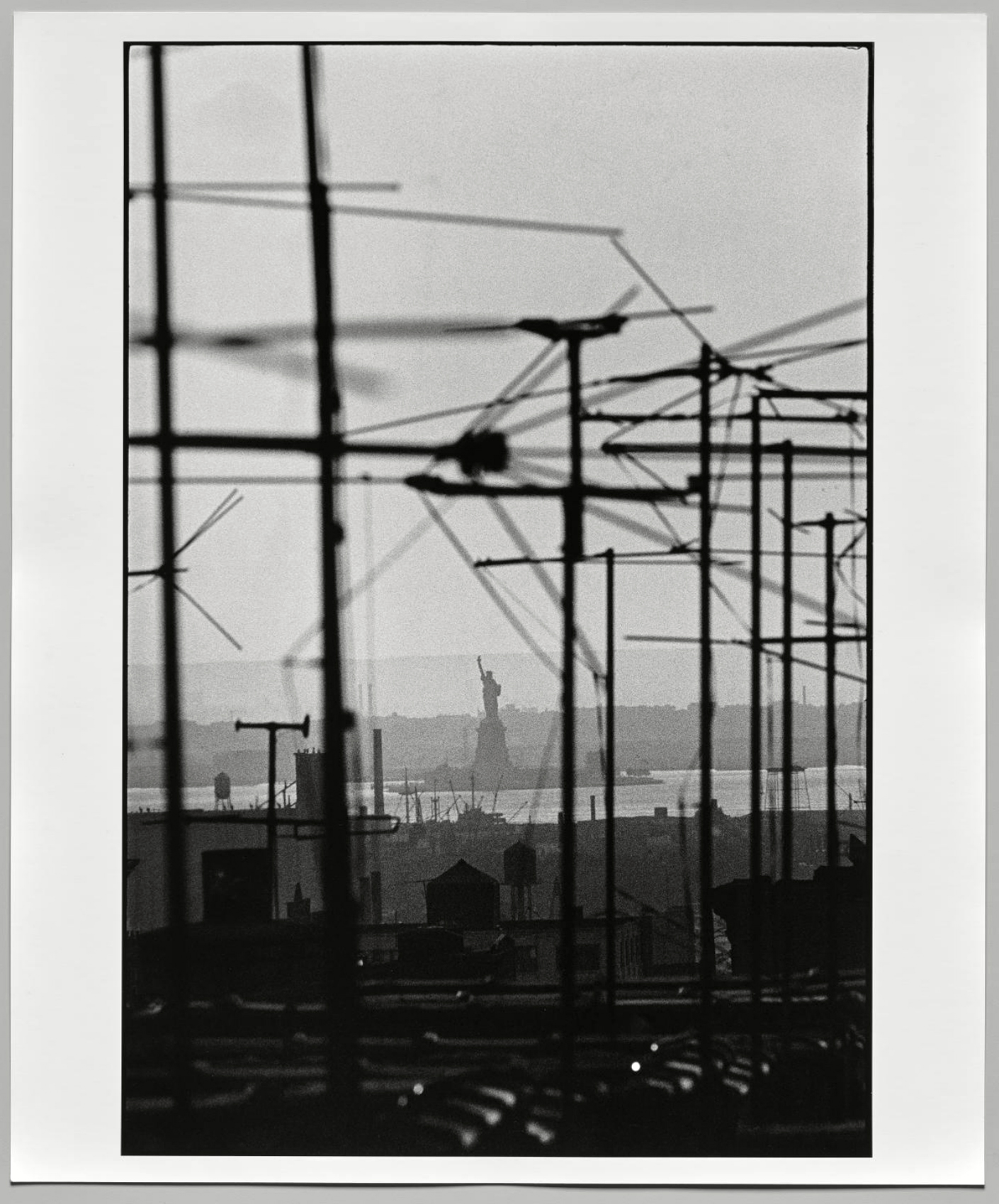
Robert Frank (Swiss, 1924-2019) 'White Tower, New York' 1948 from the exhibition 'Robert Frank – Memories' at the Fotostiftung Schweiz, Winterthur, Zürich, Sept 2020 - Jan 2021


Robert Frank (Swiss, 1924-2019)
White Tower, New York
1948
Gelatin silver print
© Andrea Frank Foundation; courtesy Pace/MacGill Gallery, New York


An interesting selection of media images, including some early Swiss and American photographs, which are rarely seen.

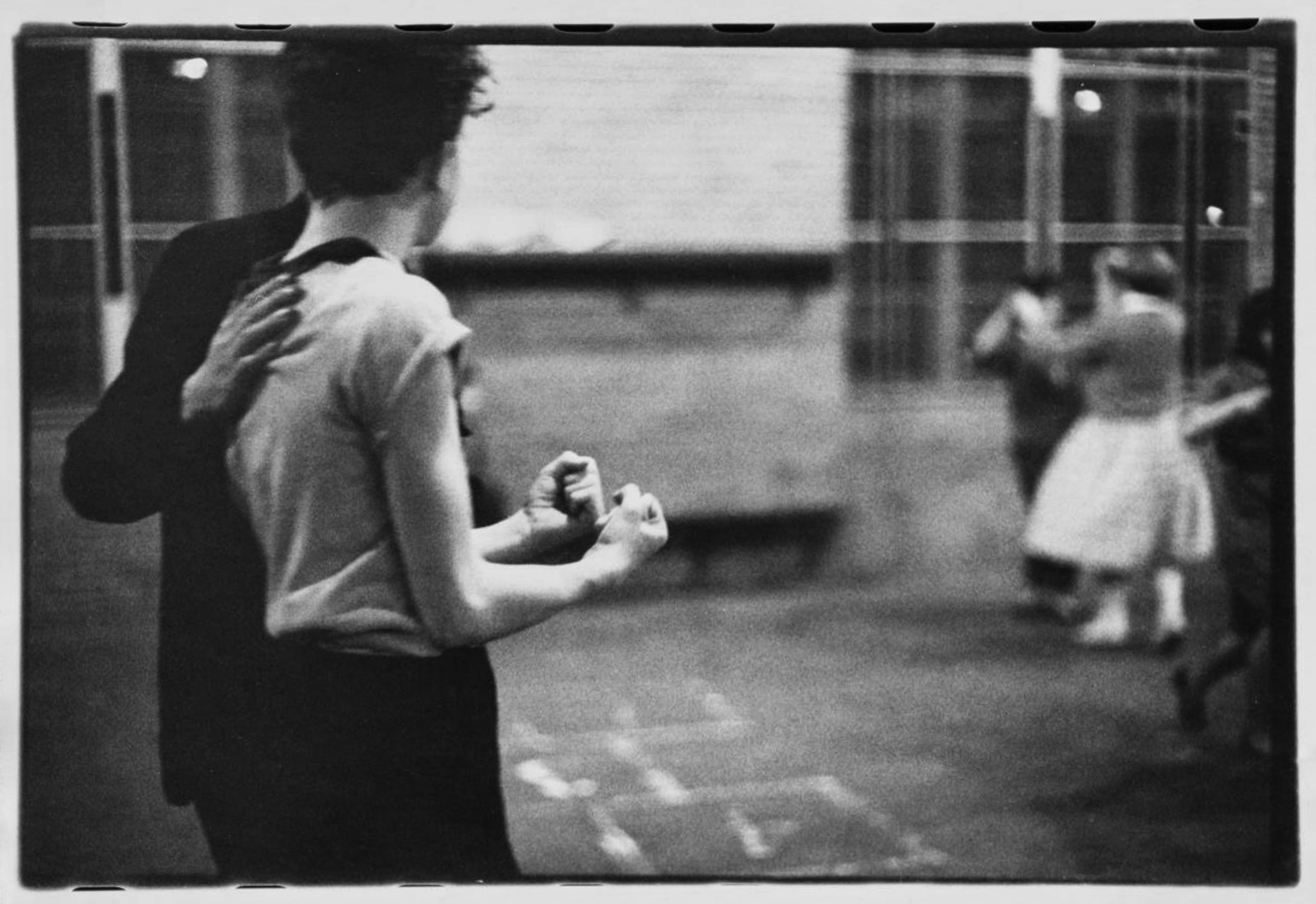
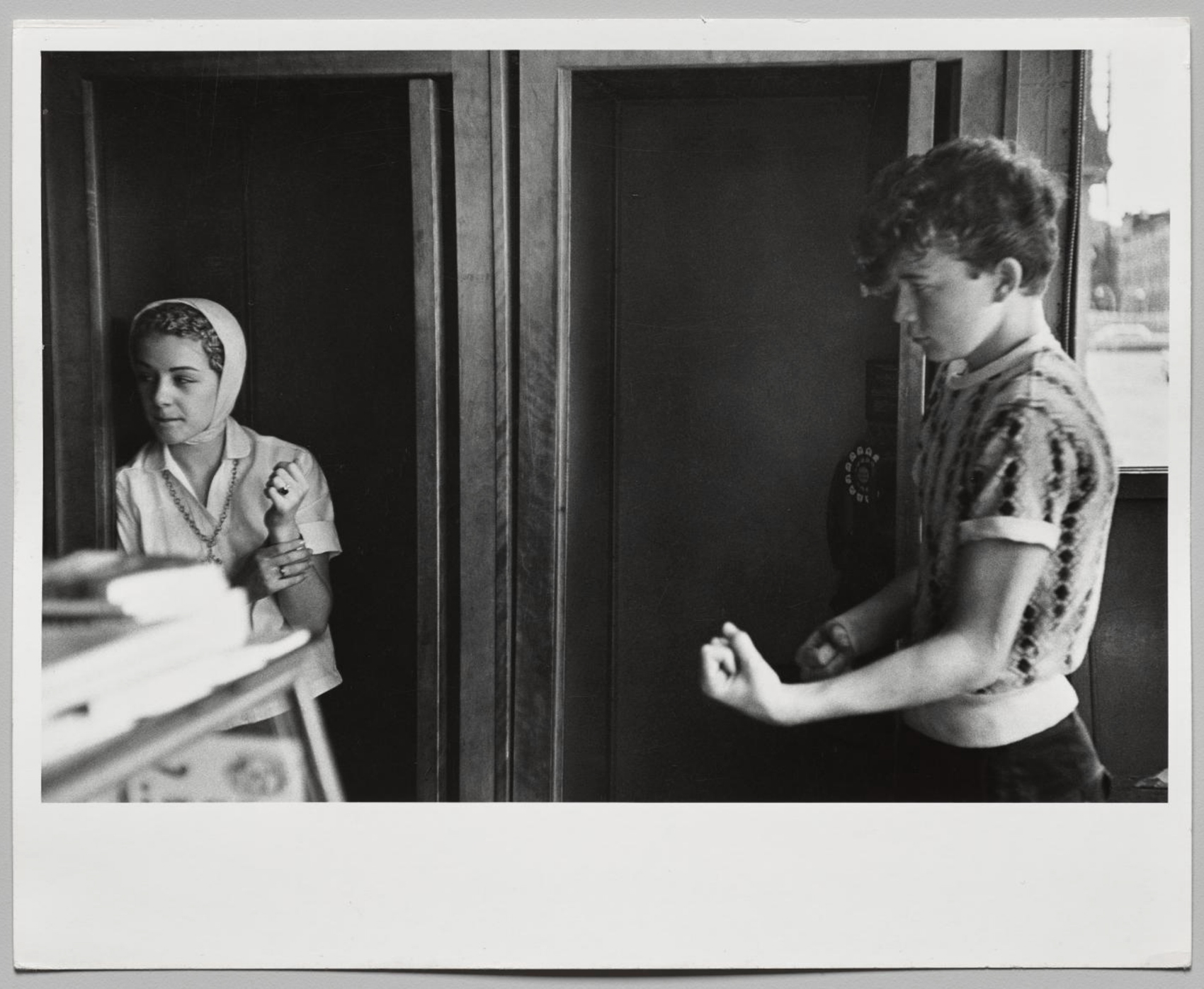
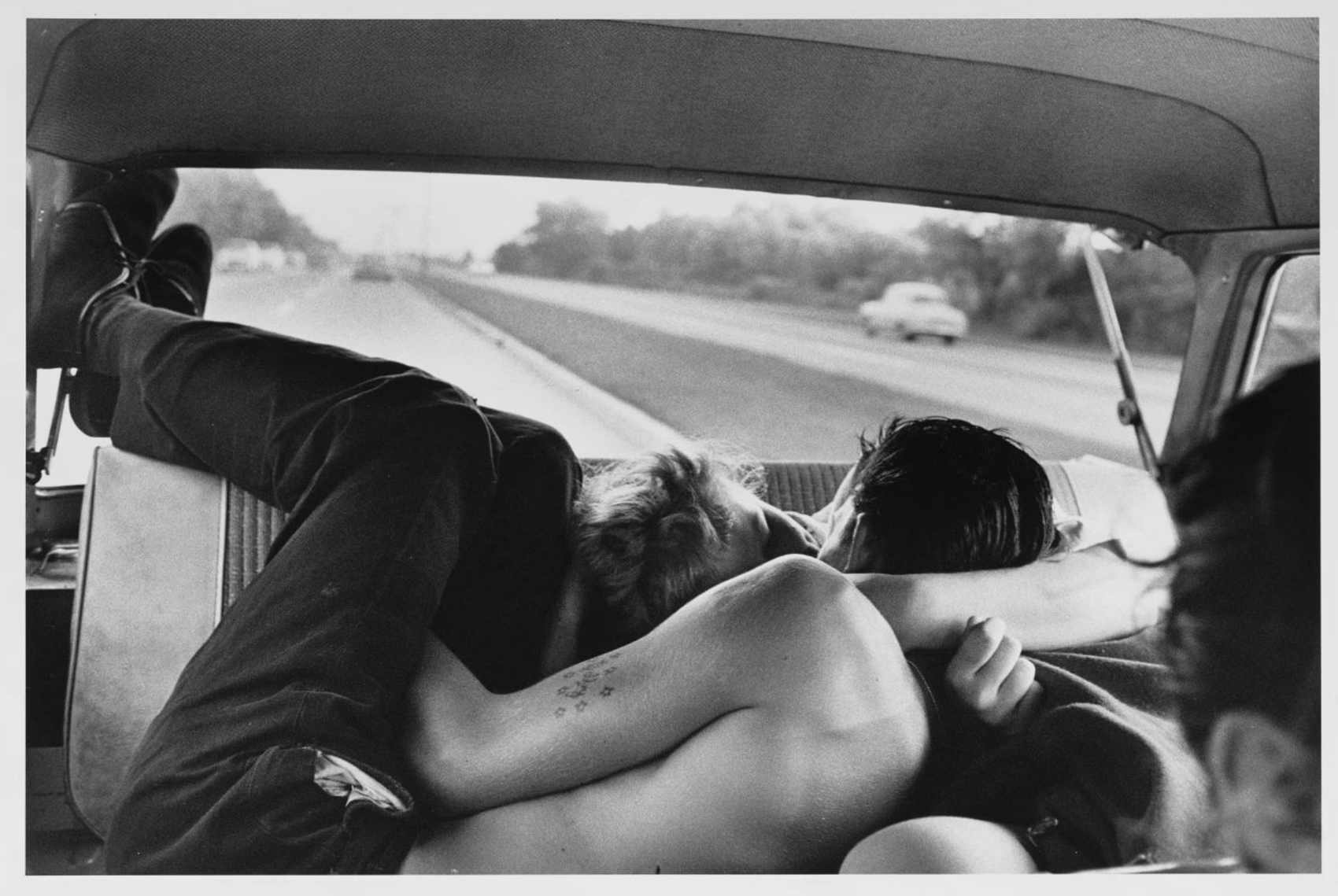
Frank’s perceptiveness of human beings and their context of being and becoming is incredible. Look at the faces in Landsgemeinde, Hundwil (1949, below), Paris (1952, below) and the attitude of the bodies, surmounted by the sun (top left), in London (1951, below).

“It is important to see what is invisible to others.”

Dr Marcus Bunyan


Many thankx to Fotostiftung Schweiz for allowing me to publish the photographs in the posting. Please click on the photographs for a larger version of the image.


The recently deceased Robert Frank is widely regarded as one of the most important photographers of our time. His book The Americans, first published in Paris in 1958 and then in New York the following year, is quite possibly the most influential photo book of the 20th century. As a kind of photographic road movie, it sketches a gloomy social portrait that served as a wake-up call to all of America at the time. And his personal style, alternating between documentary and subjective expression, radically changed post-war photography. But The Americans wasn’t merely a spontaneous stroke of genius. Frank’s early works already feature back stories and side plots that are closely connected to the themes and images of his legendary book. The Fotostiftung Schweiz holds a collection of lesser-known works – many of which were donated by the artist – which illustrate the consolidation of Frank’s subjective style. In addition to essays from Switzerland and Europe, it also includes works from early 1950s America that are on par with the well-known classics, but remained unpublished for editorial reasons. At the heart of the exhibition Robert Frank – Memories is the narrative force of Frank’s visual language, which developed in opposition to all conventions and only received international recognition when Frank had already abandoned photography and turned to the medium of film.

The exhibition is accompanied by a presentation of the books that publisher Gerhard Steidl produced with Robert Frank over a period of more than 15 years.


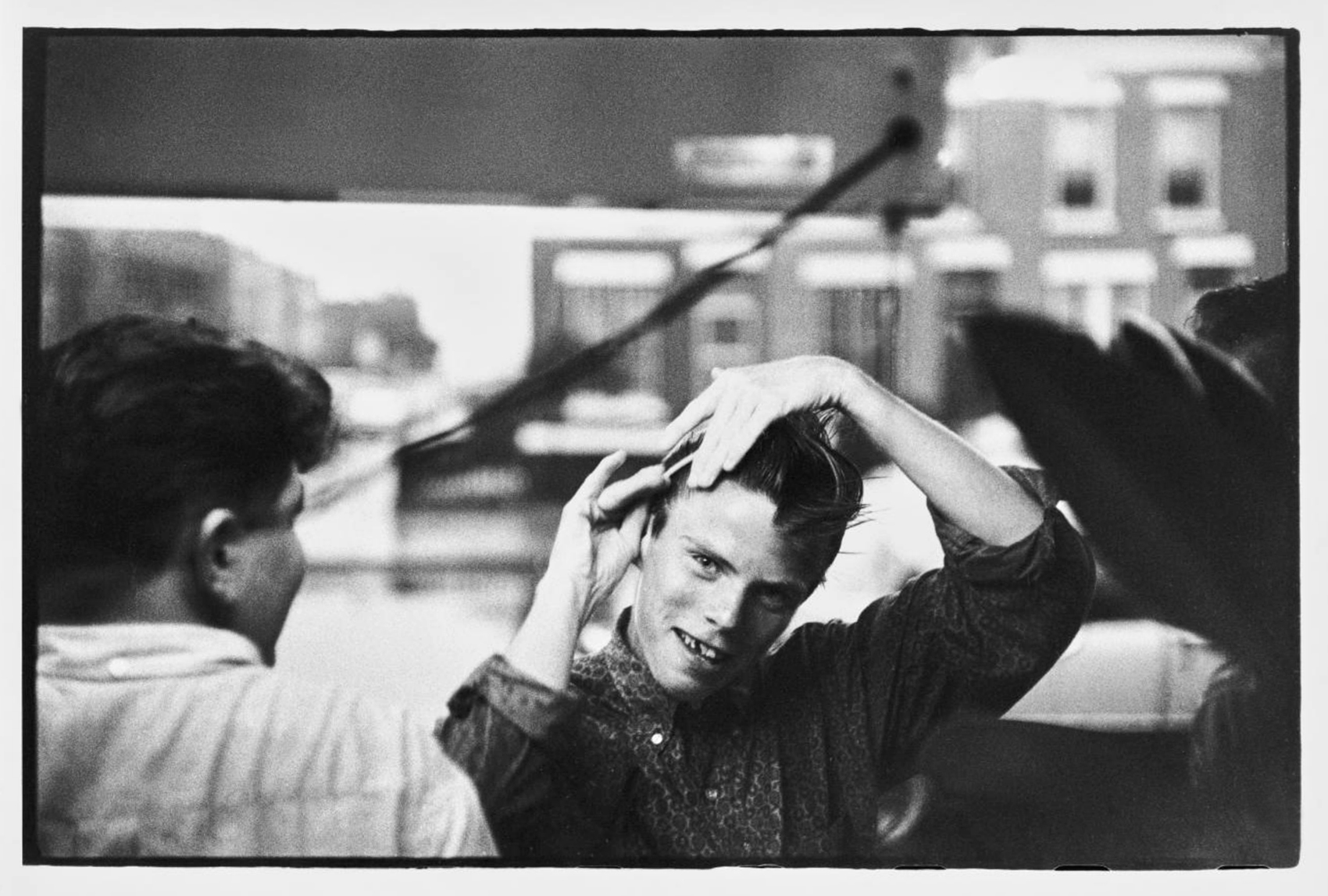
Robert Frank (Swiss, 1924-2019) 'New York City' 1948 from the exhibition 'Robert Frank – Memories' at the Fotostiftung Schweiz, Winterthur, Zürich, Sept 2020 - Jan 2021


Robert Frank (Swiss, 1924-2019)
New York City
1948
Gelatin silver print
© Andrea Frank Foundation; courtesy Pace/MacGill Gallery, New York


Robert Frank (Swiss, 1924-2019) 'Landsgemeinde, Hundwil' 1949


Robert Frank (Swiss, 1924-2019)
Landsgemeinde, Hundwil
1949
Gelatin silver print
© Andrea Frank Foundation; courtesy Pace/MacGill Gallery, New York


Robert Frank (Swiss, 1924-2019) 'Landsgemeinde, Hundwil' 1949


Robert Frank (Swiss, 1924-2019)
Landsgemeinde, Hundwil
1949
Gelatin silver print
© Andrea Frank Foundation; courtesy Pace/MacGill Gallery, New York


Robert Frank (Swiss, 1924-2019) 'Landsgemeinde, Hundwil' 1949 (detail)


Robert Frank (Swiss, 1924-2019)
Landsgemeinde, Hundwil (detail)
1949
Gelatin silver print
© Andrea Frank Foundation; courtesy Pace/MacGill Gallery, New York


Robert Frank (Swiss, 1924-2019) 'Landsgemeinde, Hundwil' 1949 (detail)


Robert Frank (Swiss, 1924-2019)
Landsgemeinde, Hundwil (detail)
1949
Gelatin silver print
© Andrea Frank Foundation; courtesy Pace/MacGill Gallery, New York


Robert Frank (Swiss, 1924-2019) 'London' 1951


Robert Frank (Swiss, 1924-2019)
London
1951
Gelatin silver print
© Andrea Frank Foundation; courtesy Pace/MacGill Gallery, New York


Robert Frank (Swiss, 1924-2019) 'Paris' 1952


Robert Frank (Swiss, 1924-2019)
Paris
1952
Gelatin silver print
© Andrea Frank Foundation; courtesy Pace/MacGill Gallery, New York


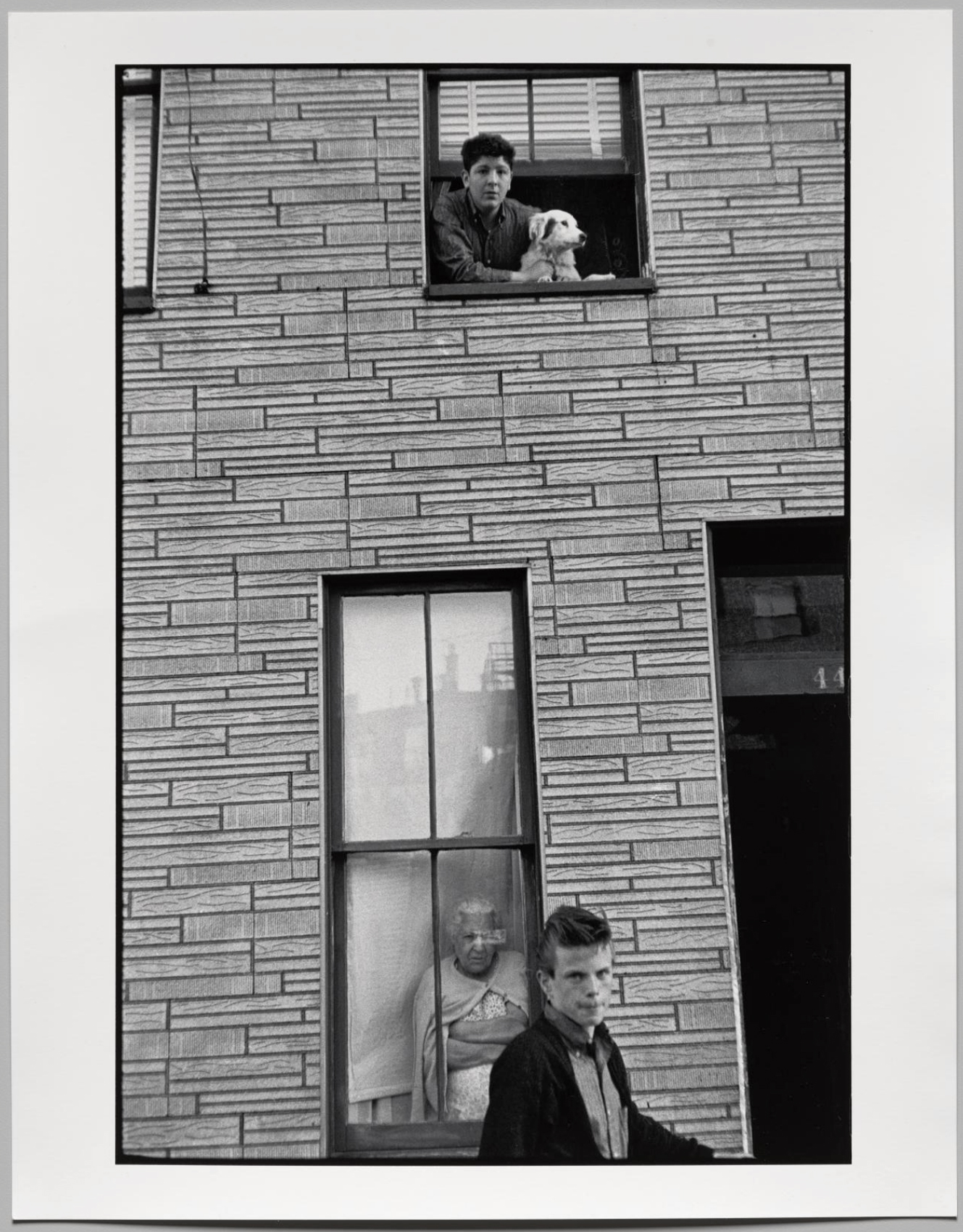
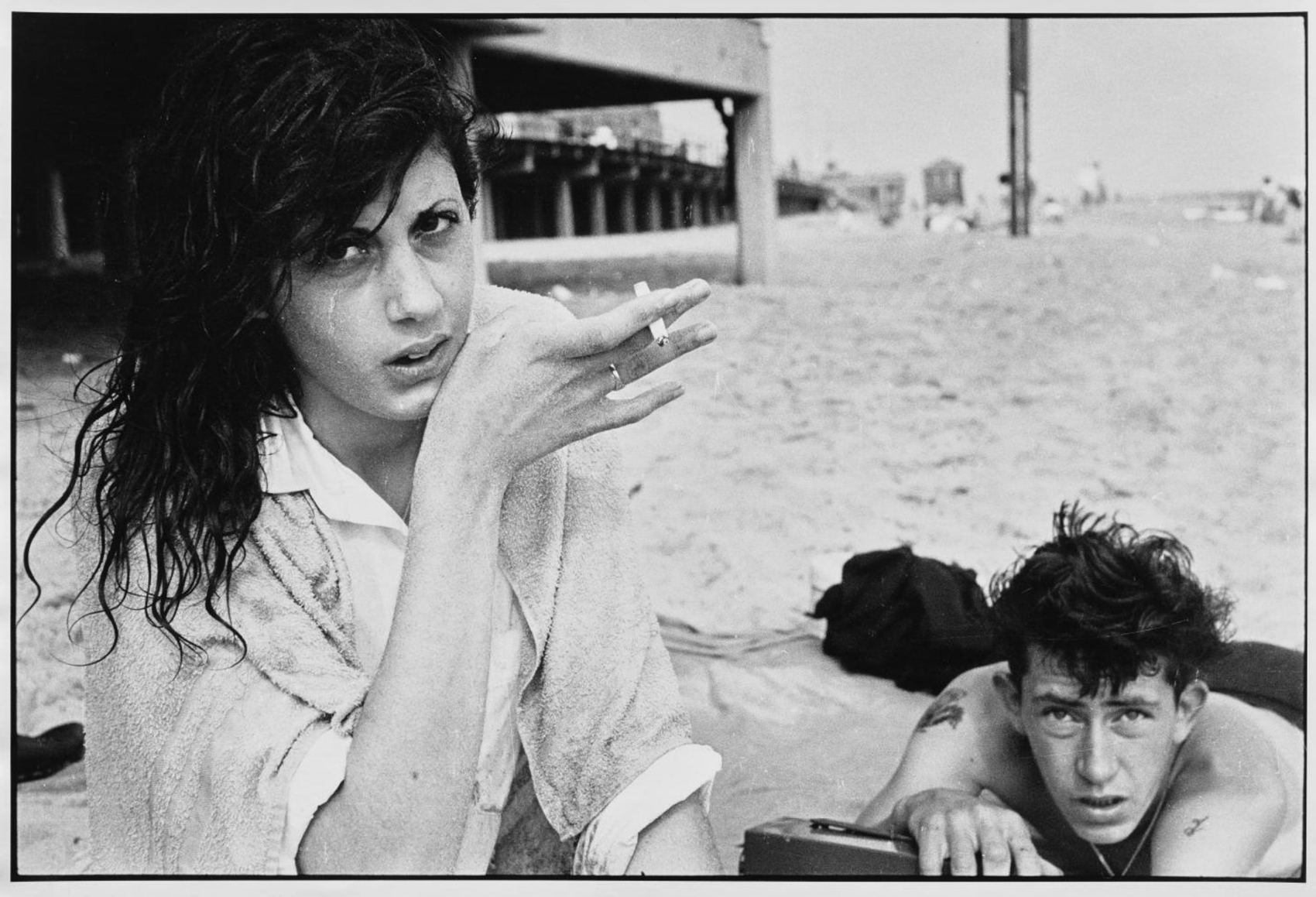
Robert Frank (Swiss, 1924-2019) 'New York City' early 1950s


Robert Frank (Swiss, 1924-2019)
New York City
early 1950s
Gelatin silver print
© Andrea Frank Foundation; courtesy Pace/MacGill Gallery, New York


Robert Frank, who was born in Zurich in 1924 and died last year in Canada, is widely regarded as one of the most important photographers of our time. Over the course of decades, he has expanded the boundaries of photography and explored its narrative potential like no other. Robert Frank travelled thousands of miles between the American East and West Coasts in the mid-1950s, going through nearly 700 films in the process. A selection of 83 black-and-white images from this blend of diary, sombre social portrait and photographic road movie would leave its mark on generations of photographers to come. The photobook The Americans was first published in Paris, followed by the US in 1959 – with an introduction by Beat writer Jack Kerouac, no less. Off-kilter compositions, cut-off figures and blurred motion marked a new photographic style teetering between documentation and narration that would have a profound impact on postwar photography.

It is quite possibly the single most influential book in the history of photography; however, rather than being a spontaneous stroke of genius, Frank had worked on his subjective visual language for years. Many of his photographs from Switzerland, Europe and South America, as well as his rarely shown works from the USA in the early 1950s, are on a par with the famous classics from The Americans. The photographer’s early work, which remained unpublished for editorial reasons and is therefore little known to this day, reveals connections to those iconic pictures that still define our image of America, even today.

At the heart of the exhibition Robert Frank – Memories is the narrative force of Robert Frank’s visual language, which developed in opposition to all conventions and only received international recognition after Frank had already abandoned photography and turned to the medium of film. The exhibition mainly features vintage silver gelatin prints from the collection of the Fotostiftung Schweiz, which either come from the former collection of Robert Frank’s long-time friend Werner Zryd (now owned by the Swiss Confederation) or were donated to the Fotostiftung Schweiz by the artist himself. They are complemented by a number of loans from the Fotomuseum Winterthur. A presentation of the books and films that publisher Gerhard Steidl released with Robert Frank over a period of more than 15 years accompanies the exhibition (in the corridor leading to the library and in the seminar room).

Early Work

In March 1947, Robert Frank arrived in New York following an adventurous journey on a cargo ship. The young, ambitious photographer had found Switzerland too stifling and he hoped to gain new freedom in America liberated from social and family obligations. The photographer carried a 6×6 Rolleiflex and a small spiral-bound book of 40 photographs taken during his apprentice years from 1941 to 1946. This portfolio included landscapes, portraits, personal photojournalistic works, and meticulously executed still lifes, all of which reveal that the 22-year old was a highly skilled photographer. It is therefore unsurprising that influential Harper’s Bazaar art director Alexey Brodovitch swiftly hired Frank as an assistant photographer after seeing his portfolio and first test photos.

In the magazine’s in-house photo studio, Frank photographed fashion industry products from clinical shots of women’s shoes and every imaginable accessory to laboriously staged fashion shoots and occasionally even photojournalistic assignments offering a little more freedom. Frank was successful and rose through the ranks, but quickly realised that this industry cared only about money, an attitude to which he couldn’t reconcile himself. Only a few months later, he quit his job in order to be able to work wholly free of constraints. He traveled to Peru and Bolivia the following year and often used his 35 mm Leica. Later he recalled: “I was making a kind of diary. I was very free with the camera. I didn’t think of what would be the correct thing to do; I did what I felt good doing. I was like an action painter.”

Frank returned to Europe in spring 1949. He photographed the yearly cantonal assembly in the Swiss canton of Appenzell Ausserrhoden, during which citizens (exclusively men back then) voted by a show of hands. However, he was unsuccessful in placing this story with a major periodical, even though he circulated the images via the acclaimed agency Magnum. Evidently, Frank had focused too little on the actual events. He was more interested in the bystanders’ stances than in the pomp of government officials wearing tailcoats and top hats. His photographs of this assembly prefigure the penetrating and critical gaze he would later level on America’s societal and political landscape. Here as there, his was an outsider’s subjective and inward looking perspective.

Black White and Things

In late 1949, the international magazine Camera published a first selection of Robert Frank’s work. The accompanying text described him as a photographer who loved “truth and unvarnished reality”, as someone “whose thirst for experience compelled him to get out and capture life with his camera”. Indeed, Frank worked chiefly in Paris, London, and Spain between 1949 and 1953, frequently traveling between Europe and the US. He reported on a bullfighter in Spain and observed life in London’s financial district. In Paris he took pictures of objects – mostly chairs and flowers – photographs he assembled in an album dedicated to his future wife. In subsequent years, he shook off any sentimental tendencies.

Frank continued his attempts to publish both smaller and more substantial stories and photo essays in glossy magazines such as Life, but with limited success. His reportage on Welsh coal miner Ben James, which appeared in U.S. Camera 1955 annual, was a rare exception. But Frank found himself less and less able to reconcile himself with the conventional view of photography as a universal language accessible to all. Instead, he increasingly distanced himself from print media’s expectations and developed a strong aversion to what he once termed stereotypical “Life stories”, “those goddamned stories with a beginning and an end”.

In autumn 1952, Frank created Black White and Things with his Zurich-based friend Werner Zryd. This handmade book comprising 34 photographs was an attempt to counter these expectations with something new: an intuitively ordered series of photos with neither text nor linear narrative structure, introduced simply by Saint-Exupéry’s famed lines from The Little Prince: “It is only with the heart that one can see rightly; what is essential is invisible to the eye.” Accordingly, Black White and Things is a kind of three-part visual poem: “Black” evokes death, materialism, loneliness, and anonymity; “White” evokes home, love, religion, and camaraderie; and “Things” engages with diametrical oppositions such as friendship and cruelty, and affection and solitude. The order and pairing of the images sparks thoughts, associations, and feelings. Yet Frank’s evocative arrangement is intentionally ambiguous and open: “Something must be left for the onlooker, he must have something to see. It is not all said for him.”

America, America

After a further trip to New York – which he assured his mother would be his last – Robert Frank applied for a Guggenheim fellowship in October 1954. His project proposal was for an “observation and record of what one naturalised American finds to see in the United States that signifies the kind of civilisation born here and spreading elsewhere”. The result was to be a book, for which he had already won support from Arnold Kübler, the long-standing editor of the Zurich-based culture magazine Du, and Robert Delpire, a young publisher in Paris. Thanks to help from Alexey Brodovitch, Walker Evans, Edward Steichen and others, Frank was the first European photographer to be awarded this generous fellowship. The award made it possible for him to set off on his now-legendary road trips across the US in spring 1955.

Over almost two years, Frank took more than 20,000 photographs on his travels. He made roughly 1,000 work prints in the autumn and winter of 1956-57, which he pinned to the walls and laid on the floor of his apartment. At the time his home was East Village, New York, where artists including Alfred Leslie and Willem de Kooning also lived. Over many months Frank made countless passes through his photographs, eliminating those images he was unsure of and focusing on specific themes. He constantly rearranged the selection that was gradually coming together until he had a first mocked-up book with just under 90 images and the provisional title America, America. Frank took this book with him when he traveled to Europe in summer 1957, showing it to Delpire and his Swiss photographer friend Gotthard Schuh.

Over the years, the America photographs not included in his final selection disappeared into archives and collections or even got lost altogether. Only recently has it been possible to ascertain that many of the rejected and unpublished photographs were of the same caliber as the 83 book images Frank and Delpire agreed on. Frank’s contact sheets show that these photos were often taken directly before or after the images that have become icons of photographic history. Rather than putting forth a single message, Frank’s dark take on 1950s America contains impressive variations, facets, and excursuses that made a powerful impression on many, including his early supporter, Schuh. Schuh wrote to his young friend: “I don’t know America, but your photographs frighten me because in them you show, with visionary alertness, things that affect us all.”

The Americans

Following the first French edition of Les Américains, Robert Frank’s book was published as The Americans in New York in 1959. The English edition dropped the cover illustration and the selection of texts on America (which Delpire had insisted on over Frank’s protests), and added an introduction by Jack Kerouac. Frank had much in common with the Beat poets, though he only met them after his Guggenheim-funded travels. Like Kerouac’s main character in On the Road, Frank crisscrossed the country with apparent aimlessness, working spontaneously. Moreover, his work shares a stylistic consonance with Beat literature: Frank had abandoned all technical conventions and photographed intuitively instead. Many of his photographs are underexposed and grainy; they frame a scene and omit key details; their horizons are slanting and the lighting is often murky. Frank’s focus was the everyday, the fleeting, and the marginal. People are shown turning away from the camera, and his landscapes are desolate and bleak, “really more like Russia”, as Frank once remarked to Kerouac. He flouted the rules he had learned during his early training as a photographer in Switzerland in order to be as true as possible to his subjective experience and to capture unvarnished reality.

Kerouac’s introduction begins with the words: “That crazy feeling in America when the sun is hot on the streets and music comes out of the jukeboxes or from a nearby funeral, that’s what Robert Frank has captured in tremendous photographs taken as he traveled on the road around practically forty-eight states in an old used car (on Guggenheim Fellowship) and with the agility, mystery, genius, sadness and strange secrecy of a shadow photographed scenes that have never been seen before on film …” The Americans is a long, poetic image arc with cross-references, digressions, and associations, but also mental leaps and ambiguities, which provoked many critics. Although most acknowledged that Frank’s photographs were highly powerful, they read his take on Americans as a malicious attack on the country. Frank, a Jewish foreigner, was resented for picking up on the racism, hollow patriotism, commodified cheer, and political corruption lurking behind the façade of American society. Even before his groundbreaking book was published, Robert Frank wrote: “Above all, I know that life for a photographer cannot be a matter of indifference. Opinion often consists of a kind of criticism. But criticism can come out of love. It is important to see what is invisible to others.”

Martin Gasser, Curator


Robert Frank (Swiss, 1924-2019) "Los Angeles" 1955


Robert Frank (Swiss, 1924-2019)
“Los Angeles”
1955
Gelatin silver print
© Andrea Frank Foundation; courtesy Pace/MacGill Gallery, New York


Robert Frank (Swiss, 1924-2019) 'City fathers – Hoboken, New Jersey' 1955


Robert Frank (Swiss, 1924-2019)
City fathers – Hoboken, New Jersey
1955
Gelatin silver print
© Andrea Frank Foundation; courtesy Pace/MacGill Gallery, New York


Robert Frank (Swiss, 1924-2019) 'Bus-Stop, Detroit' 1955


Robert Frank (Swiss, 1924-2019)
Bus-Stop, Detroit
1955
Gelatin silver print
© Andrea Frank Foundation; courtesy Pace/MacGill Gallery, New York


Robert Frank (Swiss, 1924-2019) 'Bar – Gallup, New Mexico' 1955


Robert Frank (Swiss, 1924-2019)
Bar – Gallup, New Mexico
1955
Gelatin silver print
© Andrea Frank Foundation; courtesy Pace/MacGill Gallery, New York


Robert Frank (Swiss, 1924-2019) 'Charity Ball – New York' 1954


Robert Frank (Swiss, 1924-2019)
Charity Ball – New York
1954
© Andrea Frank Foundation; courtesy Pace / MacGill Gallery, New York
Collection of the Swiss Photo Foundation


Müller + Hess, Wendelin Hess and Jesse Wyss, Basel / Zurich


Müller + Hess, Wendelin Hess and Jesse Wyss, Basel / Zurich


Fotostiftung Schweiz
Grüzenstrasse 45
CH-8400 Winterthur (Zürich)
Phone: +41 52 234 10 30

Opening hours:
Tuesday – Sunday 11am – 6pm
Wednesday 11am – 8pm
Closed on Mondays

Fotostiftung Schweiz website

LIKE ART BLART ON FACEBOOK

Back to top

Exhibition: ‘Acting Out: Cabinet Cards and the Making of Modern Photography’ at the Amon Carter Museum of American Art, Fort Worth, Texas

Exhibition dates: 14th August – 1st November, 2020

 Curator: John Rohrbach


G. S. Smith, Salt Lake City, UT. '[Taking in the view]' c. 1880 from the exhibition 'Acting Out: Cabinet Cards and the Making of Modern Photography' at the Amon Carter Museum of American Art, Fort Worth, Texas, Aug - Nov, 2020


G. S. Smith, Salt Lake City, UT
[Taking in the view]
c. 1880
Albumen silver print
Amon Carter Museum of American Art, Fort Worth, Texas


While the premise for this exhibition is interesting – that cabinet cards acted as a “primer” for coaxing “Americans into thinking about portraiture as an informal act, forging the way for the snapshot and social media with its contemporary “selfie” culture – in reality, the notion is far fetched.

Of the many millions of cabinet cards produced during their period of proliferation (1880s-1910s), only a small percentage, perhaps as low as 3%, would ever fit the performative type illustrated in this posting. Most were of the “solemn records of likeness and stature type”, typically full-length, half-length or a head and shoulders portrait, usually of a single person, sometimes a couple or family. Even then, the performative type of cabinet card would have a limited distribution, either within the family or commercially.

The four sections of the exhibition – Caught in the Act (actors, orators and other public figures); The Trade (commercial advertising); Sharing Life: Family and Friends (family albums); and Acting Out (people at play; reality and truth) – are logical partitions of these certain types of cabinet card. But what interests me more are the psychological aspects of having ones photograph taken. Why is the person’s photograph being taken, at whose direction (the photographers, the sitters)… who is posing the individual, what do they intend to convey through the image, who decides what that message is and, of course, how does the viewer decipher the message. “The interpretation of a person’s acting out and an observer’s response varies considerably, with context and subject usually setting audience expectations.” (Wikipedia)

Here we must acknowledge that the acting out is not singular but plural, for it is as much an act on the part of the photographer as it is the sitter. How much the outcome is dependent on the “director” or the subject is an act of constant negotiation (and, of course, it is also an outcome of the ritual of production).

The curator John Rohrbach observes that, “In our current moment of ‘selfie’ culture and social media-centered interaction, understanding the history of self-presentation and portraiture is more prescient than ever…” but this statement, linking cabinet cards and selfies, is a very very long bow to draw. This is because cabinet cards are not “selfies” as we perceive them now – informal snapshots taken by the self – but posed and performed photographic studies that require inherent discipline, structure and form constructed by the photographer and the sitter to achieve their end.

I often wonder about the revelatory process of having one’s portrait taken in the early days of photography. I know from texts that I have read that some people found the process slow and irritating, the results unsatisfactory. On the other hand, imagine being made to stand still for several seconds when you are not used to being completely still. Could there possibly be a moment in time and space, of meditation and reconciliation with oneself, a revelation in the stillness of the seconds of exposure. A revelation more spiritual than performative? *Two girls (1864, below)

Dr Marcus Bunyan


Many thankx to the Amon Carter Museum of American Art for allowing me to publish the art work in the posting. Please click on the photographs for a larger version of the image.


Acting

The art or practice of representing a character on a stage or before cameras.

Acting serves countless purposes including the following: It reminds us of times past and forgotten, or gives us a glimpse of a possible future. It portrays our raw, unadulterated, vulnerable, emotional, and at times, ugly, horrifying humanity. It provokes emotion, thought, discussion, awareness, or even imagination.

Acting Out

A child is “acting out” when they exhibit unrestrained and improper actions. The behaviour is usually caused by suppressed or denied feelings or emotions.

Acting out reduces stress. It’s often a child’s attempt to show otherwise hidden emotions. Acting out may include fighting, throwing fits, or stealing. In severe cases, acting out is associated with antisocial behaviour and other personality disorders in teenagers and younger children. …

Acting Out a) represents in action and b) translates into action, expressing (something, such as an impulse or a fantasy) directly in overt behaviour without modification, not complying with social norms.

In the psychology of defence mechanisms and self-control, acting out is the performance of an action considered bad or anti-social. In general usage, the action performed is destructive to self or to others. The term is used in this way in sexual addiction treatment, psychotherapy, criminology and parenting. In contrast, the opposite attitude or behaviour of bearing and managing the impulse to perform one’s impulse is called acting in.

The performed action may follow impulses of an addiction (e.g. drinking, drug taking or shoplifting)[citation needed]. It may also be a means designed (often unconsciously or semi-consciously) to garner attention (e.g. throwing a tantrum or behaving promiscuously). Acting out may inhibit the development of more constructive responses to the feelings in question. …

Interpretation

The interpretation of a person’s acting out and an observer’s response varies considerably, with context and subject usually setting audience expectations.

Alternatives

Acting out painful feelings may be contrasted with expressing them in ways more helpful to the sufferer, e.g. by talking out, expressive therapy, psychodrama or mindful awareness of the feelings. Developing the ability to express one’s conflicts safely and constructively is an important part of impulse control, personal development and self-care.

Anonymous. “Acting out,” on the Wikipedia website [Online] Cited 04/10/2020


G. S. Smith, Salt Lake City, UT. '[Taking in the view]' c. 1880 (detail)


G. S. Smith, Salt Lake City, UT
[Taking in the view] (detail)
c. 1880
Albumen silver print
Amon Carter Museum of American Art, Fort Worth, Texas


Howie, Detroit, MI 'George Moore and Fred Howe' 1890s from the exhibition 'Acting Out: Cabinet Cards and the Making of Modern Photography' at the Amon Carter Museum of American Art, Fort Worth, Texas, Aug - Nov, 2020


Howie, Detroit, MI
George Moore and Fred Howe
1890s
Collodion silver print
Robert E. Jackson Collection


Fred Howe, the Fatman and George Moore, the living skeleton; they are the most comical boxers in the world. Fred Howe’s father was a carpenter at Alleghany City, Penn., and Fred started to learn the same trade, but soon became too fat. At the age of eighteen he joined the Forepaugh Circus as a “tat boy,” and there met his present sparring partner.

George Moore was born in Helena, Montana, where his father had a little dry goods shop. Until he was twenty-one years of age George worked in his father’s shop. But his greatest desire was to see the world. When the fist big circus came to Helena, the manager offered him an engagement to exhibit himself as the “living skeleton,” and he closed with the offer at once. Fred Howe, they soon became great friends. The doctors advised both to take as much exercise as possible – the one to gain flesh, and the other to get rid of it. These smart Yankee lads then resolved to combine duty with pleasure, so they went in for boxing. For a long time they practised privately. One day, however, the manager was told of the fun by some of his “freaks,” who had been allowed to see a set-to” between the two gladiators. The manager then arranged a round or two, and the moment he saw Howe and Moore face each other, he offered them a long engagement at an increased salary, if only they would do their boxing before the public. Today these funny fellows are not only expert boxers, but also perfect comedians in their “art.” Their boxing is uproariously funny.

Moore is 6ft. 3in. in height, and weighs but 97lb., Howe is only 4ft. 2in. high, and weights exactly 422lb.

The Strand Magazine


Howie, Detroit, MI 'George Moore and Fred Howe' 1890s (detail)


Howie, Detroit, MI
George Moore and Fred Howe (detail)
1890s
Collodion silver print
Robert E. Jackson Collection


Alfred U. Palmquist and Peder T. Jurgens, St. Paul, MN. '[Skater]' 1880s


Alfred U. Palmquist (Swedish, 1850-1922) and Peder T. Jurgens, St. Paul, MN
[Skater]
1880s
Albumen silver print
Amon Carter Museum of American Art, Fort Worth, Texas


The Swede Alfred U. Palmquist (1850-1922) immigrated to America in 1872. In 1874, together with the Norwegian Peder T. Jurgens he opened the photo studio Palmquist & Jurgens in St. Paul, Minnesota.

Alfred Palmquist was born in Finland to Swedish parents on June 21, 1850. We know nothing about his childhood and upbringing except that he emigrated to Minnesota in the United States at the age of twenty-two. A year later, he and a colleague started a photo studio in Saint Paul, Minnesota, which was named Palmquist & Lake.

Ten years later, in 1883, Palmquist entered into a collaboration with Peder T. Jurgens. We only know about his partner Jurgens that he was Norwegian and had previously supported himself as an economist. Peder Jurgens worked in the company between the years 1882 to 1888. The new company was then of course named Palmquist & Jurgens and lived on until the beginning of the 20th century. During the 1870s and 1880s, most photographers worked in their studios… Palmquist & Jurgens was such a typical photography company that preferred people to come to their studio to be photographed. The company had specialised in photographing famous families in Saint Paul.


M. C. Hosford, West Rutland, VT. '[Getting the cleaver]' 1880s


M. C. Hosford, West Rutland, VT
[Getting the cleaver]
1880s
Albumen silver print
Amon Carter Museum of American Art, Fort Worth, Texas


M. C. Hosford, West Rutland, VT. '[Getting the cleaver]' 1880s (detail)


M. C. Hosford, West Rutland, VT
[Getting the cleaver] (detail)
1880s
Albumen silver print
Amon Carter Museum of American Art, Fort Worth, Texas


M. C. Hosford, West Rutland, VT. '[Getting the cleaver]' 1880s (detail)


M. C. Hosford, West Rutland, VT
[Getting the cleaver] (detail)
1880s
Albumen silver print
Amon Carter Museum of American Art, Fort Worth, Texas


M. C. Hosford, West Rutland, VT. '[Getting the saw]' 1880s


M. C. Hosford, West Rutland, VT
[Getting the saw]
1880s
Albumen silver print
Amon Carter Museum of American Art, Fort Worth, Texas


Acting Out: Cabinet Cards and the Making of Modern Photography offers the first-ever in-depth examination of the photographic phenomenon of cabinet cards. Cabinet cards were America’s main format for photographic portraiture through the last three decades of the nineteenth century. Inexpensive and sold by the dozen, they transformed getting one’s portrait made from a formal event taken up once or twice in a lifetime into a commonplace practice shared with family and friends.

Building on the museum’s history as a leader in American photography, this exhibition reveals how photography studios and their sitters across the United States introduced immediacy to studio portraiture and transformed their sessions into avenues of fun and personal expression. Sections will trace the cabinet card’s development and evolution, from its beginnings in celebrity culture through the marketing and advertising innovations of practitioners to the diversity of what people brought to their sittings. Not only did Americans embrace photography as a commonplace fact of life during these years, they openly played with the medium’s believability. In short, cabinet cards made photography modern.

This August, the Amon Carter Museum of American Art will present Acting Out: Cabinet Cards and the Making of Modern Photography, an exhibition offering the first in-depth examination of the nineteenth-century photographic phenomenon of cabinet cards. Charting the proliferation of this under appreciated photographic format, Acting Out reveals that cabinet cards coaxed Americans into thinking about portraiture as an informal act, forging the way for the snapshot and social media with its contemporary “selfie” culture. Acting Out presents hundreds of photographs – many on view publicly for the first time – from collections nationwide, including examples from the Carter’s own extensive photography collection. On view August 18 through November 1, 2020, the exhibition is organised by the Carter and will travel to the Los Angeles County Museum of Art.

In the second half of the nineteenth century, cabinet cards gave birth to the golden age of photographic portraiture in America. Measuring 6 1/2 by 4 1/4 inches, roughly the size of the modern-day smartphone screen, they were three times larger than the period’s leading photographic format. This larger size revealed previously obscured details in the images captured, encouraging action-ready gestures and the introduction of an astonishing array of props. Where photographs had once functioned as solemn records of likeness and stature, cabinet cards offered a new outlet for entertainment and remembering life’s everyday moments.

Acting Out investigates how this new performative medium prompted sitters to become far more comfortable with having their portrait made. By the time Eastman Kodak introduced its new affordable Brownie camera in 1900, cabinet cards had primed Americans to photograph every aspect of their lives. Though produced over 100 years ago, cabinet cards have a familiarity and a levity that resonates with our experience of photography today.

Acting Out exemplifies the Carter’s commitment to organising exhibitions rooted in groundbreaking scholarship, a core tenet of our curatorial philosophy,” stated Andrew J. Walker, Executive Director. “This exhibition harnesses the resources of our vast photography collection and archive to show visitors the contemporary relevance of the medium’s pre-modern history.”

The exhibition is organised into four sections chronicling the birth and evolution of the cabinet card:

Caught in the Act: Actors, orators, and other public figures were among the first to embrace cabinet cards. This section examines how the creative innovations employed by New York photographer Napoleon Sarony and his cohorts built public enthusiasm for a new kind of photographic portraiture founded on a relaxed sense of immediacy that influenced studio photographers across America.

The Trade: This section looks at the entertaining and evocative ways that photographers worked to overcome low prices and fierce competition, and to stand out from their peers. Their creative solutions gave rise to the ubiquity of cabinet cards across America by the 1880s.

Sharing Life: Family and Friends: Over the last quarter of the nineteenth century, cabinet cards were often the favoured means for recording and celebrating family life. This evocative section reveals the ways in which cabinet cards established a model for family albums as channels for sharing and boasting of the joys and transits of life.

Acting Out: If portraiture was the ostensible subject of cabinet cards, play was just as important. This section examines Americans’ acceptance of the camera as a tool for shared amusement as they toyed with photography’s pretence of reality and truth.

“In our current moment of ‘selfie’ culture and social media-centered interaction, understanding the history of self-presentation and portraiture is more prescient than ever,” said John Rohrbach, Senior Curator of Photographs at the Carter. “This exhibition reveals how nineteenth-century Americans approached photography far more playfully than ever before, a transformation that forever shifted our relationship to the medium.”

Acting Out: Cabinet Cards and the Making of Modern Photography was organised by the Amon Carter Museum of American Art. The exhibition is supported in part by the Alice L. Walton Foundation Temporary Exhibitions Endowment and accompanied by a 232-page catalogue co-published with the University of California Press, Berkeley. The book is the first dedicated to the history of the cabinet card and features colour plates of 100 cards at their actual size. Contributors include Dr. John Rohrbach, Senior Curator of Photographs at the Amon Carter Museum of American Art; Dr. Erin Pauwels, Assistant Professor of American Art at Temple University; Dr. Britt Salvesen, Department Head and Curator of the Wallis Annenberg Department of Photography at the Los Angeles County Museum of Art; and Fernanda Valverde, Conservator of Photographs at the Carter.

Press release from the Amon Carter Museum of American Art


Unknown photographer. '[Chess against myself]' 1880s


Unknown photographer
[Chess against myself]
1880s
Albumen silver print
Amon Carter Museum of American Art, Fort Worth, Texas


Unknown photographer. '[Chess against myself]' 1880s (detail)


Unknown photographer
[Chess against myself] (detail)
1880s
Albumen silver print
Amon Carter Museum of American Art, Fort Worth, Texas


Hatch and White, Burlington, WI. '[Man in woman's clothing]' c. 1891


Hatch and White, Burlington, WI
[Man in woman’s clothing]
c. 1891
Collodion silver print
Amon Carter Museum of American Art, Fort Worth, Texas


Benjamin J. Falk, New York, NY. 'Helena Luy' 1880s


Benjamin J. Falk, New York, NY
Helena Luy
1880s
Albumen silver print
Amon Carter Museum of American Art, Fort Worth, Texas


Benjamin J. Falk (American, 1853-1925)

When Napoleon Sarony died in 1896, Benjamin J. Falk ascended to the first place in the world of performing arts photography…

Falk’s contemporaries, who spoke primarily of the clarity, verisimilitude, and composure of his images, never recognised his greatest power as a portraitist. Falk was a man of extraordinary erotic engagement with his sitters, and the intensity of his attention becomes visible only when one sees the entirety of his work envisioning one of the several women – Belle Archer, Mrs. James Brown Potter, Cleo De Merode, Cissy Fitzgerald, Amy Busby, the Barrison Sisters – who capture his imagination. He was capable of refracting the sitter’s beauty in a tremendous array of scenes, costumes, and attitudes, doing so without making the images seem artificial.

When asked in 1893 what was most important in creating effective portraits, he replied matter of factly, “I name expression, posing and lighting in the order as they appear to be most important. The technique of the profession being absolutely under the control of the operator since the introduction of the dry plates, there is no excuse now for any but perfect photographic results. I have always made my price high enough, so that I did not have to consider the cost of material while doing my work.” The camera, in the proper hands, is, in many ways, a finer art tool to-day than the chisel or the brush, although, like them, it has its limitations.

Specialty

The first strong adherent of artificial light sources in the studio, Benjamin Falk created portraits that were among the most dramatically sculptural looking images of the 19th and early 20th centuries. Possessed of a playful visual wit, he often experimented with his images, using curious juxtapositions, unusual poses, and lighting highlights to convey distinctiveness of personality. Increasingly indifferent to painted backdrops, he did many portraits against blank walls or bleached out backcloths. He began the fashion for faces and figures suspended in a milky white ground that became ubiquitous shortly after 1900.

Anonymous. “Benjamin J. Falk,” on the Broadway Photographers website [Online] Cited 05/09/2020


Benjamin J. Falk, New York, NY. 'Helena Luy' 1880s (detail)


Benjamin J. Falk, New York, NY
Helena Luy (detail)
1880s
Albumen silver print
Amon Carter Museum of American Art, Fort Worth, Texas


Napoleon Sarony, New York, NY. '[Fanny Davenport]' c. 1870


Napoleon Sarony, New York, NY
[Fanny Davenport]
c. 1870
Albumen silver print
Amon Carter Museum of American Art, Fort Worth, Texas


Napoleon Sarony (American, 1821-1896)

Napoleon Sarony (March 9, 1821 – November 9, 1896) was an American lithographer and photographer. He was a highly popular portrait photographer, best known for his portraits of the stars of late-19th-century American theatre. His son, Otto Sarony, continued the family business as a theatre and film star photographer.

Sarony was born in 1821 in Quebec, then in the British colony of Lower Canada, and moved to New York City around 1836. He worked as an illustrator for Currier and Ives before joining with James Major and starting his own lithography business, Sarony & Major, in 1843. In 1845, James Major was replaced in Sarony & Major by Henry B. Major, and the firm continued operating under that name until 1853. From 1853 to 1857, the firm was known as Sarony and Company, and from 1857 to 1867, as Sarony, Major & Knapp. Sarony left the firm in 1867 and established a photography studio at 37 Union Square, during a time when celebrity portraiture was a popular fad. Photographers would pay their famous subjects to sit for them, and then retain full rights to sell the pictures. Sarony reportedly paid the internationally famous stage actress Sarah Bernhardt $1,500 to pose for his camera, equivalent to $42,683 in 2019. In 1894, he published a portfolio of prints entitled “Sarony’s Living Pictures”.

Text from the Wikipedia website


Napoleon Sarony, New York, NY. '[Fanny Davenport]' c. 1870 (detail)


Napoleon Sarony, New York, NY
[Fanny Davenport] (detail)
c. 1870
Albumen silver print
Amon Carter Museum of American Art, Fort Worth, Texas


Fanny Lily Gipsey Davenport (English-American, 1850-1898)

Fanny Lily Gipsey Davenport (April 10, 1850 – September 26, 1898) was an English-American stage actress. The eldest child of Edward Loomis Davenport and Fanny Elizabeth (Vining) Gill Davenport, Fanny Lily Gypsey Davenport was born on April 10, 1850 in London.

Most of her siblings were actors, including Harry Davenport. She was brought to the United States in 1854 and educated in the Boston public schools. At age 7, she appeared at Boston’s Howard Athenæum as Metamora’s child, but her real debut occurred in February 1862 when she portrayed King Charles in Faint Heart Never Won Fair Lady at Niblo’s Garden.

In February 1862, she appeared in New York City at Niblo’s Garden at the age of 12 as the King of Spain in Faint Heart Never Won Fair Lady. From 1869 to 1877, she performed in Augustin Daly’s company; and afterwards, with a company of her own, acted with especial success in Sardou’s Fédora (1883) her leading man being Robert B. Mantell, Cleopatra (1890), and similar plays. She took over emotional Sardou roles that had been originated in Europe by Sarah Bernhardt. Her last appearance was at the Grand Opera House in Chicago on March 25, 1898, shortly before her death.

Her first husband was Edwin B. Price, an actor. They married on July 30, 1879, and divorced on June 8, 1888. On May 18, 1889, she married her leading man, Melbourne MacDowell. Both marriages were childless. Davenport died September 26, 1898, from an enlarged heart, at her summer home in Duxbury, Massachusetts.

Text from the Wikipedia website


Unknown photographer. '[Two girls]' 1864


Unknown photographer
[Two girls]
1864
Albumen silver print (carte de visite)
Amon Carter Museum of American Art, Fort Worth, Texas


Unknown photographer. '[Two girls]' 1864 (detail)


Unknown photographer
[Two girls] (detail)
1864
Albumen silver print (carte de visite)
Amon Carter Museum of American Art, Fort Worth, Texas


A. M. Nikodem, Chicago, IL. '[Cat]' 1880s


A. M. Nikodem, Chicago, IL
[Cat]
1880s
Albumen silver print
Robert E. Jackson Collection


A.M. Nikodem

According to Origin, Growth, and Usefulness of the Chicago Board of Trade: Its Leading Members, and Representative Business Men in other Branches of Trade (1885): “Miss A.M. Nikodem, Photographic Artist. No. 701 West Madison Street. – One of the most popular and finely appointed photographic studios in Chicago is that conducted by Miss A.M. Nikodem, who succeeded Mr. M. T. Baldwin one year ago. This lady, who is regarded as one of the most skilful and accomplished photographic artists in the city, occupies an entire two-storied building completely equipped with all modern improvements and appliances and her elegantly furnished parlours are the resort of the élite of Chicago. Miss Nikodem is the only lady in the city who give personal attention to the taking of pictures, etc., and having had an extended practical and theoretical training she has attained a marked perfection in her art. In social circles Miss Nikodem occupies a prominent position both as a skilful artist and estimable lady, while in the business world she is held in high esteem as an enterprising and capable woman.”

Nikodem occupied the studio at this address from 1885-1891, and then moved to another location. 1895 is the last year in which she seems to be listed in Chicago city guides. Despite her prominence, photographs from her studio are exceptionally uncommon. Nikodem’s skill is fully on display in this portrait. The three or four other examples of her work we could find, all in library special collections, are all of women or girls, and they display a uniform artistic excellence and technical photographic skill.


W. A. White, Wilson, KS. 'My first baby friend Tompie and his pet' 1896


W. A. White, Wilson, KS
My first baby friend Tompie and his pet
1896
Collodion silver print
Robert E. Jackson Collection


W. A. White, Wilson, KS. 'My first baby friend Tompie and his pet' 1896 (detail)


W. A. White, Wilson, KS
My first baby friend Tompie and his pet (detail)
1896
Collodion silver print
Robert E. Jackson Collection


W. A. Wilcoxon, Bonaparte, IA. '[Baby]' 1890s


W. A. Wilcoxon, Bonaparte, IA
[Baby]
1890s
Collodion silver print
Amon Carter Museum of American Art, Fort Worth, Texas


Unknown photographer. '[Painter]' 1890s


Unknown photographer
[Painter]
1890s
Albumen silver print
William L. Schaeffer Collection


Unknown photographer. '[Painter]' 1890s (detail)


Unknown photographer
[Painter] (detail)
1890s
Albumen silver print
William L. Schaeffer Collection


Charles L. Griffin, Scranton, PA. '[Toddler with dog]' c. 1892


Charles L. Griffin, Scranton, PA
[Toddler with dog]
c. 1892
Gelatin silver print
Amon Carter Museum of American Art, Fort Worth, Texas


F. J. Nelson, Anoka, MN. 'Domestic Bread' c. 1890s


F. J. Nelson, Anoka, MN
Domestic Bread
c. 1890s
Collodion silver print
Amon Carter Museum of American Art, Fort Worth, Texas


Gilbert G. Oyloe (American, 1851-1927) Ossian, IA. '[Woman]' 1880s


Gilbert G. Oyloe (American, 1851-1927) Ossian, IA
[Woman]
1880s
Albumen silver print
Robert E. Jackson Collection


Oyloe had a studio in Ossian during the 1880’s and 1890’s.


James F. Ryder, Cleveland, OH. 'Verso' 1880s


James F. Ryder, Cleveland, OH
Verso
1880s
Planographic print
Gift of Robert E. Jackson
Amon Carter Museum of American Art, Fort Worth, Texas


Charles Quartley, Baltimore, MD. '[Church woman]' 1880s


Charles Quartley, Baltimore, MD
[Church woman]
1880s
Albumen silver print
Robert E. Jackson


Caroline Bergman, Louisville, KY. 'Untitled [Bergman's Photograph Gallery]' c. 1890


Caroline Bergman, Louisville, KY
Untitled [Bergman’s Photograph Gallery]
c. 1890
Relief print
Gift of Robert E. Jackson
Amon Carter Museum of American Art, Fort Worth, Texas


Louise and Caroline Bergman

Louis Bergman opened a Louisville photo studio in 1872 on W Market. After 1885, however, Caroline Bergman (his wife) is listed as the proprietor and photographer, and Louis is listed only as “manager”. This very successful studio was in operation until 1896.

Louis Bergman’s … studio was located at 56 & 58 Market Street, in Louisville, Kentucky. Perusal of Louisville business directories reveals that Bergman began business with a partner. Bergman & Flexner; the firm was listed in the 1868 and 1869 directories. He was reported to be the sole proprietor of a studio from 1872 until 1886. Bergman was listed at a number of different addresses over these years. Using these addresses, it appears that this particular photograph was taken between 1873 and 1881. From 1886 through 1894 the proprietor of the studio became Caroline Bergman. The Photographic Times and American Photographer (1883) reported that Bergman was Vice President of the Photographers Mutual Benefit Society of Louisville. Louis Bergman (c. 1838 -?) was born in Hanover, Germany to Prussian parents. His wife, Carrie (1845 -?) was born in Louisiana to German parents. The couple married  in about 1865. The Bergman’s had a daughter, Lillie, who was 12 years-old at the time of the 1880 census. The census listed Louis as a photographer and Carrie as a homemaker. It is interesting to note that when the couples daughter reached 18 years of age, Carrie became the studio’s proprietor / photographer.

Anonymous. “Man with a Great Beard in Louisville, Kentucky,” on The Cabinet Card Gallery website 03/01/2012 [Online] Cited 05/09/2020


R. O. Helsom, Menomonie, WI. 'Verso' 1880s


R. O. Helsom, Menomonie, WI
Verso
1880s
Relief print
Gift of Robert E. Jackson
Amon Carter Museum of American Art, Fort Worth, Texas


'Cabinets' c. 1880s


Cabinets
c. 1880s
Celluloid-covered album
Robert E. Jackson Collection


Amon Carter Museum of American Art
3501 Camp Bowie Boulevard
Fort Worth, TX 76107-2695

Opening hours:
Tuesday, Wednesday, Friday, Saturday:
 10am – 5pm
Thursday: 10am – 8pm
Sunday: 12am – 5pm
Closed Mondays and major holidays

Amon Carter Museum of American Art website

LIKE ART BLART ON FACEBOOK

Back to top

European photographic research tour exhibition: ‘L’equilibriste, André Kertész’ at Jeu de Paume, Château de Tours Part 2

Exhibition dates: 26th June – 27th October, 2019
Visited September 2019 posted September 2020

Curators: Matthieu Rivallin and Pia Viewing


André Kertész (Hungarian, 1894-1985) 'Nageur sous l'eau, Esztergom' (Underwater swimmer, Esztergom) 1918 from the exhibition 'L'equilibriste, André Kertész' at Jeu de Paume, Château de Tours Part 2, June - Oct, 2019


André Kertész (Hungarian, 1894-1985)
Nageur sous l’eau, Esztergom
Underwater swimmer, Esztergom
1918
Contact original


“”… especially haptic qualities are demanded of the deconstructionist performer, spectator, and reader; not to follow optically the ‘line of ideas’ in the text or in a picture and see only the representation proper, the surface, but to probe with the eyes the pictorial texture and even to enter the texture.”69 Such “touching” with the eye did not lead to a secure tactile experience of being firmly planted on the ground, for all grounds, all foundations, were suspect, however construed. We are, as Nietzsche knew, swimming in an endless sea, rather than standing on dry land. To “touch” a trace, groping blindly in the dark, is no more the guarantee of certainty than to see its residues.”


Gandelman, Claude. ‘Reading Pictures, Viewing Texts’. Bloomington, Indiana, 1991, p. 140 quoted in Martin Jay. ‘Downcast Eyes: The Denigration of Vision in Twentieth-Century French Thought’. Berkley: University of California Press, 1993, p. 512.


Touching with the eye

Part 2 of a large posting on the exhibition L’equilibriste, André Kertész at Jeu de Paume, Château de Tours, which I saw in Tours in September 2019.

This posting contains photographs from his famous series “Distortions” (fascinating to see the original plates for the book of the same name, complete with cropping marks and red lead pencil annotations); American works from 1936 onwards, when Kertész moved to the United States to avoid the persecution of the Jews and the threat of World War II; and the late work colour Polaroids.

I admit that Kertész is not my favourite photographer. While I admire some of his photographs, I feel emotionally distant from most of them. Edward Clay observes in the quotation below that Kertész was “one of the most lyrical and formally inventive photographers of the twentieth-century… [His photographs] often convey a quiet mood of melancholy … He remains revered for his clarity of style and ability to blend simplicity with emotion, prizing impact over technical precision, seeking metaphors and geometry in everyday objects and scenarios, to turn the mundane into the surreal.”

Personally, I don’t find his photographs emotional nor lyrical, only a few poetic. Not melancholic, but geometric. In later works, he simplifies, simplifies, simplifies much like his friend Mondrian did. For me, the balance between sacred / geometry, the sacred geometry of the mystery of things, is often unbalanced in these images (particularly relevant, given the title of this exhibition). Is it enough just to turn the mundane into the surreal? Where does that lead the viewer? Is it enough to just observe, represent, without digging deeper.

At his best, in images such as Underwater swimmer, Esztergom (1918, above), Arm and Fan, New York (1937, below) and Washington Square, New York (1954, below) there is a structured, avant-garde mystery about the reality of the world, as re/presented through the object of the photograph, it’s physical presence. In Underwater swimmer, the body is stretched and distorted by an element, water, not a man-made mirror. His photographs from Hungary, Italy and early Paris possess a sensitivity of spirit that seems to have been excised from his life, the older he got. Far too often in later images, there is a “brittleness” to his photography, in which the object of reflection sits at the surface of the image, all sparkling in unflinching light. The single cloud oh so lonely in the sterile city; the man looking at the broken bench; the “buy, buy, buy” of consumer culture. You consumer Kertész’s later images, you do not reflect on them.

Dr Marcus Bunyan


All iPhone installation photographs © Marcus Bunyan. Please click on the photographs for a larger version of the image. View Part 1 of the posting.


“André Kertész, one of the most lyrical and formally inventive photographers of the twentieth-century, whose work advocated for spontaneity over technical precision, has left a distinctive legacy of poetic images which form a bridge between the avant-garde and geometrical precision. A roamer for much of his life, his feelings of rootlessness manifest in his work and often convey a quiet mood of melancholy. …

Claiming “I am an amateur and I intend to stay that way for the rest of my life”, Kertesz was a great source of inspiration to photographic legends such as Cartier-Bresson.

He remains revered for his clarity of style and ability to blend simplicity with emotion, prizing impact over technical precision, seeking metaphors and geometry in everyday objects and scenarios, to turn the mundane into the surreal. Nothing was too plain or ordinary for his eye, since he had a special ability to breathe life into even the most ‘unremarkable’ subjects.”


Edward Clay. “André Kertész: between poetry and geometry,” on ‘The Independent Photographer’ website, May 19th 2020 [Online] Cited 26/08/2020


André Kertész (Hungarian, 1894-1985) 'Distortion #34' 1933 from the exhibition 'L'equilibriste, André Kertész' at Jeu de Paume, Château de Tours Part 2, June - Oct, 2019


André Kertész (Hungarian, 1894-1985)
Distortion #34 
1933
Gelatin silver print


André Kertész (Hungarian, 1894-1985) 'Distortion #40' 1933


André Kertész (Hungarian, 1894-1985)
Distortion #40
1933
Gelatin silver print


Installation view of the exhibition 'L'equilibriste, André Kertész' at Jeu de Paume, Château de Tours

Installation view of the exhibition 'L'equilibriste, André Kertész' at Jeu de Paume, Château de Tours

Installation view of the exhibition 'L'equilibriste, André Kertész' at Jeu de Paume, Château de Tours

Installation view of the exhibition 'L'equilibriste, André Kertész' at Jeu de Paume, Château de Tours showing at left, the photograph 'Underwater swimmer, Esztergom' 1918


Installation views of the exhibition L’equilibriste, André Kertész at Jeu de Paume, Château de Tours showing photographs from the series Distortions, the bottom image showing at left, the photograph Underwater swimmer, Esztergom 1918
Photos: Marcus Bunyan


André Kertész (Hungarian, 1894-1985) 'Original plates of the model of the book 'Distortions'' 1975-1976 (installation view)

André Kertész (Hungarian, 1894-1985) 'Original plates of the model of the book 'Distortions'' 1975-1976 (installation view)

André Kertész (Hungarian, 1894-1985) 'Original plates of the model of the book 'Distortions'' 1975-1976 (installation view)

André Kertész (Hungarian, 1894-1985) 'Original plates of the model of the book 'Distortions'' 1975-1976 (installation view)

André Kertész (Hungarian, 1894-1985) 'Original plates of the model of the book 'Distortions'' 1975-1976 (installation view)

André Kertész (Hungarian, 1894-1985) 'Original plates of the model of the book 'Distortions'' 1975-1976 (installation view)

André Kertész (Hungarian, 1894-1985) 'Original plates of the model of the book 'Distortions'' 1975-1976 (installation view)

André Kertész (Hungarian, 1894-1985) 'Original plates of the model of the book 'Distortions'' 1975-1976 (installation view)

André Kertész (Hungarian, 1894-1985) 'Original plates of the model of the book 'Distortions'' 1975-1976 (installation view)

André Kertész (Hungarian, 1894-1985) 'Original plates of the model of the book 'Distortions'' 1975-1976 (installation view)


André Kertész (Hungarian, 1894-1985)
Planches originales de la maquette du livre ‘Distortions’ (installation view)
Original plates of the model of the book ‘Distortions’ 
1975-1976
Collection Médiathèque de l’architecture et du patrimoine
Photos: Marcus Bunyan


Installation view of the exhibition 'L'equilibriste, André Kertész' at Jeu de Paume, Château de Tours


Installation view of the exhibition L’equilibriste, André Kertész at Jeu de Paume, Château de Tours showing photographs from the series Distortions
Photo: Marcus Bunyan


André Kertész (Hungarian, 1894-1985) 'Distortion #60' 1933 (installation view)


André Kertész (Hungarian, 1894-1985)
Distortion #60 (installation view)
1933
Contact original
Photo: Marcus Bunyan


André Kertész (Hungarian, 1894-1985) 'Distortion #86' 1933 (installation view)


André Kertész (Hungarian, 1894-1985)
Distortion #86 (installation view)
1933
Contact original
Photo: Marcus Bunyan


André Kertész (Hungarian, 1894-1985) 'Distortion #86' 1933 (installation view)


André Kertész (Hungarian, 1894-1985)
Distortion #86 (installation view)
1933
Contact original
Photo: Marcus Bunyan


André Kertész (Hungarian, 1894-1985) 'Distortion #109' 1933 (installation view)


André Kertész (Hungarian, 1894-1985)
Distortion #109 (installation view)
1933
Contact original
Photo: Marcus Bunyan


André Kertész (Hungarian, 1894-1985) 'Distortion #6' 1933 (installation view)


André Kertész (Hungarian, 1894-1985)
Distortion #6 (installation view)
1933
Contact original
Photo: Marcus Bunyan


André Kertész (Hungarian, 1894-1985) 'Distortion #159' 1933 (installation view)


André Kertész (Hungarian, 1894-1985)
Distortion #159 (installation view)
1933
Contact original
Photo: Marcus Bunyan


André Kertész (Hungarian, 1894-1985) 'Distortion #128' 1933 (installation view)


André Kertész (Hungarian, 1894-1985)
Distortion #128 (installation view)
1933
Contact original
Photo: Marcus Bunyan


André Kertész (Hungarian, 1894-1985) 'Distortion #70' 1933 (installation view)


André Kertész (Hungarian, 1894-1985)
Distortion #70 (installation view)
1933
Contact original
Photo: Marcus Bunyan


André Kertész (Hungarian, 1894-1985) 'Distortion #70' 1933 (installation view)


André Kertész (Hungarian, 1894-1985)
Distortion #70 (installation view)
1933
Contact original
Photo: Marcus Bunyan


André Kertész (Hungarian, 1894-1985) 'Distortion #80' 1933 (installation view)


André Kertész (Hungarian, 1894-1985)
Distortion #80 (installation view)
1933
Contact original
Photo: Marcus Bunyan


André Kertész (Hungarian, 1894-1985) 'Distortion' 1933 (installation view)


André Kertész (Hungarian, 1894-1985)
Distortion (installation view)
1933
Contact original
Photo: Marcus Bunyan


André Kertész (Hungarian, 1894-1985) 'Distorted Portrait (Face of a Woman), Paris' 1927 (installation view)


André Kertész (Hungarian, 1894-1985)
Portrait déformé (Visage de femme), Paris (installation view)
Distorted Portrait (Face of a Woman), Paris
1927
Gelatin silver print
Photo: Marcus Bunyan


One of the twentieth century’s great photographers, André Kertész (Budapest, 1894 – New York, 1985) left a prolific body of work spanning more than seventy years (1912-1984), a blend of the poetic and the intimate with its wellspring in his Hungarian culture. The Art of Poise: André Kertész traces this singular career, showcasing compositions that bear the stamp of Europe’s avant-garde art movements, from the artist’s earliest Hungarian photographs to the blossoming of his talent in France, and from his New York years to ultimate international recognition.

Kertész arrived in Paris in October 1925. Moving in avant-garde literary and artistic circles, he photographed his Hungarian friends, artists’ studios, street life and the city’s parks and gardens. In 1933 he embarked on his famous Distortions series of nudes deformed by funhouse mirrors, producing anamorphic images similar in spirit to the work of Pablo Picasso, Jean Arp and Henry Moore.

In addition to this profusion of activity, he explored the possibility of disseminating his work in publications. Between 1933 and the end of his life he had designed and published a total of nineteen books.

In 1936 Kertész and his wife Elizabeth left for New York, where he began with a brief assignment for Keystone, the world’s biggest photographic agency. He struggled, though, to carve out a place for himself in a context whose demands were very different from those of his Paris years.

Inspired by the rediscovery of his Hungarian and French negatives, from 1963 onwards he devoted himself solely to personal projects, and was offered retrospectives by the French National Library in Paris and MoMA in New York. This fresh recognition sparked a flurry of books in which he harked back to the high points of his oeuvre. In his last years, armed with a Polaroid, he returned to his earlier practice of everyday photography.

Text from the Jeu de Paume website for the earlier exhibition The Art of Poise: André Kertész


Text from the exhibition 'L'equilibriste, André Kertész' at Jeu de Paume, Château de Tours


Text from the exhibition L’equilibriste, André Kertész at Jeu de Paume, Château de Tours


André Kertész (Hungarian, 1894-1985) 'La Tulipe mélancolique, New York' (Melancholic Tulip, New York) 1939


André Kertész (Hungarian, 1894-1985)
La Tulipe mélancolique, New York
Melancholic Tulip, New York
1939
Gelatin silver print


André Kertész (Hungarian, 1894-1985) 'Paris' 1984 (installation view)


André Kertész (Hungarian, 1894-1985)
Paris (installation view)
1984
Gelatin silver print
Photo: Marcus Bunyan


André Kertész (Hungarian, 1894-1985) 'Paris' 1984


André Kertész (Hungarian, 1894-1985)
Paris
1984
Gelatin silver print


Installation view of the exhibition 'L'equilibriste, André Kertész' at Jeu de Paume, Château de Tours showing at top left, 'Ballet, New York' 1938; and at bottom left, 'Lake Placid' 1954

Installation view of the exhibition 'L'equilibriste, André Kertész' at Jeu de Paume, Château de Tours showing at top left, 'Ballet, New York' 1938; and at bottom left, 'Lake Placid' 1954


Installation views of the exhibition L’equilibriste, André Kertész at Jeu de Paume, Château de Tours showing at top left, Ballet, New York 1938; and at bottom left, Lake Placid 1954
Photos: Marcus Bunyan


André Kertész (Hungarian, 1894-1985) 'Ballet, New York' 1938 (installation view)


André Kertész (Hungarian, 1894-1985)
Ballet, New York (installation view)
1938
Gelatin silver print
Photo: Marcus Bunyan


André Kertész (Hungarian, 1894-1985) 'Ballet, New York' 1938


André Kertész (Hungarian, 1894-1985)
Ballet, New York
1938
Gelatin silver print


André Kertész (Hungarian, 1894-1985) 'Lake Placid' 1954 (installation view)


André Kertész (Hungarian, 1894-1985)
Lake Placid (installation view)
1954
Gelatin silver print
Photo: Marcus Bunyan


André Kertész (Hungarian, 1894-1985) 'New York' 1937 (installation view)


André Kertész (Hungarian, 1894-1985)
New York (installation view)
1937
Gelatin silver print
Photo: Marcus Bunyan


André Kertész (Hungarian, 1894-1985) 'New York' 1939 (installation view)


André Kertész (Hungarian, 1894-1985)
New York (installation view)
1939
Gelatin silver print
Photo: Marcus Bunyan


André Kertész (Hungarian, 1894-1985) 'New York' 1939


André Kertész (Hungarian, 1894-1985)
New York
1939
Gelatin silver print


André Kertész (Hungarian, 1894-1985) 'New York' 1954 (installation view)


André Kertész (Hungarian, 1894-1985)
New York (installation view)
1954
Gelatin silver print
Photo: Marcus Bunyan


André Kertész (Hungarian, 1894-1985) Escalier, rampe, ombres et femme, New York (installation view) 'Staircase, banister, shadows and woman, New York' 1951 (installation view)


André Kertész (Hungarian, 1894-1985)
Escalier, rampe, ombres et femme, New York (installation view)
Staircase, banister, shadows and woman, New York

1951
Gelatin silver print
Photo: Marcus Bunyan


André Kertész (Hungarian, 1894-1985) Escalier, rampe, ombres et femme, New York (installation view) 'Staircase, banister, shadows and woman, New York' 1951 (installation view)


André Kertész (Hungarian, 1894-1985)
Escalier, rampe, ombres et femme, New York (installation view)
Staircase, banister, shadows and woman, New York

1951
Gelatin silver print
Photo: Marcus Bunyan


André Kertész (Hungarian, 1894-1985) '"Buy", Long Island' 1963


André Kertész (Hungarian, 1894-1985)
“Buy”, Long Island
1963
Gelatin silver print


André Kertész (Hungarian, 1894-1985) '6th Avenue, New York' 1973


André Kertész (Hungarian, 1894-1985)
6th Avenue, New York
1973
Gelatin silver print


André Kertész (Hungarian, 1894-1985) 'Nuage égaré' 'Lost cloud' 1937 (installation view)


André Kertész (Hungarian, 1894-1985)
Nuage égaré
Lost cloud
1937
Photo: Marcus Bunyan


André Kertész. 'Lost Cloud' New York, 1937


André Kertész (Hungarian, 1894-1985)
Nuage égaré
Lost cloud
1937
Gelatin silver print


André Kertész (Hungarian, 1894-1985) 'Poughkeepsie, New York' 1937 (installation view)


André Kertész (Hungarian, 1894-1985)
Poughkeepsie, New York (installation view)
1937
Gelatin silver print
Photo: Marcus Bunyan


André Kertész (Hungarian, 1894-1985) 'Poughkeepsie, New York' 1937


André Kertész (Hungarian, 1894-1985)
Poughkeepsie, New York
1937
Gelatin silver print


André Kertész (Hungarian, 1894-1985) 'Of New York…' New York, Alfred A. Knopf, 1976 (installation view)


André Kertész (Hungarian, 1894-1985)
Of New York… (installation view)
New York, Alfred A. Knopf, 1976
Photo: Marcus Bunyan


André Kertész (Hungarian, 1894-1985) 'New York' 1951 (installation view)


André Kertész (Hungarian, 1894-1985)
New York (installation view)
1951
Gelatin silver print
Photo: Marcus Bunyan


André Kertész (Hungarian, 1894-1985) 'Of New York…' New York, Alfred A. Knopf, 1976 (installation view)


André Kertész (Hungarian, 1894-1985)
Of New York… (installation view)
New York, Alfred A. Knopf, 1976
Photo: Marcus Bunyan


André Kertész (Hungarian, 1894-1985) '"Buy", New York' 1966 (installation view)


André Kertész (Hungarian, 1894-1985)
“Buy”, New York (installation view)
1966
Gelatin silver print
Photo: Marcus Bunyan


André Kertész (Hungarian, 1894-1985) 'Of New York…' New York, Alfred A. Knopf, 1976 (installation view)


André Kertész (Hungarian, 1894-1985)
Of New York… (installation view)
New York, Alfred A. Knopf, 1976
Photo: Marcus Bunyan


André Kertész (Hungarian, 1894-1985) 'Of New York…' New York, Alfred A. Knopf, 1976 (installation view)


André Kertész (Hungarian, 1894-1985)
Double page de la maquette originale du livre ‘Of New York…’ (installation view)
Double page of the original model of the book ‘Of New York…’
1975-76
Photo: Marcus Bunyan


Installation view of the exhibition 'L'equilibriste, André Kertész' at Jeu de Paume, Château de Tours showing at second left, 'New York' 1939; and at third left, 'New York' 1936


Installation view of the exhibition L’equilibriste, André Kertész at Jeu de Paume, Château de Tours showing at second left, New York 1939; and at third left, New York 1936
Photo: Marcus Bunyan


André Kertész (Hungarian, 1894-1985) 'New York' 1939 (installation view)


André Kertész (Hungarian, 1894-1985)
New York (installation view)
1939
Gelatin silver print
Photo: Marcus Bunyan


André Kertész (Hungarian, 1894-1985) 'New York' 1936 (installation view)


André Kertész (Hungarian, 1894-1985)
New York (installation view)
1936
Gelatin silver print
Photo: Marcus Bunyan


André Kertész (Hungarian, 1894-1985) 'New York' 1936


André Kertész (Hungarian, 1894-1985)
New York
1936
Gelatin silver print


Installation view of the exhibition 'L'equilibriste, André Kertész' at Jeu de Paume, Château de Tours showing at second right, 'Arm and Fan, New York' 1937


Installation view of the exhibition L’equilibriste, André Kertész at Jeu de Paume, Château de Tours showing at second right, Arm and Fan, New York 1937
Photo: Marcus Bunyan


André Kertész (Hungarian, 1894-1985) 'Bras et ventilateur, New York' 'Arm and Fan, New York' 1937 (installation view)


André Kertész (Hungarian, 1894-1985)
Bras et ventilateur, New York (installation view)
Arm and Fan, New York
1937
Gelatin silver print
Photo: Marcus Bunyan


André Kertész (Hungarian, 1894-1985) 'Arm and Fan, New York' 1937


André Kertész (Hungarian, 1894-1985)
Bras et ventilateur, New York
Arm and Fan, New York
1937
Gelatin silver print


André Kertész (Hungarian, 1894-1985) 'Of New York…' New York, Alfred A. Knopf, 1976 (installation view)


André Kertész (Hungarian, 1894-1985)
Of New York… (installation view)
New York, Alfred A. Knopf, 1976
Photo: Marcus Bunyan


André Kertész (Hungarian, 1894-1985) 'New York' 1947 (installation view)


André Kertész (Hungarian, 1894-1985)
New York (installation view)
1947
Gelatin silver print
Photo: Marcus Bunyan


André Kertész (Hungarian, 1894-1985) 'Le retour au port, New York' 'Return to port, New York' 1944 (installation view)


André Kertész (Hungarian, 1894-1985)
Le retour au port, New York (installation view)
Return to port, New York
1944
Gelatin silver print
Photo: Marcus Bunyan


Installation view of the exhibition 'L'equilibriste, André Kertész' at Jeu de Paume, Château de Tours showing at left, 'Disappearance, New York' 1955


Installation view of the exhibition L’equilibriste, André Kertész at Jeu de Paume, Château de Tours showing at left, Disappearance, New York 1955
Photo: Marcus Bunyan


André Kertész (Hungarian, 1894-1985) 'La Disparition, New York' 'Disappearance, New York' 1955 (installation view)


André Kertész (Hungarian, 1894-1985)
La Disparition, New York (installation view)
Disappearance, New York
1955
Gelatin silver print
Photo: Marcus Bunyan


André Kertész (Hungarian, 1894-1985) 'La Disparition, New York' 'Disappearance, New York' 1955 (installation view)


André Kertész (Hungarian, 1894-1985)
La Disparition, New York (installation view)
Disappearance, New York
1955
Gelatin silver print
Photo: Marcus Bunyan


André Kertész (Hungarian, 1894-1985) 'Disappearance, New York' 1955


André Kertész (Hungarian, 1894-1985)
Disappearance, New York
1955
Gelatin silver print


André Kertész (Hungarian, 1894-1985) 'New York' 1969 (installation view)


André Kertész (Hungarian, 1894-1985)
New York (installation view)
1969
Gelatin silver print
Photo: Marcus Bunyan


Text from the exhibition 'L'equilibriste, André Kertész' at Jeu de Paume, Château de Tours


Text from the exhibition L’equilibriste, André Kertész at Jeu de Paume, Château de Tours


Installation view of the exhibition 'L'equilibriste, André Kertész' at Jeu de Paume, Château de Tours

Installation view of the exhibition 'L'equilibriste, André Kertész' at Jeu de Paume, Château de Tours

Installation view of the exhibition 'L'equilibriste, André Kertész' at Jeu de Paume, Château de Tours

Installation view of the exhibition 'L'equilibriste, André Kertész' at Jeu de Paume, Château de Tours showing at left, 'Broken Bench, New York' 1962


Installation views of the exhibition L’equilibriste, André Kertész at Jeu de Paume, Château de Tours showing at left in the bottom image, Broken Bench, New York 1962
Photos: Marcus Bunyan


André Kertész (Hungarian, 1894-1985) 'Le Banc cassé, New York' (Broken Bench, New York) 1962


André Kertész (Hungarian, 1894-1985)
Le Banc cassé, New York
Broken Bench, New York

1962
Gelatin silver print


André Kertész (Hungarian, 1894-1985) 'Of New York…' New York, Alfred A. Knopf, 1976 (installation view)


André Kertész (Hungarian, 1894-1985)
Of New York… (installation view)
New York, Alfred A. Knopf, 1976
Photo: Marcus Bunyan


André Kertész (Hungarian, 1894-1985) 'Soixante ans de photographie' 'Sixty years of photography' 1912-1972 (installation view)


André Kertész (Hungarian, 1894-1985)
Soixante ans de photographie (installation view)
Sixty years of photography
1912-1972
Paris, éditions du Chêne, 1972
Photo: Marcus Bunyan


André Kertész (Hungarian, 1894-1985) 'Jour pluvieux, Tokyo' 'Rainy day, Tokyo' 1968 (installation view)


André Kertész (Hungarian, 1894-1985)
Jour pluvieux, Tokyo (installation view)
Rainy day, Tokyo
1968
Gelatin silver print
Photo: Marcus Bunyan


André Kertész (Hungarian, 1894-1985) 'McDougall Alley, New York' 1965 (installation view)


André Kertész (Hungarian, 1894-1985)
McDougall Alley, New York (installation view)
1965
Gelatin silver print
Photo: Marcus Bunyan


André Kertész (Hungarian, 1894-1985) 'Washington Square, New York' 1954


André Kertész (Hungarian, 1894-1985)
Washington Square, New York
1954
Gelatin silver print


André Kertész (Hungarian, 1894-1985) 'Washington Square, New York' 1954 (installation view)


André Kertész (Hungarian, 1894-1985)
Washington Square, New York (installation view)
1954
Gelatin silver print
Photo: Marcus Bunyan


André Kertész (Hungarian, 1894-1985) 'Washington Square, New York' 1954


André Kertész (Hungarian, 1894-1985)
Washington Square, New York
1954
Gelatin silver print


André Kertész (Hungarian, 1894-1985) 'Winter Garden, New York' 1970 (installation view)


André Kertész (Hungarian, 1894-1985)
Jardin d’hiver, New York (installation view)
Winter Garden, New York
1970
Gelatin silver print
Photo: Marcus Bunyan


André Kertész (Hungarian, 1894-1985) 'Martinique' 1972


André Kertész (Hungarian, 1894-1985)
Martinique
1972
Gelatin silver print


André Kertész (Hungarian, 1894-1985) 'Soixante ans de photographie' 'Sixty years of photography' 1912-1972 (installation view)


André Kertész (Hungarian, 1894-1985)
Soixante ans de photographie (installation view)
Sixty years of photography
1912-1972
Paris, éditions du Chêne, 1972
Photo: Marcus Bunyan


André Kertész (Hungarian, 1894-1985) 'In the cellar, Williamsburg' 1951 (installation view)


André Kertész (Hungarian, 1894-1985)
Dans la cave, Williamsburg (installation view)
In the cellar, Williamsburg
1951
Gelatin silver print
Photo: Marcus Bunyan


André Kertész (Hungarian, 1894-1985) 'Nara, Japan' 1968


André Kertész (Hungarian, 1894-1985)
Nara, Japan
1968
Gelatin silver print


Text from the exhibition 'L'equilibriste, André Kertész' at Jeu de Paume, Château de Tours


Text from the exhibition L’equilibriste, André Kertész at Jeu de Paume, Château de Tours


Harold Riley. 'André Kertész' Manchester, The Manchester Collection, 1984  (installation view)


Harold Riley
André Kertész (installation view)
Manchester, The Manchester Collection, 1984
Collection Médiathèque de l’architecture et du patrimoine
Photo: Marcus Bunyan


Installation view of the exhibition 'L'equilibriste, André Kertész' at Jeu de Paume, Château de Tours

Installation view of the exhibition 'L'equilibriste, André Kertész' at Jeu de Paume, Château de Tours

Installation view of the exhibition 'L'equilibriste, André Kertész' at Jeu de Paume, Château de Tours

Installation view of the exhibition 'L'equilibriste, André Kertész' at Jeu de Paume, Château de Tours showing his late Polaroid work


Installation views of the exhibition L’equilibriste, André Kertész at Jeu de Paume, Château de Tours showing his late Polaroid work
Photos: Marcus Bunyan


André Kertész (Hungarian, 1894-1985) '12 December 1979' (installation view)


André Kertész (Hungarian, 1894-1985)
12 December 1979 (installation view)
1979
Tirage jet d’encre d’après la reproduction d’un polaroid, 2019
Inkjet print from a reproduction of a polaroid, 2019
Photo: Marcus Bunyan


André Kertész (Hungarian, 1894-1985) 'Untitled' 1979-1981 (installation view)


André Kertész (Hungarian, 1894-1985)
Untitled (installation view)
1979-1981
Tirage jet d’encre d’après la reproduction d’un polaroid, 2019
Inkjet print from a reproduction of a polaroid, 2019
Photo: Marcus Bunyan


André Kertész (Hungarian, 1894-1985) 'June 1979' (installation view)


André Kertész (Hungarian, 1894-1985)
June 1979 (installation view)
1979
Tirage jet d’encre d’après la reproduction d’un polaroid, 2019
Inkjet print from a reproduction of a polaroid, 2019
Photo: Marcus Bunyan


André Kertész (Hungarian, 1894-1985) '21 June 1979' (installation view)


André Kertész (Hungarian, 1894-1985)
21 June 1979 (installation view)
1979
Tirage jet d’encre d’après la reproduction d’un polaroid, 2019
Inkjet print from a reproduction of a polaroid, 2019
Photo: Marcus Bunyan


André Kertész (Hungarian, 1894-1985) 'Untitled' 1979-1981 (installation view)


André Kertész (Hungarian, 1894-1985)
Untitled (installation view)
1979-1981
Tirage jet d’encre d’après la reproduction d’un polaroid, 2019
Inkjet print from a reproduction of a polaroid, 2019
Photo: Marcus Bunyan


André Kertész (Hungarian, 1894-1985) '13 August 1979' (installation view)


André Kertész (Hungarian, 1894-1985)
13 August 1979 (installation view)
1979
Tirage jet d’encre d’après la reproduction d’un polaroid, 2019
Inkjet print from a reproduction of a polaroid, 2019
Photo: Marcus Bunyan


André Kertész (Hungarian, 1894-1985) 'July 3, 1979
'


André Kertész (Hungarian, 1894-1985)
July 3, 1979

1979
Tirage jet d’encre d’après la reproduction d’un polaroid, 2019
Inkjet print from a reproduction of a polaroid, 2019


André Kertész (Hungarian, 1894-1985) 'Untitled' 1979-1981


André Kertész (Hungarian, 1894-1985)
Untitled
1979-1981
Tirage jet d’encre d’après la reproduction d’un polaroid, 2019
Inkjet print from a reproduction of a polaroid, 2019


André Kertész (Hungarian, 1894-1985) '13 August 1983'


André Kertész (Hungarian, 1894-1985)
13 August
1983
Tirage jet d’encre d’après la reproduction d’un polaroid, 2019


Jeu de Paume at the Château de Tours
25 avenue André Malraux, 37000 Tours
Phone: 02 47 70 88 46

Opening hours:
Tuesday – Sunday 2pm – 6pm
Closed on Monday

Jeu de Paume website

LIKE ART BLART ON FACEBOOK

Back to top

Photographs: ‘Lusannah and Francis Wadsworth Hubbard, Wadsworth Hall, Hiram, Maine; and Moat Mt and Saco River, North Conway N.H.’

September 2020


Lawson (American) 'Spinning Days (Mrs. Lusannah Wadsworth Hubbard of Hiram, Maine)' 1927


Lawson (American)
Spinning Days (Mrs. Lusannah Wadsworth Hubbard of Hiram, Maine)
Nd, presented 1927
Tipped in silver gelatin print
Image: 22.5 x 17cm


These special images are a bit of a mystery. I purchased them as a lot from an op shop (charity shop) here in Melbourne, Australia.

How such quintessential, historic American photographs come to be in Australia is beyond me.

With their links to the American Revolution, Brigadier General Peleg Wadsworth of the Revolution, Wadsworth Hall, Wadsworth-Longfellow house, General Peleg Wadsworth Jr., and the daughters and granddaughters of the Republic, they could turn out to be very important images.

After research I can find no birth and death dates for George Wadsworth Davis, and no information on the photographers “Lawson” or “Huntings Studio, North Conway N.H.”

I believe the photograph Spinning Days to be earlier than the text on the back of the photograph which is dated Dec. 26th 1927, mainly because Brigadier General Peleg Wadsworth died in 1829, and taking 30 years per generation, the photograph of the granddaughter would place the image c. 1890-1900 (her dates are 1830-1908). The type of frame and the silver, patterned paper on the rear of the frame would support this supposition. I also believe that the beautiful photograph Moat Mt and Saco River, North Conway N.H. dates to the late nineteenth or early twentieth century due to the nature of its original frame. This looks to be a platinum palladium print as well.

The poem by the son George Wadsworth Davis about his mother Francis Wadsworth Davis is just delightful: his feelings for his ageing mother captured in a picture of her – tender, romantic, loving.

If anyone has more information on these images, please email me at bunyanth@netspace.net.au. Thank you!

Dr Marcus Bunyan


Please click on the photographs for a larger version of the image.


Lawson (American) 'Spinning Days (Mrs. Lusannah Wadsworth Hubbard of Hiram, Maine)' 1927


Lawson (American)
Spinning Days (Mrs. Lusannah Wadsworth Hubbard of Hiram, Maine)
Nd, presented 1927
Tipped in silver gelatin print
Image: 22.5 x 17cm


The subject of this picture was Mrs. Lusannah Wadsworth Hubbard of Hiram, Maine – the granddaughter of Brigadier General Peleg Wadsworth of the Revolution – and daughter of General Peleg Wadsworth of the ? Militia.

Mrs Hubbard posed for this picture – in the hall of the Wadsworth Home – to please our artist-friend who was with the family for the summer.

The braided rug on the floor was made by her mother many years before the picture was painted.

The spinning wheel is one hundred and twenty five years old, and always in the Wadsworth family.

Presented by her mother – Mrs Francis(?) W. Davis – W her daughter – Mrs. D. Davis Skinner

Dec. 26th 1927


Text from the verso of the framed photograph


Lawson (American) 'Spinning Days (Mrs. Lusannah Wadsworth Hubbard of Hiram, Maine)' 1927 (verso detail)


Lawson (American)
Spinning Days (Mrs. Lusannah Wadsworth Hubbard of Hiram, Maine) (verso detail)
Nd, presented 1927
Tipped in silver gelatin print


Lawson (American) 'Spinning Days (Mrs. Lusannah Wadsworth Hubbard of Hiram, Maine)' 1927 (detail)

Lawson (American) 'Spinning Days (Mrs. Lusannah Wadsworth Hubbard of Hiram, Maine)' 1927 (detail)


Lawson (American)
Spinning Days (Mrs. Lusannah Wadsworth Hubbard of Hiram, Maine) (details)
Nd, presented 1927
Tipped in silver gelatin print


Lawson (American) 'Spinning Days (Mrs. Lusannah Wadsworth Hubbard of Hiram, Maine)' 1927 (verso)


Lawson (American)
Spinning Days (Mrs. Lusannah Wadsworth Hubbard of Hiram, Maine) (verso)
Nd, presented 1927
Tipped in silver gelatin print


Lawson (American) 'Spinning Days (Mrs. Lusannah Wadsworth Hubbard of Hiram, Maine)' 1927 (verso detail)

Lawson (American) 'Spinning Days (Mrs. Lusannah Wadsworth Hubbard of Hiram, Maine)' 1927 (verso detail)


Lawson (American)
Spinning Days (Mrs. Lusannah Wadsworth Hubbard of Hiram, Maine) (verso details)
Nd, presented 1927
Tipped in silver gelatin print


LUSANNAH W. HUBBARD (Osgood) (American, b. March 28, 1830 – died April 14, 1908)

Many will learn with deep regret the death at Hiram, Me., of Mrs Lusannah Wadsworth Hubbard on Wednesday, April 15, at the old Wadsworth homestead where she has made it her home since 1867. She was 78 years of age or nearly so. Many who have partake of her hospitality at Wadsworth hall will remember her with much pleasure. She had all the graces of her gently blood and was one who had the esteem and respect of all who knew her. She was a woman among women.

Mrs. Hubbard was the daughter of Gen. Peleg Jr., [1793-1875] and Lusannah (Wadsworth) Wadsworth [1797-1879] [Mrs. Hubbard died 1908 – ? of Francis Wadsworth – Rounds(?) mother of Francis Wadsworth Davis, mother of Dora Davis Skinner(?)] and their home was that in which she died. Her father and mother were cousins. The mother was the daughter of ?ura and Lydia (Bradford) Wadsworth of Hiram. Her father was the youngest of the 11 children of Peleg Wadsworth, who built the Wadsworth-Longfellow house and where he was born in 1792. He also had 11 children. Mrs Hubbard’s grandfather, Gen. Peleg Wadsworth [1748-1829], was one of the most prominent men in the State in his time. He was a major general in the Revolution, member of Congress 14 years and the founder of the town of Hiram, with all that implies. He built the house at Hiram in 1800 and moved there six years later. Many with recall the enjoyable centennial celebration at Wadsworth hall in 1900, when Mrs. Hubbard was the hostess, assisted by her sister, Mrs. Louisa Rounds of Minneapolis. The father was a major general in the militia and a very prominent citizen in his time. Mrs. Hubbard was a descendant of eleven Mayflower Pilgrims and a cousin of Henry W. Longfellow [1807-1882]. Lieut. Henry Wadsworth, who as on the Constitution and perished at Tripoli in 1804, and Commodore Alexander Scammel Wadsworth [1790-1851], who was a mid-shipman at Tripoli, with his brother and a lieutenant with Hull, when he fought the Guerriere in 1812 with the Constitution, were he uncles. She was a Wadsworth of the Wadsworths.

Mrs. Hubbard married in 1849 J. E. Osgood and in 1853 John P. Hubbard. She survived Mr. Hubbard. They had children and with her during the later years has been her daughter, Mrs. J. B. Pike, and her children. She was buried with her kindred at Hiram on Friday afternoon.

Mrs. Hubbard was proud of her ancestry and she had sufficient reasons for it. She was much interested in the preservation of the birthplace of her father, built by her grandfather in 1783 and 1786, now the precious possession of Portland, the Wadsworth-Longfellow house. She was a generous contributor of family relics to the collection and visited the house every season. Her gratitude to the people of Portland for what they have done for the old house seemed without limit and she often referred to the world of the ladies. The Elizabeth Wadsworth chapter, D. A. R., was named for her grandmother. The epitaph of this grandmother could well be hers:

“A woman of eminent piety.
Blessed are the dead
Who died in the Lord.”

N.G.


Text from the verso of the framed photograph, no attribution or source.


George Wadsworth Davis (American) 'Francis Wadsworth Davis, Hiram, Maine' Nd


George Wadsworth Davis (American)
Francis Wadsworth Davis, Hiram, Maine
Nd
Toned silver gelatin print(?)
Image: 36 x 25.7cm


Francis Wadsworth Davis (1852-1940), Photo taken by her son George Wadsworth Davis in Hiram, Maine.


George Wadsworth Davis (American) 'Francis Wadsworth Davis, Hiram, Maine' Nd (detail)


George Wadsworth Davis (American)
Francis Wadsworth Davis, Hiram, Maine (detail)
Nd
Toned silver gelatin print(?)
Image: 36 x 25.7cm


George Wadsworth Davis (American) 'Francis Wadsworth Davis [1852-1940], Hiram, Maine' Nd (verso)


George Wadsworth Davis (American)
Francis Wadsworth Davis [1852-1940], Hiram, Maine (verso)
Nd
Toned silver gelatin print(?)
Image: 36 x 25.7cm


Tho her hair is streaked with silver
and she has stouter grown

I fair would fancy her thoughts
have backward turned
in the flight of time

To tho days of forty years ago,
when her dark-haired southern love
came up the winding road.

And today her son comes up the shaded pathway
And sees his mother here at the bar, standing
With the wistful eyes, the tender smile
of girlhood days.

As the sun sends its level rays around the
fragrant earth to light her silvered hair
with the golden sheen of youth again

It is this view of mother
Taken as I saw it that afternoon
that I have tried to picture here.

GHD


Text from the verso of the framed photograph


George Wadsworth Davis (American) 'Francis Wadsworth Davis, Hiram, Maine' Nd (verso detail)


George Wadsworth Davis (American)
Francis Wadsworth Davis [1852-1940], Hiram, Maine (verso detail)
Nd
Toned silver gelatin print(?)
Image: 36 x 25.7cm


George Wadsworth Davis (American) 'Francis Wadsworth Davis, Hiram, Maine' Nd (verso detail)


George Wadsworth Davis (American)
Francis Wadsworth Davis [1852-1940], Hiram, Maine (verso detail)
Nd
Toned silver gelatin print(?)
Image: 36 x 25.7cm


Francis Wadsworth Rounds Davis (American, 1852-1940)

Born Peoria, Peoria, Illinois, United States June 24, 1852
Died Bridgton, Cumberland, Maine, United States November 23, 1940 aged 88)

George Wadsworth Davis (b. 1870?)


Frances Wadsworth Rounds Davis, Wadsworth Cemetery Hiram, Oxford County, Maine, USA

Wadsworth Cemetery Hiram, Oxford County, Maine, USA


Frances Wadsworth Rounds Davis and the Wadsworth memorial
Wadsworth Cemetery
Hiram, Oxford County, Maine, USA


From Huntings Studio, North Conway N.H. 'Moat Mt and Saco River, North Conway N.H.' Nd


From Huntings Studio, North Conway N.H.
Moat Mt and Saco River, North Conway N.H.
Nd
Platinum palladium print(?)
Image: 27.5 x 36cm


Photograph in it’s original 1890-1920 frame.


From Huntings Studio, North Conway N.H. 'Moat Mt and Saco River, North Conway N.H.' Nd


From Huntings Studio, North Conway N.H.
Moat Mt and Saco River, North Conway N.H.
Nd
Platinum palladium print(?)
Image: 27.5 x 36cm


From Huntings Studio, North Conway N.H. 'Moat Mt and Saco River, North Conway N.H.' Nd (verso)


From Huntings Studio, North Conway N.H.
Moat Mt and Saco River, North Conway N.H. (verso)
Nd
Platinum palladium print(?)
Image: 27.5 x 36cm


From Hunting's Studio, North Conway N.H. 'Moat Mt and Saco River, North Conway N.H.' Nd (verso detail)


From Hunting’s Studio, North Conway N.H.
Moat Mt and Saco River, North Conway N.H. (verso detail)
Nd
Platinum palladium print(?)
Image: 27.5 x 36cm


Label

From Hunting’s Studio
North Conway N.H.
Moat Mt and Saco River
North Conway N.H.

I cannot find any information about this photographic studio online.


W. Woods. 'North Moat Mountain, looking southwest from Intervale. Cathedral Ledge cliff is in right middle ground' 2006


W. Woods
North Moat Mountain, looking southwest from Intervale. Cathedral Ledge cliff is in right middle ground
2006
CC BY-SA 3.0


North Moat Mountain

North Moat Mountain is a mountain located in Carroll County, New Hampshire. North Moat is flanked to the south by Middle Moat Mountain, and to the west by Big Attitash Mountain.

North Moat Mountain stands within the watershed of the upper Saco River, which drains into the Gulf of Maine at Saco, Maine. The northwest side of North Moat Mtn. drains into Lucy Brook, thence into the Saco River. The east side of North Moat drains into Moat Brook, thence into the Saco. The southwest side of North Moat drains into Deer Brook, thence into the Swift River, a tributary of the Saco.

Text from the Wikipedia website


Ken Gallager. 'The Saco River in Conway, New Hampshire' 2006


Ken Gallager
The Saco River in Conway, New Hampshire
2006
Public domain


Saco River

The Saco River is a river in northeastern New Hampshire and southwestern Maine in the United States. It drains a rural area of 1,703 square miles (4,410 km2) of forests and farmlands west and southwest of Portland, emptying into the Atlantic Ocean at Saco Bay, 136 miles (219 km) from its source. It supplies drinking water to roughly 250,000 people in thirty-five towns; and historically provided transportation and water power encouraging development of the cities of Biddeford and Saco and the towns of Fryeburg and Hiram. The name “Saco” comes from the Eastern Abenaki word [sɑkohki], meaning “land where the river comes out”. The Jesuit Relations, ethnographic documents from the 17th century, refer to the river as Chouacoet.

Text from the Wikipedia website


North Moat Mountain map


North Moat Mountain map showing Portland and Boston


Map of Hiram, Maine showing North Moat Mountain and Saco River


Map of Hiram, Maine showing North Moat Mountain and Saco River


Wadsworth Hall, Hiram, Maine


Wadsworth Hall, Hiram, Maine
CC BY-SA 3.0


Wadsworth Hall

Wadsworth Hall, also known as the Peleg Wadsworth House, is a historic house at the end of Douglas Road in Hiram, Maine, United States. A massive structure for a rural setting, it was built for General Peleg Wadsworth between 1800 and 1807 on a large tract of land granted to him for his service in the American Revolutionary War. Wadsworth was the leading citizen of Hiram, and important town meetings took place at the house. He was also the grandfather of poet Henry Wadsworth Longfellow, who visited the estate as a youth. The house remains in the hands of Wadsworth descendants. The house was listed on the National Register of Historic Places in 1974.

The main block of the house is a rectangular 2-1/2 story wood frame structure set on a massive granite foundation, with a gabled roof. Its main facade is seven bays wide, notably larger than the five more typically found in rural settings. The main entrance is centred on this face, sheltered by a 19th-century portico. A pair of small windows are above the doorway, with larger paired windows on either side on the second level. The left side of the house has three windows on each of three levels, and a doorway leading to the cellar. The right side has two windows on each of three levels. A two-story ell extends to the rear of the house, with a later two-story addition extending it further. There are a number of farm-related outbuildings, including 19th-century barns, behind the house.

The interior of the house is rustic and relatively simple. Its main feature on the first floor is a large chamber with a high ceiling, which was used by General Wadsworth for public meetings. The house is finished in plain pine boards, with modest Federal styling.

General Wadsworth’s primary residence, now known as the Wadsworth-Longfellow House and a National Historic Landmark, is located on Congress Street in Portland, and was built in 1785-86. Wadsworth was granted 7,800 acres (3,200 ha) by the state in 1790 for his war service; this property extended from the Ossipee River to the Saco River in what is now the town of Hiram. The house was built between 1800 and 1807 by Stephen Jewett, a carpenter, and Theophilus Smith, a mason, both of whom were from nearby Cornish. After its completion, Wadsworth gave his Portland home to his daughter Zilpah and her husband Stephen Longfellow, parents of the poet Henry Wadsworth Longfellow. Longfellow is known to have frequently summered at his grandfather’s estate as a child.

Wadsworth, in his role as a leading citizen in Hiram, opened his house for meetings and town functions, and even used the large hall for militia drills during bad weather. The house and surviving property retain a rural setting, accessed via a narrow dirt road.

Text from the Wikipedia website


LIKE ART BLART ON FACEBOOK

Back to top

Marcus Bunyan black and white archive: ‘Horses, sheep’, 1994-1995

September 2020


Marcus Bunyan (Australian, b. 1958) 'Untitled' from 'Horses, sheep' 1994-1995


Marcus Bunyan (Australian, b. 1958)
Untitled
1994-1995
From Horses, sheep
Gelatin silver print
© Marcus Bunyan


The second of two postings of new scans from my black and white negative archive.

The horse photographs were taken at a Royal Melbourne Show one year. The photographs of the sheep were taken in country New South Wales.

Ah, the light!

Dr Marcus Bunyan


I am scanning my negatives made during the years 1991-1997 to preserve them in the form of an online archive as a process of active memory, so that the images are not lost forever. These photographs were images of my life and imagination at the time of their making, the ideas I was thinking about and the people and things that surrounded me.

All images © Marcus Bunyan. Please click the photographs for a larger version of the image. Please remember these are just straight scans of the prints, all full frame, no cropping !

Photographs are available from this series for purchase. As a guide, a vintage 8″ x 10″ silver gelatin print costs $700 plus tracked and insured shipping. For more information please see my Store web page.


Marcus Bunyan (Australian, b. 1958) 'Untitled' from 'Horses, sheep' 1994-1995


Marcus Bunyan (Australian, b. 1958)
Untitled
1994-1995
From Horses, sheep
Gelatin silver print
© Marcus Bunyan


Marcus Bunyan (Australian, b. 1958) 'Untitled' from 'Horses, sheep' 1994-1995


Marcus Bunyan (Australian, b. 1958)
Untitled
1994-1995
From Horses, sheep
Gelatin silver print
© Marcus Bunyan


Marcus Bunyan (Australian, b. 1958) 'Untitled' from 'Horses, sheep' 1994-1995


Marcus Bunyan (Australian, b. 1958)
Untitled
1994-1995
From Horses, sheep
Gelatin silver print
© Marcus Bunyan


Marcus Bunyan (Australian, b. 1958) 'Untitled' from 'Horses, sheep' 1994-1995


Marcus Bunyan (Australian, b. 1958)
Untitled
1994-1995
From Horses, sheep
Gelatin silver print
© Marcus Bunyan


Marcus Bunyan (Australian, b. 1958) 'Untitled' from 'Horses, sheep' 1994-1995


Marcus Bunyan (Australian, b. 1958)
Untitled
1994-1995
From Horses, sheep
Gelatin silver print
© Marcus Bunyan


Marcus Bunyan (Australian, b. 1958) 'Untitled' from 'Horses, sheep' 1994-1995


Marcus Bunyan (Australian, b. 1958)
Untitled
1994-1995
From Horses, sheep
Gelatin silver print
© Marcus Bunyan


Marcus Bunyan (Australian, b. 1958) 'Untitled' from 'Horses, sheep' 1994-1995


Marcus Bunyan (Australian, b. 1958)
Untitled
1994-1995
From Horses, sheep
Gelatin silver print
© Marcus Bunyan


Marcus Bunyan (Australian, b. 1958) 'Foal' from 'Horses, sheep' 1994-1995


Marcus Bunyan (Australian, b. 1958)
Foal
1994-1995
From Horses, sheep
Gelatin silver print
© Marcus Bunyan


Marcus Bunyan (Australian, b. 1958) 'Foal' from 'Horses, sheep' 1994-1995


Marcus Bunyan (Australian, b. 1958)
Foal
1994-1995
From Horses, sheep
Gelatin silver print
© Marcus Bunyan


Marcus Bunyan (Australian, b. 1958) 'Mother, foal' from 'Horses, sheep' 1994-1995


Marcus Bunyan (Australian, b. 1958)
Mother, Foal
1994-1995
From Horses, sheep
Gelatin silver print
© Marcus Bunyan


Marcus Bunyan (Australian, b. 1958) 'Brand' from 'Horses, sheep' 1994-1995


Marcus Bunyan (Australian, b. 1958)
Brand
1994-1995
From Horses, sheep
Gelatin silver print
© Marcus Bunyan


Marcus Bunyan (Australian, b. 1958) 'Diamonds' from 'Horses, sheep' 1994-1995


Marcus Bunyan (Australian, b. 1958)
Diamonds
1994-1995
From Horses, sheep
Gelatin silver print
© Marcus Bunyan


Marcus Bunyan (Australian, b. 1958) 'Diamonds' from 'Horses, sheep' 1994-1995


Marcus Bunyan (Australian, b. 1958)
Diamonds
1994-1995
From Horses, sheep
Gelatin silver print
© Marcus Bunyan


Marcus Bunyan (Australian, b. 1958) 'Button braids' from 'Horses, sheep' 1994-1995


Marcus Bunyan (Australian, b. 1958)
Button braids
1994-1995
From Horses, sheep
Gelatin silver print
© Marcus Bunyan


Marcus Bunyan (Australian, b. 1958) 'Bridle' from 'Horses, sheep' 1994-1995


Marcus Bunyan (Australian, b. 1958)
Bridle
1994-1995
From Horses, sheep
Gelatin silver print
© Marcus Bunyan


Marcus Bunyan (Australian, b. 1958) 'Hock, Gaskin' from 'Horses, sheep' 1994-1995


Marcus Bunyan (Australian, b. 1958)
Hock, Gaskin
1994-1995
From Horses, sheep
Gelatin silver print
© Marcus Bunyan


Marcus Bunyan (Australian, b. 1958) 'Saddle' from 'Horses, sheep' 1994-1995


Marcus Bunyan (Australian, b. 1958)
Saddle
1994-1995
From Horses, sheep
Gelatin silver print
© Marcus Bunyan


Marcus Bunyan (Australian, b. 1958) 'Saddle' from 'Horses, sheep' 1994-1995


Marcus Bunyan (Australian, b. 1958)
Saddle
1994-1995
From Horses, sheep
Gelatin silver print
© Marcus Bunyan


Marcus Bunyan (Australian, b. 1958) 'Untitled' from 'Horses, sheep' 1994-1995


Marcus Bunyan (Australian, b. 1958)
Untitled
1994-1995
From Horses, sheep
Gelatin silver print
© Marcus Bunyan


Marcus Bunyan (Australian, b. 1958) 'Untitled' from 'Horses, sheep' 1994-1995


Marcus Bunyan (Australian, b. 1958)
Untitled
1994-1995
From Horses, sheep
Gelatin silver print
© Marcus Bunyan


Marcus Bunyan (Australian, b. 1958) 'Untitled' from 'Horses, sheep' 1994-1995


Marcus Bunyan (Australian, b. 1958)
Untitled
1994-1995
From Horses, sheep
Gelatin silver print
© Marcus Bunyan


Marcus Bunyan (Australian, b. 1958) 'Untitled' from 'Horses, sheep' 1994-1995


Marcus Bunyan (Australian, b. 1958)
Untitled
1994-1995
From Horses, sheep
Gelatin silver print
© Marcus Bunyan


Marcus Bunyan (Australian, b. 1958) 'Untitled' from 'Horses, sheep' 1994-1995


Marcus Bunyan (Australian, b. 1958)
Untitled
1994-1995
From Horses, sheep
Gelatin silver print
© Marcus Bunyan


Marcus Bunyan (Australian, b. 1958) 'Untitled' from 'Horses, sheep' 1994-1995


Marcus Bunyan (Australian, b. 1958)
Untitled
1994-1995
From Horses, sheep
Gelatin silver print
© Marcus Bunyan


Marcus Bunyan black and white archive 1991-1997

Marcus Bunyan website

LIKE ART BLART ON FACEBOOK

Back to top

Marcus Bunyan black and white archive: ‘Dogs, chickens, cattle’, 1994-1995

September 2020


Marcus Bunyan (Australian, b. 1958) 'Untitled' from 'Dogs, chickens, cattle and cows' 1994-1995


Marcus Bunyan (Australian, b. 1958)
Untitled
1994-1995
From Dogs, chickens, cattle
Gelatin silver print
© Marcus Bunyan


The first of two postings of new scans from my black and white negative archive.

Most of these photographs were taken at a Royal Melbourne Show one year. The photographs of the cattle on the road were taken in country New South Wales, while the photographs of the Dalmatian were taken near Commercial Road in Prahran, South Yarra.

Ah, the light!

Dr Marcus Bunyan


I am scanning my negatives made during the years 1991-1997 to preserve them in the form of an online archive as a process of active memory, so that the images are not lost forever. These photographs were images of my life and imagination at the time of their making, the ideas I was thinking about and the people and things that surrounded me.

All images © Marcus Bunyan. Please click the photographs for a larger version of the image. Please remember these are just straight scans of the prints, all full frame, no cropping !

Photographs are available from this series for purchase. As a guide, a vintage 8″ x 10″ silver gelatin print costs $700 plus tracked and insured shipping. For more information please see my Store web page.


Marcus Bunyan (Australian, b. 1958) 'Untitled' from 'Dogs, chickens, cattle and cows' 1994-1995


Marcus Bunyan (Australian, b. 1958)
Untitled
1994-1995
From Dogs, chickens, cattle
Gelatin silver print
© Marcus Bunyan


Marcus Bunyan (Australian, b. 1958) 'Untitled' from 'Dogs, chickens, cattle and cows' 1994-1995


Marcus Bunyan (Australian, b. 1958)
Untitled
1994-1995
From Dogs, chickens, cattle
Gelatin silver print
© Marcus Bunyan


Marcus Bunyan (Australian, b. 1958) 'Untitled' from 'Dogs, chickens, cattle and cows' 1994-1995


Marcus Bunyan (Australian, b. 1958)
Untitled
1994-1995
From Dogs, chickens, cattle
Gelatin silver print
© Marcus Bunyan


Marcus Bunyan (Australian, b. 1958) 'Dalmatian' from 'Dogs, chickens, cattle and cows' 1994-1995


Marcus Bunyan (Australian, b. 1958)
Dalmatian
1994-1995
From Dogs, chickens, cattle
Gelatin silver print
© Marcus Bunyan


Marcus Bunyan (Australian, b. 1958) 'Dalmatian' from 'Dogs, chickens, cattle and cows' 1994-1995


Marcus Bunyan (Australian, b. 1958)
Dalmatian
1994-1995
From Dogs, chickens, cattle
Gelatin silver print
© Marcus Bunyan


Marcus Bunyan (Australian, b. 1958) 'Dalmatian' from 'Dogs, chickens, cattle and cows' 1994-1995


Marcus Bunyan (Australian, b. 1958)
Dalmatian
1994-1995
From Dogs, chickens, cattle
Gelatin silver print
© Marcus Bunyan


Marcus Bunyan (Australian, b. 1958) 'Untitled' from 'Dogs, chickens, cattle' 1994-1995


Marcus Bunyan (Australian, b. 1958)
Untitled
1994-1995
From Dogs, chickens, cattle
Gelatin silver print
© Marcus Bunyan


Marcus Bunyan (Australian, b. 1958) 'Untitled' from 'Dogs, chickens, cattle' 1994-1995


Marcus Bunyan (Australian, b. 1958)
Untitled
1994-1995
From Dogs, chickens, cattle
Gelatin silver print
© Marcus Bunyan


Marcus Bunyan (Australian, b. 1958) 'Untitled' from 'Dogs, chickens, cattle' 1994-1995


Marcus Bunyan (Australian, b. 1958)
Untitled
1994-1995
From Dogs, chickens, cattle
Gelatin silver print
© Marcus Bunyan


Marcus Bunyan (Australian, b. 1958) 'Untitled' from 'Dogs, chickens, cattle' 1994-1995


Marcus Bunyan (Australian, b. 1958)
Untitled
1994-1995
From Dogs, chickens, cattle
Gelatin silver print
© Marcus Bunyan


Marcus Bunyan (Australian, b. 1958) 'Untitled' from 'Dogs, chickens, cattle' 1994-1995


Marcus Bunyan (Australian, b. 1958)
Untitled
1994-1995
From Dogs, chickens, cattle
Gelatin silver print
© Marcus Bunyan


Marcus Bunyan (Australian, b. 1958) 'Untitled' from 'Dogs, chickens, cattle' 1994-1995


Marcus Bunyan (Australian, b. 1958)
Untitled
1994-1995
From Dogs, chickens, cattle
Gelatin silver print
© Marcus Bunyan


Marcus Bunyan (Australian, b. 1958) 'Untitled' from 'Dogs, chickens, cattle' 1994-1995


Marcus Bunyan (Australian, b. 1958)
Untitled
1994-1995
From Dogs, chickens, cattle
Gelatin silver print
© Marcus Bunyan


Marcus Bunyan (Australian, b. 1958) 'Untitled' from 'Dogs, chickens, cattle' 1994-1995


Marcus Bunyan (Australian, b. 1958)
Untitled
1994-1995
From Dogs, chickens, cattle
Gelatin silver print
© Marcus Bunyan


Marcus Bunyan (Australian, b. 1958) 'Untitled' from 'Dogs, chickens, cattle' 1994-1995


Marcus Bunyan (Australian, b. 1958)
Untitled
1994-1995
From Dogs, chickens, cattle
Gelatin silver print
© Marcus Bunyan


Marcus Bunyan (Australian, b. 1958) 'Untitled' from 'Dogs, chickens, cattle' 1994-1995


Marcus Bunyan (Australian, b. 1958)
Untitled
1994-1995
From Dogs, chickens, cattle
Gelatin silver print
© Marcus Bunyan


Marcus Bunyan (Australian, b. 1958) 'Untitled' from 'Dogs, chickens, cattle' 1994-1995


Marcus Bunyan (Australian, b. 1958)
Untitled
1994-1995
From Dogs, chickens, cattle
Gelatin silver print
© Marcus Bunyan


Marcus Bunyan (Australian, b. 1958) 'Untitled' from 'Dogs, chickens, cattle' 1994-1995


Marcus Bunyan (Australian, b. 1958)
Untitled
1994-1995
From Dogs, chickens, cattle
Gelatin silver print
© Marcus Bunyan


Marcus Bunyan (Australian, b. 1958) 'Untitled' from 'Dogs, chickens, cattle' 1994-1995


Marcus Bunyan (Australian, b. 1958)
Untitled
1994-1995
From Dogs, chickens, cattle
Gelatin silver print
© Marcus Bunyan


Marcus Bunyan (Australian, b. 1958) 'Untitled' from 'Dogs, chickens, cattle' 1994-1995


Marcus Bunyan (Australian, b. 1958)
Untitled
1994-1995
From Dogs, chickens, cattle
Gelatin silver print
© Marcus Bunyan


Marcus Bunyan (Australian, b. 1958) 'Untitled' from 'Dogs, chickens, cattle' 1994-1995


Marcus Bunyan (Australian, b. 1958)
Untitled
1994-1995
From Dogs, chickens, cattle
Gelatin silver print
© Marcus Bunyan


Marcus Bunyan (Australian, b. 1958) 'Untitled' from 'Dogs, chickens, cattle' 1994-1995


Marcus Bunyan (Australian, b. 1958)
Untitled
1994-1995
From Dogs, chickens, cattle
Gelatin silver print
© Marcus Bunyan


Marcus Bunyan (Australian, b. 1958) 'Untitled' from 'Dogs, chickens, cattle' 1994-1995


Marcus Bunyan (Australian, b. 1958)
Untitled
1994-1995
From Dogs, chickens, cattle
Gelatin silver print
© Marcus Bunyan


Marcus Bunyan (Australian, b. 1958) 'Untitled' from 'Dogs, chickens, cattle' 1994-1995


Marcus Bunyan (Australian, b. 1958)
Untitled
1994-1995
From Dogs, chickens, cattle
Gelatin silver print
© Marcus Bunyan


Marcus Bunyan black and white archive 1991-1997

Marcus Bunyan website

LIKE ART BLART ON FACEBOOK

Back to top

Photographs: ‘Early French aviator glass slides’ c. 1913-1914

August 2020


Unknown photographer. 'Untitled [Early French aviators]' c. 1913-1914 (detail)


Unknown photographer (French)
Untitled [Early French aviators] (detail)
c. 1913-1914
Positive from glass plate negative


Those daring young men in their war machines

I have always been fascinated with flight, and aeroplanes. When I was seventeen, I tried to enrol in the RAF as a fighter pilot, hence my own interest in the subject artistically over the last 10 years.

These fabulous and rare French large format glass slides were for sale on Ebay many moons ago, illustrated as negative images only. They fetched an enormous sum of money, far beyond the humble means I had at my disposal to purchase them. But I kept the negative jpg images, inverted them into positives, and I have cleaned them up as best I can. Not the best outcome, not the best quality, but better than nothing … and it means that other people can get to see them.

Taken in 1913, or possibly in 1914 the first year of the Great War – there are no guns present on the bomber, but this is not unusual for the early part of the war as can be seen in the photograph of Captain Maurice Happe in his bomber of 1915 below – I have spent a long time researching the make of the bomber and, with the help of the knowledgeable Jacques Crouille (thank you!), ascertaining the period uniforms that the men are wearing. The photographs seem to have been shot in one sitting, for the images contain the same wooden sheds, picket fence, and two bomber aircraft (one with wire wheels, one with solid wheels) of the “pusher” type, possibly a Farman MF.11 Shorthorn bomber. This means that the propellor is at the back of the aircraft pushing the plane along, instead of being placed in the front.

What I find fascinating are the attitudes of the men toward the camera, and the wonderful details present in the images. With their nonchalantly relaxed pose, arm on wing, clad in thick, buttoned flight suits trimmed at leg and neck with real fur to keep them warm up in the beyond, these daring young men stare straight at the camera. Their early leather helmets or “bone domes”, used in motor-racing and adopted by pilots as head protection, rest on the wing beside them. Some wear thick bezelled, large crowned aviation (a term coined in 1863) watches, which in the Great War were to be used to make coordinated attacks possible at a precise moment. As the men pose in front of their aircraft, what is also notable is the fragility of the machine: lashings of wood and canvas, wire wheels, and a huge amount of wire bracing, so much so it seems that the pilots are caught in a spiders web of the stuff as they stand there staring down the camera.

It must be winter, for snow and mud is on the ground, caking their short boots, knee length boots, and the wheels of the bombers. With slicked down hair, sometimes parted in the middle, sometimes paired with a moustache, the men’s waists are cinched with thick belts, their hands sheathed in leather gloves. Or. Clutching their gloves in bare hands. One handsome young man – possibly a mechanic wearing the dark blue uniform of the Chasseurs Alpins, his large beret carrying the yellow (daffodil) hunting horn insignia – is encased in the wonderfully titled “bandes molletières” (or puttees in English terminology), attire more regularly seen on infantry troops, and wears a ring on the fifth finger of his right hand. What is most amusing is the small doll attached to the front of bomber in the first photograph in the posting, like a carved figurehead on the bow of a ship (see above). A good luck charm?

These men would have needed it. Because of their slow speed (106km/h), bombers were particularly susceptible to German fighters (over 160km/h) and ground fire. No parachutes were issued to the crews of Allied “heavier-than-air” aircraft in World War 1, since it was thought that if a pilot had a parachute he would jump from the plane when hit rather than trying to save the aircraft (Wikipedia). The average life expectancy of a British Royal Flying Corp (RFC) pilot was just 18 airborne hours.

Dr Marcus Bunyan


These photographs are used under “fair use” conditions for the purpose of research and education. Please click on the photographs for a larger version of the image.


Unknown photographer. 'Untitled [Early French aviators]' c. 1913-1914


Unknown photographer (French)
Untitled [Early French aviators]
c. 1913-1914
Positive from glass plate negative


Unknown photographer. 'Captain Maurice Happe, rear seat, commander of French squadron MF 29, seated in his Farman MF.11 Shorthorn bomber with a Captain Berthaut' c. 1915


Unknown photographer
Captain Maurice Happe, rear seat, commander of French squadron MF 29, seated in his Farman MF.11 Shorthorn bomber with a Captain Berthaut. The plane bears the insignia of the first unit, a Croix de Guerre
c. 1915
Gelatin silver print
Library of Congress


Italian Army Photographers 1915-1918. 'World War 1 - Italian Army: Second Battle of the Isonzo - Farman MF.11 Shorthorn light bomber of the Italian air force' between 18 July - 3 August 1915


Italian Army Photographers 1915-1918
World War 1 – Italian Army: Second Battle of the Isonzo – Farman MF.11 Shorthorn light bomber of the Italian air force
between 18 July – 3 August 1915
Gelatin silver print
Italian Army Historic Photogallery
CC By 2.5


Farman MF.11 Shorthorn bomber

The Maurice Farman MF.11 Shorthorn is a French aircraft developed before World War I by the Farman Aviation Works. It was used as a reconnaissance and light bomber during the early part of World War I, later being relegated to training duties. …

A pusher configuration unequal-span biplane like the earlier Farman MF.7, the MF.11 differed in lacking the forward-mounted elevator, the replacement of the biplane horizontal tail surfaces with a single surface with a pair of rudders mounted above it, and the mounting of the nacelle containing crew and engine in the gap between the two wings. The aircraft was also fitted with a machine gun for the observer, whose position was changed from the rear seat to the front in order to give a clear field of fire. …

The MF.11 served in both the British and French air services on the Western Front in the early stages of the war. As a light bomber it flew the first bombing raid of the war when on 21 December 1914 an MF.11 of the Royal Naval Air Service attacked German artillery positions around Ostend, Belgium.

The MF.11 was withdrawn from front-line service on the Western Front in 1915, but continued to be used by the French in Macedonia and the Middle East, while the British also used it in the Dardanelles, and Africa. The Australian Flying Corps (AFC), provided with the MF.11 by the British Indian Army, operated it during the Mesopotamian campaign of 1915-16.

Text from the Wikipedia website


Farman MF 11, photo reconnaissance


Unknown photographer. 'Untitled [Early French aviator]' c. 1913-1914


Unknown photographer (French)
Untitled [Early French aviator]
c. 1913-1914
Positive from glass plate negative


Unknown photographer. 'Untitled [Early French aviator]' c. 1913-1914


Unknown photographer (French)
Untitled [Early French aviator]
c. 1913-1914
Positive from glass plate negative


Unknown photographer. 'Untitled [Early French aviator]' c. 1913-1914

Unknown photographer. 'Untitled [Early French aviator]' c. 1913-1914


Unknown photographer (French)
Untitled [Early French aviator] (details)
c. 1913-1914
Positive from glass plate negative


Unknown photographer. 'Untitled [Early French aviator]' c. 1913-1914


Unknown photographer (French)
Untitled [Early French aviator] (detail)
c. 1913-1914
Positive from glass plate negative


Unknown photographer. 'Untitled [Early French aviator]' c. 1913-1914

Unknown photographer. 'Untitled [Early French aviator]' c. 1913-1914


Unknown photographer (French)
Untitled [Early French aviator] (details)
c. 1913-1914
Positive from glass plate negative


Unknown photographer. 'Untitled [Early French aviator]' c. 1913-1914


Unknown photographer (French)
Untitled [Early French aviator]
c. 1913-1914
Positive from glass plate negative


The winged badge worn on the vaseure, probably blue, indicates that this man is WW1 French aviation. French pilots wore kepi. This is not the case here. This man wore a beret with a badge, a horn, from the “Chasseurs Alpins”. At least in the beginning, a member of French aviation wore equipment from their first assignment. Here, probably Chasseurs Alpins. He’s not a pilot nor an officer, maybe a mechanic? Chasseurs Alpins were, and still are, elite mountain troops based in The Alps.

Jacques Crouille


Chasseur

Chasseur, a French term for “hunter”, is the designation given to certain regiments of French and Belgian light infantry (chasseurs à pied) or light cavalry (chasseurs à cheval) to denote troops trained for rapid action.

Chasseurs Alpins

The Chasseurs Alpins (English: Alpine Hunters) are the elite mountain infantry of the French Army. They are trained to operate in mountainous terrain and in urban warfare. …

France created its own mountain corps in the late 19th century in order to oppose any Italian invasion through the Alps. In 1859-70 Italy became unified, forming a powerful state. The French army saw this geopolitical change as a potential threat to their Alpine border, especially as the Italian army was already creating troops specialised in mountain warfare (the Alpini). On December 24, 1888, the first troupes de montagne (“mountain troops”) corps were created from 12 of the 31 existing Chasseurs à pied (“Hunters on Foot'”/”Foot Rifles'”) battalions.

Initially these units were named bataillons alpins de chasseurs à pied (“Alpine Battalions of Hunters on Foot”/”Alpine Foot Rifle Battalions”). Later this was shortened to bataillons de chasseurs alpins (“Battalions of Alpine Hunters”). From their establishment the chasseurs Alpins wore a plain and practical uniform designed to be suitable for mountain service. This comprised a loose-fitting dark blue jacket and blue-grey breeches, together with a large beret carrying the yellow (daffodil) hunting horn insignia of the Chasseur branch. They are believed to have been the first regular military unit to have worn this form of headdress.

Text from the Wikipedia website


Unknown photographer. 'Untitled [Early French aviator]' c. 1913-1914

Unknown photographer. 'Untitled [Early French aviator]' c. 1913-1914


Unknown photographer (French)
Untitled [Early French aviator] (details)
c. 1913-1914
Positive from glass plate negative


Bandes molletières

The bottom photograph shows his “bandes molletières” (literally “bandages”, in English leggings or more usually puttees).

Bandes molletières is a ribbon of cloth that encloses the calves from the ankle to the knee, and which was worn by the military. It protects the leg and replaces high boots, avoiding the entry of dirt or mud when crawling, without aggravating the shortage of leather, the main raw material necessary for the manufacture of boots.

They are fast to set up (30 seconds for cross-mounting with a little training) and, when properly adjusted, their compression effect allows men to withstand long periods of standing. Nevertheless, they become sodden with water in wet ground and when it rains.

Puttees

Puttee, also spelled puttie, is the name, adapted from the Hindi paṭṭī, bandage (Skt. paṭṭa, strip of cloth), for a covering for the lower part of the leg from the ankle to the knee, alternatively known as: legwraps, leg bindings, winingas, or wickelbander. They consist of a long narrow piece of cloth wound tightly, and spirally round the leg, and serving to provide both support and protection. They were worn by both mounted and dismounted soldiers, generally taking the place of the leather or cloth gaiter.

Text from the Wikipedia website


Unknown photographer. 'Untitled [Early French aviator]' c. 1913-1914

Unknown photographer. 'Untitled [Early French aviator]' c. 1913-1914


Unknown photographer (French)
Untitled [Early French aviator] (details)
c. 1913-1914
Positive from glass plate negative


Unknown photographer. 'Untitled [Early French aviator]' c. 1913-1914


Unknown photographer (French)
Untitled [Early French aviator]
c. 1913-1914
Positive from glass plate negative


The winged badge worn on the vaseure, probably sand colour, says that this man is WW1 French aviation. He may be an observer / gunner as he is wearing a kepi, but not a good one. He has no wings on the collar, so he’s not an officer. The gloves and the watch may indicate he is member of the flight crew. Observer? Gunner? It’s hard to be precise as the French air force was at its beginning and uniforms came from different army corps. Aviation at that time was part of the Land Force.

Jacques Crouille

Kepi

The kepi is a cap with a flat circular top and a peak, or visor. Etymologically, the term is a loanword of the French képi, itself a re-spelled version of the Alemannic Käppi: a diminutive form of Kappe, meaning “cap”. In Europe, this headgear is most commonly associated with French military and police uniforms, though versions of it were widely worn by other armies during the late 19th and early 20th centuries.


Unknown photographer. 'Untitled [Early French aviator]' c. 1913-1914

Unknown photographer. 'Untitled [Early French aviator]' c. 1913-1914


Unknown photographer (French)
Untitled [Early French aviator] (details)
c. 1913-1914
Positive from glass plate negative


Kepi, French Air Service, Kiffin Rockwell, Lafayette Escadrille


Kepi, French Air Service, Kiffin Rockwell, Lafayette Escadrille

This kepi is an example of the type worn by Foreign Legion in the French Army during the First World War. This kepi was worn by Kiffin Rockwell in the French Air Service. It was not unusual for individuals that transferred to the air service to continue to use the uniform of their original service branch.

Kiffin Rockwell flew with the Lafayette Escadrille during World War I. Kiffin and his brother Paul went to France in August 1914 and joined the French Foreign Legion. Kiffin entered combat in the winter of 1915 and was severely wounded at Neuville-Saint-Vaast later that May. Following a lengthy convalescence, Kiffin obtained a transfer to the French Air Service and was one of the original members of the Escadrille Lafayette, a squadron of American pilots flying for France. Rockwell shot down his first of four German aircraft on May 18, 1916, in Alsace. On September 23, 1916, he was shot down over Verdun and buried at Luxiul. For his services to France, Rockwell was awarded the Medaille Miliataire and the Croix de Guerre with two palms.

Text and image from the National Air and Space Museum website [Online] Cited 12/03/2019. No longer available online


Unknown photographer. 'Untitled [Early French aviator]' c. 1913-1914

Unknown photographer. 'Untitled [Early French aviator]' c. 1913-1914


Unknown photographer (French)
Untitled [Early French aviator] (details)
c. 1913-1914
Positive from glass plate negative


Unknown photographer. 'Untitled [Early French aviator]' c. 1913-1914


Unknown photographer (French)
Untitled [Early French aviator]
c. 1913-1914
Positive from glass plate negative


Unknown photographer. 'Untitled [Early French aviator]' c. 1913-14


Unknown photographer (French?)
Untitled [Early French aviator]
c. 1913-1914
Positive from glass plate negative


Unknown photographer. 'Untitled [Early French aviator]' c. 1913-1914


Unknown photographer (French)
Untitled [Early French aviator] (detail)
c. 1913-1914
Positive from glass plate negative


German pilot helmet of World War I. Dated to 1910s


German pilot helmet of World War I
Dated to 1910s
Hat size 57
Made of Leather, wool, cotton/linen and metal
Height: 150 mm (5.9 in); Width: 210 mm (8.2 in); Depth: 225 mm (8.8 in)
Hamburg Museum
CC3.0


Unknown photographer. 'Untitled [Early French aviator]' c. 1913-1914


Unknown photographer (French)
Untitled [Early French aviator]
c. 1913-1914
Positive from glass plate negative


Unknown photographer. 'Untitled [Early French aviator]' c. 1913-1914

Unknown photographer. 'Untitled [Early French aviator]' c. 1913-1914


Unknown photographer (French)
Untitled [Early French aviator] (details)
c. 1913-1914
Positive from glass plate negative


Unknown photographer. 'Untitled [Early French aviator]' c. 1913-1914

Unknown photographer. 'Untitled [Early French aviator]' c. 1913-1914


Unknown photographer (French)
Untitled [Early French aviator] (details)
c. 1913-1914
Positive from glass plate negative


Unknown photographer. 'Untitled [Early French aviator]' c. 1913-1914


Unknown photographer (French)
Untitled [Early French aviator]
c. 1913-1914
Positive from glass plate negative


Unknown photographer. 'Untitled [Early French aviator]' c. 1913-1914

Unknown photographer. 'Untitled [Early French aviator]' c. 1913-1914


Unknown photographer (French)
Untitled [Early French aviator] (details)
c. 1913-1914
Positive from glass plate negative


Unknown photographer. 'Untitled [Early French aviator]' c. 1913-1914


Unknown photographer (French)
Untitled [Early French aviator]
c. 1913-1914
Positive from glass plate negative


Unknown photographer. 'Untitled [Early French aviator]' c. 1913-1914

Unknown photographer. 'Untitled [Early French aviator]' c. 1913-1914


Unknown photographer (French)
Untitled [Early French aviator] (details)
c. 1913-1914
Positive from glass plate negative


LIKE ART BLART ON FACEBOOK

Back to top

European photographic research tour exhibition: ‘L’equilibriste, André Kertész’ at Jeu de Paume, Château de Tours Part 1

Exhibition dates: 26th June – 27th October, 2019
Visited September 2019 posted August 2020

Curators: Matthieu Rivallin and Pia Viewing


Entrance to the exhibition 'L'equilibriste, André Kertész' at Jeu de Paume, Château de Tours


Entrance to the exhibition L’equilibriste, André Kertész at Jeu de Paume, Château de Tours
Photo: Marcus Bunyan


equilibrist, noun: an acrobat who performs balancing feats, especially a tightrope walker.

Part 1 of a large posting on the exhibition L’equilibriste, André Kertész at Jeu de Paume, Château de Tours, which I saw in Tours in September 2019.

This was the most disappointing of the “grand master” exhibitions that I saw on my European photographic research tour, mainly because the photographs were all modern prints, and there seemed to be a lot of “filler” in the exhibition – namely, reproductions of late book layouts scattered generously throughout the rooms (see installation photographs below).

Having said that, it was still a great joy to see Kertész’s photographs, especially some of the photographs which are hard to find online. Here are images such as Görz, Italy 1915 and Abony 1921 which I have never seen before, together with rare Paris images such as Attelage, Paris 1925; Wooden horse, Paris c. 1926; The Quays after the rain, Paris 1963; Behind Notre-Dame, Paris 1925; Paris 1931; Legs, Paris 1928; Study of lines and shadow 1927 and Saint-Gervais-les-Bains, Savoie 1929 – none of which have been available in a large size online before.

Together with the three intense, brooding, suspended still life (The Fork, Paris 1928; Composition, Paris 1928 and Glasses and Pipe of Mondrian, Paris 1926) and the sublime, modernist Chez Mondrian, Paris 1926, one of the most outstanding photographs in the posting, and one of Kertész’s most famous images, is Burlesque dancer, Paris 1926. The circular tensioning of the image is immaculate. The form of the twisting male torso at left with its upraised right hand leads the eye to the drawing at top centre, which then descends to the framed female form at right which inverts the male form with the right hand of the female now raised. The eye then descends to the reclining dancer, the zig-zag arms and legs perfectly composed, her left hand touching the ground like the Bhumisparsha mudra which symbolises the Buddha’s enlightenment under the bodhi tree, when he summoned the earth goddess (quite apt) … while her left leg completes the circle, pointing towards the twisting legs of the male statue. The split of the male legs are reinforced by those in the female print, and complimented by the exquisite folds of the dancers silky dress, unnoticed until you really look at the print.

I will comment more comprehensively in Part 2 of the posting on Kertész’s Leica-ed world.

Dr Marcus Bunyan


All iPhone installation photographs © Marcus Bunyan. Please click on the photographs for a larger version of the image. View Part 2 of the posting.


Exposition “L’équilibriste, André Kertész” au Jeu de Paume, Tours


Entrance to the exhibition 'L'equilibriste, André Kertész' at Jeu de Paume, Château de Tours, with a poster of 'Rainy Day, Tokyo' 1968


Entrance to the exhibition L’equilibriste, André Kertész at Jeu de Paume, Château de Tours, with a poster of Rainy Day, Tokyo 1968
Photo: Marcus Bunyan


Entrance text to the exhibition 'L'equilibriste, André Kertész' at Jeu de Paume, Château de Tours


Entrance text to the exhibition L’equilibriste, André Kertész at Jeu de Paume, Château de Tours
Photo: Marcus Bunyan


Installation view of the exhibition 'L'equilibriste, André Kertész' at Jeu de Paume, Château de Tours


Installation view of the exhibition L’equilibriste, André Kertész at Jeu de Paume, Château de Tours with at left top, Friends, Esztergom 1917; at left bottom, Little geese, Esztergom 1918; at second left, Hungarian landscape 1914; at fifth left, Abony 1921; at seventh left, Young Gypsy 1918; at second right, Traveling violinist, Abony 1921 and at far right, Cellist 1916
Photo: Marcus Bunyan


André Kertész (Hungarian, 1894-1985) 'Les Amis, Esztergom' 'Friends, Esztergom' 1917 (installation view)


André Kertész (Hungarian, 1894-1985)
Les Amis, Esztergom (installation view)
Friends, Esztergom
1917
Gelatin silver print
Photo: Marcus Bunyan


André Kertész (Hungarian, 1894-1985) 'Petites oies, Esztergom' 'Little geese, Esztergom' 1918 (installation view)


André Kertész (Hungarian, 1894-1985)
Petites oies, Esztergom (installation view)
Little geese, Esztergom
1918
Gelatin silver print
Photo: Marcus Bunyan


André Kertész (Hungarian, 1894-1985) 'Paysage hongrois' 'Hungarian landscape' 1914 (installation view)


André Kertész (Hungarian, 1894-1985)
Paysage hongrois (installation view)
Hungarian landscape
1914
Gelatin silver print
Photo: Marcus Bunyan


Installation view of the exhibition 'L'equilibriste, André Kertész' at Jeu de Paume, Château de Tours (installation view)


André Kertész (Hungarian, 1894-1985)
Paysage hongrois (installation view)
Hungarian landscape
1914
Gelatin silver print
Photo: Marcus Bunyan


André Kertész (Hungarian, 1894-1985) 'Abony' 1921 (installation view)


André Kertész (Hungarian, 1894-1985)
Abony (installation view)
1921
Gelatin silver print
Photo: Marcus Bunyan


André Kertész (Hungarian, 1894-1985) 'Abony' 1921 (installation view)


André Kertész (Hungarian, 1894-1985)
Abony (installation view)
1921
Gelatin silver print
Photo: Marcus Bunyan


André Kertész (Hungarian, 1894-1985) 'Jeune Tzigane' 'Young Gypsy' 1918 (installation view)


André Kertész (Hungarian, 1894-1985)
Jeune Tzigane (installation view)
Young Gypsy
1918
Gelatin silver print
Photo: Marcus Bunyan


André Kertész (Hungarian, 1894-1985) 'Violoniste ambulant, Abony' 'Traveling violinist, Abony' 1921 from the exhibition 'L'equilibriste, André Kertész' at Jeu de Paume, Château de Tours Part 1, June - Oct, 2019


André Kertész (Hungarian, 1894-1985)
Violoniste ambulant, Abony 
Traveling violinist, Abony
1921
Gelatin silver print


André Kertész (Hungarian, 1894-1985) 'Violoncelliste' 'Cellist' 1916 (installation view)


André Kertész (Hungarian, 1894-1985)
Violoncelliste (installation view)
Cellist
1916
Gelatin silver print
Photo: Marcus Bunyan


Installation view of the exhibition 'L'equilibriste, André Kertész' at Jeu de Paume, Château de Tours


Installation view of the exhibition L’equilibriste, André Kertész at Jeu de Paume, Château de Tours with at left, Lovers, Budapest 1915
Photo: Marcus Bunyan


André Kertész (Hungarian, 1894-1985) 'Hungarian Memories' 1982 (installation view)


André Kertész (Hungarian, 1894-1985)
Hungarian Memories (installation view)
1982
New York, New York Graphic Society / Boston, Little, Brown and Company
Photo: Marcus Bunyan


André Kertész (Hungarian, 1894-1985) 'Lovers, Budapest' 1915 from the exhibition 'L'equilibriste, André Kertész' at Jeu de Paume, Château de Tours Part 1, June - Oct, 2019


André Kertész (Hungarian, 1894-1985)
Lovers, Budapest
1915
Gelatin silver print


André Kertész (Hungarian, 1894-1985) 'Garçon endormi, Budapest' 'Sleeping boy, Budapest' 1912 (installation view)


André Kertész (Hungarian, 1894-1985)
Garçon endormi, Budapest (installation view)
Sleeping boy, Budapest
1912
Gelatin silver print
Photo: Marcus Bunyan


André Kertész (Hungarian, 1894-1985) 'Mon frère imitant le "scherzo"' 'My brother as a "Scherzo"' 1919 (installation view)


André Kertész (Hungarian, 1894-1985)
Mon frère imitant le “scherzo” (installation view)
My brother as a “Scherzo”
1919
Gelatin silver print
Photo: Marcus Bunyan


André Kertész (Hungarian, 1894-1985) 'Mon frère imitant le "scherzo"' 'My brother as a "Scherzo"' 1919 from the exhibition 'L'equilibriste, André Kertész' at Jeu de Paume, Château de Tours Part 1, June - Oct, 2019


André Kertész (Hungarian, 1894-1985)
Mon frère imitant le “scherzo”
My brother as a “Scherzo”
1919
Gelatin silver print


André Kertész (Hungarian, 1894-1985) 'Mon frère tel Icare, Dunaharaszti' 'My brother like Icarus, Dunaharaszti' 1919 André Kertész (Hungarian, 1894-1985) 'Mon frère tel Icare, Dunaharaszti' 'My brother like Icarus, Dunaharaszti' 1919 (installation view)


André Kertész (Hungarian, 1894-1985)
Mon frère tel Icare, Dunaharaszti (installation view)
My brother like Icarus, Dunaharaszti
1919
Gelatin silver print
Photo: Marcus Bunyan


André Kertész (Hungarian, 1894-1985) 'Mon frère tel Icare, Dunaharaszti' 'My brother like Icarus, Dunaharaszti' 1919 (installation view)


André Kertész (Hungarian, 1894-1985)
Mon frère tel Icare, Dunaharaszti (installation view)
My brother like Icarus, Dunaharaszti
1919
Gelatin silver print
Photo: Marcus Bunyan


Text from the exhibition 'L'equilibriste, André Kertész' at Jeu de Paume, Château de Tours


Text from the exhibition L’equilibriste, André Kertész at Jeu de Paume, Château de Tours
Photo: Marcus Bunyan


André Kertész (Hungarian, 1894-1985) 'Hungarian Memories' 1982 (installation view)


André Kertész (Hungarian, 1894-1985)
Hungarian Memories (installation view)
1982
New York, New York Graphic Society
Photo: Marcus Bunyan


Installation view of the exhibition 'L'equilibriste, André Kertész' at Jeu de Paume, Château de Tours


Installation view of the exhibition L’equilibriste, André Kertész at Jeu de Paume, Château de Tours with at centre bottom, Görz, Italy 1915, and at far right, Forced march towards the front 1915
Photo: Marcus Bunyan


André Kertész (Hungarian, 1894-1985) 'Görz, Italy' 1915 (installation view)


André Kertész (Hungarian, 1894-1985)
Görz, Italy (installation view)
1915
Gelatin silver print
Photo: Marcus Bunyan


André Kertész (Hungarian, 1894-1985) 'Marche forcée vers le front, entre Lonié et Mitulen, Pologne' 'Forced march towards the front, between Lonie and Mitulen, Poland' 1915 (installation view)


André Kertész (Hungarian, 1894-1985)
Marche forcée vers le front, entre Lonié et Mitulen, Pologne (installation view)
Forced march towards the front, between Lonie and Mitulen, Poland
1915
Gelatin silver print
Photo: Marcus Bunyan


Installation view of the exhibition 'L'equilibriste, André Kertész' at Jeu de Paume, Château de Tours


Installation view of the exhibition L’equilibriste, André Kertész at Jeu de Paume, Château de Tours with at left, Meudon 1928 at second right top, Quai d’Orsay, Paris 1926
Photo: Marcus Bunyan


André Kertész (Hungarian, 1894-1985) 'Meudon' 1928


André Kertész (Hungarian, 1894-1985)
Meudon
1928
Gelatin silver print


Text from the exhibition 'L'equilibriste, André Kertész' at Jeu de Paume, Château de Tours


Text from the exhibition L’equilibriste, André Kertész at Jeu de Paume, Château de Tours
Photo: Marcus Bunyan


André Kertész (Hungarian, 1894-1985) 'Quai d'Orsay, Paris' 1926


André Kertész (Hungarian, 1894-1985)
Quai d’Orsay, Paris
1926
Gelatin silver print


Installation view of the exhibition 'L'equilibriste, André Kertész' at Jeu de Paume, Château de Tours


Installation view of the exhibition L’equilibriste, André Kertész at Jeu de Paume, Château de Tours with at left, Attelage, Paris 1925; at second left, 60 years of photography 1912-1972; and at fifth left, Trottoir, Paris 1929
Photo: Marcus Bunyan


André Kertész (Hungarian, 1894-1985) 'Attelage, Paris' 'Coupling, Paris' 1925 (installation view)


André Kertész (Hungarian, 1894-1985)
Attelage, Paris (installation view)
Coupling, Paris
1925
Gelatin silver print
Photo: Marcus Bunyan


André Kertész (Hungarian, 1894-1985) 'Soixante ans de photographie' '60 years of photography' 1912-1972 (installation view)


André Kertész (Hungarian, 1894-1985)
Soixante ans de photographie (installation view)
60 years of photography
1912-1972
Paris, éditions du Chêne, 1972
Photo: Marcus Bunyan


André Kertész (Hungarian, 1894-1985) 'Trottoir, Paris' 'Sidewalk, Paris' 1929


André Kertész (Hungarian, 1894-1985)
Trottoir, Paris
Sidewalk, Paris
1929
Gelatin silver print


Installation view of the exhibition 'L'equilibriste, André Kertész' at Jeu de Paume, Château de Tours

Installation view of the exhibition 'L'equilibriste, André Kertész' at Jeu de Paume, Château de Tours

Installation view of the exhibition 'L'equilibriste, André Kertész' at Jeu de Paume, Château de Tours


Installation views of the exhibition L’equilibriste, André Kertész at Jeu de Paume, Château de Tours with at second left, Cheval de bois, Paris c. 1926; and at third left, Colette, Paris 1930. In the display cabinet is Marquette originale du livre non publié ‘Paris Automne’ December 1963
Photo: Marcus Bunyan


André Kertész (Hungarian, 1894-1985) 'Maquette originale du livre non publié Paris Automne' December 1963 (installation view)


André Kertész (Hungarian, 1894-1985)
Marquette originale du livre non publié ‘Paris Automne’ (installation view)
Original maquette from the unpublished book ‘Paris Automne’
December 1963
Collection Médiathèque de l’architecture et du patrimoine
Photo: Marcus Bunyan


André Kertész (Hungarian, 1894-1985) 'Cheval de bois, Paris' 'Wooden horse, Paris' c. 1926 (installation view)


André Kertész (Hungarian, 1894-1985)
Cheval de bois, Paris (installation view)
Wooden horse, Paris
c. 1926
Gelatin silver print
Photo: Marcus Bunyan


André Kertész (Hungarian, 1894-1985) 'Colette, Paris' 1930


André Kertész (Hungarian, 1894-1985)
Colette, Paris
1930
Gelatin silver print


This summer at the Jeu de Paume Château de Tours, the retrospective exhibition The equilibrist, André Kertész: 1912-1982 is dedicated to the great Hungarian naturalised American photographer (1894-1985). His work was in tune with his life and his feelings: from his beginnings in Hungary to the development of his talent in France, from his years of isolation in New York to his international recognition.

A major player in the Parisian artistic scene during the interwar period, André Kertész, whose career spanned more than seventy years, is today recognised as one of the most influential photographers of the 20th century. His abundant work, with compositions marked by the European avant-garde – especially from Eastern Europe – finds its source in his Hungarian culture, which combines poetry and intimacy.

His beginnings in his native country are an important step for this autodidact whose realistic approach differs from the pictorial-influenced fine art photography dear to the Hungarian photographers of his generation. Enlisted in the Austro-Hungarian army during the First World War, he depicts the daily life of soldiers and develops a poetry of the moment, far from heroic or dramatic acts of arms. After the war, he tried to make photography his profession.

In October 1925, he landed in Paris where he frequented avant-garde literary and artistic circles and photographed his friends from the Hungarian diaspora, the street scenes and the Parisian gardens. In France as in Germany, the press, in particular the magazine VU, orders reports and illustrations from him. From 1927, he had a personal exhibition at the Au Sacre du Printemps gallery. In 1933, he produced his famous series of Distortions which shows naked bodies reflected in a distorting mirror. This intense activity led him to design his own books; over the course of his life, he published nineteen of them, including Paris vu par André Kertész (1934).

In 1936, Kertész left for New York to honour a contract with the Keystone agency. However, he struggles to find his place in the face of sponsors with requests far removed from his Parisian years. A few exhibitions as well as the publication of Day of Paris (1945) were not enough to establish him as one of the main representatives of avant-garde photography in the United States. From 1963, the largest museums offered him the opportunity to exhibit his images. This recognition is accompanied by the publication of numerous books which allow him to review his work.

Produced from the collection of negatives and contact prints bequeathed by the photographer to France in 1984, The equilibrist, André Kertész is the fruit of the joint work of the Mediatheque of Architecture and Heritage, which preserves these archives today, and the Jeu de Paume. Consisting of around a hundred modern silver prints made in 1995 by Yvon Le Marlec, the shooter with whom Kertész collaborated in Paris, this exhibition revolves around the major books that the latter published during his lifetime. Through prints, original models and reproductions of pages from her works, she traces the close relationship that Kertész has forged throughout her life between her photographic and editorial practices, composing a visual narration that describes the interwar period in Europe and nearly fifty years in the United States.

Text from the Jeu de Paume website


André Kertész (Hungarian, 1894-1985) 'Les Quais après la pluie, Paris The' 'Quays after the rain, Paris' 1963 (installation view)


André Kertész (Hungarian, 1894-1985)
Les Quais après la pluie, Paris (installation view)
The Quays after the rain, Paris
1963
Gelatin silver print
Photo: Marcus Bunyan


André Kertész (Hungarian, 1894-1985) 'Les Quais après la pluie, Paris The' 'Quays after the rain, Paris' 1963 (installation view)


André Kertész (Hungarian, 1894-1985)
Les Quais après la pluie, Paris (installation view)
The Quays after the rain, Paris
1963
Gelatin silver print
Photo: Marcus Bunyan


André Kertész (Hungarian, 1894-1985) 'Derrière Notre-Dame, Paris' 'Behind Notre-Dame, Paris' 1925 (installation view)


André Kertész (Hungarian, 1894-1985)
Derrière Notre-Dame, Paris (installation view)
Behind Notre-Dame, Paris
1925
Gelatin silver print
Photo: Marcus Bunyan


André Kertész (Hungarian, 1894-1985) 'Derrière Notre-Dame, Paris' 'Behind Notre-Dame, Paris' 1925 (installation view)


André Kertész (Hungarian, 1894-1985)
Derrière Notre-Dame, Paris (installation view)
Behind Notre-Dame, Paris
1925
Gelatin silver print
Photo: Marcus Bunyan


André Kertész (Hungarian, 1894-1985) 'La Tour Eiffel, Paris' 1929 (installation view)


André Kertész (Hungarian, 1894-1985)
La Tour Eiffel, Paris (installation view)
Eiffel Tower, Paris
1929
Gelatin silver print
Photo: Marcus Bunyan


André Kertész (Hungarian, 1894-1985) 'Le pont des arts, Paris' 'The bridge of Arts, Paris' 1932


André Kertész (Hungarian, 1894-1985)
Le pont des arts, Paris
The bridge of Arts, Paris
1932
Gelatin silver print


Installation view of the exhibition 'L'equilibriste, André Kertész' at Jeu de Paume, Château de Tours

Installation view of the exhibition 'L'equilibriste, André Kertész' at Jeu de Paume, Château de Tours

Installation view of the exhibition 'L'equilibriste, André Kertész' at Jeu de Paume, Château de Tours

Installation view of the exhibition 'L'equilibriste, André Kertész' at Jeu de Paume, Château de Tours


Installation views of the exhibition L’equilibriste, André Kertész at Jeu de Paume, Château de Tours with at left, Touraine 1930; at right top, Paris 1931; and at right bottom, Carrefour, Blois 1930
Photo: Marcus Bunyan


André Kertész (Hungarian, 1894-1985) 'Touraine' 1930 (installation view)


André Kertész (Hungarian, 1894-1985)
Touraine (installation view)
1930
Gelatin silver print
Photo: Marcus Bunyan


André Kertész (Hungarian, 1894-1985) 'Paris' 1931 (installation view)


André Kertész (Hungarian, 1894-1985)
Paris
1931
Gelatin silver print
Photo: Marcus Bunyan


André Kertész (Hungarian, 1894-1985) 'Carrefour, Blois' 1930 (installation view)


André Kertész (Hungarian, 1894-1985)
Carrefour, Blois (installation view)
1930
Gelatin silver print
Photo: Marcus Bunyan


André Kertész (Hungarian, 1894-1985) 'Carrefour, Blois' 1930


André Kertész (Hungarian, 1894-1985)
Carrefour, Blois
1930
Gelatin silver print


Installation view of the exhibition 'L'equilibriste, André Kertész' at Jeu de Paume, Château de Tours


Installation view of the exhibition L’equilibriste, André Kertész at Jeu de Paume, Château de Tours with at left, La Fourchette, Paris 1928; at second left, Composition, Paris 1928; at second right, Les Lunettes et la Pipe de Mondrian, Paris 1926; and at right, Burlesque dancer, Paris 1926
Photo: Marcus Bunyan


André Kertész (Hungarian, 1894-1985) 'La Fourchette, Paris' 'The Fork, Paris' 1928 (installation view)


André Kertész (Hungarian, 1894-1985)
La Fourchette, Paris (installation view)
The Fork, Paris
1928
Gelatin silver print
Photo: Marcus Bunyan


André Kertész (Hungarian, 1894-1985) 'La Fourchette, Paris' 'The Fork, Paris' 1928 (installation view)


André Kertész (Hungarian, 1894-1985)
La Fourchette, Paris (installation view)
The Fork, Paris
1928
Gelatin silver print
Photo: Marcus Bunyan


André Kertész (Hungarian, 1894-1985) 'Composition, Paris' 1928 (installation view)


André Kertész (Hungarian, 1894-1985)
Composition, Paris (installation view)
Les Mains de Paul Arma (The Hands of Paul Arma)

1928
Gelatin silver print
Photo: Marcus Bunyan


André Kertész (Hungarian, 1894-1985) 'Composition, Paris' 1928 (installation view)


André Kertész (Hungarian, 1894-1985)
Composition, Paris (installation view)
Les Mains de Paul Arma (The Hands of Paul Arma)

1928
Gelatin silver print
Photo: Marcus Bunyan


André Kertész (Hungarian, 1894-1985) 'Composition, Paris' 1928


André Kertész (Hungarian, 1894-1985)
Composition, Paris
Les Mains de Paul Arma (The Hands of Paul Arma)

1928
Gelatin silver print


André Kertész (Hungarian, 1894-1985) 'Les Lunettes et la Pipe de Mondrian, Paris' 'Glasses and Pipe of Mondrian, Paris' 1926 (installation view)


André Kertész (Hungarian, 1894-1985)
Les Lunettes et la Pipe de Mondrian, Paris (installation view)
Glasses and Pipe of Mondrian, Paris
1926
Gelatin silver print


André Kertész (Hungarian, 1894-1985) 'Les Lunettes et la Pipe de Mondrian, Paris' 'Glasses and Pipe of Mondrian, Paris' 1926


André Kertész (Hungarian, 1894-1985)
Les Lunettes et la Pipe de Mondrian, Paris
Glasses and Pipe of Mondrian, Paris
1926
Gelatin silver print


André Kertész (Hungarian, 1894-1985) 'Danseuse burlesque, Paris' 'Burlesque dancer, Paris' 1926 (installation view)


André Kertész (Hungarian, 1894-1985)
Danseuse burlesque, Paris (installation view)
Burlesque dancer, Paris
1926
Gelatin silver print


André Kertész (Hungarian, 1894-1985) 'Danseuse burlesque, Paris' Burlesque dancer, Paris 1926


André Kertész (Hungarian, 1894-1985)
Danseuse burlesque, Paris
Burlesque dancer, Paris
1926
Gelatin silver print


Text from the exhibition 'L'equilibriste, André Kertész' at Jeu de Paume, Château de Tours


Installation view of the exhibition L’equilibriste, André Kertész at Jeu de Paume, Château de Tours with at left, Legs, Paris 1928; at third left, Fun fair, Paris 1931; and at right, Latin Quarter, Paris 1926
Photo: Marcus Bunyan


André Kertész (Hungarian, 1894-1985) 'Jambes, Paris' 'Legs, Paris' 1928 (installation view)


André Kertész (Hungarian, 1894-1985)
Jambes, Paris (installation view)
Legs, Paris
1928
Gelatin silver print
Photo: Marcus Bunyan


André Kertész (Hungarian, 1894-1985) 'Soixante ans de photographie' 'Sixty years of photography' 1912-1972 (installation view)


André Kertész (Hungarian, 1894-1985)
Soixante ans de photographie (installation view)
Sixty years of photography
1912-1972
Paris, éditions du Chêne, 1972


André Kertész (Hungarian, 1894-1985) 'Fête foraine, Paris' 'Fun fair, Paris' 1931


André Kertész (Hungarian, 1894-1985)
Fête foraine, Paris
Fun fair, Paris
1931
Gelatin silver print
Photo: Marcus Bunyan


André Kertész (Hungarian, 1894-1985) 'Quartier Latin, Paris' 'Latin Quarter, Paris' 1926


André Kertész (Hungarian, 1894-1985)
Quartier Latin, Paris
Latin Quarter, Paris
1926
Gelatin silver print


André Kertész (Hungarian, 1894-1985) 'Chez Mondrian, Paris' 1926 (installation view)

André Kertész (Hungarian, 1894-1985) 'Chez Mondrian, Paris' 1926 (installation view)


André Kertész (Hungarian, 1894-1985)
Chez Mondrian, Paris (installation views)
1926
Gelatin silver print
Photos: Marcus Bunyan


André Kertész (Hungarian, 1894-1985) 'Chez Mondrian, Paris' 1926


André Kertész (Hungarian, 1894-1985)
Chez Mondrian, Paris
1926
Gelatin silver print


“I went to [Piet Mondrian’s] studio and instinctively tried to capture in my photographs the spirit of his paintings. He simplified, simplified, simplified. The studio with its symmetry dictated the composition. He has a vase with a flower, but the flower was artificial. It was coloured by him to match the studio.” ~ André Kertész

Decades after this photograph was made, André Kertész recalled the circumstances surrounding its creation. The composition is neatly divided in half: on the left is the intimate interior of the room in which Kertész stood, showing Mondrian’s straw boater on a peg and a table with the flower mentioned above. The vase perches precariously near the edge of the table, as if Kertész moved it to include it in the photographic frame. On the right, seen through a doorway, the curving banister and stairs soften the profusion of right angles and straight lines in the foyer.

Text from the J. Paul Getty website [Online] Cited 27/09/2020


Although Mondrian imposed rigid geometric order on everything in the apartment, Kertész found deviations in the curves of the staircase, vase, and the round boater hat hanging on the rack. (The hat belonged to the photographer’s friend Michel Seuphor, a painter and writer who authored a book on Mondrian, who had accompanied Kertész to the studio.) This photograph has become one of Kertész’s most famous, although it was not published until 1943. It was known previously only through exhibitions, including Kertész’s first exhibition in 1927 at the Parisian gallery Au Sacre du Printemps.

Text from the Art Institute of Chicago website [Online] Cited 27/09/2020


Installation view of the exhibition 'L'equilibriste, André Kertész' at Jeu de Paume, Château de Tours

Installation view of the exhibition 'L'equilibriste, André Kertész' at Jeu de Paume, Château de Tours


Installation view of the exhibition L’equilibriste, André Kertész at Jeu de Paume, Château de Tours with at second left, Chairs, Champs-Elysées, Paris, 1930; at centre top, Study of lines and shadow 1927; and at right, Peintre d’ombre, Paris 1926
Photo: Marcus Bunyan


André Kertész (Hungarian, 1894-1985) 'Chairs, Champs-Élysées, Paris' 1929


André Kertész (Hungarian, 1894-1985)
Chairs, Champs-Élysées, Paris
1929
Gelatin silver print


André Kertész (Hungarian, 1894-1985) 'Étude de lignes et d'ombre' 'Study of lines and shadow' 1927 (installation view)


André Kertész (Hungarian, 1894-1985)
Étude de lignes et d’ombre (installation view)
Study of lines and shadow

1927
Gelatin silver print


André Kertész (Hungarian, 1894-1985) 'Saint-Gervais-les-Bains, Savoie' 1929 (installation view)


André Kertész (Hungarian, 1894-1985)
Saint-Gervais-les-Bains, Savoie (installation view)
1929
Gelatin silver print
Photo: Marcus Bunyan


André Kertész (Hungarian, 1894-1985) 'Peintre d'ombre, Paris' 'Shadow painter, Paris' 1926 (installation view)


André Kertész (Hungarian, 1894-1985)
Peintre d’ombre, Paris
Shadow painter, Paris
1926
Gelatin silver print
Photo: Marcus Bunyan


Installation view of the exhibition 'L'equilibriste, André Kertész' at Jeu de Paume, Château de Tours


Installation view of the exhibition L’equilibriste, André Kertész at Jeu de Paume, Château de Tours
Photo: Marcus Bunyan


Jeu de Paume at the Château de Tours
25 avenue André Malraux, 37000 Tours
Phone: 02 47 70 88 46

Opening hours:
Tuesday – Sunday 2pm – 6pm
Closed on Monday

Jeu de Paume website

LIKE ART BLART ON FACEBOOK

Back to top

Pamphlet: ‘Australian Aboriginal Art’ with texts by Charles Barrett and A.S. Kenyon, National Museum of Victoria, 1952

August 2020


Cover of the pamphlet 'Australian Aboriginal Art' by Charles Barrett and A.S. Kenyon 1952


Unknown artist. Cover of the pamphlet Australian Aboriginal Art, National Museum of Victoria, 1952


I found this rare pamphlet in an op shop (charity shop). I have decided to publish it on Art Blart as part of a historical record, so that it is available to researchers into Indigenous Australian culture and art. While I believe that the text and images contain no information of secret sacred importance, if anyone has any concerns please contact me at bunyanth@netspace.net.au.

What is fascinating about the text is that it was originally published by the National Museum of Victoria in 1929, and then reprinted verbatim for this pamphlet in 1952. In other words, no new scholarship had taken place in the intervening 23 years that was noteworthy enough for the Museum to feel it needed to update the text. Other interesting facts are that Aboriginal Art was housed within the Australian Ethnology section, art as an outcome of the study of the characteristics of different people, and that it was known as “primitive art” made by “primitive peoples”. Even the National Gallery of Australia had a “primitive art” gallery up until the 1980s!

Of course, the texts are of their time. In the first text “The Primitive Artist” by Charles Barrett, he questions the quality, authenticity and age of the rock paintings at Mootwingee – whether they are a few centuries old or of old antiquity it – and apparently, it makes no difference. Barrett then praises the magic making art of Indigenous Australians, while at the same time encouraging us to look upon their art as merely pictures (Barrett, p. 11). He seems to be equally attracted and repulsed by “primitive art”, as an expression of man’s artistic tendency, in cave paintings and rock-carvings whose forms are grotesque and even repulsive.

Barrett admits that their finest decorations, on weapons and sacred objects, are magic: “Here is a magic truly; no “Art for Art’s sake.” (Barrett, p. 12). And then in the next paragraph, while extolling that we should have more interest in the Australian race, and learn its culture, he announces that Indigenous Australians are “living fossils” and are failing. Using the terminology of Edward S. Curtis (who photographed the First Nations Peoples of America in the early 20th century), they are The Vanishing Race (1904), the title of his photograph of Navajo riding off into an indeterminate distance. Destined for extinction. Further, Barrett states that every “relic” of the Aboriginals is worth preserving, as though all Indigenous people were already a historical artefact, no longer living. The use of the word relic is informative: its derivation comes from Old French relique (originally plural), from Latin reliquiae, the latter mid 17th century Latin, feminine plural (used as a noun) of reliquus ‘remaining’, based on linquere ‘to leave’. In other words, they remain and leave at one and the same time, the remainder only a husk of the original.

In the second text “The Art of the Australian Aboriginal” by A.S. Kenyon, the researcher and psychologist into Indigenous art is urged, indeed must, divest themselves of all civilised conceptions and mentality and assume those of a prehistoric man – or that of a child. “Prior or the British settlement of Eastern Australia – to be precise, prior to Governor Phillip establishing his colony at Port Jackson, there appears to be no record of aboriginal paintings or carvings.” (A.S. Kenyon, p. 22) What Kenyon seems to be suggesting is that it is only through the influence of the “civilised” Europeans that Indigenous Australians begin painting and carving. A description of the various representational techniques of Indigenous Australian art making follows, the art divided into two classes: fixed and portable. “In the first class, those of fixed objects, we have (a) rock-paintings; (b) rock-carvings; (c) tree-carvings; (d) tree-paintings; (e) ground-paintings; (f) ground-models. In the second, or portable class, there are (a) figures or models; (b) weapons, implements and utensils, decorated either by painting or carving; (c) ceremonial objects; (d) ornaments or personal adornment; (e) bark-paintings. (A.S. Kenyon, p. 27)

I believe it is important to have these texts (which are less than 100 years old), and the paradoxical historical attitudes towards Australian Indigenous culture and art they contain, published online. The pamphlet recognises Aboriginal culture yet also rules a ledger under it. (Professor Tom Griffiths’ observations on Geoffrey Blainey’s book Triumph of the Nomads). The attitude was that while this “primitive art” was worthy of study, ultimately it belonged to an archaic, fragile culture which was destined to be consigned to history.

I am so glad that this spiritual culture (and the changing Western understanding of Australian Indigenous art and culture) has proved the authors wrong.

Dr Marcus Bunyan


Please click on the photographs for a larger version of the image.


Title page of the pamphlet 'Australian Aboriginal Art' by Charles Barrett and A.S. Kenyon 1952


Title page of the pamphlet Australian Aboriginal Art with texts by Charles Barrett and A.S. Kenyon (text reprinted from the 1929 exhibition), National Museum of Victoria, 1952


Preface of the pamphlet 'Australian Aboriginal Art' by Charles Barrett and A.S. Kenyon 1952


Preface of the pamphlet Australian Aboriginal Art with texts by Charles Barrett and A.S. Kenyon (text reprinted from the 1929 exhibition), National Museum of Victoria, 1952


"The Primitive Artist" by Charles Barrett in the pamphlet 'Australian Aboriginal Art' by Charles Barrett and A.S. Kenyon


“The Primitive Artist” by Charles Barrett in the pamphlet Australian Aboriginal Art with texts by Charles Barrett and A.S. Kenyon (text reprinted from the 1929 exhibition), National Museum of Victoria, 1952, p. 5


"The Primitive Artist" by Charles Barrett in the pamphlet 'Australian Aboriginal Art' by Charles Barrett and A.S. Kenyon


“The Primitive Artist” by Charles Barrett in the pamphlet Australian Aboriginal Art with texts by Charles Barrett and A.S. Kenyon (text reprinted from the 1929 exhibition), National Museum of Victoria, 1952, p. 6-7


Mootwingee Rock Carvings


Unknown photographer. “Mootwingee Rock Carvings. Pecked Type,” in “The Primitive Artist” by Charles Barrett from the pamphlet Australian Aboriginal Art with texts by Charles Barrett and A.S. Kenyon (text reprinted from the 1929 exhibition), National Museum of Victoria, 1952, p. 6


Great Rock Shelter at Mootwingee, New South Wales


Unknown photographer. “Great Rock Shelter at Mootwingee, New South Wales,” in “The Primitive Artist” by Charles Barrett from the pamphlet Australian Aboriginal Art with texts by Charles Barrett and A.S. Kenyon (text reprinted from the 1929 exhibition), National Museum of Victoria, 1952, p. 7


Rock Engraving, Mootwingee


Unknown photographer. “Rock Engraving, Mootwingee,” in “The Primitive Artist” by Charles Barrett from the pamphlet Australian Aboriginal Art with texts by Charles Barrett and A.S. Kenyon (text reprinted from the 1929 exhibition), National Museum of Victoria, 1952, p. 7


"The Primitive Artist" by Charles Barrett in the pamphlet 'Australian Aboriginal Art' by Charles Barrett and A.S. Kenyon


“The Primitive Artist” by Charles Barrett in the pamphlet Australian Aboriginal Art with texts by Charles Barrett and A.S. Kenyon (text reprinted from the 1929 exhibition), National Museum of Victoria, 1952, p. 8-9


Painted Shields from North Queensland


“Painted Shields from North Queensland,” in “The Primitive Artist” by Charles Barrett from the pamphlet Australian Aboriginal Art with texts by Charles Barrett and A.S. Kenyon (text reprinted from the 1929 exhibition), National Museum of Victoria, 1952, p. 9


"The Primitive Artist" by Charles Barrett in the pamphlet 'Australian Aboriginal Art' by Charles Barrett and A.S. Kenyon


“The Primitive Artist” by Charles Barrett in the pamphlet Australian Aboriginal Art with texts by Charles Barrett and A.S. Kenyon (text reprinted from the 1929 exhibition), National Museum of Victoria, 1952, p. 10-11


Bark Drawing. Northern Territory. Native in canoe spearing crocodile


“Bark Drawing. Northern Territory. Native in canoe spearing crocodile,” in “The Primitive Artist” by Charles Barrett from the pamphlet Australian Aboriginal Art with texts by Charles Barrett and A.S. Kenyon (text reprinted from the 1929 exhibition), National Museum of Victoria, 1952, p. 11


"The Primitive Artist" by Charles Barrett in the pamphlet 'Australian Aboriginal Art' by Charles Barrett and A.S. Kenyon


“The Primitive Artist” by Charles Barrett in the pamphlet Australian Aboriginal Art with texts by Charles Barrett and A.S. Kenyon (text reprinted from the 1929 exhibition), National Museum of Victoria, 1952, p. 12-13


Rock Painting, South Africa


“Rock Painting, South Africa,” in “The Primitive Artist” by Charles Barrett from the pamphlet Australian Aboriginal Art with texts by Charles Barrett and A.S. Kenyon (text reprinted from the 1929 exhibition), National Museum of Victoria, 1952, p. 12


"The Art of the Australian Aboriginal" by A.S. Kenyon in the pamphlet 'Australian Aboriginal Art' by Charles Barrett and A.S. Kenyon


“The Art of the Australian Aboriginal” by A.S. Kenyon in the pamphlet Australian Aboriginal Art with texts by Charles Barrett and A.S. Kenyon (text reprinted from the 1929 exhibition), National Museum of Victoria, 1952, p. 14-15


Native Corroboree drawn by Tommy Barnes


“Native Corroboree. Drawn by Tommy Barnes, a Mission Aboriginal, showing European influence,” in “The Art of the Australian Aboriginal” by A.S. Kenyon from the pamphlet Australian Aboriginal Art with texts by Charles Barrett and A.S. Kenyon (text reprinted from the 1929 exhibition), National Museum of Victoria, 1952, p. 14.


"The Art of the Australian Aboriginal" by A.S. Kenyon in the pamphlet 'Australian Aboriginal Art' by Charles Barrett and A.S. Kenyon


“The Art of the Australian Aboriginal” by A.S. Kenyon in the pamphlet Australian Aboriginal Art with texts by Charles Barrett and A.S. Kenyon (text reprinted from the 1929 exhibition), National Museum of Victoria, 1952, p. 16-17


Prehistoric Rock Painting, Spain. Showing superimposed figures


“Prehistoric Rock Painting, Spain. Showing superimposed figures,” in “The Art of the Australian Aboriginal” by A.S. Kenyon from the pamphlet Australian Aboriginal Art with texts by Charles Barrett and A.S. Kenyon (text reprinted from the 1929 exhibition), National Museum of Victoria, 1952, p. 16


Stone Churingas from Central Australia. Showing symbolic and totemic figures


“Stone Churingas from Central Australia. Showing symbolic and totemic figures,” in “The Art of the Australian Aboriginal” by A.S. Kenyon from the pamphlet Australian Aboriginal Art with texts by Charles Barrett and A.S. Kenyon (text reprinted from the 1929 exhibition), National Museum of Victoria, 1952, p. 17


"The Art of the Australian Aboriginal" by A.S. Kenyon in the pamphlet 'Australian Aboriginal Art' by Charles Barrett and A.S. Kenyon


“The Art of the Australian Aboriginal” by A.S. Kenyon in the pamphlet Australian Aboriginal Art with texts by Charles Barrett and A.S. Kenyon (text reprinted from the 1929 exhibition), National Museum of Victoria, 1952, p. 18-19


"The Art of the Australian Aboriginal" by A.S. Kenyon in the pamphlet 'Australian Aboriginal Art' by Charles Barrett and A.S. Kenyon


“The Art of the Australian Aboriginal” by A.S. Kenyon in the pamphlet Australian Aboriginal Art with texts by Charles Barrett and A.S. Kenyon (text reprinted from the 1929 exhibition), National Museum of Victoria, 1952, p. 20-21


Rock Paintings. Prince Regent River, North-west Australia. Superimposed figures


“Rock Paintings. Prince Regent River, North-west Australia. Superimposed figures,” in “The Art of the Australian Aboriginal” by A.S. Kenyon from the pamphlet Australian Aboriginal Art with texts by Charles Barrett and A.S. Kenyon (text reprinted from the 1929 exhibition), National Museum of Victoria, 1952, p. 21


"The Art of the Australian Aboriginal" by A.S. Kenyon in the pamphlet 'Australian Aboriginal Art' by Charles Barrett and A.S. Kenyon


“The Art of the Australian Aboriginal” by A.S. Kenyon in the pamphlet Australian Aboriginal Art with texts by Charles Barrett and A.S. Kenyon (text reprinted from the 1929 exhibition), National Museum of Victoria, 1952, p. 22-23


Bark drawing representing Settler's Homestead, Lake Tyrrell, Victoria


“Bark drawing representing Settler’s Homestead, Lake Tyrrell, Victoria,” in “The Art of the Australian Aboriginal” by A.S. Kenyon from the pamphlet Australian Aboriginal Art with texts by Charles Barrett and A.S. Kenyon (text reprinted from the 1929 exhibition), National Museum of Victoria, 1952, p. 23


"The Art of the Australian Aboriginal" by A.S. Kenyon in the pamphlet 'Australian Aboriginal Art' by Charles Barrett and A.S. Kenyon


“The Art of the Australian Aboriginal” by A.S. Kenyon in the pamphlet Australian Aboriginal Art by Charles Barrett and A.S. Kenyon (text reprinted from the 1929 exhibition), National Museum of Victoria, 1952, p. 24-25


Rock Carvings, Port Jackson, New South Wales. Grooved type


“Rock Carvings, Port Jackson, New South Wales. Grooved type,” in “The Art of the Australian Aboriginal” by A.S. Kenyon from the pamphlet Australian Aboriginal Art with texts by Charles Barrett and A.S. Kenyon (text reprinted from the 1929 exhibition), National Museum of Victoria, 1952, p. 25


"The Art of the Australian Aboriginal" by A.S. Kenyon in the pamphlet 'Australian Aboriginal Art' by Charles Barrett and A.S. Kenyon


“The Art of the Australian Aboriginal” by A.S. Kenyon in the pamphlet Australian Aboriginal Art with texts by Charles Barrett and A.S. Kenyon (text reprinted from the 1929 exhibition), National Museum of Victoria, 1952, p. 26-27


Rock Painting, Prince Regent River, North-west Australia. From Bradshaw's original sketch


“Rock Painting, Prince Regent River, North-west Australia. From Bradshaw’s original sketch,” in “The Art of the Australian Aboriginal” by A.S. Kenyon from the pamphlet Australian Aboriginal Art with texts by Charles Barrett and A.S. Kenyon (text reprinted from the 1929 exhibition), National Museum of Victoria, 1952, p. 26


"The Art of the Australian Aboriginal" by A.S. Kenyon in the pamphlet 'Australian Aboriginal Art' by Charles Barrett and A.S. Kenyon


“The Art of the Australian Aboriginal” by A.S. Kenyon in the pamphlet Australian Aboriginal Art with texts by Charles Barrett and A.S. Kenyon (text reprinted from the 1929 exhibition), National Museum of Victoria, 1952, p. 28-29


Stencilled Hands in the Cave of Hands, Victoria Range, Victoria


Unknown photographer. “Stencilled Hands in the Cave of Hands, Victoria Range, Victoria,” in “The Art of the Australian Aboriginal” by A.S. Kenyon from the pamphlet Australian Aboriginal Art with texts by Charles Barrett and A.S. Kenyon (text reprinted from the 1929 exhibition), National Museum of Victoria, 1952, p. 29


"The Art of the Australian Aboriginal" by A.S. Kenyon in the pamphlet 'Australian Aboriginal Art' by Charles Barrett and A.S. Kenyon


“The Art of the Australian Aboriginal” by A.S. Kenyon in the pamphlet Australian Aboriginal Art with texts by Charles Barrett and A.S. Kenyon (text reprinted from the 1929 exhibition), National Museum of Victoria, 1952, p. 30-31


Rock Painting, Cave of the Serpent, Langi Ghiran, Victoria


“Rock Painting, Cave of the Serpent, Langi Ghiran, Victoria,” in “The Art of the Australian Aboriginal” by A.S. Kenyon from the pamphlet Australian Aboriginal Art with texts by Charles Barrett and A.S. Kenyon (text reprinted from the 1929 exhibition), National Museum of Victoria, 1952, p. 30


"The Art of the Australian Aboriginal" by A.S. Kenyon in the pamphlet 'Australian Aboriginal Art' by Charles Barrett and A.S. Kenyon


“The Art of the Australian Aboriginal” by A.S. Kenyon in the pamphlet Australian Aboriginal Art with texts by Charles Barrett and A.S. Kenyon (text reprinted from the 1929 exhibition), National Museum of Victoria, 1952, p. 32-33


Carved Tree. From a photograph by Edmund Milne


Edmund Milne. “Carved Tree. From a photograph by Edmund Milne,” in “The Art of the Australian Aboriginal” by A.S. Kenyon from the pamphlet Australian Aboriginal Art with texts by Charles Barrett and A.S. Kenyon (text reprinted from the 1929 exhibition), National Museum of Victoria, 1952, p. 32


"The Art of the Australian Aboriginal" by A.S. Kenyon in the pamphlet 'Australian Aboriginal Art' by Charles Barrett and A.S. Kenyon


“The Art of the Australian Aboriginal” by A.S. Kenyon in the pamphlet Australian Aboriginal Art with texts by Charles Barrett and A.S. Kenyon (text reprinted from the 1929 exhibition), National Museum of Victoria, 1952, p. 34-35


Decorated Shields, Carved and Painted


“Decorated Shields, Carved and Painted,” in “The Art of the Australian Aboriginal” by A.S. Kenyon from the pamphlet Australian Aboriginal Art with texts by Charles Barrett and A.S. Kenyon (text reprinted from the 1929 exhibition), National Museum of Victoria, 1952, p. 34


"The Art of the Australian Aboriginal" by A.S. Kenyon in the pamphlet 'Australian Aboriginal Art' by Charles Barrett and A.S. Kenyon


“The Art of the Australian Aboriginal” by A.S. Kenyon in the pamphlet Australian Aboriginal Art with texts by Charles Barrett and A.S. Kenyon (text reprinted from the 1929 exhibition), National Museum of Victoria, 1952, p. 36-37


Painted Bark Bags, Northern Territory


“Painted Bark Bags, Northern Territory,” in “The Art of the Australian Aboriginal” by A.S. Kenyon from the pamphlet Australian Aboriginal Art with texts by Charles Barrett and A.S. Kenyon (text reprinted from the 1929 exhibition), National Museum of Victoria, 1952, p. 36


"The Art of the Australian Aboriginal" by A.S. Kenyon in the pamphlet 'Australian Aboriginal Art' by Charles Barrett and A.S. Kenyon


“The Art of the Australian Aboriginal” by A.S. Kenyon in the pamphlet Australian Aboriginal Art with texts by Charles Barrett and A.S. Kenyon (text reprinted from the 1929 exhibition), National Museum of Victoria, 1952, p. 38-39


Bark Paintings, Alligator River, Northern Territory


“Bark Paintings, Alligator River, Northern Territory,” in “The Art of the Australian Aboriginal” by A.S. Kenyon from the pamphlet Australian Aboriginal Art with texts by Charles Barrett and A.S. Kenyon (text reprinted from the 1929 exhibition), National Museum of Victoria, 1952, p. 38


Making Tracings of Rock Paintings, Glen Isla Rock Shelter, Victoria Range, Victoria


Unknown photographer. “Making Tracings of Rock Paintings, Glen Isla Rock Shelter, Victoria Range, Victoria,” in “The Art of the Australian Aboriginal” by A.S. Kenyon from the pamphlet Australian Aboriginal Art with texts by Charles Barrett and A.S. Kenyon (text reprinted from the 1929 exhibition), National Museum of Victoria, 1952, p. 39


LIKE ART BLART ON FACEBOOK

Back to top

Text: “Atget’s shadow,” on his Paris photographs

August 2020


Eugène Atget (French, 1857-1927) 'Fontaine des Quatre-Parties-du-Monde, Jardin Marco Polo, Paris' 1907


Eugène Atget (French, 1857-1927)
Fontaine des Quatre-Parties-du-Monde, Jardin Marco Polo, Paris
1907
Albumen silver print


Atget’s shadow

A delicious posting on the work of the French photographer Eugène Atget (1857-1927). Atget’s photographs bridge the gap between subjective and objective representation – on the one hand extolling the subjective quality of art as an expression of the artist’s inner self; but on the other, providing a rejection of artistic consciousness, his objective “documents for artists” appealing to the Surrealists who used his images in publications such as Révolution Surréaliste.

In their presence, the photographs of Atget proffer an intimate in/tension (intention) – between representation and abstraction, documentary and modern, ordinary and dream. His photography, “which focussed on seemingly ordinary sights on the streets of Paris – a door knocker, a mannequin, a window rail – is seen as a forerunner of Surrealist and modern approaches to photography.”1

Further, “The critic and philosopher Walter Benjamin famously invoked crime scenes in discussing Atget’s photographs. He was pointing to their emptiness, their clinical attention to details of the urban landscape, their absolute rejection of the sentimental and the grandiose. … In Atget’s Paris, “the city is evacuated, like an apartment that hasn’t yet found its new tenant,” Benjamin wrote.”2

And yet, there is always something of the artist in every photograph, no matter how criminal the raping of time.

Thinking of my latest body of work “A Day in the Tiergarten”, my current research into parks and photographers, and then looking at Atget’s photographs of parks, I believe that the “park” with Atget takes some of its meaning from the ownership of the parks and the royalty / citizen system that was in place at the time AND what that might allow. Here is the photographer bearing his heavy camera like a tramp on the road, wandering in an empty domain owned by a higher power – and using its magnificence to discover more about the self searching vagabond.
Sometimes the question: “is there anyone here” is answered like Cocteau in Beauty and the Beast, and the answer is: “yes there is – yourself” says the (objective) camera. Sometimes, in other ways, the photographer goes nearly crazy with the possibilities of photography: what is the truth about my presence, the presence of a rock, or the sky? Yes, there is you, but in saying that it opens up all these other (subjective) possibilities. The options of inserting ourselves into representation, into what photography can hold, drives us crazy.

As Lee Friedlander observes, “The photographs of these places … are a hint, just a blink at a piece of the real world. At most, an aphrodisiac.”

Dr Marcus Bunyan


1/ “Surrealism did not always involve the strange and absurd. For example, the photography of Eugène Atget (1857-1927), which focussed on seemingly ordinary sights on the streets of Paris – a door knocker, a mannequin, a window rail – is seen as a forerunner of Surrealist and modern approaches to photography… Only a year before his death, in 1926, Atget was approached by Man Ray for approval to use his photograph, L’Eclipse – Avril 1912 for the front cover of the publication La Révolution Surréaliste. Despite protestations that, “these are simply documents I make”, Atget’s rejection of artistic self-consciousness combined with his pictures of an old, often hauntingly deserted Paris, appealed to Surrealists.”
Anonymous. “Surrealist photography,” on the V&A website [Online] Cited 07/08/2020

2/ Anonymous. “Atget’s Paris, 100 years later,” on the Art Daily website 31/05/2020


Please click on the photographs for a larger version of the image.


“The subject itself,” he wrote of landscape, “is simply perfect, and no matter how well you manage as a photographer, you will only ever give a hint as to how good the real thing is. We photographers don’t really make anything: we peck at the world and try to find something curious or wild or beautiful that might fit into what the medium of photography can hold.”

“The photographs of these places,” he added, “are a hint, just a blink at a piece of the real world. At most, an aphrodisiac.”


Lee Friedlander


Eugène Atget (French, 1857-1927) 'Ancien Hotel dit de Sartine – 21 rue du Cherche-Midi, Paris' 1906


Eugène Atget (French, 1857-1927)
Ancien Hotel dit de Sartine – 21 rue du Cherche-Midi, Paris
1906
Albumen silver print


Eugène Atget (French, 1857-1927) 'Ancien Monastère des Bénédictins Anglais, 269 rue Saint-Jacques. Paris 5' 1900


Eugène Atget (French, 1857-1927)
Ancien Monastère des Bénédictins Anglais, 269 rue Saint-Jacques. Paris 5
1900
Albumen silver print


Eugène Atget. 'Hôtel du Maréchal de Tallard, 78 rue des Archives' c. 1898-1905


Eugène Atget (French, 1857-1927)
Hôtel du Maréchal de Tallard, 78 rue des Archives
c. 1898-1905
Albumen silver print


Eugène Atget (French, 1857-1927) 'Grille de l'ancien pavillon de chasse de Philippe-Égalité (Hospice Debrousse), 148 rue de Bagnolet. Paris 20' 1900


Eugène Atget (French, 1857-1927)
Grille de l’ancien pavillon de chasse de Philippe-Égalité (Hospice Debrousse), 148 rue de Bagnolet. Paris 20
1900
Albumen silver print


Eugène Atget (French, 1857-1927) 'Heurtoir, 19bis Rue Tournefort' 1906


Eugène Atget (French, 1857-1927)
Heurtoir, 19bis Rue Tournefort
1906
Albumen silver print


Eugène Atget (French, 1857-1927) 'Heurtoir, St. Étienne du Mont (Cherub Door Knocker)' 1909


Eugène Atget (French, 1857-1927)
Heurtoir, St. Étienne du Mont (Cherub Door Knocker)
1909
Albumen silver print


Eugène Atget (France 1857-1927) 'Heurtoir, 6 rue du Parc Royal' c. 1901-1914


Eugène Atget (French, 1857-1927)
Heurtoir, 6 rue du Parc Royal
c. 1901-1914
Albumen silver print


Eugène Atget (French, 1857-1927) 'L'Oranger (with Shadow of Photographer and His Camera)' 1900


Eugène Atget (French, 1857-1927)
L’Oranger (with Shadow of Photographer and His Camera)
1900
Albumen silver print


Eugène Atget (French, 1857-1927) 'Le Portail de l'église Saint-Éliphe, Rampillon (Seine-et-Marne)' 1921


Eugène Atget (French, 1857-1927)
Le Portail de l’église Saint-Éliphe, Rampillon (Seine-et-Marne)
1921
Albumen silver print


Eugène Atget (French, 1857-1927) 'Le Portail de l'église Saint-Éliphe, Rampillon (Seine-et-Marne)' 1921


Eugène Atget (French, 1857-1927)
Le Portail de l’église Saint-Éliphe, Rampillon (Seine-et-Marne)
1921
Albumen silver print


Eugène Atget (French, 1857-1927) 'Le Portail de l'église Saint-Éliphe, Rampillon (Seine-et-Marne)' 1921


Eugène Atget (French, 1857-1927)
Le Portail de l’église Saint-Éliphe, Rampillon (Seine-et-Marne)
1921
Albumen silver print


Eugène Atget (French, 1857-1927) 'Le Portail de l'église Saint-Éliphe, Rampillon (Seine-et-Marne)' 1921


Eugène Atget (French, 1857-1927)
Le Portail de l’église Saint-Éliphe, Rampillon (Seine-et-Marne)
1921
Albumen silver print


Eugène Atget (French, 1857-1927) 'Le Portail de l'église Saint-Éliphe, Rampillon (Seine-et-Marne)' 1921


Eugène Atget (French, 1857-1927)
Le Portail de l’église Saint-Éliphe, Rampillon (Seine-et-Marne)
1921
Albumen silver print


The critic and philosopher Walter Benjamin famously invoked crime scenes in discussing Atget’s photographs. He was pointing to their emptiness, their clinical attention to details of the urban landscape, their absolute rejection of the sentimental and the grandiose.

As Benjamin observed, Atget established a beneficial “distance between man and his environment.” And Lima’s haunting updated recreations confirm the long-dead photographer’s disquieting insight – Paris doesn’t care about your presence. It is indifferent, and will certainly go on without you.

You can feel joy at standing on a Paris street, but the feeling is not reciprocated.

Atget, who was born in 1857, initially tried unsuccessfully at acting and painting. In 1890, he set up shop as a photographer, in order – as a sign over his door said – to provide “Documents for Artists.” He knew that painters needed images as models for their work, and he set about furnishing them.

For nearly three decades, he trudged through the city, bearing his heavy tripod and documenting a Paris of narrow streets and grime-covered low buildings that was already disappearing.

In 1920, Atget wrote: “I can say that I possess all of Old Paris.”

The world was mostly indifferent to Atget’s work until, several years before his death in 1927, he met a young American photographer, Berenice Abbott, who was working as an assistant to the artist Man Ray. She photographed him, wrote about him, acquired many of his prints and promoted him relentlessly for 50 years.

Today, Atget is recognised as a major figure in the history of photography.

The empty Paris of his prints looms out of the half-light of what seems like perpetual fog. His buildings are independent of people. They don’t even need them. Paris, the message seems to be, continues. It does not care about the individual presence. The city is not sentimental about humankind.

True, traces of humanity are ever-present in his pictures – torn advertising posters, artisanal shop signs, bins of vegetables, rows of boots. But these are only reminders that the city might once have been inhabited. And there are few people in the images to confirm this.

In Atget’s Paris, “the city is evacuated, like an apartment that hasn’t yet found its new tenant,” Benjamin wrote.

Compare that with the images from today. The occasional masked figures are incidental to the landscape. That they wear masks, hiding part of their faces, is a further denial of their humanity.

The “picturesque” – which Atget shunned, as Benjamin points out – is more difficult to avoid…”

Anonymous. “Atget’s Paris, 100 years later,” on the Art Daily website 31/05/2020


Eugène Atget (French, 1857-1927) 'Notre Dame (Stalles), Paris' 1905


Eugène Atget (French, 1857-1927)
Notre Dame (Stalles), Paris
1905
Albumen silver print


Eugène Atget (French, 1857-1927) 'Notre Dame, Paris' 1906


Eugène Atget (French, 1857-1927)
Notre Dame, Paris
1906
Albumen silver print


Eugène Atget (French, 1857-1927) 'Quai d'Anjou, Paris' 1910


Eugène Atget (French, 1857-1927)
Quai d’Anjou, Paris
1910
Albumen silver print


Eugène Atget. 'Saint-Cloud' 1926


Eugène Atget (French, 1857-1927)
Saint-Cloud
1926
Albumen silver print


Eugène Atget (French, 1857-1927) 'Rue des Lombards, Paris' 1910


Eugène Atget (French, 1857-1927)
Rue des Lombards, Paris
1910
Albumen silver print


Eugène Atget (French, 1857-1927) 'Tuileries Gardens' 1907


Eugène Atget (French, 1857-1927)
Tuileries Gardens
1907
Albumen silver print


Eugène Atget (French, 1857-1927) 'Tuileries Gardens' 1907


Eugène Atget (French, 1857-1927)
Tuileries Gardens
1907
Albumen silver print


Eugène Atget (French, 1857-1927) 'Tuileries Gardens' 1907


Eugène Atget (French, 1857-1927)
Tuileries Gardens
1907
Albumen silver print


Eugène Atget (French, 1857-1927) 'Tuileries Gardens' 1907


Eugène Atget (French, 1857-1927)
Tuileries Gardens
1907
Albumen silver print


Eugène Atget (French, 1857-1927) 'Tuileries Gardens' 1907


Eugène Atget (French, 1857-1927)
Tuileries Gardens
1907
Albumen silver print


Eugène Atget (French, 1857-1927) 'Vigne (Grape Vine)' 1920


Eugène Atget (French, 1857-1927)
Vigne (Grape Vine)
1920
Albumen silver print


LIKE ART BLART ON FACEBOOK

Back to top