Exhibition: ‘Vienna – Art & Design’ at the National Gallery of Victoria, Melbourne

Exhibition dates: 18th June – 9th October 2011


Media preview for 'Vienna - Art & Design' at the National Gallery of Victoria


Media preview for Vienna – Art & Design at the National Gallery of Victoria
Photo: Marcus Bunyan


A subtle pleasure

The delicate paintings are smaller with a flatness of texture and a sombreness than I had not imagined; magnificent in their subtlety. However, the real stars of this wonderful exhibition are the design pieces.

Whether silver, wood, ceramic, glass or jewellery the designs are balanced by a glorious aesthetic. Never has a tea service looked so ravishing or decadent.

This is not a wham bang show like Dali or that other King of some fame showing elsewhere. This is for a discerning audience – one that can take time (between pots of tea) to study and go ooh and aah!

Dr Marcus Bunyan


Many thankx to the National Gallery of Victoria for inviting me and for allowing me to publish the photographs in the posting. Please click on the photographs for a larger version of the image. All photographs © Marcus Bunyan 2011 except the photographs of the full paintings which come from the NGV press CD ROM.


Installation view of the exhibition 'Vienna - Art & Design' at the National Gallery of Victoria


I just couldn’t help myself!
Photo: Marcus Bunyan


Installation view of first room of the exhibition 'Vienna - Art & Design' at the National Gallery of Victoria


Installation view of first room of the exhibition Vienna – Art & Design at the National Gallery of Victoria
Photo: Marcus Bunyan


Wilhelm Gause (Germany 1853-1916) 'Vienna Municipal Ball' 1904


Installation view of first room of the exhibition Vienna – Art & Design at the National Gallery of Victoria showing at left:

Otto Wagner (architect) (Austrian, 1841-1918)
Alexander Albert (manufacturer) Austria active c. 1904
Chair for Dr Karl Lueger
1904
Rosewood (Dalbergia sp.), mother-of-pearl, leather
98.5 x 63 x 59.5cm
Wien Museum, Vienna
Estate of Karl Lueger, 1910

at right:

Wilhelm Gause (Germany 1853-1916)
Vienna Municipal Ball
1904
Watercolour and oil on cardboard
62 x 88cm
Wien Museum, Vienna
Commissioned by the City of Vienna, 1904
Photo: Marcus Bunyan
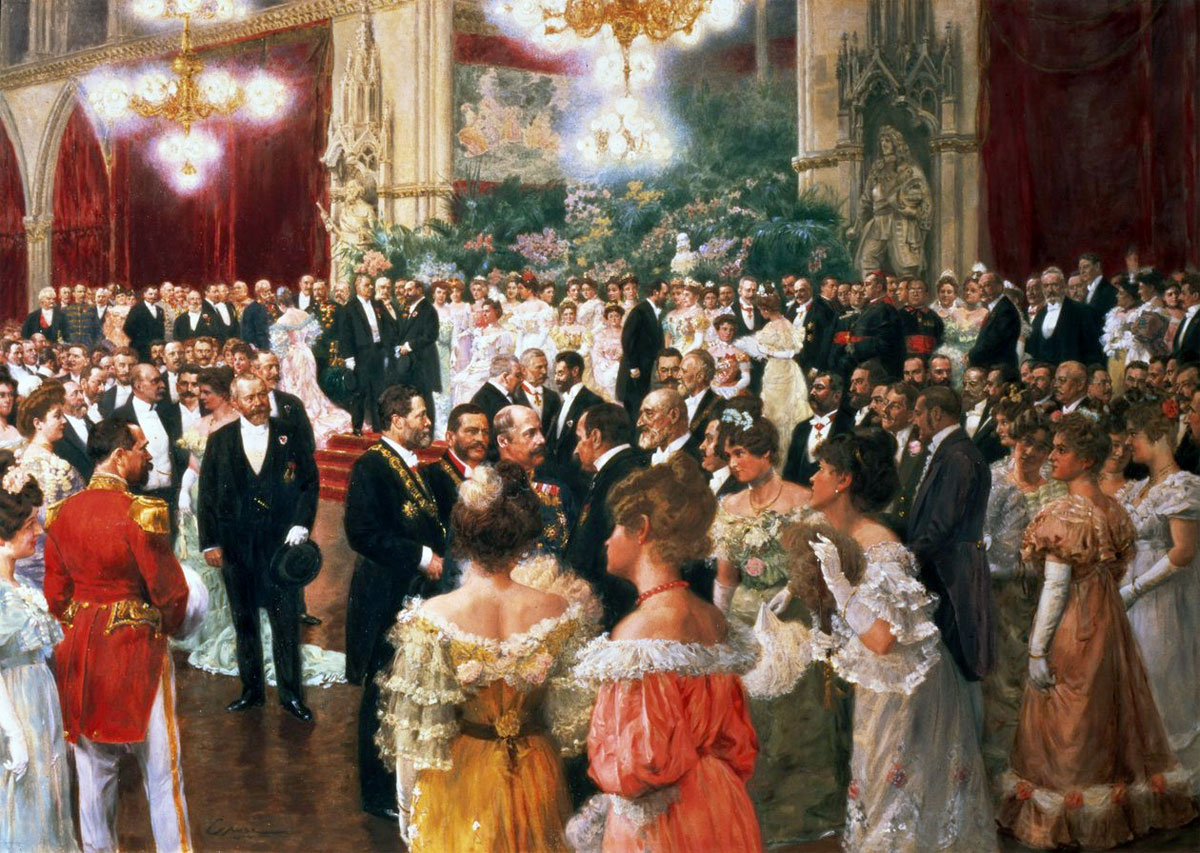
 

Wilhelm Gause (Germany 1853-1916) 'Vienna Municipal Ball' 1904


Wilhelm Gause (Germany 1853-1916)
Vienna Municipal Ball
1904
Watercolour and oil on cardboard
62 x 88cm
Wien Museum, Vienna
Commissioned by the City of Vienna, 1904


Stylish, provocative, rebellious, and unforgettable – the world has seen nothing like Vienna in 1900. A century ago, a group of radical young artists, architects, writers, musicians, designers and thinkers overturned all the rules and created a brave new world. Gustav Klimt, Egon Schiele, Josef Hoffmann and Adolf Loos were central to this artistic revolution which transformed Vienna into a dynamic metropolis at the forefront of ground-breaking modernism.

Vienna at the dawn of the twentieth century was opulent, elegant and daring. Casting aside outmoded social mores and moralities, private life became public spectacle. Cabarets, coffee houses, and nightclubs teemed with radical debate and artistic abandon. Gustav Klimt’s society portraits immortalise the chic women who presided over this creative ferment. Josef Hoffmann and the Vienna Workshops created the bold new interior design and the household objects with which these women furnished their elegant homes, establishing the modern ‘look’. As Sigmund Freud defined sexual fragmentation and erotic obsession for a new millennium, Egon Schiele explored human sexuality in images of unparalleled and startling frankness.

Vienna: Art & Design will explore this extraordinary period of artistic and intellectual genius, bringing together more than 250 works of art, including painting, drawing, graphic and decorative art, furniture, fashion, jewellery and photography, most never before seen in Australia. Visitors will experience the inventiveness and brilliance of a unique generation who laid the foundations for life in the twentieth century – a legacy still vividly alive today.

Text from the National Gallery of Victoria website Nd [Online] Cited 22/07/2022
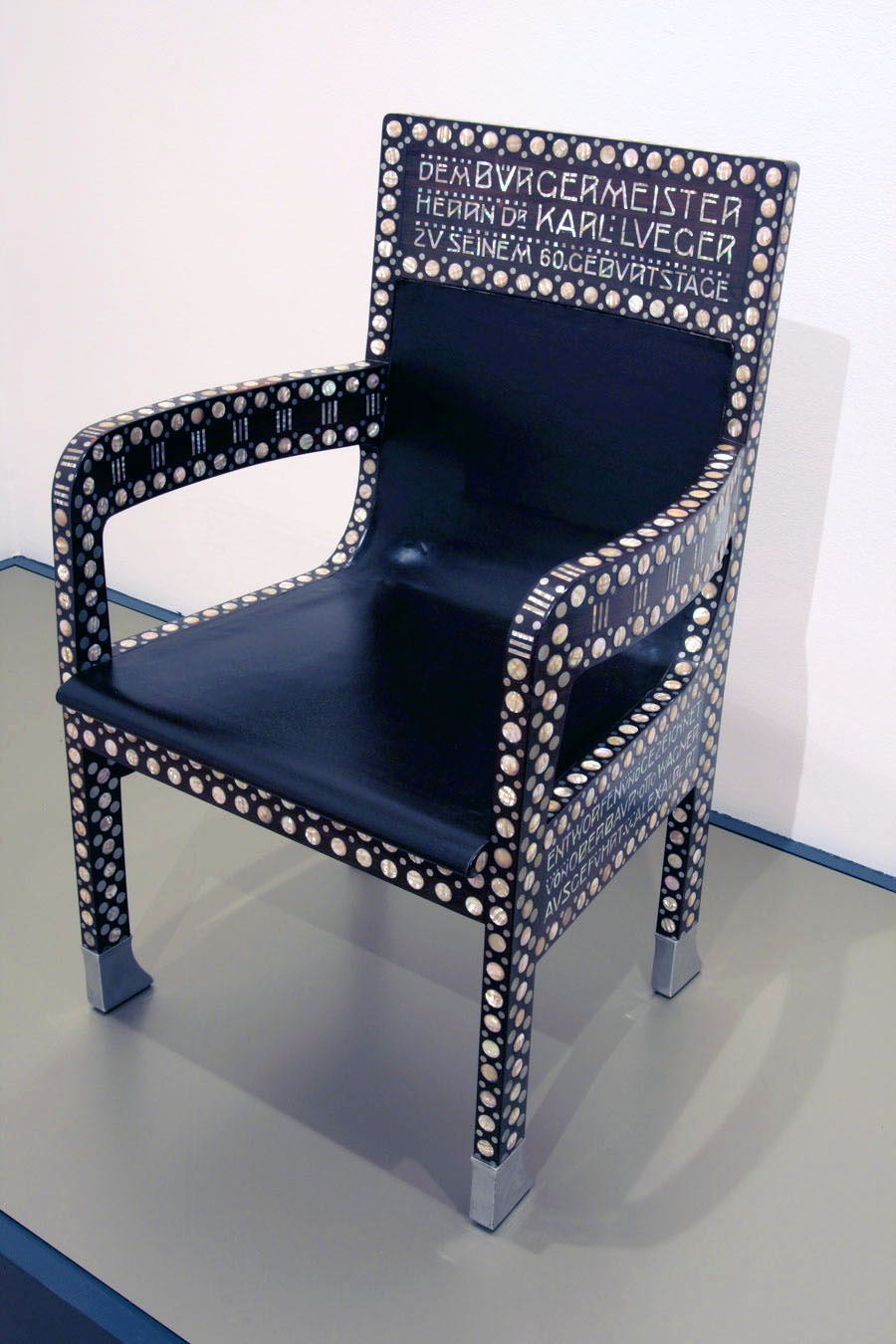
 

Otto Wagner (Austrian, 1841-1918)(architect) Alexander Albert (Austria active c. 1904) (manufacturer) 'Chair for Dr Karl Lueger' 1904


Otto Wagner (Austrian, 1841-1918) (architect)
Alexander Albert (Austria active c. 1904) (manufacturer)
Chair for Dr Karl Lueger
1904
Rosewood (Dalbergia sp.), mother-of-pearl, leather
98.5 x 63 x 59.5cm
Wien Museum, Vienna
Estate of Karl Lueger, 1910
Photo: Marcus Bunyan


Josef Hoffmann (Austrian, 1870-1956) (designer) J. & J. Kohn, Vienna (manufacturer) 'Adjustable-back chair' (Sitzmaschine) 1908


Josef Hoffmann (Austrian, 1870-1956) (designer)
J. & J. Kohn, Vienna (manufacturer)
Adjustable-back chair (Sitzmaschine)
1908
Ebonised Beech (Fagus sp.), plywood, steel
(a-b) 110.8 x 68.1 x 83.7cm (overall)
National Gallery of Victoria, Melbourne
Purchased through The Art Foundation of Victoria with the assistance of Jardine Matheson Australia, Fellow, 1983
© Estate of Josef Hoffmann


Josef Hoffmann (Austrian, 1870-1956) (designer) Wiener Werkstätte, Vienna (commissioning workshop) J. Soulek, Vienna (manufacturer) 'Bureau, from the Gallia apartment boudoir' 1913


Josef Hoffmann (Austrian, 1870-1956) (designer)
Wiener Werkstätte, Vienna (commissioning workshop)
J. Soulek, Vienna (manufacturer)
Bureau, from the Gallia apartment boudoir
1913
Painted wood, gilt, glass, silk, brass
(a-m) 179.4 x 110.9 x 64.6cm (overall)
National Gallery of Victoria, Melbourne
Samuel E. Wills Bequest, 1976
© Estate of Josef Hoffmann


Otto Wagner (Austria 1841-1918) (architect) Reconstruction of facade for 'Die Zeit' 1902 designed, 1985 made


Otto Wagner (Austria 1841-1918) (architect)
Reconstruction of facade for Die Zeit (installation view)
1902 designed, 1985 made
Iron, aluminium, nickel-plated iron, glass
450 x 332cm
Wien Museum, Vienna
Commissioned by the Historisches Museum der Stadt Wien, 1985
Photo: Marcus Bunyan


Otto Wagner (Austria 1841-1918) (architect) Reconstruction of facade for 'Die Zeit' 1902 designed, 1985 made (installation detail)


Otto Wagner (Austria 1841-1918) (architect)
Reconstruction of facade for Die Zeit (installation detail)
1902 designed, 1985 made
Iron, aluminium, nickel-plated iron, glass
450 x 332cm
Wien Museum, Vienna
Commissioned by the Historisches Museum der Stadt Wien, 1985
Photo: Marcus Bunyan


Otto Wagner objects including shelving, stool, chair and hot air blower (rear) in the exhibition 'Vienna - Art & Design' at the National Gallery of Victoria


Otto Wagner objects including shelving, stool, chair and hot air blower (rear) in the exhibition Vienna – Art & Design at the National Gallery of Victoria
Photo: Marcus Bunyan


Gustav Klimt (Austria 1862-1918) 'The Park' 1909 (installation detail)


Gustav Klimt (Austria 1862-1918)
The Park (installation detail)
1909
Oil on canvas
Photo: Marcus Bunyan
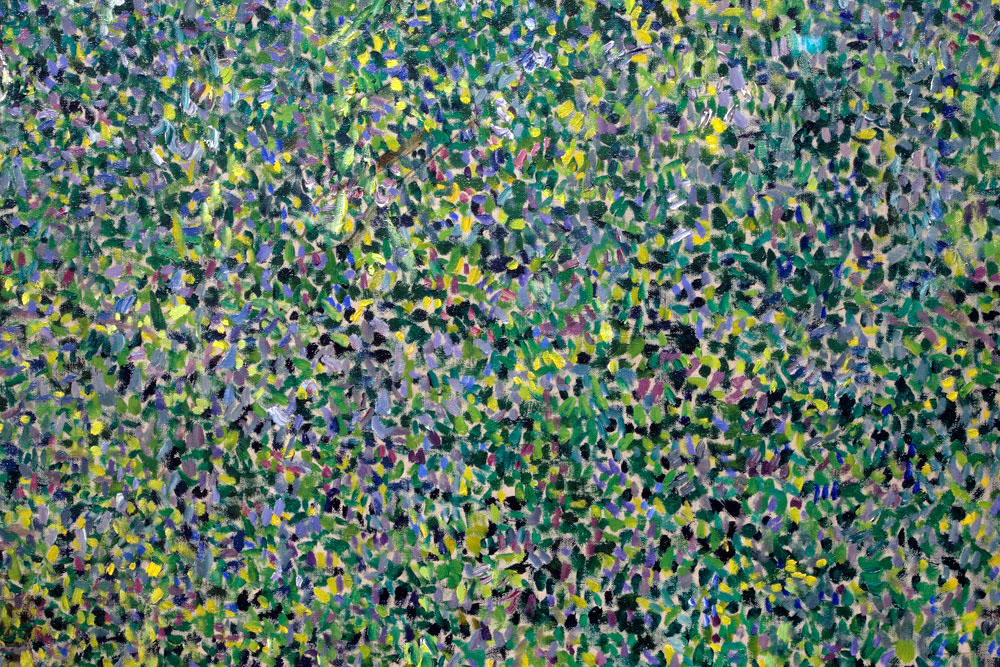
 

Gustav Klimt (Austria 1862-1918) The Park' 1909 (installation detail)


Gustav Klimt (Austria 1862-1918)
The Park (installation detail)
1909
Oil on canvas
Photo: Marcus Bunyan


Installation view part of the second room of the exhibition 'Vienna - Art & Design' at the National Gallery of Victoria


Installation view part of the second room of the exhibition Vienna – Art & Design at the National Gallery of Victoria
Photo: Marcus Bunyan


Wilhelm Otto List. 'Young lady in black and white' 1904 (installation detail)


Wilhelm Otto List
Young lady in black and white (installation detail)
1904
Oil on canvas
Photo: Marcus Bunyan
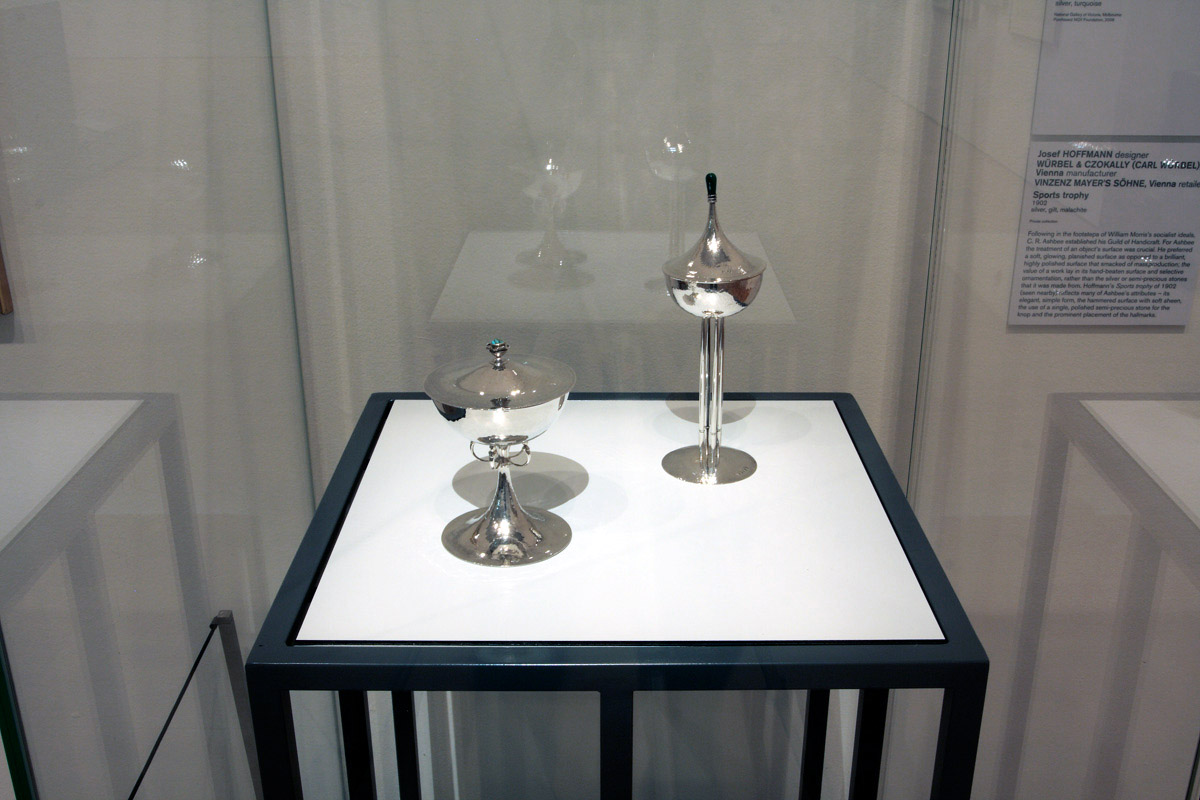
 

Charles Robert Ashbee (designer) 'Standing cup and cover' 1901 and Josef Hoffmann. 'Sports Trophy' 1902 (installation view)


Charles Robert Ashbee (designer) (British, 1863-1942)
Standing cup and cover (installation view)
1901
Silver, turqoise

Josef Hoffmann (designer) (Austria-Hungary 1870-1956)
Sports Trophy (installation view)
1902
Silver, gilt, malachite
Photo: Marcus Bunyan
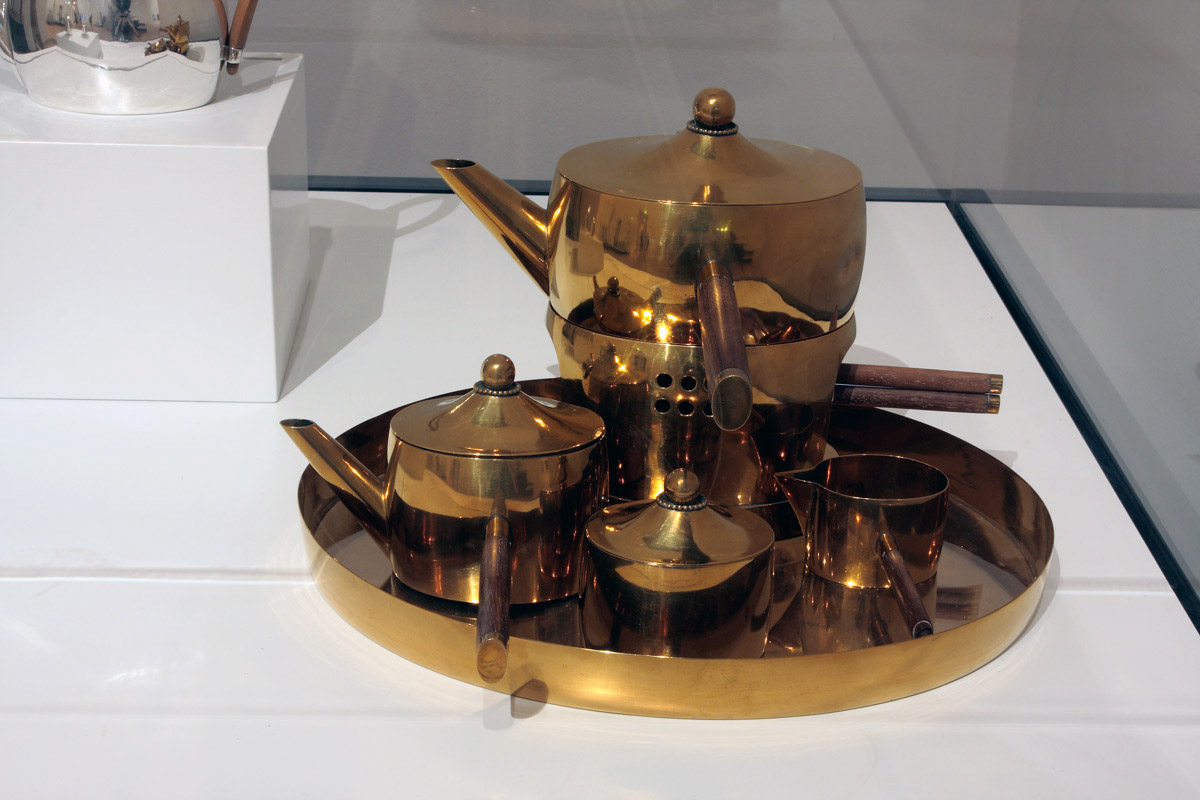
 

Josef Hoffmann (Austria-Hungary 1870-1956) (designer) Wiener Werkstätte, Vienna (manufacturer) (Austria-Hungary 1903-1932) 'Tea service' (c. 1909-1911) (installation view)


Josef Hoffmann (Austria-Hungary 1870-1956) (designer)
Wiener Werkstätte, Vienna (manufacturer) (Austria-Hungary 1903-1932)
Tea service (installation view)
c. 1909-1911
Silver-gilt, wood
(1.A-E) 21.5 x 29.0 x 26.8cm (overall) (kettle, stand and burner)
(2) 10.8 x 15.4 x 20.2cm (teapot)
(3.A-B) 8.7 x 8.8 x 6.8cm (overall) (sugar basin and lid)
(4) 4.8 x 8.5 x 15.6cm (milk jug)
(5) 3.4 x 36.3 x 29.9cm (tray)
National Gallery of Australia, Canberra
Purchased, 1985
Photo: Marcus Bunyan


Installation view of room three of the exhibition 'Vienna - Art & Design' at the National Gallery of Victoria showing part of Gustave Klimt's 'Beethoven Frieze: Central wall' 1901-02 (detail at top)


Installation view of room three of the exhibition Vienna – Art & Design at the National Gallery of Victoria showing part of Gustave Klimt’s Beethoven Frieze: Central wall 1901-1902 (detail at top)
Photo: Marcus Bunyan


Max Klinger (German, 1857-1920) 'Beethoven' c. 1902 (installation view)


Max Klinger (German, 1857-1920)
Beethoven (installation view)
c. 1902
Plaster
Photo: Marcus Bunyan


Installation view of room four of the exhibition 'Vienna - Art & Design' at the National Gallery of Victoria


Installation view of room four of the exhibition Vienna – Art & Design at the National Gallery of Victoria with at right, Gustav Klimt’s painting Emilie Flöge (1902)
Photo: Marcus Bunyan
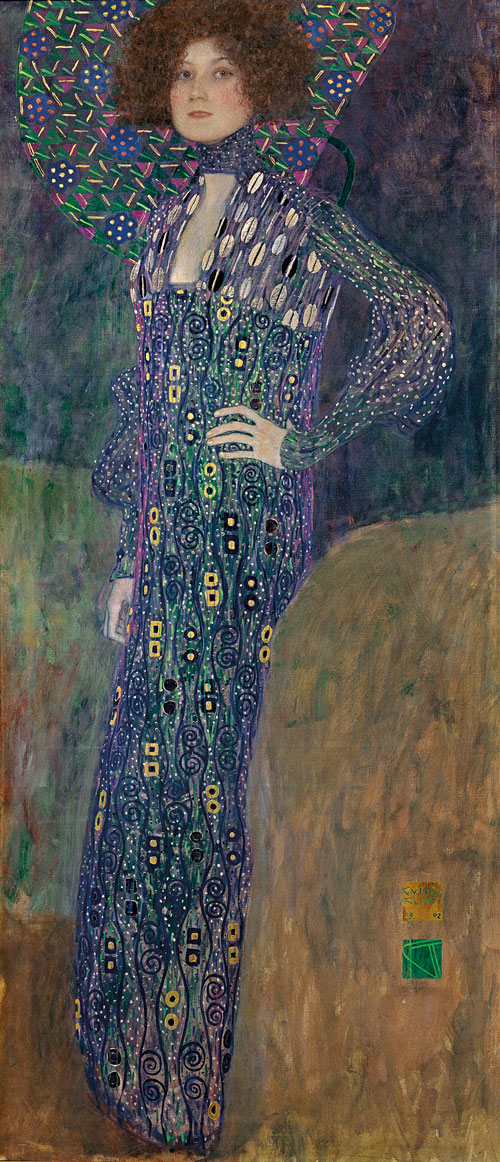
 

Gustav Klimt (Austria 1862-1918) 'Emilie Flöge' 1902


Gustav Klimt (Austrian, 1862-1918)
Emilie Flöge
1902
Oil on canvas
178.0 x 80.0cm
Wien Museum, Vienna


Gustav Klimt (Austria 1862-1918) 'Emilie Flöge' 1902 (installation detail)


Gustav Klimt (Austrian, 1862-1918)
Emilie Flöge (installation detail)
1902
Oil on canvas
178.0 x 80.0cm
Wien Museum, Vienna
Photo: Marcus Bunyan


Installation view of room five of the exhibition 'Vienna - Art & Design' at the National Gallery of Victoria


Installation view of room five of the exhibition Vienna – Art & Design at the National Gallery of Victoria
Photo: Marcus Bunyan


Koloman Moser (designer) 'Armchair' 1903 and Josef Hoffmann (designer) 'Collapsible library steps' 1905 (installation view)


Installation view of first room of the exhibition Vienna – Art & Design at the National Gallery of Victoria showing at right:

Koloman Moser (Austrian, 1868-1918) (designer)
Armchair (installation view)
1903
Painted beech

at second right

Josef Hoffmann (Austrian, 1870-1956) (designer)
Collapsible library steps (installation view)
1905
Photo: Marcus Bunyan
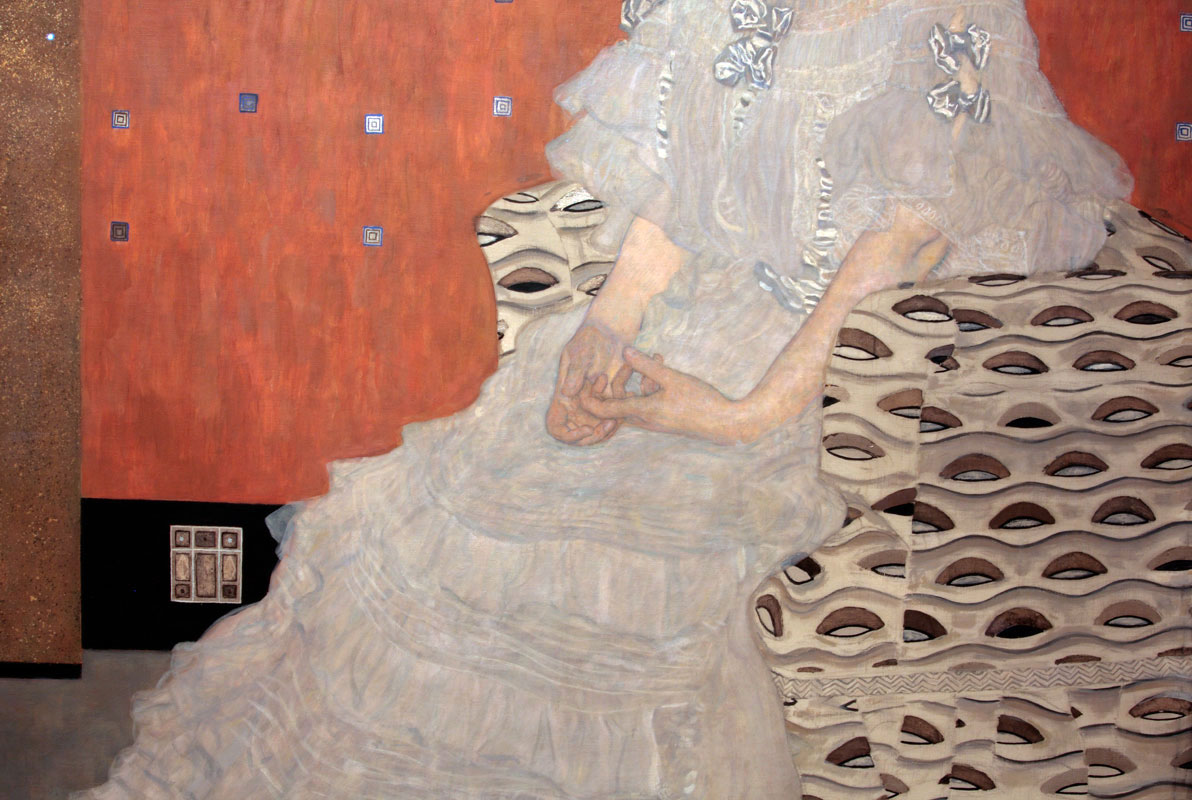
 

Gustav Klimt (Austria 1862-1918) 'Fritza Riedler' 1906 (installation detail)


Gustav Klimt (Austrian, 1862-1918)
Fritza Riedler (installation detail)
1906
Oil on canvas
Photo: Marcus Bunyan


Gustav Klimt (Austria 1862-1918) 'Fritza Riedler' 1906


Gustav Klimt (Austrian, 1862-1918)
Fritza Riedler
1906
Oil on canvas
152.0 x 134.0cm
Belvedere, Vienna


Installation view of room six of the exhibition 'Vienna - Art & Design' at the National Gallery of Victoria

Installation view of room six of the exhibition 'Vienna - Art & Design' at the National Gallery of Victoria


Installation views of room six of the exhibition Vienna – Art & Design at the National Gallery of Victoria
Photos: Marcus Bunyan
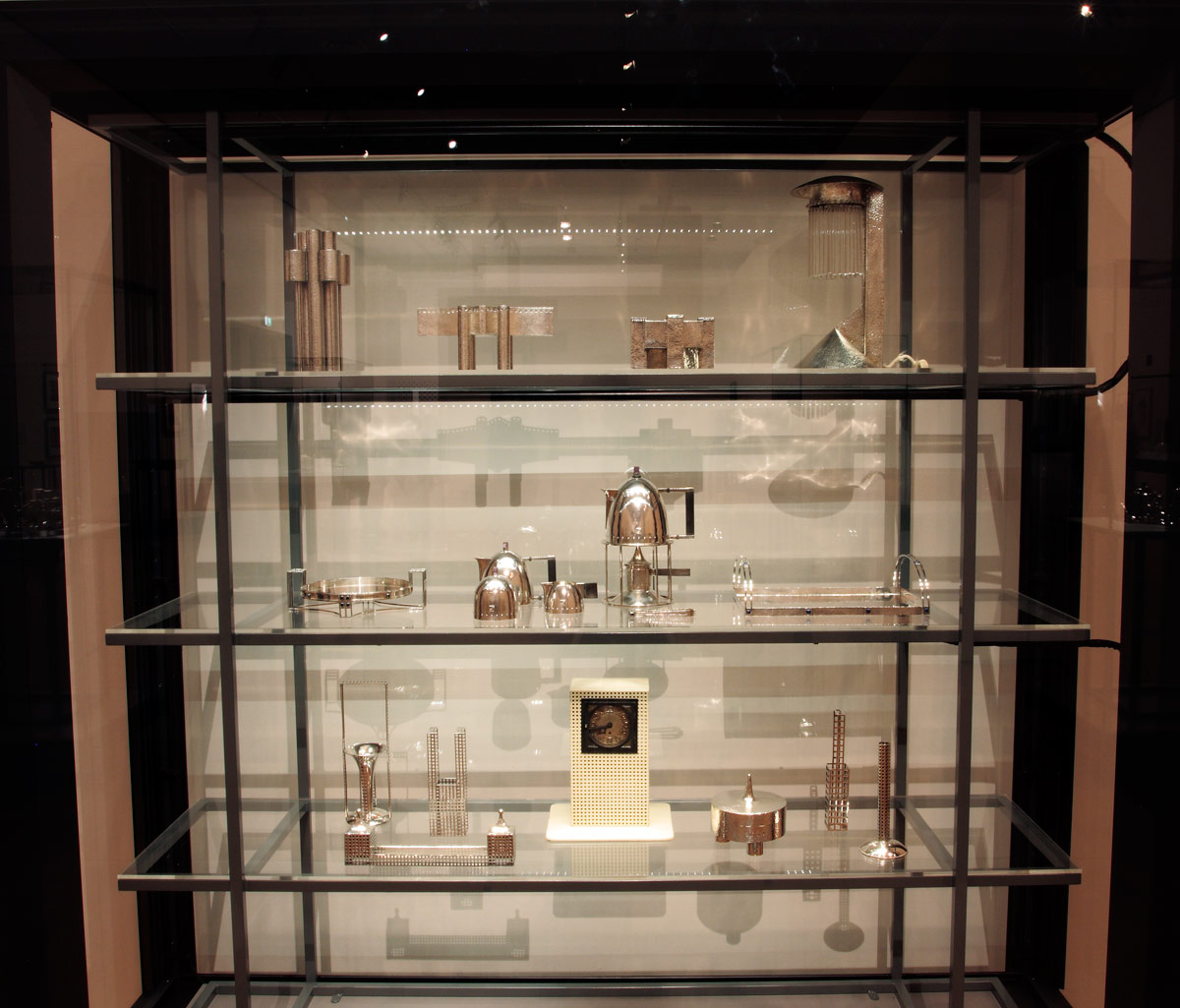
 

Josef Hoffmann (Austrian, 1870-1956) 'Tea and coffee service' 1909 (installation view)


Josef Hoffmann (Austrian, 1870-1956)
Tea and coffee service (installation view)
1909
Silver, ivory
Photo: Marcus Bunyan
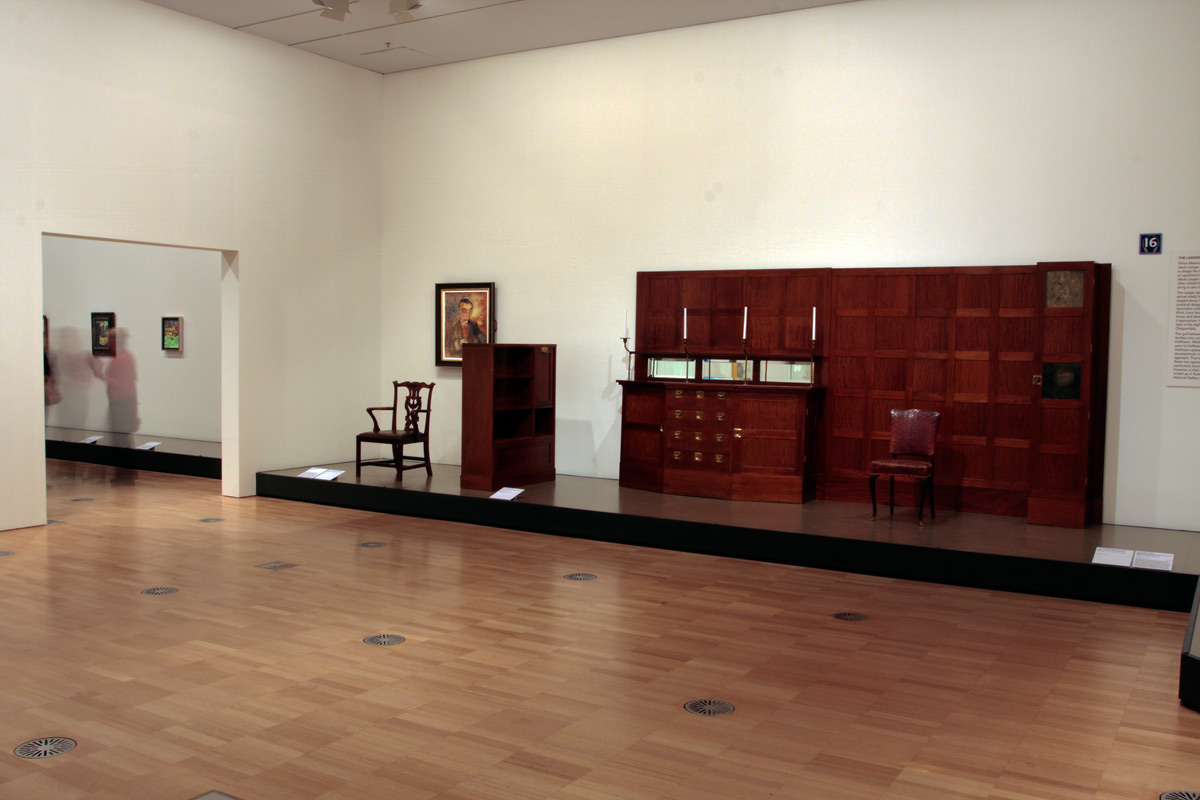
 

Installation view of room seven of the exhibition 'Vienna - Art & Design' at the National Gallery of Victoria showing Adolf Loos (Austrian, 1870-1933) (designer) 'Sideboard, from the Langer apartment' 1903


Installation view of room seven of the exhibition Vienna – Art & Design at the National Gallery of Victoria with, against the wall,

Adolf Loos (Austrian, 1870-1933) (designer)
Sideboard, from the Langer apartment
1903
Mahogany (Swietenia sp.), mirror, brass
Photo: Marcus Bunyan


Adolf Loos (Austrian, 1870-1933) (designer) Johann Heeg (manufacturer) 'Clock' 1906-1907


Adolf Loos (Austrian, 1870-1933) (designer)
Johann Heeg (manufacturer)
Clock
1906-1907
Brass, glass, clock mechanism, enamel paint, steel
(a-b) 42.7 x 43.0 x 32.7cm (overall) (c) 7.4 x 5.5 x 0.8cm (key)
National Gallery of Victoria, Melbourne
Purchased through The Art Foundation of Victoria with the assistance of Waltons Limited, Fellow, 1987


Installation view of room seven of the exhibition 'Vienna - Art & Design' at the National Gallery of Victoria


Installation view of room seven of the exhibition Vienna – Art & Design at the National Gallery of Victoria
Photo: Marcus Bunyan


Ferdinand Andri (Austrian, 1871-1956) 'The Gallia children' 1901 (installation view)


Ferdinand Andri (Austrian, 1871-1956)
The Gallia children (installation view)
1901
Oil on canvas

with Josef Hoffmann furniture in the foreground
Photo: Marcus Bunyan
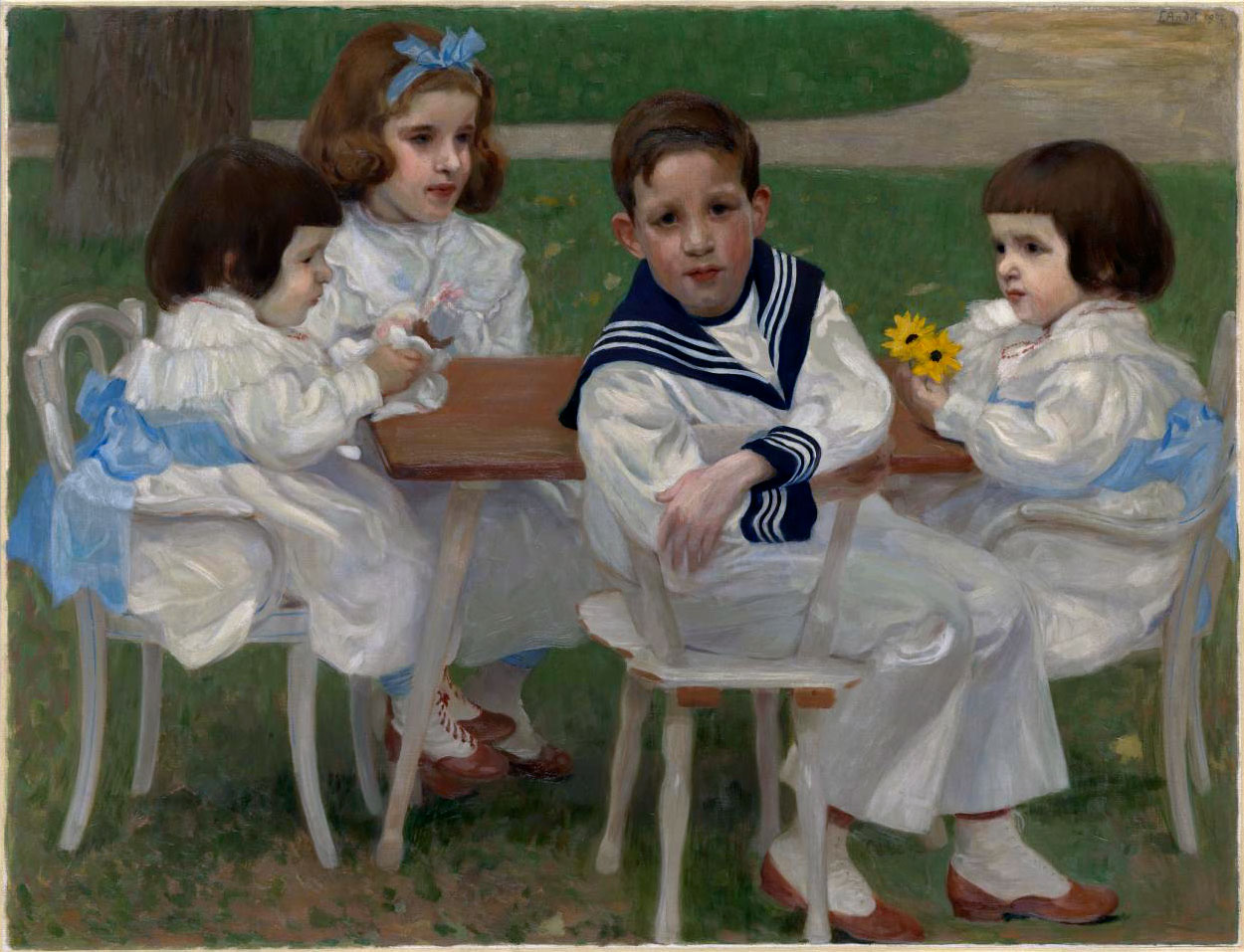
 

Ferdinand Andri (Austrian, 1871-1956) 'The Gallia children' 1901


Ferdinand Andri (Austrian, 1871-1956)
The Gallia children
1901
Oil on canvas
100.4 × 130.8cm
National Gallery of Victoria, Melbourne
Presented by the family of Moriz and Hermine Gallia, 1976
© the artist’s estate


Gustave Klimt (Austrian, 1862-1918) 'Portrait of Hermine Gallia' 1904 (installation view detail)


Gustave Klimt (Austrian, 1862-1918)
Portrait of Hermine Gallia (installation view detail)
1904
Oil on canvas
Photo: Marcus Bunyan


Pieces of Josef Hoffmann and Koloman Mosser silver in the exhibition 'Vienna - Art & Design' at the National Gallery of Victoria


Pieces of Josef Hoffmann and Koloman Mosser silver in the exhibition Vienna – Art & Design at the National Gallery of Victoria
Photo: Marcus Bunyan

Love the reflected light!


Installation view of room eight of the exhibition 'Vienna - Art & Design' at the National Gallery of Victoria

Installation view of room eight of the exhibition 'Vienna - Art & Design' at the National Gallery of Victoria


Installation views of room eight of the exhibition Vienna – Art & Design at the National Gallery of Victoria
Photos: Marcus Bunyan


Objects by Dagobert Peche (left, right and second right) and Josef Hoffmann in the exhibition 'Vienna - Art & Design' at the National Gallery of Victoria


Objects by Dagobert Peche (left, right and second right) and Josef Hoffmann in the exhibition Vienna – Art & Design at the National Gallery of Victoria
Photo: Marcus Bunyan


Egon Schiele (Austria 1890-1918) 'Portrait of a boy (Portrait of Herbert Rainer aged approximately six)' 1910 (installation detail)


Egon Schiele (Austrian, 1890-1918)
Portrait of a boy (Portrait of Herbert Rainer aged approximately six (installation detail)
1910
Oil on canvas
Photo: Marcus Bunyan
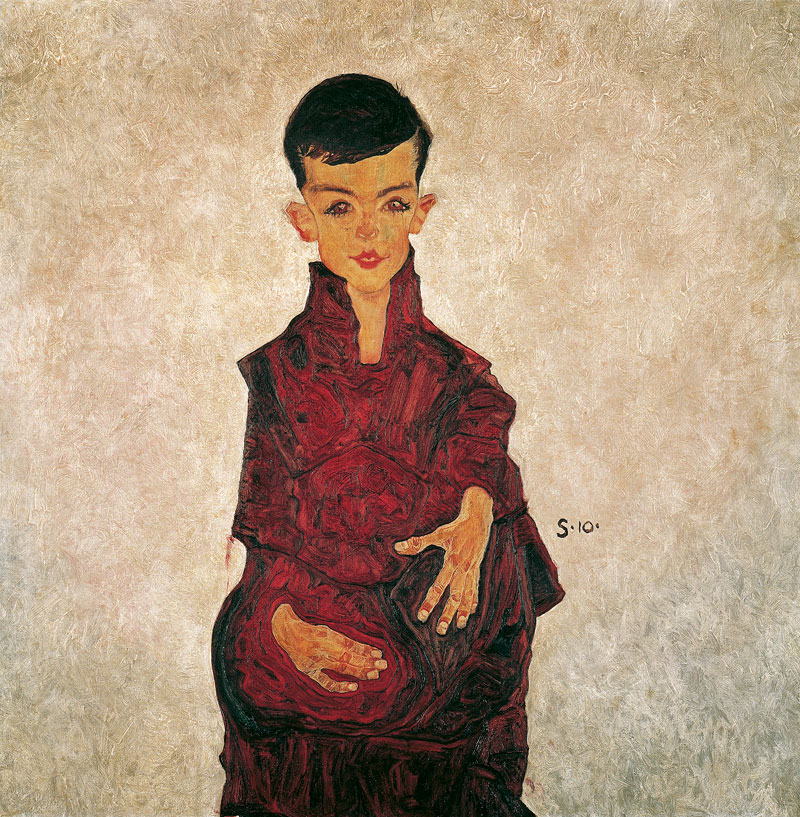
 

Egon Schiele (Austria 1890-1918) 'Portrait of a boy (Portrait of Herbert Rainer aged approximately six)' 1910


Egon Schiele (Austrian, 1890-1918)
Portrait of a boy (Portrait of Herbert Rainer aged approximately six)
1910
Oil on canvas
101.0 x 101.5cm
Belvedere, Vienna


NGV International
180 St Kilda Road

Opening hours:
Daily 10am – 5pm

National Gallery of Victoria website

LIKE ART BLART ON FACEBOOK

Back to top

Exhibition: ‘Kurt Kranz: Programming of Beauty’ at the Bauhaus Dessau, Berlin

Exhibition marking the 100th birthday of Kurt Kranz
19th November 2010 – 29th May 2011


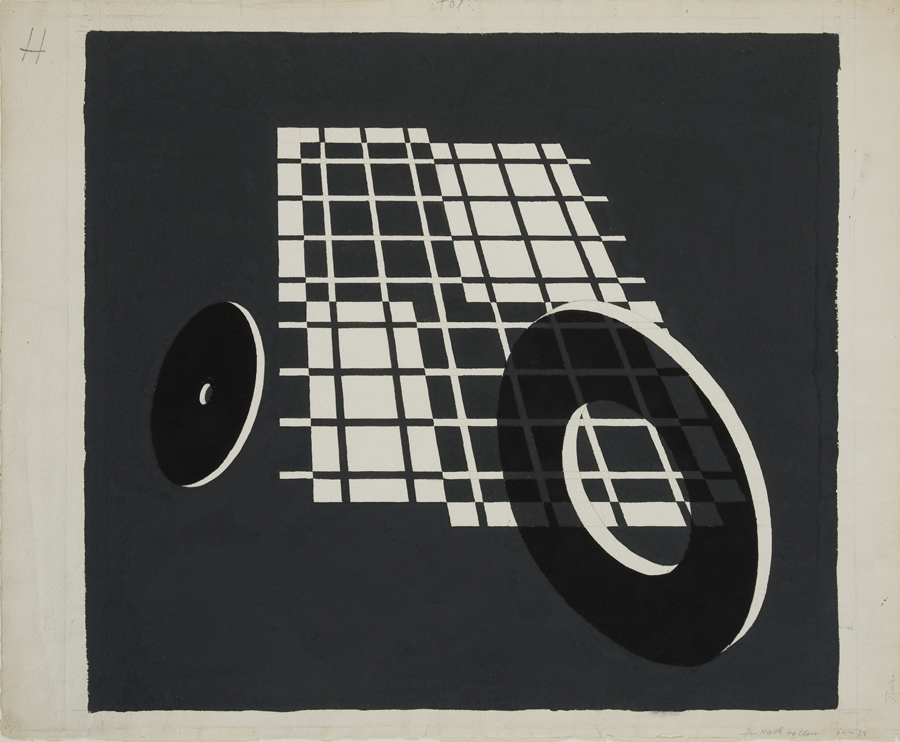
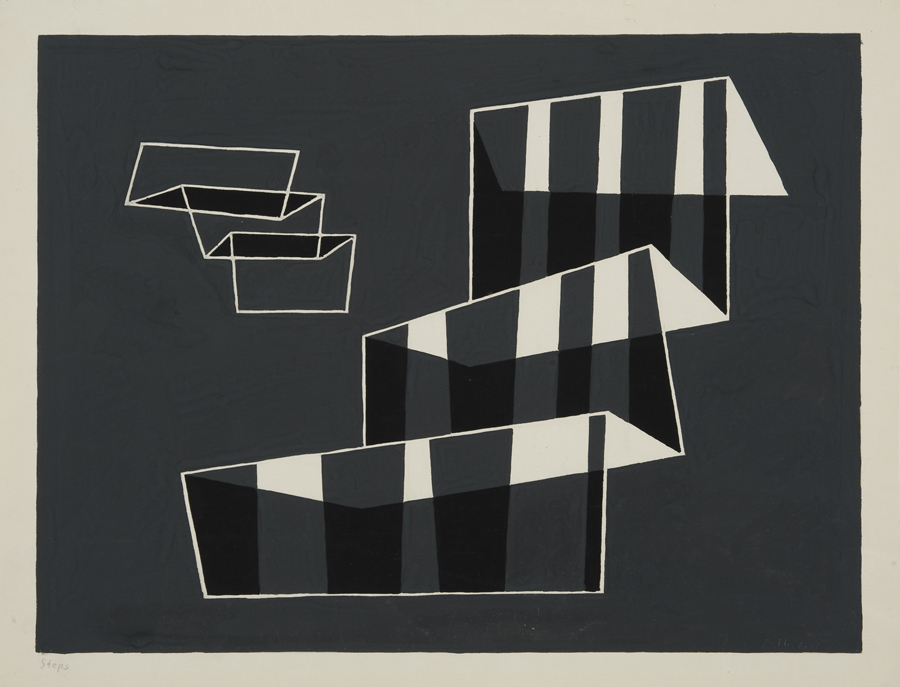
Kurt Kranz (German, 1910-1997) 'Perspective' 1931


Kurt Kranz (German, 1910-1997)
Perspective
1931
Ingrid Kranz / Stiftung Bauhaus Dessau
Foto: Lars Lohrisch / Abdruck mit Genehmigung der Kunsthalle


One of the great pleasures of publishing this archive is that I get to research the life of an artist whose work I never knew before. Kurt Kranz is one such artist.

Dr Marcus Bunyan


Many thankx to the the Bauhaus Dessau for allowing me to publish the photographs in the posting. Please click on the photograph for a larger version of the image.


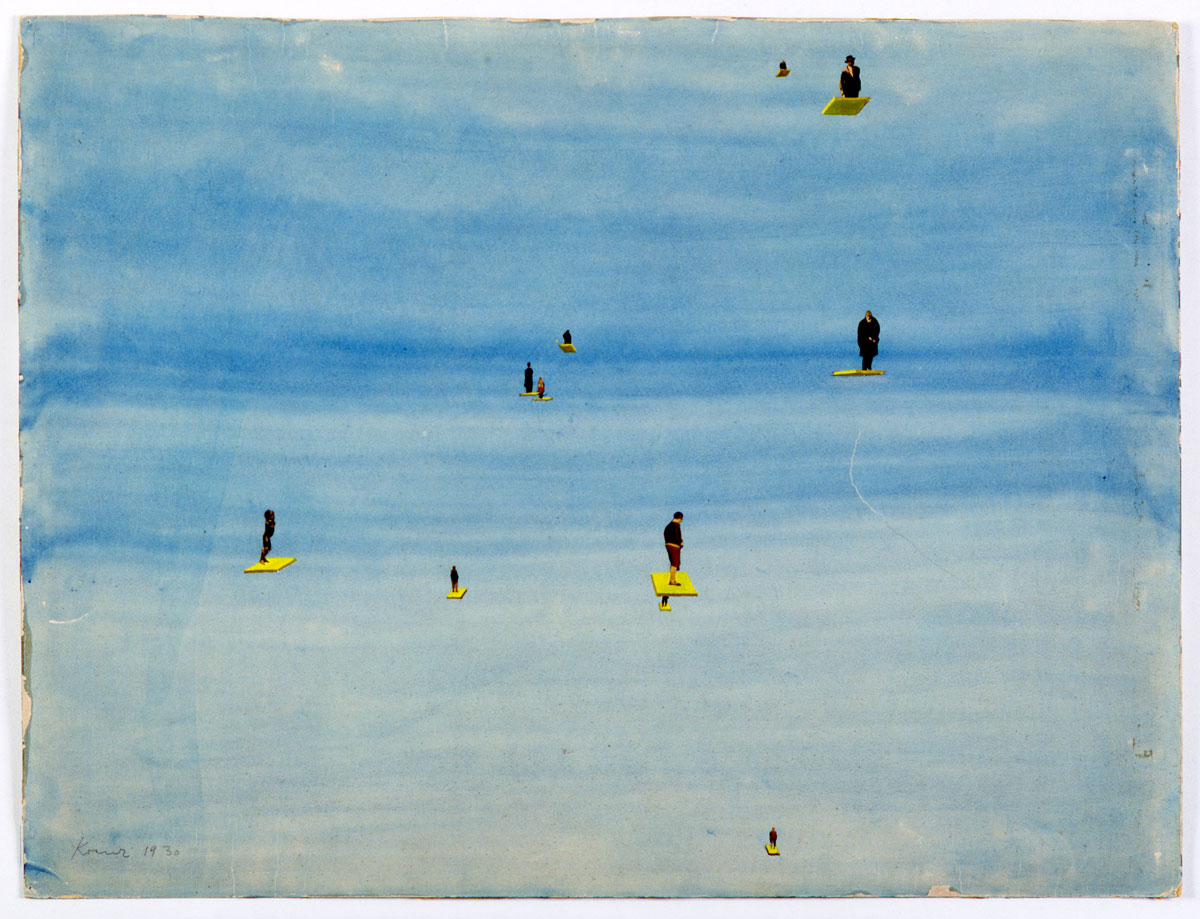
Kurt Kranz (German, 1910-1997) 'Vereinsamung' Dessau 1930


Kurt Kranz (German, 1910-1997)
Vereinsamung (Isolation)
Dessau
1930
Ingrid Kranz / Stiftung Bauhaus Dessau
Leihgeber: Kunsthalle Bremen


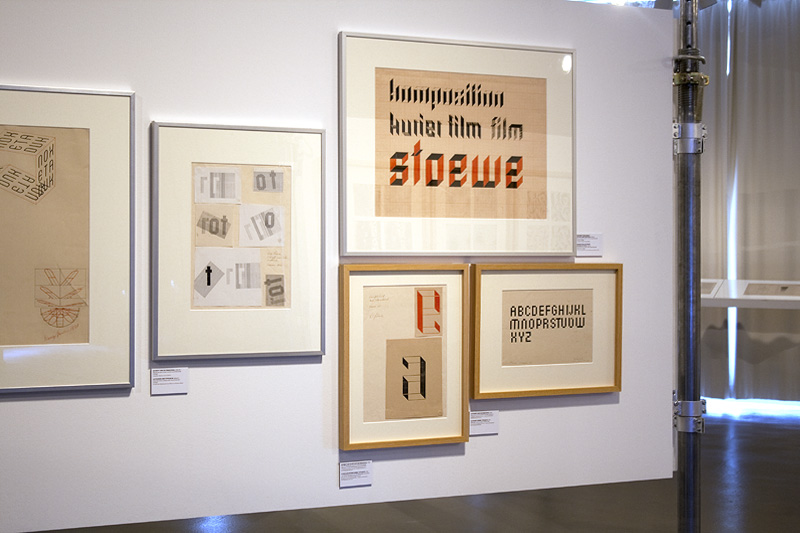
Installation photograph of 'Programming of Beauty' by Kurt Kranz at the Bauhaus Dessau


Installation photograph of Programming of Beauty by Kurt Kranz at the Bauhaus Dessau


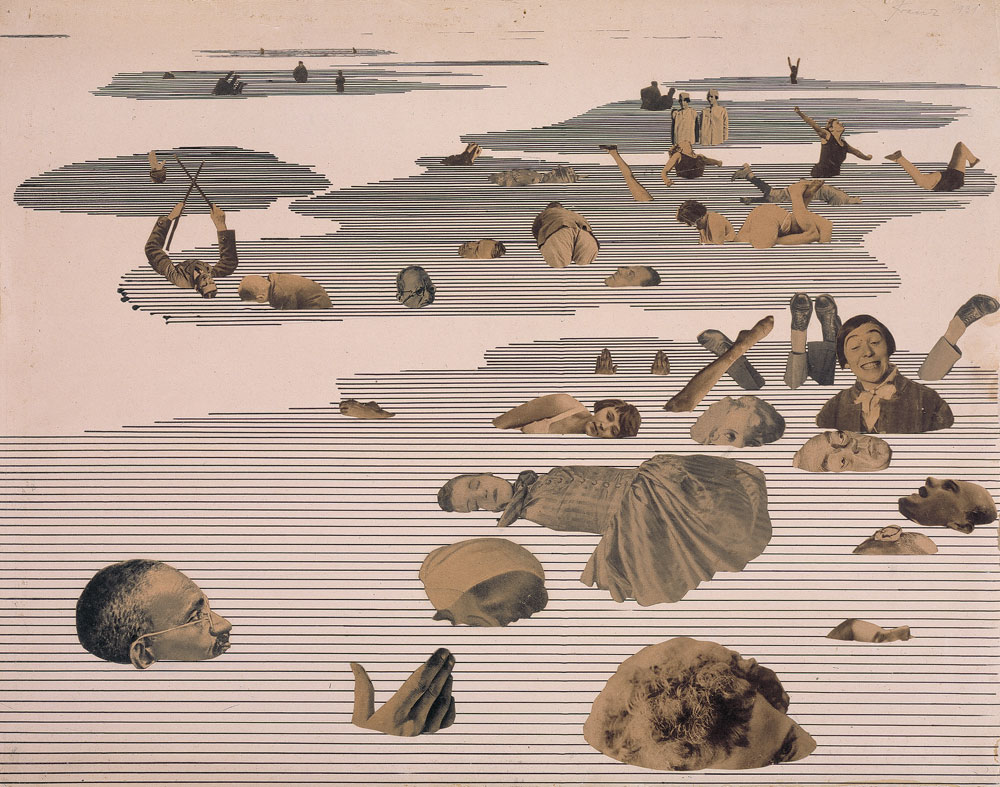
Kurt Kranz (German, 1910-1997) 'Versinkende' (Sinking one) 1931


Kurt Kranz (German, 1910-1997)
Versinkende (Sinking one)
1931
Ingrid Kranz / Stiftung Bauhaus Dessau


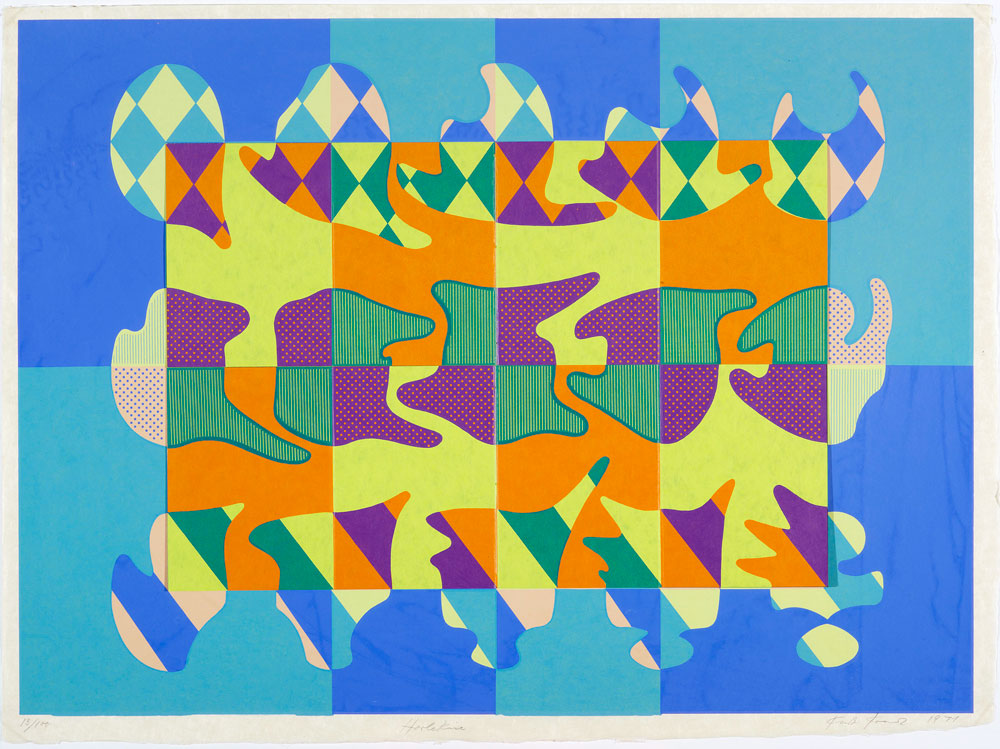
Kurt Kranz (German, 1910-1997) 'Persischer Garten' (Persian garden) 1970


Kurt Kranz (German, 1910-1997)
Persischer Garten (Persian garden)
1970
Ingrid Kranz / Stiftung Bauhaus Dessau
Foto: Uwe Jacobshagen


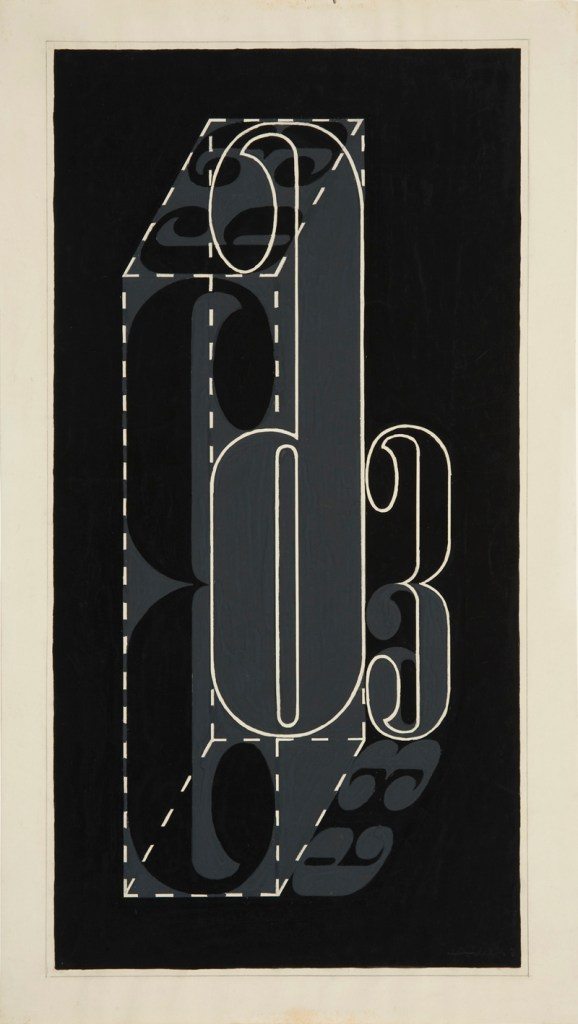
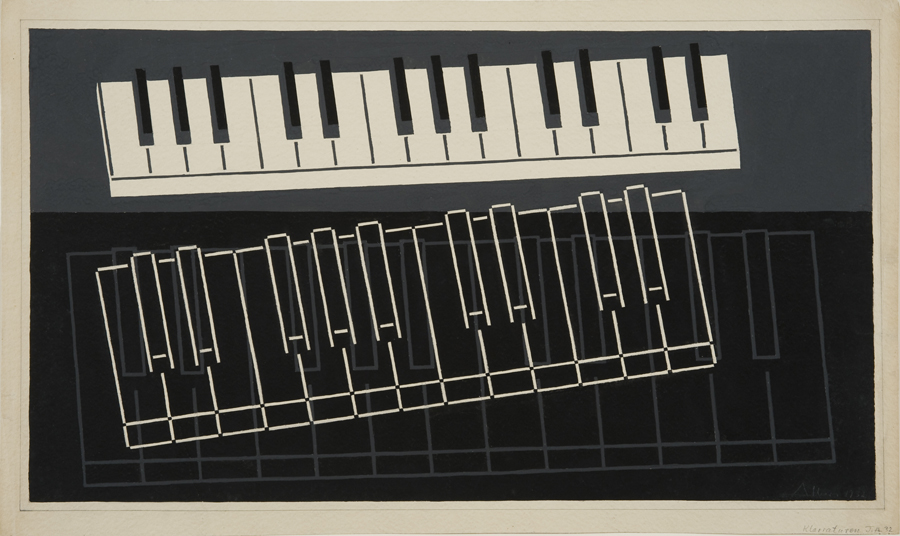
The Bauhaus Dessau dedicates a comprehensive exhibition to the painter, graphic designer and photographer Kurt Kranz to mark his 100th birthday. In 1930, the then twenty-year-old lithographer came from Bielefeld to study at the Bauhaus Dessau, where he soon established himself as a pioneer of serial and generative methods. With his avant-garde work, Kranz’s methods anticipated those of later generations.

Inspired by a lecture by László Moholy-Nagy, Kurt Kranz came to the Bauhaus Dessau in April 1930. In Walter Peterhans’s photography class, Kranz began to experiment with photographic techniques and created some of the most striking abstract picture series to emerge from the Bauhaus. Alienated and abstracted faces and hands appear repeatedly in his dynamic picture series. These show Kranz’s early affinity for film as, page for page, the abstract forms interact with one another. Kranz drafted his first concepts for abstract films at the Bauhaus, although he was first able to realise these decades later in 1972.

The exhibition to mark the artist’s 100th birthday shows works from Kranz’s Bauhaus years and his later work as an advertising graphic designer, and focuses on a selection of his large picture cycles. Strikingly diverse leporellos dating from the 1960s onwards take centre stage, as do the so-called “Matrix-und Schiebebilder”

Text from the Bauhaus Dessau website


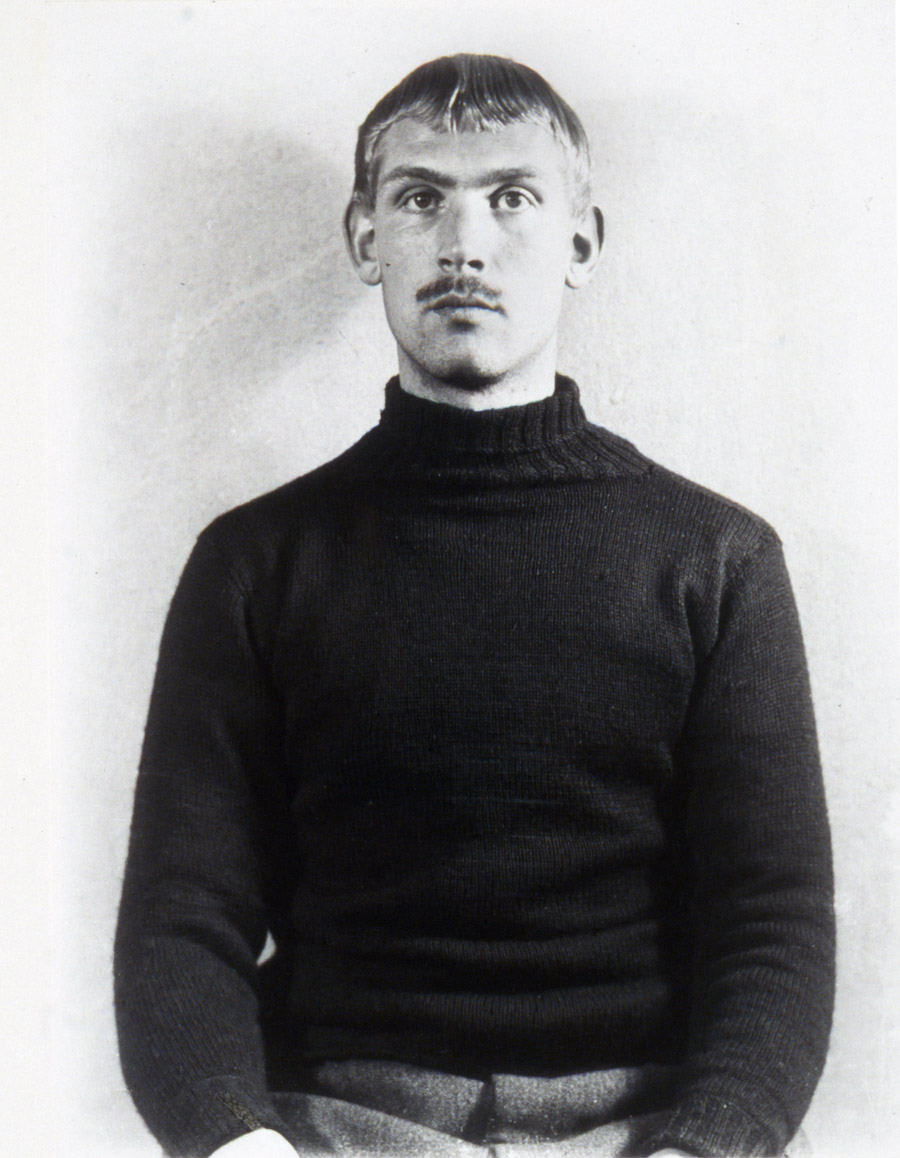
Kurt Kranz (German, 1910-1997) 'Selbstporträt en face (objektives Foto)' (Self-portrait with face (objective photo)) 1931


Kurt Kranz (German, 1910-1997)
Selbstporträt en face (objektives Foto) (Self-portrait with face (objective photo))
1931
Ingrid Kranz / Stiftung Bauhaus Dessau


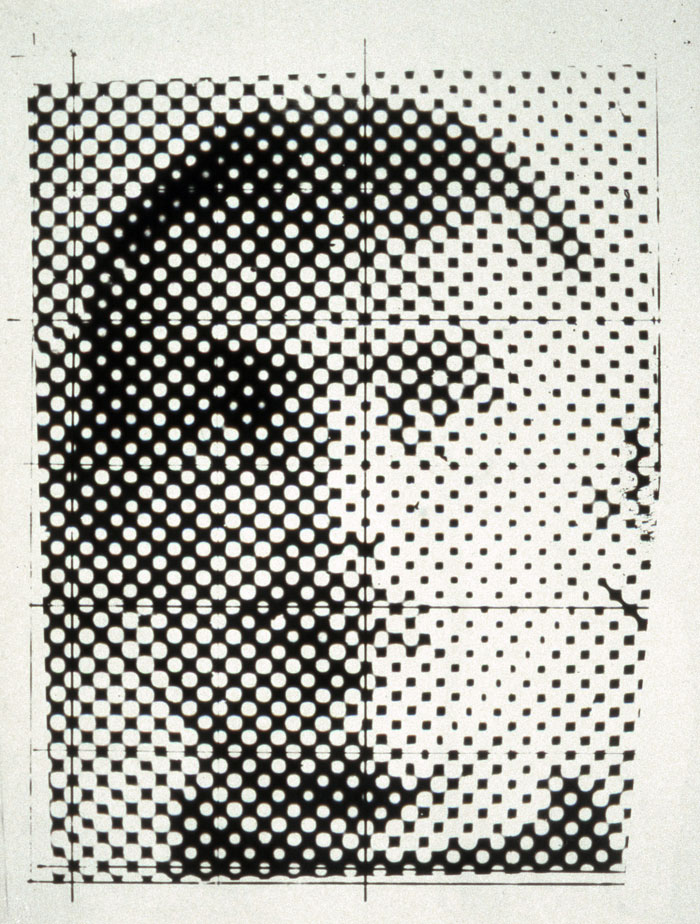
Kurt Kranz (German, 1910-1997) 'Rasterfoto' (Raster photograph) 1932


Kurt Kranz (German, 1910-1997)
Rasterfoto (Raster photograph)
1932
Ingrid Kranz / Stiftung Bauhaus Dessau


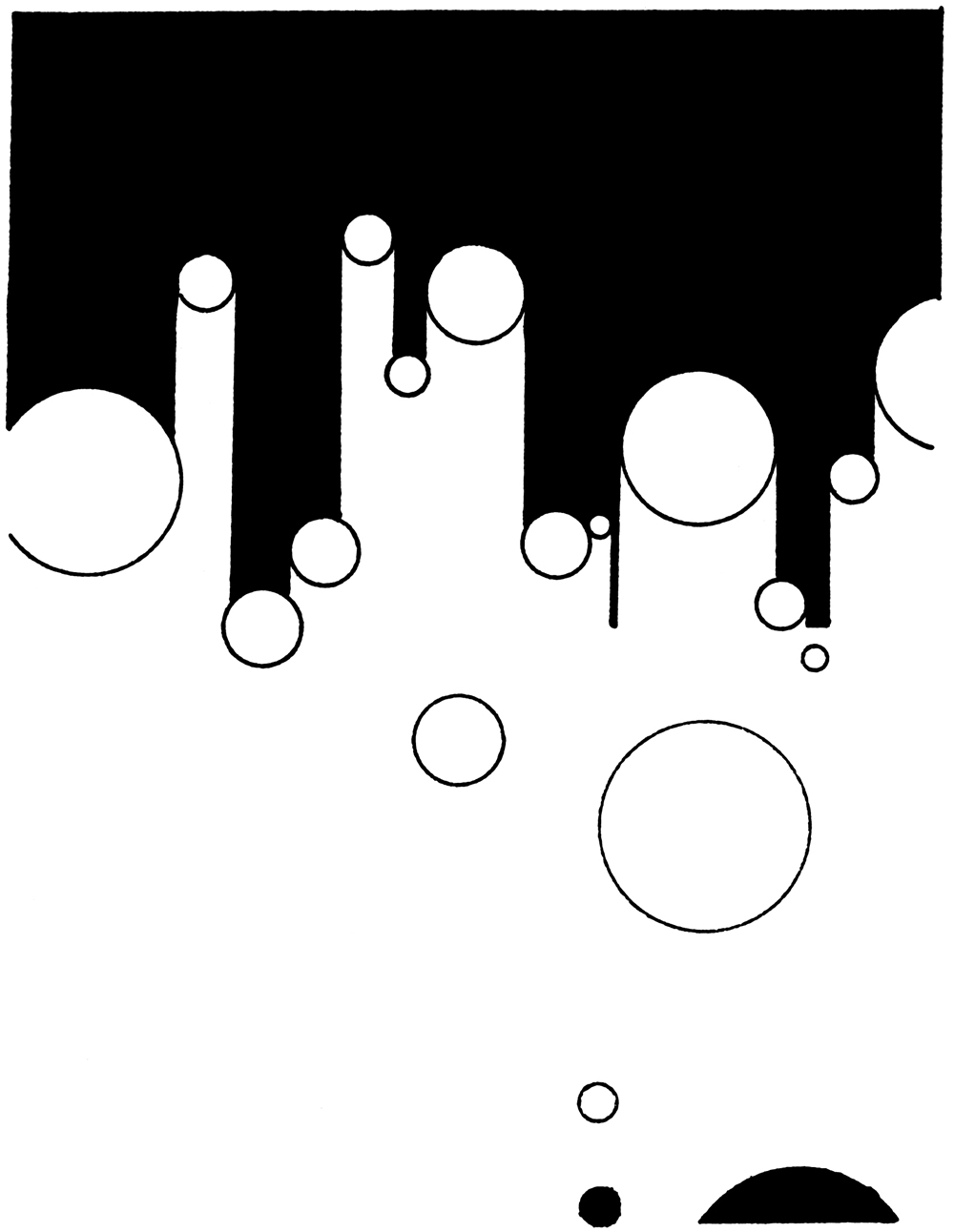
Kurt Kranz (German, 1910-1997) 'Schwarz : Weiß' (Black: White) 1928-29


Kurt Kranz (German, 1910-1997)
Schwarz: Weiß (Black: White)
1928-1929
Ingrid Kranz / Stiftung Bauhaus Dessau
Privatbesitz


Kurt Kranz (German, 1910-1997) 'Schwarz : Weiß' (Black: White) 1928-29


Kurt Kranz (German, 1910-1997)
Schwarz: Weiß (Black: White)
1928-1929
Ingrid Kranz / Stiftung Bauhaus Dessau
Privatbesitz


Kurt Kranz (German, 1910-1997) 'Schwarz : Weiß' (Black: White) 1928-29


Kurt Kranz (German, 1910-1997)
Schwarz: Weiß (Black: White)
1928-1929
Ingrid Kranz / Stiftung Bauhaus Dessau
Privatbesitz


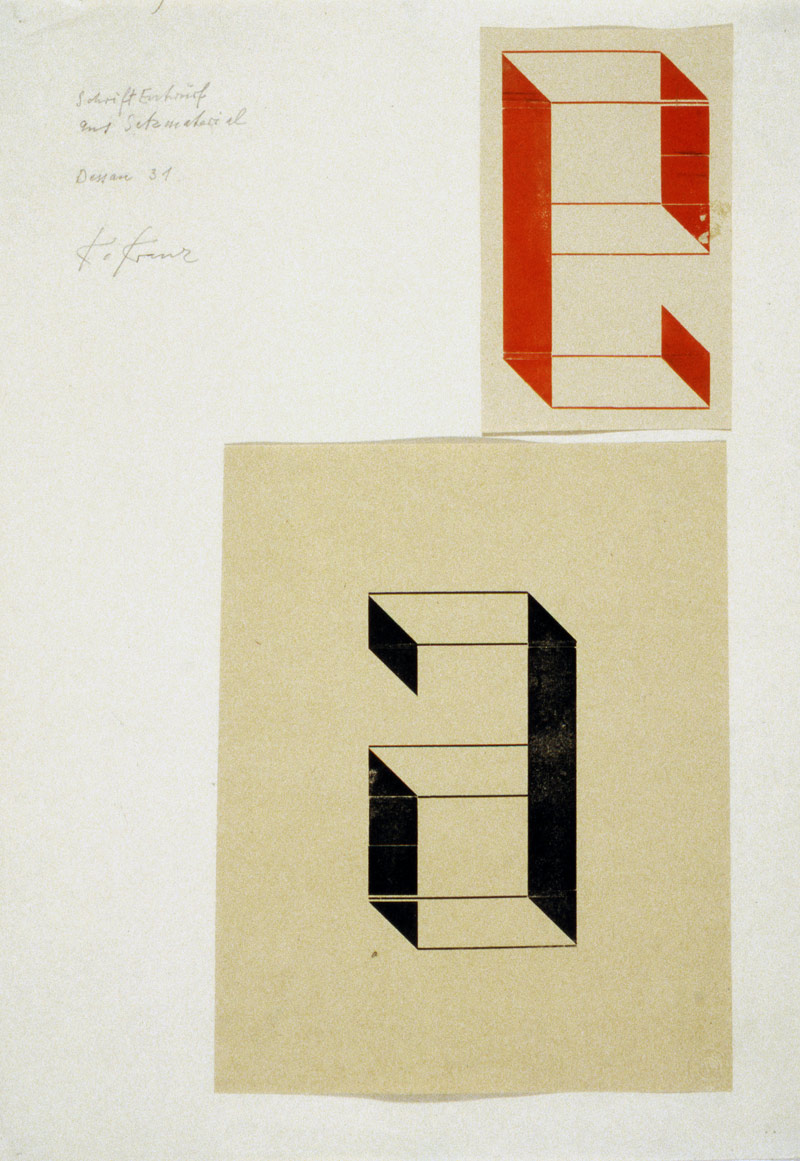
Kurt Kranz (German, 1910-1997) 'Schrift Entwurf aus Satzmaterial' (Writing draft from sentence material) Dessau 1931


Kurt Kranz (German, 1910-1997)
Schrift Entwurf aus Satzmaterial (Writing draft from sentence material)
Dessau
1931
Ingrid Kranz / Stiftung Bauhaus Dessau


Kurt Kranz (German, 1910-1997) Aus der Serie "Sieben Schritte zum symmetrischen Oval"' (From the series "Seven steps to the symmetrical Oval") 1982


Kurt Kranz (German, 1910-1997)
Aus der Serie “Sieben Schritte zum symmetrischen Oval” (From the series “Seven steps to the symmetrical Oval”)
1982
Ingrid Kranz / Stiftung Bauhaus Dessau
Foto: Uwe Jacobshagen


Kurt Kranz (German, 1910-1997) 'Augenreihe' (Eye rows) 1931


Kurt Kranz (German, 1910-1997)
Augenreihe (Eye rows)
1931 (montiert 1981) (1931 (1981 install))
Ingrid Kranz / Stiftung Bauhaus Dessau
Leihgeber: Kunsthalle Bremen


Kurt Kranz (German, 1910-1997) 'Mund-Reihen' (Mouth rows) 1931


Kurt Kranz (German, 1910-1997)
Mund-Reihen (Mouth rows)
1931
Ingrid Kranz / Stiftung Bauhaus Dessau
Leihgeber: Kunsthalle Bremen
Foto: Ingrid Kranz, Wedel


Bauhaus Dessau
Gropiusalle 38, Dessau, Germany

Opening hours:
Tue – Sun 10am – 6pm

Bauhaus Dessau website

LIKE ART BLART ON FACEBOOK

Back to top

Exhibition: ‘Ideen sitzen. 50 Years of Chair Design’ at Museum für Kunst und Gewerbe, Hamburg

Exhibition dates: 29th September 2010 – 13th March 2011


Frank Gehry (American, b. 1929) 'Wiggle Side Chair' 1972


Frank Gehry (American, b. 1929)
Wiggle Side Chair
Los Angeles/Cal., U.S.A., 1972
Easy Edges Inc., New York, U.S.A., 1972
84 x 37 x 59cm
Cardboard, hard fiber board
Museum für Kunst und Gewerbe Hamburg
Photo: Jörg Arend/Maria Thrun


I love chairs! There are such fabulous designs throughout the centuries. Once seen as the symbol of ultimate power (only the king and queen could be seated) our favourite chair now occupies the place of form fitting sculpture, the place where we feel most comfortable. Most of these works are not of that mould but they are a tour de force of the designers art and a testament to the mutability of the form, chair.

Dr Marcus Bunyan


Many thankx to the Museum für Kunst und Gewerbe, Hamburg for allowing me to publish the photographs in the posting. Please click on the photographs for a larger version of the image.


Trailer zur Ausstellung IDEEN sitzen – 50 Jahre Stuhldesign

You can see an excerpt from the introductory film for the exhibition IDEEN Sitz – 50 Jahre Stuhldesign, which is being shown from September 28th, 2010 to March 13th, 2011 in the Museum für Kunst und Gewerbe Hamburg.

Chair design over the last 50 years shows that an everyday object can be infinitely varied and reinvented again and again. In this exhibition, classics stand alongside contemporary positions, but the boundaries between art and design are fluid: some objects are autonomous sculptures that reveal the chair as a source of inspiration without fulfilling its function. New technologies have also changed chair design significantly in recent years.


Installation view of the exhibition 'Ideen sitzen. 50 Years of Chair Design' at Museum für Kunst und Gewerbe, Hamburg


Installation view of the exhibition Ideen sitzen. 50 Years of Chair Design at Museum für Kunst und Gewerbe, Hamburg


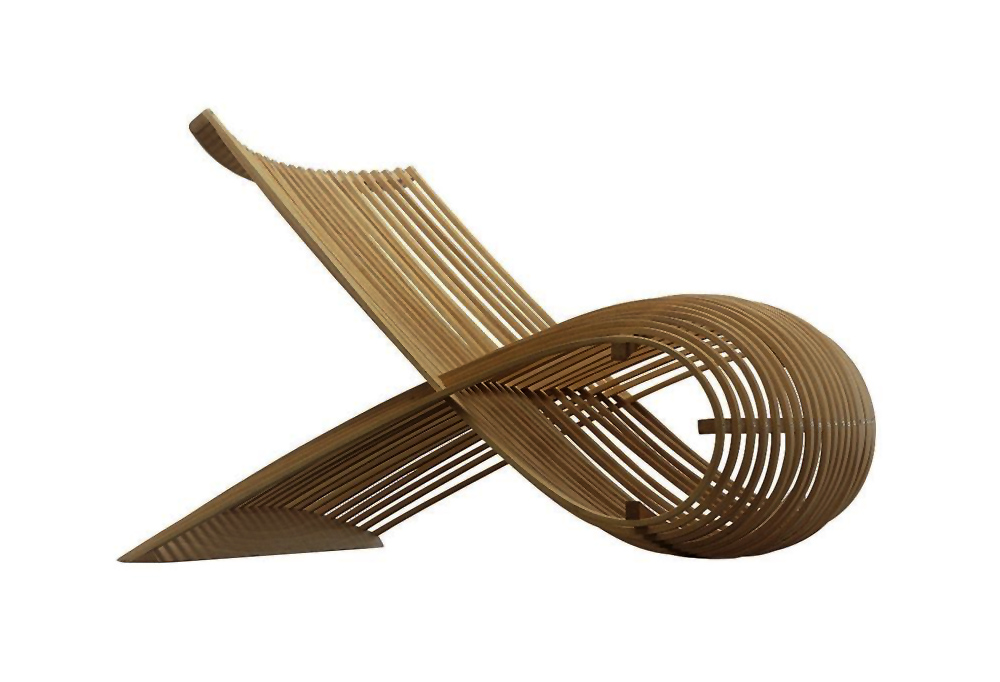
Marc Newson (Australian, b. 1963) 'Chair 'Wooden Chair'' Sydney, 1988


Marc Newson (Australian, b. 1963)
Chair ‘Wooden Chair’
Sydney, 1988
Made by Cappellini, Arosio/Como, 1993-97
Beech wood (solid, curved)
65 x 85 x 100cm
Museum of Arts and Crafts Hamburg
Photo: Cappellini


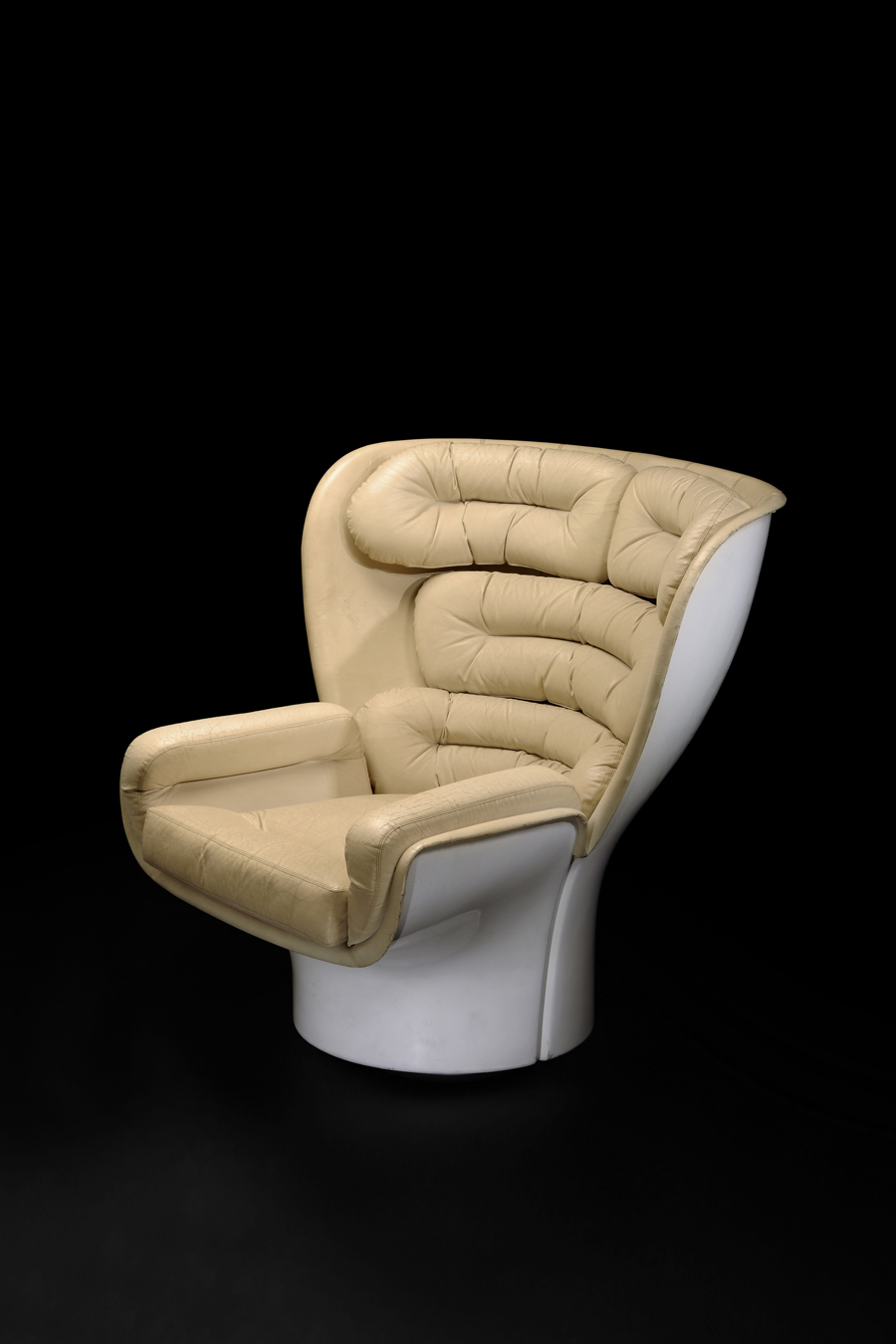
Joe Colombo. 'Elda' Italy, 1963


Joe Colombo (Italian, 1930-1971)
Elda
Italy, 1963
Comfort, Meda/Mailand, Italy, 1963
92.5 x 95 x 96cm
Polyester, reinforced glass-fibre
Museum für Kunst und Gewerbe Hamburg
Photo: Jörg Arend/Maria Thrun


Patrick Jouin. 'C2 Solid Chair' Paris, 2008


Patrick Jouin (French, b. 1967)
C2 Solid Chair
Paris, 2008
Paris, Frankreich, 2008
78.5 x 40.4 x 54cm
Plastic (formed with technology of the Stereolithographie/Rapidly Prototyping manufacture)
Museum für Kunst und Gewerbe Hamburg
Photo: Jörg Arend/Maria Thrun


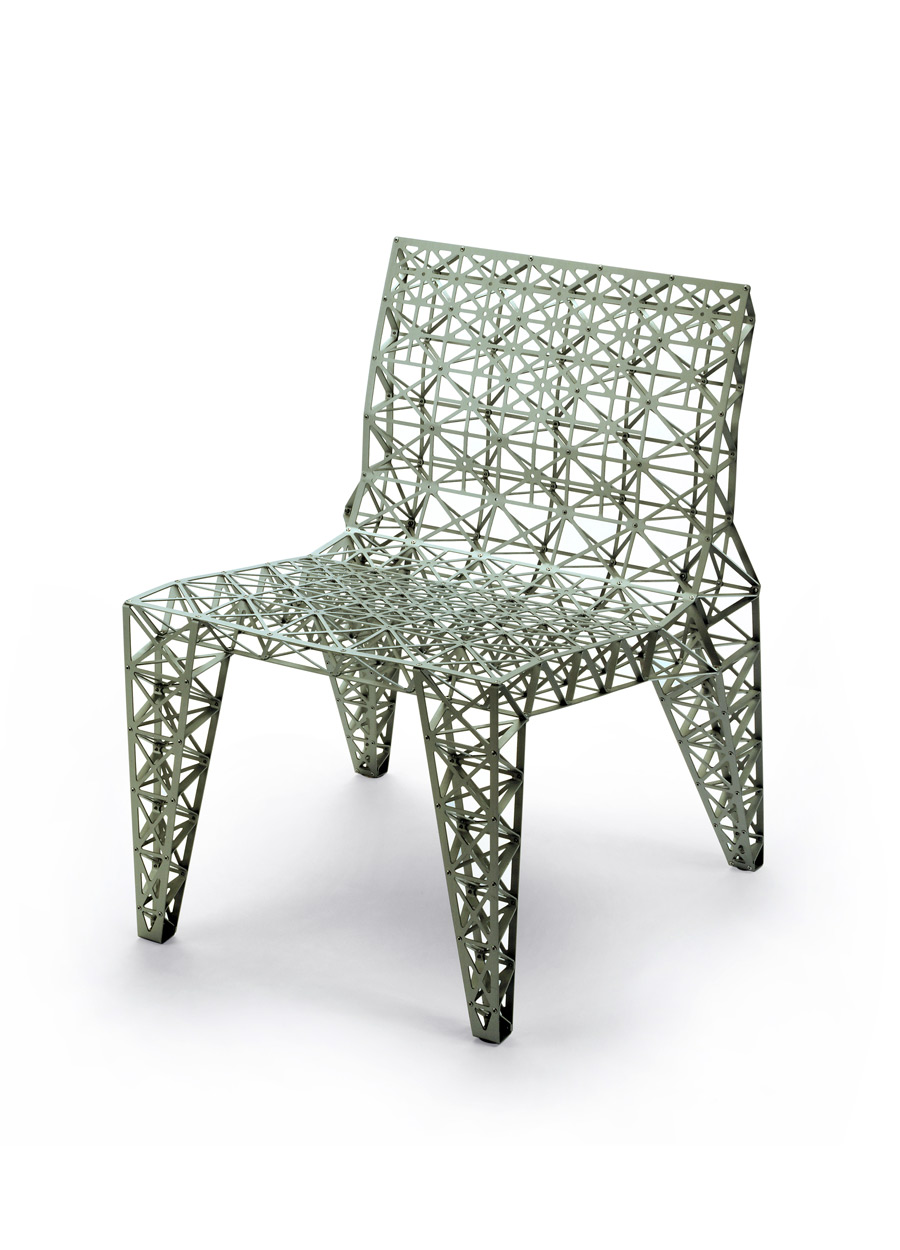
Joris Laarman. 'Bone Chair' Utrecht, 2006


Joris Laarman (Netherlands, b. 1979)
Bone Chair
Utrecht, 2006
77 x 45 x 76cm
Aluminium (poured and polished)
Museum für Kunst und Gewerbe Hamburg
Photo: Jörg Arend/Maria Thrun


With Ideen sitzen. 50 Years of Chair Design the Museum für Kunst und Gewerbe is presenting the first large exhibition on recent seat design dating from 1960 to the present day. One hundred exceptional exhibits selected from the high-calibre collection held by the MKG, among them chairs, arm chairs, chaise longues and stools, offer an insight into the most diverse approaches and motivations of design during five eventful decades. The focus lies on the chair as contemporary witness be it as expression of a utopian idea or instrument in political protest, a reaction to ecological changes or a calculated business idea, an experiment with the most recent technologies or a sculptural art object, where the chair – divorced from its function – can only just be recognised as the source of inspiration. Chairs are regarded as the business card of any designer. They are visually more attractive than tables, wardrobes, settees or kitchen furniture and exemplify the increasingly blurry demarcation between art and design.

Designing a chair forms part of the great challenge of any designer. In modernity it seemed to have found its perfect answer in Michael Thonet’s Coffee House Chair Model No. 14, made in the revolutionary bentwood technique. Today, 150 years on, a multitude of new chair designs are demonstrating artistic, technical and social changes. No other object juxtaposes the conflicting interests of design as directly: appropriate functionality versus the free reign of fantasy and autonomous artistic form. A new idea lies at the core of any new seating furniture, which will then be moulded by factors such as use, the market, the target group, the company’s philosophy, materials, production methods, technological progress and not least the designers interests, depending on whether he or she is an artist, sculptor, director, architect or simply a product designer. The expression “same, same – but different” is particularly valid when it comes to chairs: an intellectual and a practical product, which is manifest in hundreds of forms. The exhibition Ideen sitzen. 50 Years of Chair Design therefore becomes a reflection of time and its self-concept, its necessities and the longing for freedom of artistic expression.

A design exhibition turns into an art exhibition once it presents autonomous sculpture. The chair freed from its functional requirements becomes a source of information only. The MKG’s most recent acquisitions illustrate this phenomenon of contemporary chair design and demonstrate the increasingly blurred demarcation of art and design. Some of them are design classics: the famous spherical Sunball lounge chair by Günter Fedinand Ris, the Well Tempered Chair by Ron Arad, chairs by Stefan Wewerka and Alessandro Mendini’s Proust Armchair – the latter combining baroque opulence of Louis XV style with an impressionist colour scheme referencing Marcel Proust’s time. The design positions represented in the collection are expanded by Joris Laarman’s Bone Chair, which was inspired by the natural growth of bone. Vladi Rapaport turned an oversized skull and an oversized brain into seats called The skull chair and The brain footstool respectively. Tord Boontje created the bench Petit Jardin where a tender web of leaves, flowers and twigs made of white coated laser cut steel is embracing the sitter. For Veryround Louise Campbell interlinked 240 steel circles to form an ornamental seat sculpture.

Putting the various ideas and trends in design into their historical context, highlights how directly it is informed by social and economic trends. At the beginning of the 20th Century chair design was dictated by social factors and functionality: good quality seats had to be produced at low cost for the masses. New materials such as steel tube and multiplex warranted new production techniques. The introduction of injection-moulding for plastic chairs in the early 1960s revolutionised ideas yet again. The 1960s are determined by the new prosperity after the war, but also by burgeoning social unrest. The exhibition presents some increasingly unconventional types of armchair, which reflect the tensions of the period. Gaetano Pesce’s Donna, 1969 is both: a comfortable armchair and a biting political criticism of women’s role in modern society. The prospect of growing markets led the chemical and furniture industry to invest in the production of plastic chairs, a development, which found its preliminary end in the oil crisis of 1973.

The 1970s produced relatively few sweeping designs; the decade is characterised by the criticism of capitalism, consumerism and a heightened sense of uncertainty in manufacturing. Stefan Wewerka created an icon of instability when he came up with “Classroom Chair”; the tried and trusted breaks away, dissolves. The American architect Frank Gehry on the other hand developed new chairs from corrugated cardboard, constructing and glueing the layers so they withhold the greatest pressure; his Wiggle Side Chair is a trendsetting seat constructed with minimal material investment and an original design idea. Towards the end of the century Alessandro Mendini created its antithesis when he combined a neo-baroque silhouette with light colours quoting Impressionism – Proust‘s purpose is the quotation of historic style, which makes it one of the early classics of postmodernism. The architectural and design-movement deliberately cited traditional style elements to reinterpret or pass ironic comment on their meaning. Architecture and interior design were turned into an intellectual game.

Around 1980 the postmodernist approach set off the Italian artists group Memphis led by Ettore Sottsass and Michele de Lucchi. Sottsass turned to the past and to architectural evidence of the world’s cultural heritage. He achieved new singular pieces of furniture inspired by sculpture and architecture – colourful monuments that for a few years were recognised as style icons. Memphis introduced fun and joy into the hitherto predominantly grey and brown furniture scene. Their products offer entertainment value. They are evocative of ideas, full of allusions to earlier cultures, hip, they cherish masquerade and express a way of thinking clearly opposed to industrialism and market strategies. Memphis’ furniture is simply made, using MDF laminated in bright colours. It is to Sottsass’ credit, that against the Zeitgeist Memphis made use of ornament.

While the group’s unique furnishing objects created a lust for new furniture, designers in Germany, England, Japan or Switzerland who followed contemporary product design conceived chairs from metal – tubular steel, steel panel or metal mesh. Intellectually these designers are followers of the Bauhaus creations from the 1920s and 1930s and their proposals are accordingly ambitious. Apart from Northern Italy Paris with Philippe Starck and Barcelona established themselves as the new centres of design. Starck designed numerous new models of chairs from various materials – metal, wood and plastic – within only a few years. His philosophy is to offer to the market ideas that are as innovative as possible while being fairly priced. He formed the counterpart to a fad from the 1980s, where design objects were produced in limited editions and offered to an exclusive clientele. Artists such as Donald Judd, Franz West and Bob Wilson were designing chairs and fittingly documenta in 1989 had a focus on design.

The 1990s return to a design ethos bethinking simplicity and rediscovering natural wood. Pale woods and a concise and rational tenor respond to the demand for clear shapes with a warm and natural character. Numerous designers, including Jasper Morrison or Axel Kufus, turn against the euphoria and affluence of the fin de siècle. Rifts within the structure of society are addressed by works such as Tejo Remy’s Rug Chair made of leftover shred reinforced by a carbon core and s of fabric. In Brazil the Campana brothers conceive an armchair from waste wood of the slums called Favela. The seat is pointing at the destitution of the residents of the slums as well as the creative possibilities inherent in poor materials. Equally Marcel Wanders’ Knotted Chair makes use of the simplest rope; its carbon core and hardened epoxy fix the knotted structure in the shape of a chair giving the illusion of the sitter being suspended on a soft hanging structure.

In the first decade of the 21st century designers like Konstantin Grcic or the Bouroullec Brothers continued to work on intelligent solutions for large social groups. At the same time young designers such as the Dutchman Joris Laarman or the Frenchman Patrick Jouin employ digital methods of design, which allow them to calculate new ways of construction. They also make use of Rapid Prototyping. Their objects are highly experimental and seem to offer a glimpse of the world of tomorrow. Other designers like Tord Boontje work with laser cut metal sheet to create ornamental compositions. Most designs by the younger scene are produced in small numbers and are distributed largely by design galleries. The seating furniture of a new era is taking up the elitist impulse of the 1980s – produced in highly limited numbers they are treated as unique art works. Museums who manage to acquire such pieces directly from the artists are thus in a position to present models that are wholly fresh to the eye and provoke spontaneous responses.

As one of the leading museums of its kind in Germany the MKG holds an extensive collection on the history of modern design. The collection of seating furniture is at its core and comprises hundreds of examples of the history of modern design of all periods from leading countries in Europe, Australia, the USA, Brazil and Japan. William Morris, Peter Behrens, Henry van de Velde, Le Corbusier, Ludwig Mies van der Rohe, Alvar Aalto, Eero Saarinen, Charles Eames, Verner Panton, Joe Colombo, Stefan Wewerka, Frank Gehry, Alessandro Mendini, Ettore Sottsass, Michele De Lucchi, Philippe Starck, Shiro Kuramata, Ron Arad, Marc Newson, Jasper Morrison, Tom Dixon, Konstantin Grcic and many more designers are represented in the collection.

Designers and artists: Eero Aarnio, Ron Arad, Archizoom, Teppo Asikainen, Gijs Bakker, Helmut Bätzner, Mario Bellini, Günter Beltzig, Ricardo Blumer, Matteo Borghi, Tord Boontje, Mario Botta, Andrea Branzi, Fernando and Humberto Campana, Louise Campbell, Joe Cesare Colombo, Paolo Deganello, Tom Dixon, Uwe Fischer, Formfürsorge, Piero Gatti, Frank Gehry, Ginbande Design, Konstantin Grcic, Gruppo Strum, Klaus Achim Heine, Patrick Jouin, Donald Judd, Toshiyuki Kita, Poul Kjaerholm, Gunter König, Axel Kufus, Shiro Kuramata, Angela Kurrer, Joris Laarman, Paolo Lomazzi, Ross Lovegrove, Michele de Lucchi, Vico Magistretti, Peter Maly, Enzo Mari, Javier Mariscal, Alessandro Mendini, Jasper Morrison, Marc Newson, Katsuhito Nishikawa, Verner Panton, Cesare Paolini, Jonathan de Pas, Pierre Paulin, Maurizio Peregalli, Gaetano Pesce, Giancarlo Piretti, Tom Price, Dieter Rams, Bernard Rancillac, Vladi Rapaport, Karim Rashid, Tejo Remy, Günter Ferdinand Ris, Herbert Selldorf, Hubert Matthias Sanktjohanser, Peter Schmitz, Stiletto, Ettore Sottsass, Philippe Starck, Studio 65, Roger Tallon, Donato d’Urbino, Marcel Wanders, Franz West, Stefan Wewerka, Robert Wilson, Tokujin Yoshioka and others.”

Press release from Museum für Kunst und Gewerbe, Hamburg


Alessandro Mendini. 'Poltrona di Proust' Studio Alchimia, Mailand, 1978


Alessandro Mendini (Italian, 1931-2019)
Poltrona di Proust (Proust Armchair)
Studio Alchimia, Mailand, 1978
107 x 93 x 90cm
Wood, Leinenbezug (painted)
Museum für Kunst und Gewerbe Hamburg
Photo: Jörg Arend/Maria Thrun


Ricado Blumer and Matteo Borghi. 'Origami' Casciago, 2007


Ricado Blumer (Italian, b. 1959) and Matteo Borghi (Italian, b. 1976)
Origami
Casciago, 2007
Ycami, Novedrate, 2007
76 x 61 x 63cm
Aluminium
Museum für Kunst und Gewerbe Hamburg
Photo: Jörg Arend/Maria Thrun


Stefan Wewerka. 'Classroom Chair' Berlin, 1970


Stefan Wewerka (German, 1928-2013)
Classroom Chair
Berlin, 1970
70 x 68 x 40cm
Wood (painted)
Museum für Kunst und Gewerbe Hamburg, © VG Bild-Kunst, Bonn 2010
Photo: Jörg Arend/Maria Thrun


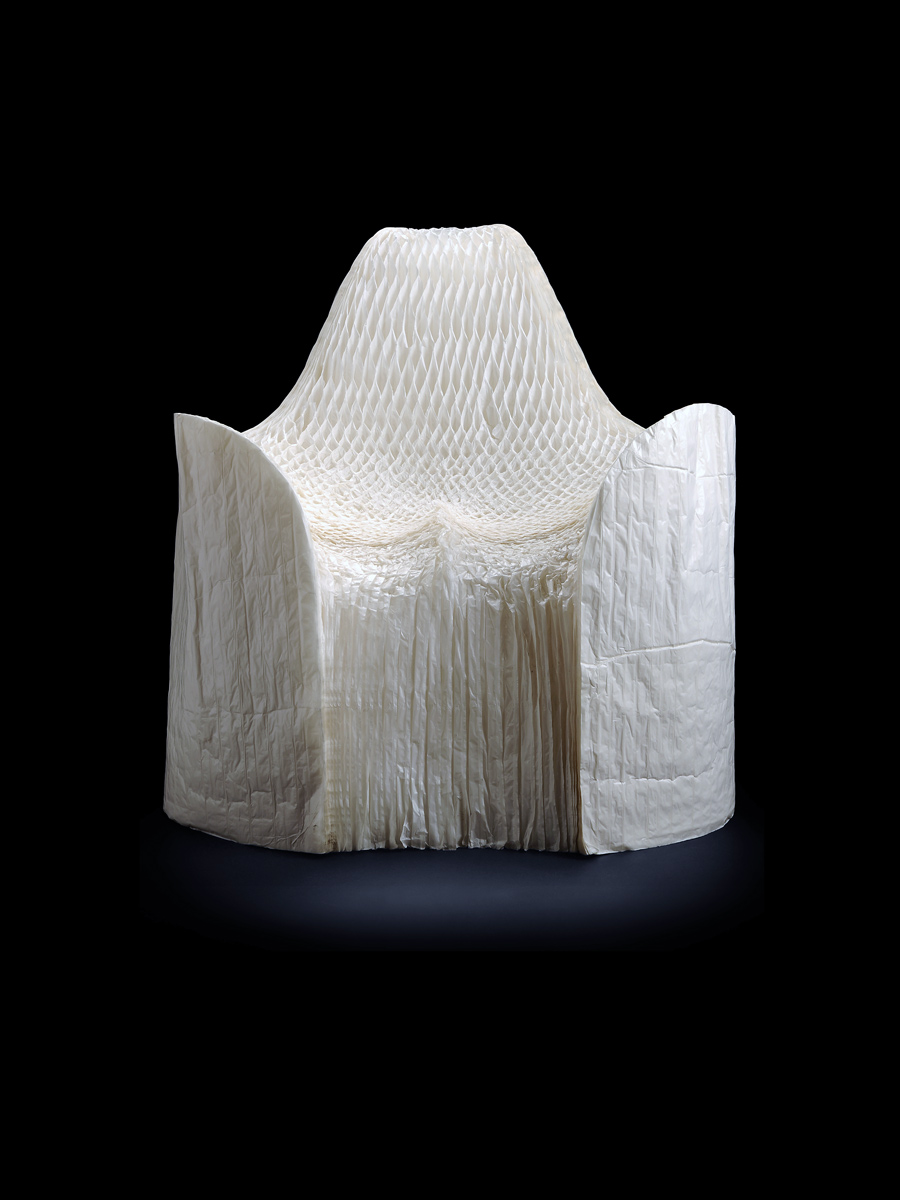
Tokujin Yoshioka (Japanese, b. 1967)
'Honey-Pop Armchair' Tokyo, Japan, 2000


Tokujin Yoshioka (Japanese, b. 1967)
Honey-Pop Armchair
Tokyo, Japan, 2000
83 x 81 x 81cm
Greaseproof paper (folded into form)
Justus Brinckmann Society
Museum für Kunst und Gewerbe Hamburg
Photo: Jörg Arend/Maria Thrun


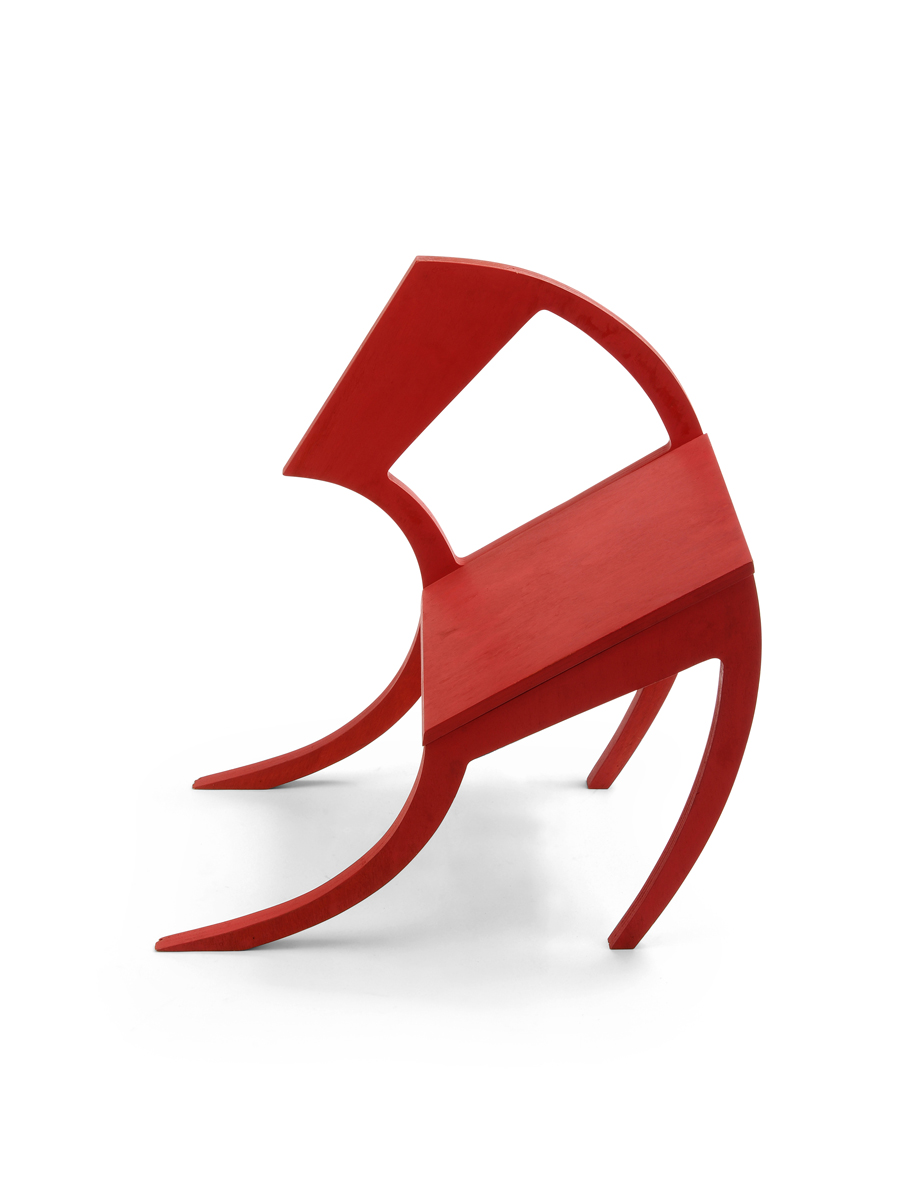
Gunter Beltzig (German, 1941-2022) 'Chair 'Floris'' Wuppertal, 1967


Gunter Beltzig (German, 1941-2022)
Chair ‘Floris’
Wuppertal, 1967
Polyester (reinforced fiberglass, painted)
109 x 59 x 40cm
Museum fur Kunst und Gewerbe Hamburg
Foto: Maria Thrun, Jurgen Arendt


Museum für Kunst und Gewerbe Hamburg
Steintorplatz, 20099 Hamburg

Opening hours:
Tuesday to Sunday 10am – 6pm
Thursday 10am – 9pm
Closed Mondays

Museum fur Kunst und Gewerbe Hamburg website

LIKE ART BLART ON FACEBOOK

Back to top

Exhibition: ‘Artist’s jewels. From Modernisme to the avant-garde’ at Museu Nacional d’Art de Catalunya, Barcelona

Exhibition dates: 27th October 2010 – 13th February 2011


Alexander Calder (American, 1898-1976) 'Still life' Various dates


Alexander Calder (American, 1898-1976)
Still life
© Calder Foundation New York/ VEGAP, Barcelona, 2010


Anyone who reads this archive regularly will know of my love of exceptional jewellery. This posting satiates my desire!

The Calder pieces are just outstanding.

Marcus


Many thankx to the Museu Nacional d’Art de Catalunya for allowing me to publish the photographs in the posting. Please click on the photographs to see a larger version of the image.


Hector Guimard (French, 1867-1942) 'Brooch' 1909


Hector Guimard (French, 1867-1942)
Brooch
1909
© 2010 Digital image, The Museum of Modern Art, New York/Scala, Florence


Jewellery by US artist Alexander Calder from the Metropolitan Museum of Art in New York, USA


Alexander Calder (American, 1898-1976)
Jewellery by US artist Alexander Calder from the Metropolitan Museum of Art in New York, USA
The Metropolitan Museum of Art, New York
© Calder Foundation New York/ VEGAP, Barcelona, 2010


Calder possessed an uncanny ability to synthesise a variety of influences from the world around him to create often simple, always meaningful, and ultimately modern jewellery. In the early 20th century, many avant-garde artists began to collect African tribal art and to reference it in their paintings and sculptures. Likewise, Calder’s brooches, tiaras, and necklaces have more in common with the pectorals, collars, diadems, and neckpieces made by ancient cultures than traditional western European jewellery. For example, Calder repeatedly incorporated the spiral – a typical motif in late Bronze Age artefacts – into his jewellery, as well as his wire figures, drawings, paintings, and other decorative arts. The artist’s personal collections, which included objects from African, Oceanic, and Precolumbian cultures, substantiate his eclectic taste.

Calder’s exploration of jewellery in the 1930s also coincided with his burgeoning interest in Surrealism. As his largest and most dramatic ornaments are unwieldy to wear, Calder’s jewellery may be seen as a Surrealistic strategy to entrap the wearer into participating in an art performance or being metamorphosed by the object. Among those who wore his jewellery were sophisticated art aficionados and artists, such as Peggy Guggenheim, Mary Rockefeller, French actress Jeanne Moreau, and Georgia O’Keeffe.

His sculptural art, regardless of category, has less to do with solidity than with lightness, air, motion, and graceful formal relationships. Calder’s sense of economy, balance, and adaptability, so characteristic of the artist’s much larger and more familiar mobiles and stabiles, extends to his jewellery. While Calder’s more diminutive avant-garde creations converged closely with the aesthetics of the modern age, they remain unmistakably Calder.

 Anon. “Metropolitan Museum of Art features Alexander Calder – Inventive Jewelry” on Art Knowledge News website Nd. [Online] Cited 11/01/2011 no longer available online


Salvador Dalí (Spanish, 1904-1989) 'Time's Eye' Nd


Salvador Dalí (Spanish, 1904-1989)
Time’s Eye
Nd
© Salvador Dali, Fundació Gala-Salvador Dali, VEGAP, Barcelona, 2010


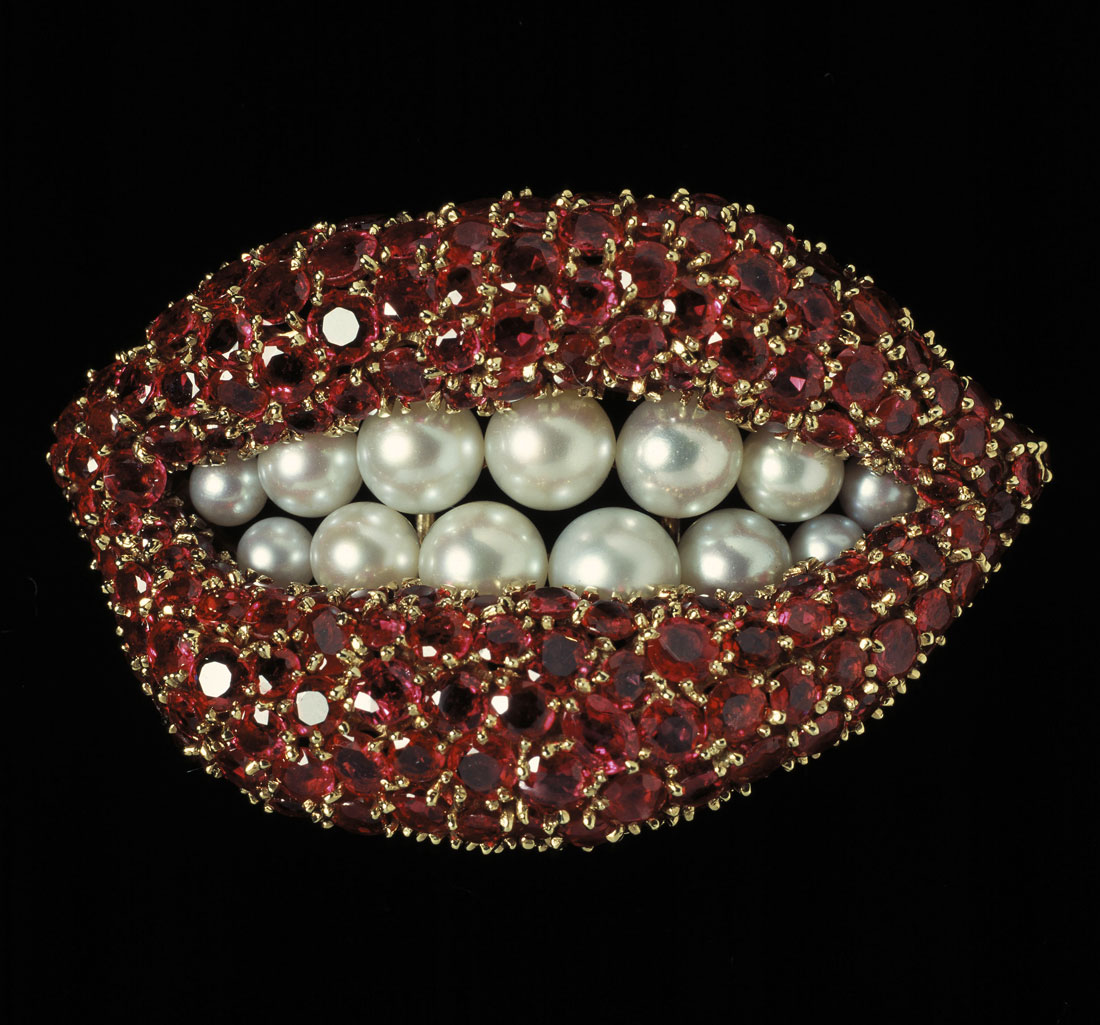
Salvador Dalí (Spanish, 1904-1989) 'Ruby's lips' 1949


Salvador Dalí (Spanish, 1904-1989)
Ruby’s lips
1949
© Salvador Dali, Fundació Gala-Salvador Dali, VEGAP, Barcelona, 2010


Artist’s jewels. From Modernisme to the avant-garde explores the approach to the world of jewellery by leading artists of the main art movements in the first decades of the fertile 20th century. The exhibition gathers almost 350 works, chiefly jewels, that strike a dialogue with paintings, sculptures, photographs, fabrics and objets d’art, showing how jewellery made up the little universe of great artists.

Artist’s jewels. From Modernisme to the avant-garde reveals the relations between jewellery and the work of art. This exhibition, the first on this subject to be held in our country, shows the less well-known side of Auguste Rodin, Hector Guimard, Josef Hoffmann, Josep Llimona, Serrurier-Bovy, Henri Van de Velde, Manolo Hugué, Paco Durrio, Pau Gargallo, Max Ernst, Salvador Dalí, Georges Braque, Alexander Calder, Charlotte Perriand, Hans Arp, Pablo Picasso, Juli González, Henri Laurens and many others.

Painters and sculptors, since earliest times, have transferred their artistic forms to the world of jewellery, but it was not until the end of the 20th century, under the powerful influence of Art Nouveau, that artists approached this discipline more openly: ‘Carrying out a large work’, according to Otto Wagner, ‘means expressing beauty without distinguishing between large and small’.

The merger of arts that was a feature of Modernisme and the subsequent elimination of borders between the arts reached a crescendo in the 1920s and 1930s and crystallised in the numerous interesting incursions into the world of jewellery by the painters, sculptors and architects of the historic avant-garde. In producing these small-format objects (‘micro-sculptures’ or ‘painted jewels’), artists channelled their artistic thinking from different perspectives.

The exhibition opens with a selection of items produced by jeweller artists, who very often also cultivated multiple skills and who incorporated into their creations the offerings of the artistic movements of the time.

The high point of the first section of the exhibition are the jewels by René Lalique, which were purchased at the time of their production by European museums, rich amateurs and collectors. This is the case of the pendant purchased by the director of the Hamburg Museum at the Universal Exhibition in Paris in 1900, the jewels purchased by Calouste Gulbenkian and the unique pendant Antoni Amatller bought in Paris for his daughter Teresa. In a dialogue with these works are the ones with rich enamelling and varied ranges of colour made by the Barcelona jeweller Lluís Masriera, who played a key role in introducing the new style to Barcelona.

Making up the core of the exhibition are the jewels conceived by artists who were not jewellers, such as Hector Guimard, Paco Durrio, Manolo Hugué, Herich Heckel, Pau Gargallo, Juli González, Joaquim Gomis, Ramón Teixé, Anni Albers, Charlotte Perriand, Alexander Calder, Henri Laurens, Hans Arp, Pablo Picasso, Georges Braque and Salvador Dalí. This second section shows these artists’ production in relation to their usual work of painting, sculpture, photography and other creations, establishing parallels with the artistic disciplines they worked at and revealing the affinities and echoes between them.

The legacy of the Arts and Crafts movement and the Bauhaus, which were committed to integration between all the arts, can clearly be seen in the work of these artists, who opened the way to experimentation in the arts, questioning the very nature of jewellery, and who incorporated new materials into their production that were foreign to the tradition of precious metals. Examples of this are Ramon Teixé’s unusual creations in iron, glass, enamel and string and the jewellery by the sculptor Josep de Creeft made with bits of scrap metal from his motor car, not forgetting the jewellery by the architect and designer Charlotte Perriand or the ones produced by the photographer Joan Gomis in collaboration with Manuel Capdevila, which make use of shells and pebbles like real objets trouvées.

Alongside these hand-made items of jewellery that are often produced with non-precious materials, we are exhibiting the ones designed by Braque and Dalí and manufactured by professional jewellers using noble materials like rubies, sapphires or diamonds.

A third section of the exhibition explores the relationship between jewels and the body and shows a selection of clothes, mainly loaned by the Museo del Traje in Madrid, and photographs from the 1930s by Man Ray, Edward Steichen, George Hoyningen-Huené and Horst P. Horst.

The works presented in this exhibition come from public institutions and museums all over the world, such as the Metropolitan Museum of Art, The Museum of Modern Art, Whitney Museum of American Art in New York, the Victoria and Albert Museum in London, the Musée des Arts Décoratifs, the Musée d’Orsay and the Musée Rodin in Paris, the Museo Nacional Centro de Arte Reina Sofía in Madrid, the Institut d’Art Modern (IVAM) in Valencia, the Museo de Bellas Artes in Bilbao and the Fundació Gala-Salvador Dalí in Figueres, who have generously made an exception in lending some of the most emblematic jewels in their collections, as well as from the MNAC itself and from numerous European and American private collections.”

Press release from the Museu Nacional d’Art de Catalunya website


Alexander Calder (American, 1898-1976) 'The jealous husband' c.1940


Alexander Calder (American, 1898-1976)
The jealous husband
c. 1940
Necklace
Brass wire
14″ x 16″
The Metropolitan Museum of Art, New York
© Calder Foundation New York/ VEGAP, Barcelona, 2010


Manuel Capdevila / Ramon Sarsanedas. 'Spain falled back' Broooch Nd


Manuel Capdevila / Ramon Sarsanedas
Spain falled back
Nd
Brooch
Museu Nacional d’Art de Catalunya – MNAC


Erich Heckel (German, 1883-1970) 'Drei Badende' (Three bathers) 1912


Erich Heckel (German, 1883-1970)
Drei Badende (Three bathers)
1912
Museum für Kunst und Gewerbe, Hamburg
© Erich Heckel, VEGAP, Barcelona, 2010


Boucheron, Paris (design by Lucien Hirtz) 'Corsage ornament' 1925


Boucheron, Paris (design by Lucien Hirtz)
Corsage ornament
1925
© Boucheron, Paris


Museu Nacional d’Art de Catalunya
Palau Nacional
Parc de Montjuïc
08038 Barcelona

Opening hours:
Tues – Sat 10am – 7pm
Sunday and public holidays: 10am – 2.30pm

Museu Nacional d’Art de Catalunya website

LIKE ART BLART ON FACEBOOK

Back to top

Review: ‘Mari Funaki: Objects’ at the Ian Potter Centre: NGV Australia, Melbourne

Exhibition dates: 6th August – 24th October 2010


Mari Funaki (born Japan 1950, arrived Australia 1979, died 2010) 'Object' 2008 from the exhibition 'Mari Funaki: Objects' at the Ian Potter Centre: NGV Australia, Melbourne, Aug - Oct 2010


Mari Funaki (born Japan 1950, arrived Australia 1979, died 2010)
Object
2008
Heat-coloured mild steel
20.0 x 28.0 x 5.0cm
Collection of Raphy Star, Melbourne
© The Estate of Mari Funaki


Mari Funaki (born Japan 1950, arrived Australia 1979, died 2010) 'Container' 2008 from the exhibition 'Mari Funaki: Objects' at the Ian Potter Centre: NGV Australia, Melbourne, Aug - Oct 2010


Mari Funaki (born Japan 1950, arrived Australia 1979, died 2010)
Container
2008
heat-coloured mild steel
(a–c) 21.3 x 40.5 x 8.5cm (overall)
Private collection, Melbourne
© The Estate of Mari Funaki


Mari Funaki (born Japan 1950, arrived Australia 1979, died 2010) 'Container' 2008 from the exhibition 'Mari Funaki: Objects' at the Ian Potter Centre: NGV Australia, Melbourne, Aug - Oct 2010


Mari Funaki (born Japan 1950, arrived Australia 1979, died 2010)
Container
2008
heat-coloured mild steel
4.8 x 16.0 x 15.5cm
Private Collection, Melbourne
© The Estate of Mari Funaki


Mari Funaki (born Japan 1950, arrived Australia 1979, died 2010) 'Object' 2008 from the exhibition 'Mari Funaki: Objects' at the Ian Potter Centre: NGV Australia, Melbourne, Aug - Oct 2010


Mari Funaki (born Japan 1950, arrived Australia 1979, died 2010)
Object
2008
heat-coloured mild steel
20.0 x 28.0 x 5.0cm
Collection of Raphy Star, Melbourne
© The Estate of Mari Funaki


Let us drop away all interpretation and look at the thing in itself.
The literal feeling of standing before these objects.


Form

Balance

Colour

Surface

Precision

Will

Style

Silence


Quiet, precise works. Forms of insect-like legs and proboscises. They balance, seeming to almost teeter on the edge – but the objects are incredibly grounded at the same time. As you walk into the darkened gallery and observe these creatures you feel this pull – lightness and weight. Fantastic!

The surfaces, sublime matt grey colour and precision of their manufacture add to this sense of the ineffable. These are not mere renderings of content, but expressions of things that cannot be said.

Sontag observes, “Art is the objectifying of the will in a thing or performance, and the provoking or arousing of the will … Style is the principle of decision in a work of art, the signature of the artist’s will.”1

Sontag insightfully notes, “The most potent elements in a work of art are, often, its silences.”2


And so it came to pass in silence, for these works are still, quiet and have a quality of the presence of the inexpressible.

Funaki achieves these incredible silences through being true to her self and her style through an expression of her endearing will.

While Mari may no longer be amongst us as expressions of her will the silences of these objects will be forever with us.

Dr Marcus Bunyan


1/ Sontag, Susan. “On Style,” in Against Interpretation and Other Essays. New York: Delta Book, 1966, pp. 31-32.

2/ Ibid., p. 36.


Many thanxk to Alison Murray, Jemma Altmeier and The National Gallery of Victoria for allowing me to publish the photographs in the posting. Please click on the photographs for a larger version of the image. All individual photographs of work by Jeremy Dillon.


'Mari Funaki: Objects' installation shot on opening night at NGV Australia

'Mari Funaki: Objects' installation shot on opening night at NGV Australia

'Mari Funaki: Objects' installation shot on opening night at NGV Australia


Mari Funaki: Objects installation shots on opening night at NGV Australia
Photos: © Marcus Bunyan


Opening 6 August, the National Gallery of Victoria will present Mari Funaki: Objects, an exhibition showcasing a range of sculptural objects by the renowned contemporary jeweller and metalsmith, Mari Funaki (1950-2010).

This exhibition will present a selection of Funaki’s distinctive objects, dating from the late 1990s to 2010 including four recent large scale sculptures. The artist was working on the exhibition right up until the time of her recent death.

Jane Devery, Acting Curator, Contemporary Art, NGV said: “It was a great privilege to work with Mari Funaki on this exhibition. She possessed a clarity of vision and a capacity for ongoing invention that is rare among artists. Funaki produced some of the most captivating works in the field of contemporary jewellery and metalwork. Her unique geometric objects, meticulously constructed from blackened mild-steel, stemmed from a desire to express the world around her.”

“Funaki was interested in the expressive and associative capacities of her objects, creating forms that might stir our imaginations or trigger something from our memories. It has been particularly thrilling to see her extend these concerns in large scale works,” said Ms Devery. In 1979 Funaki left her home in Japan for Melbourne where she pursued her creative ambitions, enrolling in Gold and Silversmithing at RMIT in the late 1980s. At RMIT she studied under the prominent jewellers Marian Hosking, Robert Baines and Carlier Makigawa.

In 1995, Mari Funaki established Gallery Funaki in Melbourne’s CBD which remains Australia’s most important space dedicated to contemporary jewellery. Throughout her career she exhibited widely within Australia and overseas and won many awards, twice winning the prestigious Herbert Hoffman prize in Munich. In 2007 she was awarded an Australian Council Emeritus Award for her work as an artist and for her success in promoting Australian and international contemporary jewellery.

Frances Lindsay, Deputy Director, NGV said: “The NGV is delighted to exhibit many never-before-seen works by such an innovative and celebrated Melbourne artist. The exquisite objects assembled in this exhibition allow us to appreciate Mari Funaki’s remarkable artistic achievements.”

Mari Funaki: Objects will be on display at The Ian Potter Centre: NGV Australia, Federation Square from 6 August to 24 October, 2010. The exhibition will be open from 10am-5pm. Closed Mondays. Entry is free.

Press release from the National Gallery of Victoria website


Mari Funaki (born Japan 1950, arrived Australia 1979, died 2010) 'Object' 2008


Mari Funaki (born Japan 1950, arrived Australia 1979, died 2010)
Object
2008
Heat-coloured mild steel
36.0 x 47.5 x 14.5cm
Collection of Johannes Hartfuss & Fabian Jungbeck, Melbourne
© The Estate of Mari Funaki


Mari Funaki (born Japan 1950, arrived Australia 1979, died 2010) 'Container' 2006


Mari Funaki (born Japan 1950, arrived Australia 1979, died 2010)
Container
2006
Heat-coloured mild steel
26.0 x 8.5 x 6.0cm
Collection of Peter and Jennifer McMahon, Melbourne
© The Estate of Mari Funaki


Mari Funaki (born Japan 1950, arrived Australia 1979, died 2010) 'Object' 2010


Mari Funaki (born Japan 1950, arrived Australia 1979, died 2010)
Object
2010
Heat-coloured mild steel
30.0 x 19.0 x 20.5cm
Collection of the Estate of Mari Funaki, Melbourne
© The Estate of Mari Funaki


Mari Funaki (born Japan 1950, arrived Australia 1979, died 2010) 'Object' 2010


Mari Funaki (born Japan 1950, arrived Australia 1979, died 2010)
Object
2010
heat-coloured mild steel
45.0 x 52.0 3.5cm
Collection of the Estate of Mari Funaki, Melbourne
© The Estate of Mari Funaki


Mari Funaki (born Japan 1950, arrived Australia 1979, died 2010) 'Object' 2010


Mari Funaki (born Japan 1950, arrived Australia 1979, died 2010)
Object
2010
heat-coloured mild steel
12.0 x 44.0 x 14.0cm
Collection of the Estate of Mari Funaki, Melbourne
© The Estate of Mari Funaki


The Ian Potter Centre: NGV Australia
Federation Square

Corner of Russell and 
Flinders Streets, Melbourne

Opening hours:
Daily 10am – 5pm
National Gallery of Victoria website

LIKE ART BLART ON FACEBOOK

Back to top

Exhibition: ‘Climate Capsules: Means of Surviving Disaster’ at Museum fur Kunst und Gewerbe Hamburg

Exhibition dates: 28th May – 12th September, 2010


Many thankx to Michaela Hille and Museum fur Kunst und Gewerbe Hamburg for allowing me to publish the photographs in the posting. Please click on the photographs for a larger version of the image.


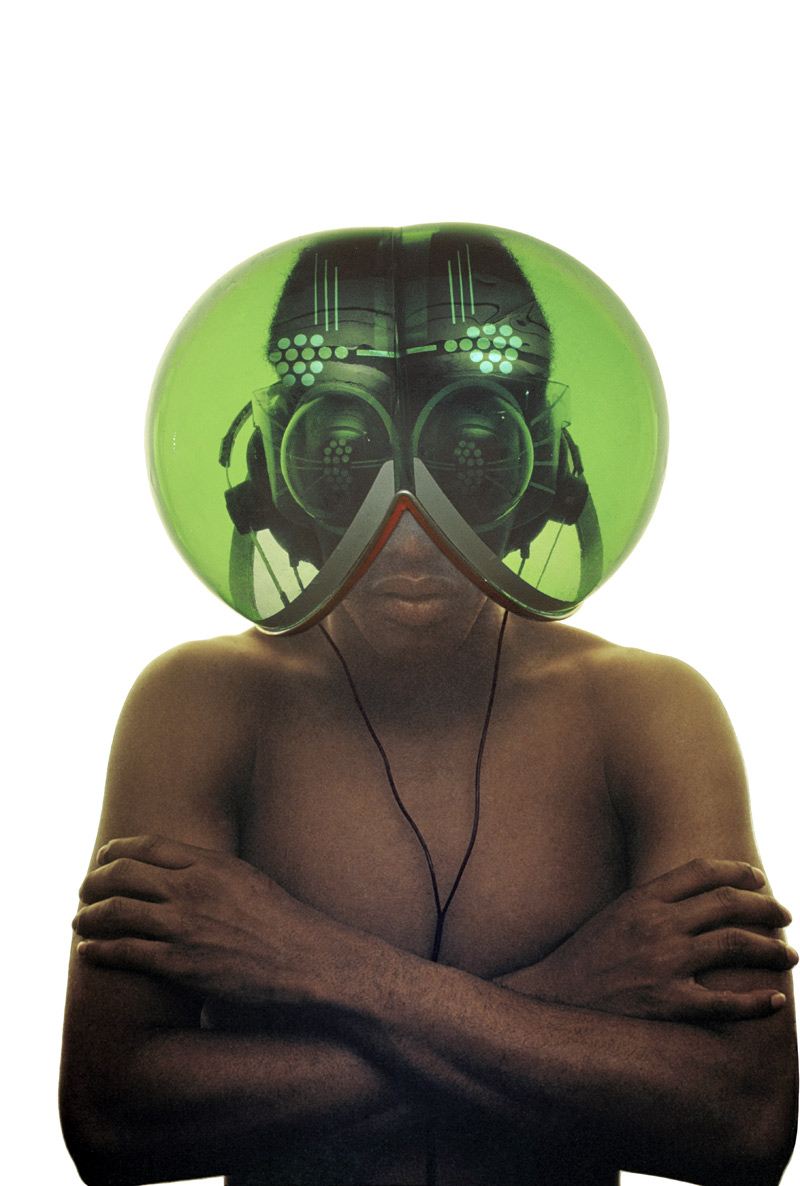
Haus-Rucker-Co (Laurids Ortner, Günter Zamp Kelp, Klaus Pinter) 'Flyhead (Environment Transformer)', Vienna, 1968 from the exhibition 'Climate Capsules: Means of Surviving Disaster' at Museum fur Kunst und Gewerbe Hamburg, may - September, 2010


Haus-Rucker-Co (Laurids Ortner, Gunter Zamp Kelp, Klaus Pinter)
Flyhead (Environment Transformer)
Vienna, 1968
Helmet consisting of two transparent green, symmetrical, hemispherical plastic fragments partially covered with foil. Inside the helmet, with the aid of a metal construction, audio-visual filters are arranged by means of which the normality of the surroundings is acoustically distorted and visually faceted.
Photo: Ben Rose, New York


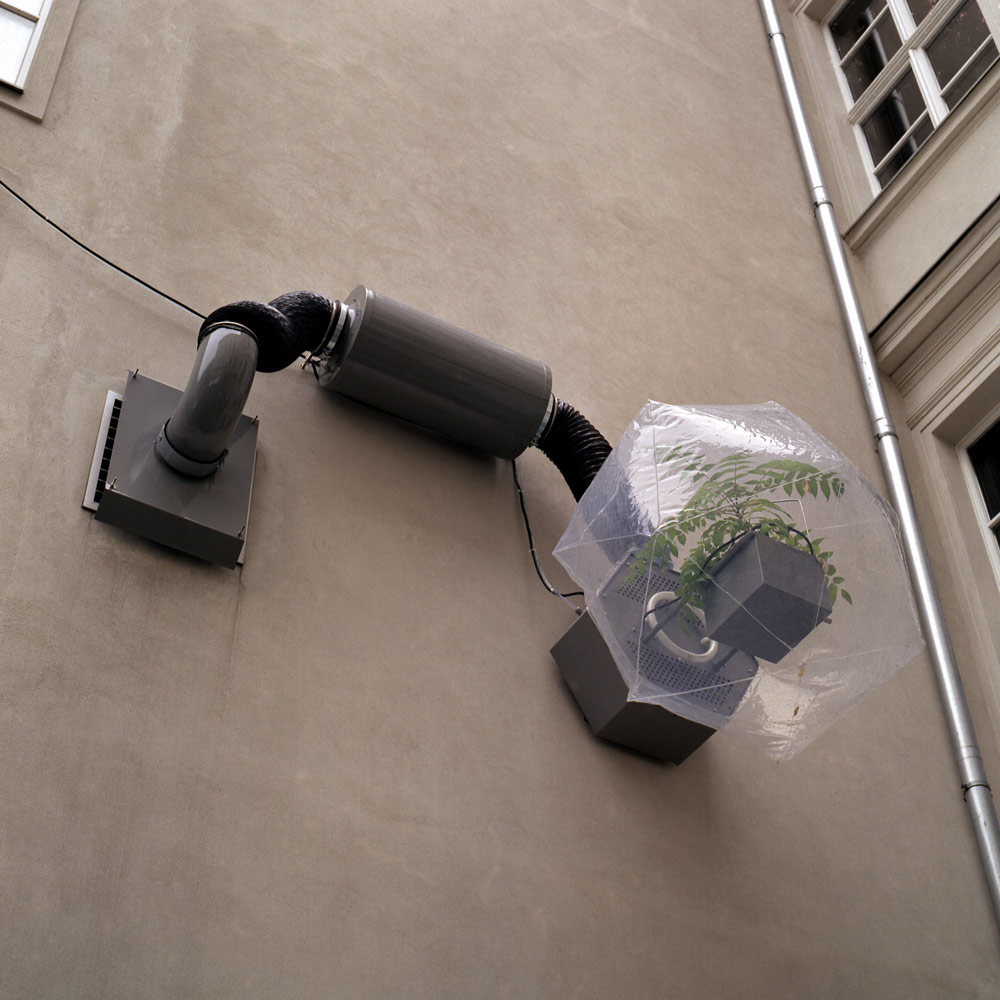
Ingo Vetter (Germany, b. 1968) 'Adaptation Laboratory' 2004 from the exhibition 'Climate Capsules: Means of Surviving Disaster' at Museum fur Kunst und Gewerbe Hamburg, may - September, 2010


Ingo Vetter (Germany, b. 1968)
Adaptation Laboratory
2004
Exhaust-operated greenhouse with tree of heaven (Ailanthus altissima)
Ingo Vetter
© Ingo Vetter for the Detroit Tree of Heaven Woodshop, 2004


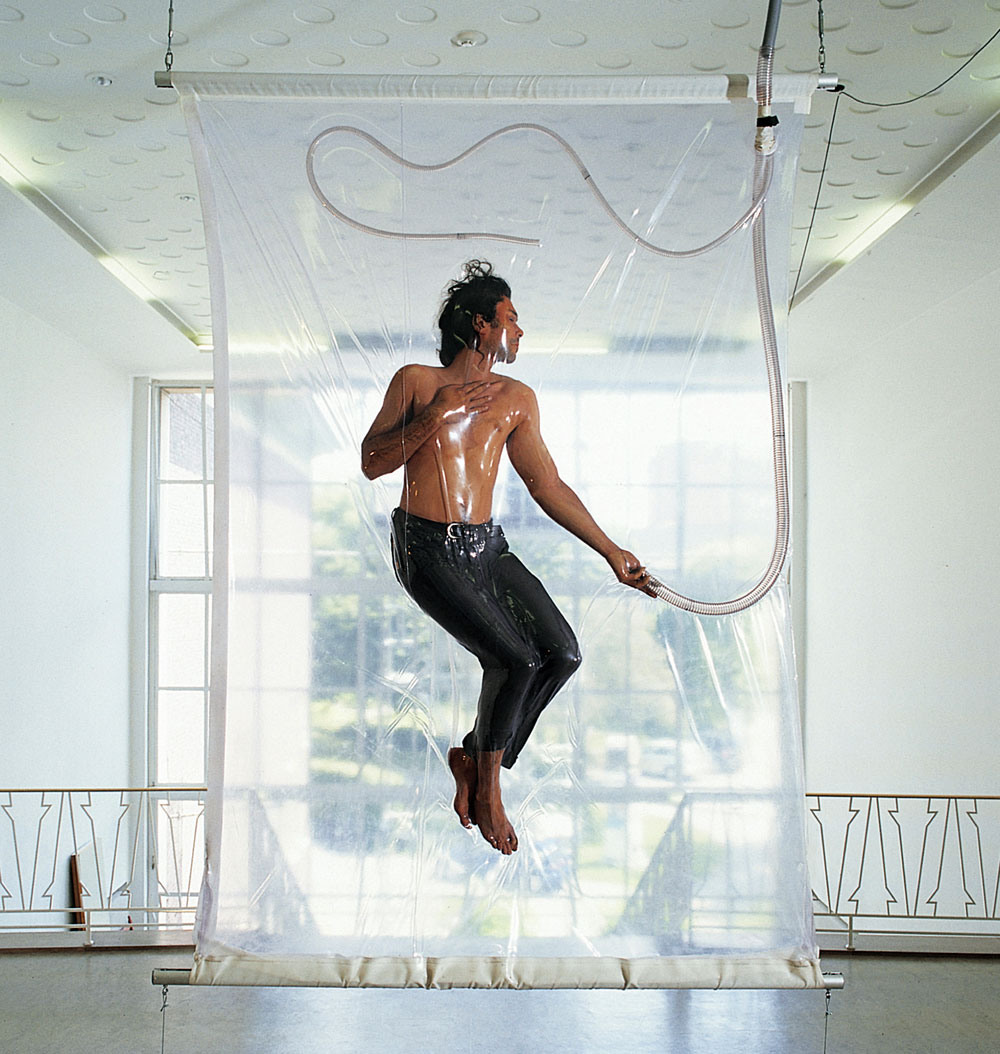
Lawrence Malstaf (Belgian, b. 1972) 'Shrink' 1995 from the exhibition 'Climate Capsules: Means of Surviving Disaster' at Museum fur Kunst und Gewerbe Hamburg, may - September, 2010


Lawrence Malstaf (Belgian, b. 1972)
Shrink
1995
Performative Installation
© Lawrence Malstaf/Galerie Fortlaan 17, Ghent (B)


In view of the advancing climate change, the exhibition Climate Capsules: Means of Surviving Disaster at the Museum fur Kunst und Gewerbe Hamburg poses the question: “How do we want to live in the future?” and draws attention to the socio-political consequences of coexistence under new climatic conditions. In view of the fact that the politicians are hesitant to enforce strict measures for climate protection and the citizens very sluggish about changing their habits, the change appears inevitable. The world community is accordingly confronted with the challenge of investigating various possible means of adapting to the climate change. This exhibition is the first to bring together historical and current climate-related models, concepts, strategies, experiments and utopias from the areas of design, art, architecture and urban development – pursuing not the aim of stopping the climate change, but envisioning means of surviving after disaster has struck. More than twenty-five mobile, temporary and urban capsules intended to make human life possible independently of the surrounding climatic conditions will be on view – from floating cities and body capsules to concepts for fertilising sea water or injecting the stratosphere with sulphur. A symposium, film programme, readings, performances and workshops will revolve around the interplay between design processes and political factors such as migration, border politics and resource conflicts, and investigate the consequences for social and cultural partitioning and exclusion.

The public discussion on the climate change concentrates primarily on preventing change by reducing climate damaging emissions. This reduction is to be achieved through new means of obtaining energy as well as the optimisation of energy consumption. The consumption-oriented lifestyle of the industrial nations is also to become more “environmentally friendly”; the citizens are called upon to change their habits. Emerging nations are admonished to avoid the mistakes made by the West from the start. There is not the slightest guarantee, however, that enough nations and enough people around the world will participate in such reductions, and that a “low-carbon culture” will become the globally predominant lifestyle. Nor does anyone know for sure whether the reduction goals presently being discussed will suffice to delay or stop the climate change, which is already measurable today. In the search for alternative solutions, there is a category discussed substantially less often in public: adaptation. Here strategies are developed which aim not to slow or stop the climate change but to adapt to its expected consequences. They include protective measures against flooding and overheating as well as geo-engineering, i.e. large-scale interventions in the global climate.

These technologies are usually subjected only to critical discussion with regard to their technical feasibility. Until now, their possible socio-political effects have for the most part been ignored. Their impact on the structure of the global society, however, can hardly be overestimated: in the endeavour to make life possible independently of outward climatic conditions, these strategies encourage spatial, social and political isolation. Ostensibly motivated by climate-related considerations, they could well lead to inclusion and exclusion on all levels of life, from the interpersonal to the global. They create the conditions for social segregation and global polarisation.

The exhibition Climate Capsules: Means of Surviving Disaster will focus primarily on application-oriented projects for climatological capsules from the areas of design, art, architecture, urban development and geoengineering. The show will reflect on the (political, cultural, socio-spatial) impact of these current adaptation strategies on society by means of contemporary artistic approaches and avant-garde concepts of the twentieth century. Historical projects in the context of the climate change will thus assume new meaning. The current artistic projects question the positivist perspective of their counterparts of the past, and offer the exhibition visitor a further level of sensory experience. The exhibition objects can be divided into five types: body capsules, living capsules, urban capsules, nature capsules and atmosphere capsules.

Body capsules

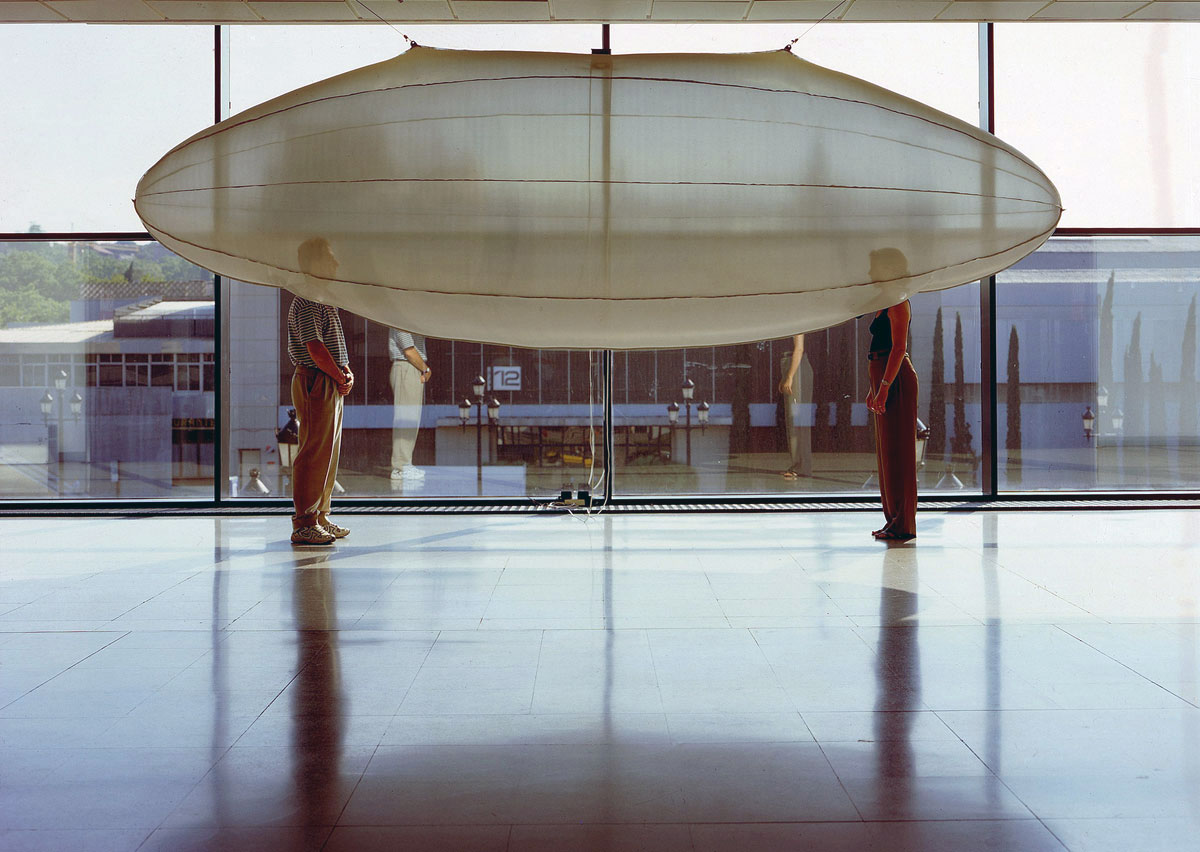
The exhibition begins with the interactive installation La Parole by Pablo Reinoso. Two visitors at a time can poke their heads into the inflatable textile construction and share the air they breathe as well as a common visual and audio space. The experience of this work raises the question as to how people can protect their bodies from contaminated air, pollutants, storms and aggressive solar radiation. Again and again in the course of the show, the visitor encounters “body capsules” addressing the topic of clothing as bodily protection from climatic conditions.

Living capsules

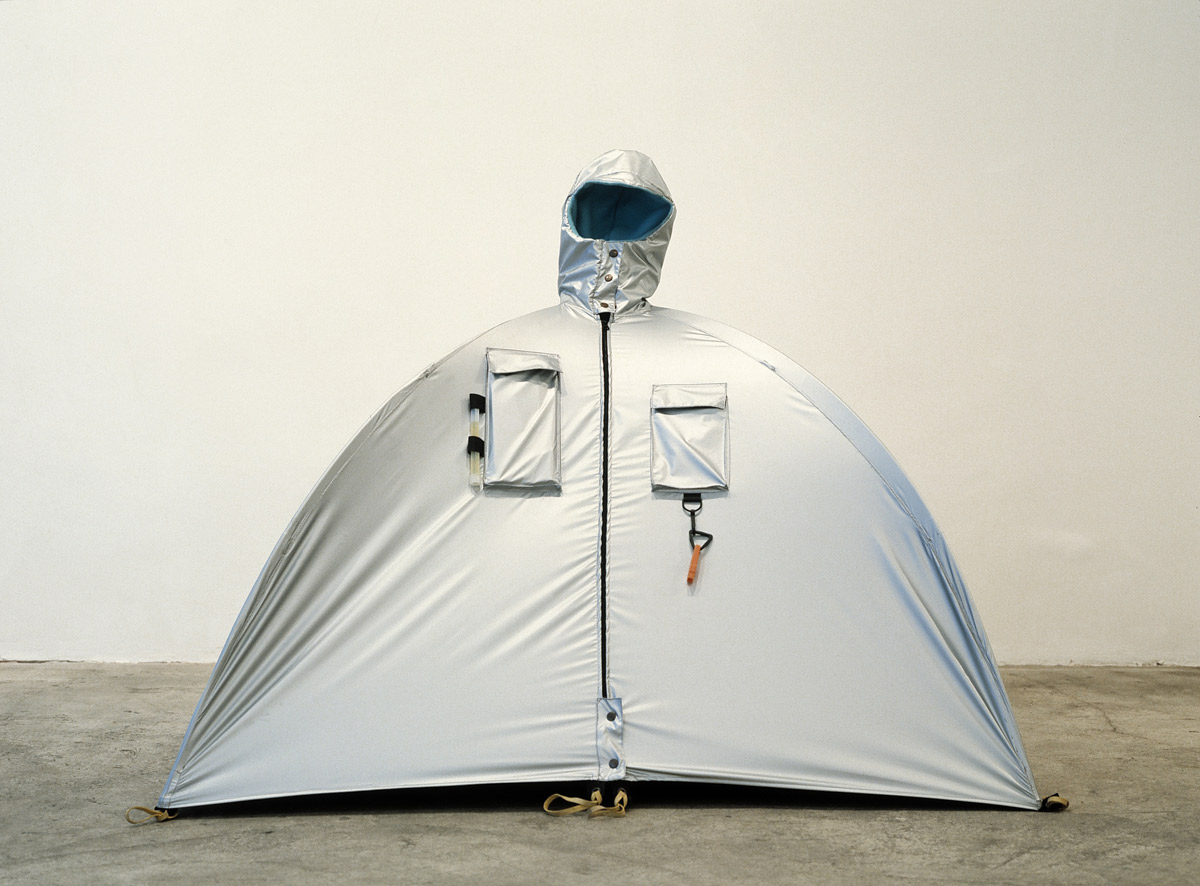
The objects belonging to this group extend the encapsulated space from the body encasement to the immediate living space. Utopian designs for mobile capsules of the 1960s such as the Walking City by Ron Herron (Archigram) still figured in the discussion emphasising temporary and mobile structures as experimental free spaces after ideas introduced by such architects as Constant or Yona Friedman. Today mobility is no longer just a question of freedom – the counterpart to voluntary mobility is flight, the spatial equivalent the temporary camp. The visitor thus stumbles across Michael Rokowitz’s paraSITE, for example, an inflatable tent which the artist developed in collaboration with the homeless person Bill Stone. Like the other tents in the series, it is designed for use in an exhaust air shaft. It can dock onto a building as a temporary parasite. In this context of precarious modi vivendi – brought about not least of all by global inequality (which is further aggravated by the climate change) and the resulting mass migration – what were once visionary temporary living concepts appear in a new light. They are not spaces of liberation, but of isolation.

Urban capsules

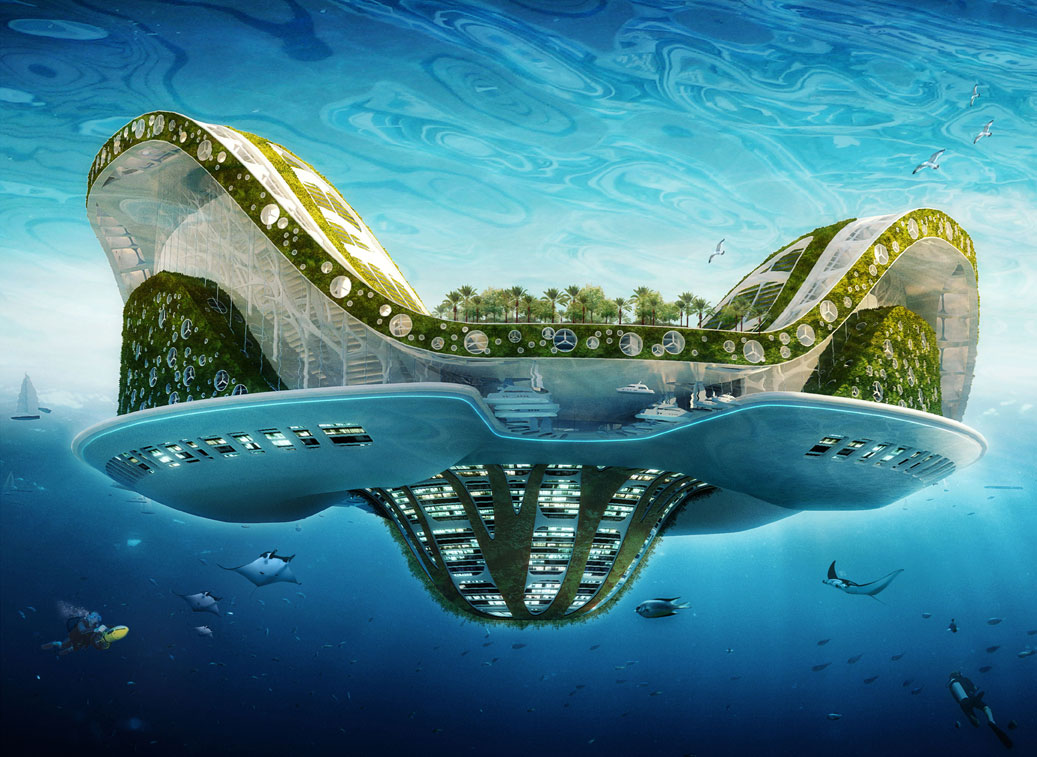
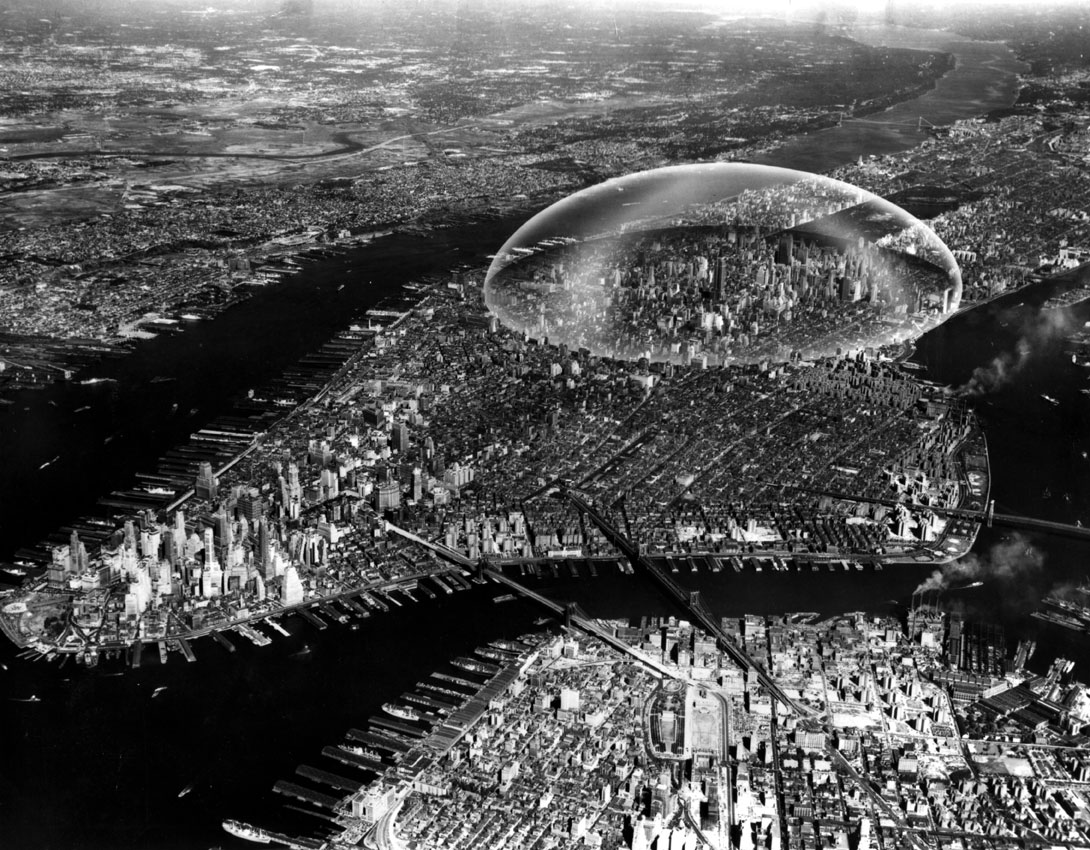
Cities are the largest energy consumers, and urbanisation continues to increase worldwide. Zero waste, zero emission, zero energy are the creeds of the present. Already in the 1950s, Richard Buckminster Fuller and Shoji Sadao sketched the utopia of a climatically self-sufficient reorganisation of the city with their Dome over Manhattan. In this vision, a huge dome covers a large proportion of the island. Today, these encapsulations from the outside are already being realised in conjunction with the design of internal climate worlds, whether on the scale of large building complexes or energy-self-sufficient cities such as Masdar by Norman Foster. Other concepts show that, against the background of imminent climate disasters, the urban system is conceived of increasingly as an autarchic unit, sealed from the outside world, and confronted with the need for the self-contained management of its ecological resources. This debate is carried to the furthest extreme by Vincent Callebaut’s conception for a floating city – Lilypad – intended as a haven for climate refugees.

Nature capsules

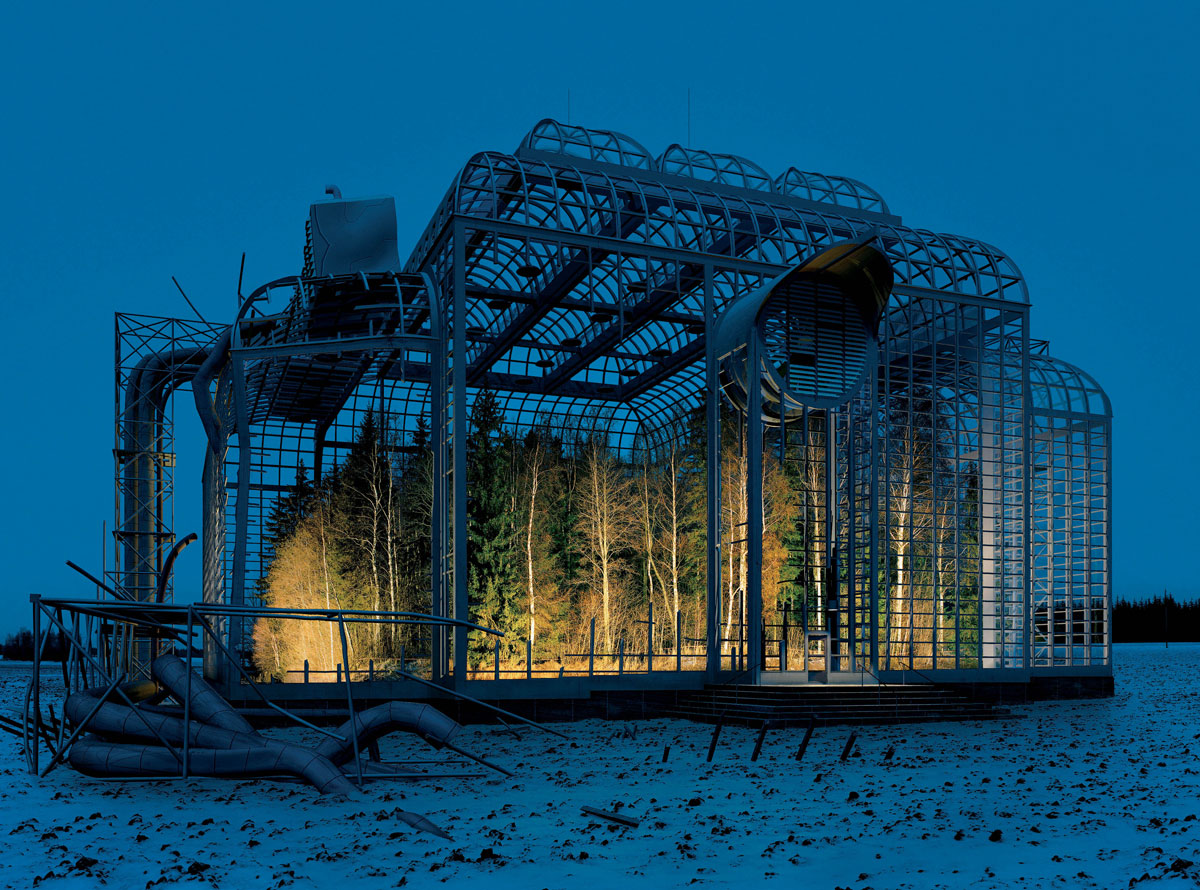
Just as the city is to be protected from the climatologically changing environment, nature is also to be elevated into a sphere of safe artificiality and preserved in nature capsules. Ecosystems are replicated by human hand on the micro level and sealed off from the outside. A concept which initially presents itself as a protective mechanism robs the flora and fauna assembled within it of their connection to the macrolevel ecosystem: Earth. The question arises: can that which is being protected inside such a capsule still be thought of as nature? Or is it a deceptively genuine human artefact? These considerations are made very vivid in Ilkka Halso’s photo series Museum of Nature, consisting of digital montages which insert forests, lakes and rivers into imaginary museum buildings.

Atmosphere capsules

The maximum scale of adaptive design strategies is reached with geo-engineering. With chemical or physical interventions, attempts are made to control climatological, geochemical and biochemical systems actively on the global level, and thus to moderate the climate. The historical forerunners of this development are psychoanalyst Wilhelm Reich’s para-scientific Cloudbusters and the U.S. Army’s Project Cirrus, both of which sought to influence the weather technically by different means. Today, various well-known scientists and research institutes are working on large-scale interventions aiming to protect the global climate from negative influences. Utopian proposals are juxtaposed with feasible projects such as endeavours to reduce global warming through the use of reflective white paint on roofs and streets. To date it is impossible to calculate the consequences of such far-reaching interventions, and they are nowhere near realisation. Yet the fact that they are discussed seriously indicates how close climatological developments have already come to the point where emission-reduction strategies become obsolete.

Participating artists, designers and architects: Anderson Anderson Architecture (US), Ant Farm (US), Richard Buckminster Fuller (US), Vincent Callebaut (B), Juan Downey (US), David Greene (GB), Tue Greenfort (DK), Ilkka Halso (FI), Haus-Rucker-Co (AT), Ron Herron (GB), Kouji Hikawa (JP), Christoph Keller (D), Lawrence Malstaf (B), Gustav Metzger (D), N55 (DK), Lucy Orta (GB), Michael Rakowitz (US), Pablo Reinoso (ARG/F), Shoji Sadao (US), Tomás Saraceno (planet earth), Werner Sobek (D), Jan-Peter E.R. Sonntag (D), Matti Suuronen (FI), Ingo Vetter (D).

Press release from the Museum fur Kunst und Gewerbe website [Online] Cited 17/08/2010 no longer available online


Pablo Reinoso (Argentine-French, b. 1955) 'La Parole' 1998


Pablo Reinoso (Argentine-French, b. 1955)
La Parole
1998
Fabric and electrically powered ventilators
length. 620cm, diam. 200cm
Pablo Reinoso
© Pablo Reinoso Studio


Lucy Orta (English, b. 1966) 'Refuge Wear – Habitent' 1992


Lucy Orta (English, b. 1966)
Refuge Wear – Habitent
1992
Polyamide encased in aluminium, polar fleece, aluminium tent poles, whistle, lantern, compass
125 x 125 x 125cm
Galleria Continua
Photo: Galerie Anne de Villepoix, Courtesy Galleria Continua, San Gimignano / Beijing / Le Moulin


Vincent Callebaut (Belgium, c. 1977) 'Lilypad, A Floating Ecopolis for Climate Refugees' 2008


Vincent Callebaut (Belgium, c. 1977)
Lilypad, A Floating Ecopolis for Climate Refugees
2008
Digital rendering, dimensions variable
© Vincent Callebaut Architectures


Richard Buckminster Fuller, Shoji Sadao. 'Dome over Manhattan' c. 1960


Richard Buckminster Fuller, Shoji Sadao
Dome over Manhattan
c. 1960
Silver gelatine print
34.9 x 46.7cm
Courtesy the Estate of R. Buckminster Fuller


Ilkka Halso (Finnish, b. 1965) 'Museum I' 2003


Ilkka Halso (Finnish, b. 1965)
Museum I
2003
from the work Museum of Nature


Museum für Kunst und Gewerbe Hamburg
Steintorplatz, 20099 Hamburg

Opening hours:
Tuesday to Sunday 10am – 6pm
Thursday 10am – 9pm

Museum fur Kunst und Gewerbe Hamburg website

LIKE ART BLART ON FACEBOOK

Back to top

Vale Mari Funaki

May 2010


It is with great sadness that I hear of the passing of Mari Funaki on the 13th May 2010.

I met Mari many times and she was always wonderfully generous with her energy, knowledge and enthusiasm. She was an amazing artist, I loved her work especially the stunning anamorphic black bracelets and the fact that she used photography of Bernd and Hiller Becher as part of her inspiration. My conversation with Mari in 2006 and photographs of her work can be found on the Notes from a Conversation with Mari Funaki posting.

Vale Mari Funaki


“A memorial will be held on Tuesday June 1st, 2010 at 11.00am in THE GREAT HALL of the National Gallery of Victoria, International.


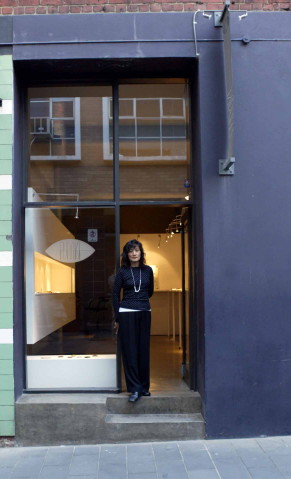
Mari Funaki outside Gallery Funaki


Mari Funaki outside Gallery Funaki
Photo: Marcus Bunyan


Gallery Funaki website

LIKE ART BLART ON FACEBOOK

Back to top

Review: ‘To hold and be held’ by Kiko Gianocca at Gallery Funaki, Melbourne

Exhibition dates: 20th April – 15th May 2010


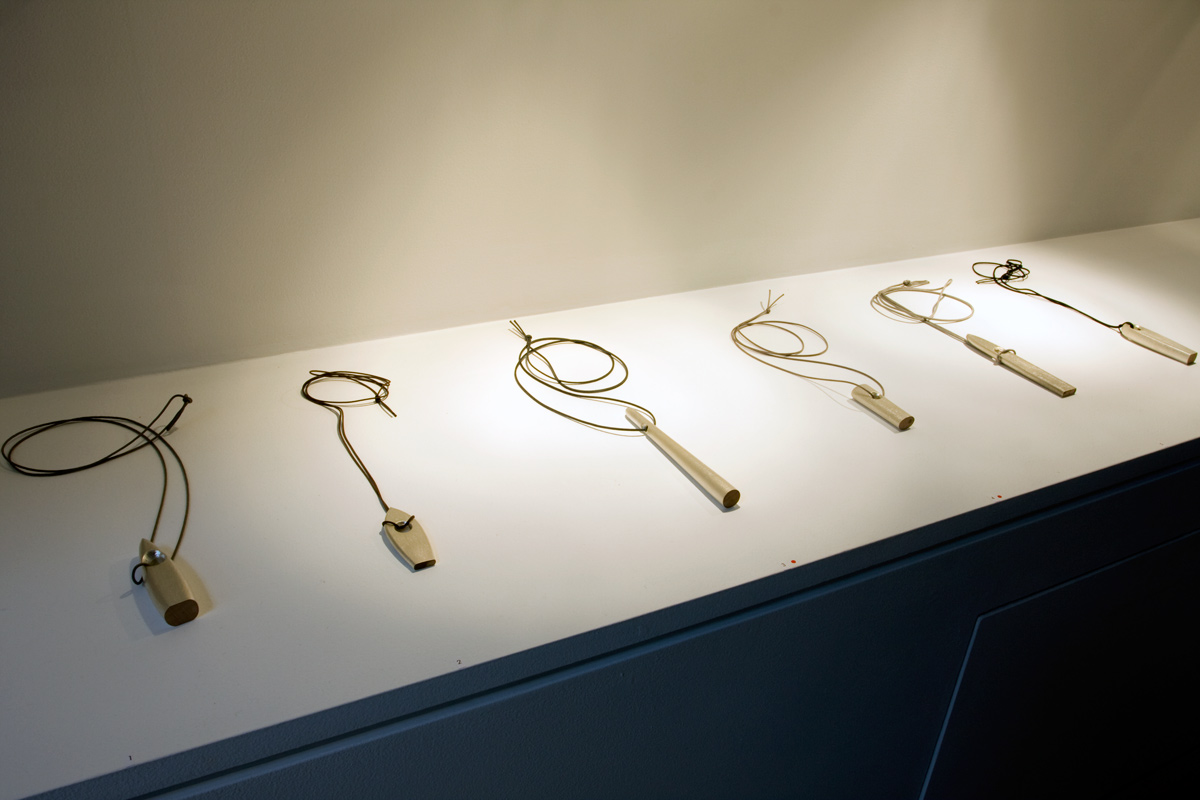
Kiko Gianocca (Swiss, b. 1974) 'Untitled (touch wood)' multiples 2009 (installation view) from the exhibition 'To hold and be held' by Kiko Gianocca at Gallery Funaki, Melbourne, April - May, 2010


Kiko Gianocca (Swiss, b. 1974)
Untitled (touch wood) multiples (installation view)
2009
Burnt wood, resin
Photo: Marcus Bunyan


A beautiful exhibition of objects by Swiss/Italian artist Kiko Gianocca at Gallery Funaki, Melbourne, one full of delicate resonances and remembrances.

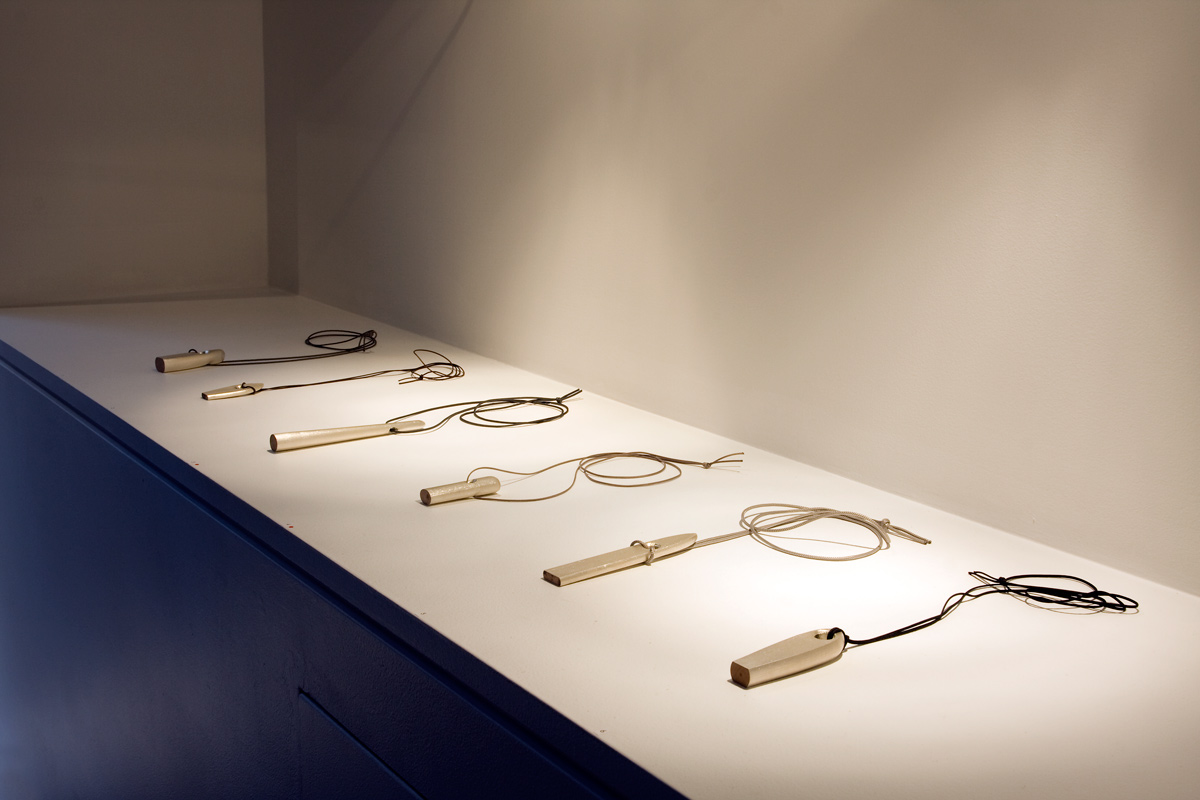
Obelisk pendants in blackened and silvered wood, Neolithic standing stones, totemic, silent;
The hole through the object akin to ‘seeing’ through time.
Exposed wood on base (touch wood) as grounding.

The standing stone installation an altar piece, a dark reliquary (see image above)


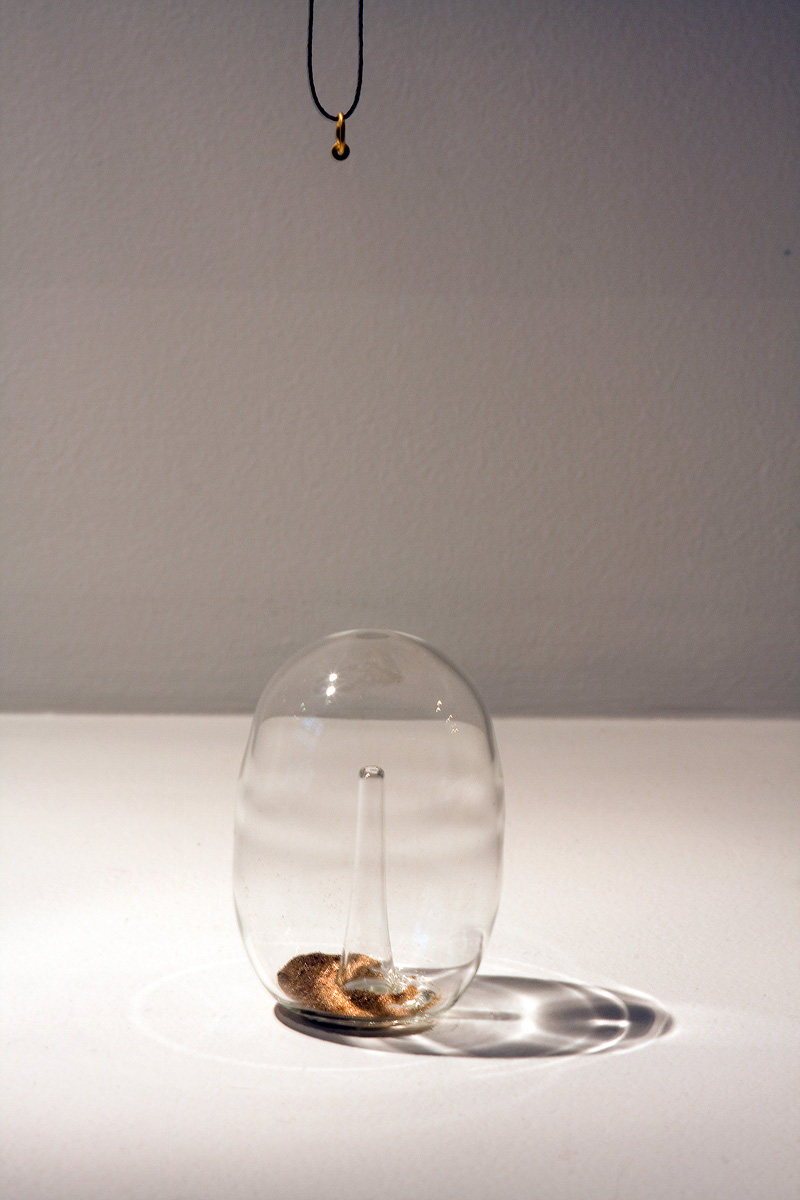
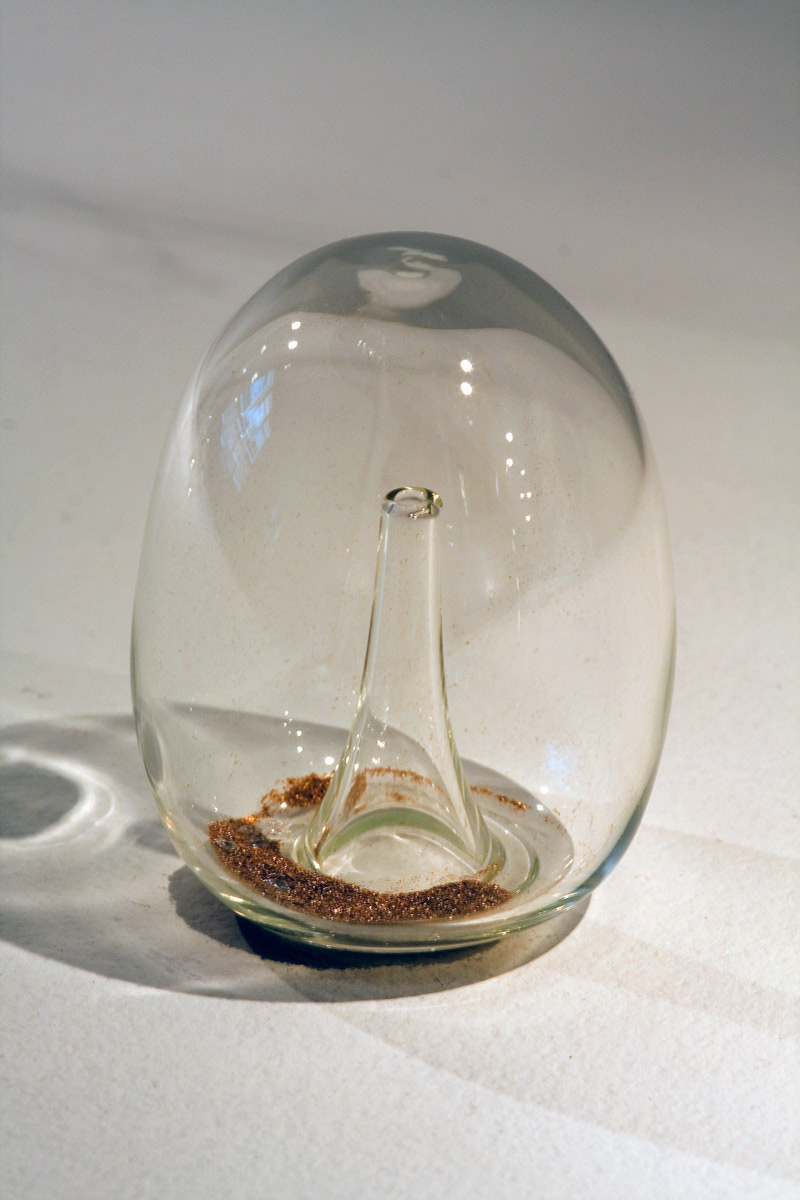
Glass vessels with internal funnels filled with the gold detritus of disassembled objects, found pendants:
Horse, Anchor, Four leaf clover, Swan, Hammer & sickle (see images below)

The distance between the bail – the finding that attaches the pendant to the necklace – and the remainder/reminder of the vessel itself. What a distance!

As Sally Mann would articulate, ‘What remains’1 …

Lives previous to this incarnation; jewels embedded in dust.
The captured potency of displaced objects.
Personal and yet anonymous at one and the same time.


Brooches of gloss and matt black resin plates. A plastic black, almost Rembrandt-esque.

On the reverse images exposed like a photographic plate, found images solidified in resin.

The front: the depths of the universe, navigating the dazzling darkness
The back: memories, forgotten, then remade, worn like a secret against the beating chest. Only the wearer knows!

Here is a territorialization, “a double movement, where something accumulates meanings (re-territorialization), but does so co-extensively with a de-territorialization where the same thing is disinvested of meanings.”2

As Kiki Gianocca asks, “I am not sure if I grasp the memories that sometimes come to mind.
I start to think they hold me instead of me holding them.”

 
Time is the distance between objects. No objects.
Space is the distance between events. No events.

Dr Marcus Bunyan


1/ “Mann’s fifth book, What Remains, published in 2003, is based on the show of the same name at the Corcoran Museum in Washington, DC and is in five parts. The first section contains photographs of the remains of Eva, her greyhound, after decomposition. The second part has the photographs of dead and decomposing bodies at a federal Forensic Anthropology Facility (known as the ‘body farm’). The third part details the site on her property where an armed escaped convict was killed. The fourth part is a study of the grounds of Antietam (the site of the bloodiest single day battle in American history during the Civil War. The last part is a study of close-ups of the faces of her children. Thus, this study of mortality, decay and death ends with hope and love.”
Sally Mann. Wikipedia [Online] Cited 02/05/2010

2/ “For them (Deleuze and Guattari), assemblages are the processes by which various configurations of linked components function in an intersection with each other, a process that can be both productive and disruptive. Any such process involves a territorialization; there is a double movement where something accumulates meanings (re-territorialization), but does so co-extensively with a de-territorialization where the same thing is disinvested of meanings. The organization of a territory is characterized by such a double movement … An assemblage is an extension of this process, and can be thought of as constituted by an intensification of these processes around a particular site through a multiplicity of intersections of such territorializations.”
Wood, Aylish. “Fresh Kill: Information technologies as sites of resistance ” in Munt, Sally (ed.,). Technospaces: Inside the New Media. London: Continuum, 2001, p. 166.


    Many thankx to Katie and Gallery Funaki for allowing me to take the photographs in the gallery and post them online. Please click on the photographs for a larger version of the image. All photographs © Marcus Bunyan except The waterfall.


    “I own a stone that a friend passed to me, and a shackle that Michael gave me.

    I found a curious object in Lisbon at the fleamarket, I paid one euro for it and I still don’t know what it is.

    Yesterday I had a look again at the picture you shot. I am not sure if I grasp the memories that sometimes come to mind.

    I start to think they hold me instead of me holding them.”


    Kiko Gianocca, April 2010


    Installation view of the exhibition 'To hold and be held' by Kiko Gianocca at Gallery Funaki, Melbourne showing 'Untitled (touch wood)' multiples (installation view)

    Installation view of the exhibition 'To hold and be held' by Kiko Gianocca at Gallery Funaki, Melbourne showing 'Untitled (touch wood)' multiples (installation view)


    Kiko Gianocca (Swiss, b. 1974)
    Untitled (touch wood) multiples (installation views)
    2009
    Wood, silver
    Photos: Marcus Bunyan


    Kiko Gianocca (Swiss, b. 1974)
'Horse, Anchor, Four leaf clover and Swan' (left to right) 2009 (installation view)


    Kiko Gianocca (Swiss, b. 1974)
    Horse, Anchor, Four leaf clover and Swan (left to right) (installation view)
    2009
    18k gold, glass
    Photo: Marcus Bunyan


    Kiko Gianocca. 'Horse' 2009 (installation view)


    Kiko Gianocca (Swiss, b. 1974)
    Horse (installation view)
    2009
    18k gold, glass
    Photo: Marcus Bunyan


    Kiko Gianocca (Swiss, b. 1974) 'Anchor' 2009 (installation view) from the exhibition 'To hold and be held' by Kiko Gianocca at Gallery Funaki, Melbourne, April - May, 2010


    Kiko Gianocca (Swiss, b. 1974)
    Anchor (installation view)
    2009
    18k gold, glass
    Photo: Marcus Bunyan


    Kiko Gianocca (Swiss, b. 1974) 'Swan' 2009 (installation view)


    Kiko Gianocca (Swiss, b. 1974)
    Swan (installation view)
    2009
    18k gold, glass
    Photo: Marcus Bunyan


    Installation view of the exhibition 'To hold and be held' by Kiko Gianocca at Gallery Funaki, Melbourne with 'Untitled (touch wood)' burnt wood multiples in distance


    Installation view of exhibition with Untitled (touch wood) burnt wood multiples in distance
    Photo: Marcus Bunyan


    Kiko Gianocca (Swiss, b. 1974) 'Man & dog' 2009 (installation view)


    Kiko Gianocca (Swiss, b. 1974)
    Man & dog (installation view)
    2009
    Found image, resin, silver
    Photo: Marcus Bunyan


    Kiko Gianocca (Swiss, b. 1974) 'The waterfall' 2009 from the exhibition 'To hold and be held' by Kiko Gianocca at Gallery Funaki, Melbourne, April - May, 2010


    Kiko Gianocca (Swiss, b. 1974)
    The waterfall
    2009
    Found image, resin, silver


    Kiko Gianocca (Swiss, b. 1974) 'The dog' 2009 (installation view)


    Kiko Gianocca (Swiss, b. 1974)
    The dog (installation view)
    2009
    Found image, resin, silver
    Photo: Marcus Bunyan


    Kiko Gianocca (Swiss, b. 1974) 'The kiss' (reverse) 2009 (installation view)


    Kiko Gianocca (Swiss, b. 1974)
    The kiss (reverse) (installation view)
    2009
    Found image, resin, silver
    Photo: Marcus Bunyan


    Kiko Gianocca (Swiss, b. 1974) 'The way up' (reverse) 2009 (installation view)


    Kiko Gianocca (Swiss, b. 1974)
    The way up (reverse) (installation view)
    2009
    Found image, resin, silver
    Photo: Marcus Bunyan


    Kiko Gianocca (Swiss, b. 1974) 'The beast' (reverse) 2009 (installation view)


    Kiko Gianocca (Swiss, b. 1974)
    The beast (reverse) (installation view)
    2009
    Found image, resin, silver
    Photo: Marcus Bunyan


    Gallery Funaki
    Sackville House
    Apartment 33
    27 Flinders Lane
    Melbourne 3000
    Australia

    Opening hours:
    Wednesday – Friday 12 – 5pm
    Saturday on occasion (check our socials) or by appointment

    Gallery Funaki website

    LIKE ART BLART ON FACEBOOK

    Back to top

    Exhibition: ‘Josef Albers: Innovation and Inspiration’ at the Hirshhorn Museum, Washington, D.C.

    Exhibition dates: 13th February – 11th April, 2010


    Josef Albers (German, 1888-1976) '6 and 3' 1931 from the exhibition 'Josef Albers: Innovation and Inspiration' at the Hirshhorn Museum, Washington, D.C., February - April, 2010


    Josef Albers (German, 1888-1976)
    6 and 3
    1931


    One of my favourite artists – what a genius!

    His exploration of colour and form is exquisite, sensitive and very moving – despite his belief that colours have no inherent emotional associations.

    Marcus


    Many thankx to the Hirshhorn Museum for allowing me to publish the images in the posting. Please click on the photographs for a larger version of the image.


    Josef Albers (German, 1888-1976) 'Rolling After' 1925-1928 from the exhibition 'Josef Albers: Innovation and Inspiration' at the Hirshhorn Museum, Washington, D.C., February - April, 2010


    Josef Albers (German, 1888-1976)
    Rolling After
    1925-28


    Josef Albers (German, 1888-1976) 'Piano Keys' 1932 from the exhibition 'Josef Albers: Innovation and Inspiration' at the Hirshhorn Museum, Washington, D.C., February - April, 2010


    Josef Albers (German, 1888-1976)
    Piano Keys
    1932


    Josef Albers (German, 1888-1976) 'Steps' 1932 from the exhibition 'Josef Albers: Innovation and Inspiration' at the Hirshhorn Museum, Washington, D.C., February - April, 2010


    Josef Albers (German, 1888-1976)
    Steps
    1932


    Josef Albers (German, 1888-1976) 'Untitled (Leaf Study)' c. 1940


    Josef Albers  (German, 1888-1976)
    Untitled (Leaf Study)
    c. 1940


    Josef Albers (German, 1888-1976) 'Structural Constellation, Transformation of a Scheme No.12' 1950


    Josef Albers (German, 1888-1976)
    Structural Constellation, Transformation of a Scheme No.12
    1950
    Machine engraving on black vinylite mounted on board


    Josef Albers (German, 1888-1976) 'Structural Constellation, Transformation of a Scheme No.23' 1951


    Josef Albers (German, 1888-1976)
    Structural Constellation, Transformation of a Scheme No.23
    1951
    Machine engraving on black vinylite mounted on board


    Josef Albers (German, 1888-1976) 'Structural Constellation, Transformation of a Scheme No.10' 1950-1951


    Josef Albers (German, 1888-1976)
    Structural Constellation, Transformation of a Scheme No.10
    1950-51
    Machine engraving on black vinylite mounted on board


    Exhibition Illustrates Albers’ Sphere of Influence

    The Hirshhorn possesses one of the world’s largest and most comprehensive collections of work by Josef Albers (b. Bottrop, Germany, 1888; d. New Haven, Connecticut, 1976). “Josef Albers: Innovation and Inspiration” presents nearly 70 works spanning the artist’s 55-year career, many on view for the first time. Supplementing pieces from the museum’s holdings are key objects on loan from the Josef and Anni Albers Foundation. Organised by senior curator Valerie Fletcher, the exhibition also includes documentary photographs and examples of Albers’ teaching aids, and concludes with a display of works by artists who knew, worked with, studied under or openly admired Albers. The exhibition opens on February 11 and runs through April 11, 2010.

    Josef Albers: Innovation and Inspiration encompasses the artist’s distinguished career from 1917 to 1973. The exhibition begins with four early self-portrait prints dating from the years of World War I, followed by a group of boldly abstract compositions from Albers’ tenure at Germany’s revolutionary Bauhaus, where he taught alongside such remarkable modernists as Wassily Kandinsky, Paul Klee, László Moholy-Nagy, Walter Gropius and Mies van der Rohe. Albers participated in the school’s utopian aspiration to improve modern life through manufacturing and design-ideas that resonated throughout Albers’ career. The Hirshhorn’s show includes a series of black-and-white designs intended for mass production in glass, such as “6 and 3” (1931, see above), and an illuminated display of eight glass panels, in which the artist modernised and transformed the medieval tradition of stained-glass windows, best characterised by “Fugue (B)” (1925-1928).

    Following the Nazi party’s rise to power, the Bauhaus was forced to close in 1933. Albers fled to the United States, where he was recruited to head the art program at the new Black Mountain College in North Carolina. There, Albers introduced a modified Bauhaus curriculum and hired vanguard modernists as teachers. He enthusiastically taught his students how art could be made from virtually any material, which he demonstrated in some of his own works, such as three “Leaf Study” collages (c. 1940, see above). Albers continued to advocate the clear structures of geometric abstraction, still mostly in black, white and primary colours, but was open to different stylistic approaches. He also briefly adopted the biomorphic forms associated with surrealism, as seen in the work “Proto-Form (B)” (1938).

    In 1949, at the age of 62, Albers became chairman of the art school at Yale University, with a mandate to transform it from a conservative academic program to a proponent of modern concepts and applications. Believing firmly that colours have no inherent emotional associations, he meticulously explored their nuances and combinations in his work. He eventually limited the shape and number of his forms, which resulted in a standardised format that he called “Homage to the Square,” for which he is best known. Two dozen “Homage to the Square” compositions fill the central gallery in the exhibition, inviting viewers to examine the subtle complexities of their perceptions. The vivid yellow-orange-reds of “Glow” (1966, see below) startle the eye, while the pale grays of “Nacre” (1965, see below) suggest cool neutrality. These images create optical illusions, challenging viewers’ visual acuity. This series concludes with the artist’s vivid red-print duo, “In Honor of the Hirshhorn Museum,” on view for the first time since the museum opened in 1974.

    In addition, this exhibition includes examples from Albers’ “Structural Constellation” series of reliefs (1954-1964, see above), which anticipated op art with their linear patterns. The reliefs’ commonplace material-laminated plastic-also fulfils the utopian goal of making art affordable to everyone. The two largest paintings on view, both titled “Variant” (1973), were donated by the artist’s wife and foundation in 1979.

    Albers remained active and influential until his death in 1976, and many of his pedagogical innovations have become standard methodology in art schools across the country. His explorations of abstract form and colour also inspired and stimulated generations of artists and designers. Shortly after his arrival in America, he became a co-founder of the American Abstract Artists group and participated in exhibitions across the country, from New York to Michigan and beyond. The Hirshhorn’s exhibition ends with an array of works by colleagues, students and admirers, among them: weavings by the artist’s wife, Anni Albers; abstract constructions by Burgoyne Diller; streamlined images of labor by Jacob Lawrence; a large op art painting by Richard Anuskiewicz; textured creations by Eva Hesse and Robert Rauschenberg; and a minimalist stacked wall sculpture by Donald Judd.”

    Press release from The Hirshhorn Museum website [Online] Cited 01/04/2010 no longer available online


    Josef Albers (German, 1888-1976) 'Homage to the Square - Soft Spoken' 1969


    Josef Albers (German, 1888-1976)
    Homage to the Square – Soft Spoken
    1969


    Josef Albers (German, 1888-1976) 'Homage to the Square - Porta Negra' 1965


    Josef Albers (German, 1888-1976)
    Homage to the Square – Porta Negra
    1965


    Josef Albers (German, 1888-1976) 'Homage to the Square - Profundo' 1965


    Josef Albers (German, 1888-1976)
    Homage to the Square – Profundo
    1965


    Josef Albers (German, 1888-1976) 'Homage to the Square - Nacre' 1965


    Josef Albers (German, 1888-1976)
    Homage to the Square – Nacre
    1965


    Josef Albers (German, 1888-1976) 'Homage to the Square. Soft Edge - Hard Edge' 1965


    Josef Albers (German, 1888-1976)
    Homage to the Square. Soft Edge – Hard Edge
    1965


    Josef Albers (German, 1888-1976) 'Homage to the Square - Arctic Bloom' 1965


    Josef Albers (German, 1888-1976)
    Homage to the Square – Arctic Bloom
    1965


    Josef Albers (German, 1888-1976) 'Homage to the Square - Blue Reminding' 1966


    Josef Albers (German, 1888-1976)
    Homage to the Square – Blue Reminding
    1966


    Josef Albers (German, 1888-1976) 'Homage to the Square - Glow' 1966


    Josef Albers (German, 1888-1976)
    Homage to the Square – Glow
    1966


    The Hirshhorn Museum and Sculpture Garden

    The Hirshhorn is located on the National Mall at the corner of 7th Street and Independence Avenue SW, Washington D.C.

    Opening hours:
    Open daily 10am – 5.30pm

    The Hirshhorn Museum website

    LIKE ART BLART ON FACEBOOK

    Back to top

    Review: ‘Pondlurking’ by Tom Moore at Helen Gory Galerie, Prahran, Melbourne

    Exhibition dates: 10th March – 3rd April, 2010


    Tom Moore 'Pondlurking' installation photographs at Helen Gory Galerie, Prahran


    Tom Moore Pondlurking installation photographs at Helen Gory Galerie, Prahran
    Photo: Marcus Bunyan


    My apologies to readers for the paucity of reviews of exhibitions in Melbourne recently. It is not that I haven’t been circulating around town to lots of exhibitions, far from it. The fact is that nothing has really rocked my boat, including my visit to a disappointing New 010 exhibition at ACCA, an exhibition redeemed only by the marvellous magnetic levitations of Susan Jacobs installation titled Being under no illusion (2010). Compared to the wealth of interesting work in New 09, work that still resides in my consciousness, the art in the current exhibition seems bland, the work ultimately and easily forgettable (a case of conceptual constipation?). Even though the exhibition lauds the collaboration between artists, designers, curators, architects, trades people and the kitchen sink in the production of the work, nothing substantive or lasting emerges.

    No such problem exists with the exhibition Pondlurking by Tom Moore at Helen Gory Galerie in Prahran. Wow, this show is good!

    It produced in me an elation, a sense of exalted happiness, a smile on my dial that was with me the rest of the day. The installation features elegantly naive cardboard cityscape dioramas teeming with wondrous, whimsical mythological animals that traverse pond and undulating road. This bestiary of animals, minerals and vegetables (bestiaries were made popular in the Middle Ages in illustrated volumes that described various animals, birds and even rocks) is totally delightful. In the text Moving Right Along the curator Julie Ewington notes connections in Moore’s work to the Garden of Earthly Delights by Hieronymus Bosch, the porcelain monkey orchestras of Miessen, parti-coloured hose of Medieval costume, the animals from Dr Suess’s books for children and Venetian glass figurines to name but a few. Another curator Geoffrey Edwards notes Moore’s accomplished technical skill in glass making, his use of lattice and trellis work in the figures themselves, namely the use of vetro a fili (broadly spaced) and vetro a retorti (twisted spiral) glass cane patterns.

    While all of this is true what really stands out is the presence of these objects, their joyousness. The technical and conceptual never get in the way of good art. The Surrealist imagining of a new world order (the destruction of traditional taxonomies) takes place while balanced on one foot (see the installation image at the top of the page). The morphogenesis of these creatures, as they build one upon another, turns the world upside down (as in Web Feet Duck Bum below). Multi-eyed potato cars, ducks with eyes wearing high heeled boots and three-legged devouring creatures segue from one state, condition, situation or element to another in a fluid condition of becoming. This morphogenesis is aided and abetted by the inherent fluidity of the glass medium itself skilfully used by Moore in the construction of his creatures. While the photographs below isolate the creatures within a contextless environment it is when the creatures are placed within the constructed environment so skilfully created by Moore that they come alive.

    The interconnectedness of this fantastical world (the intertextual relationship of earth, water, air, life) seeks to break down the binaries of existence – good / bad, normal / mutation, presence / absence – until something else (e)merges. Through their metamorphosed presence in a carnivalesque world that is both weird and the wonderful, Moore’s creatures invite us to look at ourselves and our landscape more kindly, more openly and with a greater generosity of spirit.

    Not to be missed!

    Dr Marcus Bunyan


    Many thankx to Nicola Stein and Helen Gory Galerie for allowing me to use the images below in the posting. All installation photographs © Marcus Bunyan


    Tom Moore 'Pondlurking' installation photographs at Helen Gory Galerie, Prahran

    Tom Moore 'Pondlurking' installation photographs at Helen Gory Galerie, Prahran

    Tom Moore 'Pondlurking' installation photographs at Helen Gory Galerie, Prahran


    Tom Moore Pondlurking installation photographs at Helen Gory Galerie, Prahran
    Photos: Marcus Bunyan


    Tom Moore (Australian) 'Stylish Car' 2008 from the exhibition 'Pondlurking' by Tom Moore at Helen Gory Galerie, Prahran, Melbourne, March - April, 2010


    Tom Moore (Australian)
    Stylish Car
    2008


    Tom Moore (Australian) 'Birdboat with passenger with a vengeance' (left) and 'Robot Island' (right) 2010 and 2009 from the exhibition 'Pondlurking' by Tom Moore at Helen Gory Galerie, Prahran, Melbourne, March - April, 2010


    Tom Moore (Australian)
    Birdboat with passenger with a vengeance (left) and Robot Island (right)
    2010 and 2009


    A candy striped fish pokes its head up, all lipstick-pink kissable lips as a voyaging duck sprouts tree-masts and becomes duck-ship-island captained by a lone gherkin boy. Delinquent birds rampage while a crested birdcar peacefully unfurls sweet green shoots. A cardboard city burns and there’s something odd lurking in the pond, metallic and curiously tuberous, it regards it all with a wary eye.

    There’s a whole world at play here. Growing, flying and always moving, this isn’t ours turned upside down but something other, a unique universe bound together with a logic entirely its own. Tubers take to the air, birds grow wheels and everything overflows with energy, pushing out green tendrils toward each other.

    Tom Moore’s gloriously appealing glass creatures spring from his own fantastical imagination and the rich seabeds of the mythical, imaginary and grotesque. From mediaeval bestiaries with their camel leopards and manticores, to misericord creatures through Lear and Seuss to Moore’s reimagining of an Colonial Australian epergne as a verdantly plumed robot bird with resplendent palm tree, his creatures reuse, recycle and recombine in their never ending metamorphoses.

    There’s an irrepressible joyousness in these creatures constant flux as they burst the boundaries of animal / vegetable / mineral and do away with taxonomies and rationality, reinventing themselves in happy disregard of all humanity’s rules.

    While lurking seems antithetical to all this busy-ness, to skylarking fatbirds and peripatetic potatoes, the will to knowledge at the core of all lurking is what propels this endless becoming. This insatiable urge to simply find out is the engine of this prolific universe. As duck becomes island and man becomes bird, Moore’s creatures ask an eternal ‘what if?’ and an insouciant ‘why not?’

    This transformative energy inheres in the material itself, in the mutable and alchemical nature of glass, in the fusing and melding of forms as light is captured within and bounces off lustrous surfaces. As glass flows through its changeable states, like water, like rain, so do Moore’s folk transform and evolve.

    It’s this continuous moving through forms that hints at other meanings. Sharing forms, being made as it were, of each other and sharing an essential nature, each creature reaches out to every other in a net of relations in an intricately connected universe. These deep bonds, seen in their loving regard for each other speak of the delicate structures and balance of ecosystems and an absolutely necessary attention to and care for the world.

    For there are no humans here and it seems that it’s this carelessness, this lack of attention to the fragile connections between the world and its creatures that’s the reason. The cities burn and cars rightfully become compost.

    This riotous parade has pulled the artist too into their exuberant tumble. Becoming man-bird and greeting the day with a drumming bird song he is the harbinger perhaps of a new order, one bright green and sparkling.

    Jemima Kemp, 2010

    Press release from the Helen Gory Galerie website [Online] 20/03/2010 no longer available online


    Tom Moore (Australian) 'Web Feet Duck Bum' 2009 from the exhibition 'Pondlurking' by Tom Moore at Helen Gory Galerie, Prahran, Melbourne, March - April, 2010


    Tom Moore (Australian)
    Web Feet Duck Bum
    2009


    Tom Moore (Australian) 'Tasty Eyes With Five Friends' 2007


    Tom Moore (Australian)
    Tasty Eyes With Five Friends
    2007


    Tom Moore (Australian) 'Snarsenvorg the Devourer' 2008


    Tom Moore (Australian)
    Snarsenvorg the Devourer
    2008


    Tom Moore (Australian) 'Segway' 2009


    Tom Moore (Australian)
    Segway
    2009


    Tom Moore (Australian) 'Tree-Feet, Dollbird' 2008


    Tom Moore (Australian)
    Tree-Feet, Dollbird
    2008


    Helen Gory Galerie

    This gallery is now closed

    Tom Moore website

    LIKE ART BLART ON FACEBOOK

    Back to top