Exhibition: ‘Francis Bacon’ at the Museo Nacional del Prado, Madrid

Exhibition dates: 3rd February – 19th April, 2009

Curator: Manuela Mena, co-curator of the exhibition at the Prado


Francis Bacon (British, 1909-1992) 'Triptych inspired by T.S. Eliot's 'Sweeney Agonistes'' 1967 from the exhibition 'Francis Bacon' at the Museo Nacional del Prado, Madrid, Feb - April, 2009


Francis Bacon (British, 1909-1992)
Triptych inspired by T.S. Eliot’s ‘Sweeney Agonistes’
1967
Oil on canvas
198 x 147.5cm (each)
Washington, D.C. Hirshhorn Museum and Sculpture Garden, Smithsonian Institution. Gift of the Joseph H. Hirshhorn Foundation, 1972


Looks like an amazing exhibition of Francis Bacon’s work, one of my favourite artists – I wish I could see it!


Many thankx to the Museo Nacional del Prado for allowing me to publish the art work in the posting. Please click on the photographs for a larger version of the image.


The exhibition is constructed in different sections:

~ Animal
~ Zone
~ Apprehension
~ Crucifixion
~ Crisis
~ Archive
~ Portrait
~ Memorial
~ Epic
~ Late


Bacon’s work demonstrates marked similarities to that of many of the Spanish artists he admired. (Manuela Mena, co-curator of the exhibition at the Prado, has written an excellent essay on this topic that can be found in the exhibition’s catalog.) The retrospective at the Prado provides a rare opportunity to compare Bacon to some of the Spanish masters that influenced him.

Start by meandering through the vast Bacon exhibition. Spread between two floors of the new wing of the Prado, the exhibition has brought together Bacon’s most important works from nearly his entire artistic production. It begins with the work that put Bacon on the map, “Three Studies for Figures at the Foot of a Crucifixion” (1944), and follows his work through the interpretations of Velázquez, crucifixion triptychs, his unique portraits and the late works through the years shortly before his death.

Text from the Prado website
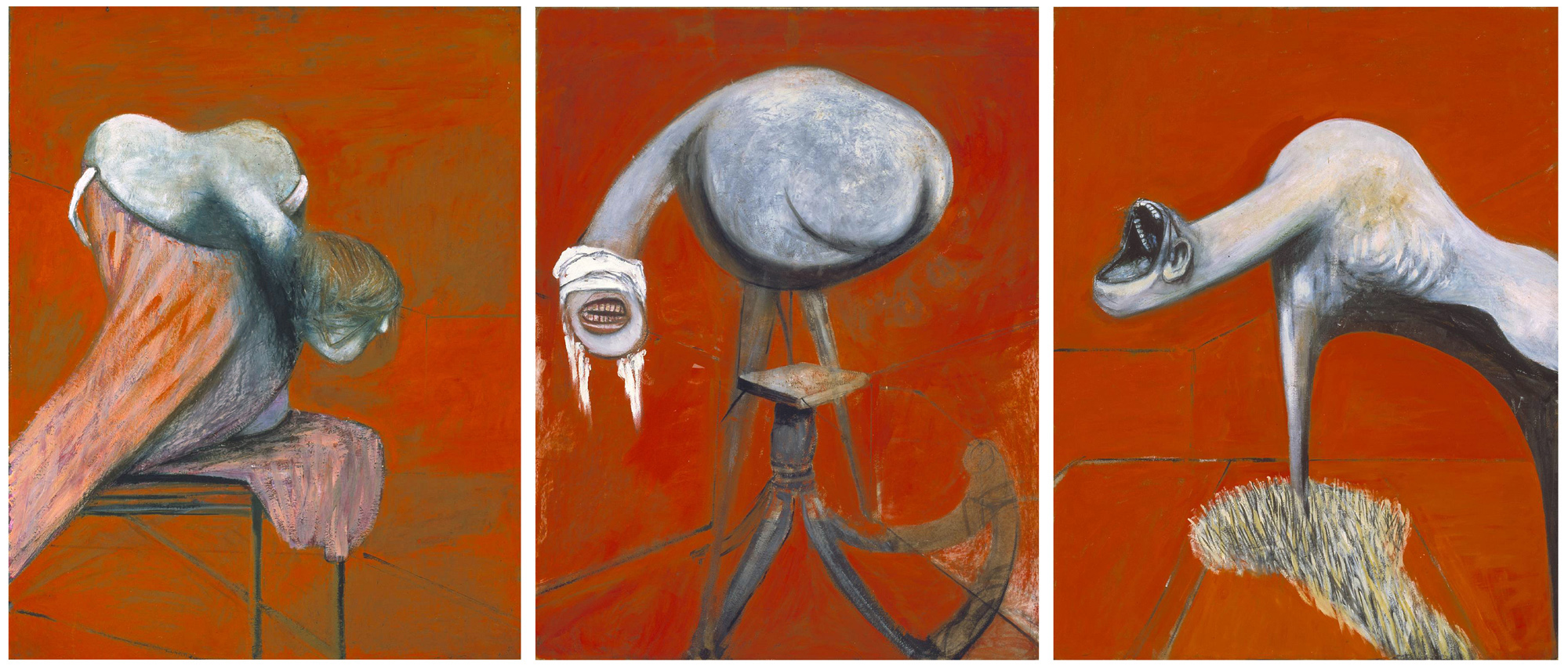
 

Francis Bacon (British, 1909-1992) 'Three Studies for Figures at the Base of a Crucifixion' c. 1944 from the exhibition 'Francis Bacon' at the Museo Nacional del Prado, Madrid, Feb - April, 2009


Francis Bacon (British, 1909-1992)
Three Studies for Figures at the Base of a Crucifixion
c. 1944
Oil on board
94 x 73.7cm
London, Tate, presented by Eric Hall 1953


Animal

A philosophical attitude to human nature first emerges in Francis Bacon’s works of the 1940s. They reflect his belief that, without God, humans are subject to the same natural urges of violence, lust and fear as any other animal. He showed Figure in a Landscape and Three Studies for Figures at the Base of a Crucifixion in April 1945, and exhibited consistently thereafter. The bestial depiction of the human figure was combined with specific references to recent history and especially the devastating events of the Second World War. Bacon often drew his inspiration from reproductions, acquiring a large collection of books, catalogues and magazines. He repeatedly studied key images in order to probe beneath the surface appearance captured in photographs. Early concerns that would persist throughout his work include the male nude, which reveals the frailty of the human figure, and the scream or cry that expresses repressed and violent anxieties. These works are among the first in which he sought to balance psychological insights with the physical identity of flesh and paint.


Francis Bacon (British, 1909-1992) 'Study after Velázquez’s Portrait of Pope Innocent X' 1953


Francis Bacon (British, 1909-1992)
Study after Velázquez’s Portrait of Pope Innocent X
1953
Oil on canvas
153 x 118cm
Des Moines, Nathan Emory Coffin Collection of the Des Moines Arts Center, purchased with funds from the Coffin Fine Arts Trust


Zone

In his paintings from the early 1950s, Bacon engaged in complex experiments with pictorial space. He started to depict specific details in the backgrounds of these works and created a nuanced interaction between subject and setting. Figures are boxed into cage-like structures, delineated ‘space-frames’ and hexagonal ground planes, confining them within a tense psychological zone. In 1952 he described this as “opening up areas of feeling rather than merely an illustration of an object”. Through his technique of ‘shuttering’ with vertical lines of paint that merge the foreground and background, Bacon held the figure and the setting together within the picture surface, with neither taking precedence in what he called “an attempt to lift the image outside of its natural environment”.

A theme that emerged in the 1950s was the extended series of variants of Velázquez’s Portrait of Pope Innocent X, 1650 (Rome, Galleria Doria Pamphilj), a work Bacon knew only from illustrations. He used this source to expose the insecurities of the powerful – represented most often in the scream of the caged figure. Through the open mouth Bacon exposed the tension between the interior space of the body and the spaces of its location, which is explored more explicitly in the vulnerability of the ape-like nudes.


Francis Bacon (British, 1909-1992) 'Chimpanzee' 1955


Francis Bacon (British, 1909-1992)
Chimpanzee
1955
Oil on canvas
152.5 x 117cm
Stuttgart, Staatsgalerie


Apprehension

Implicit throughout Bacon’s work of the mid 1950s is a sense of dread pervading the brutality of everyday life. Not only a result of Cold War anxiety, this seems to have reflected a sense of menace at a personal level emanating from Bacon’s chaotic affair with Peter Lacy (who was prone to drunken violence) and the wider pressures associated with the continuing illegality of homosexuality. The Man in Blue series captures this atmosphere, concentrating on a single anonymous male figure in a dark suit sitting at a table or bar counter on a deep blue-black ground. Within their simple painted frames, these awkwardly posed figures appear pathetically isolated.

Bacon’s interest in situations that combine banality with acute apprehension was also evident in other contemporary works. From figures of anxious authority, his popes took on malevolent attributes and physical distortions that were directly echoed in the paintings of animals, whose actions are also both sinister and undignified. Some of these images derived from Bacon’s close scrutiny of the sequential photographs of animals and humans taken by Eadweard Muybridge (1830-1904), which he called “a dictionary” of the body in motion.


Francis Bacon (British, 1909-1992) 'Three Studies for a Crucifixion' 1962


Francis Bacon (British, 1909-1992)
Three Studies for a Crucifixion
1962
Oil on canvas
198.2 x 144.8cm
New York, Solomon R. Guggenheim Museum


Crucifixion

Bacon made paintings related to the Crucifixion at pivotal moments in his career, which is why these key works are gathered here. The paradox of an atheist choosing a subject laden with Christian significance was not lost on Bacon, but he claimed, “as a non-believer, it was just an act of man’s behaviour”. Here the instincts of brutality and fear combine with a deep fascination with the ritual of sacrifice. Bacon had already made a very individual crucifixion image in 1933 before returning to the subject with his break-through triptych Three Studies for Figures at the Base of a Crucifixion in 1944. This is a key precursor to later themes and compositions, containing the bestial distortion of human figures within the triptych format. These monstrous creatures displace the traditional saints and Bacon later related them to the Eumenides – the vengeful furies in Greek mythology. In resuming the theme in the 1960s, especially in 1962 as the culmination of his first Tate exhibition, Bacon used references to Cimabue’s 1272-1274 Crucifixion to introduce a more explicitly violent vision. Speaking after completing the third triptych in 1965 he simply stated: “Well, of course, we are meat, we are potential carcasses”.


Francis Bacon (British, 1909-1992) 'Paralytic Child Walking on All Fours (from Muybridge)' 1961


Francis Bacon (British, 1909-1992)
Paralytic Child Walking on All Fours (from Muybridge)
1961
Oil on canvas
198 x 142cm
The Hague, Collection Gemeentemuseum Den Haag


Crisis

Between 1956 and 1961, Bacon travelled widely. He spent time in places marginal to the art world, in Monaco, the South of France and Africa, and particularly with Peter Lacy in the ex-patriot community in Tangier. In this rather unsettled context, he explored new methods of production, shifting to thicker paint, violently applied and so strong in colour as to indicate an engagement with the light of North Africa. This was most extreme in his series based on a self-portrait of Van Gogh, The Painter on the Road to Tarascon (1888, destroyed), which became an emblem of the modern predicament. Despite initial acclaim, Bacon’s Van Gogh works were soon criticised for their “reckless energy” and came to be viewed as an aberration. They can now be recognised as pivotal to Bacon’s further development, however, and allow glimpses into his search for new ways of working. His innovations were perhaps in response to American Abstract Expressionism, of which he was publicly critical. Although he eventually returned to a more controlled approach to painting, the introduction of chance and the new vibrancy of colour at this moment would remain through out his career.
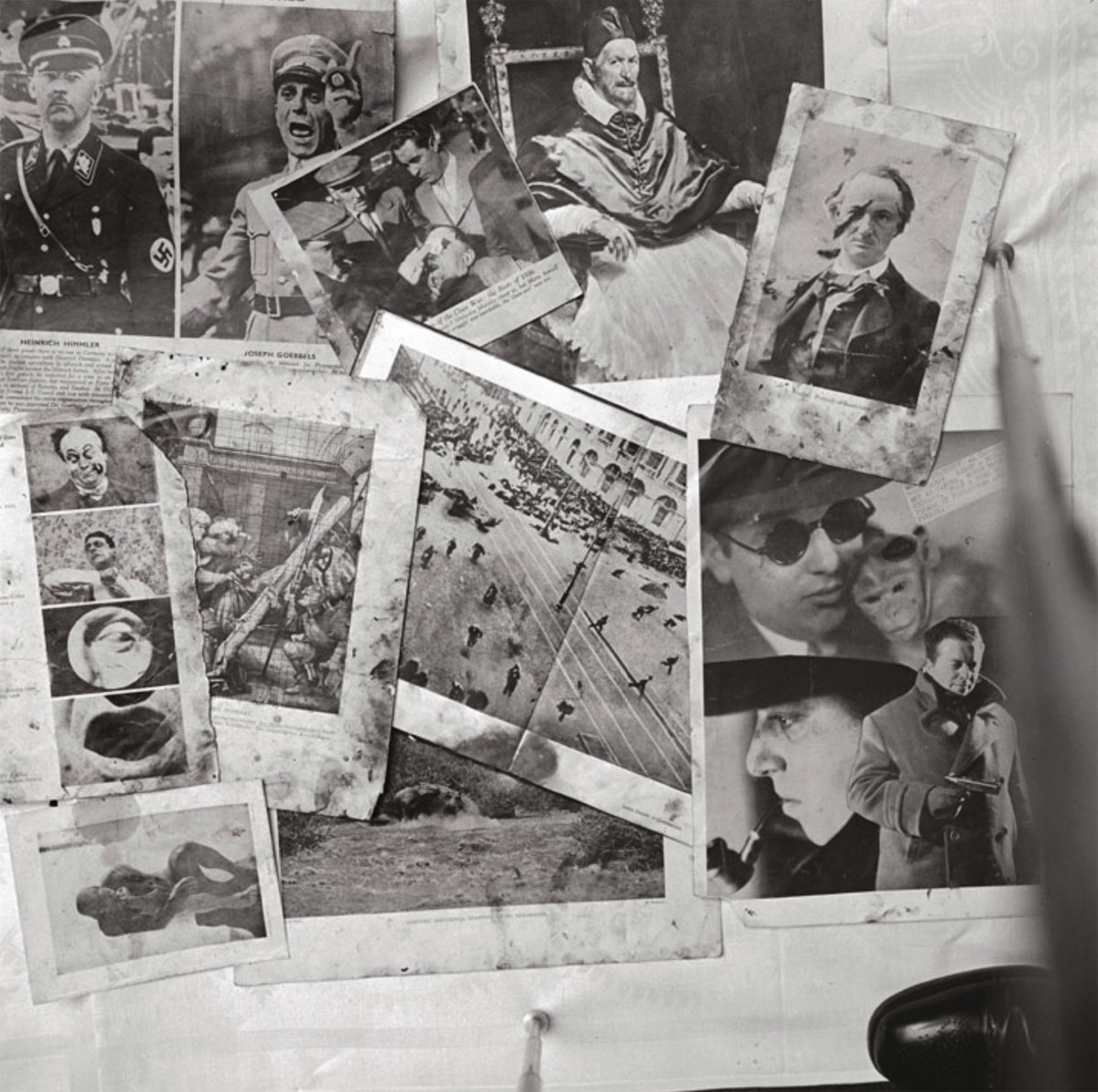
 

Montage of material from Bacon's Studio (including pictures of Velázquez's Innocent X, The Thinker by Rodin etc.) 7 Cromwell Place, c. 1950


Montage of material from Bacon’s Studio (including pictures of Velázquez’s Innocent X, The Thinker by Rodin etc.)
7 Cromwell Place
c. 1950
© Sam Hunter


Archive

The posthumous investigation of Bacon’s studio confirmed the extent to which he used and manipulated photographic imagery. This practice was already known from montages recorded in 1950 by the critic Sam Hunter. Often united by a theme of violence, the material ranges between images of conflict, big game, athletes, film stills and works of art.

An important revelation that followed the artist’s death was the discovery of lists of potential subjects and preparatory drawings, which Bacon had denied making. Throughout his life, he asserted the spontaneous nature of his work, but these materials reveal that chance was underpinned by planning.

Photography offered Bacon a dictionary of poses. Though he most frequently referred to Eadweard Muybridge’s (1830-1904) survey of human and animal locomotion, images of which he combined with the figures of Michelangelo, he remained alert to photographs of the body in a variety of positions.

A further extension of Bacon’s preparatory practices can be seen in his commissioning of photographs of his circle of friends from the photographer John Deakin (1912-1972). The results – together with self-portraits, photo booth strips, and his own photographs – became important prompts in his shift from generic representations of the human body to portrayals of specific individuals.

A matrix of images

Bacon’s use of photographic sources has been known since 1950 when the critic Sam Hunter took three photographs of material he had selected from a table in Bacon’s studio in Cromwell Place, South Kensington. Hunter observed that the diverse imagery was linked by violence, and this fascination continued throughout Bacon’s life. Images of Nazis and the North African wars of the 1950s were prominent in his large collection of sources. Films stills and reproductions of works of art, including Bacon’s own, were also common. The dismantling of Bacon’s later studio, nearby at Reece Mews, after his death confirmed that the amassing of photographic material had remained an obsession. While some images were used to generate paintings, he also seems to have collected such an archive for its own sake.

The mediated image

From the 1960s, Bacon’s accumulation of chance images began to include a more deliberate strategy of using photographs of his close circle. They became key images for the development of the portraits that dominated his paintings at this time. Snap shots and photo booth strips were augmented by the unflinching photographs taken by his friend John Deakin. Bacon specifically commissioned some of these from Deakin as records of those close to him – notably his partner from 1962, George Dyer – and they served as sources for likenesses and for poses for the rest of his career.

The Physical Body

Bacon drew more from Eadweard Muybridge’s sequential photographs of human and animal locomotion than from any other source. These isolated the naked figure in a way he clearly found stimulating. He also, however, spoke of projecting on to them Michelangelo’s figures which for him had more “ampleness” and “grandeur of form”.

His fascination in photography’s freezing of the body in motion led him to collect sports photographs, particularly boxing, cricket and bullfighting. It was not just movement but the physicality of the body that Bacon scrutinised, using found images to provoke new ways of picturing its strength and vulnerability.


Francis Bacon (British, 1909-1992) 'Portrait of Isabel Rawsthorne Standing in a Street in Soho' 1967


Francis Bacon (British, 1909-1992)
Portrait of Isabel Rawsthorne Standing in a Street in Soho
1967
Oil on canvas
198 x 147.5cm
Berlin, Staatliche Museen zu Berlin, Nationalgalerie


Portrait

During the 1960s, the larger part of Bacon’s work shifted focus to portraits and paintings of his close friends. These works centre on two broad concerns: the portrayal of the human condition and the struggle to reinvent portraiture. Bacon drew upon the lessons of Van Gogh and Velázquez, but attempted to rework their projects for a post-photographic world. His approach was to distort appearance in order to reach a deeper truth about his subjects. To this end, Bacon’s models can be seen performing different roles. In the Lying Figures series, Henrietta Moraes is naked and exposed. This unprecedented raw sexuality reinforces Bacon’s understanding of the human body simply as meat. By contrast Isabel Rawsthorne, a fellow painter, always appears in control of how she is presented. With a mixture of contempt and affection, Bacon depicted George Dyer, his lover and most frequent model, as fragile and pathetic. This is especially evident in Dyer’s first appearance in Bacon’s work, in Three Figures in a Room, in which he represents the absurdities, indignities and pathos of human existence. Everyday objects occasionally feature in these works, hollow props for lonely individuals which reinforce the sense of isolation that Bacon associated with the human condition.


Francis Bacon (British 1909-1992) 'Triptych in Memory of George Dyer' 1971


Francis Bacon (British 1909-1992)
Triptych in Memory of George Dyer
1971
Oil on canvas
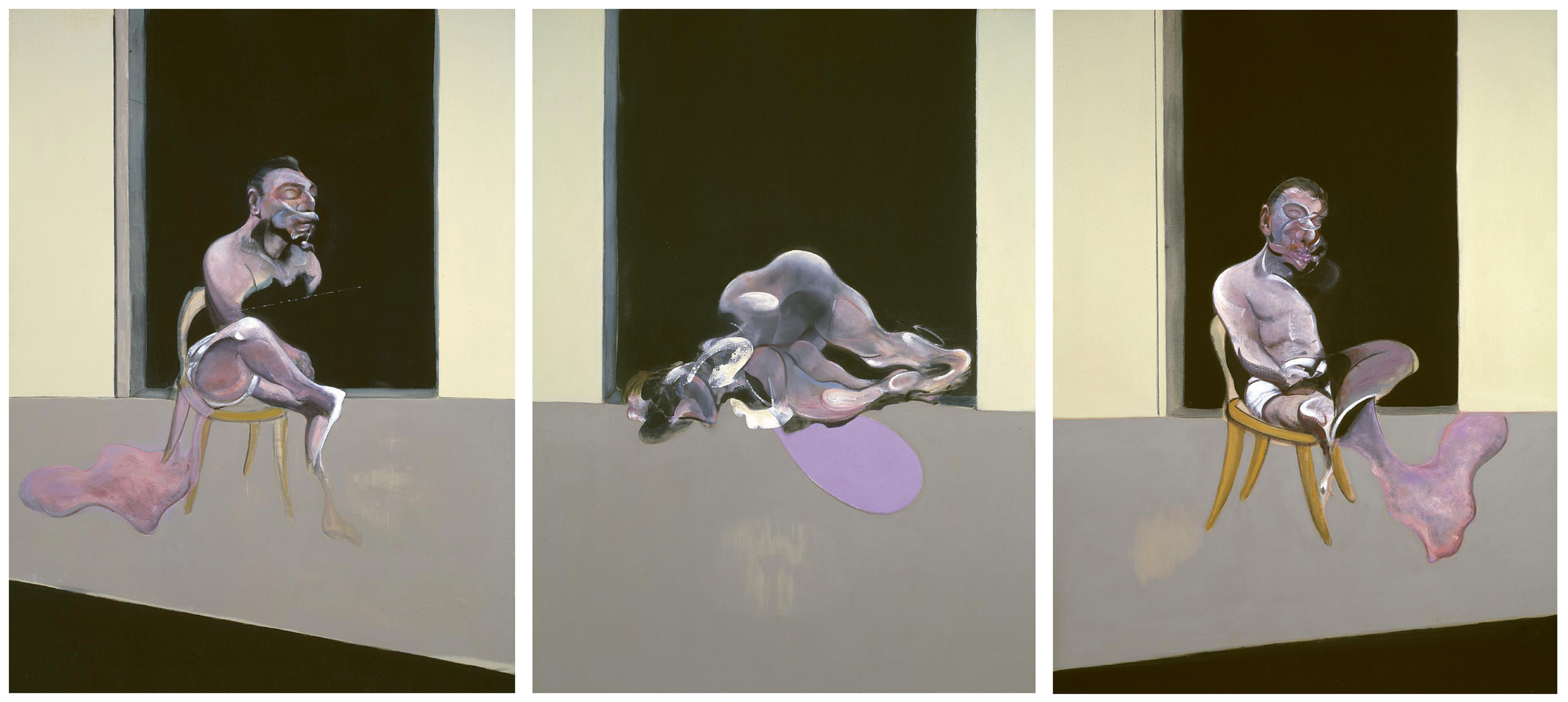
 

Francis Bacon (British, 1909-1992) 'Triptych - August 1972' 1972


Francis Bacon (British, 1909-1992)
Triptych – August 1972
1972
Oil on canvas
198 x 147.5cm
London, Tate


Memorial

This room is dedicated to George Dyer who was Bacon’s most important and constant companion and model from the autumn of 1963. He committed suicide on 24 October 1971, two days before the opening of Bacon’s major exhibition at the Grand Palais in Paris. Influenced by loss and guilt, the painter made a number of pictures in memorial to Dyer. From this period onwards the large-scale triptych was his established means for major statements, having the advantage of simultaneously isolating and juxtaposing the participating figures, as well as guarding against narrative qualities that Bacon strove to avoid. But while evading narrative, Bacon drew more than ever from literary imagery; the first of the sequence, Triptych In Memory of George Dyer 1971, refers to a specific section of T.S. Eliot’s The Waste Land (1922). In addition to his own memory, for Triptych – August 1972 Bacon relied on photographs, taken by John Deakin, of Dyer in various poses on a chair. He confined his dense and energetic application of paint to the figures in these works. The dark openings consciously evoke the abyss of mortality that would become a recurring concern in Bacon’s later works.


Francis Bacon (British, 1909-1992) 'Triptych' 1987


Francis Bacon (British, 1909-1992)
Triptych
1987
Oil on canvas
198 x 147.5cm
London, The Estate of Francis Bacon, courtesy Faggionato Fine Art


Epic

References to poetry and drama became a central element in Bacon’s work from the second half of the 1960s. Alongside images of friends and single figures (often self-portraits), he produced a series of grand works that identified with great literature. Imbued with the inevitability and constant presence of death, the poetry of T.S. Eliot was a particular source of inspiration. The sentiments of the poet’s character Sweeney could be said to echo the painter’s perspective on life:

Birth, and copulation, and death.

That’s all the facts when you come to

brass tacks:

Birth, and copulation, and death.

The works in this room refer to and derive from literature. Some make direct references in their titles, others depict, sometimes abstractly, a certain scene or atmosphere within the narratives themselves. Bacon repeatedly stated that none of his paintings were intended as narratives, so rather than illustrations, these works should perhaps be understood as evoking the experience of reading of Eliot’s poetry or Aeschylus’s tragedies: their violence, threat or erotic charge. Thus, of the triptych created after reading Aeschylus, Bacon explained “I tried to create images of the sensations that some of the episodes created inside me”.


Francis Bacon (British, 1909-1992) 'Portrait of John Edwards' 1988


Francis Bacon (British, 1909-1992)
Portrait of John Edwards
1988
Oil on canvas
198 x 147.5cm
The Estate of Francis Bacon, courtesy of Faggionato Fine Arts, London, and Tony Shafrazi Gallery, New York


Late

When Bacon turned seventy in 1979, more than a decade of work lay ahead of him. Neither his legendarily hedonistic lifestyle nor his work pattern seemed to age him, but he was continually facing up to mortality through the deaths of those around him. This unswerving confrontation, however mitigated by youthful companions such as John Edwards, became the great theme of his late style. Constantly stimulated by new source material – for example the photographs and the poetry of Federico García Lorca which triggered his bullfight paintings – he was able to adapt them to his abiding concerns with the vulnerability of flesh. Exploring new techniques he also extended his fascination with how appropriate oil paint is for rendering the human body’s sensuality and sensitivity. A certain despairing energy may also be felt in the forceful throwing of paint that dominates some of these final works: the controlled chance as a defiant gesture. Ultimately, and appropriately, Bacon’s last triptych of 1991 returns to the key image of sexual struggle that had frequently recurred in his work. He faced death with a defiant concentration on the exquisiteness of the lived moment.


Francis Bacon (British, 1909-1992) 'Three Studies for Self-Portrait' 1979-1980


Francis Bacon (British, 1909-1992)
Three Studies for Self-Portrait
1979-1980
Oil on canvas
37.5 x 31.8cm
Nueva York, The Metropolitan Museum of Art, Jacques and Natasha Gelman collection, 1998


Francis Bacon

Francis Bacon is internationally acknowledged as among the most powerful painters of the twentieth century. His vision of the world was unflinching and entirely individual, encompassing images of sensuality and brutality, both immediate and timeless. When he first emerged to public recognition, in the aftermath of the Second World War, his paintings were greeted with horror. Shock has since been joined by a wide appreciation of Bacon’s ability to expose humanity’s frailties and drives.

This major retrospective gathers many of his most remarkable paintings and is arranged broadly chronologically. Bacon’s vision of the world has had a profound impact. It is born of a direct engagement that his paintings demand of each of us, so that, as he famously claimed, the “paint comes across directly onto the nervous system”.

As an atheist, Bacon sought to express what it was to live in a world without God or afterlife. By setting sensual abandon and physical compulsion against hopelessness and irrationality, he showed the human as simply another animal. As a response to the challenge that photography posed for painting, he developed a unique realism which could convey more about the state of existence than photography’s representation of the perceived world. In an era dominated by abstract art, he amassed and drew upon a vast array of visual imagery, including past art, photography and film. These artistic and philosophical concerns run like a spine through the present exhibition.


Museo Nacional Del Prado
Paseo del Prado, s/n,
28014 Madrid, Spain

Opening hours:
Monday – Saturday 10am – 8pm
Sunday 10am – 7pm

Museo Nacional del Prado website

LIKE ART BLART ON FACEBOOK

Back to top

Exhibition: ‘Yayoi Kusama: Mirrored Rooms’ at Museum of Contemporary Art (MCA), Sydney

Exhibition dates: 24th February – 8th June, 2009

Curators: Jaap Guldemond (Museum Boijmans Van Beuningen), Franck Gautherot & Seungduk Kim (Le Consortium, Dijon)

MCA Curatorial Liaison: Judith Blackall


“Discover the work of internationally acclaimed Japanese artist Yayoi Kusama with this major exhibition that spans decades of her artistic practice.

Yayoi Kusama: Mirrored Years demonstrates the enduring force of Yayoi Kusama. Renowned early installations such as Infinity Mirror Room – Phalli’s Field (1965) along with recent immersive environments including Fireflies on the Water (2000) and Clouds (2008) provide insight into the creative energy of this extraordinary artist and her lifelong preoccupation with the perceptual, visual and physical worlds.

Working across different media and forms that include painting, collage, sculpture, installation and film, as well as performance and its documentation, Kusama creates works that reveal a fixation with repetition, pattern and accumulation. Describing herself as an “obsessive artist”, her work is intensely sensual, infused with autobiographical, psychological and sexual content.”

Text from the MCA website [Online] Cited 12/03/2009. No longer available online


Many thanks to Ed Jansen for the use of his installation photographs of this exhibition at Museum Boijmans Van Beuningen, Rotterdam in 2008. See the whole set of his photographs on Flickr. Please click on the photographs for a larger version of the image.


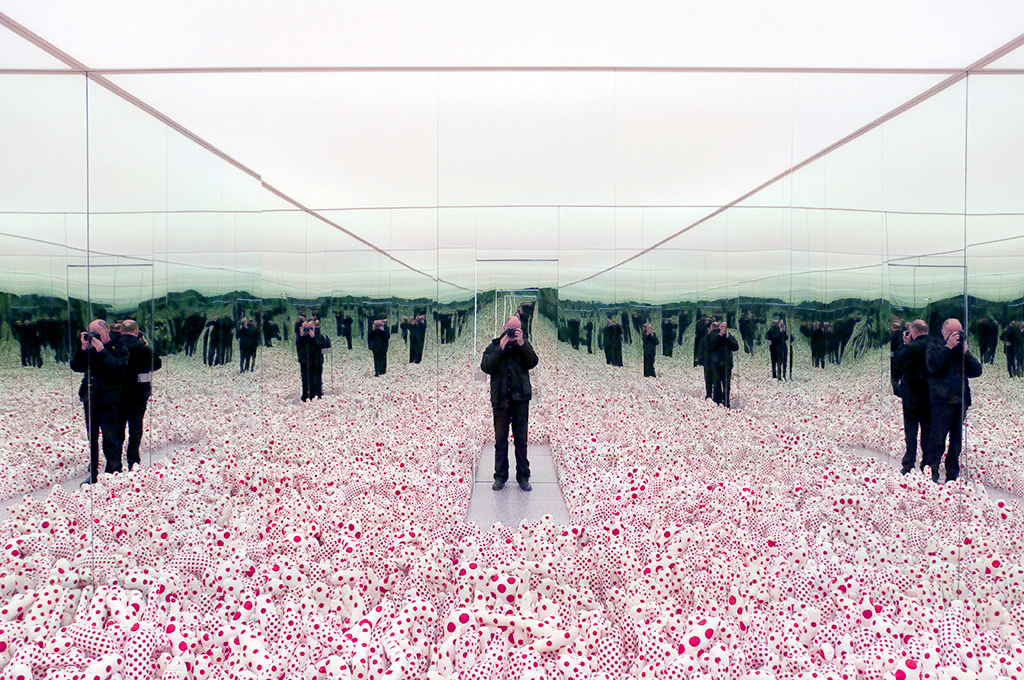
Yayoi Kusama (Japanese, b. 1929) 'Infinity Mirror Room - Phalli's Field' 1965 from the exhibition 'Yayoi Kusama: Mirrored Rooms' at Museum of Contemporary Art (MCA), Sydney, Feb - June, 2009


Yayoi Kusama (Japanese, b. 1929)
Infinity Mirror Room – Phalli’s Field
1965


Yayoi Kusama (Japanese, b. 1929) 'Infinity Mirror Room - Phalli's Field' 1965 from the exhibition 'Yayoi Kusama: Mirrored Rooms' at Museum of Contemporary Art (MCA), Sydney, Feb - June, 2009

Yayoi Kusama (Japanese, b. 1929) 'Infinity Mirror Room - Phalli's Field' 1965


Yayoi Kusama (Japanese, b. 1929)
Infinity Mirror Room – Phalli’s Field
1965
Museum Boijmans Van Beuningen, Rotterdam, 2008
Photo: Ed Jansen


Rewind 1960

Visual hallucinations of polka dots since childhood have inspired the most significant works of this avant-gardist, who says creating art “saved” her during her lifelong battle with mental illness.

Interview by Natalie Reilly

This photograph [see above, top, for the image of her in 1965] shows a creative work that I made in New York in 1960. I was 31 years old at the time and my inspiration was the inundation and proliferation of polka dots. The work represents the evolution of my original formative process. Of all the pieces I have made, I like this one the best. It was my intention to create an interminable image by using mirrors and multiplying red polka dots.

I was born in Nagano Prefecture , a mountainous region in Japan. The youngest of four children, I have one sister and two brothers.

Since childhood, I have loved to paint pictures and create art forms. [Kusama has suffered from obsessive thinking and visual hallucinations since early childhood. the hallucinations – often of polka dots, or “nets” as she calls them – have become the inspiration for much of her work.] I did many artworks in great numbers in my younger days.

I went to Seattle in 1957 where I had my first solo exhibition in the US. I moved  to New York in 1958. Japan in those days was too conservative for avant-garde art to be accepted. [By 1961, Kusama was an active participant in the avant-garde movement in New York. Her art, which often included performance and controversial themes such as nudity and protests against the Vietnam War, drew acclaim for art critics and other artists such as Andy Warhol and Claes Oldenburg.]

I was deeply moved by the efforts the artists in New York were making then to develop a new history for art. I owe what I am today to many people in the art circles in Japan, the US and Europe who enthusiastically supported my art and gave me a boost into the international art scene.

Artists Georgia O’Keefe and Joseph Cornell were among the many friends who helped me, including Donald Judd and [writer and activist] Lucy Lippard who appreciated the originality of my art.  [In 1962 at the height of her success in New York, Kusama’s mental health began to suffer as she grew more paranoid about other artists copying her work. Late that year, she covered up all the windows in her studio in an attempt to “shut out the world”, and by November she was hospitalised after suffering a nervous breakdown.]

I came back to Japan in 1973, because my health had deteriorated. I wanted to create art in a quiet atmosphere. I once said, “if it were not for art, I would have killed myself a long time ago” an that’s still true. I do art in order to pursue my philosophy of life seeking truth in art.

Reilly, Natalie. “Rewind 1960,” in Boleyn, Alison (ed.,). Sunday Life: The Sunday Age Magazine. Melbourne: Fairfax Magazines. February 15th 2009, p. 30.


Yayoi Kusama (Japanese, b. 1929) 'Clouds' 1999 and 'Love Forever' 2005 from the exhibition 'Yayoi Kusama: Mirrored Rooms' at Museum of Contemporary Art (MCA), Sydney, Feb - June, 2009


Yayoi Kusama (Japanese, b. 1929)
Clouds 1999 and Love Forever 2005
Museum Boijmans Van Beuningen, Rotterdam, 2008
Photo: Ed Jansen


Yayoi Kusama (Japanese, b. 1929) 'Clouds' 2008 (installation view at MCA)


Yayoi Kusama (Japanese, b. 1929)
Clouds (installation view at MCA)
2008
Image courtesy the artist, Yayoi Kusama Studio, Victoria Miro Gallery, London and Ota Fine Arts, Tokyo and © the artist


Yayoi Kusama (Japanese, b. 1929) 'Stars Infinity (A.B.C)' 2003 (installation view MCA)


Yayoi Kusama (Japanese, b. 1929)
Stars Infinity (A.B.C) (installation view at MCA)
2003
Image courtesy and © the artist


This exhibition explored the extraordinary work of Japanese artist Yayoi Kusama. It revealed the coherence of her practice over many years and highlighted the freshness and innovation she brings to themes investigated throughout her life. Describing herself as an ‘obsessive artist’, her work is intensely sensual, infused with autobiographical, psychological and sexual content.

Kusama was born in 1929, in Matsumoto City, Nagano Prefecture, Japan. She demonstrated a passion for art from an early age and went on to study Nihonga painting, a formal Japanese technique using ground pigment and animal glues. Excited by the promise of the post-war international art scene, Kusama moved to New York in 1958. Her first New York solo exhibition a year later was an outstanding success and she became renowned as an innovative and adventurous young artist with her large Infinity Net canvases; Accumulation sculptures of everyday objects completely covered with soft, sewn and stuffed protuberances; environments such as the Infinity Mirror Room-Phalli’s Field (1965) and performances and Happenings. In 1966 she exhibited Narcissus Garden, a field of mirrored spheres in the gardens of the Venice Biennale, creating a sensation with an extraordinarily beautiful and compelling new version of her accumulations.

Kusama was energetic, talented, strategic and courageous at a time of fervent development in the art world, in a city that was exciting and notoriously competitive. During the ‘60s and ‘70s she was an active presence in Europe as well – in 1962 she was the only female artist to take part in the widely acclaimed Nul (Zero) international group exhibition at the Stedelijk Museum in Amsterdam. She returned to Tokyo in 1973.

Yayoi Kusama: Mirrored Years juxtaposed seminal works from the 1960s with more recent installations, films, paintings, floor pieces and silkscreen prints on canvas, and included major new works. The exhibition reflected Kusama’s lifelong obsession with repetition, pattern and aggregation, and her perceptions – visual, physical and sensory. It demonstrated her originality, creativity and uncompromising vision across many different techniques. Her work has been highly influential to new generations of artists and designers and she remains one of the most respected artists working today.

Organised by Museum Boijmans Van Beuningen, Rotterdam, Netherlands.
Presented in association with City Gallery, Wellington, New Zealand.

Anonymous. “Yayoi Kusama: Mirrored Years,” on the MCA website Nd [Online] Cited 13/06/2022


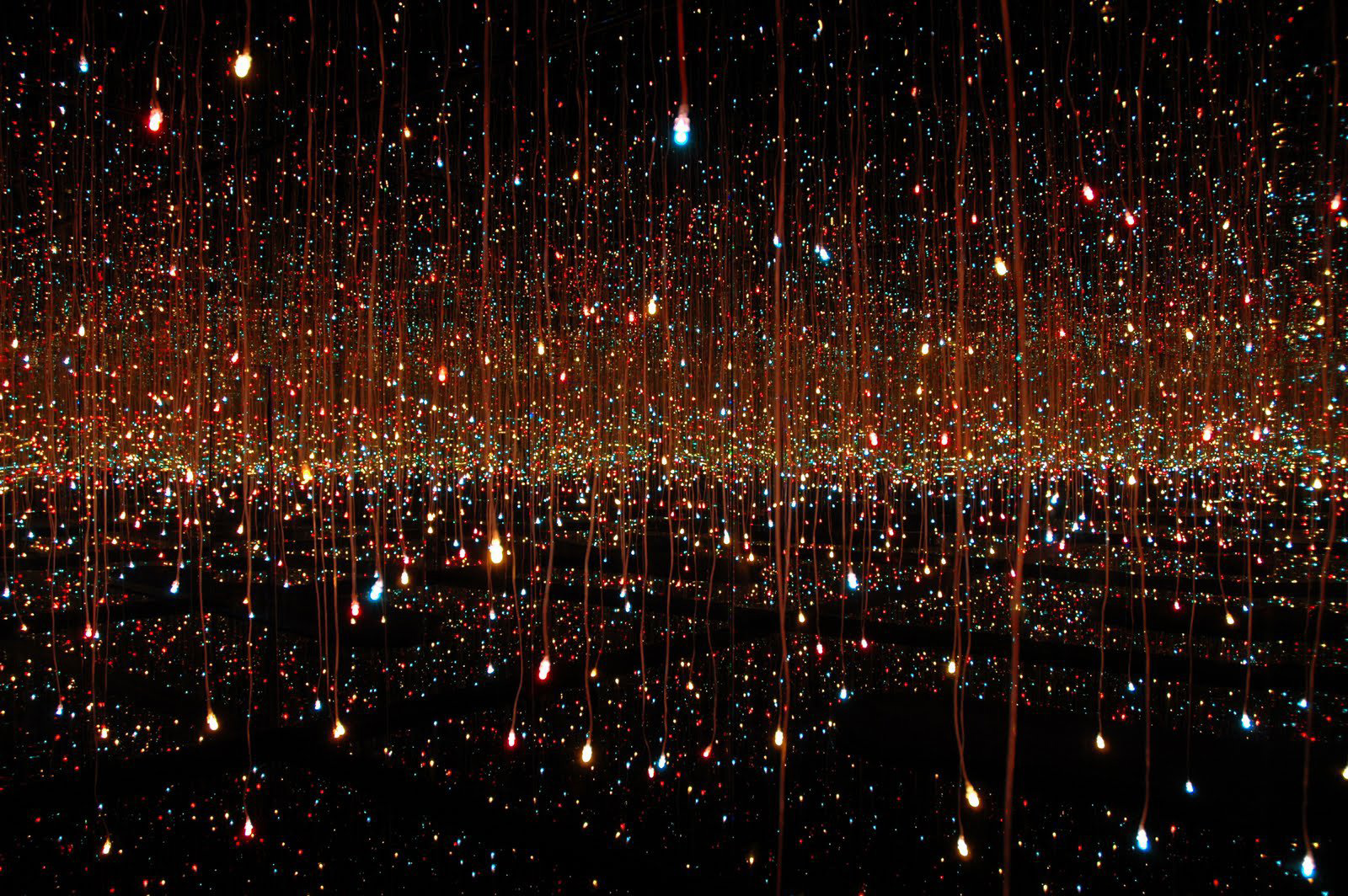
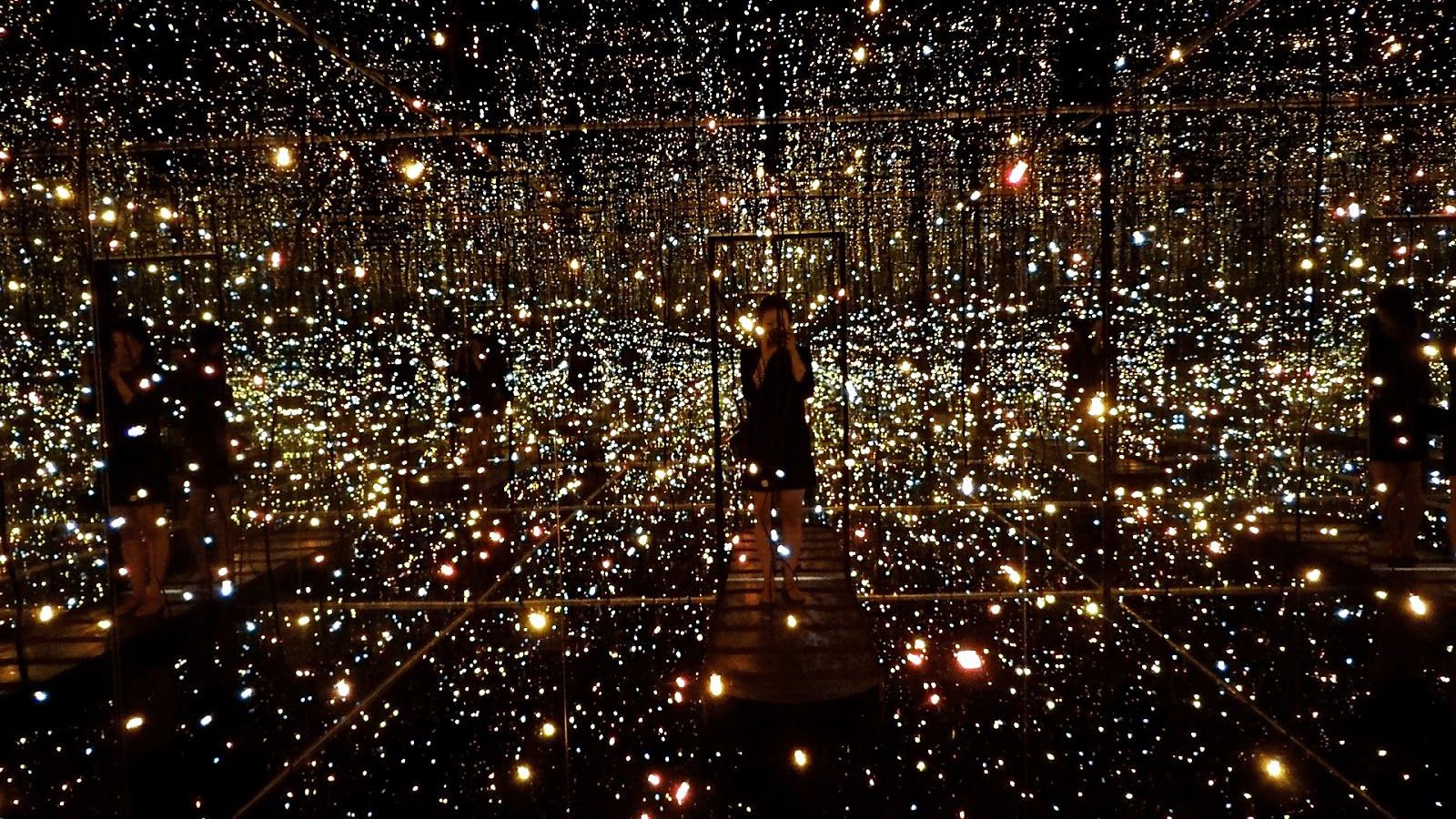
Yayoi Kusama (Japanese, b. 1929) 'Fireflies on the Water' 2000

Yayoi Kusama (Japanese, b. 1929) 'Fireflies on the Water' 2000


Yayoi Kusama (Japanese, b. 1929)
Fireflies on the Water
2000


Yayoi Kusama (Japanese, b. 1929) 'The Moment of Regeneration' 2004


Yayoi Kusama (Japanese, b. 1929)
The Moment of Regeneration
2004


Yayoi Kusama (Japanese, b. 1929) 'The Moment of Regeneration' 2004 (installation view at MCA)


Yayoi Kusama (Japanese, b. 1929)
The Moment of Regeneration (installation view at MCA)
2004
Image courtesy the artist, Yayoi Kusama Studio, Victoria Miro Gallery, London and Ota Fine Arts, Tokyo and © the artist


Yayoi Kusama (Japanese, b. 1929) 'Walking on the Sea of Death' 1981 (installation view at MCA)


Yayoi Kusama (Japanese, b. 1929)
Walking on the Sea of Death (installation view at MCA)
1981
Image courtesy the artist, Yayoi Kusama Studio, Victoria Miro Gallery, London and Ota Fine Arts, Tokyo and © the artist


Yayoi Kusama (Japanese, b. 1929) 'Narcissus Garden' 1966


Yayoi Kusama (Japanese, b. 1929)
Narcissus Garden (at the Venice Biennale, Italy)
1966


Yayoi Kusama (Japanese, b. 1929) 'The Earth in Late Summer' 2004 (installation view MCA)


Yayoi Kusama (Japanese, b. 1929)
The Earth in Late Summer (installation view MCA)
2004
Image courtesy the artist, Yayoi Kusama Studio, Victoria Miro Gallery, London and Ota Fine Arts, Tokyo and © the artist


Yayoi Kusama (Japanese, b. 1929) 'I'm here but nothing' 2000- (installation view MCA)


Yayoi Kusama (Japanese, b. 1929)
I’m here but nothing (installation view MCA)
2000-
Image courtesy the artist, Yayoi Kusama Studio, Victoria Miro Gallery, London and Ota Fine Arts, Tokyo and © the artist


Yayoi Kusama (Japanese, b. 1929) 'Invisible Life' 2000


Yayoi Kusama (Japanese, b. 1929)
Invisible Life
2000


Museum of Contemporary Art (MCA)
140 George Street
The Rocks, Sydney, Australia

Opening hours:
Daily 11am – 5pm

Yayoi Kusama website

Museum of Contemporary Art website

LIKE ART BLART ON FACEBOOK

Back to top

Opening 3: Review: ‘Show Court 3’ and ‘Mood Bomb’ by Louise Paramor at Nellie Castan Gallery, Melbourne

Exhibition dates: 5th March – 28th March, 2009

Opening: Thursday 5th March, 2009


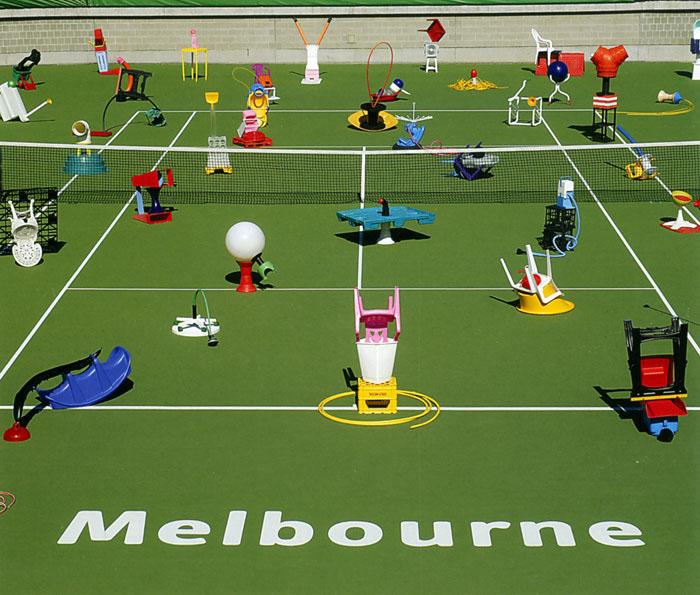
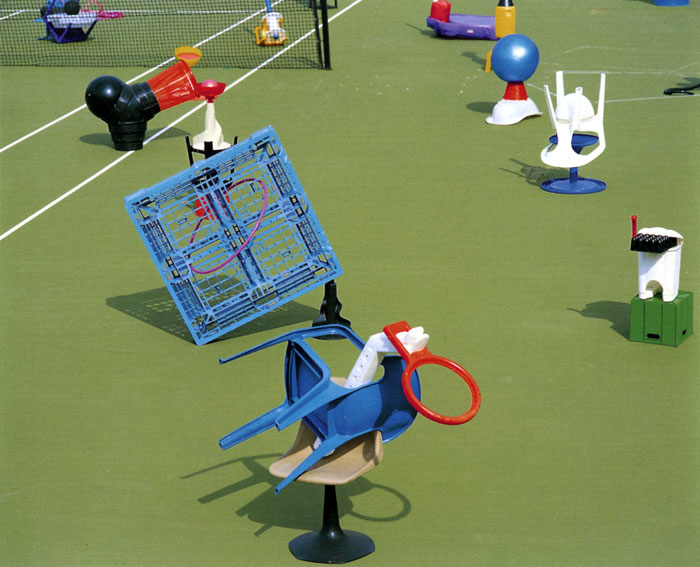
Louise Paramor (Australian, b. 1964) 'Show Court 3 (II)' 2009


Louise Paramor (Australian, b. 1964)
Show Court 3 (II)
2009


Boarding a train at Flinders Street we emerge at South Yarra station to stroll down to River Street for our third opening of the night at Nellie Castan Gallery. We are greeted by the ever gracious Nellie Castan who has just returned from an overseas trip to Europe where she was soaking up the wonders of Rome amongst other places. For the latest exhibition in the gallery Louise Paramor is presenting two bodies of work: Show Court 3 and Mood Bomb (both 2009). Lets look at Show Court 3 first as this work has older origins.

Originally exhibited in 2006 at Nellie Castan under the title Jam Session the sculptures from this exhibition and many more beside (75 in all) were then installed in 2007 on show court 3 at Melbourne & Olympic Parks, hence the title of the installation. In the smaller gallery in 2009 we have six Lambda photographic prints that are records of this installation plus a video of the installation and de-installation of the work.

While interesting as documentary evidence of the installation these photographs are thrice removed from the actual sculptures – the sculptures themselves, the installation of the sculptures on court and then the photographs of the installation of the sculptures. The photographs lose something in this process – the presence or link back to the referentiality of the object itself. There is no tactile suggestiveness here, no fresh visual connections to be made with the materials, no human interaction. The intertextual nature of the objects, the jamming together of found pieces of bright plastic to make seductive anthropomorphic creatures that ‘play’ off of each other has been lost.

What has been reinforced in the photographs is a phenomena that was observed in the actual installation.

“The sculptures created a jarring visual disruption when placed in a location normally associated with play and movement. The stadium seating surrounding the tennis court incited an expectation of entertainment; a number of viewers sat looking at the sculptures, as though waiting for them to spin and jump around. But mostly, the exhibition reversed the usual role of visitors to place where one sits and watches others move; here the objects on the tennis court were static and the spectators moved around.” (2007)1

In the photographs of these objects and in the installation itself what occurs is an inversion of perception, a concept noted by the urbanist Paul Virilio.2 Here the objects perceive us instead of us perceiving the object: they stare back with an oculocentric ‘suggestiveness’ which is advertising’s raison d’être (note the eye sculpture above). In particular this is what the photographs suggest – a high gloss surface, an advertising image that grabs our attention and forces us to look but is no longer a powerful image.

In the main gallery was the most interesting work of the whole night – experiments of abstraction in colour “inspired by the very substance of paint itself.” Made by pouring paint onto glass and then exhibiting the smooth reverse side, these paintings are not so much about the texture of the surface (as is Dale Frank’s work below) but a more ephemeral thing: the dreamscapes of the mind that they promote in the viewer, the imaginative connections that ask the viewer to make. Simpler and perhaps more refined than Frank’s work (because of the smooth surface, the lack of the physicality of the layering technique? because of the pooling of amoebic shapes produced, not the varnish that accumulates and recedes?) paint oozes, bleeds, swirls, drips upwards and blooms with a sensuality of intense love. They are dream states that allow the viewer to create their own narrative with the title of the works offering gentle guides along the way: Girl with Flowers, Lovers, Mood Bomb, Emerald God, Mama, and Animal Dreaming to name just a few. To me they also had connotations of melted plastic, almost as if the sculptures of Show Court 3 had dissolved into the glassy surface of a transparent tennis court.

These are wonderfully evocative paintings. I really enjoyed spending time with them.

Dr Marcus Bunyan


1/ O’Neill, Jane. Louise Paramor: Show Court 3. Melbourne: Nellie Castan Gallery, 2009

2/ Virilio, Paul. The Vision Machine. (trans. Julie Rose). Bloomington: Indiana University Press, 1994, pp. 62-63


Many thankx to Nellie Castan Gallery for allowing me to publish the photographs in the posting. Please click on the photographs for a larger version of the image.


Louise Paramor (Australian, b. 1964) 'Show Court 3 (VI)' 2009


Louise Paramor (Australian, b. 1964)
Show Court 3 (VI)
2009


Louise Paramor (Australian, b. 1964) 'Show Court 3' 2009 (detail)


Louise Paramor (Australian, b. 1964)
Show Court 3 (detail)
2009


Louise Paramor (Australian, b. 1964) 'Show Court 3' 2009 (detail)


Louise Paramor (Australian, b. 1964)
Show Court 3 (detail)
2009


Louise Paramor (Australian, b. 1964) Opening night crowd in front of 'Sky Pilot' (left) and 'Mama' (right) 2009


Louise Paramor (Australian, b. 1964)
Opening night crowd in front of Sky Pilot (left) and Mama (right)
2009
Paint on glass


Louise Paramor (Australian, b. 1964) Opening night crowd in front of 'Green Eyed Monster' (right) and 'Sky Pilot' (right) 2009


Louise Paramor (Australian, b. 1964)
Opening night crowd in front of Green Eyed Monster (right) and Sky Pilot (right)
2009
Paint on glass


Louise Paramor (Australian, b. 1964) Opening night crowd in front of 'Pineapple Express' 2009


Louise Paramor (Australian, b. 1964)
Opening night crowd in front of Pineapple Express
2009
Paint on glass


Louise Paramor (Australian, b. 1964) 'A Dog and His Master' 2009 (detail)


Louise Paramor (Australian, b. 1964)
A Dog and His Master (detail)
2009
Paint on glass


Louise Paramor (Australian, b. 1964) 'Lovers' 2009


Louise Paramor (Australian, b. 1964)
Lovers
2009
Paint on glass


Dale Frank (Australian, b. 1959) '2. One conversation gambit you hear these days: 'Do you rotate?' An interesting change of tack? No suck luck. 'Do you rotate?' simply fishes for information about the extent of your collection. Do you have enough paintings to hang a different one in your dining room every month?' 2005


Dale Frank (Australian, b. 1959)
2. One conversation gambit you hear these days: ‘Do you rotate?’ An interesting change of tack? No suck luck. ‘Do you rotate?’ simply fishes for information about the extent of your collection. Do you have enough paintings to hang a different one in your dining room every month?
2005


Louise Paramor (Australian, b. 1964) 'Mood Bomb' 2009


Louise Paramor (Australian, b. 1964)
Mood Bomb
2009
Paint on glass


Louise Paramor (Australian, b. 1964) 'Slippery Slope' 2009 (detail)


Louise Paramor (Australian, b. 1964)
Slippery Slope (detail)
2009
Paint on glass


Louise Paramor (Australian, b. 1964) 'Green Eyed Monster' 2009 (detail)


Louise Paramor (Australian, b. 1964)
Green Eyed Monster (detail)
2009
Paint on glass


Nellie Castan Gallery, Melbourne

This gallery closed in December 2013

LIKE ART BLART ON FACEBOOK

Back to top

Exhibition: ‘Biografías’ by Óscar Muñoz at Art Gallery of New South Wales, Sydney

Exhibition dates: 19th February – 14th June, 2009


Óscar Muñoz (Colombian, b. 1951) 'Biografías' 2002 (installation view)

Óscar Muñoz (Colombian, b. 1951) 'Biografías' 2002 (installation view)


Óscar Muñoz (Colombian, b. 1951)
Biografías (installation views)
2002
5 video projections, 7 ‘, loop, without sound, DVD, mdf support, metal grids, variable dimensions


“How can one construe a notion of time in this immemorial setting? How can one assimilate and articulate in one’s memory all these events that have been happening for so many years now?”

“My work today … is based on my endeavour to understand the mechanism developed by a society which has ultimately suffered the routinisation of war… A past, a present and in all likelihood a future full of violent events on a daily basis, which are stubbornly repeated, in a practically identical fashion.”


Óscar Muñoz


Óscar Muñoz is something of a gentle magician. His ‘disappearing’ drawings are poignant and beautiful, combining consummate skill with conceptual subtlety and rigour.

Muñoz is a senior Colombian artist. He plays an important role in mentoring younger artists but his own work is very focused on a personal language that is closely tied to the body and its disappearance. His work has always combined traditional drawing skills with video in a completely original and surprising way.

Although Muñoz is not assertively political, his work is more about mortality than specific acts of violence but it is impossible not to look at it in the context of Colombian life. A common technique for social control has become the ‘disappearing’ of people. The work shown in this exhibition, Biografías 2002 is structured to reflect this pervasive theme of disappearance.

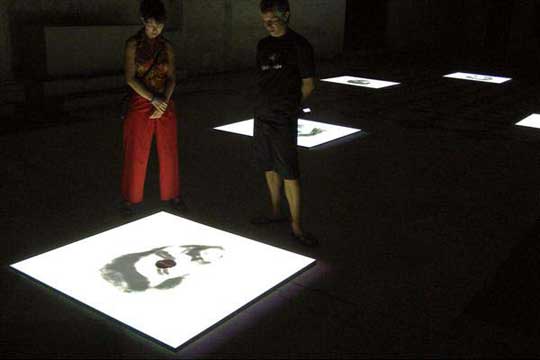
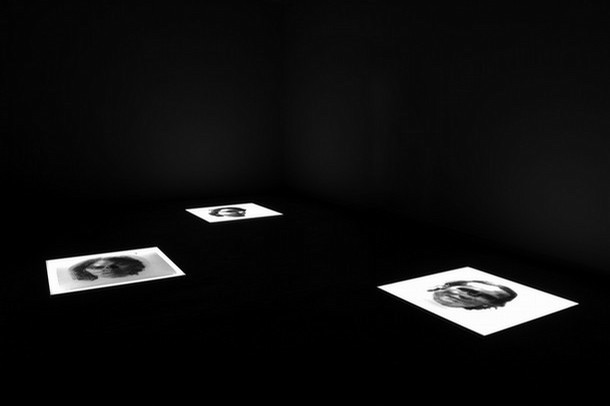
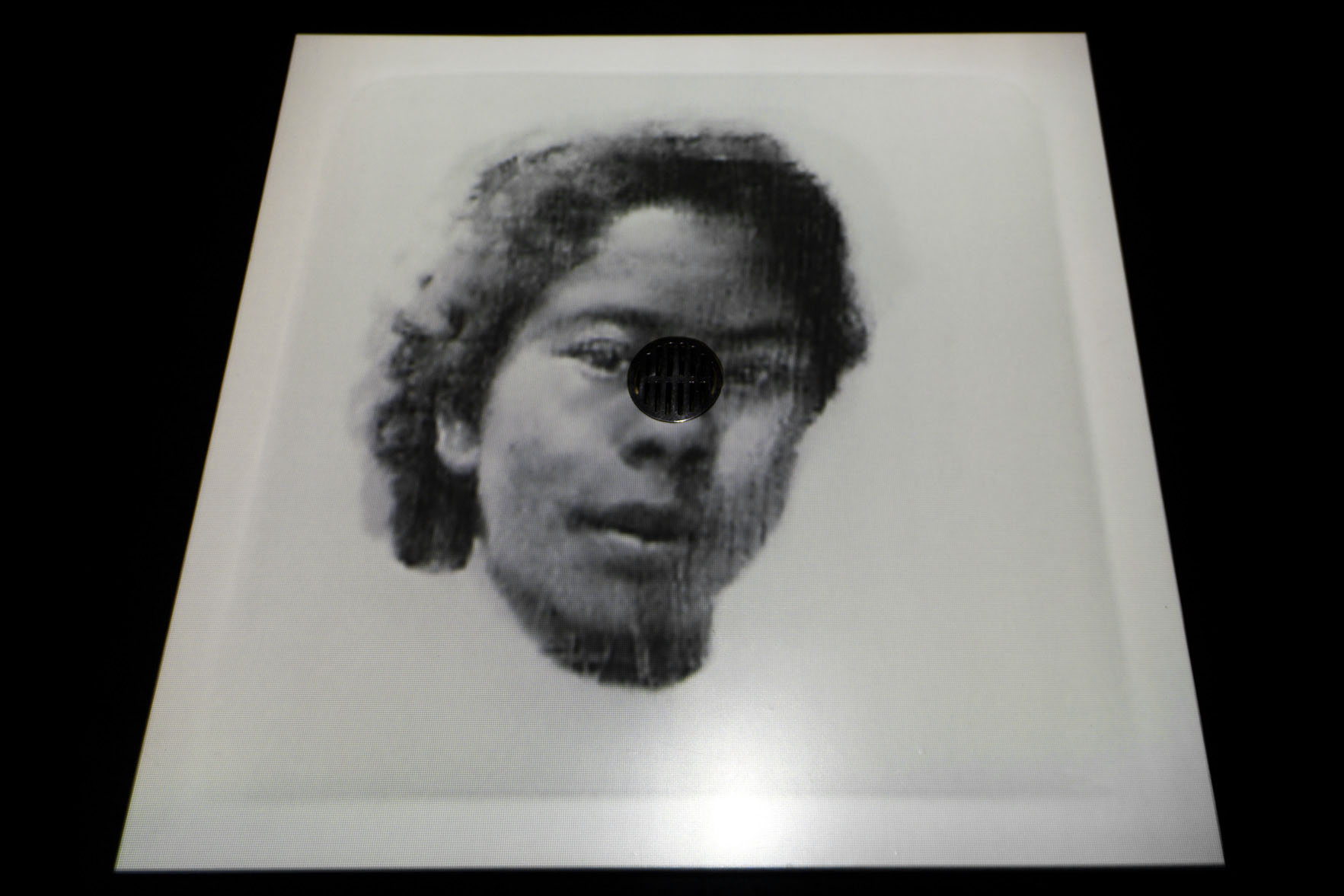
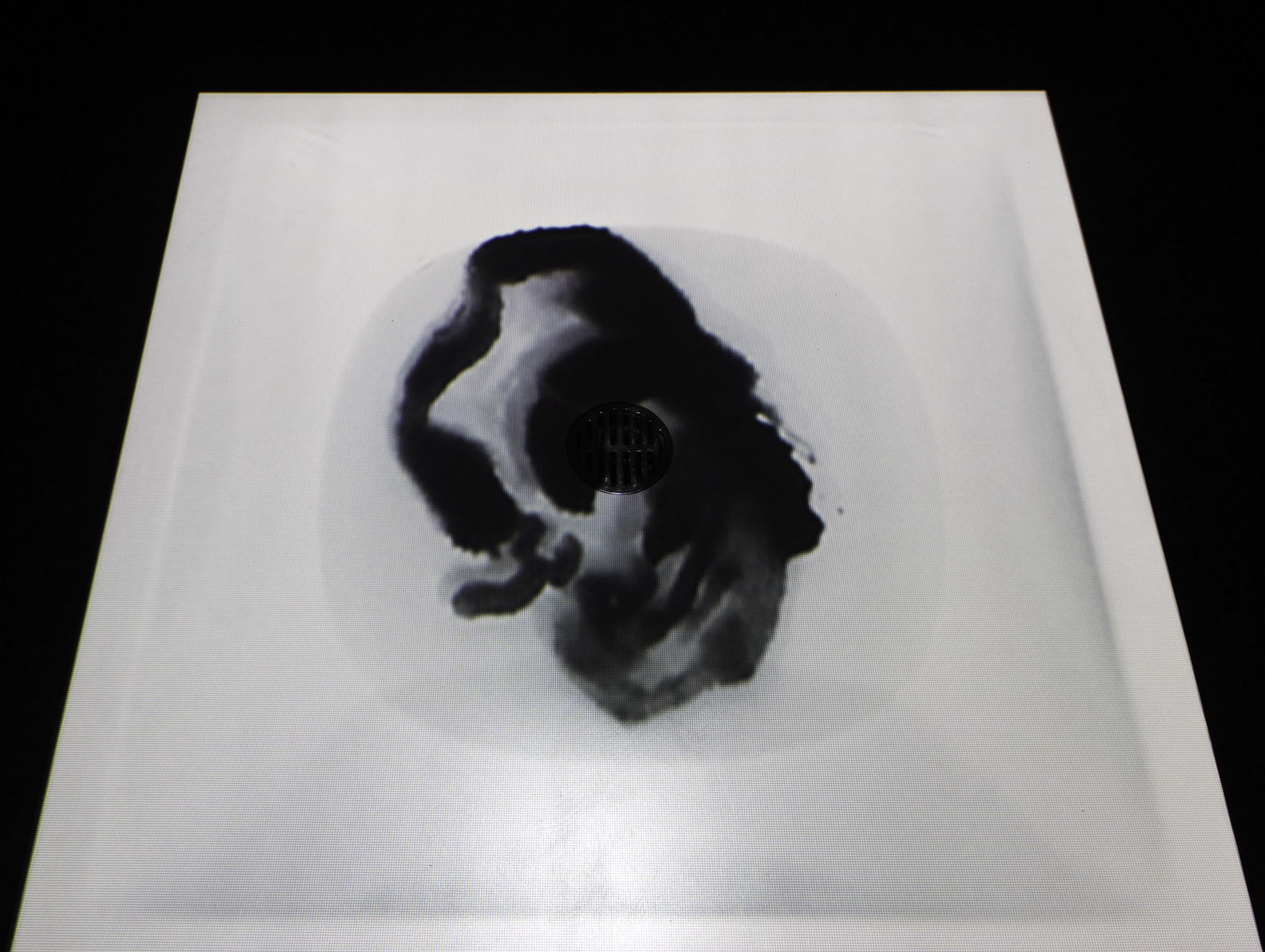
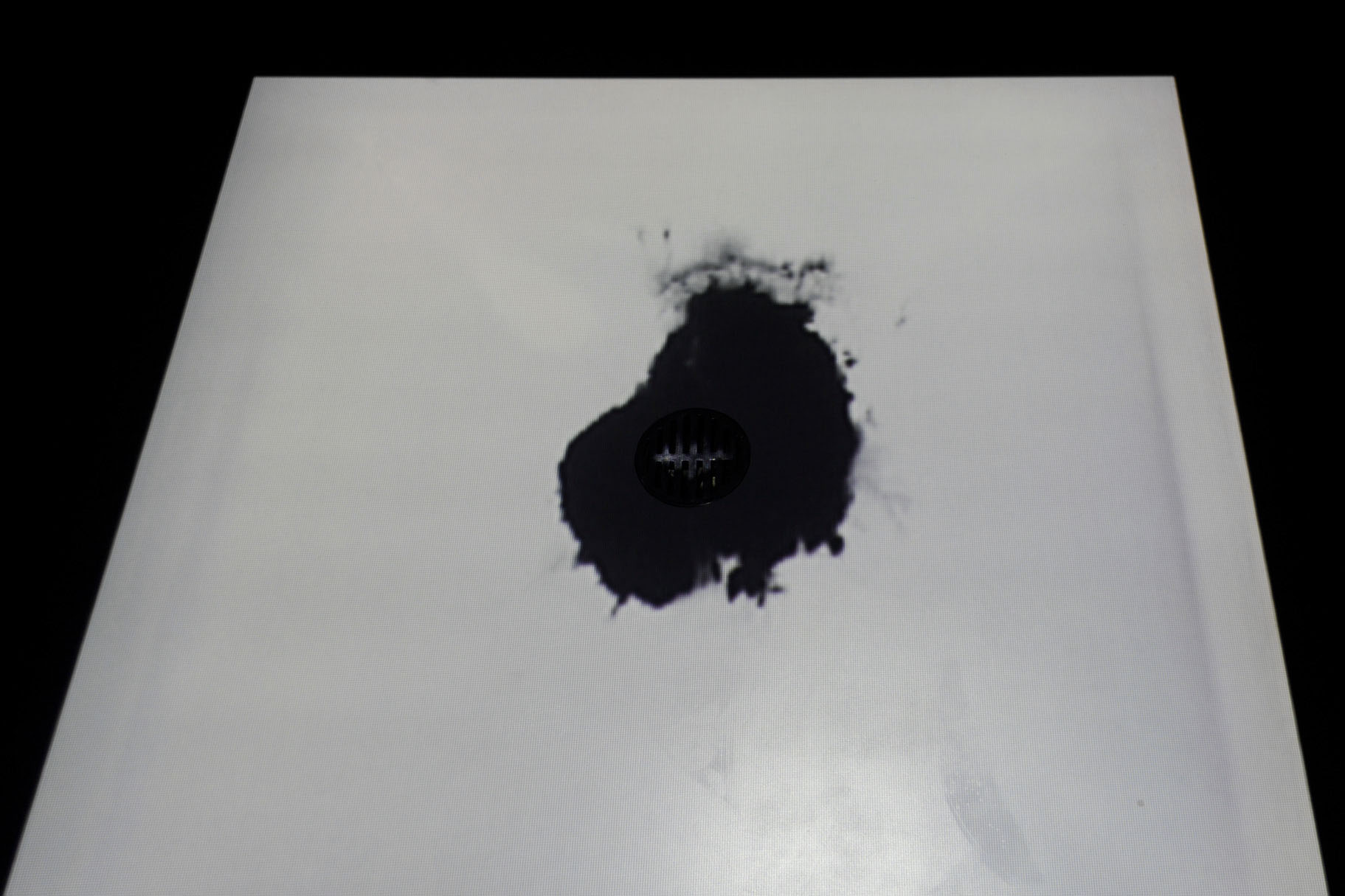
Biografías is one of a series of works in which portraits slowly disappear, reflecting the disappearance of people on a regular basis in Colombia. Muñoz has made silk screen portraits of people but instead of forcing ink through the screen onto paper he has dusted fine coal dust through the screen onto a flat basin of water. The portrait in coal is then transferred to float on the surface of the water. After a while the water starts to drain out of a plug hole in the basin causing the image to begin to distort. Eventually the image is compressed becomes unrecognisable and finally disappears down the drain.

Five such portraits are shown in Biografías by projecting video of the performed drawings onto screens on the floor complete with plug holes beneath which you hear the sound of water running down the drain.

Text from the Art Gallery of New South Wales website [Online] Cited 22/02/2009 (no longer online)


Many thankx to Art Gallery of New South Wales for allowing me to publish the art work in the posting. Please click on the art work for a larger version of the image.


Óscar Muñoz (Colombian, b. 1951) 'Biografías' 2002 (still)

Óscar Muñoz (Colombian, b. 1951) 'Biografías' 2002 (still)

Óscar Muñoz (Colombian, b. 1951) 'Biografías' 2002 (still)


Óscar Muñoz (Colombian, b. 1951)
Biografías (stills)
2002
5 video projections, 7 ‘, loop, without sound, DVD, mdf support, metal grids, variable dimensions


Óscar Muñoz Biografías

The work refers to the idea of death, disappearance and transience of memory, linked to acts of violence.

Muñoz is also known for his use of ephemeral materials, in poetic reflections upon memory and mortality.


Art Gallery of New South Wales
Art Gallery Road, The Domain
Sydney NSW 2000, Australia

Opening hours:
Open every day 10am – 5pm
except Christmas Day and Good Friday

Art Gallery of New South Wales website

LIKE ART BLART ON FACEBOOK

Back to top

Review: ‘Ocean Without A Shore’ video installation by Bill Viola at The National Gallery of Victoria, Melbourne

February 2009


Bill Viola – Ocean Without a Shore | TateShots

Bill Viola’s video installation, Ocean Without a Shore, is presented in the atmospheric setting of the church of San Gallo, Venice. Monitors positioned on three stone altars in the church show a succession of individuals slowly approaching out of darkness and moving into the light, as if encountered at the intersection between death and life. Viola talks about his artistic intentions and the technical challenges of the piece.


Originally installed inside the intimate 15th century Venetian church of San Gallo as part of the 2007 Venice Biennale (see above) incorporating its internal architecture into the piece using the three existing stone altars as support for the video screens, the installation has been recreated in a small darkened room at The National Gallery of Victoria in Melbourne. What an installation it is.

Deprived of the ornate surroundings of the altars of the Venetian chapel – altars of which Viola has said that, “… as per the original development of the origins of Christianity these alters actually are a place where the dead kind of reside and connect with those of us, the living, who are here on earth. And they really are a connection between a cross, between a tomb and an alter – a place to pray,”1 – the viewer is forced to concentrate on the images themselves. This is no bad thing, stripping away as it does a formalised, religious response to mortality.

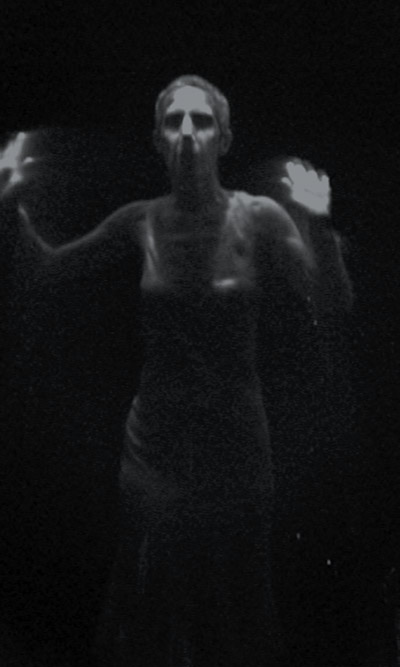
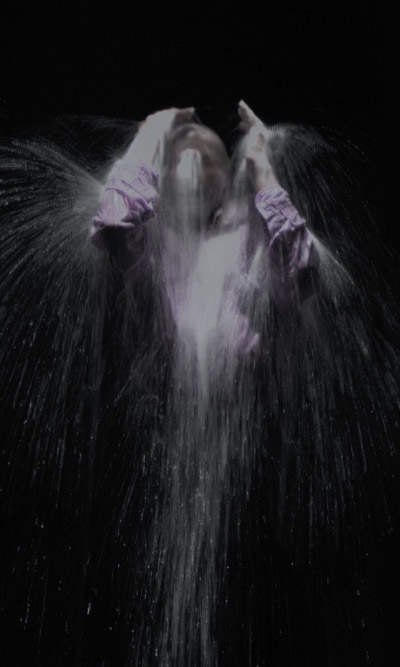
In the work Viola combines the use of a primitive twenty five year old security black and white analogue video surveillance camera with a high definition colour video camera through the use of a special mirror prism system. This technology allows for the seamless combination of both inputs: the dead appear far off in a dark obscure place as grey ghosts in a sea of pulsating ‘noise’ and gradually walk towards you, crossing the invisible threshold of a transparent water wall that separates the dead from the living, to appear in the space transformed into a detailed colour image. As they do so the sound that accompanies the transformation grows in intensity reminding me of a jet aircraft. You, the viewer, are transfixed watching every detail as the ghosts cross-over into the light, through a water curtain.

The performances of the actors (for that is what they are) are slow and poignant. As Viola has observed, “I spent time with each person individually talking with them and you know when you speak with people, you realise then that everybody has experienced some kind of loss in their life, great and small. So you speak with them, you work with them, you spend time and that comes to the surface while we were working on this project together, you know? I didn’t want to over-direct them because I knew that the water would have this kind of visual effect and so they were able to, I think, use this piece on their own and a lot of them had their own stories of coming back and visiting a relative perhaps, who had died.”1

The resurrected are pensive, some wringing the hands, some staring into the light. One offers their hands to the viewer in supplication before the tips of the fingers touch the wall of water – the ends turning bright white as they push through the penumbrae of the interface. As they move forward the hands take on a stricken anguish, stretched out in rigour. Slowly the resurrected turn and return to the other side. We watch them as we watch our own mortality, life slipping away one day after another. Here is not the distraction of a commodified society, here is the fact of every human life: that we all pass.

The effect on the viewer is both sad but paradoxically uplifting. I cried.

A friend who I went with said that the images reminded her not of the dead temporarily coming back to life, but the birth of a new life – the breaking of water at the birth of a child. The performers seemed to her to behave like children brought anew into the world. One of my favourite moments was when the three screens were filled with just noise and a figure then appears out of the beyond, a dim and distant outline creating a transcendental moment. Unfortunately there are no images of these grainy figures. As noted below Viola uses a variety of different ethnic groups and cultures for his performers but the one very small criticism I have is they have no real individuality as people – there are no bikers with tattoos, no cross dressers, no punks because these do not serve his purpose. There is the black woman, the old woman, the middle aged man, the younger 30s man in black t-shirt: these are generic archetypes of humanity moulded to Viola’s artistic vision.

Viola has commented, “I think I have designed a piece that’s open ended enough, where the people and the range of people, the kind of people we chose are from various ethnic groups and cultures. And I think that the feeling of more this is a piece about humanity and it’s about the fragility of life, like the borderline between life and death is actually not a hard wall, it’s not to be opened with a lock and key, its actually very fragile, very tenuous.

You can cross it like that in an instant and I think religions, you know institutions aside, I think just the nature of our awareness of death is one of the things that in any culture makes human beings have that profound feeling of what we call the human condition and that’s really something I am really interested in. I think this piece really has a lot to do with, you know, our own mortality and all that that means.”1

These series of encounters at the intersection of life and death are worthy of the best work of this brilliant artist. He continues to astound with his prescience, addressing what is undeniable in the human condition.

Long may he continue.

Dr Marcus Bunyan


1/ TateShots. Venice Biennale: Bill Viola. 30 June 2007 [Online] Cited 23/09/2009. No longer available online


“The unfolding of consciousness, the revelation of beauty, present even after death, the moment of awe, the space without words, the emptiness that builds mountains, the joy of loving, the sorrow of loss, the gift of leaving something behind for the next traveler.”


Bill Viola


Bill Viola (American, 1951-2024)
Ocean Without A Shore (excerpt)
2007
Installation in the church of San Gallo, Venice


Bill Viola (American, 1951-2024)
Ocean Without A Shore (excerpt)
2007


Ocean Without a Shore is about the presence of the dead in our lives. The three stone altars in the church of San Gallo become portals for the passage of the dead to and from our world. Presented as a series of encounters at the intersection between life and death, the video sequence documents a succession of individuals slowly approaching out of darkness and moving into the light. Each person must then break through an invisible threshold of water and light in order to pass into the physical world. Once incarnate however, all beings realise that their presence is finite and so they must eventually turn away from material existence to return from where they came. The cycle repeats without end.”

Bill Viola
25 May 2007
Text © Bill Viola 2007


The work was inspired by a poem by the twentieth century Senegalese poet and storyteller Birago Diop:

Hearing things more than beings,
listening to the voice of fire,
the voice of water.
Hearing in wind the weeping bushes,
sighs of our forefathers.

The dead are never gone:
they are in the shadows.
The dead are not in earth:
they’re in the rustling tree,
the groaning wood,
water that runs,
water that sleeps;
they’re in the hut, in the crowd,
the dead are not dead.

The dead are never gone,
they’re in the breast of a woman,
they’re in the crying of a child,
in the flaming torch.

The dead are not in the earth:
they’re in the dying fire,
the weeping grasses,
whimpering rocks,
they’re in the forest, they’re in the house,
the dead are not dead.


Text from the Ocean Without A Shore website [Online] Cited 23/09/2009. No longer available online


Bill Viola (American, 1951-2024) 'Ocean Without A Shore' 2007 video still

Bill Viola (American, 1951-2024) 'Ocean Without A Shore' 2007 video still

Bill Viola (American, 1951-2024) 'Ocean Without A Shore' 2007 video insatllation

Bill Viola (American, 1951-2024) 'Ocean Without A Shore' 2007 video insatllation


Installation photographs of Ocean Without A Shore at the National Gallery of Victoria, Melbourne
Photos: Marcus Bunyan


Bill Viola (American, 1951-2024) 'Ocean Without A Shore' 2007 original video installation at church of San Gallo (still)


Bill Viola (American, 1951-2024)
Ocean Without A Shore (still)
2007
Original installation at church of San Gallo


NGV International
180 St Kilda Road, Melbourne

Open daily 10am-5pm

National Gallery of Victoria International website

Bill Viola website

LIKE ART BLART ON FACEBOOK

Back to top

Exhibition: ‘Edward Burtynsky: The Residual Landscapes’ at The Whyte Museum of the Canadian Rockies, Banff, Alberta

Exhibition dates: 7th February – 26th April, 2009


Edward Burtynsky (Canadian, b. 1955) 'Silver Lake Operations #1, Lake Lefroy, Western Australia 2007' from the exhibition 'Edward Burtynsky: The Residual Landscapes' at The Whyte Museum of the Canadian Rockies, Banff, Alberta, Feb - April, 2009


Edward Burtynsky (Canadian, b. 1955)
Silver Lake Operations #1, Lake Lefroy, Western Australia 2007
2007


One of the great photographers of the world.

Enjoy some of his images and for more photographs please visit his website.


Many thankx to The Whyte Museum of the Canadian Rockies for allowing me to publish the photographs in the posting. Please click on the photographs for a larger version of the image.


Edward Burtynsky (Canadian, b. 1955) 'Tanggu Port, Tianjin, China 2005' from the exhibition 'Edward Burtynsky: The Residual Landscapes' at The Whyte Museum of the Canadian Rockies, Banff, Alberta, Feb - April, 2009


Edward Burtynsky (Canadian, b. 1955)
Tanggu Port, Tianjin, China 2005
2005


Nature transformed through industry is a predominant theme in my work. I set course to intersect with a contemporary view of the great ages of man; from stone, to minerals, oil, transportation, silicon, and so on. To make these ideas visible I search for subjects that are rich in detail and scale yet open in their meaning. Recycling yards, mine tailings, quarries and refineries are all places that are outside of our normal experience, yet we partake of their output on a daily basis.

These images are meant as metaphors to the dilemma of our modern existence; they search for a dialogue between attraction and repulsion, seduction and fear. We are drawn by desire – a chance at good living, yet we are consciously or unconsciously aware that the world is suffering for our success. Our dependence on nature to provide the materials for our consumption and our concern for the health of our planet sets us into an uneasy contradiction. For me, these images function as reflecting pools of our times.

Edward Burtynsky quoted on The Whyte Museum website


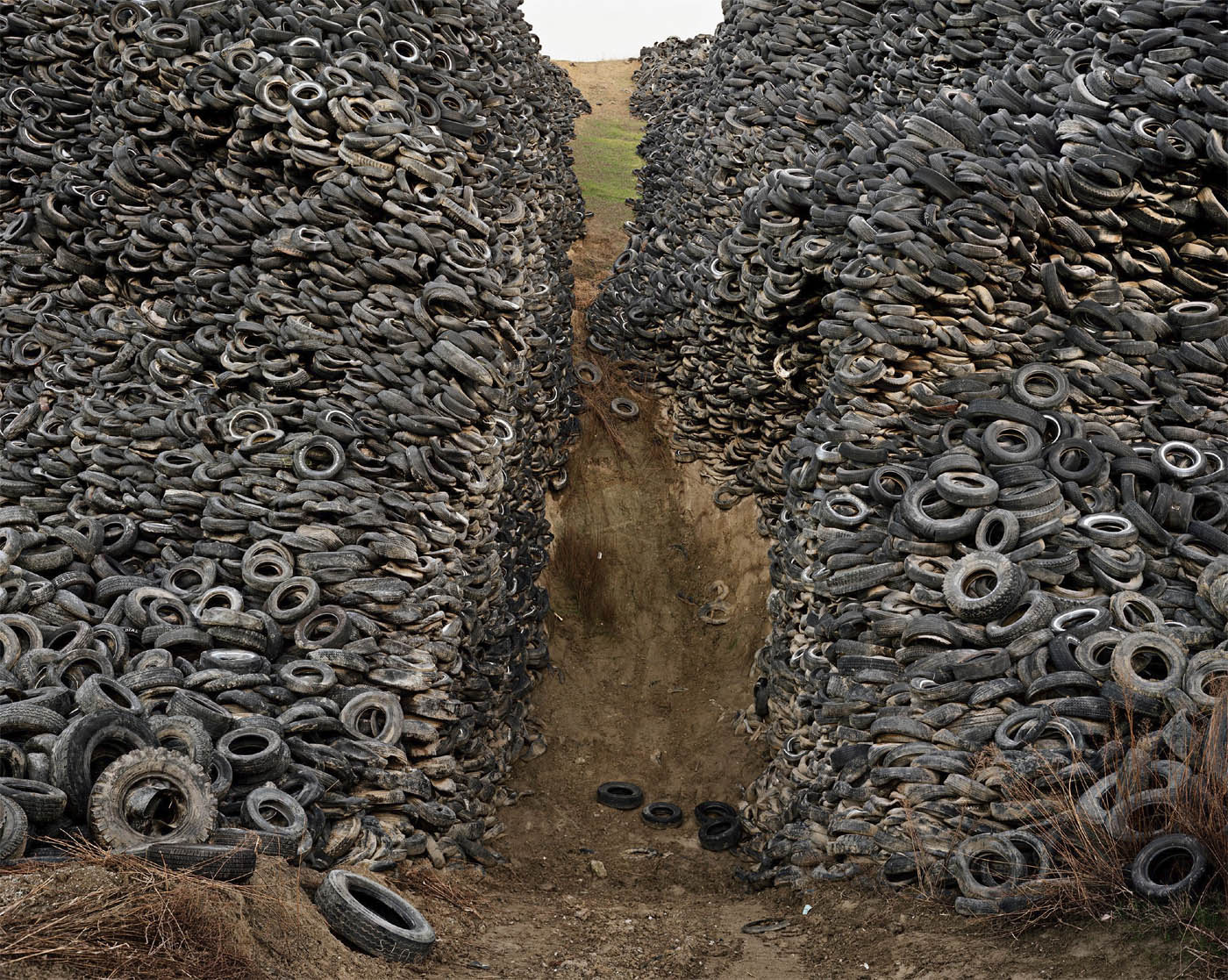
Edward Burtynsky (Canadian, b. 1955) 'Oxford Tire Pile #8, Westley, California 1999' 1999


Edward Burtynsky (Canadian, b. 1955)
Oxford Tire Pile #8, Westley, California 1999
1999


Edward Burtynsky (Canadian, b. 1955) 'Nickel Tailings #30, Sudbury, Ontario, 1996'


Edward Burtynsky (Canadian, b. 1955)
Nickel Tailings #30, Sudbury, Ontario, 1996
1996


Edward Burtynsky (Canadian, b. 1955) 'Nickel Tailings #31, Sudbury, Ontario 1996'


Edward Burtynsky (Canadian, b. 1955)
Nickel Tailings #31, Sudbury, Ontario 1996
1996


Edward Burtynsky (Canadian, b. 1955) 'Feng Jie #4, Three Gorges Dam Project, Yangtze River, 2002'


Edward Burtynsky (Canadian, b. 1955)
Feng Jie #4, Three Gorges Dam Project, Yangtze River, 2002
2002


These images are meant as metaphors to the dilemma of our modern existence; they search for a dialogue between attraction and repulsion, seduction and fear,” said Edward Burtynsky, photographer. “We are drawn by desire – a chance at good living, yet we are consciously or unconsciously aware that the world is suffering for our success. Our dependence on nature to provide the materials for our consumption and our concern for the health of our planet sets us into an uneasy contradiction. For me, these images function as reflecting pools of our times.

Speaking of his “Quarries” series, Burtynsky has said, “The concept of the landscape as architecture has become, for me, an act of imagination. I remember looking at buildings made of stone, and thinking, there has to be an interesting landscape somewhere out there, because these stones had to have been taken out of the quarry one block at a time. I had never seen a dimensional quarry, but I envisioned an inverted cubed architecture on the side of a hill. I went in search of it, and when I had it on my ground glass I knew that I had arrived.”

Text from The Whyte Museum of the Canadian Rockies


Edward Burtynsky (Canadian, b. 1955) 'Shipbreaking #1, Chittagong, Bangladesh, 2000'


Edward Burtynsky (Canadian, b. 1955)
Shipbreaking #1, Chittagong, Bangladesh, 2000
2000


Edward Burtynsky (Canadian, b. 1955) 'Bao Steel #2, Shanghai, China, 2005'


Edward Burtynsky (Canadian, b. 1955)
Bao Steel #2, Shanghai, China, 2005
2005


Edward Burtynsky (Canadian, b. 1955) 'Iberia Quarries #3, Bencatel, Portugal, 2006'


Edward Burtynsky (Canadian, b. 1955)
Iberia Quarries #3, Bencatel, Portugal, 2006
2006


Edward Burtynsky (Canadian, b. 1955) 'China Quarries #8, Xiamen, Fujian Province, 2004'


Edward Burtynsky (Canadian, b. 1955)
China Quarries #8, Xiamen, Fujian Province, 2004
2004


Edward Burtynsky (Canadian, b. 1955) 'Dam #6 ,Three Gorges Dam Project, Yangtze River, 2005'


Edward Burtynsky (Canadian, b. 1955)
Dam #6, Three Gorges Dam Project, Yangtze River, 2005
2005


Trailer for the film Manufactured Landscapes in which Jennifer Baichwal documents Edward Burtynsky doing what artists do – making art, in this case photographing Bangladesh and China as he observes the “manufacturer to the world”.


Edward Burtynsky Manufactured Landscapes


The Whyte Museum of the Canadian Rockies
111 Bear Street, Banff, Alberta
T1L 1A3 Canada
Phone: 1 403 762 2291

Opening hours:
Thursday – Monday 11am – 5pm
Tuesday and Wednesday – CLOSED

The Whyte Museum of the Canadian Rockies website

LIKE ART BLART ON FACEBOOK

Back to top

Exhibition: ‘Utopia: Qiu Anxiong’ at Arken Museum of Modern Art, Denmark

Exhibition dates: 6th February – 22nd November, 2009


Qui Anxiong (Chinese, b. 1972) 'Staring into Amnesia' 2008 (detail)


Qui Anxiong (Chinese, b. 1972)
Staring into Amnesia (detail)
2008


A dream has come true. ARKEN has opened the first of three contemporary art exhibitions under the heading UTOPIA.

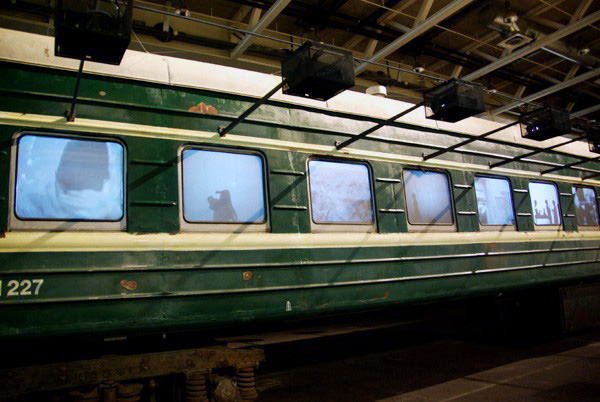
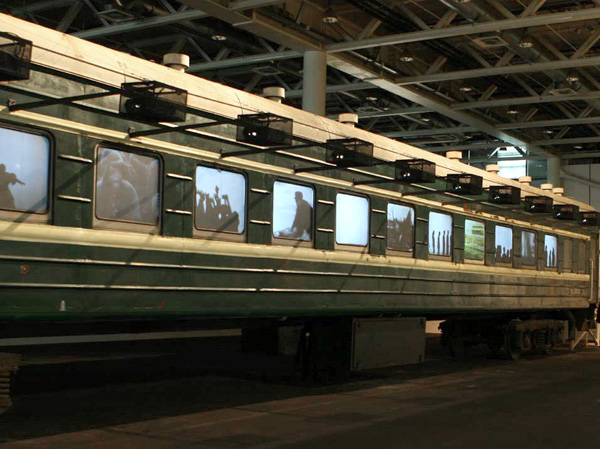
The first UTOPIA artist is Chinese Qiu Anxiong (b. 1972). His work Staring into Amnesia (2008), an enormous original Chinese train carriage from the 1960s, is the principal work in ARKEN’s exhibition. Documentary video clips and poetic silhouettes have been added to the carriage taking us on a journey into China’s past, present and future.

In recent years Qiu Anxiong has received great international attention with his poetic and moving video works which span from big and complex installations to hand painted animated films. The exhibition is the first presentation of Qiu Anxiong’s works in Denmark.

Utopia and dystopia

Qiu Anxiong belongs to a new generation of Chinese artists who bridge Chinese culture and history and today’s globalised contemporary art. Cultures arise and perish, and the yearning for the perfect society is closely followed by the utopia’s antithesis: an oppressed, conflicted dystopia. In a poetic and sensual idiom Qiu Anxiong raises the issue of which new utopias may provide the clue for today’s globalised reality.

Text from the Arken Musem of Modern Art website


ARKEN Museum of Modern Art

Chinese artist Qiu Anxiong talks about his work Staring into Amnesia – the main part of ARKEN’s UTOPIA – exhibition.


Qui Anxiong (Chinese, b. 1972) 'Staring into Amnesia' 2008 (detail)


Qui Anxiong (Chinese, b. 1972)
Staring into Amnesia (detail)
2008


Qui Anxiong (Chinese, b. 1972) 'Staring into Amnesia' 2008 (detail)


Qui Anxiong (Chinese, b. 1972)
Staring into Amnesia (detail)
2008


A 25 metres long, 42 tons heavy Chinese train carriage stops in Arken Museum of Modern Art‘s unique exhibition space The Art Axis, ready to take the museum’s visitors on a journey unlike any other. A journey into China’s past, presence and future. Into deliberations of the good life and the good society. Of the dreams we have today – for ourselves and for the world.

In the 1960s and ’70s it ran in northeastern China. Ordinary Chinese people sat on the hard wooden seats and were transported to and from work, on family visits, tours and holidays. Now it stops in ARKEN’s Art Axis with the purpose of making Danish museum visitors think about the dreams and values that drive them and the world they live in.

The train carriage is the principal work of the first exhibition in the museum’s large-scale UTOPIA project. A project that is to raise the issue of the grand shared notion of the perfect society. Whatever happened to it? Does it still exist today? Have the international financial crisis and the American presidential election made it more topical? And if it does not exist, what has taken its place? Individual dreams of the good life, notions of globalisation, small enclaves of communities?

Opening on 6 February 2009, the UTOPIA exhibition is the first of three exhibitions of contemporary art shown in ARKEN’s Art Axis in the period 2009-2011 – one per year. Each exhibition presents a significant, international contemporary artist who explores art’s potential with regards to the notions of “the good life.” The first artist is the Chinese Qui Anxiong (b. 1972).

Qui Anxiong gave the train carriage an artistic makeover after it had ended its career as a means of public transportation, transforming it into the work Staring into Amnesia (2007). A work of art which invites us on a journey even though the carriage is motionless. A journey into China’s past, presence and future. For when the guests come aboard the train and sit down on the hard wooden seats, they journey through China’s history. Video clips of documentary and propaganda films from China from 1910 until today pass by the windows as fragments of memories alternating with silhouettes of everyday scenes: a girl waiting by a ventilator, two people playing chess, groups of people in processions, riots, struggles or celebration. What has been is juxtaposed with what is. And with the train as metaphor for movement in time, it raises the question of which destinations await us up ahead. Is the next stop Utopia? What do we hope will come, what do we dream of?

6,000 drawings – one movie – Staring into Amnesia is the chief work of the UTOPIA exhibition. It explores how humankind’s endeavours to create the perfect society through political and religious overall solutions, both historically and today, often result in the utopia’s antithesis: an oppressed, conflicted dystopia.

Another work in the exhibition is the animated film The New Book of Mountains and Seas (2006). The film consists of 6,000 drawings created by Qiu Anxiong in his small one bedroom apartment in Shanghai. It presents us with a mythologised version of the world today in which modern technology and nature merge: helicopters hover in the air like big birds, and black clad people fly like planes, crashing the Twin Towers in a drawn version of 9/11. In a poetic and dreamlike idiom, sharply contrasting with the depicted reality, the work explores the themes of religious and political conflicts characterising the global reality of our time. UTOPIA is supported by the Nordea Foundation.

Text from the Artdaily.org website


Qui Anxiong (Chinese, b. 1972) 'Staring into Amnesia' 2008


Qui Anxiong (Chinese, b. 1972)
Staring into Amnesia
2008


Images courtesy of Boers-Li Gallery and ArtShortCut

Arken Museum of Modern Art
Skovvej 100, 2635 Ishøj
Phone: +45 43 54 02 22

Opening hours:
Tuesday – Sunday: 10am – 5pm
Monday: Closed

Arken Museum of Modern Art website

LIKE ART BLART ON FACEBOOK

Back to top

Review: ‘The Water Hole’ exhibition by Gerda Steiner and Jorg Lenzlinger at ACCA (Australian Centre for Contemporary Art), Melbourne

Exhibition dates: 23rd December, 2008 – 1st March, 2009


“Warning. Watch your step while gazing at distant view.”

Sign at entrance to the exhibition


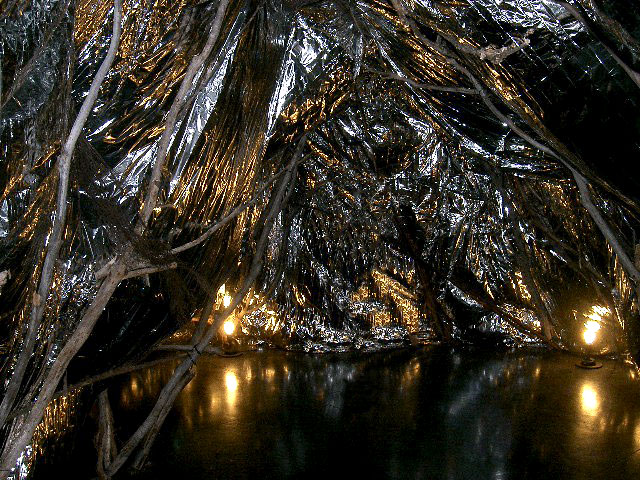
Gerda Steiner and Jorg Lenzlinger. Entrance to 'The Waterhole' exhibition at ACCA, Melbourne, 2009


Gerda Steiner (Swiss, b. 1967) and Jorg Lenzlinger (Swiss, b. 1964)
Entrance to The Water Hole exhibition at ACCA, Melbourne
2009
Photo: Marcus Bunyan


A cave like entrance presents itself to the visitor as they enter the exhibition leading to a long winding tunnel that is lined with silver insulation foil and tree branches, lit by floor mounted electric light bulbs. The foil moves with the natural movement of air causing not a rustling of leaves but of artificial surfaces.

At the end of the tunnel the viewer enters a large installation space, confronted with a effusive pop art Garden of Eden, a Magic Forest.

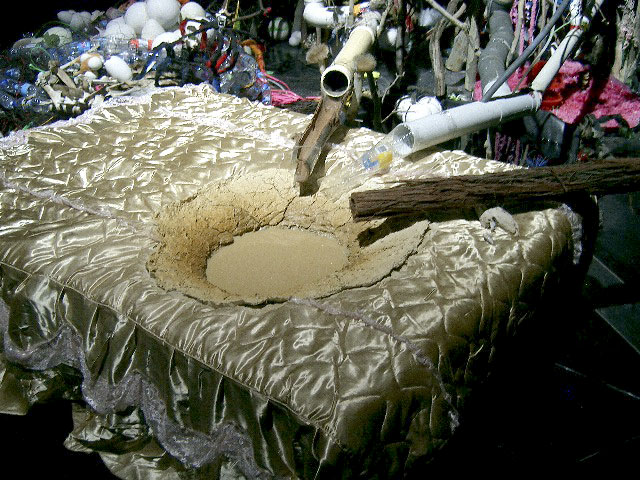
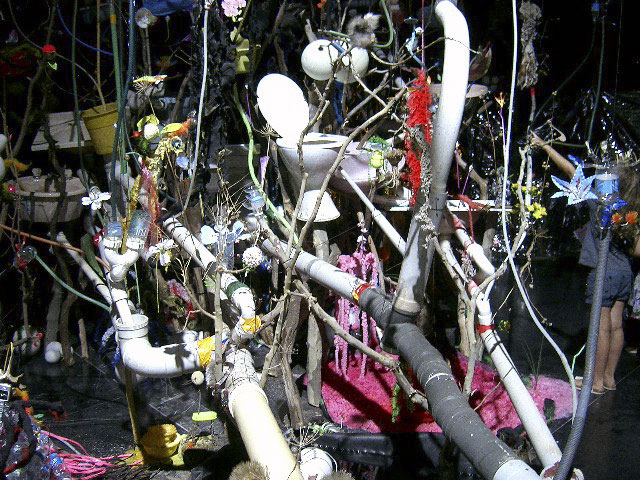
It takes a while to work out what is going on, there are so many elements to the sculptural piece. The main elements are buckets, toilets, basins and drainage pipes, plumbing fittings that all lead to a bed with a drying dam in the centre of a satin bedspread: the ‘waterhole’ of the exhibition title. The waterhole is fed by water dripping from a medical bag suspended high in the air above the dam, a nice touch. The rest of the forest and pipes are dry. The installation comments on our water supplies and the ‘technologies of production’ (Foucault) that permit us to produce, transform or manipulate things. We might install rainwater tanks to catch water but if there is no water to catch in the first place then we are in trouble: we make our bed and have to lie in it, the empty basins like our catchment areas, dry and bleak.

Other elements of the forest have an environmental theme, the installation developed by the artists in response to the extensive drought most of Australia (and it particular Melbourne) is experiencing. Here are spiders with hairy legs and mobile phones for bodies infesting the installation, plumbing fittings with natural seeds sprouting from their ends, brightly coloured crystal forms fed each day with water by gallery staff so that they grow. An upside down umbrella with Polar bear images printed on it’s material has imaginary water draining down a bamboo pipe into a bucket; empty water bottles form a large nest with broken eggs inside; artificial plants, bones, crabs, seaweed and flying stuffed owls are form some of the other elements in the installation.

Climbing a few steps we enter a ‘bird’ watching gallery replete with binoculars to observe the humans in the forest as much as the forest itself. A water cooler sits incongruously in this watching space, silent and somehow complicit in its ironical presence.

The viewer then moves to another room. 4 video projectors display another water themed installation on the gallery walls, the videos meeting in the middle of the walls and reflecting each other. Ambient music accompanies images of rain!, spurting water, owls and plastic pipes, plastic flowers and plastic horses as the viewer relaxes on a waterbed in the middle of the space. The effect of the music and images is quite meditative when combined with the gentle rocking of the waterbed, the projections of the video forming kaleidoscopic ‘Northern lights’ on the ceiling of the gallery. This room is an extension of the themes of the large installation.

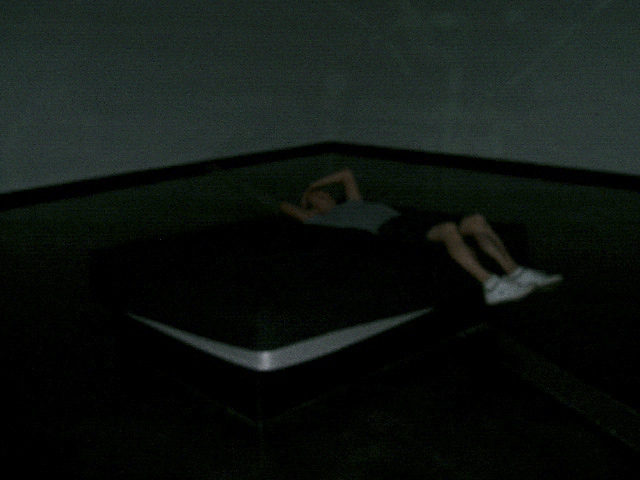
Moving forward the viewer enters another room – the meditation room. This room is most effective in encouraging contemplation of the different planes of our existence and our orientation in (environmental) space. Three beds are present, one suspended from the ceiling by four metal rods. Climbing onto this bed the movement from side to side caused by your weight makes you feel seasick and slightly disorientated. Above the second table is a wonderful mobile made of twigs, branches, dried leaves, plastic flowers, beads, plastic bags, baby dummies and jewellery moving gently in the breeze. Lying on the table with the mobile about a foot above your head things drift in and out of view as you change the focus of your eyes – close, mid, far and then onto the moving shadows on the ceiling.

The most effective bed has a small meteorite suspended in a net bag above it. The viewer slides underneath the ‘rock’ placing the meteorite about a foot or so above your face. The meteorite is brown, dark and heavy, swinging slightly above your ‘third eye’. You feel its weight pressing down on your energy, on your life force and you feel how old this object is, how far it has traveled, how fragile and mortal you are. It is a sobering and enlightening experience but what an experience it is!

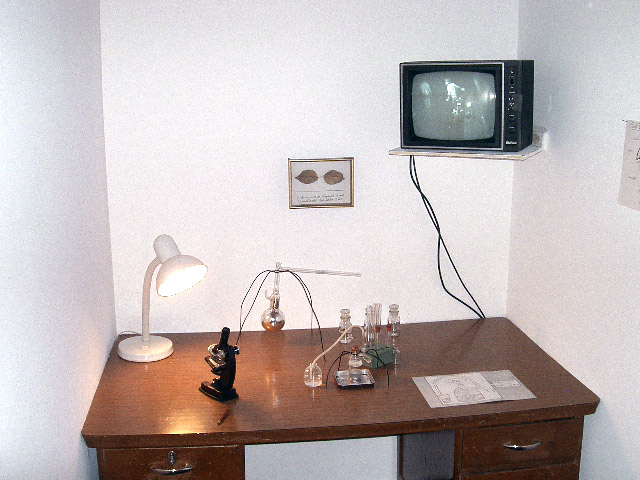
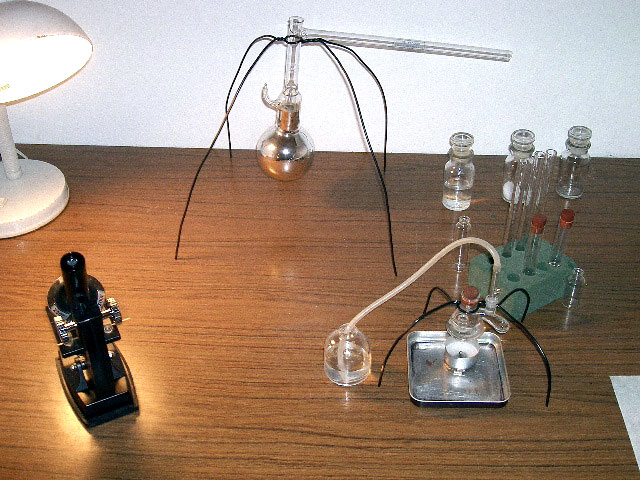
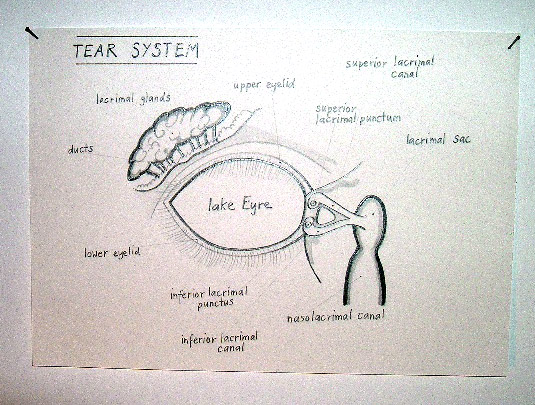
Entering the final room small colour photos of people being hugged from behind and lifted into the air, laughing, line the gallery walls. These are the weakest elements of the exhibition and seem to bear no relation to all that has passed before. Running off of this gallery is an alcove that is a dead end, a full stop to the exhibition with an installation Desalination plant for tears. A cheap Formica desk sits at the end of the space. Perched above the desk is a tv showing live black and white images of the earlier bird watching gallery – the watcher now the watched. On the desk itself is a microscope (with slide of human tears), pencil, a candle for heat under a glass flask of water (looking like a spider from the large installation!) and various glass test tubes and vials. A diagram explains the working of a Desalination plant for tears, an analogous reference to the desalination plant earmarked for Wonthaggi, south-east of Melbourne. Irony is present (again) in the 2 leaves grown at Singapore Airport by desalinated water (2008), two framed, brown dead leaves, and in the Tear system diagram where glands have turned into forests and the eye into a lake (see below).

This is a magical and poignant exhibition that is a joy for children and adults alike. Children love it running around exploring the environments. Adults love it for it’s magical, witty and intelligent response to the problems facing our planet and our lives. Go and enjoy this interplanetary collision. Highly recommended!

Dr Marcus Bunyan


Many thankx to the Australian Centre for Contemporary Art for allowing me to publish the photographs and text in the posting. All photographs © Marcus Bunyan


Gerda Steiner (Swiss, b. 1967) and Jorg Lenzlinger (Swiss, b. 1964) 'The Waterhole' 2009 (detail)


Gerda Steiner (Swiss, b. 1967) and Jorg Lenzlinger (Swiss, b. 1964)
The Water Hole (detail)
2009
Photo: Marcus Bunyan


Gerda Steiner (Swiss, b. 1967) and Jorg Lenzlinger (Swiss, b. 1964) 'The Waterhole' 2009 (detail)


Gerda Steiner (Swiss, b. 1967) and Jorg Lenzlinger (Swiss, b. 1964)
The Water Hole (detail)
2009
Photo: Marcus Bunyan


Gerda Steiner (Swiss, b. 1967) and Jorg Lenzlinger (Swiss, b. 1964) 'The Waterhole' 2009 (detail)


Gerda Steiner (Swiss, b. 1967) and Jorg Lenzlinger (Swiss, b. 1964)
The Water Hole (detail)
2009
Photo: Marcus Bunyan


Gerda Steiner and Jorg Lenzlinger. Installation view of waterbed at 'The Waterhole' exhibition at ACCA, 2009


Gerda Steiner (Swiss, b. 1967) and Jorg Lenzlinger (Swiss, b. 1964)
Installation view of waterbed at The Water Hole exhibition at ACCA, Melbourne
2009
Photo: Marcus Bunyan


Gerda Steiner and Jorg Lenzlinger. Installation view of 'Desalination plant for tears' (detail) from 'The Water Hole' exhibition at ACCA, Melbourne, 2009

Gerda Steiner and Jorg Lenzlinger. Installation view of 'Desalination plant for tears' (detail) from 'The Water Hole' exhibition at ACCA, Melbourne, 2009


Gerda Steiner (Swiss, b. 1967) and Jorg Lenzlinger (Swiss, b. 1964)
Installation view details of Desalination plant for tears from The Water Hole exhibition at ACCA, Melbourne
2009
Photos: Marcus Bunyan


The end of 2008 saw the launch of The Water Hole, a major installation by renowned Swiss artists Steiner and Lenzlinger. The artists created a fantasia of ecology in ACCA’s large hall. In the side galleries a flow out of projects including meteors suspended over beds, a crystal room and a desalination laboratory. The Water Hole, devised specifically for ACCA, referenced Australia’s acute climate challenges as well as the pressure of global waste. The project created a story of place, a fable if you like. And in the tradition of the fable, the artists employed animals, plants and inanimate objects to tell a story that has a moral and ethical dimensions. 

The Water Hole was a big story – filled with pleasurable things but also with the message of peril.  The artists created environments that enabled the visitor to consider and sense our place in history, and our attention to striking a balance between our consumptive desiring and nature.

Text from the ACCA website


Gerda Steiner (Swiss, b. 1967) and Jorg Lenzlinger (Swiss, b. 1964) Diagram from 'Desalination plant for tears' (detail) from the exhibition 'The Water Hole' at ACCA, Melbourne, 2009


Gerda Steiner (Swiss, b. 1967) and Jorg Lenzlinger (Swiss, b. 1964)
Diagram from Desalination plant for tears from the exhibition The Water Hole at ACCA, Melbourne
2009
Photo: Marcus Bunyan


Australian Centre for Contemporary Art (ACCA)
111 Sturt Street
Southbank
Victoria 3006
Australia

Opening hours:
Tuesday to Friday 10am – 5pm
Weekends and Public Holidays 11am – 5pm
Monday by appointment
Open all public holidays except Christmas Day and Good Friday

ACCA website

Gerda Steiner and Jorg Lenzlinger website

LIKE ART BLART ON FACEBOOK

Back to top

Exhibition: ‘William Eggleston: Democratic Camera, Photographs and Video, 1961-2008’ at the Whitney Museum of American Art, New York

Exhibition dates: 7th November, 2008 – 25th January, 2009


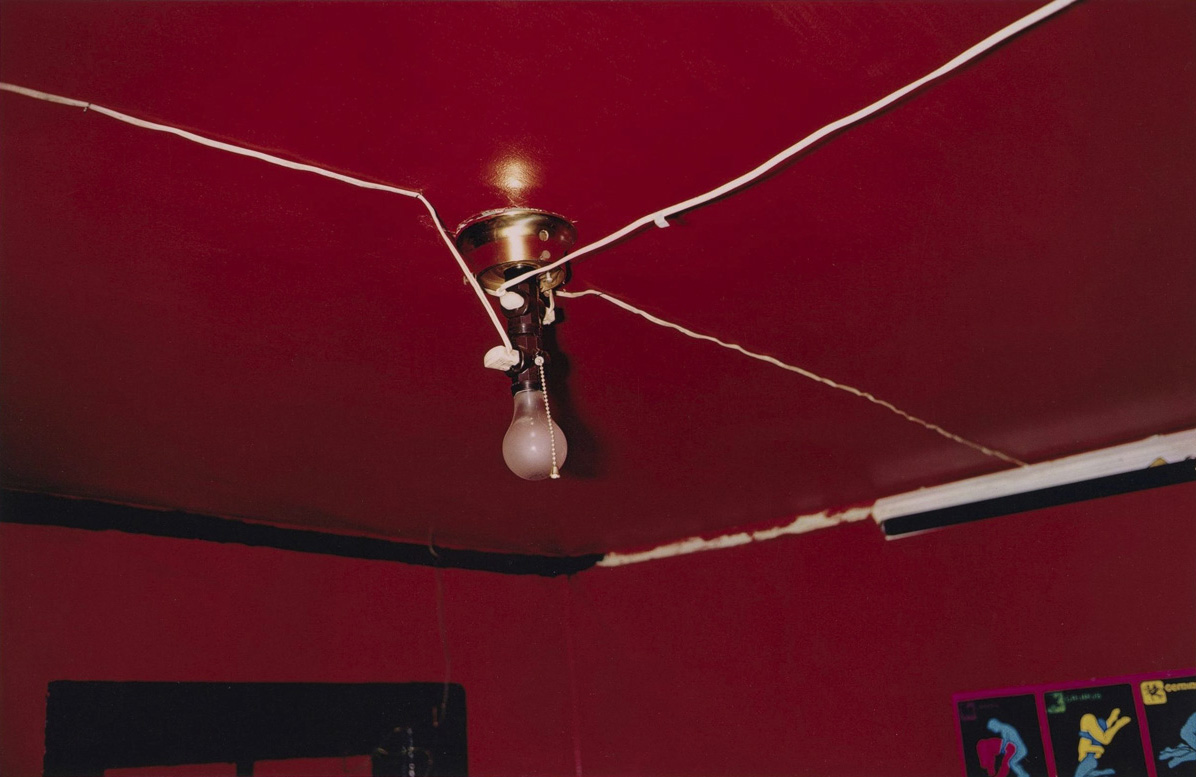
William Eggleston (American, b. 1939) 'Untitled' c. 1971-1973 from the exhibition Exhibition: 'William Eggleston: Democratic Camera, Photographs and Video, 1961-2008' at the Whitney Museum of American Art, New York, Nov 2008 - Jan 2009


William Eggleston (American, b. 1939)
Untitled
c. 1971-1973
From Troubled Waters 1980
Dye-transfer print
© Eggleston Artistic Trust


One of the most influential photographers of the last half-century, William Eggleston has defined the history of colour photography. This exhibition is the artist’s first retrospective in the United States and includes both his colour and black-and-white photographs as well as Stranded in Canton, the artist’s video work from the early 1970s.

William Eggleston’s great achievement in photography can be described in a straightforward way: he captures everyday moments and transforms them into indelible images. William Eggleston: Democratic Camera, Photographs and Video, 1961-2008 presents a comprehensive selection from nearly fifty years of image-making.

Born in 1939 in Sumner, Mississippi, a small town in the Delta region, Eggleston showed an early interest in cameras and audio technology. While studying at various colleges in the South, he purchased his first camera and came across a copy of Henri Cartier-Bresson’s book The Decisive Moment (1952). In the early 1960s, Eggleston married and moved to Memphis, where he has lived ever since. He first worked in black-and-white, but by the end of the decade began photographing primarily in colour. Internationally acclaimed and widely traveled, Eggleston has spent the past four decades photographing all around the world, conveying intuitive responses to fleeting configurations of cultural signs and moods as specific expressions of local colour. Psychologically complex and casually refined, bordering on kitsch and never conventionally beautiful, these photographs speak principally to the expanse of Eggleston’s imagination and have had a pervasive influence on all aspects of visual culture. By not censoring, rarely editing, and always photographing, Eggleston convinces us of the idea of the democratic camera.

This exhibition was organised by the Whitney Museum of American Art, New York, in association with Haus der Kunst, Munich.

Text from the Whitney Museum of American Art website


Many thankx to the Whitney Museum of American Art for allowing me to publish the photographs in the posting. Please click on the photographs for a larger version of the image.


William Eggleston (American, b. 1939) 'Untitled' 1973 from the exhibition Exhibition: 'William Eggleston: Democratic Camera, Photographs and Video, 1961-2008' at the Whitney Museum of American Art, New York, Nov 2008 - Jan 2009


William Eggleston (American, b. 1939)
Untitled
1973
Dye-transfer print
© Eggleston Artistic Trust


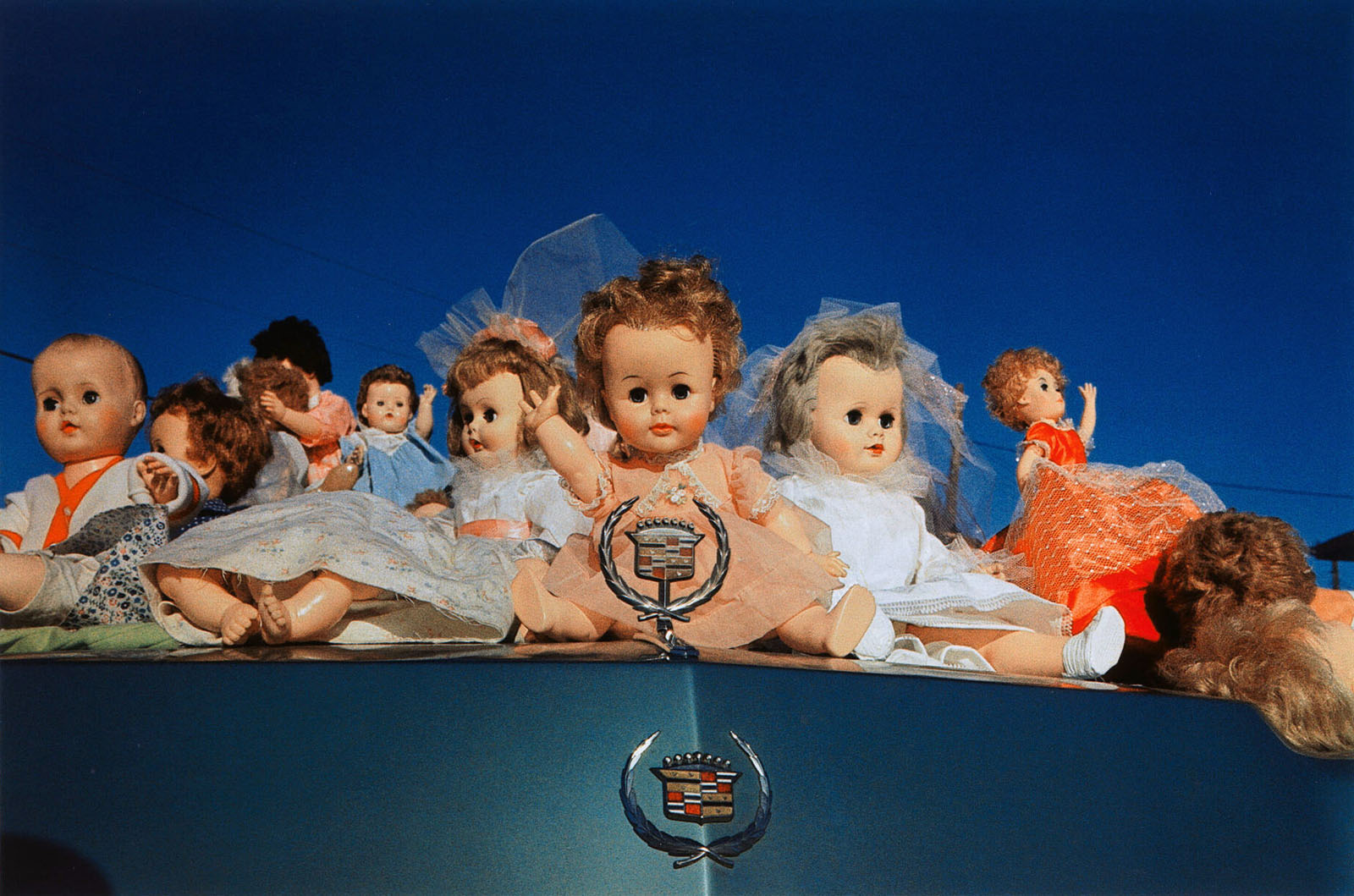
William Eggleston (American, b. 1939) 'Untitled (Baby Doll Cadillac)' 1973, printed 1996


William Eggleston (American, b. 1939)
Untitled (Baby Doll Cadillac)
1973, printed 1996
From the Los Alamos portfolio
Dye transfer print
11 3/4 × 17 11/16in. (29.8 × 44.9cm)
Whitney Museum of American Art, New York; purchase, with funds from the Photography Committee
© Eggleston Artistic Trust, courtesy Cheim & Read, NYC


William Eggleston (America, born July 27, 1939) 'Memphis' c. 1970


William Eggleston (America, b. 1939)
Memphis
c. 1970
Dye-transfer print
© Eggleston Artistic Trust


William Eggleston video

“This candid interview with photographer William Eggleston was conducted by film director Michael Almereyda on the occasion of the opening of Eggleston’s retrospective William Eggleston: Democratic Camera, Photographs and Video, 1961-2008 at the Whitney Museum of American Art. A key figure in American photography, Eggleston is credited almost single-handedly with ushering in the era of colour photography. Eggleston discusses his shift from black and white to colour photography in this video as, “it never was a conscious thing. I had wanted to see a lot of things in colour because the world is in colour”. Also included in this video are Eggleston’s remarks about his personal relationships with the subjects of many of his photographs.”


The Ending of Stranded in Canton

In 1973, photographer William Eggleston picked up a Sony PortaPak and took to documenting the soul of Memphis and New Orleans. Transvestites, geek men biting off chicken heads, classy blues musicians, and crazed men with guns form the backbone of this documentary look at the “Southern Hipsters” of Louisiana and Mississippi.

Stranded in Canton

In 1973, photographer William Eggleston picked up a Sony PortaPak and took to documenting the soul of Memphis and New Orleans.

“These were the Merry Prankster and “Easy Rider” years, when road trips and craziness were cool, and Mr. Eggleston set out on some hard-drinking picture-taking excursions. He also embarked on repeated shorter expeditions closer to home in the form of epic bar crawls, which resulted in the legendary video “Stranded in Canton.”

Originally existing as countless hours of unedited film and recently pared down by the filmmaker Robert Gordon to a manageable 76 minutes, it was shot in various places in 1973 and 1974. (The new version is in the retrospective.) Mr. Eggleston would show up with friends at favourite bars, turn on his Sony Portapak, push the camera into people’s faces and encourage them to carry on.

And they did. Apart from brief shots of his children and documentary-style filming of musicians, the result is like some extreme form of reality television. Your first thought is: Why do people let themselves be seen like this? Do they know what they look like? You wonder if Mr. Eggleston is deliberately shaping some tragicomic Lower Depths drama or just doing his customary shoot-what’s-there thing, the what’s-there in this case being chemical lunacy. For all the film’s fringy charge there’s something truly creepy and deadly going on, as there is in much of Mr. Eggleston’s art. You might label it Southern Gothic; but whatever it is, it surfaces when a lot of his work is brought together.”

Holland Cotter. “Old South Meets New, in Living Color,” on The New York Times website Nov 6, 2008


William Eggleston (America, b. 1939) 'Untitled' c. 1976


William Eggleston (America, b. 1939)
Untitled
c. 1976
From Election Eve
© Eggleston Artistic Trust
Courtesy Cheim & Read Gallery


William Eggleston (American, born 1939) 'Untitled (Greenwood, Mississippi)' 1980


William Eggleston (American, born 1939)
Untitled (Greenwood, Mississippi)
1980
Dye-transfer print
29.6 x 45.5cm (11 5/8 x 17 15/16 in.)
The Metropolitan Museum of Art
Purchase, Louis V. Bell, Harris Brisbane Dick, Fletcher, and Rogers Funds and Joseph Pulitzer Bequest, and Jennifer and Philip Maritz Gift, 2012
© Eggleston Artistic Trust


William Eggleston (American, b. 1939) 'Untitled' Nd


William Eggleston (American, b. 1939)
Untitled
Nd
Dye-transfer print
From Los Alamos 1965-1968 and 1972-1974 (published 2003)
© Eggleston Artistic Trust


William Eggleston (American, b. 1939) 'Untitled' c. 1975 (Marcia Hare in Memphis Tennessee) c. 1975


William Eggleston (American, b. 1939)
Untitled (Marcia Hare in Memphis Tennessee)
c. 1975
Dye-transfer print
© Eggleston Artistic Trust


William Eggleston (American, b. 1939) 'Huntsville, Alabama' c. 1971


William Eggleston (American, b. 1939)
Huntsville, Alabama
1971
Dye-transfer print
© Eggleston Artistic Trust


William Eggleston (American, b. 1939) 'Untitled (Memphis Tennessee)' 1965


William Eggleston (American, b. 1939)
Untitled (Memphis Tennessee)
1965
Dye-transfer print
© Eggleston Artistic Trust


William Eggleston (American, b. 1939) 'Untitled (Memphis)' c. 1969-1971


William Eggleston (American, b. 1939)
Untitled (Memphis)
c. 1969-1971
Dye-transfer print
© Eggleston Artistic Trust
Courtesy Cheim & Read Gallery


William Eggleston (American, b. 1939) 'Untitled' 1983


William Eggleston (American, b. 1939)
Untitled
1983
From a series of photographs taken at Graceland
Dye-transfer print
© Eggleston Artistic Trust
Courtesy Whitney Museum of American Art


Whitney Museum of American Art
99 Gansevoort Street
New York, NY 10014
Phone: (212) 570-3600

Opening hours:
Mon: 10.30am – 6pm
Tues: Closed
Wed: 10.30am – 6pm
Thurs: 10.30am – 6pm
Fri: 10.30am – 10pm*
Sat: 11am – 6pm
Sun: 11am – 6pm

Whitney Museum of American Art website

William Eggleston exhibition web page

LIKE ART BLART ON FACEBOOK

Back to top

Review: ‘Intersection’ by Daniel Crooks at Anna Schwartz Gallery, Melbourne

Exhibition dates: 28th November – 20th December, 2008


Daniel Crooks (New Zealand, b. 1973) 'Intersection No.2 (vertical plane)' 2008 from the exhibition 'Intersection' by Daniel Crooks at Anna Schwartz Gallery, Melbourne, Nov - Dec, 2008


Daniel Crooks (New Zealand, b. 1973)
Intersection No.2 (vertical plane)
2008


This was a magical exhibition – beautiful, insightful and mesmerising in equal parts. Five large video screens were presented in the long space of the Anna Schwartz gallery in Melbourne. The outer two videos feature striated horizontal and vertical bands of pulsating colours, fluxing up and down and from side to side, seemingly rushing past like tarmac outside a moving car. These videos add balance at each end of the installation.

The inner videos on either side of the central panel are the most figurative of the work: the video on the left-hand side reminded me of a Jackson Pollock drip painting come alive, ribbons of paint in time and space morphing backwards, finally coalescing into figures and their shadows walking across tarmac; the video on the right-hand side shows people moving across a pedestrian intersection like an animated slow motion photograph flowing anamorphically across the screen, their shadows distorted on the ground as trams pass behind them. Up close the surface of the projected video breaks down into grided squares of light, hypnotic in their blooming, shape-shifting colours.

The central panel is the key to the whole work. Intensities of colour flash and fade in time with atmospheric ambient music (by J. David Franz and Byron Scullin) that works effectively with the whole installation. Beeps of the pedestrian crossing intersection intersperse the ambient music adding an almost sonar like pinging to the atmospheric soundtrack; after-images appear and glow as the colours fade, transcending the solidity of the ever-changing single pixel of colour taken through the block of video time. The pyrotechnics of the other screens are balanced by the colours/intensities/music of this central panel.

The installation reminds me of a folded out five-panel religious altarpiece form of the 15th century. The figures, shadows and lines of the outer videos surround the pulsing heart of the central panel that, for me, took on an almost transcendent spirituality (especially when you understand the transcendence of time and space that is being achieved and how that relates to your own path in life). If you stand very still against the far wall of the gallery and look at all five videos at the same time the central panel achieves the ‘Intersection’ that Daniel Crooks is imagining. Subtle, profound and intelligent the viewer is invited to spend time, no, to transcend time in the company of this work and that is a major achievement: to reveal certain truths about our existence in these moments of time, to inhabit the space between breath – no time, no space.

Dr Marcus Bunyan


Daniel Crooks (New Zealand, b. 1973) 'Intersection No.5 (horizontal volume)' 2008 from the exhibition 'Intersection' by Daniel Crooks at Anna Schwartz Gallery, Melbourne, Nov - Dec, 2008


Daniel Crooks (New Zealand, b. 1973)
Intersection No.5 (horizontal volume)
2008


“The subjects of Daniel Crook’s oeuvre; the recurrence of city transport systems, lifts in high-rise buildings alongside images of the sea, invoke an idea of the world made as much of time as space and that indeed we ourselves are also made of time …

Crooks works, literally, from inside the medium, deconstructing its time-space matrix to reveal the inner truth about the subjects of video: they are purely temporal.

The five works comprising Intersection are all sourced from the same ‘volume’ of video footage. Each video is a formal variation that navigates an alternative path through the same light field, pushing its own ‘picture plane’ through the space along opposing axes.

The two most figurative videos navigate the entire volume of footage – each swapping time for the vertical or the horizontal. The second, more abstracted videos are reduced to horizontal and vertical ‘planes’. The centre work – a single pixel of information that tunnels through time – is the intersection between opposing axes, almost like the fulcrum or nodal point, and in turn acts as a pivot for the installation.”

Catalogue notes from Daniel Crooks exhibition Intersection at Anna Schwartz Gallery, Melbourne.


Daniel Crooks (New Zealand, b. 1973) 'Intersection No.4 (vertical volume)' 2008


Daniel Crooks (New Zealand, b. 1973)
Intersection No.4 (vertical volume)
2008


Daniel Crooks works pre­dom­i­nant­ly in video, pho­tog­ra­phy and sculp­ture. He is best known for his dig­i­tal video and pho­to­graph­ic works that cap­ture and alter time and motion. Crooks manip­u­lates dig­i­tal imagery and footage as though it were a phys­i­cal mate­r­i­al. He breaks time down, frame by frame. The result­ing works expand our sense of tem­po­ral­i­ty by manip­u­lat­ing dig­i­tal ‘time slices’ that are nor­mal­ly imper­cep­ti­ble to the human eye.


Daniel Crooks. 'Intersection' exhibition installation view at Anna Schwartz Gallery, Melbourne


Intersection installation view at Anna Schwartz Gallery, Melbourne
Photo: Marcus Bunyan


Addendum 2019


Daniel Crooks
Static No. 12 (extract)
2012
HD Video
Courtesy Daniel Crooks & Anna Schwartz Gallery


Artistic Responses by Daniel Crooks | Symposium: Wider Vantages Are Needed Now, Times 18
2013

Daniel Crooks, New Zealand-born and Melbourne-based, is one of the foremost innovators in the quickly evolving fields of video and digital art.


Daniel Crooks: Phantom Ride
2016

Daniel Crooks’ Phantom Ride alludes to cinema history to create a seamless journey through a composite reality. By manipulating digital footage as though it were a physical material, the artist has constructed a collaged landscape that takes us through multiple worlds and shifts our perception of space and time.


Anna Schwartz Gallery
185 Flinders Lane
Melbourne, Victoria 3000

Opening hours:
Tuesday – Friday 12 – 6pm
Saturday 1 – 5pm

Anna Schwartz Gallery website

LIKE ART BLART ON FACEBOOK

Back to top