Exhibition: ‘Peter Mitchell: Nothing Lasts Forever’ at The Photographers’ Gallery, London

Exhibition dates: 7th March – 15th June, 2025


Peter Mitchell (British, b. 1943) 'Opticians, London, 1975' 1975 from the exhibition 'Peter Mitchell: Nothing Lasts Forever' at the Photographers' Gallery, London, March - June, 2025


Peter Mitchell (British, b. 1943)
Opticians, London, 1975
1975
C-print
© Peter Mitchell


I absolutely adore these Peter Mitchell 1970s colour photographs made from Hasselblad two and a quarter square negatives.

There is something so …. well, British about them.

The wit, the humour (pigeons sitting outside the racing pigeon shop), the stiff upper lip, the carry on regardless, the working class pantomime of life and death – the public commission flats where people formed caring communities that were destroyed through redevelopment – the integrity of an existence that has largely come and gone pictured with warmth and empathy.

The people, growing up during the Second World War the privations of which lasted well into the 1950s, now during a period of change in the 1970s standing behind the fish ‘n chip counter wondering where their lives had gone and how they had got there, but still with that British sense of spirit and grit.

Peter Mitchell, “a chaser of a disappearing world” pictures these “goners” – buildings, people (and a way of life) near the end of existence soon to be demolished – in an almost painterly manner.

His use of colour, perspective and form is very fine. Witness, the flow of the photograph ‘Edna, George & Pat, H.E. Greenwood Butcher, Waterloo Road, Leeds, 1977’ (below) as, in the shot, the camera allows the eye to pan from one vanishing point at left to the other at right, with the patchwork of colours and panels of the building creating an almost Mondrian-like texture – blue to black to beige to white sign to pale blue to yellow to green to pale green, surmounted by the dark blue of the threatening sky highlighting the jagged form of the building. Superb.

My favourite photograph in the posting is The Chair, Priestly House Interior, Quarry Hill Flats, Leeds, 1978 (below). This photograph is from what I believe to be Mitchell’s strongest body of work on the demolition of the Quarry Hill Flats in Leeds. ‘One of those doomed deserts was Quarry Hill flats, irresistible both as a symbol of the fate of all architecture and of the great clock in the heavens signalling everybody’s life span’ (Peter Mitchell quoted on The Guardian website)

A drab, beige, wallpapered room with double aspect window, an art deco chair with mirror reflecting nothing, an electrical socket, a ceiling light sprouting malignant plant and trapped in the window panes, little birds fluttering against their capture, trapped forever inside an abandoned flat, this abandoned life.

Yes, there’s a sense of nostalgia and melancholy in these photographs but their restrained, formal, representation of life does much to ennoble the people and buildings contained within them which, through osmosis, ennobles the mind of the viewer.

As I myself sense the great clock in the heavens signalling my life span, the pleasure and comfort I get from feeling the spirit of Peter Mitchell’s photographs is immeasurable.

Dr Marcus Bunyan


Many thankx to the Photographers’ Gallery for allowing me to publish the photographs in the posting. Please click on the photographs for a larger version of the image.


Peter Mitchell (British, b. 1943) 'Mrs Clayton and Mrs Collins, summer 1974' 1974 from the exhibition 'Peter Mitchell: Nothing Lasts Forever' at the Photographers' Gallery, London, March - June, 2025


Peter Mitchell (British, b. 1943)
Mrs Clayton and Mrs Collins, summer 1974
1974
C-print
© Peter Mitchell


Peter Mitchell (British, b. 1943) 'Mr and Mrs Hudson, Newsagents, Seacroft, Leeds, 1974' 1974 from the exhibition 'Peter Mitchell: Nothing Lasts Forever' at the Photographers' Gallery, London, March - June, 2025


Peter Mitchell (British, b. 1943)
Mr and Mrs Hudson, Newsagents, Seacroft, Leeds, 1974
1974
C-print
© Peter Mitchell


‘Mr and Mrs Hudson in Seacroft Green, Leeds. I took this photograph on the 14 August 1974 at about 11am. I like the way the ladder is propping up the shop. They had just moved into a new shop on the same spot, with the church getting a facelift to match’

Peter Mitchell quoted on The Guardian website


Peter Mitchell (British, b. 1943) 'Mrs. McArthy & her daughter, Sangley Road, Catford, London, 1975' 1975


Peter Mitchell (British, b. 1943)
Mrs. McArthy & her daughter, Sangley Road, Catford, London, 1975
1975
C-print
© Peter Mitchell


Peter Mitchell (British, b. 1943) 'Kingston Racing Motors, Olinda Terrace, Leeds 1975' 1975


Peter Mitchell (British, b. 1943)
Kingston Racing Motors, Olinda Terrace, Leeds 1975
1975
C-print
© Peter Mitchell


Is the man with the wrench a mechanic? Why is the woman with the clapped-out Porsche looking so naughty? Will James C Gallagher, whose business it is, always have his back to the camera? And after painting the wall, why did Barry have to leave Leeds? The council demolished the lot shortly after this snap.

Text from The Guardian website


Peter Mitchell (British, b. 1943) 'Two anonymous ladies, Tivoli Cinema, Acre Road from Sisson’s Lane, Leeds, 1976' 1976


Peter Mitchell (British, b. 1943)
Two anonymous ladies, Tivoli Cinema, Acre Road from Sisson’s Lane, Leeds, 1976
1976
C-print
© Peter Mitchell


Peter Mitchell (British, b. 1943) 'Sir Yank's Records (& Heavy Disco), Gathorne Street, Leeds 1976' 1976


Peter Mitchell (British, b. 1943)
Sir Yank’s Records (& Heavy Disco), Gathorne Street, Leeds 1976
1976
C-print
© Peter Mitchell


Peter Mitchell (British, b. 1943) 'Concorde Wallpaper, Devon Road, 1970s' 1970s


Peter Mitchell (British, b. 1943)
Concorde Wallpaper, Devon Road, 1970s
1970s
C-print
© Peter Mitchell


Peter Mitchell (British, b. 1943) 'Alea Stony Rock, Westlock Grove, 1970s' 1970s


Peter Mitchell (British, b. 1943)
Alea Stony Rock, Westlock Grove, 1970s
1970s
C-print
© Peter Mitchell


Peter Mitchell (British, b. 1943) 'Beetham's, Church Street, Leeds, 1970s' 1970s


Peter Mitchell (British, b. 1943)
Beetham’s, Church Street, Leeds, 1970s
1970s
C-print
© Peter Mitchell


A retrospective of work by one of the leading early colour photographers of the 20th century opens this March at The Photographers’ Gallery.

Peter Mitchell (b. 1943, UK) is widely regarded as one of the most important early colour photographers of the 1970s and 1980s. A powerful storyteller and social historian, Mitchell’s photography unfolds a longstanding and poetic connection with Leeds. He has chronicled the people and fortunes of the city with warmth and familiarity for over 40 years.

Described as ‘a narrator of who we were, a chaser of a disappearing world’ (Val Williams), his work reveals his love, and at times quirky, off-beat vision, of the people and changing face of Leeds.

The retrospective explores the breadth of Mitchell’s photographic practice. It brings together his famous series ‘A New Refutation of the Viking 4 Space Mission’, which imagines England as seen through the eyes of an alien from Mars, demolished flats, shopkeepers and their shops, and boarded-up and disused buildings, as well as his portraits of scarecrows. The exhibition marks a return to The Photographers’ Gallery for Mitchell – he first exhibited at the Gallery in 1984.

A chronicler of a changing city, he said of his work photographing the demise of the iconic Quarry Hills Estate in Leeds, ‘I know there was no point in keeping Quarry Hill flats. But what it stood for might have been worth keeping.’

Calling himself ‘a man of the pavement’, Mitchell continues to regularly walk the streets of Leeds to photograph his beloved hometown today.

Peter Mitchell: Nothing Lasts Forever will include rarely seen works from Mitchell’s own collection, personal ephemera and found objects.

Peter Mitchell: Nothing Lasts Forever is in collaboration with Leeds Art Gallery. Nothing Lasts Forever, published by RRB Photobooks, is available now.

Peter Mitchell

Peter Mitchell was born in Manchester in 1943. He studied at Hornsey College of Art in London, then moved north to look for work and never left. Living and working in Leeds for much of his life, Mitchell treats his surrounding with a unique sense of care. An essential part of the colour documentary scene in the 1970s and 80s, Mitchell’s landmark show A New Refutation of the Space Viking 4 Mission at Impressions Gallery in York in 1979 was the first colour photography show in the UK.

Press release from The Photographers’ Gallery


Peter Mitchell (British, b. 1943) 'Ready mixed Concrete Ltd., Elland Road, Leeds, 1977' 1977


Peter Mitchell (British, b. 1943)
Ready mixed Concrete Ltd., Elland Road, Leeds, 1977
1977
C-print
© Peter Mitchell


Peter Mitchell (British, b. 1943) 'Edna, George & Pat, H.E. Greenwood Butcher, Waterloo Road, Leeds, 1977' 1977


Peter Mitchell (British, b. 1943)
Edna, George & Pat, H.E. Greenwood Butcher, Waterloo Road, Leeds, 1977
1977
C-print
© Peter Mitchell


Peter Mitchell (British, b. 1943) ''How many Aunties?', Back Hares Mount, Leeds, 1978' 1978


Peter Mitchell (British, b. 1943)
‘How many Aunties?’, Back Hares Mount, Leeds, 1978
1978
C-print
© Peter Mitchell


Peter Mitchell (British, b. 1943) 'The Sir Yank’s Heavy Disco, Harehills Avenue, Leeds, 1978' 1978


Peter Mitchell (British, b. 1943)
The Sir Yank’s Heavy Disco, Harehills Avenue, Leeds, 1978
1978
C-print
© Peter Mitchell


Peter Mitchell (British, b. 1943) 'Priestly House, Quarry Hill Flats, 1978' 1978


Peter Mitchell (British, b. 1943)
Priestly House, Quarry Hill Flats, 1978
1978
C-print
© Peter Mitchell


Peter Mitchell (British, b. 1943) 'The Kitson House telephone, Quarry Hill Flats, 1978' 1978


Peter Mitchell (British, b. 1943)
The Kitson House telephone, Quarry Hill Flats, 1978
1978
C-print
© Peter Mitchell


‘It was obvious to me that they were something special. York House was one side of the football pitch, Thoresby House opposite’

Peter Mitchell quoted on The Guardian website


Peter Mitchell (British, b. 1943) 'The Garden of Rest, Quarry Hill Flats, Leeds, 1978' 1978


Peter Mitchell (British, b. 1943)
The Garden of Rest, Quarry Hill Flats, Leeds, 1978
1978
C-print
© Peter Mitchell


Peter Mitchell (British, b. 1943) 'Thoresby House, Quarry Hill Flats, Leeds, 1978' 1978


Peter Mitchell (British, b. 1943)
Thoresby House, Quarry Hill Flats, Leeds, 1978
1978
C-print
© Peter Mitchell


‘I photograph dying buildings and Quarry Hill was terminal by the time I got to it. Times change and I know there was no point in keeping Quarry Hill flats. But what it stood for might have been worth keeping’

Peter Mitchell quoted on The Guardian website


Peter Mitchell (British, b. 1943) 'Nielson House interior, Quarry Hill Flats, Leeds, 1978' 1978


Peter Mitchell (British, b. 1943)
Nielson House interior, Quarry Hill Flats, Leeds, 1978
1978
C-print
© Peter Mitchell


Peter Mitchell (British, b. 1943) 'The Chair, Priestly House Interior, Quarry Hill Flats, Leeds, 1978' 1978


Peter Mitchell (British, b. 1943)
The Chair, Priestly House Interior, Quarry Hill Flats, Leeds, 1978
1978
C-print
© Peter Mitchell


‘One of those doomed deserts was Quarry Hill flats, irresistible both as a symbol of the fate of all architecture and of the great clock in the heavens signalling everybody’s life span’

Peter Mitchell quoted on The Guardian website


Peter Mitchell (British, b. 1943) 'Abandoned car, Wright House, Quarry Hill Flats, Leeds, 1978' 1978


Peter Mitchell (British, b. 1943)
Abandoned car, Wright House, Quarry Hill Flats, Leeds, 1978
1978
C-print
© Peter Mitchell


Peter Mitchell (British, b. 1943) 'Frances Gaven. Leeds, 1979' 1979


Peter Mitchell (British, b. 1943)
Frances Gaven. Leeds, 1979
1979
From A New Refutation of the Viking 4 Space Mission
C-print
© Peter Mitchell


Francis Craven on Woodhouse Moor, Leeds in April 1979. He’d built this apparition himself but was having trouble with its arms – the pulleys had given out

Text from the Guardian website


Peter Mitchell’s A New Refutation of the Viking 4 Space Mission features photos and portraits, taken in Leeds in the 1970s. The pictures show the traditional urban landscape presented on a background of space charts, the concept being that an alien has landed from Mars and is wandering around Leeds with a degree of surprise and puzzlement.

In the Earthly vernacular these photographs are of Nowheresville. Yet, for some people, they are the centre of the universe. Usually they call it Home.

Text from the Martin Parr Foundation website [Online] Cited 25/05/2025


Mitchell’s series documents backstreets, corner shops, factories, churches and cemeteries in Leeds and Sheffield, as well as other locations in Cumbria and London, building a compelling picture of these cities during the late 1970s. Many of the portraits show the city inhabitants standing outside their homes or places of work. Equal attention is paid to the entirety of the setting, the figures often appearing dwarfed in the composition by their surroundings. The majority of the subjects gaze directly at the camera adopting stiff, frontal poses giving the images a formal impression and sense of stillness. Describing the distinctive style and subject matter of the photographs, historian David Mellor has commented, ‘it is as if Alan Bennett had met Diane Arbus in an urban picaresque’ (Mellor 2005, accessed 12 June 2017).

Ruins, crumbling facades, abandoned shops and cemeteries punctuate the series, pointing to themes of life, death, memory and loss. For example, Mitchell’s pictures includes shots of Mrs Lee’s dress shop – which burnt down the day after closure – a decayed synagogue and a defunct station in Sheffield, where the trains pass through but never stop. The 1970s were a time of great change in Britain as it struggled with widespread social unrest as well as the collapse of heavy industries. Commenting on this aspect of the series, Mellor noted, ‘NASA’s 1976 Viking Landers were a triumph of robotics, of remote sensing and imaging – that very culture of digitised information which was to supplant the manual world of industrial era Leeds.’ (Ibid.)

Text is a crucial element in Mitchell’s work, and each image in this series is accompanied by a caption to be displayed alongside. These idiosyncratic snippets of text are excerpted from Mitchell’s diary, and range from deadpan descriptions of place, to short anecdotes and humorous musings. Historian Val Williams has likened the artist’s distinctive combination of photography and text across his different bodies of work to the Situationist writing of the French theorist Guy Debord. …

Mitchell’s work occupies an important position within the history of colour photography specifically. He was photographing in colour at a time when black and white was the predominate medium for documentary photography in Britain, and before colour photography was fully embraced by museum collections. His work thus evidences an alternate history of colour photography distinct from the predominant narrative of the emergence of colour photography in the United States in the work of photographers such as William Eggleston (born 1939) and Stephen Shore (born 1947).

Sarah Allen
June 2016

Collection text on the Tate website [Online] Cited 24/05/2025


Peter Mitchell (British, b. 1943) 'Max Babbin, Vulcan Street, Leeds, 1979' 1979


Peter Mitchell (British, b. 1943)
Max Babbin, Vulcan Street, Leeds, 1979
1979
C-print
© Peter Mitchell


Peter Mitchell (British, b. 1943) 'ABC (Aerated Bread Company offices), Camden Road, London, 1979' 1979


Peter Mitchell (British, b. 1943)
ABC (Aerated Bread Company offices), Camden Road, London, 1979
1979
C-print
© Peter Mitchell


Peter Mitchell (British, b. 1943) 'Old Kent Road, London, 1979' 1979


Peter Mitchell (British, b. 1943)
Old Kent Road, London, 1979
1979
C-print
© Peter Mitchell


His early photographs were made in the 1970s and 80s, when he was working as a truck driver. His vantage point removed him from the immediacy of the street, and he developed his distinctive graphic framing of the buildings and landscapes, which reveal the layers of urban and social history

Text from The Guardian website


Peter Mitchell (British, b. 1943) 'Mr Costas, Stroud Green Road, London, 1979' 1979


Peter Mitchell (British, b. 1943)
Mr Costas, Stroud Green Road, London, 1979
1979
C-print
© Peter Mitchell


Mr Costas on Stroud Green Road, London in May 1979. He was thinking to himself: ‘If only this was Athens instead of Finsbury Park’

Text from The Guardian website


Peter Mitchell (British, b. 1943) 'Nosey 'Twat, Sackville Street, Leeds, 1980s' 1980s


Peter Mitchell (British, b. 1943)
Nosey ‘Twat, Sackville Street, Leeds, 1980s
1980s
C-print
© Peter Mitchell


Peter Mitchell (British, b. 1943) 'Kirkstall Road, Leeds, 1980s' 1980s


Peter Mitchell (British, b. 1943)
Kirkstall Road, Leeds, 1980s
1980s
C-print
© Peter Mitchell


Peter Mitchell (British, b. 1943) 'Francis Gavan, Ghost Train Ride, Woodhouse Moor, Leeds, Spring 1986' 1986


Peter Mitchell (British, b. 1943)
Francis Gavan, Ghost Train Ride, Woodhouse Moor, Leeds, Spring 1986
1986
C-print
© Peter Mitchell


Peter Mitchell (British, b. 1943) 'Racing Pigeon Shop (ii), Blake Grove, Leeds, Summer 2009' 2009


Peter Mitchell (British, b. 1943)
Racing Pigeon Shop (ii), Blake Grove, Leeds, Summer 2009
2009
C-print
© Peter Mitchell


John Murray owned the Racing Pigeon Shop and remembers “great times” on Blake Grove.


The Photographers’ Gallery
16-18 Ramillies Street
London
W1F 7LW

Opening hours:
Mon – Wed: 10.00 – 18.00
Thursday – Friday: 10.00 – 20.00
Saturday: 10.00 – 18.00
Sunday: 11.00 – 18.00

The Photographers’ Gallery website

LIKE ART BLART ON FACEBOOK

Back to top

Exhibition: ‘Daido Moriyama: Encounters’ at the Print Sales Gallery at The Photographers’ Gallery, London

Exhibition dates: 7th February – 13th April, 2025


Daido Moriyama (Japanese, b. 1938)
'Ebina, Kanagawa'
1969 From 'A Hunter'


Daido Moriyama (Japanese, b. 1938)
Ebina, Kanagawa
1969
From A Hunter
Gelatin silver print
23 x 35″
Courtesy of the Daido Moriyama Photo Foundation and The Photographers’ Gallery


I have so many exhibitions lined up in the next few weeks that there will be some mid-week postings!

It is a great privilege and pleasure to be able to publish these photographs by master Japanese photographer Daido Moriyama (Japanese, b. 1938), many of which were unknown to me. Thank you to The Photographers’ Gallery for allowing me to do so…

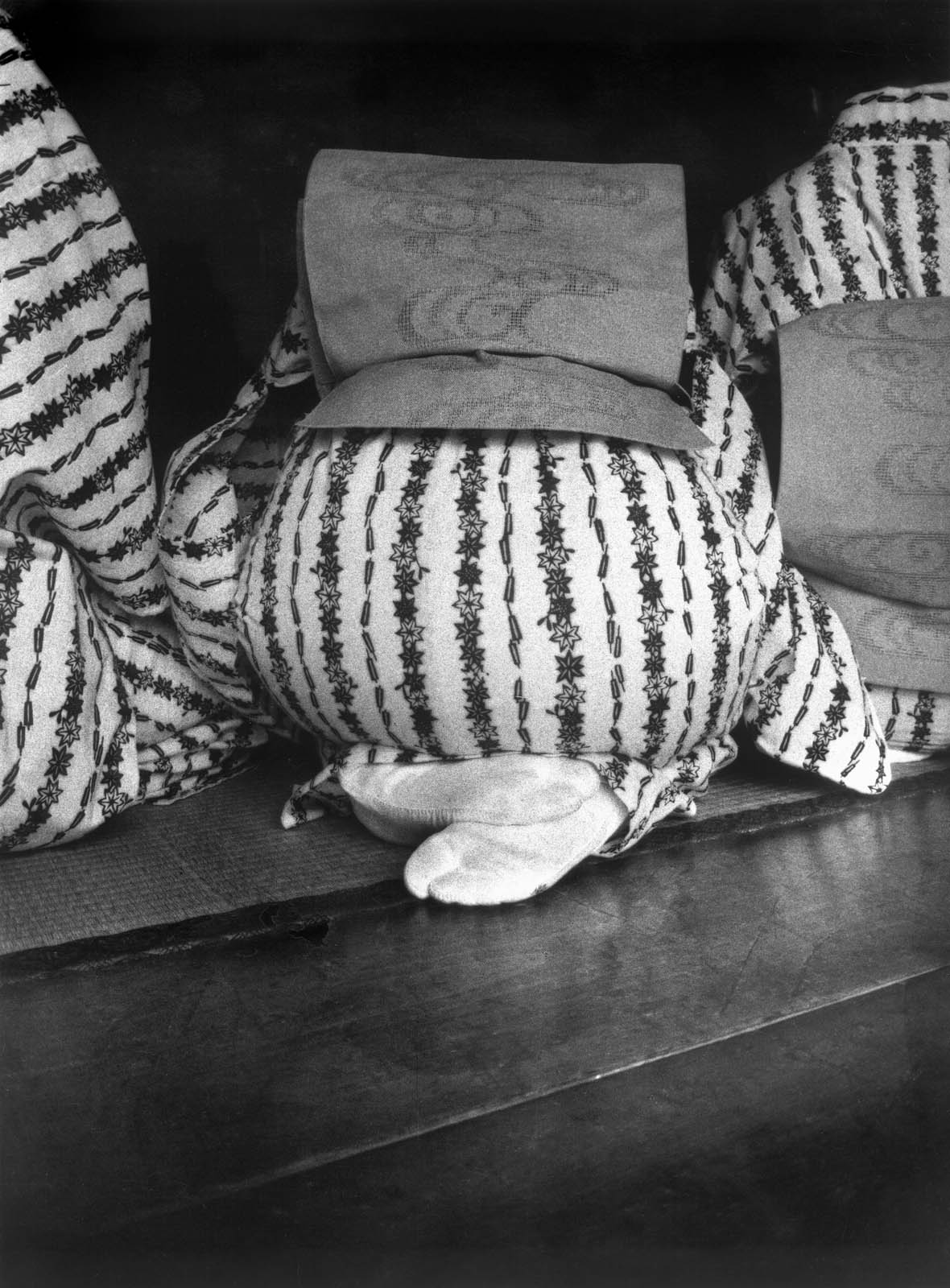
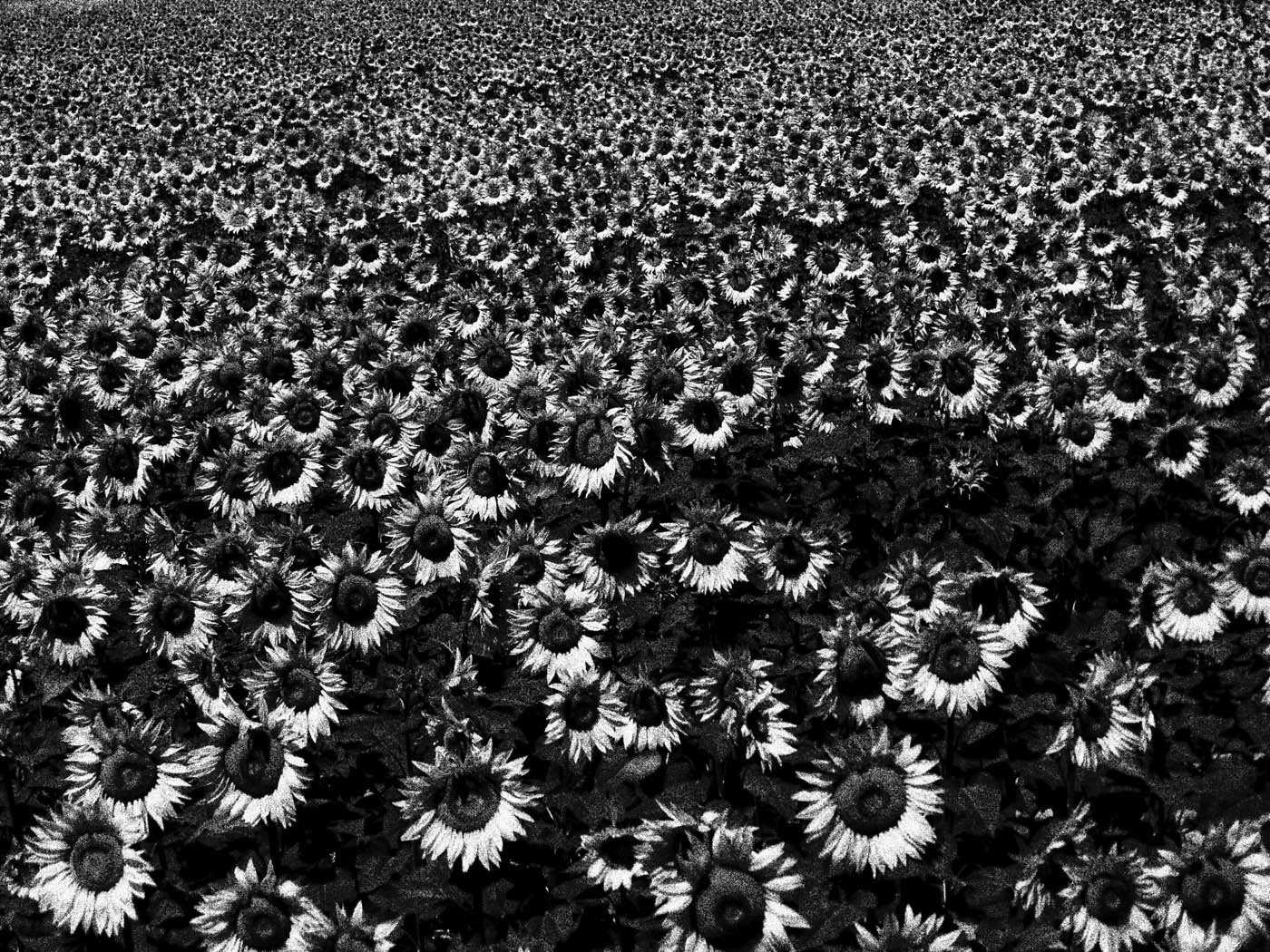
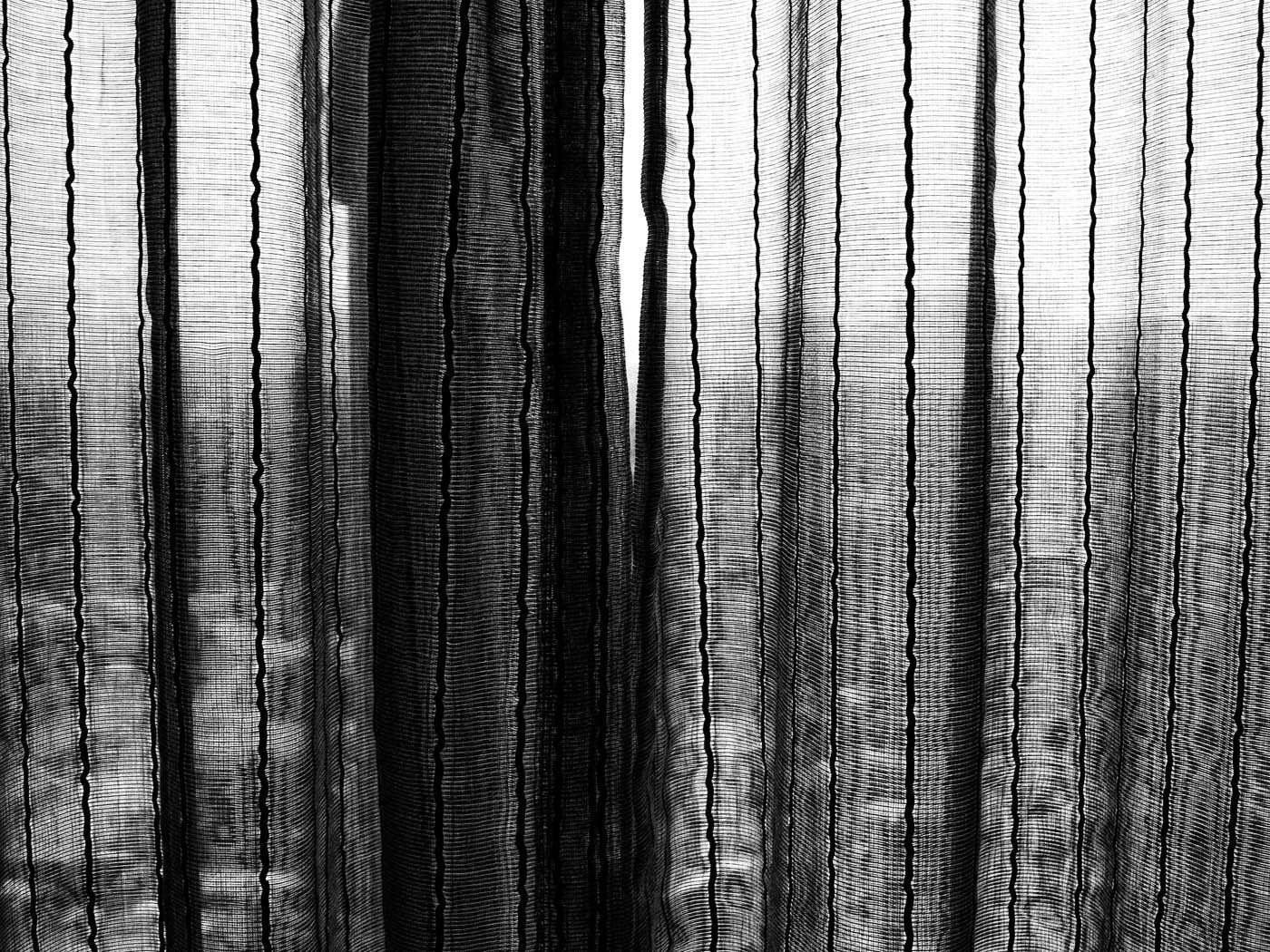
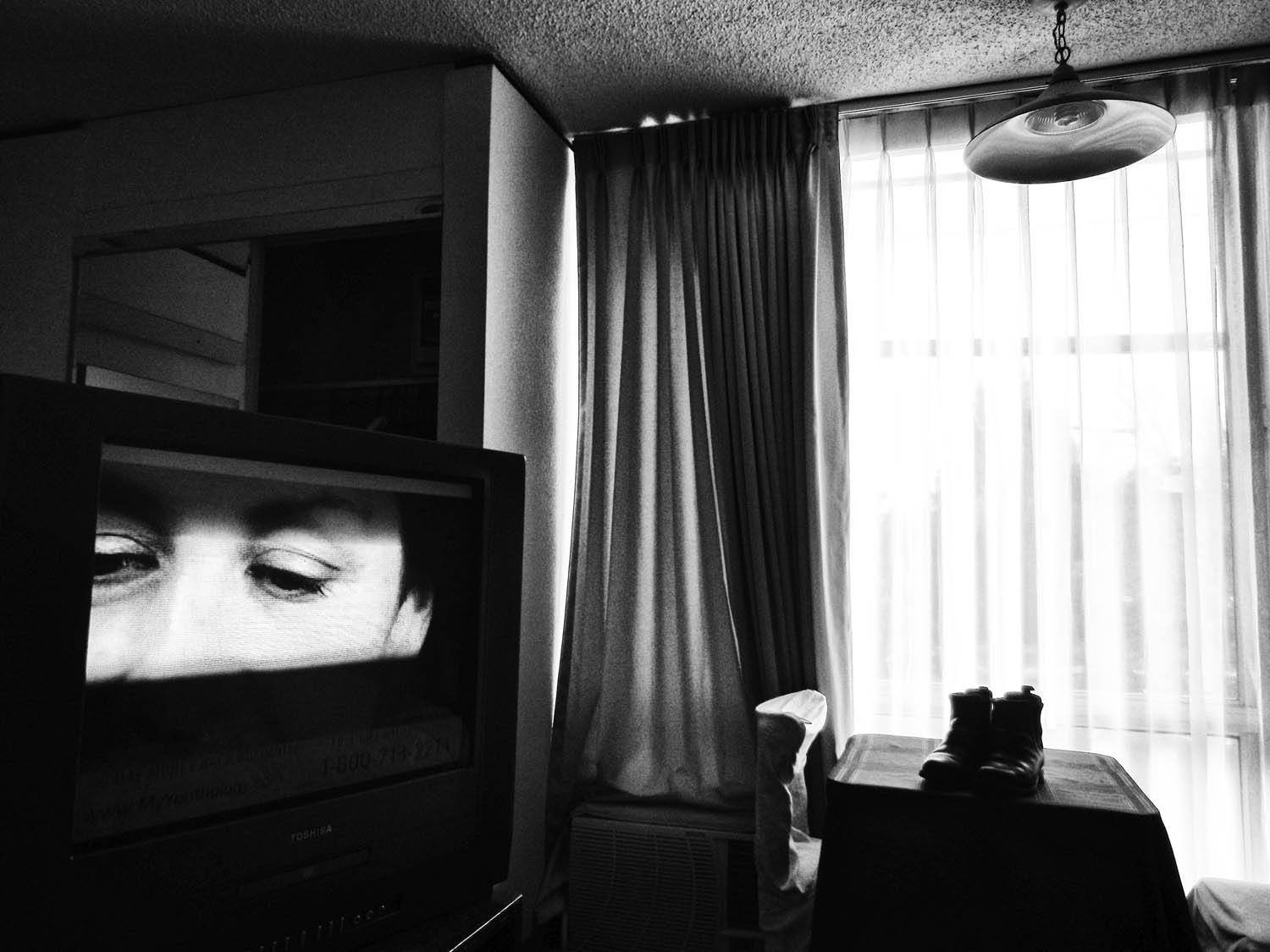
Moriyama’s photographic style is unmistakable. “Renowned for his bold are, bure, boke aesthetic – grainy, blurry and out-of-focus images that defy photographic convention”, Moriyama’s contrasty, slightly high key, sometimes flash photographs of unusual perspectives and intimate glances capture “something that’s mysterious and unknown in everyday life.”

This buying exhibition highlights the quieter, more reflective moments of Moriyama’s work. I know only too well what sensitivity and envisioning it takes to picture these intimacies of everyday life … almost inconsequential until they are bought into the photographer’s consciousness in a resolved manner (previsualisation), then through negative and print and eye into the consciousness of the viewer.

The images are memorable and unforgettable. Buy one!

Dr Marcus Bunyan


Many thankx to The Photographers’ Gallery for allowing me to publish the photographs in the posting. Please click on the photographs for a larger version of the image.


“It may look like I’m just pointing the camera at what’s in front of me. But I’m trying to photograph what people see, but don’t notice – something that’s mysterious and unknown in everyday life.”


Daido Moriyama


Daido Moriyama (Japanese, b. 1938) 'Untitled' 1968 From 'Japan: A Photo Theater'


Daido Moriyama (Japanese, b. 1938)
Untitled
1968
From Japan: A Photo Theater
Gelatin silver print
14 x 17″
Courtesy of the Daido Moriyama Photo Foundation and The Photographers’ Gallery


Daido Moriyama (Japanese, b. 1938) 'Camera Mainichi, Hiroshima' 1974


Daido Moriyama (Japanese, b. 1938)
Camera Mainichi, Hiroshima
1974
Gelatin silver print
11 x 14″
Courtesy of the Daido Moriyama Photo Foundation and The Photographers’ Gallery


Daido Moriyama (Japanese, b. 1938) 'Hokkaido' 1978


Daido Moriyama (Japanese, b. 1938)
Hokkaido
1978
Gelatin silver print
10 x 12″
Courtesy of the Daido Moriyama Photo Foundation and The Photographers’ Gallery


Daido Moriyama (Japanese, b. 1938) 'Hokkaido' 1978


Daido Moriyama (Japanese, b. 1938)
Hokkaido
1978
Gelatin silver print
11 x 14″
Courtesy of the Daido Moriyama Photo Foundation and The Photographers’ Gallery


Daido Moriyama (Japanese, b. 1938)
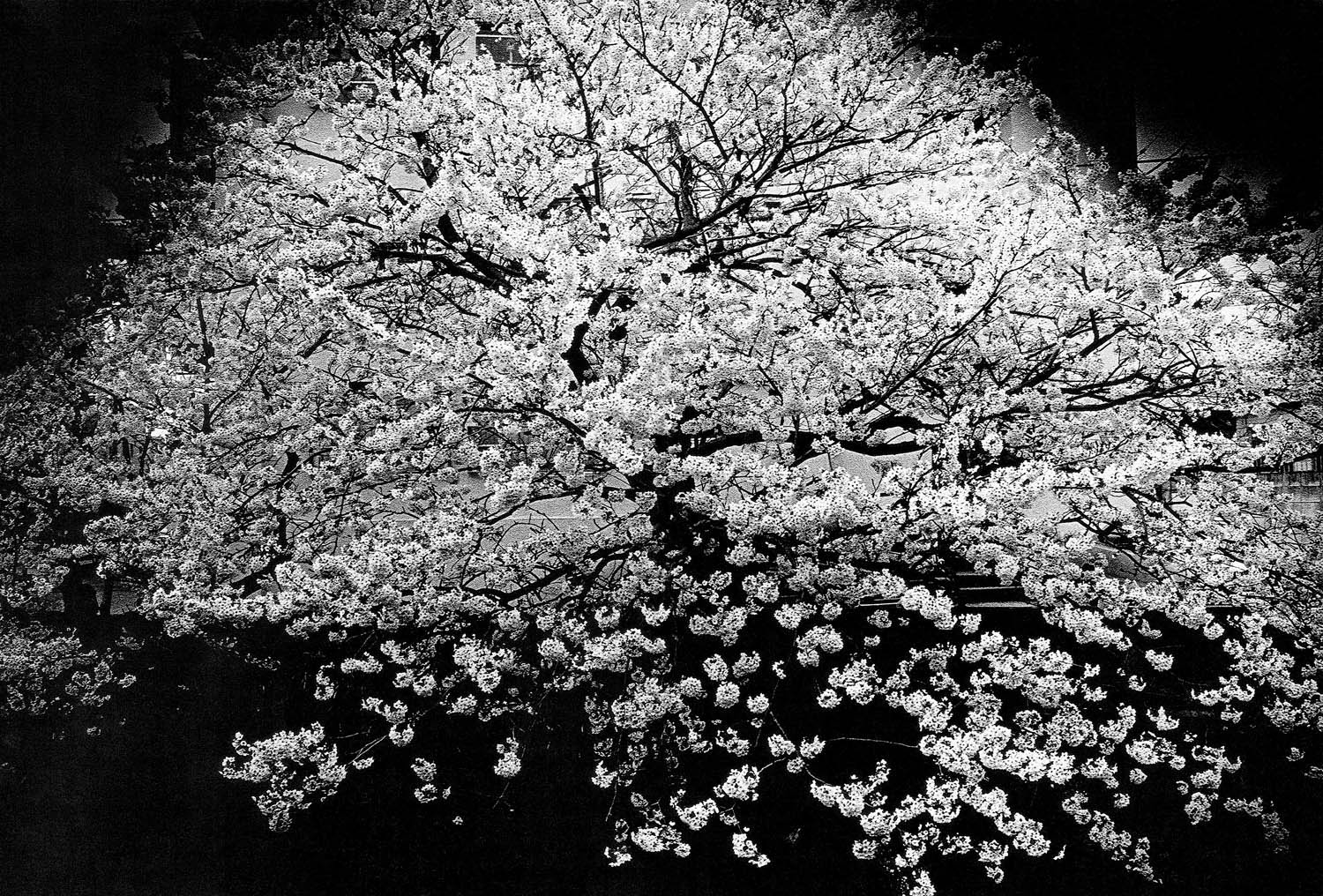
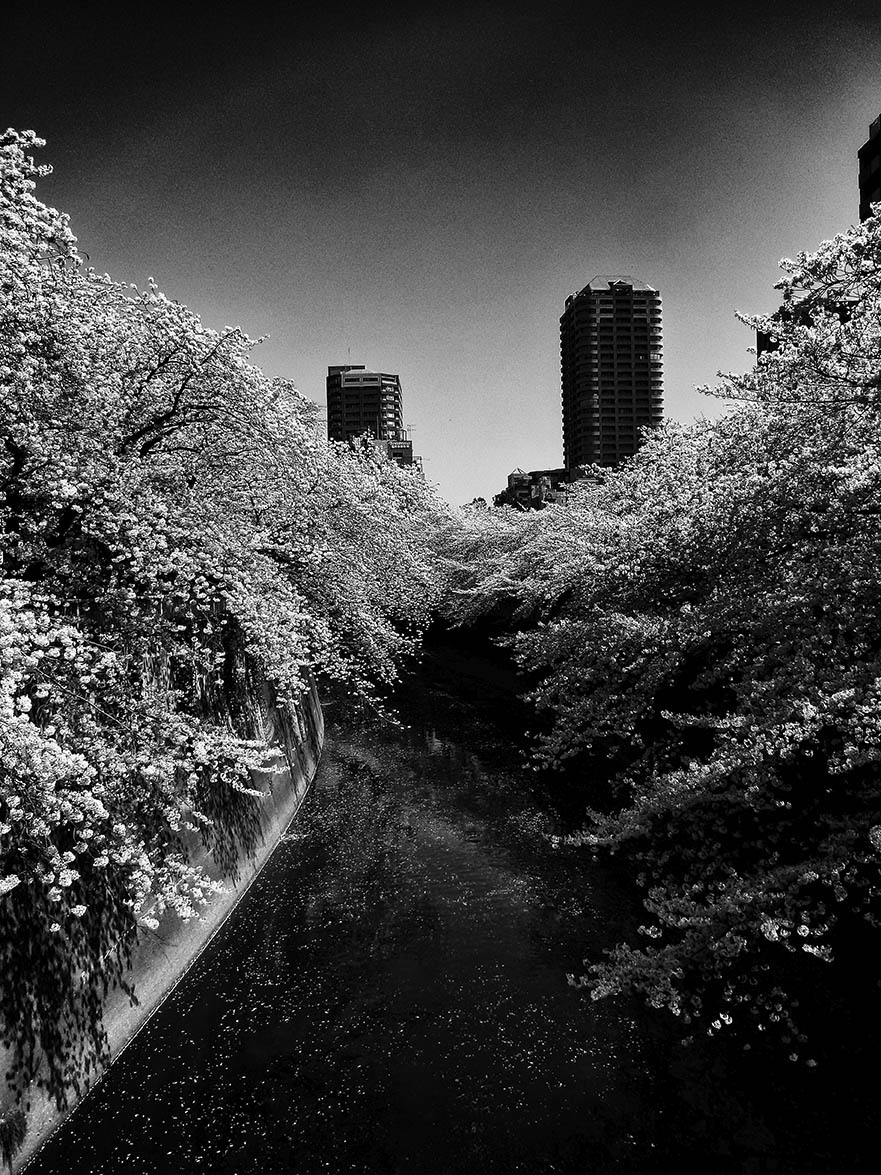
'Cherry Blossom, Zushi, Kanagawa' 1982


Daido Moriyama (Japanese, b. 1938)
Cherry Blossom, Zushi, Kanagawa
1982
Gelatin silver print
18 x 22″
Courtesy of the Daido Moriyama Photo Foundation and The Photographers’ Gallery


Daido Moriyama (Japanese, b. 1938) 'How to Make Beautiful Photos' 1987
Screenshot


Daido Moriyama (Japanese, b. 1938)
How to Make Beautiful Photos
1987
Gelatin silver print
11 x 14″
Courtesy of the Daido Moriyama Photo Foundation and The Photographers’ Gallery


Born in Osaka, Japan, in 1938, Daido Moriyama’s celebrated career has been shaped by constant reinvention and experimentation. Over six decades, he has become renowned for his bold are, bure, boke aesthetic – grainy, blurry and out-of-focus images that defy photographic convention. A pivotal figure in the radical Provoke movement of the late 1960s, Moriyama redefined photography, unbound by traditional constraints, capturing fragments of reality that “cannot be expressed in language as it is.”

Moriyama is best known for recording the freneticism and anonymity of life in the city, Encounters reveals his lesser-explored ability to show beauty and stillness in the everyday. Softly lit city streets, rendered in grainy textures, evoke a surreal and poetic visual language that embraces imperfection. Fleeting moments of calm and intimacy are paired with whimsical glimpses of animals and delicate vignettes of nature – blossoms, snowflakes and quiet, weathered corners of urban sprawl – revealing an unexpected tenderness amongst his raw and gritty aesthetic.

In recent years, Moriyama has described his work as a visual diary, shooting pictures daily to document the ever-changing landscape of urban life. His enduring question- “What is photography?”-remains an open one which continues to probe the medium’s position between the objective and the subjective, the illusory and the real.

Text from The Photographers’ Gallery website


Daido Moriyama (Japanese, b. 1938) 'Japan Photo Theater' 1968


Daido Moriyama (Japanese, b. 1938)
Japan Photo Theater
1968
Gelatin silver print
11 x 14″
Courtesy of the Daido Moriyama Photo Foundation and The Photographers’ Gallery


Daido Moriyama (Japanese, b. 1938) 'Asahi Journal' 1969


Daido Moriyama (Japanese, b. 1938)
Asahi Journal
1969
Gelatin silver print
11 x 14″
Courtesy of the Daido Moriyama Photo Foundation and The Photographers’ Gallery


Daido Moriyama (Japanese, b. 1938) 'A Hunter' 1972


Daido Moriyama (Japanese, b. 1938)
A Hunter
1972
Gelatin silver print
11 x 14″
Courtesy of the Daido Moriyama Photo Foundation and The Photographers’ Gallery


Daido Moriyama (Japanese, b. 1938) 'Shinjuku' 2002


Daido Moriyama (Japanese, b. 1938)
Shinjuku
2002
Gelatin silver print
10 x 12″
Courtesy of the Daido Moriyama Photo Foundation and The Photographers’ Gallery


The Print Sales Gallery at The Photographers’ Gallery will be showing a gentler side of the iconic Japanese photographer Daido Moriyama’s work this Spring. Following 2023’s major retrospective at The Photographers’ Gallery, which offered an in-depth exploration into his groundbreaking career, Daido Moriyama: Encounters takes a more intimate approach. Focusing on a smaller selection of photographs, this selling exhibition highlights the quieter, more reflective moments of Moriyama’s work. “It may look like I’m just pointing the camera at what’s in front of me. But I’m trying to photograph what people see, but don’t notice – something that’s mysterious and unknown in everyday life.”

Born in Osaka, Japan, in 1938, Daido Moriyama’s celebrated career has been shaped by constant reinvention and experimentation. Over six decades, he has become renowned for his bold are, bure, boke aesthetic – grainy, blurry and out-of-focus images that defy photographic convention. A pivotal figure in the radical Provoke movement of the late 1960s, Moriyama redefined photography, unbound by traditional constraints, capturing fragments of reality that “cannot be expressed in language as it is.”

Moriyama is best known for recording the freneticism and anonymity of life in the city, Encounters reveals his lesser-explored ability to show beauty and stillness in the everyday. Softly lit city streets rendered in grainy texture evoke a surreal and poetic visual language that embraces imperfection. Fleeting moments of calm and intimacy paired with whimsical glimpses of animals and delicate vignettes of nature – blossoms, snowflakes and quiet, weathered corners of urban sprawl – reveal an unexpected tenderness amongst his usual raw and gritty aesthetic.

This selling exhibition marks the Print Sales Gallery’s new representation of Daido Moriyama. All prints on show and from Moriyama’s archive are available to buy, in a range of sizes. Prices start at £1,200 + VAT. All profits from Print Sales support The Photographers’ Gallery’s public programme.

Print Sales at The Photographers’ Gallery

Print Sales at The Photographers’ Gallery is a dedicated space for discovering and buying fine-art photographic prints, with all proceeds supporting The Photographers’ Gallery public programme. Representing a roster of international photographers – from established names to emerging talent – a curated series of selling exhibitions each year brings you the best of both sought-after classics and brand-new contemporary work.

Press release from The Photographers’ Gallery


Daido Moriyama (Japanese, b. 1938) 'Untitled', from 'Record No. 14' 2010


Daido Moriyama (Japanese, b. 1938)
Untitled, from Record No. 14
2010
Gelatin silver print
18 x 22″
Courtesy of the Daido Moriyama Photo Foundation and The Photographers’ Gallery


Daido Moriyama (Japanese, b. 1938) 'Untitled', from 'Record No. 18' 2011


Daido Moriyama (Japanese, b. 1938)
Untitled, from Record No. 18
2011
Gelatin silver print
14 x 17″
Courtesy of the Daido Moriyama Photo Foundation and The Photographers’ Gallery


Daido Moriyama (Japanese, b. 1938) 'Untitled', from 'Record No. 22' 2012


Daido Moriyama (Japanese, b. 1938)
Untitled, from Record No. 22
2012
Gelatin silver print
Courtesy of the Daido Moriyama Photo Foundation and The Photographers’ Gallery


Daido Moriyama (Japanese, b. 1938) 'Untitled' 2017


Daido Moriyama (Japanese, b. 1938)
Untitled, from K
2017
Gelatin silver print
14 x 17″
Courtesy of the Daido Moriyama Photo Foundation and The Photographers’ Gallery


Daido Moriyama (Japanese, b. 1938) 'Untitled', from 'K' 2017


Daido Moriyama (Japanese, b. 1938)
Untitled, from K
2017
Gelatin silver print
10 x 12″
Courtesy of the Daido Moriyama Photo Foundation and The Photographers’ Gallery


Daido Moriyama (Japanese, b. 1938) 'Untitled', from 'Record No. 35' 2017


Daido Moriyama (Japanese, b. 1938)
Untitled, from Record No. 35
2017
Gelatin silver print
10 x 12″
Courtesy of the Daido Moriyama Photo Foundation and The Photographers’ Gallery


Daido Moriyama (Japanese, b. 1938) 'Untitled', from 'Ango' 2017


Daido Moriyama (Japanese, b. 1938)
Untitled, from Ango
2017
Gelatin silver print
23 x 35″
Courtesy of the Daido Moriyama Photo Foundation and The Photographers’ Gallery


The Photographers’ Gallery
16-18 Ramillies Street
London
W1F 7LW

Opening hours:
Mon – Wed: 10.00 – 18.00
Thursday – Friday: 10.00 – 20.00
Saturday: 10.00 – 18.00
Sunday: 11.00 – 18.00
The Photographers’ Gallery website

LIKE ART BLART ON FACEBOOK

Back to top


Exhibition: ‘Deborah Turbeville: Photocollage’ at The Photographers’ Gallery, London

Exhibition dates: 9th October, 2024 – 23rd February, 2025

Curators: Nathalie Herschdorfer, Director of Photo Elysée, and Karen McQuaid, Senior Curator at The Photographers’ Gallery.


Deborah Turbeville (American, b. 1932-2013) 'Untitled' Passage Vivienne, Paris, France, November 1980 from the exhibition Deborah Turbeville: Photocollage' at The Photographers' Gallery, London


Deborah Turbeville (American, b. 1932-2013)
Untitled
Passage Vivienne, Paris, France, November 1980
From the series Comme des Garçons
© Deborah Turbeville/MUUS Collection


There are some haunting photographs in this posting on the work of American photographer Deborah Turbeville but unfortunately I can make little comment on her work.

Despite trawling through numerous sites looking at her images – there is not much online – and more importantly having not seen the exhibition, I find that I have no real handle on the photographic series.

A couple of photographs from the Passport, Comme des Garçons, Block Island and Unseen Versailles series, plus a few photocollage which investigate the nature of photography and its fragility in this posting doesn’t allow me to understand the full sweep of her artistic work… which is a great pity.

The only way to really understand and feel Turbeville’s work is to visit The Photographers’ Gallery and immerse yourself in the artist’s world. Unfortunately I cannot do that.

Dr Marcus Bunyan


Many thankx to The Photographers’ Gallery for allowing me to publish the photographs in the posting. Please click on the photographs for a larger version of the image.


“When I’m making photographs, I think of films”


Deborah Turbeville, 1985


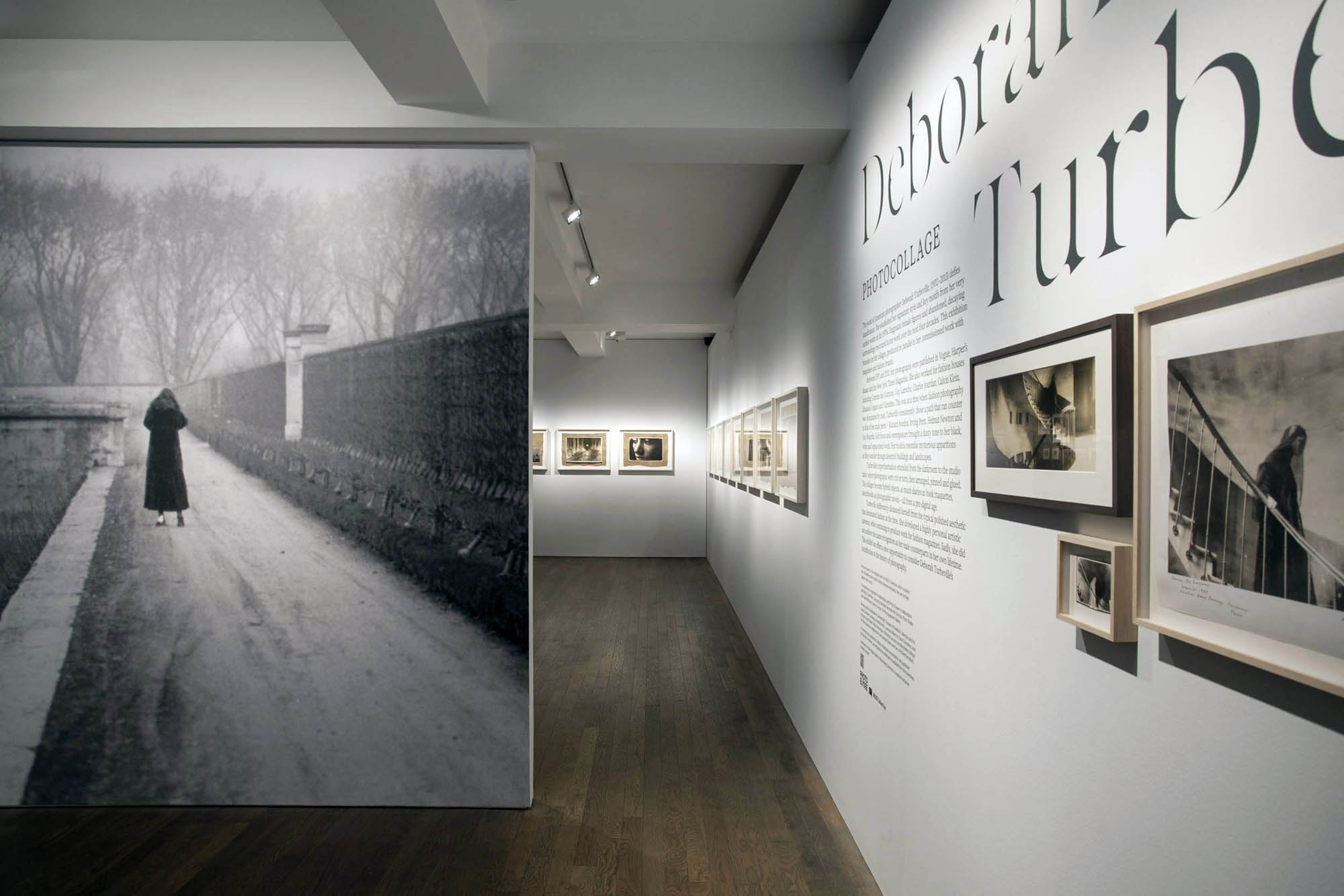
Deborah Turbeville: Photocollage highlights the work of a truly innovative, American fashion photographer, Deborah Turbeville (1932-2013) who transformed fashion imagery into avant-garde art. Her signature dreamlike and melancholic style became recognisable with her earliest works in the 1970s: enigmatic female figures, cloudy skies, wintry nature and abandoned, decaying surroundings. She deliberately distanced herself from the typical glamourous, polished aesthetic that dominated fashion at the time.


An interview on the exhibition Deborah Turbeville: Photocollage with Nathalie Herschdorfer, Exhibition Curator, and Karen McQuaid, Senior Curator, The Photographers’ Gallery.


Deborah Turbeville (American, b. 1932-2013) 'Walking down Passage Vivienne' (Escalier dans Passage Vivienne) Paris, France, November 1980  from the exhibition Deborah Turbeville: Photocollage' at The Photographers' Gallery, London


Deborah Turbeville (American, 1932-2013)
Walking down Passage Vivienne (Escalier dans Passage Vivienne)
Paris, France, November 1980
From the series Comme des Garçons
© Deborah Turbeville/MUUS Collection


Deborah Turbeville’s signature dreamlike and melancholic style became recognisable with her earliest works in the 1970s: enigmatic female figures, cloudy skies, wintry nature and abandoned, decaying surroundings. She deliberately distanced herself from the typical glamourous, polished aesthetic that dominated fashion at the time.

Deborah Turbeville: Photocollage presents Turbeville’s trailblazing photographic explorations, from fashion photos to her very personal work. Bringing together unique pieces, the exhibition reveals Turbeville’s highly personal artistic universe, which has been credited with transforming fashion imagery into avant-garde art.

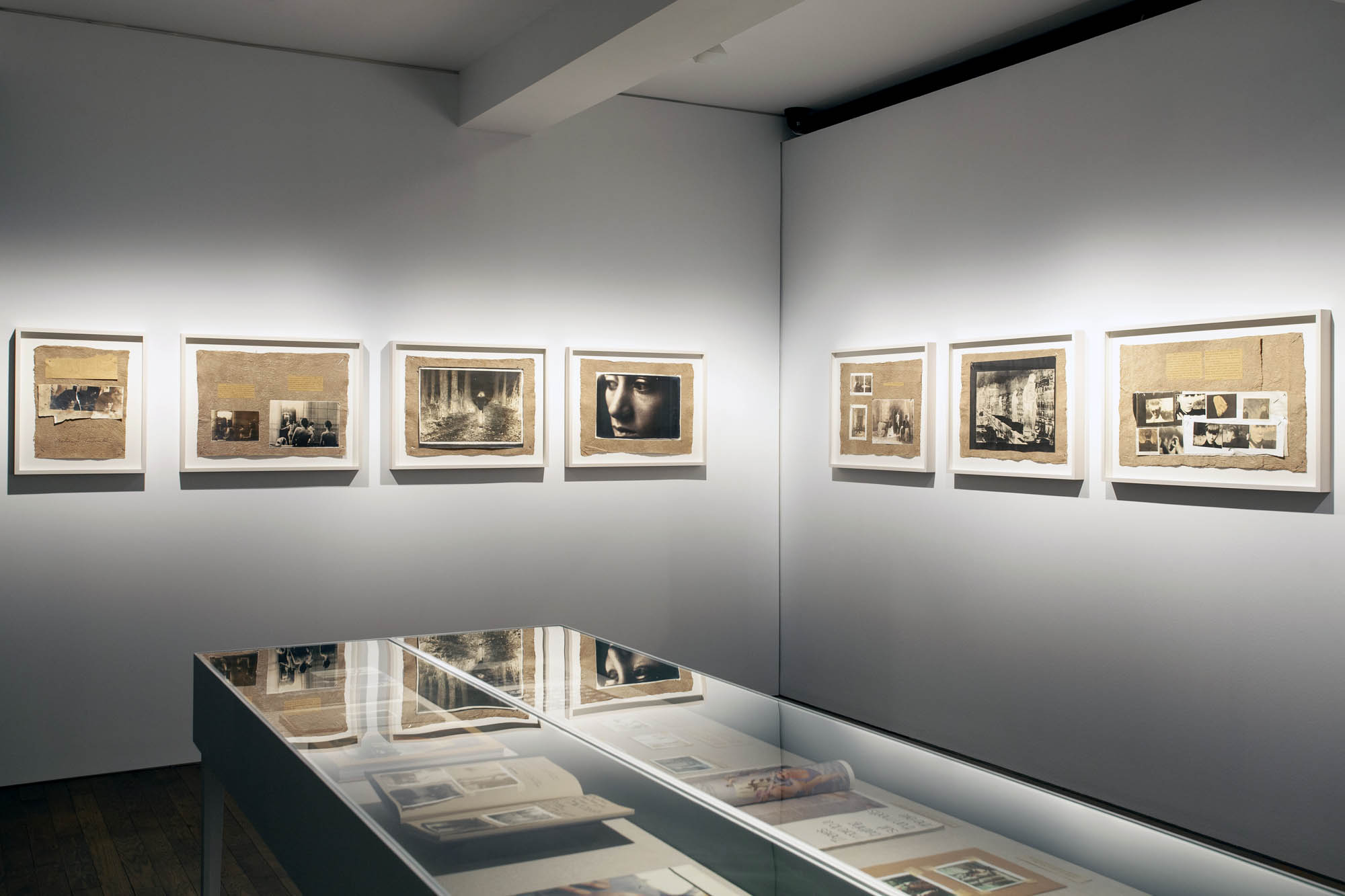
She experimented with the developing process, from the darkroom to the studio table. She ripped, cut and tore her photographs; manipulated, pinned and glued them together to create unique hybrid objects. Deborah Turbeville: Photocollage is a new appreciation of Turbeville’s ground-breaking contribution to the history of photography.

Text from The Photographers’ Gallery website


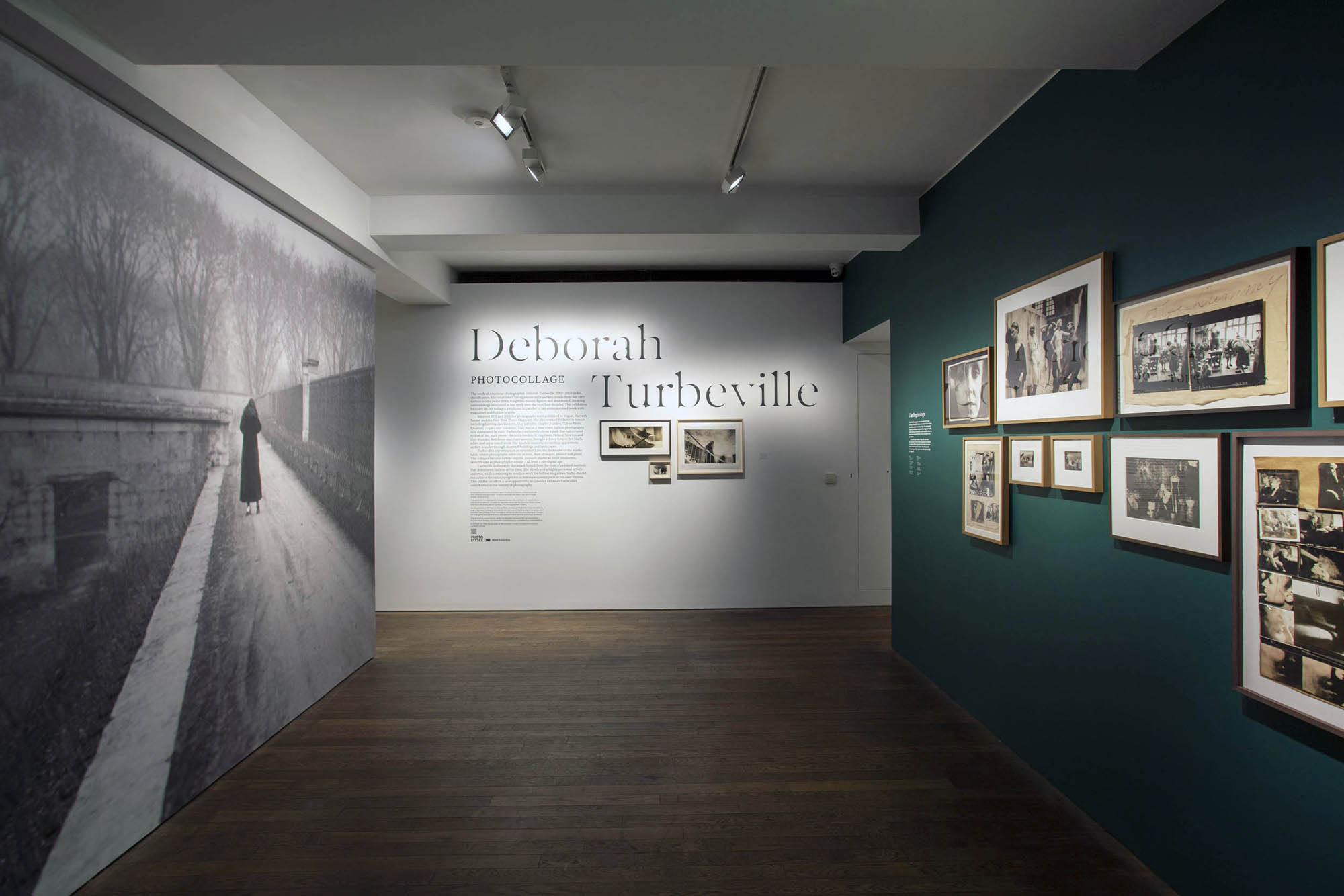
Installation view of the exhibition 'Deborah Turbeville: Photocollage' at The Photographers' Gallery, London

Installation view of the exhibition 'Deborah Turbeville: Photocollage' at The Photographers' Gallery, London

Installation view of the exhibition 'Deborah Turbeville: Photocollage' at The Photographers' Gallery, London

Installation view of the exhibition 'Deborah Turbeville: Photocollage' at The Photographers' Gallery, London


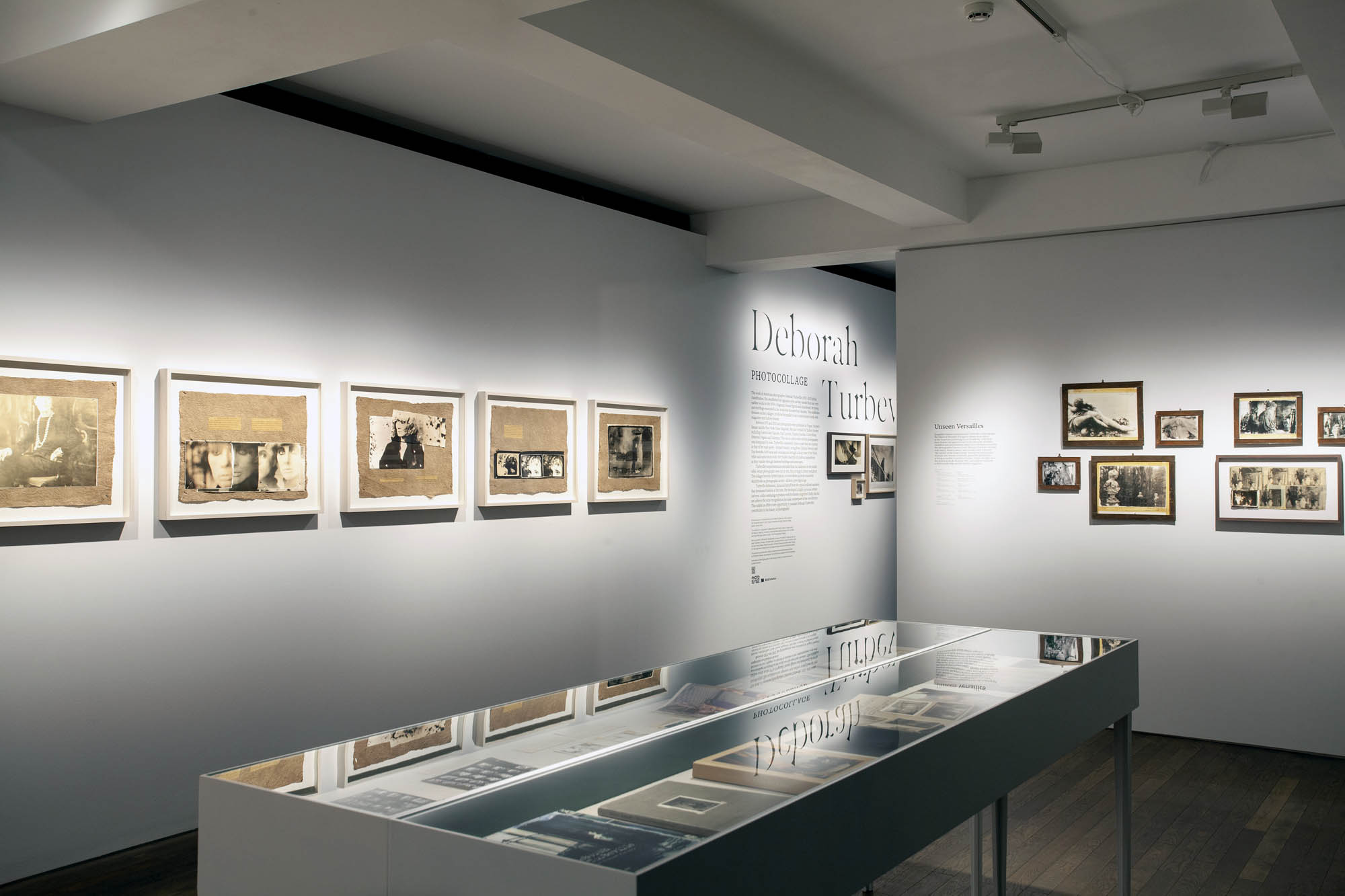
Unseen Versailles

Jacqueline Onassis commissioned Turbeville to photograph the Palace of Versailles during her tenure as an editor at the American publishing house Doubleday. With help from Onassis she gained access to the labyrinth of hidden chambers and antechambers which were off limits to tourists. She photographed barren rooms, Baroque furniture covered with sheets, broken statues, and curtains thick with dust. The curator of the estate initially blocked the introduction of props, but Onassis eventually gained her permission to bring in models in period costumes. Unseen Versailles won the American Book Award in 1982 and enabled Turbeville to find a readership outside fashion magazines.

Wall text from the exhibition


Installation view of the exhibition 'Deborah Turbeville: Photocollage' at The Photographers' Gallery, London

Installation view of the exhibition 'Deborah Turbeville: Photocollage' at The Photographers' Gallery, London

Installation view of the exhibition 'Deborah Turbeville: Photocollage' at The Photographers' Gallery, London

Installation view of the exhibition 'Deborah Turbeville: Photocollage' at The Photographers' Gallery, London

Installation view of the exhibition 'Deborah Turbeville: Photocollage' at The Photographers' Gallery, London


Installation views of the exhibition Deborah Turbeville: Photocollage at The Photographers’ Gallery, London


Deborah Turbeville: Photocollage at The Photographers’ Gallery, London (until 23 February 2025), celebrates Turbeville’s trailblazing photographic explorations, from fashion photos to her very personal work. To coincide with the exhibition, we’re looking at some of her photographic series in more detail, starting with the Passport series!

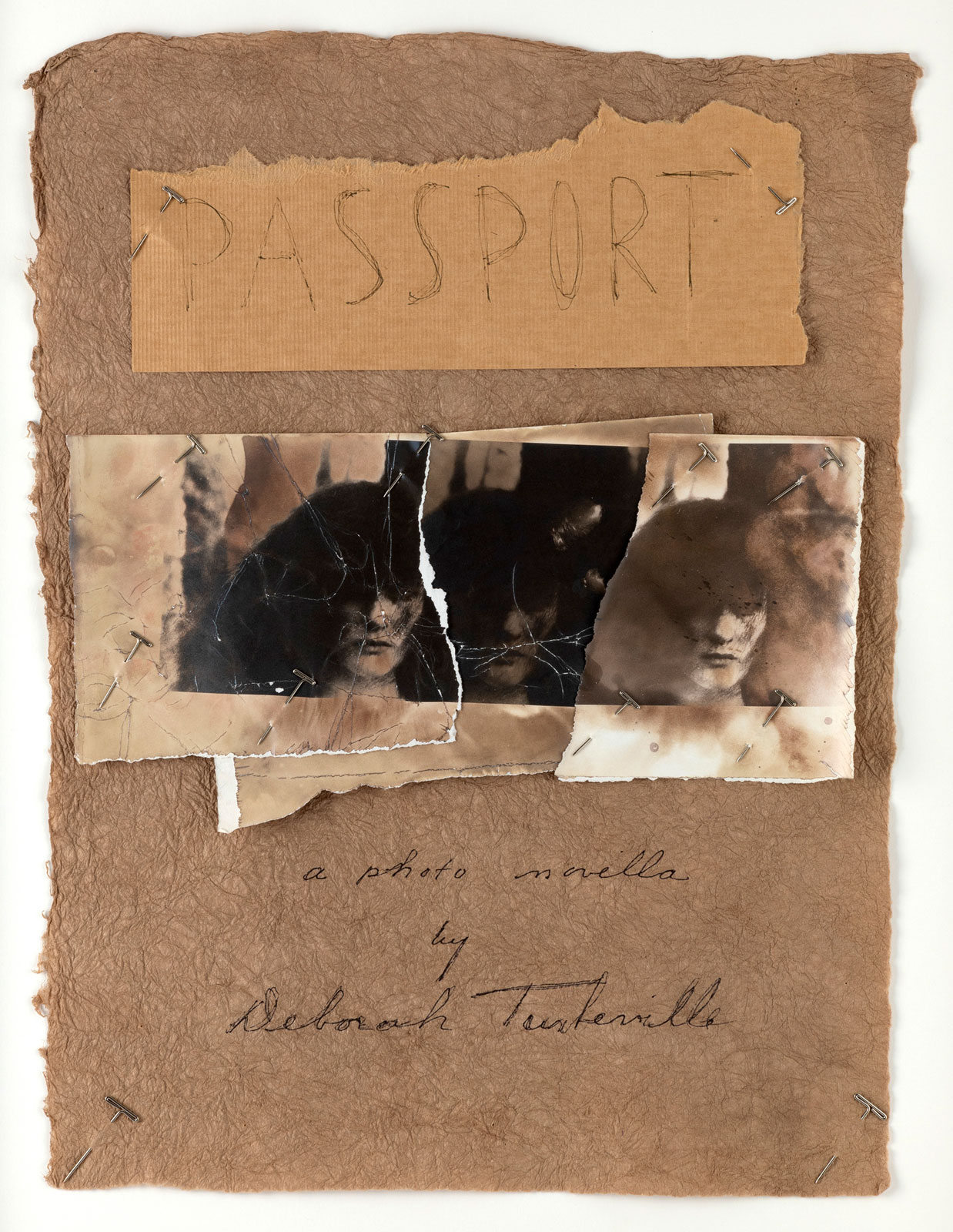
Turbeville’s Passport series of collages, which accompanied a novella she wrote with the same name, demonstrates her very cinematic, narrative approach to photography.

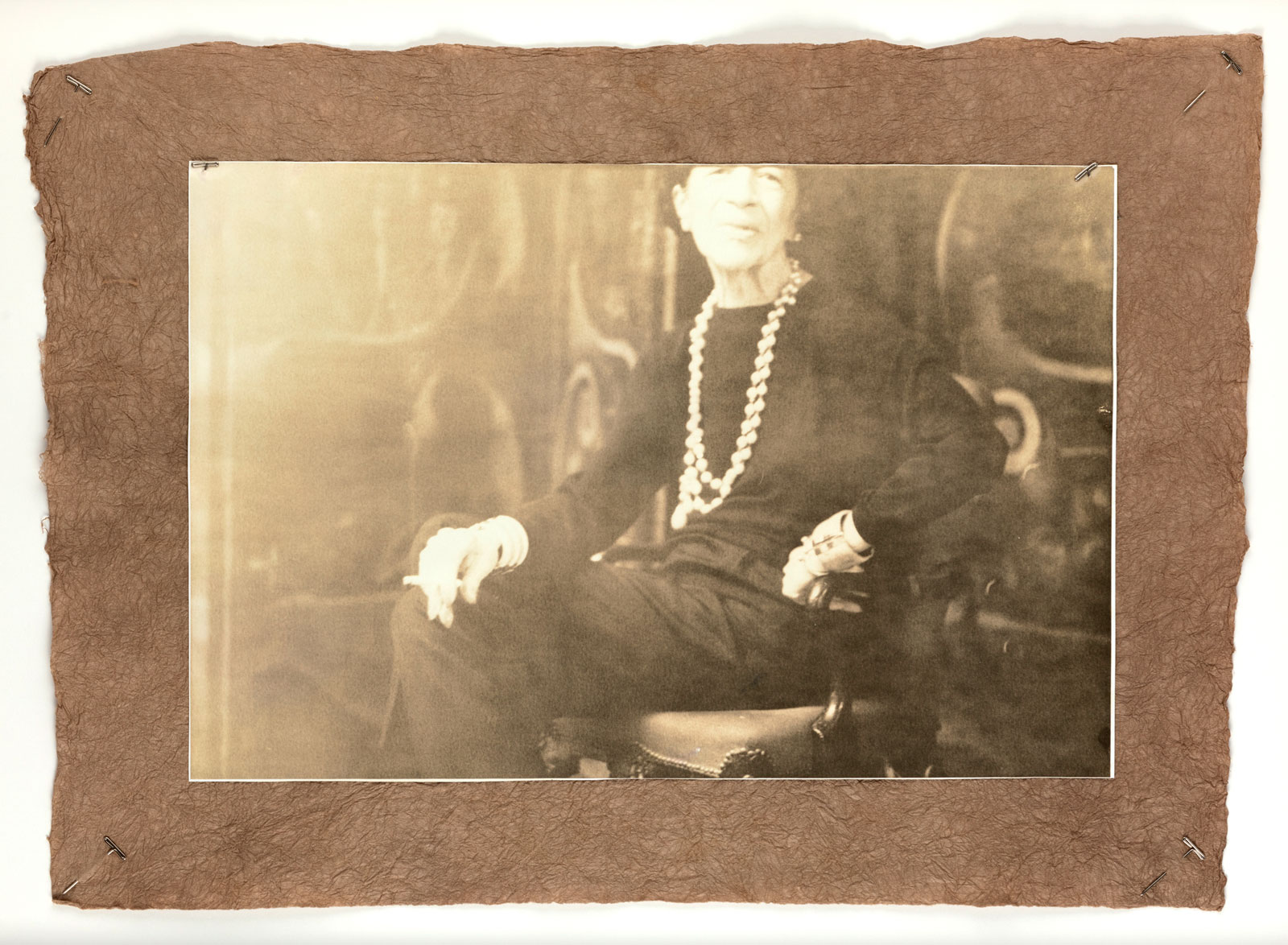
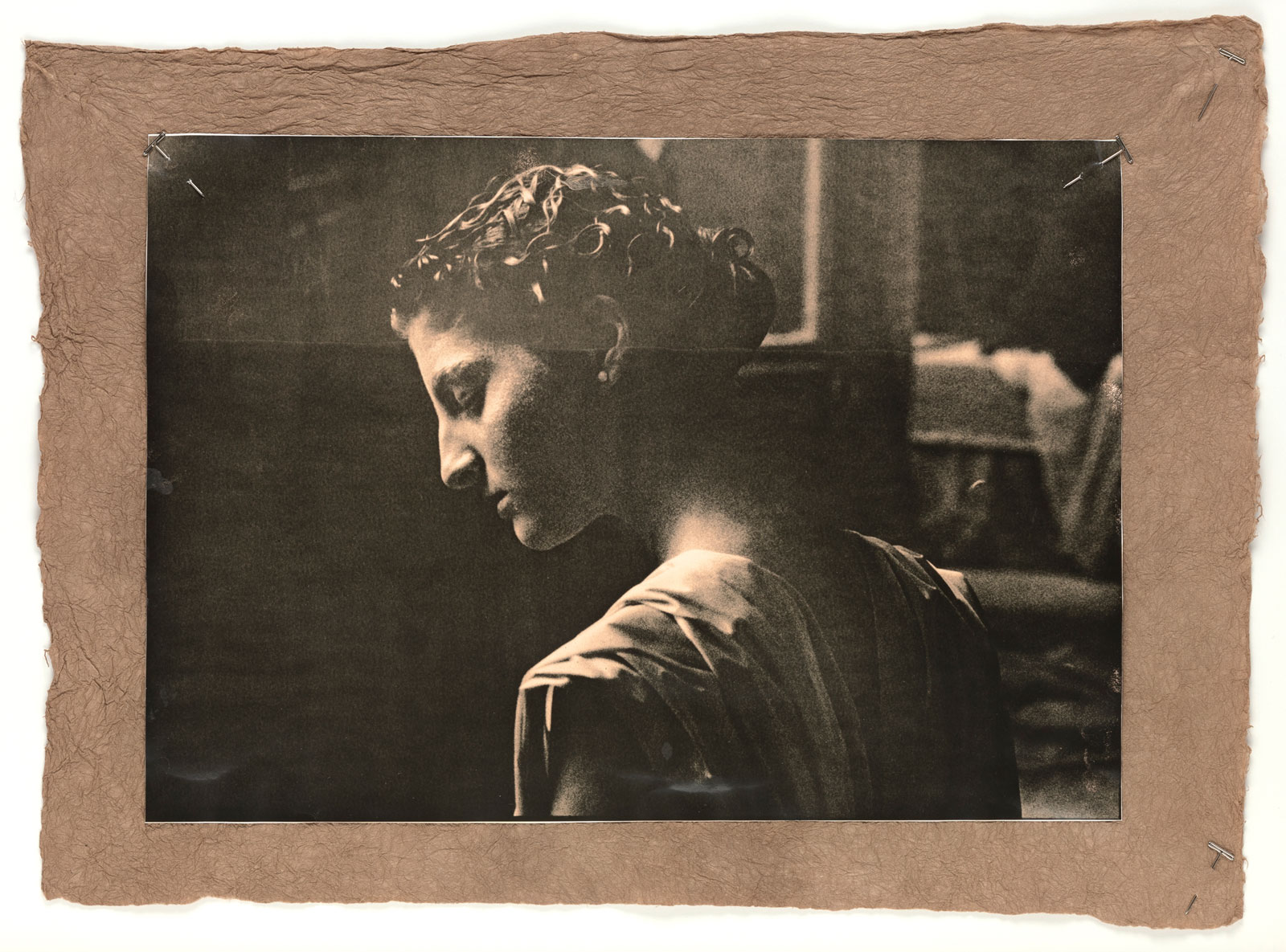
Fixed to wrinkled brown paper with unusually large T-pins, the series heavily features portrait photographs. The gelatin silver prints all have slightly varying hues of black and white; their torn edges overlap, each revealing a different fragment. The torn sections of women’s faces stand out against grainy backgrounds, like a ghostly white sky. Turbeville selected images, largely from her archives, showing repeated shots positioned together, repurposing her work to create new experimental compositions that felt cinematic in style. Alongside the images, fragments of her unpublished novella are cut out and pasted, so that the series can be read narratively as well as visually.

Unlike many of her contemporaries, Turbeville considered photography to be more than just a means of pictorial representation. Curious about the materials and nature of photography, she was inescapably interested in its fragility. Her photocollages suggested new possibilities for photography, which had, until then, cleaved very closely to reality. Collage became a form of manual work which allowed her to create three-dimensional objects and a chance to gather up her own images and give them new depth. She embraced the visible imperfections in a handmade, narrative style that gives her work a unique stylistic voice.

Text from The Photographers’ Gallery Instagram page


Deborah Turbeville (American, 1932-2013) 'Maquillage' 1975  from the exhibition Deborah Turbeville: Photocollage' at The Photographers' Gallery, London


Deborah Turbeville (American, 1932-2013)
Maquillage
1975
© Deborah Turbeville/MUUS Collection


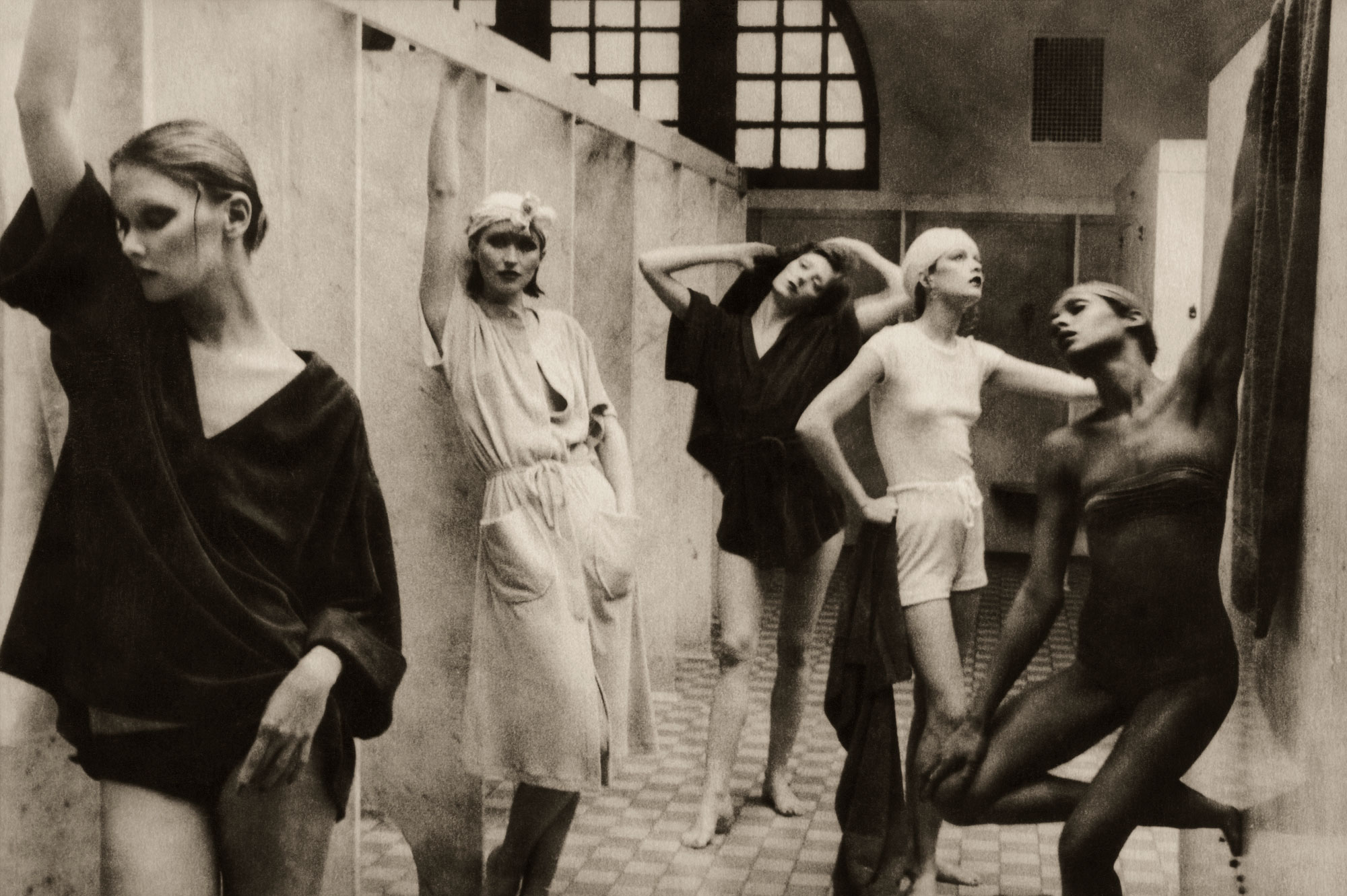
Deborah Turbeville (American, 1932-2013) 'Bathhouse, New York' New York, 1975  from the exhibition Deborah Turbeville: Photocollage' at The Photographers' Gallery, London


Deborah Turbeville (American, 1932-2013)
Bathhouse, New York
New York, 1975
From the series Bathhouse
© Deborah Turbeville/MUUS Collection


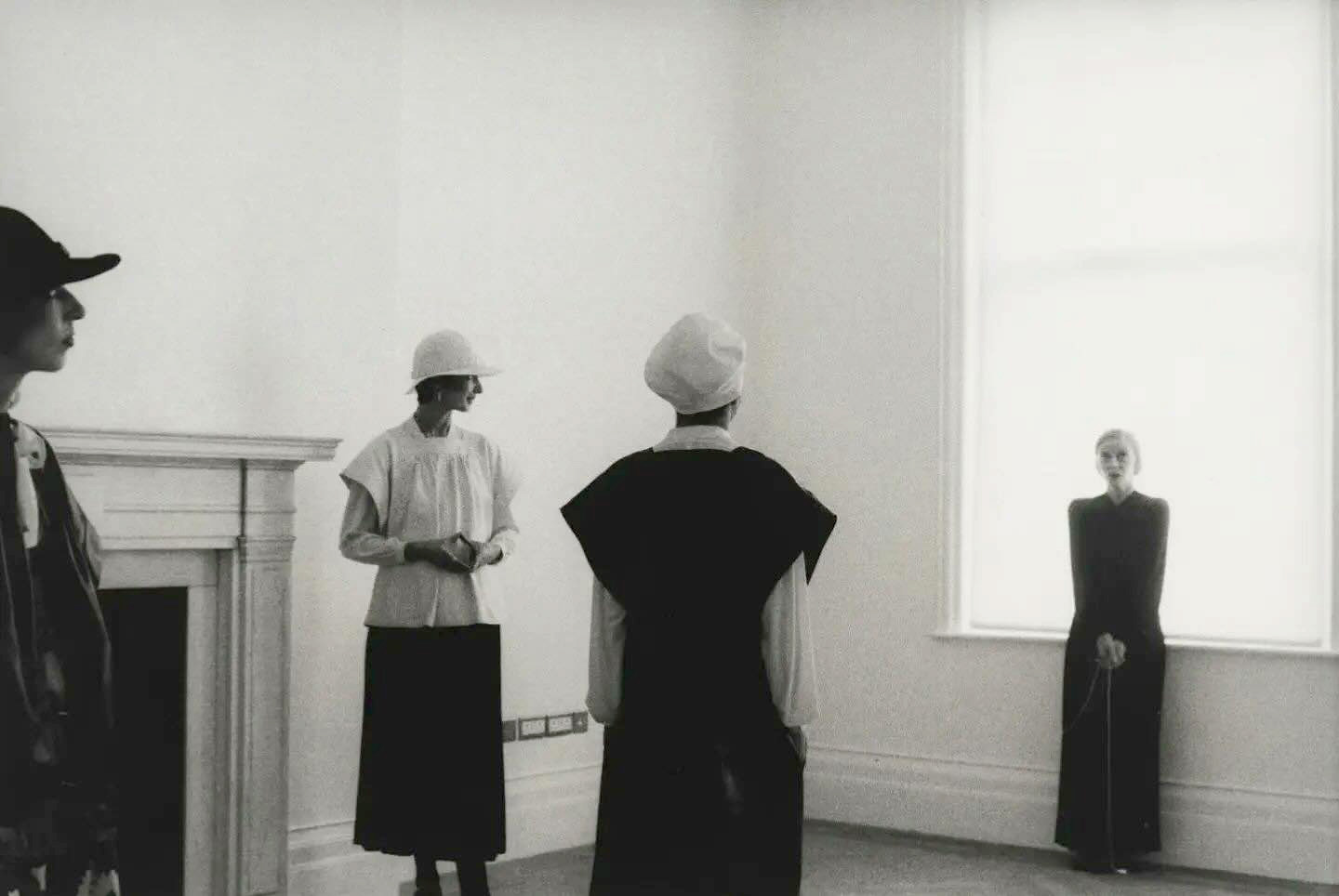
Deborah Turbeville (American, 1932-2013) 'Jean Muir and Three Unknown Models' 1975  from the exhibition Deborah Turbeville: Photocollage' at The Photographers' Gallery, London


Deborah Turbeville (American, 1932-2013)
Jean Muir and Three Unknown Models
1975
© The Estate of Deborah Turbeville


For her second spread in Vogue Magazine, Deborah Turbeville photographed designers with their models and muses in a February 1975 editorial titled “European Fashion: The Movers”. Here, she captured the British doyenne of dressmaking, Jean Muir, with her friends modelling her designs.


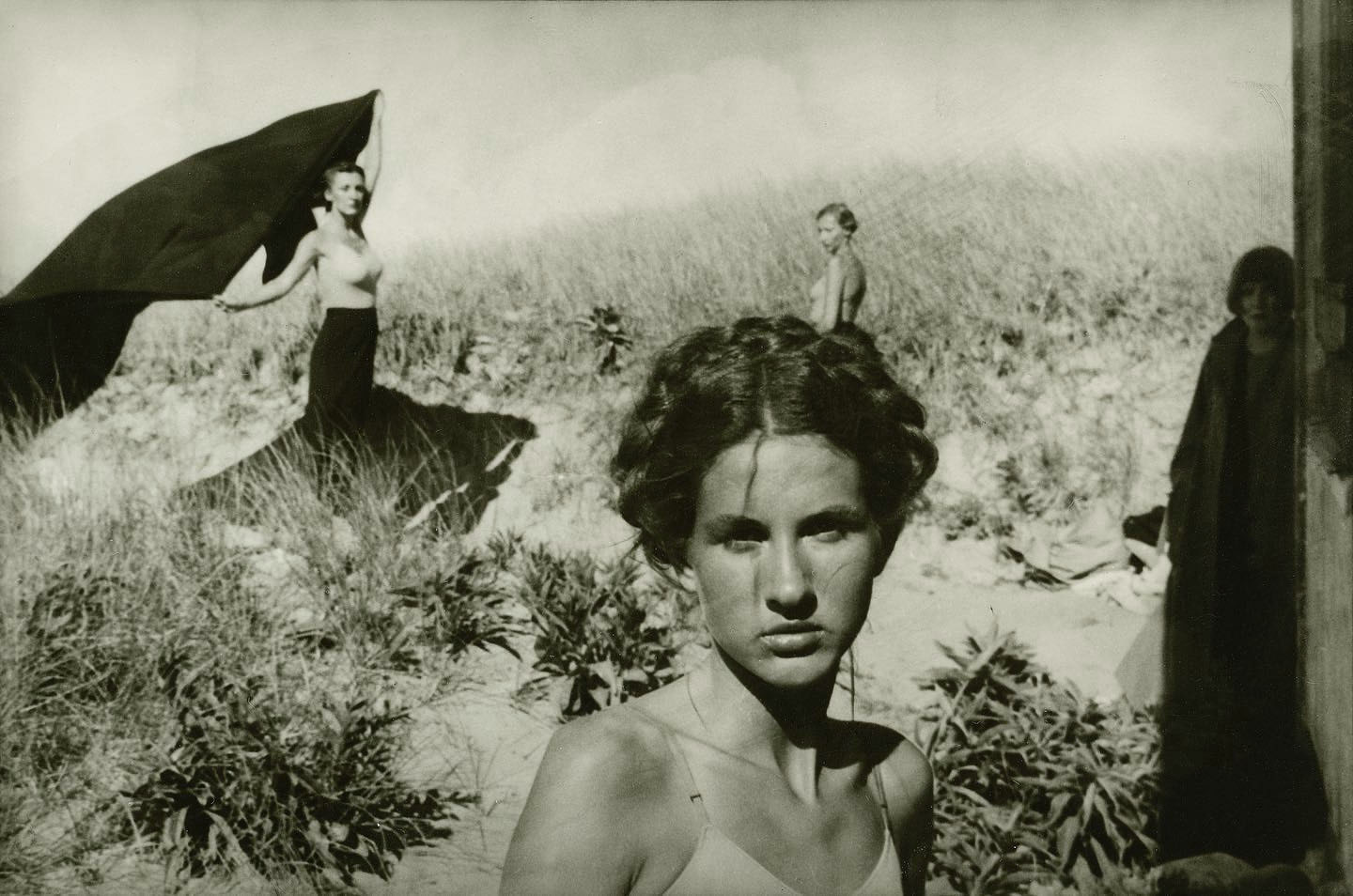
Deborah Turbeville (American, 1932-2013) 'Untitled' Block Island, Rhode Island, 1976  from the exhibition Deborah Turbeville: Photocollage' at The Photographers' Gallery, London


Deborah Turbeville (American, 1932-2013)
Untitled
Block Island, Rhode Island, 1976
From the series Block Island
© Deborah Turbeville/MUUS Collection


Deborah Turbeville (American, 1932-2013) 'Untitled' Block Island, Rhode Island, 1976  from the exhibition Deborah Turbeville: Photocollage' at The Photographers' Gallery, London


Deborah Turbeville (American, 1932-2013)
Untitled
Block Island, Rhode Island, 1976
From the series Block Island
© Deborah Turbeville/MUUS Collection


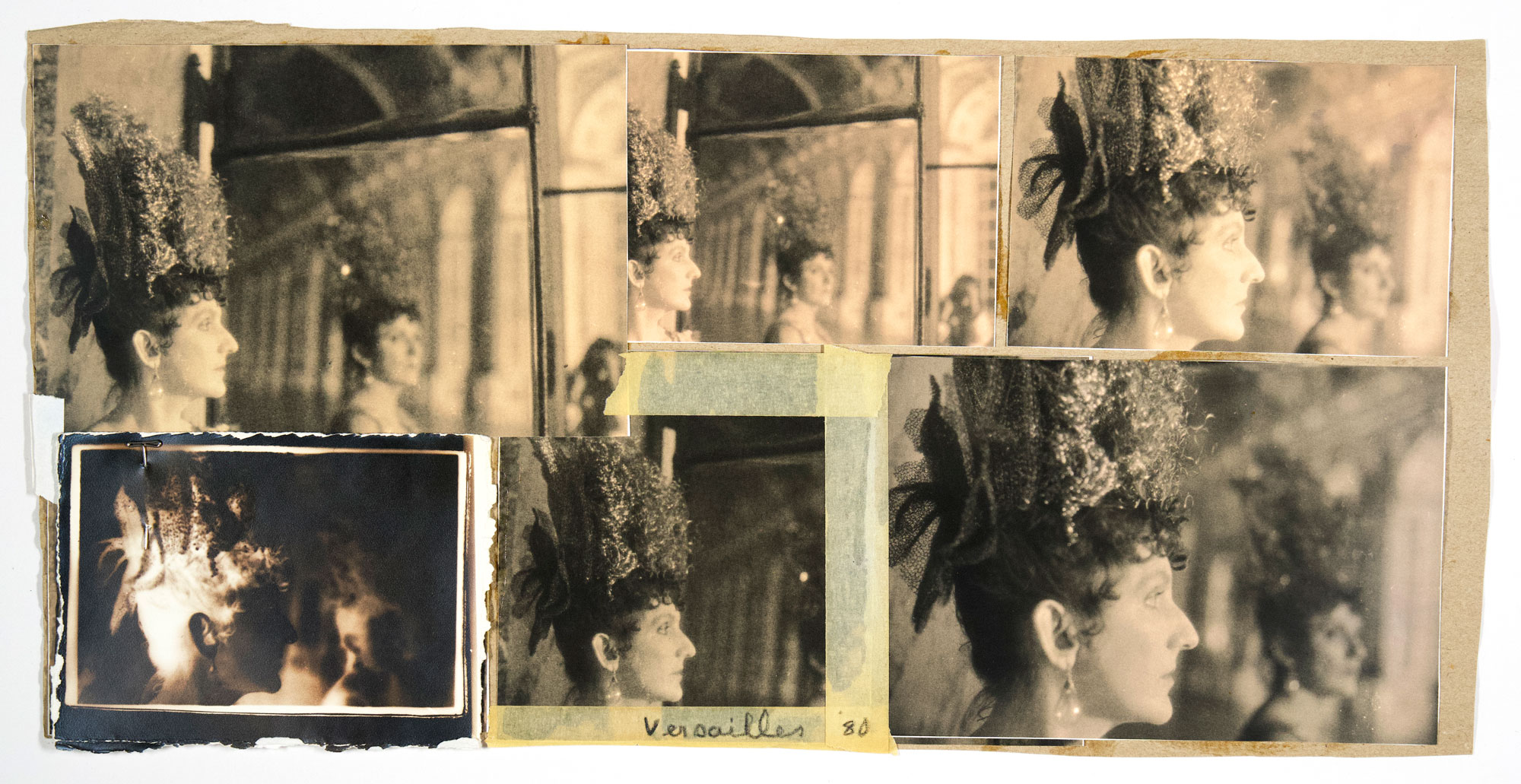
Deborah Turbeville (American, 1932-2013) 'Versailles' Versailles, France 1980  from the exhibition Deborah Turbeville: Photocollage' at The Photographers' Gallery, London


Deborah Turbeville (American, 1932-2013)
Versailles
Versailles, France, 1980
From the series Unseen Versailles
© Deborah Turbeville/MUUS Collection


How Deborah Turbeville tore up the rules

Deborah Turbeville is remembered today as a pioneering figure in fashion photography, known for her melancholic, dreamlike imagery that diverged from conventional standards. Born in 1932 in Stoneham, Massachusetts, USA, she initially pursued acting before being discovered by fashion designer Claire McCardell, who employed her as an assistant and model. Through McCardell, Turbeville met Diana Vreeland, then editor of Harper’s Bazaar, which launched her editorial career. However, she soon lost interest in conventional editorial work, turning instead to photography as an outlet for artistic expression and experimentation.

In the 1960s, after buying her first camera, Turbeville began early experimentation in photography. Her creative direction was refined through a workshop with photographer Richard Avedon and art director Marvin Israel. Moving from fashion editing to photography, she worked for magazines like Vogue and Harper’s Bazaar, though she always insisted she was not a traditional fashion photographer. Rather, she used fashion within her work to tell emotionally charged stories, setting herself apart from the industry’s glamorous norms.

One of her most iconic works is the Bathhouse series for Vogue in 1975, featuring models posed in a dilapidated bathhouse. The images conveyed vulnerability, decay and isolation, starkly contrasting with the glossy fashion photography of the time. Although controversial, the series exemplified Turbeville’s atmospheric aesthetic – soft focus, grainy textures and muted tones. She often distressed her photographs to give them an aged appearance, blurring the lines between fashion photography and fine art.

Turbeville’s work rejected the conventions of fashion industry ideals, choosing instead to explore themes of memory, loss and feminine vulnerability. Her approach stood in contrast to contemporaries like Helmut Newton and Guy Bourdin, whose images typically celebrated female sensuality. In contrast, Turbeville’s subjects appeared introspective and distant, encouraging viewers to engage with them on a deeper, emotional level.

In 1981, Turbeville was commissioned by Jacqueline Kennedy Onassis to photograph the abandoned rooms of the Palace of Versailles, which resulted in the book Unseen Versailles. The images of faded grandeur reflected her fascination with decay and received critical acclaim, winning an American Book Award.

Her body of work extended beyond fashion to other notable publications, including Studio St. Petersburg, The Voyage of the Virgin Maria Candelaria, and Newport Remembered. Throughout her career, she consistently merged fashion with fine art, creating images defined more by atmosphere and emotion than style alone.

Her photocollages show her experimental approach to constructing compositions. Her photographs are just one element among several. She builds up mysterious narratives through overlapping layers of pinned, ripped, cut, creased and taped images, found objects and printed texts. These layers are built up on heavy brown paper – a complete departure from the glossy white pages of fashion magazines. Her Passport series of collages, which accompanied a novella she wrote with the same name, demonstrates her very cinematic, narrative approach to photography.

Turbeville’s influence on future generations of photographers is significant. She opened doors for more experimental, avant-garde approaches to fashion photography, transforming it from a commercial medium into a space for artistic exploration. Her rejection of industry norms allowed her to create a distinctive visual language that continues to inspire photographers and artists today.

Turbeville once remarked that she was more interested in creating “atmosphere and mood” than simply photographing clothes, a sentiment that underpinned her career. By embracing imperfection, decay and the passage of time, she redefined fashion photography as more than a vehicle for selling clothes.

Turbeville’s career represents a turning point in fashion photography. Her dreamlike, melancholic style and innovative approach broke industry conventions, transforming fashion photography into a medium for personal and artistic expression. Her legacy continues to inspire, and her influence remains enduring long after her death in 2013.

Anonymous. “How Deborah Turbeville tore up the rules,” on The Photographers’ Gallery website Nd [Online] Cited 16/01/2025


Deborah Turbeville (American, 1932-2013) 'Page from Passport' c. 1990  from the exhibition Deborah Turbeville: Photocollage' at The Photographers' Gallery, London


Deborah Turbeville (American, 1932-2013)
Page from Passport
c. 1990
© Deborah Turbeville/MUUS Collection 


Deborah Turbeville (American, 1932-2013) 'Page from Passport' c. 1990 from the exhibition Deborah Turbeville: Photocollage' at The Photographers' Gallery, London


Deborah Turbeville (American, 1932-2013)
Page from Passport
c. 1990
© Deborah Turbeville/MUUS Collection


Deborah Turbeville (American, 1932-2013) 'Page from Passport' c. 1990 from the exhibition Deborah Turbeville: Photocollage' at The Photographers' Gallery, London


Deborah Turbeville (American, 1932-2013)
Page from Passport
c. 1990
© Deborah Turbeville/MUUS Collection


Deborah Turbeville (American, 1932-2013) 'Page from Passport' c. 1990 from the exhibition Deborah Turbeville: Photocollage' at The Photographers' Gallery, London


Deborah Turbeville (American, 1932-2013)
Page from Passport
c. 1990
© Deborah Turbeville/MUUS Collection 


Deborah Turbeville (American, 1932-2013) 'Luisa, Posos, January 1991' 1991 from the exhibition Deborah Turbeville: Photocollage' at The Photographers' Gallery, London


Deborah Turbeville (American, 1932-2013)
Luisa, Posos, January 1991
1991
© Deborah Turbeville/MUUS Collection


“Fashion takes itself more seriously than I do. I’m not really a fashion photographer.”


Deborah Turbeville in The New Yorker


Deborah Turbeville: Photocollage opens at The Photographers’ Gallery this Autumn, from 9 October 2024 – 23 February 2025. Presenting the work of the truly innovative American photographer, Deborah Turbeville (1932-2013), the exhibition will feature a selection of her personal vintage photocollages and editorial work.

Deborah Turbeville revolutionised the world of fashion photography, transforming it from its commercial clean standard into an art form. Turbeville deliberately distanced herself from the typical glamorous, polished aesthetic that dominated fashion at the time. Her signature dreamlike and melancholic style became recognisable with her earliest works in the 1970s: enigmatic female figures, cloudy skies, wintry nature and abandoned, decaying surroundings.

Turbeville’s work for the fashion industry launched her career, which lasted over four decades. Between 1975 and 2013, her photographs were published in Vogue, Harper’s Bazaar and New York Times Magazine. She also worked for fashion houses including Comme des Garçons, Guy Laroche, Charles Jourdan, Calvin Klein, Emanuel Ungaro and Valentino. At a time when fashion photography was dominated by men, Turbeville chose a path that ran counter to that of her male peers, like Richard Avedon, Irving Penn, Helmut Newton and Guy Bourdin.

Soft focus and overexposure brought a surreal and dusty tone to her black, white and sepia-toned work. Her models resemble ghostly apparitions as they wander through deserted buildings and landscapes. The exhibition includes her most controversial photograph, Bath House, New York City, 1975, part of a swimsuit photoshoot for Vogue, which featured five models, slouching and stretching in an abandoned bathhouse. The picture was so unlike the traditional fashion imagery of the time it prompted a public outcry.

Turbeville was undeterred and continued to produce images with an element of decay, saying “the idea of disintegration is really the core of my work.”

Other works on show include images from Turbeville’s 1981 American Book Award-winning series Unseen Versailles, and her first photocollage magazine, Maquillage (1975).

Turbeville’s experimentation extended from the darkroom to the studio table as she unpicked the developing process. She ripped, cut and tore her photographs; manipulated, pinned and glued them. Her handmade collages are hybrid objects – as much diaries as book maquettes, sketchbooks as photographic novels – all from a pre-digital age.

Describing her work, she said “I destroy the image after I’ve made it, obliterate it a little so you never have it completely there.”

Turbeville developed a highly personal artistic universe, which has been credited with transforming fashion imagery into avant-garde art. Although she did not achieve the same recognition as her male counterparts in her lifetime. Deborah Turbeville: Photocollage is a new opportunity to consider and celebrate Turbeville’s ground-breaking contribution to the history of photography.

Deborah Turbeville: Photocollage is organised by The Photographers’ Gallery, produced by Photo Elysée in collaboration with MUUS Collection. The exhibition is curated by Nathalie Herschdorfer, Director of Photo Elysée, and Karen McQuaid, Senior Curator at The Photographers’ Gallery.

The accompanying catalogue Deborah Turbeville: Photocollage is published by Thames & Hudson and available at The Photographers’ Gallery’s bookshop at £55.

Deborah Turbeville short biography

Deborah Turbeville was born in Stoneham, Massachusetts, USA in 1932. She moved to New York with ambitions to study drama when she was 19. Instead she was discovered by the fashion designer Claire McCardell, who hired Turbeville as an assistant and house model. While working for McCardell, she met Diana Vreeland, the famed editor of Harper’s Bazaar. Their introduction led to Turbeville being offered a job as an editor at the magazine.

Disinterested in her editorial work at Harper’s Bazaar and later at Mademoiselle, she began experimenting with photography in the 1960s. She took part in a workshop led by Richard Avedon and art director Marvin Israel in 1966. From there, she began her photographic career, mainly working for magazines like Vogue, Harper’s Bazaar and Mirabella.

In 1981, Turbeville was commissioned by Jaqueline Onassis, then an editor at Doubleday, to photograph disused rooms in the Palace of Versailles. The book, Unseen Versailles, won an American Book Award, for its rare look into the Palace’s off-limits decaying grandeur.

Turbeville published many books of her photography, including Studio St. Petersburg, The Voyage of the Virgin Maria Candelaria and Newport Remembered. Posthumous publications include Comme des Garçons 1981, a series of photographs she took during the 1980s in collaboration with the fashion house and its designer, Rei Kawakubo.

Turbeville died in 2013, having left an indelible mark on the world of photography. Her work is collected by major institutions worldwide, including the National Portrait Gallery, Metropolitan Museum of Art, the Museum of Modern Art, the Getty Museum, the Art Institute of Chicago, the Los Angeles County Museum of Art and the Whitney Museum of American Art.

Press release from The Photographers’ Gallery


Deborah Turbeville (American, 1932-2013) 'Untitled (Metamorphosis of Ella M.)' Paris, France, early 1990s from the exhibition Deborah Turbeville: Photocollage' at The Photographers' Gallery, London


Deborah Turbeville (American, 1932-2013)
Untitled (Metamorphosis of Ella M.)
Paris, France, early 1990s
From the series L’École des Beaux Arts
© Deborah Turbeville/MUUS Collection


Stephan Lupino (Croatian, b. 1952)
'Portrait of Deborah Turbeville' Nd


Stephan Lupino (Croatian, b. 1952)
Portrait of Deborah Turbeville
Nd
Gelatin silver print
© Stephan Lupino


The Photographers’ Gallery
16-18 Ramillies Street
London
W1F 7LW

Opening hours:
Mon – Wed: 10.00 – 18.00
Thursday – Friday: 10.00 – 20.00
Saturday: 10.00 – 18.00
Sunday: 11.00 – 18.00
The Photographers’ Gallery website

LIKE ART BLART ON FACEBOOK

Back to top

Exhibition: ‘Roman Vishniac Rediscovered’ at The Photographers’ Gallery and Jewish Museum London

Exhibition dates: 26th October, 2018 – 24th February, 2019

Curators: Maya Benton in collaboration with The Photographers’ Gallery curator, Anna Dannemann and Jewish Museum London curator, Morgan Wadsworth-Boyle.

Presented simultaneously at The Photographers’ Gallery and Jewish Museum London, Roman Vishniac Rediscovered is the first UK retrospective of Russian born American photographer, Roman Vishniac (1897-1990).


Roman Vishniac (America born Russia, 1897-1990) 'Interior of the Anhalter Bahnhof railway terminus near Potsdamer Platz, Berlin' 1929-early 1930s from the exhibition Exhibition: 'Roman Vishniac Rediscovered' at The Photographers' Gallery and Jewish Museum London, Oct 2018 - Feb 2019


Roman Vishniac (America born Russia, 1897-1990)
Interior of the Anhalter Bahnhof railway terminus near Potsdamer Platz, Berlin
1929 – early 1930s
Courtesy International Center of Photography
On display at The Photographers’ Gallery
© Mara Vishniac Kohn


Wondrous, glorious images

Apart from the title, Roman Vishniac “Rediscovered” – photographically, I never thought he went away? – this is a magnificent exhibition of Vishniac’s complete works.

Since the press release states, “Roman Vishniac Rediscovered offers a timely reappraisal of Vishniac’s vast photographic output and legacy and brings together – for the first time – his complete works including recently discovered vintage prints, rare and ‘lost’ film footage from his pre-war period, contact sheets, personal correspondence, original magazine publications, newly created exhibition prints as well as his acclaimed photomicroscopy…” perhaps the exhibition should have been titled: Roman Vishniac Reappraised or Roman Vishniac: Complete Works. Each makes more sense than the title the curators chose.

Vishniac’s work is powerful and eloquent, a formal, classical, and yet poetic representation of the time and space of the photographs taking. Modernist yet romantic, monumental, sociological yet playful, his work imbibes of the music of people and place, portraying the rituals of an old society about to be swept away by the maelstrom of war. They are a joy to behold.

Here is happiness and sadness, urban poverty, isolation (as in figures from each other, figures isolated within their world, and within the pictorial frame – see the people walking in every direction in Isaac Street, Kazimierz, Cracow 1935-38, below), and nostalgia (for what has been lost). Here is life… and death.

Here is a handsome man, Ernst Kaufmann, born in Krefeld, Germany, in 1911. Arrested in June 1941 and killed in August of that year in the Mauthausen concentration camp in Austria. Killed at barely 30 years old. As Vishniac recalls of his portrait of the seven year old David Eckstein, ‘I watched this little boy for almost an hour, and in this moment I saw the whole sadness of the world.’ Never forget what human beings are capable of, lest history repeat itself, and all our hard fought freedoms are destroyed.

Despite the hubbub and movement of the people, towns and marketplaces, for me it is the sensitivity of a quiet moment, beautifully observed, that gets me every time. That hand (Exhausted. A Carrier of Heavy Loads, Warsaw c. 1935-1938, below), resting on the chest of an exhausted porter, seen in all its clarity and in humanity is transcendent. That intense feeling of an extended, (in)decisive moment, if ever there was one.

In my humble opinion, Vishniac is one of the greatest 20th century social documentary photographers to have ever lived.

Dr Marcus Bunyan


Many thankx to Photographers’ Gallery for allowing me to publish the photographs in the posting. Please click on the photographs for a larger version of the image.


Interview with curator Maya Benton


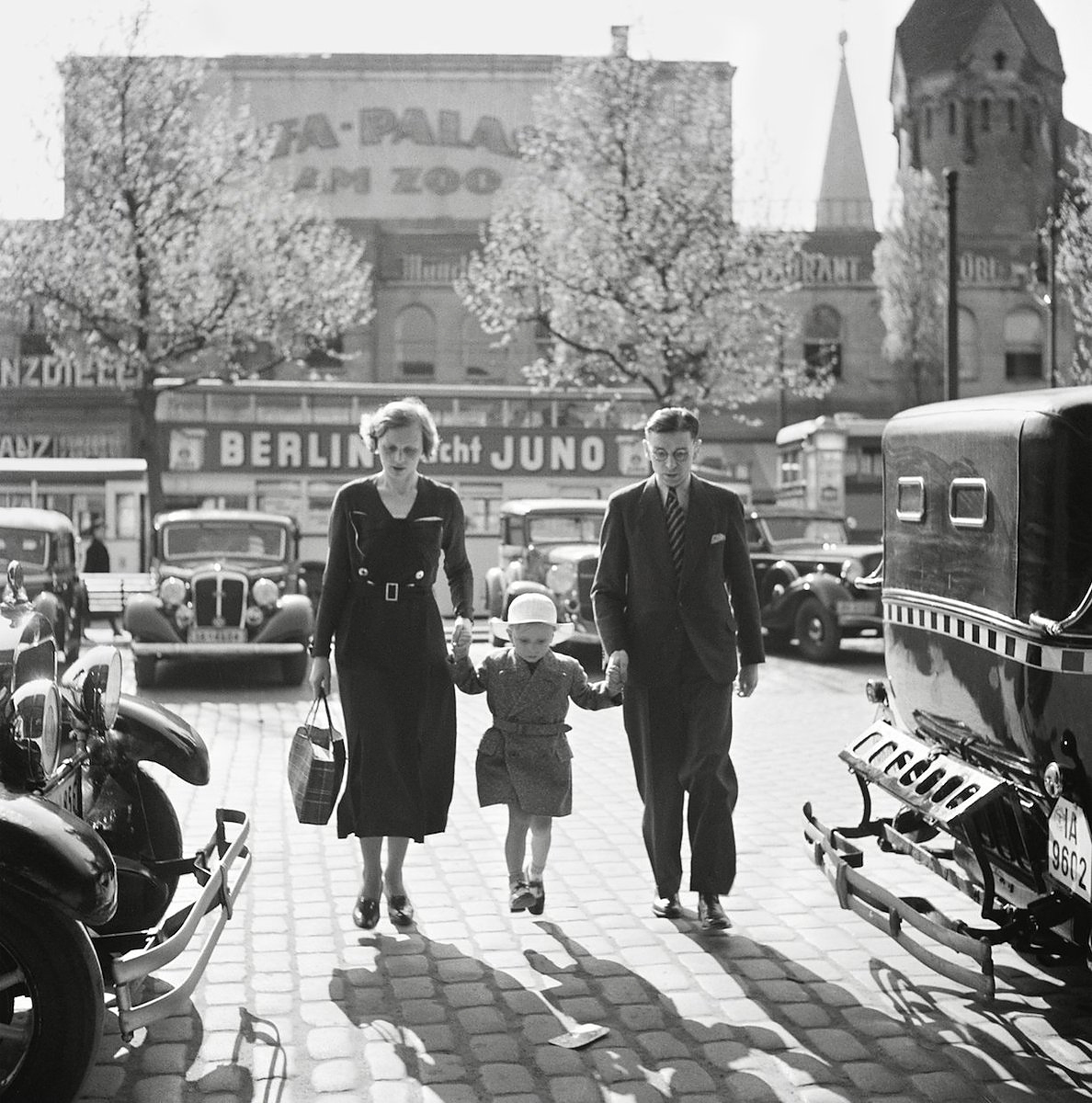
Roman Vishniac (America born Russia, 1897-1990) 'German family walking between taxicabs in front of the Ufa-Palast movie theater, Berlin' late 1920s-early 1930s from the exhibition Exhibition: 'Roman Vishniac Rediscovered' at The Photographers' Gallery and Jewish Museum London, Oct 2018 - Feb 2019


Roman Vishniac (America born Russia, 1897-1990)
German family walking between taxicabs in front of the Ufa-Palast movie theater, Berlin
late 1920s – early 1930s
Courtesy International Center of Photography
© Mara Vishniac Kohn


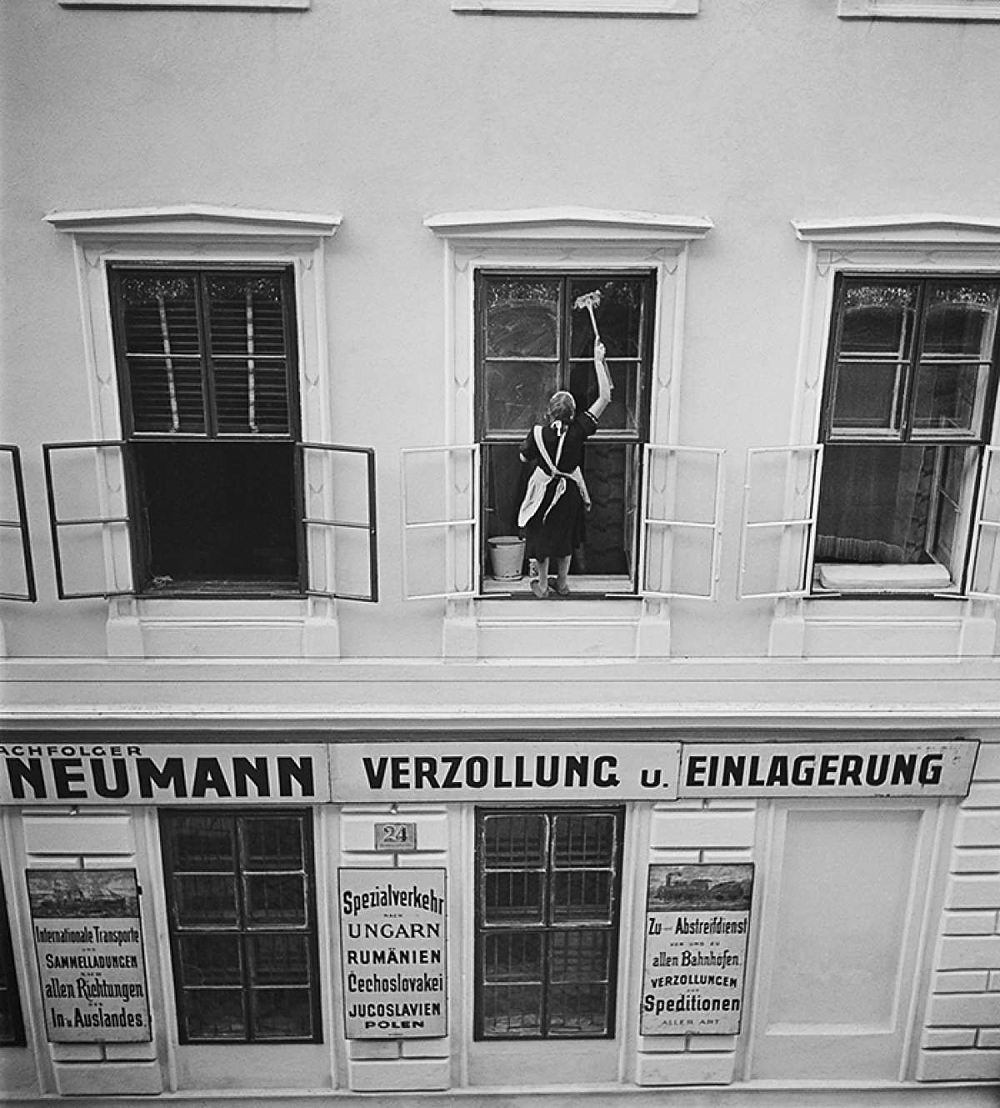
Roman Vishniac (America born Russia, 1897-1990) 'Woman washing windows above Mandtler & Neumann Speditionen (Mandtler & Neumann Forwarding Agents), Ferdinandstrasse, Leopoldstadt, Vienna' 1930s


Roman Vishniac (America born Russia, 1897-1990)
Woman washing windows above Mandtler & Neumann Speditionen (Mandtler & Neumann Forwarding Agents), Ferdinandstrasse, Leopoldstadt, Vienna
1930s
Courtesy International Center of Photography
© Mara Vishniac Kohn


Roman Vishniac (America born Russia, 1897-1990) 'Jewish school children, Mukacevo' c. 1935-1938


Roman Vishniac (America born Russia, 1897-1990)
Jewish school children, Mukacevo
c. 1935-1938
Courtesy International Center of Photography
On display at Jewish Museum London
© Mara Vishniac Kohn


From 1935 to 1938, Vishniac made numerous trips to the city of Mukacevo, a major center of religious learning among Jews from Czechoslovakia, Hungary, and the Carpathian region. Mukacevo was widely known for its famous rabbis and yeshivot (religious schools). This image of Jewish schoolchildren appears in cropped form on the cover of Vishniac’s first posthumous publication, To Give Them Light; the recently digitised negative reveals that it represents only one-fifth of the full frame. Vishniac often directed printers or publishers to crop his images to focus on religiously observant Jewish men or boys, identifiable by their dress, an editorial decision that sometimes detracted from the composition by subverting aesthetic considerations to emphasise religious and observant life. The negative reveals Vishniac’s instinctive compositional acumen: a bustling and vibrant street scene, with a boy’s beaming, slightly out-of-focus face in the foreground and numerous hands pushing into and out of the frame, communicating the vitality and liveliness of the students.

Text from the International Center of Photography website


Roman Vishniac (America born Russia, 1897-1990) 'Man purchasing herring, wrapped in newspaper, for a Sabbath meal, Mukacevo' c. 1935-1938


Roman Vishniac (America born Russia, 1897-1990)
Man purchasing herring, wrapped in newspaper, for a Sabbath meal, Mukacevo
c. 1935-1938
International Center of Photography
© Mara Vishniac Kohn


Roman Vishniac (America born Russia, 1897-1990) 'Fish is the Favored Food for the Kosher Table' c. 1935-1938


Roman Vishniac (America born Russia, 1897-1990)
Fish is the Favored Food for the Kosher Table
c. 1935-1938
Gelatin silver print
Image (paper): 11 1/2 x 9 3/16 in. (29.2 x 23.3cm)
Collection Philip Allen
© Mara Vishniac Kohn


“This image of a boy bending over a vat of herring communicates the excitement of the marketplace and the sheer abundance of herring. The unparalleled quality of the print transmits every detail, from the wet cobblestones and circular motion of the swimming fish to the rapid, eager movement of hands reaching in to grab the herring. Rather than focusing on religious life, these early prints demonstrate the vitality and frantic charm of a town rushing to prepare for the Sabbath.”

Maya Benton, ICP Adjunct Curator


These rare vintage prints are part of a collection of sixteen recently discovered prints that comprised Vishniac’s first exhibition abroad, and were displayed in the New York office of the Jewish Joint Distribution Committee (JDC) in 1938. Vishniac developed these early prints in his apartment in Berlin, and they are rare early examples of his virtuosic skill as a master printmaker. He gifted all sixteen prints to an employee of the New York office of the JDC who had helped him to organise his first exhibit; these prints are on loan from his son.

The image of a boy bending over a vat of herring communicates the excitement of the marketplace and the sheer abundance of herring. The unparalleled quality of the print transmits every detail, from the wet cobblestones and circular motion of the swimming fish to the rapid, eager movement of hands reaching in to grab the herring. Rather than focusing on religious life, these early prints demonstrate the vitality and frantic charm of a town rushing to prepare for the Sabbath.

Anonymous text. “Roman Vishniac,” on the International Center of Photography website Nd [Online] Cited 16/03/2022


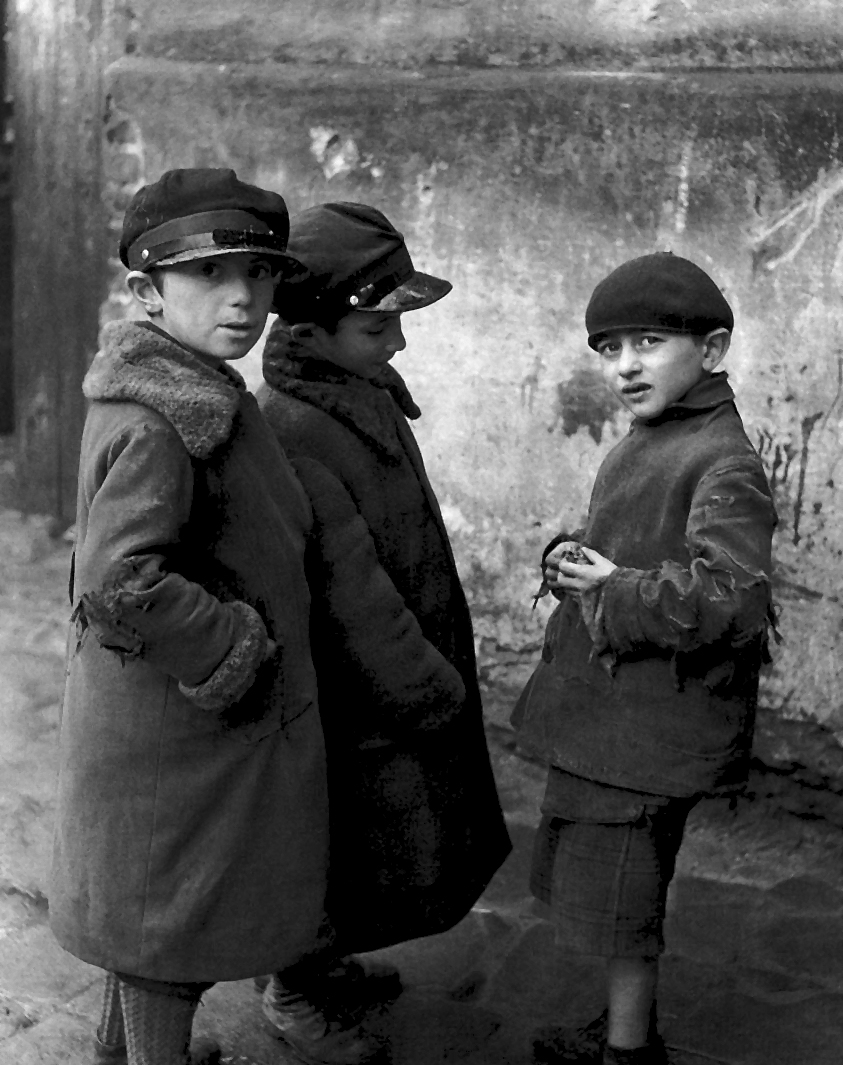
Roman Vishniac (America born Russia, 1897-1990) 'Young Jewish boys suspicious of strangers, Mukachevo' c. 1935-1938


Roman Vishniac (America born Russia, 1897-1990)
Young Jewish boys suspicious of strangers, Mukachevo
c. 1935-1938
International Center of Photography
© Mara Vishniac Kohn


Roman Vishniac (America born Russia, 1897-1990) 'Three women, Mukacevo' c. 1935-1938


Roman Vishniac (America born Russia, 1897-1990)
Three women, Mukacevo
c. 1935-1938
International Center of Photography
© Mara Vishniac Kohn


Roman Vishniac (America born Russia, 1897-1990) The notice on the wall reads "Come Celebrate Chanukah." c. 1935-1938


Roman Vishniac (America born Russia, 1897-1990)
The notice on the wall reads “Come Celebrate Chanukah”
c. 1935-1938
International Center of Photography
© Mara Vishniac Kohn


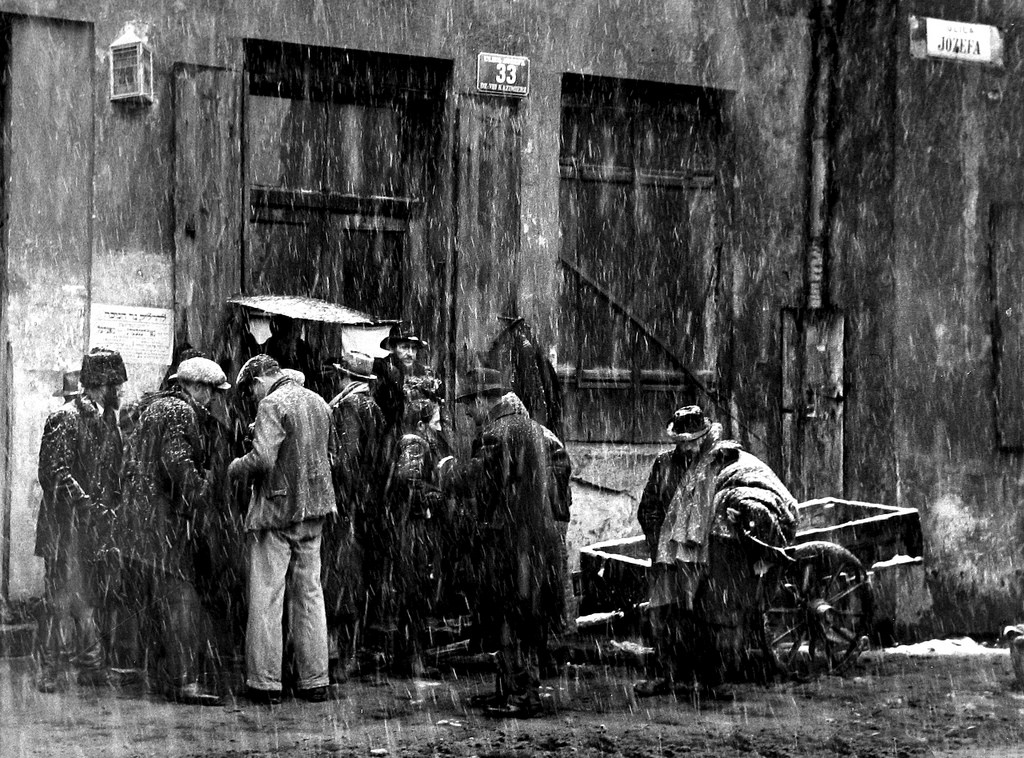
Roman Vishniac (America born Russia, 1897-1990) 'Jewish street vendors, Warsaw, Poland' 1938


Roman Vishniac (America born Russia, 1897-1990))
Jewish street vendors, Warsaw, Poland
1938
International Center of Photography
© Mara Vishniac Kohn


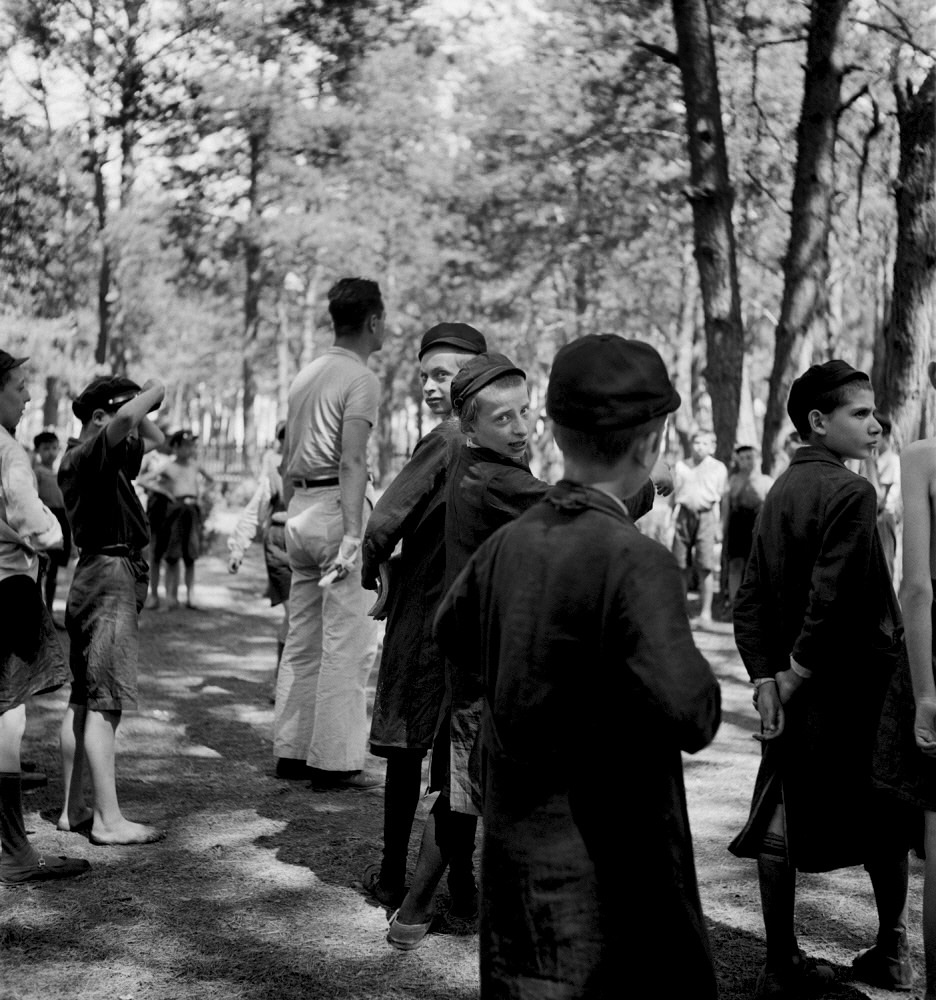
Roman Vishniac (America born Russia, 1897-1990) 'Children playing outdoors and watching a game' c. 1935-1937


Roman Vishniac (America born Russia, 1897-1990)
Children playing outdoors and watching a game
c. 1935-1937
International Center of Photography
© Mara Vishniac Kohn


Roman Vishniac (America born Russia, 1897-1990) 'Children playing on a street lined with swastika flags' mid-1930s


Roman Vishniac (America born Russia, 1897-1990)
Children playing on a street lined with swastika flags
mid-1930s
International Center of Photography
© Mara Vishniac Kohn


Roman Vishniac (America born Russia, 1897-1990) 'Nat Gutman's Wife, Warsaw' 1938


Roman Vishniac (America born Russia, 1897-1990)
Nat Gutman’s Wife, Warsaw
1938
International Center of Photography
© Mara Vishniac Kohn


Nat Gutman, the porter, Warsaw 1935-1938 from A Vanished World, 1983 is the photograph of her husband. After working as a bank cashier for six years, Nat Gutman was dismissed because he was a Jew. He became a porter. The loads usually weighed forty-five to ninety pounds. This was the kind of work that bank cashier Gutman, a man with a bad hernia, was reduced to in order to support his wife and son. The family were exterminated.


Roman Vishniac (America born Russia, 1897-1990) 'A street of Kazimierz, Cracow' 1935-1938


Roman Vishniac (America born Russia, 1897-1990)
A street of Kazimierz, Cracow
1935-1938
International Center of Photography
© Mara Vishniac Kohn


Roman Vishniac (America born Russia, 1897-1990) 'Isaac Street, Kazimierz, Krakow' 1935-1938


Roman Vishniac (America born Russia, 1897-1990)
Isaac Street, Kazimierz, Krakow
1935-1938
International Center of Photography
© Mara Vishniac Kohn


Roman Vishniac (America born Russia, 1897-1990) 'Isaac Street, Kazimierz, Cracow' 1935-1938


Roman Vishniac (America born Russia, 1897-1990)
Isaac Street, Kazimierz, Cracow
1935-1938
International Center of Photography
© Mara Vishniac Kohn


Roman Vishniac (America born Russia, 1897-1990) 'Window washer balancing on a ladder, Berlin' mid-1930s


Roman Vishniac (America born Russia, 1897-1990)
Window washer balancing on a ladder, Berlin
mid-1930s
Courtesy International Center of Photography
On display at The Photographers’ Gallery
© Mara Vishniac Kohn


Roman Vishniac (America born Russia, 1897-1990) 'Exhausted. A Carrier of Heavy Loads, Warsaw' c. 1935-1938


Roman Vishniac (America born Russia, 1897-1990)
Exhausted. A Carrier of Heavy Loads, Warsaw
c. 1935-38
Gelatin silver print
7 1/2 x 10 in. (19.1 x 25.4cm)
International Center of Photography
Gift of Mara Vishniac Kohn, 2013
© Mara Vishniac Kohn


“This unpublished image of a porter at rest in his wagon demonstrates Vishniac’s modern aesthetic and the influence of the avant-garde on his work. The diagonal slope of the central figure, stretched out along a sloping plane, fills the entire frame. The intuitive amalgamation of patterns and textures, one of Vishniac’s greatest talents, is evident throughout the image: the light reflected on the ornamented belt buckle; the double-patterned cable knit of his shrunken wool vest, which barely conceals a plaid shirt; and the round shapes of a wheel and bucket that divide the angular line formed by the central figure. It is a triumph of textures, angles, and lines, yet the worn sign with the name Nuta Hersz and his porter license number reminds us that the subject of the photograph is the victim of anti-Semitic boycotts and the limited job opportunities (only vendors and porters) permitted to Jews in Poland at that time.”

Maya Benton, ICP Adjunct Curator


Roman Vishniac (America born Russia, 1897-1990) 'Villagers in the Carpathian Mountains' c. 1935-1938


Roman Vishniac (America born Russia, 1897-1990)
Villagers in the Carpathian Mountains
c. 1935-1938
International Center of Photography
© Mara Vishniac Kohn


“Vishniac traveled to remote Jewish villages in rural Carpathian Ruthenia throughout the late 1930s, and in many cases was the only photographer to ever document these communities, which had been isolated for hundreds of years, yet maintained an enduring connection to Jewish observance, customs, and traditions.

Every detail of this image makes it a nearly perfect photograph: the sense of movement and the figures’ varied gestures and vibrant expressions; the carefully balanced horizontal bands of shadow and striped fabric; the detail of a woman peering out of a window while a glass pane on the facing structure points in the direction of an impossibly angled triangular building that vertically divides the frame in half; and the collective sense of surprise at encountering the photographer. Like much of Vishniac’s unpublished work, this composition recalls Henri Cartier-Bresson’s description of the decisive moment (a precise organisation of forms that give a time and place its ideal expression) and places Vishniac on par with the great photographers of the 20th century.”

Maya Benton, ICP Adjunct Curator


Roman Vishniac (America born Russia, 1897-1990) '[David Eckstein, seven years old, and classmates in cheder (Jewish elementary school), Brod]' c. 1938


Roman Vishniac (America born Russia, 1897-1990)
[David Eckstein, seven years old, and classmates in cheder (Jewish elementary school), Brod]
c. 1938
International Center of Photography
© Mara Vishniac Kohn


“The boy in this photograph has been identified as David Eckstein, a Holocaust survivor currently living in a commune in the American Southwest. Born in 1930 in the small town of Brod, Eckstein was seven years old when Vishniac took several photographs of him, his classmates, and his teacher just before the onslaught of World War II. Vishniac later recalled, ‘I watched this little boy for almost an hour, and in this moment I saw the whole sadness of the world.’ This portrait was later selected as the cover of Vishniac’s first publication, Polish Jews: A Pictorial Record (1947), and reprinted on the cover of I. B. Singer’s National Book Award-winning collection of stories, A Day of Pleasure: Stories of a Boy Growing Up in Warsaw (1969).”

Maya Benton, ICP Adjunct Curator


Roman Vishniac (America born Russia, 1897-1990) '[Grandmother and grandchildren in basement dwelling, Krochmaina Street, Warsaw]' c. 1935-1938


Roman Vishniac (America born Russia, 1897-1990)
[Grandmother and grandchildren in basement dwelling, Krochmaina Street, Warsaw]
c. 1935-1938
International Center of Photography
© Mara Vishniac Kohn


“Vishniac documented urban poverty in Warsaw, often focusing on the dark, cold basement dwellings of families where hungry Jewish children lived in crowded conditions. Vishniac photographed this woman taking care of her grandchildren while their parents searched for work in one of 26 basement compartments, each inhabited by a large family. In June 1941, the National Jewish Monthly published this image with the caption ‘Polish Jewry, once the bulwark of world Jewry, is done for as a community. Even if Hitler were to lose power tomorrow, their institutions and organisations are hopelessly smashed, could not be rebuilt in generations. But individuals remain, starved and persecuted. This picture shows an old grandmother and her grandchildren. What is going to become of them, and of the millions of other innocent victims of Fascist violence and terror?'”

Maya Benton, ICP Adjunct Curator


Roman Vishniac (America born Russia, 1897-1990) 'Sara, sitting in bed in a basement dwelling, with stencilled flowers above her head, Warsaw' c. 1935-1937


Roman Vishniac (America born Russia, 1897-1990)
Sara, sitting in bed in a basement dwelling, with stencilled flowers above her head, Warsaw
c. 1935-1937
Courtesy International Center of Photography
On display at The Photographers’ Gallery
© Mara Vishniac Kohn


Vishniac documented the basement dwellings of Warsaw using the scant natural light that trickled through a few narrow, high windows, necessitating that he shoot during the day, when adults were often out looking for work or peddling their wares and children were sometimes the only inhabitants indoors. This photograph of Sara, one of Vishniac’s most iconic images, was reproduced on charity tins, or tzedakah boxes, and circulated throughout France by Jewish social service organisations, including the American Jewish Joint Distribution Committee (AJDC) in the late 1930s.

Text from the International Center of Photography website


An extraordinarily versatile and innovative photographer, Vishniac is best known for having created one of the most widely recognised and reproduced photographic records of Jewish life in Eastern Europe between the two World Wars. Featuring many of his most iconic works, this comprehensive exhibition further introduces recently discovered and lesser-known chapters of his photographic career from the early 1920s to the late 1970s. The cross-venue exhibition presents radically diverse bodies of work and positions Vishniac as one of the most important social documentary photographers of the 20th century whose work also sits within a broader tradition of 1930s modernist photography.

Born in Pavlovsk, Russia in 1897 to a Jewish family Roman Vishniac was raised in Moscow. On his seventh birthday, he was given a camera and a microscope which began a lifelong fascination with photography and science. He began to conduct early scientific experiments attaching the camera to the microscope and as a teenager became an avid amateur photographer and student of biology, chemistry and zoology. In 1920, following the Bolshevik Revolution, he immigrated to Berlin where he joined some of the city’s many flourishing camera clubs. Inspired by the cosmopolitanism and rich cultural experimentation in Berlin at this time, Vishniac used his camera to document his surroundings. This early body of work reflects the influence of European modernism with his framing and compositions favouring sharp angles and dramatic use of light and shade to inform his subject matter.

Vishniac’s development as a photographer coincided with the enormous political changes occurring in Germany, which he steadfastly captured in his images. They represent an unsettling visual foreboding of the growing signs of oppression, the loss of rights for Jews, the rise of Nazism in Germany, the insidious propaganda – swastika flags and military parades, which were taking over both the streets and daily life. German Jews routinely had their businesses boycotted, were banned from many public places and expelled from Aryanised schools. They were also prevented from pursuing professions in law, medicine, teaching, and photography, among many other indignities and curtailments of civil liberties. Vishniac recorded this painful new reality through uncompromising images showing Jewish soup kitchens, schools and hospitals, immigration offices and Zionist agrarian training camps, his photos tracking the speed with which the city changed from an open, intellectual society to one where militarism and fascism were closing in.

Social and political documentation quickly became a focal point of his work and drew the attention of organisations wanting to raise awareness and gain support for the Jewish population. In 1935, Vishniac was commissioned by the world’s largest Jewish relief organisation, the American Jewish Joint Distribution Committee (JDC), to photograph impoverished Jewish communities in Eastern Europe. These images were intended to support relief efforts and were used in fundraising campaigns for an American donor audience. When the war broke out only a few years later, his photos served increasingly urgent refugee efforts, before finally, at the end of the war and the genocide enacted by Nazi Germany, Vishniac’s images became the most comprehensive photographic record by a single photographer of a vanished world.

Vishniac left Europe in 1940 and arrived in New York with his family on New Year’s Day, 1941. He continued to record the impact of World War II throughout the 1940s and 50s in particular focusing on the arrival of Jewish refugees and Holocaust survivors in the US, but also looking at other immigrant communities including Chinese Americans. In 1947, he returned to Europe to document refugees and relief efforts in Jewish Displaced Persons camps and also to witness the ruins of his former hometown, Berlin. He also continued his biological studies and supplemented his income by teaching and writing.

In New York, Vishniac established himself as a freelance photographer and built a successful portrait studio on Manhattan’s Upper West Side. At the same time he dedicated himself to scientific research, resuming his interest in Photomicroscopy. This particular application of photography became the primary focus of his work during the last 45 years of his life. By the mid-1950s, he was regarded as a pioneer in the field, developing increasingly sophisticated techniques for photographing and filming microscopic life forms. Vishniac was appointed Professor of Biology and Art at several universities and his groundbreaking images and scientific research were published in hundreds of magazines and books.

Although he was mainly embedded in the scientific community, Vishniac was a keen observer and scholar of art, culture, and history and would have been aware of developments in photography going on around him and the work of his contemporaries. In 1955, famed photographer and museum curator Edward Steichen featured several of Vishniac’s photographs in the influential book and travelling exhibition The Family of Man shown at the Museum of Modern Art. Steichen later describes the importance of Vishniac’s work. “[He]… gives a last minute look at the human beings he photographed just before the fury of Nazi brutality exterminated them. The resulting photographs are among photography’s finest documents of a time and place.”

Roman Vishniac Rediscovered offers a timely reappraisal of Vishniac’s vast photographic output and legacy and brings together – for the first time – his complete works including recently discovered vintage prints, rare and ‘lost’ film footage from his pre-war period, contact sheets, personal correspondence, original magazine publications, newly created exhibition prints as well as his acclaimed photomicroscopy.

Drawn from the Roman Vishniac Archive at the International Center of Photography, New York and curated by Maya Benton in collaboration with The Photographers’ Gallery curator, Anna Dannemann and Jewish Museum London curator, Morgan Wadsworth-Boyle, each venue will provide additional contextual material to illuminate the works on display and bring the artist, his works and significance to the attention of UK audiences. Roman Vishniac Rediscovered is organised by the International Center of Photography.

Press release from The Photographers’ Gallery


Roman Vishniac (America born Russia, 1897-1990) 'Inside the Jewish quarter, Bratislava' c. 1935-1938


Roman Vishniac (America born Russia, 1897-1990)
Inside the Jewish quarter, Bratislava
c. 1935-1938
Courtesy International Center of Photography
On display at Jewish Museum London
© Mara Vishniac Kohn


Roman Vishniac (America born Russia, 1897-1990) 'Children at Play, Bratislava' c. 1935-1938


Roman Vishniac (America born Russia, 1897-1990)
Children at Play, Bratislava
c. 1935-1938
Courtesy International Center of Photography
© Mara Vishniac Kohn


Roman Vishniac (America born Russia, 1897-1990) 'Vishniac's daughter Mara posing in front of an election poster for Hindenburg and Hitler' 1933


Roman Vishniac (America born Russia, 1897-1990)
Vishniac’s daughter Mara posing in front of an election poster for Hindenburg and Hitler that reads “The Marshal and the Corporal: Fight with Us for Peace and Equal Rights,” Wilmersdorf, Berlin
1933
Courtesy International Center of Photography
On display at Jewish Museum London
© Mara Vishniac Kohn


Vishniac’s daughter Mara, age seven, was photographed standing in front of this 1933 poster celebrating Hitler’s recent appointment as German chancellor. The poster advertises a plebiscite to permit withdrawal from the League of Nations and Geneva Disarmament Conference, which restricted Germany’s ability to develop a military. Other posters include the slogans “Mothers, fight for your children!,” “The coming generation accuses you!,” and “In 8 months… 2,250,000 countrymen able to put food on the table. Bolshevism destroyed. Sectionalism overcome. A kingdom and order of cleanliness built… Those are the achievements of Hitler’s rule…”

Text from the International Center of Photography website


Roman Vishniac (America born Russia, 1897-1990) 'Benedictine nun reading, probably France' 1930s


Roman Vishniac (America born Russia, 1897-1990)
Benedictine nun reading, probably France
1930s, printed 2012
Photo digital inkjet print
12 x 11 3/8 in. (30.5 x 29cm)
International Center of Photography
© Mara Vishniac Kohn


Roman Vishniac (America born Russia, 1897-1990) 'Ernst Kaufmann, center, and unidentified Zionist youth' 1938-1939


Roman Vishniac (America born Russia, 1897-1990)
Ernst Kaufmann, center, and unidentified Zionist youth, wearing clogs while learning construction techniques in a quarry, Werkdorp Nieuwesluis, Wieringermeer, The Netherlands
1938-1939
Courtesy International Center of Photography
On display at Jewish Museum London
© Mara Vishniac Kohn


Ernst Kaufmann was born in Krefeld, Germany, in 1911. He was arrested in June 1941 and killed in August of that year in the Mauthausen concentration camp in Austria.

This photograph is strikingly similar in subject and composition to a bronze relief plaque made in 1935 by Dutch artist Hildo Krop (1884-1970) for the monument on the Afsluitdijk, a dam that was completed in 1933 in the north of the Netherlands. The relief depicts three stoneworkers below the text “A nation that lives builds for the future.” Dutch modernist architect Willem Dudok (1884-1974) designed the Afsluitdijk and in 1935 Krop’s plaque was added. The dam was a triumph of Dutch engineering and a source of national pride. Residents of the Werkdorp probably took Vishniac to the Afsluitdijk; the well-known relief undoubtedly inspired him to stage this shot, an ideal composition for his heroic image of Jewish pioneers in the Werkdorp, and an unusual conflation of Dutch nationalist and Zionist visual sensibilities.

Text from the International Center of Photography website


Roman Vishniac (America born Russia, 1897-1990) 'Beach dwellers in the afternoon, Nice, France' c. 1939


Roman Vishniac (America born Russia, 1897-1990)
Beach dwellers in the afternoon, Nice, France
c. 1939
Courtesy International Center of Photography
© Mara Vishniac Kohn


Roman Vishniac (America born Russia, 1897-1990) 'Boys exercising in the gymnasium of the Jewish Community House of Bensonhurst, Brooklyn' 1949


Roman Vishniac (America born Russia, 1897-1990)
Boys exercising in the gymnasium of the Jewish Community House of Bensonhurst, Brooklyn
1949
Courtesy International Center of Photography
On display at The Photographers’ Gallery
© Mara Vishniac Kohn


The Jewish Community House of Bensonhurst, known as the “J,” was established in 1927 to serve the growing population of first-generation American Jews migrating to South Brooklyn. The J’s mission, to “ennoble Jewish youth” by building and fostering a sense of Jewish community, was accomplished through the promotion of arts and recreation for all ages. American Jewish major league baseball legend Sandy Koufax, a regular at the J, had started his sports career there as a basketball player.

In a dramatic departure from his iconic photographs of impoverished children in prewar eastern Europe, here Vishniac focused on the strong, healthy young American children. The children’s vitality is reinforced by the diagonal lines and geometric angles of the ropes, contributing to a forceful and innovative composition reflective of Vishniac’s previously unknown American work from the 1940s.

Text from the International Center of Photography website


Roman Vishniac (America born Russia, 1897-1990) 'Customers waiting in line at a butcher's counter during wartime rationing, Washington Market, New York' 1941-1944


Roman Vishniac (America born Russia, 1897-1990)
Customers waiting in line at a butcher’s counter during wartime rationing, Washington Market, New York
1941-44
Courtesy International Center of Photography
On display at The Photographers’ Gallery
© Mara Vishniac Kohn


New York’s Washington Market, famed for its exceptional variety and quantity of food, was established in the eighteenth century. Vishniac documented the mostly female customers waiting for service during a period of wartime restrictions and food rationing. Through careful framing – customers stand against bare counters and voided display cases – he captured disenchanted expressions that can be read as a projection of Vishniac’s own experience as a new immigrant in America, as well as a record of comparative privation in the former plenty of Washington Market. As such, they anticipate the isolation and indifference shown in The Americans by Robert Frank, another Jewish immigrant from war-torn Europe.

Text from the International Center of Photography website


The Photographers’ Gallery
16-18 Ramillies Street
London
W1F 7LW

Opening hours:
Mon – Wed: 10.00 – 18.00
Thursday – Friday: 10.00 – 20.00
Satuday: 10.00 – 18.00
Sunday: 11.00 – 18.00
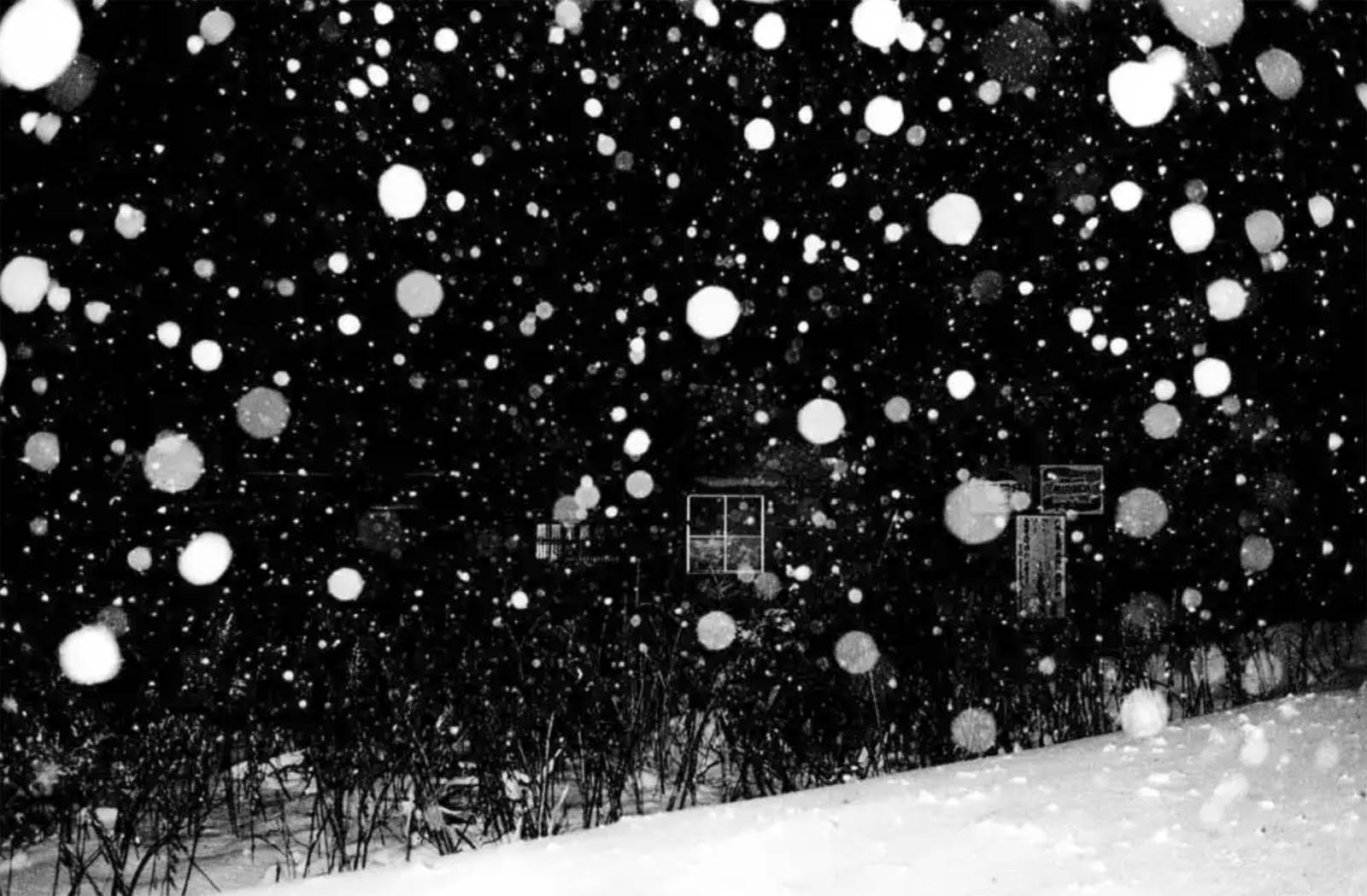
The Jewish Museum
A museum without walls at the moment.

The Photographers’ Gallery website

The Jewish Museum, London website

LIKE ART BLART ON FACEBOOK

Back to top