Exhibition dates: 30th November 2012 – 17th March 2013
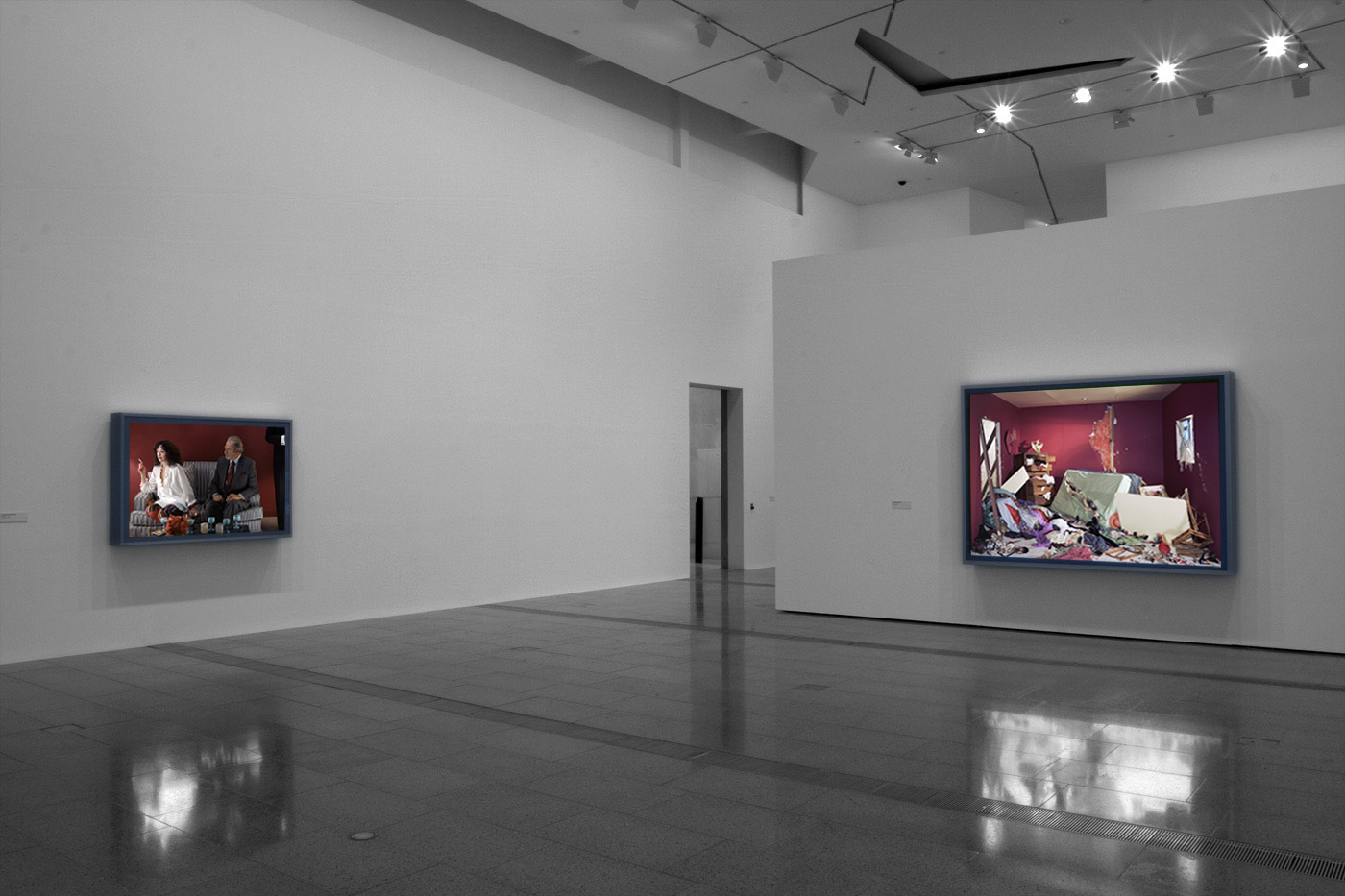
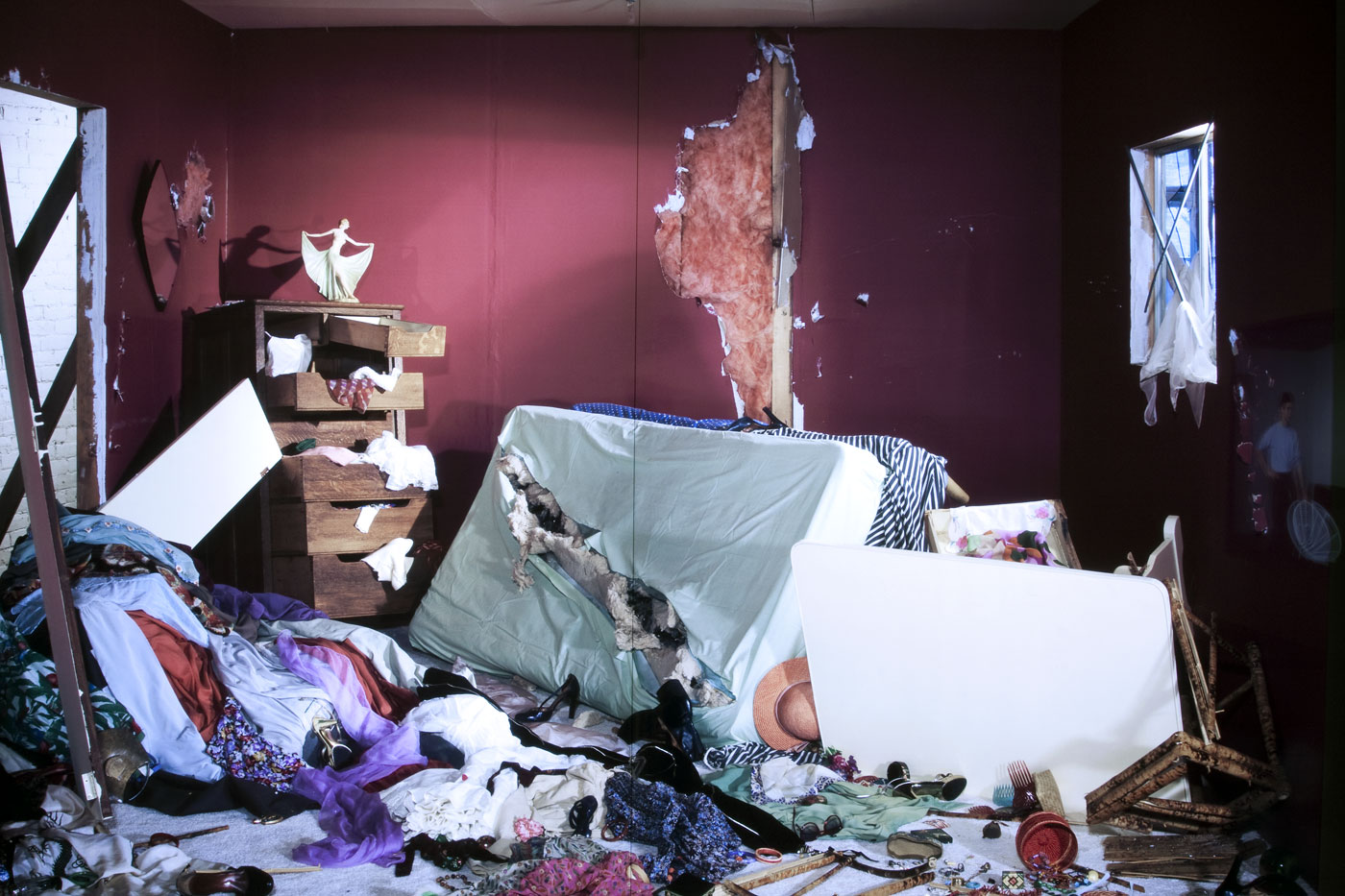
Installation view of Jeff Wall Photographs at NGV Australia showing, at right, The Destroyed Room 1978 Photo: Marcus Bunyan
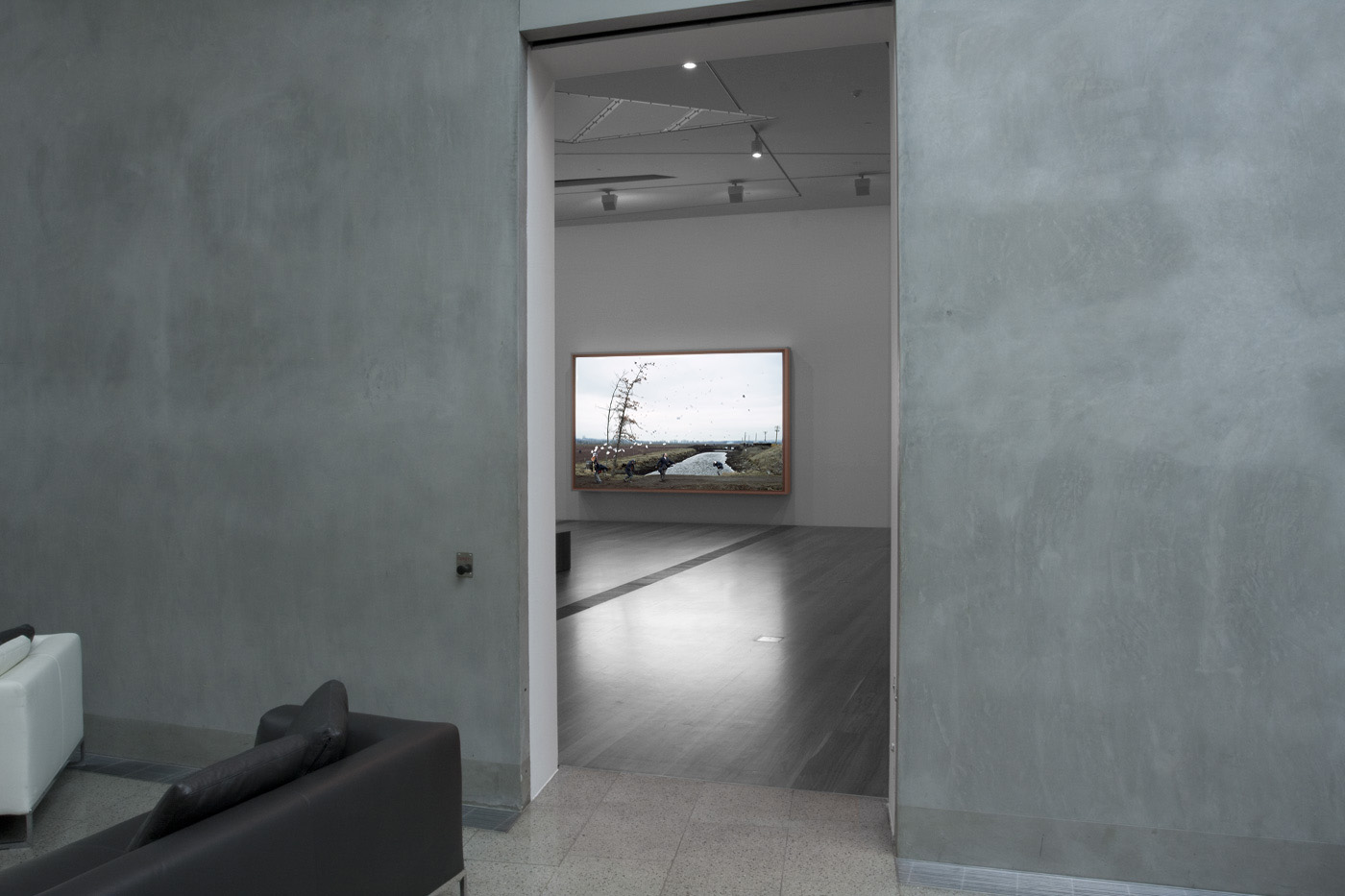
Installation shots of the new Jeff Wall exhibition at NGV Australia. Review to follow in due course.
Many thankx to Jemma Altmeier and all the media team at NGV for all their wonderful help and congratulations to the curators, Susan van Wyk and Dr Isobel Crombie, for their restrained yet contemporary installations and for getting the exhibitions to Melbourne. They look magnificent. Well done!
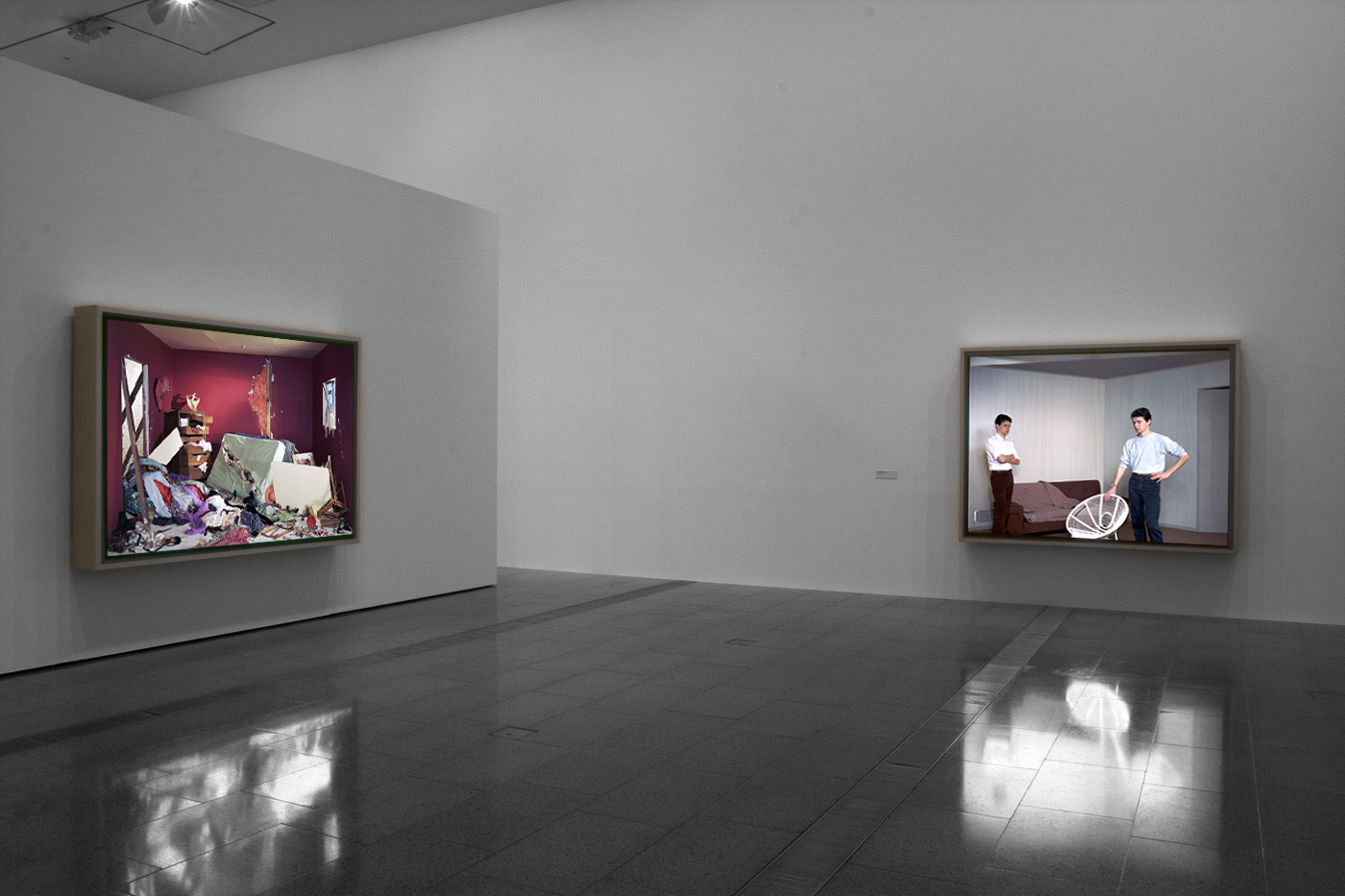
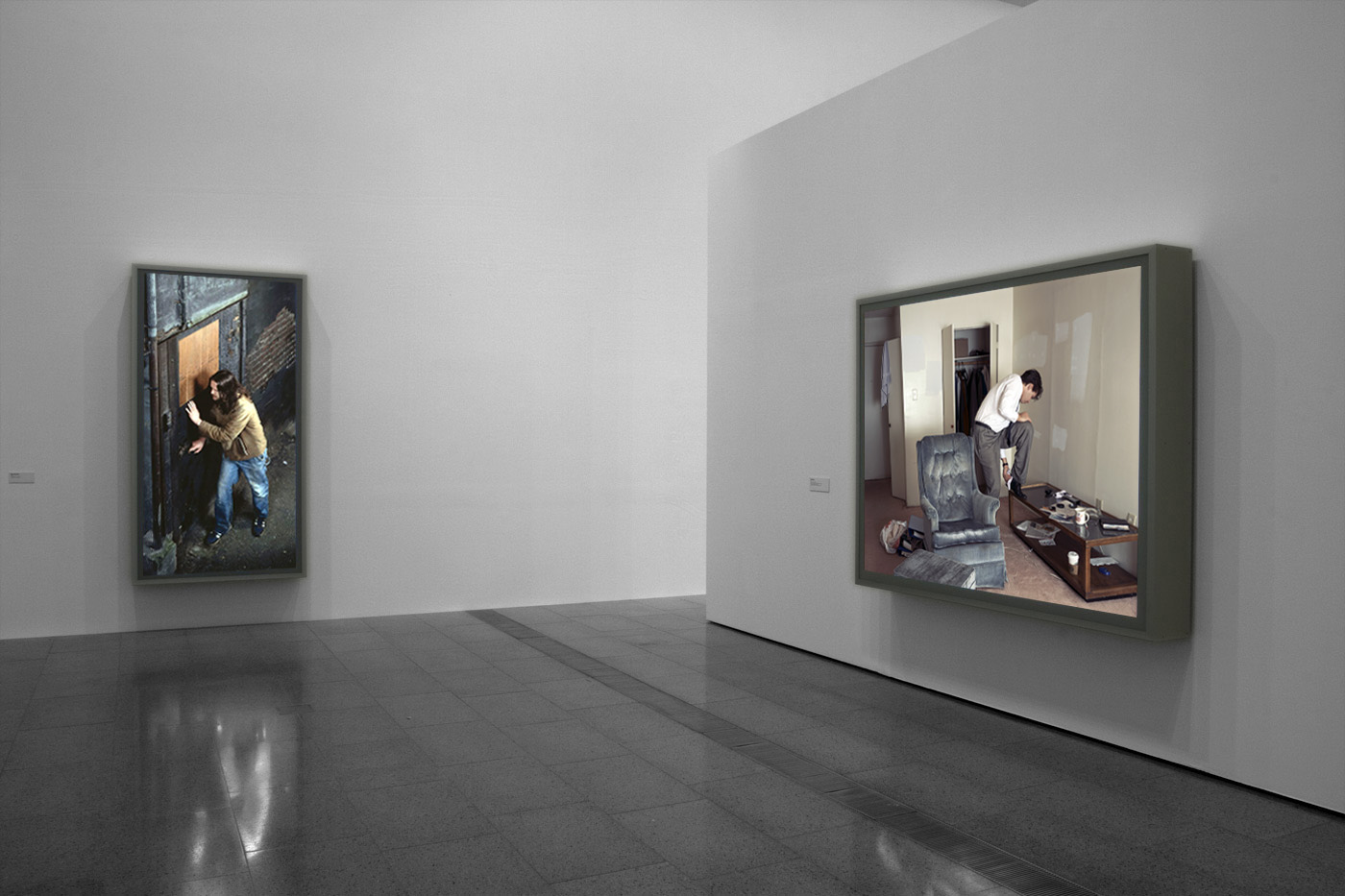
Installation view of Jeff Wall Photographs at NGV Australia showing, at left, The Destroyed Room 1978, and at right, Double Self-Portrait 1979 Photo: Marcus Bunyan
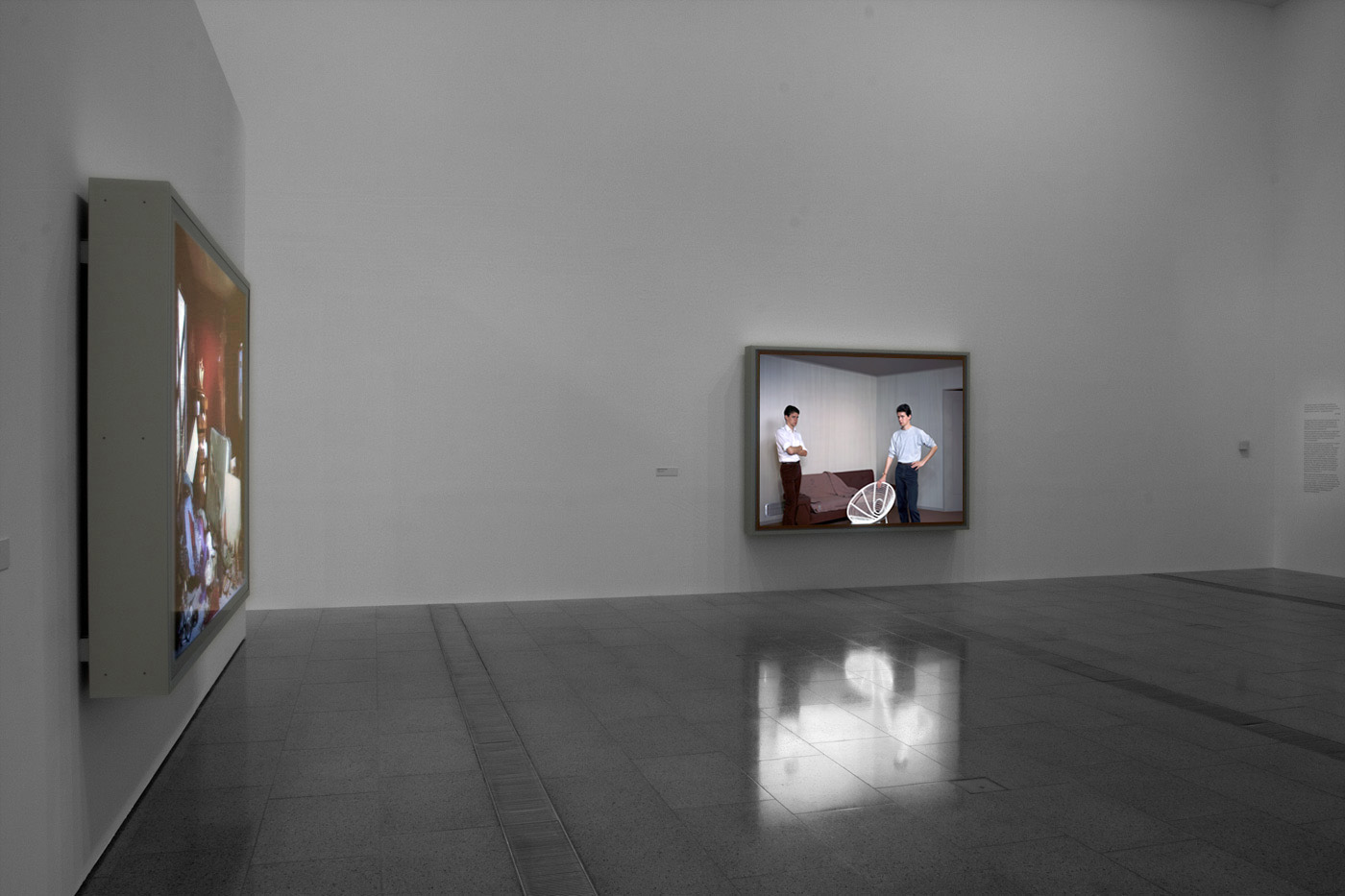
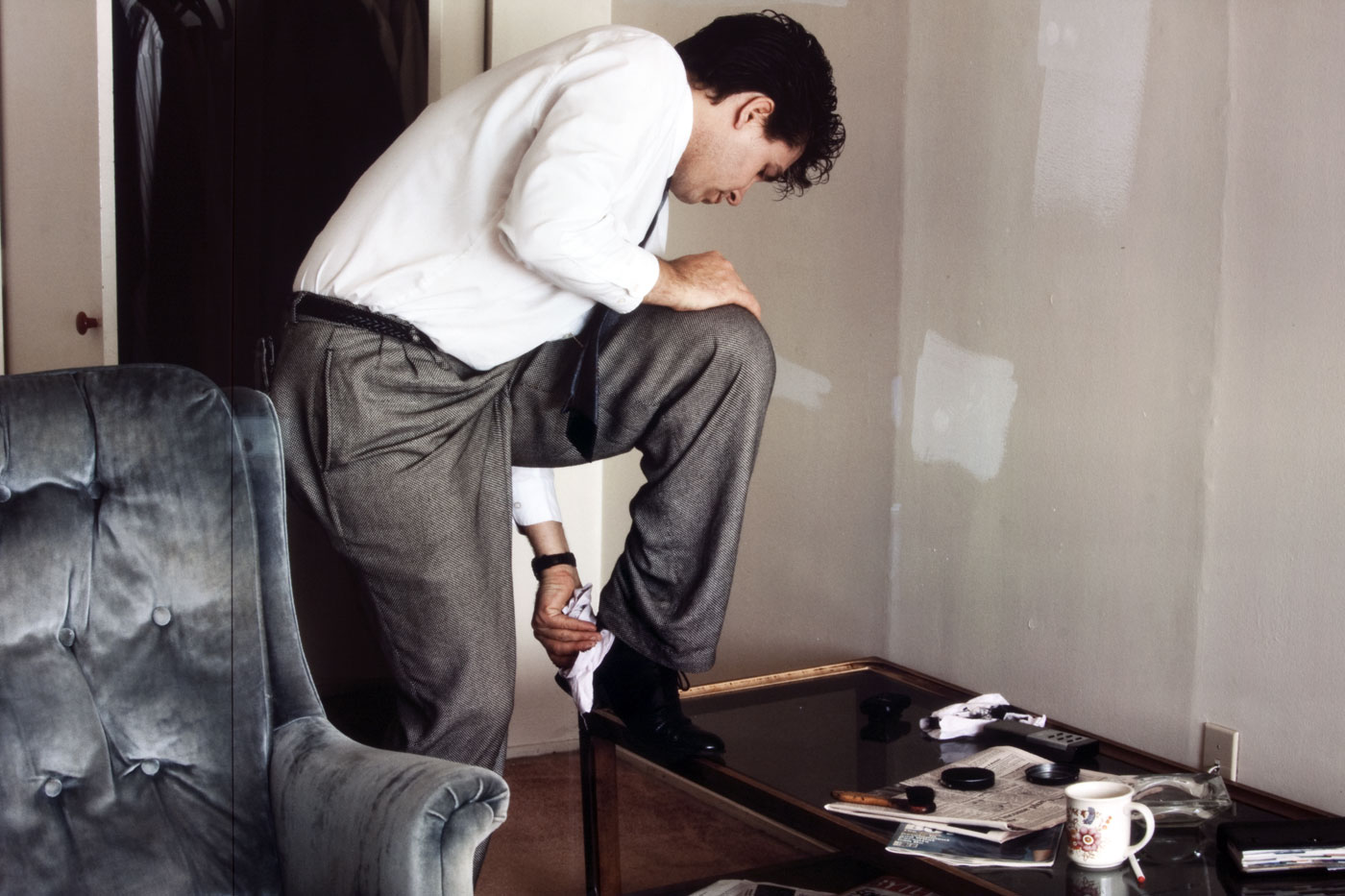
Installation view of Jeff Wall Photographs at NGV Australia showing, at right, Double Self-Portrait 1979 Photo: Marcus Bunyan
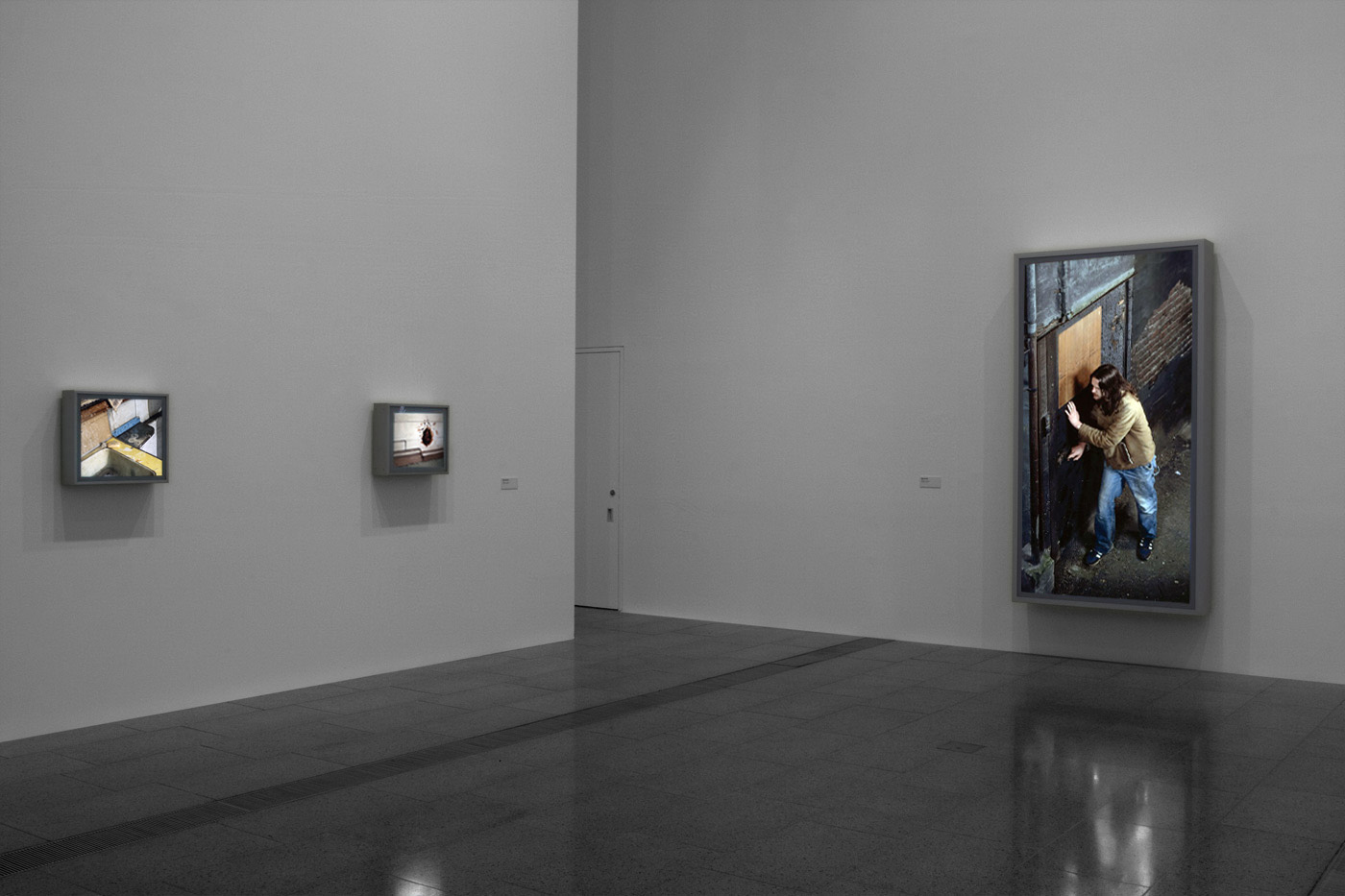
Installation view of Jeff Wall Photographs at NGV Australia showing, at left, Doorpusher 1984, and at right, Polishing 1998 Photo: Marcus Bunyan
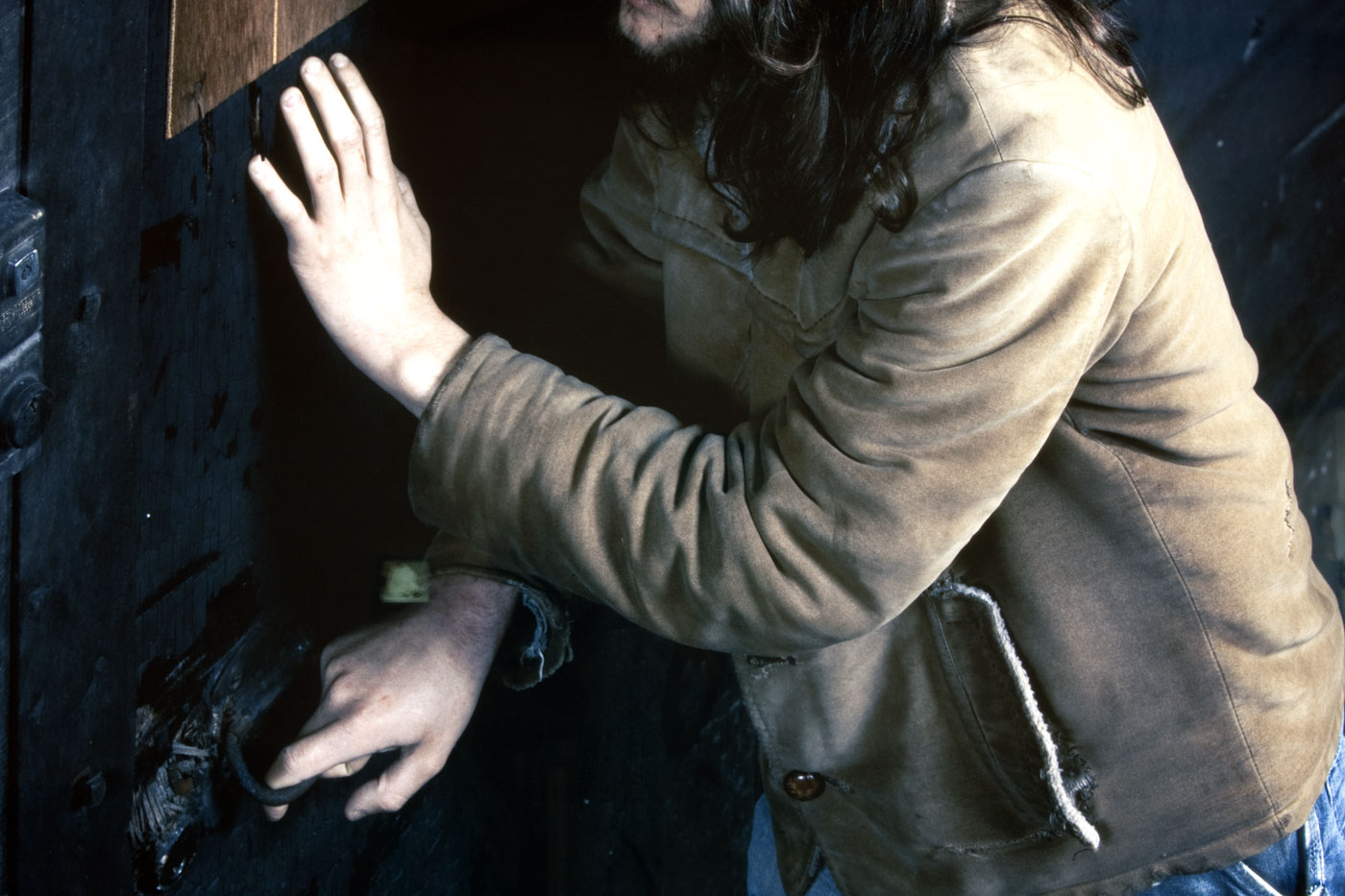
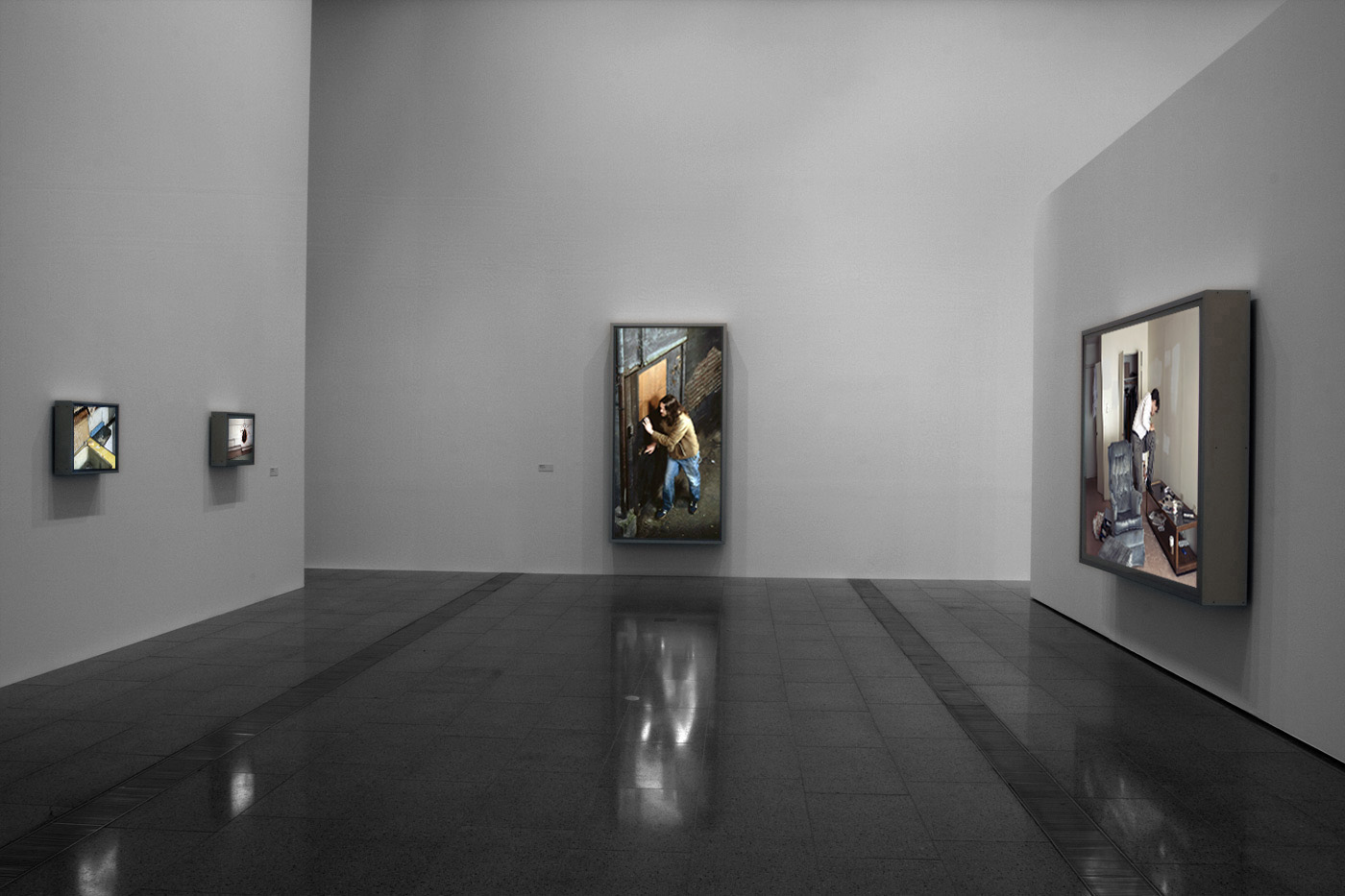
Installation view of Jeff Wall Photographs at NGV Australia showing, at centre, Doorpusher 1984, and at right, Polishing 1998 Photo: Marcus Bunyan
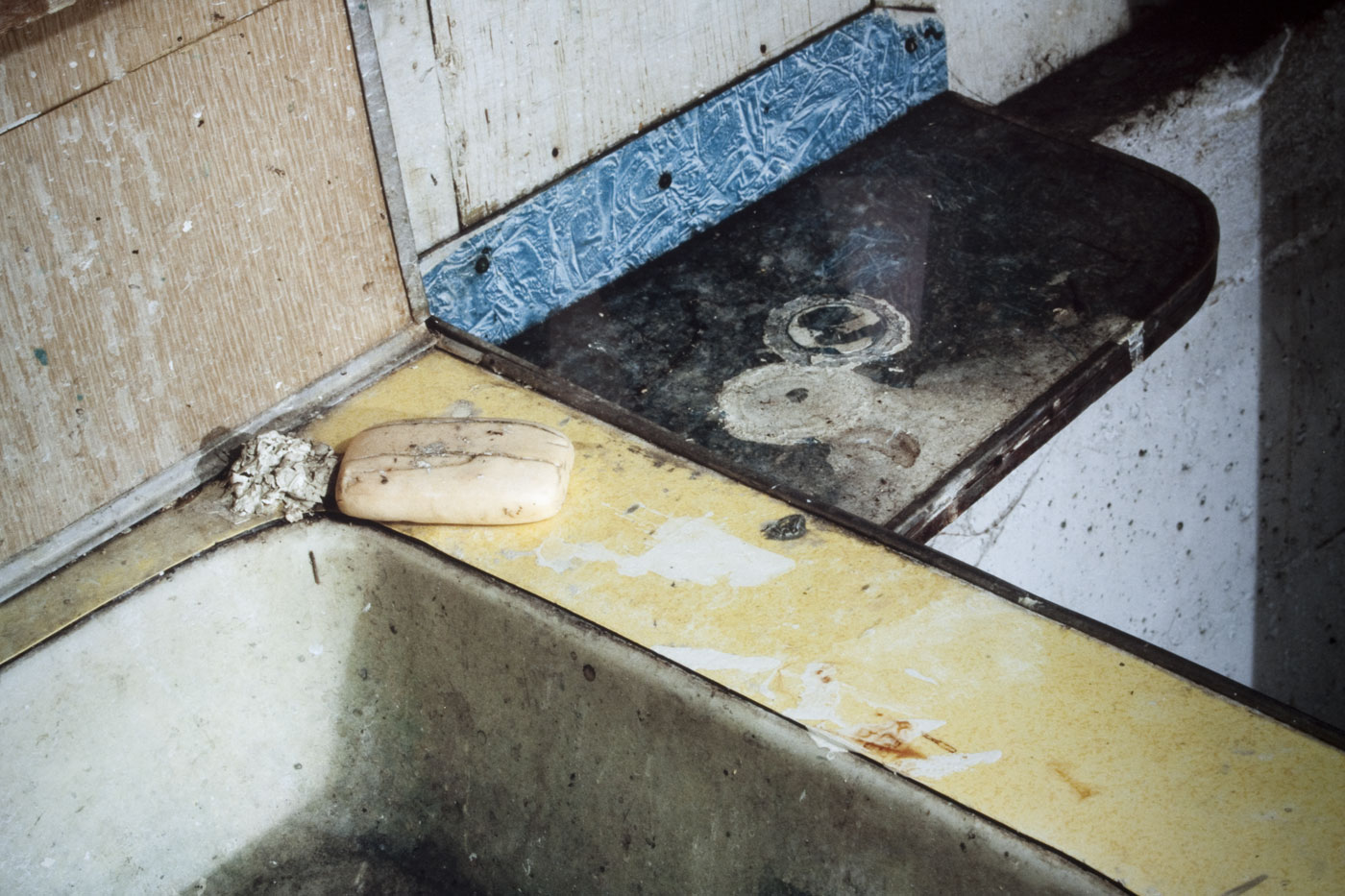
Installation view of Jeff Wall Photographs at NGV Australia showing, at left, Diagonal Composition 1993, and at right, Doorpusher 1984 Photo: Marcus Bunyan
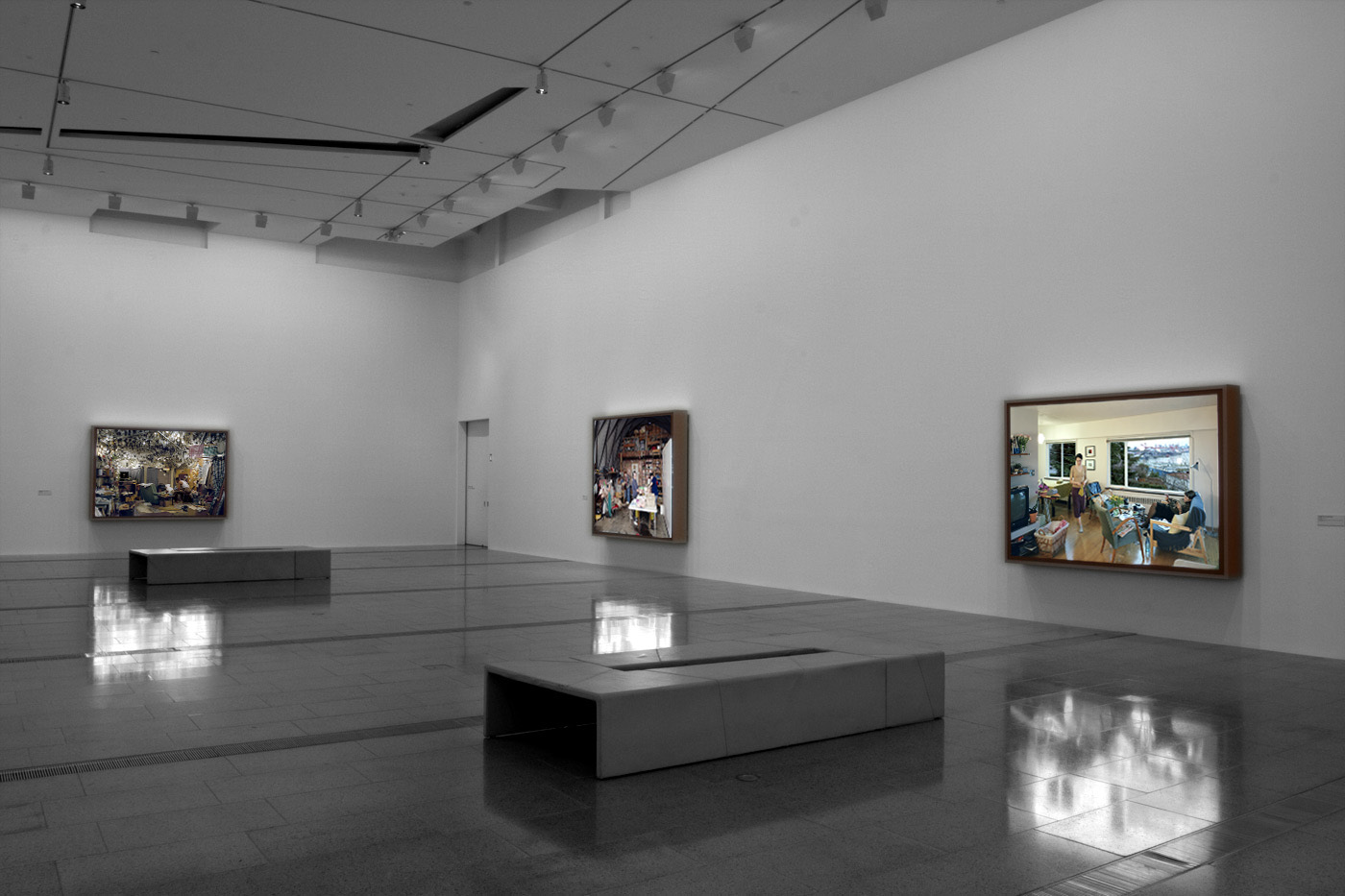
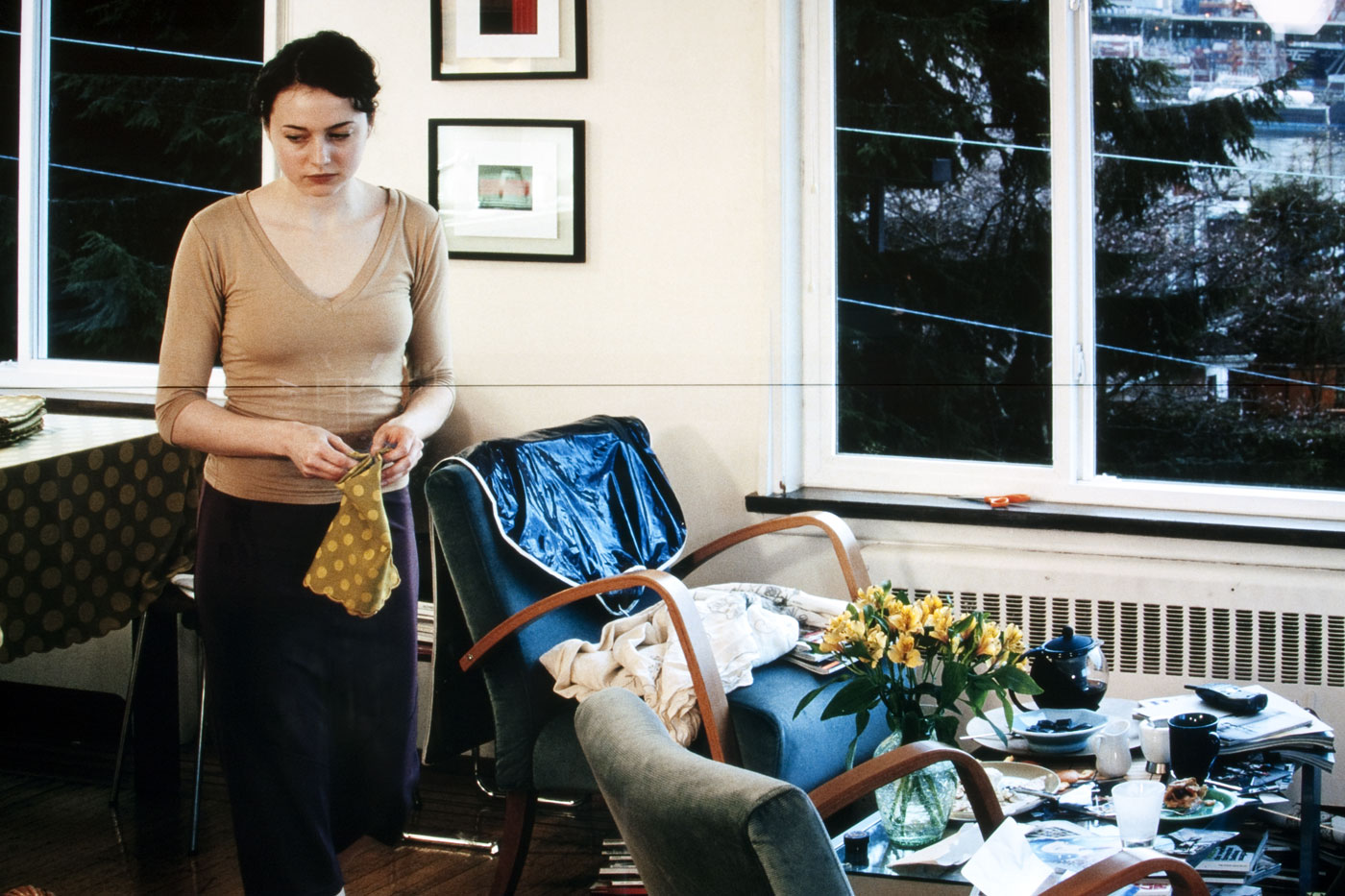
Installation view of Jeff Wall Photographs at NGV Australia showing, at right, A view from an apartment 2004-2005 Photo: Marcus Bunyan
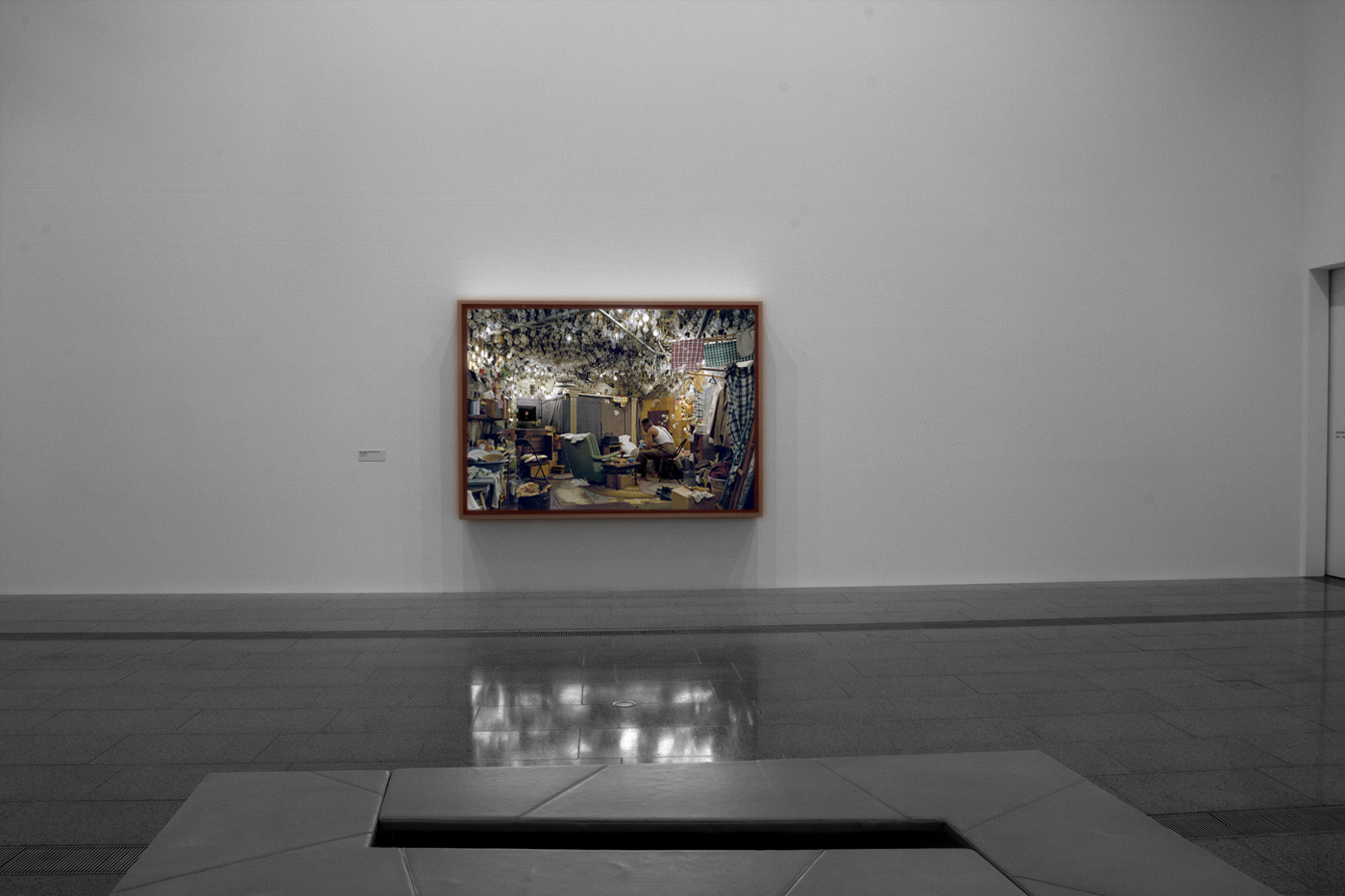
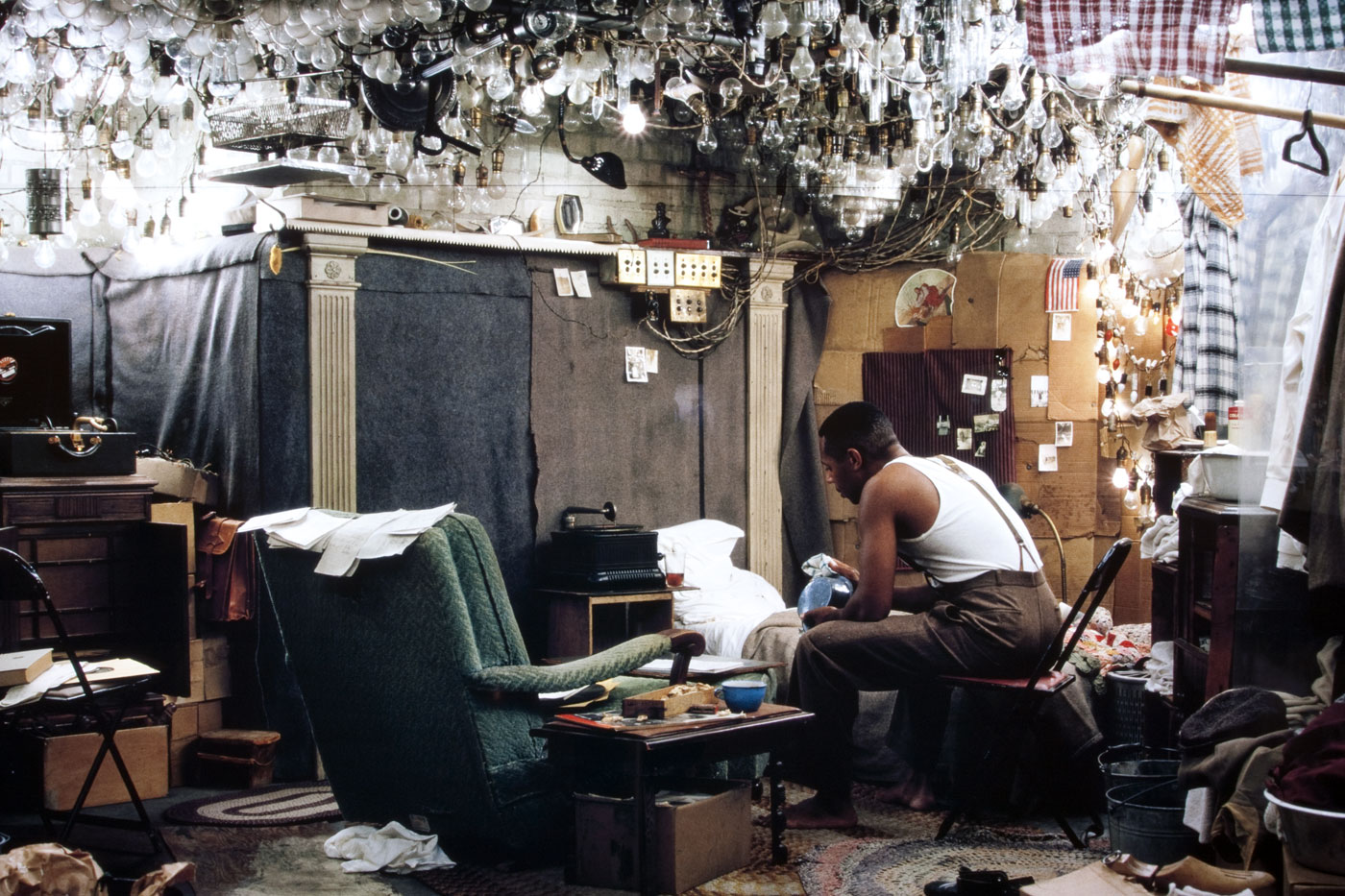
Installation view of Jeff Wall Photographs at NGV Australia showing After ‘Invisible Man’ by Ralph Ellison, the Prologue 1999-2000 Photo: Marcus Bunyan
Exhibition dates: 15th August – 27th September, 2009
Commissioning Curator: Juliana Engberg Coordinating Curator: Charlotte Day
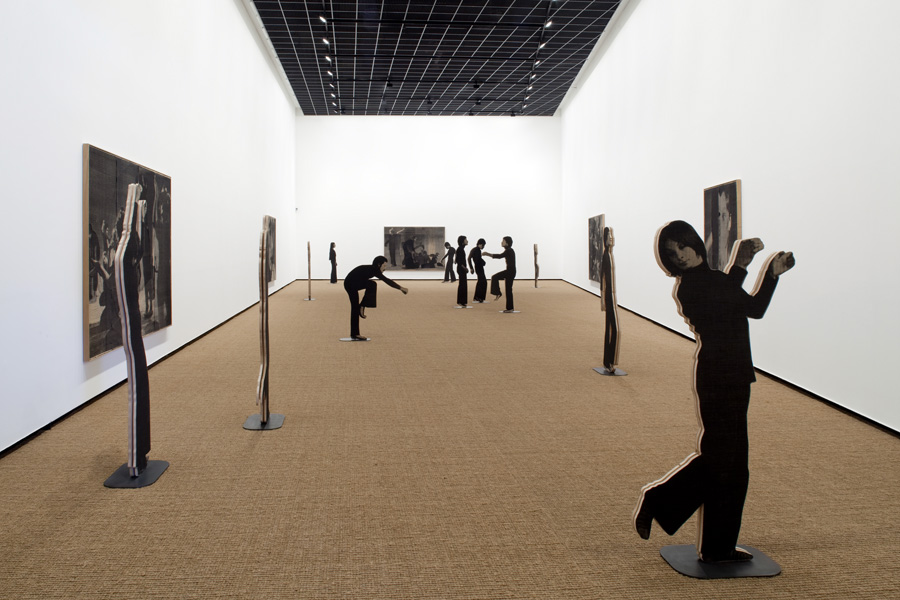
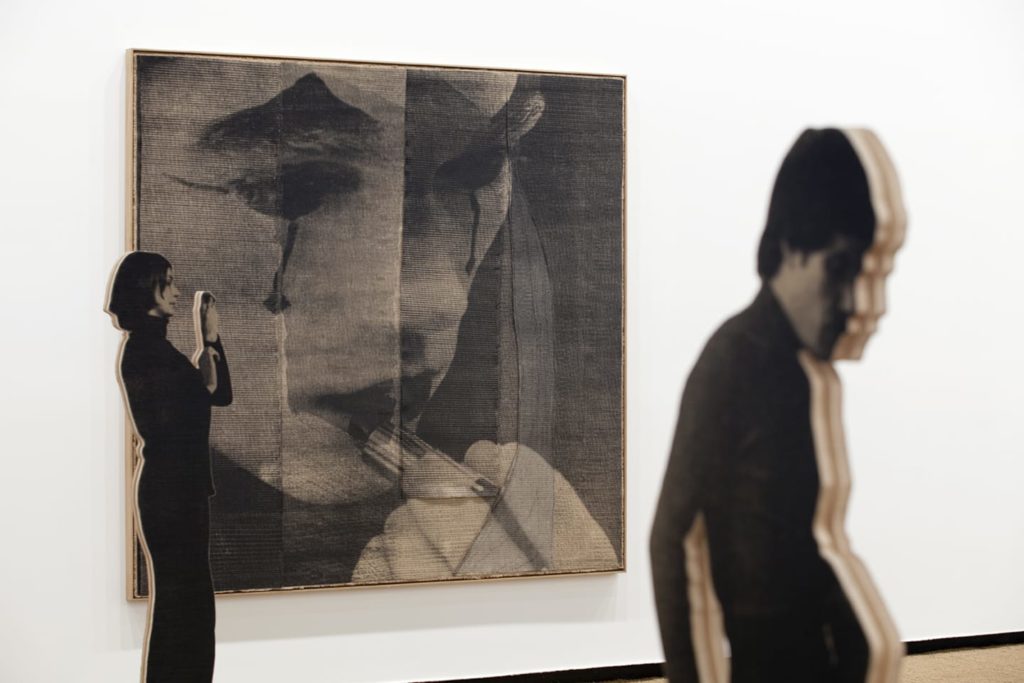
Installation view of Scenes by David Noonan at ACCA Photo: Marcus Bunyan
Thoughts
Limited colour palette of ochres, whites, browns and blacks.
Rough texture of floor covered in Jute under the feet.
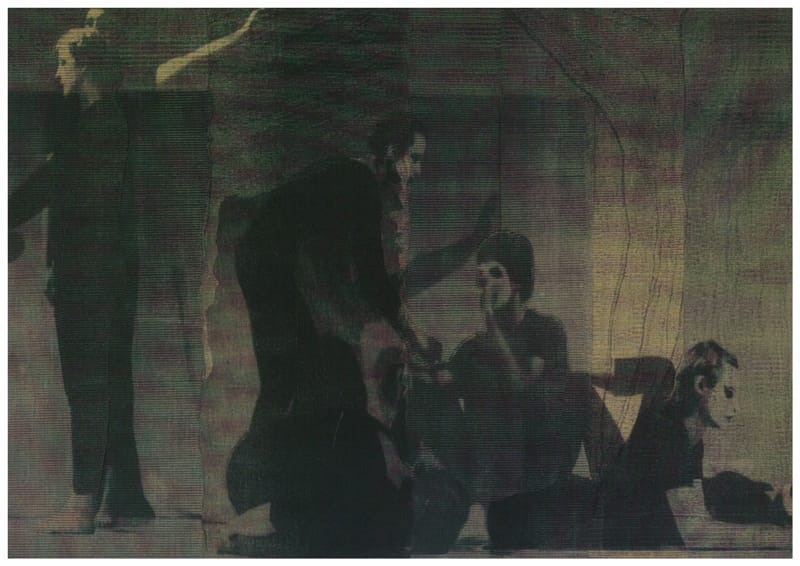
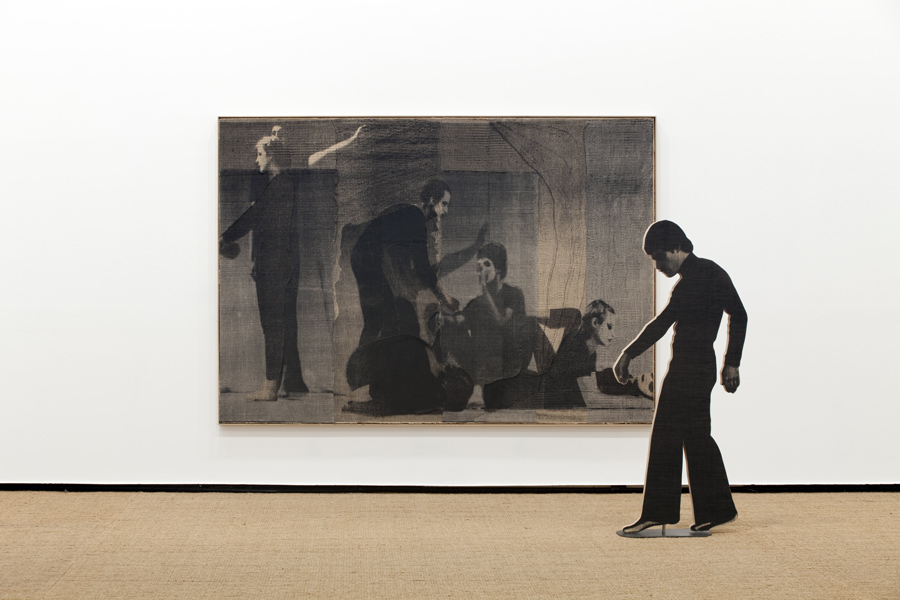
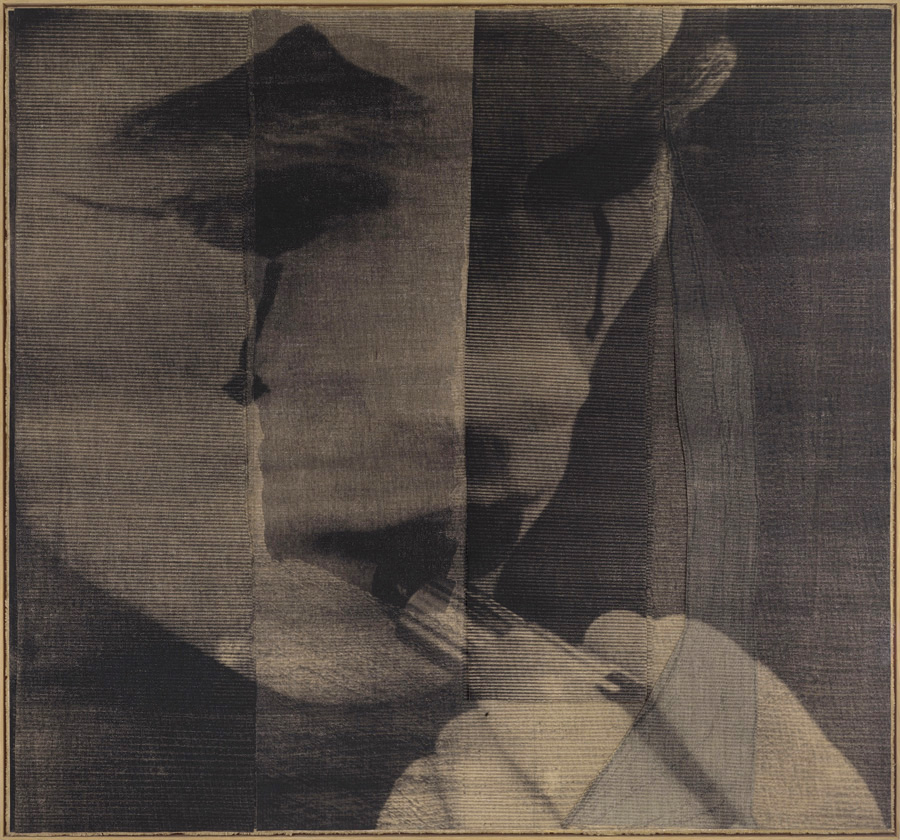
Layered, collaged print media figures roughly printed on canvas – elements of abstraction, elements of figuration.
The ‘paintings’ are magnificent; stripped and striped collages. Faces missing, dark eyes. There is something almost Rembrandt-esque about the constructed images, their layering, like Rembrandt’s Night Watch (1642) – but then the performance element kicks in – the makeup, the lipstick, the tragic / comedic faces.
Mannequin, doll-like cut-out figures, flat but with some volume inhabiting the tableaux vivant.
Twelve standing figures in different attitudes – a feeling of dancing figures frozen on stage, very Japanese Noh theater. Spatially the grouping and use of space within the gallery is excellent – like frozen mime.
The figures move in waves, rising and falling both in the standing figures and within the images on the wall.
Looking into the gallery is like looking through a picture window onto a stage set (see above image).
“The fracturing of identity, the distortion of the binaries of light and dark, absence/presence in spatio-temporal environments.
The performance as ritual challenging a regularized and constrained repetition of norms.” (Judith Butler).
Excellent, thought provoking exhibition.
Dr Marcus Bunyan
Many thankx to ACCA for allowing me to publish the photographs in the posting. Please click on the photographs for a larger version of the image.
Installation views of Scenes by David Noonan at ACCA Photos: Marcus Bunyan
Noonan often works with found photographic imagery taken from performance manuals, textile patterns and archive photographs to make densely layered montages. These works at once suggest specific moments in time and invoke disorientating a-temporal spaces in which myriad possible narratives emerge. The large-scale canvases framing this exhibition depict scenes of role-playing, gesturing characters, and masked figures set within stage-like spaces. Printed on coarsely woven jute, collaged fabric elements applied to the surface of the canvases further signal the cutting and splicing of images.
Noonan’s new suite of figurative sculptures, comprise life size wooden silhouettes faced with printed images of characters performing choreographed movements. While the figurative image suggests a body in space, the works’ two dimensional cut-out supports insist on an overriding flatness which lends them an architectural quality – as stand-ins for actual performers and as a means by which to physically navigate the exhibition space.
Press release from the Chisenhale Gallery website [Online] Cited 20/09/2009. No longer available online
For the Helen Macpherson Smith Commission, he will bring the characters depicted in his signature collage works off the wall and onto an imagined ‘stage’. Several life-size, wooden cut-out figures will inhabit the ACCA exhibition gallery, frozen in choreographed movements.
Noonan’s dancing figures will be framed by several large-scale canvas works, printed photographic and film imagery gleaned from performance manuals, textile patterns and interior books. Printed on coarse woven jute, he cuts, slices and montages images together constructing compositions that hover between two and three dimensionality, positive and negative space, past and present, stasis and action.
“‘Scenes’ recalls the experimental workshops and youth-focused exuberance of a more optimistic era, coinciding with the artists own childhood in the 1970s” says curator Charlotte Day. “With these new works, Noonan re-introduces the idea of ritual, of creating a temporal space beyond reason that is filled with both danger and hope.”
David Noonan (Australian, b. 1969) is the fifth recipient of the Helen Macpherson Smith Commission, one of the most significant and generous commissions in Australia. The partnership between ACCA and the Helen Macpherson Smith Trust offers Victorian artists the opportunity to create an ambitious new work of art, accompanied by an exhibition in ACCA’s exhibition hall.
Press release from the ACCA website [Online] Cited 20/09/2009. No longer available online
David Noonan returned to Melbourne with this significant project which extended his abiding interest in time and space. Using ACCA’s large room as a field of encounter, he created an ensemble of works in 2 and 3 dimensions that make purposeful use of the audience’s own navigation through the gallery. Visitors walking between David’s free-standing figures performed like time travellers in a landscape that had been paused. His enigmatic wall based works appeared to trap momentary scenes in a layered time warp.
This major commission allowed for an ambitious project by a Victorian artist who had reached a significant platform in their own practice. Elements of the commission were gifted to a Victorian regional gallery. In this case the recipient was Bendigo Art Gallery.
Text from the ACCA website [Online] Cited 24/04/2019
Installation views of Scenes by David Noonan at ACCA Photos: Marcus Bunyan
Australia Centre for Contemporary Art (ACCA) 111 Sturt Street, Southbank, Victoria 3006, Australia Phone: 03 9697 9999
Opening Hours: Tuesday to Friday 10am – 5pm Weekends & Public Holidays 11am – 5pm Open all public holidays except Christmas Day and Good Friday
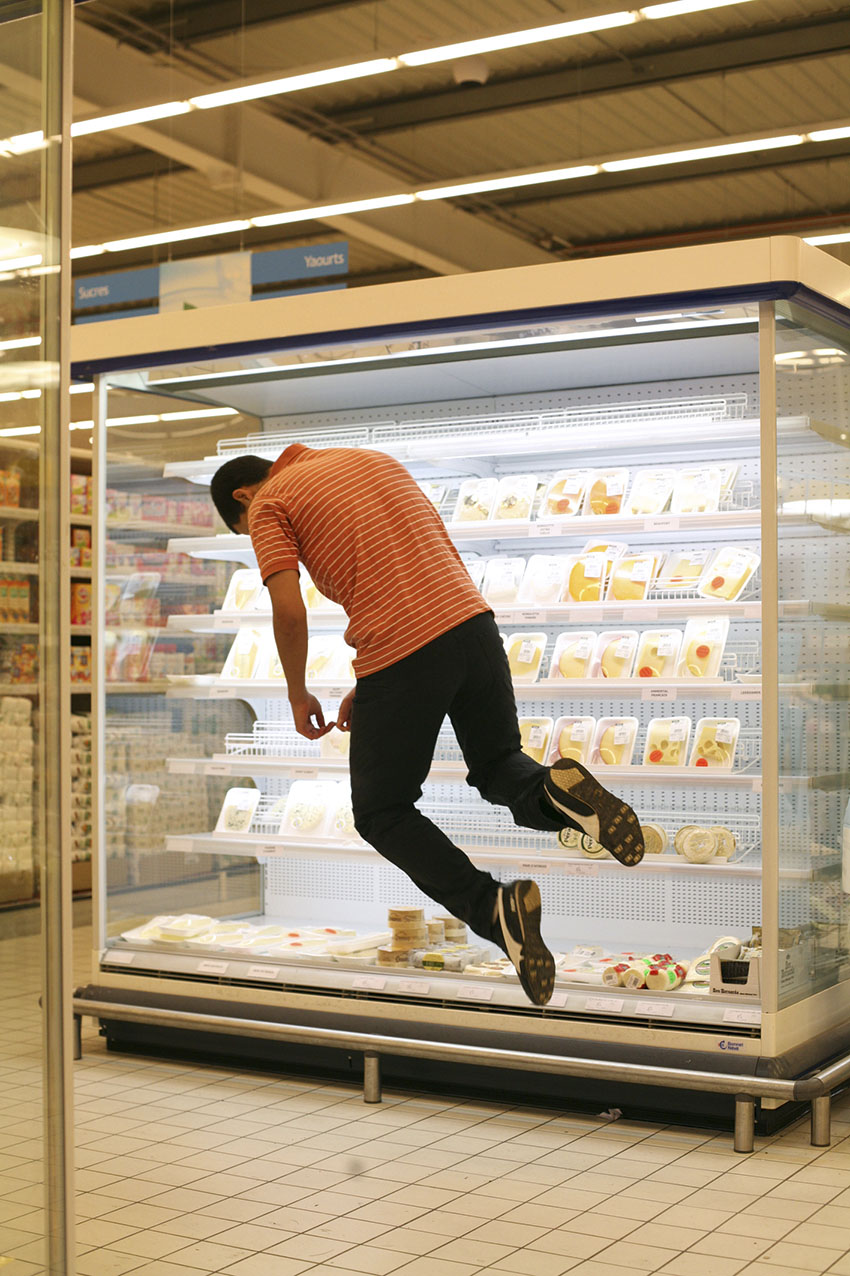
These images form an interesting body of work: levitating bodies suspended between heaven and earth, neither here nor there, form a hyper-real image grounded in the context of the fluorescent isles of French supermarkets. The mainly anonymous humans look like mannequins in their inertness, frozen at the moment of throwing themselves/being thrown into the consumer environment. After his brilliant series La Chute (The Fall) Darzacq has taken people gathered in a casting call from around the town of Rouen and made their frozen bodies complicit in the mass production of the supermarket and the mass consumption of the image as tableaux vivant: the mise en scène directed by the photographer to limited effect. There is something unsettling about these images but ultimately they are unrewarding, as surface as the environment the bodies are suspended in, and perhaps this is the point.
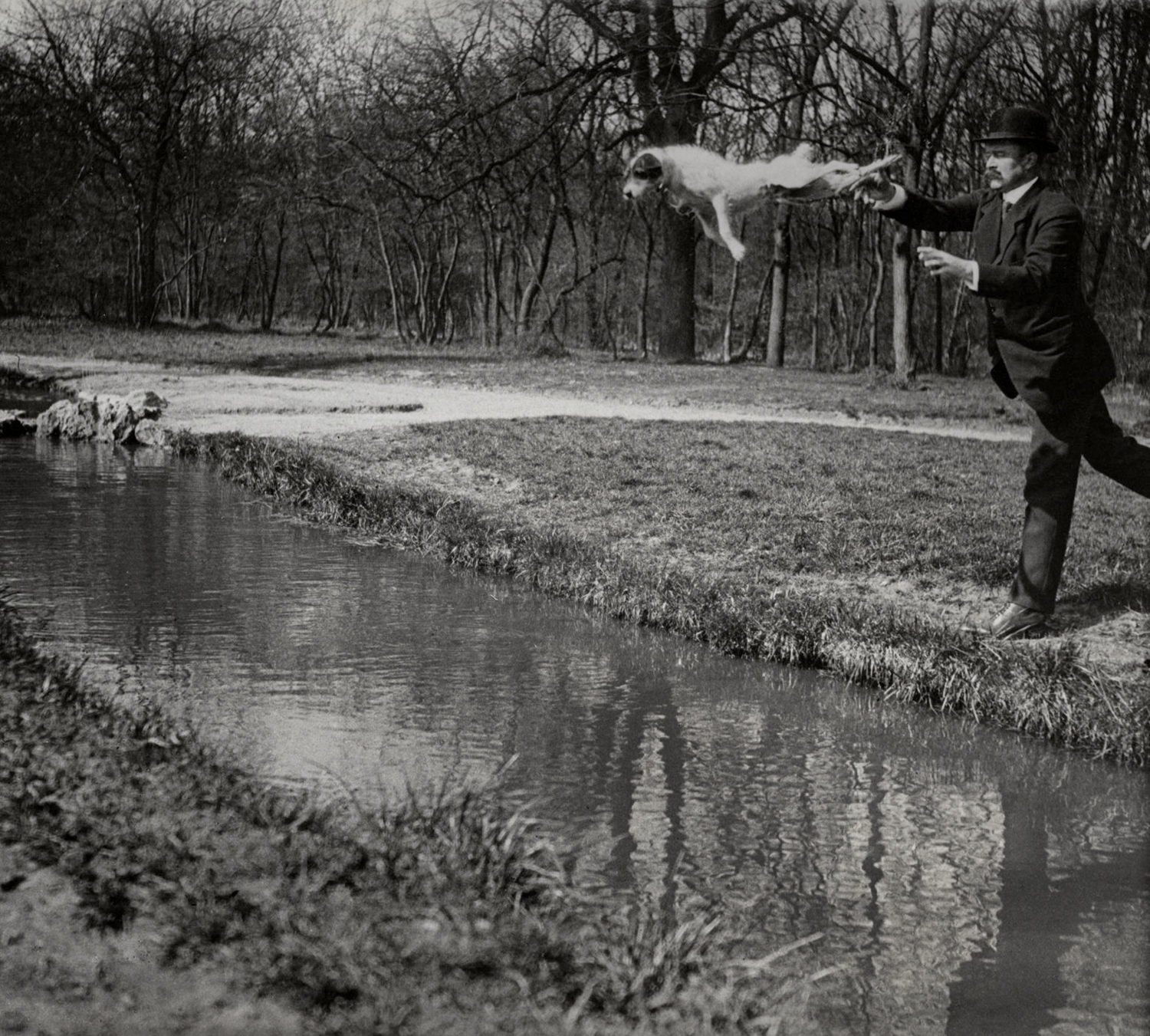
Suspension of bodies is not a new idea in photography. Jacques Henri Lartigue used the freeze frame to good effect long before Henri Cartier-Bresson came up with his ‘decisive moment’: playing with the effect of speed and gravity in an era of Futurism, Lartigue used the arrested movement of instant photography then afforded by smaller cameras and faster film to capture the spirit of liberation in the ‘Belle Epoque’ period before the First World War.
“All the jumping and flying in Lartigue’s photographs, it looks like the whole world at the turn of the century is on springs or something. There’s a kind of spirit of liberation that’s happening at the time and Lartigue matches that up with what stop action photography can do at the time, so you get these really dynamic pictures. And for Lartigue part of the joke, most of the time, is that these people look elegant but they are doing these crazy stunts.”1
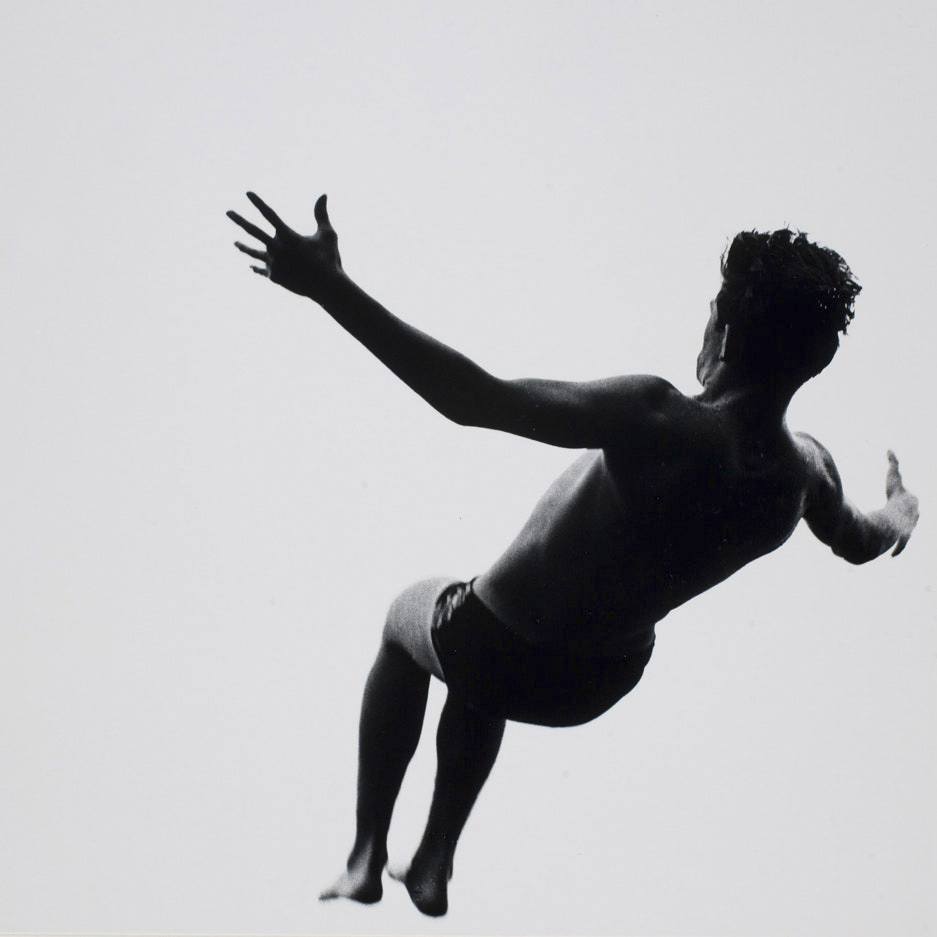
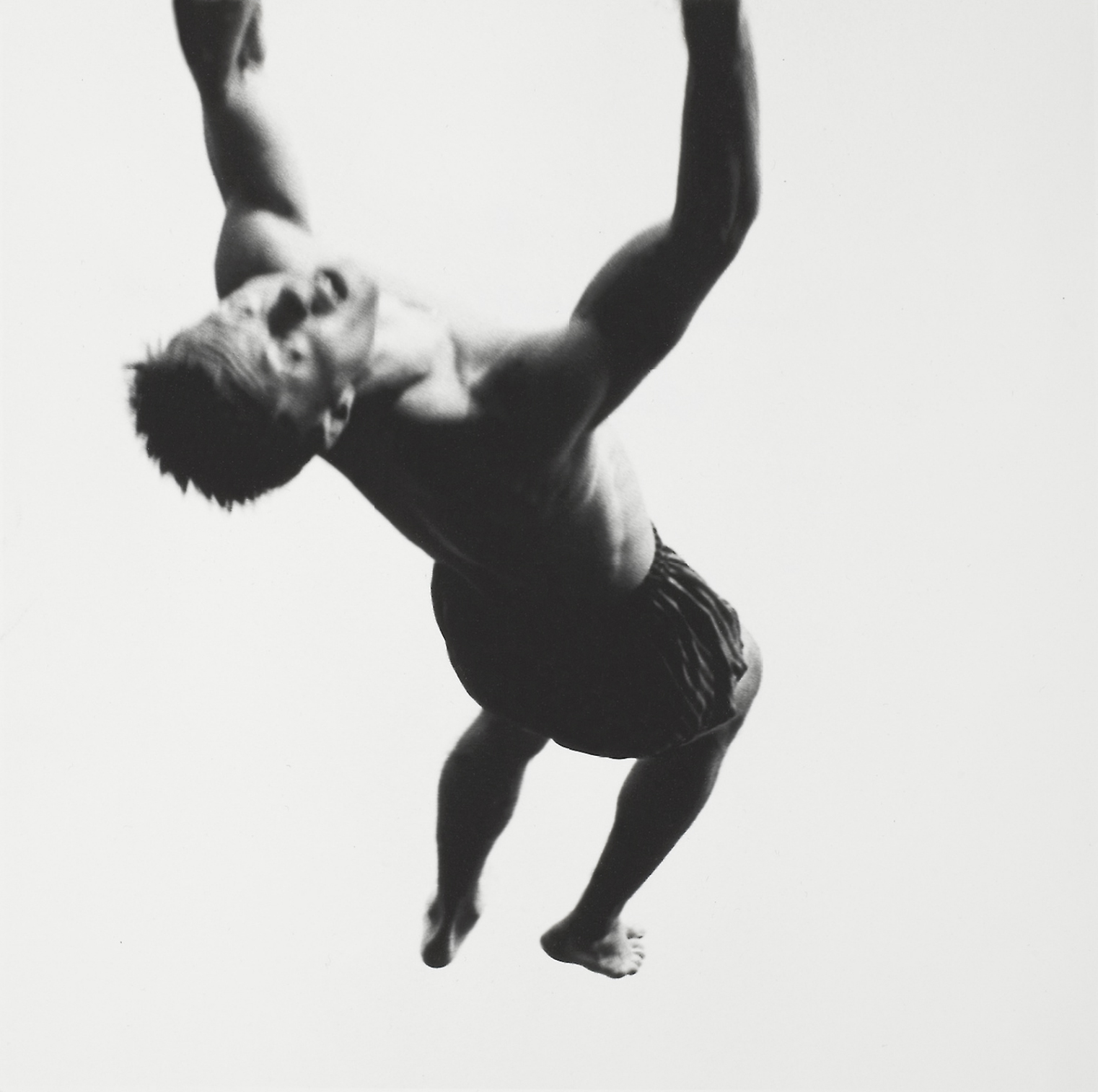
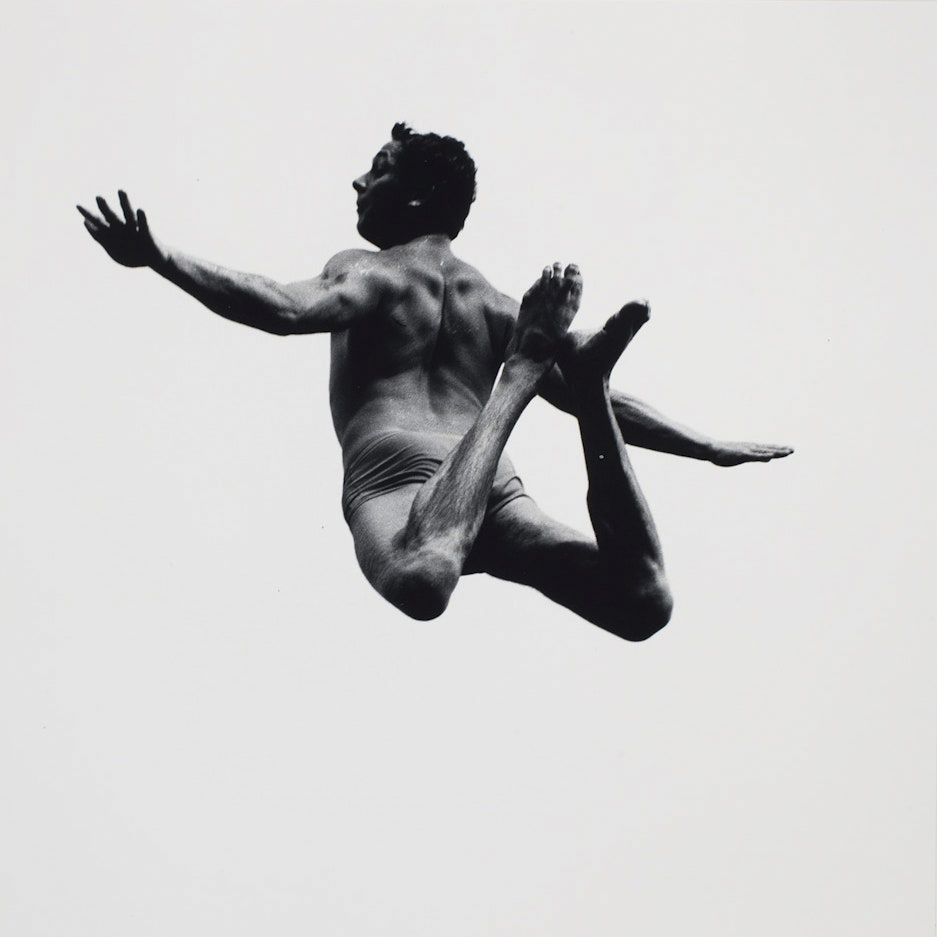
One of the greatest, if not the greatest ever, series of photographs of levitating bodies is that by American photographer Aaron Siskind. Called Pleasures and Terrors of Levitation (sometimes reversed as Terrors and Pleasures of Levitation as on the George Eastman House website) the images feature divers suspended in mid-air with the sky as their blank, background canvas. The images formal construction makes the viewer concentrate on the state of the body, its positioning in the air, and the look on the face of some of the divers caught between joy and fear.
“Highly formal, yet concerned with their subject as well as the idea they communicate, the ‘Pleasures and Terrors of Levitation’ photographs depict the dark shapes of divers suspended mid-leap against a blank white sky. Shot with a hand-held twin-lens reflex camera at the edge of Lake Michigan in Chicago, the balance and conflict suggested by the series’ title is evident in the divers’ sublime contortions.”2
Perhaps because of their air of balance and conflict we can return to these vibrant images again and again and they never loose their freshness, intensity and wonder. The same cannot be said of Denis Darzacq’s Hyper photographs. Slick and surface like the consumer society on which they comment the somnambulistic bodies are more like floating helium balloons, perhaps even tortured souls leaving the earth. Reminiscent of the magicians trick where the girl is suspended and a hoop passed around her body to prove the suspension is real these photographs really are more smoke and mirrors than any comment on the binary between being and having as some commentators (such as Amy Barrett-Lennard, Director Perth Institute of Contemporary Arts) have suggested. There is no spirit of liberation here, no sublime revelation as the seemingly lifeless bodies are trapped between the supermarket shelves, as oblivious to and as anonymous as the products that surround them. The well shot images perhaps possess a sense of fun, if I am being generous, as Darzacq plays with our understanding of reality… but are they more than that or is the Emperor just wearing very thin consumer clothing?
Dr Marcus Bunyan
1/ Kevin Moore (Lartigue biographer) quoted in “Genius of Photography,” on the BBC website [Online] Cited 15/03/2009
2/ Text from the Museum of Contemporary Photography website [Online] Cited 15/03/2009 (no longer available)
Many thankx to the Australian Centre for Photography for allowing me to publish the Darzacq photographs in the posting. Please click on the photographs for a larger version of the image. All other images are used under “fair use” for the purpose of education, research and critical discourse.
Denis Darzacq (French, b. 1961) Hyper #8 2007
“The astonishing photographs that make up Hyper involve no digital manipulation, just close collaboration between young dancers and sportspeople as they jump for the camera to form strange, exaggerated poses and body gestures. Denis Darzacq was drawn to the trashy, consumerist nature of the French Hypermarkets (the equivalent of our supermarkets) and the hyper coloured backgrounds they provided. These supermarkets offered a sharp juxtaposition to the sublime, almost-spiritual bodies that appear to float in their aisles.
Hyper is the latest series of works by French photographer Denis Darzacq, who continues to explore the place of the individual in society, a theme which has been crucial to his work in the last few years.”
Text from the ACP website [Online] Cited 15/03/2009. No longer available online
Jacques Henri Lartigue (French, 1894-1986) Bichonnade, 40, Rue Cortambert, Paris 1905 Gelatin silver print
Jacques Henri Lartigue (French, 1894-1986) Mr Folletete (Plitt) et Tupy, Paris, March 1912 1912 Gelatin silver print
Jacques Henri Lartigue (French, 1894-1986) Fuborg 1929 Gelatin silver print
Herni Cartier-Bresson (French, 1908-2004) Behind Saint Lazare Station, Paris, France 1932 Gelatin silver print
Aaron Siskind (American, 1903-1991) Pleasures and Terrors of Levitation #37 1956 Gelatin silver print
Aaron Siskind (American, 1903-1991) Pleasures and Terrors of Levitation #47 1954 Gelatin silver print
Aaron Siskind (American, 1903-1991) Pleasures and Terrors of Levitation #93 1961 Gelatin silver print
Aaron Siskind (American, 1903-1991) Pleasures and Terrors of Levitation #99 1956 Gelatin silver print
Aaron Siskind (American, 1903-1991) Pleasures and Terrors of Levitation #491 1956 Gelatin silver print
Denis Darzacq (French, b. 1961) Hyper #3 2007
Hyper picks up on La Chute while explicitly focusing the artist’s message on the consumerism which hovered in the background of several previous series. In Casques de Thouars Darzacq explored the connecting power and the limits of a consumer product; here the critique is more biting. Hyper opposes bodies in movement and the saturated, standardised space of mass distribution outlets. In this totally commercial setting, the body’s leap expresses the freedom and unhampered choice of its movement. It is a clear challenge to the marketing strategies which seek to control our behaviour. Some of the figures, glowing with an aura, impose glory and give off a sense of spirituality in total contrast with the temples of consumption in which they are found.
Many thankx to the Nelson-Atkins Museum of Art for allowing me to publish the photographs in the posting. Please click on the photographs for a larger version of the image.
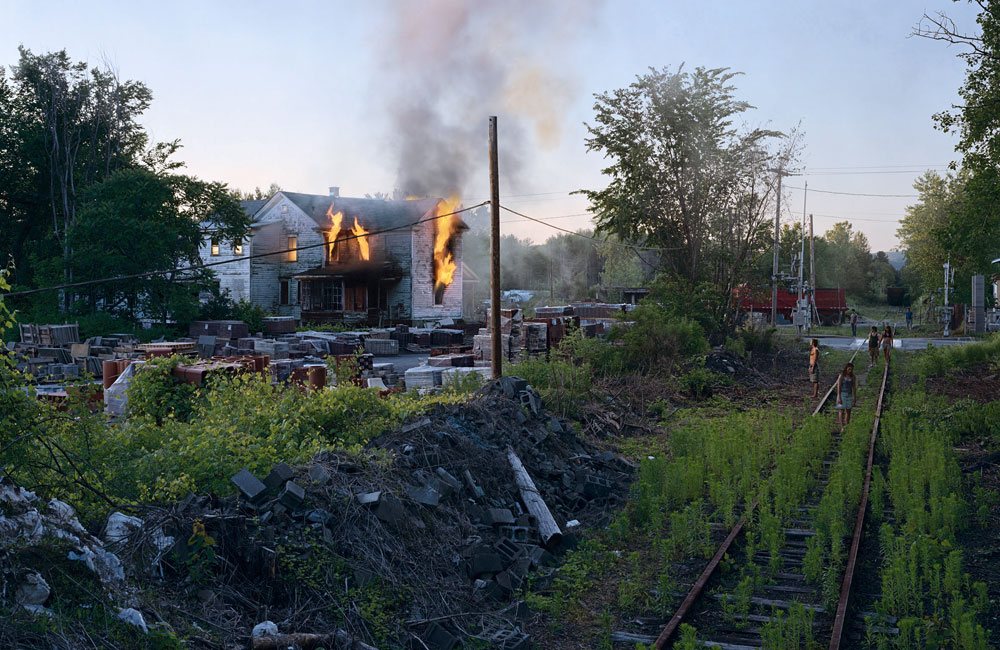
Gregory Crewdson (American, b. 1962) Untitled from the series Beneath the Roses 2006 Digital pigment print
Famed photographer Gregory Crewdson will present the inaugural discussion in a series sponsored by the Photography Society of The Nelson-Atkins Museum of Art, Kansas City…
Crewdson’s work has been widely exhibited and reviewed. He makes large-scale photographs of elaborate and meticulously staged tableaux, which have been described as “micro-epics” that probe the dark corners of the psyche. Working in the manner of a film director, he leads a production crew, which includes a director of photography, special effects and lighting teams, casting director and actors. He typically makes several exposures that he later digitally combines to produce the final image.
“Crewdson is one of the most daring and inventive contemporary artists using photography,” said Keith F. Davis, Curator of Photography at the Nelson-Atkins. “His meticulously crafted works are immensely rich in both narrative and psychological terms. They prod us to rethink our ‘usual’ relationship to photographs as physical objects and as records of worldly fact. Crewdson is a genuinely important figure in today’s art world. He has an international reputation and has influenced an entire generation of younger photographic artists.”
Attendance to the program is free.
Text from ArtDaily.org website
Gregory Crewdson (American, b. 1962) Untitled from the series Beneath the Roses 2005 Digital pigment print
Gregory Crewdson (American, b. 1962) Untitled from the series Beneath the Roses 2005 Digital pigment print
Gregory Crewdson (American, b. 1962) Untitled (Sunday Roast) from the series Beneath the Roses 2005 Digital pigment print
Nelson-Atkins Museum of Art 4525 Oak Street Kansas City, MO 64111
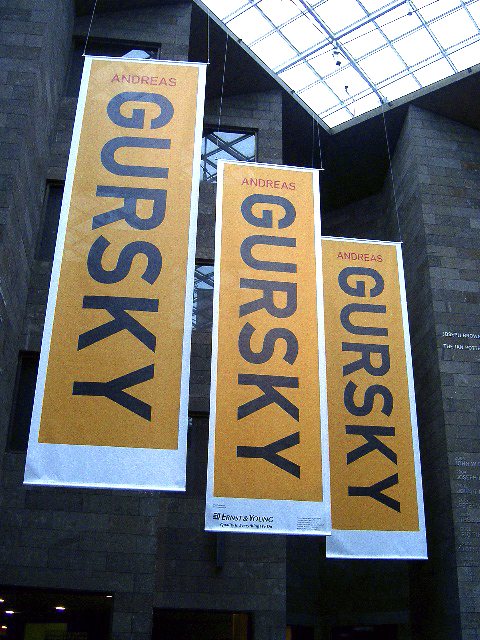
Andreas Gursky banner at NGV International exhibition, Melbourne
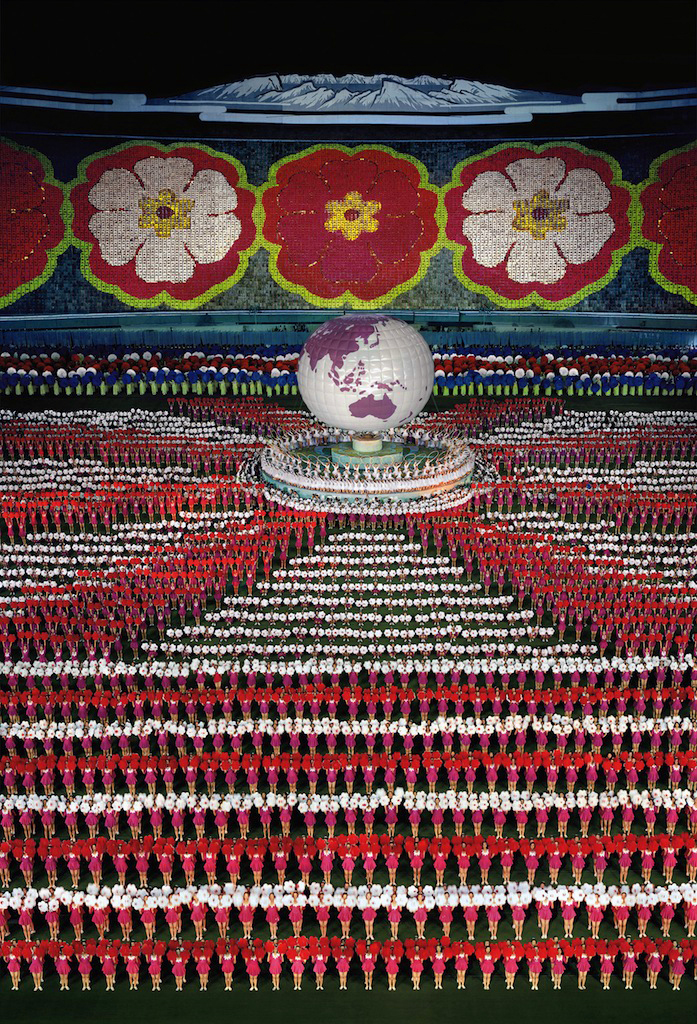
A large but plain crowd assembled for the opening of the first exhibition by world renowned German photographer Andreas Gursky at the National Gallery of Victoria in St Kilda Road, Melbourne. After some lively conversation with friends and following the opening speeches we wandered into a large clean gallery space with minimal design elements. The use of space within the gallery allowed the work to speak for itself. It is a minimal hang and the exhibition works all the better for this.
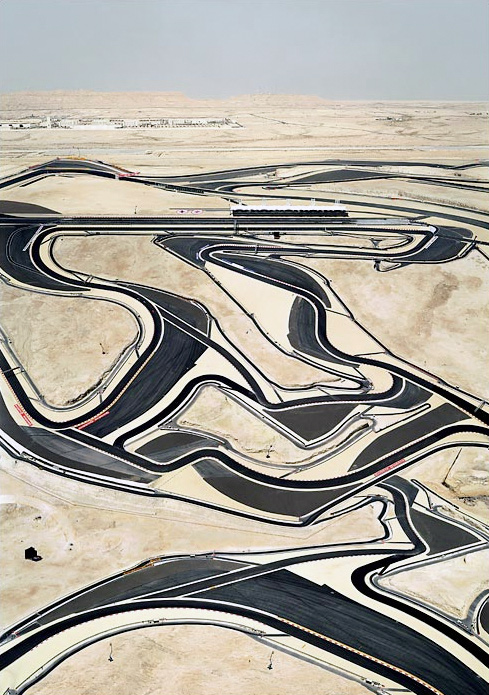
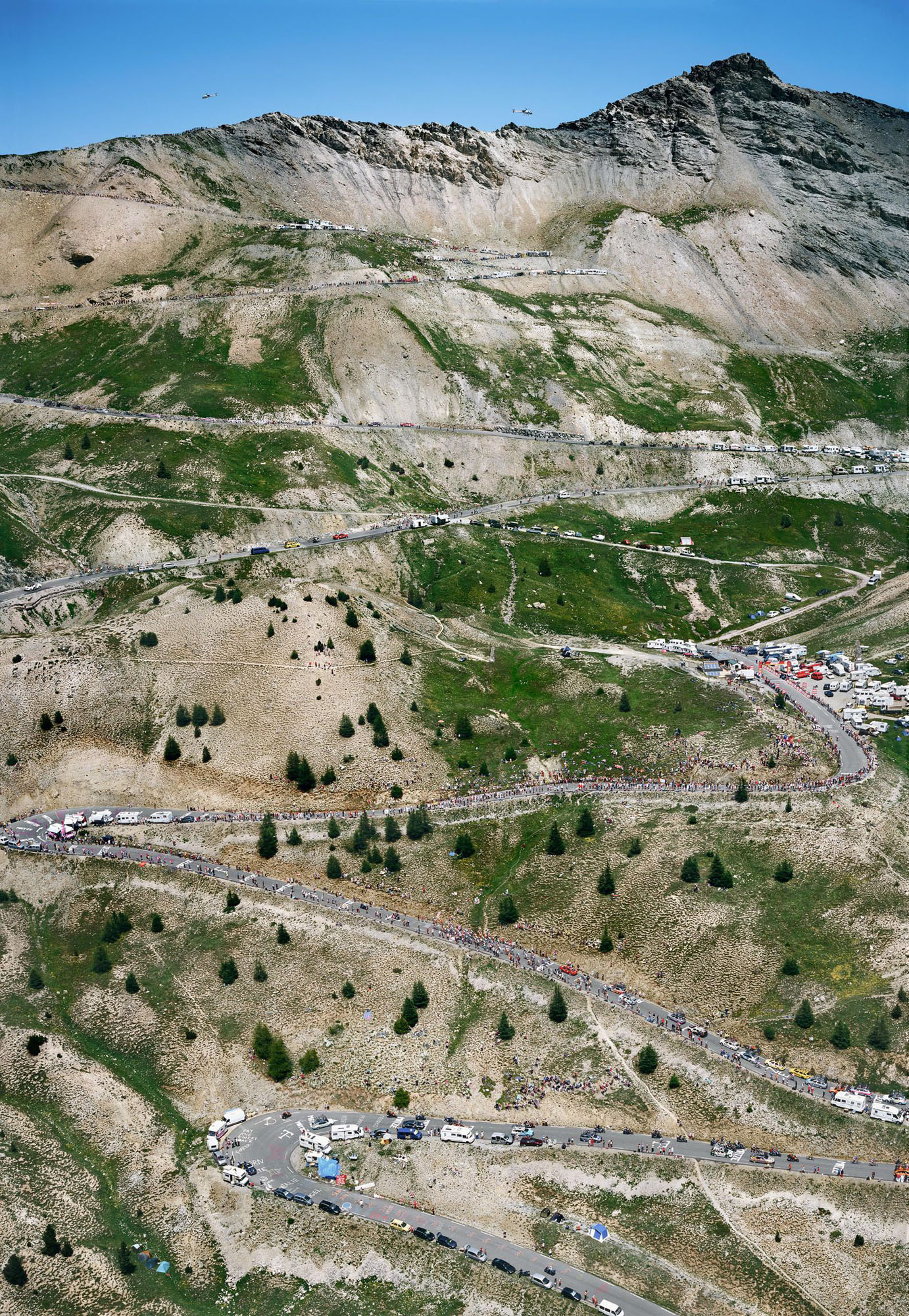
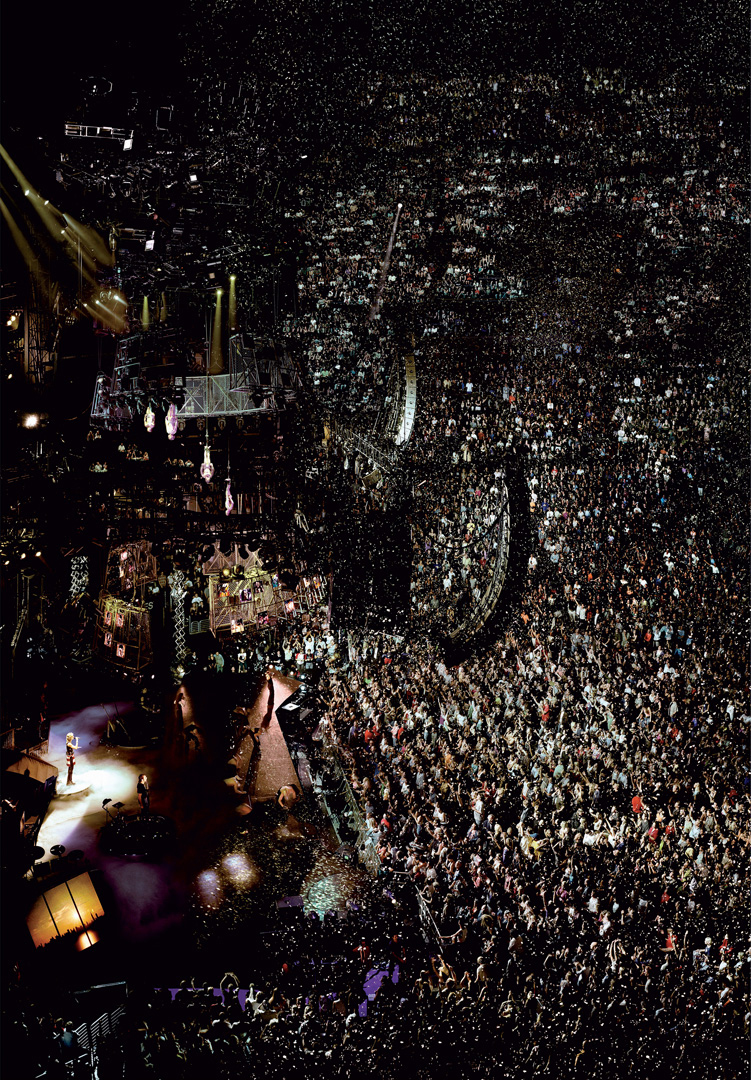
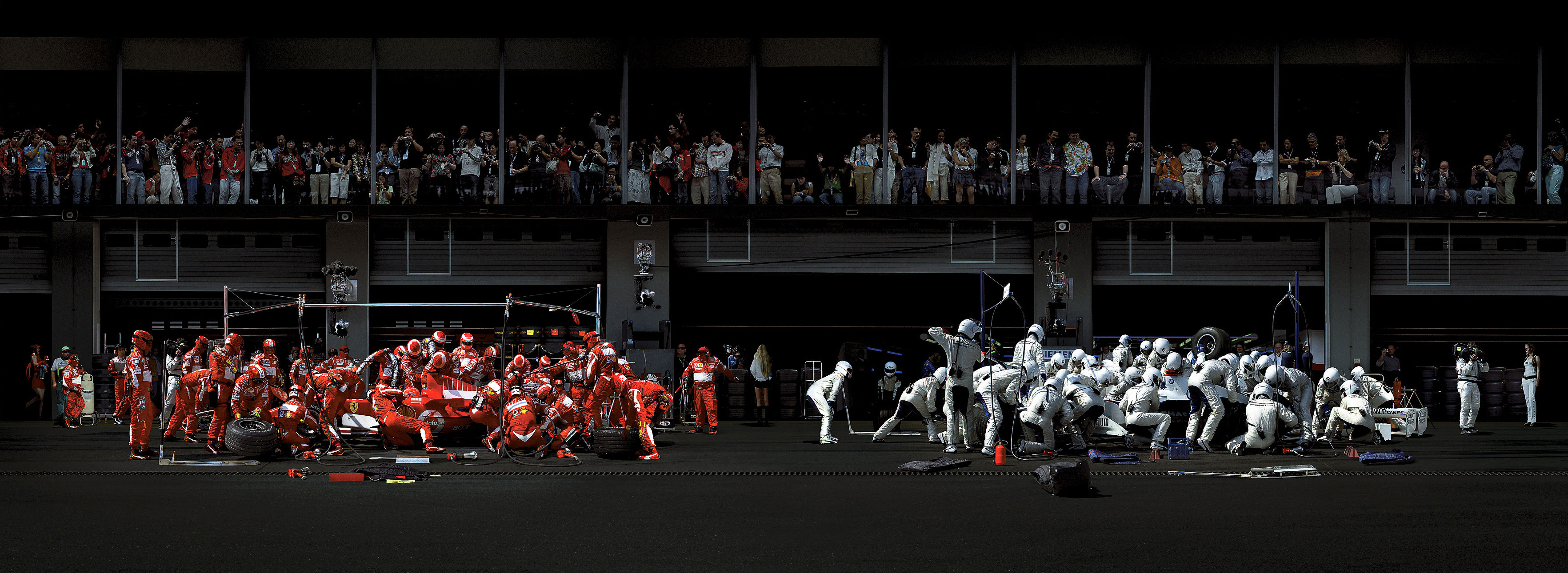
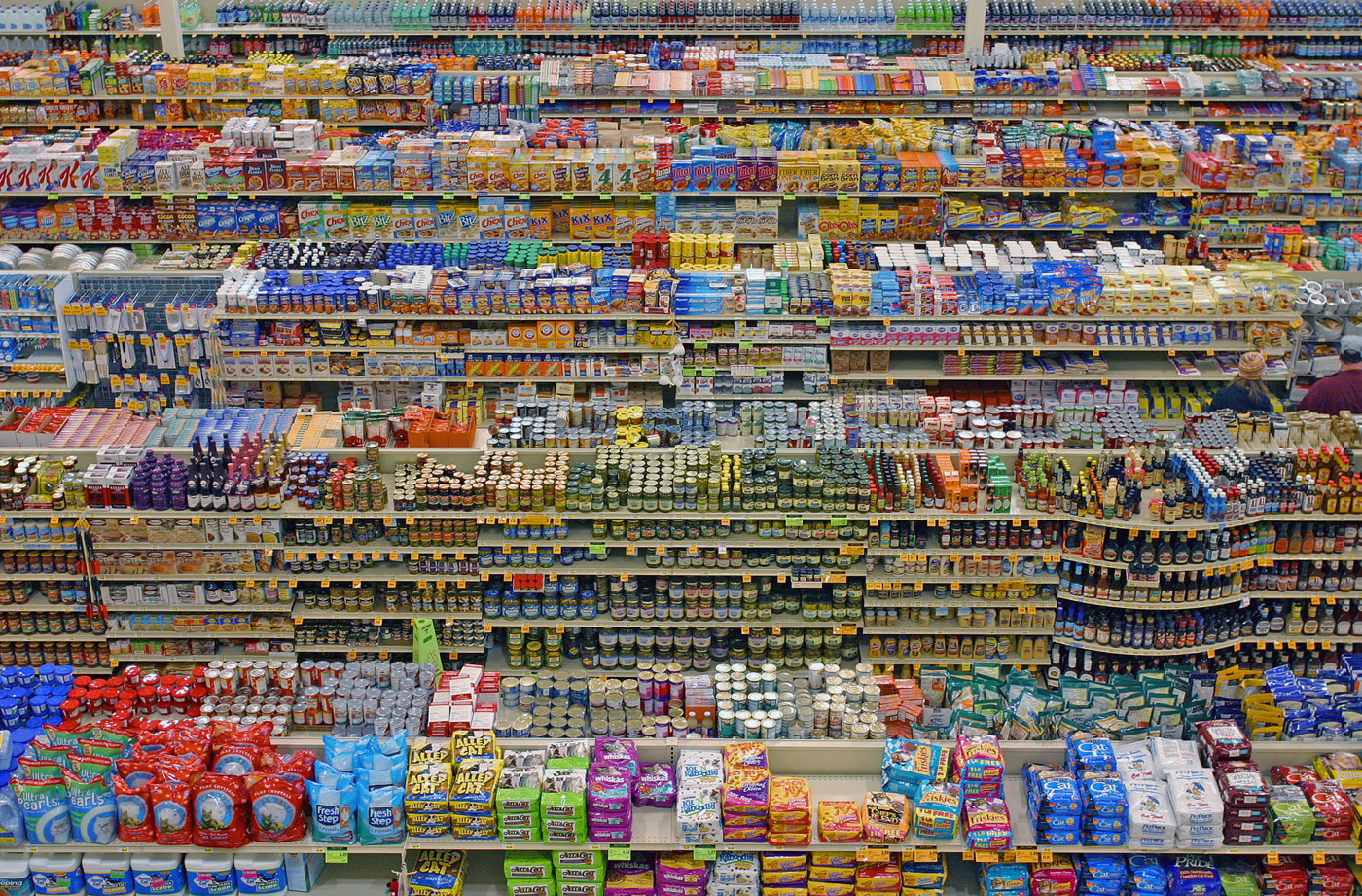
As for the work itself 21 large photographs are presented ranging from landscapes to buildings, race tracks to formula 1 pits, Madonna concerts to the Tour de France. Most work successfully in building a hyperreal vision of the world. We are not sure what is ‘real’ or hyperreal, what is a straight photograph or what has been digitally manipulated and woven together. The colour and sharpness of the images is often intensified: in reproductions of the famous photograph of the 99c supermarket in America the colours seem flat but ‘in the flesh’ the colours are almost fluoro in their saturation and brightness.
Having said that the photographs are nearly always unemotional – as though seen from above in the third person, they observe with detachment. The intrigue for the viewer is in the detail, in working out what is going on, but these are not passionate photographs on the surface. It is beneath the surface that the photographs have their psychological effect: the best of the images work on the subconscious of the viewer. Like a fantastical dance the three very wide images of the Formula 1 pits feature pit crews practicing tyre changes, frozen in a choreographed ballet. People in the galleries above stare down; pit lane girls seem to have been inserted digitally into the images, standing at side or behind the pit crews in a seemingly surreal comment on these worlds. These are theatrical tableaux vivant, splashed with teams colours. Fantastic photographs.
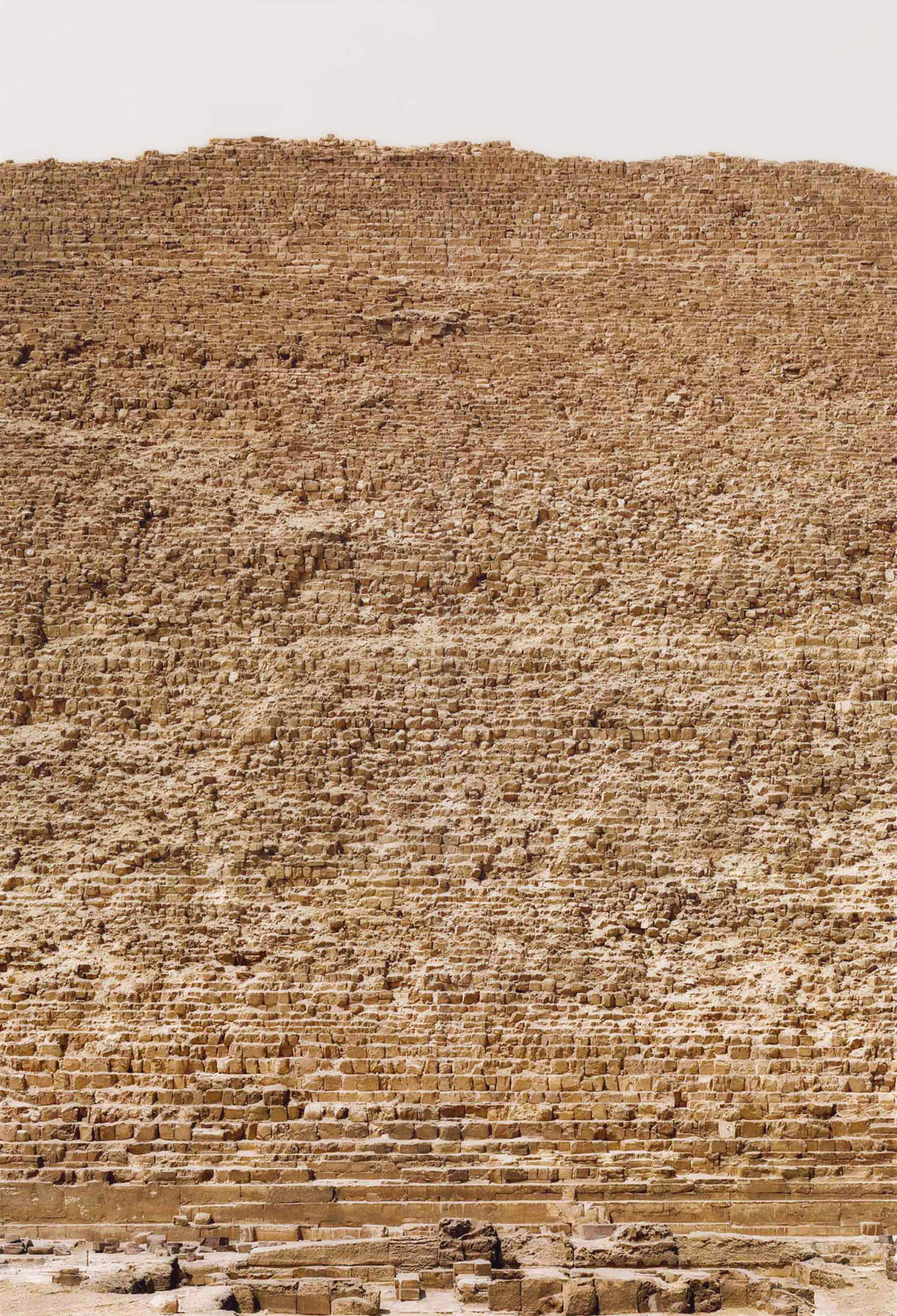
In some of the images, such as the Madonna concert or the photograph of the Bahrain Formula 1 racetrack, space seems to have folded in on itself and the viewer is unsure of the structure of the image and of their vantage point in looking at them. Space also collapses in the photograph of the pyramid of Cheops (2006, below), where the depth of field from foreground to background of the image is negligible. Less successful are images of a Jackson Pollock painting and a green grass bank with running river (Rhein II 1996, below), intensified beyond belief so that the river seems almost to be made of liquid silver.
A wonderful exhibition in many aspects, well worth a visit to see one the worlds best photographers at work. The photographs tell detached but psychologically emotional stories about what human beings are doing to the world in which they live. These images are a commentary on the state of this relationship – images of repetition, pattern, construction, use, abuse and fantasy woven into hyperreal visions of an unnatural world.
Dr Marcus Bunyan
Many thankx to the National Gallery of Victoria for inviting me to the opening and for allowing me to publish the photographs in the posting. Please click on the photographs for a larger version of the image.
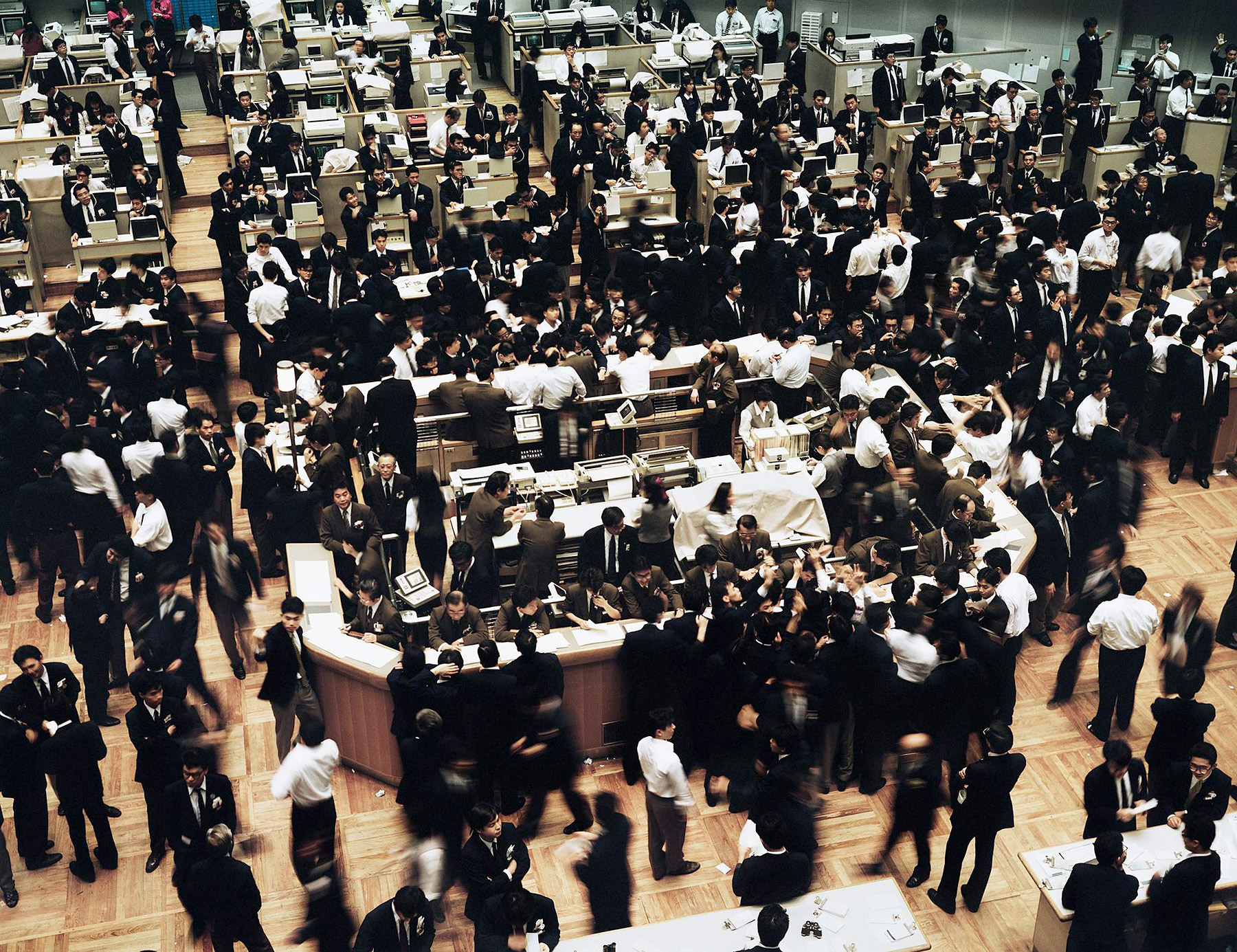
For the first time in Australia, an exhibition by German contemporary photographer Andreas Gursky opened at the National Gallery of Victoria. From the Haus der Kunst in Munich, Andreas Gursky presents 21 major works for which the artist is internationally acclaimed. The photographs range from 1989 to 2007 and include seminal works such as Tokyo Stock Exchange and the diptych 99 cent store. Andreas Gursky is recognised as one of the world’s leading contemporary artists. On view through 22 February, 2009.
Well known for his large-scale (generally measuring an astounding four to five metres) and extraordinarily detailed photographs of contemporary life, Gursky continues the lineage of ‘new objectivity’ in German photography which was brought to contemporary attention by Bernd and Hilla Becher.
In the 1990s, Gursky became inspired by the various manifestations of global capitalism. His interest was piqued looking at a newspaper photograph of the crowded floor of the Tokyo Stock Exchange and he began to photograph its flurry of suited traders, somehow moving according to some inbuilt order.
Dr Gerard Vaughan, Director, NGV said the Andreas Gursky exhibition represented a significant coup for Melbourne: “The National Gallery of Victoria is the only Australian venue for this extraordinary show – the first major exhibition of Gursky’s work ever to be seen in this country. Generously organised by the Haus der Kunst Museum in Munich we are extremely fortunate to have had the works in this show selected for us by Andreas Gursky himself.”
Andreas Gursky was born in 1955 and grew up in Düsseldorf, Germany. In the early 1980s, he studied at the Kunstakademie Düsseldorf, Germany’s State Art Academy. Whilst there he was heavily influenced by his teachers Bernd and Hilla Becher, who were well known for their methodical black and white photographs of industrial machinery.
In 1984 Gursky began to move away from the Becher style, choosing instead to work in colour. Since then he has travelled across the world to cities such as Tokyo, Cairo, Hong Kong, Stockholm, Singapore and Los Angeles photographing factories, hotels and office buildings – places he considered to be symbols of contemporary culture. His world-view photographs during this period are considered amongst the most original achievements in contemporary photography.
Gursky has been the subject of numerous international exhibitions including the Internationale Foto-Triennale in Esslingen, Germany in 1989 and 1995, the Venice Biennale in 1990, and the Biennale of Sydney in 1996 and 2000. In 2001, Gursky was the subject of an exhibition at the Museum of Modern Art in New York.
Press release from the National Gallery of Victoria website
Klippel/Klippel: Opus 2008 exhibition sculpture and installation from the first space
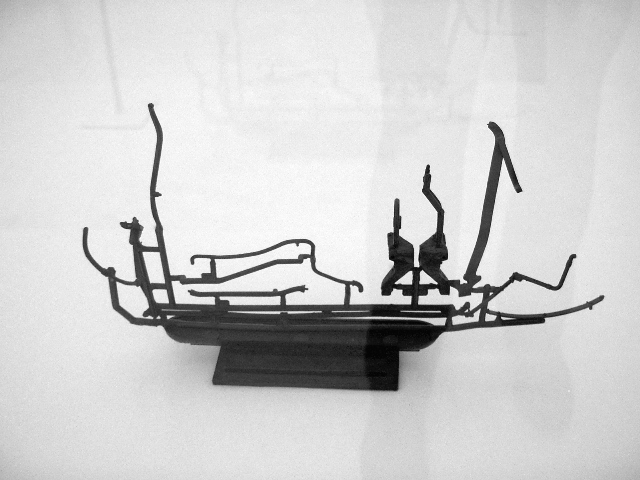
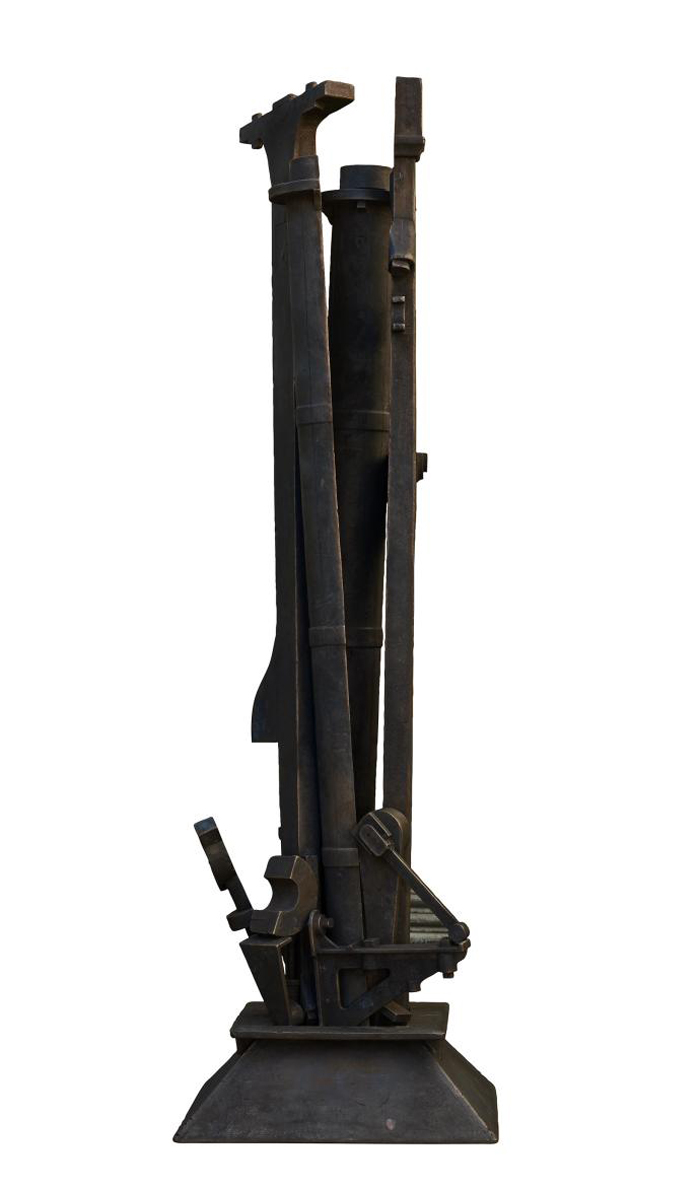
A magical exhibition of the work of the Australian sculptor Robert Klippel (1920-2001) is presented together with a soundscape to accompany the works by his son Andrew Klippel. The exhibition presents two distinct rooms of light and shade and finishes with a singular monumental bronze work No. 709, but it is the two rooms that astound. They contain small assemblages and bronze sculpture made in the 1980s-1990s.
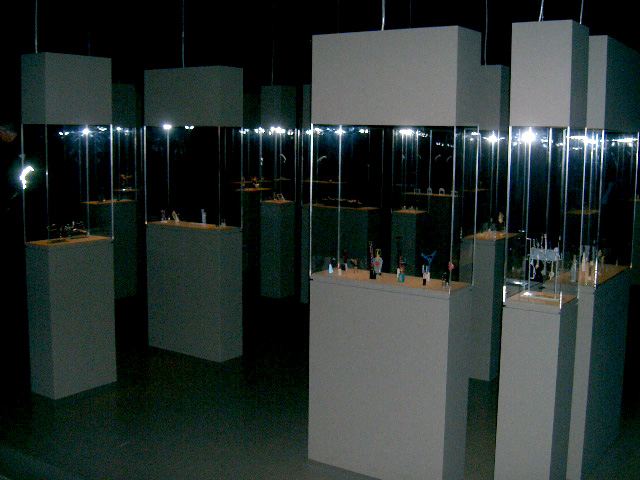
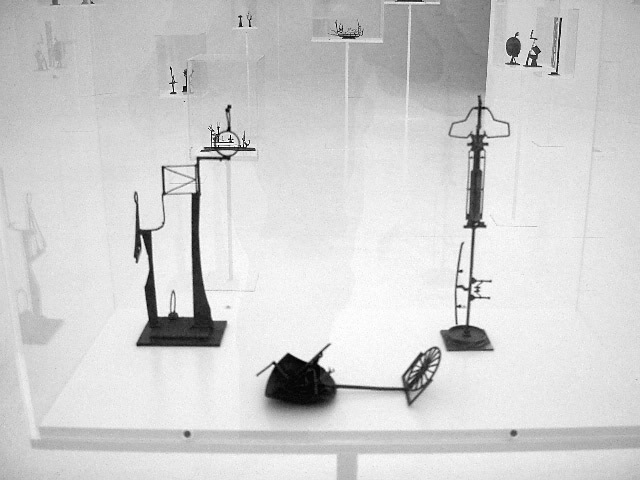
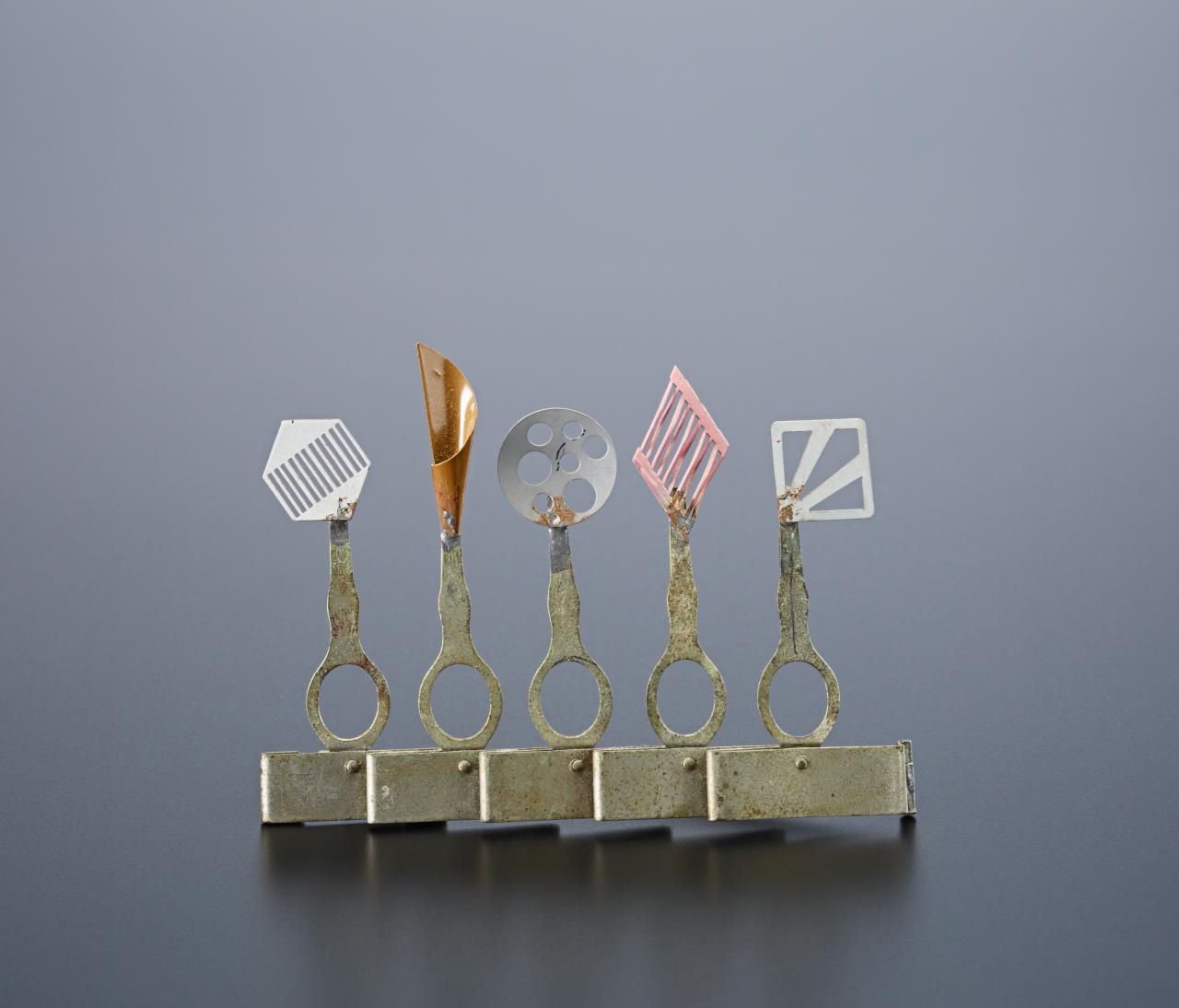
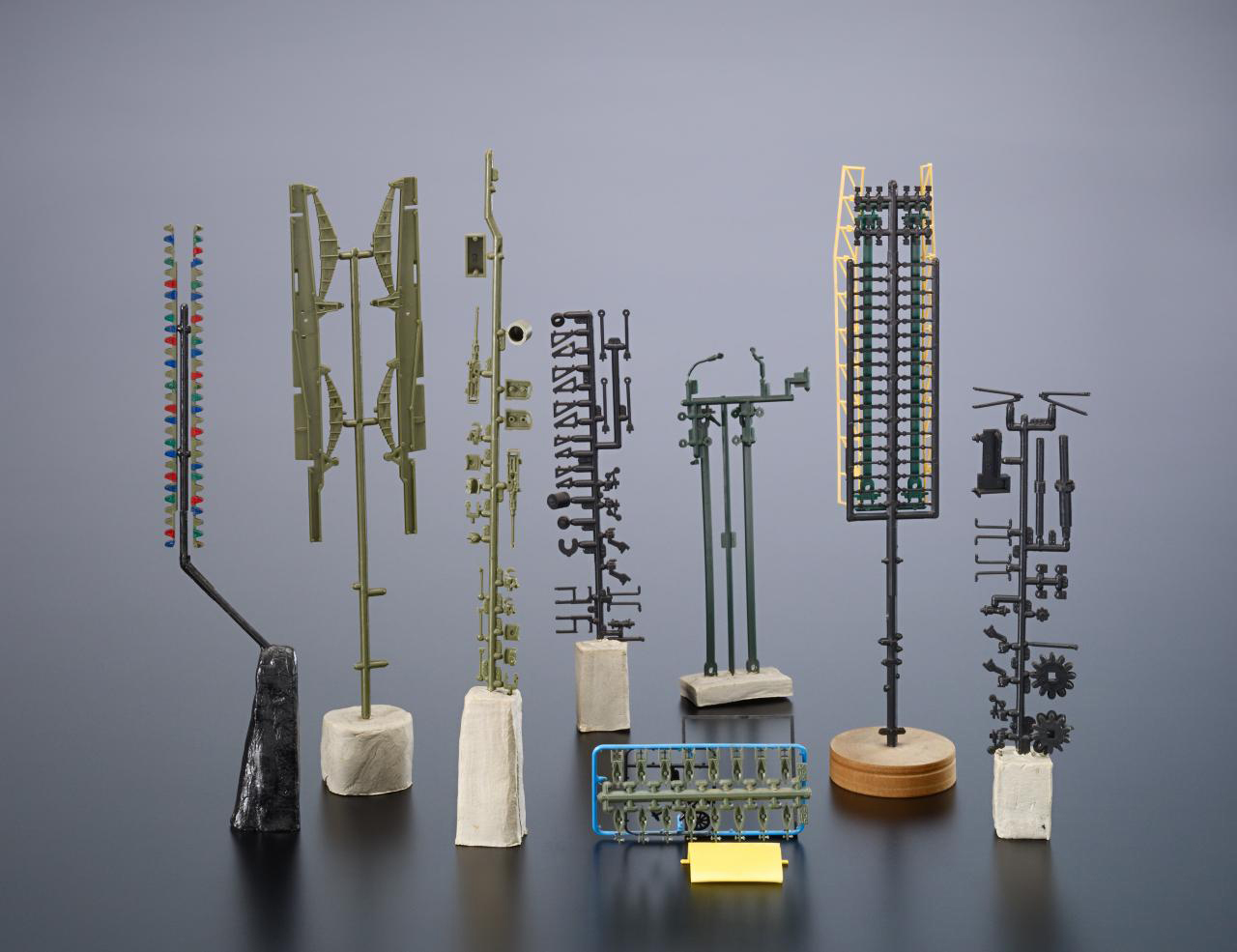
In the first space lit glass cases hover in darkness, containing delicate constructions of found objects, beautifully crafted. Made of plastic and metal, some parts taken from modelling kits, the sculptures morph and weave a delicate narrative, a powerful artistic vision. Mostly totemic in nature they transport the viewer with wonder and delight, the artists vision fully realised: no unnecessary flourishes, no wasted energy on forms that are redundant.
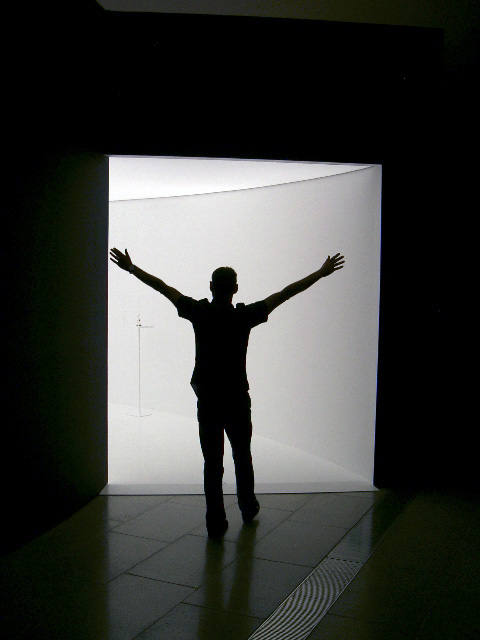
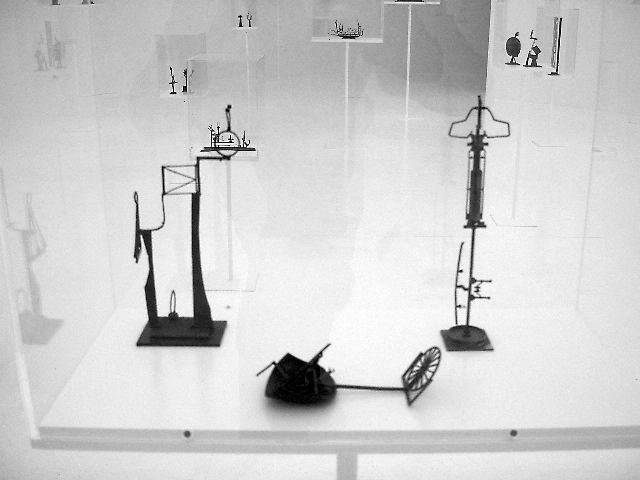
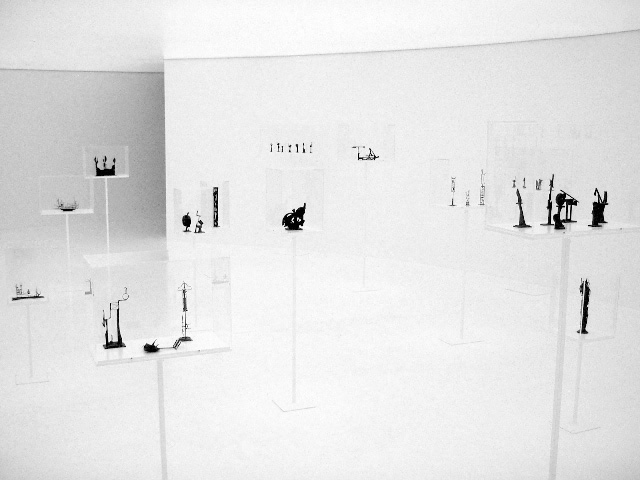
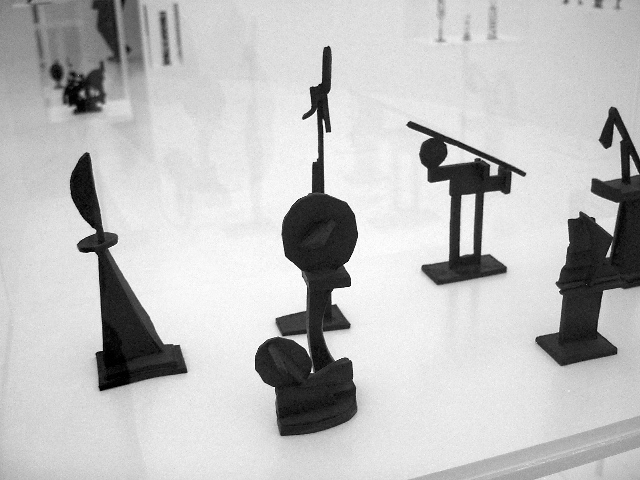
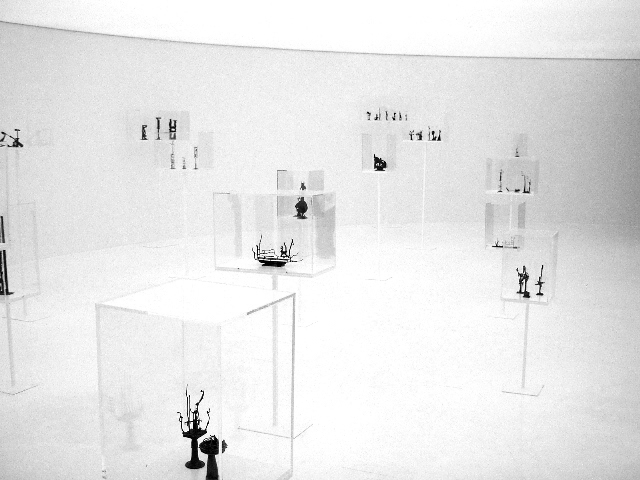
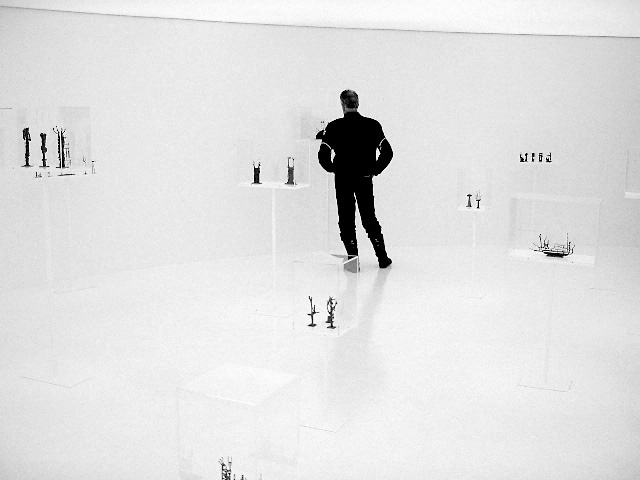
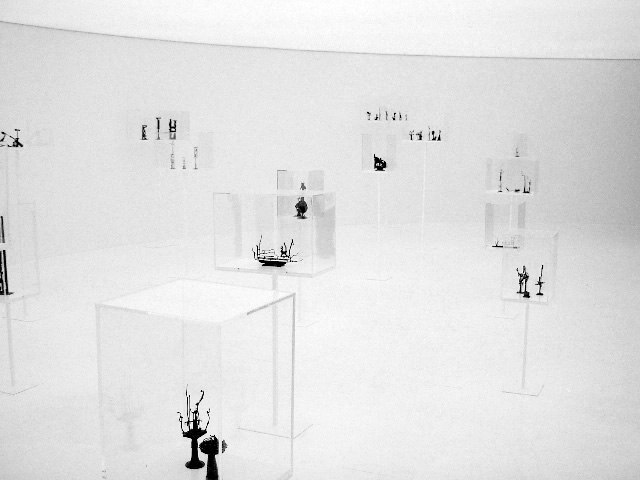
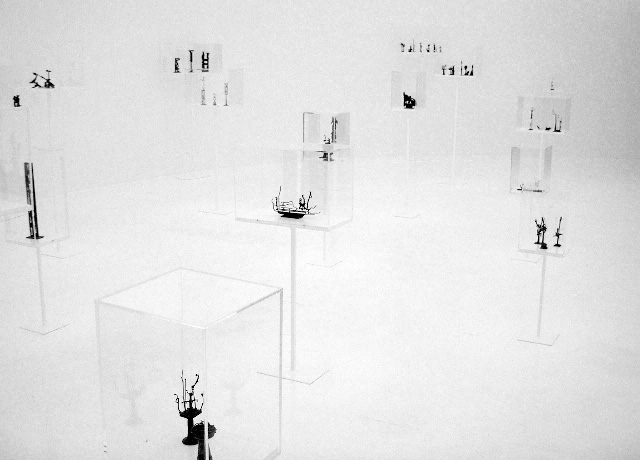
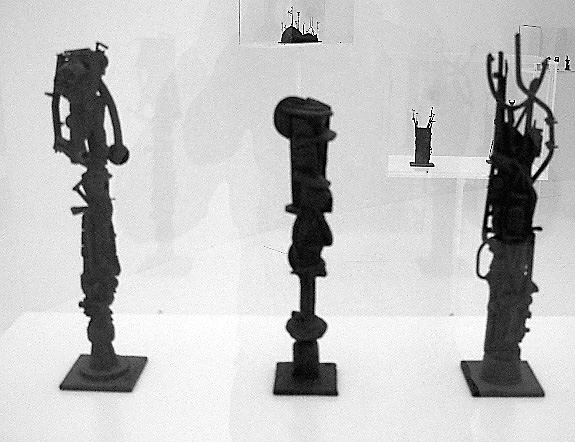
Wandering from the first darkened space we face a curved wall of black with a bright white opening, almost like the mouth of a Nautilus shell. Upon entering we are enveloped in white – walls, floor, stretched acrylic ceiling and stands upon which glass cases sit all being pure white. It is like stepping into the spacecraft from Stanley Kubrick’s 2001: A Space Odyssey – quite disorientating but transformational. In the cases sit small very dark bronze sculptures contrasting with the white. Again mostly totemic in nature the sculptures have great power and presence. Some portray small cities on top of hills. Others intricate machine and figure like constructions. All of the cases are mounted at different eye levels, unlike the first room.
When looking across the gallery space, the boxes and sculpture within create a diorama, almost a tableaux vivant, where you can move the focus of your gaze from foreground to mid to background, all suspended in white. If you can be in this space alone with the work and wander around soaking in the vision of this artist so much the better. The contrast and parallels between the two rooms is striking – here is an artist at the height of his powers commanding his materials and his vision in two distinct bodies of work: one delicate, found, plastic the other solid, dark and essential, both dealing with the essence of human creativity and being, leaving the viewer with a sensory experience long remembered.
Klippel/Klippel: Opus 2008 exhibition entrance to the second space
Robert Klippel is regarded as Australia’s most important sculptor of the post-war 20th century period. Known for his abstract assemblages created from found objects he is a distinguished figure in the history of Australian art. Andrew Klippel, Robert’s son, is a composer and musician who has achieved international recognition as a solo musician, songwriter and influential music producer.
Klippel/Klippel: Opus 2008 is a unique and compelling sensory experience which presents a group of Robert Klippel’s small-scale sculptures that were produced during the 1980s and 1990s – some of these have never been publicly displayed. It also includes the monumental bronze work No. 709. Andrew has arranged for this work, which Robert was preparing to cast at the time of his death, to be executed for the National Gallery of Victoria and included in the exhibition. And, in an important artistic response, Andrew Klippel has created a soundscape – a meditation on his father’s work.
Klippel/Klippel: Opus 2008 is an extraordinary and immersive exhibition that celebrates the creative process.











 Art Blart _ art and cultural memory archive
You must be logged in to post a comment.