Exhibition: Anna Malagrida. ‘Opacitas: Veiling Transparency’ at Museu Tàpies, Barcelona

Exhibition dates: 13th March – 28th September, 2025

 Curator: Patricia Sorroche, Head of Exhibitions at the Museu Tàpies


Anna Malagrida (Spanish, b. 1970) 'Rue de Charenton' 2008-2009


Anna Malagrida (Spanish, b. 1970)
Rue de Charenton
2008-2009
Photographic print on Dibond


Contradicting the hobgoblin of little minds

I love the conceptualisation of these photographs: interstitial spaces of the city, liminal spaces that ‘stand between’ one place and another.1

I love the abstract nature of these photographs, abstract paintings of the city which occlude symbols and signs, capture traces and gestures, where nothing is fixed and everything is fluid, up for interpretation through the imagination.

Unfortunately, the digital online reproductions make the spaces seem very flat and one-dimensional, in a liminal and spiritual sense.

I would have loved to have stood in the gallery to breathe in the presences of the photographs, their energy and spirit. Would they have held me? Is there enough for me to hang my hat on? Would they have reverberated in my soul. I don’t know. I can’t feel them through the digital reproductions.

I think of sitting in front of Monet’s massive curved paintings of Water Lillies at the Musée de l’Orangerie in Paris and being surrounded by these beautiful, shifting, elemental / alchemical abstract works of art. And being spell bound.

How would I feel surrounded by these representations, surfaces, depths of the city, these whitewashed absences (with all the connotations of race, power, money, and coverups that the name implies) that proffer different ways of seeing the world, places of the visible and the invisible.

“Her work forces us to confront our social and political condition of being, but from a poetic, liminal space, where contradiction is a symbol of the dualities of the human condition in the postmodern world.”2

Contradiction is NEVER a symbol for that would mean contradiction becomes a conventional representation of an object, function, or process. And the human condition in the postmodern world is far more than a duality … it is an intertextual multiplicity of points of view and nexus (the nexus between industry and political power, the nexus between business and government, the nexus between public space and private space, etc…)

“Do I contradict myself? Very well then I contradict myself, (I am large, I contain multitudes.)”

~ Walt Whitman from Leaves of Grass

Dr Marcus Bunyan


1/ A liminal space is a transitional place or state, like a hallway or adolescence, that is “in-between” two distinct stages or locations, creating a sense of unease or disorientation. The word comes from the Latin for “threshold,” and these spaces, often devoid of people and eerily familiar yet subtly wrong, can evoke feelings of nostalgia, anxiety, and the potential for creativity or personal growth during periods of uncertainty.

AI summary from Google

2/ Patricia Sorroche. Anna Malagrida. (Trans)gazes of the sensible. Curatorial statement, 2025


Many thankx to Colin Vickery for alerting me to this exhibition. Many thankx to Museu Tàpies for allowing me to publish the photographs in the posting. Please click on the photographs for a larger version of the image.


“I’m interested in the intuited spaces on the other side, what isn’t in the image, but is imagined. What lies beyond, outside the frame, is the place that activates the imagination, inventing a story or imagining a space. The things we intuit, which are on the other side, belong to the story or to the space itself. Through the metaphor of the window, I’m trying to create a space of in-betweenness and uncertainty.”


Anna Malagrida in Álvaro de la Rica, “Las fronteras transparentes. A propósito de las fotos de Anna Malagrida,” published in Revisiones, No. 7, 2011, p. 129.


Opacitas: Veiling Transparency takes us on a journey through the work of Anna Malagrida (Barcelona, 1970) and presents a project that explores photography, video and installation. Her gaze focuses on the liminal spaces that unite and separate, bringing opposites into conversation.

Malagrida mainly situates us in the city and in a few constructed natural spaces. Through a play of perspectives, from the interior to the exterior and vice versa, her photographs and video installations become windows that reveal and conceal the tensions that run through society. Her polysemic gaze escapes a univocal interpretation of images in order to inhabit certain entropic spaces that she invites us to discover through her work.

Malagrida’s images capture the remnants and the infralight traces, indexes, signs that refer to previous moments, social tensions or simple anonymous gestures. The visual ambiguity in her work is revealed through the texture of her images, which evoke pictorial references and dissolve the limits between appearance and reality. Images of closed shop windows painted with characteristic whitewash, an opaque veil that prevents us from looking inside and transforms these spaces into abstract surfaces, resembling large pictorial canvases. Poetic actions operate in her works with a multiplicity of meanings: the painter’s gesture is also that of the working body, and the city and the landscape are revealed from within. Said gestures are erased, cleansed or simply fixed by the passage of time, cyclical and mutable.

Her work, which transcends photography and painting, immerses the viewer in a visual experience with multiple meanings and invites them to look at the city and natural surroundings from a new perspective, one that reveals the vestiges of a landscape affected by social and economic change. Her practice is a space for reflecting on vulnerability, resistance and the possibility of reconstruction, both of the individual and the environment they inhabit.

Text from the Museu Tàpies website
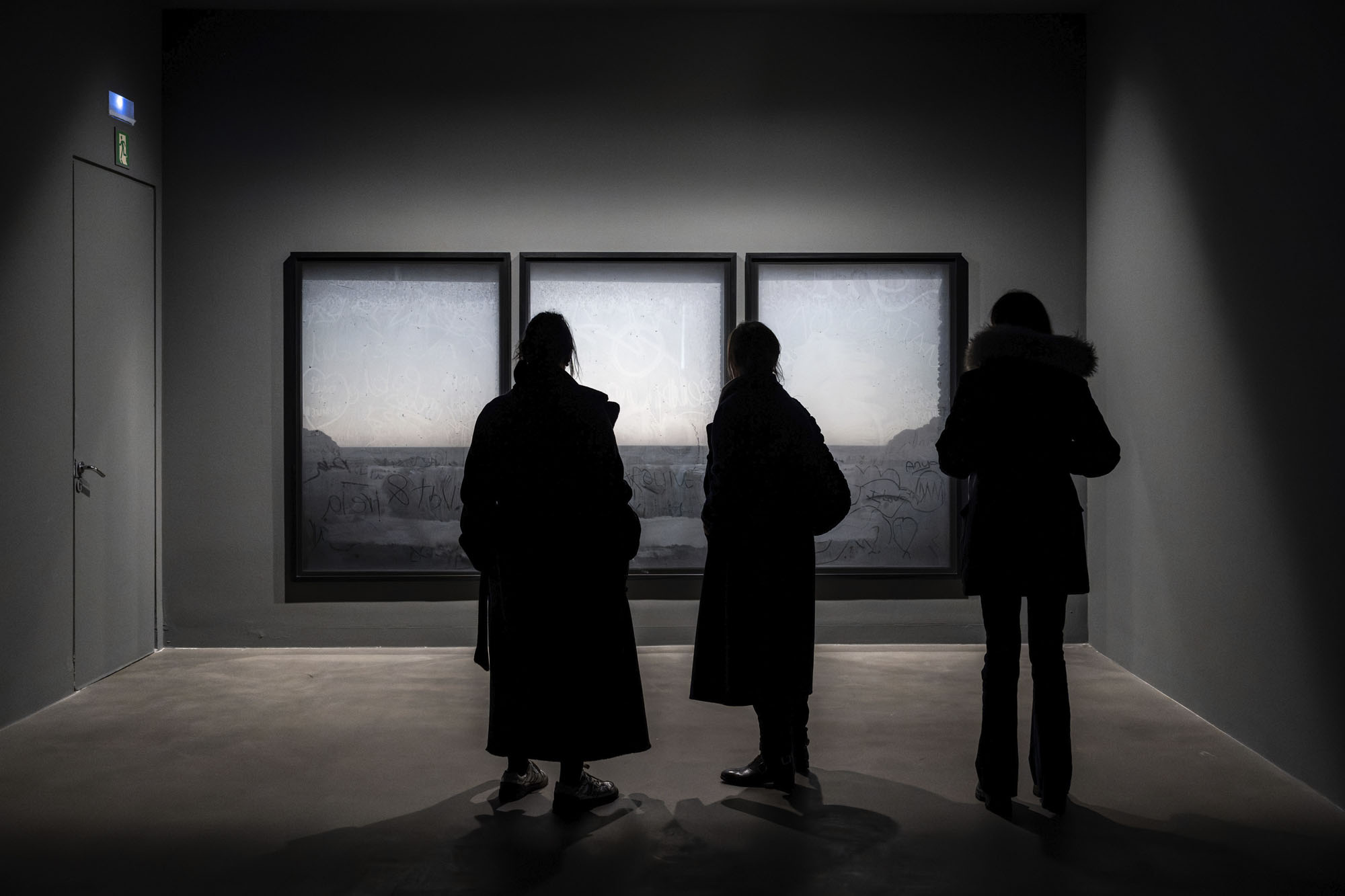
 

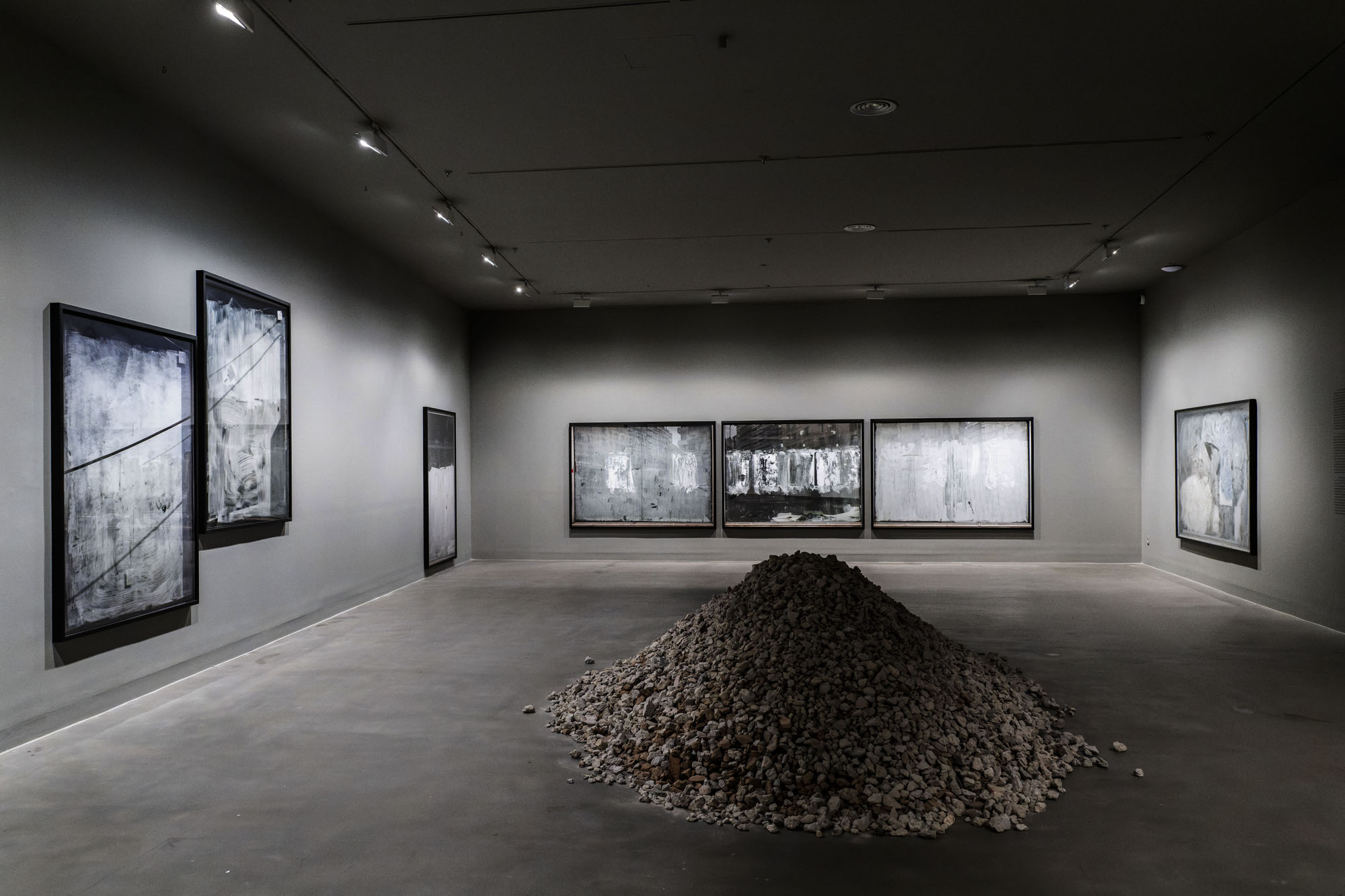
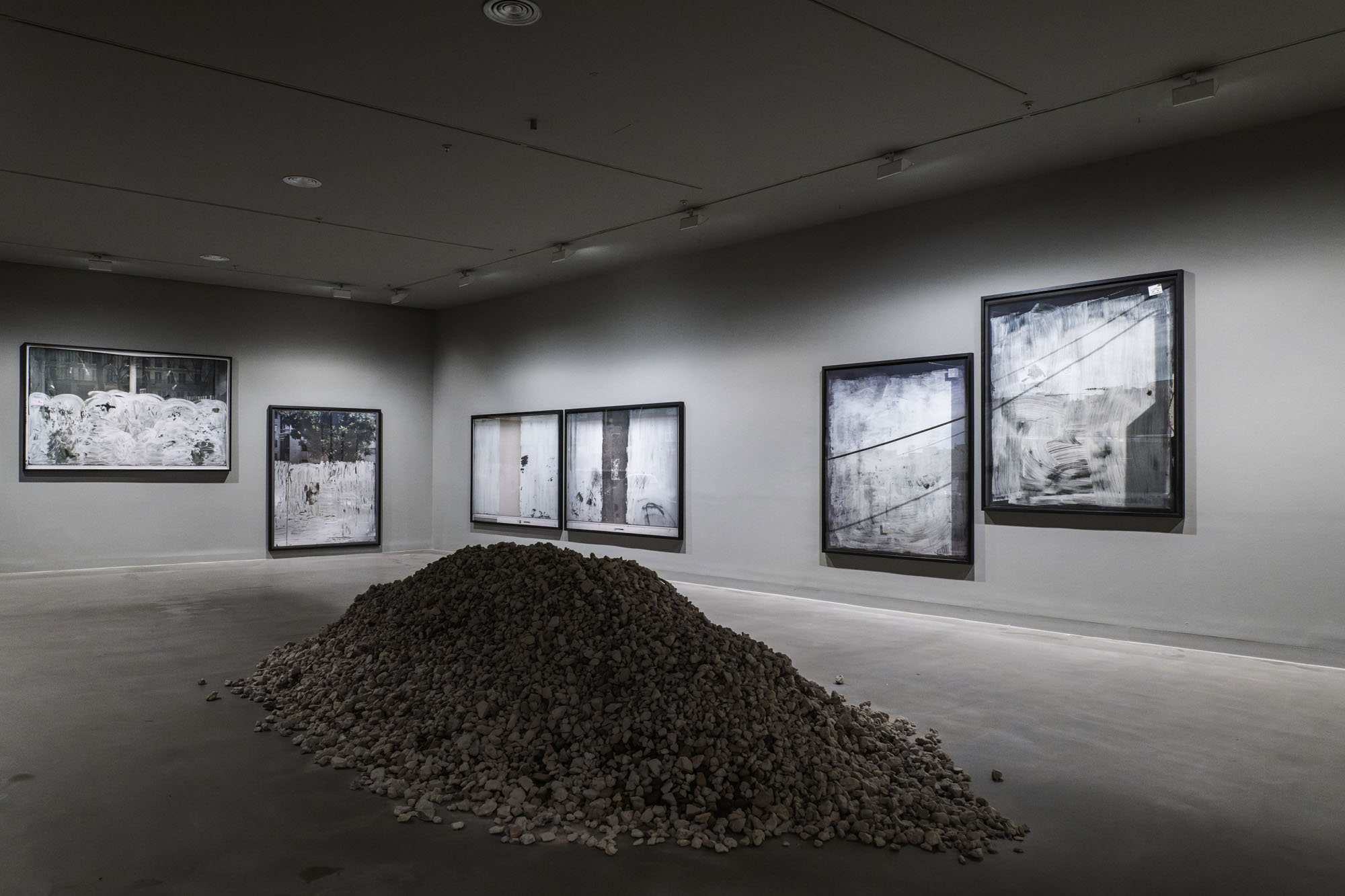
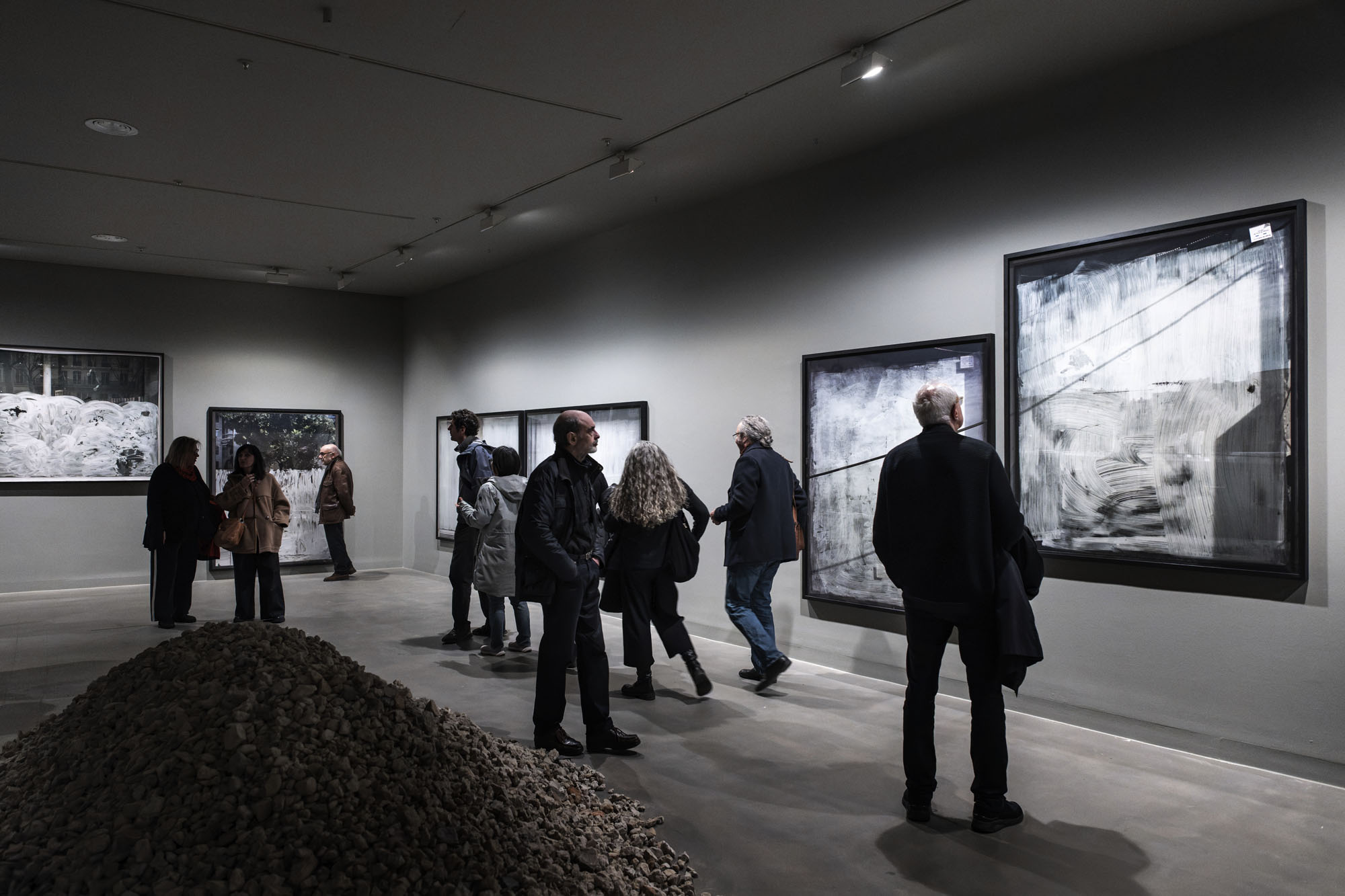
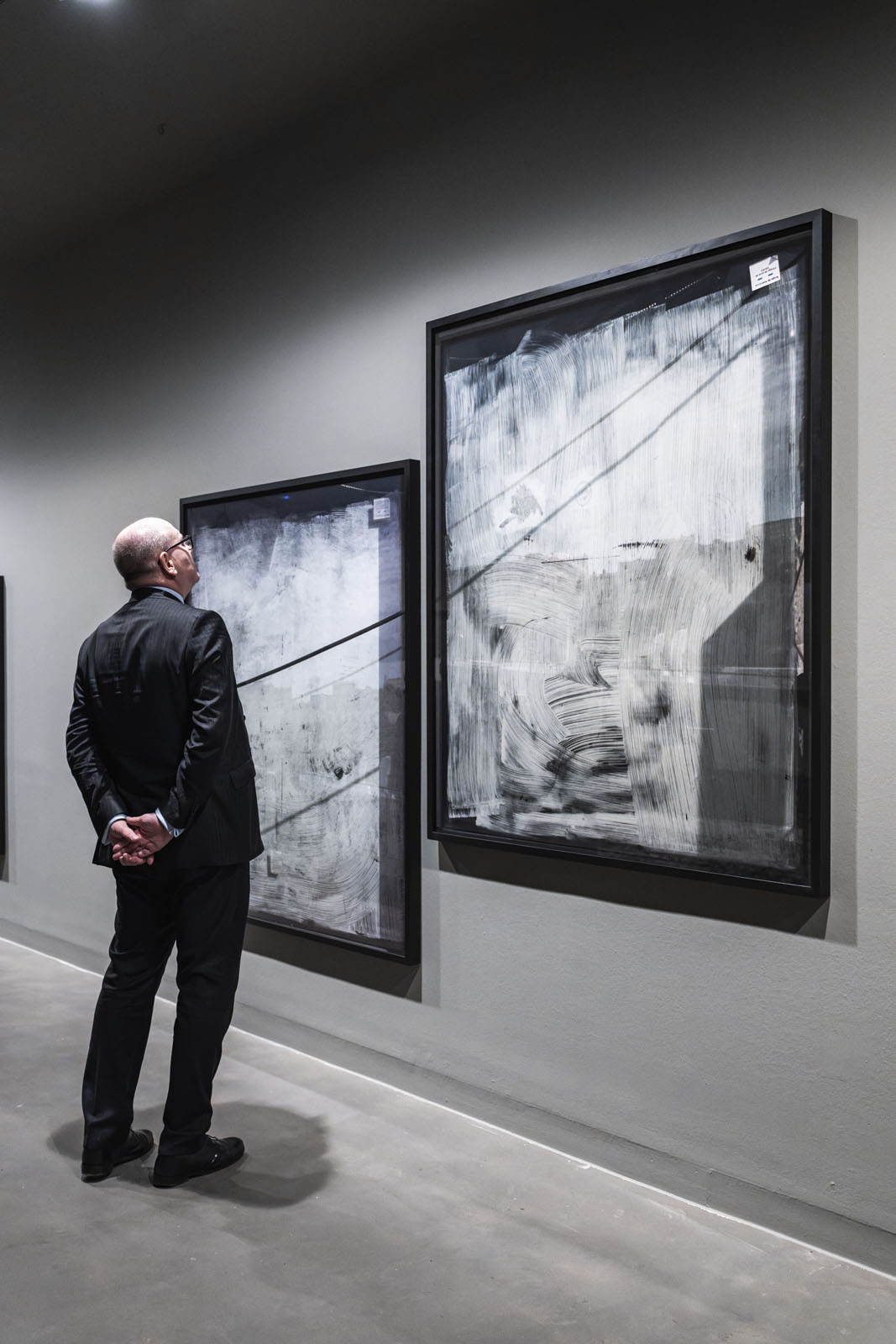
Installation view of the exhibition Anna Malagrida. 'Opacitas: Veiling Transparency' at Museu Tàpies, Barcelona


Installation views of the exhibition Anna Malagrida. Opacitas: Veiling Transparency at Museu Tàpies, Barcelona, March – September, 2025
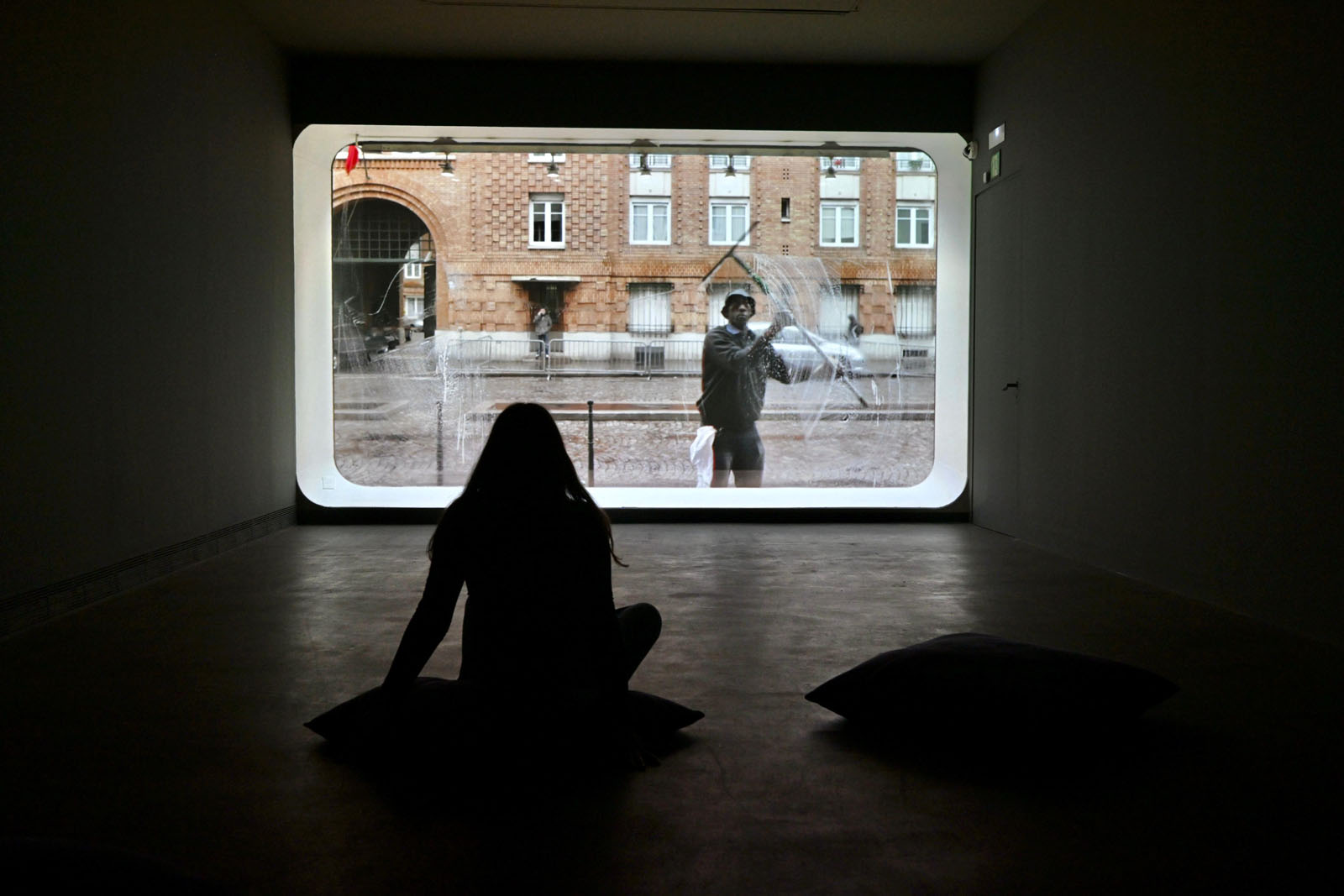
 

Installation view of the exhibition Anna Malagrida. 'Opacitas: Veiling Transparency' at Museu Tàpies, Barcelona showing 'La laveur du carreau' 2010 (video still)


Installation view of the exhibition Anna Malagrida. Opacitas: Veiling Transparency at Museu Tàpies, Barcelona, March – September, 2025 showing La laveur du carreau 2010 (video still)


The Museu Tàpies presents Anna Malagrida’s exhibition Opacitas. Veiling Transparency. Curated by Patricia Sorroche, Head of Exhibitions at the Museu Tàpies, the exhibition offers a survey of the artist’s work through photography, video and installation.

This exhibition provides an opportunity to see, for the first time in Barcelona, the work of this artist, who was born in the city, but has spent most of her career in France.

Anna Malagrida’s project responds to the Museu Tàpies’ current aim of enabling discourses that institutions have left out and that have not found a space for representation in our most immediate reality.

Anna Malagrida (Barcelona, 1970) works with photography to navigate between that which is public and private, based on a play of perspectives and visions that shuns the realistic image to draw us into a game of collective imaginaries. The idea of the city and its significance as a social agent are present in her photographs, which function as archaeological vestiges of the social crises of contemporary city life.

The exhibition Opacitas. Veiling Transparency, curated by Patricia Sorroche, Head of Exhibitions at the Museu Tàpies, offers a survey of Anna Malagrida’s work through projects that explore photography, video and installation. Focusing on the liminal spaces that unite and separate, her gaze brings opposites into conversation.

Malagrida mainly situates us in the city and in a few constructed natural spaces. Through a play of perspectives, from the interior to the exterior and vice versa, her photographs and video installations become windows that reveal and conceal the tensions that run through society. Her gaze escapes a univocal interpretation of images, in order to inhabit certain spaces that she invites us to discover through her work.

Her images capture remnants and traces, signs that refer to previous moments, social tensions or simple anonymous gestures. The visual ambiguity in her work is revealed through the texture of her photographs and videos, which evoke pictorial references and dissolve the limits between appearance and reality. This can be seen, for example, in the images of closed shop windows painted with characteristic whitewash, an opaque veil that prevents us from looking inside and transforms these spaces into abstract surfaces, resembling large pictorial canvases. Poetic actions operate in her works with a multiplicity of meanings: the painter’s gesture is also that of the working body, and the city and the landscape are revealed from within. These gestures are erased, cleaned or simply fixed by the passage of time, cyclical and mutable.

Malagrida’s work, which transcends photography and painting, immerses the spectator in a visual experience with multiple meanings and invites us to look at the city and natural surroundings from a new perspective, one that reveals the vestiges of a landscape affected by social and economic change. Her practice is a space for reflecting on vulnerability, resistance and the possibility of reconstruction, both of the individual and the environment they inhabit.

The exhibition Opacitas. Veiling Transparency allows visitors to explore and delve into Anna Malagrida’s career through a selection of her works. The itinerary of the exhibition begins with the piece Vitrines (Shop Windows, 2008-2009), in which the artist photographs the windows of shops on the streets of Paris that had to close down due to the economic crisis and concealed their interiors by coating their windows with whitewash. The exercise of gazing through shop windows is also present in Le laveur du carreau (The Window Cleaner, 2010), an audiovisual piece that allows us to observe how a worker lathers and cleans the windows, in a visual play between opacity and transparency that also situates us in the intermediate zones.

In Danza de mujer (Woman Dance, 2017), filmed in the Jordanian desert, ‘Malagrida puts into question, through the movement of the veil, certain social policies in relation to specific groups, and how narrow perspectives promote ways of seeing the world that exclude a large part of it,’ in the words of the exhibition’s curator, Patricia Sorroche. Finally, Point de vue (2006), produced in the architectural complex that housed the Club Med tourist resort inaugurated in 1962 in the protected natural area of Cap de Creus, presents the traces of the economic systems that defied sustainability.

Sorroche concludes that ‘operating through opposites, through the decategorisation of traditional forms of representation and the overlapping of different languages, makes Anna Malagrida’s work move between textures, between the places of the visible and the invisible, to immerse us in a dialogue of opposites’. And she continues: ‘Her work multiplies our gazes, our ways of seeing the world, making it more porous, while at the same time enabling other ways of understanding, transmuting and transcending it. Her work forces us to confront our social and political condition of being, but from a poetic, liminal place, where contradiction is a symbol of the dualities of the human condition in a post-modern world. A space where we can come together to understand each other in possible societies of the common, based on a collective and communal view.’

The project Anna Malagrida. Opacitas. Veiling Transparency is completed with an exhibition booklet featuring texts by the curator and by art critic Marta Gili, as well as an interview with the artist. Malagrida and Gili will take part in the inaugural conversation of the exhibition, on 13 March at 6 pm, in an event that forms part of the project’s public programme, along with the talk by Morena Hanbury. Over the next few months, the Museu Tàpies’ Education Department will be offering a programme of tours and activities for all audiences.

Press release from Museu Tàpies
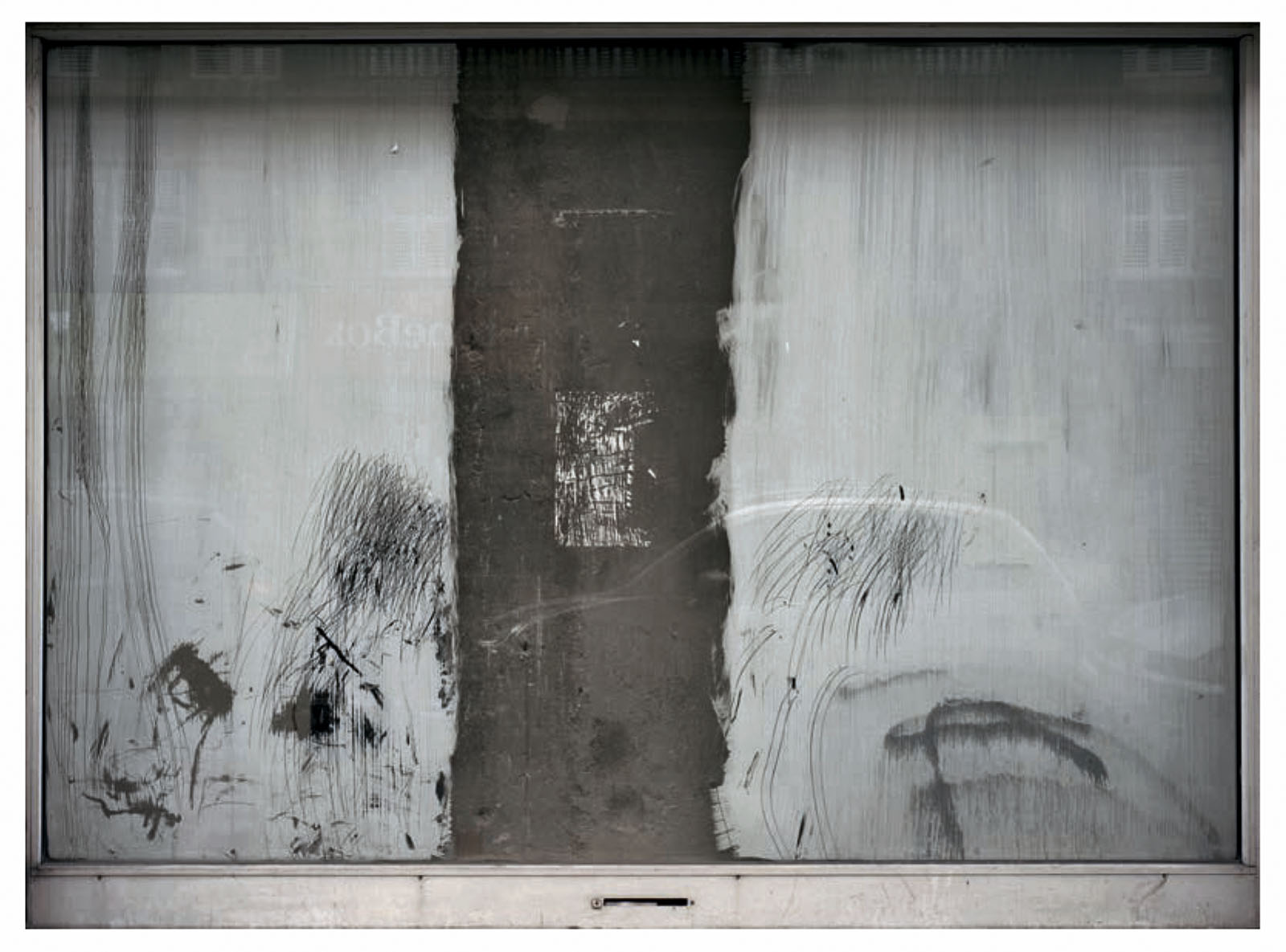
 

Anna Malagrida (Spanish, b. 1970) 'Rue Laffitte I' 2008-2009


Anna Malagrida (Spanish, b. 1970)
Rue Laffitte I
2008-2009
Photographic print on Dibond
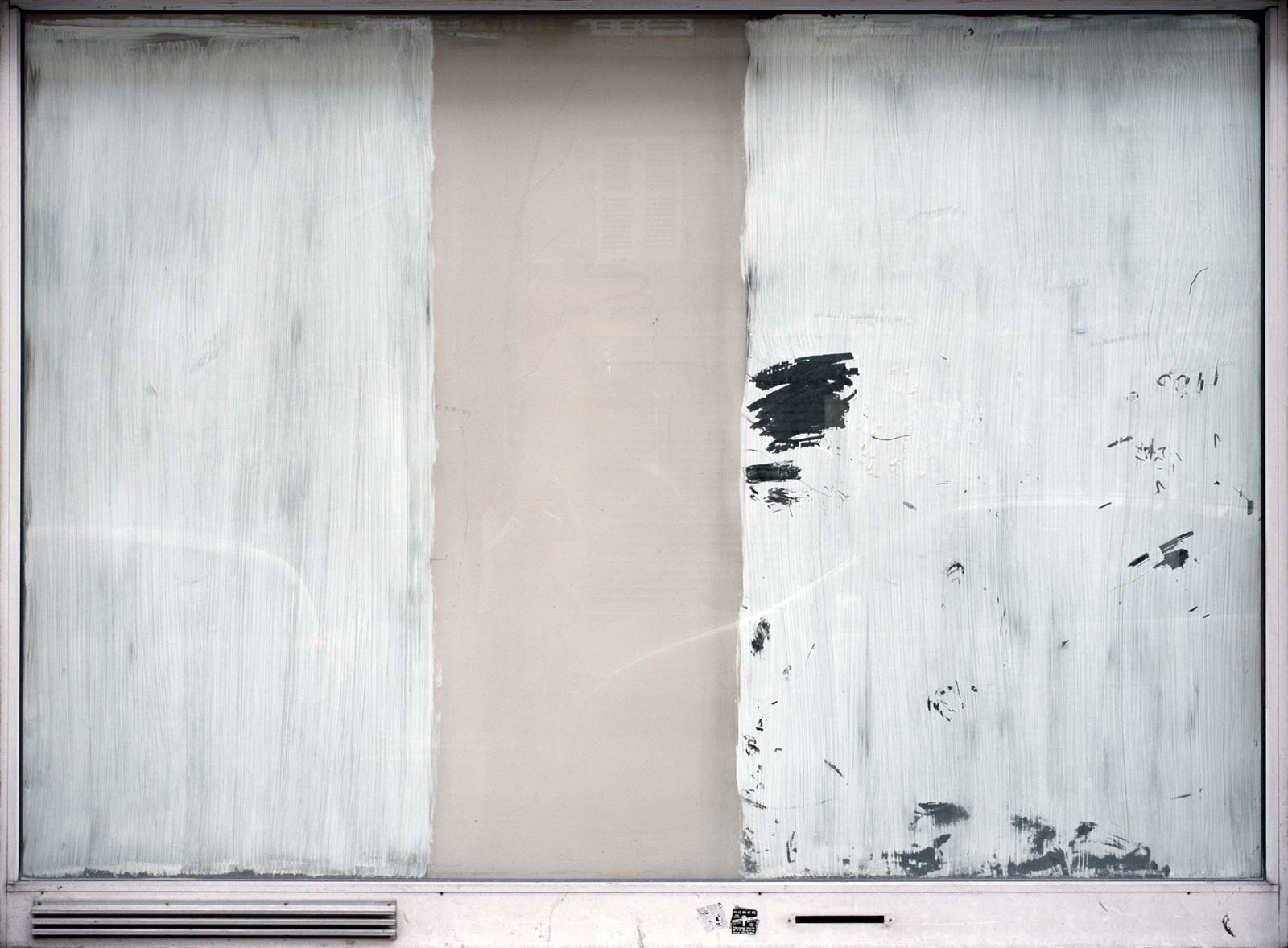
 

Anna Malagrida (Spanish, b. 1970) 'Rue Laffitte II' 2008-2009


Anna Malagrida (Spanish, b. 1970)
Rue Laffitte II
2008-2009
Photographic print on Dibond
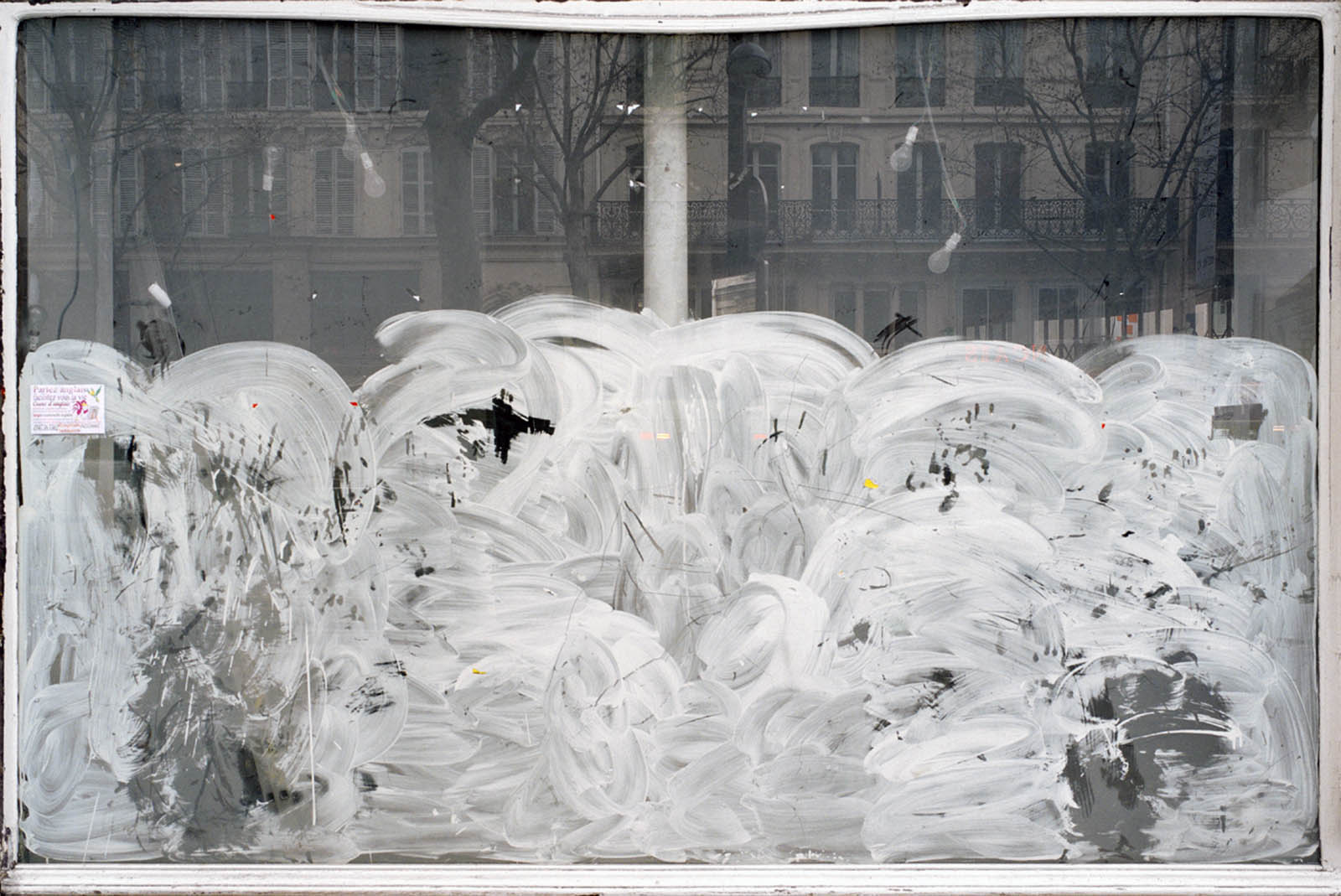
 

Anna Malagrida (Spanish, b. 1970) 'Vitrines. Boulevard Sébastopol. Aparadors. Boulevard Sébastopol' 2009


Anna Malagrida (Spanish, b. 1970)
Vitrines. Boulevard Sébastopol. Aparadors. Boulevard Sébastopol
2008-2009
Photographic print on Dibond


Curatorial statement

Anna Malagrida. (Trans)gazes of the sensible

Patricia Sorroche

“Photography is, above all, a way of looking, it is not the same look. It is a way of seeing that has become conscious of itself, that has become reflexive.”

~ Susan Sontag, On Photography, 1977


What happens when we place ourselves in that intermediate space where the visible and the invisible intertwine? Anna Malagrida invites us to explore this question by delving into the dichotomy of opposites in her work, and by directing our gaze toward the space in-between, where our way of looking is amplified, expanded and transformed, blurring the boundaries between the perceptible and the imperceptible. Revisiting some of Malagrida’s works opens a path, a transmutation of our bodies and our drives as we move around her pieces. Like palimpsests, her works hold layers of memory for us to rewrite. Time, memory and narrative intertwine to confront us with a new perspective from which to observe the world.

Opacitas. Veiling Transparency takes as its starting point an apriorism where the poetic gesture reveals the political gesture. When Jacques Rancière speaks of the ‘distribution of the sensible’, what he offers us is the possibility of the gesture to modify and transform what is seen, felt or said within a society from a poetic space. Along the same lines, Martha Rosler maintains that poetry and art are spaces of resistance, as well as political and social reconfiguration. Based on this axiom, we can understand Malagrida’s photographs and works as a space where the poetic and the political intersect in a subtlety of visual nuances, allowing us to recodify ways of inhabiting space and time.

The journey begins with a hypallage, where the city is transformed into a text that is written and rewritten as we move forward. An accumulation of memories and desires, where each street, each wall, seems to tell a story waiting to be read. In the series Vitrines (Shop Windows, 2008-09), the city is highlighted as a place of tension, wherein Malagrida works on ‘the epidermal space of the city’.1 The financial crisis that devastated the economies of a global north during the early twenty-first century led to the bankruptcy of many businesses. The artist photographed and immortalised the shop windows of Parisian businesses forced to close as a consequence of the economic collapse. To conceal the view, the windows were painted or whitewashed, veiling the interior, creating absences. The photographs of these places, now hidden from view, place the postmodern subject in a liminal space, where the gaze is para-actional: we cannot see, but we can reinterpret the void. Here, the painted and erased surfaces invite us to draw upon the unconscious in order to activate these new visual paraphrases. Walking through those streets highlights the fragilities of being, the contemporary narratives marked by the strong tensions of a system alien to our daily lives.

An enormous pile of rubble in the middle of the gallery prevents the body from moving freely through the space. A ruin activated to challenge us directly, to make us reflect and think about our condition. It questions what remains as a memory of a past that projects us into the future; and it questions a present, as Andreas Huyssen recounted.2 In this way, the ruin takes on a double dimension: both of a past with its scars and wounds, and of a future that is being built, which rises and walks, opening up as a space that enables a society continually emerging and re-emerging.

Continuing with the idea of opposites and dualities, our path takes us to the next space, more intimate, more enclosed, darker. As if we were entering a camera obscura or a lens shutter, the viewer is immersed in darkness; but this is a darkness that reveals a transparency, opening windows and walls to the outside, and placing us in the active condition of looking out. 

Danza de mujer (Woman Dance, 2007) invites us to enter into an experience where the body is exposed in its fragile condition, ‘reincorporating a sensitive look at that dialectical movement that, in part, the photographic device itself already deploys without imposing a reification of the world’.3 From a subtle artefact transporting us to a refuge in the Jordanian desert, a veil is swayed by the breeze entering through a small window. This simple poetic action condenses part of the characteristic axioms of Malagrida’s works. The darkness of the refuge, with the light filtering from the desert outside, the black veil fluttering synchronously and asynchronously. These opposites operate with determination, reminding us that what prevents us from looking transparently limits our ways of interpreting and thinking about the world. 

The piece was made at a time of tension, when in France the veil was banned in all public places, and thus, Arab women were rendered invisible and blurred in a system that did not recognise the singularities of certain communities. Through the dance of the veil, Malagrida questions and puts into crisis the politics of the social in relation to certain specific groups, and how these narrow visions propose ways of seeing the world while excluding an important part of it.

From the symbolic and the poetic, Malagrida’s work opens up to the post-human condition of being, understood as a relational and concentric existence with its environment and communities. To understand this relational condition, Édouard Glissant referred to the poetics of relation, where the idea of time is cyclical, and societies can only be conceived in a structure of continuous relationships.

Another work encountered by the viewer is Le laveur de carreau (The Window Cleaner, 2010), where Malagrida draws a ‘parallel between the gesture of a sublimated painter and that of a worker carrying out an entrusted task’.4 Here, the idea permeating the artist’s work is established: the gesture becomes the subject of the action, the idea of genius as addressed by Walter Benjamin is made evident. The cleaner is a metaphor for the painter, who becomes blurred in his condition as a worker, in his social condition of being. In this video work, we find ourselves looking from inside a shop, while a worker lathers the window and then proceeds to remove the remains of water and soap with a squeegee. From the passive condition of the onlooker, we attend to the action happening before our eyes. In this way, we witness the moment of creation and also of destruction. The soapy water our cleaner spreads over the glass surface is a metonymy of the act of painting; a fleeting work, which disappearing shortly after, returns to the transparency of glass. As in previous works, Malagrida again operates from opposites, from the concepts of opacity and transparency. Just for an instant, she places us in an intermediate place, just as Marcel Broodthaers did in some of his most renowned films (for instance, in Abb. 1. Projection d’un film du Musée d’Art Moderne, 1971), where the camera was placed at the midpoint between the inside and the outside, in his case the gallery, but aiming at the same idea, at the place where art is conceived as a process in constant movement, a flow transcending the static to become transmutable.

Both the Vitrines series and Le laveur de carreau can be read as trompe l’oeil references to large Informalist canvases. As both John Berger and Antoni Tàpies remarked, art should allow us to discover the unknown, to enter into places where the tangible, the visible, cannot go. Art is the place of transformation, a place where the unknown emerges in its multiple and polysemic condition.

Although there is no set itinerary for the viewer to follow, the last of the pieces in this exhibition is Point de vue (2006), where new agents appear in dialogue with those we have encountered before. This installation was made in Cap de Creus, in the north of Catalonia, in a protected natural area, close to the border with France. Thanks to the Law of Natural Heritage and Biodiversity, after a few decades the tourist complex built here by Club Med was forced to close. Malagrida installed her camera inside this architectural complex, which remained standing as a vestige and trace of economic systems that try to evade certain norms and sustainability policies. In so doing, Malagrida returns us to the intermediate and intersectional space, since we encounter the traces people have left on the windows, full of dust and sand; scratched phrases proclaiming their condition as the poetics of social archaeology. The dust becomes a ‘residue’5 containing the possibility of the new, of what is to come, and of the passage of time.

The piece is also an allusion, a synecdoche where perspective plays a leading role. Composed of three large photographs, the piece reveals a landscape behind the dust, a perspective revealing our form of representation, whose signs are linked to society’s power and knowledge structures. A theory influenced by Erwin Panofsky,6 who studied Renaissance perspective as a structure for representing time, place and society at a certain moment in history: something which structures the worldview. In this way, perspective becomes a space for representing socio-political systems, while in the Renaissance it adopted a homogeneous, infinite and ordered character, in contrast to the medieval or Romanesque vision where space was hierarchical. The classical and orthodox perspective proposed by this work invites us to think about how the forms of representation are ways of making the world visible and reproducing it. This idea points to the manner in which the telling of history is based on a structure, on a certain perspective that determines what is to be highlighted and ignores other events or facts running counter to historical hegemonies. It is also interesting to notice how the different layers are discovered to the viewer: first the dust, then the inscriptions and finally the landscape. And how, returning to the notion of distance and horizon, by way of passing through the glass we are led to reimagine the possibilities of the outside.

In conclusion, operating from opposites, from the decategorisation of traditional forms of representation and the overlapping of different languages, makes Malagrida’s work move between textures, between places of the visible and the invisible, to immerse us in a dialogue of opposites. This dialogical premise with which we enter her works does not seek to block our view or interpretation, but rather opens up the multiplicity of discourse, of the image. Her work leads us to multiply our views, our ways of seeing the world, to make it more porous, while enabling other ways of understanding it, of transmuting it and traversing it. Her work forces us to confront our social and political condition of being, but from a poetic, liminal space, where contradiction is a symbol of the dualities of the human condition in the postmodern world. A place where we can meet and understand each other in possible societies of the common, from a collective and community-based place.


Footnotes

1/ Muriel Barthou, “Entretien à Anna Malagrida,” in L’invisible photographique ; pour une histoire de la photographie, Paris: La lettre volée, 2019.

2/ Andreas Huyssen, Present Pasts: Urban Palimpsests and the Politics of the Memory. Stanford: Stanford University Press, 2003.

3/ Marta Dahó, “Espacio de la continuidad. Lugares de la intersección. Algunas notas en torno a los trabajos de Anna Malagrida,” in (In)visibilidad (ex. cat.). La Coruña: Museo de Arte Contemporáneo Gas Natural Fenosa, 2016. 

4/ Étienne Hat, “Entretien. Anna Malagrida,” in Anna Malagrida, Vitrines, Paris: Éditions Filigranes, 2025; Paris barricadé, Paris: Éditions Filigranes, 2025; and Los muros hablan, Paris: Éditions Filigranes, 2025. (Author’s translation.)

5/ Nicolas Bourriaud, Estética relacional. Buenos Aires: Adriana Hidalgo, 2006.

6/ Erwin Panofsky, La perspectiva como forma simbólica. Barcelona: Tusquets, 1999 (1927). 
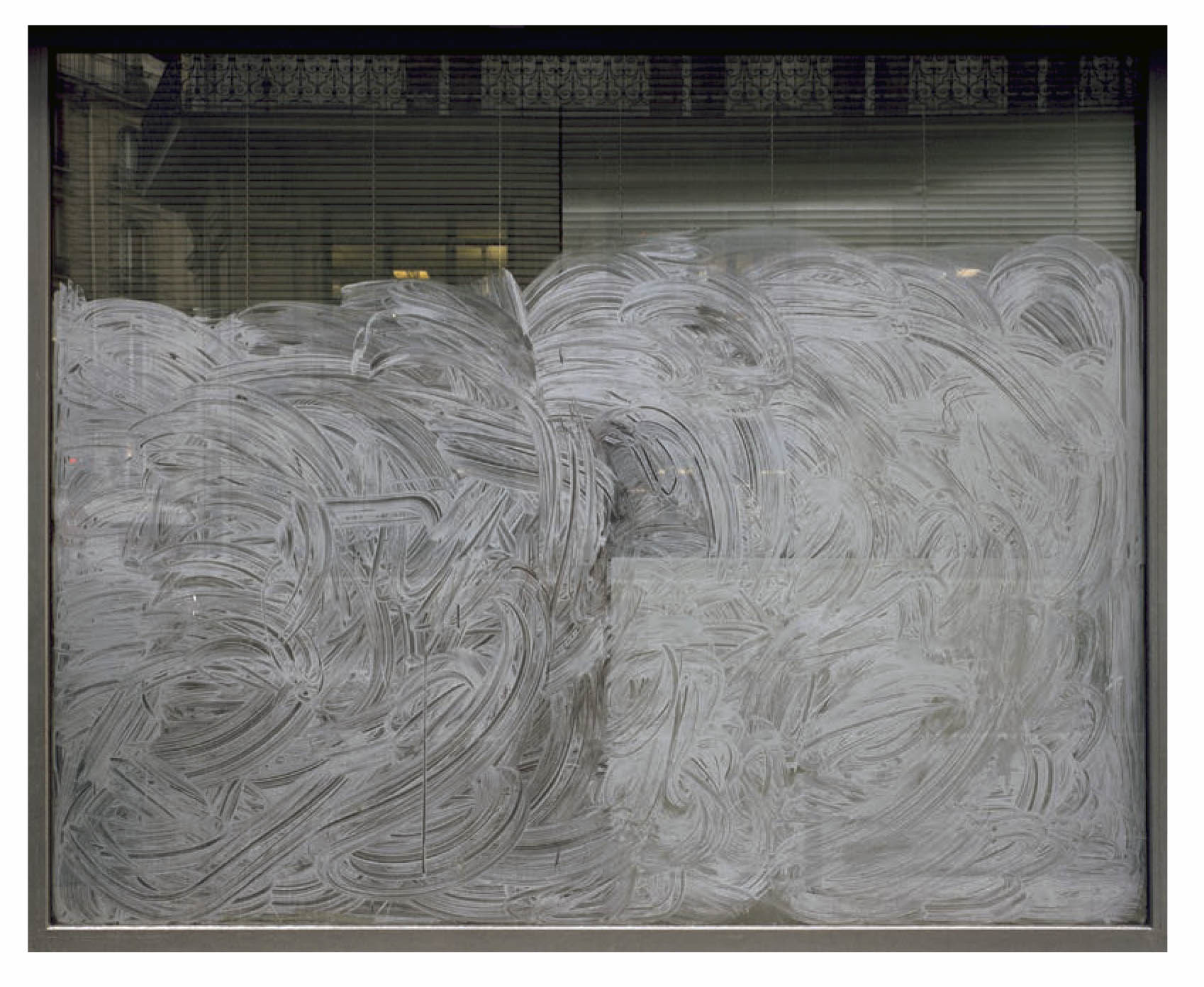
 

Anna Malagrida (Spanish, b. 1970) 'Rue Bleue' 2008-2009


Anna Malagrida (Spanish, b. 1970)
Rue Bleue
2008-2009
Photographic print on Dibond
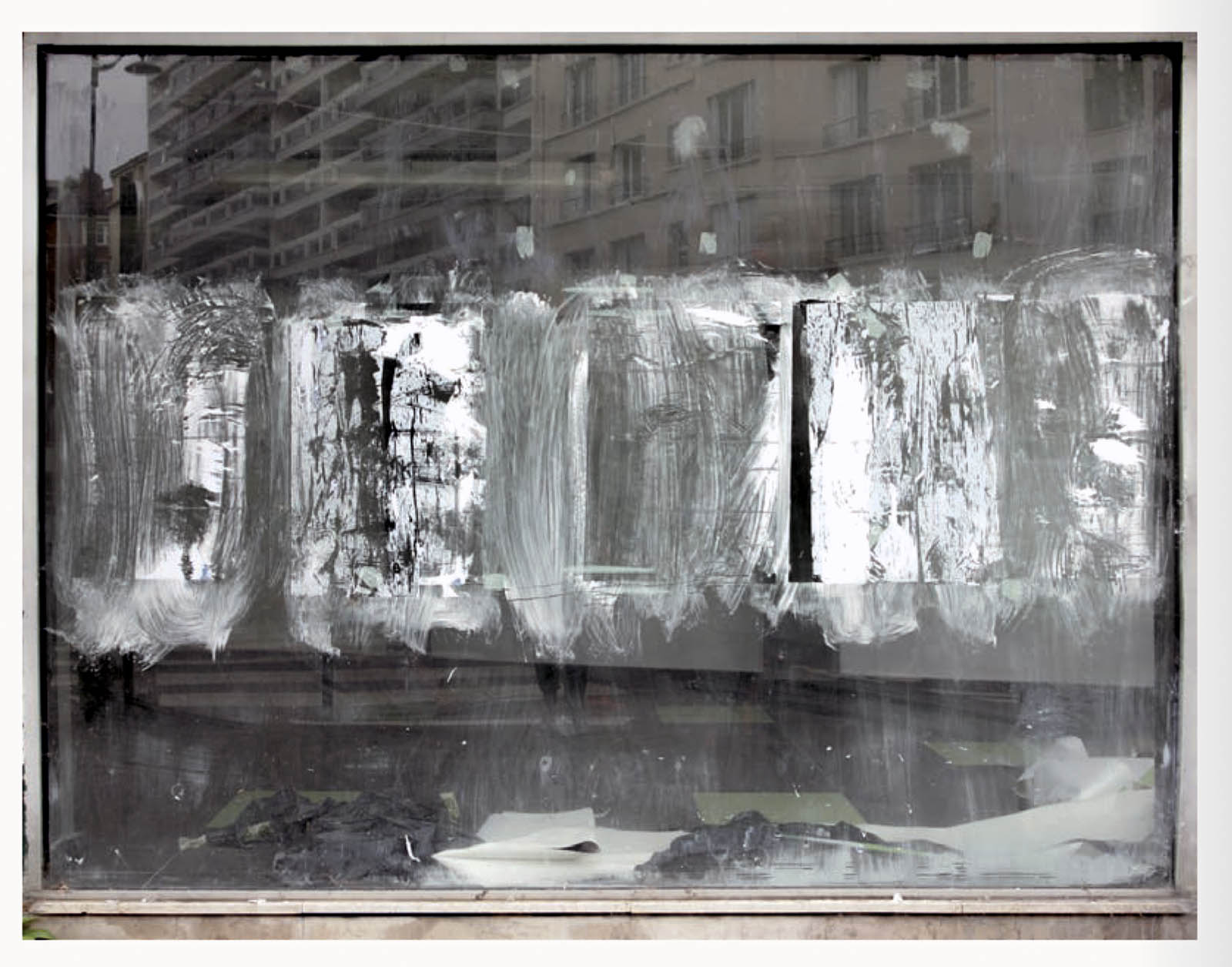
 

Anna Malagrida (Spanish, b. 1970) 'Rue Lecourbe I' 2008-2009


Anna Malagrida (Spanish, b. 1970)
Rue Lecourbe I
2008-2009
Photographic print on Dibond
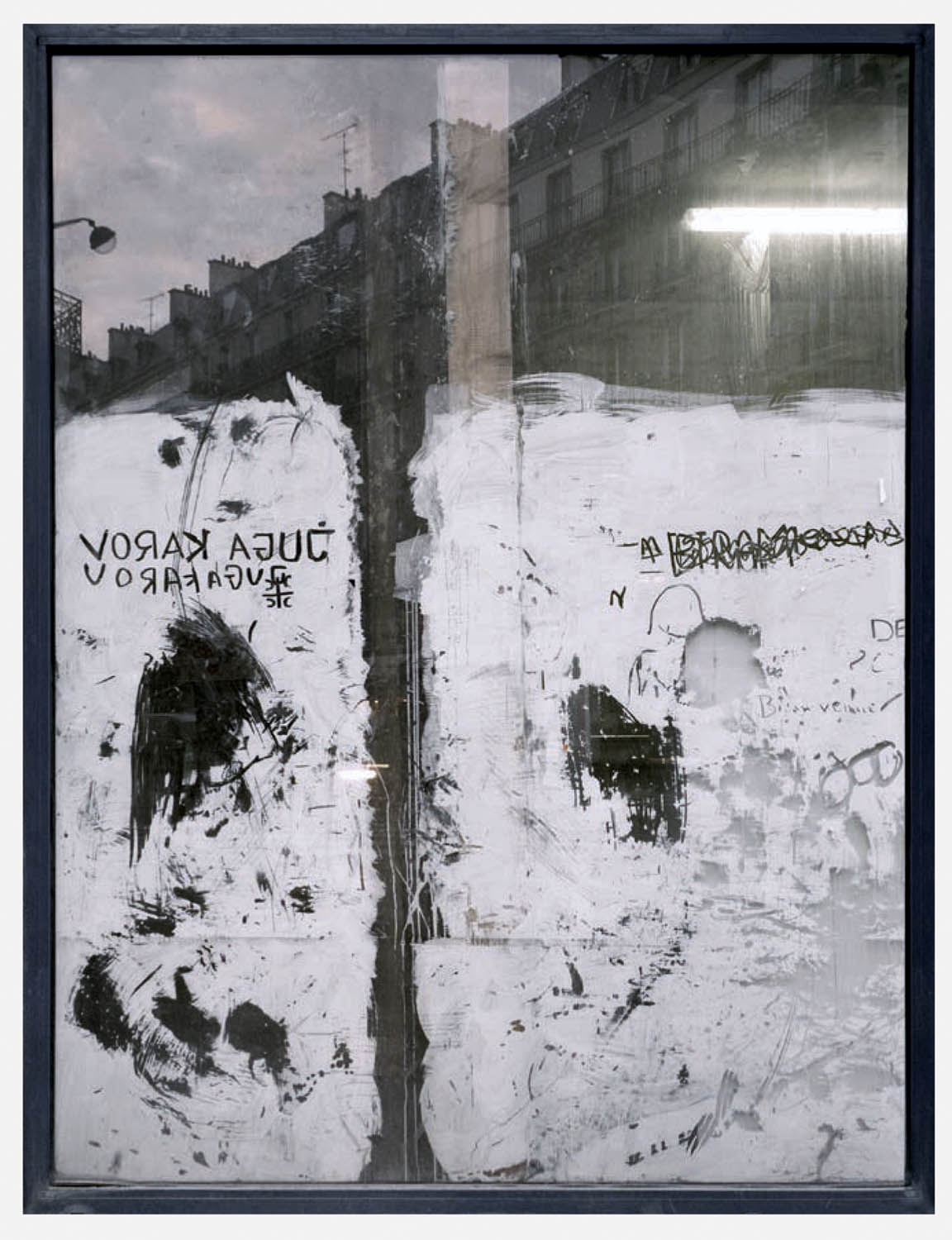
 

Anna Malagrida (Spanish, b. 1970) 'Rue Riboutté' 2008-2009


Anna Malagrida (Spanish, b. 1970)
Rue Riboutté
2008-2009
Photographic print on Dibond
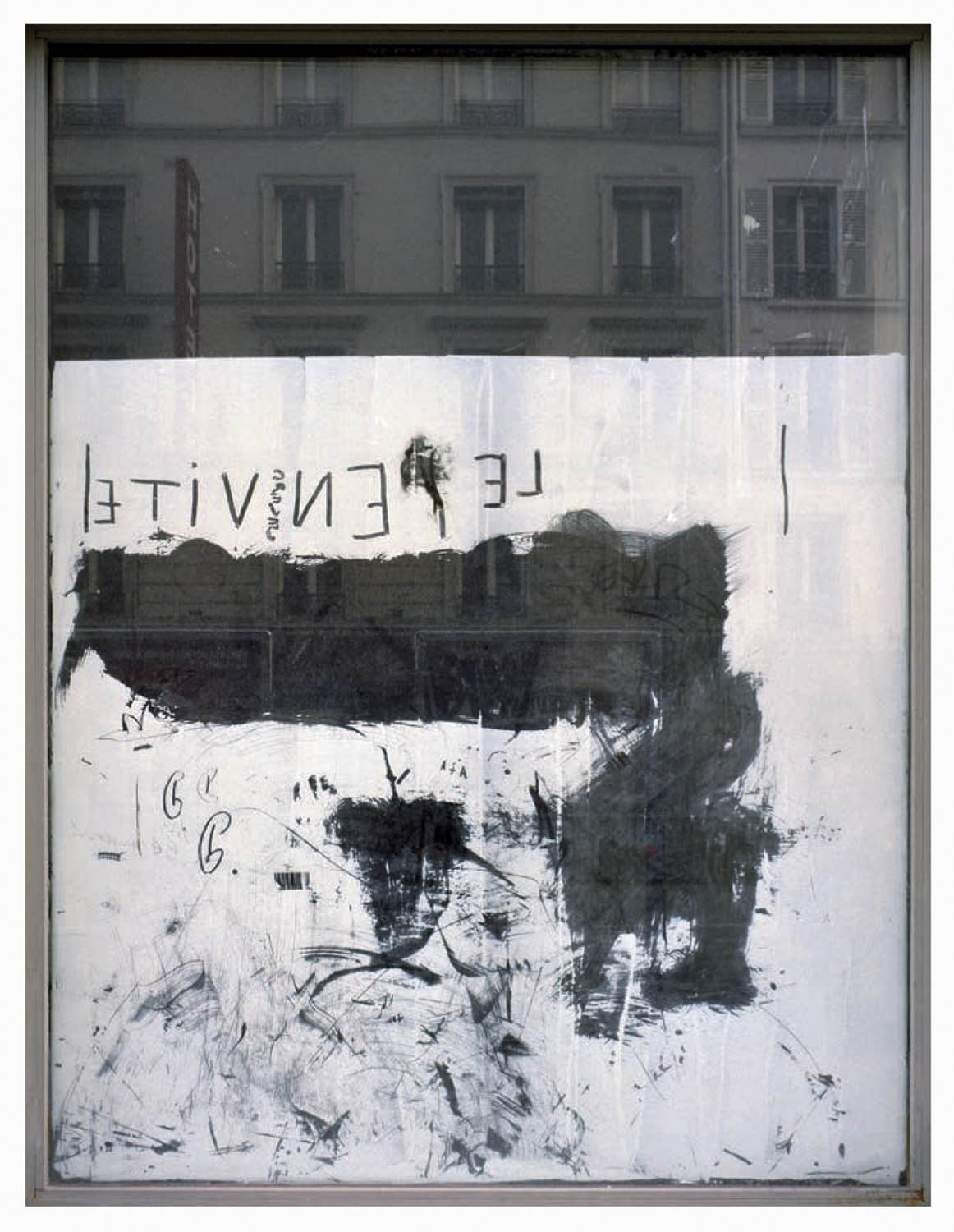
 

Anna Malagrida (Spanish, b. 1970) 'Rue de Châteaudun' 2008-2009


Anna Malagrida (Spanish, b. 1970)
Rue de Châteaudun
2008-2009
Photographic print on Dibond


Museu Tàpies
Carrer d’Aragó 255
08007 Barcelona, Catalonia (Spain)
Phone: +34 934 870 315

Opening hours:
Tuesday – Saturday 10.00am – 7.00pm
Sunday 10.00am – 3.00pm

Museu Tàpies website

LIKE ART BLART ON FACEBOOK

Back to top

Exhibition: ‘Nicolás Muller: beauty and commitment’ at Real Academia de Bellas Artes de San Fernando, Madrid

Exhibition dates: 19th November, 2024 – 2nd March, 2025


Nicolás Muller (Spanish born Hungary, 1913-2000) 'Tangier' 1940, printed 2005 from the exhibition 'Nicolás Muller: beauty and commitment' at Real Academia de Bellas Artes de San Fernando, Madrid


Nicolás Muller (Spanish born Hungary, 1913-2000)
Tangier
1940, printed 2005 by J. M. Castro Prieto
Printed with pigmented inks on cotton paper
623 x 610 mm
Acquired in 2006 with a charge to the Guitarte legacy


What an enchanted life!

Nicolás Muller was a Hungarian photographer but the rise of Nazism forced him to flee his homeland in 1938 because he was Jewish.. to Paris to continue his work, then temporary shelter in Portugal before finally finding sanctuary in Tangier under the Spanish protectorate where he “published two notable books: Estampas marroquíes (Moroccan Prints) and Tánger por el Jalifa (Tangier by the Khalifa). These works revealed a mature artist, deeply sensitive to his surroundings and possessing a mastery of his craft.” (Press release)

“… in the 1930s Muller worked in a humanist, documentary vein, evincing a strong sense of sympathy for the world of labour and the most modest members of society. His interest in the working man’s experience would remain a hallmark of his photographs. As the social and political contexts changed, he photographed agricultural labourers and dockers in the ports of Marseille and Porto, then children and street vendors in Tangiers, and life in the countryside.”1

Off to Madrid for the first time to mix with underground intelligentsia where he met a beautiful woman who was to become his wife (moving to Madrid permanently in 1947, for love!), living in Spain under a fascist dictator (oh the irony, of one who had fled fascism!)

Then to become one of Spain’s greatest photographic visual storytellers, capturing the essence of the Spanish countryside and its people, the peasants and the sacred myths of the cultures of Spain, the mountain towns and the cities, the artists and the intellectuals. The passion and the people.

In Morocco it’s the blinding light and the open space of his photographs; in Spain it’s the intensity of his vision revealing something sensual and intimate in his photographs. Rich, textured, engaged / engaging.

“I learned that photography can be a weapon, an authentic document of reality. […] I became an engaged person, an engaged photographer.”

At heart always a humanist photographer he seems to me to be a romantic and I love that. I want to see more of his photographs, particularly his early photographs in Hungary and Paris which I have never seen.

Nicolás Muller is my secret pleasure. He deserves to be more widely recognised in the history of photography.

Dr Marcus Bunyan


1/ Press release on the exhibition Nicolás Muller (1913-2000). Traces of exile from the Château de Tours website quoted in Art Blart: art and cultural memory archive, May 10, 2015 [Online] Cited 28/02/2025


Many thankx to the Real Academia de Bellas Artes de San Fernando for allowing me to publish the photographs in the posting. Please click on the photographs for a larger version of the image.

Fore more photographs of the artist’s work please see the previous posting on the exhibition ‘Nicolás Muller (1913-2000). Traces of exile’ at the Château de Tours, November 2014 – May 2015


Nicolás Muller (Spanish born Hungary, 1913-2000) 'Desnudo. Tangier' 1940, printed 2005 from the exhibition 'Nicolás Muller: beauty and commitment' at Real Academia de Bellas Artes de San Fernando, Madrid


Nicolás Muller (Spanish born Hungary, 1913-2000)
Desnudo. Tangier
1940, printed 2005 by J. M. Castro Prieto
Printed with pigmented inks on cotton paper
724 x 610 mm
Acquired in 2006 with a charge to the Guitarte legacy


Within the hallowed halls of the Real Academia de Bellas Artes de San Fernando, a collection of photographs whispers stories of exile, resilience, and the vibrant cultural tapestry of a bygone era. These are the works of Nicolás Muller, a Hungarian-born photographer who, through his lens, became one of Spain’s most influential visual storytellers. This current exhibition at the prestigious academy offers a profound look at his impact, reminding us of the power of photography to transcend borders and capture the essence of humanity.

Muller’s life reads like a historical novel. Born in Hungary in 1913, he belonged to a remarkable generation of Hungarian photographers – a group that included giants like Robert Capa, Brassaï, Moholy-Nagy, and André Kertész. But the rise of Nazism forced him to flee his homeland in 1938, beginning a journey of exile that would shape his life and work.

Paris became his first refuge, where he contributed to prestigious publications like France Magazine, Paris-Match, and Regard. However, the shadow of war followed him. As a Jew, Muller was again forced to move, seeking temporary shelter in Portugal. Even there, he was not safe, facing expulsion by the Salazar regime’s secret police.

His wandering eventually led him to Tangier, a cosmopolitan city in Morocco, where he found a semblance of stability. From 1940 to 1947, Muller established a successful portrait studio, capturing the diverse faces of the city. During this time, under the Spanish Protectorate, he also collaborated with the newspaper España and published two notable books: Estampas marroquíes (Moroccan Prints) and Tánger por el Jalifa (Tangier by the Khalifa). These works revealed a mature artist, deeply sensitive to his surroundings and possessing a mastery of his craft.

In 1944, a pivotal encounter with Fernando Vela, a prominent intellectual and co-founder of the Revista de Occidente, brought Muller to Madrid for the first time. Three years later, he made Madrid his permanent home, opening a studio on Serrano Street, near the iconic Puerta de Alcalá.

Post-war Madrid was a city recovering from the ravages of conflict and under the weight of Franco’s dictatorship. Yet, Muller’s studio became a beacon of light and a haven for intellectuals, artists, and writers who yearned for intellectual freedom. His studio wasn’t just a place for portraits; it was a salon, a vibrant hub where minds met and ideas were exchanged.

Imagine the scene: the warm glow of studio lights, the quiet hum of conversation, the friendly presence of Muller’s dogs. Within those walls, giants of Spanish thought and culture gathered: Baroja and Azorín, elder statesmen of literature; philosophers like Pedro Laín Entralgo and Xavier Zubiri; poets like Gabriel Celaya and Gerardo Diego; writers like Ignacio Aldecoa and María Zambrano. Once a week, Muller himself would venture out to the nearby Café Gijón, joining the lively discussions of poets and painters.

This gathering at Muller’s studio echoed the legendary salons of 19th-century Paris, particularly that of Nadar. Like Nadar, Muller created a visual record of his time, capturing the faces of a generation that shaped Spain’s intellectual and artistic landscape. His portraits are more than just images; they are intimate glimpses into the souls of these remarkable individuals.

But Muller’s work extended far beyond the confines of his studio. He ventured across Spain, documenting its landscapes, towns, monuments, and people. His photographs offer a poignant portrayal of a country grappling with its past and striving for a new identity. His books, such as España Clara (Clear Spain) and numerous regional guides, are now treasured historical documents, offering a window into a Spain that has changed but not disappeared.

In 1980, after a rich and eventful career, Muller passed the torch to his daughter, Ana, also a talented photographer, and retired to the coastal town of Andrín, Asturias. It wasn’t until the 1990s, with a major retrospective at the Museum of Contemporary Art of Madrid and a comprehensive catalog, that Muller’s work received the widespread recognition it deserved. He was finally acknowledged as one of Spain’s most important photographers, a status he shares with his admired colleague, Catalá-Roca.

Now, this important body of work is being celebrated at the Real Academia de Bellas Artes de San Fernando, offering a new generation the chance to connect with Muller’s vision. His photographs remind us of the power of art to transcend borders, to connect us to the past, and to illuminate the human experience. They are a testament to the enduring impact of a wandering lens that found its home in Spain and captured the soul of a nation.

Press release from the Real Academia de Bellas Artes de San Fernando


Nicolás Muller (Spanish born Hungary, 1913-2000) 'Bailarina Tajara. Larache' (Tajara dancer. Larache) 1942, printed 2005 from the exhibition 'Nicolás Muller: beauty and commitment' at Real Academia de Bellas Artes de San Fernando, Madrid


Nicolás Muller (Spanish born Hungary, 1913-2000)
Bailarina Tajara. Larache (Tajara dancer. Larache)
1942, printed 2005 by J. M. Castro Prieto
Printed with pigmented inks on cotton paper
623 x 610 mm
Acquired in 2006 with a charge to the Guitarte legacy


Nicolás Muller (Spanish born Hungary, 1913-2000) 'Fiesta del Mulud II' 1942, printed 2005 from the exhibition 'Nicolás Muller: beauty and commitment' at Real Academia de Bellas Artes de San Fernando, Madrid


Nicolás Muller (Spanish born Hungary, 1913-2000)
Fiesta del Mulud II
1942, printed 2005 by J. M. Castro Prieto
Printed with pigmented inks on cotton paper
724 x 610 mm
Acquired in 2006 with a charge to the Guitarte legacy


Nicolás Muller (Spanish born Hungary, 1913-2000) 'Pio Baroja paseando por el Retiro' (Pio Baroja strolling through the Retiro) 1950, printed 2005 from the exhibition 'Nicolás Muller: beauty and commitment' at Real Academia de Bellas Artes de San Fernando, Madrid


Nicolás Muller (Spanish born Hungary, 1913-2000)
Pio Baroja paseando por el Retiro (Pio Baroja strolling through the Retiro)
1950, printed 2005 by J. M. Castro Prieto
Printed with pigmented inks on cotton paper
623 x 610 mm
Acquired in 2006 with a charge to the Guitarte legacy


 The Museum’s photography room displays a selection of works by photographer Nicolás Muller that are part of the Academy’s collection. In addition, bibliographic and photographic material from the Pedro Melero / Marisa Llorente collection and a portrait of the photographer from the Ana Muller collection are on display.

In the cultural wasteland of autocratic Spain, the photographer Nicolás Muller (Hungary, 1913 – Asturias, 2000) was, together with Catalá-Roca, the greatest and most influential Spanish photographer. A prominent member of the privileged group of Hungarian photographers of his generation – Robert Capa, Brassaï, Moholy-Nagi, André Kertész… – like them, he had to leave his country fleeing Nazism in 1938, to settle in Paris, where he actively collaborated in the famous weeklies France Magazine, Paris-Match and Regard. Of Jewish origin, the German occupation condemned him to a new and precarious exile in Portugal, a country from which he was arrested and expelled by the PIDE, the political police of the Salazar dictatorship. Finally, his long journey as a wandering Jew led him to Tangier, an open city where he lived and worked until 1947.

In Tangier he set up a portrait studio, which soon became the most prestigious and visited in the city. During the Spanish Protectorate of Morocco, Muller collaborated with the newspaper España and published two of his best books, Estampas marroquíes and Tánger por el Jalifa, which were added to those published in Hungary and which showed a photographer in full maturity, cultured, delicate, committed and deeply knowledgeable of all the secrets of his trade. In 1944, with the help of his great friend Fernando Vela, co-founder of the Revista de Occidente and director of España, he came to Madrid for the first time, where he exhibited his photographs at the Palace Hotel. Three years later he left Tangier for good, to move to Madrid. After working in two portrait studios, in 1947 he took up residence in a bright gallery on Calle Serrano, a stone’s throw from the Puerta de Alcalá.

In a shabby and intimidated Madrid, his studio soon became the most prestigious in the city and a back room and meeting point for a group of intellectuals and artists close to the liberal ideas led by Ortega y Gasset and Fernando Vela, from the Revista de Occidente. In that culturally depressed time, marked by the obsolescence of an aesthetically exhausted photographic officialdom, Muller represented one of the few windows open to modernity. In the shadow of the spotlights in his studio, in the presence of his friendly dogs, the most notable artists and intellectuals of the day met for years: Baroja and Azorín, as foster parents, Pedro Laín Entralgo, Lorenzo Goñi, Fernando Vela, Gabriel Celaya, Dionisio Ridruejo, Rodrigo Uría, Xavier Zubiri, Gerardo Diego, Pío and Julio Caro Baroja, Ignacio Aldecoa, María Zambrano… And once a week, the photographer would go to the nearby Café Gijón to join the well-known gathering known as the poets and painters, made up of Martínez Novillo, Benjamín Palencia, Pablo Serrano, Zabaleta, Pancho Cossío, Paco García Pavón, Gabriel Celaya and Cristino Mallo.

The gatherings in Muller’s studio, given the distance in time, are comparable only to the councils held a century earlier in the Parisian studio of the first Nadar, on the Boulevard des Capucines. Like the great French portraitist, Muller was building an admirable Parnassus, made up of more than a hundred portraits of painters, sculptors, poets, novelists and philosophers from that Madrid aggrieved by pain, hunger, fear and ration cards, which contrasted with the frivolous and offensive euphoria of the disrespectful mandarins and the rich speculators, to use the words of Dionisio Ridruejo. For these portraits alone, Muller would deserve a place of honour in the history of Spanish and universal photography.

But, unlike his Madrid colleagues at the time – Gyenes, Amer Ventosa, Ibáñez – whom he surpassed in talent, in addition to his work in the studio, from the very day of his arrival in the capital, Muller deployed an intense professional activity that led him to travel around Spain and portray its towns, its monuments, its landscapes and its people. The fruit of that titanic work are his numerous and excellent books, unfortunately not available today, such as España Clara (1966) and a dozen guides to the various provinces and regions of Spain, such as those produced in the Basque Country (1967), Andalusia (1968), Cantabria (1969) and La Mancha (1970). This series was followed by those dedicated to the Landscapes of Spain, Spanish Popular Architecture, Spanish Romanesque and the Jewish footprint in Spain, with texts by Azorín, Sáinz de Robles, Luis Rosales, Julio Caro Baroja, Gerardo Diego, Dionisio Ridruejo, Torrente Ballester, Fernando Vela and Laín Entralgo. In 1980, after a turbulent and well-lived professional life, in which he came to penetrate the roots of grief, successive exiles, love, friendship and melancholy, he left his Madrid studio in the hands of his daughter Ana Muller, an excellent professional, and retired to his small chosen homeland, in Andrín, Asturias, on the seashore.

Following his retrospective exhibition, Nicolás Muller. Fotógrafo, held in 1994 at the Museum of Contemporary Art in Madrid and the extraordinary catalogue published by Lunwerg Editores, Muller began to be recognised as the most important Spanish photographer of his time; a status he shares with his admired Catalá-Roca, with whom he shared many common points: curiosity, talent, a love of the arts, a joy for his work and a deep knowledge of the secrets of life and his craft. Since 1994, his exhibitions have multiplied in Spain and in various countries in Europe and America. Among them, Nicolás Muller. Obras maestras (2013) and Nicolás Muller, una mirada compromiso (2020) stand out, which is still touring various countries in Europe.

With the fall of communism in Hungary, Muller began to be known and admired in his country as well, after the retrospective exhibition of his photographs, held with great solemnity in his hometown and inaugurated by Arpad Gönez, the first Hungarian president of the democratic era. This exhibition was followed by others, among which Nicolas Muller. A retrospective look stands out, held in Budapest, organised by the Embassy of Spain and the House of Hungarian Photographers, six years after the death of the master. An emotional and well-deserved tribute to this great professional, Hungarian by birth, Spanish by adoption and, above all, a wandering Jew and citizen of the world.

Publio López Mondéjar
Academic. Section of Image Arts

Text from the Real Academia de Bellas Artes de San Fernando website


Nicolás Muller (Spanish born Hungary, 1913-2000) 'Pintando el barco. Las Palmas de Gran Canaria' (Painting the boat. Las Palmas de Gran Canaria) 1964, printed 2005 from the exhibition 'Nicolás Muller: beauty and commitment' at Real Academia de Bellas Artes de San Fernando, Madrid


Nicolás Muller (Spanish born Hungary, 1913-2000)
Pintando el barco. Las Palmas de Gran Canaria (Painting the boat. Las Palmas de Gran Canaria)
1964, printed 2005 by J. M. Castro Prieto
Printed with pigmented inks on cotton paper
623 x 610 mm
Acquired in 2006 with a charge to the Guitarte legacy


Nicolás Muller (Spanish born Hungary, 1913-2000) 'Monjitas en Lanzarote' (Nuns in Lanzarote) 1964, printed 2005 from the exhibition 'Nicolás Muller: beauty and commitment' at Real Academia de Bellas Artes de San Fernando, Madrid


Nicolás Muller (Spanish born Hungary, 1913-2000)
Monjitas en Lanzarote (Nuns in Lanzarote)
1964, printed 2005 by J. M. Castro Prieto
Printed with pigmented inks on cotton paper
724 x 610 mm
Acquired in 2006 with a charge to the Guitarte legacy


Nicolás Muller (Spanish born Hungary, 1913-2000) 'Pablo Serrano' 1965 from the exhibition 'Nicolás Muller: beauty and commitment' at Real Academia de Bellas Artes de San Fernando, Madrid


Nicolás Muller (Spanish born Hungary, 1913-2000)
Pablo Serrano
1965
Vintage silver gelatin print


Pablo Serrano Aguilar (8 March 1908, Crivillén, Teruel – 26 November 1985, Madrid) was a Spanish abstract sculptor.


Nicolás Muller (Spanish born Hungary, 1913-2000) 'Soledad. Cudillero' (Solitude. Cudillero) 1965, printed 2005 from the exhibition 'Nicolás Muller: beauty and commitment' at Real Academia de Bellas Artes de San Fernando, Madrid


Nicolás Muller (Spanish born Hungary, 1913-2000)
Soledad. Cudillero (Solitude. Cudillero)
1965, printed 2005 by J. M. Castro Prieto
Printed with pigmented inks on cotton paper
623 x 610 mm
Acquired in 2006 with a charge to the Guitarte legacy


Nicolás Muller (Spanish born Hungary, 1913-2000) 'País Vasco' (the Basque Country) 1966, printed 2005 from the exhibition 'Nicolás Muller: beauty and commitment' at Real Academia de Bellas Artes de San Fernando, Madrid


Nicolás Muller (Spanish born Hungary, 1913-2000)
País Vasco (the Basque Country)
1966, printed 2005 by J. M. Castro Prieto
Printed with pigmented inks on cotton paper
623 x 610 mm
Acquired in 2006 with a charge to the Guitarte legacy


Real Academia de Bellas Artes de San Fernando
C. de Alcalá, 13, Centro, 28014 Madrid, Spain

Real Academia de Bellas Artes de San Fernando website

LIKE ART BLART ON FACEBOOK

Back to top

Exhibition: ‘Álbum de salón y alcoba (The Bedroom and Dressing Room Album). Instalación de David Trullo’ at Museo Nacional de Artes Decorativas, Madrid

Exhibition dates: 24th April – 22nd September, 2024


Kaulak (Antonio Cánovas del Castillo y Vallejo) (Spanish, 1862-1933) 'Studio portrait' 1921-1922


Kaulak (Antonio Cánovas del Castillo y Vallejo) (Spanish, 1862-1933)
Studio portrait
1921-1922
Photographic positive
Museo Nacional de Artes Decorativas, Madrid


Kaulak (22 December 1862 – 13 September 1933), was a Spanish photographer, art critic, editor and amateur painter. His uncle was prime minister Antonio Cánovas del Castillo, assassinated in 1897 by an anarchist, hence his use of a pseudonym; the meaning of which is unexplained, although the word appears to be of Basque origin.


What fabulousesness!

An archive of ‘galant photography’ and other art works illustrating the intimate public and private scenes of a couple in Spain in the 1920s-1930s which builds a memory, a narrative. The exhibition combines photographs and documentation of the most varied kinds, with elements of the daily life of its time.

“… above all [the exhibition] makes us reflect on our own archives: what we keep and what we discard, what we hide and what we reveal, how we build and invent our own history, how we want to be remembered and what we leave to those who come after us.”

The appreciation and enjoyment of difference pictured through photography and art, telling a story otherwise long forgotten.

I have added appropriate bibliographic text where possible.

Dr Marcus Bunyan


Many thankx to the Museo Nacional de Artes Decorativas for allowing me to publish the photographs in the posting. Please click on the photographs for a larger version of the image.


Anonymous photographer. 'Portrait' c. 1935


Anonymous photographer
Portrait
c. 1935
Photographic positive
Museo Nacional de Artes Decorativas, Madrid


The Museo Nacional de Artes Decorativas (MNAD) in Madrid, a state museum of the Ministry of Culture of Spain, joins the PHotoESPAÑA 2024 festival with the opening of Álbum de salón y alcoba. Una instalación de David Trullo, which can be visited free of charge until September 22.

From a forgotten collection that contained public -or living room- photographs and private -or bedroom- scenes of a couple in the 20s and 30s of the last century, the visual artist David Trullo has made this exhibition. The installation is “the result of opening an unnoticed time capsule and putting it in context with pieces from the museum and other collections to explore the limits of intimacy, leading the viewer to surpass them.”

In addition to putting a “rediscovered treasure” into context, the installation offers a review of how photographic documentation is exhibited and interpreted. It also proposes to reflect “on our own archives: what we keep and what we discard, what we hide and what we reveal, how we construct and invent our own history, how we want to be remembered and what we leave to those who come after us.”

The installation is, in itself, an album that captures the intimacy and public life of the 1920s and 1930s, combining the most varied photographs and documentation with elements of the everyday life of her time. It includes pieces and archives from several private collections, the Museo Sorolla, the Muséu del Pueblo d’Asturies, the Museo Nacional del Teatro de Almagro, the Asociación para la Enseñanza de la Mujer-Fundación Fernando de Castro and the Museo de Historia de Madrid, among others.

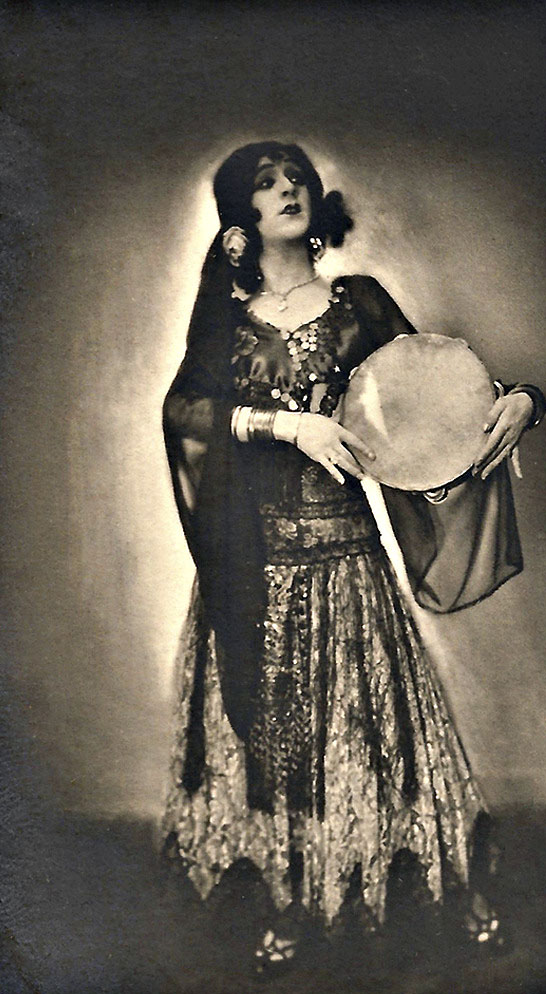
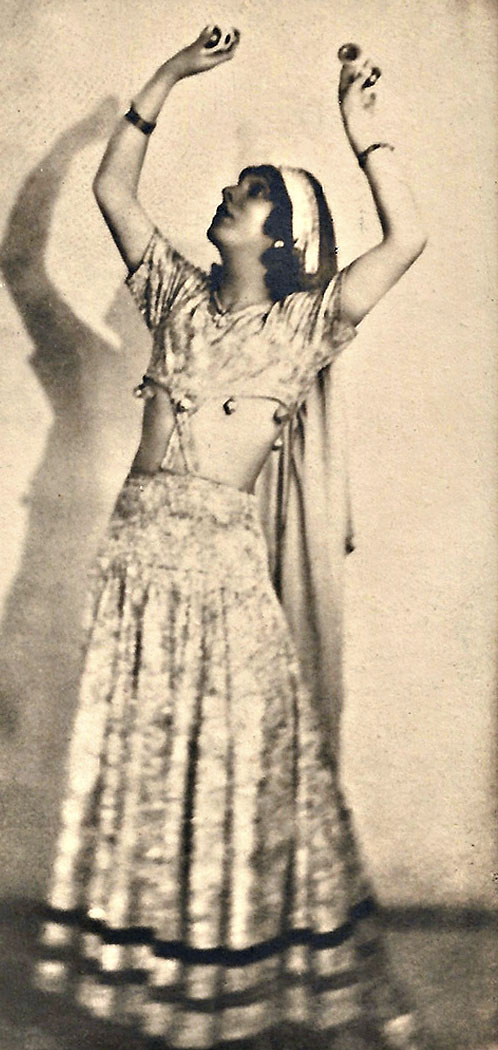
Between “the living room” and “the bedroom” a route is traced that goes from the preservation of intimate albums – among which a positive by Kaulak stands out, – through the first advances in amateur photography, to the ‘galant photography’, more or less erotic, and other genres of popular culture that include among its protagonists Tórtola Valencia, Sara Montiel, Conchita Piquer or the queer copla singer Miguel de Molina.

Text from the Museo Nacional de Artes Decorativas website


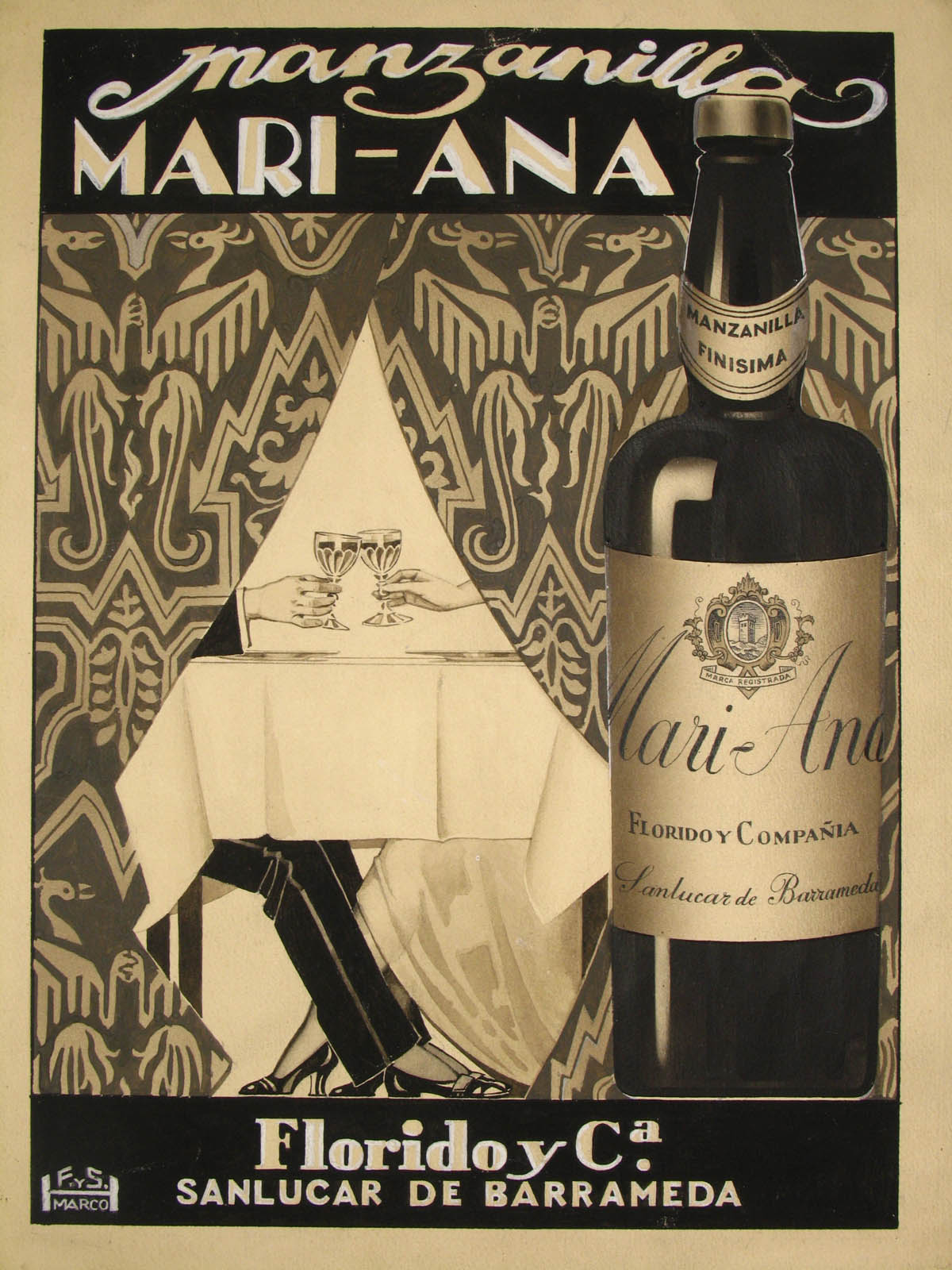
'Advertising design for 'Florido y Cía'' (Florido and Co.) c. 1930


Advertising design for ‘Florido y Cía’ (Florido and Co.)
c. 1930
Watercolour on paper
Museo Nacional de Artes Decorativas, Madrid


Anonymous photographer. 'Miguel de Molina' 1937


Anonymous photographer
Miguel de Molina
1937
Photographic positive
Colección Pedro Víllora


Miguel Frías de Molina (Málaga, April 10, 1908 – Buenos Aires, March 4, 1993), known artistically as Miguel de Molina, was a Spanish singer of copla. Tortured, expelled from Spain and later persecuted by the Franco dictatorship for being a “faggot and a red”, he settled in Argentina in 1946, invited by Eva Perón.

He had an unmistakable personal style combining cabaret, flamenco dancing, deep vocal emotionalism, spectacular costumes and a narcissistic stage persona that made him extremely popular with audiences. His gay identity was openly acknowledged with a sense of humour that was very close to what today would be recognised as ‘low camp.’ Between 1936 and 1942 Molina spent most of the Spanish Civil War on Republican ground. This together with his homosexuality and sympathies for the Left had disastrous consequences for his career. He left Spain for Argentina, where he was hugely successful. But life in exile was not easy and the Argentinean government soon threatened him with expulsion. Molina credited the direct intervention of Eva Perón with helping him stay in the country and continue his career. Unfortunately his overt support for the Perón government made him a despised figure once the Peróns were driven from power. The rampant homophobia of the changed political climate and the cultural shift that accompanied it proved detrimental to his mental and emotional health, prompting him to withdraw from artistic life in 1960. While many personalities who were faced with persecution under Francoism were being rediscovered in the 1980s, Molina, by then bitter and withdrawn, languished in obscurity. It was not until two films that celebrated his life were released a decade later that his uniquely stylised performances and colourful life would finally be celebrated.

Anonymous. “Miguel de Molina – Nominee,” on The Legacy Project website Nd [Online] Cited 21/08/2024


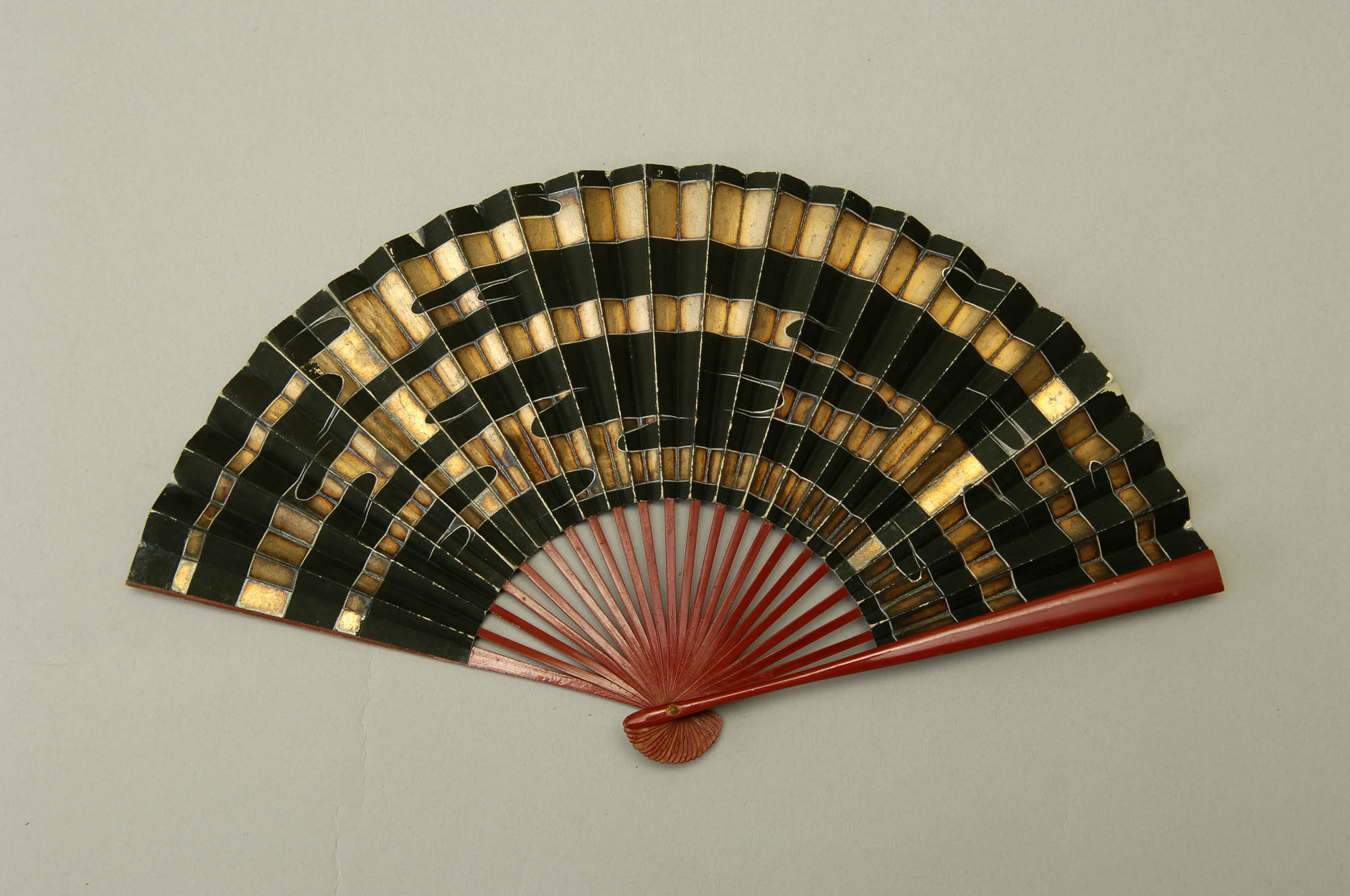
Anonymous maker. 'Fan' c. 1925


Anonymous maker
Fan

c. 1925
Lacquered wood and painted and corrugated paper
Museo Nacional de Artes Decorativas, Madrid
Photo: Masú del Amo


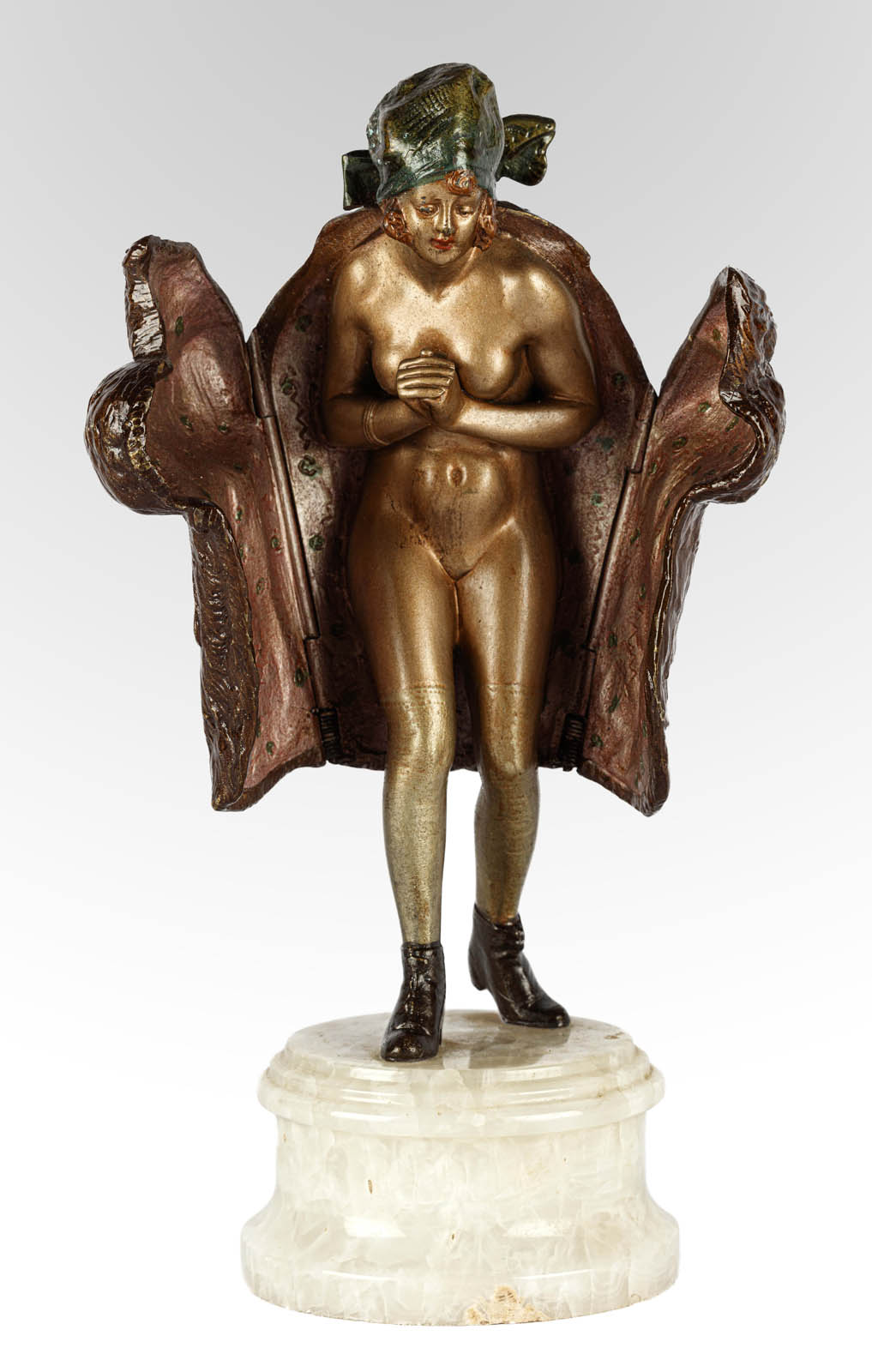
Bruno Zach (Austrian born Ukraine, 1891-1935) (designer) 'Figure of a woman with a fur coat' c. 1920


Bruno Zach (Austrian born Ukraine, 1891-1935) (designer)
Figure of a woman with a fur coat
c. 1920
Cast bronze
Museo Nacional de Artes Decorativas, Madrid
Photo: Fabián Álvarez


Bruno Zach (6 May 1891 – 20 February 1935) was an Austrian art deco sculptor of Ukrainian birth who worked in the early-to-mid 20th century. His output included a wide repertoire of genre subjects, however he is best known for his erotic sculptures of young women.


'Muchas Gracias' (Thank You) Magazine, Year VII - No. 344' September 13, 1930


Muchas Gracias (Thank You) Magazine, Year VII – No. 344
September 13, 1930
Museo Nacional de Artes Decorativas, Madrid


Translated text at the bottom of the magazine:

Thank you very much
For this rascal
We want to tell this little bitch that it fits her well. But we stumbled upon the fit.


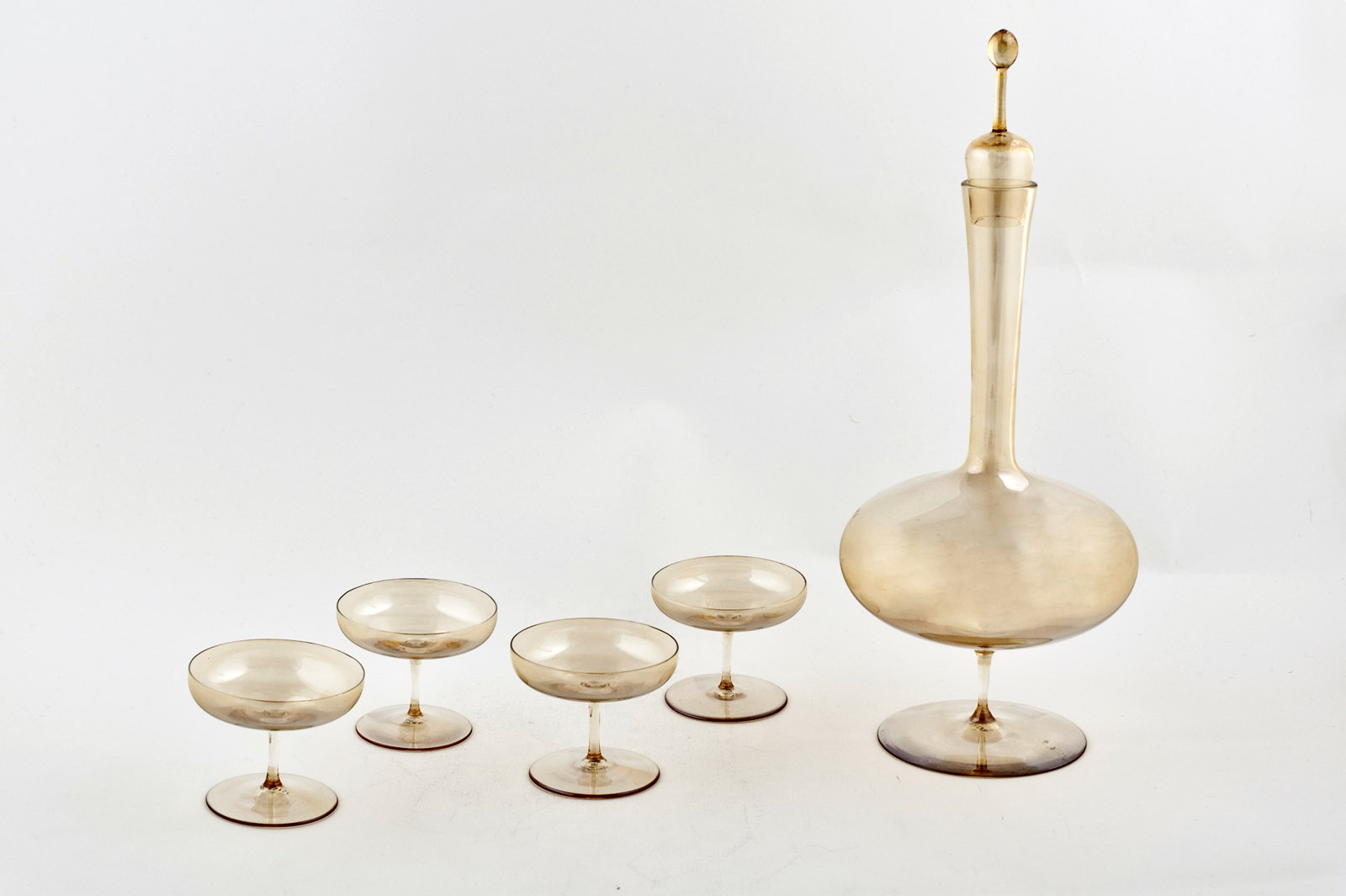
Oswald Haerdtl (Austrian, 1899-1959) 'Cocktail set' 1924


Oswald Haerdtl (Austrian, 1899-1959)
Cocktail set
1924
mouth-blown glass
Museo Nacional de Artes Decorativas, Madrid
Photo: Lucía Morate


Oswald Haerdtl was an important Austrian architect, designer, and architecture teacher.

He studied under Kolo Moser and Oskar Strnad at the Wiener Kunstgewerbeschule, and entered Josef Hoffmann’s master class in 1922, soon becoming his assistant. From 1935 to 1959, he was head of the architecture department. His teaching, architectural projects, and international connections, to Italy and France in particular, made him a lasting influence on post-war Modernism in Vienna, bringing a sense of lightness and elegance into the design vocabulary.

Text from the J & L Lobmeyr website


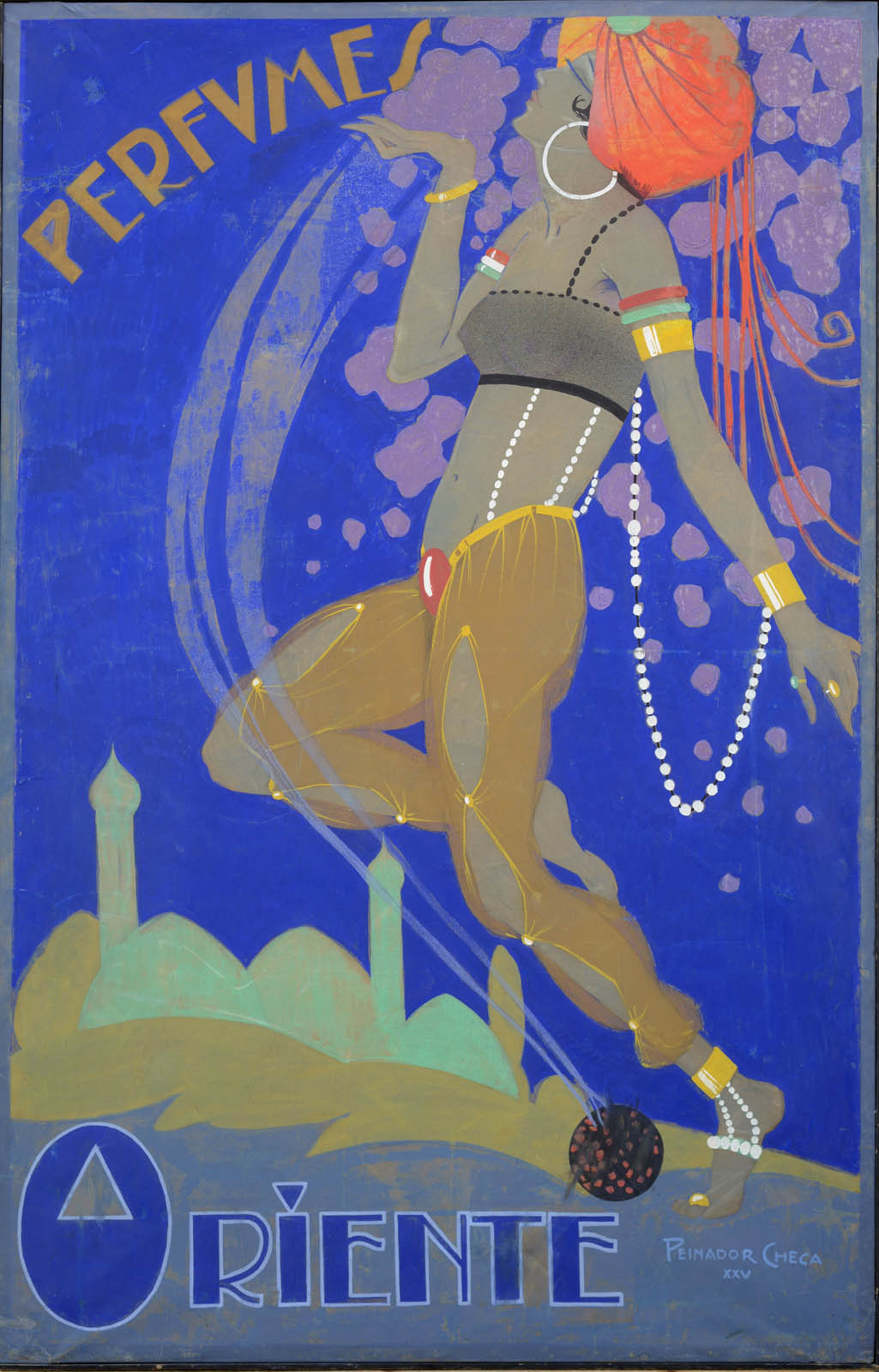
Ramón Peinador Checa (Spanish, 1897-1964) Advertising design for 'Perfumes Oriente' 1925


Ramón Peinador Checa (Spanish, 1897-1964)
Advertising design for ‘Perfumes Oriente’
1925
Wash on paper
Museo Nacional de Artes Decorativas, Madrid
Photo: Javier Rodríguez Barrera


Ramón Peinador Checa (Madrid, December 25, 1897 – Mexico City, May 26, 1964) was a Spanish painter, draftsman, engraver, illustrator, designer and decorator who, exiled in Mexico, became a naturalised citizen of that country.


Photography lies and deceives us. What the camera shows us is staged, either by us or by the eye of the person who creates the images. What we commonly call a “photographic archive” is nothing more than a fragmented collection transformed over the years, with which a memory, a narrative, is built.

From a forgotten collection containing public photographs -or from the living room- and private scenes -or from the bedroom- of a couple in the twenties and thirties of the last century, the visual artist David Trullo proposes this installation.

It is the result of opening an unnoticed time capsule and putting it in context with the pieces of the twentieth century that put an end to the monopoly of the professional photographer. Cameras and processes are simplified and photography is becoming an essential accessory for any occasion, and not only for amateurs, including the female sector: the Kodak Petite from 1926 is promoted as a camera ‘for smart and modern girls’.

In addition to putting a rediscovered treasure into context, the installation proposes a review of the way photographic documentation is displayed and interpreted, but above all it makes us reflect on our own archives: what we keep and what we discard, what we hide and what we reveal, how we build and invent our own history, how we want to be remembered and what we leave to those who come after us.

During this period, Madrid reinvented itself and became as cosmopolitan as other European cities, although it was the bourgeois and aristocratic elites who truly enjoyed it. A surprising and varied sexual atmosphere also emerged, along with new ways of understanding bodies, identities and relationships that were reflected in publications, advertising and photography, with the so-called ‘galant photography’ flourishing within it.

The National Museum of Decorative Arts joins PHotoESPAÑA 2024 with David Trullo’s installation ‘Album of living room and bedroom’

~ With a selection of images from the public and the private, the visual artist discovers a photographic capsule that time has preserved to be reread from the present day

~ The tour includes everything from photographic positives by Kaulak to portraits of Sara Montiel, Conchita Piquer or the queer copla singer Miguel de Molina

The National Museum of Decorative Arts (MNAD), a state museum of the Ministry of Culture, is joining the PHotoESPAÑA 2024 festival with the inauguration of ‘Album of living room and bedroom. Installation by David Trullo’, which can be visited free of charge until September 22.

From a forgotten collection containing public photographs  – or from the living room –  and private scenes  – or from the bedroom – of a couple in the 1920s and 1930s, the visual artist David Trullo has created this proposal. The installation is “the result of opening an unnoticed time capsule and putting it in context with the pieces from the museum and from other collections to explore the limits of intimacy, leading the viewer to surpass them.”

In addition to putting a “rediscovered treasure” into context, the installation offers a review of the way of exhibiting and interpreting photographic documentation. It also suggests reflecting “on our own archives: what we keep and what we discard, what we hide and what we reveal, how we build and invent our own history, how we want to be remembered and what we leave to those who come after us.”
From living room to bedroom

The installation is, in itself, an album that captures the intimacy and public life of the 1920s and 1930s, combining photographs and documentation of the most varied kinds, with elements of the daily life of its time. It features pieces and archives from various private collections, from the Sorolla Museum, the Muséu del Pueblo d’Asturies, the Museo Nacional del Teatro de Almagro, the Asociación para la Enseñanza de la Mujer-Fundación Fernando de Castro or the Museo de Historia de Madrid, among others. Between “the living room” and “the bedroom” there is a journey that goes from the conservation of intimate albums – among which a positive by Kaulak stands out – through the first advances in photography for amateurs, to reaching ‘galant photography’, more or less erotic, and other genres of popular culture that include among their protagonists Tórtola Valencia, Sara Montiel, Conchita Piquer or the queer copla singer Miguel de Molina.

Text from the National Museum of Decorative Arts exhibition press dossier


Antonio Peyró (Spanish, 1882-1954) 'The Baticola (Elena Plá Toda)' 1934


Antonio Peyró (Spanish, 1882-1954)
The Baticola (Elena Plá Toda)
1934
Glazed ceramic
Museo Nacional de Artes Decorativas, Madrid
Photo: Masú del Amo


Antonio Peyró Mezquita was a Spanish ceramist.


''Reciprocal pleasure', cover by Josep Renau Berenguer' 1933


‘Reciprocal pleasure’, cover by Josep Renau Berenguer
1933
Museo Nacional de Artes Decorativas, Madrid
Photo: Masú del Amo


Josep Renau Berenguer (Spanish, 1907-1982) was an artist and communist revolutionary, notable for his propaganda work during the Spanish Civil War. Among his production, he is remarkable for his art deco period, his political propaganda during the Spanish Civil War, the photo murals of the Spanish Pavilion in the International Exhibition of 1937 in Paris, a series of photomontages titled Fata Morgana or The American Way of Life, and murals and paintings made in Mexico, such as Tropic, dated in 1945.

Text from the Wikipedia website


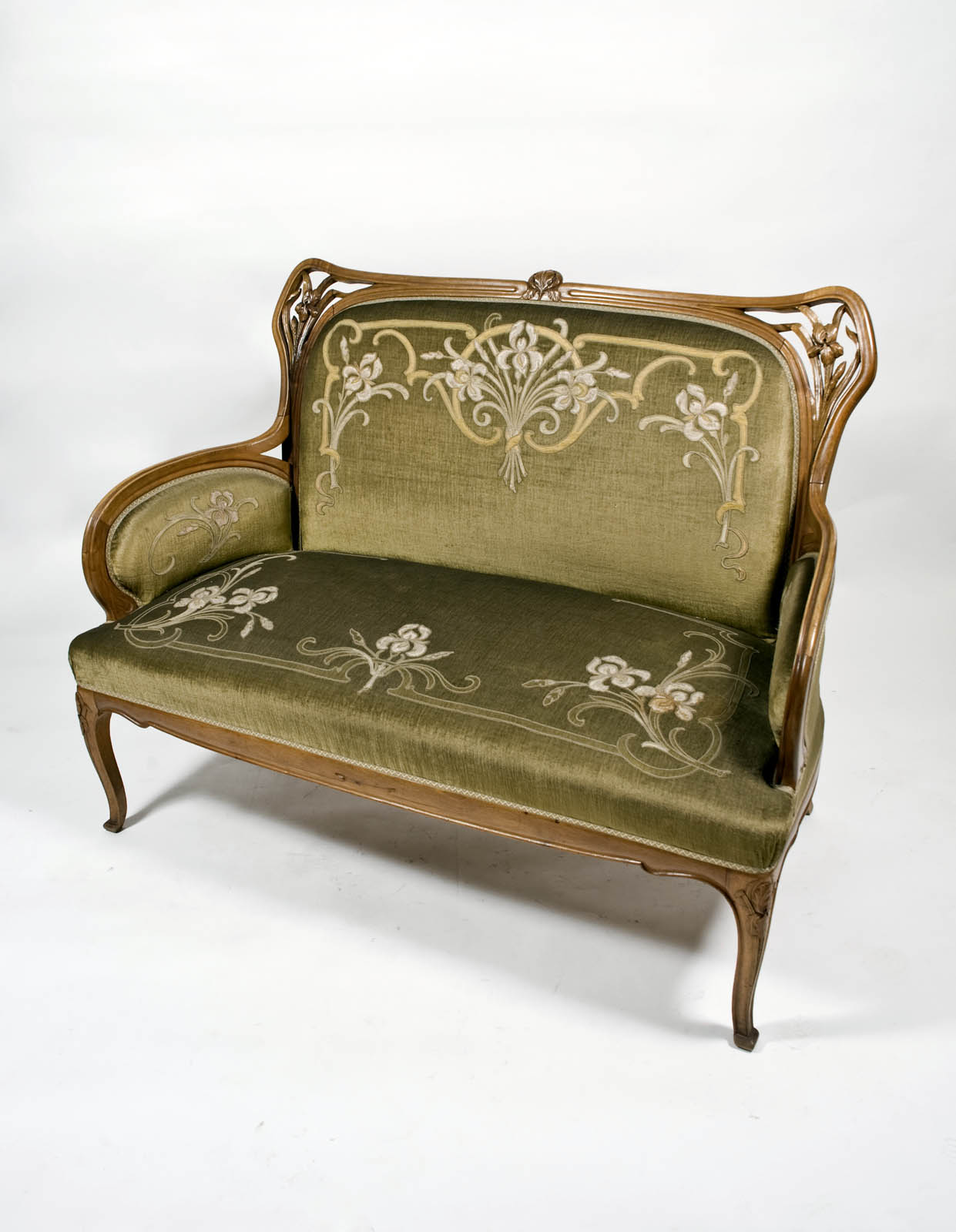
Louis Majorelle (French, 1859-1926) (designer) 'Sofa' 1901-1926


Louis Majorelle (French, 1859-1926) (designer)
Sofa
1901-1926
Silk velvet
Museo Nacional de Artes Decorativas, Madrid
Photo: Lucía Morate


Louis-Jean-Sylvestre Majorelle, usually known simply as Louis Majorelle, (26 September 1859 – 15 January 1926) was a French decorator and furniture designer who manufactured his own designs, in the French tradition of the ébéniste. He was one of the outstanding designers of furniture in the Art Nouveau style, and after 1901 formally served as one of the vice-presidents of the École de Nancy.

Louis Majorelle is one of those who contributed the most to the transformation of furniture. Thanks to posterity, we recognise today a piece of furniture from him as we recognise a piece of furniture from André Charles Boulle and Charles Cressent, the french Prince regent’s favourite artists. During the early 18th century, Cressent replaced the magnificence of ebony and tortoiseshell associated with tin and copper by the softer harmonies of foreign woods. Like him, Louis Majorelle dressed the elegant structure of Art Nouveau furniture with exotic wood inlays.

Text from the Wikipedia website


Álvaro Retana (Spanish born Philippines, 1890-1970) 'Figure for Celia Gámez' c. 1920


Álvaro Retana (Spanish born Philippines, 1890-1970)
Figure for Celia Gámez
c. 1920
Ink and graphite on paper
Colección Pedro Víllora


Álvaro Retana Ramírez de Arellano (Batangas, Philippines, August 26, 1890 – Torrejón de Ardoz, Madrid, February 10, 1970) was a writer, journalist, cartoonist, fashion designer, musician, libertine and Spanish couplet lyricist.

Celia Gámez Carrasco (August 25, 1905 – December 10, 1992) was an Argentinian film actress, and one of the icons of the Golden Age of Spanish theatre. She was more commonly known in Franco’s Spain, particularly in her later years, as La Protegida.


Vitín Cortezo (Spanish, 1908-1978) 'Figure for Celia Gámez' 1939


Vitín Cortezo (Spanish, 1908-1978)
Figure for Celia Gámez
1939
Mixed technique on paper
Colección Pedro Víllora


Víctor María Cortezo Martínez-Junquera, also known as Vitín Cortezo (Madrid, June 10, 1908 – March 2, 1978) was a Spanish painter, illustrator, costume designer and set designer.


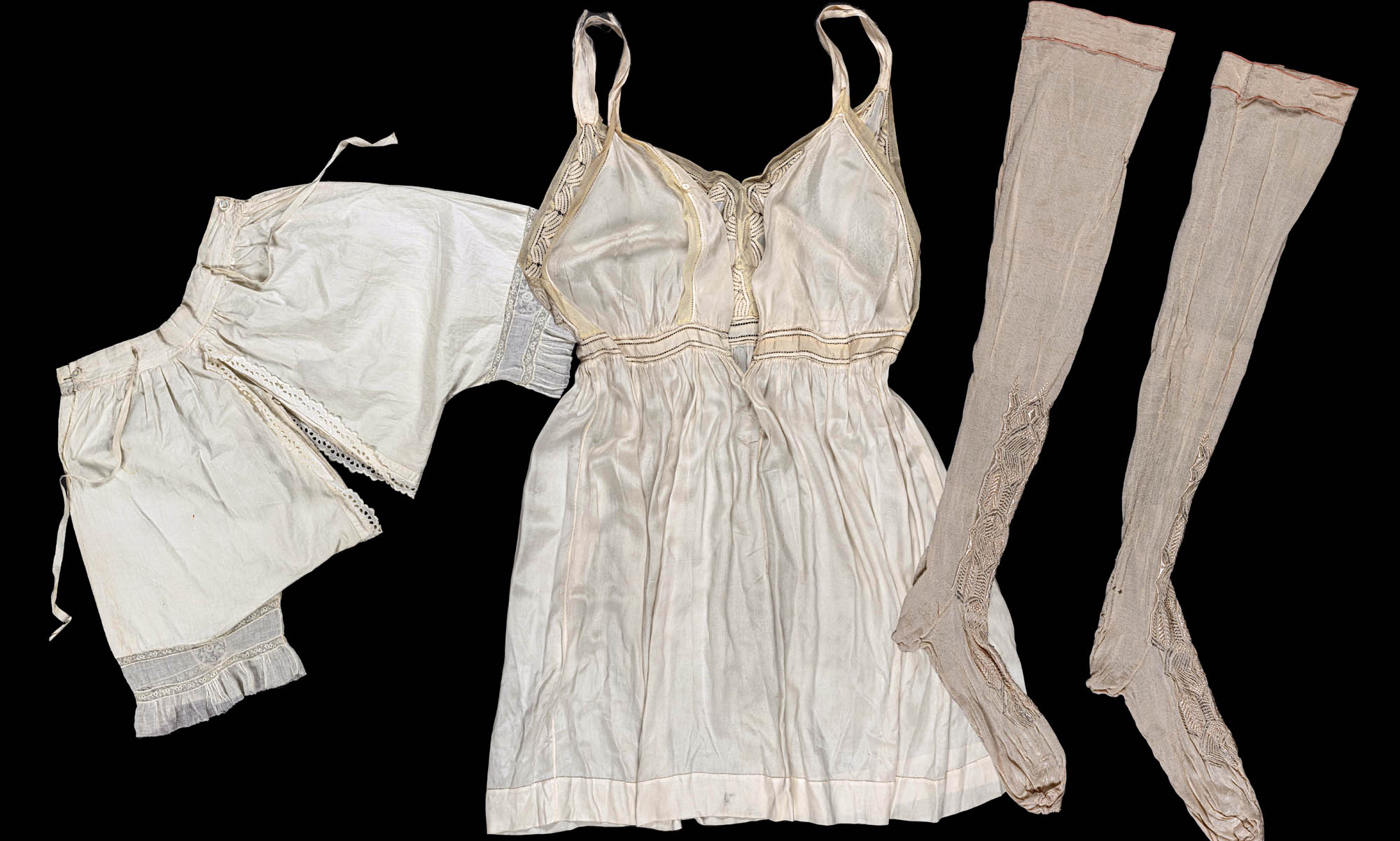
Anonymous maker. 'Bloomers and cotton slip with silk knit stockings' c. 1930


Anonymous maker
Bloomers and cotton slip with silk knit stockings
c. 1930
Museo Nacional de Artes Decorativas, Madrid
Photo: Fabián Álvarez


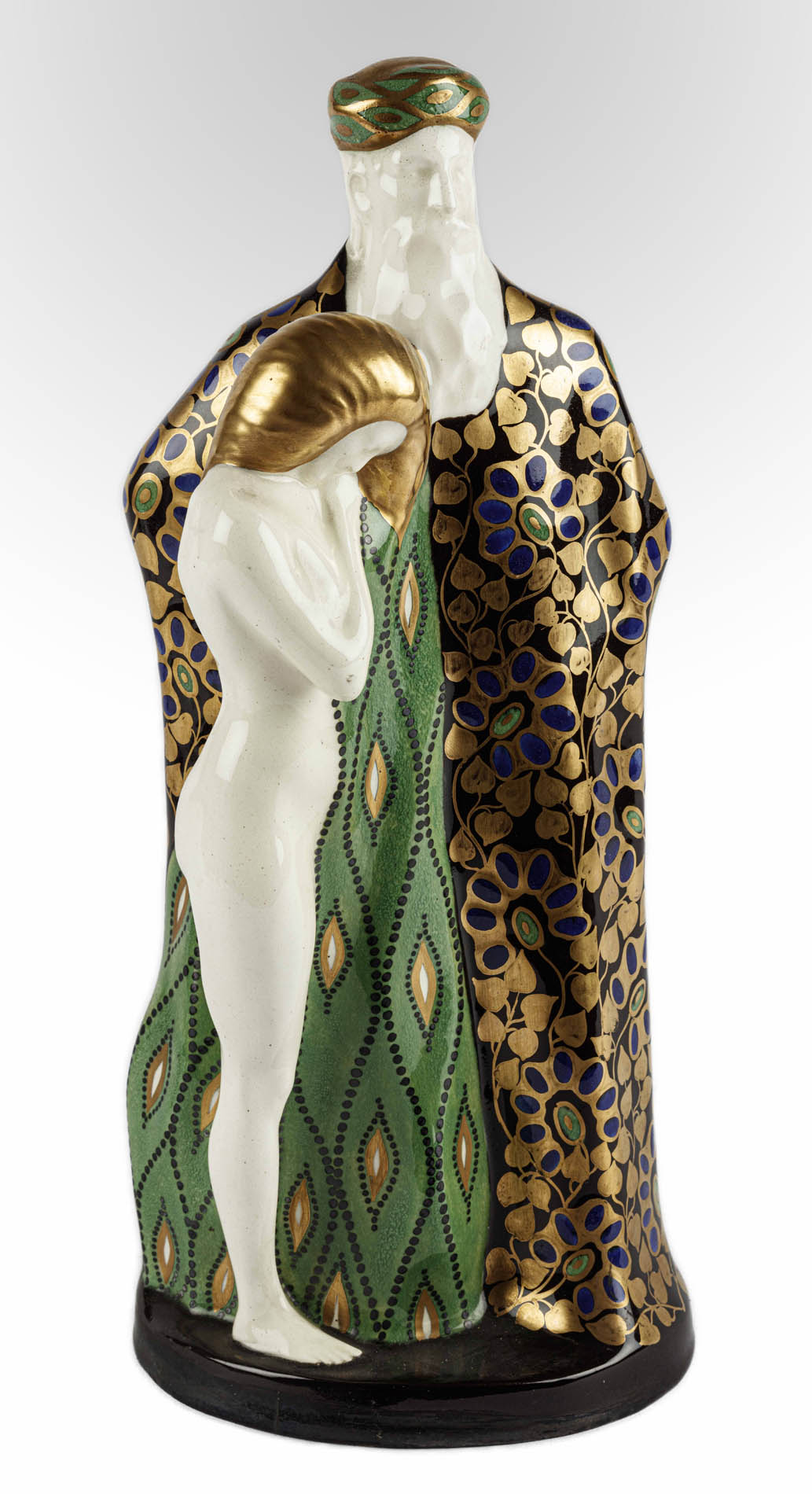
Karl Klaus and Franz Staudigl 'Figure (Serapis Wahliss series)' 1913-1914


Karl Klaus and Franz Staudigl
Figure (Serapis Wahliss series)
1913-1914
Painted and glazed ceramic
Museo Nacional de Artes Decorativas, Madrid
Photo: Fabián Álvarez


Karl Klaus (Austrian, 1889-1925) was a student of Josef Hoffmann. The figure was designed for Serapis-Wahliss, a noted Viennese retailer and manufacturer of porcelain. Franz Staudigl was an Austrian painter born 1885 – died 1944.


Anonymous photographer. 'Concha Piquer' 1927


Anonymous photographer
Concha Piquer
1927
Photographic positive
Museo Nacional del Teatro, Almagro


María de la Concepción Piquer López (13 December 1906 – 12 December 1990), better known as Concha Piquer (and sometimes billed as Conchita Piquer), was a Spanish singer and actress. She was known for her work in the copla form, and she performed her own interpretations of some of the key pieces in the Spanish song tradition, mostly works of the mid-20th century trio of composers Antonio Quintero, Rafael de León y Manuel Quiroga.


Anonymous maker. 'Perfume bottles' 1850-1900


Anonymous maker
Perfume bottles
1850-1900
Engraved and gilded silver and blown glass
Museo Nacional de Artes Decorativas. Madrid
Photo: Fabián Álvarez


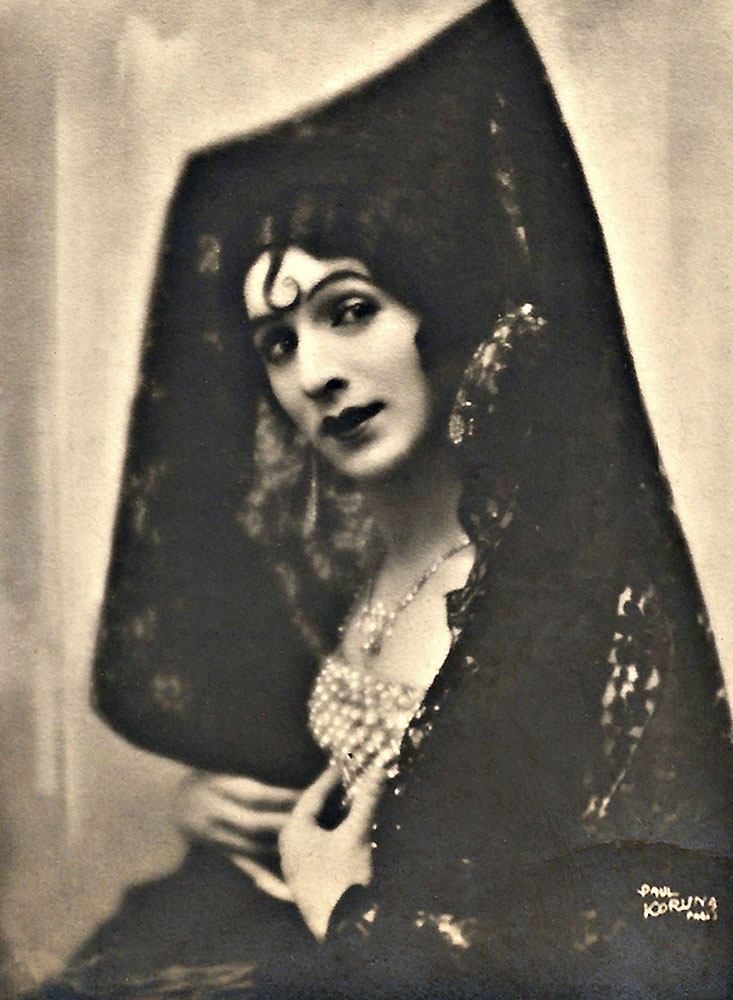
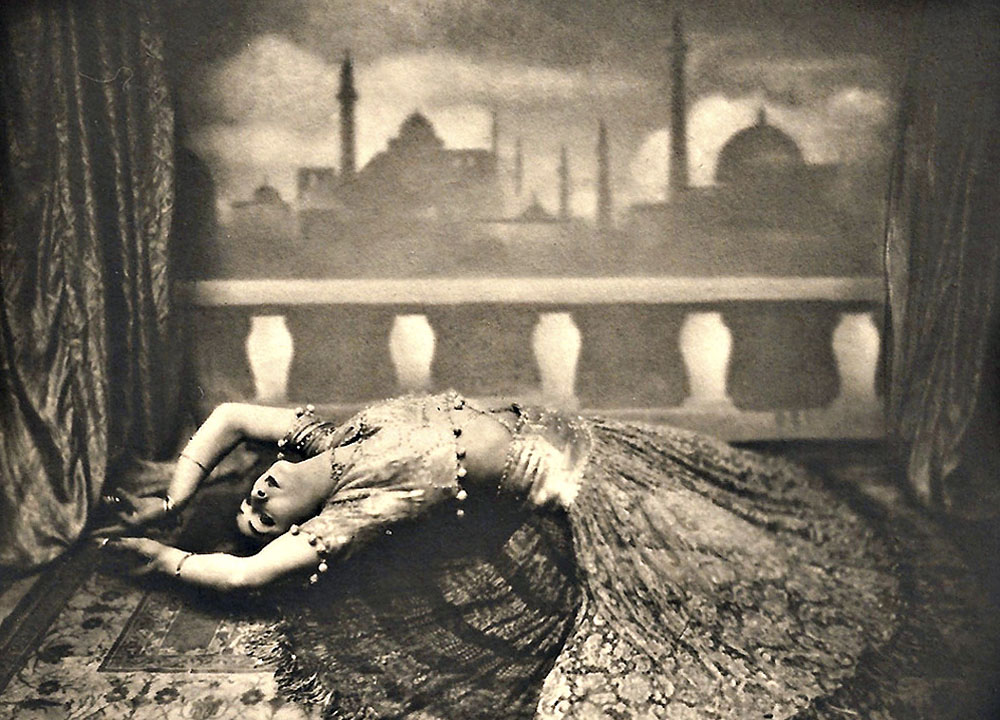
Anonymous maker / Paul Koruna, Paris (no dates) (photographer). 'Promotional poster for 'Rosalío'' Nd


Anonymous maker
Paul Koruna, Paris
(no dates) (photographer)
Promotional poster for ‘Rosalío’
Nd
Montage of photographic positives
Colección Ramón Gato


Anonymous maker / Paul Koruna, Paris (no dates) (photographer). 'Promotional poster for 'Rosalío'' Nd. 'Promotional poster for 'Rosalío'' Nd (detail)

Anonymous maker / Paul Koruna, Paris (no dates) (photographer). 'Promotional poster for 'Rosalío'' Nd. 'Promotional poster for 'Rosalío'' Nd (detail)

Anonymous maker / Paul Koruna, Paris (no dates) (photographer). 'Promotional poster for 'Rosalío'' Nd. 'Promotional poster for 'Rosalío'' Nd (detail)

Anonymous maker / Paul Koruna, Paris (no dates) (photographer). 'Promotional poster for 'Rosalío'' Nd. 'Promotional poster for 'Rosalío'' Nd (detail)


Anonymous maker
Paul Koruna, Paris (no dates) (photographer)
Promotional poster for ‘Rosalío’ (details)
Nd
Montage of photographic positives
Colección Ramón Gato


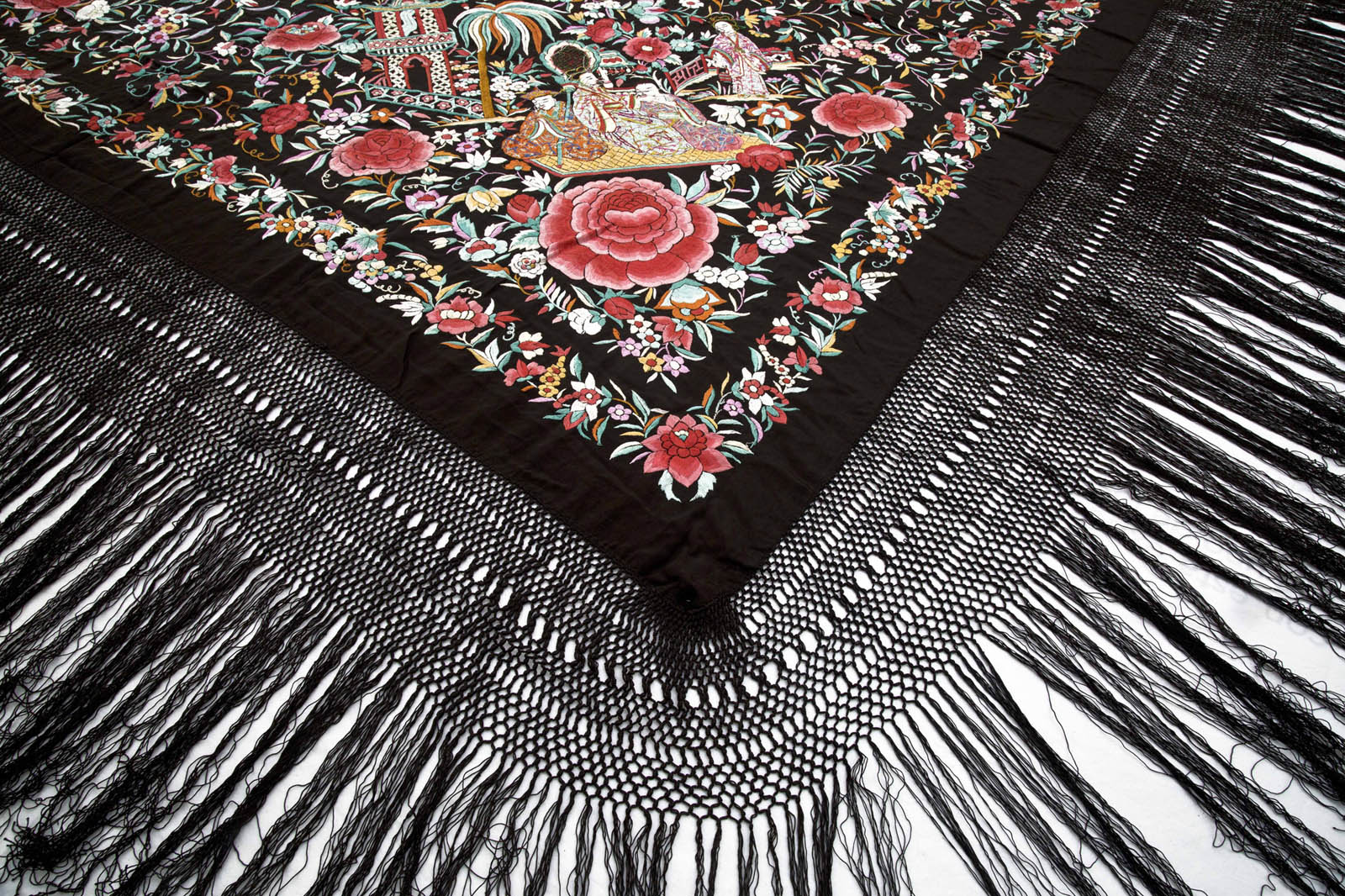
Anonymous maker. 'Manila shawl' 1876-1925


Anonymous maker
Manila shawl
1876-1925
Embroidered silk
Museo Nacional de Artes Decorativas, Madrid
Photos: Javier Rodríguez Barrera


National Museum of Decorative Arts
c/ Montalbán, 12. Madrid

Opening hours
Tuesday – Saturday: 9.30am – 3.00pm
Sundays and holidays: 10.00am – 3.00pm
Afternoons (Thursday): 5.00pm – 8.00pm
National Museum of Decorative Arts website

LIKE ART BLART ON FACEBOOK

Back to top

Exhibition: ‘In the Library: Photography and Travel in Sargent’s Spain’ at the National Gallery of Art, Washington

Exhibition dates: 3rd October – 30th December, 2022

Curator: Thomas O’Callaghan, Image Specialist for Spanish Art, National Gallery of Art, Department of Image Collections


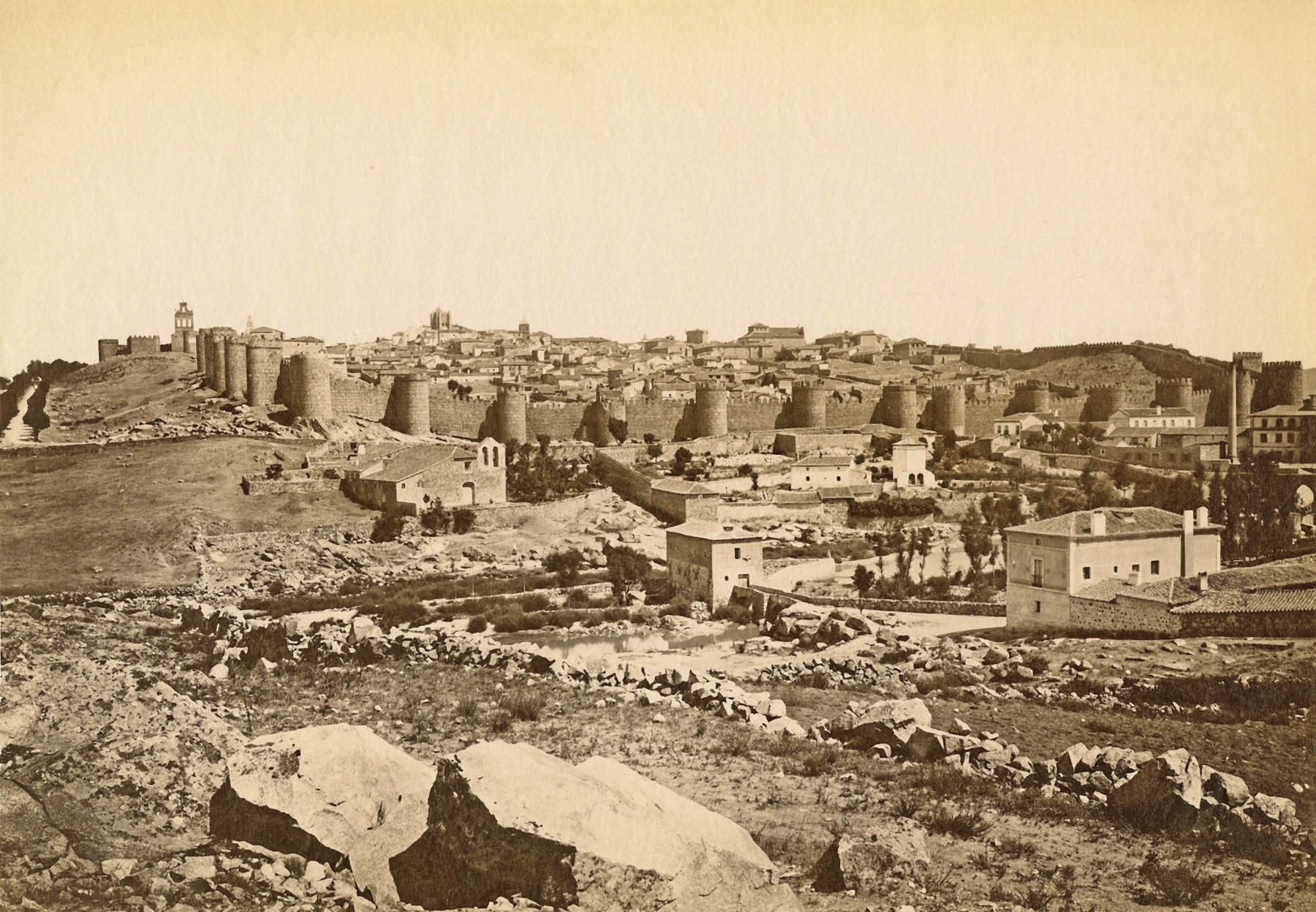
Juan Laurent (1816-1886, photographer) 'Panorama of Ávila' c. 1870 from the exhibition 'In the Library: Photography and Travel in Sargent's Spain' at the National Gallery of Art, Washington, Oct - Dec, 2022


Juan Laurent (1816-1886, photographer)
Panorama of Ávila
c. 1870
Albumen silver photograph
Madrid: J. Laurent (firm)
National Gallery of Art Library, Department of Image Collections


Another eclectic posting… this time, wonderful early photographs of the people and places of Spain.

Dr Marcus Bunyan


Many thankx to the National Gallery of Art for allowing me to publish the photographs in the posting. Please click on the photographs for a larger version of the image.


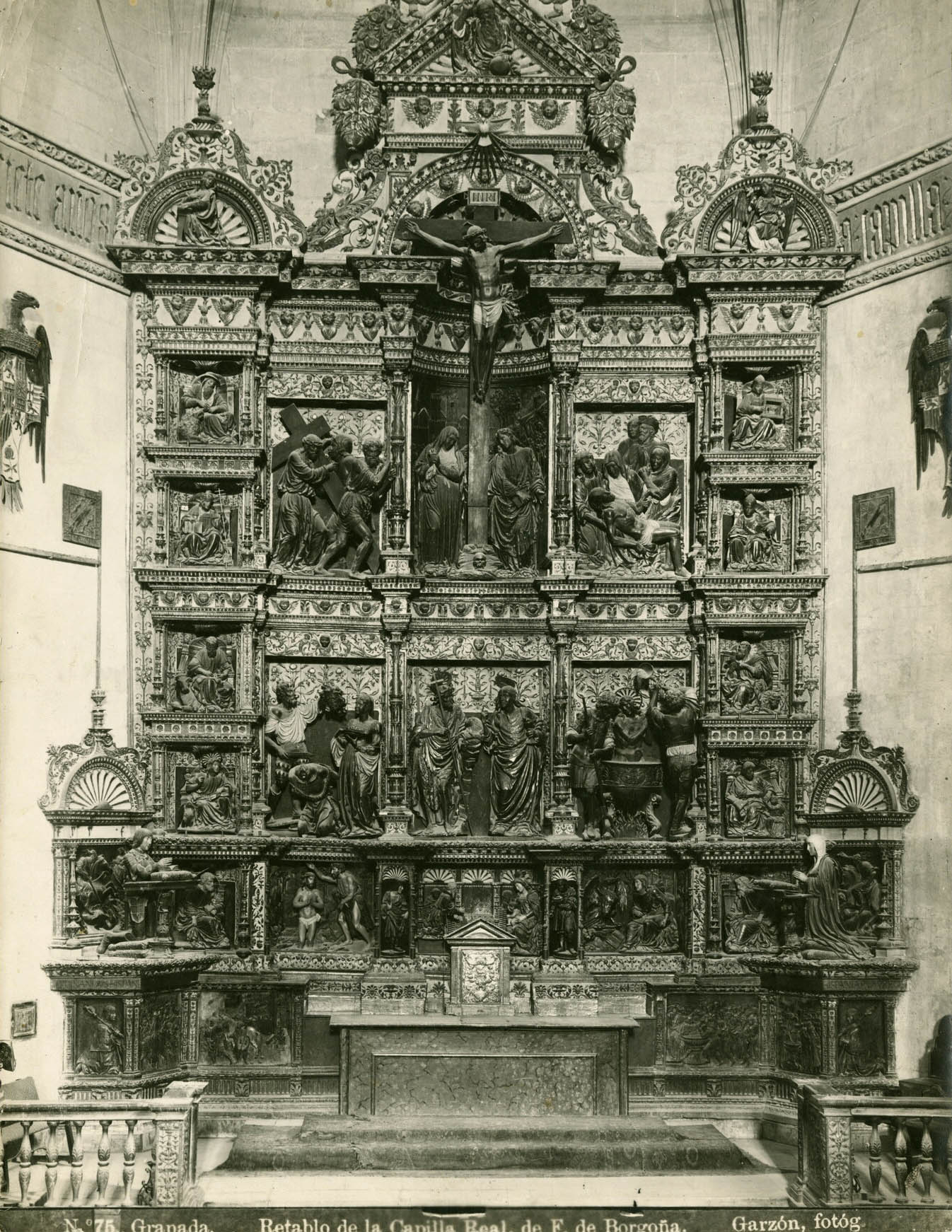
Rafael Garzón Rodríguez (1863-1923, photographer) 'Retablo (Altar) by F. de Borgoña, Capilla Real, Granada' c. 1890 from the exhibition 'In the Library: Photography and Travel in Sargent's Spain' at the National Gallery of Art, Washington, Oct - Dec, 2022


Rafael Garzón Rodríguez (1863-1923, photographer)
Retablo (Altar) by F. de Borgoña, Capilla Real, Granada
c. 1890
Gelatin silver DOP photograph
Granada: Rafael Garzón (firm)
National Gallery of Art Library, Department of Image Collections


A distant land celebrated for its fusion of cultures, Spain in the time of John Singer Sargent (1856-1925) fascinated many. As railroads began crisscrossing the sun-drenched countryside, more visitors could reach more places. Artists like Sargent went to explore: he studied works by Spanish masters, viewed architecture and gardens – with their rich blend of influences, and encountered a land and people that fuelled his creative imagination. A craze for all things Spanish ensued, especially in the United States, where many Spanish artworks entered private collections.

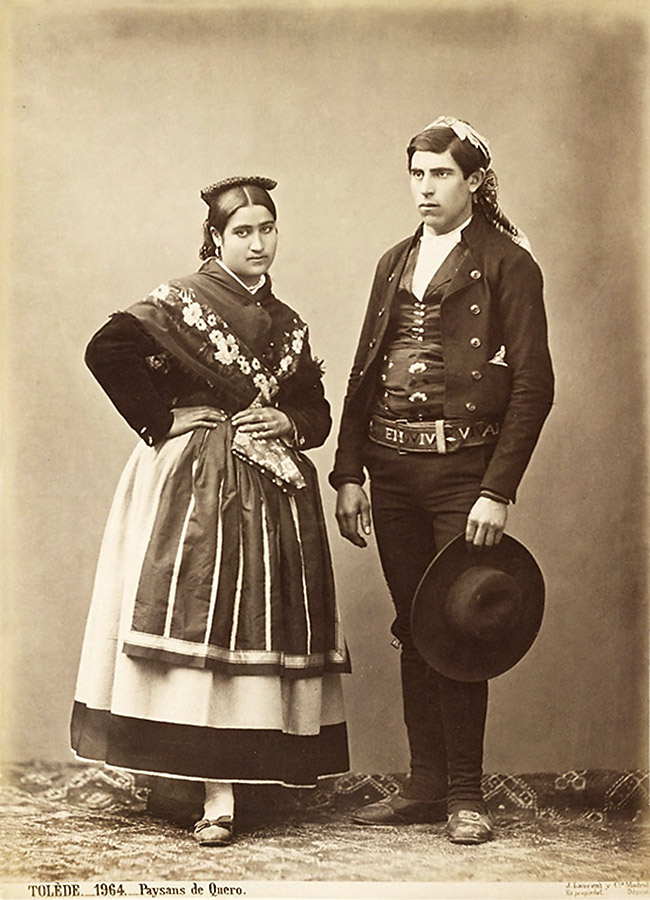
A vibrant visual culture emerged in Spain as commercial photographers such as Juan Laurent established studios that catered to the influx of visitors. As this imagery was collected and dispersed, it entered the popular imagination and defined the region in ways that still influence us today. These materials – the period postcards, fine photographs, and albums – allow us to see Spain as Sargent did, from its landscapes, architecture, and art to its music, dance, and costumes.

Photography and Travel in Sargent’s Spain draws upon photographs and printed matter in the Department of Image Collections of the National Gallery of Art Library. This exhibition is held in conjunction with Sargent and Spain.

Organised by the National Gallery of Art, Washington

This exhibition is curated by Thomas O’Callaghan, Image Specialist for Spanish Art, National Gallery of Art, Department of Image Collections.

Text from the National Gallery of Art website


Juan Laurent (1816-1886, photographer) 'Tudela to Bilbao: Logroño Railway Station' 1865 from the exhibition 'In the Library: Photography and Travel in Sargent's Spain' at the National Gallery of Art, Washington, Oct - Dec, 2022


Juan Laurent (1816-1886, photographer)
Tudela to Bilbao: Logroño Railway Station
1865
Albumen silver photograph
Madrid: J. Laurent (firm)
National Gallery of Art Library, Department of Image Collections


The Compañia de Ferrocarril de Tudela a Bilbao began construction of this railway line in northern Spain in 1857 and finished it in 1863. Two years later, the company commissioned Juan Laurent to document the newly completed line. Laurent photographed the iron tracks, viaducts and rural stations, including this view of the Logroño station, during the two-month-long project that culminated in a final presentation album for the company. With the arrival of the first railroads in Spain in 1848, the Spanish writer Modesto Lafuente (1806-1866) observed: “There is poetry in the little stations where a slow train stops for a long time, on a scorching summer morning; the sun fills everything and blinds the distances; everything is still; some birds sing in the acacias in front of the station; down the lonely, dusty road, a solitary carriage makes for the town, which stands out for its pointed bell tower with a black slate roof. Those other stations near the old cities have poetry, to which on Sunday afternoons, during the twilight, the girls go out for a walk and wander slowly along the platform, arm in arm, peering curiously at the passengers from other places inside the cars. Finally, the arrival of the train, at dawn, at a station in the provincial capital has poetry; after the first moment of arrival, the travellers who were waiting comfortably amid a profound silence, the snort of the locomotive is once again heard; a long voice sounds; the train starts moving again; and there, in the distance, in the darkness of the night, in these dense and deep hours of the morning, the dim, mysterious flicker of the little lights that shine in the sleeping city can be glimpsed: an old city, with narrow alleys, with a vast cathedral, with a dilapidated inn, into which now, rousing the waiter from his drowsiness, a newly arrived traveler is about to enter, while we ride the train away through the black countryside, contemplating the flickering of those little lights that lose themselves and arise anew, and end up completely disappearing.” (quoted in José Martínez Ruiz (Azorín), Castilla, Editorial Biblioteca Nueva, 1912, pp. 37-38)

Juan Laurent, noted French photographer, established a studio in Madrid in 1856. He is recognised for his architectural and landscape scenes of Spain and Portugal as well as his extensive documentation of the collections of the Prado Museum and the Royal Armory in Madrid. By the 1860s he was the proprietor of Laurent y Cia, the largest photographic publishing house in Spain. Laurent’s prints and albums were marketed to a wealthy clientele through his gallery in Paris and distributed in England by Marion & Co. of London. (Hannavy, Encyclopedia of Nineteenth-Century Photography, vol. 2, pp. 829-830).

This mounted photograph may have been sold from one of Laurent’s sales outlets for inclusion in an album. Laurent later commercialised this image in stereoscopic view and large format.

Text from the National Gallery of Art Library


Joseph Lacoste (1872 - c. 1930, photographer) 'Albumen silver photograph of Diego Velázquez's Prince Baltasar Carlos on Horseback (1635-1636)' 1900/1915


Joseph Lacoste (1872 – c. 1930, photographer)
Albumen silver photograph of Diego Velázquez’s Prince Baltasar Carlos on Horseback (1635-1636)
1900/1915
Madrid: J. Lacoste (firm)
National Gallery of Art Library, Department of Image Collections


Baltasar Carlos gallops through the rolling Guadarrama mountain landscape near Madrid with an aristocratic bearing befitting a crown prince of the Spanish empire. Starting with the shocks of the empire’s dissolution, however, Spanish intellectuals of the 1860s and 1890s embraced Velázquez and Goya for being the first artists to paint the natural landscape of Castille. For these scholars, the arid landscape revealed the very heart of Spanish identity. Moreover, it was the key to Spain’s revitalisation, especially after the heartbreaking losses of the Spanish-American War of 1898. As a result of the newfound reclamation, the Spanish reformed Free Institution of Education (ILE) began emphasising the study of landscape painting and scientific disciplines like geography and geology. In addition, it encouraged the students to make excursions into nature. Likewise, it offered new art history courses that celebrated Velázquez and Goya for significantly including the Guadarrama mountains of central Spain in their paintings.

Joseph Jean Marie Lacoste y Borde was a French-born photographer who moved to Spain in 1894. He took over Laurent y Cía. from Juan Laurent’s stepdaughter Catalina Dosch de Roswag in 1900, and ran it up to the First World War, when he was drafted by the French armed forces. During the time he ran the company, he was, like Juan Laurent before him, an important photographer at the Museo del Prado. Many early Prado catalogues are printed with Lacoste images. Though he now controlled all the old Laurent negatives of the museum’s collections, Lacoste photographed the collections again, using the new gelatin dry plate process for his negatives. The dry plate process more faithfully rendered the true colours of the paintings in the scale of grey values than the old collodion wet plate process. The collodion process reproduced reds in nature, for example, as dark grey, even black. The smaller scale of this photograph as well as the more faithful reproduction of grey values suggest that it was printed from a gelatin negative made by Lacoste sometime after 1900.

Juan Laurent, noted French photographer who resided in Spain for 43 years, established a studio in Madrid in 1856. He is recognised for his architectural and landscape scenes of Spain and Portugal as well as his extensive documentation of the collections of the Prado Museum and the Royal Armory in Madrid. By the 1860s he was the proprietor of Laurent y Cia, the largest photographic publishing house in Spain. Laurent’s prints and albums were marketed to a wealthy clientele through his gallery in Paris and distributed in England by Marion & Co. of London. (Hannavy, Encyclopedia of Nineteenth-Century Photography, vol. 2, pp. 829-830).

This rare photograph is from A222, vol. 6. (loose photographs only). The six volumes comprising A222 have photographs of paintings, sculpture, architecture, archeological sites, streetscapes and landscapes of Italy and elsewhere on the “Grand Tour.” 514 are mounted in albums, and 59 are individually matted. Of these 59, many, like this albumen silver print of the Velázquez painting in the Prado, are dry-stamped “J. Lacoste – Madrid”, and two (of Murillo paintings) are dry-stamped with an interlaced J L & C monogram, which was an earlier iteration used by the Lacoste company.

Text from the National Gallery of Art Library


Charles Mauzaisse (1823-1885, photographer) 'The Court of the Lions, Alhambra, Granada' 1862


Charles Mauzaisse (1823-1885, photographer)
The Court of the Lions, Alhambra, Granada
1862
Albumen silver photograph
National Gallery of Art Library, Department of Image Collections


The Nasrid sultan Muhammad V (died 1391) conceived the Court of the Lions in his Garden Palace in the Alhambra as a paradisal garden, with sunken flowerbeds and waterways symbolising the rivers of Paradise, and pillars representing palm trees growing in an oasis. The court with its alabaster fountain supported by twelve stone lions taken from a Caliphal palace in Córdoba has become synonymous with the Alhambra.

Charles Mauzaisse was a French painter and the son of a painter. He emigrated to Spain in 1857 and signed the visitors’ log at the Alhambra on the 29th of January. After a peripatetic period traveling through southern Spain, he settled in Granada permanently, becoming one of the city’s few foreigners to become a local professional photographer. As a portrait photographer, he offered his clientele their likenesses on oilcloth, paper, glass, and ivory. He soon expanded his repertoire to views of the city and its architectural monuments, especially the Alhambra, catering to foreign visitors’ whims and custom requests and the booming tourist trade. In 1862, he returned from a visit to France with the latest advances in the photographic field.

From this date to the beginning of the 1880s, he made many photographs. However, their dispersal has left scant remnants in public collections. The Royal Palace in Madrid owns an album with 40 of Mauzaisse’s photos. He dedicated it to María de las Mercedes de Orleans y Bórbon on her marriage in 1878 to King Alfonso XII of Spain. Mauzaisse’s photography conjoined with his activity as a painter. Art deeply entered him as the son of Jean-Baptiste Mauzaisse (1784-1844), a prolific if minor French artist. By 1870, Charles established himself as a painter as well as a photographer in the Alhambra. He reportedly maintained close contact with French artists like Henry Regnault (1843-1871), whom he entertained on his way to Morocco. Recent research has shown that Gustave Doré used photos by Mauzaisse as the basis for his engraved illustrations in several publications.

In July 1871, Mauzaisse photographed the Fortuny-Madrazo family in the Alhambra when they gathered in Granada to celebrate the birth of Fortuny’s son, Mariano Fortuny y Madrazo. Unfortunately, Charles Mauzaisse may have died in the cholera epidemic that swept through Andalucía in 1885.

Text from the National Gallery of Art Library


Juan Laurent (1816-1886, photographer) 'The Palace of Monserrate, Sintra, Portugal' 1869


Juan Laurent (1816-1886, photographer)
The Palace of Monserrate, Sintra, Portugal
1869
Albumen silver photograph
Madrid: J. Laurent (firm)
National Gallery of Art Library, Department of Image Collections


“Sargent swept over America in a cloud of glory, and the dust never settled; it was stirred up even more, eagerly anticipating his return when he left for Spain. He wrote to Mrs. Gardner from Madrid (16 June [1903]), ‘I am leaving Madrid for Portugal and out of the way places and am not likely to be back for three weeks or a month’.” (Stanley Olson, John Singer Sargent: His Portrait, New York, St. Martin’s Press, 2001, p. 227)

Architect James Knowles designed this eclectic palace in 1858 for Francis Cook, the 1st Viscount of Monserrate, a wealthy British textile merchant, industrialist, and great art collector. Knowles modified an existing Neo-Gothic mansion built in the late 18th century on the ruins of an ancient chapel and added a curious mixture of Neo-Manueline, Neo-Mudéjar, Neo-Mughal, and Neo-Renaissance design elements. The result is an example of the innovative Romantic architecture that thrived in Sintra. The Portuguese court established a luxurious summer retreat in Sintra with views of the Atlantic from the cool foothills north of Lisbon. In 1809, the poet Byron visited the site of the future palatial villa and published his impressions of its natural beauty in his poem Childe Harold’s Pilgrimage. Francis Cook installed a large botanical garden on the property that is still renowned for its diverse and exotic plants and trees. In the Laurent photo, the tops of Araucaria conifers native to Chile rise in the lower left corner.

Juan Laurent, noted French photographer, established a studio in Madrid in 1856. He is recognised for his architectural and landscape scenes of Spain and Portugal as well as his extensive documentation of the collections of the Prado Museum and the Royal Armory in Madrid. By the 1860s he was the proprietor of Laurent y Cia, the largest photographic publishing house in Spain. Laurent’s prints and albums were marketed to a wealthy clientele through his gallery in Paris and distributed in England by Marion & Co. of London. (Hannavy, Encyclopedia of Nineteenth-Century Photography, vol. 2, pp. 829-830).

The collodion glass negative used to print this photograph is in the Ruiz Vernacci photo archive in the Spanish Culture Ministry in Madrid; VN-06923.

Text from the National Gallery of Art Library


Juan Laurent (1816-1886, photographer) 'The Fountain of Narcissus, Garden of the Prince, Palace of Aranjuez' c. 1880s


Juan Laurent (1816-1886, photographer)
The Fountain of Narcissus, Garden of the Prince, Palace of Aranjuez
c. 1880s
Albumen silver photograph printed from a Gramstorff collodion negative
Boston: Soule later Gramstorff Art Publishing (firm) copying 1863 photograph by J. Laurent
National Gallery of Art Library, Department of Image Collections


This small nineteenth-century albumen print is from the Gramstorff Collection. The department of image collections also has the collodion glass plate negative used to print it (Gramstorff 5754). The Soule (later Gramstorff) Art Publishing Company of Boston (active 1859 – c. 1906) was a purveyor of art, architecture, and topographical photographs specialising in Europe and the American West. The Soule Company acquired original photos from American and European art publishers and then copied them in their Boston workrooms for distribution in the United States. This small-format photograph is a copy by Soule of a larger albumen photograph by the Juan Laurent company of Madrid and Paris. However, the Madrid company may not have authorised Soule’s copies of original Laurent photographs for sale in the United States.

Photographers during this period followed murky standards, and John Soule appears to have been no exception, publishing images by other American photographers without crediting them. The Laurent company found it necessary to file a legal injunction to remedy a piracy case in Cádiz in 1883. Glass negative 5754, like many others in the Gramstorff Collection, is double printed with the same image.

Juan Laurent, noted French photographer who resided in Spain for 43 years, established a studio in Madrid in 1856. He is recognised for his architectural and landscape scenes of Spain and Portugal as well as his extensive documentation of the collections of the Prado Museum and the Royal Armory in Madrid. By the 1860s he was the proprietor of Laurent y Cia., the largest photographic publishing house in Spain. Laurent’s prints and albums were marketed to a wealthy clientele through his gallery in Paris and distributed in England by Marion & Co. of London. (Hannavy, Encyclopedia of Nineteenth-Century Photography, vol. 2, pp. 829-830).

During Laurent’s 1863 photographic campaign in Aranjuez, he remembered that earlier French travel writers had considered the gardens of the royal palace there particularly lovely. In 1855, author Antoine de Latour described the palace as the ‘Versailles of Madrid’ and its gardens as spring oases. In his photo of the Garden of the Prince, Laurent seems to signal its similarity with French palace gardens.

Text from the National Gallery of Art Library


Juan Laurent (1816-1886, photographer) 'Patio of the Acequia in the Generalife, Granada' c. 1881


Juan Laurent (1816-1886, photographer)
Patio of the Acequia in the Generalife, Granada
c. 1881
Albumen silver photograph
Madrid: J. Laurent (firm)
National Gallery of Art Library, Department of Image Collections


The narrow rectangular canal (acequia) with water jets pictured in this photograph was one of the primary conduits for the Alhambra’s water supply. The Nasrids, after diverting water from the Darro River six kilometres away, brought it by aqueduct to the Generalife, the summer palace in the cool woods above the Alhambra. From its entry point in the Generalife, the water fell to the main complex of palaces, buildings, and gardens below. The system was a marvel of Arab hydraulic engineering.

Text from the National Gallery of Art Library


Casiano Alguacil Blázquez (1832-1914, photographer) 'Inhabitants of Toledo' c. 1880s


Casiano Alguacil Blázquez (1832-1914, photographer)
Inhabitants of Toledo
c. 1880s
in Spain: Toledo, Cordova, Granada, Seville, Valencia, Barcelona (1879/1894?), plate 23 from first of two albums of 189 albumen silver photographs
Madrid: J. Laurent (firm)
National Gallery of Art Library, Department of Image Collections


Casiano Alguacil Blázquez (1832-1914, photographer) 'Inhabitants of Toledo' c. 1880s


Casiano Alguacil Blázquez (1832-1914, photographer)
Inhabitants of Toledo
c. 1880s
in Spain: Toledo, Cordova, Granada, Seville, Valencia, Barcelona (1879/1894?), plate 24 from first of two albums of 189 albumen silver photographs
Madrid: J. Laurent (firm)
National Gallery of Art Library, Department of Image Collections


Casiano Alguacil Blázquez (1832-1914, photographer) 'Inhabitants of Toledo' c. 1880s


Casiano Alguacil Blázquez (1832-1914, photographer)
Inhabitants of Toledo
c. 1880s
in Spain: Toledo, Cordova, Granada, Seville, Valencia, Barcelona (1879/1894?), plate 25 from first of two albums of 189 albumen silver photographs
Madrid: J. Laurent (firm)
National Gallery of Art Library, Department of Image Collections


Casiano Alguacil Blázquez (1832-1914, photographer) 'Inhabitants of Toledo' c. 1880s


Casiano Alguacil Blázquez (1832-1914, photographer)
Inhabitants of Toledo
c. 1880s
in Spain: Toledo, Cordova, Granada, Seville, Valencia, Barcelona (1879/1894?), plate 58 from first of two albums of 189 albumen silver photographs
Madrid: J. Laurent (firm)
National Gallery of Art Library, Department of Image Collections


Juan Laurent (1816-1886, photographer) 'Inhabitants of Quero, Toledo Province' 1878


Juan Laurent (1816-1886, photographer)
Inhabitants of Quero, Toledo Province
1878
in Burgos, Madrid, Toledo, Escorial, Cordoba y Sevilla (1878/1890), plate 58 from album of 103 albumen silver photographs
Madrid: J. Laurent (firm)
National Gallery of Art Library, Department of Image Collections


T. E. Mott (active 1910s - 1920s, photographer) 'John Singer Sargent's "El Jaleo" (1882) in the Spanish Cloister, Fenway Court' c. 1922


T. E. Mott (active 1910s – 1920s, photographer)
John Singer Sargent’s “El Jaleo” (1882) in the Spanish Cloister, Fenway Court
c. 1922
Gelatin silver DOP photograph from an album of 55 views of the Isabella Stewart Gardner Museum, Boston
Boston: Thomas E. Mott & Son (firm)
National Gallery of Art Library, Department of Image Collections


J. E. Purdy (1859-1933, photographer) 'John Singer Sargent' 1903


J. E. Purdy (1859-1933, photographer)
John Singer Sargent
1903
Cabinet card-mounted gelatin silver DOP photograph
Boston: J. E. Purdy (firm)
National Gallery of Art Library, Department of Image Collections
Hertzmann Collection of Photographs of American Artists


National Gallery of Art
National Mall between 3rd and 7th Streets
Constitution Avenue NW, Washington

Opening hours:
Daily 10am – 5pm

National Gallery of Art website

LIKE ART BLART ON FACEBOOK

Back to top

Exhibition: ‘Memory Remains: 9/11 Artifacts at Hangar 17 by Francesc Torres’ at the Imperial War Museum, London

Exhibition dates: 26th August 2011 – 26th February 2012


Many thankx to the Imperial War Museum, London for allowing me to publish the photographs in the posting. Please click on the photographs for a larger version of the image.


Francesc Torres (Spanish, b. 1948) 'Steel beams taken from ground zero for storage at John F. Kennedy International Airport's Hangar 17' 2009


Francesc Torres (Spanish, b. 1948)
Steel beams taken from ground zero for storage at John F. Kennedy International Airport’s Hangar 17
2009
© Francesc Torres


“Having watched the graphic destruction from my apartment, only two blocks from the Twin Towers, when I entered Hangar 17 at JFK International Airport for the first time in 2006, I was immediately hit by the deep sense that the objects I was confronted with, from large shards of rusted and burnt steel to bikes left forever by their owners, were the symbolic substitutes of the victims. Their overwhelming presence stood for all the people that lost their lives that late summer day a decade ago.”


Francesc Torres


Francesc Torres (Spanish, b. 1948) 'Twisted steel beams from ground zero dominate the space in JFK International Airport's Hangar 17, where 9/11 artifacts were housed for study and safekeeping' 2009


Francesc Torres (Spanish, b. 1948)
Twisted steel beams from ground zero dominate the space in JFK International Airport’s Hangar 17, where 9/11 artifacts were housed for study and safekeeping
2009
© Francesc Torres


Francesc Torres (Spanish, b. 1948) 'View through a portion of the broadcast antenna that fell from the top of the north tower. A number of fragments of the 360-foot antenna were kept at Hangar 17' 2009


Francesc Torres (Spanish, b. 1948)
View through a portion of the broadcast antenna that fell from the top of the north tower. A number of fragments of the 360-foot antenna were kept at Hangar 17
2009
© Francesc Torres


Francesc Torres (Spanish, b. 1948) 'The collapse of the twin towers created a series of iconic objects...' 2009


Francesc Torres (Spanish, b. 1948)
The collapse of the twin towers created a series of iconic objects, transformed by force and fire from their daily uses into artifacts that tell a story. At Hangar 17, tented enclosures were built for artifacts of various kinds that, in the view of curators and conservators, needed the added protection of humidity control and stillness. Perhaps the most dramatic example of this transformation could be found inside the vehicle tent, where trucks and cars, normally left outside in all conditions, were given shelter
2009
© Francesc Torres


Francesc Torres (Spanish, b. 1948) 'Because the Last Column had inscriptions and attachments on all sides' 2009


Francesc Torres (Spanish, b. 1948)
Because the Last Column had inscriptions and attachments on all sides, it was raised onto a specially constructed steel cradle at Hangar 17 so conservators had enough clearance to work. A mirror provides a glimpse of tributes on the underside of the column. Visible on the facing side are the taped-on memorials for Firefighter Christian Regenhard, 28, and Deputy Battalion Chief Dennis Cross, 60
2009
© Francesc Torres


The empty shell of Hangar 17 at JFK Airport became a storehouse of memories when it was filled with the material cleared from the World Trade Center site following the September 11 attacks on New York City.

Marking the tenth anniversary of 9/11, Francesc Torres’s work features over 150 projected images which explore inside the hangar and reflect on the emotional power of what remained, from personal belongings to steel girders distorted by the force of the attacks. Alongside the photographs is a section of raw rusted steel over two metres in length from the ruins of the World Trade Center. As well as larger piece (over 1 tonne) that is due to go on display at IWM North in October, these objects are the first pieces of steel from Ground Zero to go on display in the UK. The exhibition will also be on display at the International Centre for Photography in New York and at the Centre de Cultura Contemporània de Barcelona.

Throughout his career, Spanish-American artist Francesc Torres has reflected on the diverse manifestations of culture, politics, memory and power. His latest exhibition at the Imperial War Museum, Memory Remains, is a bold and haunting amalgam of all four.

In 2009, Torres was granted rare access to Hangar 17 at John F Kennedy International Airport, a gaping space of over 80,000-square-feet. Within the hangar lie the remnants deemed worth preserving from the September 11 attacks, taken from the 1.8 million tonnes of debris from Ground Zero. For five weeks Torres daily confronted the legacy of terror and the ghosts of that fateful late-summer day, capturing images of objects that stand as symbolic substitutes to the victims.

“Look at it this way”, says Torres, relaying his experience, “it’s a hanger constructed to house a plane, which was transformed into a weapon used for the attack on the towers and now the sediment of that attack is here. With the sound of planes constantly flying overhead it was absolutely surreal.”

According to the photographer, the experience of walking around the hanger after the first day was so emotionally draining that he slept from four o’clock in the afternoon through to ten o’clock the next morning.

“I was absolutely exhausted; physically and emotionally… every single iota of energy I had was gone.”

His efforts have produced some exceptional results, however, displayed on a rolling slideshow in a small room near the entrance of the museum. Among the objects photographed are large shards of rusted, burnt steel, crumpled filing cabinets and a plethora of flattened Port Authority vehicles. Some unexpected pieces of detritus were also found, including a nine-foot, three-dimensional Bugs Bunny, made completely bizarre when juxtaposed by a sign whose letters read chillingly: “That’s All Folks!”

Prior to the Hangar 17 project, Torres documented the excavation of a mass Spanish Civil War grave that he said drew certain comparisons with the material at JFK.

“The clothing is something that just grabs you,” he says, “it’s very uncanny that nothing changes with the victims as historical subjects. The clothing [in Hangar 17] was exactly the same as the clothing I’ve seen in Spain or in the former Yugoslavia; it all has the same patina. The victim becomes universal… the remains have that quality.”

Along with the photographs, the museum has also acquired a section of steel from the structure of the World Trade Center, displayed outside the projection room. It is the first section of raw rusted steel from the ruins at Ground Zero – thought to be the box section from one of windows – to be displayed in the UK.

For the past year, pieces from the hangar have made their way to be placed in memorials in each of the 50 American states, as well as seven other countries across the globe. Some, but not all, of the remaining pieces will be housed in the 9/11 Memorial Museum near the site of the attack, which is something that concerns Torres.

“We have to preserve the hanger as a container. It’s an unbelievable narrative apparatus that had been created almost on the run,” he says.

With a lifelong interest in questions of human memory and meaning, Torres’ work is based on the concept that it is through the remains of history that memory remains. His latest show is an unforgettable testament to those horrendous attacks that capped the 20th century almost a decade ago.”

Text from the Imperial War Museum


Francesc Torres (Spanish, b. 1948) 'These three panels, offering a view of the Statue of Liberty from 1977, were salvaged from the Cortlandt Street subway station under the World Trade Center' 2009


Francesc Torres (Spanish, b. 1948)
These three panels, offering a view of the Statue of Liberty from 1977, were salvaged from the Cortlandt Street subway station under the World Trade Center. The spray-painted markings indicate that the area nearby had been searched by rescue workers for survivors or victims
2009
© Francesc Torres


Francesc Torres (Spanish, b. 1948) '9/11, as seen live on television in Barcelona, Spain' 2009


Francesc Torres (Spanish, b. 1948)
9/11, as seen live on television in Barcelona, Spain. Photographed at roughly 3 p.m. local time by Maria Iturrioz de Torres, Francesc Torres’ mother, while they spoke by phone
2009
© Francesc Torres


Francesc Torres (Spanish, b. 1948) 'Though most of the vehicles at Hangar 17 came from first responders' 2009


Francesc Torres (Spanish, b. 1948)
Though most of the vehicles at Hangar 17 came from first responders, this taxi, an emblem of daily life in New York, was also preserved. At left, the tags hanging from the frame indicate its Port Authority inventory number (white) and mark its selection for inclusion in the permanent collection of the Memorial Museum (yellow)
2009
© Francesc Torres


Francesc Torres (Spanish, b. 1948) 'During the recovery at the site, some ironworkers would cut religious or other symbols out of pieces of steel...' 2009


Francesc Torres (Spanish, b. 1948)
During the recovery at the site, some ironworkers would cut religious or other symbols out of pieces of steel from the World Trade Center and give them as keepsakes to family members or other visitors
2009
© Francesc Torres


Imperial War Museum, London
Lambeth Road
London SE1 6HZ
United Kingdom
Phone: 020 7416 5000

Opening hours:
Daily from 10am – 6pm

Imperial War Museum, London website

LIKE ART BLART ON FACEBOOK

Back to top

Exhibition: ‘Villa Edur. Eduardo Sourrouille’ at Artium, Basque Centre-Museum of Contemporary Art

Exhibition dates: 17th January – 19th April, 2009


Eduardo Sourrouille (Spanish, b. 1970) 'Salon para Gaydjteam' 2008


Eduardo Sourrouille (Spanish, b. 1970)
Salon para Gaydjteam
2008


Artium, Basque Centre-Museum of Contemporary Art, presents the exhibition Villa Edur. Eduardo Sourrouille (North Gallery, from January 17 to April 19), an intimate self-portrait of this Basque artist based on more than 170 photographs taken in recent years. Sourrouille (Basauri, Bizkaia, 1970) proposes a metaphorical visit to the private rooms of his life, from the most superficial to the most intimate, to explore all aspects of the relationship with others and with oneself. Based on three different series of technically exquisite photographs, the author displays a world in which affection and the need to love and to feel loved predominates, in which there are ever-present allusions to questions such as sexual identity, the demands of friendship and recognition of links with others.

Villa Edur, the title of the first major one-man show of the work of Eduardo Sourrouille in a Museum, is taken from the maternal home of Eduardo Sourrouille, “the first legacy I received from her, the most valuable of all her bequests: besides being a home, it is an ongoing project, a driving force in my life and a reflection of my artistic career.” As in a home, the exhibition allows the visitors to explore a number of different rooms, each more intimate than the previous one, in which the artist receives visitors, who are converted into a host and guests.

Thus, in the exhibition, as in his house, “the host receives his guests at the entrance, where newcomers have access to proof of all the visitors that preceded them.” And in this way, the visitor sees two different series of portraits in the first room, Of the folder, people who visited my house and Of the folder, people who visited my house: room for… In the first Gallery, the artist presents different portraits of couples, consisting of himself with the different people with whom he has had some kind of relationship, be this emotional, family, friendship or any other kind. In this case, the photographs come very close to studio portraits, with carefully prepared, static poses, with hardly any atrezzo.

Each of these photographs is matched in the exhibition with another belonging to the second gallery of images, in which Sourrouille repeats the figures but in this case with a more accentuated theatricality, with a set design that may make the spectator imagine anecdotes or stories that occur in the encounter. The room, dominated by a more than one hundred photographs, reveals an entire “network of relationships, in which friendship, affection, love, fascination, desire, etc. (sometimes mixed up), have a place. The number of people including his father and other relatives, a large number of friends, artists such as Miguel Ángel Gaüeca, Manu Arregui and Ignacio Goitia, have been present here and have left their mark, and as the entire exhibition is imbued with games and humour, fictional figures such as Doña Rogelia are also included.

From this broad entrance, densely inhabited by figures “whose ghost lives on”, the artist invites first to step into his sitting room, the place in his house that “offers a precise image of what its owner is and would like to be.” In this space, Eduardo Sourrouille presents thirty self-portraits that “show of the people who have coexisted in me” and who “embody in the symbolic manner the different aspects of love and friendship, that can be found in me, as in any other individual.” With this aim in mind, Sourrouille presents in this exhibition space the Selfportrait with a friend series, thirty images in which the artist photographs himself with different animals, ironic portraits in which the human being appears to adopt certain characteristics of the animal.

There remain two more rooms in this house, the most private of all, where “intimate secret processes” take place. Sourrouille once again portrays himself with his father in the environment where the legacy is transmitted by means of simple rites, before going on to “the most secret room of all (…) in which the intimate world of each person is developed, in other words, what one does not necessarily confess but what one, nevertheless, has decided to experience.” Here, the spectator confronts a video entitled If you could see him through my eyes, in which the sheets are lowered slowly to discover the artist accompanied by two wild boar.

Press release from Basque Centre-Museum of Contemporary Art


Eduardo Sourrouille. Villa Edur from Artium Museoa on Vimeo.


Guided tour of Eduardo Sourrouille

The house that I show in Villa Edur is my house, as it was (is) my mother’s. It is the first legacy I received from her, the most valuable of all: in addition to a home, it is a perpetual project, a vital engine and a reflection of my career.


Eduardo Sourrouille (Spanish, b. 1970) 'Self-portrait with impetuous friend' 2008


Eduardo Sourrouille (Spanish, b. 1970)
Self-portrait with impetuous friend
2008


“The house I depict in Villa Edur is my home, as it was (is) my mother’s home. It is the first legacy I received from her, the most valuable of all her bequests: besides being a home, it is an ongoing project, the driving force in my life and a reflection of my artistic career.

1

In my house, the host receives his guests at the entrance, where newcomers find proof of all the visitors that preceded them. Everything takes place in this zealously staged space, and so each decorative element is selected with the very same care. Objects, costumes and scenery make up, both individually and jointly, a system of symbols alluding to the nature of its own contents.

One by one, the portrait of the person in question confronts his situation within the context that was created for him and which, at the same time, he himself contributed to defining, and whose ghost still lives on. Each portrait determines both a singular identity and the kind of relationship in which at least two individuals interact and this, in turn, is the reflection of a specific experience. Each relationship leaves a visible and definitive mark on the other, like the dent in an aluminium vessel, which reasserts the experience and provides solace (provisionally) as it is the proof of our materiality. The inescapable need to make these marks involves the creation of an entire network of relationships in which friendship, affection, love, fascination, desire, etc. (sometimes mixed up), have a place.

Next to the door, raised on her solid, light shelf, my mother observes us and invites us in.

2

A door leads to the sitting room, a multifunctional and ultimately magical space, an environment in which everything that can be shown to visitors (plus part of what cannot be shown) is put on display. Definitively, the sitting room always offers a precise image of who its owner is and would like to be, of what he deliberately reveals to others and what he cannot prevent from being perceived through the cracks in his subconscious.

For this reason, the sitting room offers visitors a gallery of thirty self-portraits that show them the different people who coexist in me, what they can expect and the extent of the range of choices permitted. From a conceptual viewpoint and in a symbolic manner, these portraits embody different aspects of love and friendship that can be found in me, as in any other individual.

3

Beyond the sitting room lie the private rooms in which intimate, secret processes take place, ceremonies that create individuals and subsequently shape them, mould them and endorse them for the world. In one of these, I share the space with my father because this room is where his offspring receive their legacy through atavistic and recurrent rites – so simple that they scarcely cause pain. In another room, I (at last) dare to make the call I have learnt, the one that I use to invoke the Other, even though in some ways the person I seek is myself. There is anguish and confusion in that call, but also the desire to establish constructive communication, as I also offer myself to the Other so that he might leave his mark on me.

4

The intimate world of each person, in other words, what one does not necessarily confess but what one, nevertheless, has decided to experience, is developed in the most secret room of all. It is also the space reserved for the beauty that one finds by one’s own means – as it has not been revealed by any of one’s elders – and which therefore will be treasured as the exclusive property of its discoverer.

I live in Villa Edur because all the relationships that crystallise around me also reside there. Every individual harbours a space that he uses as a scenario to display his relationships, his family, lovers, friends, and for life, everything that is deposited with the passing of time, following the structure of his stage machinery. That is the space that is often called home.”

Ianko López Ortiz de Artiñano for Eduardo Sourrouille

Text from the Artium, Basque Centre-Museum of Contemporary Art website


Eduardo Sourrouille (Spanish, b. 1970) 'Panolis' 2008


Eduardo Sourrouille (Spanish, b. 1970)
Panolis
2008


Eduardo Sourrouille (Spanish, b. 1970) 'Double self-portrait' 2008


Eduardo Sourrouille (Spanish, b. 1970)
Double self-portrait
2008


Eduardo Sourrouille (Spanish, b. 1970) 'Self-portrait with a proud friend' 2008


Eduardo Sourrouille (Spanish, b. 1970)
Self-portrait with a proud friend
2008


Eduardo Sourrouille (Spanish, b. 1970) 'Self-portrait with a gorgeous friend' 2008


Eduardo Sourrouille (Spanish, b. 1970)
Self-portrait with a gorgeous friend
2008


Artium, Basque Centre-Museum of Contemporary Art
24 Francia Street. Vitoria-Gasteiz, 01002 Araba
Phone: 945 20 90 00

Opening hours:
Tuesdays to Fridays: 11am to 2.00pm and 5.00pm to 8.00pm
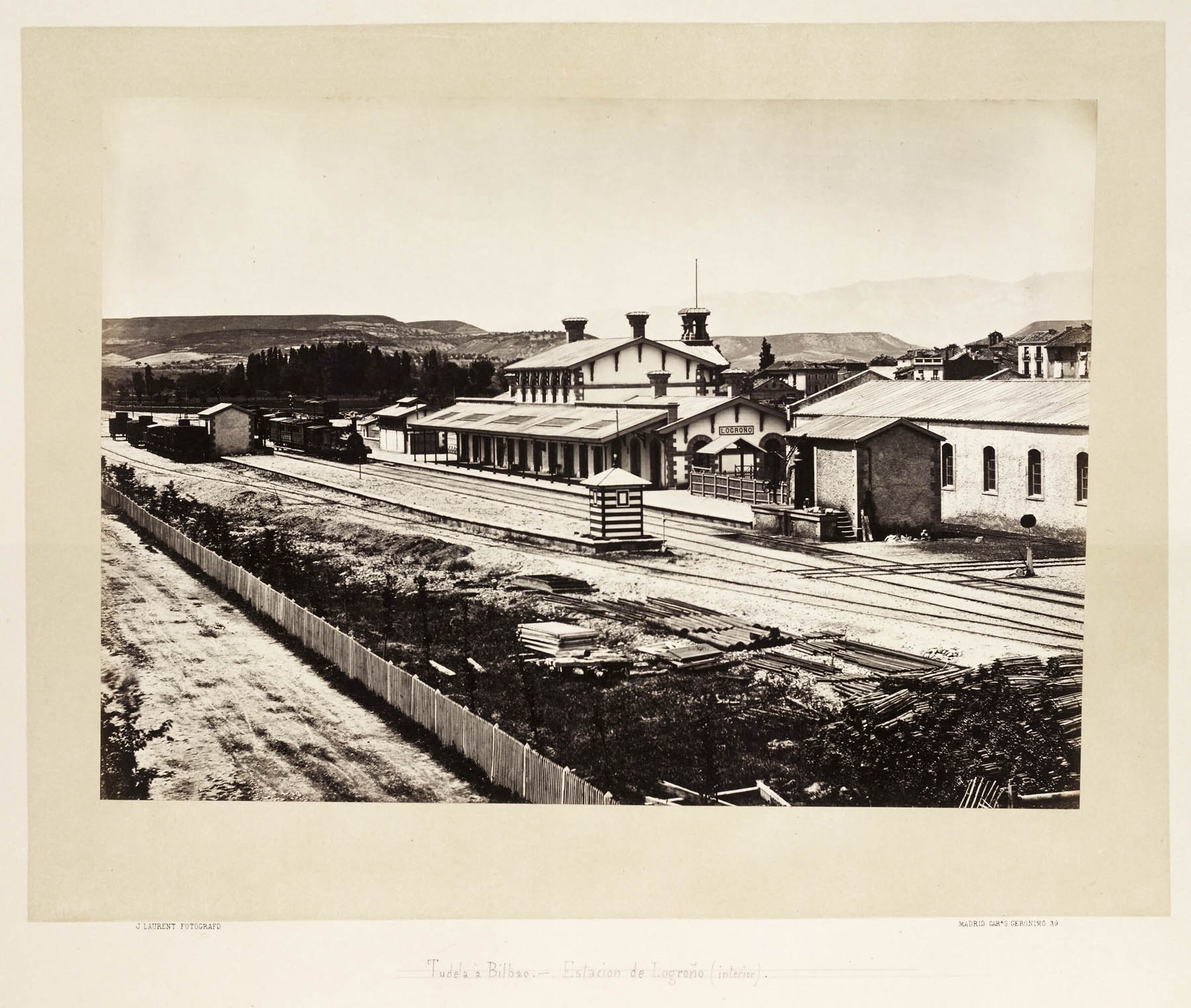
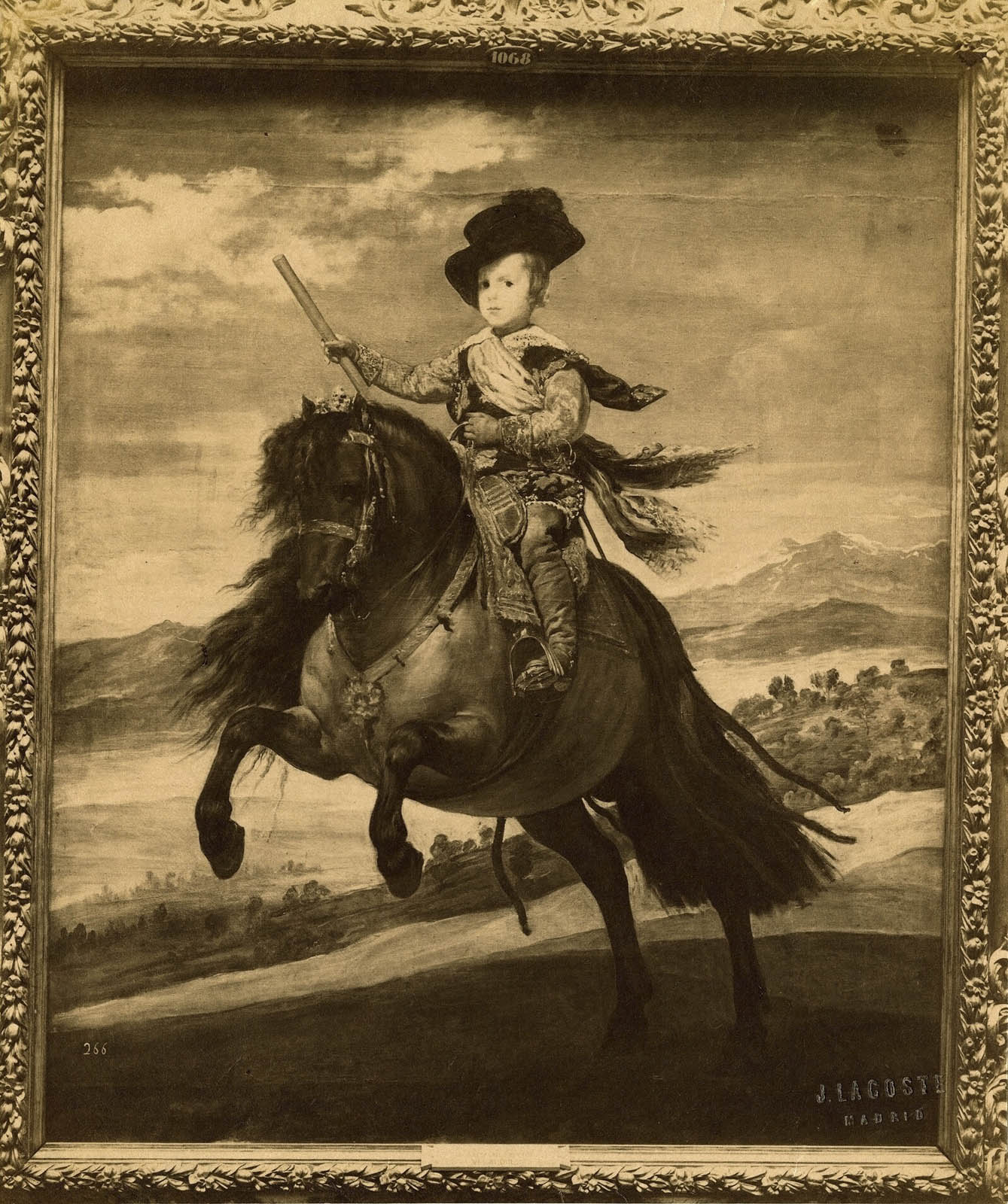
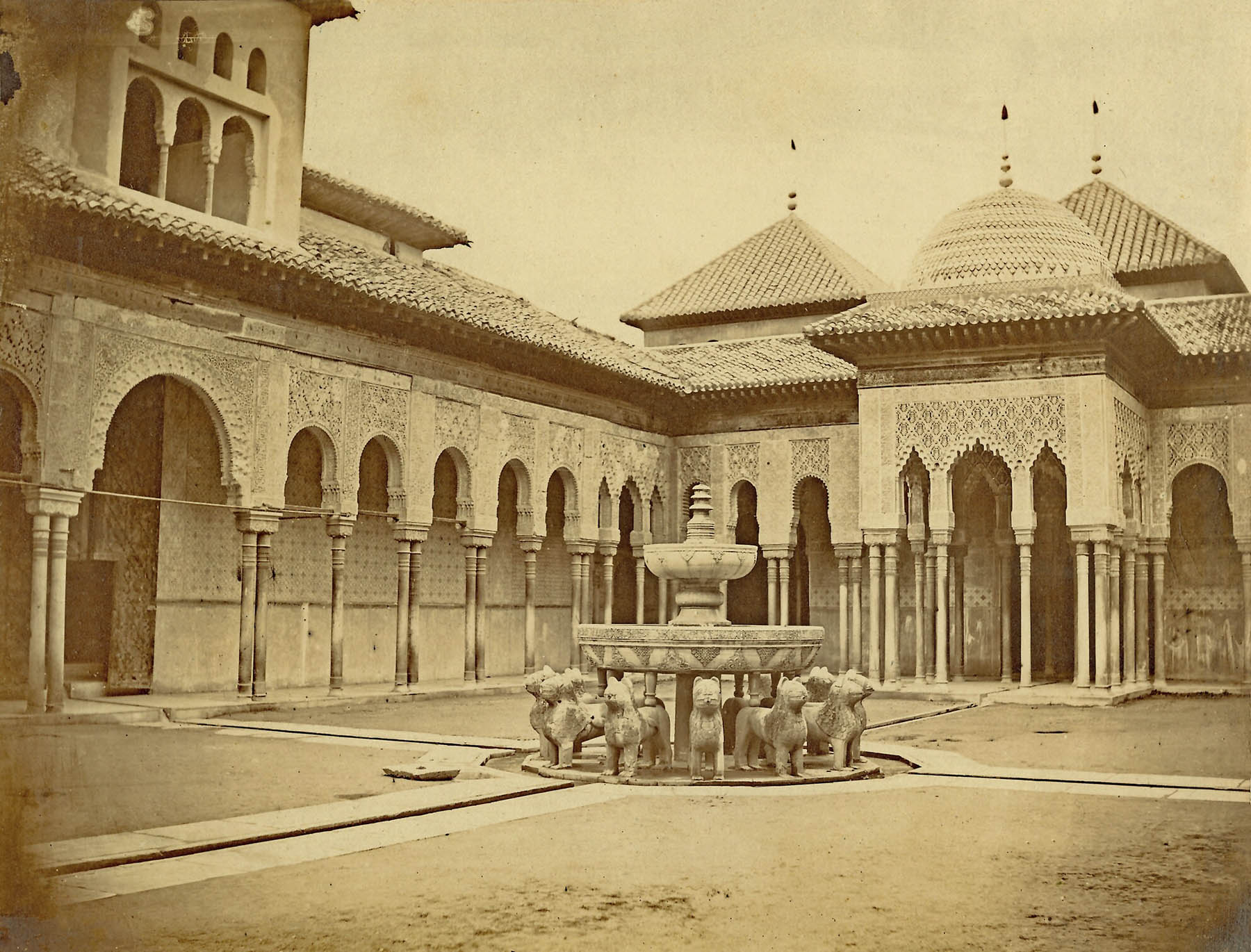
Saturdays and Sundays: 11.00am to 8.00pm
Mondays closed

Artium, Basque Centre-Museum of Contemporary Art website

LIKE ART BLART ON FACEBOOK

Back to top