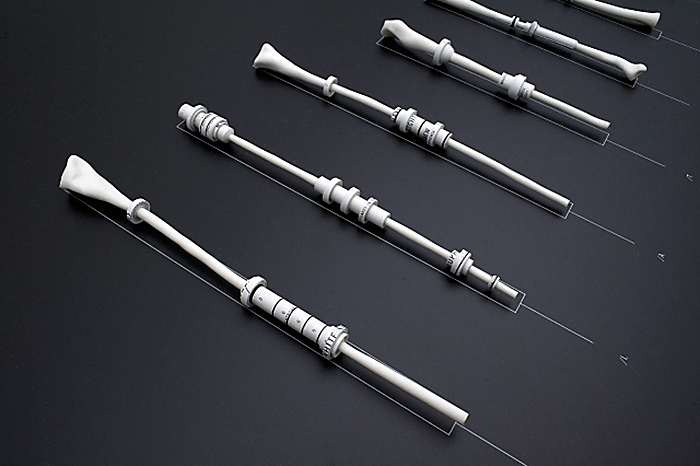
Exhibition: ‘Ends of the Earth: Land Art to 1974’ at Haus der Kunst, Munich

Exhibition dates: 11th November 2012 – 20th January 2013
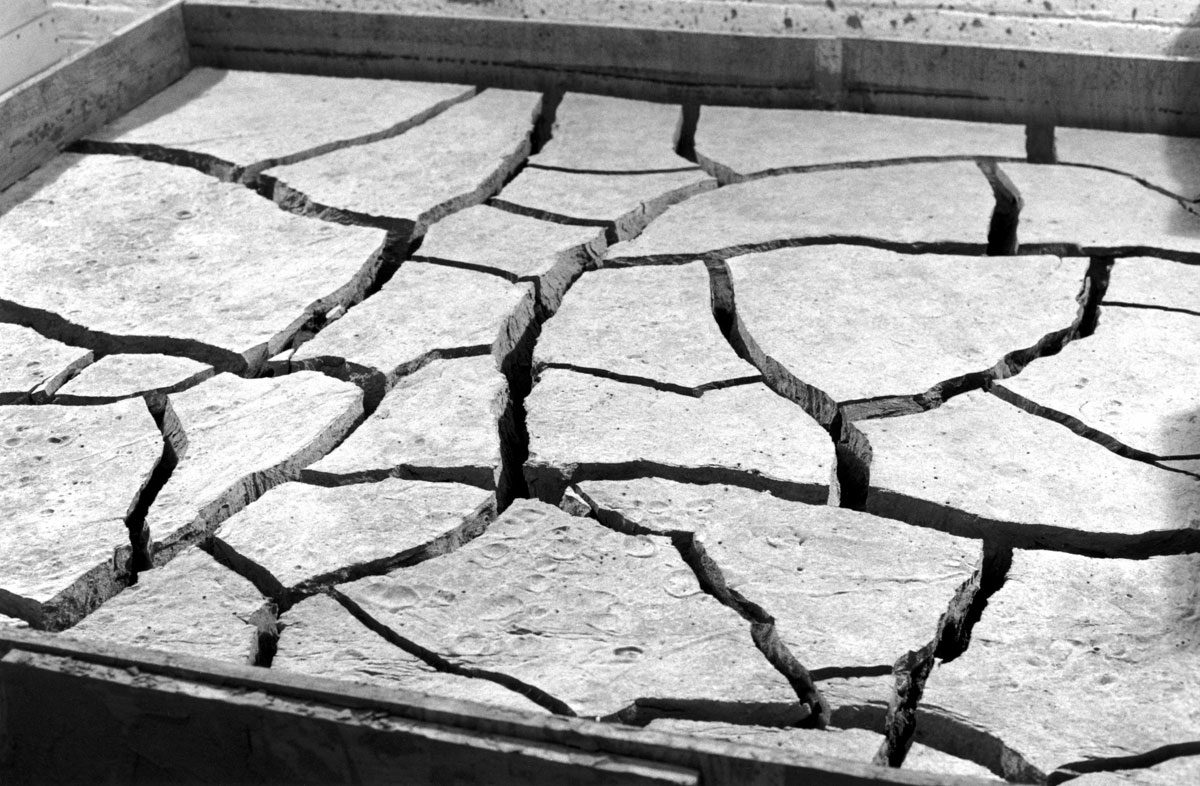
 

Alice Aycock (American, b. 1946) 'Clay #2' 1971/2012


Alice Aycock (American, b. 1946)
Clay #2
1971/2012
1,500 pounds of clay mixed with water in wood frame
Size: each 121.9 x 121.9 x 15.2cm
Courtesy of the artist


“Not taking Land art as a given the exhibition revisits various milieus and networks of heterogeneous practices around the world where the desire to engage the land or to work with the earth followed diverse artistic objectives and impulses. In researching this diversity, we found that the dominant art historical interpretation of Land art – as fundamentally an American sculptural phenomenon that developed out of Minimalism and Postminimalism, expanding into the “field” beyond art spaces to occupy or to become one with vast landscapes like the deserts of the Southwestern United States – accounts for only a limited number of artists’ works.”


Philipp Kaiser and Miwon Kwon. Ends of the Earth and Back catalogue essay, p. 18


This posting continues the theme of land/(e)scape, combining as it does performance, site, nonsite, language, film and earth. It is such a pity that the documentation of these early Land Art events in the form of photographs tends to be so poor. The paucity and quality of the visual evidence adds to the ephemeral, transient nature of the art while undermining the works cultural significance. As Robert Smithson notes in his commentary on the piece Spiral Jetty (1970), if the work occupies a “site” and the essay and the film are Nonsites where language (the essay), photographic images (the film), and earth (the jetty) are viewed as material equals – in other words, each is given equal weight within the project – then on the evidence of these images as a lasting artefacts of an action, the photographs seem to me to be just shorthand notes, cursory artefacts like a smudged fingerprint at a crime scene.

Is it necessary that they be great art? No, because the art was not about ego it was about being there at the actual event. But, other than an overt ability to show the outcomes of the performance, what is necessary from these documentary photographs is that they engage the viewer on a higher level than just ocular observation. While Land Art must be extremely difficult to photograph there is nothing memorable here that will stick in my consciousness, that will trigger a memory of the photograph as “vision” (hallucination, simulation, projection?) of these amazing events, which is a great shame. Rendering shapes of things does not make for memorable art, even as that very (Land) art aimed to investigate higher concepts relating to “this tortured earth.”

Dr Marcus Bunyan


Many thankx to the Haus der Kunst, Munich for allowing me to publish the text and photographs in the posting. Please click on the photographs for a larger version of the image.

Please also read the accompanying essay, Ends of the Earth and Back by Philipp Kaiser and Miwon Kwon (615kb pdf).
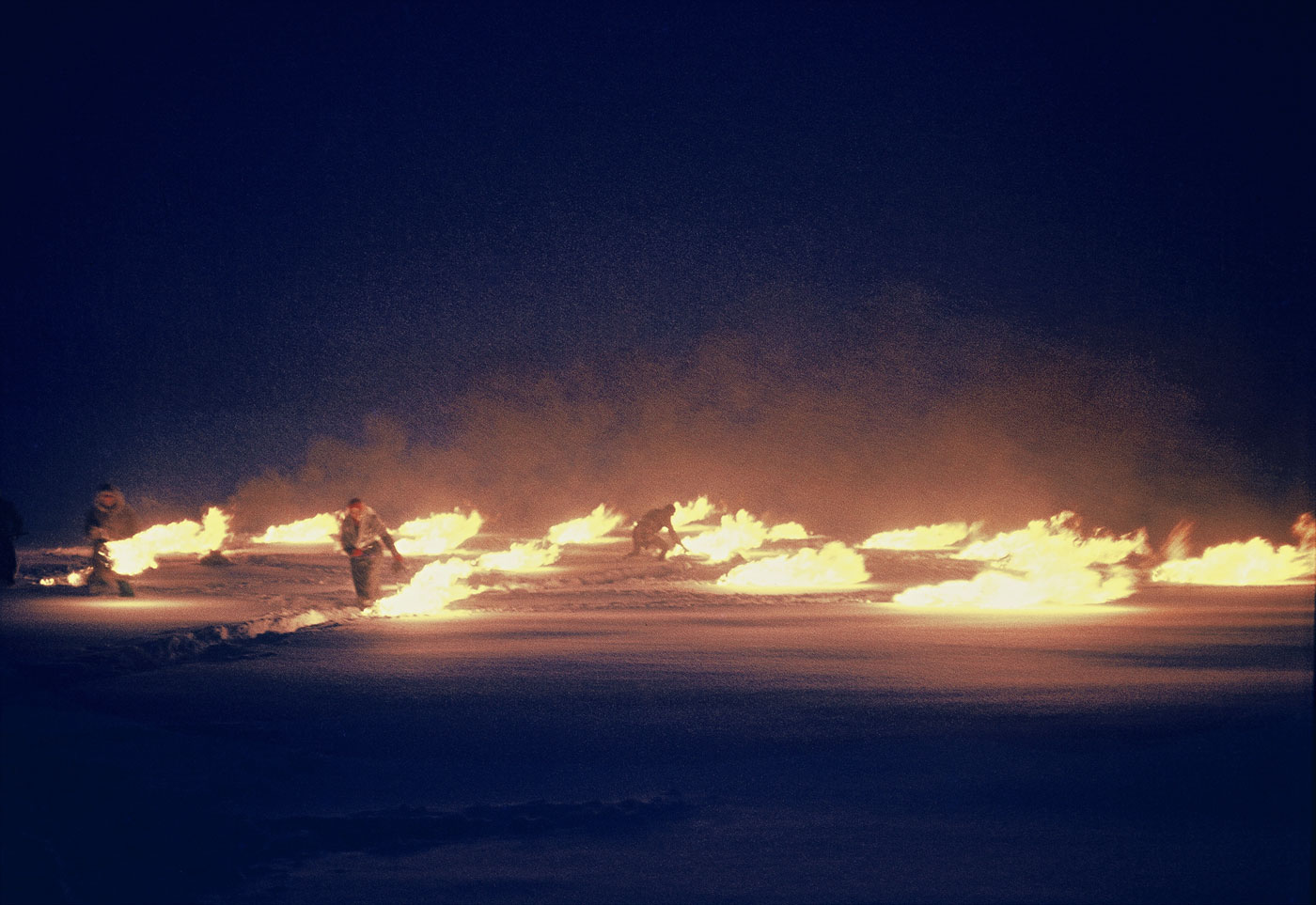


Zorka Ságlová (Czech, 1942-2003) 'Homage to Gustav Obermann' March 1970 (detail)


Zorka Ságlová (Czech, 1942-2003)
Homage to Gustav Obermann (detail)
March 1970
Six gelatin silver prints
15 3/4 × 23 5/8 in. (40 × 60cm) each
Collection of Jan Sagl; Courtesy Jan Sagl


Beginning in the late 1960s, Ságlová was one of the first artists to work in the landscape outside Prague, carrying out actions with her friends, many of whom were part of the artistic underground in then-Communist Czechoslovakia. For Homage to Gustav Obermann, Ságlová arranged twenty-one plastic bags filled with jute and gasoline in Bransoudov (near Humpolec) in a circle during a snowstorm. The bags were set on fire at nightfall. This event was held in memory of a shoe-maker from the town who was said to have protested the German occupation during World War II by walking in the surrounding hills while spitting fire. Two months later, for Laying Napkins near Sudomer (below), the artist laid out approximately 700 napkins to form a triangle in a grass field near Sudomer, the site of a famous Hussite battle in 1420. The action referred to local folklore relating how Hussite women would spread pieces of cloth on a marshy field to snag the spurs of the Roman Catholic cavalrymen as they dismounted, making them easy targets for the Hussite warriors.
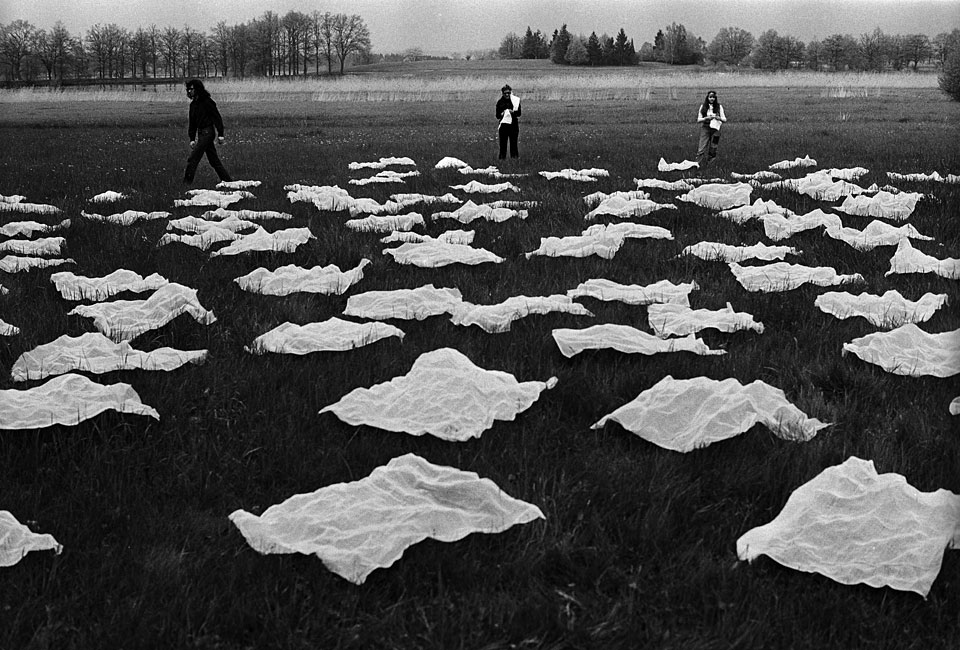
 

Zorka Ságlová (Czech, 1942-2003) 'Laying Napkins Near Sudomer' 1970


Zorka Ságlová (Czech, 1942-2003)
Laying Napkins Near Sudomer
1970
Six gelatin silver prints
15 3/4 × 23 5/8 in. (40 × 60cm) each
collection of Jan Sagl


For Laying Napkins near Sudomer, the artist laid out approximately 700 napkins to form a triangle in a grass field near Sudomer, the site of a famous Hussite battle in 1420. The action referred to local folklore relating how Hussite women would spread pieces of cloth on a marshy field to snag the spurs of the Roman Catholic cavalrymen as they dismounted, making them easy targets for the Hussite warriors.


Zorka Ságlová (1943-2003)

Zorka Ságlová was born in 1942 in the town of Humpolec. Her mother was a teacher and seamstress and her father was a financial clerk. Her brother, Ivan Martin “Magor” Jirous (1944-2011) went on to become a poet and artistic director of the dissident psychedelic rock band Plastic People of the Universe. Her cousin, the prominent Czech modern art historian Jifií Padrta, influenced her artistic interests from an early age.

After secondary school Ságlová took an apprenticeship as a weaver. From 1961 to 1966 she studied textile design at the Academy of Arts, Architecture and Design, Prague. In 1964 she married the photographer Jan Ságl. Their daughter Alenka was born in 1968 After graduating, she took up geometric painting and performance art. Her performances of the late 1960s and early 1970s combined happening and land art, and often occurred in open air settings. After the Prague Spring, she carried out more collective actions, often in rural areas. After “Hay-Straw” in 1969, she was persecuted by the media and sidelined by official art circles during the period of ‘Normalization’. After 1972, she retired from public life and returned to tapestry and painting, influenced by political pressure due to the persecution of her frequent collaborators in Plastic People of the Universe. She did not revisit performance until the late 1980s with small, more private happenings. Ságlová continued to work throughout the 1990s, and died in 2003.

Text from the Wikipedia website
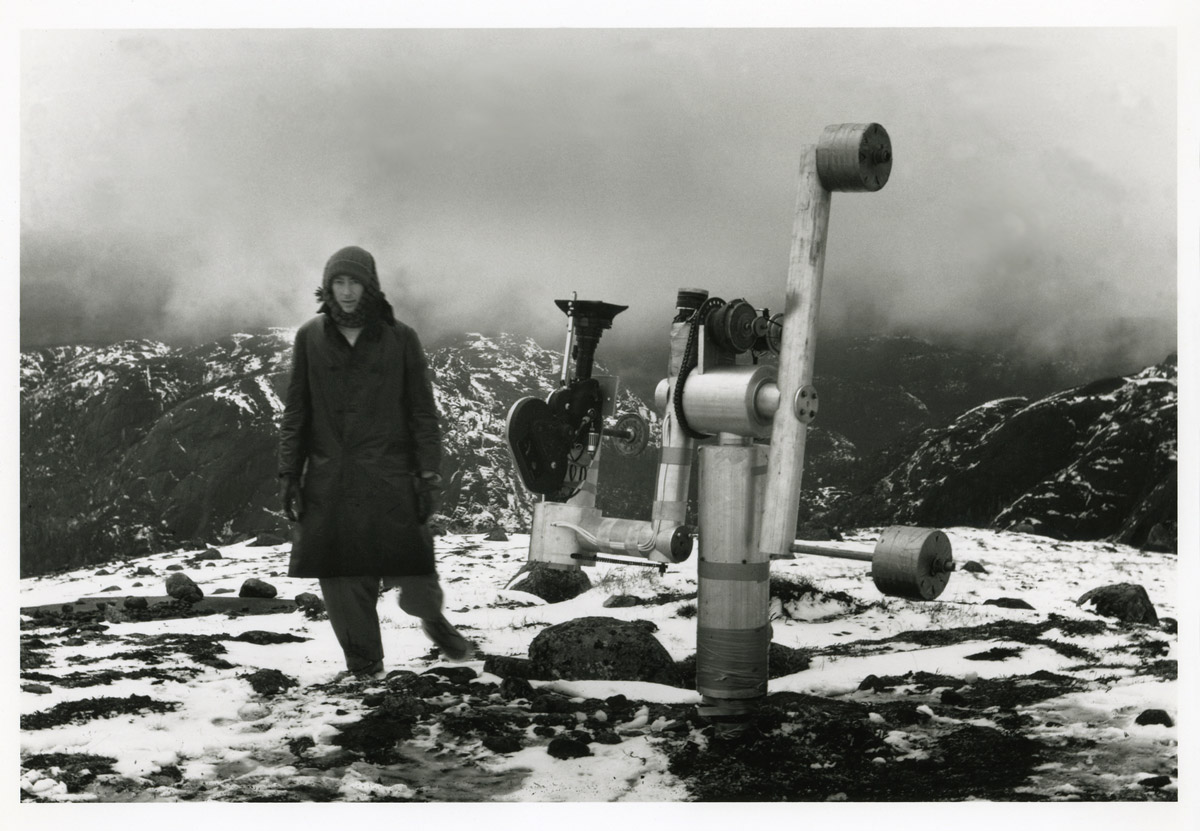
 

Michael Snow. 'La Région Centrale' 1971 (still)


Michael Snow (Canadian, 1928-2023)
La Région Centrale (still)
1971
16mm film transferred to DVD (blackbox projection), black-and-white, sound
191 min.
Courtesy of the artist


Michael Snow CC RCA (born December 10, 1928) was a Canadian artist working in a range of media including film, installation, sculpture, photography, and music. His best-known films are Wavelength (1967) and La Région Centrale (1971), with the former regarded as a milestone in avant-garde cinema.

 

Robert Kinmont (American, b. 1937) '8 Natural Handstands' 1969/2009


Robert Kinmont (American, b. 1937)
8 Natural Handstands
1969/2009
Nine gelatine silver prints
Size: each 21.5 x 21.5cm
Courtesy of Alexander and Bonin, New York


Utilising an amateur and handmade approach to both photography and sculpture, Kinmont illustrates the human scale and its relationship to one’s surroundings. Incorporating both irony and humor his work explores the systems and structures that continue to develop within this relationship.


Robert Kinmont (American, b. 1937) '8 Natural Handstands' 1969/2009 (detail)


Robert Kinmont (American, b. 1937)
8 Natural Handstands (detail)
1969/2009
Nine gelatine silver prints
Size: each 21.5 x 21.5cm
Courtesy of Alexander and Bonin, New York
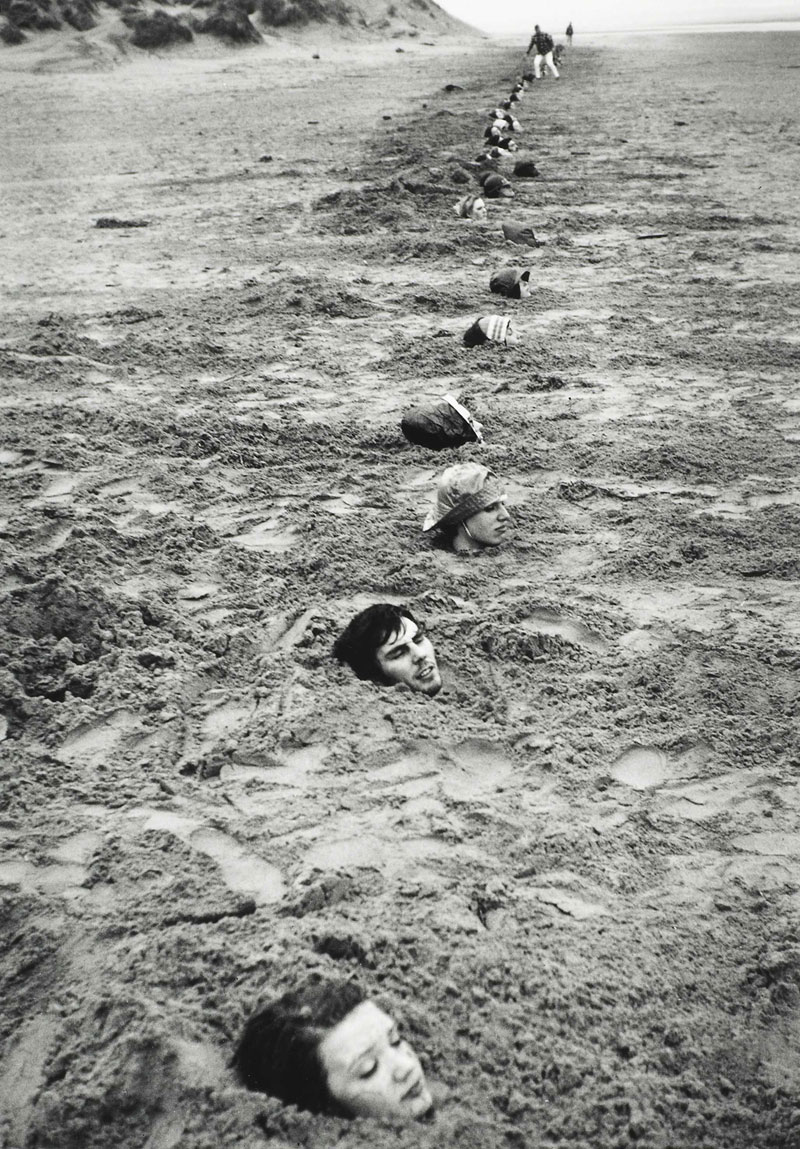
 

Keith Arnatt (British, 1930-2008) 'Liverpool Beach Burial' 1968


Keith Arnatt (British, 1930-2008)
Liverpool Beach Burial
1968
Gelatin silver print
Size: 40.6 x 50.8cm
Courtesy of the Keith Arnatt Estate and Maureen Paley, London


Liverpool Beach Burial, which the artist described as a “situational sculpture,” was realised by Arnatt with his students at the Manchester College of Art. It was first exhibited in Konzeption – Conception: Dokumentation einer heutigen Kunstrichtung / Documentation of Today’s Art Tendency at the Städtisches Museum, Leverkusen, Germany, in 1969. The artist recorded instructions for its making: “(1) Choosing a site and marking out a straight line. (2) Marking off 4-foot intervals. Each mark representing a digging position for each of the hundred-plus participants. (3) Each participant chose a site on the line and dug his / her own hole. (4) When the holes were deep enough the participants were ‘buried’ by nonparticipants.” (Lucy R. Lippard, Six Years: The Dematerialization of the Art Object from 1966 to 1972, Berkeley and Los Angeles: University of California Press, 1997, p. 50).


As the first major museum exhibition on Land Art, Ends of the Earth provides the most comprehensive historical overview of this art movement to date. Land Art used the earth as its material and the land as its medium, thereby creating works beyond the familiar spatial framework of the art system. The time period covered in Ends of the Earth spans the 1960s to 1974, when, in the context of Land Art, movements such as Conceptual Art, Minimal Art, Happenings, Performance Art, and Arte povera, became more distinct and began to diverge.

The nearly 200 works by more than 100 artists from Australia, Brazil, Canada, Germany, Great Britain, Iceland, Israel, Japan, the Netherlands, the Philippines and Switzerland demonstrate that Land Art was not a predominantly North American phenomenon. The exhibition presents works that are less well known than the canonical works Spiral Jetty, Lightning Field and Double Negative, thereby creating a shift in perspective. By including works of the then participating artists, the show refers to the earlier and pioneering exhibitions Earthworks and Earth Art (New York, 1968 and 1969). Michael Heizer and Walter De Maria are interested in realisations in outside and lend the mediated part within an exhibition only secondary importance. They are, therefore, not included in this presentation.

Even before the emergence of the movement in the 1960s, artists from the most varied locations around the globe were increasingly moved to claim the earth and use land as an artistic medium. In a basic sense, this also included the examination of the nature of the earth as a planet. Yves Klein, for instance, wondered what the earth looked like from space. In 1961, he transformed his vision that the dominant colour from this perspective would be blue, and that all man-made boundaries could be overcome with this colour, into his series Planetary Reliefs.

Land Art artists often worked under the open sky, making productive use of the fact that the great outdoors posed other conditions for a work’s lifespan than enclosed spaces did. Some works only existed for the short time of their creation, like Judy Chicago’s ephemeral works consisting of coloured flames and smoke, which served as references to religious ceremonies and the landscape as a deity. For ten weeks, the cliffs along Little Bay, Sydney, were packed in synthetic fabric and rope for Christo and Jeanne-Claude’s Wrapped Coast – One Million Square Feet, which, like many other works of Land Art, was enormous in scale. Another famous work of similar proportions was Spiral Jetty by Robert Smithson; on the Great Salt Lake in Utah, USA, the artist built a 1,500-foot long spiral-shaped jetty made of material found on site.

Land Art artists were fascinated by remote locations like deserts. Hreinn Fridfinnsson constructed a house on an uninhabited lava field near Reykjavik. The inside was made of corrugated sheet metal and the outside was covered in wall paper, because, as wall paper is intended to please the eye, “it is reasonable to have it on the outside, where more people can enjoy it.” Some artists transported the conditions of specific places into exhibition spaces: The Japanese artist group “i” moved four truckloads of gravel on a conveyor belt into an exhibition space and arranged it into a pile there. Alice Aycock fills a minimalistic grid with wet clay. This work will be recreated for the exhibition in Haus der Kunst; the clay will dry out during the run of the exhibition, will crack and gradually come to resemble the land in California’s Death Valley (Clay #2, 1971 / 2012). With Hog Pasture: Survival Piece #1 (1970-1971 / 2012), not only will new material – in this case a green pasture – make on selected occasions its way into the museum but a live domestic pig as well, which will pasture on the meadow from time to time.

From the earliest days of the movement, collectors, patrons, art dealers, and curators also explored sensitively which works of Land Art could be exhibited in museums and galleries, and how this should be done. In their own way, they helped establish Land Art as a legitimate artistic genre. In the case of Robert Smithson’s Spiral Jetty an art dealer helped funding the production of an accompanying film, and the work was executed in three equally valid versions: as the site-specific headland, as an eponymous essay and as a film.

In general, language, film, and photography played a central role in Land Art’s creation and development. Land Art artists and members of the media established close connections to one another. Magazines and television stations commissioned art works and were the first to publish these. Now legendary is Gerry Schum’s Fernsehgalerie, which was the first exhibition created for television and was broadcast by Sender Freies Berlin on 15 April 1969. For eight consecutive days in October of that same year, the WDR television network interrupted its regularly scheduled programs, at 8.15 pm and 9.15 pm, for a few seconds and presented the eight photographs of Keith Arnatt’s Self-Burial, which depicted the artist gradually sinking into the ground. The television station refrained from accompanying this with an introduction or commentary.

Following the presentation of Tinguely’s self-destructing sculpture Hommage à New York, the NBC television network commissioned the artist to create a work. In collaboration with Niki de Saint-Phalle, Tinguely made a large-scale kinetic sculpture out of waste material he had found in and around Las Vegas. The work was used in choreographed explosions that took place south-west of Las Vegas near a nuclear test site. Tinguely’s spectacle was presented in the same newscast as was a major report about the international nuclear talks, which took place that same week.

Many other works touched on the subject of “this tortured earth”, as Isamu Noguchi described it. Land Art artists examined the wounds and scars that humans inflict on the planet earth, whether by the war machinery (Robert Barry, Isamu Noguchi), dictatorships (Artur Barrio), nuclear testing (Heinz Mack, Jean Tinguely, Adrian Piper) or colonisation (Yitzhak Danziger). The media’s intensive coverage of Land Art activities led to unusual and complex contributions. Receptive to Land Art’s demand for a sensitive consciousness regarding the conditions of production, presentation and dissemination of art, they also gave expression to the technological, social and political conditions of the time.

Organised in collaboration with the Museum of Contemporary Art in Los Angeles.

Press release from the Haus der Kunst website


Charles Eames (American, 1907-1978)
Ray Eames 
(American, 1912-1988)
Powers of Ten
1977
© 1977 EAMES OFFICE LLC


Powers of Ten takes us on an adventure in magnitudes. Starting at a picnic by the lakeside in Chicago, this famous film transports us to the outer edges of the universe. Every ten seconds we view the starting point from ten times farther out until our own galaxy is visible only a s a speck of light among many others. Returning to Earth with breathtaking speed, we move inward – into the hand of the sleeping picnicker – with ten times more magnification every ten seconds. Our journey ends inside a proton of a carbon atom within a DNA molecule in a white blood cell.

This film was inspired by the 1957 book Cosmic View by Kees Boeke as well as by architect Eliel Saarinen’s statements about scale. It opens with an overhead shot of a man and a woman lying on a picnic blanket in a park in Chicago. In an effort to depict the scale of the couple, the planet Earth, and the galaxy relative to one another and to that of the universe, the camera zooms out at a distance of a factor of ten every two seconds, until the galaxy is seen as merely a speck of light among many others. The camera then zooms back in, with ten times the magnification every ten seconds, focusing in the end on the proton of an atom.


Charles Simonds (American, b. 1945) 'BodyEarth' 1974 (still)


Charles Simonds (American, b. 1945)
Body<—>Earth (still)
1974
16mm film transferred to DVD, colour
3 min.
Collection of the artist
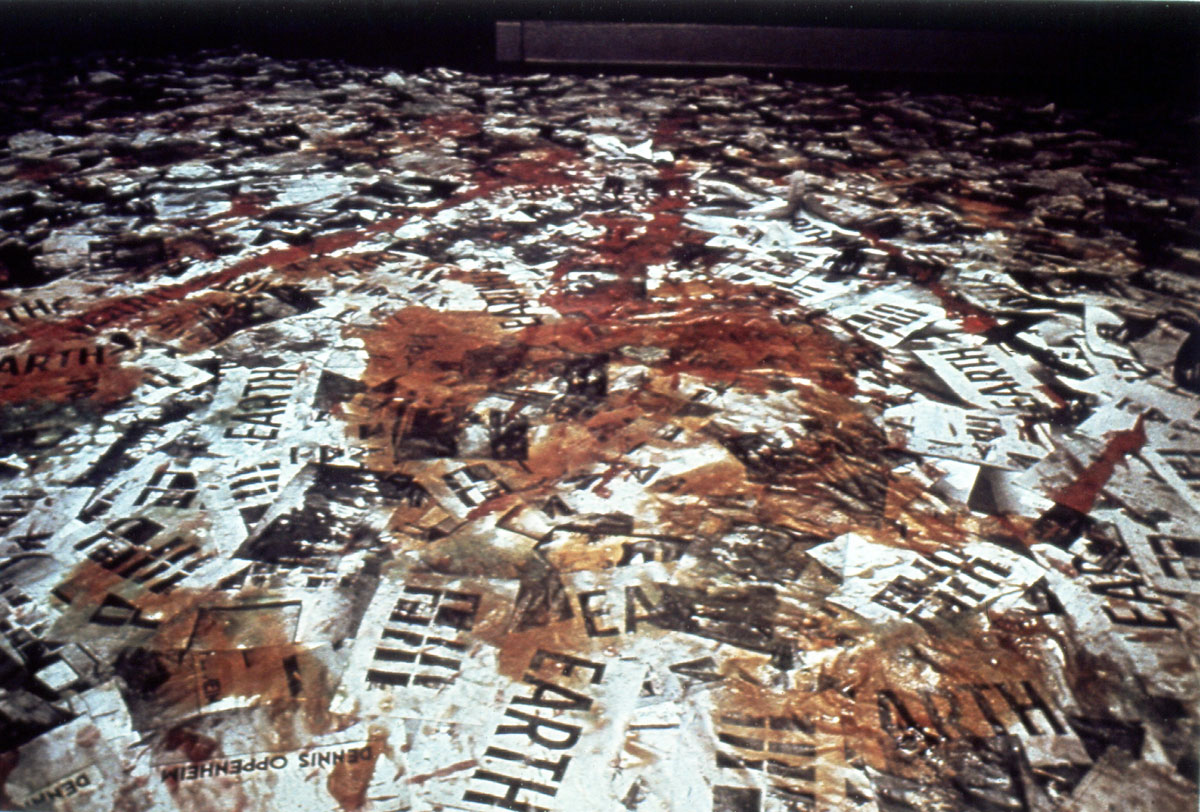
 

Les Levine (American, b. 1935) 'Systems Burnoff X Residual Software' 1969/2012


Les Levine (American, b. 1935)
Systems Burnoff X Residual Software
1969/2012
Installation recreation 1,000 copies of 31 photographs (31,000 photographs total) taken by Levine at the March 1969 opening of EARTH ART exhibition in Ithaca, New York
Jello and chewing gum
Courtesy of the artist
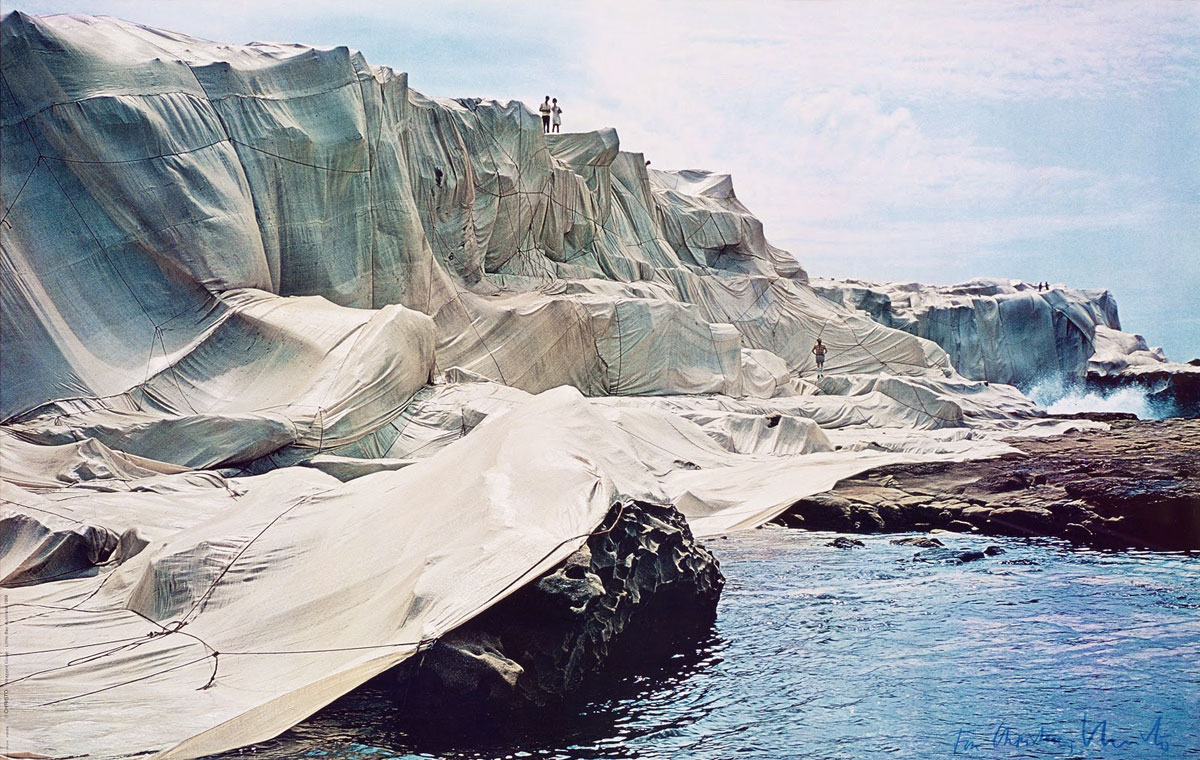
 

Christo (Bulgaria, 1935-2020) and Jeanne-Claude (Bulgaria, 1935-2009) 'Wrapped Coast - One Million Square Feet' 1968-69


Christo (Bulgaria, 1935-2020) and Jeanne-Claude (Bulgaria, 1935-2009)
Wrapped Coast – One Million Square Feet
1968-1969
Collages, photographs, model, film
Collection of the artist


The largest single artwork ever made, Wrapped Coast was mounted in Little Bay, Sydney, Australia, on October 28, 1969, and remained on view for ten weeks. Christo and Jeanne-Claude, with the assistance of 125 students, teachers, professional climbers, and workers and under the supervision of Major Ninian Melville, retired from the Army Corps of Engineers, wrapped approximately one and a half miles of coast, including cliffs up to 85 feet high, using synthetic fabric and rope. This was the first work in the series of Kaldor Public Art Projects initiated by Australian collector John Kaldor. The project was financed by the sale of Christo’s preparatory drawings, collages, models, and lithographs. In the end, all materials used were removed from the bay and recycled. ABC Australia filmed a documentary of the project.
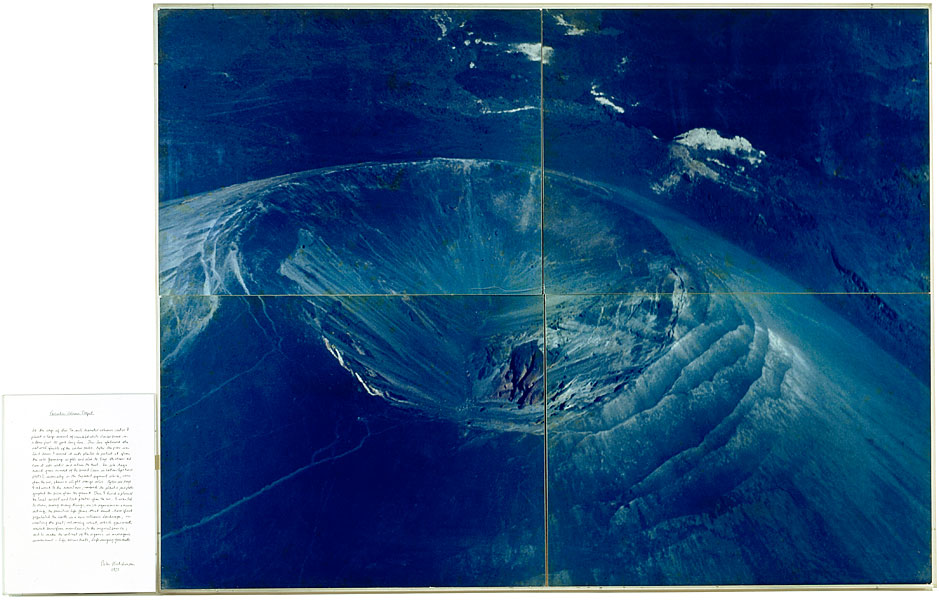
 

Peter Hutchinson (British, b. 1930) 'Paricutin Project' 1971


Peter Hutchinson (British, b. 1930)
Paricutin Project
1971
Photo and ink on cardboard and moulded bread in object-frame
40 x 55cm
Courtesy Galerie Bugdahn und Kaimer, Düsseldorf


Peter Arthur Hutchinson (born 1930) is a British-born artist living in the United States. Hutchinson is one of the pioneers of the Land Art movement.

The Paricutin Project was first shown in 1969 at John Gibson Gallery in New York as a model illustrating Hutchinson’s conception of an action to take place on Mt. Paricutin, a volcano in Michoacán, Mexico. A year later, Time magazine funded Hutchinson’s trip to the site to make the work in exchange for exclusive rights to publish the photographs. In an attempt to produce life in a place generally thought of as lifeless, the artist laid 450 pounds of bread crumbs in a line approximately 250 feet long around the rim of the volcano. Mould appeared after six days, in part because of the heat and steam rising from the earth. Two photographs of the project were published in the June 29, 1970, issue of Time. Later that same year, large-scale photographs of the work, along with text describing the trip, were shown at John Gibson Gallery.


Patricia Johanson (American, b. 1940) 'Stephen Long' 1968 (still)


Patricia Johanson (American, b. 1940)
Stephen Long (still)
1968
CBSTV 1968; edited by Joanna Alexander, WNET TV, New York, 1971
16mm film transferred to DVD, colour, sound
5 min.
Courtesy of the artist


Interested in the physical limitations of sight and in measuring how far the eye can see, Johanson created this 1,600-foot-long by 2-foot-wide sculpture made of plywood planks painted with yellow, red, and blue bands. Sited on a portion of the defunct Boston & Maine Railroad tracks from Buskirk, New York, to Bennington, Vermont, the work is named after Stephen Long, a military officer who became a railroad surveyor and engineer. Both the location of the work and its title emphasise the impact of rail transportation on modern perceptions and experience of the landscape. The work gained considerable local media attention, and John Lindsay, Mayor of New York, invited Johanson to permanently install the piece in the mall at Central Park. As the available space was only 1,300 feet long, the artist, unwilling to alter the work’s length, declined the invitation.
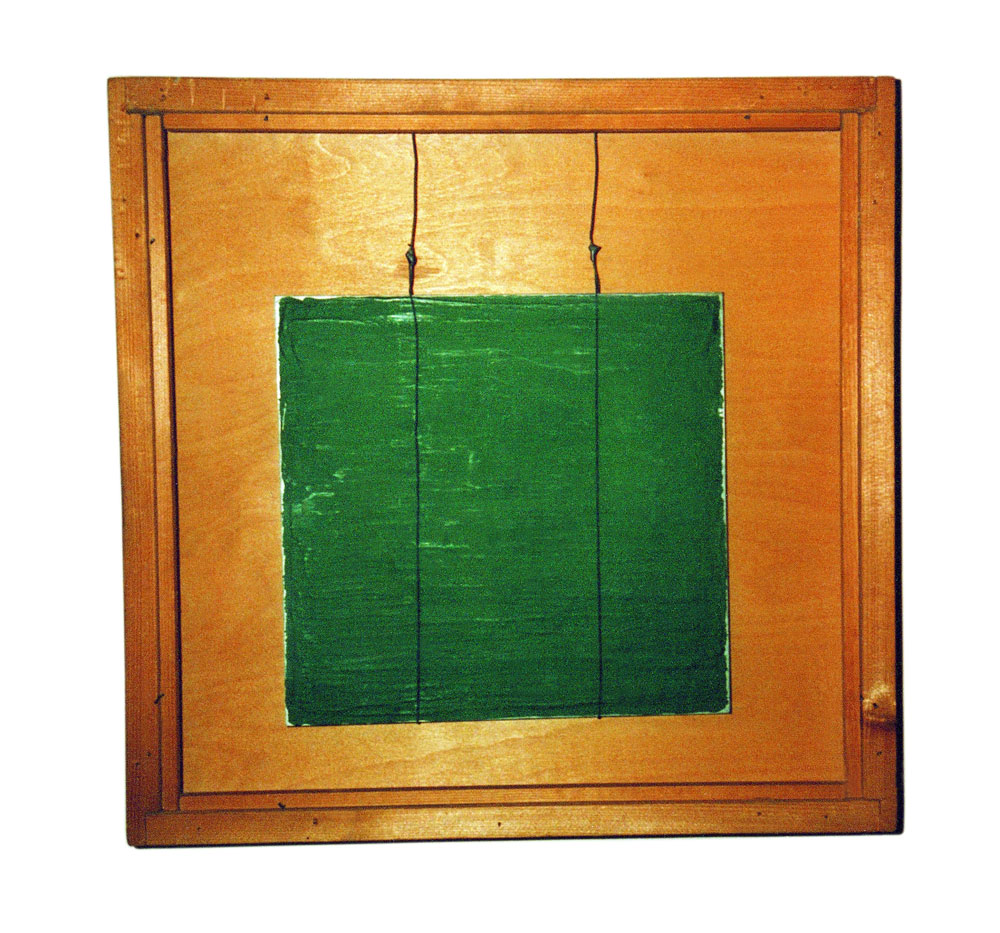
 

Kristjan Gudmundsson. 'Painting of the specific gravity of the planet Earth' 1972-73


Kristjan Gudmundsson (Icelandic, b. 1941)
Painting of the specific gravity of the planet Earth
1972-1973
Acrylic on metal
Size: 25.4 x 25.4cm
Sólveig Magnúsdóttir, Reykjavik


Kristján’s art reflects both prevailing traditions in late 20th century western art in general, and the dominance of abstract and conceptual art in the post-war art of Iceland in particular. He has said, “I am trying to work within the field of tension that exists between nothing and something”.


Judy Chicago (American, b. 1939) 'Atmospheres: Duration Performances' 1967-74


Judy Chicago (American, b. 1939)
Atmospheres: Duration Performances
1967-1974
16mm film transferred to DVD, colour, sound
14:12 min.
Courtesy of the artist
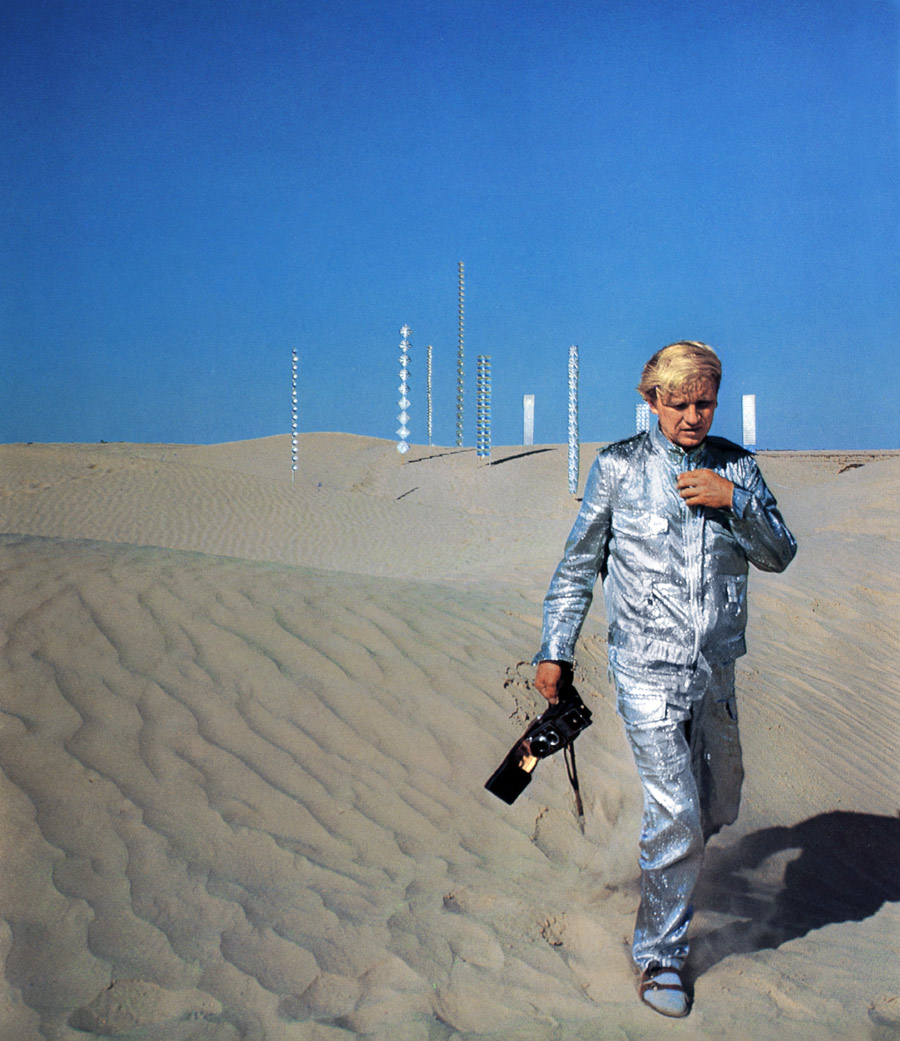
 

Heinz Mack (German, b. 1931) 'Tele-Mack' 1968


Heinz Mack (German, b. 1931)
Tele-Mack
1968
16mm film transferred on DVD, colour, sound
24:35 min.
Production of Saarländischer Rundfunk, author Professor Heinz Mack
Courtesy of Kunst und Ausstellungshalle der Bundesrepublik Deutschland GmbH


A founding member of Group Zero – an artist collective established in Düsseldorf in 1958 – Mack drafted the final version of his manifesto for Sahara Project in 1959. It was first published in Zero magazine in 1961, and subsequently republished and translated from German into French, Dutch, and English in 1967 for Mackazin, the artist’s journal-catalogue. Sahara Project, made in homage to Yves Klein, proposes placing large-scale sculptural works in remote areas of the world’s deserts, like mirages to be encountered by anyone coming upon them. One such location was the Sahara Desert, which was the main testing site for French nuclear weaponry after 1958. In 1967 Mack went on an expedition to the Sahara with the German public television station Westdeutscher Rundfunk (WDR), which led to two televised presentations of the project the following year – one for WDR and the other for Saarländischer Rundfunk. The popular weekly German magazine Stern presented the project in a feature spread in 1977.


Haus der Kunst
Prinzregentenstraße 1
80538 Munich
Germany
Phone: +49 89 21127 113

Opening hours:
Monday | Wednesday | Friday | Saturday | Sunday 10am – 8pm
Thursday 10am -10pm
Tuesday closed
Haus der Kunst website

LIKE ART BLART ON FACEBOOK

Back to top

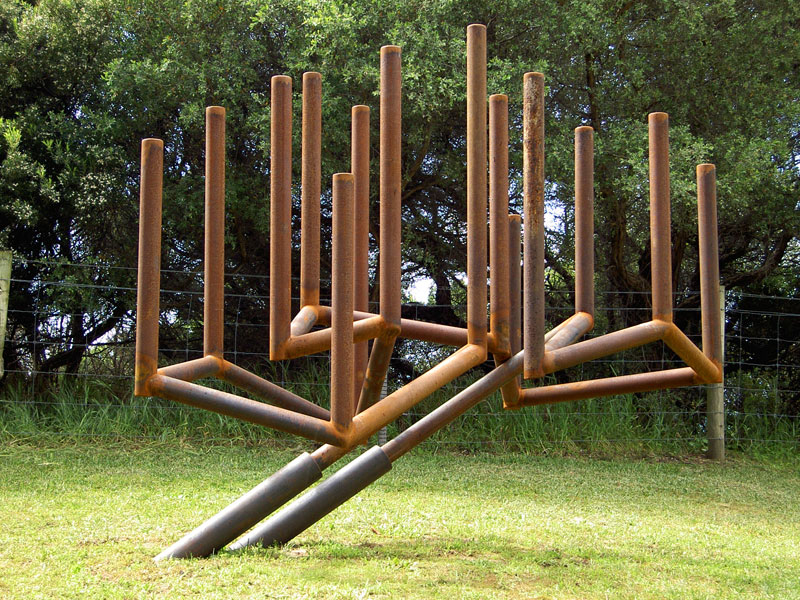
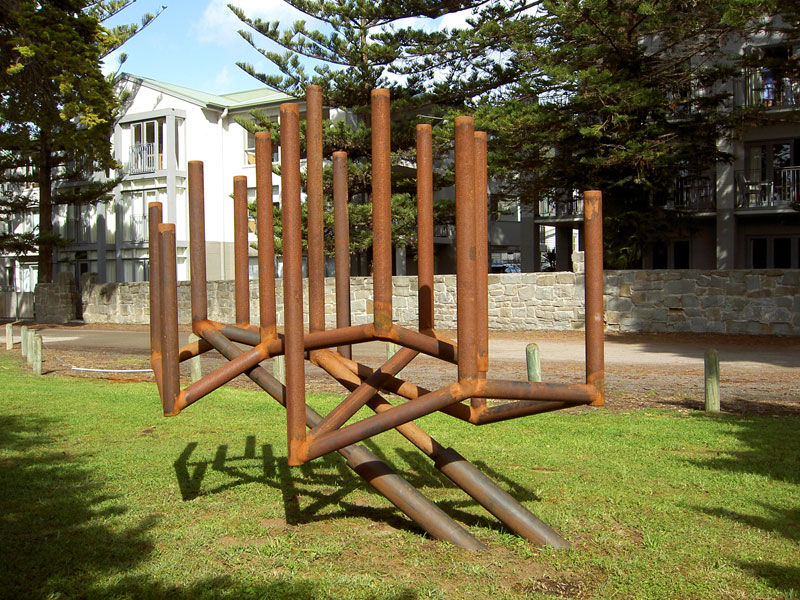
Sculpture: ‘Everything’ by Fredrick White, 2011

October 2012


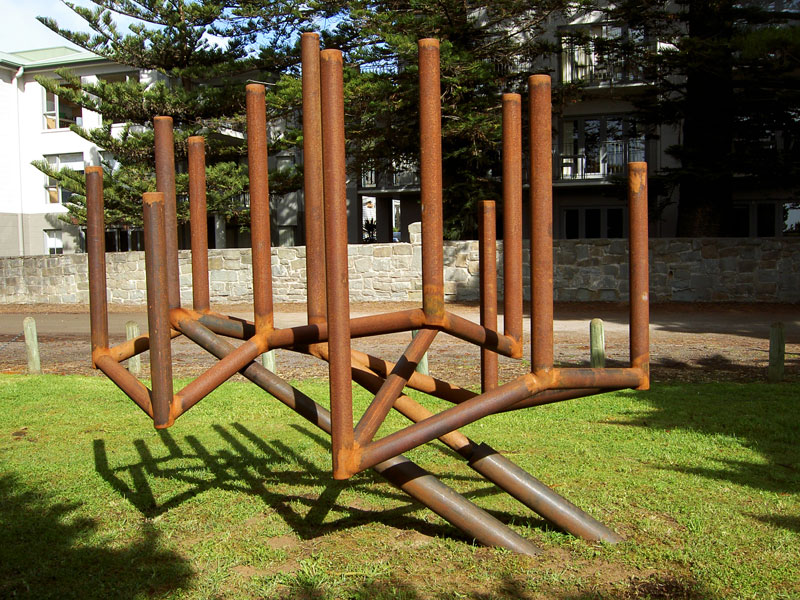
Fredrick White. 'Everything' 2011


Fredrick White (Australian)
Everything
2011
steel
210 x 120 x 250cm


A new sculpture by Fredrick White is appearing in the Lorne Sculpture Prize (now Biennale) which opened on the 16th October and continues until 5th November, 2011. The work continues the artist’s exploration into the matrix of what is seen and not seen, what lies above and below.

Dr Marcus Bunyan


Please click on the photographs for a larger version of the image.


Fredrick White. 'Everything' 2011

Fredrick White. 'Everything' 2011


Fredrick White (Australian)
Everything
2011
steel
210 x 120 x 250cm


LIKE ART BLART ON FACEBOOK

Back to top

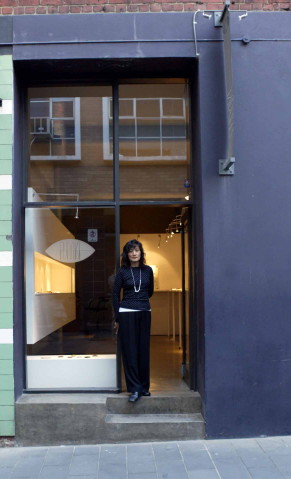
Vale Mari Funaki

May 2010


It is with great sadness that I hear of the passing of Mari Funaki on the 13th May 2010.

I met Mari many times and she was always wonderfully generous with her energy, knowledge and enthusiasm. She was an amazing artist, I loved her work especially the stunning anamorphic black bracelets and the fact that she used photography of Bernd and Hiller Becher as part of her inspiration. My conversation with Mari in 2006 and photographs of her work can be found on the Notes from a Conversation with Mari Funaki posting.

Vale Mari Funaki


“A memorial will be held on Tuesday June 1st, 2010 at 11.00am in THE GREAT HALL of the National Gallery of Victoria, International.


Mari Funaki outside Gallery Funaki


Mari Funaki outside Gallery Funaki
Photo: Marcus Bunyan


Gallery Funaki website

LIKE ART BLART ON FACEBOOK

Back to top

Review: ‘To hold and be held’ by Kiko Gianocca at Gallery Funaki, Melbourne

Exhibition dates: 20th April – 15th May 2010


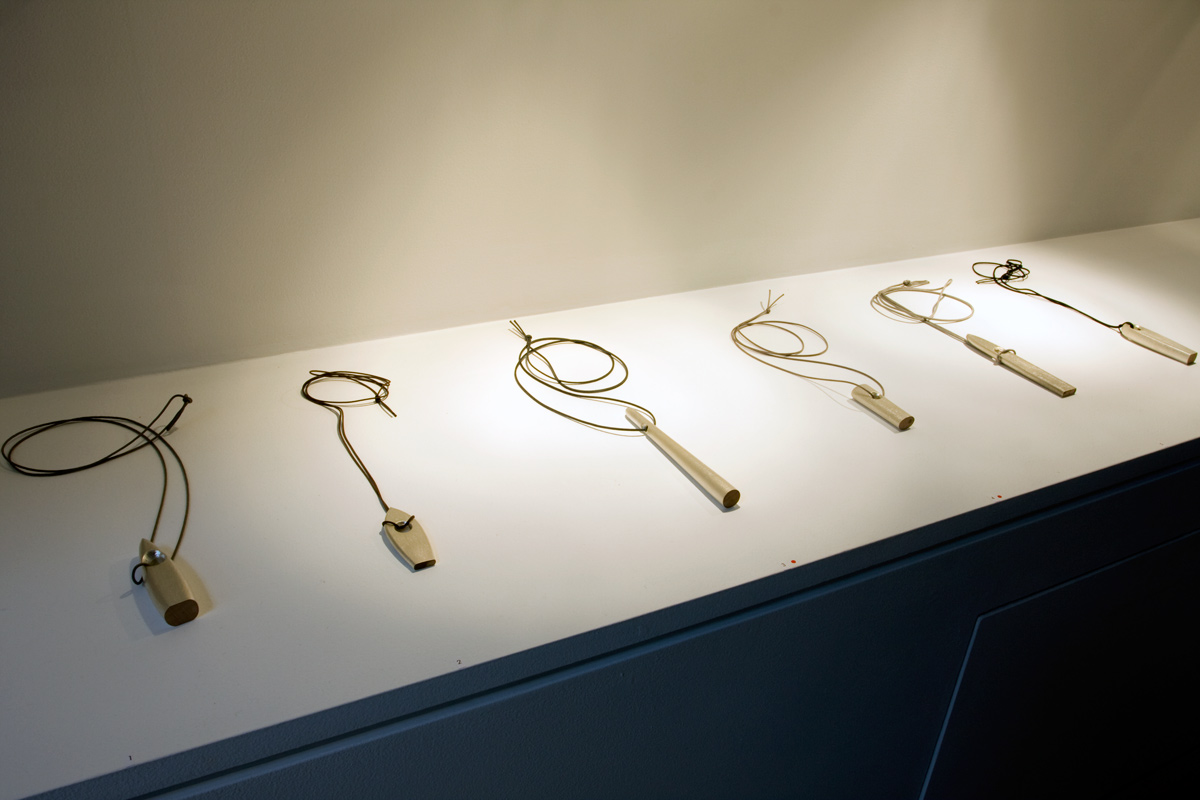
Kiko Gianocca (Swiss, b. 1974) 'Untitled (touch wood)' multiples 2009 (installation view) from the exhibition 'To hold and be held' by Kiko Gianocca at Gallery Funaki, Melbourne, April - May, 2010


Kiko Gianocca (Swiss, b. 1974)
Untitled (touch wood) multiples (installation view)
2009
Burnt wood, resin
Photo: Marcus Bunyan


A beautiful exhibition of objects by Swiss/Italian artist Kiko Gianocca at Gallery Funaki, Melbourne, one full of delicate resonances and remembrances.

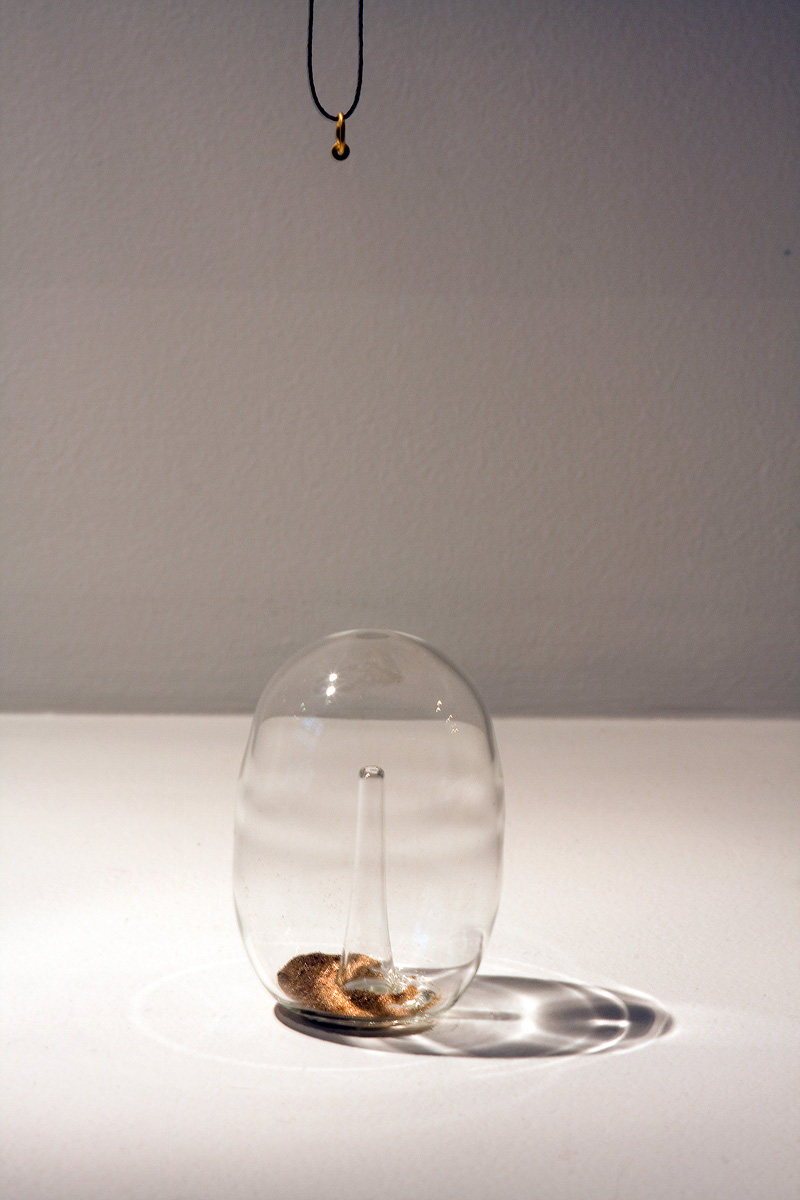
Obelisk pendants in blackened and silvered wood, Neolithic standing stones, totemic, silent;
The hole through the object akin to ‘seeing’ through time.
Exposed wood on base (touch wood) as grounding.

The standing stone installation an altar piece, a dark reliquary (see image above)


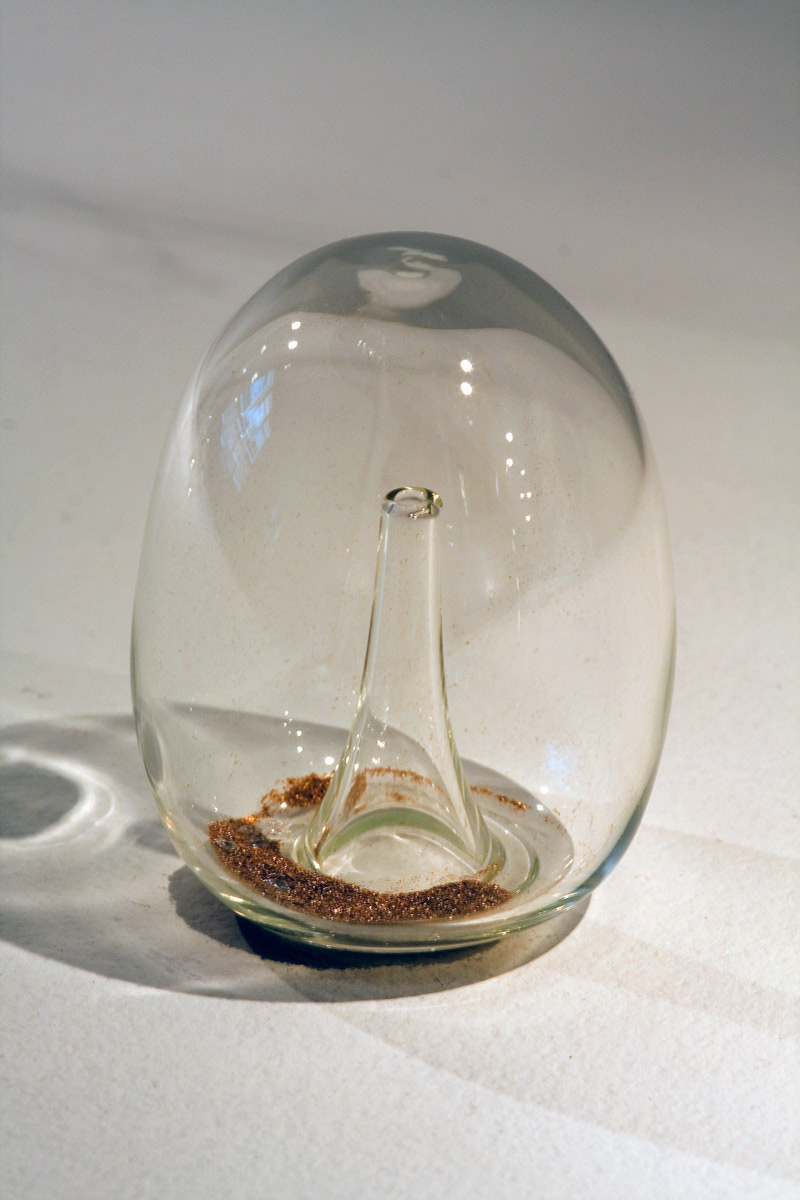
Glass vessels with internal funnels filled with the gold detritus of disassembled objects, found pendants:
Horse, Anchor, Four leaf clover, Swan, Hammer & sickle (see images below)

The distance between the bail – the finding that attaches the pendant to the necklace – and the remainder/reminder of the vessel itself. What a distance!

As Sally Mann would articulate, ‘What remains’1 …

Lives previous to this incarnation; jewels embedded in dust.
The captured potency of displaced objects.
Personal and yet anonymous at one and the same time.


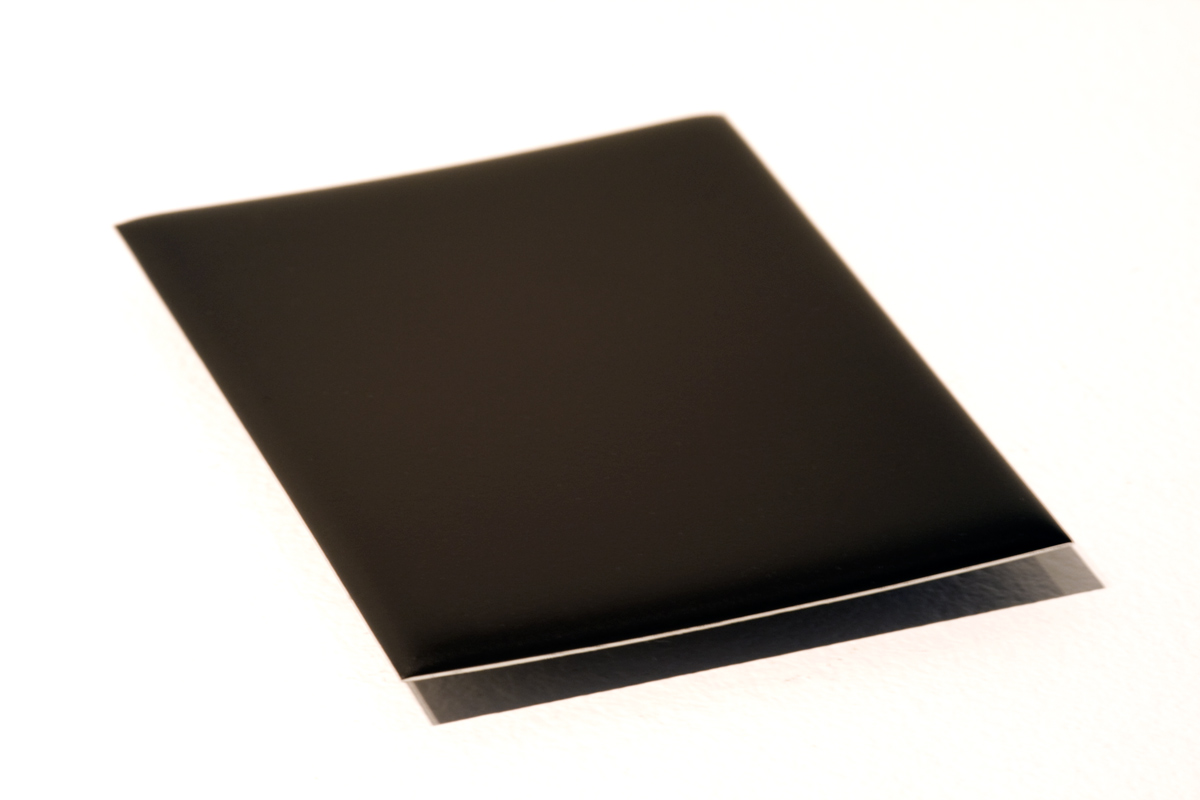
Brooches of gloss and matt black resin plates. A plastic black, almost Rembrandt-esque.

On the reverse images exposed like a photographic plate, found images solidified in resin.

The front: the depths of the universe, navigating the dazzling darkness
The back: memories, forgotten, then remade, worn like a secret against the beating chest. Only the wearer knows!

Here is a territorialization, “a double movement, where something accumulates meanings (re-territorialization), but does so co-extensively with a de-territorialization where the same thing is disinvested of meanings.”2

As Kiki Gianocca asks, “I am not sure if I grasp the memories that sometimes come to mind.
I start to think they hold me instead of me holding them.”

 
Time is the distance between objects. No objects.
Space is the distance between events. No events.

Dr Marcus Bunyan


1/ “Mann’s fifth book, What Remains, published in 2003, is based on the show of the same name at the Corcoran Museum in Washington, DC and is in five parts. The first section contains photographs of the remains of Eva, her greyhound, after decomposition. The second part has the photographs of dead and decomposing bodies at a federal Forensic Anthropology Facility (known as the ‘body farm’). The third part details the site on her property where an armed escaped convict was killed. The fourth part is a study of the grounds of Antietam (the site of the bloodiest single day battle in American history during the Civil War. The last part is a study of close-ups of the faces of her children. Thus, this study of mortality, decay and death ends with hope and love.”
Sally Mann. Wikipedia [Online] Cited 02/05/2010

2/ “For them (Deleuze and Guattari), assemblages are the processes by which various configurations of linked components function in an intersection with each other, a process that can be both productive and disruptive. Any such process involves a territorialization; there is a double movement where something accumulates meanings (re-territorialization), but does so co-extensively with a de-territorialization where the same thing is disinvested of meanings. The organization of a territory is characterized by such a double movement … An assemblage is an extension of this process, and can be thought of as constituted by an intensification of these processes around a particular site through a multiplicity of intersections of such territorializations.”
Wood, Aylish. “Fresh Kill: Information technologies as sites of resistance ” in Munt, Sally (ed.,). Technospaces: Inside the New Media. London: Continuum, 2001, p. 166.


    Many thankx to Katie and Gallery Funaki for allowing me to take the photographs in the gallery and post them online. Please click on the photographs for a larger version of the image. All photographs © Marcus Bunyan except The waterfall.


    “I own a stone that a friend passed to me, and a shackle that Michael gave me.

    I found a curious object in Lisbon at the fleamarket, I paid one euro for it and I still don’t know what it is.

    Yesterday I had a look again at the picture you shot. I am not sure if I grasp the memories that sometimes come to mind.

    I start to think they hold me instead of me holding them.”


    Kiko Gianocca, April 2010


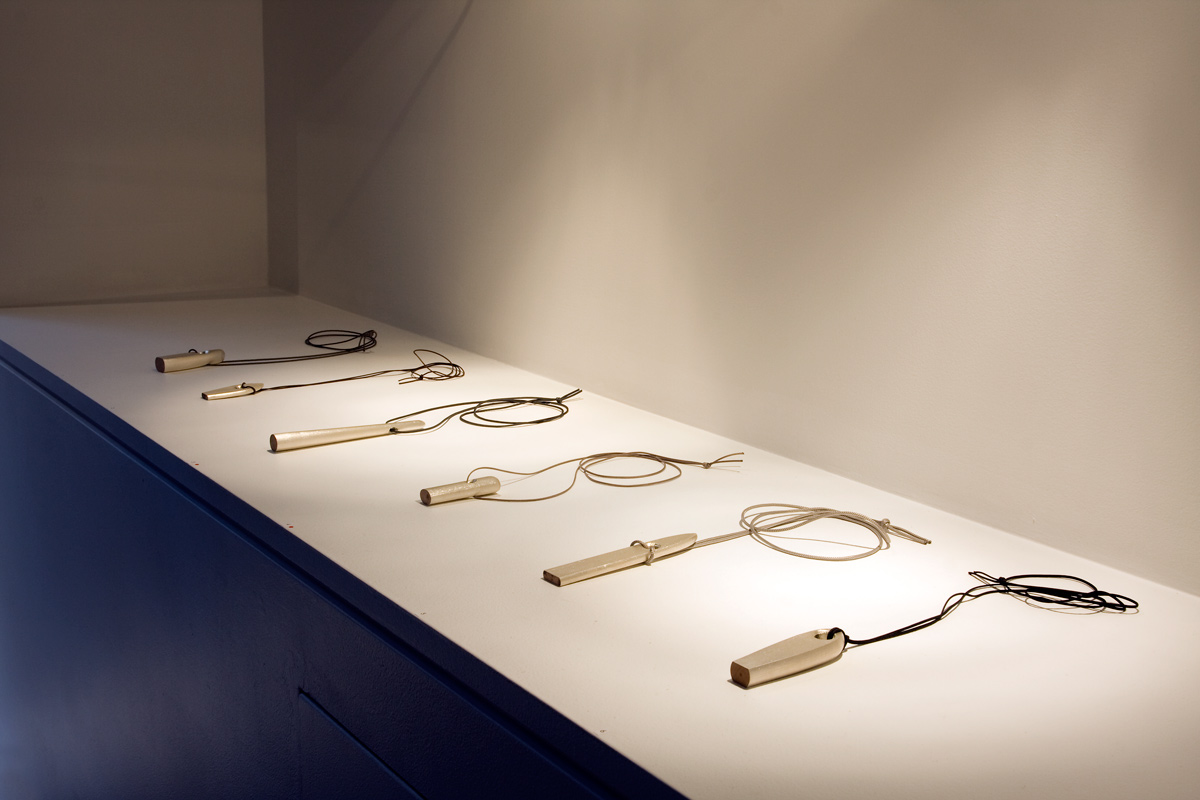
    Installation view of the exhibition 'To hold and be held' by Kiko Gianocca at Gallery Funaki, Melbourne showing 'Untitled (touch wood)' multiples (installation view)

    Installation view of the exhibition 'To hold and be held' by Kiko Gianocca at Gallery Funaki, Melbourne showing 'Untitled (touch wood)' multiples (installation view)


    Kiko Gianocca (Swiss, b. 1974)
    Untitled (touch wood) multiples (installation views)
    2009
    Wood, silver
    Photos: Marcus Bunyan


    Kiko Gianocca (Swiss, b. 1974)
'Horse, Anchor, Four leaf clover and Swan' (left to right) 2009 (installation view)


    Kiko Gianocca (Swiss, b. 1974)
    Horse, Anchor, Four leaf clover and Swan (left to right) (installation view)
    2009
    18k gold, glass
    Photo: Marcus Bunyan


    Kiko Gianocca. 'Horse' 2009 (installation view)


    Kiko Gianocca (Swiss, b. 1974)
    Horse (installation view)
    2009
    18k gold, glass
    Photo: Marcus Bunyan


    Kiko Gianocca (Swiss, b. 1974) 'Anchor' 2009 (installation view) from the exhibition 'To hold and be held' by Kiko Gianocca at Gallery Funaki, Melbourne, April - May, 2010


    Kiko Gianocca (Swiss, b. 1974)
    Anchor (installation view)
    2009
    18k gold, glass
    Photo: Marcus Bunyan


    Kiko Gianocca (Swiss, b. 1974) 'Swan' 2009 (installation view)


    Kiko Gianocca (Swiss, b. 1974)
    Swan (installation view)
    2009
    18k gold, glass
    Photo: Marcus Bunyan


    Installation view of the exhibition 'To hold and be held' by Kiko Gianocca at Gallery Funaki, Melbourne with 'Untitled (touch wood)' burnt wood multiples in distance


    Installation view of exhibition with Untitled (touch wood) burnt wood multiples in distance
    Photo: Marcus Bunyan


    Kiko Gianocca (Swiss, b. 1974) 'Man & dog' 2009 (installation view)


    Kiko Gianocca (Swiss, b. 1974)
    Man & dog (installation view)
    2009
    Found image, resin, silver
    Photo: Marcus Bunyan


    Kiko Gianocca (Swiss, b. 1974) 'The waterfall' 2009 from the exhibition 'To hold and be held' by Kiko Gianocca at Gallery Funaki, Melbourne, April - May, 2010


    Kiko Gianocca (Swiss, b. 1974)
    The waterfall
    2009
    Found image, resin, silver


    Kiko Gianocca (Swiss, b. 1974) 'The dog' 2009 (installation view)


    Kiko Gianocca (Swiss, b. 1974)
    The dog (installation view)
    2009
    Found image, resin, silver
    Photo: Marcus Bunyan


    Kiko Gianocca (Swiss, b. 1974) 'The kiss' (reverse) 2009 (installation view)


    Kiko Gianocca (Swiss, b. 1974)
    The kiss (reverse) (installation view)
    2009
    Found image, resin, silver
    Photo: Marcus Bunyan


    Kiko Gianocca (Swiss, b. 1974) 'The way up' (reverse) 2009 (installation view)


    Kiko Gianocca (Swiss, b. 1974)
    The way up (reverse) (installation view)
    2009
    Found image, resin, silver
    Photo: Marcus Bunyan


    Kiko Gianocca (Swiss, b. 1974) 'The beast' (reverse) 2009 (installation view)


    Kiko Gianocca (Swiss, b. 1974)
    The beast (reverse) (installation view)
    2009
    Found image, resin, silver
    Photo: Marcus Bunyan


    Gallery Funaki
    Sackville House
    Apartment 33
    27 Flinders Lane
    Melbourne 3000
    Australia

    Opening hours:
    Wednesday – Friday 12 – 5pm
    Saturday on occasion (check our socials) or by appointment

    Gallery Funaki website

    LIKE ART BLART ON FACEBOOK

    Back to top

    Notes from a Conversation with Mari Funaki. Exhibition: ‘Mari Funaki, Works 1992-2009’ at Art Gallery of Western Australia, Perth

    Exhibition dates: 27th June – 18th October, 2009


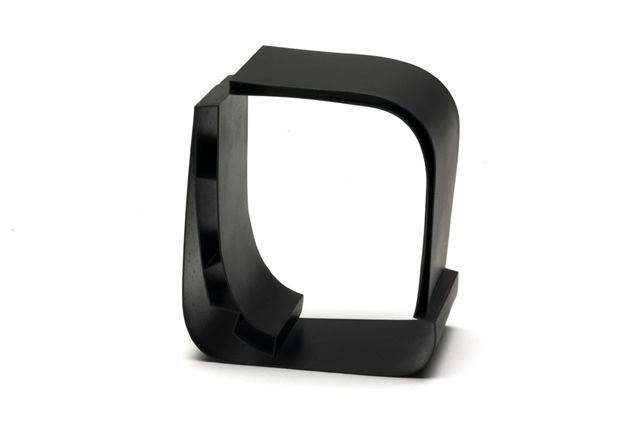
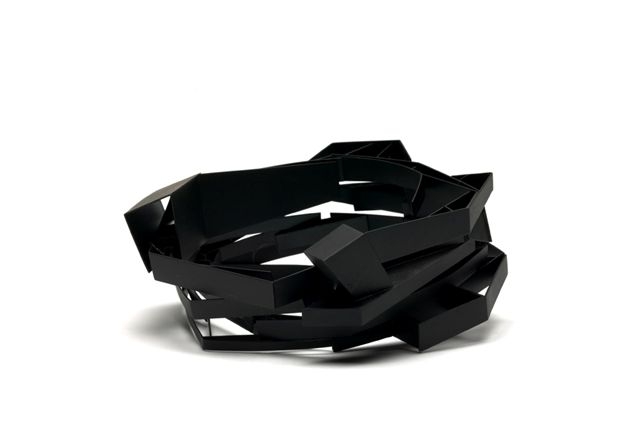
    Mari Funaki (Australian, 1950-2010) 'Bracelet 1' from ‘Space between’ heat-coloured mild steel 2005-2006 from the exhibition 'Mari Funaki, Works 1992-2009' at Art Gallery of Western Australia, Perth. June - Oct, 2009


    Mari Funaki (Australian, 1950-2010)
    Bracelet 1 from Space between
    2005-2006
    Heat-coloured mild steel


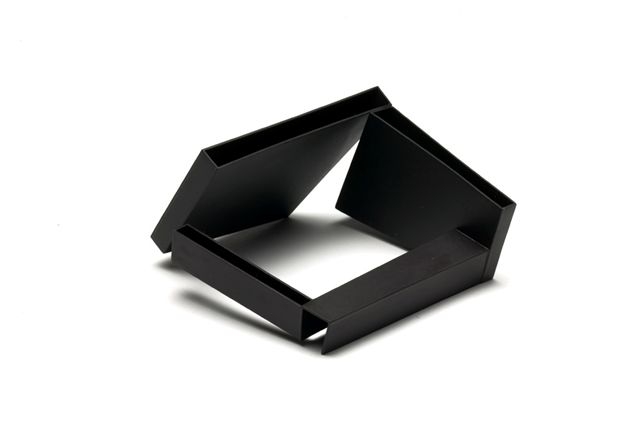
    Mari Funaki (Australian, 1950-2010) 'Bracelet 2' from ‘Space between’ heat-coloured mild steel 2005-2006 from the exhibition 'Mari Funaki, Works 1992-2009' at Art Gallery of Western Australia, Perth. June - Oct, 2009


    Mari Funaki (Australian, 1950-2010)
    Bracelet 2 from Space between
    2005-2006
    Heat-coloured mild steel


    Mari Funaki is one of Australia’s leading jewellers. This exhibition celebrates her considerable achievements between 1992 and the present day. Her first major show in a state gallery, it includes nearly fifty works and will be the first time Perth audiences have seen her work in such depth. Many of these are new works produced especially for this show.

    The exhibition will focus on rings, containers and bracelets. These forms have been the core of her practice, the foundation of her intricate material experimentations. Her sheer intensity of focus has seen her hone these forms into objects of extreme power and beauty. Funaki’s is no simple beauty, however. It is sharp, complicated. There is always a sense of danger in her work, as the spindly legs of her insect-like containers support unlikely, unwieldy torsos, and as her rings and bracelets cultivate miniature monoliths that play with scale and weight in fascinating ways.

    This exhibition will frame these unique objects in such a way as to acknowledge Funaki’s ability to work with space and matter to form entrancing works that adorn the imagination in the same they adorn the body.

    Text from the Art Gallery of Western Australia website [Online] Cited 10/08/2009. No longer available online


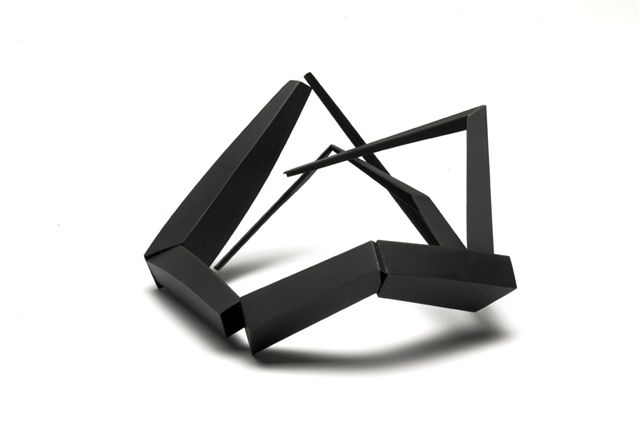
    Mari Funaki (Australian, 1950-2010) 'Bracelet 3' from ‘Space between’ heat-coloured mild steel 2005-2006


    Mari Funaki (Australian, 1950-2010)
    Bracelet 3 from Space between
    2005-2006
    Heat-coloured mild steel


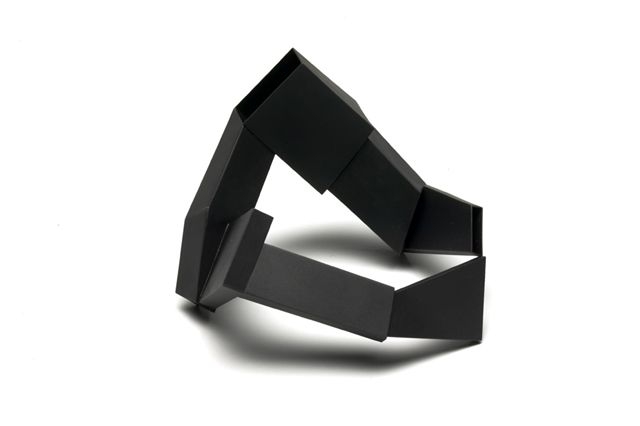
    Mari Funaki (Australian, 1950-2010) 'Bracelet 4' from ‘Space between’ heat-coloured mild steel 2005-2006


    Mari Funaki (Australian, 1950-2010)
    Bracelet 4 from Space between
    2005-2006
    Heat-coloured mild steel


    Notes from a Conversation with Mari Funaki, July 2006

    Mari Funaki’s initial response comes from the environment – the response is part random, part constructed idea.

    Funaki likes the ‘animated’ response from the viewer – allowing them to make their own associations with the work and their own meaning. The making of the work doesn’t emerge out of nothing but through the development of ideas over a long period of time.

    Mari starts with a flat drawing – this approach comes from an Eastern perspective in the history of art making i.e. screens, woodcuts and scrolls. Initially when starting with the idea Mari is mentally thinking in two dimensions – then drawing out onto paper in two dimensions the ideas.

    When actually making the work Mari then starts working and thinking in three dimensions – starting with a base piece of metal and working physically and intuitively around the object, to form a construction that evidences her feelings about what she wants to create. She likes the aesthetic beauty but uneasy aspect of a dead insect for example (like the Louise Bourgeois Maman spider outside the Guggenheim in Bilbao).

    Now collaborating with architect Nonda Kotsalidis, Mari is working to produce her sculptural objects on a larger scale, up to 6 metres high. She needs the objects to have an emotional and physical impact on the viewer – both beautiful and threatening at one and the same time. How will her objects translate to a larger scale? Very well I think.

    Funaki likes the physical distortion of space – and she likes telling a story to the viewer. She is working on a building where the facade is really strongly geometric and then she is embedding an emotion into the front of the building – constructing a narrative – constructing an emotional response with the viewer and establishing a relationship with the building. Here she is working from photographs of the space, her own recognition and remembrance of that space. She is having to work physically in 3D from the beginning for the first time, but still uses drawings to sketch out her ideas.

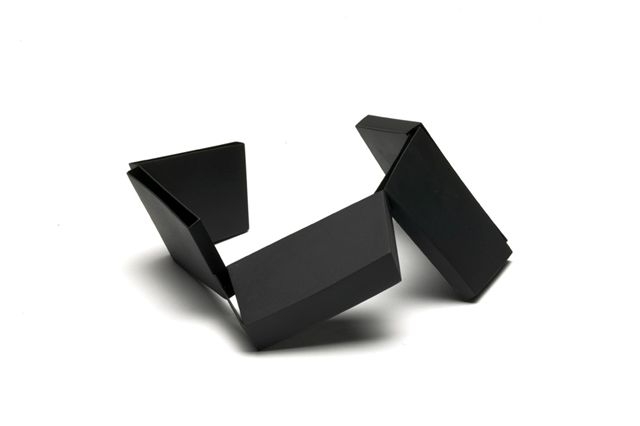
    Several of Funaki’s pieces in the Cecily and Colin Rigg Contemporary Design Award (2006) at the NGV Federation Square were inspired by the work of Bernd and Hilla Becher. Their photographs of factories and gasworks, specifically the facades of such buildings (see image below), were the jumping off point for the development of the objects (the bracelets). Funaki takes the front of these buildings, a 3D structure ‘in reality’ but pictorially imaged on a 2D plane, and then twists and distorts their structure back into a 3D environment. The facades move up and around, as though a body is twisting around its own axis, pirouetting around an invisible central spine.

    Each piece is created and then the next one is created in relation to the previous, or to each other. Each individual piece has its own character and relation to each other. They are never variations of the same piece with small differences – each is a separate but fully (in)formed entity.

    Dr Marcus Bunyan


    Bernd and Hiller Becher (German, 1931-2007 and 1934-2015) 'Water Towers' 1980


    Bernd and Hiller Becher (German, 1931-2007 and 1934-2015)
    Water Towers
    1980
    Gelatin silver prints


    “Black. Sharp, shifting contours. Familiar and alien. Confident, expressive and agile, it is easy to take the existence of these works for granted – and it is hard enough to trace in one’s mind the physical evolution back through heat colouring, sandblasting, soldering, assembling and cutting, to unremarkable, thin sheets of mild steel – let alone comprehend their conception and resolution.

    They inhabit space in a way that is difficult to describe – the edge between each object and the space that encloses it is shockingly sudden.

    How can something human-made be so insanely artificial and natural at the same time? It must be no accident that I described them as articulate – ambiguous and wide ranging in the breadth of associations and allusions, they can tell you everything and nothing at the same time.”

    Sally Marsland, 2006

    Text from the Gallery Funaki website [Online] Cited 10/08/2009 no longer available online


    Mari Funaki (Australian, 1950-2010) 'Bracelet 5' from ‘Space between’ heat-coloured mild steel 2005-2006


    Mari Funaki (Australian, 1950-2010)
    Bracelet 5 from Space between
    2005-2006
    Heat-coloured mild steel


    Mari Funaki (Australian, 1950-2010) 'Bracelet 6' from ‘Space between’ heat-coloured mild steel 2005-2006


    Mari Funaki (Australian, 1950-2010)
    Bracelet 6 from Space between
    2005-2006
    Heat-coloured mild steel


    Art Gallery of Western Australia
    Perth Cultural Centre
    Perth WA 6000

    Opening hours:
    Wednesday – Monday 10am – 5pm
    Closed Tuesdays.

    Art Gallery of Western Australia website

    Gallery Funaki website

    LIKE ART BLART ON FACEBOOK

    Back to top

    Review: ‘Morphed’ by Emma Davies at Craft Victoria, Melbourne

    Exhibition dates: 19th June – 25th July, 2009


    Emma Davies (Australian, b. 1968) 'Sekai' (be humorous') 2009


    Emma Davies (Australian, b. 1968)
    Sekai (meaning ‘be humorous’)
    2009


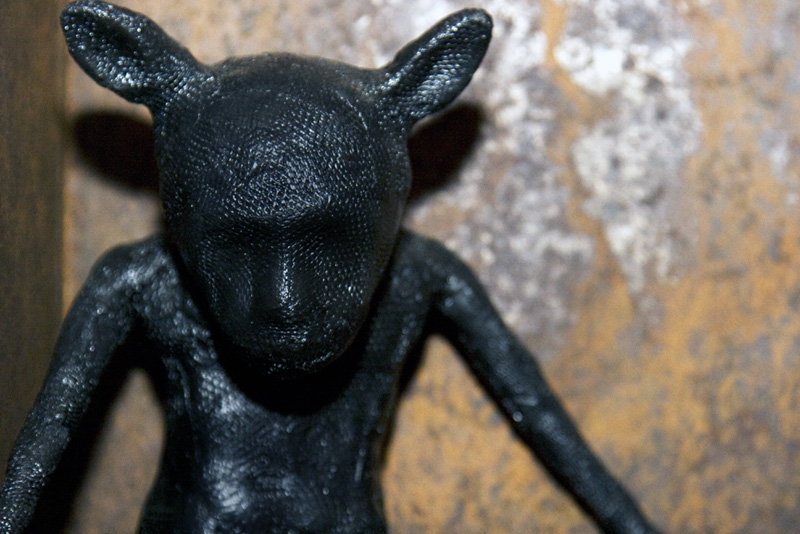
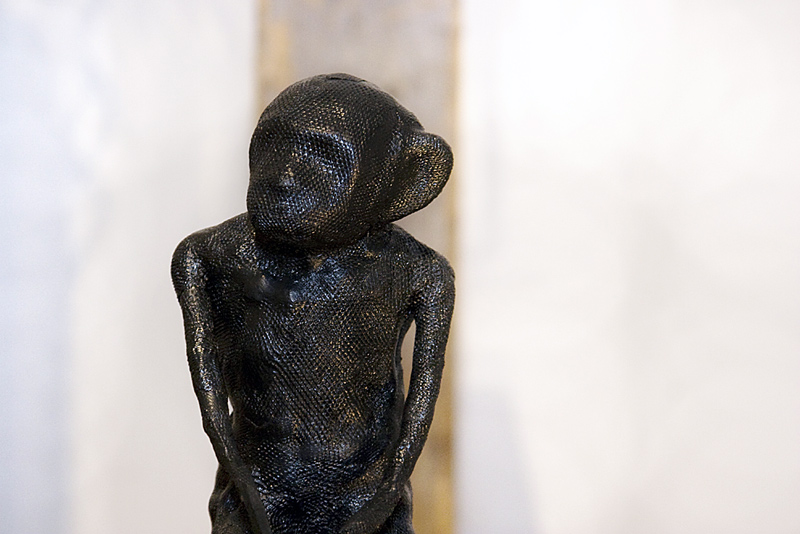
    A stimulating exhibition by Emma Davies at Craft Victoria of polypropylene industrial netting and packaging that has been heated, moulded, sculpted and literally morphed into these fantastical sculptures, inspired by the artist’s experiences when visiting Johannesburg in South Africa as part of the South Project. Davies evokes the mysterious and the bizarre in her figures, making the commonplace into something uncommon, taking her themes from the relics of bush medicine present in the street markets: the medicine market of Johannesburg full of dried animal bones, skulls, skins and bottles of alchemistic objects.

    Despite their comforting South African names (translated into English as ‘hope’, ‘faith’, ‘quiet, tranquil’, ‘lady’, ‘chief’, ‘prince’ for example) these extremely individual figurative ‘presences’ have a powerful melancholic affect on the viewer. Their elongated long legged and armed, no necked forms create dark eyeless creatures that crouch in rusted boxes or sit on wooden posts with their legs and arms hanging, folded. They seem lonely and sad despite their titles, perhaps reflecting the harsh realities of a life of poverty on the streets of Soweto.

    Two figures on wooden blocks seem to walk aimlessly, placed on large rough industrial tables with huge wheels while another figure sits up a rusted ladder propped against the wall. A group of figures are clustered together on top of large wooden posts of different heights, some with arms round each other for comfort, others with black or red feathers sprouting from shoulders, legs or wearing a red feathered skirt. These creatures create a marvellous group of contemplative wandering minstrels while behind them their eerie shadows fall on the gallery wall.

    The crystalline nature to the surface of the creatures, like sparkling coal, reminds me of the work of William Kentridge, his white industrial protagonist Felix haunted by images of black workers deep underground mining coal (see Mine (1991) where his coffee plunger goes down into the ground through the bodies of black people). Some of the figures bat like ears also bring to mind the work of Francisco de Goya and specifically his work Los Caprichos (The Whims), plate 43 from the series of 80 etchings published in 1799 titled The Dream of Reason Produces Monsters. The artist described the collection as an exposé of “the innumerable foibles and follies to be found in any civilised society, and from the common prejudices and deceitful practices which custom, ignorance, or self-interest have made usual.”

    As Goya began to sympathise with the suffering of the peasants so Davies seems to have been transformed by what she saw around her during her visit, trying to make sense of a foreign culture, dreaming the sleep of reason but surrounded and invaded by a world in which the natural and unnatural has fused and morphed.

    I really liked this exhibition and the presence of these figures. I am obviously not alone as the show is almost sold out. A visit to these disturbing, enfolding creatures is recommended.

    Dr Marcus Bunyan


    All photographs courtesy of Craft Victoria (thankyou Amy Brand!) and taken by their photographer Alexia Skok. Please click on the photographs for a larger version of the image.


    Emma Davies (Australian, b. 1968) 'Tariro' (means 'hope') 2009


    Emma Davies (Australian, b. 1968)
    Tariro (meaning ‘hope’)
    2009


    Emma Davies (Australian, b. 1968) 'Rutendo' (detail - means 'faith') 2009


    Emma Davies (Australian, b. 1968)
    Rutendo (detail – meaning ‘faith’)
    2009


    Francisco de Goya (Spanish, 1746-1828) 'Los Caprichos', plate 43 from the series 'El sueño de la razón produce monstros' 1799


    Francisco de Goya (Spanish, 1746-1828)
    Los Caprichos plate 43 from the series El sueño de la razón produce monstros
    1799
    Etching and aquatint
    Height: 21.3cm (8.3″)
    Width: 15.1cm (5.9″)
    Museo del Prado, Madrid


    Emma Davies (Australian, b. 1968) 'Zola' (detail - means 'quiet, tranquil') 2009


    Emma Davies (Australian, b. 1968)
    Zola (detail – meaning ‘quiet, tranquil’)
    2009


    Emma Davies (Australian, b. 1968) Group with from left to right: Enitan (person of story), Ntombi (lady), Kgosi (chief), Nkosana (prince), Lucky and Alaba (second child after twins)
2009


    Emma Davies (Australian, b. 1968)
    Group with from left to right: Enitan (person of story), Ntombi (lady), Kgosi (chief), Nkosana (prince), Lucky and Alaba (second child after twins)
    2009


    Emma Davies (Australian, b. 1968) 'Nkosana' (detail - means 'prince') 2009


    Emma Davies (Australian, b. 1968)
    Nkosana (detail – meaning ‘prince’)
    2009


    Craft Victoria
    Watson Place, off Flinders Lane,
    Melbourne 3000
    Phone: 03 9650 7775

    Opening hours:
    Tuesday – Friday 11am – 6pm
    Saturday 11am – 4pm

    Craft Victoria website

    Emma Davies website

    LIKE ART BLART ON FACEBOOK

    Back to top

    Exhibition: ‘Johannes Kuhnen: a survey of innovation’ at RMIT Gallery, Melbourne

    Exhibition dates: 5th June – 18th July 2009


    Johannes Kuhnen (Australian born Germany, b. 1952) 'Rings' 1971


    Johannes Kuhnen (Australian born Germany, b. 1952)
    Rings
    1971


    This is a superlative exhibition, one of the highlights of the year so far in Melbourne.

    The exhibition presents work from the early 1970s to contemporary work and evidences the breadth of vision of this master craftsman and artist, the arc of his investigation showing a consistency of feeling for the energy and form of his materials over many decades. Technically the work is superb; conceptually the work transcends the boundaries of jewellery and becomes something else altogether: it becomes magical.

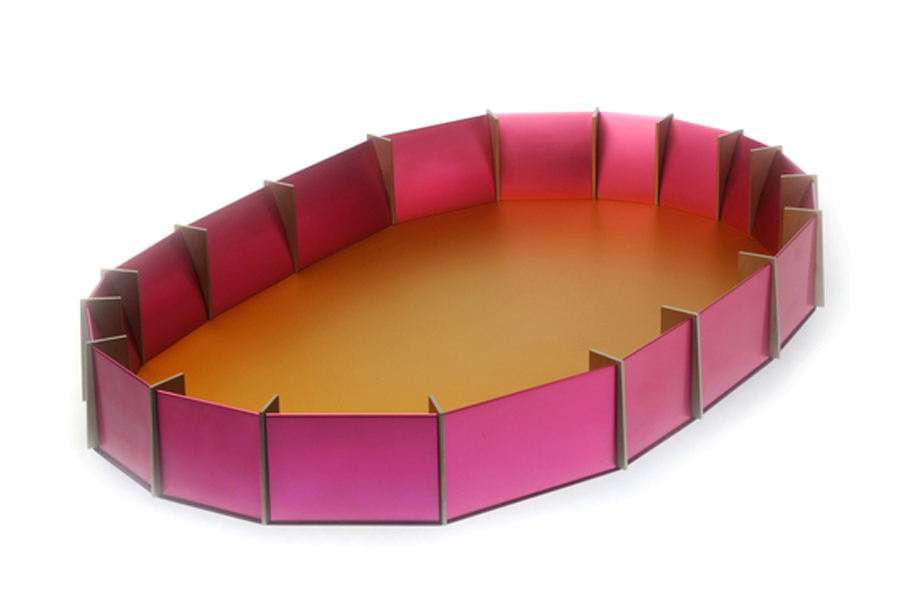
    Kuhnen’s use of colour in his favoured anodised aluminium material is exquisite, the perfection of his forms flawless. His fabulous Vessels reminding me of the ancient Neolithic standing stone circles at Stonehenge in their shape and use of vertical buttresses in different materials (such stainless steel and granite) that intersect the oval forms. His Boxes are like small ancient reliquaries, objects for holding ashes worked with a delicacy, simplicity and feeling for form and colour that is absolutely beautiful and consistent with the containment of energy within their structure.

    I went with Marianne Cseh a jeweller friend of mine. We stood transfixed before this work, peering closely at it and gasping in appreciation of the beauty, technical proficiency and pure poetry of the pieces. This exhibition is highly recommended and not to be missed!

    Now showing with the international SCHMUCK jewellery exhibition from Germany.

    A book to accompany the exhibition is available from the RMIT Gallery.

    Dr Marcus Bunyan


    Many thankx to RMIT Gallery for allowing me to publish the photographs in the posting. Please click on the photographs for a larger version of the image.


    Johannes Kuhnen (Australian born Germany, b. 1952) 'Ring' 1973


    Johannes Kuhnen (Australian born Germany, b. 1952)
    Ring
    1972
    Stainless steel, synthetic ruby disc


    Johannes Kuhnen (Australian born Germany, b. 1952) 'Brooch and ring' 2003 and 1972


    Johannes Kuhnen (Australian born Germany, b. 1952)

    Brooch
    2003
    Anodised aluminium, monel

    Ring
    1972
    Stainless steel, synthetic ruby disc


    Johannes Kuhnen (Australian born Germany, b. 1952) Boxes 1980


    Johannes Kuhnen (Australian born Germany, b. 1952)
    Boxes
    1980


    Johannes Kuhnen (Australian born Germany, b. 1952) 'Box and pendant' 1980


    Johannes Kuhnen (Australian born Germany, b. 1952)
    Box and pendant
    1980


    Johannes Kuhnen (Australian born Germany, b. 1952) 'Tray' 1986


    Johannes Kuhnen (Australian born Germany, b. 1952)
    Tray
    1986
    Anodised aluminium, titanium, stainless steel


    Johannes Kuhnen (Australian born Germany, b. 1952) 'Centrepiece' 1987


    Johannes Kuhnen (Australian born Germany, b. 1952)
    Centrepiece
    1987


    Johannes Kuhnen (Australian born Germany, b. 1952) 'Centrepiece' 1991


    Johannes Kuhnen (Australian born Germany, b. 1952)
    Centrepiece
    1991
    Anodised aluminium, silver, monel: fabricated


    In his work as a jeweller, object maker and photographer, Johannes Kuhnen is engaged with the interpretation and manipulation of a precise visual language of forms. The dramatic curvilinear shape of this centrepiece has been designed to emphasise the particular visual qualities of its materials and to fulfil its role as a low, but commanding central presence on a table. The vivid, iridescent colour of its anodised aluminium rim is designed to interact with differing light conditions, while the technical and precious qualities of its monel and silver elements play against each other. This orchestration of metals is underpinned with an unseen but precise and ingenious inner structure, giving this object weight and functional strength.

    Text © National Gallery of Australia, Canberra [Online] Cited 10/03/2019


    Johannes Kuhnen has made a pioneering contribution to Australian design and gold and silver smithing through his commitment as a generous educator and innovative practitioner. This exhibition will create linkages between his earlier works, some of which was made in Germany prior to migrating to Australia and new work specifically produced for this exhibition and this will be done both with objects and through a catalogue / monograph to be launched at the opening venue. The exhibition will borrow from Australian public and private collections to facilitate the demonstration of connecting design elements in the work from both significant streams in Kuhnen’s work in jewellery and hollowware.

    Text from the RMIT Gallery website [Online] Cited 02/07/2009. No longer available online


    Johannes Kuhnen (Australian born Germany, b. 1952) 'Vessel' 2007

    Johannes Kuhnen (Australian born Germany, b. 1952) 'Vessel' 2007


    Johannes Kuhnen (Australian born Germany, b. 1952)
    Vessel
    2007
    Anodised aluminium, titanium, stainless steel
    11.2 h x 84.5 w x 21.0 d cm
    Weight 14 kg


    Johannes Kuhnen (Australian born Germany, b. 1952) 'Vessel' 2008


    Johannes Kuhnen (Australian born Germany, b. 1952)
    Vessel
    2008
    Anodised aluminium, titanium, stainless steel


    Johannes Kuhnen (Australian born Germany, b. 1952) 'Vessel' 2009

    Johannes Kuhnen (Australian born Germany, b. 1952) 'Vessel' 2009


    Johannes Kuhnen (Australian born Germany, b. 1952)
    Vessel
    2009
    Anodised aluminium, titanium, stainless steel


    Johannes Kuhnen (Australian born Germany, b. 1952) 'Armring' 1981


    Johannes Kuhnen (Australian born Germany, b. 1952)
    Armring
    1981
    Anodised aluminium
    9.8 h x 10.4 w cm


    Johannes Kuhnen (Australian born Germany, b. 1952) 'Armring' 1990


    Johannes Kuhnen (Australian born Germany, b. 1952)
    Armring
    1990
    Armring, anodised aluminium, gold 750, granite


    RMIT Gallery
    344 Swanston St
, Melbourne
    Phone: +61 3 9925 1717

    Opening hours:
    Tuesday – Friday 11am – 5pm
    Saturday 12.30 – 5pm
    Closed public holidays, Sundays and Mondays.

    RMIT Gallery website

    LIKE ART BLART ON FACEBOOK

    Back to top

    Opening 2: ‘In-Sight’ by Lisa Roet at Karen Woodbury Gallery, Melbourne

    Exhibition dates: 17th June – 11th July, 2009

    Opening 17th June, 2009


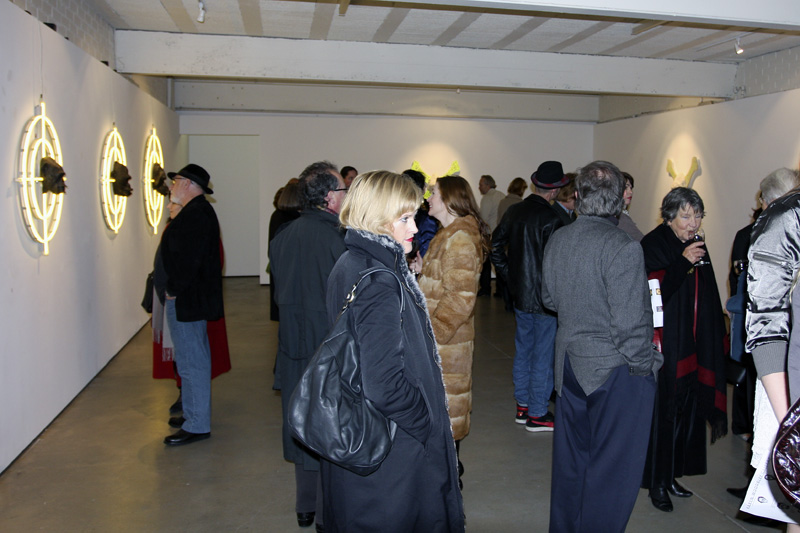
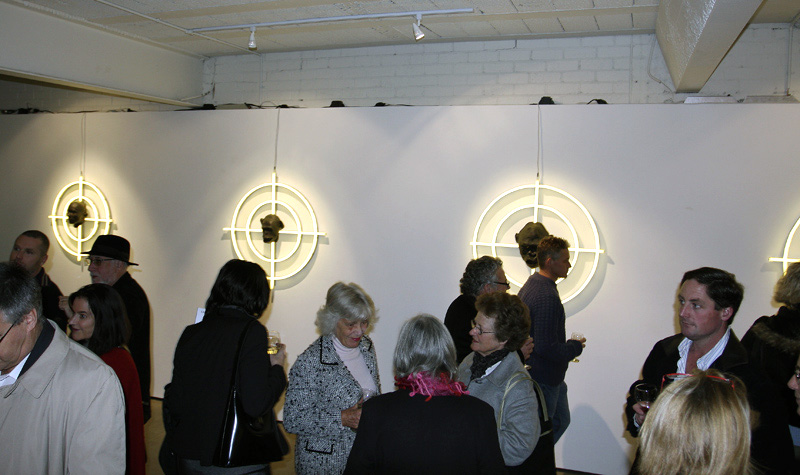
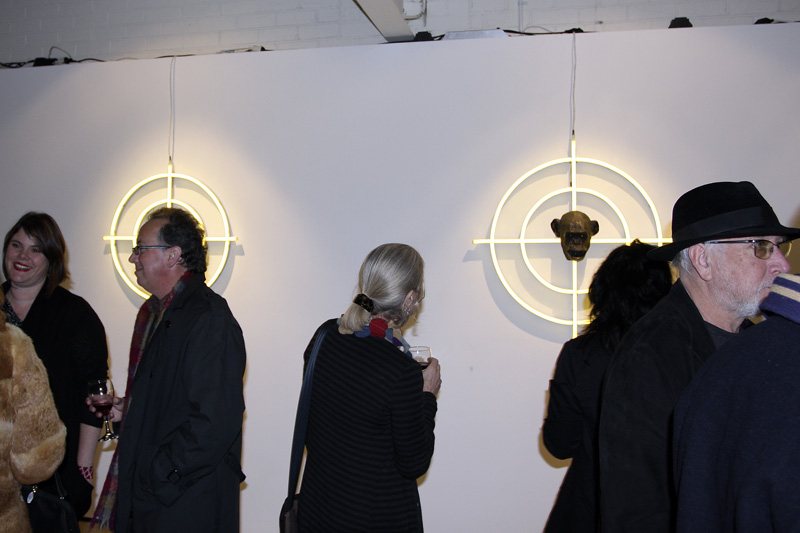
    'In-Sight' by Lisa Roet opening at Karen Woodbury Gallery, Melbourne

    'In-Sight' by Lisa Roet opening at Karen Woodbury Gallery, Melbourne

    'In-Sight' by Lisa Roet opening at Karen Woodbury Gallery, Melbourne


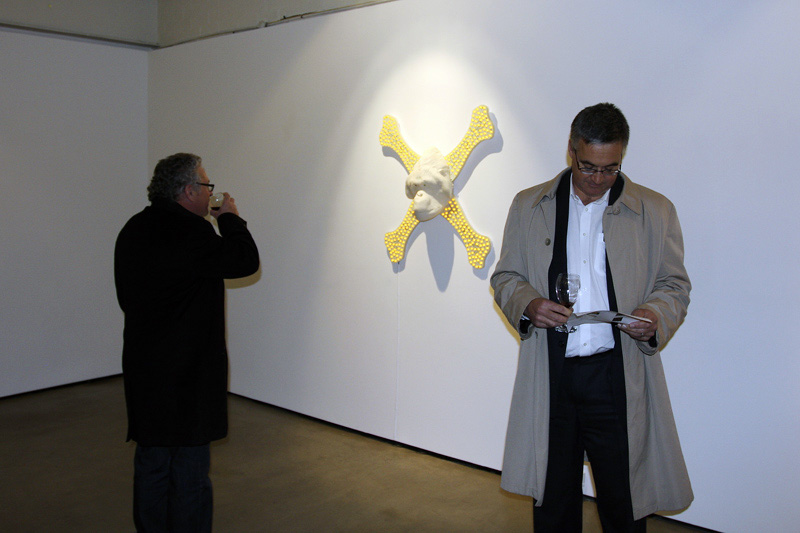
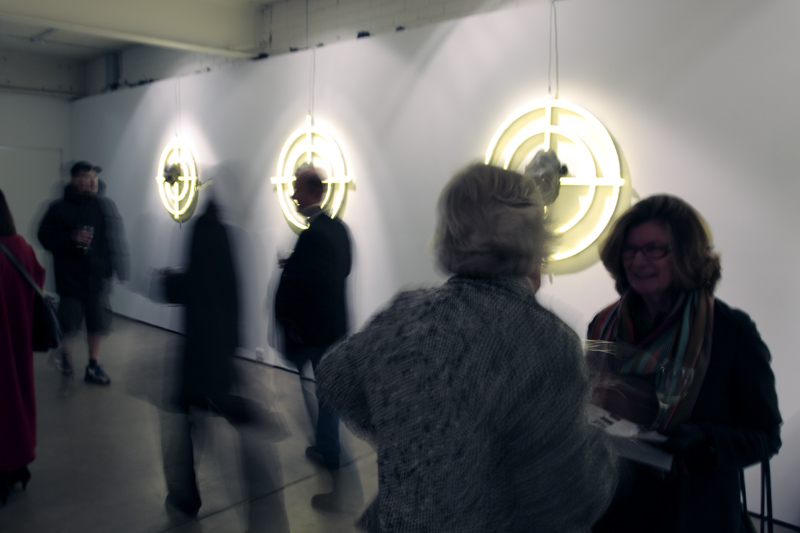
    Opening night crowd in front of the work In-Sight (2009) by Lisa Roet at Karen Woodbury Gallery, Melbourne


    Another excellent opening this time of the work of the delightful Lisa Roet. If you visit the gallery don’t forget the upstairs exhibition space with further work by the artist including a marvellous large bronze Orangutan Foot.

    Dr Marcus Bunyan


    Many thankx to Karen Woodbury Gallery for allowing me to publish the photographs in the posting. Please click on the photographs for a larger version of the image. All photographs © Marcus Bunyan


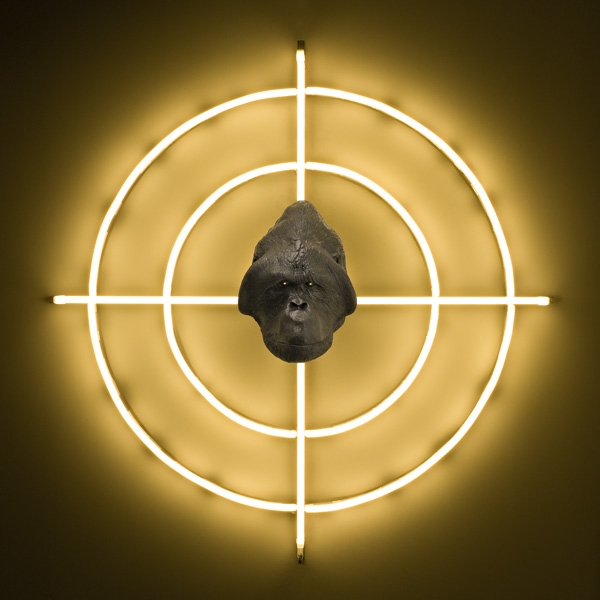
    Lisa Roet (Australian, b. 1967) 'In-Sight 1' 2009


    Lisa Roet (Australian, b. 1967)
    In-Sight 1
    2009
    Polyurethane & Neon/LED
    60.0 x 60.0cm
    Edition: 3


    Lisa Roet (Australian, b. 1967) 'In-Sight 4' 2009


    Lisa Roet (Australian, b. 1967)
    In-Sight 4
    2009
    Polyurethane & Neon/LED
    120.0 x 120.0cm
    Edition: 3


    Installation view of Lisa Roet's work 'Cross Bones' (2009)

    Installation view of Lisa Roet's work 'Cross Bones' (2009)


    Installation view of Lisa Roet's work 'Cross Bones' (2009)

    The artist Lisa Roet in front of one of her works 'Cross Bones' (2009)


    The artist Lisa Roet in front of one of her works Cross Bones (2009)


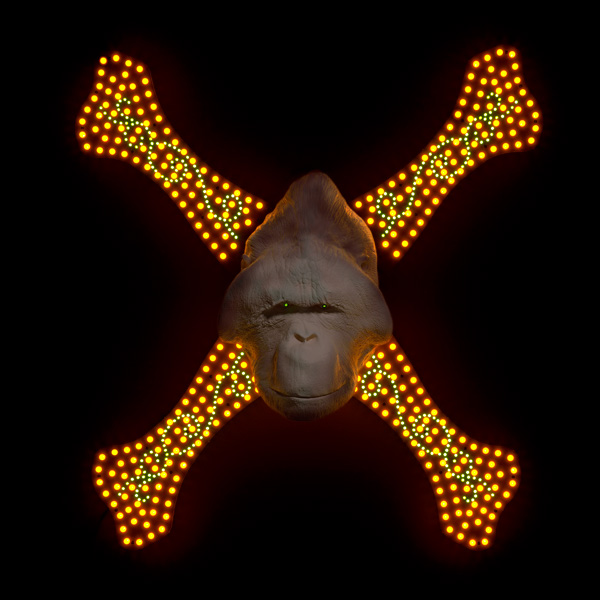
    Lisa Roet (Australian, b. 1967) 'Cross Bones' 2009


    Lisa Roet (Australian, b. 1967)
    Cross Bones
    2009
    Led, Perspex, Polyurethane
    95 x 70 x 30cm


    'Orangutan Foot' (2007/08) by Lisa Roet at the opening of 'In-Sight' exhibition at Karen Woodbury Gallery, Melbourne


    Installation view of the work Orangutan Foot (2007/08) by Lisa Roet at the opening of In-Sight exhibition at Karen Woodbury Gallery, Melbourne


    Opening night crowd in front of the work In-Sight (2009) by Lisa Roet at Karen Woodbury Gallery, Melbourne


    Karen Woodbury Gallery

    This gallery is now closed.

    LIKE ART BLART ON FACEBOOK

    Back to top

    Exhibition photographs: ‘Salvador Dalí: Liquid Desire’ Melbourne Winter Masterpieces at the National Gallery of Victoria, Melbourne

    Exhibition dates: 13th June – 4th October, 2009


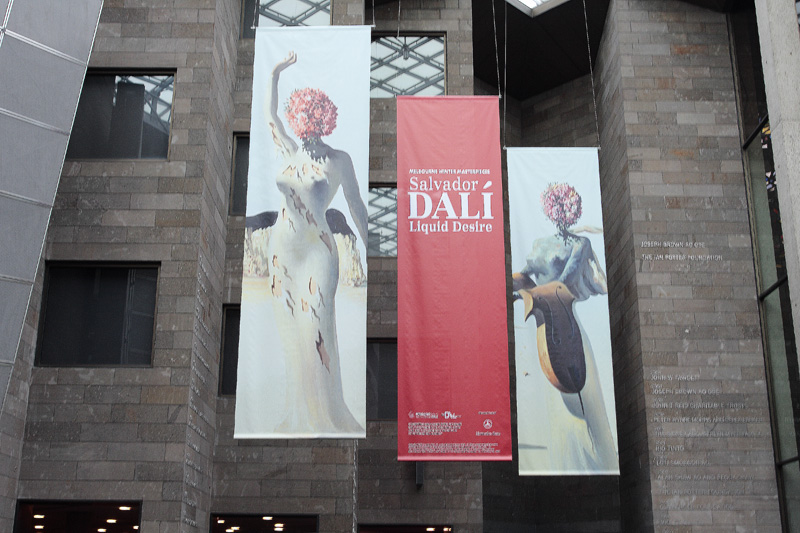
    Installation view of the interior forecourt of the National Gallery of Victoria showing banners for the exhibition Salvador Dalí: Liquid Desire


    Installation view of the interior forecourt of the National Gallery of Victoria showing banners for the exhibition Salvador Dalí: Liquid Desire
    Photo: Marcus Bunyan


    Installation photographs from the latest Winter Masterpieces blockbuster Salvador Dalí: Liquid Desire from the media preview on the day the exhibition opened at NGV International, Melbourne. Thank you to Jemma Altmeier, Media and Public Affairs Administrator at the NGV for the invitation. Photographs were taken using a digital camera, tripod and available light.

    Fantastic to see my friend and curator of the exhibition, Dr Ted Gott, at the opening. Congratulations on a wonderful show!

    Dr Marcus Bunyan


    © All photographs copyright Dr Marcus Bunyan 2009 and the National Gallery of Victoria. All rights reserved. Photographs may not be reproduced without permission.

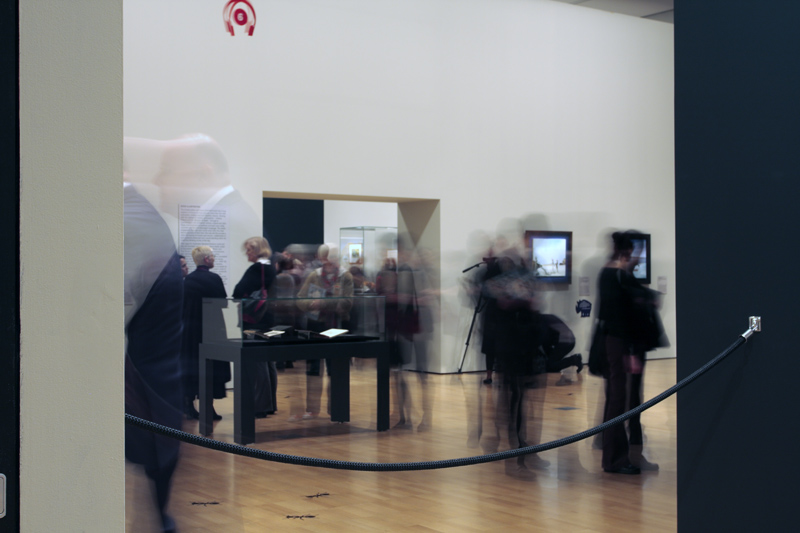
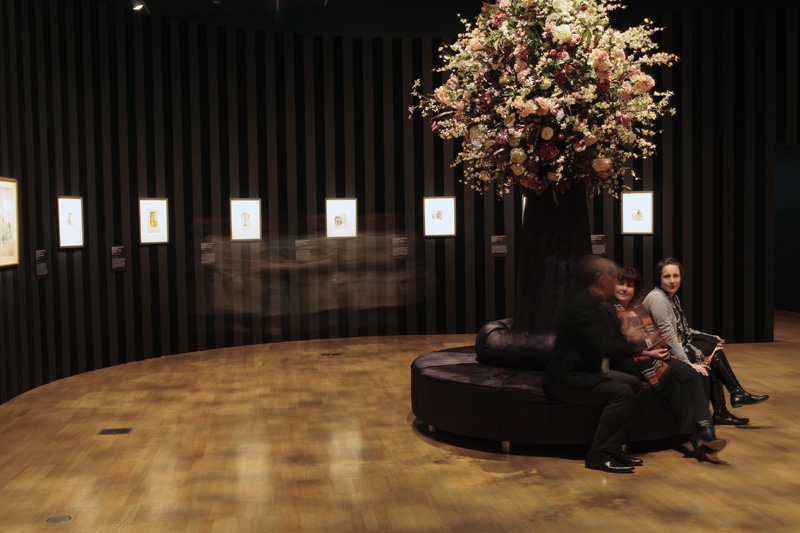
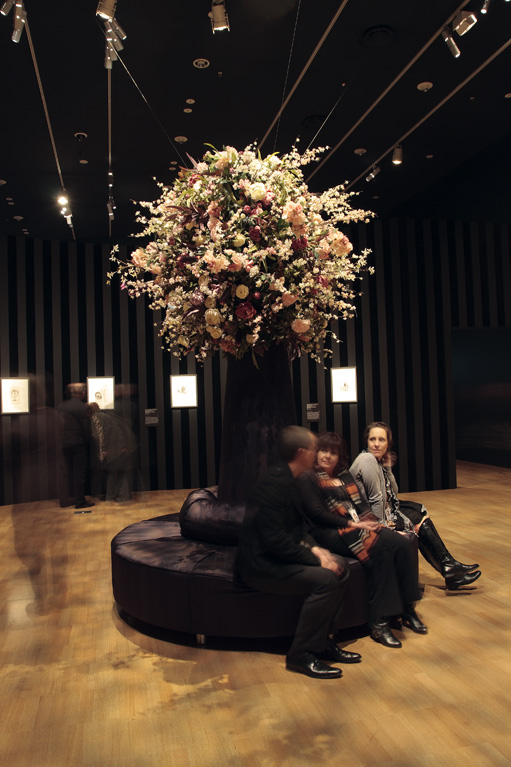
    Photographs proceed from the beginning to the end of the exhibition in chronological order.


    Many thankx to the National Gallery of Victoria for allowing me to publish the photographs in the posting. Please click on the photographs for a larger version of the image.


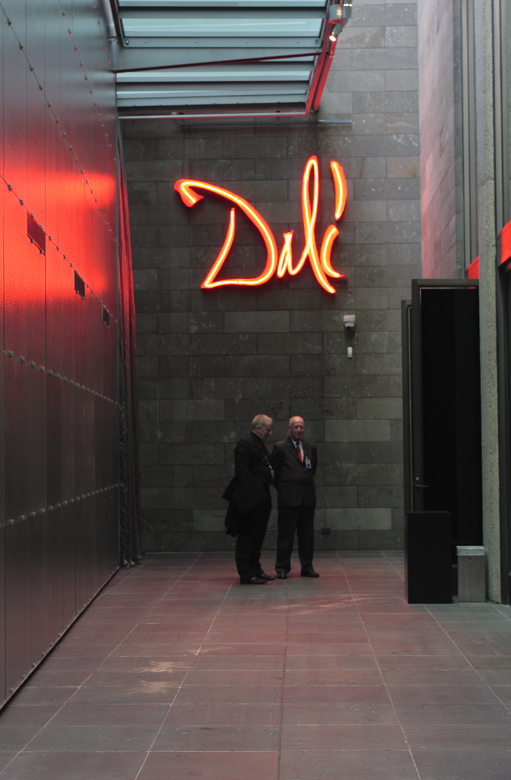
    Entrance to the 'Salvador Dali: Liquid Desire' Winter Masterpieces exhibition at NGV International, Melbourne


    Entrance to the Salvador Dalí: Liquid Desire Winter Masterpieces exhibition at the National Gallery of Victoria, Melbourne
    Photo: Marcus Bunyan


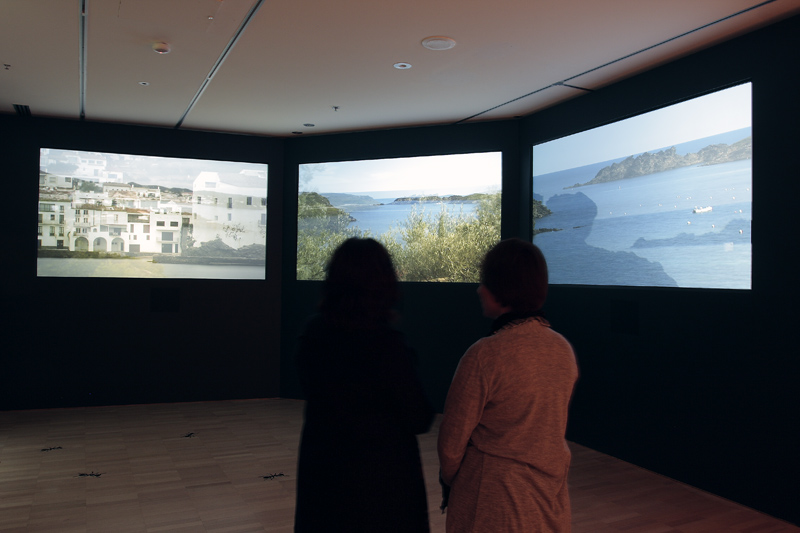
    3 panel video installation of the Catalan countryside around where Salvador Dali lived from the exhibition 'Salvador Dalí: Liquid Desire Winter Masterpieces' at the National Gallery of Victoria, Melbourne


    3 panel video installation of the Catalan countryside where Salvador Dali lived. 13 minutes duration from the exhibition Salvador Dalí: Liquid Desire Winter Masterpieces at the National Gallery of Victoria, Melbourne
    Photo: Marcus Bunyan


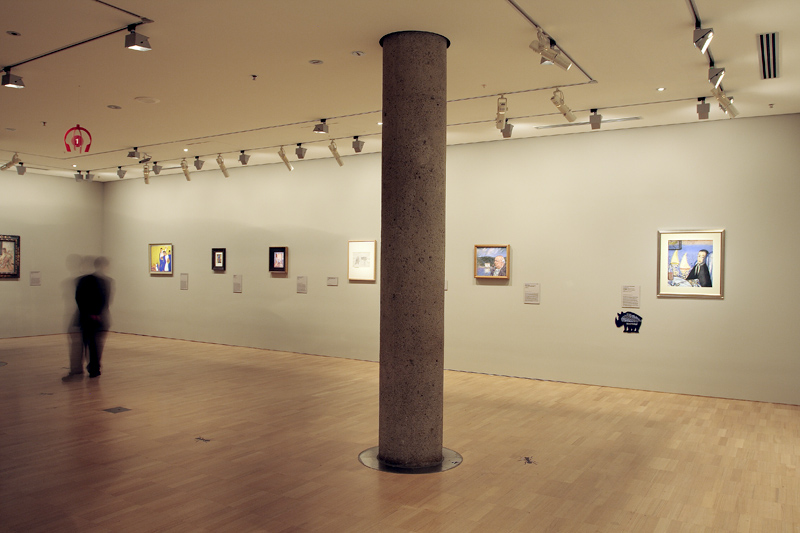
    Early work from the 'Salvador Dali: Liquid Desire' Winter Masterpieces exhibition at NGV International, Melbourne


    Early work from the Salvador Dalí: Liquid Desire Winter Masterpieces exhibition at the National Gallery of Victoria, Melbourne
    Photo: Marcus Bunyan


    'Salvador Dali: Liquid Desire' Winter Masterpieces exhibition at NGV International, Melbourne

    To the left 'View of the Cadaques from the Creus Tower' 1923; to the right 'Table in front of the Sea. Homage to Eric Satie' 1926 from the 'Salvador Dalí: Liquid Desire' Winter Masterpieces exhibition at the National Gallery of Victoria, Melbourne


    To the left View of the Cadaques from the Creus Tower 1923; to the right Table in front of the Sea. Homage to Eric Satie 1926 from the Salvador Dalí: Liquid Desire Winter Masterpieces exhibition at the National Gallery of Victoria, Melbourne
    Photos: Marcus Bunyan


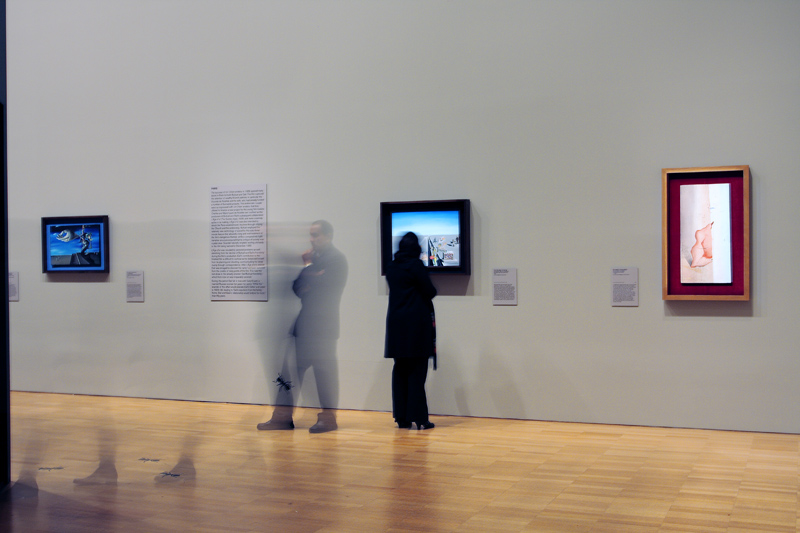
    In the centre 'The First Days of Spring' 1929; to the right 'Surrealist composition' 1928 from the 'Salvador Dalí: Liquid Desire' Winter Masterpieces exhibition at the National Gallery of Victoria, Melbourne


    In the centre The First Days of Spring 1929; to the right Surrealist composition 1928 from the Salvador Dalí: Liquid Desire Winter Masterpieces exhibition at the National Gallery of Victoria, Melbourne
    Photo: Marcus Bunyan


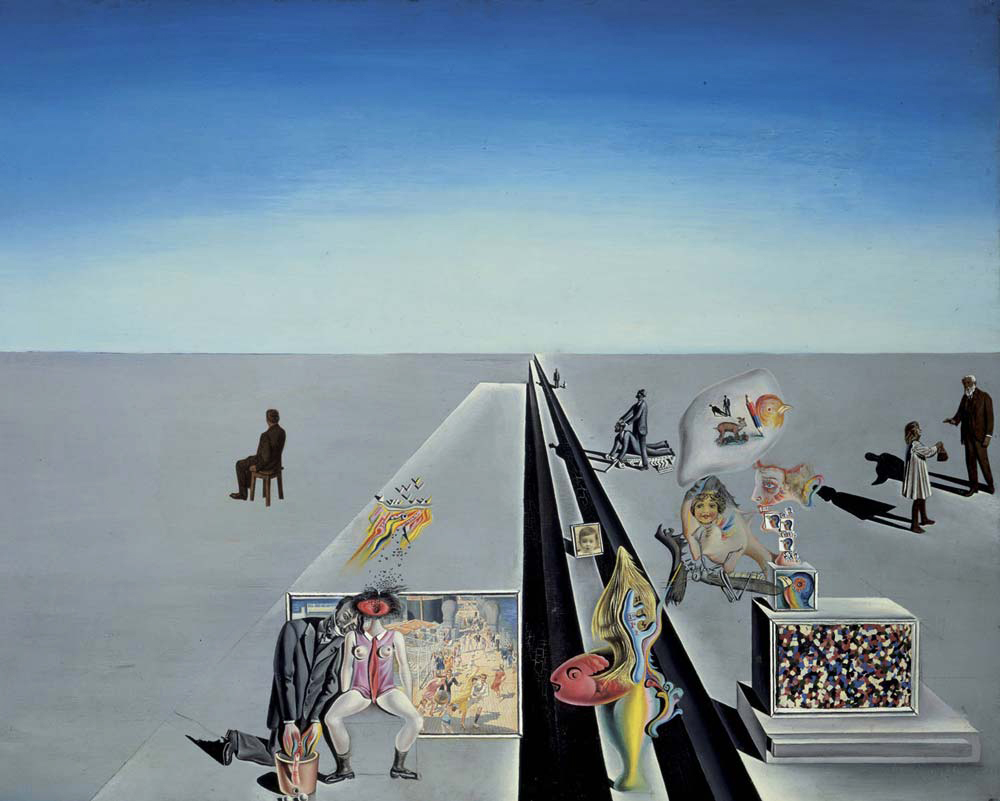
    Salvador Dalí (Spanish 1904-1989, worked in United States 1940-1948) 'The First Days of Spring' 1929


    Salvador Dalí (Spanish 1904-1989, worked in United States 1940-1948)
    The First Days of Spring
    1929
    Oil on canvas
    The Salvador Dalí Museum, St Petersburg, Florida
    Worldwide Rights: © Salvador Dalí, Fundació Gala-Salvador Dalí, VISCOPY, 2009
    In the USA: © Salvador Dalí Museum Inc., St. Petersburg, FL, 2009


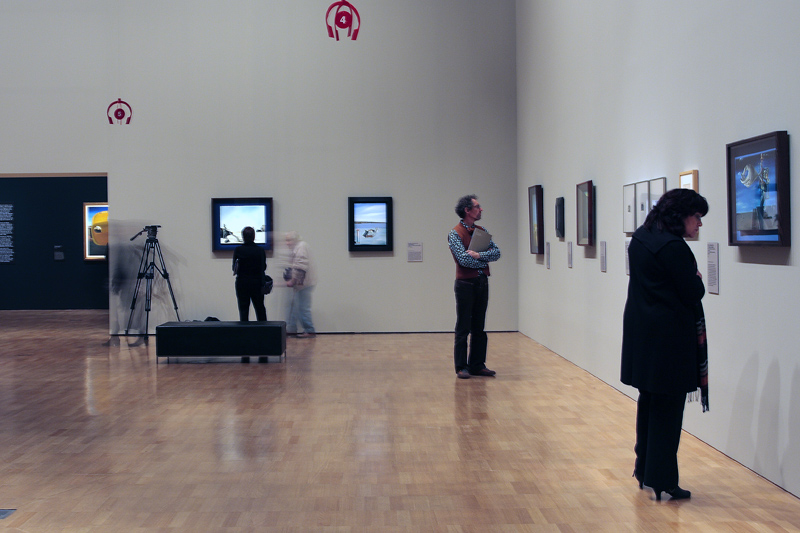
    Installation view with 'The Age' art critic Associate Professor Robert Nelson at centre right and 'The hand. The remorse of conscience' 1930 at far right, from the 'Salvador Dalí: Liquid Desire' Winter Masterpieces exhibition at the National Gallery of Victoria, Melbourne


    Installation view with The Age art critic Associate Professor Robert Nelson at centre right and The hand. The remorse of conscience 1930 at far right, from the Salvador Dalí: Liquid Desire Winter Masterpieces exhibition at the National Gallery of Victoria, Melbourne
    Photo: Marcus Bunyan


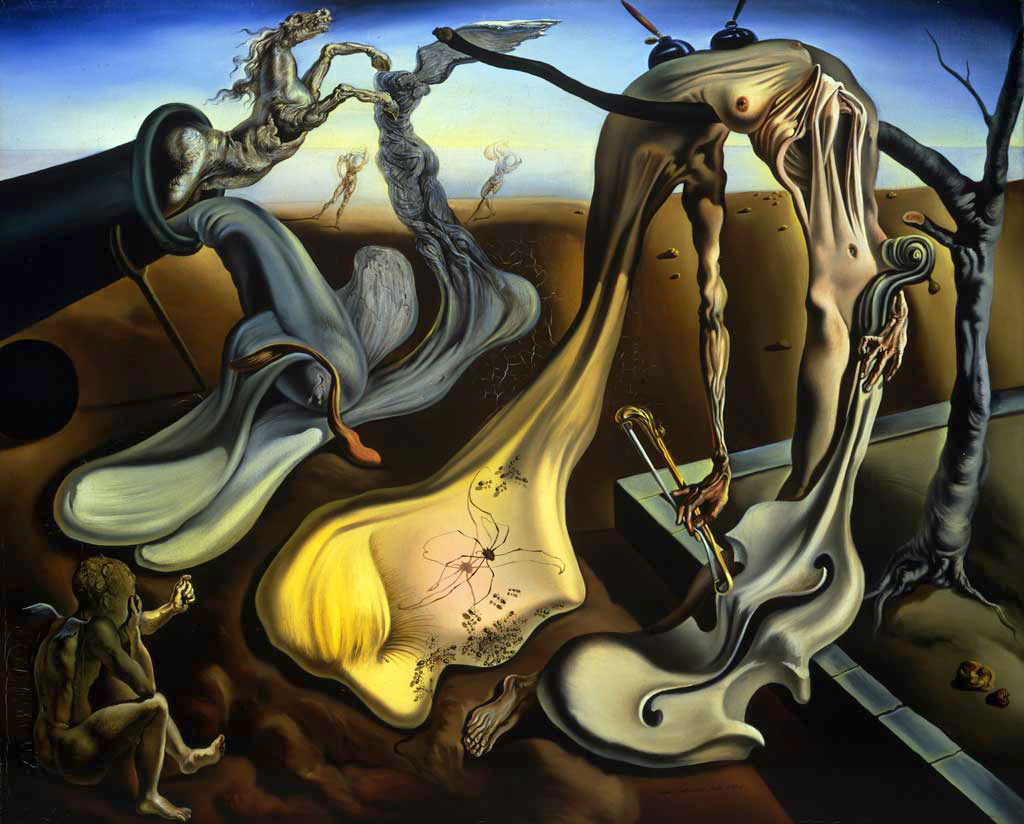
    Salvador Dalí (Spanish 1904-1989, worked in United States 1940-1948) 'Daddy Longlegs of the evening - Hope!' 1940


    Salvador Dalí (Spanish 1904-1989, worked in United States 1940-1948)
    Daddy Longlegs of the evening – Hope!
    1940
    Oil on canvas
    40.6 x 50.8cm
    The Salvador Dalí Museum, St Petersburg, Florida
    Worldwide Rights: © Salvador Dalí, Fundació Gala-Salvador Dalí, VISCOPY, 2009
    In the USA: © Salvador Dalí Museum Inc., St. Petersburg, FL, 2009


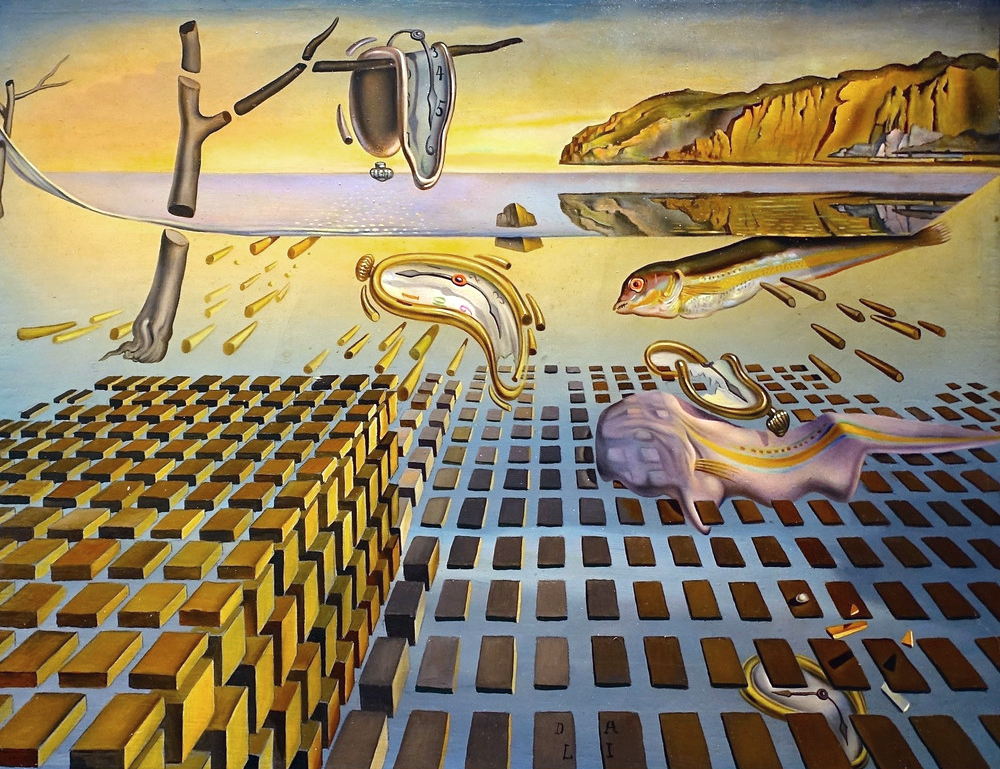
    Salvador Dalí (Spanish 1904-1989, worked in United States 1940-1948) 'The disintegration of The persistence of memory' 1952-1954


    Salvador Dalí (Spanish 1904-1989, worked in United States 1940-1948)
    The disintegration of The persistence of memory
    1952-54
    Oil on canvas
    25.4 x 33.0cm
    The Salvador Dalí Museum, St Petersburg, Florida
    Worldwide Rights: © Salvador Dalí, Fundació Gala-Salvador Dalí, VISCOPY, 2009.
    In the USA: © Salvador Dalí Museum Inc., St. Petersburg, FL, 2009


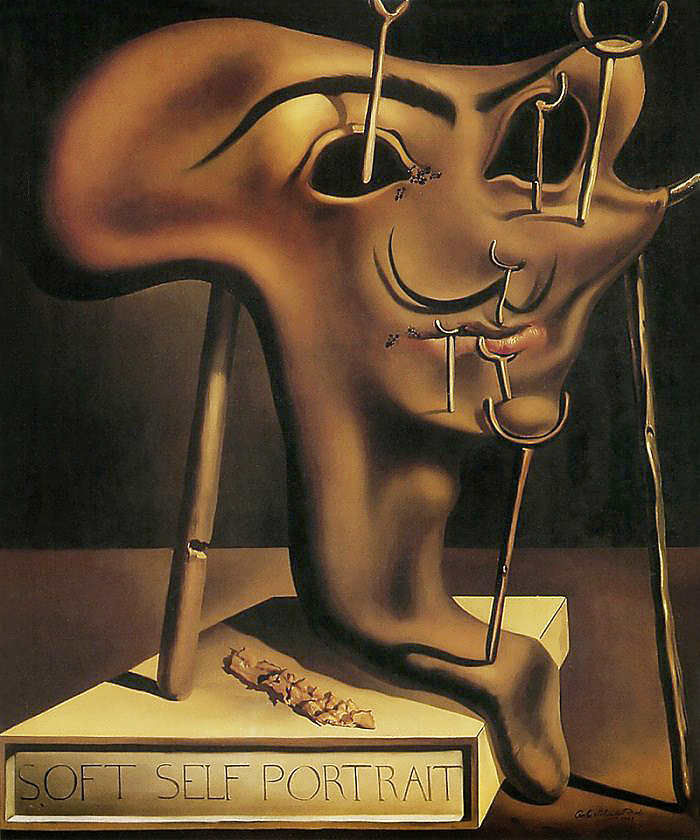
    Salvador Dalí (Spanish 1904-1989, worked in United States 1940-1948) 'Soft self-portrait with grilled bacon' 1941


    Salvador Dalí (Spanish 1904-1989, worked in United States 1940-1948)
    Soft self-portrait with grilled bacon
    1941
    Oil on canvas
    61.0 x 51.0cm
    Fundació Gala-Salvador Dalí, Figueres (0043)
    © Salvador Dalí, Fundació Gala- Salvador Dalí, VISCOPY, 2009


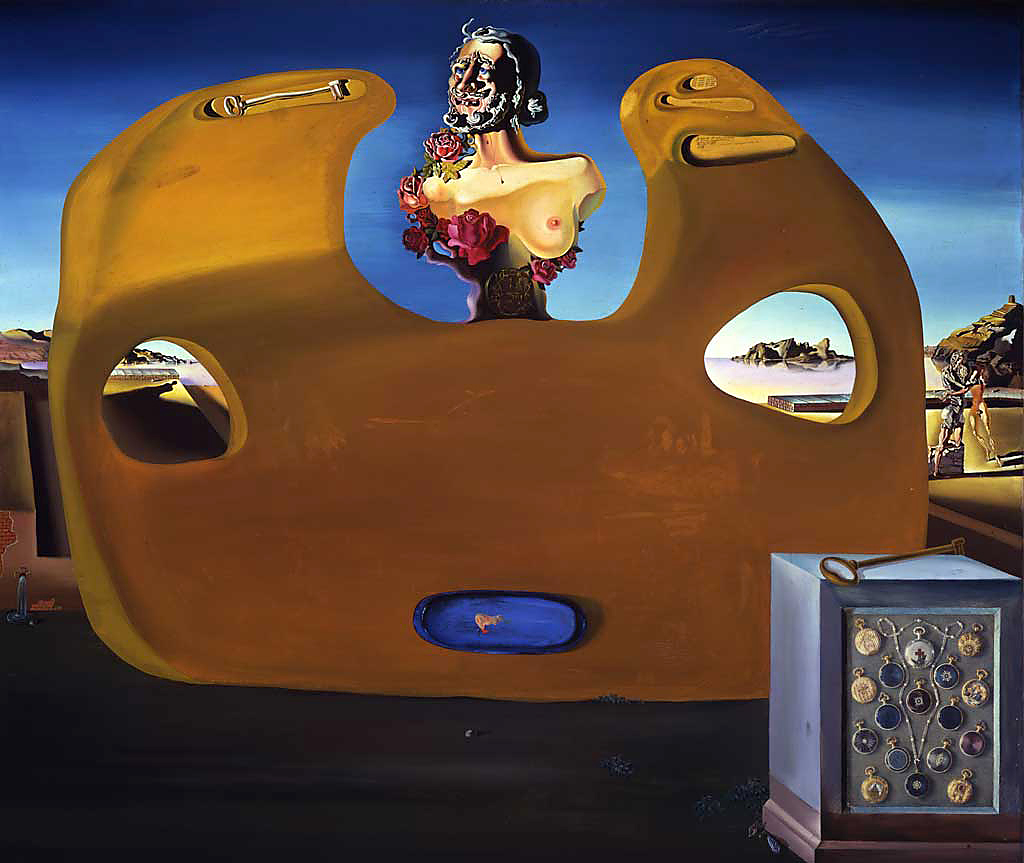
    Salvador Dalí (Spanish 1904-89, worked in United States 1940-48) 'Memory of the child-woman' 1932


    Salvador Dalí (Spanish 1904-1989, worked in United States 1940-1948)
    Memory of the child-woman
    1932
    Oil on canvas
    99.1 x 120.0cm
    The Salvador Dalí Museum, St Petersburg, Florida
    Worldwide Rights: © Salvador Dalí, Fundació Gala-Salvador Dalí, VISCOPY, 2009
    In the USA: © Salvador Dalí Museum Inc., St. Petersburg, FL, 2009


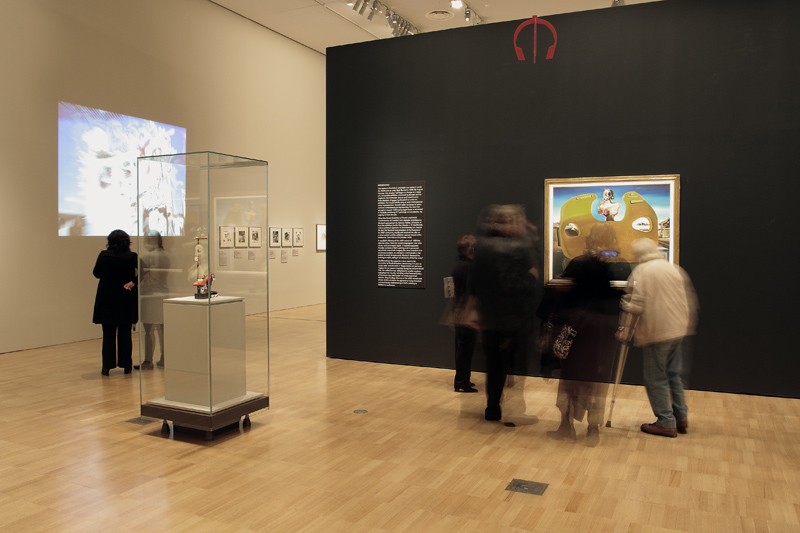
    Installation view with 'Memory of the child-woman' 1932 at right from the 'Salvador Dalí: Liquid Desire' Winter Masterpieces exhibition at the National Gallery of Victoria, Melbourne


    Installation view with Memory of the child-woman 1932 at right from the Salvador Dalí: Liquid Desire Winter Masterpieces exhibition at the National Gallery of Victoria, Melbourne
    Photo: Marcus Bunyan


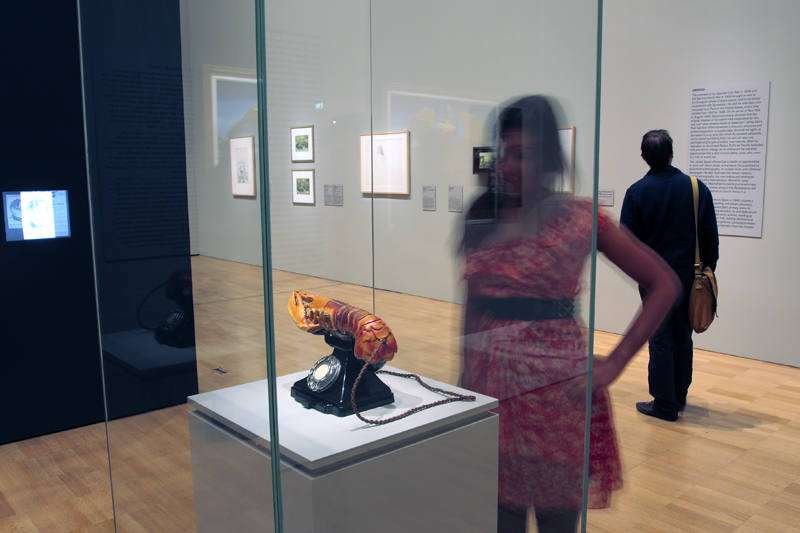
    Salvador Dalí (Spanish 1904-1989, worked in United States 1940-1948) 'Lobster Telephone' 1936 (installation view)


    Salvador Dalí (Spanish 1904-1989, worked in United States 1940-1948)
    Lobster Telephone (installation view)
    1936
    Photo: Marcus Bunyan


    Installation view of the exhibition 'Salvador Dali: Liquid Desire' Winter Masterpieces exhibition at NGV International, Melbourne

    Installation view of the exhibition 'Salvador Dali: Liquid Desire' Winter Masterpieces exhibition at NGV International, Melbourne


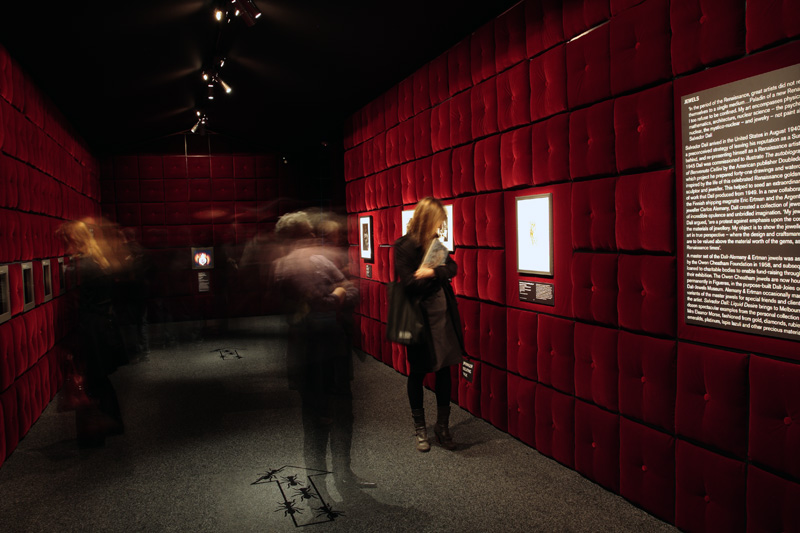
    Jewellery gallery at the 'Salvador Dalí: Liquid Desire' Winter Masterpieces exhibition at the National Gallery of Victoria, Melbourne


    Jewellery gallery at the Salvador Dalí: Liquid Desire Winter Masterpieces exhibition at the National Gallery of Victoria, Melbourne
    Photos: Marcus Bunyan


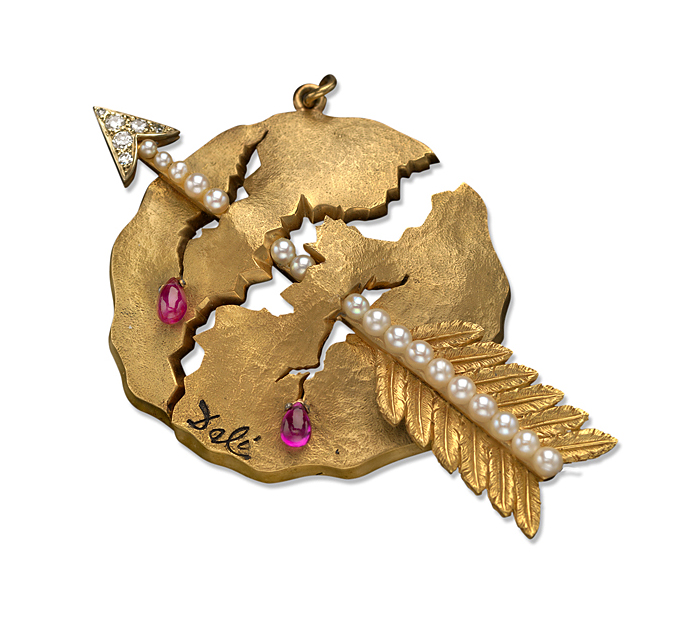
    Salvador Dalí (Spanish 1904-89, worked in United States 1940-48)Alemany and Ertman Incorporated (New York, manufacturer United States late 1940s) 'Bleeding world, pendant' 1953


    Salvador Dalí (Spanish 1904-1989, worked in United States 1940-1948)
    Alemany and Ertman Incorporated (New York, manufacturer United States late 1940s)
    Bleeding world, pendant
    1953
    Gold, rubies, pearls, diamonds
    The Salvador Dalí Museum, St Petersburg, Florida
    Worldwide Rights: © Salvador Dalí, Fundació Gala-Salvador Dalí, VISCOPY, 2009
    In the USA: © Salvador Dalí Museum Inc., St. Petersburg, FL, 2009


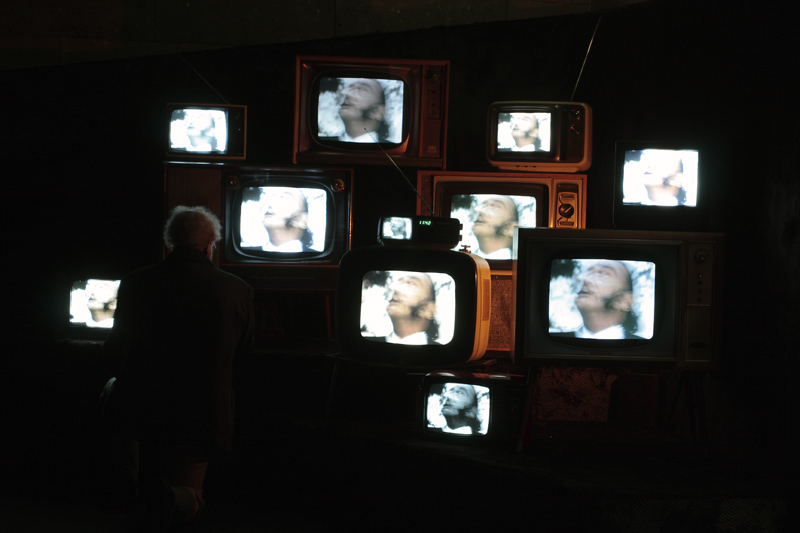
    Television with film installation at 'Salvador Dali: Liquid Desire' Winter Masterpieces exhibition at NGV International, Melbourne


    Televisions with film installation from the Salvador Dalí: Liquid Desire Winter Masterpieces exhibition at the National Gallery of Victoria, Melbourne
    Photo: Marcus Bunyan


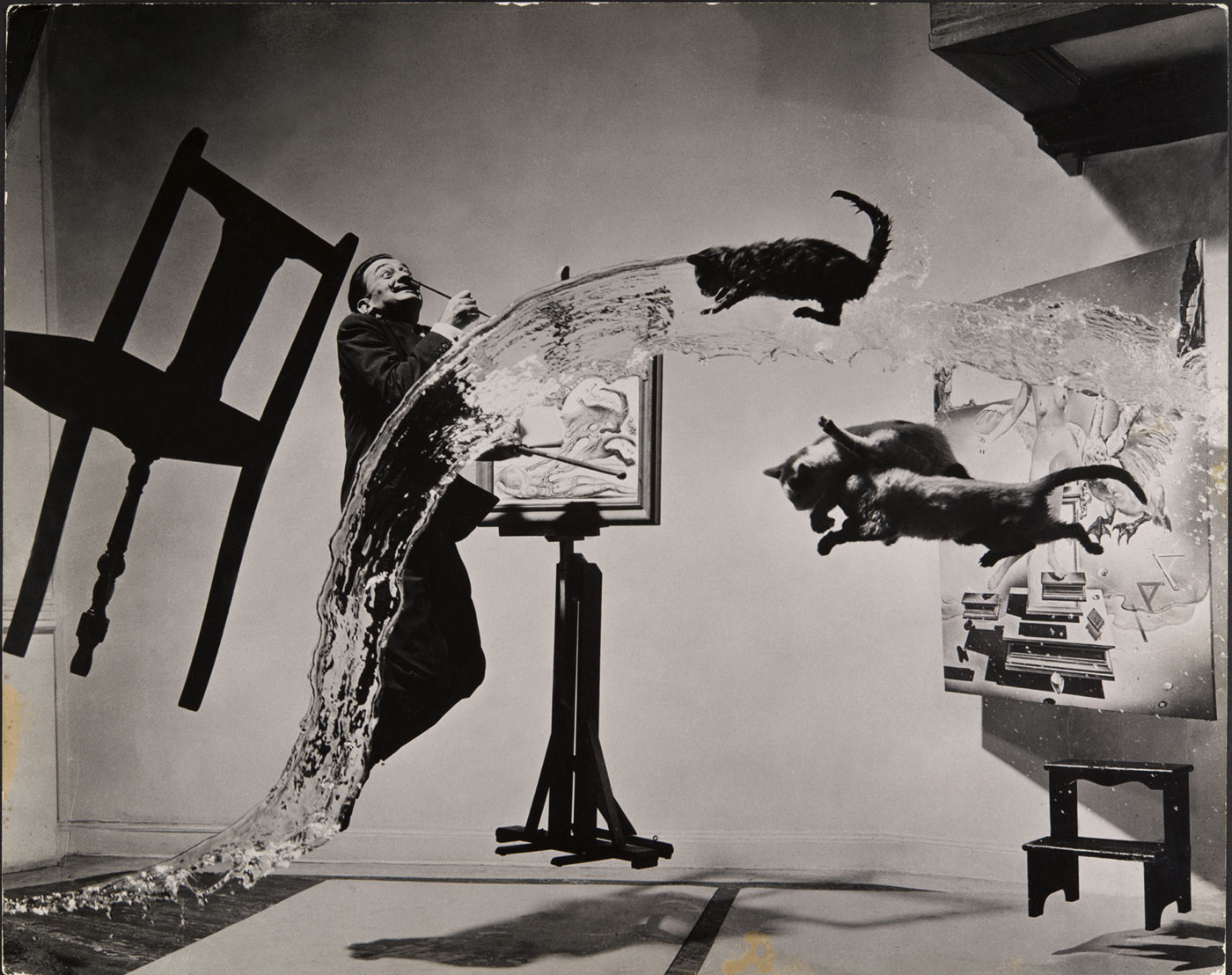
    Salvador Dalí (Spanish 1904-89, worked in United States 1940-48) Philippe Halsman (Latvian / American 1906-79, worked in France 1931-40) 'Dalí Atomicus' 1948, printed 1981


    Salvador Dalí (Spanish 1904-1989, worked in United States 1940-1948)
    Philippe Halsman (Latvian/American 1906-1979, worked in France 1931-1940)
    Dalí Atomicus
    1948, printed 1981
    Gelatin silver photograph
    26.7 x 34.3cm
    Image rights of Salvador Dalí reserved. Fundació Gala-Salvador Dalí, Figueres, 2009
    © Philippe Halsman / Magnum


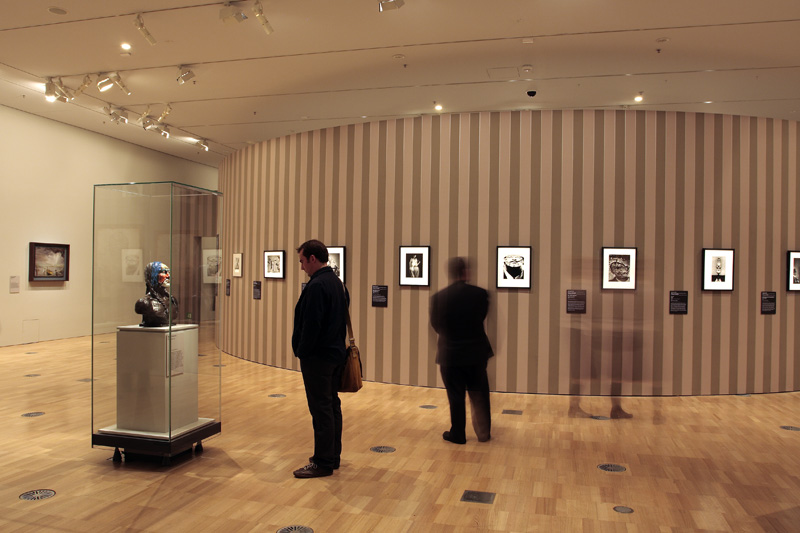
    Installation of black and white photography from the exhibition 'Salvador Dalí: Liquid Desire' Winter Masterpieces exhibition at the National Gallery of Victoria, Melbourne with Dr Ted Gott, curator of the exhibition, with back to camera at centre


    Installation of black and white photography from the exhibition Salvador Dalí: Liquid Desire Winter Masterpieces exhibition at the National Gallery of Victoria, Melbourne with Dr Ted Gott, curator of the exhibition, with back to camera at centre
    Photo: Marcus Bunyan


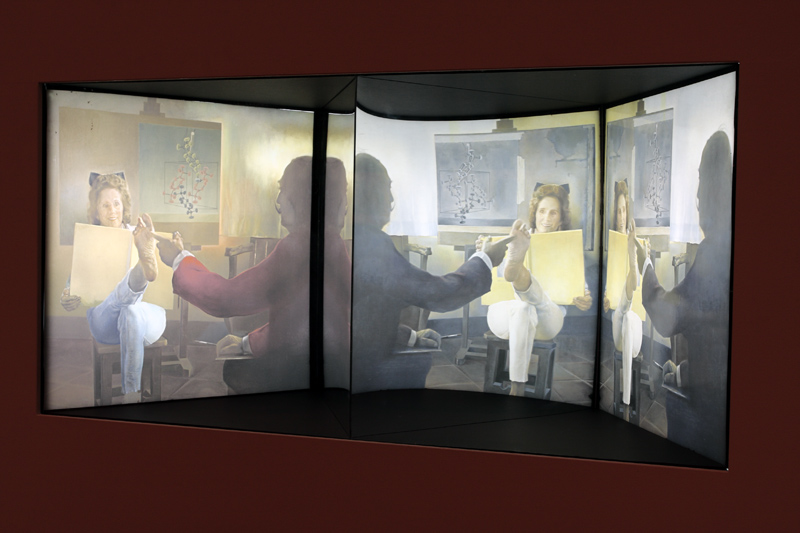
    Reproduction of 'Gala foot. Stereoscopic paintings' 1975-1976 in an installation using mirrors that would have been originally used to obtain the stereoscopic effect


    Reproduction of Gala foot. Stereoscopic paintings 1975-1976 in an installation using mirrors that would have been originally used to obtain the stereoscopic effect
    Photo: Marcus Bunyan


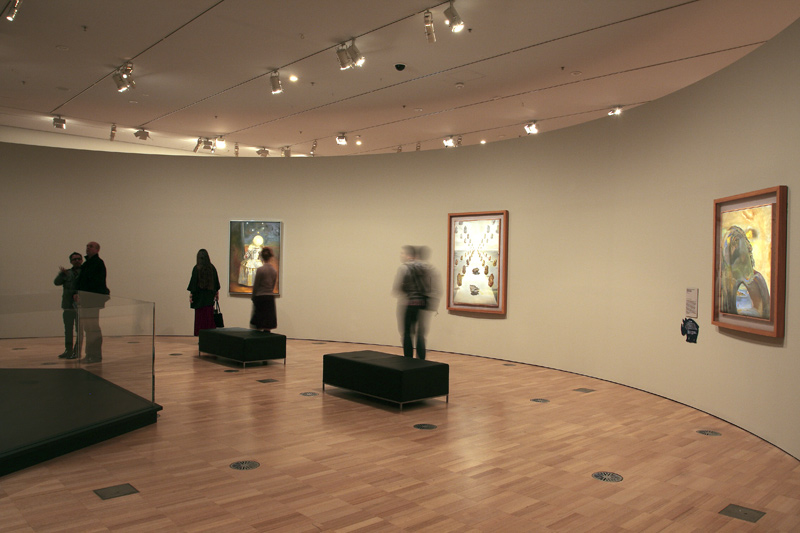
    Final exhibition space from the 'Salvador Dalí: Liquid Desire' Winter Masterpieces exhibition at the National Gallery of Victoria, Melbourne


    Final exhibition space from the Salvador Dalí: Liquid Desire Winter Masterpieces exhibition at the National Gallery of Victoria, Melbourne
    Photo: Marcus Bunyan


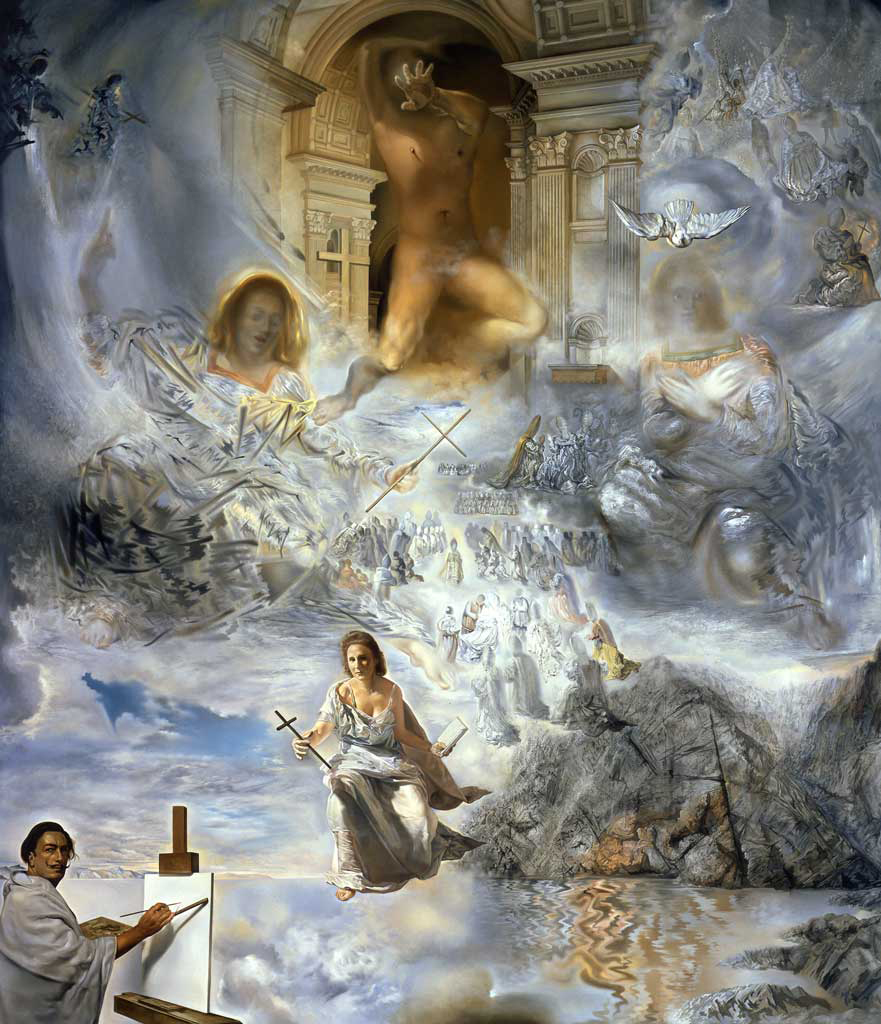
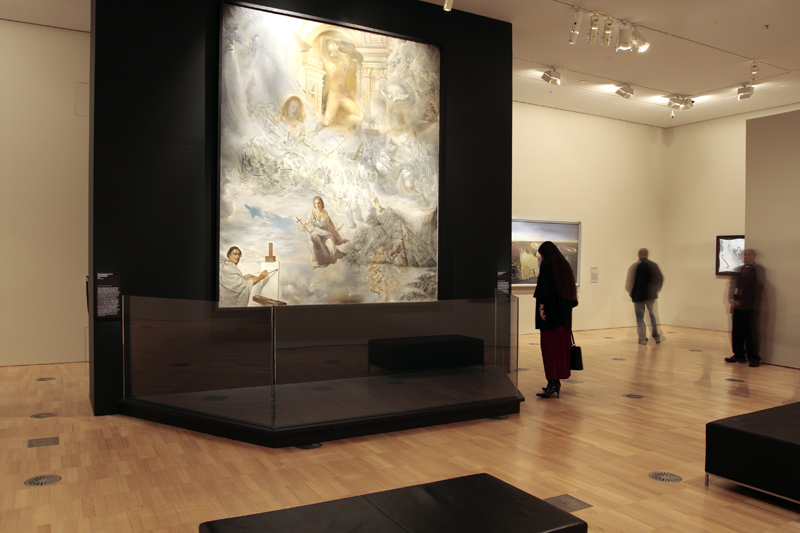
    Salvador Dalí (Spanish 1904-1989, worked in United States 1940-1948) 'The Ecumenical Council' 1960


    Salvador Dalí (Spanish 1904-1989, worked in United States 1940-1948)
    The Ecumenical Council
    1960
    Oil on canvas
    299.7 x 254.0cm
    The Salvador Dalí Museum, St Petersburg, Florida
    Worldwide Rights: © Salvador Dalí, Fundació Gala-Salvador Dalí, VISCOPY, 2009
    In the USA: © Salvador Dalí Museum Inc., St. Petersburg, FL, 2009


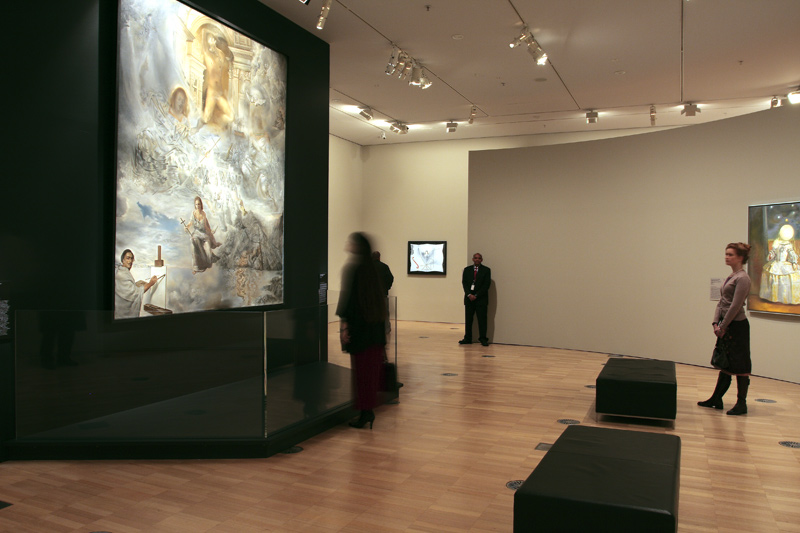
    Final gallery space from the 'Salvador Dalí: Liquid Desire' Winter Masterpieces exhibition at the National Gallery of Victoria, Melbourne featuring 'The Ecumenical Council' 1960

    Final gallery space from the 'Salvador Dalí: Liquid Desire' Winter Masterpieces exhibition at the National Gallery of Victoria, Melbourne featuring 'The Ecumenical Council' 1960


    Final gallery space from the Salvador Dalí: Liquid Desire Winter Masterpieces exhibition at the National Gallery of Victoria, Melbourne featuring The Ecumenical Council 1960
    Photos: Marcus Bunyan


    National Gallery of Victoria (International)
    180 St Kilda Road, Melbourne

    Opening hours: Salvador Dalí: Liquid Desire is open 7 days a week and until 9pm every Wednesday from 17 June

    Tickets
    Adult: $23
    Concession: $18
    Child: $11 (ages 5-15)
    Family (2 adults + 3 children): $60
    NGV Member Adult: $16
    NGV Member Family: $40

    Unlimited entry tickets
    Adult: $55
    Concession: $45
    NGV Member Adult: $40

    National Gallery of Victoria Dali website

    LIKE ART BLART ON FACEBOOK

    Back to top

    Exhibition: ‘Babel’ fine porcelain and paper works by Natasha Dusenjko at Craft Victoria, Melbourne

    Exhibition dates: 1st May – 13th June, 2009


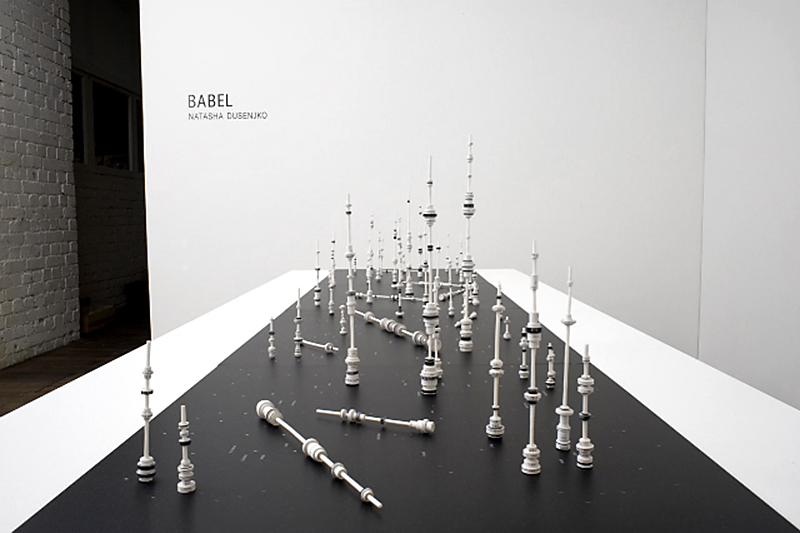
    Natasha Dusenjko (Australian) 'Towers of Babel' 2009 from the exhibition 'Babel' fine porcelain and paper works by Natasha Dusenjko at Craft Victoria, Melbourne, May - June, 2009


    Natasha Dusenjko (Australian)
    Towers of Babel
    2009
    Mixed media


    Three very interesting exhibitions at Craft Victoria at the moment: Babel by Natasha Dusenjko, Gleaning Potential by Simon Lloyd and Cycle by Liz Low. I particularly liked the delicacy and textuality of Natasha Dusenjko’s sci-fi towers and bone fragments and the wonderful box of 6 red bricks (small and large) that you can buy from the Simon Lloyd show, like blocks for a child builder.

    There is an excellent and erudite review of the exhibitions at Daniel Neville’s Nevolution website.

    Dr Marcus Bunyan


    Many thankx to Craft Victoria for allowing me to publish the photographs in the posting. Please click on the photographs for a larger version of the image.


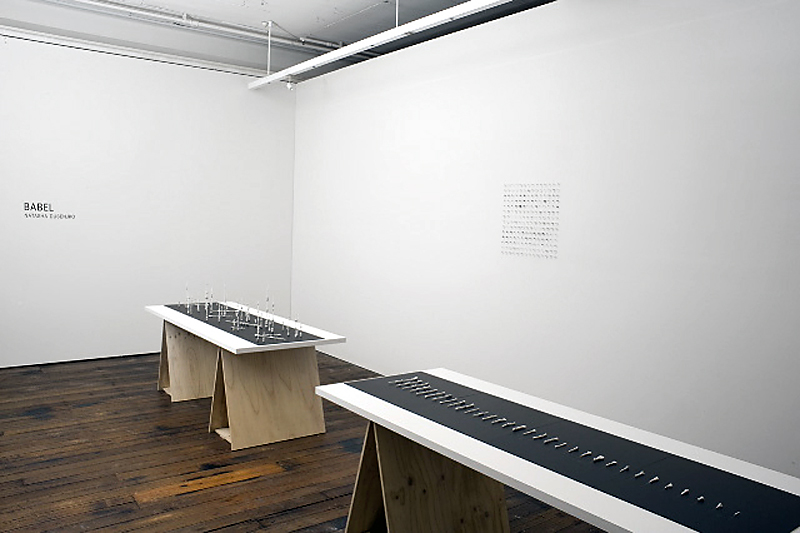
    “The two tables allow for different meanings and scales when viewed in opposition. Table 1 alludes to star charts; constellations of texts hinting at importance, especially in relation to the placement of towers. The map looking up to the stars via the towers of babel, communicating unknown messages to the stars above. The cold stark forms of the towers work well with the organic forms of the bones on Table 2. Perfectly ordered and numbered archaeological bone fragments repeat the textual ciphers and codes, meticulously ordered. The jump in scale between the architectural and the archaeological is lovely; each hinting at an underlying language and mythology. Meanwhile both contain elements of each other – the towers of rationality have been placed in a seemingly random manner, while the organic forms of the bones have been laid out in perfect order ranging down in sizes.”


    Daniel Neville. Extract from “On the nature of language, order and decay,” on the Nevolution website June 03, 2009 [Online] Cited 05/06/2009


    Installation views of Natasha Dusenjko's exhibition 'Babel' at Craft Victoria, Melbourne

    Installation views of Natasha Dusenjko's exhibition 'Babel' at Craft Victoria, Melbourne


    Installation views of Natasha Dusenjko’s exhibition Babel at Craft Victoria, Melbourne


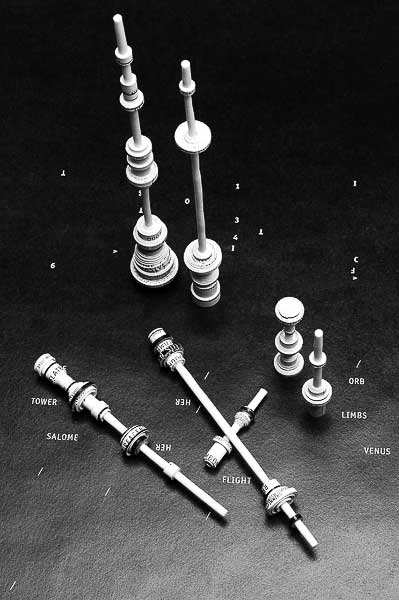
    Babel is a word-based collection of fine porcelain and paper works. This collection of short texts constitutes a series of incantations, codes and instructions scrolled around porcelain bones or thin spines. The porcelain bones are internal structures and vessels of ancestor memory. This memory is fluid, is evasive, is aquatic. The thin spines resemble futuristic Towers of Babel reaching into space, anticipating communication and new frontiers. These towers have either an upright or collapsed form.

    In the making, both forms build toward new possibility, words become obscured, resulting in a non-defined beginning or end, now replaced by chance permutations of the accumulated text.

    The sculptural works are deliberately placed onto two large scale text based charts. Each chart is placed on a raised surface, analogous to work benches in an observatory or laboratory suggesting a process of decipherment. Map 1 exhibits a similarity to ancient star charts, the placement of towers alluding to significant points of a constellation. The accompanying Chart 2 resembles an organised series of archeological artefacts, each piece methodically numbered and labelled.

    Ultimately, Babel evokes a spiral passage both outward and inward. To unravel the scrolls initiates a return to the spine – the axis mundi, the source of a universal native tongue – love.

    Text from the Craft Victoria website [Online] 05/06/2009. No longer available online


    Natasha Dusenjko (Australian) 'Babelbones' 2009 from the exhibition 'Babel' fine porcelain and paper works by Natasha Dusenjko at Craft Victoria, Melbourne, May - June, 2009


    Natasha Dusenjko (Australian)
    Babelbones
    2009
    Mixed media


    Craft Victoria
    Watson Place, off Flinders Lane
    Victoria 3000
    Phone: 03 9650 7775

    Opening hours:
    Tuesday – Friday 11am – 5pm
    Saturday 11am – 4pm

    Craft Victoria website

    LIKE ART BLART ON FACEBOOK

    Back to top