Exhibition: ‘Imogen Cunningham: A Retrospective’ at the J. Paul Getty Museum, Los Angeles

Exhibition dates: 8th March – 12th June, 2022
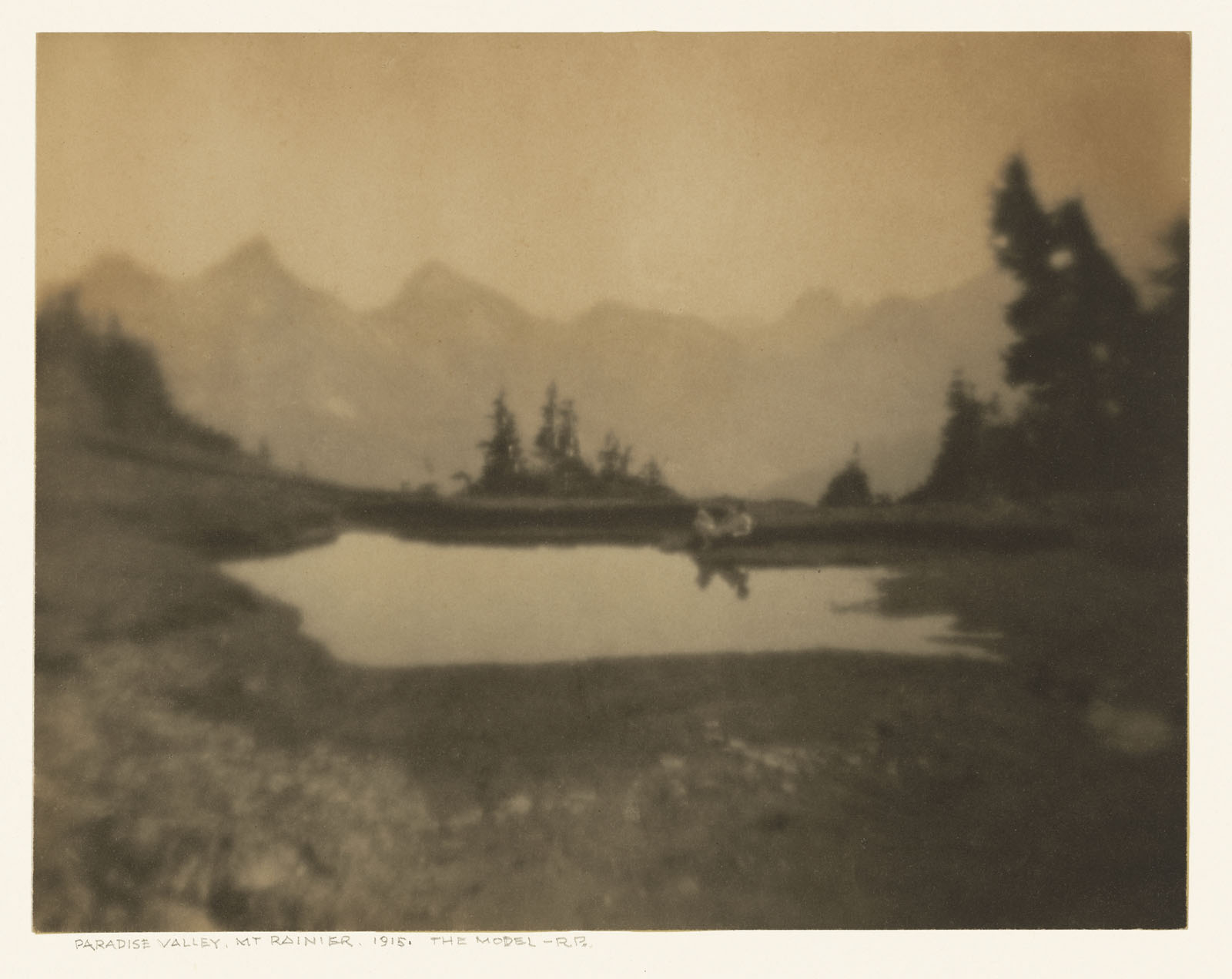
 

Imogen Cunningham (American, 1883-1976) 'On Mount Rainer' 1915 from the exhibition 'Imogen Cunningham: A Retrospective' at the J. Paul Getty Museum, Los Angeles, March - June, 2022


Imogen Cunningham (American, 1883-1976)
On Mount Rainer
1915
Platinum print
18.4 × 23.4cm (7 1/4 × 9 3/16 in.)
Getty Museum
© Imogen Cunningham Trust


This is the second posting on this magnificent exhibition on the work of the American photographer Imogen Cunningham (1883-1976), this time its iteration at the J. Paul Getty Museum, Los Angeles. Cunningham, whose broad expanse of work stretches from Pictorialism through avant-garde to Group f/64 modernism, has for too long been underrated in the pantheon of 20th century photographic stars.

In this posting there are 20 or so new images from the exhibition, including contributions from luminaries and friends such as Minor White, Edward Weston, Lisette Model and Dorothea Lange. Of interest is the close framing of the portraits (for example see Sonya Noskowiak 1928, below) and, with these media images, the ability to see the placement and size of the photographic print on the supporting backing card.

I particularly respond to the tonality and texture of the plant photographs and Imogen’s sensitivity to their form and structure.

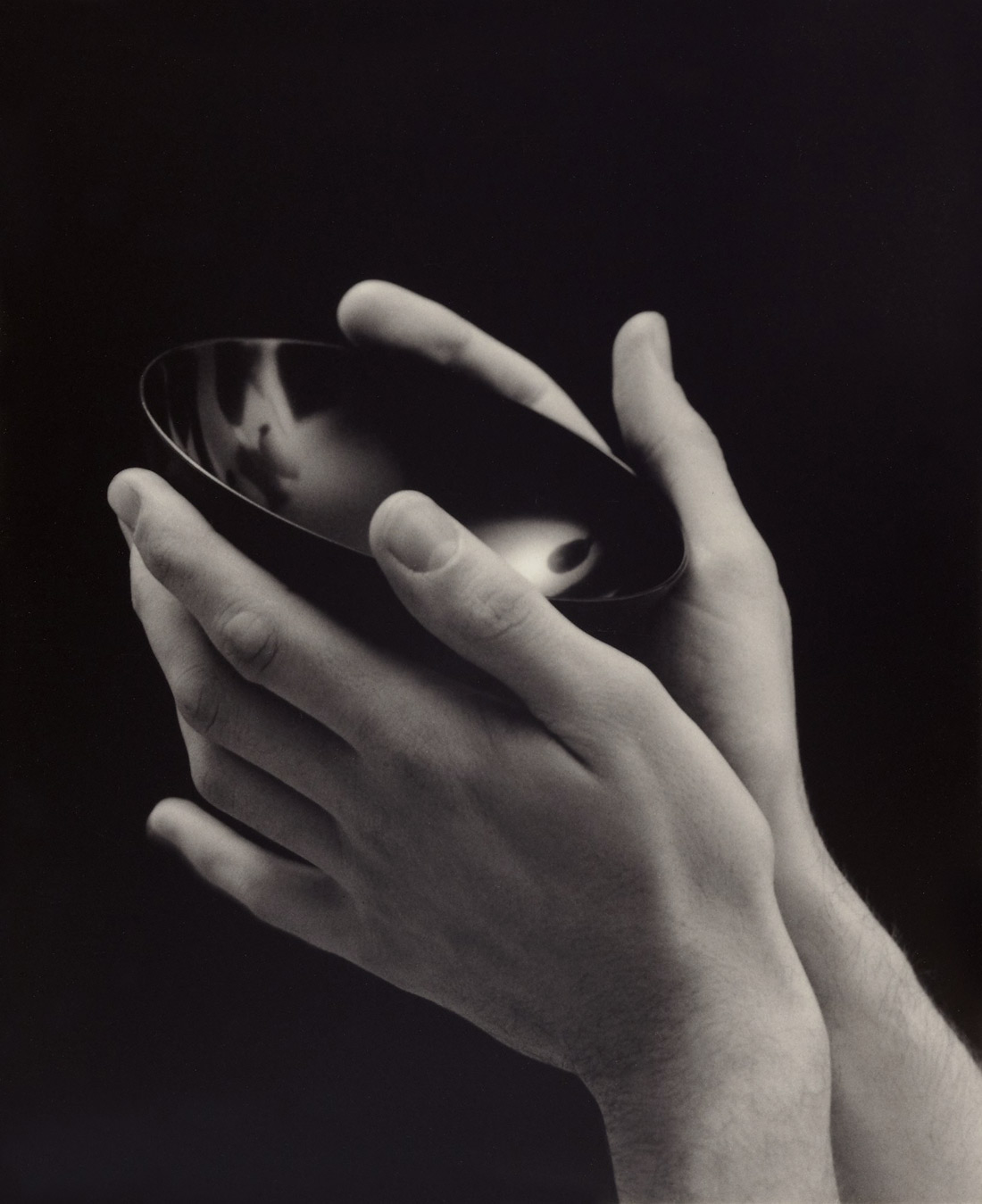
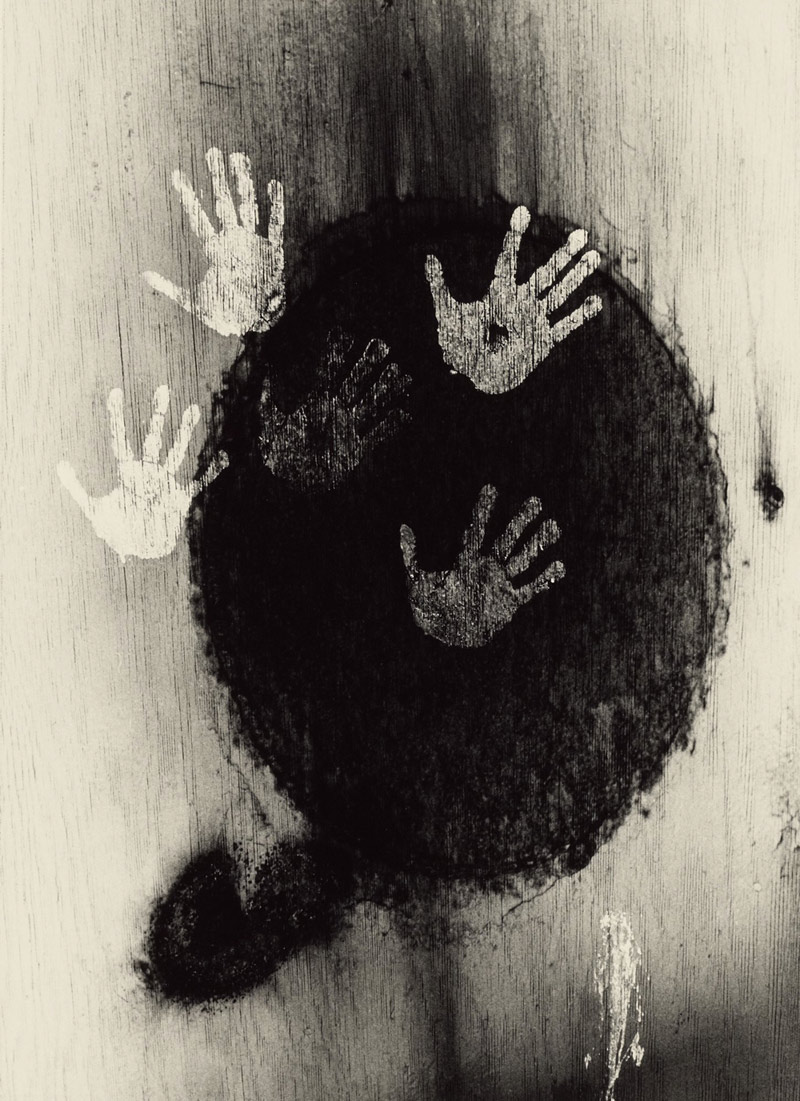
My favourite photograph in the posting is an image of Cunningham’s I have never seen before – the wonderful late work, Aiko’s Hands (1971, below). The Stieglitz hands, the suspended leaf like Minor White, the message in the water…

There are parts of this image that are a quiet metaphor, but the overall impression is not. It talks directly and immediately to the viewer.

Dr Marcus Bunyan


Many thanks to the J. Paul Getty Museum for allowing me to publish the photographs in the posting. Please click on the photographs for a larger version of the image. See the posting on this exhibition when it was at the Seattle Art Museum.


In a career that spanned seventy years, Imogen Cunningham created a large and diverse body of work – from portraits, to nudes, to florals, and to street photographs. In a field dominated by men, she was one of a handful of women who helped to shape early modernist photography in America. This exhibition seeks to acknowledge her stature as equivalent to that of her male peers and to reevaluate her enormous contribution to twentieth century photographic history.
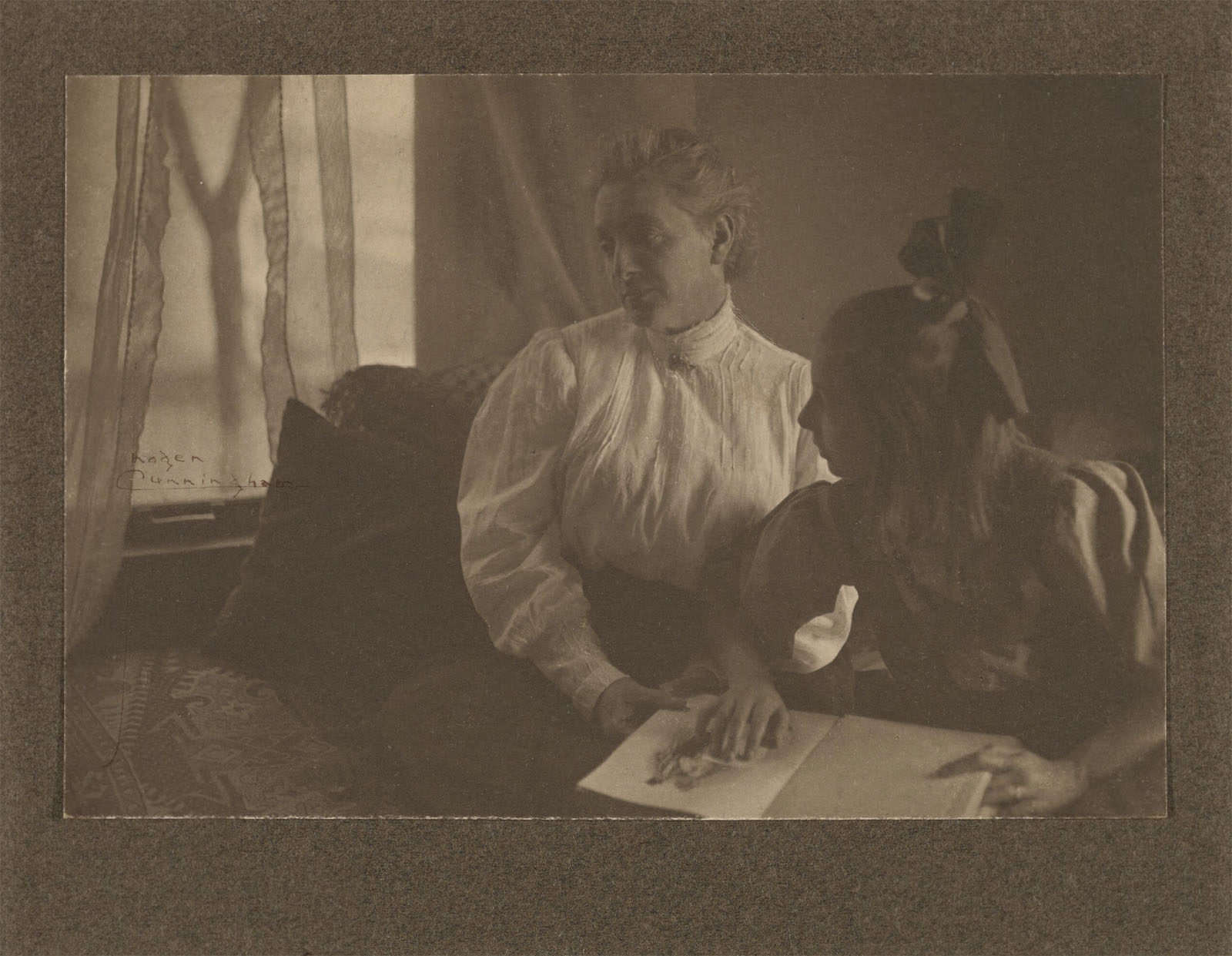
 

Imogen Cunningham (American, 1883-1976) 'Mrs. Walsh and Middie at the Window' 1907-1908 from the exhibition 'Imogen Cunningham: A Retrospective' at the J. Paul Getty Museum, Los Angeles, March - June, 2022


Imogen Cunningham (American, 1883-1976)
Mrs. Walsh and Middie at the Window
1907-1908
Platinum print
10.6 × 15.7cm (4 3/16 × 6 3/16 in.)
© The Imogen Cunningham Trust


Imogen Cunningham (American, 1883-1976) 'The Dream / New-san-Koburi' about 1910


Imogen Cunningham (American, 1883-1976)
The Dream / New-san-Koburi
about 1910
Platinum print
22.7 × 16.2cm (8 15/16 × 6 3/8 in.)
© The Imogen Cunningham Trust


Imogen Cunningham (American, 1883-1976) 'Roi Partridge, Etcher' 1915


Imogen Cunningham (American, 1883-1976)
Roi Partridge, Etcher
1915
Platinum print
20.6 × 15.5cm (8 1/8 × 6 1/8 in.)
Getty Museum
© Imogen Cunningham Trust


The Wood Beyond the World

After her graduation from the University of Washington, Cunningham took a job in the studio of photographer and ethnologist Edward S. Curtis. She learned the platinum printing process there, and received a grant that allowed her to continue her studies in Dresden, Germany. On her return to Seattle, she began making soft-focus platinum prints with an ethereal dreamlike quality. Her work in this period was influenced by the Pre-Raphaelite movement in art and literature, which called for renewal within the Victorian art establishment through spiritualism and an enhanced connection with nature. An epic tale set in a medieval forest, The Wood Beyond the World (1894) by William Morris, a leading figure in the movement, particularly sparked her imagination.


Imogen Cunningham (American, 1883-1976) 'Wood Beyond the World 1' 1910


Imogen Cunningham (American, 1883-1976)
Wood Beyond the World 1
1910
Platinum print
Getty Museum
© The Imogen Cunningham Trust
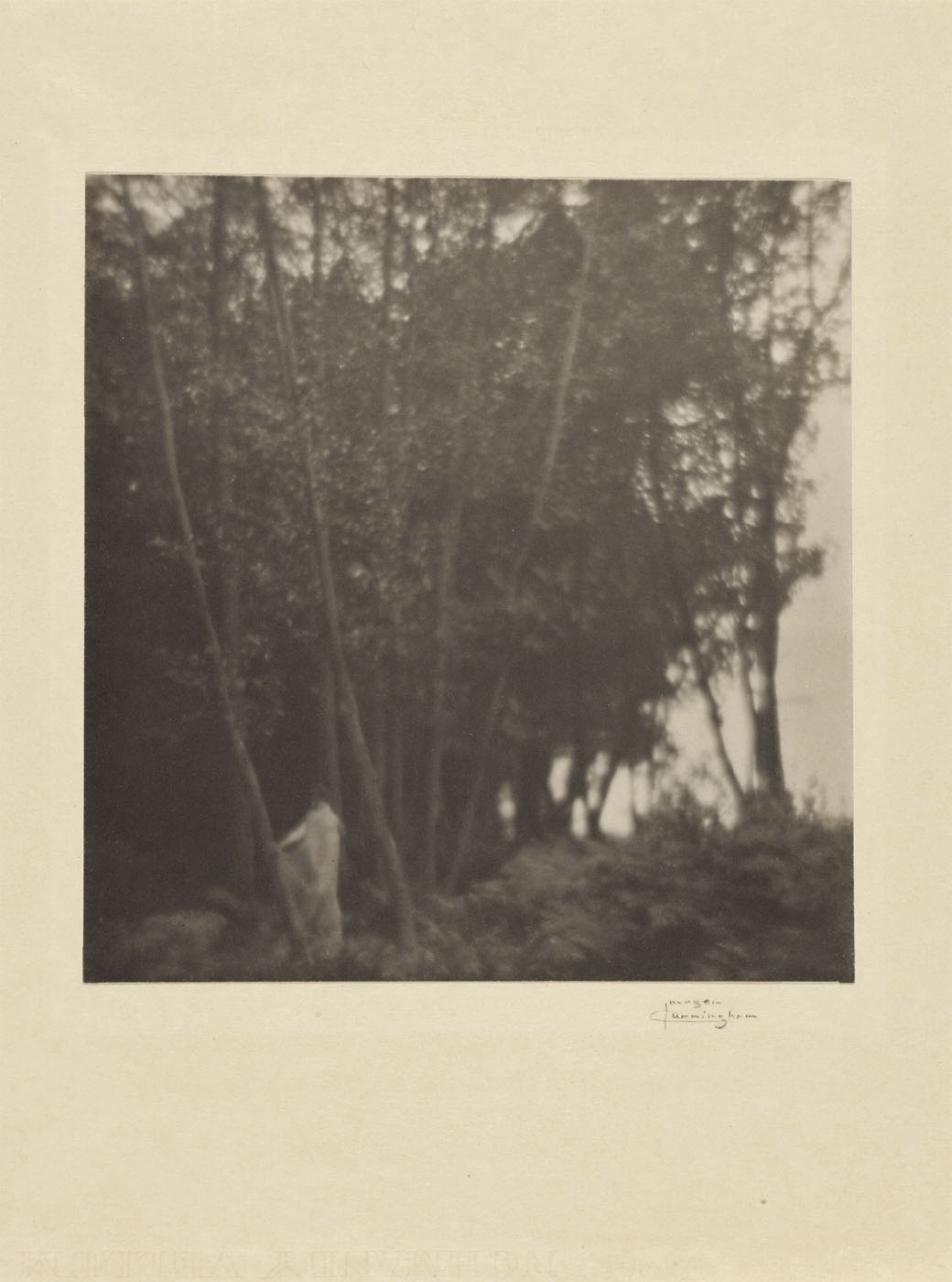
 

Imogen Cunningham (American, 1883-1976) 'In the Wood / Voice of the Wood' 1910


Imogen Cunningham (American, 1883-1976)
In the Wood / Voice of the Wood
1910
Platinum print
19.8 × 19.1cm (7 13/16 × 7 1/2 in.)
© The Imogen Cunningham Trust


Imogen Cunningham (American, 1883-1976) 'Amaryllis' 1933


Imogen Cunningham (American, 1883-1976)
Amaryllis
1933
Gelatin silver print
Getty Museum
© The Imogen Cunningham Trust
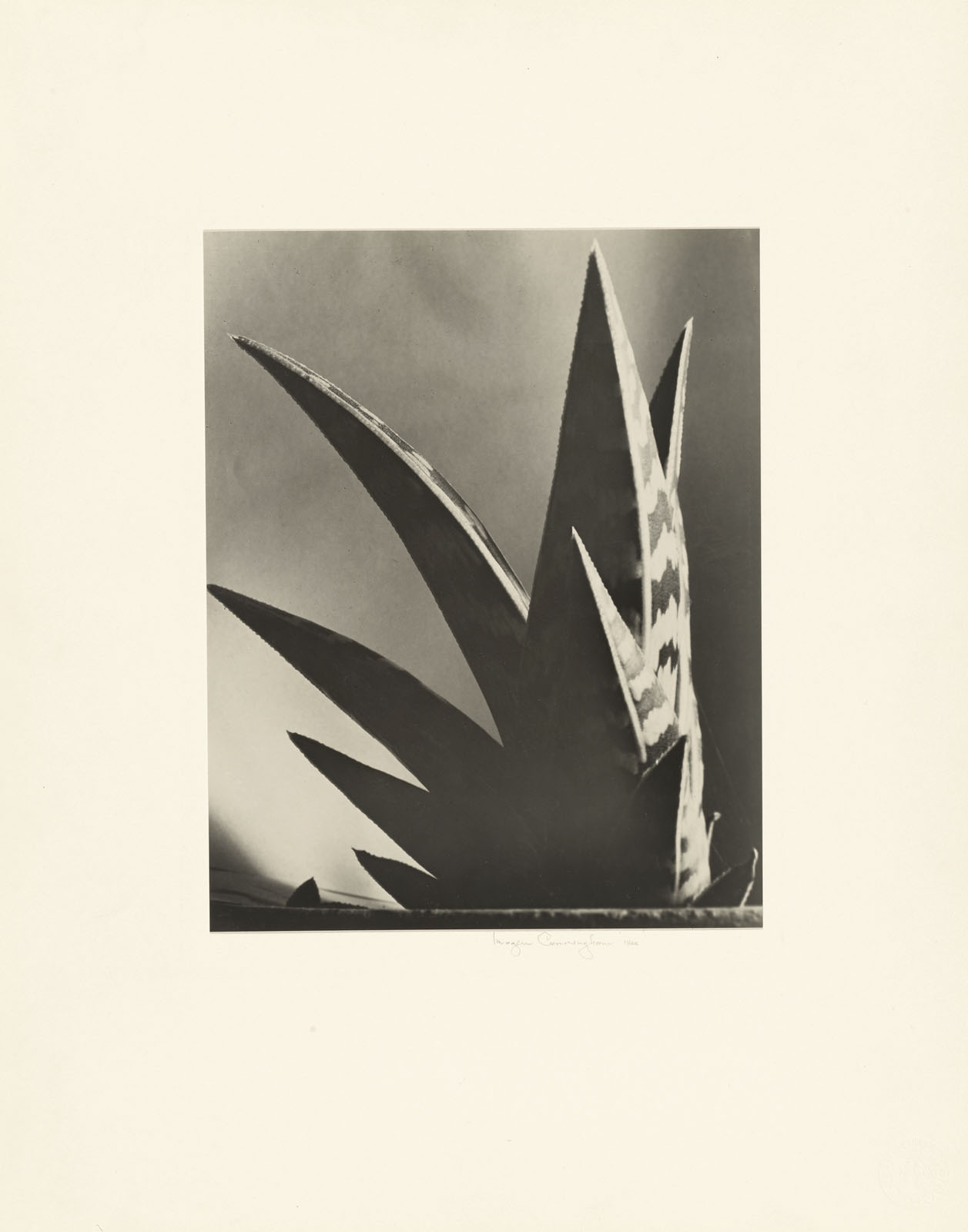
 

Imogen Cunningham (American, 1883-1976) 'Aloe' 1925


Imogen Cunningham (American, 1883-1976)
Aloe
1925
Gelatin silver print
20.8 × 16.5cm (8 3/16 × 6 1/2 in.)
Getty Museum
© Imogen Cunningham Trust


In Her Garden

After Cunningham moved her family to San Francisco in 1917, she turned away from soft-focus images and began to make sharply delineated pictures. She cultivated a garden, growing plants and flowers for a series of botanical studies, all while taking care of her three young sons. In 1929 the prominent photographer Edward Weston recommended that ten of Cunningham’s photographs be included in the seminal exhibition Film und Foto in Stuttgart, Germany. Although the show did not bring her financial success, it garnered international recognition for her as a leading American modernist photographer.


Imogen Cunningham (American, 1883-1976) 'Hen and Chickens' 1929


Imogen Cunningham (American, 1883-1976)
Hen and Chickens
1929
Gelatin silver print
25.2 × 24.6cm (9 15/16 × 9 11/16 in.)
Getty Museum
© Imogen Cunningham Trust


Imogen Cunningham (American, 1883-1976) 'Flax' 1926


Imogen Cunningham (American, 1883-1976)
Flax
1926
Gelatin silver print
23.5 × 16.1cm (9 1/4 × 6 5/16 in.)
Getty Museum
© Imogen Cunningham Trust
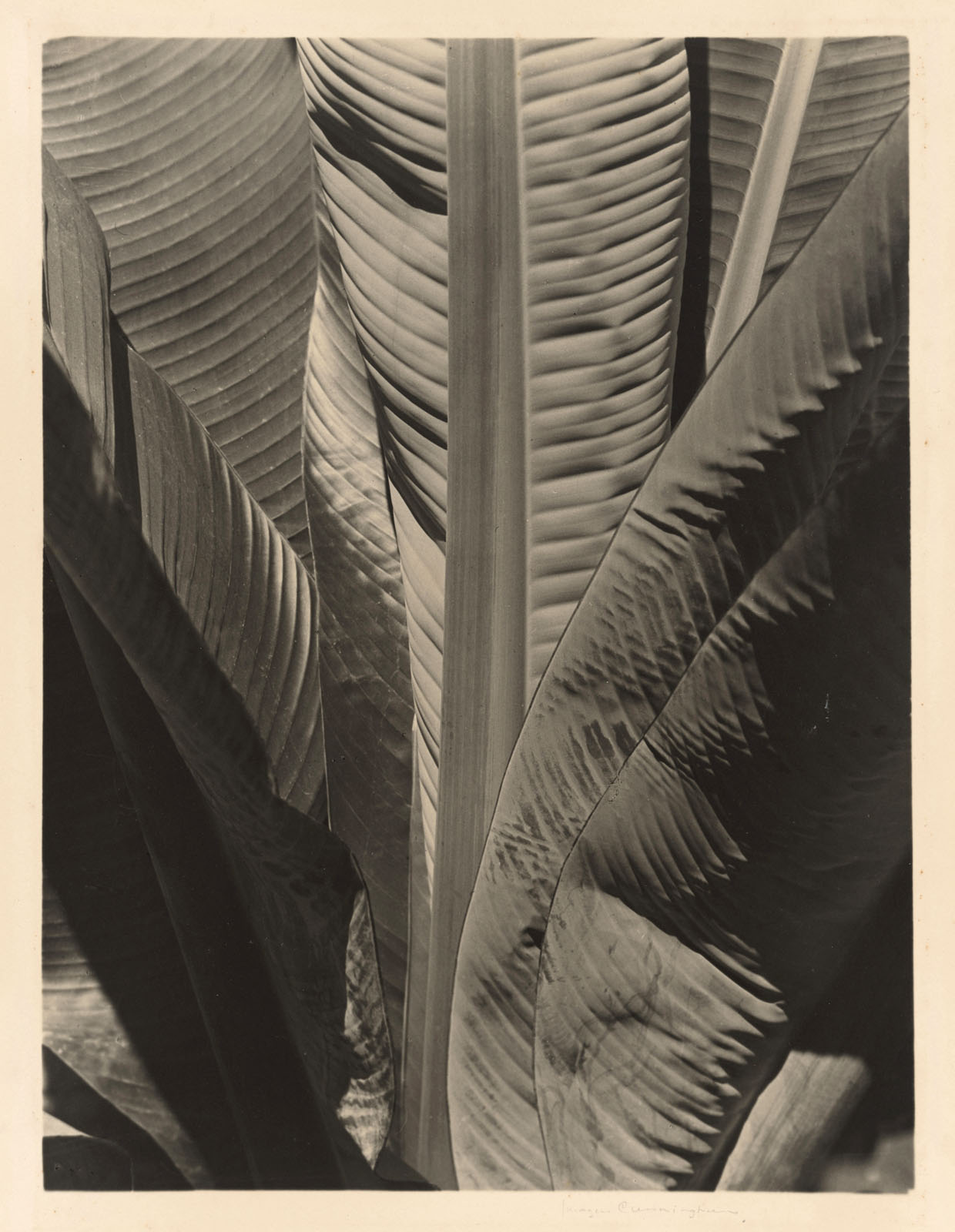
 

Imogen Cunningham (American, 1883-1976) 'Banana Plant' 1925-1929


Imogen Cunningham (American, 1883-1976)
Banana Plant
1925-1929
Gelatin silver print
29.5 × 22.2cm (11 5/8 × 8 3/4 in.)
The Art Institute of Chicago, Julien Levy Collection
Gift of Jean Levy and the estate of Julien Levy
© Imogen Cunningham Trust
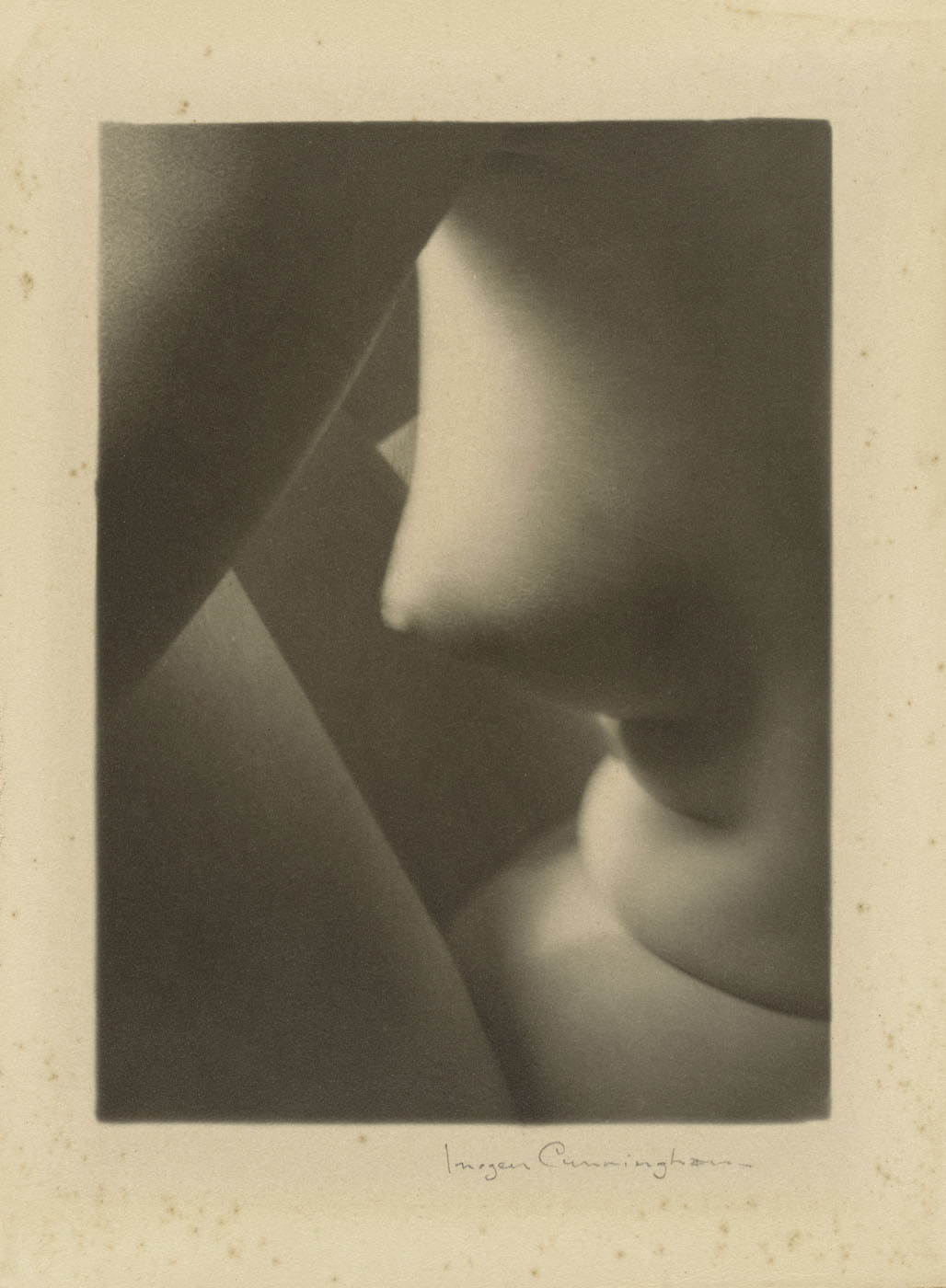
 

Imogen Cunningham (American, 1883-1976) 'Triangles' 1928


Imogen Cunningham (American, 1883-1976)
Triangles
1928
Gelatin silver print
9.7 × 7.1cm (3 13/16 × 2 13/16 in.)
Getty Museum
© Imogen Cunningham Trust
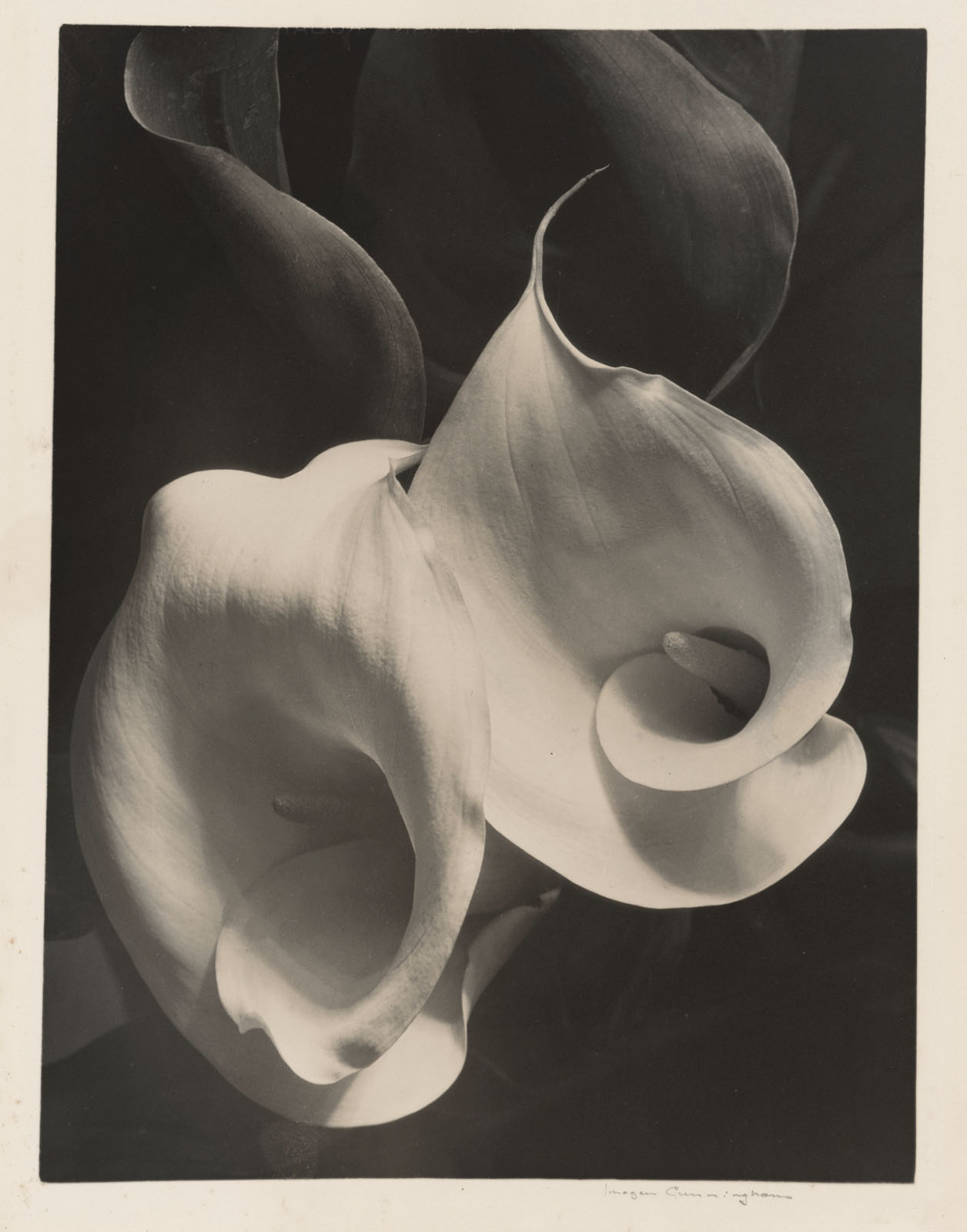
 

Imogen Cunningham (American, 1883-1976) 'Two Callas' 1925-1929


Imogen Cunningham (American, 1883-1976)
Two Callas
1925-1929
Gelatin silver print
30 × 22.6cm (11 13/16 × 8 7/8 in.)
The Art Institute of Chicago, Julien Levy Collection
Gift of Jean Levy and the estate of Julien Levy
© Imogen Cunningham Trust


Imogen Cunningham (American, 1883-1976) 'Calla Lily (Black and White Lily)' 1925-1933


Imogen Cunningham (American, 1883-1976)
Calla Lily (Black and White Lily)
1925-1933
Gelatin silver print
30 × 23.5 cm (11 13/16 × 9 1/4 in.)
© The Imogen Cunningham Trust
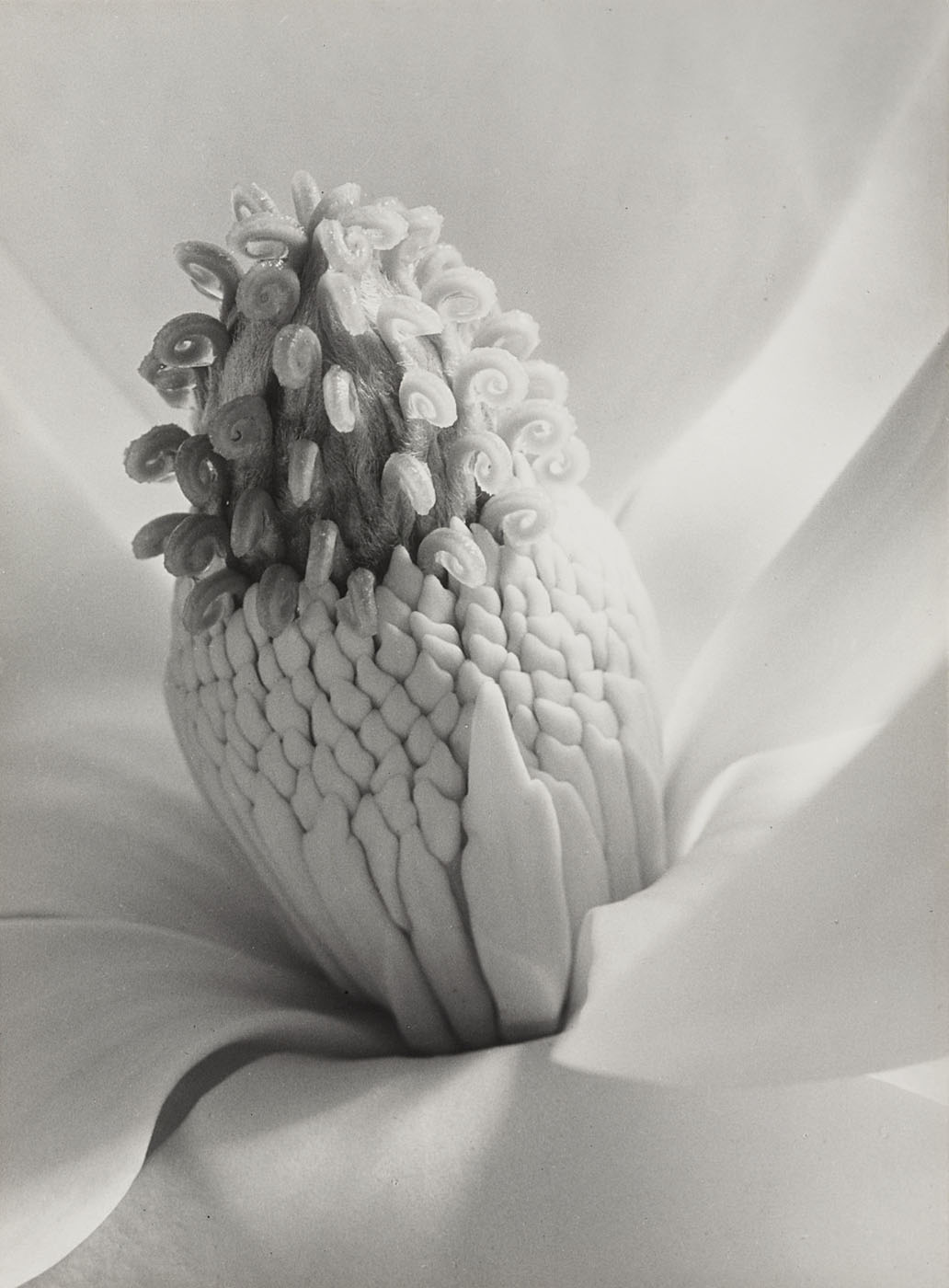
 

Imogen Cunningham (American, 1883-1976) 'Tower of Jewels' 1925


Imogen Cunningham (American, 1883-1976)
Tower of Jewels
1925
Gelatin silver print
30.5 × 23.8cm
UC Berkeley Art Museum and Pacific Film Archive


Ansel Adams (American, 1902-1984) '[Dogwood Blossoms, Yosemite National Park]' Negative about 1938; print 1941


Ansel Adams (American, 1902-1984)
[Dogwood Blossoms, Yosemite National Park]
Negative about 1938; print 1941
Gelatin silver print
16.8 × 11.4cm (6 5/8 × 4 1/2 in.)
© 2014 The Ansel Adams Publishing Rights Trust


Imogen Cunningham (American, 1883-1976) '[Sonya Noskowiak]' 1928


Imogen Cunningham (American, 1883-1976)
[Sonya Noskowiak]
1928
Gelatin silver print
8.9 × 7.6cm (3 1/2 × 3 in.)
© The Imogen Cunningham Trust


Imogen Cunningham (American, 1883-1976) 'Martha Graham, Dancer' 1931


Imogen Cunningham (American, 1883-1976)
Martha Graham, Dancer
1931
Gelatin silver print
18.5 × 25.2cm (7 5/16 × 9 15/16 in.)
Getty Museum
Gift of Daniel Greenberg and Susan Steinhauser
© Imogen Cunningham Trust
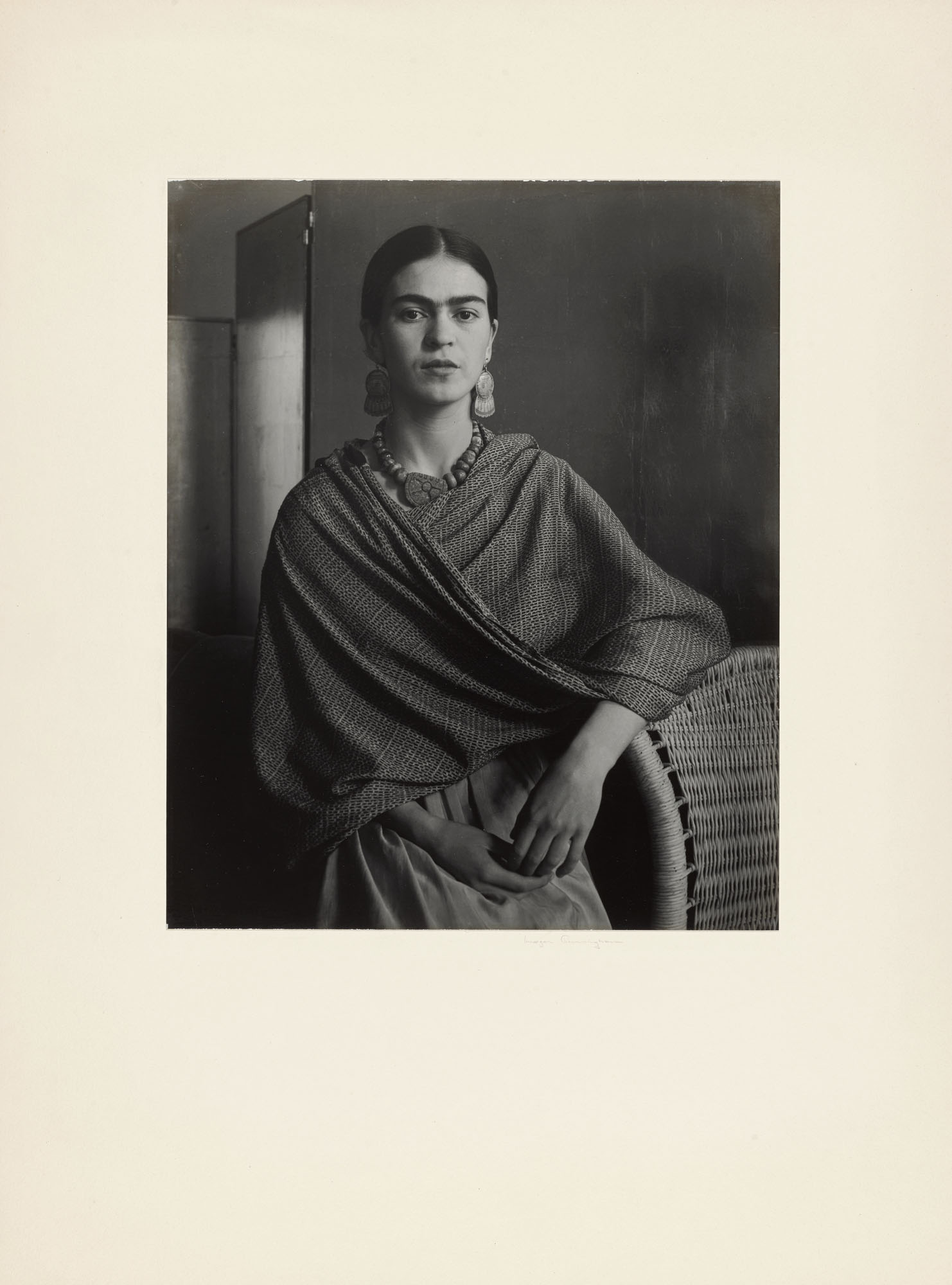
 

Imogen Cunningham (American, 1883-1976) 'Frida Kahlo Rivera, Painter' 1931


Imogen Cunningham (American, 1883-1976)
Frida Kahlo Rivera, Painter
1931
Gelatin silver print
Getty Museum, Gift of Daniel Greenberg and Susan Steinhauser
© The Imogen Cunningham Trust


On the Portrait

When asked to describe the requirements for a successful portrait photographer, Cunningham replied, “You must be able to gain an understanding at short notice and at close range of the beauties of character, intellect, and spirit, so you can draw out the best qualities and make them show in the face of the sitter.” She would often engage her sitters in conversation until they relaxed, or ask them to think of the nicest thing they could imagine. She resisted indulging their vanity, however, and “face-lifting” was her word for the type of portrait work that required beautification – in her estimation an obstacle to a good likeness.
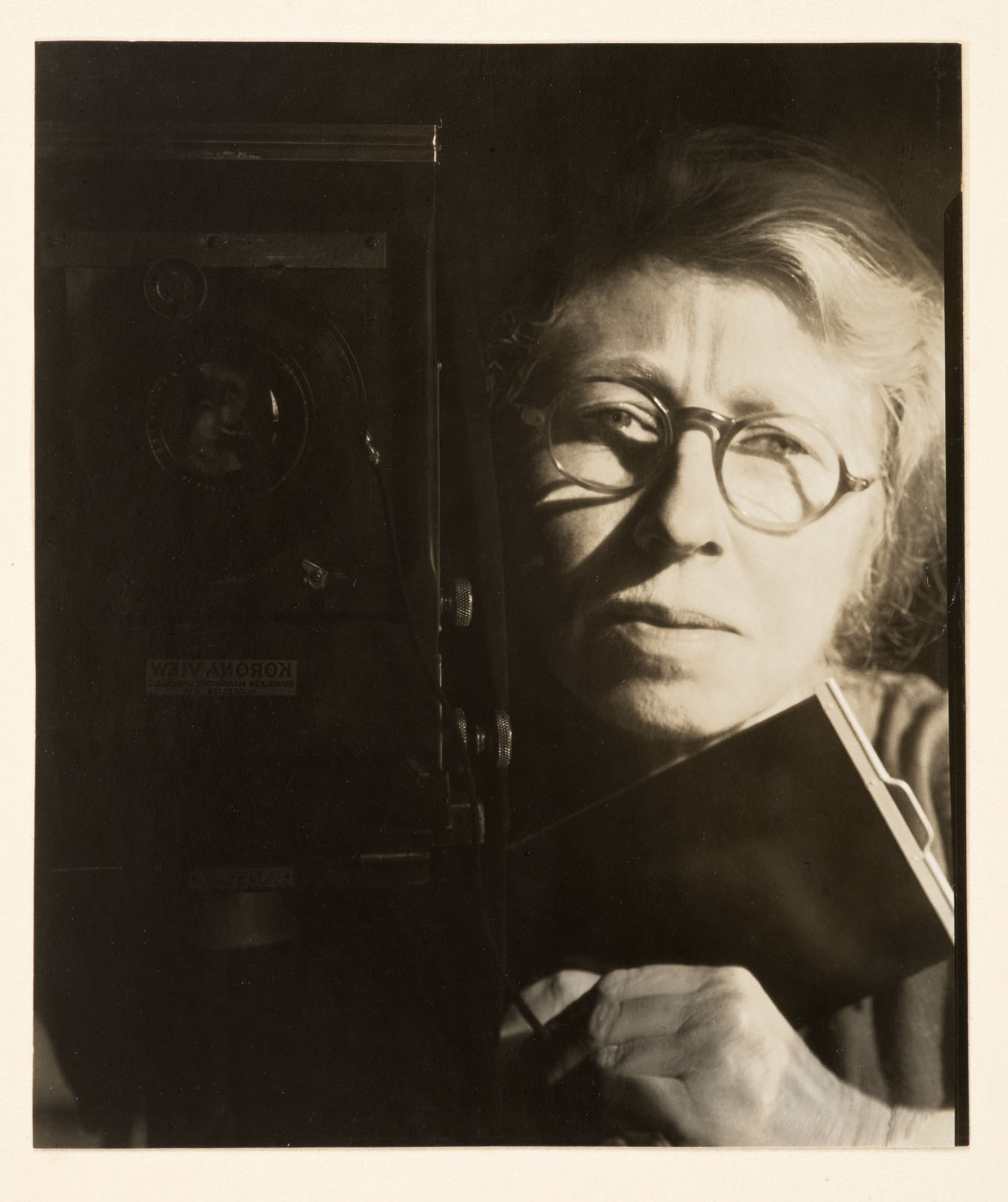
 

Imogen Cunningham (American, 1883-1976) 'Self-Portrait with Korona View' 1933


Imogen Cunningham (American, 1883-1976)
Self-Portrait with Korona View
1933
Gelatin silver print
10.2 × 8.4cm (4 × 3 5/16 in.)
© Imogen Cunningham Trust


Dorothea Lange (American, 1895-1965) 'Waiting for Work on Edge of the Pea Field, Holtville, Imperial Valley, California' February 1937 


Dorothea Lange (American, 1895-1965)
Waiting for Work on Edge of the Pea Field, Holtville, Imperial Valley, California
February 1937
Gelatin silver print
20.5 × 19.2 cm (8 1/16 × 7 9/16 in.)
The J. Paul Getty Museum, Los Angeles


“HUMAN EROSION [all underlined] / Erosion of the soil has its counterpart in erosion / of our society. / The one wastes natural resources; / the other human resources / Employment is intermittent. Jobs are precarious and / annual income is low. / Waited weeks for the maturity of 1937 winter pea / crop, which froze; then more weeks until maturity / of second crop. / Near Hollville,California / February 1937.”
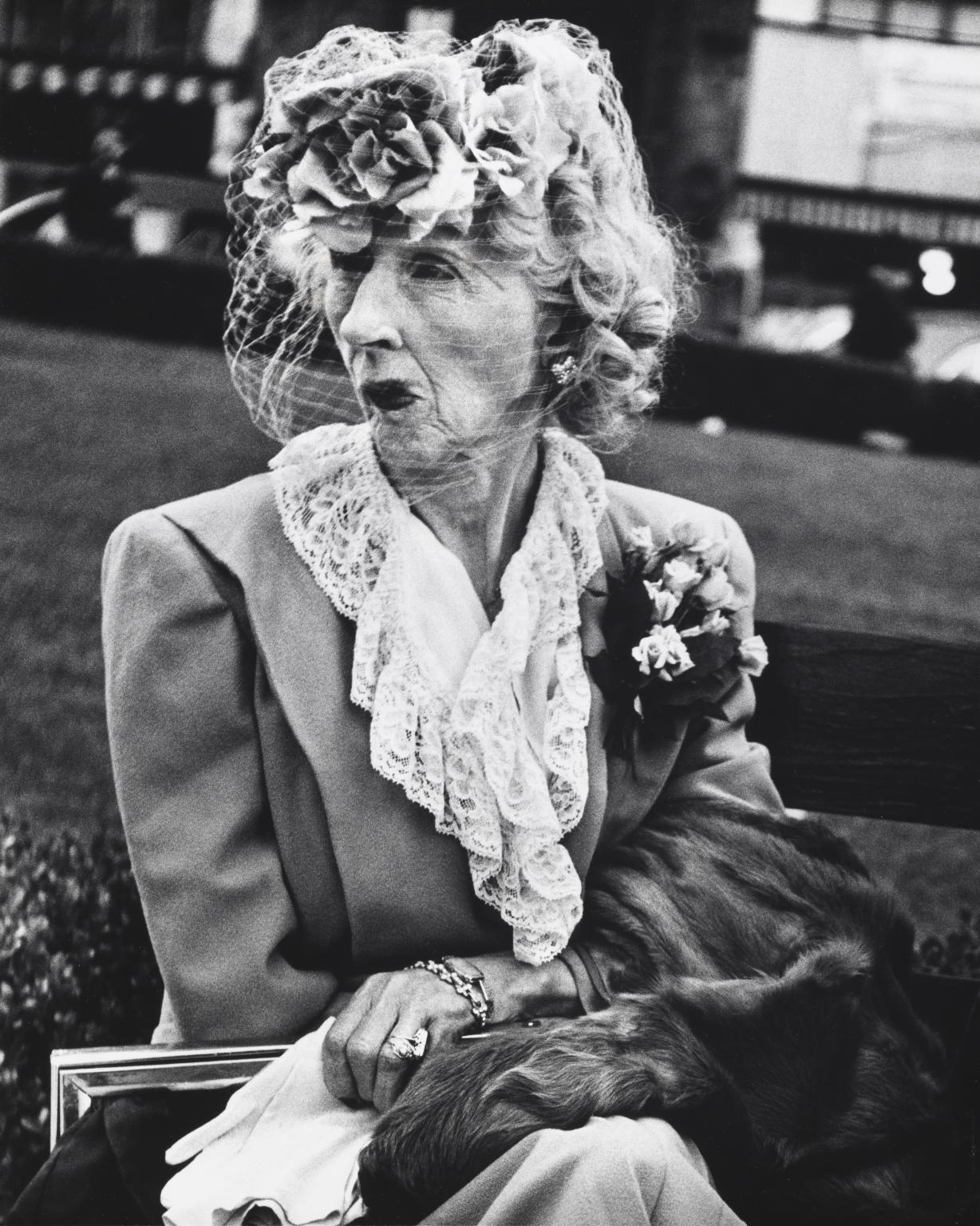
 

Lisette Model (American born Austria, 1901-1983) 'Woman with Veil, San Francisco' 1949


Lisette Model (American born Austria, 1901-1983)
Woman with Veil, San Francisco
1949
Gelatin silver print
34.9 x 27cm
The J. Paul Getty Museum, Los Angeles
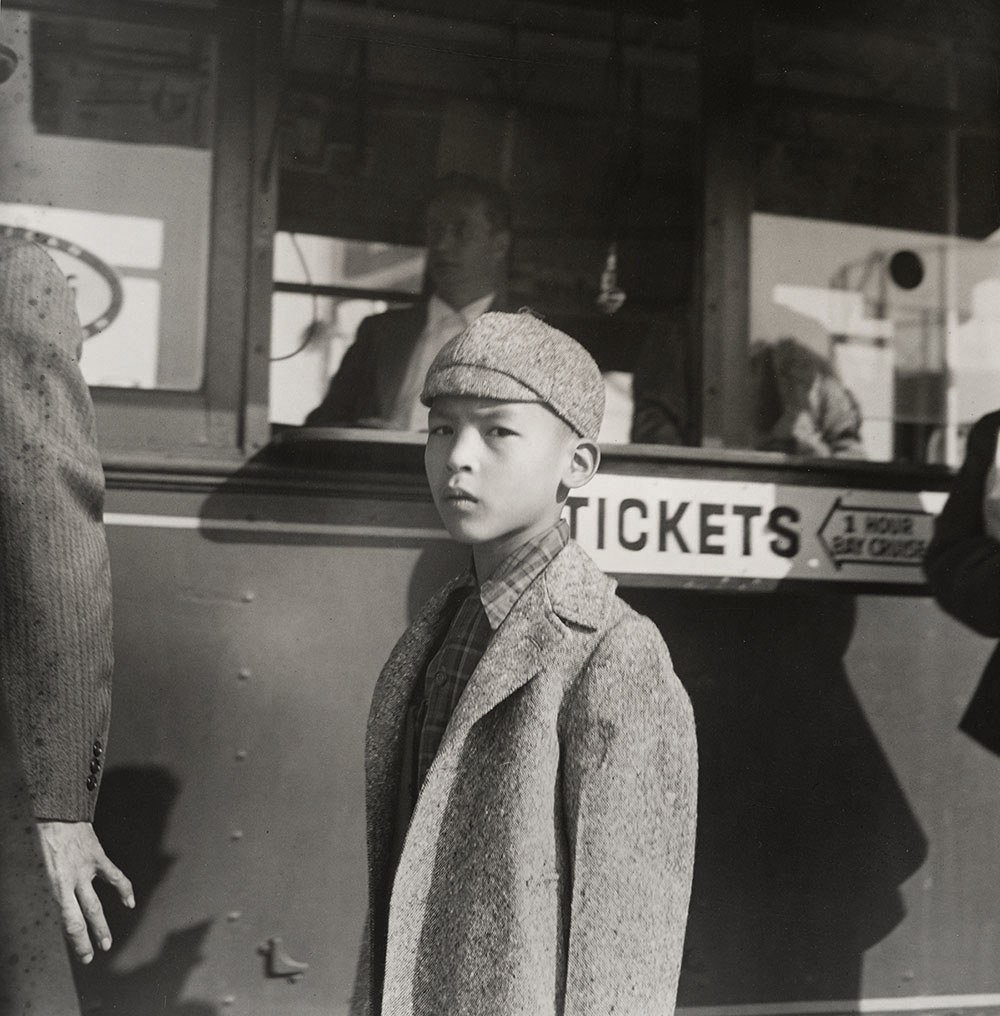
 

Imogen Cunningham (American, 1883-1976) 'Angel Island' 1952


Imogen Cunningham (American, 1883-1976)
Angel Island
1952
Gelatin silver print
19.3 x 19.3cm
© Imogen Cunningham Trust
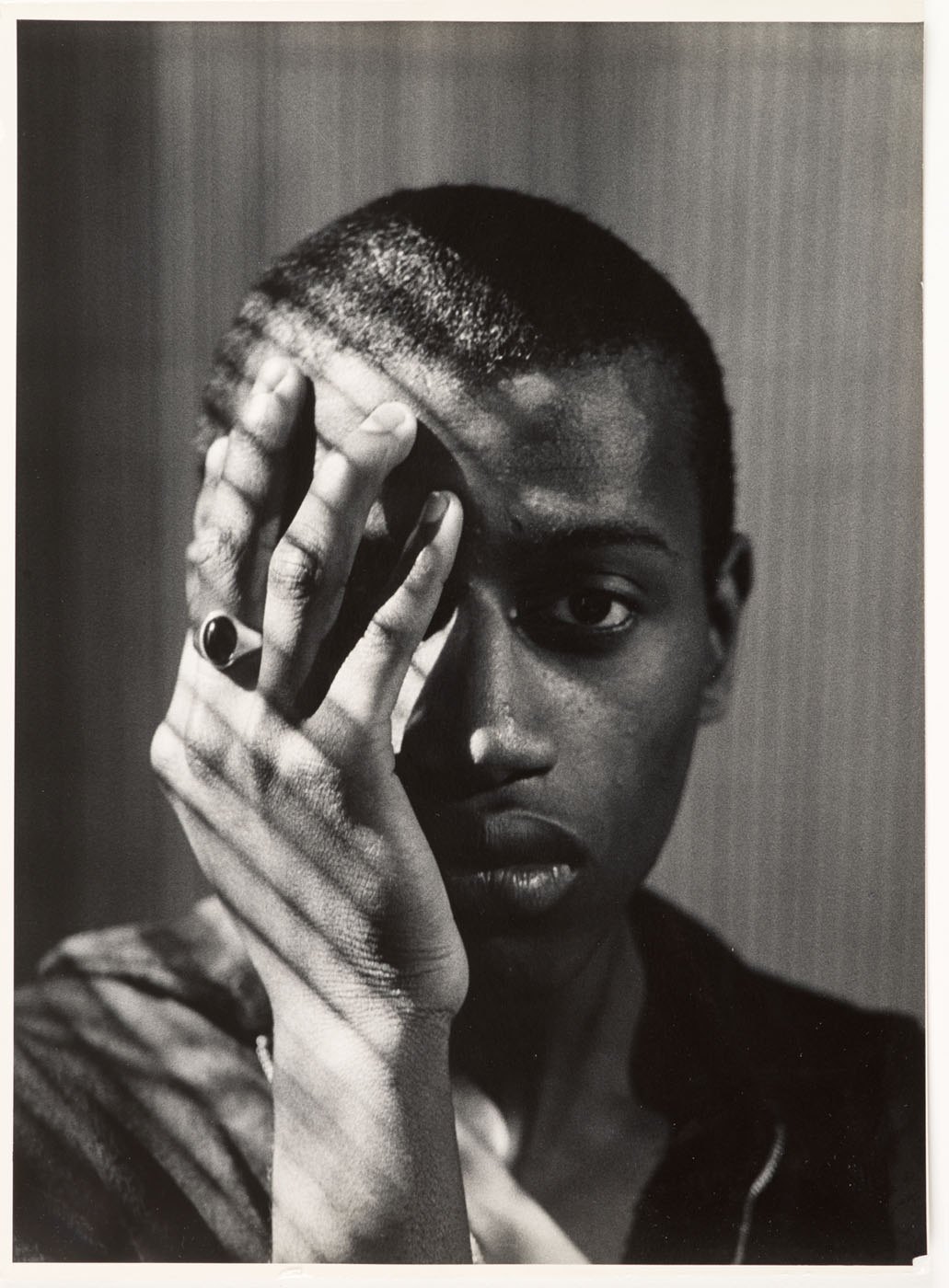
 

Imogen Cunningham (American, 1883-1976) 'Stan, San Francisco' 1959


Imogen Cunningham (American, 1883-1976)
Stan, San Francisco
1959
Gelatin silver print
24.2 × 17.9cm (9 1/2 × 7 1/16 in.)
© Imogen Cunningham Trust
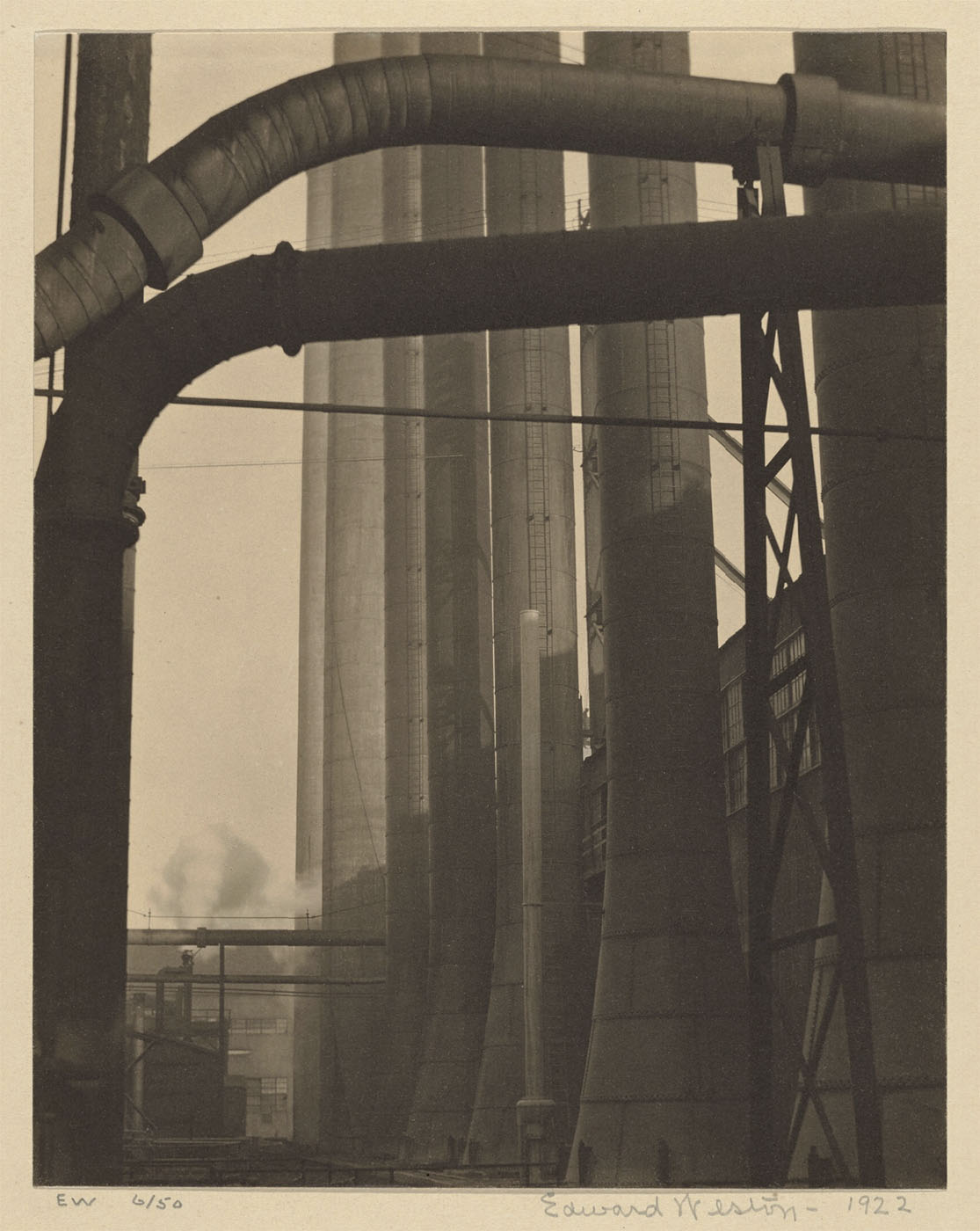
 

Edward Weston (American, 1886-1958) 'Armco Steel' 1922


Edward Weston (American, 1886-1958)
Armco Steel
1922
Palladium print
24.4 × 19.4cm (9 5/8 × 7 5/8 in.)
© 1981 Arizona Board of Regents, Center for Creative Photography


West Coast Photography

In 1932 Imogen Cunningham, along with Ansel Adams, John Paul Edwards, Sonya Noskowiak, Henry Swift, Willard Van Dyke, and Edward Weston – all San Francisco Bay Area photographers – helped found Group f/64. (They adopted the name from the aperture setting on a large-format camera that would yield the greatest depth of field, making a photograph equally sharp from foreground to background.) The goal of this loosely formed association was to promote a modernist style through sharply focused images created with a West Coast perspective or sense of place. The works presented in this gallery, created by Cunningham’s closest colleagues – all contributors to the Group f/64 legacy – demonstrate how the influence they had on one another defined the future of West Coast photography.


Edward Weston (American, 1886-1958) 'Bananas and Orange' 1927


Edward Weston (American, 1886-1958)
Bananas and Orange
1927
Gelatin silver print
Getty Museum
© 1981 Arizona Board of Regents, Center for Creative Photography
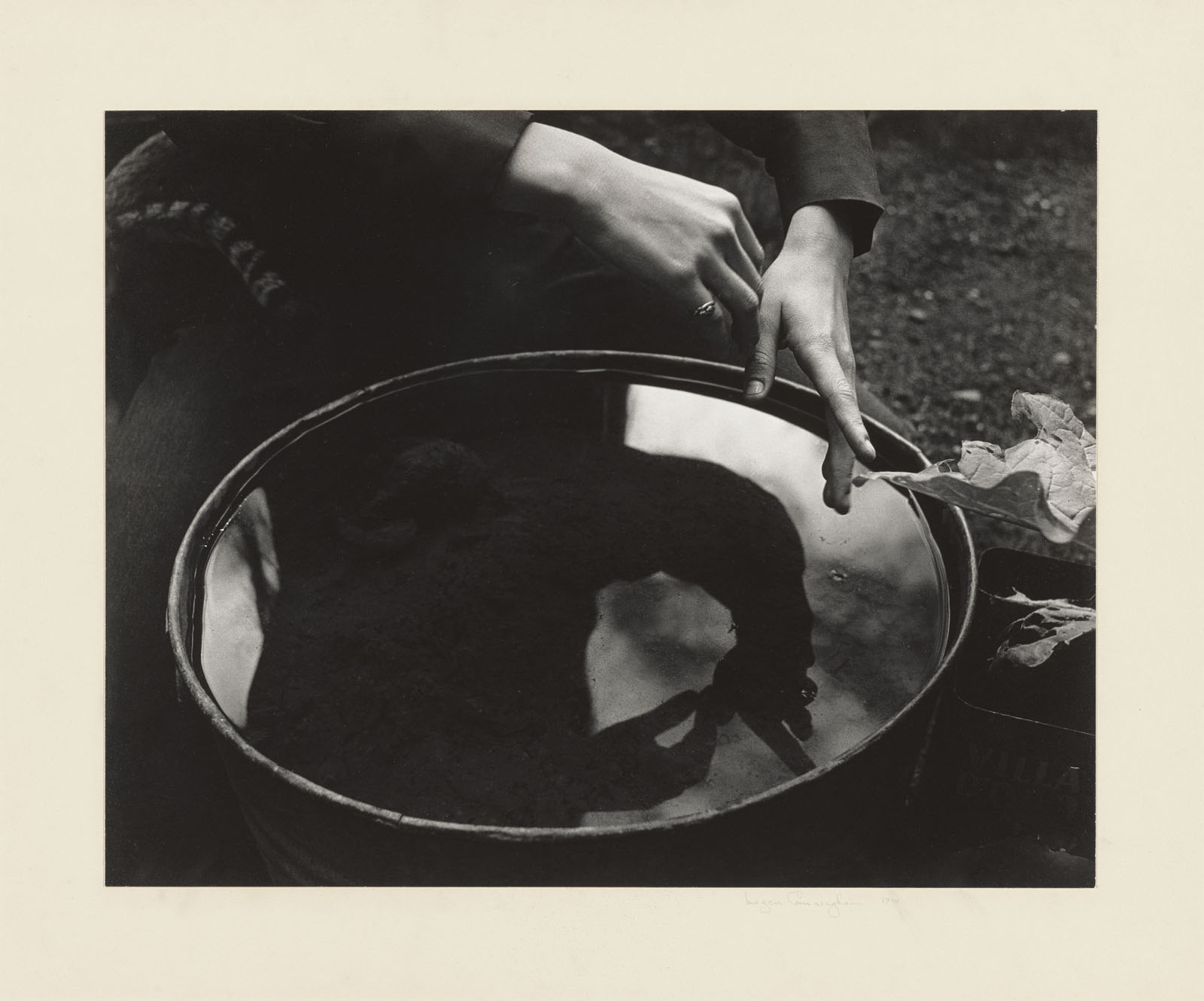
 

Imogen Cunningham (American, 1883-1976) 'Aiko's Hands' 1971


Imogen Cunningham (American, 1883-1976)
Aiko’s Hands
1971
Gelatin silver print
27.2 × 34.7cm (10 11/16 × 13 11/16 in.)
Getty Museum
Gift of Daniel Greenberg and Susan Steinhauser
© Imogen Cunningham Trust


Minor White (American, 1908–1976) 'Nude Foot, San Francisco' 1947


Minor White (American, 1908-1976)
Nude Foot, San Francisco
Negative 1947; print 1975
Gelatin silver print
21.2 × 27cm (8 3/8 × 10 5/8 in.)
Reproduced with permission of the Minor White Archive, Princeton University Art Museum. © Trustees of Princeton University
Gift of Daniel Greenberg and Susan Steinhauser
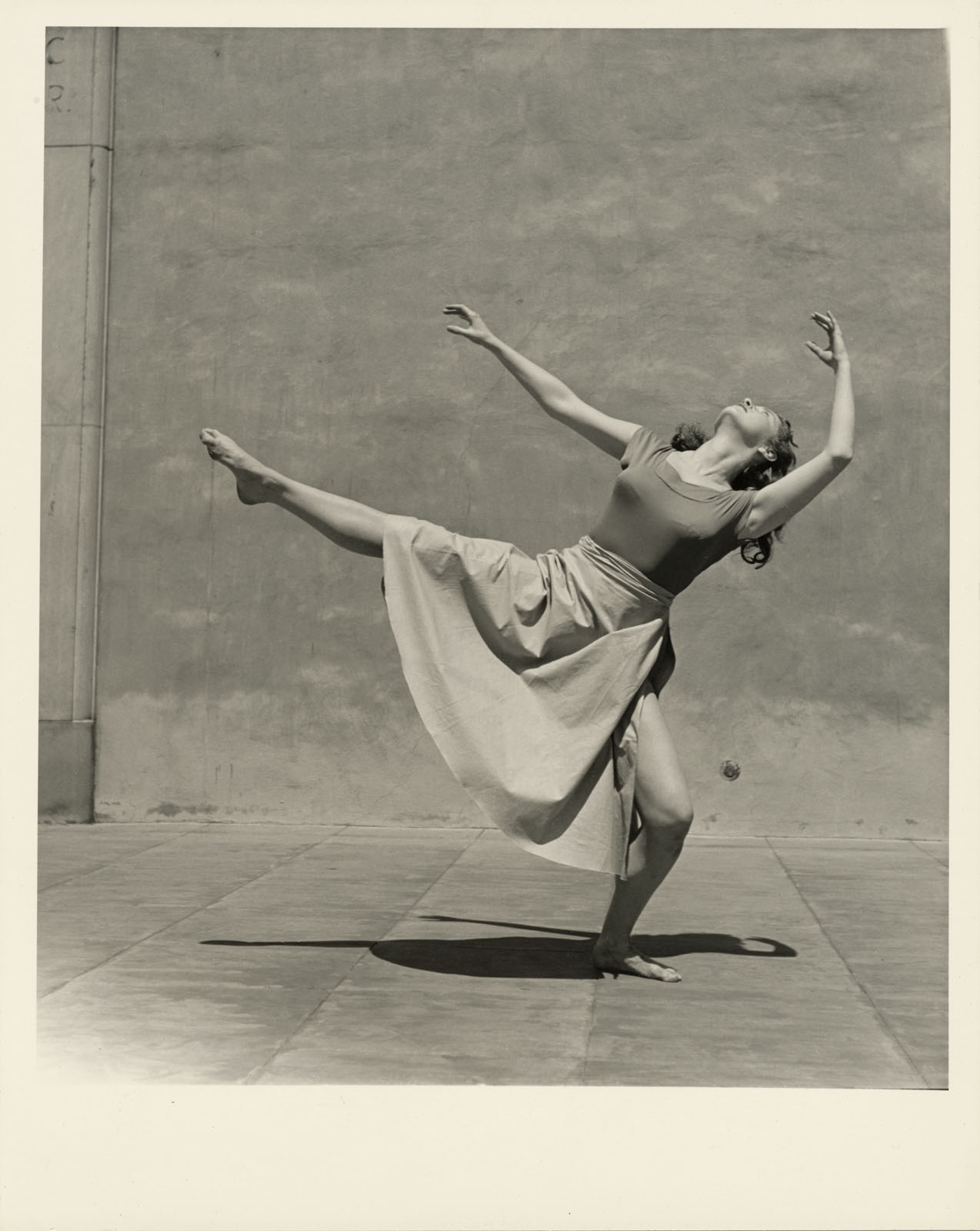
 

Imogen Cunningham (American, 1883-1976) 'Dancer, Mills College' 1929


Imogen Cunningham (American, 1883-1976)
Dancer, Mills College
1929
Gelatin silver print
21.7 × 18.7cm (8 9/16 × 7 3/8 in.)
Getty Museum
© Imogen Cunningham Trust
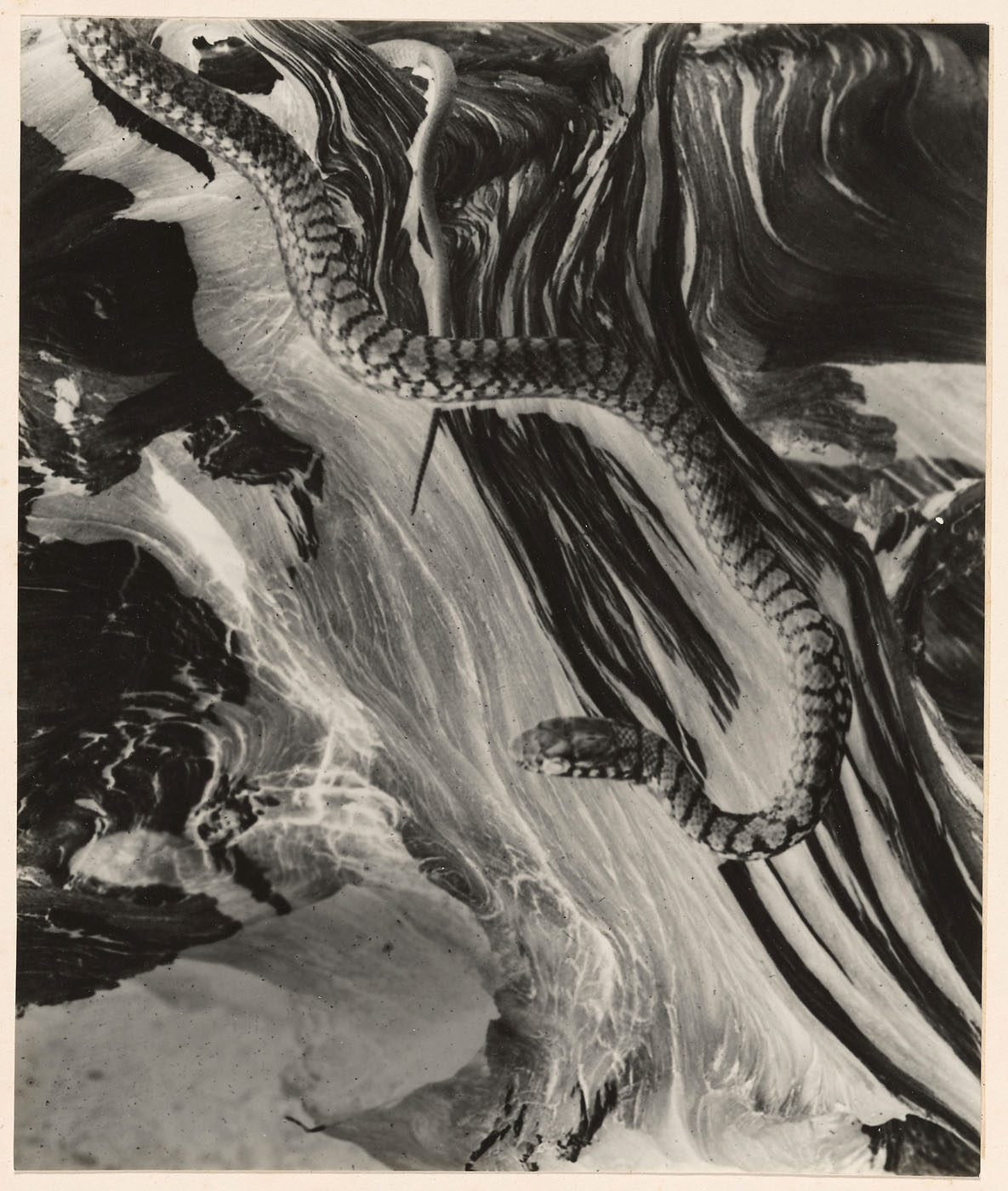
 

Imogen Cunningham (American, 1883-1976) 'Snake' 1929


Imogen Cunningham (American, 1883-1976)
Snake
1929
Gelatin silver print
19.7 × 16.5cm (7 3/4 × 6 1/2 in.)
The Art Institute of Chicago
Julien Levy Collection, Gift of Jean and Julien Levy
© Imogen Cunningham Trust


Imogen Cunningham (American, 1883-1976) 'Gertrude Stein, Writer' 1934


Imogen Cunningham (American, 1883-1976)
Gertrude Stein, Writer
1934
Gelatin silver print
Getty Museum
© The Imogen Cunningham Trust


A Parting of Ways

In 1934 Cunningham’s marriage to Roi Partridge ended in divorce. Their three teenage boys, Gryffyd, Rondal, and Padraic, remained in the family home with their mother until they finished high school. Cunningham never remarried, and although she received the house as part of her settlement, the divorce was the beginning of three decades of financial difficulties. Without Partridge, Cunningham had to pick up the pace of her work to stay afloat. She took more commissions, made more portraits, and began teaching portrait photography to students in her home. Despite the added stress, Cunningham sought out ways to challenge herself.


Imogen Cunningham (American, 1883-1976) 'Cornish School Trio 2' 1935


Imogen Cunningham (American, 1883-1976)
Cornish School Trio 2
1935
Gelatin silver print
22.9 × 19.1cm (9 × 7 1/2 in.)
© Imogen Cunningham Trust


Imogen Cunningham (American, 1883-1976) 'Pentimento' 1973


Imogen Cunningham (American, 1883-1976)
Pentimento
1973
Gelatin silver print
18.3 × 22.4cm (7 3/16 × 8 13/16 in.)
Getty Museum
Gift of Daniel Greenberg and Susan Steinhauser
© Imogen Cunningham Trust
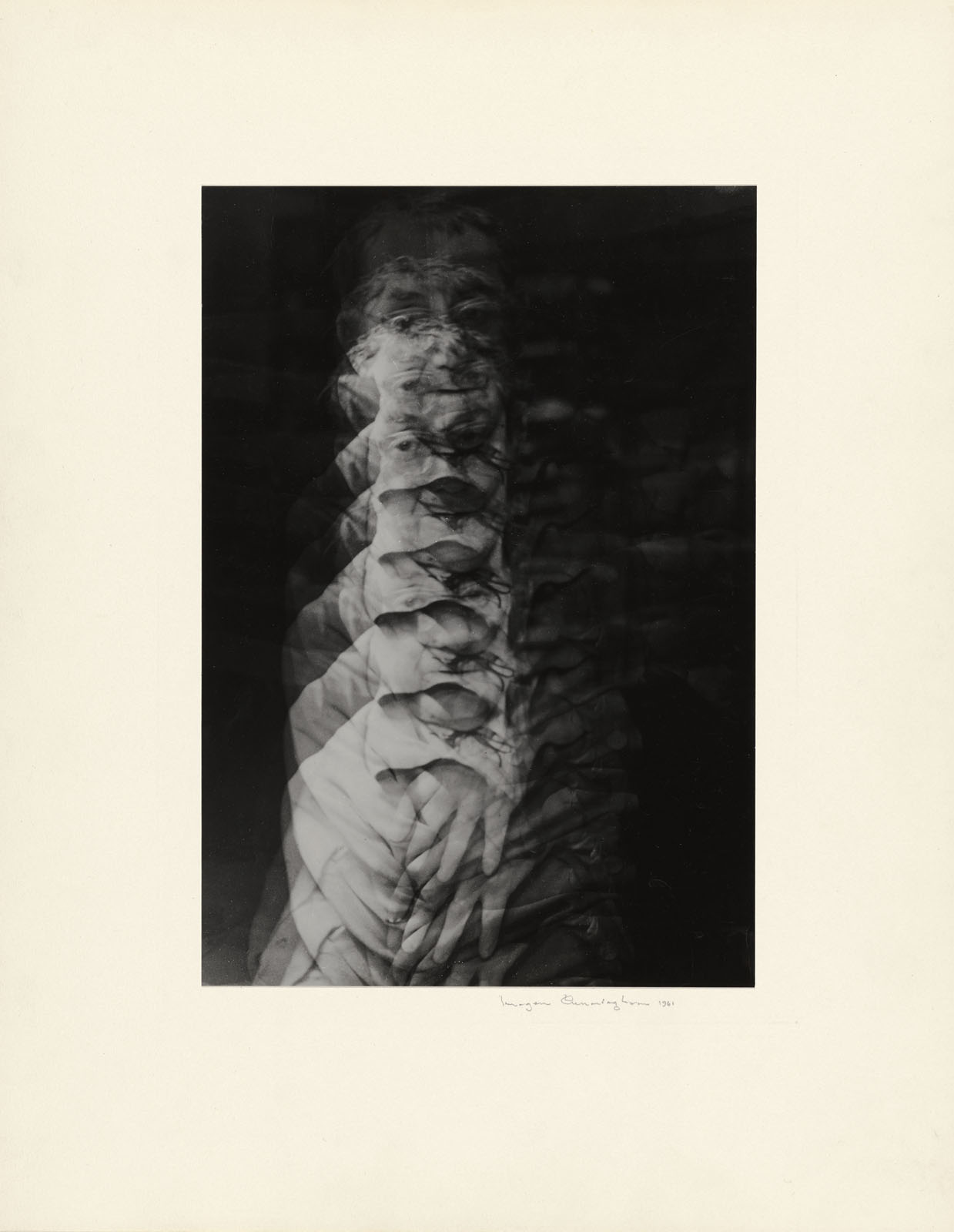
 

Imogen Cunningham (American, 1883-1976) 'A Man Ray Version of Man Ray' 1961


Imogen Cunningham (American, 1883-1976)
A Man Ray Version of Man Ray
1961
Gelatin silver print
23.5 × 16.3cm (9 1/4 × 6 7/16 in.)
Getty Museum
Gift of Daniel Greenberg and Susan Steinhauser
© Imogen Cunningham Trust


Imogen Cunningham (American, 1883-1976) 'Double Image, Sutter St. and Fillmore' c. 1947


Imogen Cunningham (American, 1883-1976)
Double Image, Sutter St. and Fillmore
c. 1947
Gelatin silver print
Collection of the Oakland Museum of California, Gift of the Junior League of Oakland
© The Imogen Cunningham Trust


Into the Street

In 1934, while in New York, Cunningham made what she called her first “stolen pictures,” documentary street photographs that she took while trying to hide herself and her camera from view. Her interest in street photography was renewed in 1946 when she met Lisette Model while they were both teaching at the California School of Fine Arts (now the San Francisco Art Institute). Cunningham’s candid depictions of her subjects have often been described as gentler and more sympathetic than those by many of her contemporaries. Her “stolen pictures” capture people as they are and not how they look when they know they are being photographed.


Imogen Cunningham (American, 1883-1976) 'Tea at Foster's, San Francisco' 1940s


Imogen Cunningham (American, 1883-1976)
Tea at Foster’s, San Francisco
1940s
Gelatin silver print
19.1 × 18.7cm (7 1/2 × 7 3/8 in.)
Seattle Art Museum
Gift of John H. Hauberg
© Imogen Cunningham Trust
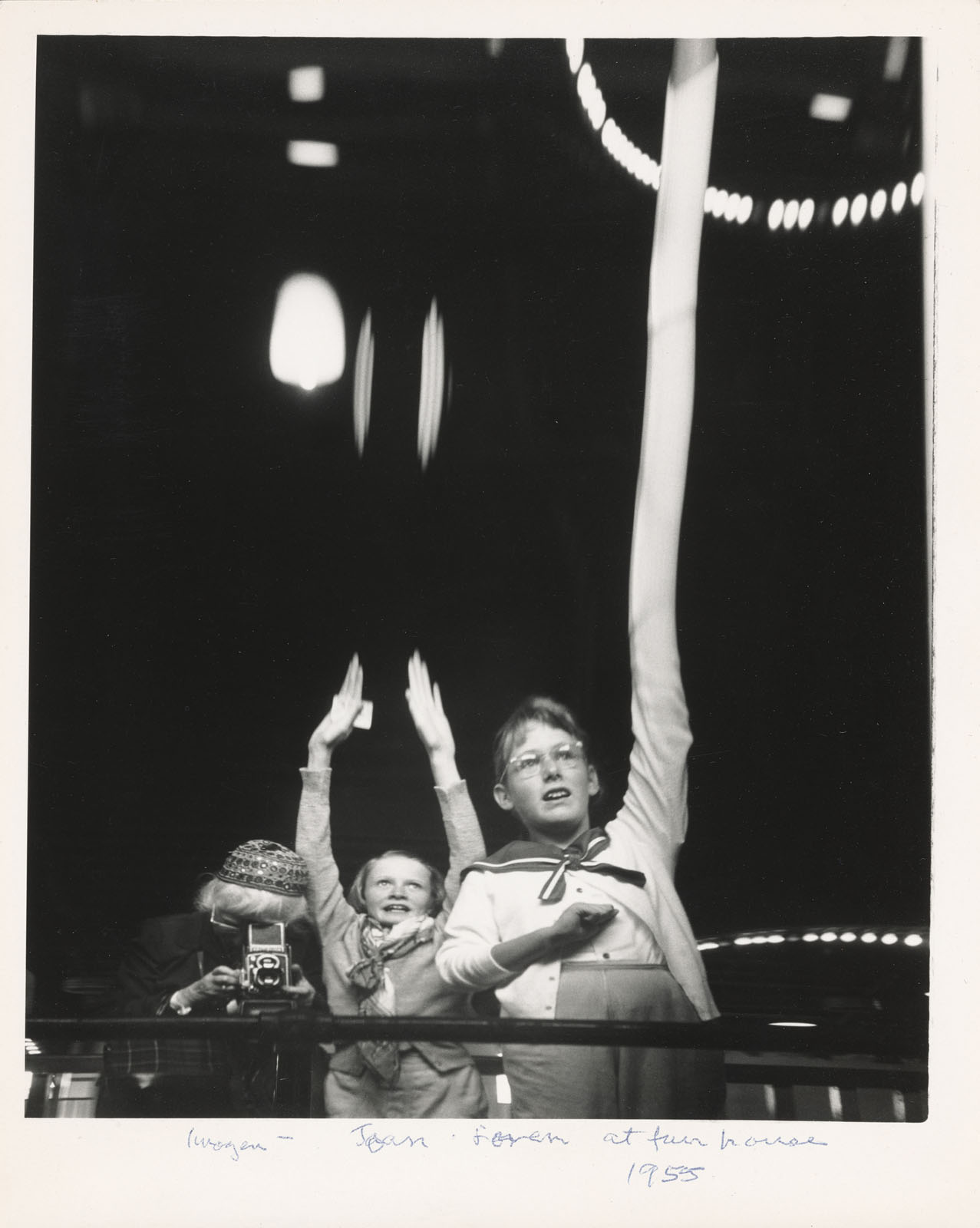
 

Imogen Cunningham (American, 1883-1976) 'Self-Portrait with Grandchildren in Funhouse' 1955


Imogen Cunningham (American, 1883-1976)
Self-Portrait with Grandchildren in Funhouse
1955
Gelatin silver print
22.2 × 18.5cm (8 3/4 × 7 5/16 in.)
Getty Museum
© Imogen Cunningham Trust


One of the greatest photographers of the 20th century, Imogen Cunningham (American, 1883-1976) enjoyed a career that spanned three-quarters of a century, creating a large and diverse body of work that underscored her vision, versatility, and commitment to the medium.

The first major retrospective in the United States in more than 35 years, Imogen Cunningham: A Retrospective brings together her insightful portraits, elegant flower and plant studies, poignant street pictures, and groundbreaking nudes in a visual celebration of Cunningham’s enormous contributions to the history of photography.

“Despite Cunningham’s exceptional achievements as a photographic artist, her work has not received the attention accorded her male counterparts,” says Timothy Potts, Maria Hummer-Tuttle and Robert Tuttle Director of the J. Paul Getty Museum. “Though struggling to meet the demands of family and career, she emerged by the second half of the 1920s as one of the most important and innovative modernist photographers in America, collaborating with leading practitioners, mentoring novices, and actively engaging with contemporary controversies in modern art. This exhibition and publication will provide the spotlight on her contribution to 20th-century photography that she so richly deserves.”

Cunningham was initially self-taught, learning the fundamentals of photography from the instructions that came with her first camera. After graduating from the University of Washington, she established a portrait studio in Seattle and began making soft-focus photographs. Her work in this period was influenced by the Pre-Raphaelite movement in art and literature. In 1915, Cunningham married and started a family. After she moved her family to San Francisco in 1917, she turned away from soft-focus images and began making a series of sharply delineated botanical studies.

In 1932 Cunningham, along with Ansel Adams, John Paul Edwards, Sonya Noskowiak, Henry Swift, Willard Van Dyke, and Edward Weston – all San Francisco Bay Area photographers – helped found Group f/64. This loosely formed association promoted a modernist style through sharply focused images created with a West Coast perspective and sense of place.

From the mid-1940s forward, Cunningham could often be seen roaming the streets of San Francisco with her Rolleiflex, making environmental portraits of the city’s inhabitants. Her enlightened attitude about her place in the world extended to her relationships with people of different racial backgrounds and sexual orientations, which broke down social barriers while enriching and diversifying her oeuvre. Cunningham’s last major project, a series of portraits of older people, was started at age 92 and published posthumously in the book After Ninety: Imogen Cunningham in 1977. The project reflected her determination to keep active and provided a way to come to grips with being a nonagenarian herself.

Cunningham was a woman of exceptional intelligence and talent, yet competing in a male-dominated profession posed a formidable challenge. She felt disparaged by some of her male colleagues, who occasionally downplayed her talent and influence. As a bulwark against the stress, she joined San Francisco Women Artists, a group organised to promote, support, and expand the representation of women in the arts. Over the years Cunningham served as a resource for female artists such as Laura Andreson, Ruth Asawa, Alma Lavenson, Laura Gilpin, Dorothea Lange, Consuelo Kanaga, and Merry Renk, among others, providing advice, moral support, and essential connections throughout the art and business worlds.

“Cunningham continually sought out new opportunities to grow, learn, and change as an artist and a person” says Paul Martineau, curator of photographs at the Getty Museum, and curator of the exhibition. “She readily admitted that she was never fully satisfied with anything and considered self-improvement, in all its forms, her life’s work.”

Imogen Cunningham: A Retrospective is organised by the Getty Museum, Los Angeles and curated by Paul Martineau, associate curator of Photographs. Major support from Jordan Schnitzer and the Harold & Arlene Schnitzer CARE Foundation. Accompanying the exhibition is a lavishly illustrated companion book, Imogen Cunningham: A Retrospective.

Press release from the J. Paul Getty Museum website
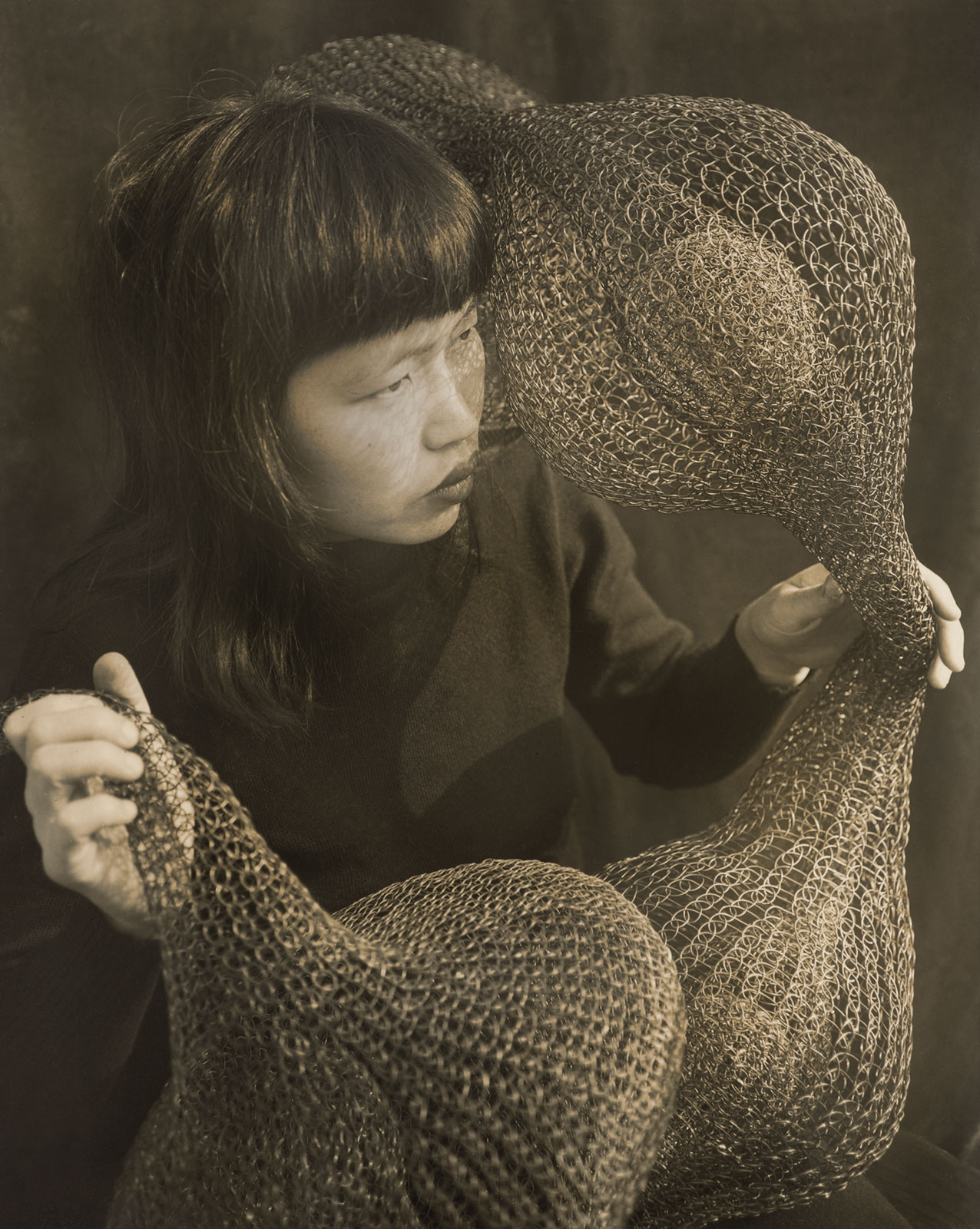
 

Imogen Cunningham (American, 1883-1976) 'Ruth Asawa, Sculptor' 1952


Imogen Cunningham (American, 1883-1976)
Ruth Asawa, Sculptor
1952
Gelatin silver print
Fine Arts Museums of San Francisco, Gift of Ruth Asawa and Albert Lanier
© The Imogen Cunningham Trust


A Network of Women

Cunningham was a woman of exceptional intelligence and talent, yet competing in a male-dominated profession posed a formidable challenge, particularly after Partridge divorced her in 1934 and she struggled to support herself. To make matters worse, Cunningham felt disparaged by some of her male colleagues, who occasionally downplayed her talent and influence. As a bulwark against the stress, Cunningham joined San Francisco Women Artists, a group organised to promote, support, and expand the role of women in the arts. Over the years Cunningham served as a resource for female artists such as Laura Andresen, Ruth Asawa, Alma Lavenson, Laura Gilpin, Dorothea Lange, Consuelo Kanaga, and Merry Renk, among others, providing advice, moral support, and essential connections throughout the art and business worlds.


Imogen Cunningham (American, 1883-1976) 'The Unmade Bed' 1957


Imogen Cunningham (American, 1883-1976)
The Unmade Bed
1957
Gelatin silver print
27.1 × 34.3cm (10 11/16 × 13 1/2 in.)
Getty Museum
Gift of Daniel Greenberg and Susan Steinhauser
© Imogen Cunningham Trust


Minor White (American, 1908-1976) 'Sandblaster, San Francisco' Negative 1949; print 1975


Minor White (American, 1908-1976)
Sandblaster, San Francisco
Negative 1949; print 1975
Gelatin silver print
21.6 × 25.1cm (8 1/2 × 9 7/8 in.)
Reproduced with permission of the Minor White Archive, Princeton University Art Museum. © Trustees of Princeton University
Gift of Daniel Greenberg and Susan Steinhauser


The Light Within

In 1964 the photographer and editor Minor White devoted an issue of the influential magazine Aperture to Cunningham. In an elegant tribute, he described his own experience of the spell she cast over her subjects as a kind of inner light. The first publication dedicated entirely to Cunningham’s work, this issue of Aperture contained a selection of forty-four images dating from 1912 to 1963, representing her wide range of genres and styles.

Between 1965 and 1973 Cunningham served as a visiting photography instructor at the California College of Arts and Crafts, Oakland; Humboldt State College, Arcata; the San Francisco Art Institute; and San Francisco State College. In 1970 she was awarded a Guggenheim Foundation grant of $5,000 to make prints from her old negatives. This prestigious prize marked a turning point in her long career, an acknowledgment that coincided with a rising interest among museums and enthusiasts in collecting photographs, both historical and contemporary.
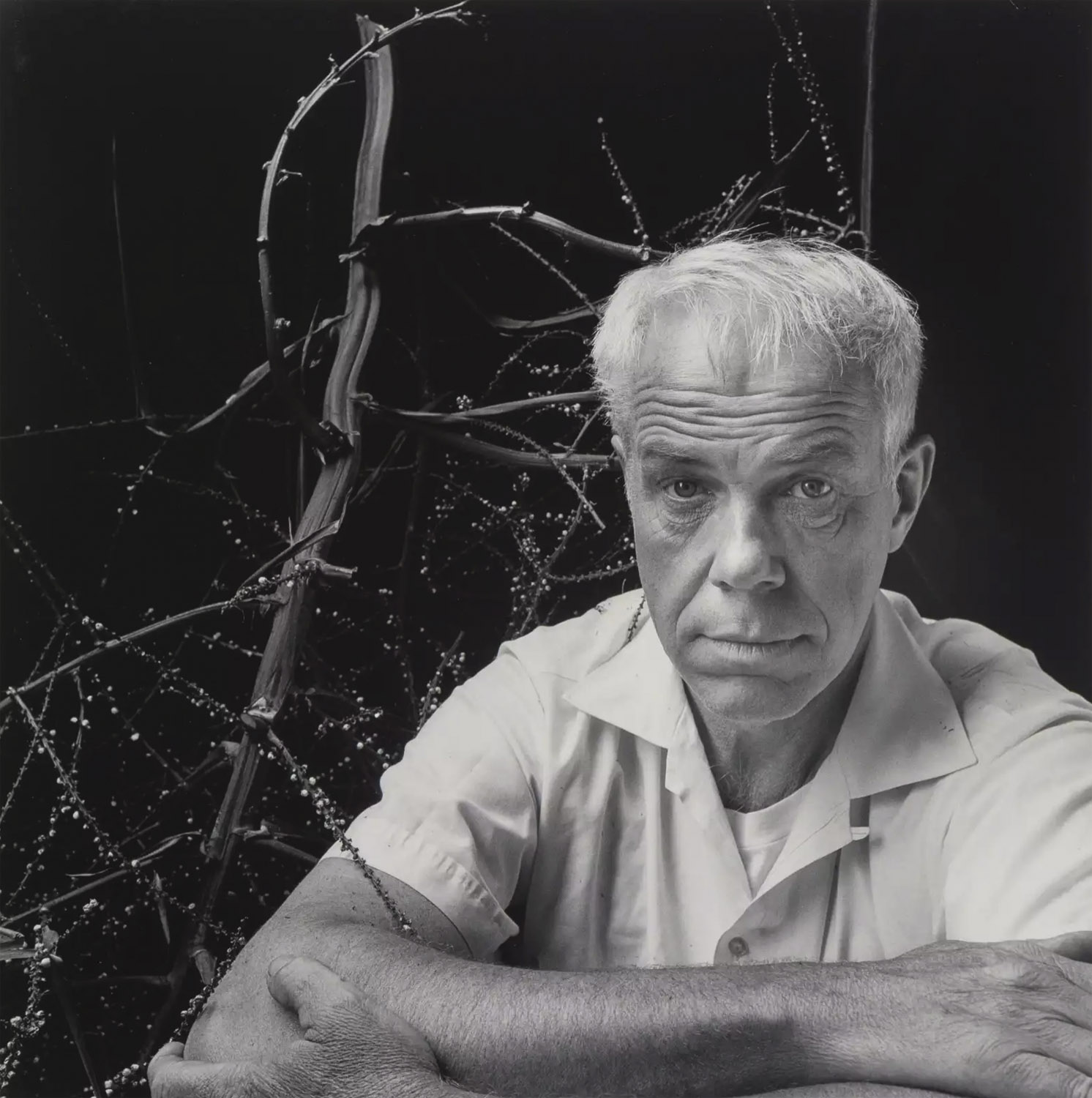
 

Imogen Cunningham (American, 1883-1976) 'Minor White, Photographer' 1963


Imogen Cunningham (American, 1883-1976)
Minor White, Photographer
1963
Gelatin silver print
Getty Museum
© The Imogen Cunningham Trust
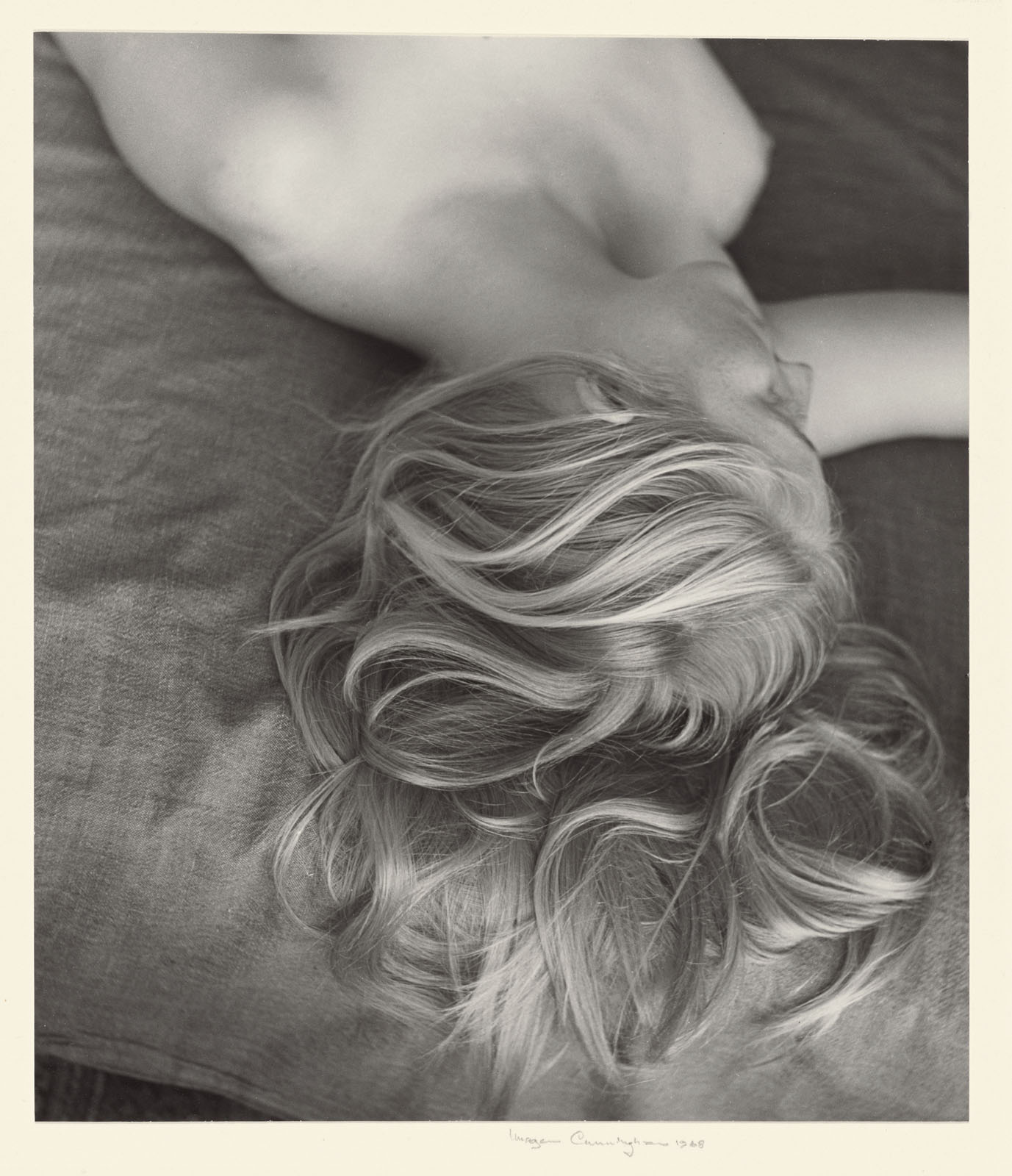
 

Imogen Cunningham (American, 1883-1976) 'Phoenix Recumbent' 1968


Imogen Cunningham (American, 1883-1976)
Phoenix Recumbent
1968
Gelatin silver print
19.1 × 22.2cm (7 1/2 × 8 3/4 in.)
Collection of Rudi Bianchi
© Imogen Cunningham Trust
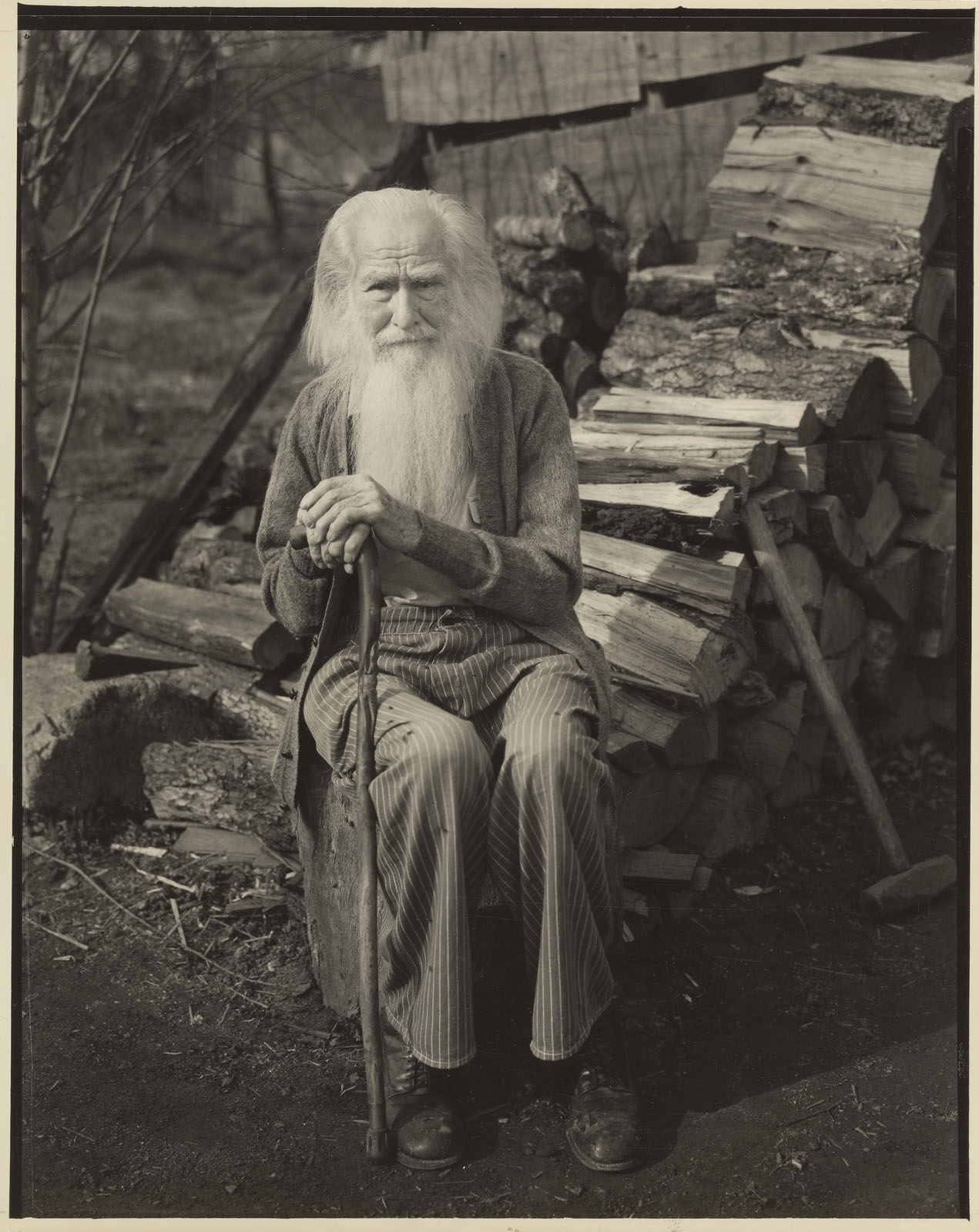
 

Imogen Cunningham (American, 1883-1976) 'My Father at Ninety' 1936


Imogen Cunningham (American, 1883-1976)
My Father at Ninety
1936
Gelatin silver print
Getty Museum
© The Imogen Cunningham Trust


After Ninety

When she was ninety-two, Cunningham started a new project, photographing people of advanced age. She estimated that this would take two years to complete, and she planned to publish the photographs in a volume to be called After Ninety. She began to seek out subjects, visiting them in their homes, in hospitals, and in convents. The project provided an outlet for her determination to keep active as well as a way to come to grips with being a nonagenarian herself. Cunningham died on June 24, 1976, and the book was published the following year.


Imogen Cunningham (American, 1883-1976) 'After Ninety' 1977


Imogen Cunningham (American, 1883-1976)
After Ninety
1977
Closed: 31.1 x 23.5 x 1.3cm
Private collection


Imogen Cunningham (American, 1883-1976) 'The Coffee Gallery' 1960


Imogen Cunningham (American, 1883-1976)
The Coffee Gallery
1960
Gelatin silver print
19.5 x 22.4cm
Getty Museum
Gift of Daniel Greenberg and Susan Steinhauser
© Imogen Cunningham Trust
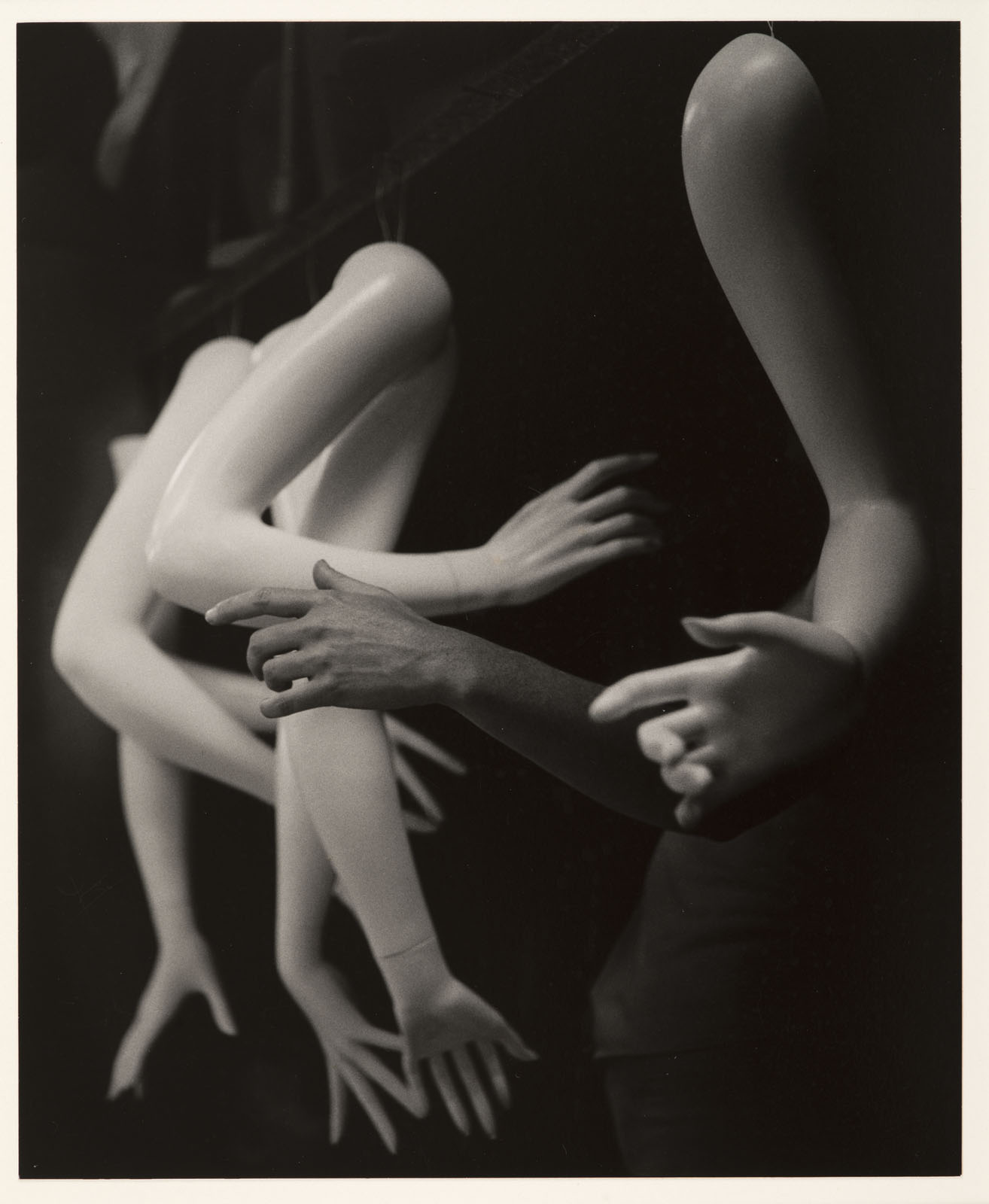
 

Imogen Cunningham (American, 1883-1976) 'Another Arm' 1973


Imogen Cunningham (American, 1883-1976)
Another Arm
1973
Gelatin silver print
23.2 × 19cm (9 1/8 × 7 1/2 in.)
© Imogen Cunningham Trust
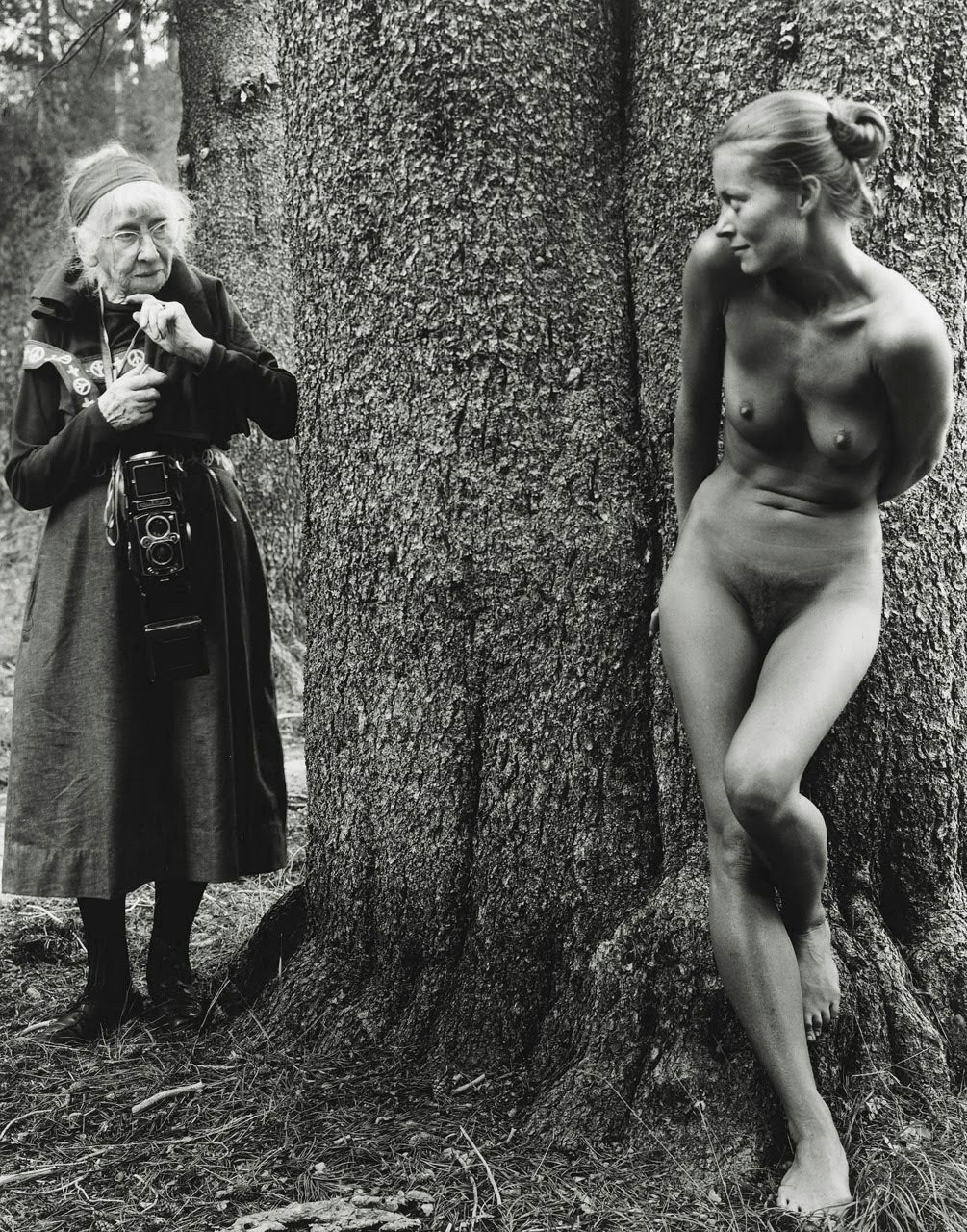
 

Judy Dater. 'Imogen Cunningham and Twinka Thiebaud' 1974


Judy Dater (American, born 1941)
Imogen and Twinka at Yosemite
1974
Gelatin silver print
24.2 × 19cm (9 1/2 × 7 1/2 in.)
© Judy Dater. All rights reserved


The J. Paul Getty Museum
1200 Getty Center Drive
Los Angeles, California 90049

Opening hours:
Daily 10am – 5pm

The J. Paul Getty Museum website

LIKE ART BLACK ON FACEBOOK

Back to top

Exhibition: ‘The Time Between: The Sequences of Minor White’ at the Museum of Photographic Arts, San Diego

Exhibition dates: 20th October 2015 – 31st January 2016


This is such as disappointing posting… not for the quality of the work, which is exceptional, but for the lack of it.

I have been waiting for this exhibition for a very long time and asked MoPA for the press images:

1/ Nine were supplied from the Jupiter Portfolio, NOT even the whole sequence, to illustrate the exhibition
2/ The images supplied were so small as to be more than useless
3/ I then wrote to the Minor White Archive at Princeton University asking for more images. No reply


So I have scanned the images from the Jupiter Portfolio myself so that at least you can see one whole MW sequence online. You can feel the space between the images, that frisson between two disparate images (what MW calls ice/fire) that is part of ** what you should FEEL in your HEART – if you click on the small horizontal photograph below to see the sequence in larger photographs.

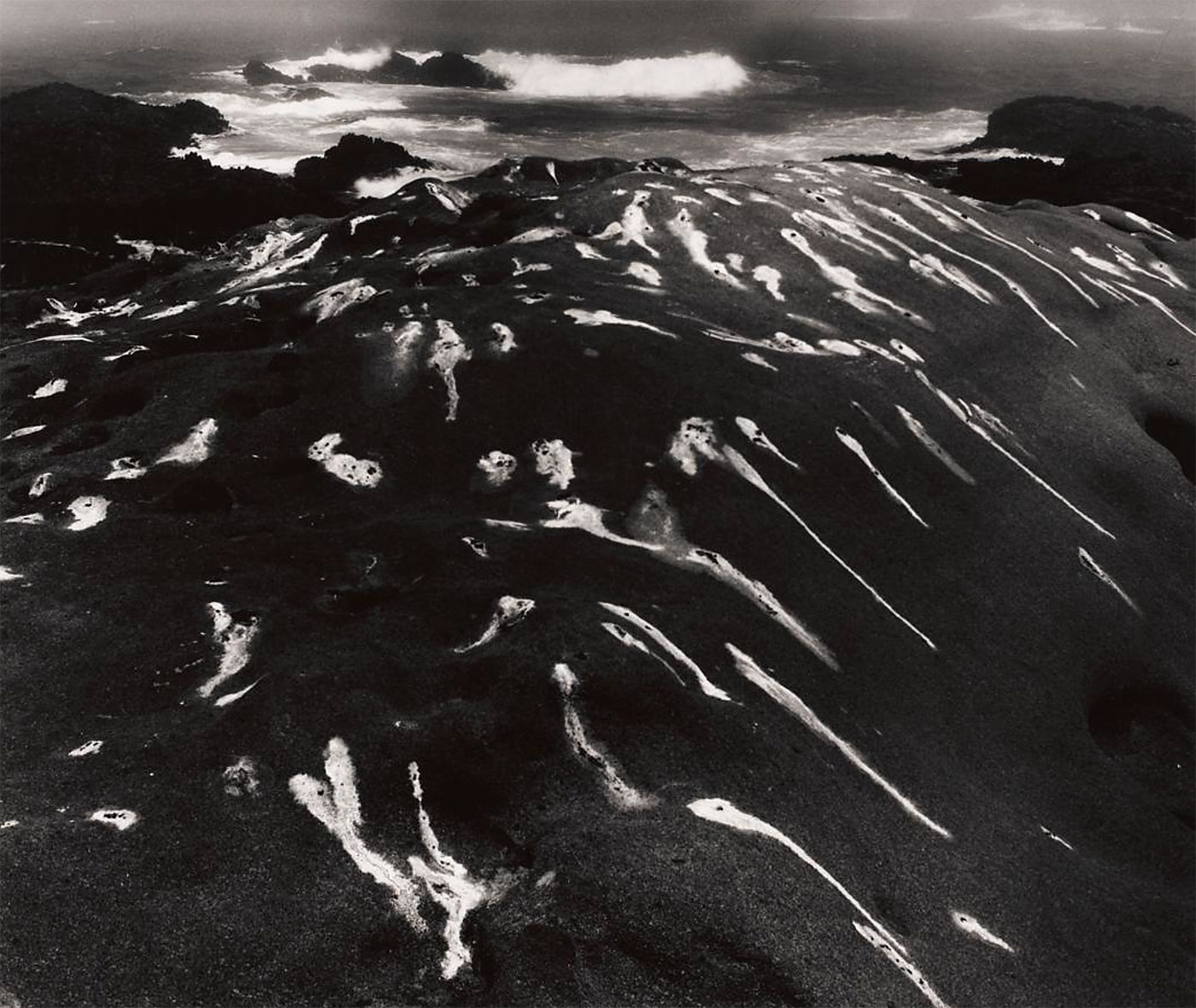
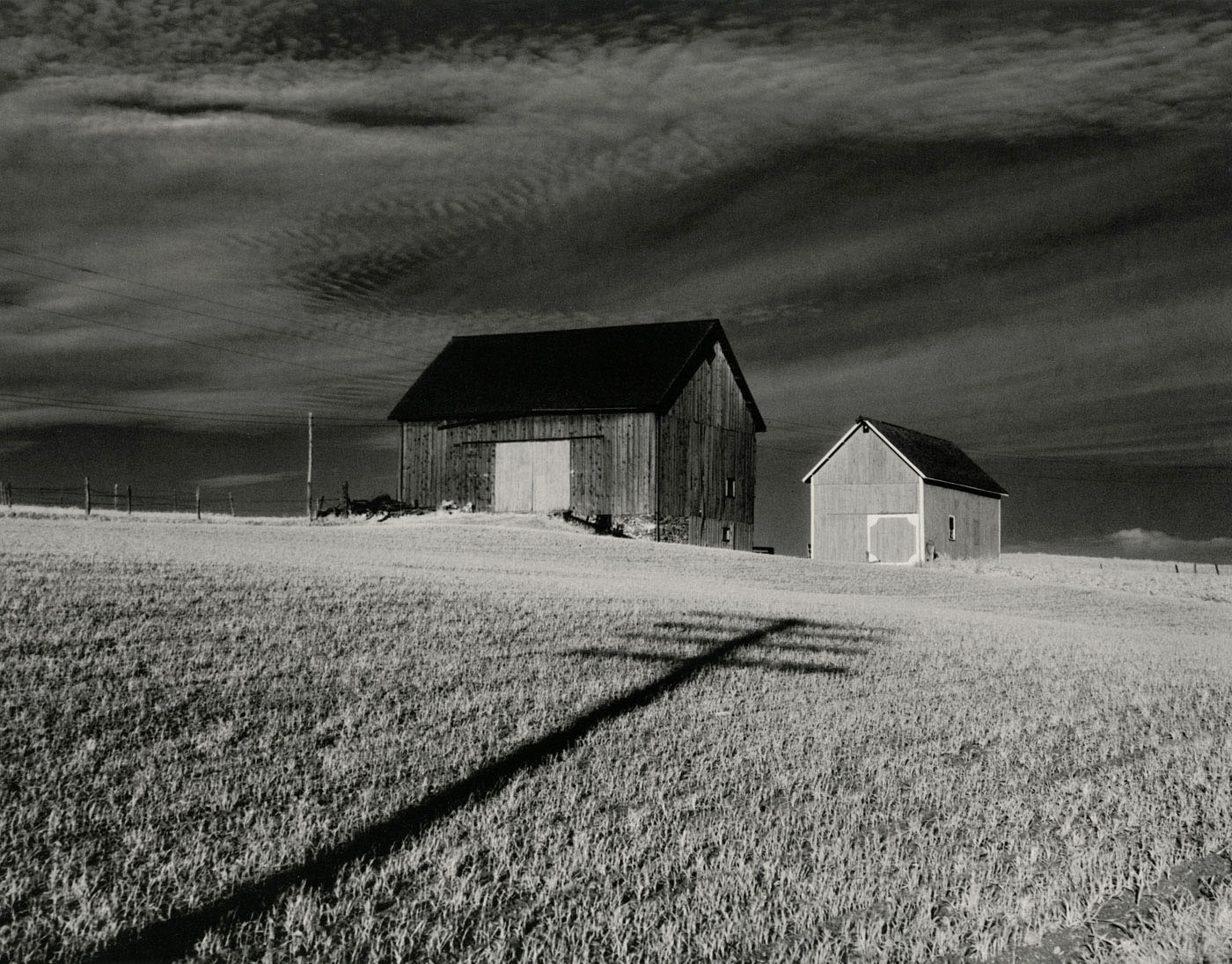
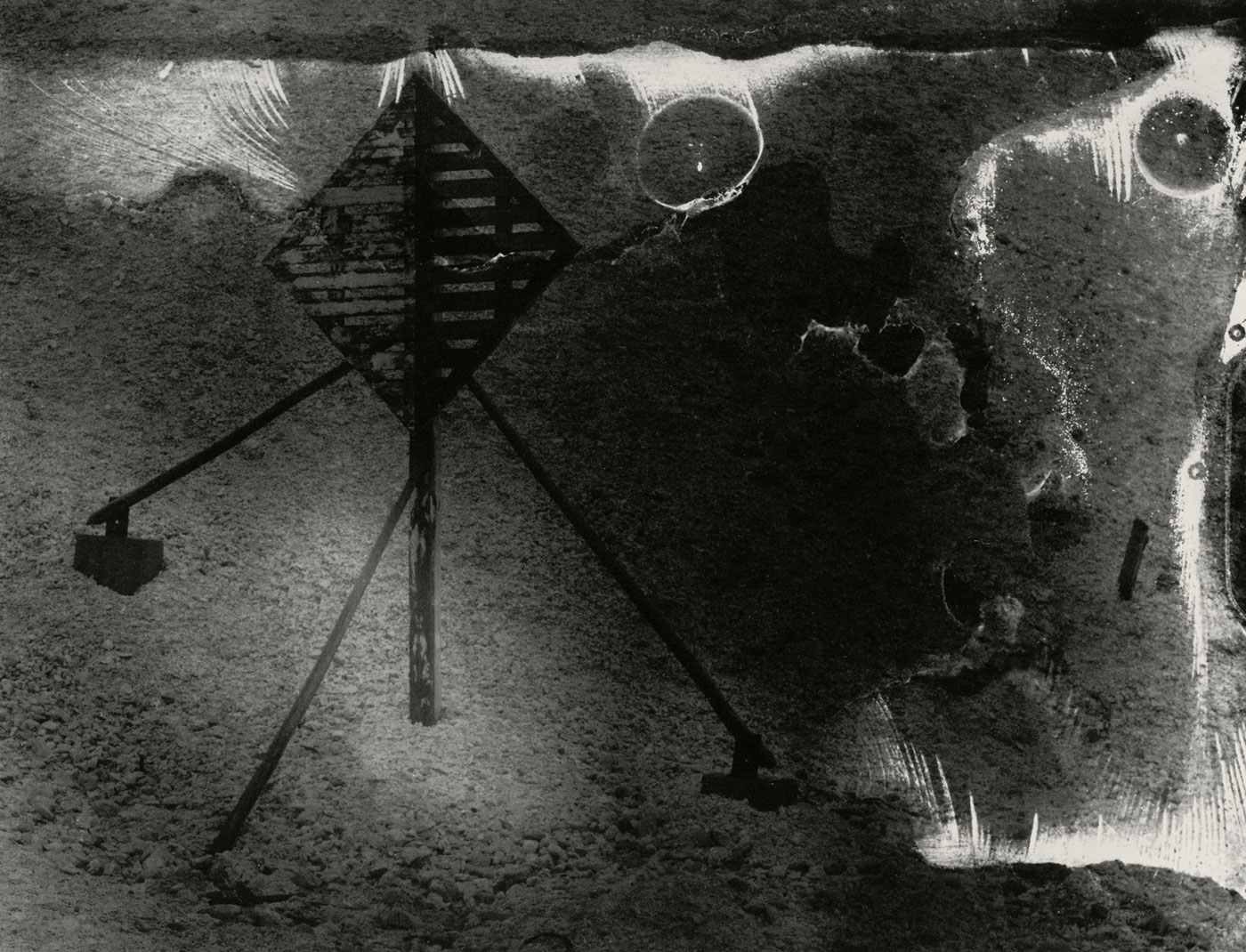
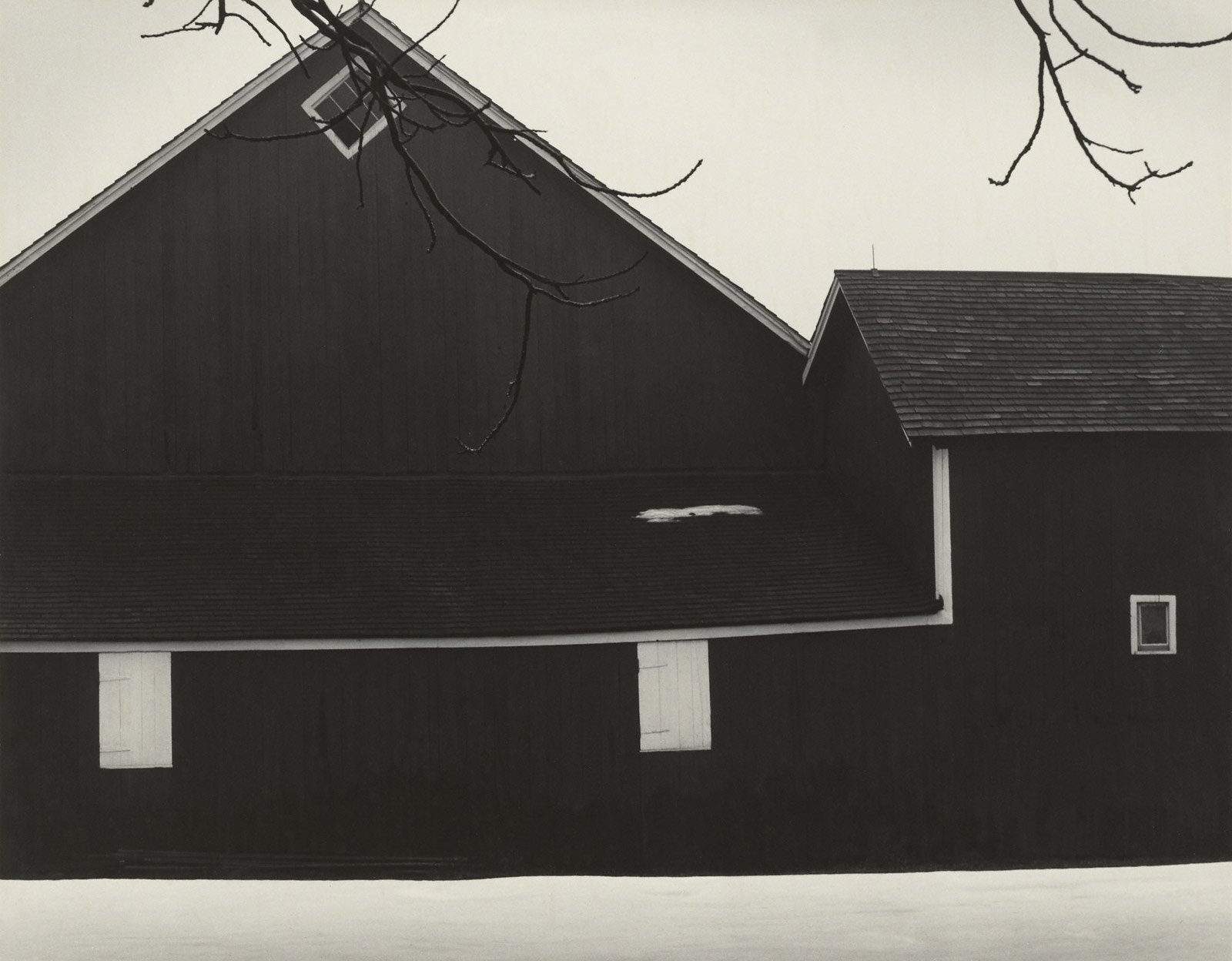
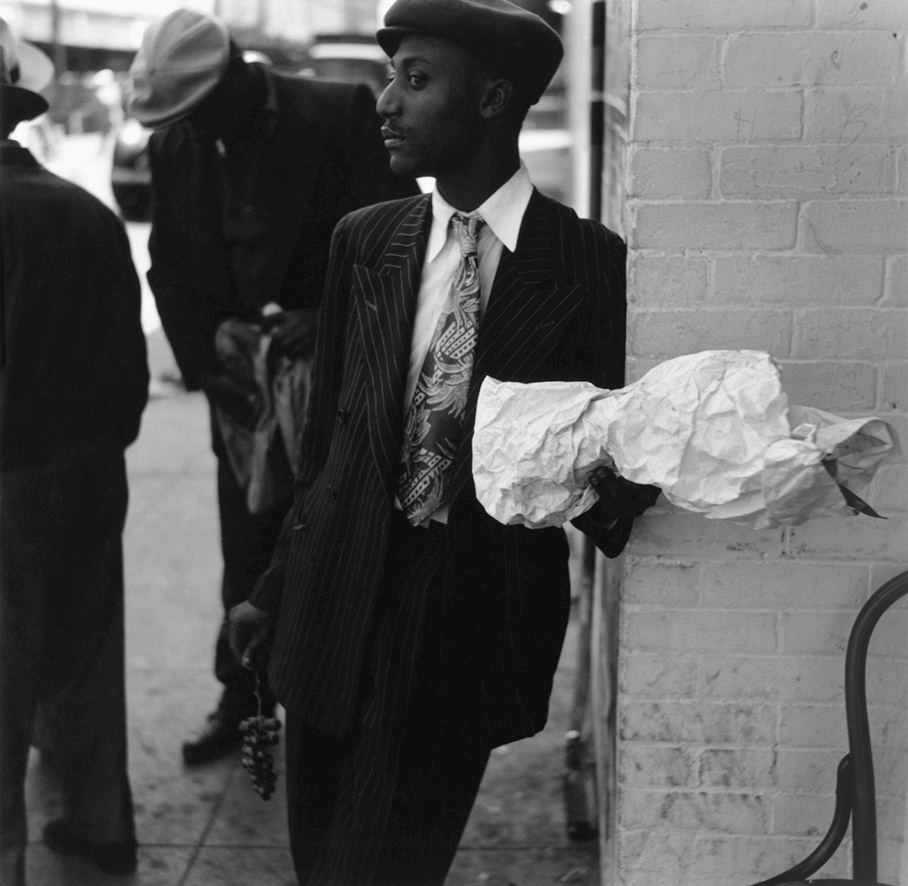
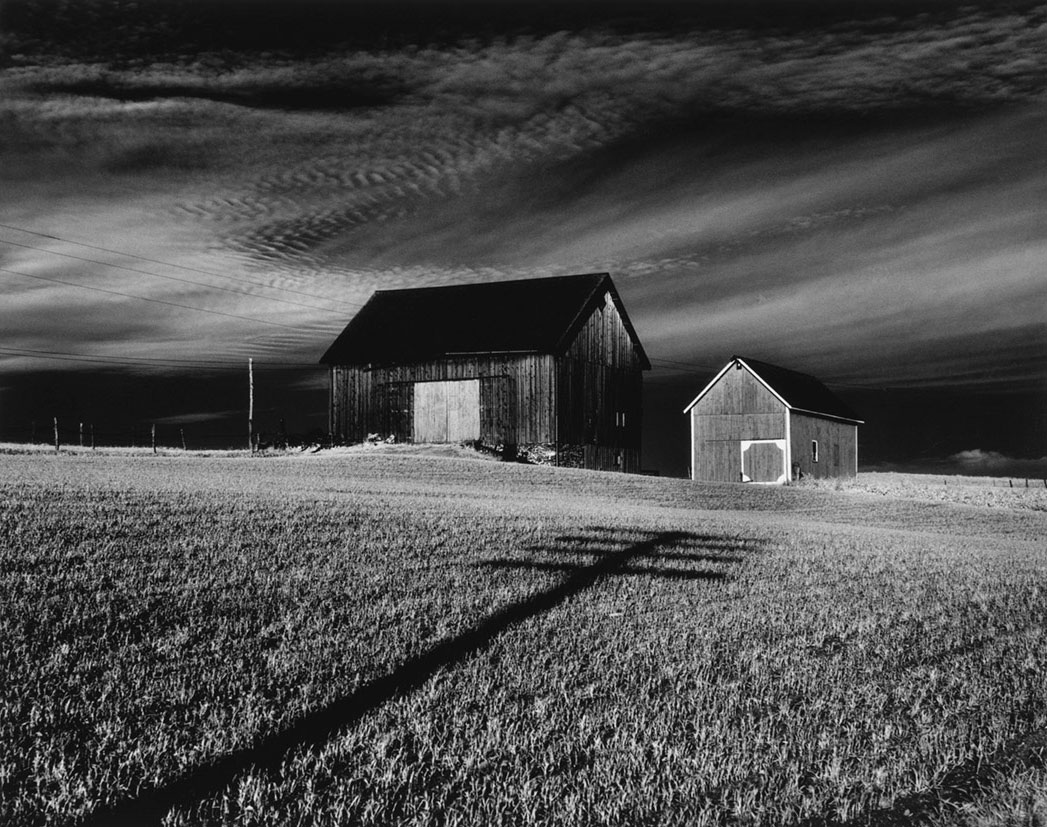
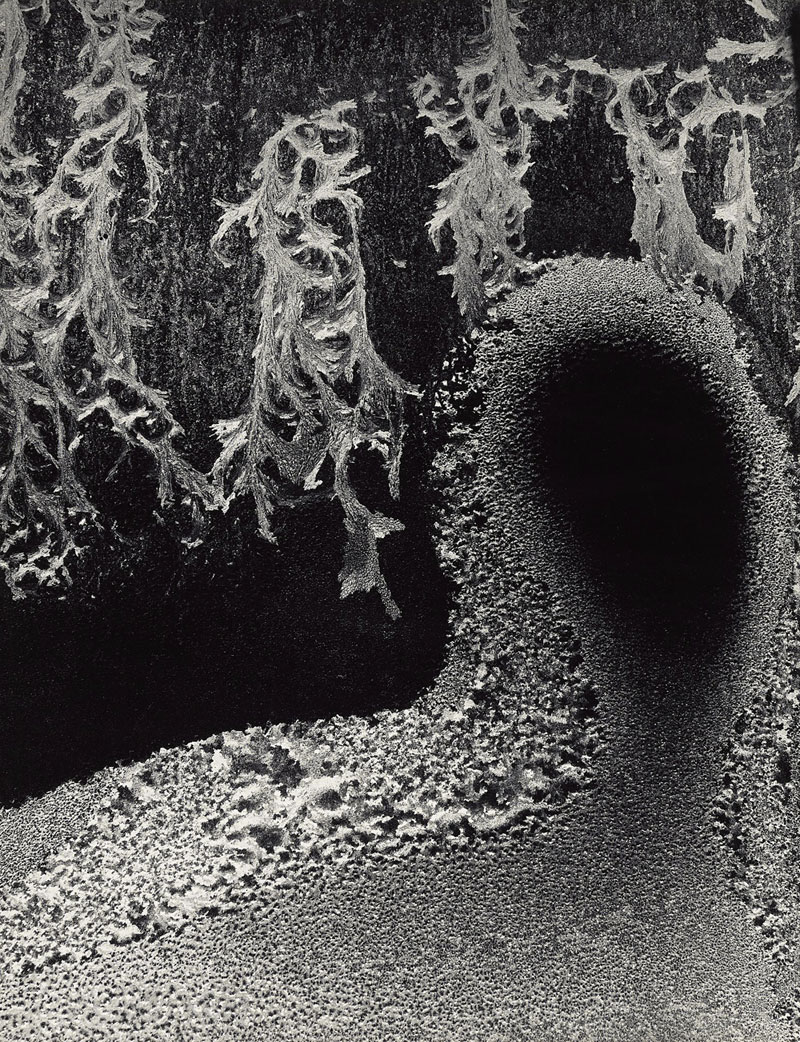
In the sequence we have the line of light over the sea in the first image, Devil’s Slide, San Mateo County, California (1947), which is then picked up in the line of the upper thigh and buttock in the second image Nude Foot, San Francisco (1947) with its gorgeous sensuality. Again, that line is illuminated in the third image Columbus Avenue, San Francisco (1949) by the white above the sandblaster’s head, while the heart shape arrow points back to the buttock in the previous image, perhaps subconsciously referencing White’s homosexuality. The white lettering of this image is then intensified, expanded and abstracted in the next image, Birdlime and Surf, Point Lobos, California (1951), these markings then flowing through into the lines of the telegraph pole in the infra red photograph of two barns Vicinity of Danville, New York (1955).

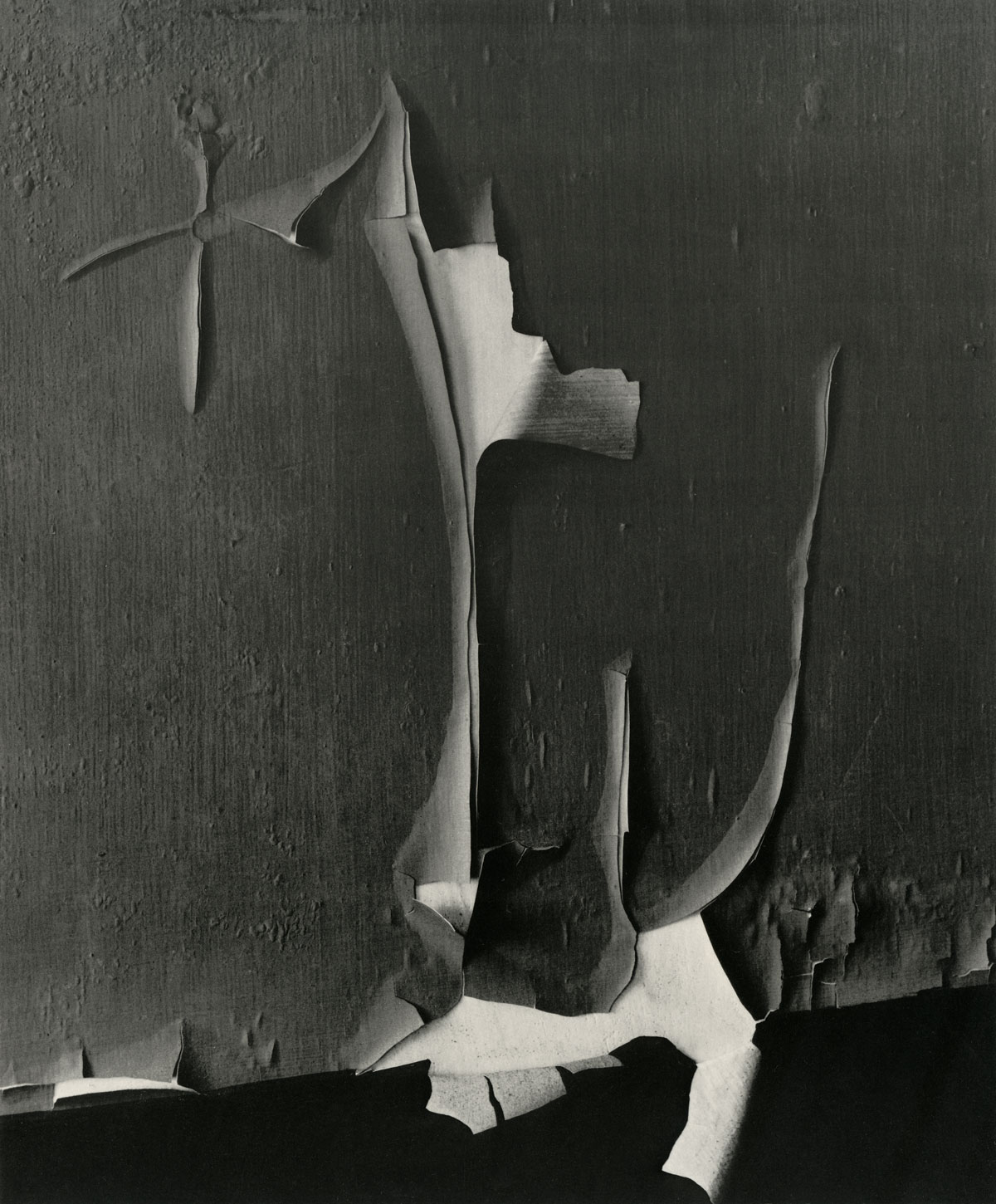
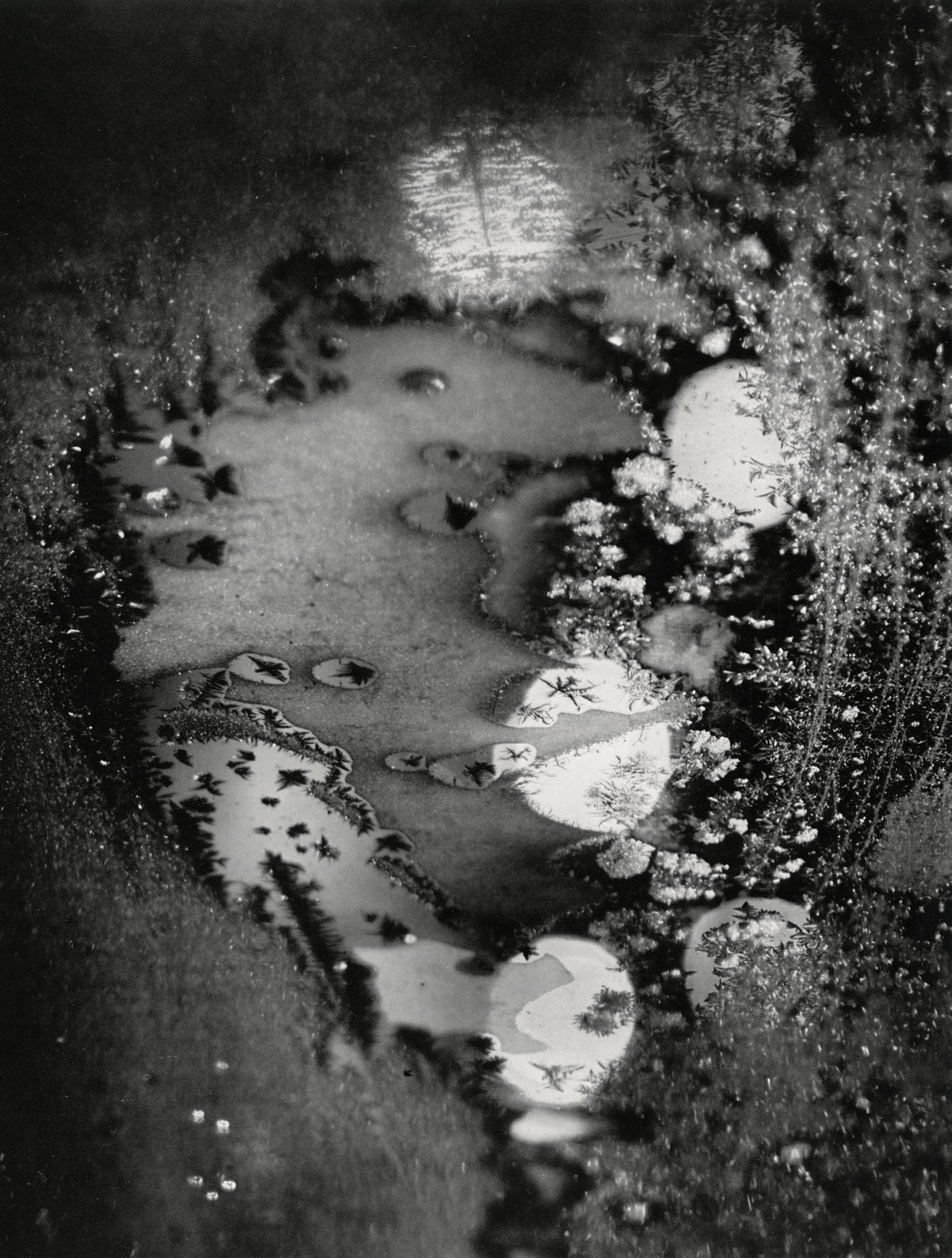
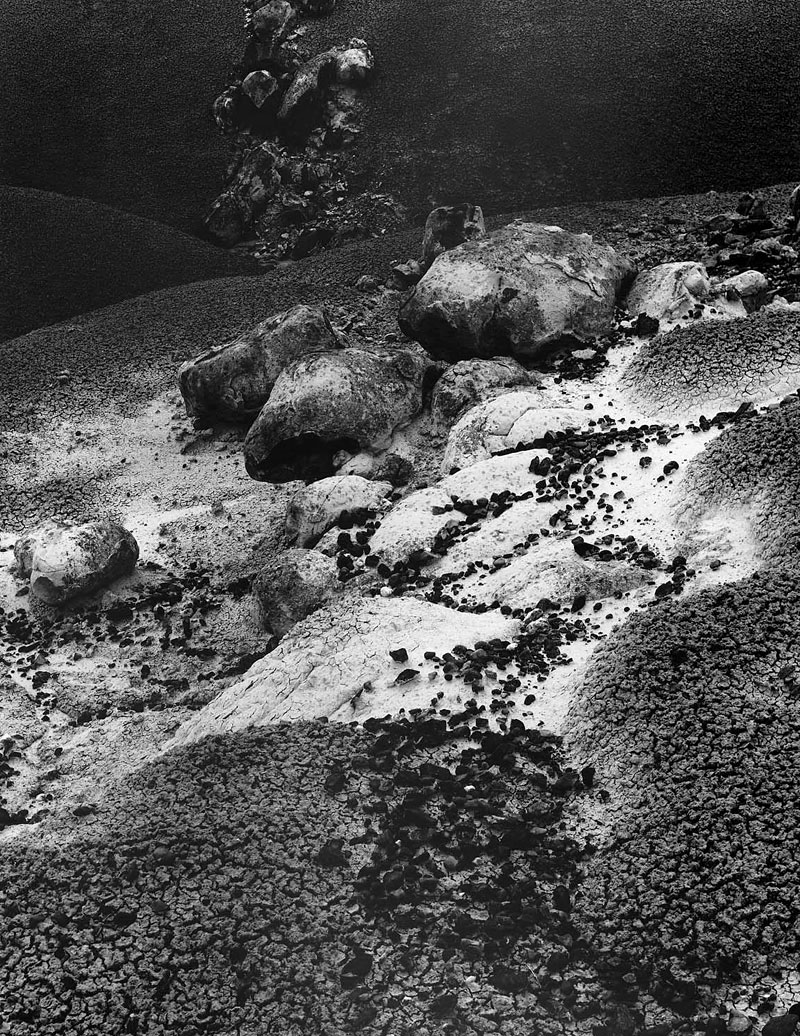
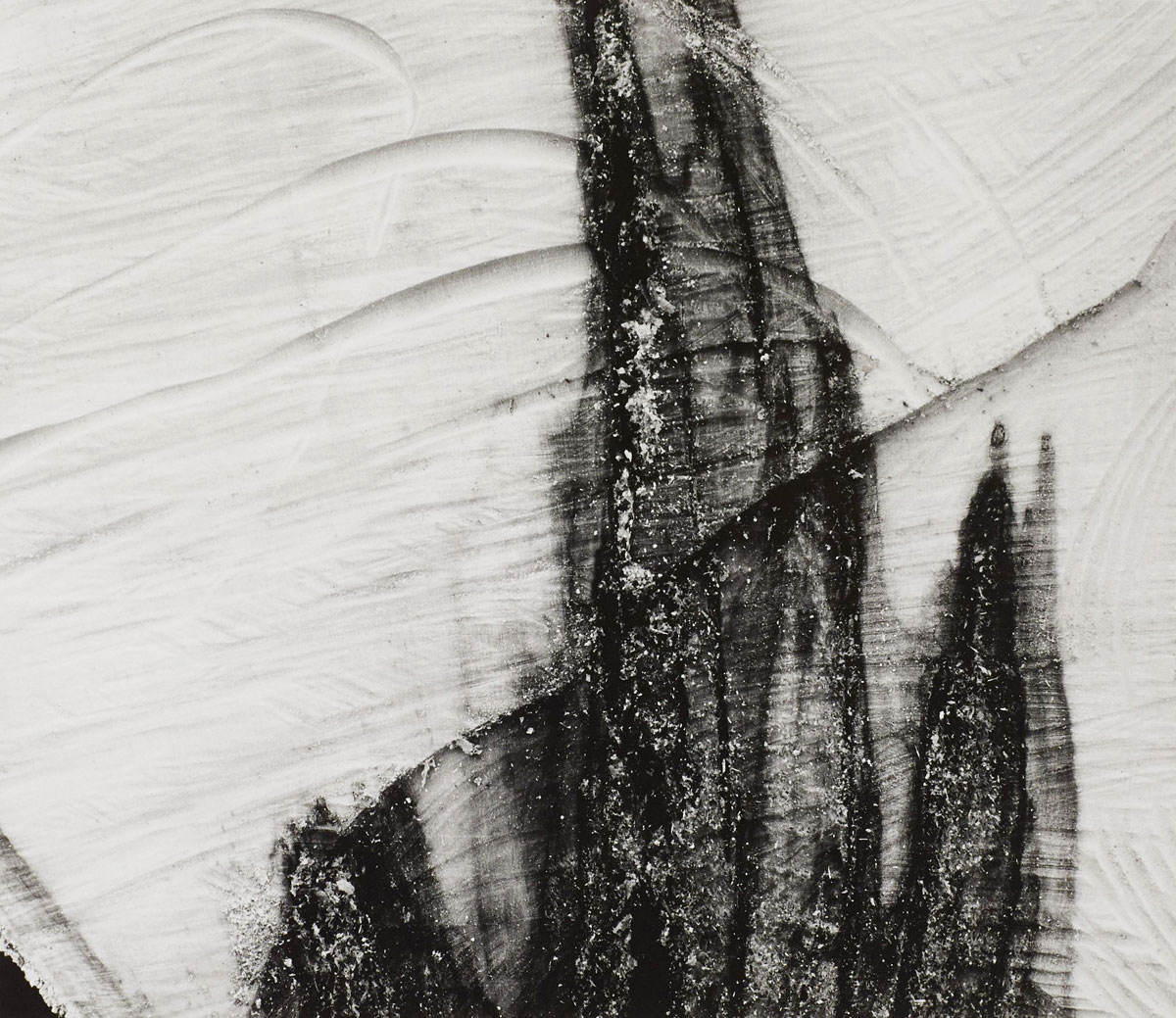
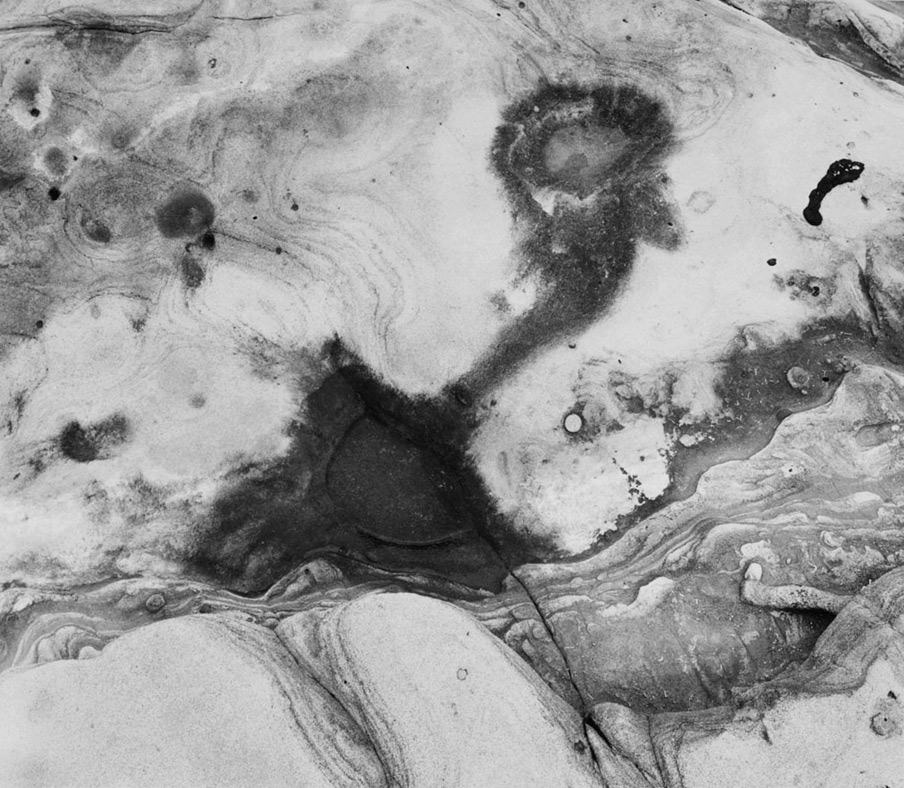
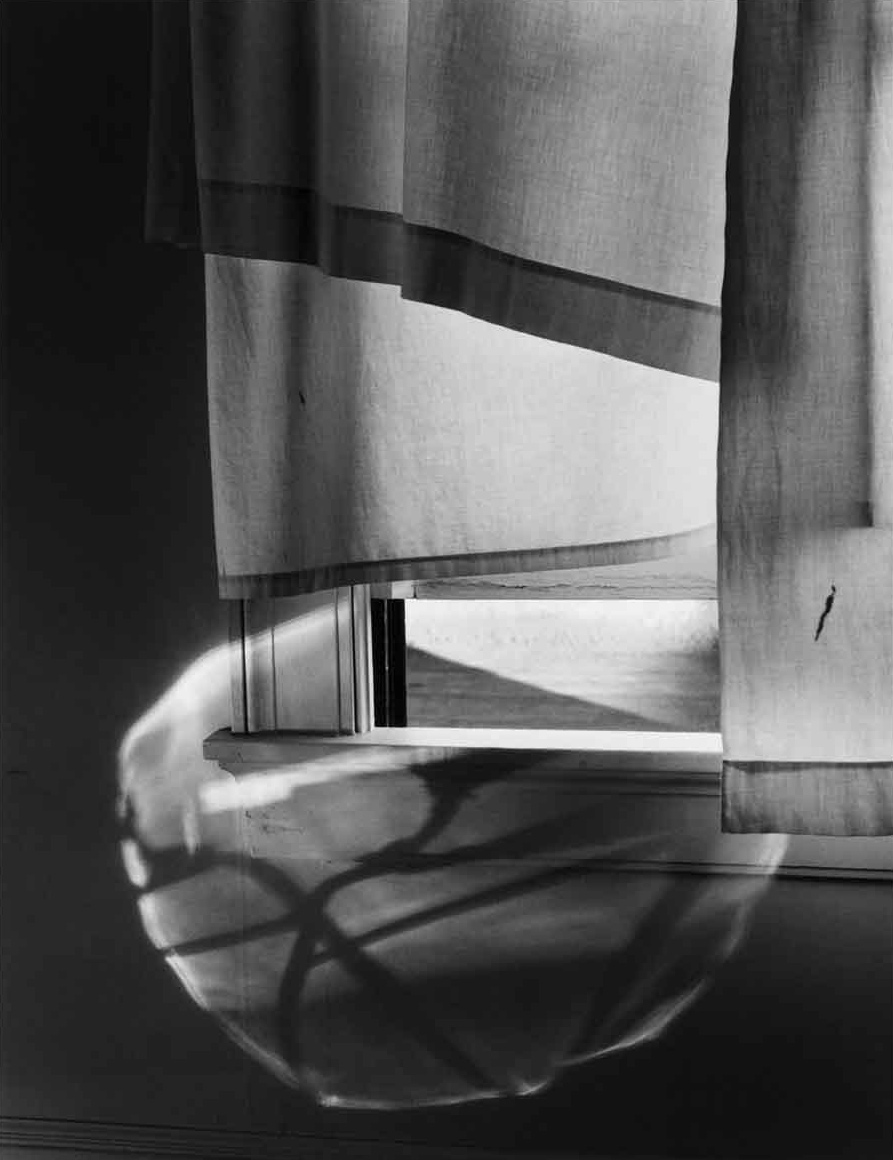
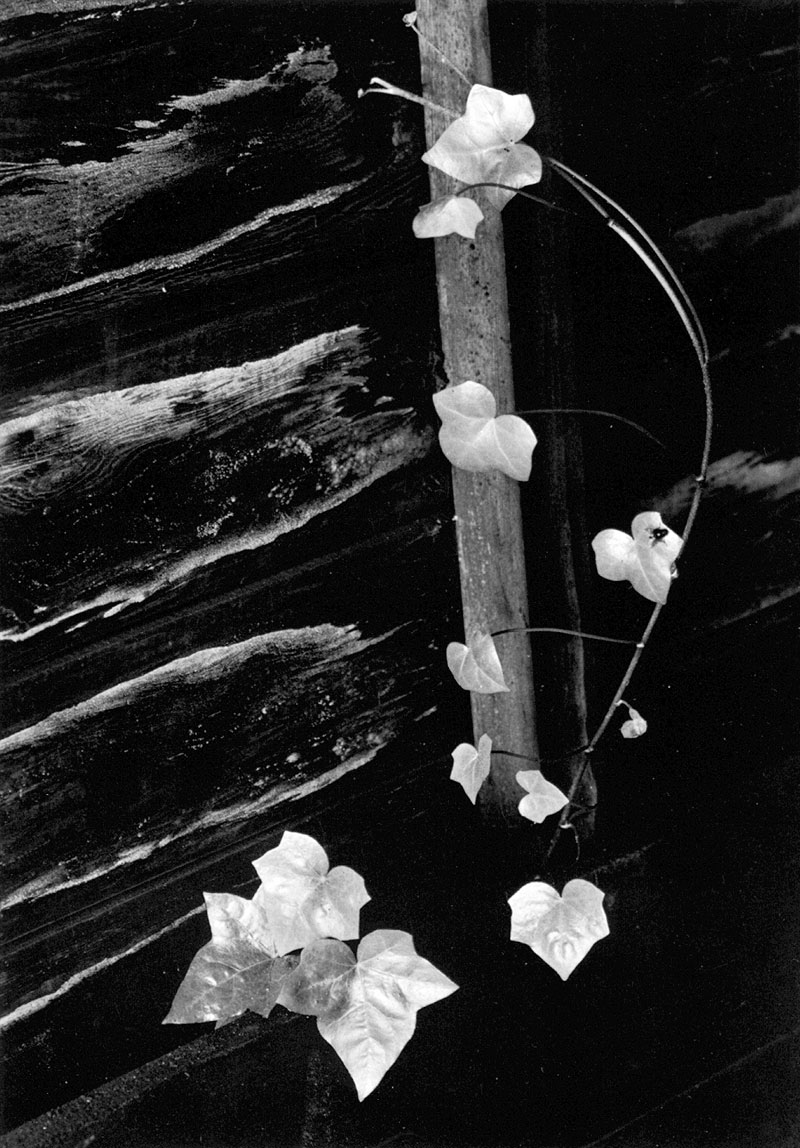
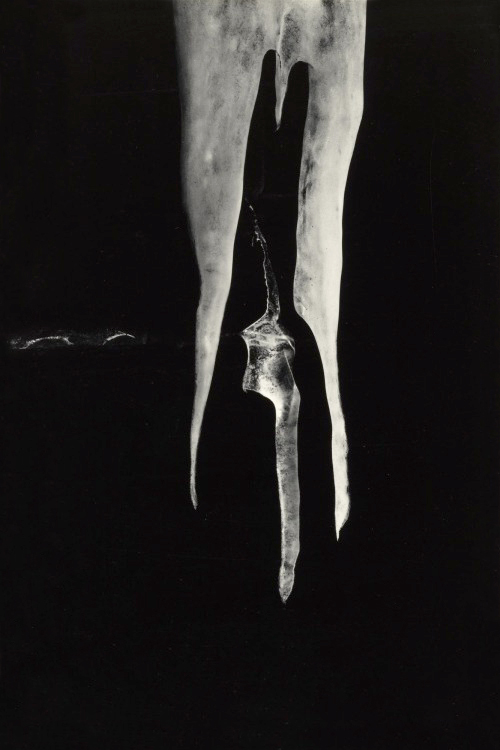
Transposing down a pitch, MW then turns these lines from the horizontal plane to the vertical and they descend softly into the swirling cosmos of Windowsill Daydreaming, Rochester, New York (1958), one of my favourite photographs by the artist for its indeterminate, morphic “air.” These striations and nodules of presence are then repeated in varying forms through the next four images – through peeling paint, ice crystals, rock and the darkly printed ivy and wood. These photographs move you through the elements, like a piece of music. The markings on wood in Ivy, Portland, Oregon (1964) are then echoed in the marker in the photograph Cape Breton, Nova Scotia (1970), to be finally stretched and elongated vertically in the sublime Vermont (1971).

Just imagine holding this composition, this music (“visual literacy”) in your head for nigh on 28 years before you sequenced these images, before you had them all together and you knew what you needed to say… as a human being and as an artist.

** The time between does indeed reference White’s belief that the space between the images is as important as the image itself, but it is also the ability of the images to speak to images further down the line (and time) of the sequence, and further down the line of the imagination. How seeds planted earlier in the sequence can reappear as puncture, prick, punctum, spirit, revelation even, the closer we come in meditation and a sense of quietness to the photographs. This is the joy of the art of Minor White.

To finish let me say a couple of things. As far as I can ascertain, this is about the only complete sequence of his online. It is such a pity that so great an artist, who taught photography as art to the world (and was my absolute hero when I started studying photography in 1991), should not have his work available to be seen as it should be seen, in a sequence. Free for everyone to see around the world, to study and to understand what he was trying to say with his revelatory art.

I am so over museums trying to protect what they have, instead of spreading the love and the understanding of the art. They are custodians of the art NOT the owners. Some of them should remember that…

Dr Marcus Bunyan

PS. Minor White was always the person I most looked up to when I started photography as I tried to photograph in meditation, forming a link between myself, the object back through the camera to the film, hoping for some form of revelation in the negative and the subsequent print. He, Paul Strand and Eugene Atget, with a bit of Stieglitz and Aaron Siskind thrown in for good measure, where my guiding stars.


Please click on the photographs for a larger version of the image.


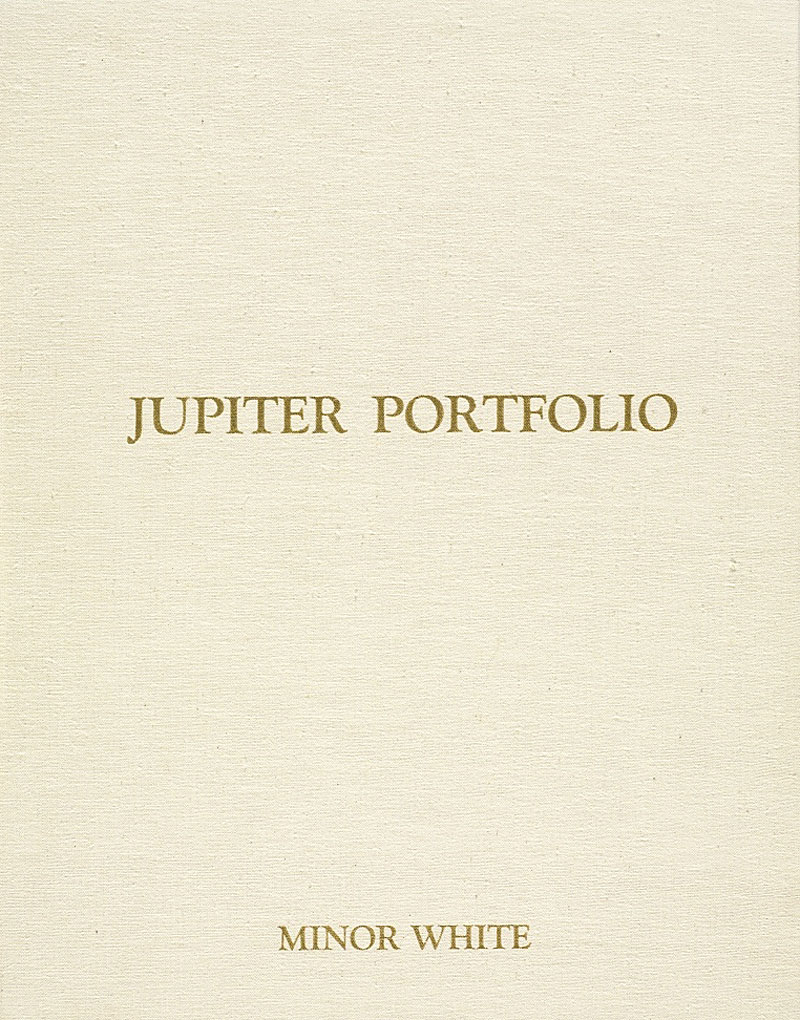
Minor White (American, 1908-1976) 'Jupiter Portfolio' 1975


Minor White (American, 1908-1976)
Jupiter Portfolio
1975
Portfolio of 12 gelatin silver prints

~ Please click on the photograph to see a larger version of the sequence ~


“Photographs side by side cannot help being mutually affected. Transpose them, the meaning changes.”


Minor White, 1976


Minor White (American, 1908–1976) 'Jupiter Portfolio' 1975 Portfolio of 12 gelatin silver prints


Minor White (American, 1908-1976)
Jupiter Portfolio
1975
Portfolio of 12 gelatin silver prints


The Museum of Photographic Arts (MOPA) presents an original exhibition dedicated to the work and legacy of American photographer Minor White (1908-1976) in The Time Between: The Sequences of Minor White.

The exhibition is the first major museum examination solely focusing on White’s sequences, a unique style of presentation he refined throughout his career. As a poet, writer, educator, curator and photographer, White believed in the power of images to be transformed when positioned sequentially, creating a new whole and a new level of interpretation, said MOPA Executive Director Deborah Klochko.

“One the most important American photographers of the 20th century, White’s work is still vital and important 40 years after his death,” Klochko said. “The title of the exhibition, The Time Between, references White’s belief that the space between the images is as important as the image itself.”

Many of the images in The Time Between are considered to be White’s most iconic. The exhibition features two bound albums, three digital sequences and eight print sequences presented together for the first time as White intended. White promoted the idea of “visual literacy,” which teaches the reading of images, similar to how his sequences encourage viewers to see the images in a larger context.

Press release from MOPA


Grouping photographs was Minor White’s preferred mode of presentation, and the sequence, of all his arrangements, was his most sophisticated form of pictorial expression.

Initially the sequence was an outgrowth of White’s work in poetry. However, in the realm of photographic art, perhaps his most important inspiration was the sequences of Alfred Stieglitz begun in the 1920s. Stieglitz taught that no all photographs need function as individual or summational works, but that certain images in a structured context could serve in support of others and could create a total statement more complex and multifaceted than single works alone or loose assortments of related pictures.

In addition to the influence of Stieglitz’s sequences, White learned a great deal about laying out of photographs from Nancy Newhall at the Museum of Modern Art in New York in 1945-46. She had been influenced by Stieglitz’s work and by her conversations with him beginning in the late 1930s, and it was she who encouraged Minor White to meet Stieglitz.

While White was at the museum, Nancy Newhall was organising a retrospective of Edward Weston’s photographs. Her installation of this exhibition was a revelation to him. Nancy Newhall was gifted in her understanding of photographs and had a remarkable feeling for the dynamics of expression in pictorial art and an acute sensitivity for the photographer’s unique approach. Her interpretation of the iconographic elements contained in individual photographs was superb, and the way in which she could create a sympathetic ordering of such pictures was extraordinary.

Minor White’s sequences, highly structured groupings of pictures with similar formats, sometimes contain ten, twenty, or thirty photographs. They need to be studied in a state of concentration, or heightened awareness, and involve recognition of both the content and feeling, the intellectual and emotional aspects, of each image in relation to its adjacent images. However, one must read the images as an ensemble, in their cumulative assertion of a complex and inter-connected idea, to sense the import of the artist’s statement.

Describing the sequence as “a cinema of stills,” Minor White wrote, “The time between photographs is filled by the beholder, first of all from himself, then from what he can read in the implications of design, the suggestions springing from treatment, and any symbolism that might grow from within the work itself … The meaning appears in the mood they [the symbols] raise in the beholder; and the flow of the sequence eddies in the river of his associations as he passes from picture to picture.”

Reading White’s sequences depends on understanding both the symbolic and the descriptive capabilities of his photography…

“The Sequence,” from Bunnell, Peter. Minor White: The Eye That Shapes. The Art Museum, Princeton University, 1989, p. 231


Minor White (American, 1908–1976) 'Devil's Slide, San Mateo County, California' 1947


Minor White (American, 1908-1976)
Devil’s Slide, San Mateo County, California
1947
No. 1 from Jupiter Portfolio, sequenced 1975
Gelatin silver print
The Minor White Archive, Princeton University Art Museum, bequest of Minor White
© Trustees of Princeton University


Minor White (American, 1908–1976) 'Nude Foot, San Francisco' 1947


Minor White (American, 1908-1976)
Nude Foot, San Francisco
1947
No. 2 from Jupiter Portfolio, sequenced 1975
Gelatin silver print
The Minor White Archive, Princeton University Art Museum, bequest of Minor White
© Trustees of Princeton University


Minor White (American, 1908–1976) 'Columbus Avenue, San Francisco' 1949


Minor White (American, 1908-1976)
Columbus Avenue, San Francisco
1949
No. 3 from Jupiter Portfolio, sequenced 1975
Gelatin silver print
The Minor White Archive, Princeton University Art Museum, bequest of Minor White
© Trustees of Princeton University


Minor White (American, 1908–1976) 'Birdlime and Surf, Point Lobos, California' 1951


Minor White (American, 1908-1976)
Birdlime and Surf, Point Lobos, California
1951
No. 4 from Jupiter Portfolio, sequenced 1975
Gelatin silver print
The Minor White Archive, Princeton University Art Museum, bequest of Minor White
© Trustees of Princeton University


Minor White (American, 1908–1976) 'Vicinity of Danville, New York' 1955


Minor White (American, 1908-1976)
Vicinity of Danville, New York
1955
No. 5 from Jupiter Portfolio, sequenced 1975
Gelatin silver print
The Minor White Archive, Princeton University Art Museum, bequest of Minor White
© Trustees of Princeton University


Minor White (American, 1908–1976) 'Windowsill Daydreaming, Rochester, New York' 1958


Minor White (American, 1908-1976)
Windowsill Daydreaming, Rochester, New York
1958
No. 6 from Jupiter Portfolio, sequenced 1975
Gelatin silver print
The Minor White Archive, Princeton University Art Museum, bequest of Minor White
© Trustees of Princeton University


Minor White (American, 1908–1976) 'Rochester, New York' 1959


Minor White (American, 1908-1976)
Rochester, New York
1959
No. 7 from Jupiter Portfolio, sequenced 1975
Gelatin silver print
The Minor White Archive, Princeton University Art Museum, bequest of Minor White
© Trustees of Princeton University


Minor White (American, 1908–1976) 'Beginnings, Rochester, New York' 1962


Minor White (American, 1908-1976)
Beginnings, Rochester, New York
1962
No. 8 from Jupiter Portfolio, sequenced 1975
Gelatin silver print
The Minor White Archive, Princeton University Art Museum, bequest of Minor White
© Trustees of Princeton University


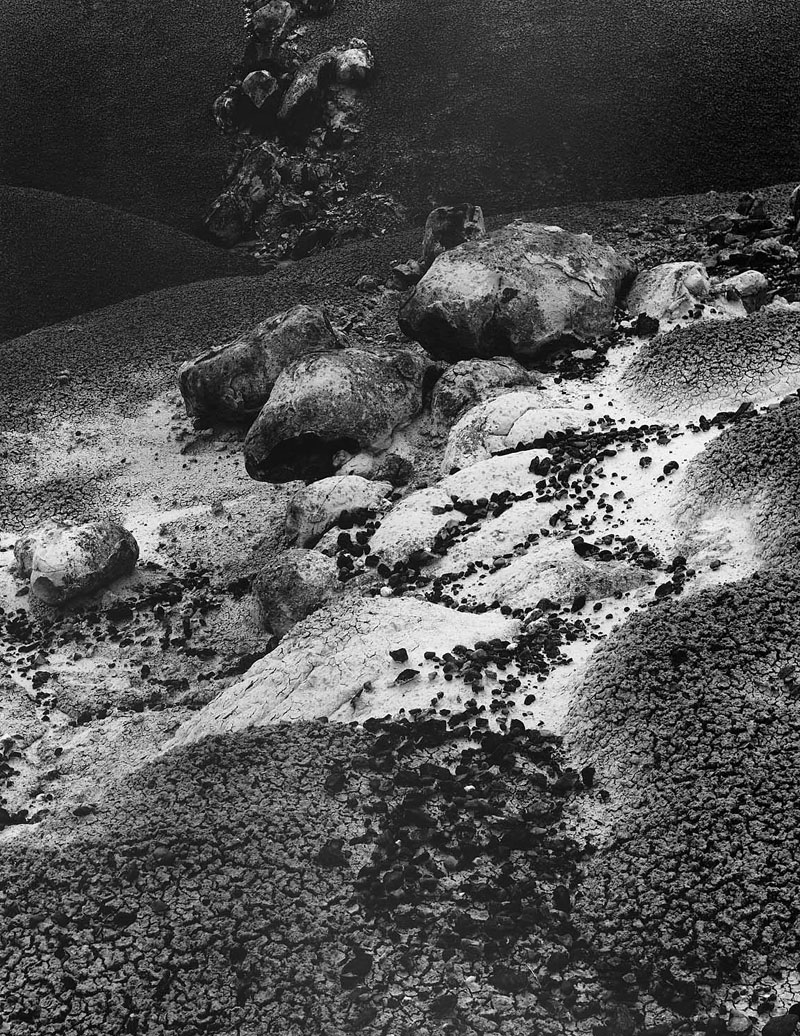
Minor White (American, 1908-1976) 'Notom, Utah' 1963


Minor White (American, 1908-1976)
Notom, Utah
1963
No. 9 from Jupiter Portfolio, sequenced 1975
Gelatin silver print
The Minor White Archive, Princeton University Art Museum, bequest of Minor White
© Trustees of Princeton University


Minor White (American, 1908-1976) 'Ivy, Portland, Oregon' 1964


Minor White (American, 1908-1976)
Ivy, Portland, Oregon
1964
No. 10 from Jupiter Portfolio, sequenced 1975
Gelatin silver print
The Minor White Archive, Princeton University Art Museum, bequest of Minor White
© Trustees of Princeton University


Minor White (American, 1908–1976) 'Cape Breton, Nova Scotia' 1970


Minor White (American, 1908-1976)
Cape Breton, Nova Scotia
1970
No. 11 from Jupiter Portfolio, sequenced 1975
Gelatin silver print
The Minor White Archive, Princeton University Art Museum, bequest of Minor White
© Trustees of Princeton University


Minor White (American, 1908-1976) 'Vermont' 1971


Minor White (American, 1908-1976)
Vermont
1971
No. 12 from Jupiter Portfolio, sequenced 1975
Gelatin silver print
The Minor White Archive, Princeton University Art Museum, bequest of Minor White
© Trustees of Princeton University


Museum of Photographic Arts
1649 El Prado
San Diego, CA 92101
Phone: 619.238.7559

Opening hours:
Thursday – Sunday: 11.00 am – 4.00 pm
MOPA website

LIKE ART BLART ON FACEBOOK

Back to top

Review: ‘Minor White: Manifestations of the Spirit’ at the J. Paul Getty Museum, Los Angeles

Exhibition dates: 8th July – 19th October 2014

Curator: Paul Martineau is associate curator in the Department of Photographs at the J. Paul Getty Museum.


Minor White (American, 1908-1976) 'Vicinity of Rochester, New York' 1954


Minor White (American, 1908-1976)
Vicinity of Rochester, New York
1954
Gelatin silver print
18.4 x 23.2cm (7 1/4 x 9 1/8 in.)
Promised gift of Daniel Greenberg and Susan Steinhauser
Reproduced with permission of the Minor White Archive, Princeton University Art Museum
© Trustees of Princeton University


Never the objective camera, always a mixture of spirit and emotion

Minor White and Eugène Atget. Eugène Atget and Minor White. These two photographers were my heroes when I first started studying photography in the early 1990s. They remain so today. Nothing anyone can say can take away from the sheer simple pleasure of really looking at photographs by these two icons of the art form.

I have waited six years to do a posting on the work of Minor White, and this exhibition is the first major retrospective of White’s work since 1989. This posting contains thirty seven images, one of the biggest collections of his photographs available on the web.

What drew me to his work all those years ago? I think it was his clarity of vision that so enthralled me, that showed me what is possible – with previsualisation, clear seeing, feeling and thinking – when exposing a photograph. And that exposing is really an exposing of the Self.

Developing the concept of Steiglitz’s ‘equivalents’ (where a photograph can stand for an/other state of being), White “sought to access, and have connection to, fundamental truths… Studying Zen Buddhism, Gurdjieff and astrology, White believed in the photographs’ connection to the subject he was photographing and the subject’s connection back via the camera to the photographer forming a holistic circle. When, in meditation, this connection was open he would then expose the negative in the camera hopeful of a “revelation” of spirit in the subsequent photograph.” (MB) The capturing of these liminal moments in the flux of time and space is such a rare occurrence that one must be patient for the sublime to reveal itself, if only for a fraction of a second.

Although I cannot view this exhibition, I have seen the checklist of all the works in the exhibition. The selection is solid enough covering all the major periods in White’s long career. The book is also solid enough BUT BOTH EXHIBITION AND BOOK ARE NOT WHAT WE REALLY WANT TO SEE!

At first, Minor White photographed for the individual image – and then when he had a body of work together he would form a sequence. He seemed to be able to switch off the sequence idea until he felt “a storm was brewing” and his finished prints could be placed in another context. It was only with the later sequences that he photographed with a sequence in mind (of course there is also the glorious fold-out in The Eye That Shapes that is the Totemic sequence that is more a short session that became a sequence). In his maturity Minor White composed in sequences of images, like music, with the rise and fall of tonality and range, the juxtaposition of one image next to another, the juxtaposition of twenty or more images together to form compound meanings within a body of work. This is what we really need to see and are waiting to see: an exhibition and book titled: THE SEQUENCES OF MINOR WHITE. I hope in my lifetime! **

How can you really judge his work without understanding the very form that he wanted the work to be seen in? We can access individual images and seek to understand and feel them, but in MW their meaning remains contingent upon their relationship to the images that surround them, the ice/fire frisson of that space between images that guides the tensions and relations to each other. Using my knowledge as an artist and musician, I have sequenced the first seven images in this posting just to give you an idea of what a sequence of associations may look like using the photographs of Minor White. I hope he would be happy with my selection. I hope I have made them sing.

Other than a superb range of tones (for example, in Pavilion, New York 1957 between the flowers in shadow and sun – like an elegy to Edward Weston and the nautilus shell / pepper in the tin) the size, contrast, lighter/darker – warmer/cooler elements of MW’s photographs are all superb. These are the first things we look at when we technically critique prints from these simple criteria, and there aren’t many that pass. But these are all well made images by MW. He was never Diogenes with a camera, never the objective camera, he was always involved… and his images were printed with a mixture of spirit and emotion. Now, try and FEEL your response to the first seven images that I have put together. Don’t be too analytical, just try, with clear, peaceful mind and still body, to enter into the space of those images, to let them take you away to a place that we rarely allow ourselves to visit, a place that is is out of our normal realm of existence. It is possible, everything is possible. If photography becomes something else -then it does -then it does.

Finally, I want to address the review of the book by Blake Andrews on the photo-eye blog website (Blake Andrews. “Book Review: Manifestations of the Spirit,” on the photo-eye blog website October 6, 2014 [Online] Cited 26/06/2021). The opening statement opines: “Is photography in crisis again? Well then, it must be time for another Minor White retrospective.” What a thrown away line. As can be seen from the extract of an interview with MW (published 1977, below), White didn’t care what direction photography took because he could do nothing about it. He just accepted it for what it is and moved with it. He was not distressed at the direction of contemporary photography because it was all grist to the mill. To say that when photography is in crisis (it’s always in crisis!) you wheel out the work of Minor White to bring it back into line is just ridiculous… photography is -what it is, -what it is.

Blake continues, “Minor White was a jack-of-all-styles in the photo world, trying his hand at just about everything at one time or another. The plates in the book give a flavour of his shifting – some might say dilettantish – photo styles.” Obviously he agrees with this assessment otherwise he would not have put it in. I do not. Almost every artist in the world goes on a journey of discovery to find their voice, their metier, and that early experimentation is part of the overall journey, the personal and universal narrative that an artist pictures. Look at the early paintings of Jackson Pollock or Mark Rothko in their representational ease, or the early photographs of Aaron Siskind and how they progress from social documentary to abstract expressionism. The same with MW. In this sense every artist is a dilettante. Every photograph is part of his journey as an artist and has value in an of itself.

And I don’t believe that his mature voice was “internalised, messy, and deliberately obtuse,” – it is only so to those that do not understand what he sought to achieve through his images, those who don’t really understand his work.

Blake comments, “Twenty-five years later White’s star is rising again. One could speculate the reasons for the timing, that photography is in crisis, or at least adrift, and in need of a guru. But the truth is photography has been on the therapist’s couch since day one, going through this or that level of doubt or identity crisis. Is it an art? Science? Documentation? Can it be trusted? When Minor White came along none of these questions had been resolved, and they never will. But every quarter century or so it sure feels good to hang your philosopher’s hat on something solid. Or at least someone self-assured.”

Every quarter of a century, hang your philosophers hat on something solid? Or at least someone self-assured? The last thing that you would say about MW was that the was self-assured (his battles with depression, homosexuality, God, and the aftermath of his experiences during the Second World War); and the last thing that you would say about the philosophy and photographs of MW is that they are something solid and immovable.

For me, the man and his images are always moving, always in a constant state of flux, as avant-garde (in the sense of their accessing of the eternal) and as challenging and essential as they ever were. Through his work and writings Minor White – facilitator, enabler – allowed the viewer to become an active participant in an aesthetic experience that alters reality, creating an über reality (if you like), one whose aesthetics promotes an interrogation of both ourselves and the world in which we live.

“There are plays written on the simplest themes which in themselves are not interesting. But they are permeated by the eternal and he who feels this quality in them perceives that they are written for all eternity.” ~ Constantin Stanislavsky, (1863-1938) / My Life in Art.

Dr Marcus Bunyan


**The Minor White Archive at Princeton University Museum of Art has a project called The Minor White Archive proof cards: “The ultimate goal of this project is a stand-alone website dedicated to the Minor White Archive, and the completely scanned proof cards represent significant progress to this end. The website will be an authoritative source for the titles and dates of White’s photographs. All of the scanned proof cards will be available on the website so that users can search the primary source information as well as major published titles. Additionally, the website will include White’s major published sequences, with additional sequences uploaded gradually until the complete set is online. Eventually, the hope is to have subject-term browsing available, adding another access point to the Archive.”

Sarah Moore. “The Minor White Archive proof cards,” on the Princeton University Art Museum website 2014 [Online] Cited 26/06/2021


Many thankx to the J. Paul Getty Museum for allowing me to publish the photographs in the posting. Please click on the photographs for a larger version of the image.


“Self-discovery through a camera? I am scared to look for fear of discovering how shallow my Self is! I will persist however … because the camera has its eye on the exterior world. Camera will lead my constant introspection back into the world. So camerawork will save my life.”

“When you try to photograph something for what it is, you have to go out of yourself, out of your way, to understand the object, its facts and essence. When you photograph things for what ‘Else’ they are, the object goes out of its way to understand you.”


Minor White


When Paul Martineau, an associate curator at the J. Paul Getty Museum, in Los Angeles, was collecting photographs for a new retrospective of Minor White’s photography, he discovered an album called The Temptation of Saint Anthony Is Mirrors. Only two copies of the volume were produced, each containing thirty-two images of Tom Murphy, Minor’s student and model. “It’s a visual love letter: he only created two, one given to Tom and one for him,” Martineau told me.

Martineau’s show, Minor White: Manifestations of the Spirit, is the first major retrospective of White’s work since 1989. White was born in Minneapolis, in 1908, took photographs for the Works Progress Administration during the nineteen-thirties, and served in the Army during the Second World War. He kept company with Ansel Adams, Alfred Steiglitz, and Edward Steichen, and, in 1952, he helped found the influential photography magazine Aperture. Martineau said that, while the Getty retrospective “comes at a time when life is rife with visual imagery, most of it designed to capture our attention momentarily and communicate a simple message,” White aimed to more durably express “our relationships with one another, with the natural world, with the infinite.” White believed that all of his photographs were self-portraits; as Martineau put it, “he pushed himself to live what he called a life in photography.”


Minor White (American, 1908-1976) 'Stony Brook State Park, New York' 1960


Minor White (American, 1908-1976)
Stony Brook State Park, New York
1960
Gelatin silver print
30.5 x 24.1cm (12 x 9 1/2 in.)
Daniel Greenberg and Susan Steinhauser
Reproduced with permission of the Minor White Archive, Princeton University Art Museum
© Trustees of Princeton University


Minor White (American, 1908-1976) '72 N. Union Street, Rochester, New York' 1960Minor White. '72 N. Union Street, Rochester, New York' 1960


Minor White (American, 1908-1976)
72 N. Union Street, Rochester, New York
1960
Gelatin silver print
30.5 x 24.1cm (12 x 9 1/2 in.)
Daniel Greenberg and Susan Steinhauser
Reproduced with permission of the Minor White Archive, Princeton University Art Museum
© Trustees of Princeton University


Minor White (American, 1908-1976) 'The Sound of One Hand Clapping, Pultneyville, New York' 1957


Minor White (American, 1908-1976)
The Sound of One Hand Clapping, Pultneyville, New York
1957
Gelatin silver print
24.4 x 25.1cm (9 5/8 x 9 7/8 in.)
Purchased in part with funds provided by Daniel Greenberg, Susan Steinhauser, and the Greenberg Foundation
Reproduced with permission of the Minor White Archive, Princeton University Art Museum
© Trustees of Princeton University


Minor White (American, 1908-1976) 'Haags Alley, Rochester, New York' 1960


Minor White (American, 1908-1976)
Haags Alley, Rochester, New York
1960
Gelatin silver print
30.5 x 24.1cm (12 x 9 1/2 in.)
Daniel Greenberg and Susan Steinhauser
Reproduced with permission of the Minor White Archive, Princeton University Art Museum
© Trustees of Princeton University


Minor White (American, 1908-1976) 'Tom Murphy, San Francisco, California' 1948


Minor White (American, 1908-1976)
Tom Murphy, San Francisco, California
1948
Gelatin silver print
12.5 x 10cm (4 15/16 x 3 15/16 in.)
The Minor White Archive, Princeton University Art Museum, bequest of Minor White
© Trustees of Princeton University


Minor White (American, 1908-1976) '72 N. Union Street, Rochester, New York' 1958


Minor White (American, 1908-1976)
72 N. Union Street, Rochester, New York
1958
Gelatin silver print
26.7 x 29.2cm (10 1/2 x 11 1/2 in.)
Promised gift of Daniel Greenberg and Susan Steinhauser
Reproduced with permission of the Minor White Archive, Princeton University Art Museum
© Trustees of Princeton University


Controversial, misunderstood, and sometimes overlooked, Minor White (American 1908-1976) pursued a life in photography with great energy and ultimately extended the expressive possibilities of the medium. A tireless worker, White’s long career as a photographer, teacher, editor, curator, and critic was highly influential and remains central to understanding the history of photographic modernism. Minor White: Manifestations of the Spirit, on view July 8 – October 19, 2014 at the J. Paul Getty Museum, Getty Center is the first major retrospective of his work since 1989.

The exhibition includes never-before-seen photographs from the artist’s archive at Princeton University, recent Getty Museum acquisitions, a significant group of loans from the collection of Daniel Greenberg and Susan Steinhauser, alongside loans from the Museum of Modern Art, New York, the Portland Art Museum, and the Los Angeles County Museum of Art. Also featured is White’s masterly photographic sequence Sound of One Hand (1965).

“Minor White had a profound impact on his many students, colleagues, and the photographers who considered him a true innovator, making this retrospective of his work long overdue” says Timothy Potts, director of the J. Paul Getty Museum. “The exhibition brings together a number of loans from private and public collections, and offers a rare opportunity to see some of his greatest work alongside unseen photographs from his extensive archive.”

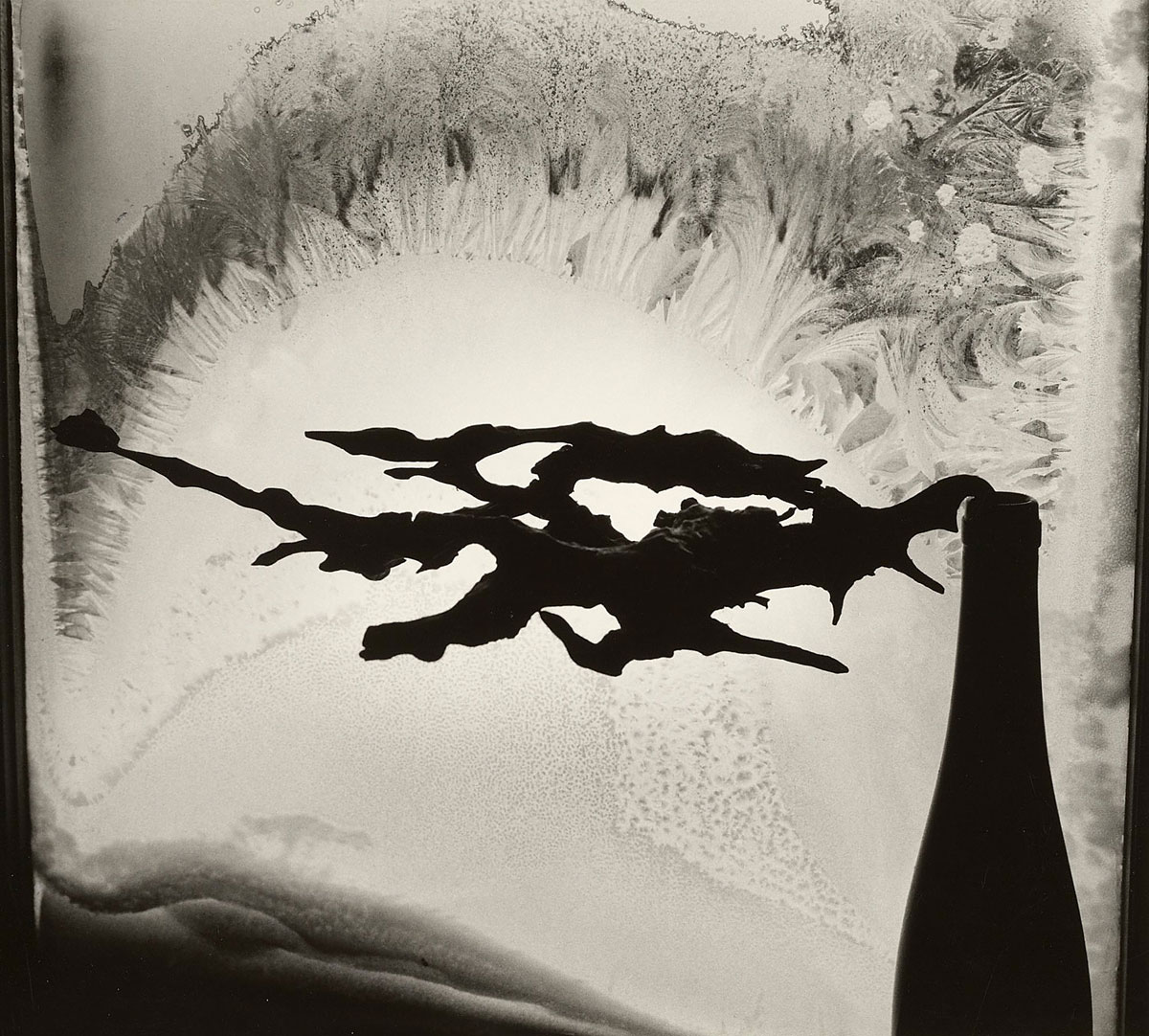
One of White’s goals was to photograph objects not only for what they are but also for what they may suggest, and his pictures teem with symbolic and metaphorical allusions. White was a closeted homosexual, and his sexual desire for men was a source of turmoil and frustration. He confided his feelings in the journal he kept throughout his life and sought comfort in a variety of Western and Eastern religious practices. This search for spiritual transcendence continually influenced his artistic philosophy.

Early Career, 1937-1945

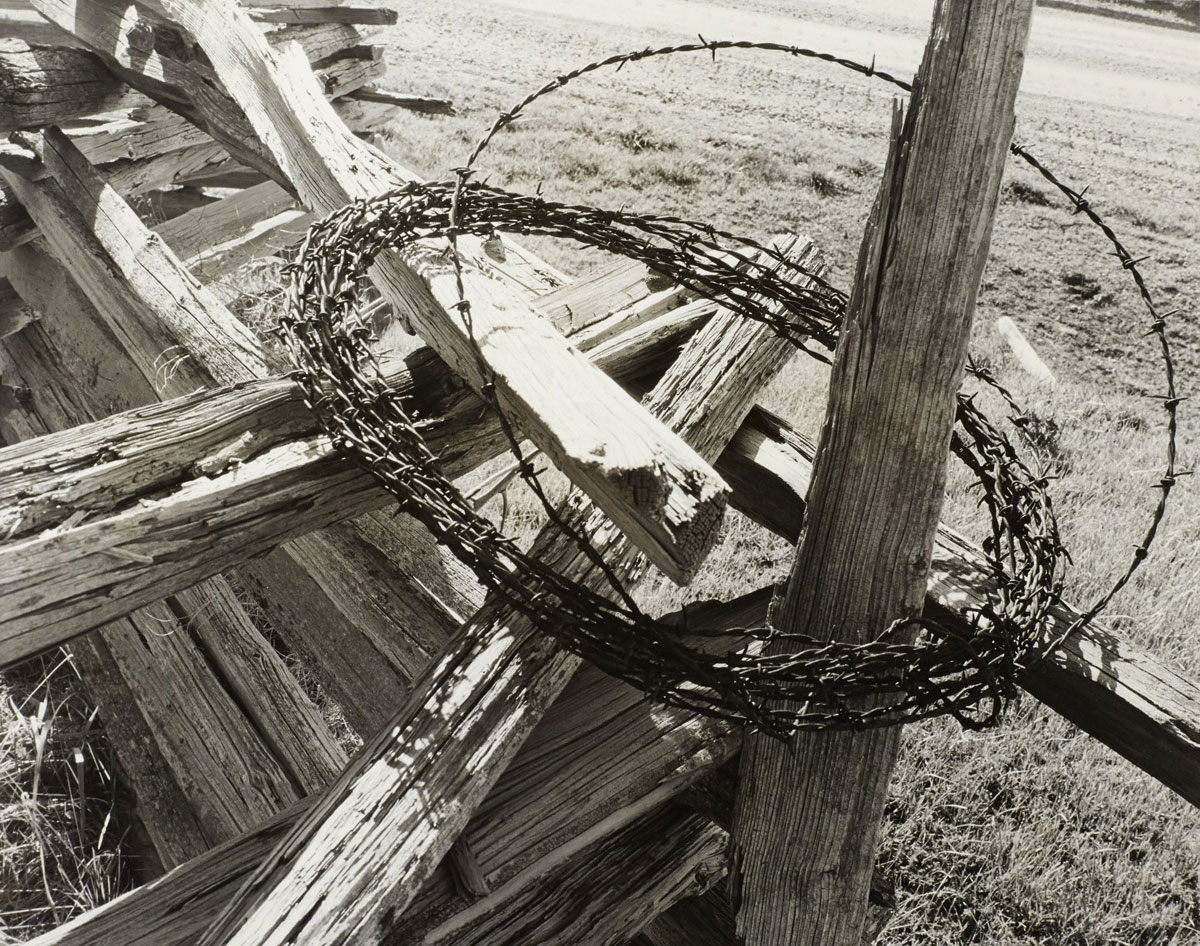
In 1937, White relocated from Minneapolis, where he was born and educated, to Portland, Oregon. Determined to become a photographer, he read all the photography books he could get his hands on and joined the Oregon Camera Club to gain access to their darkroom. Within five years, he was offered his first solo exhibition at the Portland Art Museum (1942). White’s early work exhibits his nascent spiritual awakening while exploring the natural magnificence of Oregon. His Cabbage Hill, Oregon (Grande Ronde Valley) (1941) uses a split-rail fence and a coil of barbed wire to demonstrate the hard physical labor required to live off the land as well as the redemption of humankind through Christ’s sacrifice on the cross.

During World War II, White served in Army Intelligence in the South Pacific. Upon discharge, rather than return to Oregon, he spent the winter in New York City. There, he studied art history with Meyer Shapiro at Columbia University, museum work with Beaumont Newhall at the Museum of Modern Art, and creative thought in photography with photographer, gallerist, and critic Alfred Stieglitz (American, 1864-1946).

Midcareer, 1946-1964

In 1946, famed photographer Ansel Adams (American, 1902-1984) invited White to teach photography at the California School of Fine Arts (CSFA) in San Francisco. The following year, White established himself as head of the program and developed new methods for training students. His own work during this period began to shift toward the metaphorical with the creation of images charged with symbolism and a critical aspect known as “equivalence,” meaning an image may serve as an idea or emotional state beyond the subject pictured. In 1952, White co-founded the seminal photography journal Aperture and was its editor until 1975.

In 1953, White accepted a job as an assistant curator at the George Eastman House (GEH) in Rochester, New York, where he organised exhibitions and edited GEH’s magazine Image. Coinciding with his move east was an intensification of his study of Christian mysticism, Zen Buddhism, and the I Ching. In 1955, he began teaching a class in photojournalism at the Rochester Institute of Technology and shortly after began to accept one or two live-in students to work on a variety of projects that were alternately practical and spiritually enriching. During the late 1950s and continuing until the mid-1960s, White traveled the United States during the summers, making his own photographs and organising photographic workshops in various cities across the country.

By the late 1950s, at the height of his career, White pushed himself to do the impossible – to make the invisible world of the spirit visible through photography. White’s masterpiece – and the summation of his persistent search for a way to communicate ecstasy – is the sequence Sound of One Hand, so named after the Zen koan which asks “What is the sound of one hand clapping?”

“White’s sequences are meant to be viewed from left to right, preferably in a state of relaxation and heightened awareness,” says Paul Martineau, associate curator of photographs at the J. Paul Getty Museum and curator of the exhibition. “White called on the viewer to be an active participant in experiencing the varied moods and associations that come from moving from one photograph to the next.”

Late Career, 1965-1976

In 1965, White was appointed professor of creative photography at the Massachusetts Institute of Technology (MIT), where he developed an ambitious program in photographic education. As he aged, he became increasingly concerned with his legacy, and began working on his first monograph, Mirrors Messages Manifestations, which was published by Aperture in 1969. The following year, White was awarded a Guggenheim Foundation Fellowship, and he was the subject of a major traveling retrospective organised by the Philadelphia Museum of Art in 1971.

Beginning in the late 1960s and continuing until the early 1970s, White organised a series of groundbreaking thematic exhibitions at MIT – the first of which served as a springboard for forming the university’s photographs collection. In 1976, White died of heart failure and bequeathed his home to the Aperture Foundation and his photographic archive of more than fifteen thousand objects to Princeton University. The exhibition also includes work by two of White’s students, each celebrated photographers in their own right, Paul Caponigro (American, 1932-2024) and Carl Chiarenza (American, born 1935).

“An important aspect of Minor White’s legacy was his influence on the next generation of photographers,” says Martineau. “Over the course of a career that lasted nearly four decades, he managed to maintain personal and professional connections with hundreds of young photographers – an impressive feat for a man dedicated to the continued exploration of photography’s possibilities.

Press release from the J. Paul Getty Museum website


Minor White (American, 1908-1976) 'Navarro River, California' 1947


Minor White (American, 1908-1976)
Navarro River, California
1947
Gelatin silver print
35.6 x 45.7cm (14 x 18 in.)
Lent by Gloria Katz and Willard Huyck
Reproduced with permission of the Minor White Archive, Princeton University Art Museum
© Trustees of Princeton University


Minor White (American, 1908-1976) 'Nude Foot, San Francisco, California' Negative, 1947; print, 1975


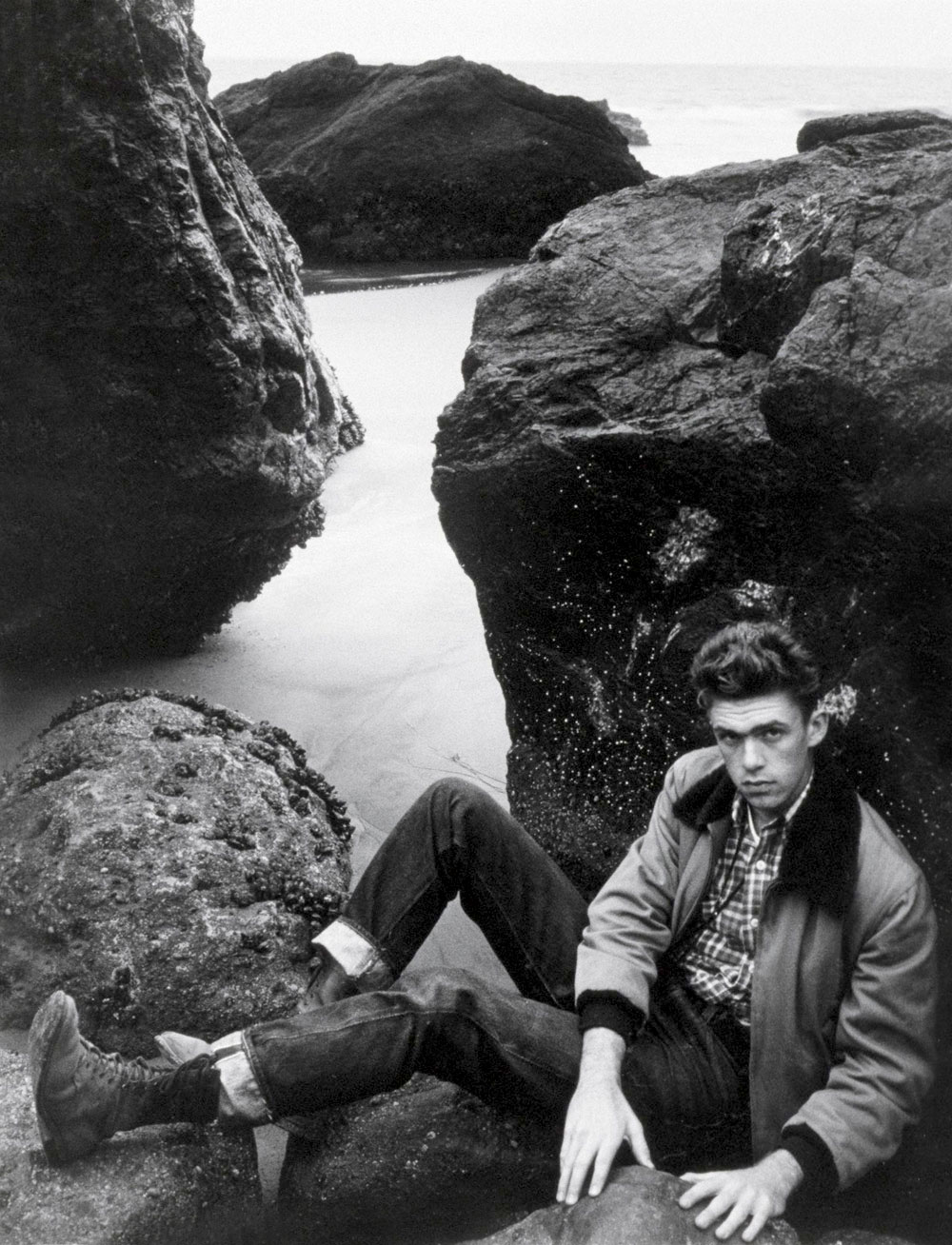
Minor White (American, 1908-1976)
Nude Foot, San Francisco, California
Negative, 1947; print, 1975
Gelatin silver print
22.9 x 30.5cm (9 x 12 in.)
Promised gift of Daniel Greenberg and Susan Steinhauser
Reproduced with permission of the Minor White Archive, Princeton University Art Museum
© Trustees of Princeton University


Minor White (American, 1908-1976) 'Pavilion, New York' 1957


Minor White (American, 1908-1976)
Pavilion, New York
1957
Gelatin silver print
22.5 x 29.5cm (8 7/8 x 11 5/8 in.)
Purchased in part with funds provided by Daniel Greenberg, Susan Steinhauser, and the Greenberg Foundation
Reproduced with permission of the Minor White Archive, Princeton University Art Museum
© Trustees of Princeton University


Minor White (American, 1908-1976) 'Cabbage Hill, Oregon (Grande Ronde Valley)' 1941


Minor White (American, 1908-1976)
Cabbage Hill, Oregon (Grande Ronde Valley)
1941
Gelatin silver print
18 x 22.9cm (7 1/16 x 9 in.)
The Minor White Archive, Princeton University Art Museum, bequest of Minor White
© Trustees of Princeton University


Minor White (American, 1908-1976) 'Self-Portrait, West Bloomfield, New York' 1957


Minor White (American, 1908-1976)
Self-Portrait, West Bloomfield, New York
1957
Gelatin silver print
17.8 x 20.6cm (7 x 8 1/8 in.)
The Minor White Archive, Princeton University Art Museum, bequest of Minor White
© Trustees of Princeton University


Interview with Minor White

Q. How would you like to see photography develop?

A. It makes absolutely no difference what I want it to do. It’s going to do what it’s going to do. All I can do is stand back and observe it.

Q. What don’t you want it to do?

A. That doesn’t make any difference either, It’ll do that whether I want it to or not!

Q. Surely, you’ve got to have some feelings?

A. In one sense I don’t care what photography does at all. I can just watch it do it. I can control my photography, I can do what I want with it – a little. If I can get into  contact  with something much wiser than myself , and it says get out of photography, maybe I would. I hesitate to say this because I know its going to be misunderstood. I’ll put I this way – I’m trying to be in contact with my Creator when I photograph. I know perfectly well its not possible to do this all the time, but there can be moments.

Q. Do you see anything in contemporary photography that distresses you?

A. What ever they do is fine.

Q. Is there any work that you are particularly interested in?

A. What ever my students are doing.

Q. There seems to be a passing on of certain sets of ideas and understandings. Do you feel yourself to be an inheritor of a set of ideas or ideals?

A. Naturally. After all I have two parents, so I inherited some thing. I’ve had many spiritual fathers for example. The photographers who I have been influenced by for example. There have been many other external influences. Students have had an influence. In a sense that’s an inheritance. After a while we work with material that comes to us and it becomes ours, we digest it. It becomes energy and food for us, its ours. And then I can pass it on to somebody else with a sense of responsibility and validity. I am quoting it in my words, it has become mine and that person will take it from me – just as I have taken it from people who have influenced me. Take what you can use, digest it, make it yours, and then transmit it to your children or your students.

Q. It’s a cycle?

A. No, it’s a continuous line. Not a cycle at all.


Interview by Paul Hill and Thomas Cooper of Minor White, published in 3 parts in the January, February and March editions of Camera 1977.


Minor White (American, 1908-1976) 'Point Lobos, California' 1948


Minor White (American, 1908-1976)
Point Lobos, California
1948
Gelatin silver print
16.8 x 19.5cm (6 5/8 x 7 11/16 in.)
The Minor White Archive, Princeton University Art Museum, bequest of Minor White
© Trustees of Princeton University


Minor White (American, 1908-1976) 'San Francisco, California' 1949


Minor White (American, 1908-1976)
San Francisco, California
1949
Gelatin silver print
18.5 x 18.7cm (7 5/16 x 7 3/8 in.)
The Museum of Modern Art, New York. Purchase
Reproduced with permission of the Minor White Archive, Princeton University Art Museum
© Trustees of Princeton University


Minor White (American, 1908-1976) 'Vicinity of Dansville, New York' Negative, 1955; print, 1975


Minor White (American, 1908-1976)
Vicinity of Dansville, New York
Negative, 1955; print, 1975
Gelatin silver print
22.9 x 30.5cm (9 x 12 in.)
Promised gift of Daniel Greenberg and Susan Steinhauser
Reproduced with permission of the Minor White Archive, Princeton University Art Museum
© Trustees of Princeton University


Minor White (American, 1908-1976) Images in the bound sequence 'The Temptation of Saint Anthony Is Mirrors'


(top)
Minor White (American, 1908-1976)
Images 9 and 10 in the bound sequence The Temptation of Saint Anthony Is Mirrors
1948
Gelatin silver prints
9.3 x 11.8cm; 11.2 x 9.1cm
The Minor White Archive, Princeton University Art Museum, bequest of Minor White
© Trustees of Princeton University

(bottom)
Minor White (American, 1908-1976)
Images 27 and 28 in the bound sequence The Temptation of Saint Anthony Is Mirrors
1948
Gelatin silver prints
5.3 x 11.6cm; 10.6 x 8.9cm
The Minor White Archive, Princeton University Art Museum, bequest of Minor White
© Trustees of Princeton University


Minor White (American, 1908-1976) 'Rochester, New York' 1963


Minor White (American, 1908-1976)
Rochester, New York
1963
Gelatin silver print
9.2 x 7.3cm (3 5/8 x 2 7/8 in.)
Promised gift of Daniel Greenberg and Susan Steinhauser
Reproduced with permission of the Minor White Archive, Princeton University Art Museum
© Trustees of Princeton University


Minor White: Manifestations of the Spirit book

Controversial, eccentric, and sometimes overlooked, Minor White (1908-1976) is one of the great photographers of the twentieth century, whose ideas and philosophies about the medium of photography have exerted a powerful influence on a generation of practitioners and still resonate today. Born and raised in Minneapolis, his photographic career began in 1938 in Portland, Oregon with assignments as a “creative photographer” for the Oregon Art Project, an outgrowth of the Works Progress Administration (WPA).

After serving in World War II as a military intelligence officer, White studied art history at Columbia University in New York. It was during this period that White’s focus started to shift toward the metaphorical. He began to create images charged with symbolism and a critical aspect called “equivalency,” which referred to the invisible spiritual energy present in a photograph made visible to the viewer and was inspired by the work of Alfred Stieglitz. White’s belief in the spiritual and metaphysical qualities in photography, and in the camera as a tool for self-discovery, was crucial to his oeuvre.

Minor White: Manifestations of the Spirit (Getty Publications, 2014) gathers together for the first time a diverse selection of more than 160 images made by Minor White over five decades, including some never published before. Accompanying the photographs is an in-depth critical essay by Paul Martineau entitled “‘My Heart Laid Bare’: Photography, Transformation, and Transcendence,” which includes particularly insightful quotations from his journals, which he kept for more than forty years.

The result is an engaging narrative that weaves through the main threads of White’s work and life – his growth and tireless experimentation as an artist; his intense mentorship of his students; his relationships with Edward Weston, Alfred Stieglitz, and Ansel Adams, who had a profound influence on his work; and his labor of love as cofounder and editor of Aperture magazine from 1952 until 1976. The book also addresses White’s life-long spiritual search and ongoing struggle with his own sexuality and self-doubt, in response to which he sought comfort in a variety of religious practices that influenced his continually metamorphosing artistic philosophy.

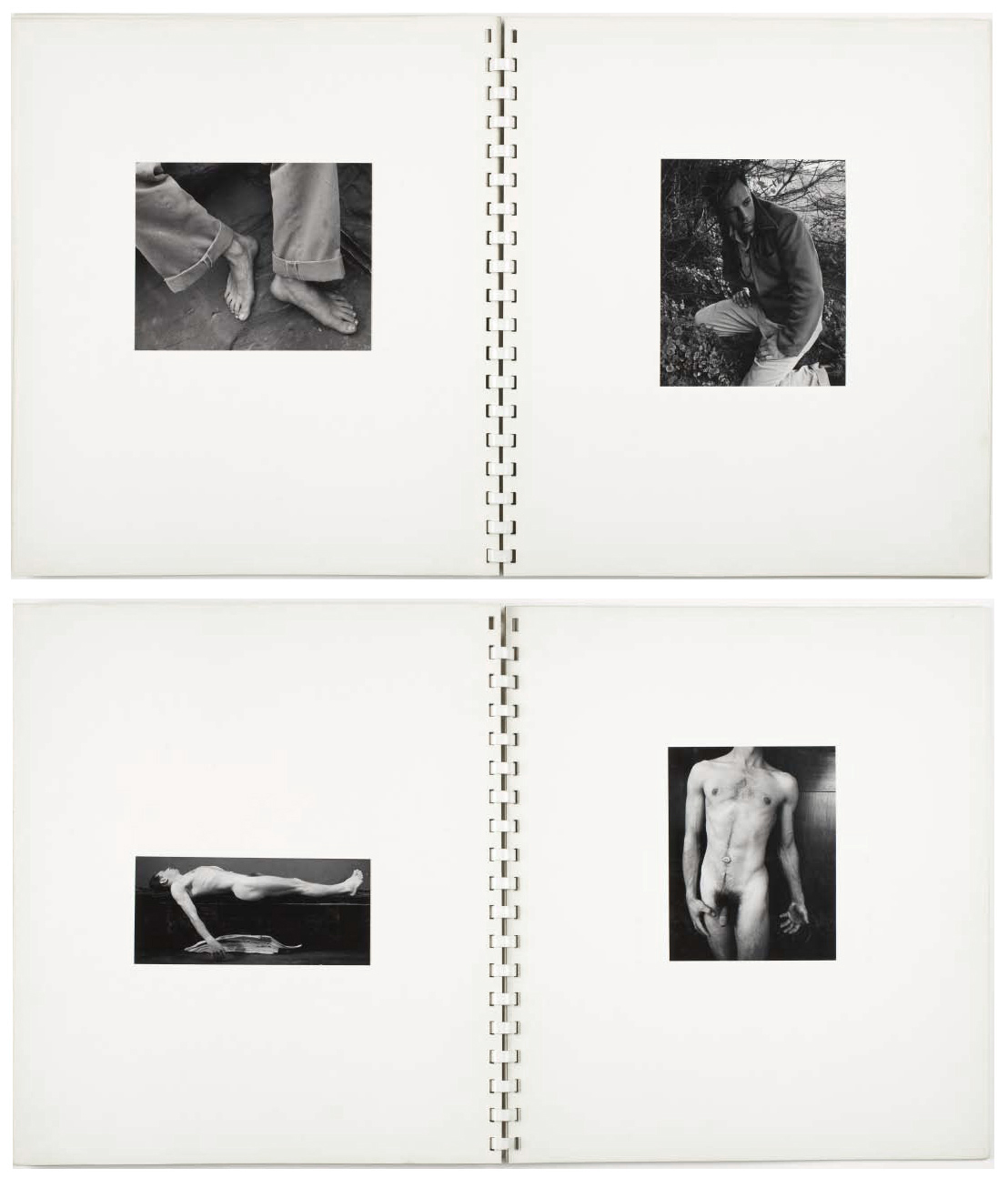
Published here in its entirety for the first time is White’s stunning series The Temptation of Anthony Is Mirrors, consisting of 32 photographs of White’s student and model Tom Murphy made in 1947 and 1948 in San Francisco. White’s photographs of Murphy’s hands and feet are interspersed within a larger group of portraits and nude figure studies. White kept the series secret for years as at the time he made the photographs it was illegal to publish or show images with male frontal nudity. Anyone making such images would be assumed to be homosexual and outed at a time when this invariably meant losing gainful employment.

Other works shown in this rich collection are White’s early images of the city of Portland that depict his experimentations with different styles and nascent spiritual awakening; his photographs of the urban streets of San Francisco where he lived for a time; his elegant images of rocks, sandy beaches and tidal pools in Point Lobos State Park in Northern California that are an homage to Edward Weston; and the series The Sound of One Hand made in the vicinity of Rochester, New York where he also taught classes at the Rochester Institute of Technology (RIT) and curated shows at the George Eastman House (GEH). Paul Martineau describes this iconic series as “White’s chef d’oeuvre, the work that is the summation of his persistent search or a way to communicate ecstasy.” Among the eleven images in the Getty collection are Windowsill Daydreaming, Rochester, Night Icicle, 72 N. Union Street, Rochester, and Pavilion, New York.

Text from the J. Paul Getty Museum


Minor White (American, 1908-1976) '"Something Died Here," San Francisco, California' 1947


Minor White (American, 1908-1976)
“Something Died Here,” San Francisco, California
1947
Gelatin silver print
22.8 x 17.5cm (9 x 6 7/8 in.)
The Minor White Archive, Princeton University Art Museum, bequest of Minor White
© Trustees of Princeton University


Minor White (American, 1908-1976) 'Dodd Building, Portland, Oregon' c. 1939


Minor White (American, 1908-1976)
Dodd Building, Portland, Oregon
c. 1939
Gelatin silver print
34.3 x 26.7cm (13 1/2 x 10 1/2 in.)
Fine Arts Program, Public Buildings Service, U.S. General Services Administration


Minor White (American, 1908-1976) 'San Mateo County, California / Leonard Nelson, Vicinity of Stinson Beach, Marin County, California, November 1947' 1947


Minor White (American, 1908-1976)
San Mateo County, California / Leonard Nelson, Vicinity of Stinson Beach, Marin County, California, November 1947
1947
Gelatin silver print
30.5 x 50.8cm (12 x 20 in.)
Los Angeles County Museum of Art, Ralph M. Parsons Fund
Reproduced with permission of the Minor White Archive, Princeton University Art Museum
© Trustees of Princeton University


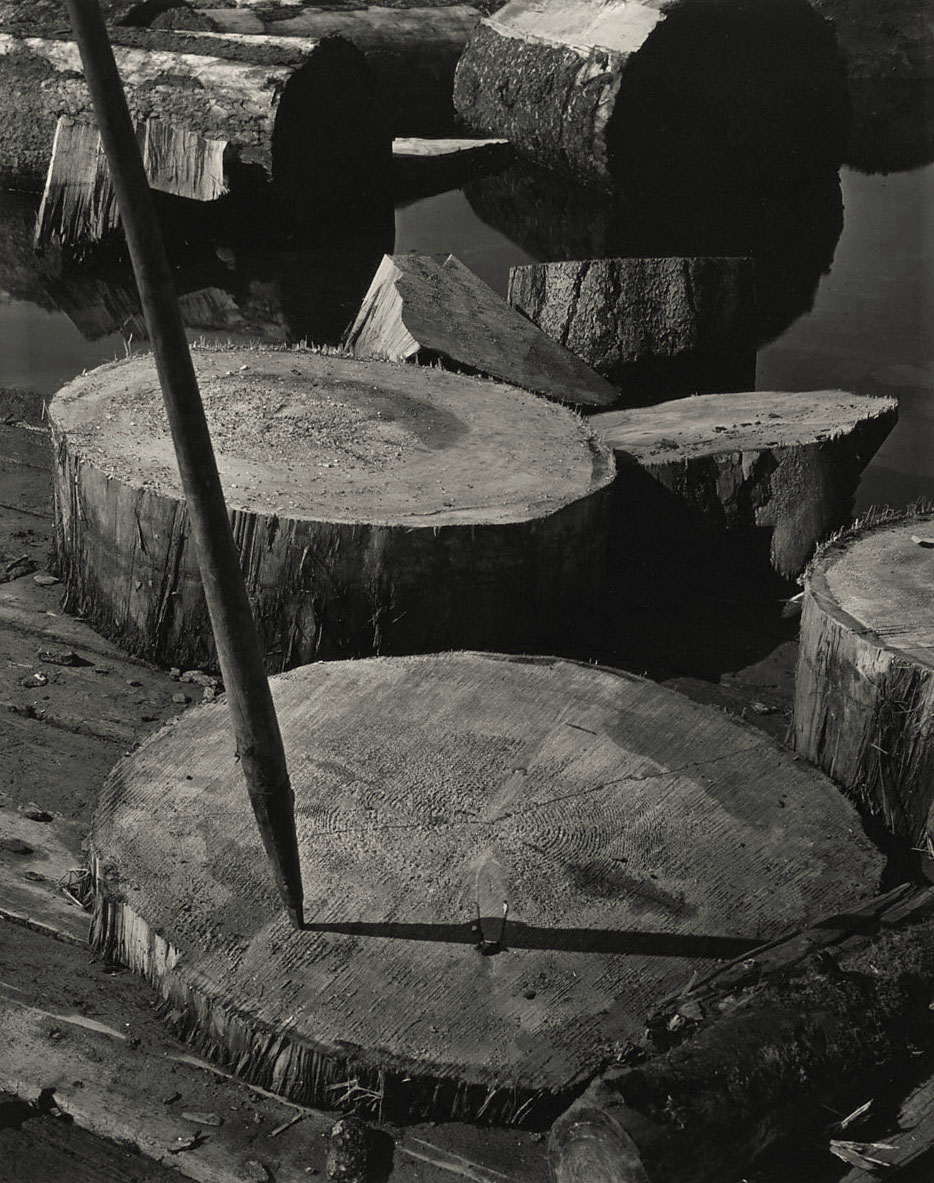
Minor White (American, 1908-1976) 'Lily Pads and Pike, Portland, Oregon' c. 1939


Minor White (American, 1908-1976)
Lily Pads and Pike, Portland, Oregon
c. 1939
Gelatin silver print
34 x 26.8cm (13 3/8 x 10 9/16 in.)
Fine Arts Program, Public Buildings Service, U.S. General Services


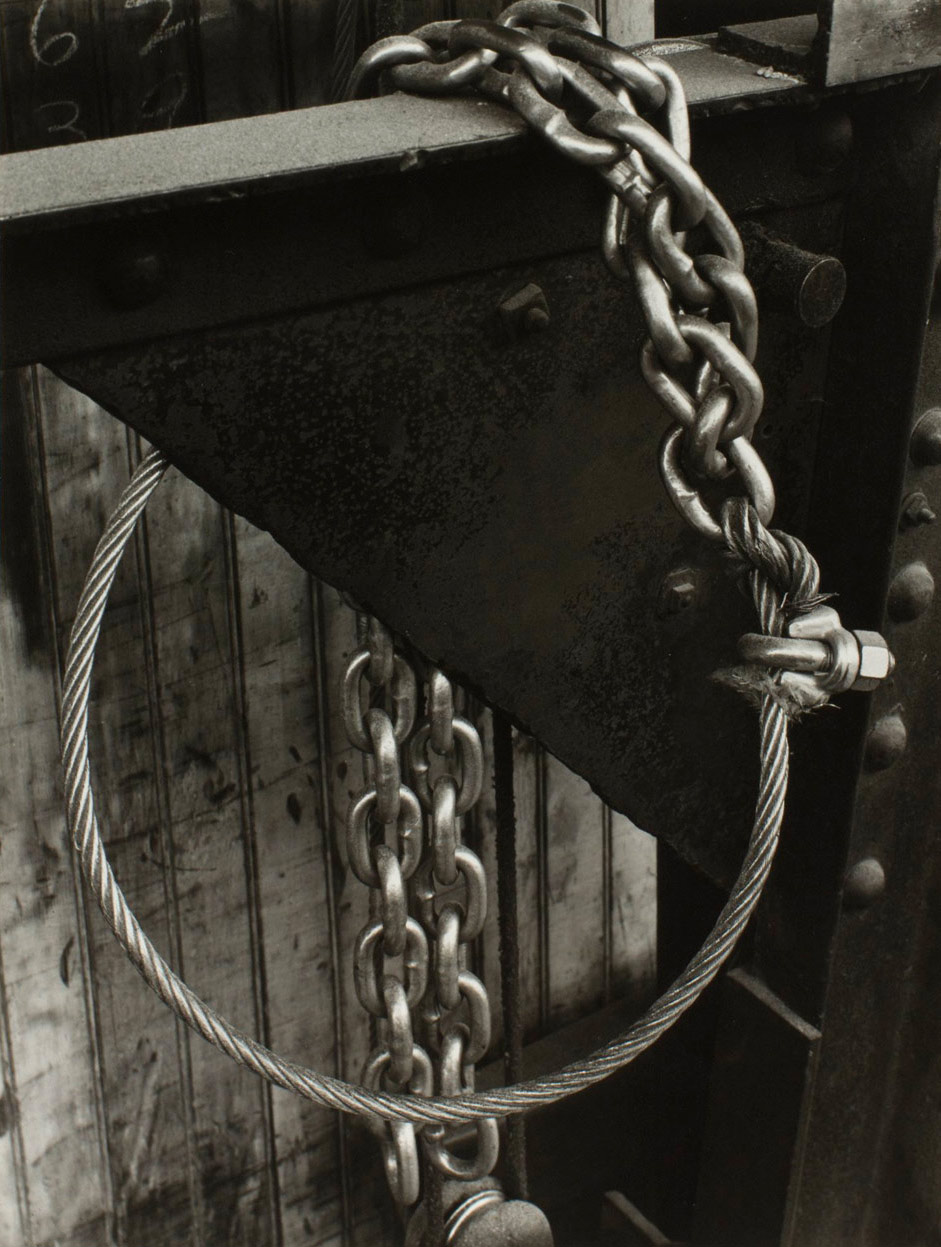
Minor White (American, 1908-1976) 'Design (Cable and Chain), Portland, Oregon' c. 1940


Minor White (American, 1908-1976)
Design (Cable and Chain), Portland, Oregon
c. 1940
Gelatin silver print
33.8 x 25.8cm (13 5/16 x 10 3/16 in.)
Fine Arts Program, Public Buildings Service, U.S. General Services Administration


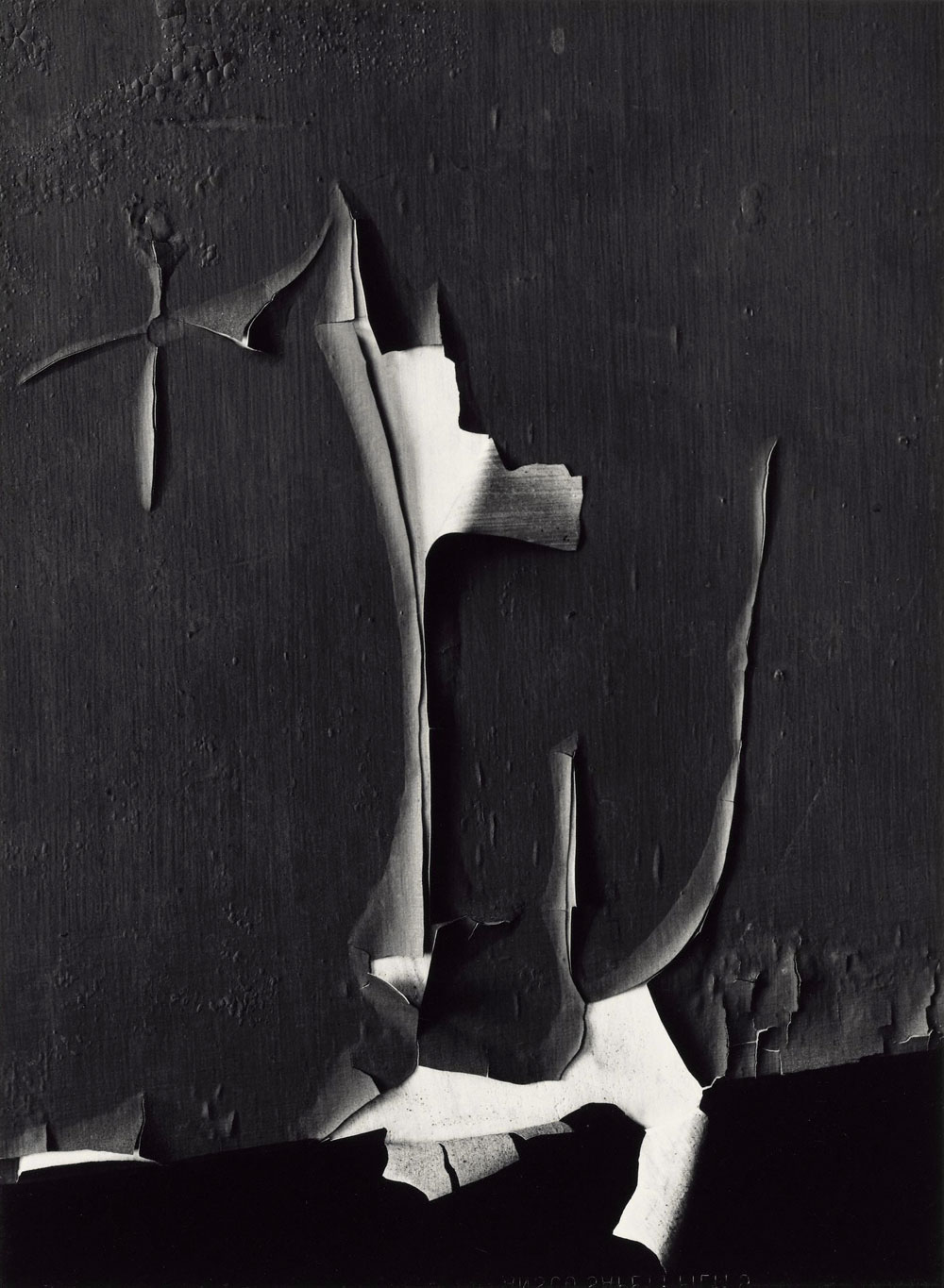
Minor White (American, 1908-1976) 'Peeled Paint, Rochester, New York' 1959


Minor White (American, 1908-1976)
Peeled Paint, Rochester, New York
1959
Gelatin silver print
31.1 x 22.9cm (12 1/4 x 9 in.)
Promised gift of Daniel Greenberg and Susan Steinhauser
Reproduced with permission of the Minor White Archive, Princeton University Art Museum
© Trustees of Princeton University


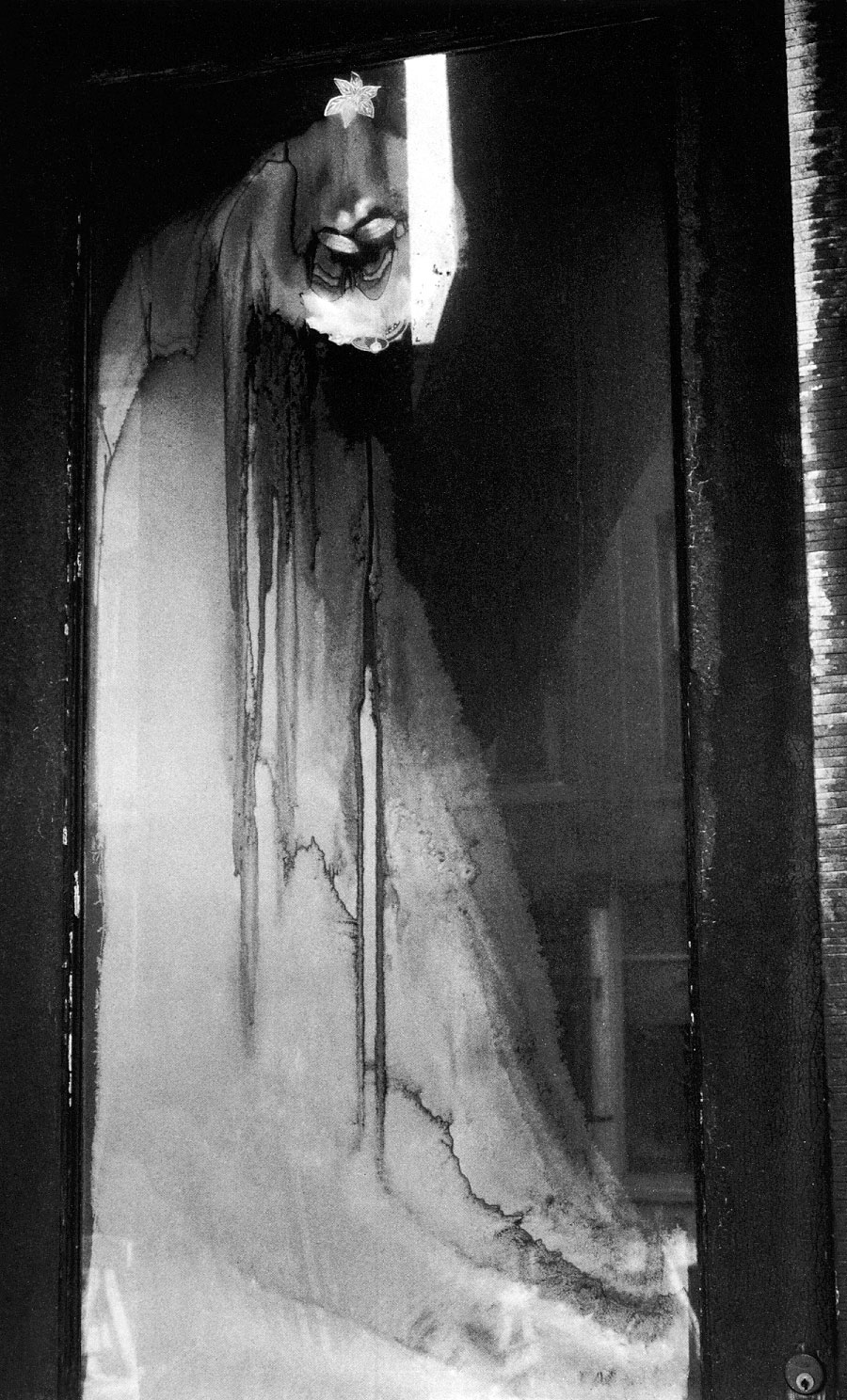
Minor White (American, 1908-1976) 'Empty Head, 72 N. Union Street, Rochester, New York' 1962


Minor White (American, 1908-1976)
Empty Head, 72 N. Union Street, Rochester, New York
1962
Gelatin silver print
30 x 23cm (11 13/16 x 9 1/16 in.)
Purchased in part with funds provided by Daniel Greenberg, Susan Steinhauser, and the Greenberg Foundation
Reproduced with permission of the Minor White Archive, Princeton University Art Museum
© Trustees of Princeton University


Minor White (American, 1908-1976) 'Burned Mirror, Rochester, New York' 1959


Minor White (American, 1908-1976)
Burned Mirror, Rochester, New York
1959
Gelatin silver print
30.5 x 22cm (12 x 8 11/16 in.)
Purchased in part with funds provided by Daniel Greenberg, Susan Steinhauser, and the Greenberg Foundation
Reproduced with permission of the Minor White Archive, Princeton University Art Museum
© Trustees of Princeton University


Minor White (American, 1908-1976) 'Essence of Boat, Lanesville, Massachusetts' 1967


Minor White (American, 1908-1976)
Essence of Boat, Lanesville, Massachusetts
1967
Gelatin silver print
31.8 x 23.8cm (12 1/2 x 9 3/8 in.)
Daniel Greenberg and Susan Steinhauser
Reproduced with permission of the Minor White Archive, Princeton University Art Museum
© Trustees of Princeton University


Minor White (American, 1908-1976) 'Ivy, Portland, Oregon' Negative,1964; print, 1975


Minor White (American, 1908-1976)
Ivy, Portland, Oregon
Negative,1964; print, 1975
Gelatin silver print
22.9 x 30.5cm (9 x 12 in.)
Promised gift of Daniel Greenberg and Susan Steinhauser
Reproduced with permission of the Minor White Archive, Princeton University Art Museum
© Trustees of Princeton University


Minor White (American, 1908-1976) '72 N. Union Street, Rochester, New York' 1960


Minor White (American, 1908-1976)
72 N. Union Street, Rochester, New York
1960
Gelatin silver print
30.5 x 24.1cm (12 x 9 1/2 in.)
Daniel Greenberg and Susan Steinhauser
Reproduced with permission of the Minor White Archive, Princeton University Art Museum
© Trustees of Princeton University


Minor White (American, 1908-1976) 'Moencopi Strata, Capitol Reef National Park, Utah' 1962


Minor White (American, 1908-1976)
Moencopi Strata, Capitol Reef National Park, Utah
1962
Gelatin silver print
32.7 x 24.1cm (12 7/8 x 9 1/2 in.)
Promised gift of Daniel Greenberg and Susan Steinhauser
Reproduced with permission of the Minor White Archive, Princeton University Art Museum
© Trustees of Princeton University


Minor White (American, 1908-1976) 'Windowsill Daydreaming, Rochester, New York' 1958


Minor White (American, 1908-1976)
Windowsill Daydreaming, Rochester, New York
1958
Gelatin silver print
24.4 x 25.1cm (9 5/8 x 9 7/8 in.)
Purchased in part with funds provided by Daniel Greenberg, Susan Steinhauser, and the Greenberg Foundation
Reproduced with permission of the Minor White Archive, Princeton University Art Museum
© Trustees of Princeton University


Minor White (American, 1908-1976) 'Notom, Utah' 1963


Minor White (American, 1908-1976)
Notom, Utah
1963
Gelatin silver print
39.4 x 31.1cm (15 1/2 x 12 1/4 in.)
The J. Paul Getty Museum, Los Angeles
Reproduced with permission of the Minor White Archive, Princeton University Art Museum
© Trustees of Princeton University


Minor White (American, 1908-1976) 'Gloucester, Massachusetts' 1973


Minor White (American, 1908-1976)
Gloucester, Massachusetts
1973
Gelatin silver print
21.6 x 29.2cm (8 1/2 x 11 1/2 in.)
Daniel Greenberg and Susan Steinhauser
Reproduced with permission of the Minor White Archive, Princeton University Art Museum
© Trustees of Princeton University


Minor White (American, 1908-1976) 'Batavia, New York' 1958


Minor White (American, 1908-1976)
Batavia, New York
1958
Gelatin silver print
34 x 20.3cm (13 3/8 x 8 in.)
Purchased in part with funds provided by Daniel Greenberg, Susan Steinhauser, and the Greenberg Foundation
Reproduced with permission of the Minor White Archive, Princeton University Art Museum
© Trustees of Princeton University


Minor White (American, 1908-1976) 'Night Icicle, 72 N. Union Street, Rochester, New York' 1959


Minor White (American, 1908-1976)
Night Icicle, 72 N. Union Street, Rochester, New York
1959
Gelatin silver print
30.5 x 23cm (12 x 9 1/16 in.)
Purchased in part with funds provided by Daniel Greenberg, Susan Steinhauser, and the Greenberg Foundation
Reproduced with permission of the Minor White Archive, Princeton University Art Museum
© Trustees of Princeton University


Minor White (American, 1908-1976) '203 Park Ave., Arlington, Massachusetts' 1966


Minor White (American, 1908-1976)
203 Park Ave., Arlington, Massachusetts
1966
Gelatin silver print
34.3 x 12.7cm (13 1/2 x 5 in.)
Promised gift of Daniel Greenberg and Susan Steinhauser
Reproduced with permission of the Minor White Archive, Princeton University Art Museum
© Trustees of Princeton University


Minor White (American, 1908-1976) 'Easter Sunday, Stony Brook State Park, New York' 1963


Minor White (American, 1908-1976)
Easter Sunday, Stony Brook State Park, New York
1963
Gelatin silver print
23.7 x 9.2cm (9 5/16 x 3 5/8 in.)
Promised gift of Daniel Greenberg and Susan Steinhauser
Reproduced with permission of the Minor White Archive, Princeton University Art Museum
© Trustees of Princeton University


Minor White (American, 1908-1976) 'Mission District, San Francisco, California' 1949


Minor White (American, 1908-1976)
Mission District, San Francisco, California
1949
Gelatin silver print
33.8 x 9.5cm (13 5/16 x 3 3/4 in.)
The Museum of Modern Art, New York. Purchase
Reproduced with permission of the Minor White Archive, Princeton University Art Museum. © Trustees of Princeton University


The J. Paul Getty Museum
1200 Getty Center Drive
Los Angeles, California 90049

Opening hours:
Tuesday – Friday, Sunday 10am – 5.30pm
Saturday 10am – 8pm
Monday Closed

The J. Paul Getty Museum website

LIKE ART BLART ON FACEBOOK

Back to top