Review: ‘ManStyle’ at the National Gallery of Victoria, Melbourne

Exhibition: 2 venues

NGV International (St Kilda Road) 11 March – 30 October 2011
NGV Australia (Federation Square) 11 March – 27 November 2011


Dr Marcus Bunyan at the opening of Manstyle in front of a two-piece c. 1949 Simpsons of Picadilly, London blue pin-stripped suit and 1940's tie from his collection


Dr Marcus Bunyan at the opening of Manstyle in front of a two-piece Simpsons of Picadilly, London blue pin-stripped suit c. 1949 and Van Heusen 1940’s tie loaned from his collection for the exhibition. Photograph courtesy of the National Gallery of Victoria.


The joy of this exhibition, spread across two NGV locations, is the creativity of local contemporary designers such Gavin Brown, Leigh Bowery, Peter Tully, Michael Glover and Sarah Thorn – a match for anything the international contingent has to offer. Another positive is the wonderful catalogue with its luscious colour plates, insightful essays and interviews with people such as Benny Castles, Luke Sales, Rick Owens and Walter Van Beirendonck.

Less enamouring is the prosaic way that the male attire is displayed – either hermetically sealed behind glass (look, but don’t touch!) or assembled in serried ranks on mannequins that make the clothes look two-dimensional. The display of these historical objects takes all the fun out of their being visually alive garments; it takes all the fun out of men “dressing up.” While acknowledging the conservation issues inherent when displaying such costume the display, the performance, the spectacle of male attire could have been better conveyed to the viewing public. Moving images, placing the work in context both locally and internationally, would have helped.

Continuing with these thoughts, what we wear can be seen as a spectacular, hypertextual construction. This construction comprises the authorship / designer of individual pieces (such as jacket, trousers, shirt) which can be seen as lexias, or nodal points, complimented by the wearer (reader) as author. The wearer appropriates and recasts individual garments, partially constructing the outfit through active choice, through a dissolution of the author-reader binary, through a very public characterisation of form: look at me, look at my style! Fashion can be seen as a “set of interconnecting and competing discourses than can never result in a single articulation,”1 discourses that generate and dissolve meaning. Men now use these discourses to enact the ‘performing self’, as it is known, which places greater emphasis on appearance.

“Within consumer culture … the new conception of self which has emerged, which we shall refer to as the ‘performing self’, places greater emphasis upon appearance, display and the management of impressions.”2

Appearance is critical to an understanding of self-concept. This self-concept consists of:

a/ the actual self (how a person perceives him/herself),
b/ the ideal self (how a person would like to perceive him/herself), and
c/ the social self (how a person presents him/herself to others).3


As Sproles and Burns observe, “Appearance is an extremely important part of the self-concept. Through personal appearance – dress, cosmetics, fashion expressions, body movements – an individual presents personal identity, attitudes, moods, and value or self-worth. In addition, individuals receive positive or negative evaluations from others with regard to appearance. Hence, appearance is one of the most prominent ways to display and reinforce a self-concept.”4

Appearance and the textuality of representation (stressing that representations are presentations entailing the use of codes and conventions of the available cultural forms of presentation),5 are continually being subverted throughout the history of fashion. In postmodernist fashion imitation and integration of an eclectic mixture of styles and periods into a new discourse (or montage, or collage, or bricolage)6 is critical to the constant regeneration of self using appearance as the embodiment of self-concept. Why this exhibition is so crucial is it shows that men are becoming more and more adept at manipulating their aesthetic style, not as something to be afraid of, not as something that they have to conform to, but as an expression of personal freedom. Which makes it all the more disappointing that the display of the male attire is so staid and reserved. The aesthetic display of these garments did not match up to the clothes exuberance.

Small things also irritated. At the opening a great deal was made of the multimedia element where local designers and celebrities talked about male style. In several of these videos, the men being interviewed mentioned how the shoe was always the basis for a good outfit. Fast forward to the exhibition and what do we find – photostated paper cut-outs of shoes on the mannequins instead of the real thing! Apparently the multimedia was shot after the design of the exhibition was finalised. Surely, if several people mention the basis of a good outfit is the shoe, and you promote the videos heavily, then you need to follow through on this concept. It is like putting the cart before the horse.

The fragmentary dis/locating mix and match eclecticism of contemporary male fashion needed more of a run in this exhibition, but as it stands it gives the viewer a solid overview of male attire throughout the centuries.

Dr Marcus Bunyan


Many thankx to the National Gallery of Victoria for allowing me to publish the photographs in the posting. Please click on the photographs for a larger version of the image.


Endnotes

1/ Johnson-Eilola cited in Mason, J.S. From Text To Hypertext [Online] Cited 28th May, 2003. No longer available online

2/ Lasch, C. The Culture of Narcissism. New York: Norton, 1979, quoted in Featherstone, Mike. “The Body in Consumer Culture,” in Featherstone, Mike; Hepworth, Mike and Turner, Bryan (eds.). The Body. London: Sage Publications, 1991, p. 187

3/ Sproles, George and Burns, Leslie Davis. Changing Appearances: Understanding Dress in Contemporary Society. New York: Fairchild Publications, 1994, pp. 208-209

4/ Ibid.,

5/ Dyer, Richard. The Matter of Images: Essays on Representations. London: Routledge, 1993, pp. 2-3

6/ Tseëlon, E. The Masque of Femininity: The Representation of Women in Everyday Life. London: Sage, 1995, pp. 132-133


H. Lehmann, Aldershot (tailor) 'Royal Gloucester Hussar's uniform' c. 1900


H. Lehmann, Aldershot (tailor)
active in England c. 1900
Royal Gloucester Hussar’s uniform
c. 1900
Wool, cotton, metal
(a) 51cm (centre back), 64cm (sleeve length) (jacket)
(b) 48cm (centre back), 44cm (width) (waistcoat)
National Gallery of Victoria, Melbourne
Gift of the Stone Family, 1963


England 'Coat' 1740s


England
Coat
1740s
Silk, wood, wool, linen
102cm (centre back), 65cm (sleeve length)
National Gallery of Victoria, Melbourne
Purchased, 1970
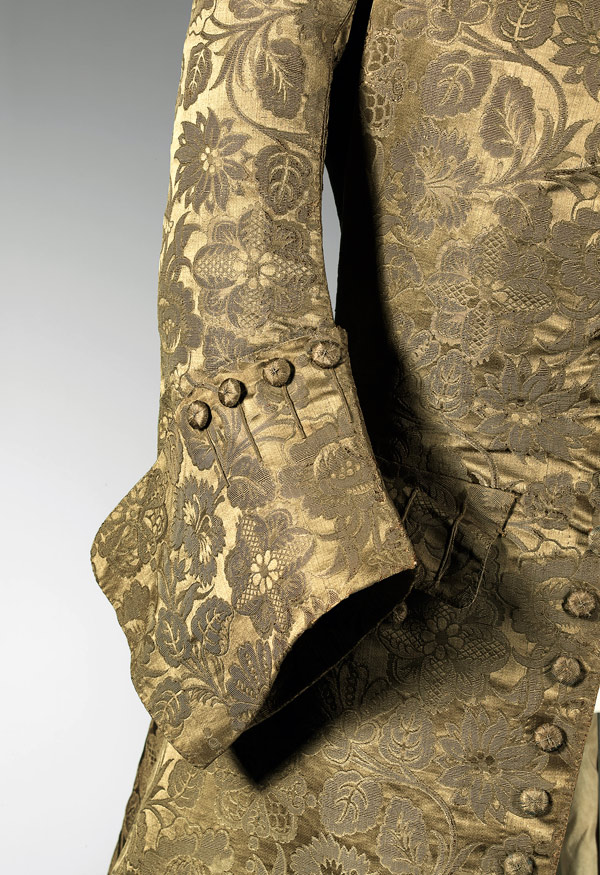
 

England 'Coat' 1740s (detail)


England
Coat (detail)
1740s
Silk, wood, wool, linen
102cm (centre back), 65cm (sleeve length)
National Gallery of Victoria, Melbourne
Purchased, 1970


France 'Coat' c. 1810


France
Coat
c. 1810
Wool, silk, wood
105.8cm (centre back), 70.5cm (sleeve length)
National Gallery of Victoria, Melbourne
Purchased, 1975


England 'Waistcoat' c. 1850


England
Waistcoat
c. 1850
Silk, cotton, leather, metal
65.5cm (centre back), 51.5cm (waist, flat)
National Gallery of Victoria, Melbourne
Gift of Mrs A. Butler, 1954


Nutters, London (tailor) est. 1968. Tommy Nutter (designer) 'Suit and tie 1971' (detail)


Nutters, London (tailor)
est. 1968
Tommy Nutter (designer)(Wales, b. 1943, lived in England c. 1952- )
Suit and tie 1971 (detail)
Wool, silk, cotton, acetate (lining), metal
(a) 77cm (centre back), 58cm (sleeve length) (jacket)
(b) 52cm (centre back), 40.4cm (waist, flat) (vest)
(c) 103cm (outer leg), 37cm (waist, flat) (trousers)
(d) 142 x 10.5cm (tie)
National Gallery of Victoria, Melbourne
Gift of Roger Evans, 1998


This March, the National Gallery of Victoria will showcase the first exhibition in Australia to focus on men’s fashion from the 18th century to the present day. Drawn largely from the NGV Collection, ManStyle will feature over 80 works including outfits and a selection of paintings exploring influential ideas in menswear over the past three centuries.

Charting a course between flamboyant display and absolute restraint, the exhibition begins in the 18th century with the evolution of the modern suit and concludes with contemporary outfits from today’s menswear designers. ManStyle will explore the elegantly honed lines and details of the dandy in the 19th century, a period which heralded the rise of tailoring with its focus on perfect cut and fit.

This exhibition will include recent works by contemporary designers such as Hedi Slimane for Dior Homme who have drawn upon this legacy of exacting tailoring for a new generation of young men. Roger Leong, Curator, International Fashion and Textiles, NGV said: “Men’s fashion is often seen as bound by tradition when, in fact, it has undergone a number of profound changes that reflect the shifting attitudes to class, sexuality, work and leisure over the past three centuries.

From the beginnings of the modern suit in the 18th century to 20th century sportswear, sub-cultural attire and street wear, men’s fashion has continued to transform in style and function to the present day,” said Mr Leong.

The most dramatic changes to men’s fashion occurred during the 1960s when designers such as Pierre Cardin challenged convention by creating streamlined Space-Age style outfits. Likewise, the ‘peacock revolution’ of this era reintroduced the phenomenon of the decorated man, adorned with colour, pattern and texture. Katie Somerville, Curator, Australian Fashion and Textiles, NGV said the House of Merivale was Australia’s answer to this new, colourful trend.

“Embodying the Carnaby Street look and style of bands like The Beatles, design houses such as Biba and the House of Merivale dressed men in flamboyant, body-hugging suits with wide flared trousers and shirts of contrasting patterns.

During this period, men ‘dressed up’, preened and flaunted their bodies in a new display of ostentatious masculine style.”

By the late 1970s, men’s style had fractured into a heady mix of alternatives. ManStyle features works by Vivienne Westwood and Malcolm McLaren, who defined the punk era with their ripped and distressed clothes plastered with offensive and anarchic slogans and symbols. This exhibition also captures the intense mood of the 1980s; which witnessed an outpouring of creativity across the spectrum of art, music and fashion, unleashing ideas from underground club cultures that reconfigured ideas about men’s sexuality.

“Today, new and traditional modes of dressing are continually merging to challenge our view of masculinity and contemporary style. ManStyle, it seems, offers greater possibilities than ever before,” said Ms Somerville.

Gerard Vaughan, NGV Director said: “By defining these periods in men’s fashion, visitors will be able to discover the contrasting identities men have experimented with over the past three centuries.

Visitors will be mesmerised and surprised by the richness of works in this Australia-first exhibition, showcasing the NGV’s magnificent Collection of this otherwise under-documented genre.”

ManStyle will be on display at the National Gallery of Victoria’s two locations. NGV Australia will look at transformations in the history of tailoring beginning with the notion of the dandy – a gallant man who put a lot of effort into a flawless appearance. The most famous dandy was Beau Brummell (1778-1840) who was always immaculately dressed, seeking to reflect an aristocratic style of life. The display at NGV International will focus on the peacock male, tracing a history of sartorial decoration and display that has its roots in the Renaissance and Tudor eras, and which was spectacularly revived during the 1960s when plain dark suits were discarded in favour of colour, cravats and frilled collars. Ever since then, the peacock phenomenon continues to surface with vivid intensity.

This exhibition will feature works by Vivienne Westwood, Jean Paul Gaultier, Morrissey & Edmiston, Leigh Bowery, Walter Van Beirendonck, Romance Was Born, Bernhard Willhelm, Rick Owens, Pierre Cardin, Biba and many more.

Press release from the National Gallery of Victoria website


WORLD, Auckland (fashion house) 'Percy shops at WORLD' 1999


WORLD, Auckland (fashion house)
est. 1989
Denise L’Estrange-Corbet (designer)(New Zealand, b. 1964)
Percy shops at WORLD
1999
Wool, acetate, raffia, leather, velcro, brass
(a) 68.1cm (centre back), 60cm (sleeve length) (jumper)
(b) 90 x 40cm (corset)
(c) 59.4cm (outer leg), 35.5cm (waist, flat) (knickerbockers)
(d) 120 x 4cm
(e-f) 40 x 11cm (each) (socks)
(g-h) 27 x 15 x 12cm (each) (sandals)
(i) 85cm (outer circumference), 22cm (height), 25.9cm (width) (hat)
National Gallery of Victoria, Melbourne
Purchased, 1999


Plain Jane, Melbourne (fashion house) Gavin Brown (designer) 'Indian snakes and ladders outfit' 1985


Plain Jane, Melbourne (fashion house)
Australia 1984-1987
Gavin Brown (designer)(Australia, b. 1964)
Indian snakes and ladders outfit
1985
Screenprinted cotton, metal, plastic, wood
(a) 109cm (centre back), 61cm (sleeve length) (frock shirt)
(b) 114cm (outer leg), 41cm (waist, flat) (pants)
(c) 52 x 20.5 x 4.5cm (necklace)
National Gallery of Victoria, Melbourne
Purchased NGV Foundation, 2009


Leigh Bowery (Australia 1961-1994, worked in England 1981-1994) 'Pregnant tutu head' 1992


Leigh Bowery (Australia 1961-1994, worked in England 1981-1994)
Pregnant tutu head
1992
Cotton, rayon, polyester, nylon, foam, leather
(a) 87cm (centre back), 25cm (sleeve length) (top)
(b) 130cm (length), 92cm (inner leg) (tights)
(c) 45cm (height), 130cm (outer circumference) (headpiece)
(d-e) 54 x 14cm irreg. (each) (gloves)
(f-g) 35 x 29.5 x 50cm (each) (shoes)
National Gallery of Victoria, Melbourne
Gift of Nicola Bateman Bowery, 1999


Sara Thorn, Melbourne (fashion house) 'Jacket and kilt' 1985


Sara Thorn, Melbourne (fashion house)
1983-1985
Sara Thorn (designer)(Australia, b. 1961)
Bruce Slorach (designer)(Australia, b. 1961)
Jacket and kilt
1985
Screenprinted cotton
(a) 57cm (centre back), 59cm (sleeve length) (jacket)
(b) 73cm (centre back), 43cm (waist, flat) (kilt)
National Gallery of Victoria, Melbourne
Presented by the National Gallery Women’s Association, 1995
© Courtesy of the artists


Vivienne Westwood, London (fashion house) 'Outfit' (detail) 1991 spring-summer 1991 'Cut and Slash' collection


Vivienne Westwood, London (fashion house)
est. 1985
Vivienne Westwood (designer)(England, b. 1941)
Outfit (detail)
1991
Spring-summer 1991 Cut and Slash collection
Cotton, polyester, metal buttons
(a) 62.5cm (centre back), 55cm (sleeve length) (jacket)
(b) 93.4cm (outer leg), 41.2cm (waist, flat) (jeans)
(c) 27 x 17cm (codpiece)
National Gallery of Victoria, Melbourne
Purchased, 1995


Peter Tully (Australia 1947-1992) 'Early flight attendant's vest' 1990


Peter Tully (Australia 1947-1992)
Early flight attendant’s vest
1990
Retrospectra graphic plastic, lamé, metallic thread, cotton
48.5cm (centre back), 48cm (width)
National Gallery of Victoria, Melbourne
Purchased from Admission Funds, 1991
© Courtesy of the artist’s Estate


NGV International
180 St Kilda Road

Opening hours:
Daily 10am – 5pm

The Ian Potter Centre: NGV Australia
Federation Square
Corner of Russell and 
Flinders Streets, Melbourne

Opening hours:
Daily 10am – 5pm
National Gallery of Victoria website

LIKE ART BLART ON FACEBOOK

Back to top

Review: ‘Unnerved: The New Zealand Project’ at NGV International, Melbourne

Exhibition dates: 26th November 2010 – 27th February, 2011

A Queensland Art Gallery Touring Exhibition


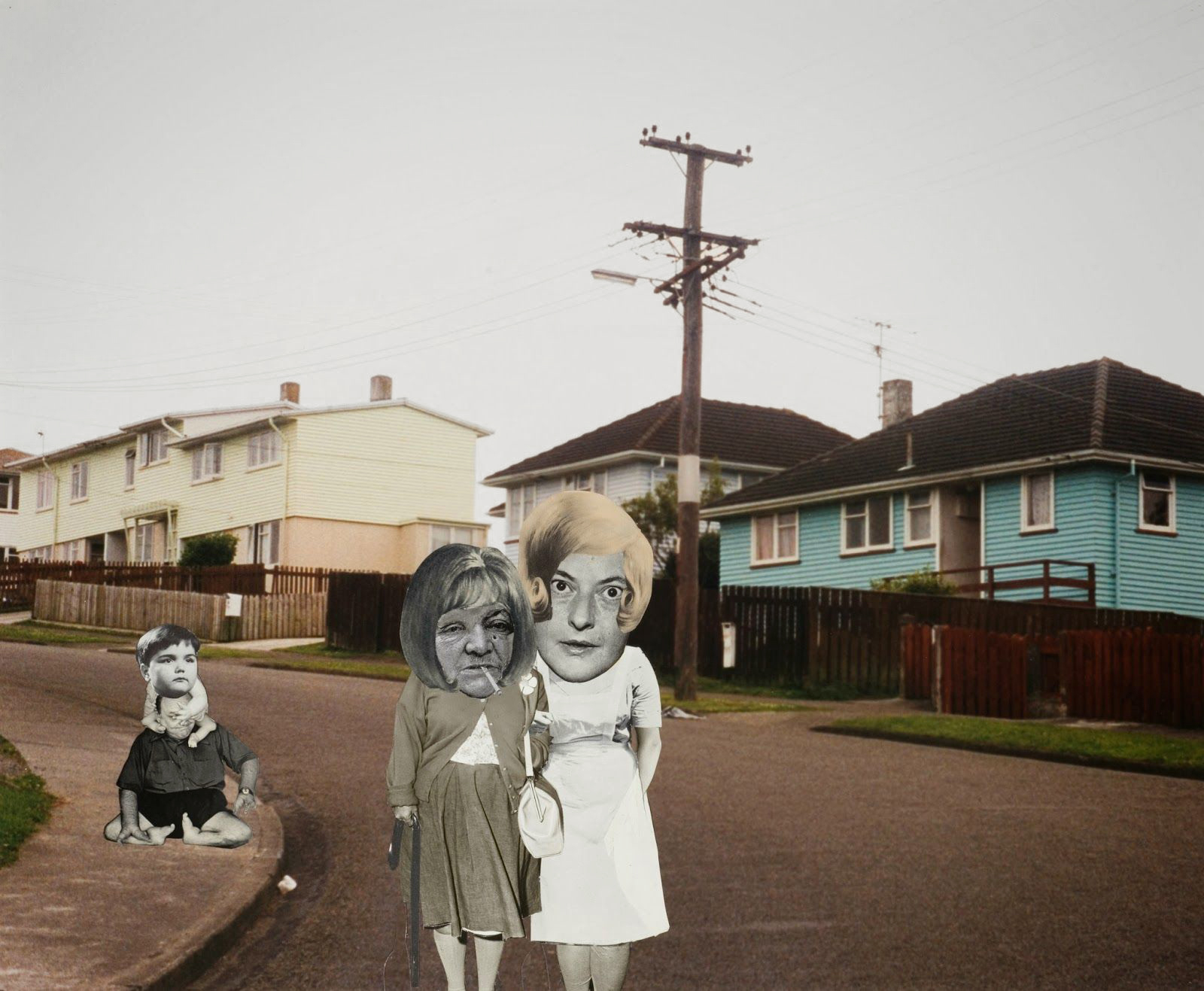
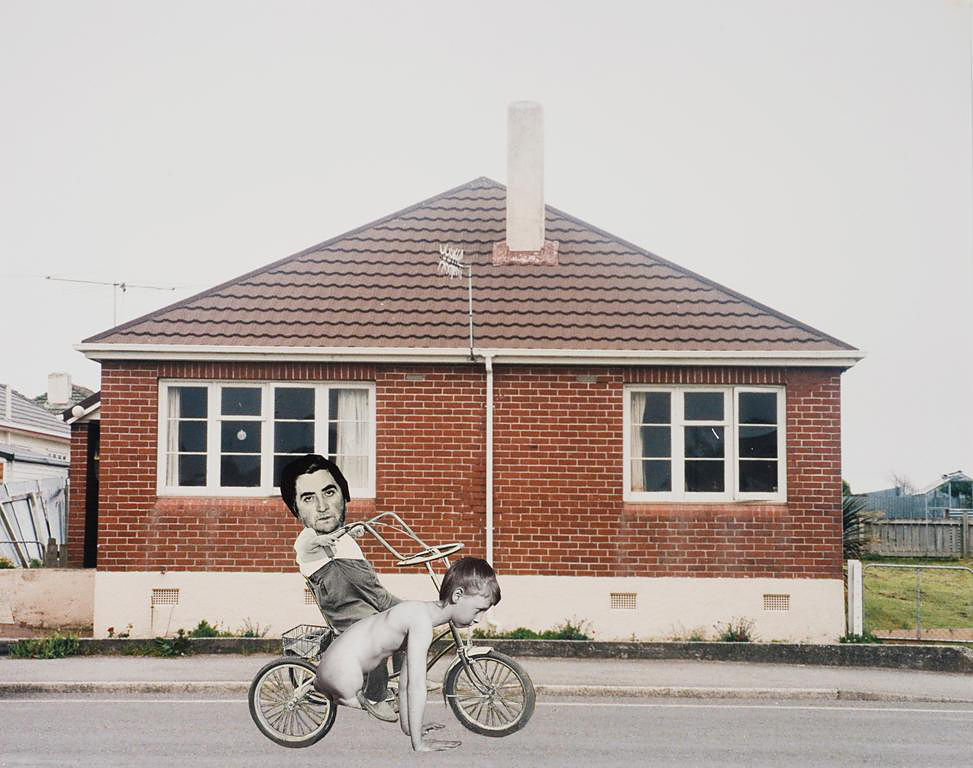
Ava Seymour (New Zealand, b. 1967) 'Sate Highway 1' 1997 from the exhibition 'Unnerved: The New Zealand Project' at NGV International


Ava Seymour (New Zealand, b. 1967)
State Highway I
1997
From Health, happiness and housing series
Colour photograph of a photomontage


Ava Seymour (New Zealand b. 1967) 'Day Care Walkabouts' 1997 from the exhibition 'Unnerved: The New Zealand Project' at NGV International


Ava Seymour (New Zealand b. 1967)
Day Care Walkabouts
1997
From Health, happiness and housing series
Photomontage on colour photograph


New Zealand art adrift in a myriad of stories and symbols – not a brave ‘new world’

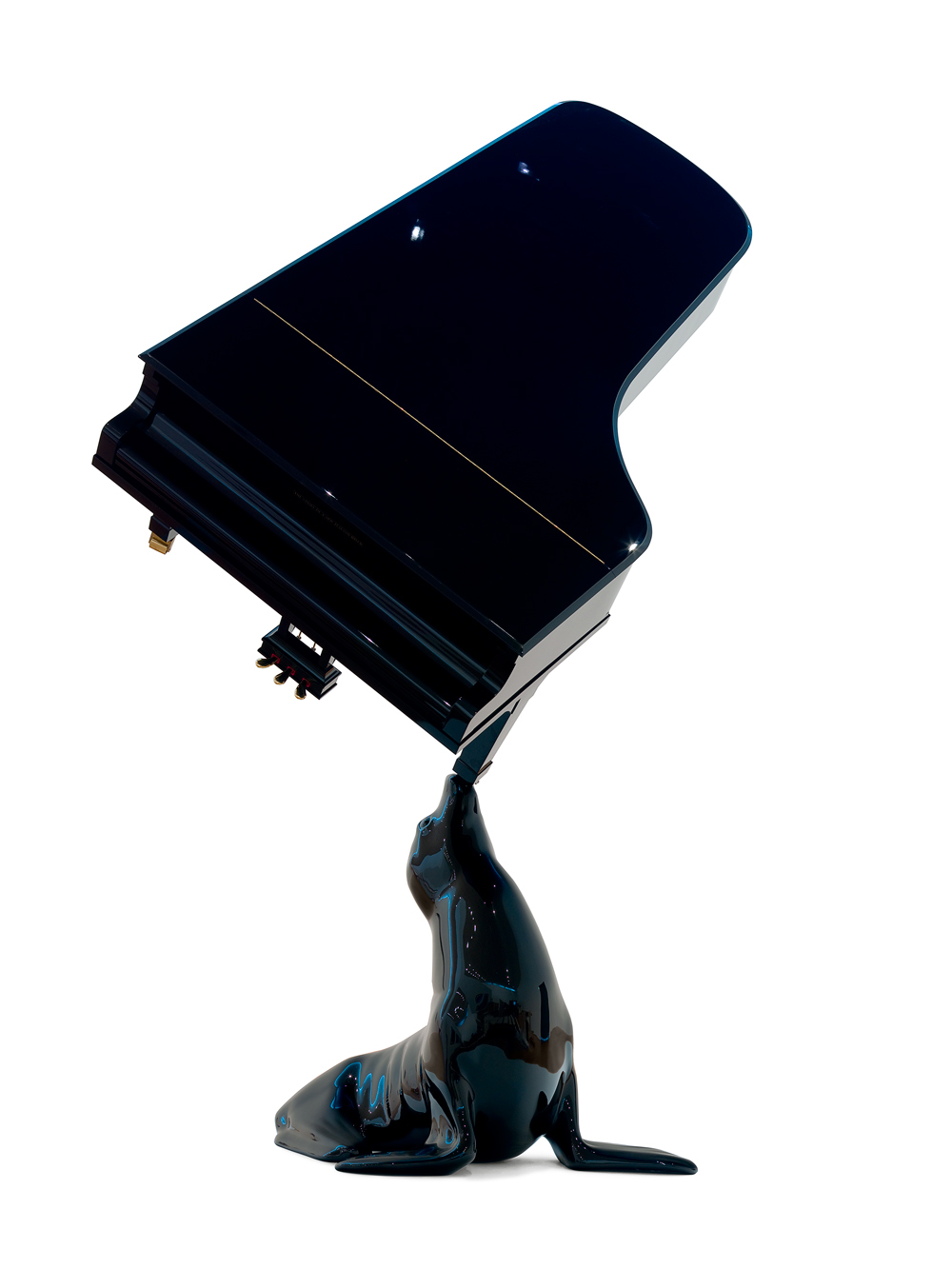
This is an underwhelming group exhibition of over 100 works drawn from the Queensland Art Gallery collection, a show to wander around on a lazy weekend afternoon and not get too excited about. The large number of works in the exhibition make it impossible to review each work individually (although I critique some works below) but one does get an overall sense of the investigation by New Zealand artists into their history, place, culture and identity. While there are a few good works in the exhibition there are also some very mediocre works as well and, other than a few splashes of self-deprecating humour (such as the wonderful The Horn of Africa (2006) by Michael Parekowhai, below) it all seems importantly earnest: an exhibition for serious people (apologies to Oscar Wilde).

On the evidence of this exhibition the country of New Zealand must be a very unnerving place to live, mainly because their artists can’t seem to keep their hand off it – cultural history that is.

Throughout this exhibition we have psychological unease, physical unease, a little humour, parody, poetry, symbology, allegory, mythology, colonialism, post-colonialism, nationalism, commercialisation, representation, anthropology, travel, landscape, topography, advertising, first contact, sacred spaces, indigenous politics, Māori culture, Pacific Islander culture, pakeha (non-indigenous) culture, tools, guns, rabbits, seals, pianos, traditional tattoos, tourist sites and museums, surfing, suburbia, personal journeys, family albums, androgyny, identity, public housing, ambiguous states, hyperreality, surreality, dislocation, disenfranchisement, alienation, bodies, portraits, subjects, past, present, future (and more!)

Ronnie van Hout exhibits three atmospheric, eerie, dark photographs of constructed model landscapes: of a Nazi doodlebug and the words ABDUCT and HYBRID. The wall text tries, unsuccessfully, to link the images to the obscure and haunted landscapes of New Zealand – a very long bow to draw indeed. Bill Cuthbert’s “nice” photographs offer generalised statements of light and place but really don’t take you anywhere and in fact could have been taken anywhere. The wall text offers that the photographs are a “self-conscious, critical response” to the dismantling of colonial ideas of empire and nation … this is art speak gobbledygook at its worst trying to justify basic photography.

Mark Adams panoramic photograph of one of the sites of first contact – an important historical moment of encounter between Māori and pakeha (non-Māori people of European descent) – are a beautiful photograph of a sound and mountains that has then been dissected, fragmented and individually framed and then mounted unevenly on the gallery wall – just to make sure we get the point about the ‘nature’ of the scenery and its cultural implications. Lonnie Hutchinson’s cut wall work Cinco “offers an interplay between paper and space and explores the ‘va’ or space between – a relation between the Samoan people and the landscape saturated with the dialogue of our ancestors … being adrift in a sea of memories caused by feelings related to cultural loss and uncertainty.” I know how they feel: adrift, underwhelmed by the art and overwhelmed by the text.

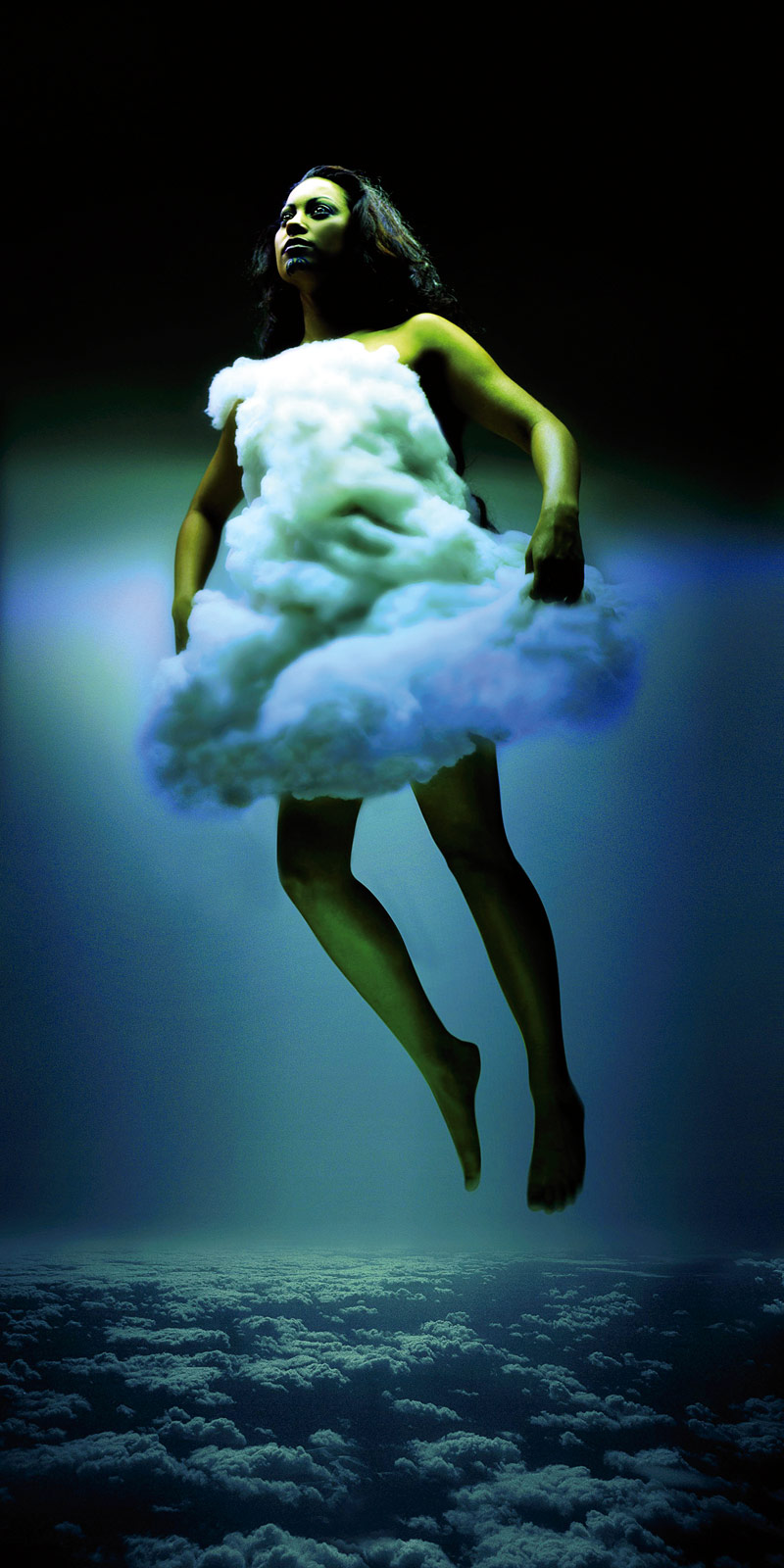
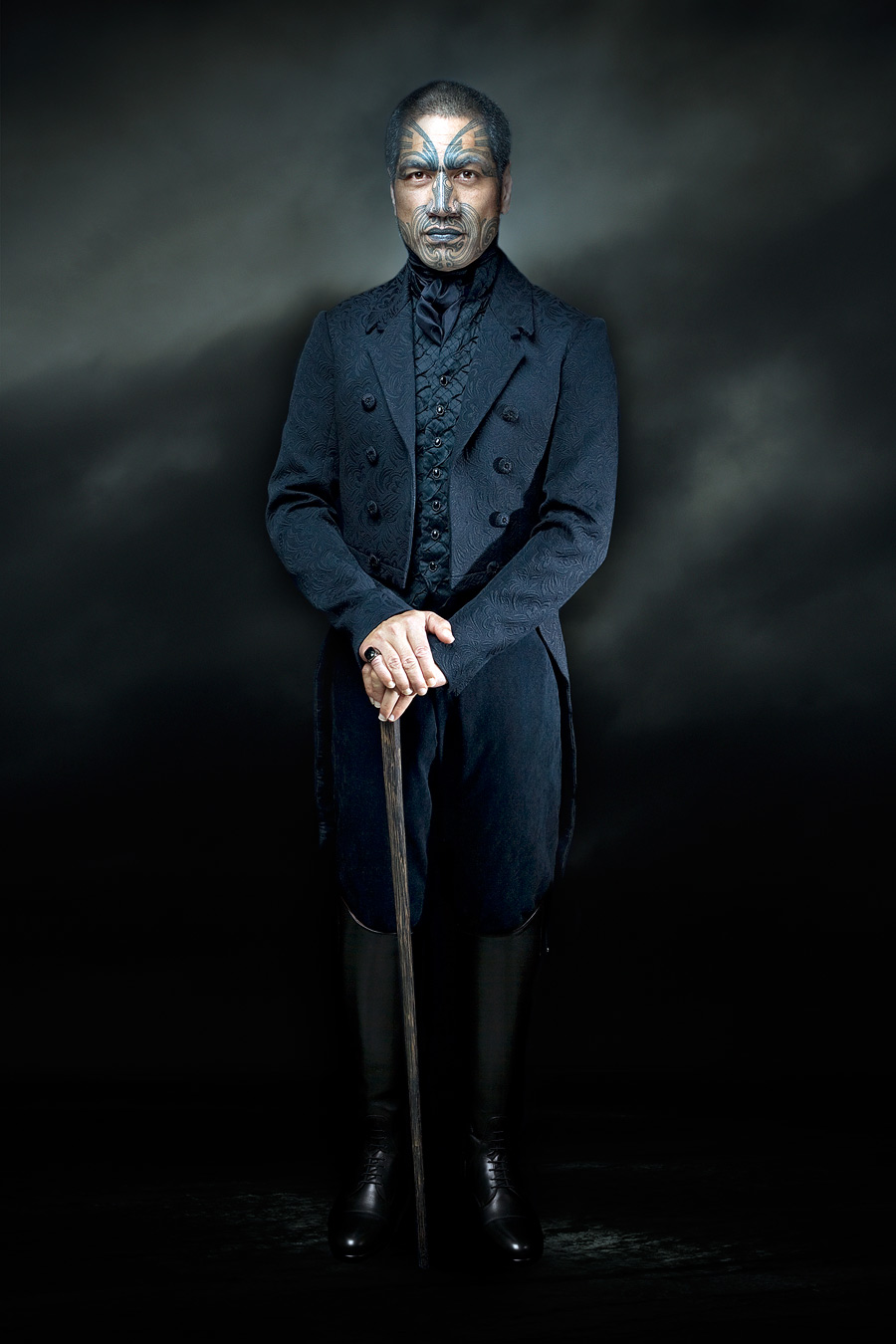
Other than the striking photograph of the Dandy (2007, below) Lisa Reihana’s series Digital Marae (2001- ) also fails to inspire. The marae is a highly structure space where Māori families come together – an outdoor, cleared area, a communal or sacred place which serves religious and social purposes in Polynesian societies. Here can be found male sculptures called poupou featuring diverse forms of masculinity, Māori gods and goddesses. The elder Mahuika, while sometimes described as male, is deliberately depicted in her female state in this series. In Reihanna’s digital interpretation of the marae her gods and goddesses become slick, media-inspired glossy magazine type images printed large, mounted on aluminium and lit for maximum theatrical effect. The unstructured spaces behind the figures have no context, no placement and give lie to the inspiration for the series (a highly structured space) and, as such, they land with a commercial thud onto the cleared earth.

The lowest point in the exhibition must be reserved for the 80 photographs of the series ‘The homely’ (1997-2000) by Gavin Hipkins. Usually when reviewing I refrain from saying anything bad about works of art. Robert Nelson in The Age describes the series as “visually and conceptually incoherent.” Taken over 4 years and supposedly “examining notions of nationhood that are unstable and fractured” Hipkins describes it as “a post-colonial gothic novel.” !!

The series features flat, one-dimensional images of symbols: sculptures, closed doors, open doors, flags, people, repeating circles and vertical elements – where the aggregate of all the images is supposed to MEAN SOMETHING. These are the most simple, most basic of year 12 images formed into a sequence that is conceptually irrelevant in terms of its symbolism and iconography vis a vis the purported critical examination it seeks to undertake. This artist needs to look at the sequences of Minor White to see how a master artist puts photographs together – not just in terms of narrative but the meaning in the spaces between the images, their spiritual resonance – or if wanting to be more literal, study that seminal book The Americans by Robert Frank to see how to really make a sequence.

On to better things. For me the absolute gem of this exhibition were the photomontages of Ava Seymour from her ‘Health, happiness and housing’ series (see photographs above). These are just fantastic! Featuring as a backdrop photographs of state houses built in the 1950s and 60s Seymour assembles her cast of characters – composite figures of found limbs, bodies and faces taken from old medical text books – and creates stark, psychological sites of engagement. The can be seen as family portraits, social documents of unseen alienation and dis-enfranchisement with communities and also a comment on the conduct of the welfare system and state housing, but in their ironic, self-deprecating humour they become so much more. Even though they use old photographs the artist recasts them ingenuously to become something new, a new space that the viewer can step into, unlike most of the work in this exhibition.

Most artists in this exhibition seem intent on a form of cultural excavation to make their work, digging and rooting around in cultural history and memory to find “meaning”, to make new forms from old that actually lead nowhere. They excavate symbols and signs and reform them hoping for what, exactly? All that appears is work that is stunted and fragmented, chopped up dislocations that offer nothing new in terms of a way forward for the culture from which these histories and memories emerge. There is no holistic, healing vision here, only a series of mined observations that fragment, distort and polarise, descending into the decorative, illustrative or the commercial. The same can be said of some Australian art (including the exhibition Stormy Weather: Contemporary Landscape Photography at NGV Federation Square that I will review next). As Robert Nelson succinctly observed in his review of this exhibition in The Age (Wednesday, December 29th, 2010), this exhibition “reveals a weakness that also exists in our scene: fertile tricks and noble intentions, but patchy skill or poetic imagination for connecting them.” Well said.

“”When the soul wants to experience something she throws out an image in front of her and then steps into it.” (Meister Eckhart) It is an evocation of the image as a threshold leading to new dimensions of meaning. Symbolic images are more than data; they are vital seeds, living carriers of possibility.”1


New dimensions of meaning, vital seeds, living carriers of possibility. Everyone of us is a living, breathing embodiment of cultural history and memory. We know that intimately in our bones, as human beings. What artists need to do is observe this legacy but offer a way forward, not constantly excavating the past and hoping this is enough when creating work. These are not new spaces to step into! The cohabitation of indigenous and ethnically mixed non-indigenous cultures in both Australia and New Zealand requires this holistic forward looking vision. It is a redemptive vision that is not mired in the symbols and archetypes of the past but, as Australia writer David Malouf envisages it, ‘a dream history, a myth history, a history of experience in the imagination’.2 It is a vision of the future that all post-colonial countries can embrace, where a people can come to know their sense of place more fully.

Rather than an escapist return to the past perhaps a redemptive vision of New Zealand’s cultural future, a history of experience in the imagination, would be less insular and more open to the capacity to wonder.

Dr Marcus Bunyan


1/ Ronnberg, Ami (ed.,). “Preface,” in The Book of Symbols. Cologne: Taschen, 2010, p. 6

2/ Footnote 6. Daniel, Helen. “Interview with David Malouf,” in Australian Book Review (September , 1996), p. 13 quoted in Ennis, Helen. “The Presence of the Past,” in Photography and Australia. London: Reaktion Books, 2007, p. 141


Many thankx to Jemma Altmeier for her help and to the National Gallery of Victoria for allowing me to publish the photographs in the posting. Please click on the photographs for a larger version of the image.


Lisa Reihana (Ngāpuhi: Ngāti Hine, Ngāi Tu New Zealander, b. 1964) 'Hinepukohurangi' 2001 from the exhibition 'Unnerved: The New Zealand Project' at NGV International


Lisa Reihana (Ngāpuhi: Ngāti Hine, Ngāi Tu New Zealander, b. 1964)
Hinepukohurangi
2001
From Digital Marae 2001-
Cibachrome photograph mounted on aluminium
200 x 100cm
Purchased 2002
© Lisa Reihana


Lisa Reihana (Ngāpuhi: Ngāti Hine, Ngāi Tu New Zealander, b. 1964) 'Dandy' 2007 from the exhibition 'Unnerved: The New Zealand Project' at NGV International


Lisa Reihana (Ngāpuhi: Ngāti Hine, Ngāi Tu New Zealander, b. 1964)
Dandy
2007
From Digital Marae 2001-
Colour digital print mounted on aluminium
200 x 120cm
Queensland Art Gallery, Brisbane
Purchased 2008 with funds from the Estate of Vincent Stack through the Queensland Art Gallery Foundation Queensland Art Gallery, Brisbane
© Lisa Reihana


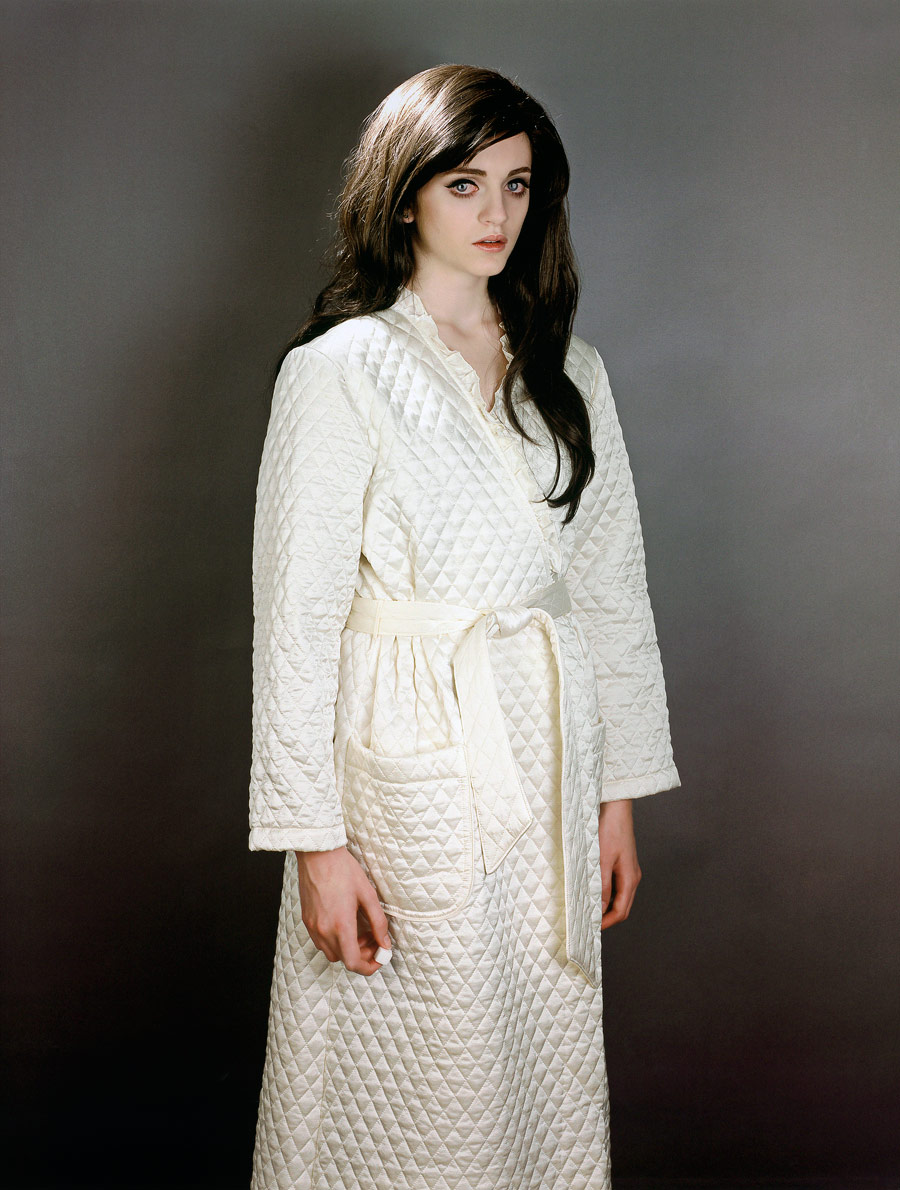
Yvonne Todd (New Zealander, b. 1973) 'January' 2005 from the exhibition 'Unnerved: The New Zealand Project' at NGV International


Yvonne Todd (New Zealander, b. 1973)
January
2005
From the Vagrants’ reception centre series
Light jet photograph
100 x 73.8cm
Queensland Art Gallery, Brisbane
Purchased 2007. Queensland Art Gallery Foundation Grant
©Yvonne Todd


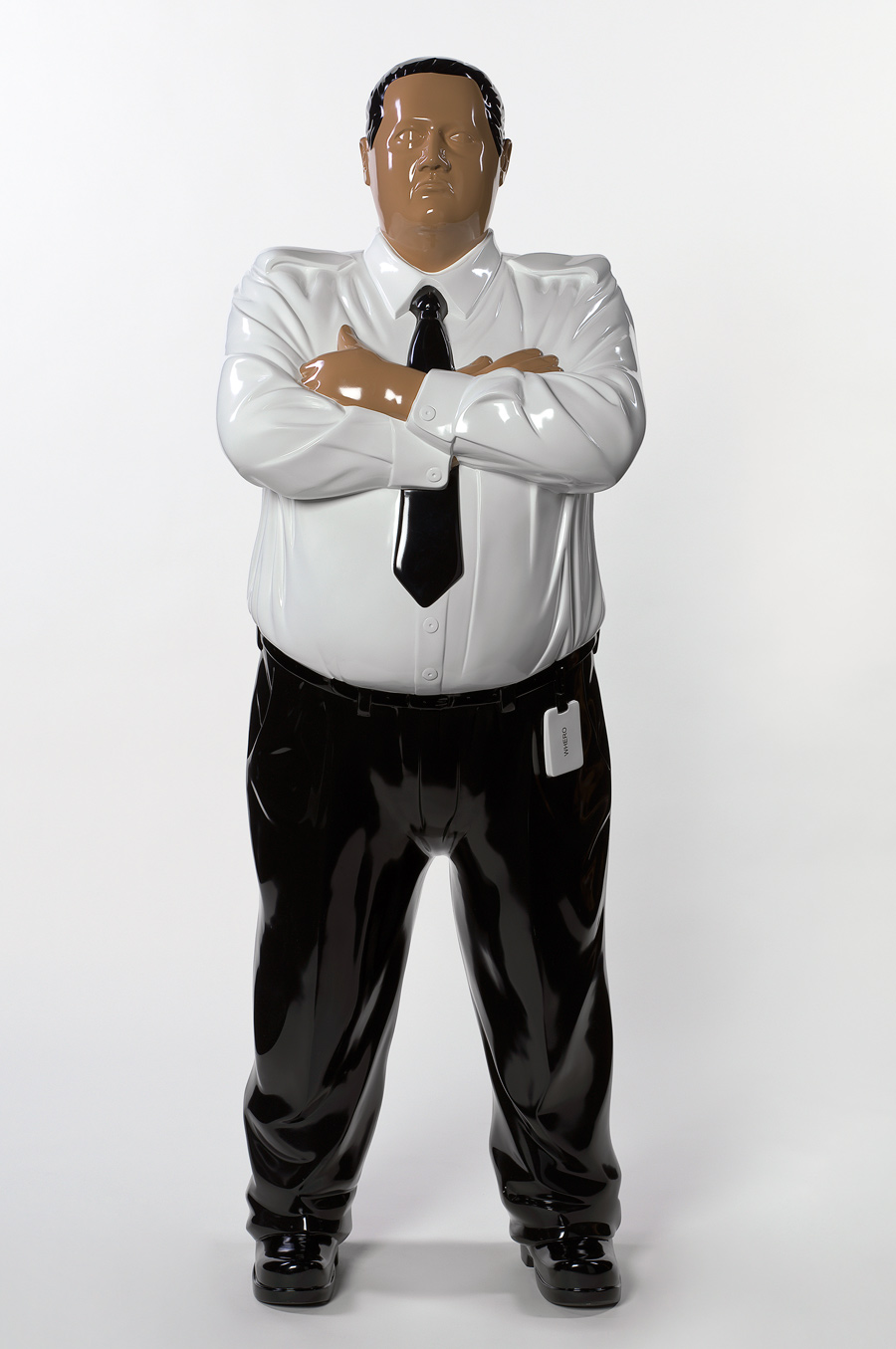
Michael Parekowhai (Ngāti Whakarongo New Zealander, b. 1968) 'Kapa Haka (Whero)' 2003 from the exhibition 'Unnerved: The New Zealand Project' at NGV International


Michael Parekowhai (Ngāti Whakarongo New Zealander, b. 1968)
Kapa Haka (Whero)
2003
Automotive paint on fibreglass
188 x 60 x 50cm
Queensland Art Gallery, Brisbane
Purchased 2009 with funds from Tim Fairfax AM, through the Queensland Art Gallery Foundation
© Michael Parekowhai


The National Gallery of Victoria today opened a major exhibition celebrating the extraordinary work of 26 contemporary New Zealand artists in Unnerved: The New Zealand Project.

Unnerved explores a particularly rich, dark vein found in contemporary New Zealand art. The psychological or physical unease underlying many works in the exhibition is addressed with humour, parody and poetic subtlety by artists across generations and mediums. Bringing together more than 100 works ranging from intimate works on paper to large scale installations by both established and emerging artists, Unnerved engages with New Zealand’s changing social, political and cultural landscape as the country navigates its indigenous settler and migrant histories. These works explore a changing sense of place, the continued importance of contemporary Maori art, biculturalism, a complex colonial past, the creative reworking of memory, and the often interconnected mediums of performance, photography and video. If the vision is unsettling, it is also compelling and Unnerved: The New Zealand Project offers us new ways of seeing one of our closest neighbours.

This fascinating exhibition explores a rich and dark vein found in contemporary art in New Zealand, drawing on the disquieting aspects of New Zealand’s history and culture reflected through more than 100 works of art.

Jane Devery, Coordinating Curator, NGV said: “The works presented in Unnerved reveal a darkness and distinctive edginess that characterises this particular trend in New Zealand contemporary art. The psychological or physical unease underlying many works in the exhibitions is addressed with humour, parody and poetic subtlety.

The exhibition reflects the strength and vitality of contemporary art in New Zealand with works created by both established and emerging artists, across a range of mediums including painting, photography, sculpture, installation, drawing, film and video.

Unnerved engages with New Zealand’s changing social, political and cultural landscape, exploring a shifting sense of place, complex colonial past, the relationships between contemporary Māori, Pacific Islander and pakeha (non-indigenous) culture, and the interplay between performance, video and photography,” said Ms Devery.

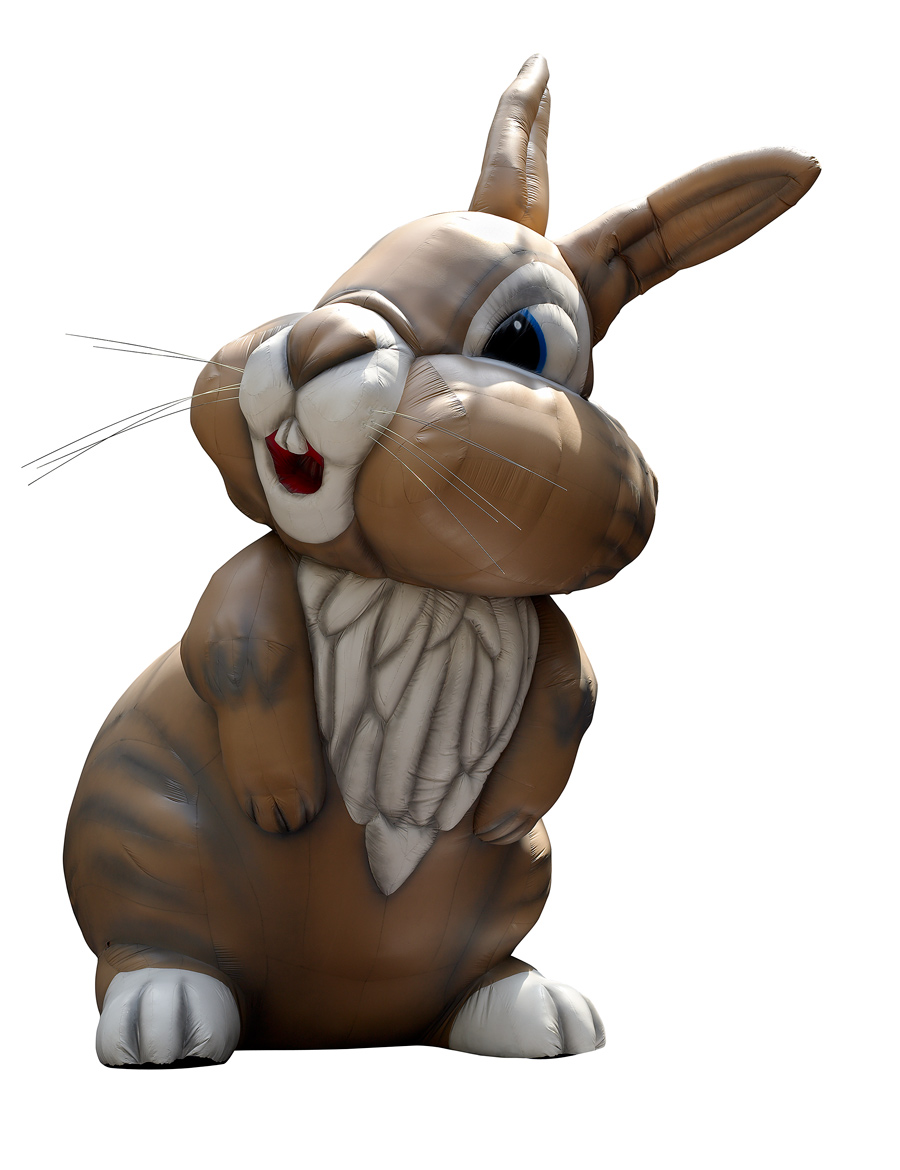
A highlight of the exhibition is a group of sculptural works by Michael Parekowhai including his giant inflatable rabbit, Cosmo McMurtry, which will greet visitors to the exhibition, and a spectacular life-size seal balancing a grand piano on its nose titled The Horn of Africa. Also on display are a series of haunting photographs by Yvonne Todd, whose portrait photography often refers to B-grade films and pulp fiction novels.

Gerard Vaughan, Director, NGV said this exhibition demonstrates the NGV’s strong commitment to interesting and challenging contemporary art secured from around the world; he noted that the NGV has made a special commitment to exhibition the contemporary art of our region.

Unnerved will introduce visitors to the rich contemporary arts scene of one of our closest neighbours, fascinating audiences with works ranging from the life size installations by Parekowhai through to the spectacular 30 metre photographic essay by Gavin Hipkins. This truly is a must see show this summer!” said Dr Vaughan.

Unnerved will also offer a strong and engaging collection of contemporary sculpture, installations, drawings, paintings, photography, film and video art by artists including Lisa Reihana, John Pule, Gavin Hipkins, Anne Noble, Ronnie van Hout, Shane Cotton, Julian Hooper and many others.

Press release from the National Gallery of Victoria website


Michael Parekowhai (Ngāti Whakarongo New Zealander, b. 1968) 'The Horn of Africa' 2006


Michael Parekowhai (Ngāti Whakarongo New Zealander, b. 1968)
The Horn of Africa
2006
Automotive paint, wood, fibreglass, steel, brass
395 x 200 x 260cm
Queensland Art Gallery, Brisbane
Purchased 2008 with funds from the Queensland Government’s Gallery of Modern Art Acquisitions Fund in recognition of the contribution to the Gallery by Wayne Goss (Chair of Trustees 1999-2008)
© Michael Parekowhai


Michael Parekowhai (Ngāti Whakarongo New Zealander, b. 1968) 'Cosmo McMurtry' 2006 from the exhibition 'Unnerved: The New Zealand Project' at NGV International


Michael Parekowhai (Ngāti Whakarongo New Zealander, b. 1968)
Cosmo McMurtry
2006
Synthetic polymer paint on polyvinyl chloride, fibreglass, air compressor
734.3 x 506.4 x 739.1cm (variable)
Presented by the Melbourne Art Fair Foundation with the assistance of funds donated by NGV Contemporary, 2006
National Gallery of Victoria
© Michael Parekowhai


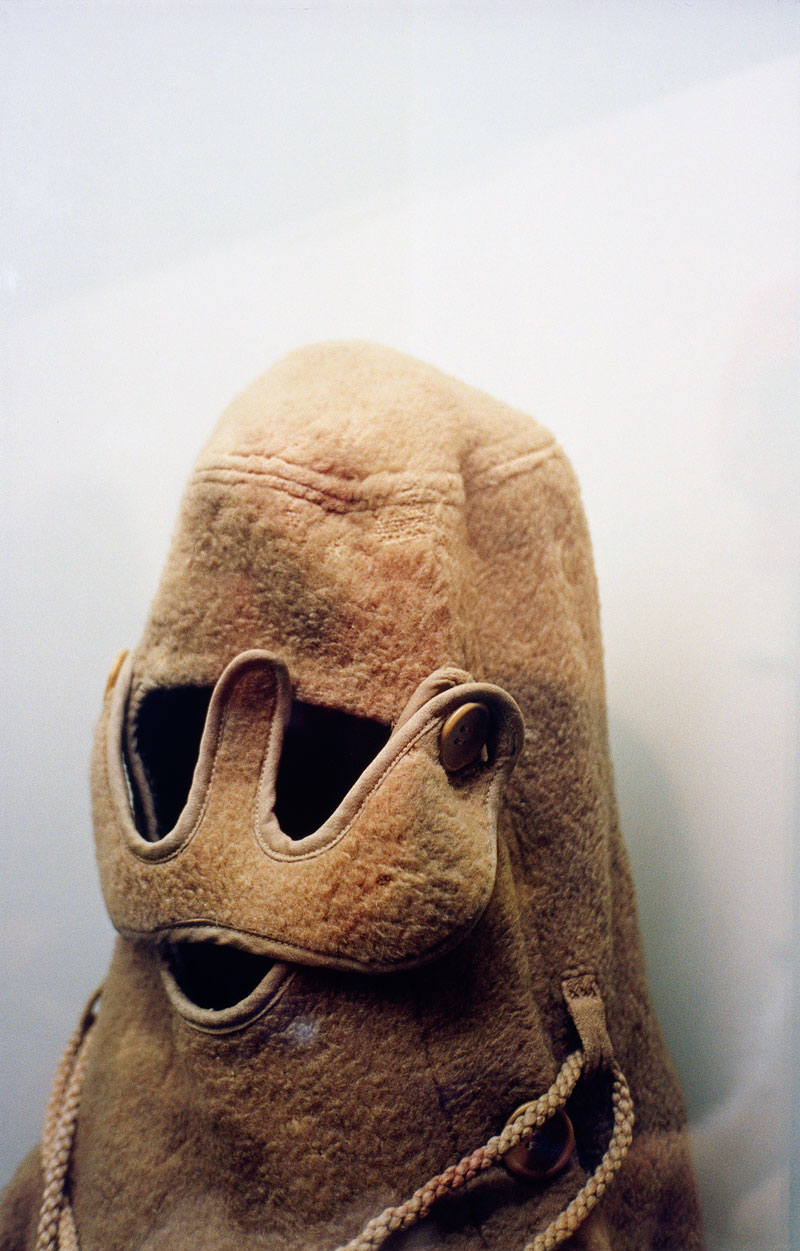
Gavin Hipkins (New Zealander, b. 1968) 'Christchurch (Mask)' 1998 from the exhibition 'Unnerved: The New Zealand Project' at NGV International


Gavin Hipkins (New Zealander, b. 1968)
Christchurch (Mask)
1998
From The homely series 1997-2000
Type C photograph
60 x 40cm
Queensland Art Gallery, Brisbane Purchased 2008. The Queensland Government’s Gallery of Modern Art Acquisitions Fund
© Gavin Hipkins


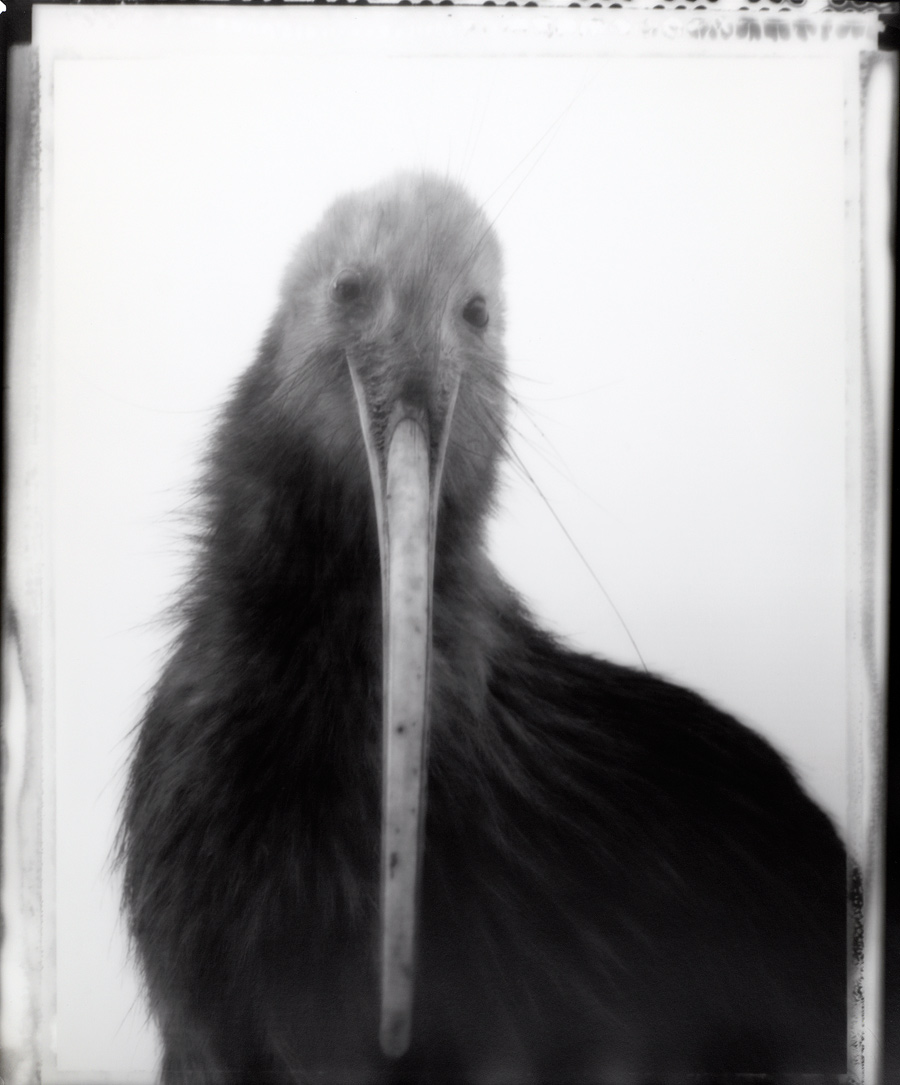
Fiona Pardington (Kai Tahu, Kati Mamoe, Kati Waewae New Zealander, b. 1961) 'Sweet Kiwi, from the collection 'Whanganui Museum'' 2008 from the exhibition 'Unnerved: The New Zealand Project' at NGV International


Fiona Pardington (Kai Tahu, Kati Mamoe, Kati Waewae New Zealander, b. 1961)
Sweet Kiwi, from the collection ‘Whanganui Museum’
2008
Gold-toned gelatin silver photograph
61 x 50.8cm
Queensland Art Gallery, Brisbane
Purchased 2008 with funds from Gina Fairfax through the Queensland Art Gallery Foundation
© Fiona Pardington


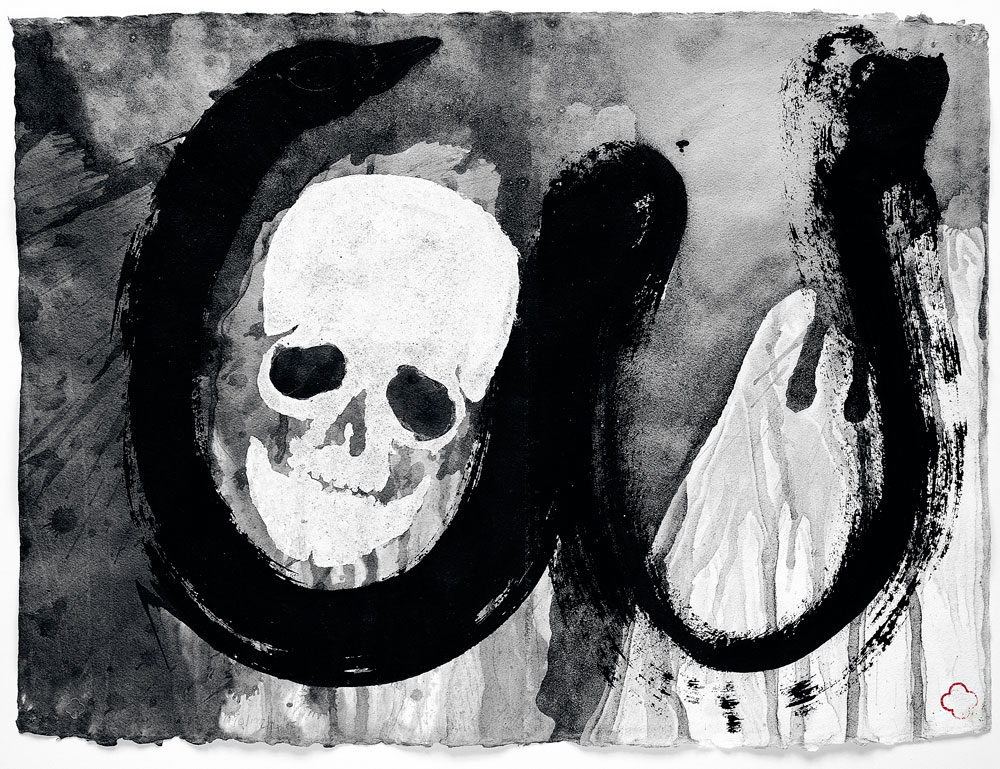
Max Gimblett (New Zealander / American, b. 1935) 'Balls' 1990-1997 from the exhibition 'Unnerved: The New Zealand Project' at NGV International


Max Gimblett (New Zealander/American, b. 1935)
Balls
1990-1997
Brush and ink, synthetic polymer paint and pencil on handmade paper
59.8 x 79.3cm
Queensland Art Gallery, Brisbane
The Max Gimblett Gift.
Gift of the artist through the Queensland Art Gallery Foundation 2000
© Max Gimblett


Anne Noble (New Zealander, b. 1954) 'Ruby's room no. 6' 1999 from the exhibition 'Unnerved: The New Zealand Project' at NGV International


Anne Noble (New Zealander, b. 1954)
Ruby’s room no. 6
1999
Colour digital print
67 x 100.2cm
Queensland Art Gallery, Brisbane
Purchased 2006
© Anne Noble


NGV International
180 St Kilda Road

Opening hours
Daily 10am – 5pm

National Gallery of Victoria website

LIKE ART BLART ON FACEBOOK

Back to top

Review: ‘Luminous Cities: Photographs of the Built Environment’ at NGV International, Melbourne

Exhibition dates: 22nd October 2010 – 13th March 2011


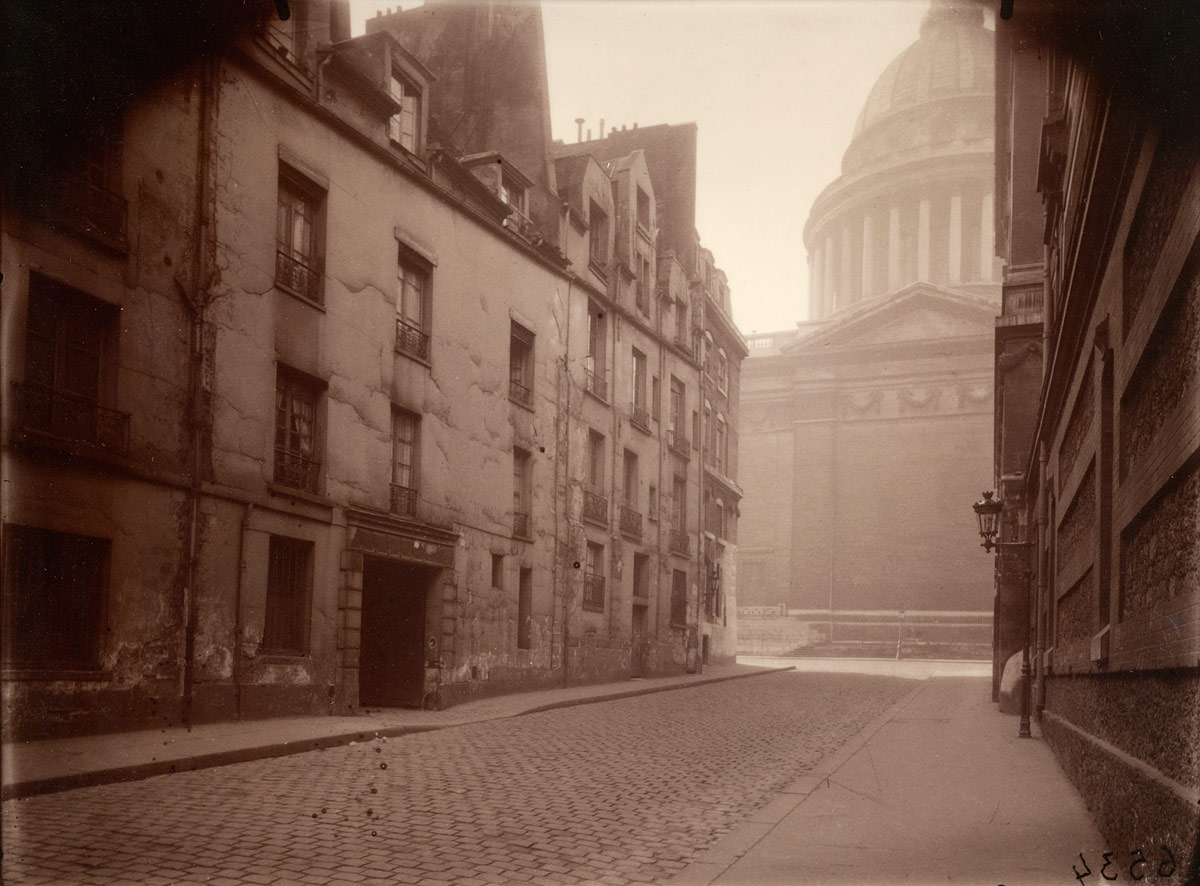
Eugène Atget (French, 1857-1927) 'Coin de la rue Valette et Pantheon, 5e arrondissement, matinee de mars' 1925, printed 1978  from the exhibition 'Luminous Cities: Photographs of the Built Environment' at NGV International


Eugène Atget (French, 1857-1927)
Coin de la rue Valette et Pantheon, 5e arrondissement, matinee de mars
1925, printed 1978
Gelatin silver photograph
17.8 x 23.7cm
National Gallery of Victoria, Melbourne
Purchased, 1980


A delightful exhibition of photographs of the built environment at the National Gallery of Victoria, Melbourne. The exhibition contains some interesting photographs from the collection including the outstanding Coin de la rue Valette et Pantheon, 5e arrondissement, matinee de mars by Eugene Atget taken two years before his death (1925, printed 1978, see below) that simply takes your breath away.

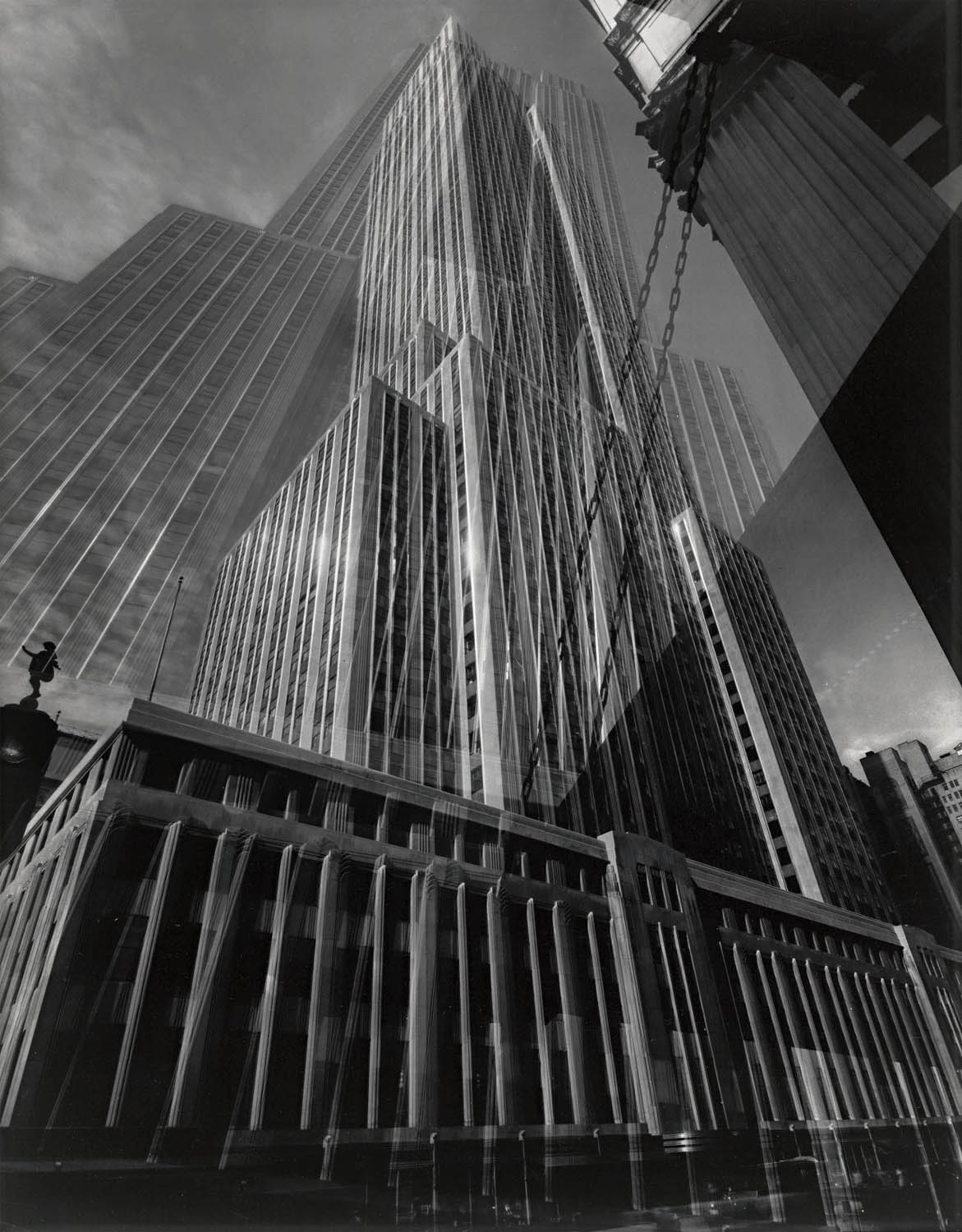
Atget was my hero when I started to study photography in the late 1980s and he remains my favourite photographer. His use of light coupled with his understanding of how to organise space within the pictorial frame is exemplary (note the darkness of the right-hand wall as it supports the integrity of the rest of the image, as it leads your eye to that wonderful space between the buildings, the shaft of light falling on the ground, the blank wall topped by an arrow leading the eye upwards to the misty dome!). The ability to place his large format camera and tripod in just the right position, the perfect height and angle, to allow the subject to reveal itself it all it’s glory is magical: “Atget’s interest in the variable play between nature and art through minute changes in the camera’s angle, or as functions of the effects of light and time of day, is underscored in his notations of the exact month and sometimes even the hour when the pictures were taken.”1 Two other immense works in the exhibition are New York at Night by Berenice Abbott (1932, printed c. 1975 below) and the incredible multiple exposure The Maypole, Empire State Building, New York by Edward Steichen (1932, below).

The only disappointment to the exhibition is the lack of vintage prints, a fair portion of the exhibition including the three prints mentioned above being later prints made from the original negatives. I wonder what vintage prints of these images would look like?

The purchasing of non-vintage prints was the paradigm for the collection of international photographs early in the history of the Department of Photography at the National Gallery of Victoria and was seen as quite acceptable at the time. The paradigm was set by Athol Shmith in 1973 on his visit to Paris and London.

“Typically for the times, Shmith did not choose to acquire vintage prints, that is, photographs made shortly after the negative was taken. While vintage prints are most favoured by collectors today, in the 1970s vintage prints supervised by the artists were considered perfectly acceptable and are still regarded as a viable, if less impressive option now.”2

Some museums including the NGV preferred to acquire portfolios of modern reprints as a speedy way of establishing a group of key images. As noted in the catalogue essay to 2nd Sight: Australian Photography at the National Gallery of Victoria by Dr Isobel Crombie, Senior Curator of Photography at the National Gallery of Victoria, the reason for preferring the vintage over the modern print “is evident when confronted with modern and original prints: differences in paper, scale and printing styles make the original preferable.”3 The text also notes that this sensibility, the consciousness of these differences slowly evolved in the photographic world and, for most, the distinctions were not a matter of concern even though the quality of the original photograph was not always maintained.

This is stating the case too strongly. Appreciation of the qualities of vintage prints was already high in the period of the mid-1970s – early 1980s most notably at institutions such as The Museum of Modern Art, a collection visited by photography curators of the NGV. Size and scale of the vintage prints tend to be much smaller than later prints making them closer to the artists original intentions, while the paper the prints are made on, the contrast and colour of the prints also varies remarkably. Other mundane but vitally important questions may include these: who printed the non-vintage photograph, who authorised the printing and how many non-vintage copies of the original negative were made, none of which are answered when the prints are displayed.

I vividly remember seeing a retrospective of Henri Cartier-Bresson’s work in Edinburgh at the Dean Gallery, National Gallery of Scotland in 2005, the largest retrospective of Cartier-Bresson’s work ever staged in Britain with over 200 photographs. Three large rooms were later 1970s reprints of some of his photographs, about 20″ x 24″ in size, on cold, blue photographic paper. One room, however, was full of his original prints from the 1920s and 30s. The contrast could not have been different: the vintage prints were very small, intense, subtle, printed on brown toned paper, everything that you would want those jewel-like images to be, the vision of the artist intensified; the larger prints diluted that vision until the images seemed to almost waste away despite their size.

Although never stated openly I believe that one of the reasons for the purchase of non-vintage prints was the matter of cost, the Department of Photography never being given the budget to buy the prints that it wanted to in the 1970s – early 1980s, the collection of photography not being a priority for the NGV at that time. In other words by buying non-vintage prints in the 1970s you got more “bang for your buck” even when the cost of vintage prints was relatively low. Unfortunately the price of vintage prints then skyrocketed in the 1980s putting them well outside the budget of the Department. While Dr Crombie acknowledges the preponderance of American works in the collection over European and Asian works she also notes that major 20th century photographers that you would expect to be in the collection are not and blames this lack “on the massive increases in prices for international photography that began in the 1980s and which largely excluded the NGV from the market at this critical time.”4

The policy of purchasing non-vintage prints has now ceased at the National Gallery of Victoria.

The purchasing of non-vintage prints and the paucity of purchasing vintage prints by master photographers during the formative decade of the collection of international photographs in the Department of Photography (1970-1980) is understandable in hindsight but today seems like a golden opportunity missed. While the collection contains many fine photographs due to the diligence of early photographic curators (notably Jennie Boddington), the minuscule nature of the budget of the department in those early years when vintage prints were relatively cheap and affordable (a Paul Caponigro print could be purchased for $200-300 for example) did not allow them to purchase the photographs that the collection desperately needed. With one vintage print by a master of photography now fetching many thousands of dollars the ability to fill gaps in the collection in the future is negligible (according to Dr Crombie) – so we must celebrate and enjoy the photographs that are in the collection such as those in Luminous Cities: Photographs of the Built Environment.

Dr Marcus Bunyan


2/ Crombie, Isobel. “Creating a Collection: International Photography at the National Gallery of Victoria,” in Re_View: 170 years of Photography. Melbourne: National Gallery of Victoria, 2009, p. 9

3/ Crombie, Isobel. Second sight: Australian photography in the National Gallery of Victoria. Melbourne: National Gallery of Victoria, 2002, p. 10

4/ Op.cit. p. 10


Many thankx to Jemma Altmeier for her help and to the National Gallery of Victoria for allowing me to publish the photographs in the posting. Please click on the photographs for a larger version of the image.


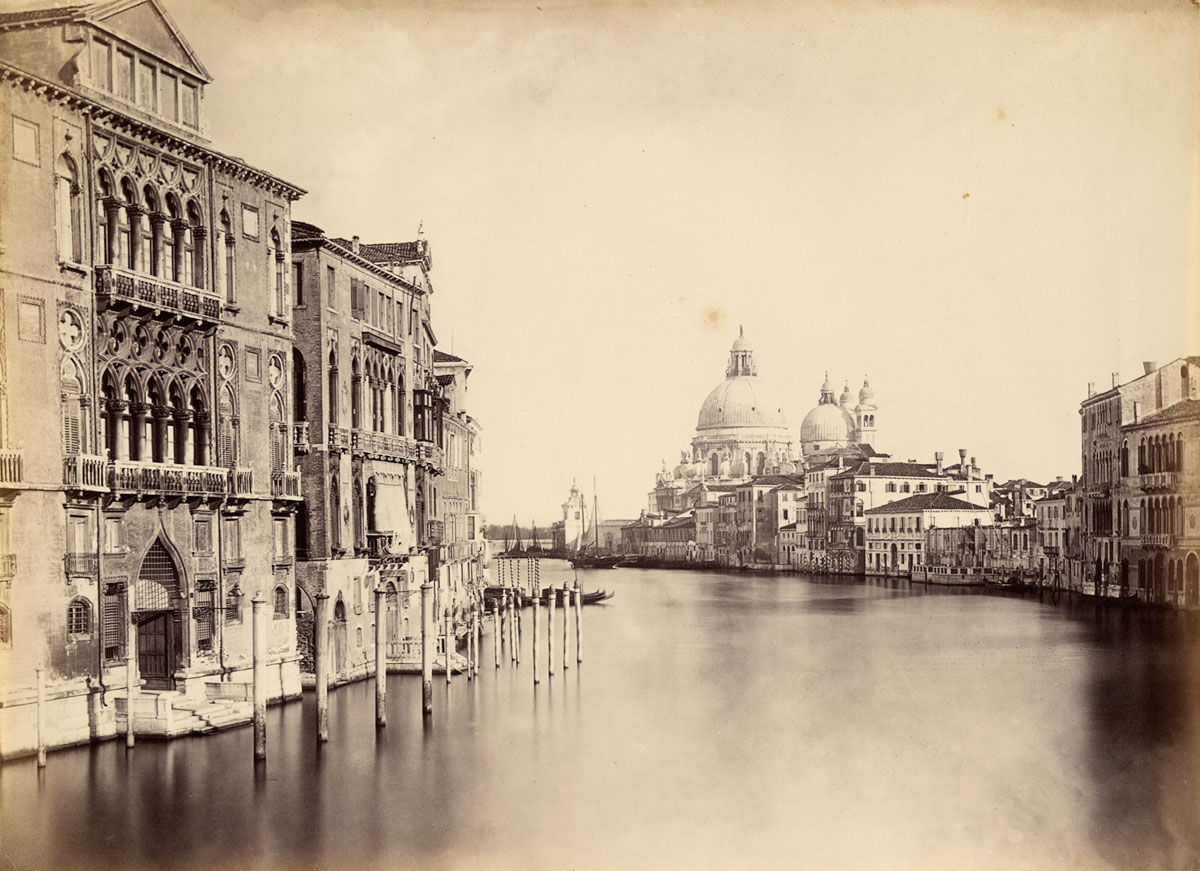
Stephen Thompson (active throughout Europe, 1850s-1880s) 'Grande Canale, Venice' c. 1868 from the exhibition 'Luminous Cities: Photographs of the Built Environment' at NGV International


Stephen Thompson (active throughout Europe, 1850s-1880s)
Grande Canale, Venice
c. 1868
Albumen silver photograph
21.2 x 29.2cm
National Gallery of Victoria, Melbourne
Purchased from Admission Funds, 1988


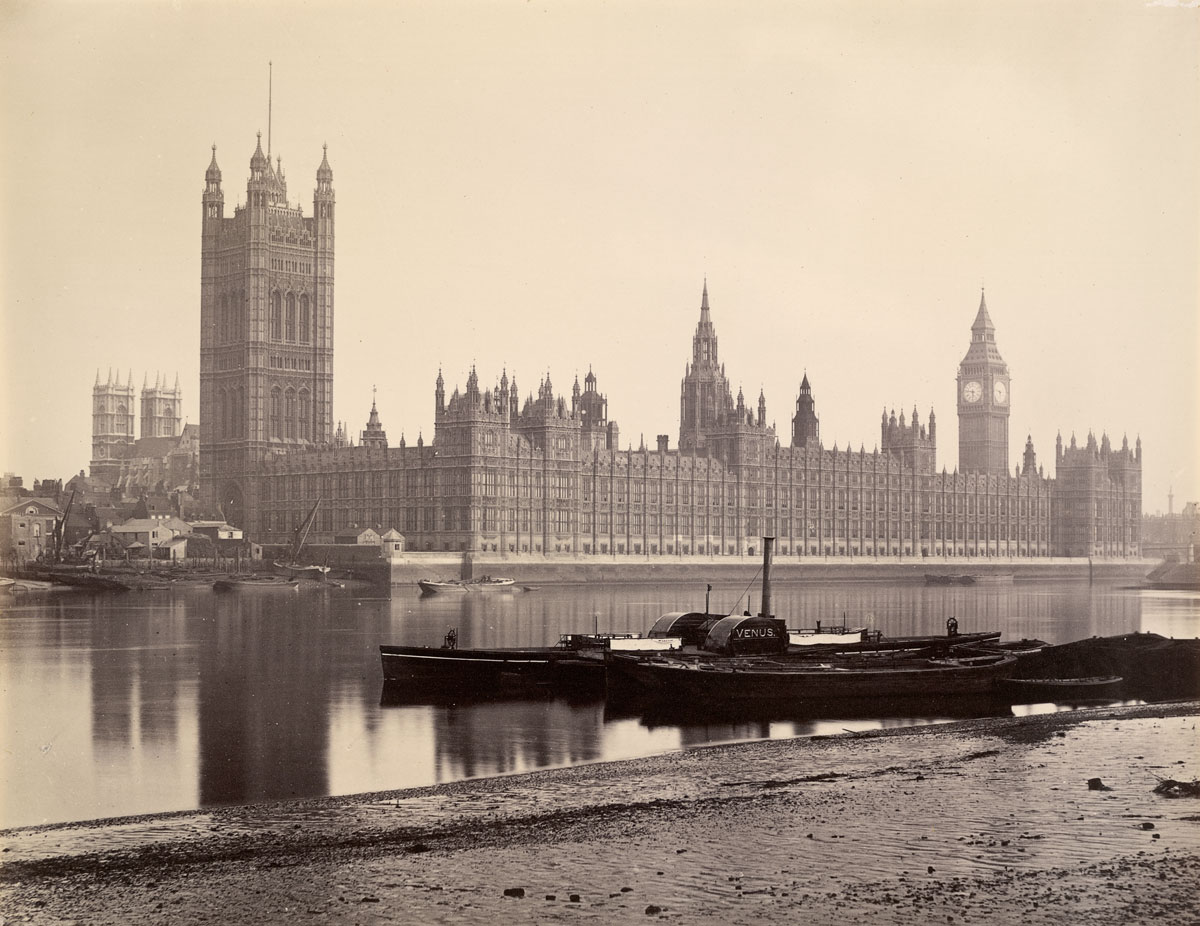
England (active in England 1860s) 'Houses of Parliament, London' 1860s from the exhibition 'Luminous Cities: Photographs of the Built Environment' at NGV International


England (active in England 1860s)
Houses of Parliament, London
1860s
Albumen silver photograph
18.5 x 24.1cm
National Gallery of Victoria, Melbourne
Purchased from Admission funds, 1988


On 22 October the National Gallery of Victoria will open Luminous Cities, a fascinating exhibition that examines the various ways photographers have viewed cities as historical sites, bustling modern hubs and architectural utopias since the nineteenth century.

The great cities of the world are vibrant creative centres in which the built environment is often as inspirational as the activities of its citizens, and, since the nineteenth century photographers have creatively explored the idea of the city.

This exhibition, drawn from the collection of the NGV, considers various ways in which photographers in the 19th and 20th centuries have viewed cities as historical sites, bustling modern metropolises and architectural utopias. These lyrical images describe the physical attributes of cities, offer insights into the creative imaginations of architects and photographers and embody the zeitgeist of their times.

Frances Lindsay, Deputy Director, NGV said: “Through the work of a range of photographers Luminous Cities will take viewers on a fascinating journey around the world, into the streets, buildings and former lives of great international cities.

“Drawn from the NGV collection, Luminous Cities includes works by renowned photographers Eugene Atget, Alfred Stieglitz, Edward Steichen, Berenice Abbott, Laszlo Moholy-Nagy, Bill Brandt, Lee Freidlander and Grant Mudford amongst many others.

The exhibition will also extend into our contemporary gallery space where an outstanding selection of works by celebrated contemporary artists such as Bill Henson, Andreas Gursky and Jon Cattapan will be on display,” said Ms Lindsay.

Through examples from the mid 19th century, Luminous Cities explores the relationship between photographer, architect and archaeologist with photos of Athens, Rome and Pompeii. This was also a time when great cities such as London and Paris underwent unprecedented renewal and expansion, photography served to document new constructions and also presented heroic, inspirational visions of new cities emerging from old.

Susan van Wyk, Curator, Photography, NGV said: “The works on display in Luminous Cities describe the physical attributes of cities, offer insights into the creative imaginations of architects and photographers, and embody the zeitgeist of their times.”

New York, one of the great 20th century cities, was a captivating subject for generations of photographers. Through the work of architects and the images photographers made of the city, New York became synonymous with its skyline. The images of renowned photographers including Alfred Stieglitz, Edward Steichen, Paul Strand and Berenice Abbott show the pictorial possibilities of the modern city in photographs that embody the dynamism of the city that never sleeps.

The contemporary art works included in Luminous Cities explore the creative ways in which artists imagine and represent the cityscape. Vast glittering panoramas taken from bustling urban communities, sprawling architectural structures and fictitious landscapes all combine to reveal fascinating insights into both physical and psychological geographies.

Ms van Wyk said: “At the end of the 20th century a much cooler, more abstracted strain of photography emerged. Photographs in the exhibition from this period range from the formalism of the 1970s to more recent cinematic visions of the nocturnal city.”

Press release from the National Gallery of Victoria website


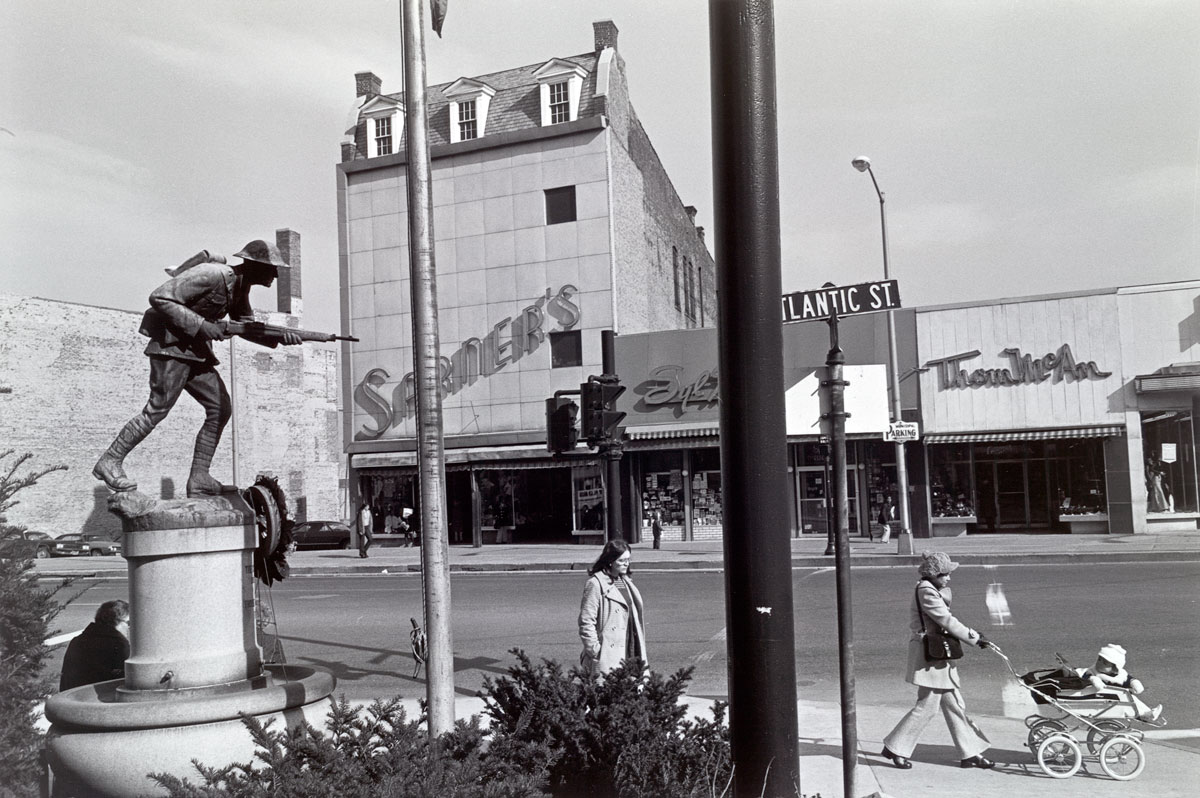
Lee Freidlander (American, b. 1934) 'Stamford, Connecticut' 1973, printed c. 1977 from the exhibition 'Luminous Cities: Photographs of the Built Environment' at NGV International


Lee Freidlander (American, b. 1934)
Stamford, Connecticut
1973, printed c. 1977
Gelatin silver photograph
18.9 x 28.3cm
National Gallery of Victoria, Melbourne
Purchased, 1977
© Lee Friedlander


In the decades following the Second World War the idea of ‘the city’, notably in work of American, European and Australian photographers, came to symbolise the modern condition, the best and worst of contemporary life. This ambiguous stance on the city is exemplified in the work of American photographer Lee Friedlander whose photographs of seemingly ordinary urban scenes are at once amusing and slightly disturbing. In his 1973 photograph Stamford, Connecticut, the banal vernacular architecture of suburban shopping street forms the backdrop to a peculiar scene where shoppers are ‘stalked’ by a statue of first world war sniper. Despite its witty elements, this image has a somewhat despairing tone. The women walking along this rather bleak street are isolated and anonymous, ciphers for the worst aspects of contemporary city life.


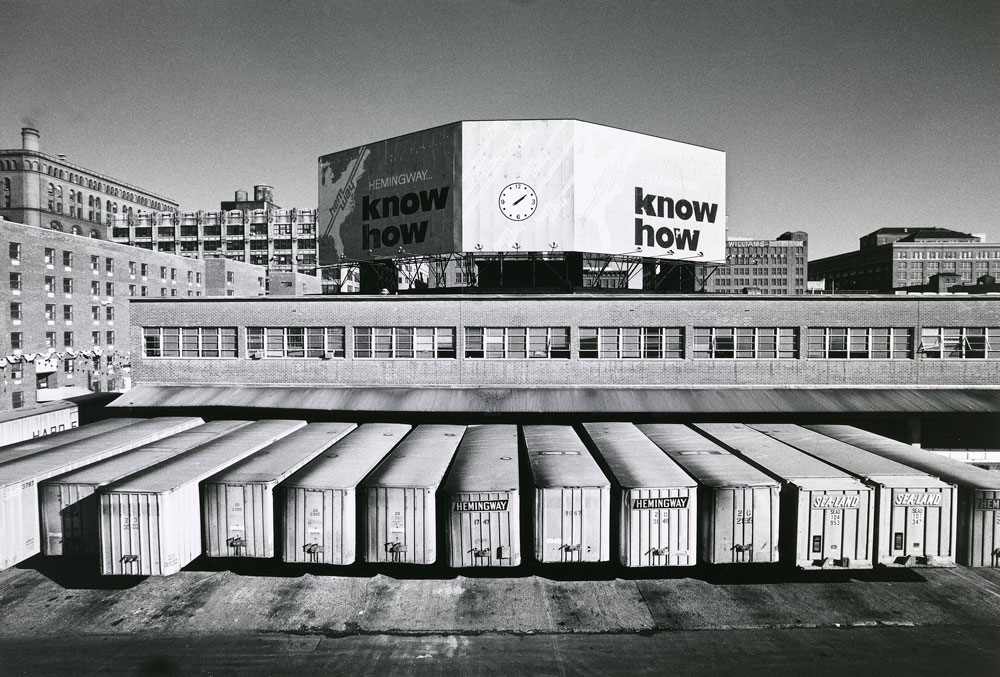
Grant Mudford (b. Australia 1944, lived United States 1977- ) 'New York' 1975 from the exhibition 'Luminous Cities: Photographs of the Built Environment' at NGV International


Grant Mudford (b. Australia 1944, lived United States 1977- )
New York
1975
Gelatin silver photograph
33.8 x 49.8cm
National Gallery of Victoria, Melbourne
Purchased, 1977
© Grant Mudford


A more neutral view of the contemporary city can be seen in the work of Australian photographer Grant Mudford. After moving to the US in 1970s, Mudford continued to photograph the built environment. Familiar with the work of Lee Friedlander, and citing Walker Evans as an influence, Mudford’s photographs continue a tradition of photographing the city as an empty backdrop devoid of the bustle of human activity. In his 1975 Untitled photograph of a truck depot in New York, Mudford simplifies what could be a chaotic scene to the verge of abstraction.


Berenice Abbott (american, 1898-1991) 'New York at Night' 1932 from the exhibition 'Luminous Cities: Photographs of the Built Environment' at NGV International Review: 'Luminous Cities: Photographs of the Built Environment' at NGV International, Melbourne


Berenice Abbott (American, 1898-1991)
New York at Night
1932
Gelatin silver print
34.1 × 26.1cm (image and sheet)
National Gallery of Victoria, Melbourne
Gift of an anonymous donor in memory of Rosa Zerfas (1896-1983), 1985
©Artist estate through the Howard Greenberg Gallery, New York


Edward Steichen (American, 1879-1973) 'The maypole' 1932 from the exhibition 'Luminous Cities: Photographs of the Built Environment' at NGV International Review: 'Luminous Cities: Photographs of the Built Environment' at NGV International, Melbourne


Edward Steichen (American, 1879-1973)
The maypole
1932
Gelatin silver photograph
35.1 × 27.1cm
National Gallery of Victoria, Melbourne
Presented by Maxwell Photo-Optics Pty Ltd, 1973
© Edward Steichen. ARS/Copyright Agency, 2023


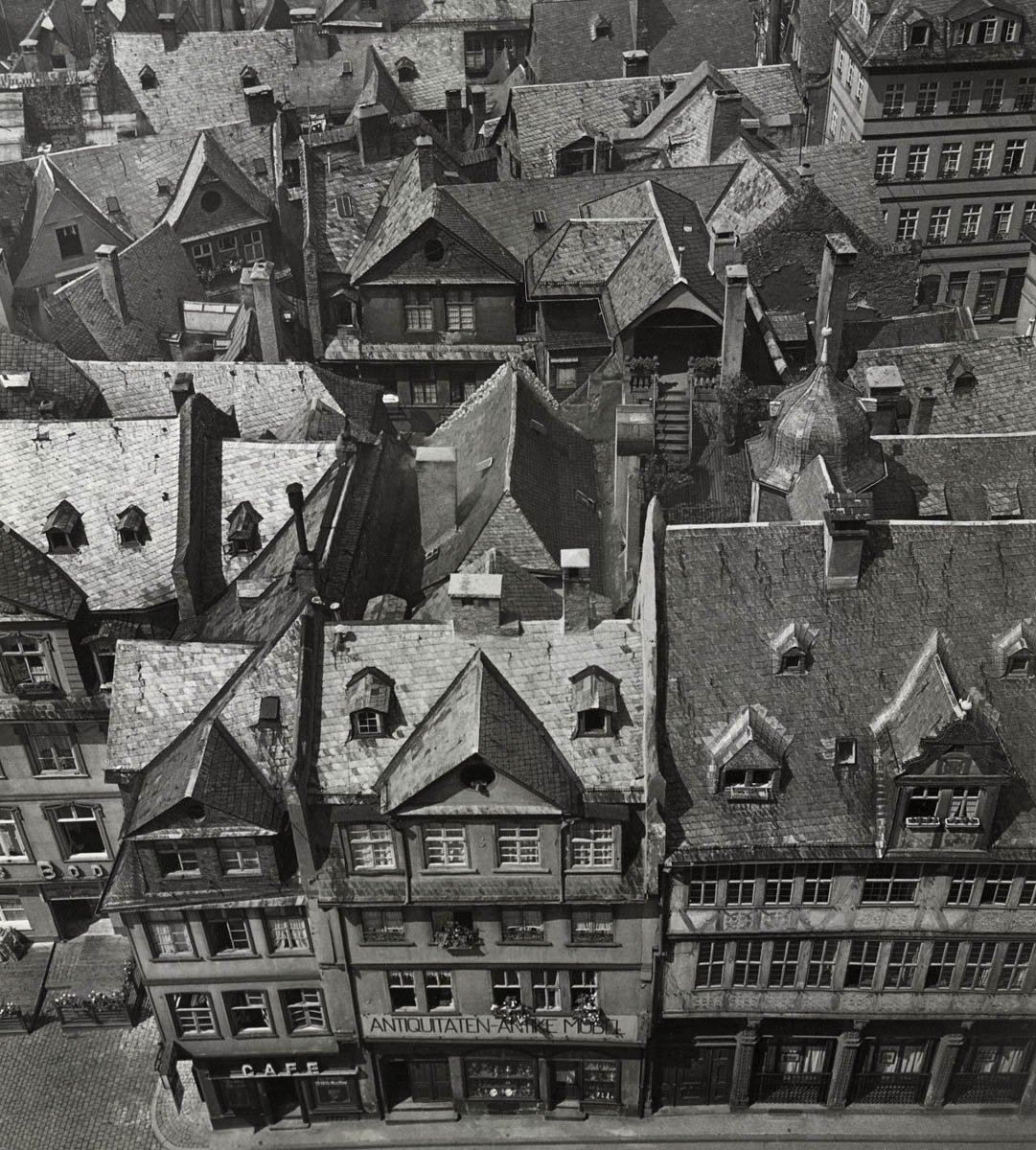
Wolfgang Sievers (Australian born Germany, 1913-2007) 'Old Frankfurt before its total destruction in World War II, Germany' 1933, printed 1986 from the exhibition 'Luminous Cities: Photographs of the Built Environment' at NGV International, Melbourne


Wolfgang Sievers (Australian born Germany, 1913-2007)
Old Frankfurt before its total destruction in World War II, Germany
1933, printed 1986
gelatin silver photograph
28.9 x 26.2 cm
National Gallery of Victoria, Melbourne
Purchased, 1986


Bill Henson (Australian, b. 1955)
'Untitled' 1987-1988 From the 'Untitled 1987/88' series 1987-1988 from the exhibition 'Luminous Cities: Photographs of the Built Environment' at NGV International, Melbourne


Bill Henson (Australian, b. 1955)
Untitled
1987-1988
From the Untitled 1987/88 series 1987-1988
Type C photograph
183.5 x 125.6cm
National Gallery of Victoria, Melbourne
Purchased through The Art Foundation of Victoria with the assistance of the Moët & Chandon Art Acquisition Fund, Fellow, 1989
© The artist and Robert Miller Gallery, New York


NGV International
180 St Kilda Road

Opening hours
Daily 10am – 5pm

National Gallery of Victoria website

LIKE ART BLART ON FACEBOOK

Back to top

Exhibition: ‘European Masters: Städel Museum 19th – 20th Century’, Winter Masterpieces at the National Gallery of Victoria, Melbourne

Exhibition dates: 19th June – 10th October 2010


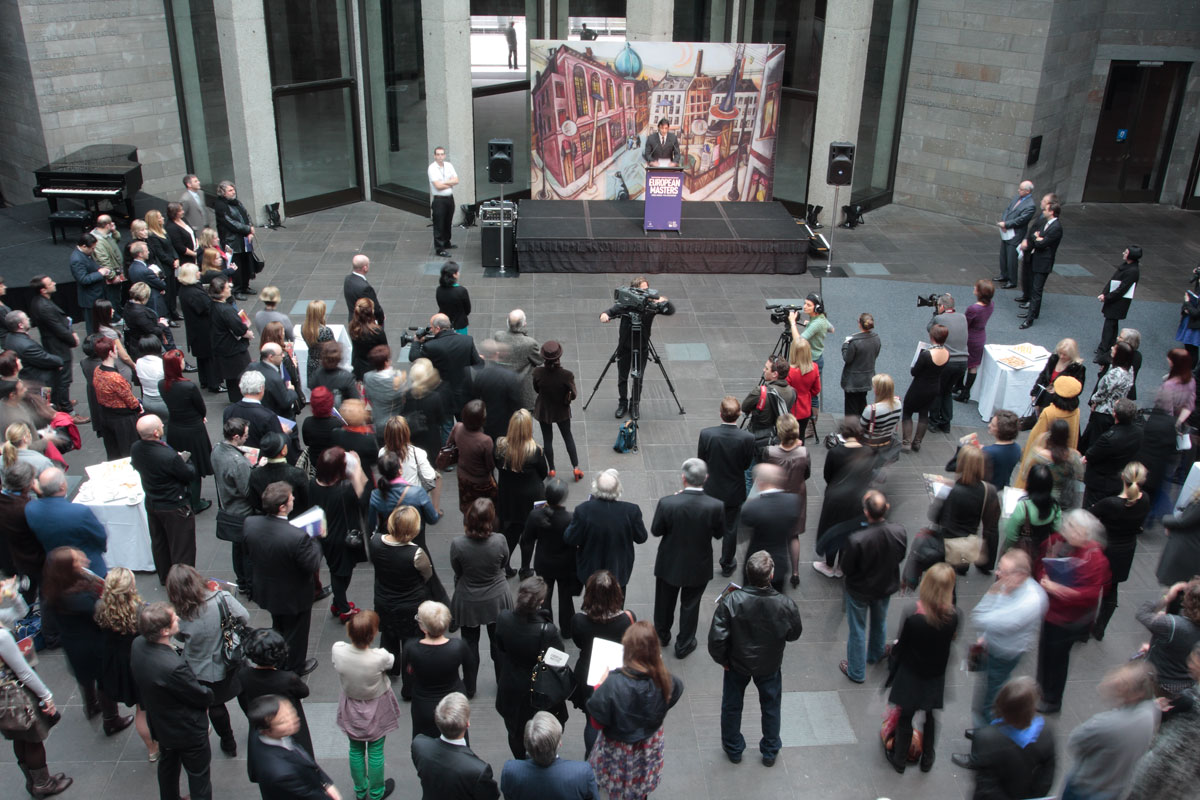
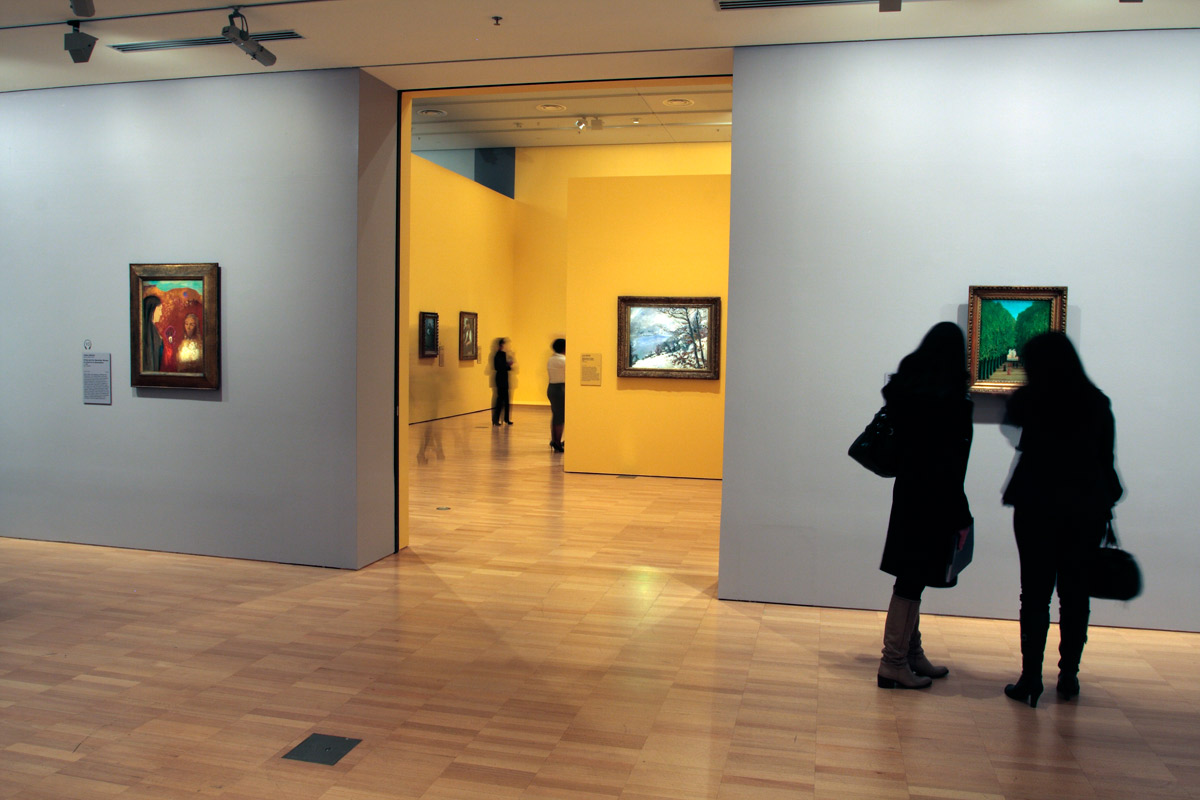
Media opening of 'European Masters: Städel Museum 19th - 20th Century', Winter Masterpieces at the National Gallery of Victoria


Media opening of European Masters: Städel Museum 19th – 20th Century, Winter Masterpieces at the National Gallery of Victoria
Photo: Marcus Bunyan


A huge posting – and another ‘you saw it here first’ on Art Blart!

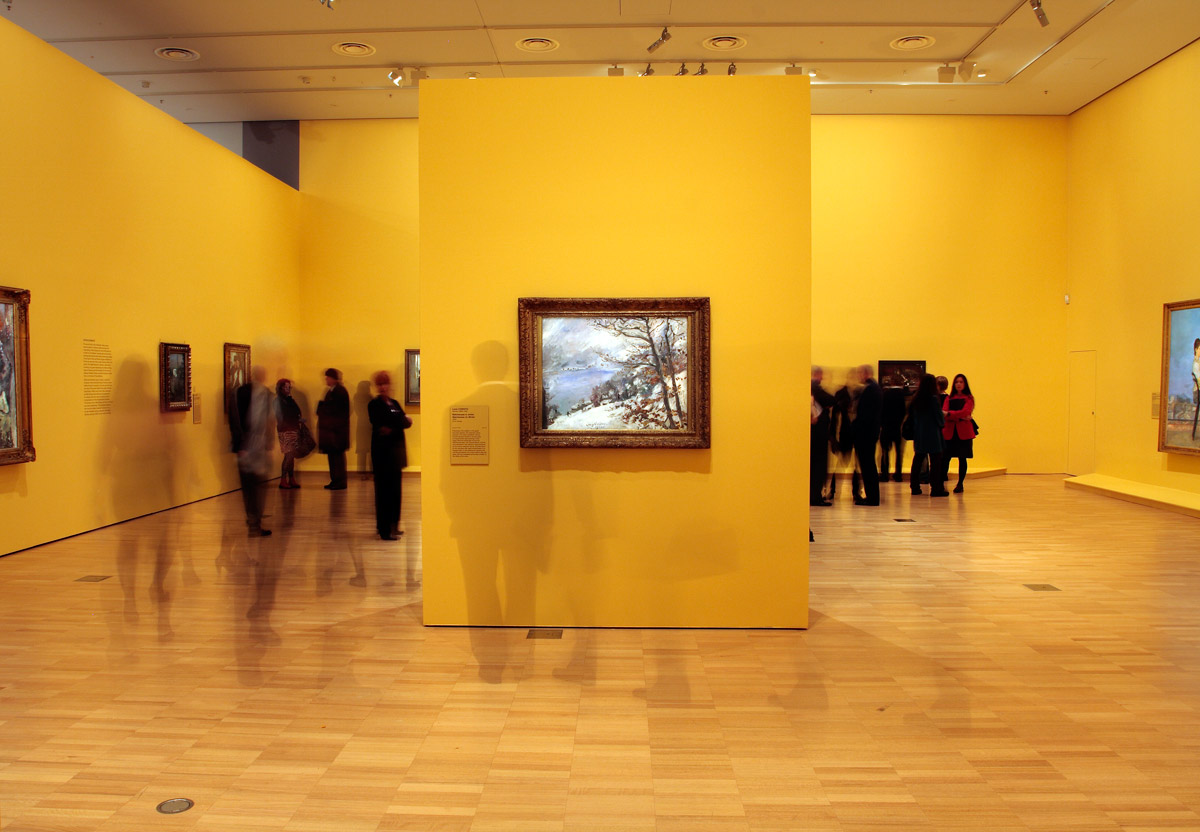
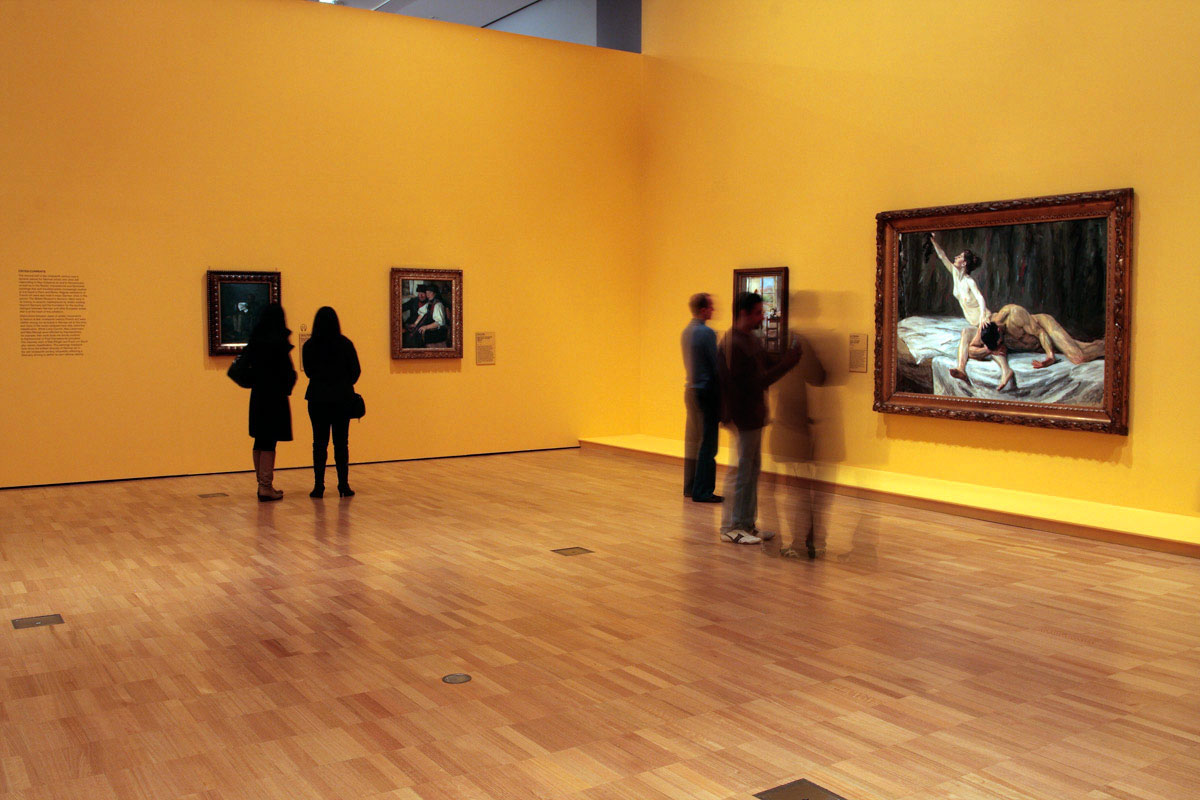
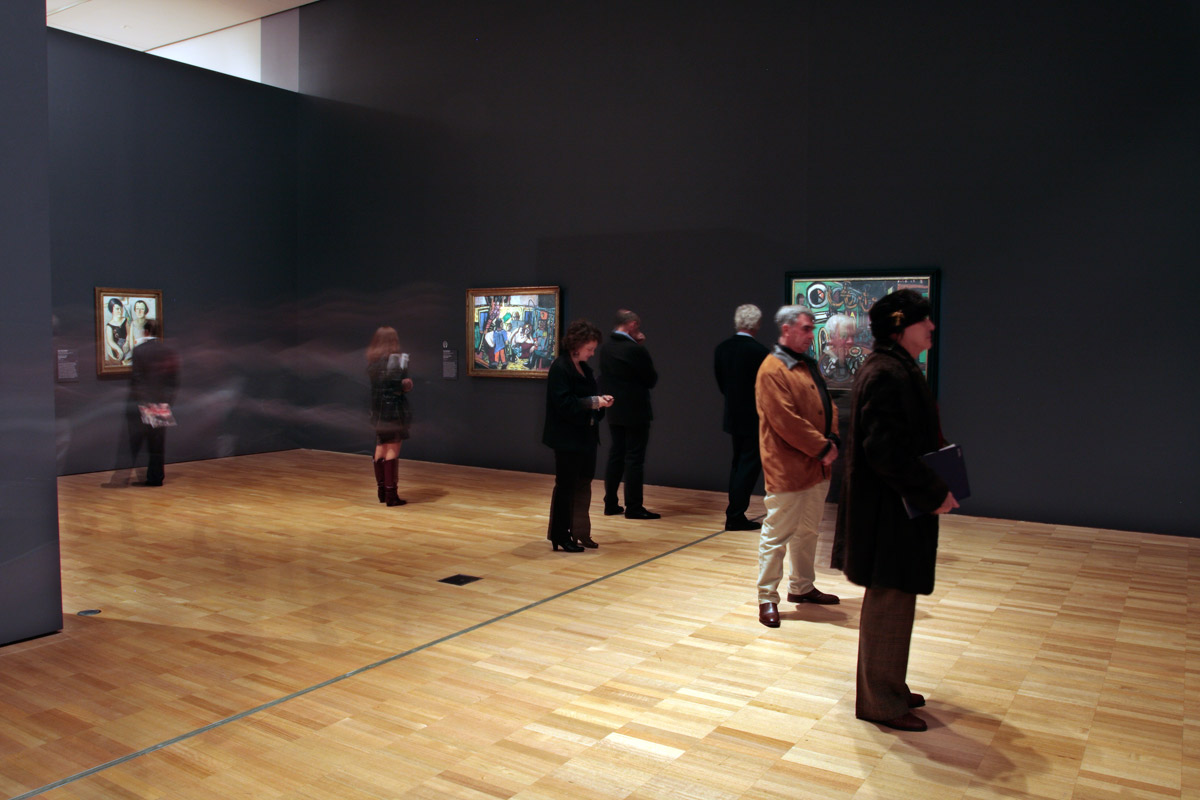
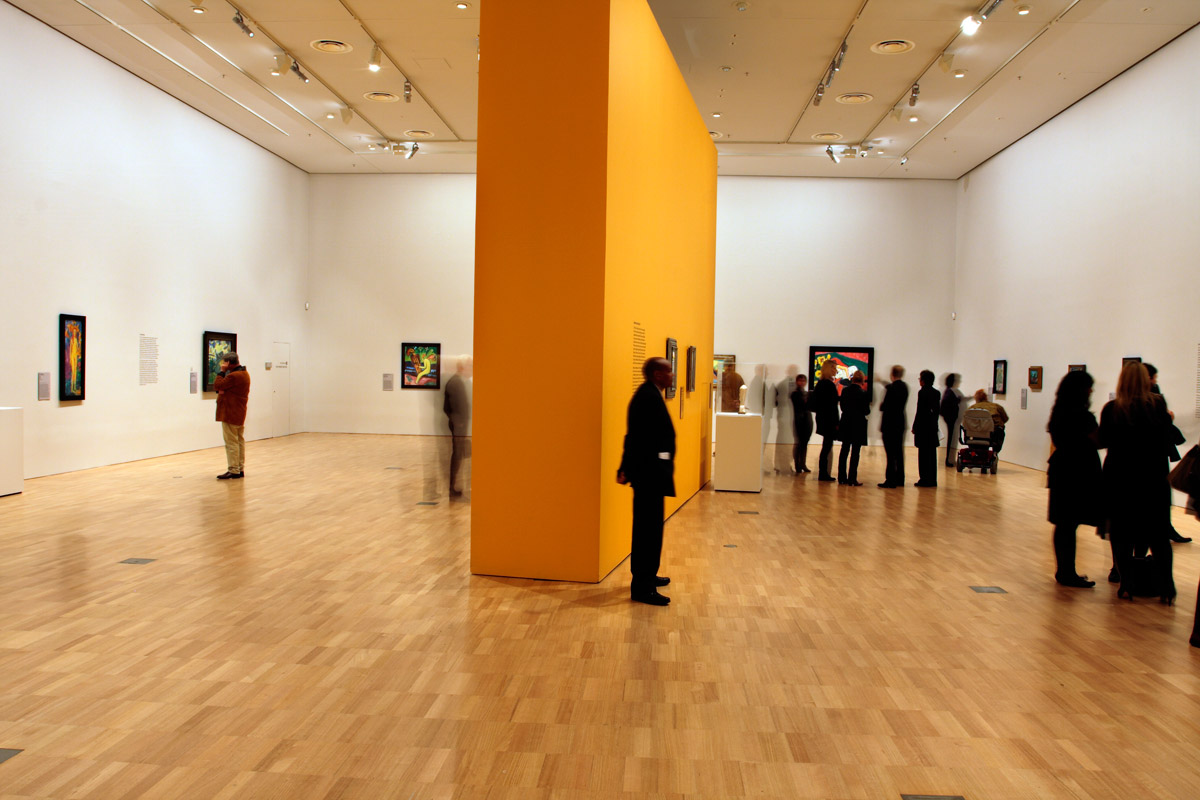
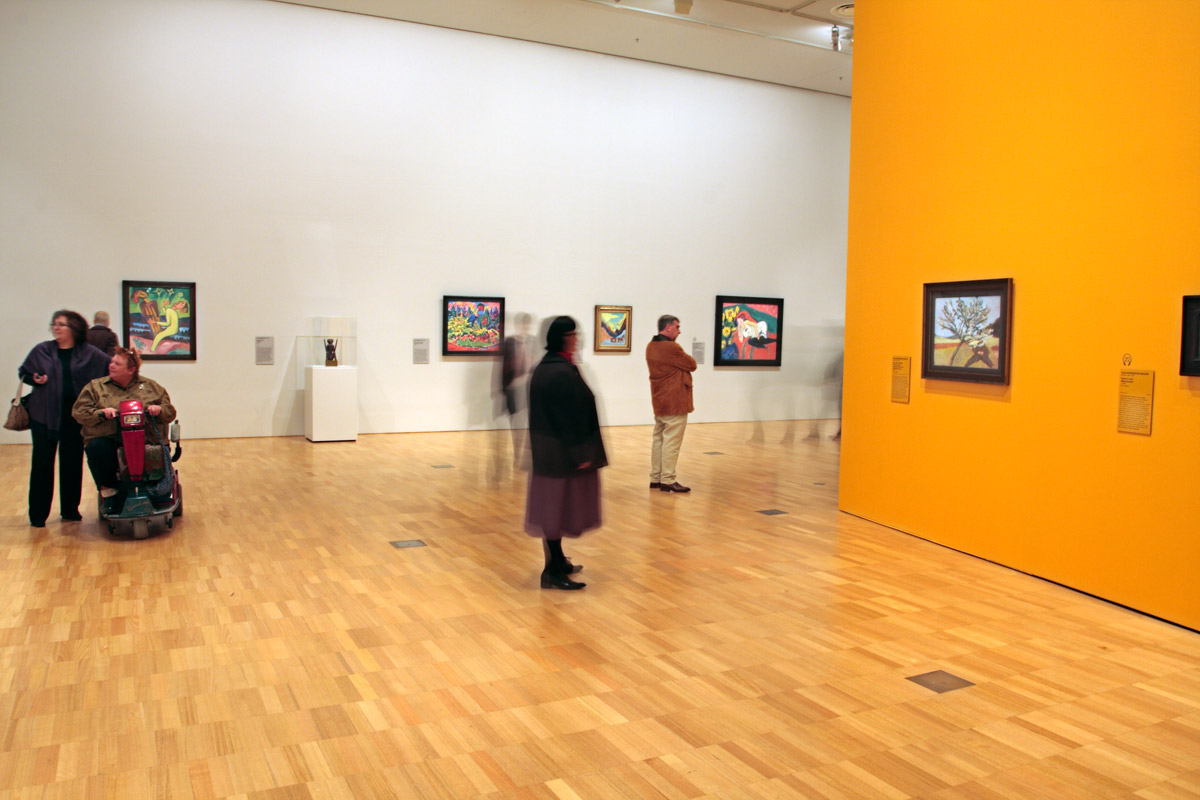
A simple, spacious hang shows off some wonderfully vibrant paintings in the new Winter Masterpieces blockbuster at the NGV. The use of strong yellow and pale grey wall colour compliments the paintings. Conversely, other rooms have a dark brown and very dark grey wall colour. Some people will like the effect but I found the dark grey a little too sombre and heavy in the room dedicated to the work of Max Beckmann. Overall a fantastic range of paintings, especially those by the German Expressionists and a luminous painting by Odilon Redon. To see them in Australia is a joy to behold.

Note on the photographs: All the photographs were taken with a timed exposure with the camera on a tripod. While this leads to ghosting as people walk through the shot it also adds a sense of the exhibition as a living entity. I find it preferable to the use of flash photography as flash destroys any ambience that the rooms possess. The photographs are in chronological order, proceeding from the beginning of the exhibition to the end.

Dr Marcus Bunyan


Many thankx to Dr Ted Gott, Senior Curator of International Art, Sue Coffey and all the media team and the National Gallery of Victoria for allowing me to photograph the exhibition and publish the photographs online. Please click on the photographs for a larger version of the image. All installation photographs © Marcus Bunyan and the National Gallery of Victoria.

PS. Thankx to the many people who have emailed me saying that they love the photographs, especially to Sue Coffey who said the posting looked superb = it makes it all worthwhile!


Media opening of 'European Masters: Städel Museum 19th - 20th Century', Winter Masterpieces at the National Gallery of Victoria


Media opening of European Masters: Städel Museum 19th – 20th Century, Winter Masterpieces at the National Gallery of Victoria
Photo: Marcus Bunyan


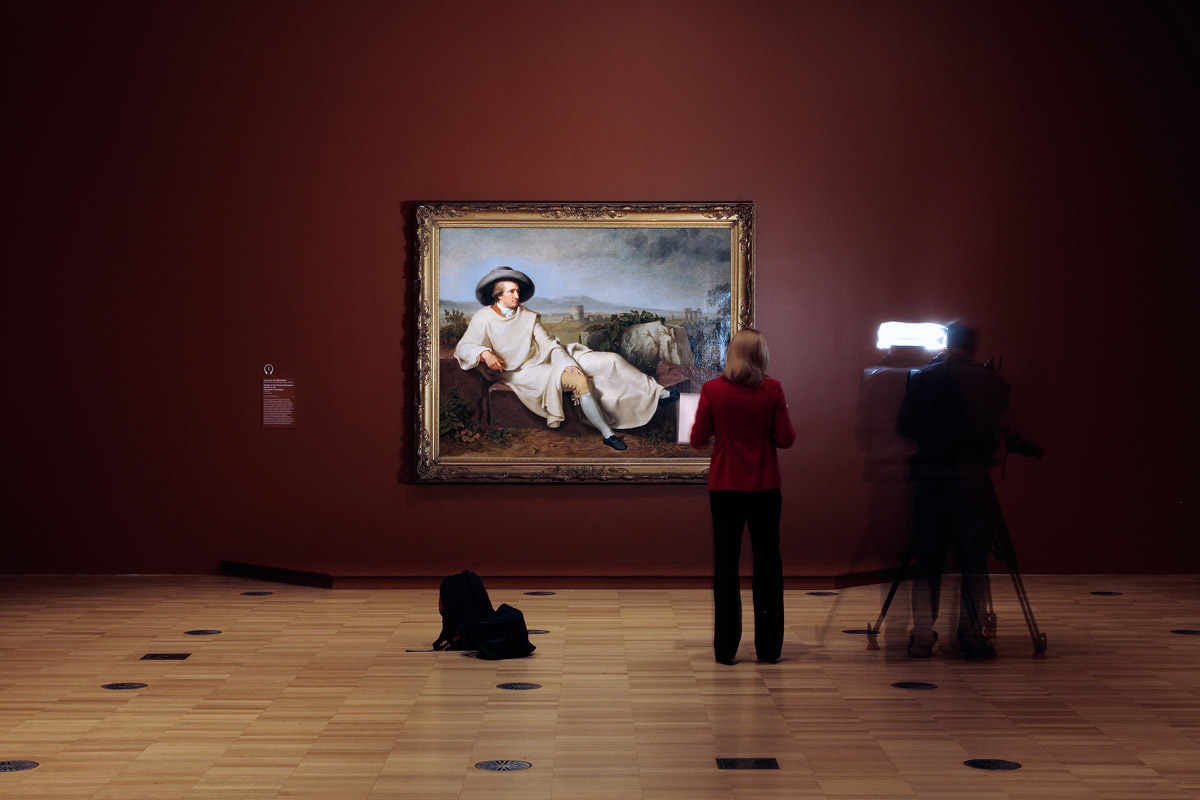
Installation view of Johann Heinrich Wilhelm Tischbei's panting 'Goethe in the Roman countryside' 1787 at the exhibition 'European Masters: Städel Museum 19th – 20th Century', Winter Masterpieces at the National Gallery of Victoria

Installation view of Johann Heinrich Wilhelm Tischbei's panting 'Goethe in the Roman countryside' 1787 at the exhibition 'European Masters: Städel Museum 19th – 20th Century', Winter Masterpieces at the National Gallery of Victoria


Installation views of Johann Heinrich Wilhelm Tischbei’s panting Goethe in the Roman countryside 1787 at the exhibition European Masters: Städel Museum 19th – 20th Century, Winter Masterpieces at the National Gallery of Victoria
Photos: Marcus Bunyan


Johann Heinrich Wilhelm Tischbein (German, 1751-1829) 'Goethe in the Roman countryside' (Goethe in der römischen Campagna) 1787 from the exhibition 'European Masters: Städel Museum 19th – 20th Century', Winter Masterpieces at the National Gallery of Victoria, June - October, 2010


Johann Heinrich Wilhelm Tischbein (German, 1751-1829)
Goethe in the Roman countryside (Goethe in der römischen Campagna)
1787
Oil on canvas
161.0 x 197.5cm
Städel Museum, Frankfurt am Main
Acquired in 1878 as a gift by Baroness Salomon von Rothschild


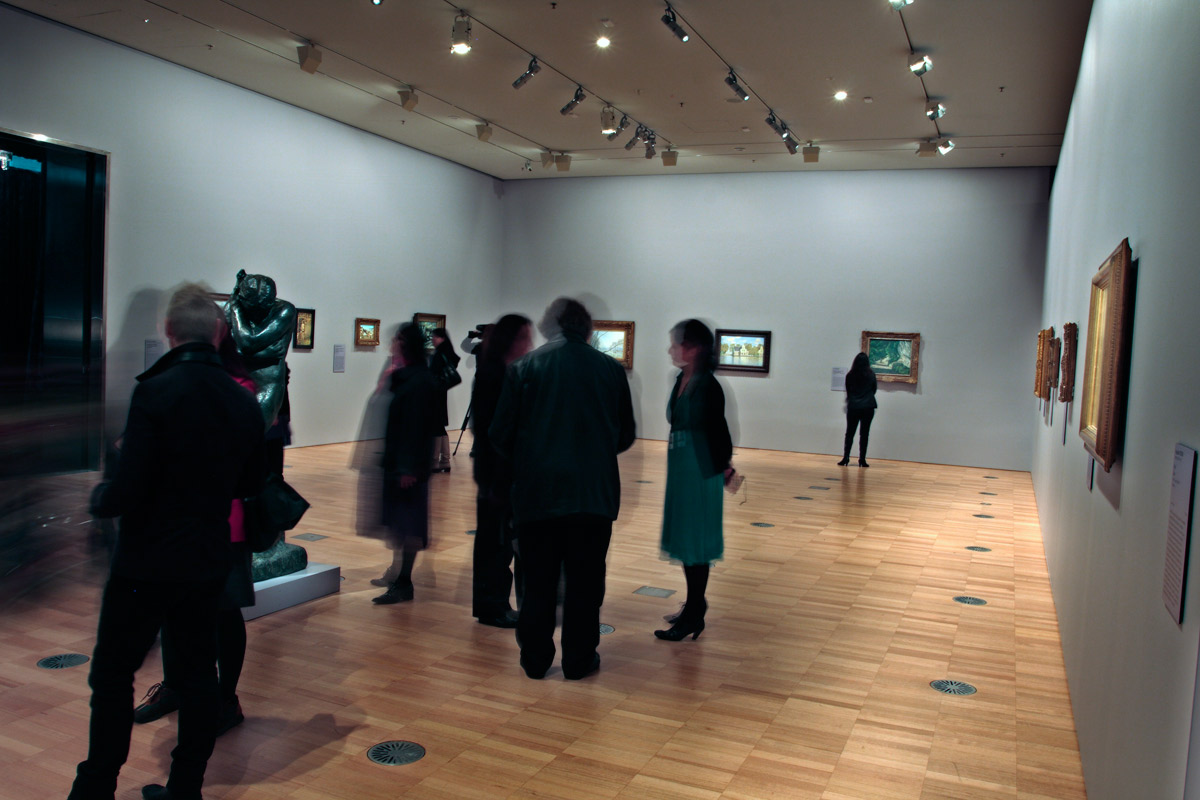
Installation view of 'European Masters: Städel Museum 19th - 20th Century', Winter Masterpieces at the National Gallery of Victoria


Installation view of the exhibition European Masters: Städel Museum 19th – 20th Century, Winter Masterpieces at the National Gallery of Victoria
Photo: Marcus Bunyan


Installation view of Johann Heinrich Wilhelm Tischbei's panting 'Goethe in the Roman countryside' 1787 at the exhibition 'European Masters: Städel Museum 19th – 20th Century', Winter Masterpieces at the National Gallery of Victoria

Installation view of Johann Heinrich Wilhelm Tischbei's panting 'Goethe in the Roman countryside' 1787 at the exhibition 'European Masters: Städel Museum 19th – 20th Century', Winter Masterpieces at the National Gallery of Victoria


Installation views of Johann Heinrich Wilhelm Tischbei’s panting Goethe in the Roman countryside 1787 at the exhibition European Masters: Städel Museum 19th – 20th Century, Winter Masterpieces at the National Gallery of Victoria
Photos: Marcus Bunyan


Installation view of 'European Masters: Städel Museum 19th - 20th Century', Winter Masterpieces at the National Gallery of Victoria

Installation view of 'European Masters: Städel Museum 19th - 20th Century', Winter Masterpieces at the National Gallery of Victoria


Installation views of the exhibition European Masters: Städel Museum 19th – 20th Century, Winter Masterpieces at the National Gallery of Victoria
Photos: Marcus Bunyan


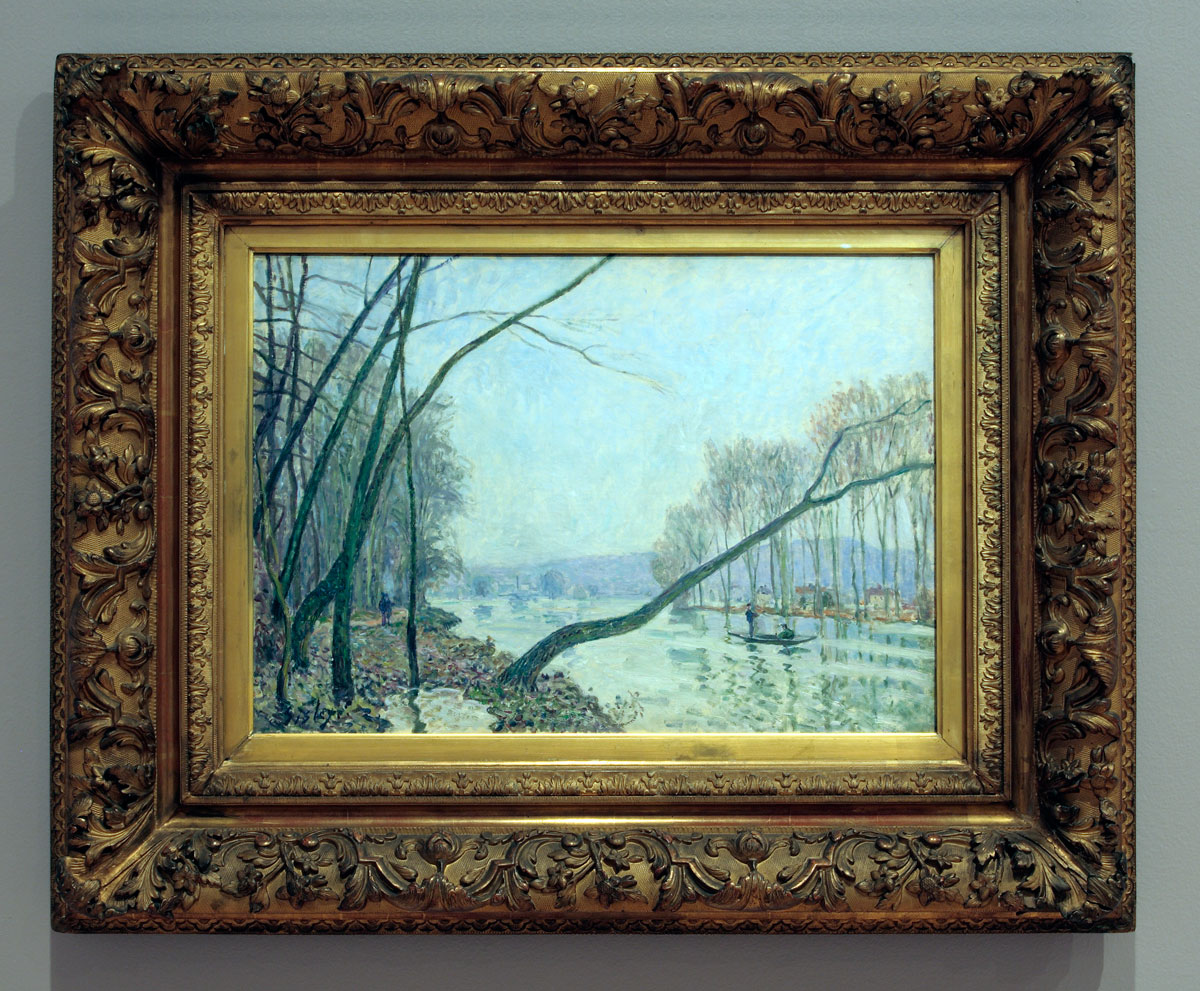
Alfred Sisley (English, 1839-1899) 'Banks of the Seine in Autumn' 1879 (installation view) from the exhibition 'European Masters: Städel Museum 19th – 20th Century', Winter Masterpieces at the National Gallery of Victoria, June - October, 2010


Alfred Sisley (English, 1839-1899)
Banks of the Seine in Autumn (installation view)
1879
Oil on canvas
Photo: Marcus Bunyan


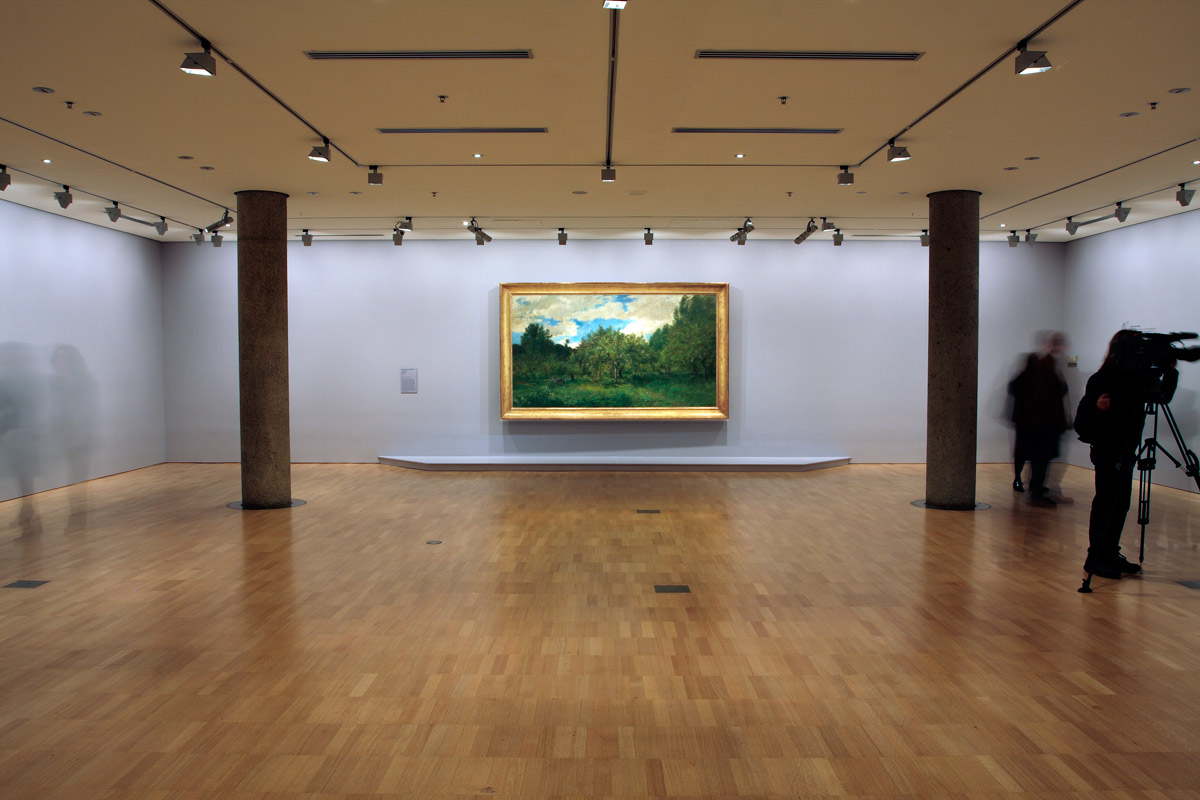
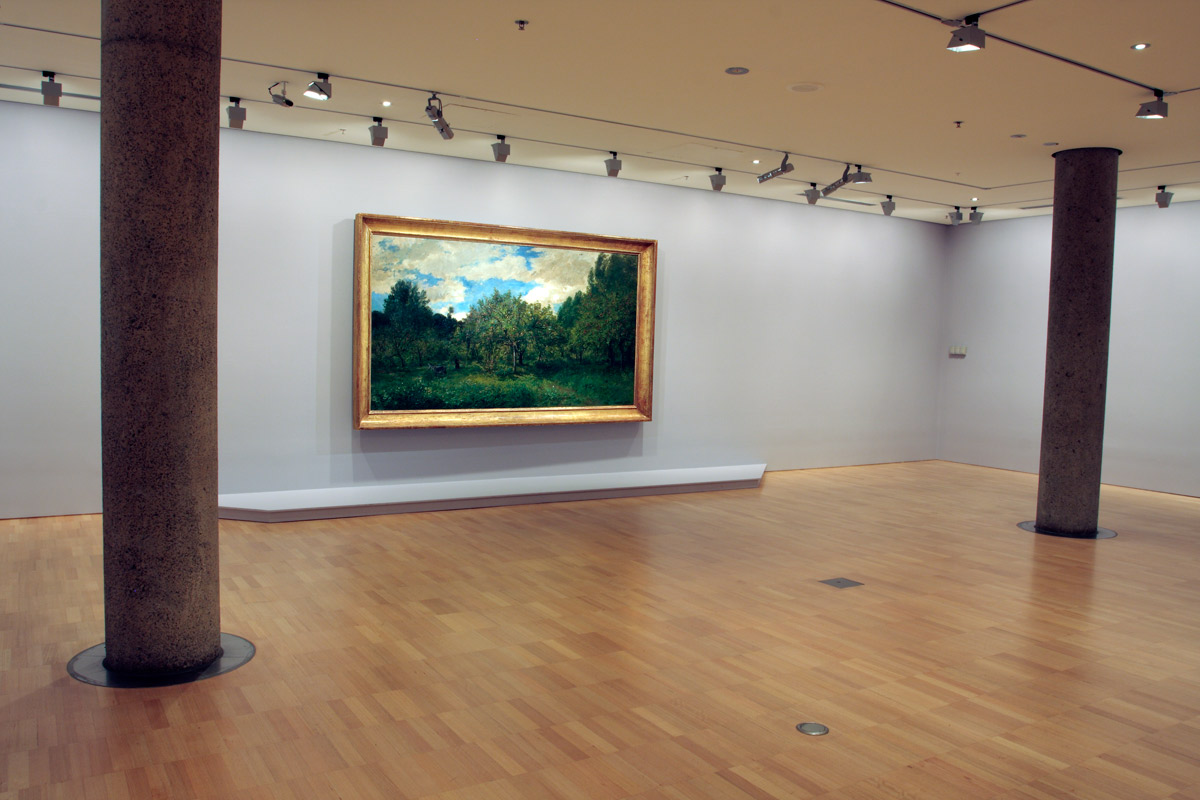
Installation view of Charles-Francois Daubigny (French 1817-1878) 'French Orchard at Harvest Time' (Le verger) 1876 at the exhibition 'European Masters: Städel Museum 19th – 20th Century', Winter Masterpieces at the National Gallery of Victoria, June - October, 2010

Installation view of Charles-Francois Daubigny (French 1817-1878) 'French Orchard at Harvest Time' (Le verger) 1876


Installation views of Charles-Francois Daubigny (French 1817-1878) French Orchard at Harvest Time (Le verger) 1876 at the exhibition European Masters: Städel Museum 19th – 20th Century, Winter Masterpieces at the National Gallery of Victoria
Photos: Marcus Bunyan


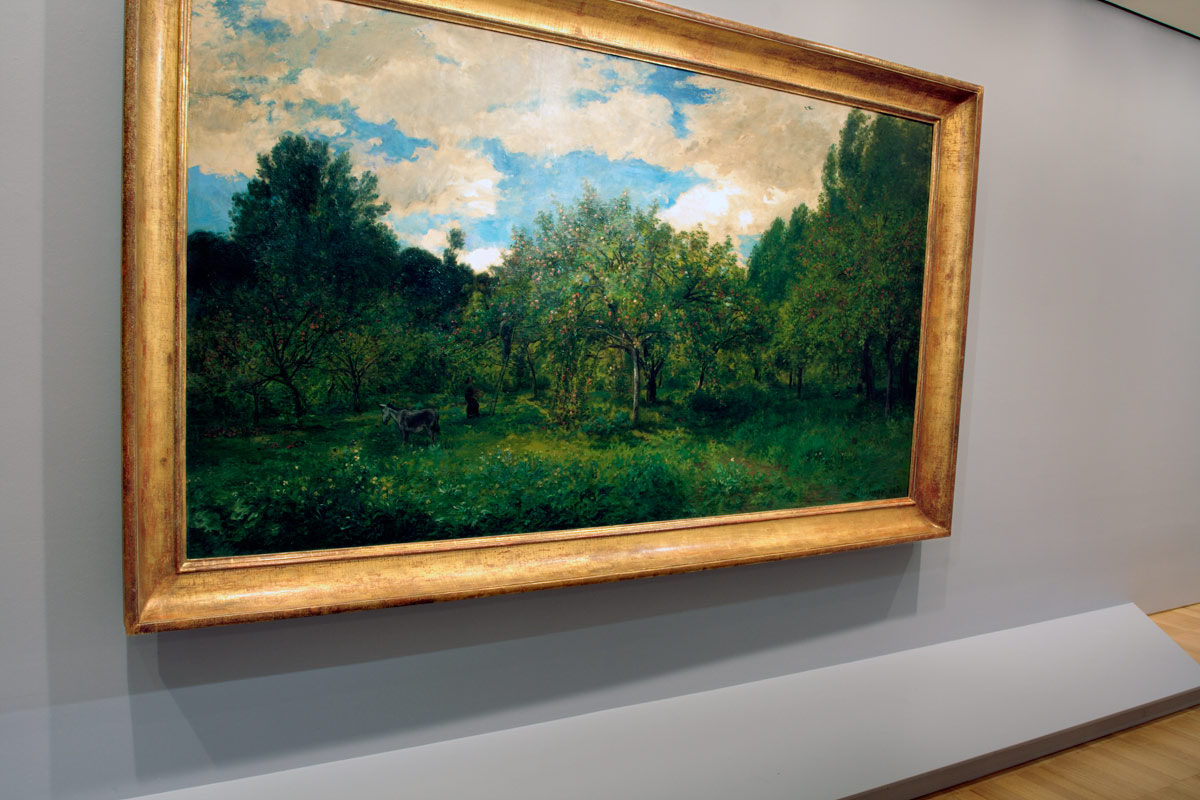
Charles-Francois Daubigny (French 1817-1878) 'French Orchard at Harvest Time' (Le verger) 1876 (installation view) from the exhibition 'European Masters: Städel Museum 19th – 20th Century', Winter Masterpieces at the National Gallery of Victoria, June - October, 2010


Charles-Francois Daubigny (French, 1817-1878)
French Orchard at Harvest Time (Le verger) (installation view)
1876
Oil on canvas
Photo: Marcus Bunyan


Pierre Auguste Renoir (French 1841-1919) 'After the luncheon' (La fin du déjeuner) 1879 (installation view) at the exhibition 'European Masters: Städel Museum 19th – 20th Century', Winter Masterpieces at the National Gallery of Victoria, June - October, 2010

Pierre Auguste Renoir (French 1841-1919) 'After the luncheon' (La fin du déjeuner) 1879 (installation view) at the exhibition 'European Masters: Städel Museum 19th – 20th Century', Winter Masterpieces at the National Gallery of Victoria, June - October, 2010


Installation views of Pierre Auguste Renoir (French 1841-1919) After the luncheon (La fin du déjeuner) 1879 at the exhibition European Masters: Städel Museum 19th – 20th Century, Winter Masterpieces at the National Gallery of Victoria
Photos: Marcus Bunyan


Pierre Auguste Renoir (French 1841-1919) 'After the luncheon' (La fin du déjeuner) 1879


Pierre Auguste Renoir (French 1841-1919)
After the luncheon (La fin du déjeuner)
1879
Oil on canvas
100.5 x 81.3cm
Städel Museum, Frankfurt am Main
Acquired in 1910


Odilon Redon (French 1840-1916) 'Christ and the Samaritan Woman' (Le Christ et la Samaritaine) c. 1895 (installation view) at the exhibition 'European Masters: Städel Museum 19th – 20th Century', Winter Masterpieces at the National Gallery of Victoria


Installation view of Odilon Redon (French 1840-1916) Christ and the Samaritan Woman (Le Christ et la Samaritaine) c. 1895 at the exhibition European Masters: Städel Museum 19th – 20th Century, Winter Masterpieces at the National Gallery of Victoria
Photo: Marcus Bunyan


Odilon Redon (French 1840-1916) 'Christ and the Samaritan Woman' (Le Christ et la Samaritaine) c. 1895


Odilon Redon (French, 1840-1916)
Christ and the Samaritan Woman (Le Christ et la Samaritaine)
c. 1895
Oil on canvas
64.8 x 50.0cm
Städel Museum, Frankfurt am Main
Acquired in 1960


Installation view of the exhibition 'European Masters: Städel Museum 19th - 20th Century', Winter Masterpieces at the National Gallery of Victoria


Installation view of the exhibition European Masters: Städel Museum 19th – 20th Century, Winter Masterpieces at the National Gallery of Victoria
Photo: Marcus Bunyan


“The appeal of the Städel Institute lies in the tremendous energy filling that confined space. Virtually all of the great emotions that have lived in the souls of the peoples of Europe are there, and all in superb works.”

Alfred Lichtwark, Director the Hamburg Museum, 1905


One of the world’s finest collections of 19th and 20th century art is showing exclusively in Melbourne as the seventh exhibition in the hugely popular Melbourne Winter Masterpieces series at the National Gallery of Victoria.

European Masters: Städel Museum, 19th-20th Century brings together almost 100 works by 70 artists from one of Germany’s oldest and most respected museums, the Städel Museum in Frankfurt.

Dr Gerard Vaughan, NGV Director, said: “European Masters presents a comprehensive overview of the Städel Museum’s holdings of painting and sculpture from the last two centuries of European art. This blockbuster exhibition provides a superb survey of the key artistic movements of the time, including Realism, Impressionism and Post Impressionism, German Romanticism, Expressionism and Modernism, and French Symbolism.”

The exhibition opens with a series of large-scale romantic German paintings, including Johann H.W. Tischbein’s iconic Goethe in the Roman Campagna from 1787. Visitors will also be treated to magnificent examples of 19th century French art from Corot and Courbet’s Realist landscapes to well-known beautiful Impressionist works by Monet, Renoir, Degas and Cézanne.

European Masters then traces the development of German art, introducing audiences to rarely seen Realist and Symbolist masterpieces from artists such as Max Liebermann and Franz von Stuck.

A major highlight of the exhibition is a powerful selection of German Expressionist paintings, with ten poignant works by Max Beckmann, including The synagogue in Frankfurt am Main and his powerful Double Portrait, all of which have left the Städel for the first time to be shown outside of Europe.

The exhibition also includes a breathtaking selection of Swiss, Belgian and Dutch works by artists such as Arnold Böcklin, Fernand Khnopff and Vincent Van Gogh.

“Exclusive to Melbourne, European Masters provides an unprecedented opportunity to see a spectacular group of masterpieces spanning the dynamic and transformative years of the 19th and 20th centuries. There is something in this exhibition for everyone, from the beauty and immediacy of French Impressionism to the raw power of German Expressionism. This is a once-in-a-lifetime chance to see superb pictures that rarely travel outside of Europe,” said Dr. Vaughan.

Founded in 1816 by the Frankfurt financier Johann Friedrich Städel, the Städel Museum has one of the world’s finest art collections. The collection boasts 2700 paintings, 600 sculptures and over 100,000 prints and drawings documenting the development of European art and culture.

The Melbourne Winter Masterpieces series began in 2004 with The Impressionists: Masterpieces from the Musée d’Orsay, continued in 2005 with Dutch Masters from the Rijksmuseum, Amsterdam, followed by Picasso in 2006, Guggenheim Collection: 1940s to Now in 2007, Art Deco 1910-1939 in 2008 and Salvador Dalí: Liquid Desire in 2009.

This year Melbourne Winter Masterpieces includes European Masters: Städel Museum, 19th-20th Century at the NGV, and Tim Burton at the Australian Centre for the Moving Image.

Press release from the National Gallery of Victoria website


Installation view of the exhibition 'European Masters: Städel Museum 19th - 20th Century', Winter Masterpieces at the National Gallery of Victoria

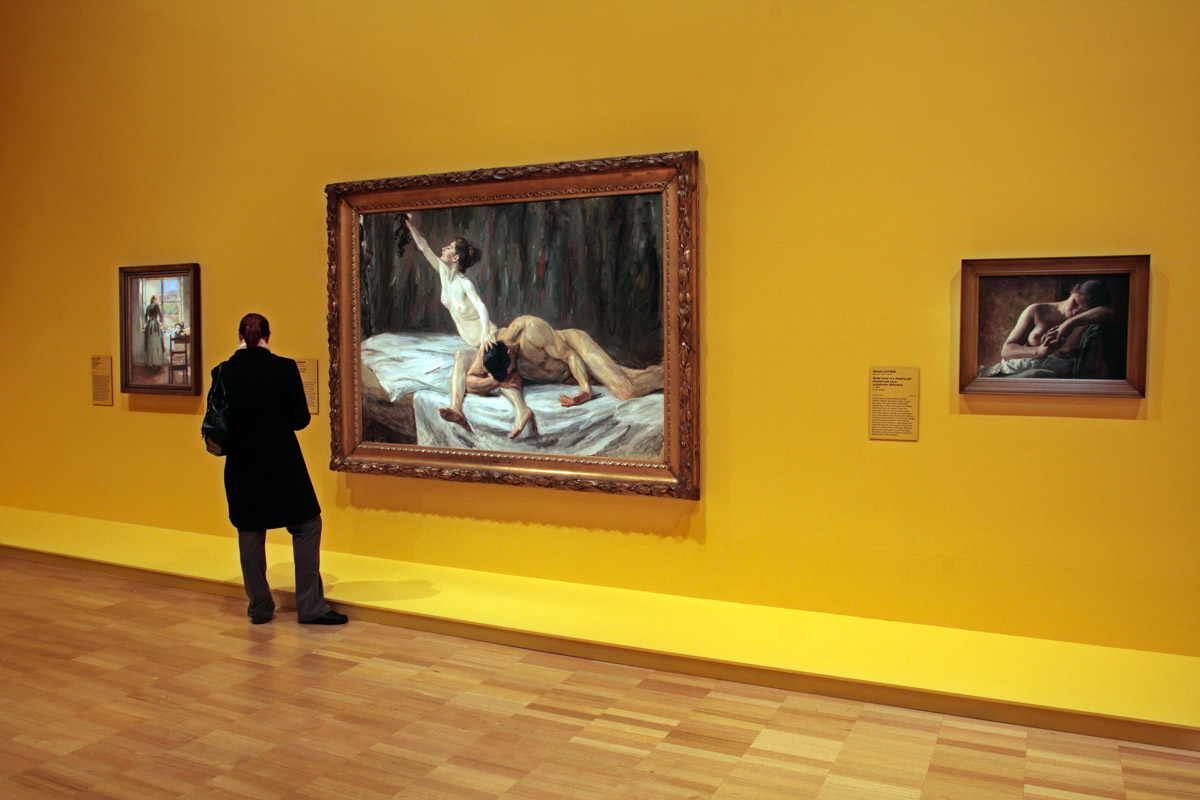
Installation view of Max Liebermann (German 1847-1935, lived in France 1874-78) 'Samson and Delilah' (Simson und Delila) 1901 at the exhibition 'European Masters: Städel Museum 19th – 20th Century', Winter Masterpieces at the National Gallery of Victoria

Installation view of Max Liebermann (German 1847-1935, lived in France 1874-78) 'Samson and Delilah' (Simson und Delila) 1901 at the exhibition 'European Masters: Städel Museum 19th – 20th Century', Winter Masterpieces at the National Gallery of Victoria


Installation views of Max Liebermann (German 1847-1935, lived in France 1874-78) Samson and Delilah (Simson und Delila) 1901 at the exhibition European Masters: Städel Museum 19th – 20th Century, Winter Masterpieces at the National Gallery of Victoria
Photos: Marcus Bunyan


Max Liebermann (German 1847-1935, lived in France 1874-78) 'Samson and Delilah' (Simson und Delila) 1901


Max Liebermann (German, 1847-1935, lived in France 1874-1878)
Samson and Delilah (Simson und Delila)
1901
Oil on canvas
151.2 x 212.0cm
Städel Museum, Frankfurt am Main
Acquired in 1910


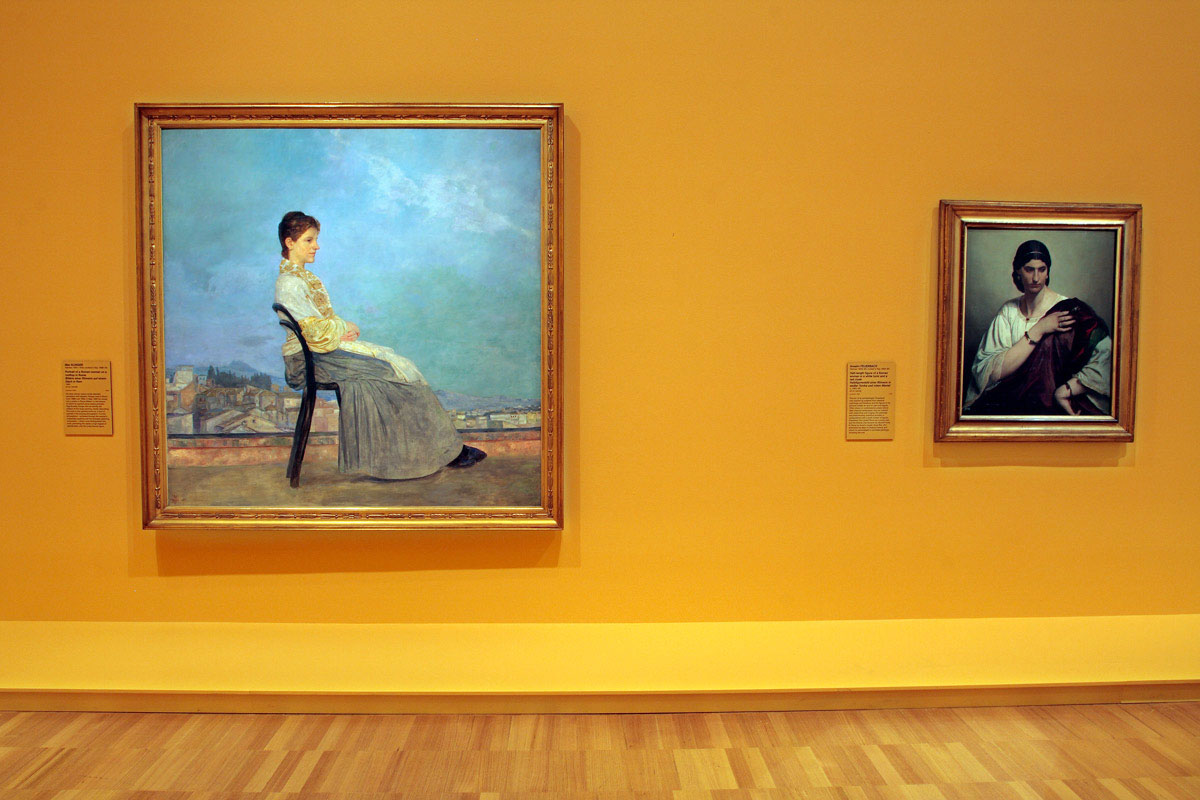
Max Klinger (German 1857-1920) 'Portrait of a Roman woman on a flat roof' (Bildnis einer Römerin auf einem Dach in Rom) 1891


Max Klinger (German, 1857-1920)
Portrait of a Roman woman on a flat roof (Bildnis einer Römerin auf einem Dach in Rom)
1891
Oil on canvas
182 x 182cm
Städel Museum, Frankfurt am Main
Acquired in 1926 as a gift in commemoration of Walther Rathenau


Installation view at left of Max Klinger (German 1857-1920) 'Portrait of a Roman woman on a flat roof' (Bildnis einer Römerin auf einem Dach in Rom) 1891 at the exhibition 'European Masters: Städel Museum 19th – 20th Century', Winter Masterpieces at the National Gallery of Victoria


Installation view at left of Max Klinger (German 1857-1920) Portrait of a Roman woman on a flat roof (Bildnis einer Römerin auf einem Dach in Rom) 1891 at the exhibition European Masters: Städel Museum 19th – 20th Century, Winter Masterpieces at the National Gallery of Victoria
Photo: Marcus Bunyan


Max Beckmann room, installation view of 'European Masters: Städel Museum 19th - 20th Century', Winter Masterpieces at the National Gallery of Victoria

Max Beckmann room, installation view of 'European Masters: Städel Museum 19th - 20th Century', Winter Masterpieces at the National Gallery of Victoria

Max Beckmann room, installation view of 'European Masters: Städel Museum 19th - 20th Century', Winter Masterpieces at the National Gallery of Victoria


Max Beckmann room, installation view of European Masters: Städel Museum 19th – 20th Century, Winter Masterpieces at the National Gallery of Victoria
Photos: Marcus Bunyan


Max Beckmann. 'Female dancer' (Tanzerin) c. 1935 (installation view)


Max Beckmann (German 1884-1950, worked in the Netherlands 1937-1947, United States 1947-1950)
Female dancer (Tanzerin) (installation view)
c. 1935
Bronze
Photo: Marcus Bunyan


Installation view of 'European Masters: Städel Museum 19th - 20th Century', Winter Masterpieces at the National Gallery of Victoria

Installation view of 'European Masters: Städel Museum 19th - 20th Century', Winter Masterpieces at the National Gallery of Victoria

Installation view of 'European Masters: Städel Museum 19th - 20th Century', Winter Masterpieces at the National Gallery of Victoria


Installation views of European Masters: Städel Museum 19th – 20th Century, Winter Masterpieces at the National Gallery of Victoria
Photos: Marcus Bunyan


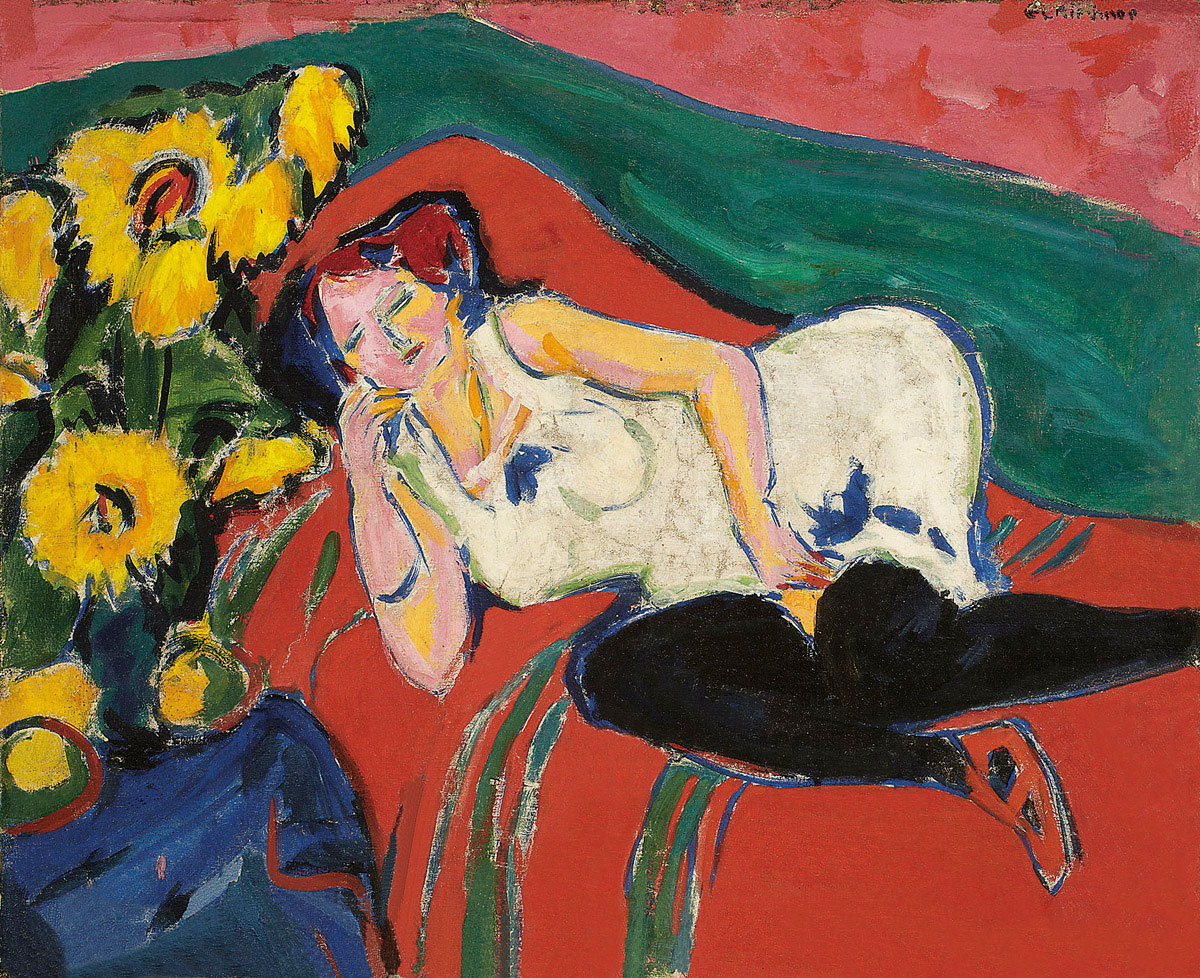
Ernst Ludwig Kirchner (German 1880-1938) 'Reclining woman in a white chemise' (Liegende Frau im weiβen Hemd) 1909


Ernst Ludwig Kirchner (German, 1880-1938)
Reclining woman in a white chemise (Liegende Frau im weiβen Hemd)
1909
Oil on canvas
95.0 x 121.0cm
Städel Museum, Frankfurt am Main
Acquired in 1950


NGV International
180 St Kilda Road

Opening hours:
Daily 10am – 5pm
National Gallery of Victoria website

LIKE ART BLART ON FACEBOOK

Back to top

Exhibition photographs: ‘Salvador Dalí: Liquid Desire’ Melbourne Winter Masterpieces at the National Gallery of Victoria, Melbourne

Exhibition dates: 13th June – 4th October, 2009


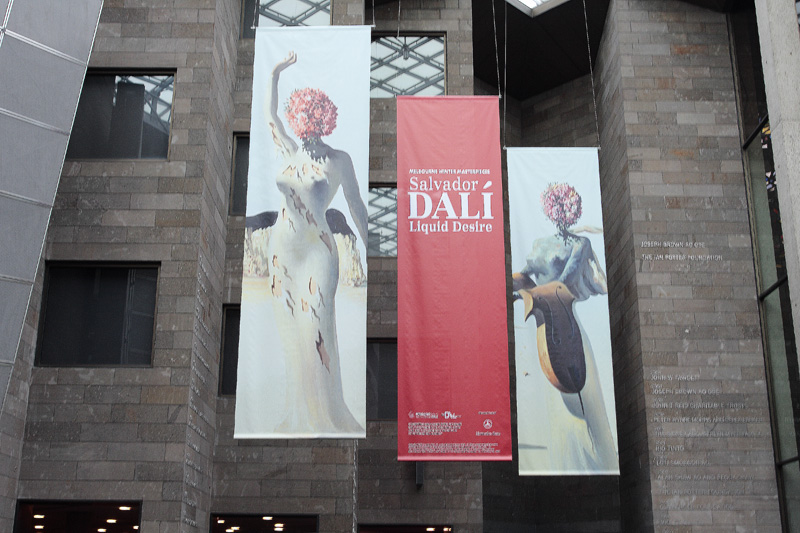
Installation view of the interior forecourt of the National Gallery of Victoria showing banners for the exhibition Salvador Dalí: Liquid Desire


Installation view of the interior forecourt of the National Gallery of Victoria showing banners for the exhibition Salvador Dalí: Liquid Desire
Photo: Marcus Bunyan


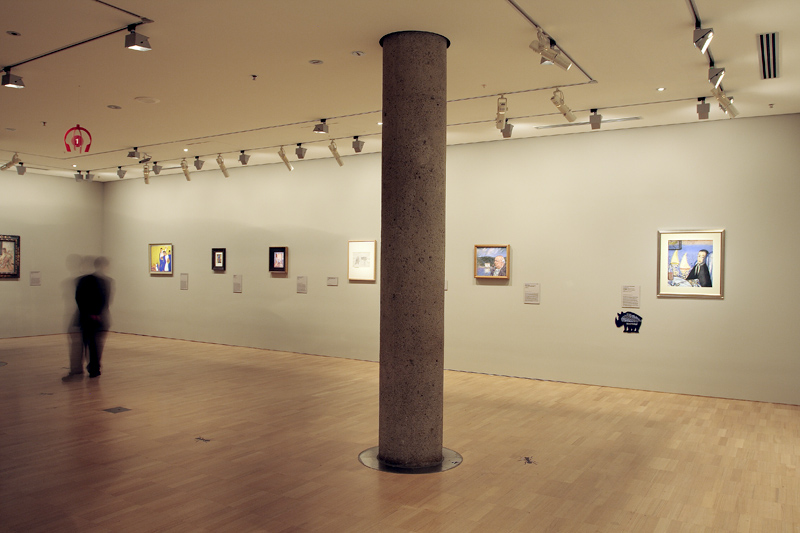
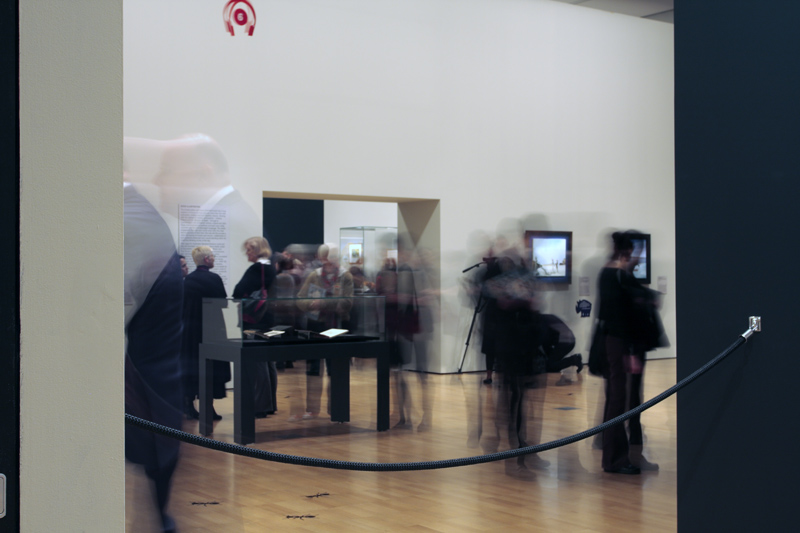
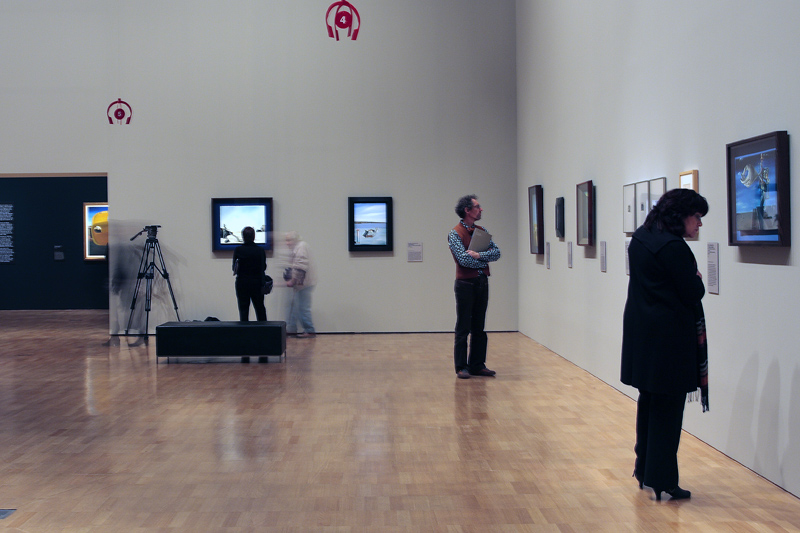
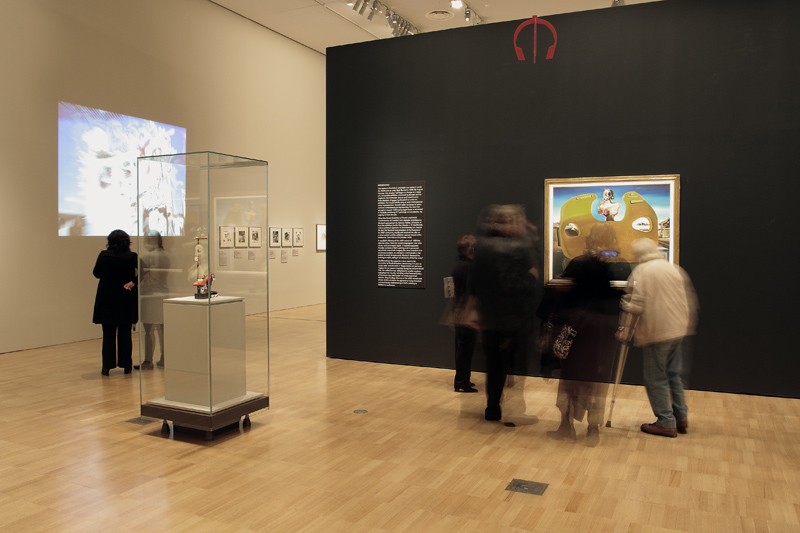
Installation photographs from the latest Winter Masterpieces blockbuster Salvador Dalí: Liquid Desire from the media preview on the day the exhibition opened at NGV International, Melbourne. Thank you to Jemma Altmeier, Media and Public Affairs Administrator at the NGV for the invitation. Photographs were taken using a digital camera, tripod and available light.

Fantastic to see my friend and curator of the exhibition, Dr Ted Gott, at the opening. Congratulations on a wonderful show!

Dr Marcus Bunyan


© All photographs copyright Dr Marcus Bunyan 2009 and the National Gallery of Victoria. All rights reserved. Photographs may not be reproduced without permission.

Photographs proceed from the beginning to the end of the exhibition in chronological order.


Many thankx to the National Gallery of Victoria for allowing me to publish the photographs in the posting. Please click on the photographs for a larger version of the image.


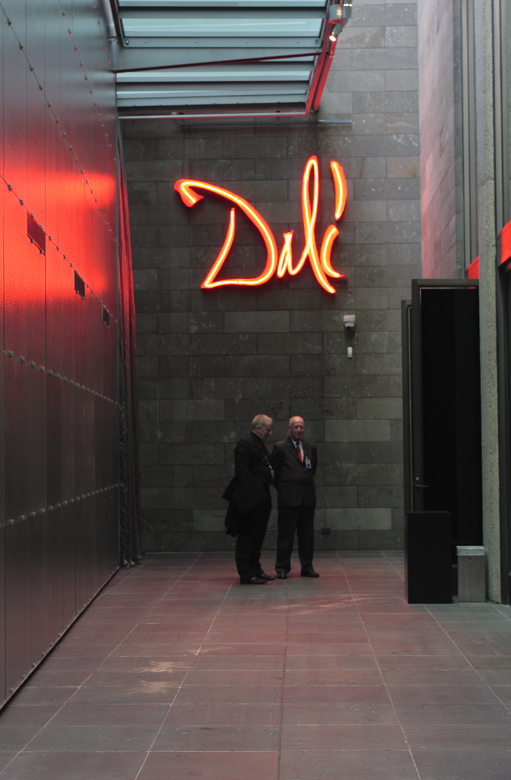
Entrance to the 'Salvador Dali: Liquid Desire' Winter Masterpieces exhibition at NGV International, Melbourne


Entrance to the Salvador Dalí: Liquid Desire Winter Masterpieces exhibition at the National Gallery of Victoria, Melbourne
Photo: Marcus Bunyan


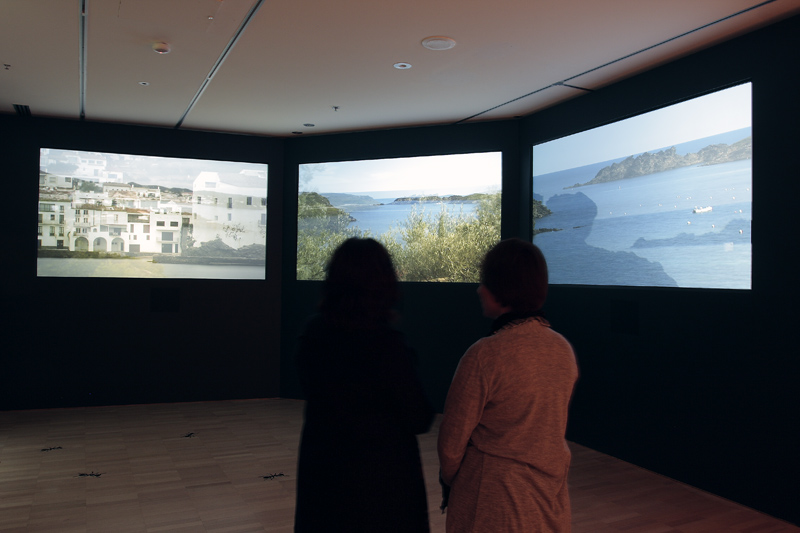
3 panel video installation of the Catalan countryside around where Salvador Dali lived from the exhibition 'Salvador Dalí: Liquid Desire Winter Masterpieces' at the National Gallery of Victoria, Melbourne


3 panel video installation of the Catalan countryside where Salvador Dali lived. 13 minutes duration from the exhibition Salvador Dalí: Liquid Desire Winter Masterpieces at the National Gallery of Victoria, Melbourne
Photo: Marcus Bunyan


Early work from the 'Salvador Dali: Liquid Desire' Winter Masterpieces exhibition at NGV International, Melbourne


Early work from the Salvador Dalí: Liquid Desire Winter Masterpieces exhibition at the National Gallery of Victoria, Melbourne
Photo: Marcus Bunyan


'Salvador Dali: Liquid Desire' Winter Masterpieces exhibition at NGV International, Melbourne

To the left 'View of the Cadaques from the Creus Tower' 1923; to the right 'Table in front of the Sea. Homage to Eric Satie' 1926 from the 'Salvador Dalí: Liquid Desire' Winter Masterpieces exhibition at the National Gallery of Victoria, Melbourne


To the left View of the Cadaques from the Creus Tower 1923; to the right Table in front of the Sea. Homage to Eric Satie 1926 from the Salvador Dalí: Liquid Desire Winter Masterpieces exhibition at the National Gallery of Victoria, Melbourne
Photos: Marcus Bunyan


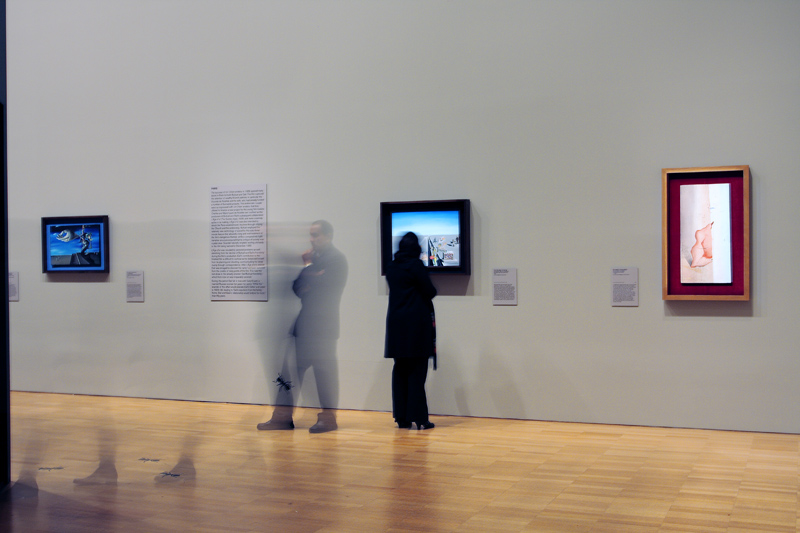
In the centre 'The First Days of Spring' 1929; to the right 'Surrealist composition' 1928 from the 'Salvador Dalí: Liquid Desire' Winter Masterpieces exhibition at the National Gallery of Victoria, Melbourne


In the centre The First Days of Spring 1929; to the right Surrealist composition 1928 from the Salvador Dalí: Liquid Desire Winter Masterpieces exhibition at the National Gallery of Victoria, Melbourne
Photo: Marcus Bunyan


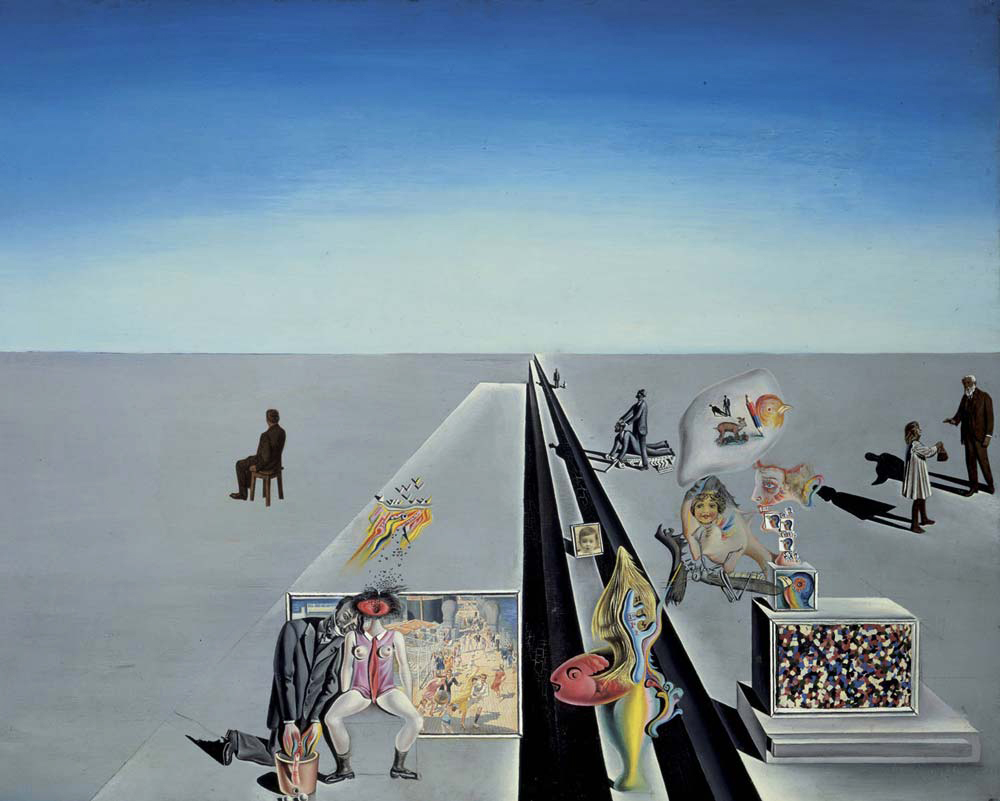
Salvador Dalí (Spanish 1904-1989, worked in United States 1940-1948) 'The First Days of Spring' 1929


Salvador Dalí (Spanish 1904-1989, worked in United States 1940-1948)
The First Days of Spring
1929
Oil on canvas
The Salvador Dalí Museum, St Petersburg, Florida
Worldwide Rights: © Salvador Dalí, Fundació Gala-Salvador Dalí, VISCOPY, 2009
In the USA: © Salvador Dalí Museum Inc., St. Petersburg, FL, 2009


Installation view with 'The Age' art critic Associate Professor Robert Nelson at centre right and 'The hand. The remorse of conscience' 1930 at far right, from the 'Salvador Dalí: Liquid Desire' Winter Masterpieces exhibition at the National Gallery of Victoria, Melbourne


Installation view with The Age art critic Associate Professor Robert Nelson at centre right and The hand. The remorse of conscience 1930 at far right, from the Salvador Dalí: Liquid Desire Winter Masterpieces exhibition at the National Gallery of Victoria, Melbourne
Photo: Marcus Bunyan


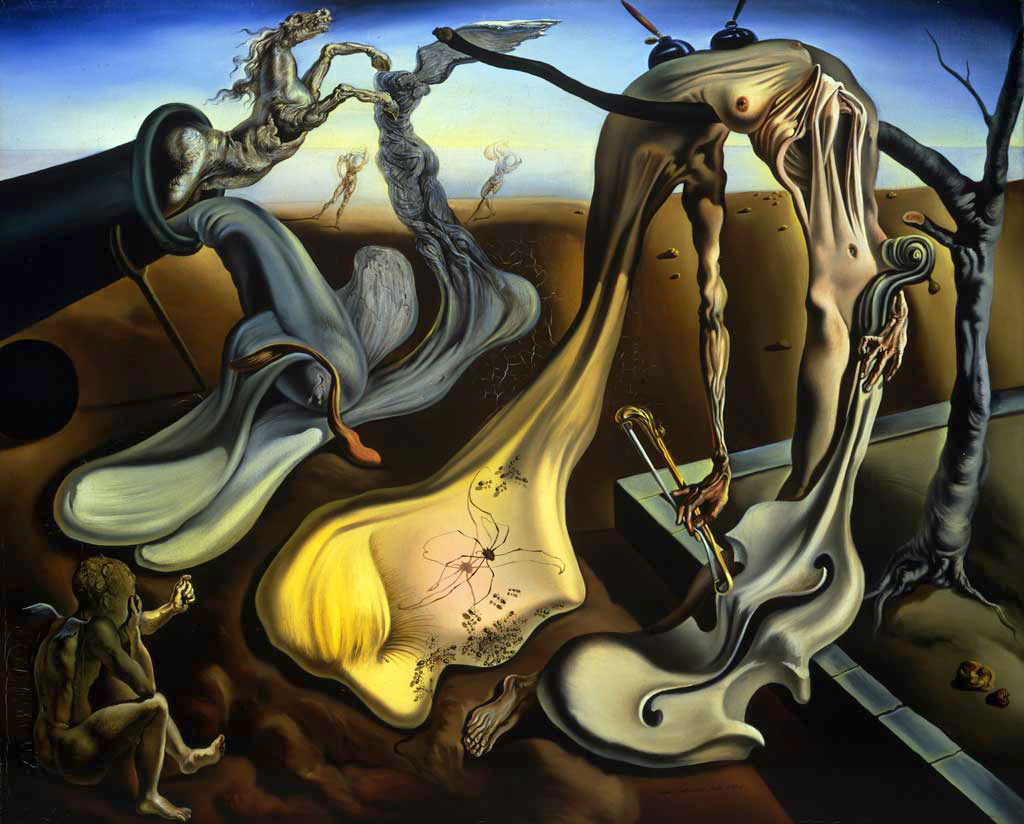
Salvador Dalí (Spanish 1904-1989, worked in United States 1940-1948) 'Daddy Longlegs of the evening - Hope!' 1940


Salvador Dalí (Spanish 1904-1989, worked in United States 1940-1948)
Daddy Longlegs of the evening – Hope!
1940
Oil on canvas
40.6 x 50.8cm
The Salvador Dalí Museum, St Petersburg, Florida
Worldwide Rights: © Salvador Dalí, Fundació Gala-Salvador Dalí, VISCOPY, 2009
In the USA: © Salvador Dalí Museum Inc., St. Petersburg, FL, 2009


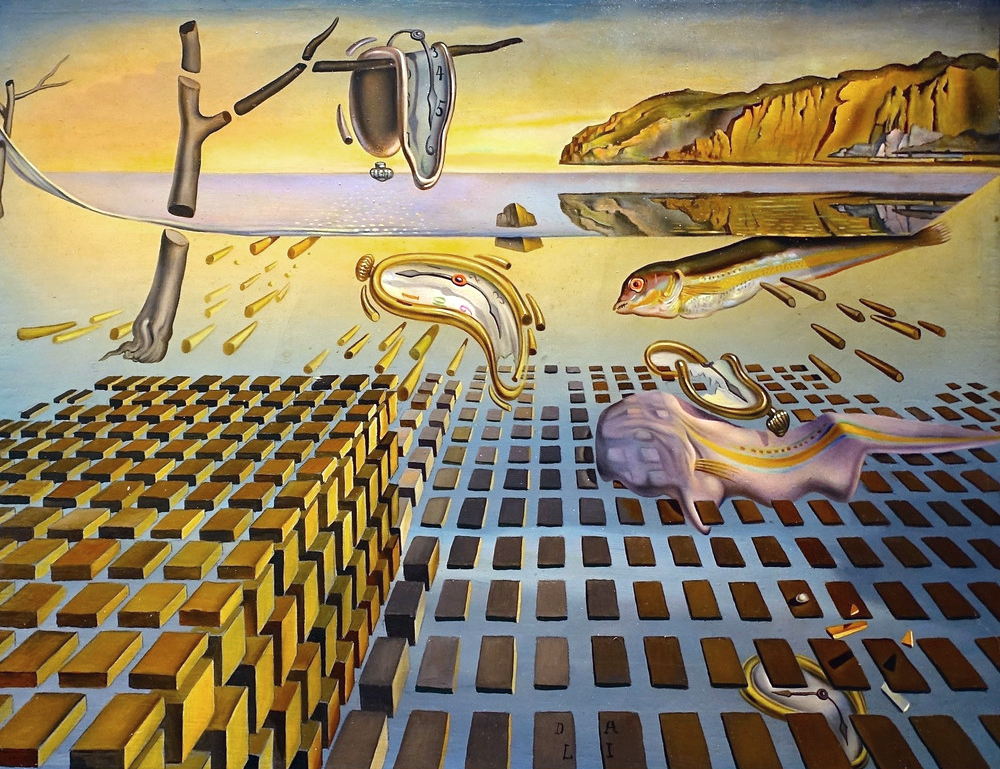
Salvador Dalí (Spanish 1904-1989, worked in United States 1940-1948) 'The disintegration of The persistence of memory' 1952-1954


Salvador Dalí (Spanish 1904-1989, worked in United States 1940-1948)
The disintegration of The persistence of memory
1952-54
Oil on canvas
25.4 x 33.0cm
The Salvador Dalí Museum, St Petersburg, Florida
Worldwide Rights: © Salvador Dalí, Fundació Gala-Salvador Dalí, VISCOPY, 2009.
In the USA: © Salvador Dalí Museum Inc., St. Petersburg, FL, 2009


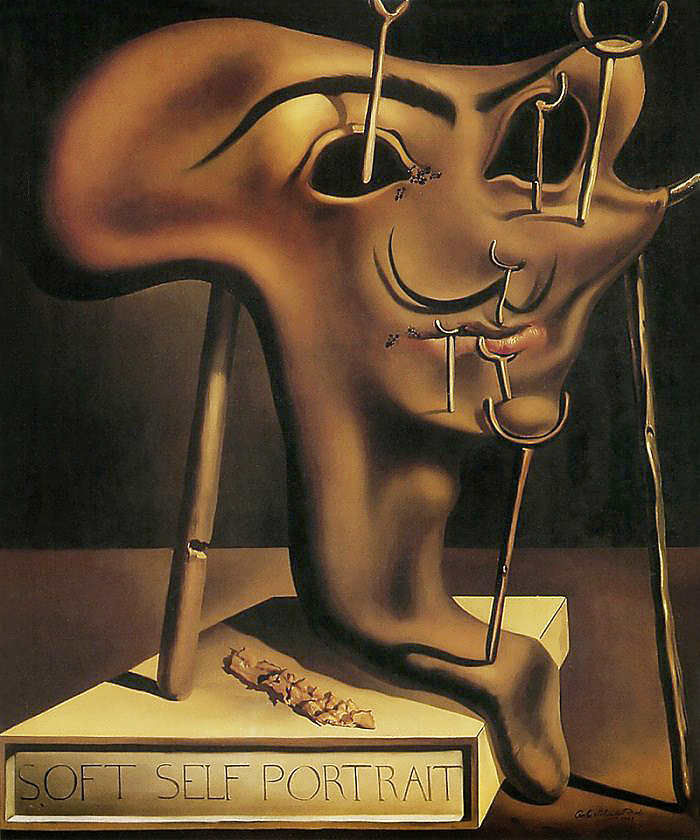
Salvador Dalí (Spanish 1904-1989, worked in United States 1940-1948) 'Soft self-portrait with grilled bacon' 1941


Salvador Dalí (Spanish 1904-1989, worked in United States 1940-1948)
Soft self-portrait with grilled bacon
1941
Oil on canvas
61.0 x 51.0cm
Fundació Gala-Salvador Dalí, Figueres (0043)
© Salvador Dalí, Fundació Gala- Salvador Dalí, VISCOPY, 2009


Salvador Dalí (Spanish 1904-89, worked in United States 1940-48) 'Memory of the child-woman' 1932


Salvador Dalí (Spanish 1904-1989, worked in United States 1940-1948)
Memory of the child-woman
1932
Oil on canvas
99.1 x 120.0cm
The Salvador Dalí Museum, St Petersburg, Florida
Worldwide Rights: © Salvador Dalí, Fundació Gala-Salvador Dalí, VISCOPY, 2009
In the USA: © Salvador Dalí Museum Inc., St. Petersburg, FL, 2009


Installation view with 'Memory of the child-woman' 1932 at right from the 'Salvador Dalí: Liquid Desire' Winter Masterpieces exhibition at the National Gallery of Victoria, Melbourne


Installation view with Memory of the child-woman 1932 at right from the Salvador Dalí: Liquid Desire Winter Masterpieces exhibition at the National Gallery of Victoria, Melbourne
Photo: Marcus Bunyan


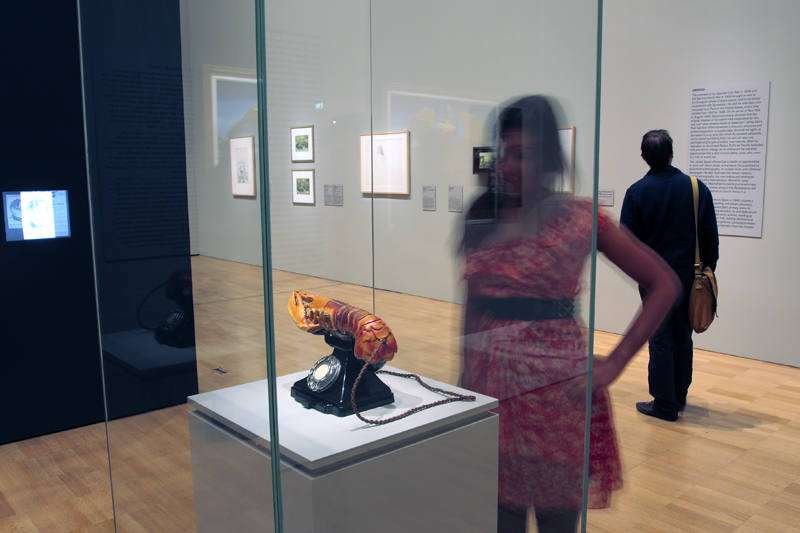
Salvador Dalí (Spanish 1904-1989, worked in United States 1940-1948) 'Lobster Telephone' 1936 (installation view)


Salvador Dalí (Spanish 1904-1989, worked in United States 1940-1948)
Lobster Telephone (installation view)
1936
Photo: Marcus Bunyan


Installation view of the exhibition 'Salvador Dali: Liquid Desire' Winter Masterpieces exhibition at NGV International, Melbourne

Installation view of the exhibition 'Salvador Dali: Liquid Desire' Winter Masterpieces exhibition at NGV International, Melbourne


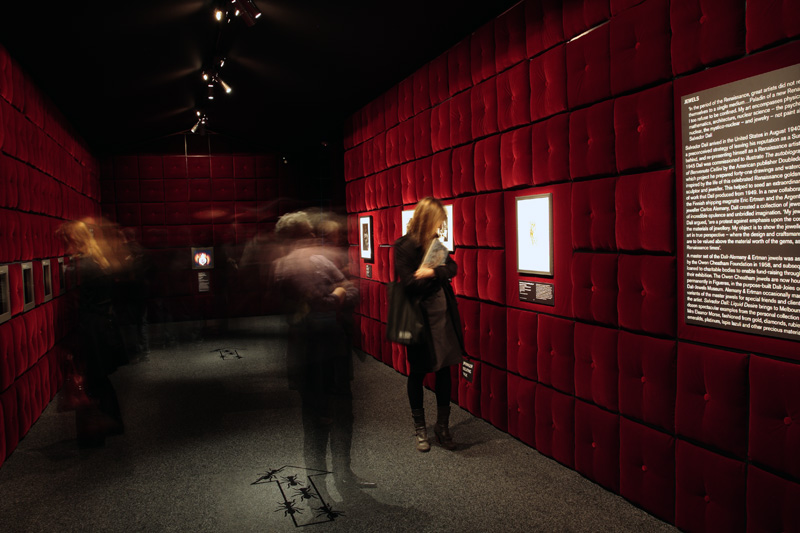
Jewellery gallery at the 'Salvador Dalí: Liquid Desire' Winter Masterpieces exhibition at the National Gallery of Victoria, Melbourne


Jewellery gallery at the Salvador Dalí: Liquid Desire Winter Masterpieces exhibition at the National Gallery of Victoria, Melbourne
Photos: Marcus Bunyan


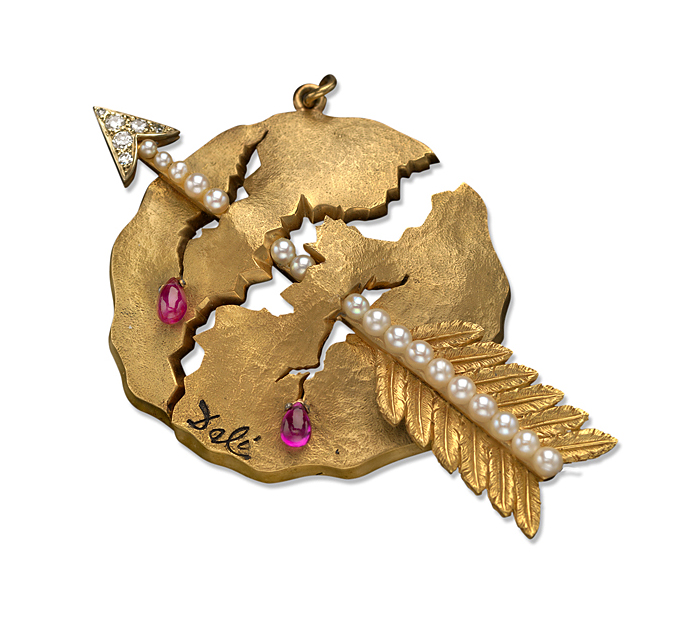
Salvador Dalí (Spanish 1904-89, worked in United States 1940-48)Alemany and Ertman Incorporated (New York, manufacturer United States late 1940s) 'Bleeding world, pendant' 1953


Salvador Dalí (Spanish 1904-1989, worked in United States 1940-1948)
Alemany and Ertman Incorporated (New York, manufacturer United States late 1940s)
Bleeding world, pendant
1953
Gold, rubies, pearls, diamonds
The Salvador Dalí Museum, St Petersburg, Florida
Worldwide Rights: © Salvador Dalí, Fundació Gala-Salvador Dalí, VISCOPY, 2009
In the USA: © Salvador Dalí Museum Inc., St. Petersburg, FL, 2009


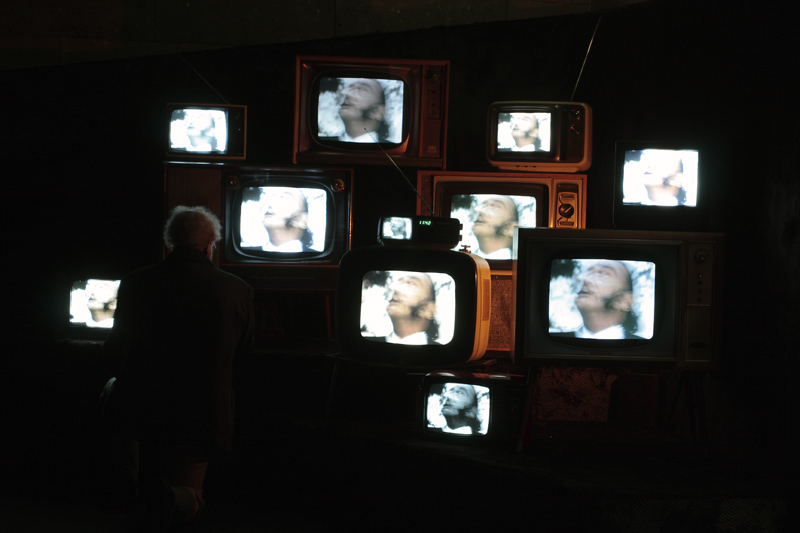
Television with film installation at 'Salvador Dali: Liquid Desire' Winter Masterpieces exhibition at NGV International, Melbourne


Televisions with film installation from the Salvador Dalí: Liquid Desire Winter Masterpieces exhibition at the National Gallery of Victoria, Melbourne
Photo: Marcus Bunyan


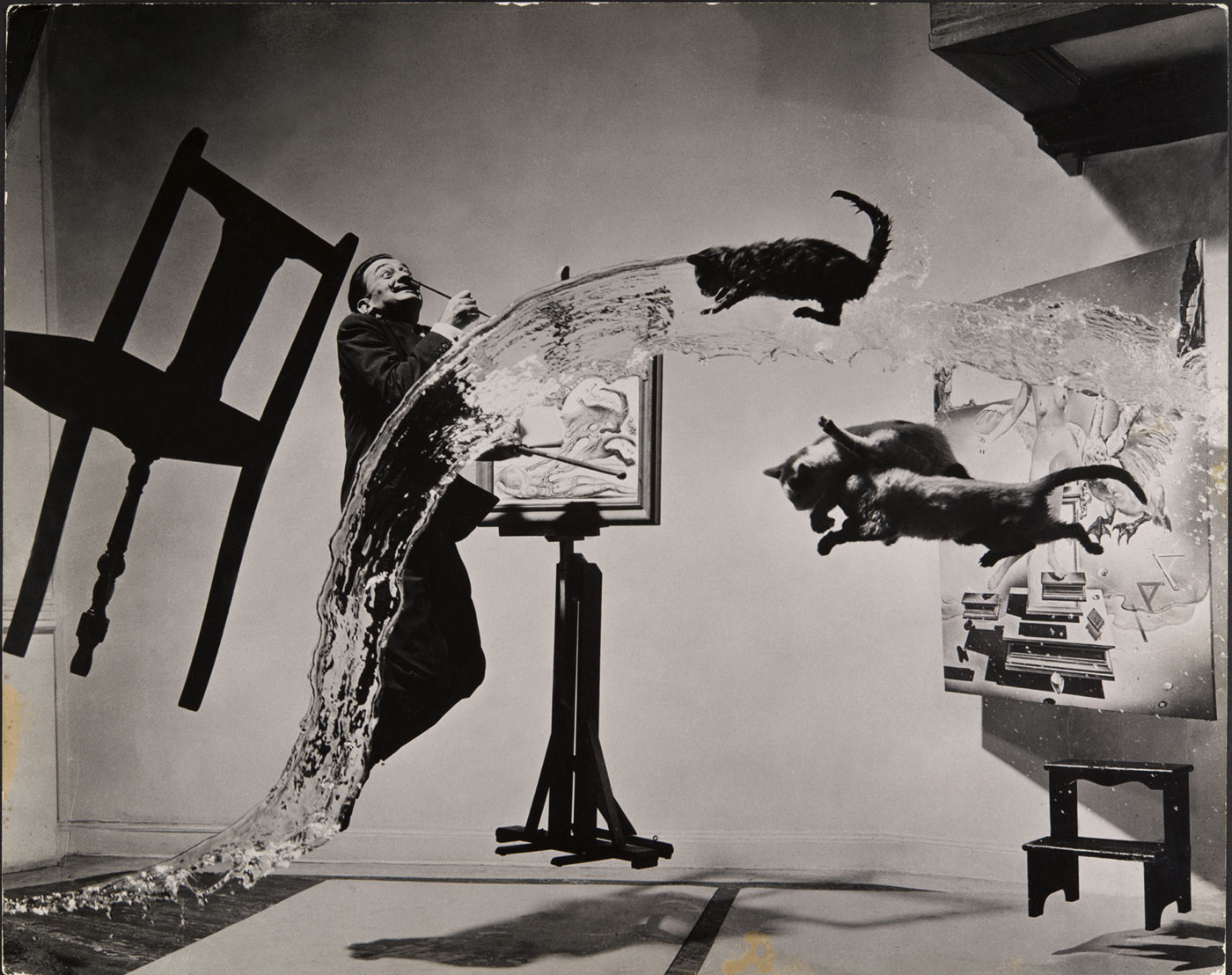
Salvador Dalí (Spanish 1904-89, worked in United States 1940-48) Philippe Halsman (Latvian / American 1906-79, worked in France 1931-40) 'Dalí Atomicus' 1948, printed 1981


Salvador Dalí (Spanish 1904-1989, worked in United States 1940-1948)
Philippe Halsman (Latvian/American 1906-1979, worked in France 1931-1940)
Dalí Atomicus
1948, printed 1981
Gelatin silver photograph
26.7 x 34.3cm
Image rights of Salvador Dalí reserved. Fundació Gala-Salvador Dalí, Figueres, 2009
© Philippe Halsman / Magnum


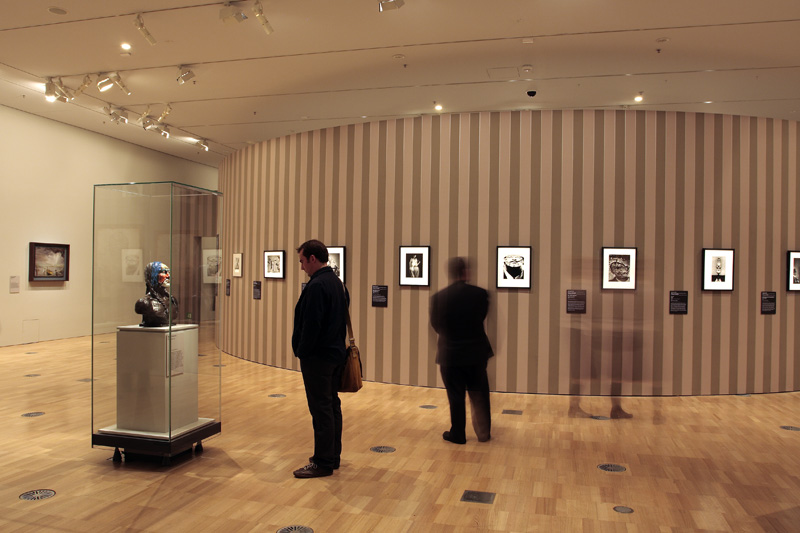
Installation of black and white photography from the exhibition 'Salvador Dalí: Liquid Desire' Winter Masterpieces exhibition at the National Gallery of Victoria, Melbourne with Dr Ted Gott, curator of the exhibition, with back to camera at centre


Installation of black and white photography from the exhibition Salvador Dalí: Liquid Desire Winter Masterpieces exhibition at the National Gallery of Victoria, Melbourne with Dr Ted Gott, curator of the exhibition, with back to camera at centre
Photo: Marcus Bunyan


Reproduction of 'Gala foot. Stereoscopic paintings' 1975-1976 in an installation using mirrors that would have been originally used to obtain the stereoscopic effect


Reproduction of Gala foot. Stereoscopic paintings 1975-1976 in an installation using mirrors that would have been originally used to obtain the stereoscopic effect
Photo: Marcus Bunyan


Final exhibition space from the 'Salvador Dalí: Liquid Desire' Winter Masterpieces exhibition at the National Gallery of Victoria, Melbourne


Final exhibition space from the Salvador Dalí: Liquid Desire Winter Masterpieces exhibition at the National Gallery of Victoria, Melbourne
Photo: Marcus Bunyan


Salvador Dalí (Spanish 1904-1989, worked in United States 1940-1948) 'The Ecumenical Council' 1960


Salvador Dalí (Spanish 1904-1989, worked in United States 1940-1948)
The Ecumenical Council
1960
Oil on canvas
299.7 x 254.0cm
The Salvador Dalí Museum, St Petersburg, Florida
Worldwide Rights: © Salvador Dalí, Fundació Gala-Salvador Dalí, VISCOPY, 2009
In the USA: © Salvador Dalí Museum Inc., St. Petersburg, FL, 2009


Final gallery space from the 'Salvador Dalí: Liquid Desire' Winter Masterpieces exhibition at the National Gallery of Victoria, Melbourne featuring 'The Ecumenical Council' 1960

Final gallery space from the 'Salvador Dalí: Liquid Desire' Winter Masterpieces exhibition at the National Gallery of Victoria, Melbourne featuring 'The Ecumenical Council' 1960


Final gallery space from the Salvador Dalí: Liquid Desire Winter Masterpieces exhibition at the National Gallery of Victoria, Melbourne featuring The Ecumenical Council 1960
Photos: Marcus Bunyan


National Gallery of Victoria (International)
180 St Kilda Road, Melbourne

Opening hours: Salvador Dalí: Liquid Desire is open 7 days a week and until 9pm every Wednesday from 17 June

Tickets
Adult: $23
Concession: $18
Child: $11 (ages 5-15)
Family (2 adults + 3 children): $60
NGV Member Adult: $16
NGV Member Family: $40

Unlimited entry tickets
Adult: $55
Concession: $45
NGV Member Adult: $40

National Gallery of Victoria Dali website

LIKE ART BLART ON FACEBOOK

Back to top