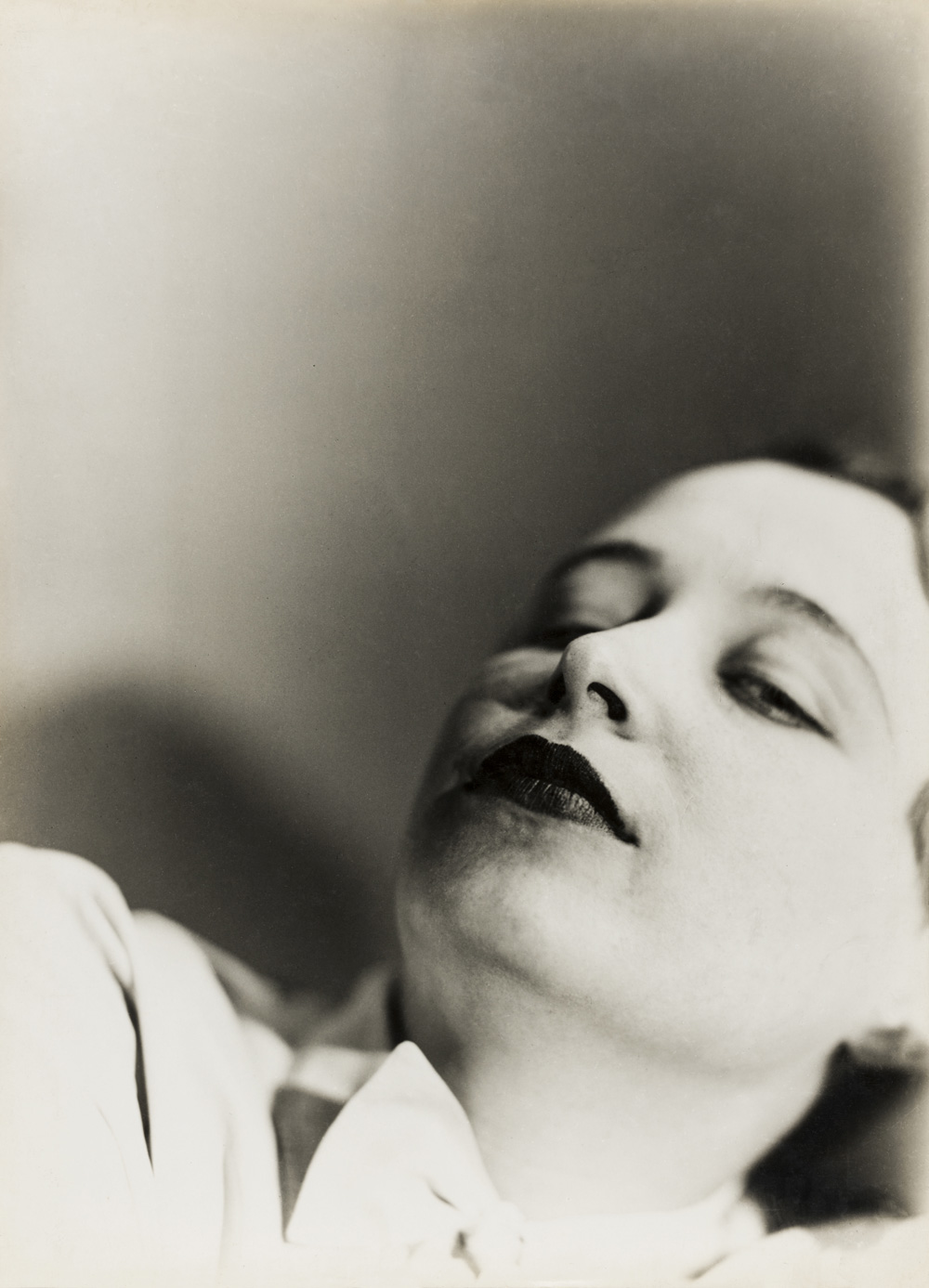
Exhibition: ‘RealSurreal. Masterpieces of Avant-Garde Photography Das Neue Sehen 1920-1950. Siegert Collection’ at the Kunstmuseum Wolfsburg

Exhibition dates: 15th November 2014 – 6th April 2015

The artists: Eugène Atget – Herbert Bayer – Hans Bellmer – Aenne Biermann – Brassaï – František Drtikol – Jaromír Funke – Florence Henri – André Kertész – Germaine Krull – Herbert List – Man Ray – László Moholy-Nagy – Albert Renger-Patzsch – August Sander – Josef Sudek – Maurice Tabard – Raoul Ubac – Umbo – Wols – and others


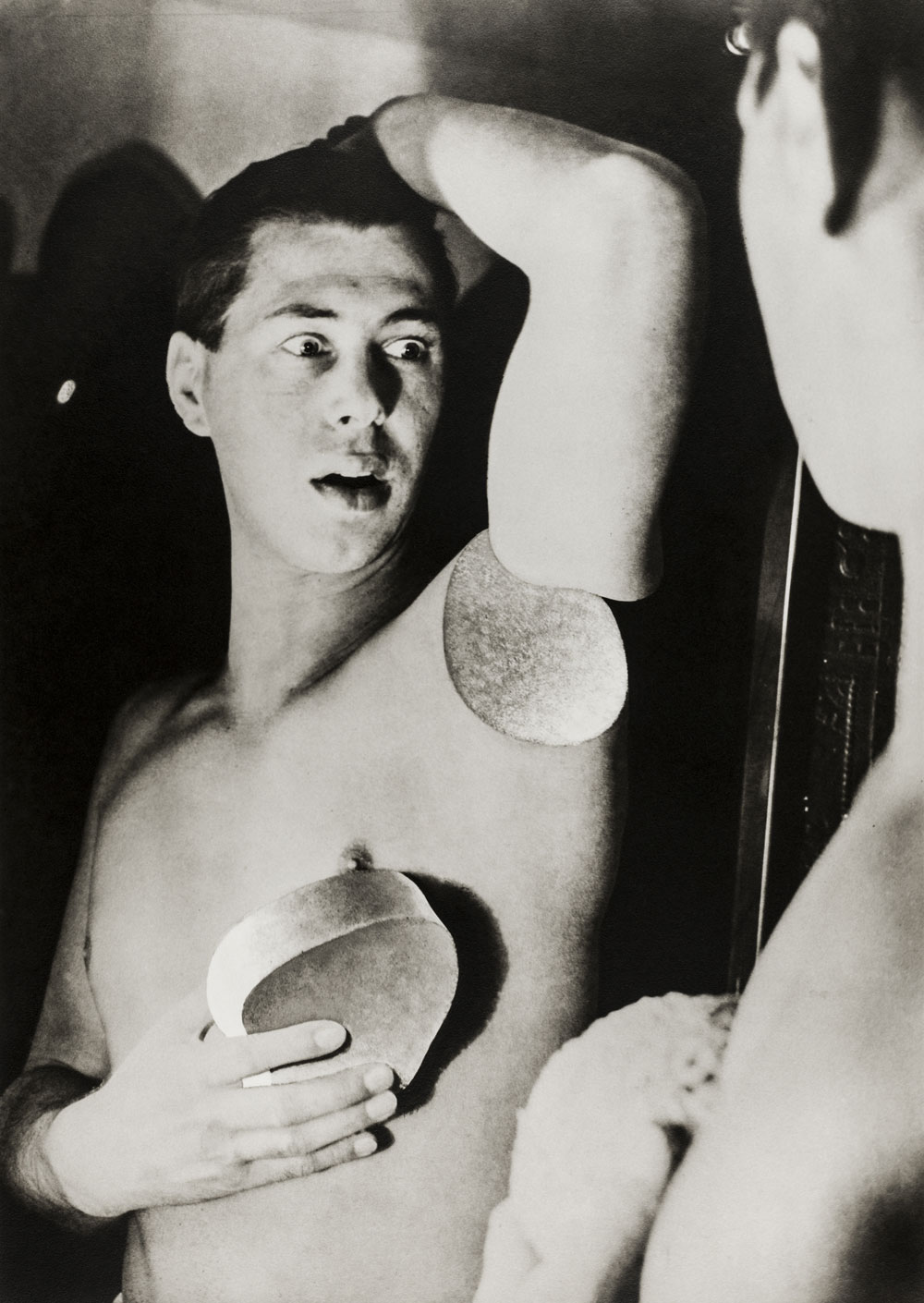
Albert Renger-Patzsch (German, 1897-1966) 'Self-Portrait' 1926/1927


Albert Renger-Patzsch (German, 1897-1966)
Self-Portrait
1926/1927
Gelatin silver paper
16.9 x 22.8cm
Photo: Christian P. Schmider, Munich
© Albert Renger-Patzsch Archiv / Ann and Jürgen Wilde / VG Bild-Kunst, Bonn 2014


Thought photography

Here are some names to conjure with (above). And what an appropriate word “conjure” is to illuminate these images:

: to charge or entreat earnestly or solemnly

: to summon by or as if by invocation or incantation

: to affect or effect by or as if by magic

: to practice magical arts

: to use a conjurer’s tricks

: to make you think of (something)

: to create or imagine (something)


For what is photography, if not magic?

These images are conjured from both the imagination of the artist… and reality itself. One cannot live, be magical, without the other. “Beneath the surface of visible things the irrational, the magical, and the contradictory could be discovered and explored.”

Still waters run deep.

Dr Marcus Bunyan


Many thankx to the Kunstmuseum Wolfsburg for allowing me to publish the photographs in the posting. Please click on the photographs for a larger version of the image.


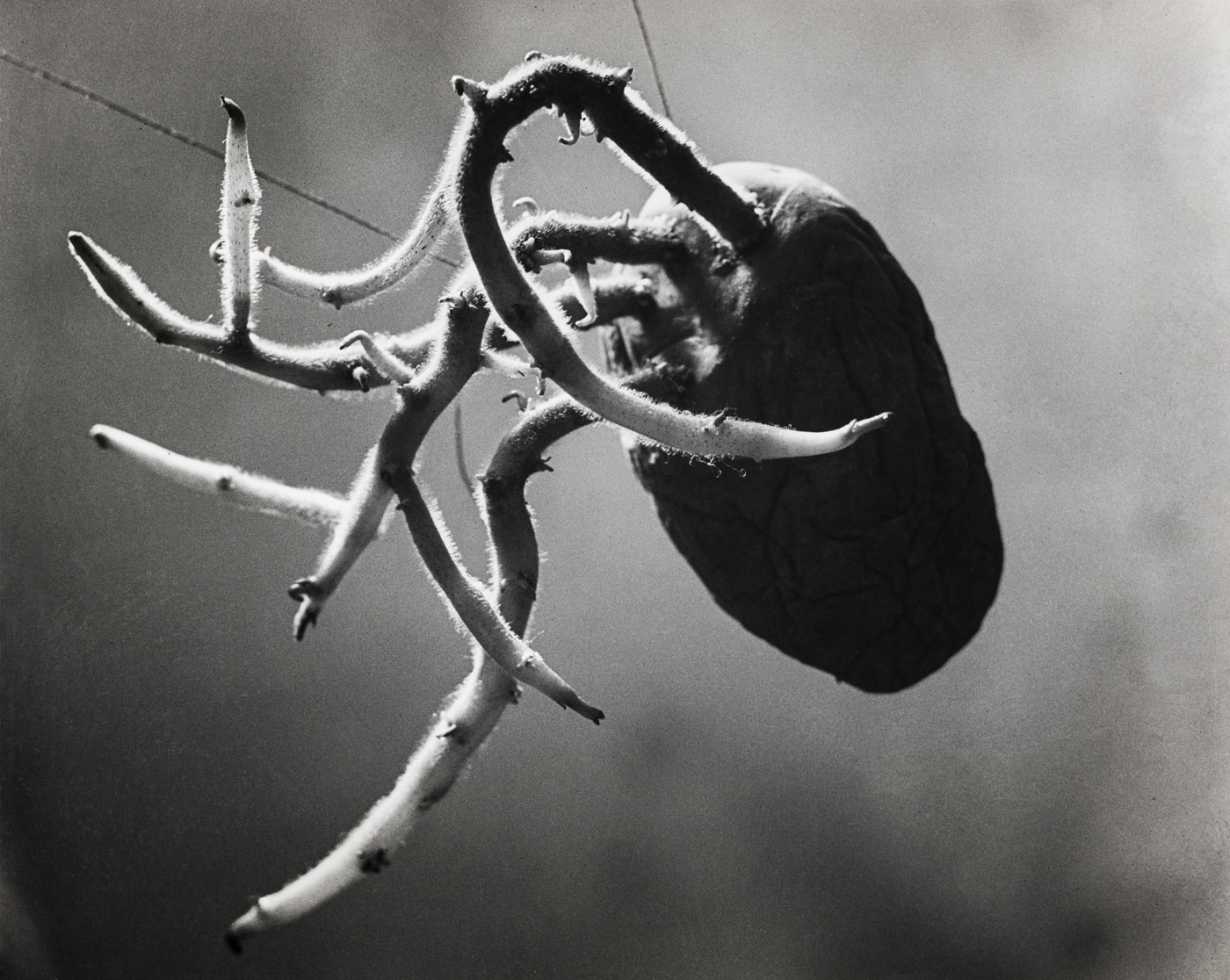
Brassaï (Hungarian-French, 1899-1984) 'Occasional Magic (Sprouting Potato)' 1931


Brassaï (Hungarian-French, 1899-1984)
Occasional Magic (Sprouting Potato)
1931
Gelatin silver paper
28.8 x 23cm
Photo: Christian P. Schmider, Munich
© ESTATE BRASSAÏ – RMN


František Drtikol (Czech, 1883-1961) 'Circular Segment (Arc)' 1928


František Drtikol (Czech, 1883-1961)
Circular Segment (Arc)
1928
Carbon print
21.3 x 28.7cm
Photo: Christian P. Schmieder, Munich
© František Drtikol – heirs, 2014


Hans Bellmer (German, 1902-1975) 'The Doll' 1935


Hans Bellmer (German, 1902-1975)
The Doll
1935
Gelatin silver paper
17.4 x 17.9cm
Photo: Christian P. Schmieder, Munich
© VG Bild-Kunst, Bonn 2014


Grete Stern (German-Argentine, 1904-1999) 'The Eternal Eye' c. 1950


Grete Stern (German-Argentine, 1904-1999)
The Eternal Eye
c. 1950
Photomontage on gelatin silver paper
39.5 x 39.5cm
Photo: Christian P. Schmieder, Munich
© Estate of Grete Stern courtesy Galería Jorge Mara – La Ruche, Buenos Aires, 2014


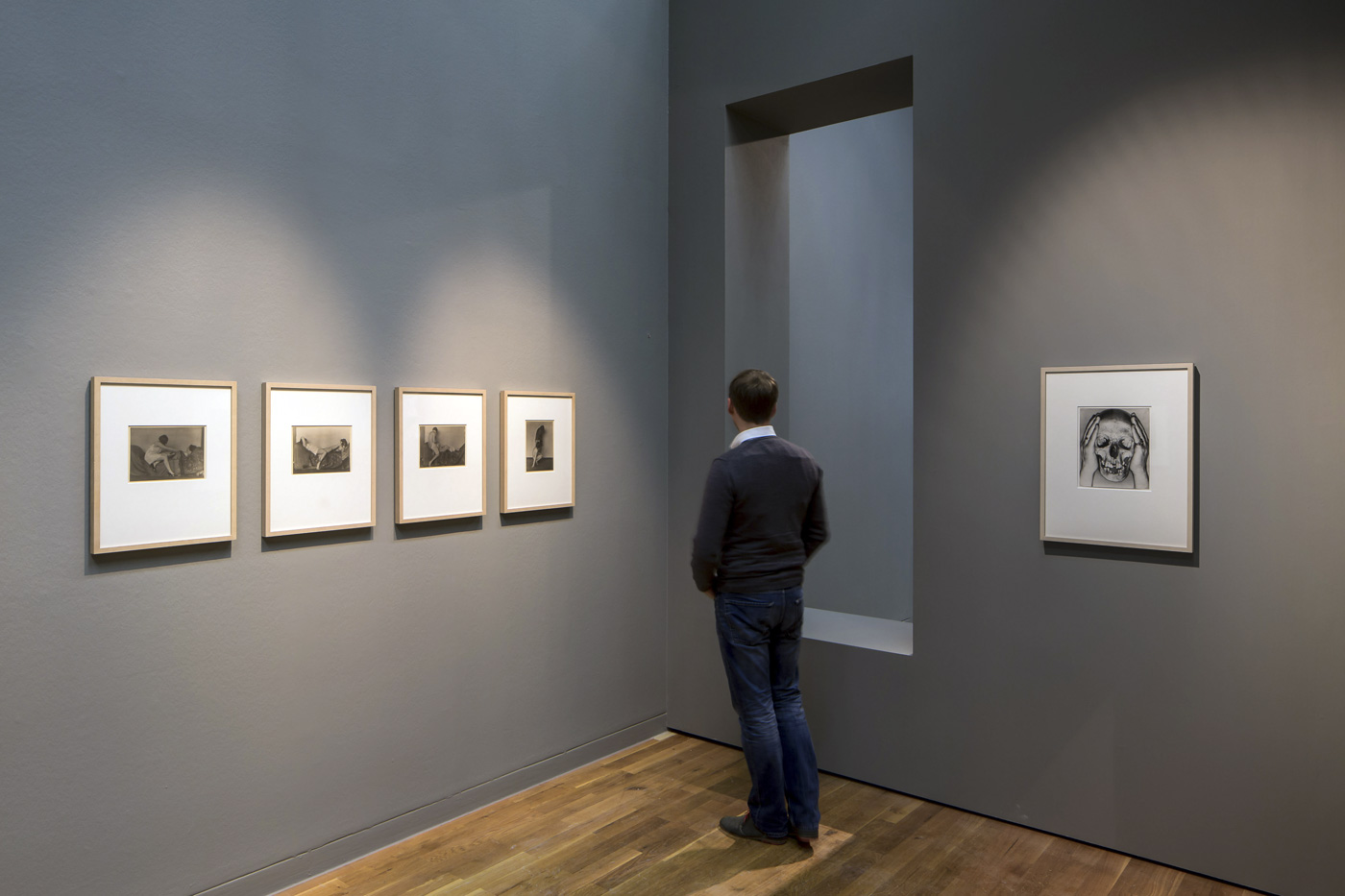
Installation view of the exhibition 'RealSurreal' at the Kunstmuseum Wolfsburg

Installation view of the exhibition 'RealSurreal' at the Kunstmuseum Wolfsburg

Installation view of the exhibition 'RealSurreal' at the Kunstmuseum Wolfsburg

Installation view of the exhibition 'RealSurreal' at the Kunstmuseum Wolfsburg


Installation views of the exhibition RealSurreal at the Kunstmuseum Wolfsburg showing at bottom right in the bottom image, Erwin Blumenfeld’s Skull 1932/1933


Is a photograph a true-to-life reproduction of reality, or is it merely a staged image? This year – the 175th anniversary of the invention of photography – the Kunstmuseum Wolfsburg responds to this question with a comprehensive survey of avant-garde photography between 1920 and 1950. The exhibition RealSurreal presents around 200 masterpieces from the eminent Siegert Collection in Munich. This collection, which has never been shown in its entirety, contains photographs from the Neues Sehen (New Vision) movement, covering everything from New Objectivity to Surrealism in Germany, France, and Czechoslovakia.

Das Neue Sehen (New Vision)

Notions about photography’s visual veracity are as old as the art itself. As early as the nineteenth century there were arguments as to whether or not photography – with its mechanical ability to record ‘reality’ – was better suited to portray life more comprehensively and truthfully than other visual arts of the period. An inevitable reaction to what were considered photography’s shortcomings was Pictorialism, which approached photography according to the conventions of painting, in an attempt to lend it more artistic credibility. But around 1920 a new generation of international photographers began reconsidering the specific characteristics of photography as tools for developing it into a more modern method of appropriating reality. Rapid progress in technologising modern society affected the adoption of and attitudes toward photography: convenient cameras that used rolls of film came onto the market in greater numbers, making it easy for even the greenest of amateurs to take photographs. Photographs were increasingly used as illustrations in mass media, and in advertising, leading to a rising demand for accomplished images and professional image makers. These developments also changed the public’s visual habits, so that the New Vision arose as an expression of the perception of this new media-fabricated reality. Positions ranged from the precise recordings of what was seen in portrait and industrial photography, via the use of new framings and perspectives at the Bauhaus, all the way to the photomontage and technical experiments such as the photogram and solarisation, as well as Surrealism’s staged images.

The Mechanical Eye

Photographers of the Neue Sachlichkeit (New Objectivity) movement wanted to show the world as it was. For Albert Renger-Patzsch, photography was the “most dependable tool” for objectively reproducing the visible things of this world, especially the results of modern technology, and in this respect, it was superior to the subjective perception of the human eye. László Moholy-Nagy went a step further, with his famous verdict that “the illiterate of the future will be the person ignorant of the use of the camera as well as the pen.” To the camera he attributed the crucial function of technically expanding human perception. Whilst adequately depicting machines, mass society, and modern metropolitan life: “the photographic apparatus can perfect or supplement our Photographs were increasingly used as illustrations in mass media.” Unusual aspects and viewpoints led to striking images. From a bird’s-eye perspective, buildings and streets became compositions made up of lines and planes, while a low-angle shot could create an unforeseen dynamic and greatly enlarging an object resulted in magical dissociations.

The Real and the Surreal

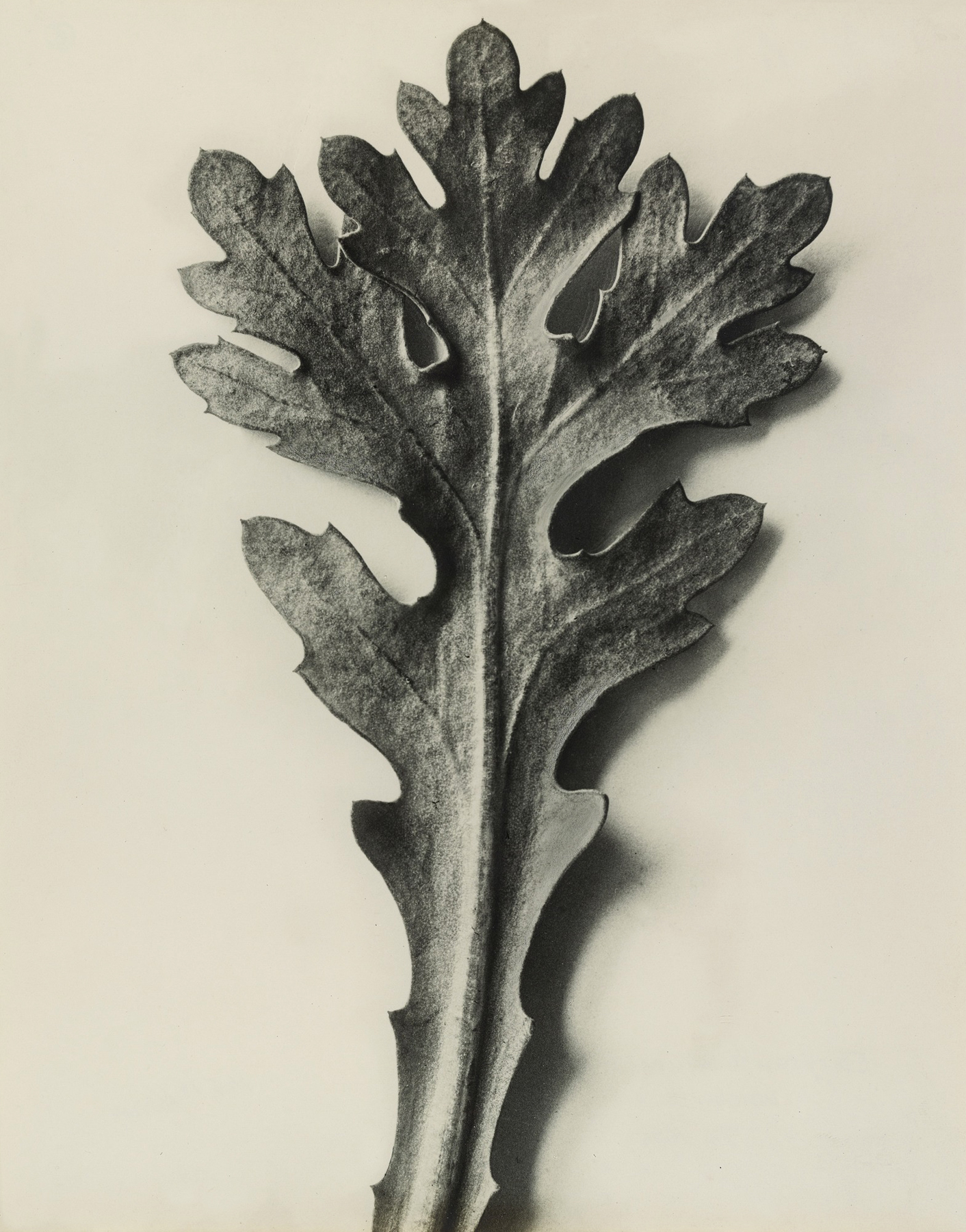
Ultimately, the Surrealists identified in the “realistic” recording tool of photography yet another artistic means of “écriture automatique,” which André Breton also described as “thought photography.” Beneath the surface of visible things the irrational, the magical, and the contradictory could be discovered and explored. Documentary photographers such as Eugène Atget and Karl Blossfeldt became inspirational figures in this movement. Their work was printed in the Surrealist magazines, because a plant, staged and isolated in a photograph, could trigger all kinds of magical associations beyond its botanical context. Meanwhile manipulated and staged photographs benefitted from the truthfulness of “this is the way it was,” since they could only reinforce their mysterious statements. One of Surrealism’s most important artistic means – the combinatory creation (including, of course, the photomontage) – was particularly effective because heterogeneous visual elements were joined to form new, surprising contexts of meaning. Like Brassaï’s photographs of a nocturnal Paris, Karel Teige’s collages have a surreal quality which can also be found in a different form in Man Ray’s dreamlike photograms. Both staged photography and – with many experiments with photographic techniques, such as multiple exposures, negative printing, and solarisation – strove to achieve the melding of dream and reality, a goal postulated by Breton in his first Surrealist manifesto. In New Vision photography this could generally result in images that could “go either way,” depending on the viewpoint of the real/surreal photographer and observer; they could be seen as sober, objective reproductions of the visible world, or as imaginary, subjective reflections of reality.

The exhibition RealSurreal leads the visitor through Neues Sehen in Germany, Surrealism in Paris, and the avant-garde in Prague, alongside themes such as portraits, nudes, objects, architecture, and experimental. Opening with a prologue of exemplary nineteenth-century photographs which are compared and contrasted with Neues Sehen, one can literally experience the Neues Sehen in the Kunstmuseum Wolfsburg via rare original prints by notable photographers, while rediscovering the broad spectrum and complexity of photographs from real to surreal. Besides approximately 200 photographs, the exhibition contains historical photography books and magazines, as well as rare artists’ books and examples of avant-garde cover design, making it possible to experience this new view of the world.

RealSurreal also features several famous clips from key films by Luis Buñuel, László Moholy-Nagy, Hans Richter, and others, shown continuously in a 45-minute loop, which highlight the fruitful interplay between avant-garde photography and the-then contemporary cinema. Important photographs and photo installations by Nobuyoshi Araki, Gilbert & George, Paul Graham, Andreas Gursky, Cindy Sherman, Jeff Wall, and James Welling, from the Kunstmuseum Wolfsburg’s collection, will also demonstrate that the artistic questions posed by Neues Sehen are still relevant today.

Press release from the Kunstmuseum Wolfsburg website


Erwin Blumenfeld (American born Germany, 1897-1969) 'Skull' 1932/33


Erwin Blumenfeld (American born Germany, 1897-1969)
Skull
1932/1933
Solarisation on gelatin silver paper
29.6 x 24cm
Photo: Christian P. Schmieder, Munich
© The Estate of Erwin Blumenfeld


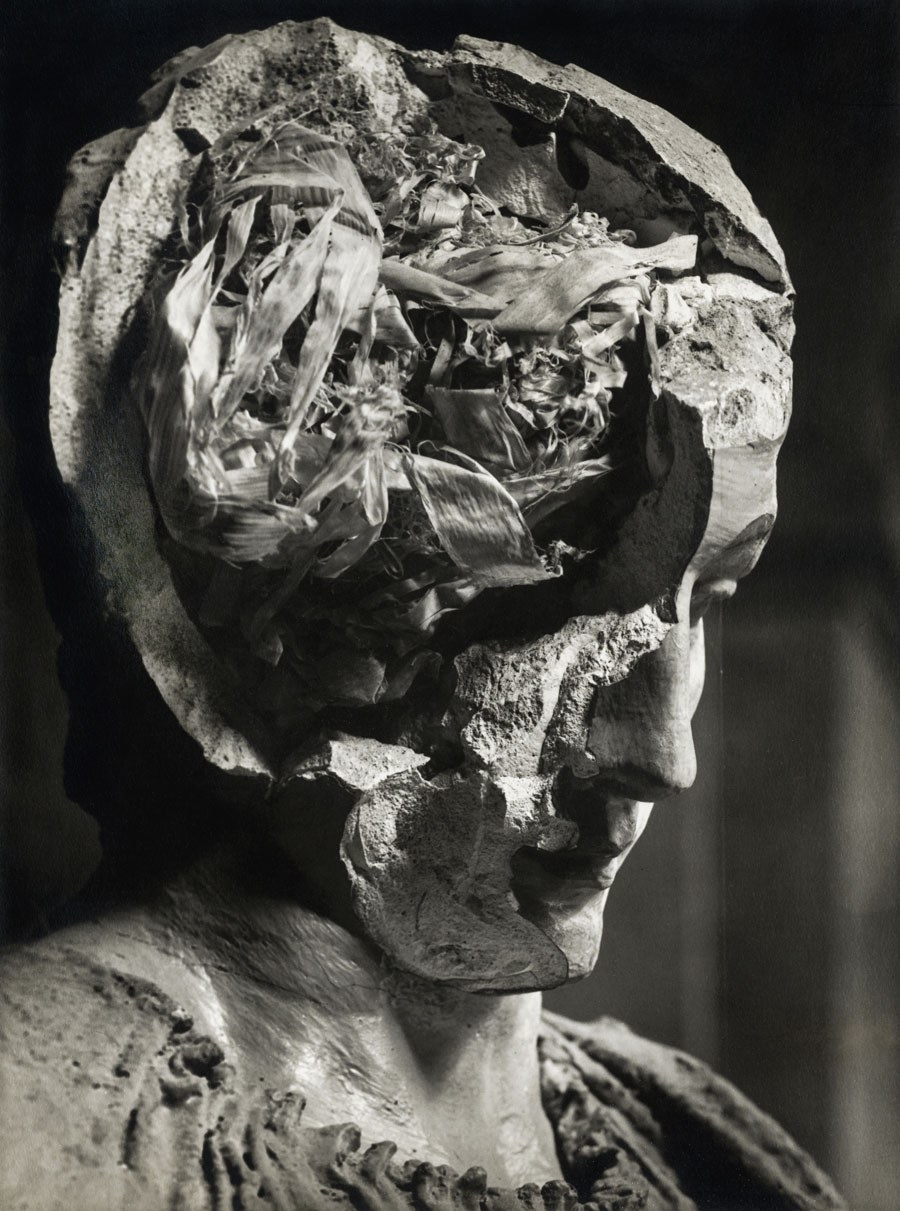
Josef Sudek (Czech. 1896-1976) 'Plaster Head' c. 1947


Josef Sudek (Czech. 1896-1976)
Plaster Head
c. 1947
Gelatin silver paper
23.5 x 17.5cm
Photo: Christian P. Schmieder, Munich
© Estate of Josef Sudek


Herbert Bayer (Austrian, 1900-1985) 'Lonely Metropolitan' 1932/1969


Herbert Bayer (Austrian, 1900-1985)
Lonely Metropolitan
1932/1969
Photomontage on gelatin silver paper
35.3 x 28cm
Photo: Christian P. Schmieder, Munich
© VG Bild-Kunst, Bonn 2014


Herbert Bayer (Austrian, 1900-1985) 'Self-Portrait' 1932


Herbert Bayer (Austrian, 1900-1985)
Self-Portrait
1932
Photomontage on gelatin silver paper
35.3 x 27.9cm
Photo: Christian P. Schmieder, Munich
© VG Bild-Kunst, Bonn, 2014


Man Ray (American, 1890-1976) 'Electricity' 1931


Man Ray (American, 1890-1976)
Electricity
1931
Photogravure
26 x 20.6cm
Photo: Christian P. Schmieder, Munich
© Man Ray Trust, Paris/ VG Bild-Kunst, Bonn 2014


Man Ray (American, 1890-1976) 'Rayography (spiral)' 1923


Man Ray (American, 1890-1976)
Rayography (spiral)
1923
Photogram on gelatin silver paper
26.6. x 21.4cm
Photo: Christian P. Schmieder, München
© Man Ray Trust, Paris/ VG Bild-Kunst, Bonn 2014


Florence Henri (European born America, 1893-1982) 'Portrait Composition (Erica Brausen)' 1931


Florence Henri (European born America, 1893-1982)
Portrait Composition (Erica Brausen)
1931
Gelatin silver paper
39.9 x 29cm
Photo: Christian P. Schmieder, Munich
© Galleria Martini & Ronchetti, Genova, Italy


Atelier Manassé. 'My Little Bird' c. 1928


Atelier Manassé
My Little Bird
c. 1928
Gelatin silver paper
21 x 16cm
Photo: Christian P. Schmieder, Munich
© IMAGNO/Austrian Archives


Genia Rubin (Russian, 1906-2001) 'Lisa Fonssagives. Gown: Alix (Madame Grès)' 1937


Genia Rubin (Russian, 1906-2001)
Lisa Fonssagives. Gown: Alix (Madame Grès)
1937
Gelatin silver paper
30.3 x 21.5cm
Photo: Christian P. Schmieder / Siegert Collection, Munich
© Sheherazade Ter-Abramoff, Paris


Kunstmuseum Wolfsburg
Abteilung Kommunikation
Hollerplatz 1 38440
Wolfsburg
Phone: +49 (0)5361 2669 69

Opening hours:
Tuesday – Sunday 11am – 6pm
Monday closed

Kunstmuseum Wolfsburg website

LIKE ART BLART ON FACEBOOK

Back to top

Exhibition: ‘Kati Horna’ at Jeu de Paume, Paris

Exhibition dates: 3rd June – 21st September 2014


Kati Horna (Mexican born Hungary, 1912-2000) 'Untitled' Paris, 1939


Kati Horna (Mexican born Hungary, 1912-2000)
Untitled
Paris, 1939
From the Muñecas del miedo series [Dolls of Fear],
Gelatin silver print
15.3 x 22.8cm
Archivo Privado de Fotografía y Gráfica Kati y José Horna
© 2005 Ana María Norah Horna y Fernández


I really love the work of artists such as Kati Horna and Florence Henri “with the production of collages and photomontages inspired by the avant-garde movements of the 1930s (the Bauhaus, Surrealism, German Neue Sachlichkeit, Russian Constructivism).”

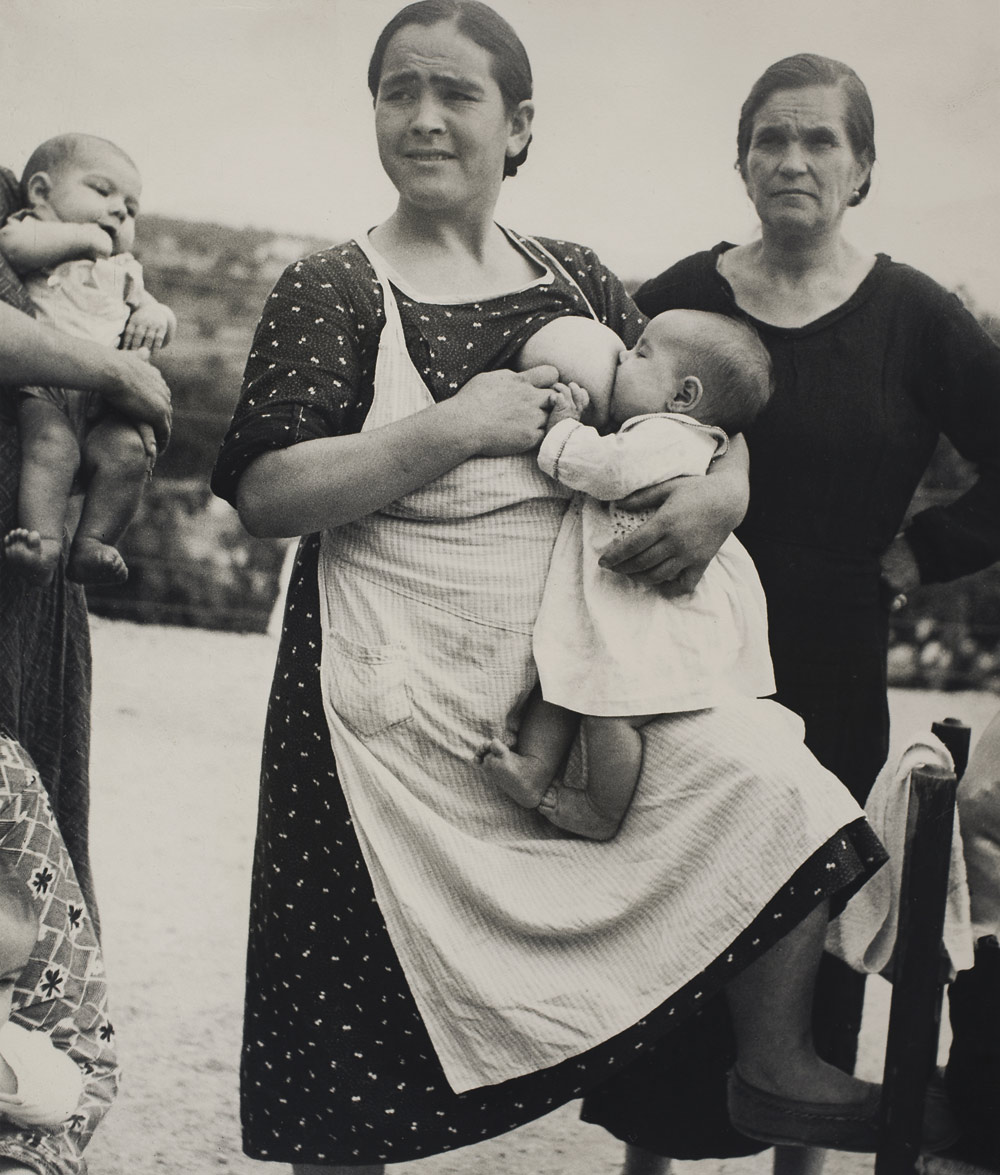
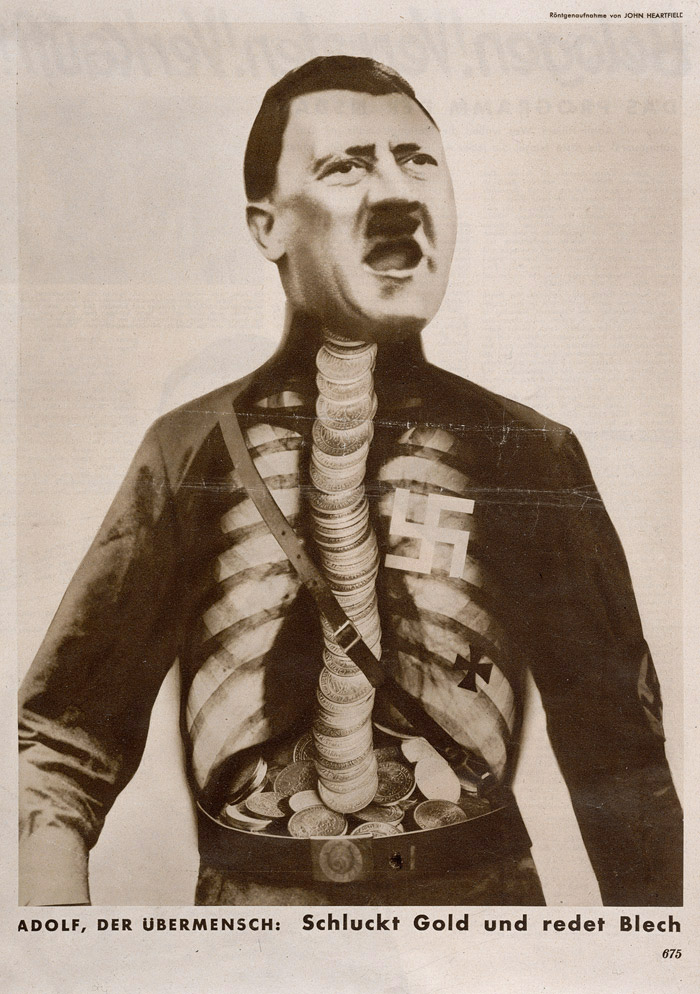
Horna’s photographs have more of a political edge than that of Florence Henri, with her unique photographic reportage of the Spanish Civil War between 1937-39 and her Hitler series both having a strong social critique. Here is another politically aware artist who stood up for the cause, who recorded the “everyday life for the civilian population through a vision that was in empathy with the environment and the people.” Again, here is another who was lucky to survive the maelstrom of the Second World War, who would have certainly ended up dead if she and her Andalusian artist husband José Horna had not fled Paris in 1939 for their adopted country Mexico.

Dr Marcus Bunyan

PS I spent hours cleaning up the press images, there were in a really poor state, but the work was so worthwhile… they really sing now!


Many thankx to the Jeu de Paume for allowing me to publish the photographs in the posting. Please click on the photographs for a larger version of the image.


This summer, the Jeu de Paume, which is celebrating 10 years devoted to the image, will be inviting the public to discover Kati Horna (1912-2000), an avant-garde, humanist photographer, who was born in Hungary and exiled in Mexico, where she documented the local art scene.


Robert Capa (Hungarian-American, 1913-1954) (attributed to) 'Kati Horna in the Studio of József Pécsi' Budapest, 1933


Robert Capa (Hungarian-American, 1913-1954) (attributed to)
Kati Horna in the Studio of József Pécsi
Budapest, 1933
Gelatin silver print
10.5 x 7.5cm
Archivo Privado de Fotografía y Gráfica Kati y José Horna
© 2005 Ana María Norah Horna y Fernández


In collaboration with the Museo Amparo in Puebla (Mexico), the Jeu de Paume is presenting the first retrospective of the work of photographer Kati Horna (Szilasbalhási, Hungary, 1912-Mexico, 2000), showing more than six decades of work in Hungary, France, Spain and Mexico. Kati Horna, a photographer whose adopted homeland was Mexico, was one of a generation of Hungarian photographers (including André Kertész, Robert Capa, Eva Besnyö, László Moholy-Nagy, Nicolás Muller, Brassaï, Rogi André, Ergy Landau and Martin Munkácsi) forced to flee their country due to the conflicts and social upheaval of the 1930s.

Cosmopolitan and avant-garde, Kati Horna was known above all for her images of the Spanish Civil War, produced at the request of the Spanish Republican government between 1937 and 1939. Her work is characterised by both its adherence to the principles of Surrealist photography and her very personal approach to photographic reportage.

This major retrospective helps to bring international recognition to this versatile, socially committed, humanist photographer, highlighting her unusual artistic creativity and her contribution to photojournalism. It offers a comprehensive overview of the work of this artist, who started out as a photographer in Hungary at the age of 21, in the context of the European avant-garde movements of the 1930s: Russian Constructivism, the Bauhaus school, Surrealism and German Neue Sachlichkeit. Her vast output, produced both in Europe and Mexico, her adopted country, is reflected in a selection of over 150 works – most of them vintage prints, the vast majority of them unpublished or little known.

In Mexico, Kati Horna formed a new family with the émigré artists Remedios Varo, Benjamin Péret, Emerico ‘Chiki’ Weisz, Edward James and, later on, Leonora Carrington. In parallel with her reportages, she took different series of photographs of visual stories, extraordinary creations featuring masks and dolls, motifs that began to appear in her work in the 1930s.

Kati Horna also became the great portraitist of the Mexican literary and artistic avant-garde; her visionary photographs captured the leading artists in Mexico during the 1960s, such as Alfonso Reyes, Germán Cueto, Remedios Varo, Pedro Friedeberg, Alejandro Jodorowsky, Mathias Goeritz and Leonora Carrington.

The exhibition is divided into five periods: her beginnings in Budapest, Berlin and Paris between 1933 and 1937; Spain and the Civil War from 1937 to 1939; Paris again in 1939; then Mexico. The exhibition also presents a number of documents, in particular the periodicals that she contributed to during her travels between Hungary, France, Spain and Mexico. The works come from the Archivo Privado de Fotografía y Gráfica Kati y José Horna, the Centro Documental de la Memoria Histórica de España, Salamanca, the Museo Amparo, Puebla, as well as private collections.

Press release from the Jeu de Paume website


Kati Horna (Mexican born Hungary, 1912-2000) 'Invierno en el patio' [Winter in the Courtyard] Paris, 1939


Kati Horna (Mexican born Hungary, 1912-2000)
Invierno en el patio [Winter in the Courtyard]
Paris, 1939
Gelatin silver print
18.8 x 18.3cm
Archivo Privado de Fotografía y Gráfica Kati y José Horna
© 2005 Ana María Norah Horna y Fernández


Beginnings: Budapest, Berlin And Paris


Afterwards I returned to Paris, and do you know why I didn’t die of hunger in Paris? Before I left, everyone mocked me, “there’s the photographer”, I was the photographer of eggs. I had this idea of being the first one to do things, not with figurines, but little stories with eggs, and it was that wonderful draughtsman who subsequently committed suicide who did the faces for me… The first was the romantic story of a carrot and a potato. The carrot declared its love to the potato. He always did the faces and I staged the scenes. I took the photos with my big camera with 4 x 5 negatives.


Kati Horna


Born in Hungary to a family of bankers of Jewish origin during a period of political and social instability, Kati Horna would always be deeply marked by the violence, injustice and danger around her. This situation helped to forge her ideological commitment, her perpetual search for freedom, her particular way of denouncing injustice, as well as her compassionate and human vision, like that of Lee Miller and her pictures of the Second World War. As was the case for her great childhood friend Robert Capa, to whom she would remain close throughout her life, photography became a fundamental means of expression.

At the age of 19 she left Budapest to live in Germany for a year, where she joined the Bertolt Brecht collective. She frequented photographer friends and compatriots Robert Capa and ‘Chiki’ Weisz, as well as other major figures in Hungarian photography, such as László Moholy-Nagy – who at the time was a teacher at the Bauhaus school – and Simon Guttman, founder of the Dephot agency (Deutscher Photodienst). On her return from Budapest, she enrolled in the studio of József Pécsi – the famous Hungarian photographer (1889-1956) – before leaving her birth country again, in 1933, to settle in Paris.

It was during this period of apprenticeship that her own aesthetic took shape, which marked her entire career, with the production of collages and photomontages inspired by the avant-garde movements of the 1930s (the Bauhaus, Surrealism, German Neue Sachlichkeit, Russian Constructivism). Paris was a cosmopolitan capital and Surrealism was at its height at the time. This movement heavily influenced Kati Horna’s style, both through its themes and its techniques, be it the narrative collage, superimposition or photomontage. Her photography was closely linked to the arts of the image, used as an illustrative technique and as a support for a poetics of the object. Her taste for stories and staged images are clearly evident. From 1933 she worked for the Lutetia-Press agency, for whom she did her first photo stories: Mercado de pulgas [Flea Market] (1933), which would not be published until 1986 in the Mexican periodical Foto Zoom, and Cafés de París (1934).


Kati Horna (Mexican born Hungary, 1912-2000) 'Robert Capa in the Studio of József Pécsi' Budapest, 1933


Kati Horna (Mexican born Hungary, 1912-2000)
Robert Capa in the Studio of József Pécsi
Budapest, 1933
Gelatin silver print
25.3 x 20.1cm
Archivo Privado de Fotografía y Gráfica Kati y José Horna
© 2005 Ana María Norah Horna y Fernández


Kati Horna (Mexican born Hungary, 1912-2000) 'Untitled' Paris, 1937


Kati Horna (Mexican born Hungary, 1912-2000)
Untitled
Paris, 1937
From the Hitlerei series [Hitler series]
in collaboration with Wolfgang Burger
Gelatin silver print
16.8 x 12cm
Archivo Privado de Fotografía y Gráfica Kati y José Horna
© 2005 Ana María Norah Horna y Fernández


Spain And The Civil War


Photography, with its various possibilities, enables one to show, liberate and develop one’s own sensibility which can be expressed in graphic images.

And at the moment of pressing the shutter you had to keep the image, let your emotion, discovery and visual surprise flow, the moment had to be kept in your head. That’s what I call developing one’s visual memory.


Kati Horna


Between 1937 and 1939, Kati Horna covered the Spanish Civil War with great sensitivity. The Spanish Republican government asked her to produce images on the Civil War. Thus, between 1937 and 1939 she photographed the places where the major events of the war took place, in the Aragon province, in the country’s cities (Valencia, Madrid, Barcelona and Lerida), as well as a number of strategic villages in Republican Spain.

A collection of more than 270 negatives has survived from this period, today conserved in the Centro Documental de la Memoria Histórica de España, Salamanca. They bear witness to the reality of the conflict at the front as well as, and above all, everyday life for the civilian population through a vision that was in empathy with the environment and the people. Committed to the anarchist cause, she became the editor of the periodical Umbral, where she would meet her future husband, the Andalusian anarchist José Horna – and worked on the cultural periodical of the National Confederation of Labour, Libre-Studio. She also collaborated on the periodicals Tierra y Libertad, Tiempos Nuevos and Mujeres Libres, publications that are being exhibited for the first time. At the time, her work was distinguished by its photomontages, which have both a symbolic and metaphorical character.


Kati Horna (Mexican born Hungary, 1912-2000) 'Untitled, Vélez Rubio, Almeria province, Andalusia, Spanish Civil War' 1937


Kati Horna (Mexican born Hungary, 1912-2000)
Untitled, Vélez Rubio, Almeria province, Andalusia, Spanish Civil War
1937
Gelatin silver print
25.5 x 20.5cm
Archivo Privado de Fotografía y Gráfica Kati y José Horna
© 2005 Ana María Norah Horna y Fernández


Kati Horna (Mexican born Hungary, 1912-2000) 'Subida a la catedral [Ascending to the Cathedral], Spanish Civil War' Barcelona 1938


Kati Horna (Mexican born Hungary, 1912-2000)
Subida a la catedral [Ascending to the Cathedral], Spanish Civil War
Barcelona, 1938
Gelatin silver print (photomontage)
22.2 x 16.6cm
Archivo Privado de Fotografía y Gráfica Kati y José Horna
© 2005 Ana María Norah Horna y Fernández


Kati Horna (Mexican born Hungary, 1912-2000) 'Los Paraguas, mitin de la CNT' [Umbrellas, Meeting of the CNT], Spanish Civil War Barcelona, 1937


Kati Horna (Mexican born Hungary, 1912-2000)
Los Paraguas, mitin de la CNT [Umbrellas, Meeting of the CNT], Spanish Civil War
Barcelona, 1937
Gelatin silver print
24.2 x 19.2cm
Archivo Privado de Fotografía y Gráfica Kati y José Horna
© 2005 Ana María Norah Horna y Fernández


Mexico


I am in an existential crisis. Today everyone is running, today everyone is driving. My pictures? They were the product of a creative love, linked to my experiences and the way they were taken. I was never in a hurry.

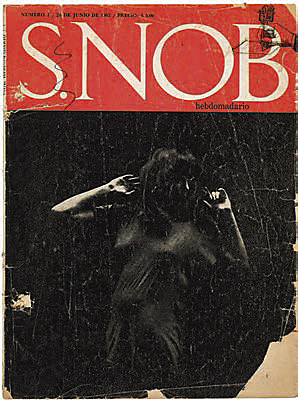
S.nob was a joy… I don’t know why I enjoyed myself so much, but the facility that Salvador [Elizondo] and the team, and Juan [García Ponce] gave me, a great creativity came out of me.


Kati Horna


Kati Horna returned to Paris in 1939. Her husband, the Andalusian artist José Horna, enlisted in the Ebra division that covered the retreat of the Spanish civilians to France. In October, as soon as he reached Prats-de-Mollo, in the French Pyrenees, he was incarcerated in a camp for Spanish refugees. Kati Horna succeeded in getting him freed. They left for Paris where they were again harassed, obliging them to flee France for Mexico. Mexico would become her final homeland.

During her everyday life she came into contact with some of the extraordinary figures of Surrealism (Leonora Carrington, Remedios Varo, Benjamin Péret and Edward James) and the Panic movement (Alejandro Jodorowsky), as well as avant-garde Mexican artists, writers and architects (Mathias Goeritz, Germán Cueto, Pedro Friedeberg, Salvador Elizondo, Alfonso Reyes and Ricardo Legorreta).

Kati Horna established herself as a chronicler of the period, leaving for posterity a unique corpus. In Mexico, she worked as a reporter for periodicals such as Todo (1939), Nosotros (1944-1946), Mujeres (1958-1968), Mexico this Month (1958-1965), S.nob (1962) and Diseño (1968-1970). During the last 20 years of her life, she also taught photography at the Universidad Iberoamericana and the San Carlos Academy (Univesidad Nacional Autónoma de México), where she trained an entire generation of contemporary photographers.

Horna’s quotes come from the catalogue, co-published by the Jeu de Paume and the Museo Amparo


Cover of the magazine S.nob No. 2 (27 June 1962)


Cover of the magazine S.nob No. 2 (27 June 1962)
© 2005 Ana María Norah Horna y Fernández


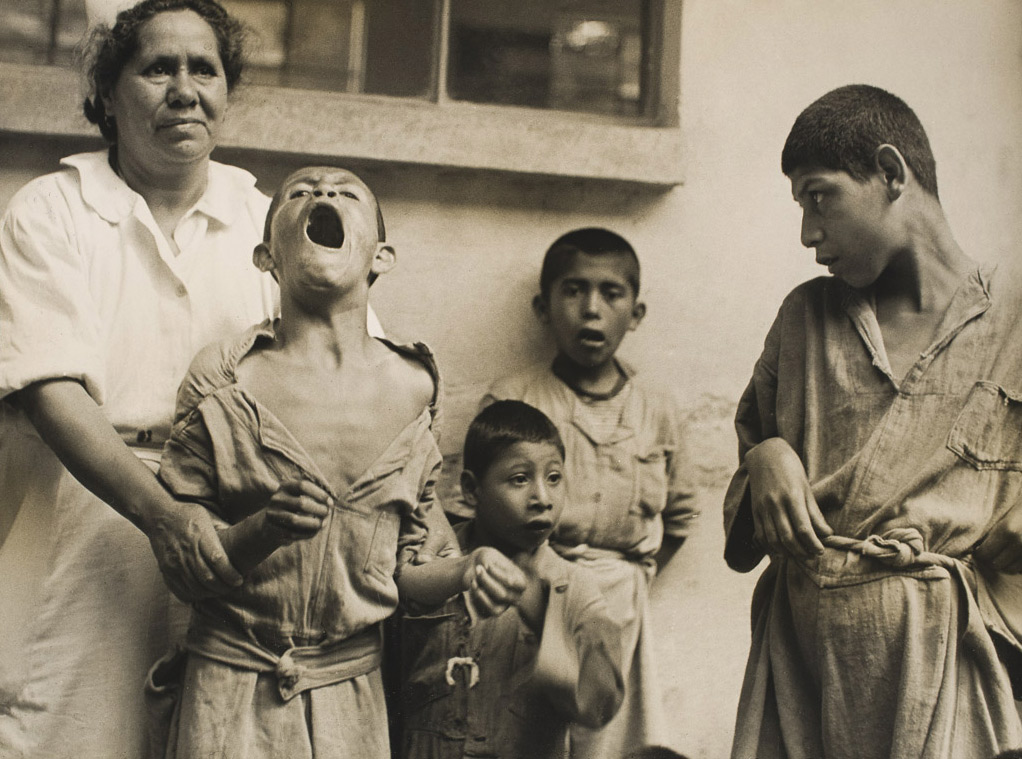
Kati Horna (Mexican born Hungary, 1912-2000) 'Untitled, La Castañeda psychiatric hospital, Mixcoac' Mexico, 1944


Kati Horna (Mexican born Hungary, 1912-2000)
Untitled, La Castañeda psychiatric hospital, Mixcoac
Mexico, 1944
Archivo Privado de Fotografía y Gráfica Kati y José Horna
© 2005 Ana María Norah Horna y Fernández


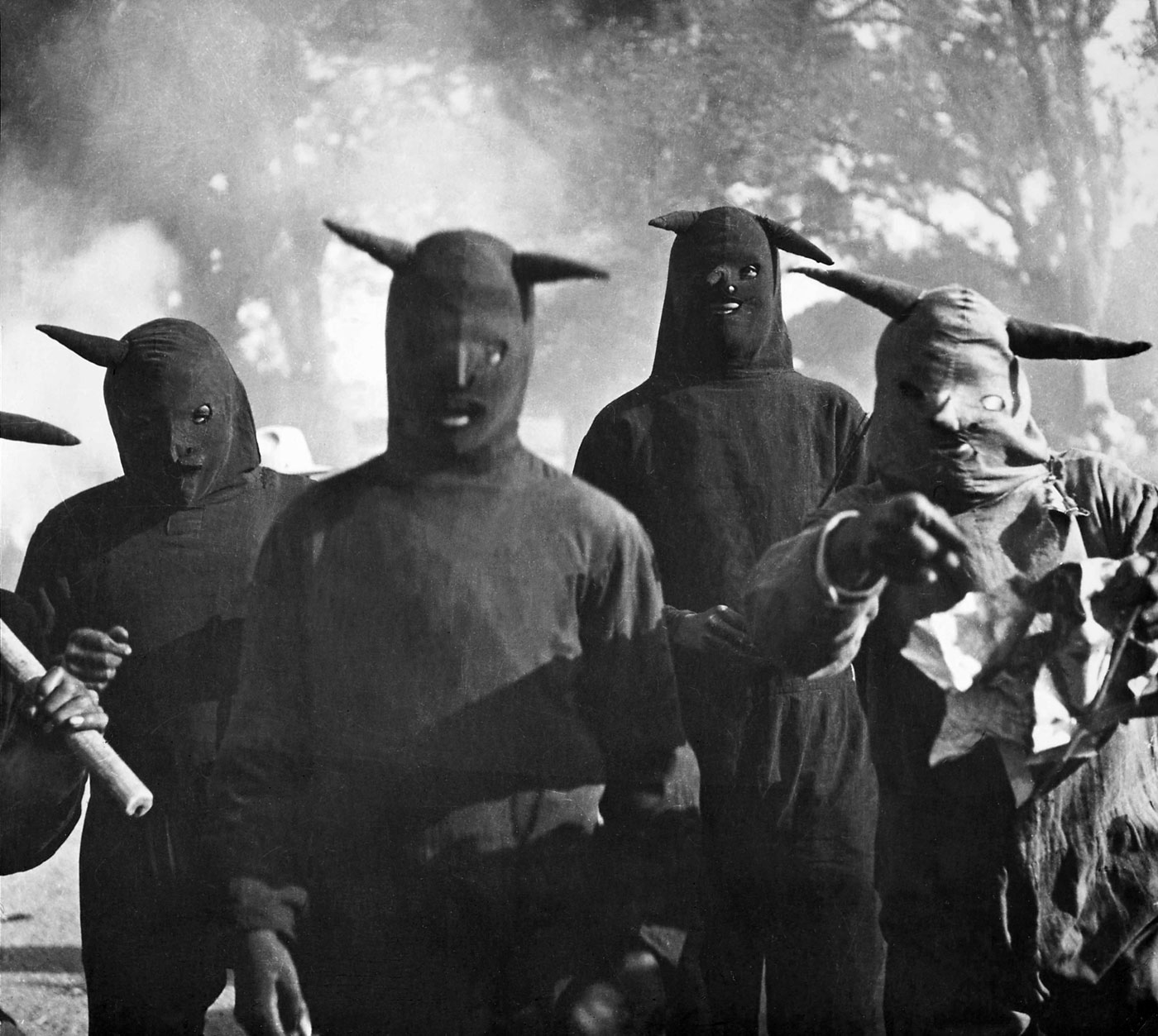
Kati Horna (Mexican born Hungary, 1912-2000) 'Untitled, Carnaval de Huejotzingo, Puebla' 1941


Kati Horna (Mexican born Hungary, 1912-2000)
Untitled, Carnaval de Huejotzingo, Puebla
1941
Gelatin silver print
19.5 x 21.5cm
Archivo Privado de Fotografía y Gráfica Kati y José Horna
© 2005 Ana María Norah Horna y Fernández


Kati Horna (Mexican born Hungary, 1912-2000) 'Untitled, Oda a la necrofília series [Ode to Necrophilia]' Mexico 1962


Kati Horna (Mexican born Hungary, 1912-2000)
Untitled
Mexico, 1962
From the Oda a la necrofília series [Ode to Necrophilia]
Gelatin silver print
25.4 x 20.8cm
Museo Amparo Collection
© 2005 Ana María Norah Horna y Fernández


Kati Horna (Mexican born Hungary, 1912-2000) 'El botellón' [The Bottle] Mexico, 1962


Kati Horna (Mexican born Hungary, 1912-2000)
El botellón [The Bottle]
Mexico, 1962
From the Paraísos artificiales series [Artificial Paradises]
Gelatin silver print
24.4 x 18.9cm
Collection Museo Amparo
© 2005 Ana María Norah Horna y Fernández


Kati Horna (Mexican born Hungary, 1912-2000) 'Remedios Varo' Mexico, 1957


Kati Horna (Mexican born Hungary, 1912-2000)
Remedios Varo
Mexico, 1957
Gelatin silver print
25.3 x 20.3cm
Private collection
© 2005 Ana María Norah Horna y Fernández


Kati Horna (Mexican born Hungary, 1912-2000) 'Antonio Souza y su esposa Piti Saldivar' [Antonio Souza and his Wife Piti Saldivar] Mexico, 1959


Kati Horna (Mexican born Hungary, 1912-2000)
Antonio Souza y su esposa Piti Saldivar [Antonio Souza and his Wife Piti Saldivar]
Mexico, 1959
Gelatin silver print
25 x 20.3cm
Archivo Privado de Fotografía y Gráfica Kati y José Horna
© 2005 Ana María Norah Horna y Fernández


Kati Horna (Mexican born Hungary, 1912-2000) 'José Horna elaborando la maqueta de la casa de Edward James' [José Horna Working on the Maquette for Edward James's House] Mexico, 1960


Kati Horna (Mexican born Hungary, 1912-2000)
José Horna elaborando la maqueta de la casa de Edward James [José Horna Working on the Maquette for Edward James’s House]
Mexico, 1960
Gelatin silver print
25.3 x 20.3cm
Archivo Privado de Fotografía y Gráfica Kati y José Horna
© 2005 Ana María Norah Horna y Fernández


Kati Horna (Mexican born Hungary, 1912-2000) 'Mujer y máscara' [Woman with Mask] Mexico, 1963


Kati Horna (Mexican born Hungary, 1912-2000)
Mujer y máscara [Woman with Mask]
Mexico, 1963
Gelatin silver print
25 x 19.7 cm
Archivo Privado de Fotografía y Gráfica Kati y José Horna
© 2005 Ana María Norah Horna y Fernández


Jeu de Paume
1, Place de la Concorde
75008 Paris
métro Concorde
Phone: 01 47 03 12 50

Opening hours:
Tuesday – Sunday: 11.00am – 7.00pm
Closed Monday

Jeu de Paume website

LIKE ART BLART ON FACEBOOK

Back to top

Exhibition: ‘Candida Höfer: A Return to Italy’ at Ben Brown Fine Arts, London

Exhibition dates: 12th February – 12th April 2013


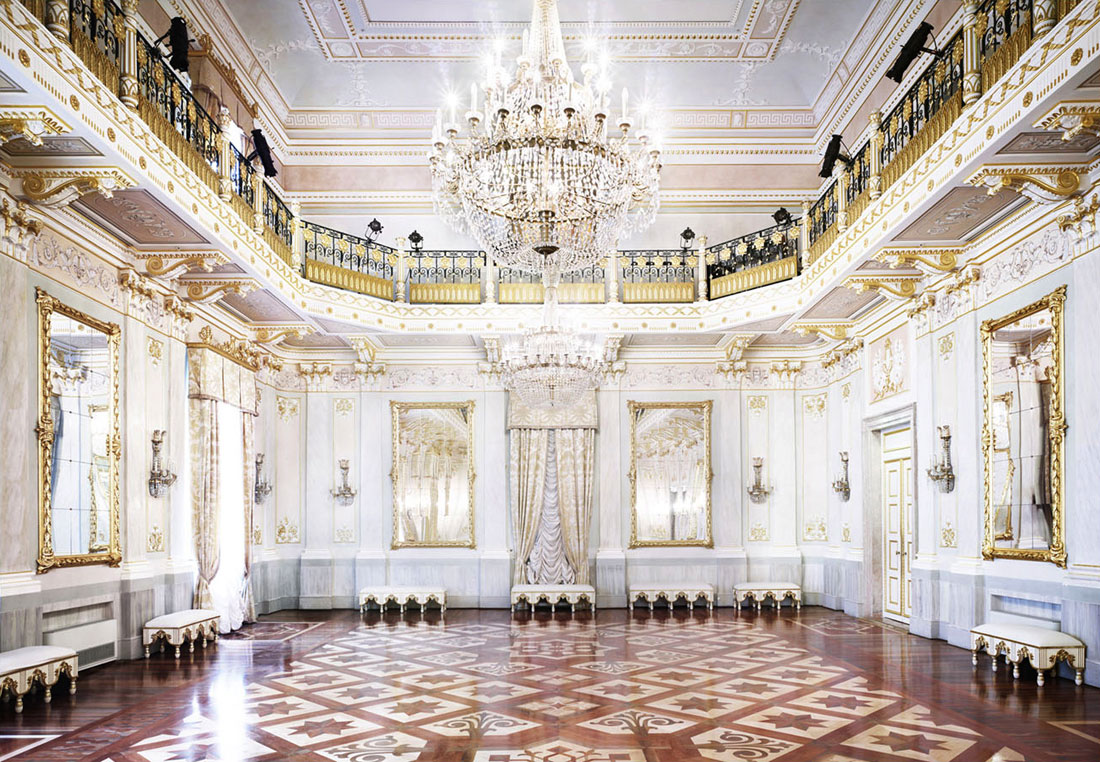
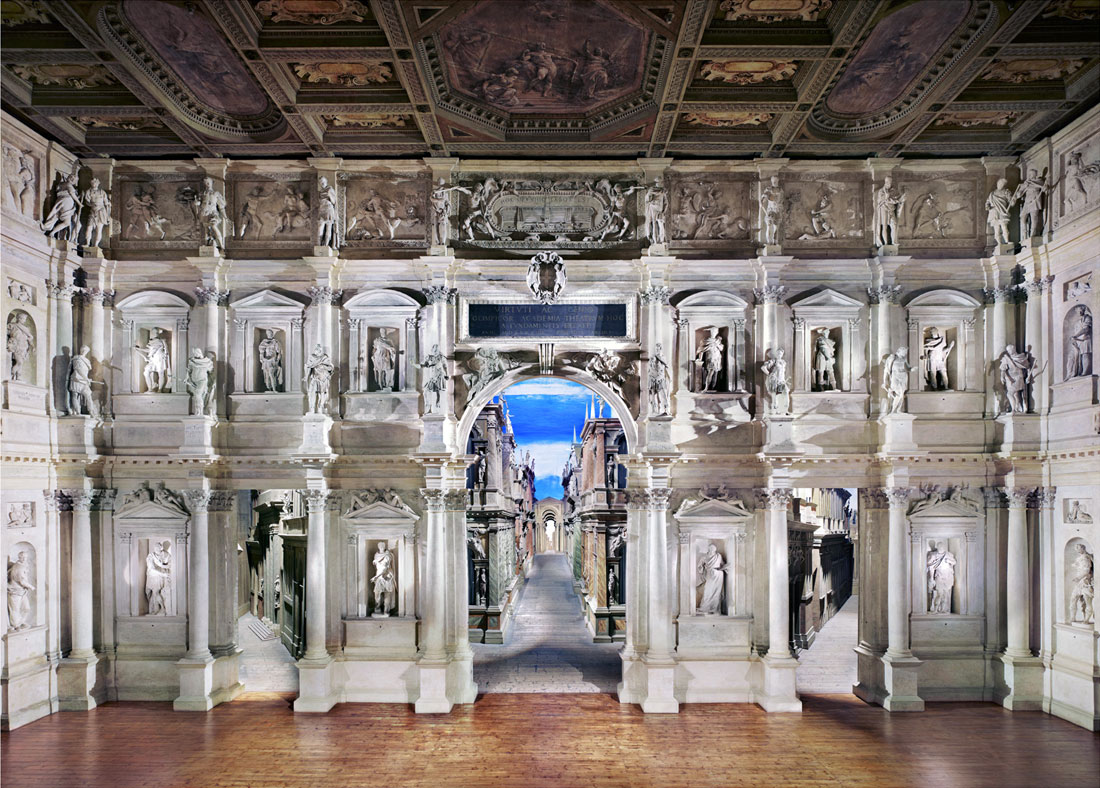
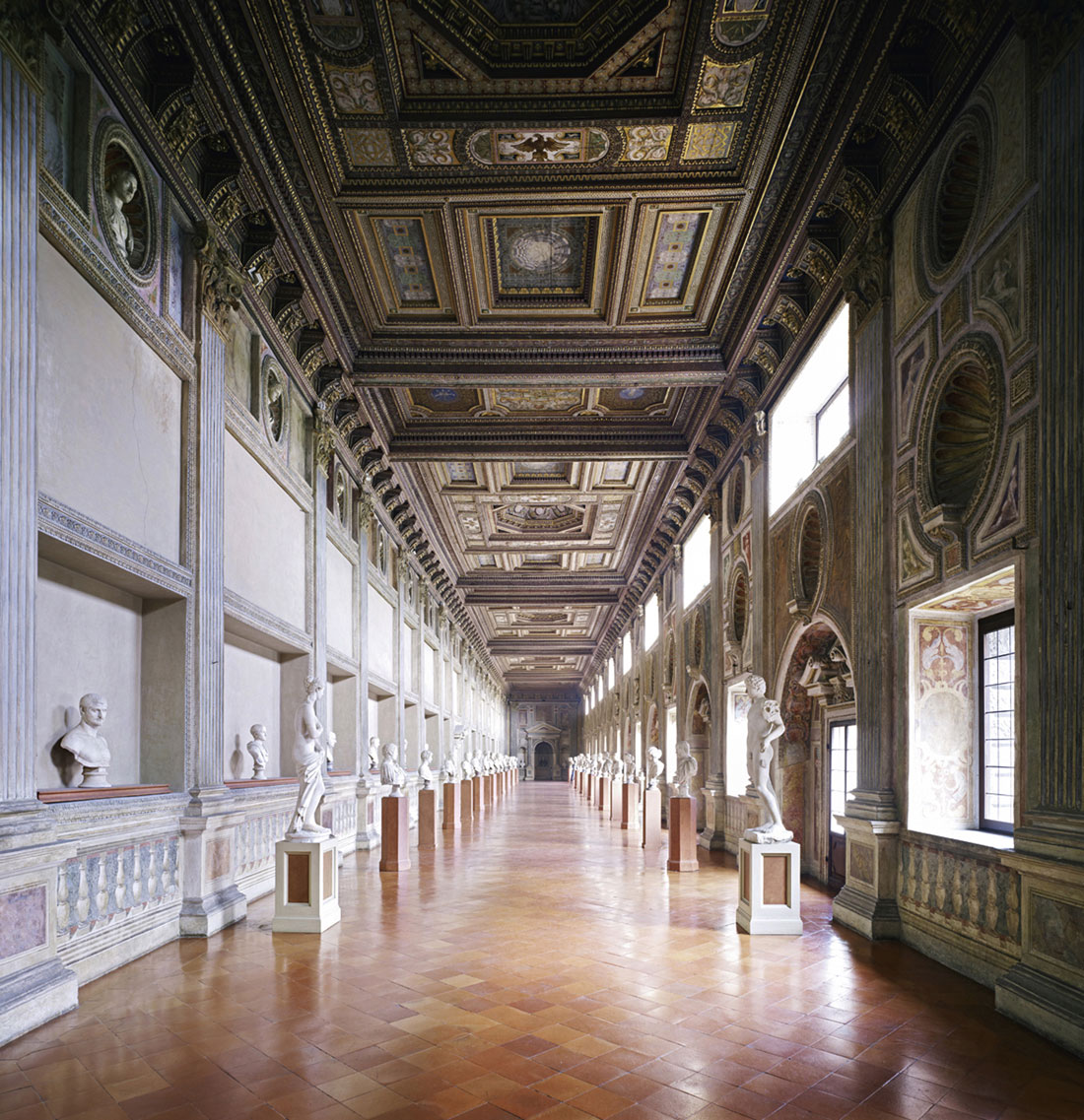
Candida Höfer (German, b. 1944) 'Galleria Degli Antichi Sabbioneta I 2010' 2010


Candida Höfer (German, b. 1944)
Galleria Degli Antichi Sabbioneta I 2010
2010
Light Jet print
Edition of 6
180 x 220.7cm (70 7/8 x 86 7/8 in.)
© 2013 Candida Höfer, VG Bild-Kunst, Bonn
Courtesy of Ben Brown Fine Arts


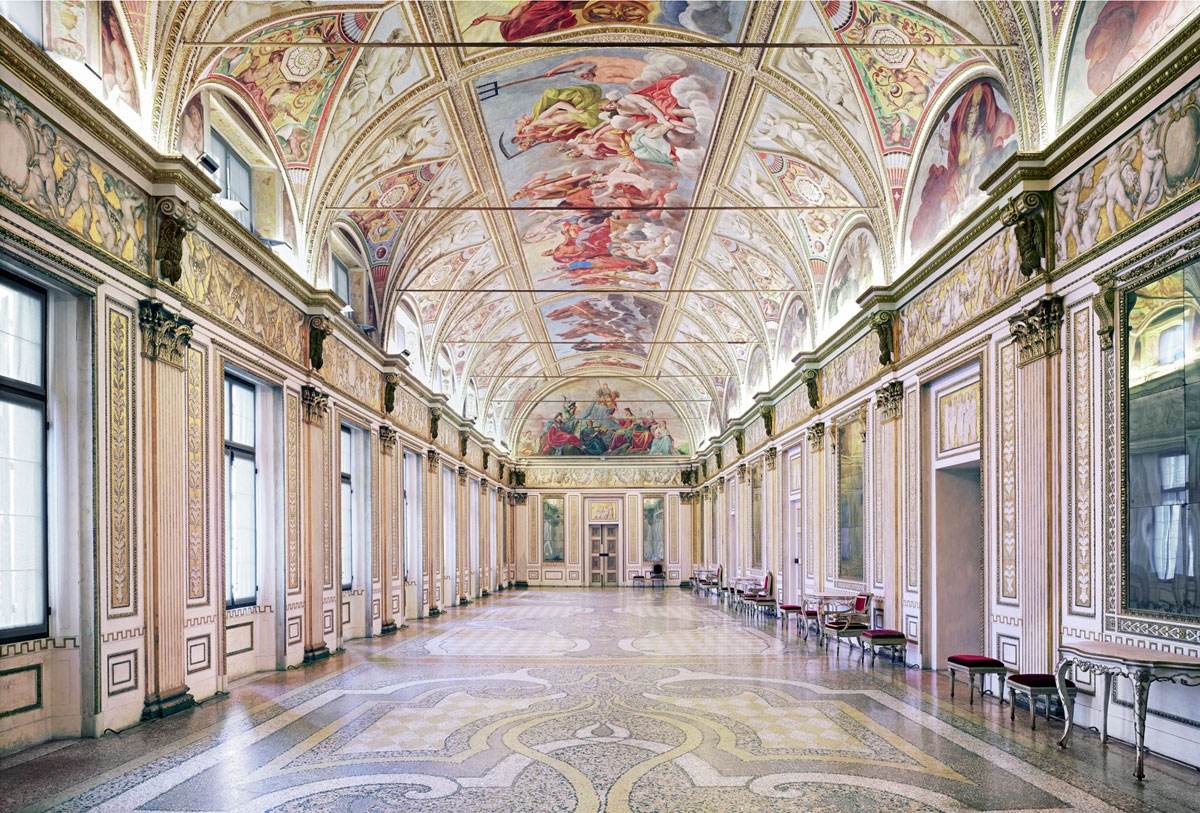
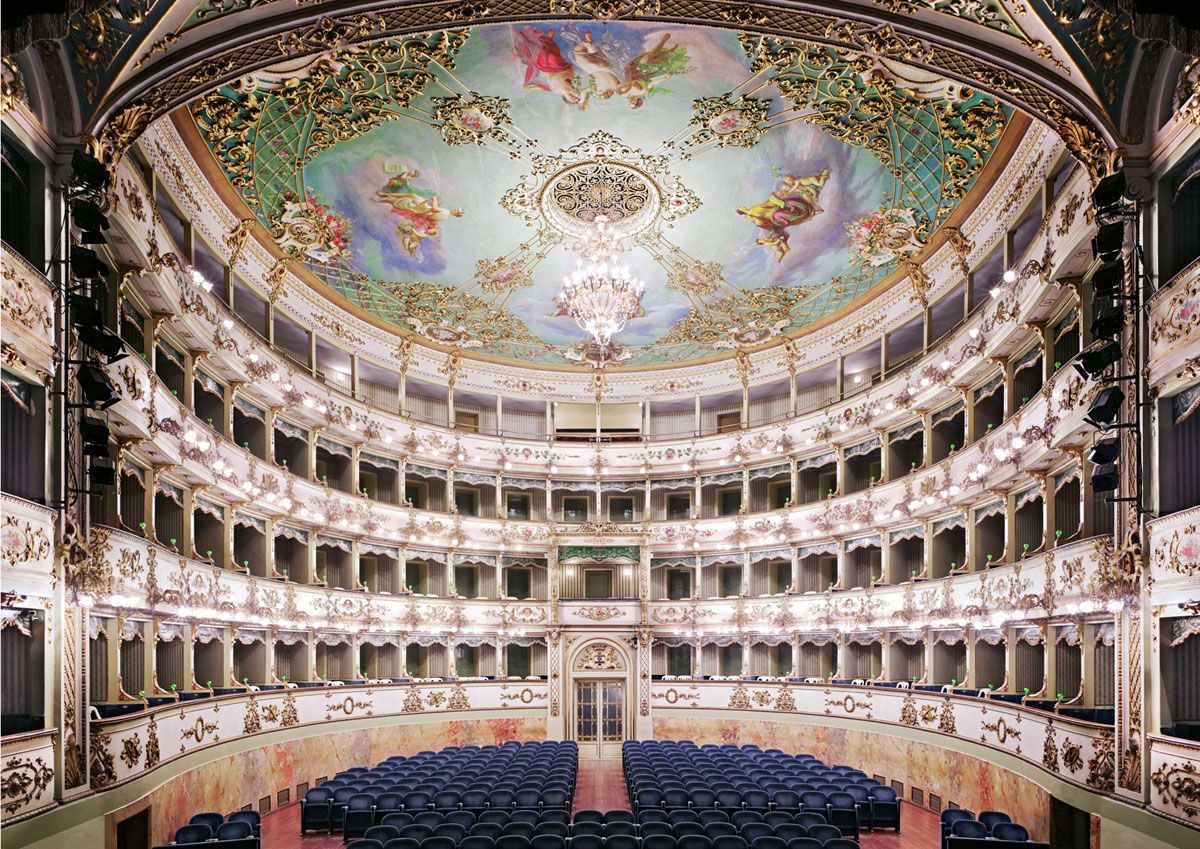
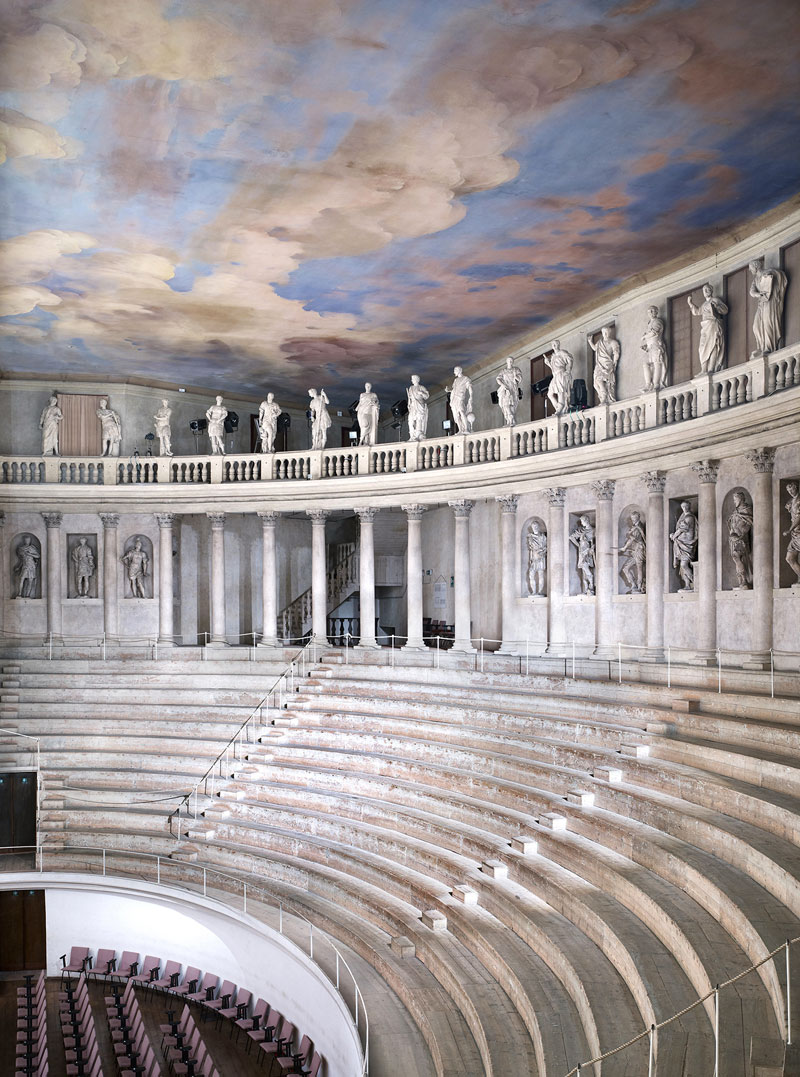
Ah symmetry, that vague sense of harmonious and beautiful proportion and balance, that patterned self-similarity that, through Hofer’s large format photographs, reflects the vainglorious human edifices of Northern Italy, superbly beautiful in their empty pride. Customarily devoid of human presence, Hofer’s photographs are technically and aesthetically superb. One has to examine the photographs with respect to their relationship to the passage of time, utilising spatial awareness to try to understand why things exist in specific locations within human culture.

“Both in ancient and modern times, the ability of a large structure to impress or even intimidate its viewers has often been a major part of its purpose, and the use of symmetry is an inescapable aspect of how to accomplish such goals.” (Wikipedia) Symmetries are informative of the world around us, and peer relationships are based on symmetry sending the message “we are all the same.” So Hofer’s symmetrical photographs possess opposing messages: we are all the same but some of us are more important (read powerful) than others.

Hofer’s highly symmetrical rooms are unavoidably also rooms in which anything out of place or potentially threatening can be identified easily and quickly, which has implications for safety, security, and familiarity. In this case it is the absence of human presence. To me this is the critical reading of Hofer’s photographs: they comment on the foibles of the human race, a race nearing the destruction of its only place of habitation, reaching the tipping point on the path to annihilation, yet indulging itself in a continuing race of construction and consumption. There will come a point when these edifices are crumbling and in ruins, as an Ebola-like virus races airborne around the world, destroying 90 percent of the population of the earth within months. The Earth will self balance and all we will be left with will be the memory of an empty symmetry.

Symmetry can be a source of comfort not only as an indicator of biological health, but also of a safe and well-understood living environment. The paradox of Hofer’s environments is that in these colourful, exuberant, profuse environments nothing is alive, the interiors becoming meaningless “noise” in an empty, vacuous world. The human race will have left the building.

Dr Marcus Bunyan


Many thankx to Ben Brown Fine Arts for allowing me to publish the photographs in the posting. Please click on the photographs for a larger version of the image.


Candida Höfer (German, b. 1944) 'Palazzo Ducale Mantova I' 2011


Candida Höfer (German, b. 1944)
Palazzo Ducale Mantova I 2011
2011
Light Jet print
Edition of 6
180 x 246cm (70 7/8 x 96 7/8 in.)
© 2013 Candida Höfer, VG Bild-Kunst, Bonn
Courtesy of Ben Brown Fine Arts


Candida Höfer (German, b. 1944) 'Teatro Comunale di Carpi I' 2011


Candida Höfer (German, b. 1944)
Teatro Comunale di Carpi I 2011
2011
Light Jet print
Edition of 6
180 x 237cm; (70 7/8 x 93 1/4 in.)
© 2013 Candida Höfer, VG Bild-Kunst, Bonn
Courtesy of Ben Brown Fine Arts


Candida Höfer (German, b. 1944) 'Teatro La Fenice di Venezia III' 2011


Candida Höfer (German, b. 1944)
Teatro La Fenice di Venezia III 2011
2011
Light Jet print
Edition of 6
180 x 242cm (70 7/8 x 95 1/4 in.)
© 2013 Candida Höfer, VG Bild-Kunst, Bonn
Courtesy of Ben Brown Fine Arts


Candida Höfer (German, b. 1944) 'Teatro La Fenice di Venezia V 2011' 2011


Candida Höfer (German, b. 1944)
Teatro La Fenice di Venezia V 2011
2011
Light Jet print
Edition of 6
180 x 235cm (70 7/8 x 92 1/2 in.)
© 2013 Candida Höfer, VG Bild-Kunst, Bonn
Courtesy of Ben Brown Fine Arts


Candida Höfer (German, b. 1944) 'Teatro Olimpico Vicenza II' 2010


Candida Höfer (German, b. 1944)
Teatro Olimpico Vicenza II 2010
2010
Light Jet print
Edition of 6
180 x 235cm (70 7/8 x 92 1/2 in.)
© 2013 Candida Höfer, VG Bild-Kunst, Bonn
Courtesy of Ben Brown Fine Arts


Candida Höfer (German, b. 1944) 'Teatro Scientifico Bibiena Mantova I' 2010


Candida Höfer (German, b. 1944)
Teatro Scientifico Bibiena Mantova I 2010
2010
Light Jet print
Edition of 6
180 x 226cm (70 7/8 x 89 in.)
© 2013 Candida Höfer, VG Bild-Kunst, Bonn
Courtesy of Ben Brown Fine Arts


German photographer Candida Höfer makes a significant return to Ben Brown Fine Arts in London on 12 February with a major solo show, unveiling thirteen new and previously unseen photographs which catalogue the architectural treasures of Northern Italy.

Mantova, Vicenza, Sabbioneta, Venice and Carpi provide the glorious setting for this new series shot over the past two years, a continuation of Höfer’s previous work in Central and Southern Italy. The interiors of palaces, opera houses, libraries and theatres, which Höfer captures with incredible skill, are part of her meticulous documentation of public spaces – places of culture, knowledge, communication and exchange with a rich history and clear functionality. Having rarely visited the Northern region, Höfer was particularly touched by the naturalness and ease with which the local people there accepted this extraordinary architecture as a part of their daily lives.

Höfer’s portraits of interiors, customarily devoid of human presence, emphasise the solemn magnificence of the Palazzo Ducale, Teatro La Fenice and Biblioteca Teresiana, amongst others. By featuring spaces that celebrate mankind’s greatness, yet where people are nowhere to be found, Höfer’s images possess an unexpected poignancy which has become the hallmark of her work. Höfer produces these large-format photographs without digital enhancement or alteration, using long exposure and working solely with the existing light source. The effect is a rare combination of intimacy and scale, in which intricate architectural detail is captured without sacrificing the sense of space and civilised order.

Höfer, a member of the Düsseldorf School (Kunstakademie Düsseldorf), was a noted pupil of the Bechers, who were heavily influenced by the 1920s German art tradition of Neue Sachlichkeit and pioneered a type of detached objectivity. The Bechers’ black and white photographs of industrial landscapes and architecture embodied a clinical, documentary style, which Höfer has retained in her work through the same neutral and methodical process. Yet Höfer’s large-scale colour prints differ in their more sympathetic approach to the building’s culture and history.”

Press release from Ben Brown Fine Arts


Candida Höfer (German, b. 1944) 'Museo Civico Di Palazzo Te Mantova IV' 2010


Candida Höfer (German, b. 1944)
Museo Civico Di Palazzo Te Mantova IV 2010
2010
Light Jet print
Edition of 6
180 x 187cm; (70 7/8 x 73 5/8 in.)
© 2013 Candida Höfer, VG Bild-Kunst, Bonn
Courtesy of Ben Brown Fine Arts


Candida Höfer (German, b. 1944) 'Teatro Olimpico Vicenza III' 2010


Candida Höfer (German, b. 1944)
Teatro Olimpico Vicenza III 2010
2010
Light Jet print
Edition of 6
180 x 144cm (70 7/8 x 56 3/4 in.)
© 2013 Candida Höfer, VG Bild-Kunst, Bonn
Courtesy of Ben Brown Fine Arts


Candida Höfer (German, b. 1944) 'Biblioteca Teresiana Mantova I' 2010


Candida Höfer (German, b. 1944)
Biblioteca Teresiana Mantova I 2010
2010
Light Jet print
Edition of 6
180 x 163cm (70 7/8 x 64 1/8 in.)
© 2013 Candida Höfer, VG Bild-Kunst, Bonn
Courtesy of Ben Brown Fine Arts


Candida Höfer (German, b. 1944) 'Palazzo Ducale Mantova III' 2011


Candida Höfer (German, b. 1944)
Palazzo Ducale Mantova III 2011
2011
Light Jet print
Edition of 6
180 x 169cm; (70 7/8 x 66 1/2 in.)
© 2013 Candida Höfer, VG Bild-Kunst, Bonn
Courtesy of Ben Brown Fine Arts


Candida Höfer (German, b. 1944) 'Palazzo Ducale Mantova V' 2011


Candida Höfer (German, b. 1944)
Palazzo Ducale Mantova V 2011
2011
Light Jet print
Edition of 6
180 x 176cm (70 7/8 x 69 1/4 in.)
© 2013 Candida Höfer, VG Bild-Kunst, Bonn
Courtesy of Ben Brown Fine Arts


Candida Höfer (German, b. 1944) 'Palazzo Ducale Mantova IV' 2011


Candida Höfer (German, b. 1944)
Palazzo Ducale Mantova IV 2011
2011
LightJet print
Edition of 6
180 x 176cm (70 7/8 x 67 3/4 in.)
© 2013 Candida Höfer, VG Bild-Kunst, Bonn
Courtesy of Ben Brown Fine Arts


Ben Brown Fine Arts
12 Brook’s Mews, London W1K 4DG
Phone: +44 (0)20 7734 8888

Opening hours:
Monday to Friday 11am – 6pm
Saturdays 10.30am – 2.30pm

Ben Brown Fine Arts website

LIKE ART BLART ON FACEBOOK

Back to top

Exhibition: ‘Eva Besnyö 1910-2003: The Sensuous Image’ at Jeu de Paume, Paris

Exhibition dates: 22nd May – 23rd September 2012


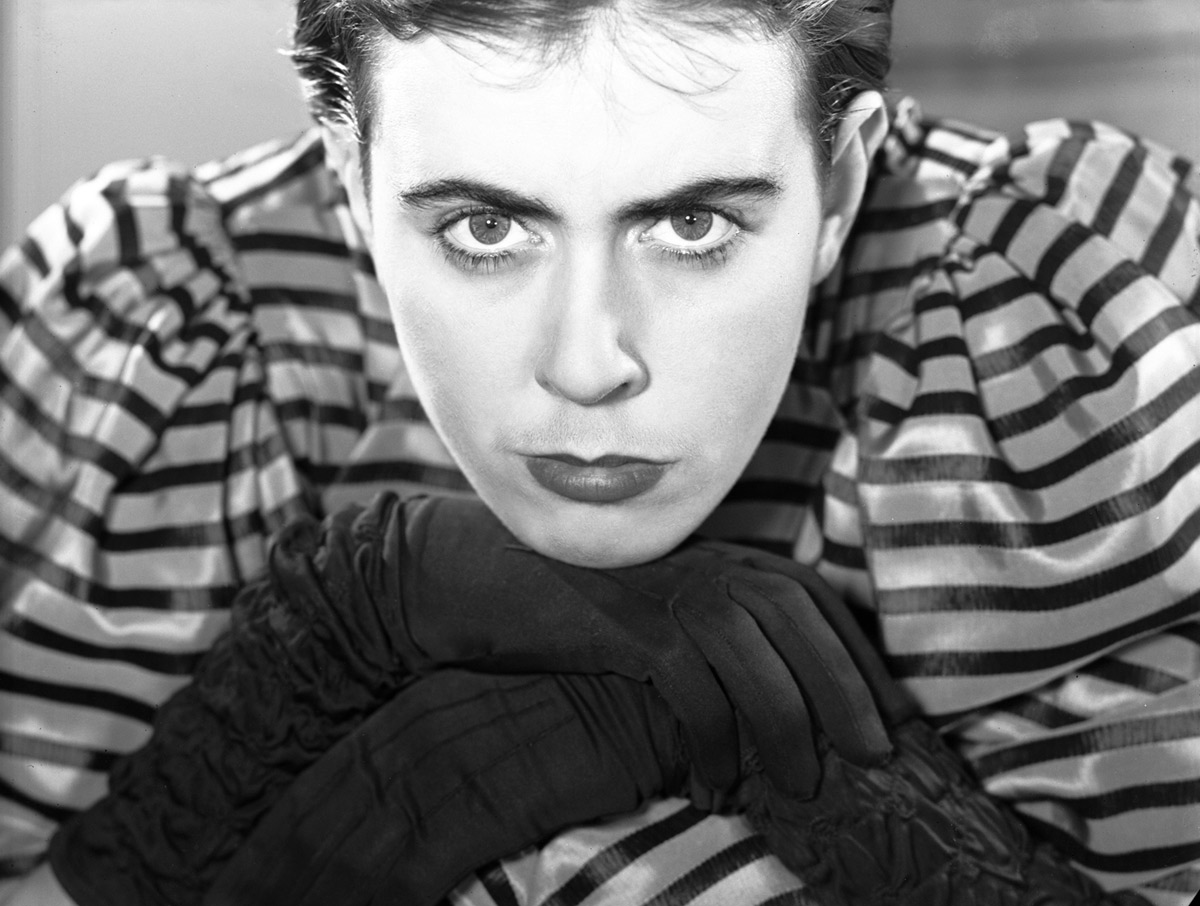
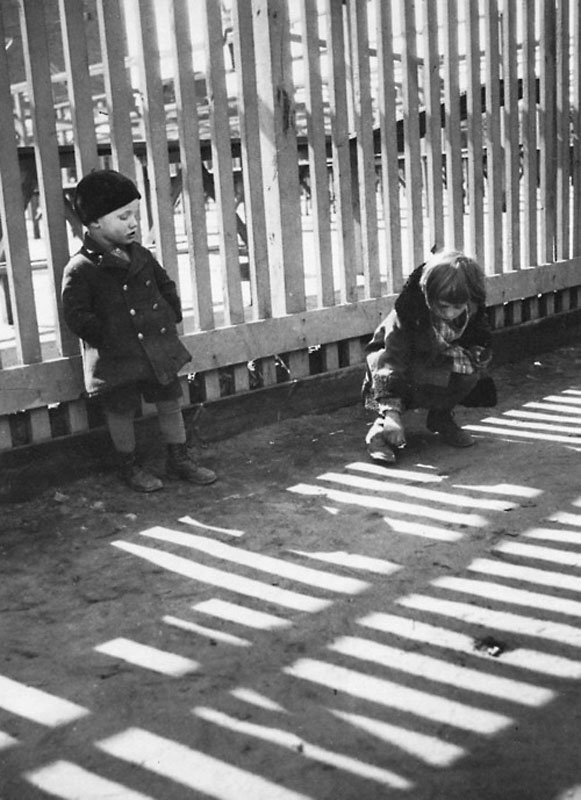
Eva Besnyö (Dutch-Hungarian, 1910-2003) 'Self Portrait' 1932


Eva Besnyö (Dutch-Hungarian, 1910-2003)
Self Portrait
1932
Silver gelatin photograph
Private Collection, Berlin
© Eva Besnyö / Maria Austria Instituut Amsterdam


One of the purposes of this archive is to bring relatively unknown artists into the spotlight. Eva Besnyö is one such artist. Leaving the repressive atmosphere of Hungary in 1930, Besnyö joined László Moholy-Nagy, Martin Munkácsi, György Kepes and Endre Friedmann (Robert Capa) in Berlin before, sensing the danger of National Socialism, she moved to the Netherlands in 1932. After the invasion of the Netherlands by Nazi Germany in 1940 Besnyö survived four long years in hiding before obtaining false papers in 1944 that allowed her to emerge into the open. She was Jewish.

Exploring elements of the New Vision and New Objectivity in her work, Besnyö explored “the different terrains that photography was opening up” through various bodies of work: “ranging from experimental to the photojournalistic, from street scenes to portraits, and from new architecture to the aftermath of the aerial bombardment of Rotterdam.” As John Yau observes in the quote at the top of the posting, “The various bodies of work make it difficult to characterise her… she seems to have no signature body of work, which is one of her abiding strengths. Just when you think you have gotten some sense of her, she slips through your fingers.”

Continuing the conversation from my recent review of the work of Pat Brassington (where I noted that curators and collectors alike try to pigeon hole artists into one particular style, mainly so that they can compartmentalise and order the work that they produce: such and such produces this kind of work – and that the work produced in this style is not necessarily their best), Besnyö can be seen to be a transmogrifying artist, one that experimented and investigated the same themes through different subject matter – hence no signature body of work. One of my friends observed that this kind of art making could be mistaken for a strange form of nihilism (in which nothing in the world has a real existence). It could be argued that the artist keeps changing subject matter, just dabbling really, pleasing herself with the images that she took, without committing to a particular style. Without seeing the 120 vintage prints it is hard to make a judgement.

From the work posted here it would seem that for Besnyö, observation and exploration of the lines of sight of life were the most critical guide to her art. In other words her shifting viewpoints create a multi-dimensional narrative that coalesces in a holistic journey that challenges our point of view in a changing world. As Victor Burgin notes in Thinking Photography, “The structure of presentation – point-of-view and frame – is intimately implicated in the reproduction of ideology (the ‘frame of mind’ of our ‘points-of-view’)” (1982, p. 146). The frame of mind of our points of view… this is what Eva’s work challenges, the reproduction of our own ideology. Her morphology (the philosophical study of forms and structures) challenges the cameras and our own point of view. As Paul Virilio observes,

“In calling his first photographs of his surroundings ‘points of view’, around 1820, their inventor, Nicéphore Nièpce came as close as possible to Littré’s rigorous definition: ‘The point of view is a collection of objects to which the eye is directed and on which it rests within a certain distance.'” (Virilio, Paul. The Vision Machine (trans. Julie Rose). Bloomington: Indiana University Press, 1994, p. 19.)

Besnyö changes the collection of objects to which the eye is directed as she also changes the distance and feeling of the objects upon which the eye rests. Notice how in most of the photographs the human subjects all have their back to the camera or are looking away from the instrument of objectification (or looking down into it). Even in the two self portraits Besnyö – formal in one with bobbed hair and skirt, wild in the other with a shock of tousled hair – she avoids the gaze of the camera. Like most of her subjects she remains hard to pin down. What Besnyö does so well (and why she isn’t just pleasing herself) is to construct a mythology of the city, a mythology of life which resonates through the ages. She creates a visual acoustics (if you like), a vibration of being that is commensurate with an understanding of the vulnerability of existence.

Dr Marcus Bunyan


Many thankx to Jeu de Paume for allowing me to publish the photographs in the posting. Please click on the photographs for a larger version of the image.


“Ranging from the experimental to the photojournalistic, from street scenes to portraits, and from new architecture to the aftermath of the aerial bombardment of Rotterdam, July 1940, Besnyö explored the different terrains that photography was opening up, while at the same time helping to define them. The various bodies of work make it difficult to characterise her… she seems to have no signature body of work, which is one of her abiding strengths. Just when you think you have gotten some sense of her, she slips through your fingers.”


John Yau. “Something Special About Her, Eva Besnyö at the Jeu de Paume” on the Hyperallergic website, July 8th 2012


Eva Besnyö (Dutch-Hungarian, 1910-2003) 'Self Portrait' Nd


Eva Besnyö (Dutch-Hungarian, 1910-2003)
Self Portrait
Nd
Silver gelatin photograph
© Eva Besnyö / Maria Austria Instituut Amsterdam


Eva Besnyö (Dutch-Hungarian, 1910-2003) 'Untitled Untitled [boy with a violoncello, Balaton, Hungary]' 1931


Eva Besnyö (Dutch-Hungarian, 1910-2003)
Untitled [boy with a violoncello, Balaton, Hungary]
1931
Silver gelatin photograph
29.4 x 24.3cm
Rijksmuseum, Amsterdam
© Eva Besnyö / Maria Austria Instituut Amsterdam


Eva Besnyö (Dutch-Hungarian, 1910-2003) 'Gypsies' 1931


Eva Besnyö (Dutch-Hungarian, 1910-2003)
Gypsies
1931
Silver gelatin photograph
© Eva Besnyö / Maria Austria Instituut Amsterdam


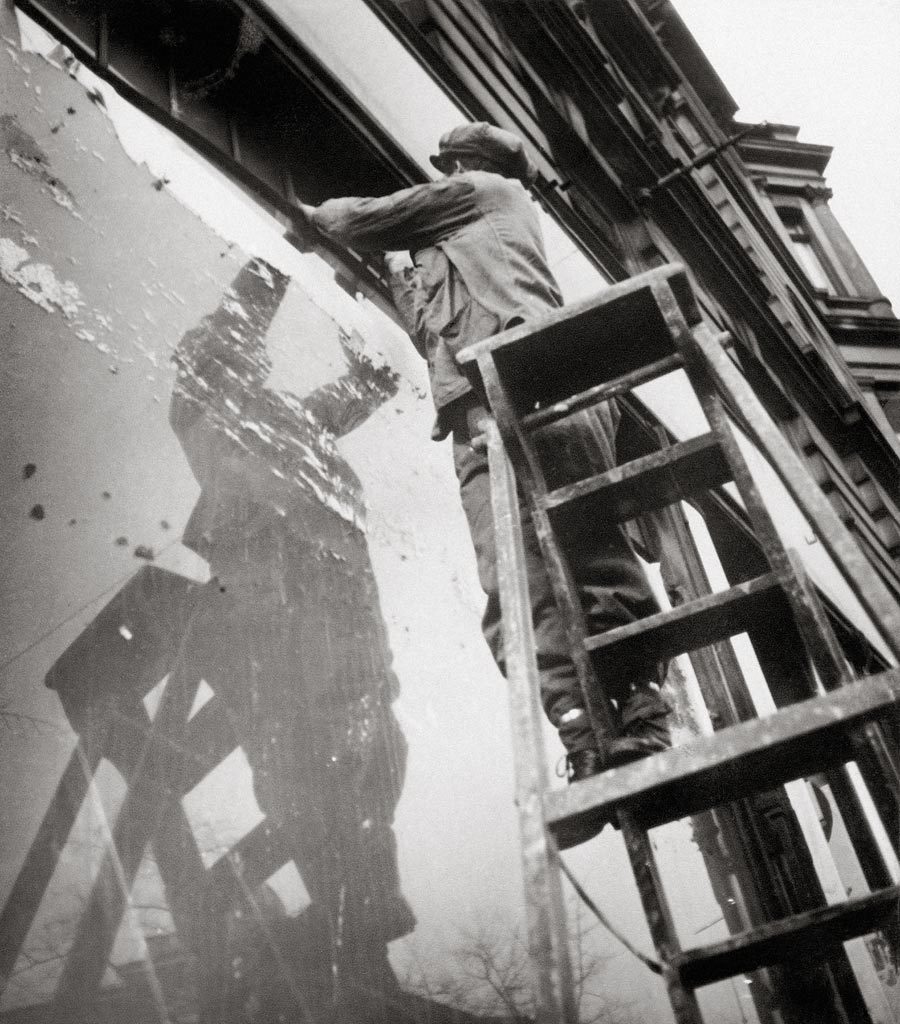
Eva Besnyö (Dutch-Hungarian, 1910-2003) 'Der Monteur am Ladenfenster' Berlin, 1931


Eva Besnyö (Dutch-Hungarian, 1910-2003)
Der Monteur am Ladenfenster
Berlin, 1931
Silver gelatin photograph
20.1 x 17.7cm
Collection Iara Brusse, Amsterdam.
© Eva Besnyö / Maria Austria Instituut Amsterdam


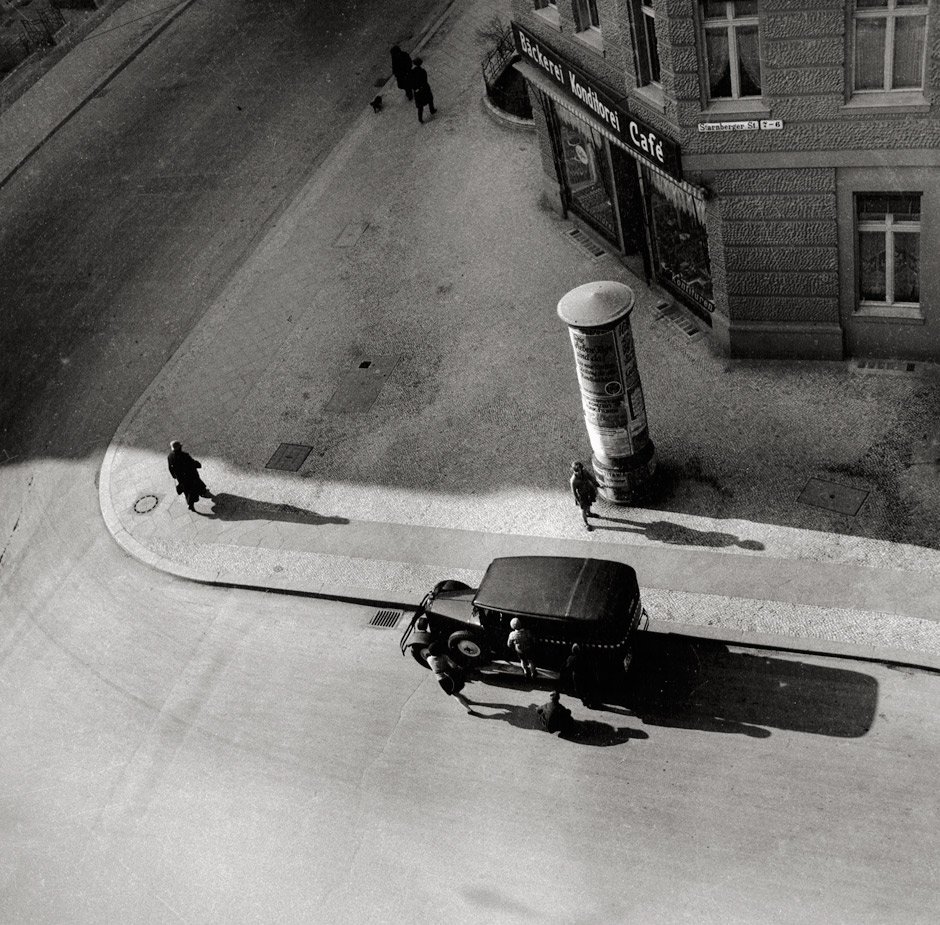
Eva Besnyö (Dutch-Hungarian, 1910-2003) 'Starnberger Straße' Berlin, 1931


Eva Besnyö (Dutch-Hungarian, 1910-2003)
Starnberger Straße
Berlin, 1931
Silver gelatin photograph
© Eva Besnyö / Maria Austria Instituut Amsterdam


Renger-Patzsch was associated with the Neue Sachlichkeit (New Objectivity), an attitude towards life and art that many Germans understood as distinctly American: the cult of the objective. Along with Regner-Patzsch, August Sander is another photographer associated with this tendency. (Karl Hubbuch, Otto Dix and Christian Schad are among the painters associated with it). The difference between the two photographers is that the human being is at the center of Sander’s work, while the world of things is at the center of Renger-Patcsch’s. Besnyö situates herself between the two, finding her own way.

The other influence on Besnyö was Låslø Moholy-Nagy’s New Vision, a term he coined to define his belief that photography enabled the viewer to see the world in ways the eyes could not. In 1930, at the age of 20, she moved to Berlin, rather than to Paris, where Hungarian photographers such as Andre Kertesz and Brassaï had gone. According to Besnyö, “The whole German side interested me. Paris was the Romantic, old-fashioned trend. The second reason was Gyørgy Kepes, who was a good friend of mine and had gone to Berlin as an assistant to Moholy.”

It was Gyørgy Kepes who said to Besnyö; “If you want to be a photographer, you must go to Berlin.” It was from this relationship and the circle around Moholy-Nagy that Besnyö learned of Russian Constructivism and began incorporating the diagonal into her photographs.

John Yau. “Something Special About Her, Eva Besnyö at the Jeu de Paume” on the Hyperallergic website, July 8th 2012


Eva Besnyö (Dutch-Hungarian, 1910-2003) 'Untitled [Shadow play]' Hungary 1931


Eva Besnyö (Dutch-Hungarian, 1910-2003)
Untitled [Shadow play]
Hungary 1931
Silver gelatin photograph
© Eva Besnyö / Maria Austria Instituut Amsterdam


Eva Besnyö (Dutch-Hungarian, 1910-2003) 'Untitled [dockers on the Spree]' Berlin, 1931


Eva Besnyö (Dutch-Hungarian, 1910-2003)
Untitled [dockers on the Spree]
Berlin, 1931
Silver gelatin photograph
© Eva Besnyö / Maria Austria Instituut Amsterdam


Eva Besnyö (Dutch-Hungarian, 1910-2003) 'Untitled [Vertigo #3]' Nd


Eva Besnyö (Dutch-Hungarian, 1910-2003)
Untitled [Vertigo #3]
Nd
Silver gelatin photograph
© Eva Besnyö / Maria Austria Instituut Amsterdam


Eva Besnyö (1910-2003) is one of those women who found in photography not just a profession but also a form of liberation, and of those cosmopolitan avant-garde artists who chose Europe as their playing field for both play and work. Immediately after her photographic training in the studio of József Pécsi in Budapest, Eva Besnyö left the repressive, anti-progressive environment of her native Hungary for ever. Then aged 20, she decided, like her compatriots László Moholy-Nagy, Martin Munkácsi, György Kepes and Endre Friedmann (Robert Capa), to go to Berlin. As soon as she arrived in autumn 1930, she discovered there a dynamic photographic scene, open to experimentation and placed under the double sign of the New Vision and the New Objectivity, whose modern language would allow her to develop her personal style.

Of Jewish origins, Eva Besnyö, who foresaw the threat of National Socialism, moved to the Netherlands in 1932 where she met again her companion the film director John Fernhout. There she was welcomed into the circle of international artists around the painter Charley Toorop, and rapidly became known in Amsterdam, where she had her own photographic studio. A solo exhibition at the Kunstzaal van Lier in 1933 gained the attention notably of the Dutch followers of the “Neues Bauen” (New Building), whose architecture she recorded, in a highly personal manner, over a long period. The invasion of the Netherlands by Nazi Germany in 1940 marked a dramatic turning point in Eva Besnyö’s life. If she managed to come out of hiding in 1944, thanks to an invented genealogy, the traces of this experience would remain acute throughout the postwar decades. During the 1950s and 60s, her family life led her to abandon street photography for commissions. Finally, in the twilight of her career, the photographer militated in the Dolle Mina feminist movement, whose street actions she chronicled in the 1970s.

With more than 120 vintage prints, some modern prints and numerous documents, this first French retrospective devoted to Eva Besnyö aims to show the public the different facets of her work, which is situated between New Vision, New Objectivity and social documentary, at the crossroads between poetry and political activism.

With other eyes

In 1929, during her second year of apprenticeship to József Pécsi, portrait and advertising photographer in Budapest, Eva Besnyö received the book of photographs Die Welt ist schön (The World is Beautiful), published a few months earlier in Munich. Its author, Albert Renger-Patzsch, is the precursor of New Objectivity in photography. While pictorialism reigned in Hungary, Eva Besnyö discovered the world with other eyes: from up close and under unexpected angles. With these new models in mind and her Rolleiflex in hand, she strode along the banks of the Danube in search of subjects and daring viewpoints, showing concern for a precise, close-up description of the most diverse objects, as well as a taste for fragmentation and for the repetition of the motif in the frame.

As soon as she finished her studies, Eva Besnyö went to Berlin on the advice of the painter and photographer György Kepes – and against the wishes of her father who would have preferred that she chose Paris. The Berlin years, between 1930 and 1932, were for her those of a political and aesthetic awakening. Besides the influence of the revolutionary aesthetic of Russian cinema, she came under that of the New Vision, which took off with László Moholy-Nagy and his book Painting Photography Film (1925), using a whole stylistic grammar, advocating downward perspectives or low-angle shots, a taste for the isolated object and its repetition, as well as optical manipulations revealing an unknown, but very real, world. The activity of the town or the empty crossroads of Starnberger Straße, portraits and images of summer on the banks of Lake Wannsee count among Besnyö’s most successful compositions.

Worker and social photography

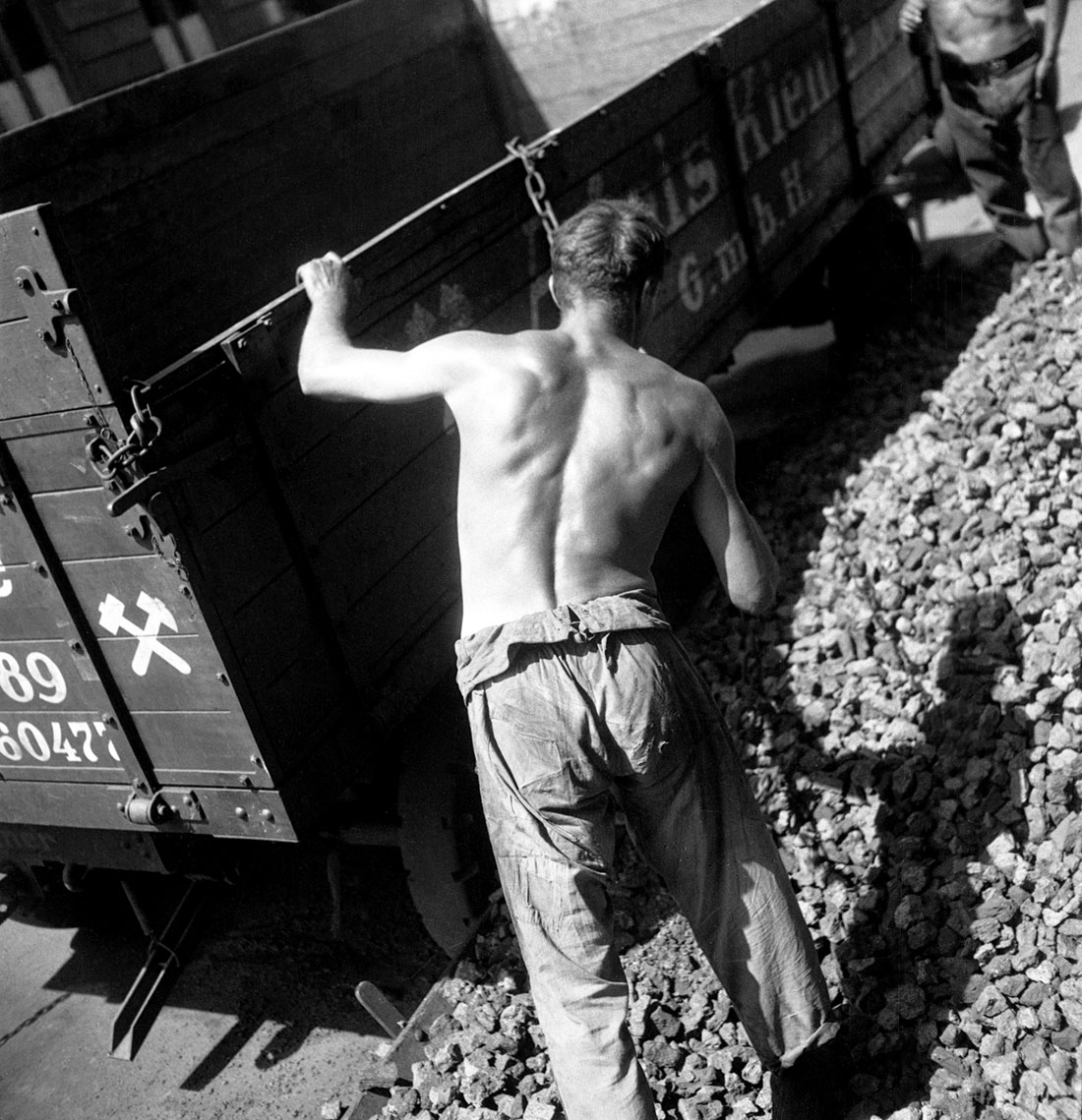
At the Marxist Workers’ School in Berlin, Eva Besnyö schooled her social and political conscience. In her circle of friends gathered around fellow Hungarian György Kepes, she discussed passionately the role of the workers’ movements. In Berlin, as earlier in Budapest, Eva Besnyö took her camera to the principal sites of trade and business, where she photographed labourers hard at work: dockers on the Spree, coalmen in the street, fitters perched on ladders; in the city centre, she followed the workers at Alexanderplatz, in around 1930 the largest construction site in Europe. In Hungary, where she returned from time to time from Berlin, she carried out an extraordinary documentary project on the people of Kiserdö, in the suburbs of Budapest. Blessed with a heightened political awareness, she had already understood by 1932 that, as a Jew, her future was not in this country, and left Berlin for Amsterdam.

New Vision and New Building

In 1933, the solo show devoted by the Kunstzaal van Lier to Eva Besnyö just one year after her arrival in Amsterdam aroused the enthusiasm of numerous architects – her principal clients in the years to come. Mostly members of the group de 8 in Amsterdam and the radical abstract collective Opbouw in Rotterdam, they discerned in her images, which emphasised the functional side of objects, their structure and their texture, a suitable approach for explaining their buildings.

Equipped with a Linhof 9 x 12 cm plate camera acquired especially for the purpose, Eva Besnyö went to building sites and photographed public and private buildings, notably the studios of the Dutch radio station AVRO at Hilversum, the Cineac cinema in Amsterdam and a summer house in Groet, in the north of the country. Become, in the 1930s, the preferred photographer of Dutch New Building, Eva Besnyö made most of her income at the time from architectural photography.

Bergen and Westkapelle

From Amsterdam, where from 1935 to 1939 she shared a studio at Keizersgracht 522 with the photographer Carel Blazer and the architect Alexander Bodon, Eva Besnyö went regularly to Bergen and Westkapelle, two villages where many artists gathered. In Bergen, north of Amsterdam, Charley Toorop, Expressionist painter and mother of the film director John Fernhout, whom Eva had married in 1933, held an artistic salon in the De Vlerken studio. It was at Westkapelle, a centuries-old village built on a polder in Zealand, that the family often spent their holidays. In this landscape shaped by the natural elements, Eva Besnyö returned to a free photographic practice, with views of vast beaches of white sand, of black silhouettes against a background of old windmills and cut-out shadows.

Rotterdam

In July 1940, Eva Besnyö photographed the old town of Rotterdam destroyed by German airforce bombing. Far from classic photo-journalism, these images of ruins and traces of devastation – from which, in retrospect, she distanced herself – are today silent, bare statements of the wounds and scars of history.

Dolle Mina

The Dolle Mina feminist movement gathered both men and women, mainly from the student protest movement. In the 1970s, Eva Besnyö militated actively within it, alongside sympathisers of all ages. In a second phase, she focused on photographic documentation of the movement’s actions and activities, taking responsibility for sending out images daily, like a press agency.

Text by Marion Beckers and Elisabeth Moortgat, curators of the exhibition


Eva Besnyö (Dutch-Hungarian, 1910-2003) 'Untitled' 1934


Eva Besnyö (Dutch-Hungarian, 1910-2003)
Untitled
1934
Collection Iara Brusse, Amsterdam
© Eva Besnyö / Maria Austria Instituut Amsterdam


Eva Besnyö (Dutch-Hungarian, 1910-2003) 'Untitled [Summer house in Groet, North Holland. Architects Merkelbach & Karsten]' 1934


Eva Besnyö (Dutch-Hungarian, 1910-2003)
Untitled [Summer house in Groet, North Holland. Architects Merkelbach & Karsten]
1934
18.2 x 24.2cm
Collection Iara Brusse, Amsterdam
© Eva Besnyö / Maria Austria Instituut Amsterdam


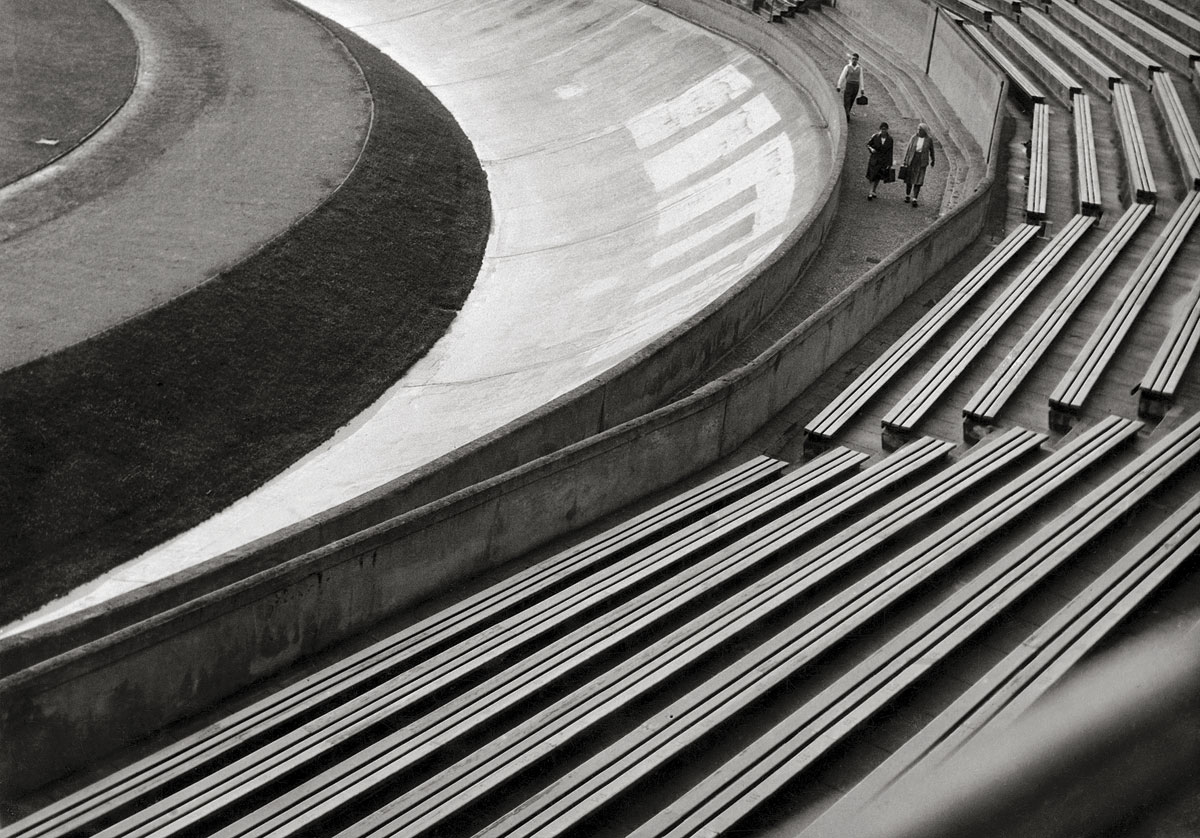
Eva Besnyö (Dutch-Hungarian, 1910-2003) 'Stadion, Berlin, 1931' 1931


Eva Besnyö (Dutch-Hungarian, 1910-2003)
Stadion, Berlin, 1931
1931
16.8 x 23.9cm
Collection Iara Brusse, Amsterdam
© Eva Besnyö / Maria Austria Instituut Amsterdam


Eva Besnyö (Dutch-Hungarian, 1910-2003) 'Untitled [Lieshout, The Netherlands]' 1954


Eva Besnyö (Dutch-Hungarian, 1910-2003)
Untitled [Lieshout, The Netherlands]
1954
Silver gelatin photograph
25.3 x 17.7cm
Collection Iara Brusse, Amsterdam
© Eva Besnyö / Maria Austria Instituut Amsterdam


In 1930, when Eva Besnyö arrived in Berlin at the age of only twenty, a certificate of successful apprenticeship from a recognised Budapest photographic studio in her bag, she had made two momentous decisions already: to turn photography into her profession and to put fascist Hungary behind her forever.

Like her Hungarian colleagues Moholy-Nagy, Kepes and Munkacsi and – a little later – Capa, Besnyö experienced Berlin as a metropolis of deeply satisfying artistic experimentation and democratic ways of life. She had found work with the press photographer Dr. Peter Weller and roamed the city with her camera during the day, searching for motifs on construction sites, by Lake Wannsee, at the zoo or in the sports stadiums, and her photographs were published – albeit, as was customary at the time, under the name of the studio. Besnyö’s best-known photo originates from those years: the gypsy boy with a cello on his back – an image of the homeless tramp that has become familiar all over the world.

Eva Besnyö had a keen political sense, evidenced by the fact that she fled in good time from anti-Semitic, National Socialist persecution, leaving Berlin for Amsterdam in autumn 1932. Supported by the circle surrounding woman painter Charley Toorop, filmmaker Joris Ivens and designer Gerrit Rietveld, Besnyö – meanwhile married to cameraman John Fernhout – soon enjoyed public recognition as a photographer. An individual exhibition in the internationally respected Van Lier art gallery in 1933 made her reputation in the Netherlands practically overnight. Besnyö experienced a further breakthrough with her architectural photography only a few years later: translating the idea of functionalist “New Building” into a “New Seeing.” In the second half of the 30s, Besnyö demonstrated an intense commitment to cultural politics, eg. at the anti-Olympiad exhibition “D-O-O-D” (De Olympiade onder Diktatuur) in 1936; in the following year, 1937, she was curator of the international exhibition “foto ’37” in the Stedelijk Museum Amsterdam.

The invasion of German troops in May 1940 meant that as a Jew, Eva Besnyö was compelled to go into hiding underground. She was attracted to a world view shaped by humanism in the post-war years, and her photographs became stylistically decisive for neo-Realism and immensely suitable for the moralising exhibition, the “Family of Man” (1955). The mother of two children, she had experienced the classic female conflict between bringing up children and a profession career as a crucial and very personal test. Consequentially, Besnyö became an activist in the Dutch women’s movement “Dolle Mina” during the 70s, making a public commitment to equal rights and documenting demonstrations and street protests on camera.

This first retrospective exhibition, showing approximately 120 vintage prints, aims to introduce the public to the life and work of this emigrant and “Berliner by choice”, a convinced cosmopolitan and the “Grande Dame” of Dutch photography. “Like many other talents, that of Eva Besnyö was lost to Germany and its creative art as a direct consequence of the National Socialists’ racial mania.” (Karl Steinorth, DGPh, 1999)

Press release from the Jeu de Paume website


Eva Besnyö (Dutch-Hungarian, 1910-2003) 'Narda, Amsterdam' 1937


Eva Besnyö (Dutch-Hungarian, 1910-2003)
Narda, Amsterdam
1937
Private collection, Berlin
40 x 50cm
© Eva Besnyö / Maria Austria Instituut Amsterdam


Eva Besnyö (Dutch-Hungarian, 1910-2003) 'Untitled' Berlin, 1931


Eva Besnyö (Dutch-Hungarian, 1910-2003)
Untitled
Berlin, 1931
17.4 x 17.4cm
Collection Stedelijk Museum, Amsterdam
© Eva Besnyö / Maria Austria Instituut Amsterdam


Eva Besnyö (Dutch-Hungarian, 1910-2003) 'Berlin' 1931


Eva Besnyö (Dutch-Hungarian, 1910-2003)
Berlin
1931
© Eva Besnyö / Maria Austria Instituut Amsterdam


Eva Besnyö (Dutch-Hungarian, 1910-2003) 'Untitled [John Fernout with Rolleiflex at the Baltic seaside]' 1932


Eva Besnyö (Dutch-Hungarian, 1910-2003)
Untitled [John Fernout with Rolleiflex at the Baltic seaside]
1932
44.2 x 39.5cm
Private collection, Berlin
© Eva Besnyö / Maria Austria Instituut Amsterdam


Eva Besnyö (Dutch-Hungarian, 1910-2003) 'Untitled [Magda, Balaton, Hungary]' 1932


Eva Besnyö (Dutch-Hungarian, 1910-2003)
Untitled [Magda, Balaton, Hungary]
1932
40.5 x 30.6cm
Collection Iara Brusse, Amsterdam
© Eva Besnyö / Maria Austria Instituut Amsterdam


Eva Besnyö (Dutch-Hungarian, 1910-2003) 'Untitled [The shadow of John Fernhout, Westkapelle, Zeeland, Netherlands]' 1933


Eva Besnyö (Dutch-Hungarian, 1910-2003)
Untitled [The shadow of John Fernhout, Westkapelle, Zeeland, Netherlands]
1933
25.3 x 20.4cm
Collection Iara Brusse, Amsterdam
© Eva Besnyö / Maria Austria Instituut Amsterdam


Eva Besnyö (Dutch-Hungarian, 1910-2003) 'Borgerstraat, Amsterdam' 1961


Eva Besnyö (Dutch-Hungarian, 1910-2003)
Borgerstraat, Amsterdam
1961
Gelatin silver print
© Eva Besnyö / Maria Austria Instituut Amsterdam


Jeu de Paume
1, Place de la Concorde
75008 Paris
métro Concorde
Phone: 01 47 03 12 50

Opening hours:
Tuesday – Friday 12 – 8pm
Saturday – Sunday 11am – 7pm
Closed Monday

Jeu de Paume website

LIKE ART BLART ON FACEBOOK

Back to top

Review: ‘The mad square: Modernity in German Art 1910-37’ at The National Gallery of Victoria, Melbourne

Exhibition dates: 25th November 2011 – 4th March 2012


Irene Bayer (American, 1898-1991) 'No title (Man on stage)' c. 1927


Irene Bayer (American, 1898-1991)
No title (Man on stage)
c. 1927
Gelatin silver photograph
Printed image 10.6 h x 7.6 w cm
Purchased 1983
National Gallery of Australia, Canberra


This is one of the best exhibitions this year in Melbourne bar none. Edgy and eclectic the work resonates with the viewer in these days of uncertainty: THIS should have been the Winter Masterpieces exhibition!

The title of the exhibition, The mad square (Der tolle Platz) is taken from Felix Nussbaum’s 1931 painting of the same name where “the ‘mad square’ is both a physical place – the city, represented in so many works in the exhibition, and a reference to the state of turbulence and tension that characterises the period.” The exhibition showcases how artists responded to modern life in Germany in the interwar years, years that were full of murder and mayhem, putsch, revolution, rampant inflation, starvation, the Great Depression and the rise of National Socialism. Portrayed is the dystopian, dark side of modernity (where people are the victims of a morally bankrupt society) as opposed to the utopian avant-garde (the prosperous, the wealthy), where new alliances emerge between art and politics, technology and the mass media. Featuring furniture, decorative arts, painting, sculpture, collage and photography in the sections World War 1 and the Revolution, Dada, Bauhaus, Constructivism and the Machine Aesthetic, Metropolis, New Objectivity and Power and Degenerate Art, it is the collages and photographs that are the strongest elements of the exhibition, particularly the photographs. What a joy they are to see.

There is a small 2″ x 3″ contact print portrait of Hanna Höch by Richard Kauffmann, Penetrate yourself or: I embrace myself (1922) that is an absolute knockout. Höch is portrayed as the ‘new women’ with short bobbed hair and loose modern dress, her self-image emphasised through a double exposure that fragments her face and multiplies her hands, set against a contextless background. The ‘new women’ fragmented and broken apart (still unsure of herself?). The photograph is so small and intense it takes your breath away. Similarly, there is the small, intimate photograph No title (Man on Stage) (c. 1927) by Irene Bayer (see above) that captures performance as ‘total art’, a combination of visual arts, dance, music, architecture and costume design. In contrast is a large 16 x 20″ photograph of the Bauhaus balconies (1926) by László Moholy-Nagy (see below) where the whites are so creamy, the perspective so magnificent.

No title (Metalltanz) (c. 1928-1929) by T. Lux Feinenger, a photographer that I do not know well, is an exceptional photograph and print. Again small, this time dark and intense, the image features man as dancer performing gymnastics in front of reflective, metal sculptures. The metal becomes an active participant in the Metalltanz or ‘Dance in metal’ because of its reflective qualities. The print, from the J. Paul Getty Museum in Los Angeles is luminous. In fact all the prints from the Getty in this exhibition are of the most outstanding quality, a highlight of the exhibition for me. Another print from the Getty that features metal and performance is Untitled (Spiral Costume, from the Triadic Ballet) by T Grill c. 1926-1927 (see below) where the spiral costume becomes an extension of the body, highlighting its form. Also highlighting form, objectivity and detachment is a wonderful 3 x 5″ photograph of the New Bauhaus Building, Dessau (1926) by Lucia Moholy from the Getty collection, the first I have ever seen in the flesh by this artist. Outstanding.

Following, we have 4 photograms by Lucia’s husband, László Moholy-Nagy which display formalist experimentation “inspired by machine aesthetic, exploring a utopian belief that Constructivism and abstract art could play a role in the process of social reform.” Complimenting these photograms is a row of six, yes six! Moholy-Nagy including Dolls (Puppen) 1926-1927 (Getty), The law of the series 1925 (Getty), Lucia at the breakfast table 1926 (Getty), Spring, Berlin 1928 (George Eastman House), Berlin Radio Tower 1928 (Art Institute of Chicago) and Light space modulator 1930 (Getty). All six photographs explore the fascinating relationship between avant-garde art and photography, between they eye and perspective, all the while declaiming what Moholy-Nagy called the “new vision”; angles, shadows and geometric patterns that defy traditional perspective “removing the space from associations with the real world creating a surreal, disjointed image.” This topographic mapping flattens perspective in the case of the Berlin radio tower allowing the viewer to see the world in a new way.

Finally two groups of photographs that are simply magnificent.

First 8 photographs in a row that focus on the order and progressive nature of the modern world, the inherent beauty of technology captured in formalist studies of geometric forms. The prints range from soft pictorialist renditions to sharp clarity. The quality of the prints is amazing. Artists include the wonderful E. O. Hoppé, Albert Renger-Patzsch (an outstandingly beautiful photograph, Harbour with cranes 1927 that is my favourite photograph in the exhibition, see below), Two Towers 1937-1938 by Werner Mantz and some early Wolfgang Sievers before he left Germany for Australia in 1938 (Blast furnace in the Ruhr, Germany 1933, see below). These early Sievers are particularly interesting, especially when we think of his later works produced in Australia. Lucky were many artists who survived in Germany or fled from Nazi persecution at the last moment, including John Heartfield who relocated to Czechoslovakia in 1933 and then fled to London in 1938 and August Sander whose life and work were severely curtailed under the Nazi regime and whose son died in prison in 1944 near the end of his ten year sentence (Wikipedia).

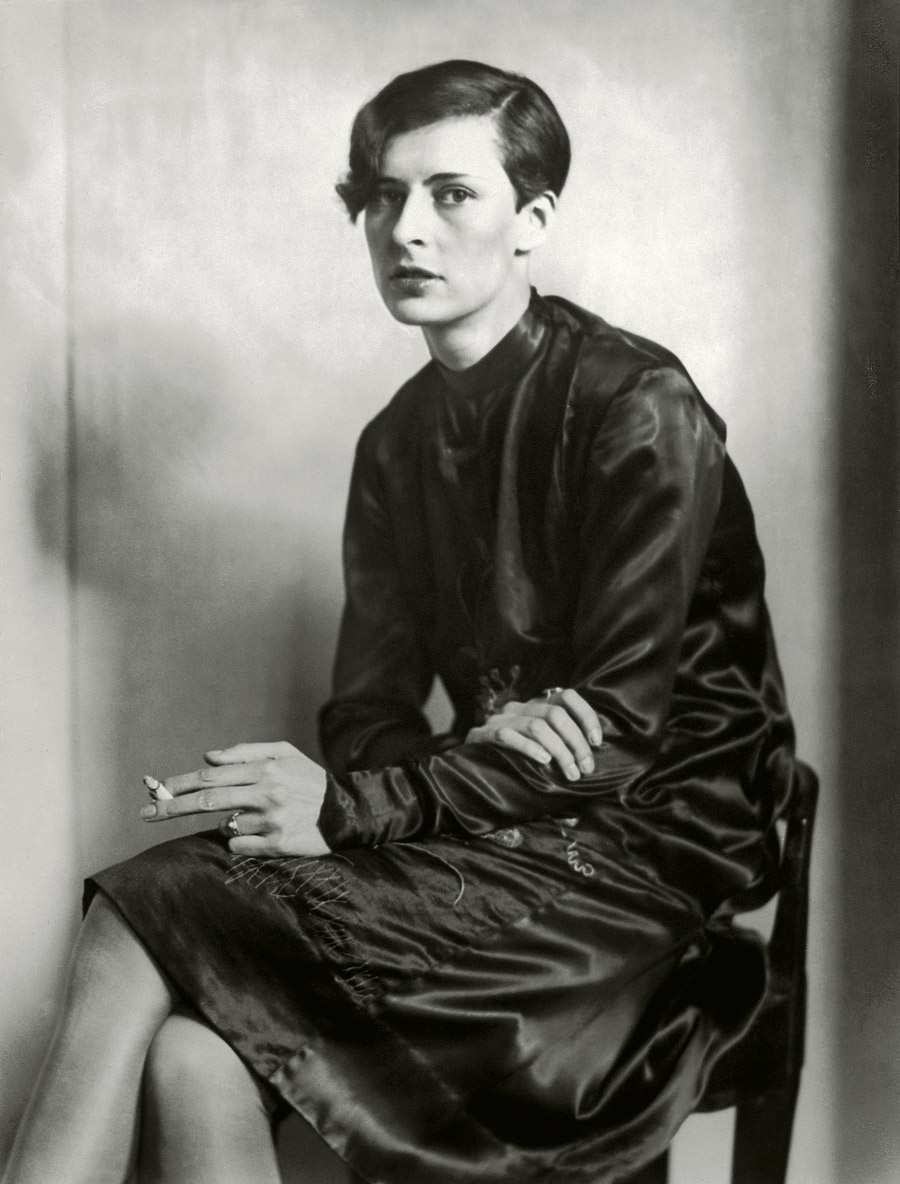
August Sander. Now there is a name to conjure with. The second magnificent group are 7 photographs that are taken from Sander’s seminal work People of the 20th Century. All the photographs have soft, muted tones of greys with no strong highlights and, usually, contextless backgrounds. The emphasis is on archetypes, views of people who exist on the margins of society – circus performers, bohemians, artists, the unemployed and blind people. In all the photographs there is a certain frontality (not necessarily physical) to the portraits, a self consciousness in the sitter, a wariness of the camera and of life. This self consciousness can be seen in the two photographs that are the strongest in the group – Secretary at West German radio in Cologne, 1931 and Match seller 1927 (see below).

There is magic here. Her face wears a somewhat quizzical air – questioning, unsure, vulnerable – despite the trappings of affluence and fashionability (the smoking of the cigarette, the bobbed hair). He is wary of the camera, his face and hands isolated by Sander while the rest of his body falls into shadow. His right hand is curled under, almost deformed, his shadow falling on the stone at right, the only true brightness in this beautiful image the four boxes of matches he clutches in his left hand: as Sander titles him ironically, The Businessman.

Working as I do these days with lots of found images from the 1940s-1960s that I digitally restore to life, I wonder what happened to these people during the dark days of World War 2. Did they survive the cataclysm, the drop into the abyss? I want to know, I want to reach out to these people to send them good energy. I hope that they did but their wariness in front of the camera, so intimately ‘taken’ by Sander, makes me feel the portent of things to come. How differently we see images armed with the hindsight of history!

In conclusion, this is a fantastic exhibition that will undoubtedly be in my top ten of the year for Melbourne in 2011.

Dr Marcus Bunyan


Many thankx to Michael Thorneycroft for his help and The National Gallery of Victoria for allowing me to publish the accredited photographs in the posting. Please click on the photographs for a larger version of the image.


Felix Nussbaum (German, 1904 - after September 1944) 'The mad square' (Der tolle Platz) 1931


Felix Nussbaum (German, 1904 – after September 1944)
The mad square (Der tolle Platz)
1931
Oil on canvas
97 x 195.5cm
Berlinische Galerie
Public domain
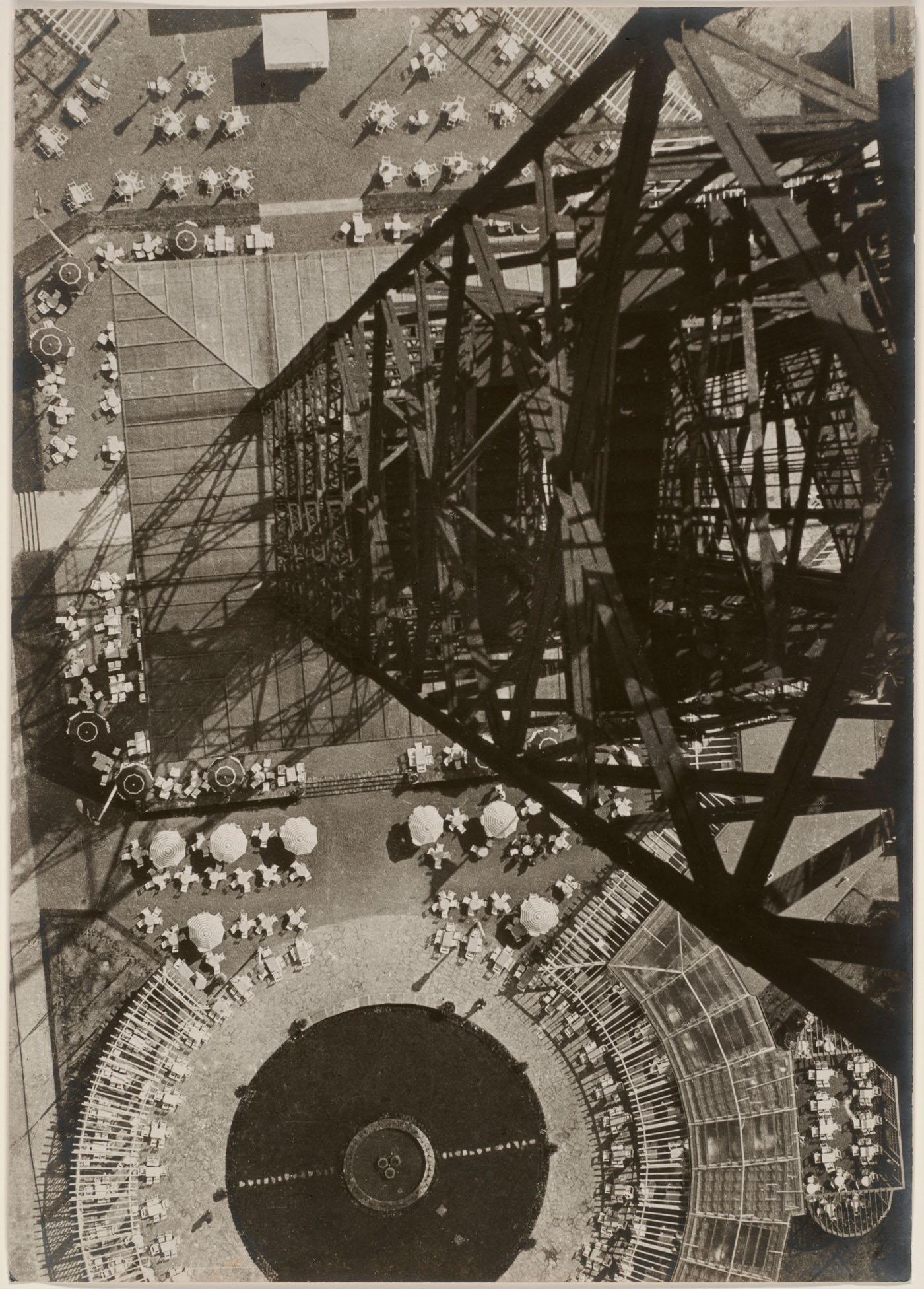
 

László Moholy-Nagy (American born Hungary, 1895-1946) 'Photograph (Berlin Radio Tower)' 1928/1929


László Moholy-Nagy (American born Hungary, 1895-1946)
Berlin Radio Tower
1928
Gelatin silver print
36 × 25.5cm
Julien Levy Collection, Special Photography Acquisition Fund
© 2018 Artists Rights Society (ARS), New York / VG Bild-Kunst, Bonn


Over the winter and spring of 1927-1928, Bauhaus professor László Moholy-Nagy took a series of perhaps nine views looking down from the Berlin Radio Tower, one of the most exciting new constructions in the German capital. Moholy had already photographed the Eiffel Tower in Paris from below, looking up through the tower’s soaring girders. In Berlin, however, Moholy turned his camera around and pointed it straight down at the ground. This plunging perspective showed off the spectacular narrowness of the Radio Tower, finished in 1926, which rose vertiginously to a height of 450 feet from a base seven times smaller than that of its Parisian predecessor (which opened in 1889). Moholy attached exceptional importance to this, his boldest image: he hung it just above his name in a room devoted to his work at the Berlin showing of Film und Foto, a mammoth traveling exhibition that he had helped to prepare. Moholy also chose this view and one other to offer Julien Levy, the pioneering art dealer, when Levy visited him in Berlin in 1930. The following year the pictures went on view at the Levy Gallery in New York, in Moholy’s first solo exhibition of photographs.

Text from the Art Institute of Chicago website
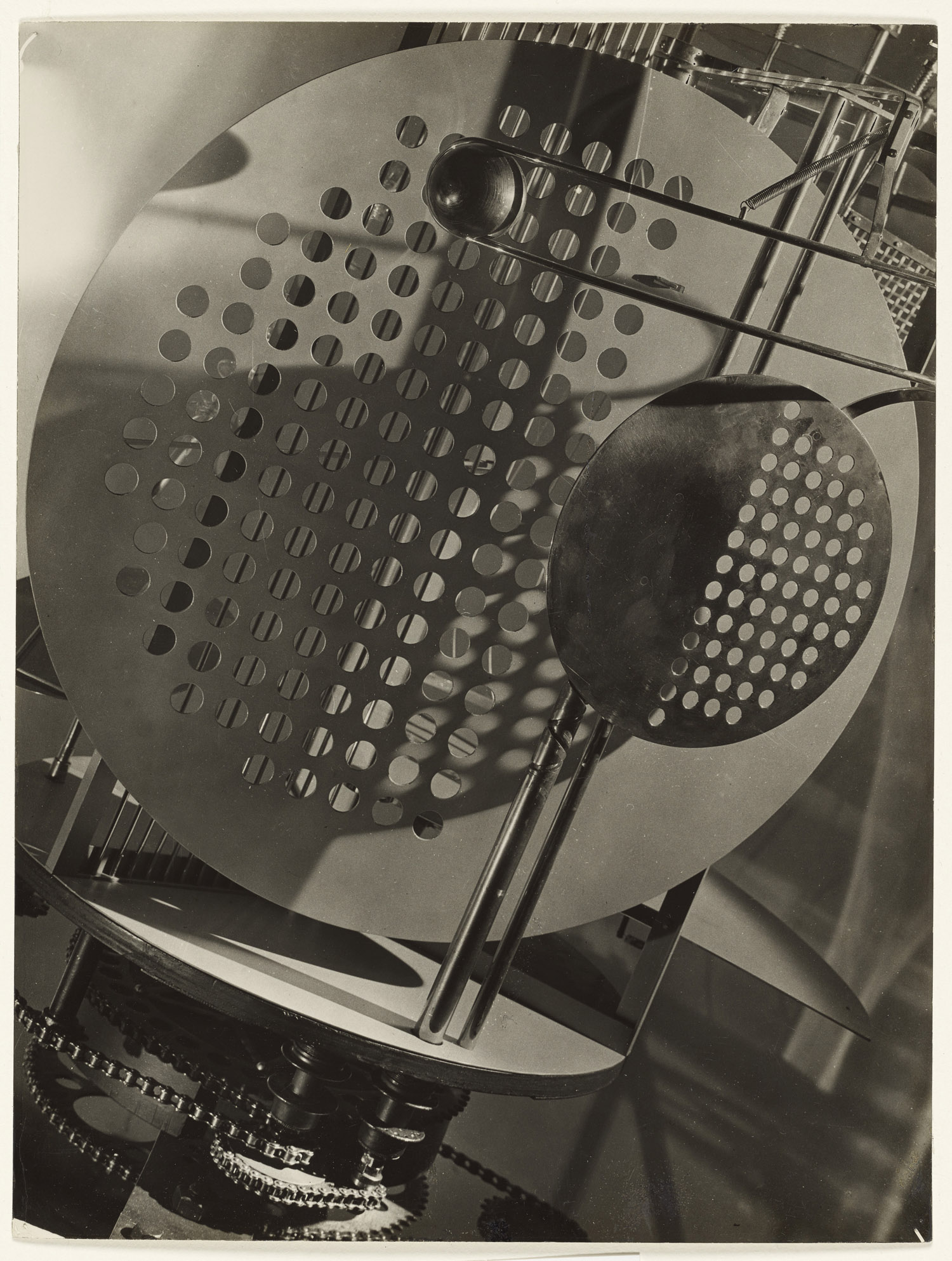
 

László Moholy-Nagy (American born Hungary, 1895-1946) 'Photograph (Light Prop)' 1930


László Moholy-Nagy (American born Hungary, 1895-1946)
Das Lichtrequisit (The light prop)
1930
Gelatin silver print
24 × 18.1cm (9 7/16 × 7 1/8 in.)
J. Paul Getty Museum, Los Angeles
© 2014 Estate of László Moholy-Nagy / Artists Rights Society (ARS), New York


The Light-Space Modulator is the most spectacular and complete realisation of László Moholy-Nagy’s artistic philosophy. Machine parts and mechanical structures began to appear in his paintings after his emigration from Hungary, and they are also seen in the illustrations he selected for the 1922 Buch neuer Künstler (Book of new artists), which includes pictures of motorcars and bridges as well as painting and sculpture. Many contemporary artists incorporated references to machines and technology in their work, and some, like the Russian Constructivist Vladimir Tatlin, even designed plans for fantastic structures, such as the ambitious Monument to the Third International, a proposed architectural spiral of glass and steel with moving tiers and audiovisual broadcasts. (See Tatlin’s Tower.)

In the Light-Space Modulator, Moholy-Nagy was able to create an actual working mechanism. Although he censured capitalism’s inhumane use of technology, he believed it could be harnessed to benefit mankind and that the artist had an important role in accomplishing this. Moholy had made preliminary sketches for kinetic sculptures as early as 1922 and referred to the idea for a light machine in his writings, but it was not until production was financed by an electric company in Berlin in 1930 that this device was built, with the assistance of an engineer and a metalsmith. It was featured at the Werkbund exhibition in Paris the same year, along with the short film Light Display Black-White-Gray, made by Moholy-Nagy to demonstrate and celebrate his new machine.

The Light-Space Modulator is a Moholy-Nagy painting come to life: mobile perforated disks, a rotating glass spiral, and a sliding ball create the effect of photograms in motion. With its gleaming glass and metal surfaces, this piece (now in the collection of the Busch-Reisinger Museum at Harvard University) is not only a machine for creating light displays but also a sculptural object of beauty, photographed admiringly by its creator.

Katherine Ware, László Moholy-Nagy, In Focus: Photographs from the J. Paul Getty Museum (Los Angeles: J. Paul Getty Museum, 1995), 80 © 1995 The J. Paul Getty Museum
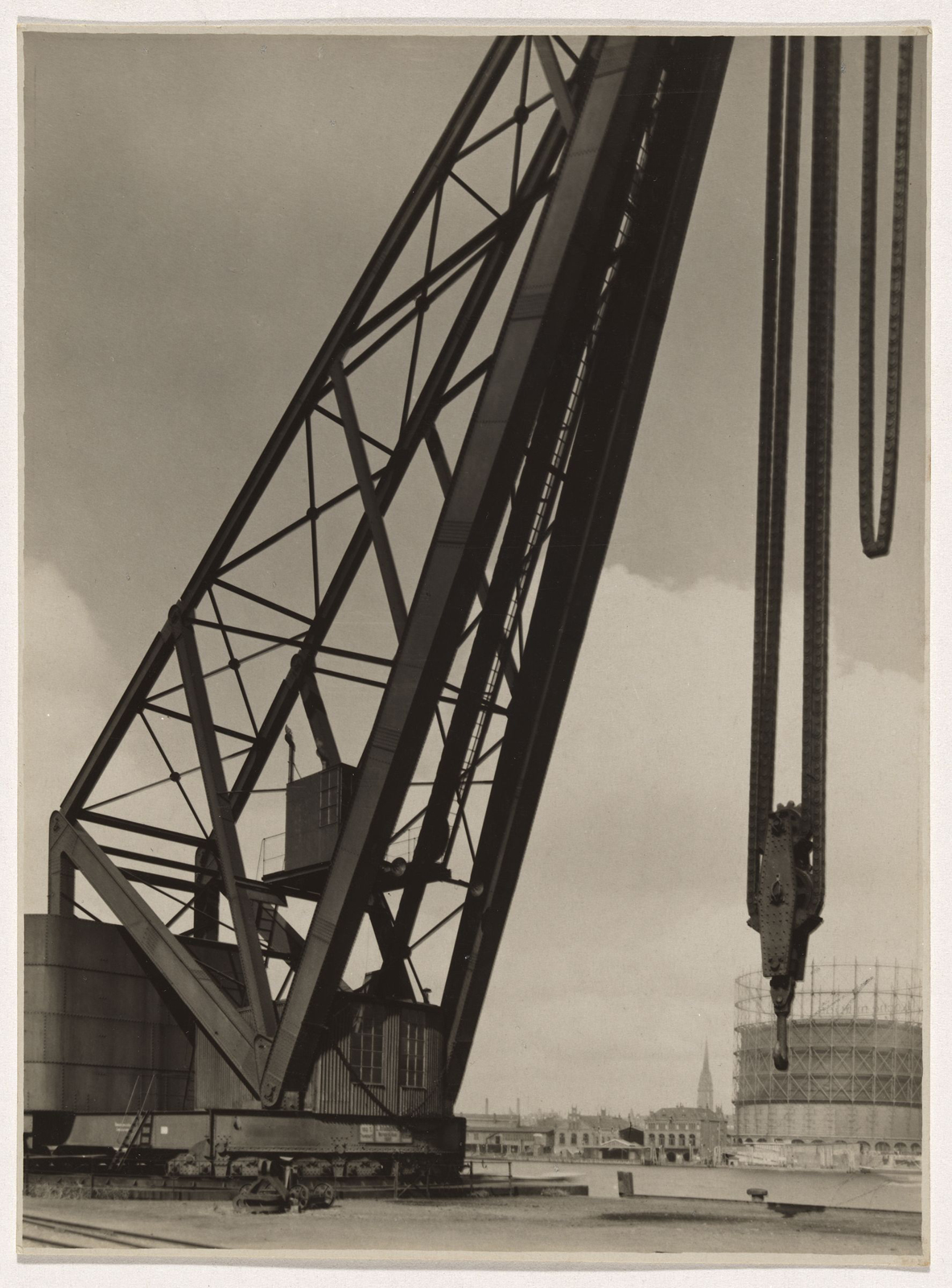
 

Albert Renger-Patzsch (American born Hungary, 1895-1946) 'Harbour with crane' c. 1927


Albert Renger-Patzsch (American born Hungary, 1895-1946)
Harbour with crane
c. 1927
Gelatin silver photograph
Printed image 22.7 h x 16.8 w cm
Purchased 1983
National Gallery of Australia, Canberra


Wolfgang Sievers (Germany 1913 - Australia 2007) 'Blast furnace in the Ruhr, Germany' 1933


Wolfgang Sievers (Germany 1913 – Australia 2007)
Blast furnace in the Ruhr, Germany
1933
Gelatin silver photograph
27.5 h x 23 w cm
Purchased 1988
National Gallery of Australia, Canberra


The Ruhr region was at the centre of the German acceleration of industry in pre-war Germany, with rapid economic growth creating a heavy demand for coal and steel. In keeping with Modernist trends in photography, Sievers shot this blast furnace – the mechanism that transforms ore into metal – from an unusual, dynamic angle. It dominates the frame, appearing menacing and strange. Despite being imprisoned and beaten by the Gestapo, Sievers studied and taught at a progressive private art school until graduation in 1938. In that year he escaped Germany after being called up for military service, ending up in Australia.

Text © National Gallery of Australia, Canberra
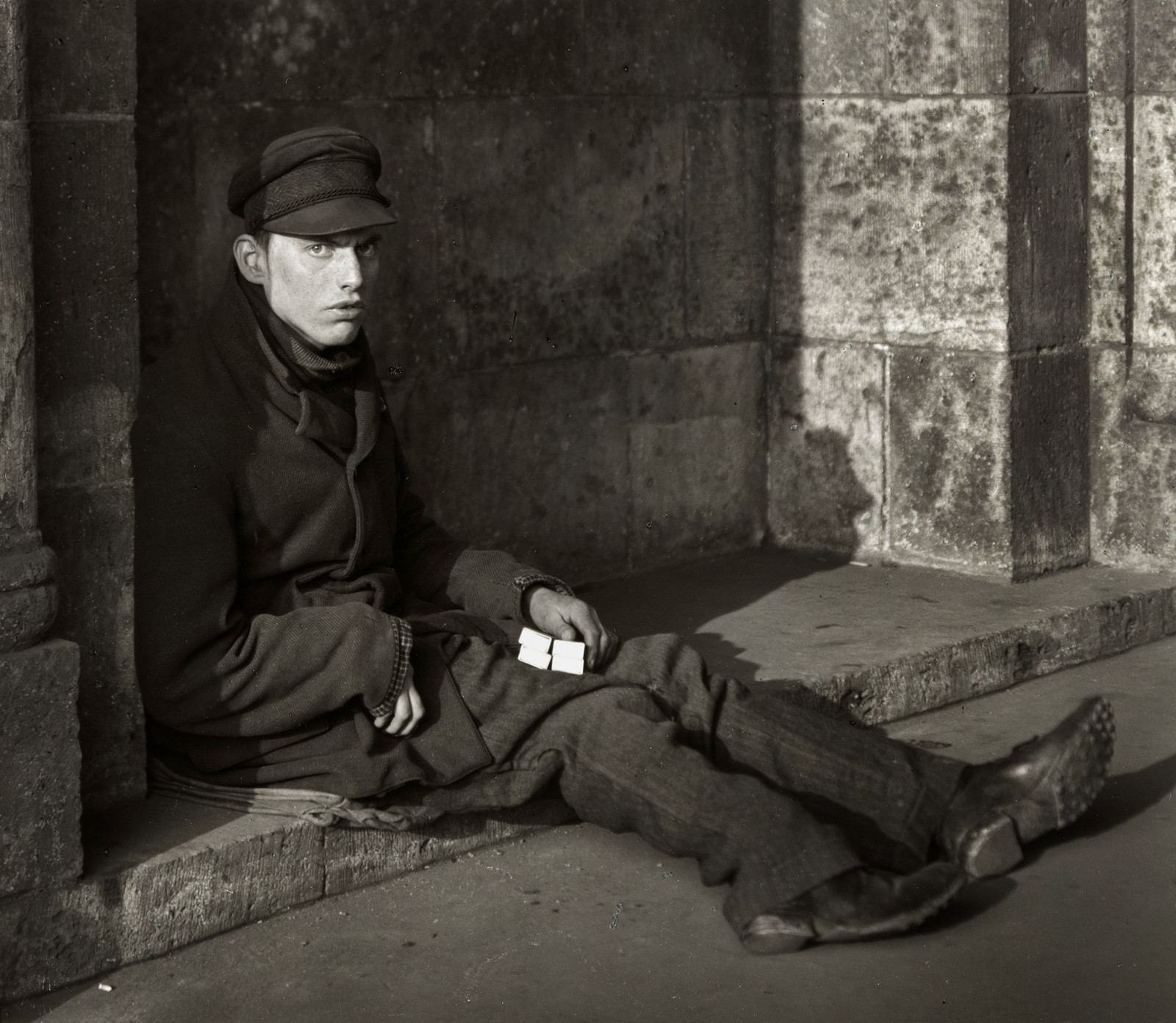
 

August Sander (German, 1876-1964) 'Match seller' 1927


August Sander (German, 1876-1964)
Match seller
1927
From the portfolio People of the 20th century, IV Classes and Professions, 17 The Businessman


Robert Wiene, Director (German 1873-1938) Still from the 'Cabinet of Dr Caligari' 1919


Robert Wiene, Director (German 1873-1938)
Still from from the Cabinet of Dr Caligari
1919
5 min excerpt, 35mm transferred to DVD, Black and White, silent, German subtitles
Courtesy Transit Film GmbH
Production still courtesy of the British Film Institute and Transit Film GmbH


Felix H Man (German, 1893-1985) 'Luna Park' 1929


Felix H Man (German, 1893-1985)
Luna Park
1929
Gelatin silver photograph
18.1 x 24cm
National Gallery of Australia, Canberra
Purchased, 1987
© Felix H Man Estate


Hannah Höch (German, 1889-1978) 'Love' 1931


Hannah Höch (German, 1889-1978)
Love
1931
From the series Love
Photomontage
21.8 x 21cm
National Gallery of Australia, Canberra
Purchased, 1983


Hannah Höch made some of the most interesting Dada collages and photomontages, including Love, an image of two strange composite female. Höch’s technique of pasting images together from magazine clippings and advertisements was a response to the modern era of mass media, and a way of criticising the bourgeois taste for ‘high art’. In many of her works, Höch explores the identity and changing roles of women in modern society.


The Mad Square takes its name from Felix Nussbaum’s 1931 painting which depicts Berlin’s famous Pariser Platz as a mad and fantastic place. The ‘mad square’ is both a physical place – the city, represented in so many works in the exhibition, and a reference to the state of turbulence and tension that characterises the period. The ‘square’ can also be a modernist construct that saw artists moving away from figurative representations towards increasingly abstract forms.

The exhibition features works by Max Beckman, Otto Dix, George Grosz, Christian Schad, Kurt Schwitters and August Sander. This group represents Germany’s leading generation of interwar artists. Major works by lesser known artists including Karl Hubbuch, Rudolf Schlichter and Hannah Höch are also presented in the exhibition in addition to works by international artists who contributed to German modernism.

The Mad Square brings together a diverse and extensive range of art, created during one of the most important and turbulent periods in European history, offering new insights into the understanding of key German avant‐garde movements including – Expressionism, Dada, Bauhaus, Constructivism, and New Objectivity were linked by radical experimentation and innovation, made possible by an unprecedented freedom of expression.

World War 1 and the Revolution

The outbreak of war in 1914 was met with enthusiasm by many German artists and intellectuals who volunteered for service optimistically hoping that it would bring cultural renewal and rapid victory for Germany. The works in this section are by the generation of artists who experienced war first hand. Depictions of fear, anxiety and violence show the devastating effects of war – the disturbing subjects provide insight into tough economic conditions and social dysfunction experienced by many during the tumultuous early years of the Weimar Republic following the abdication of the Kaiser

Dada

The philosophical and political despair experienced by poets and artists during World War 1 fuelled the Dada movement, a protest against the bourgeois conception of art. Violent, infantile and chaotic, Dada took its name from the French word for a child’s hobbyhorse or possibly from the sound of a baby’s babble. Its activities included poetry readings and avant‐garde performances, as well as creating new forms of abstract art that subverted all existing conditions in western art. Though short‐lived, in Germany the Dada movement has profoundly influenced subsequent developments in avant-garde art and culture. The impact of the Dada movement was felt throughout Europe – and most powerfully in Germany from 1917-21.

Bauhaus

The Bauhaus (1919‐1933) is widely considered as the most important school of art and design of the 20th century, very quickly establishing a reputation as the leading and most progressive centre of the international avant‐garde. German architect Walter Gropius founded the school to do away with traditional distinctions between the fine arts and craft, and to forge an entirely new kind of creative designer skilled in both the conceptual aesthetics of art and the technical skills of handicrafts. The Bauhaus was considered to be both politically and artistically radical from its inception and was closed down by the National Socialists in 1933

Constructivism and the Machine Aesthetic

Having emerged in Russia after World War I, Constructivism developed in Germany as a set of ideas and practices that experimented with abstract or non-representational forms and in opposition to Expressionism and Dada. Constructivists developed works and theories that fused art and with technology. They shared a utopian belief in social reform, and saw abstract art as playing a central role in this process.

Metropolis

By the 1920s Berlin has become the cultural and entertainment capital of the world and mass culture played an important role in distracting a society traumatised by World War 1, the sophisticated metropolis provided a rich source of imagery for artists, it also come to represent unprecedented sexual and personal freedom. In photography modernity was emphasised by unusual views of the metropolis or through the representation of city types. The diverse group of works in this section portray the uninhibited sense of freedom and innovation experienced by artists throughout Germany during the 1920s

New Objectivity

By the mid 1920s, a new style emerged that came to be known as Neue Sachlichkeit or New Objectivity. After experiencing the atrocities of World War 1 and the harsh conditions of life in postwar Germany, many artists felt the need to return to the traditional modes of representation with portraiture becoming a major vehicle of this expression, with its emphasis on the realistic representation of the human figure

Power and Degenerate Art

After the seizure of power by the National Socialists in 1933 modern artists were forbidden from working and exhibiting in Germany, with their works confiscated from leading museums and then destroyed or sold on the international art market. Many avant‐garde artists were either forced to leave Germany or retreat into a state of ‘inner immigration’.

The Degenerate art exhibition, held in Munich in 1937, represented the culmination of the National Socialists’ assault on modernism. Hundreds of works were selected for the show which aimed to illustrate the mental deficiency and moral decay that had supposedly infiltrated modern German art. The haphazard and derogatory design of the exhibition sought to ridicule and further discredit modern art. Over two million people visited the exhibition while in contrast far fewer attended the Great German art exhibition which sought to promote what the Nazis considered as ‘healthy’ art.


Karl Grill (German active Donaueschingen, Germany 1920s) 'Untitled [Spiral Costume, from the Triadic Ballet]' c. 1926-1927


Karl Grill (German active Donaueschingen, Germany 1920s)
Untitled (Spiral Costume, from the Triadic Ballet)
c. 1926-1927
Gelatin silver print
22.5 x 16.2cm
J. Paul Getty Museum, Los Angeles


In 1922, Oskar Schlemmer premiered his “Triadic Ballet” in Germany. He named the piece “Triadic” because it was literally composed of multiples of three: three acts, colours, dancers, and shapes. Concentrating on its form and movement, Schlemmer explored the body’s spatial relationship to its architectural surroundings. Although an abstract design, the spiral costume derived from the tutus of classical ballet.

Text from the J. Paul Getty Museum website


August Sander (German, 1876-1964) 'Secretary at West German radio in Cologne' 1931, printed by August Sander in the 1950s


August Sander (German, 1876-1964)
Secretary at West German radio in Cologne
1931, printed by August Sander in the 1950s
From the portfolio People of the 20th century, III The woman, 17 The woman in intellectual and practical occupation
Gelatin silver photograph
29 x 22cm
Die Photographische Sammlung /SK Stiftung Kultur, August Sander Archiv, Cologne (DGPH1016)
© Die Photographische Sammlung /SK  Stiftung Kultur – August Sander Archiv, Cologne. Licensed by Viscopy, Sydney


Timeline

1910

~ Berlin’s population doubles to two million people

1911

~ Expressionists move from Dresden to Berlin

1912

~ Social Democratic Party (SPD) the largest party in the Reichstag

1913

~ Expressionists attain great success with their city scenes

1914

~ World War I begins
~ George Grosz, Oskar Schlemmer, Otto Dix, Ludwig Hirschfeld Mack, Ernst Ludwig Kirchner, Max Beckmann and Franz Marc enlist in the army

1915

~ Grosz declared unfit for service, Beckmann suffers a breakdown and Schlemmer wounded

1916

~ Marc dies in combat
~ Dada begins at Cabaret Voltaire in Zurich

1917

~ Lenin and Trotsky form the Soviet Republic after the Tzar is overthrown

1918

~ Richard Huelsenbeck writes a Dada manifesto in Berlin
~ Kurt Schwitters creates Merz assemblages in Hanover
~ Revolutionary uprisings in Berlin and Munich
~ Kaiser Wilhelm II abdicates and flees to Holland
~ Social Democratic Party proclaims the Weimar Republic
~ World War I ends

1919

~ Freikorps assassinates the Spartacist leaders, Karl Leibknecht and Rosa Luxemburg
~ Bauhaus established in Weimer by Walter Gropius
~ Cologne Dada group formed
~ Treaty of Versailles signed

1920

~ Berlin is the world’s third largest city after New York and London
~ Inflation begins in Germany
~ National Socialist German Workers Party (NSDAP) founded
~ Kapp Putsch fails after right‐wing forces try to gain control over government
~ First International Dada fair opens in Berlin

1921

~ Hitler made chairman of the NSDAP

1922

~ Schlemmer’s Triadic ballet premiers in Stuttgart
~ Hyperinflation continues

1923

~ Hitler sentenced to five years imprisonment for leading the Beer Hall Putsch
~ Inflation decreases and a period of financial stability begins

1924

~ Hitler writes Mein Kampf while in prison
~ Reduction of reparations under the Dawes Plan

1925

~ New Objectivity exhibition opens at the Mannheim Kunsthalle
~ The Bauhaus relocates to Dessau

1926

~ Germany joins the League of Nations

1927

~ Fritz Lang’s film Metropolis released
~ Unemployment crisis worsens
~ Nazis hold their first Nuremburg party rally

1928

~ Bertolt Brecht and Kurt Weill’s The threepenny opera premieres in Berlin
~ Hannes Meyer becomes the second director of the Bauhaus

1929

~ Street confrontations between the Nazis and communists in Berlin
~ Young Plan accepted, drastically reducing reparations
~ Stock market crashes on Wall Street, New York
~ Thomas Mann awarded the Nobel Prize for literature

1930

~ Resignation of Chancellor Hermann Müller’s cabinet ending parliamentary rule
~ Minority government formed by Heinrich Brüning, leader of the Centre Party
~ Nazis win 18% of the vote and gain 95 seats in the National elections
~ Ludwig Miles van der Rohe becomes the third director of the Bauhaus
~ John Heartfield creates photomontages for the Arbeiter‐Illustrierte Zeitung (AIZ)

1931

~ Unemployment reaches five million and a state of emergency is declared in Germany

1932

~ Nazis increase their representation in the Reichstag to 230 seats but are unable to form a majority coalition
~ Miles van der Rohe moves the Bauhaus to Berlin
~ Grosz relocates to New York as an exile

1933

~ Hindenberg names Hitler as Chancellor
~ Hitler creates a dictatorship under the Nazi regime
~ The first Degenerate art exhibition denouncing modern art is held in Dresden
~ Miles van der Rohe announces the closure of the Bauhaus
~ Nazis organise book burnings in Berlin
~ Many artists including Gropius, Kandinski and Klee flee Germany
~ Beckmann, Dix and Schlemmer lose their teaching positions

1934

~ Fifteen concentration camps exist in Germany

1935

~ The swastika becomes the flag of the Reich

1936

~ Spanish civil war begins
~ Germany violates the Treaty of Versailles
~ Olympic Games held in Garmisch‐Partenkirchen and Berlin
~ Thomas Mann deprived of his citizenship and emigrates to the United States

1937

~ German bombing raids over Guernica in Spain in support of Franco
~ The Nazi’s Degenerate art exhibition opens in Munich and attracts two million visitors
~ Beckmann, Kirchner and Schwitters leave Germany
~ Purging of ‘degenerate art’ from German museums continues 1


1/ Timeline credit: Chronology compiled by Jacqueline Strecker and Victoria Tokarowski from the following sources:

~ Catherine Heroy ‘Chronology’ in Sabine Rewald, Glitter and Doom: German portraits from the 1920s, Metropolitan Museum of Art, New York, exh cat, 2006, pp. 39‐46
~ Anton Kaes, Martin Jay and Edward Dimendberg, eds, ‘Political chronology’, The Weimar Republic sourcebook, Berkely 1994, pp. 765‐71
~ Jonathan Petropoulos and Dagmar Lott‐Reschke ‘Chronology’ in Stephanie Barron, ‘Degenerate Art’: the fate of the avant‐garde in Nazi Germany, Los Angeles County Museum of Art, exh cat, 1991, pp. 391‐401
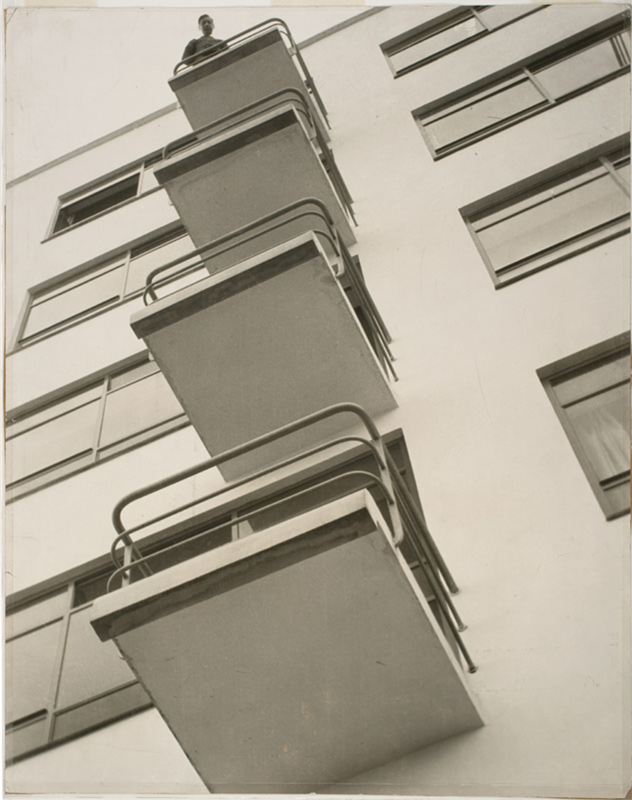
 

László Moholy-Nagy (American born Hungary, 1895-1946) ‘Bauhaus Balconies’ 1926


László Moholy-Nagy (American born Hungary, 1895-1946)
Bauhaus Balconies
1926
Silver gelatin photograph


John Heartfield (German, 1891-1968) 'Adolf, the superman: swallows gold and spouts rubbish' from the 'Workers Illustrated Paper', vol 11, no 29, 17 July 1932, p. 675


John Heartfield (German, 1891-1968)
Adolf, the superman: swallows gold and spouts rubbish
1932
From the Workers Illustrated Paper, vol 11, no 29, 17 July 1932, p. 675
Photolithograph
38 x 27cm
John Heartfield Archiv, Akademie der Künste zu Berlin
Photo: Akademie der Künste, Berlin, Kunstsammlung, Heartfield 2261/ Roman März
© The Heartfield Community of Heirs /VG Bild-Kunst, Bonn. Licensed by Viscopy, Sydney


John Heartfield’s photomontages expose hidden agendas in German politics and economics of the 1920s and 30s. This image was published six months before the National Socialist Party came to power, and shows Hitler with a spine made of coins and his stomach filled with gold. The caption says that he ‘swallows gold’, alluding to generous funding by right-wing industrialists, and ‘spouts rubbish’.
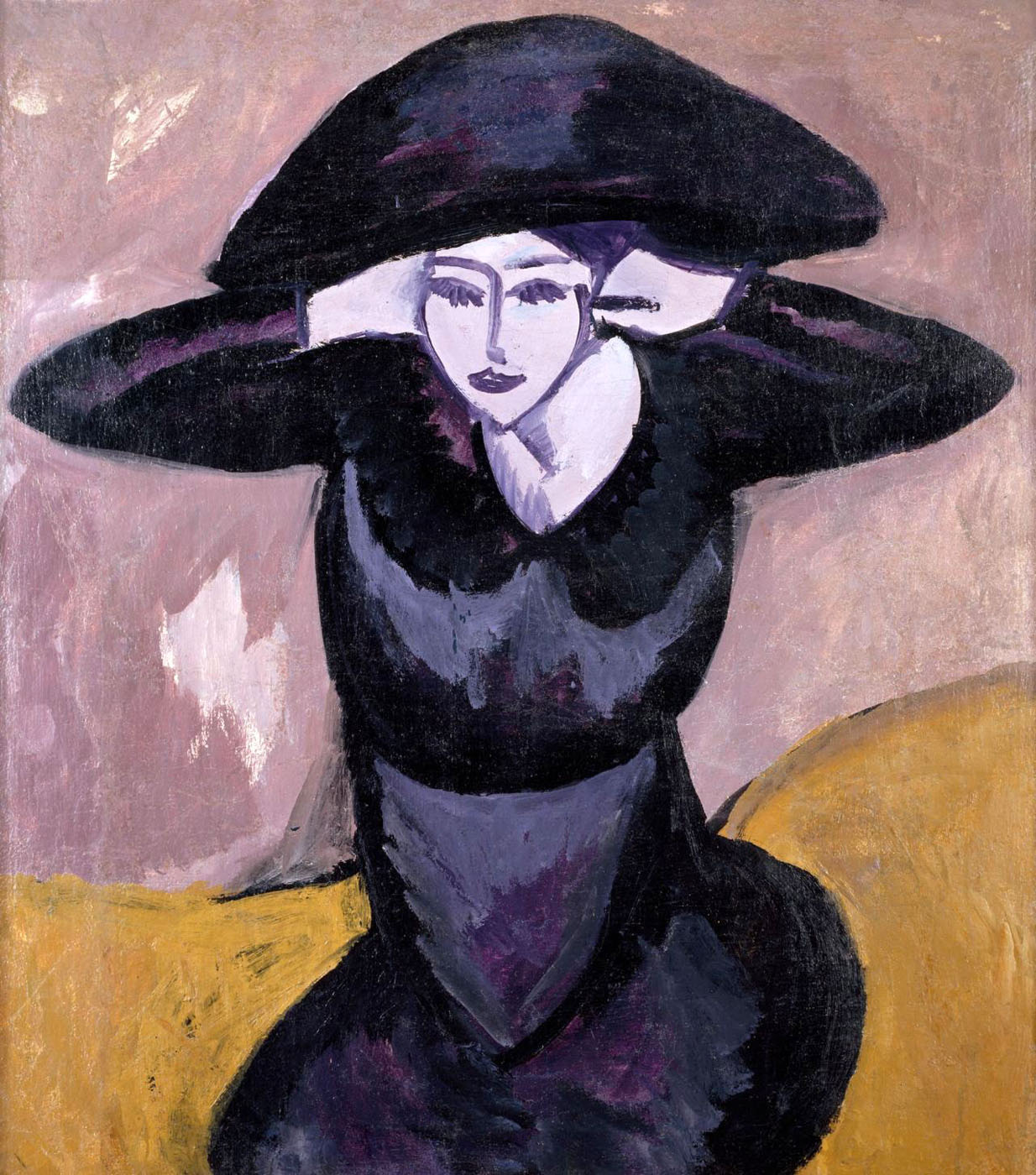
 

Ernst Ludwig Kirchner (German, 1880-1938) 'Woman in hat' 1911


Ernst Ludwig Kirchner (German, 1880-1938)
Woman in hat
1911
Oil on canvas
Art gallery of Western Australia, Perth
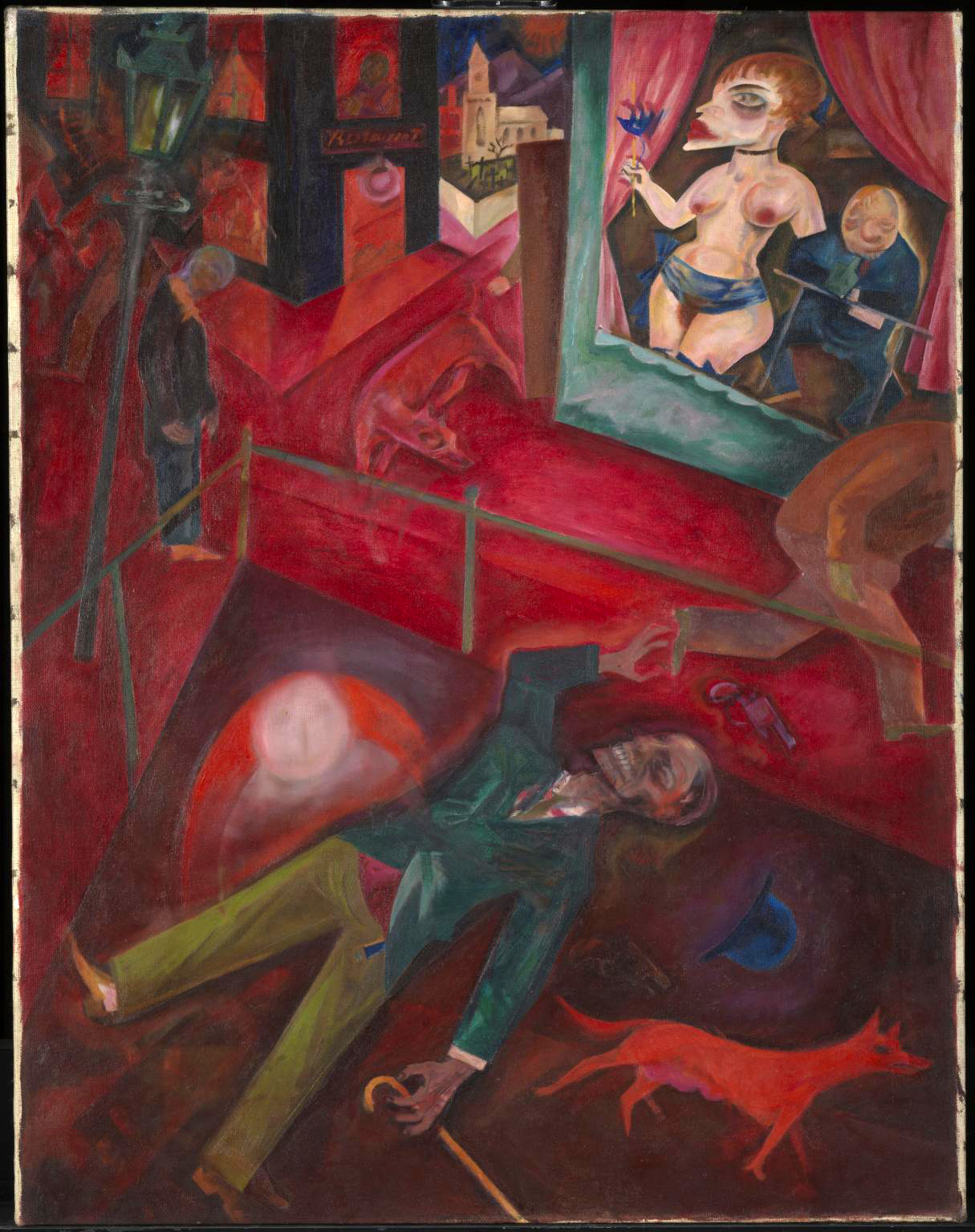
 

George Grosz (German, 1893-1959) 'Suicide' (Selbstmörder) 1916


George Grosz (German, 1893-1959)
Suicide (Selbstmörder)
1916
Oil on canvas
100 × 77.5cm
Tate Modern
Public domain
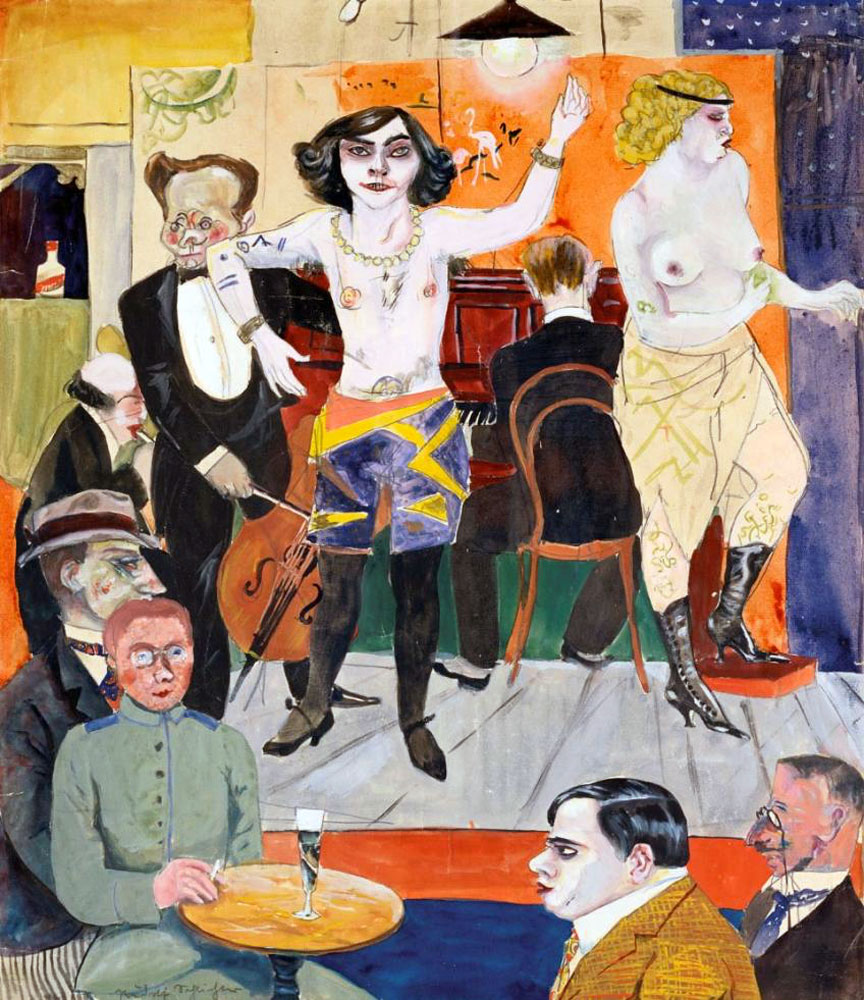
 

Rudolf Schlichter (German, 1890-1955) 'Tingle tangel' 1919-1920


Rudolf Schlichter (German, 1890-1955)
Tingle tangel
1919-1920
Oil on canvas
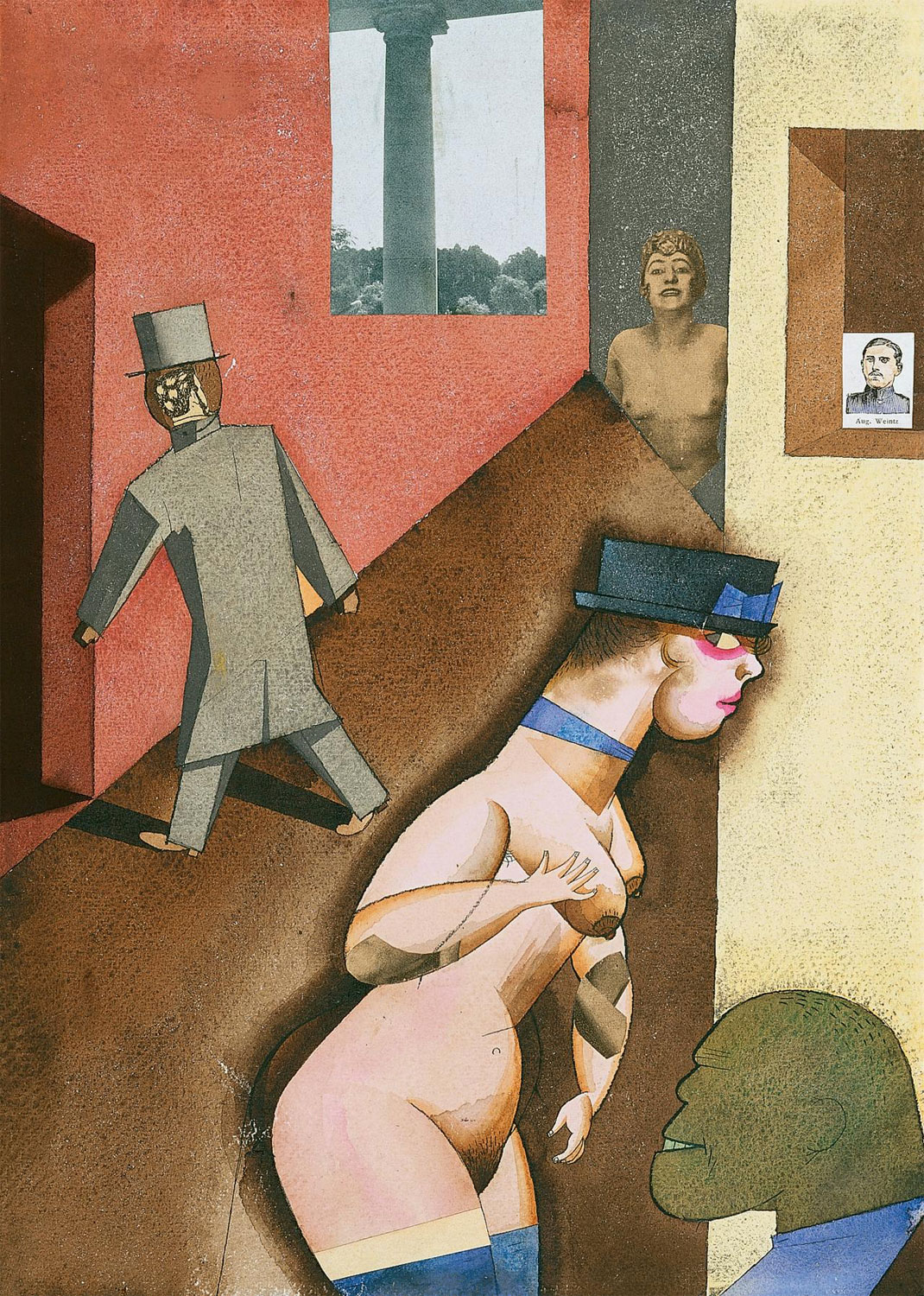
 

George Grosz (German, 1890-1945) 'Tatlinesque Diagram' 1920


George Grosz (German, 1890-1945)
Tatlinesque Diagram
1920
Watercolour, collage and ink on paper
41 x 29.2cm
Museo Nacional Thyssen-Bornemisza, Madrid


Otto Dix (German, 1891-1969) 'Dr Paul Ferdinand Schmidt' 1921


Otto Dix (German, 1891-1969)
Dr Paul Ferdinand Schmidt
1921
Oil on canvas
63 x 82cm
Staatsgalerie, Stuttgart, Germany


El Lissitzky (Russian, 1890-1941) 'New Man (Neuer)' 1923


El Lissitzky (Russian, 1890-1941)
New Man (Neuer)
1923
Color lithograph on wove paper
12 × 12 1/2 in. (30.5 × 31.8cm)
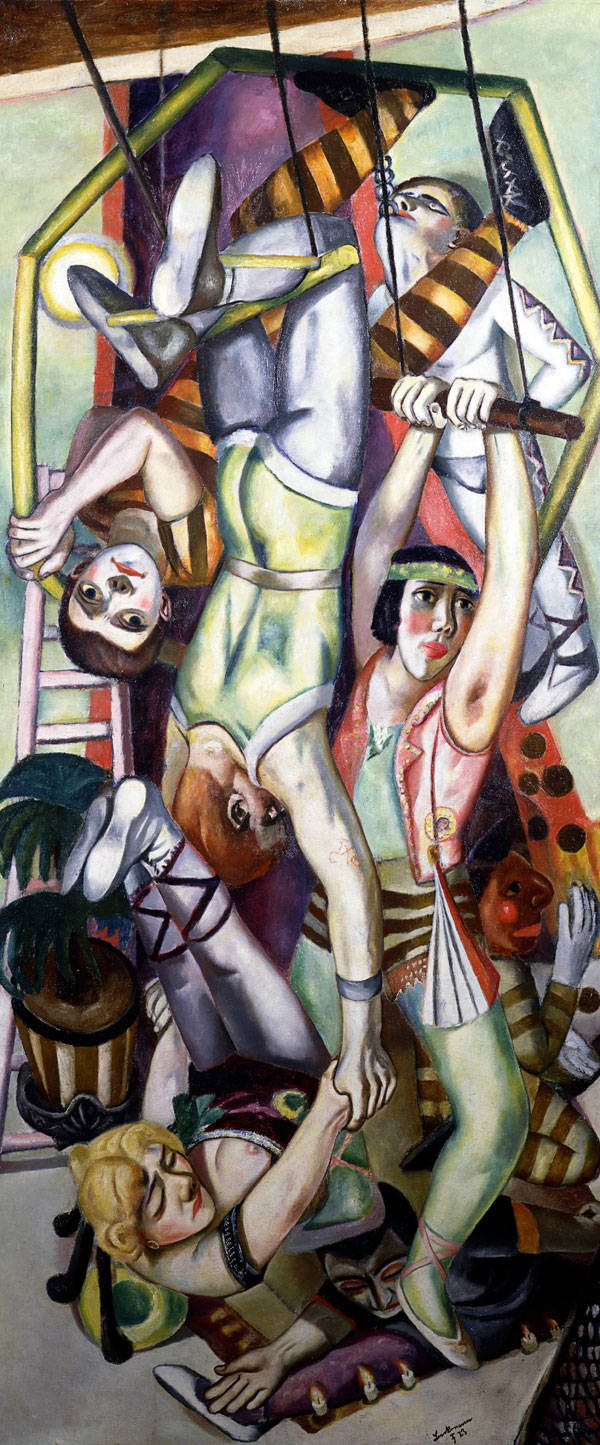
 

Max Beckmann (German, 1884-1950) 'The trapeze' 1923


Max Beckmann (German, 1884-1950)
The trapeze
1923
Oil on canvas
196.5 x 84cm
Toledo Museum of Art
Purchased with funds from the Libbey Endowment, Gift of Edward Drummond Libbey
Photo: Photography Incorporated, Toledo
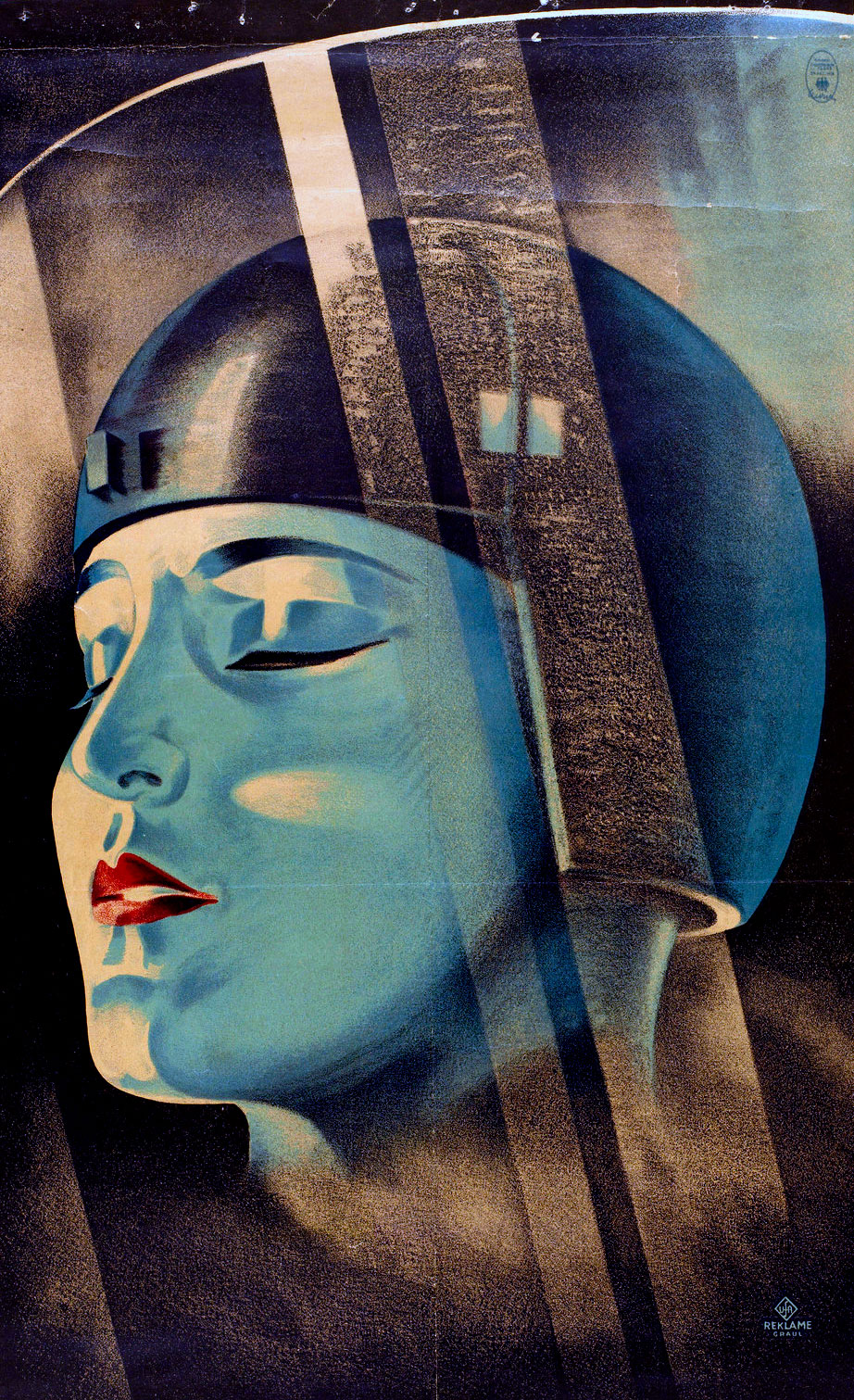
 

Werner Graul (German, 1905-1984) 'Metropolis'
1926


Werner Graul (German, 1905-1984)
UFA (Universum-Film-Aktiengesellschaft) (publisher)
Metropolis
1926
Lithographic poster
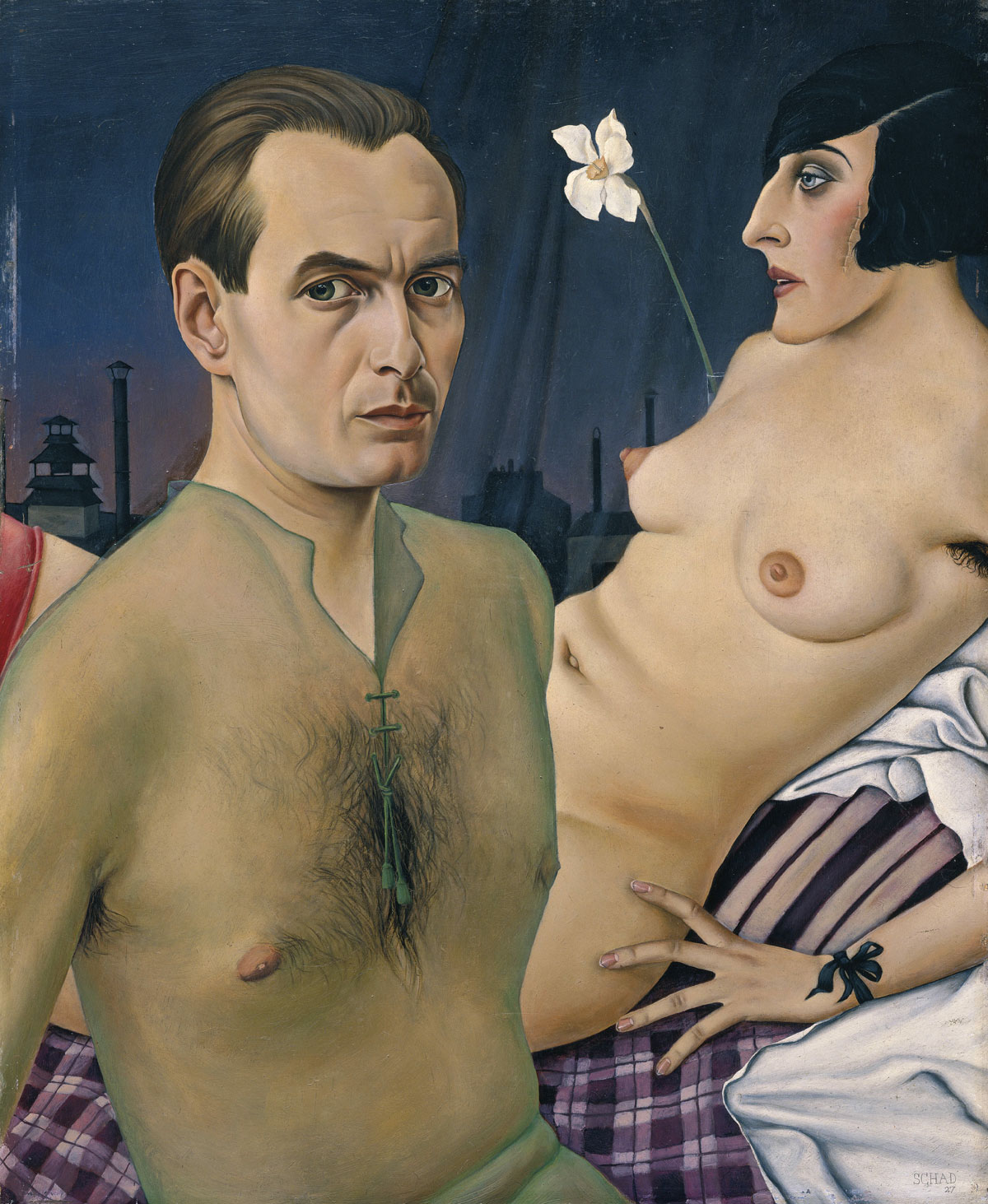
 

Christian Schad (German, 1894-1982) 'Self-Portrait' (Selbstbildnis mit Modell), 1927


Christian Schad (German, 1894-1982)
Self-Portrait with Model (Selbstbildnis mit Modell)
1927
Oil on wood
29 15/16 x 24 3/16 in. (76 x 61.5cm)
Private collection, courtesy of Tate
© 2015 Christian Schad Stiftung Aschaffenburg/Artists Rights Society (ARS), New York/VG Bild-Kunst, Bonn
 

Heinrich Hoerle (German, 1895-1936) 'Three invalids' c. 1930


Heinrich Hoerle (German, 1895-1936)
Three invalids
c. 1930
Oil on canvas


NGV International
180 St Kilda Road

Opening hours:
Daily 10am – 5pm

National Gallery of Victoria website

LIKE ART BLART ON FACEBOOK

Back to top

Exhibition: ‘Plant Studies by Karl Blossfeldt and Related Works’ at Die Photographische Sammlung/SK Stiftung Kultur, Cologne

Exhibition dates: March 13th – 17th June, 2009


Many thankx to the Die Photographische Sammlung/SK Stiftung Kultur for allowing me to publish the photographs in the posting. Please click on the photographs for a larger version of the image.


Karl Blossfeldt (German, 1865-1932) 'Acanthus - Bear's breech' before 1928 from the exhibition 'Plant Studies by Karl Blossfeldt and Related Works' at Die Photographische Sammlung/SK Stiftung Kultur, Cologne, March - June, 2009


Karl Blossfeldt (German, 1865-1932)
Acanthus – Bear’s breech
before 1928
Gelatin silver print
Karl Blossfeldt Collection at the University of the Arts Berlin


Die Photographische Sammlung presents Plant Studies by Karl Blossfeldt and Related Works, an exhibition presented by Die Photographische Sammlung/SK Stiftung Kultur, Cologne in co-operation with the Berlin University of the Arts, compiled by Gabriele Conrath-Scholl, Rajka Knipper and Claudia Schubert. The exhibition will present for the first time in this volume the famous and influential plant studies by Karl Blossfeldt (1865-1932) from the collection of the Berlin University of the Arts as original prints. Blossfeldt’s photographs will be accompanied by the artist’s herbaria and sculptures based on plants, the latter produced in cooperation with his teacher Moritz Meurer.

The amalgamation and presentation of the various groups of work from the Berlin Blossfeldt collection provides detailed insight into the working style of the artist, who taught the study of natural forms in Berlin for over thirty years. His plant photographs were used primarily as reference aids during lessons in his classes. It was only towards the end of his working life that his photographs became known to the larger public through an exhibition at the Galerie Nierendorf in Berlin in 1926.The publication of the book Art Forms in Nature in 1928 led to an ongoing appreciation of his photographs. Karl Blossfeldt developed in year-long concentration on one theme a highly aesthetic picture language which up until today still fascinates the viewer with its clarity and focus on the object.

The exhibition highlights the topic of plant studies against a background of research into form and structure using selected historical and contemporary works. They mirror the development and technical possibilities of the medium, as well as the artistic reflection into their characteristics and decorative aspects. Thus the scope of the 300 exhibits reaches from detailed analyses of the form of individual botanical structures to the documentation of complex natural and populated areas, up to a symbolic contemplation of plants.

The exhibition is the result of years of cooperation between the Universität der Künste Berlin and Die Photographische Sammlung / SK Stiftung Kultur, two institutions committed to the ongoing academic study and extensive public presentation of the Karl Blossfeldt collection in the possession of the Universität der Künste.

The presentation gives Die Photographische Sammlung once again an opportunity to draw attention to its own institutional orientation. In addition to the co-operation on the work by Karl Blossfeldt these include avant-garde objective and conceptual photographic works, which developed in particular in line with the sense of a new era in the 1920s and the 1960s / 1970s or are artistically related to them. Works which the Cologne institution purchased during the past years in connection with the botanical subject or were obtained as permanent loans, are now part of the current presentation. They include works by Pietro Guidi, August Kotzsch, Paul Dobe, works from the Folkwang-Auriga Verlag, by Fred Koch, Albert Renger-Patzsch, Else Thalemann, August Sander, Ruth Lauterbach-Baehnisch, Ruth Hallensleben, Dr. Herbert W. Franke and Lawrence Beck. Although works by the younger artists Natascha Borowsky and Simone Nieweg are already part of the collection, in light of their more recent work both artists have made photographs from their own collections available for the show.

The current show is a thematically oriented insight into Die Photographische Sammlung’s collection which ranges from the historical to the contemporary and in the last few years has been extended by a number of corresponding groups of photographic works. In order to provide a comprehensive, but lively background to Karl Blossfeld’s work and to display illuminative positions, which were frequently mentioned in connection with the reception of Blossfeldt’s work, but were rarely, if ever, presented together in exhibitions, and also to permit new assessments and links, important loans have been integrated into the exhibition. They have been borrowed from the Karl-Blossfeldt-Archiv / Ann and Jürgen Wilde, Zülpich, which contains the largest collection of original photographs by the artist.

Karl Blossfeldt received essential support from Moritz Meurer (1839-1916) who worked as a graphic artist and painter, and for whom Blossfeldt worked as an assistant in Rome from 1892 to 1895. On the basis of Meurer’s concept, reference aids in the form of sculptures and drawings, as well as photographs, were developed for later use in lessons. Meurer’s idea, to take the basic forms in nature, which could be seen in the composition of a plant, as models for architecture, artistic and craftwork objects or ornaments, was integrated by Blossfeldt into his photographs.

According to the records, attention was drawn to Karl Blossfeldt’s work in particular by the fact that the Berlin gallerist Karl Nierendorf heard about his work and presented the first exhibition of his photographs outside the school context in 1926. The plant photographs, still under the influence of the ornamental art nouveau although more as a reaction to it were highly appreciated in the early days of New Objectivity. These studies seemed to put into practice the newly formed principles contained in the art of the 1920s, in which there was a demand for things to be presented without artistic digression, in a clear, authentic pictorial language, at the same time providing insight into their nature. It is therefore even more surprising that Blossfeldt was able to achieve this so easily, considering that he accomplished it seemingly uninfluenced by questions of artistic or photographic history categories. His motivation stemmed from his didactic and pragmatic aims to depict plant forms with precise accuracy, in order to provide flawless reference aids which would encourage his students to transform them artistically. His straightforward, passionate concentration on one theme, which he almost endlessly varied within a limited field, opened it up for comparative viewing. In particular since the 1970s, in the light of a new-orientation of the medium, his work was highly regarded and gained indirect influence on contemporary art, to the extent that knowledge of his images influences today s viewing perspectives.

On the occasion of the exhibition Plant Studies by Karl Blossfeldt and Related Works Die Photographische Sammlung / SK Stiftung Kultur is presenting on its website a directory they have created of all 631 photographs, 39 herbaria and 57 sculptures from the Universität der Künste’s Karl Blossfeldt collection together with documents from the University archive. A distinctive feature of the research is the fact that every photograph is accompanied not only by a concordance of primary and secondary literature but also Blossfeldt negatives and transparencies from the Deutsche Fotothek in Dresden and, in the near future, from the Karl Blossfeldt Archive/Ann and Jürgen Wilde. The website provides a text forum on the topic, which uses selected documents to illustrate Blossfeldt’s teaching work in the context of the history of the University and includes various aspects of his reception in publications and exhibitions.

Press release from Die Photographische Sammlung


Karl Blossfeldt (German, 1865-1932) 'Cucurbita - Pumpkin tendrils' before 1928 from the exhibition 'Plant Studies by Karl Blossfeldt and Related Works' at Die Photographische Sammlung/SK Stiftung Kultur, Cologne, March - June, 2009


Karl Blossfeldt (German, 1865-1932)
Cucurbita – Pumpkin tendrils
before 1928
Gelatin silver print
Karl Blossfeldt Collection at the University of the Arts Berlin


Karl Blossfeldt (German, 1865-1932) 'Allium ostrowskianum - garlic plant' before 1928


Karl Blossfeldt (German, 1865-1932)
Allium ostrowskianum – garlic plant
before 1928
Gelatin silver print
Karl Blossfeldt Collection at the University of the Arts Berlin


“In 1928 Karl Blossfeldt (1865-1932) published the now legendary photographic book “Art Forms in Nature.” Brought together were a selection of images of plants that this craftsman had photographed only as illustrative material for his students at the college in Berlin. He photographed the plants isolated in front of a neutral background, their blossoms, buds, stems, umbels and seed capsules often greatly magnified to serve as a distinct model for the decorative art forms of the Art Nouveau movement, whose own bloom period was already fading …

It is quite clearly the particular combination of subject matter and photographic style that gives the works a classic timelessness, allowing them to be discovered “afresh” again and again. So the isolating, monumental and formalistic approach to nature not only tied in well with concepts of New Functionalism, but was also successively interpreted as illustrating the relationship between Art and Nature and as a precursor of Conceptual Art.”

Text from the Karl Blossfeldt Archive website


Karl Blossfeldt (German, 1865-1932) 'Chrysanthemum segetum - Feverfew' before 1928


Karl Blossfeldt (German, 1865-1932)
Chrysanthemum segetum – Feverfew
before 1928
Gelatin silver print
Karl Blossfeldt Collection at the University of the Arts Berlin


Karl Blossfeldt (German, 1865-1932) 'Dipsacus laciniatus - Cutleaf Teasel' before 1928


Karl Blossfeldt (German, 1865-1932)
Dipsacus laciniatus – Cutleaf Teasel
before 1928
Gelatin silver print
Karl Blossfeldt Collection at the University of the Arts Berlin


Karl Blossfeldt (German, 1865-1932) 'Thorned Bulbous Plant' before 1928


Karl Blossfeldt (German, 1865-1932)
Thorned Bulbous Plant
before 1928
Gelatin silver print
Karl Blossfeldt Collection at the University of the Arts Berlin


“He photographed plants by the thousands – photographs which feature flowers, buds, branched stems, clusters or seed capsules shot directly from the side, seldom from an overhead view, and rarely from a diagonal perspective. He usually placed the subjects of his photographs against white or grey cardboard, sometimes against a black background. Hardly ever can details of the rooms be detected. The light for his shots was obtained from northern windows, making it diffuse, but it fell from the side, creating volume. The technique and processing conditions were very simple; only the medium size of the negative format was somewhat out of the ordinary. Nothing detracted from the subject. This man produced such pictures for over thirty years.

The man’s name was Karl Blossfeldt, and his life’s achievement occupies a firm place in the history of 20th-century art, although the aims of his undertaking place him firmly within the 19th century. Blossfeldt shares this bridging of two centuries with other great collectors in the history of photography, such as the Parisian Eugene Atget, and it is to this bridging of two centuries that his influence may be attributed today …

The plant photographs were produced by simple means. Legend has it that a relatively straight-forward homemade camera was used, one common in its time and not very large, with a format of 9 x 12cm. The glass plates which served as negatives were coated with inexpensive but not completely neutral-coloured orthochromatic emulsion, and occasionally – after 1902, as they became more widely available – with panchromatic emulsions, making possible a neutral reproduction of the colour red in halftones. Since the first emulsion was thin and therefore enabled high contrast with extremely sharp edges, it served especially to stress the structural elements. It was thus used primarily for photographs with white or grey backgrounds. The rarer photos with panchromatic emulsions were used to illustrate entire clusters or beds of flowers with a wider variation of chromatic values or halftones.”

Text by Rolf Sachse from the book Karl Blossfeldt Benedikt Taschen Verlag (April 1997) available on Amazon.


Karl Blossfeldt (German, 1865-1932) 'Papaver orientale - Oriental Poppy' before 1928


Karl Blossfeldt (German, 1865-1932)
Papaver orientale – Oriental Poppy
before 1928
Gelatin silver print
Karl Blossfeldt Collection at the University of the Arts Berlin


Originally developed from a practice at the Unterrichtsanstalt des Königlichen Kunstgewerbemuseums Berlin [Institute of the Berlin Royal Arts and Crafts Museum] at the end of the 19th century and designed specifically for use as teaching materials, Karl Blossfeldt’s plant photographs rank today among the classic works of art and photography history.

Blossfeldt taught “Modelling from Live Plants” from 1899 to 1930, first at the Unterrichtsanstalt des Königlichen Kunstgewerbemuseums, later at the Vereinigte Staatsschulen für Freie und Angewandte Kunst [United State Schools for Fine and Applied Arts] that emerged from the Unterrichtsanstalt’s amalgamation with the Hochschule für Bildende Künste [University of the Visual Arts] – predecessors of the present-day Berlin University of the Arts. A major role in the introduction of that subject was played by Moritz Meurer, for whom Karl Blossfeldt worked as a scholarship-holder in Rome from 1892 to 1895. There, prepared plant specimens, sculptures, castings, drawings and photographs were made as models for classroom use. Blossfeldt took up and systematically developed Meurer’s idea of using the basic natural forms inherent in the structure of a plant for the design of architectural, art or craft objects and ornaments.

A letter written to the director of the Arts and Crafts Museum in 1906 shows that Blossfeldt was already in possession of thousands of photographs, from which he intended gradually to make prints. The plan to enlarge the images came about for a number of reasons:

~ The plants that Blossfeldt collected for his students underwent relatively rapid change, either because they grew or because they wilted and withered. Captured in a photograph, they became a lasting model

~ Photographic enlargements allowed even the tiniest natural forms to be made out

~ Photographic enlargements offered the opportunity to present “unadulterated nature” – in contrast to sketched enlargements, which Blossfeldt contended “always contain a subjective element”

~ Blossfeldt wanted his material seen as a specimen collection that would also be available for future generations of students


There is no detailed record showing the technical facilities at Karl Blossfeldt’s disposal. The Karl Blossfeldt Archive/Ann and Jürgen Wilde and the Deutsche Fotothek in Dresden have preserved glass plates and transparencies of various formats (6/6.5 x 9cm, 9 x 12cm, 9 x 18cm and 13 x 18cm). Blossfeldt’s camera – or cameras, because he may have had several – is known to have been an entirely or partly home-made affair. The work collages in the collection of the Karl Blossfeldt Archive / Ann and Jürgen Wilde give a good idea of his negatives because the images that appear in them are from contact prints made by Blossfeldt.

The fact that Karl Blossfeldt became a major celebrity was due to the fortunate circumstance that his photographs came to the attention of the Berlin gallerist Karl Nierendorf. He staged the first exhibition of Blossfeldt’s work in a non-school context in 1926, presenting it alongside sculptures from Africa and New Guinea and work by the artist Richard Janthur. In 1928, in another Nierendorf initiative, Urformen der Kunst [Art Forms in Nature] was published with 120 plates of plants by Blossfeldt. The book was given such a rapturous reception that the following years saw more editions published and foreign-language editions launched in English, French and Swedish. These studies were very much in tune with the new maxim of 1920s art that called for things to be represented authentically, with no artistic frills, in a clear visual idiom designed to explore and reveal their nature. The fact that Blossfeldt succeeded in this is all the more astonishing since he started out working with no thoughts of pushing forward any boundaries in art or photography. He was primarily motivated by a didactic and pragmatic intention to produce highly accurate plant images which, as models for study, would reveal natural forms to the human eye and inspire students to turn them into art.

With his passionate concentration on a single subject, addressed in close-up in almost infinite variations and thus revealed for comparative examination, Blossfeldt became a highly respected figure, especially after the re-think on photography in the 1970s. As a result, he has had an indirect influence on contemporary art and knowledge of his work helps shape the way we view art today. Karl Blossfeldt did not experience his success for long. He died in December 1932, the year in which his second book Wundergarten der Natur (Art Forms in Nature) was published. The largest collections of his photographs are in the Karl Blossfeldt Archive/Ann and Jürgen Wilde, the Archive of the Berlin University of the Arts and the Deutsche Fotothek Dresden.

Text from the Die Photographische Sammlung/SK Stiftung Kultur website [Online] Cited 25/03/2009. No longer available online


Karl Blossfeldt (German, 1865-1932) 'Papaver Orientalis - Oriental Poppy capsules' before 1928


Karl Blossfeldt (German, 1865-1932)
Papaver Orientalis – Oriental Poppy capsules
before 1928
Gelatin silver print
Karl Blossfeldt Collection at the University of the Arts Berlin


Karl Blossfeldt (German, 1865-1932) 'Dryopteris filix mas - Common male fern' before 1928


Karl Blossfeldt (German, 1865-1932)
Dryopteris filix mas – Common male fern
before 1928
Gelatin silver print
Karl Blossfeldt Collection at the University of the Arts Berlin


Die Photographische Sammlung/SK Stiftung Kultur
Im Mediapark 7
50670 Cologne
Phone: 0049-(0)221-88895 300

Opening hours:
Open daily 14 – 19hrs
Closed Wednesdays

Die Photographische Sammlung/SK Stiftung Kultur website

LIKE ART BLART ON FACEBOOK

Back to top