Exhibition: ‘Ricky Maynard: Portrait of a Distant Land’ at Museum of Contemporary Art (MCA), Sydney

Exhibition dates: 4th June – 23rd August, 2009


Many thankx to the MCA for allowing me to publish the photographs in the posting. Please click on the photographs for a larger version of the image.
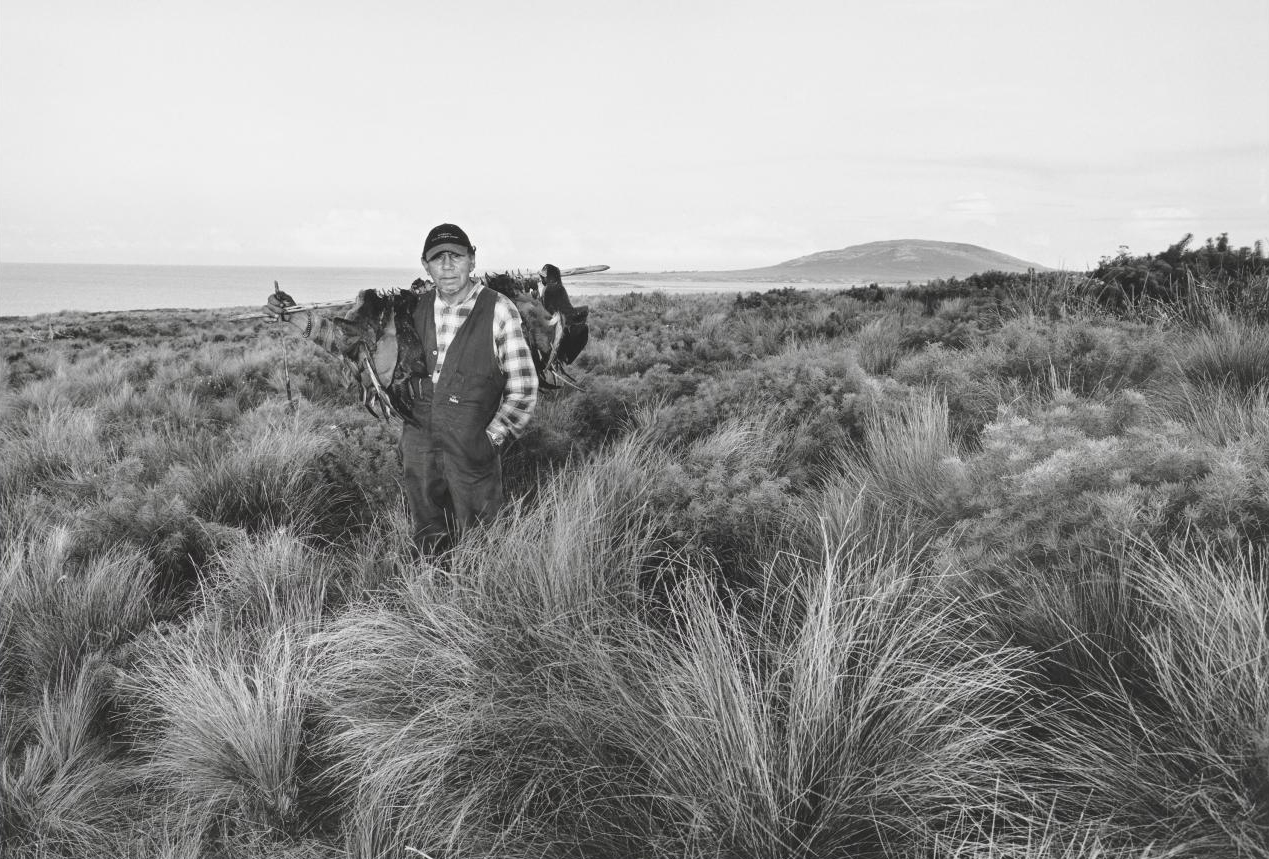
 

Ricky Maynard (Australian, b. 1953)
'Coming Home' 2005


Ricky Maynard (Australian, b. 1953)
Coming Home
2005
From the series Portrait of a Distant Land
Gelatin silver photograph, selenium toned
37.4 × 54.1cm
© Ricky Maynard


I can remember coming here as a boy in old wooden boats to be taught by my grandparents and my parents. I’ll be 57 this year and I have missed only one year when my daughter Leanne was born. Mutton birding is my life. To me it’s a gathering of our fellas where we sit and yarn, we remember and we honour all of those birders who have gone before us. Sometimes I just stand and look out across these beautiful islands remembering my people and I know I’m home. It makes me proud to be a strong Tasmanian black man. This is something that they can never take away from me.

Murray Mansell, Big Dog Island, Bass Strait, 2005
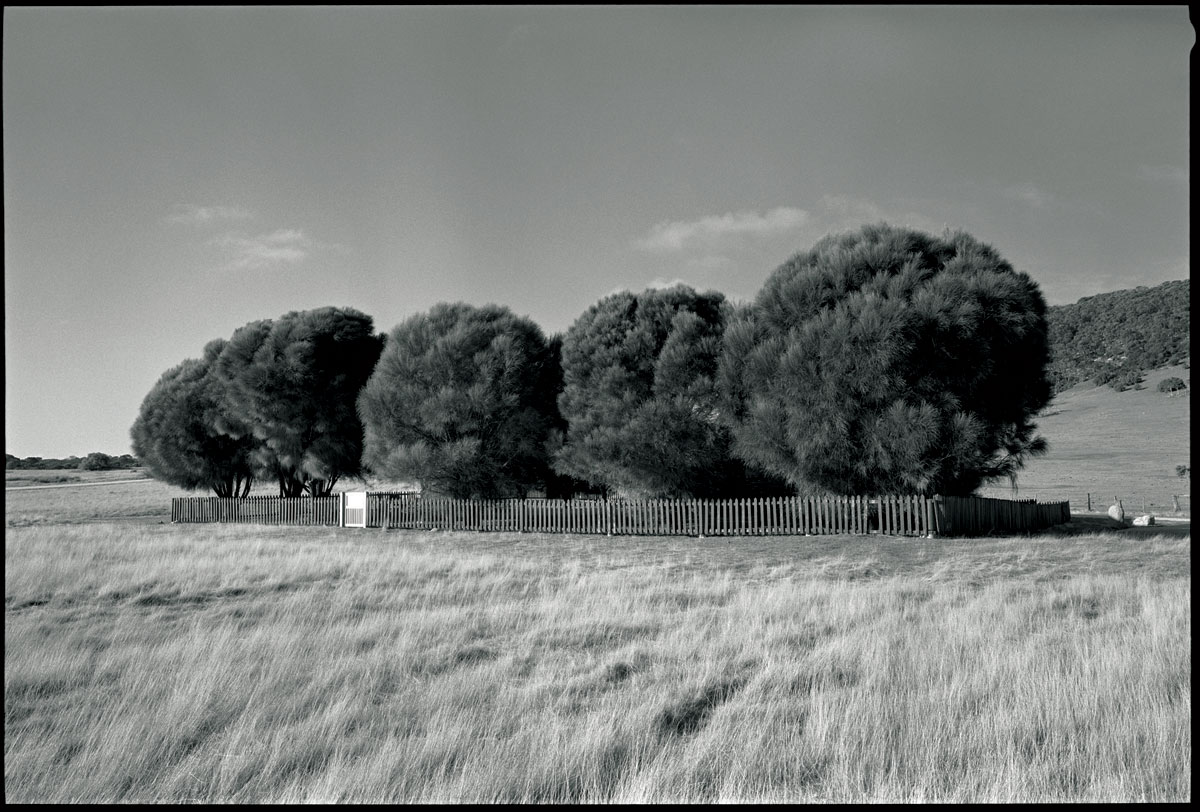
 

Ricky Maynard (Australian, b. 1953) 'The Healing Garden, Wybalenna, Flinders Island, Tasmania' 2005


Ricky Maynard (Australian, b. 1953)
The Healing Garden, Wybalenna, Flinders Island, Tasmania
2005
From the series Portrait of a Distant Land
Gelatin silver photograph, selenium toned
34.0 x 52.0 cm
© Ricky Maynard


This winter the Museum of Contemporary Art presents a major survey of photographic works by documentary photographer Ricky Maynard, encompassing more than two decades of the artist’s practice.

Portrait of a Distant Land features more than 60 evocative and captivating photographic works, drawn from six bodies of work, which document the lives and culture of Maynard’s people, the Ben Lomond and Cape Portland peoples of Tasmania.

The exhibition is curated by MCA Aboriginal and Torres Strait Islander Programs Keith Munro and is presented at the MCA from 4 June until 23 August 2009. Born in Launceston, Tasmania in 1953 Maynard is a self taught documentary photographer now based on Flinders Island in the Bass Strait between Tasmania and mainland Australia.

Maynard first came to prominence in the late 1980s with a photographic essay about Aboriginal mutton bird farmers and he has continued to document physical and social landscapes which form a visual record and representation of Aboriginal and Torres Strait Islander people in Australia.

“For me, photographs have always been personal and I hope to convey the intimacy of a diary. Photography has the ability to tell stories about the world and how the photograph has power to frame a culture,” said Maynard, describing his practice.

The works presented in Portrait of a Distant Land survey a broad range of themes and issues facing Aboriginal and Torres Strait Islander people today. It includes photographs which document sites significant to Maynard’s people: ranging from serenely beautiful landscapes which follow the song lines, tribal movements and historical displacement routes of his ancestors, to the confrontational and emotionally-charged images of Indigenous people incarcerated in the South Australian prison system.

The six photographic series by Maynard which are featured in the exhibition are The Moonbird People (1985-1988), No More Than What You See (1993), Urban Diary (1997), In The Footsteps of Others (2003), Returning To Places That Name Us (2000) and Portrait of a Distant Land (2005- ). Together these works create a form of visual diary of multiple landscapes derived from collective oral histories of Maynard’s people.”

Press release from the MCA website [Online] Cited 05/07/2009. No longer available online


Ricky Maynard (Australian, b. 1953) ‘Arthur, Wik elder’ from the series ‘Returning to places that name us’ 2000


Ricky Maynard (Australian, b. 1953)
Arthur, Wik Elder
2000
From the series Returning to Places that Name Us
Gelatin silver photograph
96.1 x 121.4cm
© Ricky Maynard


The owner of an enviable collection of antique cameras, Maynard is a lifelong student of the history of photography, particularly of the great American social reformers Jacob Riis, Lewis Hines, Dorothea Lange and Walker Evans. He is interested in the power of the uninflected image – of sheer veracity – as an agent of record and change. Maynard’s images cut through the layers of rhetoric and ideology that inevitably couch black history (particularly Tasmanian history) to present images of experience itself. ‘To know the meaning of a culture you must recognise the limits and meaning of your own,’ the artist explains. ‘You can see its facts but not its meaning. We share meaning by living it.’ Maynard’s photographs are, he says, about ‘leaving proof’ – about ‘… life in passing and in complicated times’.

The word ‘Wik’ has come to denote a historic decision of the High Court of Australia rather than the name of the Indigenous peoples from the western Cape York Peninsula in northern Queensland. In his intimate portraits of elders from these communities, Maynard aims to unpick this abstraction. Etched on each face is the complexity of an unspoken life story, delineated, one imagines, by hardship, perseverance and the burden – and wealth – of an extraordinary living memory. As he wrote in his artist’s statement for the exhibition Returning to Places that Name Us in 2001, ‘… I wanted a presence and portraits that spoke, and through this process to present an idea, rather than preach messages’. In this series, Maynard achieves his aim of capturing meanings that no other medium could convey.

Hannah Fink in ‘Tradition today: Indigenous art in Australia’, Art Gallery of New South Wales, Sydney, 2004

© Art Gallery of New South Wales. Text from the Art Gallery of New South Wales website [Online] Cited 14/03/2019


Ricky Maynard (Australian, b. 1953) 'Gladys Tybingoomba' 2001


Ricky Maynard (Australian, b. 1953)
Gladys Tybingoomba
2001
From the series Returning To Places That Name Us
Gelatin silver photograph
© Ricky Maynard


Ricky Maynard (Australian, b. 1953) 'Custodians' from the series 'Portrait of a Distant Land' 2005


Ricky Maynard (Australian, b. 1953)
Custodians
2005
From the series Portrait of a Distant Land
Gelatin silver photograph, selenium toned
43.0 x 41.2cm
© Ricky Maynard
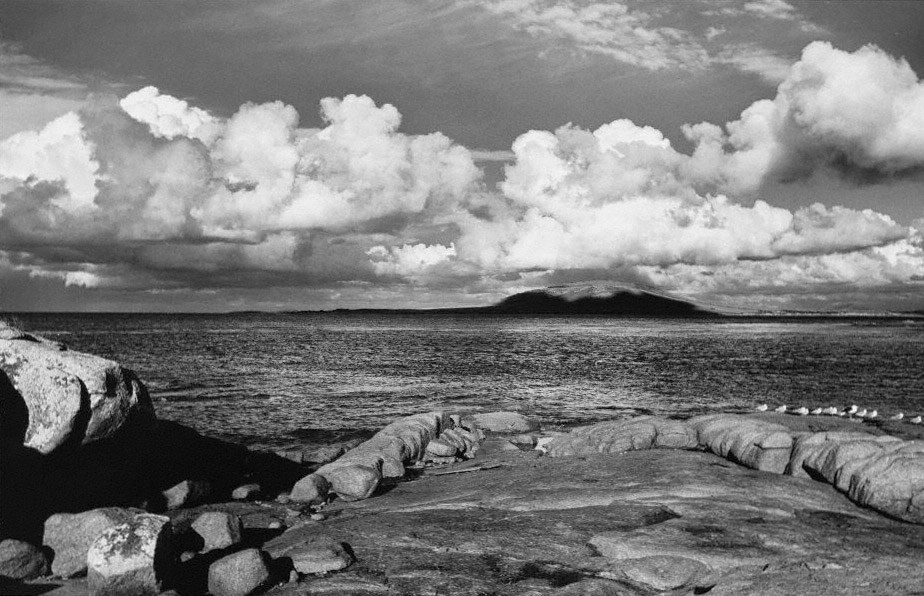
 

Ricky Maynard (Australian, b. 1953) 'Vansittart Island' from the series 'Portrait of a Distant Land' 2007


Ricky Maynard (Australian, b. 1953)
Vansittart Island
2007
From the series Portrait of a Distant Land
Gelatin silver photograph, selenium toned
33.9 x 52.1cm
© Ricky Maynard


Ricky Maynard (Australian, b. 1953) 'The Spit' from the series 'Portrait of a Distant Land' 2007


Ricky Maynard (Australian, b. 1953)
The Spit
2007
From the series Portrait of a Distant Land
Gelatin silver photograph, selenium toned
41.8 x 50.4cm
© Ricky Maynard


Ricky Maynard (Australian, b. 1953) 'The Mission' 2005 From the series 'Portrait of a Distant Land'


Ricky Maynard (Australian, b. 1953)
The Mission
2005
From the series Portrait of a Distant Land
Gelatin silver photograph, selenium toned
43.0 x 41.2cm
© Ricky Maynard


Maynard is a lifelong student of the history of photography, particularly of the great American social reformers Jacob Riis, Lewis Hines, Dorothea Lange and Walker Evans. Maynard’s images cut through the layers of rhetoric and ideology that inevitably couch black history (particularly Tasmanian history) to present images of experience itself. His visual histories question ownership; he claims that ‘the contest remains over who will image and own this history… we must define history, define whose history it is, and define its purpose as well as the tools used for the telling it’.

In Portrait of a distant land Maynard addresses the emotional connection between history and place. He uses documentary style landscapes to illustrate group portraits of Aboriginal peoples’ experiences throughout Tasmania. Each work combines several specific historical events, creating a narrative of shared experience – for example The Mission relies on historical records of a small boy whom Europeans christened after both his parents died in the Risdon massacre. This work highlights the disparity between written, oral and visual histories, as Maynard attempts to create ‘a combination of a very specific oral history as well as an attempt to show a different way of looking at history in general’.

Text from the Art Gallery of New South Wales website [Online] Cited 14/03/2019


Museum of Contemporary Art (MCA)
140 George Street
The Rocks, Sydney, Australia

Opening hours: 10am – 5pm daily

MCA website

LIKE ART BLART ON FACEBOOK

Back to top

Exhibition: ‘Yayoi Kusama: Mirrored Rooms’ at Museum of Contemporary Art (MCA), Sydney

Exhibition dates: 24th February – 8th June, 2009

Curators: Jaap Guldemond (Museum Boijmans Van Beuningen), Franck Gautherot & Seungduk Kim (Le Consortium, Dijon)

MCA Curatorial Liaison: Judith Blackall


“Discover the work of internationally acclaimed Japanese artist Yayoi Kusama with this major exhibition that spans decades of her artistic practice.

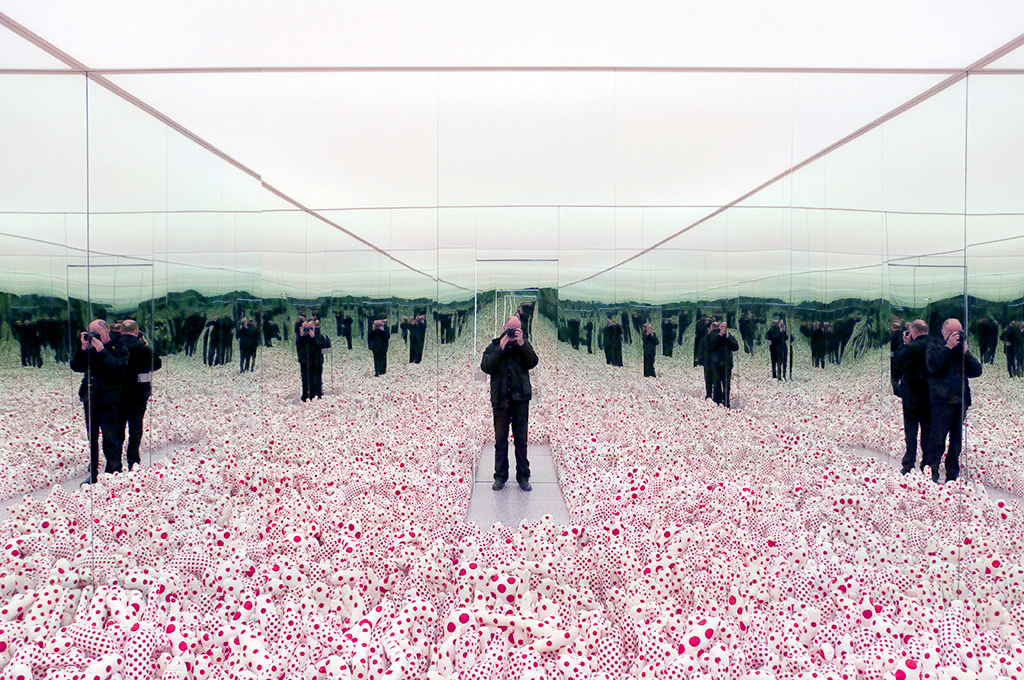
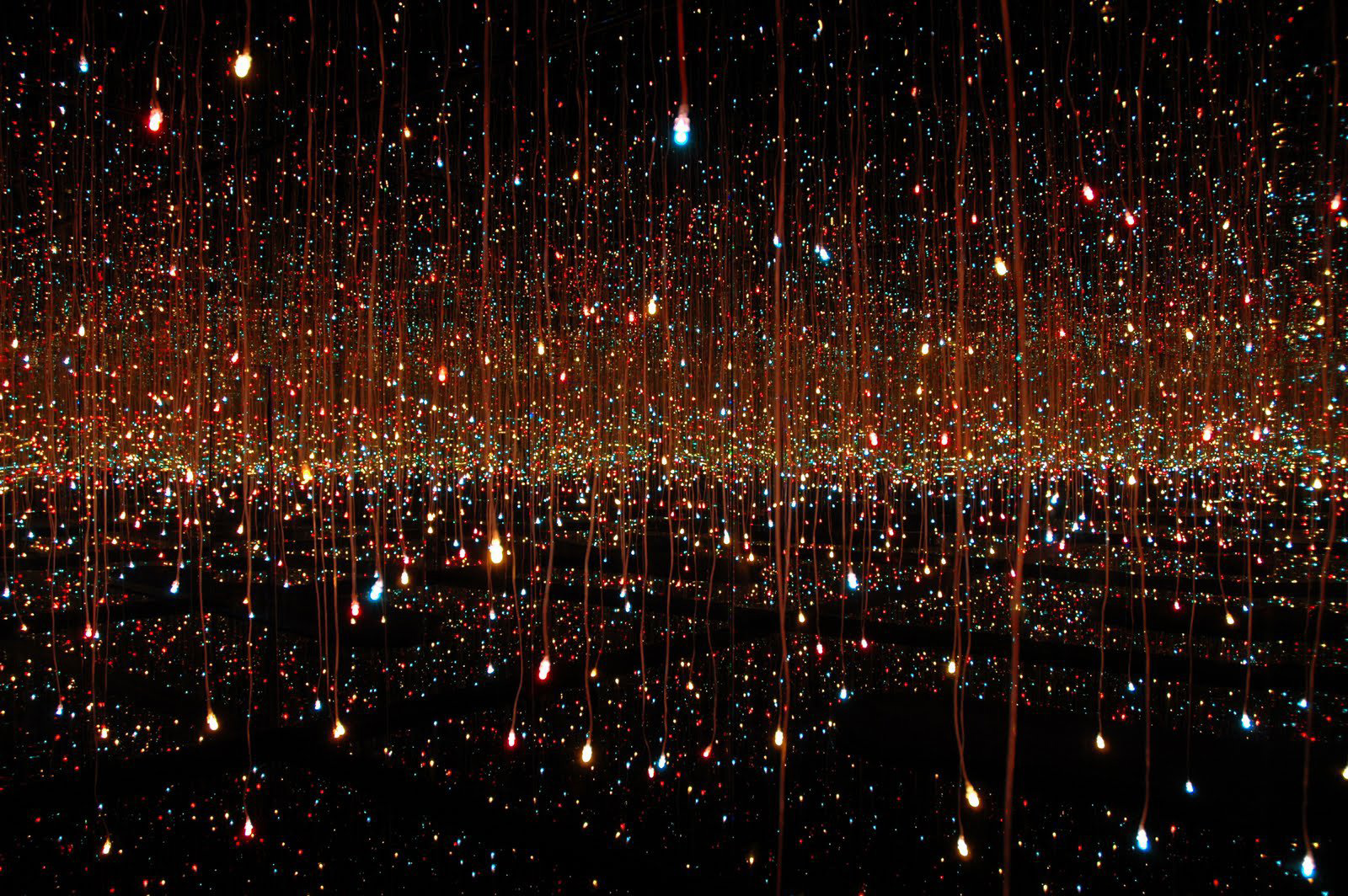
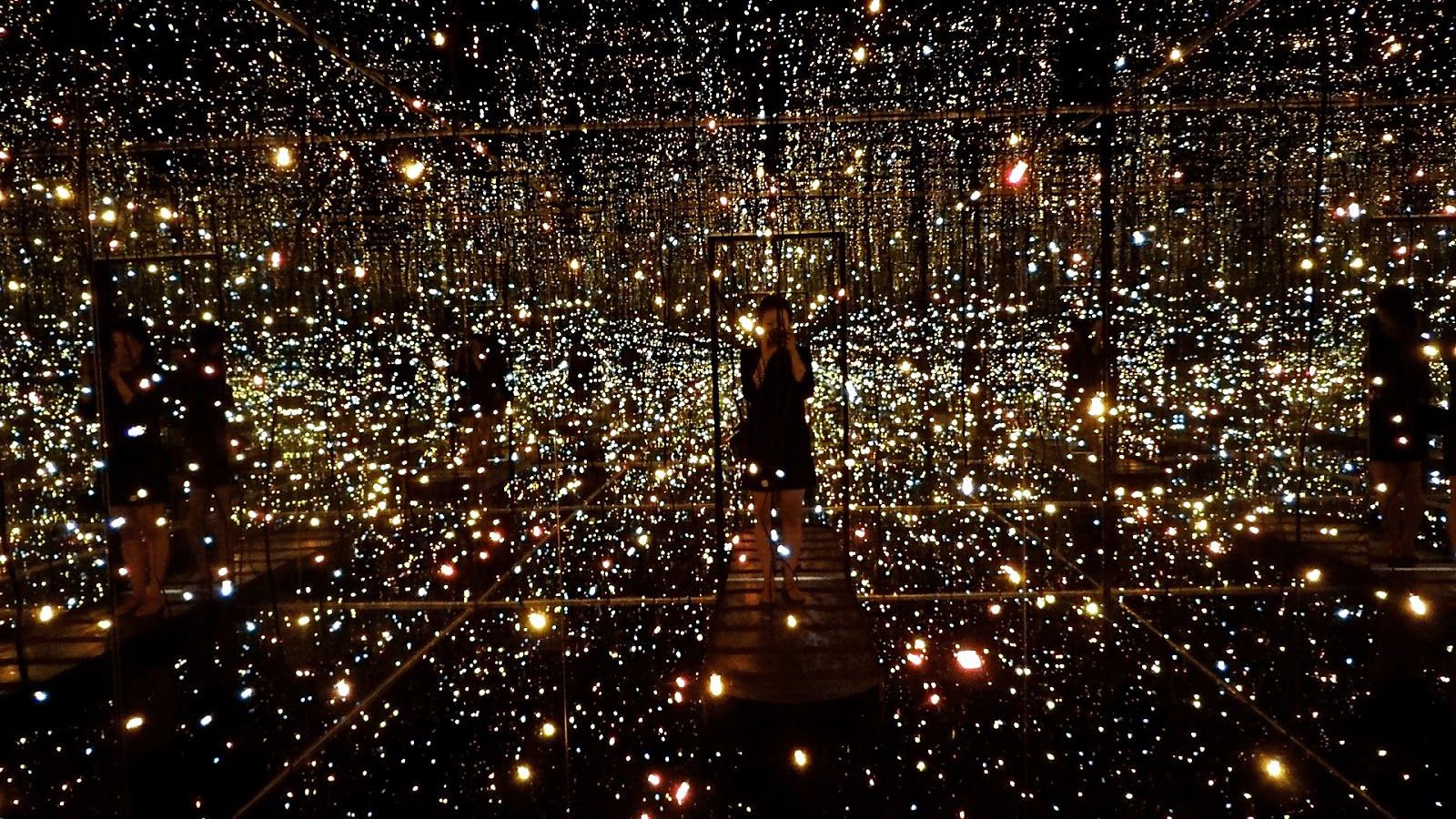
Yayoi Kusama: Mirrored Years demonstrates the enduring force of Yayoi Kusama. Renowned early installations such as Infinity Mirror Room – Phalli’s Field (1965) along with recent immersive environments including Fireflies on the Water (2000) and Clouds (2008) provide insight into the creative energy of this extraordinary artist and her lifelong preoccupation with the perceptual, visual and physical worlds.

Working across different media and forms that include painting, collage, sculpture, installation and film, as well as performance and its documentation, Kusama creates works that reveal a fixation with repetition, pattern and accumulation. Describing herself as an “obsessive artist”, her work is intensely sensual, infused with autobiographical, psychological and sexual content.”

Text from the MCA website [Online] Cited 12/03/2009. No longer available online


Many thanks to Ed Jansen for the use of his installation photographs of this exhibition at Museum Boijmans Van Beuningen, Rotterdam in 2008. See the whole set of his photographs on Flickr. Please click on the photographs for a larger version of the image.


Yayoi Kusama (Japanese, b. 1929) 'Infinity Mirror Room - Phalli's Field' 1965 from the exhibition 'Yayoi Kusama: Mirrored Rooms' at Museum of Contemporary Art (MCA), Sydney, Feb - June, 2009


Yayoi Kusama (Japanese, b. 1929)
Infinity Mirror Room – Phalli’s Field
1965


Yayoi Kusama (Japanese, b. 1929) 'Infinity Mirror Room - Phalli's Field' 1965 from the exhibition 'Yayoi Kusama: Mirrored Rooms' at Museum of Contemporary Art (MCA), Sydney, Feb - June, 2009

Yayoi Kusama (Japanese, b. 1929) 'Infinity Mirror Room - Phalli's Field' 1965


Yayoi Kusama (Japanese, b. 1929)
Infinity Mirror Room – Phalli’s Field
1965
Museum Boijmans Van Beuningen, Rotterdam, 2008
Photo: Ed Jansen


Rewind 1960

Visual hallucinations of polka dots since childhood have inspired the most significant works of this avant-gardist, who says creating art “saved” her during her lifelong battle with mental illness.

Interview by Natalie Reilly

This photograph [see above, top, for the image of her in 1965] shows a creative work that I made in New York in 1960. I was 31 years old at the time and my inspiration was the inundation and proliferation of polka dots. The work represents the evolution of my original formative process. Of all the pieces I have made, I like this one the best. It was my intention to create an interminable image by using mirrors and multiplying red polka dots.

I was born in Nagano Prefecture , a mountainous region in Japan. The youngest of four children, I have one sister and two brothers.

Since childhood, I have loved to paint pictures and create art forms. [Kusama has suffered from obsessive thinking and visual hallucinations since early childhood. the hallucinations – often of polka dots, or “nets” as she calls them – have become the inspiration for much of her work.] I did many artworks in great numbers in my younger days.

I went to Seattle in 1957 where I had my first solo exhibition in the US. I moved  to New York in 1958. Japan in those days was too conservative for avant-garde art to be accepted. [By 1961, Kusama was an active participant in the avant-garde movement in New York. Her art, which often included performance and controversial themes such as nudity and protests against the Vietnam War, drew acclaim for art critics and other artists such as Andy Warhol and Claes Oldenburg.]

I was deeply moved by the efforts the artists in New York were making then to develop a new history for art. I owe what I am today to many people in the art circles in Japan, the US and Europe who enthusiastically supported my art and gave me a boost into the international art scene.

Artists Georgia O’Keefe and Joseph Cornell were among the many friends who helped me, including Donald Judd and [writer and activist] Lucy Lippard who appreciated the originality of my art.  [In 1962 at the height of her success in New York, Kusama’s mental health began to suffer as she grew more paranoid about other artists copying her work. Late that year, she covered up all the windows in her studio in an attempt to “shut out the world”, and by November she was hospitalised after suffering a nervous breakdown.]

I came back to Japan in 1973, because my health had deteriorated. I wanted to create art in a quiet atmosphere. I once said, “if it were not for art, I would have killed myself a long time ago” an that’s still true. I do art in order to pursue my philosophy of life seeking truth in art.

Reilly, Natalie. “Rewind 1960,” in Boleyn, Alison (ed.,). Sunday Life: The Sunday Age Magazine. Melbourne: Fairfax Magazines. February 15th 2009, p. 30.


Yayoi Kusama (Japanese, b. 1929) 'Clouds' 1999 and 'Love Forever' 2005 from the exhibition 'Yayoi Kusama: Mirrored Rooms' at Museum of Contemporary Art (MCA), Sydney, Feb - June, 2009


Yayoi Kusama (Japanese, b. 1929)
Clouds 1999 and Love Forever 2005
Museum Boijmans Van Beuningen, Rotterdam, 2008
Photo: Ed Jansen


Yayoi Kusama (Japanese, b. 1929) 'Clouds' 2008 (installation view at MCA)


Yayoi Kusama (Japanese, b. 1929)
Clouds (installation view at MCA)
2008
Image courtesy the artist, Yayoi Kusama Studio, Victoria Miro Gallery, London and Ota Fine Arts, Tokyo and © the artist


Yayoi Kusama (Japanese, b. 1929) 'Stars Infinity (A.B.C)' 2003 (installation view MCA)


Yayoi Kusama (Japanese, b. 1929)
Stars Infinity (A.B.C) (installation view at MCA)
2003
Image courtesy and © the artist


This exhibition explored the extraordinary work of Japanese artist Yayoi Kusama. It revealed the coherence of her practice over many years and highlighted the freshness and innovation she brings to themes investigated throughout her life. Describing herself as an ‘obsessive artist’, her work is intensely sensual, infused with autobiographical, psychological and sexual content.

Kusama was born in 1929, in Matsumoto City, Nagano Prefecture, Japan. She demonstrated a passion for art from an early age and went on to study Nihonga painting, a formal Japanese technique using ground pigment and animal glues. Excited by the promise of the post-war international art scene, Kusama moved to New York in 1958. Her first New York solo exhibition a year later was an outstanding success and she became renowned as an innovative and adventurous young artist with her large Infinity Net canvases; Accumulation sculptures of everyday objects completely covered with soft, sewn and stuffed protuberances; environments such as the Infinity Mirror Room-Phalli’s Field (1965) and performances and Happenings. In 1966 she exhibited Narcissus Garden, a field of mirrored spheres in the gardens of the Venice Biennale, creating a sensation with an extraordinarily beautiful and compelling new version of her accumulations.

Kusama was energetic, talented, strategic and courageous at a time of fervent development in the art world, in a city that was exciting and notoriously competitive. During the ‘60s and ‘70s she was an active presence in Europe as well – in 1962 she was the only female artist to take part in the widely acclaimed Nul (Zero) international group exhibition at the Stedelijk Museum in Amsterdam. She returned to Tokyo in 1973.

Yayoi Kusama: Mirrored Years juxtaposed seminal works from the 1960s with more recent installations, films, paintings, floor pieces and silkscreen prints on canvas, and included major new works. The exhibition reflected Kusama’s lifelong obsession with repetition, pattern and aggregation, and her perceptions – visual, physical and sensory. It demonstrated her originality, creativity and uncompromising vision across many different techniques. Her work has been highly influential to new generations of artists and designers and she remains one of the most respected artists working today.

Organised by Museum Boijmans Van Beuningen, Rotterdam, Netherlands.
Presented in association with City Gallery, Wellington, New Zealand.

Anonymous. “Yayoi Kusama: Mirrored Years,” on the MCA website Nd [Online] Cited 13/06/2022


Yayoi Kusama (Japanese, b. 1929) 'Fireflies on the Water' 2000

Yayoi Kusama (Japanese, b. 1929) 'Fireflies on the Water' 2000


Yayoi Kusama (Japanese, b. 1929)
Fireflies on the Water
2000


Yayoi Kusama (Japanese, b. 1929) 'The Moment of Regeneration' 2004


Yayoi Kusama (Japanese, b. 1929)
The Moment of Regeneration
2004


Yayoi Kusama (Japanese, b. 1929) 'The Moment of Regeneration' 2004 (installation view at MCA)


Yayoi Kusama (Japanese, b. 1929)
The Moment of Regeneration (installation view at MCA)
2004
Image courtesy the artist, Yayoi Kusama Studio, Victoria Miro Gallery, London and Ota Fine Arts, Tokyo and © the artist


Yayoi Kusama (Japanese, b. 1929) 'Walking on the Sea of Death' 1981 (installation view at MCA)


Yayoi Kusama (Japanese, b. 1929)
Walking on the Sea of Death (installation view at MCA)
1981
Image courtesy the artist, Yayoi Kusama Studio, Victoria Miro Gallery, London and Ota Fine Arts, Tokyo and © the artist


Yayoi Kusama (Japanese, b. 1929) 'Narcissus Garden' 1966


Yayoi Kusama (Japanese, b. 1929)
Narcissus Garden (at the Venice Biennale, Italy)
1966


Yayoi Kusama (Japanese, b. 1929) 'The Earth in Late Summer' 2004 (installation view MCA)


Yayoi Kusama (Japanese, b. 1929)
The Earth in Late Summer (installation view MCA)
2004
Image courtesy the artist, Yayoi Kusama Studio, Victoria Miro Gallery, London and Ota Fine Arts, Tokyo and © the artist


Yayoi Kusama (Japanese, b. 1929) 'I'm here but nothing' 2000- (installation view MCA)


Yayoi Kusama (Japanese, b. 1929)
I’m here but nothing (installation view MCA)
2000-
Image courtesy the artist, Yayoi Kusama Studio, Victoria Miro Gallery, London and Ota Fine Arts, Tokyo and © the artist


Yayoi Kusama (Japanese, b. 1929) 'Invisible Life' 2000


Yayoi Kusama (Japanese, b. 1929)
Invisible Life
2000


Museum of Contemporary Art (MCA)
140 George Street
The Rocks, Sydney, Australia

Opening hours:
Daily 11am – 5pm

Yayoi Kusama website

Museum of Contemporary Art website

LIKE ART BLART ON FACEBOOK

Back to top