Exhibition: ‘Edward Weston. La matèria de les formes’ at Centro de Fotografía KBr Fundación MAPFRE, Barcelona

Exhibition dates: 12th June – 31st August, 2025

Curator: Sérgio Mah
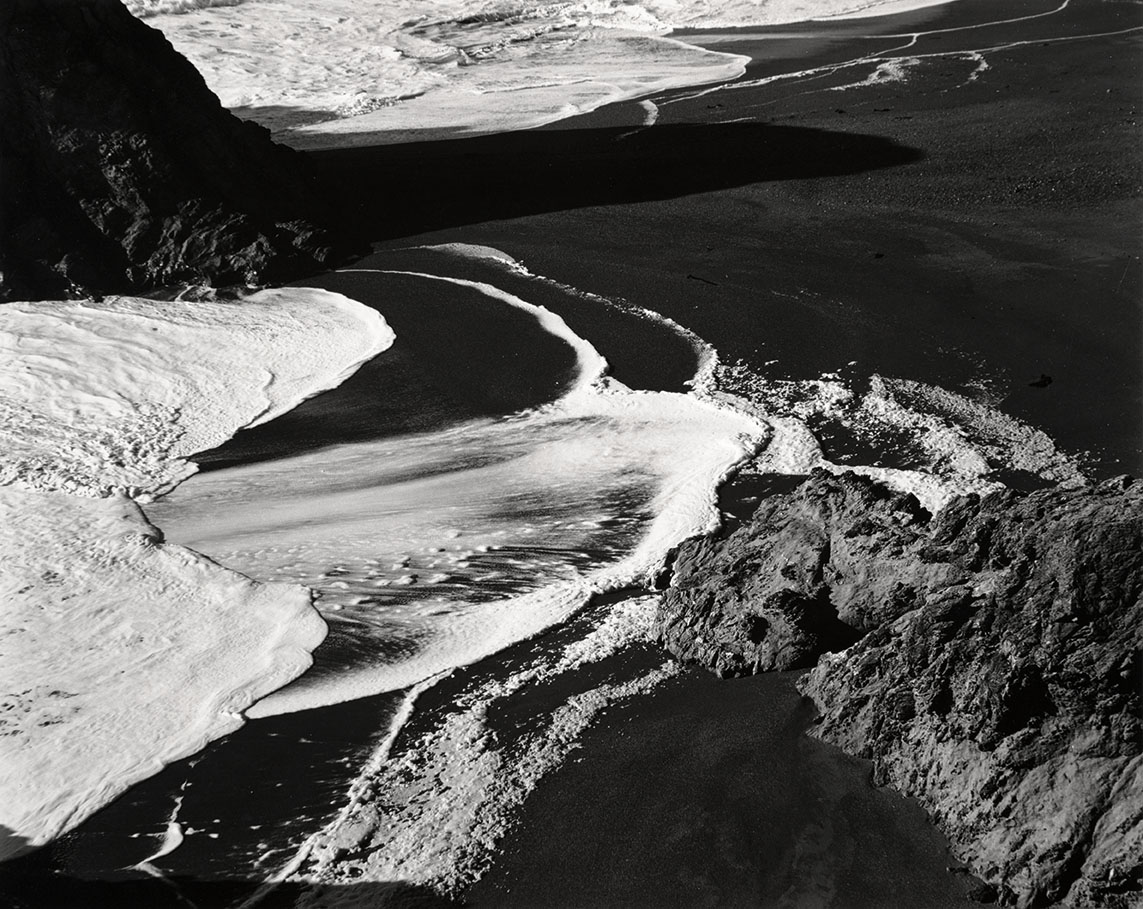
 

Edward Weston (American, 1886-1958)
'Surf, Bodega' 1937


Edward Weston (American, 1886-1958)
Surf, Bodega
1937
19 x 24cm
Gelatin silver print
Center for Creative Photography, The University of Arizona. Edward Weston Archive


Three week’s to the day since my hip replacement operation and I’m still in pain. I know, slowly slowly but it’s very frustrating…

Thus, I just have two words for you about this exhibition –

GREAT WESTERN!


Dr Marcus Bunyan


Many thankx to the Fundación MAPFRE for allowing me to publish the photographs in the posting. Please click on the photographs for a larger version of the image.


“Not I, nor anyone else can travel that road for you,
You must travel it for yourself.

It is not far, It is within reach,
Perhaps you have been on it since you were born, and did not know,
Perhaps it is every where on water and land.”


Walt Whitman. Part of Song of Myself from Leaves of Grass. 1855


I never try to limit myself by theories, I do not question right or wrong approach when I am interested or amazed – impelled to work. I do not fear logic, I dare to be irrational, or really never consider whether I am or not. This keeps me fluid, open to fresh impulse, free from formulae; and precisely because I have no formulae – the public who know my work is often surprised, the critics, who all, or most of them, have their pet formulae are disturbed. And my friends distressed.

I would say to any artist – don’t be repressed in your work – dare to experiment – Consider any urge – if in a new direction all the better – as a gift from the Gods not to be lightly denied by convention or a priori concept. Our time is becoming more and more bound by logic, absolute rationalism; this is a straitjacket I – it is the boredom and narrowness which rises directly from mediocre mass thinking.

The great scientist dares to differ from accepted ‘facts’ -think irrationally – let the artist do likewise.


Edward Weston 28 January, 1932 from The Daybooks of Edward Weston. Vol. ll Horizon Press, New York 1966
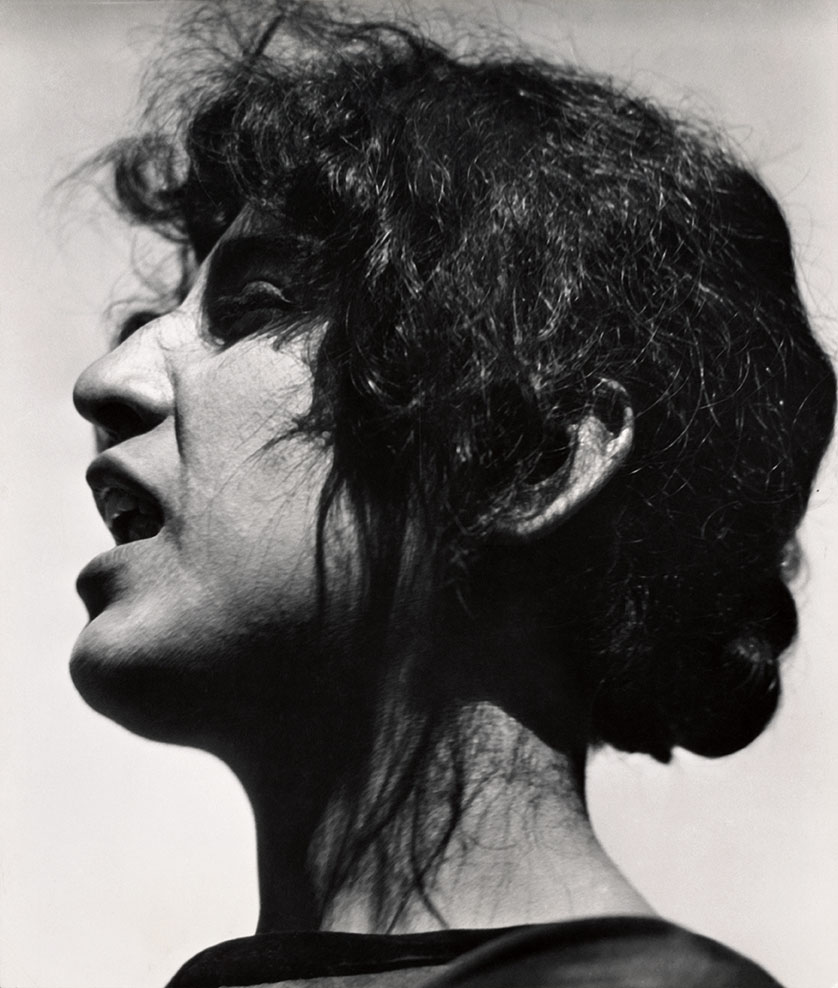


Edward Weston (American, 1886-1958)
'Guadalupe Marín de Rivera' 1924


Edward Weston (American, 1886-1958)
Guadalupe Marín de Rivera
1924
20.8 x 17.9cm
Gelatin silver print
Center for Creative Photography, The University of Arizona. Gift of Ansel and Virginia Adams


Strongly linked to the landscape and to North American cultural history, Edward Weston’s work, in its extreme simplicity and originality, allows us to appreciate a unique perspective on the process of consolidation of photography as an artistic medium and its relevant role in the context of modernity in the visual arts. The exhibition Edward Weston. La matèria de les formes (Edward Weston. The Matter of Forms) is conceived as an anthology that covers the different phases of the artist’s photographic production.

A pioneer in the use of a modern photographic style, his use of the large-format camera gives rise to richly detailed black and white images of extraordinary clarity. His technical expertise and his affection for nature and form led to the development of a body of work in which iconic images of still lifes, nudes, landscapes and portraits stand out. His images are essential for understanding the new aesthetic and new American lifestyle that emerged in the United States between the wars.

The exhibition, curated by Sergio Mah, consists of around two hundred photographs grouped into seven sections. The exhibition tour is completed with numerous documentary material and is conceived from a European perspective on the legacy of modern American photography. An aesthetic and conceptual counterpoint to the photographic modernism in Europe that emerged with the first avant-garde of the 20th century.

The emancipation of photography

Edward Weston was one of the pioneers, along with Alfred Stieglitz and Paul Strand, in defending the emancipation of photography from other artistic disciplines. In this sense, his work contributed decisively to demonstrating, in this early period of photography, the aesthetic and perceptual dimension of the medium, the capacity to express aesthetic qualities in the same way as painting or sculpture.

Figuration and abstraction

The technical mastery of the photographic medium leads Weston to a formalism in which framing becomes one of the most relevant elements of his work. Weston eliminates any anecdotal aspect and focuses on the motif that interests him, and does so with such realism and exaltation of the two-dimensional nature of photography, which often results in an abstract image. In this way, the artist shows that figuration and abstraction do not exempt one from the other, but are perfectly compatible.

Exhibition organised with the support of the Center for Creative Photography at the University of Arizona, Tucson.

Text from the Fundación MAPFRE website translated from the Spanish by Google Translate
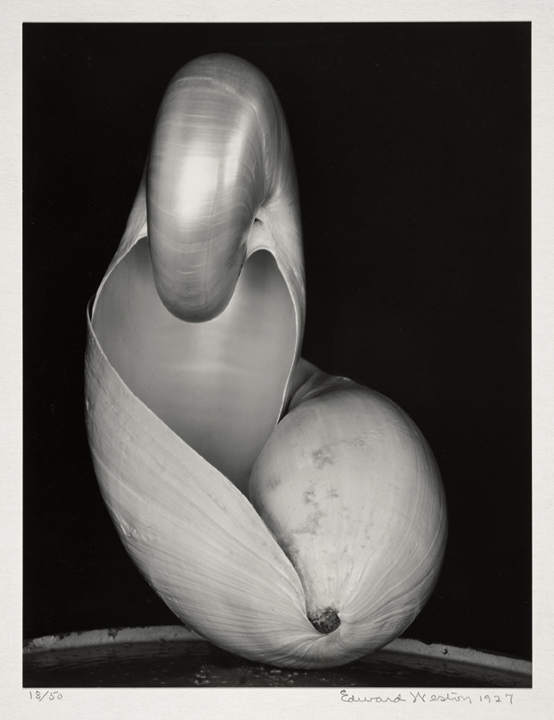
 

Edward Weston (American, 1886-1958) 'Two Shells' 1927, print about 1933


Edward Weston (American, 1886-1958)
Two Shells
1927, print about 1933
24.1 x 18.4cm
Gelatin silver print
The J. Paul Getty Museum, Los Angeles


Edward Weston (American, 1886-1958) 'Pepper No. 30' 1930


Edward Weston (American, 1886-1958)
Pepper No. 30
1930
22.8 x 17.7cm
Gelatin silver print
Courtesy by Trockmorton Fine Art


Highlights

Fundación MAPFRE presents the exhibition Edward Weston. The Matter of Forms, dedicated to the five decades of the career of this North American artist, one of the most important figures in modern photography. In addition, through the work of the artist himself, the exhibition aims to offer a pedagogical reflection on the history of the medium and its relevance as an aesthetic and perceptive discipline, apart from the more traditional plastic arts; specifically, painting.

Key points

The emancipation of photography

Edward Weston was one of the pioneers, along with Alfred Stieglitz and Paul Strand, in defending the emancipation of photography from other artistic disciplines. In this sense, his work is essential to understanding the aesthetic and perceptive capacity of the medium in its beginnings. This capacity allows photography to express aesthetic qualities such as beauty, pain or ugliness at the same level as painting or sculpture.

Figuration and abstraction

The technical mastery of the photographic medium leads Weston to a formalism where framing becomes one of the most relevant elements of his work. In this sense, he eliminates any anecdotal aspect and focuses on the motif that interests him, and he does so with such realism and with such exaltation of the two-dimensional character of photography that he ends up obtaining an abstract image as a result. In this way, the artist shows that figuration and abstraction do not exclude each other, but are perfectly compatible.

Pepper No. 30

Edward Weston took this photograph, one of the most representative of his entire career, at the beginning of August 1930. It was not the first time he had photographed a vegetable, nor a pepper. The artist himself spoke about this image: “It is a fully satisfactory classic: a pepper, but more than a pepper. It is abstract, in the sense that it exists completely outside the subject. It has no psychological attributes, it does not awaken human emotions: this new pepper takes us beyond the world we know in the conscious mind.” In the light of this photograph and the artist’s words, the innovative character of his work can be distinguished, which transcended not only modern American photography, but also European photography.

The exhibition

Weston’s work, strongly linked to the landscape and to North American cultural history, in its extreme simplicity and originality, reveals a unique perspective on the process of consolidation of photography as an artistic medium and its relevant role in the context of modernity in the visual arts. The exhibition Edward Weston. The Matter of Forms is conceived as an anthology that covers the different phases of the artist’s photographic production. From his initial interest in Pictorialist approaches to his consolidation as one of the central figures in the affirmation of the poetic and speculative value of direct photography. A pioneer in the use of a modern photographic style, his work is characterised by the use of a large-format camera, which allows him to offer richly detailed black and white images of extraordinary clarity. His mastery of technique, together with his love of nature and form, led him to develop a photographic production in which iconic images of still lifes, nudes, landscapes and portraits stand out. As a co-founder of the photography collective Group f/64, his images are key to understanding the new North American aesthetic and lifestyle that emerged in the United States between the wars.

The exhibition, grouped into seven sections and curated by Sérgio Mah, consists of around 200 photographs and a large amount of documentary material. The exhibition is conceived as a European look at the legacy of modern North American photography. An aesthetic and conceptual counterpoint to the modern photography that emerged in Europe with the first avant-garde of the 20th century.
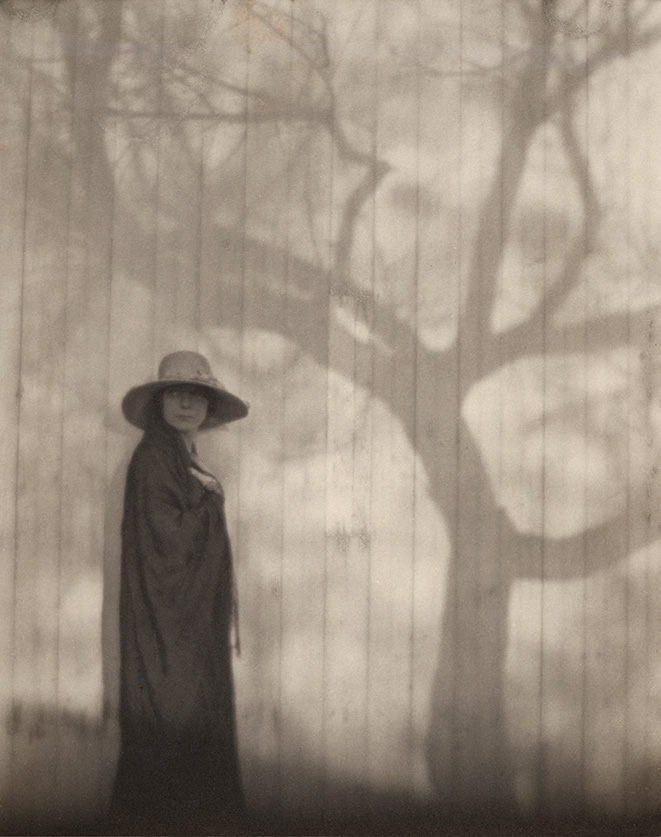
 

Edward Weston (American, 1886-1958) 'Prologue to a Sad Spring' 1920


Edward Weston (American, 1886-1958)
Prologue to a Sad Spring
1920
23.8 x 18.7cm
Platinum print
Center for Creative Photography, The University of Arizona. Johan Hagemeyer Collection/Purchase


1 /

Edward Weston began photography very early, thanks to a Kodak Bulls-Eye No. 2 camera that his father gave him when he was just sixteen. Although he was practically self-taught, in 1911 he opened his first photographic establishment in a suburb of Los Angeles. His early works reveal the influence of the Pictorialist atmosphere of the time: impressionistic views and pastoral subjects with soft or slightly blurred focus, scenography and expressive poses.
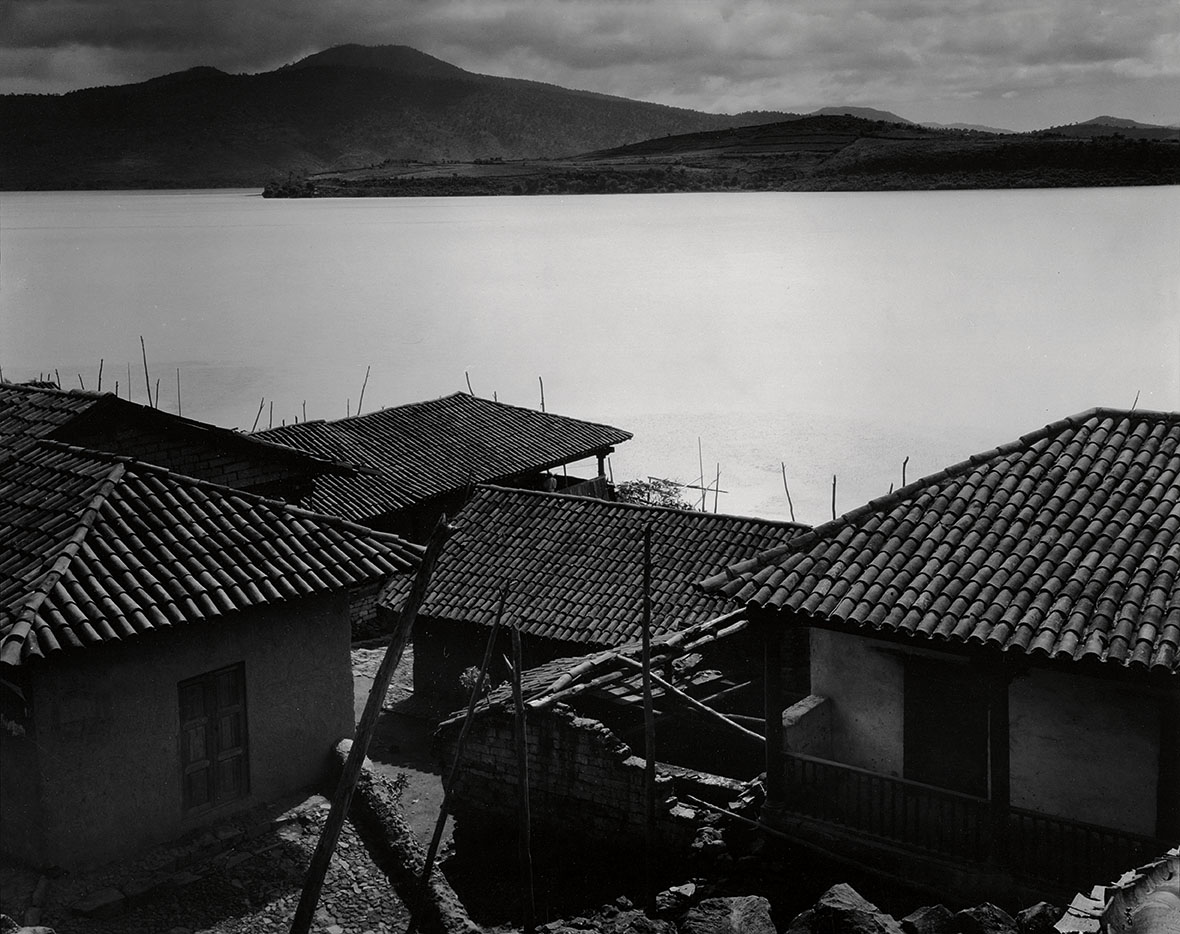
 

Edward Weston (American, 1886-1958) 'Janitzio, Mexico' 1926


Edward Weston (American, 1886-1958)
Janitzio, Mexico
1926
20.4 x 25.2cm
Gelatin silver print
Center for Creative Photography, The University of Arizona. Edward Weston Archive/Gift of the Heirs of Edward Weston


2 /

Weston’s dissatisfaction with this artistic approach to photography, which sought to assimilate itself to painting, coincided with the appearance of other photographers with similar ideas, such as Alfred Stieglitz and Paul Strand, whom he met in New York in 1922. In 1923 he set sail for Mexico accompanied by one of his sons and the photographer Tina Modotti. There he found a true renaissance of the arts and culture, and he came into contact with artists such as Diego Rivera, Frida Kahlo and Rafael Sala. He expanded his visual horizon and tackled new themes, photographing objects, figures and motifs far from their original context, turning them into suggestive and extraordinary elements. It was then that he realised that true photographic art is intuitive and immediate, that the elimination of everything that is accessory constitutes the essence of his creative talent.
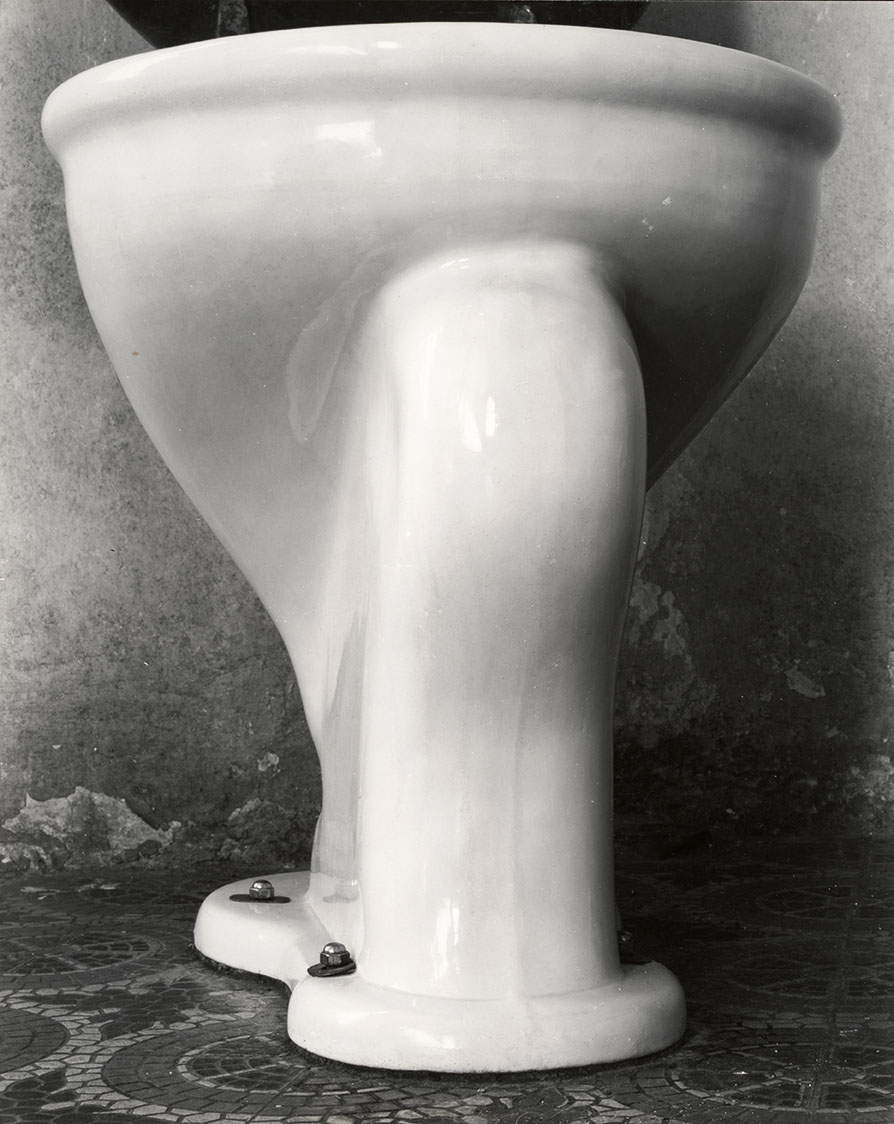
 

Edward Weston (American, 1886-1958) 'Excusado, Mexico' October 1925


Edward Weston (American, 1886-1958)
Excusado, Mexico
October 1925
24.1 x 19.1cm
Gelatin silver print
Center for Creative Photography, The University of Arizona. Edward Weston Archive


3 /

From 1927, influenced by the humanism of Walt Whitman and his work Leaves of Grass, he felt attracted, in the words of Sérgio Mah, by “the extraordinariness of banality”. Fruits, shells and vegetables became the protagonists of his works, and he made one of his most famous photographs: a toilet, an unusual object as an artistic subject, with the title Excused. In these images, Weston accentuated the two-dimensionality of the motifs, since it was one of the characteristics of photography that interested him. He looked for details as a way of fragmenting, isolating and approximating the photographed object, eliminating the sense of depth, a technique particularly notable in still lifes with dark backgrounds, as is the case with his photographs of peppers.
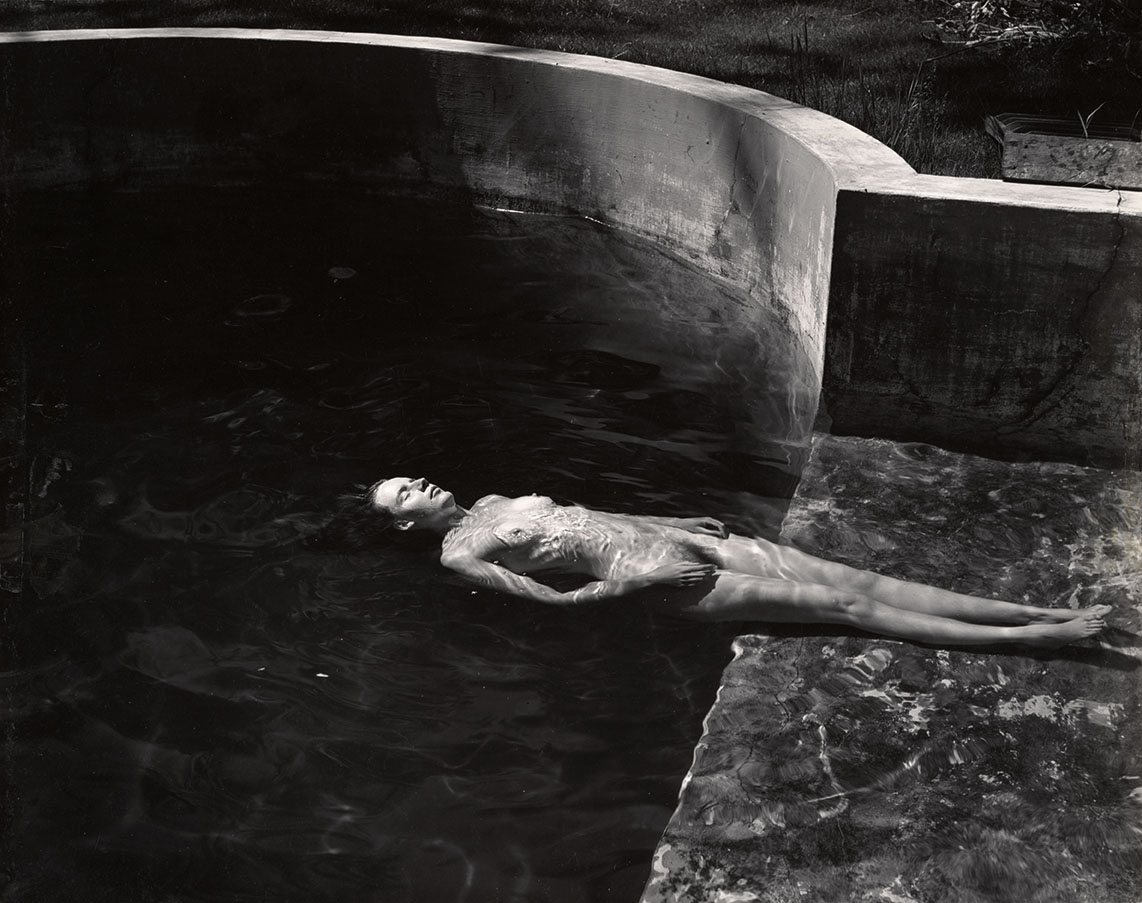
 

Edward Weston (American, 1886-1958) 'Floating Nude' 1939


Edward Weston (American, 1886-1958)
Floating Nude
1939
19.3 x 24.2cm
Gelatin silver print
Center for Creative Photography, The University of Arizona. Edward Weston Archive


4 /

From 1926, after leaving Mexico, Weston photographed several sets of nudes. In these nudes, the photographer’s gaze varies depending on the model. In some cases, the frame is wide and even shows the face, while in others the gaze is more segmented and focuses on parts of the body as a way of cutting out and accentuating the shapes within the frame. It must be recognized that eroticism is a quality present in some of these photographs. However, it is incorrect to conclude that this type of gaze prevails in most of the nudes he photographed. Above all, Weston observes the body as a formal reality. The beauty and sensuality that these bodies suggest is reflected in the play of lines, shadows and contours they offer.
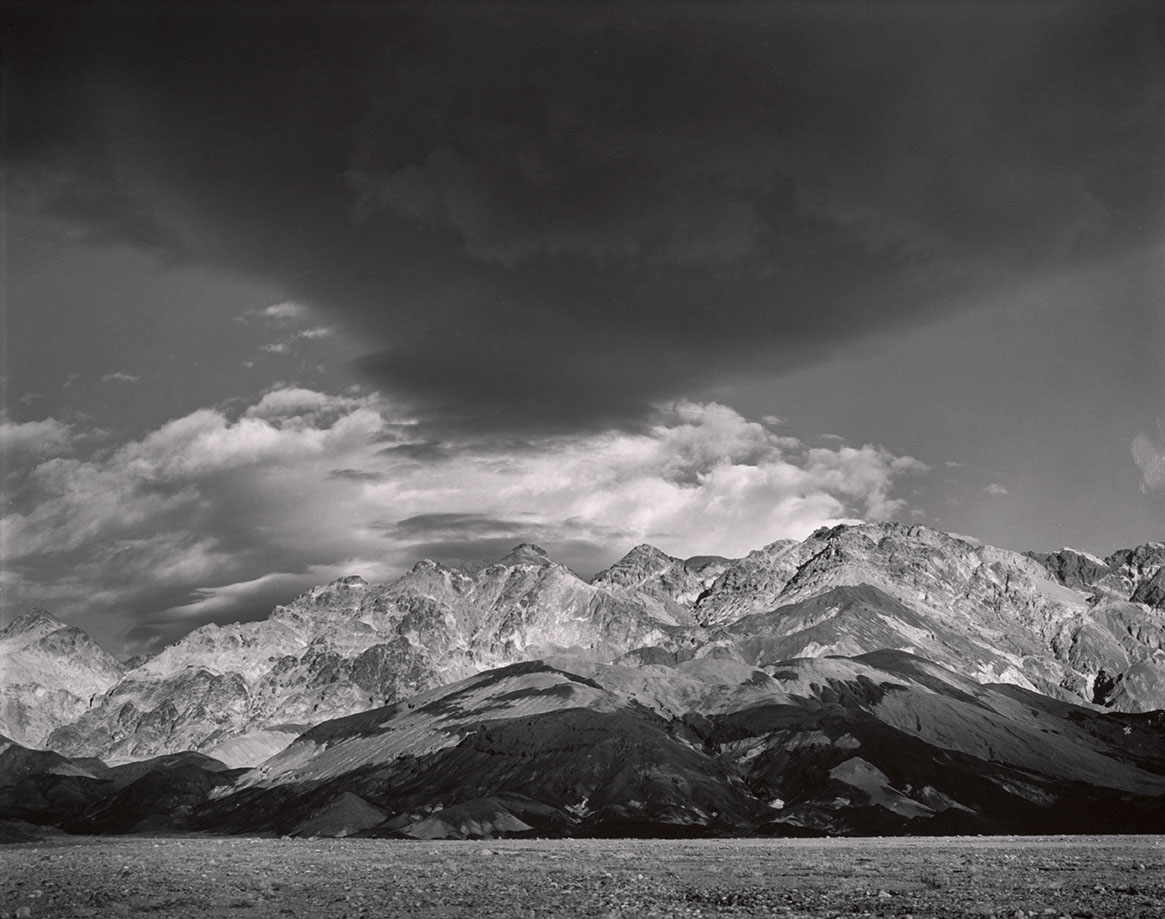
 

Edward Weston (American, 1886-1958) 'Clouds, Death Valley'
1939


Edward Weston (American, 1886-1958)
Clouds, Death Valley
1939
20.4 x 25.2cm
Gelatin silver print
Center for Creative Photography, The University of Arizona. Edward Weston Archive


5 /

From the late 1920s and into the following decades, landscape became a central element in Weston’s work. The artist photographed in the desert near Palm Springs, California, as well as in New Mexico, Arizona, and other Californian areas near his home in Carmel. In these works, the horizon and the depth of the background become a structural part of his works: the panoramic shots highlight the sublime character of the landscape. It was also during this period that Weston began to be interested in meteorological phenomena such as rain, the configuration of clouds, and the aridity of the territory.
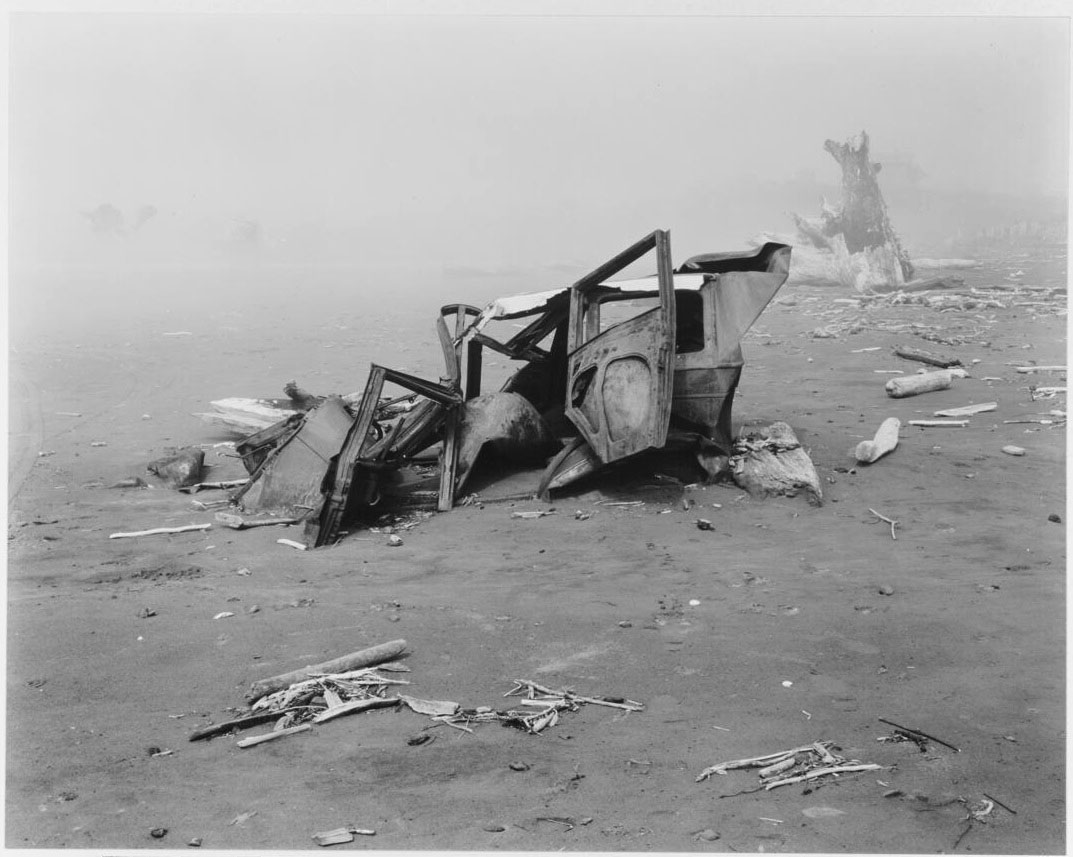
 

Edward Weston (American, 1886-1958) 'Crescent Beach, North Coast' 1939


Edward Weston (American, 1886-1958)
Crescent Beach, North Coast
1939
24.3 x 19.2cm
Silver print mounted on board
The Huntington Library, Art Museum, and Botanical Gardens


6 /

Over the years, Weston’s work increasingly acquired a “dense and melancholic” patina, an aspect that is accentuated by the tones that the images acquire. This characteristic is particularly evident in the photographs he took in 1941 to illustrate Leaves of Grass, a project for which he traveled throughout much of the United States for nearly two years. The images he captured in cemeteries in Louisiana and Georgia stand out, as well as those of abandoned, destroyed and burned buildings where the interest in formal aspects predominates and in which a critical and disillusioned commentary on reality and American society can already be seen.
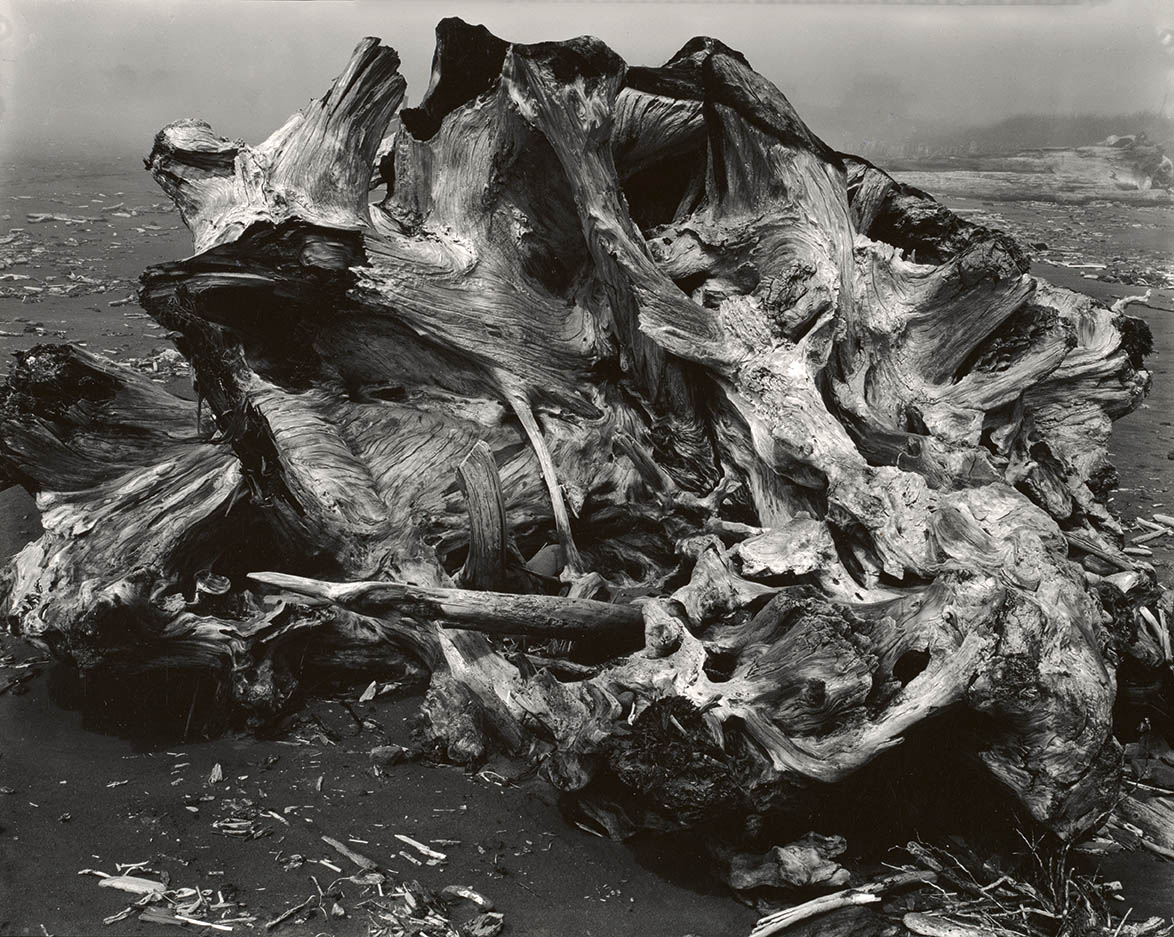
 

Edward Weston (American, 1886-1958) 'Drift Stump, Crescent Beach' 1937


Edward Weston (American, 1886-1958)
Drift Stump, Crescent Beach
1937
20.3 x 25.2cm
Gelatin silver print
Center for Creative Photography, The University of Arizona. Edward Weston Archive


7 /

In the vicinity of Point Lobos, California, was the log cabin built by his son Neil on Wildcat Hill, where Weston moved in 1938. In this area of ​​California, the artist found the wild nature that he had sought in distant places. His images from this period denote less compositional and formal rigidity and show the cycles of nature in the territory, the wild beauty, the trees, stones and rocky landscapes that seem to arise and remain in a time that is stopped. These images express a certain melancholy and solitude, while allowing the viewer to rediscover nature in all its splendour.


Edward Weston (American, 1886-1958) 'Dunes, Death Valley' 1938


Edward Weston (American, 1886-1958)
Dunes, Death Valley
1938
20.4 x 25.1cm
Gelatin silver print
Center for Creative Photography, The University of Arizona. Edward Weston Archive


Catalogue

The catalogue accompanying this exhibition reproduces all the photographs on display. In addition, it includes essays by Sérgio Mah, its curator, by Rebecca Senf, who discusses the artist’s relationship with Mexico, and by Jason Weems, who focuses on Weston’s landscapes and vegetable photographs. It also includes a series of reflections by the artist himself on photography taken from his diaries.

The publication of the catalogue, published in Spanish and Catalan by Fundación MAPFRE, also has a co-edition in Italian published by Dario Cimorelli Editore.

Text from Fundación MAPFRE translated from the Spanish by Google Translate
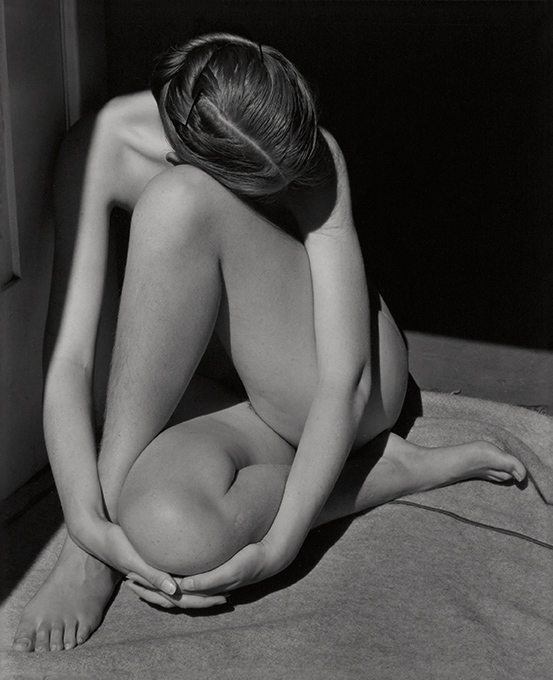
 

Edward Weston (American, 1886-1958) 'Nude' 1936


Edward Weston (American, 1886-1958)
Nude
1936
23.4 x 19.1cm
Gelatin silver print
Center for Creative Photography, The University of Arizona. Gift of the Estate of A.Richard Diebold, Jr.


Author of a vast and diverse body of work spanning five and a half decades, Edward Weston (1886-1958) is one of the great figures in the history of modern photography, partly because his work allows us to reflect on the distinctive qualities of photography as a technical, aesthetic and perceptual category.

His first creative experiments reveal a momentary adherence to the pictorialist tendencies of the time, but he would later stand out as one of the protagonists of a new generation of American photographers who sought to refocus the artistic axis of photography based on its exceptional capacity to represent the most diverse subjects in the world with rigor, clarity and sobriety.

With their extreme simplicity and originality, the exceptional quality of Weston’s images also lies in the way in which he was able to rethink and articulate the extraordinary realistic and objective capacity of photography with its aesthetic, poetic and phenomenological potential, contributing to expanding the horizon of the subjective experience of the image. In this way, Weston enunciated the unique role of photography in the panorama of the visual arts of his time.

Weston was an immensely prolific photographer and his work brings together a whole series of photographic themes, types and genres: portraits, nudes, still lifes, natural and urban landscapes, object photography, architecture… This anthological exhibition aims to cover the entirety of Weston’s photographic career, which began at the beginning of the 20th century and was uninterrupted until the end of the 1940s. The selection of works aims to go well beyond the period in which Weston took most of the images that gave him wide critical and institutional recognition. The truth is that a more complete and heterogeneous approach to his work allows us to summon other layers of aesthetic appreciation, broadening the understanding of the depth and articulations that Weston developed in the various fields he explored. Furthermore, it offers the opportunity to point out the aspects and affinities (in the gaze, in the construction of the image or in its peculiar relationship with certain themes) present throughout his career, emphasizing the coherence of his imagery, as well as the nuances and moments of transition that occurred in it.

Sérgio Mah
Curator

Text from Fundación MAPFRE translated from the Spanish by Google Translate
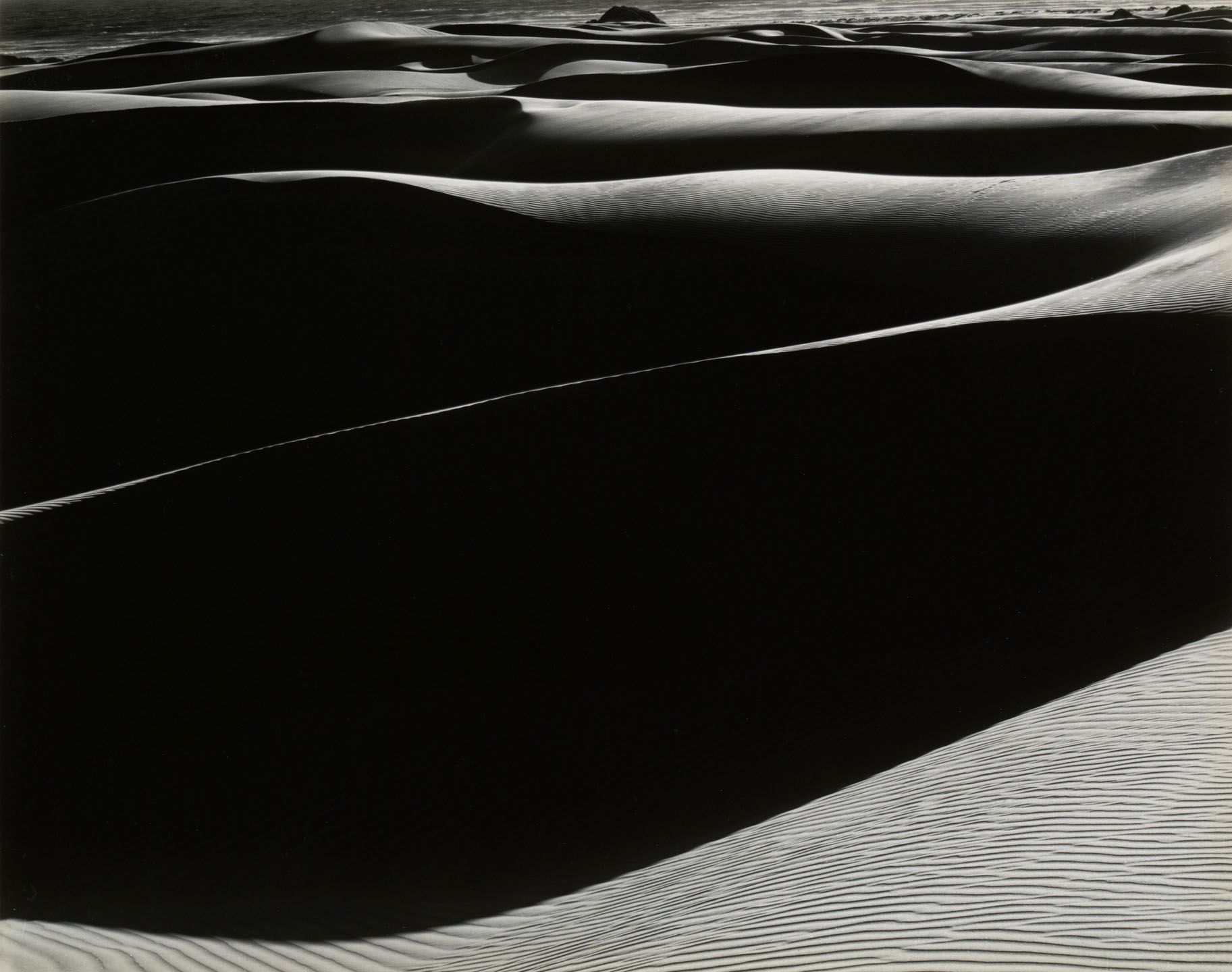
 

Edward Weston (American, 1886-1958) 'Dunes, Oceano' 1936


Edward Weston (American, 1886-1958)
Dunes, Oceano
1936
24.1 x 18.9cm
Silver print mounted on board
The Huntington Library, Art Museum, and Botanical Gardens


From an early age, Edward Weston showed an interest in developing a creative side of photography apart from his commercial work. His early experiments show the influence of painting and reveal his attention and attachment to the pictorialist atmosphere of the time. These photographs include impressionistic views, pastoral subjects with soft or slightly blurred focus, numerous staged portraits that explore expressive poses and combinations with shadows and graphic elements of the environment.

The two periods he spent in Mexico, between 1923 and 1924 and then between 1925 and 1926, were decisive in Edward Weston’s creative career. There he began to explore new themes and genres and his visual horizon expanded significantly. He covered a wide variety of subjects, types of places, figures and things, parts of things, appropriate objects, motifs taken from their original context and repositioned in another interpretative framework. At the same time, his visual style completely sheds any reminiscence of the Pictorialist phase. A photography of great technical, formal and compositional rigour was consolidated. Weston realised that he had the capacity to transform trivial things into suggestive and extraordinary. He was clear that the art of photography lies fundamentally in the moment of making the image, in the way in which the photographer contemplates the subject and makes decisions according to the variables inherent in the photographic device. For him, the process is instinctive. This way of seeing – intuitive, intense and immediate – which seeks to isolate the subject, eliminating the accessory, the unnecessary, anything that could divert or attenuate the intensity of the photographic vision, constitutes the essence of Weston’s creative talent.

From 1927, Weston began a series of still life photographs. In these images he fully reveals the principles and characteristics of his work: the desire to represent the timeless essence of a natural object and, correlatively, to emphasise the duplicative and perceptive capacities of the photographic medium.

The compositions are carefully conceived. In the space of the image, there is a calculated conformity between the dimension of the forms and the format of the image. Here it is important to reiterate the focus on detail as a defining aspect of Weston’s imagery, evident in these still lifes and also in other aspects of his work. Weston understands the vision of detail as a way of fragmenting, isolating and bringing our gaze closer to certain things, accentuating the two-dimensional character of the image, its closed and opaque nature, without depth or horizon, evident above all in still lifes with dark backgrounds, such as photographs of peppers, but also in the various images of plants, trees, rocks and stones that he has been making since the early 1930s.

Weston left Mexico in 1926. In the following years, he made several series of nudes. This is not a new subject. He had already made some important ones before, including one of Anita Brenner’s back and another of her son Neil, whose torso is cut out in an image that evokes ancient Greek statues. In the nudes, the photographer’s gaze varies depending on the model. In some cases, the framing is wide and even shows the face, while in others the gaze is more segmented and focuses on parts of the body as a way of cutting out and accentuating the shapes within the frame. We can recognise that eroticism is a quality present in some of these photographs. It is incorrect, however, to conclude that this gaze prevails in most of his nudes. Weston observes the body mainly as a formal reality. The beauty and sensuality that these bodies suggest are based above all on the play of lines, shadows and contours that they provide.

From the late 1920s, and with greater intensity in the following decades, the landscape genre occupies a central place in Weston’s photographic production. In 1927, the artist takes photos in the Californian desert near Palm Springs. In the following years, he travels through New Mexico, Arizona and other areas of California, such as Oceano, Death Valley, Yosemite, the Mojave Desert and Point Lobos, near his home in Carmel. In these various places, he captures wide views of inhospitable territories in which there are no signs of human presence or intervention. The horizon line and the breadth of the territory become structuring motifs in his work. The impetus for these images is a feeling of admiration for the epic and immeasurable nature of these natural landscapes. Beyond his choice of panoramic shots, the images reveal other aspects and elements of nature, such as meteorological phenomena, rain, cloud formations and variations in sunlight, often in conjunction with their visual effect on the arid land or the vegetation and unique morphology of these territories. It is a vision sensitive to the transformative nature of the landscape, subject to environmental and geological changes.

Gradually, and with greater intensity from the 1940s onwards, Edward Weston’s imagery became denser and more melancholic, not only in terms of the selection of subjects, but also in the tonalities of the images. This tendency is particularly evident in the photographs he takes for an edition of Leaves of Grass, the masterpiece of the poet Walt Whitman. He travels throughout the United States for two years. He revisits many of the recurring themes in his work, but the large number of images he takes of cemeteries in Louisiana and Georgia stand out. These are photographs in which his interest in formal aspects, texture and light predominates. All the subjects are seen as an integral part of a geography that is at once physical, social and mental. On the other hand, there are a lot of images of abandoned, destroyed and burnt buildings, of rubbish and things destined to disappear. We can identify that the themes of finitude and death contribute to an imagery increasingly characterised by loneliness, melancholy, and decadence. For the first time in his work, the images suggest a disillusioned and critical commentary on American reality, on the relationship between nature and culture, continuity and change, alienation and social tension.

In 1938, Weston moved with Charis Wilson to the wooden house built by his son Neil on Wildcat Hill, near Point Lobos, California. The artist spent long periods taking photos in this coastal region. He wandered through areas that he knew well. The images show a nature permeated with cycles, rhythms and forces, a macrocosm where Weston found the material to continue his work. At Point Lobos, Weston encountered a wild, dazzling and ineffable beauty that he had always sought in distant places. In the trees, forests, stones and rocky landscapes, the photographer found a vital energy that led perception towards a diffuse time, contrary to the linearity of history, alien to modernity. Nature then emerged as a theme and setting that allowed him to think and experience a renewed gaze (spontaneous, intuitive, aesthetic), a gaze that was both concrete and metaphysical that allowed him to rediscover nature.

Text from Fundación MAPFRE translated from the Spanish by Google Translate


Edward Weston (American, 1886-1958) 'Charis, Lake Ediza' 1937


Edward Weston (American, 1886-1958)
Charis, Lake Ediza
1937
19.1 x 24.1cm
Silver print mounted on board
The Huntington Library, Art Museum, and Botanical Gardens


KBr Fundación MAPFRE
Av. del Litoral, 30 08005 Barcelona
Phone: +34 932 723 180

Opening hours:
Tuesdays – Sundays (and public holidays) 11am – 8pm

Fundación MAPFRE website

LIKE ART BLART ON FACEBOOK

Back to top

Exhibition: ‘The young Picasso – Blue and Rose Periods’ at Fondation Beyeler, Riehen, Switzerland

Exhibition dates: 3rd February – 26th May, 2019

Curator: Dr Raphaël Bouvier


Pablo Picasso (Spanish, 1881-1973) 'Yo Picasso' 1901 from the exhibition 'The young Picasso – Blue and Rose Periods' at Fondation Beyeler, Riehen, Switzerland, Feb - May, 2019


Pablo Picasso (Spanish, 1881-1973)
Yo Picasso (I Picasso)
1901
Oil on canvas
73.5 x 60cm
Private collection
© Succession Picasso / 2018, ProLitteris, Zurich


Room 1

The young artist gazes defiantly over his shoulder at the viewer. His white shirt, painted with bold brushstrokes, glows against the dark background; in his right hand he holds a palette with traces of paint which, together with the lively orange and yellow in his cravat and face, create marked contrasts. The aspiring artist produced this self-portrait for his first exhibition at Ambroise Vollard’s gallery in Paris. Picasso painted himself here in a style reminiscent of Henri de Toulouse-Lautrec or Vincent van Gogh. The palette alone identifies the subject as an artist. The expressively applied colours, their brushstrokes clearly visible, carry significance: here the painter is not portrayed working, but through his work itself. The painting is a bold statement by the artist newly arrived in Paris – something that Picasso underscores with the inscription ‘Yo’ (Engl.: I) besides his signature in the upper left corner of the canvas. From this point on, he would sign his works simply ‘Picasso’ – his mother’s surname.


And now for something completely different…

My favourite periods of Picasso, probably because her tries to depict the feelings of the people he is portraying.

I love the painting’s disrupted humanism, the monumental, twisted, isolated figures placed against a colourful, pictorially flattened, sometimes contextless ground. The spirit these paintings call forth – the intense gaze in the 1901 self-portrait; the sad introspection, depression of the Melancholy Women (1901); the existential themes of death, suffering and love in La Vie (Life) (1903) – show a 21 year old artist mature beyond his years, wizened in wisdom and understanding through the death of his sister and his friend Casagemas: “poverty, dejection, creative anguish, and grief for those lost.”

“In the most emotional, emotionally expressive pictures of this phase, the artist looks into the depths of human misery and relies on expressive topics such as life, love, sexuality and death.”

The circus and acrobat paintings continue the theme of melancholy, disenchanted figures of the commedia dell’arte intertwined in the transformation of bodies in space (Henri Lefebvre).

Call me an old romantic, but the attitude and the touch of the emaciated blind man’s hand as he reaches for his flagon of wine totally does it for me in a way that the more brutish, primitivist paintings of his later raw style never can.

Dr Marcus Bunyan


Many thankx to the Fondation Beyeler for allowing me to publish the images in the posting. Please click on the images for a larger version of the art.


“I was a painter and became Picasso.”

 “The Blue Period was not a question of light and colour. It was an inner necessity to paint like that.


Pablo Picasso


At the age of just twenty, the aspiring genius Picasso (1881-1973) was already engaged in a restless search for new themes and forms of expression, which he immediately brought to perfection. One artistic revolution followed another, in a rapid succession of changing styles and visual worlds. The exhibition at the Fondation Beyeler places the focus on the Blue and Rose periods (1901-1906), and thus on a central phase in Picasso’s work. It also sheds fresh light on the emergence, from 1907 onward, of Cubism, as an epochal new movement that was nevertheless rooted in the art of the preceding period.

In these poignant and magical works, realised in Spain and France, Picasso – the artist of the century – creates images that have a universal evocative power. Matters of existential significance, such as life, love, sexuality, fate, and death, find their embodiment in the delicate beauty of young women and men, but also in depictions of children and old people who carry within them happiness and joy, accompanied by sadness.

Text from the Fondation Beyeler website [Online] Cited 19/04/2019


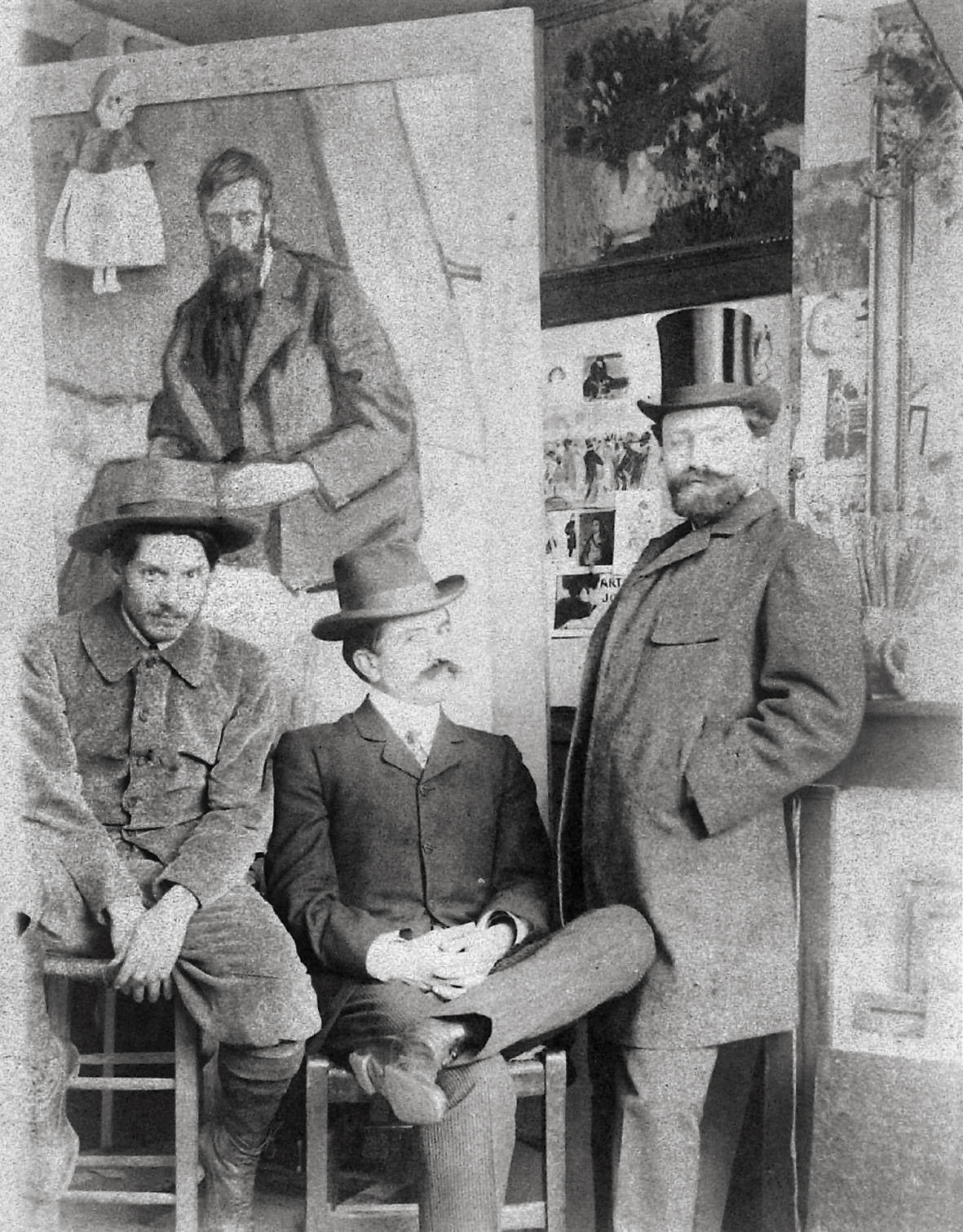
Unknown photographer. 'Pablo Picasso, Pere Mañach and Antonio Torres Fuster, Boulevard de Clichy 130, Paris' 1901 from the exhibition 'The young Picasso – Blue and Rose Periods' at Fondation Beyeler, Riehen, Switzerland, Feb - May, 2019


Unknown photographer
Pablo Picasso, Pere Mañach and Antonio Torres Fuster, Boulevard de Clichy 130, Paris
1901
Photo: © NMR-Grand Palace (Picasso-Paris National Museum) / Daniel Arnaudet


Pablo Picasso (Spanish, 1881-1973) 'Buveuse d'absinthe' (The Absinthe Drinker) 1901 from the exhibition 'The young Picasso – Blue and Rose Periods' at Fondation Beyeler, Riehen, Switzerland, Feb - May, 2019


Pablo Picasso (Spanish, 1881-1973)
Buveuse d’absinthe (The Absinthe Drinker)
1901
Oil on canvas
73 x 54cm
The State Hermitage Museum, St. Petersburg


Room 2

In his early years, Picasso reused his canvases multiple times, mostly due to a lack of money. He often overpainted his own pictures or – as in Femme dans la loge and Buveuse d’absinthe – used both the front and back sides. Femme dans la loge was done at the time of Picasso’s first exhibition at Ambroise Vollard’s gallery. While the figure of the ageing dancer or courtesan, along with the setting, showcase a colouristic firework, the woman’s face is carefully modelled, revealing individualised features. The work Buveuse d’absinthe, today known as the front side, was created only shortly thereafter, and marks the transition from Picasso’s early pictures to those of the Blue Period. Here, flat, opaquely applied colours extend over large areas, with individual fields of colour clearly delineated from one another by dark contours. The absinthe drinker sits away from the small table, alone, her gaze blank, self-absorbed. The scene emanates an atmosphere of melancholy and other-worldliness that would later come to typify the works of the Blue Period.

“… the images created by the young artist are sharply dramatic. For example, in this painting, the most striking detail is a giant right hand of a woman, who is absorbed in her thoughts and tries to embrace and protect herself with this hand.”


Pablo Picasso (Spanish, 1881-1973) 'Arlequin assis' (Harlequin sitting) 1901


Pablo Picasso (Spanish, 1881-1973)
Arlequin assis (Harlequin sitting)
1901
Oil on canvas
83.2 x 61.3cm
New York, Metropolitan Museum of Art, Purchase Mr. and Mrs. John L. Loeb, Gift 1960
© Succession Picasso / 2018, ProLitteris, Zurich
Photo: © The Metropolitan Museum of Art / Art Resource / Scala, Florence


Room 2

Arlequin assis is one of the earliest Harlequin depictions in Picasso’s oeuvre. In an unnaturally twisted pose, the Harlequin sits at a table and turns his head in the opposite direction to the rest of his body. The table jutting diagonally into the picture space offers him a support on which to rest his elbow. As in Picasso’s female portraits of 1901, here, too, the hands attract the viewer’s attention due to their large size and elongated shape. Surprisingly, the Harlequin with his melancholy posture in fact bears the facial features of Pierrot. Although Picasso was perfectly familiar with the differences between Harlequin and Pierrot, he often mixed up their distinguishing features. At that time, the two commedia dell’arte figures were part of popular culture, be it in magazine illustrations, the circus or in the opera.


Introduction of the exhibition

Pablo Picasso’s pioneering works of the Blue and Rose Periods, which characterise his oeuvre from 1901 to 1906, ushered in the art of the twentieth-century and at the same time constitute one of its outstanding achievements. In fact, Picasso’s pictures from these years include some of the subtlest examples of modern painting and are now among the most valuable and sought-after art treasures of all.

Extensive presentations of these works are accordingly rare. The exhibition “The Young Picasso: Blue and Rose Periods” at the Fondation Beyeler thus represents a milestone in the history of the museum. The show traces the unparalleled artistic development that began with the works of the early months of 1901, when Picasso was not yet twenty, and continued until 1907. In the course of these six years, the young Pablo Ruiz Picasso developed his own personal style and became “Picasso,” as he began to sign his works in 1901. The compelling images of the Blue and Rose Periods, characterised by a unique emotional power and depth, show the artist from an exceptionally sensitive side and thus offer a nuanced picture of his work and personality.

The exhibition begins with works from the early months of 1901, created initially in Madrid and then above all during Picasso’s second stay in Paris. These exuberantly colourful paintings, which clearly exhibit the influence of Vincent van Gogh and Henri de Toulouse-Lautrec, reveal Picasso’s personal view of Paris and the elegant world of the Belle Époque. From the late summer of 1901 onward, following the tragic suicide of his artist-friend Carles Casagemas, who had accompanied him during his first visit to Paris, in 1900, Picasso began work on a series of pictures in which the colour blue became the dominant expressive element, announcing the start of the so-called Blue Period. He created these works, pervaded by an atmosphere of melancholy and spirituality, in the following years, up to 1904, as he moved back and forth between Paris and Barcelona. They owe at least part of their inspiration to Symbolism and the singular Mannerist style of El Greco and show Picasso engaging with existential questions of life, love, sexuality, fate, and death, movingly embodied by fragile, introverted figures of all ages. The pictures of the Blue Period are mainly concerned with marginalised victims of society, in situations of extreme vulnerability – beggars, people with disabilities, prostitutes, and prisoners, living in poverty and misery, whose despair is mitigated, however, by an aura of dignity and grace. This also reflects Picasso’s own precarious circumstances before his breakthrough as an artist.

His final relocation to Paris, in 1904, when he set up his studio at the Bateau-Lavoir, marked the beginning of a new phase in his life and work. It is at this point that Picasso met Fernande Olivier, his first longer-term companion and muse. The pictures gradually break free from the limited palette dominated by blue, which gives way to warmer rose and ochre tones, although the underlying mood of melancholy still persists. Picasso’s works are increasingly populated by jugglers, performers, and acrobats, in group or family configurations, personifying the anti-bourgeois, bohemian life of the circus and the art world. In 1906 the artist achieved his first major commercial success, when the dealer Ambroise Vollard bought nearly the entire stock of new pictures in his studio. This enabled Picasso, with Olivier, to leave Paris and spend several weeks in the Catalonian mountain village of Gósol. Under the impression of the rugged landscape and the villagers’ simple way of life, Picasso painted mainly pictures of human figures in idyllic, primordial settings, combining classical and archaic elements.

In the fall of 1906, after his return to Paris, he spent some time absorbing the impressions from his recent encounters with ancient Iberian sculpture and the visual world of Paul Gauguin, and began, in his quest for a new artistic authenticity, to formulate a Primitivist pictorial language. This found expression in an innovative reduction and simplification of the human figure. In sharp contrast to the fine-limbed creatures of the circus world, Picasso’s figures from this phase are bulky and heavy, with impressive female nudes whose bodies take on almost geometric form. This new conception of the figure took a further, radical turn in 1907, in the works that would lead – also under the growing influence of African and Oceanic art – to Picasso’s revolutionary painting Les Demoiselles d’Avignon, proclaiming the advent of Cubism.

The development of the Blue and Rose Periods makes it clear that the young Picasso managed, within just six years, to achieve a preternaturally early aesthetic perfection, incorporating artistic mannerisms and archaisms into the articulation of new principles for the depiction of the human body through deformation and deconstruction. In a process that only appears contradictory, Picasso’s striving for new aesthetic possibilities advanced through several forms of refinement, and in a gradual emancipation from classical ideals of beauty, to the realisation of a groundbreaking form of artistic authenticity and autonomy. Cubism, in this light, no longer appears as a radical hiatus in Picasso’s oeuvre, but rather as the logical extension of the artistic ideas of the Blue and Rose Periods.

The exhibition at the Fondation Beyeler, which has been organised in collaboration with the Musées d’Orsay et de l’Orangerie and the Musée national Picasso-Paris, differs from the first presentation in Paris in one important respect: its prospective extension of the view of Picasso’s Blue and Rose Periods by the inclusion of the artist’s first proto-Cubist pictures from 1907, created in the context of Les Demoiselles d’Avignon. One of the preliminary studies for the latter work, titled Femme (époque des “Demoiselles d’Avignon”), forms the spectacular starting point of the Fondation Beyeler’s extensive Picasso collection, and at the same time marks the finale of this exhibition. Whereas the presentation in Paris supplemented the finished works with numerous preliminary studies and copious archive material, the exhibition at the Fondation Beyeler places the focus firmly on Picasso’s painting and sculpture in the period concerned. With some seventy-five masterpieces from renowned museums and outstanding private collections across the globe, the show presents the quintessence of Picasso’s oeuvre from 1901 to 1907, illuminating a chief phase of transition in the multifaceted work of the young artist. Many central works from this period now count among the major attractions in the collections of leading international museums. Yet, several key works are still in private hands – a number of which are on public display in Riehen for the first time in many decades.

Text from the Fondation Beyeler website [Online] Cited 19/04/2019


Pablo Picasso (Spanish, 1881-1973) 'Arlequin et sa compagne' (Harlequin and his companion) 1901


Pablo Picasso (Spanish, 1881-1973)
Arlequin et sa compagne (Harlequin and his companion)
1901
Oil on canvas
73 x 60cm
Moscow, Pushkin State Museum of Fine Arts
© Succession Picasso / 2018, ProLitteris, Zurich


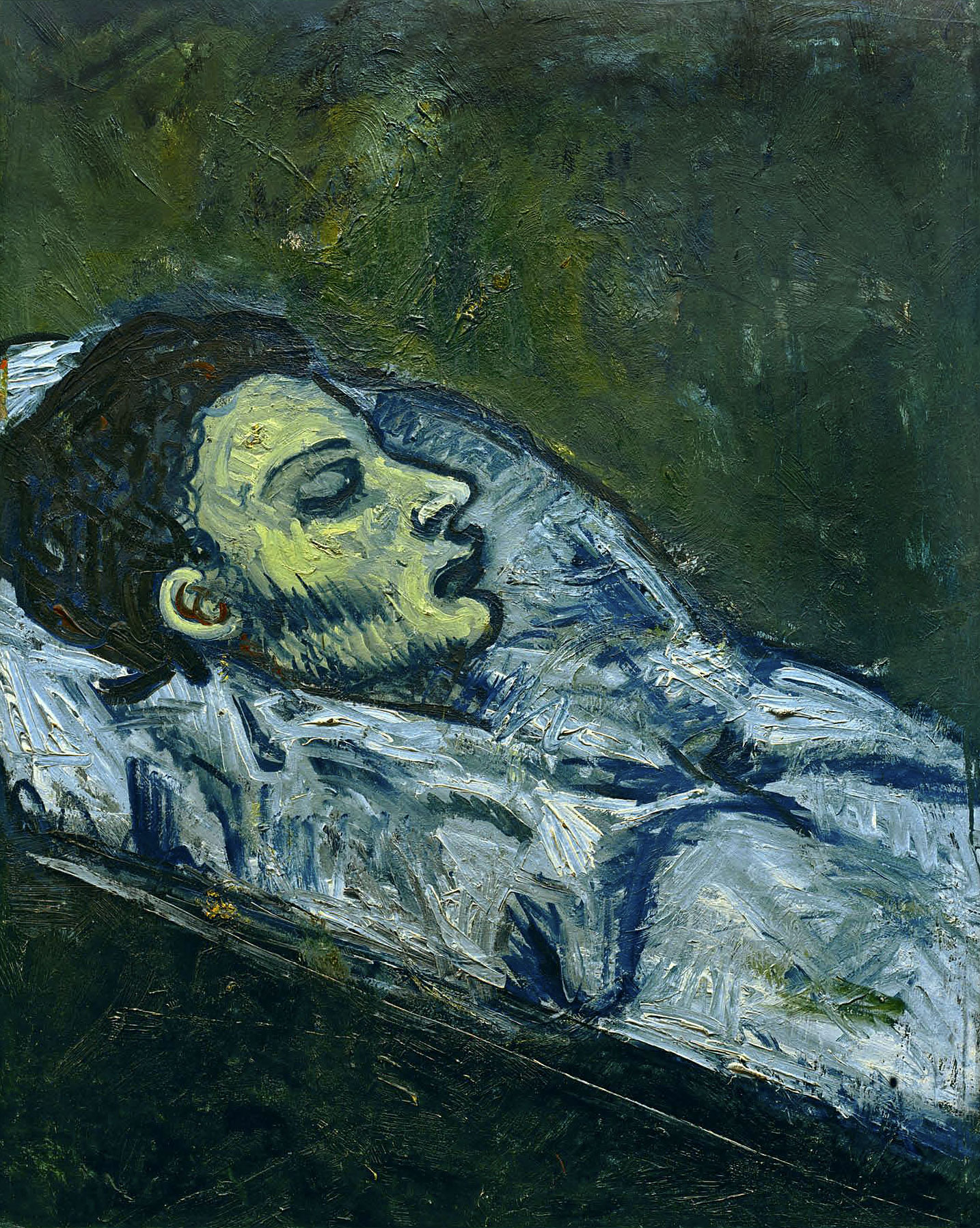
Pablo Picasso (Spanish, 1881-1973) 'Casagemas dans cercueil' (Casagemas in His Coffin) 1901


Pablo Picasso (Spanish, 1881-1973)
Casagemas dans cercueil (Casagemas in His Coffin)
1901
Oil on cardboard
72.5 x 57.8cm
Private collection


Room 3

This impressive work was one of a series of paintings with which Picasso dealt with the tragic loss of his artist-friend Carles Casagemas, who committed suicide on 17 February 1901. In the vertical-format picture only part of the lifeless figure is depicted. The body, diagonally fixed into the composition, is cropped by the coffin and the picture edge. Rendered in profile, the face with its yellow-green colouration and prominent facial contours stands out against the blue-white shroud. The image represents a variation of the painting La Mort de Casagemas (below) from the same period, which is also on view in the present exhibition. In it, the subject’s head has been moved close to the viewer and a huge candle emits multicoloured light. By contrast, most of the other works in the Casagemas cycle are rendered in a range of mainly blue tones. Picasso retrospectively remarked: ‘The thought that Casagemas was dead led to me painting in blue’.


Pablo Picasso (Spanish, 1881-1973) 'La Mort de Casagemas' 1901


Pablo Picasso (Spanish, 1881-1973)
La Mort de Casagemas (The Death of Casagemas)
1901
Oil on wood
27 x 35cm
Musée national Picasso-Paris
© Succession Picasso / 2018, ProLitteris, Zurich
Photo: © RMN-Grand Palais (Musée national Picasso-Paris) / Mathieu Rabeau


Pablo Picasso (Spanish, 1881-1973) 'Le Mort (la mise au tombeau)' (Death (The Burial)) 1901


Pablo Picasso (Spanish, 1881-1973)
Le Mort (la mise au tombeau) (Death (The Burial))
1901
Oil on canvas
© Succession Picasso / 2018, ProLitteris, Zurich


Pablo Picasso (Spanish, 1881-1973) 'Courtesan with necklace of gems' 1901


Pablo Picasso (Spanish, 1881-1973)
Courtesan with necklace of gems (Courtesan avec collier de pierres précieuses)
1901
Oil on canvas
© Succession Picasso / 2018, ProLitteris, Zurich


Pablo Picasso (Spanish, 1881-1973) 'Femme en bleu' 1901


Pablo Picasso (Spanish, 1881-1973)
Femme en bleu (Woman in blue)
1901
Oil on canvas
133 x 100cm
Madrid, Museo Nacional Centro de Arte Reine Sofía
© Succession Picasso / 2018, ProLitteris, Zurich


Pablo Picasso (Spanish, 1881-1973) 'Autoportrait' 1901


Pablo Picasso (Spanish, 1881-1973)
Autoportrait (Self-portrait)
1901
Oil on canvas
81 x 60cm
Musée national Picasso-Paris
© Succession Picasso / 2018, ProLitteris, Zurich
Photo: © RMN-Grand Palais (Musée national Picasso-Paris) / Mathieu Rabeau


Room 3

Picasso painted this self-portrait at the end of his second stay in Paris. Compared with the work Yo Picasso, exhibited at the Galerie Vollard in the summer of 1901, a clear shift has taken place the following winter. The artist portrays himself bearded and pale-faced, with hollow cheeks, aged and wrapped in a heavy overcoat, making his body appear like a dense mass. The imposing, self-assured pose of the first portrait has given way to a posture conveying uncertainty. Yet here, too, Picasso’s intense gaze casts its spell on the viewer. The self-portrait is one of Picasso’s first works that emphasise the rich variety of his range of blue tones. As a means to express melancholy, blue pervades the entire composition, which is divided into blue-green and midnight blue fields of colour. Picasso kept the painting throughout his life.


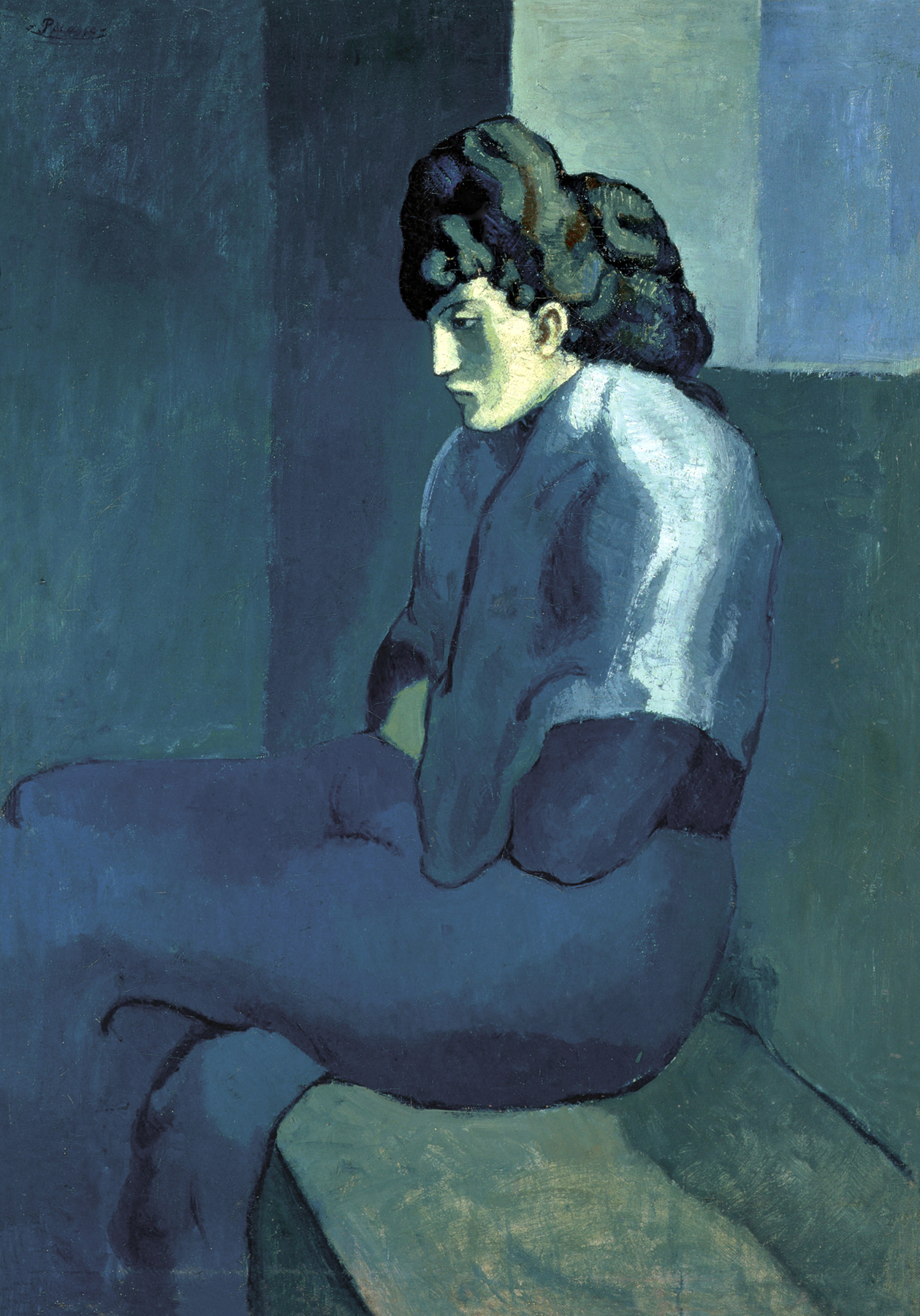
Pablo Picasso (Spanish, 1881-1973) 'Femme assise au fichu' 1901


Pablo Picasso (Spanish, 1881-1973)
Femme assise au fichu (Melancholy Woman)
1901
Oil on canvas
100 x 69.2cm
The Detroit Institute of Arts, Bequest of Robert H. Tannahill
© Succession Picasso / 2018, ProLitteris, Zurich
Photo: © Bridgeman Images


Room 3

Femme assise au fichu presents a seated woman in profile, introspectively withdrawn, her arms folded and legs crossed. Her brightly illuminated face lends her an appearance both profound and monumental. She is situated in a bare room, probably a cell in the Saint-Lazare women’s prison in Paris, which Picasso visited several times in the autumn and winter of 1901-02 to make drawings for his portraits of women. The prison also housed numerous prostitutes, many of whom suffered from sexually transmitted diseases. In paintings such as this one, Picasso found a universal means of representing the social themes of poverty, misery and isolation.


Pablo Picasso (Spanish, 1881-1973) 'La Buveuse assoupie' (The Drinker dozing) 1902


Pablo Picasso (Spanish, 1881-1973)
La Buveuse assoupie (The Drinker dozing)
1902
Oil on canvas
Kunstmuseum Bern, Stiftung Othmar Huber, Berne
© Succession Picasso/ 2018, ProLitteris, Zurich


View of the installation of the painting 'La Vie' (1903) for the exhibition 'The young Picasso - Blue and Rose Periods' at Fondation Beyeler


View of the installation of the painting La Vie (1903) for the exhibition The young Picasso – Blue and Rose Periods at Fondation Beyeler, Riehen, Switzerland


Pablo Picasso (Spanish, 1881-1973) 'La Vie' 1903


Pablo Picasso (Spanish, 1881-1973)
La Vie (Life)
1903
Oil on canvas
197 x 127.3cm
The Cleveland Museum of Art, Donation Hanna Fund
© Succession Picasso / ProLitteris, Zurich 2018
Photo: © The Cleveland Museum of Art


Room 3

In La Vie, the allegorical masterpiece of the Blue Period, Picasso brings together existential themes such as death, suffering and love in a complexity suffused with melancholy. When the then twenty-one-year-old artist began with the preparatory drawings for this monumental painting in Barcelona in May 1903, he had already been painting primarily blue pictures for over two years. Although Picasso had originally planned the work as a self-portrait, his deceased friend Carles Casagemas appears here once again (and for the final time). Accompanied by a naked woman who nestles against his body, he stands in the left half of the picture, wearing only a white loincloth. He points his index finger at a clad woman, who carries an infant swaddled in a cloth. Appearing in the background as pictures within a picture are further figures, cowering. They lend the work an additional symbolic and enigmatic dimension.

In Picasso’s most celebrated painting from the Blue Period, however, he returns to the plight of the artist. La Vie (Life) (1903) brings us into an artist’s studio. While earlier versions of the painting, locked beneath the final work and revealed by X-rays, show Picasso as the central figure, in the end he depicted Casagemas as his subject. He is naked except for a loincloth as a nude woman clutches him, and the two look over at a mother and child. Behind them sit two canvases covered with crouching bodies.

Every element of the scene conveys vulnerability. The artist brings different facets of his troubles into a single canvas: poverty, dejection, creative anguish, and grief for those lost, like Casagemas. Interestingly, those X-rays have also revealed that the painting was executed on top of an earlier work called Last Moments, inspired by his sister’s death.

Perhaps, in bringing these various instances of heartbreak together, Picasso was also in the final stages of processing his grief. Indeed, soon after the artist finished La Vie, he moved to Paris and emerged from his Blue Period – into a palette of soft, joyful pinks. “Colours, like features, follow the changes of the emotions,” Picasso later explained.

Extract from Alexxa Gotthardt. “The Emotional Turmoil behind Picasso’s Blue Period,” on the Artsy website Dec 13, 2017 [Online] Cited 19/04/2019


Pablo Picasso (Spanish, 1881-1973) 'Le Repas de l'aveugle' (The Blind Man's Meal) 1903


Pablo Picasso (Spanish, 1881-1973)
Le Repas de l’aveugle (The Blind Man’s Meal)
1903
Oil on canvas
95.3 x 94.6cm
New York, The Metropolitan Museum of Art, Purchase Mr. and Mrs. Ira Haupt, Gift 1950
© Succession Picasso / 2018, ProLitteris, Zurich
Photo: © 2017, The Metropolitan Museum of Art / Art Resource / Scala, Florence


Room 3

Painted in Barcelona in 1903, the picture Le Repas de l’aveugle depicts an emaciated blind man sitting before a frugal meal. The man’s whole suffering is conveyed by the exaggeration of his body with his bony shoulders, hollow-cheeked face and thin fingers. He is one of those miserable and solitary figures that appear like modern martyrs in Picasso’s pictures. The depicted provisions – the bread and wine – could be interpreted as Christian symbols. The starkly reduced range of colours and the dramatic effect of the scene created by the light lend the image a mystical quality. Here we feel the influence of El Greco’s paintings and Spanish religious art of the sixteenth and seventeenth centuries.


This exhibition, the most ambitious ever staged by the Fondation Beyeler, is devoted to the paintings and sculptures of the young Pablo Picasso from the so-called Blue and Rose periods, between 1901 and 1906. For the first time in Europe, the masterpieces of these crucial years, most of them a milestone on Picasso’s path to preeminence as the twentieth century’s most famous artist, are presented together, in a concentration and quality that are unparalleled. Picasso’s pictures from this phase of creative ferment are some of the finest and most emotionally compelling examples of modern painting, and are counted among the most valuable and sought-after works in the entire history of art. It is unlikely that they will be seen again in such a selection in a single place.

At the age of just twenty, the rising genius Picasso (1881-1973) embarked on a quest for new themes and forms of expression, which he immediately refined to a pitch of perfection. One artistic revolution followed another, in a rapid succession of changing styles and visual worlds. The focus of the exhibition is on the Blue and Rose periods, and thus on the six years in the life of the young Picasso that can be considered central to his entire oeuvre, paving the way for the epochal emergence of Cubism, which developed from Picasso’s previous work, in 1907. Here, the exhibition converges with the Fondation Beyeler’s permanent collection, whose earliest picture by Picasso is a study, dating from this pivotal year, for the Demoiselles d’Avignon.

In the chronologically structured exhibition, Picasso’s early painting career is explored through examples of his treatment of human subjects. Journeying back and forth between Paris and Barcelona, he addressed the human figure in a series of different approaches. In the phase dominated by the colour blue, from 1901, he observed the material deprivation and the psychological suffering of people on the margins of society, before turning – in 1905, when he had settled in Paris – to the themes of the Rose period, conferring the dignity of art on the hopes and yearnings of circus performers: jugglers, acrobats and harlequins. In his search for a new artistic authenticity, Picasso stayed for several weeks in mid-1906 in the village of Gósol, in the Spanish Pyrenees, and created a profusion of paintings and sculptures uniting classical and archaic ideals of the body. Finally, the increasing deformation and fragmentation of the figure, apparent in the “primitivist” pictures, especially of the female nude, which were painted subsequently in Paris, heralds the emergence of the new pictorial language of Cubism.

Press release from Fondation Beyeler website [Online] Cited 19/04/2019


Pablo Picasso (Spanish, 1881-1973) 'Femme en chemise (Madeleine)' 1904-1905


Pablo Picasso (Spanish, 1881-1973)
Femme en chemise (Madeleine) (Young Woman in a Chemise (Madeleine))
1904-1905
Oil on canvas
72.7 x 60cm
London, Tate, Bequeathed by C. Frank Stoop 1933
© Succession Picasso / 2018, ProLitteris, Zurich
Photo: © Tate, London 2018


Room 4

A young woman, depicted in profile, stands isolated in an empty, dark-blue space. Her slender body is draped in a white blouse. Her left breast, its curve emphasised, is simultaneously concealed and revealed by the flimsily thin cloth. The woman’s pale skin and distinct facial features, as well as the delicately defined contours of her body, set her apart from the background. The colour scheme, suffused with light and depth, hints at Picasso’s gradual turn to warm pink and brown tones. The identity of the model long remained unclear because Picasso had overpainted the figure of a boy here with the slender silhouette of his first muse and lover, Madeleine. The artist first met Madeleine in 1904, after moving into his studio at the Bateau-Lavoir in Paris. She posed repeatedly for Picasso’s paintings in the transitional phase from the Blue to the Rose Period, until the spring of 1905.


Pablo Picasso (Spanish, 1881-1973) 'Fillette nue au panier de fleurs' (Le panier fleuri) (Girl with a Basket of Flowers) 1905


Pablo Picasso (Spanish, 1881-1973)
Fillette nue au panier de fleurs (Le panier fleuri) (Girl with a Basket of Flowers)
1905
Oil on canvas
155 x 66 cm
Private collection, New York


The painting Fillette au panier de fleurs is surprising in many respects. First of all, because of the extended vertical format, which also makes the girl appear elongated. The adolescent stands quite naked before us, with her body turned to the side and a serious expression on her face. A slight counter-movement is suggested in the transition from her feet to her torso. The girl’s face is turned towards the viewer and carefully modelled in the manner of a portrait. The body, by contrast, appears somewhat withdrawn, almost unreal. The radiant red flowers in the woven basket create a strong accent against the pale skin, black hair and light blue background. The art dealer Clovis Sagot purchased the picture from Picasso for the modest sum of seventy-five francs. It was one of the first works that the American writer and art collector Gertrude Stein acquired together with her brother Leo, as early as 1905. The Stein siblings subsequently built up a significant Picasso collection


Pablo Picasso (Spanish, 1881-1973) 'Le Marchand de gui' (The Mistletoe Seller) 1902-1903


Pablo Picasso (Spanish, 1881-1973)
Le Marchand de gui (The Mistletoe Seller)
1902-03
Oil on Canvas
55 x 38cm
© Succession Picasso / 2018 ProLitteris, Zurich 2018


Room 5

With an empathetic eye, Picasso concentrates here on the representation of two poverty-stricken people who together go about their hard, daily work – the selling of mistletoe. The wrinkled yet gentle face of the bearded old man contrasts with the smooth, fresh, yet serious visage of the boy, for whom the companion is at once antithesis and role model. While the two figures do not look at one another, their physical closeness and the old man’s affectionate gesture nevertheless suggest the greatest tenderness. With the subtle play of colours, Picasso succeeds in generating a mystical atmosphere. In his dignified appearance, the mistletoe vendor with the child comes here to symbolise a life of poverty endured without resignation and at the same time the hope of happiness.


Pablo Picasso (Spanish, 1881-1973) 'Tête d'un arlequin' (Head of a harlequin) 1905


Pablo Picasso (Spanish, 1881-1973)
Tête d’un arlequin (Head of a harlequin)
1905
Oil on canvas
40.7 x 31.8cm
The Detroit Institute of Arts, Bequest of Robert H. Tannahill
© Succession Picasso / 2018, ProLitteris, Zurich
Photo: © Bridgeman Images


Pablo Picasso (Spanish, 1881-1973) 'Femme de l'Île de Majorque' (Woman from Mallorca) 1905


Pablo Picasso (Spanish, 1881-1973)
Femme de l’Île de Majorque (Woman from Mallorca)
1905
Gouache and watercolour on cardboard
67 x 51cm
Moscow, Pushkin State Museum of Fine Arts
© Succession Picasso / 2018, ProLitteris, Zurich


Pablo Picasso (Spanish, 1881-1973) 'Femme à l'éventail' (Woman with a fan) 1905


Pablo Picasso (Spanish, 1881-1973)
Femme à l’éventail (Woman with a fan)
1905
Oil on canvas
100.3 x 81cm
Washington, National Gallery of Art, Gift of the W. Averell Harriman Foundation in memory of Marie N. Hariman
© Succession Picasso / 2018, ProLitteris, Zurich


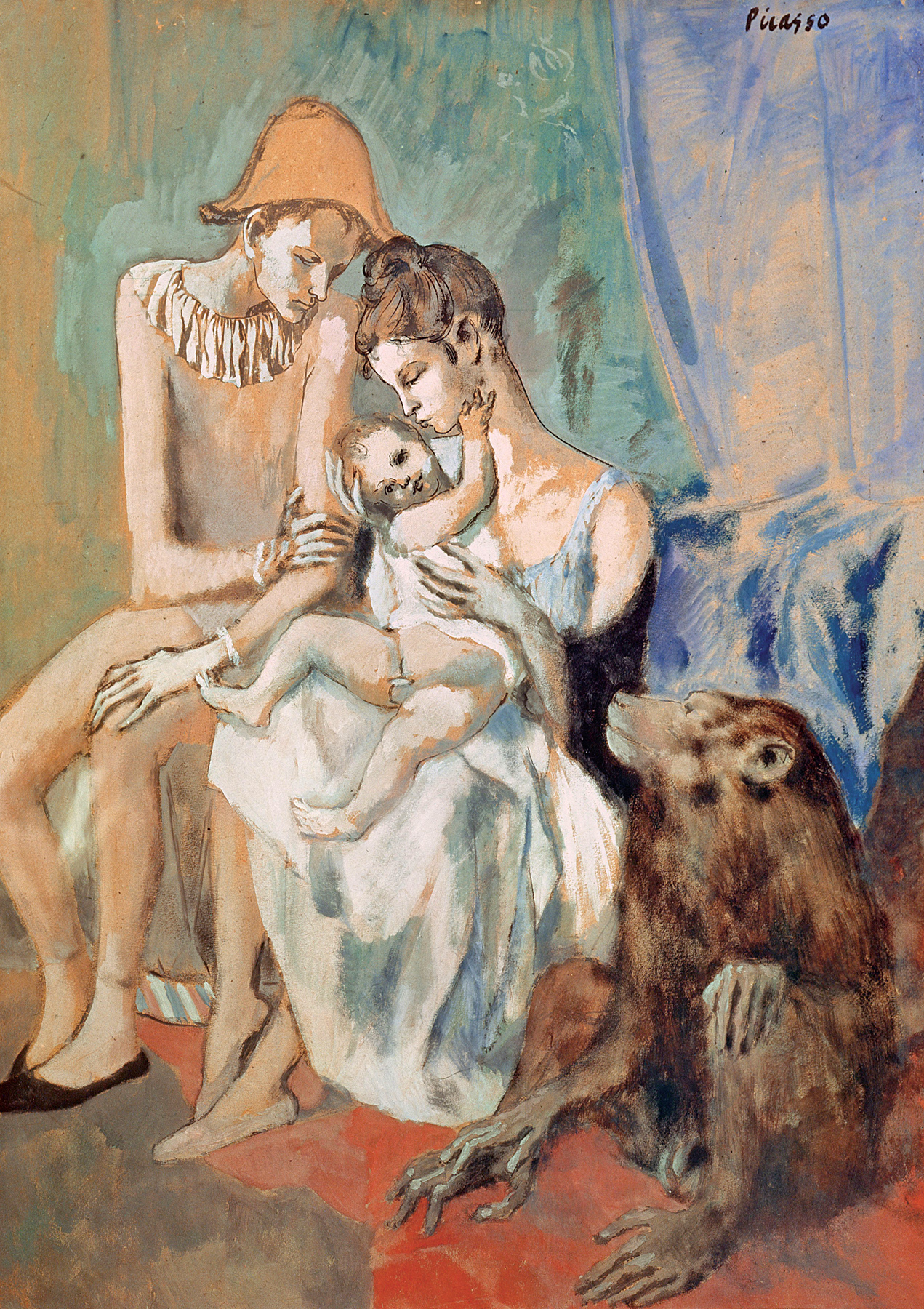
Pablo Picasso (Spanish, 1881-1973) 'Famille de saltimbanques avec un singe' (Family of acrobats with a monkey) 1905


Pablo Picasso (Spanish, 1881-1973)
Famille de saltimbanques avec un singe (Family of acrobats with a monkey)
1905
Oil on canvas
© Succession Picasso/2018, ProLitteris, Zurich
Photo: © Göteborg Konstmuseum


Une vie pas tout à fait en rose: A life not quite in pink

Regarding the pink period, Apollinaire preferred to call it the “period of acrobats”, which would be more accurate as the works are not only pink. In 1905, without actually adopting this colour, Picasso moved away from cold nocturnal tonalities for a semblance of serenity, as if the colours corresponded indeed to a state of mind. The tones are earthy, pastels. The unit is more likely to come from the circus theme and in particular from the Circus Medrano, not far from the Bateau-Lavoir, which Picasso frequents as many painters and poets of his time. It’s less about the circus, like Seurat’s, than about his backstage, like a family of acrobats with a monkey. The characters of the commedia dell’arte are intertwined, the figure of the buffoon and the figure of the madman who will be the subject of a sculpture. This one, exposed to the Foundation, was the portrait of the poet Max Jacob, to whom Picasso then added the cap which completed the analogy between the madman and the artist. Picasso liked to be assimilated to this strange, wandering, unattached, somewhat marginalised person who, like the artist, can afford a critical look at the world. There is still a lot of blue and melancholy. The same misery permeates the scene of the couple watching an empty plate, the clumsy and lonely pink acrobat or the sickly Harlequin. No acrobatic scenes under the applause of the public. Here we find the same disenchantment. Apollinaire always speaks of “pulmonary” rose. The blue / pink partition therefore remains relative.

Extract from Geneviève Nevejan. “Picasso jeune et mélancolique,” on the Choisir website 31 January 2019 [Online] Cited 19/04/2019. No longer available online


Pablo Picasso (Spanish, 1881-1973) 'Acrobate et jeune arlequin' 1905


Pablo Picasso (Spanish, 1881-1973)
Acrobate et jeune arlequin (Acrobat and Young Harlequin)
1905
Gouache on cardboard
105 x 76cm
Private collection
© Succession Picasso / 2018, ProLitteris, Zurich


Room 5

Acrobate et jeune arlequin is among Picasso’s most impressive pictures from the world of the circus. Two performers of delicate appearance sit in front of a tattered looking blue backdrop. On the left is an androgynous boy in Harlequin costume with a chalk-white face, gazing to the right, towards the young man in acrobat’s clothing. The latter is depicted with arms clasped and eyes closed. At the transition point between the worlds of blue and pink, both the space and the figures seem to be in a state of transformation. Can the diamond pattern of the Harlequin’s costume and the geometric shape of the acrobat’s arms be seen as anticipating a ‘Cubification’ of the body? As the first-ever museum purchase of a work by Picasso, Acrobate et jeune arlequin was acquired for the municipal museum in Elberfeld near Wuppertal in 1911; today it is privately owned.


Pablo Picasso (Spanish, 1881-1973) 'Arlequin assis sur fond rouge' 1905


Pablo Picasso (Spanish, 1881-1973)
Arlequin assis sur fond rouge (Seated Harlequin on Red Background)
1905
Watercolour and ink on cardboard
57.5 x 41.2cm
Staatliche Museen zu Berlin, Nationalgalerie, Museum Berggruen
© Succession Picasso / 2018 ProLitteris, Zurich 2018
Photo: bpk / Nationalgalerie, SMB, Museum Berggruen / Jens Ziehe


Room 6

Picasso never presents his Harlequins as tricksters or buffoons entertaining the audience with wild leaps, but rather as passive, melancholy figures. In Arlequin assis au fond rouge the Harlequin sits, motionless, his mouth closed. His naked, slightly splayed legs dangle from a wall. He appears bare, exposed, even though he wears a thin, washed-out costume and a hat. Despite his conspicuously frontal pose, his gaze is not directed exactly at the viewer. Picasso aims at capturing the essence of the figure, his great solitude, which is further accentuated by the vibrant, pulsating red background. The Harlequin figure may also embody the creative, sensitive artist, who must stand his ground in modern society


Installation view of the exhibition 'The young Picasso - Blue and Rose Periods' at Fondation Beyeler, Riehen, Switzerland


Installation view of the exhibition The young Picasso – Blue and Rose Periods at Fondation Beyeler, Riehen, Switzerland showing at left, La toilette (1906) and at right, Les Deux Frères (The Two Brothers) (1906)


Room 7

In Deux Frères a boy carries his younger brother on his back; the two appear to merge together. The elder boy’s facial features are finely modelled, whereas those of the younger one are somewhat blurred and reduced to a few shapes. Both figures are naked, and place and time are uncertain. Only the edge of the floor and dark shadows indicate the room in which they are located. The artist makes it seem here that the figures are made of the same material as the space surrounding them. The painting was produced in Gósol, a Catalan mountain village in the eastern Pyrenees, where Picasso retreated for several weeks in the early summer of 1906. Far from urban life, he began developing a new pictorial language characterised by simplicity and earthiness. Here, Picasso drew inspiration notably from the naked body, initially from the male and then the female one.


Pablo Picasso (Spanish, 1881-1973) 'La toilette' 1906


Pablo Picasso (Spanish, 1881-1973)
La toilette
1906
Oil on canvas
59 1/2 x 39 inches (151.13 x 99.06cm)
Collection Albright-Knox Art Gallery, Buffalo, New York
Fellows for Life Fund, 1926
© Succession Picasso / 2018 ProLitteris, Zurich 2018


Room 7

In the summer of 1904 Picasso met Fernande Olivier, who would become his most important model and was also his companion until 1912. She shared with him a desperately poor life at the run-down Bateau-Lavoir studio building, in Montmartre, Paris. In 1906 she accompanied him to the Pyrenean village of Gósol in Spain. Olivier posed for Picasso, and to an extent her figure became a field for artistic experimentation. In La Toilette, Picasso’s search for a new archaic formal language still manifests itself in predominantly classical figures. In a bare interior, a naked young woman stands to the left, turned towards the viewer, arranging her hair in a mirror held by a black-haired woman dressed in blue and seen in profile. It is possible that the depictions of both women are portraits of Olivier, highlighting different, contrasting facets of the same person.


Pablo Picasso (Spanish, 1881-1973) 'Autoportrait' (Self-portrait) 1906


Pablo Picasso (Spanish, 1881-1973)
Autoportrait (Self-portrait)
1906
Oil on canvas
65 x 54cm
Musée national Picasso-Paris
© Succession Picasso / 2018, ProLitteris, Zurich
Photo: © RMN-Grand Palais (Musée national Picasso-Paris) / Mathieu Rabeau


Room 8

In his early years Picasso frequently portrayed himself. Although not identified by obvious attributes, this image is also a self-portrait of the artist in which he illustrates his most recent achievements as a painter. The stocky man’s solid torso, his greyish skin tone and mask-like face exemplify the Primitivist pictorial language that Picasso developed in 1906. The artist was seeking new means of expression, painting almost exclusively nudes and in the process moving noticeably away from his earlier work. He was no longer interested in depicting feelings, wanting rather to experiment with new forms and render his subjects with new pictorial means. Picasso’s facial features in this painting appear formulaic, stereotypical – and he has moved quite some distance from the aesthetic of the Blue and Rose Periods.


Pablo Picasso (Spanish, 1881-1973) 'Femme nue assise, les jambes croisées' (Seated Female Nude with Crossed Legs) 1906


Pablo Picasso (Spanish, 1881-1973)
Femme nue assise, les jambes croisées (Seated Female Nude with Crossed Legs)
1906
Oil on canvas


Room 8

Picasso’s discovery of centuries-old Iberian sculpture flowed, in the autumn of 1906, into numerous female nudes in which a new, raw style emerged. Among them is this imposing representation of a seated woman in which the artist limited himself to brown and grey tones. The schematically rendered robust body composed of geometric volumes and the ossified, mask-like face with its empty eyes are typical of Picasso’s Primitivism in this period. Thus, the artist introduced here, within a classical picture theme, a new image of the body, aimed at reduction. This was to prove seminal for his artistic development in subsequent years culminating in the painting Les Demoiselles d’Avignon.


Pablo Picasso (Spanish, 1881-1973) 'Nu sur fond rouge (Jeune femme nue à la chevelure)' 1906


Pablo Picasso (Spanish, 1881-1973)
Nu sur fond rouge (Jeune femme nue à la chevelure) (Nude on red background (Young nude woman with hair)
1906
Oil on canvas
81 x 54cm
Paris, Musée de l’Orangerie, Collection Jean Walter and Paul Guillaume
© Succession Picasso / 2018, ProLitteris, Zurich
Photo: © RMN-Grand Palais (Musée de l’Orangerie) / Hervé Lewandowski


Pablo Picasso (Spanish, 1881-1973) 'Femme' (Epoque des "Demoiselles d’Avignon") 1907


Pablo Picasso (Spanish, 1881-1973)
Femme (Epoque des “Demoiselles d’Avignon”) (Woman (‘Demoiselles d’Avignon’ Period))
1907
Oil on canvas
119 x 93.5cm
Fondation Beyeler, Riehen / Basel
© Succession Picasso / 2018 ProLitteris, Zurich Photo: Robert Bayer, Basel


Room 9

Femme, from 1907, also originated in the context of Picasso’s seminal picture Les Demoiselles d’Avignon and is the earliest work in the extensive Picasso collection assembled by Ernst and Hildy Beyeler. The sketch-like painting shows a naked female figure with raised arms, depicted in a pose that remains ambivalent. Wearing the cap of a sailor or ship’s captain (perhaps her hair is also set in a chignon), she is presented next to a yellow curtain drawn to the side and in front of a blue and green background. The face, whose features recall those of African masks, clearly reveals the great influence that non-European sculpture had on Picasso in this phase of his career. Whereas the figure’s face, arms and breasts are fully painted and bordered with clear contours, the lower body is sketched with just a few lines. In Femme Picasso seems to be deliberately playing with an aesthetic of incompletion – yet in light of its expressive power and manner of composition, the work is unquestionably finished.


Anonymous photographer. 'Pablo Picasso on Place Ravignan, Montmartre, Paris' 1904


Anonymous photographer
Pablo Picasso on Place Ravignan, Montmartre, Paris
1904
Silver gelatin print on paper
12 x 8.9cm
Musée national Picasso-Paris


Fondation Beyeler
Beyeler Museum AG
Baselstrasse 77, CH-4125
Riehen, Switzerland

Opening hours:
10am – 6pm daily, Wednesdays until 8pm

Fondation Beyeler website

LIKE ART BLART ON FACEBOOK

Back to top

Exhibition: ‘Saul Leiter’ at Kunst Haus Wien, Vienna

Exhibition dates: 31st January – 26th May 2013


Saul Leiter (American, 1923-2013) 'From the El' c. 1955


Saul Leiter (American, 1923-2013)
From the El
c. 1955
© Saul Leiter / Courtesy Howard Greenberg Gallery, New York


“I like it when one is not certain of what one sees.
We don’t know why the photographer has taken such a picture.
If we look and look, we begin to see and are still left with the pleasure of uncertainty.”


“It is not where it is or what it is that matters, but how you see it.”


“After the age of 75 you should not be photographed.
You should be painted by Rembrandt or Hals, but not by Caravaggio.”


Saul Leiter


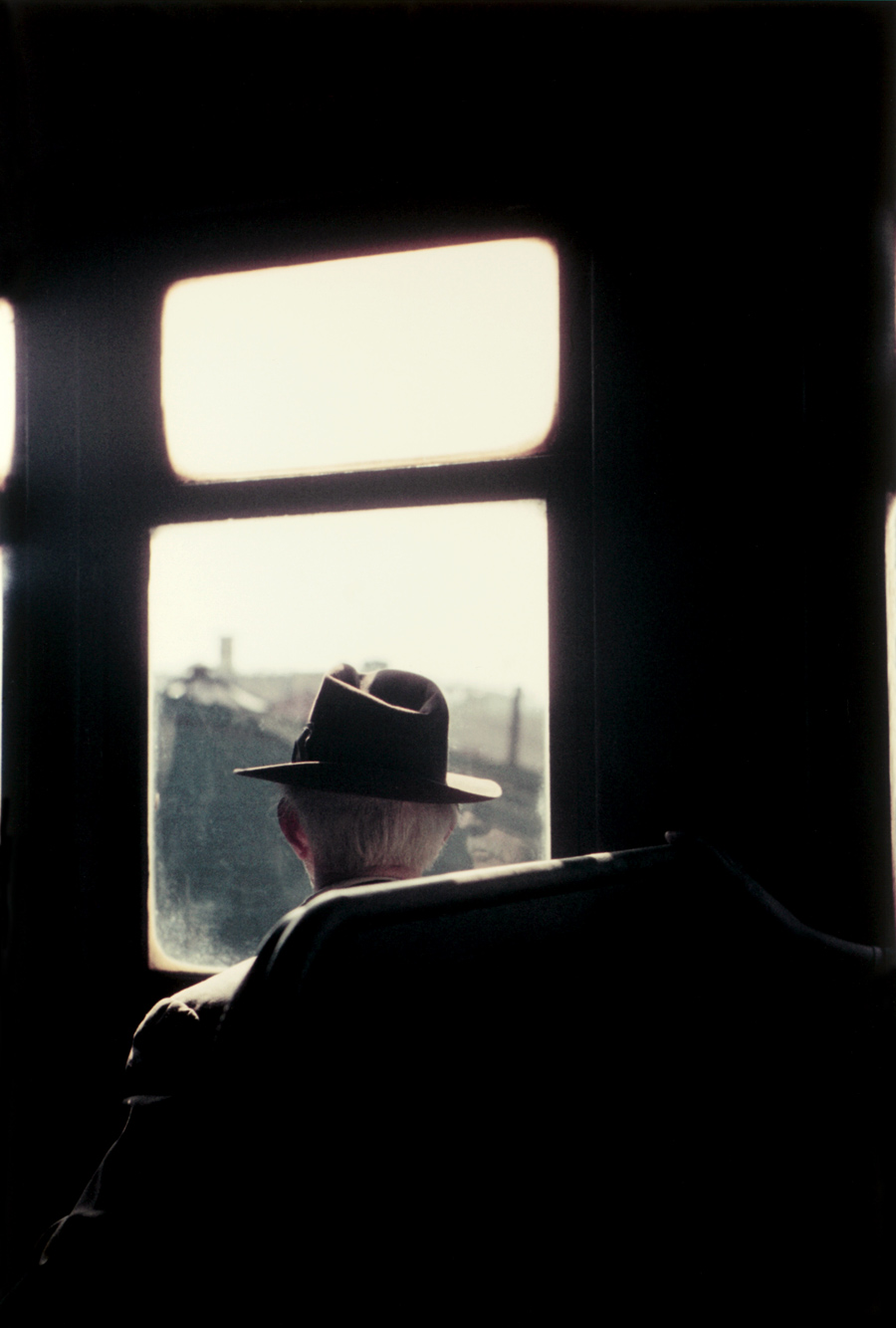
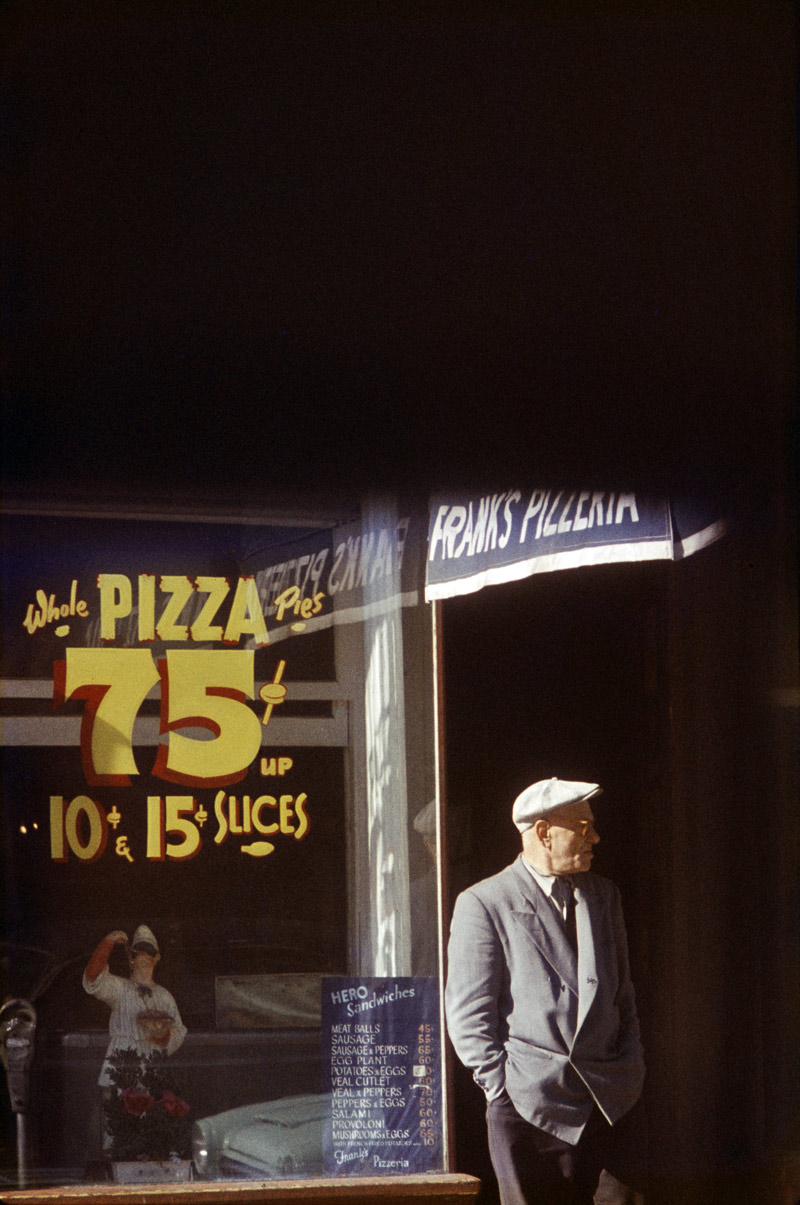
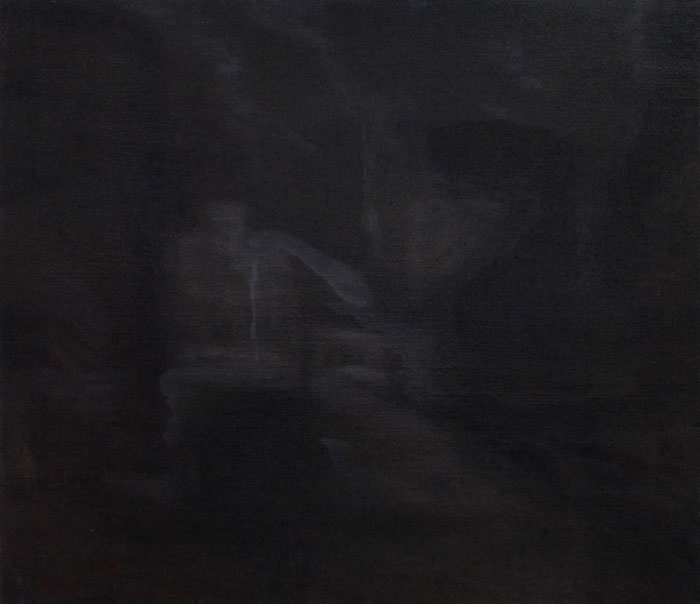
How brave was the photographer, occluding most of the colour image in darkness, something that had never been done before and has rarely been seen since. Look at the last three photographs in this posting to understand what I mean.

Considering that Saul Leiter’s colour photography predates William Eggleston and Stephen Shore by a couple of decades, it can truly be said that he is one of the early masters of colour photography. As the curator Ingo Taubhorn comments, “The older aesthetic views on the hegemony of black-and-white photography and the historical dating of the first artistic use of colour photography to the early 1970s need to be critically reviewed. Saul Leiter’s oeuvre essentially rewrites the history of photography.”

Well said.

Dr Marcus Bunyan


Many thankx to the Kunst Haus Wein for allowing me to publish the photographs in the posting. Please click on the photographs for a larger version of the image.


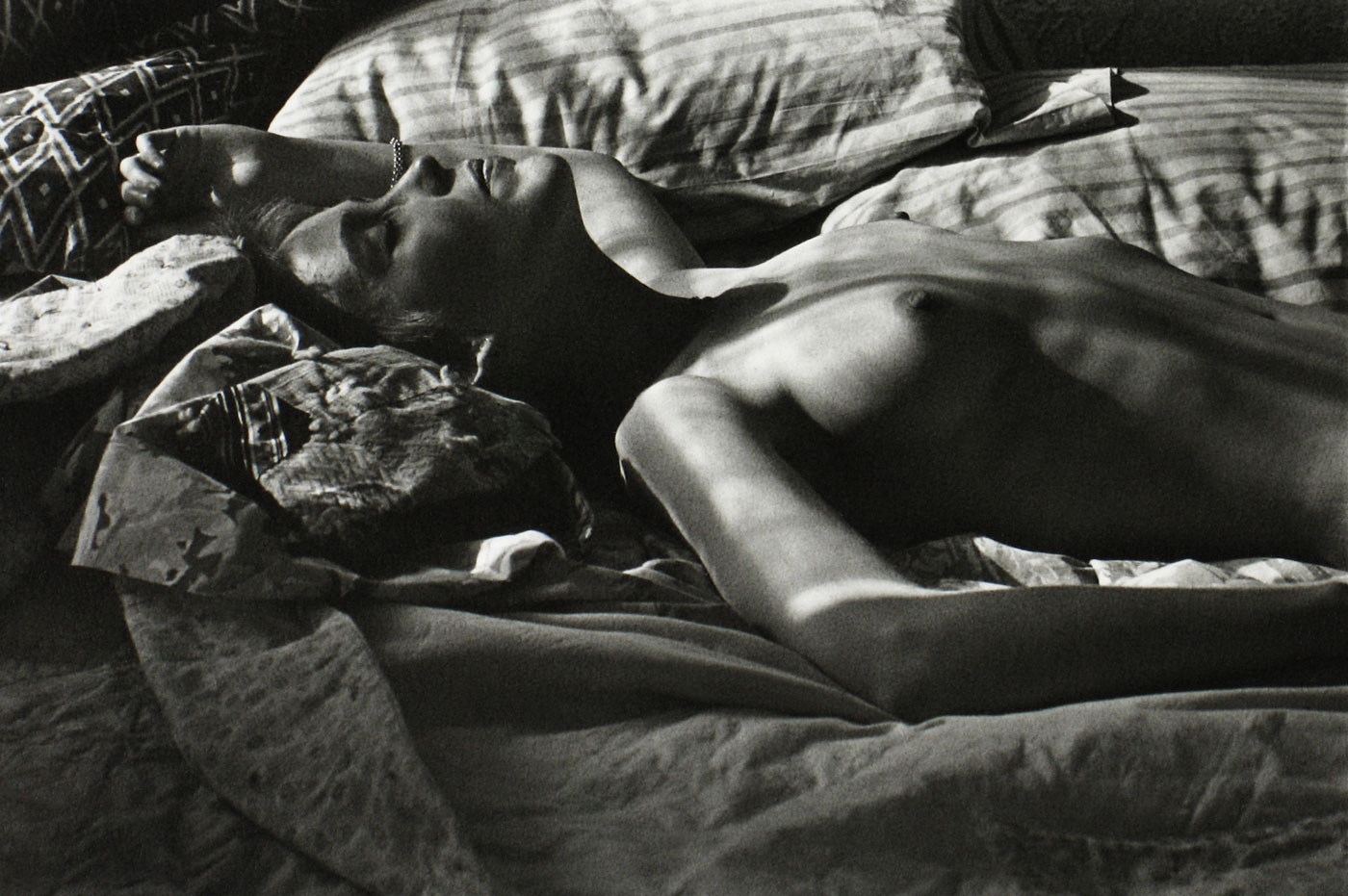
Saul Leiter (American, 1923-2013) 'Nude' 1970s


Saul Leiter (American, 1923-2013)
Nude
1970s
© Saul Leiter / Courtesy Howard Greenberg Gallery, New York


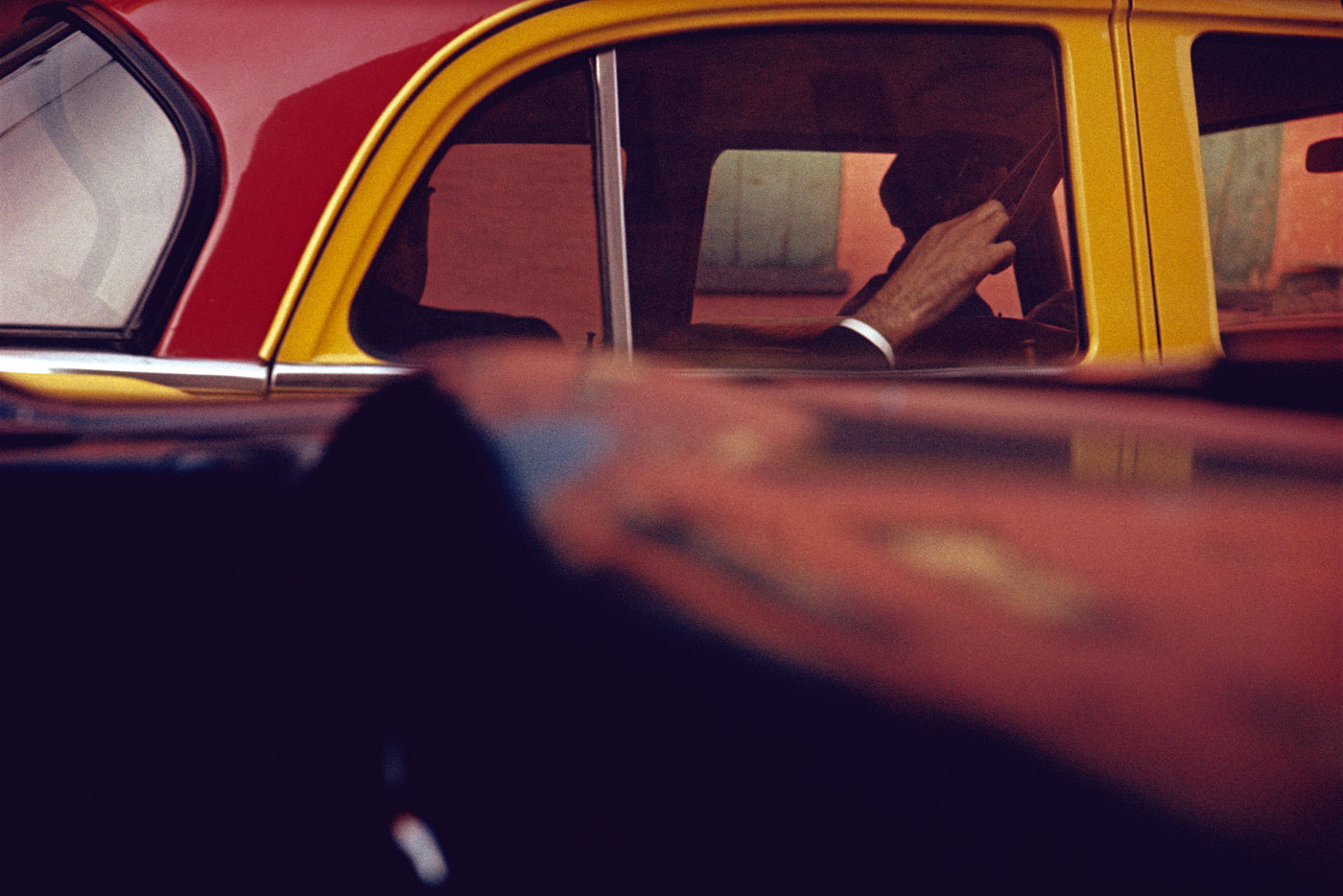
Saul Leiter (American, 1923-2013) 'Taxi' c. 1957


Saul Leiter (American, 1923-2013)
Taxi
c. 1957
© Saul Leiter / Courtesy Howard Greenberg Gallery, New York


KUNST HAUS WIEN is devoting a major retrospective to the oeuvre of the 89-year-old photographer and painter Saul Leiter. The exhibition, which was developed in cooperation with House of Photography / Deichtorhallen Hamburg, presents the wide range of this versatile artist’s works, including early black-and-white and colour photographs, fashion images, painted photographs of nudes, paintings and a number of his sketchbooks. One section of the exhibition is devoted to Saul Leiter’s most recent photographs, which he continues to take on the streets of New York’s East Village.

It is only in the last few years that Saul Leiter has received due recognition for his role as one of the pioneers of colour photography. As early as 1946, and thus well before the representatives of the so-called “new colour” photography in the 1970s, such as William Eggleston and Stephen Shore, he was one of the first to use colour photography for artistic shots, despite its being frowned upon by other artists of the day. “The older aesthetic views on the hegemony of black-and-white photography and the historical dating of the first artistic use of colour photography to the early 1970s need to be critically reviewed. Saul Leiter’s oeuvre essentially rewrites the history of photography,” comments curator Ingo Taubhorn.

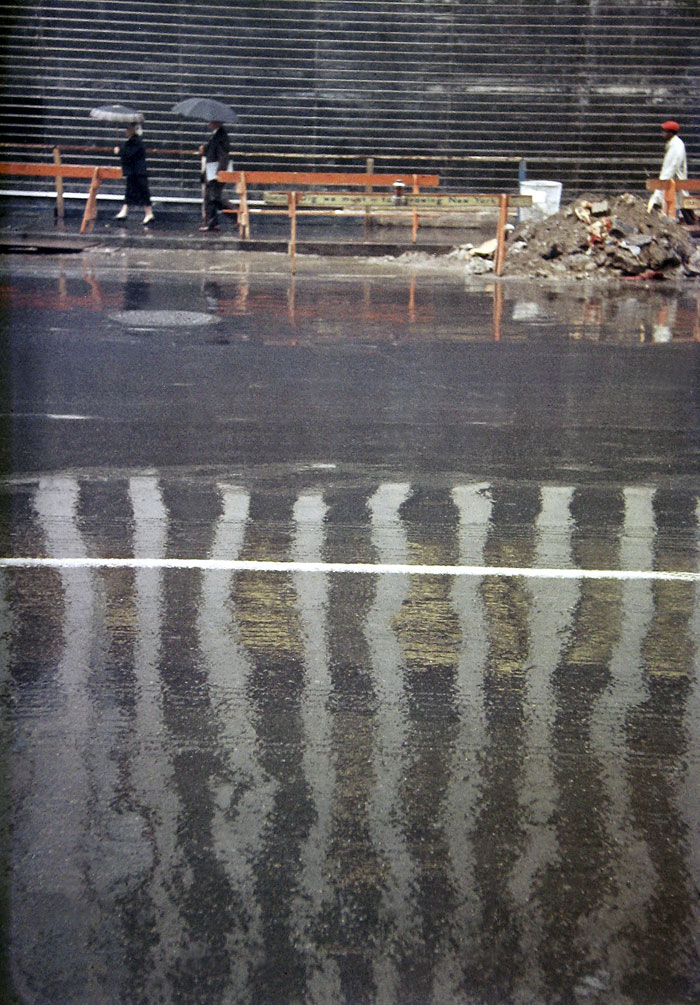
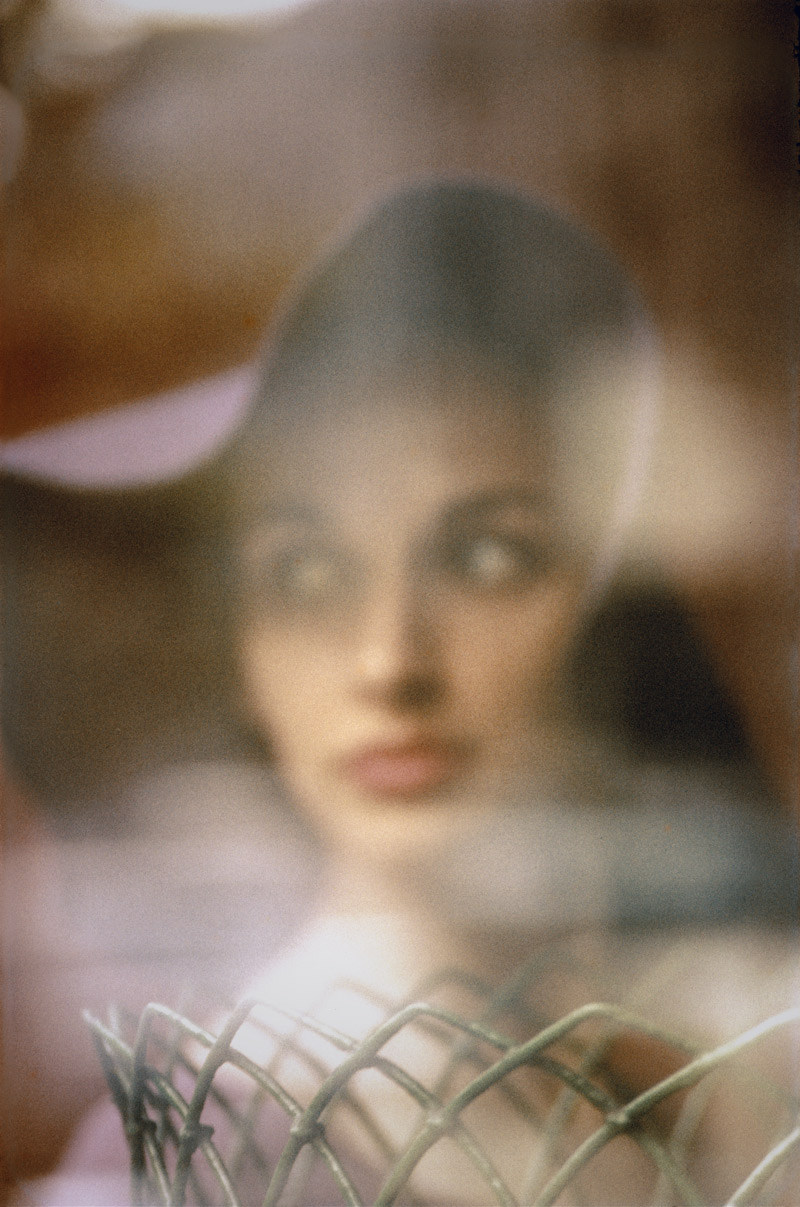
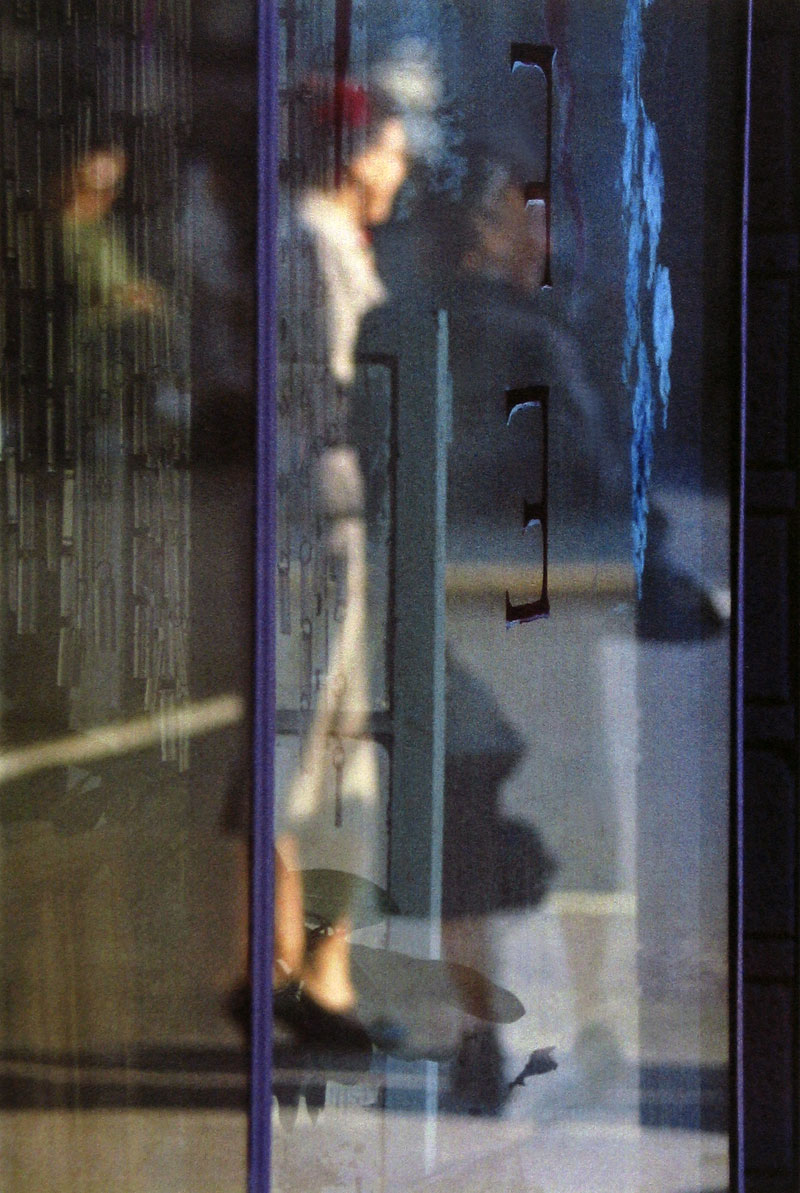
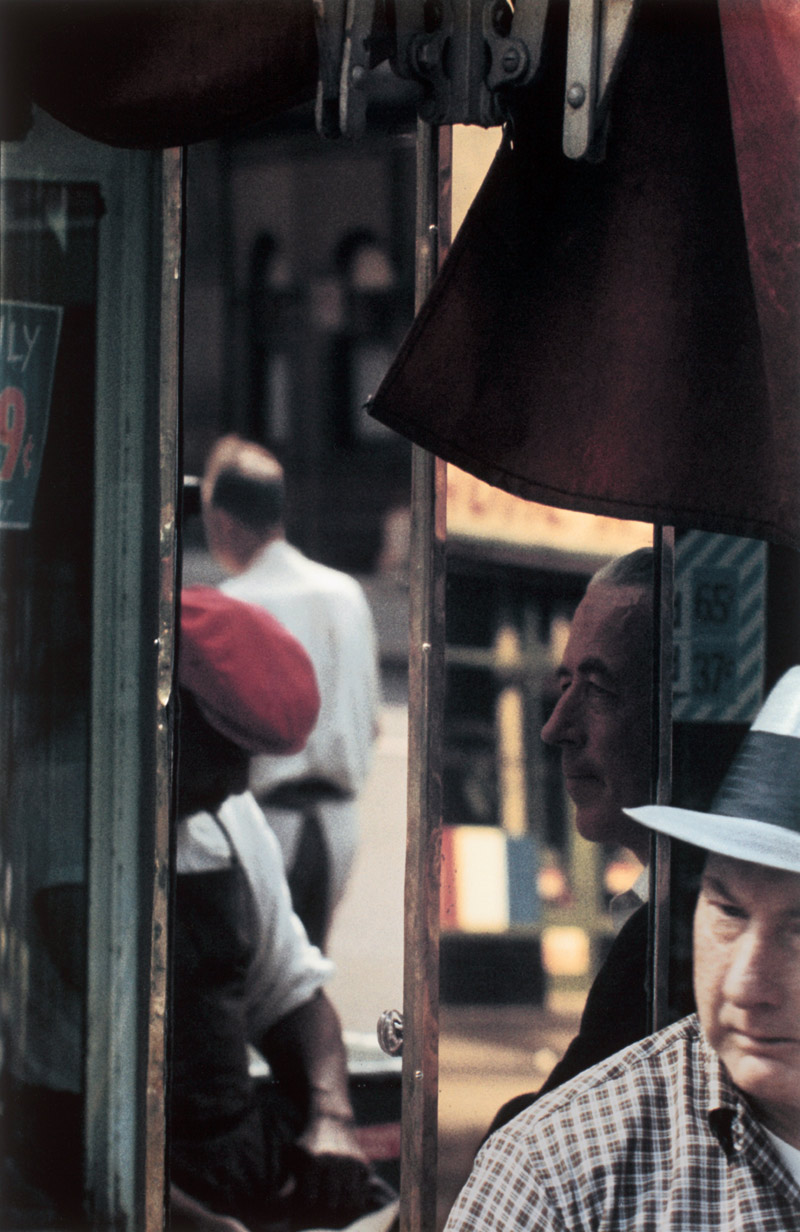
Saul Leiter has always considered himself both a painter and a photographer. In his painting and in his photographs he clearly tends towards abstraction and two-dimensionality. One often finds large deep-black areas, produced by shadows, taking up as much as three quarters of his photographs. Passers-by are not presented as individuals, but as blurred clouds of colour, filtered through misty panes of glass or wedged in between walls of buildings and traffic signs. The boundaries between the abstract and the representational in his paintings and photographs are virtually fluid. Saul Leiter’s street photography – a genre in which his work is matchless – is, in essence, painting metamorphosed into photography.

In Leiter’s works, the genres of street photography, portraiture, still life, fashion photography and architectural photography coalesce. He finds his motifs, such as shop windows, passers-by, cars, signs and – time and again – umbrellas, in the direct vicinity of his apartment in New York, where he has now lived for almost 60 years. The indeterminateness of detail, the blurring of movement and reduced depth of field, the use of shadows or deliberate avoidance of the necessary light, as well as the alienation caused by photographing through windows or as reflections, all combine to create the muted colour vocabulary of a semi-real, semiabstract urban space. These are the works of an as yet almost undiscovered modern master of colour photography.

About Saul Leiter

Saul Leiter discovered his passion for art at an early age and started painting as a teenager at the end of the 1940s. His family did not support him in his artistic endeavours; his father, a renowned Talmudic rabbi and scholar, had always hoped his son Saul would one day follow him in the family tradition and become a rabbi. Leiter was self-taught, but by no means uneducated. He read and learned a great deal about art, so that his knowledge and understanding constantly grew. In this way, he made sure that his own ideas and artistic works were duly related to the historical context.

In 1946, shortly after he had moved to New York, Leiter became acquainted with Richard Poussette-Dart, who introduced him to photography, a medium that appealed to Leiter very much and that he quickly made his own. Leiter soon resolved to use photography not only as a means of making art but as a way of earning a living. He started taking fashion photographs, and thanks to his good eye, his playful sense of humour, and his pronounced sense of elegance, swiftly emerged as an extraordinary fashion photographer. In the 1950s, Life magazine published photo spreads of Saul Leiter’s first black-and-white series. He took part in exhibitions, for example “Always the Young Strangers” (1953) curated by Edward Steichen at the Museum of Modern Art. From 1958 to 1967, Leiter worked for Harper’s Bazaar. Altogether he spent some 20 years photographing for various classic magazines as well as more recent ones: after Esquire and Harper’s he also worked for Show, Elle, British Vogue, Queen and Nova.


Saul Leiter (American, 1923-2013) 'New York' 1950s


Saul Leiter (American, 1923-2013)
New York
1950s
© Saul Leiter / Courtesy Howard Greenberg Gallery, New York


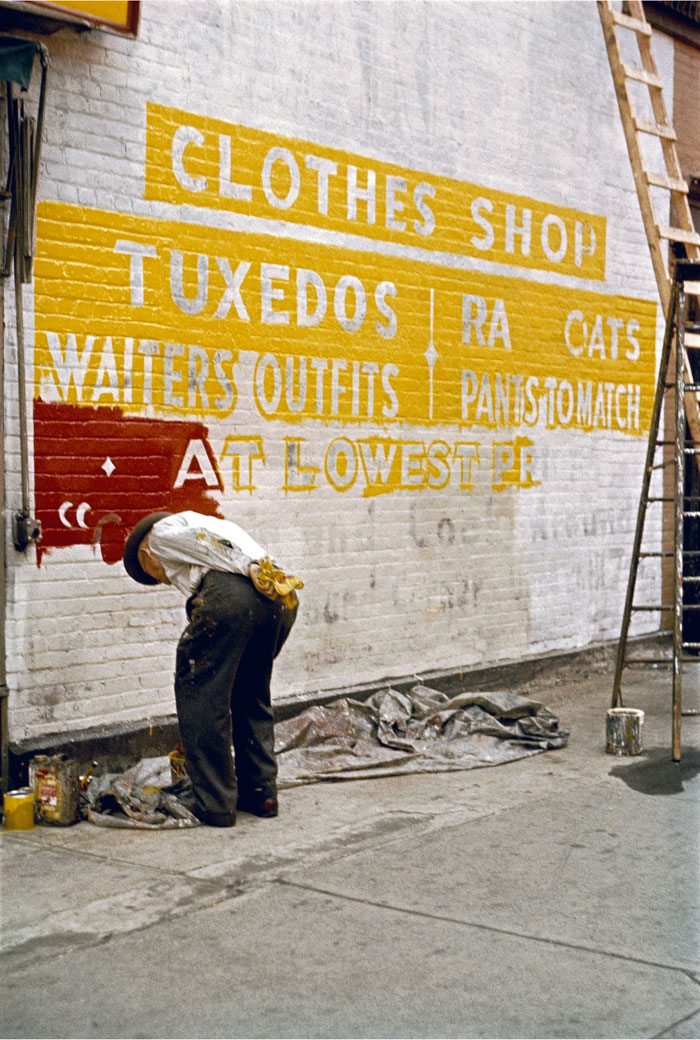
Saul Leiter (American, 1923-2013) 'Sign Painter' 1954


Saul Leiter (American, 1923-2013)
Sign Painter
1954
© Saul Leiter / Courtesy Howard Greenberg Gallery, New York


Saul Leiter (American, 1923-2013) 'Graffiti Heads' 1950


Saul Leiter (American, 1923-2013)
Graffiti Heads
1950
© Saul Leiter / Courtesy Howard Greenberg Gallery, New York


Saul Leiter (American, 1923-2013) 'Shirt' 1948


Saul Leiter (American, 1923-2013)
Shirt
1948
© Saul Leiter / Courtesy Howard Greenberg Gallery, New York


Saul Leiter (American, 1923-2013) 'Harlem' 1960


Saul Leiter (American, 1923-2013)
Harlem
1960
© Saul Leiter / Courtesy Howard Greenberg Gallery, New York


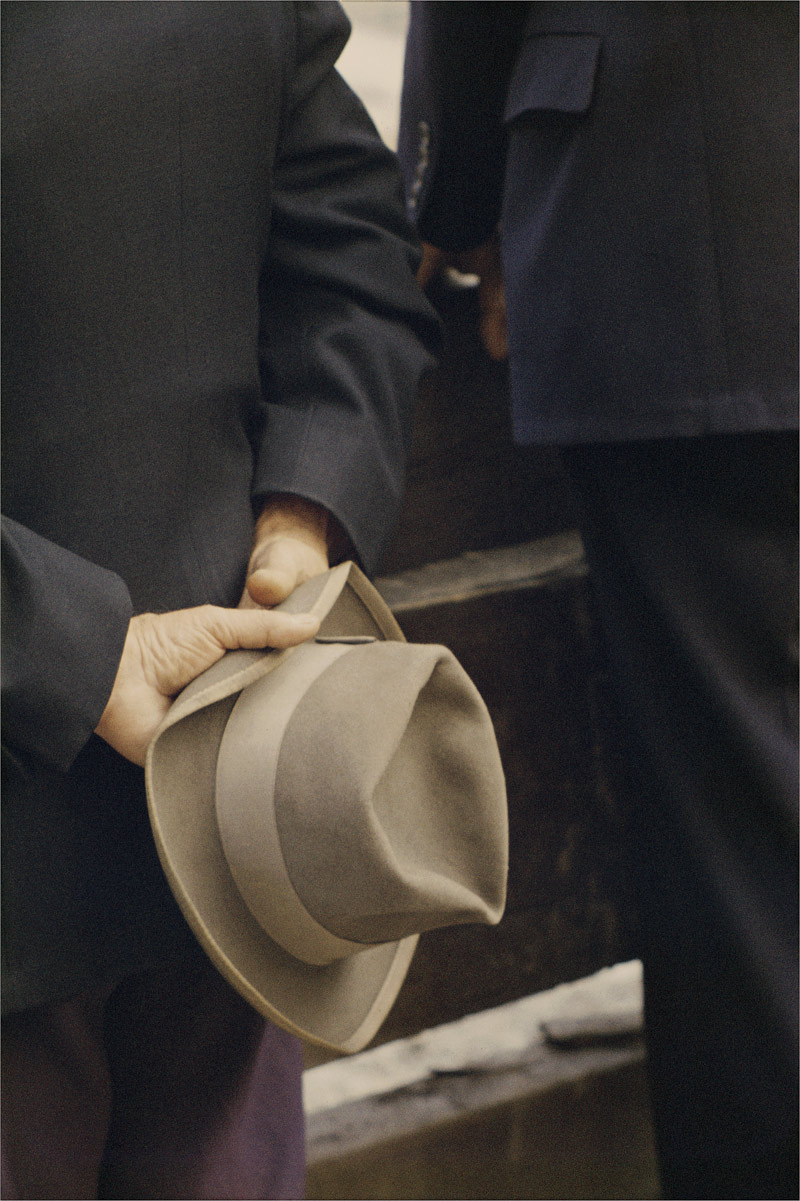
Saul Leiter (American, 1923-2013) 'Hat' 1956


Saul Leiter (American, 1923-2013)
Hat
1956
© Saul Leiter / Courtesy Howard Greenberg Gallery, New York


Saul Leiter (American, 1923-2013) 'Street Scene' 1957


Saul Leiter (American, 1923-2013)
Street Scene
1957
© Saul Leiter / Courtesy Howard Greenberg Gallery, New York


The exhibition chapters

Abstract Painting

Although his photographic oeuvre has dominated his image as an artist, Saul Leiter sees himself first and foremost as a painter. He began his artistic career as a painter, and while working as a photographer he never stopped painting and drawing. Leiter’s passion for art began when he was just a child, even though his ambitions received no support from his family. As a teenager he spent many hours in libraries studying art books. He found inspiration in the paintings of such artists as Vermeer, Bonnard, Vuillard and Picasso, as well as in Japanese graphic art. Leiter, who was self-taught, painted his first pictures in 1940. Most of them were lyrical, abstract compositions that reflected his admiration for the new American avant-garde. His ardent feeling for colour is recognisable even in these early paintings, as is his lifelong predilection for painting small format pastels and watercolours on paper.

After moving to New York in 1946, he sometimes presented his works together with abstract expressionist painters such as Willem de Kooning and Philip Guston. His studio was located on 10th Street in the East Village, which at that time was a neighbourhood very popular with avant-garde artists. Leiter shared these artists’ interest in abstraction and the use of colour, gesture and the element of chance, but he chose a radically different format for his works. Whereas many of his contemporaries, such as Jasper Johns or Franz Kline, painted wall-sized paintings that physically filled the beholder’s entire field of vision, Leiter worked in an intimate, small format. His works were also exhibited at the Tanager Gallery, one of the most important artist-run cooperatives in the East Village at that time. After switching the main focus of his work to photography in the late 1940s, however, Leiter stopped exhibiting his paintings.

Figurative Painting

Saul Leiter’s abstract painting frequently unites qualities of intimacy and familiarity with a sense of space reminiscent of an open landscape. Occasionally he also makes figurative sketches. Often these give mere intimations of a face or a body, perhaps a pointed nose, eyes and a mouth. Some of his male figures wear hats, similar to those worn by the religious Jews that peopled Leiter’s world in his youth. Most of these works focus on a single figure; only occasionally do we see a couple, or several figures grouped together. The quality of the line and the subtle suggestion of figures or heads in these paintings are reminiscent of paintings by Édouard Vuillard and Pierre Bonnard, in which facial features are hinted at through lines and fine shadings of colour rather than being defined by careful modelling.

Street Photography

When, in 1947, Saul Leiter attended an exhibition of works by the French photographer Henri Cartier-Bresson, he became convinced of the creative potential of this medium. He bought himself a 35mm Leica camera at a bargain and began, without any previous training, to take photographs on the streets of New York. At first he used only black-and-white film, but in 1948 he also started using colour film. His black-and-white photographs exhibit some elements of documentary photography but are nevertheless far removed from a photojournalistic style. Rather, they are subjective observations, often concentrating on a single individual in the big city. Leiter’s complex, multilayered works evoke feelings of alienation, melancholy and tension. Leiter underscores this impression by experimenting with strong contrasts, light and shadow, and asymmetrical compositions containing large areas in which the images are blurred.

Thematically and stylistically, there are great similarities between Leiter’s works and the works of other representatives of New York street photography of the same era, for example Ted Croner, Leon Levinstein, Louis Faurer and later Robert Frank and William Klein, today generally known as the New York School. Their radical new, subjective photography had a psychological component that revealed an unusual sensitivity to social turbulences and the uncertainty felt by many Americans during the years following the Second World War.

Colour Photography

Until well into the 1970s, colour photography was used almost exclusively for advertising and fashion magazines. Many photographers considered the vivid colours unsuitable for artistic expression. Moreover, they were unable to develop their colour film themselves, which made it a very expensive undertaking. It was not until 1976 that the Museum of Modern Art in New York gave its first exhibition devoted to colour photography, when it presented “Photographs by William Eggleston”.

Saul Leiter was one of the few photographers who did not reject colour photography. As a painter, he took a particular interest in street photography as a genre in which to experiment with colour film. As early as 1948, at the beginning of his career, he bought his first roles of 35mm Kodachrome colour slide film, which had been on the market since 1936. In order to save money, he often used film that had passed its sell-by date. Leiter particularly liked the resulting pictures with their delicate, muted colours.

The innumerable early colour photographs that Leiter took between 1948 and 1960 are of a unique painterly and narrative quality. They stand in contrast to the works of other photographers, in which colour is often the defining element of the composition. This circumstance, coupled with Leiter’s tendency towards abstraction, links Leiter’s photography with his painting. But in contrast to his painting (and his black-and-white photographs), his colour photographs are highly structured. It is the incomparable beauty of these works that has brought Leiter recognition as one of the masters of 20th-century photography.

Fashion Photography

In the late 1950s, Saul Leiter worked successfully in the fields of fashion photography and advertising. From the very first, his style was unmistakeable. His images were multilayered and complex, characterised by soft, impressionistic qualities and cubist changes of perspective. He was given his first commercial assignment in 1958 by Henry Wolf, at that time the new Art Director of Harper’s Bazaar, with whom Leiter became friends. Harper’s Bazaar was one of the leading American fashion magazines, presenting trail-blazing fashion series by photographers such as Richard Avedon or Lillian Bassman.

Subsequently, Leiter was given more and more prestigious assignments, and over the years began to spend almost all his time doing commercial work. Apart from Harper’s Bazaar, his fashion and advertising photos appeared in Elle and Show, in British Vogue and Queen and also in Nova. The amazing thing is that during this period, Leiter managed to retain his own narrative, stylised aesthetic, whereas other fashion photographers favoured a rather brittle, graphic style. In the 1970s, partly due to his own dwindling interest in commercial photography, Leiter received fewer and fewer assignments. In 1981 he gave up his studio on Fifth Avenue and in the following years led a quiet life far from the public eye.


Saul Leiter (American, 1923-2013) 'Carol Brown, 'Harper's Bazaar'' c. 1958


Saul Leiter (American, 1923-2013)
Carol Brown, ‘Harper’s Bazaar’
c. 1958
© Saul Leiter / Courtesy Howard Greenberg Gallery, New York


Saul Leiter (American, 1923-2013) 'Soames Bantry, 'Nova'' 1960


Saul Leiter (American, 1923-2013)
Soames Bantry, ‘Nova’
1960
© Saul Leiter / Courtesy Howard Greenberg Gallery, New York


Saul Leiter (American, 1923-2013) 'Walking' 1956


Saul Leiter (American, 1923-2013)
Walking
1956
© Saul Leiter / Courtesy Howard Greenberg Gallery, New York


Saul Leiter (American, 1923-2013) 'Reflection' 1958


Saul Leiter (American, 1923-2013)
Reflection
1958
© Saul Leiter / Courtesy Howard Greenberg Gallery, New York


“I spent a great deal of my life being ignored. I was always very happy that way. Being ignored is a great privilege. That is how I think I learnt to see what others do not see and to react to situations differently. I simply looked at the world, not really prepared for anything.”


Saul Leiter


Art critic Roberta Smith wrote in 2005: “Mr. Leiter was a photographer less of people than of perception itself. His painter’s instincts served him well in his emphasis on surface, spatial ambiguity and a lush, carefully calibrated palette. But the abstract allure of his work doesn’t rely on soft focus, a persistent, often irritating photographic ploy, or the stark isolation of details, in the manner of Aaron Siskind or early Harry Callahan. Instead, Mr. Leiter captured the passing illusions of everyday life with a precision that might almost seem scientific, if it weren’t so poetically resonant and visually layered.”

Text from the Lens Culture website [Online] Cited 15/05/2013 no longer available online


Saul Leiter (American, 1923-2013) 'Shopping' c. 1953


Saul Leiter (American, 1923-2013)
Shopping
c. 1953
© Saul Leiter / Courtesy Howard Greenberg Gallery, New York


Saul Leiter (American, 1923-2013) 'Kutztown' 1948


Saul Leiter (American, 1923-2013)
Kutztown
1948
© Saul Leiter / Courtesy Howard Greenberg Gallery, New York


Saul Leiter (American, 1923-2013) 'Pizza, Patterson' 1952


Saul Leiter (American, 1923-2013)
Pizza, Patterson
1952
© Saul Leiter / Courtesy Howard Greenberg Gallery, New York


KUNST HAUS WIEN
Museum Hundertwasser
Untere Weißgerberstraße 13
1030 Vienna
Phone: +43-1-712 04 91

Opening hours:
Daily, 10am – 7pm
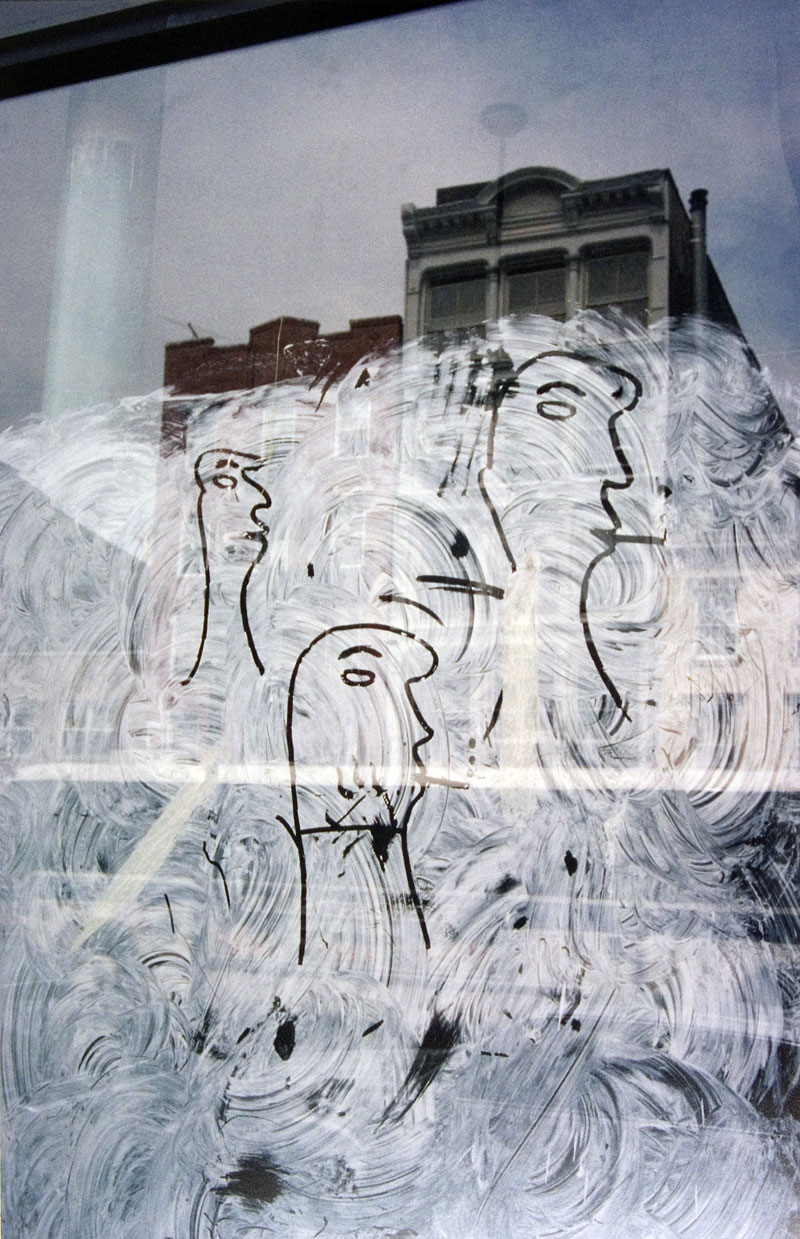
Kunst Haus Wein website

LIKE ART BLART ON FACEBOOK

Back to top

Review: ‘triestement (more-is u thrill-o)’ exhibition by Domenico De Clario at John Buckley Gallery, Melbourne

Exhibition dates: 22nd April – 9th May, 2009


Domenico de Clario (Australian born Italy, b. 1947) 'u (renoir’s garden)' 2008/09 from the exhibition 'triestement (more-is u thrill-o)' by Domenico De Clario at John Buckley Gallery, Melbourne, April - May, 2009


Domenico de Clario (Australian born Italy, b. 1947)
u (renoir’s garden)
2008/09
Oil on canvas


Based on the music of melancholy that inhabits the shadows of the paintings of Montmarte by the French artist Maurice Utrillo, Domenico de Clario’s exhibition of paintings at John Buckley Gallery in Melbourne is a major achievement. This is a superlative exhibition of focused, resonant work beautifully and serenely installed in the gallery space.

The exhibition features seven small and seven large oil and acrylic on canvas paintings that envelop the viewer in a velvety quietness, an intense stillness accompanied by ambient music composed by de Clario himself. All fourteen paintings are reinterpretations of works by Utrillo picked at random by de Clario that strip away surface matter to reveal the shadow substance that lays at the anxious heart of Utrillo’s meta/physical body of work (Utrillo was an alcoholic at fourteen and spent numerous periods in sanatoriums). When de Clario was fifteen he was fascinated by a small book on Utrillo and found that his paintings reminded him of his childhood, growing up in the town of Trieste. Recently he noticed that the word ‘triestement’ was used to mean, essentially, an investigation of sadness, of melancholy and started an investigation into the life and work of Utrillo. From this dialogue the paintings for the exhibition have emerged as de Clario found the ‘more is’ of Utrillo, the anima of his presence within the work.

The small abstract paintings (such as renoir’s garden, above) are dark and miasmic, vaporous emanations of atmosphere that contain traces of Utrillo’s lifelong battle with the black dog but it is the seven large paintings facing each other in the main gallery space that are at the heart of de Clario’s project. They are magnificent.

Painted in a limited colour palette of ochres, greys and blacks the works vibrate with energy. Cezanne-like spatial representations are abstracted and the paint bleeds across the canvas forming a maze of buildings. Walls and hedges loom darkly over roadways, emanations of heads and figures float in the picture plane and the highlight white of snow hovers like a spectral figure above buildings. These are elemental paintings where the shadow has become light and the light is shadow, meanderings of the soul in space. In the painting i (the house of hector berlioz – night) below, the single dark line of the house rises from the plain; the shadowy haze of recognition sits in the subconscious like the trace of our own mortality. My mind made an association with the modernist photograph by Paul Strand of the church at Taos (see photo at bottom of posting) with the looming bulk of the ramparts: it’s funny how things just click into place.

“The watergaw, the faint rainbow glimmering in chittering light, provides a sort of epiphany, and MacDiarmid connects the shimmer and weakness and possible revelation in the light behind the drizzle with the indecipherable look he received from his father on his deathbed … Each expression, each cadence, each rhyme is as surely and reliably in place as a stone on a hillside.”Seamus Heaney1


To paint these works de Clario was open and receptive to the idea of the letting go. In the wonderfully erudite catalogue essay he says he felt like he was standing under a waterfall experiencing the joyful bliss of substance, material, surface, shadow, blandness, light, plenitude and triestement while acknowledging that he could never capture them and that their value could only be fully understood once he abandoned any thought of possessing them. Like Seamus Heaney in the quotation above, de Clario experienced the glimmering in chittering light, the possible revelation in the light behind the drizzle (of the shadow) and he then paints the trace of Utrillo’s subconscious anima, the indecipherable look of his triestement. de Clario feels the fluid relationship between substance and appearance; he understands that Utrillo is embedded in the position of each building and stone, in the cadences and rhymes of the paintings of Montmarte. de Clario interprets this knowledge in a Zen like rendition of shadow substance in his paintings. Everything has it’s place without possession of here and there, dark and light.

For my part it was my soul responding to the canvases. I was absorbed into their fabric. As in the dark night of the soul my outer shell gave way to an inner spirituality stripped of the distance between viewer and painting. I felt communion with this man, Utrillo, with this art, de Clario, that brought a sense of revelation in the immersion, like a baptism in the waters of dark light. For art this is a fantastic achievement. Highly recommended.

Dr Marcus Bunyan


1/ Heaney, Seamus. The Redress of Poetry. London: Faber and Faber, 1995, pp. 107-108.


Please click on the artwork for a larger version of the image.


Domenico de Clario (Australian born Italy, b. 1947) 'l (le lapin agile - snow coming)' 2008/09 from the exhibition 'triestement (more-is u thrill-o)' by Domenico De Clario at John Buckley Gallery, Melbourne, April - May, 2009


Domenico de Clario (Australian born Italy, b. 1947)
l (le lapin agile – snow coming)
2008/09
Oil on canvas


Maurice Utrillo (French, 1883-1955) 'Renoir's Garden' 1909-1910


Maurice Utrillo (French, 1883-1955)
Renoir’s Garden
1909-1910
Oil on canvas


Installation view of 'triestement (more-is u thrill-o)' by Domenico De Clario at John Buckley Gallery

Installation view of 'triestement (more-is u thrill-o)' by Domenico De Clario at John Buckley Gallery


Installation views of triestement (more-is u thrill-o) by Domenico De Clario at John Buckley Gallery


Maurice Utrillo (French, 1883-1955) 'Paris Street' 1914


Maurice Utrillo (French, 1883-1955)
Paris Street
1914
Oil on canvas


Domenico de Clario (Australian born Italy, b. 1947) 'r (rue ravignan - le bateau lavoir)' 2008/09


Domenico de Clario (Australian born Italy, b. 1947)
r (rue ravignan – le bateau lavoir)
2008/09
Oil on canvas


Domenico de Clario (Australian born Italy, b. 1947) 'l (le lapin agile and rue du mont cenis - snow receding)' 2008/09


Domenico de Clario (Australian born Italy, b. 1947)
l (le lapin agile and rue du mont cenis – snow receding)
2008/09
Oil on canvas


Domenico de Clario (Australian born Italy, b. 1947) 'o (la grande maison blanche – snow clouds massing)' 2008/09


Domenico de Clario (Australian born Italy, b. 1947)
o (la grande maison blanche – snow clouds massing)
2008/09
Oil on canvas


Is there any limit, I thought, to the kinds of shadows that might be transmuted into light? And is this because the key component of the nature of shadow is its deep longing for a transmutation to light?

As a consequence of these thoughts I arrived at the question that animates the core of this current project; what, I asked myself, might the original shadow-substance Utrillo experienced and subsequently transmutes into the paintings we known, have looked like? What shadow images did Utrillo first see, or even imagine, before he transmuted them into colour? …

Utrillo must have believed that the outer world of coloured light belonged exclusively to others, for he never succeeded in releasing himself from the dark inner shadows that engulfed him. Though he struggled much to reach the light he accepted shadow as constituting his world and worked ceaselessly to offer us images that reflected this side’s plenitude.

Perhaps the luminous surfaces of his paintings functioned as the thin membrane that separates the outer world of cacophonously coloured light from the velvety grey inner world of the monotic anxiety he inhabited. Upon that thought the momentousness of his gift became apparent to me …

For the purposes of this present project I believe that the shadow substance laying beneath the architecture of Utrillo’s streetscapes existed within the artist long before his paintings came into being. This non-substance generated the appearance of matter on the paintings’ surfaces and more significantly it gradually came to contain the spirit of his Montmarte-body.

The process of removing matter results in an obvious absence of substance but paradoxically this leads me to feel that here, under all this discarded visible matter, an invisible substance that has always contained more than matter awaits to be revealed. This leads to the provisional conclusion that the primal trace of normally unseen shadow is far richer than any material constituting appearance, containing as it does infinitely more substance than appearance.

Astonishing paradox; infinite substance can only be discovered once all matter is removed.

Text from the catalogue essay by Domenico de Clario [Online] Cited 26/04/2009. No longer available online


Maurice Utrillo (French, 1883-1955) 'Berlioz House' 1910


Maurice Utrillo (French, 1883-1955)
Berlioz House
1910
Oil on canvas


Postcard of Hector Berlioz House Nd


Anonymous
Postcard of Hector Berlioz House
Nd


Domenico de Clario (Australian born Italy, b. 1947) 'i (the house of hector berlioz - night)' 2008/09


Domenico de Clario (Australian born Italy, b. 1947)
i (the house of hector berlioz – night)
2008/09
Oil on canvas


Paul Strand (American, 1890-1976) Inverted colour burn of his photograph 'Church, Ranchos de Taos' New Mexico 1932


Paul Strand (American, 1890-1976)
Inverted colour burn of his photograph Church, Ranchos de Taos New Mexico 1932


John Buckley Gallery

This gallery has now closed.

LIKE ART BLART ON FACEBOOK

Back to top