
Exhibition dates: 10th October, 2025 – 17th May, 2026
Curators: Guest curator Catherine E. McKinley with Imani Williford, Curatorial Assistant, Photography, Fashion, and Material Culture, Brooklyn Museum
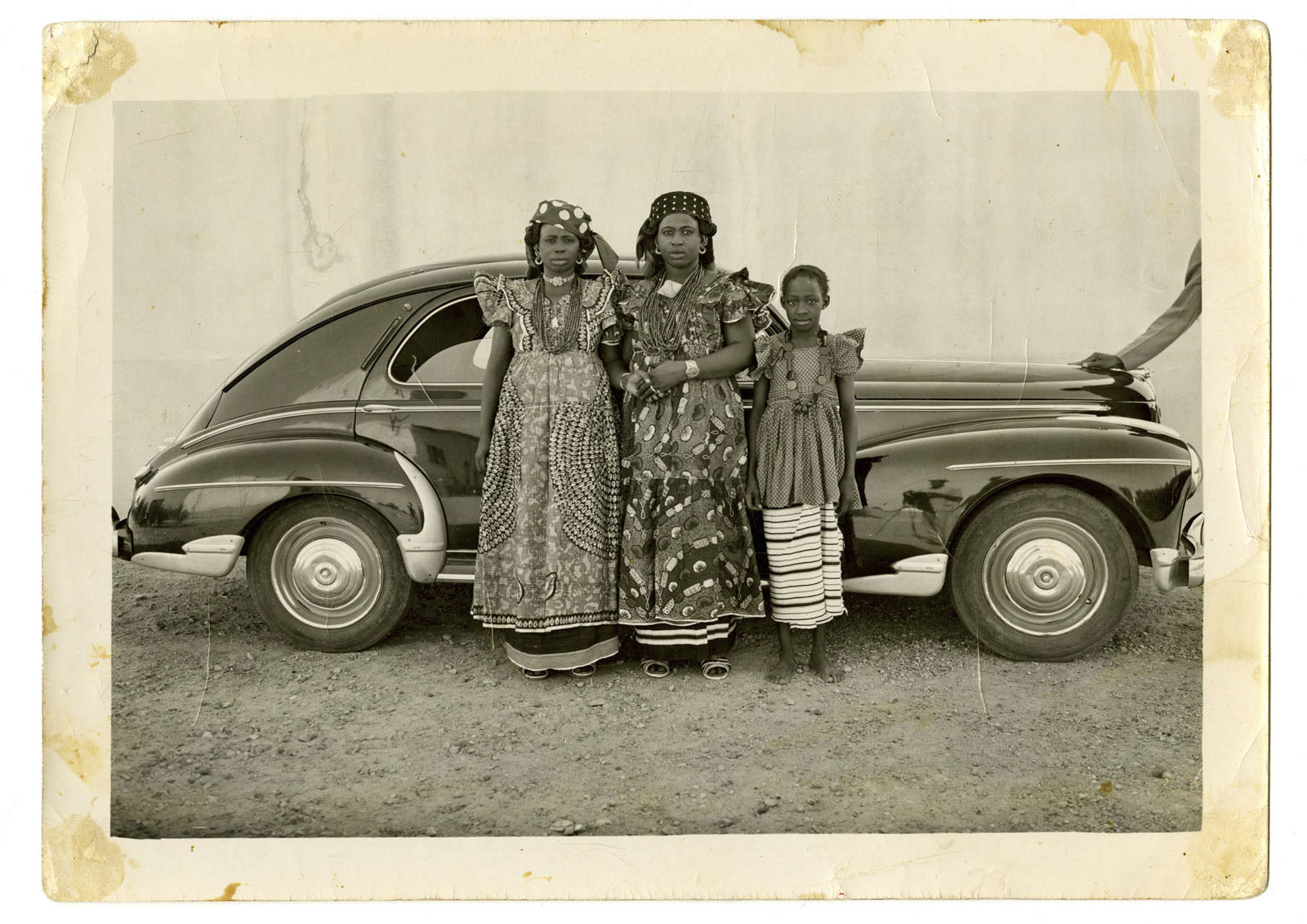
Seydou Keïta (Malian, c. 1921-2001)
Untitled
1954
Vintage gelatin silver print
Courtesy of The Jean Pigozzi African Art Collection
© SKPEAC/Seydou Keïta
Courtesy The Jean Pigozzi Collection of African Art and Danziger Gallery, NY
In African light
The Brooklyn Museum continues to orchestrate (now that’s an appropriate word) wonderful exhibitions that select, organise, and interpret items in “interpretive exhibitions”- curating and contextualising these items in order to establish their meaning, history, and cultural significance. In this regard the magnificent exhibition Seydou Keïta: A Tactile Lens is no exception.
In the exhibition Keïta’s direct, honest, and incisive black and white photographs – often taken outdoors on bare earth in natural light with mud walls, hanging textiles and blankets as backdrops – are contextualised with regard to West African history, placed in context “in a period defined by a rapidly expanding modern world and a new sense of Bamakois identity.” (Press release)
In the Brooklyn show Keïta’s photographs from the African environment are surrounded by cultural artefacts that reflect a new sense of nationhood as Mali moved toward independence post-French colonialism – “clothing, hand-fashioned dresses … pagnes (wrappers), wall hangings, and commemorative cloths that span the rich history of Malian textile design and trade”, gold, jewellery, lace, marabaka (a Czech-style hat that became a widespread symbol of Pan-African solidarity), traditional and modern textiles, blankets, family heirlooms, family photographs and a trove of film negatives – all combining to create a rich mosaic of references, an intertextuality (where things refer to, influence, or interrelate with one another) of identity, place and space.
What is particularly interesting about the presentation at the Brooklyn Museum is the mixture of vintage and modern prints, where the viewer can compare the scale and tonalities of old and new, where small jewel-like gold toned and hand-coloured prints of great presence and intensity can be compared to larger, contrast laden modern prints (for which the artist has become famous) which reveal hidden details in the negative.
Also of interest is the exhibition design itself in which the different colour of the walls, the spaces between them, the symmetrical layout, together with the clothing, textiles and wall hangings … all add a terrific spatial dimension to the whole. Witness the entrance to the exhibition where Keïta’s vintage photograph Untitled (1954, above) is placed in communion with a larger modern print, allowing the viewer to compare and contrast both old and new, one of the major pictorial themes of the exhibition. Then – and this is to me the essence of good exhibition design – you look at the line of sight of that entrance and in the space between the walls hanging in the distance, hovering above the photographs, is a colourful textile banner with face and garment which the viewer can visually correlate to the garments of the three women standing in front of the car in the modern print below. Just a small thing but inspiring exhibition design nonetheless, which reflects the holism of the exhibition.
Along with the work of other African photographers such as Malike Sidibé (Malian, 1935-2016), James Barnor (Ghanian, b. 1929) and Sanlé Sory (West African, b. 1943), Keïta’s photographs help touch, in African light, that most wonderful sense of the spirit and culture of a nascent independent nation, evidenced in his images through an intimate interconnection between people and place.
What is undeniable is that there is nothing like a photograph to remind you of difference, to challenge your perceptions on how you view and interact with the world around you, to open up new ways of seeing (Professor Stuart Hall). Thus the photographs in this exhibition may allow us a deeper insight into not only the conditions of our own becoming (while human beings have agency, the circumstances under which they act and develop their humanity are largely shaped by existing material, social, and historical conditions that they did not choose) but the conditions of other people’s becoming.
Hopefully these insights in turn promote a greater understanding and acceptance of difference in others in opposition to learnt bigotry and racism.
Just the joy of picturing, and being, and living, human.
Dr Marcus Bunyan
Many thankx to the Brooklyn Museum for allowing me to publish the photographs in the posting. Please click on the photographs for a larger version of the image.
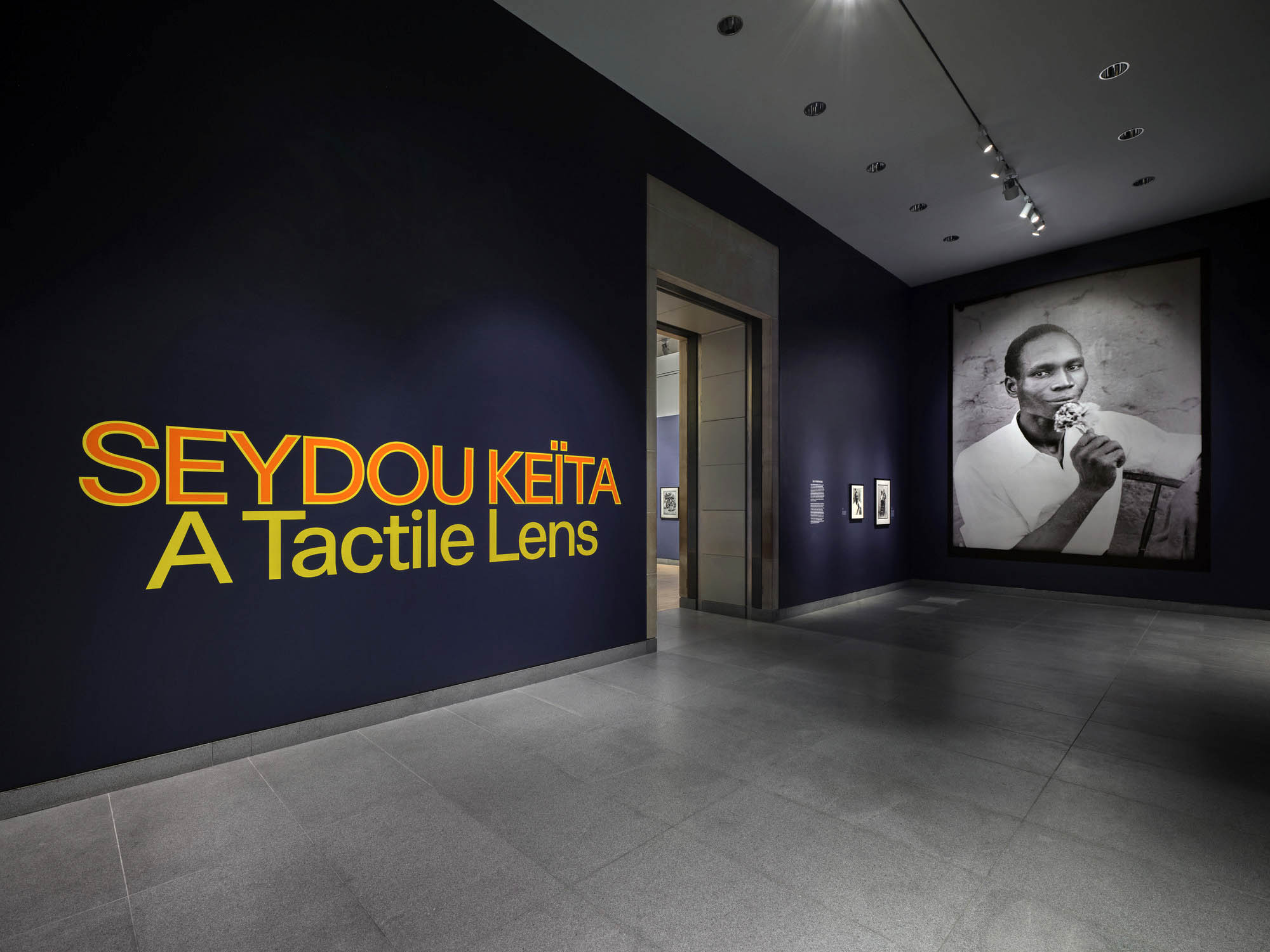
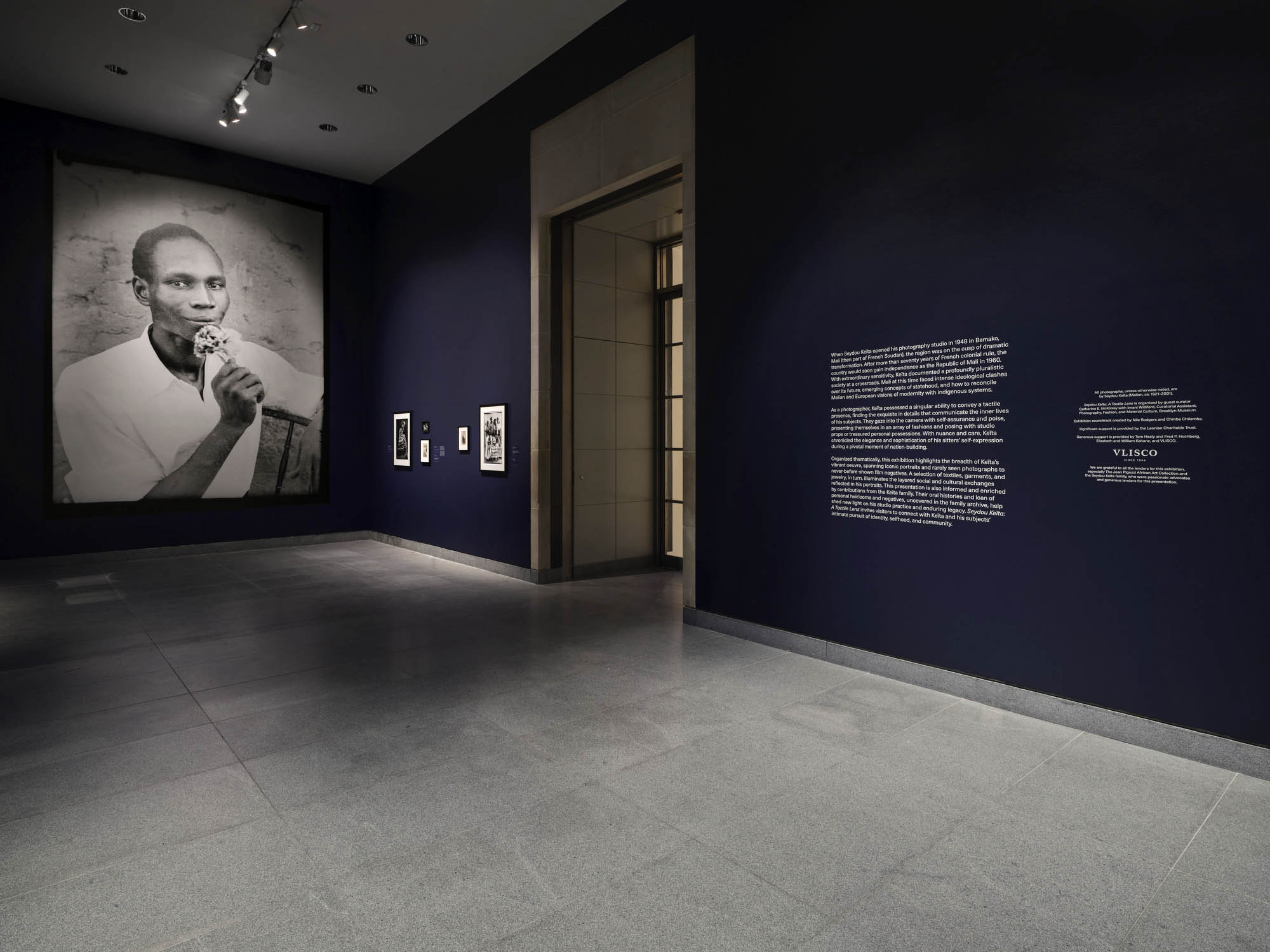
Installation views of the exhibition ‘Seydou Keïta: A Tactile Lens’ at the Brooklyn Museum, New York, October 2025 – May 2026 showing Keïta’s self-portrait Untitled, 1956
Dressed in a crisp white shirt, holding a flower gently to his chin, Keïta turns the camera on himself with the same control and precision he granted his subjects. As French Soudan faced political uncertainty and turmoil in the lead-up to independence, Keïta’s studio, whether indoors or on the street, offered sitters a place to create a self of one’s own.
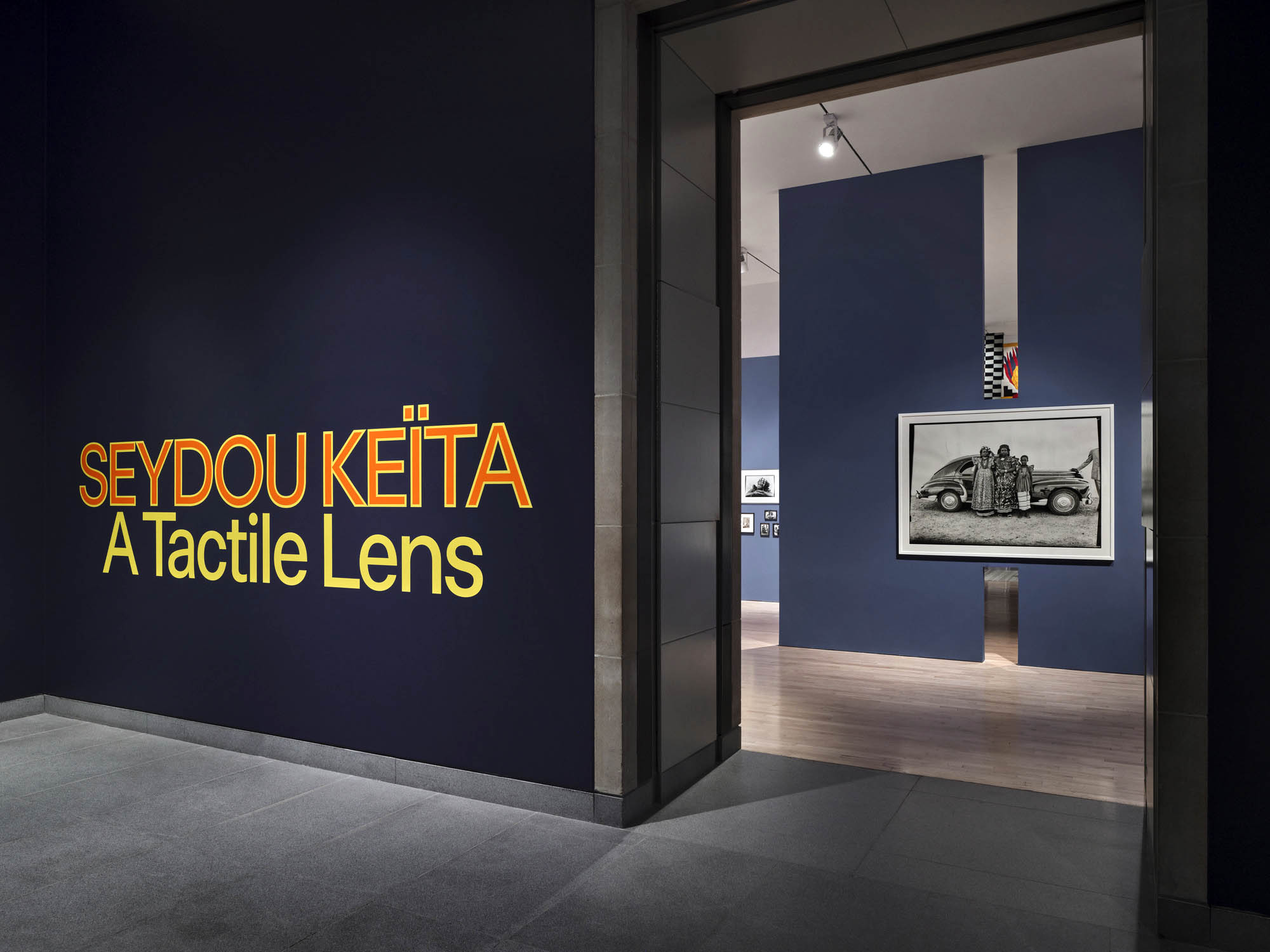
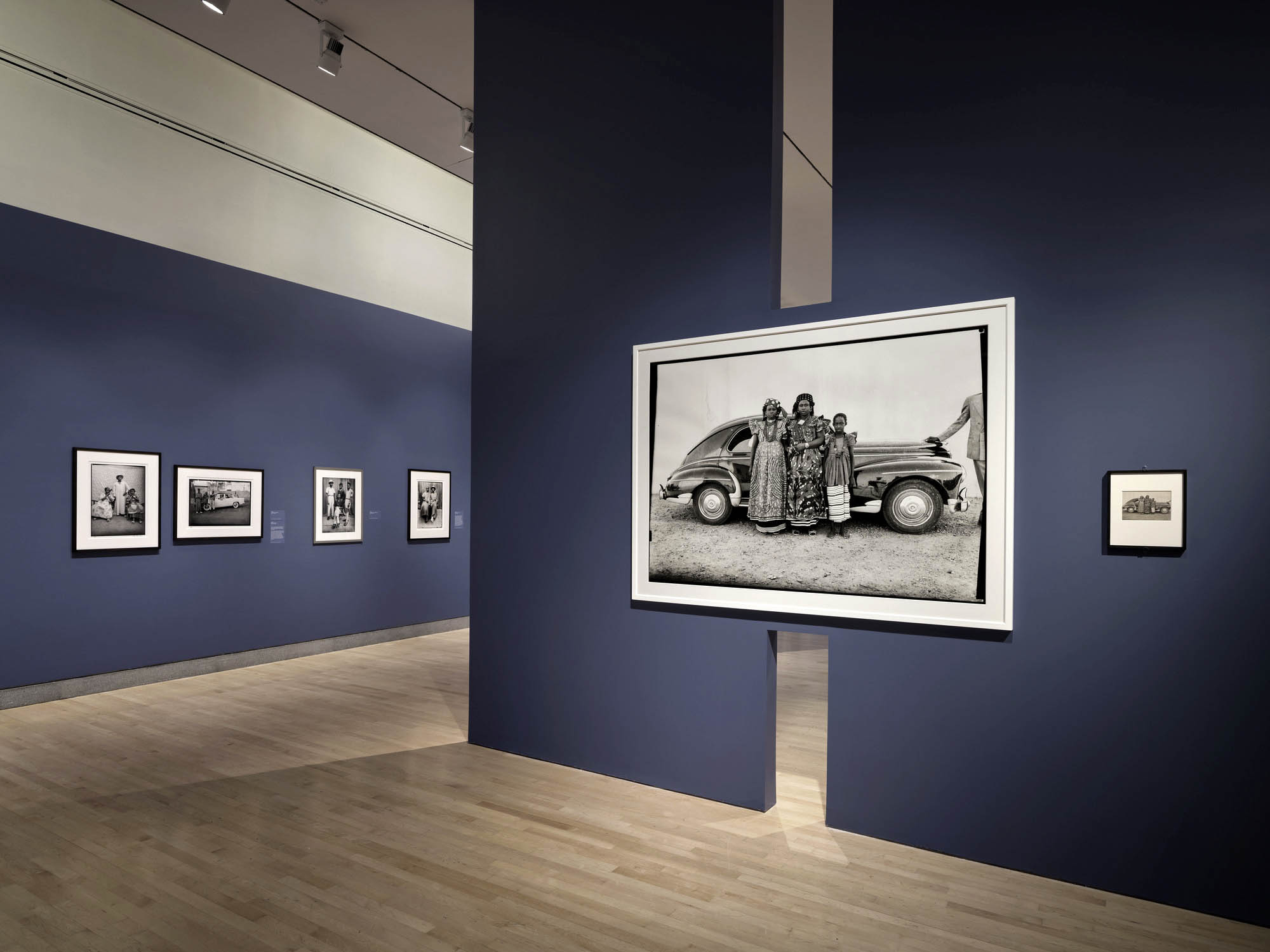
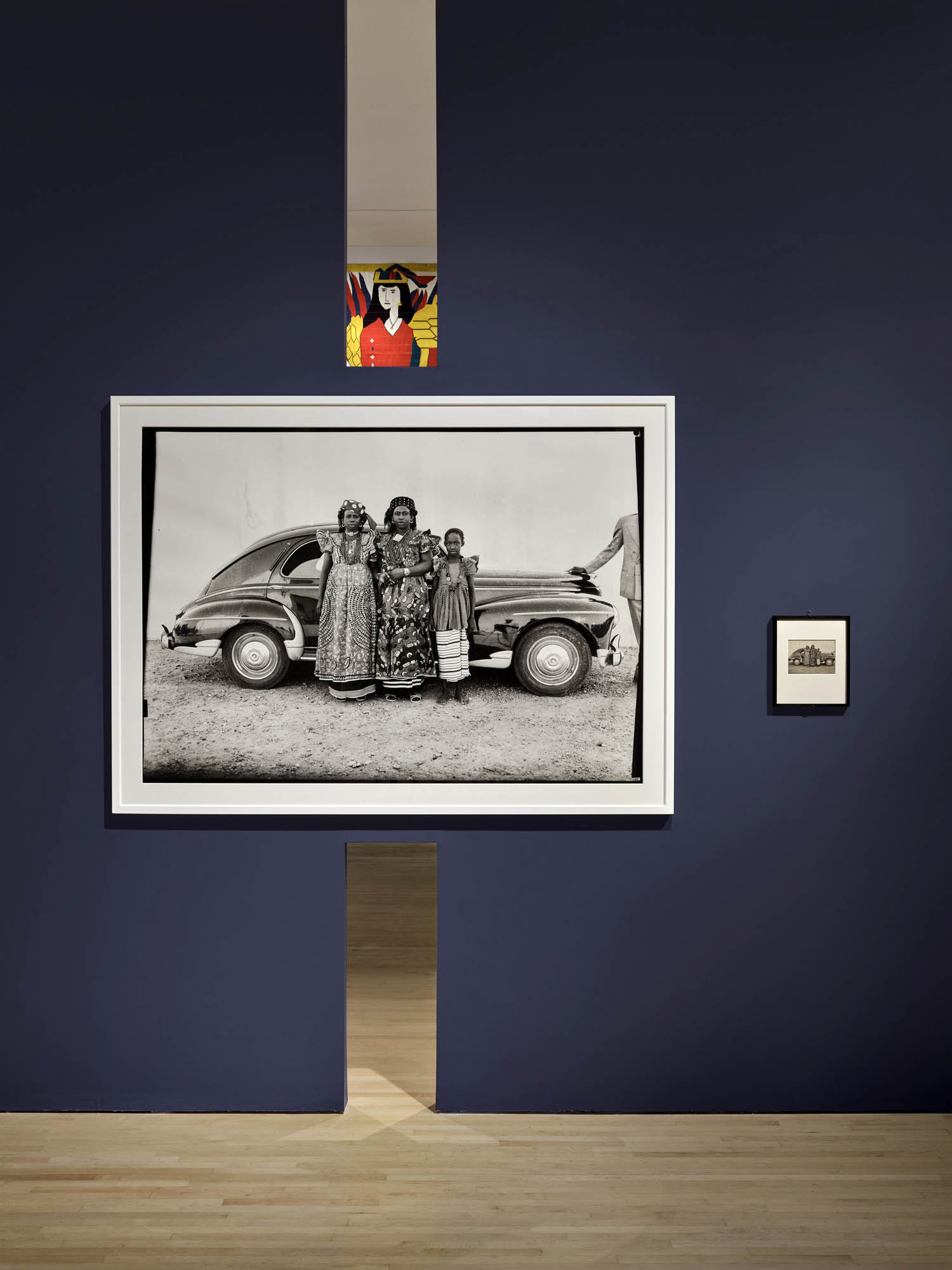
Installation views of the exhibition Seydou Keïta: A Tactile Lens at the Brooklyn Museum, New York, October 2025 – May 2026 showing in the bottom two images, Keïta’s photograph Untitled 1954 (above)
The smaller, vintage print and the larger, modern one of Keïta’s 1954 photograph highlight the material and historical distinctions between the types of prints on view in the exhibition. Often made by Keïta himself, the vintage prints were produced around the time the photograph was taken. Such works feature a particular range of tonalities – the result of earlier technologies, less environmental control in the darkroom, and the paper’s age. The modern prints were made later in Keïta’s life, some of them posthumously. These works are larger, in part, to accentuate the details of the image, such as Keïta’s own reflection on the car’s surface. Following his landmark New York and Paris exhibitions in the 1990s, Keïta came to be known for the distinctive black-and-white tonalities of these modern prints.
Reflecting on his work in 1997, Keïta revealed he had always hoped to make large-format prints (30 x 40 in., 40 x 50 in., and 50 x 60 in.) but seldom had the chance. Sitters rarely requested them due to cost. Together, both vintage and modern prints demonstrate the range and impact of Keïta’s artistry. They also inspire questions about photography’s nature as both artwork and heirloom objects imbued with social and ritual meaning as they pass from hand to hand.
Encounter an artist who changed the face of portrait photography. Seydou Keïta: A Tactile Lens is the most expansive North American exhibition of the legendary Malian photographer’s work to date. More than 280 works include iconic prints, never-before-seen portraits, textiles, and Keïta’s personal artifacts, all brought to life with unique insights from his family.
Organised by the Brooklyn Museum, the exhibition brings us to Bamako from the late 1940s to early 1960s, an era of profound political and social transformation. Collaborating closely with his sitters, Keïta recorded Mali’s evolution through their choices of backdrops, accessories, and apparel, from traditional finery to European suits. These bold yet sensitive photographs began to circulate in West Africa nearly 80 years ago. In the early 1990s, they reached Western viewers, rocking the art world and cementing Keïta as the premier studio photographer of 20th-century Africa – a peer of August Sander, Irving Penn, and Richard Avedon.
Witness the power of photography through these richly layered images, which reveal not only Malians’ emotional landscapes but also the textures of life in a rapidly changing country.
A fully illustrated catalogue accompanies the exhibition, offering new insights into the photographer, his work, and Malian material culture. The publication features a biography by Catherine E. McKinley based on extensive interviews with Keïta’s heirs, as well as essays by prominent scholars and curators including Drew Sawyer, Howard W. French, Duncan Clarke, Awa Konate, Sana Ginwalla, and Jennifer Bajorek.
Text from the Brooklyn Museum website
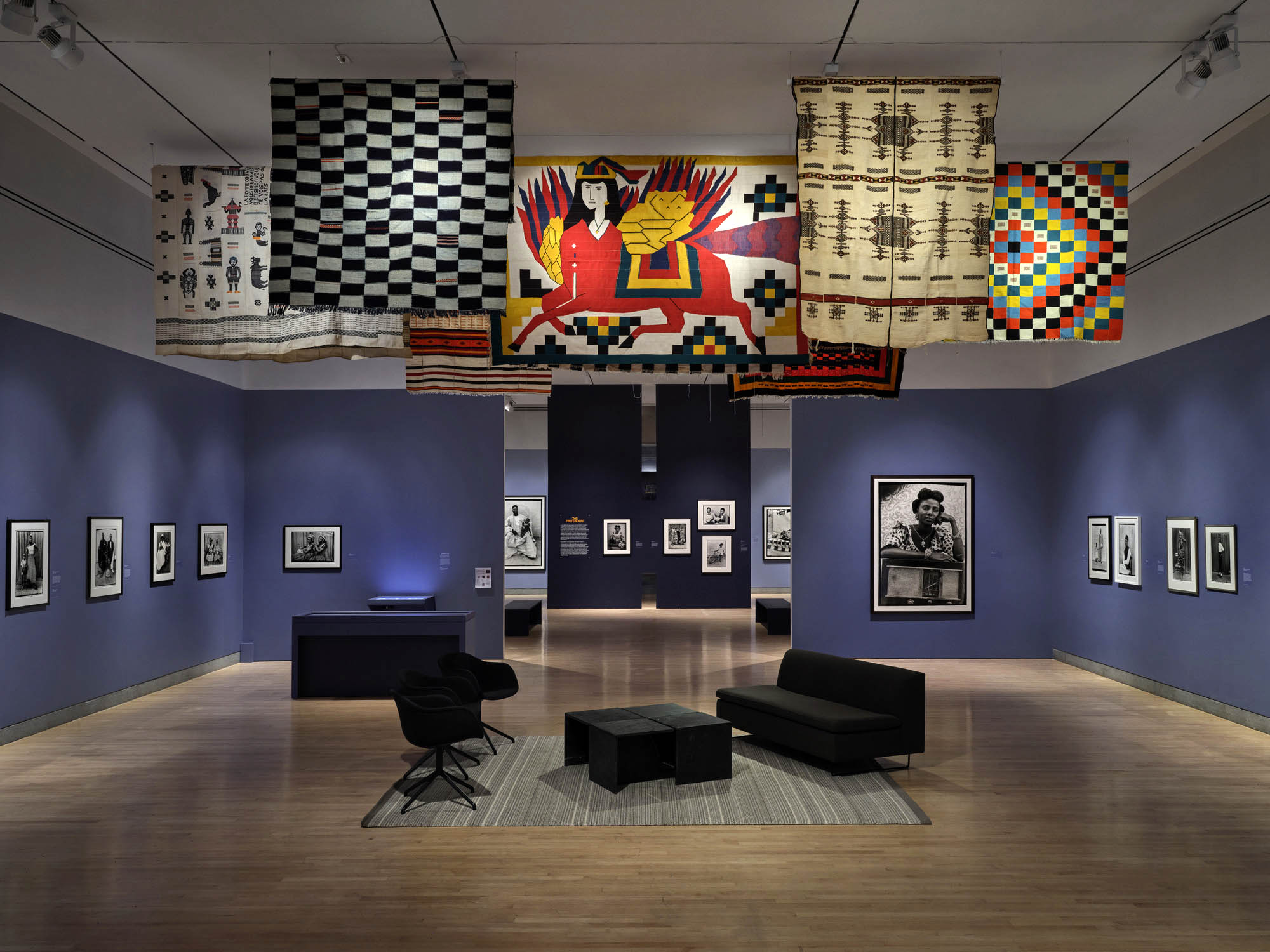
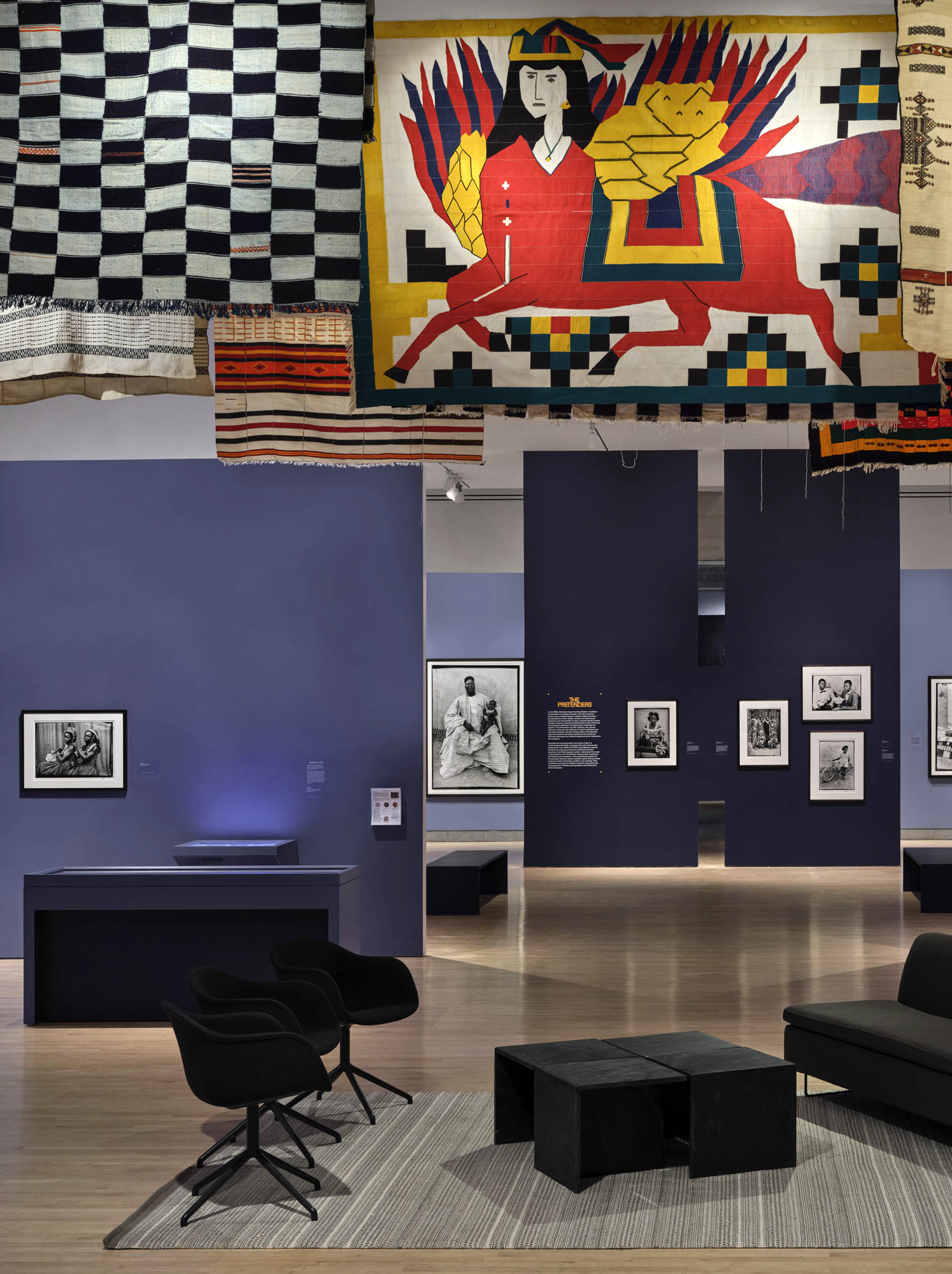
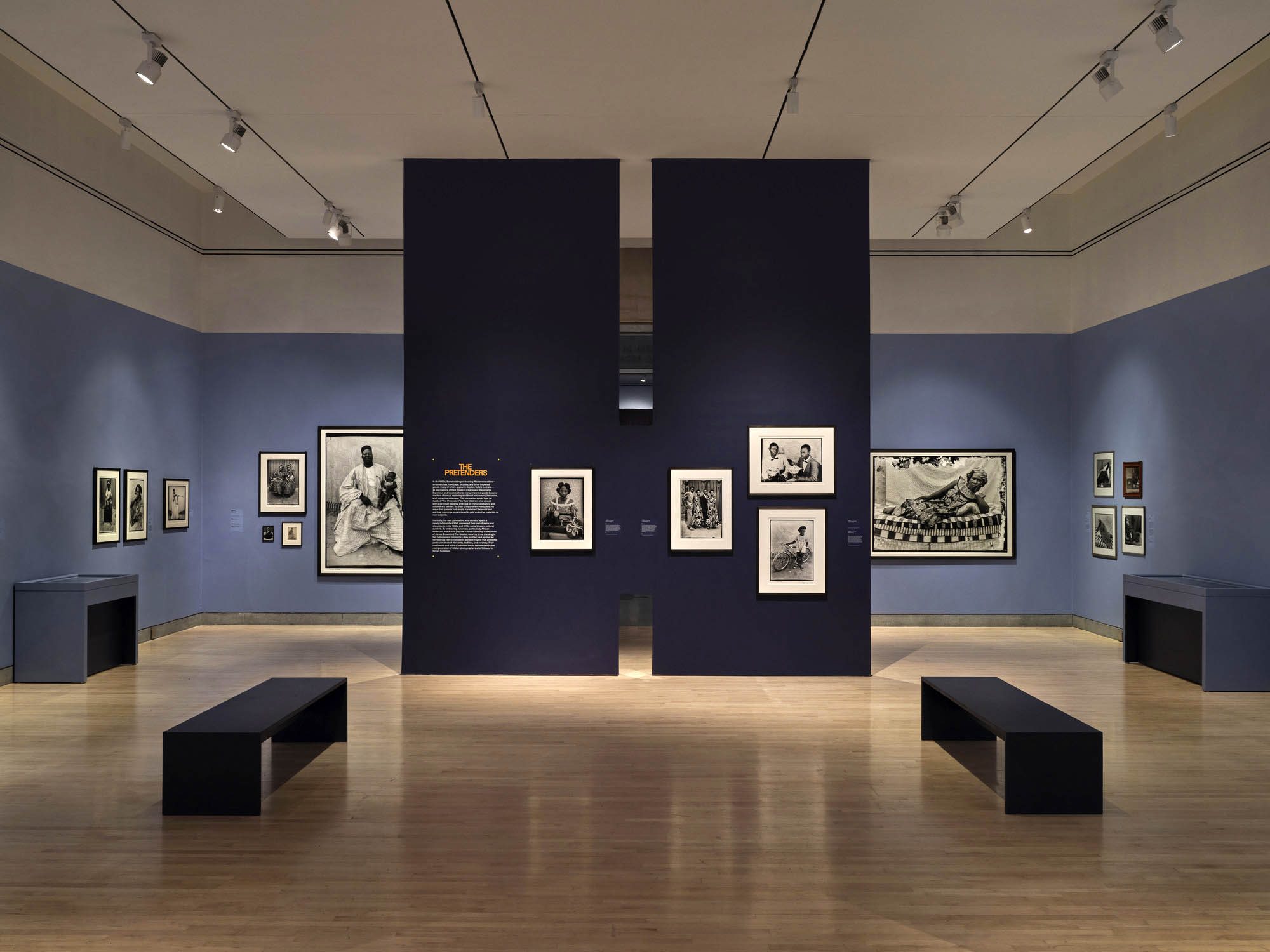
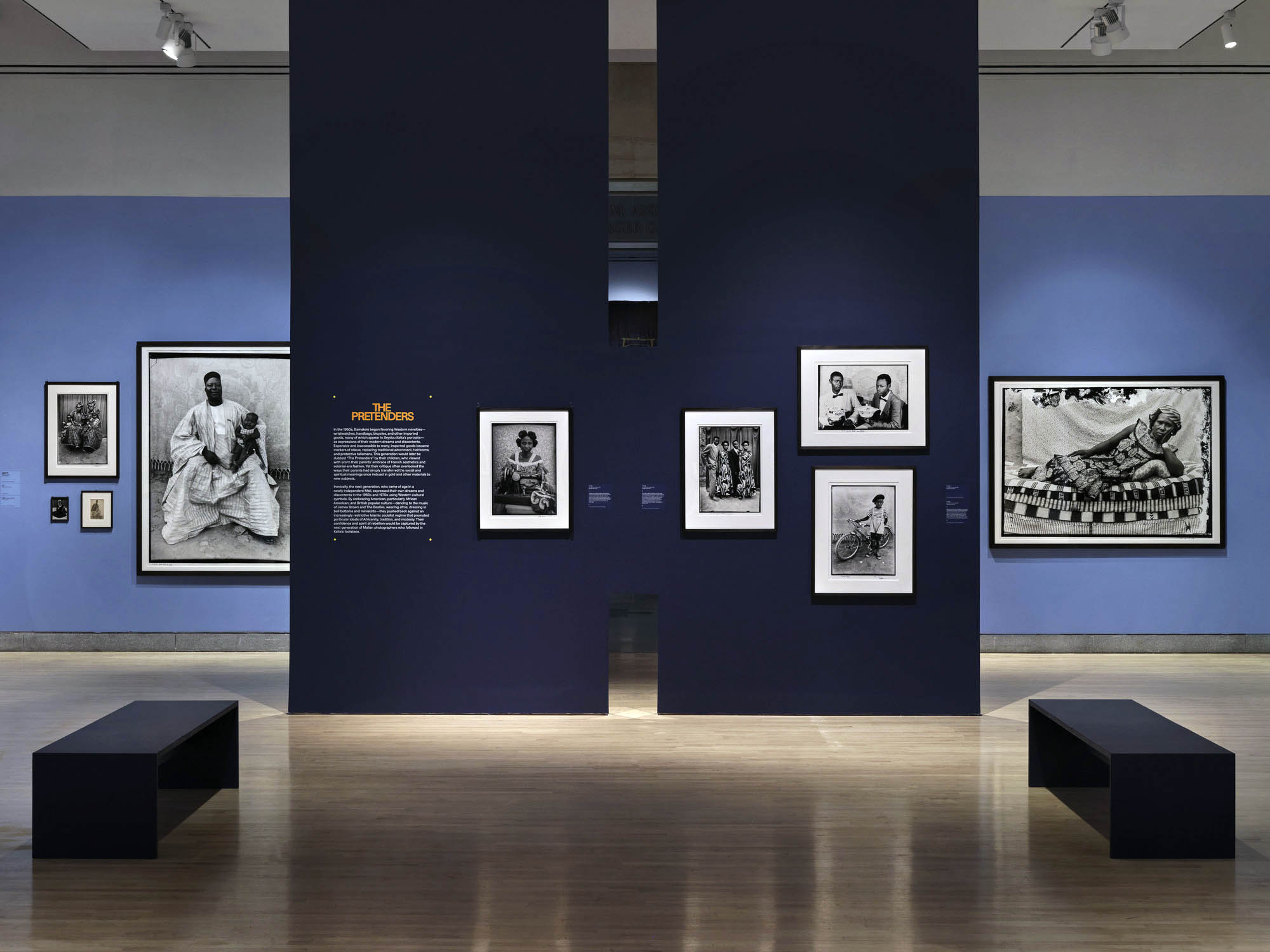
Installation views of the exhibition Seydou Keïta: A Tactile Lens at the Brooklyn Museum, New York, October 2025 – May 2026 showing at left in the bottom image, Keïta’s photograph Untitled 1949-1951 (below)
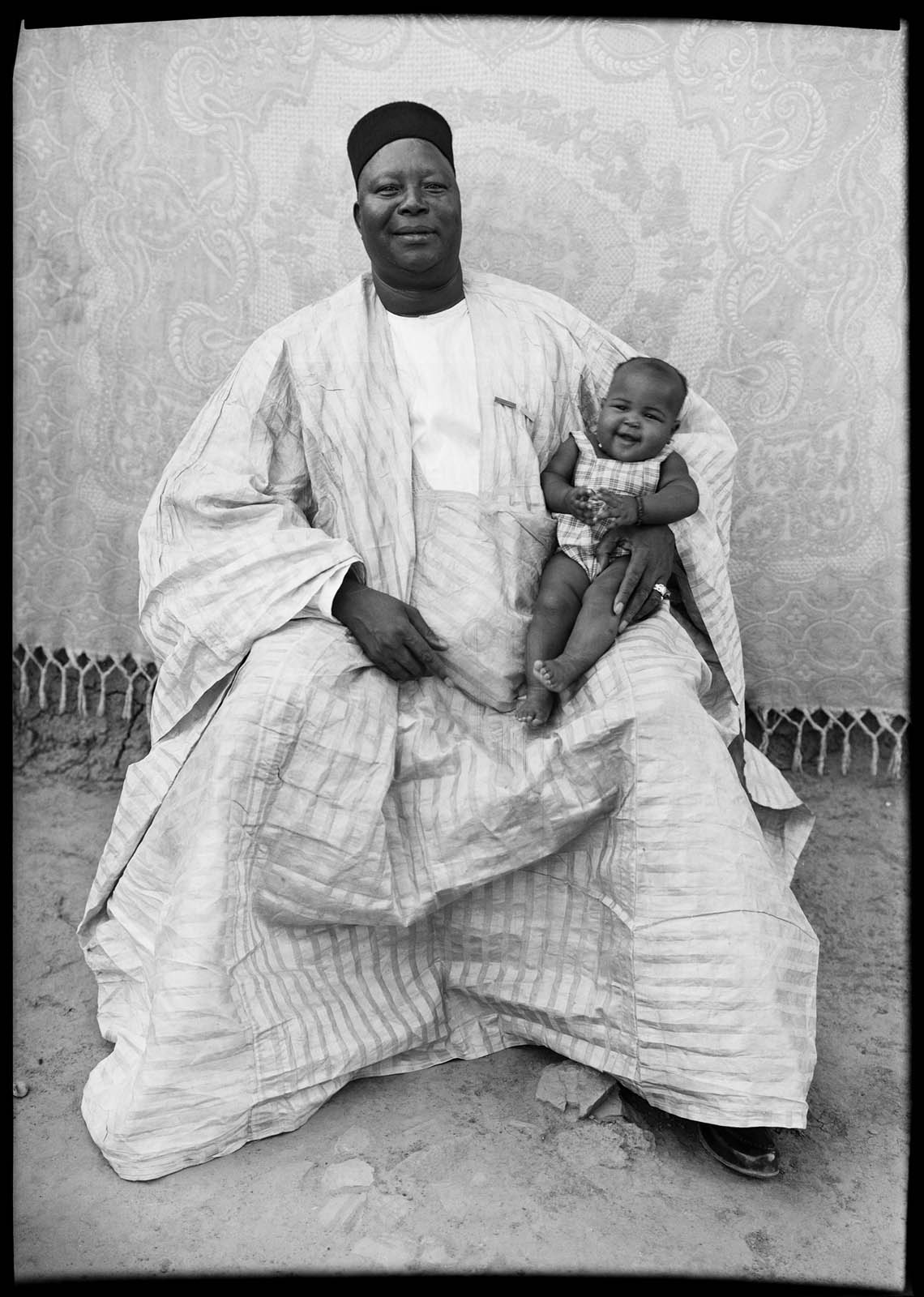
Seydou Keïta (Malian, c. 1921-2001)
Untitled
1949-1951, printed 1998
Gelatin silver print
Courtesy of The Jean Pigozzi African Art Collection
© SKPEAC/Seydou Keïta
Courtesy The Jean Pigozzi Collection of African Art and Danziger Gallery, NY
The exhibition Seydou Keïta: A Tactile Lens honors the artistry and legacy of Seydou Keïta (Malian, c. 1921-2001), who documented a critical chapter in West African history – one of immense hope, politically and socially – in a period defined by a rapidly expanding modern world and a new sense of Bamakois identity. The show features over 280 works, including renowned portraits, rare images, and never-before- seen negatives as well as textiles, jewellery, dresses, and personal items that fully immerse visitors in Keïta’s rich photographic landscape. Seydou Keïta: A Tactile Lens is organised by guest curator Catherine E. McKinley with Imani Williford, Curatorial Assistant, Photography, Fashion, and Material Culture, Brooklyn Museum.
Keïta was born around 1921 to a Malinke family in Bamako-Coura, or New Bamako, a growing colonial commercial center within the historic Malian city. His childhood saw emerging liberation struggles across the continent and growing expressions of modernism as Bamako served as the capital of French Soudan and subsequently the newly independent Mali in 1960.
Keïta documented Malian society in the late 1940s to early 1960s, an era of transformation and aspirations for independent statehood. A master at lighting and composition, Keïta has a unique ability to capture the tactile qualities of his sitters – from their fashion and choice of accessories to the personality and self-presentation they put forward. In collaboration with his subjects, he sculpted their poses, clothing, and style, forming monuments to their selfhood. When they first reached Western viewers in the early 1990s, his images drew unprecedented attention in the worlds of art, music, fashion, design, and popular media, forever changing the global cultural landscape. Today, these bold and engaging portraits continue to invite viewers into direct dialogue with Keita’s sitters.
Largely self-taught, Keïta first received a camera as a gift from his uncle at age 14. In 1935, he became an apprentice to his mentor, Mountaga Dembélé (1919-2004), Mali’s first professional photographer to earn a living with his studio. From there, Keïta opened his own studio in 1948 in front of his family home in Bamako-Coura, becoming Mali’s second photographer. The studio became a destination for people from all levels of Malian society, welcoming not just the elite citizens of Bamako but also remote villagers, international travelers, and those passing through on the Dakar-Niger railroad. Keïta’s work is notable for capturing how the people in his studio saw themselves, allowing for a playful self-expression backgrounded by increasing political tensions and rapid evolutions in the government. His studio offered props, including European and Malian clothing, motorbikes, Western watches, and novelties. Through the years, Keïta developed his very own style of portrait photography and a new type of modernist expression.
This period lasted until 1963, when Keïta was enlisted to work for the newly independent Socialist Republic of Mali. Forced to relinquish his studio, he documented state affairs and performed forensics for increasingly punitive governments until 1968 when he retired to work in camera and automotive repairs. In May 1991, the exhibition Africa Explores: Twentieth Century African Arts opened at the Center for African Arts in New York, where Keïta first debuted to Western audiences. In 1994, the Fondation Cartier in Paris presented Keïta’s first solo exhibition, which rocked the art and photography world, cementing him as the premiere African studio photographer of the twentieth century. The exhibition positioned Keïta as a peer of noted photographers such as Irving Penn, August Sander, and Richard Avedon, his contemporaries in portrait photography, and created enormous interest in Keïta’s work.
“Thirty-four years since Keïta was first introduced to American audiences we have an opportunity to view new discoveries in his work and understand just how singular he was, practicing at one of the most pivotal moments in African and world history. He had an extraordinary artist’s ability to render the tactile. We can visually ‘finger the grain’ of the sitter’s lives and better understand them beyond just their relationship to studio photography or documentary,” says Catherine E. McKinley, guest curator, author of The African Lookbook, and director of The McKinley Collection.
“It is very exciting and deeply moving to rediscover Keïta’s work and to feel the presence of his sitters – some of whom we meet here for the very first time – thanks to Catherine E. McKinley’s thoughtful research,” says Pauline Vermare, Phillip and Edith Leonian Curator of Photography. “We hope visitors feel the wonder and possibility that Keïta’s studio represented for so many people.”
A Tactile Lens brings together a remarkable range of Keïta’s photographs, which demonstrate the breadth of his oeuvre and the splendour of his artistry. Thanks to a generous loan from the Keïta family, an extraordinary group of never-before-published works has been preserved and imaged by the Museum on the occasion of the exhibition. A selection of the portraits will be displayed – on lightboxes and as a projection – for the first time. In addition, an array of vintage prints, many made by Keïta himself, and some of which are hand-painted, offer renewed emphasis on the photographic object itself. Rounding out the selection are larger prints made later in Keïta’s life, or posthumously, which feature the distinctive black-and-white tonalities that Keïta came to be known for. Joining the photographs is an immersive installation of personal belongings, textiles, garments, and jewellery that can be seen in Keïta’s portraits.
Together, these objects highlight the self-invention, search for identity, and syncretism of Mali that Keïta’s sitters sought in the mid-twentieth century.
A fully illustrated catalogue will accompany the exhibition, featuring a new biographical essay by Catherine E. McKinley based on extensive interviews with his heirs and from leading art professionals and historians such as Jennifer Bajorek, Duncan Clarke, Howard W. French, Sana Ginwalla, Awa Konaté, and Drew Sawyer, offering new insights into the photographer, his work, and Malian material culture.
Press release from the Brooklyn Museum
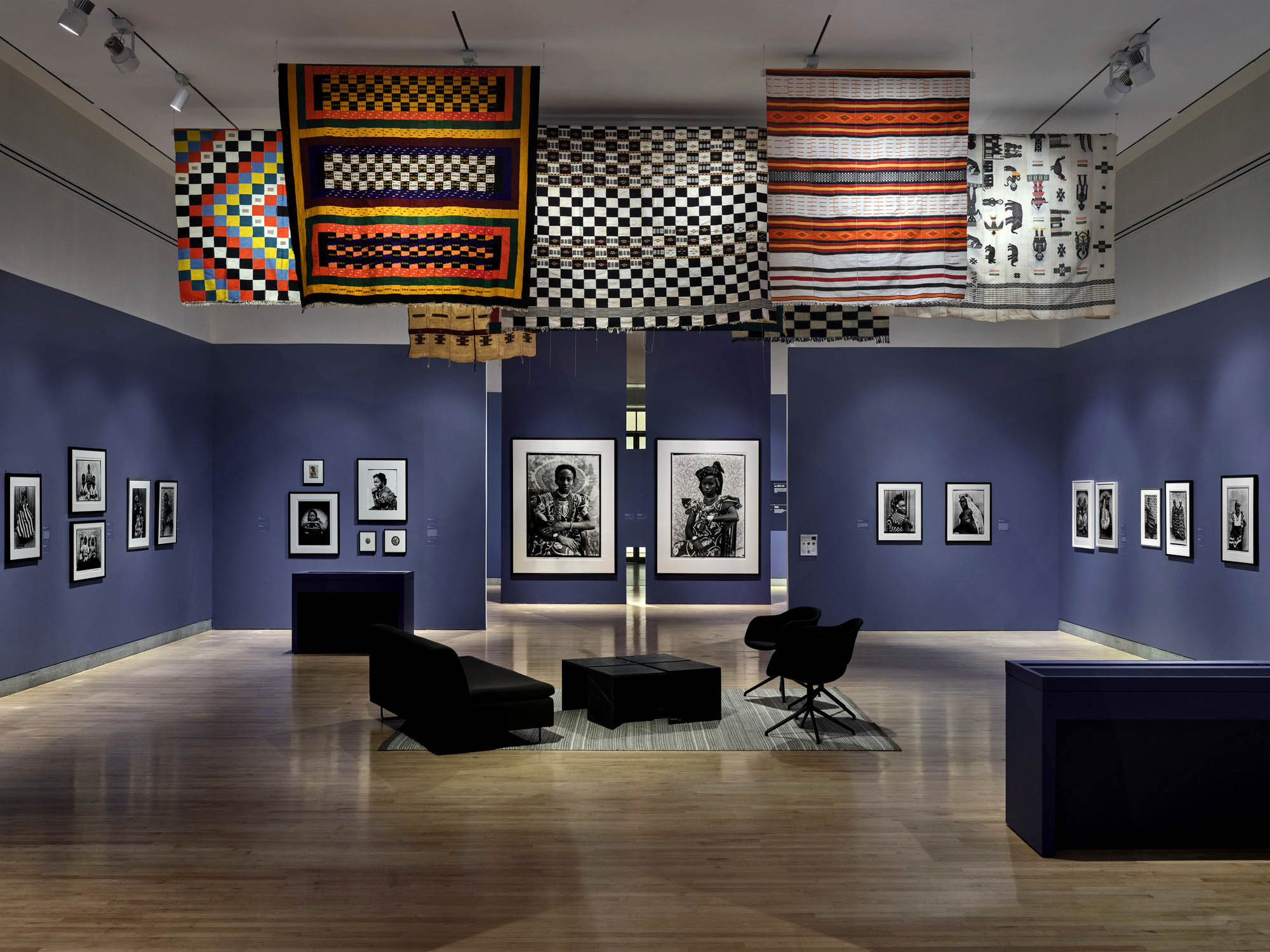
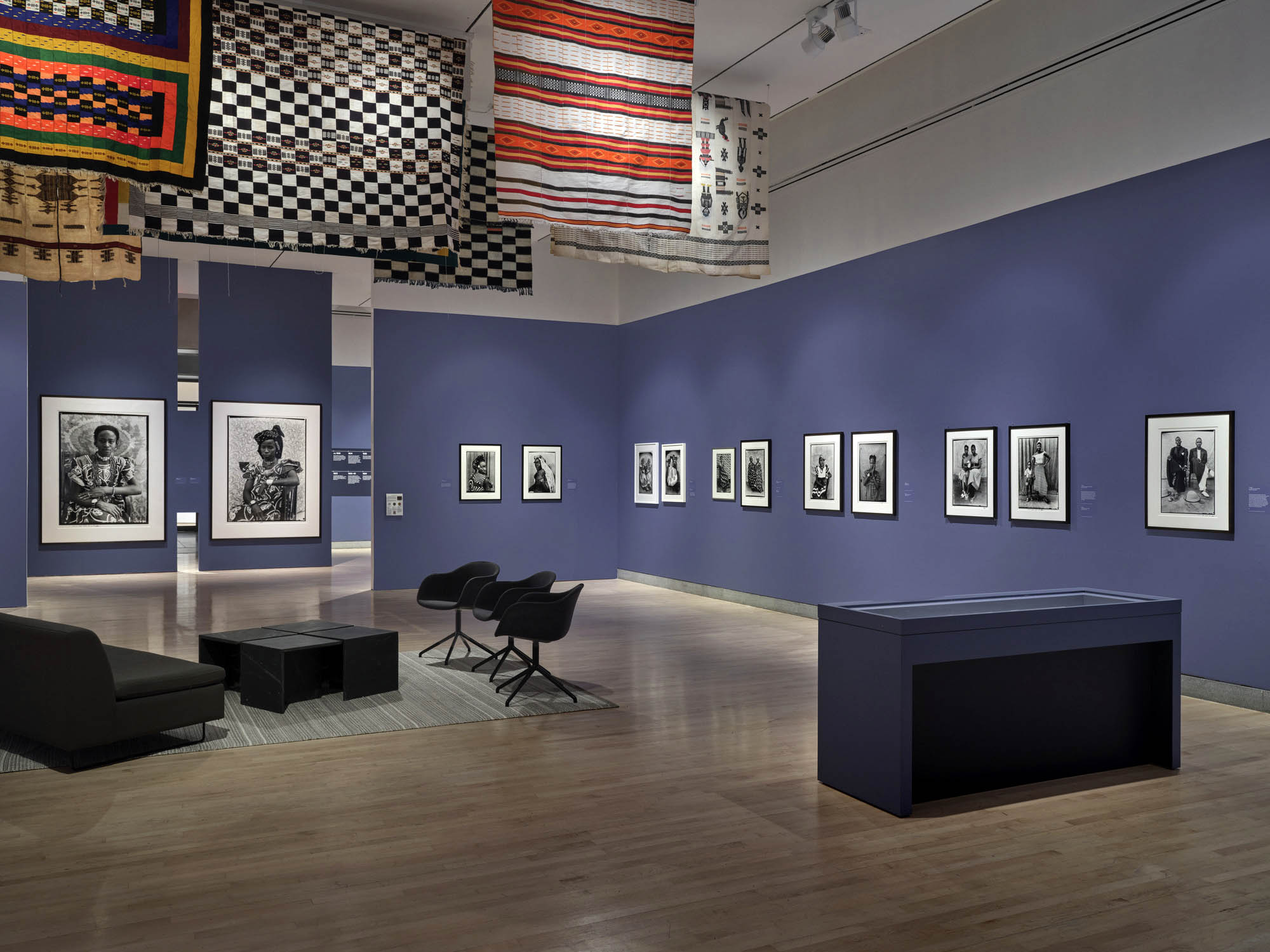
Installation views of the exhibition Seydou Keïta: A Tactile Lens at the Brooklyn Museum, New York, October 2025 – May 2026 showing at third left in the bottom image, Keïta’s photograph Untitled 1952-1955 (below); and at right, Untitled 1956-1957 (below)
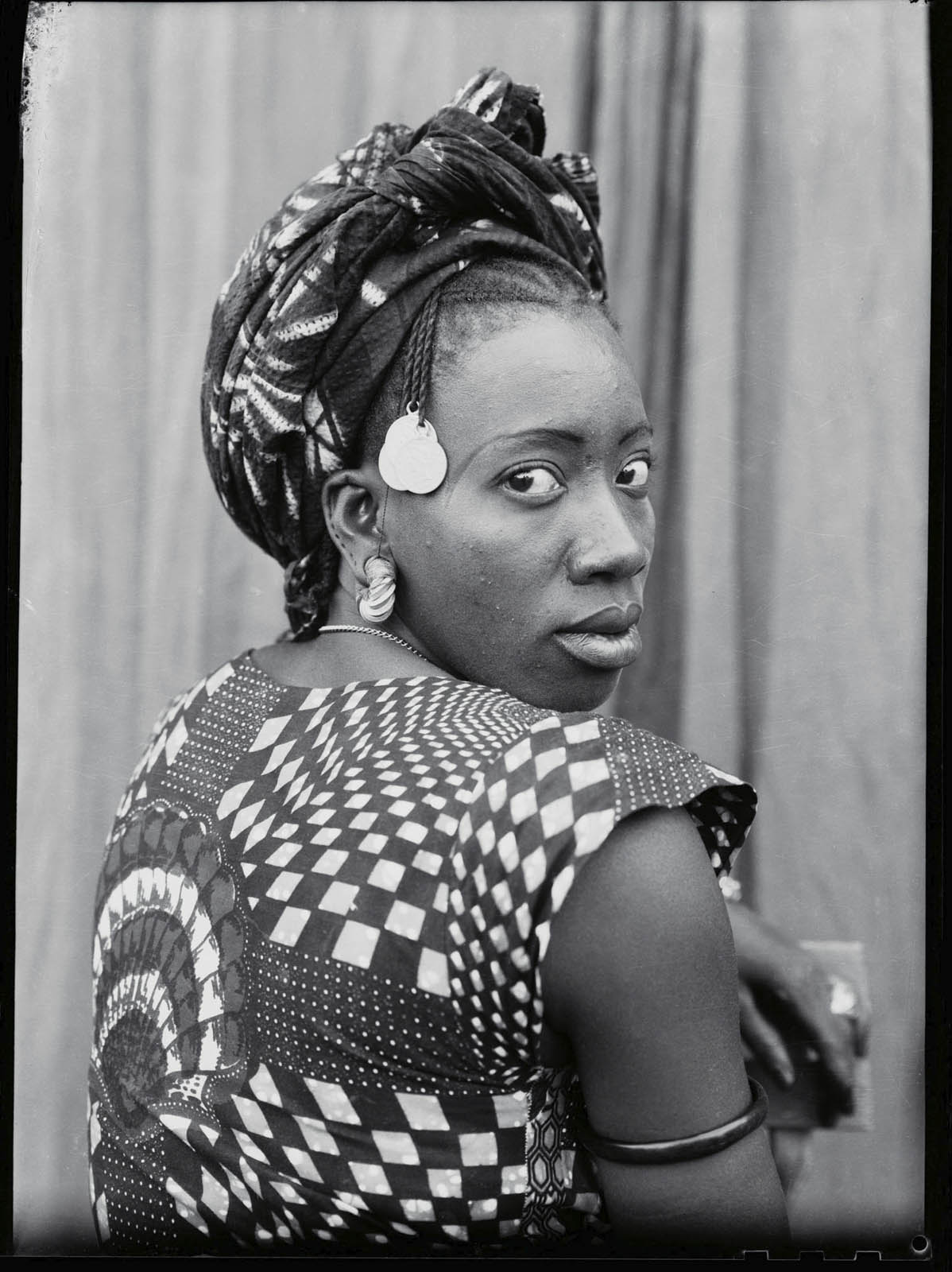
Seydou Keïta (Malian, c. 1921-2001)
Untitled
1952-1955, printed 1994
Gelatin silver print
© SKPEAC/Seydou Keïta
Courtesy The Jean Pigozzi Collection of African Art and Danziger Gallery, NY
Looking over her shoulder, her back to the camera, this woman flaunts the French coins – called Louis d’or – hanging at her temples. Gold held decorative and talismanic properties: the shine of the metal was believed to ward off
the evil eye and protect the head and soul of the wearer.
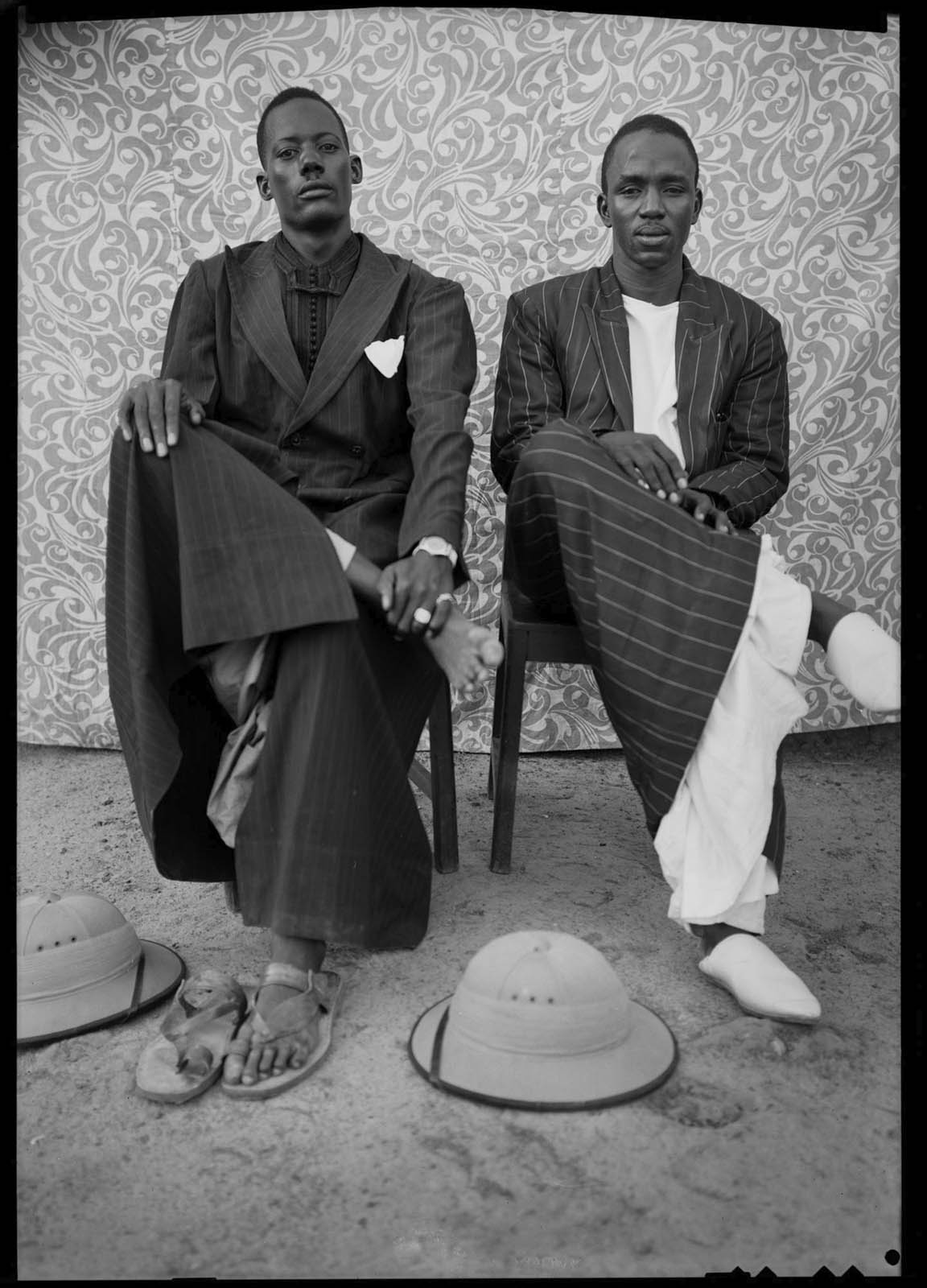
Seydou Keïta (Malian, c. 1921-2001)
Untitled
1956-1957, printed 1994
Gelatin silver print
© SKPEAC/Seydou Keïta
Courtesy The Jean Pigozzi Collection of African Art and Danziger Gallery, NY
When Seydou Keïta opened his photography studio in 1948 in Bamako, Mali (then part of French Soudan), the region was on the cusp of dramatic transformation. After more than seventy years of French colonial rule, the country would soon gain independence as the Republic of Mali in 1960. With extraordinary sensitivity, Keïta documented a profoundly pluralistic society at a crossroads. Mali at this time faced intense ideological clashes over its future, emerging concepts of statehood, and how to reconcile Malian and European visions of modernity with indigenous systems.
As a photographer, Keïta possessed a singular ability to convey a tactile presence, finding the exquisite in details that communicate the inner lives of his subjects. They gaze into the camera with self-assurance and poise, presenting themselves in an array of fashions and posing with studio props or treasured personal possessions. With nuance and care, Keïta chronicled the elegance and sophistication of his sitters’ self-expression during a pivotal moment of nation-building.
Organised thematically, this exhibition highlights the breadth of Keïta’s vibrant oeuvre, spanning iconic portraits and rarely seen photographs to never-before-shown film negatives. A selection of textiles, garments, and jewellery, in turn, illuminates the layered social and cultural exchanges reflected in his portraits. This presentation is also informed and enriched by contributions from the Keïta family. Their oral histories and loan of personal heirlooms and negatives, uncovered in the family archive, helpshed new light on his studio practice and enduring legacy. Seydou Keïta: A Tactile Lens invites visitors to connect with Keïta and his subjects’ intimate pursuit of identity, selfhood, and community.
Self-portraiture
Seydou Keïta’s photography business expanded and deepened the relationships between the artist, his family, and his art. His younger siblings and children were active participants in his studio. They arranged and held up backdrops as he shot, assisted with equipment, and performed the tea rituals that were at the centre of social exchanges. Family members often waited late into the evening for the final sitters to leave before coming to sleep in the studio – one of the few places in Bamako with electricity – while Keïta worked well into the night in his darkroom.
Keïta often used the final frames on a roll of film to photograph himself and his family – intimate and striking images that became part of his oeuvre. These portraits reflect his deeply felt responsibility as a Malinke patriarch, able to provide for his large extended family a life of modern comfort due to an unusual and enviable talent that would reach a world stage. His brothers describe Keïta’s “immaculate” presentation of a social self – a man who valued social reserve and Malinke tenets of modesty and stern leadership. In these portraits, we also see him as a self-styled bon vivant, carefree in his European sportswear and playfully connected to those around him.
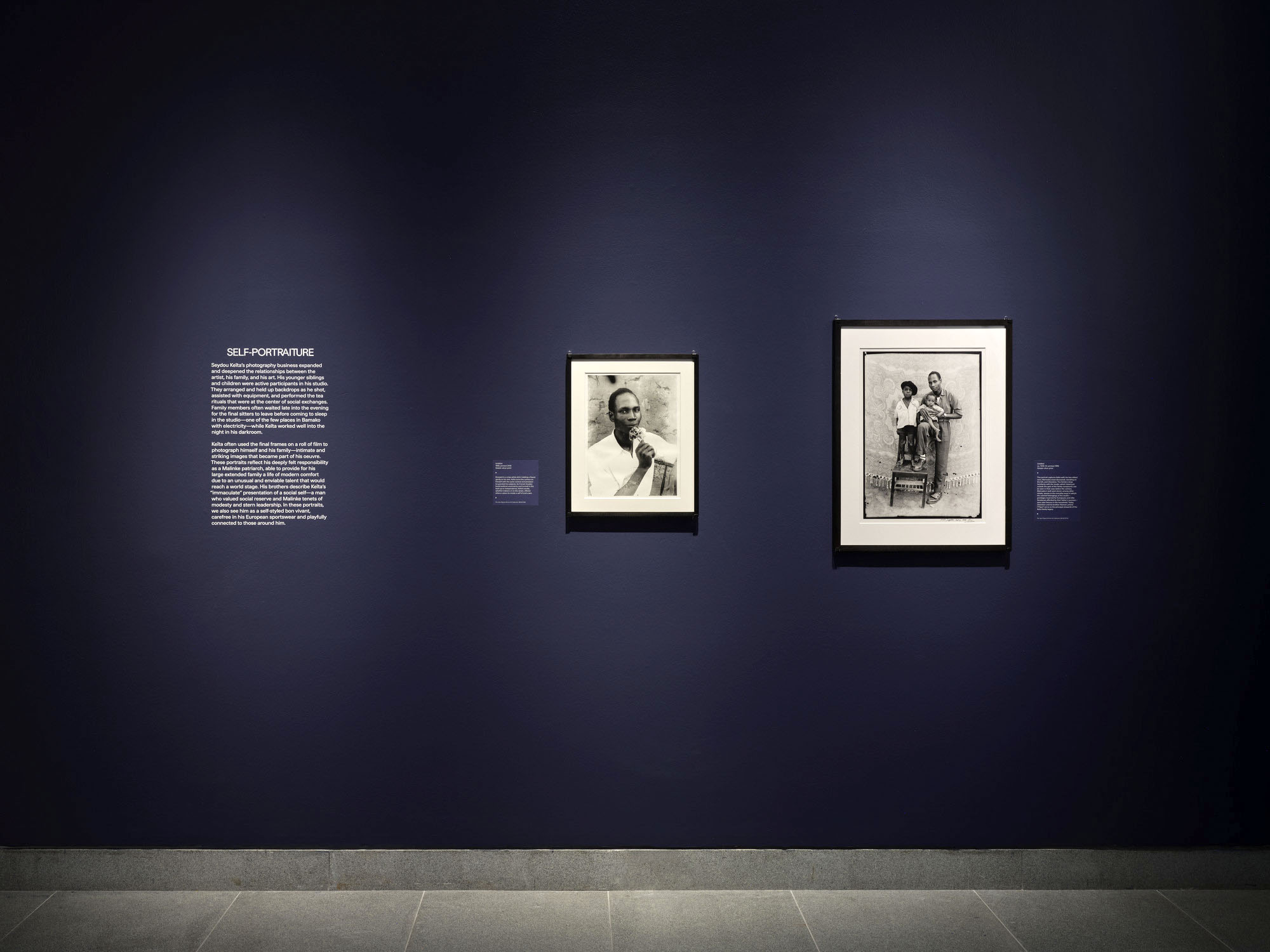
Installation view of the exhibition Seydou Keïta: A Tactile Lens at the Brooklyn Museum, New York, October 2025 – May 2026 showing at left text for the section “Self-portraiture” and then Keïta’s Untitled, 1956, printed 2018
Dressed in a crisp white shirt, holding a flower gently to his chin, Keïta turns the camera on himself with the same control and precision he granted his subjects. As French Soudan faced political uncertainty and turmoil in the lead-up to independence, Keïta’s studio, whether indoors or on the street, offered sitters a place to create a self of one’s own .
Being Bamakois
In 1960 Mali achieved independence, becoming one of seventeen African countries to end colonial rule. “The Year of Africa,” as 1960 became known, intensified vital questions about self-determination, national identity, and the shape of a post-independence future. Even as many Malians embraced the prospect of a free and modern nation-state, debates grew over the roles that religion, the military, and traditional societal structures would play in governance and civil life.
Bamako’s population doubled in the mid-twentieth century, driven by increased colonial settlement since the 1930s and labor migration from rural areas. Long a cosmopolitan city, post-independence Bamako became a site of new social tensions. The rigid strictures of the systems of French class and indigenous caste, which had coexisted uneasily in the colonial era, were increasingly at odds as Mali became entrenched as a socialist Islamic state.
In Seydou Keïta’s portraits, Bamako’s citizens sought to express a vision of self and society that mirrored the promises of the growing city. Questions around status, decolonisation, and the ever-evolving definition of what it means to be both Bamakois and modern play out in the symbolic choices behind the making of each photograph.
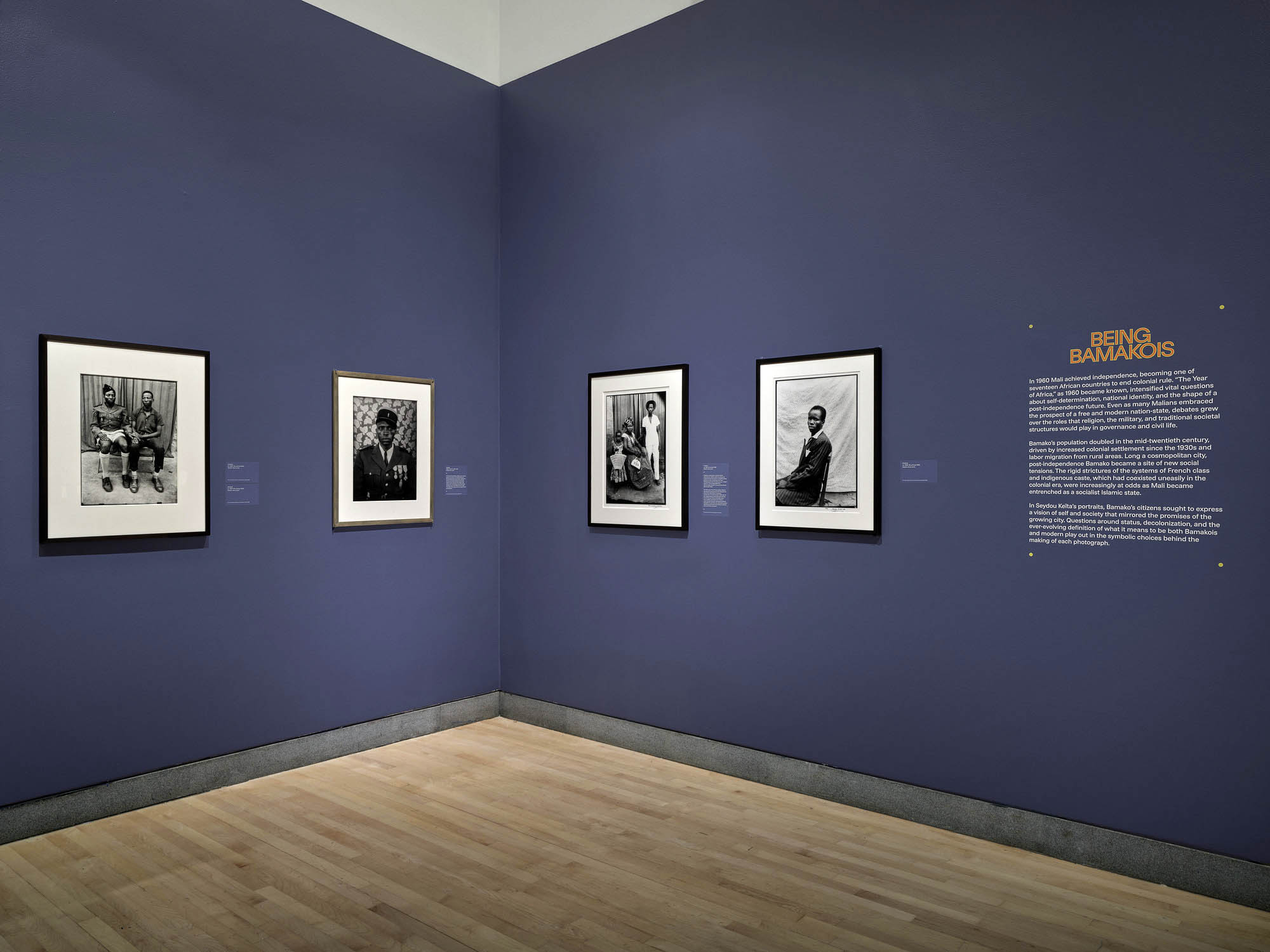
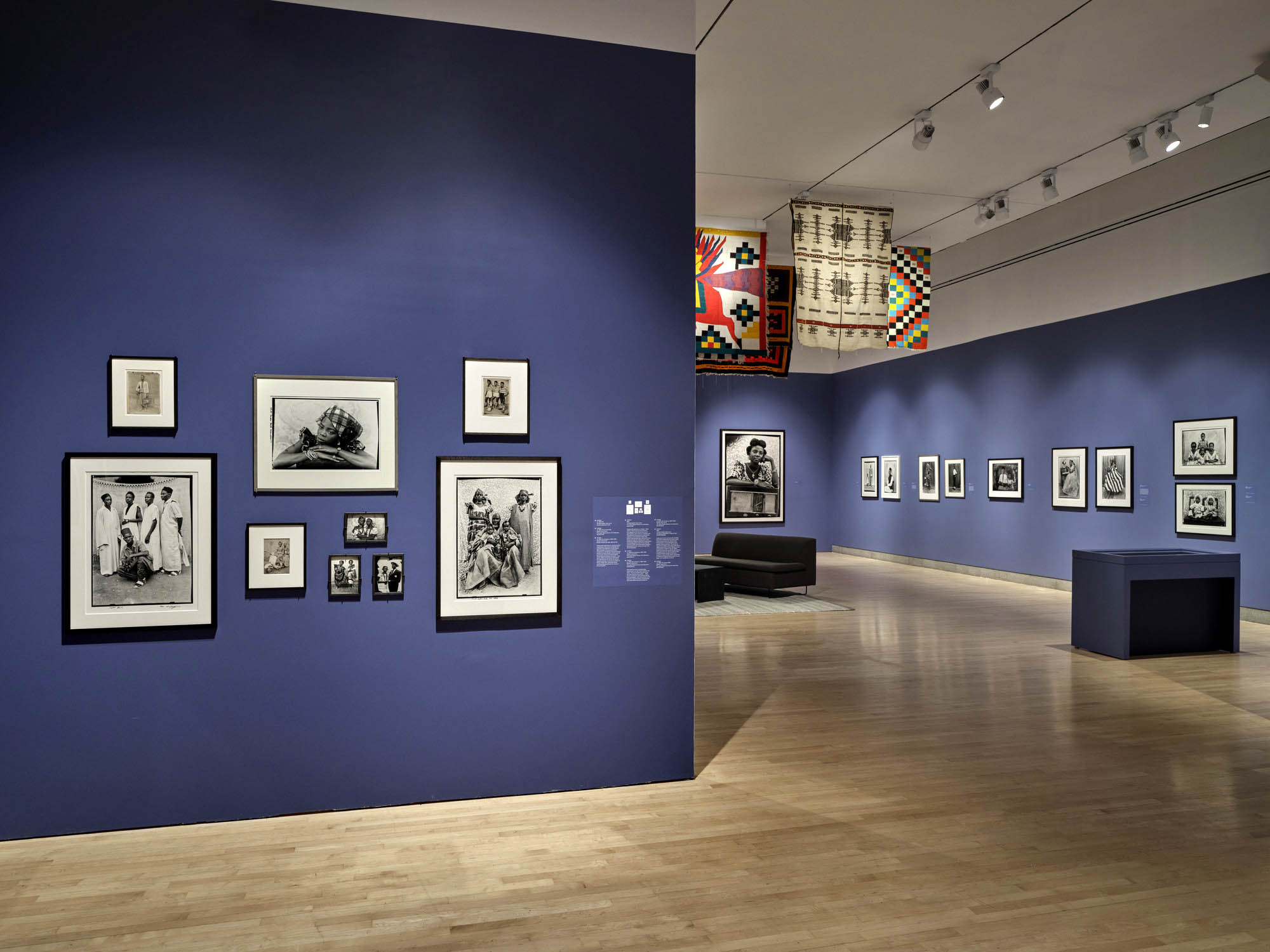
Installation views of the exhibition Seydou Keïta: A Tactile Lens at the Brooklyn Museum, New York, October 2025 – May 2026 showing in the bottom image at bottom second left, Keïta’s photograph Untitled 1957 (below)
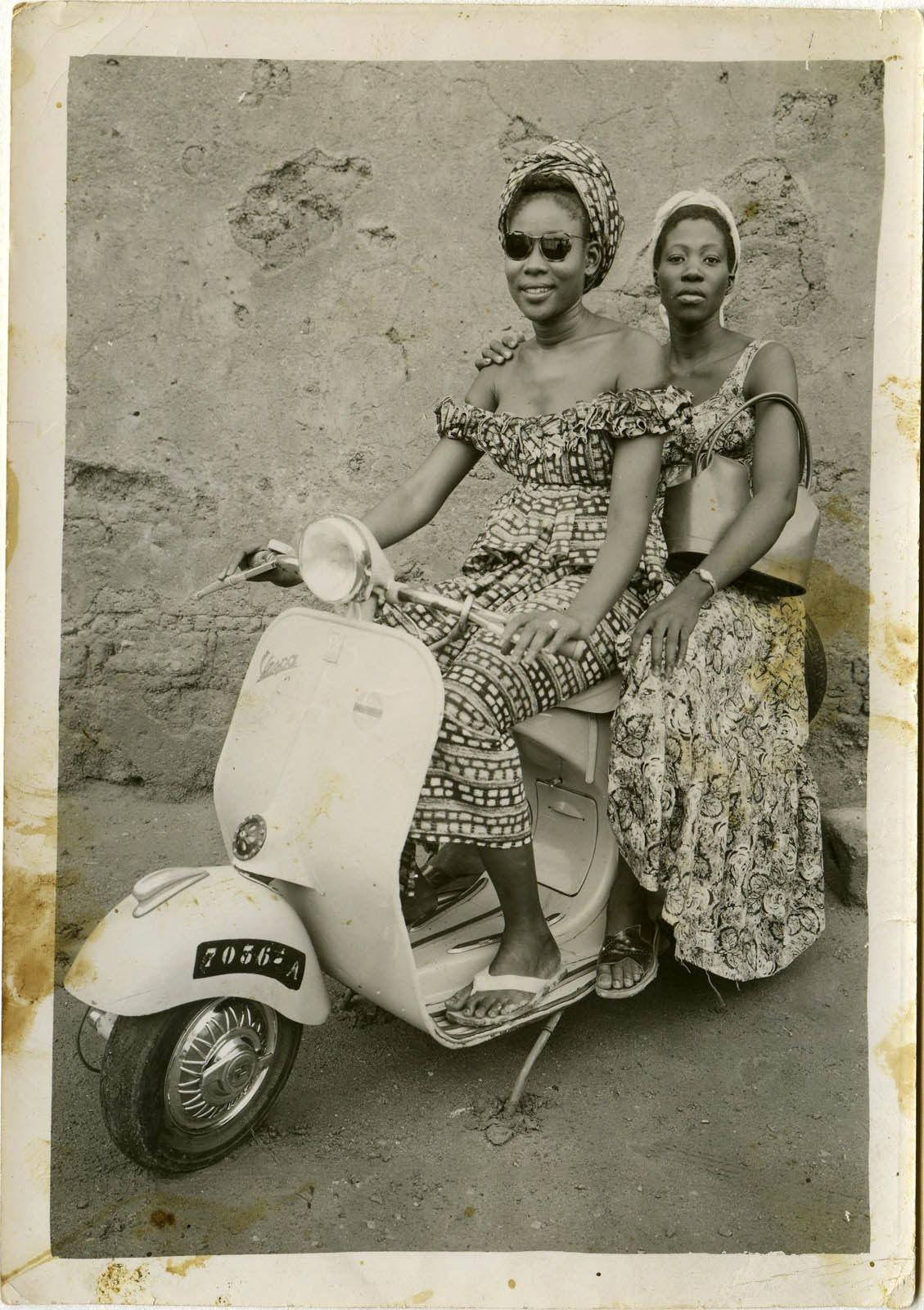
Seydou Keïta (Malian, c. 1921-2001)
Untitled
1957
Vintage gelatin silver print
© SKPEAC/Seydou Keïta
Courtesy The Jean Pigozzi Collection of African Art and Danziger Gallery, NY
Posing with aplomb on a Vespa – likely Keïta’s – these women have become the subjects of one of his most iconic photographs, seen here as a vintage print. They present themselves as aspirational members of the Bamako Vespa Club, whose membership was reserved for men. Expensive and rare, Vespas were costly symbols of affluence that were inaccessible to most Bamakois in the French colonial economy. Keïta, one of the club’s founders, purchased his own using earnings from his photography.
The Pretenders
In the 1950s, Bamakois began favouring Western novelties – wristwatches, handbags, bicycles, and other imported goods, many of which appear in Seydou Keïta’s portraits – as expressions of their modern dreams and discontents. Expensive and inaccessible to many, imported goods became markers of status, replacing traditional adornment, heirlooms, and protective talismans. This generation would later be dubbed “The Pretenders” by their children, who viewed with scorn their parents’ embrace of French aesthetics and colonial-era fashion. Yet their critique often overlooked the ways their parents had simply transferred the social and spiritual meanings once imbued in gold and other materials to new subjects.
Ironically, the next generation, who came of age in a newly independent Mali, expressed their own dreams and discontents in the 1960s and 1970s using Western cultural symbols. By embracing American, particularly African American, and British popular culture – dancing to the music of James Brown and The Beatles, wearing afros, dressing in bell bottoms and miniskirts – they pushed back against an increasingly restrictive Islamic socialist regime that promoted particular ideals of Africanity, tradition, and modesty. Their confidence and spirit of rebellion would be captured by the next generation of Malian photographers who followed in Keïta’s footsteps.
Coming of Age
Young men and women often arrived at Seydou Keïta’s studio dressed in their best clothing and adorned with jewellery that hinted at the worth of future dowries or the scale of family ambitions. They posed for portraits that became cherished mementos. Such small-format photographs were exchanged as offerings of friendship, used in matchmaking and marriage proposals, and commemorated births and weddings. They also served as keepsakes of religious holidays such as Eid and Tabaski (Eid al-Adha). Together, the works on view celebrate the beauty of youth and the significance of coming of age – moments of transformation, growth, and entry into adulthood.
The Elegants
Seydou Keïta’s subjects radiate elegance in every photograph, resplendent in tailor-made ensembles that reflect the wearer’s ingenuity and creativity. Many of the outfits seen in Keïta’s portraits blend handwoven West African textiles with Islamic fabrics and imported European cloth, often in inventive ways. Whether made from velvet, Dutch wax print, or eyelet lace, a gown could always be paired with a traditional pagne (wrapper) showing at the hem, adding the requisite touch of beauty. The men, women, and youths on view present themselves as mirrors to the cultural syncretism and self-invention of mid-twentieth-century Bamako.
As the Islamic socialist regime rose to power in the 1960s and 1970s, it began imposing increased restrictions on dress, enacting punishments and “re-education” for the wearing of Western or secular clothing. Keïta’s portraits capture a brief window just before these strictures took hold – a moment when his sitters fashioned an expression entirely their own. He helped document, in the words of Nigerian art critic Okwui Enwezor, fashion’s power to offer people a means of “resistance to confining oneself.”
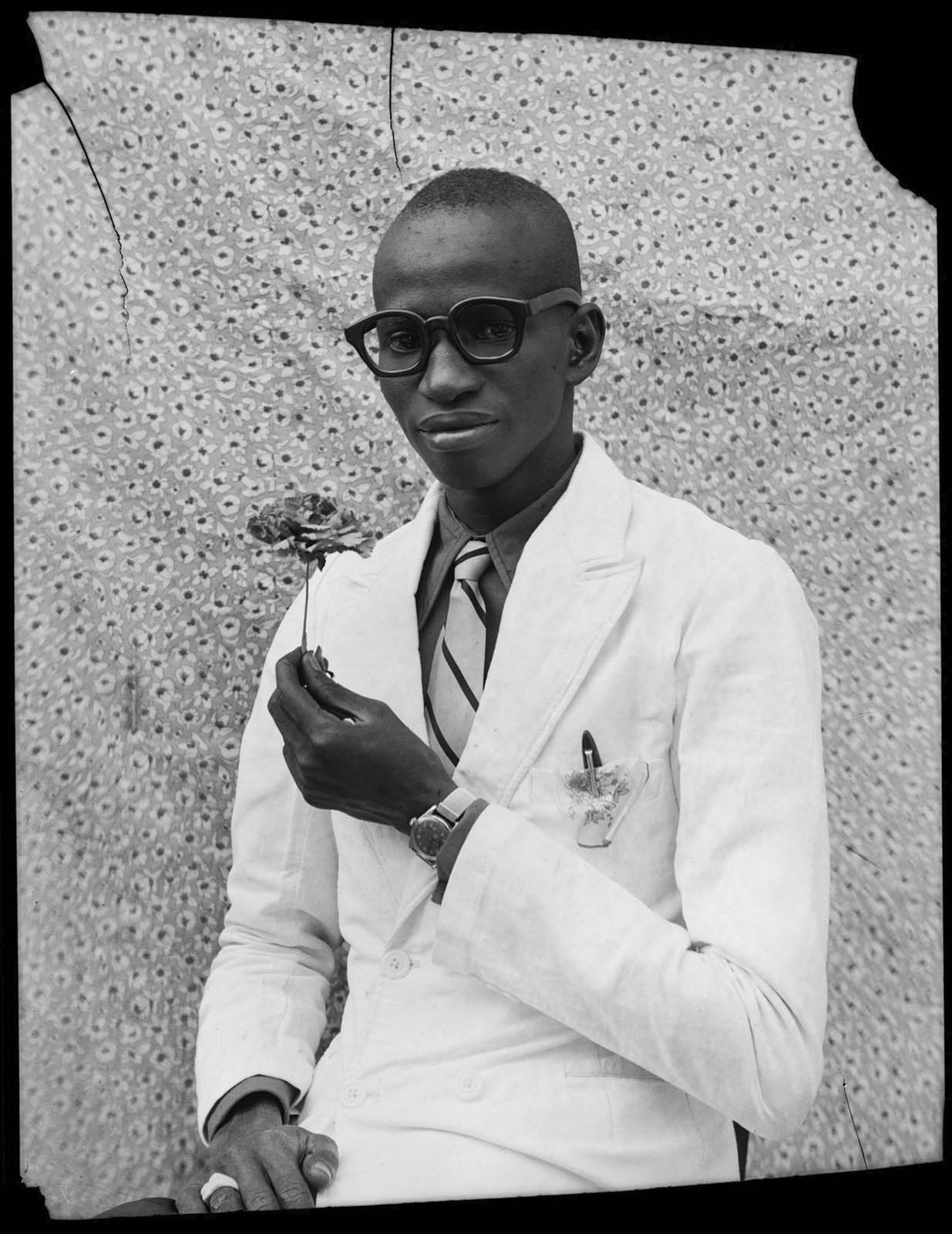
Seydou Keïta (Malian, c. 1921-2001)
Untitled
1959, printed, c. 1994-2001
Gelatin silver print
© SKPEAC/Seydou Keïta
Courtesy The Jean Pigozzi Collection of African Art and Danziger Gallery, NY
Delicately presenting a plastic flower, this man exudes elegance and poise in his double-breasted suit, silk handkerchief and fountain pen tucked neatly in his breast pocket. He meets the camera’s gaze with inviting eyes that exude a quiet openness. His confident, relaxed presence speaks to Keïta’s gift for making his subjects feel at ease – enabling them to fully express themselves in front of the camera.
The Loungers
The figure of the languid, reclining odalisque, or female attendant, is seen by many American and European viewers as an exoticizing colonial trope. However, in Seydou Keïta’s portraits, the lounger appears as a modern Bamakois – worldly, confident, adorned with the enduring garments, jewellery, and symbols of her heritage. In these portraits, each woman asserts her power, status, wealth, and values. The self-fashioned, richly layered settings re-create the intimate interiors of domestic life. The beds, textiles, and Islamic tea ceremonies shown here reflect the subject’s mastery of hospitality – an essential trait for the model Soudanaise woman – as well as her standing in family and society.
With slender, henna-stained hands and feet, modest dress, and composed bearing, these women affirm traditional social values even as they shape a modern visual identity. These photographs are an ode – to the women, their world, and the form of the lounger herself.
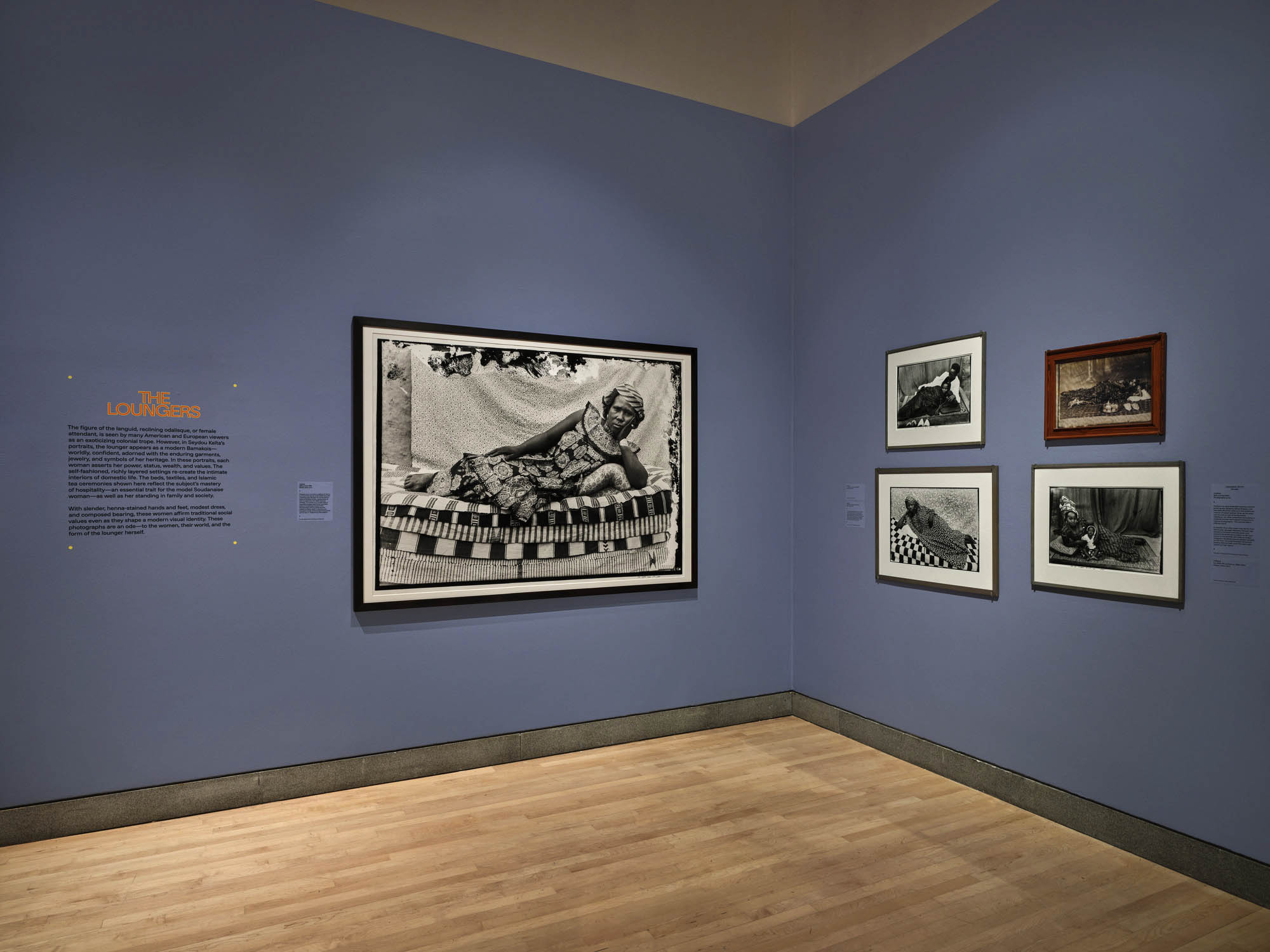
Installation view of the exhibition Seydou Keïta: A Tactile Lens at the Brooklyn Museum, New York, October 2025 – May 2026 showing at second right bottom, Keïta’s photograph Untitled 1953-1957 (below)
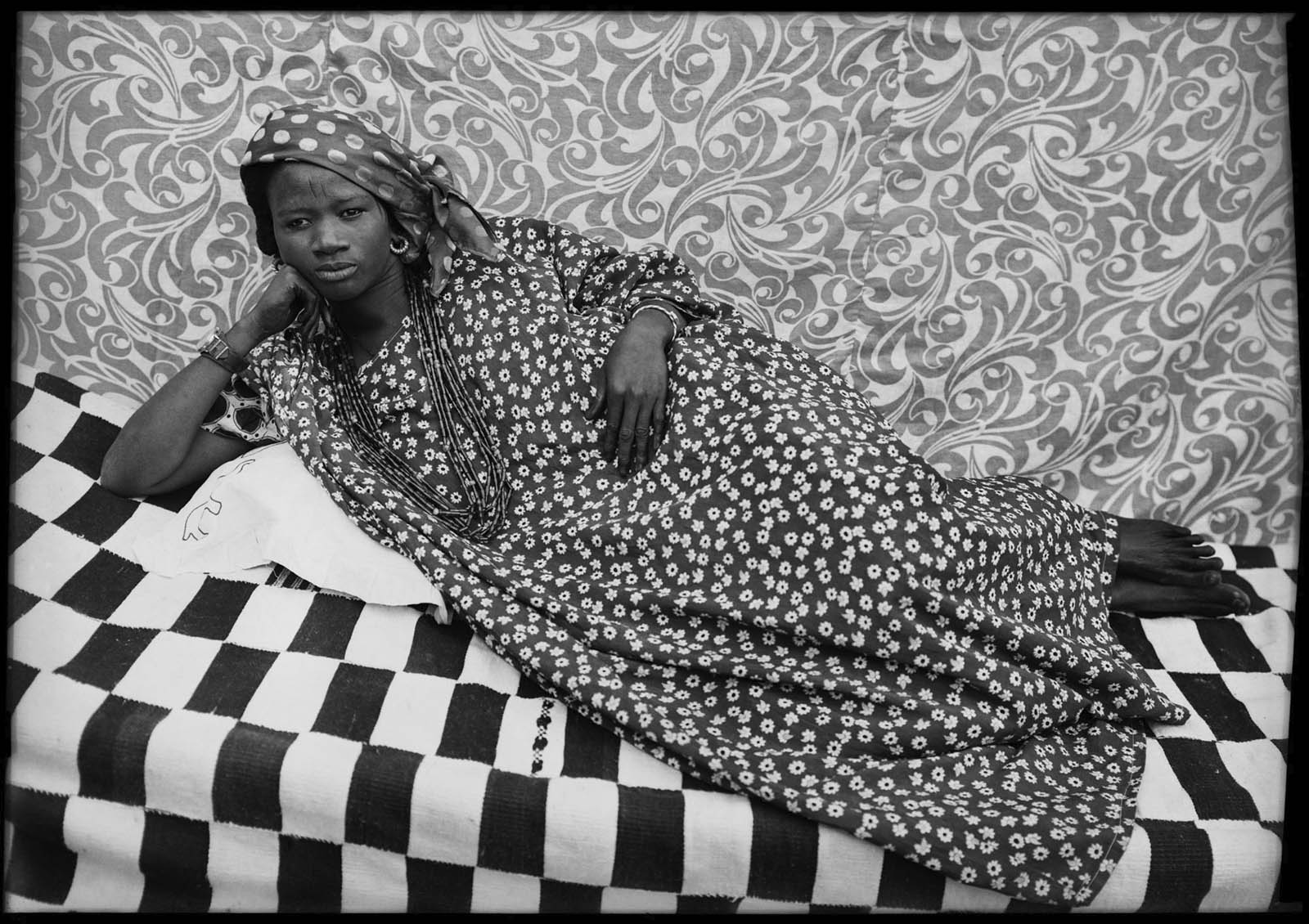
Seydou Keïta (Malian, c. 1921-2001)
Untitled
1953-1957, printed c. 1994-2001
Gelatin silver print
© SKPEAC/Seydou Keïta
Courtesy The Jean Pigozzi Collection of African Art and Danziger Gallery, NY
Keïta La
“Keïta La” offers a glimpse into the world of Seydou Keïta’s studio – and into his family’s efforts to steward and preserve his legacy. Together, the objects on view pose important questions about conservation and personal and artistic archives.
In the mid-twentieth century, near the elegant colonial centre of Bamako-Coura, Keïta La, the family compound, sat on a wide avenue that buzzed with traffic and was lined with a canopy of trees, casting dappled shadows that lent a lazy air. Just outside the compound’s walls was the artist’s studio. As a photographer, Keïta moved seamlessly between the compound yard, the avenue, the nearby walls of sites, and the studio and darkroom where he made prints late into the night. Keïta ran the studio until 1963, when he was forced to dedicate himself exclusively to government service. He turned the business over to his brother and sons, who had become familiar with cameras as children. Upon his retirement, he returned to Keïta La – but not to his studio. Instead, he embraced his second love: the repair of cameras and cars.
Today, the Keïta family have been vital collaborators in the conceptualisation of this exhibition, their oral histories enriching our understanding of the man behind the camera. In addition, their loan of the photographer’s few remaining family heirlooms and a trove of film negatives imbues this section with Keïta’s personal presence. These negatives, which have been preserved and imaged by the Brooklyn Museum on the occasion of this exhibition, expand our knowledge of Keïta’s oeuvre. A selection of these portraits is presented here – on lightboxes and as a projection – for the first time.
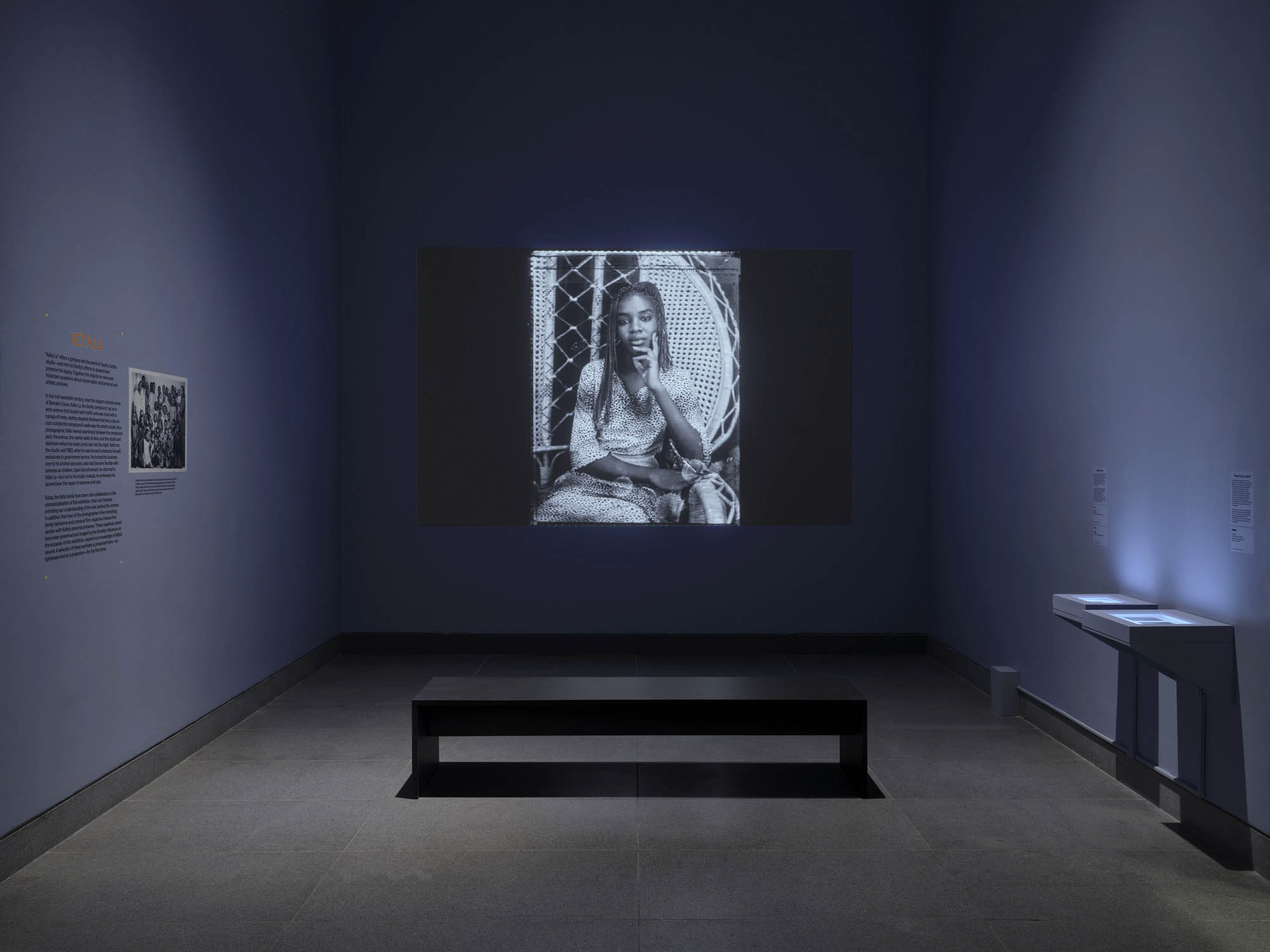
Installation view of the exhibition Seydou Keïta: A Tactile Lens at the Brooklyn Museum, New York, October 2025 – May 2026 showing text for the section “Keïta La” on the left hand wall, as well as the photograph Undated family portrait taken in Seydou Keïta’s studio (below)
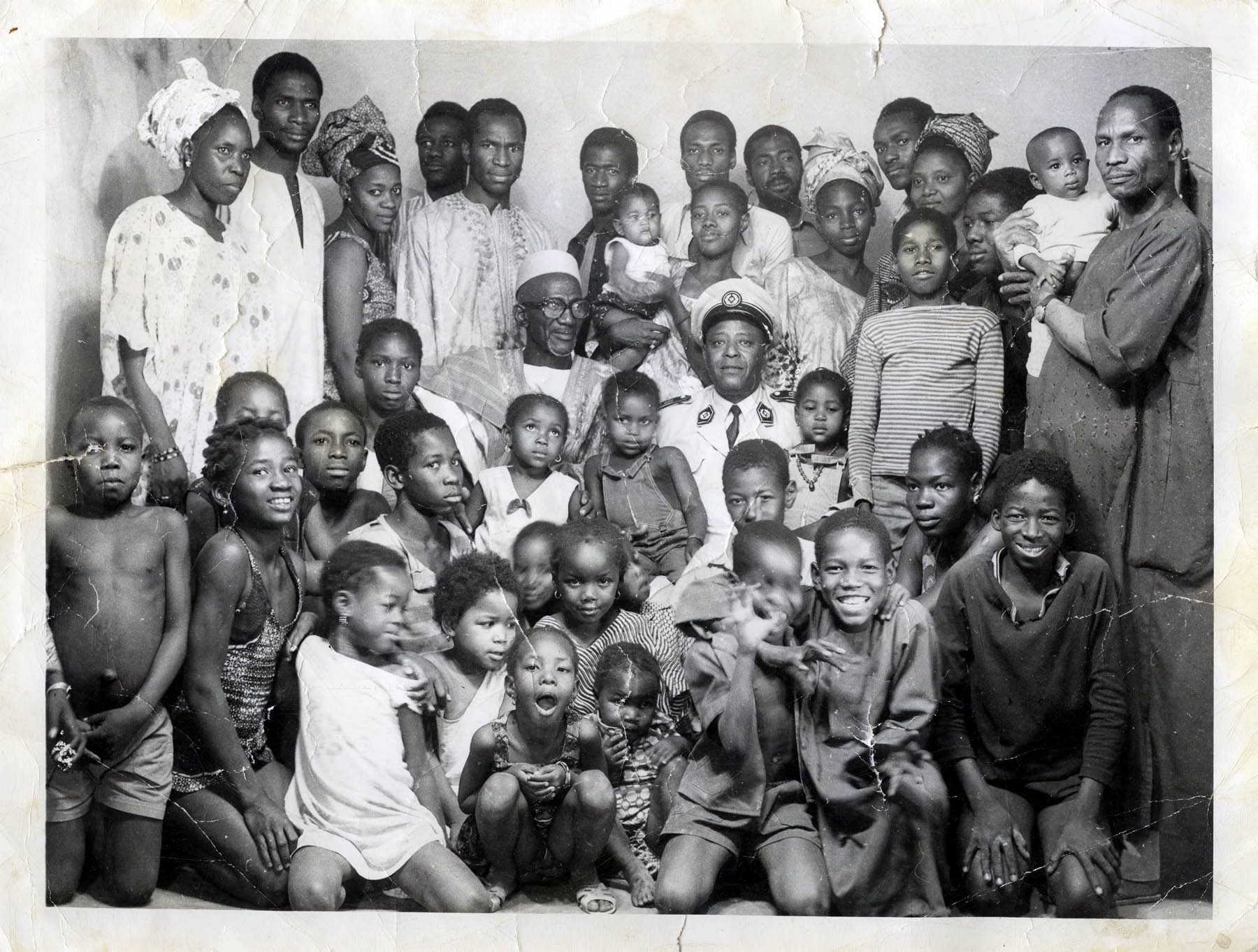
Undated family portrait taken in Seydou Keïta’s studio
Seated left of centre is Keïta’s uncle Tièmòkò Keïta (wearing eyeglasses), with Hamed Lamine “Papa” Keïta behind him at left and Cheickine Keïta at far right (holding child). Today, Papa and Cheickine serve as the principal stewards of the Keïta estate
Courtesy the Seydou Keïta Family
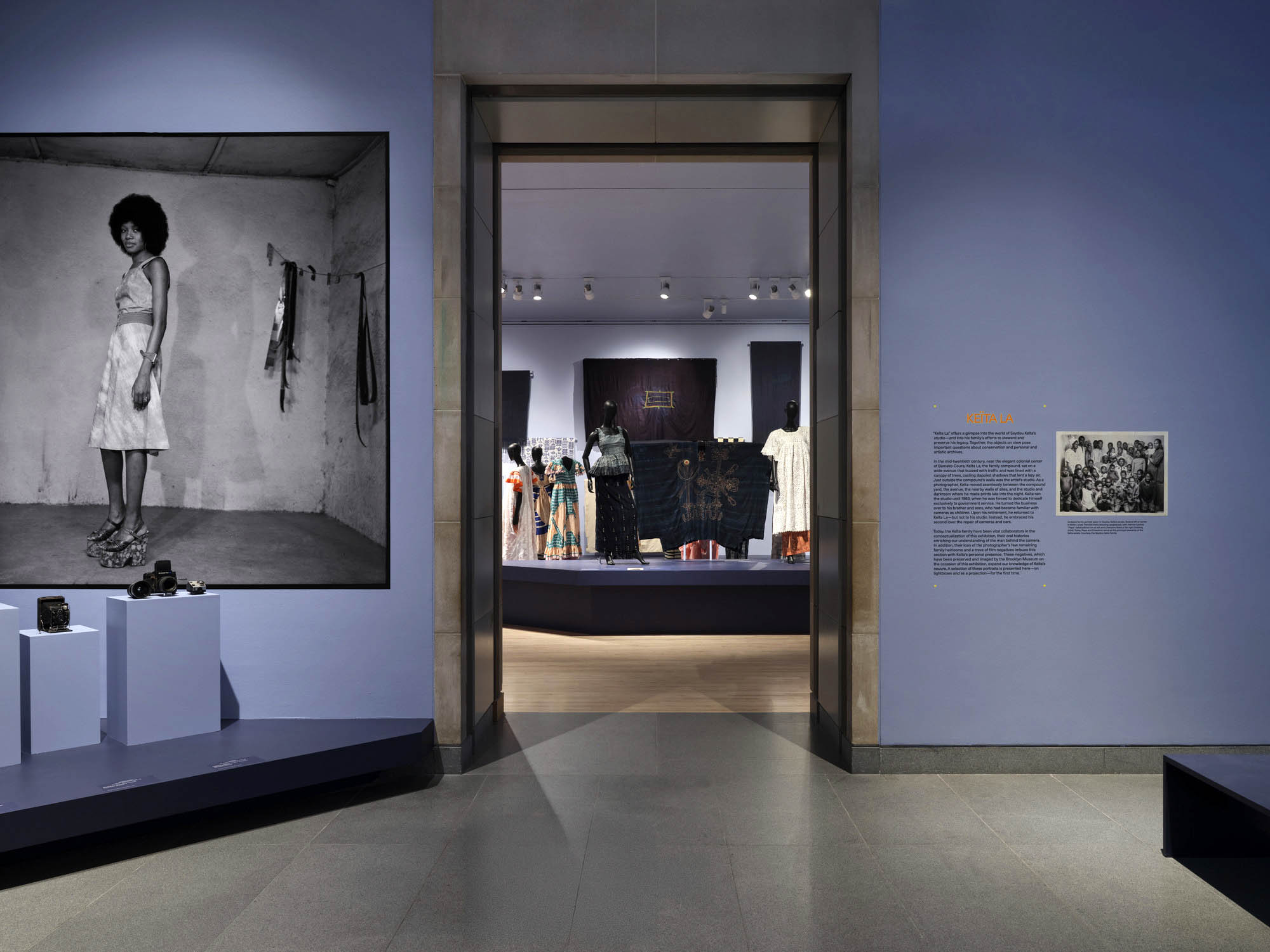
Installation view of the exhibition Seydou Keïta: A Tactile Lens at the Brooklyn Museum, New York, October 2025 – May 2026 showing at left, Keïta’s photograph Untitled late 1940s to mid-1970s (below); and at right, text for the section “Keïta La” together with the photograph Undated family portrait taken in Seydou Keïta’s studio (above)
Fashioning A New Nation
Photography studios are spaces of performance, an invitation to try on new styles, personas, and identities. Costly and newly available beginning in the 1930s, studio photography offered Seydou Keïta’s subjects a rare chance to see themselves not in a mirror or a small I.D. photo, but as others might. As French Soudan approached independence, fashion increasingly became a site of negotiation – blending ethnic and religious aesthetics, Pan-African identity, and even Hollywood glamour.
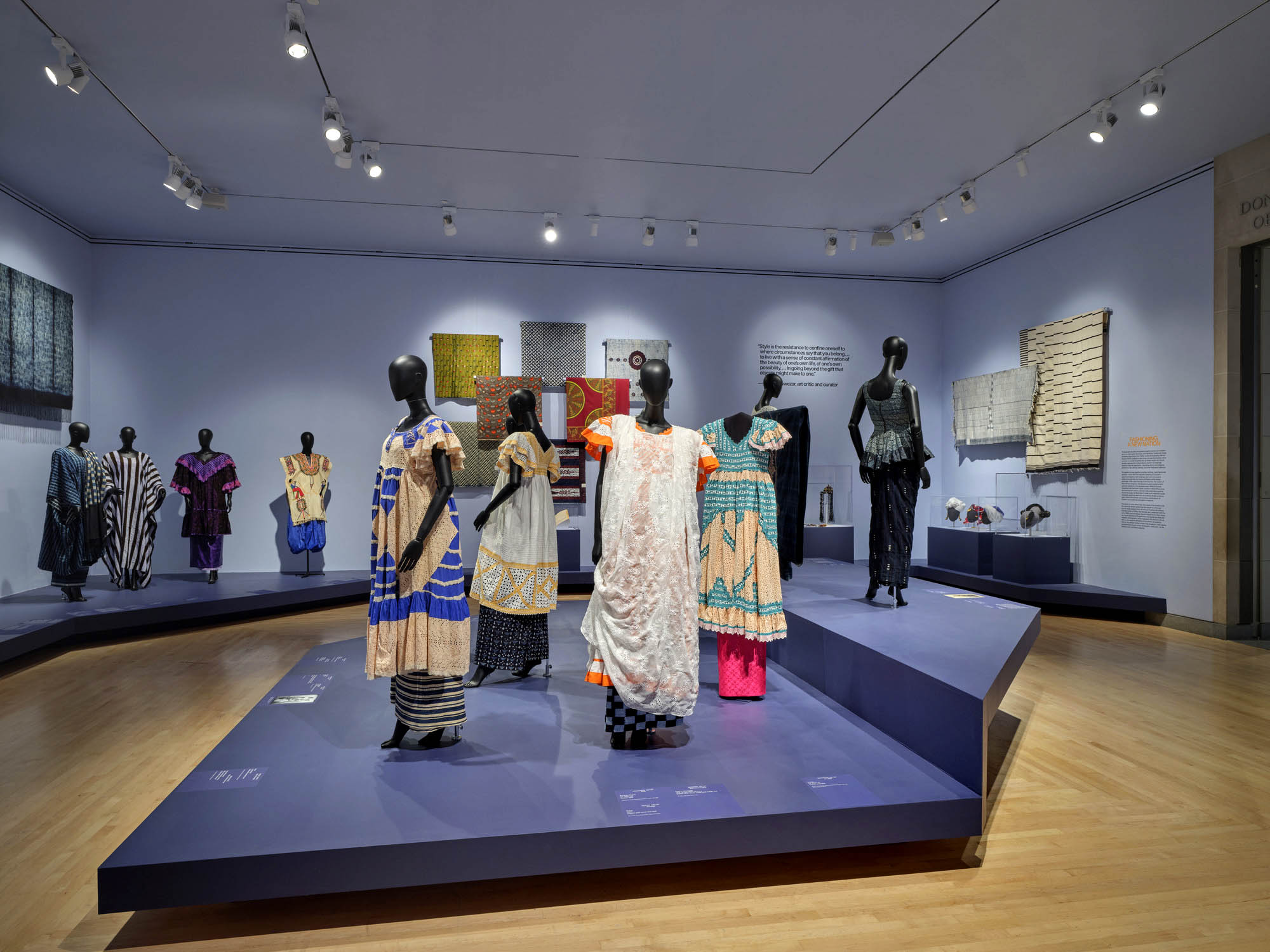
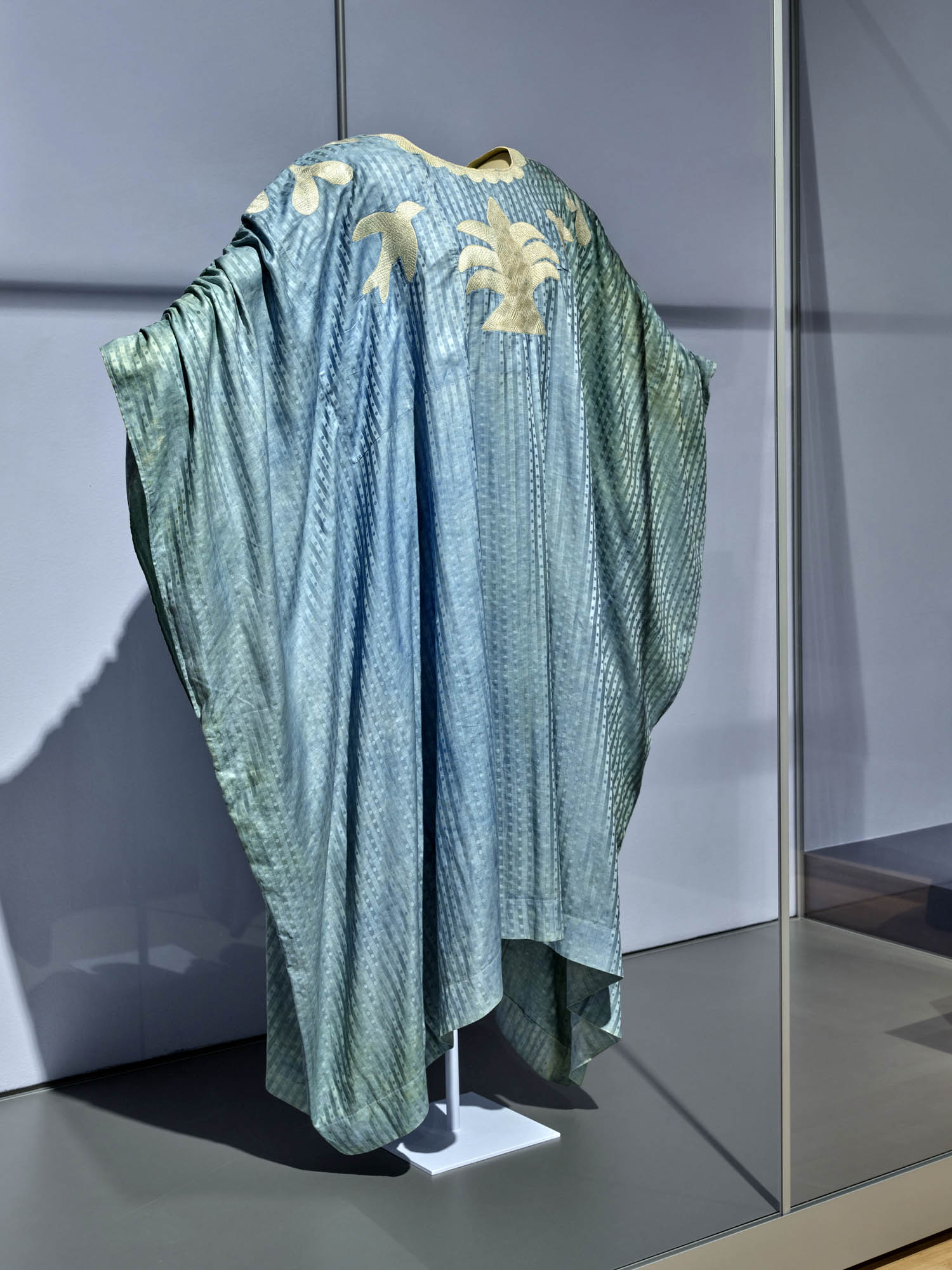
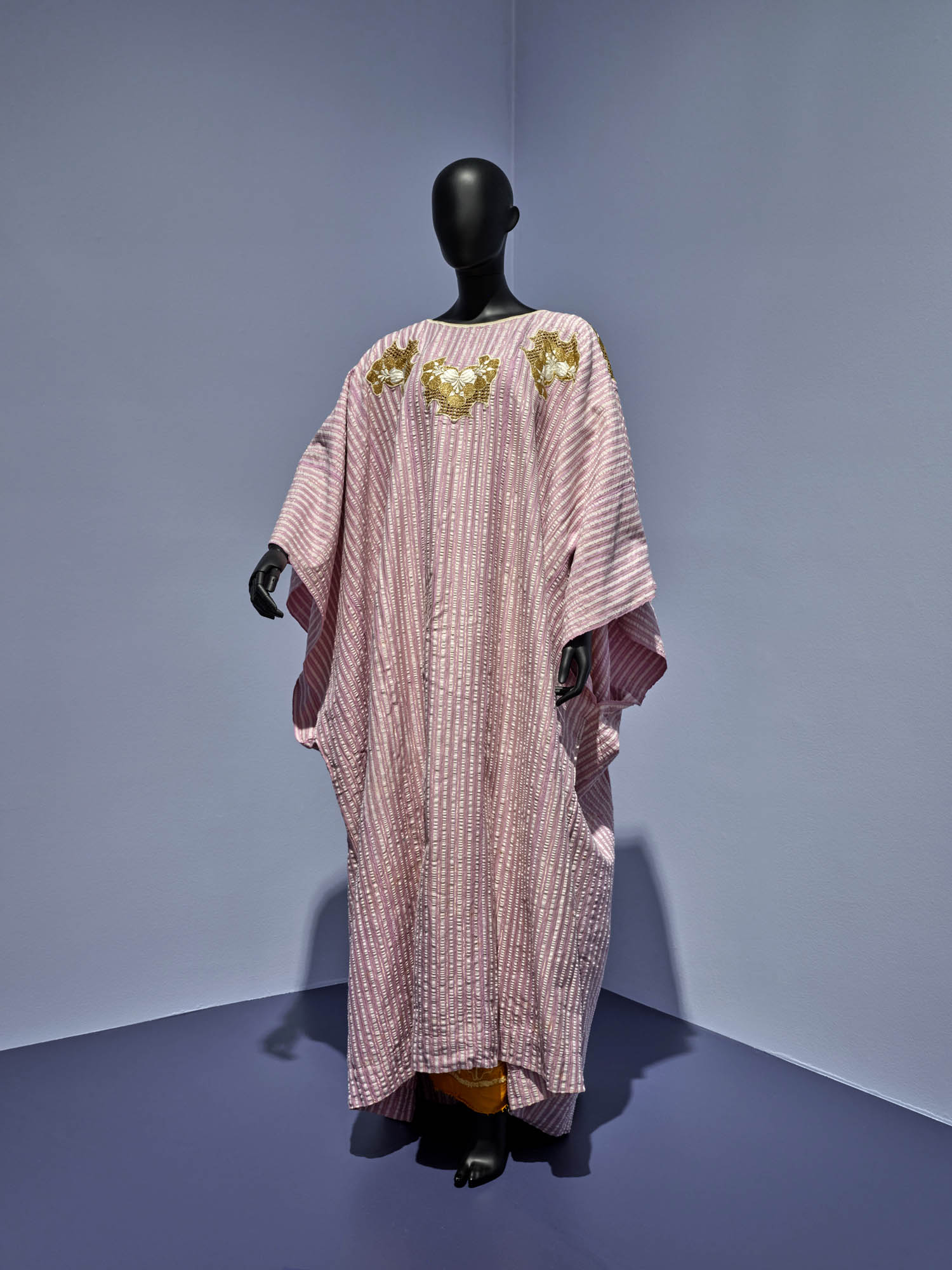
This gallery brings together prestige clothing, hand-fashioned dresses – some with the exquisite detailing of couture – pagnes (wrappers), wall hangings, and commemorative cloths that span the rich history of Malian textile design and trade. It also pays homage to the boubou, the marker of West African elegance, that became a quiet symbol of anti-colonial resistance in the postwar years. While European imported cloth had been highly coveted in West Africa since the seventeenth century, colonial trade restrictions and the economic impact of World War II made such materials harder to access, sparking new forms of creativity. Bright synthetic dyes, hybrid silhouettes, and inventive combinations of tradition and modernity emerged in response.
The works on view reflect both this history of innovation and the distinctly Malian patterning that serves as a through line for textile designs from as early as the eleventh century. Trending styles of 1940s-60s Bamako are juxtaposed with the early 1980s sartorial legacy of post-independence Mali. Some are nearly identical to the garments and backdrops featured in Keïta’s photographs; others represent the diverse cultural, ethnic, and regional affiliations of his sitters. Grouped by theme, this section invites a closer look at pattern, colour, weave, and technique to give further dimension – and colour – to the fashions worn by Keïta’s subjects.
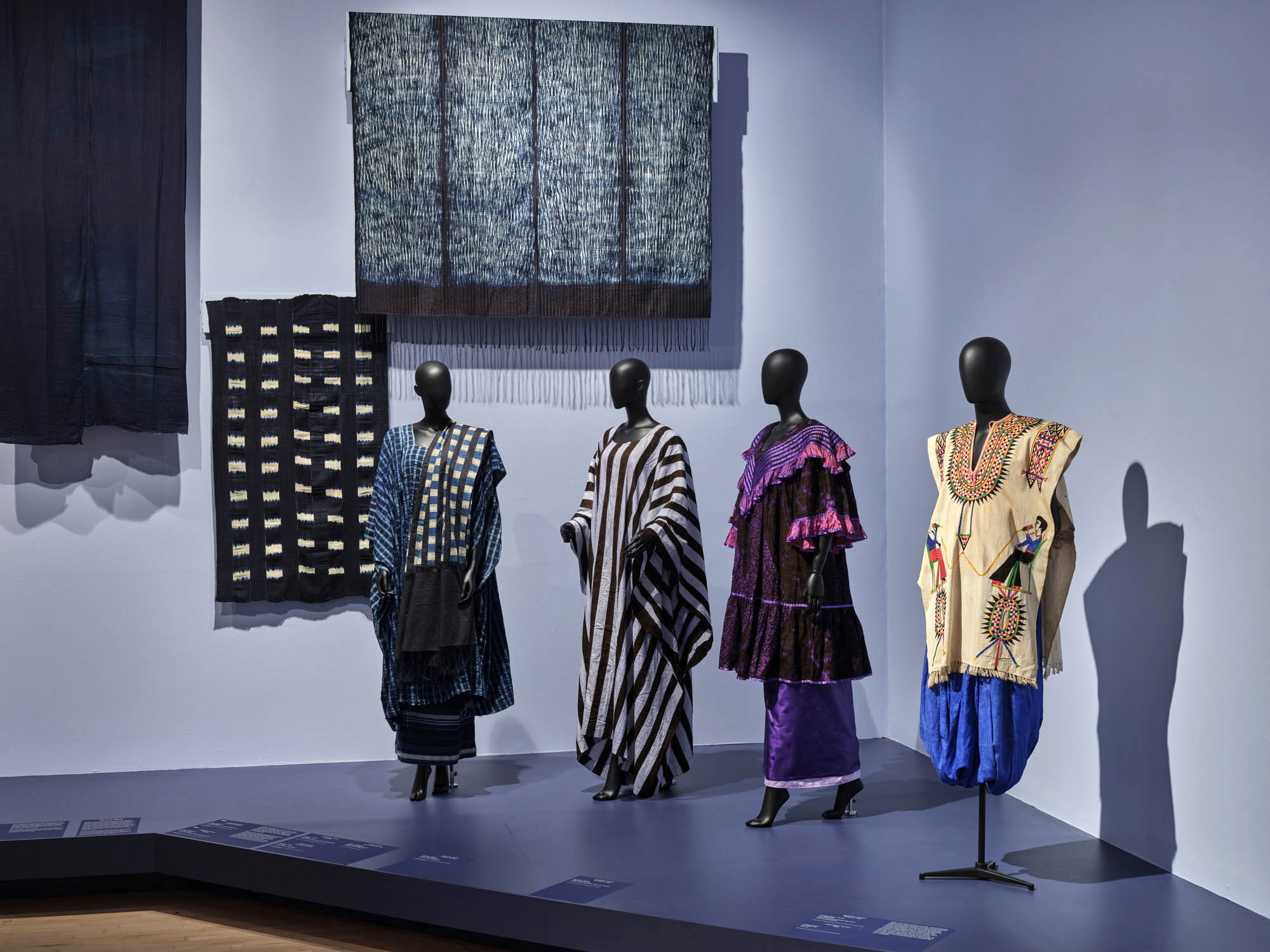
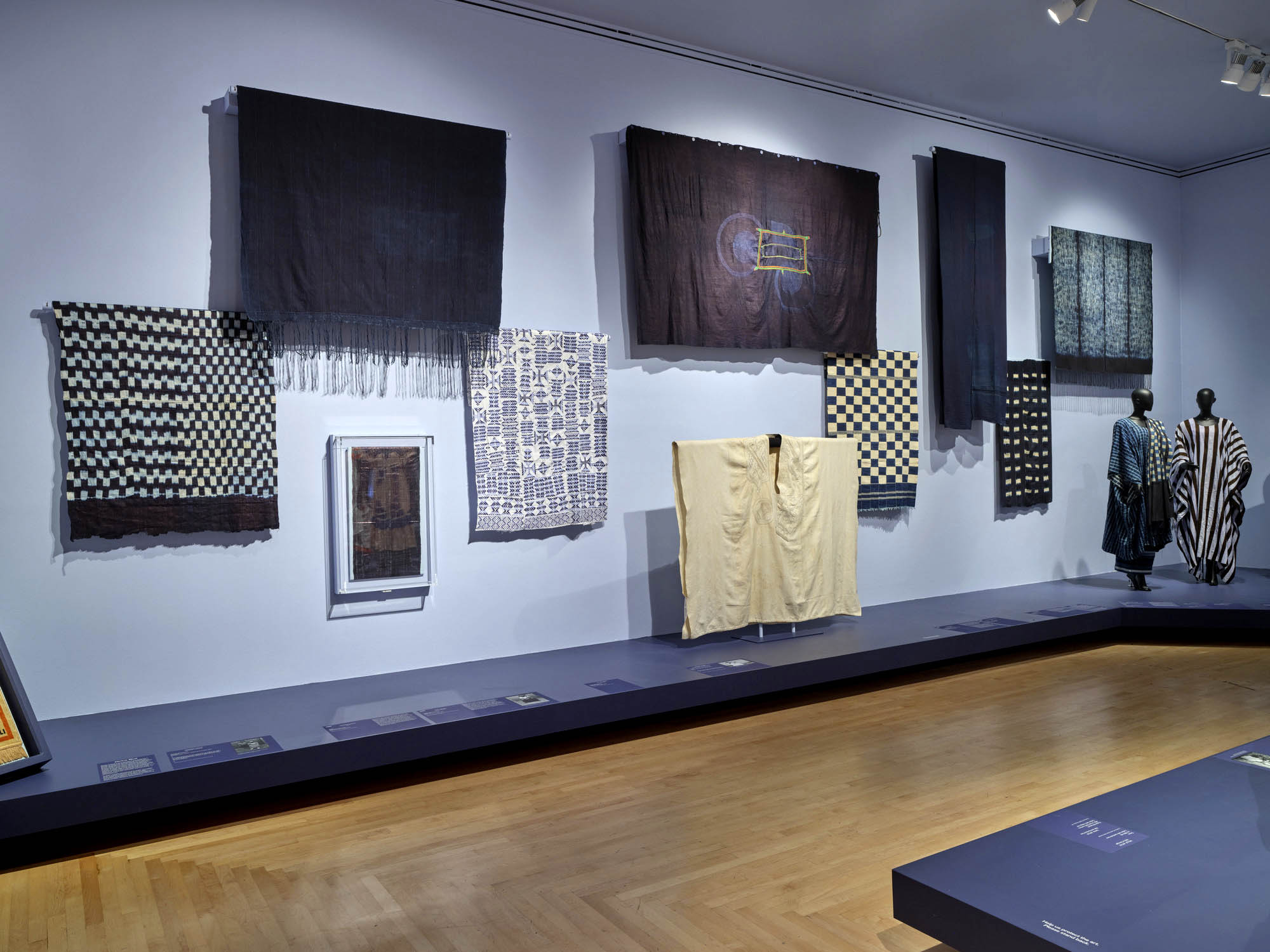
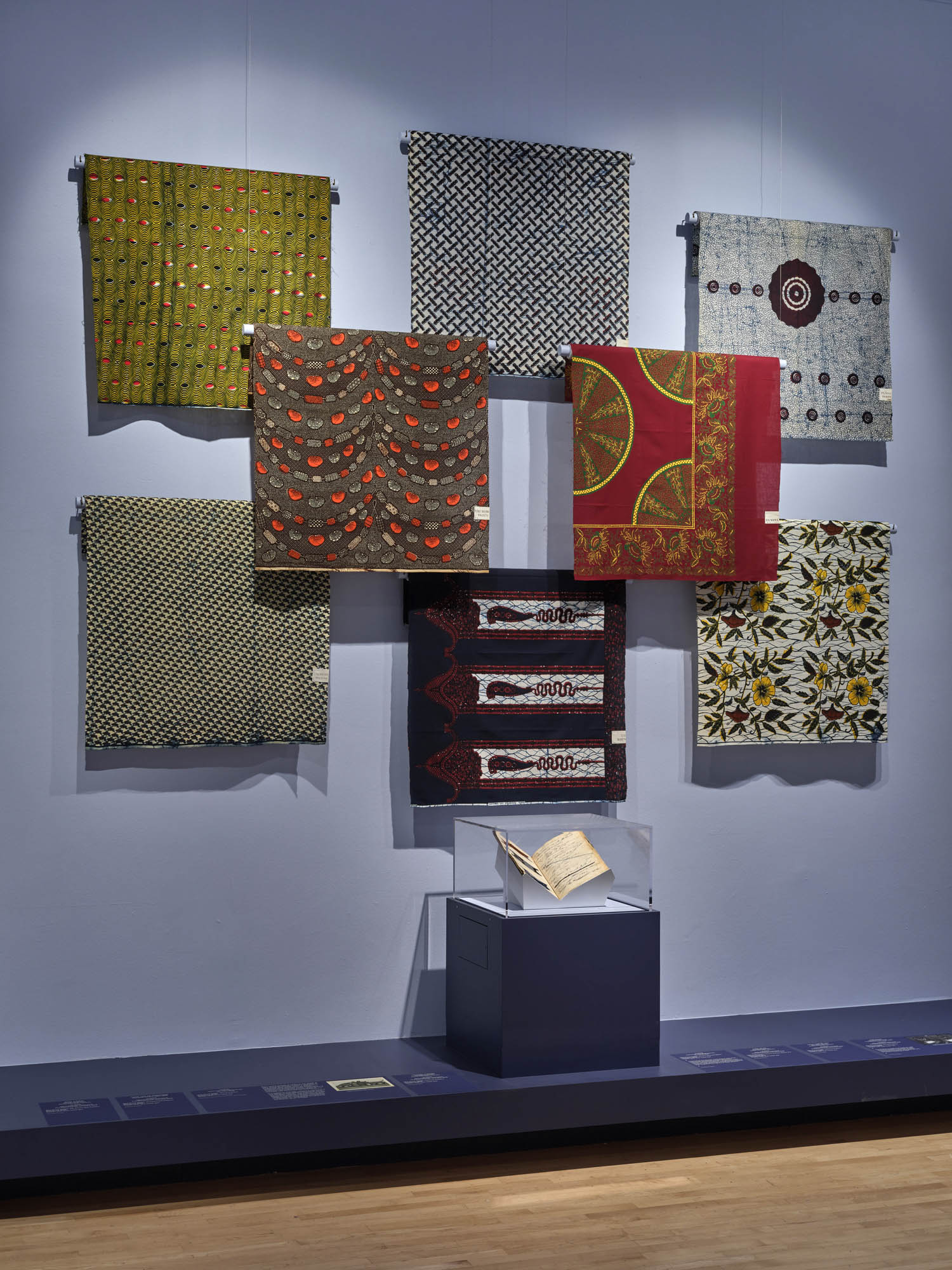
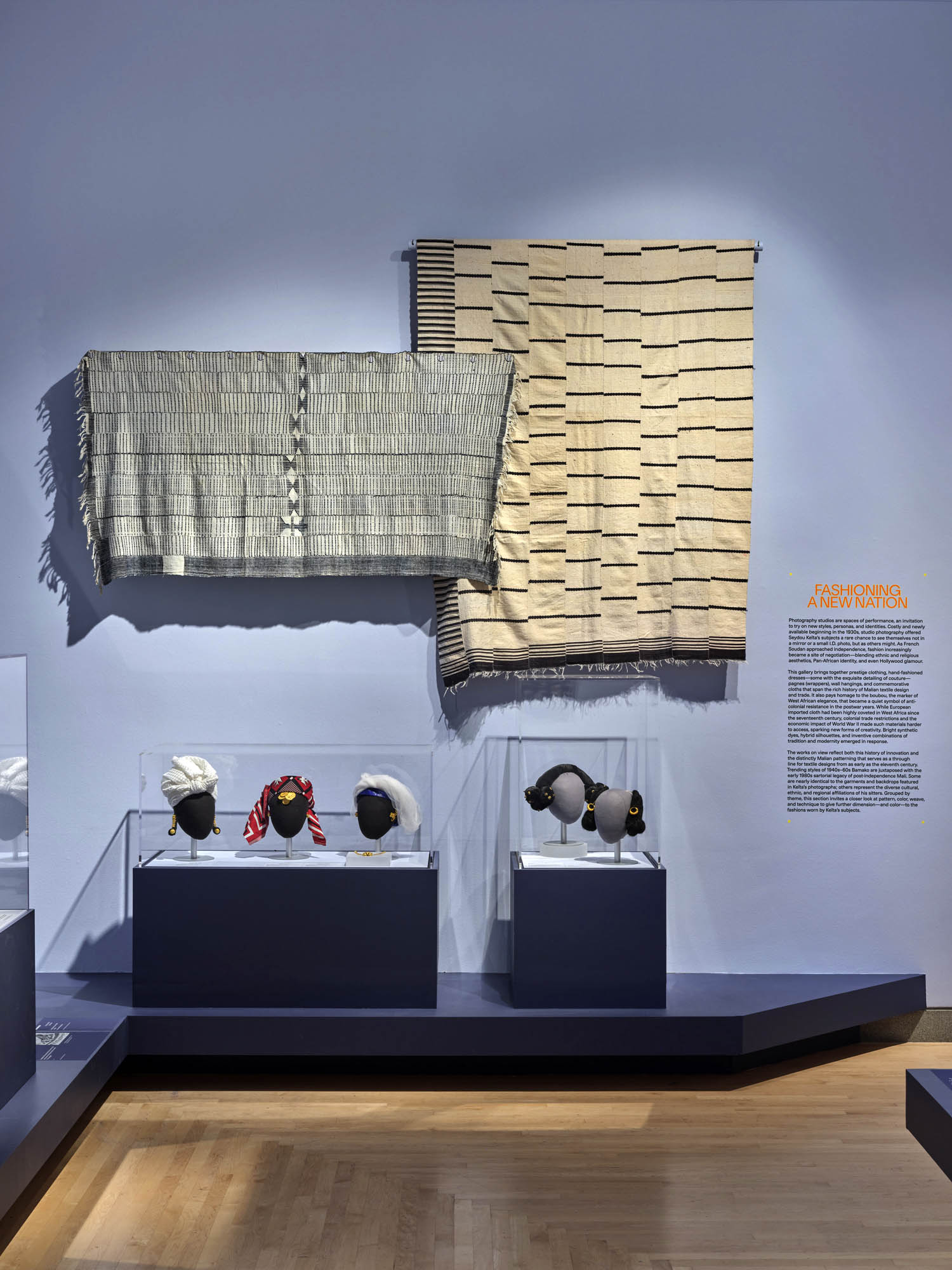
Installation views of the exhibition Seydou Keïta: A Tactile Lens at the Brooklyn Museum, New York, October 2025 – May 2026 showing text from the section “Fashioning A New Nation”
Handheld
“Fly dirt,” pen marks, dog-eared corners, red Sahelian dust, humidity, and traces of touch infuse Keïta’s vintage prints with a particular life and beauty. Each print is indelibly marked by the photographer, the printer, and the many hands through which it has passed – as tokens, gifts, souvenirs, expressions of love, ritual displays, or precious heirlooms.
Since Keïta first became known in Europe and the United States in the 1990s, vintage prints of his photographs have made their way into private collections and institutional archives. Despite consisting of the same images, they were often considered secondary to the modern prints that were produced, exhibited, and stored as fine art pieces. Only recently has this value system been upended, reflecting shifts in the art market and in the field of art history. As African studio photography continues to gain recognition, artists and arts professionals of the African diaspora have called for such images to be valued not by colonial or market standards but by their material history and significance as loved, cherished objects.
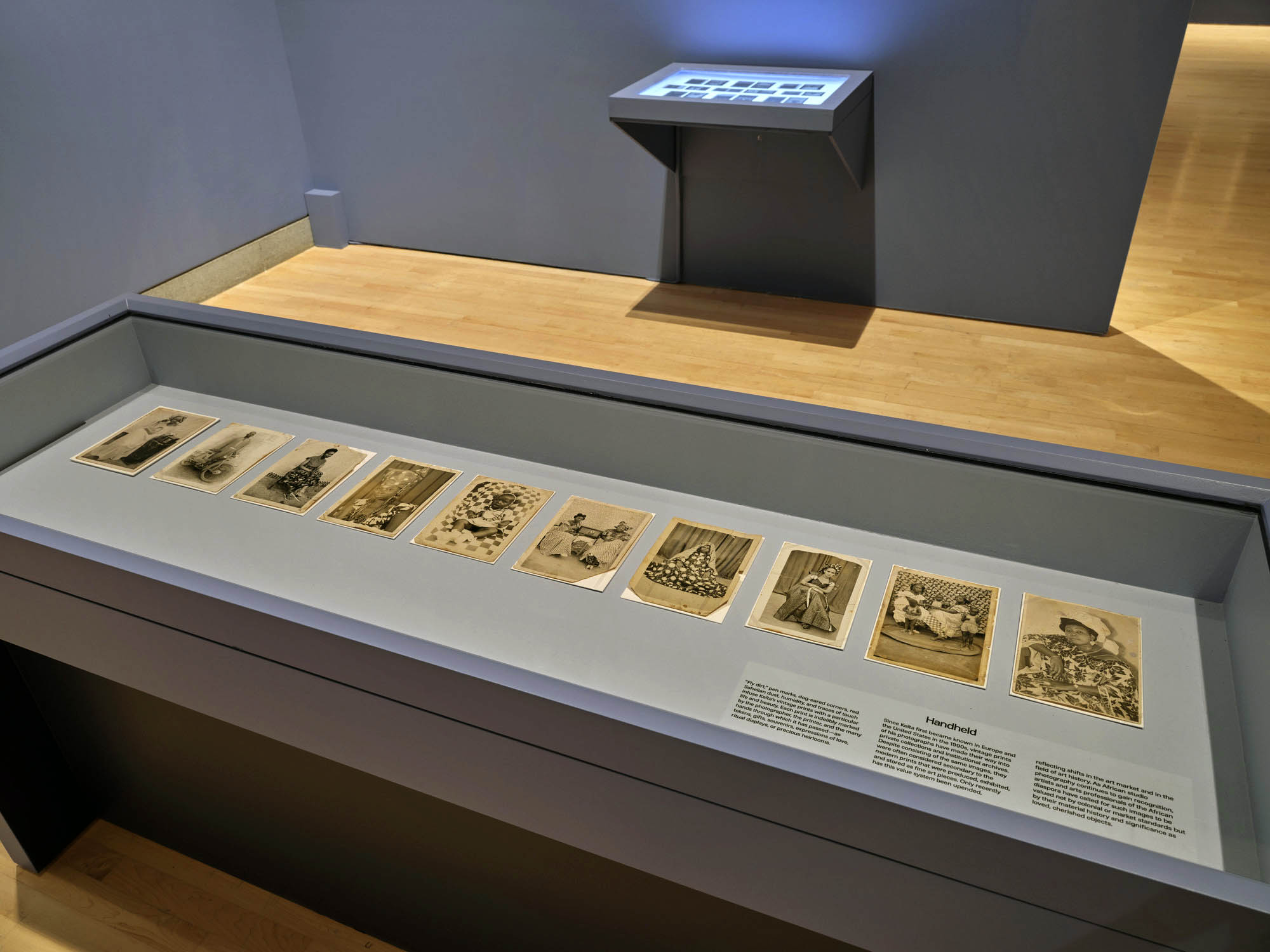
Installation view of the exhibition Seydou Keïta: A Tactile Lens at the Brooklyn Museum, New York, October 2025 – May 2026 showing a vitrine with text from the section “Handheld”
The Self That Travels
Over time, African studio photography by Keïta and other artists became part of a global circulation of images. A photographic print could be sent from Bamako to a relative stationed during the war years in France, or Indonesia, or Russia. Portraits were exchanged locally, regionally, and farther afield through a web of relations in matchmaking attempts between families. A private image may have been usurped by a colonial publisher for use on a postcard. Perhaps a collector on eBay, fifty years later, was delighted by the image or recognised Keïta’s stamp and had it shipped to the United States from Belarus. All told, vintage prints are part of an economy that reveals complex histories of commerce and human desire.
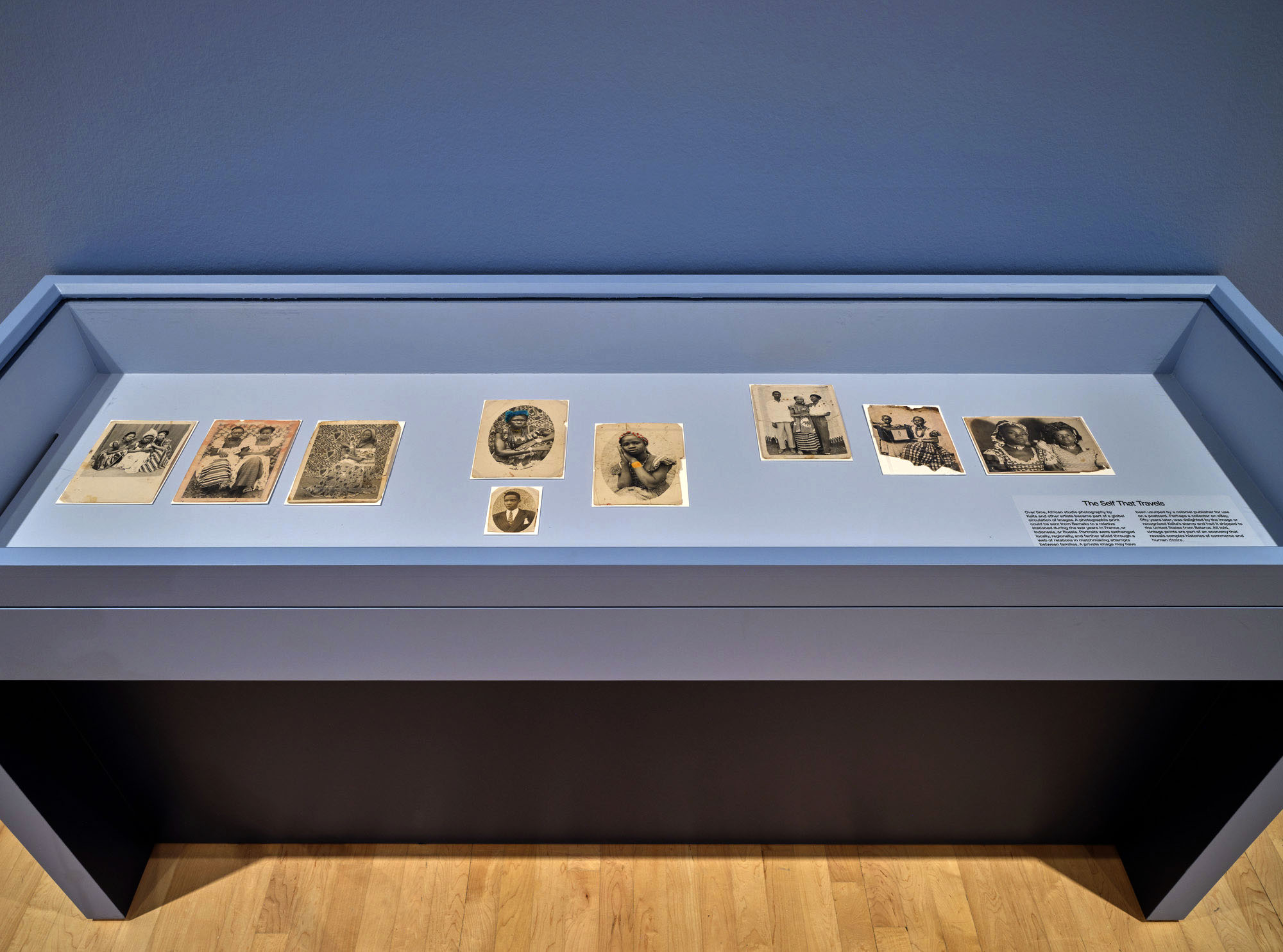
Installation view of the exhibition Seydou Keïta: A Tactile Lens at the Brooklyn Museum, New York, October 2025 – May 2026 showing a vitrine with text from the section “The Self That Travels”
A Golden Touch
After printing, photographs could be tinted by hand to heighten the subject’s beauty and status – and to imbue the photograph with the protections afforded by gold. Chekna Touré was a picture framer who hand-coloured photographs for many of Keïta’s clients, often highlighting the subject’s gold jewellery, accessories, and cosmetics. As a marker of wealth, beauty, and identity, gold was essential to Malian women’s dress.
Mali’s vast gold reserves are some of the world’s oldest and a source of national pride. Its lustrous qualities carried talismanic powers, yet the metal also inspired fear. Believed to be a living organism, gold was said to have its own soul and powers. Goldsmiths would thus meld the element with other metals to help shield the wearer from its full force.
The vintage prints in this case feature colorisation. While Touré colourised many of Keïta’s photographs, the differing skill levels seen here suggest other people also performed this work, perhaps doing so at home.
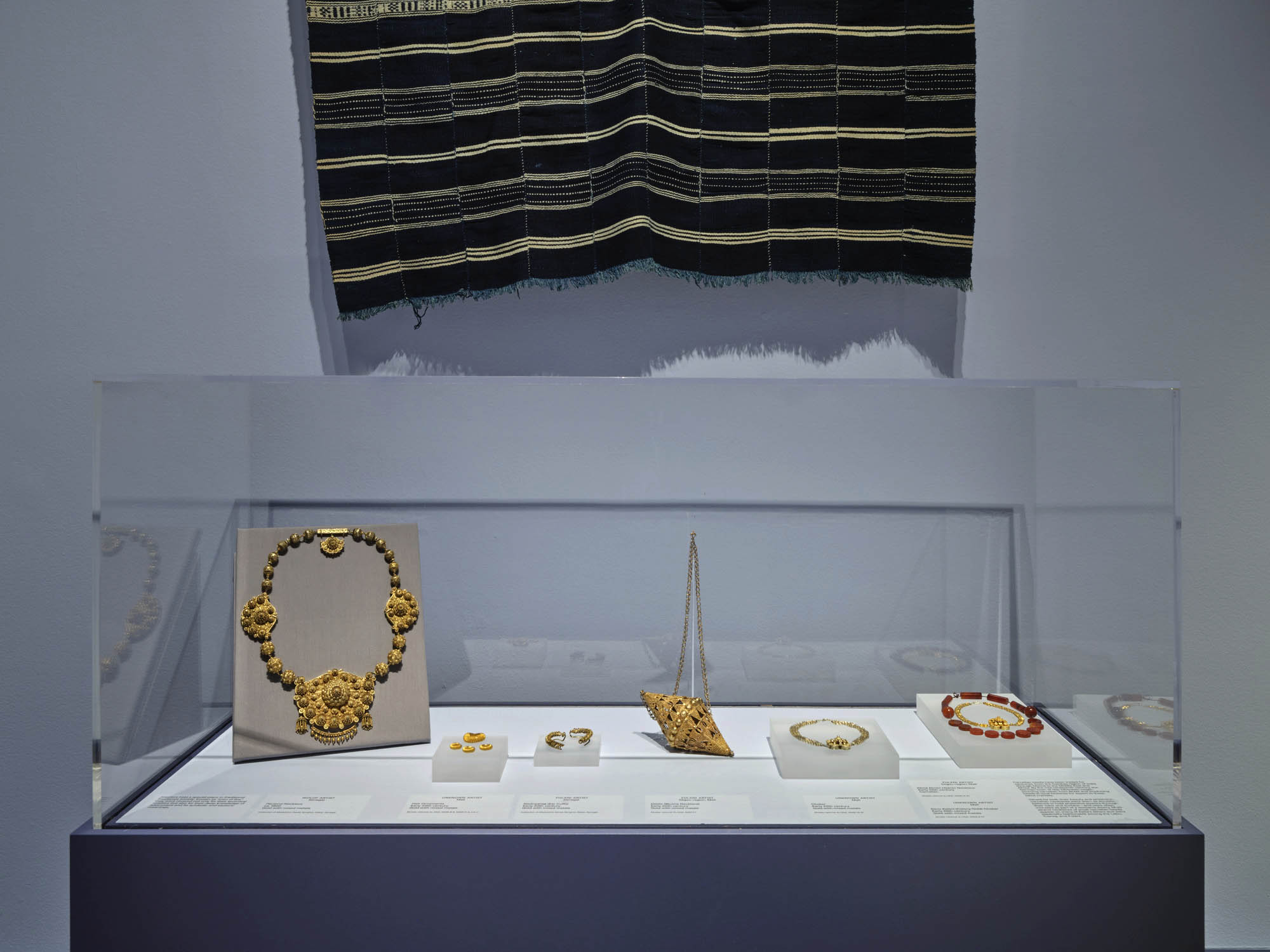
Installation view of the exhibition Seydou Keïta: A Tactile Lens at the Brooklyn Museum, New York, October 2025 – May 2026 showing gold and carnelian jewellery
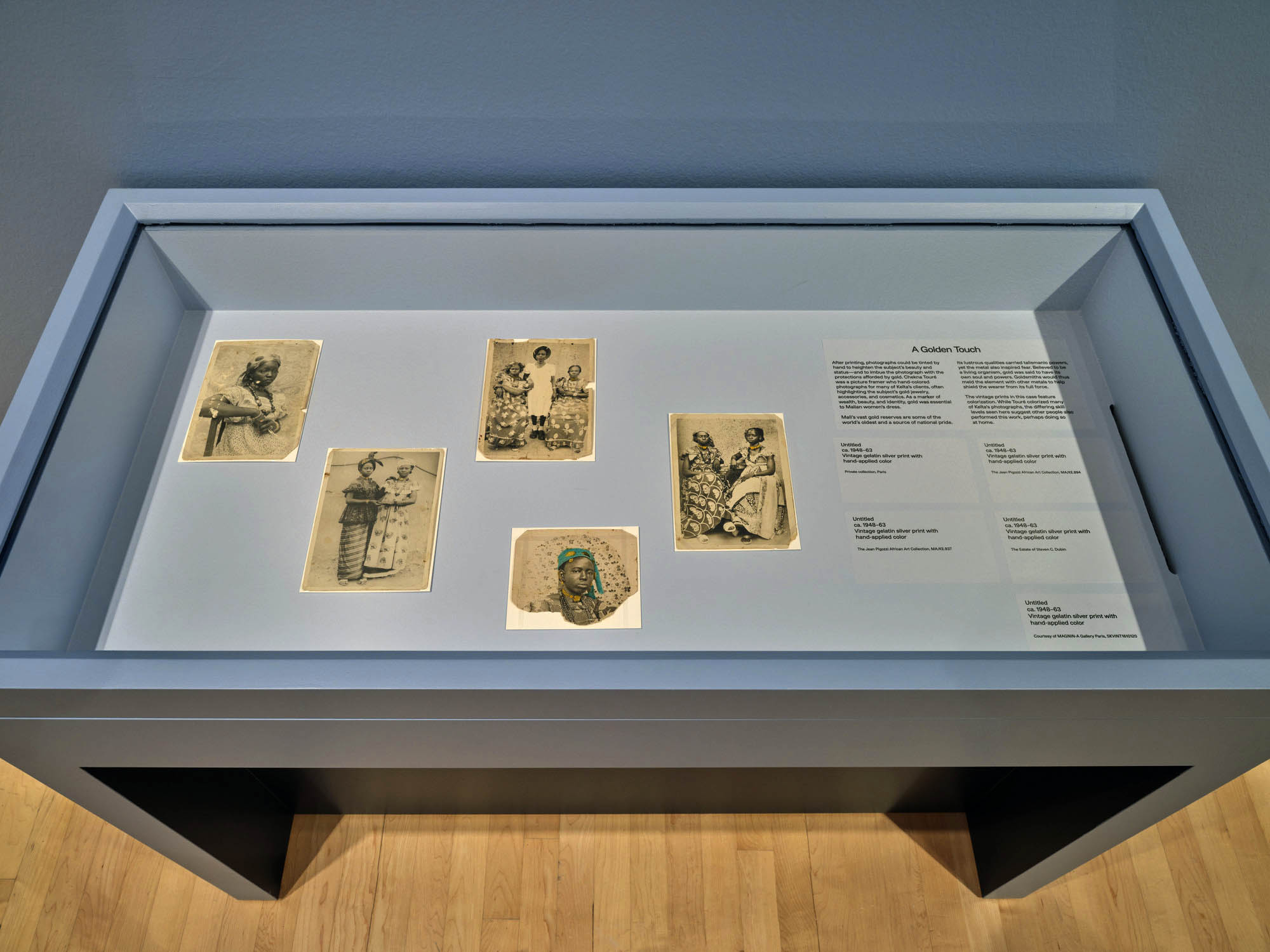
Installation view of the exhibition Seydou Keïta: A Tactile Lens at the Brooklyn Museum, New York, October 2025 – May 2026 showing text from the section “A Golden Touch” with at bottom centre, Keïta’s photograph Untitled c. 1948-1963 (below)
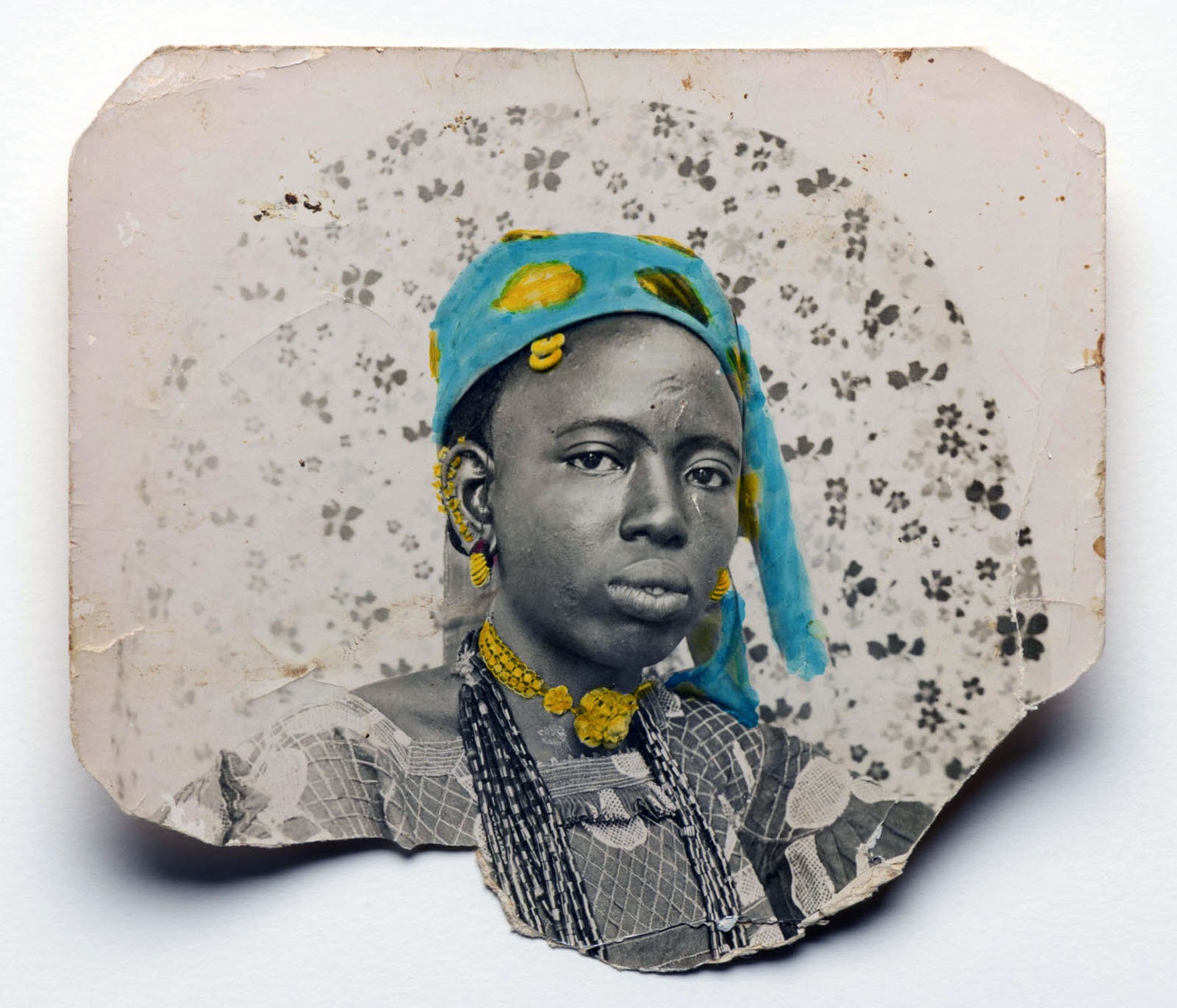
Seydou Keïta (Malian, c. 1921-2001)
Untitled
c. 1948-1963
Vintage gelatin silver print
The Estate of Steven C. Dubin
© SKPEAC/Seydou Keïta
Courtesy The Jean Pigozzi Collection of African Art and Danziger Gallery, NY
Photo: Brooklyn Museum
Preserving A Legacy
The Keïta family’s generous loan of film negatives from the estate’s remaining archive presents a rare opportunity to reflect on the practical, ethical, and technical questions involved in the preservation of African photography. Conservation of African photographic archives from the continent faces distinct challenges, ranging from climate-related degradation and limited access to preservation materials and technologies to an overall lack of institutional infrastructure and support for artists and their legacies.
Too fragile to survive extensive handling or prolonged light exposure, Keïta’s negatives could not be cleaned or scanned without risking damage. Instead, each was photographed under controlled conditions at a conservation lab and reproduced for the exhibition.
Lace
Lace features prominently in Keïta’s photographs – appearing as trim on dress sleeves, integrated into garments made from wax print and other fabrics, worn as full lace dresses or as sheer boubous layered over other clothing. European lace was highly coveted, expensive, and difficult to obtain. In response, Soudanaise women created their own lace by hand, layering two pieces of white cotton percale and cutting intricate patterns using stencils. These garments, now rare heirlooms, were once considered second to colonial imports. Today, they are recognized for their exceptional beauty and craftsmanship, emblems of pride in Soudanaise women’s creativity and cultural identity.
Carnelian Beads
Carnelian beads have been traded for centuries, from the Cambay region of India through Mecca to the Middle East and Africa. By the mid-nineteenth century, the German town of Idar-Oberstein began sourcing carnelian from Brazil and producing beads in local factories for export to these same markets.
Valued for both their beauty and protection, carnelian necklaces were worn as amulets – believed to hold protective powers through their colour and surface – and were often included as part of a woman’s dowry. Multi-strand necklaces of small carnelian beads appear on many of Keïta’s sitters and were especially fashionable among the Lebu, Tuareg, and Fulani.
Marabaka
During the independence era, anticolonial leader Amílcar Lopes Cabral popularised the marabaka, a Czech-style hat that became a widespread symbol of Pan-African solidarity. First imported from Czechia, the hat, known as zmijovka in Czech, derives its zigzag pattern from that observed on the skin of a viper (zmije in Czech).
In West Africa, the hat’s black-and-white design is reminiscent of Islamic aesthetics seen on indigenous textiles such as Dogon and Bamana resist cloths and weaving. The snake motif also speaks to the region’s affinity for the culturally significant serpent and water snake.
Commemorative Cloths
In the post-independence era, political leaders often commissioned commemorative cloths bearing their own images to bolster support and cultivate loyalty – and even foster cults of personality. Citizens wore such cloths regardless of political affiliation, at times out of fear of reprisal. Advances in textile printing and the development of more affordable “fancy print” cloths in the 1940s made many commemorative cloths inexpensive to produce. The examples on view span a range of iconography, from wax-print cloths honouring African soldiers who served in World War II and Mali’s first post-independence president, Modibo Keïta, to a fancy print featuring French President Charles de Gaulle .
Pagne
A woman’s pagne is the foundation of her wardrobe. Typically woven or cut to a length of about two yards, the pagne functions as a wrap that conceals the waist, thighs, and buttocks. Beyond their function, pagnes also symbolize lineage, protection, and a woman’s evolving identity.
Finely woven and dyed pagnes are presented at birth and during key life rituals such as dowry exchanges, marriage celebrations, and pregnancies. Women rarely part with their pagnes. Above all, they are talismans – protective layers passed down from generation to generation. A woman selects which ones to give to her children and which, ultimately, will accompany her to the grave.
Dutch Legacies
Known in the postwar era as “the Chanel of Africa,” the Dutch textile company Vlisco has been the foremost purveyor of African wax-print textiles since the late nineteenth century. The company industrialised the Indonesian batik process, in which patterns are drawn in wax on cotton fabric that is then dyed. When the wax is removed, the design is revealed, protected from the dye by the wax resist.
Though Vlisco did not actively market its products in the Sahel region in the 1940s to 1970s, wax prints spread through African trade networks and became widely popular, including among many of Keïta’s sitters. While the patterns were created by Dutch designers, they were named by Ghanaian and Togolese female fabric traders and their female clients, who interpreted the patterns’ meanings through a local, social, or spiritual lens .
The colour, design, and pattern names of wax prints thus carry personal and communal meanings – much like Keïta’s photographs.
Widely associated with coming-of-age rituals, wax prints have long marked key life events such as birth, puberty, and marriage. As independence movements gained momentum across the continent, wax-print textiles came to symbolise cosmopolitanism and a growing sense of Pan-African identity.
The Studio Backdrop
In Keïta’s photographs, traditional and modern textiles appear as studio backdrops or layered on European-style beds, their bold patterns often echoed in the sitters’ garments. Featuring examples of such textiles, this installation highlights the evolution of Malian weaving traditions during the independence era. The 1950s and early post-independence years saw rapid innovations in textile design, particularly in the use of colour. In contrast with traditional indigo and earth tones produced using natural dyes, these modern fabrics feature vivid hues made from synthetic dyes and incorporate more elaborate, figurative motifs that reflect the period’s shifting social concerns and aspirations.
These blankets served multiple functions. In everyday use, they provided protection from mosquitoes, cold temperatures, and sandstorms in the Sahel. When folded and draped over the shoulder of a well-dressed man, they signaled status. They were also important in systems of exchange – traded, gifted, and ceremonially displayed, most notably during dowry presentations and marriage celebrations.
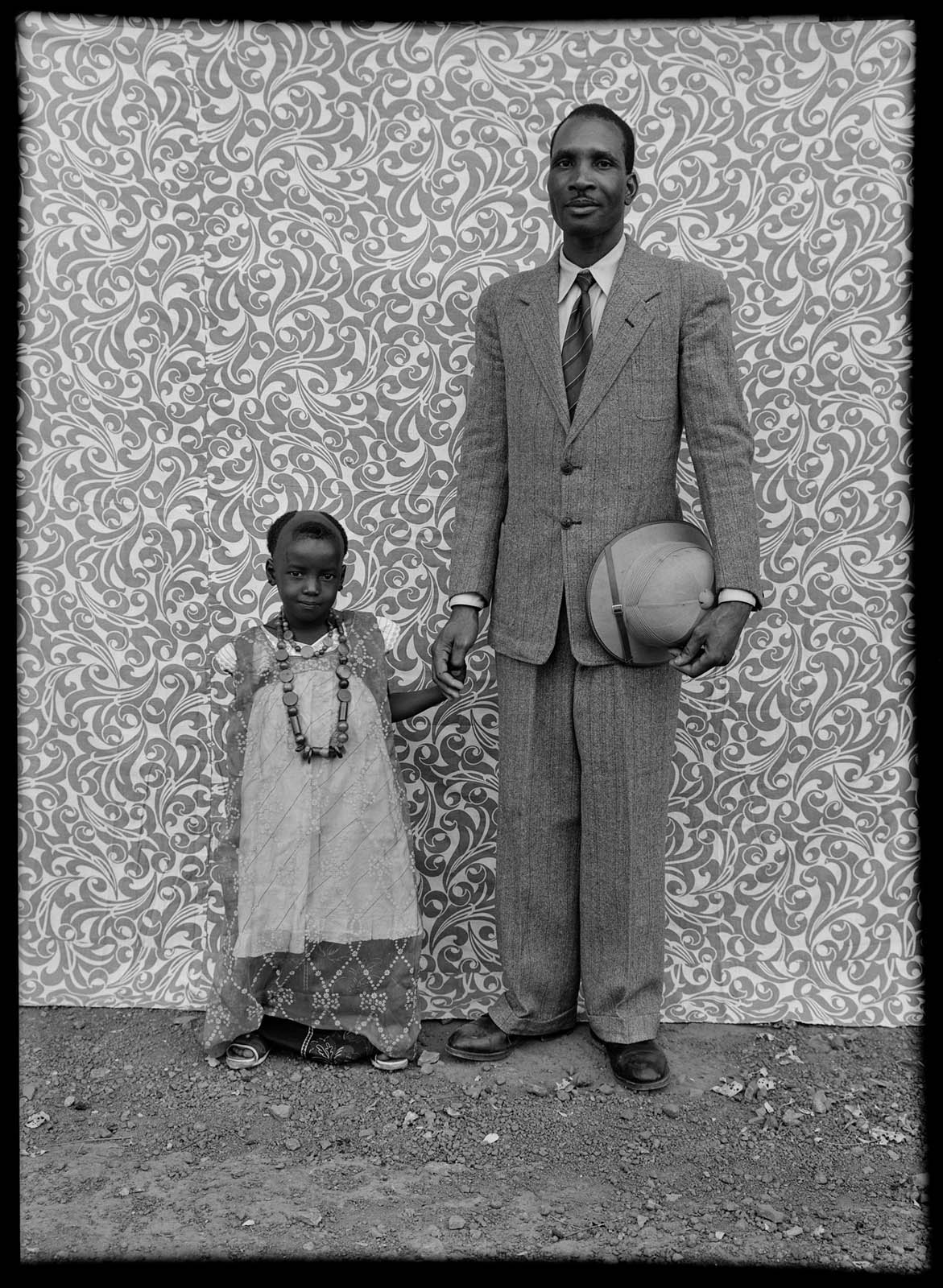
Seydou Keïta (Malian, c. 1921-2001)
Untitled
1949-1951, printed 1995
Gelatin silver print
© SKPEAC/Seydou Keïta
Courtesy The Jean Pigozzi Collection of African Art and Danziger Gallery, NY
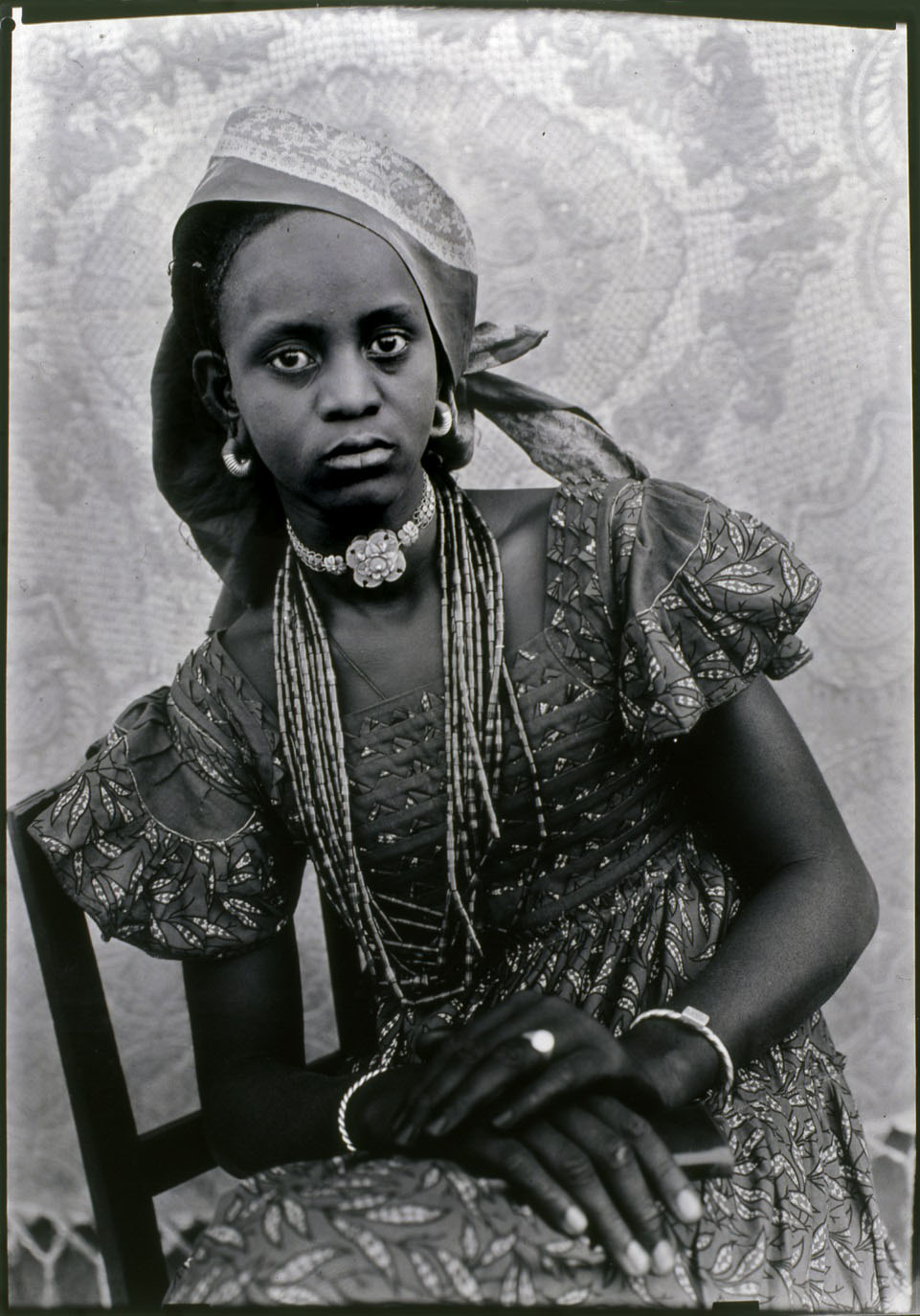
Seydou Keïta (Malian, c. 1921-2001)
Untitled
1949-1951, printed 1995
Gelatin silver print
© SKPEAC/Seydou Keïta
Courtesy The Jean Pigozzi Collection of African Art and Danziger Gallery, NY
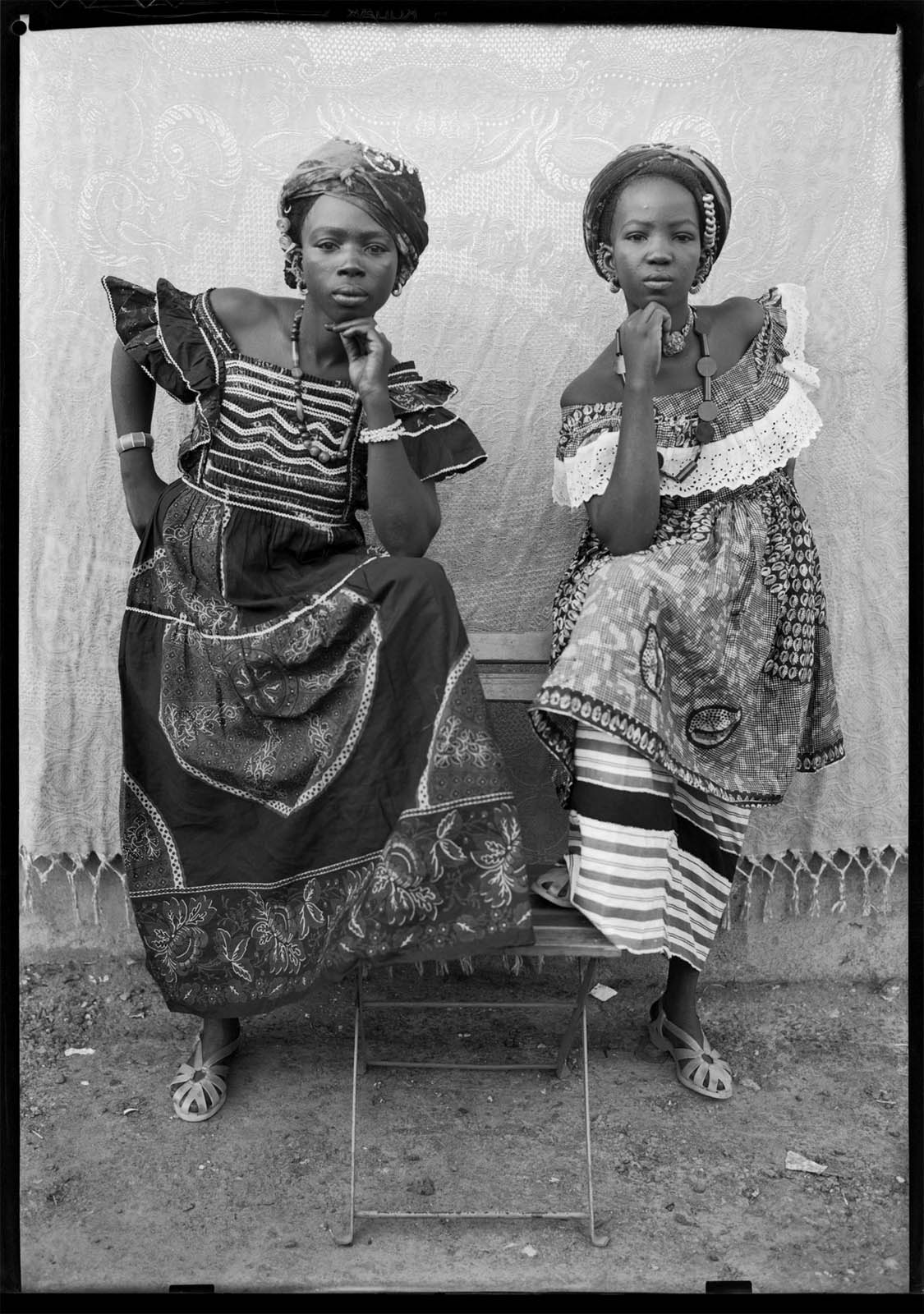
Seydou Keïta (Malian, c. 1921-2001)
Untitled
1952-1955, printed c. 1994-2001
Gelatin silver print
© SKPEAC/Seydou Keïta
Courtesy The Jean Pigozzi Collection of African Art and Danziger Gallery, NY
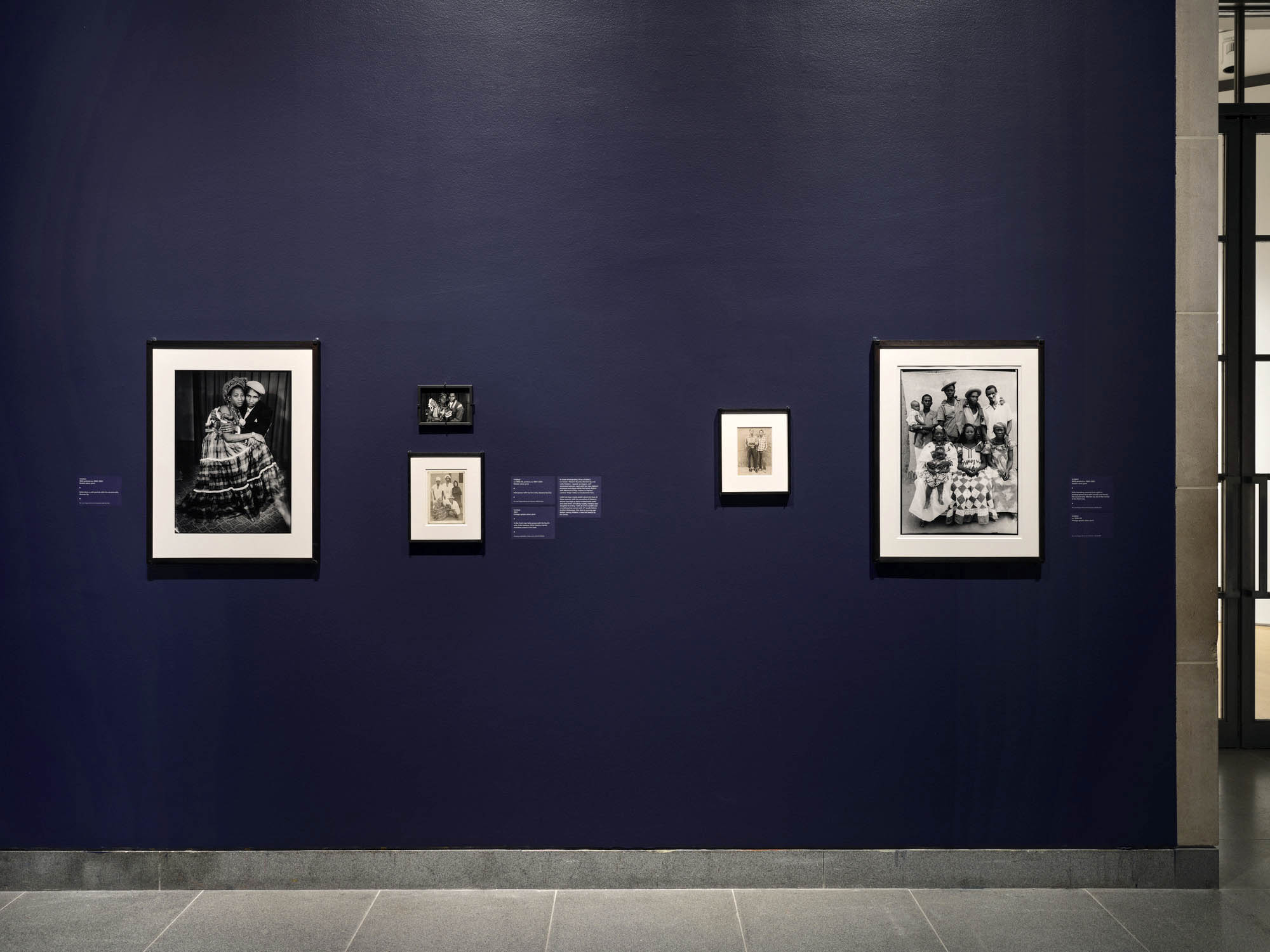
Installation view of the exhibition Seydou Keïta: A Tactile Lens at the Brooklyn Museum, New York, October 2025 – May 2026
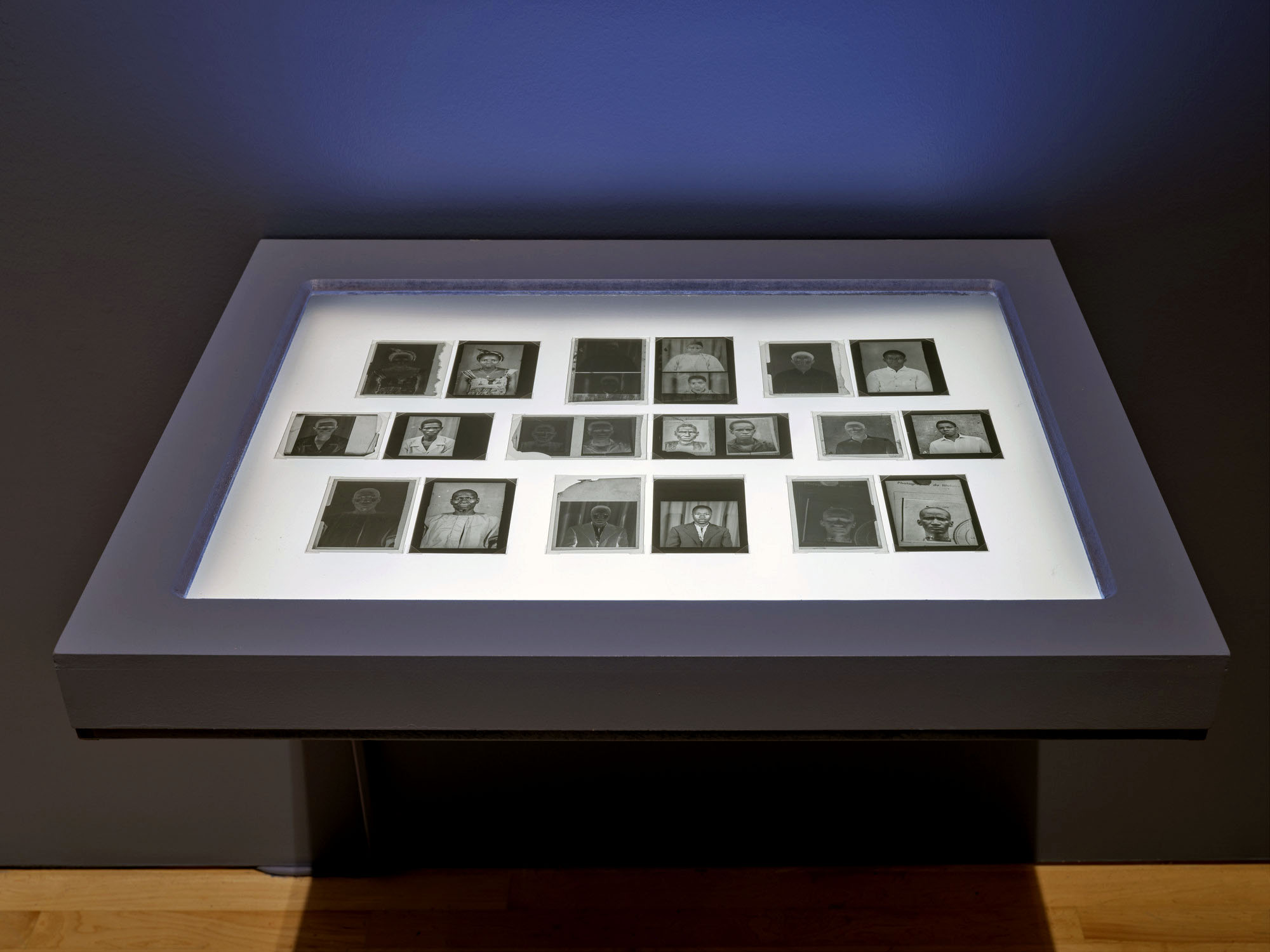
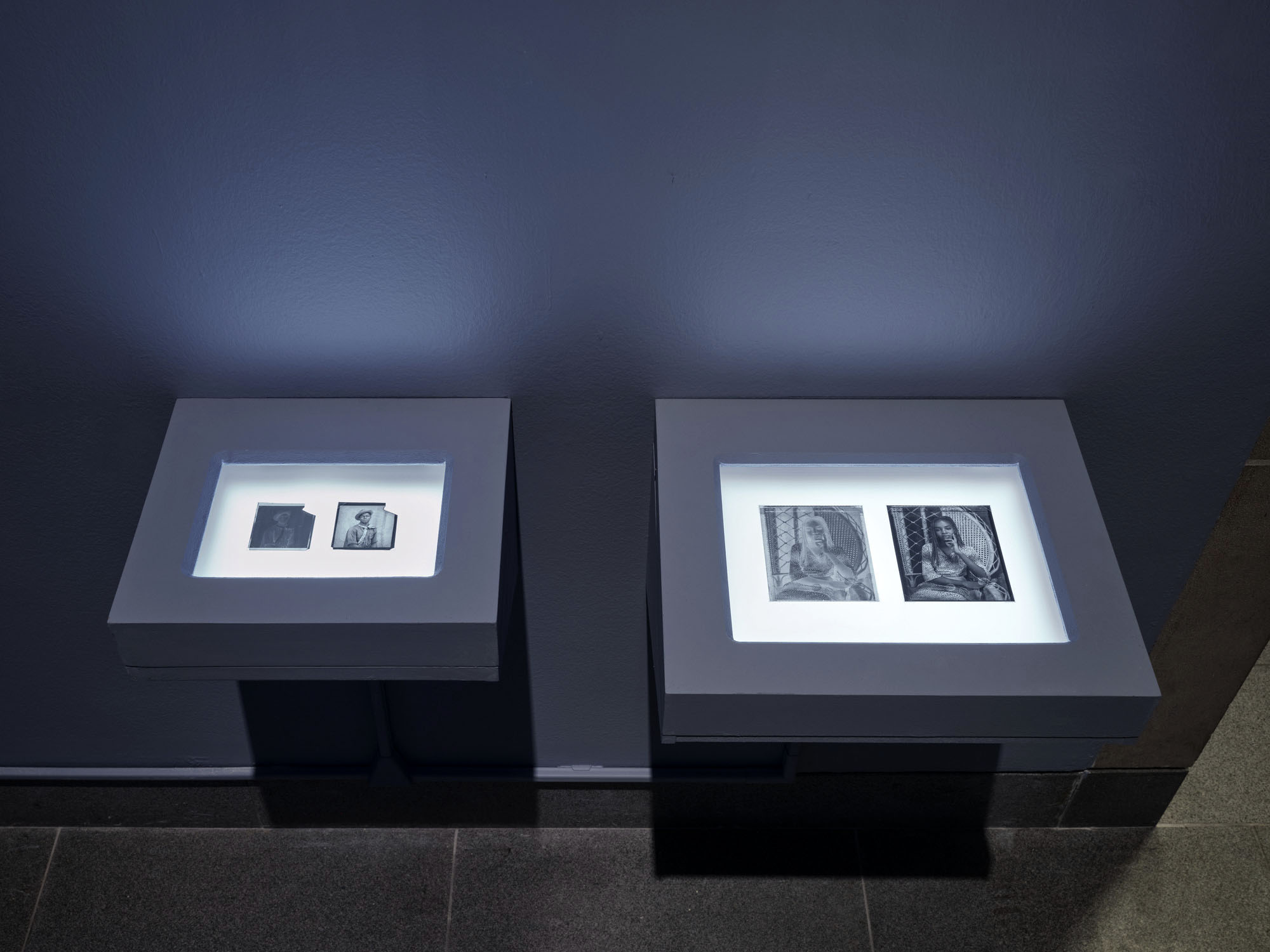
Installation views of the exhibition Seydou Keïta: A Tactile Lens at the Brooklyn Museum, New York, October 2025 – May 2026 showing vitrines with facsimile cellulose acetate negatives and positive reproductions from digitised negatives c. 1950-1959
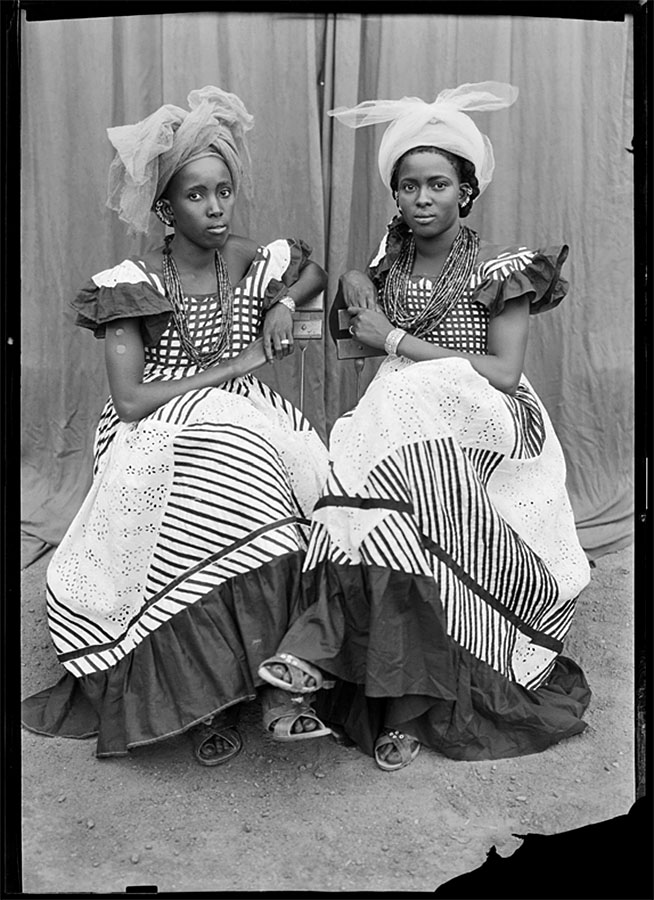
Seydou Keïta (Malian, c. 1921-2001)
Untitled
1959, printed 1998
Gelatin silver print
© SKPEAC/Seydou Keïta
Courtesy The Jean Pigozzi Collection of African Art
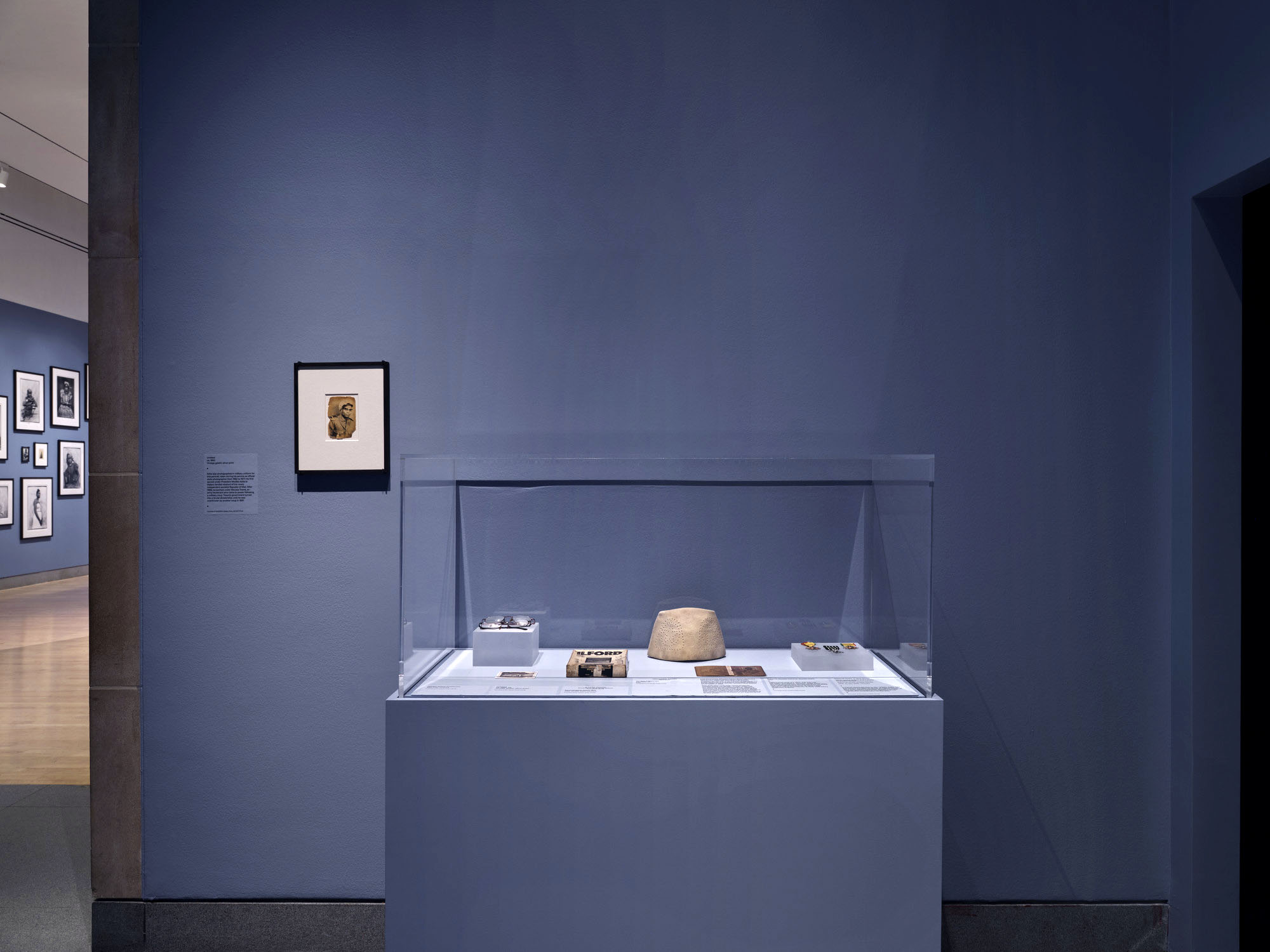
Installation view of the exhibition Seydou Keïta: A Tactile Lens at the Brooklyn Museum, New York, October 2025 – May 2026
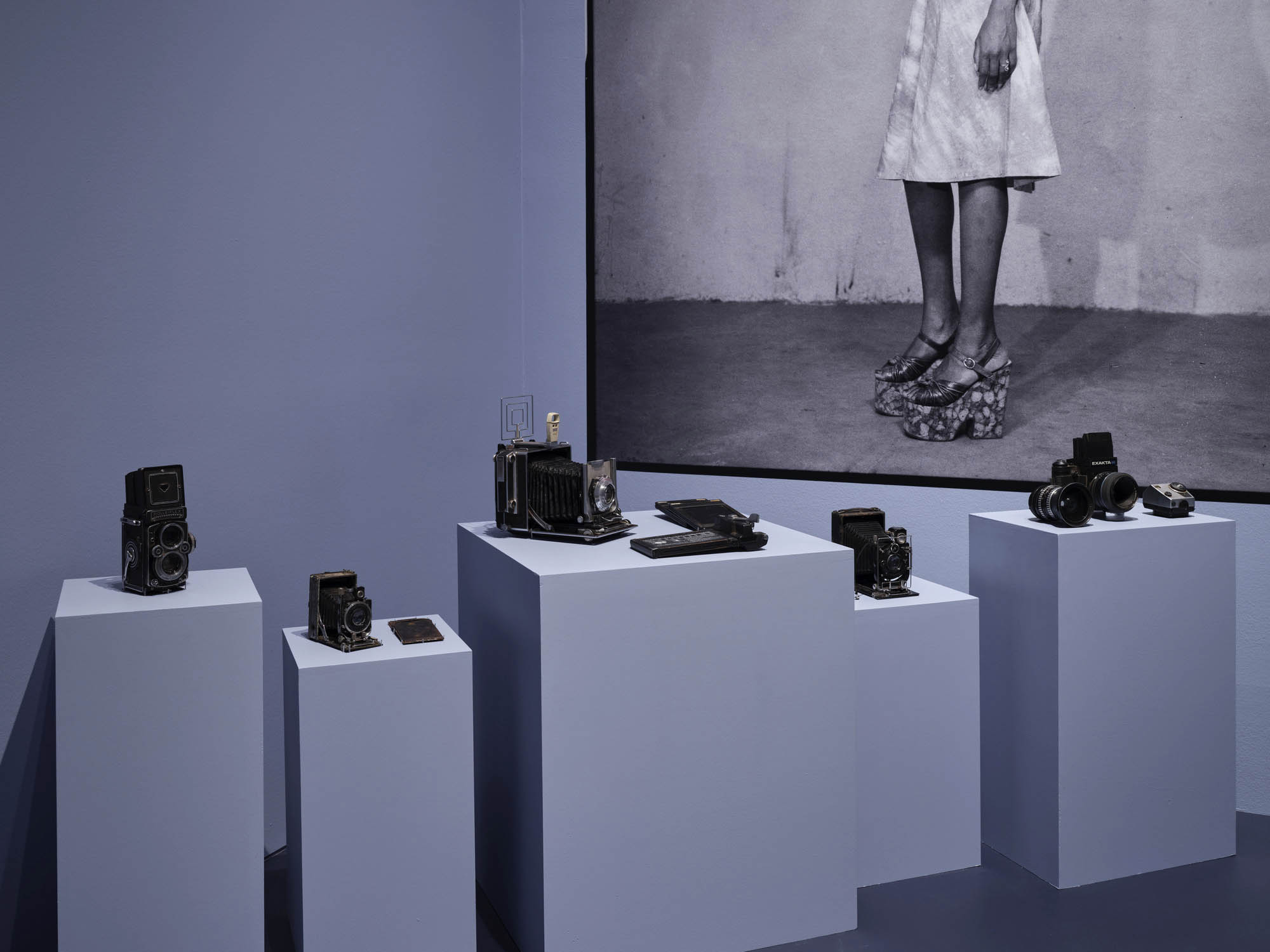
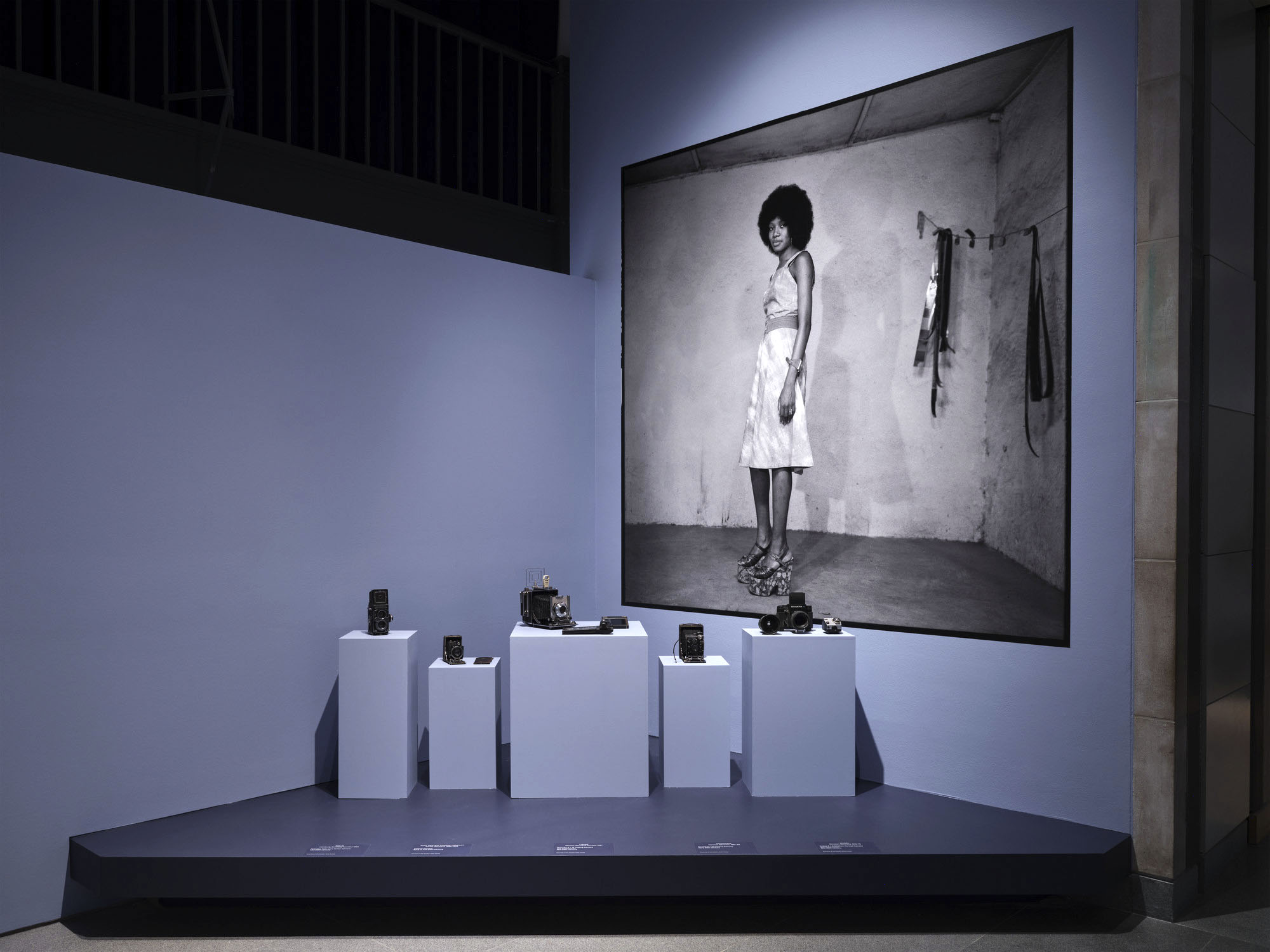
Installation views of the exhibition Seydou Keïta: A Tactile Lens at the Brooklyn Museum, New York, October 2025 – May 2026 showing Keïta’s medium format cameras and his photograph, Untitled late 1940s to mid-1970s (below)
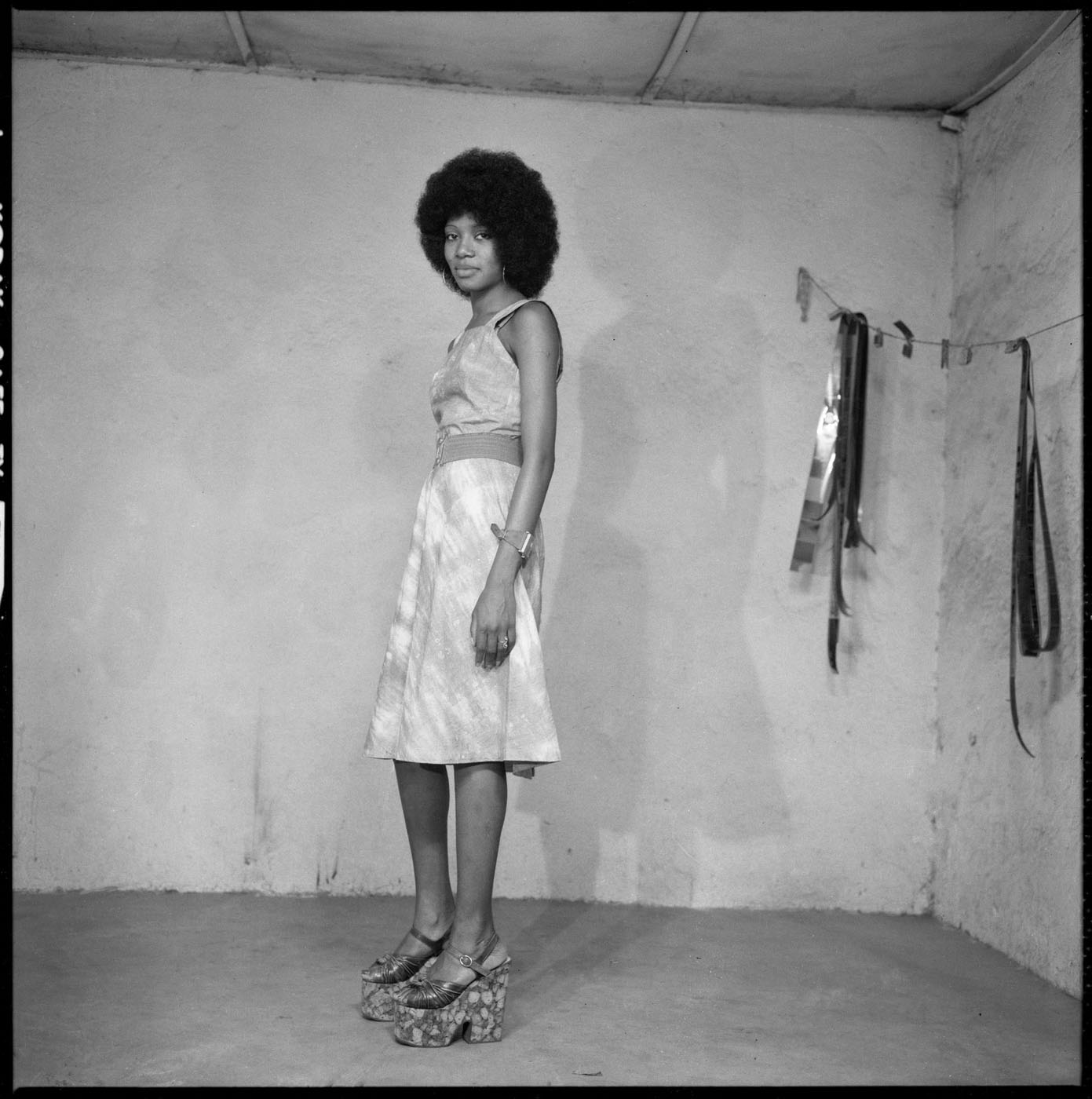
Seydou Keïta (Malian, c. 1921-2001)
Untitled
late 1940s to mid-1970s
Positive reproduction from digitised negative
Courtesy of the Seydou Keïta Family
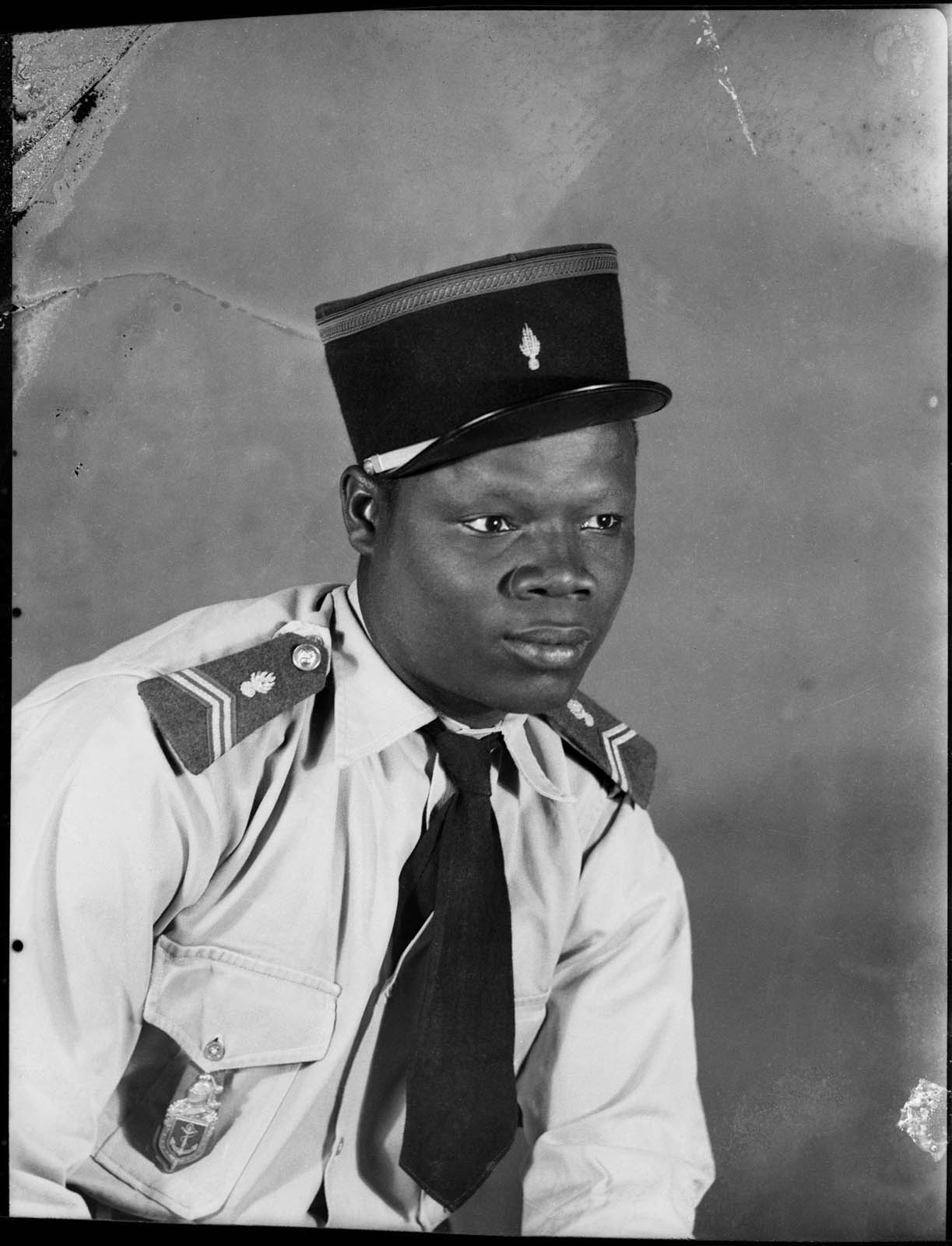
Seydou Keïta (Malian, c. 1921-2001)
Untitled
late 1940s to mid-1970s
Positive reproduction from digitised negative
Courtesy of the Seydou Keïta Family
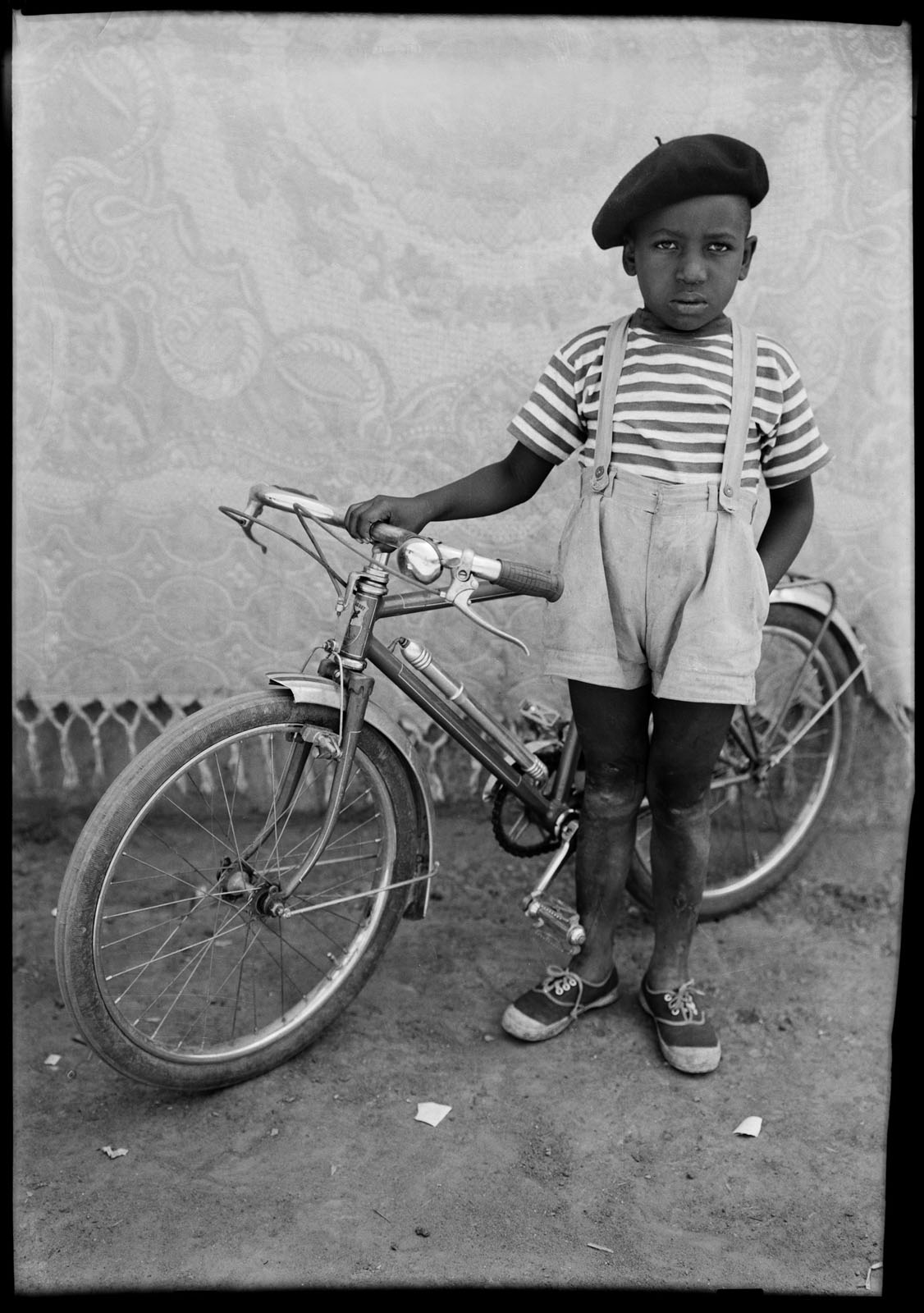
Seydou Keïta (Malian, c. 1921-2001)
Untitled
1949-1951, printed 1995
Gelatin silver print
© SKPEAC/Seydou Keïta
Courtesy The Jean Pigozzi Collection of African Art and Danziger Gallery, NY
With one hand on the handlebars of a bicycle and the other tucked in his pocket, this child meets the camera with a stern expression. Here, the boy’s French beret, shoes, and bicycle – imported goods reserved for the elite – speak to the deep-rooted impact of French colonialism across generations, even as the country moved toward independence.
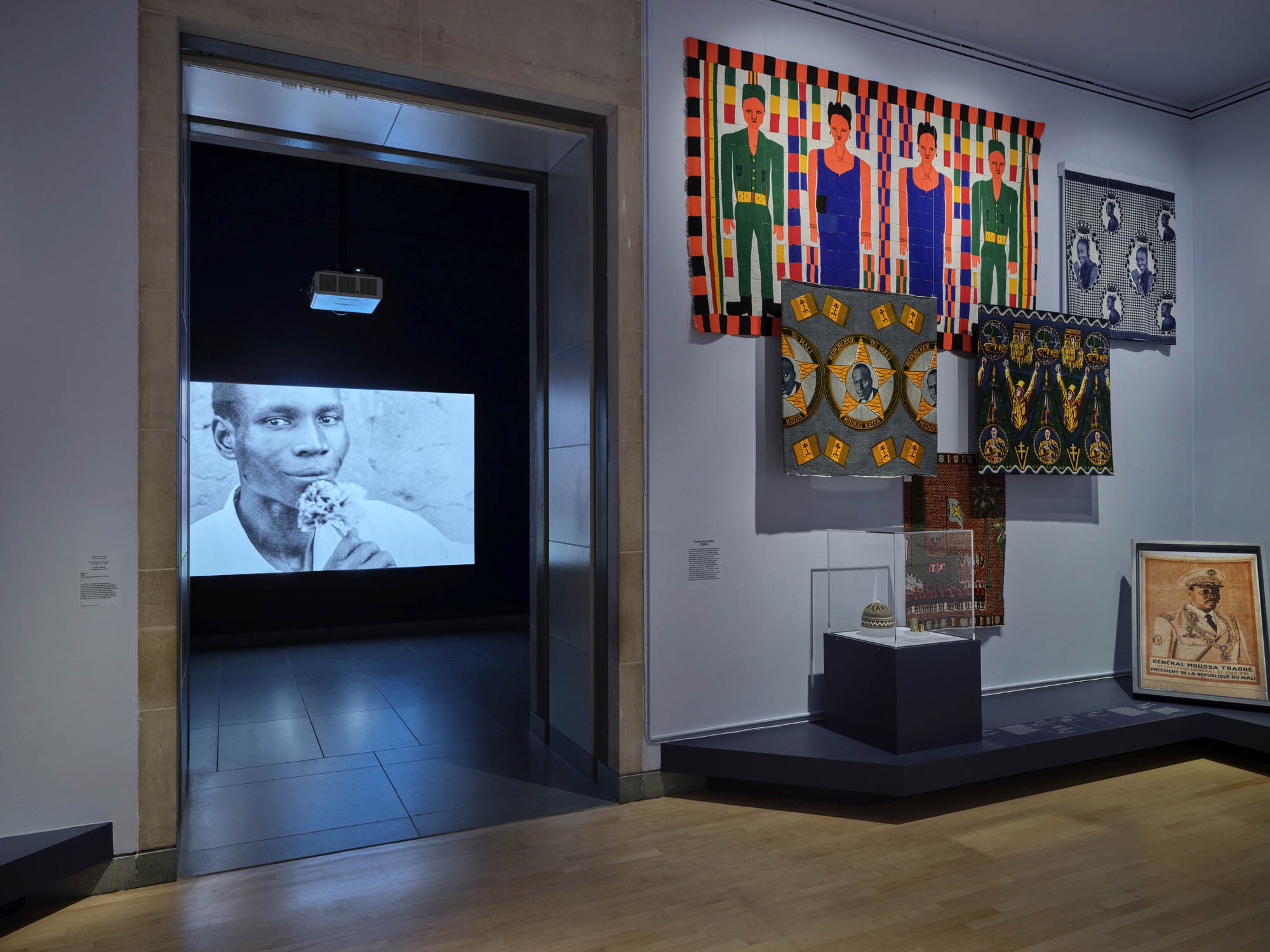
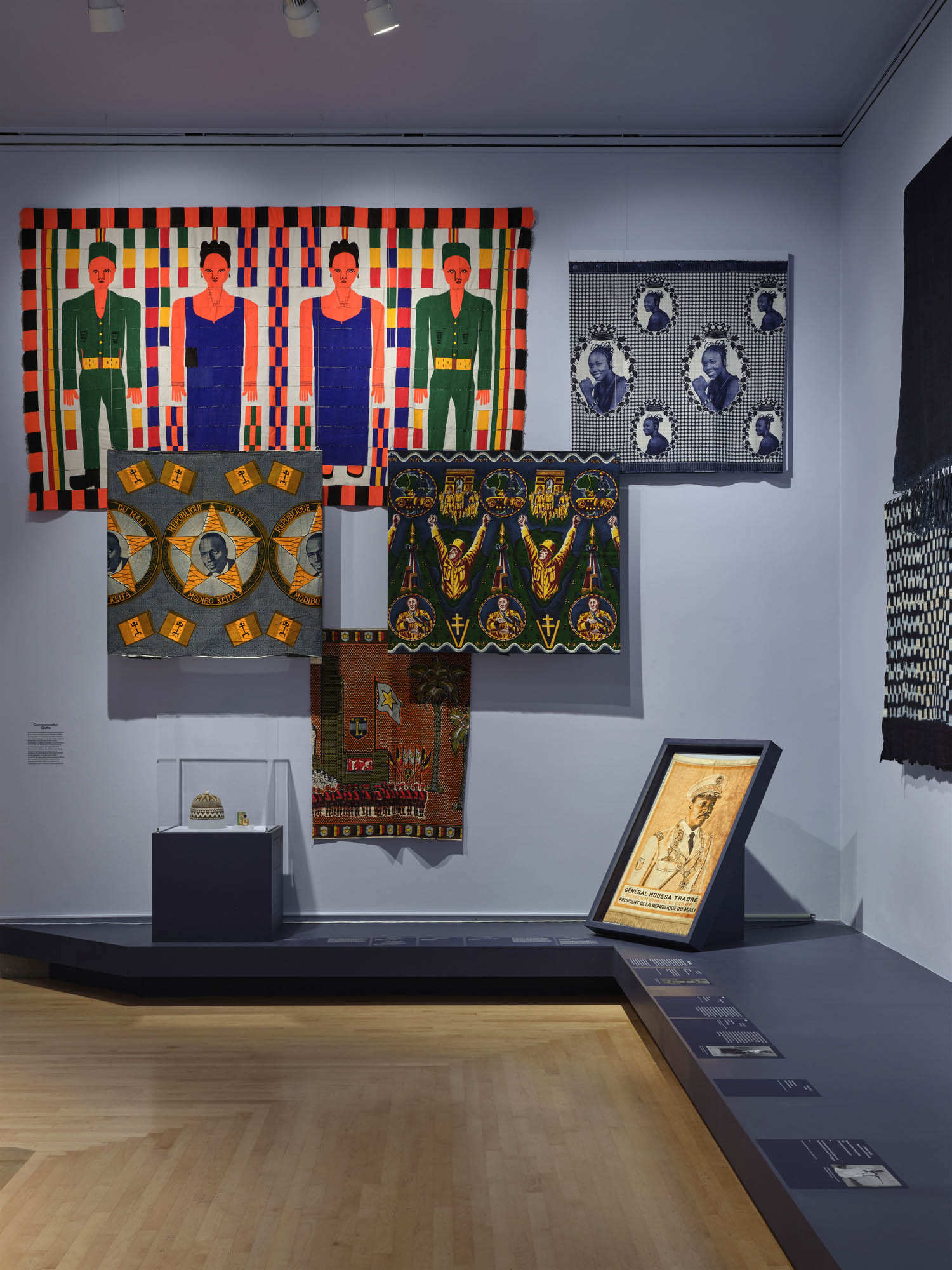
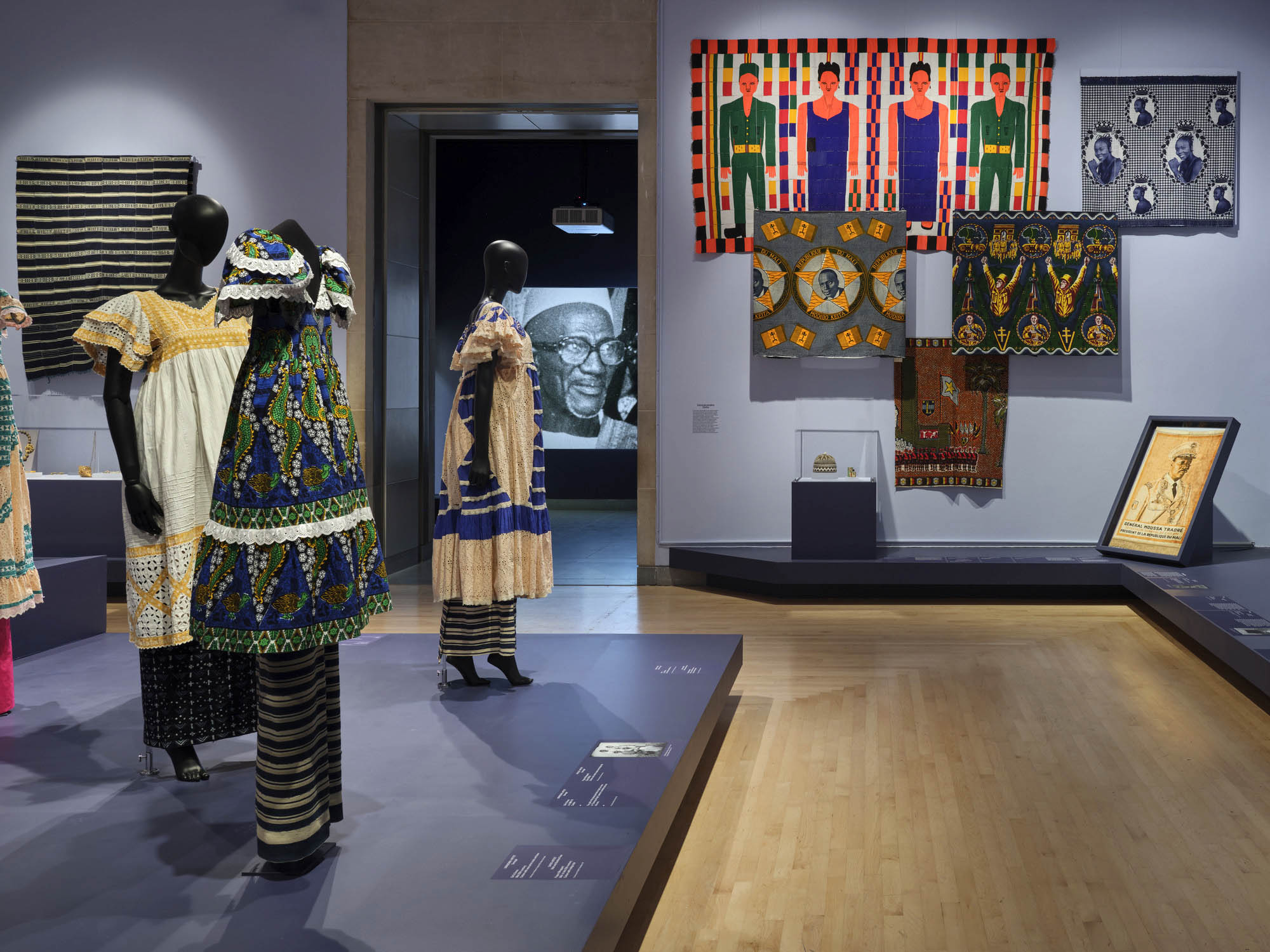
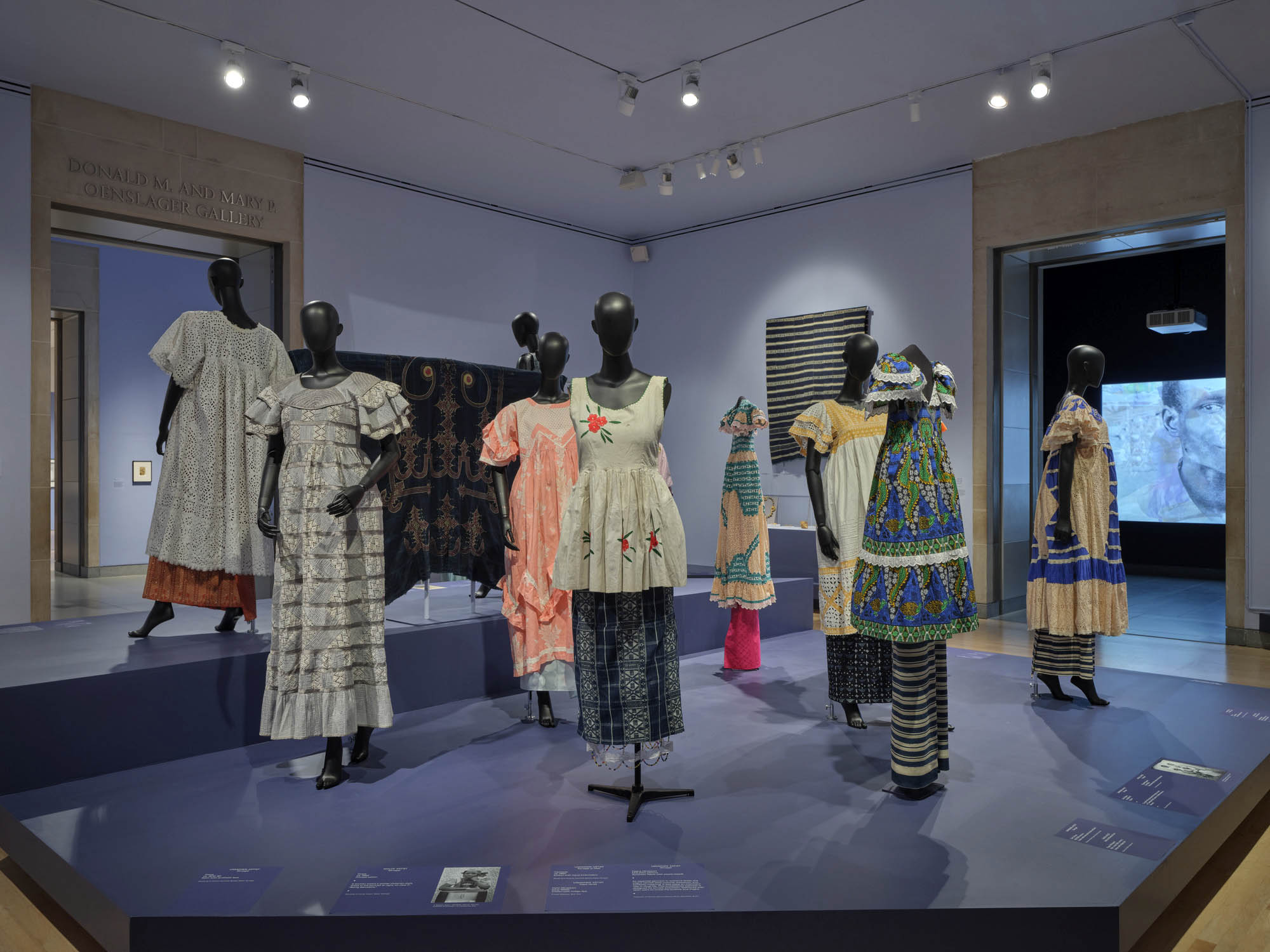
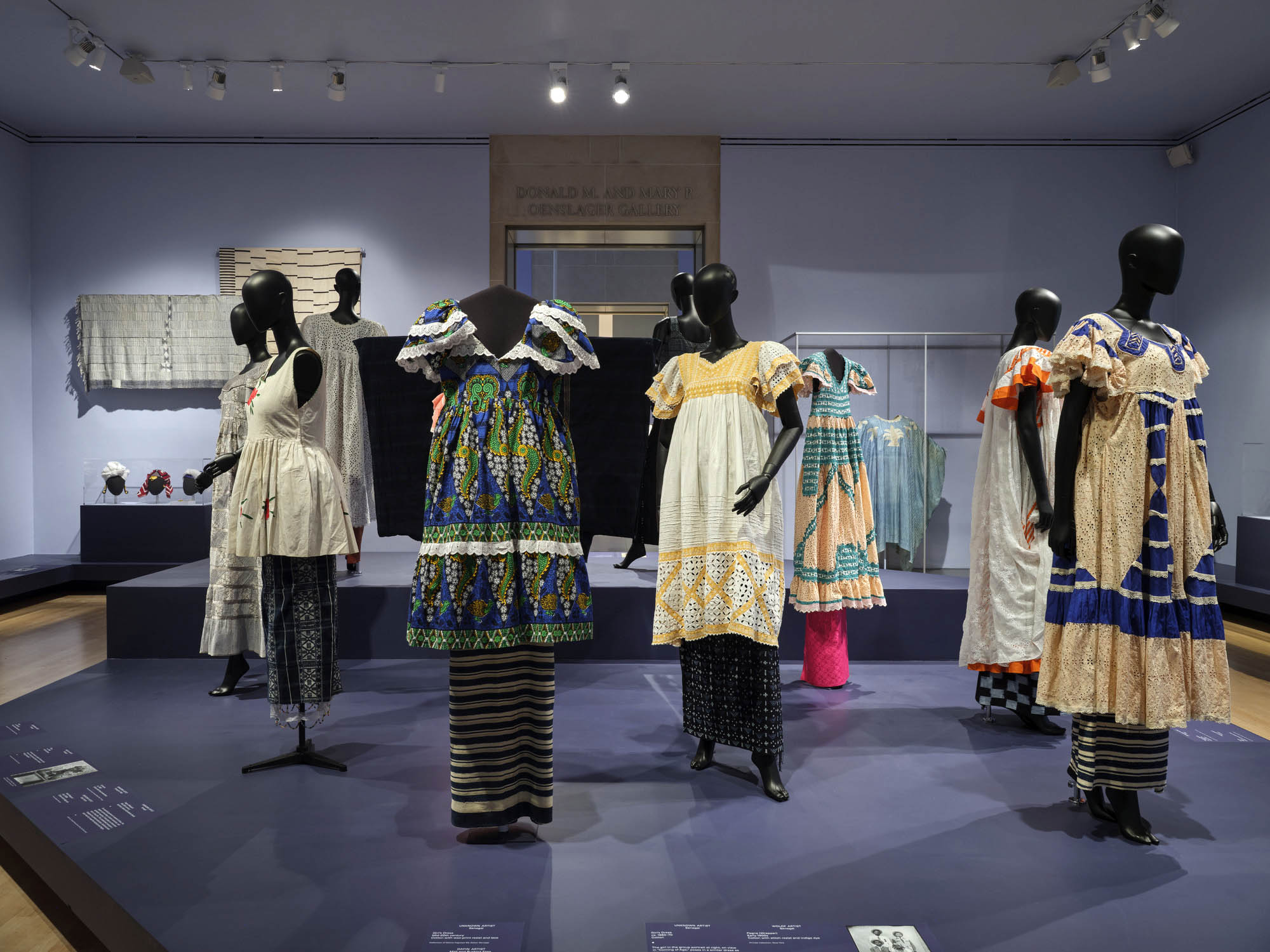
Installation views of the exhibition Seydou Keïta: A Tactile Lens at the Brooklyn Museum, New York, October 2025 – May 2026
Brooklyn Museum
200 Eastern Parkway
Brooklyn, NY 11238-6052
Phone: (718) 638-5000
Opening hours:
Wednesday – Sunday 11am – 6pm
Closed Mondays and Tuesdays
Closed Thanksgiving, Christmas, and New Year’s Day










 Art Blart _ art and cultural memory archive
You must be logged in to post a comment.