
Exhibition dates: 30th May – 2nd November, 2009

Edward Weston (American, 1886-1958)
Palma Cuernavaca
1925
Gelatin silver print
Sheet: 24.4 x 16.5cm (9 5/8 x 6 1/2 in.)
The Lane Collection
Museum of Fine Arts, Boston
What a privilege to be able to post these photographs that appear in the exhibition. Breathe, look, enjoy!
Marcus
Many thankx to the Museum of Fine Arts, Boston for allowing me to publish the photographs in the posting. Please click on the photographs for a larger version of the image.
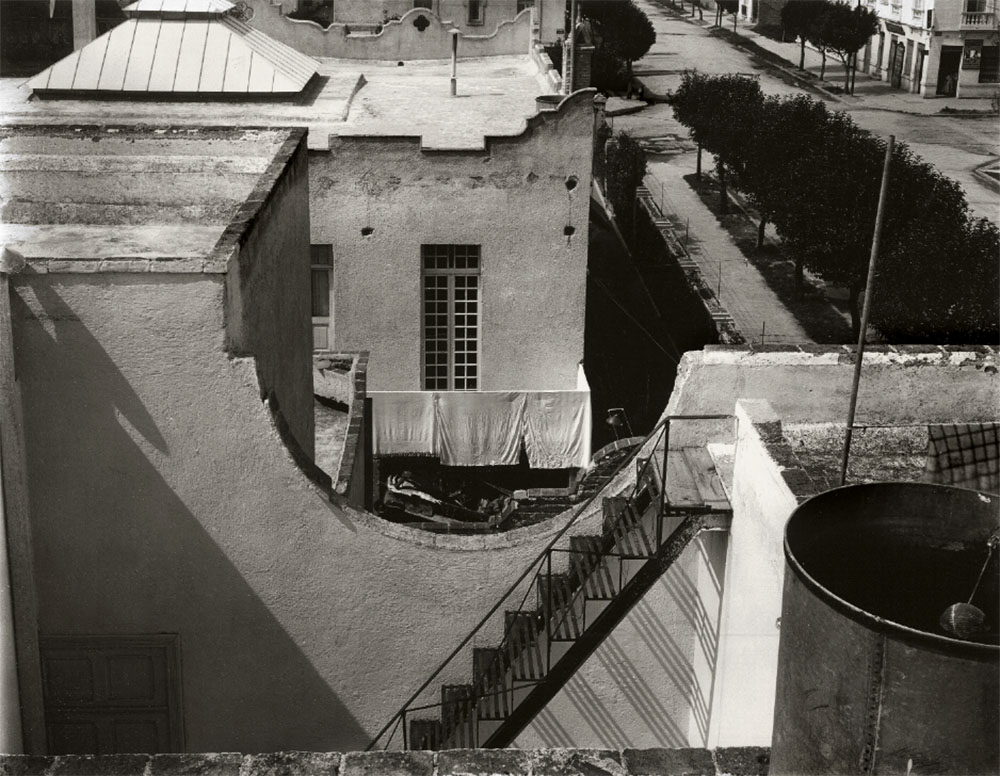
Edward Weston (American, 1886-1958)
Desde la Azotea
1924
Platinum or palladium print
Sheet: 19.4 x 24.4cm (7 5/8 x 9 5/8 in.)
The Lane Collection
Museum of Fine Arts, Boston
In the decades following the Revolution of 1910, foreign artists and intellectuals flocked to Mexico in order to experience its warm climate and lively cultural scene. They were inspired by Mexico‘s exotic tropical landscape, its ancient monuments and colonial architecture, the work of its modern muralists, and the country‘s indigenous arts and crafts. During two extended trips to Mexico made between 1923 and 1926, American photographer Edward Weston (1886-1958) created some of his earliest modernist photographs, which form the core of the exhibition, Viva Mexico! Edward Weston and His Contemporaries, at the Museum of Fine Arts, Boston (MFA). Featured are approximately 45 works, among them about 30 rare photographs by Weston and selected images by Tina Modotti, Brett Weston, Manuel Alvarez Bravo, and Paul Strand. These photographs from the 1920s and ’30s are drawn from the Museum’s own collection, as well as The Lane Collection, which is on long-term loan to the MFA. Additionally, a compelling 1939 portrait of Frida Kahlo by Hungarian-born photographer Nickolas Muray has been lent from a local private collection. Viva Mexico! is on view May 30 through November 2 in the MFA’s Herb Ritts Gallery.
“Viva Mexico! highlights Weston’s pivotal years in this highly creative environment, which had a lasting impact on his work and inspired some of his earliest experiments in still life, landscape, and cloud studies,” said Malcolm Rogers, Ann and Graham Gund Director of the MFA. “This exhibition allows us to focus on a critical juncture in Weston’s career, and to present one of the strengths of The Lane Collection – its holdings of the photographer’s early modernist work.”
The Lane Collection, which includes gifts and loans to the MFA, comprises modern American paintings, photographs, and works on paper assembled by the late William H. Lane and his wife, Saundra B. Lane, a Trustee of the MFA. During the late 1960s, the Lanes acquired a large number of Weston’s vintage photographs, which are now widely acknowledged to be the most important collection of the photographer’s work in private hands.
“Acquiring more than 2,000 Edward Weston photographs directly from his sons was an amazing learning experience for us and we were thrilled to be able to immerse ourselves in the work of such a major artist in such great depth,” said collector Saundra Lane. “The Mexico pictures by Edward, Brett, and Tina Modotti are some of my personal favourites. These works inspired me to more recently acquire two early Manuel Alvarez Bravo photographs, El soñador (The Dreamer) and Nude, included in the exhibition, each of them a quintessentially Mexican subject and clearly made under the influence of Weston and Modotti.”
In an early biography of Edward Weston, writer and editor Nancy Newhall described Mexico as his “Paris,” the place where he greatly expanded his range as an artist. His total of more-than two years in Mexico – Weston’s only travel outside the US – offered him the opportunity to move away from his Pictorialist style, with its soft focus and ethereal, romantic qualities, toward more abstract forms and sharper resolution of detail. Heroic portrait heads, avant-garde nudes, urban views, cloud studies and landscapes, and images of Mexican toys and folk art are among the subjects he captured with his large-format camera. This period of experimentation with isolated objects also resulted in some of Weston’s earliest forays into still life, as can be seen in Chayotes (1924), a close-up of the beautiful, spiny squash arranged in a painted wooden bowl.
In 1923, Weston made the difficult decision to close his portrait photography studio in Tropico (now Glendale), California, and move to Mexico, as he wrote in his journal – to start life anew. He left behind his wife and three of his four young sons and traveled to Mexico City with his lover, Italian-born actress Tina Modotti (1896-1942) and his oldest son Chandler. Modotti ran Weston’s new studio, served as his translator and muse, and under his tutelage began to make highly accomplished photographs of her own. Together they became immersed in the vibrant community of artists and intellectuals centred there, which included painters Diego Rivera, Jean Charlot, Xavier Guerrero, and Rafael Salas, as well as the poet Luis Quintanilla, writer D.H. Lawrence, anthropologist Frances Toor, and journalist Carleton Beals. Although Weston and Modotti always remained outsiders looking in, the several exhibitions of their work during their Mexican sojourn helped spark a lively interest in modernist photography in their adopted country, where until this time photography had been admired mainly as a documentary tool, rather than a fine art.
“This exhibition will be a wonderful opportunity for our visitors to experience Weston’s stunning Mexican photographs firsthand, many of which are rarely seen platinum prints taken in the period just before he made his classic black-and-white images of peppers and shells,” said Karen Haas, The Lane Collection Curator of Photographs, who organised Viva Mexico! “These rich, warm-toned prints, when seen in context with photographs by his contemporaries in Mexico during the 1920s and ’30s, promise to be a revelation even to those who know Weston’s work well.”
Many of the earliest images that Weston produced in Mexico were portraits and nudes, both subjects that he had specialised in previously but now took on a very different look and feel. Soon after his arrival, he began a series of monumental portraits of friends and acquaintances, all of them shot very close-up and from slightly below eye level, their heads filling the picture frame and their features heroicised. These include Galván Shooting (1924), Tina Modotti (1924), Victoria Marin (1926), and Rose Roland Covarrubias (1926). He also made a stunning group of nudes of Modotti posing on their sun-baked rooftop patio, all three of which he titled Tina on the Azotea (1924), as well as an incredibly simple and sculptural image, Nude (1926) of fellow American expatriate Anita Brenner. The Brenner nude, along with Palma Cuernavaca (1925), Aqueduct (1924), and Excusado (1925) all share a similarly stark, abstract, and timeless quality – what Weston described as an attempt to render “the very substance and quintessence of the thing itself.”
Abstract architectural details began to make their way into Weston’s work as well and he was drawn to capture light and shadow on a variety of surfaces, from the zigzag stone patterns of the ancient Ruinas de Mitla (1926) to the angled forms of the convent stairwell and skylight in San Pedro y San Pablo (1924). Viva Mexico! also showcases Weston’s experimentation with landscape photography, both urban and rural. The striking view from his studio roof is recorded in Desde la Azotea (1924), in which the geometry of the buildings below is heightened by the elevated vantage point and steeply raking light, and in Michoacán (1926), where he captures the beautifully undulating silhouette of the pastoral countryside. Much less common among his subjects from this period are some of Weston’s little-known photographs made in outdoor markets and fairs, such as Mercado, Oaxaca (1926) and Bowls, Oaxaca (1926). These open-air street images closely relate to another group of pictures, including Torito (1925), a playful little papier-maché bull, and Fish Gourd and Striped Serape (1926), which reflect Weston’s newfound interest in the vernacular Mexican toys and folk objects that he collected and lovingly documented in his studio while waiting for clients to arrive for portrait sittings. These whimsical photographs also serve as fascinating precursors to Weston’s high modernist still lifes of less than a decade later.
Over the course of her time in Mexico, Modotti rapidly went from photographer’s apprentice and model to fine art photographer in her own right. Although her career as a photographer was relatively brief, her powerful pictures from this period sometimes rival those of her lover and teacher, Edward Weston. Modotti was a rare woman in a mostly male profession, but she brought to her work a deep-seated interest in the people and the politics of Mexico in the 1920s. Unlike Weston, who preferred to work in the studio rather than the street, Modotti straddled the worlds of fine art photography and radical social activism. Her commitment to the struggles of the people can be seen in her iconic Worker’s Hands (1927), and her fascination with Mexico’s public demonstrations and celebrations is captured in Effigies of Judas (1924). She was so impassioned by these causes, in fact, that Modotti joined the Communist party and continued to work in Mexico for several years after Weston finally returned home in 1926. Before he left for California, however, Weston and Modotti collaborated on a photographic commission to illustrate a book on Mexican history and culture entitled Idols Behind Altars, which was written by their friend Anita Brenner and published in 1929. A copy of the book is among the case materials featured in the exhibition, as is American photographer Laura Gilpin’s book, Temples in Yucatan: A Camera Chronicle of Chichén Itzá (1948), which showcases her pictures of the ancient Mayan ruins taken during her two trips there in the early 1930s and mid ’40s.
Viva Mexico! also offers visitors to the MFA a rare chance to see some of Brett Weston’s (1911-1993) earliest serious photographs made during Edward Weston’s second extended trip to Mexico in 1925 and 1926 (after an eight-month-long hiatus in California). The second eldest of Weston’s four sons was only 14 years old when he accompanied his father to Mexico City and went with him to live in the house and studio that Weston shared with Modotti. Rather than the large-format camera and platinum prints that his father preferred, Brett Weston was given a 3 1/4 x 4 1/4 Graflex camera and printed his pictures on less expensive gelatin silver papers, which captured the precise detail and texture that his father admired in his work. The boy quickly fell under the spell of photography and his time in Mexico proved to be an ideal preparation for his own future as a professional photographer. Two of Brett Weston’s highly abstract architectural views, Tin rooftops (1926) and Ventilator (1926), are on view in the exhibition.
The only Mexican-born artist in the exhibition, Manuel Alvarez Bravo (1902-2002), is represented with three works, El soñador (The Dreamer) (1931), Nude (1935), and Las lavanderas sobreentendidas (Washerwomen Implied), Draped Yucca Plants, Mexico (1932). As a young, aspiring photographer in Mexico City, Bravo first met Modotti in 1927, soon after Weston’s departure. He was greatly inspired by the look and spirit of Modotti’s work as well as the Weston prints that she shared with him. Bravo is perhaps best-known for the stunning female nudes that he made over the course of his long career, but Viva Mexico! features a rare male figure study, Nude (1935). With its androgynous curves and simplified form, it clearly relates to Weston’s nudes of his son Neil made a decade earlier. Bravo’s photographs always have a profoundly Mexican essence to them, but especially during the 1920s and ’30s; they also demonstrate the influence of the European Surrealists as can be seen in the slightly unsettling, yet lovely work El soñador (The Dreamer).“
Viva Mexico! also showcases the work of American photographer and documentary filmmaker Paul Strand (1890-1976), who lived in Mexico during the mid-1930s. Although he and Weston had met in New York in 1922 and were aware of each other’s careers, their sojourns in Mexico did not coincide. The situation that Strand found on crossing the border in 1932 was very different than the more optimistic period of cultural Renaissance that Weston had experienced during the mid-1920s. Like Modotti, whose social concerns and unsentimental approach he shared, Strand was inspired to make portraits of Mexico’s indigenous peoples and the country’s dramatic landscapes. Landscape, Near Saltillo (1932) was one of the earliest images Strand shot in Mexico; taken in the north of the country on his initial trip down to Mexico City, it features the glowing white form of an adobe building set off by spiny, tall cacti and a vast expanse of sky. Also on view is Día de Fiesta (1933), a starkly simple image of three men and a child standing against a sunlit wall, which was made just prior to the production of Redes (Nets, or The Wave, in the US), his documentary film focusing on the struggles of a group of fisherman near Veracruz.”
Press release from the Museum of Fine Arts, Boston [Online] Cited 03/06/2009 no longer available online

Edward Weston (American, 1886-1958)
Chayotes
1924
Platinum or palladium print
Sheet: 19.4 x 24.3cm (7 5/8 x 9 9/16 in.)
The Lane Collection
Museum of Fine Arts, Boston

Edward Weston (American, 1886-1958)
Ruinas de Mitla
1926
Platinum or palladium print
Sheet: 19.1 x 24.1cm (7 1/2 x 9 1/2 in.)
The Lane Collection
Museum of Fine Arts, Boston

Edward Weston (American, 1886-1958)
San Pedro y San Pablo
1924
Platinum or palladium print
Sheet: 19.4 x 24.4cm (7 5/8 x 9 5/8 in.)
The Lane Collection
Museum of Fine Arts, Boston
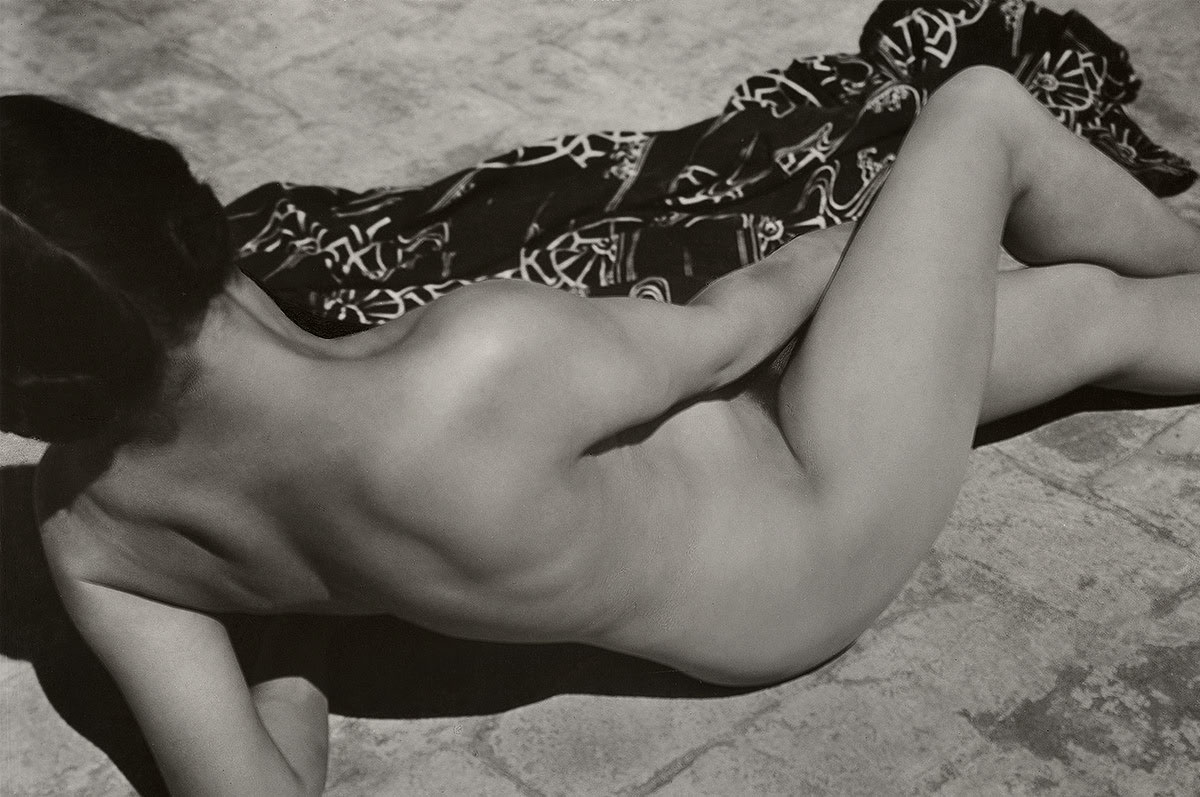
Edward Weston (American, 1886-1958)
Tina on the Azotea, with kimono
1924
Gelatin silver print
Sheet: 16.2 x 23.8cm (6 3/8 x 9 3/8 in.)
The Lane Collection
Museum of Fine Arts, Boston

Edward Weston (American, 1886-1958)
Tina On The Azotea
c. 1924
Palladium print
Sheet: 22.2 x 17.5cm (8 3/4 x 6 7/8 in.)
The Lane Collection
Museum of Fine Arts, Boston

Edward Weston (American, 1886-1958)
Tina Modotti
1924
Palladium print
Sheet: 22.7 x 17cm (8 15/16 x 6 11/16 in.)
The Lane Collection
Museum of Fine Arts, Boston
Pure your gentle name, pure your fragile life,
bees, shadows, fire, snow, silence and foam,
combined with steel and wire and
pollen to make up your firm
and delicate being.
Part of Modotti’s epitaph which can be found on her tombstone, composed by Pablo Neruda,
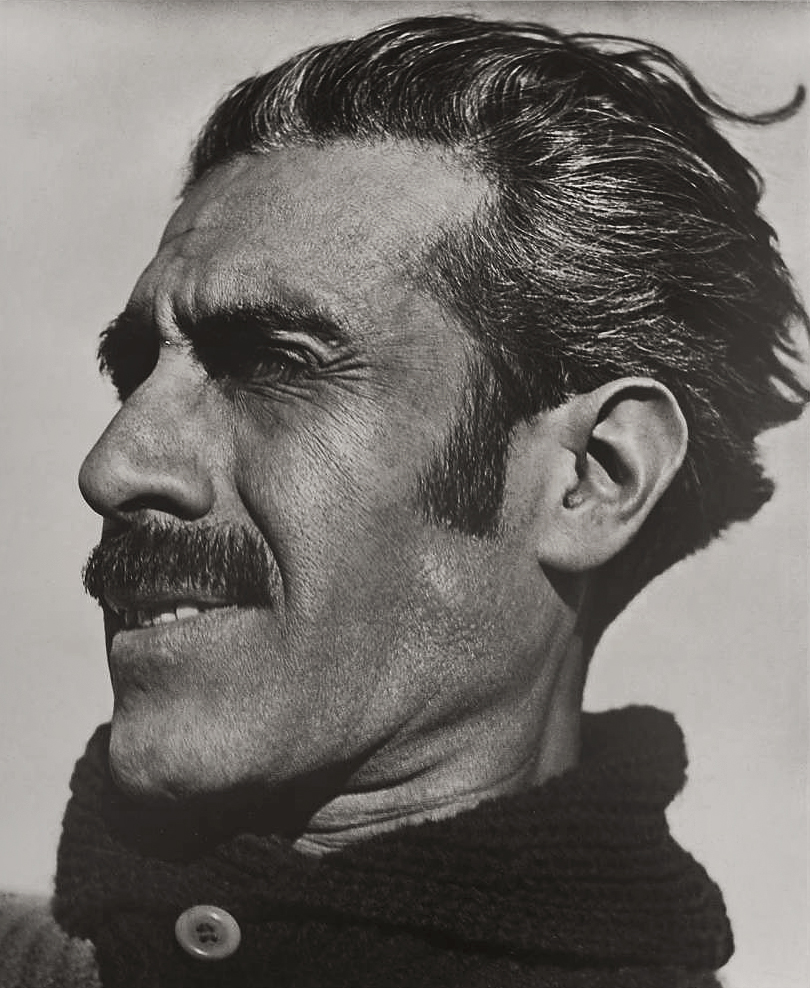
Edward Weston (American, 1886-1958)
Galván Shooting (Manuel Hernández Galván, Mexico)
1924
Gelatin silver print
22.5 x 18.7cm (8 7/8 x 7 3/8 in.)
Mary L. Smith Fund
Museum of Fine Arts, Boston

Edward Weston (American, 1886-1958)
Rosa Rolanda (de Covarrubias)
1926
Gelatin silver print
21.9 x 16.5 cm (8 5/8 x 6 1/2 in.)
Sophie M. Friedman Fund
Museum of Fine Arts, Boston

Edward Weston (American, 1886-1958)
Excusado (Toilet)
1925
Gelatin silver print
Sheet: 24.3 x 19.1cm (9 9/16 x 7 1/2 in.)
The Lane Collection
Museum of Fine Arts, Boston

Tina Modotti (American born Italy, died Mexico, 1896-1942)
Manos de trabajador, Mexico (Worker’s Hands, Mexico)
1927
Gelatin silver print
19.2 x 21.7cm (7 9/16 x 8 9/16 in.)
Sophie M. Friedman Fund
Museum of Fine Arts, Boston
Tina Modotti’s closely cropped picture of a worker’s dusty hands conveys the realities of hard work. In 1923, the Italian-born film actress accompanied her lover, photographer Edward Weston, to Mexico City, where Weston taught her to use a large-format camera. She worked as his studio assistant, quickly mastering the technique and making striking portraits, close-up images of flowers, and still lifes of her own. Modotti’s compassion for the indigenous culture and political struggles of the Mexican people led her to join the Communist Party in 1927 and to focus on socially concerned subjects, using her camera as a tool to document the proud faces and weathered hands of the peasant labourers, artisans, and revolutionaries of her adopted country.
Text from the Museum of Fine Arts, Boston website
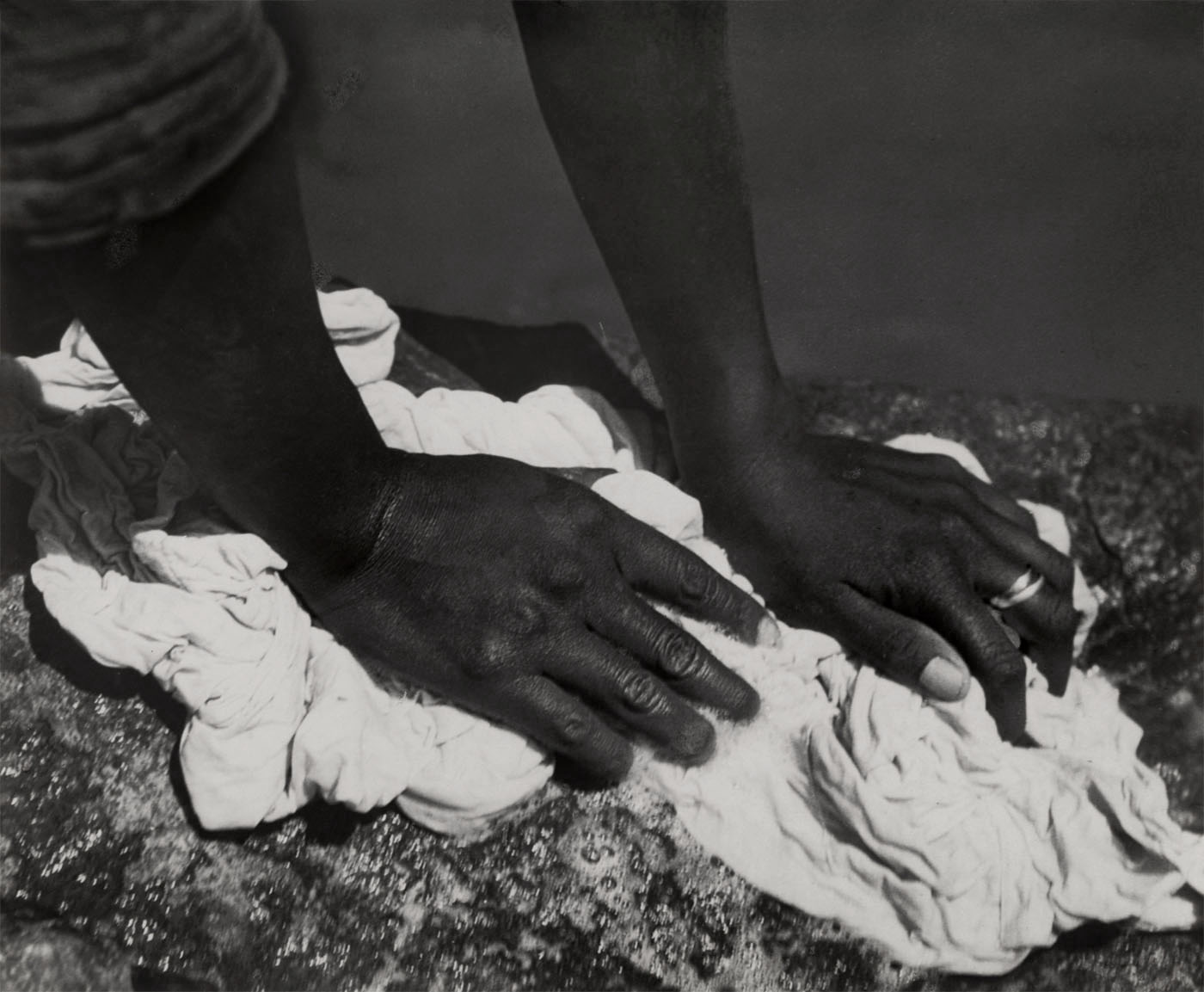
Tina Modotti (American born in Italy, died in Mexico, 1896-1942)
Hands Washing
1927
Gelatin silver print
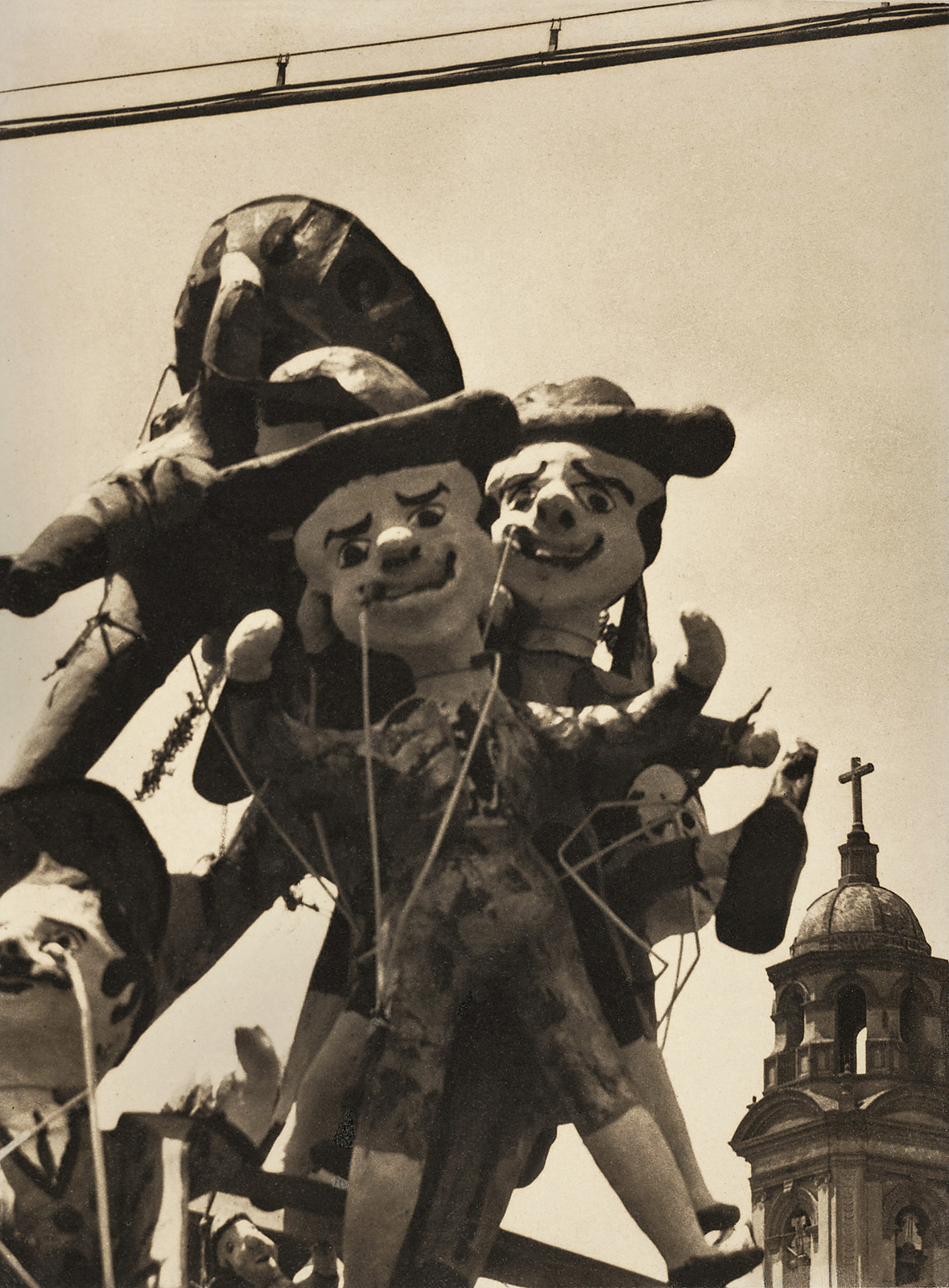
Tina Modotti (American born Italy, died Mexico, 1896-1942)
Effigies of Judas
1924
Gelatin silver print

Brett Weston (American, 1911-1993)
Tin Roofs, Mexico
1926
Gelatin silver print

Paul Strand (American, 1890-1976)
Landscape, near Saltillo, Mexico
1932
Platinum print
Image: 11.7 x 14.7cm (4 5/8 x 5 13/16 in.)
Sophie M. Friedman Fund
© Aperture Foundation, Inc, Paul Strand Archive

Paul Strand (American, 1890-1976)
Día de Fiesta, Mexico
1933
Platinum print
Image: 11.8 x 14.8cm (4 5/8 x 5 13/16 in.)
Sophie M. Friedman Fund
© Aperture Foundation, Inc, Paul Strand Archive

Manuel Alvarez Bravo (Mexican, 1902-2002)
El Soñador (The Dreamer)
1931
Gelatin silver print

Manuel Alvarez Bravo (Mexican, 1902-2002)
Las lavanderas sobreentendidas (The Washerwomen Implied) Draped Yucca Plants, Mexico
1932
Gelatin silver print
Sheet: 24.3 x 16.5cm (9 9/16 x 6 1/2 in.)
Gift of Mrs. E. Ross Anderson
© Colette Urbajtel
Museum of Fine Arts, Boston
Avenue of the Arts
465 Huntington Avenue
Avenue of the Arts
Boston, Massachusetts 02115-5523
Phone: 617-267-9300
Opening Hours:
Monday and Tuesday: 10.00am – 5.00pm
Wednesday-Friday: 10.00am – 10.00pm
Saturday and Sunday: 10.00am – 5.00pm






![Carleton Watkins (American, 1829-1916) '[Section Grizzly Giant, Mariposa Grove]' 1861](https://artblart.com/wp-content/uploads/2009/01/watkins-section-grizzly-giant.jpg "Carleton Watkins (American, 1829-1916) '[Section Grizzly Giant, Mariposa Grove]' 1861")


![Carleton Watkins (American, 1829-1916) '[Sugarloaf Islands at Fisherman's Bay, Farallon Islands]' About 1869](https://artblart.com/wp-content/uploads/2009/01/watkins-sugarloaf-islands-at-fishermans-bay-farallon-islands.jpg "Carleton Watkins (American, 1829-1916) '[Sugarloaf Islands at Fisherman's Bay, Farallon Islands]' About 1869")


![Carleton Watkins (American, 1829-1916) '[Thompson's Seedless Grapes]' 1880](https://artblart.com/wp-content/uploads/2009/01/watkins-thompsons-seedless-grapes.jpg "Carleton Watkins (American, 1829-1916) '[Thompson's Seedless Grapes]' 1880")




 Art Blart _ art and cultural memory archive
You must be logged in to post a comment.