Exhibition: ‘Chris Killip, Retrospective’ at The Photographers’ Gallery, London

Exhibition dates: 7th October, 2022 – 19th February, 2023


Chris Killip (British, 1946-2020) 'Family on a Sunday walk, Skinningrove' 1982 from the exhibition 'Chris Killip, Retrospective' at The Photographers' Gallery, London, October 2022 - Feb 2023


Chris Killip (British, 1946-2020)
Family on a Sunday walk, Skinningrove
1982
From Skinningrove 1981-1984
Gelatin silver print
© Chris Killip Photography Trust
All images courtesy Martin Parr Foundation


Forever present

So many words have been written about the gritty photographs of British photographer Chris Killip that sometimes it feels hard to say something new, something that reveals more about the work. Perhaps I am just adding to the noise around the artist? What can I say that is insightful / eloquent?

Please allow me to talk about how the work makes me feel … interspersed with some of the facts that we know.

I feel humble before this work. Somehow less important as human being than the directness of the photographers vision and the stories he tells through his photographs about salt of the earth people. Human beings existing, getting by, in hardship, in winter, gathering coal at the edge of the sea under the ramparts of a power station – a tough place but not an unhappy place.

“Killip says that Lynemouth, where the sea-coalers worked, was a “tough place, but it wasn’t an unhappy place … There was lots of energy and lots of fun,” he adds. “There was rivalry and enthusiasms and passions. People were not despairing. It was a very complex community and with a great sense of purpose, which was: get the coal and make money. And I’ve always been interested in places that had purpose.”1

Killip’s purpose was to capture human dignity amid industrial decline in England’s north-east, “the human element of economic deprivation” and the resilience of communities affected. He embedded himself in his community – “I stayed in Newcastle for fifteen years. I mean, to get the access to photograph the sea-coal workers took eight years. You do get embroiled in a place”2 – in order for people to accept his presence and be relaxed in front of his large format camera. It’s almost as though the photographer and his very big, very visible camera were part of the scenery, as though the photographer and his equipment became invisible, indivisible from the story.

“In Winter 1983, believing his photographs felt too ‘remote’, Killip acquired a caravan of his own, and moved it onto the beach. Despite storm and snow, he could now photograph at will, in accordance with he rhythms of life on the camp itself. Killip tempers the extreme conditions of work with intimacy, kinships, and the quiet dignities of family life – so much so, that ‘photography’ seems hardly involved.”3

So much so, that ‘photography’ seems hardly involved. Just take a second to think about that statement.

And so admiration is another feeling that swells in the breast, through an understanding of how difficult these poetic images would have been to take with a large format camera (slung around the photographer’s neck, fired using a pistol grip in his hand without Killip ever looking through the lens, the artist just going on when it felt right to take a photograph and the intensity of the moment). How much patience, time, knowledge of the history of art and photography, technique and visualisation it would take to imagine these images into existence: these intimate photographs of families, friends, dogs, motorcycles, cars, ships, cranes and idle time that showcase not only Killip’s empathy for subject matter but also for himself, for he is also part of the story.4

“For a photographer whose work was grounded in the urgent value of documenting “ordinary” peoples’ lives, these nuanced images – radiating a vast stillness of light and time, embedded with the granularity of lives lived – reveal Killip’s conviction that no life is ordinary: everyday lives are sublime.”5

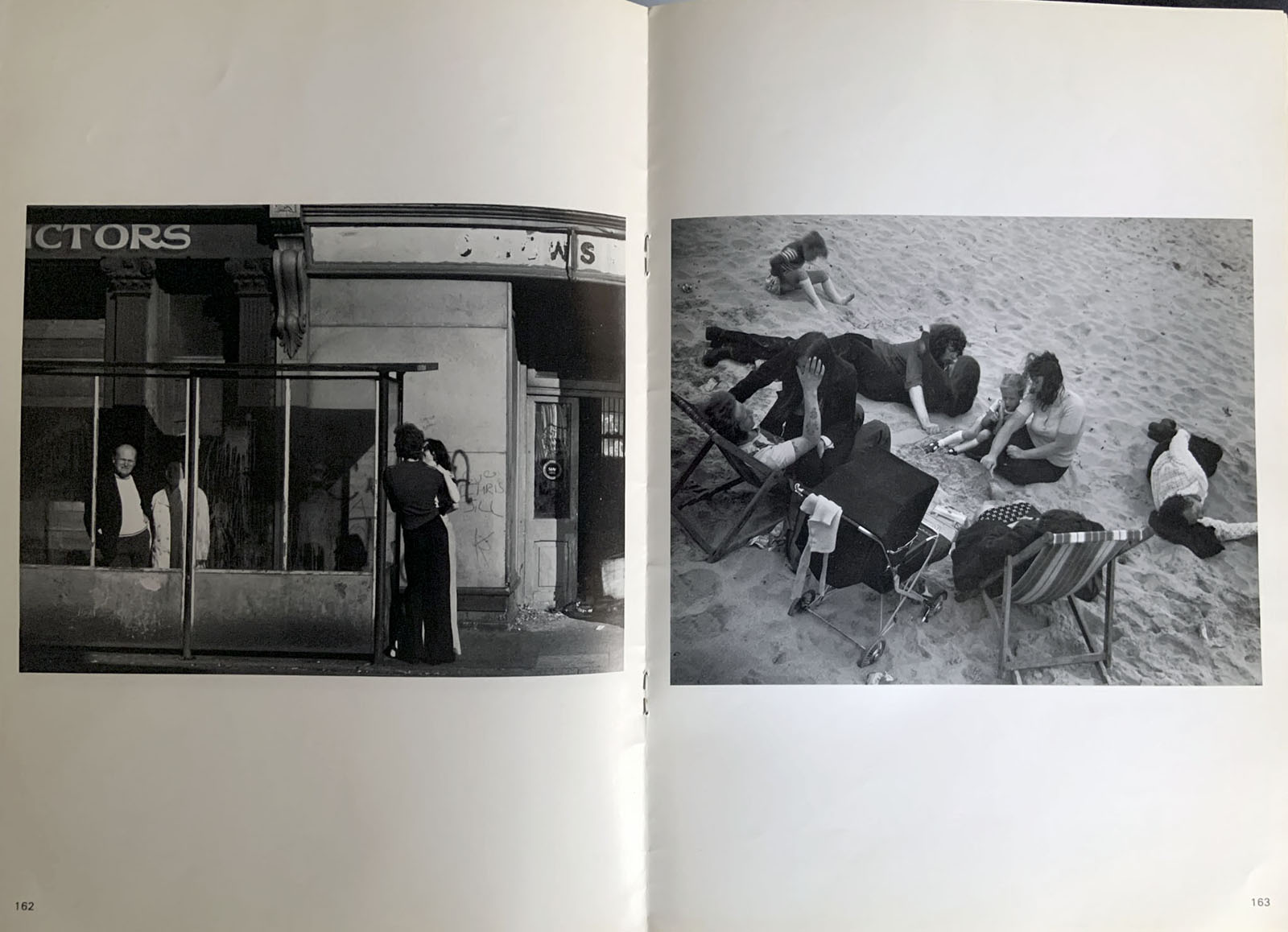
Killip’s visualisations always engage with the light of being and the place of existence with honesty and integrity. To see this, just look at the pairing and sequencing of images from Creative Camera in May 1977 at the end of the posting. A graveyard overlooked by a far away power station opposite two old men, the bald man’s hat hanging on the railing, overlooked by an “all out” demonstration poster; a man with platform shoes and flares, slumped on the ground bracing himself with a tattooed arm, surrounded by graffiti, supports a sleeping almost dead child in the crook of his other arm… whilst opposite a desolate scene of public housing, bleak pillars and fleeing mother and child overwhelmed by concrete madness; and a shrouded, dark, bent, woman in silhouette opposite the trappings of power in the civic robes of the mayors of Jarrow and South Shields. Every life is valuable.

Early influences in the Isle of Man images come from photographers such as August Sander, Paul Strand and Frank Sutcliffe. Later photographs have hints of the photo stories of Bill Brandt. Ultimately Killip forged his own authentic voice as an artist through his persistence in documenting “the human element of economic deprivation” and the resilience of communities affected. As he observed, “I wanted to record people’s lives because I valued them. I wanted them to be remembered. If you take a photograph of someone they are immortalised, they’re there forever. For me that was important, that you’re acknowledging people’s lives, and also contextualising people’s lives.”6

Killip’s focused (ie. in the zone, a mental state of focused concentration on the performance of an activity, in which one dissociates oneself from distracting or irrelevant aspects of one’s environment), complex and layered photographs are forever present. In a world where “there is nothing permanent except change” (Heraclitus), and where there are few traces left of the transitional worlds that Killip was documenting – “The sea-coal camp has gone, so have the coal mine and the power station. The area has been landscaped and now looks like an unused golf course. You would never know that the sea-coal camp had existed.”7 – Killip’s palpable realities make these human beings live and breathe again.

We care about them because Killip’s photographs enable within us a clarity of perception that means we are able to grasp what is there, the way it is. “If reality enters you without distortion, that is proper perception. The rest is distortion.” (Sadhguru)

Clear seeing and clear feeling. Where the forever is ever present.

Dr Marcus Bunyan


1/ Carolina A. Miranda. “Seven photos, seven stories: Chris Killip on capturing the declining industrial towns of England in the ’70s and ’80s,” on the Chicago Tribune website Jul 22, 2017 [Online] Cited 27/01/2023. No longer available online

2/ Anonymous. “Chris Killip,the closest way to make our memories seem real,” on the In de stilte website 17 April 2019 [Online] Cited 27/01/2023

3/ Wall text from the exhibition

4/ Here we could adapt what Pierre Boulez said about his work Pli selon pli (Fold by fold): “So, fold by fold, as the five movements develop, a portrait of Killip is revealed.” See Anonymous. “Pli selon pli,” on the Wikipedia website Nd Footnote 3 [Online] Cited 10/02/2023

5/ Anonymous. “Chris Killip: Skinningrove,” on the Amazon website Nd [Online] Cited 10/02/2023

6/ Chris Killip quoted in Diane Smyth. “Now Then: Chris Killip and the Making of In Flagrante,” on the British Journal of Photography website 6 June 2017 [Online] Cited 26/01/2023

7/ Chris Killip quoted in Olivier Laurent and Natalie Matutschovsky. “Chris Killip’s Celebrated Photobook In Flagrante Makes Its Return,” on the Time website January 27, 2016 [Online] Cited 26/01/2023


Many thankx to The Photographers’ Gallery for allowing me to publish the photographers in the posting. Please click on the photographs for a larger version of the image.


“The photography that I practice takes place in a specific time and place, depicting real moments in peoples lives. In many ways I think of myself as a historian, but not of the world. History is most often written from a distance, and rarely from the viewpoint of those who endured it.”

“I don’t want photography to transcend its subject matter, but for many art historians that is the limitation of photography … I don’t see it as a limitation; it puts me more in the camp of photography than art when I say I don’t acknowledge that as a limitation, I acknowledge it as an interesting fact and strength. Why would I want to transcend the subject when I am interested in the subject matter.”


Chris Killip


“The working class get it in the neck basically, they’re the bottom of the pile,” says Chris Killip. “I wanted to record people’s lives because I valued them. I wanted them to be remembered. If you take a photograph of someone they are immortalised, they’re there forever. For me that was important, that you’re acknowledging people’s lives, and also contextualising people’s lives.”


Chris Killip quoted in Diane Smyth. “Now Then: Chris Killip and the Making of In Flagrante,” on the British Journal of Photography website 6 June 2017 [Online] Cited 26/01/2023


‘I didn’t set out to be the photographer of the English de-Industrial Revolution. It happened all around me during the time I was photographing’ Chris Killip, 2019

Grounded in sustained immersion and participation in the communities he photographed, Chris Killip’s keenly observed work chronicled ordinary people’s lives in stark, yet sympathetic, detail. His photographs are recognized as some of the most important visual records of 1980s Britain; as editor of this book Ken Grant reflects, they tell the story of those who ‘had history “done to them”, who felt its malicious disregard and yet, like the photographer with whom they shared so much of their lives, refused to yield or look away’.”


Anonymous. “Chris Killip,” on the Magnum Photos website Nd [Online] Cited 26/01/2023


Chris Killip’s continued efforts to value and document the lives of those affected by the economic shifts in the North of England, throughout the 1970s and 80s, have made him one of the most influential figures of British Photography. This retrospective exhibition of more than 140 works, serves as the most comprehensive survey of the photographer’s work to date and includes previously unseen works.

His sustained immersion into the communities he photographed remains without parallel. Whilst marking a moment of deindustrialisation, Killip’s stark yet tender observation moves beyond the urgency to record such circumstances, to affirm the value of lives he grew close to – lives that, as he once described ‘had history done to them’, who felt history’s malicious disregard and yet, like the photographer himself, refused to yield or look away.

Against a background of shipbuilding and coal mining, he witnessed the togetherness of communities and the industries that sustained them and stayed long enough to see their loss.

Text from The Photographers’ Gallery website


Chris Killip, retrospective trailer – The Photographers’ Gallery (7 October 22 – 19 February 23)

This retrospective exhibition of more than 140 works, serves as the most comprehensive survey of the photographer’s work to date and includes previously unseen works. Chris Killip’s continued efforts to value and document the lives of those affected by the economic shifts in the North of England, throughout the 1970s and 80s, have made him one of the most influential figures of British Photography.


Chris Killip, retrospective – An Interview with Exhibition Curators Tracy Marshall Grant and Ken Grant

An interview with Chris Killip, retrospective exhibition curators Tracy Marshall-Grant and Ken Grant.


CAMERA Exhibitions: Chris Killip, retrospective. The Photographers Gallery

This retrospective exhibition of more than 140 works, serves as the most comprehensive survey of Chris Killip’s work to date and includes previously unseen works.


Chris Killip

In 1963, aged 17, Chris Fillip opened a copy of Paris Match magazine hoping for news of the Tour de France cycle race, and instead found Henri Cartier-Bresson’s photograph of a boy carrying two bottles of wine in Rue Mouffetard, Paris. Sensing the potential for photography to serve as an untethered means of expression, Killip’s life took a new turn. He didn’t own a camera, yet nevertheless told his father he would become a photographer. A summer working as a beach photographer earned him enough to leave for London in 1964, where he finally secured a position assisting the commercial photographer Adrian Flowers.

Killip’s immersion into the London cultural scene of te 1960s, share with painters and musicians, brought an appreciation for its buoyant gallery culture and an education that was both self-directed and formative. Quickly establishing himself as a sought-after freelance assistant, he led the production of major campaigns, until a 1969 trip to New York prompted an epiphany and a return to his native Isle of Man. There, he began the first of the long-term bodies of worksheet would define his career, each of which are characterised by their independence, tenderness and profound humanity.

Chris Killip’s legacy bears witness to an era of deindustrialisation, whilst serving as a portent to its longer consequences. From that first urgent return to the Isle of Man, into the early 1970s, when he first photographed in the North of England, until his death in October 2020, Fillip remained close to those he photographed ‘those’, he once said, ‘who’d had history done to them’.

Wall text from the exhibition


Isle of Man 1970-1973

In Autumn 1969, while in New York for a commercial photo shoot, a visit to Bill Brandt’s exhibition at the Museum of Modern Art would cause Killip’s life to change course again. It was the permanent collection that inspired him most: Paul Strand, August Sander, Walker Evans… each offered license to make photography for its own sake, free of commercial imperatives, and Fillip left the museum reeling. That same evening, he rang his father, telling him he would return to the Isle of Man to photograph.

By the late 1960s, a peasant culture that had long word the land and sea had been joined by many working financial enterprises on the island. Two instinct Isles of Man were emerging, one of which was now threatened. Between 1970 and 1972, Fillip photographed during the day and worked evenings in his father’s pub. Time away from the island had clarified the political shifts and external influences that were coming to bear on his family and their community, and he knew the urgency of his task. Though completed in 1973, Isle of Man: A book about the Manx, was published in 1980.

Wall text from the exhibition


Chris Killip (British, 1946-2020) 'Golden Meadow mill, Castletown' 1972 from the exhibition 'Chris Killip, Retrospective' at The Photographers' Gallery, London, October 2022 - Feb 2023


Chris Killip (British, 1946-2020)
Golden Meadow mill, Castletown
1972
From Isle of Man 1970-1973
Gelatin silver print
© Chris Killip Photography Trust
All images courtesy Martin Parr Foundation


Chris Killip (British, 1946-2020) 'Cashtal ny Ard, Maughold (neolithic burial site)' 1972 from the exhibition 'Chris Killip, Retrospective' at The Photographers' Gallery, London, October 2022 - Feb 2023


Chris Killip (British, 1946-2020)
Cashtal ny Ard, Maughold (neolithic burial site)
1972
From Isle of Man 1970-1973
Gelatin silver print
© Chris Killip Photography Trust
All images courtesy Martin Parr Foundation


Chris Killip (British, 1946-2020) 'Interior of St Luke's church, Baldwin' 1972


Chris Killip (British, 1946-2020)
Interior of St Luke’s church, Baldwin
1972
From Isle of Man 1970-1973
Gelatin silver print
© Chris Killip Photography Trust
All images courtesy Martin Parr Foundation


Chris Killip (British, 1946-2020) 'Mr 'Snooker' Corkhill and his son, Castletown' 1970-1973


Chris Killip (British, 1946-2020)
Mr ‘Snooker’ Corkhill and his son, Castletown
1970-1973
From Isle of Man 1970-1973
Gelatin silver print
© Chris Killip Photography Trust
All images courtesy Martin Parr Foundation


Chris Killip (British, 1946-2020) 'Mrs Pitts, Slieu Whuallian' 1970-1973


Chris Killip (British, 1946-2020)
Mrs Pitts, Slieu Whuallian
1970-1973
From Isle of Man 1970-1973
Gelatin silver print
© Chris Killip Photography Trust
All images courtesy Martin Parr Foundation


Chris Killip (British, 1946-2020) 'John Radcliffe, Black Hill, Ballasalla' 1970-1973


Chris Killip (British, 1946-2020)
John Radcliffe, Black Hill, Ballasalla
1970-1973
From Isle of Man 1970-1973
Gelatin silver print
© Chris Killip Photography Trust
All images courtesy Martin Parr Foundation


Mr Radcliffe remained a bachelor all his life. When he was given a print of this photograph he folded it in four and put it in his pocket, but told the photographer he was glad to have it as he had lost his cat in the meantime to a traffic accident.


Chris Killip (British, 1946-2020) 'Ms Redpath, Regaby' 1970-1973


Chris Killip (British, 1946-2020)
Ms Redpath, Regaby
1970-1973
From Isle of Man 1970-1973
Gelatin silver print
© Chris Killip Photography Trust
All images courtesy Martin Parr Foundation


Chris Killip (British, 1946-2020) 'Mrs Hyslop, Ballachrink Farm, the Braaid' 1970-1973


Chris Killip (British, 1946-2020)
Mrs Hyslop, Ballachrink Farm, the Braaid
1970-1973
From Isle of Man 1970-1973
Gelatin silver print
© Chris Killip Photography Trust
All images courtesy Martin Parr Foundation


Chris Killip (British, 1946-2020) 'Thrashing, Grenaby Farm, Isle of Man' 1970-1973


Chris Killip (British, 1946-2020)
Thrashing, Grenaby Farm, Isle of Man
1970-1973
From Isle of Man 1970-1973
Gelatin silver print
© Chris Killip Photography Trust
All images courtesy Martin Parr Foundation


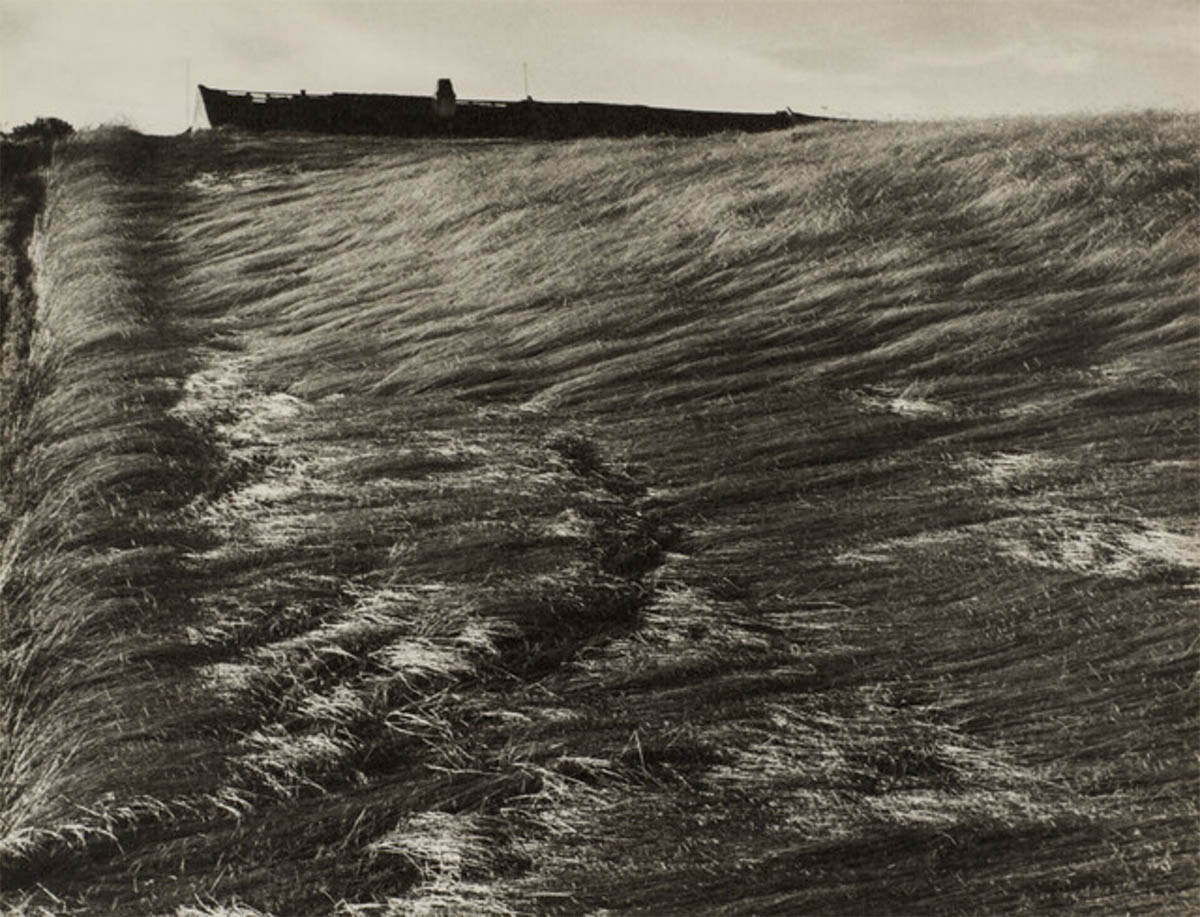
In Thrashing, Grenaby … I think I failed better, although I suspect that its atmosphere of ‘bucolic idyll’ would be a different sort of problem. This photograph more accurately describes threshing work, and shows something from the past: agricultural labour as communal effort.


Chris Killip (British, 1946-2020) 'TT Races Supporter, Isle of Man' 1971


Chris Killip (British, 1946-2020)
TT Races Supporter, Isle of Man
1971
From TT Races 1970-1972
Gelatin silver print
© Chris Killip Photography Trust
All images courtesy Martin Parr Foundation


“Making a portrait fills me with a certain amount of dread. It’s the impertinence of what you are about to do in reducing a human being into one fixed moment. You think about the subject’s complexity (knowing them makes this worse) and the predetermined limitations that surround any attempt at portraiture. Then you convince yourself that you have to try, and you go ahead. This brief moment between you and the person in front of you is based on their trust in your intent.”

~ Chris Killip


Early work 1974-1977

In 1972, a commission by the Arts Council of Great Britain led Fillip to photograph Bury St Edmunds and Huddersfield. Drawn to the Yorkshire city’s mills, tenement housing and workplaces, he photographed widely in the region, making portraits in the street, and settling on an approach that would continue in subsequent decades.

After a move to Newcastle in 1975 to undertake a British Gas / Northern Arts Fellowship, Fillip used his non-contracted time to photograph independently. From the edges of the shipyards near his new home, to the coalmining towns of Castleford and Workington, he gathered an understanding of the industrial regions of the North and built an accord with the communities bound by them. An early search for a Newcastle darkroom led to Amber Films, an association that would eventually see him taking on the directorship of Amber’s Side Gallery between 1977-1979.

In May 1977, the editors of Creative Camera magazine [see the end of this posting] gave over the entire issue to a portfolio of Killip’s Northeast photographs – a rare move that acknowledged the work’s authority, whilst suggesting something of the potential future sequencing of work drawn from across the region.

Wall text from the exhibition
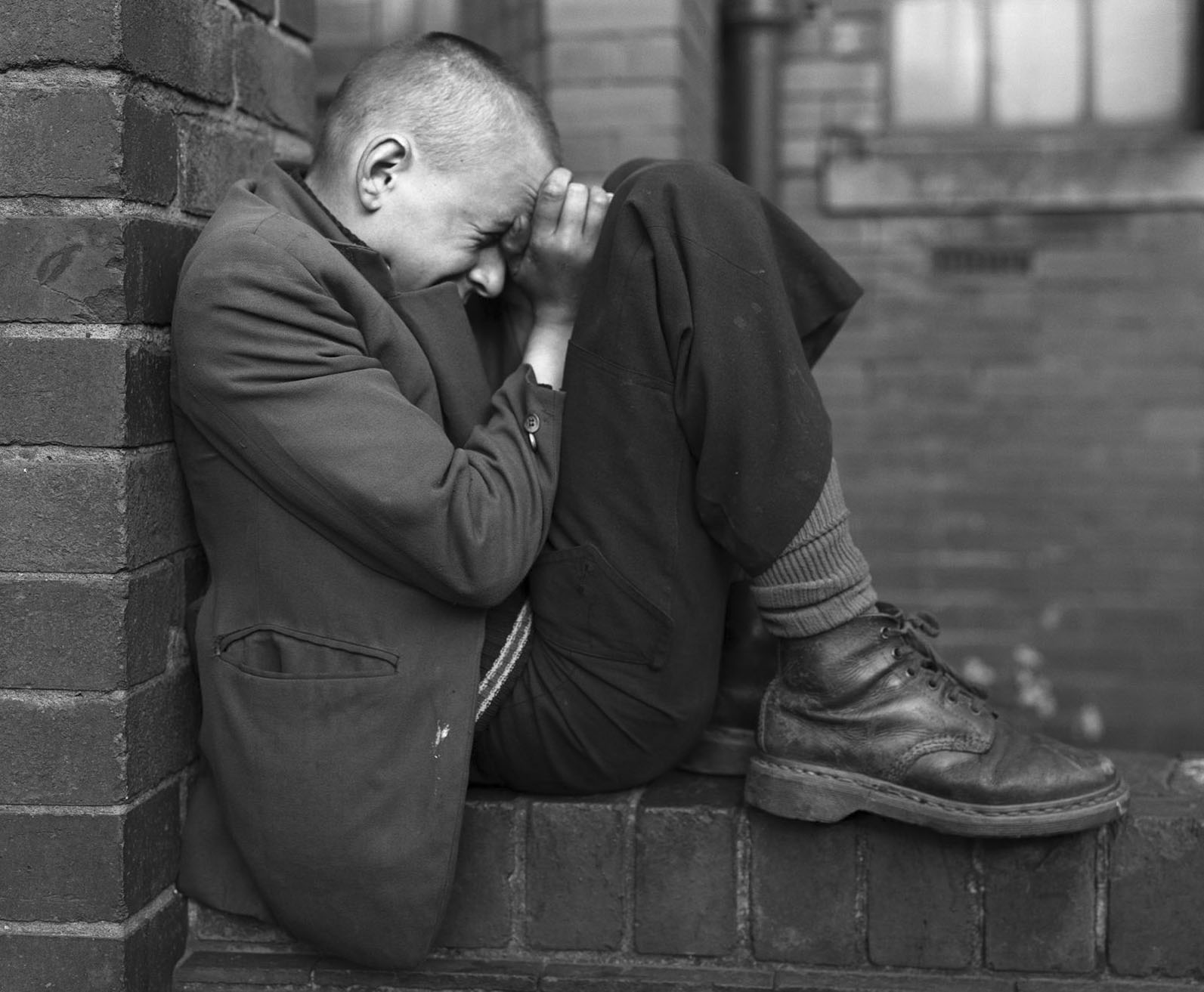
 

Chris Killip (British, 1946-2020) 'Youth on wall, Jarrow, Tyneside' 1975


Chris Killip (British, 1946-2020)
Youth on wall, Jarrow, Tyneside
1975
Gelatin silver print
© Chris Killip Photography Trust
All images courtesy Martin Parr Foundation


The boy with his Punk hair and boots seems to be a study in bravado and insecurity, recorded with magnifying glass clarity by a 5 × 4 camera. Chris later told me that he had captured this unlikely picture by putting a false lens on the side of his view camera (à la Paul Strand) and wearing a hazard jacket, like a council surveyor.

Mark Haworth-Booth. “Chris Killip,” on the V&A Blog website October 30, 2020 [Online] Cited 26/01/2023


Chris Killip (British, 1946-2020) 'Whippet Fancier, Huddersfield' 1973


Chris Killip (British, 1946-2020)
Whippet Fancier, Huddersfield, Yorkshire
1973
Gelatin silver print
© Chris Killip Photography Trust
All images courtesy Martin Parr Foundation


Chris Killip (British, 1946-2020) 'Two girls, Grangetown, Middlesbrough, Teesside' 1975


Chris Killip (British, 1946-2020)
Two girls, Grangetown, Middlesbrough, Teesside
1975
Gelatin silver print
© Chris Killip Photography Trust
All images courtesy Martin Parr Foundation


The Last Ships 1975-1977


Chris Killip (British, 1946-2020) 'Tyne Pride at the end of the street, Wallsend' 1976


Chris Killip (British, 1946-2020)
Tyne Pride at the end of the street, Wallsend
1976
From The Last Ships 1975-1977
Gelatin silver print
© Chris Killip Photography Trust
All images courtesy Martin Parr Foundation


Chris Killip (British, 1946-2020) 'Girls Playing in the street, Wallsend, Tyneside' 1976


Chris Killip (British, 1946-2020)
Girls Playing in the street, Wallsend, Tyneside
[Looking East on Camp Road, Wallsend]

1976
From The Last Ships 1975-1977
Gelatin silver print
© Chris Killip Photography Trust
All images courtesy Martin Parr Foundation


“When I was making my shipbuilding photographs I didn’t show them to anyone, as shipbuilding on Tyneside had become a personal obsession. I made them with a sense of urgency as I thought it wasn’t going to last. I didn’t set out to be the photographer of the English de-industrial revolution, it happened all around me during the time I was photographing.”

~ Chris Killip


This photograph belongs to a bigger series by Chris Killip called The Last Ships, which traces the decline of shipbuilding on the Tyne. “I made them with a sense of urgency, as I thought it wasn’t going to last,” Killip said later. “I didn’t set out to be the photographer of the English de-Industrial Revolution. It happened all around me during the time I was photographing.”

Killip was intrigued by the contrast between the epic scale of the ships that loomed over the streets of Wallsend and South Shields and the working-class communities that lived in their shadow. Here, children play on a quiet terraced street beneath the towering outline of the Tyne Pride, the biggest ship ever built on the Tyne and, as it turned out, one of the last. The red-brick houses, the stone wall, the fog lend the scene an almost Victorian feel. Within a few years, though, that way of life came to an end with a brutal finality. Just two years after this photograph was taken, Killip made another in the same place: the street was demolished, the community scattered. …

Many of Killip’s shipbuilding photographs, though, remained unseen until recently. Now, alongside three other series he made in the north-east – The Station (1985), Skinningrove (1981-84) and Portraits (1970-89) – The Last Ships (1975-1977) has been published as a large format zine. The scale suits the subject matter perfectly. The images, which move from the epic to the intimate, evoke another England in which the terms “working class” and “community” were still synonymous. It seems an eternity ago.

Sean O’Hagan. “The big picture: Chris Killip captures the last days of shipbuilding,” on The Guardian website Sun 6 Jan 2019 [Online] Cited 26/01/2023


“The ship was so massive you could see it from miles around dominating the area, not to mention the cranes and the noises from the yard which could be heard clattering through the night. When I think of those yards, which have just been filled in, flattened and abandoned, I think it’s a crying shame. We’re an island nation that cannot build a ship. If I had to pick a symbol to represent what the shipyards meant to me, it was the comradeship in the yards. We were a close-knit community of people living and working together. Everyone relied on each other and are all linked. When I look at the remains of what’s left I feel nothing. The community’s gone. There’s nothing left. It hasn’t changed for the best. You’ve saved money and destroyed this community.”

Frank Duke quoted in Hunter Charlton. Landscape and Change: Shipbuilding and Identity on the Tyne. University of Bristol, 2015, p. 4.


Chris Killip (British, 1946-2020) 'Wallsend in the snow' 1976


Chris Killip (British, 1946-2020)
Wallsend in the snow
1976
From The Last Ships 1975-1977
Gelatin silver print
© Chris Killip Photography Trust
All images courtesy Martin Parr Foundation
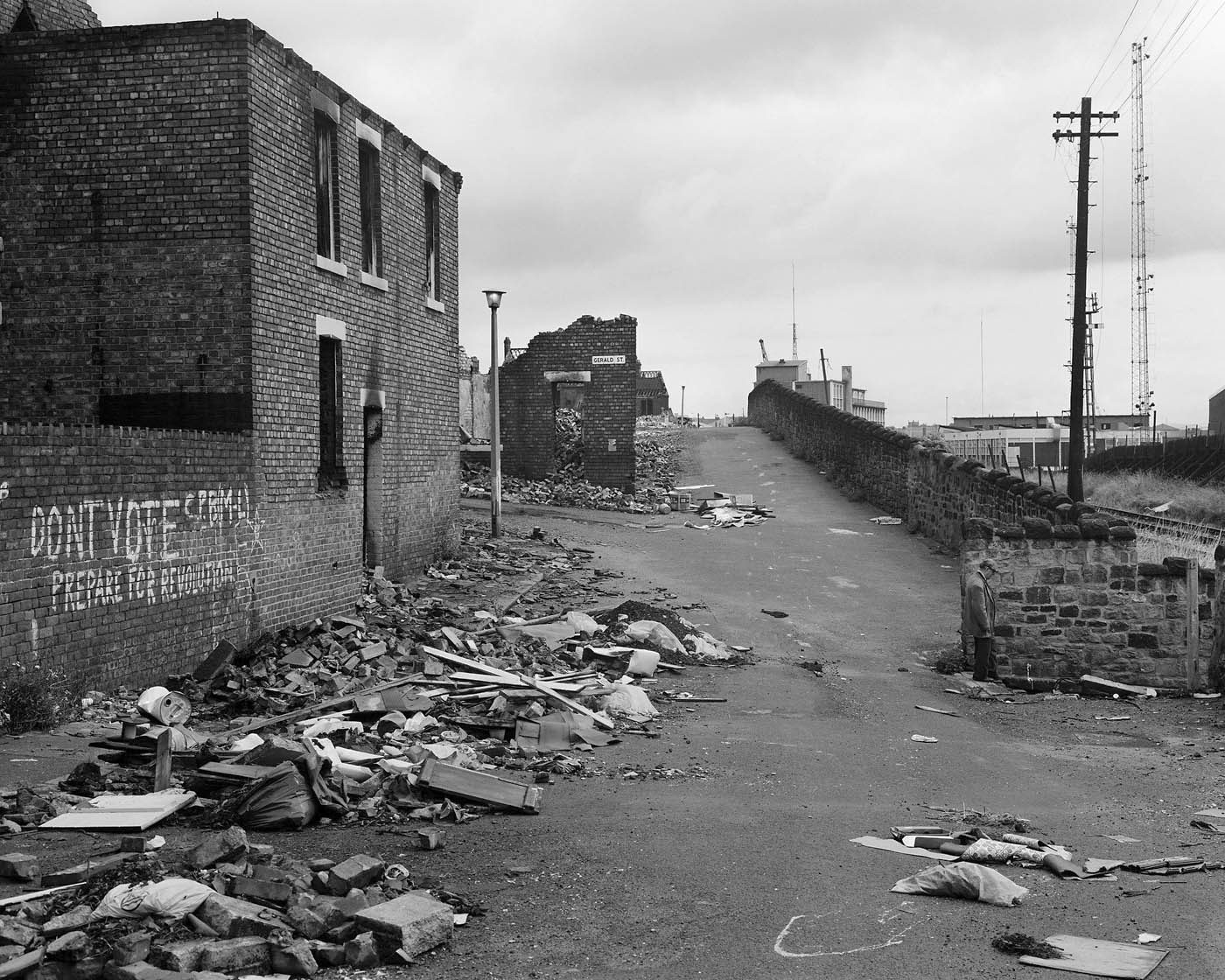
 

Chris Killip (British, 1946-2020) 'Demolished housing, Wallsend' August 1977


Chris Killip (British, 1946-2020)
Demolished housing, Wallsend
August 1977
From The Last Ships 1975-1977
Gelatin silver print
© Chris Killip Photography Trust
All images courtesy Martin Parr Foundation


Chris Killip (British, 1946-2020) 'The Ship Inn' 1975


Chris Killip (British, 1946-2020)
The Ship Inn
1975
From The Last Ships 1975-1977
Gelatin silver print
© Chris Killip Photography Trust
All images courtesy Martin Parr Foundation


Charles Sheeler (American, 1883-1965) 'Ford Plant - Criss-Crossed Conveyors' 1927


Charles Sheeler (American, 1883-1965)
Ford Plant – CrissCrossed Conveyors
1927
Gelatin silver print
© The Lane Collection
Courtesy, Museum of Fine Arts, Boston


Chris Killip (British, 1946-2020) 'Untitled? [Shipbuilding on Tyneside]' 1975-1977


Chris Killip (British, 1946-2020)
Untitled? [Shipbuilding on Tyneside]
1975-1977
From The Last Ships 1975-1977
Gelatin silver print
© Chris Killip Photography Trust
All images courtesy Martin Parr Foundation


Sealcoal 1981-1984

Killip first attempted to photograph the beach at Lynemouth, Northumberland, in 1976, only to be chased away by men on horse-drawn carts wary of any stranger. He’d hoped to photograph as winter tides returned the waste coal expelled into the sea from a nearby mine. After attempts over several years were met with violent rejection, Killip’s eventual acceptance came in 1982, when visiting a pub the seculars frequented to make a final plea. A man recognised him as the Manx photographer he’d give tea and shelter to during a rainstorm at Appleby Horse Fair, and confirmed Killip’s intentions were good.

In Winter 1983, believing his photographs felt too ‘remote’, Killip acquired a caravan of his own, and moved it onto the beach. Despite storm and snow, he could now photograph at will, in accordance with he rhythms of life on the camp itself. Killip tempers the extreme conditions of work with intimacy, kinships, and the quiet dignities of family life – so much so, that ‘photography’ seems hardly involved. Perhaps that’s what Killip liked so much when, years later, he called the words of seacoaler Brian Ladler, ‘…the commandment: love one another. It’s not a bad idea, is it Chris?’

Wall text from the exhibition


Chris Killip (British, 1946-2020) 'Gordon in the water, Seacoal Beach, Lynemouth' 1983


Chris Killip (British, 1946-2020)
Gordon in the water, Seacoal Beach, Lynemouth
1983
From Seacoal 1982-1984
Gelatin silver print
© Chris Killip Photography Trust
All images courtesy Martin Parr Foundation


In 1975 Chris Killip received a fellowship from the Northern Gas Board to photograph the laying of a natural gas pipeline near Newcastle, which for him became the start of a deep engagement with that area of the North East. He first attempted to photograph on Lynemouth Beach in 1976 but was quickly given the boot by those living and working there – again he tried, and in the end it took nearly six years to gain the trust of the community.

Between 1982 to 1984, Killip lived on and off in a caravan at the seacoal camp in Lynemouth – becoming an embedded part of the community, Killip observed the daily struggles to work and survive in this inhospitable environment. As well as the scenes of hard working conditions, images of tenderness in the relationships between the residents show kindness and camaraderie in times of uncertainty as the region underwent rapid de-industrialisation.

Anonymous. “Seacoal 1982-1984,” on the Martin Parr Foundation website Nd


Killip states that his impression of the beach was “the Middle Ages and twentieth century entwined” (Killip, 2022, p. 80).


Chris Killip (British, 1946-2020) 'Unidentified man and Brian Laidler, Seacoal Beach, Lynemouth' January 1984


Chris Killip (British, 1946-2020)
Unidentified man and Brian Laidler, Seacoal Beach, Lynemouth
[Blondie and Brian in the water, Seacoal Beach, Lynemouth, Northumberland]

January 1984
From Seacoal 1982-1984
Gelatin silver print
© Chris Killip Photography Trust
All images courtesy Martin Parr Foundation


Chris Killip (British, 1946-2020) 'Helen and her Hula-hoop, Seacoal Camp, Lynemouth, Northumbria' 1984


Chris Killip (British, 1946-2020)
Helen and her Hula-hoop, Seacoal Camp, Lynemouth, Northumbria
1984
From Seacoal 1982-1984
Gelatin silver print
© Chris Killip Photography Trust
All images courtesy Martin Parr Foundation


Chris Killip (British, 1946-2020) 'Alice and the little dog, Lynemouth, Northumberland' 1983


Chris Killip (British, 1946-2020)
Alice and the little dog, Lynemouth, Northumberland
1983
From Seacoal 1982-1984
Gelatin silver print
© Chris Killip Photography Trust
All images courtesy Martin Parr Foundation


Chris Killip (British, 1946-2020) 'Cookie in the snow, Seacoal Camp, Lynemouth, Northumbria' 1984


Chris Killip (British, 1946-2020)
Cookie in the snow, Seacoal Camp, Lynemouth, Northumbria
1984
From Seacoal 1982-1984
Gelatin silver print
© Chris Killip Photography Trust
All images courtesy Martin Parr Foundation


‘I remember speaking with Josef Koudelka in 1975 about why I should stay in Newcastle. Josef said that you could bring in six Magnum photographers, and they could stay and photograph for six weeks – and he felt that inevitably their photographs would have a sort of similarity. As good as they were, their photographs wouldn’t get beyond a certain point. But if you stayed for two years, your pictures would be different, and if you stayed for three years they would be different again. You could get under the skin of a place and do something different, because you were then photographing from the inside. I understood what he was talking about. I stayed in Newcastle for fifteen years. I mean, to get the access to photograph the sea-coal workers took eight years. You do get embroiled in a place.’

Anonymous. “Chris Killip,the closest way to make our memories seem real,” on the In de stilte website 17 April 2019 [Online] Cited 27/01/2023


Killip’s photos have an austere beauty to them – such as the image of a man nicknamed “Cookie” purposefully walking through a snowstorm. But the stories behind them can be quite humorous.

“Cookie was one of the people I was very friendly with,” Killip says. “It was a Sunday morning and his horse, Creamy, had just won a trotting race against guys from town. He’d won a £1,000. The race takes place very early so the police aren’t around. Then we go to the pub – at half past 7 in the morning – and the drinks are on Cookie because he has all of this money.

“Walking back to camp, I knew Cookie had to come back that way,” he adds. “I put the camera on the tripod and I’m swaying quite a bit because I’m drunk. But I knew exactly when I was going to take the picture of him. He didn’t lift his head. I took that one picture, just one frame.” …

Killip says that Lynemouth, where the sea-coalers worked, was a “tough place, but it wasn’t an unhappy place.”

“There was lots of energy and lots of fun,” he adds. “There was rivalry and enthusiasms and passions. People were not despairing. It was a very complex community and with a great sense of purpose, which was: get the coal and make money. And I’ve always been interested in places that had purpose.”

Carolina A. Miranda. “Seven photos, seven stories: Chris Killip on capturing the declining industrial towns of England in the ’70s and ’80s,” on the Chicago Tribune website Jul 22, 2017 [Online] Cited 27/01/2023. No longer available online


Chris Killip: I’m still in touch with the sea-coalers that I was big friends with and I’m up to date with how they are doing now that they have moved away from the area. The sea-coal camp has gone, so have the coal mine and the power station. The area has been landscaped and now looks like an unused golf course. You would never know that the sea-coal camp had existed.

I went back to Skinningrove three years ago and that was a big shock as it was so quiet as only two boats do any fishing from there. Everyone else has stopped as they couldn’t keep up with European Economic Community and Health and Safety regulations. It was as if all the life had gone out of the place.

Chris Killip quoted in Olivier Laurent and Natalie Matutschovsky. “Chris Killip’s Celebrated Photobook In Flagrante Makes Its Return,” on the Time website January 27, 2016 [Online] Cited 26/01/2023


Chris Killip (British, 1946-2020) ''Boo' on a horse, Seacoal Camp, Lynemouth, Northumbria' 1984


Chris Killip (British, 1946-2020)
‘Boo’ on a horse, Seacoal Camp, Lynemouth, Northumbria
1984
From Seacoal 1982-1984
Gelatin silver print
© Chris Killip Photography Trust
All images courtesy Martin Parr Foundation


The Photographers’ Gallery this autumn presents a full-career retrospective of work by one of the UK’s most important and influential post-war documentary photographers, Chris Killip (1946-2020).

Taking place over two upper floors of the Gallery, the retrospective exhibition of more than 150 works serves as the most comprehensive survey of the photographer’s work to date and includes previously unseen ephemera and colour works.

Grounded in his sustained immersion into the communities he photographed, Chris Killip’s photographs of those affected by economic shifts throughout the 1970s and 80s in the North of England remain without parallel. Whilst marking a moment of deindustrialisation, Killip’s stark yet tender observation moves beyond the urgency to record such circumstances, to affirm the value of lives he grew close to – lives that, as he once described ‘had history done to them’, who felt history’s malicious disregard and yet, like the photographer himself, refused to yield or look away.

From early work made in his native Isle of Man, through overlapping series’ made over two decades in the North of England, Killip’s approach to portraying communities is explored. Against a background of shipbuilding and coal mining, he witnessed the togetherness of communities and the industries that sustained them and stayed long enough to see their loss. At Lynemouth, for his series ‘Seacoal’, he photographed men on horse-driven carts reclaiming coal which had been discarded into the sea by a nearby mine, and at Skinningrove he documented a group of young men, their friendships and labours as they waited for the tide to turn.

The exhibition, curated by Tracy Marshall-Grant and Ken Grant, also draws upon less familiar work by a photographer whose life and career has proved so influential in shaping British photography. Killip’s dedicated recording of the miners’ strike of 1984-1985 and his engagement with shipbuilding a decade earlier, remain lesser known yet pivotal works that betrayed not only a changing economy, but the concerns of a photographer moved to witness them. In dialogue with the prints made by the photographer towards the end of his life, the exhibition also considers Killip’s photo books, drawing on early maquettes to map the development of books acknowledged as landmarks in the genre and offer new perspectives on the photographer’s storytelling.

The exhibition is accompanied by a major monograph co-published with Thames and Hudson, edited by Ken Grant and Tracy Marshall-Grant and designed by Niall Sweeney. The book includes a foreword by Brett Rogers, in depth essays by Ken Grant and texts by Amanda Maddox, Greg Halpern and Lynsey Hanley. The exhibition will tour to the BALTIC Centre of Contemporary Art in 2023. Exhibition supported by the Isle of Man Arts Council.

Chris Killip

Born in Douglas, Isle of Man in 1946, Chris Killip left school at age sixteen and joined the only four star hotel on the Isle of Man as a trainee hotel manager. In June 1964 he decided to pursue photography full time. He worked as a freelance assistant for various photographers in London from 1966-1969. In 1969, after seeing his very first exhibition of photography at the Museum of Modern Art in New York, he decided to return to photograph in the Isle of Man. In 1972 he received a commission from The Arts Council of Great Britain to photograph Huddersfield and Bury St Edmunds for the exhibition Two Views – Two Cities. In 1975, he moved to live in Newcastle-upon-Tyne on a two year fellowship as the Northern Arts Photography Fellow. He was a founding member, exhibition curator and advisor of Side Gallery, Newcastle-upon-Tyne, as well as its director, from 1977-1979. In 1989 he received the Henri Cartier Bresson Award and in 1991 was invited to be a Visiting Lecturer at the Department of Visual and Environmental Studies, Harvard University. In 1994 he was made a tenured professor and was department chair from 1994-1998. He retired from Harvard in December 2017 and died in 2020. His work is featured in the permanent collections of major institutions such as the Museum of Modern Art, New York; George Eastman House; Fine Arts Museum of San Francisco; Museum Folkwang, Essen; the Stedelijk Museum, Amsterdam; National Gallery of Australia, Canberra; and the Victoria and Albert Museum, London.

Press release from The Photographers’ Gallery


The Time of In Flagrante 1976-1987

In 1985, David Godwin, then Editor at Secker & Warburg, had written to Fillip to suggest that if he wished to make another book, he would like to publish it. Although Secker had no track record of working with photography, Fillip liked the prospect of reaching a wider audience and a collaboration began with editor Mark Holborn and designer Peter Dyer that led to the 1988 book In Flagrante.

In Flagrante‘s achievements are manifold. Whilst Fillip threw himself into long term series, like the 1984-85 Miners’ Strike, the uncoupling of photographs from their original contexts freed them from more conventional narratives. Mindful of the Yeats poem He wishes for the cloths of heaven, which head chosen to open the book, Killip reads softly, to achieve work that John Berger recognised as being ‘branded, like a hundred cattle, with the tenderness of those eight lines.’

Wall text from the exhibition


He wishes for the cloths of heaven

W.B. Yeats 1899

Had I the heavens’ embroidered cloths,
Enwrought with golden and silver light,
The blue and the dim and the dark cloths
Of night and light and the half light,
I would spread the cloths under your feet:
But I, being poor, have only my dreams;
I have spread my dreams under your feet;
Tread softly because you tread on my dreams.


Replaced in In Flagrante Two (2016) with:

“The photographs date from 1973 to 1985 when the Prime Ministers were: Edward Heath, Conservative (1970-1974), Harold Wilson, Labour (1974-1976), James Callaghan, Labour (1976-1979), Margaret Thatcher, Conservative (1979-1990).”

In Flagrante means ‘caught in the act,’ and that’s what my pictures are. You can see me in the shadow, but I’m trying to undermine your confidence in what you’re seeing, to remind people that photographs are a construction, a fabrication. They were made by somebody. They are not to be trusted. It’s as simple as that.” ~ Chris Killip


Chris Killip: My camera’s very visible. It’s big. And there’s something good about this, where you have to deal with the fact that I am a photographer and I am here. Look at this great big contraption.

Laura Hubber: When you take a picture of someone, what are you hoping to capture or convey?

CK: I don’t know. You want the picture to be good. You want the picture to represent the complexity that you know that this person has.

My pictures are a mixture of people I know well and intimately and people I don’t know.

It’s more difficult when you have strong feelings about the person. Sometimes you’re more successful when you know less about someone, because I think I see them more clearly. I don’t see them as my friend, or the people that I know, or a person that I maybe even don’t like that much or something. They have no baggage. I see them just as a visual thing with no preconditions.

Laura Hubber. “Caught in the Act: A Conversation with Photographer Chris Killip,” on the Getty website July 7, 2017 [Online] Cited 26/01/2023


“You’re going to get a picture by being there. It’s never easy. Sometimes you’re good and they’re good… I’d never seen them before and I never saw them again.” ~ Chris Killip


Chris Killip (British, 1946-2020) 'Miners' Strike, Easington, Co Durham' 1984


Chris Killip (British, 1946-2020)
Miners’ Strike, Easington, Co Durham
1984
From Miners’ Strike 1984-1985
Gelatin silver print
© Chris Killip Photography Trust
All images courtesy Martin Parr Foundation


Skinningrove 1982-1984

Killip photographed Skinningrove, North Yorkshire, between 1982 and 1984, but first noted it during an early drive up the east coast of England in 1974. He’d been impressed by the steelworks, which had sat above the village since the 1870s to service ironstone excavation, and noticed that, by any measure, Skinningrove was ‘a difficult place to see’.

Villagers dovetailed shifts on the hill with fishing, forcibly discouraging those inclined to trespass in their waters. Killip’s presence in the village was made easier by a young local called Leso, who calmed anyone nervous of the camera. Leso’s life was tragically cut short after the fishing boat in which he and some friends had been at sea overturned. Leso and his friend David drowned, while Bever was washed ashore. After David’s mother asked for photographs of her lost son, Killip made her an album of three dozen photographs showing the boy between the ages of thirteen and seventeen. He would go on to do the same for Leso’s father, later reflecting that if this gesture, between precious life and loss, was the only reason to have even been in the village at all, perhaps that was reason enough.

Wall text from the exhibition


Killip’s working practice is distinctive for the way he immerses himself into the communities he photographs and builds relationships with his subjects over a long period of time. This close level of involvement shows itself through images that are sensitive to the local environment and its inhabitants, as seen in the Skinningrove series.

Text from the Tate website


Chris Killip (British, 1946-2020) 'Boat repair and seven men, Skinningrove' 1982


Chris Killip (British, 1946-2020)
Boat repair and seven men, Skinningrove
1982
From Skinningrove 1981-1984
Gelatin silver print
© Chris Killip Photography Trust
All images courtesy Martin Parr Foundation


Chris Killip (British, 1946-2020) 'Leso, Blackie, Bever, ?, David, on a bench, Whippet standing, Skinningrove (Leso and David were to drown of Skinningrove on July 29, 1986)' 1982-1983


Chris Killip (British, 1946-2020)
Leso, Blackie, Bever, ?, David, on a bench, Whippet standing, Skinningrove (Leso and David were to drown of Skinningrove on July 29, 1986)
1982-1983
From Skinningrove 1981-1984
Gelatin silver print
© Chris Killip Photography Trust
All images courtesy Martin Parr Foundation
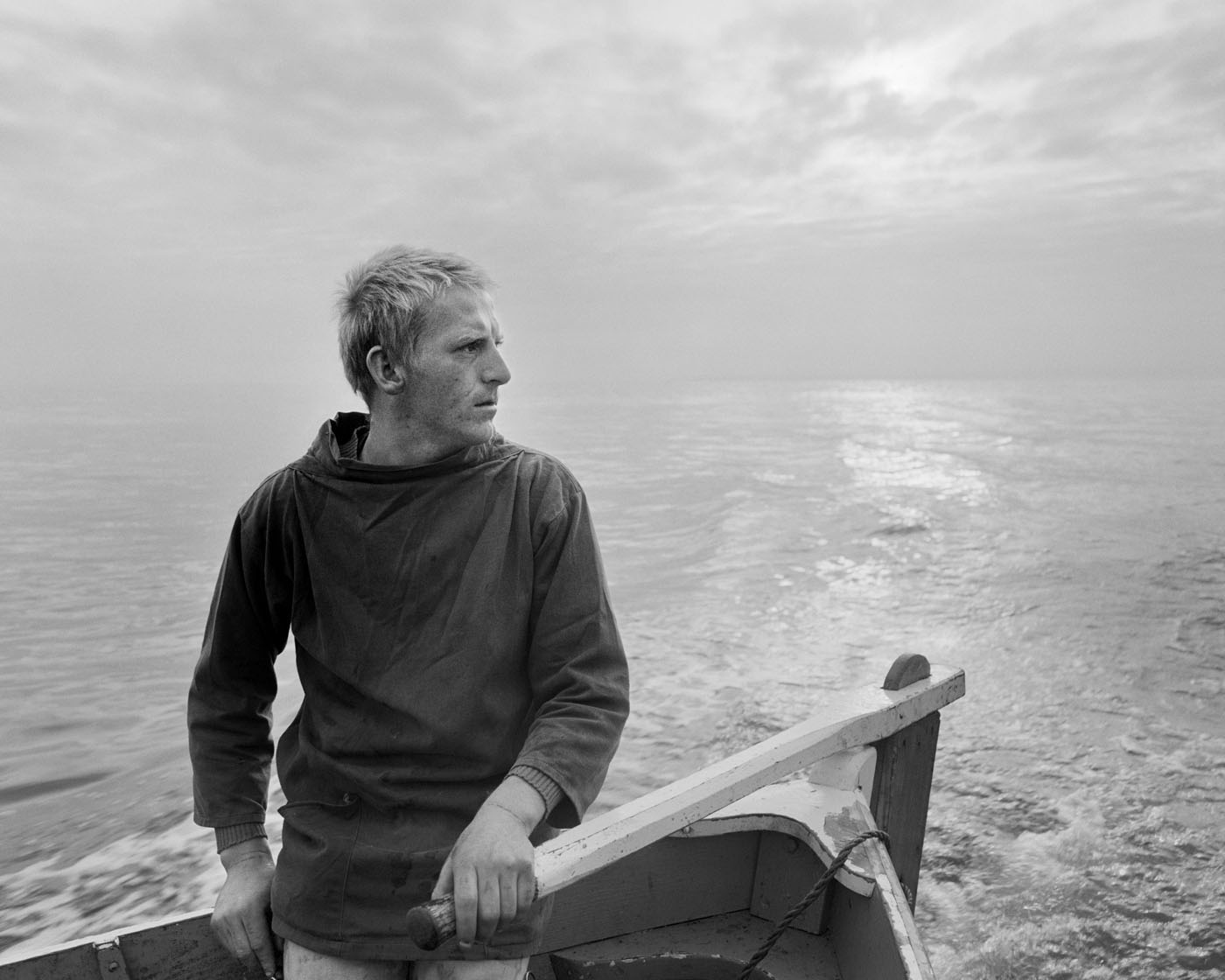
 

Chris Killip (British, 1946-2020) 'Leso at sea, Skinningrove' 1983


Chris Killip (British, 1946-2020)
Leso at sea, Skinningrove
1983
From Skinningrove 1981-1984
Gelatin silver print
© Chris Killip Photography Trust
All images courtesy Martin Parr Foundation


Chris Killip (British, 1946-2020) 'Crabs and People, Skinningrove, North Yorkshire, UK' 1981


Chris Killip (British, 1946-2020)
Crabs and People, Skinningrove, North Yorkshire, UK
1981
From Skinningrove 1981-1984
Gelatin silver print
© Chris Killip Photography Trust
All images courtesy Martin Parr Foundation


There’s nothing showy about these pictures. Framing and composition just seem to occur — which is, of course, the highest compliment one can pay a photographer. A photograph like “Crabs and People” requires a second look, or even a third, to realize how much is going on in it: the people, the dogs, the interplay of car and pram and cart, of ocean and rock.

Mark Feeney. “Where the greeting is ‘now then’ rather than ‘hello’,” on The Boston Globe website May 15, 2019 [Online] Cited 27/01/2023. No longer available online


Chris Killip 'Crabs and People, Skinningrove, North Yorkshire, UK' 1981 analysis


Chris Killip’s Crabs and People, Skinningrove, North Yorkshire, UK 1981 showing the construction of the pictorial plane, including Killip’s use of opposing triangles, the two people looking away to form the vanishing point, the man in the car looking towards the camera and the two dogs facing out of the picture in opposite directions.


Chris Killip (British, 1946-2020) 'Bever, Skinningrove, N. Yorkshire' 1983


Chris Killip (British, 1946-2020)
Bever, Skinningrove, N. Yorkshire
1983
From Skinningrove 1981-1984
Gelatin silver print
© Chris Killip Photography Trust
All images courtesy Martin Parr Foundation


Chris Killip might not be as well known as Martin Parr or have the cult kudos of Tony Ray-Jones, but the work he produced in the 1970s and ’80s arguably stands above either of them. Killip was born on the Isle of Man and returned there after quitting commercial photography in the early 1970s to concentrate on the communities he grew up amongst. It still looks like the 1930s: men till fields with horses, stone walls grid the landscape under glowering skies. Killip’s portraits are full of dignity and empathy for the relentless bleak toil of these people’s lives. It would be a fine body of work in itself, but it’s what comes next that makes this show so vital.

Taking his cues from the changes he saw happening to the traditional Manx way of life, Killip started exploring other disintegrating communities in the north of England: Tyne shipbuilders, steelworkers in Yorkshire and seacoal scavengers on the Northumbrian coast. The prow of gigantic oil tanker Tyne Pride appears suddenly and surreally at the end of a glum terraced street as children play in its shadow. But the ship’s buyer fell through, and when Killip returns two years later, the shipyard is gone and the street is being demolished. …

Killip isn’t brutal for brutality’s sake. If anything, the overriding emotion here is tenderness coupled with a certain discreet awe that people want to continue, to strive, to live. That’s the real power of this show. Whether it’s gangs of glue-sniffers or burly men trying to get a rare ray of seaside sunshine, the people that Killip portrays, and the landscapes they inhabit, are always shockingly, immediately alive, full of interest and possibility. Possibility that they are always denied, except through Killip’s photography.

Chris Waywell. “Chris Killip: Retrospective,” on the TimeOut website Tuesday 8 November 2022 [Online] Cited 26/01/2023


Skinningrove

In the short film, “Skinningrove,” 2013, Chris Killip tells personal stories about the people in his photographs. Director Michael Almereyda made the film from a lecture Killip gave at Harvard University.


Chris Killip (British, 1946-2020) 'Father and son watching a parade, West-end of Newcastle, Tyneside' 1980


Chris Killip (British, 1946-2020)
Father and son watching a parade, West-end of Newcastle, Tyneside
1980
Gelatin silver print
© Chris Killip Photography Trust
All images courtesy Martin Parr Foundation


Killip points out he spent years getting to know the area, living in Newcastle for 26 years (from 1975, when he won a two-year fellowship from Northern Arts to photograph North East England, until 1991, when he started teaching at Harvard).

He says he stayed because he liked it, and that he might never have left had the Harvard job not come along – but he was also inspired by the Magnum photographer Josef Koudelka, who came to visit him early on and “talked about the importance of being in one place, to get under the surface of things”. He was also interested in how differently Paul Strand and Manuel Alvarez Bravo photographed Mexico, he says, despite Strand’s sympathetic, card-carrying Communist credentials.

“Strand beautifies poverty and simplifies the Mexican people into ‘the poor Mexicans, but isn’t this wonderful visually’,” he says. “But Alvarez Bravo was Mexican, his pictures are very complicated because he was able to accept ambiguities and contradictions, which Strand couldn’t… I think because I lived in Newcastle for so long I was able to accept ambiguities and not worry about them, just accept them and show them. I wanted to be there and be more accepting.”

Diane Smyth. “Now Then: Chris Killip and the Making of In Flagrante,” on the British Journal of Photography website 6 June 2017 [Online] Cited 26/01/2023


‘I went to my father and said: Dad, I’m going to become a photographer’ Interview with Chris Killip

Born on the Isle of Man in 1946, Chris Killip was a Professor of Visual and Environmental Studies at Harvard University where he had taught from 1991. Since 2012 he has held solo exhibitions at Museum Folkwang, Essen; Le Bal, Paris; Tate Britain, London; Museo Reina Sofia, Madrid; and the J. Paul Getty Museum, Los Angeles. Killip’s works are held in the permanent collections of institutions including the Museum of Modern Art, New York; George Eastman House, Rochester; and the Victoria and Albert Museum, London. His books with Steidl are ‘Pirelli Work’ (2006), ‘Seacoal’ (2011), ‘Arbeit / Work’ (2012), ‘Isle of Man Revisited’ (2015), ‘In Flagrante Two’ (2016) and most recently ‘The Station’ (2020).


The Station 1985


Chris Killip (British, 1946-2020) 'The Station, Gateshead' 1985


Chris Killip (British, 1946-2020)
The Station, Gateshead
1985
From The Station 1985
Gelatin silver print
© Chris Killip Photography Trust
All images courtesy Martin Parr Foundation


Chris Killip (British, 1946-2020) 'The Station, Gateshead' 1985


Chris Killip (British, 1946-2020)
The Station, Gateshead
1985
From The Station 1985
Gelatin silver print
© Chris Killip Photography Trust
All images courtesy Martin Parr Foundation


“Inside, the place was painted black. The ceiling was black, the floor was black. There were no lights. I was photographing with my big 4×5 plate camera and Norman flash. And in the end, there was a sameness about all the pictures. So after about six months I stopped because I felt I was repeating myself.

I used one photo for my book ‘In Flagrante’ and packed the rest away. I forgot I even had them. Then in 2016 my son was in my studio looking through some boxes and said, ‘Dad you should really do something with these photos.’ That’s how the book, The Station, came about. Looking back, I didn’t realise what I had. If my son hadn’t kicked me up the backside to go and look at them again, they’d still be in that box now. …

“There is a great value in capturing these cultural moments. It’s a part of somebody else’s history, and it’s a history that gets overlooked. Young people doing something – succeeding at doing something, organising this club, running it successfully – it’s all forgotten. My hope is that it can be an inspiration to young people today. As in: get your act together, don’t ask permission, get on with it and do it. Raise some money, you know. That’s what they did.”


Chris Killip. “Chris Killip’s timeless portrait of working class punk culture,” on the Huck website 4th September, 2020 [Online] Cited 26/01/2023. No longer available online


In 1985, Chris Killip was “trying unsuccessfully to photograph nightlife in Newcastle” when a friend told him about the Station, a former police social club in nearby Gateshead that had been turned into a live venue by a collective of local punks.

“I went there and everything else around it had been demolished,” he recalls. “You could hear the music echoing across this vast urban wasteland as you approached the building. Inside, the noise coming off the stage was deafening and the punks were thrashing around, banging into each other, drinks flying. I just stood there. It was so loud and so intense that I was overwhelmed.”

Nevertheless, between March and October, Killip returned to the Station “about 20 times”, placing himself in the centre of the maelstrom in order to capture the visceral energy of the place. …

He describes the Station fondly as “a total anarcho-punk zone: black walls, black ceiling, black floor. There was a big sign saying, ‘No glue, no glass bottles’, but there was a bit of glue-sniffing and gallons of strong cheap cider. Basically they didn’t have money for better drugs.”

The atmosphere, he says, was charged but never threatening despite the pummelling music and the ritual aggression enacted on the dance floor. Throughout his time there, he never witnessed a single fight or experienced any hassle save for one “mad-eyed guy” who would occasionally emerge from the melee “to take a swing” at his head.

In the pitch-black interior of the Station, he cut a curious figure, carrying a big plate camera around his neck as well as a flash and an outsized battery that was strapped to his waist. “No one ever said, ‘Who the fuck are you?’ They were in their own world and I was in mine. I was concentrating so much that I never had time to chat. After three hours in there, I’d be totally exhausted. I used to drive home and go straight to sleep, the noise ringing in my ears.” …

“It [The Station] created its own scene, not dependent on elsewhere. For the people who went there every week, it was part of their identity. It had a meaning for them that outsiders would have found hard to understand. It was a place for them to consolidate their identity. In Thatcher’s Britain, they were the ignored, the overlooked, the dismissed. The Station was their home. It was them.”

Sean O’Hagan. “Moshpit mayhem: the northern club where punks rampaged to Hellbastard,” on The Guardian website Tue 31 Mar 2020 [Online] Cited 26/01/2023


Chris Killip (British, 1946-2020) 'The Station, Gateshead' 1985


Chris Killip (British, 1946-2020)
The Station, Gateshead
1985
From The Station 1985
Gelatin silver print
© Chris Killip Photography Trust
All images courtesy Martin Parr Foundation


Pages from “Chris Killip Photographs 1975-1976” in Creative Camera magazine May 1977

It is interesting to note the pairing and sequencing of the photographs. These photographs are not in the exhibition.


Pages from "Chris Killip Photographs 1975-1976" as seen in 'Creative Camera' magazine May 1977

pp. 150-151
Pages from "Chris Killip Photographs 1975-1976" in 'Creative Camera' May 1977

pp. 154-155
Pages from "Chris Killip Photographs 1975-1976" in 'Creative Camera' May 1977

pp. 156-157
Pages from "Chris Killip Photographs 1975-1976" in 'Creative Camera' May 1977

pp. 160-161
Pages from "Chris Killip Photographs 1975-1976" in 'Creative Camera' May 1977

pp. 162-163
Pages from "Chris Killip Photographs 1975-1976" in 'Creative Camera' May 1977

pp. 164-165
Pages from "Chris Killip Photographs 1975-1976" in 'Creative Camera' May 1977

pp. 166-167
Pages from "Chris Killip Photographs 1975-1976" in 'Creative Camera' May 1977

pp. 168-169
Pages from "Chris Killip Photographs 1975-1976" in 'Creative Camera' May 1977

pp. 170-171


“Chris Killip Photographs 1975-1976” in Colin Osman (ed.,). Creative Camera May 1977 Number 155. London: Coo Press Ltd., 1977, pp. 150-171


The Photographers’ Gallery
16-18 Ramillies Street
London
W1F 7LW

Opening hours:
Mon – Wed: 10.00 – 18.00
Thursday – Friday: 10.00 – 20.00
Saturday: 10.00 – 18.00
Sunday: 11.00 – 18.00

The Photographers’ Gallery website

LIKE ART BLART ON FACEBOOK

Back to top

Exhibition: ‘Josef Koudelka: Uncertain Nationality’ at Fundación MAPFRE, Madrid

Exhibition dates: 10th September – 28th November 2015

The exhibition is organised by the Art Institute of Chicago and the J. Paul Getty Museum in association with Fundación MAPFRE

Curator: Matthew Witkovsky, Richard and Ellen Sandor Chair and Curator Department of Photography of the Art Institute of Chicago


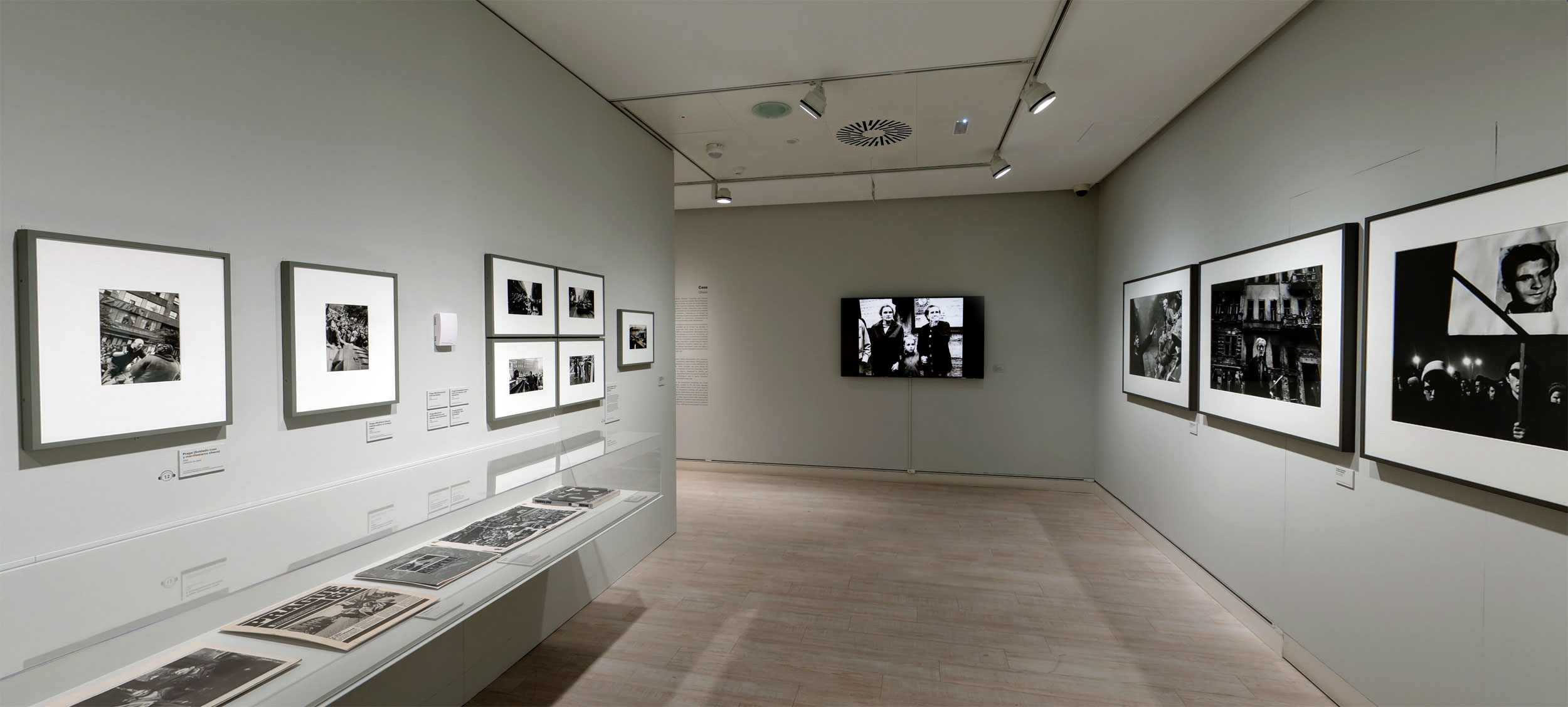
Entrance view of the exhibition 'Josef Koudelka: Uncertain Nationality' at Fundación MAPFRE, Madrid


Entrance view of the exhibition Josef Koudelka: Uncertain Nationality at Fundación MAPFRE, Madrid


Without reminding myself every so often, you actually forget just what a master of photography Josef Koudelka is.

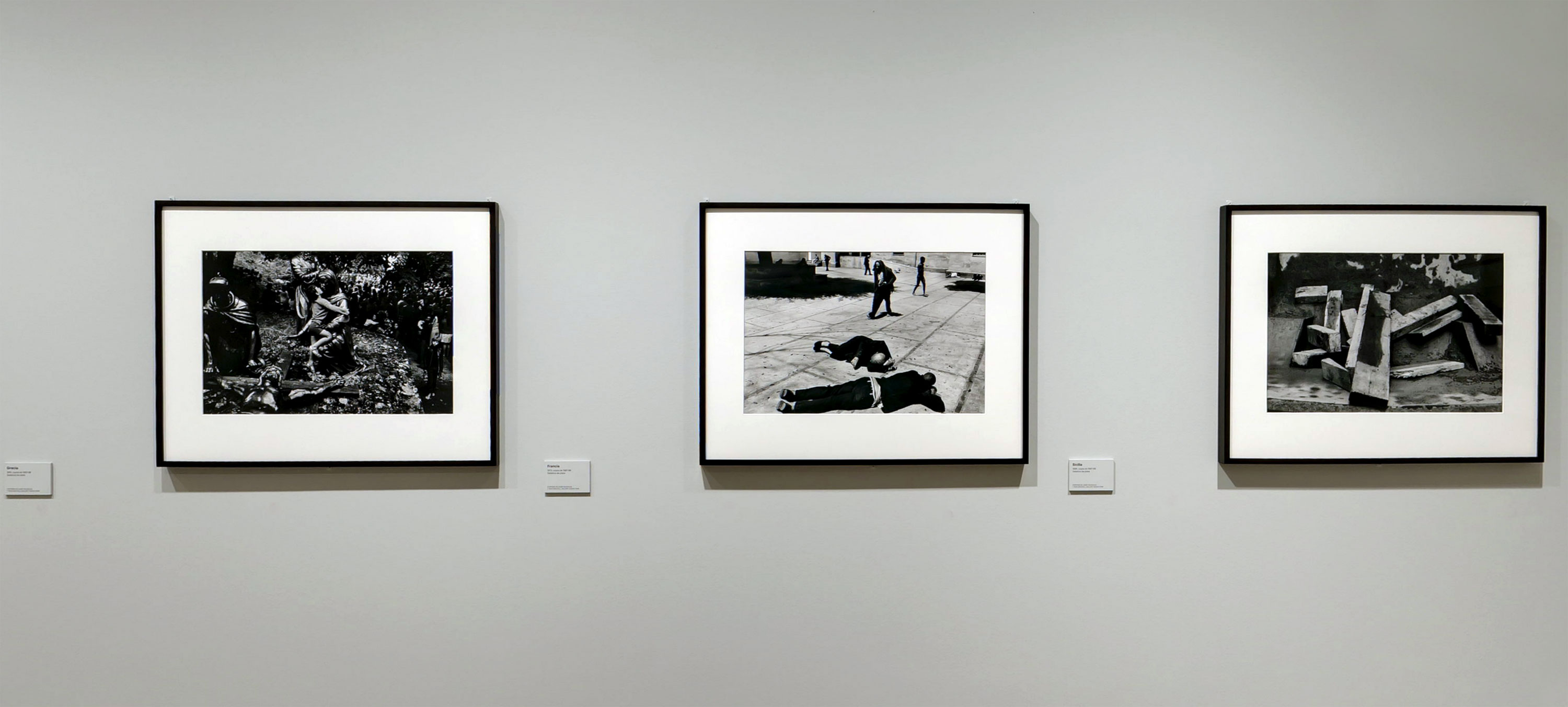
Looking at the installation photographs below, without knowing the names of the individual images, is instructive. Notice how graphically strong his organisation of the picture plane is. Usually one or two, three at the most, strong vertical or horizontal elements – dark on dark, light on dark; man and hovercraft; figures on pavement; women, tree and building; assemblages of objects and light.

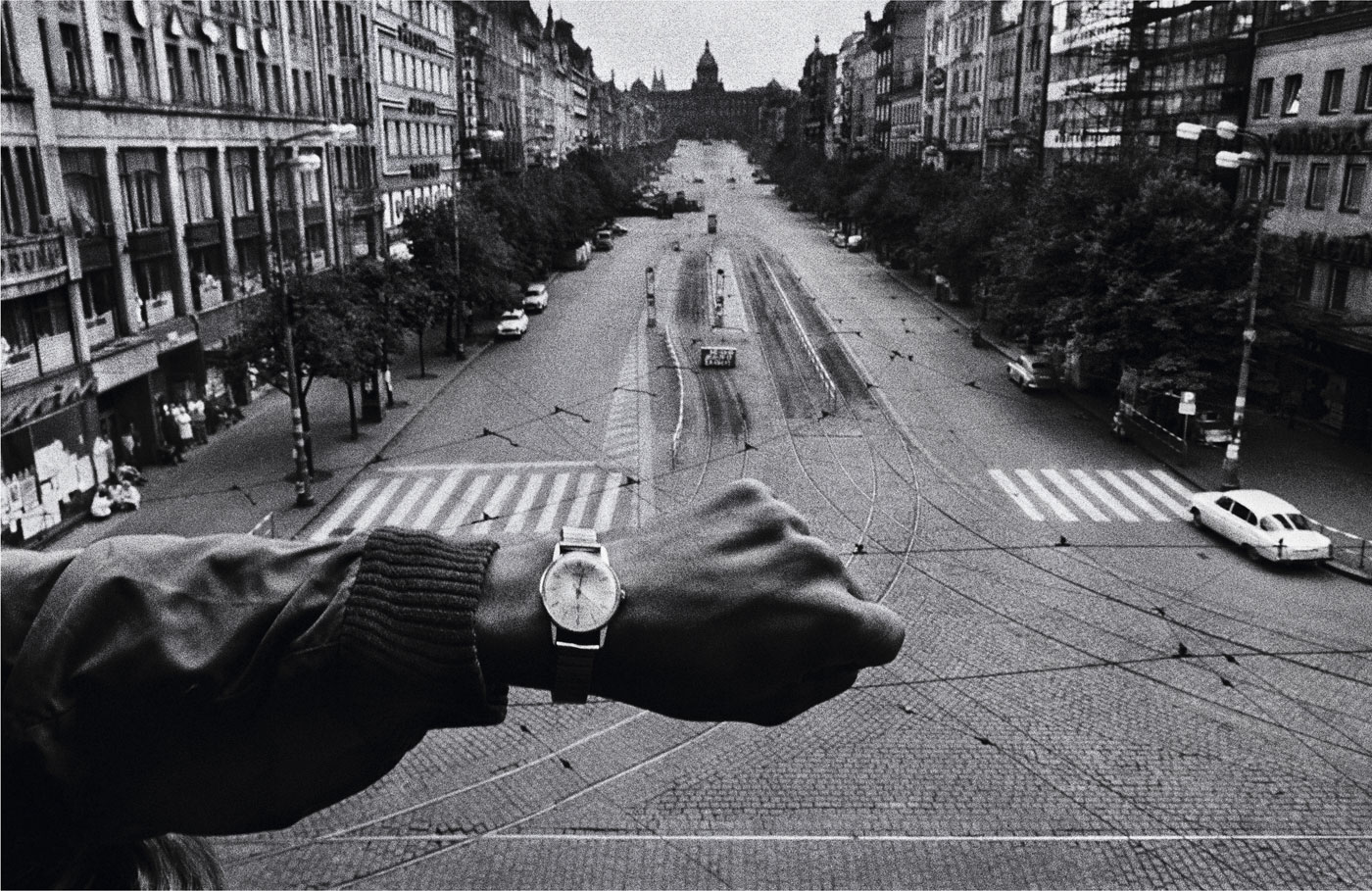
I believe all of his work links back to his sense of the theatre of memory, whether it be the landscapes and sceneries of the outdoors taken in Prague, and on trips to Slovakia, Poland and Italy or the psychological interior of the mind of his theatre characters as he portrays them through photography. From the mystery and exoticism of the Gypsies series, to the recording of history, time and conflict of the Invasion photographs (witness the Hand and wristwatch). From the metaphysical symbols of isolation (lost animals, lonely figures, scattered objects and displaced Gypsies) in Exiles, which is the core of the Koudelka vital experience, to the destruction of ancient archaeological sites and depictions of places that have been mined, swept away or marked by the scars of industrialisation, devastated by wars and altered by time in his panoramic format photographs.
These theatres of the divine, theatres of the mind are ‘Theatres of Memory’ in which the 16th century Italian philosopher Guilio Camillo asks the question: How is the motion of the memory connected with the motion of history? How is the personal political?

Koudleka’s probing of this question is present in every one of his images. Through his inquiry “he maintains a total unity through the photographer’s vision.” The artist forms mental and physical images of the things he wants to remember, that he wants us to remember, using theatrical spaces… and his subjective thoughts bind us, closely, to collective memories.

“History… is a nightmare from which I am trying to awake.” ~ James Joyce, Ulysses

Dr Marcus Bunyan


Many thankx to Fundación MAPFRE for allowing me to publish the photographs in the posting. Please click on the photographs for a larger version of the image.


Installation view of the exhibition 'Josef Koudelka: Uncertain Nationality' at Fundación MAPFRE, Madrid


Installation view of the exhibition Josef Koudelka: Uncertain Nationality at Fundación MAPFRE, Madrid


FUNDACIÓN MAPFRE presents the most complete retrospective exhibit up to this day dedicated to the Czech photographer of French nationality Josef Koudelka (b. 1938), member for the past forty years of Magnum Photos agency.

Engineer by profession, Koudelka became committed to the photographic medium in the middle of the sixties and became one of the most influential authors of his generation. Halfway between the artistic and documentary, Josef Koudelka is now a living legend. He has received prestigious awards in recognition of his work, among others, the Grand Prix National de la Photographie (1989), the Grand prix Cartier-Bresson (1991), and the International Award in Photography of the Hasselblad Foundation (1992).

This exhibition goes through his entire trajectory that covers more than five decades of work. The extensive selection with more than 150 works reflects his first experimental projects produced at the end of the fifties and during the sixties, as well as his historic series Gypsies, Invasion and Exiles and reaching the great panoramic landscapes produced in the last years. In addition the exhibition includes important documental material, the majority unpublished – layouts, pamphlets, magazines of the period among others –, that allows us to delve into the work as well as the creative process of this author.

The title of the exhibition is Uncertain Nationality, which describes the sense of not belonging to a place, a sense of disorientation so present in his work since his exile from Czechoslovakia after the invasion of Prague, and his permanent interest in territories in conflict.

Press release from Fundación MAPFRE


Installation view of the exhibition 'Josef Koudelka: Uncertain Nationality' at Fundación MAPFRE, Madrid

Installation view of the exhibition 'Josef Koudelka: Uncertain Nationality' at Fundación MAPFRE, Madrid


Installation views of the exhibition Josef Koudelka: Uncertain Nationality at Fundación MAPFRE, Madrid


Introduction

In the mid-1950s, when a new youth culture characterised by an open mindset was beginning to emerge in Czechoslovakia following the death of the Soviet leader Joseph Stalin and after two decades of brutal repression, Josef Koudelka (born in Czechoslovakia in 1938 and nationalised French) left his village in Moravia and moved to the capital, Prague. An aeronautical engineer by training, Koudelka became very actively involved in photography in the mid-1960s, contributing to the creative renaissance that took place in his native country.

Koudelka not only immortalised these years with his camera but also embodied them. He spent lengthy periods in gypsy encampments in Slovakia, he compulsively photographed actors during play rehearsals, and he mingled with demonstrators and soldiers in August 1968 in order to capture the invasion of Prague by the Soviet troops. When Koudelka went into exile shortly afterward she acquired the official status of “nationality doubtful”, becoming a stateless person as he was unable to produce documentation proving that he was born in Czechoslovakia. He refused to be intimidated by this situation, however, and continued to travel and take photographs, allowing gypsy communities and traditional and religious festivals to decide his destinations.

Koudelka settled in Paris in the 1980s and after the fall of Communism returned to Prague in 1990 where he now has a second home. Nonetheless, he continues to be a traveller, committed over the past twenty-five years to the creation of panoramic photographs that depict landscapes around the world which have been altered and often devastated by the hand of man.

This exhibition encompasses Josef Koudelka’s entire career, spanning more than five decades of work. The comprehensive selection of images on display includes his first experimental projects of the 1950s and 1960s and his historic series Gypsies, Invasion and Exiles, concluding with the great panoramic landscapes of recent years. In addition, visitors will see important documentary material, most of it previously unpublished and including layouts, leaflets and magazines of the period which contribute to a deeper understanding of this artist’s work and creative process.


Installation view of the Theatre section of the exhibition 'Josef Koudelka: Uncertain Nationality' at Fundación MAPFRE, Madrid

Installation view of the Theatre section of the exhibition 'Josef Koudelka: Uncertain Nationality' at Fundación MAPFRE, Madrid

Installation view of the Theatre section of the exhibition 'Josef Koudelka: Uncertain Nationality' at Fundación MAPFRE, Madrid


Installation view of the Theatre section of the exhibition Josef Koudelka: Uncertain Nationality at Fundación MAPFRE, Madrid


Early years + theatre

Early years and Experiments

Josef Koudelka was immersed in the ambiance of liberalization that occurred in Czechoslovakia after the death of Josef Stalin in 1953 who had subjected the country to a brutal repression for two decades. Koudelka began to photograph professionally in 1958 and create a series of landscapes and sceneries of the outdoors taken in Prague, and on trips to Slovakia, Poland and Italy. Right away, the camera accompanied him on all of his trips, which would herald his impulse to work as an independent photographer and nomad for more than forty years.

Koudelka dates his first serious photographic activity to 1958. Between that date and 1962 he produced a body of work which encompassed landscapes and outdoor views taken in Prague and during trips to Slovakia, Poland and Italy. Travel and its associated discoveries were a permanent stimulus to his creativity as a photographer. During these early years Koudelka assiduously studied the possibilities of giving form to the photographic image before and after the actual shot was taken. Initially, he inclined to manipulation subsequent to exposure, such as cropping and the use of experimental techniques in the dark room.

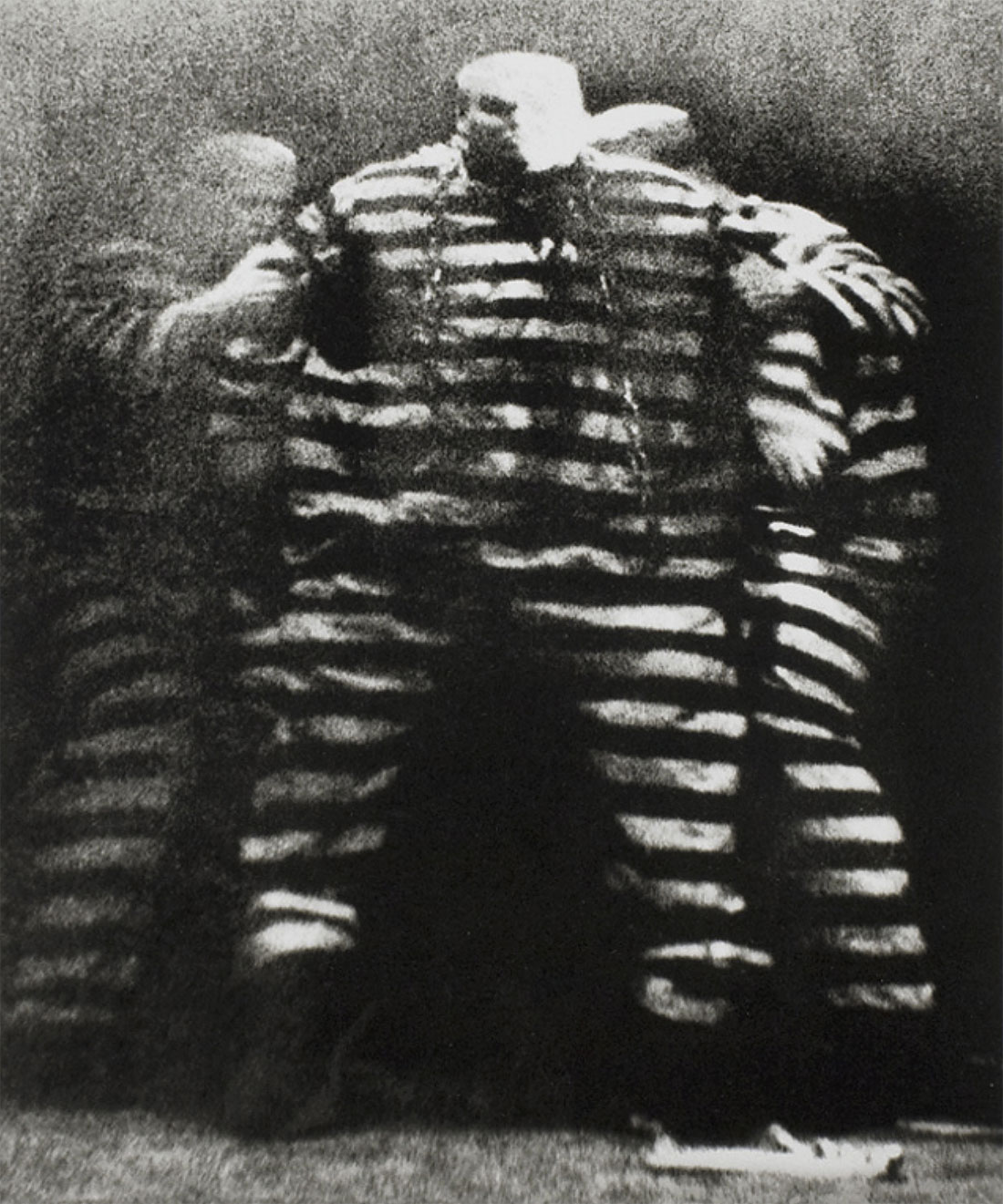
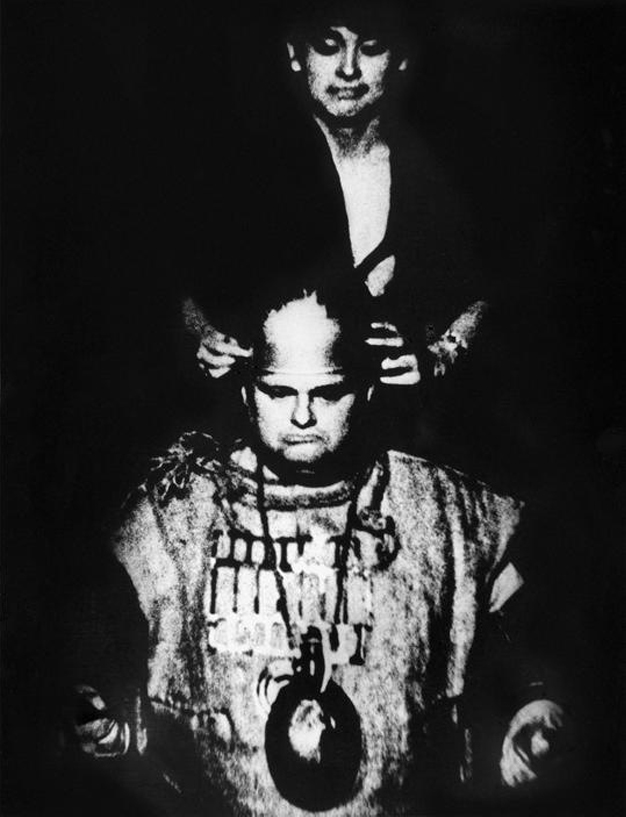
The Theatre

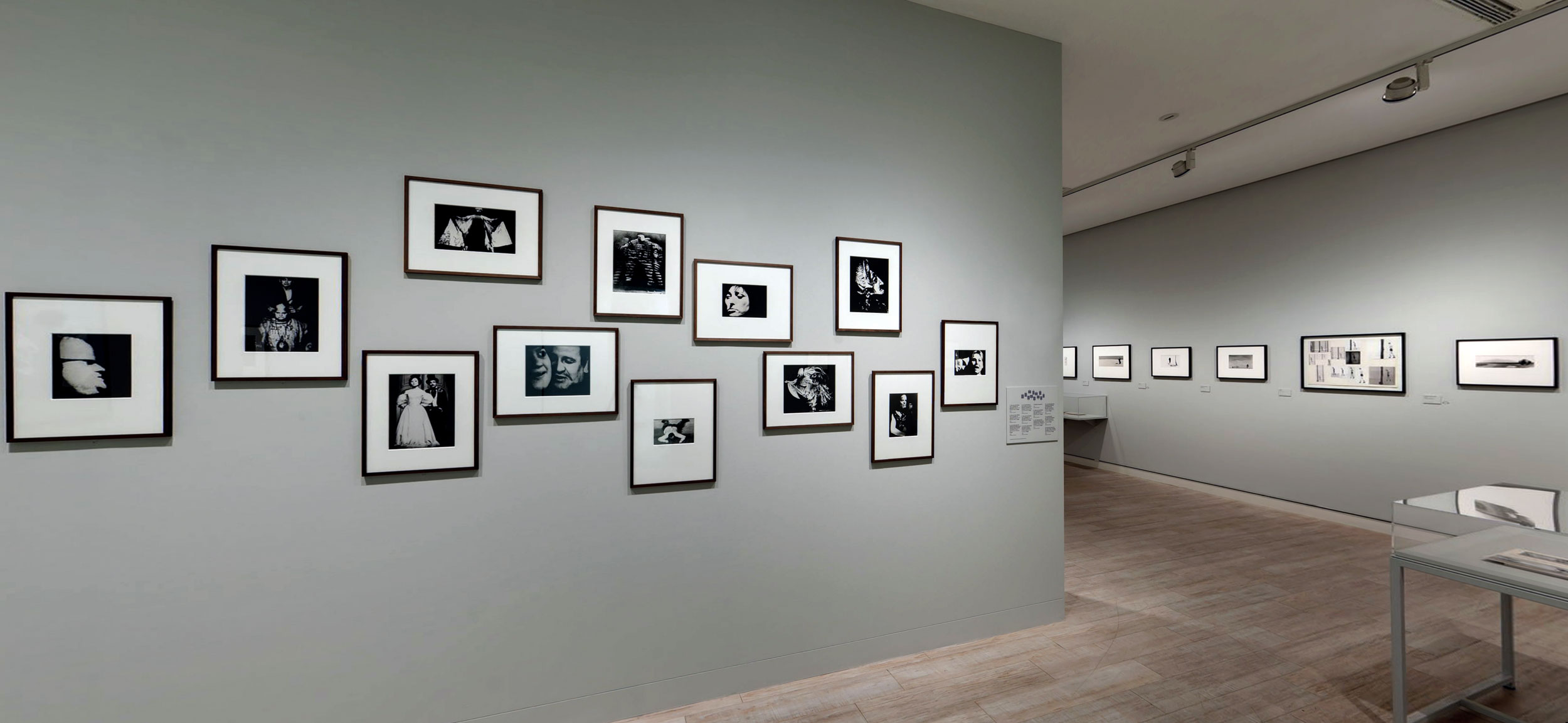
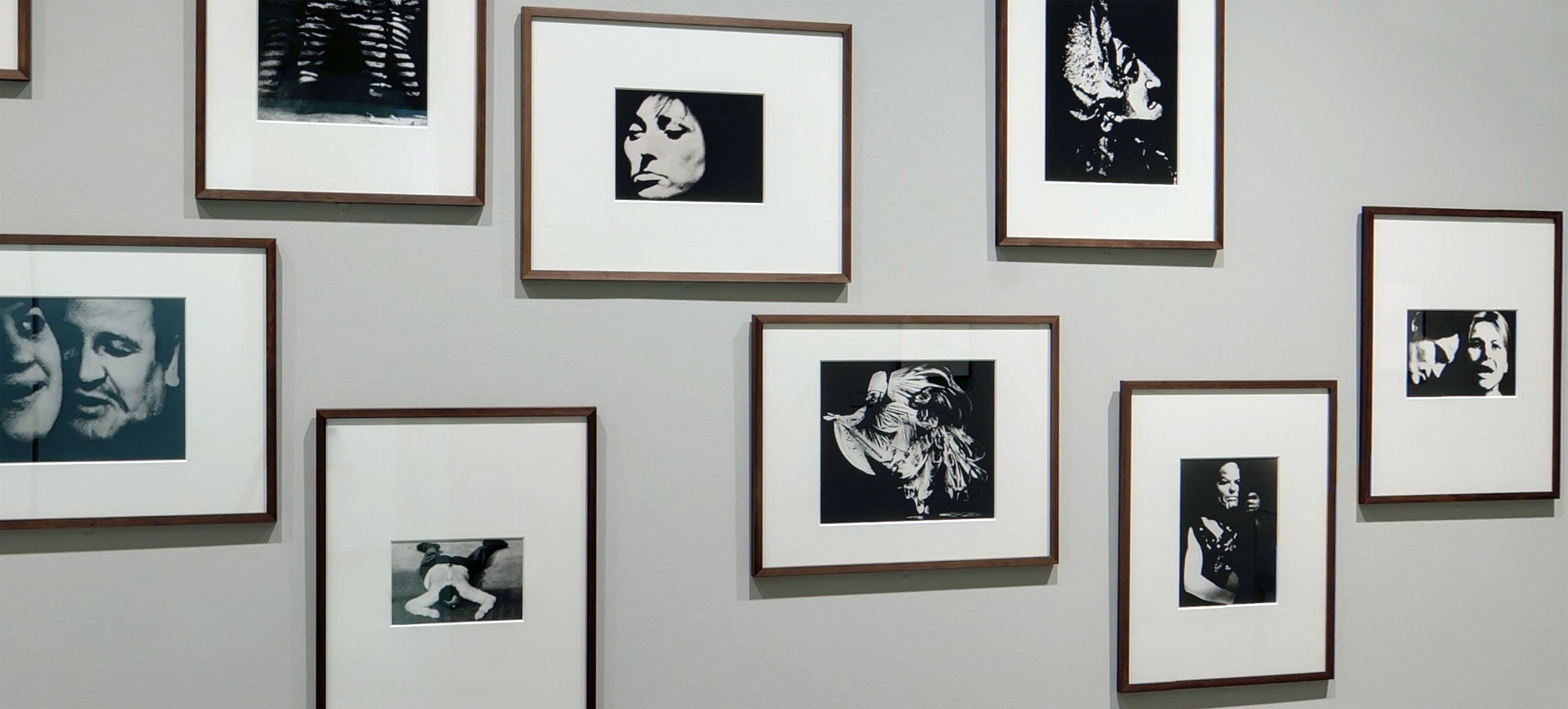
In the 1960s Koudelka worked free-lance for the most important Czech theatrical companies, Divadloza Branou (Theatre behind the Door) and Divadlona Zábradlí (Theatre on the Balustrade). As such, he evolved a new way of photographing that involved the repetition and prior visualisation of the image. Working rapidly and close to the actors on the stage while they were rehearsing, Koudelka constantly moved around them until he had the desired image in his mind. The harsh, exaggerated theatrical lighting proved difficult to photograph, obliging him to force the development of his films with low exposures. Ultimately, a detail that interested him in an image might only occupy a small part of the negative and thus required significant blowing-up and laborious manipulation during the developing process in order to obtain a legible copy. Koudelka’s images of theatrical performances were used for promotional purposes and often appeared on the front cover and in the pages of the magazine Divadlo (Theatre).

Text from the Fundación MAPFRE Josef Koudelka website [Online] Cited 22/11/2021. No longer available online


Josef Koudelka (Czech-French, b. 1938) 'An Hour of Love by Josef Topol, Divadlo za branou [Theater behind the Door], Prague' 1968


Josef Koudelka (Czech-French, b. 1938)
An Hour of Lov
e by Josef Topol, Divadlo za branou [Theater behind the Door], Prague
1968
© Josef Koudelka/Magnum Photos


Josef Koudelka (Czech-French, b. 1938) 'Theatre on the Balustrade, King Ubu (by playwright Alfred Jarry), Prague' 1964


Josef Koudelka (Czech-French, b. 1938)
Theatre on the Balustrade, King Ubu (by playwright Alfred Jarry), Prague
1964
© Josef Koudelka/Magnum Photos


Josef Koudelka (Czech-French, b. 1938) 'Alfred Jarry's Uburoi, Divadlo na zábradlí, Prague' 1964


Josef Koudelka (Czech-French, b. 1938)
Alfred Jarry’s Uburoi, Divadlo na zábradlí, Prague
1964
Gelatin silver, early print
© Josef Koudelka / Magnum Photos


Josef Koudelka (Czech-French, b. 1938) 'Czechoslovakia' 1960


Josef Koudelka (Czech-French, b. 1938)
Czechoslovakia
1960
Gelatin silver, early print
The Art Institute of Chicago, gift of the artist
© Josef Koudelka / Magnum Photos


Installation view of the Gypsies section of the exhibition 'Josef Koudelka: Uncertain Nationality' at Fundación MAPFRE, Madrid

Installation view of the Gypsies section of the exhibition 'Josef Koudelka: Uncertain Nationality' at Fundación MAPFRE, Madrid

Installation view of the Gypsies section of the exhibition 'Josef Koudelka: Uncertain Nationality' at Fundación MAPFRE, Madrid


Installation views of the Gypsies section of the exhibition Josef Koudelka: Uncertain Nationality at Fundación MAPFRE, Madrid


Gypsies

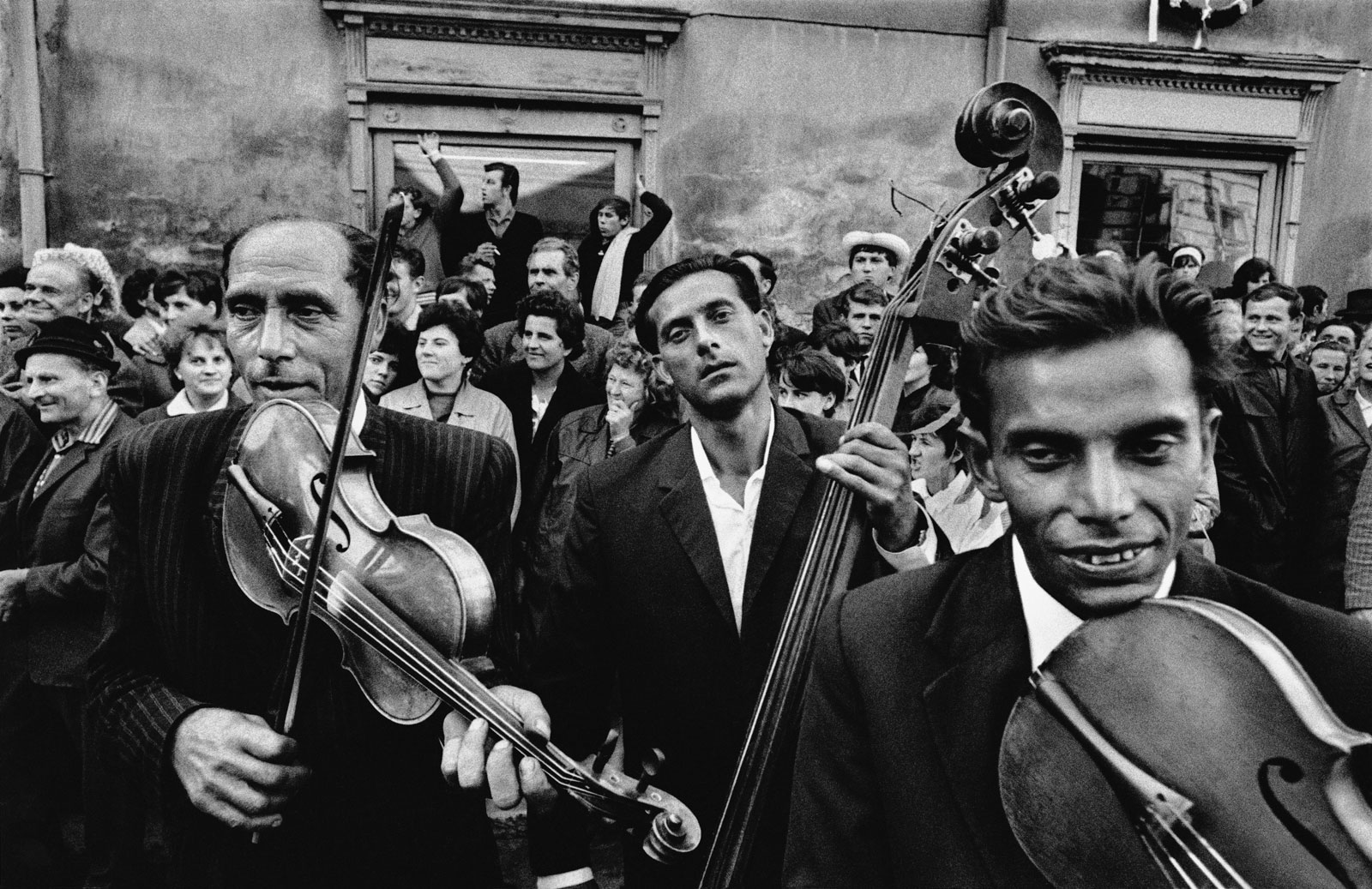
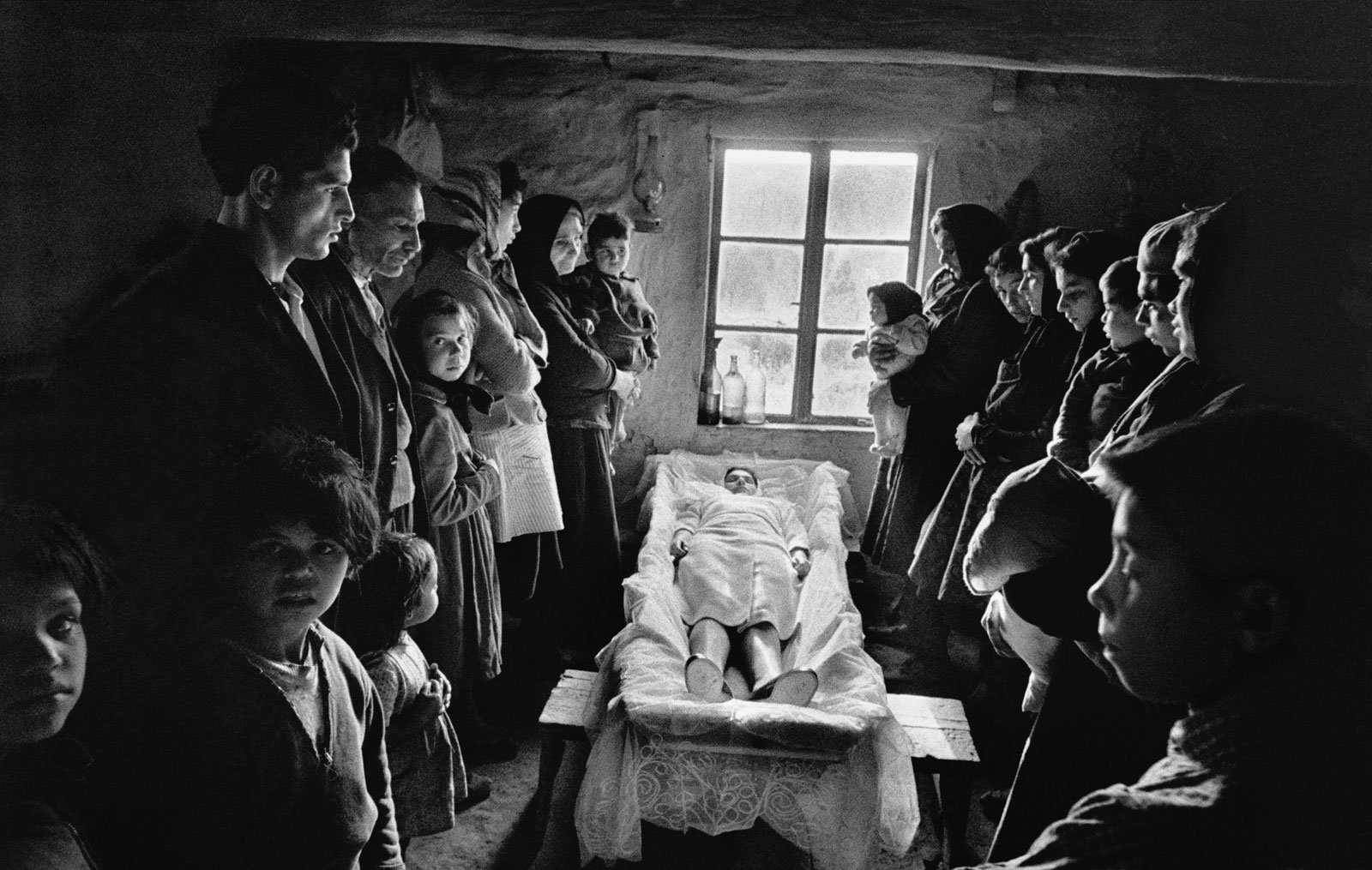
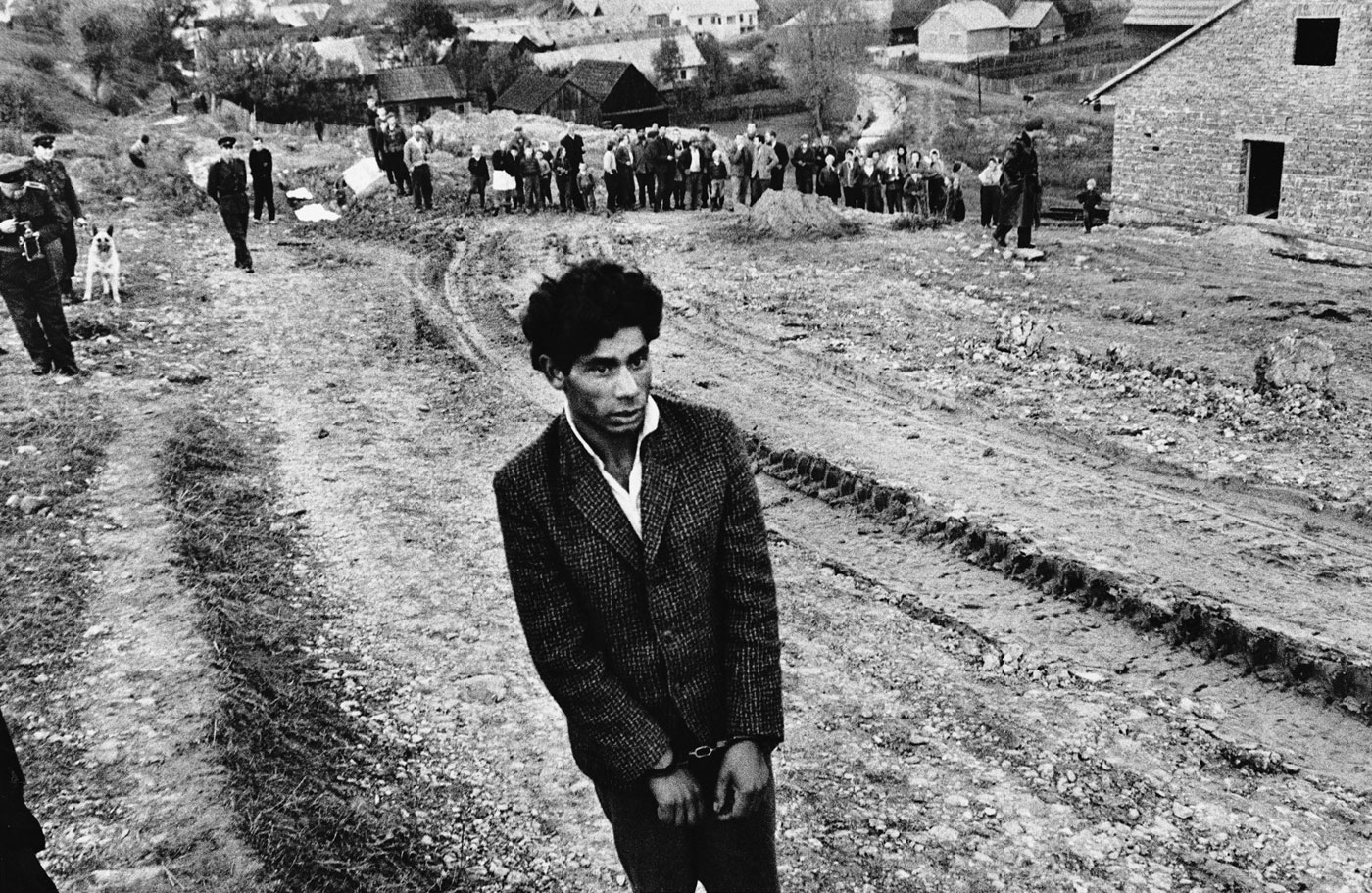
In 1961 Koudelka started to take photographs in villages and gypsy encampments. He initially continued with his habitual employment as an engineer but this photographic endeavour soon became a project that would define his artistic career and give rise to the series Gypsies. He returned again and again to around eighty different places in Slovakia and the Czech regions of Moravia and Bohemia (now part of the Czech Republic), principally between 1963 and 1970, taking thousands of photographs from which he selected various hundreds and finally a few dozen that he most preferred, entitling them with the name of the place where they were taken. The varied compositions – interiors, individual and group portraits, and landscapes – allow the subjects space to be themselves while maintaining a total unity through the photographer’s vision. These works also constitute views onto a world which seemed very exotic at that time, even for other Czechs and Slovaks, but which was nonetheless quite self-sufficient and as universally accessible as ancient myths.

The first exhibition of this series, held in the lobby of the Divadloza Branou (Theatre behind the Door) in Prague in March 1967, only included twenty-seven photographs. The twenty-two prints that have survived from that event are included in the present exhibition, mounted on their original panels and displayed as a group, as they were almost fifty years ago.

Text from the Fundación MAPFRE Josef Koudelka website [Online] Cited 22/11/2021. No longer available online


Josef Koudelka (Czech-French, b. 1938) 'Bohemia' 1966


Josef Koudelka (Czech-French, b. 1938)
Bohemia
1966
Gelatin silver, print 1967
The Art Institute of Chicago, gift of the artist
© Josef Koudelka / Magnum Photos


Josef Koudelka (Czech-French, b. 1938) 'Moravia (Strážnice)' 1966


Josef Koudelka (Czech-French, b. 1938)
Moravia (Strážnice)
1966
Gelatin silver, print 1967
Art Institute of Chicago, gift of the artist
© Josef Koudelka / Magnum Photos


Josef Koudelka (Czech-French, b. 1938) 'Slovakia' 1963


Josef Koudelka (Czech-French, b. 1938)
Slovakia
1963
Gelatin silver, print 1967
The Art Institute of Chicago, promised gift of the artist
© Josef Koudelka / Magnum Photos


Josef Koudelka (Czech-French, b. 1938) 'Romania' 1968


Josef Koudelka (Czech-French, b. 1938)
Romania
1968
Gelatin silver, print 1980s
The Art Institute of Chicago, promised gift of Robin and Sandy Stuart
© Josef Koudelka / Magnum Photos


Josef Koudelka (Czech-French, b. 1938) 'Slovakia' 1963


Josef Koudelka (Czech-French, b. 1938)
Slovakia
1963
Gelatin silver, print 1967
The Art Institute of Chicago, Amanda TaubVeazie Endowment and Photography Gala Fund
© Josef Koudelka / Magnum Photos


Installation view of the Invasion section of the exhibition 'Josef Koudelka: Uncertain Nationality' at Fundación MAPFRE, Madrid


Installation view of the Invasion section of the exhibition Josef Koudelka: Uncertain Nationality at Fundación MAPFRE, Madrid


Invasion

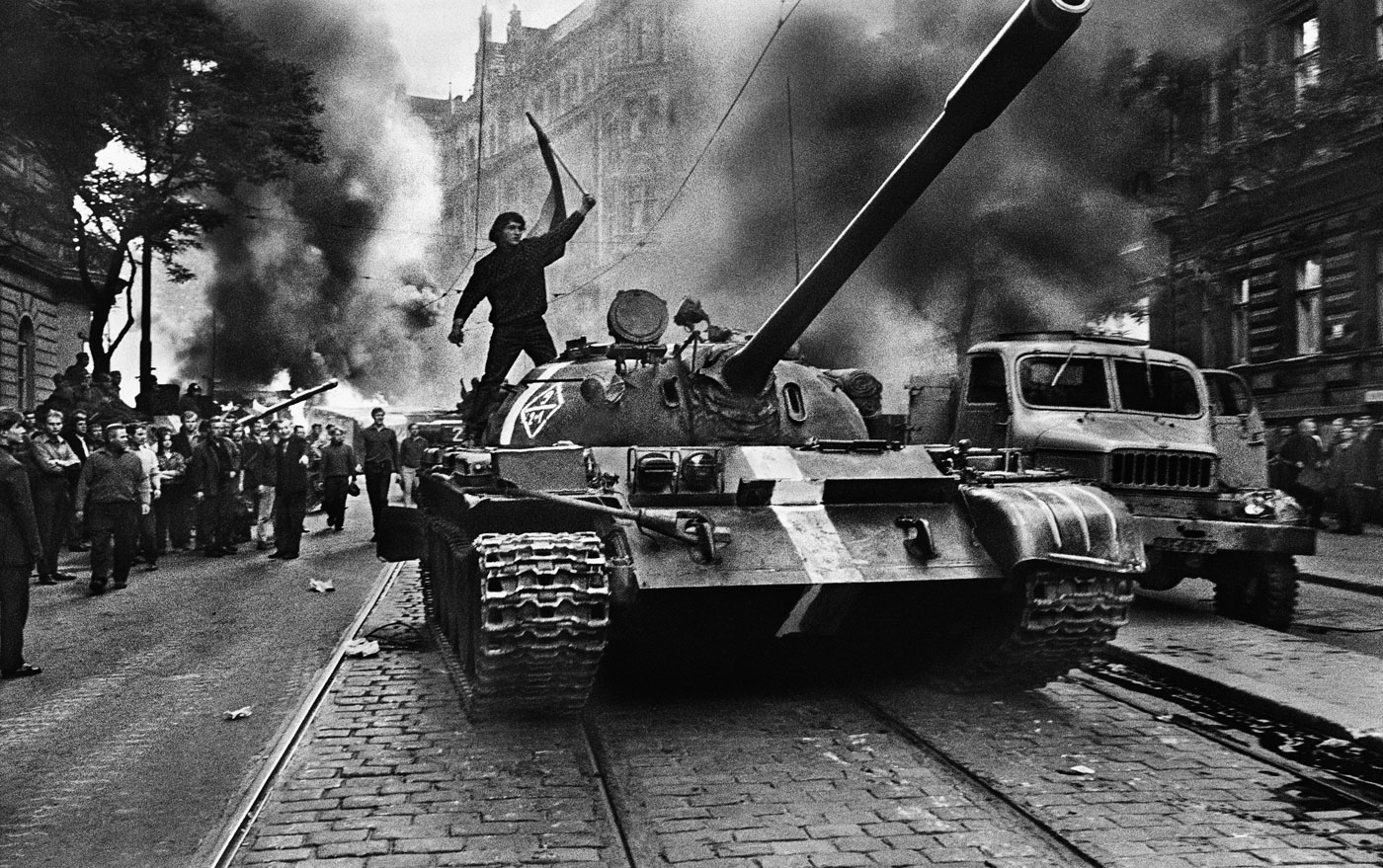
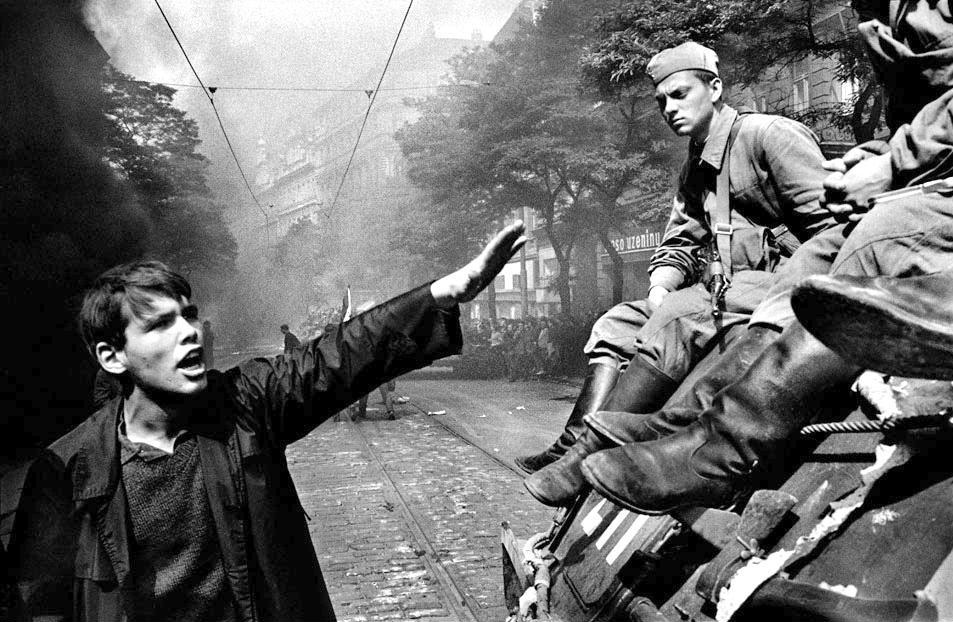
In August 1968, shortly after returning to Czechoslovakia after a trip to Rumania where he had gone to photograph gypsy encampments, Koudelka woke up early one morning to discover that the Warsaw Pact forces led by the Soviet Union had invaded Prague. He immediately loaded his Exakta Varex camera with East German film and went out onto the street, tirelessly photograph the devastating occupation between 21 and 27 August. Koudelka climbed on tanks, encountered soldiers armed with machine guns (as did the demonstrators alongside him), and photographed the innumerable slogans and posters which appeared every day on the city’s walls and were then removed by the invading forces every evening. Koudelka penetrated into the heart of the resistance. A new era was dawning and his photographs became a powerful reminder of how that change first began.

His images became a document of the conflict and symbol of the spirit of the resistance movement. The rolls of film that he used to photograph the Prague struggle ended up in Western Europe illegally and the Koudelka images appeared in newspapers and magazines around the world. Koudelka spent that winter editing his photographs, selecting just a handful from among thousands of images. Finally, the negatives were smuggled out to the United States and with the help of the Magnum Photos agency were distributed to magazines and newspapers around the world on the occasion of the first anniversary of the invasion in 1969. Prior to 1984, when they were publicly exhibited for the first time in London with Koudelka’s name attached to them, these images were published anonymously and only attributed to “P.P”, standing for “Prague Photographer”, in order to avoid possible reprisals against Koudelka and his family.

Text from the Fundación MAPFRE Josef Koudelka website [Online] Cited 22/11/2021. No longer available online


Josef Koudelka (Czech-French, b. 1938) '(Czech citizen on sidewalk, wearing jacket with target)' 1968


Josef Koudelka (Czech-French, b. 1938)
(Czech citizen on sidewalk, wearing jacket with target)
1968
Gelatin silver print, early print
© Josef Koudelka / Magnum Photos


Josef Koudelka (Czech-French, b. 1938) '(Czech citizen on tank)' 1968


Josef Koudelka (Czech-French, b. 1938)
(Czech citizen on tank)
1968
Gelatin silver print, early print
The Art Institute of Chicago, promised gift of a private collector
© Josef Koudelka / Magnum Photos


Josef Koudelka (Czech-French, b. 1938) 'Hand and wristwatch' 1968


Josef Koudelka (Czech-French, b. 1938)
Hand and wristwatch
1968
Invasion by Warsaw Pact troops. Prague, Czechoslovakia, August 1968
Gelatin silver, print 1990
© Josef Koudelka / Magnum Photos


Josef Koudelka (Czech-French, b. 1938) 'At the Czechoslovak Radio building, Vinohradská Avenue' 1968


Josef Koudelka (Czech-French, b. 1938)
At the Czechoslovak Radio building, Vinohradská Avenue
1968
Invasion by Warsaw Pact troops. Prague, Czechoslovakia, August 1968
Gelatin silver print, early print
© Josef Koudelka / Magnum Photos


Josef Koudelka (Czech-French, b. 1938) '(Two Czech citizens with flag)' 1968


Josef Koudelka (Czech-French, b. 1938)
(Two Czech citizens with flag)
1968
Invasion by Warsaw Pact troops. Near the Radio Headquarters. Prague, Czechoslovakia, August 1968
Gelatin silver print, early print
© Josef Koudelka / Magnum Photos


Installation view of the Exiles section of the exhibition 'Josef Koudelka: Uncertain Nationality' at Fundación MAPFRE, Madrid

Installation view of the Exiles section of the exhibition 'Josef Koudelka: Uncertain Nationality' at Fundación MAPFRE, Madrid

Installation view of the Exiles section of the exhibition 'Josef Koudelka: Uncertain Nationality' at Fundación MAPFRE, Madrid


Installation views of the Exiles section of the exhibition Josef Koudelka: Uncertain Nationality at Fundación MAPFRE, Madrid


Exiles

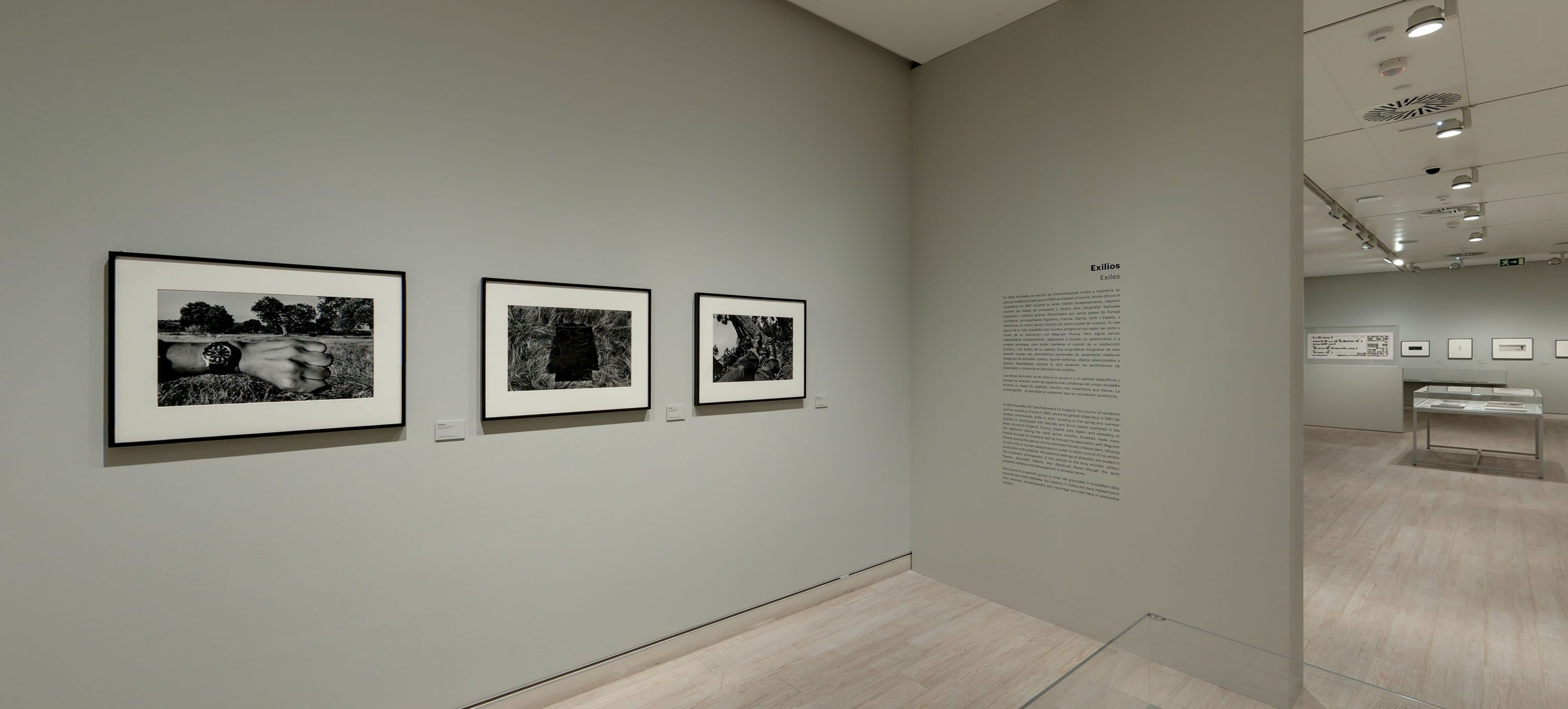
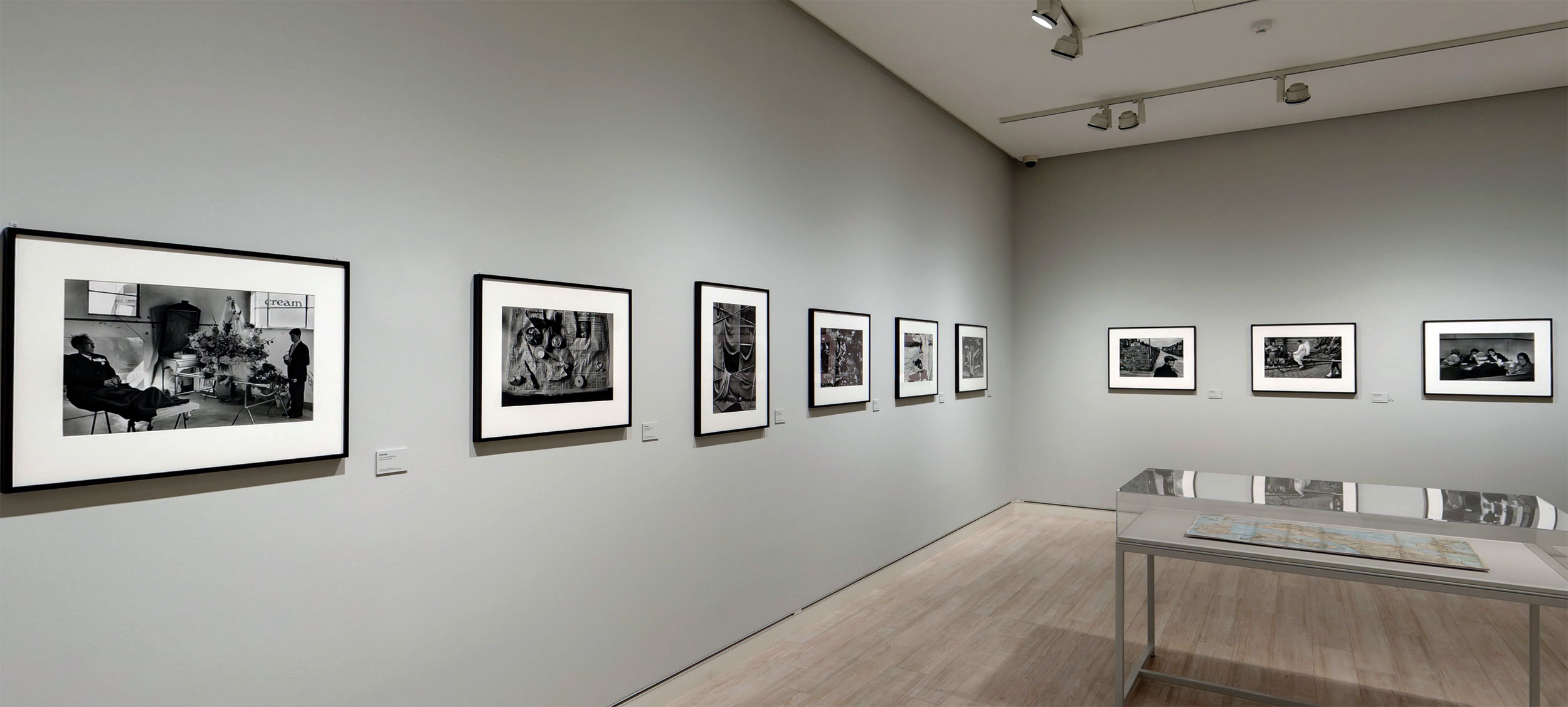
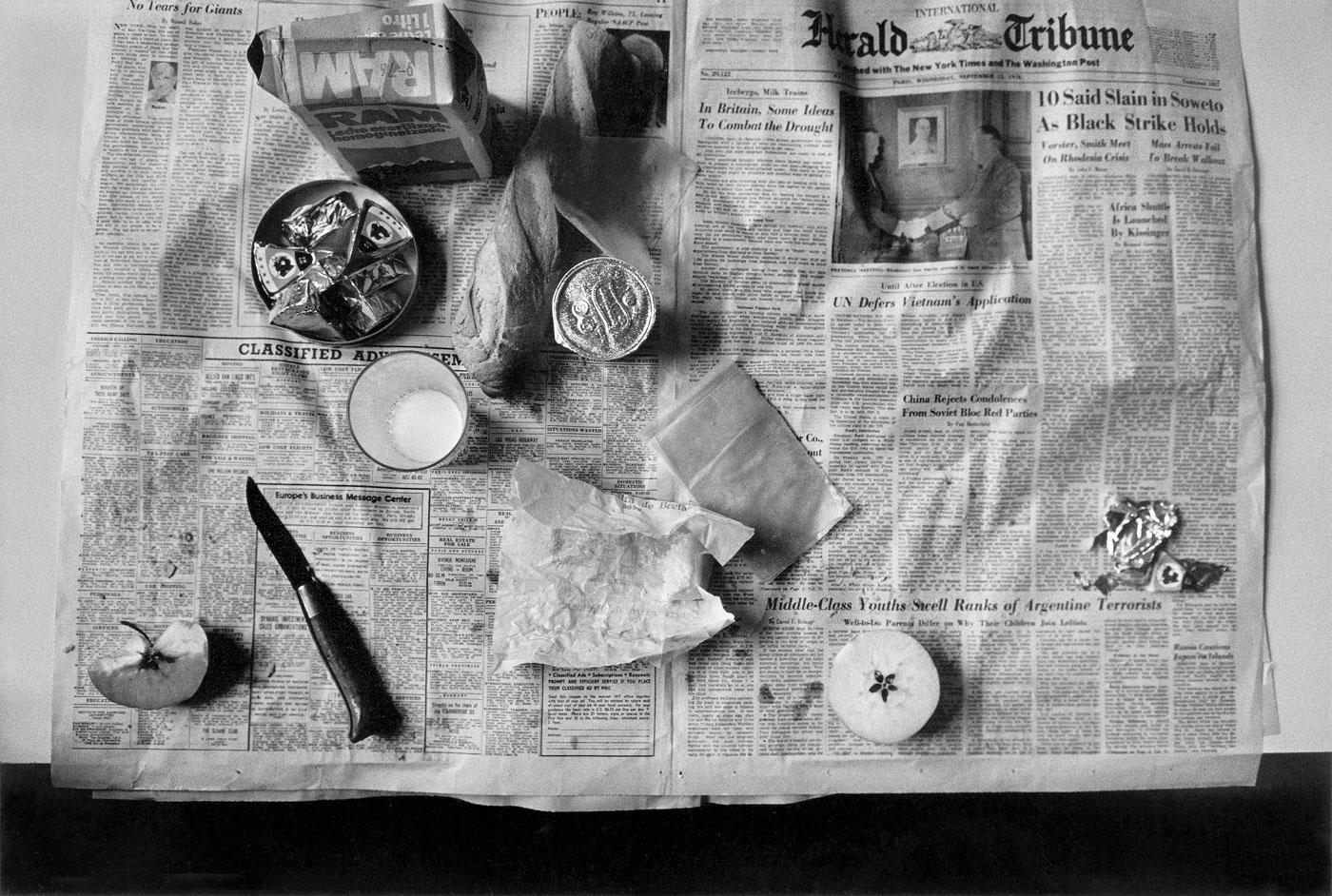
In 1970 Koudelka left Czechoslovakia for Great Britain, where he lived until he moved to France in 1980, obtaining French citizenship in 1987. During his years of exile he worked tirelessly, travelling during the spring and summer in order to photograph traditional festivals and gypsy events in various countries in Western Europe, principally the UK, Ireland, Italy and Spain, then retiring to his darkroom in the winter. During this period of his life Koudelka made numerous friends on his travels and through his association with Magnum Photos. He remained totally independent, however, refusing to rent an apartment or accept commissions in order to retain control of his artistic output and to be in complete charge of his agenda. His enigmatic photographs of these years evoke his own feelings of isolation through images of animals running free, lone figures, abandoned objects and displaced gypsies, although his work presents these feelings of solitude and distance in very broad terms.

Josef Koudelka left Czechoslovakia in 1970 and petitioned to exile to the United Kingdom. While he was in exile, he continued to work throughout Europe on those routes marked by Gypsy religious festivals and folklore that are held annually. The alienation that he felt for not belonging to a nation is reflected in his Exiles work that shows symbols of isolation (lost animals, lonely figures, scattered objects and displaced Gypsies) which is the core of the Koudelka vital experience. Unclear nationality refers to the legal status that appears in the author’s travel documents each time he returned to the United Kingdom, his home base during the first decade of exile, since he did not have a Czechoslovakian passport and could not prove his birthplace.

The subjects in the series Exiles are not limited to a specific group or period, and while they are based on Koudelka’s own everyday experiences during his stateless period, they are more metaphysical than physical. Here autobiography and reportage maintain a relationship of productive tension.

Text from the Fundación MAPFRE Josef Koudelka website [Online] Cited 22/11/2021. No longer available online


Josef Koudelka (Czech-French, b. 1938) 'France' 1976


Josef Koudelka (Czech-French, b. 1938)
Still Life (Newspaper), France
1976
Gelatin silver, early print
© Josef Koudelka / Magnum Photos


Josef Koudelka (Czech-French, b. 1938) 'Parc de Sceaux, Hauts-de-Seine, France' 1987


Josef Koudelka (Czech-French, b. 1938)
Parc de Sceaux, Hauts-de-Seine, France
1987
Gelatin silver, early print
© Josef Koudelka / Magnum Photos


Josef Koudelka (Czech-French, b. 1938) 'Czechoslovakia' 1968


Josef Koudelka (Czech-French, b. 1938)
Czechoslovakia
1968
Gelatin silver, early print
© Josef Koudelka / Magnum Photos


Josef Koudelka (Czech-French, b. 1938) 'Ireland' 1972


Josef Koudelka (Czech-French, b. 1938)
Ireland
1972
Gelatin silver, early print
© Josef Koudelka / Magnum Photos


Installation view of the Panoramas section of the exhibition 'Josef Koudelka: Uncertain Nationality' at Fundación MAPFRE, Madrid

Installation view of the Panoramas section of the exhibition 'Josef Koudelka: Uncertain Nationality' at Fundación MAPFRE, Madrid


Installation views of the Panoramas section of the exhibition Josef Koudelka: Uncertain Nationality at Fundación MAPFRE, Madrid


Panoramas

Since 1986 Koudelka has been taking photographs with panoramic cameras. His first project, commissioned by the Mission Photographique Transmanche, depicted the landscape of northern France affected by the construction of the Channel Tunnel. Since then he has used the broad panoramic format to depict places that have been mined, swept away or marked by the scars of industrialisation, devastated by wars and altered by time. The artist’s most recent panoramic photographs show important remains of past civilisations discovered on archaeological sites in twenty countries, particularly those bordering the Mediterranean.

Since 1986, Koudelka was using a panoramic camera. He uses this expanded format to show territories devastated by conflicts or altered with the passage of time. These images are the core of his impressive foldout publications such as Black Triangle or Chaos that shows scenery on the edge of ruins.

In 2007 Koudelka was invited along with eleven other photographers to take part in a project to explore the complex situation in Israel and Palestine. Despite his initial doubts, he accepted on the condition that he should be allowed to work as he wished and that he could focus on the wall in the West Bank and the area surrounding it on both sides. Having “grown up in Czechoslovakia, behind a wall”, Koudelka immediately pinpointed this barrier, with its physical, environmental and metaphorical connotations, as the subject that most interested him. This extensive system of concrete walls and barbed-wire fences allowed him to take full advantage of the broad panoramic format that he had been using since the 1980s, while the subject also gave him the opportunity to focus on the region’s landscape.

More recently, Josef Koudelka used this format to document the border of the West Bank and the territories that surround it such as the Negev desert or the Golan Heights. This work, Wall, urges the spectator to see the desolation of vast scenery dominated by walls, barbed-wire fences, access roads and borders. In the exhibition, there is a selection of copies from this work together with the book published in 2014. The panoramics are impressive objects that are between 1.2 and 1.8 m long. In these panoramics we perceive a scenery created by the man that tells his story, as well as the transformations that he has suffered due to human pillage, meaning: through his photographs we see man as creator and destroyer of the world.

Between 1991 and 2015, Josef Koudelka visited twenty countries bordering the Mediterranean, stopping at over two hundred Greek and Roman archaeological sites to create his series Archaeology. This was an unprecedented exploration which has not yet been completed – Koudelka keeps visiting archaeological sites in Greece, Turkey, Tunisia, Algeria, Syria, Jordan, Egypt, Lebanon and other Mediterranean countries – searching not for the documents of the sites, but for the most perfect images of their existence.


Josef Koudelka (Czech-French, b. 1938) 'France (Nord Pas-de-Calais)' From the series 'Chaos', 1989


Josef Koudelka (Czech-French, b. 1938)
France (Nord Pas-de-Calais)
From the series Chaos, 1989
Inkjet, print 2013
© Josef Koudelka / Magnum Photos


Josef Koudelka (Czech-French, b. 1938) 'Lebanon (Beirut)' From the series 'Chaos', 1991


Josef Koudelka (Czech-French, b. 1938)
Lebanon (Beirut)
From the series Chaos, 1991
Gelatin silver, print 1999
© Josef Koudelka / Magnum Photos


Josef Koudelka (Czech-French, b. 1938) 'Jordan (Amman)' from the series 'Archaeology', 2012


Josef Koudelka (Czech-French, b. 1938)
Jordan (Amman)
from the series Archaeology, 2012
Inkjet print, 2013
© Josef Koudelka / Magnum Photos


Josef Koudelka (Czech-French, b. 1938) 'Israel-Palestine (Al 'Eizariya [Bethany])' From the series 'Wall', 2010


Josef Koudelka (Czech-French, b. 1938)
Israel-Palestine (Al ‘Eizariya [Bethany])
From the series Wall, 2010
Inkjet, print 2014
© Josef Koudelka / Magnum Photos


Fundación MAPFRE – Instituto de Cultura
Paseo de Recoletos, 23
28004 Madrid, Spain
Phone: +34 915 81 61 00

Opening hours:
Mondays (except holidays): 2 pm – 8 pm
Tuesday to Saturday: 11 am – 8 pm
Sunday and holidays: 11 am – 7 pm

Fundación MAPFRE website

LIKE ART BLART ON FACEBOOK

Back to top

Exhibition: ‘Josef Koudelka: Nationality Doubtful’ at the Art Institute of Chicago

Exhibition dates: 7th June – 14th September 2014


Josef Koudelka (Czech-French, b. 1938) 'Czechoslovakia (Kadañ)' 1963, printed 1967


Josef Koudelka (Czech-French, b. 1938)
Czechoslovakia (Kadañ)
1963, printed 1967
from the series Gypsies
The Art Institute of Chicago, restricted gift of Artworkers Retirement Society
© Josef Koudelka/Magnum Photos. Courtesy of Pace/MacGill Gallery, New York


One of the greats – mainly for his series GypsiesInvasion and Exiles.

Powerful images: strong, honest, respectful, beautifully composed but above all gritty, gritty, gritty. There is a dark radiance here, an ether/reality, as though the air was heavy with melancholy, emotion, loss, violence, isolation and, sometimes, love. No wonder he describes his work as a “theater of the real.” Humanism, and photography at its most essential.

Dr Marcus Bunyan


Many thankx to the Art Institute of Chicago for allowing me to publish the photographs in the posting. Please click on the photographs for a larger version of the image.


“I try to be a photographer. I cannot talk. I am not interested in talking. If I have anything to say, it may be found in my images. I am not interested in talking about things, explaining about the whys and the hows. I do not mind showing my images, but not so much my contact sheets. I mainly work from small test prints. I often look at them, sometimes for a long time. I pin them to the wall, I compare them to make up my mind, be sure of my choices. I let others tell me what they mean. [To Robert Delpire] My photographs, you know them. You have published them, you have exhibited them, then you can tell whether they mean something or not.”

“There is still an enormous amount of hostility and racial prejudice towards Roma, especially in Eastern Europe, but not just there. It does not matter on which political spectrum you are, left or right, it is very universal, people are often very discriminatory against them.”


Josef Koudelka


Josef Koudelka (Czech-French, b. 1938) 'Romania' 1968, printed 1980s


Josef Koudelka (Czech-French, b. 1938)
Romania
1968, printed 1980s
from the series Gypsies
The Art Institute of Chicago, promised gift of Robin and Sandy Stuart
© Josef Koudelka/Magnum Photos. Courtesy of Pace/MacGill Gallery, New York


Czech-born French artist Josef Koudelka belongs in the firmament of classic photographers working today. Honoured with the French Prix Nadar (1978), the Hasselblad Prize (1992), and the International Center of Photography Infinity Award (2004), Koudelka is also a leading member of the world-renowned photo agency Magnum. This exhibition, his first retrospective in the United States since 1988, is also the first museum show ever to emphasise his original vintage prints, period books, magazines, and significant unpublished materials.

Koudelka became famous in anonymity through the worldwide publication of his daring photographs of the Soviet-led invasion of Prague in August 1968. Just 30 years old at the time, Koudelka had already worked for a decade, principally on Gypsies, for which he visited Roma populations for weeks at a time in his home country and later abroad over the course of years. This ambitious series beautifully combines a sense of modern history with timeless humanism.

Choosing exile to avoid reprisals for his Invasion photographs, Koudelka travelled throughout Europe during the 1970s and 1980s, camping at village festivals from spring through fall and then printing in wintertime. His photographs of those decades became the series Exiles. Since the late 1980s Koudelka has made panoramic landscape photographs in areas massively shaped by industry, territorial conflict, or – in the case of the Mediterranean rim – the persistence of Classical civilisation.

Tracing this long and impressive career, this exhibition draws on Koudelka’s extensive holdings of his own work and on recent major acquisitions by the Art Institute, including the complete surviving contents of the debut presentation of Gypsies in 1967 (22 photographs), as well as ten Invasion images printed by the photographer just weeks after the event. Also on display are early experimental and theatre photographs and some of the photographer’s beautifully produced books – which stretch dozens of feet when unfolded. A fully illustrated catalogue accompanies the exhibition, which after its debut at the Art Institute travels to the J. Paul Getty Museum, Los Angeles, and Fundación MAPFRE, Madrid.

Text from the Art Institute of Chicago website


Gypsies exists as an invaluable documentation of a people during a tumultuous time in their history. From an image of a trio of suited musicians engrossed in their instruments, to stirring portraits of families in cramped living conditions, the photoessay is both a testament to the strength of Roma culture and a stark document of the realities of these people’s lives. Having fully immersed himself in the project, Koudelka’s work presents an unbiased and honest portrait of a community whose nomadic way of life has been contested throughout history.

Anonymous text from the Magnum Photos website [Online] Cited 15/06/2021


Josef Koudelka (Czech-French, b. 1938) 'Festival of gypsy music. Straznice, Czechoslovakia' 1966


Josef Koudelka (Czech-French, b. 1938)
Festival of gypsy music. Straznice, Czechoslovakia
1966
from the series Gypsies


Josef Koudelka (Czech-French, b. 1938) 'Slovakia' 1967


Josef Koudelka (Czech-French, b. 1938)
Slovakia
1967
From the series Gypsies


Josef Koudelka (Czech-French, b. 1938) 'Slovakia' 1967


Josef Koudelka (Czech-French, b. 1938)
Slovakia
1967
From the series Gypsies


Josef Koudelka (Czech-French, b. 1938) 'Reconstruction of a homicide. In the foreground: a young gypsy suspected of being guilty. Jarabina, Czechoslovakia' 1963


Josef Koudelka (Czech-French, b. 1938)
Reconstruction of a homicide. In the foreground: a young gypsy suspected of being guilty. Jarabina, Czechoslovakia
1963
From the series Gypsies


Josef Koudelka (Czech-French, b. 1938) 'Jarabina, Czechoslovakia' 1963. Various images from the series 'Gypsies'


Josef Koudelka (Czech-French, b. 1938)
Jarabina, Czechoslovakia
1963
From the series Gypsies


Josef Koudelka (Czech-French, b. 1938) 'Slovakia' 1963


Josef Koudelka (Czech-French, b. 1938)
Slovakia
1963
From the series Gypsies


Josef Koudelka (Czech-French, b. 1938) 'Velka Lomnica, Slovakia, Czechoslovakia' 1963


Josef Koudelka (Czech-French, b. 1938)
Velka Lomnica, Slovakia, Czechoslovakia
1963
From the series Gypsies


Josef Koudelka (Czech-French, b. 1938) 'Velka Lomnica, Slovakia, Czechoslovakia' 1966


Josef Koudelka (Czech-French, b. 1938)
Velka Lomnica, Slovakia, Czechoslovakia
1966
From the series Gypsies


Josef Koudelka (Czech-French, b. 1938) 'Slovakia. Zehra' 1967


Josef Koudelka (Czech-French, b. 1938)
Slovakia. Zehra
1967
From the series Gypsies


Josef Koudelka (Czech-French, b. 1938) 'Gypsy. Okres Poprad, Slovakia, Czechoslovakia' 1967


Josef Koudelka (Czech-French, b. 1938)
Gypsy. Okres Poprad, Slovakia, Czechoslovakia
1967
From the series Gypsies


Josef Koudelka (Czech-French, b. 1938) Various images from the series 'Gypsies'


Josef Koudelka (Czech-French, b. 1938) Various images from the series 'Gypsies'


Josef Koudelka (Czech-French, b. 1938) Various images from the series 'Gypsies'


Josef Koudelka (Czech-French, b. 1938) Various images from the series 'Gypsies'


Josef Koudelka (Czech-French, b. 1938) Various images from the series 'Gypsies'


Josef Koudelka (Czech-French, b. 1938)
Images from the series Gypsies
Book printed 1975; new Aperture edition 2011


Josef Koudelka (Czech-French, b. 1938) 'Spain' 1971


Josef Koudelka (Czech-French, b. 1938)
Spain
1971
From the series Gypsies


Aperture’s new edition of Koudelka: Gypsies (2011) rekindles the energy and astonishment of this foundational body of work by master photographer Josef Koudelka. Lavishly printed in a unique quadratone mix by artisanal printer Gerhard Steidl, it offers an expanded look at Cikáni (Czech for “gypsies” ) – 109 photographs of Roma society taken between 1962 and 1971 in then-Czechoslovakia (Bohemia, Moravia and Slovakia), Romania, Hungary, France and Spain. The design and edit for this volume revisits the artist’s original intention for the work, and is based on a maquette originally prepared in 1968 by Koudelka and graphic designer Milan Kopriva. Koudelka intended to publish the work in Prague, but was forced to flee Czechoslovakia, landing eventually in Paris. In 1975, Robert Delpire, Aperture and Koudelka collaborated to publish Gitans, la fin du voyage (Gypsies, in the English-language edition), a selection of 60 photographs taken in various Roma settlements around East Slovakia.


Josef Koudelka (Czech-French, b. 1938) 'Spain' 1971 'Slovakia (Rakúsy)' 1966, printed 1967


Josef Koudelka (Czech-French, b. 1938)
Slovakia (Rakúsy)
1966, printed 1967
From the series Gypsies
The Art Institute of Chicago, restricted gift of Sandy and Robin Stuart and Photography Gala Fund
© Josef Koudelka/Magnum Photos. Courtesy of Pace/MacGill Gallery, New York.


The unforgettable photographs of acclaimed Czech-born, French photographer Josef Koudelka (b. 1938), including eyewitness images of the 1968 Soviet-led invasion of Czechoslovakia, have not been shown at a major U.S. museum since 1988. These documentary works as well as extensive selections from the photographer’s work going back to 1958 – including his renowned series Gypsies, Exiles, and a variety of recent panoramic photographs – will feature in the major retrospective exhibition Josef Koudelka: Nationality Doubtful, from June 7 through September 14, 2014. It is the first museum show ever to emphasise Koudelka’s original vintage prints, period publications and unpublished study materials.

Josef Koudelka: Nationality Doubtful, which takes place in the Abbott (182-4) and Bucksbaum (188) galleries on the ground floor of the Modern Wing, draws primarily on Koudelka’s extensive holdings of his own work. For decades, the photographer has exhibited new and recent prints of images that have grown iconic through frequent exhibitions and reproductions, while holding back the earliest, vintage prints – until now. For example, over the years there have been more than one dozen solo exhibitions of Gypsies and numerous reprints of the book of the same name, which has appeared in two editions and six languages. Among the rarities that will be included in Josef Koudelka: Nationality Doubtful is the only surviving maquette for the first book version of Gypsies, which Koudelka had to leave unfinished at his exile from Prague in 1970.

Koudelka’s habit of revisiting past projects while simultaneously advancing into new territory will be squarely on view in Josef Koudelka: Nationality Doubtful. Twenty-two original photographs from the very first show of Gypsies, held in Prague in 1967, will be displayed for the first time since that date. In an adjacent room, a different selection from the series, printed at a different size and in another way, will also be shown. Similarly, extremely rare vintage prints of Invasion, made and circulated anonymously to the press directly following the Soviet invasion of Czechoslovakia, will be shown alongside much larger prints commissioned soon after the fall of the Berlin Wall in 1989, when Koudelka returned from exile and had his first post-Soviet exhibition in Prague.

Also on display will be selections from his early experimental photographs and years of work with Prague theatre companies, made during the flowering of the Czech stage and cinema in the 1960s.

Koudelka was born in a small Moravian town in 1938 and moved to Prague, then the capital of Czechoslovakia, in the 1950s. He studied aeronautical engineering while practicing photography obsessively from 1958; in 1966, he turned full-time to a photographic career. Already in 1961, Koudelka had begun his most ambitious life project, Gypsies, for which he visited Roma populations for weeks at a time, principally in Slovakia. The rigorously humanist pictures became his calling card at home and internationally in the later 1960s after being published in the Swiss magazine Camera and shown to curators and photography representatives around Western Europe and the United States. Meanwhile, Koudelka’s Invasion photographs became famous after they appeared worldwide to commemorate the first anniversary of the events of August 1968. Worried about reprisals even though the images had been published anonymously, Koudelka chose to leave his country in May 1970.

In exile Koudelka adopted a semi-nomadic existence. He followed village festivals, pilgrimages, and Roma gatherings throughout the United Kingdom (his country of asylum in the 1970s), Spain, Italy, and France (his principal residence from 1981, and country of citizenship from 1986), photographing throughout the year and printing largely in wintertime. The world-famous photography agency Magnum, which had stewarded publication of the Invasion photographs, became Koudelka’s home base and as he says his “family.” Koudelka’s photographs of these years were gathered together in 1988 as Exiles, which will also be part of the exhibition.

Since the late 1980s Koudelka has made panoramic landscape photographs in areas massively shaped by industry, territorial conflict, or – in the case of the Mediterranean rim – the persistence of Classical civilisation. The final gallery of Josef Koudelka: Nationality Doubtful will showcase six of these mural-size black-and-white images, as well as three of the impressive accordion-fold books that Koudelka has made of them since 1989, some of which stretch to more than 100 feet long.

Despite his peripatetic life, Koudelka’s moving and stunning photographs have made him one of the most sought-after figures in print and at exhibition. Honoured with the French Prix Nadar (1978), the Hasselblad Prize (1992), and the International Center of Photography Infinity Award (2004), Koudelka remains today a leading member of Magnum.

A fully illustrated catalogue accompanies the exhibition, overseen closely by the artist and designed by the Czech firm Najbrt Studio. Edited by Matthew S. Witkovsky, the Richard and Ellen Sandor Chair and Curator of Photography at the Art Institute, the book provides extensive new information on Koudelka’s formative years in Prague during the thaw of the 1960s, as well as the first complete history of Gypsies, its twists and turns from 1961 through 2011. Amanda Maddox, assistant curator of photographs at the J. Paul Getty Museum, which has co-organised the exhibition, provides fresh knowledge on Koudelka’s underrepresented decade in England and the UK. Stuart Alexander and Gilles Tiberghien, two longtime friends of the photographer, have contributed illuminating essays on Koudelka’s years in France and his fascination for panoramic landscape, respectively.

Press release from the Art Institute of Chicago


Josef Koudelka (Czech-French, b. 1938) 'France' 1987


Josef Koudelka (Czech-French, b. 1938)
France
1987


Josef Koudelka (Czech-French, b. 1938) 'Lisbon, Portugal' 1975


Josef Koudelka (Czech-French, b. 1938)
Lisbon, Portugal
1975


Josef Koudelka (Czech-French, b. 1938) 'Lisbon, Portugal' 1975 'Ireland' 1972, printed 1987/88


Josef Koudelka (Czech-French, b. 1938)
Ireland
1972, printed 1987/88
From the series Exiles
© Josef Koudelka/Magnum Photos. Courtesy of Pace/MacGill Gallery, New York


Josef Koudelka (Czech-French, b. 1938) 'Spain' 1975


Josef Koudelka (Czech-French, b. 1938)
Spain
1975


Josef Koudelka (Czech-French, b. 1938) 'St. Procopius Abbey graveyard, Lisle' Nd


Josef Koudelka (Czech-French, b. 1938)
St. Procopius Abbey graveyard, Lisle
Nd


Josef Koudelka (Czech-French, b. 1938) 'Poland' 1958


Josef Koudelka (Czech-French, b. 1938)
Poland
1958
The Art Institute of Chicago, Photography Gala Fund and restricted gift of John A. Bross
© Josef Koudelka/Magnum Photos. Courtesy of Pace/MacGill Gallery, New York


Drama was an important part of Koudelka’s early career: In a literal sense, because he worked for a theatre magazine in the ’60s, creating fantastically emotive images, but also because theatricality was, and still is, deeply embedded in the photographer’s world view. The week in 1968 when young Czechoslovakians stood up against invading Soviet forces occurred when he was working as a stage photographer, and so it became not only a tragedy but also a drama to be recorded. Likewise, his “Gypsies” series, created in the same period, is described by Koudelka as a “theater of the real.”

Through dynamic composition and juxtaposition, Koudelka’s work challenges us to differentiate between spectacle and reality, and while there is no positive indication that one is valued over the other, this is not at all the same as the disbelief in reality that is characteristic of postmodernism. As he puts it, “You form the world in your viewfinder, but at the same time the world forms you.”

In a sense, Koudelka does not want us to become too comfortable with his works as definitive statements. Instead, he crops bodies in images abruptly; we often see people cut off at the knees or ankles, visually and figuratively separating them from the Earth. In other works, disembodied arms and legs jut into the space of the photograph, making scenes surreal and reminding us that whatever coherency the composition has, we can never see the whole picture of what’s really going on. Even with the more poetic and purposefully aesthetic panorama prints of his later “Chaos” series – monumental testaments to the violence we enact both on the natural world and upon each other – through the pitted insistence of film grain and the lack of bright tones or highlights, we are not permitted redemption through “art” or the creation of “beautiful” objects.

In this respect Koudelka’s work, in its celebration of the imperfect, has more in common with the aesthetics of the haiku poet Basho, or the tea master Sen no Rikyu, than with the luscious highly detailed colour images that largely dominate the world of contemporary art photography.”

John L. Tran. “Josef Koudelka: the theatrics of life” on The Japan Times website 18 December 2013 [Online] Cited 15/06/2021


Josef Koudelka (Czech-French, b. 1938) 'Untitled (Student on tank, eyes crossed out)' 1968


Josef Koudelka (Czech-French, b. 1938)
Untitled (Student on tank, eyes crossed out)
1968
From the series Invasion
© Josef Koudelka/Magnum Photos. Courtesy of Pace/MacGill Gallery, New York


Josef Koudelka (Czech-French, b. 1938) 'Invasion by Warsaw Pact troops in front of the Radio headquarters. Prague, Czechoslovakia' 1968


Josef Koudelka (Czech-French, b. 1938)
Invasion by Warsaw Pact troops in front of the Radio headquarters. Prague, Czechoslovakia
1968
From the series Invasion
© Josef Koudelka/Magnum Photos. Courtesy of Pace/MacGill Gallery, New York


Josef Koudelka (Czech-French, b. 1938) 'Untitled' Various images from the series 'Invasion'


Josef Koudelka (Czech-French, b. 1938) 'Untitled' Various images from the series 'Invasion'


Josef Koudelka (Czech-French, b. 1938) 'Untitled' Various images from the series 'Invasion'


Josef Koudelka (Czech-French, b. 1938) 'Untitled' Various images from the series 'Invasion'


Josef Koudelka (Czech-French, b. 1938) 'Untitled' Various images from the series 'Invasion'


Josef Koudelka (Czech-French, b. 1938)
Untitled
Images from the series Invasion
1968


The Art Institute of Chicago
111 South Michigan Avenue
Chicago, Illinois 60603-6404
Phone: (312) 443-3600

Opening hours:
Thursday – Monday 10am – 11pm
Closed Tuesday and Wednesday

The Art Institute of Chicago website

LIKE ART BLART ON FACEBOOK

Back to top

Exhibition: ‘Czech Photography of the 20th Century’ at the Exhibition Hall of the Federal Republic of Germany, Bonn

Exhibition dates: 13th March – 26th July, 2009


Jindřich Štreit (Czech, b. 1946) 'Arnoltice' 1985 from the exhibition 'Czech Photography of the 20th Century' at the Exhibition Hall of the Federal Republic of Germany, Bonn,  March - July, 2009


Jindřich Štreit (Czech, b. 1946)
Arnoltice
1985
From the Village Life series
Gelatin silver print


Jindřich Štreit (born 5 September 1946 in Vsetín) is a Czech photographer and pedagogue known for his documentary photography. He concentrates on documenting the rural life and people of Czech villages. He is considered one of the most important exponents of Czech documentary photography.


Looks like an interesting exhibition. I wish I had been able to see it. Wouldn’t it be such a grand job flying around the world, reviewing photography exhibitions and bringing you my thoughts. I can only wish…

Dr Marcus Bunyan


Many thankx to the Exhibition Hall of the Federal Republic of Germany for allowing me to publish the photographs in the posting. Please click on the photographs for a larger version of the image.


František Drtikol (Czech, 1883-1961) 'Wave' 1925 from the exhibition 'Czech Photography of the 20th Century' at the Exhibition Hall of the Federal Republic of Germany, Bonn,  March - July, 2009


František Drtikol (Czech, 1883-1961)
Wave
1925
Gelatin silver print


Czech photography produced and produces leading figures in all areas of photography – from classical documentary photojournalism to surrealism, realism or avant-garde works. From 13 March 2009 on, the Art and Exhibition Hall of the Federal Republic of Germany is presenting over 400 photographic works, a historical mosaic of Czech photography from 1900 until the late 20th century that underlines the international reputation enjoyed by Czech photography today. That reputation is not only apparent in the outstanding contributions by such renowned artists as Josef Sudek, Karel Hájek, Václav Jírů, Vilém Reichmann, Jan Reich, Jindřich Štreit, Frantisek Drtikol, Jaromír Funke, Jaroslav Rossler, Josef Koudelka and Jan Saudek, but also in works from a host of younger photographers. The exhibition does not only showcase famous names but also less well-known photographers, providing an overall impression of the variation and innovation in Czech photography.

From Surrealism and other avant-garde experimentation to realism and classic photo reportage, Czech photographers have long played a key role in all areas of photography and continue to do so to this day.

This exhibition is the first in Germany to present the history and development of Czech photography from 1900 to the turn of the millennium. Beginning with Art Nouveau-inspired Pictorialism, the comprehensive survey traces the rise of avant-garde photography and the development of photo montage in the 1920s to the 1940s. It examines the influence of ideological pressure on photography during the Second World War, the Stalinist 1950s and the period of Communist ‘normalisation’ after the occupation in 1968 and introduces the visitor to the multifaceted range of contemporary trends.

Text from the Exhibition Hall of the Federal Republic of Germany website [Online] Cited 10/04/2009. No longer available online


František Drtikol (Czech, 1883-1961) 'Nude' 1927


František Drtikol (Czech, 1883-1961)
Nude
1927
Gelatin silver print


František Drtikol (3 March 1883, Příbram – 13 January 1961, Prague) was a Czech photographer of international renown. He is especially known for his characteristically epic photographs, often nudes and portraits.

From 1907 to 1910 he had his own studio, until 1935 he operated an important portrait photostudio in Prague on the fourth floor of one of Prague’s remarkable buildings, a Baroque corner house at 9 Vodičkova, now demolished. Jaroslav Rössler, an important avant-garde photographer, was one of his pupils. Drtikol made many portraits of very important people and nudes which show development from pictorialism and symbolism to modern composite pictures of the nude body with geometric decorations and thrown shadows, where it is possible to find a number of parallels with the avant-garde works of the period. These are reminiscent of Cubism, and at the same time his nudes suggest the kind of movement that was characteristic of the futurism aesthetic.

Text from the Wikipedia website


Eugen Wiskovsky (Czech, 1888-1964) 'Lunar Landscape or Collars' 1929


Eugen Wiskovsky (Czech, 1888-1964)
Lunar Landscape or Collars
1929
Gelatin silver print


The oeuvre of the leading Czech avant-garde photographer Eugen Wiskovsky (1888-1964) is not large in size or subject range, but it is noteworthy in its originality, depth of ideas, and mastery. Wiskovsky’s early New Objectivist works, from the late 1920s and early 1930s, sought artistic effect in apparently non-aesthetic objects: His inventive lighting and cropping allowed their elementary lines to stand out, to lose their worldly associations and take on potential metaphorical meanings. In his dynamic diagonal compositions, Wiskovsky was among the most radical practitioners of Czech Constructivism. His landscape work is similarly distinctive.


Jaroslav Rössler (Czech, 1902-1990) 'Untitled' 1931


Jaroslav Rössler (Czech, 1902-1990)
Untitled
1931
Gelatin silver print


Jaroslav Rössler (25 May 1902, Smilov – 5 January 1990, Prague) was a pioneer of Czech avant-garde photography and a member of the association of Czech avant-garde artists Devětsil (Butterbur).

Rössler was born to the Czech-German father, Eduard Rössler, and a Czech mother, Adela Nollova. From 1917 to 1920, Rössler studied in the atelier of the company owned by renowned Czech photographer František Drtikol. Subsequently, he worked with the company as a laboratory technician. As a 21 years old, he began collaboration with the art theorist Karel Teige, who assigned him to create typographic layout for magazines Pásmo, Disk, Stavba and ReD (Revue Devětsilu). While working on these tasks, Rössler deepened his knowledge of photographic methods. In his works he utilised and combined the techniques of photogram, photomontage, collage and drawing. The beginnings of his photographic work were influenced by Cubism and Futurism, but he also attempted to create the first abstract photographs. In 1923, he became a member of the avant-garde association Devětsil.

In 1925, he went on a six-month study visit to Paris. The same year he began working as a photographer in the Osvobozené divadlo in Prague. Before his second departure to Paris, he co-worked as a commercial photographer with the pictorial magazine Pestrý týden.

In 1927, Rössler moved to Paris together with his wife, Gertruda Fischerová (1894-1976). Initially, he focused on commercial photography. He collaborated with the experimental studio of Lucien Lorell, and worked on commissions for notable companies such as Michelin and Shell. However, later he found an interest in the “street life” of Paris, which influenced his future stay in the city. During a demonstration, he encountered the protesters and took photographs of the event. Shortly after that he was arrested, and after a six-month imprisonment he was expelled from the country, in 1935. The alleged reason for his expulsion was his German-sounding surname.

After his return from Paris, Rössler and his wife resided in Prague, Žižkov. He opened a small photographic atelier, but difficulties associated with the management of the studio caused a significant gap in his artistic work, lasting for almost two decades.

In the 1950s, he resumed his previous activities and again began experimenting with the camera and photographic techniques. He created so-called “prizmata” (prisms), photographs taken through a birefringent prism. Additionally, he experimented with solarisation and explored the possibilities of the Sabatier effect.

Text from the Wikipedia website


Jindřich Štyrský (Czech, 1899-1942) From the 'Man with Blinkers' series 1934


Jindřich Štyrský (Czech, 1899-1942)
From the Man with Blinkers series
1934
Museum of Decorative Arts, Prague


Eugen Wiskovsky (Czech, 1888-1964) 'Disaster' 1939


Eugen Wiskovsky (Czech, 1888-1964)
Disaster
1939
Gelatin silver print


Josef Sudek (Czech, 1896-1976) 'The Last Rose' 1956


Josef Sudek (Czech, 1896-1976)
The Last Rose from the Rose series
1956
Gelatin silver print


Josef Sudek (17 March 1896, Kolín, Bohemia – 15 September 1976, Prague) was a Czech photographer, best known for his photographs of Prague.

Sudek was originally a bookbinder. During the First World War he was drafted into the Austro-Hungarian Army in 1915 and served on the Italian Front until he was wounded in the right arm in 1916 which led to the limb being amputated at the shoulder. After the war he studied photography for two years in Prague under Jaromir Funke. His army disability pension gave him leeway to make art, and he worked during the 1920s in the romantic Pictorialist style. Always pushing at the boundaries, a local camera club expelled him for arguing about the need to move forwards from ‘painterly’ photography. Sudek then founded the progressive Czech Photographic Society in 1924. Despite only having one arm, he used large, bulky cameras with the aid of assistants.

Sudek’s photography is sometimes said to be modernist. But this is only true of a couple of years in the 1930s, during which he undertook commercial photography and thus worked “in the style of the times”. Primarily, his personal photography is neo-romantic.

Text from the Wikipedia website


Josef Sudek was a Czech photographer best known for his elegiac black-and-white images of Prague, interiors, still lifes, and the landscapes of Bohemian forests. Many of Sudek’s most memorable images were taken from the window of his small studio, documenting his humble courtyard during changing weather and light conditions. “Everything around us, dead or alive, in the eyes of a crazy photographer mysteriously takes on many variations,” he explained, “so that a seemingly dead object comes to life through light or by its surroundings.”

Text from the artnet website [Online] Cited 10/01/2019


Jan Saudek (Czechoslovakia, b. 1935) 'Life' 1966


Jan Saudek (Czech, b. 1935)
Life
1966
Gelatin silver print


Josef Koudelka (Czech, b. 1938) 'France' 1987


Josef Koudelka (Czech, b. 1938)
France
1987
Gelatin silver print


The Art and Exhibition Hall of the Federal Republic of Germany
Museumsmeile Bonn
Helmut-Kohl-Allee 4
53113 Bonn
Telephone: +49 228 9171-200

Opening hours:
Thursday – Sunday and Tuesday 10am – 7pm
Closed Mondays

Exhibition Hall of the Federal Republic of Germany website

LIKE ART BLART ON FACEBOOK

Back to top