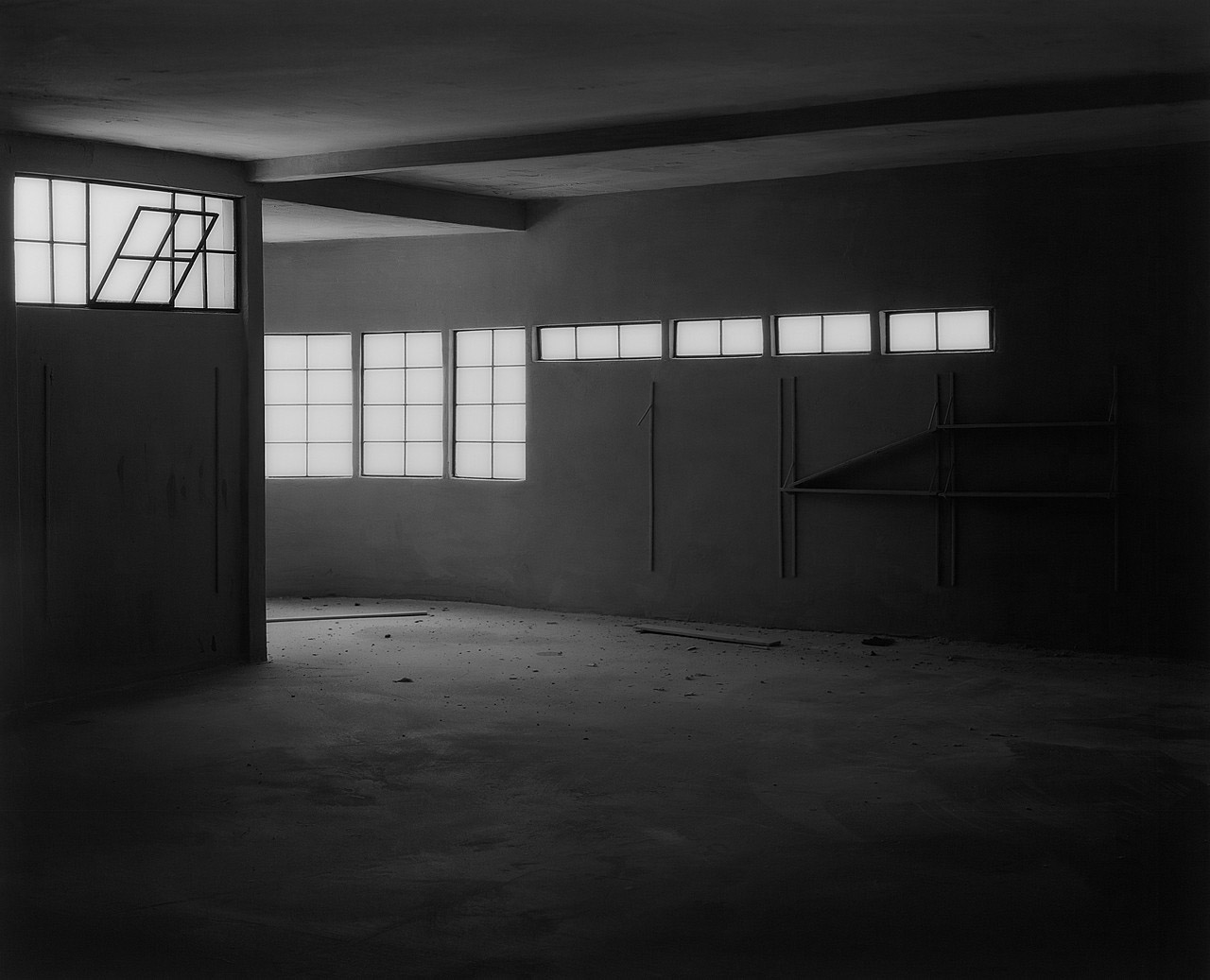
Exhibition: ‘A World of Its Own: Photographic Practices in the Studio’ at the Museum of Modern Art (MoMA), New York Part 1

Exhibition dates: 8th February – 2nd November 2014

The Edward Steichen Photography Galleries, third floor

Curators: Organised by Quentin Bajac, The Joel and Anne Ehrenkranz Chief Curator, with Lucy Gallun, Assistant Curator, Department of Photography
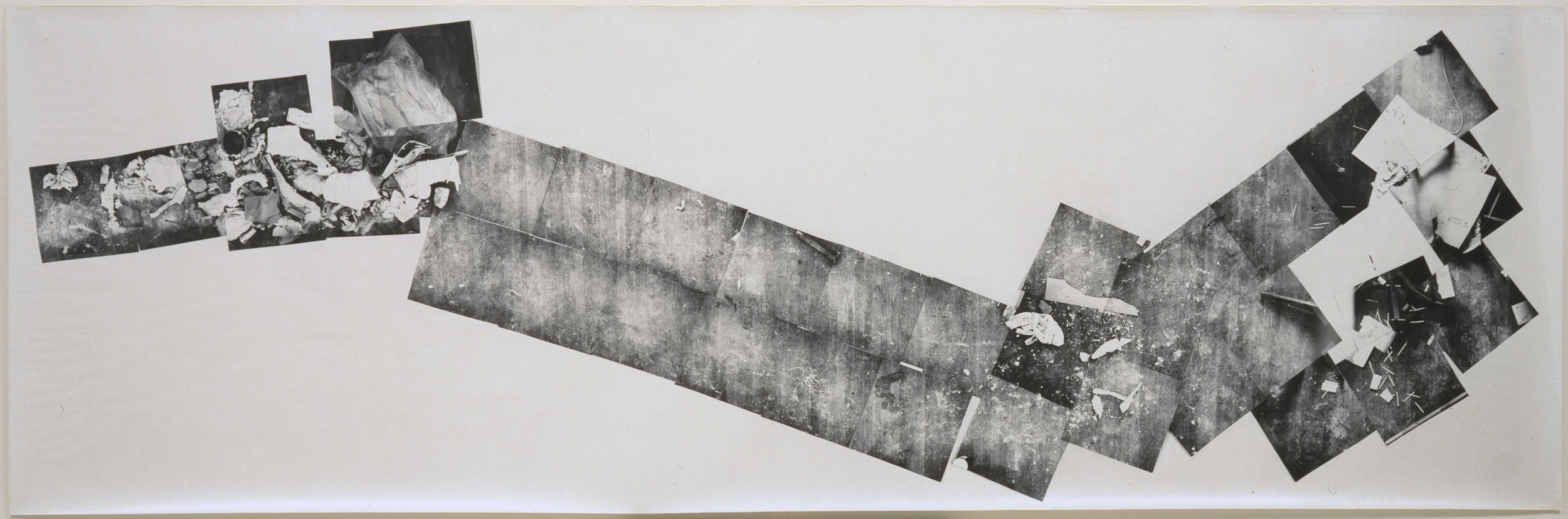
 

Bruce Nauman (American, b. 1941) 'Composite Photo of Two Messes on the Studio Floor' 1967


Bruce Nauman (American, b. 1941)
Composite Photo of Two Messes on the Studio Floor 
1967
Gelatin silver print
40 1/2″ x 10′ 3″ (102.9 x 312.4cm)
Gift of Philip Johnson
Museum of Modern Art Collection


A bumper two part posting on this fascinating, multi-dimensional subject: photographic practices in the studio, which may be a stage, a laboratory, or a playground. The exhibition occupies all MoMA’s six photography galleries, each gallery with its own sub theme, namely, Surveying the Studio, The Studio as Stage, The Studio as Set, A Neutral Space, Virtual Spaces and The Studio, from Laboratory to Playground.

The review of this exhibition “When a Form Is Given Its Room to Play” by Roberta Smith on the New York Times website (6th February 2014) damns with faint praise. The show is a “fabulous yet irritating survey” which “dazzles but often seems slow and repetitive.” Smith then goes on to list the usual suspects: “And so we get professional portraitists, commercial photographers, lovers of still life, darkroom experimenters, artists documenting performances and a few generations of postmodernists, dead and alive, known and not so, exploring the ways and means of the medium. This adds up to plenty to see: around 180 images from the 1850s to the present by some 90 photographers and artists. The usual suspects here range from Julia Margaret Cameron to Thomas Ruff, with Laszlo Moholy-Nagy, Lucas Samaras, John Divola and Barbara Kasten in between.” There are a few less familiar and postmodern artists thrown in for good measure, but all is “dominated by black-and-white images in an age when colour reigns.” The reviewer then rightly notes the paucity of “postmodern photography of the 1980s, much of it made by women, that did a lot to reorient contemporary photo artists to the studio. It is a little startling for an exhibition that includes so many younger artists dealing with the artifice of the photograph (Ms. Belin, for example) to represent the Pictures Generation artists with only Cindy Sherman, James Casebere and (in collaboration with Allan McCollum) Laurie Simmons” before finishing on a positive note (I think!), noting that the curators “had aimed for a satisfying viewing experience, which, these days, is something to be grateful for.”


SOMETHING TO BE GRATEFUL FOR… OH, TO BE SO LUCKY IN AUSTRALIA!

Just to have the opportunity to view an exhibition of this quality, depth and breadth of concept would be an amazing thing. Even a third of the number of photographs (say 60 works) that address this subject at any one of the major institutions around Australia would be fantastic but, of that, there is not a hope in hell.

Think Marcus, think… when was the last major exhibition, I mean LARGE exhibition, at a public institution in Australia that actually addressed specific ISSUES and CONCEPTS in photography (such as this), not just putting on monocular exhibitions about an artists work or exhibitions about a regions photographs? Ah, well… you know, I can’t really remember. Perhaps the American Dreams exhibition at Bendigo Art Gallery, but that was a GENERAL exhibition about 20th century photography with no strong investigative conceptual theme and it was imported from George Eastman House.

Here in Australia, all we can do is look from afar, purchase the catalogue and wonder wistfully what the exhibition actually looks like and what we are missing out on. MoMA sent me just 10 images media images. I have spent hours scouring the Internet for other images to fill the void of knowledge and vision (and then cleaning those sometimes degraded images), so that those of us not privileged enough to be able to visit New York may gain a more comprehensive understanding of what this exhibition, and this multi-faceted dimension of photography, is all about. It’s a pity that our venerable institutions and the photography curators in them seem to have had a paucity of ideas when it comes to expounding interesting critiques of the medium over the last twenty years or so. What a missed opportunity.

Dr Marcus Bunyan


Many thankx to MoMA for allowing me to publish six of the photographs in the posting. The rest of the images were sourced from the Internet. Please click on the photographs for a larger version of the image.
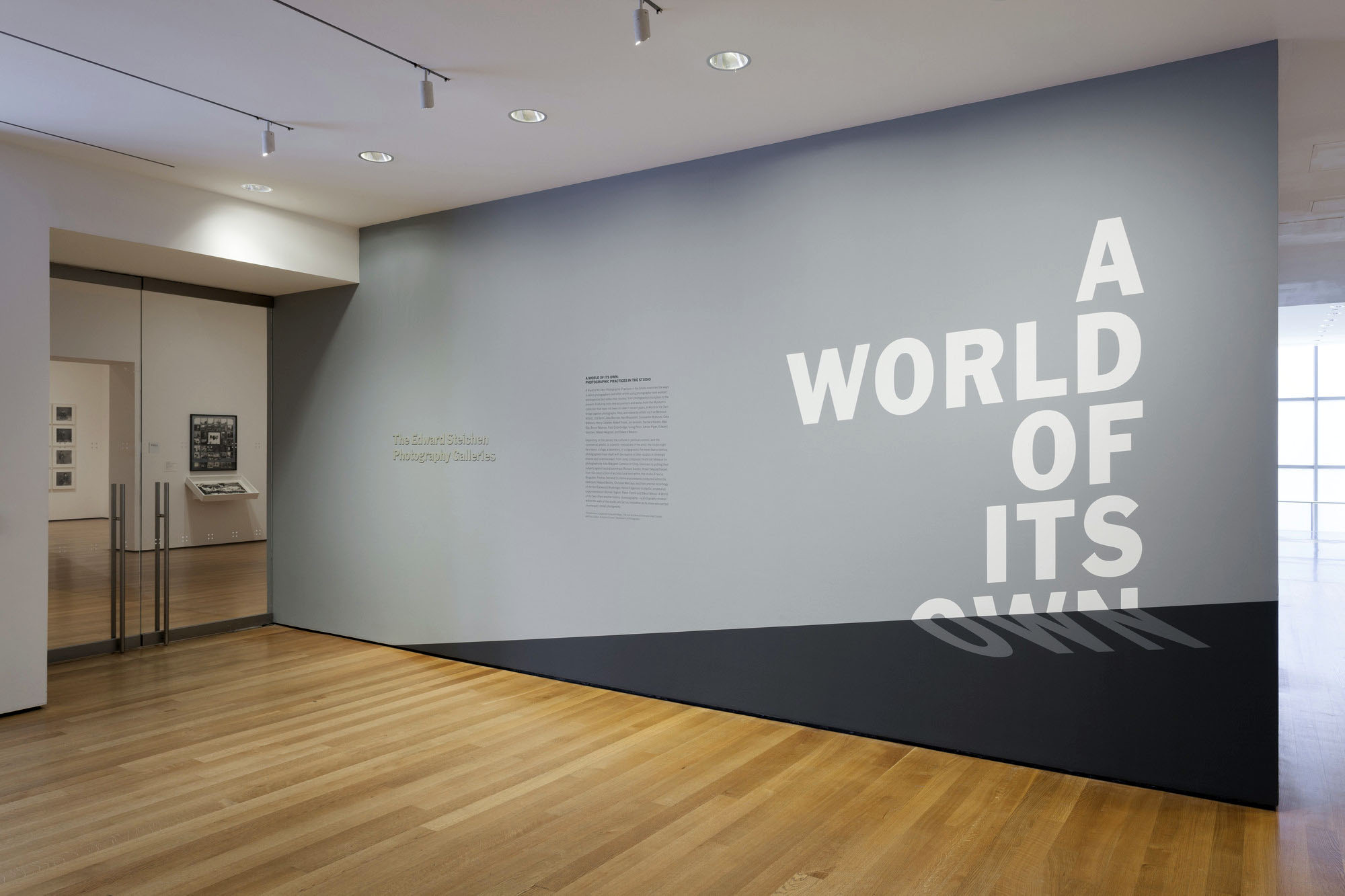


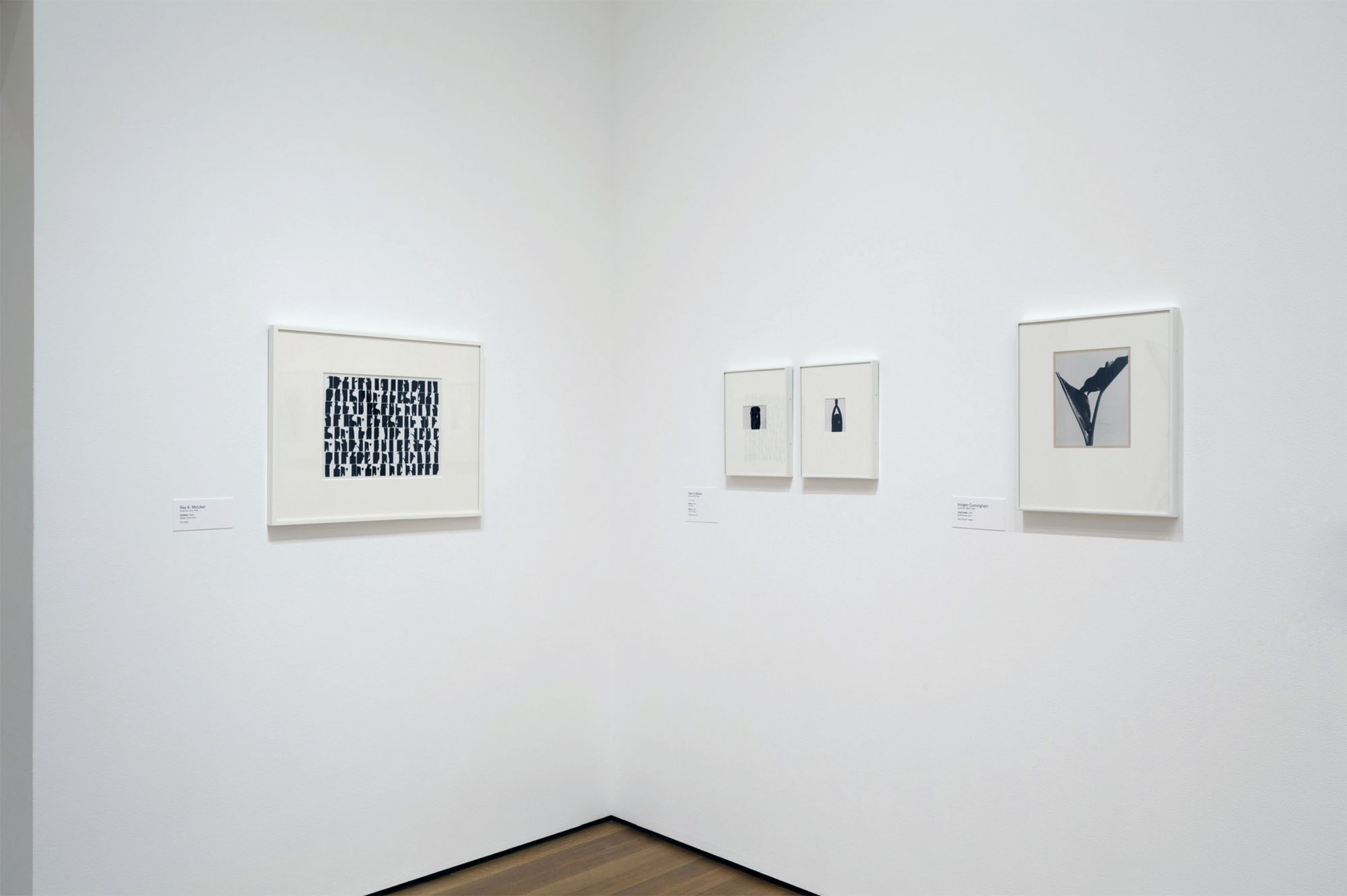
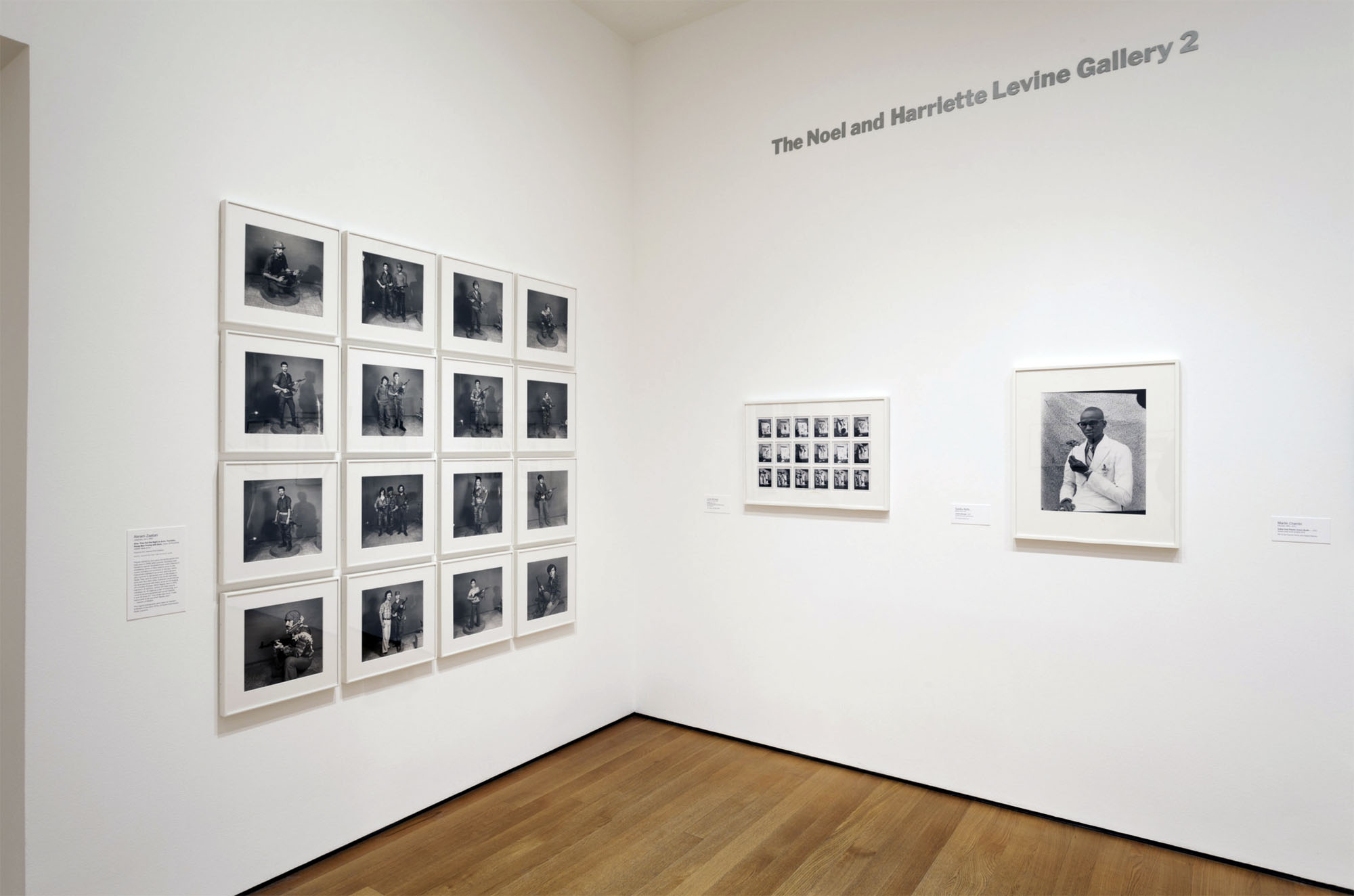
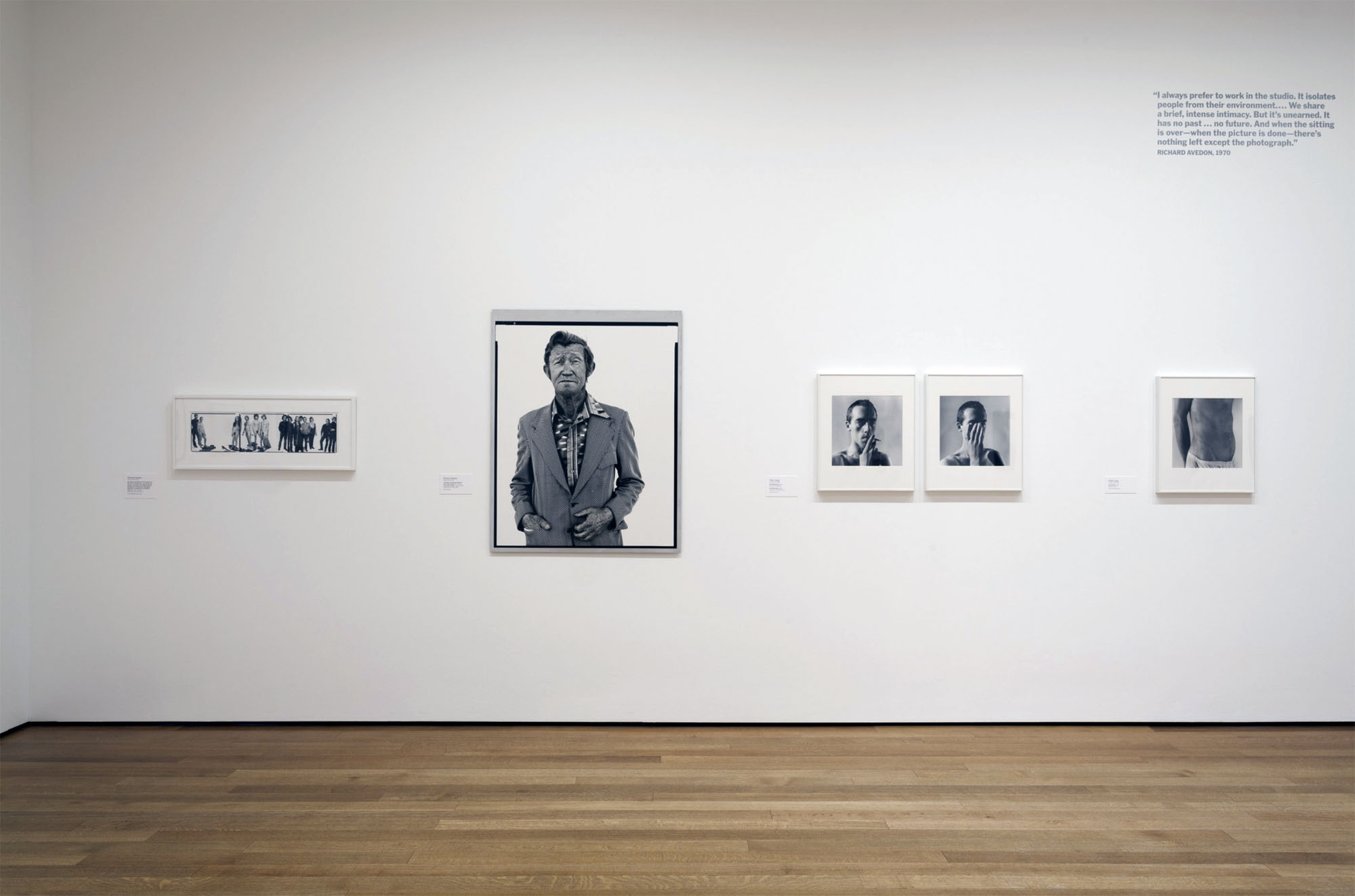
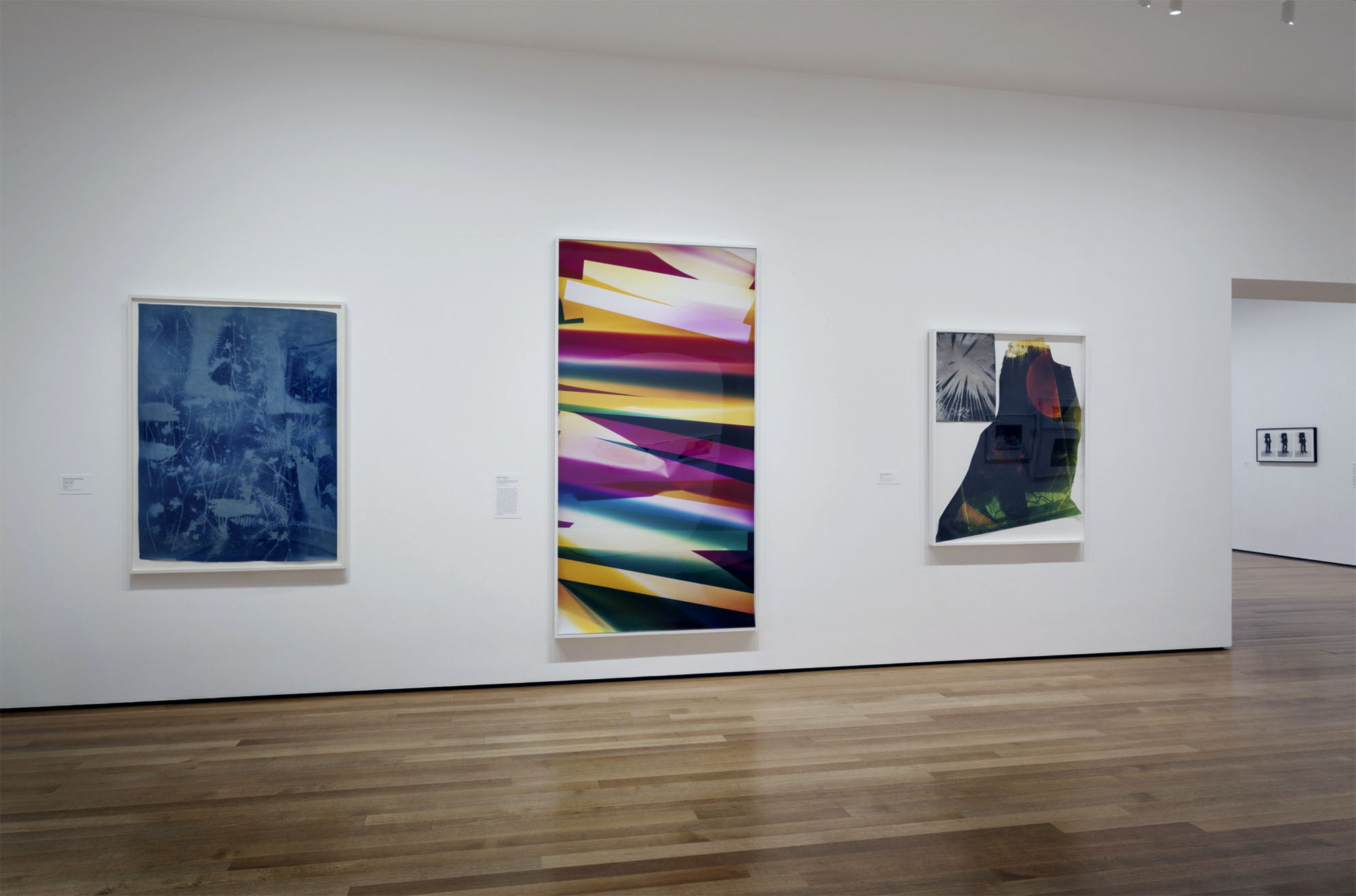
Installation view of the exhibition 'A World of Its Own: Photographic Practices in the Studio' at the Museum of Modern Art (MoMA), New York


Installation view of the exhibition A World of Its Own: Photographic Practices in the Studio at the Museum of Modern Art (MoMA), New York


Surveying the Studio


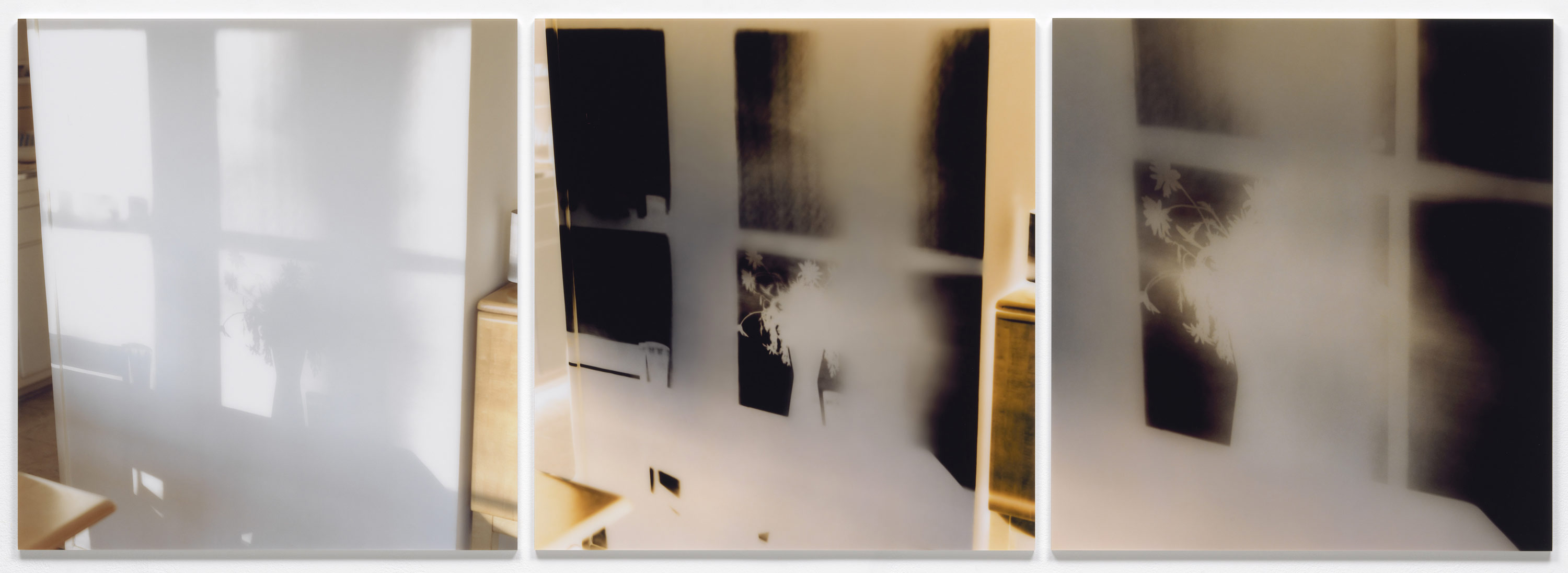
Uta Barth (American, b. 1958) 'Sundial (07.13)' 2007


Uta Barth (American, b. 1958)
Sundial (07.13)
2007
Chromogenic colour prints
each 30 x 28 1/4″ (76.2 x 71.8cm)
The Photography Council Fund
Museum of Modern Art Collection
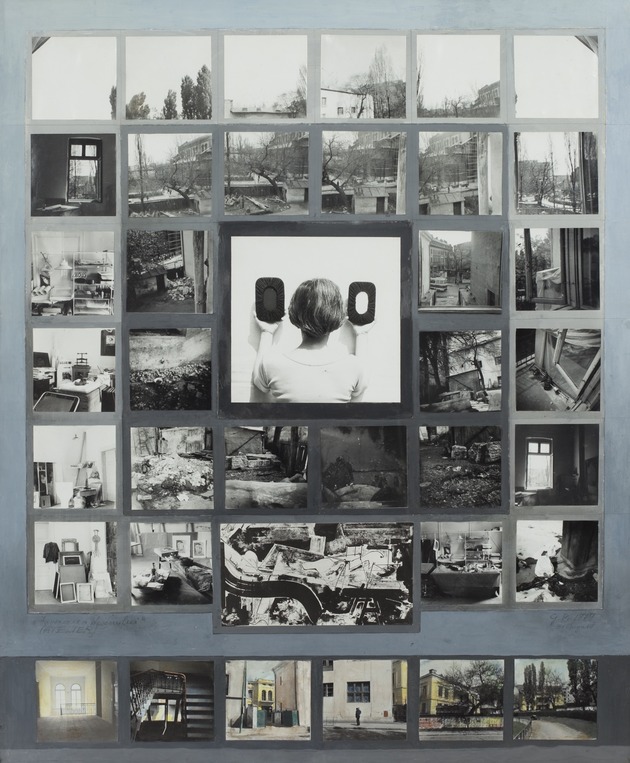
 

Geta Brâtescu (Romanian, 1926-2018) 'The Studio. Invocation of the Drawing' (L'Atelier. Invocarea desenului) 1979


Geta Brâtescu (Romanian, 1926-2018)
The Studio. Invocation of the Drawing (L’Atelier. Invocarea desenului)
1979
Gelatin silver prints with tempera on paper
33 1/16 x 27 9/16″ (84 x 70cm)
Modern Women’s Fund
Museum of Modern Art Collection


Geta Brătescu was a Romanian visual artist with works in drawing, collage, photography, performance, illustration and film. In 2008, Brătescu received an honorary doctorate from the Bucharest National University of Arts for “her outstanding contributions to the development of contemporary Romanian art”. Brătescu was artistic director of literature and art magazine Secolul 21. A major retrospective of her work was held at the National Museum of Art of Romania in December 1999. In 2015 Brătescu’s first UK solo exhibition was held at the Tate Liverpool. In 2017, she was selected to represent Romania at the 57th Venice Biennale.


Man Ray (American, 1890-1976) 'Laboratory of the Future' 1935


Man Ray (American, 1890-1976)
Laboratory of the Future
1935
Gelatin silver print
9 1/16 x 7″ (23.1 x 17.8cm)
Gift of James Johnson Sweeney
Museum of Modern Art Collection
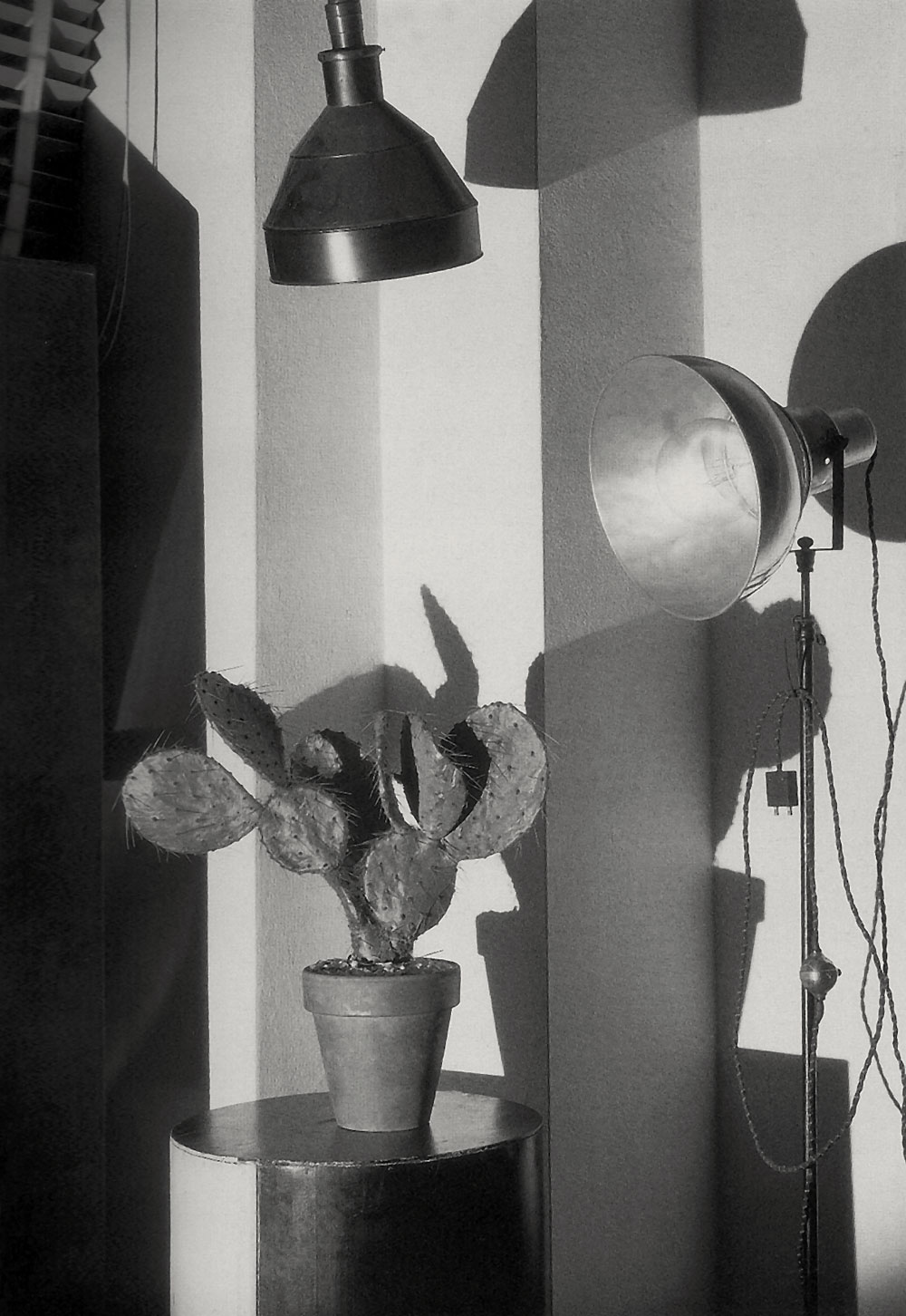
 

Charles Sheeler (American, 1883-1965) 'Cactus and Photographer's Lamp, New York' 1931


Charles Sheeler (American, 1883-1965)
Cactus and Photographer’s Lamp, New York
1931
Gelatin silver print
9 1/2 x 6 5/8″ (23.5 x 16.6cm)
Gift of Samuel M. Kootz
Museum of Modern Art Collection


Bringing together photographs, films, videos, and works in other mediums, A World of Its Own: Photographic Practices in the Studio examines the ways in which photographers and artists using photography have worked and experimented within the four walls of the studio space, from photography’s inception to today. Featuring both new acquisitions and works from the Museum’s collection that have not been on view in recent years, A World of Its Own includes approximately 180 works, by approximately 90 artists, such as Berenice Abbott, Uta Barth, Zeke Berman, Karl Blossfeldt, Constantin Brancusi, Geta Brătescu, Harry Callahan, Robert Frank, Jan Groover, Barbara Kasten, Man Ray, Bruce Nauman, Paul Outerbridge, Irving Penn, Adrian Piper, Edward Steichen, William Wegman, and Edward Weston.

The exhibition considers the various roles played by the photographer’s studio as an autonomous space; depending on the time period, context, and the individual motivations (commercial, artistic, scientific) and sensibilities of the photographer, the studio may be a stage, a laboratory, or a playground. Organised thematically, the display unfolds in multiple chapters. Throughout the 20th century, artists have explored their studio spaces using photography, from the use of composed theatrical tableaux (in photographs by Julia Margaret Cameron or Cindy Sherman) to neutral, blank backdrops (Richard Avedon, Robert Mapplethorpe); from the construction of architectural sets within the studio space (Francis Bruguière, Thomas Demand) to chemical procedures conducted within the darkroom (Walead Beshty, Christian Marclay); and from precise recordings of time and motion (Eadweard Muybridge, Dr. Harold E. Edgerton) to amateurish or playful experimentation (Roman Signer, Peter Fischli / David Weiss). A World of Its Own offers another history of photography, a photography created within the walls of the studio, and yet as groundbreaking and inventive as its seemingly more extroverted counterpart, street photography.”

Text from the MoMA website


The exhibition is divided into 6 themes each with its own gallery space:

1/ Surveying the Studio
2/ The Studio as Stage
3/ The Studio as Set
4/ A Neutral Space
5/ Virtual Spaces
6/ The Studio, from Laboratory to Playground


The Studio as Stage
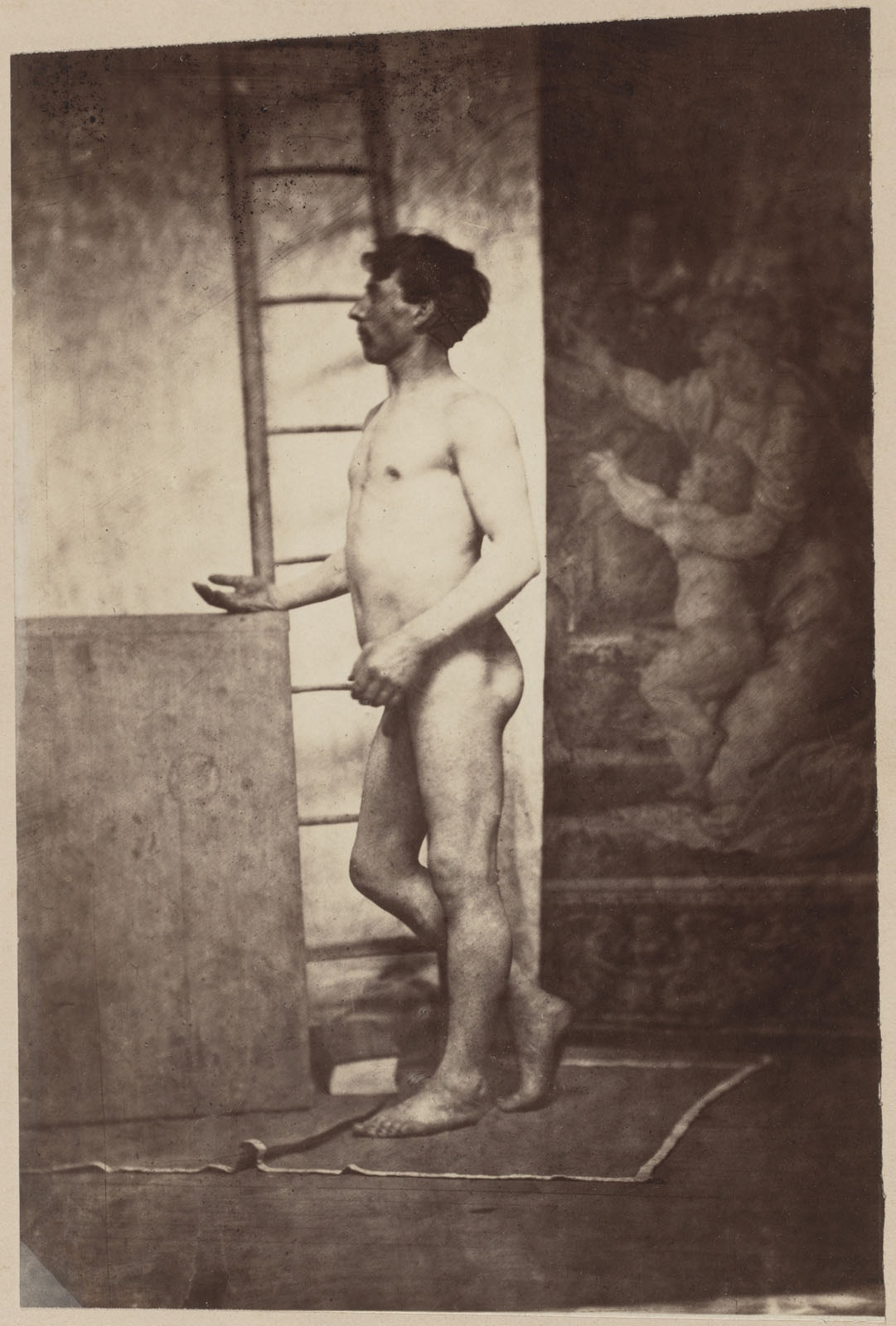
 

Unidentified photographer (French?) 'Untitled' c. 1855


Unidentified photographer (French?)
Untitled
c. 1855
Albumen silver print from a wet-collodion glass negative
9 3/16 × 6 1/8″ (23.4 × 15.5cm)
Gift of Paul F. Walter
Museum of Modern Art Collection


Cecil Beaton (British, 1904-1980) 'Edith Sitwell' 1927


Cecil Beaton (British, 1904-1980)
Edith Sitwell
1927
Gelatin silver print
11 1/2 × 9 5/8″ (29.3 × 24.5 cm)
Gift of Paul F. Walter
Museum of Modern Art Collection
© 2022 Estate of Cecil Beaton
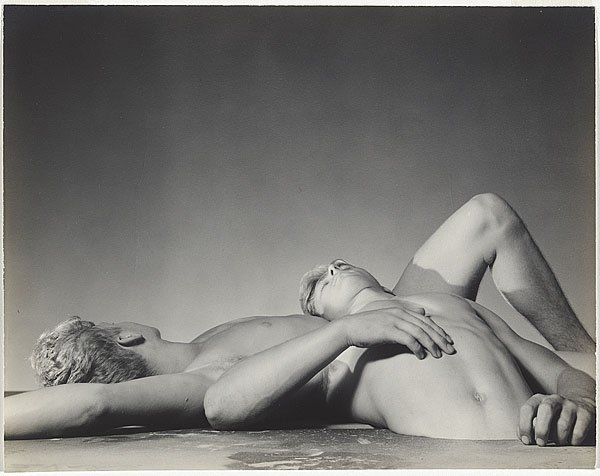
 

George Platt Lynes (American, 1907-1955) 'Untitled' 1941


George Platt Lynes (American, 1907-1955)
Untitled
1941
Gelatin silver print
7 5/8 x 9 5/8″ (19.2 x 24.4cm)
Anonymous gift
Museum of Modern Art Collection


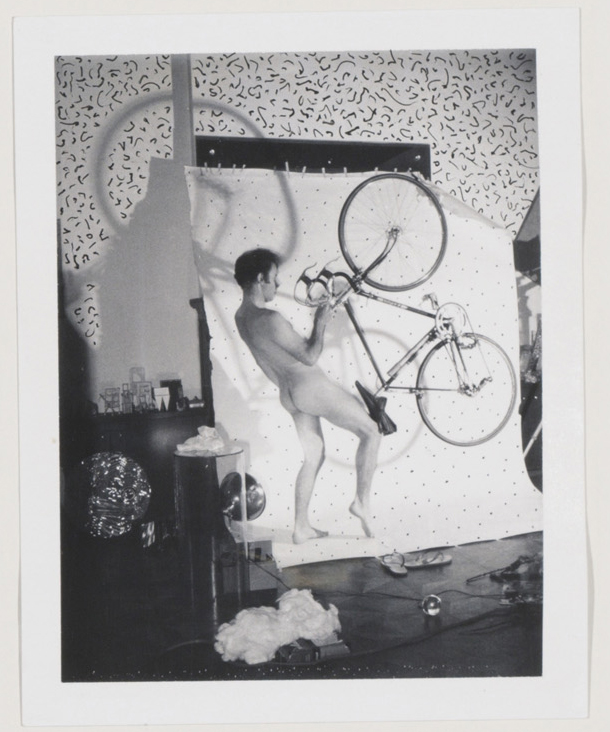
Lucas Samaras (American, 1936-2024) 'Auto Polaroid' 1969-1971


Lucas Samaras (American born Greece, 1936-2024)
Auto Polaroid
1969-1971
Eighteen black-and-white instant prints (Polapan), with hand-applied ink
Each 3 3/4 x 2 15/16″ (9.5 x 7.4cm)
Overall 14 5/8 x 24″ (37.2 x 61cm)
Gift of Robert and Gayle Greenhill
Museum of Modern Art Collection


Working in the digital realm long before it was associated with fine art, Samaras pioneered radical new modes of image making throughout his storied career, pushing and redefining the boundaries of portraiture and self-portraiture over the course of seven decades. Centering on the body and the psyche, Samaras’s autobiographical work across photography, painting, installation, assemblage, drawing, textile, and sculpture often meditates on the malleable, shapeshifting nature of selfhood. “I like remaking myself in photography,” the artist once said. …

In the late 1960s, Samaras began working with a Polaroid 360 camera, creating his iconic Auto Polaroids by altering hundreds of images, mostly self-portraits, with applications of ink by his own hand. In 1973, using a Polaroid SX-70, he took this collagist approach further by manipulating the wet emulsion of the film with a stylus or his fingertip before the chemicals set. The resulting distortions in his Photo-Transformations series took on abstract, otherworldly effects, which he would continue exploring amid the rise of other image making technologies in the following decades.

Anonymous. “Remembering Lucas Samaras,” on the Pace Gallery website Mar 7, 2024 [Online] Cited 06/06/2024
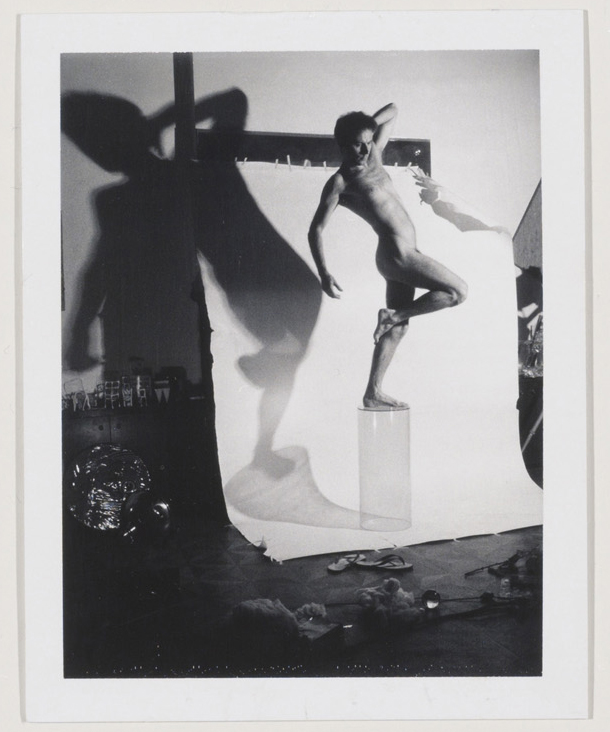
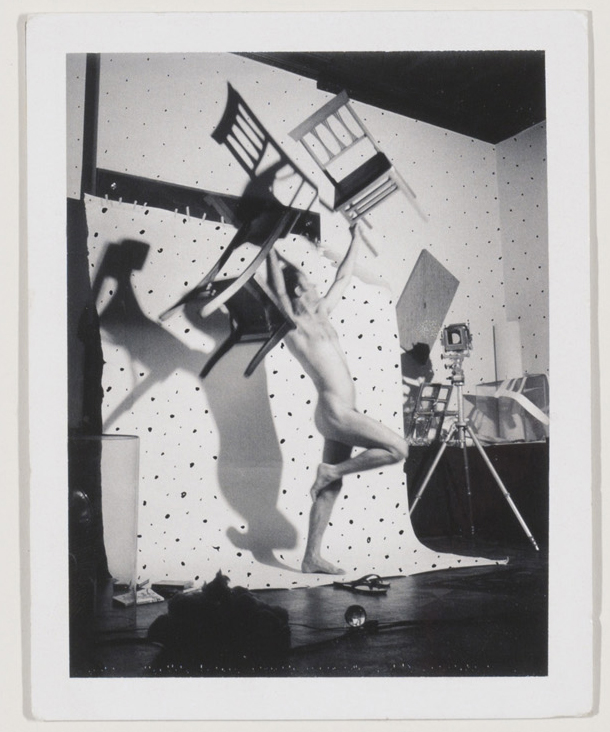
 

Lucas Samaras (American, 1936-2024) 'Auto Polaroid' 1969-1971 (detail)

Lucas Samaras (American, 1936-2024) 'Auto Polaroid' 1969-1971 (detail)

Lucas Samaras (American, 1936-2024) 'Auto Polaroid' 1969-1971 (detail)


Lucas Samaras (American, 1936-2024)
Auto Polaroid (details)
1969-1971
Eighteen black-and-white instant prints (Polapan), with hand-applied ink
Each 3 3/4 x 2 15/16″ (9.5 x 7.4cm)
Overall 14 5/8 x 24″ (37.2 x 61cm)
Gift of Robert and Gayle Greenhill
Museum of Modern Art Collection


Julia Margaret Cameron (British, 1815-1879) 'Madonna with Children' 1864


Julia Margaret Cameron (British, 1815-1879)
Madonna with Children
1864
Albumen silver print
10 1/2 x 8 5/8″ (26.7 x 21.9cm)
Gift of Shirley C. Burden
Museum of Modern Art Collection


Julia Margaret Cameron (British, 1815-1879) 'Untitled (Mary Ryan?)' c. 1867


Julia Margaret Cameron (British, 1815-1879)
Untitled (Mary Ryan?)
c. 1867
Albumen silver print
13 3/16 x 11″ (33.5 x 27.9cm)
Gift of Shirley C. Burden
Museum of Modern Art Collection
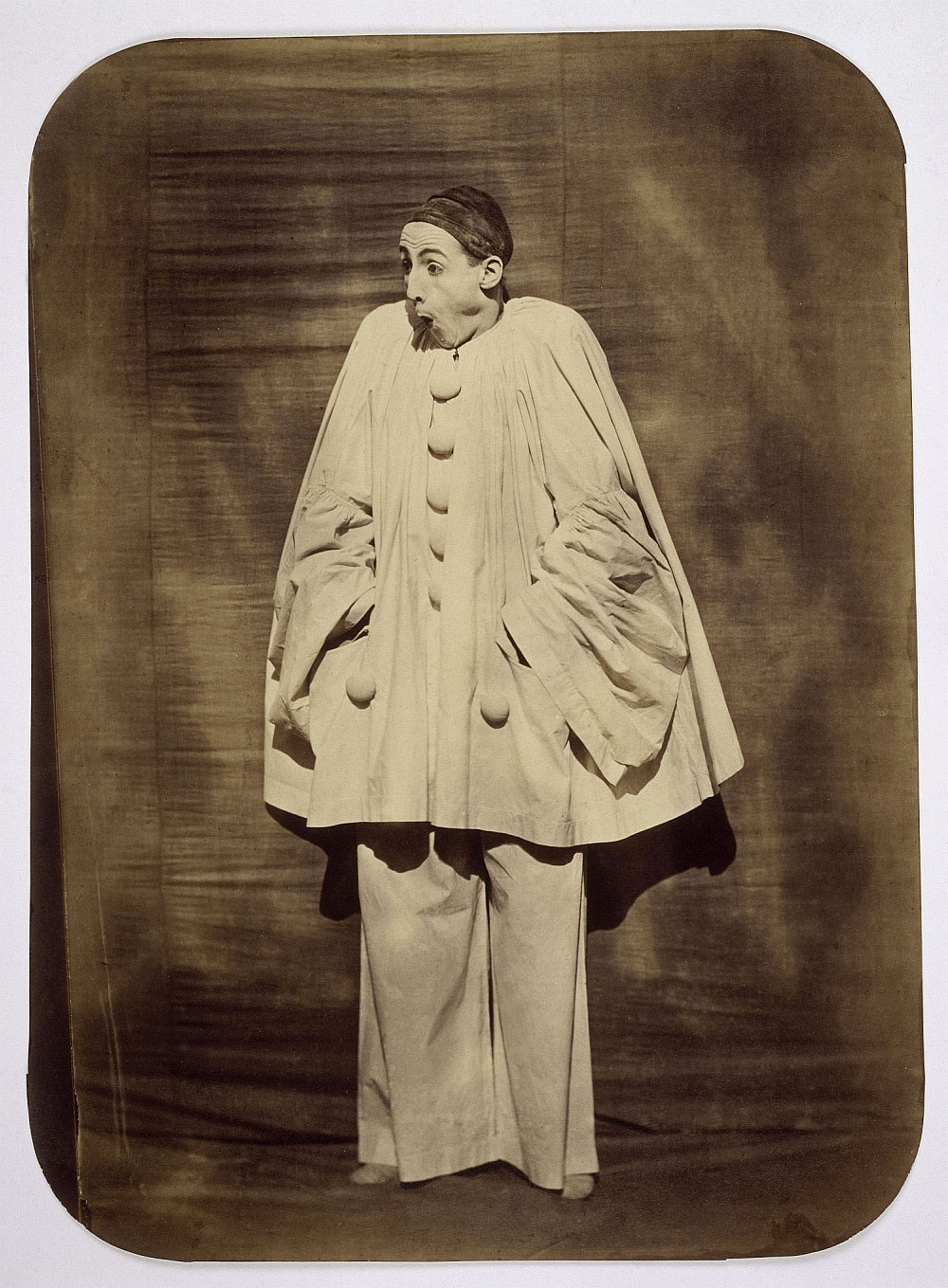
 

Nadar (Gaspard-Félix Tournachon) (French, 1820-1910) Adrien Tournachon (French, 1825-1903) 'Pierrot Surprised' 1854-1855


Nadar (Gaspard-Félix Tournachon) (French, 1820-1910)
Adrien Tournachon (French, 1825-1903)
Pierrot Surprised
1854-1855
Albumen silver print
11 1/4 x 8 3/16″ (28.6 x 20.8cm)
Suzanne Winsberg Collection. Gift of Suzanne Winsberg
Museum of Modern Art Collection
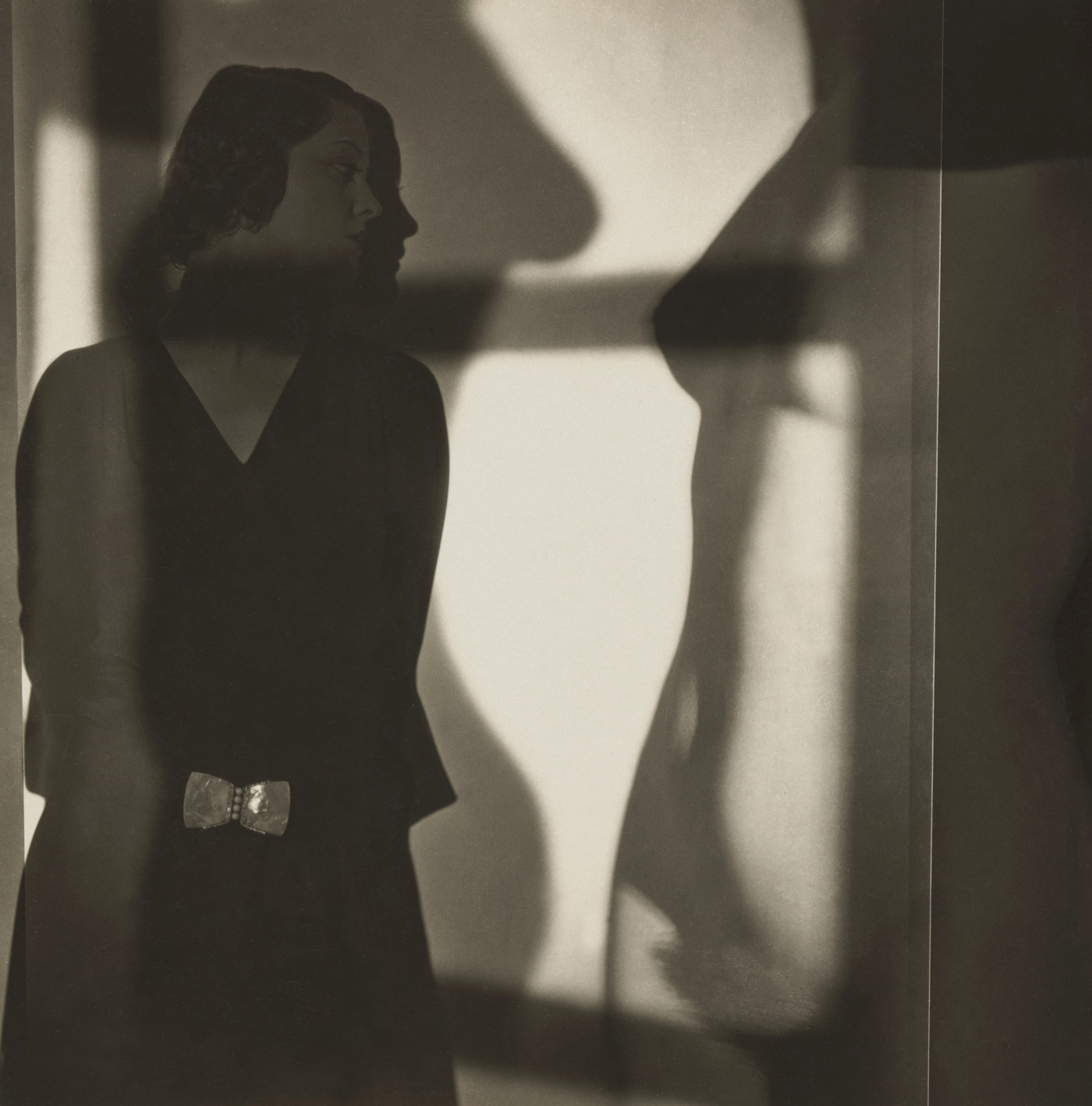
 

Maurice Tabard (French, 1897-1984) 'Untitled' 1929


Maurice Tabard (French, 1897-1984)
Untitled
1929
Gelatin silver print
6 9/16 x 6 1/2″ (16.7 x 16.5cm)
Gift of Robert Shapazian
Museum of Modern Art Collection
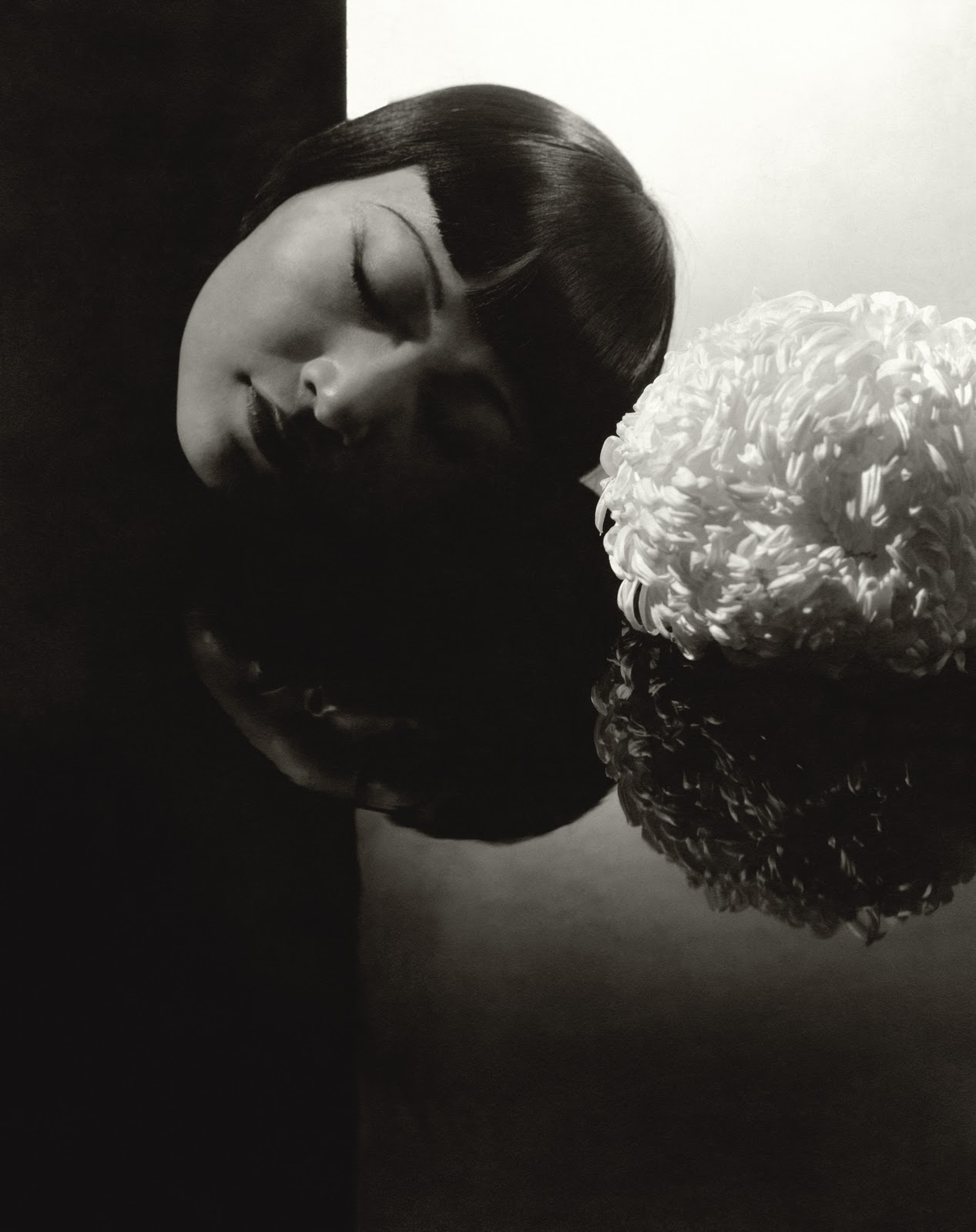
 

Edward Steichen (American born Luxembourg, 1879-1973) 'Anna May Wong' 1930


Edward Steichen (American born Luxembourg, 1879-1973)
Anna May Wong
1930
Gelatin silver print
16 9/16 x 13 7/16″ (42.1 x 34.1cm)
Gift of the artist
Museum of Modern Art Collection


“Taking people away from their natural circumstances and putting them into the studio in front of a camera did not simply isolate them, it transformed them. Sometimes the change was subtle; sometimes it was great enough to be almost shocking. But always there was transformation.”

~ Irving Penn 1974
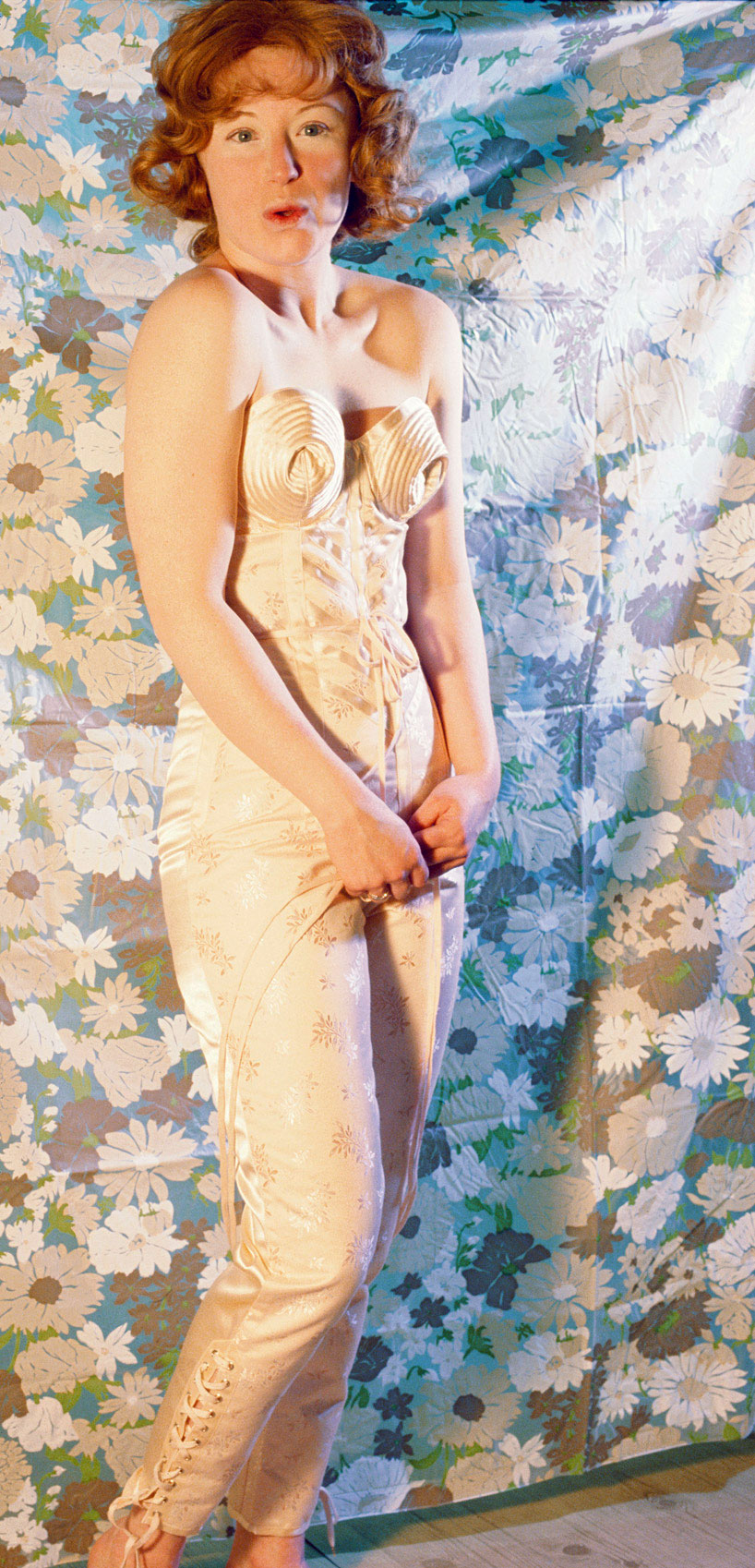
 

Cindy Sherman (American, b. 1954) 'Untitled #131' 1983


Cindy Sherman (American, b. 1954)
Untitled #131
1983
Chromogenic colour print
35 x 16 1/2″ (89 x 41.9cm)
Joel and Anne Ehrenkranz Fund
Museum of Modern Art Collection


The Studio as Set


Barbara Kasten (American, b. 1936) 'Construct I-F' 1979


Barbara Kasten (American, b. 1936)
Construct I-F
1979
Colour instant print (Polaroid Polacolor)
9 1/2 x 7 1/2″ (24.0 x 19.0cm)
Acquired through the generosity of Wendy Larsen
Museum of Modern Art Collection
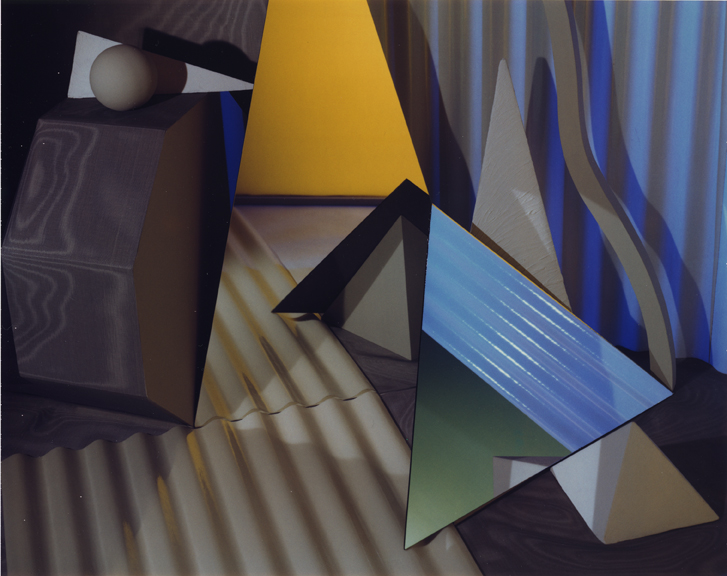
 

Barbara Kasten (American, b. 1936) 'Construct NYC 17' 1984


Barbara Kasten (American, b. 1936)
Construct NYC 17
1984
Silver dye bleach print
29 3/8 x 37 1/16″ (74.7 x 94.1cm)
Gift of Foster Goldstrom
Museum of Modern Art Collection


James Casebere (American, b. 1953) 'Subdivision with Spotlight' 1982


James Casebere (American, b. 1953)
Subdivision with Spotlight
1982
Gelatin silver print
14 13/16 x 18 15/16″ (37.6 x 48.1cm)
Purchase
Museum of Modern Art Collection
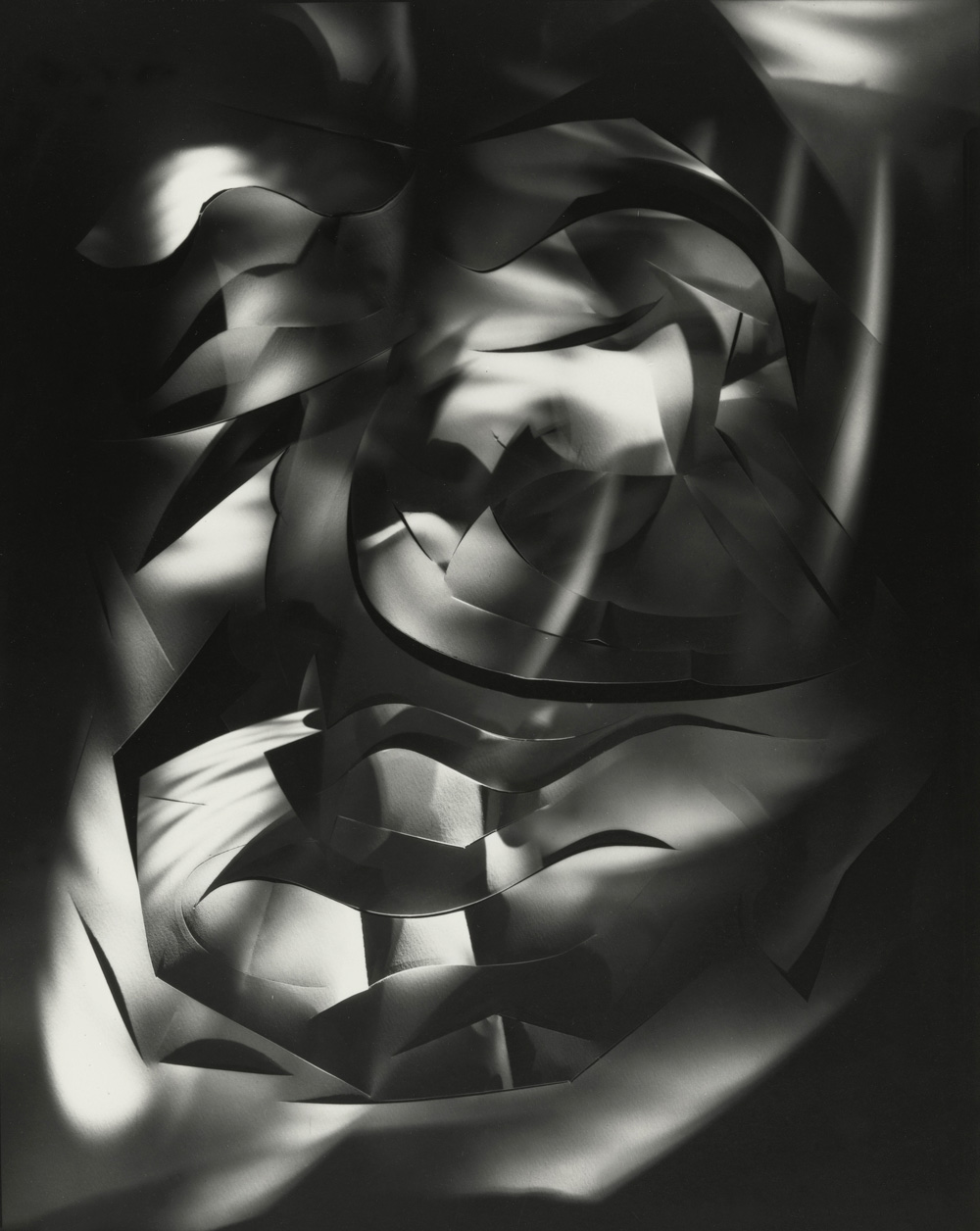
 

Francis Bruguière (American, 1879-1945) 'Light Abstraction' c. 1925


Francis Bruguière (American, 1879-1945)
Light Abstraction
c. 1925
Gelatin silver print
9 15/16 x 7 15/16″ (25.2 x 20.2cm)
Gift of Arnold Newman
Museum of Modern Art Collection


Francis Joseph Bruguière (15 October 1879 – 8 May 1945) was an American photographer.

Francis Bruguière was born in San Francisco, California, to Emile Antoine Bruguière (1849-1900) and Josephine Frederikke (Sather) Bruguière (1845-1915). He was the youngest of four sons born into a wealthy banking family and was privately educated. His brothers were painter and physician Peder Sather Bruguière (1874-1967), Emile Antoine Bruguiere Jr. (1877-1935), and Louis Sather Bruguière (1882-1954), who married wealthy heiress Margaret Post Van Alen. He was also a grandson of banker Peder Sather. His mother died in the 1915 sinking of the British ocean liner SS Arabic by a German submarine.

In 1905, having studied painting in Europe, Bruguière became acquainted with photographer and modern art promoter Alfred Stieglitz (who accepted him as a Fellow of the Photo-secession), and set up a studio in San Francisco, recording in a Pictorialist style images of the city after the earthquake and fire; some of them were reproduced in a book called San Francisco in 1918. He co-curated the photographic exhibition at the 1915 Panama-California Exposition in San Diego, and nine of his photographs were included in The Evanescent City (1916) by George Sterling.

In 1918, following the decline of the family fortune, he moved to New York City where he made his living by photographing for Vanity Fair, Vogue, and Harper’s Bazaar. Soon he was appointed the official photographer of the New York Theatre Guild. In this role he photographed the British stage actress Rosalinde Fuller, who was debuting in What’s in a Name? (1920), and she partnered him for the rest of his life.

Throughout his life, Bruguière experimented with multiple-exposure, solarization (years ahead of Man Ray), original processes, abstracts, photograms, and the response of commercially available film to light of various wavelengths. Until his one-man show at the Art Centre of New York in 1927, he showed this work only to friends. In the mid-1920s, he planned to make a film called The Way, depicting stages in a man’s life, to be played by Sebastian Droste with Rosalinde doing all the female parts. To obtain funding, Bruguière took photographs of projected scenes, but Droste died before filming started; so we are left with only the still pictures.

In 1927 they moved to London, where Bruguière co-created the first British abstract film, Light Rhythms, with Oswell Blakeston. Long thought to have been lost, it has now been recovered. During World War II, he returned to painting.

Text from the Wikipedia website


Jaromír Funke (Czech, 1896-1945) 'Composition' c. 1925


Jaromír Funke (Czech, 1896-1945)
Composition
c. 1925
Gelatin silver print
9 1/4 × 11 9/16″ (23.4 × 29.3cm)
Acquired through the generosity of Blanchette Hooker Rockefeller
Museum of Modern Art Collection
© 2022 Miloslava Rupešová


Jaromír Funke (1 August 1896 – 22 March 1945) was a leading Czech photographer during the 1920s and 1930s.

Funke was recognised for his “photographic games” using mirrors, lights, and insignificant objects, such as plates, bottles, or glasses, to create unique works. In his still life imagery he created abstracts of forms and shadows reminiscent of photograms. His work was regarded as logical, original and expressive in nature. A typical feature of Funke’s work would be the “dynamic diagonal.”

Text from the Wikipedia website
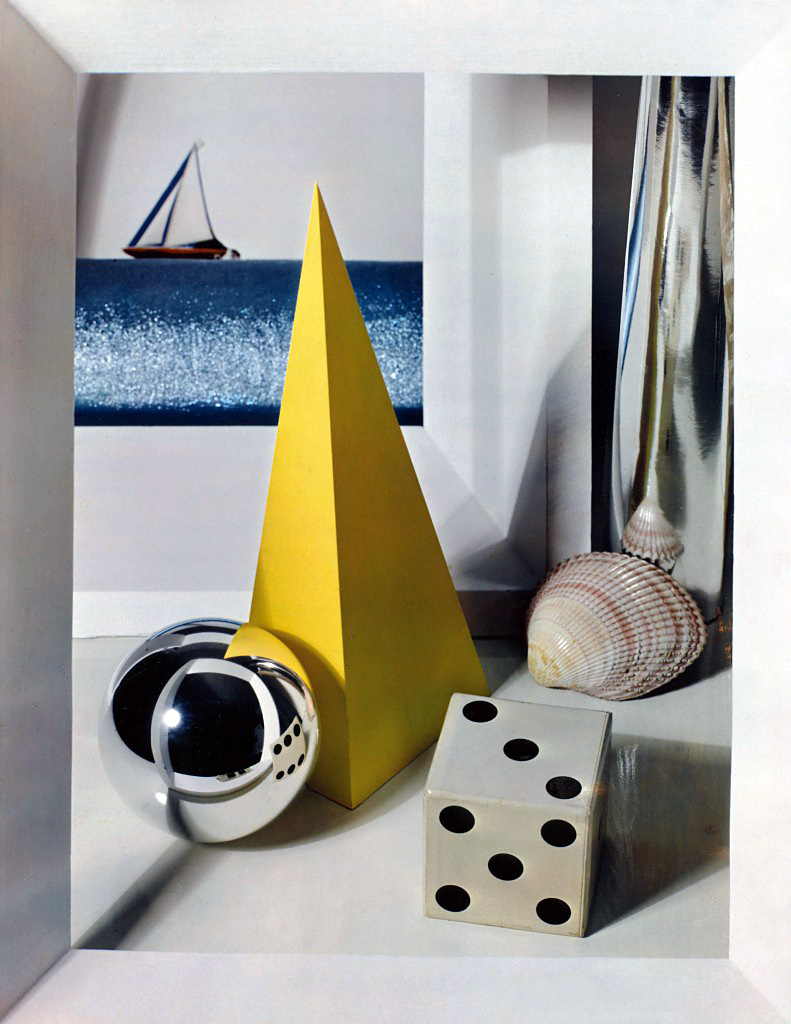
 

Paul Outerbridge (American, 1896-1958) 'Images de Deauville' 1936


Paul Outerbridge (American, 1896-1958)
Images de Deauville
1936
Tri-colour carbro print
15 3/4 x 12 1/4″ (40 x 31.1cm)
Gift of Mrs. Ralph Seward Allen
Museum of Modern Art Collection
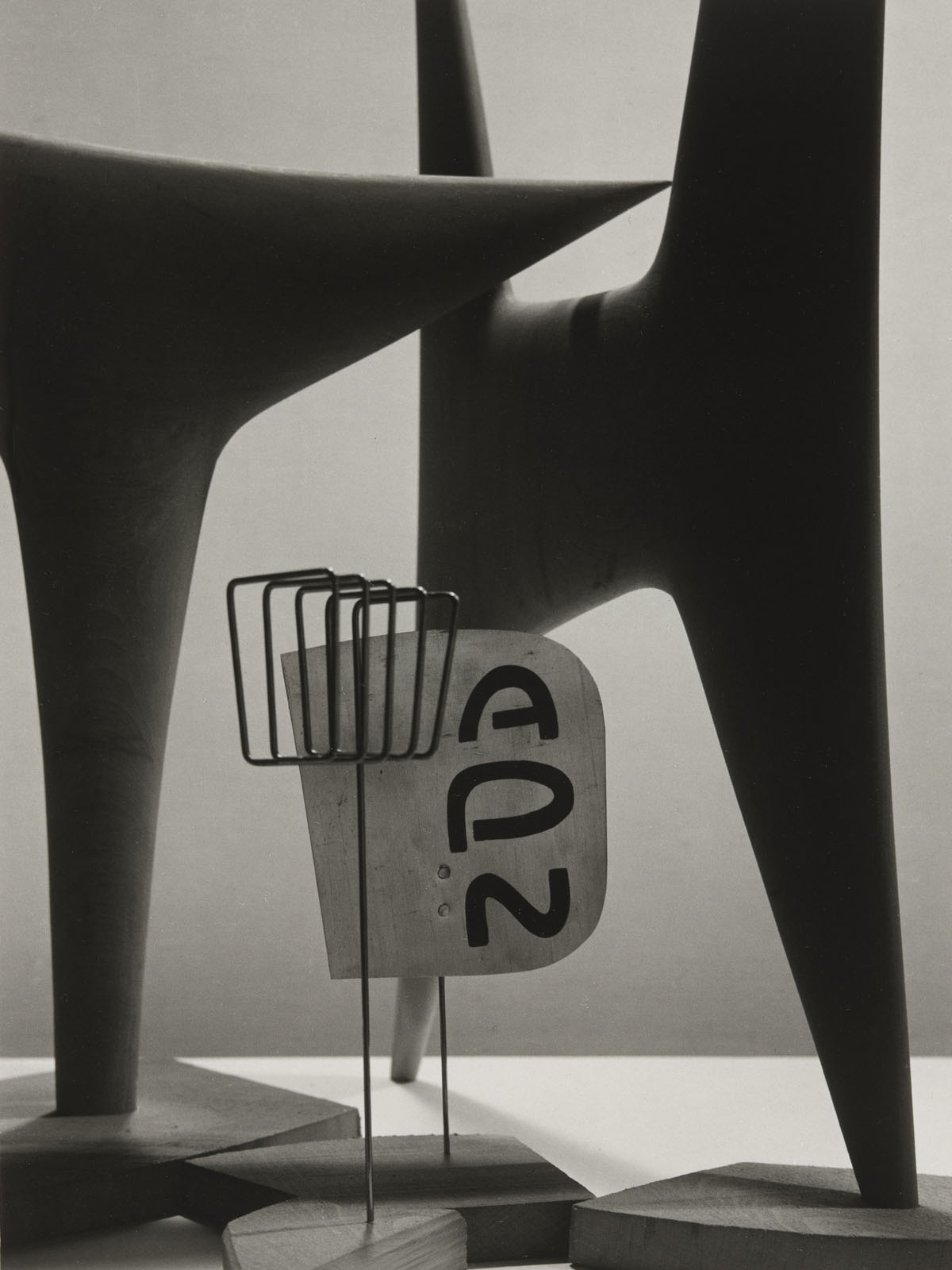
 

Shozo Kitadai, Kiyoji Otsuji. 'Untitled' from the portfolio 'APN (Asahi Picture News)' 1953-1954


Shozo Kitadai, Kiyoji Otsuji
Untitled from the portfolio APN (Asahi Picture News)
1953-1954
Gelatin silver print, printed 2003
7 1/2 × 5 9/16″ (19 × 14.2cm)
Gift of Shigeru Yokota
Museum of Modern Art Collection
© 2022 Seiko Otsuji
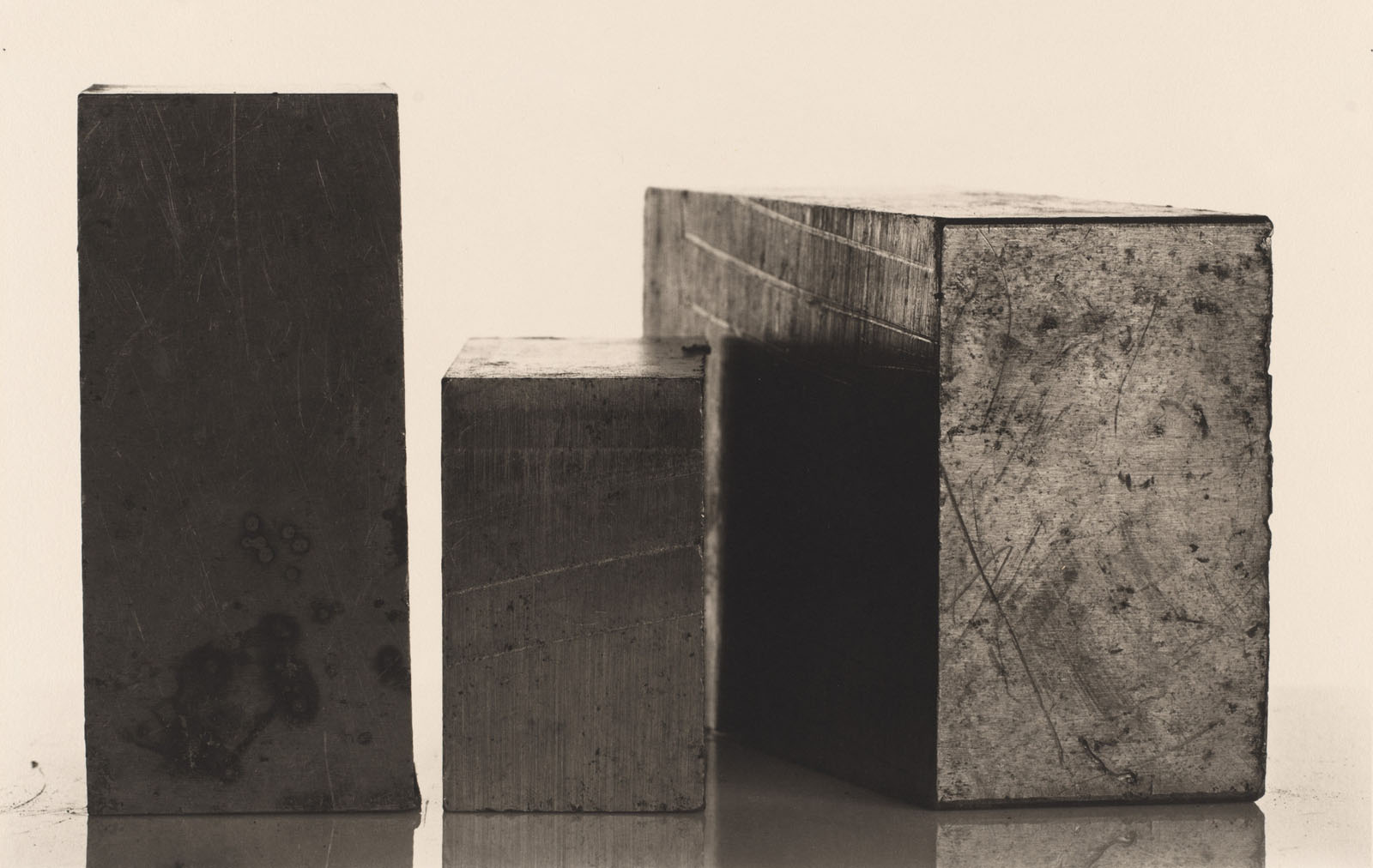
 

Irving Penn (American, 1917-2009) 'Three Steel Blocks, New York' 1980


Irving Penn (American, 1917-2009)
Three Steel Blocks, New York
1980
Platinum/palladium print
13 1/4 × 20 11/16″ (33.6 × 52.5cm)
Acquired through the generosity of Lily Auchincloss
Museum of Modern Art Collection
© The Irving Penn Foundation
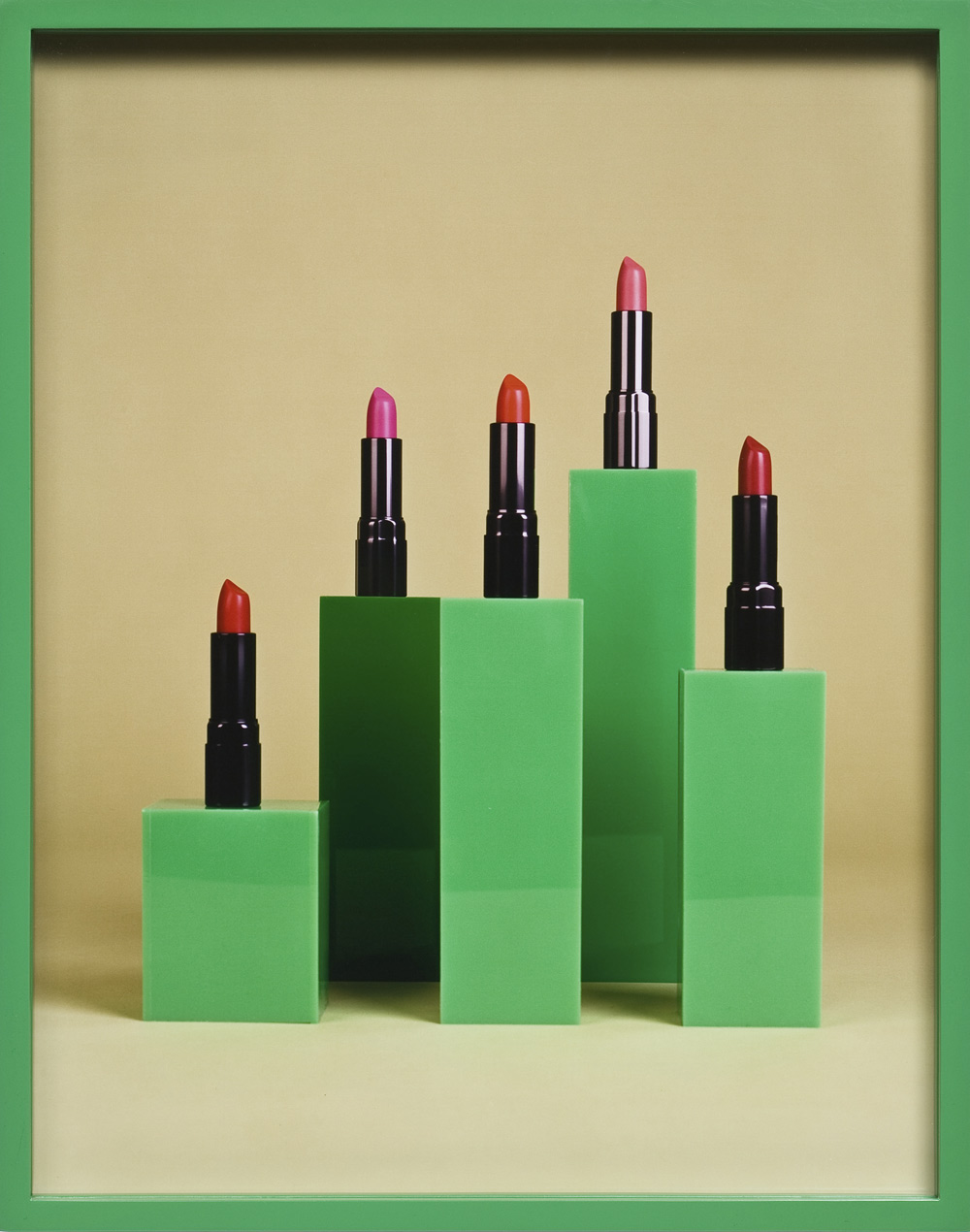
 

Elad Lassry (Israeli, b. 1977) 'Nailpolish' 2009


Elad Lassry (Israeli, b. 1977)
Nailpolish
2009
Chromogenic colour print
14 1/2 x 11 1/2″ (36.8 x 29.2cm)
Fund for the Twenty-First Century
Museum of Modern Art Collection


The Museum of Modern Art
11 West 53 Street
New York, NY 10019
Phone: (212) 708-9400

Opening hours:
10.30am – 5.30pm
Open seven days a week
MoMA website

LIKE ART BLART ON FACEBOOK

Back to top

Exhibition: ‘After the Gold Rush: Contemporary Photographs from the Collection’ at The Metropolitan Museum of Art, New York

Exhibition dates: 22nd March, 2011 – 2nd January, 2012


Many thankx to The Metropolitan Museum of Art, New York for allowing me to publish the photographs in the posting. Please click on the photographs for a larger version of the image.


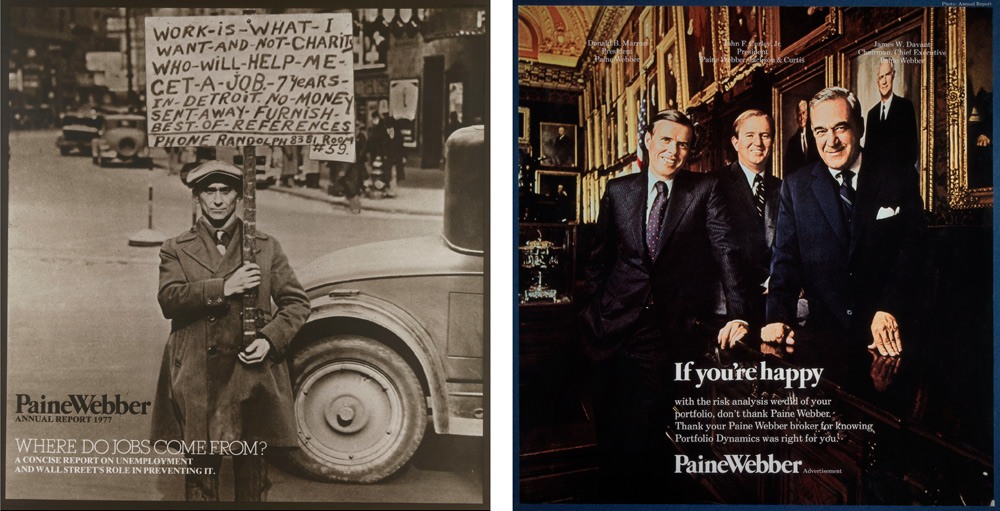
Hans Haacke (German, born 1936). 'Thank You, Paine Webber' 1979


Hans Haacke (German, b. 1936)
Thank You, Paine Webber
1979
Gelatin silver print and chromogenic print
The Metropolitan Museum of Art
Purchase, Vital Projects Fund Inc. Gift, through Joyce and Robert Menschel, 2010
© Hans Haacke


Since the early 1970s Haacke has taken on the intertwined political and corporate forces that use cultural patronage as a smokescreen to advance interests that are often antithetical to the vitality of free speech and expression in democracies. Haacke made this work just as the strategy of appropriation – lifting an image out of its original context and re-presenting it in critical fashion – began to make waves in the New York art world of the late 1970s. Like all effective appropriation, it exposes a prior instance of borrowing – in this case, how the investment firm Paine Webber used a documentary photograph to give its annual report the veneer of social concern. The artist then pointedly contrasted it with an image from the same annual report of a beaming trio of executives in a painting-lined gallery. As a counterpoint to the protestor’s signboard, Haacke dropped in text from a different Paine Webber ad campaign to show on whose backs the “risk management” is taking place – a biting indictment, the relevance of which has only increased since the recent economic downturn.

Wall text


Jeff Wall (Canadian, born 1946). 'The Storyteller' 1986


Jeff Wall (Canadian, b. 1946)
The Storyteller
1986
Silver dye bleach transparency in light box
The Metropolitan Museum of Art
Purchase, Charlene and David Howe, Henry Nias Foundation Inc., Jennifer and Robert Yaffa, Harriet Ames Charitable Trust, and Gary and Sarah Wolkowitz Gifts, 2006
Image courtesy of the artist
© Jeff Wall


Wall’s staged tableaux straddle the worlds of the museum and the street. His subjects are scenes of urban and suburban disarray that he witnessed firsthand – the kinds of things anyone might see while wandering around a city and its outskirts. Working like a movie director, he restages the scene using nonprofessionals as actors and presents his photographs as colour transparencies in light boxes such as those of large-scale public advertisements found at airports and bus stops. The scale and ambition of his pictures – scenes of everyday life shot through with larger intimations of political struggle – equally evoke the Salon paintings of nineteenth century French painters such as Gustave Courbet and Édouard Manet, which were themselves brazen combinations of canonical and contemporary subjects.

The Storyteller is set in a barren, leftover slice of land next to a highway overpass in Vancouver, where the artist lives. Various groupings of modern urban castaways – perhaps descendants of the Native Americans who occupied the land before the arrival of Europeans – are dispersed around the hillside, a mini-catalogue of art-historical reference. Like the upside-down, half-submerged figure of Icarus in the background of Brueghel’s Landscape with the Fall of Icarus, the woman speaking and gesticulating to the two men listening at the lower left becomes the key to unifying the fractured and alienating environment from which Wall’s picture is constructed.

Wall text


Laurie Simmons (American, b. 1949). 'Walking Gun' 1991


Laurie Simmons (American, b. 1949)
Walking Gun
1991
Gelatin silver print
The Metropolitan Museum of Art
Purchase, Anonymous Gift, 1998
© Laurie Simmons


The early 1990s marked the last moment when a wide swath of women artists responded to the sexism they saw as pervasive in the culture – from the rape trial of William Kennedy Smith to the Supreme Court nomination hearings for Clarence Thomas. A pioneer of set-up photography, Simmons dramatically expanded the scale of her constructed tableaux for a series of spotlighted puppet-like objects perched atop doll legs: revolvers, houses, cameras, and cakes. This armed and dangerous example refers to the old-movie cliché where a man carrying a gun is shown in shadow profile. Here, Simmons offers instead the death-dealing seductress – also familiar from film noir – in monumental miniature, a doll capable of turning on its master at a moment’s notice.

Wall text


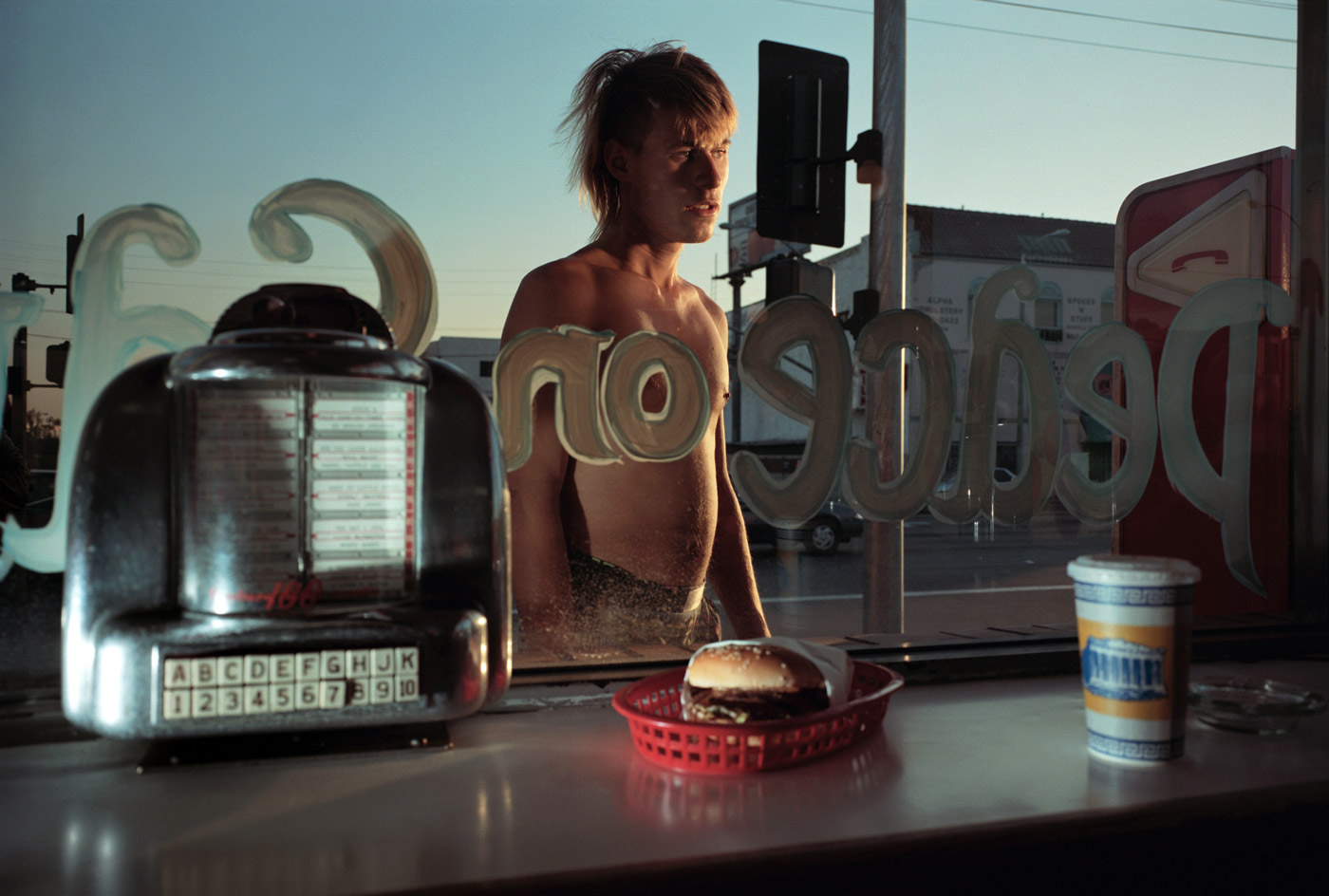
Philip-Lorca diCorcia (American, b. 1953). 'Todd M. Brooks, 22 Years Old, from Denver, Colorado, $40' 1991


Philip-Lorca diCorcia (American, b. 1953)
Todd M. Brooks, 22 Years Old, from Denver, Colorado, $40
1991
Chromogenic print
The Metropolitan Museum of Art
Purchase, The Horace W. Goldsmith Foundation Gift, through Joyce and Robert Menschel, 1991
Image courtesy the artist and David Zwirner, New York
© Philip-Lorca diCorcia


In the middle of the 1990’s, diCorcia gained international recognition for his large color photographs of street scenes and passersby. For an earlier series, he traveled to Los Angeles on a fellowship from the National Endowment for the Arts, and worked on a part of Santa Monica Boulevard frequented by male prostitutes and drug addicts. For each picture he made there, he carefully composed his setting, then asked young men to pose for him, giving them a small fee (from twenty to fifty dollars) that was negotiated each time.

At that time, NEA support of artists such as Robert Mapplethorpe was highly controversial, and diCorcia had to sign a document stating that he would not produce any “obscene” work while on his fellowship. He set up the whole negotiating procedure as a symbolic way of sharing his grant with people whose behavior would surely have been condemned by the censors. The titles always mention the name, the age and the origin of the model, as well as the amount paid. The staged situation interacts with the raw reality of the exchange of money, blurring the boundaries between documentary and fiction, yet preserving an authentic emotional charge.

Text from The Metropolitan Museum of Art website


Philip-Lorca diCorcia (American, b. 1953) 'Eddie Anderson, 21 Years Old, from Houston, Texas, $20' 1991


Philip-Lorca diCorcia (American, b. 1953)
Eddie Anderson, 21 Years Old, from Houston, Texas, $20
1991
Chromogenic print
Image: 39.2 x 57.8 cm (15 7/16 x 22 3/4 in.)
The Metropolitan Museum of Art
Purchase, The Horace W. Goldsmith Foundation Gift, through Joyce and Robert Menschel, 1991
Image courtesy the artist and David Zwirner, New York
© Philip-Lorca diCorcia


The Metropolitan Museum of Art will present After the Gold Rush: Contemporary Photographs from the Collection from March 22, 2011, through January 2, 2012, in the Joyce and Robert Menschel Hall for Modern Photography. Drawn entirely from the Museum’s permanent collection, the exhibition features 25 photographs dating from 1979 to the present by 15 contemporary artists.

The exhibition’s title, After the Gold Rush, is taken from a classic 1970 song by Neil Young, whose verses contrast a romanticised past with a present of squandered plenty and an uncertain future. Inspired by the recent political and economic upheavals in America and abroad, this selection juxtaposes new photographs that take the long view of the world’s current condition with prescient works from the 1980s and 1990s that remain startlingly relevant today.

This is the first occasion for the Museum to present recently acquired works by: Gretchen Bender, James Casebere, Moyra Davey, Katy Grannan, Hans Haacke, An-My Lê, Curtis Mann, Trevor Paglen, and Wolfgang Tillmans. Also featured are photographs by: Philip-Lorca diCorcia, Robert Gober, Adrian Piper, Laurie Simmons, Jeff Wall, and Christopher Williams.

After the Gold Rush begins with Hans Haacke’s Thank You, Paine Webber (1979) – the first work by this legendary provocateur of Conceptual art to enter the Metropolitan’s collection. Haacke’s biting photo-diptych is so pertinent to the recent economic downturn that it seems as if it could have been made yesterday. In this work, the artist appropriated images from the investment firm’s annual report to convey his viewpoint that big business provides a veneer of social concern to mask the brutal effects of the “risk management” they offer their clients.

Other works in After the Gold Rush use varying degrees of artifice and photographic realism to reflect on marginalised and repressed voices. Measuring over 14 feet long and presented as a backlit transparency in a light box, The Storyteller (1986) is Jeff Wall’s signature image and is typical of his method. Working from memory, the artist uses nonprofessional actors and real locations to meticulously restage a scene of urban blight that he witnessed in his native Vancouver. Wall plays this photographic verisimilitude against compositions and figural poses indebted to French painters such as Gustave Courbet, Edouard Manet, and Georges Seurat. A comparison of Wall’s Storyteller with Courbet’s Young Ladies of the Village (1852), on view in the Museum’s galleries for Nineteenth and Early Twentieth-Century European Paintings and Sculpture, reveals parallels: in both, a keenly observed moment of telling social interaction taking place on a sloping landscape. Each artist has combined a daringly modern subject with references to earlier art.

Philip-Lorca diCorcia is another key figure in the development of staged photography. In the early 1990s, the artist created a series of works in response to the political attacks on gays and federal funding of the arts in the U.S. DiCorcia hired male hustlers to pose for their portraits out on the streets – and paid them with grant money he received from the National Endowment for the Arts. At the same moment, a wide swath of women artists addressed issues of sexism and racism: examples of this politically pointed art are represented by Laurie Simmons’ Walking Gun (1991) – a spotlighted puppet of doll legs and a revolver that seems capable of turning on its master at a moment’s notice – and Adrian Piper’s 1992 work Decide Who You Are #24 (A Moving Target), which includes a childhood image of Anita Hill as part of a blistering meditation in word and image on racial politics. Such works are missives from a time not so long ago when artists regularly commented on present-day politics and culture through their art. (Because of light sensitivity, this work by Adrian Piper will be on view through Sunday, September 26.)

Although the recently made photographs in After the Gold Rush seem at first glance to be less overtly political than their predecessors, they nevertheless address vital issues about contemporary society. James Casebere’s epic vision of America, Landscape with Houses (Dutchess County, NY) #1, (2009), is based on a tabletop model that the artist spent 18 months building. The photograph shows a suburban subdivision of the kind recently ravaged by the foreclosure crisis, and its sunny sense of “Morning in America” comments ironically on the country’s future prospects. An-My Lê’s similarly sweeping five-part photographic piece Suez Canal Transit, USS Dwight Eisenhower, Egypt (2009) will also be featured. Lê is interested in the way in which U.S. armed forces come into contact with the rest of the world. This major new work – which seems at first to be a straightforward panorama of military might overseas – subtly undercuts the viewer’s expectations to question the current position of the U.S. on the global stage.

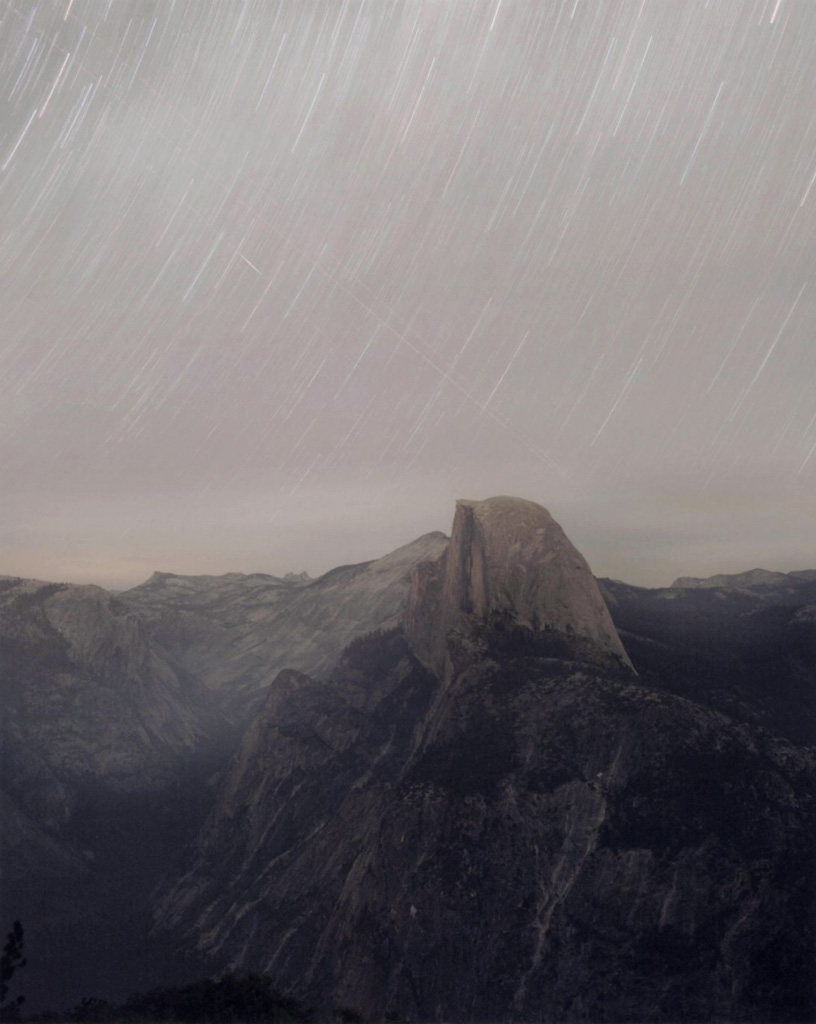
Trevor Paglen is a young artist whose works plot the “black world” of covert military operations, from telephoto images of predator drones taken from miles away, to software that follows planes used for the extraordinary rendition of suspected terrorists. Paglen’s 2008 photograph KEYHOLE IMPROVED CRYSTAL from Glacier Point (Optical Reconnaissance Satellite; USA 186) shows the ghostly white streak of an American reconnaissance satellite bisecting star trails above Yosemite’s Half Dome, a rock formation photographed in the 1860s by artists including Carleton Watkins. To make these and other photographs, Paglen collaborated with amateur astronomers who were originally trained by the U.S. government to look out for Soviet satellites during the Cold War, but turned their attention to American surveillance in recent years.

The final piece in After the Gold Rush is a suite of five recently acquired photographs from 2007-2009 by the celebrated photographer Wolfgang Tillmans. The grouping shifts focus from macro to micro: from expansive aerial views of Shanghai and Dubai to close ups that suggest the smallest increments of sustenance and regeneration. Taken together, they evoke the interconnectedness of all things and a grounding of the political in the personal as a way for an engaged yet expressive art.

Press release from The Metropolitan Museum of Art website


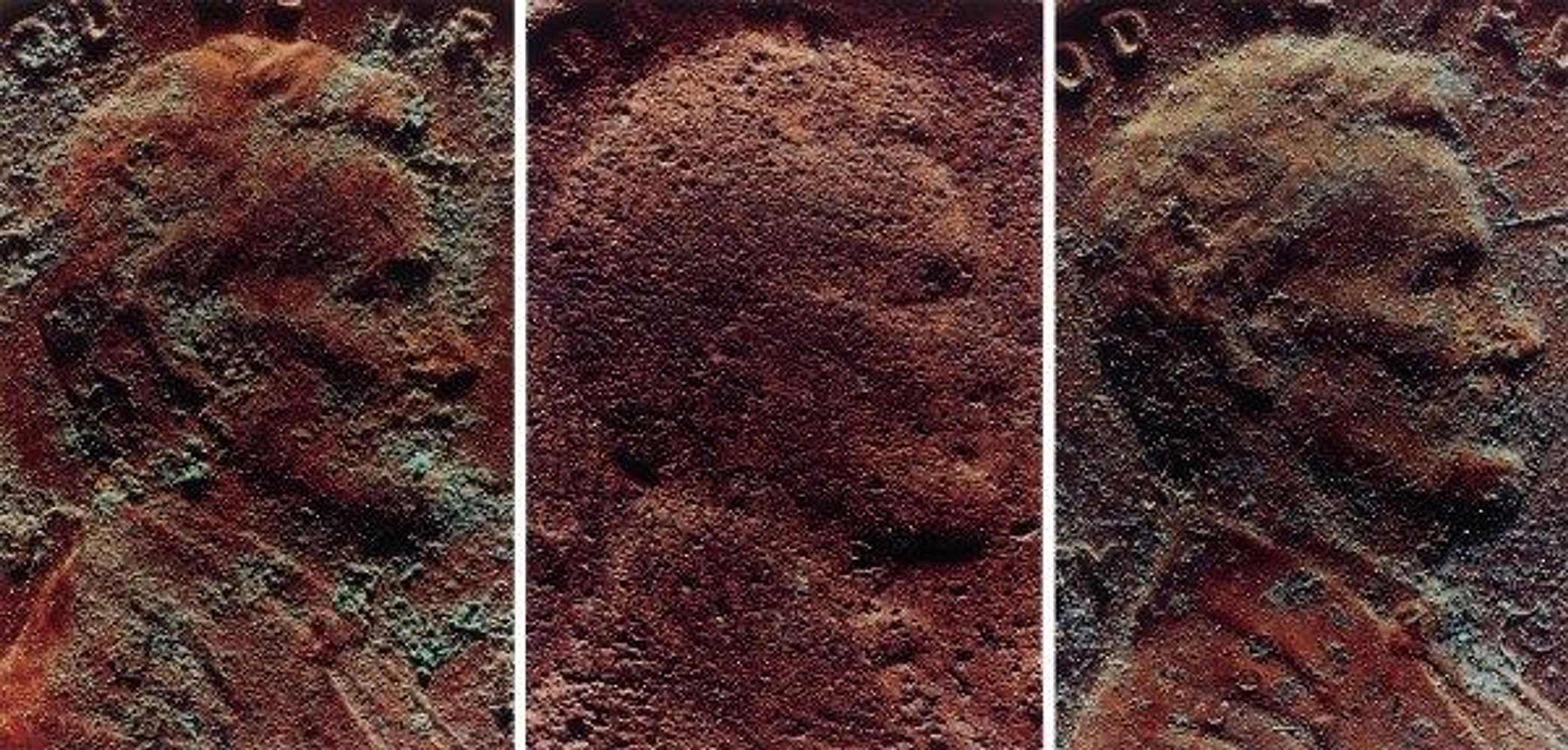
Moyra Davey (American born Canada, b. 1958) 'Copperhead Grid' 1990 (detail)


Moyra Davey (American born Canada, b. 1958)
Copperhead Grid (detail)
1990
Chromogenic prints
Image: 8 3/4 in. × 6 in. (22.3 × 15.3cm) each
Sheet: 10 × 8 in. (25.4 × 20.3cm) each
The Metropolitan Museum of Art
Purchase, Vital Projects Fund Inc. Gift, through Joyce and Robert Menschel, 2011
© Moyra Davey


It was in 1990 – at the height of a worldwide economic recession that also marked the end of the 1980s art bubble – that Davey began photographing the scratched, worn-away surfaces of pennies, the most devalued and lowest form of currency. Her accumulation of one hundred micro-photographic specimens is constructed around the readymade patterns of decay that countless anonymous owners have unconsciously wrought upon their surfaces; their base materiality is incisively contrasted with the most elevated of national symbols. As with all of Davey’s work, there is a melancholic sense of loss that connects subject and form: like pennies, photographs are objects of exchange imprinted by contact with the world around them.

Text from The Metropolitan Museum of Art website


Adrian Piper (American, born 1948). 'Decide Who You Are #24: A Moving Target' 1992


Adrian Piper (American, b. 1948)
Decide Who You Are #24: A Moving Target
1992
Photo-mechanical processes on three panels
The Metropolitan Museum of Art
Gift of Peter Norton Family Foundation, 1994
© Adrian Piper


Piper is an artist and a philosophy professor who works in a variety of media, including performance, video, sound pieces, photography, drawing, and writing. She often explores issues of autobiography, racism, and stereotyping. For her 1992 series Decide Who You Are, the artist used a triptych format in which a different appropriated photograph is flanked by an image of the “three wise monkeys” maxim advocating “See No Evil, Speak No Evil, Hear No Evil” at left, and at right a photograph of a young girl who, though not identified, is Anita Hill – who had recently been thrust into the spotlight for accusing then-nominee for Supreme Court Justice Clarence Thomas of sexual harassment. The verse in the left panel changes in each individual work in the series, while that on the right is unchanging – what the artist once described as “a comprehensive, textbook compendium of commonly invoked litanies of denial and intimidation, from the bland to the vaguely menacing” and “a must for novices and aspiring leaders in business, politics, and culture.”

Wall text


Christopher Williams (American, b. 1956). '3 White (DG's Mr. Postman) Fourth Race, Phoenix Greyhound Park, Phoenix, Arizona, August 22, 1994' 1994


Christopher Williams (American, b. 1956)
3 White (DG’s Mr. Postman) Fourth Race, Phoenix Greyhound Park, Phoenix, Arizona, August 22, 1994
1994
Gelatin silver print
The Metropolitan Museum of Art
Purchase, Charina Foundation Inc. and Jennifer and Joseph Duke Gifts, 2003
© Christopher Williams


Robert Gober (American, b. 1954) 'Page 12 / Untitled (Detail from 1978-2000)' 1978-2000


Robert Gober (American, b. 1954)
Page 12 / Untitled (Detail from 1978-2000)
1978-2000
Gelatin silver print
40.6 x 50.8cm (16 x 20 in.)
The Metropolitan Museum of Art
Purchase, Charina Foundation Inc. Gift, 2002
© Robert Gober


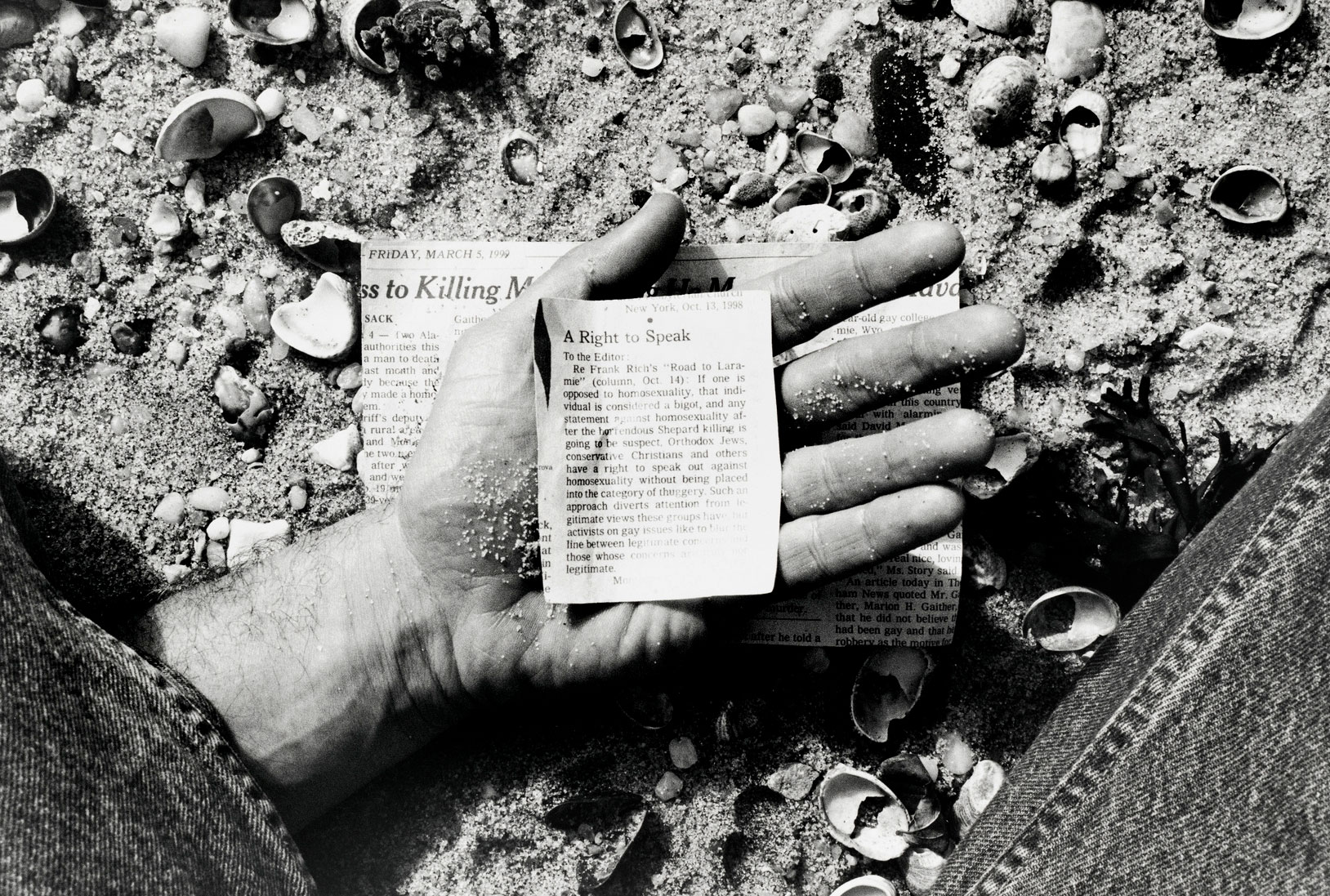
Robert Gober works primarily in sculpture, installations, and photography. He is perhaps best known for his delicate, ghostly hand crafted versions of domestic fixtures, such as drains, beds, doors, and sinks. Through these uncanny replicas, Gober invests mass produced objects with personal meaning – the private, unruly desires and memories of the individual. This image appeared in the book (his first in the genre) that Gober created to accompany his installation representing the United States at the 2000 Venice Biennale. In it, the artist interweaves his own journey to New York in 1978 as a young gay man with the toxic fallout of homophobic recrimination that accompanied the murder of the Wyoming college student Matthew Shepard twenty years later.

Text from The Metropolitan Museum of Art website


Robert Gober superimposes a man’s hand between two newspaper articles, clipped neatly and placed on a shell-strewn beach. Below his hand, the article refers to Matthew Shepard’s death. Above it, a letter to the editor argues that “Orthodox Jews, conservative Christians and others have a right to speak out against homosexuality without being placed in the category of thuggery.” While the piece obviously precedes Jonathan Rauch’s provocative and important piece in the December issue of the Advocate arguing that gay people should tolerate a certain amount of anti-gay sentiment as a sign that they’re legally and socially secure enough to practice tolerance, it’s a useful encapsulation of the dilemma behind that argument. It’s hard to cast off past threats if you’re not entirely sure they’re past.

Alyssa Rosenberg. “Gay Americans, Censorship, And ‘After The Gold Rush’ At The Metropolitan Museum Of Art,” on the Think Progress website November 28, 2011 [Online] Cited 11/12/2024


Robert Gober (American, b. 1954). 'Untitled (Detail from "1978-2000")' 2000


Robert Gober (American, b. 1954)
Untitled (Detail from “1978-2000”)
2000
Gelatin silver print
The Metropolitan Museum of Art
Purchase, Jennifer and Joseph Duke Gift, 2002
© Robert Gober


James Casebere (American, b. 1953). 'Landscape with Houses (Dutchess County, NY) #1' 2009


James Casebere (American, b. 1953)
Landscape with Houses (Dutchess County, NY) #1
2009
Chromogenic print
The Metropolitan Museum of Art
Purchase, Alfred Stieglitz Society Gifts, 2011
© James Casebere


Trevor Paglen (American, b. 1974) 'KEYHOLE IMPROVED CRYSTAL from Glacier Point (Optical Reconnaissance Satelltte; USA 186)' 2008


Trevor Paglen (American, b. 1974)
KEYHOLE IMPROVED CRYSTAL from Glacier Point (Optical Reconnaissance Satelltte; USA 186)
2008
Chromogenic print
Image: 95.3 x 76.2cm (37 1/2 x 30 in.)
Frame: 96.5 × 77.5cm (38 × 30 1/2 in.)
The Metropolitan Museum of Art
Purchase, Vital Projects Fund Inc. Gift, through Joyce and Robert Menschel, 2011
© Trevor Paglen


Trained as a geographer, Paglen is an artist who plots the topography of a new global and celestial space – the “black world” of covert military operations. Examples of his subjects include the supposed sites used for the extraordinary rendition of prisoners, which he shoots with specially designed cameras from up to forty miles away, and the network of private planes used to transport them under the radar. This image shows the ghostly white streak of an American reconnaissance satellite bisecting star trails above Yosemite’s Half Dome, a rock formation photographed in the 1860s by the photographer Carleton Watkins when the West was still being explored. In order to track such spacecraft, Paglen uses a database created by amateur astronomers who were trained by the U.S. government to search the skies for Soviet sputniks but continued their hobby after the end of the Cold War by tracking our own satellites. In this work, the artist brings into one composition two historically disparate moments in geographic and celestial colonisation.

Text from The Metropolitan Museum of Art website


Wolfgang Tillmans (German, b. 1968).' Oriental Pearl' 2009


Wolfgang Tillmans (German, b. 1968)
Oriental Pearl
2009
Inkjet print
The Metropolitan Museum of Art
Purchase, Vital Projects Fund Inc. Gift, through Joyce and Robert Menschel, 2010
Image courtesy the artist and Andrea Rosen Gallery, New York
© Wolfgang Tillmans


The Metropolitan Museum of Art
1000 Fifth Avenue at 82nd Street
New York, New York 10028-0198
Phone: 212-535-7710

Opening hours:
Sunday – Tuesday and Thursday: 10am – 5pm
Friday and Saturday: 10am – 9pm
Closed Wednesday

The Metropolitan Museum of Art website

LIKE ART BLART ON FACEBOOK

Back to top

Exhibition: ‘Haunted: Contemporary Photography / Video / Performance’ at Solomon R. Guggenheim Museum, New York

Exhibition dates: 26th March – 6th September, 2010


Looks like a great exhibition – wish I was there to see it!


Many thankx to Claire Laporte and the Solomon R. Guggenheim Museum for allowing me to publish the photographs in the posting. Please click on the photographs for a larger version of the image.


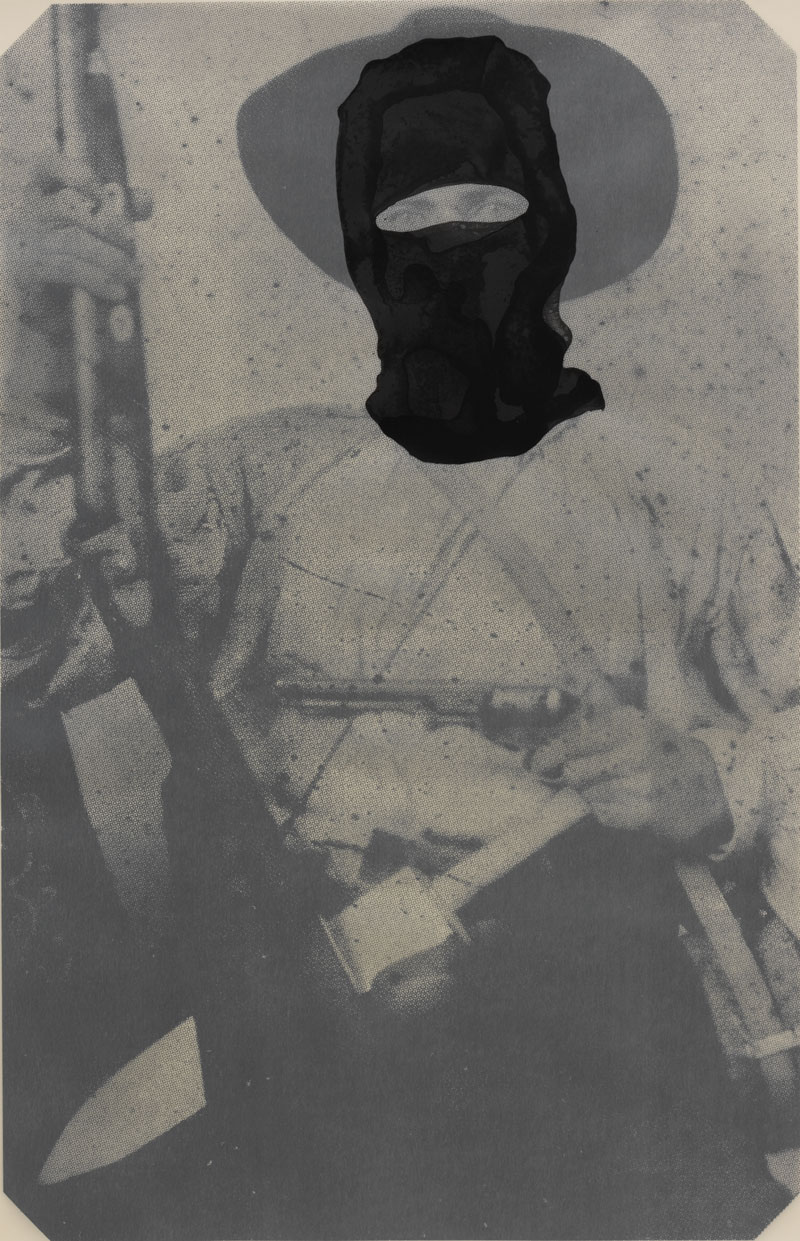
Adam Helms (American, b. 1974) 'Untitled Portrait (Santa Fe Trail)' 2007 from the exhibition 'Haunted: Contemporary Photography / Video / Performance' Guggenheim Museum, March - Sept, 2010


Adam Helms (American, b. 1974)
Untitled Portrait (Santa Fe Trail)
2007
Double-sided screenprint on paper vellum edition 2/2
101.3 x 65.7cm
Solomon R. Guggenheim Museum, New York, Purchased with funds contributed by the Photography Committee 2007.131


Idris Khan (British, b. 1978) 'Homage to Bernd Becher' 2007 from the exhibition 'Haunted: Contemporary Photography / Video / Performance' Guggenheim Museum, March - Sept, 2010


Idris Khan (British, b. 1978)
Homage to Bernd Becher
2007
Bromide print edition 1/6
49.8 x 39.7cm
Solomon R. Guggenheim Museum, New York, Purchased with funds contributed by the Photography Committee


Bernd Becher (German, 1931-2007) and Hilla Becher (German, 1934-2015) 'Water Towers' 1980 from the exhibition 'Haunted: Contemporary Photography / Video / Performance' Guggenheim Museum, March - Sept, 2010


Bernd Becher (German, 1931-2007) and Hilla Becher (German, 1934-2015)
Water Towers
1980
Nine gelatin silver prints
155.6 x 125.1cm
Solomon R. Guggenheim Museum, New York, Purchased with funds contributed by Mr. and Mrs. Donald Jonas


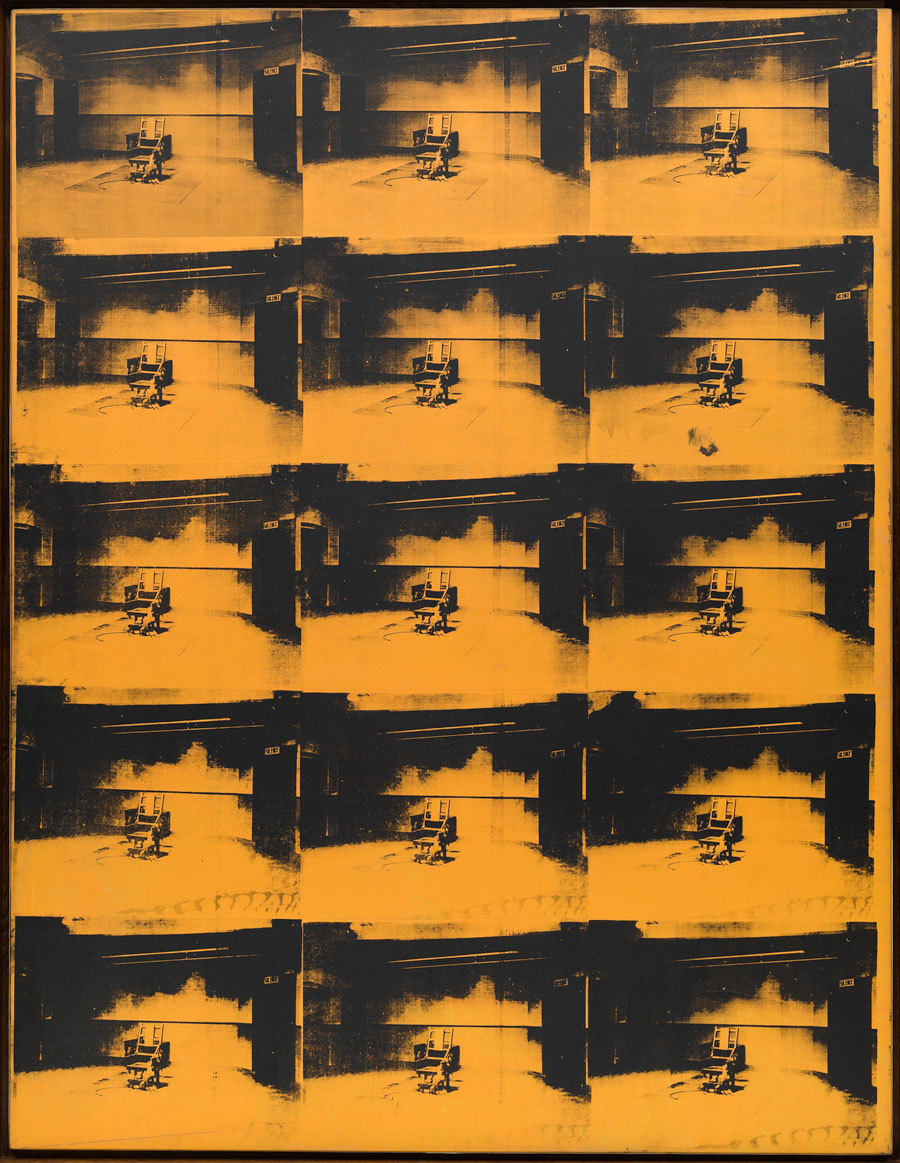
Andy Warhol (American, 1928-1987) 'Orange Disaster #5' 1963


Andy Warhol (American, 1928-1987)
Orange Disaster #5
1963
Acrylic and silkscreen enamel on canvas
269.2 x 207cm
Solomon R. Guggenheim Museum, New York, Gift, Harry N. Abrams Family Collection 74.2118


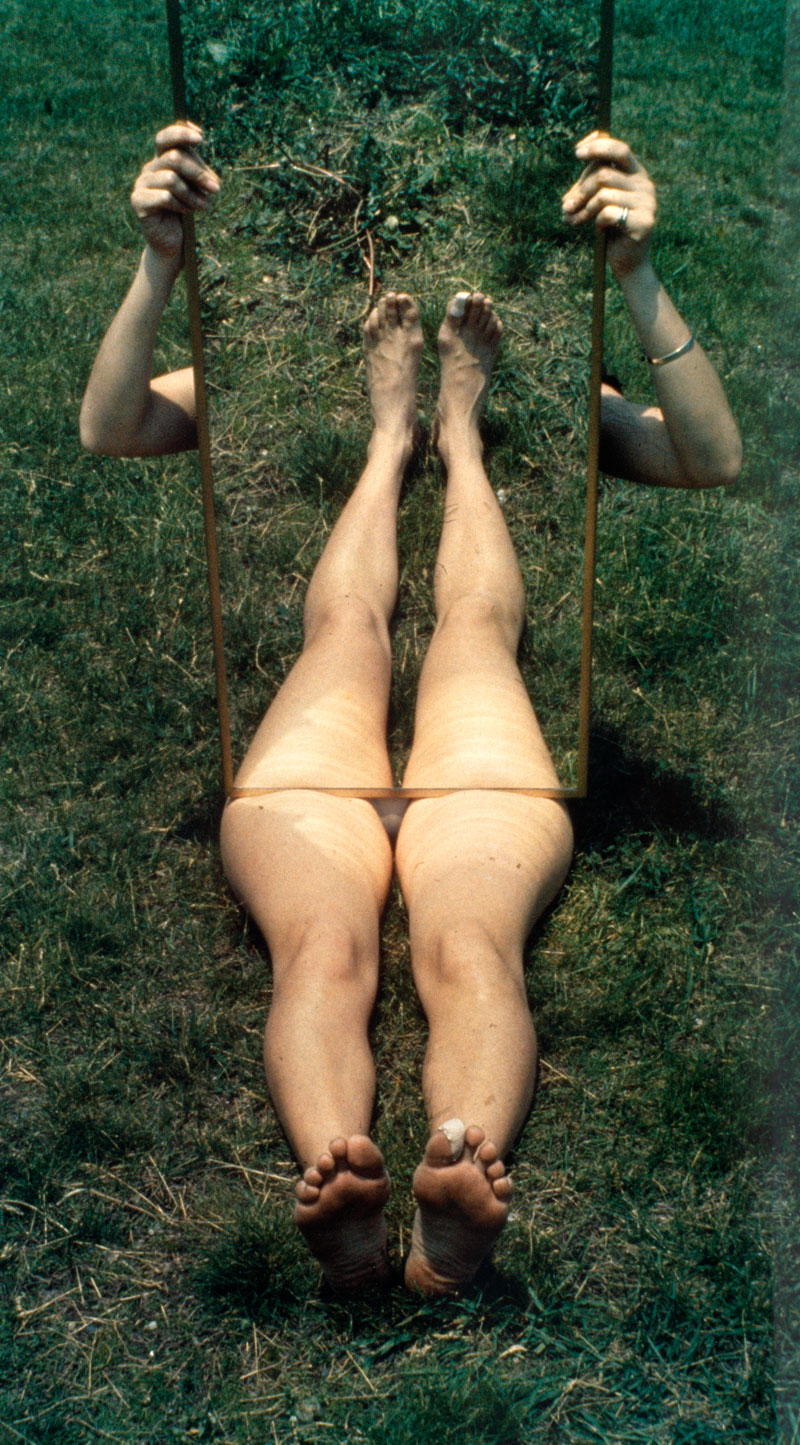
Joan Jonas (American, b. 1936) 'Mirror Piece I' 1969


Joan Jonas (American, b. 1936)
Mirror Piece I
1969
Chromogenic print
101 x 55.6cm
Solomon R. Guggenheim Museum, New York, Purchased with funds contributed by the Photography Committee


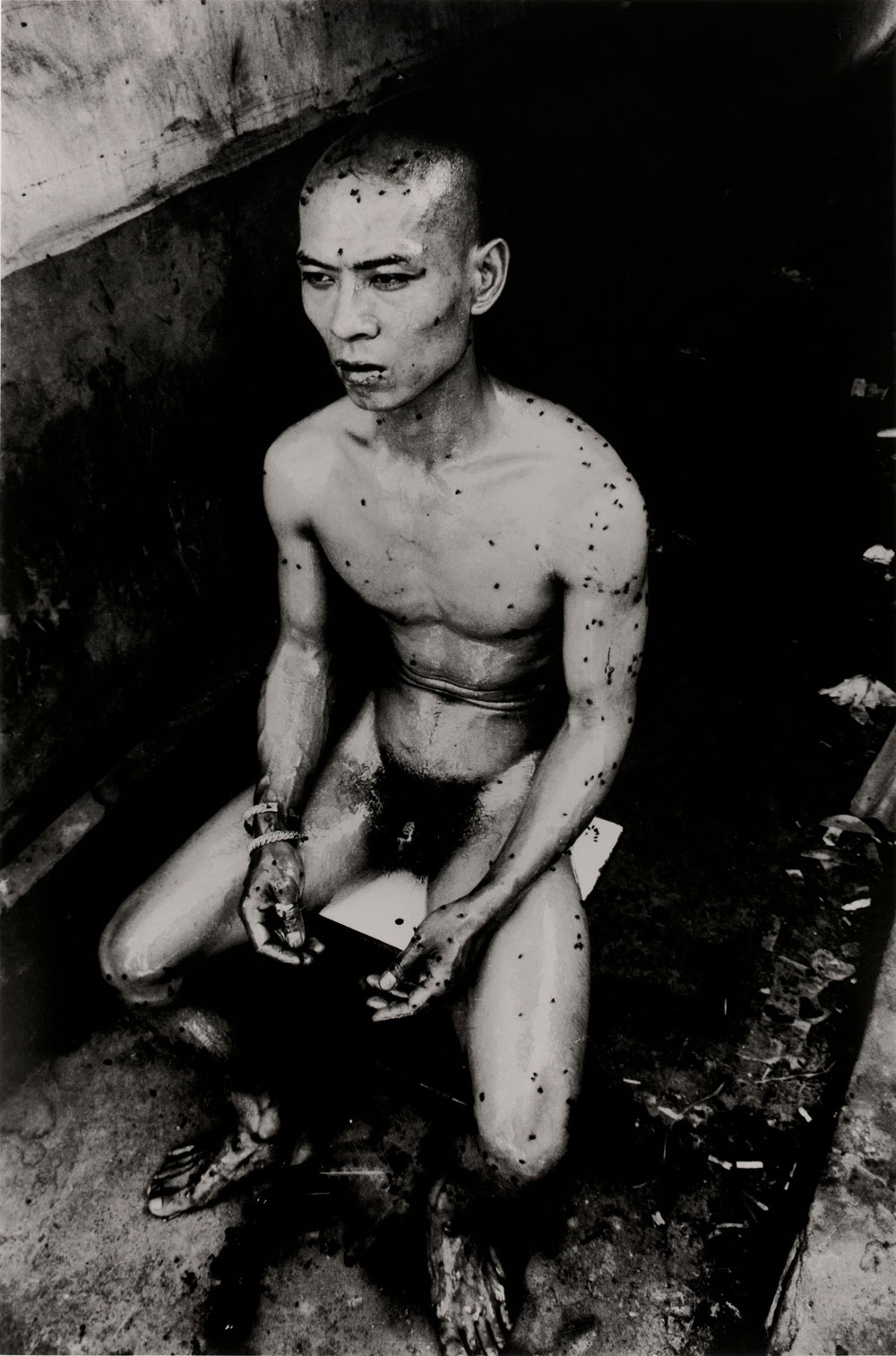
Zhang Huan (Chinese, b. 1965) '12 Square Meters' 1994


Zhang Huan (Chinese, b. 1965)
12 Square Meters
1994
Chromogenic print A.P. 3/5, edition of 15
149.9 x 99.7cm
Solomon R. Guggenheim Museum, New York, Purchased with funds contributed by Manuel de Santaren and Jennifer and David Stockman


Much of contemporary photography and video seems haunted by the past, by the history of art, by apparitions that are reanimated in reproductive mediums, live performance, and the virtual world. By using dated, passé, or quasi-extinct stylistic devices, subject matter, and technologies, such art embodies a longing for an otherwise unrecuperable past.

From March 26 to September 6, 2010, the Solomon R. Guggenheim Museum presents Haunted: Contemporary Photography / Video / Performance, an exhibition that documents this obsession, examining myriad ways photographic imagery is incorporated into recent practice. Drawn largely from the Guggenheim’s extensive photography and video collections, Haunted features some 100 works by nearly 60 artists, including many recent acquisitions that will be on view at the museum for the first time. The exhibition is installed throughout the rotunda and its spiralling ramps, with two additional galleries on view from June 4 to September 1, featuring works by two pairs of artists to complete Haunted’s presentation.

The works in Haunted: Contemporary Photography / Video / Performance range from individual photographs and photographic series to sculptures and paintings that incorporate photographic elements; projected videos; films; performances; and site-specific installations, including a new sound work created by Susan Philips for the museum’s rotunda. While the show traces the extensive incorporation of photography into contemporary art since the 1960s, a significant part of the exhibition will be dedicated to work created since 2001 by younger artists.

Haunted is organised around a series of formal and conceptual threads that weave themselves through the artworks on view:

Appropriation and the Archive

In the early 1960s, Robert Rauschenberg and Andy Warhol began to incorporate photographic images into their paintings, establishing a new mode of visual production that relied not on the then-dominant tradition of gestural abstraction but rather on mechanical processes such as screenprinting. In so doing, they challenged the notion of art as the expression of a singular, heroic author, recasting their works as repositories for autobiographical, cultural, and historical information. This archival impulse revolutionised art production over the ensuing decades, paving the way for a conceptually driven use of photography as a means of absorbing the world at large into a new aesthetic realm. Since then, a number of artists, including Bernd and Hilla Becher, Sarah Charlesworth, Douglas Gordon, Luis Jacob, Sherrie Levine, Richard Prince, Cindy Sherman, and Sara VanDerBeek, have pursued this archival impulse, amassing fragments of reality either by creating new photographs or by appropriating existing ones.


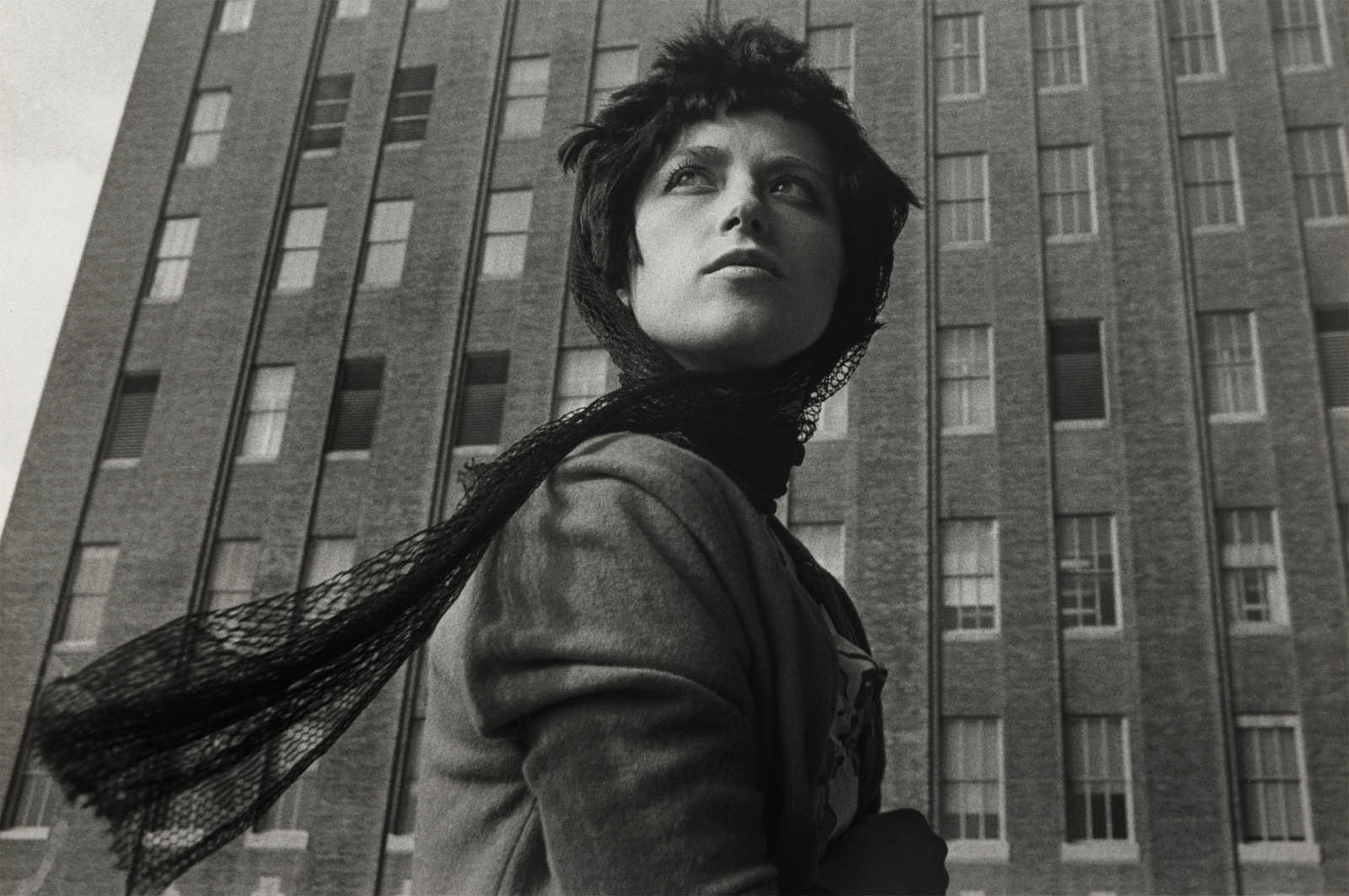
Cindy Sherman (American, b. 1954)
'Untitled Film Still #58' 1980


Cindy Sherman (American, b. 1954)
Untitled Film Still #58
1980
Gelatin silver print
20.3 x 25.4cm
Solomon R. Guggenheim Museum, Gift, Ginny Williams


“I’ve always played with make-up to transform myself, but everything, including the lighting, was self taught. I just learned things as I needed to use them. I absorbed my ideas for the women in these photos from every cultural source that I’ve ever had access to, including film, TV, advertisements, magazines, as well as any adult role models from my youth.”1

Cindy Sherman (b. 1954, Glen Ridge, N.J.) emerged onto the New York art scene in the early 1980s as part of a new generation of artists concerned with the codes of representation in a media-saturated era. Along with many artists working in the 1980s, Sherman explored photography as a way to reveal and examine the cultural constructions we designate as truth. Confronting the belief that photographs are truthful documents, Sherman’s fictional narratives suggested that photographs, like all forms of representation, are ideologically motivated. She is aware that the camera is not a neutral device but rather a tool that frames a particular viewpoint.

Sherman’s reputation was established early on with her Untitled Film Stills, a series of 69 black-and-white photographs that she began making in 1977, when she was twenty-three. In this series, the artist depicted herself dressed in the various melodramatic guises of clichéd B-movie heroines presented in 8 x 10 publicity stills from the 1950s and 1960s. In photograph after photograph, Sherman both acts in and documents her own productions. Although Sherman is both model and photographer, these images are not autobiographical. Rather, they memorialise absence and leave us searching for a narrative and clues to what may exist beyond the frame of the camera.

By the time Sherman made the Untitled Film Stills, black-and-white photography was already recognised as belonging to the past, and the styles she replicated were taken not from her own generation but from that of her mother’s. Sherman used wigs and makeup as well as vintage clothing to create a range of female characters. She sets her photos in a variety of locations, including rural landscapes, cities, and her own apartment. Although many of the pictures are taken by Sherman herself using an extended shutter release, for others she required help, sometimes enlisting friends and family. The characters she created include an ingénue finding her way in the big city, a party girl, a housewife, a woman in distress, a dancer, and an actress. In 1980 she completed the series and has said that she stopped when she ran out of clichés to depict. Unlike the media images they refer to, Sherman’s stills have a deliberate artifice that is heightened by the often-visible camera cord, slightly eccentric props, unusual camera angles, and by the fact that each image includes the artist rather than a recognisable actress or model. Sherman remains an important figure, with works in major collections around the globe, and continues to create striking, imaginative art.

Text from the Teacher’s Guide to the exhibition

1/ Cindy Sherman, quoted in Monique Beudert and Sean Rainbird, eds., Contemporary Art: The Janet Wolfson de Botton Gift, p. 99.


Landscape, Architecture, and the Passage of Time

Historically, one of photography’s primary functions has been to document sites where significant, often traumatic events have taken place. During the Civil War, which erupted not long after the medium was invented, a new generation of reporters sought to photograph battles, but due to the long exposure times required by early cameras, they could only capture the aftermath of the conflicts. These landscapes, strewn with the dead, now seem doubly arresting, for they capture past spaces where something has already occurred. Their state of anteriority, witnessed at such an early stage in the medium’s development, speaks to the very nature of a photograph, which possesses physical and chemical bonds to a past that disappears as soon as it is taken. As viewers, we are left with only traces from which we hope to reconstruct the absent occurrences in the fields, forests, homes, and offices depicted in the works in the exhibition. With this condition in mind, many artists, among them James Casebere, Spencer Finch, Ori Gersht, Roni Horn, Luisa Lambri, An-My Lê, Sally Mann, and Hiroshi Sugimoto, have turned to empty spaces in landscape and architecture, creating poetic reflections on time’s inexorable passing and insisting on the importance of remembrance and memorialisation.


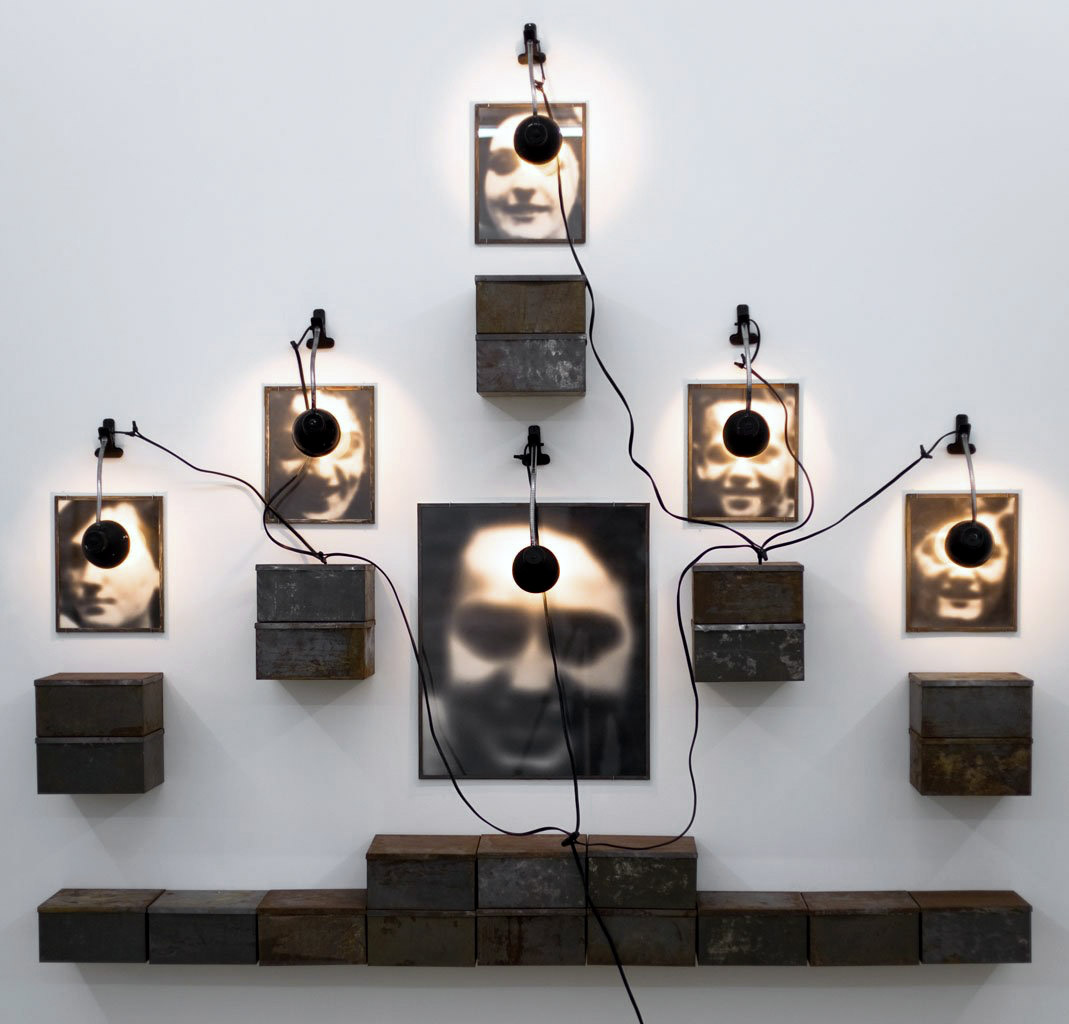
Christian Boltanski (French, 1944-2021) 'Autel de Lycée Chases' 1986-1987


Christian Boltanski (French, 1944-2021)
Autel de Lycée Chases
1986-1987
Six photographs, six desk lamps, and twenty-two tin boxes
170.2 x 214.6 x 24.1cm
Rubell Family Collection, Miami
© 2010 Artists Rights Society (ARS), New York/ADAGP, Paris


“A good work of art can never be read in one way. My work is full of contradictions. An artwork is open – it is the spectators looking at the work who make the piece, using their own background. A lamp in my work might make you think of a police interrogation, but it’s also religious, like a candle. At the same time it alludes to a precious painting, with a single light shining on it. There are many way of looking at the work. It has to be ‘unfocused’ somehow so that everyone can recognize something of their own self when viewing it.”1

The power of photography to recall the past has inspired many contemporary artists to use photographs to revisit the experience of historical events. In so doing, artists reconsider the photograph itself as an object imbued with history. They became aware that using the medium of photography would lend the elements of specificity and truth to their work.

Since the late 1960s, Christian Boltanski (b. 1944, Paris) has worked with photographs collected from ordinary and often ephemeral sources, endowing the commonplace with significance. Rather than taking original photographs to use in his installations, he often finds and rephotographs everyday documents – passport photographs, school portraits, newspaper pictures, and family albums – to memorialise everyday people. Boltanski seeks to create an art that is indistinguishable from life and has said, “The fascinating moment for me is when the spectator hasn’t registered the art connection, and the longer I can delay this association the better.”2 By appropriating mementos of other people’s lives and placing them in an art context, Boltanski explores the power of photography to transcend individual identity and to function instead as a witness to collective rituals and shared cultural memories.

In Boltanski’s 1986-1987 work Autel de Lycée Chases (which means “Altar to the Chases High School”) enlarged photographs of children are hung over a platform constructed from stacked tin biscuit boxes, which are rusted as if they have been ravaged by time. The black-and-white photographs look like artefacts from another era. An electric light illuminates each face while at the same time obscuring it. The arrangement gives no way to identify or connect the unnamed individuals.

The photos used in Autel de Lycée Chases were taken from a real-world source, the school photograph of the graduating class of 1931 from a Viennese high school for Jewish students. These students were coming of age in a world dominated by war and persecution, and it is likely that many perished over the next decade.

At once personal and universal in reference, Boltanski’s work serves as a monument to the dead, hinting at the Holocaust without naming it. Within this haunting environment, Boltanski intermingles emotion and history, sentimentality and profundity.

Text from the Teacher’s Guide to the exhibition

1/ Christian Boltanski, “Tamar Garb in conversation with Christian Boltanski,” in Christian Boltanski (London: Phaidon Press, 1997), p. 24.
2/ “Christian Boltanski: Lessons of Darkness”


Documentation and Reiteration

Since at least the early 1970s, photographic documentation, including film and video, has served as an important complement to the art of live performance, often setting the conditions by which performances are staged and sometimes obviating the need for a live audience altogether. Through an ironic reversal, artworks that revolved around singular moments in time have often come to rely on the permanence of images to transmit their meaning and sometimes even the very fact of their existence. For many artists, these documents take on the function of relics-objects whose meaning is deeply bound to an experience that is always already lost in the past. Works by artists such as Marina Abramović, Christian Boltanski, Sophie Calle, Tacita Dean, Joan Jonas, Christian Marclay, Robert Mapplethorpe, Ana Mendieta, and Gina Pane examine various aesthetic approaches inspired by the reiterative power of the photograph. Using photography not only to restage their own (and others’) performances but to revisit the bodily experience of past events, these artists have reconsidered the document itself as an object embedded in time, closely attending to its material specificity in their works.


James Casebere (American, b. 1953) 'Garage' 2003


James Casebere (American, b. 1953)
Garage
2003
Chromogenic print, face-mounted to acrylic
181.6 x 223.5cm
Solomon R. Guggenheim Museum, New York
Anonymous gift


“Black and white had more to do with memory and the past. Color was too much about the present, I associated it with color TV, which was not a part of my past. I wanted the images to be related to a sense of history, let’s say, whether personal or social. And I think black and white adds a certain level of abstraction.”1

Since the mid-1970s James Casebere (b. 1953, Lansing, Michigan) has been carefully constructing architectural models and photographing them, yielding images somewhere between realism and obvious fabrication. His photographs are stripped of color and detail to evoke a sense of emotional place rather than the physicality of a place’s forms. Casebere is interested in the memories and feelings that are brought to mind by the architectural spaces he represents. The resulting works are dramatic, surreal, and remarkably true to life, embracing qualities of photography, architecture, and sculpture.

His tabletop models imitate the appearance of architectural institutions (home, school, library, prison) or common sites (tunnel, corridor, archway), representing the structures that occupy our everyday world. These models, made from such featureless materials as Foamcore, museum board, plaster, and Styrofoam, remain empty of detail and human figures. It is only when Casebere casts light on their bland surfaces and spartan interiors that the models are transformed. By eliminating the details, and taking advantage of dramatic lighting effects and the camera’s ability to flatten space, Casebere is able to transform familiar domestic spaces to find the extraordinary in the everyday. He asks viewers to rely on their memory to fill in the gaps and to create a context in which to understand his images.

Casebere stages his photographs to construct realities inspired by contemporary American visual culture that blur the line between fiction and fact. In this way, his images suggest psychologically charged spaces and have an otherworldly quality. The notion that these may be actual places seems plausible, but the lack of human presence leads us to wonder what has happened here. The viewer may imagine a human story within the abandoned spaces. Without people or colour, the photographs are about our own associations with these spaces and what they may represent.

Text from the Teacher’s Guide to the exhibition

1/ Roberto Juarez, “James Casebere,” Bomb 77 (Fall 2001)


Trauma and the Uncanny

When Andy Warhol created his silkscreen paintings of Marilyn Monroe in the wake of her death, he touched on the darker side of a burgeoning media culture that, during the Vietnam War, became an integral part of everyday life. Today, with vastly expanded channels for the propagation of images, events as varied as the terrorist attack on the World Trade Center and the deaths of celebrities such as Princess Diana and Michael Jackson have the ability to become traumatic on a global scale. Many artists, including Adam Helms, Nate Lowman, Adam McEwen, Cady Noland, and Anri Sala, have reexamined the strategy of image appropriation Warhol pioneered, attending closely to the ways political conflict can take on global significance. At the same time, photography has altered, or as some theorists argue, completely reconfigured our sense of personal memory. From birth to death, all aspects of our lives are reconstituted as images alongside our own experience of them. This repetition, which is mirrored in the very technology of the photographic medium, effectively produces an alternate reality in representation that, especially when coping with traumatic events, can take on the force of the uncanny. Artists such as Stan Douglas, Anthony Goicolea, Sarah Anne Johnson, Jeff Wall, and Gillian Wearing exploit this effect, constructing fictional scenarios in which the pains and pleasures of personal experience return with eerie and foreboding qualities.

Press release from the Solomon R. Guggenheim Museum website [Online] Cited 22/08/2010 no longer available online


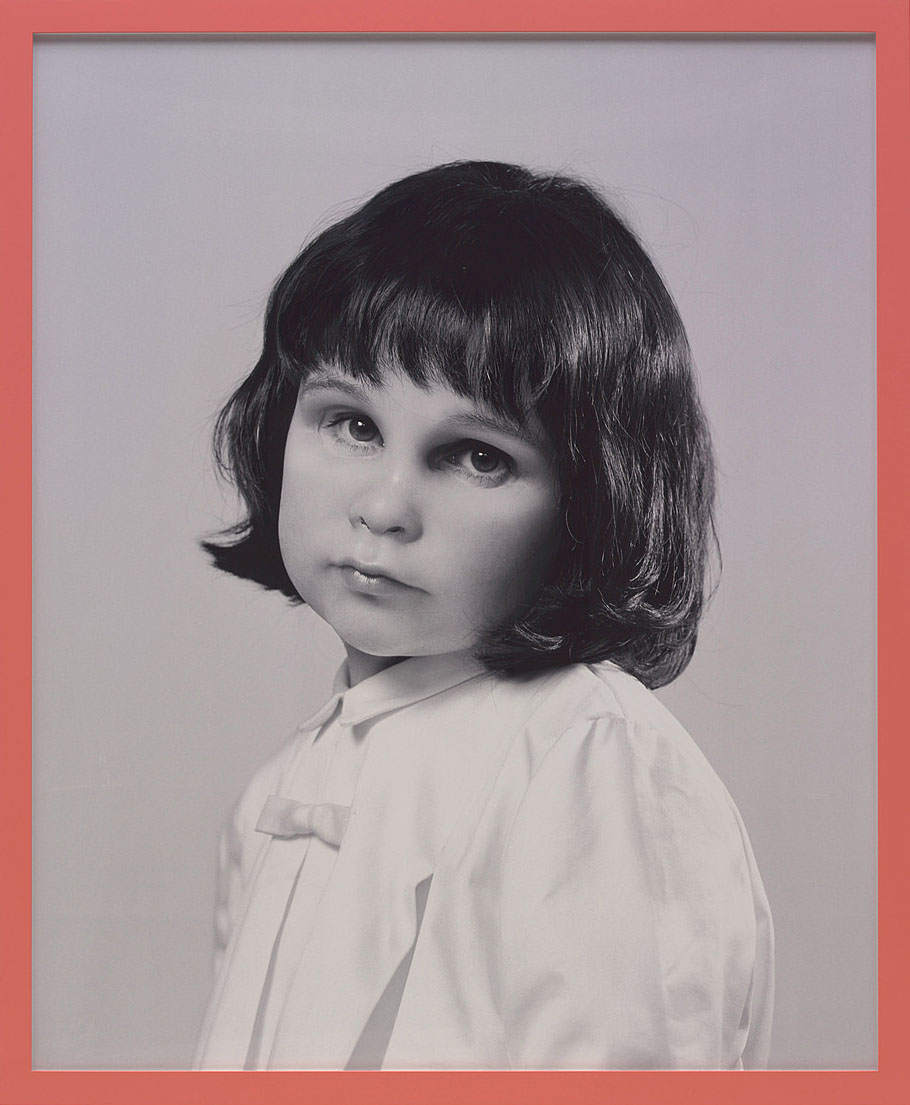
Gillian Wearing (British, b. 1963) 'Self-Portrait at Three Years Old' 2004


Gillian Wearing (British, b. 1963)
Self-Portrait at Three Years Old
2004
Chromogenic print
182 x 122cm
Solomon R. Guggenheim Museum, New York
Purchased with funds contributed by the International Directors Council and Executive Committee Members: Ruth Baum, Edythe Broad, Elaine Terner Cooper, Dimitris Daskalopoulos, Harry David, Gail May Engelberg, Shirley Fiterman, Nicki Harris, Dakis Joannou, Rachel Lehmann, Linda Macklowe, Peter Norton, Tonino Perna, Elizabeth Richebourg Rea, Mortim


“I taught myself to use a camera – it’s not very difficult to use a camera, but I never bothered looking at any textbooks on how to make a picture. I had a much more casual relation to it. For me at the time it was much more about the process rather than the results.”1

Photography has not only profoundly impacted our understanding of historical events, it has also changed the way we remember our personal histories. Beginning at birth, all aspects of our lives are recorded as images alongside our own experiences of them. These parallel recording devices, the camera and personal memory, produce alternate realities that may sometimes be synchronised but at other times are askew.

Gillian Wearing (b. 1963, Birmingham, England) uses masks as a central theme in her videos and photographs. The masks, which range from literal disguises to voice dubbing, conceal the identities of her subjects and free them to reveal intimate secrets. For her 2003 series of photographs Album, Wearing used this strategy to create an autobiographical work. Donning silicon prosthetics, she carefully reconstructed old family snapshots, transforming herself into her mother, father, uncle, and brother as young adults or adolescents. In one of the works, Wearing recreated her own self-portrait as a teenager – and in fact the artist considers all the photographs in this series as self-portraits. She explains: “I was interested in the idea of being genetically connected to someone but being very different. There is something of me, literally, in all those people – we are connected, but we are each very different.”2

To make the Album series, Wearing collaborated with a talented team (some of whom have worked for Madame Tussaud’s wax works) who sculpted, cast, painted, and applied hair to create the masks, wigs, and body suits used in these photographs. The elaborate disguises the artist wears, when combined with the snapshot “realism” of the original images on which they are based, create an eerie fascination that serves to reveal aspects of her identity rather than conceal it.

Self-Portrait at Three Years Old (2004) carries this role-playing further back in time. Confronting the viewer with her adult gaze through the eyeholes of the toddler’s mask, Wearing plays on the rift between interior and exterior and raises a multitude of provocative questions about identity, memory, and the truthfulness of the photographic medium. Wearing says, “What I love about photographs is that they give you a lot and also they withhold a lot.”3

Text from the Teacher’s Guide to the exhibition

1/ “Gillian Wearing,” interview by Leo Edelstein, Journal of Contemporary Art
2/ Quoted in Jennifer Bayles, “Acquisitions: Gillian Wearing,” Albright-Knox Art Gallery, Buffalo, NY (accessed January 25, 2010)
3/ Sebastian Smee, “Gillian Wearing: The art of the matter,” The Independent (London), October 18, 2003


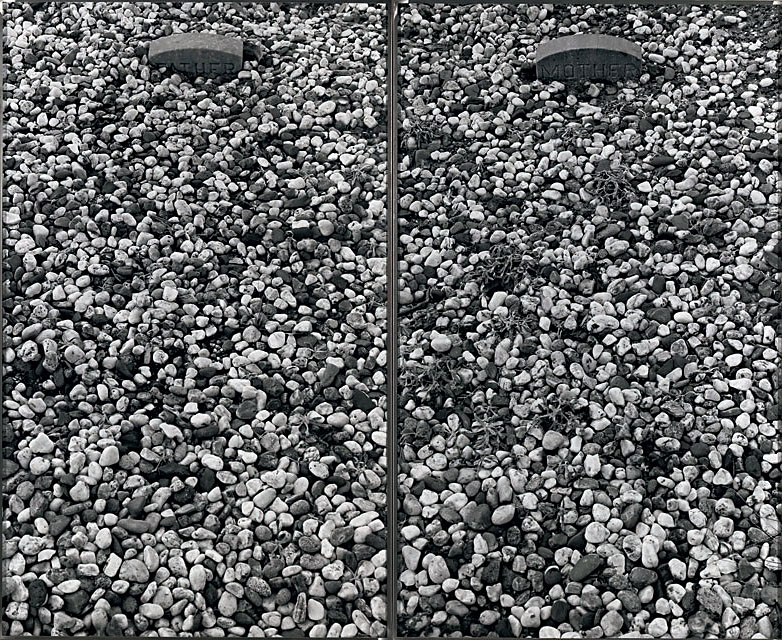
Sophie Calle (French, b. 1953) 'Father Mother (The Graves, #17)' 1990


Sophie Calle (French, b. 1953)
Father Mother (The Graves, #17)
1990
Two gelatin silver prints in artist’s frames edition 2/2
181.0 x 111.1cm each
Solomon R. Guggenheim Museum, New York, Gift, The Bohen Foundation


Ana Mendieta (Cuban American, 1948-1985) 'Untitled (Silueta Series)' 1978


Ana Mendieta (Cuban American, 1948-1985)
Untitled (Silueta series)
1978
Gelatin silver print
20.3 x 25.4cm
Solomon R. Guggenheim Museum, New York, Purchased with funds contributed by the Photography Committee


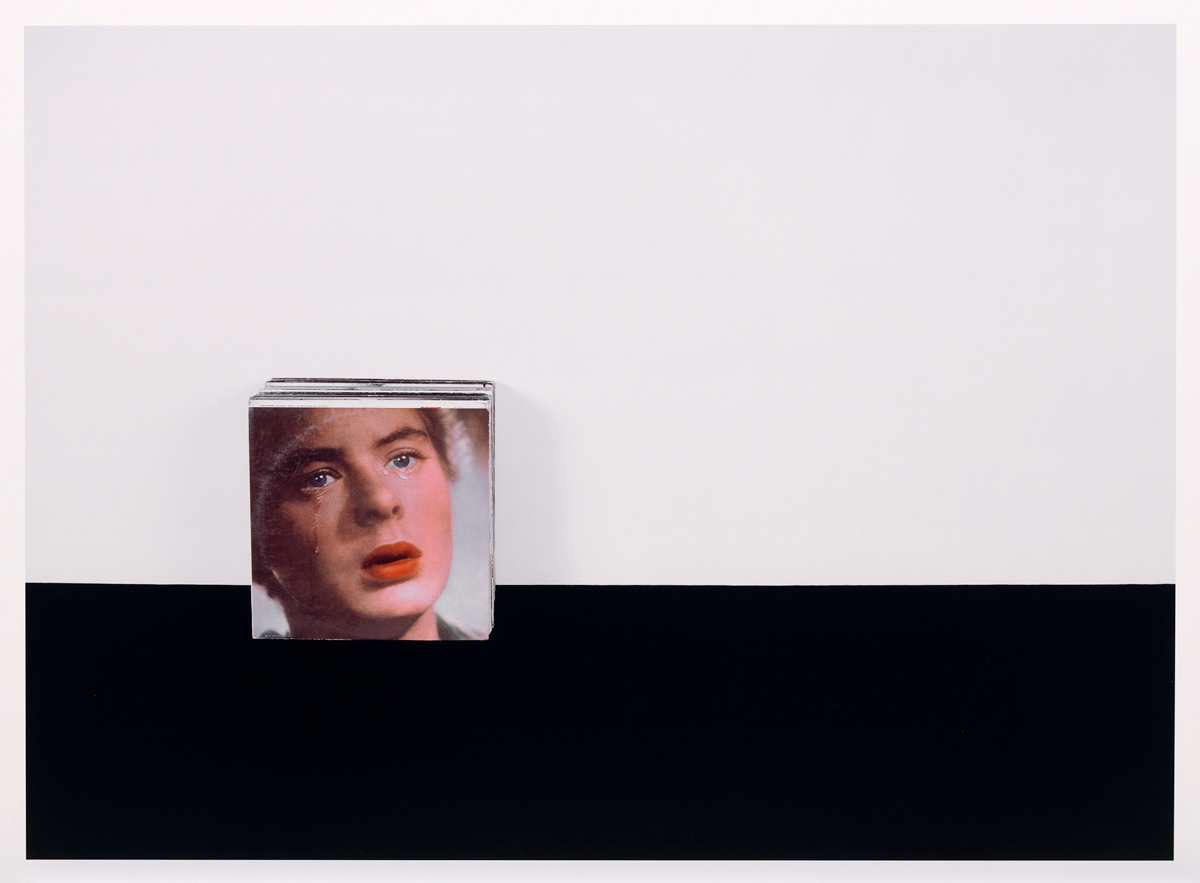
Anne Collier (American, b. 1970) 'Crying' 2005


Anne Collier (American, b. 1970)
Crying
2005
Chromogenic print edition 1/5
99.1 x 134 x 0.6cm
Solomon R. Guggenheim Museum, New York, Purchased with funds contributed by Mr. and Mrs. Aaron M. Tighe


Miranda Lichtenstein (American, b. 1969) 'Floater' 2004


Miranda Lichtenstein (American, b. 1969)
Floater
2004
Chromogenic print edition 5/5
104.1 x 127cm
Solomon R. Guggenheim Museum, New York, Purchased with funds contributed by the Photography Committee


Sarah Anne Johnson (Canadian, b. 1976) 'Morning Meeting (from Tree Planting)' 2003


Sarah Anne Johnson (Canadian, b. 1976)
Morning Meeting (from Tree Planting)
2003
Chromogenic print edition
73.7 x 79.7cm
Solomon R. Guggenheim Museum, New York, Purchased with funds contributed by Pamela and Arthur Sanders; the Harriett Ames
Charitable Trust; Henry Buhl; the Heather and Tony Podesta Collection; Ann and Mel Schaffer; Shelley Harrison; and the Photography Committee


Sally Mann (American, b. 1951) 'Virginia' from the 'Mother Land' series 1992


Sally Mann (American, b. 1951)
Virginia from the Mother Land series
1992
Gelatin silver print
76.2 x 96.5cm
Solomon R. Guggenheim Museum, New York, Gift, The Bohen Foundation


Solomon R. Guggenheim Museum
1071 5th Avenue (at 89th Street)
New York

Opening hours:
Sunday – Monday, 11am – 6pm
Closed Tuesday
Wednesday – Friday 11am – 6pm
Saturday 11am – 8pm

Solomon R. Guggenheim Museum website

LIKE ART BLART ON FACEBOOK

Back to top