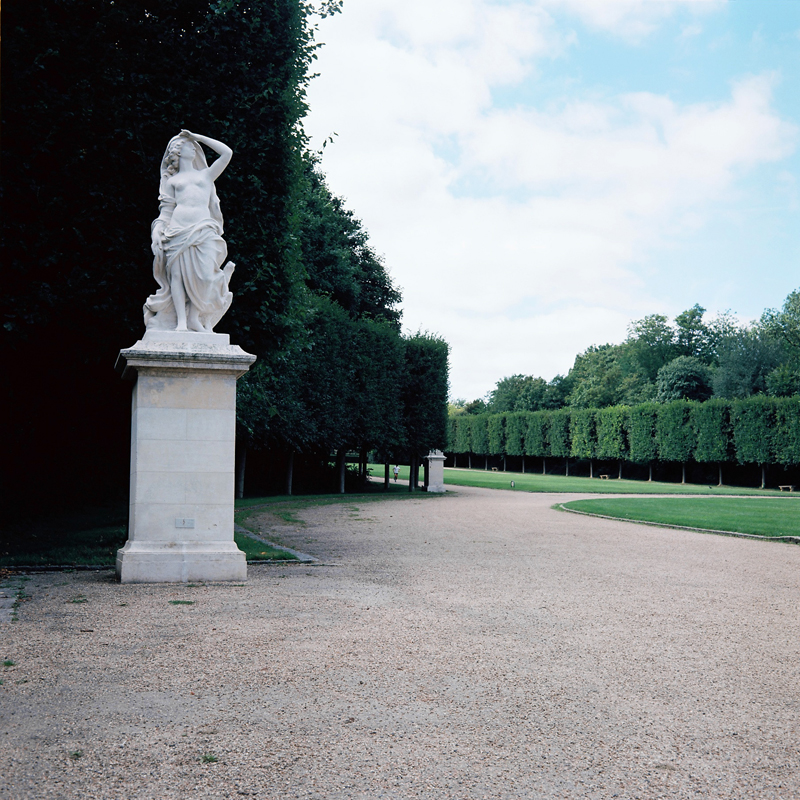
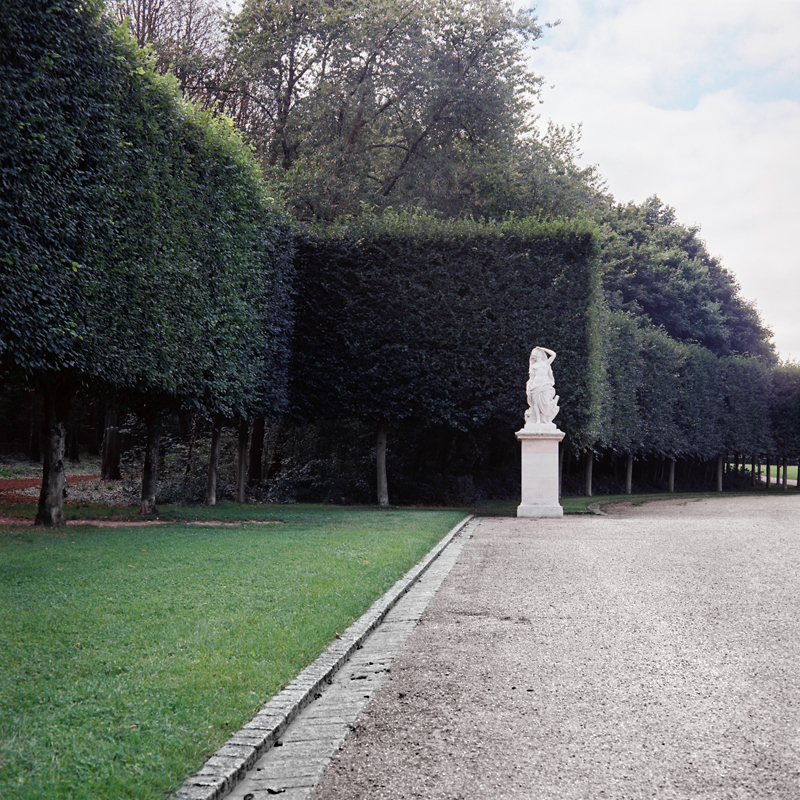
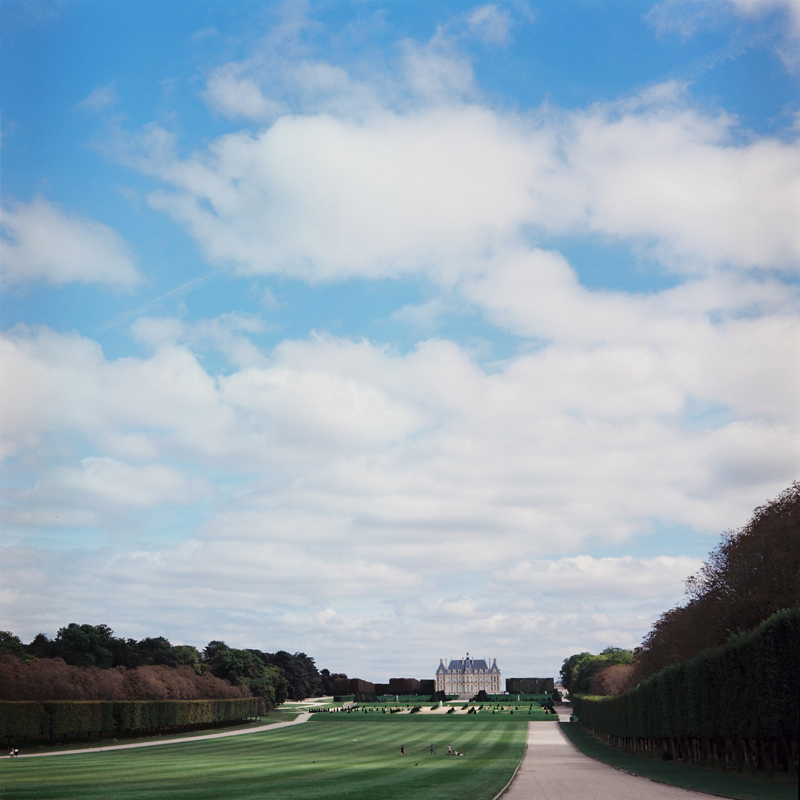
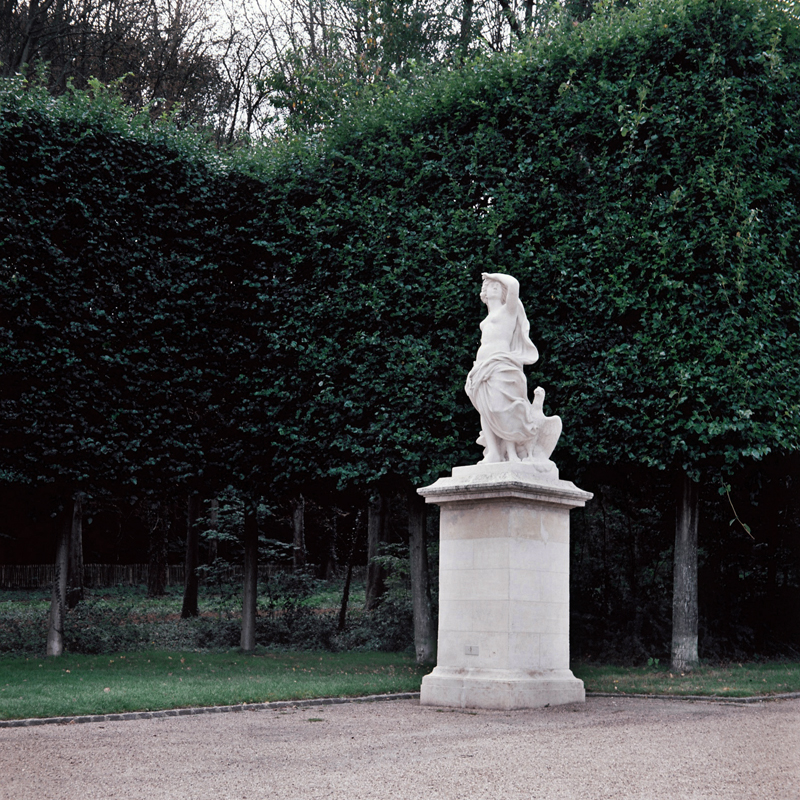
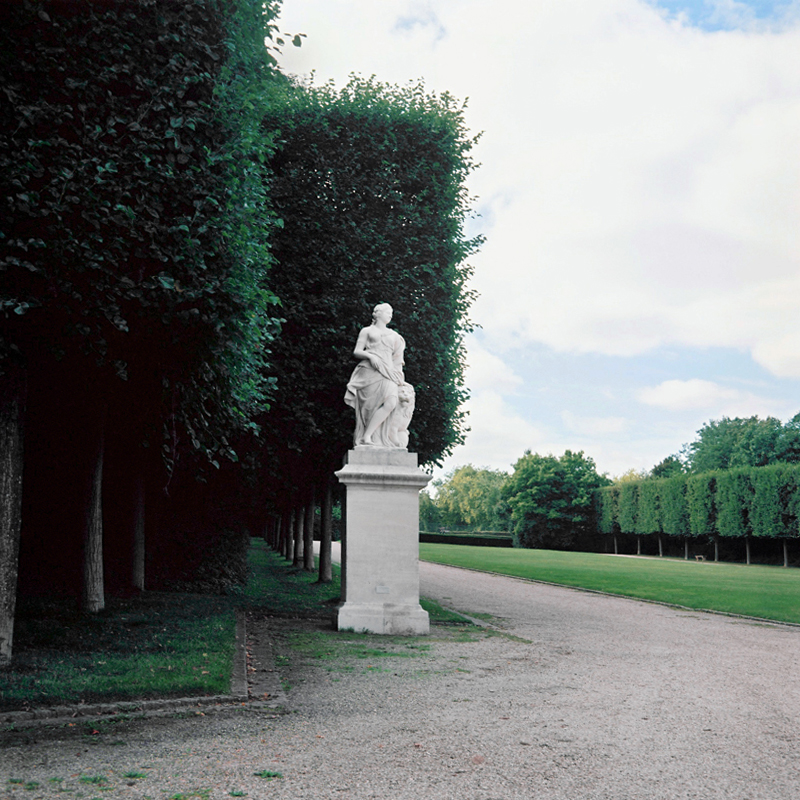
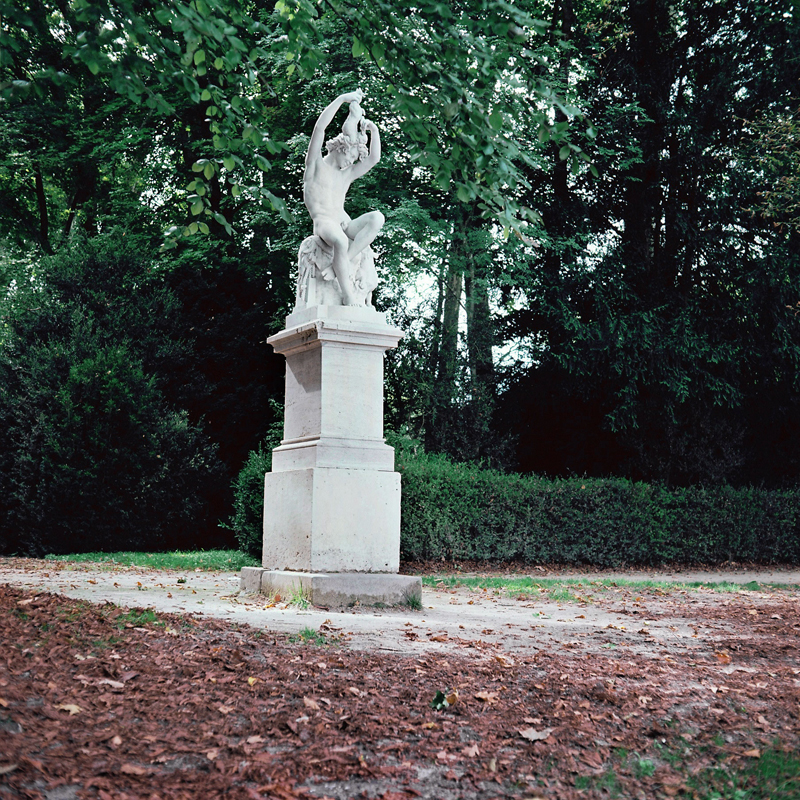
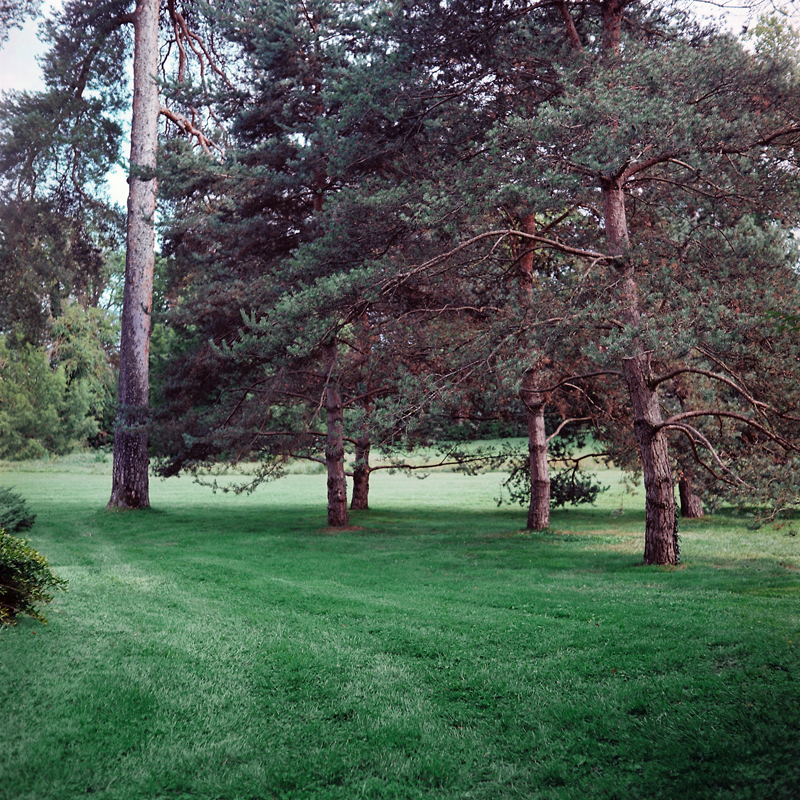
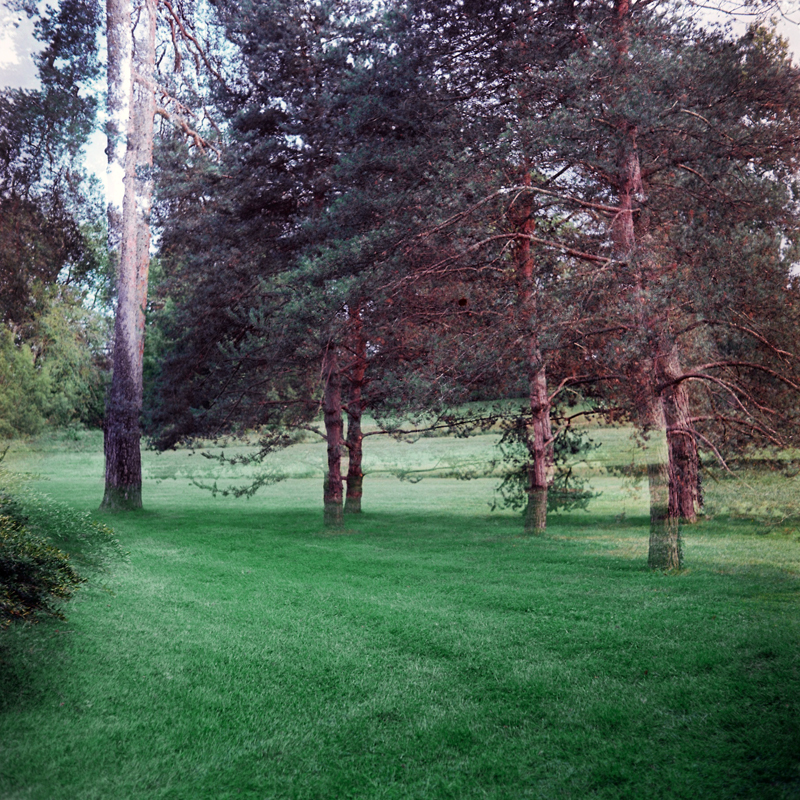
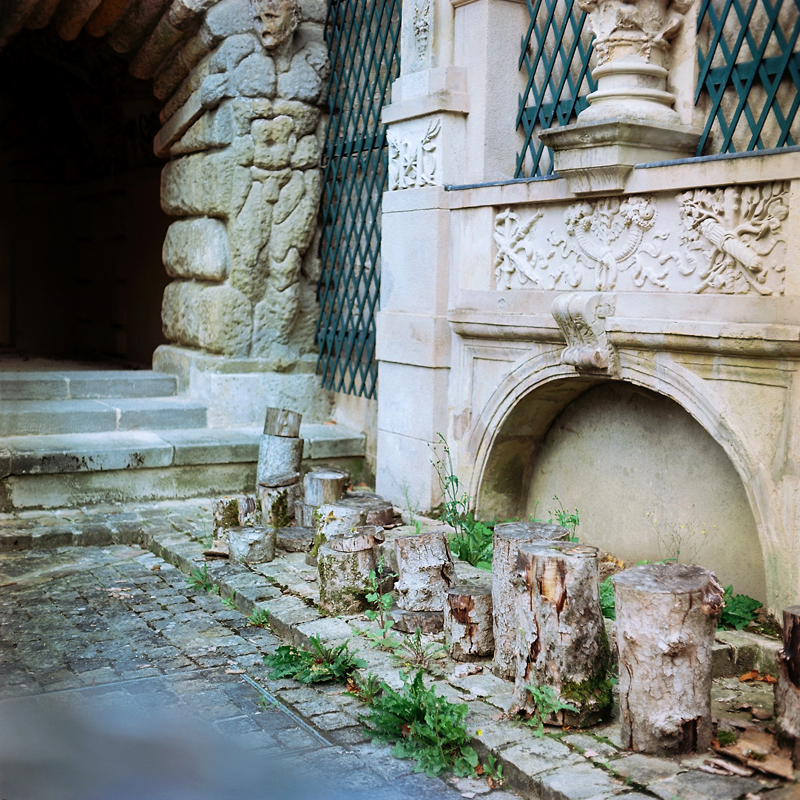
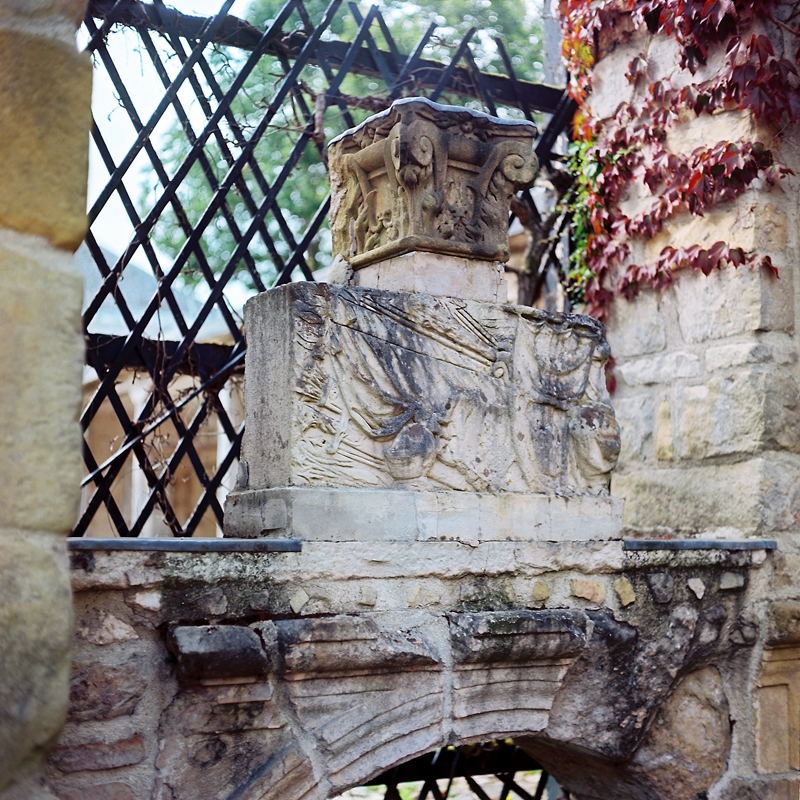
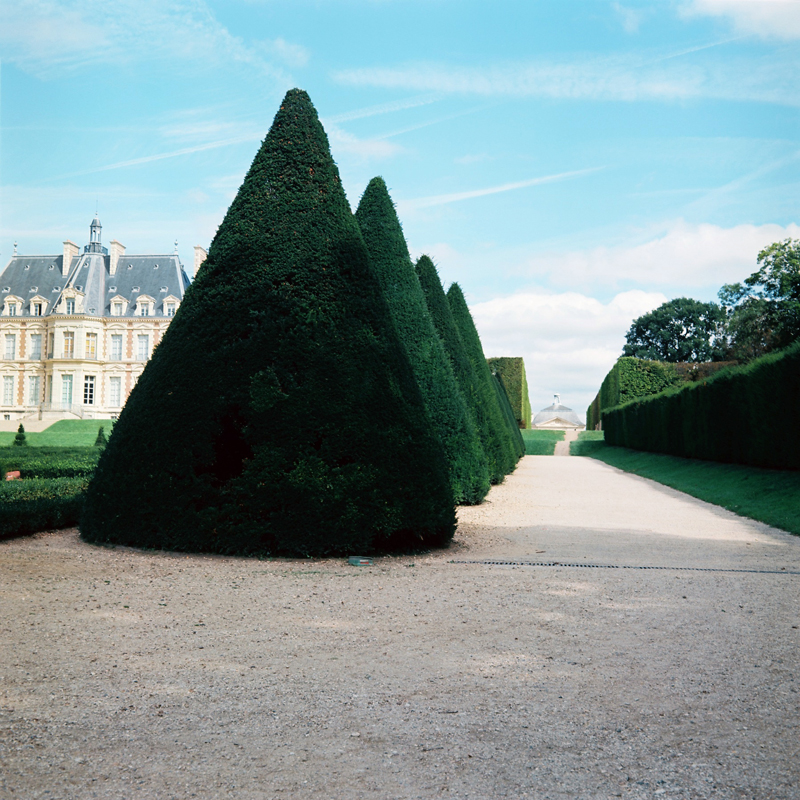
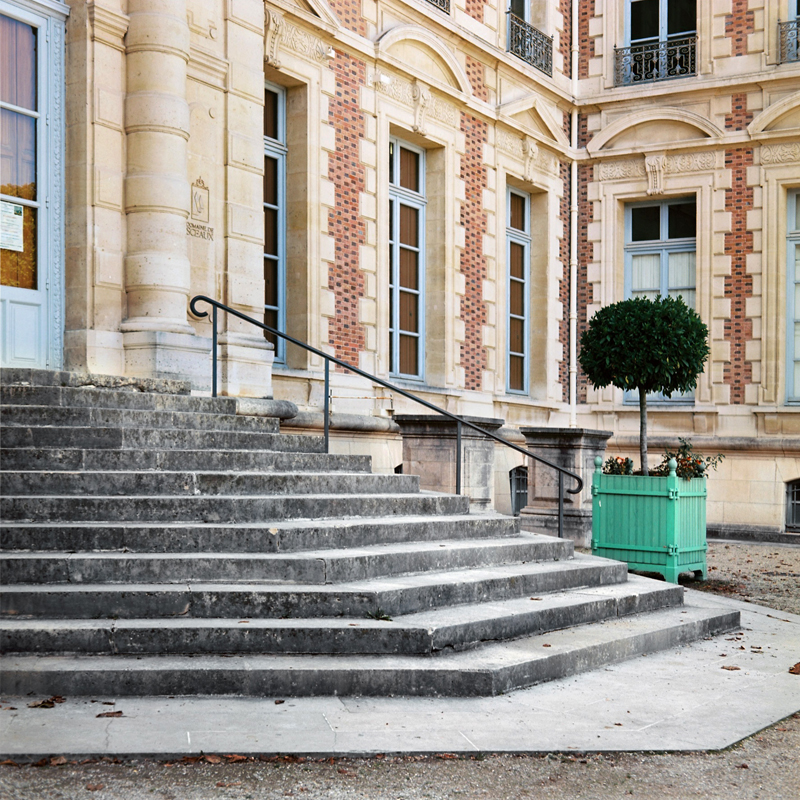
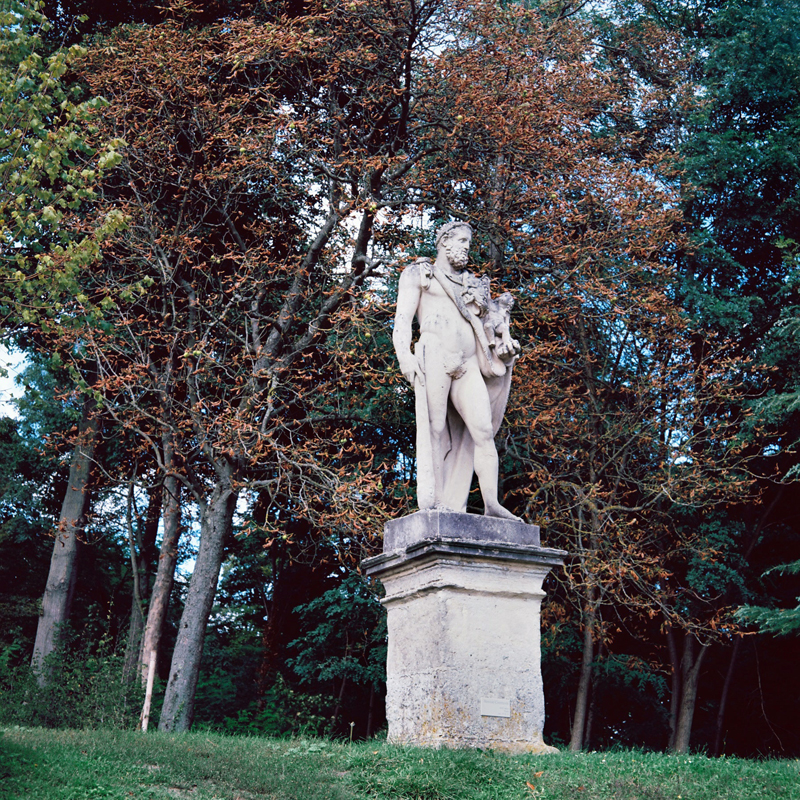
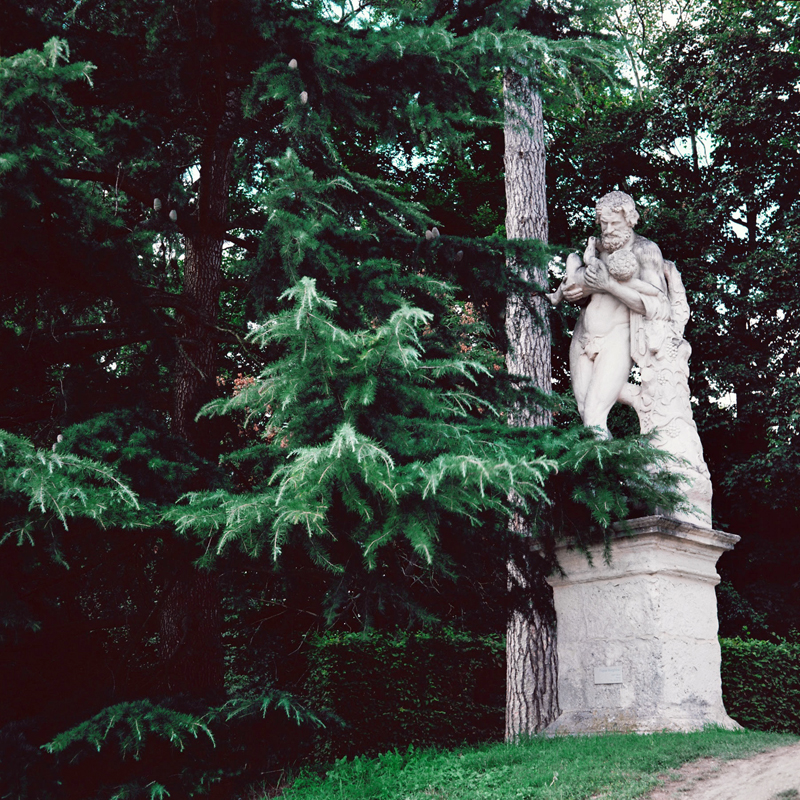
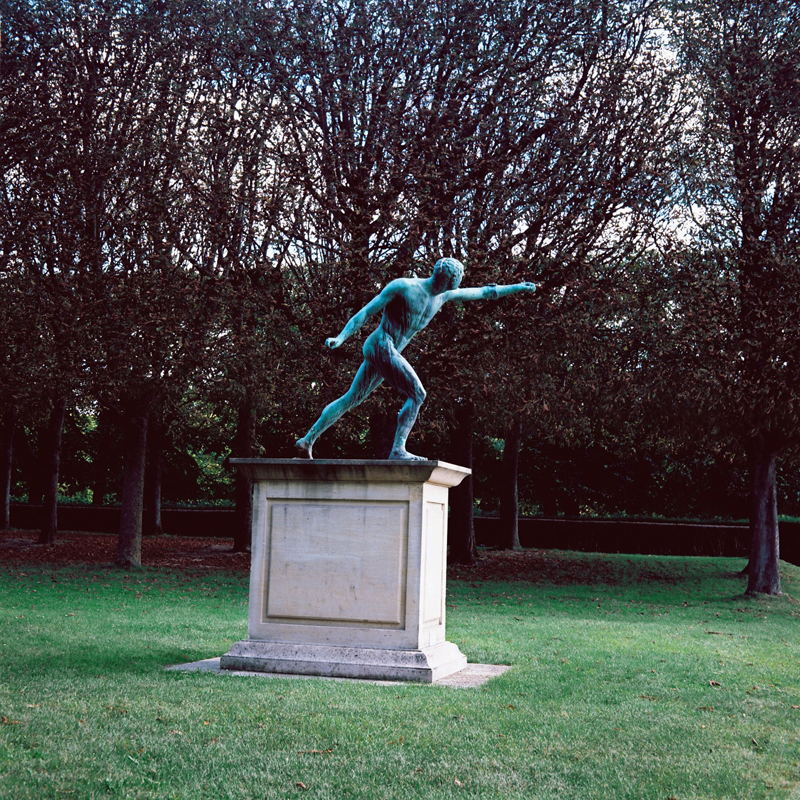
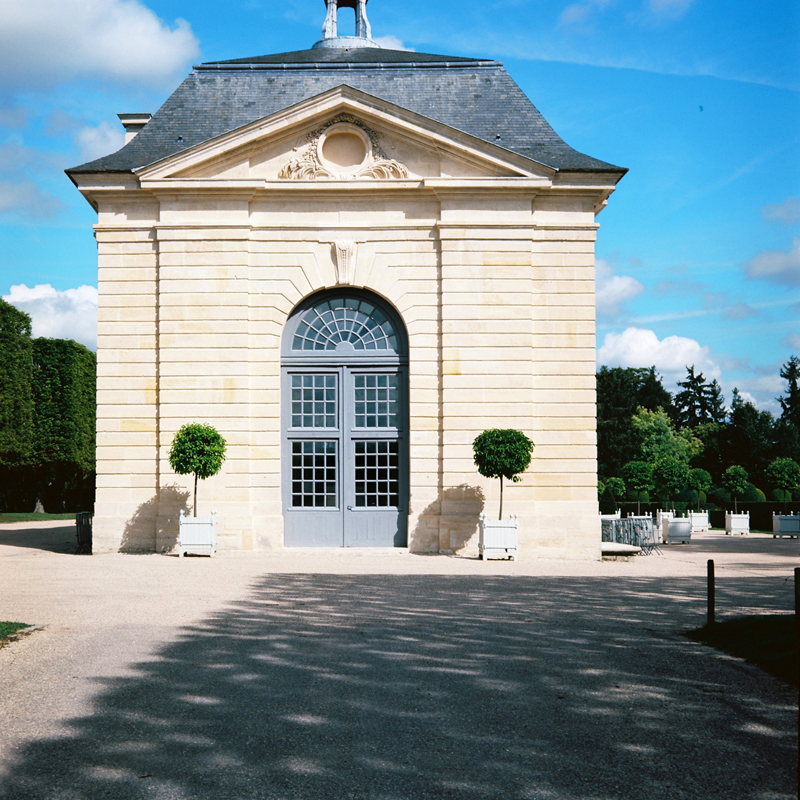
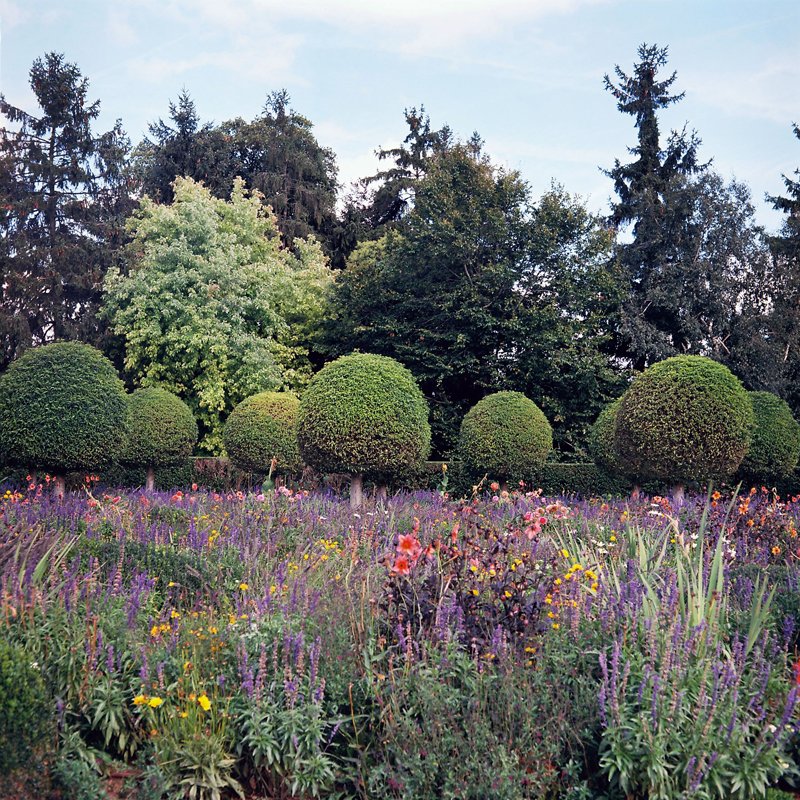
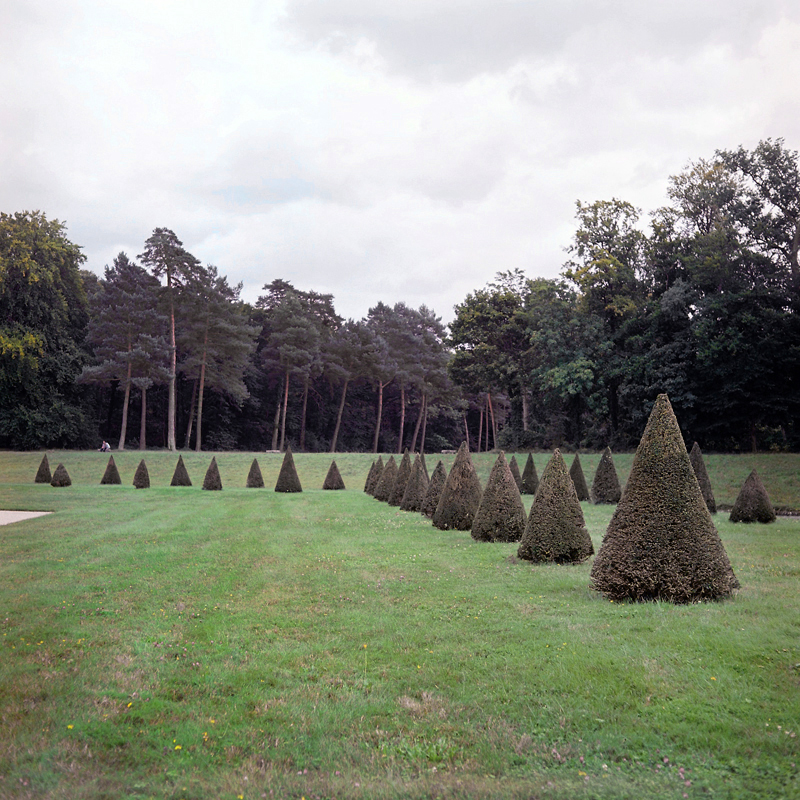
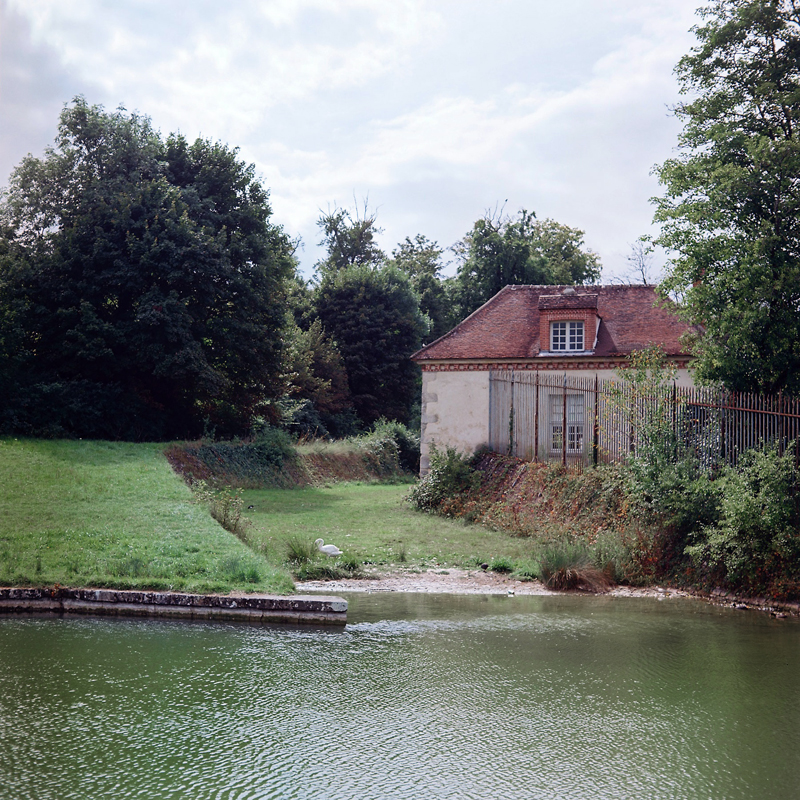
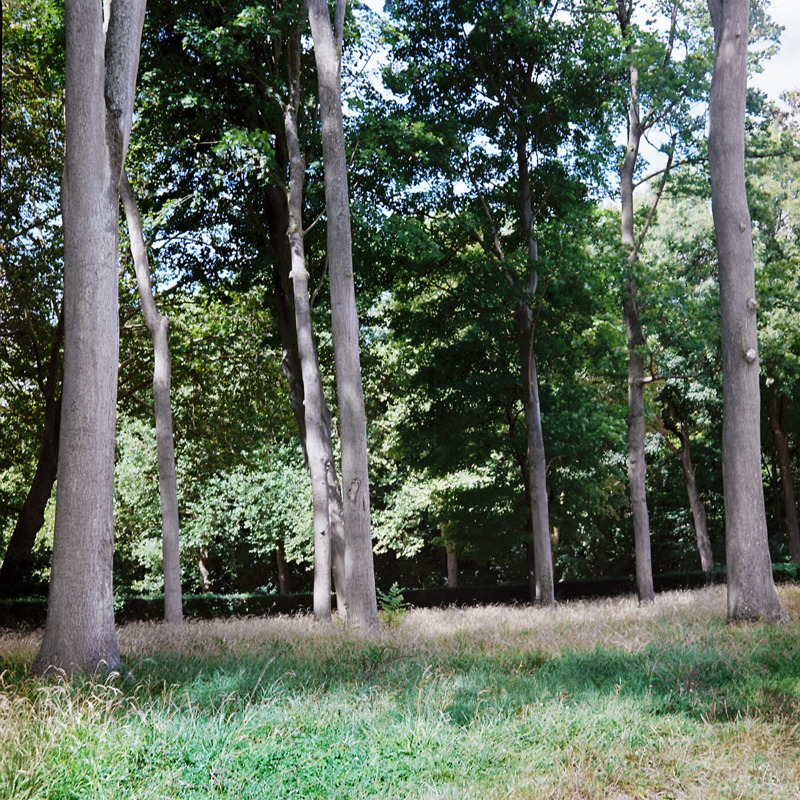
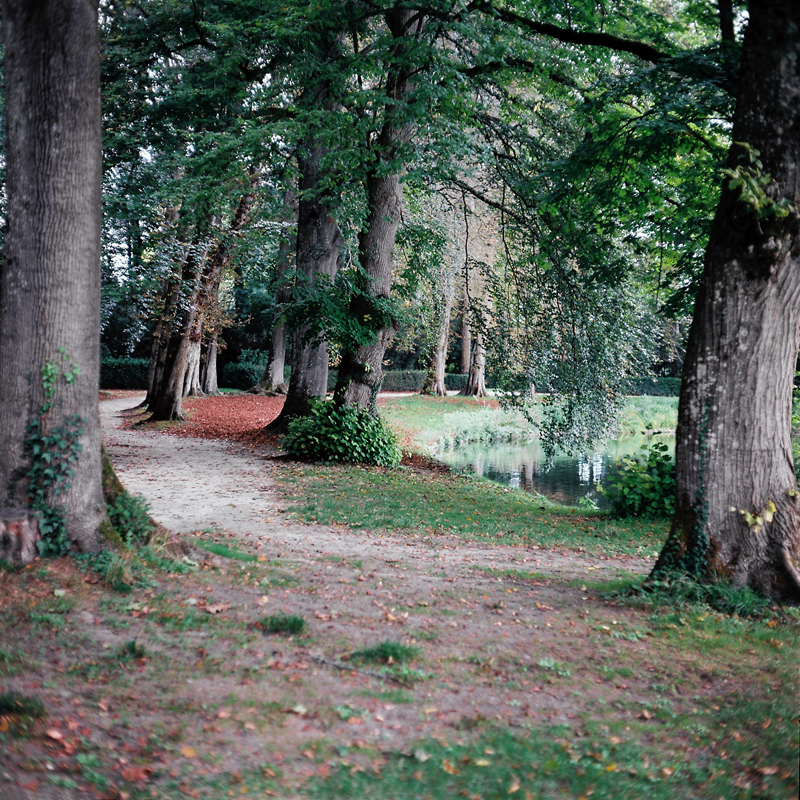
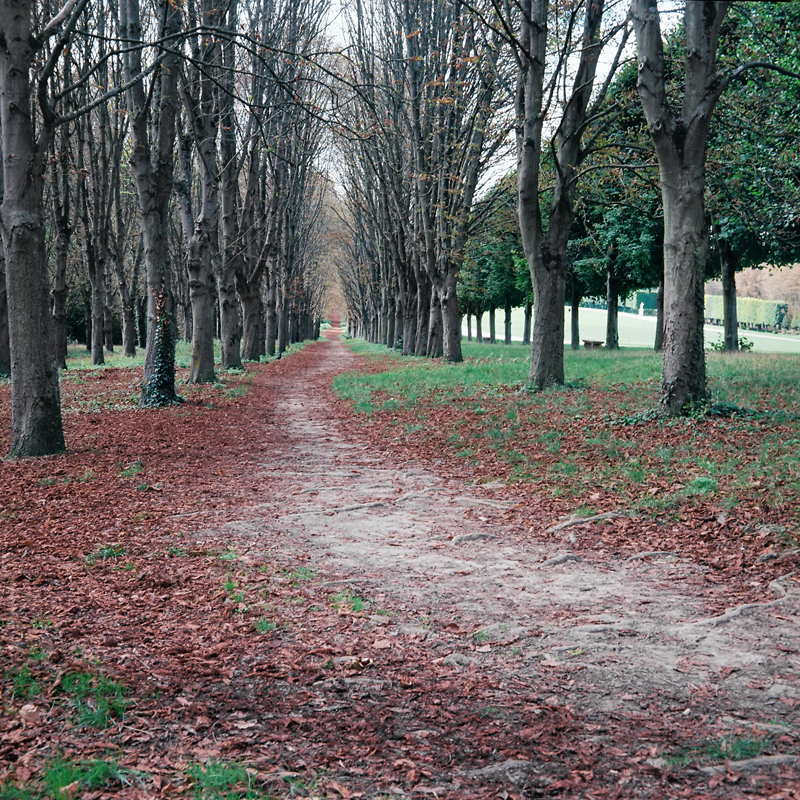
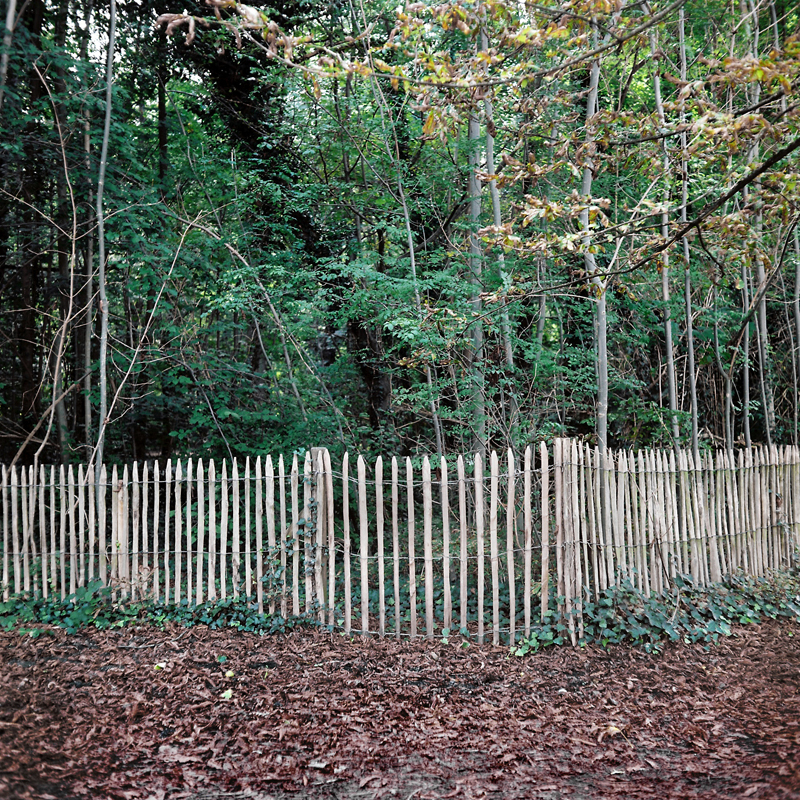
Marcus Bunyan (Australian, b. 1958) Parc de Sceaux 2018 From the series Paris in film Digital photograph
Paris in film
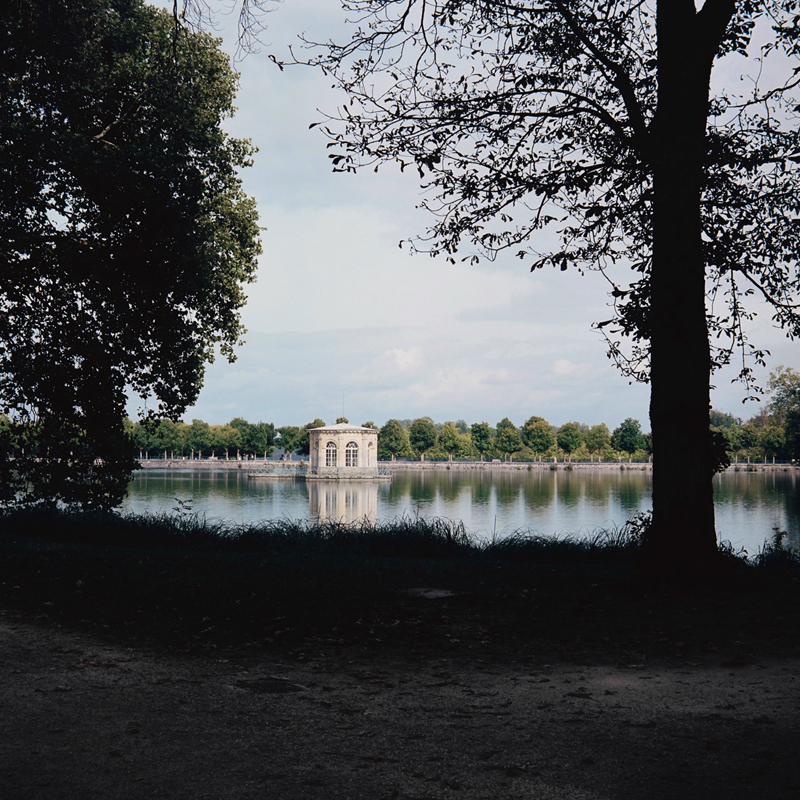
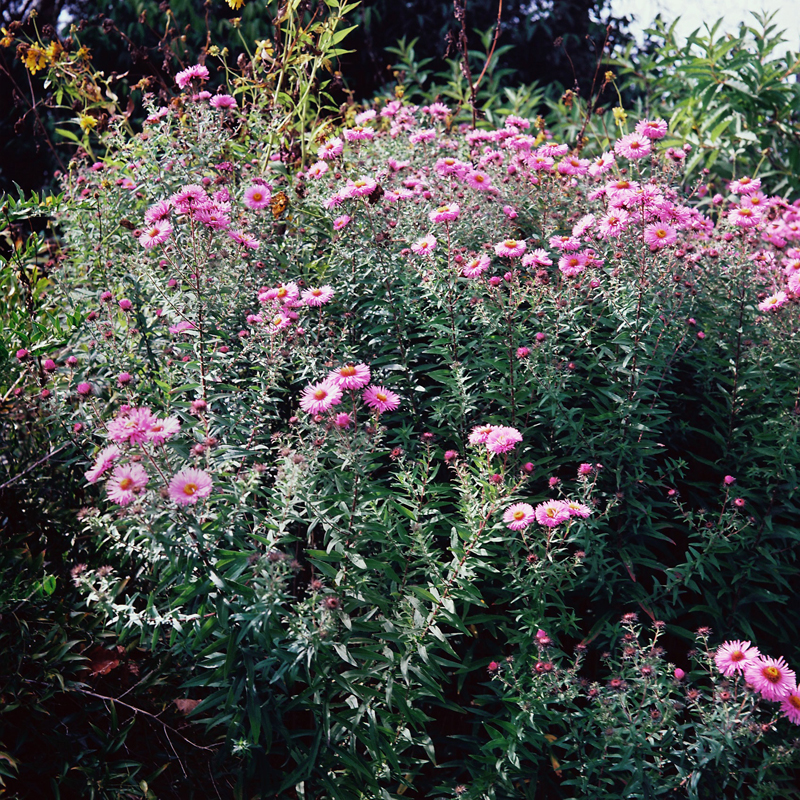
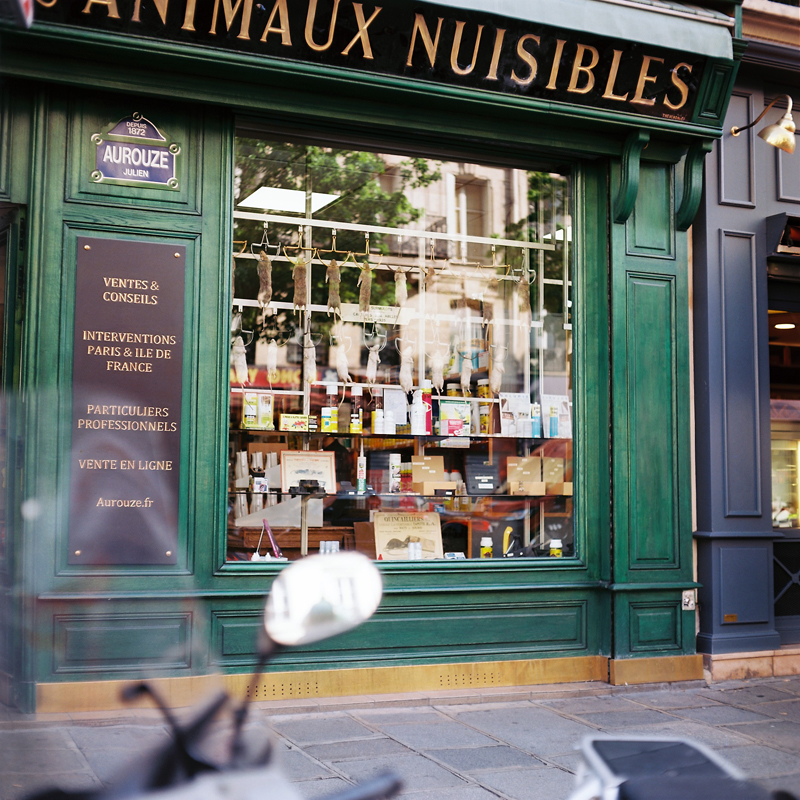
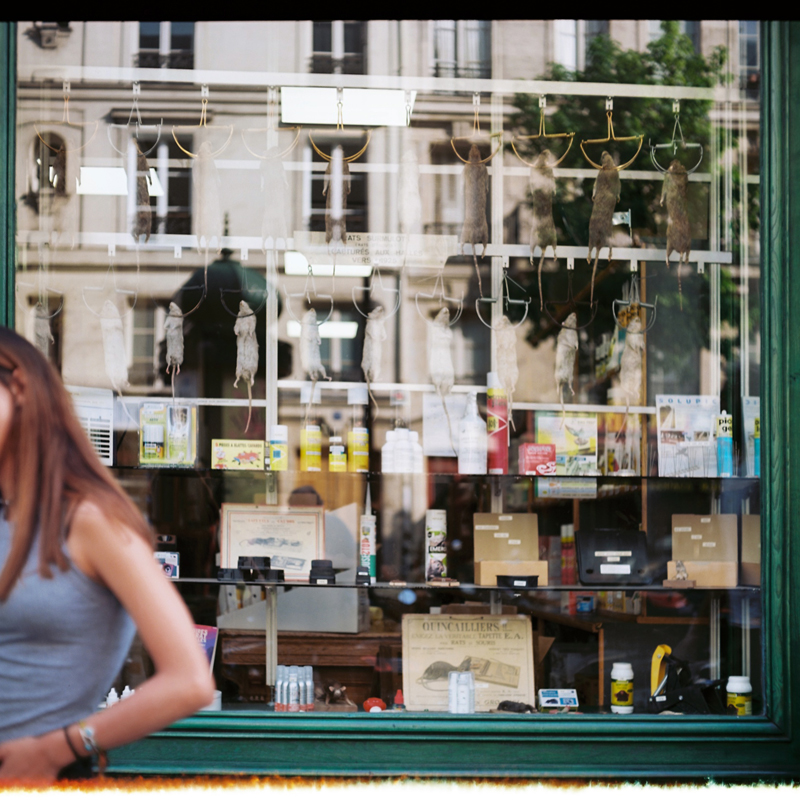
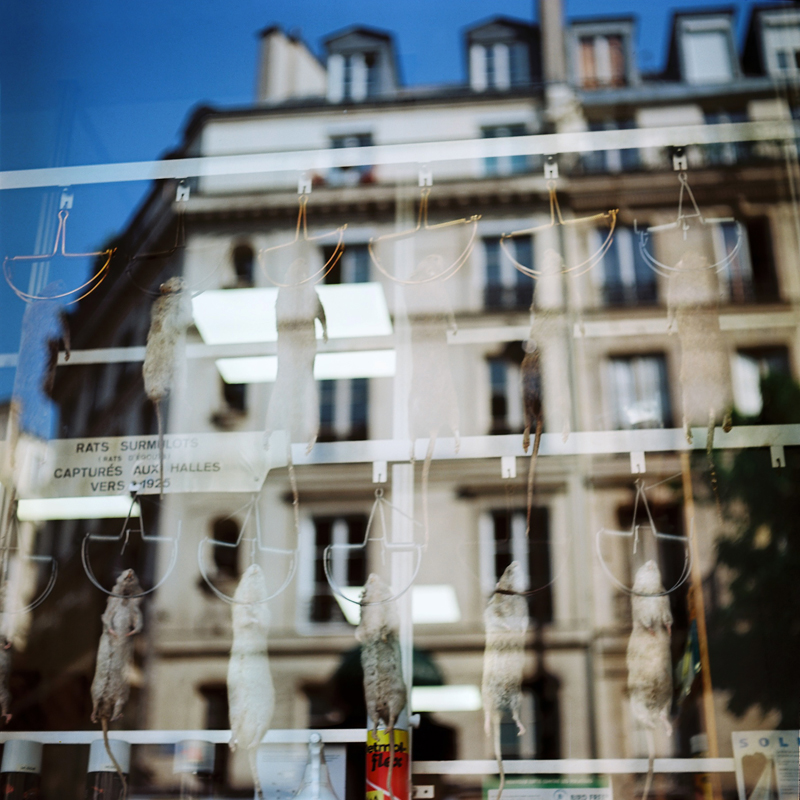
These photographs were taken on a trip to Paris in 2017 using my Mamiya twin-lens C220 medium format camera shot on Kodak Ektra 100 colour negative film.
It was strange taking these photographs over numerous, adventurous, energised days in Paris. Different from the yet to be sorted 4,000+ digital photographs I took, the act of taking these photographs allowed me to fully concentrate, to immerse myself in the environment, to loose myself in the process – with a commensurate dropping away of ego. I just was in the moment, “in the zone” as athletes would say.
They are reasonable scans of the negatives, full frame, no cropping, and I have colour corrected as best I can, noting that all digital images look different from computer monitor to monitor – one of the perennial hazards of looking at work online. They have not been sequenced at the moment.
The photographs seem to hang well together as a body of work.
Through their clear visualisation, the photographs speak directly to the viewer.
Please click on the photographs for a larger version of the image.
Photographs are available from this series for purchase. As a guide, a digital colour 16″ x 20″ costs $1000 plus tracked and insured shipping. For more information please see my Store web page.
“The great goal that we must all pursue is to kill off the great evil that eats away at us: egotism.”
“Sometimes I think I love nature just as much, if not more, for not being capable of translation into words… No words can describe some things. The more one says the less one sees. You see… nature is like love, it’s in the heart and you must not talk about it too much. You diminish what you try to describe. As for myself, I have no idea of my own nature when I act unselfconsciously. I only see what there is between the sky and myself. I have no part in it all. If I think of you, in my odd way I am you and I cease to exist.”
George Sand
Marcus Bunyan (Australian, b. 1958) Parc de Sceaux 2018 From the series Paris in film Digital photograph
Marcus Bunyan (Australian, b. 1958) Parc de Sceaux 2018 From the series Paris in film Digital photograph
Marcus Bunyan (Australian, b. 1958) Parc de Sceaux 2018 From the series Paris in film Digital photograph
Marcus Bunyan (Australian, b. 1958) Parc de Sceaux 2018 From the series Paris in film Digital photograph
Marcus Bunyan (Australian, b. 1958) Parc de Sceaux 2018 From the series Paris in film Digital photograph
Marcus Bunyan (Australian, b. 1958) Parc de Sceaux 2018 From the series Paris in film Digital photograph
Marcus Bunyan (Australian, b. 1958) Parc de Sceaux 2018 From the series Paris in film Digital photograph
Marcus Bunyan (Australian, b. 1958) Parc de Sceaux 2018 From the series Paris in film Digital photograph
Marcus Bunyan (Australian, b. 1958) Parc de Sceaux 2018 From the series Paris in film Digital photograph
Marcus Bunyan (Australian, b. 1958) Parc de Sceaux 2018 From the series Paris in film Digital photograph
Marcus Bunyan (Australian, b. 1958) Parc de Sceaux 2018 From the series Paris in film Digital photograph
Marcus Bunyan (Australian, b. 1958) Parc de Sceaux 2018 From the series Paris in film Digital photograph
Marcus Bunyan (Australian, b. 1958) Parc de Sceaux 2018 From the series Paris in film Digital photograph
Marcus Bunyan (Australian, b. 1958) Parc de Sceaux 2018 From the series Paris in film Digital photograph
Marcus Bunyan (Australian, b. 1958) Parc de Sceaux 2018 From the series Paris in film Digital photograph
Marcus Bunyan (Australian, b. 1958) Parc de Sceaux 2018 From the series Paris in film Digital photograph
Marcus Bunyan (Australian, b. 1958) Parc de Sceaux 2018 From the series Paris in film Digital photograph
Marcus Bunyan (Australian, b. 1958) Parc de Sceaux 2018 From the series Paris in film Digital photograph
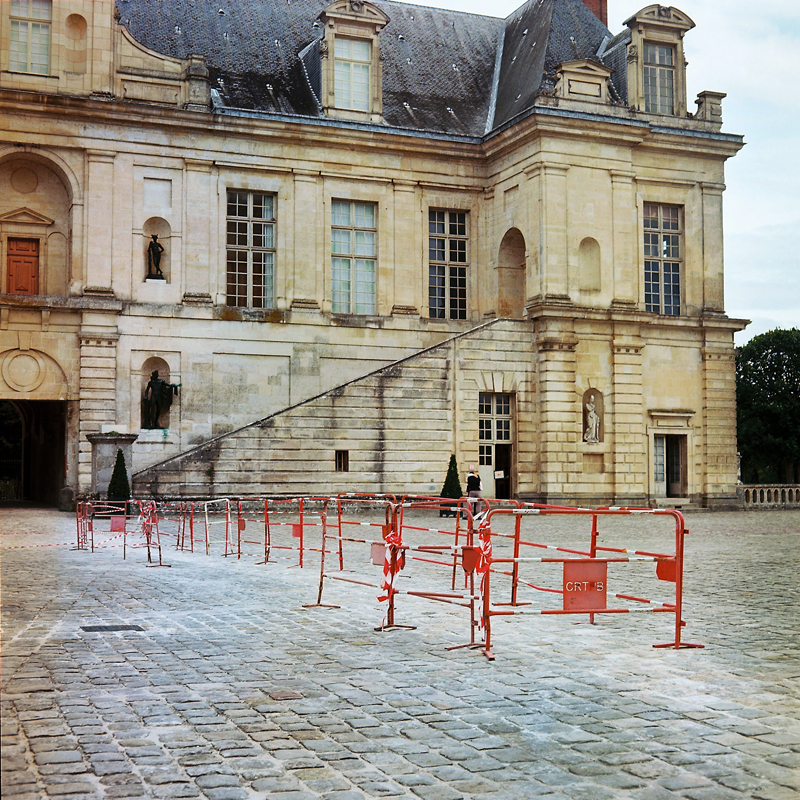
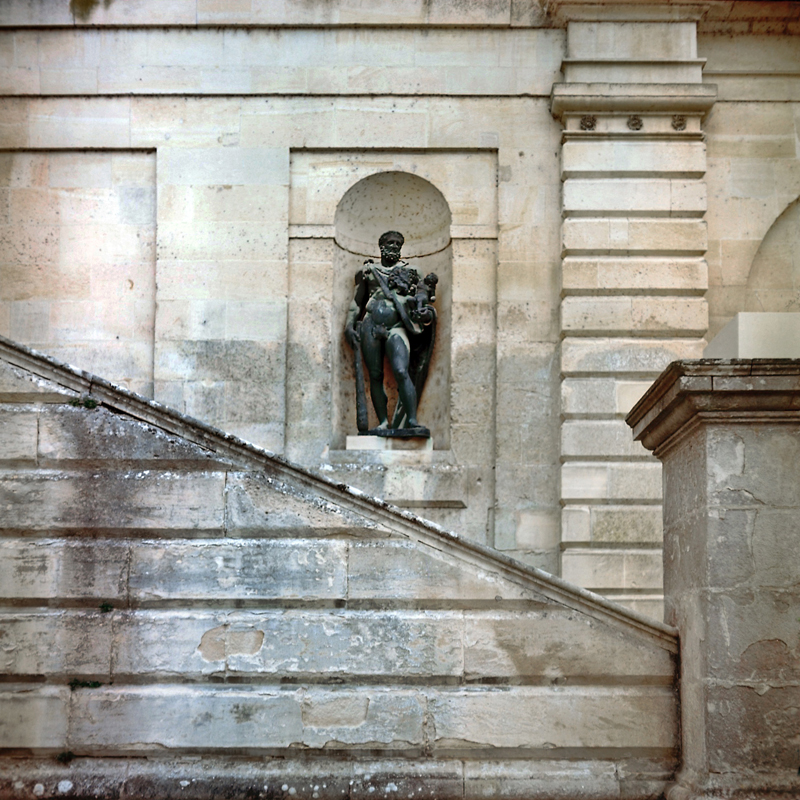
Marcus Bunyan (Australian, b. 1958) Fontainebleau 2018 From the series Paris in film Digital photograph
Marcus Bunyan (Australian, b. 1958) Fontainebleau 2018 From the series Paris in film Digital photograph
Marcus Bunyan (Australian, b. 1958) Animaux Nuisibles 2018 From the series Paris in film Digital photograph
Marcus Bunyan (Australian, b. 1958) Animaux Nuisibles 2018 From the series Paris in film Digital photograph
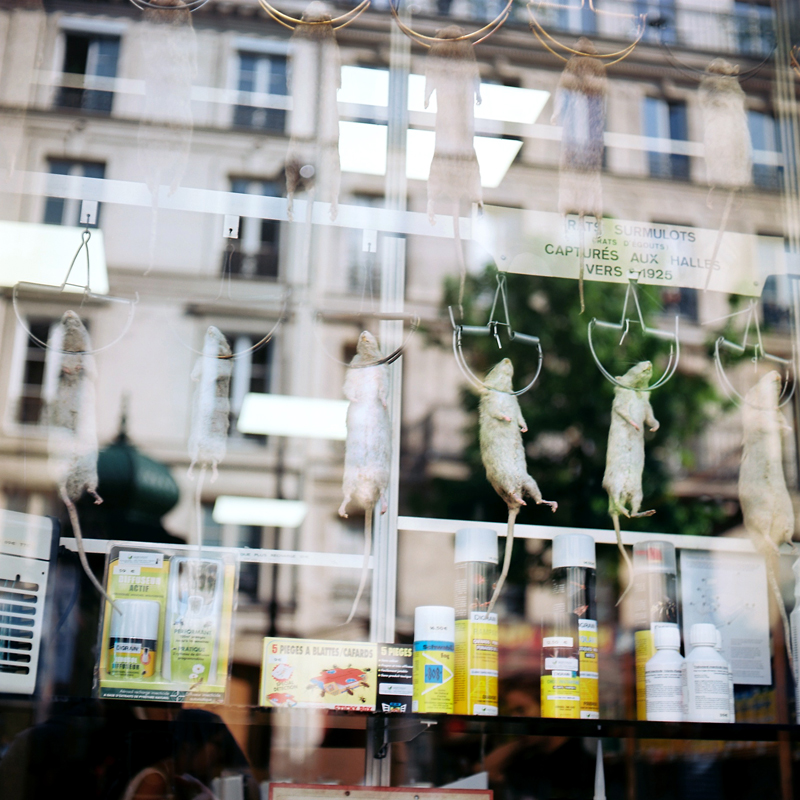
Marcus Bunyan (Australian, b. 1958) Animaux Nuisibles 2018 From the series Paris in film Digital photograph
Marcus Bunyan (Australian, b. 1958) Rats Surmulots Captures aux Halles vers 1925 2018 From the series Paris in film Digital photograph
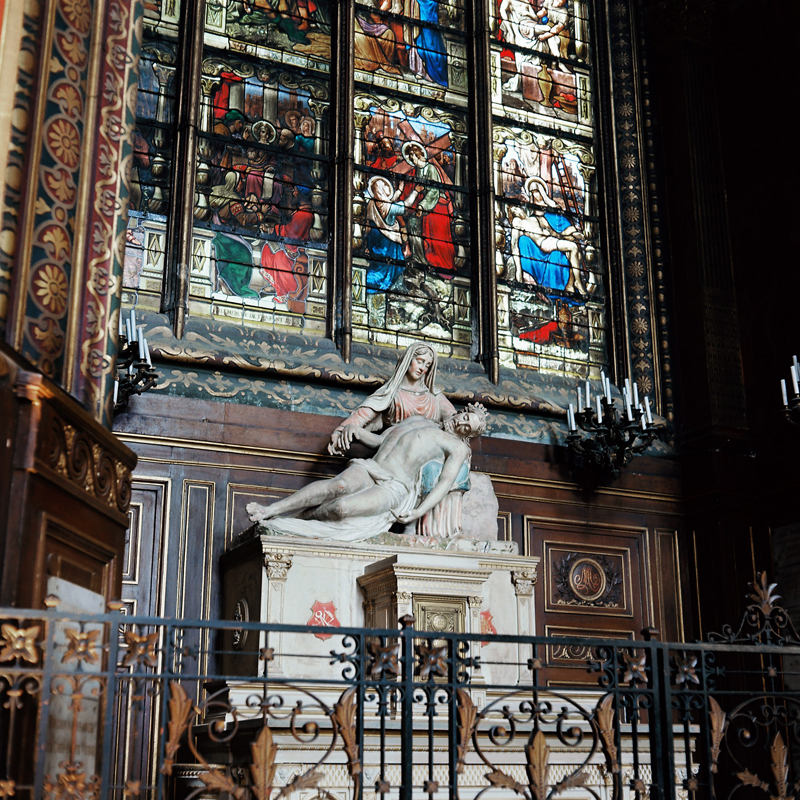
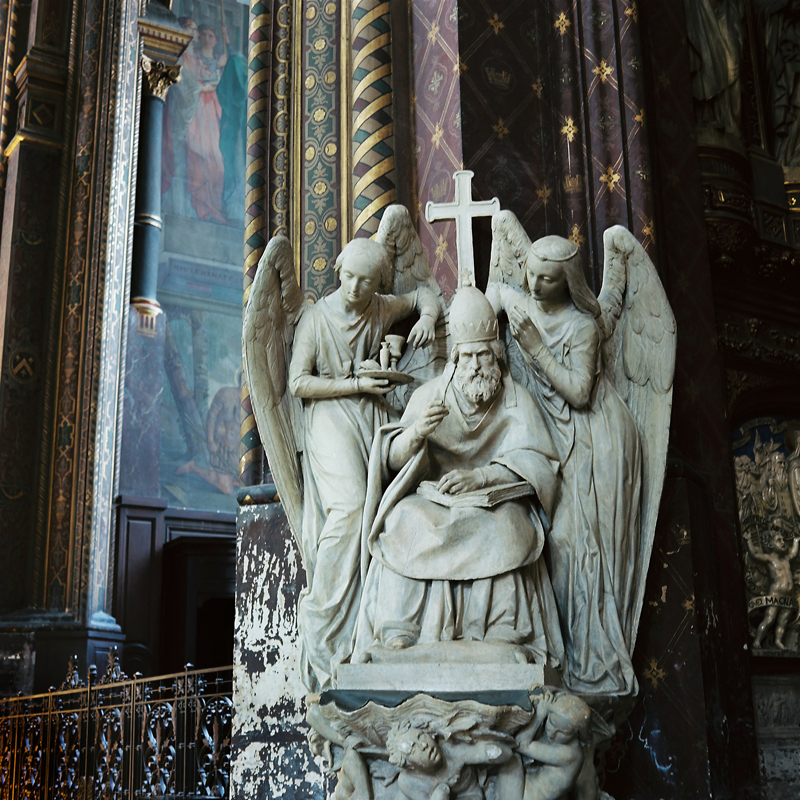
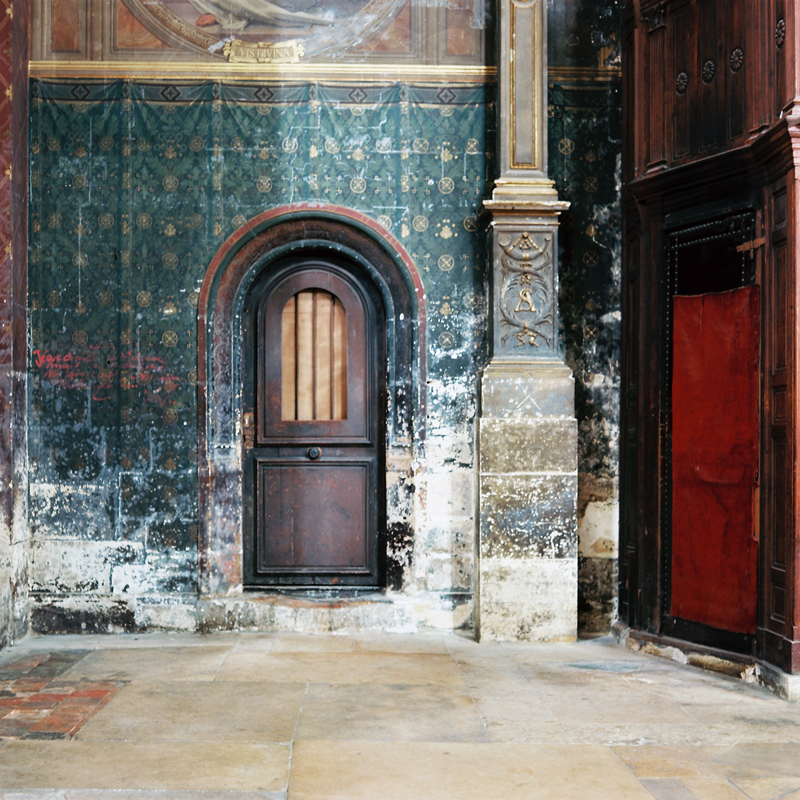
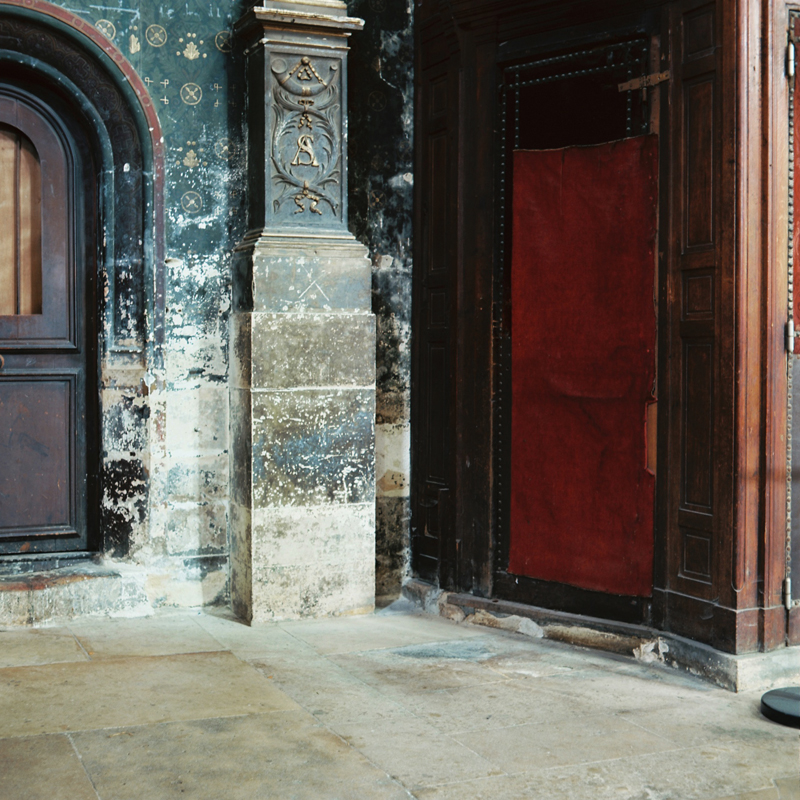
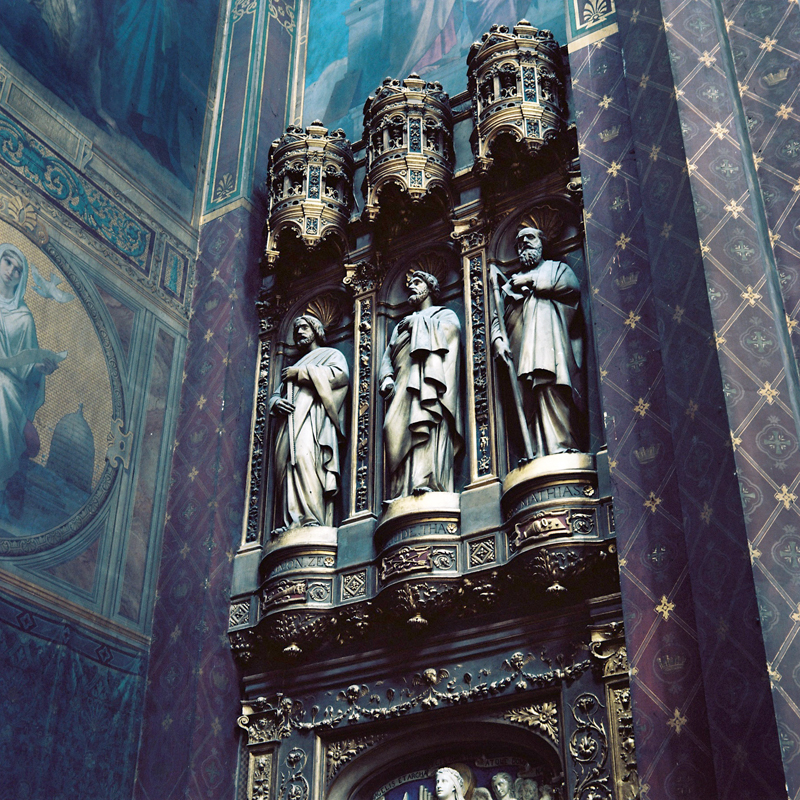
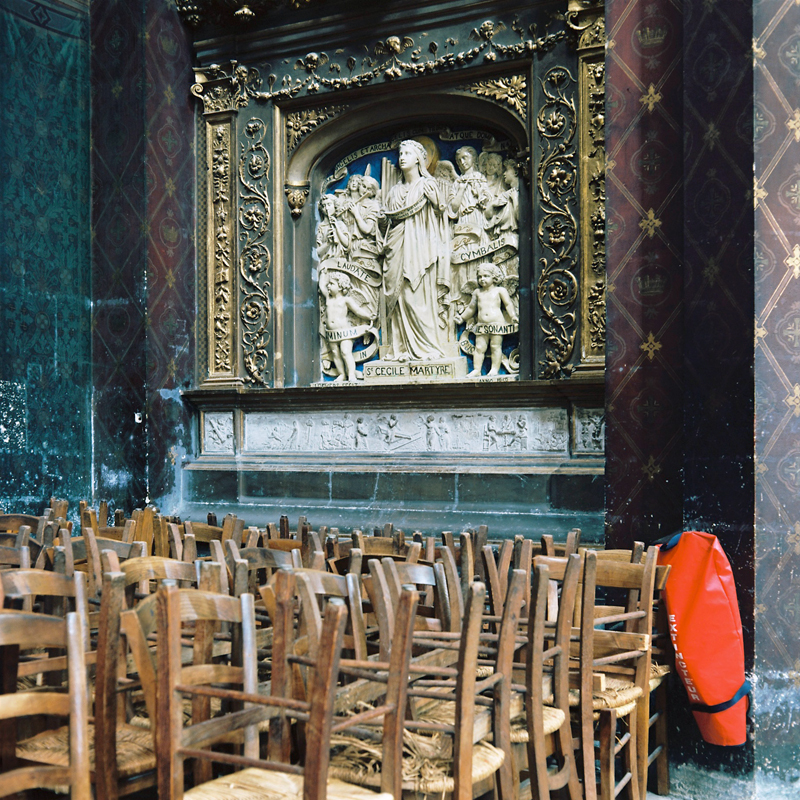
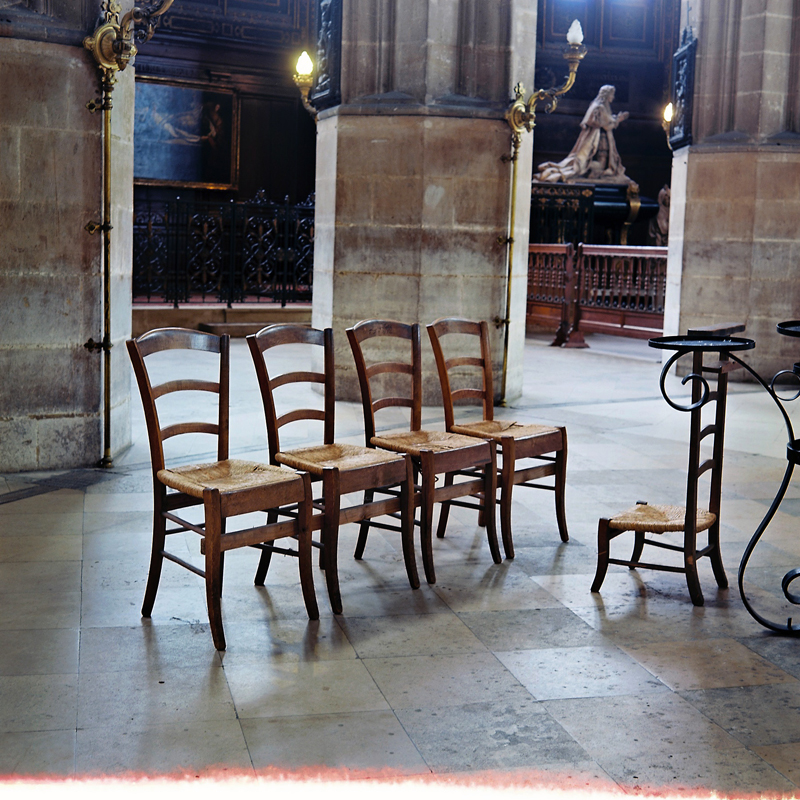
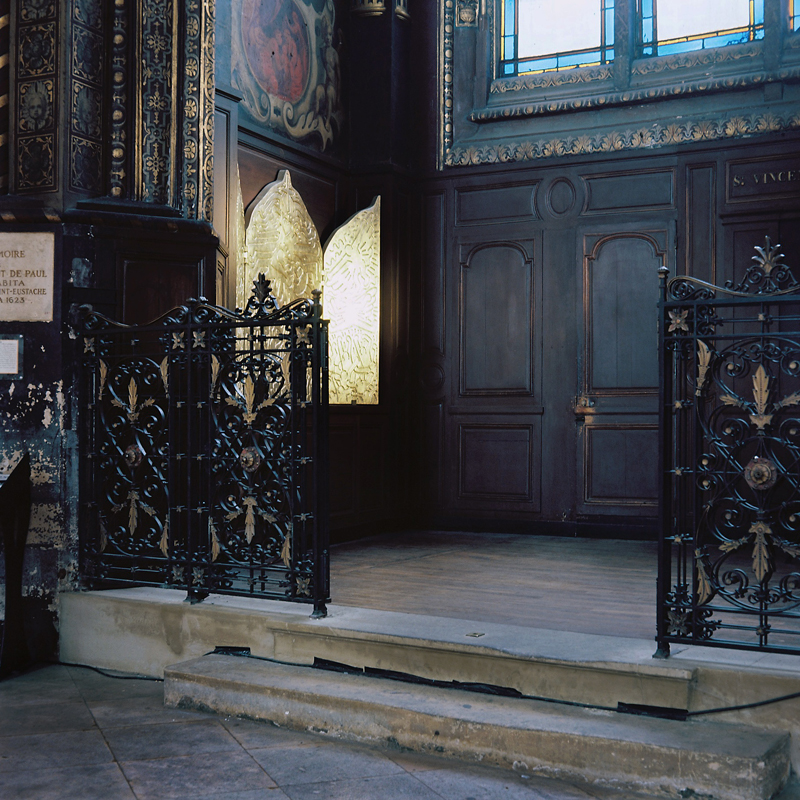
Marcus Bunyan (Australian, b. 1958) Saint-Eustache Church 2018 From the series Paris in film Digital photograph
Marcus Bunyan (Australian, b. 1958) Saint-Eustache Church 2018 From the series Paris in film Digital photograph
Marcus Bunyan (Australian, b. 1958) Saint-Eustache Church 2018 From the series Paris in film Digital photograph
Marcus Bunyan (Australian, b. 1958) Saint-Eustache Church 2018 From the series Paris in film Digital photograph
Marcus Bunyan (Australian, b. 1958) Saint-Eustache Church 2018 From the series Paris in film Digital photograph
Marcus Bunyan (Australian, b. 1958) Saint-Eustache Church 2018 From the series Paris in film Digital photograph
Marcus Bunyan (Australian, b. 1958) Saint-Eustache Church 2018 From the series Paris in film Digital photograph
Marcus Bunyan (Australian, b. 1958) Dying light, Keith Haring in Saint-Eustache Church 2018 From the series Paris in film Digital photograph
Marcus Bunyan (Australian, b. 1958) Fontainebleau 2018 From the series Paris in film Digital photograph
Paris in film
These photographs were taken on a trip to Paris in 2017 using my Mamiya twin-lens C220 medium format camera shot on Kodak Ektra 100 colour negative film.
They are reasonable scans of the negatives, full frame, no cropping, and I have colour corrected as best I can, noting that all digital images look different from computer monitor to monitor – one of the perennial hazards of looking at work online. They have not been sequenced at the moment.
The photographs seem to hang well together as a body of work.
Through their clear visualisation, the photographs speak directly to the viewer.
Please click on the photographs for a larger version of the image.
Photographs are available from this series for purchase. As a guide, a digital colour 16″ x 20″ costs $1000 plus tracked and insured shipping. For more information please see my Store web page.
Marcus Bunyan (Australian, b. 1958) Fontainebleau 2018 From the series Paris in film Digital photograph
Marcus Bunyan (Australian, b. 1958) Fontainebleau 2018 From the series Paris in film Digital photograph
Marcus Bunyan (Australian, b. 1958) Fontainebleau 2018 From the series Paris in film Digital photograph
Marcus Bunyan (Australian, b. 1958) Fontainebleau 2018 From the series Paris in film Digital photograph
Marcus Bunyan (Australian, b. 1958) Fontainebleau 2018 From the series Paris in film Digital photograph
Marcus Bunyan (Australian, b. 1958) Cimetière du Père Lachaise 2018 From the series Paris in film Digital photograph
Marcus Bunyan (Australian, b. 1958) Cimetière du Père Lachaise 2018 From the series Paris in film Digital photograph
Marcus Bunyan (Australian, b. 1958) Cimetière du Père Lachaise 2018 From the series Paris in film Digital photograph
Marcus Bunyan (Australian, b. 1958) Cimetière du Père Lachaise 2018 From the series Paris in film Digital photograph
Marcus Bunyan (Australian, b. 1958) Cimetière du Père Lachaise 2018 From the series Paris in film Digital photograph
Marcus Bunyan (Australian, b. 1958) Cimetière du Père Lachaise 2018 From the series Paris in film Digital photograph
Marcus Bunyan (Australian, b. 1958) Cimetière du Père Lachaise 2018 From the series Paris in film Digital photograph
Marcus Bunyan (Australian, b. 1958) Parc de Sceaux 2018 From the series Paris in film Digital photograph
Marcus Bunyan (Australian, b. 1958) Parc de Sceaux 2018 From the series Paris in film Digital photograph
Marcus Bunyan (Australian, b. 1958) Parc de Sceaux 2018 From the series Paris in film Digital photograph
Marcus Bunyan (Australian, b. 1958) Parc de Sceaux 2018 From the series Paris in film Digital photograph
Marcus Bunyan (Australian, b. 1958) Parc de Sceaux 2018 From the series Paris in film Digital photograph
Marcus Bunyan (Australian, b. 1958) Parc de Sceaux 2018 From the series Paris in film Digital photograph
Marcus Bunyan (Australian, b. 1958) Parc de Sceaux 2018 From the series Paris in film Digital photograph
Marcus Bunyan (Australian, b. 1958) Parc de Sceaux 2018 From the series Paris in film Digital photograph
Marcus Bunyan (Australian, b. 1958) Parc de Sceaux 2018 From the series Paris in film Digital photograph
Marcus Bunyan (Australian, b. 1958) Parc de Sceaux 2018 From the series Paris in film Digital photograph
Marcus Bunyan (Australian, b. 1958) Parc de Sceaux 2018 From the series Paris in film Digital photograph
Marcus Bunyan (Australian, b. 1958) Fontainebleau 2018 From the series Paris in film Digital photograph
Marcus Bunyan (Australian, b. 1958) Fontainebleau 2018 From the series Paris in film Digital photograph
Marcus Bunyan (Australian, b. 1958) Fontainebleau 2018 From the series Paris in film Digital photograph
Marcus Bunyan (Australian, b. 1958) Fontainebleau 2018 From the series Paris in film Digital photograph
Marcus Bunyan (Australian, b. 1958) Fontainebleau 2018 From the series Paris in film Digital photograph
Marcus Bunyan (Australian, b. 1958) Fontainebleau 2018 From the series Paris in film Digital photograph
Marcus Bunyan (Australian, b. 1958) Fontainebleau 2018 From the series Paris in film Digital photograph
Marcus Bunyan (Australian, b. 1958) Fontainebleau 2018 From the series Paris in film Digital photograph
Marcus Bunyan (Australian, b. 1958) Parc de Sceaux 2018 From the series Paris in film Digital photograph
Marcus Bunyan (Australian, b. 1958) Parc de Sceaux 2018 From the series Paris in film Digital photograph
Marcus Bunyan (Australian, b. 1958) Parc de Sceaux 2018 From the series Paris in film Digital photograph
Exhibition dates: 18th November, 2017 – 22nd April, 2018
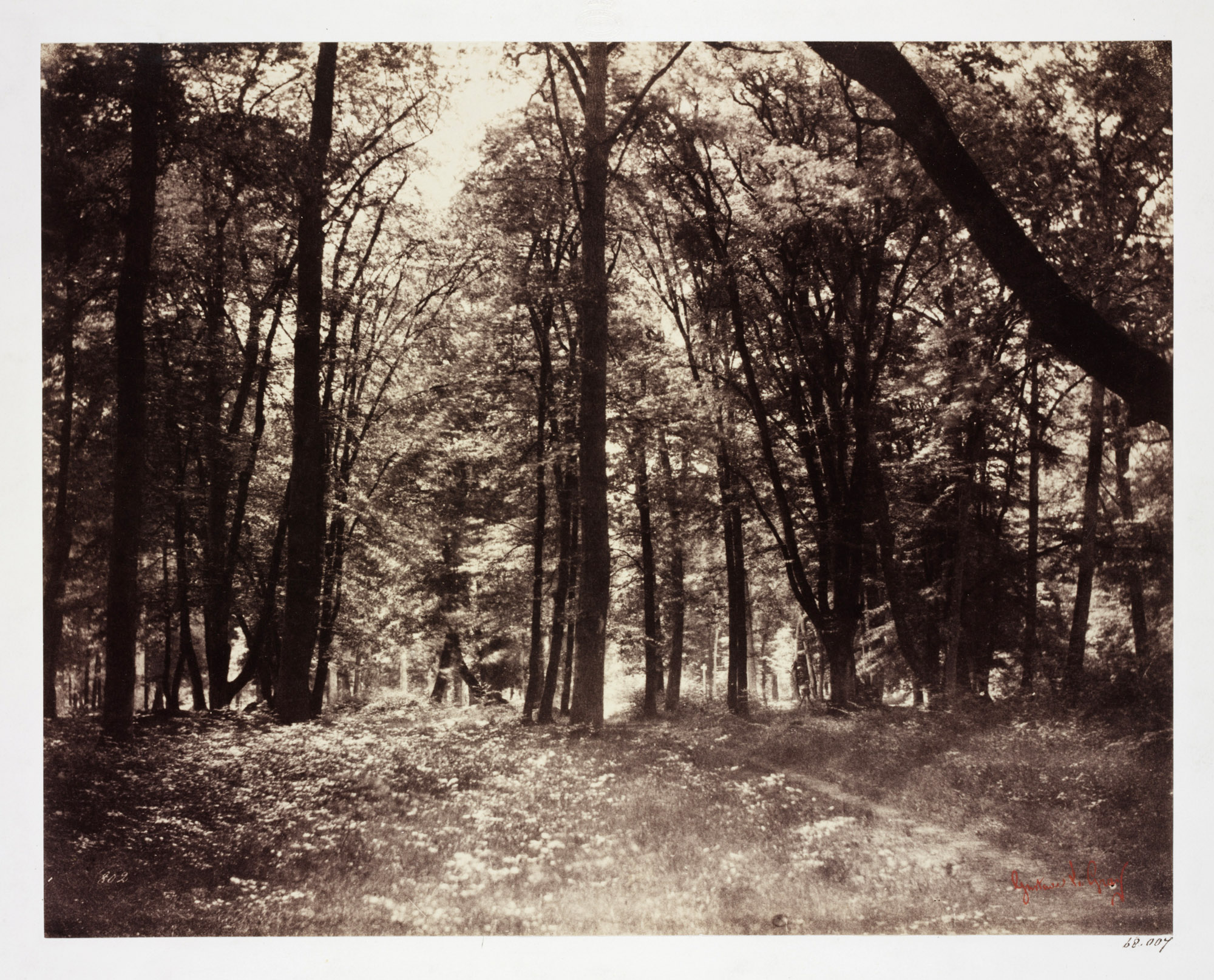
Gustave Le Gray (French, 1820-1884) In the Forest of Fontainbleau (Bas-Bréau) 1852 Gold-toned albumen print from waxed paper negative Chauncey Hare Townshend Bequest 1868
Gustave Le Gray trained as a painter in the 1840s but took up photography soon after. He followed the Barbizon School painters to the French forest of Fontainebleau, where he made enchanting photographic studies. Combining technical knowledge with artistic flair, Le Gray rapidly became one of the most renowned photographers of his day.
I grew up on a farm for the first thirteen years of my life. I played in the fields and forests of England, and wandered the cart paths with my brother. I saw him for the first time in thirty years last August, after the passing of my father. We went back and walked those very same paths where we grew up and looked at the magnificent trees planted along the edge of the fields. After all that had happened, it was an emotional and healing journey for both of us…
The innocence of being a child growing up on the land returned, the innocence of something that is never really forgotten. I still am a country boy at heart; I still love the land and the trees. I always will.
It’s a pity then, that this seems to be just a “filler” exhibition from the V&A. No press release, two sentences on the website (see below) and no information about the images such as details of process etc… I had to dig into the collection to find the information you read here, including the text descriptions beneath the images. For such a magical and mythical subject that has fascinated human beings since the beginning of time, you might have expected a more in depth investigation.
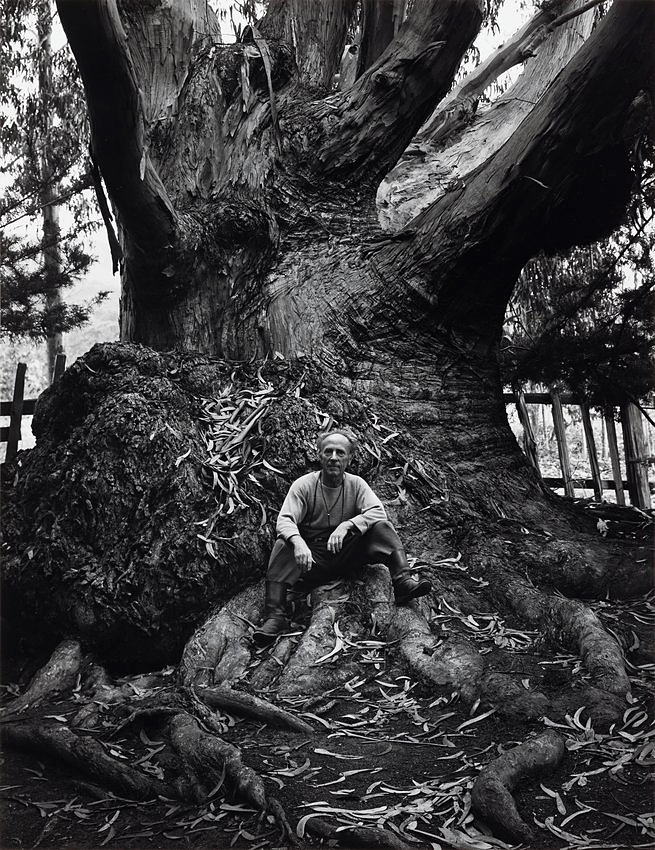
As an addendum I have included my favourite tree images. You will have your own. The last image in particular has that element of threat and wonder that makes the forest such a rich, fluid and evocative space.
Dr Marcus Bunyan
Many thankx to the V&A for allowing me to publish the photographs in the posting. Please click on the photographs for a larger version of the image.
Trees have long been a source of inspiration for artists. This display explores the diverse representation of trees in photography – as botanical subjects and poetic symbols, in the context of the natural and human worlds.
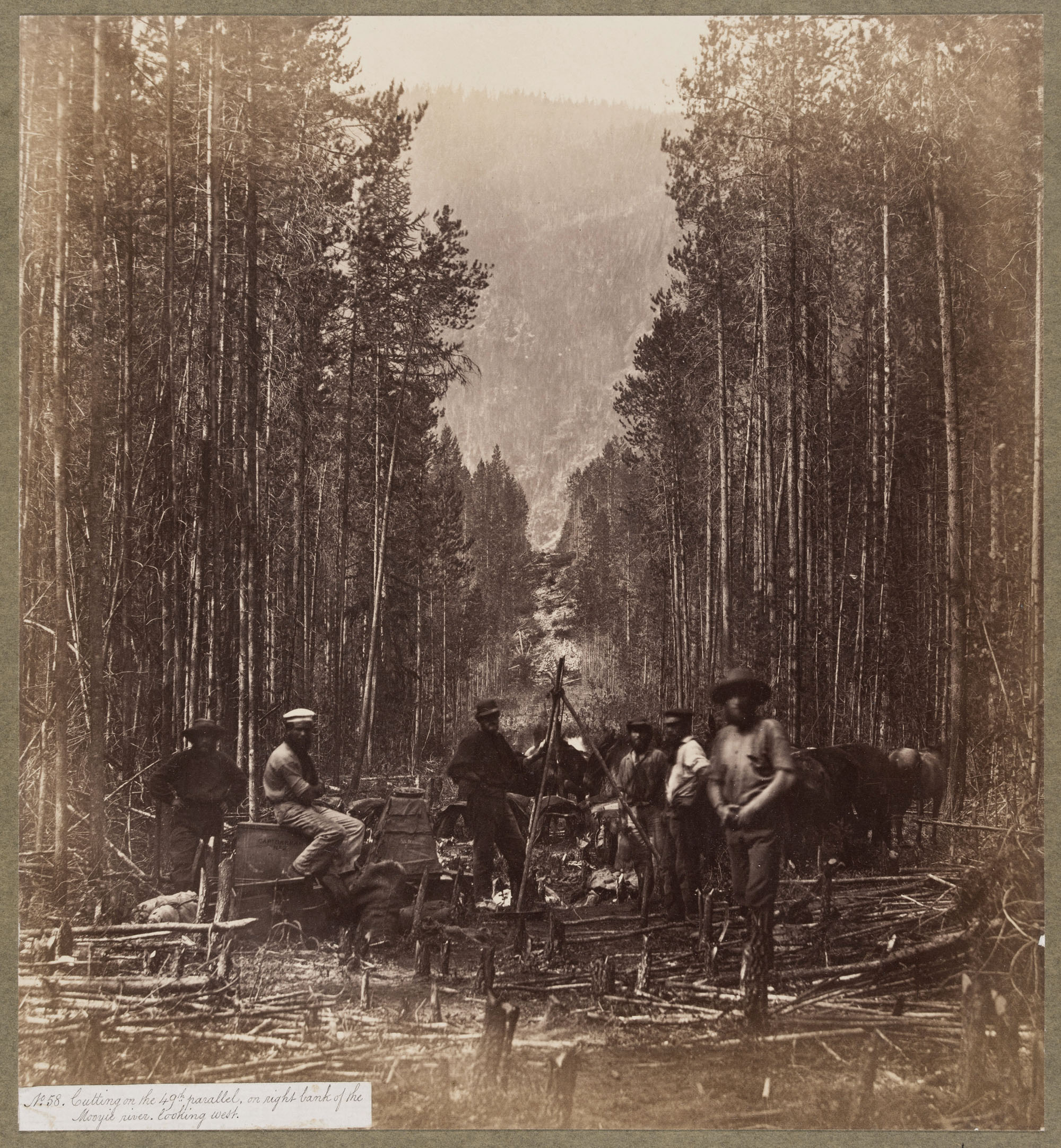
Royal Engineers Cutting on the 49th Parallel, on the Right Bank of the Mooyie River Looking West about 1860 Albumen print from wet collodion-on-glass negative Photographed by a Royal Engineers photographer on a U.S.-Canada Border Survey Received from the Foreign Office 1863
In 1856 the War Department appointed the South Kensington Museum photographer Charles Thurston Thompson to teach photography to the Royal Engineers. On one expedition these soldier-photographers documented the border between the USA and Canada. From the crest of the Rockies westwards along the 49th Parallel to the coast, they painstakingly recorded everything that crossed their path, producing ‘one of the earliest significant bodies of photographs made in the Pacific Northwest’.
Samuel Bourne (British, 1834-1912) Poplar Avenue, Srinuggur, Kashmir, from the end 1864 Albumen print from wet collodion negative
In 1863 Samuel Bourne (1834-1912) arrived in India. He had left his job as a Nottingham bank clerk in order to develop his new career as a photographer. Bourne undertook three treks to Kashmir and the western Himalayas in 1863, 1864 and 1866, during which he photographed his surroundings extensively.
He began his second trip to India, during which this photograph was taken, in March 1864. It was to be a nine-month expedition through the Kashmir region. Throughout his travels Bourne wrote about his first impressions of the places he visited and these writings were published in the British Journal of Photography. Of his first impressions of the poplar avenues at Srinagar he noted: “The next day was devoted to an ascent of the Takht Hill and a stroll among the poplar avenues, of which, as I before stated, there are several about Srinugger. One of them is known as the “poplar avenue,” and is a mile long and quite straight. This is a fine walk and is almost perfect-hardly a tree is wanting, and the effect on looking down it is very striking. It is carpeted with grassy turf and a level grassy plain stretches on each side of it; at right angles to this are the three or four smaller avenues extending to the river, a walk down which when the grapes are ripe is by no means an enjoyable exercise, if one be a good climber. Running up, and entwining themselves among the poplars to a height of ninety or a hundred feet, are numbers of vines, whose tempting clusters hanging at this elevation only mock the wistful, watery eyes cast up to them.” Bourne, S. “Narrative of a Photographic Trip to Kashmir (Cashmere) and the Adjacent Districts,” in The British Journal of Photography, 23 January 1867, p. 38.
Towards the end of the 1860s, Bourne established a partnership with fellow photographer and Englishman Charles Shepherd (fl. 1858-1878) and in the space of a few years Bourne & Shepherd became the pre-eminent photographic firm in India. By the end of 1870 they had three branches, in Simla, Calcutta and Bombay.
Samuel Bourne’s ability to combine technical skill and artistic vision has led to him being recognised today as one of the most outstanding photographers working in India in the nineteenth century.
Lake George was the family estate where Stieglitz spent his summers, often with his wife, the painter Georgia O’Keefe. However, he took this photograph when O’Keefe was away in New Mexico. The loneliness of separation led Stieglitz to contemplate his own mortality, a theme reflected in this representation of poplars. Perhaps he identified with the trees’ dwindling vitality, as he photographed them repeatedly that summer, almost as one might check one’s pulse.
Ansel Adams (American, 1902-1984) Aspens, Northern New Mexico 1958 Gelatin silver print Given by Virginia and Ansel Adams
Ansel Adams is well-known for his portrayal of the mountain ranges, deserts, rivers and skies of the western United States. Adams was a passionate lover of the vast American wilderness and an active conservationist. He commented, “my approach to photography is based on my belief in the vigour and values of the world of nature – in the aspects of grandeur and of the minutiae all about us.” Having trained as a pianist before turning to photography in 1927, Adams often discussed his process of composition in musical terms.
Gerhard Stromberg is one of the foremost contemporary photographers working with the subject of the British landscape. His images demonstrate how constructed this landscape can be. The subtle, large format prints (5 x 6 ft approx.) allow the viewer to contemplate details that reveal the photographers’ intimacy and familiarity with the subject. This piece is one of the most representative of his works.
A C-type print, such as Ektachrome, is a colour print in which the print material has at least three emulsion layers of light sensitive silver salts. Each layer is sensitised to a different primary colour – either red, blue or green – and so records different information about the colour make-up of the image. During printing, chemicals are added which form dyes of the appropriate colour in the emulsion layers. It is the most common type of colour photograph.
This image of apples lying rotten on a peacock blue carpet was taken in a family garden on a Norfolk nature reserve. The owners use pieces of old carpet, often donated by a neighbouring Buddhist retreat, as weed control. The decorative juxtaposition of the natural with the man-made moved Mark Edwards to record the carpet as it became integrated into the fabric of the garden. The photograph hints at ideas of contemplation and the passage of time.
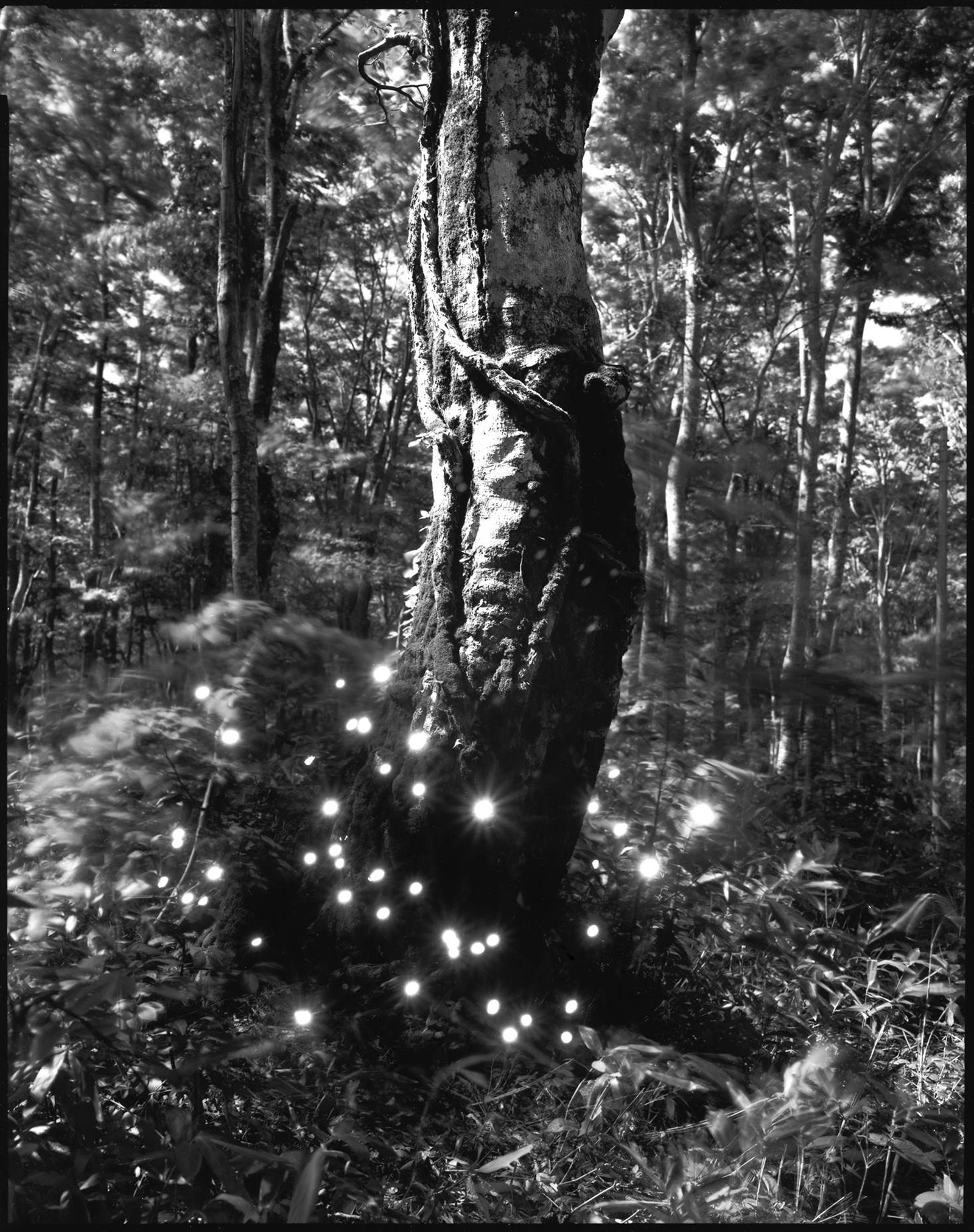
This photograph embodies Sato’s ephemeral imagination. It was made in the primeval Hakkoda forest, in northern Honshu on the main island of Japan. The image reveals a long fascination with the sculptural form of the Japanese Beech tree. Sato has said that to him ‘these trees suggest the ancient continental origins of the Japanese people while representing masculine strength and feminine sensitivity’. To make the picture, he exposed large-format film, during which he moved in front of the camera with a mirror reflecting the sun’s rays. The power of the sun momentarily ‘blinds’ the camera, creating an area that registers on film as an intense flare of light. Although we know that Sato is standing somewhere in the scene, we struggle to locate precisely where. While his traces are like pinpoint coordinates on a map, all we can do is estimate his continually moving location and follow the possible connecting trails. In this way, his photographs can be seen as enigmatic sculptural or physical performances. Knowing how Sato makes his images, we recognise there is not a multiplicity of presences indicated by the lights, but instead a multiplicity of one presence: the artist’s. His omnipresence might be a hint of some kind of divinity: the ever-present force of an invisible creator. Or it may simply be a record of the movement of one human force. However it is interpreted, human or divine, the light is a kind of mark that asserts both transcendence and specificity: “I was here,” even if, as in life, it is only momentarily.
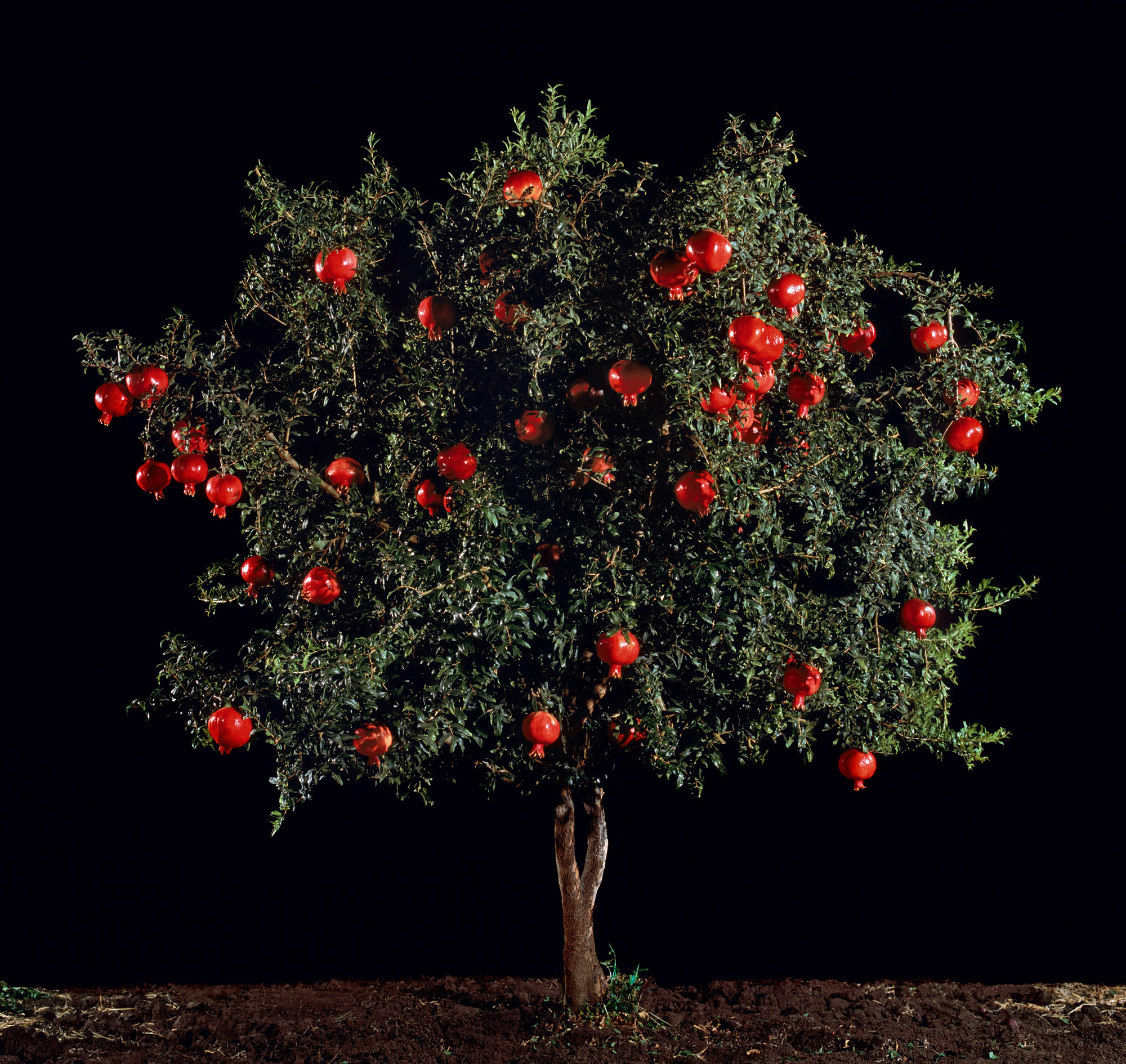
Shochat applies the conventions of studio portraiture to photographing trees. The first stage in her meticulous process is to identify the perfect specimen of a particular type of tree. When the fruit is at the height of maturity, she cleans the dust off the branches, leaves and fruit. Finally, Shochat photographs the tree, artificially lit and isolated against a black cloth background. The photographs present a view of nature that would never actually exist in a natural environment. The work highlights the tensions in photography between reality and artifice.
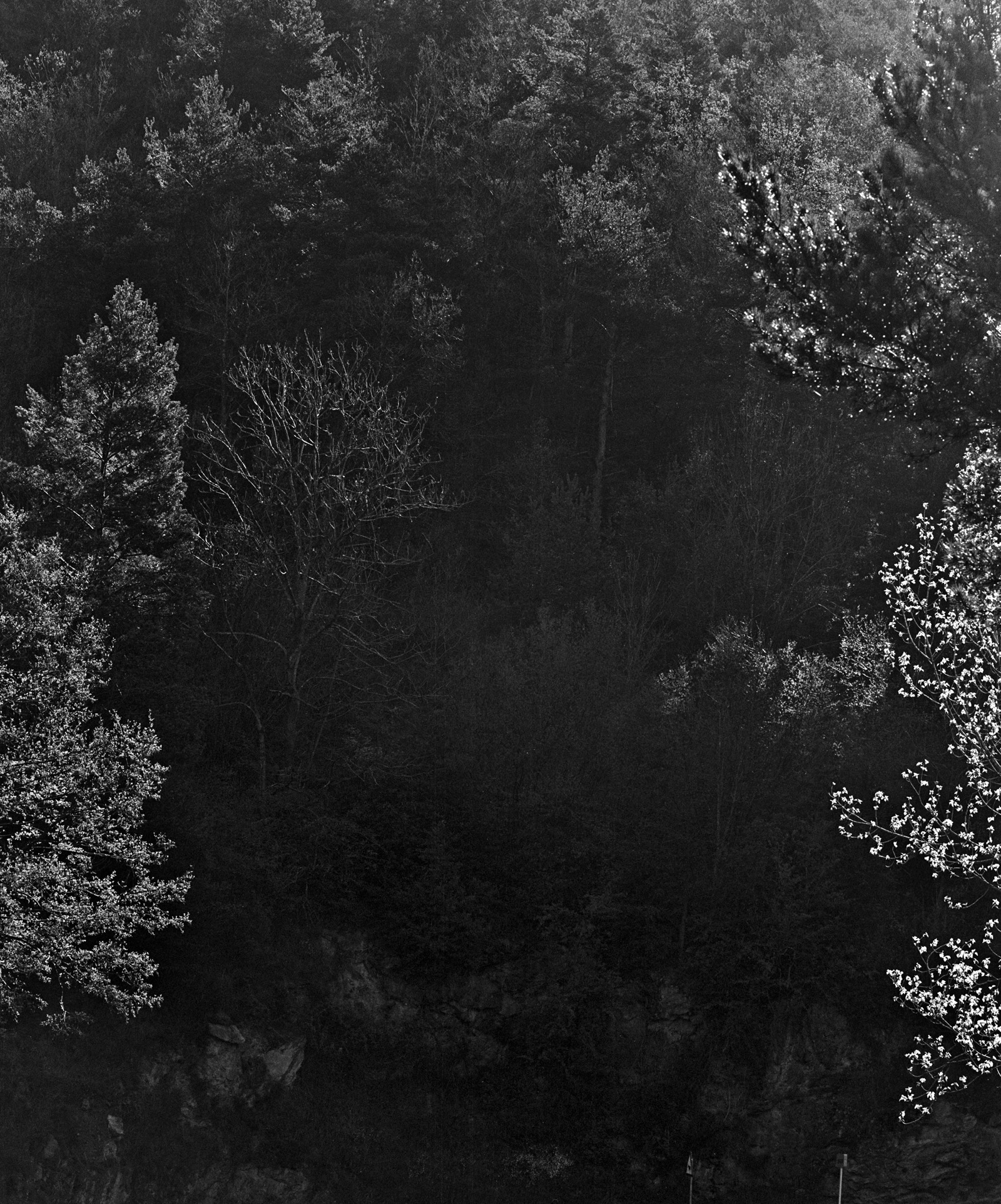
Awoiska van der Molen (b. 1972, Groningen, Netherlands) is a Dutch photographer based in Amsterdam. She studied architecture and photography at the Academy of Fine Arts Minerva in Groningen. In 2003 she graduated from the St. Joost Academy of Art and Design in the Netherlands with an MFA in Photographic Studies. Her work is borne out of an immersion in nature and is concerned with the untamed landscape and the sense of solitude that can be experienced in isolated locations. She works with analogue technology and explains that her pictures should be ‘understood as a metaphysical quest, a journey to the essence of being.’
For the project Sequester, van der Molen walked alone in the Canary Islands, seeking to ‘gain access to the stoic nature of the landscape’, as she describes it. She made long exposure black-and-white pictures of the dramatic volcanic terrain and dense forests at dawn and dusk. The exposures could be as long as thirty minutes and result in photographs of great intensity and ambiguity.
Van der Molen’s photographs go beyond the long tradition of black and white landscape photography, exemplified by photographers in the V&A collection such as Gustave Le Gray, Samuel Bourne, Ansel Adams, and Edward Weston. Rather than emulating the visual approaches of past masters, she seeks to portray the inner condition that uninhabited natural spaces engender.
Her interest in psychological states in relation to landscape can be aligned with that of numerous contemporary practitioners, including Chrystel Lebas and Nicholas Hughes, whose landscape photographs are also created using long exposures and convey a similar atmosphere of primeval power and solitude.
The collotype process is a screenless photomechanical process that allows high-quality prints from continuous-tone photographic negatives. Collotypes are comprised of many layers of ink and have a velvety matte appearance; the process has the power to produce the depth and detail of these works faithfully. Other examples of collotypes in the collection largely date from the 19th century and include works by Eadweard Muybridge and Julia Margaret Cameron. Once a widespread process, today, there are only two professional collotype studios remaining, both of which are in Kyoto.
In 2014, van der Molen received the Japanese Hariban Award, which gave her the opportunity to collaborate with the master printmakers of the Benrido Collotype Atelier in Kyoto to produce this set of 8 collotypes from the Sequester project.
Addendum
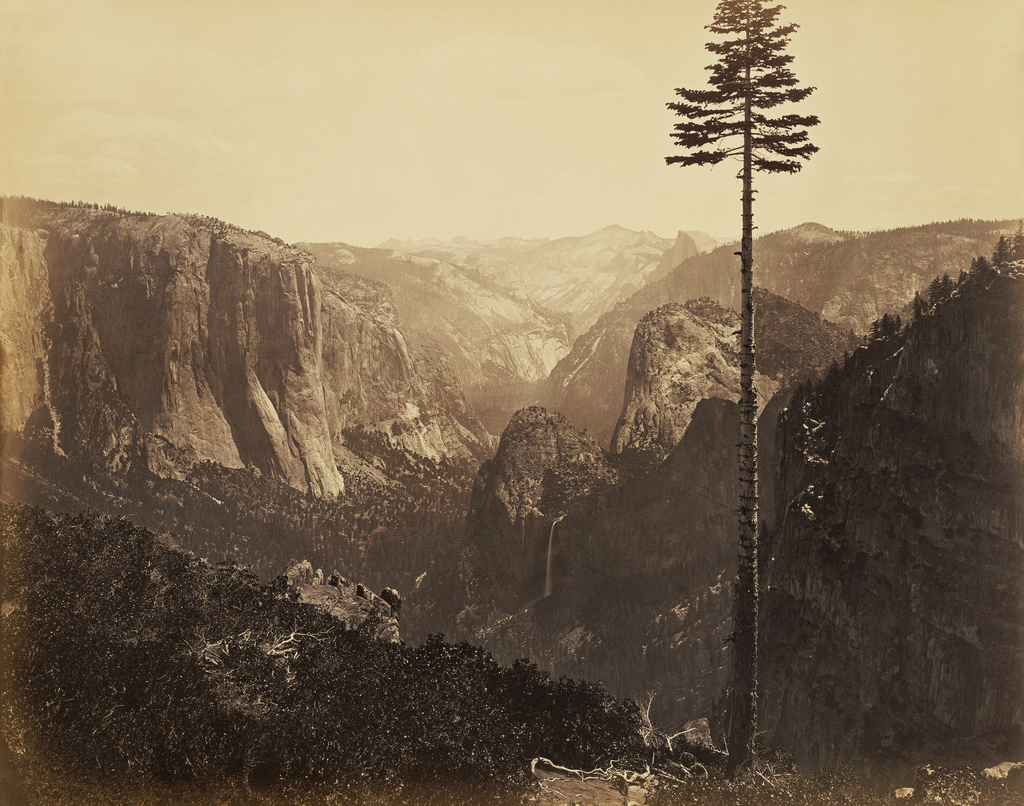
Carleton Watkins (American, 1829-1916) Yosemite Valley from the “Best General View” 1866 From the album Photographs of the Yosemite Valley Albumen print Lent by Department of Special Collections, Stanford University Libraries
Carleton Watkins had the ability to photograph a subject from the viewpoint that allowed the most information to be revealed about its contents. In this image, he captured what he considered the best features of Yosemite Valley: Bridalveil Falls, Cathedral Rock, Half Dome, and El Capitan. By positioning the camera so that the base of the slender tree appears to grow from the bottom edge of the picture, Watkins composed the photograph so that the canyon rim and the open space beyond it seem to intersect. Although he sacrificed the top of the tree, he was able to place the miniaturised Yosemite Falls at the visual centre of the picture. To alleviate the monotony of an empty sky, he added the clouds from a second negative. This image was taken while Watkins was working for the California Geological Survey. His two thousand pounds of equipment for the expedition, which included enough glass for over a hundred negatives, required a train of six mules.
Francis Frith (English, 1822-1898) The Pyramids of Dahshoor, From the East
1857
Albumen silver print
11.6 x 16.2cm
The J. Paul Getty Museum, Los Angeles
“Hence the photographer’s most important and likewise most difficult task is not learning to manage his camera, or to develop, or to print. It is learning to see photographically.”
Edward Weston. The Complete Photographer. January 20, 1943
Many thankx to the J. Paul Getty Museum, Los Angeles for allowing me to publish the photographs in the posting. Please click on the photographs for a larger version of the image.
Sir John Frederick William Herschel (British, 1792-1871) Valley of the Saltina near Brieg at Entrance of the Simplon
1821
Graphite drawing made with the aid of a camera lucida
19.7 × 29.7cm (7 3/4 × 11 11/16 in.)
Gift of the Graham and Susan Nash Collection
The J. Paul Getty Museum, Los Angeles
Dr Samuel A. Bemis (American, 1793-1881) View within Crawford Notch, New Hampshire
c. 1840
Daguerreotype
The J. Paul Getty Museum, Los Angeles
Boston dentist Samuel Bemis, one of the first Americans to use a daguerreotype outfit successfully, practiced photography during his summer months in the White Mountains of New Hampshire. His landscape views of the area are the earliest surviving American photographs to depict untamed nature. Here he depicts a scene of rugged beauty.
An innovative amateur, Bemis was not a masterful technician of the complicated daguerreotype process. The dark tone of the sky and the light areas along the slope of the mountain indicate inadequate processing of the daguerreotype plate.
John Beasly Greene (American, 1832-1856) Thebes, Village of Ghezireh
1853-1854
Salted paper print from a waxed paper negative
9 1/8 x 12 inches
The J. Paul Getty Museum, Los Angeles
John Greene was an archaeologist, the well-to-do son of a banker from Boston who lived in Paris, and a photographer. By 1853 the twenty-one-year-old Greene had learned to use Le Gray’s waxed-paper process, the technique of choice for traveling Frenchmen. That same year he made the first of two expeditions to Egypt and Nubia, bringing back more than two hundred negatives of monuments and landscapes, some ninety-four of which, printed by Blanquart-Evrard in 1854, comprise the album “Le Nil, monuments, paysages, explorations photographiques par J. B. Greene.” So rare are these albums that we assume that Greene published them at his own expense. On his second trip, in 1854-1855, he not only photographed but also excavated, especially at Medinet-Habou. During an archaeological and photographic expedition to Algeria the following winter, this exceptionally talented young man died of an undisclosed illness.
Greene’s Egyptian landscapes are startlingly barren. Coalescing from large, softly nuanced tonal planes, the views seem to shimmer above the page almost to the point of evaporating, like distant desert mirages. Generally, Greene placed the geological or archeological structure of these pictures at a distance, surrounded by sand and sky. This, the most minimal of his visions, sums up the Egyptian landscape. Stretching between the great river and the endless expanse of sky, and between the great river and the desert, is a thin band of fertile earth – the ligament of life that gave rise to a great civilisation. That the picture functions like a diagram may owe to Greene’s knowledge of hieroglyphics; the Egyptian pictograph for “country” is a flat, floating disk, hardly more than a horizontal line.
Text from the Metropolitan Museum of Art website
Charles Marville (French, 1813-1879) Fontainebleau
1854
Salted paper print
15.9 × 21.3cm (6 1/4 × 8 3/8 in.)
The J. Paul Getty Museum, Los Angeles
Francis Frith (English, 1822-1898) The Pyramids of Dashour
1856-1857
Albumen silver print
6.8 × 6.5cm (2 11/16 × 2 9/16 in.)
The J. Paul Getty Museum, Los Angeles
Gift of Weston J. and Mary M. Naef
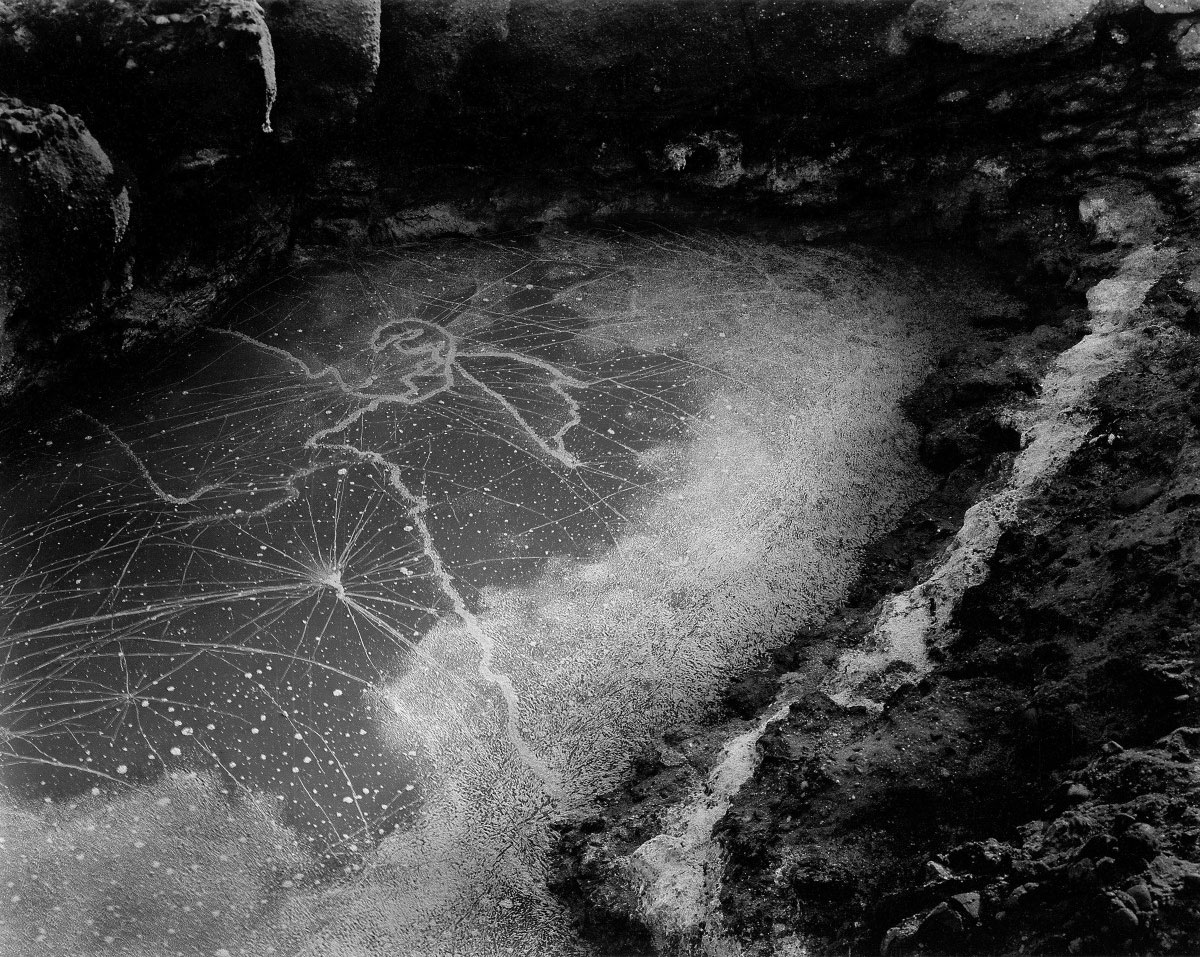
Edward Weston (American, 1886-1958) Kelp on Tide Pool, Point Lobos 1939
The J. Paul Getty Museum, Los Angeles
Rather than depicting a traditionally picturesque vista or capturing accurate perspective, photographers of the 20th century began to explore the various but particularly photographic ways that the natural world could be seen through the camera lens. Often this led to spatial experimentation. Taken at Point Lobos in California, this image by Edward Weston plays with the perception, and misperception, of space. The photographer cropped his photograph of a tide pool to show kelp puncturing the water’s surface in the foreground, while in the upper register an underwater landscape appears simultaneously near and far.
Callahan referred to this photograph, made shortly after an inspiring encounter with Ansel Adams, as “my first good picture.” Unlike Adams’s dramatic landscapes, Callahan’s composition focuses on an overlooked pedestrian setting in his native Detroit. Raising the horizon line, the artist achieved a delicate, calligraphic interplay among the reeds and telephone poles and their reflections across the surface of a bog.
In Focus: Picturing Landscape, at the J. Paul Getty Museum, the Getty Center, May 22 – October 7, 2012, offers a rich trove of landscape photography from some of the most innovative photographers in the genre. Drawn exclusively from the Getty Museum’s permanent collection, the exhibition brings together the work of twenty photographers, spanning the medium from the mid-1800s to the current decade, including Ansel Adams, Robert Adams, Manuel Alvarez Bravo, Imogen Cunningham, William Garnett, John Beasly Greene, Eliot Porter, Clifford Ross, Toshio Shibata and Edward Weston.
“The range of photographs chosen for this exhibition were selected from hundreds of extraordinary landscape works in the Getty Museum’s photography collection with an eye towards the various ways that photographers have responded to the daunting challenge of depicting the natural landscape photographically,” says Karen Hellman, assistant curator, Department of Photographs, the J. Paul Getty Museum, and curator of the exhibition.
Since the invention of the medium, photographers have turned to the landscape as a source of inspiration. Changing artistic movements and continual technical advancements have provided opportunities for camera artists to approach the subject in diverse and imaginative ways. The Getty originally presented In Focus: The Landscape in June 2008, curated by Brett Abbott. Expanding on the first presentation of photographs, this second exhibition on landscape in the Getty Museum’s In Focus series examines how photographers have sought to capture the breadth and perspective of the landscape through a camera lens. The exhibition is organised around three main themes: nineteenth-century technical developments by photographers such as Francis Frith who captured intriguing views of the Egyptian Pyramids in the 1850s; works that show purely photographic approaches such as those by Edward Weston and Harry Callahan; and more recent ways in which photographers have framed the landscape to make environmental and conceptual statements.
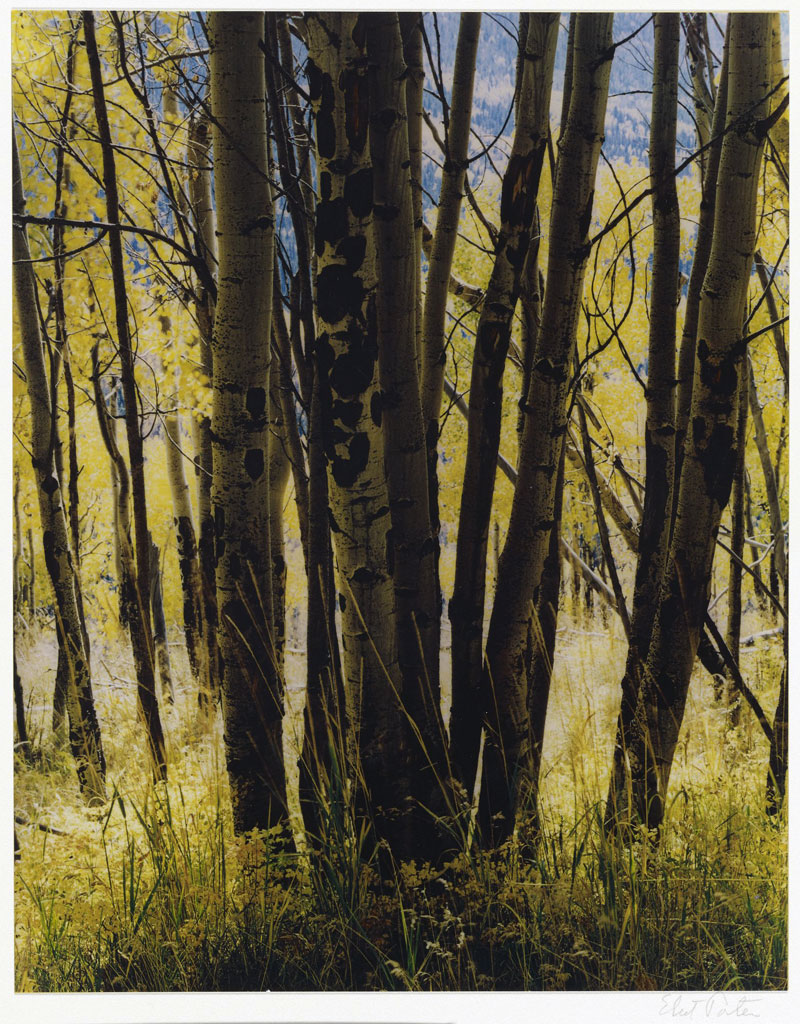
One of the earliest works in the exhibition is actually not a photograph but a drawing made by Sir John Frederick Herschel in 1821 with the aid of a camera lucida, an optical device sometimes used as a drawing aid by artists of the period. The exhibition also includes a very early full-plate daguerreotype of a landscape made by Boston dentist Samuel Bemis in 1840. During the first decades of the 20th century, artistic experimentation flourished and tested the boundaries of the genre. Photographers such as Edward Weston and Harry Callahan sought to explore the landscape as abstraction and pure form. In the second half of the 20th century, photographers began to explore the landscape in more socially conscious ways. Eliot Porter devoted himself to publishing work in concert with conservation efforts. Virginia Beahan has delved into the landscape as a site of human history, rather than simply a subject of aesthetic contemplation.
Contemporary artists continue to be inspired by the rich tradition of landscape photography. Also included in the exhibition is a large-scale photograph by Clifford Ross from his 2006 Mountain series, produced from extremely high-resolution digital files in order to make prints that came as close as possible to replicating reality. Several works will be on view for the first time, including a photograph taken in the forest of Fontainebleau, outside of Paris, by Charles Marville in the 1850s, and a photograph from Point Lobos, California, by Wynn Bullock, as well as a work by the Japanese photographer Toshio Shibata acquired with funds from the Getty Museum Photographs Council.
In Focus: Picturing Landscape is the eleventh installation of the ongoing In Focus series of thematic presentations of photographs from the Getty’s permanent collection, and includes twenty-two works by twenty photographers.
Press release from the J. Paul Getty Museum website
Nature and photography have been linked since the inception of the medium. Whether driven by the challenge of capturing the expanse and perspective of a vista or by the myriad possibilities of creating a unique artistic experience, the act of depicting the natural landscape has inspired photographers from the 1800s to the present.
To create this image, photographer William Garnett piloted his plane over sand bars in Cape Cod. In addition to the natural beauty of the ocean, the photographer invites us to explore space and perception in a unique way. The undulating forms of the sandbars play with the boundaries between foreground and background. Changing tones of blue challenge us to know if we look at water, sky, or even a view from outer space.
Here Beahan and McPhee delve into the landscape as a site of human history and conflict. With the High Sierra as a backdrop, rusty remnants of the Manzanar relocation camp, used to detain Japanese Americans during World War II, occupy the foreground. In the middle ground stand the desiccated trunks of an orchard, part of an 1860s settlement that was abandoned after the land’s water was diverted in the 1920s to irrigate Los Angeles. The orchard, in turn, had uprooted a community of Paiute Indians, who had lived there for generations.
A persistent aspect of picturing a landscape has been the concept of the ideal. Recent photographers have framed nature not only to emphasise its beauty but also to highlight its unattainability in a modern context.
Photographer Clifford Ross was inspired to create this image of Mount Sopris while on a family holiday. In order to, as the photographer put it, “grab as much of the mountain as [he] possibly could in one shot,” Ross invented a camera, the R1, which exposes 9 x 18 inch aerial film. When processed by hand and scanned, the negatives produce files with a hundred times higher resolution than those made with the average professional digital camera. Yet even though he pursues a near replica of reality, Ross also manipulates the digital file to re-create the landscape as he remembers experiencing it. Viewers have the ability to examine the scene in greater detail than they might even in person.
The J. Paul Getty Museum
1200 Getty Center Drive
Los Angeles, California 90049










![Albert Renger-Patzsch (German, 1897-1966) 'Das Bäumchen [Sapling]' 1928](https://artblart.com/wp-content/uploads/2018/01/renger-patzsch-das-bacc88umchen.jpg "Albert Renger-Patzsch (German, 1897-1966) 'Das Bäumchen [Sapling]' 1928")



![Harry Callahan (American, 1912-1999) '[Detroit]' 1941](https://artblart.com/wp-content/uploads/2012/10/harry-callahan-detroit.jpg "Harry Callahan (American, 1912-1999) '[Detroit]' 1941")



 Art Blart _ art and cultural memory archive
You must be logged in to post a comment.