Exhibition: ‘Utopia: Qiu Anxiong’ at Arken Museum of Modern Art, Denmark

Exhibition dates: 6th February – 22nd November, 2009
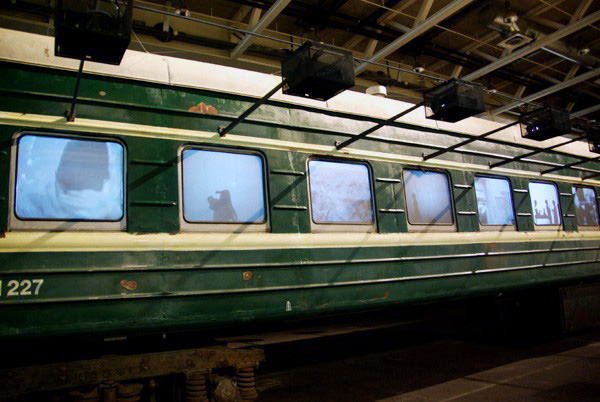
 

Qui Anxiong (Chinese, b. 1972) 'Staring into Amnesia' 2008 (detail)


Qui Anxiong (Chinese, b. 1972)
Staring into Amnesia (detail)
2008


A dream has come true. ARKEN has opened the first of three contemporary art exhibitions under the heading UTOPIA.

The first UTOPIA artist is Chinese Qiu Anxiong (b. 1972). His work Staring into Amnesia (2008), an enormous original Chinese train carriage from the 1960s, is the principal work in ARKEN’s exhibition. Documentary video clips and poetic silhouettes have been added to the carriage taking us on a journey into China’s past, present and future.

In recent years Qiu Anxiong has received great international attention with his poetic and moving video works which span from big and complex installations to hand painted animated films. The exhibition is the first presentation of Qiu Anxiong’s works in Denmark.

Utopia and dystopia

Qiu Anxiong belongs to a new generation of Chinese artists who bridge Chinese culture and history and today’s globalised contemporary art. Cultures arise and perish, and the yearning for the perfect society is closely followed by the utopia’s antithesis: an oppressed, conflicted dystopia. In a poetic and sensual idiom Qiu Anxiong raises the issue of which new utopias may provide the clue for today’s globalised reality.

Text from the Arken Musem of Modern Art website


ARKEN Museum of Modern Art

Chinese artist Qiu Anxiong talks about his work Staring into Amnesia – the main part of ARKEN’s UTOPIA – exhibition.
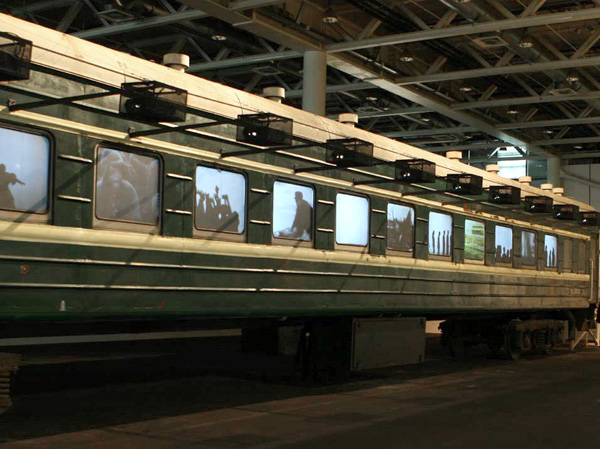
 

Qui Anxiong (Chinese, b. 1972) 'Staring into Amnesia' 2008 (detail)


Qui Anxiong (Chinese, b. 1972)
Staring into Amnesia (detail)
2008


Qui Anxiong (Chinese, b. 1972) 'Staring into Amnesia' 2008 (detail)


Qui Anxiong (Chinese, b. 1972)
Staring into Amnesia (detail)
2008


A 25 metres long, 42 tons heavy Chinese train carriage stops in Arken Museum of Modern Art‘s unique exhibition space The Art Axis, ready to take the museum’s visitors on a journey unlike any other. A journey into China’s past, presence and future. Into deliberations of the good life and the good society. Of the dreams we have today – for ourselves and for the world.

In the 1960s and ’70s it ran in northeastern China. Ordinary Chinese people sat on the hard wooden seats and were transported to and from work, on family visits, tours and holidays. Now it stops in ARKEN’s Art Axis with the purpose of making Danish museum visitors think about the dreams and values that drive them and the world they live in.

The train carriage is the principal work of the first exhibition in the museum’s large-scale UTOPIA project. A project that is to raise the issue of the grand shared notion of the perfect society. Whatever happened to it? Does it still exist today? Have the international financial crisis and the American presidential election made it more topical? And if it does not exist, what has taken its place? Individual dreams of the good life, notions of globalisation, small enclaves of communities?

Opening on 6 February 2009, the UTOPIA exhibition is the first of three exhibitions of contemporary art shown in ARKEN’s Art Axis in the period 2009-2011 – one per year. Each exhibition presents a significant, international contemporary artist who explores art’s potential with regards to the notions of “the good life.” The first artist is the Chinese Qui Anxiong (b. 1972).

Qui Anxiong gave the train carriage an artistic makeover after it had ended its career as a means of public transportation, transforming it into the work Staring into Amnesia (2007). A work of art which invites us on a journey even though the carriage is motionless. A journey into China’s past, presence and future. For when the guests come aboard the train and sit down on the hard wooden seats, they journey through China’s history. Video clips of documentary and propaganda films from China from 1910 until today pass by the windows as fragments of memories alternating with silhouettes of everyday scenes: a girl waiting by a ventilator, two people playing chess, groups of people in processions, riots, struggles or celebration. What has been is juxtaposed with what is. And with the train as metaphor for movement in time, it raises the question of which destinations await us up ahead. Is the next stop Utopia? What do we hope will come, what do we dream of?

6,000 drawings – one movie – Staring into Amnesia is the chief work of the UTOPIA exhibition. It explores how humankind’s endeavours to create the perfect society through political and religious overall solutions, both historically and today, often result in the utopia’s antithesis: an oppressed, conflicted dystopia.

Another work in the exhibition is the animated film The New Book of Mountains and Seas (2006). The film consists of 6,000 drawings created by Qiu Anxiong in his small one bedroom apartment in Shanghai. It presents us with a mythologised version of the world today in which modern technology and nature merge: helicopters hover in the air like big birds, and black clad people fly like planes, crashing the Twin Towers in a drawn version of 9/11. In a poetic and dreamlike idiom, sharply contrasting with the depicted reality, the work explores the themes of religious and political conflicts characterising the global reality of our time. UTOPIA is supported by the Nordea Foundation.

Text from the Artdaily.org website


Qui Anxiong (Chinese, b. 1972) 'Staring into Amnesia' 2008


Qui Anxiong (Chinese, b. 1972)
Staring into Amnesia
2008


Images courtesy of Boers-Li Gallery and ArtShortCut

Arken Museum of Modern Art
Skovvej 100, 2635 Ishøj
Phone: +45 43 54 02 22

Opening hours:
Tuesday – Sunday: 10am – 5pm
Monday: Closed
Arken Museum of Modern Art website

LIKE ART BLART ON FACEBOOK

Back to top

Opening: ‘Andreas Gursky’ at the National Gallery of Victoria International, Melbourne

Exhibition dates: 21st November, 2008 – 22nd February, 2009

Opening: Thursday 21st November 2008


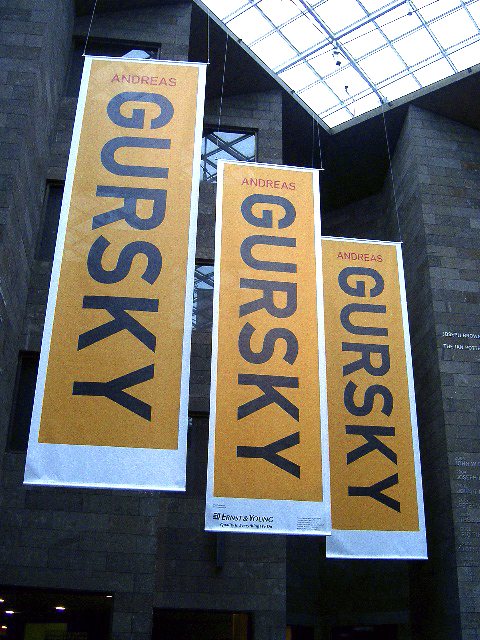
Andreas Gursky banner at NGV International exhibition, Melbourne


Andreas Gursky banner at NGV International exhibition, Melbourne


A large but plain crowd assembled for the opening of the first exhibition by world renowned German photographer Andreas Gursky at the National Gallery of Victoria in St Kilda Road, Melbourne. After some lively conversation with friends and following the opening speeches we wandered into a large clean gallery space with minimal design elements. The use of space within the gallery allowed the work to speak for itself. It is a minimal hang and the exhibition works all the better for this.

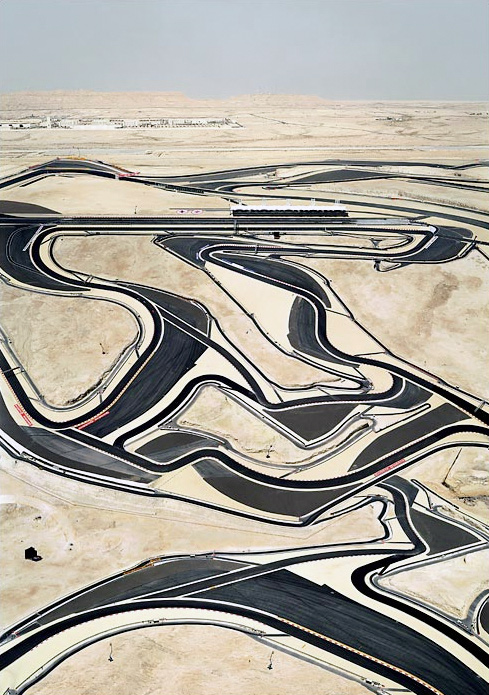
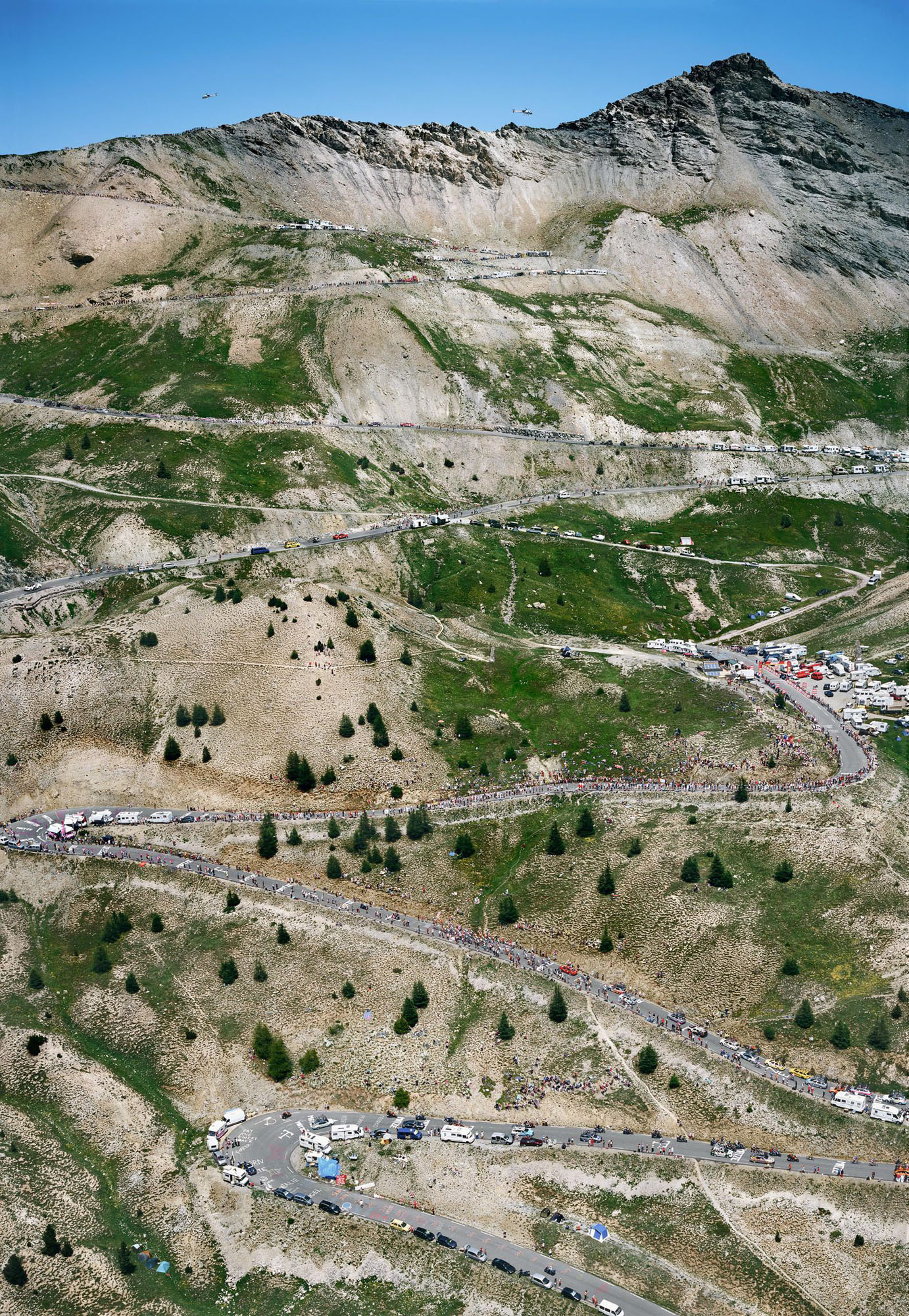
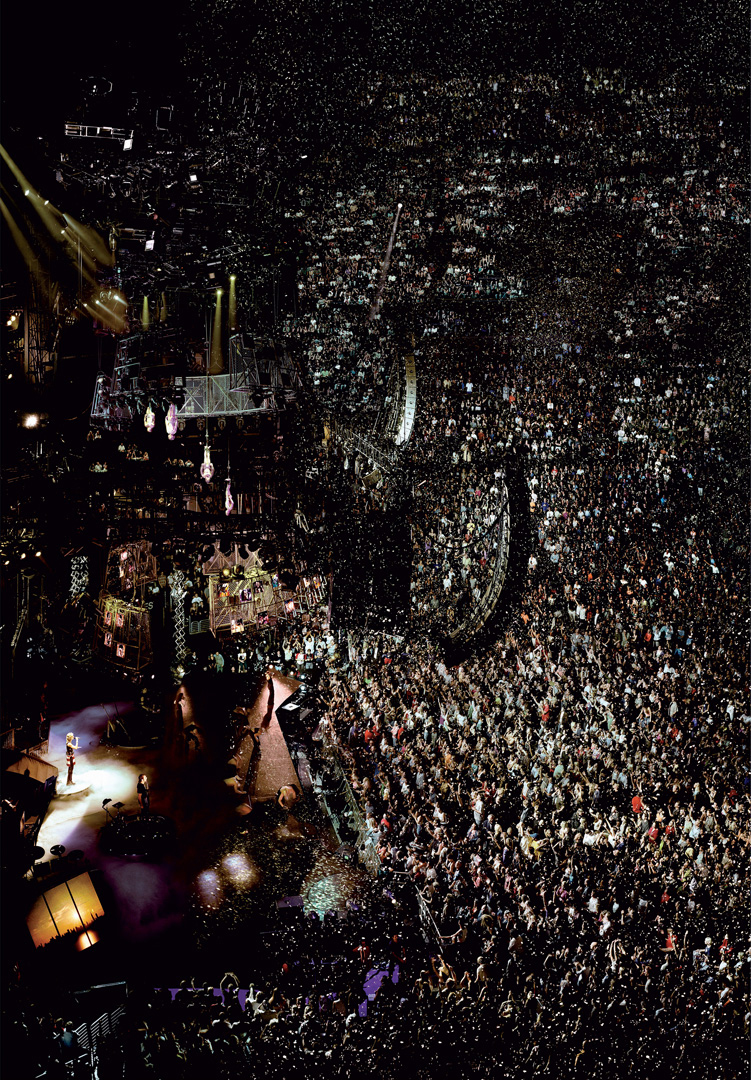
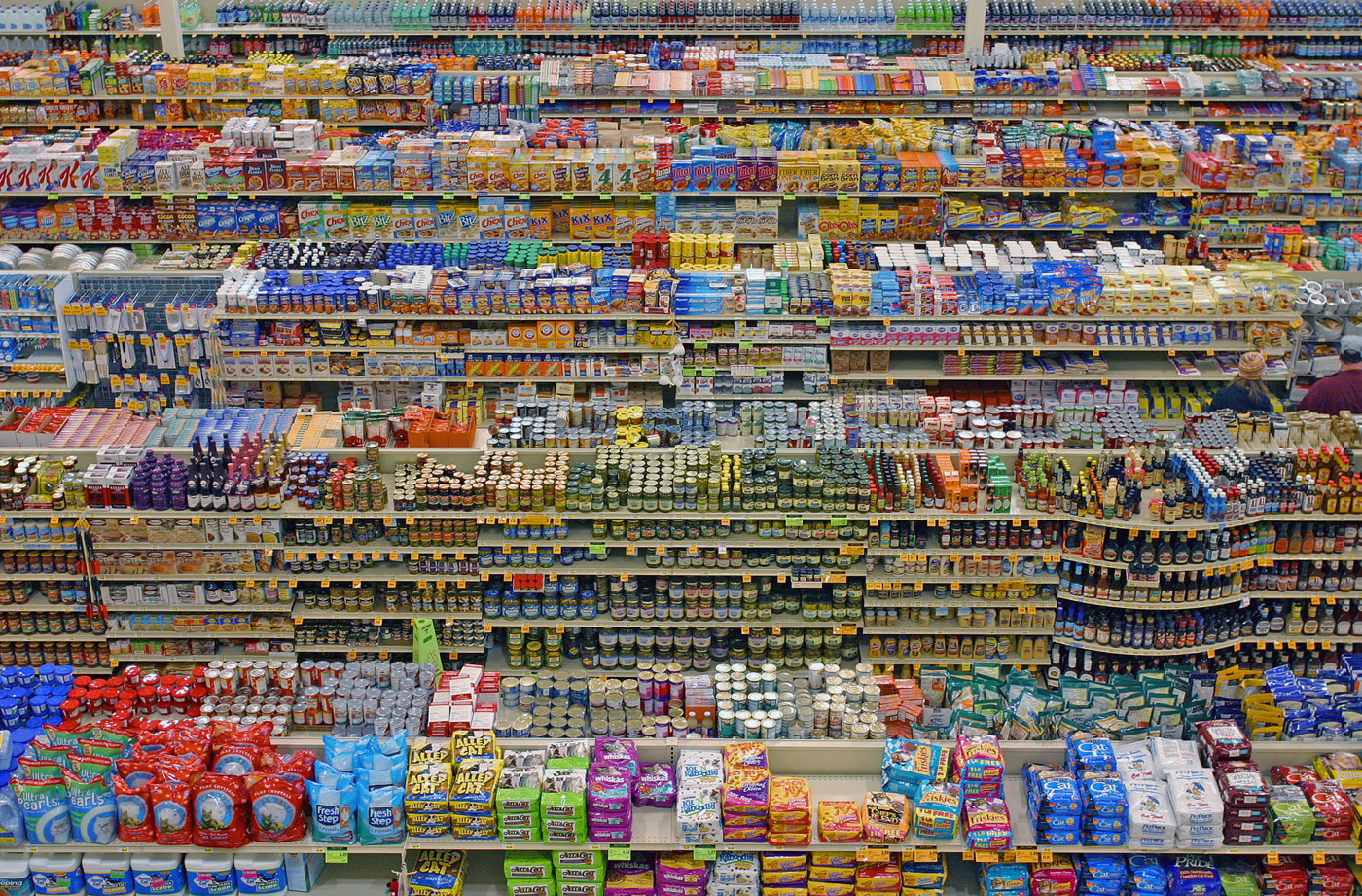
As for the work itself 21 large photographs are presented ranging from landscapes to buildings, race tracks to formula 1 pits, Madonna concerts to the Tour de France. Most work successfully in building a hyperreal vision of the world. We are not sure what is ‘real’ or hyperreal, what is a straight photograph or what has been digitally manipulated and woven together. The colour and sharpness of the images is often intensified: in reproductions of the famous photograph of the 99c supermarket in America the colours seem flat but ‘in the flesh’ the colours are almost fluoro in their saturation and brightness.

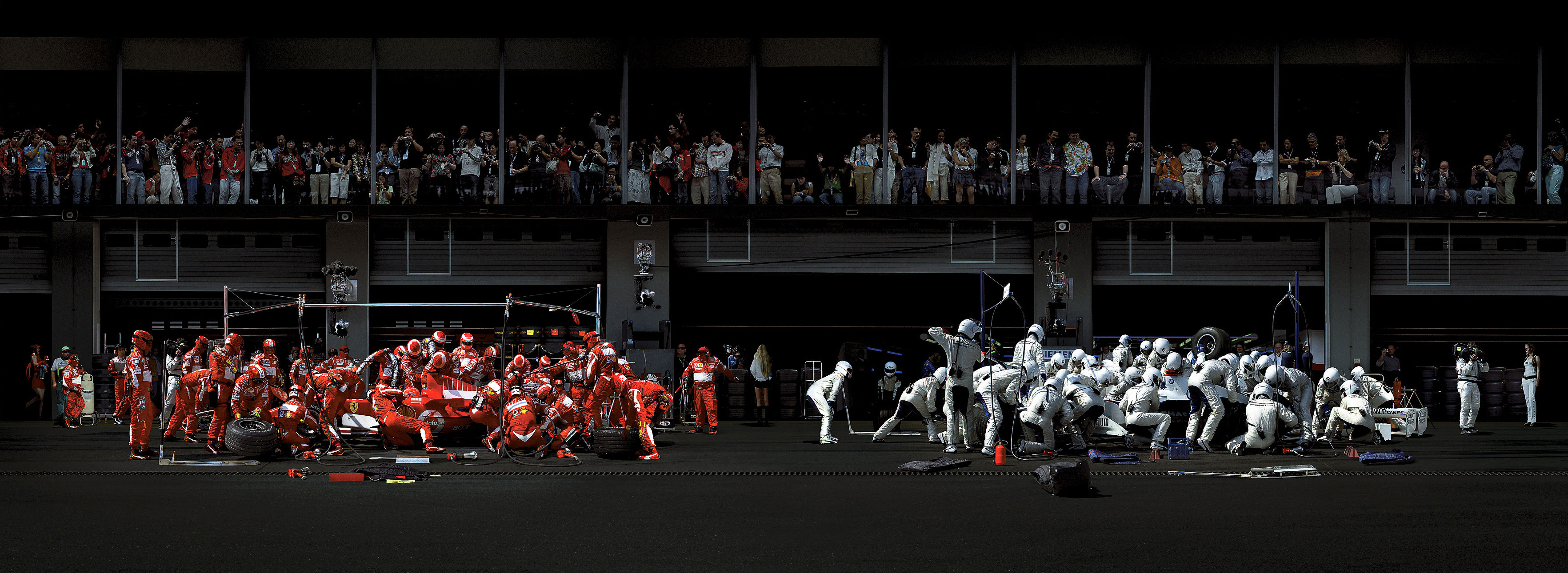
Having said that the photographs are nearly always unemotional – as though seen from above in the third person, they observe with detachment. The intrigue for the viewer is in the detail, in working out what is going on, but these are not passionate photographs on the surface. It is beneath the surface that the photographs have their psychological effect: the best of the images work on the subconscious of the viewer. Like a fantastical dance the three very wide images of the Formula 1 pits feature pit crews practicing tyre changes, frozen in a choreographed ballet. People in the galleries above stare down; pit lane girls seem to have been inserted digitally into the images, standing at side or behind the pit crews in a seemingly surreal comment on these worlds. These are theatrical tableaux vivant, splashed with teams colours. Fantastic photographs.

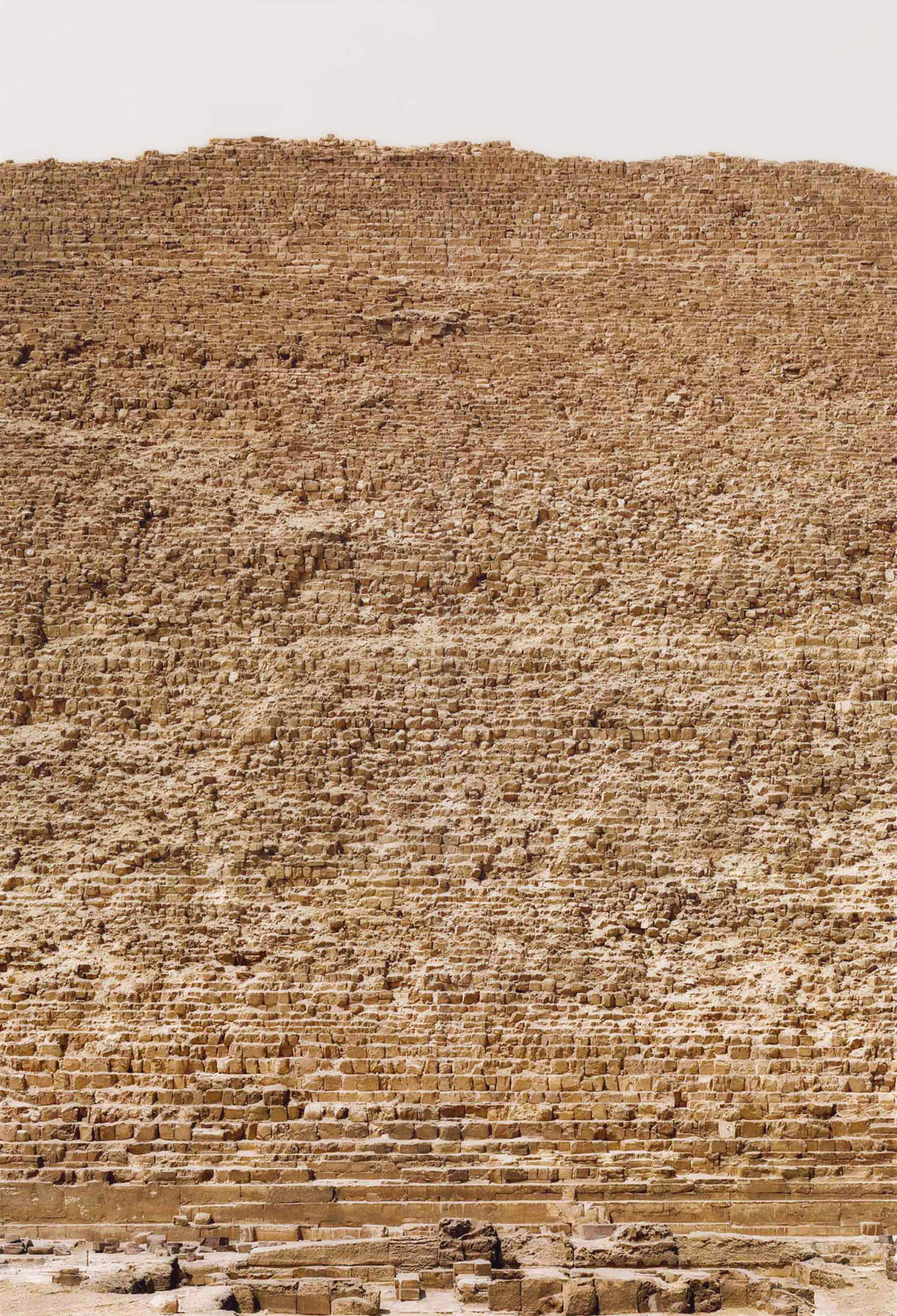
In some of the images, such as the Madonna concert or the photograph of the Bahrain Formula 1 racetrack, space seems to have folded in on itself and the viewer is unsure of the structure of the image and of their vantage point in looking at them. Space also collapses in the photograph of the pyramid of Cheops (2006, below), where the depth of field from foreground to background of the image is negligible. Less successful are images of a Jackson Pollock painting and a green grass bank with running river (Rhein II 1996, below), intensified beyond belief so that the river seems almost to be made of liquid silver.

A wonderful exhibition in many aspects, well worth a visit to see one the worlds best photographers at work. The photographs tell detached but psychologically emotional stories about what human beings are doing to the world in which they live. These images are a commentary on the state of this relationship – images of repetition, pattern, construction, use, abuse and fantasy woven into hyperreal visions of an unnatural world.

Dr Marcus Bunyan


Many thankx to the National Gallery of Victoria for inviting me to the opening and for allowing me to publish the photographs in the posting. Please click on the photographs for a larger version of the image.


Andreas Gursky (German, b. 1955) 'Bahrain I' 2007 from the exhibition 'Andreas Gursky' at the National Gallery of Victoria International, Melbourne, November, 2008 - February, 2009


Andreas Gursky (German, b. 1955)
Bahrain I
2007
C Print
120 1/2 x 87 1/4 inches
© Andreas Gursky


Andreas Gursky (German, b. 1955) 'Tour de France' 2007 from the exhibition 'Andreas Gursky' at the National Gallery of Victoria International, Melbourne, November, 2008 - February, 2009


Andreas Gursky (German, b. 1955)
Tour de France
2007
C Print
© Andreas Gursky


Andreas Gursky (German, b. 1955) 'Cheops' 2006 from the exhibition 'Andreas Gursky' at the National Gallery of Victoria International, Melbourne, November, 2008 - February, 2009


Andreas Gursky (German, b. 1955)
Cheops
2006
C Print
307 x 217.1cm
© Andreas Gursky


Andreas Gursky (German, b. 1955) 'Madonna I' 2001


Andreas Gursky (German, b. 1955)
Madonna I
2001
C Print
282.26 x 207.01 x 6.35cm
© Andreas Gursky


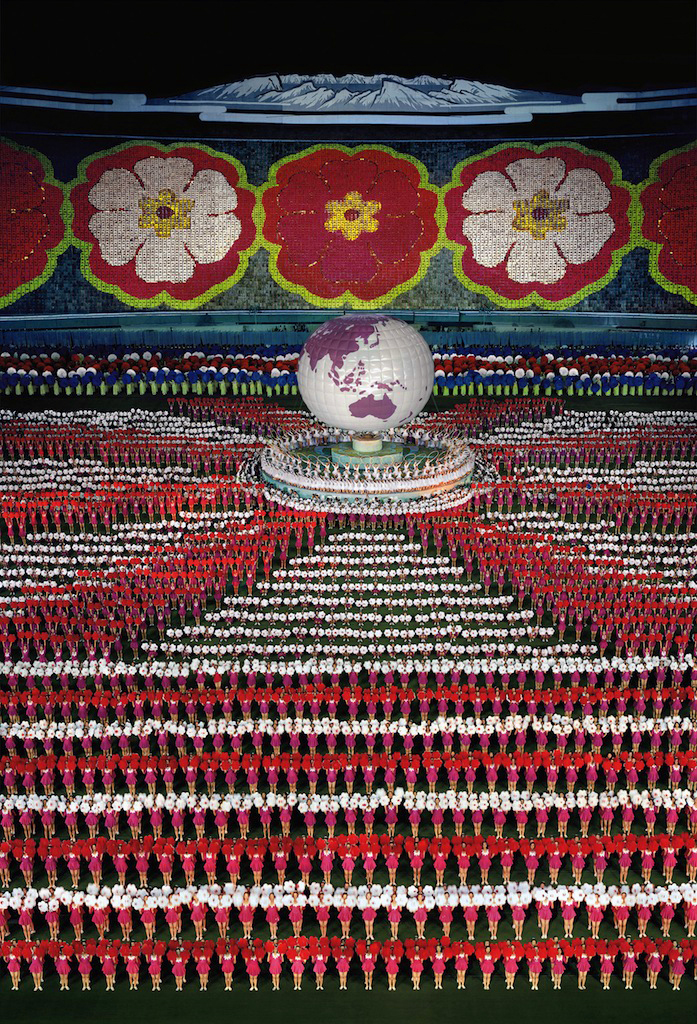
Andreas Gursky (German, b. 1955) 'Pyongyang I' 2007


Andreas Gursky (German, b. 1955)
Pyongyang I
2007
C Print
307.0 x 215.5 x 6.2cm
© Andreas Gursky


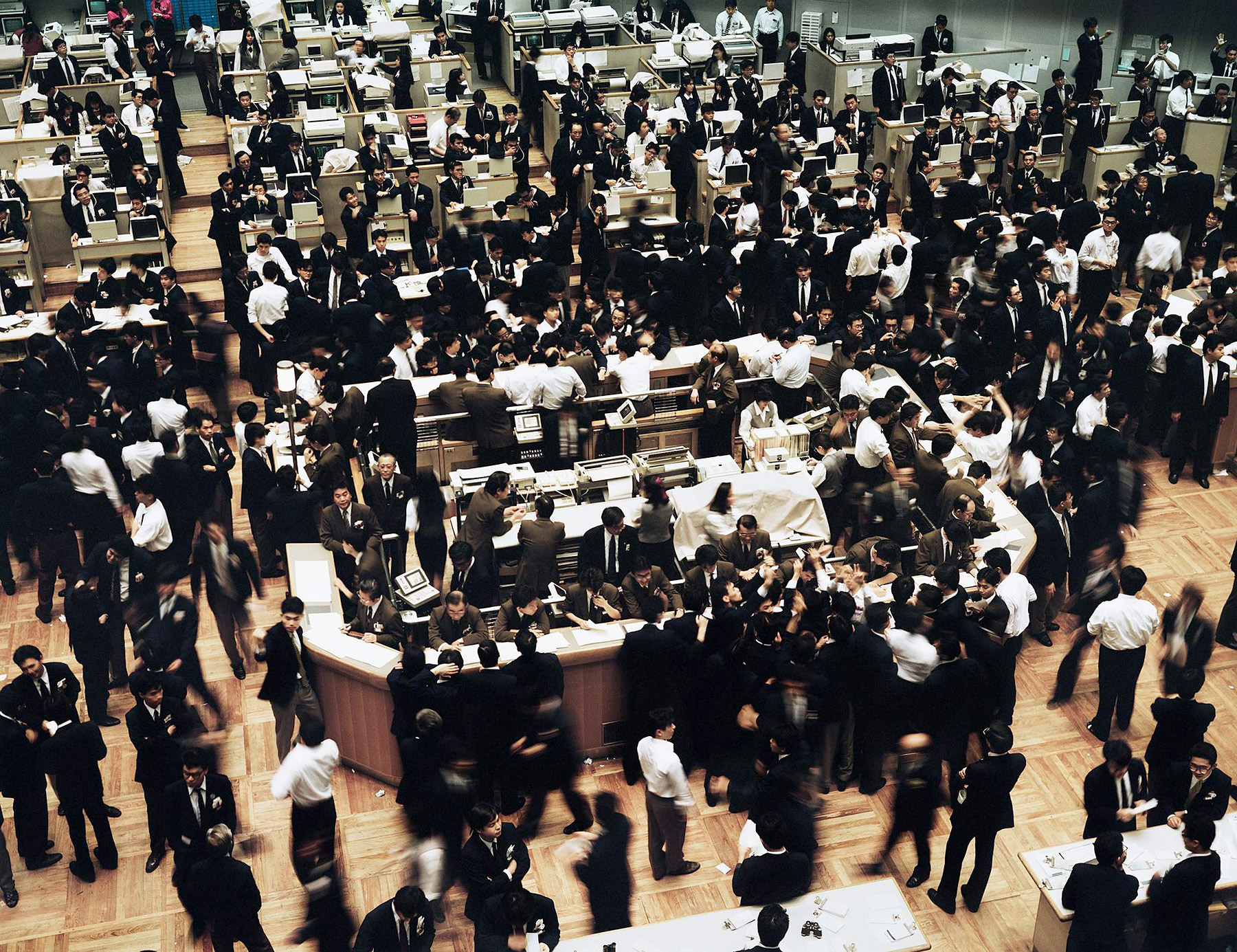
For the first time in Australia, an exhibition by German contemporary photographer Andreas Gursky opened at the National Gallery of Victoria. From the Haus der Kunst in Munich, Andreas Gursky presents 21 major works for which the artist is internationally acclaimed. The photographs range from 1989 to 2007 and include seminal works such as Tokyo Stock Exchange and the diptych 99 cent store. Andreas Gursky is recognised as one of the world’s leading contemporary artists. On view through 22 February, 2009.

Well known for his large-scale (generally measuring an astounding four to five metres) and extraordinarily detailed photographs of contemporary life, Gursky continues the lineage of ‘new objectivity’ in German photography which was brought to contemporary attention by Bernd and Hilla Becher.

In the 1990s, Gursky became inspired by the various manifestations of global capitalism. His interest was piqued looking at a newspaper photograph of the crowded floor of the Tokyo Stock Exchange and he began to photograph its flurry of suited traders, somehow moving according to some inbuilt order.

Dr Gerard Vaughan, Director, NGV said the Andreas Gursky exhibition represented a significant coup for Melbourne: “The National Gallery of Victoria is the only Australian venue for this extraordinary show – the first major exhibition of Gursky’s work ever to be seen in this country. Generously organised by the Haus der Kunst Museum in Munich we are extremely fortunate to have had the works in this show selected for us by Andreas Gursky himself.”

Andreas Gursky was born in 1955 and grew up in Düsseldorf, Germany. In the early 1980s, he studied at the Kunstakademie Düsseldorf, Germany’s State Art Academy. Whilst there he was heavily influenced by his teachers Bernd and Hilla Becher, who were well known for their methodical black and white photographs of industrial machinery.

In 1984 Gursky began to move away from the Becher style, choosing instead to work in colour. Since then he has travelled across the world to cities such as Tokyo, Cairo, Hong Kong, Stockholm, Singapore and Los Angeles photographing factories, hotels and office buildings – places he considered to be symbols of contemporary culture. His world-view photographs during this period are considered amongst the most original achievements in contemporary photography.

Gursky has been the subject of numerous international exhibitions including the Internationale Foto-Triennale in Esslingen, Germany in 1989 and 1995, the Venice Biennale in 1990, and the Biennale of Sydney in 1996 and 2000. In 2001, Gursky was the subject of an exhibition at the Museum of Modern Art in New York.

Press release from the National Gallery of Victoria website


Andreas Gursky (German, b. 1955) 'F1 Boxenstopp 1' 2007


Andreas Gursky (German, b. 1955)
F1 Boxenstopp 1
2007
C Print
© Andreas Gursky


Andreas Gursky (German, b. 1955) 'Tokyo Stock Exchange' 1990


Andreas Gursky (German, b. 1955)
Tokyo Stock Exchange
1990
C Print
205.0 x 260.0 x 6.2cm
© Andreas Gursky


Andreas Gursky (German, b. 1955) 'diptych 99 cent store II' 2001


Andreas Gursky (German, b. 1955)
diptych 99 cent store II
2001
C Print
© Andreas Gursky


Andreas Gursky (German, b. 1955) 'Rhein II' 1996


Andreas Gursky (German, b. 1955)
Rhein II
1996
C print
© Andreas Gursky


NGV International
180 St Kilda Road
Melbourne
Phone: 03 8620 2222

Opening hours:
Daily 10am – 5pm

National Gallery of Victoria website

LIKE ART BLART ON FACEBOOK

Back to top