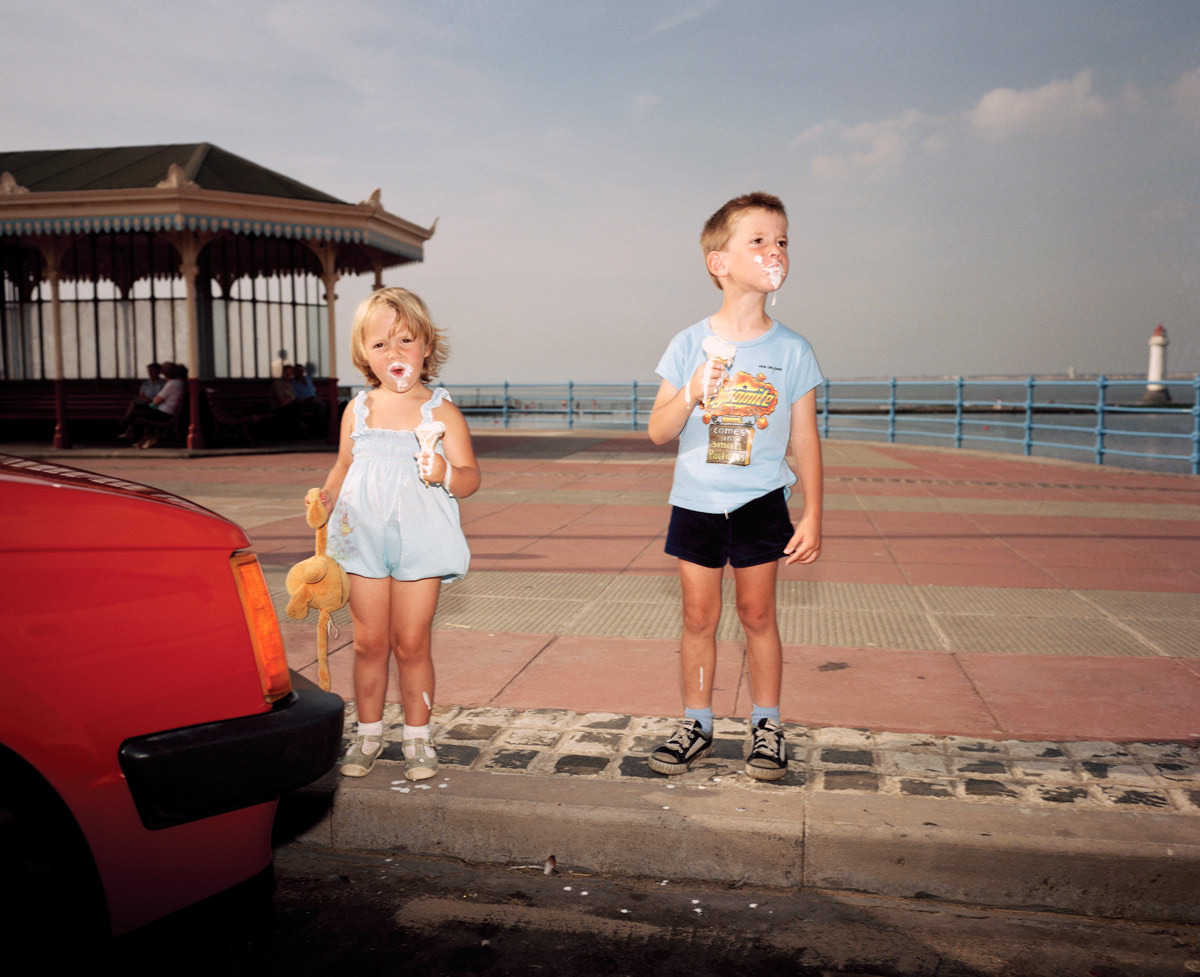
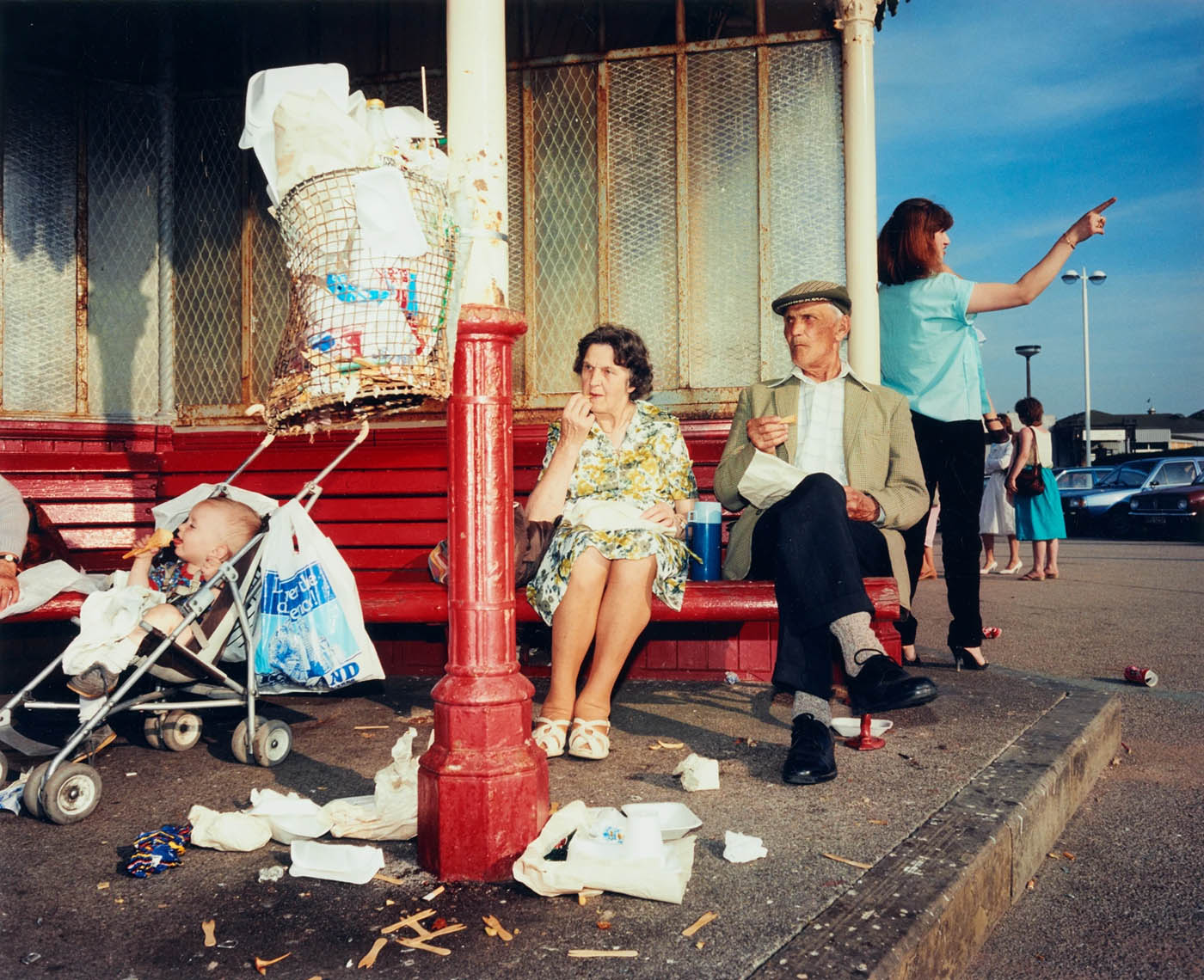
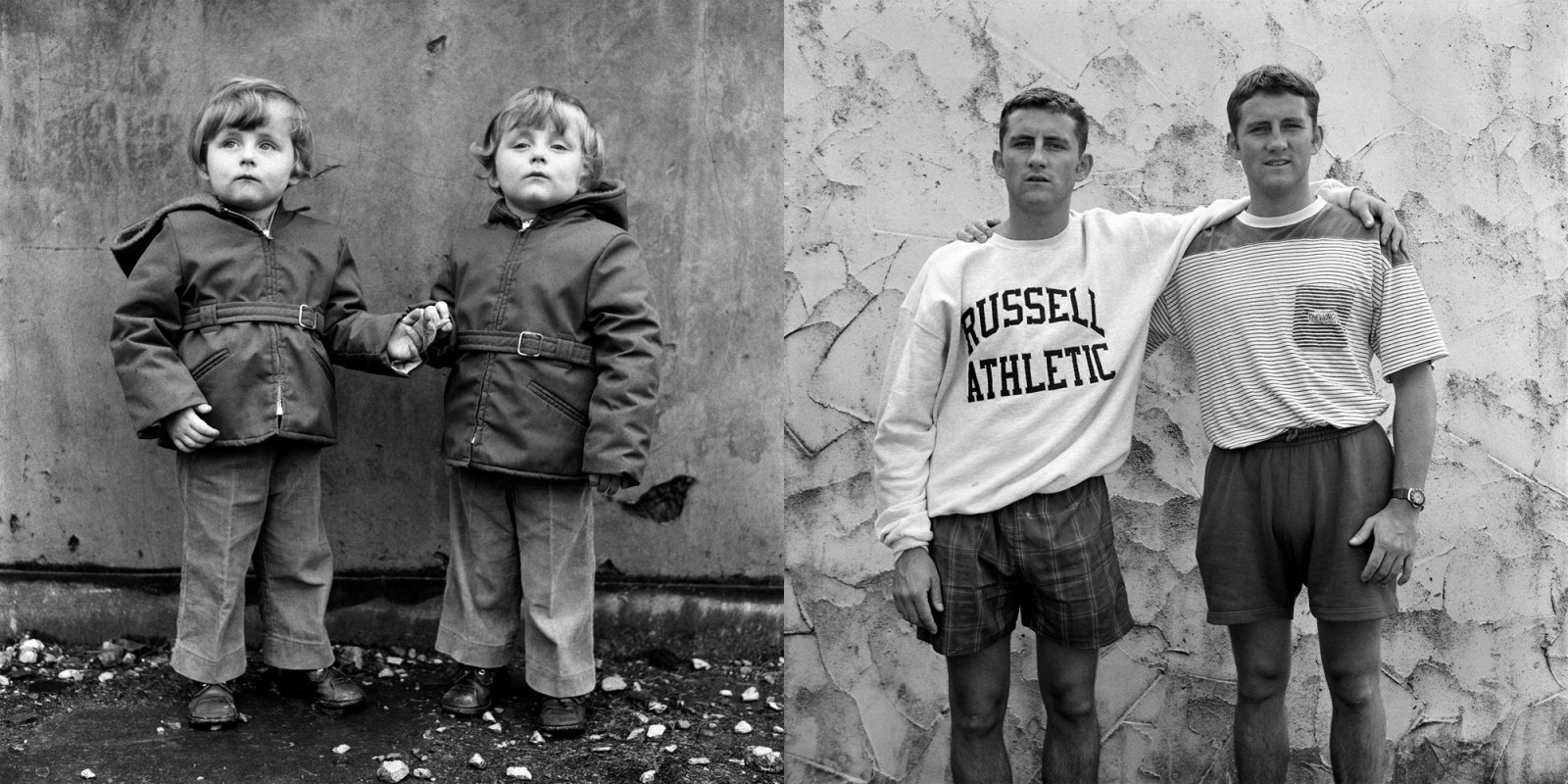
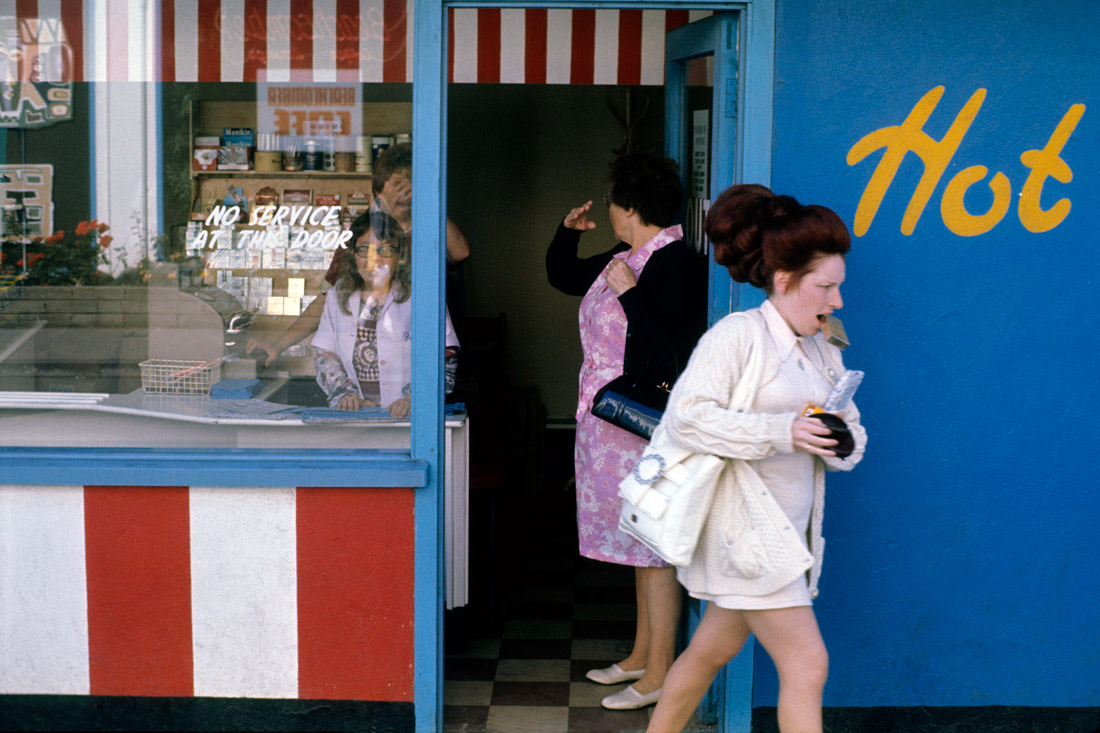
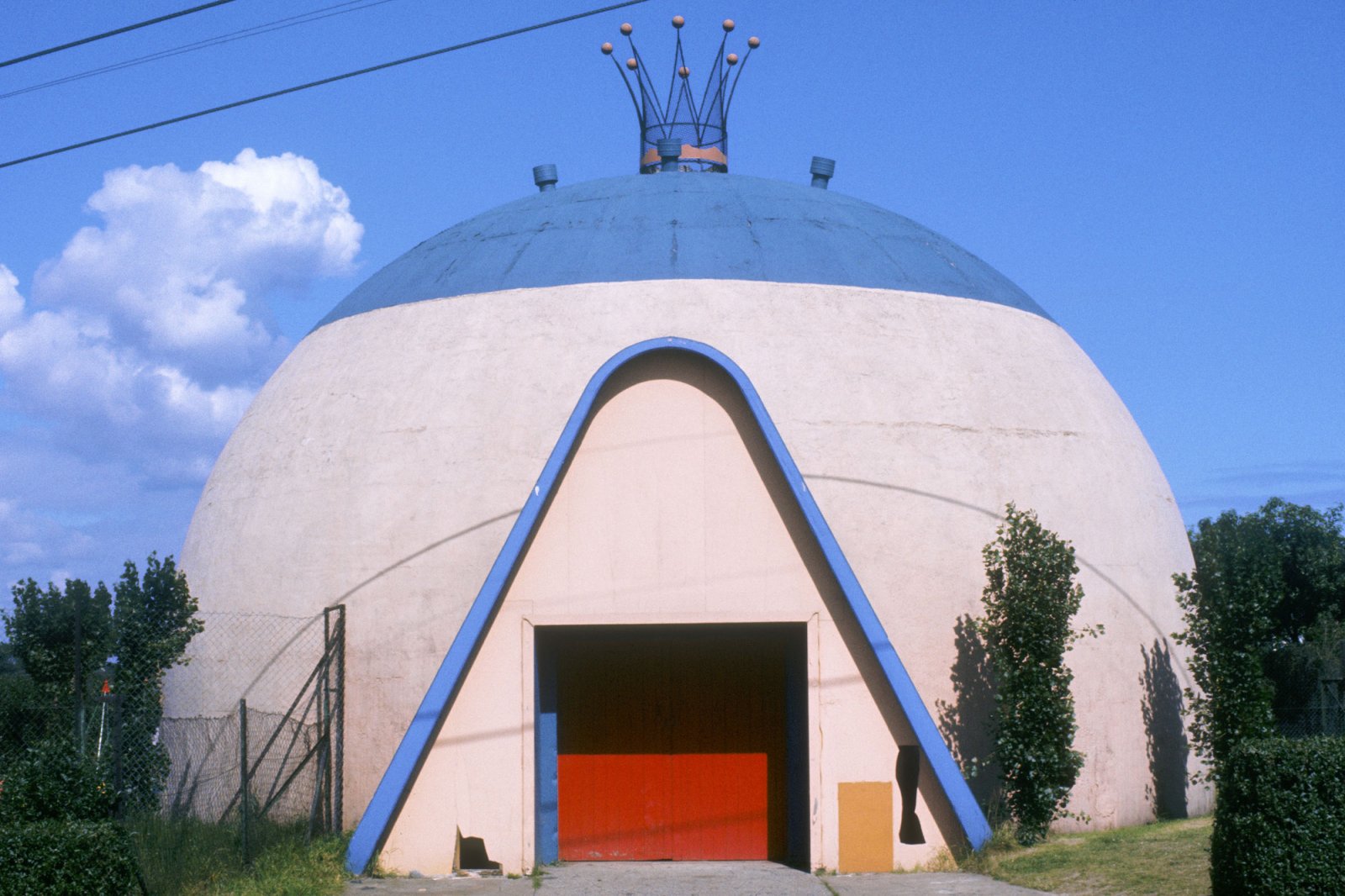
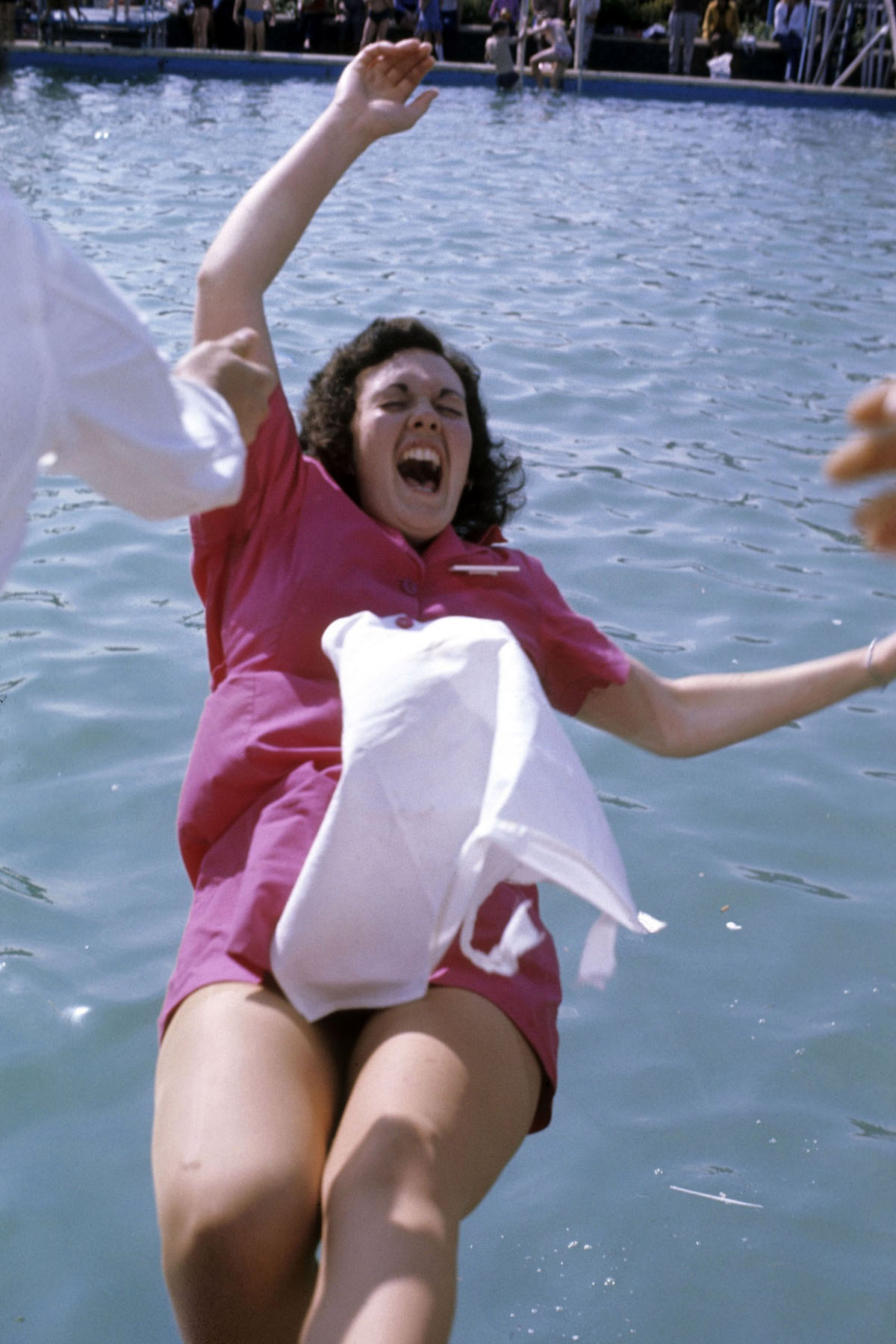
Martin Parr (British, 1952-2025) New Brighton, England From the series The Last Resort 1983-1985 Pigment print
From life, the absurd, the (un)familiar
The death of the English photographer Martin Parr is very sad news 😦
I feel like I have known his intimate photographs from life for a very long time. Through his beautifully observed and humorous photographs Martin Parr became a national treasure.
Incisive and insightful, his best photographs shone a light on the British class system, British rituals and everyday conversations – “candid and often humorous depictions of everyday life” – captured with visual deftness and containing a wry sense of humour mirroring the British character.
“Parr’s work was at its best when he concentrated on the volume of space within the image plane and the details that emerge from such a concentrated visualisation – whether it be the tension points within the image, assemblage of colour, incongruity of dress, messiness of childhood or philistine nature of luxury.” (MB, 2102)
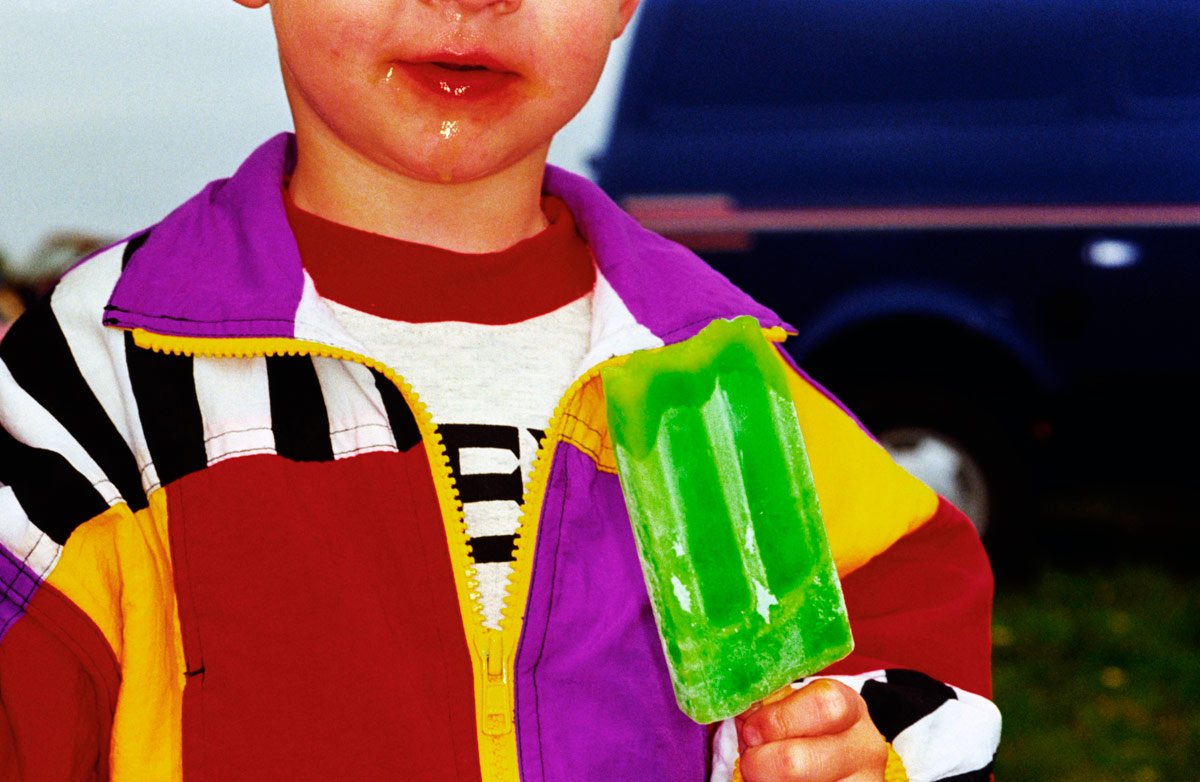
His photographs have a wonderful frisson about them, a genuine love of and resonance with the things he was imaging. The dirt under the fingernails of the child eating a doughnut, the lurid colours of the popsicle and jacket of the kid with dribble on his face, all fantastic. Images full of incongruity, humour, and pathos. The absurd and the (un)familiar.
And so it goes… we loose another great photographer.
Vale Martin Parr and thank you!
Dr Marcus Bunyan
Please click on the photographs for a larger version of the image.
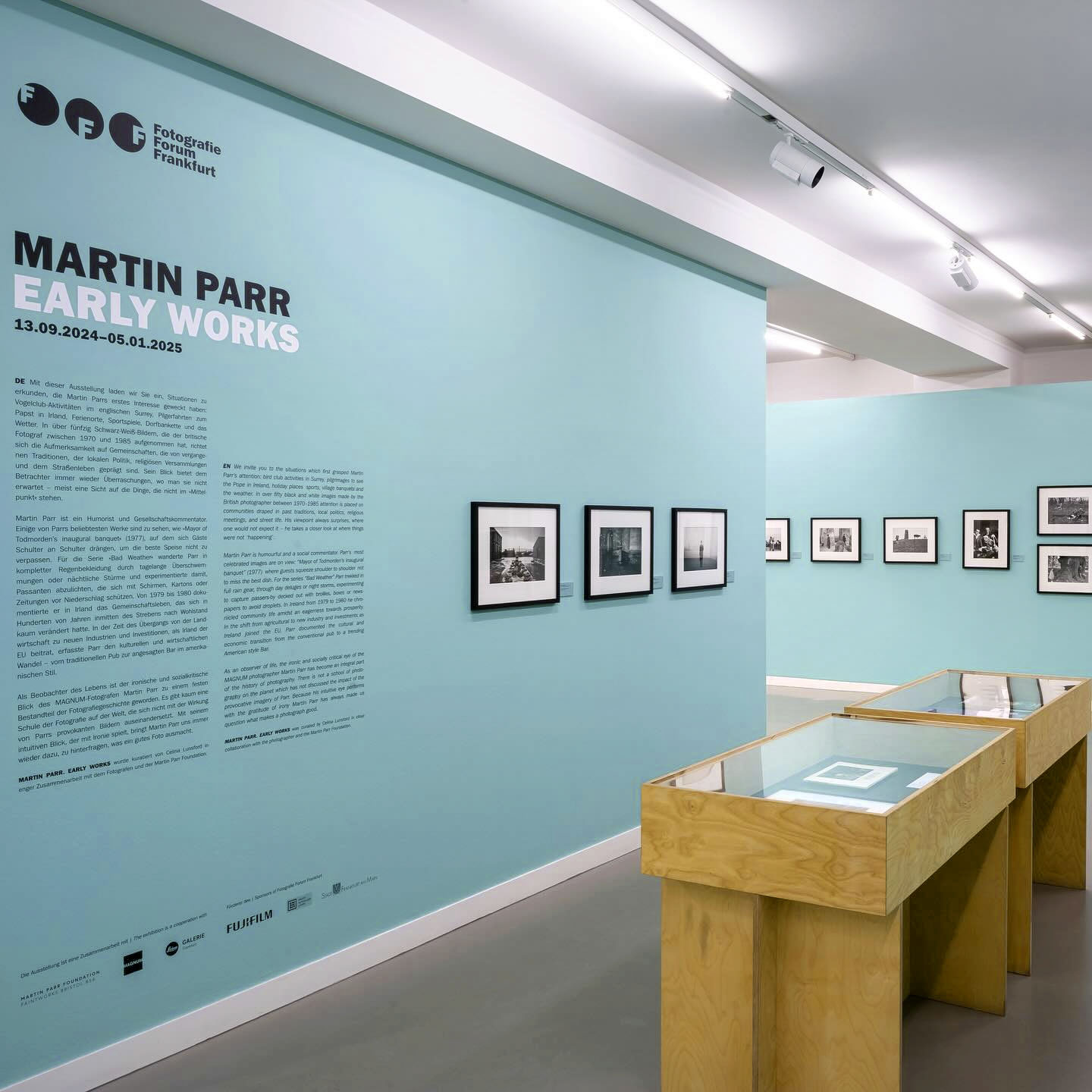
Read my text “Out in the midday sun” on the exhibition Martin Parr. Early Works at Fotografie Forum Frankfurt (FFF), September 2024 – February 2025
“Photography is the simplest thing in the world, but it is incredibly complicated to make it really work.”
“I think the mindset you require is stamina, discipline, and just sheer hard work. There are basically very few shortcuts. You’ve either got that ability to apply yourself to a given situation or a given idea and explore it and resolve it, or you haven’t. Most people are just lazy. The danger with photography is that it looks very easy but in fact, it’s a very difficult medium to really excel well in because basically, people don’t work hard enough – they’re lazy. Don’t be lazy!”
Martin Parr
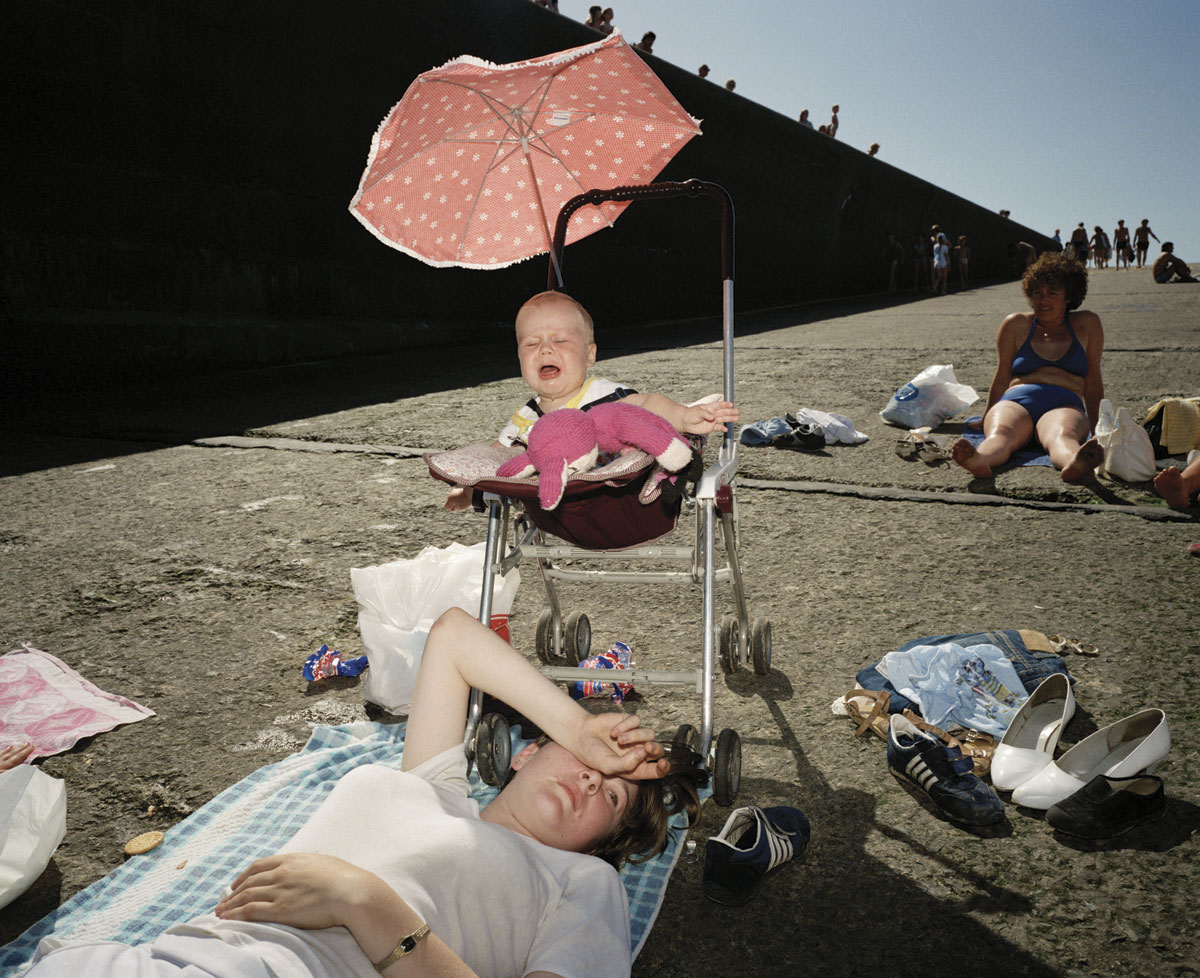
Martin Parr (British, 1952-2025) New Brighton, England From the series Last Resort 1983-1985 Pigment print
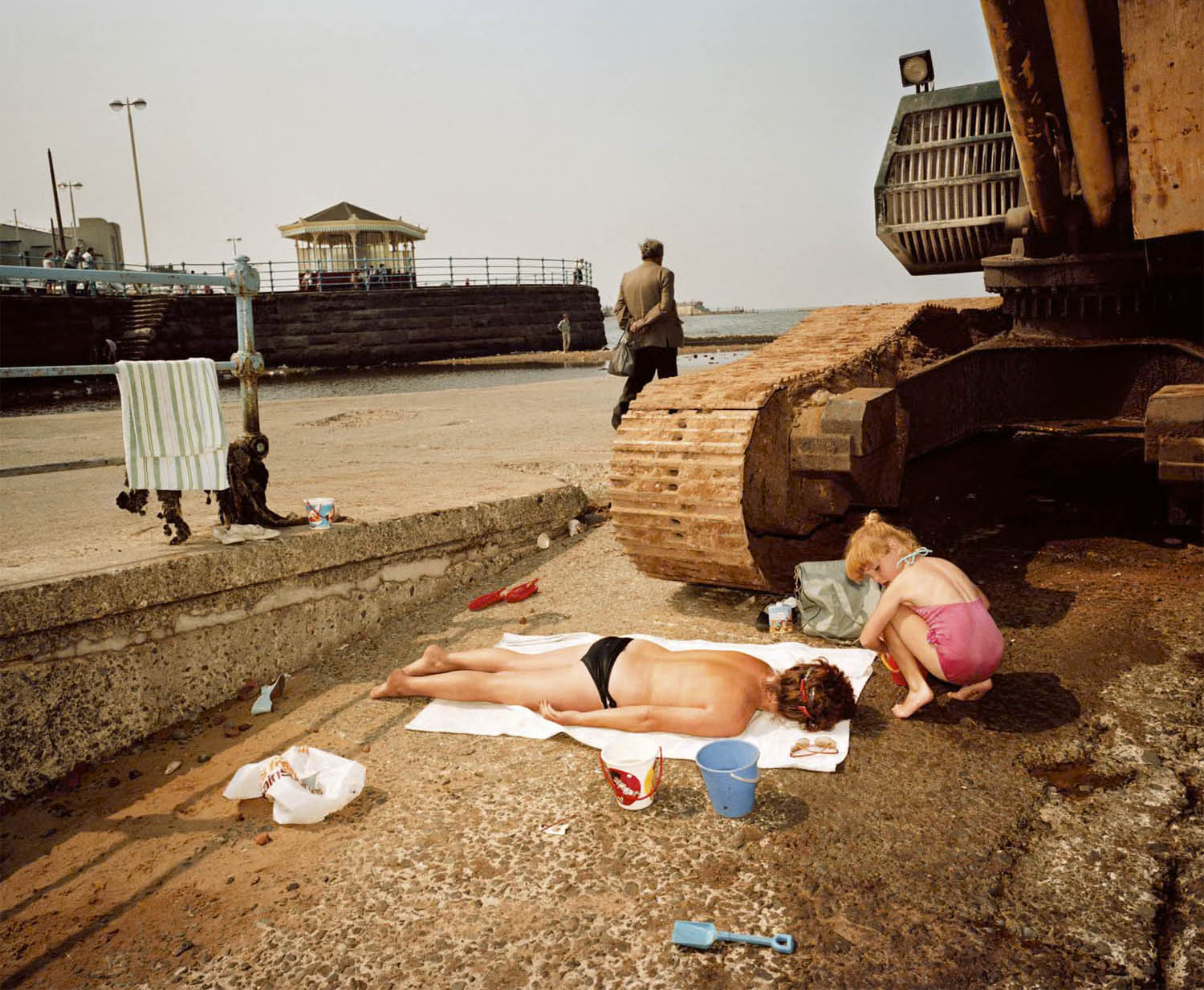
Martin Parr (British, 1952-2025) New Brighton, England From the series The Last Resort 1983-1985 Pigment print
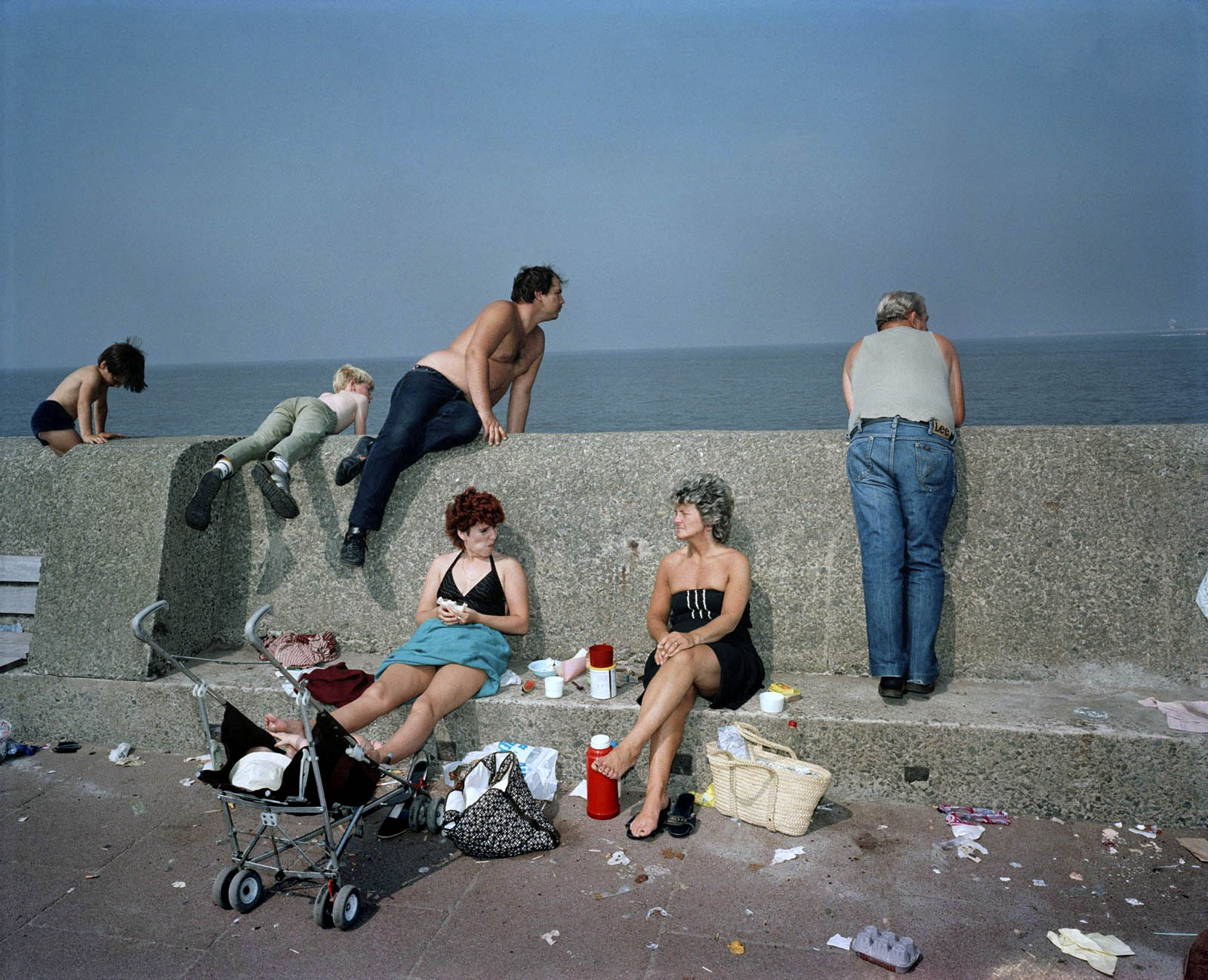
Martin Parr (British, 1952-2025) New Brighton, England From the series The Last Resort 1983-1985 Pigment print
Martin Parr (British, 1952-2025) New Brighton, England From the series The Last Resort 1983-1985 Pigment print
Martin Parr (British, 1952-2025) New Brighton, Merseyside, England 1984 From the series The Last Resort Pigment print
Martin Parr (British, b. 1952) England. Bristol. Car boot sale. 1995 From the series British Food 1994-1995 Traditional C-type print
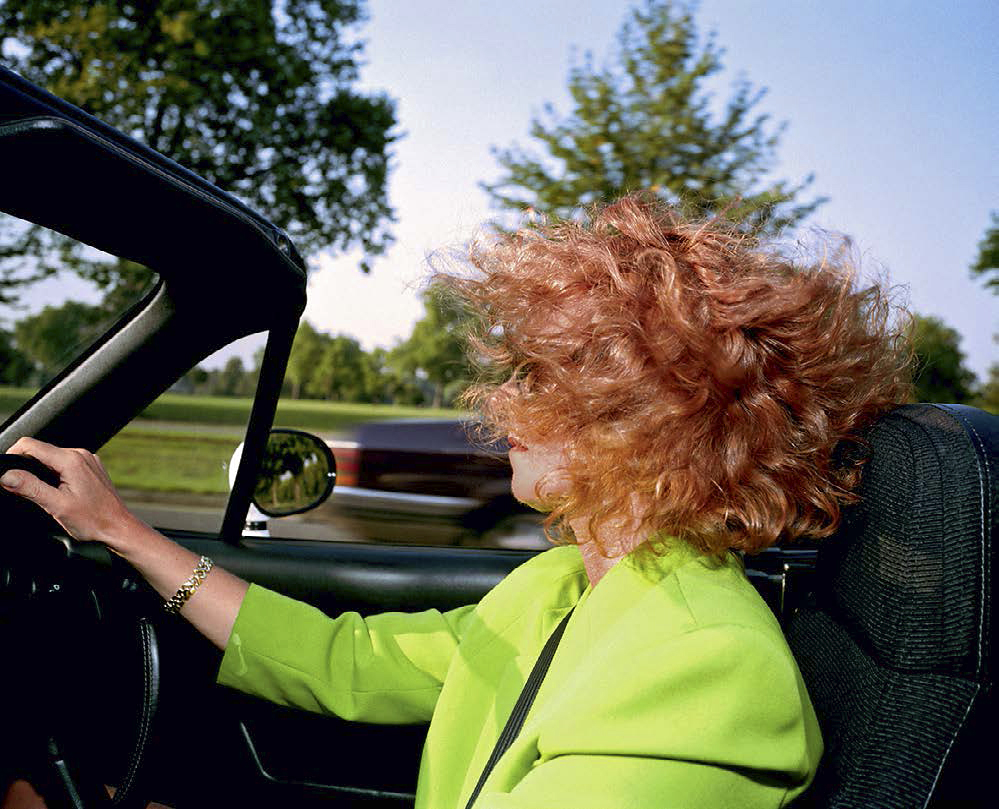
Martin Parr (British, b. 1952) From A to B. Tales of Modern Motoring series 1994 Pigment print
I watch a lot of the TV program Antiques Roadshow and in the early episodes you see British people of a certain age, people who lived through the Second World War and their children, salt of the earth people who inherited objects from their mother-in-law or father-in-law because they couldn’t dust them anymore. These are British people who have a down-to-earthness and ordinariness about them… people who went to church on Sunday, went to working-class seaside resort Butlins with their family for a holiday (as I did as a child) and loved the royal family. These people project a certain consciousness, a wonderful quirky character, sense of humour and regional dialect that is uniquely British.
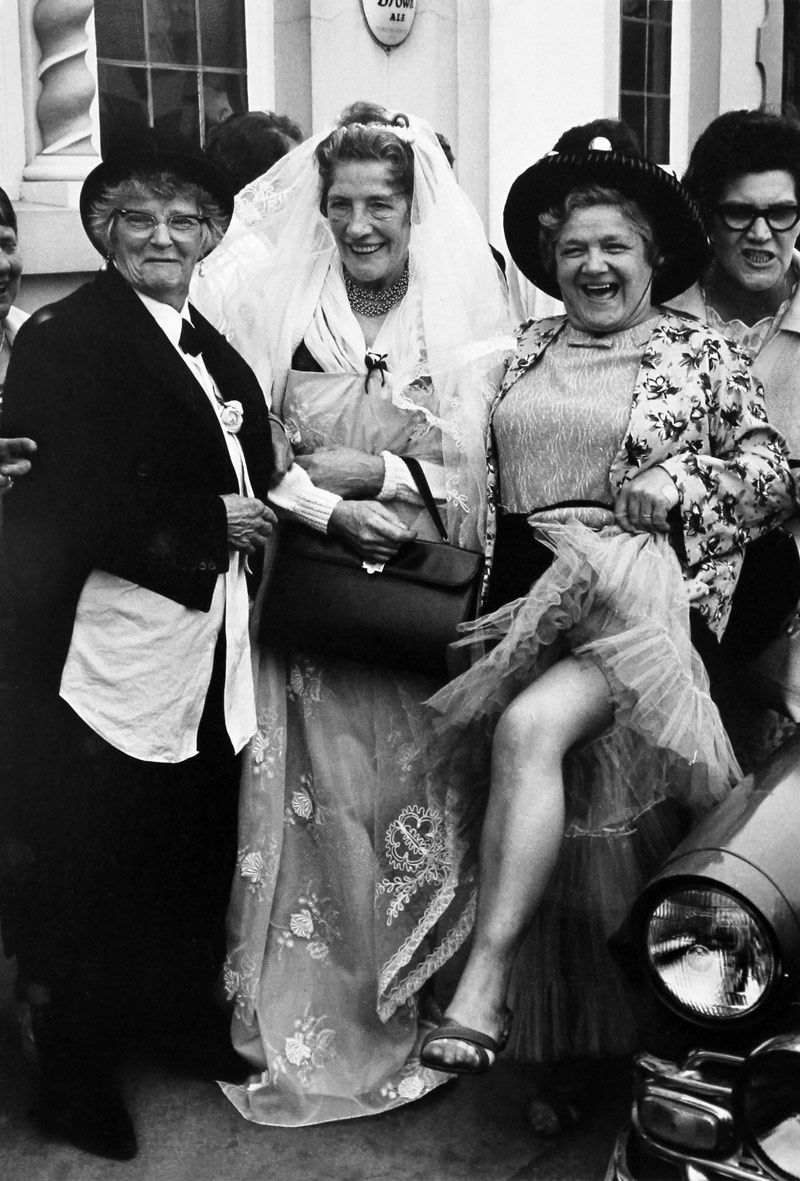
People such as these have always been pictured in British photography, historically through the lineage of artists such John Thomson (1837-1921) and Richard Jenkins (1890-1964) through Christina Broom (1862-1939) in the 1920s and on to Edith Tudor-Hart (1908-1973) and Bill Brandt (1904-1983) in the 1930s-1940s. These photographers were followed in the 1950s-1990s by a pantheon of strong, gritty and revelatory social documentary photographers. Indeed, this aspect of British photography has been particularly blessed by talented artists whose work focuses on “ordinary people and their surroundings – often in suburban or working-class environments.”
Artists I can mention include, but are not limited to, photographers such as Chris Killip (1946-2020), Brenda Prince (b. 1950), Roger Mayne (1929-2014), Anna Fox (b. 1961), Tony Ray-Jones (1941-1972), Colin Jones (1936-2021), Graham Smith (b. 1947), Paul Graham (b. 1956), Paul Trevor (b. 1947), James Barnor (b. 1929), Colin Jones (1936-2021), Syd Shelton (b. 1947), John Bulmer (b. 1938), Peter Mitchell (b. 1943), Don McCullin (b. 1935), Daniel Meadows (b. 1952), Neil Kenlock (b. 1950), Bandele Ajetunmobi (1921-1994), Dennis Morris (b. 1960) to name but a few: apologies if I have missed anybody for I am still learning about the many and various photographers in this field.
Into this heady mix can be added the name of that legendary British photographer Martin Parr (b. 1952). Better known for his later colour photographs of British rituals and everyday conversations – “candid and often humorous depictions of everyday life” captured with visual deftness and containing a wry sense of humour mirroring the British character – these early black and white photographs proffer the path of development for this artist.
“Shot between 1970 and 1985, the images document the subtleties and eccentricities of everyday British life from that era, spanning local traditions, holiday resorts and of course the weather, among many other things.”1 As Val Williams has insightfully observed, “Martin Parr’s early black and white photographs of the North of England are a remarkable record of an all-but disappeared society.”2
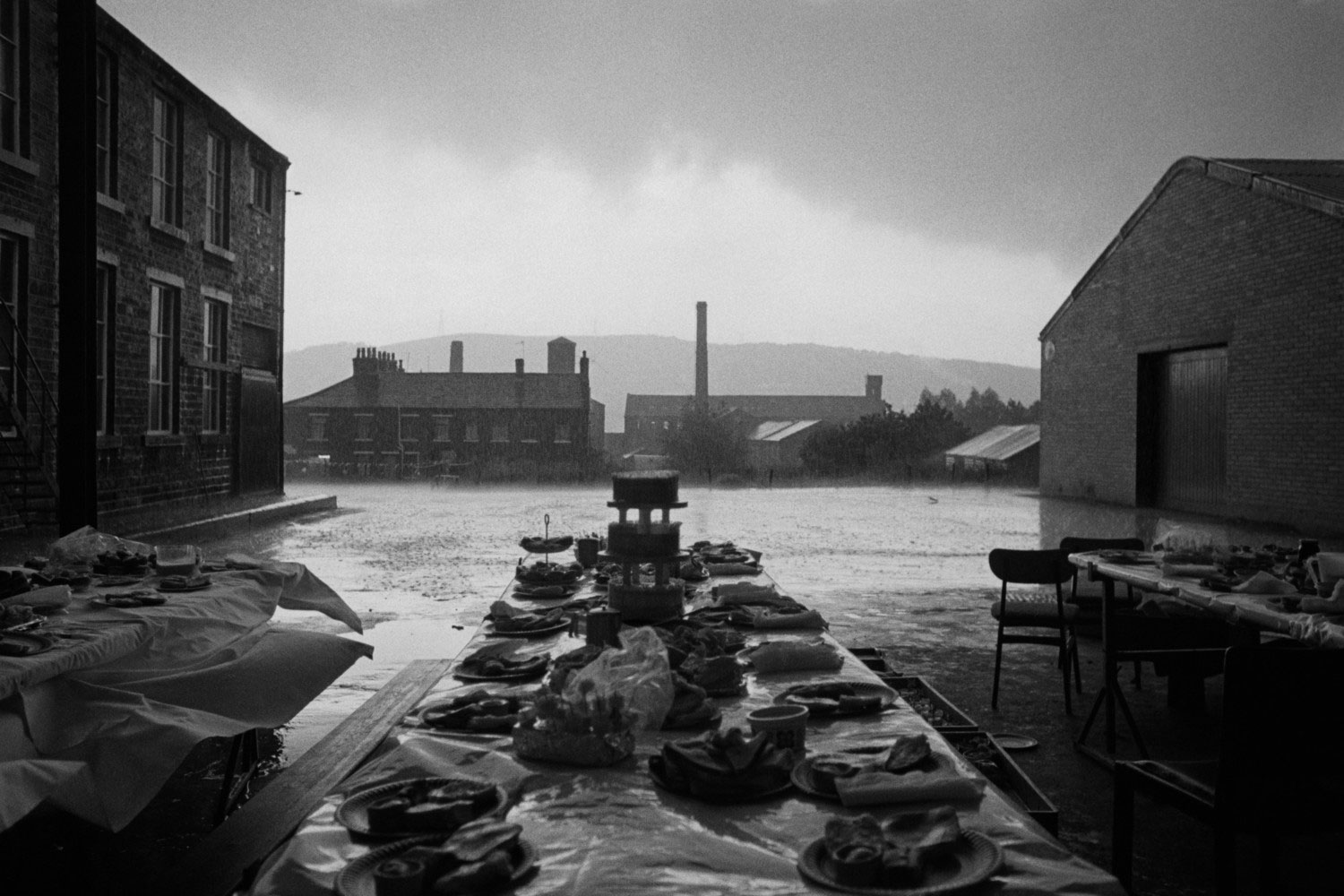
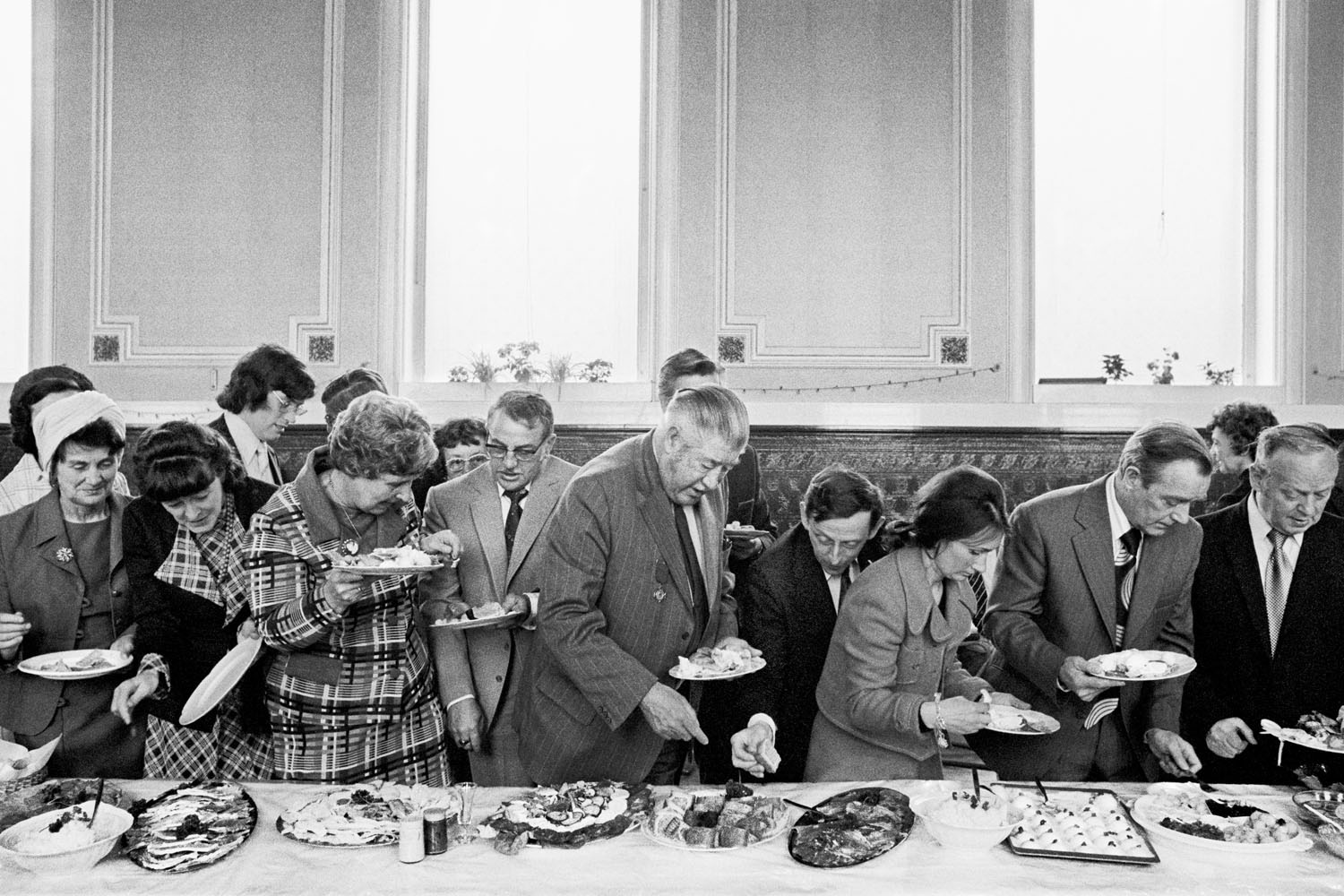
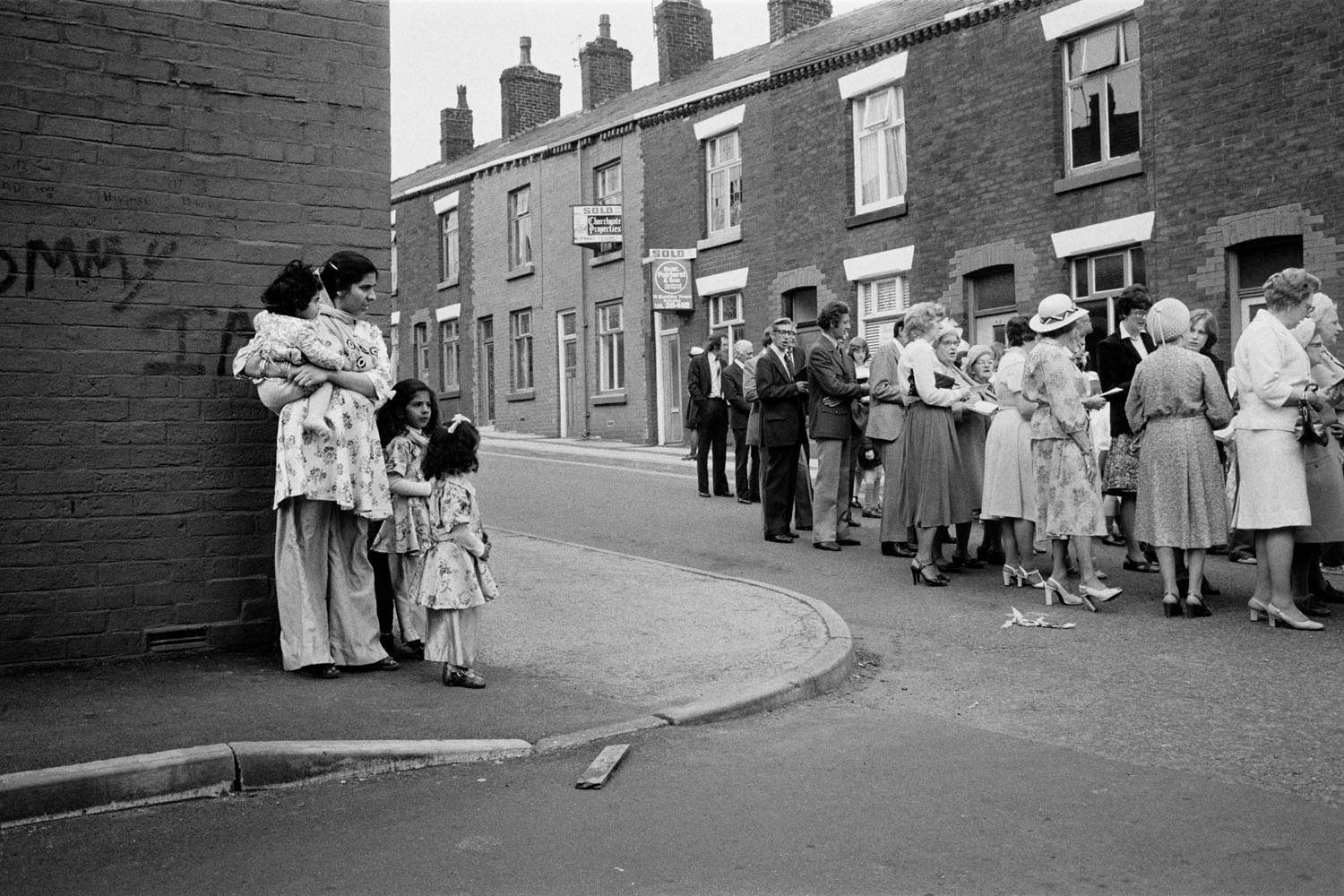
I am always fascinated with the early work of an artist. In essence, the photographs tell you what are the primary concerns for the artist and these themes usually remain with them for the rest of their career. These early black and white photographs provide a window into that ongoing investigation, that golden path. They are more subtle in their modulation of British life than in the later colour work – it’s as though the artist had to change gears with the use of colour developing a more ironic way of seeing British life through a different spatial relationship to his subjects – but in these photographs there is still that deprecating humour that is often missing in the work of his contemporaries: the barren tree emerging from the seemingly abandoned, frost covered, three-wheeler “bubble car” parked on the pavement; the seemingly abandoned Jubilee street party destroyed by rain in a desolate mining town; the contortions and consequences of grasping for food at the mayor’s inaugural banquet; the incongruity of man balancing at the top of a ladder to reach around to clean the outside of his front door window; or the implied racism as a coloured British family observes the “whites” of a different generation from afar, the space between them as wide as an ocean.
Through his beautifully observed and humorous photographs Martin Parr has become a national treasure.
My only wish… why I didn’t have more media images to show you!?
Dr Marcus Bunyan
1/ Text from the Martin Parr Studio Instagram page
Many thankx to Fotografie Forum Frankfurt for allowing me to publish the photographs in the posting. Please click on the photograph for a larger version of the image.
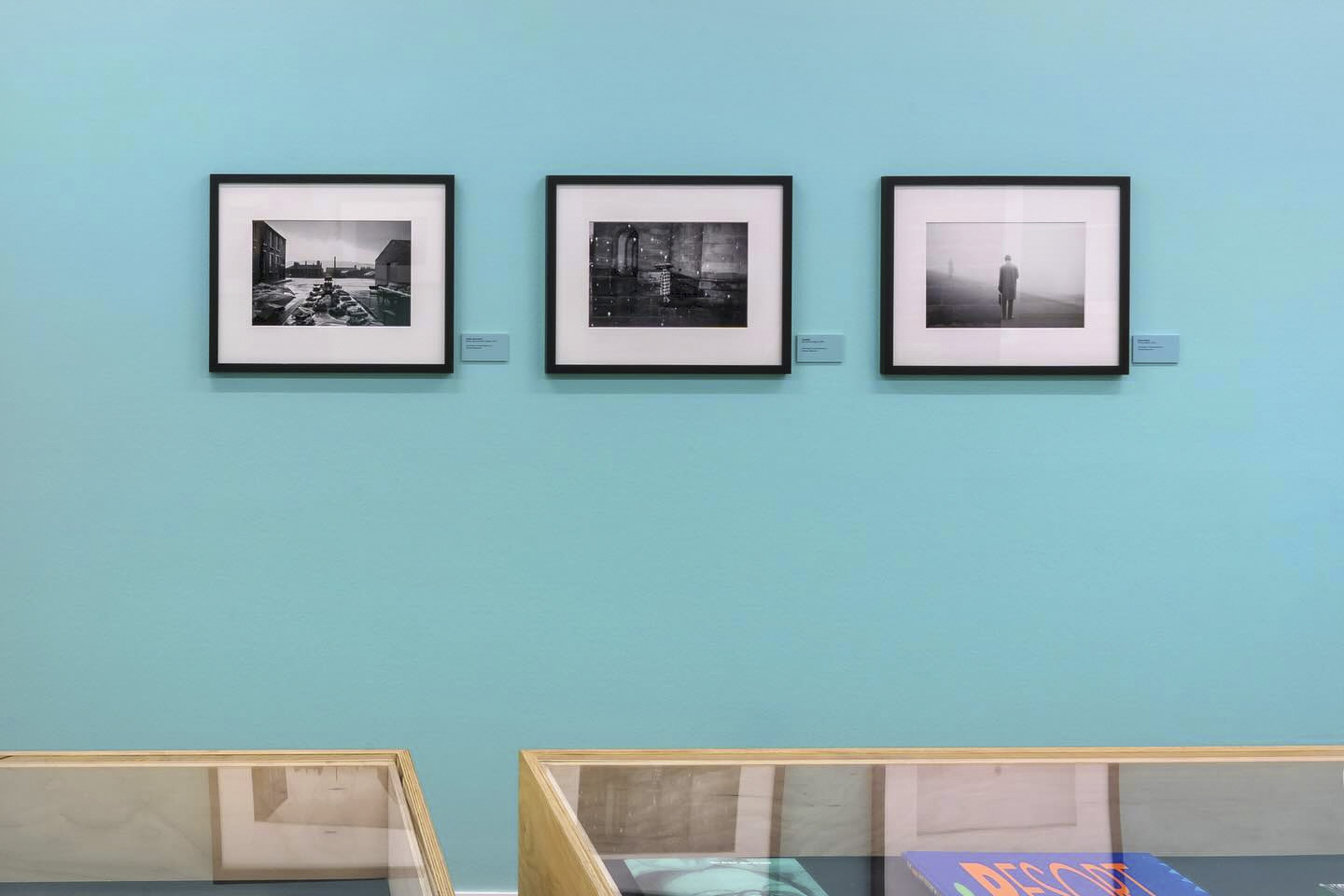
Installation views of the exhibition Martin Parr. Early Works at Fotografie Forum Frankfurt (FFF) showing at left in the bottom image, Parr’s photograph Jubilee street party, Elland, West Yorkshire, England, GB, July 1977
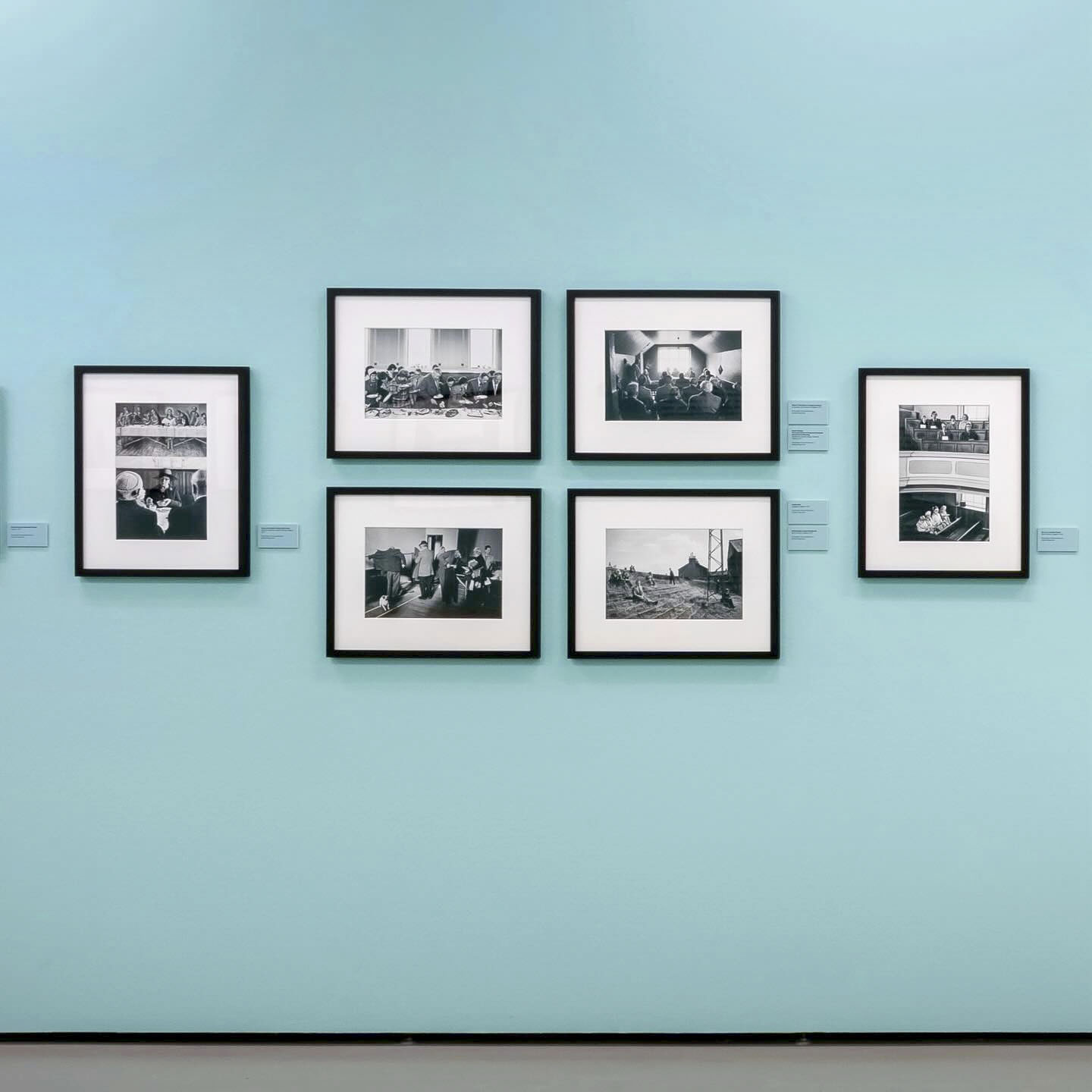
Installation view of the exhibition Martin Parr. Early Works at Fotografie Forum Frankfurt (FFF) showing works from West Yorkshire including at left, Steep Lane Baptist Chapel buffet lunch. Doris Wilson (centre). Sowerby. Calderdale. West Yorkshire. England. GB. 1977; at second left top, Mayor of Todmorden’s inaugural banquet, Todmorden, West Yorkshire, England, 1977; and at right, Steep Lane Baptist Chapel. West Yorkshire. England. GB. 1977
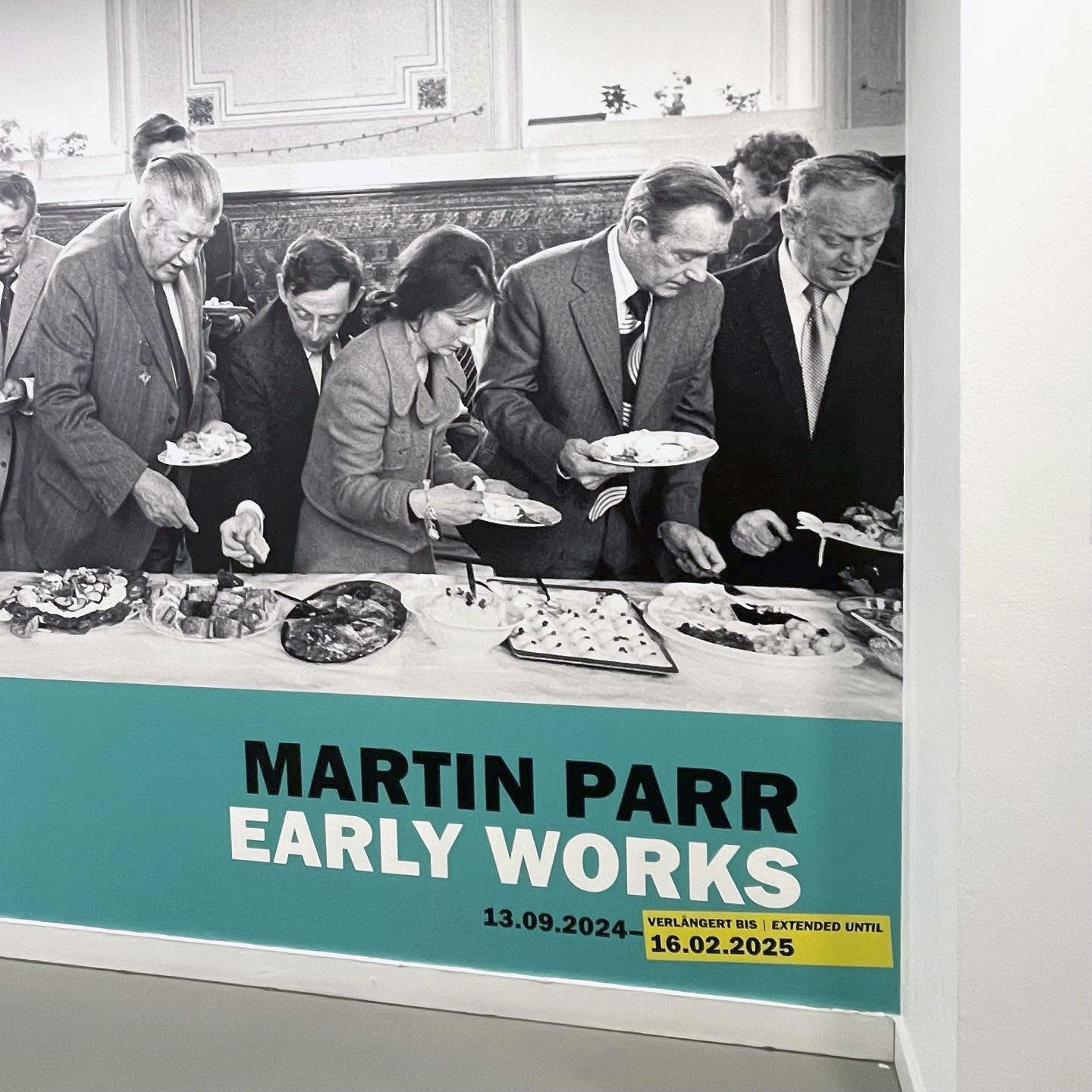
Installation view of the exhibition Martin Parr. Early Works at Fotografie Forum Frankfurt (FFF) showing an enlargement of Parr’s photograph Mayor of Todmorden’s inaugural banquet, Todmorden, West Yorkshire, England, 1977 (detail)
Installation view of the exhibition Martin Parr. Early Works at Fotografie Forum Frankfurt (FFF) showing at left, Parr’s photograph Hebden Bridge, England, 1979; and at top right, the cover of Parr’s book Bad Weather (Zwemmer, 1982)
In 1972, he settled to the north east of Manchester, in the west Yorkshire mill town of Hebden Bridge. Though the mills were rapidly closing, the back-to-back houses and the social fabric of the smaller mill towns remained.
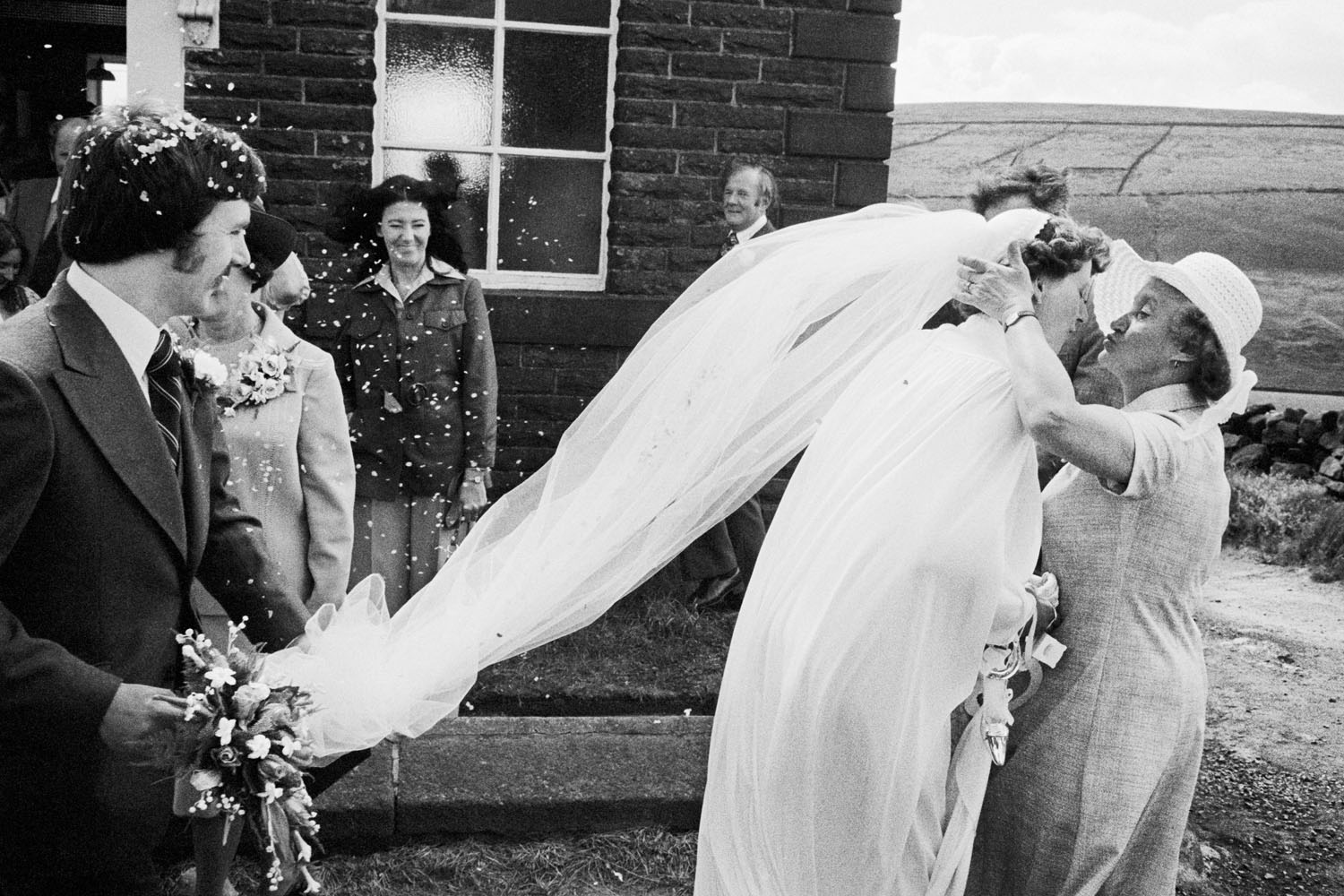
Hebden Bridge was an intricate fabric of social organisation, and Parr was fascinated by the many clubs and societies which flourished there. With some fellow ex-students, he rented a small shop and set up the Albert Street Workshop, which showed photographs, paintings and ceramics. Though he photographed Hebden Bridge life with great enthusiasm (one of his favorite subjects was the Ancient Order of Henpecked Husbands) and produced many memorable images in the town, the great achievement of his Hebden Bridge years was his documentation of Crimsworth Dean Methodist Chapel, high up on the moors above the town. Together with his future partner Susie Mitchell, Parr immersed himself in the life of the chapel, photographing, interviewing and taking part in events there. For him, the chapel was ‘the icon of Hebden Bridge’s dark and gloomy, rather miserable past’ and the photographs he made at Crimsworth Dene and other Methodist chapels were an elegy to a passing way of life, somber and poetic, with an occasional whisper of humour.
With the exhibition Martin Parr. Early Works on view from September 13, 2024 to February 16, 2025 the Fotografie Forum Frankfurt (FFF) shows another highlight in its 40th anniversary year. As an observer of life, the ironic and socially critical eye of Magnum photographer Martin Parr has become an integral part of the history of photography. This exhibition of rarely seen black and white images made by the British photographer between 1970 and 1985 is on view for the first time in Germany.
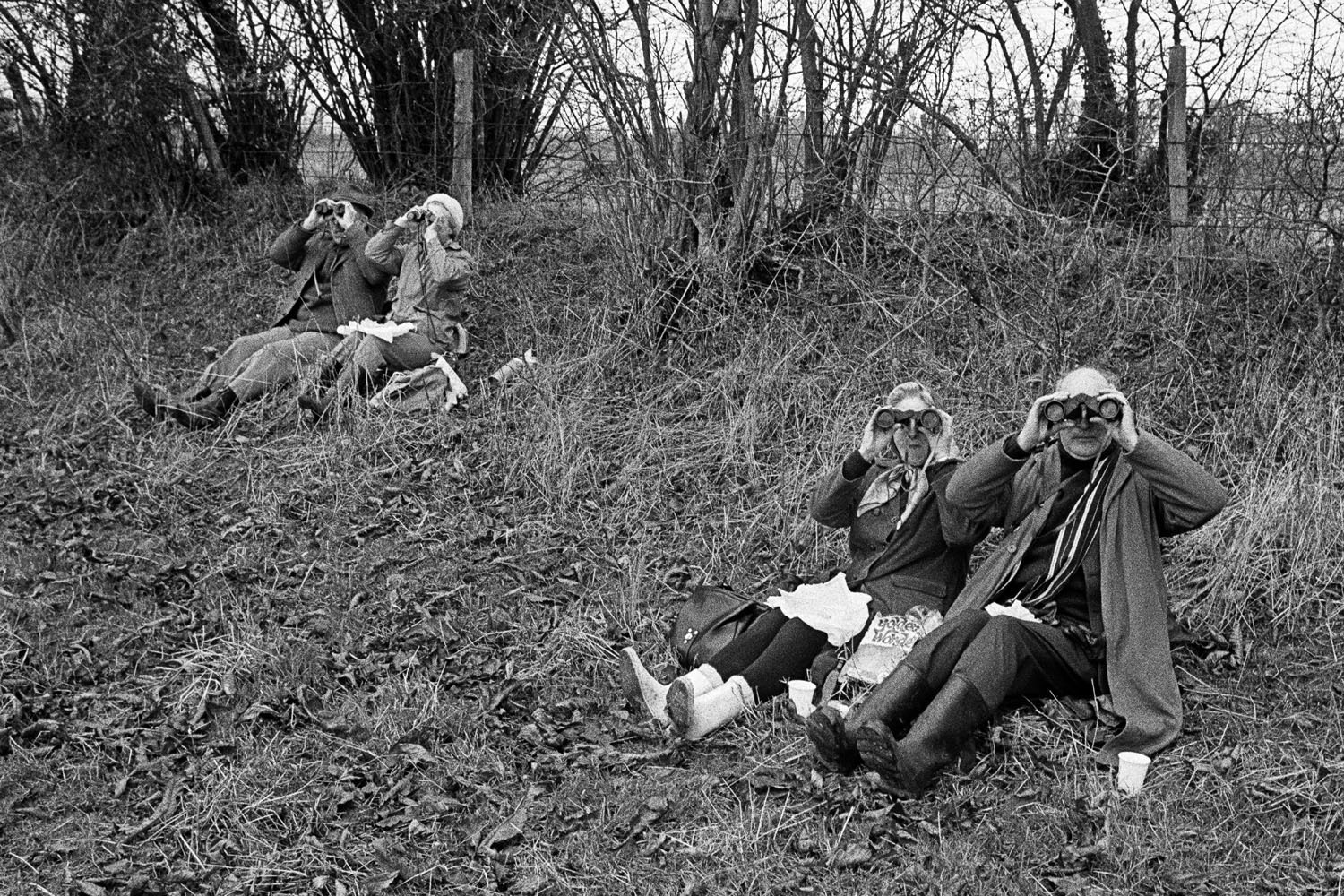
Bird clubs in Surrey, pilgrimages to see the Pope in Ireland, holiday resorts, sports and village banquets are only a few of the places and social activities which first grasped Martin Parr’s attention. In a special selection of fifty-eight black and white images, this show focuses on the subtleties of the unnoticed episodes found in the everyday: be it in communities draped in local traditions, street life and in the unforgettable fluctuating island weather, Parr makes us always look twice, to cherish the funny sides of life.
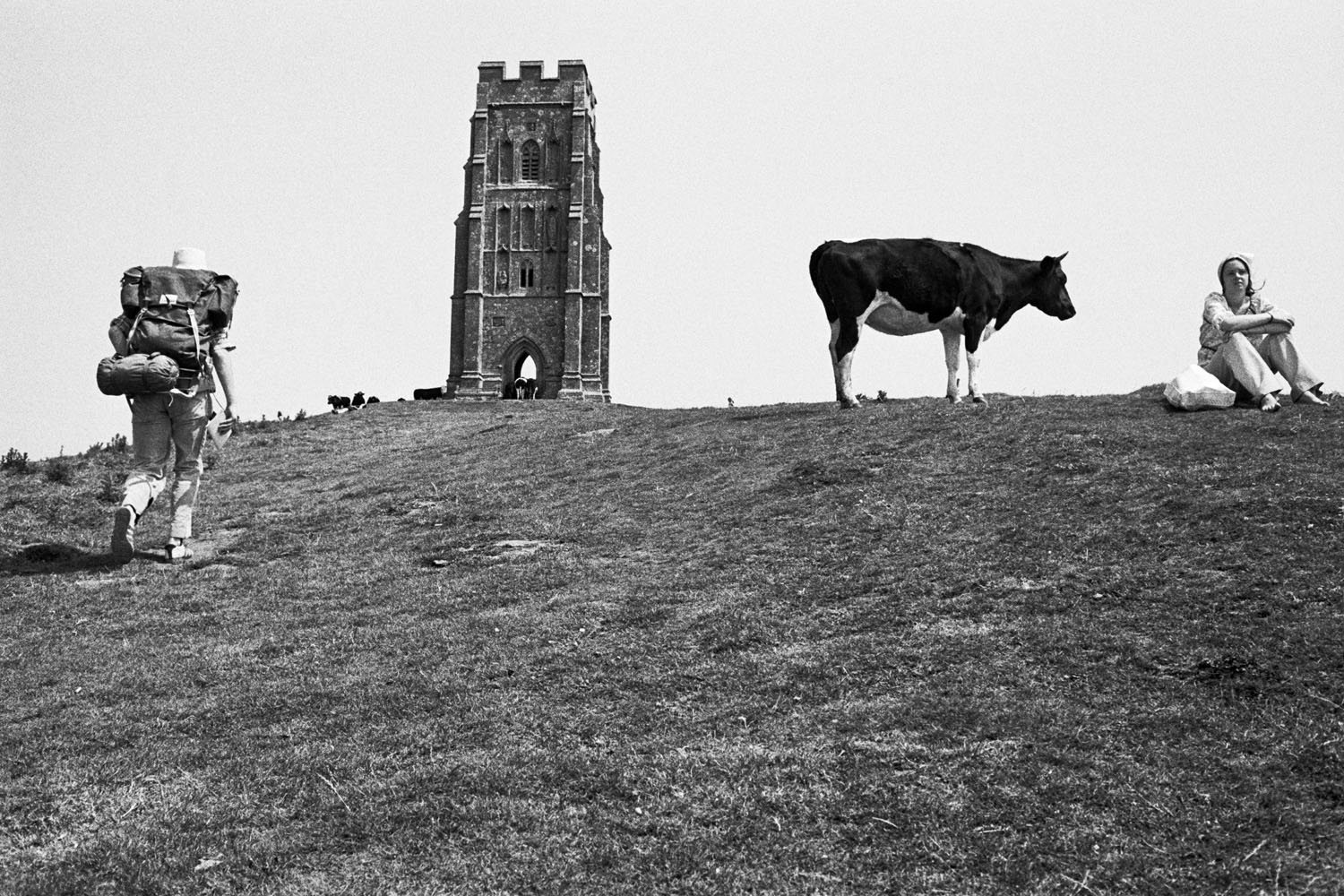
Included are some of Parr’s encompassing views such as The Mayor of Todmorden’s inaugural Banquette, from 1977, where hungry guests squeeze shoulder to shoulder, not to miss the best dish; or two devout Catholics anxiously awaiting a glimpse of Pope John Paul II, Dublin, 1979 a-top their kitchen ladder; as well as the animal protagonists, such as a cow posed like a day-tripper on the hillside of Glastonbury Tor.
Martin Parr. Early Works was curated by Celina Lunsford in close collaboration with the photographer and the Martin Parr Foundation. Simultaneously, the Leica Galerie Frankfurt is showing with Martin Parr in Colour (14.09.2024 – 05.01.2025), a selection of photographs in colour made by the British documentary photographer.
Known for his bold colours and everyday scenes, Parr’s famous classics are included such as the image of a woman with her face obscured by an English flag, and the view of a postcard of a crowded beach with a price tag. Equally iconic is the image of the swan looking directly into the camera, as if posing for the photograph.
Martin Parr’s colour photographs also show excerpts from everyday life in an exaggerated and sometimes absurd way. At first glance, nostalgia or romanticism seem to be at the forefront, but his works have a questioning character. As documentations of society, they contribute to its reflection, revealing the complexity and absurdity of modern life in a comical and critical way.
Together, these two exhibitions provide a complementary overview of the wide range of Martin Parr’s work. Exaggeration and hyperbole – his key elements – run like a thread through his early and late photographs, encouraging the viewer to reflect on social and cultural issues and to enjoy more than just the aesthetic aspects of photography.
Martin Parr (b. 1952 in Epsom, Surrey, GB) is a British photographer known for his perceptive and often ironic documentation of everyday life. Parr studied photography at Manchester Polytechnic and began his career in the 1970s. His work is characterised by its humorous depiction of social issues. Initially working in black and white, he switched to colour photography in the mid-1980s. He has been a member of the renowned Magnum photo agency since 1994. Parr has published numerous books and his work is exhibited and collected worldwide. In addition to his work as a photographer, he is active as a curator and a collector. The Martin Parr Foundation was established in 2014 and is based in Bristol since 2017.
Curators: Timothy Potts, director of the J. Paul Getty Museum; Julian Brooks, curator of Drawings at the Getty Museum; and Elena Crippa , curator, Modern and Contemporary British Art at Tate.
While there are a selection of non-figurative paintings in this exhibition, I decided to focus this posting on the figurative work. It seemed a logical and strong thematic choice.
I love these British artists. They get to the essence of contemporary life and portray it in an embodied, emboldened way. As curator Julian Brooks observes, “By pursuing painting as an activity that records and revitalizes an intense sensory experience, these artists rendered the frailty and vitality of the human condition, translating life into art and reinventing the way in which their surroundings could be represented.”
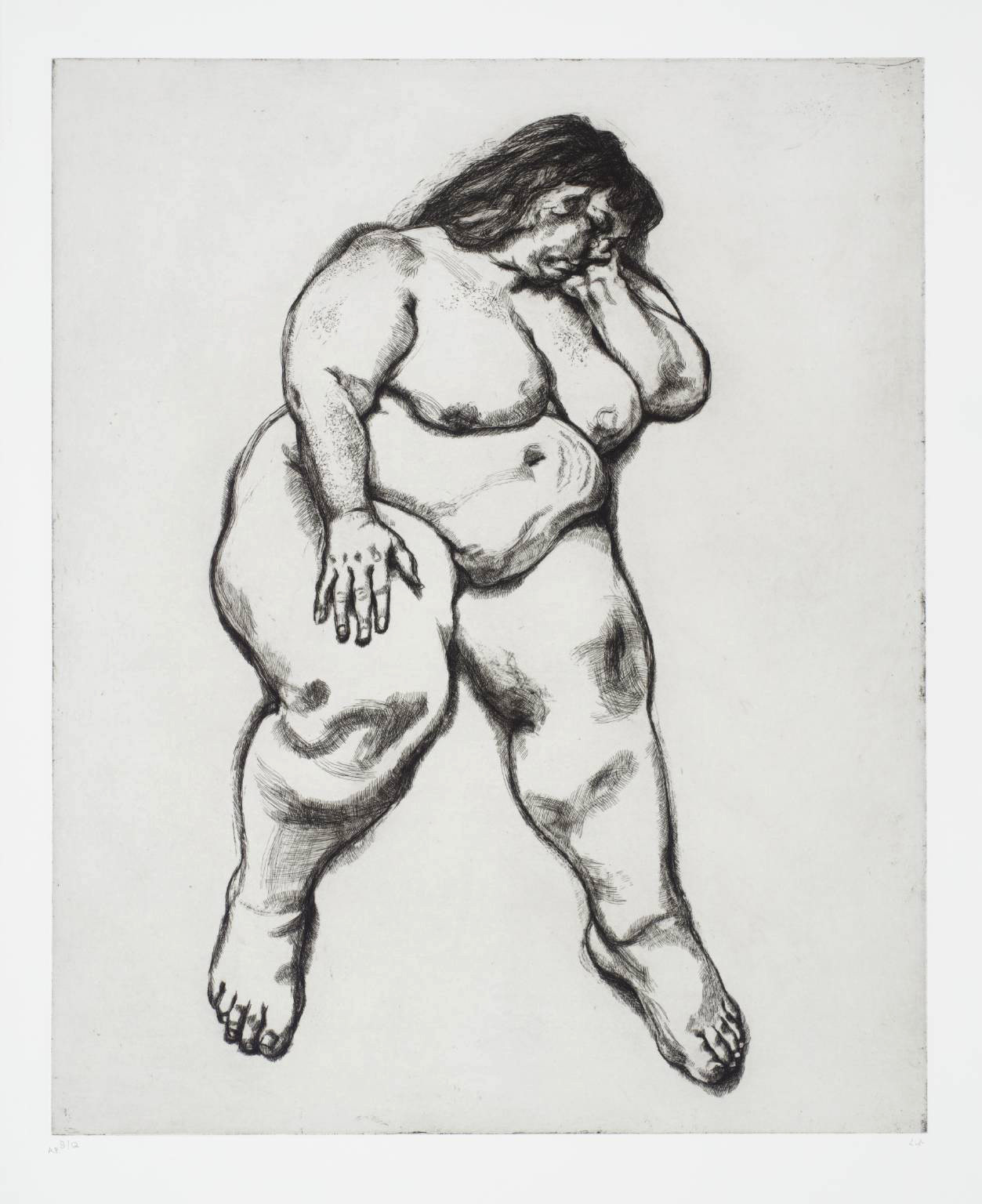
For me, the fluidity and gravitas of the Bacon drawings are a standout, as are the distended faces of the early Freud paintings. It’s almost as if the artist had a fish eye lens to observe his sitters; apparently his approach to them at this time had distinct psychological and spatial aspects, as most of the work in this exhibition does. “The artist admits his early portraits emerged from his ‘visual aggression’ with sitters. He claimed, ‘I would sit very close and stare. It could be uncomfortable for both of us’.” Photography and film have a distinctive influence upon these artists.
Nearly all of the works radiate an evocative psychological intensity. These are feelings about life and the world that come from deep within and… erupt and explode into life. Whether controlled realism (Freud) or molten accretions (Auerbach) these essential works challenge how we inhabit the world and how we see that in/habit-ation. Demons, refugees, murder, rape, suicide (George Dyer), illness, building sites, fascist grotesque bather, surreal-automatic women, nude, self-portrait are all grist to the mill – helping portray certain philosophical or fundamental truths extant to the human condition. The body is destablised in space and destabilised in the landscape of human existence. Anything is possible as long as the artist (and we) recognise it and represent it as such.
These palimpsestic paintings superimpose a new rendition on earlier writings of the body (Velázquez, Titian, Muybridge, Durer etc…). They contain within them the very DNA of our being, now effaced, reused and altered but still bearing visible traces of its earlier form. These are deep and timeless paintings which upset our apparently secure equilibrium through the representation of a fundamental understanding of life in this very moment. Ego. Self. Other. Culture. Existence. They hold up a mirror to things that we would rather not see, an outsiders (mis)recognition of all that has gone before and all that is to come.
Dr Marcus Bunyan
Many thankx to the J. Paul Getty Museum for allowing me to publish the photographs in the posting. Please click on the photographs for a larger version of the image.
From the 1940s through the 1980s, a prominent group of London-based artists developed new styles and approaches to depicting the human figure and the landscape. These painters resisted the abstraction, minimalism, and conceptualism that dominated contemporary art at the time, instead focusing on depicting contemporary life through innovative figurative works.
On view at the J. Paul Getty Museum from July 26 to November 13, 2016, London Calling: Bacon, Freud, Kossoff, Andrews, Auerbach, and Kitaj represents the first major American museum exhibition to explore the leaders of this movement, often called the “School of London,” as central to a richer and more complex understanding of 20th century painting. The exhibition includes 80 paintings, drawings, and prints by Francis Bacon, Lucian Freud, Leon Kossoff, Michael Andrews, Frank Auerbach, and R.B. Kitaj.
“The majority of paintings and drawings in the Getty Museum’s collection are fundamentally concerned with the rendition of the human figure and landscape up to 1900,” says Timothy Potts, director of the J. Paul Getty Museum and one of the exhibition curators. “This significant exhibition shows an important part of ‘what happened next’, highlighting an innovative group of figurative artists at a time when abstraction dominated avant-garde discourse in the U.S. and much of Europe. Working with our partners at Tate in London, we have brought together a fabulous group of pictures that exemplify the radical approaches to figure and landscape pioneered by this influential coterie of artists, illuminating their crucial place in modern art history.”
London Calling is a collaboration between Tate and the J. Paul Getty Museum and is curated by Julian Brooks, curator of Drawings at the Getty Museum, Timothy Potts, and Elena Crippa, curator, Modern and Contemporary British Art at Tate. Drawn largely from the unrivalled holdings of Tate, the exhibition has been enriched by a number of loans from other museums and private collectors.
“By pursuing painting as an activity that records and revitalises an intense sensory experience, these artists rendered the frailty and vitality of the human condition, translating life into art and reinventing the way in which their surroundings could be represented,” said Brooks. “The ‘School of London’ artists doggedly pursued forms of figurative painting at a time when it was considered outmoded. In recent decades the work of these artists has rightly been reassessed. It is timely to look at them as a group and deepen our appreciation of their contribution.”
Francis Bacon (British, 1909-1992)
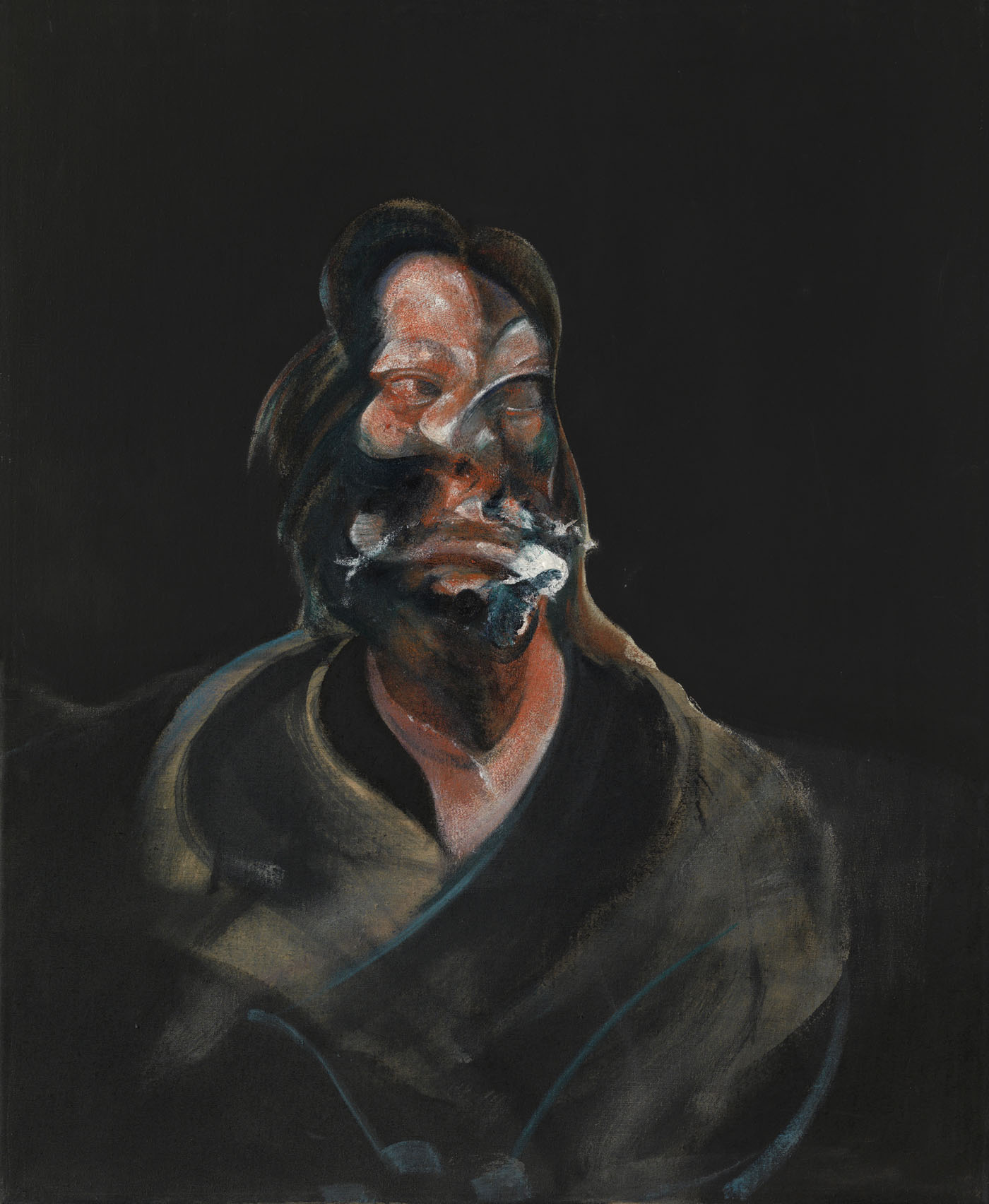
Francis Bacon was born in Dublin in 1909 to English parents. After traveling to Germany and France he settled in London. He received guidance from an older friend, the Australian artist Roy de Maistre, but was otherwise largely self-taught. In 1945, the showing of a number of his paintings at London’s Lefevre Gallery established his critical reputation, and he became central to an artistic milieu in Soho that included Lucian Freud and Michael Andrews. From the mid-1940s, he began taking as a starting point for his work reproductions of paintings, sculpture, photographs, and film stills, mostly relating to the imagery of angst that resonated with both historical and personal circumstances. From 1962 he expanded the range of his photographic sources by commissioning particular shots of models, mostly friends and lovers. For example, Portrait of Isabel Rawsthorne, 1966, on view in the exhibition, was based on a photo of his friend and regular subject, the artist Isabel Rawsthorne (1912-1992).
A highlight of the exhibition, Triptych – August 1972 forms part of a series of so-called “Black Triptychs,” which followed the suicide of Bacon’s longtime lover, George Dyer, in 1971. In the composition, Dyer appears on the left and Bacon himself is on the right. The image on the central panel is derived from a photograph of wrestlers by Eadweard Muybridge.
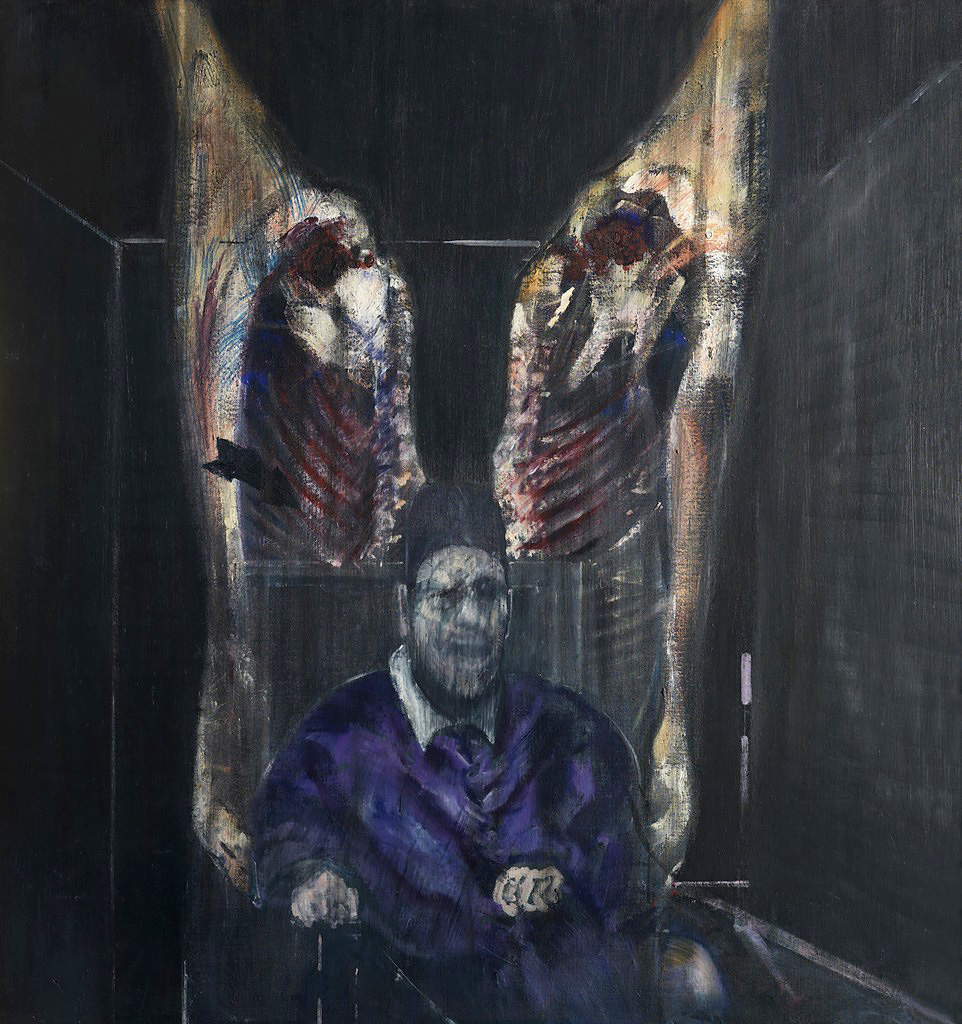
Bacon’s well-known Figure with Meat, 1954 belongs to a large series of works based on reproductions of Diego Velázquez’s Portrait of Pope Innocent X. In this version, Bacon depicts the Pope between two halves of a hanging animal carcass, a motif relating to the first portrait of Bacon taken by the photographer John Deakin, in 1952, in which the painter is stripped to the waist and holds a split carcass. In establishing a connection between the raw, butchered meat and human flesh, Bacon expresses a sense of emotional turmoil and reminds the viewer of the vulnerability of the human body.
Although no source has been identified it is likely that Collapsed Figure derived from sports photographs which, in a 1974 interview, Bacon specified as a valued stimulus: ‘I look all the time at photographs in magazines of footballers and boxers and all that kind of thing – especially boxers.’ He noted that he trawled them in the same way that he used Eadweard Muybridge’s stills of figures in motion.
These pages almost certainly came at the end of the dismembered sketchbook. They represent the most coherent programme of drawing through which Bacon explored compositional possibilities in a succession of images. The sense of structure of the body, as well as the degree of abstraction of form, are progressively modified across the ‘Crawling Figure’ images. They were probably achieved by tracing from one to the other. Although no related oil painting is known to survive, the extent to which the possibilities are explored testifies to the significant role of sketches within Bacon’s working process.
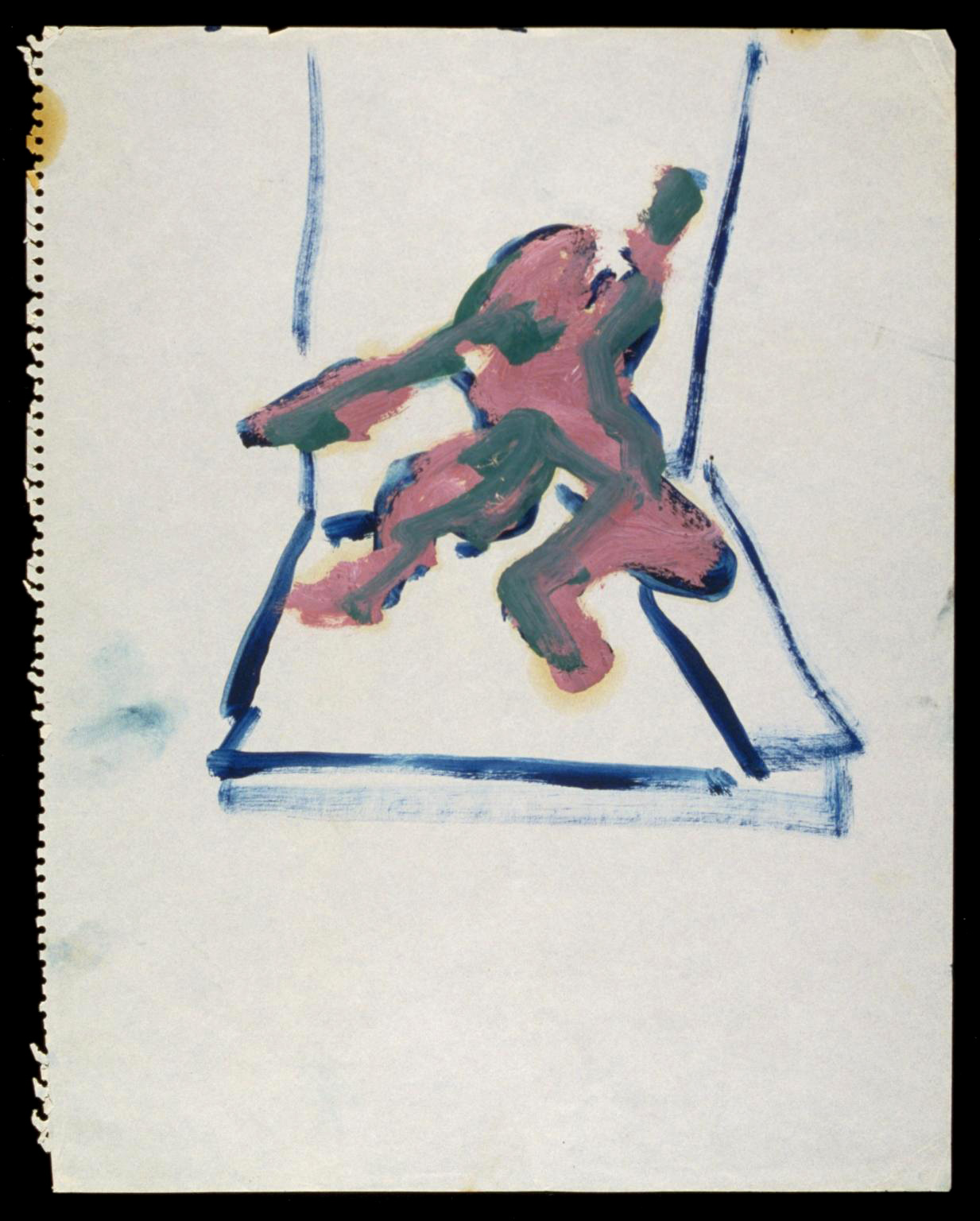
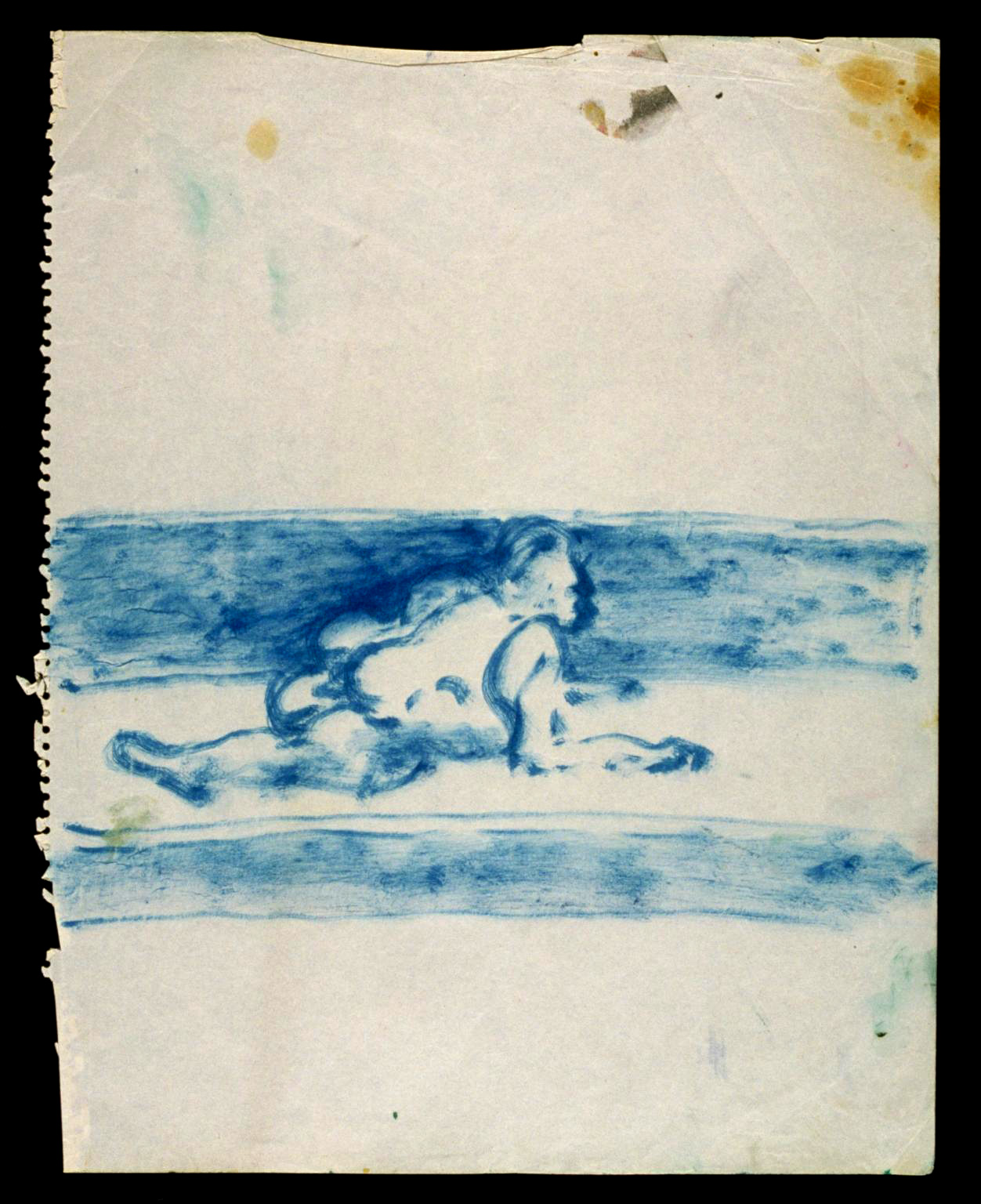
These two works on paper by Bacon are the only ones in the display in which the page has been filled. As the pose remains the same, they may have served as colour studies and may even be a response to Mark Rothko’s contemporary work (seen in London in 1959). The male nude, and the horizontal bands (derived from a sofa against a wall) are common to a series of Bacon’s oil paintings from 1959 and 1961. The sketches appear to be later, as an impression of writing from another sheet but visible on ‘Reclining Figure, no.1’ gives his address as ‘7 Reece Mews’, the studio which he occupied in the autumn of 1961.
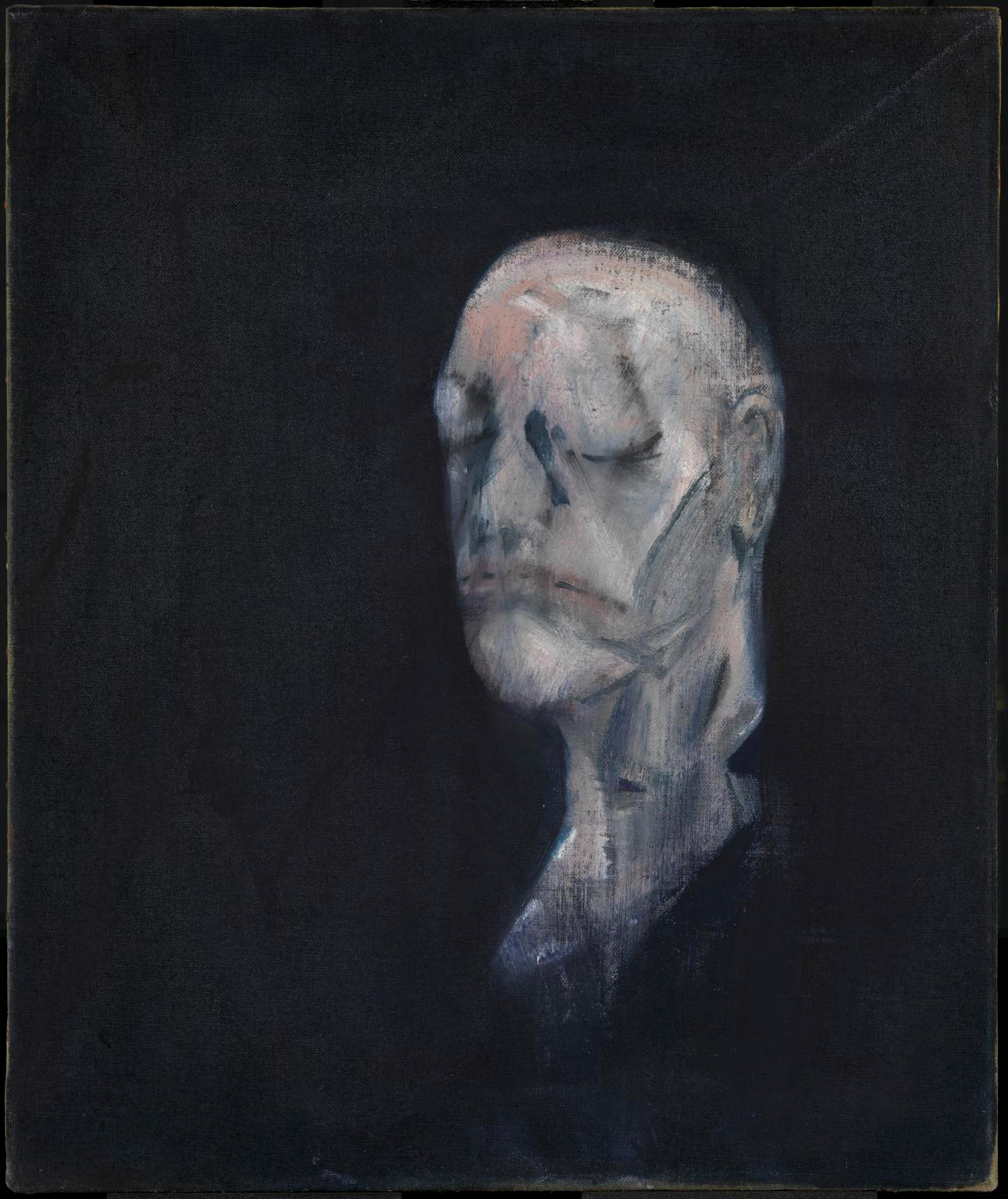
This is one of a series based on the life mask of poet and painter William Blake. Bacon first saw the mask at the National Portrait Gallery in London, but he also used photographs and, at some point, he even acquired a cast of it. His response to the source is typical of his preference for a mediated image of the body. The painting is more complex than it seems: it is built up with delicate layers of paint against a rich black ground. One commentator wrote, ‘broad strokes of pink and mauve, with which Bacon establishes an equivocation between waxen mask and human flesh, drag pain and loneliness and imperturbable spirit in their wake’.
This work is generally considered one in a series of Black Triptychs which followed the suicide of Bacon’s lover, George Dyer. Dyer appears on the left and Bacon is on the right. The central group is derived from a photograph of wrestlers by Edward Muybridge, but also suggests a more sexual encounter. The seated figures and their coupling are set against black voids and the central flurry has been seen as ‘a life-and death struggle’. The artist’s biographer wrote: ‘What death has not already consumed seeps incontinently out of the figures as their shadows.’
This is one of a number of self-portraits painted by Freud during the 1940s. Freud has used a realistic, but emblematic, style which derives from Old Master paintings of the Northern Renaissance. The artist shows himself looking through a window at a spiky thistle resting on a ledge in the foreground. At the same time, the thistle may also be read as an emblem occupying flattened space at the bottom of the painting. This ambiguity allows the thistle to be interpreted as a real object, but also as a device which suggests the mood of the painting and Freud’s own psychological state.
In 1946-7 Freud traveled to Paris and Greece, returning to London in February 1947. Here he began a relationship with Kitty Garman, the eldest daughter of the sculptor Jacob Epstein and the model and collector Kathleen Garman. The subsequent marriage between Freud and Kitty was short-lived – they wed in the spring of 1948 and divorced in 1952 after having two daughters. Freud’s portraits of Kitty include four oil paintings – beginning with Girl in a Dark Jacket 1947 and finishing with Girl with a White Dog 1950-1 (Tate N06039) – as well as two etchings, a work in pastel, and a drawing in ink and crayon.
The portraits of Kitty Garman mark the culmination of Freud’s early portrait style, which evoked the tradition of Neue Sachlichkeit (New Objectivity) – a form of realist painting that emerged in Germany in the early 1920s, and was characterised by its sharp and unsentimental style. (Freud, grandson of the psychoanalyst Sigmund Freud, was born in Berlin in 1922 and came to Britain in 1933, and studied at a number of art schools during the war.) The intensity of Girl with a Kitten, and especially the manner in which Garman dominates the pictorial frame, might also stem from Freud’s approach to his sitters at this time, which had distinct psychological and spatial aspects. The artist admits his early portraits emerged from his ‘visual aggression’ with sitters. He claimed, ‘I would sit very close and stare. It could be uncomfortable for both of us.’ (Quoted in Michael Auping, ‘Freud from America’, in Howgate, Auping and Richardson 2012, p. 41.) By the mid-1950s Freud had abandoned the highly controlled style of portraiture seen in this work, and he began to paint in a looser and more viscous style.
Lee Hallman. “Girl with a Kitten,” on the Tate website January 2014 [Online] Cited 17/02/2023
In the late 1940s the publishers MacGibbon & Kee commissioned Freud to illustrate Rex Warner’s book Men and Gods on classical mythology. He produced four drawings for the book, of which Narcissus is one. The others are Man of Hyacinths (Colin St John Wilson Collection), Hercules (private collection) and Actaeon (private collection). The figures in all the drawings are in modern dress. The publishing house rejected the drawings because they did not illustrate the stories sufficiently, and instead chose Elizabeth Corsellis’s drawings for the book, which was published in 1950. Freud made illustrations for several other books during the 1940s, though few were ever selected for publication.
The close-up view and tight framing of Narcissus are typical of Freud’s many portraits of this early period, which frequently emphasize the subjects’ large, almond-shaped eyes. These are depicted in a meditative mood looking down, as in Narcissus, or looking upwards and away from the viewer. Reflection and mirroring were to become recurring themes in Freud’s work, particularly in his many self-portraits. The pose portrayed in Narcissus is later echoed in the painting Man’s Head (Self-Portrait I) 1963 (Whitworth Art Gallery, Manchester) in which the artist’s head, propped with one arm cutting aggressively into the frame, looks down at a mirror not included in the work. Another self-portrait, Interior with Hand Mirror (Self-Portrait) 1967 (private collection), shows the artist’s face isolated in a hand mirror propped between two sections of window. His expression is contorted in a winking grimace as though he is attempting to see, a reminder that viewing is central to Freud’s process as a painter. In this image the mirror’s cropping has cut off the viewing part of him from his body. In a similar manner, Narcissus shows the subject cut off from the viewer by the exclusion of his viewing eyes, omitted from the bottom of the image. A more recent image, the print Self-Portrait: Reflection 1996 (Tate P11509), again refers to this circular process of mirroring and interior looking which is emphasised in its title.
Elizabeth Manchester. “Narcissus,” on the Tate website March 2005 [Online] Cited 17/02/2023
The painting was made by the British artist Lucian Freud in his studio in London in 1950. To create this work Freud took a used copper etching plate and prepared it with a thick layer of white primer. He then employed sable paintbrushes (as opposed to hogshair, which he would use almost exclusively from 1956 onwards) to apply a smoothly blended mixture of oil paint and tempera to the copper plate in fine, even brushstrokes. The white primer was left exposed by Freud to produce the lighter areas of the painting, except for the very brightest parts, which he created using a fresh application of white paint.Freud used thin washes of grey and brown underpaint to create areas of shadow around the boy’s eyes and hair. Each section of the painting has been given equal focus by Freud, establishing a uniformity of detail and flatness, characteristics not present in many of the artist’s later portraits.
The oversized almond shaped eyes and the plump mouth in Boy Smoking are features that recur in the portraits Freud made early in his career, as can be seen in Girl with a Kitten 1947 (Tate T12617), Narcissus 1948 (Tate T11793) and Francis Bacon 1952 (Tate N06040). Furthermore, the subjects of these early head-and-shoulder portraits are all presented in isolation, divorced from any context, with no indication of their personal history or social status. In this sense, they evoke the tradition of Neue Sachlichkeit (New Objectivity), a form of realist painting that emerged in the early 1920s in Germany and was characterised by its unsentimental style. (Freud was born in Berlin in 1922 and moved to Britain in 1933, and studied at a number of art schools during the war.) According to the art historian and Freud biographer William Feaver, Freud painted portraits such as Boy Smoking by sitting uncomfortably near to his subjects, often knee-to-knee, staring at them intently for periods of up to eight hours at a time during multiple sittings that extended over a period of several months (Feaver 2002, p.26).
The boy in the painting has been identified as Charlie Lumley, a neighbour and friend of Freud’s whom the artist painted regularly while occupying a studio in Delamere Terrace near Paddington during the 1950s. The inhabitants of this part of London at the time have been characterised by curator Catherine Lampert as ‘costermongers, villains and thieves’ (Lampert 1993, p.15), a description that could be applied to Lumley, whom Freud first encountered when Lumley and his brother were attempting to break into Freud’s studio (see Wilson 2008, p.112).
Judith Wilkinson. “Boy Smoking,” on the Tate website October 2014 [Online] Cited 17/02/2023
This picture shows the artist’s first wife when she was pregnant. The style of the painting has roots in the smooth and linear portraiture of the great nineteenth-century French neoclassical painter, Ingres. This, together with the particular psychological atmosphere of Freud’s early work, led the critic Herbert Read to make his celebrated remark that Freud was ‘the Ingres of Existentialism’. The sense that Freud gives of human existence as essentially lonely, and spiritually if not physically painful, is something shared by his great contemporaries, Francis Bacon and the sculptor Alberto Giacometti.
Grandson of the creator of psychoanalysis Sigmund Freud (1856-1939), Lucian Freud was born in Berlin in 1922 and moved with his family to London in 1933 to escape Nazism. He trained at the Central School of Art in London and at the East Anglian School of Painting and Drawing in Dedham. Freud had his first solo exhibition in 1944 at London’s Lefevre Gallery. Throughout his career he focused on the human figure, rendered in a realist manner and imbued with a stark and evocative psychological intensity. He described his work as autobiographical, most of his work taking his surroundings and people he knew intimately as his subjects, as in the case of friends, lovers, and family members.
Between 1947 and 1951 Freud made eight portraits of his first wife Kathleen (“Kitty”) Garman (1926-2011). On view in the exhibition, Girl with a Kitten, 1947 is a psychologically charged composition featuring Garman holding a kitten by its neck in a tense grip, her white knuckles especially prominent. The precision in this work is achieved through the use of fine sable brushes on finely woven canvas.
One of Freud’s frequent subjects was the performance artist, designer, and nightclub personality Leigh Bowery (1961-1994). In an intimate and vulnerable small portrait from 1991 Freud depicts Bowery sleeping. In contrast, the monumental Leigh under the Skylight, 1994 renders his starkly naked form as theatrically statuesque.
This is a small portrait of the maverick gay performer and nightclub personality Leigh Bowery (1961-1994). It portrays Bowery’s head and naked upper torso framed against dark red upholstery. His bald head rests against his raised left shoulder, his eyes are closed and his cheeks and mouth hang loosely as though he is asleep. Freud’s manner of painting emphasises the fleshiness of Bowery’s face. This is achieved through the application of paint in different textures – in some areas relatively smooth, in others thickly but delicately built up. Apparently unconscious of the artist’s gaze, Bowery has a vulnerable appearance which belies the bulk of his physical form.
Freud was introduced to Bowery by their mutual friend, the artist Cerith Wyn Evans (born 1958), in 1988. He had recently seen Bowery’s performance at Anthony d’Offay Gallery, London. In his first public appearance in a fine art context, Bowery posed behind a one way mirror in the gallery for two hours a day over the period of a week. He was dressed in the flamboyant outfits he usually wore in the London nightclubs where he had become a leading figure in the underground scene, known for his outrageous and frequently offensive performances. Born and bred in Australia, he had come to London in 1980 in search of glamour. The extraordinary costumes he created for himself played on fashion, fetishism and carnival aesthetics and transformed his sixteen stones of flesh into an androgynous spectacle. Bowery used his body to construct an identity through which he could express aspects of his personality. This involved moulding and taping his torso, often quite masochistically, as though it were his sculptural material and masking his face or covering it with outlandish makeup. Holes in his cheeks, visible in Freud’s portrait, were pierced for the insertion of large safety-pins which would attach fake smiling lips to his face. Freud said of Bowery ‘I found him perfectly beautiful’ (quoted in Bernard, p. 19). He also commented ‘the way he edits his body is amazingly aware and amazingly abandoned’ (quoted in Feaver, p. 43). Bowery said of Freud: ‘I love the psychological aspect of his work – in fact I sometimes felt as if I had been undergoing psychoanalysis with him … His work is full of tension. Like me he is interested in the underbelly of things.’ (Quoted in Sue Tilley, Leigh Bowery: The Life and Times of an Icon, London 1997, p. 220.) …
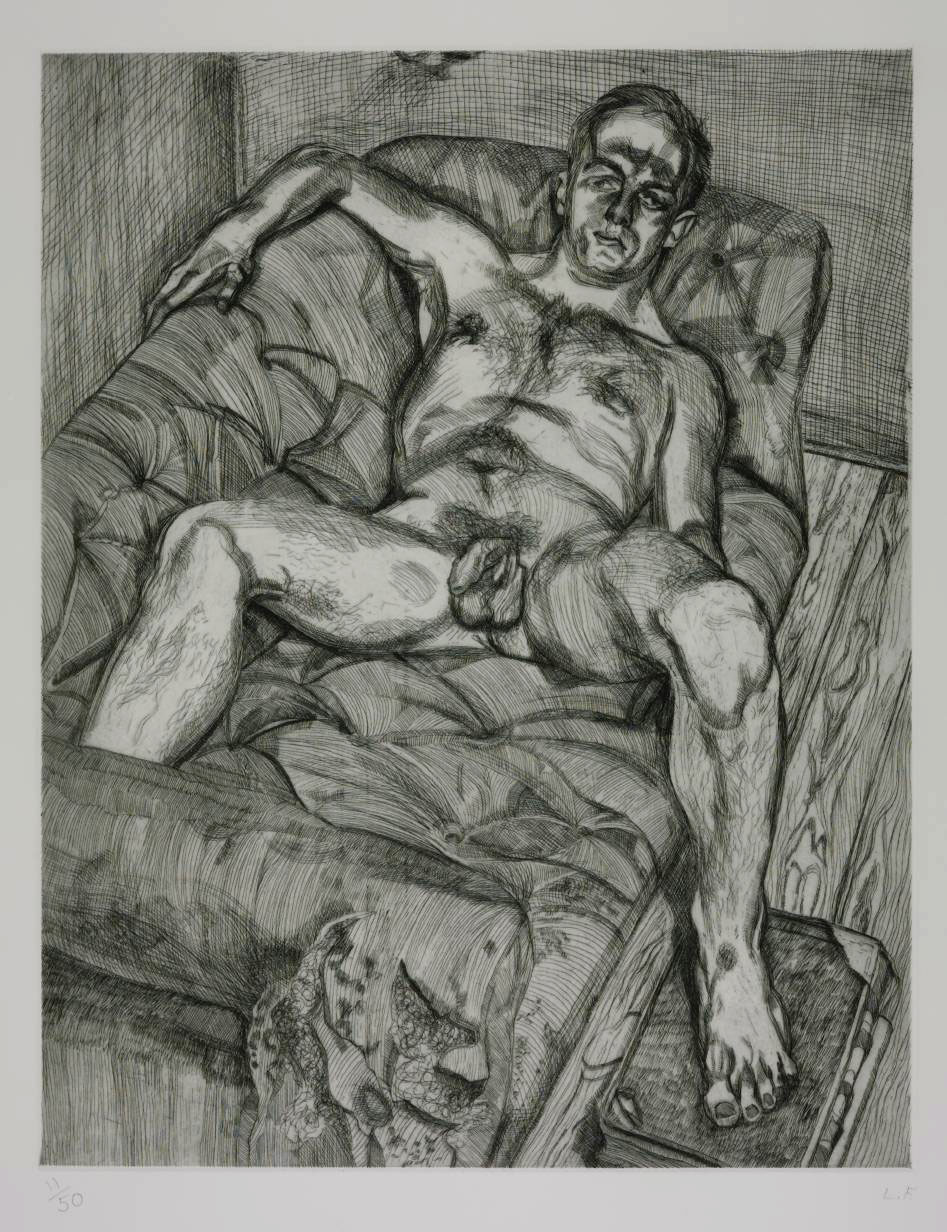
Freud frames his subjects in the manner of a photographer; they are often viewed close-up and cropped dramatically. His treatment of bodies emphasises the tactile attributes of flesh almost to the point of viscerality. From his earliest paintings, his treatment of nudes was unorthodox and frequently viewed as shocking at the time of their making. At the age of fourteen he had painted a bearded, naked male figure Old Man Running 1936 (collection unknown), an irreverent representation of the patriarch whose nakedness is considered taboo in Western cultures. Man with Rat 1977 (Art Gallery of Western Australia) depicts a red-haired man lounging naked, legs splayed on a sofa and genitals almost painfully exposed, holding a black rat, the tail of which is draped sensuously over his thigh. Freud considers his paintings of nudes to be as much portraits as they refer to the traditional genre of the nude and it is significant that he chose to paint Bowery naked rather than in the costumes through which Bowery expressed his public identity. Rather than glorifying the body, Freud’s ‘realistic’ representation presents it in all the vulnerability of nakedness, emphasising his subject’s humanity.
Elizabeth Manchester. “Leigh Bowery,” on the Tate website March 2003 [Online] Cited 17/02/2023
Bowery posed regularly for Freud over a four year period. Freud’s first painting of him was Leigh Bowery (Seated) 1990 (private collection). To accommodate and emphasise Bowery’s enormous scale, it was one of the largest paintings Freud had ever made (2437 x 1830mm). In an even larger painting of Bowery, Leigh Under the Skylight 1994 (2972 x 1207mm, collection unknown), the model stands on a draped table towering over the artist and viewer as though he is a monumental sculpture. This contrasts markedly with the majority of Freud’s portraits and nudes which are almost exclusively painted looking down at his subject.
Leon Kossoff was born in London, where he still resides and works, to first-generation immigrants of Russian Jewish ancestry. He studied at Saint Martin’s (where he and Frank Auerbach became close friends), at Borough Polytechnic, and at the Royal College of Art. He had his first exhibition at London’s Beaux Arts Gallery in 1957. From the early 1950s, Kossoff began painting a close circle of family and friends, producing pictures in which they acquired a solid, material presence, similar to that of the buildings and streets of London that he knew intimately and to which he also constantly returned. He developed a painterly style with thickly applied, constantly reworked layers of paint in characteristic earth tones.
In the early 1950s, Kossoff and Auerbach were fascinated by building sites, abundant in London at the time as the bomb-damaged city was being rebuilt after the war. For these artists, they were places where the earth beneath the city was revealed, and ladders and scaffolding offered ready-made linear structures. Early drawings such as Building Site, Oxford Street, 1952 were intensively worked, as Kossoff constantly erased and restarted the image.
Children’s Swimming Pool, Autumn Afternoon, 1971, depicts a newly built swimming pool near the artist’s North London studio where he took his son to learn to swim. Kossoff made five large paintings of the pool and its light-filled space from 1969-1972, each distinguished by an expansive treatment of space and vibrant sense of energy.
Like his close friend Frank Auerbach Kossoff was fascinated by building sites during the 1950s. These abounded in London as its bomb-damaged fabric was rebuilt after the war. Perhaps they stood for the transient and ever-changing nature of the modern city. They were also places where the earth beneath the city was revealed. This drawing, like Auerbach’s painting on the same theme, shows how they also offered a ready-made linear structure for the artist’s picture.
Kossoff developed a manner of painting with exceptionally thick paint which is deposited on the board in places almost untouched, giving a sense of three-dimensional form. The model for this painting was the painter John Lessore, who sat for Kossoff once or twice a week for three years. For most of that time, Kossoff recalled, he concentrated on developing the subject through drawings. The discipline of drawing every day is at the heart of Kossoff’s practice.
‘Woman Ill in Bed, Surrounded by Family’ was painted at a time when there was illness in the artist’s family. In common with all his work Kossoff worked on the painting in his studio, basing it on drawings made from life. However, it departs from Kossoff’s usual practices in that the composition was based, not on preliminary sketches, but on an engraving of the Virgin in bed by Albrecht Durer. The sombre colours and great density of paint evoke vividly a sense of human suffering and the tragic nature of human existence, themes which are at the heart of Kossoff’s work.
Kossoff’s principal subjects are his immediate family and friends and the parts of London which he knows best. In the 1960s he set up a studio in Willesden, north London and in 1967 a swimming pool opened close by. He began taking his son there to teach him to swim, and the pool and its space provided him with a new subject. He made four large paintings of the pool between 1969 and 1972 of which this is one. All are distinguished by a lightness of touch and a sense of movement, noise and space.
This painting is a unique departure from Kossoff’s usual methods. Normally he works on paintings for months and even years, continually scraping back and repainting the image. Instead, Kossoff completed this work ‘in two or three hours. There are no other attempts on this board’. He sees it as ‘a direct urgent extension’ of two drawings made earlier the same day. The thread-like traces of paint resulted from the brush dripping onto the painting’s surface while it was in a horizontal position. Its subject is Kossoff’s parents – Jewish immigrants from Russia – who arrived in England as children early this century. Kossoff has painted his parents ‘all my painting life’.
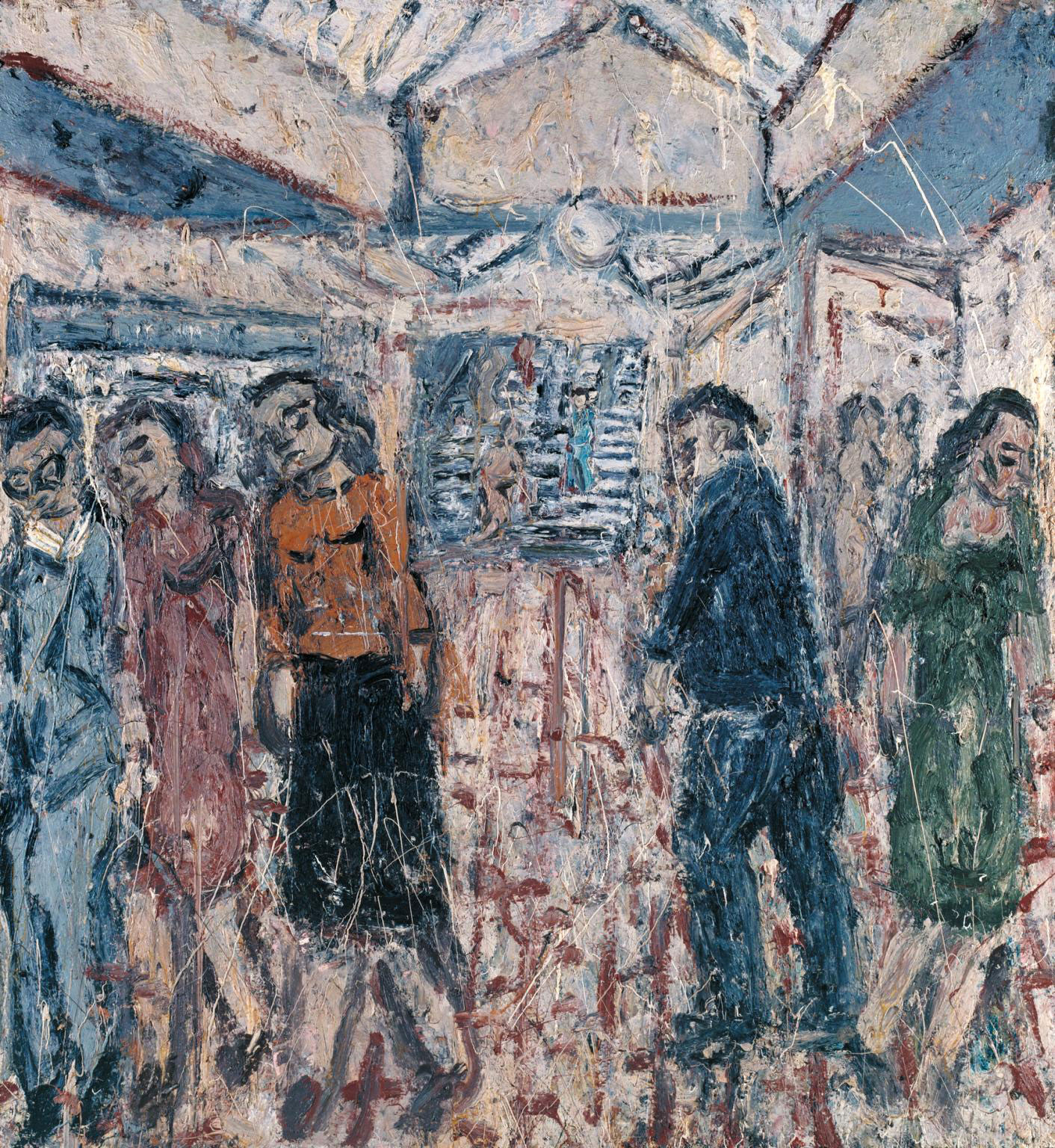
This large and imposing oil painting belongs to a series of works – which began in 1976 and continued until the late 1980s – by the British painter Leon Kossoff depicting Kilburn Underground station in north-west London. In the foreground of this work, two men and three women walk through the station’s booking hall, and more shadowy human forms can be glimpsed on the staircase leading up to the platforms in the background and on the right-hand side of the painting. With the exception of the brighter clothing worn by some of the figures in the foreground, the palette is distinguished by cloudy blues, pinks and whites, and the painting seems filled with a distinct gloom, perhaps reflecting the drudgery of the daily commute. The figures are locked into a loose structure of vertical and diagonal lines formed by the booking hall’s roof and tilted-up floor.
Kossoff has said that, when painting public scenes such as Booking Hall, Kilburn Underground 1987, portraits of people close to him begin to appear within the crowds (see Rose 2013, p. 18). Without exactly specifying the figures, curator Paul Moorhouse has identified the group in the foreground of this painting as comprising Kossoff’s wife, Peggy, his brothers, and his long-time model and friend Fidelma (Moorhouse 1996, p. 24).
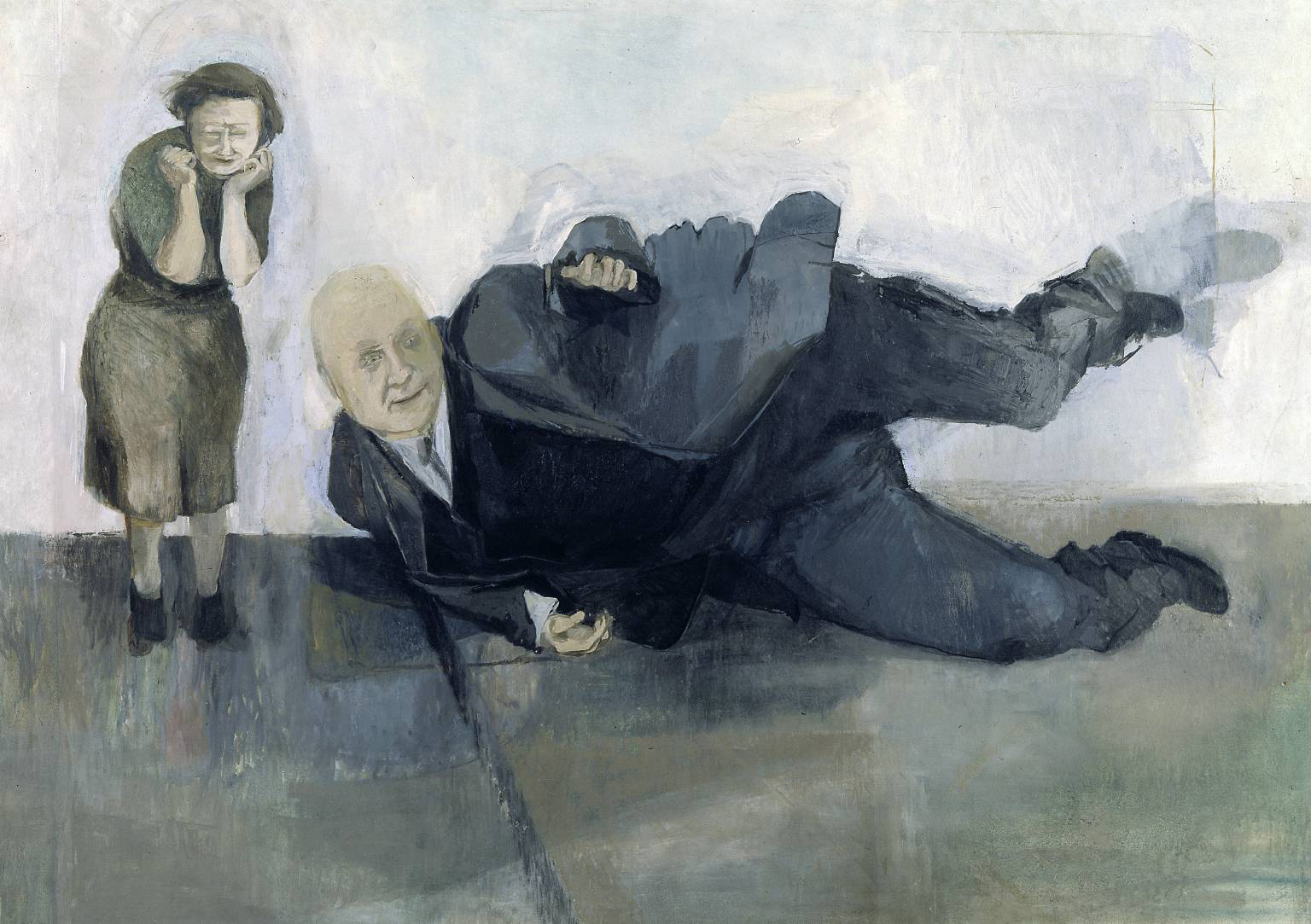
In common with much of Andrews’s work this picture is partly autobiographical. It was painted for his Diploma Examination shortly before leaving the Slade School of Art to face a period of uncertainty. He later commented that this painting was ‘about the complete upsetting of someone’s apparently secure equilibrium and about their most immediate efforts at recovery and their attempt to conceal that they have perhaps been badly hurt or upset’. This might explain why the man seems to grin instead of crying out in shock. The image of the body destabilised in space was of interest to a number of artists in the 1950s, including Francis Bacon and Anthony Caro.
Many of the works owned by Wilkie held a particular, often personal, significance for him. He was interested in philosophy and he saw the art he admired as expressing certain philosophical or fundamental truths. This painting by Michael Andrews demonstrates this principle. It portrays a tramp whom the artist sometimes saw when he occupied a communal studio in Digswell, Hertfordshire, in the late 1950s. Wilkie’s attitude to such social outcasts – outsiders looking in on society – was compassionate and respectful. He observed that characters like Digswell Man, as Andrews called him, ‘possess a true knowledge of human life… through their fundamental life’.
‘The Deer Park’ was inspired by Norman Mailer’s novel of the same title. For Andrews, the novel seemed to describe ‘the world of Soho’ whose clubs and bars he had frequented. Rather than illustrating the text, however, the painting creates a new, imaginary situation involving a cast of different characters. Its subject is social behaviour ‘where people are relaxed and project images close to themselves’. The figures are all based on photographs of people from show business and literary worlds, past and present. They include Marilyn Monroe, Brigitte Bardot and the poet Rimbaud. The background is based on ‘The Boar Hunt’ by Velasquez in the National Gallery, London.
Andrews studied painting under William Coldstream at the Slade School of Art between 1949 and 1953. Lucian Freud, who also taught at the school, was an important example and offered encouragement, while Francis Bacon visited to talk about his work, also making a memorable impression. His first solo exhibition was presented at London’s Beaux Arts Gallery in 1958. From the early 1950s photographs became important sources in the creation of his work. During this early period Andrews concentrated on portraits of his friends and contemporaries as well as party scenes, developing his characteristic combination of meticulous observation with imaginative elements and implied narrative. From the mid-1970s the landscape he encountered while traveling became the subject of many paintings. In the 1990s, after being diagnosed with terminal cancer, he chose the river Thames as his final, major subject.
The Deer Park, 1962 was inspired by Norman Mailer’s 1955 novel of the same title. For Andrews, the novel seemed to describe the world of the Soho clubs and bars he frequented. Rather than illustrating the text, however, the painting creates a new, imaginary situation involving a cast of different characters exhibiting various social behaviours and interactions. The figures are all based on photographs and film images of people from the entertainment and literary worlds, past and contemporary. They include Marilyn Monroe, Brigitte Bardot, and the poet Rimbaud. The background landscape is based on Diego Velasquez’s Philip IV Hunting Wild Boar (about 1632-1637) in the National Gallery, London.
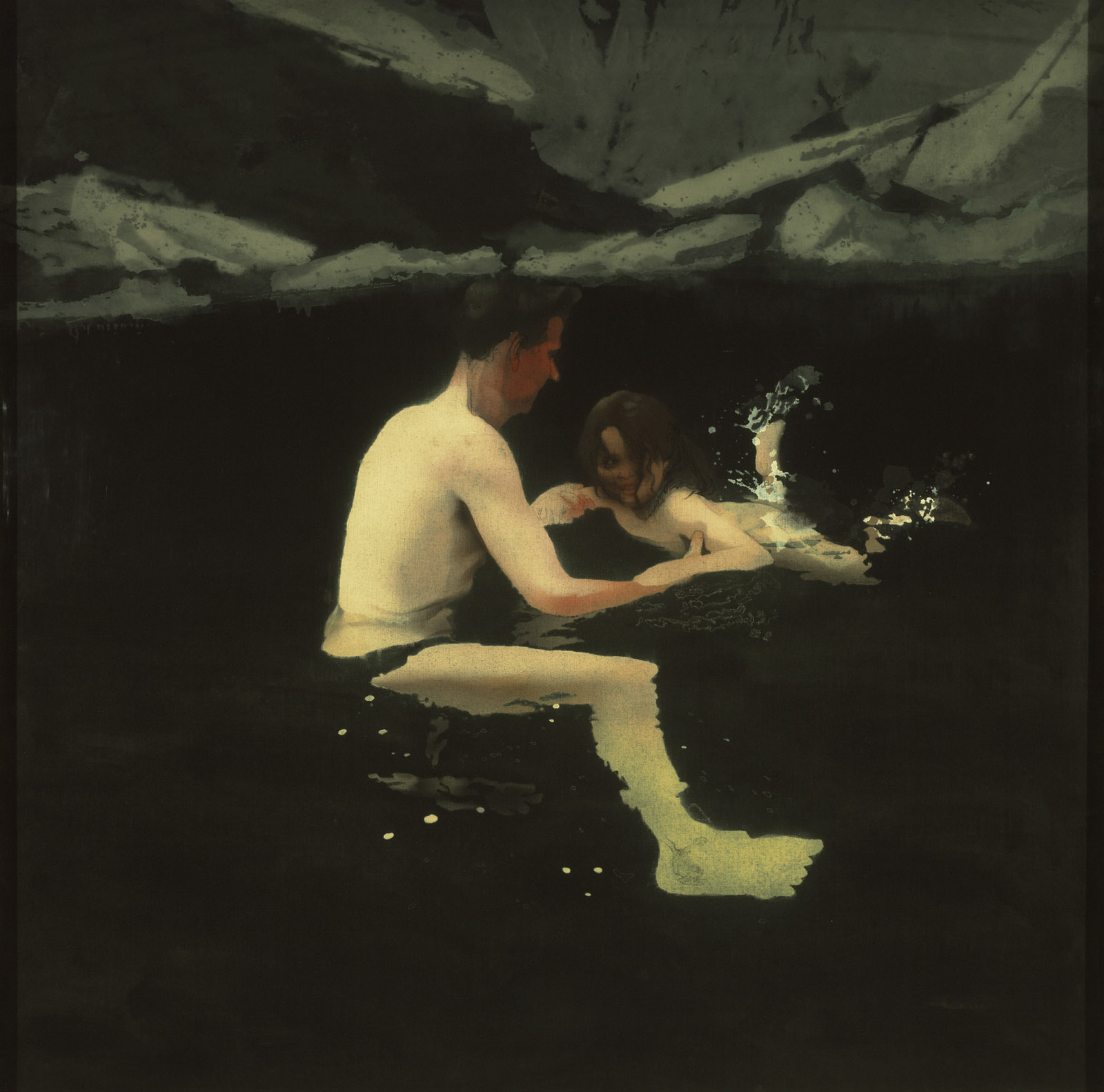
Melanie and Me Swimming, 1978-1979 is a painting of Andrews and his daughter, then aged six, swimming together in a rock pool, based on a colour photograph taken by a friend while they were on holiday at Glenartney Lodge, in Scotland, in the summer of 1976. As with many of his paintings, this one is a combination of real elements and his own memories of the event.
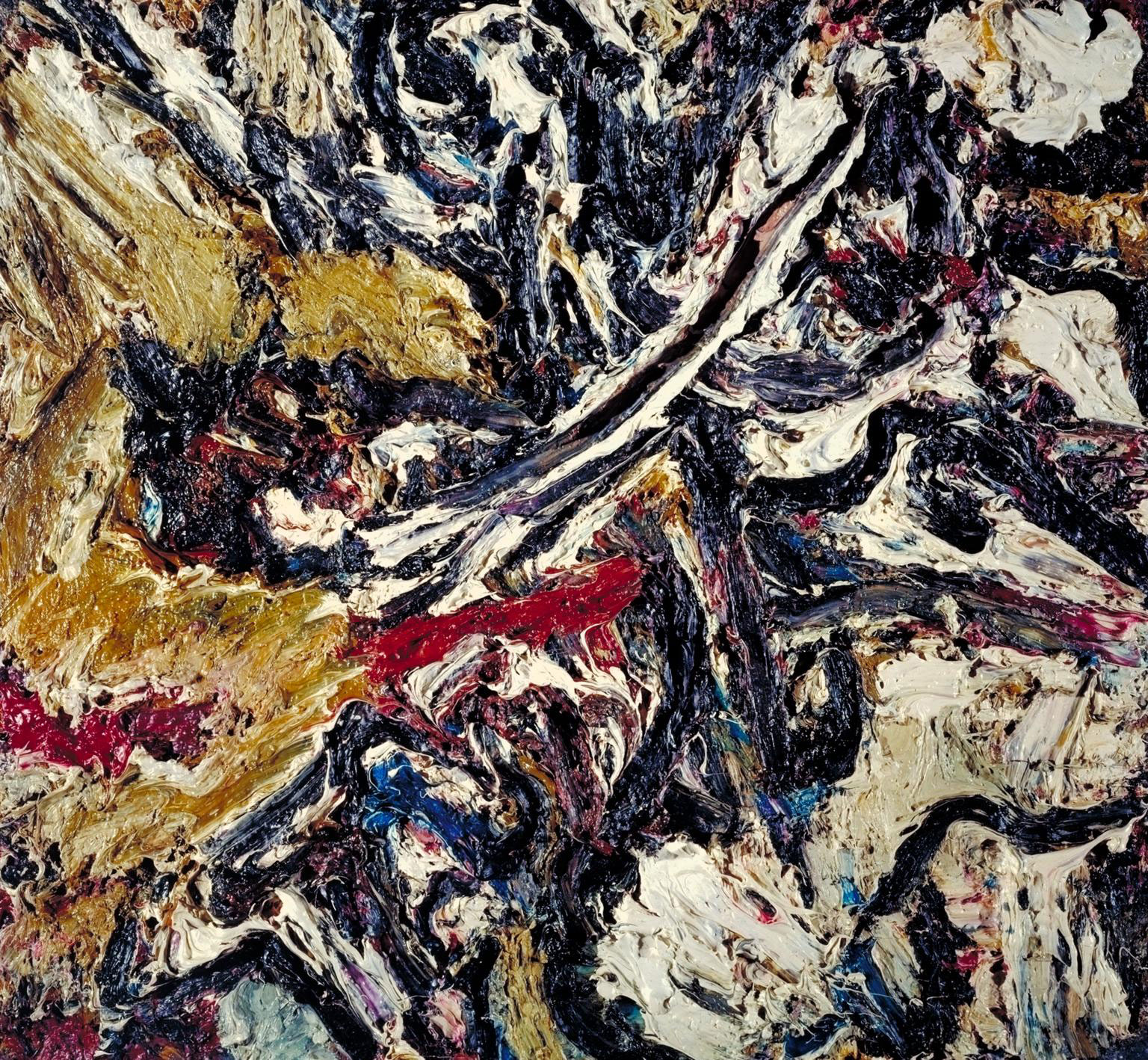
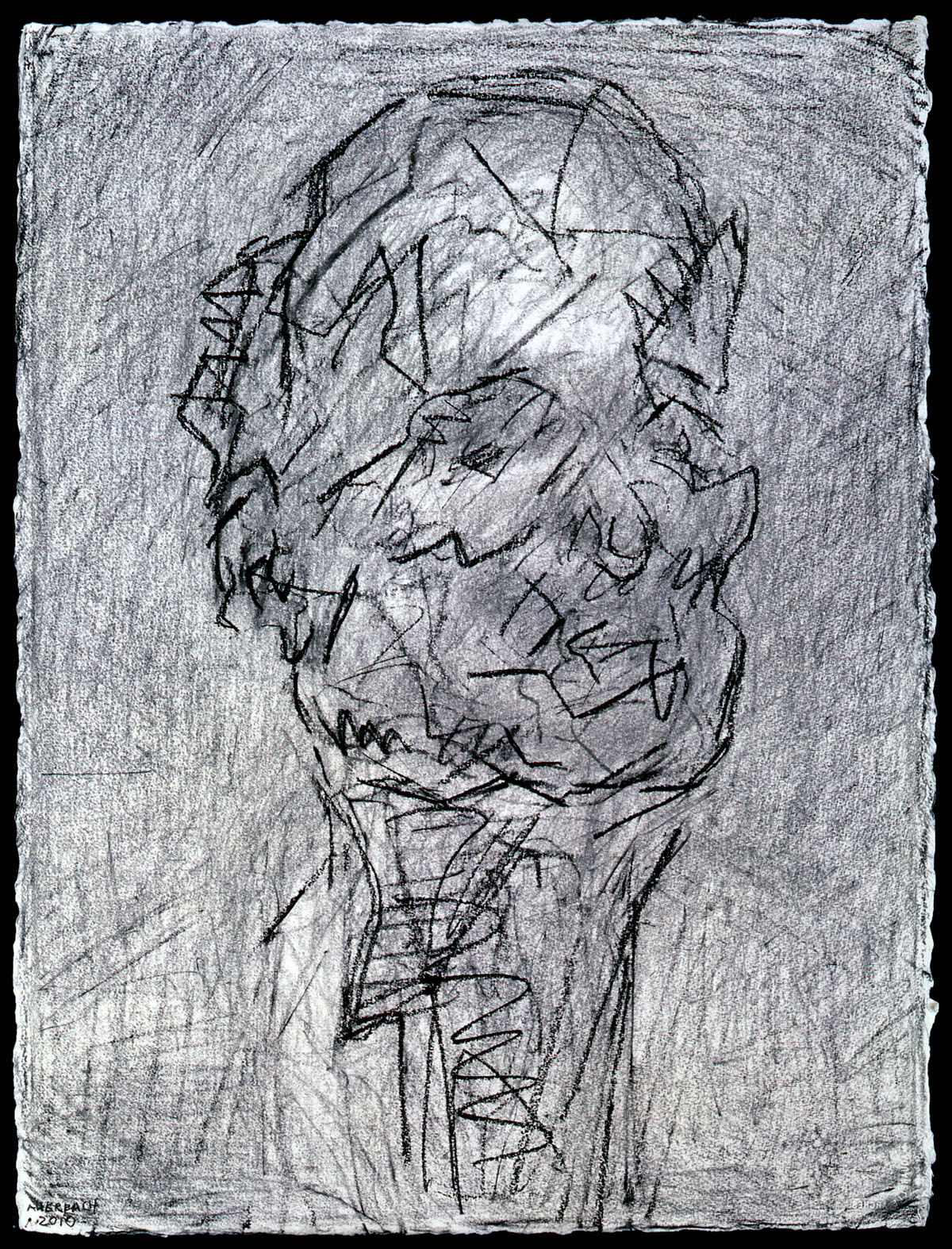
Auerbach studied with Bomberg longer than anyone else. He started at Borough Polytechnic in January 1947 and went to evening classes there until 1953, while officially attending St Martin’s School of Art and the Royal College of Art. Auerbach said he learnt from Bomberg not technique but ‘a sense of the grand standards of painting.’ He developed a distinctive manner of painting in which thick paint is given an independent reality of its own, as well as being used as a means of representing a physical object.
Born in Berlin in 1931, Auerbach was sent to Kent, England at age seven to escape Nazism. In 1947 he moved to London, where he continues to live and work. After the war, he performed in small London theatres and studied painting at the Borough Polytechnic at Saint Martin’s School of Art and at the Royal College of Art. Auerbach’s early work focused on the human figure and numerous building sites in the British capital scarred by the war and undergoing reconstruction. In 1956 he had his first solo exhibition at the Beaux Arts Gallery. He quickly became known for his thick application of paint. In the 1960s he began employing brighter colours and scraping down entire canvases rather than working on top of previous attempts, often spending months or years on a single painting. Recurring subjects are regular portrait sitters, Primrose Hill (a part of Regent’s Park in north London), and the streets of Camden Town, where he has been living and working since 1954. He still draws and paints 365 days a year.
Mornington Crescent with the Statue of Sickert’s Father-in-Law, 1966, depicts the area of North London in which Auerbach works, an area that has long captivated other artists such as Walter Sickert and the Camden Town Group. While Auerbach acknowledges this, he has stated that he doesn’t paint this area to ally himself with such history, rather that he simply sees London as a raw unpainted city. A streetlight can be seen at upper right, and the multitude of railings and lampposts in this view give the composition an almost grid-like formal structure, animated by the bright, bold pigments that Auerbach began to favour during the 1960s.
One of the most recent paintings in the exhibition, Mornington Crescent – Summer Morning, 2004 refers to the same location and captures the intense process of its making, with the use of large brushes to apply the paint energetically and rapidly. Elements of the composition – such as the windows and edges of buildings, rooftops, cars, and passersby – are highlighted with thick strokes. These straight marks contrast with the gestural quality of the marks that build up the large areas of the sky, road, and buildings.
Both this painting and the related work, ‘Study after Titian I’, shown nearby, were inspired by Titian’s ‘Tarquin and Lucretia’. Although the original work exists in two versions, one being in the Fitzwilliam Museum in Cambridge, Wilkie specified that the version in question was the one in the Akademie der Bildenden Künst in Vienna. Titian’s subject is Tarquin’s rape of Lucretia. Auerbach created his versions of that image by working from a reclining female model who adopted the pose of Lucretia, and from a drawing made from a reproduction of the original work. In both works a gash in the paint surface forcefully conveys a sense of violence and violation.
The subject of this painting is Juliet Yardley Mills (JYM), Auerbach’s principal model since 1963. Auerbach has completed over seventy portraits and studies of Mills. This, the first of three paintings of her executed in 1981, was completed in about twenty sittings. As in nearly all his studies of her, Mills is shown looking out of the picture and is seen slightly from below. In contrast to Auerbach’s earlier paintings, in which the paint surface is built up to a thick accretion, this portrait demonstrates the freedom of drawing and fluid movement of paint which characterise his later style.
R. B. Kitaj was born in Cleveland. After high school Kitaj sailed extensively as a merchant seaman and served in the U.S. Army in Europe. Between those assignments he studied painting at Cooper Union and the Academy of Fine Art, Vienna. Following his army stint, he moved to England to attend the Ruskin School, Oxford, and the Royal College of Art, London. His first exhibition was held at Marlborough Fine Art in 1963. It was around this time that Kitaj met Andrews, Auerbach, Bacon, Freud, and Kossoff, who were also with the gallery. During the early 1960s Kitaj concentrated on combining figurative imagery with abstraction and began to incorporate collage into his paintings, drawing on photography and cinema and referring to historical events and political circumstances. In the mid-1970s he began to work increasingly from life, moving away from complex compositions to more straightforward figure studies. During the late 1980s he continued to read widely in Jewish culture – studying Walter Benjamin, Sigmund Freud, and Franz Kafka – and positioned himself more explicitly as a Jewish artist. In 1989 he published his First Diasporist Manifesto, analysing the Jewish dimension in his art and his role as an outsider. In 1997 he left London and moved to Los Angeles, where he died in 2007.
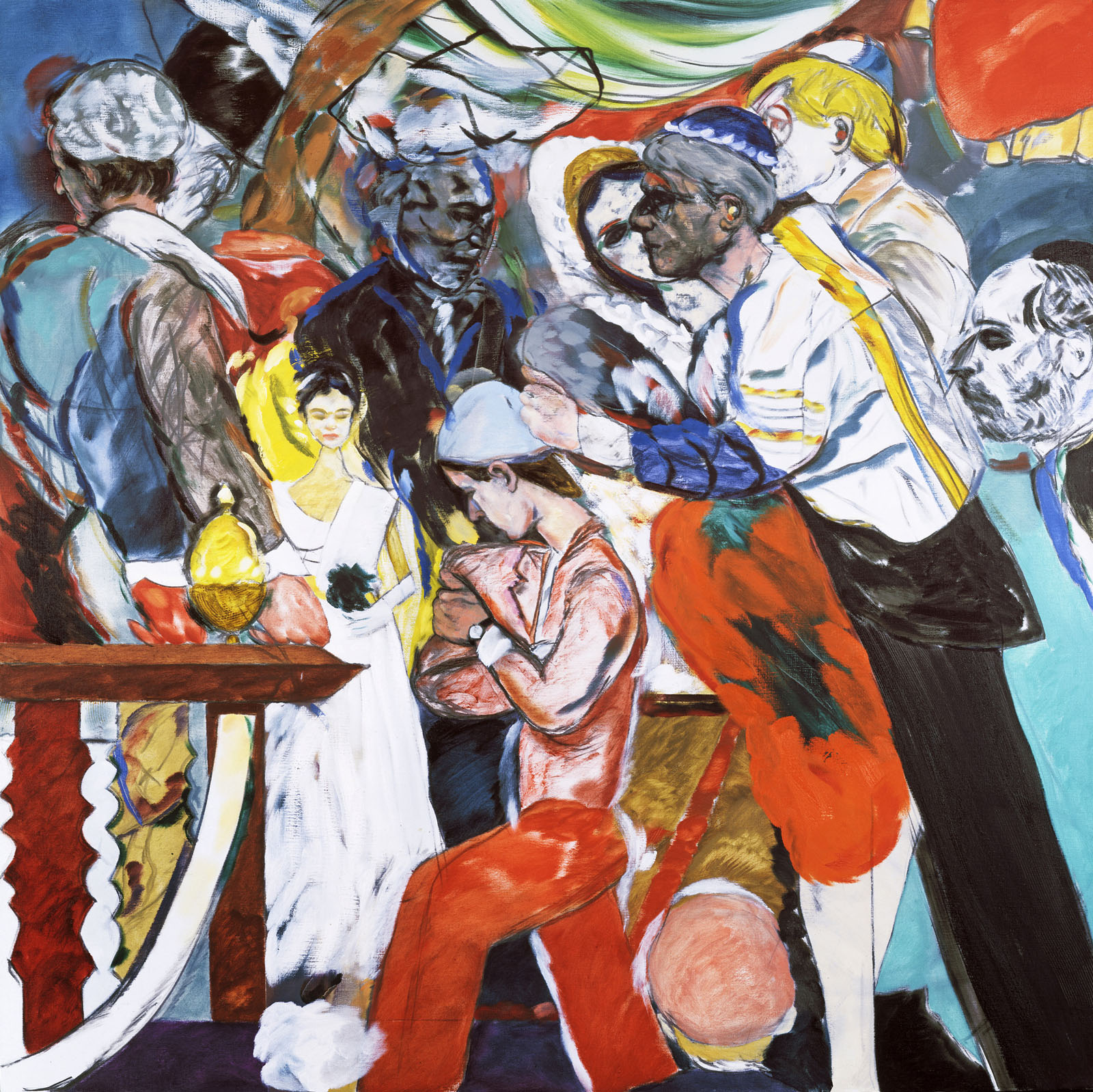
Cecil Court, London W.C.2. (The Refugees), 1983-1984 is set in the London thoroughfare famous for its secondhand bookshops and a favourite haunt of Kitaj. The artist is shown reclining on a sofa in the foreground, while figures from his life jump out in the background. Kitaj has explained that this theatrical composition was inspired by the peripatetic troupes of the Yiddisher Theatre in Central Europe, which he had learned about from his grandparents and from Kafka’s diaries.
The Wedding 1989-1993 is a major work by Kitaj that brings together crucial themes in his practice – including his Jewish identity and his friendships and associations as a School of London artist. Depicting Kitaj’s wedding to the American artist Sandra Fisher (1947-94), which took place in 1983, the painting prominently depicts School of London artists Freud, Kossoff, and David Hockney, painters who were linked by both friendship and shared artistic concerns.
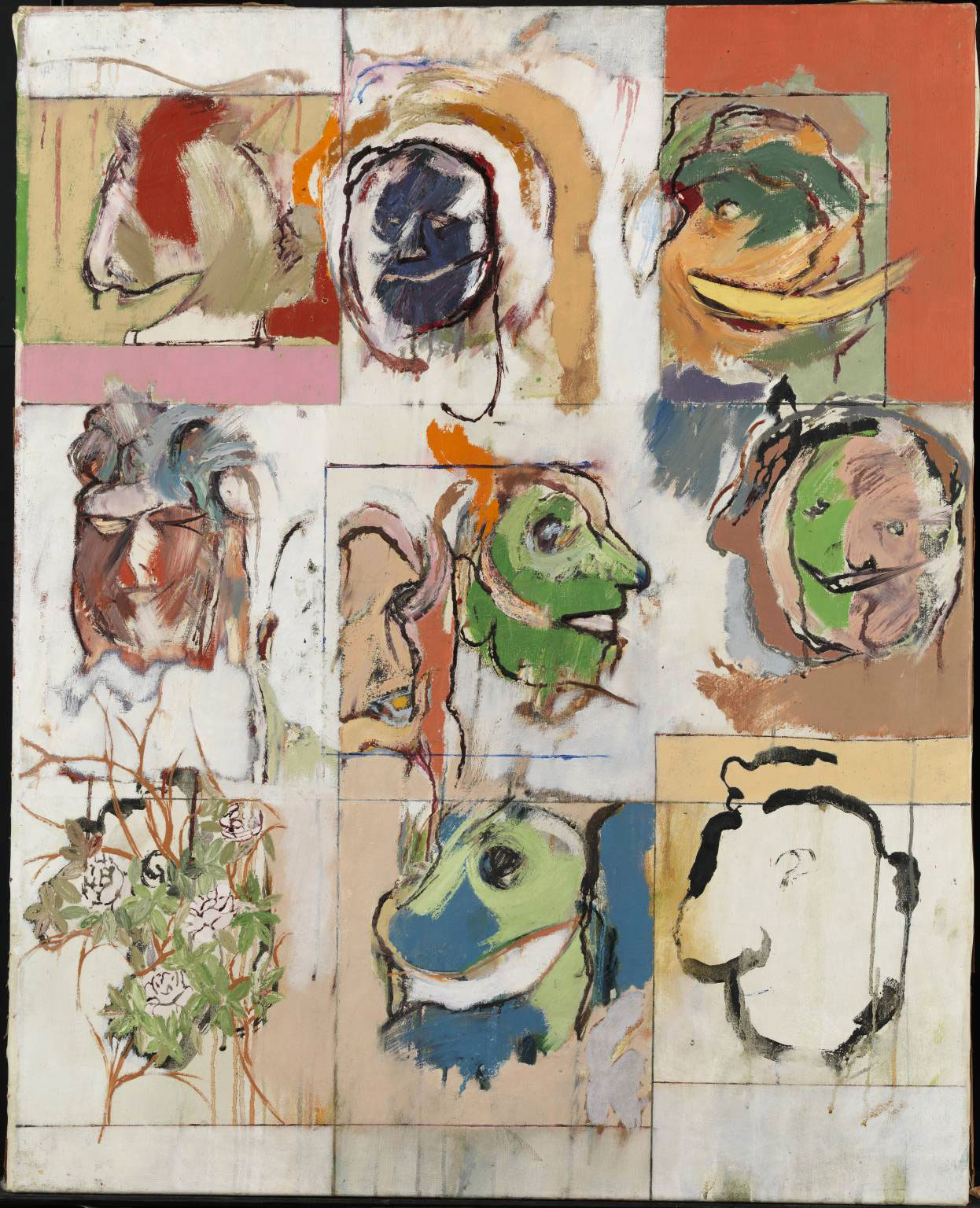
The work’s title refers to the initial source for the image, a series of doodles the Dutch humanist scholar Desiderius Erasmus (1466-1536) made in the margins of a manuscript he was annotating. Kitaj encountered Erasmus’s scribbled faces in one of the first books he read while in Oxford, the biography of the scholar by the historian Johan Huizinga (1872-1945). Kitaj’s composition follows the grid-like arrangement imposed on Erasmus’s doodles in the reproduction in Huizinga’s book, and his faces have broadly the same exaggerated features as those drawn by Erasmus.
To Kitaj, Erasmus’s absent-minded doodles suggested a prefiguration of the method of automatic drawing (that is, drawing made without the intervention of reason) that would later be favoured by the surrealists. In Erasmus Variations, the artist employs a loose and gestural method of painting evocative of abstract expressionism. The work thus links the surrealist belief that automatic drawing provides an insight into the workings of the mind with a similar idea implied in gestural abstraction: that the artwork reveals the personality of the artist (Livingstone, 2010, pp. 16-7).
Kitaj derived the style and technique of painting that he used in Erasmus Variations specifically from the Dutch-born abstract expressionist painter Willem de Kooning (1904-97), in particular the images of female nudes de Kooning made in the late 1940s. Kitaj explained: ‘De Kooning’s surreal-automatic ‘Women’ were my favourite action paintings of the School of New York, a recalcitrant or truant of which I had been during my Manhattan years, and so I adapted something of that mode here; Double Dutch (Erasmus and De Kooning, both of Rotterdam).’ (Quoted in Livingstone, 2010, p. 232.)
Alice Sanger. “Erasmus Variations,” on the Tate website December 2010 [Online] Cited 17/02/2023
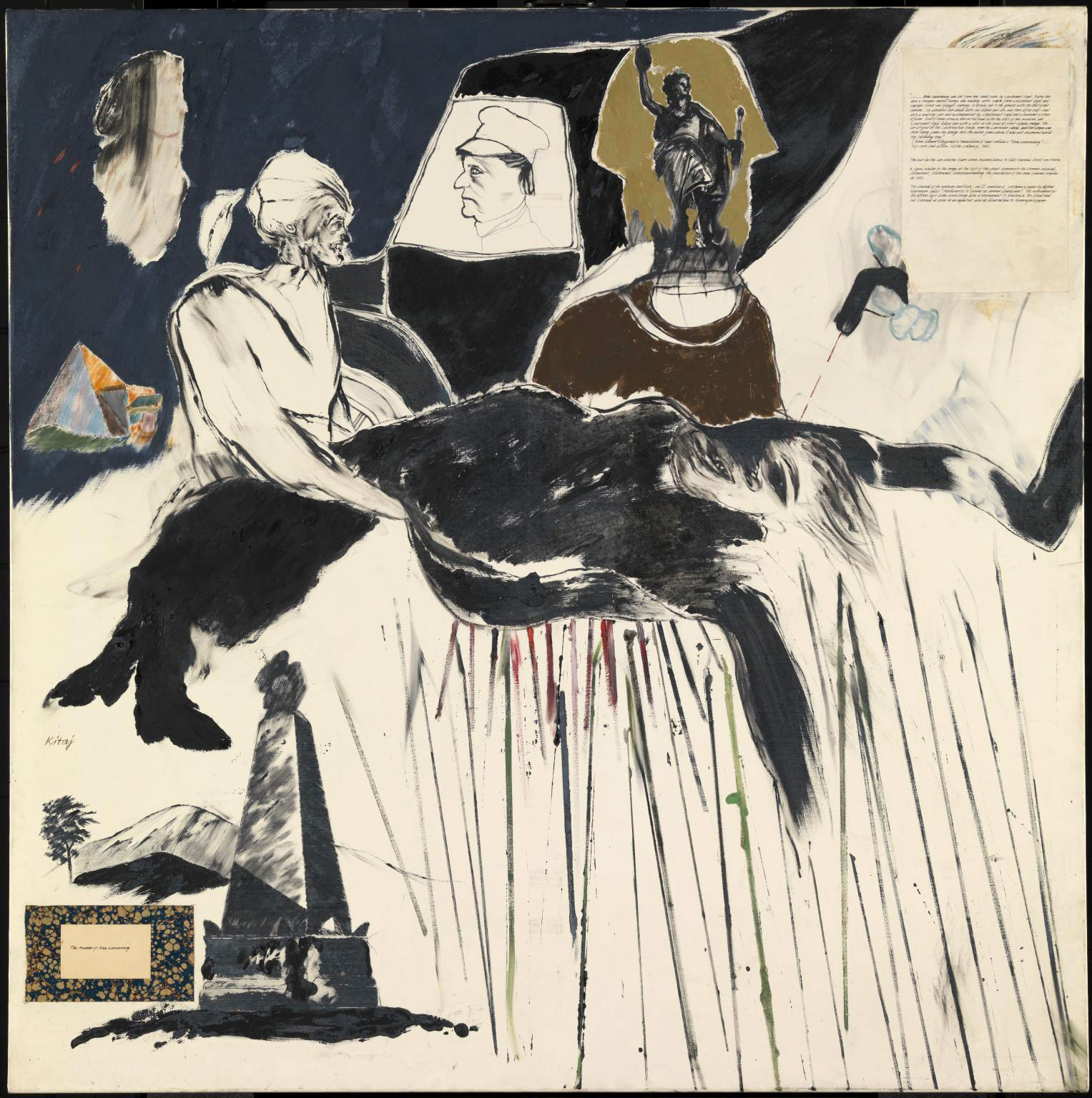
This is an early example of Kitaj’s many paintings on the theme of the unjust infliction of human suffering. Its ostensible subject is the murder in 1919 of the Jewish agitator and theoretician Rosa Luxemburg, who was killed by troops opposed to the revolutionary movement that swept Germany in the wake of the First World War. In the centre of this painting a figure holds Luxemburg’s corpse, while at top right is a collaged transcription of an account of the murder. Kitaj associated Luxemburg with his grandmother Helene, who was forced to flee Vienna in the 1930s. The veiled figure at top left represents his maternal grandmother, who fled Russia as a result of earlier pogroms of the Jewish people.
‘The central grotesque bather is the fascist. The bather at the left is the beautiful victim. The righthand bather is the ordinary European watching it all happen. A bomber appears in the upper left corner which will cross the English Channel and bring an end to it all one day.
‘The three figures were originally drawn on separate sheets of paper from women who posed for me in New York and London. Later, between 1975 and 1979, when I took it into my head to make a composition, I asked a few other women to assume the poses that would represent the bathers in fascist Europe. After the drawings were glued together, the images began to change many times.
Much of the drawing was ultimately invented but the pose of the righthand figure is based on a picture by the Cordoban painter Romero de Torres (d. 1930).’ ~ R. B. Kitaj
The method of fusing together drawings done on separate pieces of paper to produce a single image, which can be seen in several other pastels of this period … contributes to the ambiguous relationship, both physical and psychological, between the three figures… While one effect of this cutting and joining is to emphasise the fragmentary nature of the composition, Kitaj also makes use of the edges of the paper to reinforce contour and volume. When questioned about the extreme anatomical foreshortening in the torso of the left-hand bather the artist replied that it was in fact possible and that a source existed for it in a pornographic magazine. ‘The often unlikely joining’, Kitaj added, ‘of limbs and postures in Cézanne’s Bather compositions are also entrenched in one’s memory … but the pose was taken from the life.’
Anonymous. “The Rise of Fascism,” published in The Tate Gallery 1978-80: Illustrated Catalogue of Acquisitions, London 1981, on the Tate website Nd [Online] Cited 17/02/2023
This painting is set in Cecil Court, a street famous for its second-hand bookshops and a favourite haunt of the artist. It is one of many paintings made by Kitaj arising out of an increasing awareness of his own Jewishness. He wrote, ‘I have a lot of experience of refugees from Germany and that’s how this painting came about. My dad and grandmother … just barely escaped.’ The work shows the artist reclining on a sofa while figures from his life pop out of the street behind him. Kitaj has explained that this theatrical composition was inspired by the peripatetic troupes of the Yiddisher Theatre in Central Europe, which he had learned about from his grandparents and from in the diaries of the writer Franz Kafka.
This painting depicts the wedding of Kitaj and the American artist Sandra Fisher (1947-94) which took place in 1983, some six years before this painting was begun. The couple first met in Los Angeles, where Kitaj was teaching. Upon his return to London in 1972, they became reacquainted. Kitaj wrote the following text to accompany the painting’s exhibition in the 1994 Tate Gallery retrospective
“Sandra and I were married in the beautiful old Sephardic Synagogue founded in London by Rembrandt’s friend, Menasseh ben Israel. Under the chupa (canopy), aside from my children and the Rabbi in top hat, Freud is on the left, Auerbach in the middle, then Sandra and me, and Hockney (best man) is to the right of us. Kossoff appears at the far right, transcribed from a drawing by John Lessore. I worked on the painting for years and never learned how to finish it even though painter friends, including most of those in the picture, gave me good advice about it which I took up and changed things all the time. In the end, instead of finishing it, I finished with it and gave it away to a deserving old friend.”
Kitaj has described Picasso’s Les Demoiselles d’Avignon as ‘the most important influence’ on this picture, ‘not a source but a hovering presence’ (unpublished Board note presented to Tate Gallery Trustees, July 1993). The Wedding brings together several crucial themes in Kitaj’s art and thought, including his increasing awareness of his identity as a Jew. The prominent depiction of several of the so-called ‘School of London‘ artists relates to Kitaj’s identification of these artists as part of a group of painters who were linked by friendship, their response to great masters, their emphasis on drawing and their concern with the human subject.
Terry Riggs. “The Wedding,” on the Tate website October 1997 [Online] Cited 17/02/2023
For his 1994 Tate Gallery retrospective exhibition, Kitaj wrote the following text to accompany this picture:
“The three main actors represent myself in youth, middle age and old age. Behind them is a drop-curtain inscribed with historiated capital letters of cities where I’ve lived or loved. Over the course of a few years these capital letters (inspired by William Blake and the paintings of Victor Hugo) have been sublimated by white paint for the most part because they got too emphatic, so not they’re not too easy to read or even see, some of them representing faded (whitened) memories anyway. The idea for the painting comes from a page I’ve kept as long as I can remember, torn from a copy of the old American magazine Theater Arts, showing a scene from what is described as ‘an experimental drama’, ‘A Happy Journey to Trenton and Camden’ by Thornton Wilder. The catwalk stage upon which the figures tread and stumble through life becomes the roof of a baseball dugout in which I’ve tried half-heartedly to draw some of my demons (Don’t Ask!), colourless spectres only thinly isolated from the three leading players above as in a predella.”
The painting develops an idea in Kitaj’s 1960 A Reconstitution (private collection), whereby the map of the Americas is presented in a radically distorted form. In the earlier work, the map was prominent. In My Cities, however, it is virtually buried, running down the left side of the painting. The contour of the east coast of South America can be seen between the left and central figures. Although My Cities celebrates various places that were of special significance in Kitaj’s life, only the Americas are represented in map form…
Kitaj combines painting and drawing in a manner which recalls the techniques of Cézanne, Degas, Matisse and Giacometti. The lower or predella section of the picture relates to the theme of American baseball, which the artist views as a compelling human drama. The players sit in a limbo-like dugout, awaiting a call which may not come, or which, if it does, may lead to heaven or hell. Combined with the upper section, the predella contributes to a reading of the painting as an allegory of life.
Exhibition dates: 11th September – 11th October 2013
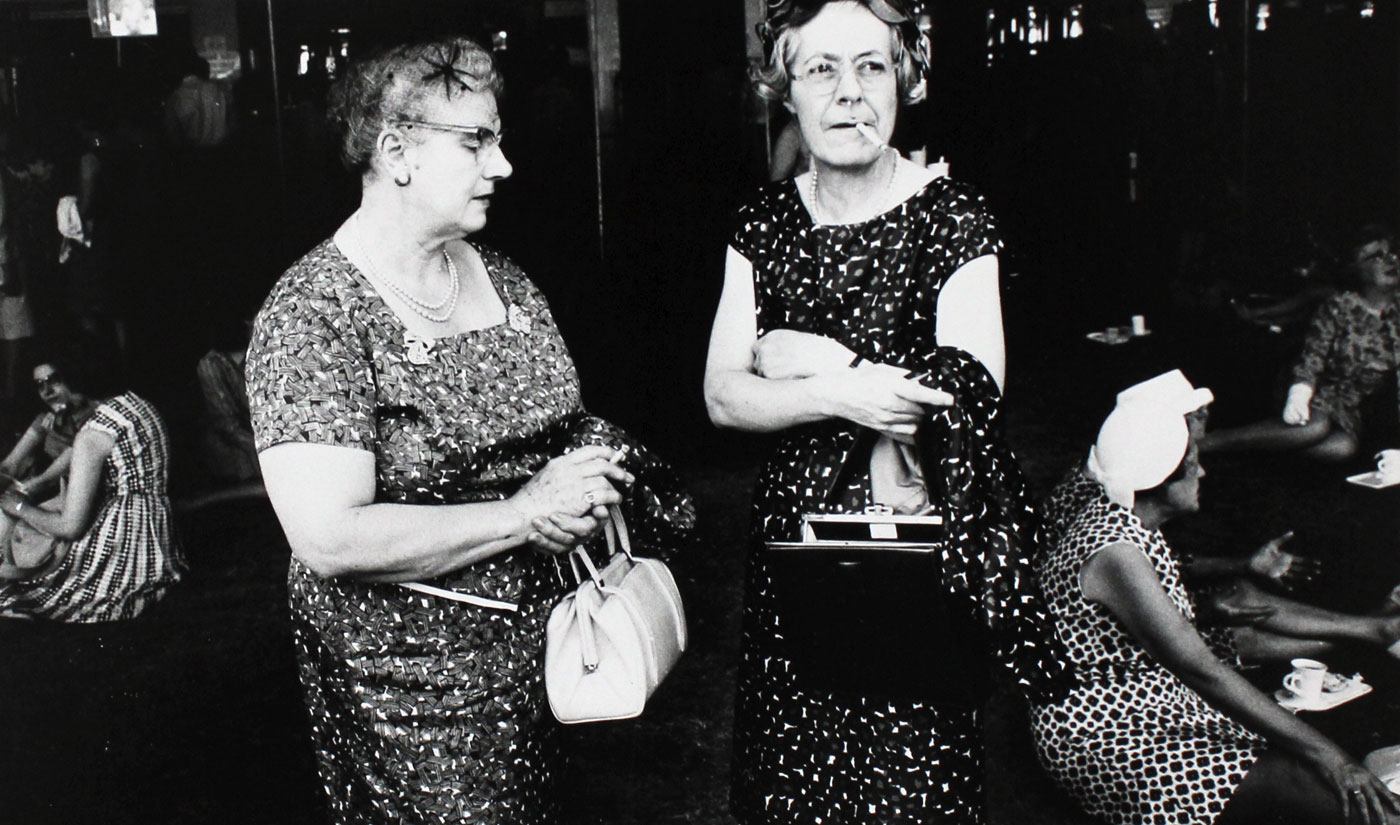
Tony Ray-Jones (British, 1941-1972) Lady’s Day
c. 1967
Vintage Gelatin Silver Print
12 x 20cm (5 x 8 inches)
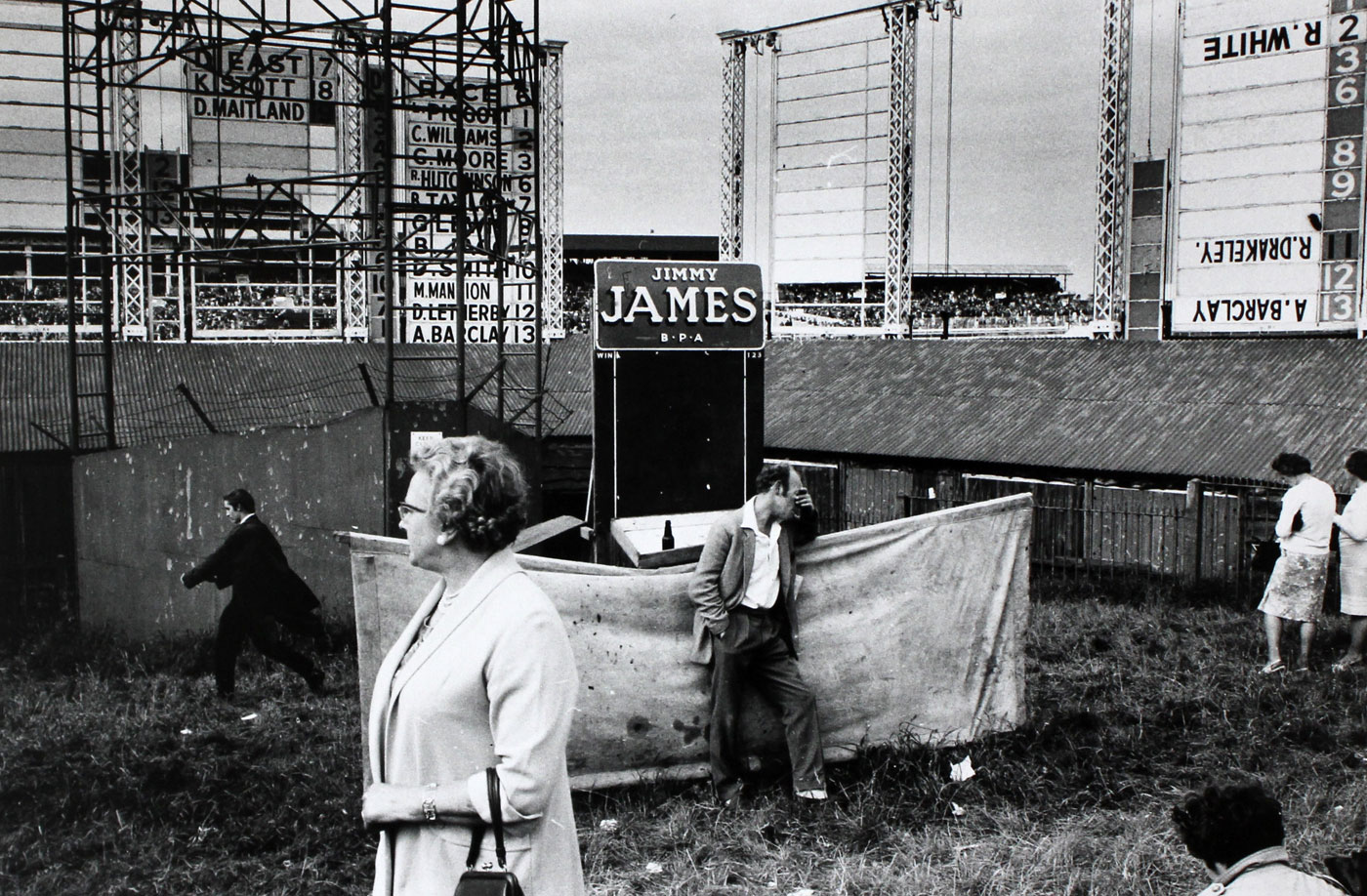
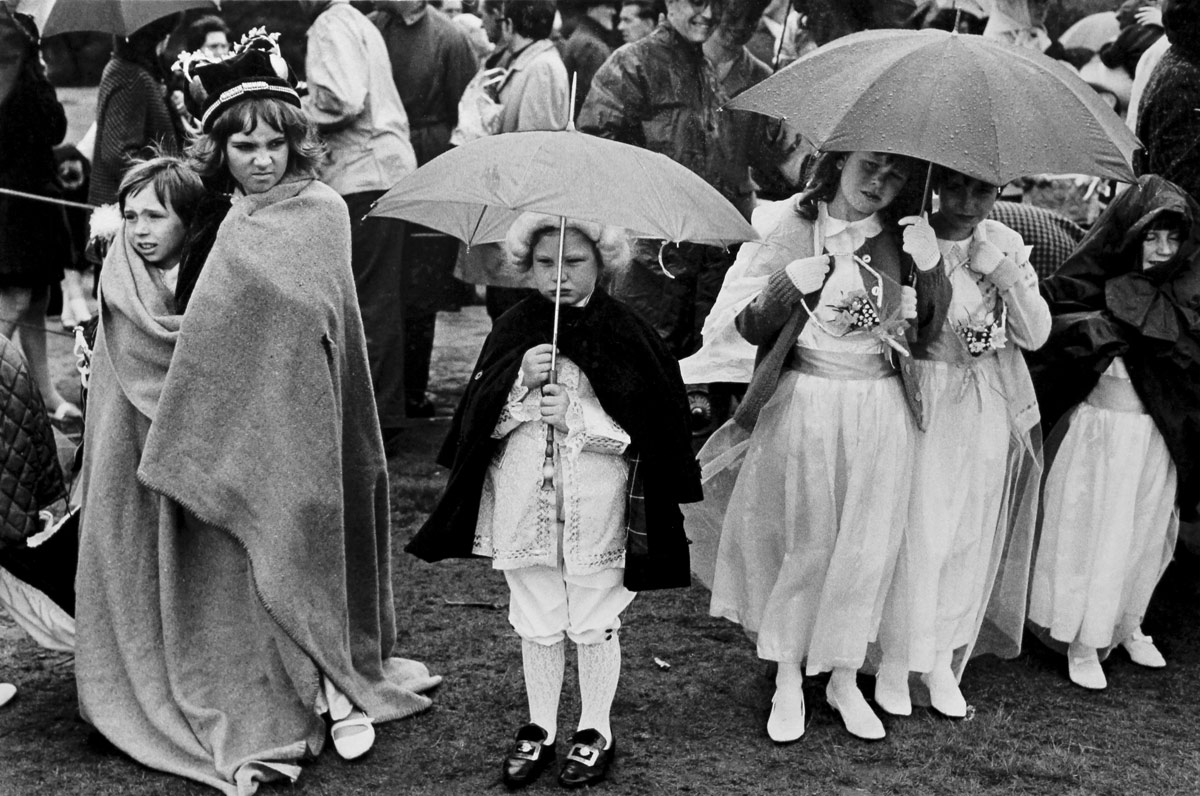
What a loss to the world when this photographer died aged just thirty. His eye was magnificent. He seems to have instinctively known how to capture the quintessential British at work, rest and play in all that societies class-ridden glory – the fag hanging out of the mouth in Lady’s Day (c. 1967) combining beautifully with the aura of the patterned dresses; the isolation of the figures and their stop-frame movement in Day at the Races (c. 1967), a wonderfully balanced composition caught in the moment; and the orchestral ensemble that is the cast of Bacup, Lancashire, 1968 (1968), each figure playing its part in the overall tension of the picture plane: the brothers at right in matching duffle coats, the boy walking forward down the incline with head thrown sideways balanced at rear by another boy with hands in pockets tossing his head into the wind. Magical.
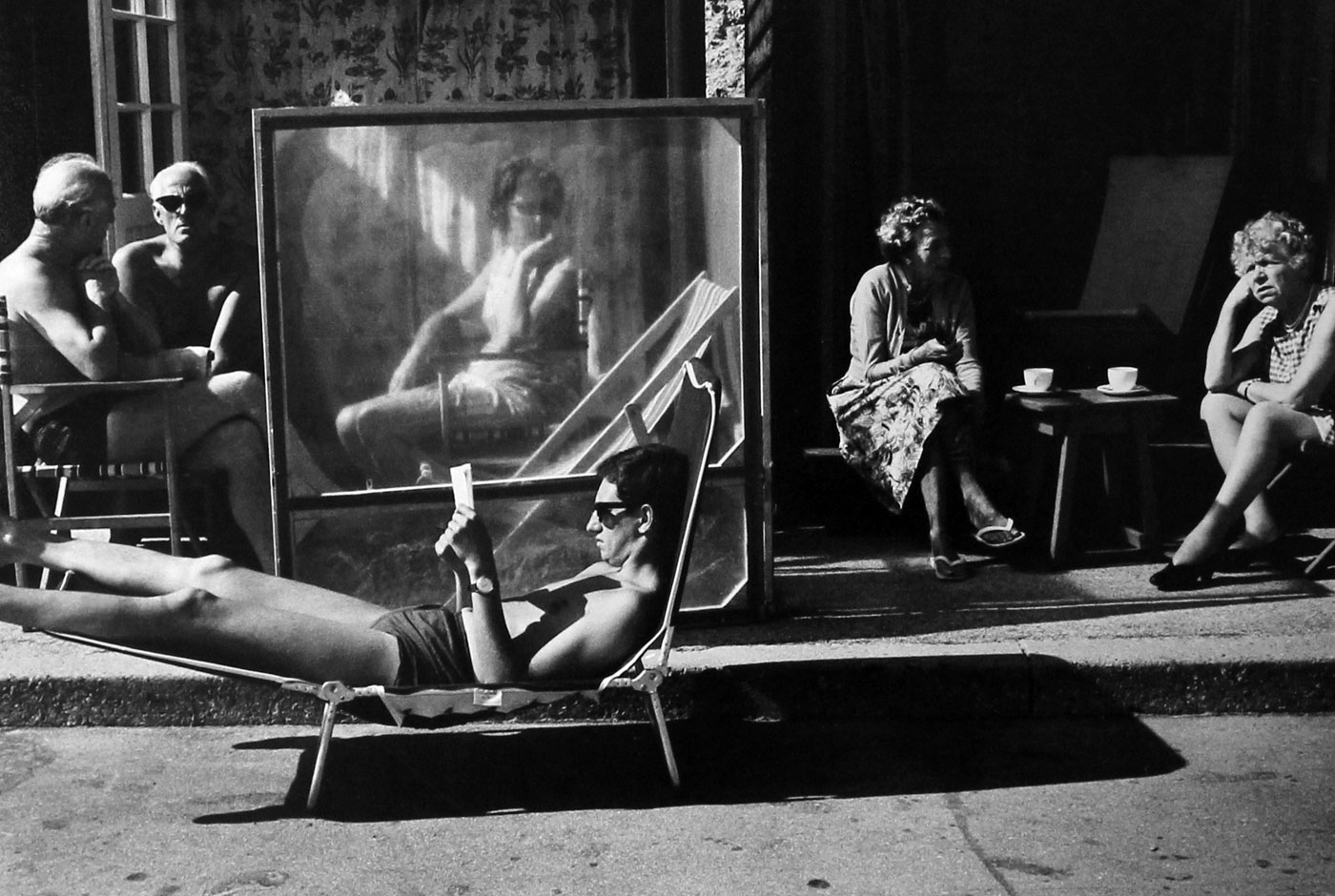
Just to see this image, to visualise it and have the camera ready to capture its “nature”, its undeniable presence for that one split second, then to develop and find this image on a proof sheet, what joy this would have been for the artist. Equally illustrious is the feeling of Bournemouth, 1969 (1969) with the nuanced use of shadow and light, the occlusion of the figure behind the screen with the turn of the head, and the placement of the two white tea cups at right. Ray-Jones wasn’t afraid to place figures in the foreground of his compositions either as can be seen in Brighton Beach, 1967 (1967) to great effect, framing the mise en scène behind.
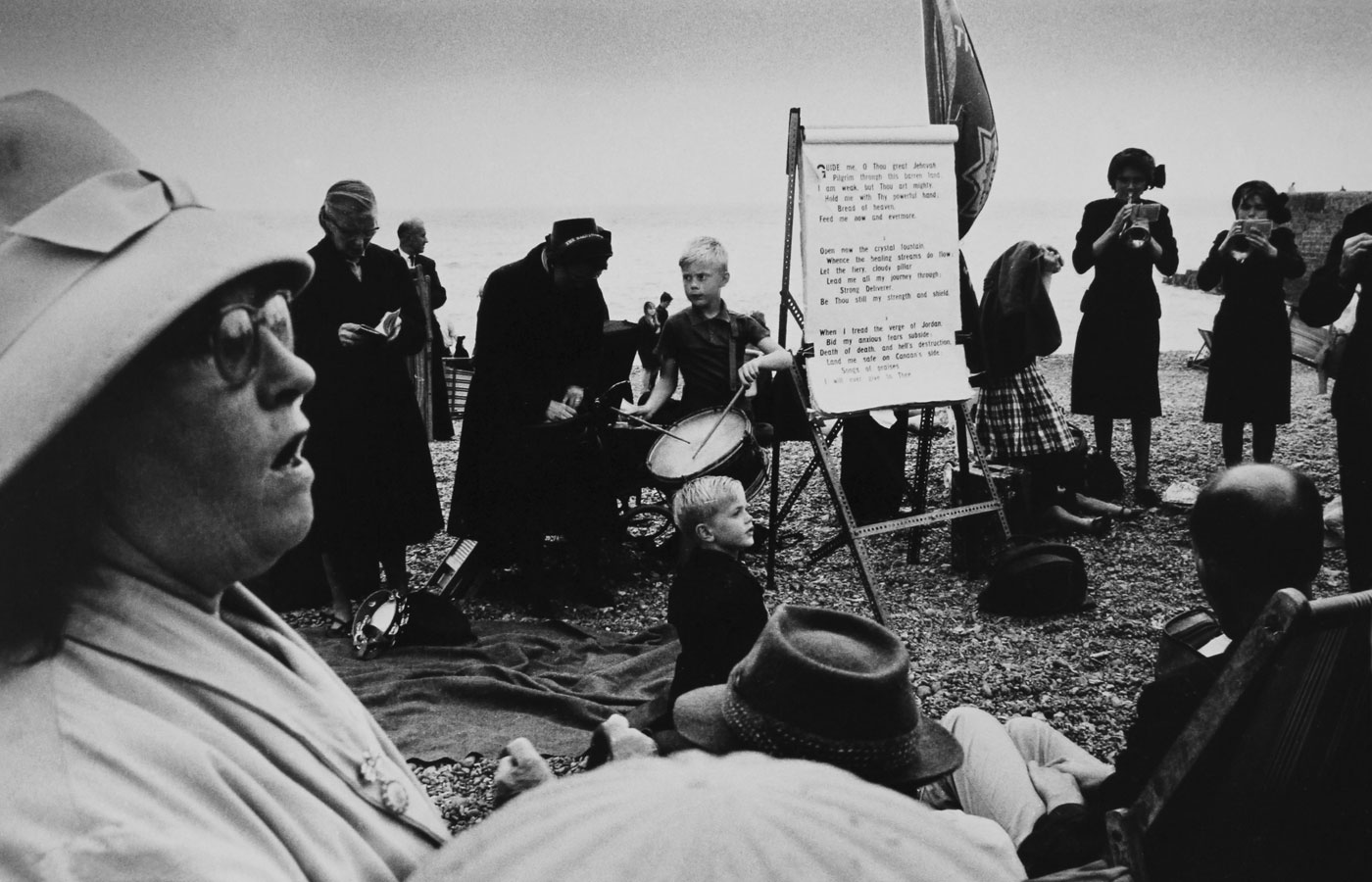
These photographs take me way back to my childhood in the 1960s in England, going to Butlin’s Clacton-on-Sea and Bournemouth for our family holidays. Even the name says it all: Clacton “on sea” as though they have to remind people visiting that they are actually at the sea. The photographs perfectly capture the mood of the country in this utilitarian era where holidays at a seaside resort were often dour affairs, punctuated by stony beaches, bad weather and regulated activities. The freedom of the 1970s had yet to arrive and us kids went whether we liked it or not: Mablethorpe, 1967 (1967) perfectly epitomises such an environment, with the long days of pleasure / torture stretching off into the distance much as the sea wall in Ray-Jones’ photo.
Dr Marcus Bunyan
Many thankx to James Hyman for allowing me to publish these magnificent photographs. Please click on the photographs for a larger version of the image.
Tony Ray-Jones (British, 1941-1972) Day at the Races
c. 1967
Vintage Gelatin Silver Print
13 x 20cm (5 x 8 inches)
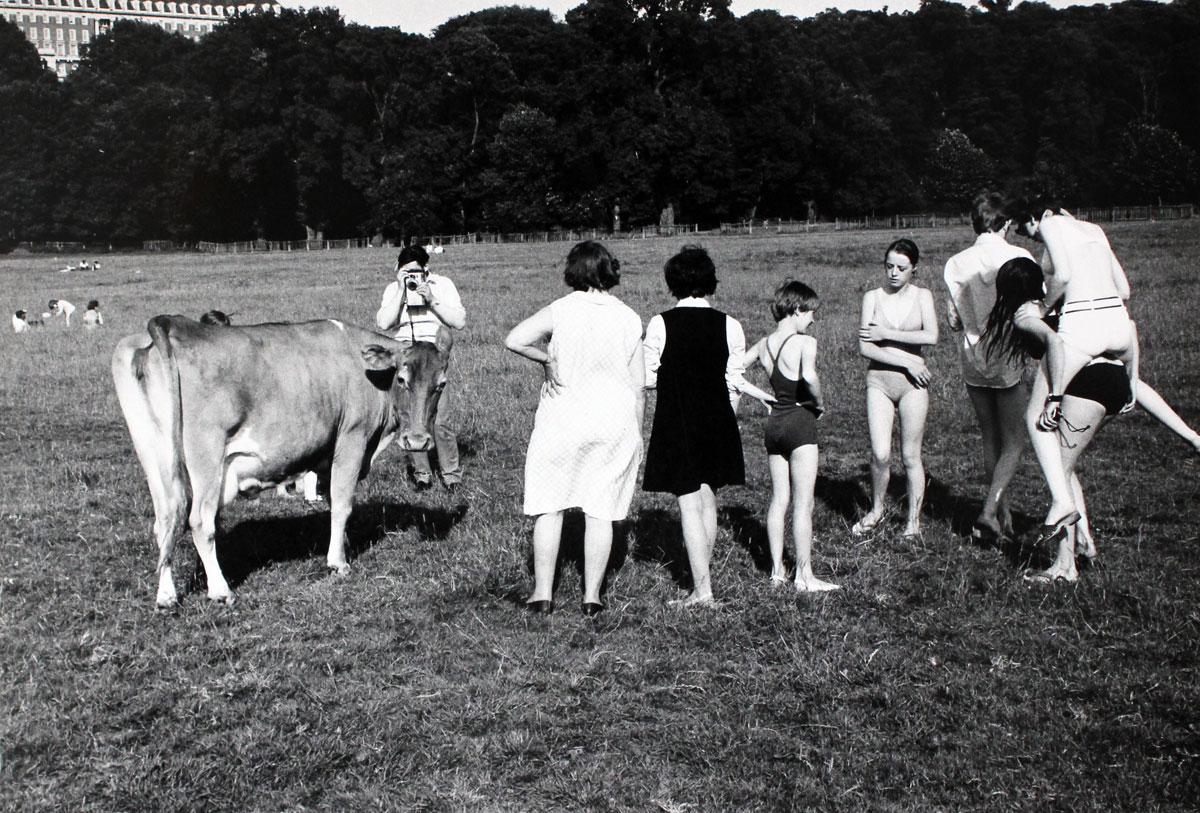
Tony Ray-Jones (British, 1941-1972) A Day at Richmond Park
c. 1967
Vintage Gelatin Silver Print
17.5 x 25.6cm (7 x 10 inches)
Tony Ray-Jones (British, 1941-1972) Chatham May Queen, 1968
1968
Vintage Gelatin Silver Print
17.5 x 26.2cm (7 x 10 inches)
Tony Ray-Jones (British, 1941-1972) Bacup, Lancashire, 1968
1968
Vintage Gelatin Silver Print
17.5 x 26.5cm (7 x 10 inches)
James Hyman is delighted to stage an exhibition of rare, vintage photographs by Tony Ray-Jones to coincide with the opening exhibition of the Science Museum Media Space, Only in England, Photographs by Tony Ray-Jones and Martin Parr, in September 2013.
Tony Ray-Jones had a short life. He died in 1972 aged just thirty. But the pictures that he left behind are some of the most powerful British photographs of the twentieth century. His work of the late 1960s and early 1970s documents English culture and identity and brilliantly captures this period in English public life. Inspired by what he learnt in America in the mid-1960s, from photographers such as Lee Friedlander and Joel Meyerowitz, Ray-Jones was keen to make ‘new’ photographs of English life, which did not read simply as documentary, but also as art objects. As he explained in Creative Camera in 1968: “the spirit and the mentality of the English, their habits, and the way they do things, partly through tradition and the nature of their environment and mentality.”
The acclaim that Ray-Jones received after his death, especially from other photographers, testifies to the respect of his elders and his contemporaries. Bill Brandt praised the “very pronounced style all of his own” and lamented that “his death, at such a young age, is a terrible loss to British photography.” Jacques Henri-Lartigue praised Tony Ray-Jones as a “fantaisiste”: “young, free and whimsical with, in addition, a very sound technique and a vision of fire that was full of humour, truth and a sense of poetry” and Paul Strand praised his “remarkable formal organisation” and declared: “I found the photographs of Tony Ray-Jones very outstanding. In them I find that rather rare concurrence when an artist clearly attaining mastery of his medium, also develops a remarkable way of looking at the life around him, with warmth and understanding.”
These tributes are to be found in the most important book of Tony Ray-Jones work, A Day Off. An English Journal, published in 1974. They are included in a beautiful essay in which Ainslie Ellis, one of the photographer’s earliest champions, addresses not only the photographs but also Ray-Jones’s photographic process. Ellis stresses that what mattered to Ray-Jones was not just taking the picture, but also the creative process of deciding which pictures on a contact strip to print, and then making a master-print, from which all subsequent prints would be matched. We are, therefore, delighted that this exhibition should include many of the pictures reproduced in this celebrated book and that it present exclusively vintage prints, which, in a number of identifiable cases, are the actual photographs that Tony Ray-Jones exhibited in his lifetime.
Often playful and sometimes despondent, what Ray-Jones produced was unlike anything which came before, and was the catalyst for a generation of New British Photographers.
Press release from the James Hyman website
Tony Ray-Jones (British, 1941-1972) Bournemouth, 1969
1969
Vintage Gelatin Silver Print
16 x 25cm (6 x 10 inches)
Tony Ray-Jones (British, 1941-1972) Brighton Beach, 1967
1967
Vintage Gelatin Silver Print
17.5 x 26.5cm (7 x 10 inches)
Tony Ray-Jones (British, 1941-1972) Mablethorpe, 1967
1967
Vintage Gelatin Silver Print
14 x 21cm (6 x 8 inches)
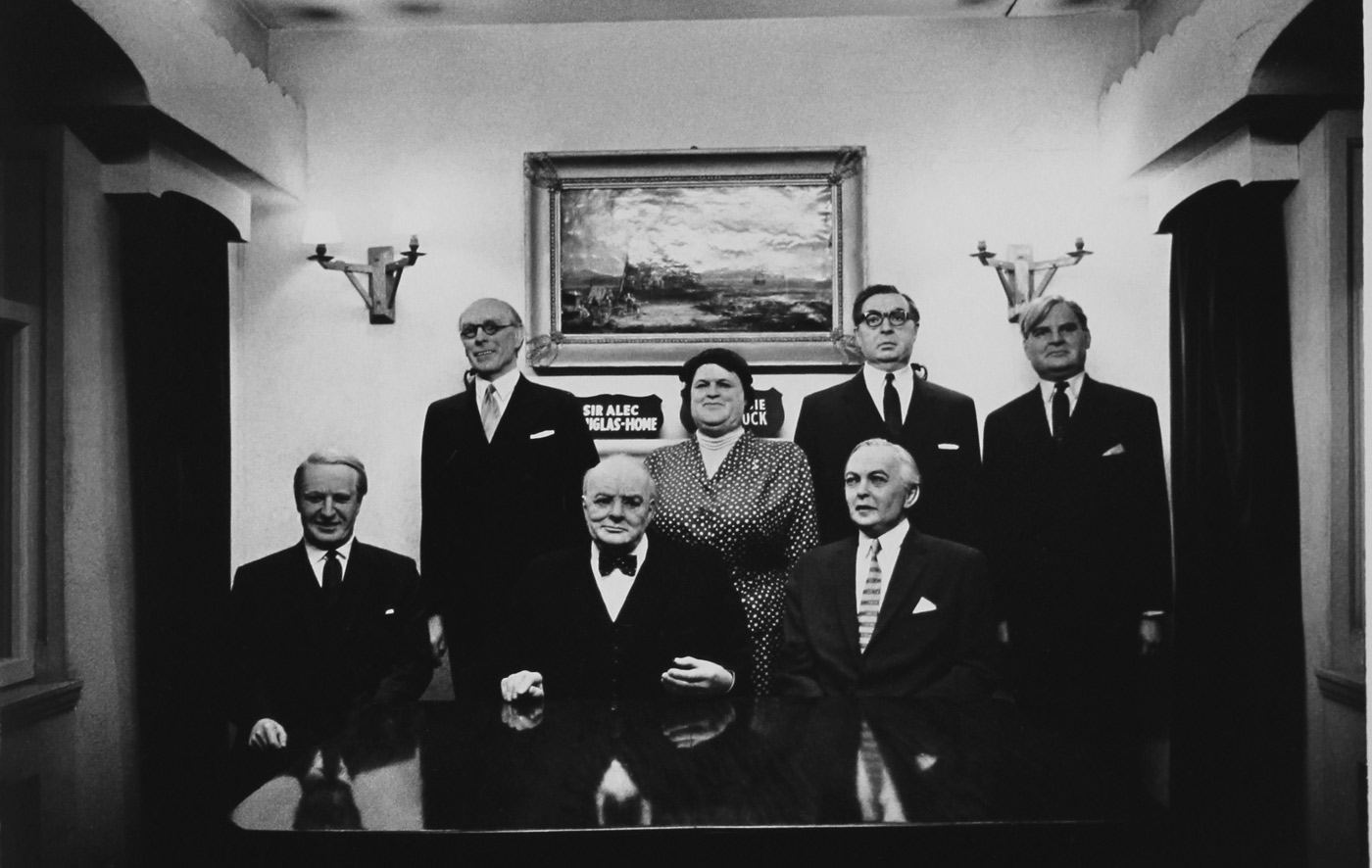
Tony Ray-Jones (British, 1941-1972) Waxworks, Eastbourne, 1968
1968
Vintage Gelatin Silver Print
14 x 21cm (6 x 8 inches)
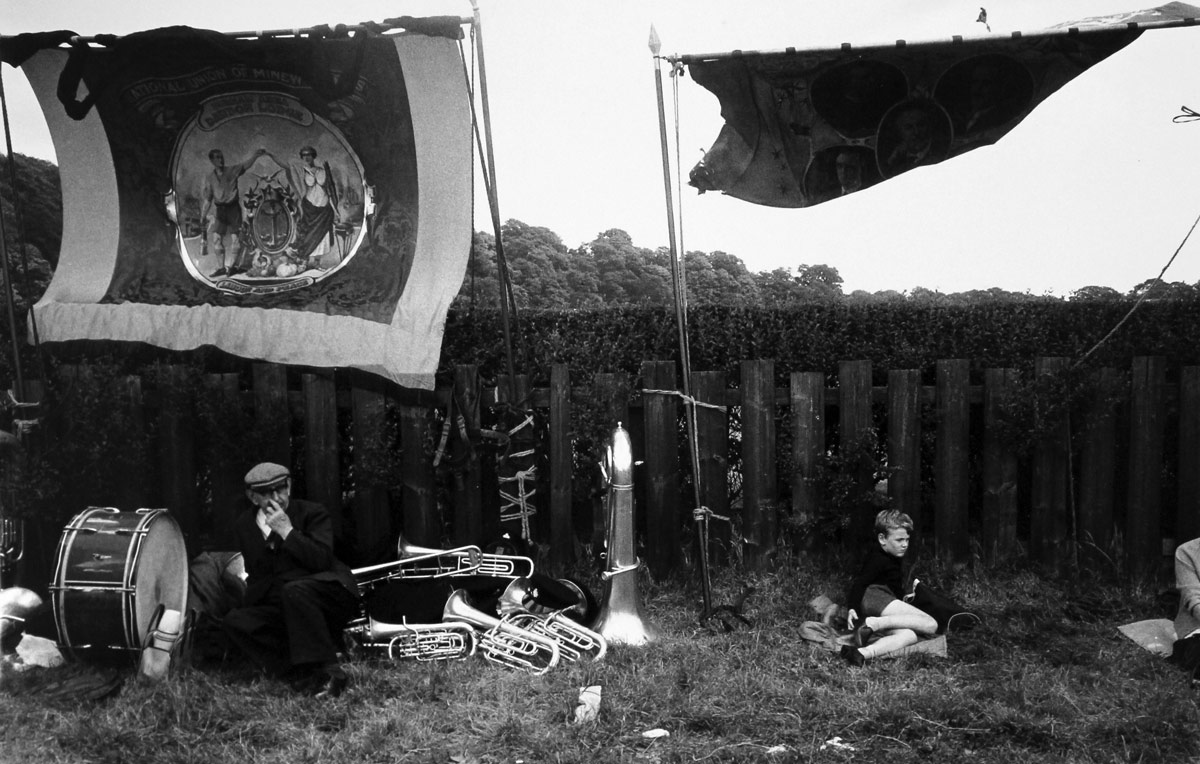
Tony Ray-Jones (British, 1941-1972) Durham Miners’ Gala
1969
Vintage Gelatin Silver Print
14 x 22.5cm (6 x 9 inches)
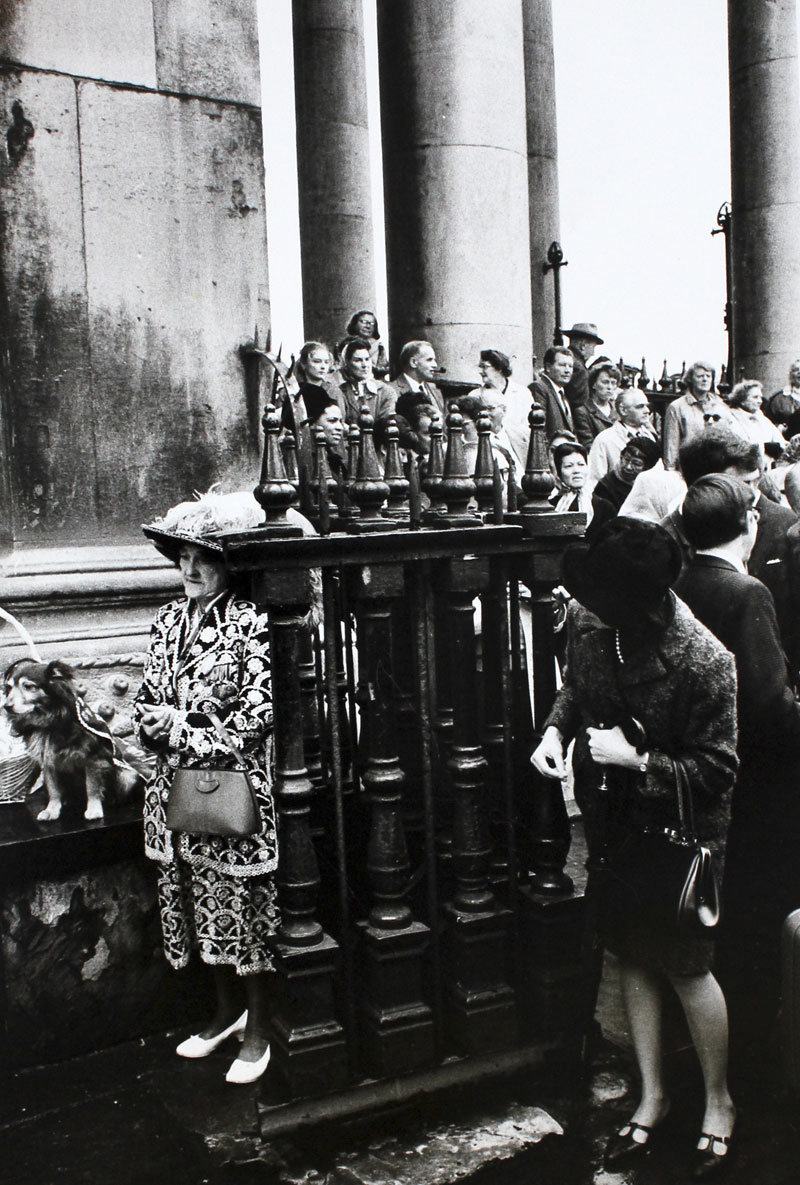
Tony Ray-Jones (British, 1941-1972) Sunday Best
c. 1967
Vintage Gelatin Silver Print
30.5 x 20cm (12 x 8 inches)
Tony Ray-Jones (British, 1941-1972) Blackpool, 1968
1968
Vintage Gelatin Silver Print
21 x 14.5cm (8.25 x 5.70 ins)
James Hyman Gallery
16 Savile Row
London W1S 3PL Phone: 020 7494 3857
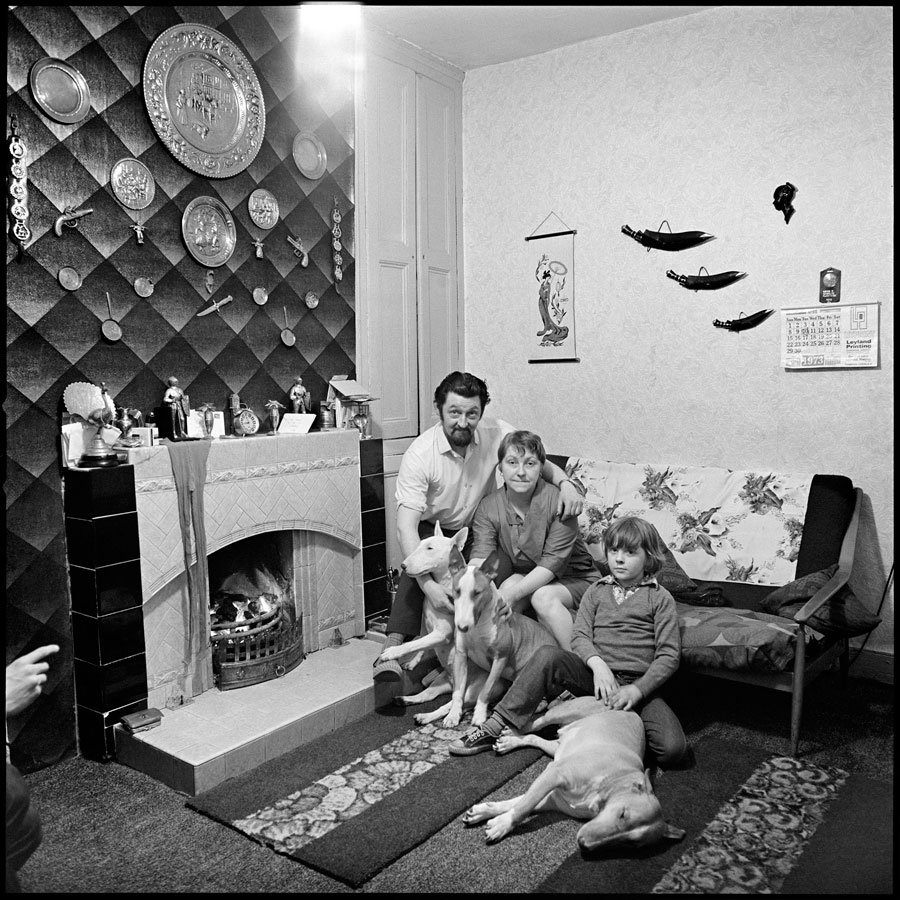
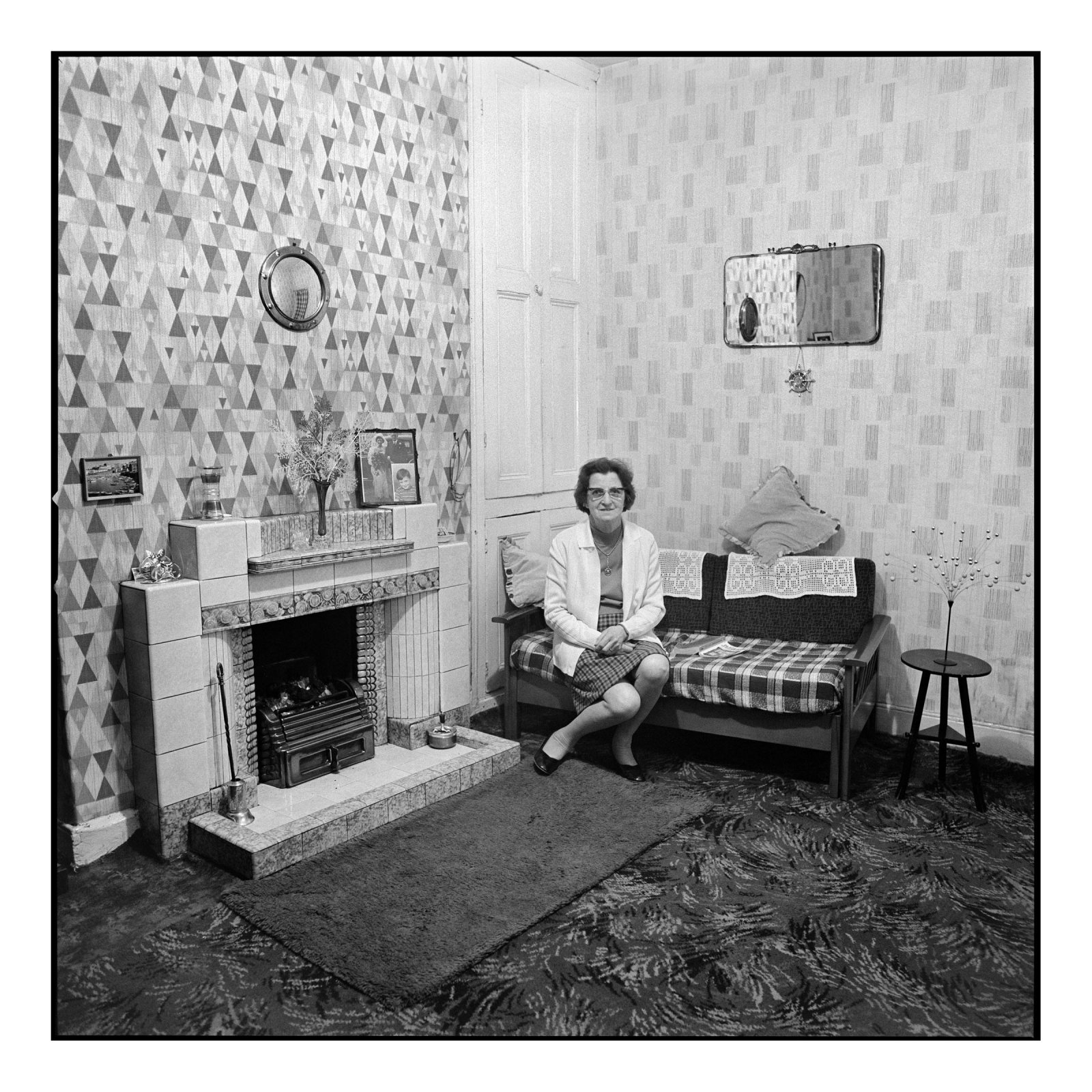
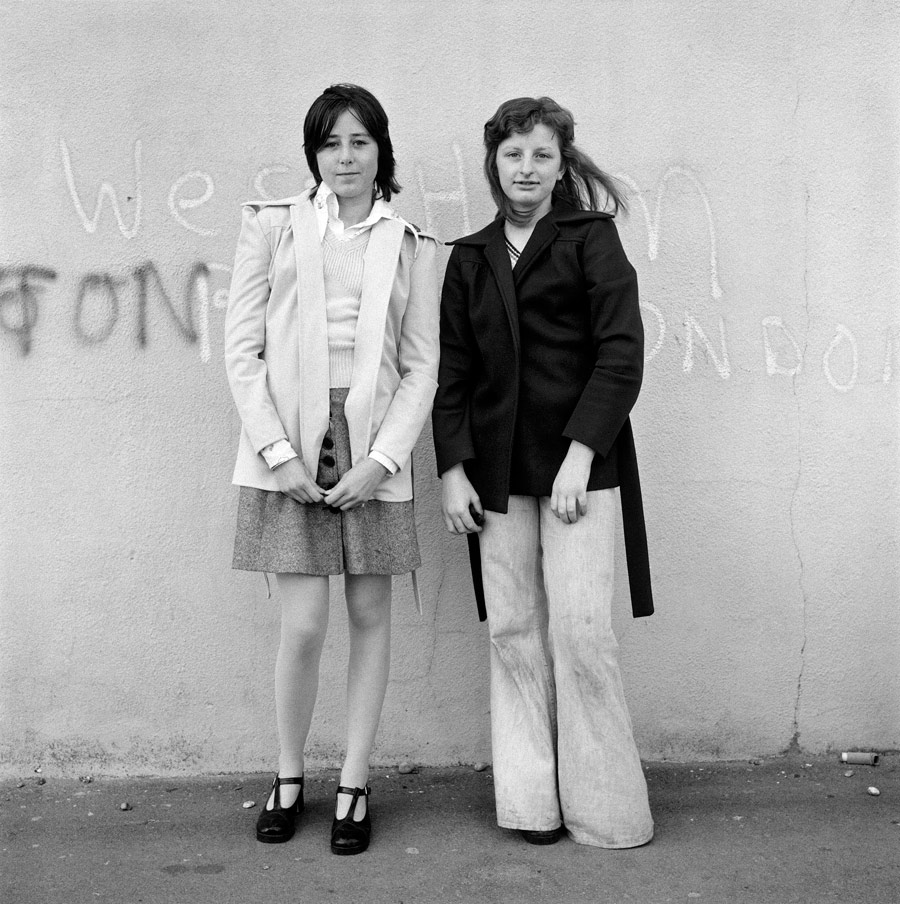
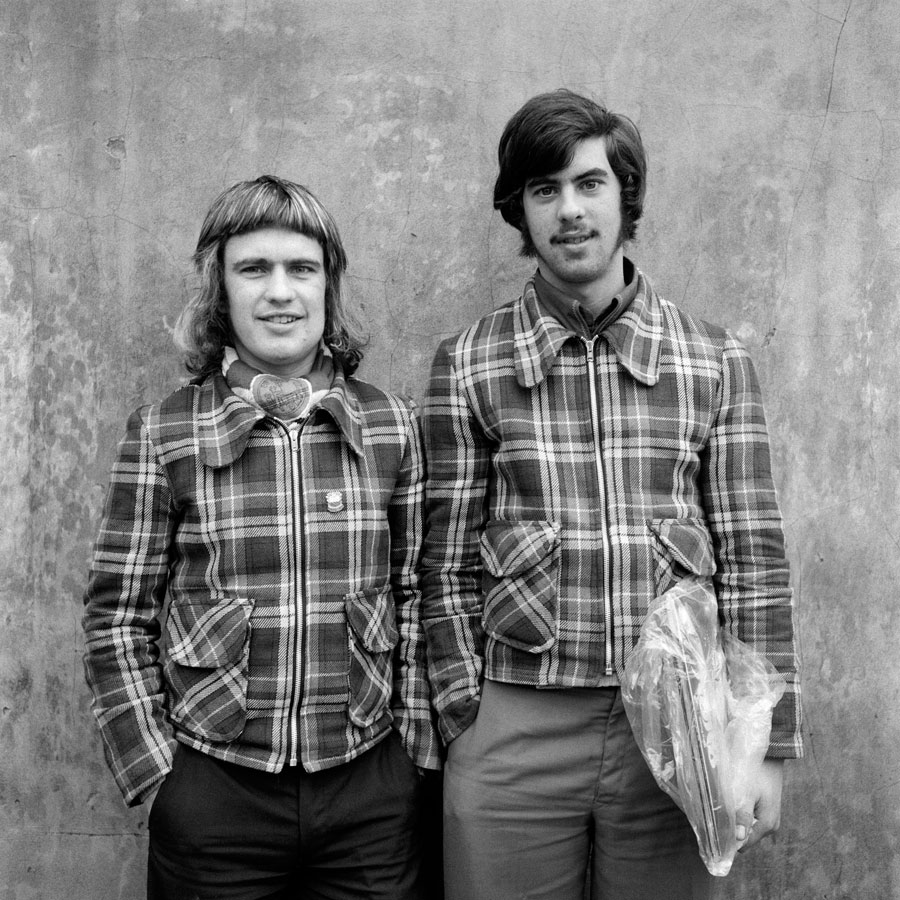
In the 1970s, Daniel Meadows was at the forefront of the independent photography movement. His practice is complex, passionate and sometimes deeply autobiographical.
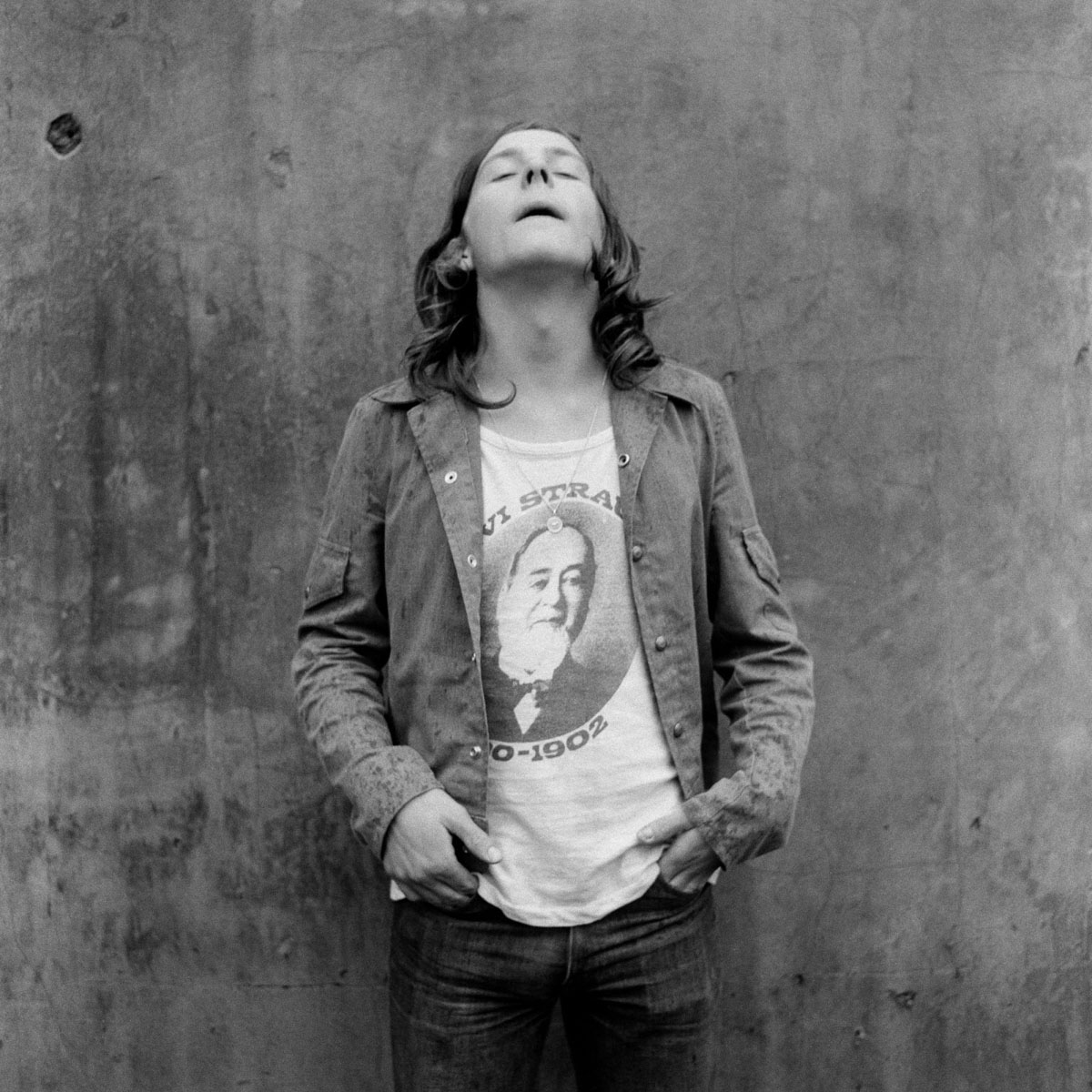
Daniel Meadows’ early work broke with tradition and infused the medium with new energies and ways of seeing. Between 1971 and 1987, he produced an astonishing record of urban society in Britain, working in a uniquely collaborative way through his interviews with – and writing about – his subjects.
Text from the National Science and Media Museum website
The National Science and Media Museum presents the first retrospective of the career of Daniel Meadows – photographer, documentarian, digital storyteller and unofficial co-founder of a uniquely British photography movement. Daniel Meadows was one of a group of photographers who spearheaded the independent photography movement in the early 1970s, breaking with tradition and infusing the medium with new energies and ways of seeing. His practice is complex, passionate and sometimes deeply autobiographical.
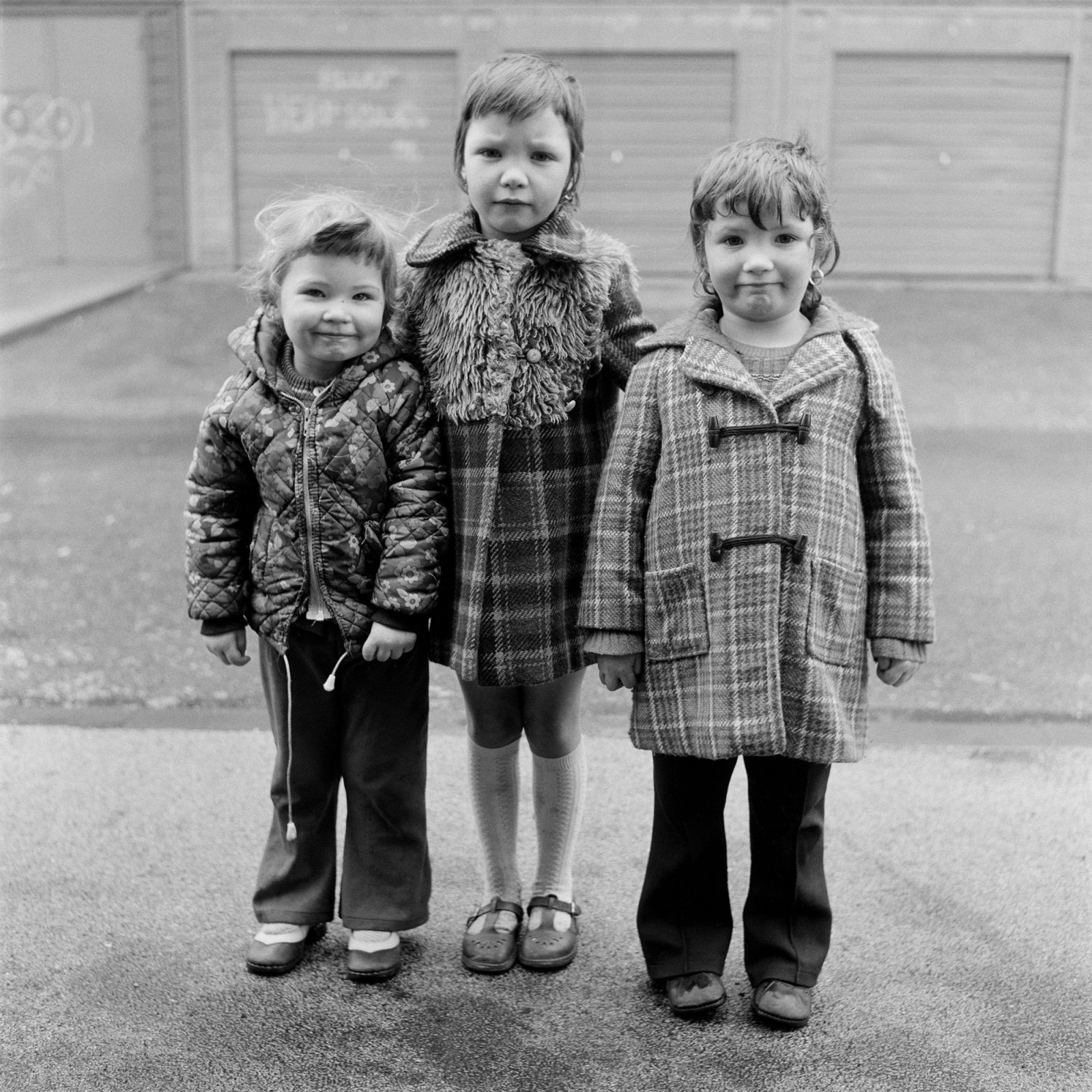
Between 1971 and 1987, he produced an astonishing record of urban society in Britain, working in a uniquely collaborative way through his interviews with – and writing about – his subjects. Meadows is a documentarist and an exceptional storyteller. He reveals historic and culturally significant aspects of people’s lives, dating from the 1970s to the present day. This exhibition displays photographic works alongside oral testimonies by some of the people featured in the photographs and Digital Stories.
Meadows’ practice developed at Manchester Polythechnic, where he trained alongside fellow photographers Martin Parr, Brian Griffin, Charlie Meecham and Peter Fraser. Together they spearheaded a new documentary movement intent on establishing an independent method for making and disseminating photographs, outside the existing conventions of commercial practitioners and photojournalists. Meadows’ resulting work displays complexity and passion, and confers a personal and sometimes deeply autobiographical imprint. During his career he has produced an astonishing record of urban British society, working in a uniquely collaborative way, through photography, digital stories and recorded interviews, to capture extraordinary aspects of everyday life.
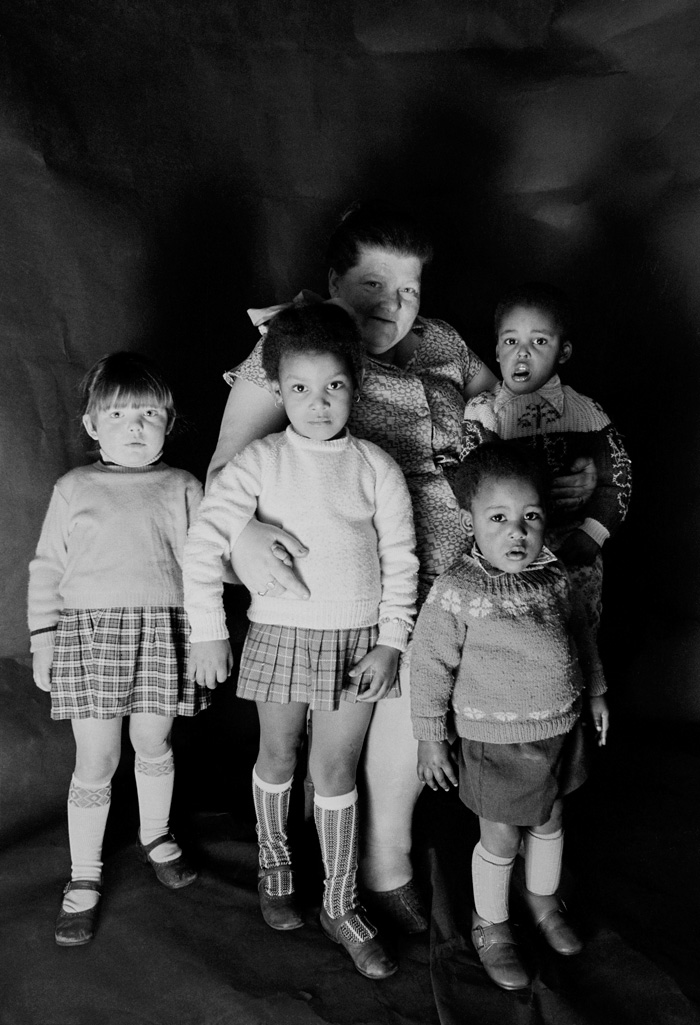
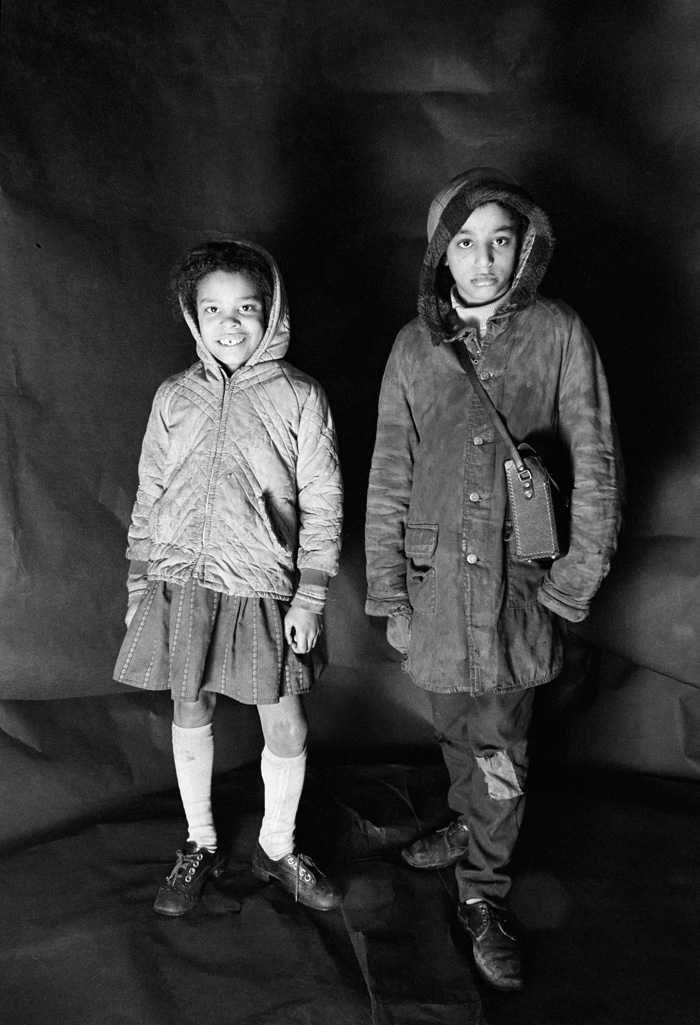
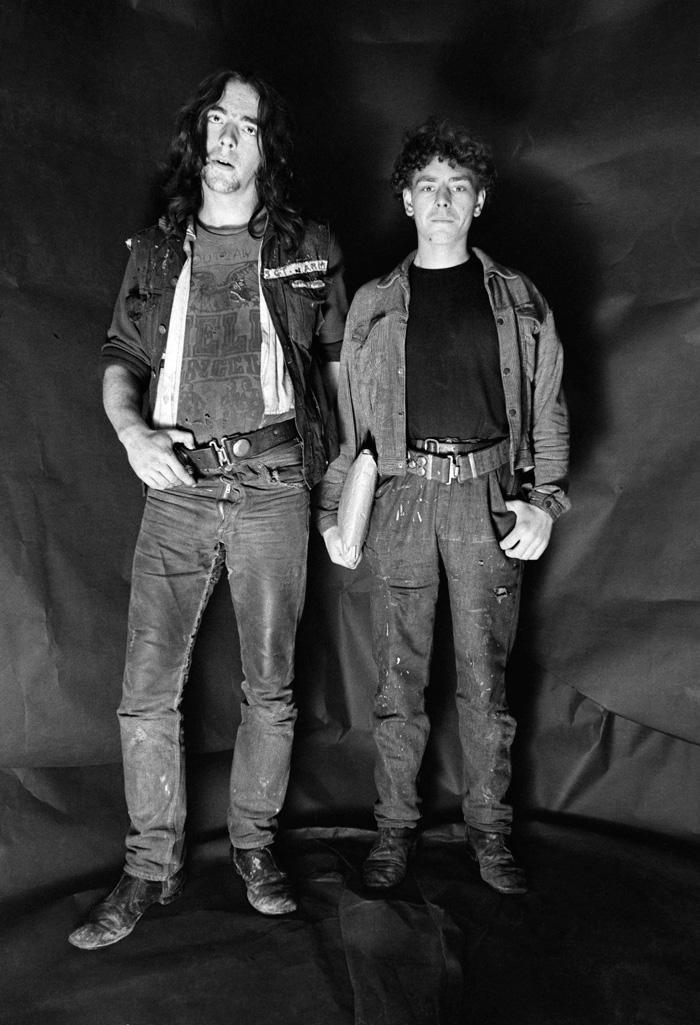
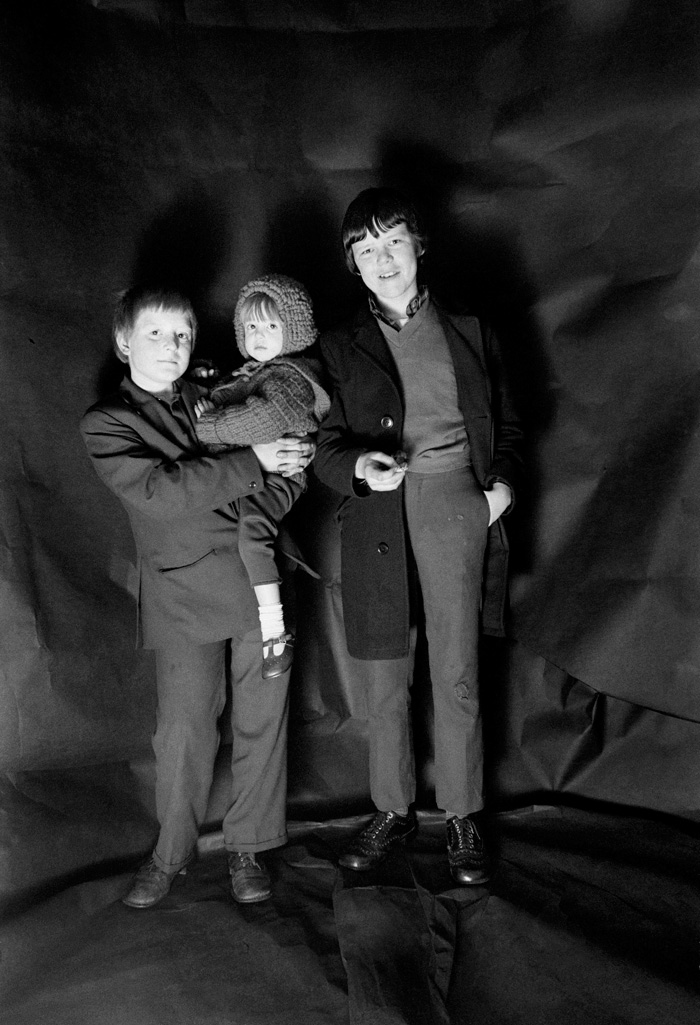
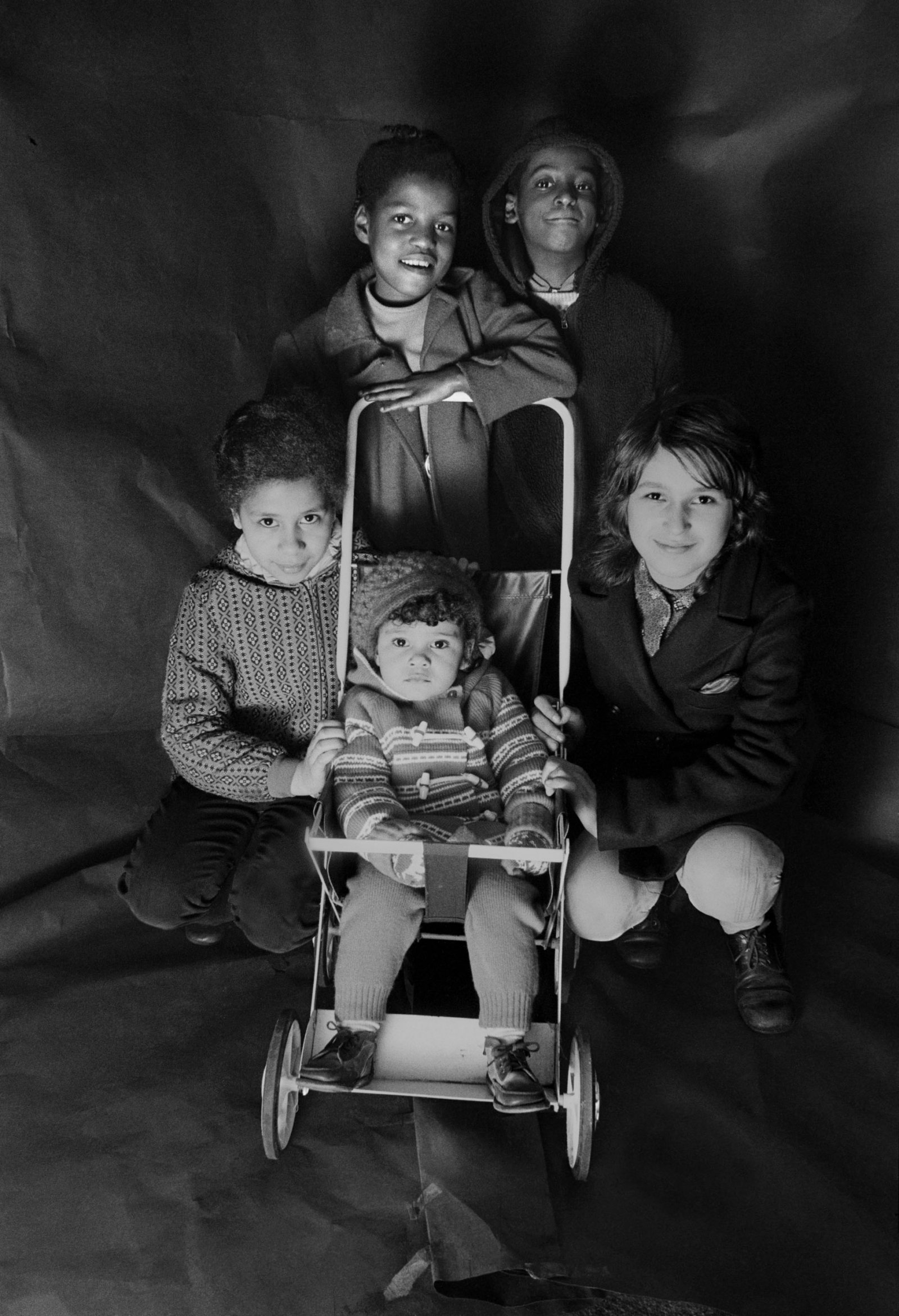
His career began in 1972, when he opened a photographic studio in a former barber’s shop in the Moss Side area of Manchester. The Shop on Greame Street features residents from the district who posed for a portrait which they then received free of charge. None has been previously exhibited, and a selection will be on public display for the first time from October.
Two further early projects are also included in the exhibition, both undertaken in partnership with Martin Parr. June Street, 1973, is an intimate portrayal of working class households in an area of Salford, which have since been demolished. Butlin’s by the Sea, 1972, presents a fascinating record of the holiday camp in Filey, North Yorkshire, just after the heyday of this style of British resort.
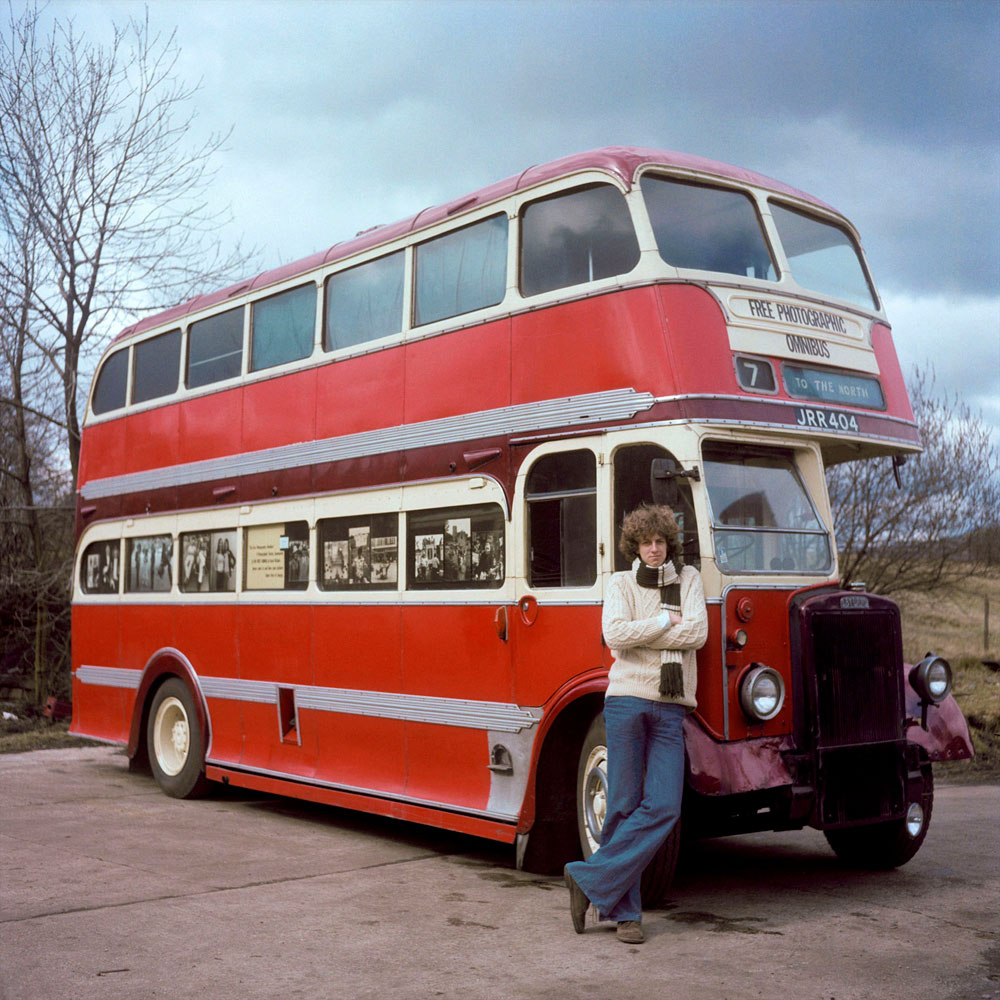
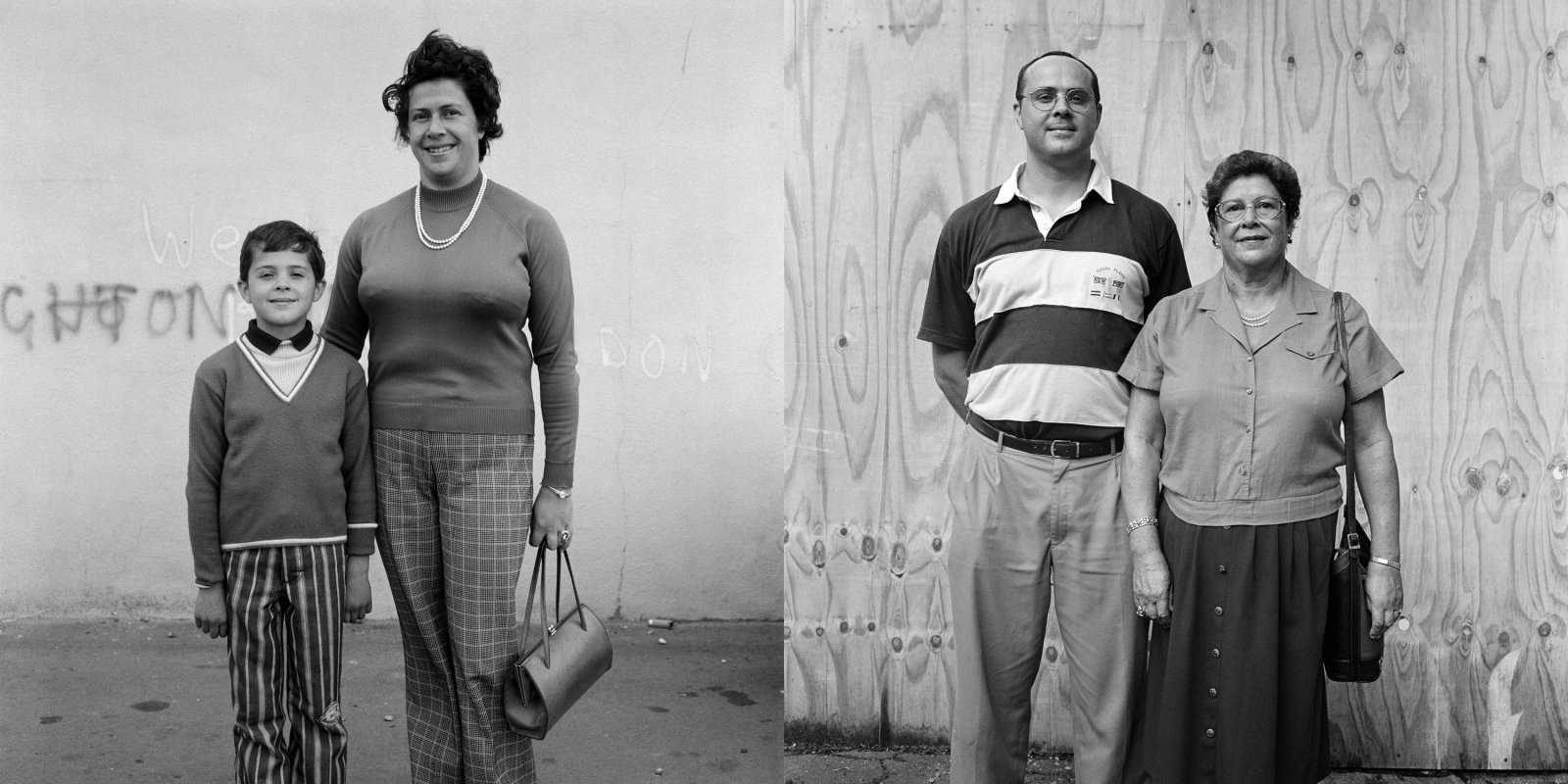
In 1973, Meadows, aged 21, also bought a 25-year-old Leyland PD1 double-decker bus for £360.20. He removed the seats to make space for a darkroom and living quarters and named it the Free Photographic Omnibus. He spent 14 months taking his Greame Street studio philosophy of free portraits on tour around England. Original photographs from the journey appear in the retrospective, along with a selection from a follow-up project in which Meadows sought out his Photobus subjects more than 20 years later to re-photograph them for National Portraits: Now and Then, 1995-2000.
Other notable works displayed include Decline in the Cotton Industry, 1975-1978, Welfare State International, 1976-1983, and Nattering in Paradise, 1984-1987. The gallery will also screen a selection of Meadows’ Digital Storytelling films. Condensing personal stories into two-minute features of approximately 250 heartfelt words and 12 images, he created “multimedia sonnets from the people”, leading American commentator J.D Lasica to call him “one of the icons of the Digital Storytelling movement.”
This exhibition and the accompanying publication is the product of research by Professor Val Williams as part of an ongoing study into British photography of 1970s and 1980s at the University of the Arts London. It is preceded by the research project, The New British Photography, 1968-1981, funded by the Arts and Humanities Research Council.
Together Val Williams and Daniel Meadows have brought to light the photographer’s incredible archive of prints and negatives, along with ephemera and audio recordings. They have unearthed unpublished and sometimes forgotten treasures which add to a remarkable document – a dramatic, moving and empathetic evocation of a recognisable, yet increasingly alien era.
Press release from the National Science and Media Museum website





























 Art Blart _ art and cultural memory archive
You must be logged in to post a comment.