Exhibition: ‘Building the Revolution: 
Soviet Art and Architecture 1915-1935 with photographs by Richard Pare
’ at Martin-Gropius-Bau, Berlin

Exhibition dates: 5th April – 9th July 2012
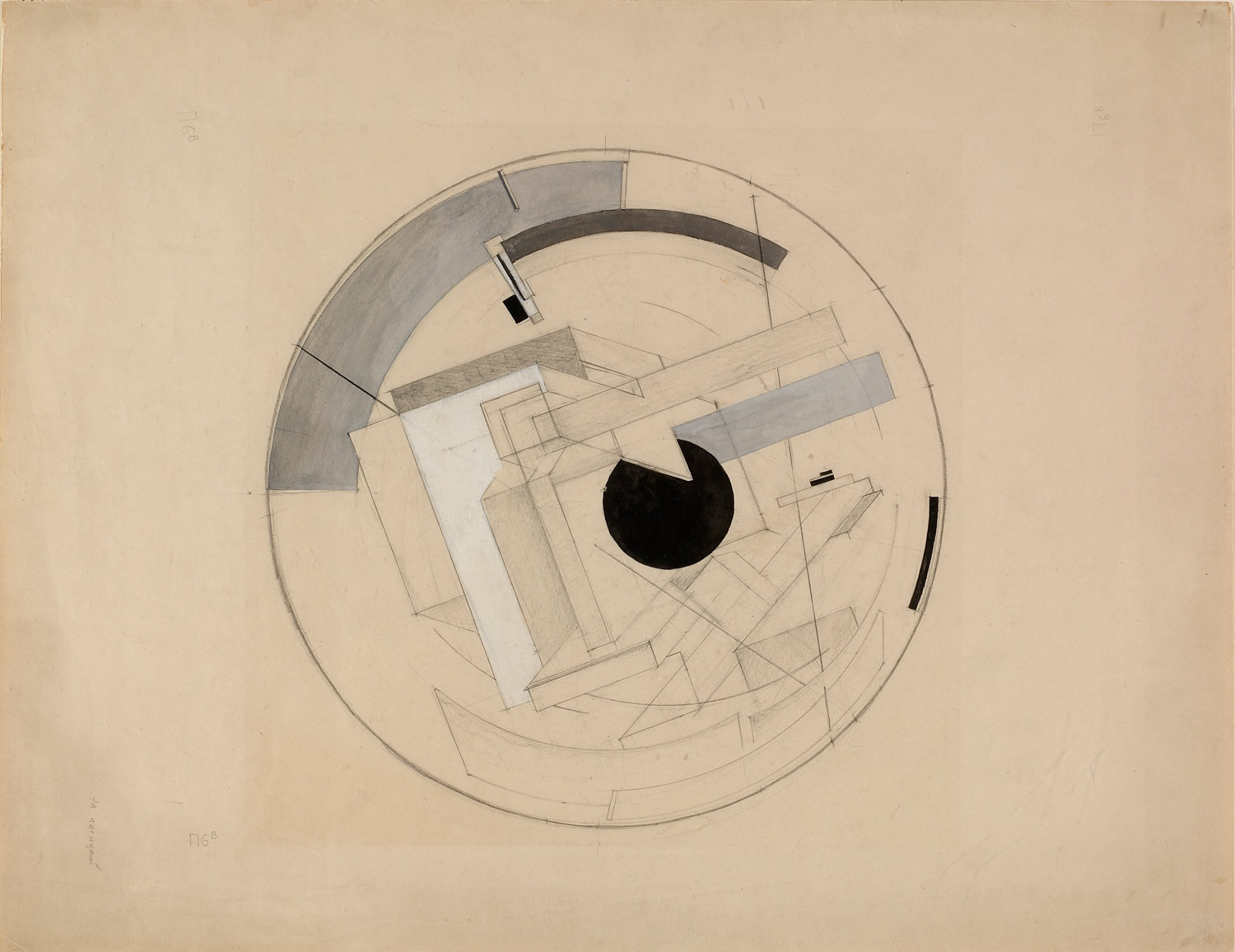
 

El Lissitzky (Russian, 1890-1941) 'Sketch for Proun 6B' 1919-1921


El Lissitzky (Russian, 1890-1941)
Sketch for Proun 6B
1919-1921
Pencil and gouache on paper
34.6 x 44.7cm
© Courtesy the State Museum of Contemporary Art
Costakis Collection, Thessaloniki


Ooh, ooh, ooh, I’m in love with the design and the photograph of the Gosplan Garage! The garage survived the Second World War but, like the Cathedral Sagrada Familia in Barcelona, it is now hemmed in and surrounded by cars and apartments (see the YouTube video GosPlan Garage (1934-1936) by Konstantin Melnikov). Looking at early photographs of both buildings – in the basement of the Sagrada Familia if you go, the Cathedral surrounded by green fields and cows – you realise what wonderful space they had to breathe, to exist in the world. Unfortunately, no more!

Dr Marcus Bunyan


Many thankx to Martin-Gropius-Bau for allowing me to publish the photographs in the posting. Please click on the photographs for a larger version of the image.
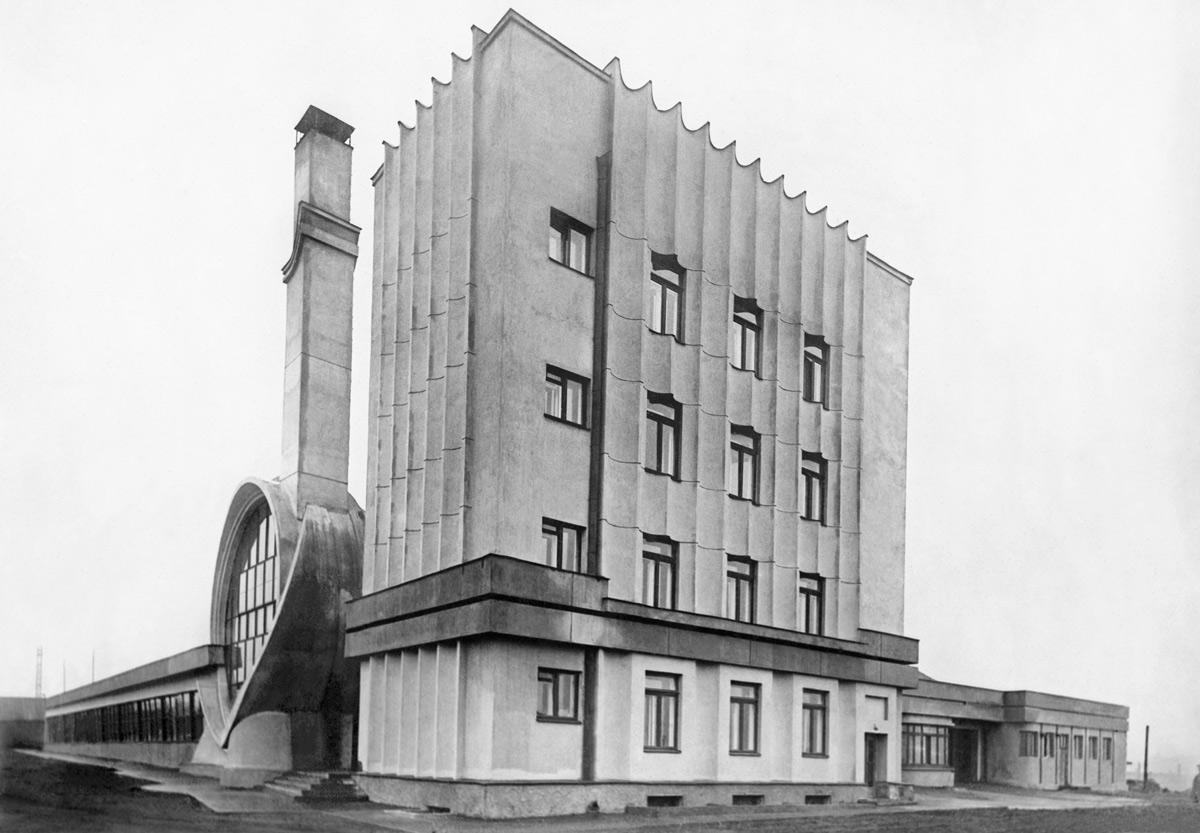


Photographer unknown. 'Gosplan Garage: general view' c. 1936


Photographer unknown
Gosplan Garage: general view
c. 1936
Archival Index Card and photographs(s)
13.6 x 20cm
Architects: Konstantin Melnikov with V. I. Kurochkin, 1936
© Courtesy the Department of Photographs, Schusev
State Museum of Architecture, Moscow


Melnikov, Konstantin Stepanovich (1890-1974)

Born on the outskirts of Moscow into a poor family of peasant origin, Melnikov served a short apprenticeship as an icon painter and was then apprenticed to an engineering firm, one of whose owners noticed his talent for drawing and sent him to the Moscow Institute for Painting, Sculpture and Architecture. He graduated initially in painting and then in 1917 in architecture. From 1918 he worked in a Mossovet architectural studio under Aleksei Schusev and Ivan Zholtovskii but his early projects for housing schemes show him abandoning the Classicism of his teachers. In his pavilion for the Makhorka tobacco firm at the 1923 All-Union Agricultural Exhibition Melnikov developed this exuberant angularity by giving different parts of the pavilion different heights and setting the sloping roofs at right angles to each other. Irregular fenestration and an external staircase – crowded with visitors in some photographs – add to the sense of animation. The construction is entirely of timber, the first evidence of Melnikov’s abiding interest in combining traditional materials with avant-garde design. His Soviet Pavilion for the 1925 Exposition Internationale des Arts Décoratifs et Industriels Modernes in Paris would also feature timber construction, an animated roofscape and an external staircase. However, it achieved a more logical design by simplifying the plan into a rectangle bisected by stairs rising and descending across its centre. During the second half of the 1920s Melnikov completed five workers’ clubs in the Moscow region for the Rusakov (1927), Frunze, Kauchuk, Pravda and Burevestnik trades unions. He favoured interiors with large flexible spaces, sometimes using movable panels, and opposed the Functionalist tendency to create a large number of highly specialised areas. This gave him the freedom to mould bold internal volumes and create dramatic exteriors. His own house, consisting of two interlocking cylinders, was designed on the same principles (1927-1931). His garages – Bahkmetevskaia, Novo Ryanskaia and Gosplan (1936) – on the other hand, though still characterised by dramatic exteriors, are based on a careful analysis of vehicular movement. Despite being briefly associated with ASNOVA, Melnikov appears a rather solitary figure, his beliefs about the design process differing from the main groupings of 1920s architects. Heavily criticised in the 1930s for his ‘Formalism’, he was largely excluded from employment and teaching and no significant buildings were constructed to his design during the last 40 years of his life.
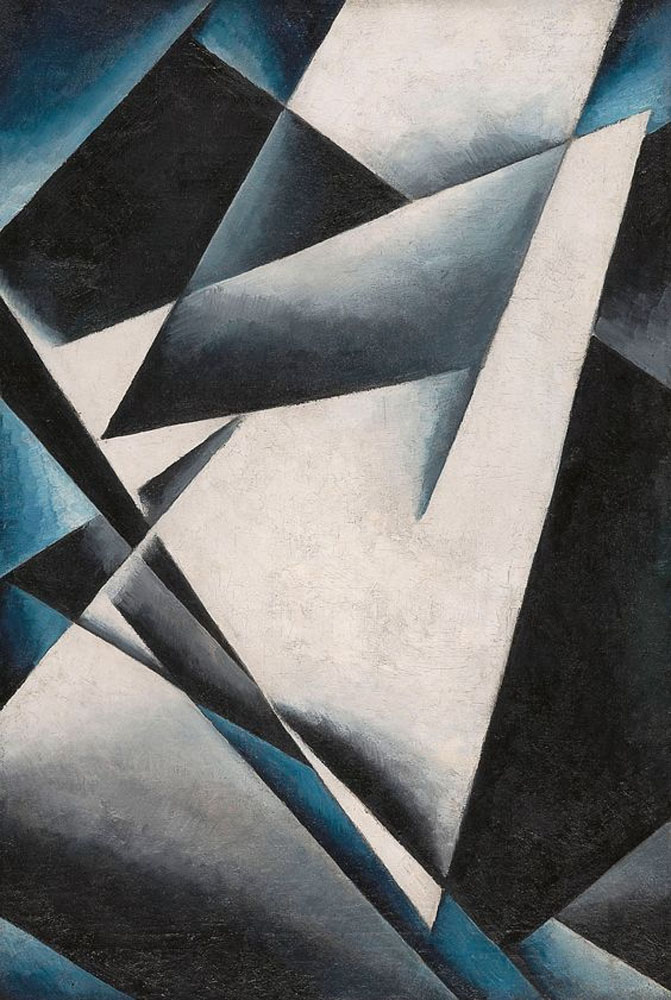
 

Liubov Popova (Russian-Soviet, 1889-1924) 'Painterly Architectonics' 1918-1919


Liubov Popova (Russian-Soviet, 1889-1924)
Painterly Architectonics
1918-1919
Oil on canvas
73.1 x 48.1cm
State Museum of Contemporary Art – G. Costakis Collection, Thessaloniki, Greece
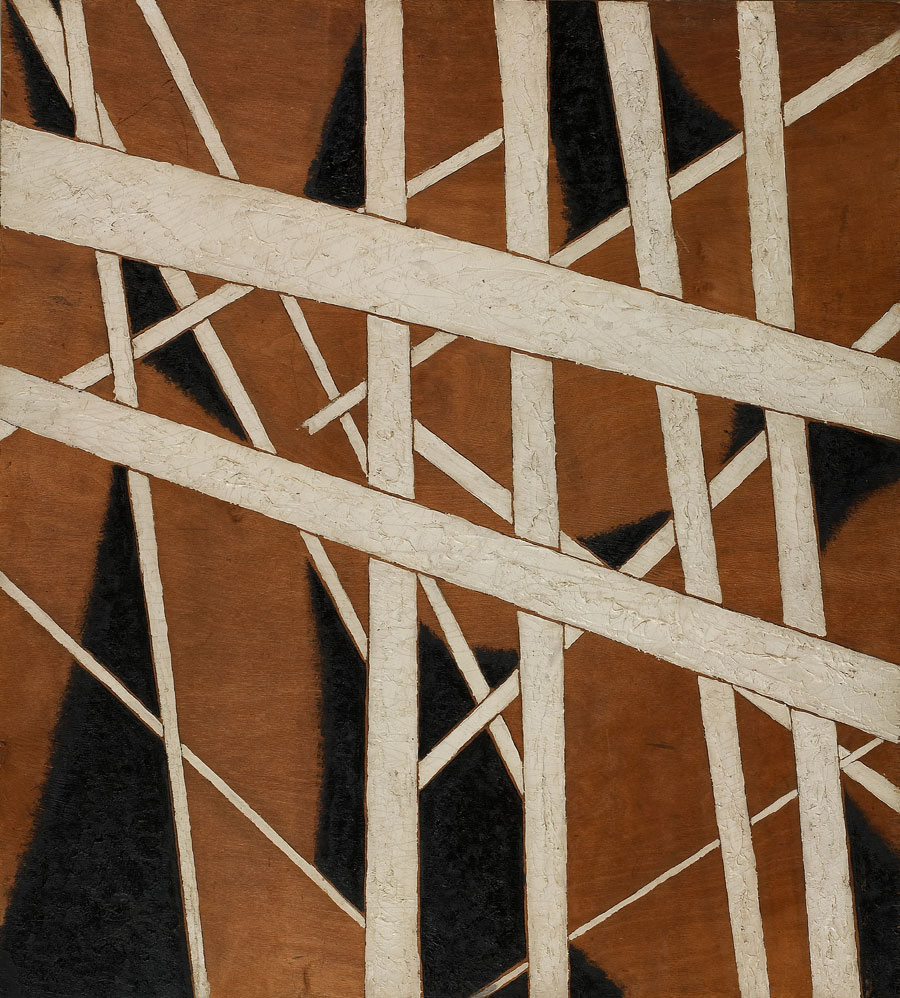
 

Liubov Popova (Russian, 1889-1924) 'Spatial Force Construction' 1921


Liubov Popova (Russian, 1889-1924)
Spatial Force Construction
1921
Oil and marble dust on plywood
71 x 63.9cm
© Courtesy the State Museum of Contemporary Art
Costakis Collection, Thessaloniki


Photographer unknown.
Liubov Popova (Russian, 1889-1924) 'Maquette for City of the Future' 1921


Photographer unknown
Liubov Popova (Russian, 1889-1924)
Maquette for City of the Future
1921
© Studio International
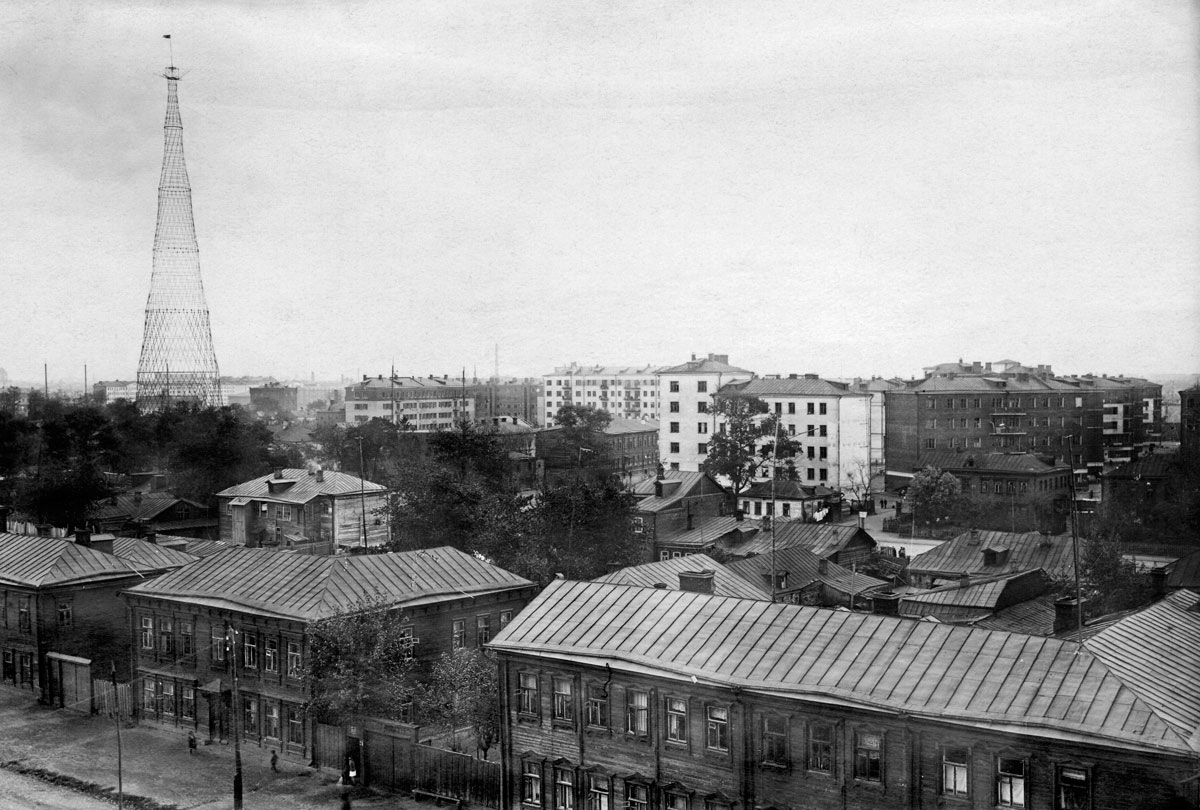
 

Photographer unknown. 'Havsko-Shabolovskii residential block and Shabolovska Radio tower viewed from the walls of the Donskoy Monastery' 1929


Photographer unknown
Havsko-Shabolovskii residential block and Shabolovska Radio tower viewed from the walls of the Donskoy Monastery
1929
Archival Index Card and photographs(s)
11.5 x 16.9cm
© Courtesy the Department of Photographs, Schusev
State Museum of Architecture, Moscow
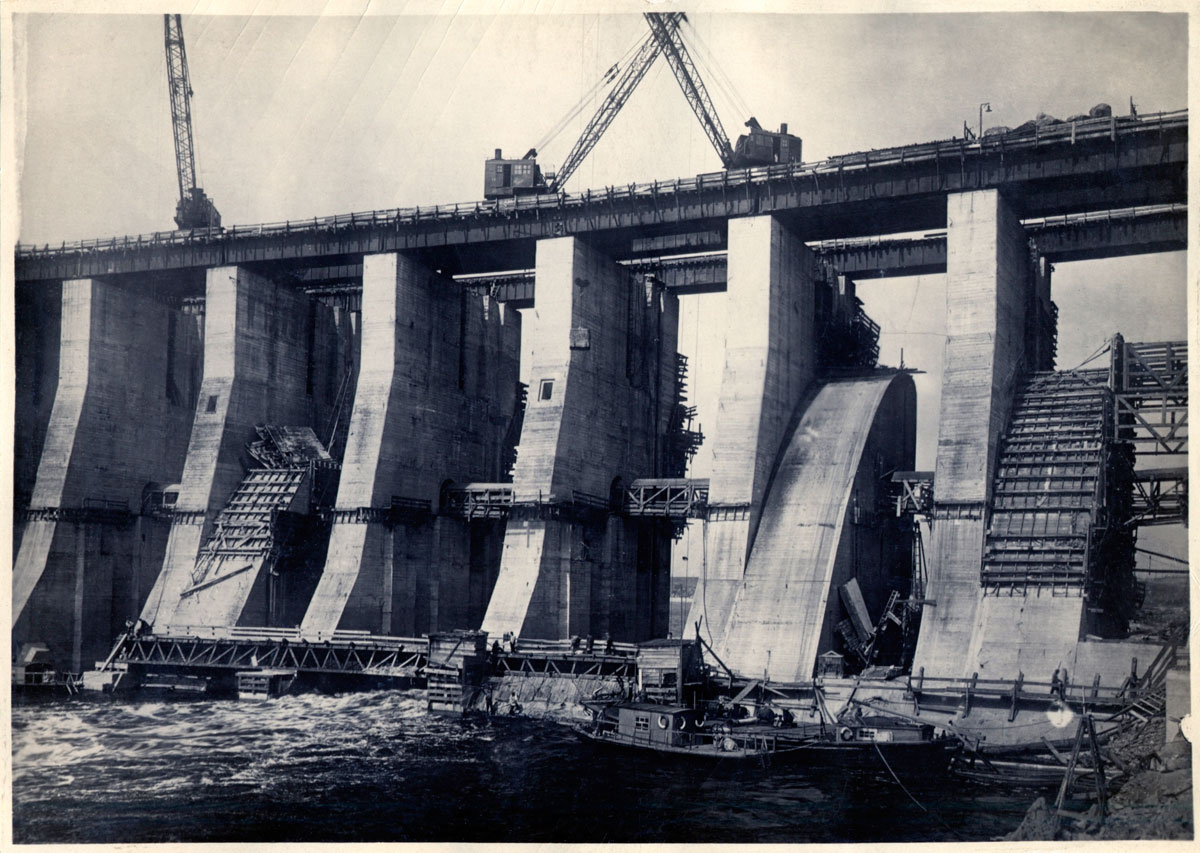
 

Photographer unknown. 'DneproGES: dam under construction' 1931


Photographer unknown
DneproGES: dam under construction
1931
Archival Index Card and photographs(s)
12.3 x 17.3cm
Aleksandr Vesnin, Nikolai Kolli, Georgii Orlov, Sergei Andrievskii, 1927-32
© Courtesy the Department of Photographs, Schusev
State Museum of Architecture, Moscow


The DneproGES Dam and Hydroelectric Power Station (designed with Nikolai Kolli, Georgii Orlov and Sergei Andrievskii, 1927-32) represents not only Vesnin’s first important industrial project but also a major achievement of Stalin’s First Five Year Plan.
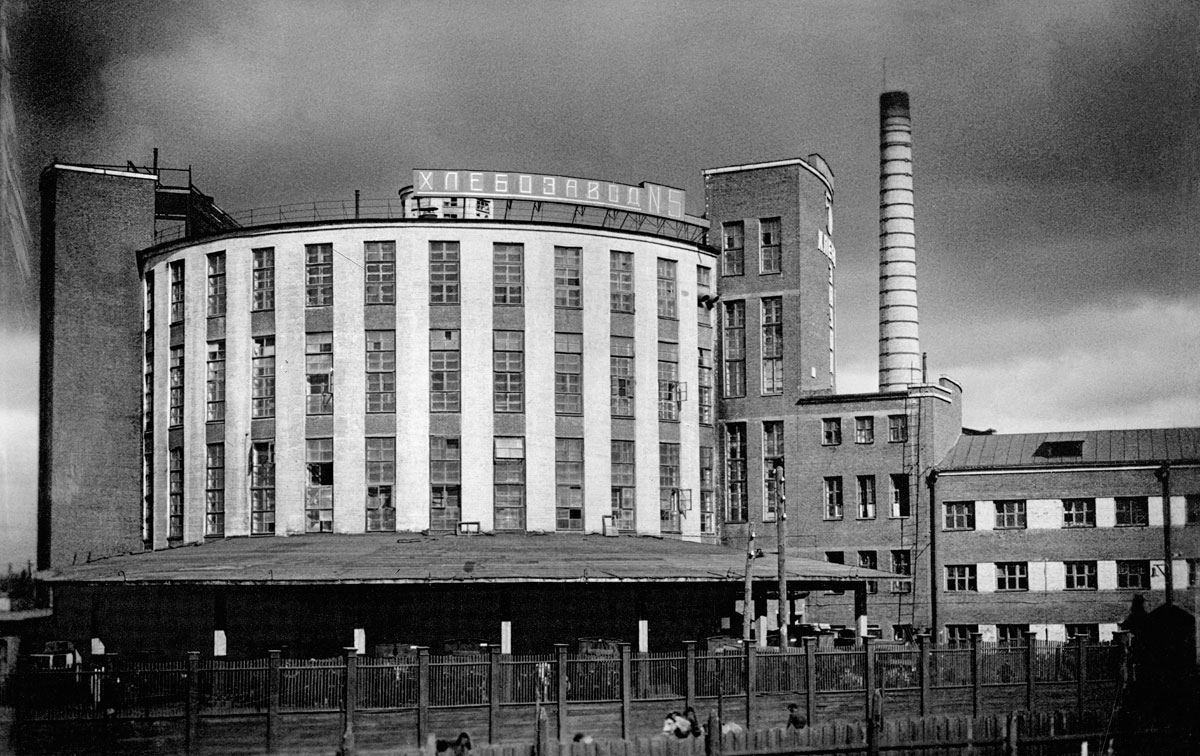
 

Photographer unkown. 'Bakery: exterior showing the four production levels' 1938


Photographer unkown
Bakery: exterior showing the four production levels
1938
Archival Index Card and photographs(s)
9.3 x 14.6cm
Engineer: Georgii Marsakov, 1931
© Courtesy the Department of Photographs, Schusev
State Museum of Architecture, Moscow


In 1931 the engineer Georgii Marsakov designed a mass-production bakery in Moscow and the Narvskii Factory Kitchen opened in St Petersburg to provide communal eating facilities for local residents. Rapid expansion of motorised transport called for a significant reappraisal of the garage, for which Konstantin Melnikov produced four highly innovative designs in Moscow.


The exhibition Building the Revolution sheds light on an area of the Soviet avant-garde that has remained relatively unknown in Europe and beyond: architecture. Even in Russia and the other successor states of the former Soviet Union the names of most of the architects have been largely forgotten. Their structures have not become part of the collective cultural memory to the extent that the “New Building” movement in the West has.

The exhibition presents this impressive chapter in the history of the avant-garde in an unusual way in that it binds together three thematic strands. Selected works of the early avant-garde, such as those of El Lissitzky, Gustav Klutsis, Liubov Popova, Alexander Rodchenko or Vladimir Tatlin, show the artists’ intense preoccupation from 1915 onwards with questions of form, space and texture. After the Revolution they were active in the various bodies concerned with the implementation of these ideals, such as the Commission for the Synthesis of Painting, Sculpture and Architecture (1919-1920). It was there that the architects Nikolai Ladovskii, Vladimir Krinsky and the painter Rodchenko created the first designs for town planning and communal housing. In 1919 Tatlin produced his famous design for a “Monument to the Third International” – a complex engineering structure with moving spaces. Although never built, its visionary potential, and dynamic formal language influenced the later architecture of Constructivism. Whereas the impressive pictures and drawings of the Costakis Collection in Thessaloniki make clear what a role was played by architectural themes in the early artistic designs, vintage prints from the Shchusev State Museum of Architecture in Moscow give an idea of the unleashing of architectural energies which took place a few years later. The historical photographs show that the new structures embodied a new age, not only in a typological sense, but in terms of scale. They towered above the old urban buildings and acted as a torch signalling the coming industrialisation and transformation of the country. The photographs of the renowned British architectural photographer, Richard Pare, on the other hand, lead the viewer back to the present. Pare had begun to rediscover this lost avant-garde in 1993. In the course of several trips to Moscow and St. Petersburg, as well as to the former Soviet republics, he documented what remained of the buildings. His shots bring out their beauty and the inventiveness of their creators while at the same time tracing the course of their decay. In that sense they draw a picture of a post-Soviet society that is unaware of its extraordinary heritage.

What was new about this architecture was not only the formal idiom, but also the tasks it was supposed to perform. With the building of the new society workers’ clubs, trade union houses, communal apartments, sanatoria for the workers, state-owned department stores, party and administrative buildings, as well as power stations and industrial plants to modernise the country.

The first important structure to be erected after the Revolution was Vladimir Shukhov’s Shabolovka Radio Tower, built in the years 1919-1922 and consisting of six hyperboloids mounted on top of one another. At 150 metres it was the tallest tower in the world of its kind at the time. Its elegant filigree structure became a symbol of how all that was old and ponderous could be surmounted. Rodchenko’s well-known photos of the radio tower – today seen as icons of avant-garde photography – stress the dynamics from above and below. Pare’s shots of the tower focus more on details, thus emphasising the construction techniques of the time.

The achievements of Russian engineers like Shukhov, with their novel technical designs, influenced the development of an architecture that used clear, geometrical forms that were in keeping with its functions. In the course of the 1920s there arose two clearly defined tendencies in architecture: Rationalism and Constructivism. In 1923 representatives of the first founded the Association of New Architects (ASNOVA), whose leading light was Ladovskii. Among the Constructivists Alexander Vesnin and Moisei Ginzburg played major roles. In 1925 the Constructivist architects of Moscow joined together to form the Society of Contemporary Architects (OSA). There were also other tendencies as well as outstanding individualists, such as Konstantin Melnikov. Despite polemical squabbles among the tendencies a modern style of building had consolidated itself by the end of the 1920s.

In the course of the industrialisation of the country under the first Five-Year Plan (1928-1932) the building of new towns proceeded apace. This gave rise to questions concerning the concept of the city, for which various solutions were proposed, such as the “horizontal skyscrapers” for Moscow or Ladovskii’s “parabola” as the basic pattern of urban development. Quite a few of the buildings photographed by Pare were developed for communal living. The Narkomfin (People’s Commissariat for Finance) residential block built in Moscow in 1930 by Ginzburg and Ignati Milinis was one of the most experimental projects of that era. In addition to two floors of apartments it contained a communal canteen, a crèche, a gymnasium and a scullery. Other types of construction designed to promote the collectivist way of life were canteen kitchens, three of which were built in what was then Leningrad by a group associated with Iosif Meerzon and representing Rationalism. Workers’ clubs and palaces of culture offered numerous educational opportunities, symbolising with their dynamic forms the role of the new class in the urban environment.

When in the mid-1930s the political climate in the Soviet Union underwent a fundamental change, and a monumental style of architecture based on Classical models found favour with the powers that be, this exciting chapter of avant-gardism came to an end and sank into oblivion.
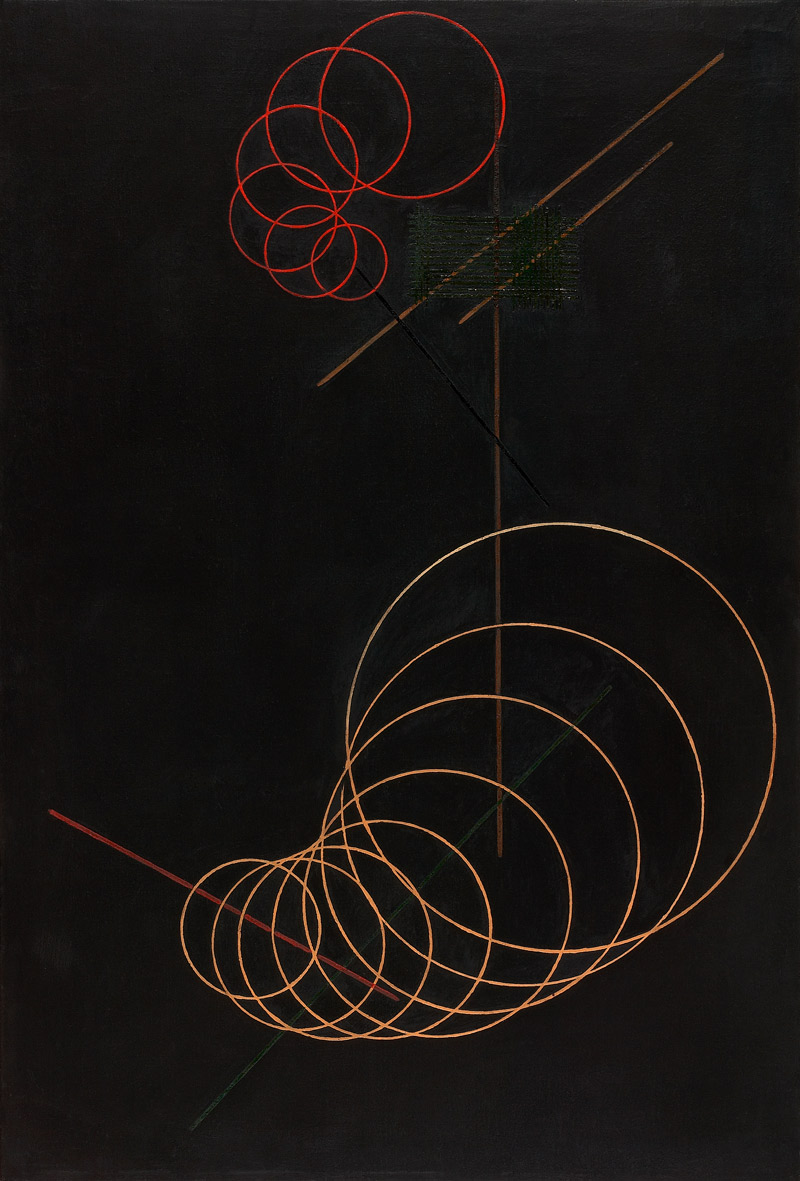
 

Alexander Rodchenko (Russian, 1891-1956) 'Linearism' 1920


Alexander Rodchenko (Russian, 1891-1956)
Linearism
1920
Oil on canvas
110.5 x 78cm
© Courtesy the State Museum of Contemporary Art
Costakis Collection, Thessaloniki
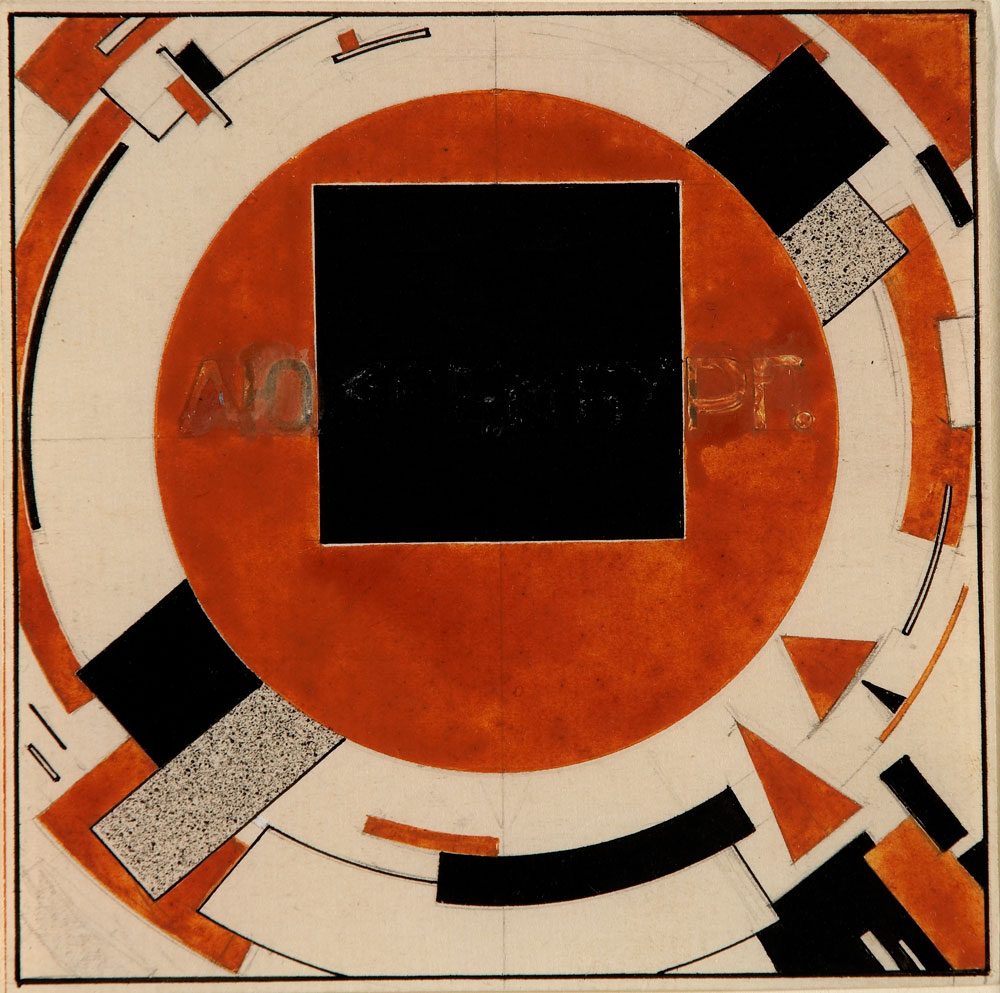
 

El Lissitzky (Russian, 1890-1941) 'Monument to Rosa Luxemburg' 1919-1921


El Lissitzky (Russian, 1890-1941)
Monument to Rosa Luxemburg
1919-1921
Pencil, ink and gouache on paper
9.7 x 9.7cm
© Courtesy the State Museum of Contemporary Art
Costakis Collection, Thessaloniki
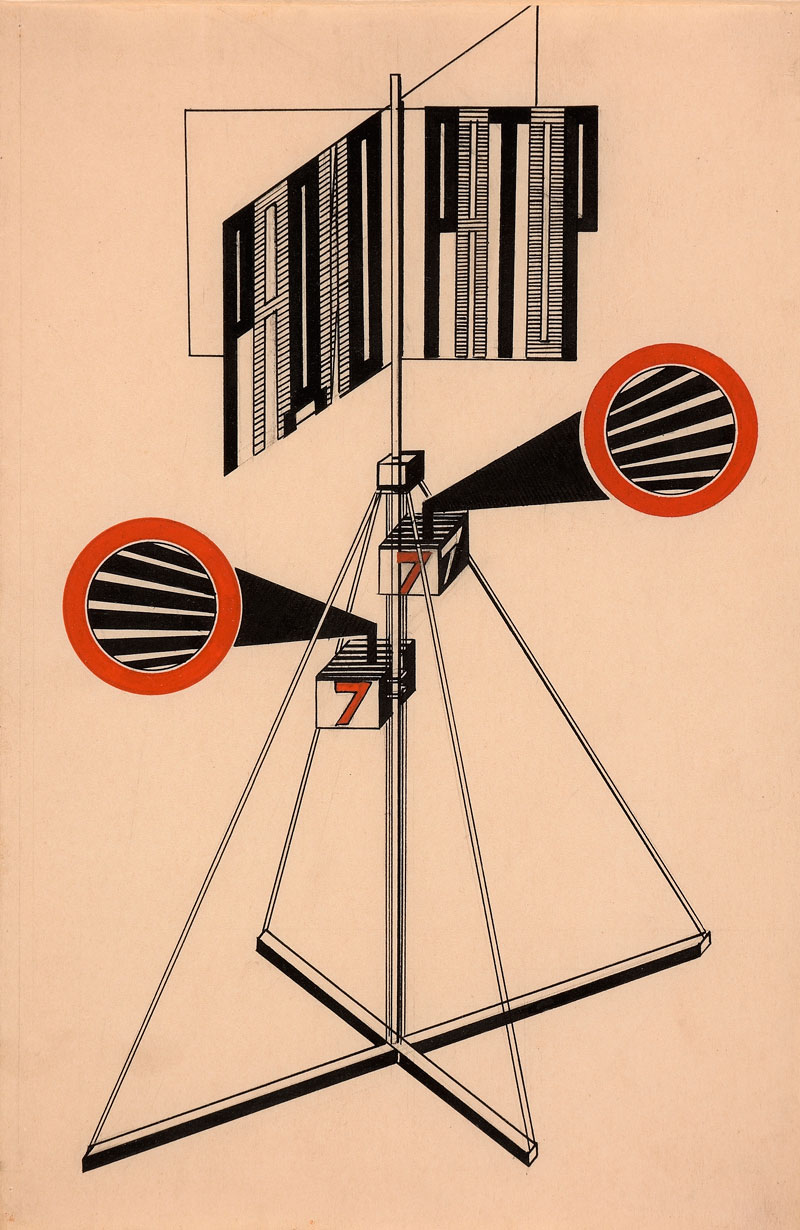
 

Gustav Klutsis (Latvian, 1895-1938) 'Design for Loudspeaker No.7' 1922


Gustav Klutsis (Latvian, 1895-1938)
Design for Loudspeaker No.7
1922
Pencil, ink and gouache on paper
26.9 x 17.7cm
© Courtesy the State Museum of Contemporary Art
Costakis Collection, Thessaloniki
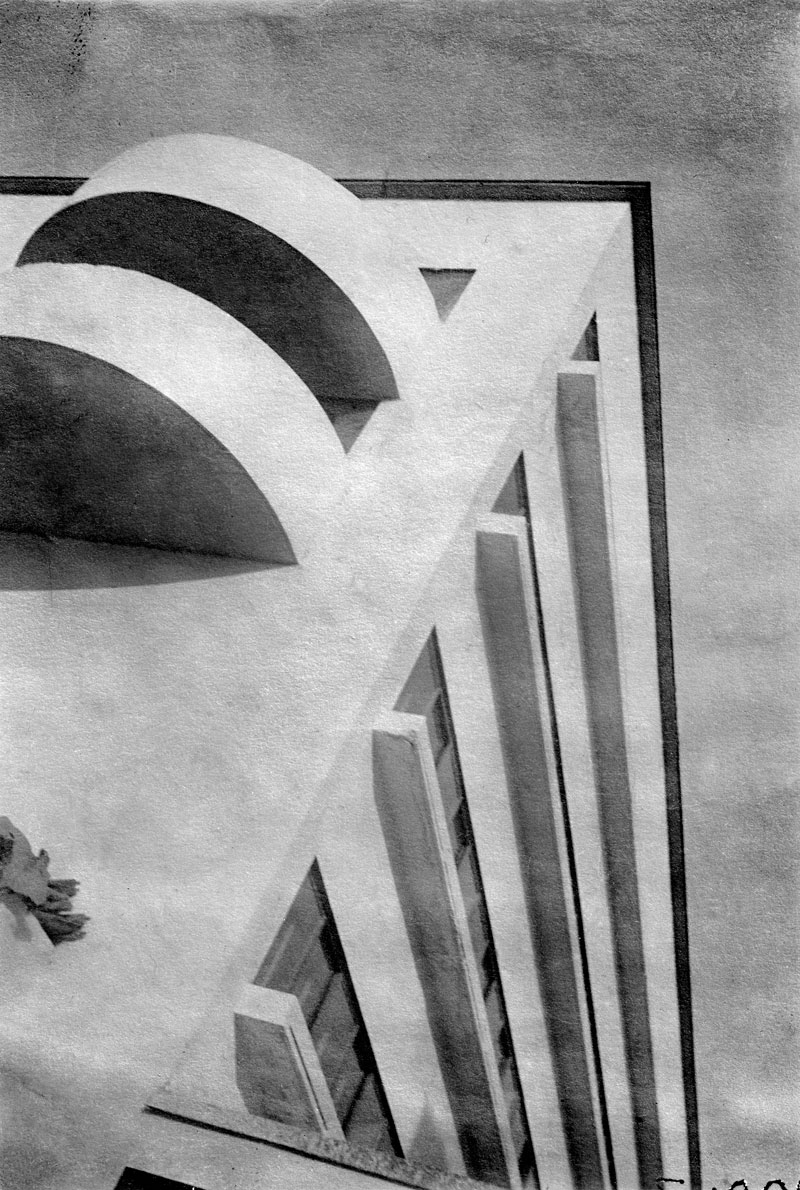
 

M.A. Ilyin (Russian) 'Narkomfin Communal House: corner detail of residential block' 1931


M.A. Ilyin (Russian)
Narkomfin Communal House: corner detail of residential block
1931
Archival Index Card and photographs(s)
11.6 x 8cm
Architects: Moisei Ginzburg, Ignatii Milinis, 1930
© Courtesy the Department of Photographs, Schusev
State Museum of Architecture, Moscow


Moisei Ginzburg

There was also the exchange with the Europeans. Le Corbusier came to Moscow and met and shared ideas with a number of architects including Moisei Ginzburg, the founder of the Constructivist movement and its chief theoretician. His 1924 treatise Style and Epoch was the most influential document of the Constructivist movement. Because he was Jewish, he was prevented from undertaking his architectural training in Russia and went to the École des Beaux-Arts in Paris and the Accademia di Belle Arti in Milan. Aleksandr Rodchenko travelled to Paris with Melnikov, who built the Soviet Pavilion at the 1925 Exposition Internationale des Arts Décoratifs et Industriels Modernes in Paris. They were all very well versed in European culture of the time. Ginzburg’s Style and Epoch responds to Le Corbusier’s Vers une architecture of the previous year, but Ginzburg takes the warship and the communal house rather than the luxury liner and the private villa as his examples.
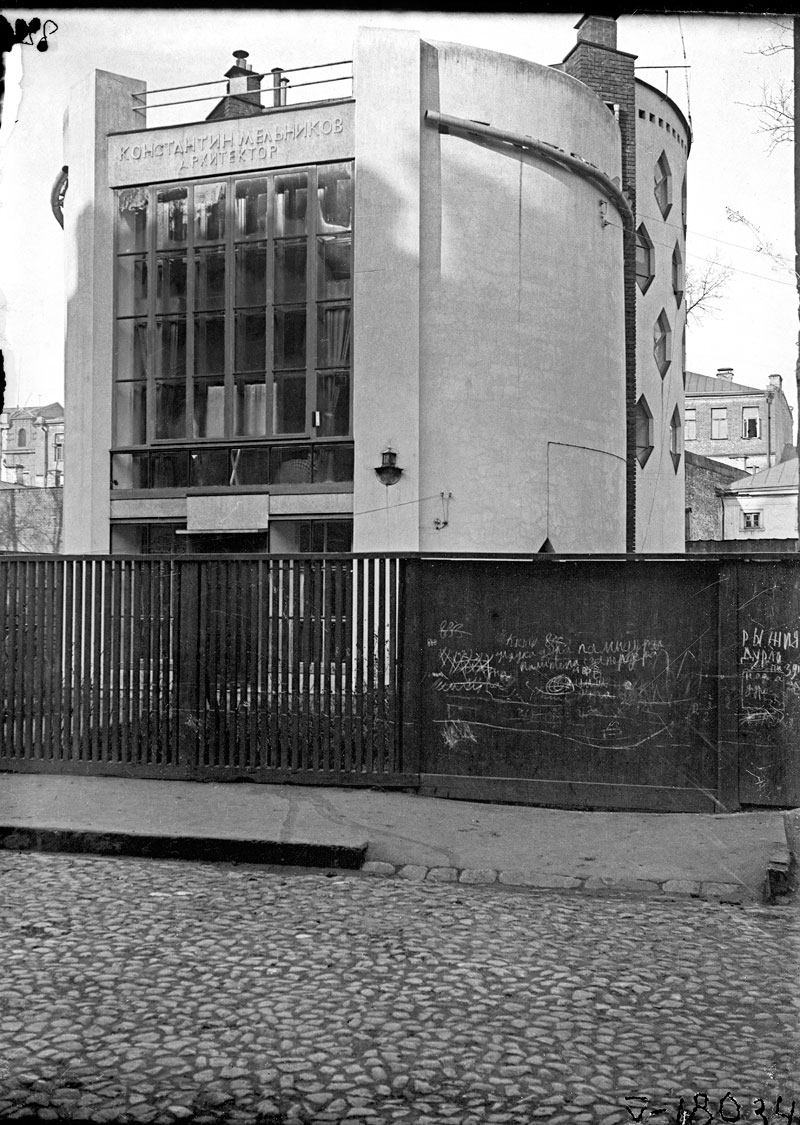
 

M.A. Ilyin (Russian) 'Melnikov House: entrance façade' 1931


M.A. Ilyin (Russian)
Melnikov House: entrance façade
1931
Archival Index Card and photographs(s)
11.7 x 9cm
Konstantin Melnikov, 1927-31
© Courtesy the Department of Photographs, Schusev
State Museum of Architecture, Moscow
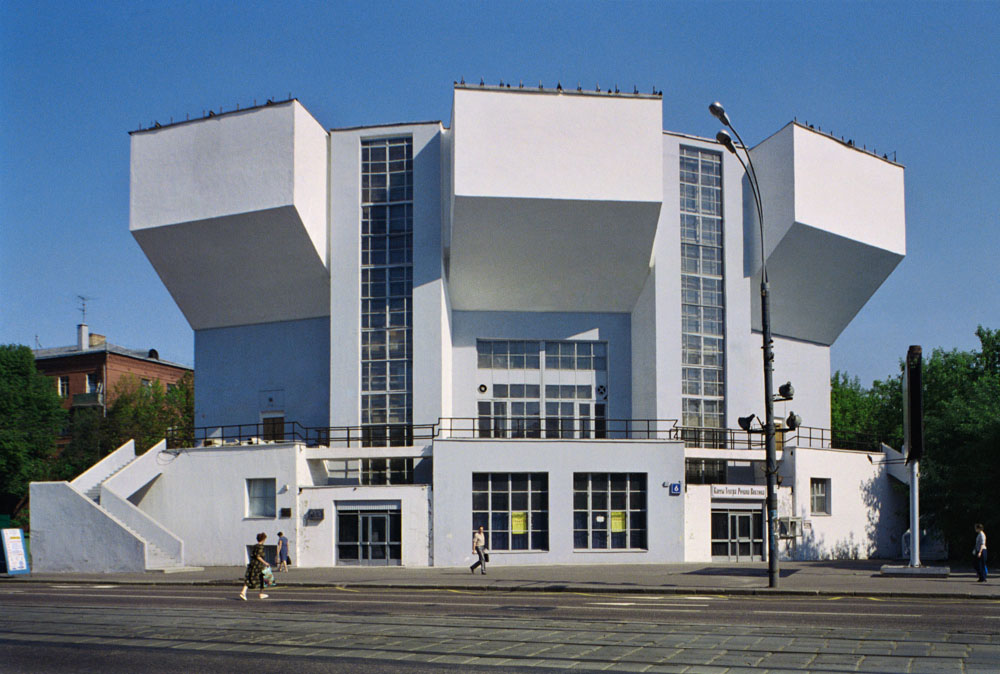
 

Richard Pare (English, b. 1948) 'Rusakov Workers' Club: general view showing the three auditorium segments' 1995


Richard Pare (English, b. 1948)
Rusakov Workers’ Club: general view showing the three auditorium segments
1995
Gelatin silver print
50.8 x 61cm
Courtesy Kicken Berlin
© Richard Pare


The Rusakov Workers’ Club (Russian: Дом культуры имени И.В.Русакова (рабочий клуб)) in Moscow is a notable example of constructivist architecture. Designed by Konstantin Melnikov, it was constructed in 1927–28. The club is built on a fan-shaped plan, with three cantilevered concrete seating areas rising above the base. Each of these volumes can be used as a separate auditorium, and combined they result in a capacity of over 1,000 people. At the rear of the building are more conventional offices. The only visible materials used in its construction are concrete, brick and glass. The function of the building is to some extent expressed in the exterior, which Melnikov described as a “tensed muscle”.

Text from the Wikipedia website
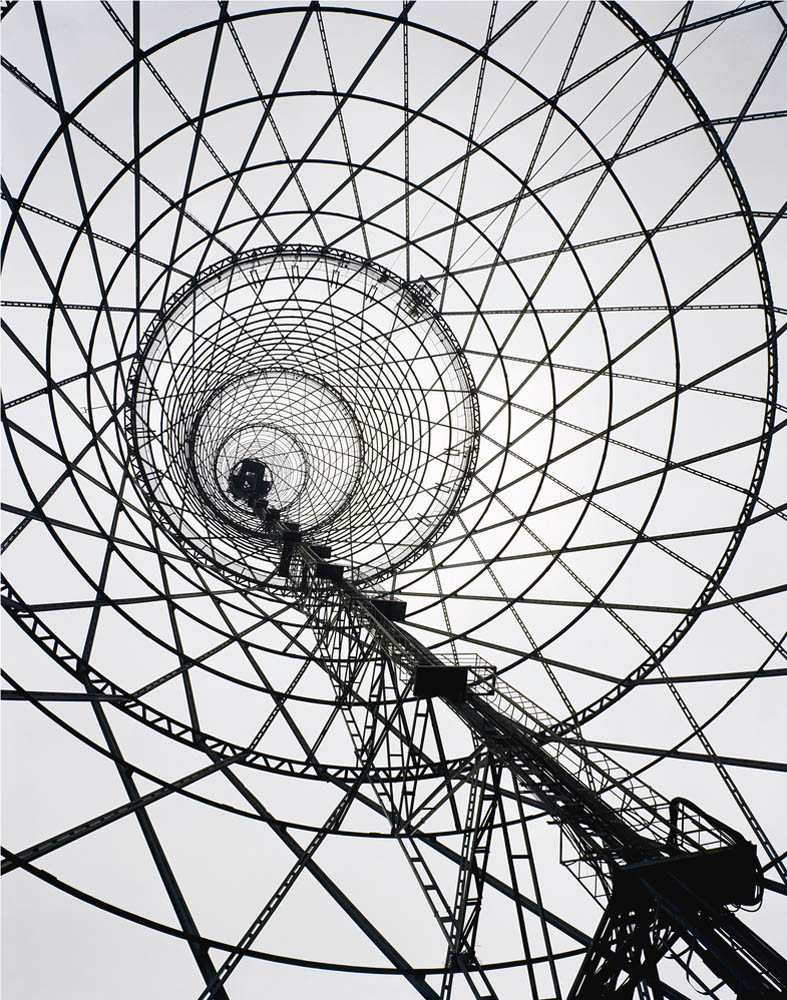
 

Richard Pare (English, b. 1948) 'Shabolovka Radio Tower' 1998


Richard Pare (English, b. 1948)
Shabolovka Radio Tower
1998
Gelatin silver print
154.8 x 121.9cm
Richard Pare, courtesy Kicken Berlin
© Richard Pare


The Shukhov Radio Tower (Russian: Шуховская башня), also known as the Shabolovka Tower (Шаболовская башня), is a broadcasting tower deriving from the Russian avant-garde in Moscow designed by Vladimir Shukhov. The 160-metre-high (520 ft) free-standing steel diagrid structure was built between 1920 and 1922, during the Russian Civil War.

Text from the Wikipedia website


Martin-Gropius-Bau Berlin
Niederkirchnerstraße 7
Corner Stresemannstr. 110
10963 Berlin
Phone: +49 (0)30 254 86-0

Opening hours:
Wednesday to Monday 10 – 19 hrs
Tuesday closed

Martin-Gropius-Bau website

LIKE ART BLART ON FACEBOOK

Back to top

Exhibition: ‘Entre Nous: The Art of Claude Cahun’ at the Art Institute of Chicago

Exhibition dates:  25th February – 3rd June 2012


Claude Cahun (French, 1894-1954) 'Autoportrait' 1929


Claude Cahun (French, 1894-1954)
Autoportrait
1929
Gelatin silver print
24 x 19cm
Musée des Beaux-Arts de Nantes
© RMN/Gérard Blot


“In many ways, Cahun’s life was marked by a sense of role reversal, and her public identity became a commentary upon not only her own, but the public’s notions of sexuality, gender, beauty, and logic. Her adoption of a sexually ambiguous name, and her androgynous self-portraits display a revolutionary way of thinking and creating, experimenting with her audience’s understanding of photography as a documentation of reality. Her poetry challenged gender roles and attacked the increasingly modern world’s social and economic boundaries. Also Cahun’s participation in the Parisian Surrealist movement diversified the group’s artwork and ushered in new representations. Where most Surrealist artists were men, and their primary images were of women as isolated symbols of eroticism, Cahun epitomised the chameleonic and multiple possibilities of the female identity. Her photographs, writings, and general life as an artistic and political revolutionary continue to influence countless artists, namely Cindy Sherman, Nan Goldin and Del LaGrace Volcano.”


Text from the Wikipedia website


Cahun was a resistance fighter during the Second World War, was arrested, sentenced to death and survived. She lived with her longtime female partner and collaborator on Jersey from 1937 until 1954, the year of her death. Entre Nous means “Between Us,” such an appropriate title for their collaboration, love and partnership. What a talent, what a woman and gay to boot!

Dr Marcus Bunyan


Many thankx to the Art Institute of Chicago for allowing me to publish the photographs in the posting. Please click on the photographs for a larger version of the image.


Claude Cahun (French, 1894-1954) 'Autoportrait' 1929


Claude Cahun (French, 1894-1954)
Autoportrait
1929
Gelatin silver print
11.5 x 8.5cm
Jersey Heritage Collection
© Jersey Heritage


Claude Cahun (French, 1894-1954) 'Autoportrait' 1928


Claude Cahun (French, 1894-1954)
Autoportrait
1928
Gelatin silver print
13.9 x 9cm
Jersey Heritage Collection
© Jersey Heritage


Claude Cahun (French, 1894-1954) 'Autoportrait' 1927


Claude Cahun (French, 1894-1954)
Autoportrait
1927
Gelatin silver print
10.4 x 7.6cm
Soizic Audouard Collection


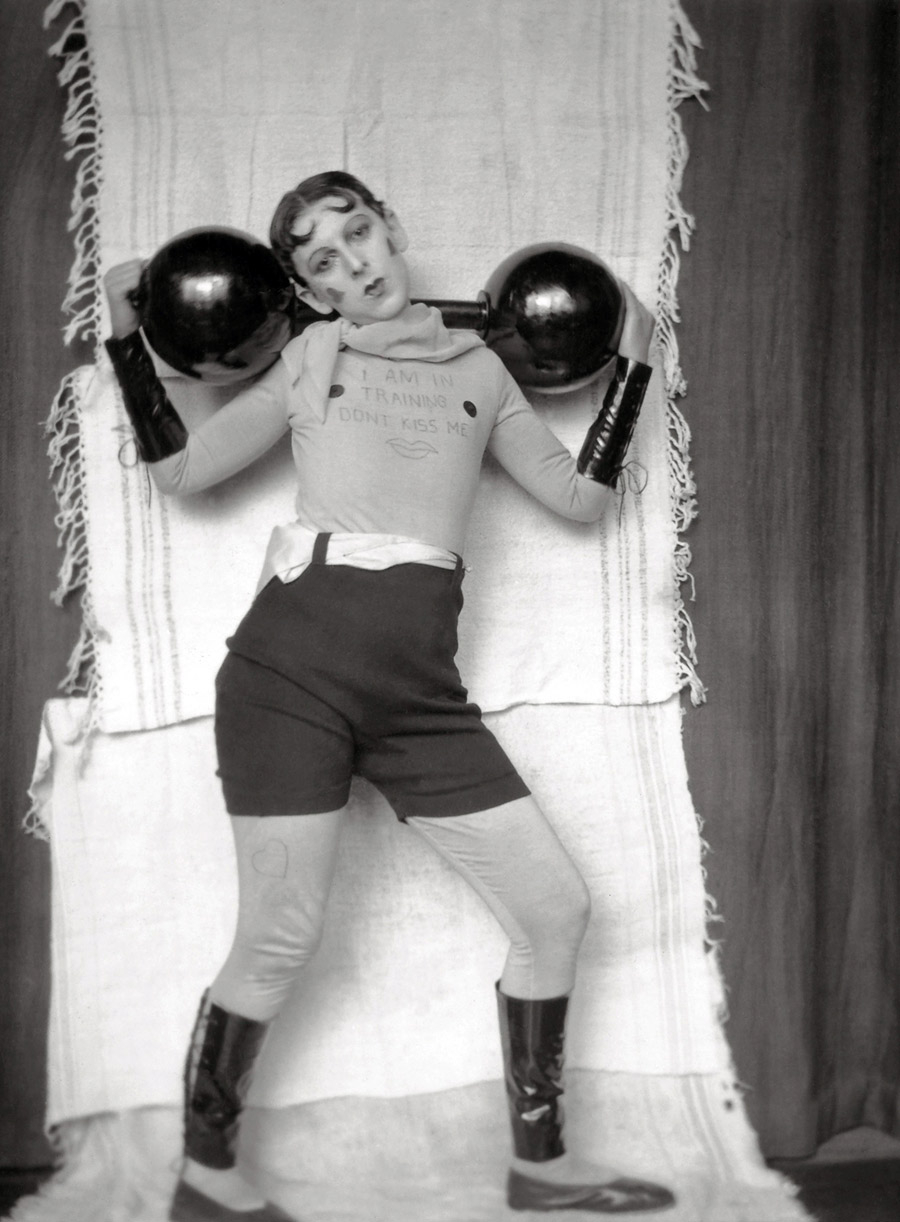
Claude Cahun (1894-1954) has something approaching cult status in today’s art world. However, her work was almost unknown until the early 1980s, when it was championed by the research of François Leperlier, after which exhibitions at the Musée des Beaux-Arts in Nantes (1994) and the Musée d’Art Moderne de la Ville de Paris (1995) brought it to public attention. Her life and work (both literary and artistic) bespeak an extraordinary libertarian personality who defied sexual, social and ethical conventions in what was an age of avant-garde and moral upheaval. Among her many photographs, it is undoubtedly her self-portraits that have aroused the greatest interest in recent years. Throughout her life, Cahun used her own image to dismantle the clichés surrounding ideas of identity. She reinvented herself through photography, posing for the lens with a keen sense of performance and role-play, dressed as a woman or a man, as a maverick hero, with her hair long or very short, or even with a shaved head. This approach was extended in innovative ways in her photographs of objects and use of photomontages, which asserted the primacy of the imagination and of metamorphosis.

By exploring the many different analyses made of Cahun’s work since the 1990s, and ranging across its different themes: from the subversive self-portraits that question identity, to her surrealist compositions, erotic metaphors and political forays, this exhibition confirms the modernity of a figure who, as a pioneer of self-representation and the poetry of objects, has been an important influence for many contemporary artists.

Metamorphoses of identity and the subversion of gender (I)

This set of photographs, going from 1913 to the end of the 1920s, includes some of Cahun’s major works, in which she staged her own persona, emphasising disguise and masks, and working through variations on gender: feminine, masculine, androgyne, undifferentiated. Sexual ambiguity is consciously cultivated and calls into question established norms and conventions. In 1928, she even represented herself with her head shaved, wearing a singlet, in profile, or with her hands against her face, or wearing a loose man’s jacket. Some of the mise-en-scènes from this period seem to anticipate contemporary performance.

Poetics of the object

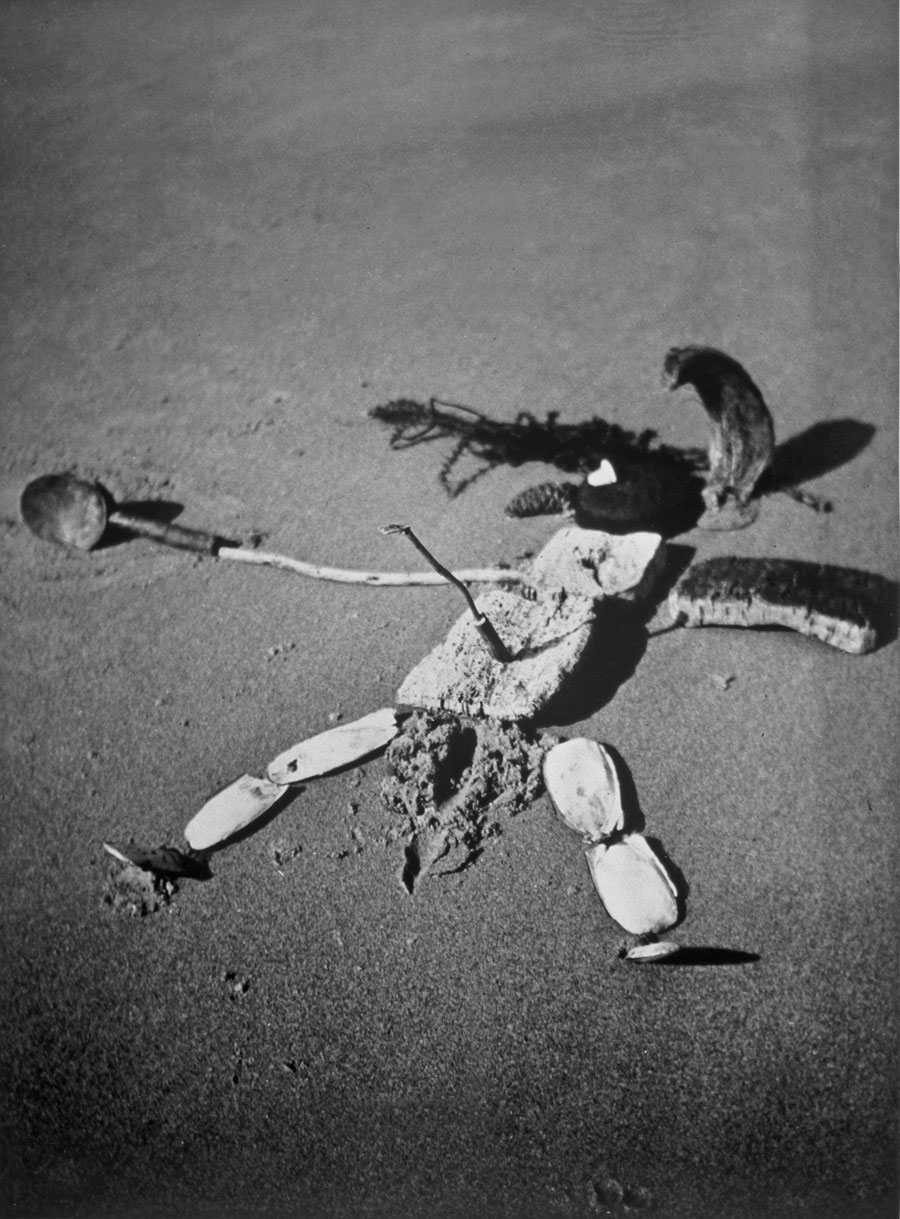
The “assemblages of objects,” which make their appearance in around 1925, inventively explore what at the time was still a rather new form. This work came to wider attention in the Surrealist exhibition at the Charles Ratton gallery, in May 1936, and then with the commissioning of 22 photographic plates to illustrate a book of poems by Lise Deharme, Le Coeur de Pic (1937), prefaced by Paul Eluard. These photographs capture ephemeral set-ups, often in a natural setting (garden, beach). Each “sketch” is a composition of heterogeneous elements, both found and made, such as knickknacks in spun glass, sewing items, twigs, bones, insects, feathers, gloves, pieces of fabric, shoes, tools, etc. This “theatre of objects” has both a visual and symbolic significance, which Cahun explained in her text Prenez garde aux objets domestiques (1936).

Metamorphoses of identity and the subversion of gender (continued)

The 1930s saw Cahun continuing to explore images of the self. However, questions of sexual difference and its social and cultural construction were now less to the fore as she went deeper into the potential of situations and disguises and experimented with duplication in a way that extended the work of the photomontages from the late 1920s.

Metaphors of desire

Eschewing the direct and sometimes reifying display of the female body found in many paintings and photographs, Cahun opted for a more subtle kind of “veiled eroticism” using distance and irony. Here we find some very evocative examples of her calculating games with desire. Whether through the contained display of the body, allegory (the bacchante or faun, surrounded by sensuous vegetation), or anthropomorphic objects (the hermaphroditic “père”), she aimed to capture the essence of desire, to bring out its essential grounding in fantasy.

The two of us. Claude Cahun and Suzanne Malherbe (Marcel Moore)

The photograph Entre nous (1926) clearly establishes the spirit of this section, which evokes various aspects of Claude Cahun’s intimate relationship and artistic collaboration with her partner, Suzanne Malherbe. In fact, a number of the photographs here were taken by Suzanne following Claude’s suggestions. A double portrait from 1921 shows a surprising parallel which could be read as a metaphor of their relationship, a deep closeness and understanding between two strong personalities. The linchpin of this section is constituted by the four photomontages used to illustrate Aveux non avenus (1930), Cahun’s most significant literary work, gathering together all the artist’s main themes and obsessive metaphors. The plates were executed by Moore in collaboration with Claude Cahun.

Elective encounters

This series of portraits, which reflect the importance of friendship in the development of Cahun’s work, gives an idea of the figures who were important to her and influenced her, or to whom she felt close, among them Henri Michaux, Robert Desnos, André Breton, Jacqueline Lamba and Suzanne Malherbe. There are also two photographs from performances at Pierre Albert-Birot’s theatre Le Plateau (1929). They attest Cahun’s keen interest in theatre and acting.

Poetry and politics

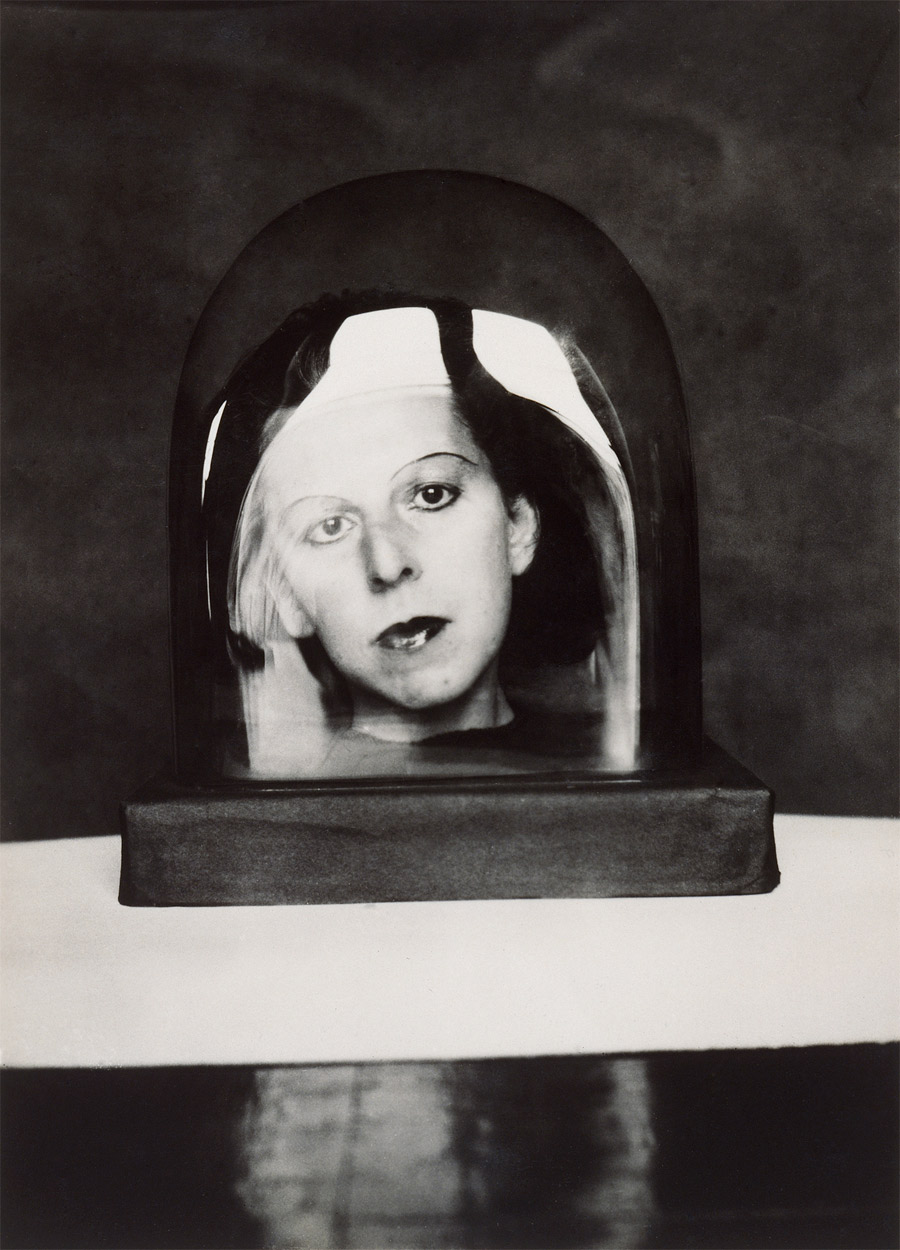
In the 1930s Cahun’s positions grew increasingly radical in response to the rise of totalitarianism. She joined the Surrealists and associated with a number of groups on the left and far left. This radicalisation is reflected in her aesthetic. In line with the ideas put forward in her pamphlet Les Paris sont ouverts (1934), she exploited the subversive qualities of “indirect action” in the sphere of symbolic expression, making a number of objects in which poetry and politics are intimately intertwined. This process culminated when she used these pieces for two big series of photographs dominated by a mood of irony, revolt and provocation: “La Poupée” (The Doll), a figure fashioned out of newspaper, and “Le Théâtre” (The Theatre), a wooden mannequin surrounded by various elements and placed under a glass dome.

Beyond the visible. The last self-portraits

Close study of Cahun’s photographs reveals the presence of allusions to non-visible phenomena, pointing the way to other realities – and perhaps, too, beyond death. Her attraction to symbolism, her interest in Eastern doctrines and her closeness to Surrealism only confirmed the primacy of fantasy and metamorphosis evidenced in the intellectual and aesthetic approaches she took throughout her life. The series Le Chemin des chats (The Way of Cats, around 1949 and 1953), suggests a mediation on and questioning of reality and appearance. Cahun was a true cat lover: for her, this animal was the great intercessor, the medium of an intuitive contact between the visible and the invisible, leading to sensorial worlds that are both unfamiliar and yet very near.

Juan Vicente Aliaga and François Leperlier, curators of the exhibition


Claude Cahun (French, 1894-1954) 'Autoportrait' 1939


Claude Cahun (French, 1894-1954)
Autoportrait
1939
Gelatin silver print
10 x 8cm
Jersey Heritage Collection
© Jersey Heritage


Claude Cahun (French, 1894-1954) 'Autoportrait' 1926


Claude Cahun (French, 1894-1954)
Autoportrait
1926
Gelatin silver print
11.1 x 8.6cm
IVAM, Institut Valencià d’Art Modern, Generalitat


Born Lucy Schwob to a family of French intellectuals and writers, Claude Cahun (who adopted the pseudonym at age 22) is best known for the staged self-portraiture, photomontages, and prose texts she made principally between 1920 and 1940. Rediscovered in the late 1980s, her work has not only expanded our understanding of the Surrealist era but also serves as an important touchstone to later feminist explorations of gender and identity politics. In her self-portraits, which she began creating around 1913, Cahun dismantled and questioned preexisting notions of self and sexuality. Posing in costumes and elaborate make-up, Cahun appears masked as various personae: man or woman, hero or doll, both powerful and vulnerable. Almost a century after their making, these innovative photographs and assemblages remain remarkably relevant in their treatment of gender, performance, and identity.

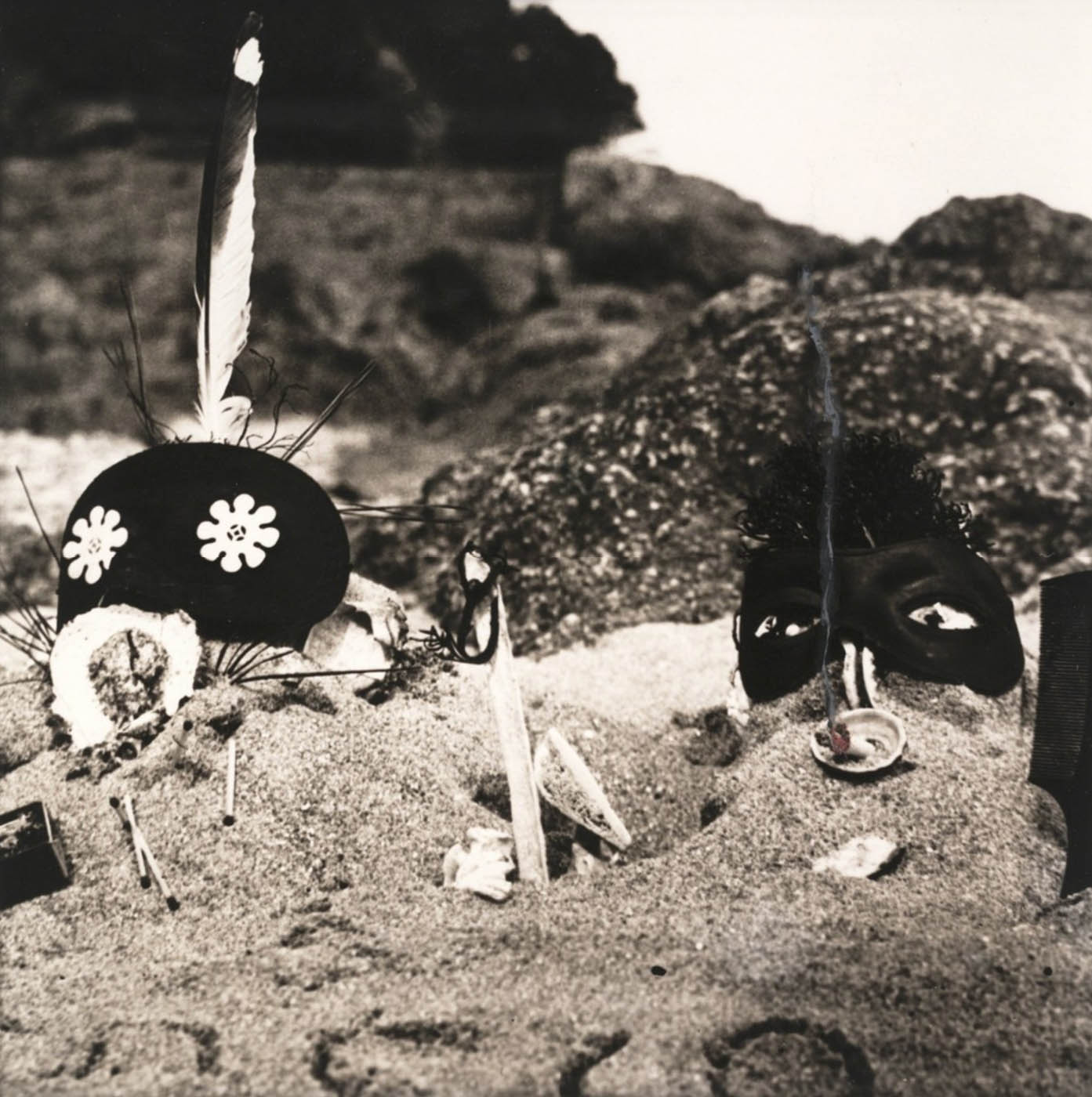
From her university years until her death, Cahun was accompanied by her partner and artistic collaborator, Suzanne Malherbe, a childhood friend and stepsister. They surrounded themselves with members of the Surrealist movement and created work that embraced leftist politics. Cahun, with assistance from Malherbe (under the pseudonym Marcel Moore), produced photographs, assemblages, and publications from the 1920s on. The photograph Entre Nous (Between Us), featuring a pair of masks embedded in sand, gives the title to this show and is emblematic of their multifaceted relationship.

The first retrospective exhibition in the United States of Cahun’s work, Entre Nous: The Art of Claude Cahun brings together over 80 photographs and published material by Cahun and Moore, including several photomontages from their 1930 collaborative publication Aveux non avenus (Disavowals), and the only surviving object by Cahun, which is in the Art Institute’s permanent collection.

Organiser: This exhibition was organised by the Jeu de Paume, Paris, and coproduced with La Virreina Centre de la Imatge, Barcelona.

Press release from the Art Institute of Chicago website


Claude Cahun (French, 1894-1954) 'Combat de pierres' 1931


Claude Cahun (French, 1894-1954)
Combat de pierres
1931
Gelatin silver print
21 x 15.5cm
Private collection
© Béatrice Hatala


Claude Cahun (French, 1894-1954) 'Le Père' 1932


Claude Cahun (French, 1894-1954)
Le Père
1932
Gelatin silver print
23.6 x 17.7cm
LAC


Claude Cahun (French, 1894-1954) Marcel Moore (French, 1892-1972) 'Entre nous' (Between Us) 1926


Claude Cahun (French, 1894-1954) Marcel Moore (French, 1892-1972)
Entre nous (Between Us)
1926
Gelatin silver print
4 11/16 × 4 5/8 in (11.9 × 11.7cm)


While the motivation for these remarkable self-portraits seems rooted in a commitment to leftist politics and subversion of gender norms, I also feel a great sense of intimate domesticity beneath the surface. Cahun and Moore first met in 1909 when they were both teenagers. Eight years later, Cahun’s father married Moore’s mother, which must have given the couple a convenient excuse for their close relationship at a time when such lifestyle choices were less than accepted.

Our curators have surmised that Cahun’s camera did not have a timer on it, so many if not all of these self-portraits must have been created with Moore’s assistance. When the two moved to the Isle of Jersey in the 1930s to escape the political climate developing in France, they began to live in almost total seclusion. Though often taken outside around the grounds of their estate, the photographs from this period seem to the most private and familiar. Beyond the thoughtful self-presentation and artistic experimentation, there is a palpable sense of play, of close friends having fun.

An interesting aside: In July of 1940, the Nazis invaded Jersey where Cahun and Moore were still living. For the next four years, they engaged in active resistance against the Germans, producing and distributing counterpropaganda leaflets to Nazi soldiers on the island. Continuing the kind of dress-up they’d played together for years, the two would dress in disguises to infiltrate German outposts where they would disseminate anti-Nazi leaflets signed as “der Soldat ohne Namen” (the solider with no name). They were eventually arrested in 1944 and sentenced to death. Fortunately, the island was liberated before the executions could be carried out.

Extract from Robby Sexton, “Between You and Me,” on the Art Institute of Chicago website March 15, 2012 [Online] Cited 08/10/2024


Claude Cahun (French, 1894-1954) 'Aveux non avenus, planche III' 1929-1930


Claude Cahun (French, 1894-1954)
Aveux non avenus, planche III
1929-1930
Gelatin silver print photomontage
15 x 10cm
Private collection


The Art Institute of Chicago
111 South Michigan Avenue
Chicago, Illinois 60603-6404
Phone: (312) 443-3600

Opening hours:
Thursday – Monday 11am – 5pm
Closed Tuesdays and Wednesdays

The Art Institute of Chicago website

LIKE ART BLART ON FACEBOOK

Back to top

Exhibition: ‘Artist’s jewels. From Modernisme to the avant-garde’ at Museu Nacional d’Art de Catalunya, Barcelona

Exhibition dates: 27th October 2010 – 13th February 2011


Alexander Calder (American, 1898-1976) 'Still life' Various dates


Alexander Calder (American, 1898-1976)
Still life
© Calder Foundation New York/ VEGAP, Barcelona, 2010


Anyone who reads this archive regularly will know of my love of exceptional jewellery. This posting satiates my desire!

The Calder pieces are just outstanding.

Marcus


Many thankx to the Museu Nacional d’Art de Catalunya for allowing me to publish the photographs in the posting. Please click on the photographs to see a larger version of the image.


Hector Guimard (French, 1867-1942) 'Brooch' 1909


Hector Guimard (French, 1867-1942)
Brooch
1909
© 2010 Digital image, The Museum of Modern Art, New York/Scala, Florence


Jewellery by US artist Alexander Calder from the Metropolitan Museum of Art in New York, USA


Alexander Calder (American, 1898-1976)
Jewellery by US artist Alexander Calder from the Metropolitan Museum of Art in New York, USA
The Metropolitan Museum of Art, New York
© Calder Foundation New York/ VEGAP, Barcelona, 2010


Calder possessed an uncanny ability to synthesise a variety of influences from the world around him to create often simple, always meaningful, and ultimately modern jewellery. In the early 20th century, many avant-garde artists began to collect African tribal art and to reference it in their paintings and sculptures. Likewise, Calder’s brooches, tiaras, and necklaces have more in common with the pectorals, collars, diadems, and neckpieces made by ancient cultures than traditional western European jewellery. For example, Calder repeatedly incorporated the spiral – a typical motif in late Bronze Age artefacts – into his jewellery, as well as his wire figures, drawings, paintings, and other decorative arts. The artist’s personal collections, which included objects from African, Oceanic, and Precolumbian cultures, substantiate his eclectic taste.

Calder’s exploration of jewellery in the 1930s also coincided with his burgeoning interest in Surrealism. As his largest and most dramatic ornaments are unwieldy to wear, Calder’s jewellery may be seen as a Surrealistic strategy to entrap the wearer into participating in an art performance or being metamorphosed by the object. Among those who wore his jewellery were sophisticated art aficionados and artists, such as Peggy Guggenheim, Mary Rockefeller, French actress Jeanne Moreau, and Georgia O’Keeffe.

His sculptural art, regardless of category, has less to do with solidity than with lightness, air, motion, and graceful formal relationships. Calder’s sense of economy, balance, and adaptability, so characteristic of the artist’s much larger and more familiar mobiles and stabiles, extends to his jewellery. While Calder’s more diminutive avant-garde creations converged closely with the aesthetics of the modern age, they remain unmistakably Calder.

 Anon. “Metropolitan Museum of Art features Alexander Calder – Inventive Jewelry” on Art Knowledge News website Nd. [Online] Cited 11/01/2011 no longer available online


Salvador Dalí (Spanish, 1904-1989) 'Time's Eye' Nd


Salvador Dalí (Spanish, 1904-1989)
Time’s Eye
Nd
© Salvador Dali, Fundació Gala-Salvador Dali, VEGAP, Barcelona, 2010


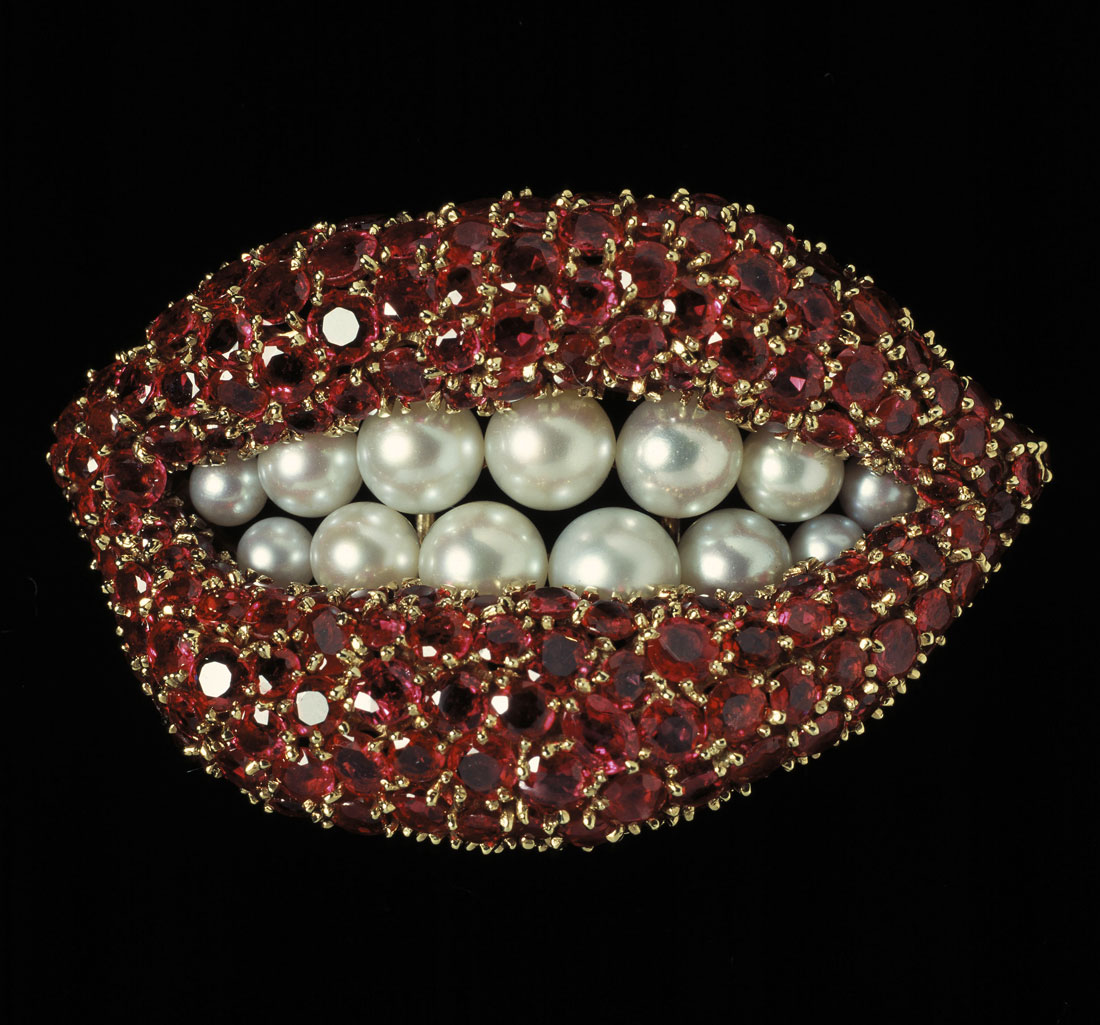
Salvador Dalí (Spanish, 1904-1989) 'Ruby's lips' 1949


Salvador Dalí (Spanish, 1904-1989)
Ruby’s lips
1949
© Salvador Dali, Fundació Gala-Salvador Dali, VEGAP, Barcelona, 2010


Artist’s jewels. From Modernisme to the avant-garde explores the approach to the world of jewellery by leading artists of the main art movements in the first decades of the fertile 20th century. The exhibition gathers almost 350 works, chiefly jewels, that strike a dialogue with paintings, sculptures, photographs, fabrics and objets d’art, showing how jewellery made up the little universe of great artists.

Artist’s jewels. From Modernisme to the avant-garde reveals the relations between jewellery and the work of art. This exhibition, the first on this subject to be held in our country, shows the less well-known side of Auguste Rodin, Hector Guimard, Josef Hoffmann, Josep Llimona, Serrurier-Bovy, Henri Van de Velde, Manolo Hugué, Paco Durrio, Pau Gargallo, Max Ernst, Salvador Dalí, Georges Braque, Alexander Calder, Charlotte Perriand, Hans Arp, Pablo Picasso, Juli González, Henri Laurens and many others.

Painters and sculptors, since earliest times, have transferred their artistic forms to the world of jewellery, but it was not until the end of the 20th century, under the powerful influence of Art Nouveau, that artists approached this discipline more openly: ‘Carrying out a large work’, according to Otto Wagner, ‘means expressing beauty without distinguishing between large and small’.

The merger of arts that was a feature of Modernisme and the subsequent elimination of borders between the arts reached a crescendo in the 1920s and 1930s and crystallised in the numerous interesting incursions into the world of jewellery by the painters, sculptors and architects of the historic avant-garde. In producing these small-format objects (‘micro-sculptures’ or ‘painted jewels’), artists channelled their artistic thinking from different perspectives.

The exhibition opens with a selection of items produced by jeweller artists, who very often also cultivated multiple skills and who incorporated into their creations the offerings of the artistic movements of the time.

The high point of the first section of the exhibition are the jewels by René Lalique, which were purchased at the time of their production by European museums, rich amateurs and collectors. This is the case of the pendant purchased by the director of the Hamburg Museum at the Universal Exhibition in Paris in 1900, the jewels purchased by Calouste Gulbenkian and the unique pendant Antoni Amatller bought in Paris for his daughter Teresa. In a dialogue with these works are the ones with rich enamelling and varied ranges of colour made by the Barcelona jeweller Lluís Masriera, who played a key role in introducing the new style to Barcelona.

Making up the core of the exhibition are the jewels conceived by artists who were not jewellers, such as Hector Guimard, Paco Durrio, Manolo Hugué, Herich Heckel, Pau Gargallo, Juli González, Joaquim Gomis, Ramón Teixé, Anni Albers, Charlotte Perriand, Alexander Calder, Henri Laurens, Hans Arp, Pablo Picasso, Georges Braque and Salvador Dalí. This second section shows these artists’ production in relation to their usual work of painting, sculpture, photography and other creations, establishing parallels with the artistic disciplines they worked at and revealing the affinities and echoes between them.

The legacy of the Arts and Crafts movement and the Bauhaus, which were committed to integration between all the arts, can clearly be seen in the work of these artists, who opened the way to experimentation in the arts, questioning the very nature of jewellery, and who incorporated new materials into their production that were foreign to the tradition of precious metals. Examples of this are Ramon Teixé’s unusual creations in iron, glass, enamel and string and the jewellery by the sculptor Josep de Creeft made with bits of scrap metal from his motor car, not forgetting the jewellery by the architect and designer Charlotte Perriand or the ones produced by the photographer Joan Gomis in collaboration with Manuel Capdevila, which make use of shells and pebbles like real objets trouvées.

Alongside these hand-made items of jewellery that are often produced with non-precious materials, we are exhibiting the ones designed by Braque and Dalí and manufactured by professional jewellers using noble materials like rubies, sapphires or diamonds.

A third section of the exhibition explores the relationship between jewels and the body and shows a selection of clothes, mainly loaned by the Museo del Traje in Madrid, and photographs from the 1930s by Man Ray, Edward Steichen, George Hoyningen-Huené and Horst P. Horst.

The works presented in this exhibition come from public institutions and museums all over the world, such as the Metropolitan Museum of Art, The Museum of Modern Art, Whitney Museum of American Art in New York, the Victoria and Albert Museum in London, the Musée des Arts Décoratifs, the Musée d’Orsay and the Musée Rodin in Paris, the Museo Nacional Centro de Arte Reina Sofía in Madrid, the Institut d’Art Modern (IVAM) in Valencia, the Museo de Bellas Artes in Bilbao and the Fundació Gala-Salvador Dalí in Figueres, who have generously made an exception in lending some of the most emblematic jewels in their collections, as well as from the MNAC itself and from numerous European and American private collections.”

Press release from the Museu Nacional d’Art de Catalunya website


Alexander Calder (American, 1898-1976) 'The jealous husband' c.1940


Alexander Calder (American, 1898-1976)
The jealous husband
c. 1940
Necklace
Brass wire
14″ x 16″
The Metropolitan Museum of Art, New York
© Calder Foundation New York/ VEGAP, Barcelona, 2010


Manuel Capdevila / Ramon Sarsanedas. 'Spain falled back' Broooch Nd


Manuel Capdevila / Ramon Sarsanedas
Spain falled back
Nd
Brooch
Museu Nacional d’Art de Catalunya – MNAC


Erich Heckel (German, 1883-1970) 'Drei Badende' (Three bathers) 1912


Erich Heckel (German, 1883-1970)
Drei Badende (Three bathers)
1912
Museum für Kunst und Gewerbe, Hamburg
© Erich Heckel, VEGAP, Barcelona, 2010


Boucheron, Paris (design by Lucien Hirtz) 'Corsage ornament' 1925


Boucheron, Paris (design by Lucien Hirtz)
Corsage ornament
1925
© Boucheron, Paris


Museu Nacional d’Art de Catalunya
Palau Nacional
Parc de Montjuïc
08038 Barcelona

Opening hours:
Tues – Sat 10am – 7pm
Sunday and public holidays: 10am – 2.30pm

Museu Nacional d’Art de Catalunya website

LIKE ART BLART ON FACEBOOK

Back to top

Exhibition: ‘Yayoi Kusama: Mirrored Rooms’ at Museum of Contemporary Art (MCA), Sydney

Exhibition dates: 24th February – 8th June, 2009

Curators: Jaap Guldemond (Museum Boijmans Van Beuningen), Franck Gautherot & Seungduk Kim (Le Consortium, Dijon)

MCA Curatorial Liaison: Judith Blackall


“Discover the work of internationally acclaimed Japanese artist Yayoi Kusama with this major exhibition that spans decades of her artistic practice.

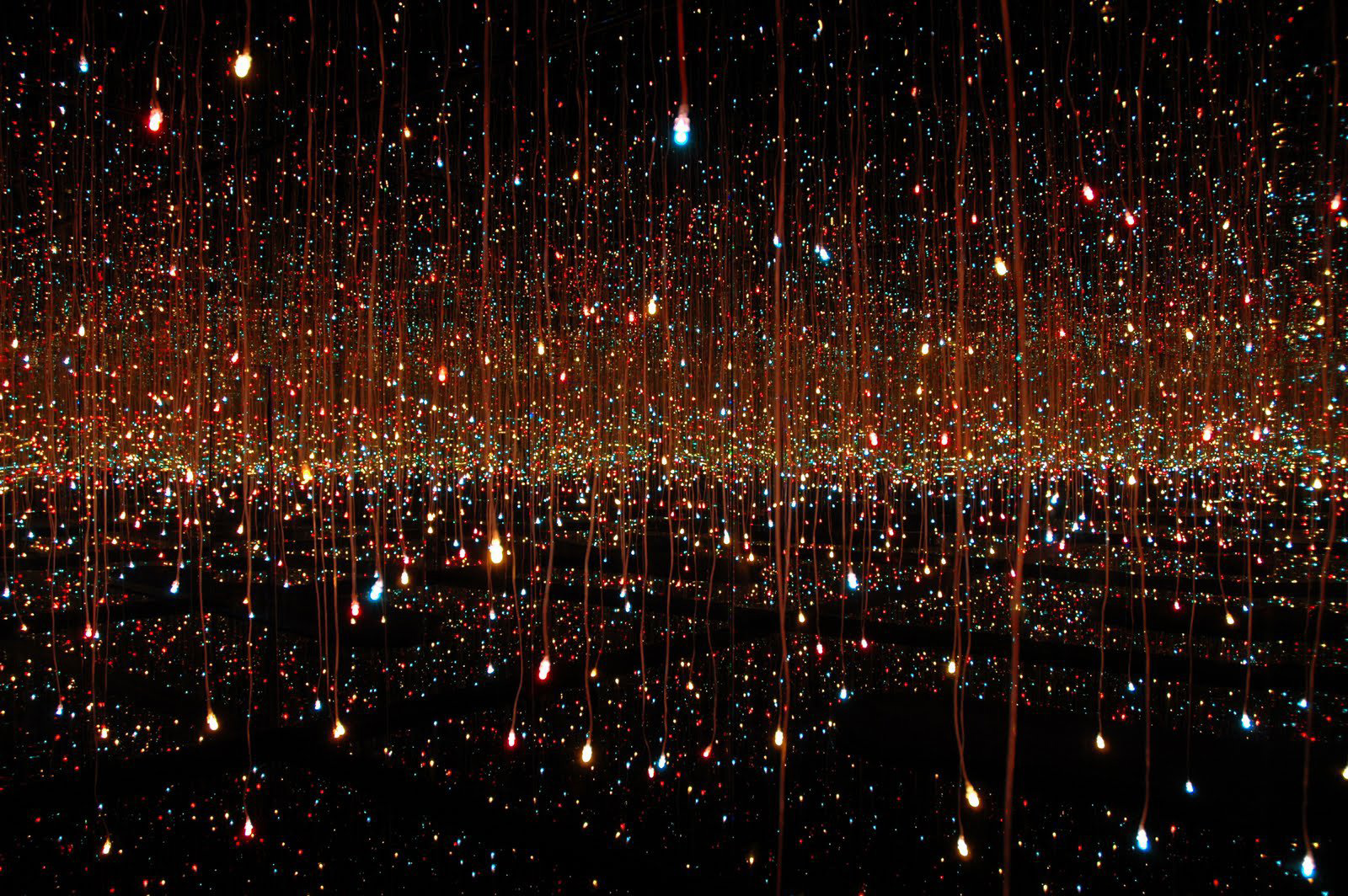
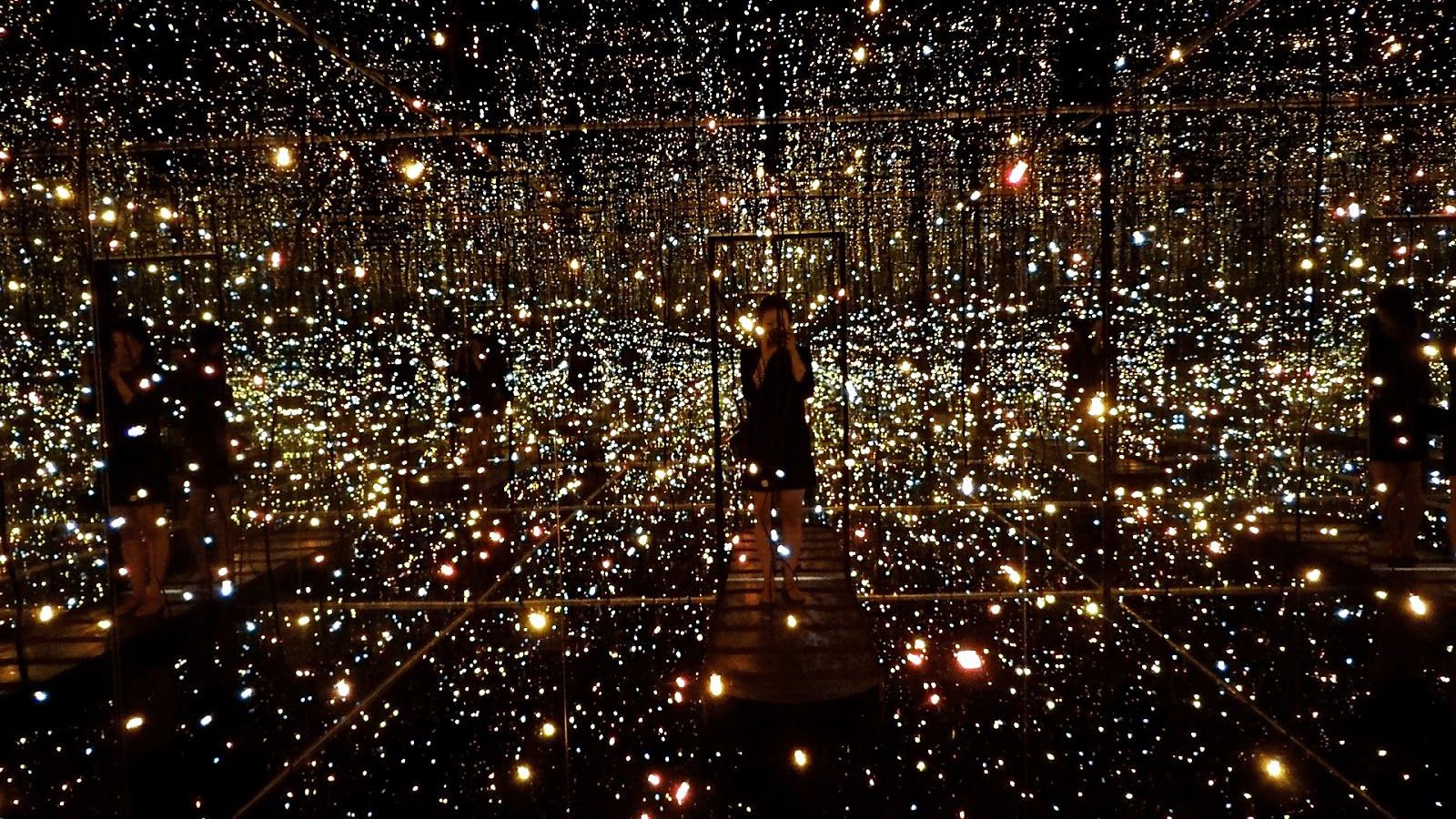
Yayoi Kusama: Mirrored Years demonstrates the enduring force of Yayoi Kusama. Renowned early installations such as Infinity Mirror Room – Phalli’s Field (1965) along with recent immersive environments including Fireflies on the Water (2000) and Clouds (2008) provide insight into the creative energy of this extraordinary artist and her lifelong preoccupation with the perceptual, visual and physical worlds.

Working across different media and forms that include painting, collage, sculpture, installation and film, as well as performance and its documentation, Kusama creates works that reveal a fixation with repetition, pattern and accumulation. Describing herself as an “obsessive artist”, her work is intensely sensual, infused with autobiographical, psychological and sexual content.”

Text from the MCA website [Online] Cited 12/03/2009. No longer available online


Many thanks to Ed Jansen for the use of his installation photographs of this exhibition at Museum Boijmans Van Beuningen, Rotterdam in 2008. See the whole set of his photographs on Flickr. Please click on the photographs for a larger version of the image.


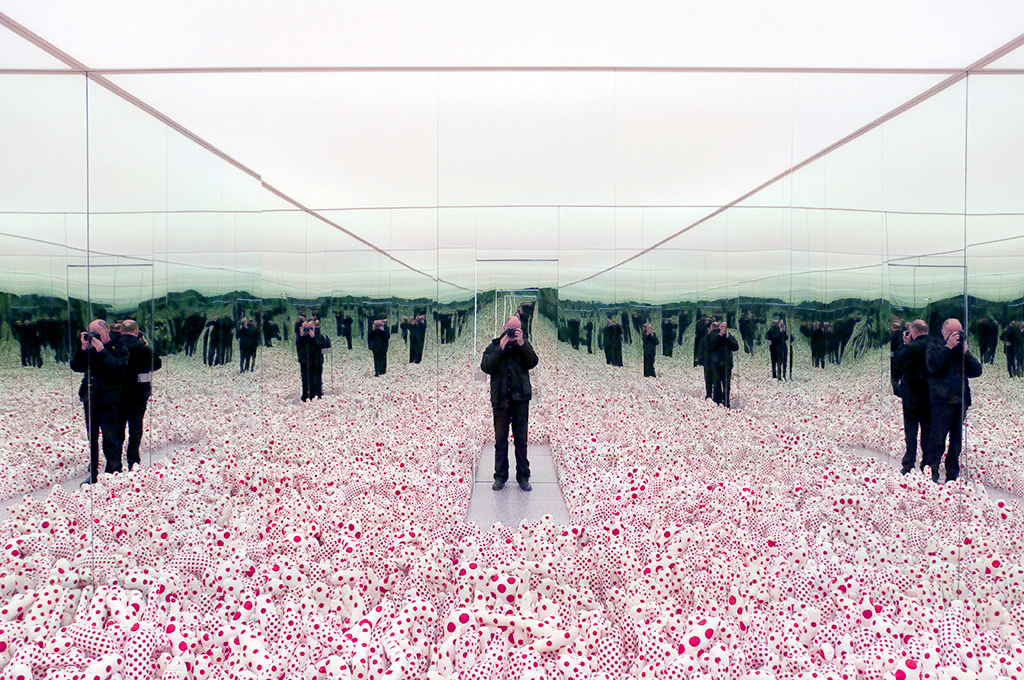
Yayoi Kusama (Japanese, b. 1929) 'Infinity Mirror Room - Phalli's Field' 1965 from the exhibition 'Yayoi Kusama: Mirrored Rooms' at Museum of Contemporary Art (MCA), Sydney, Feb - June, 2009


Yayoi Kusama (Japanese, b. 1929)
Infinity Mirror Room – Phalli’s Field
1965


Yayoi Kusama (Japanese, b. 1929) 'Infinity Mirror Room - Phalli's Field' 1965 from the exhibition 'Yayoi Kusama: Mirrored Rooms' at Museum of Contemporary Art (MCA), Sydney, Feb - June, 2009

Yayoi Kusama (Japanese, b. 1929) 'Infinity Mirror Room - Phalli's Field' 1965


Yayoi Kusama (Japanese, b. 1929)
Infinity Mirror Room – Phalli’s Field
1965
Museum Boijmans Van Beuningen, Rotterdam, 2008
Photo: Ed Jansen


Rewind 1960

Visual hallucinations of polka dots since childhood have inspired the most significant works of this avant-gardist, who says creating art “saved” her during her lifelong battle with mental illness.

Interview by Natalie Reilly

This photograph [see above, top, for the image of her in 1965] shows a creative work that I made in New York in 1960. I was 31 years old at the time and my inspiration was the inundation and proliferation of polka dots. The work represents the evolution of my original formative process. Of all the pieces I have made, I like this one the best. It was my intention to create an interminable image by using mirrors and multiplying red polka dots.

I was born in Nagano Prefecture , a mountainous region in Japan. The youngest of four children, I have one sister and two brothers.

Since childhood, I have loved to paint pictures and create art forms. [Kusama has suffered from obsessive thinking and visual hallucinations since early childhood. the hallucinations – often of polka dots, or “nets” as she calls them – have become the inspiration for much of her work.] I did many artworks in great numbers in my younger days.

I went to Seattle in 1957 where I had my first solo exhibition in the US. I moved  to New York in 1958. Japan in those days was too conservative for avant-garde art to be accepted. [By 1961, Kusama was an active participant in the avant-garde movement in New York. Her art, which often included performance and controversial themes such as nudity and protests against the Vietnam War, drew acclaim for art critics and other artists such as Andy Warhol and Claes Oldenburg.]

I was deeply moved by the efforts the artists in New York were making then to develop a new history for art. I owe what I am today to many people in the art circles in Japan, the US and Europe who enthusiastically supported my art and gave me a boost into the international art scene.

Artists Georgia O’Keefe and Joseph Cornell were among the many friends who helped me, including Donald Judd and [writer and activist] Lucy Lippard who appreciated the originality of my art.  [In 1962 at the height of her success in New York, Kusama’s mental health began to suffer as she grew more paranoid about other artists copying her work. Late that year, she covered up all the windows in her studio in an attempt to “shut out the world”, and by November she was hospitalised after suffering a nervous breakdown.]

I came back to Japan in 1973, because my health had deteriorated. I wanted to create art in a quiet atmosphere. I once said, “if it were not for art, I would have killed myself a long time ago” an that’s still true. I do art in order to pursue my philosophy of life seeking truth in art.

Reilly, Natalie. “Rewind 1960,” in Boleyn, Alison (ed.,). Sunday Life: The Sunday Age Magazine. Melbourne: Fairfax Magazines. February 15th 2009, p. 30.


Yayoi Kusama (Japanese, b. 1929) 'Clouds' 1999 and 'Love Forever' 2005 from the exhibition 'Yayoi Kusama: Mirrored Rooms' at Museum of Contemporary Art (MCA), Sydney, Feb - June, 2009


Yayoi Kusama (Japanese, b. 1929)
Clouds 1999 and Love Forever 2005
Museum Boijmans Van Beuningen, Rotterdam, 2008
Photo: Ed Jansen


Yayoi Kusama (Japanese, b. 1929) 'Clouds' 2008 (installation view at MCA)


Yayoi Kusama (Japanese, b. 1929)
Clouds (installation view at MCA)
2008
Image courtesy the artist, Yayoi Kusama Studio, Victoria Miro Gallery, London and Ota Fine Arts, Tokyo and © the artist


Yayoi Kusama (Japanese, b. 1929) 'Stars Infinity (A.B.C)' 2003 (installation view MCA)


Yayoi Kusama (Japanese, b. 1929)
Stars Infinity (A.B.C) (installation view at MCA)
2003
Image courtesy and © the artist


This exhibition explored the extraordinary work of Japanese artist Yayoi Kusama. It revealed the coherence of her practice over many years and highlighted the freshness and innovation she brings to themes investigated throughout her life. Describing herself as an ‘obsessive artist’, her work is intensely sensual, infused with autobiographical, psychological and sexual content.

Kusama was born in 1929, in Matsumoto City, Nagano Prefecture, Japan. She demonstrated a passion for art from an early age and went on to study Nihonga painting, a formal Japanese technique using ground pigment and animal glues. Excited by the promise of the post-war international art scene, Kusama moved to New York in 1958. Her first New York solo exhibition a year later was an outstanding success and she became renowned as an innovative and adventurous young artist with her large Infinity Net canvases; Accumulation sculptures of everyday objects completely covered with soft, sewn and stuffed protuberances; environments such as the Infinity Mirror Room-Phalli’s Field (1965) and performances and Happenings. In 1966 she exhibited Narcissus Garden, a field of mirrored spheres in the gardens of the Venice Biennale, creating a sensation with an extraordinarily beautiful and compelling new version of her accumulations.

Kusama was energetic, talented, strategic and courageous at a time of fervent development in the art world, in a city that was exciting and notoriously competitive. During the ‘60s and ‘70s she was an active presence in Europe as well – in 1962 she was the only female artist to take part in the widely acclaimed Nul (Zero) international group exhibition at the Stedelijk Museum in Amsterdam. She returned to Tokyo in 1973.

Yayoi Kusama: Mirrored Years juxtaposed seminal works from the 1960s with more recent installations, films, paintings, floor pieces and silkscreen prints on canvas, and included major new works. The exhibition reflected Kusama’s lifelong obsession with repetition, pattern and aggregation, and her perceptions – visual, physical and sensory. It demonstrated her originality, creativity and uncompromising vision across many different techniques. Her work has been highly influential to new generations of artists and designers and she remains one of the most respected artists working today.

Organised by Museum Boijmans Van Beuningen, Rotterdam, Netherlands.
Presented in association with City Gallery, Wellington, New Zealand.

Anonymous. “Yayoi Kusama: Mirrored Years,” on the MCA website Nd [Online] Cited 13/06/2022


Yayoi Kusama (Japanese, b. 1929) 'Fireflies on the Water' 2000

Yayoi Kusama (Japanese, b. 1929) 'Fireflies on the Water' 2000


Yayoi Kusama (Japanese, b. 1929)
Fireflies on the Water
2000


Yayoi Kusama (Japanese, b. 1929) 'The Moment of Regeneration' 2004


Yayoi Kusama (Japanese, b. 1929)
The Moment of Regeneration
2004


Yayoi Kusama (Japanese, b. 1929) 'The Moment of Regeneration' 2004 (installation view at MCA)


Yayoi Kusama (Japanese, b. 1929)
The Moment of Regeneration (installation view at MCA)
2004
Image courtesy the artist, Yayoi Kusama Studio, Victoria Miro Gallery, London and Ota Fine Arts, Tokyo and © the artist


Yayoi Kusama (Japanese, b. 1929) 'Walking on the Sea of Death' 1981 (installation view at MCA)


Yayoi Kusama (Japanese, b. 1929)
Walking on the Sea of Death (installation view at MCA)
1981
Image courtesy the artist, Yayoi Kusama Studio, Victoria Miro Gallery, London and Ota Fine Arts, Tokyo and © the artist


Yayoi Kusama (Japanese, b. 1929) 'Narcissus Garden' 1966


Yayoi Kusama (Japanese, b. 1929)
Narcissus Garden (at the Venice Biennale, Italy)
1966


Yayoi Kusama (Japanese, b. 1929) 'The Earth in Late Summer' 2004 (installation view MCA)


Yayoi Kusama (Japanese, b. 1929)
The Earth in Late Summer (installation view MCA)
2004
Image courtesy the artist, Yayoi Kusama Studio, Victoria Miro Gallery, London and Ota Fine Arts, Tokyo and © the artist


Yayoi Kusama (Japanese, b. 1929) 'I'm here but nothing' 2000- (installation view MCA)


Yayoi Kusama (Japanese, b. 1929)
I’m here but nothing (installation view MCA)
2000-
Image courtesy the artist, Yayoi Kusama Studio, Victoria Miro Gallery, London and Ota Fine Arts, Tokyo and © the artist


Yayoi Kusama (Japanese, b. 1929) 'Invisible Life' 2000


Yayoi Kusama (Japanese, b. 1929)
Invisible Life
2000


Museum of Contemporary Art (MCA)
140 George Street
The Rocks, Sydney, Australia

Opening hours:
Daily 11am – 5pm

Yayoi Kusama website

Museum of Contemporary Art website

LIKE ART BLART ON FACEBOOK

Back to top