Catalogue essay: ‘Aspects of the Self (Revealed)’ by Dr Marcus Bunyan for the exhibition ‘Hidden Talents’ at the Faculty of the Victorian College of the Arts (VCA) and Melbourne Conservatorium of Music (MCM), The University of Melbourne, Australia

Exhibition dates: August 2014


Marcus Bunyan (Australian, b. 1958) 'Zen' 1984


Marcus Bunyan (Australian, b. 1958)
Zen
1984
From the series First experiments
Silver gelatin print
© Marcus Bunyan


This is the catalogue essay for the exhibition Hidden Talents, an exhibition of the hidden talents of professional staff at the Faculty of the VCA & MCM, The University of Melbourne, Australia. The exhibition has been postponed until a later date but I did not want the catalogue essay to metaphorically sit under the bed with no one reading it.

The essay was written without seeing any of the art work for the exhibition (which is going to consist of knitting, performance, video, sculpture, painting, etc…). I have used my imagination to write about the subject matter, asking why it is important to reveal hidden aspects of the self.

Curator Tracey Claire observes, “Practicing artists are as likely to be found behind a desk as in front of a class at the VCA & MCM… Be it dancing, cycling, sailing, knitting, painting, writing, film making or performing, all the individuals in this exhibition are creative artists thriving in a melting hot pot of creativity… Professional staff tend to go about their business quietly, excelling in the dark arts of spreadsheet wizardry and effortless administration but in their private lives, conjuring mysterious creations. Toiling endlessly in the hours beyond their professional lives, yet inspired and nurtured by precisely this environment, they distill these experiences and produce magic.

This catalogue essay examines the significance of these activities and is accompanied by 5 of the very first black and white images that I ever took, long before I ever started studying photography in 1989.

Dr Marcus Bunyan


Keywords

Hidden Talents, The Self, Aspects of the Self, self-expression, image man, essence man, actual self, networked society, perfomative self, citational self, cosmopolitanism, hybridity, visibility, bricolage, Goethe, hybrid identities, identity formation, self actualisation, social transparency, The University of Melbourne, Australia, Victorian College of the Arts, Melbourne Conservatorium of Music, VCA.

Download the Aspects of the Self (Revealed) catalogue essay (2.6Mb pdf). Please click on the photographs for a larger version of the image.


Marcus Bunyan (Australian, b. 1958) 'Brighton Pier (horizontal)' 1984


Marcus Bunyan (Australian, b. 1958)
Brighton Pier (horizontal)
1984
From the series First experiments
Silver gelatin print
© Marcus Bunyan


Aspects of the Self (Revealed)

Dr Marcus Bunyan


“In our era of internet ubiquity, the line that separates our selves from the media with which we self-express has dissolved, and the distinction between medium and maker is confused. As we publicise our private stories, and perpetually alter, rebrand, and repaint ourselves to the world, performances of self are status quo and everyone is an artist.”


Josephine Skinner 1


We are all performance artists. And this text is a performance piece, an aspect of myself as I choose to express it in this place and time. An aspect – appearance, look, character, view, interpretation, phase, countenance2 – which, like the word itself, is both stable and fluid, and will change at any time: perhaps even now; or in the future.

Having noted the amorphous nature of the wor(l)d, what I will do in this performance is examine the truths and separate them from the platitudes of Josephine Skinner’s quotation (above) in order to understand not only that the private be made public but also why the hidden should be revealed. Of course, our sense of self changes when the private becomes open, public and possibly universal. I will ask why this is important and how it affects our sense of connection to other human beings. To do this I will examine my own private story, not to rebrand or repaint myself to the world, far from it, but because every life path has important lessons for us all.

In the beginning, I grew up on a farm. My parents were impoverished. It was subsistence living and we were the working poor. We had no running hot water and my mother used to have to boil water on a stove and fill a bathtub on the kitchen floor so that we could be cleaned. I used to explore the remote reaches of the land, out behind the pond at the front of the farmhouse and up the cart path into the forests, creating fantasy worlds to escape what was going on at home. There, fantasies became a form of escapism, for my imagination, for action,3 a place where I could create new worlds of magic, light and freedom.

My mother was a piano teacher and my father was a part-time singer. I started to study piano at the age of 5 years old under my mother’s tutelage. I had a natural gift and became a child prodigy, the youngest person at that time to attain a distinction in Associated Board Grade 8 examination, at age 11. I was sent to boarding school on a music scholarship at the age of 12, leaving all my school friends behind. There, in that upper class boarding school, I was ostracised because they found out I was gay (just as I was discovering it myself), and because I was a music scholar. My parent’s adage to life was what I would come to call Protestant work ethic: ‘you never work hard enough, you’ll never be good enough, you’ll never make anything of yourself.” This damnation has stuck with me and I have struggled against its prophecy, working hard to make something of myself, something I can be proud of. Even now my mother (I don’t see my father) still fails to recognise my achievements, my life path.

At boarding school I developed what I was told was depression but which was actually bipolar disorder, undiagnosed until I was in my forties. At the age of 16, I was one of the youngest people to go to the Royal Academy of Music and at 17 I went to the Royal College of Music full time. I moved away from home, which was a blessing, and started living on my own. It was a tough initiation into adult life but I was determined not to be dependent on anyone else. My parents finally divorced when I was 17 and, at the same age, the stress of my hidden sexuality leading me to have a nervous breakdown. After nearly a year recovering I came out as a gay man. I graduated with my degree at 21 and gave up being a concert pianist the same year. The time to start living my own life had begun.

I worked in pubs around London for years. I hated classical music (a rejection of the past) and was really into the funk scene. I was a dilettante, a person without real commitment or knowledge. Not once did I ever think of myself as intelligent or creative, it just wasn’t in my vocabulary. I enjoyed partying, holidays, friends and motor racing and started taking a few photographs. That was it until I was about 28 when I returned to Year 12 and university to study, study, study, to read Carlos Castaneda, Robert Johnson and Joseph Campbell, to devour Borges, Jung and Foucault – not the usual university curriculum for an artist, but I was searching for a spiritual way in life. These authors offered wisdom and learning, and a network to other authors and artists investigating similar subject matter. The start of a path had been found and an inquiring mind slowly emerged. I tell you all of this simply as a statement of fact – this was my beginning, this is what I went through, and this journey and learning informs my being and relation to other people and to the world.

Today, we need to understand our own paradigm of sharing, what we are prepared to reveal of ourselves now that we live in a networked society. In a networked society the private and the public self are no longer two endpoints of a linear dichotomy for the boundaries have well and truly been breached: mobile technologies, computers and social media bring the outside world into our home and we willingly promote our point of view to others. Our interior thoughts are advertised through our exterior relations and appearance – on videos, on mobile phones, through millions of images and informational flows that surround us everyday. Our performative self, our citational self constantly performs and citationally quotes our relations of our self to others through different nodal points, or contexts of connection. But our interiority is still different from our exteriority, even as we perform the self.

Yet, while it is correct that in our era of internet ubiquity, the line that separates our selves from the media with which we self-express has dissolved – we are still not yet fully immersed in this system. Critically, we still have a choice about what we reveal of ourselves to others. My degree as a concert pianist may appear at the bottom of my CV, and I may not tell many people about it, but how I imagine my art, how I write my words and my worlds, is inherently related to the line and ‘magic’ of music. How I relate to other people is based on my core values (strong moral code, loyalty, love of helping people) developed during childhood, core values that have remained stable but whose context may have changed over the journey from youth to adulthood. And because of our class (our position in the world and our contexts), we inhabit the privilege of that disclosure. In this moment, we can still prioritise what other people know of us. What we should not do is divest this choice from our whole selves, partitioning ourselves off in different contexts. We cannot act within our core values in one situation and not in another – unless we want to deceive ourselves and those around us – AND YET WE DO!

While our fundamental values remain consistent (the actual self) what is rapidly changing is the environment in which our social self operates.4 As Sally Shaw notes, “We are experiencing an important cultural moment: the next generation will not be able to recall a time without smartphones, the internet or other enhanced means of communication.”5 Globalised mass media, technological advances in communications, future generations’ normalising of the constant barrage of information and the endless pursuit of “stuff”6 (materialism gone mad) means that “image man” takes precedence over “essence man.”7 But all is not lost if we are prepared to be open to possibilities, to be brave in our choice of engagement with others, and be accepting in our attitude and perspective on life. As the artist Bill Henson observes, “Of course, we live with each other and get along using “civilisational logic” – go at a green light, stop at a red light. But there is a deeper logic – no less exacting or emphatic.”8

This deeper logic, a logic that opens up spaces of inquiry, has links to creative, moderate cosmopolitanism,9 hybridity,10 bricolage and visibility. It is how creativity is changing how our talents are recognised by our friendship networks, our work colleagues or students, without having to justify or hide their existence. It is how the networked personality extends along a horizontal consciousness (not a vertical hierarchy), in which interior / exterior, self / other, is re/formed. Through respect, authenticity (and not anxiety about it!) and openness, we can embed the self into naturalised flows of increasingly open (media) systems. We have a new freedom to construct social relations across time and space for the horizon of social relationship – my body, the social body, the actual self – can become open constellations. Here there is fluidity in identity representation in which stable dimensions, persistent appearances and secure meanings are disavowed. This is coupled, however, with a paradoxical insecurity of those in power, evidenced by the proliferation of borders, walls, security cameras and protected areas.11

This new process of self actualisation enables a creative context, the context for understanding creativity, intelligence, self and what you bring to an encounter, what you are prepared to reveal of your self during that encounter – whether it be baking cakes, knitting scarves, making a video, documenting the self or creating, as I did in my childhood and still do in my art, imaginative worlds to express inner self. Through the lived practice of social transformation we, as social actors, have to rethink our hybrid identities and the function of our imagination as a world-making process.12 This process is about the exposure of the hidden; it is about social transparency; and it is about the emergence of something new.13

Finally, we can say it is neither about the roles we play nor the destination that many seek, but it is about the journey that we take and about rejoicing in that journey. It’s about the moment before ecstasy, the anticipation: of company, of environment, of friends, places, being human, that joy of being human. It’s an inquiring instability that leads, as in Beethoven, to the resolution of stability, a love of the human being and our existence. It’s about understanding the personality and possibility of being.

Instead of the byte sized tweet (in which we understand everything, in an instant), we understand our hybrid being only by moving mentally and physically through heterogenous spaces via flows, nodes and lexias, accessing different perspectives and viewpoints. If we are attentive and aware of these viewpoints, we can open up lines of inquiry and access spaces of plurality which may allow us to be better informed as to the value of self and others. Through an understanding of difference. Through an understanding of the obligation of all human beings to each other.

This challenge to established rhythms, institutions and boundaries – the polity of the state, the indifference of the masses, and the speed of informational flows – can be accomplished by both stepping back and contemplating but also by moving forward and engaging in acts of informed choice, thinking, believing, and relating to other people. This is where I disagree with Josephine Skinner’s quote at the beginning of this aspect of myself: performances of self should never become just so, status quo – for we must not be afraid to reveal aspects of our self and expose the hidden to light. In the day-to-day world, the roles we play and the masks we wear must never come to define who we really are. As Lou Benson observes, “If people begin to see their roles as their true selves and deny thoughts and feelings that are really present, they become estranged from themselves.”14

By not being secret but secreting wisdom and seeking creation we may ultimately find better paths through life. This journey is about being extra/ordinary, however that may be. It is about the ‘making present’ of our imagination in the moment we are in, being consciously aware of that moment, being happy in that moment without ego. It’s about what you do and who you are, not cowering behind the bulkheads.


“O God, how the world and heaven shrink together when our heart cowers in its barriers.”


Johann Wolfgang von Goethe


© Dr Marcus Bunyan
August 2014

Word count: 2,164


Marcus Bunyan (Australian, b. 1958) 'Craig in his Docs' 1984


Marcus Bunyan (Australian, b. 1958)
Craig in his Docs
1984
From the series First experiments
Silver gelatin print
© Marcus Bunyan


Endnotes

1/ Skinner, Josephine. “Totally Looks Like.” Exhibition catalogue. Stills Gallery, Sydney, June 2014.

2/ as·pect [as-pekt]
noun

~ Appearance to the eye or mind; look: the physical aspect of the country.
~
Nature; quality; character: the superficial aspect of the situation.
~ A way in which a thing may be viewed or regarded; interpretation; view: both aspects of a decision.
~ Part; feature; phase: That is the aspect of the problem that interests me most.
~ Facial expression; countenance: He wore an aspect of gloom. Hers was an aspect of happy optimism.

Aspect as defined on the Dictionary.com website [Online] Cited 22/06/2014 http://dictionary.reference.com/browse/aspect

3/ “The ubiquity of images and the constant enhancement of the modes for public participation have not only disrupted the conventional division between the agency of the artist and collective authorship but also underscore the necessity to rethink the function of the imagination as world-making process. Arjun Appadurai stated it most succinctly: ‘the imagination is today a staging ground for action, and not only escape’.”

Appadurai, Arjun. Modernity at Large. Minneapolis: University of Minnesota Press, 1996, p. 7 quoted in Papastergiadis, Nikos. Cosmopolitanism and Culture. Cambridge: Polity Press, 2012, p. 95.

4/ “A natural extension of social comparison theory is the development of the self-concept. Self-concept is a person’s perceptions and perceptual organization of his/her own characteristics, roles, abilities and appearance. One’s self-concept is based in part on how one compares to other individuals with regards to traits, opinions and abilities … Self concept can have a number of dimensions which evolve from social comparisons and evaluations. The self-concept consists of:

~ the actual self (how a person perceives him/herself),
~ the ideal self (how a person would like to perceive him/herself), and
~ the social self (how a person presents him/herself to others).

Sproles, George and Burns, Leslie Davis. Changing Appearances: Understanding Dress in Contemporary Society. New York: Fairchild Publications, 1994, pp. 208-209.

5/ Shaw, Sally quoted in Beesley, Ruby. “Challenging Normality,” in Aesthetica, Issue 59, June/July 2014, p. 52.

6/ Ibid.,

7/ “Essence man approaches life from the standpoint of being who he is without concern for the way he is perceived by others. Image man, on the other hand, focuses on what he wishes to appear to be. In reality, Buber admits, we are all a combination of both. But the tendency is to develop a life-style that is dominated by one pole of this duality.”

Benson, Lou. Images, Heroes and Self-Perceptions. New Jersey: Prentice-Hall, 1974, pp. 26-29.

8/ Henson, Bill. “Unfinished Symphony,” in the Weekend Australian Review, June 14-15, 2014, p. 5.

9/ “The more moderate [cosmopolitan] alternative “is to say that, in addition one to one’s relationships and affiliations with particular individuals and groups, one also stands in an ethically significant relation to other human beings in general” … This second approach starts with rights rather than obligations, and holds that wherever people are joined in significant social relations they have a collective right to share in control of these.”

Calhoun, Craig. “‘Belonging’ in the cosmopolitan imaginary,” in Ethnicities, 3 (4), 2003, pp. 531-553.

10/ “At the first level, hybridity refers to the visible effects of difference within identity as a consequence of the incorporation of foreign elements… Recognition of the second level refers to the process by which cultural differences are either naturalized or neutralized within the body of the host culture… The third level of hybridity is linked to aesthetic processes and can be thematized through the early modernist techniques of juxtaposition, collage, montage and bricolage.”

Papastergiadis, Op. cit., p. 117.

11/ For these ideas I am indebted to the “Introduction: The Uncanny Home,” in McQuire, Scott. The Media City: Media, Architecture and Urban Space. London: Sage Publications, 2008, pp. 22-24.

12/ Papastergiadis, Op. cit., p. 95.

13/ “Hybridity refers not only to the ambivalent consequences of mixture but also to the shift in the mode of consciousness. By mixing thing that were previously kept apart there is both a stimulus for the emergence of something new and a shift in position that can offer a perspective for seeing newness as it emerges.”

Papastergiadis, Op. cit., p. 131.

14/ “This is not to say that it is possible or even desirable to try to live in the day-to-day world without playing certain roles and wearing certain masks. Societies function through the role play of their inhabitants. But if people begin to see their roles as their true selves and deny thoughts and feelings that are really present, they become estranged from themselves.”

Benson, Lou. Images, Heroes and Self-Perceptions. New Jersey: Prentice-Hall, 1974, pp. 26-29.
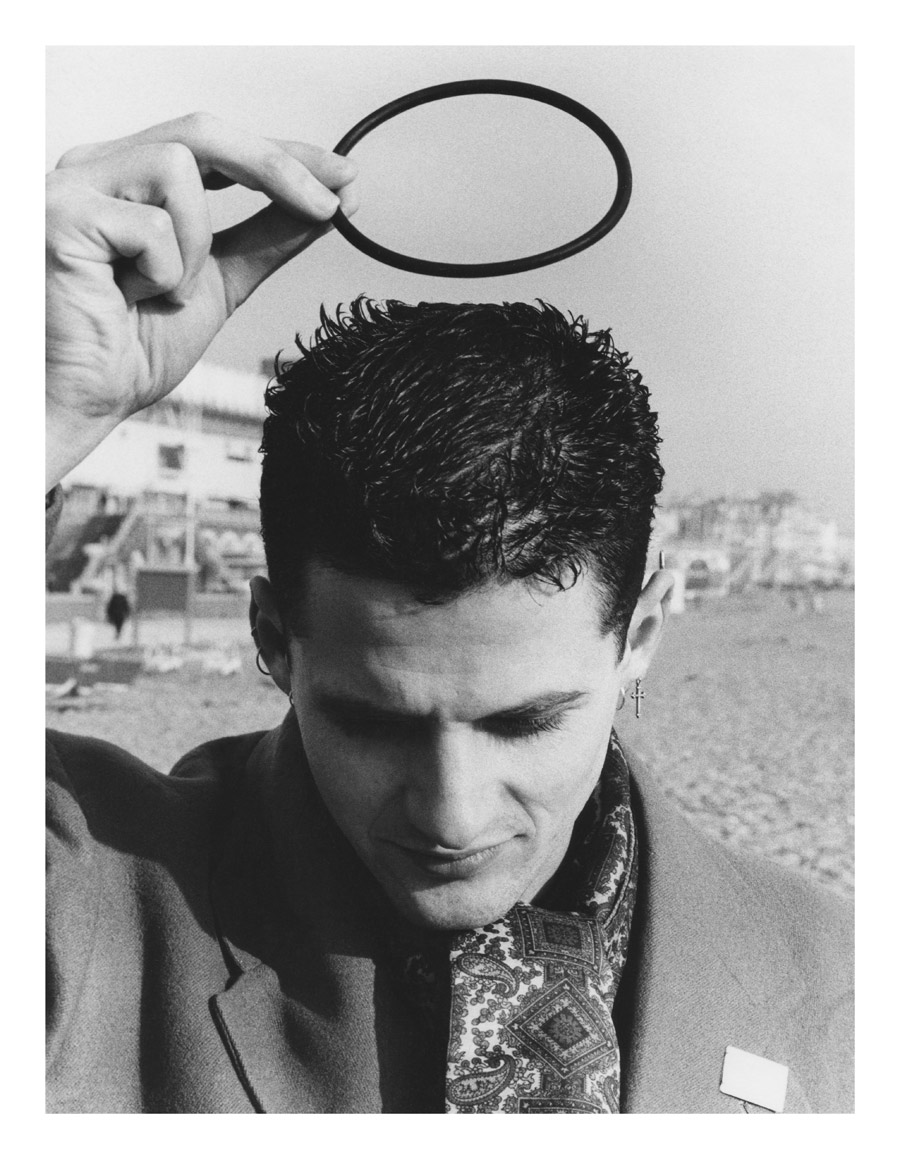
 

Marcus Bunyan (Australian, b. 1958) 'Craig with halo' 1984


Marcus Bunyan (Australian, b. 1958)
Craig with halo
1984
From the series First experiments
Silver gelatin print
© Marcus Bunyan


Marcus Bunyan (Australian, b. 1958) 'Brighton Pier (vertical)' 1984


Marcus Bunyan (Australian, b. 1958)
Brighton Pier (vertical)
1984
From the series First experiments
Silver gelatin print
© Marcus Bunyan



Hidden Talents website

LIKE ART BLART ON FACEBOOK

Back to top

Text: ‘The defining of Apollonian and Dionysian ideals in images of the male body’ Dr Marcus Bunyan / Exhibition: ‘Robert Mapplethorpe’ at the Ludwig Museum of Contemporary Art, Budapest

Exhibition dates: 25th May – 30th September 2012


F. Holland Day (American, 1864-1933) 'The Vision (Orpheus Scene)' 1907


F. Holland Day (American, 1864-1933)
The Vision (Orpheus Scene)
1907
Platinum print
24.4 x 18.4cm (9 5/8 x 7 1/4 in.)


“Perfection means you don’t question anything about the photograph. There are certain pictures I’ve taken in which you really can’t move that leaf or that hand. It’s where it should be, and you can’t say it could have been there. There is nothing to question as in a great painting. I often have trouble with contemporary art because I find it’s not perfect. It doesn’t have to be anatomically correct to be perfect either. A Picasso portrait is perfect. It’s just not questionable. In the best of my pictures, there’s nothing to question – it’s just there.”


Robert Mapplethorpe


Written in 1996 (but never published until now), this is one of my earliest pieces of research and writing. While it is somewhat idealistic in many ways, hopefully this piece still has some relevance for the reader for there are important ideas contained within the text. It examines the Apollonian and Dionysian ideals in images of the male body by 4 gay photographers: Baron Wilhelm von Gloeden, F. Holland Day, Minor White, and Robert Mapplethorpe.


The defining of Apollonian and Dionysian ideals in images of the male body

Photography has portrayed the Apollonian and Dionysian ideals of the body throughout its history, but has never fully explored the theoretical implications and consequences of this pairing. Our presentation of the body says precise things about the society in which we live, the degree of our integration within that society and the controls which society exerts over the innerman.1 My research concentrated on how images of the male body, as a representation of the Self / Other split, have been affected by these ideals.

We can clearly define the Apollonian (beauty, perfection, obsession, narcissism, voyeurism, idols, fascism, frigid, constraint, oppression, the defined, the personalised, an aggression of the eye linked to greed and desire) and Dionysian (ecstasy, eroticism, hysteria, energy, anarchy, promiscuity, death, emotion, bodily substances and the universal). In reality the boundaries between these ideals are more ambiguous.

For example, in the work of the American photographer Fred Holland Day we see allegorical myths portrayed by beautiful youths, many of which to modern eyes have a powerful homoerotic quality.

“In close proximity to eroticism associated with homosocial bonding and sexuality, these pictures were infused with desire and anxiety, repulsion and attraction … Day’s male nudes possess the aesthetic trappings of refined art and high culture … but also contain a frisson of impending sexual release and bodily pleasure, to say nothing of their sado-erotic inflection and paedophilic associations.”2


According to some critics,3 societies acceptance of photographs of Apollonian or Orphic (Dionysian) youths [see 2 different critical views]4 in that era (the fin de siecle of the nineteenth century and the early years of the twentieth century), was based on what was seen as their chaste, idyllic nature. They represented ‘ephebes’ – males who were between boy and man – who posed no threat to the patriarchal status quo. To other critics5 these ‘ephebes’ present a challenge to the construction of heterosexual / homosexual identity along gender lines, echoing Foucault’s thoughts on the imprisoning nature of categories of sexual identity.6

For Day, physical beauty was the testimony of a transcendent spirit.7 His portraits tried to uncover the true spirit of his subjects, revealing what was hidden behind the mask of e(x)ternal beauty. But what was being revealed? Was it the subject’s own spiritual integrity, his true self, or a false self as directed by the photographer whose instructions he was enacting? Was it F. Holland Day’s erotic fantasies the subject was acting out, or was it a perception of his own identity or a combination of both? These works show Day as both director and collaborator, his idols equally unattainable and available, resilient and vulnerable. In portraying this beauty, was Day embracing a seductive utopia in which this Apollonian beauty leads away from the very Dionysian spirit he was trying to engage with?

At around the same time a Prussian named Baron Wilhelm von Gloeden was also taking photographs of scantily clad local peasant youths, based on Arcadian themes. “In von Gloeden’s perception of the world human figures are not in themselves merely erotic, but become aesthetic objects … a setting in which beautiful things are the content of the image.”8

While this may be true, the focus of the images is always on what Von Gloeden desired, his full frontal nudes drawing our eyes to the locus of sexual desire, the penis. Von Gloeden’s “transformation of ordinary working class boys into the very image of antique legend,”9 the conjunction of the Apollonian and the Dionysian, blurs the distinctions between the two. Both Day and Von Gloeden were wealthy, educated, influential men who had a desire for working class boys. Did they help create an erotic tension across class lines and effect a particular Camp taste when society at that time (the first decade of the 20th century) was beginning to define areas of sexual categorisation that would label gay men perverts and degenerates? Even today, comparing contemporary critical analysis of Von Gloeden’s photographs can produce vastly differing conceptualisations as to the evidence of sexual overtones:

“The distinction between form and sexual attractiveness is tenuously maintained and the expression of the subjects’ face suggests a lofty remoteness rather than sexual availability or provocativeness.”10

“Von Gloeden’s pictures are fairly specific in depicting erotically based encounters between Mediterranean males. In many of them, the gazes shared between young men or the suggestive relationships of figure to figure hint at activities that might take place beyond the cameras range.”11


For Day and Von Gloeden the need to possess something beautiful, something that was taboo, compensated both photographers for something they had lost – their youth. This transfers their death onto the object of their possession; the beautiful youths ‘captured’ in their photographs. Georges Bataille links eroticism to the inner life of man, the true self, and the eroticism of these photographs opens the way to a viewing of death and allows the photographer the power to look death in the face. According to Bataille, possession of something beautiful negates our need to die because we have objectified our need in someone else.12

What we know and understand about the world is partially built on images that are recorded, interpreted and imprinted in our brains as the result of the experiences we encounter throughout our lives. Our memory is forever fragmenting our remembered reality. It provides us with a point of view of the reality of the world in which we live and on which our identities are formed. When we look at a photograph we (sub)consciously bring all of our social encultration, our hates, our desires and our spirit to bear on the definition of that photograph at the time of viewing (an each viewing can be different!). Inherently embedded in any photograph then, are all these Dionysian stirrings – of desire, of eroticism, of death and of memory. Even if the photograph is entirely Apollonian in content the definition of that photograph can be open to any possibility, by any body.

One photographer who sought to access, and have connection to, fundamental truths was the American photographer Minor White. Studying Zen Buddhism, Gurdjieff and astrology, White believed in the photographs’ connection to the subject he was photographing and the subject’s connection back via the camera to the photographer forming a holistic circle.13 When, in meditation, this connection was open he would then expose the negative in the camera hopeful of a “revelation” of spirit in the subsequent photograph. White feared public exposure as a homosexual and struggled for years to resist the shame and disgust he felt over his sexual desires. Very few of his male portraits were exhibited during his lifetime, his Dionysian urgings difficult to reconcile with or assimilate into his images of peace and serenity, images that urged unity of self and spirit, of yin and yang. In the East yin / yang is both / and, being transformable and interpenetrating whilst in the West black / white is either/or not both, being exclusive and non-interactive. But who is to say what is ugly or what is beautiful? What is black or what is white?

In the work of the American photographer Robert Mapplethorpe, we can see the formalised classical aesthetic of beauty combined with content which many people are repelled by (pornography, sexuality, violence, power) creating work which is both Apollonian and Dionysian.14 Peoples’ disgust at the content of some of Mapplethorpe’s images is an Apollonian response, an aesthetic judgement, a backing away from a connection to ‘nature’, meaning ‘that which is born’. Mapplethorpe said, “I’ve done everything I show in my photographs,”15 revealing a connection to an inner self, regardless of whether he intended to shock. Those seeking suppression of Mapplethorpe’s photographs, mainly conservative elements of society, cite the denigration of moral values as the main reason for their attacks. However Mapplethorpe’s S&M photographs sought to re-present the identity of a small subculture of the gay community that exists within the general community and by naming this subculture he sought to document and validate its existence. The photograph can and does lie but here was the ‘truth’ of these Dionysian experiences, which conservative bigots could not deny – that they exist.

In the NEA/Cincinnati Contemporary Arts Center controversy surrounding Mapplethorpe16 his work was defended on aesthetic grounds, not on the grounds of homoerotic content, of freedom of expression or artistic freedom. The classical Apollonian form of his images was emphasised. As one juror put it, “Going in, I would never have said the pictures have artistic value. Learning as we did about art, I and everyone else thought they did have some value. We are learning about something ugly and harsh in society.”17 Ugly and harsh. To some people in the world S&M scenes are perfectly natural and beautiful and can lead to the most transcendent experience that a human being can ever have in their life. Who is to decide for the individual his or her freedom to choose?

This Apollonian fear of the Dionysian ‘Other’, the emotional chaotic self, was found to involve fear of that which is potentially the ‘same as’ – two sides of the same coin. This fear of ‘the same’, or of the proximity of the same, or of the threat of the same, can lead to violence, homophobia, racism and bigotry. Mapping out sexual identities’ toleration of difference, which is ‘the same as’, recognises that there are many different ways of being, and many truths in the world.


In conclusion I have determined that the definition of Apollonian and Dionysian ideals in images of the male body are at best ambiguous and open to redefinition and reinterpretation. The multiplicity of readings that can be attached to images of the male body, in different eras, by different people illustrates the very problematic theoretical area these images inhabit. As we seek to ‘name’, to categorise, to nullify the ‘Other’ as a Dionysian connection to earth and nature, it may cause an alienated ‘Self’ to revolt against Apollonian powers of control in order to break down the lived distance that divides people. This creates situations / encounters / experiences that are regarded as transgressive and a threat to the hegemonic fabric of society.

But do these experiences offer an alternative path for the evolution of the human race? Not the replacing of one patriarchal, capitalist system with another based on ecstatic spiritual consciousness but perhaps a more level playing field, one based on a horizontal consciousness (a balance between Apollonian and Dionysian), a ‘knowing’ and understanding, a respect for our self and others. My claim as an’Other’ is that these perceived transgressions, not just the binary either / or, may ultimately free human beings and allow them to experience life and grow. Where nothing is named, everything is possible.

Marcus Bunyan 1996


1/ Blain, Robert. The Decorated Body. London: Thames & Hudson, 1979, p. 5, Introduction
2/ Crump, James. F. Holland Day – Suffering the Ideal. Santa Fe: Twin Palms, 1995, p. 11
3/ Foster, Alasdair. Behold The Man – The Male Nude In Photography. Edinburgh: Stills, 1989, p. 9
4/ Jussim, Estelle. Slave To Beauty – The Eccentric Life And Controversial Career of F. Holland Day, Photographer, Publisher, Aesthete. Boston: Godine, 1981, pp. 175-176; Ellenzweig, Allan. The Homoerotic Photograph. New York: Columbia University, 1992, p. 59
5/ Ellenzweig, p. 59
6/ Weeks, Jeffrey. Against Nature:  Essays on history, sexuality and identity. London: Rivers Osram Press, 1991, p. 164
7/ Day, F. Holland. “Is Photography An Art?” p. 8, quoted in Crump, James. F. Holland Day – Suffering The Ideal. Santa Fe: Twin Palms, 1995, p. 20
8/ Ellenzweig, p. 39
9/ Leslie, Charles. Wilhelm von Gloeden, Photographer. New York: Soho Photographic, 1997, p. 86
10/ Dutton, Kenneth R. The Perfectible Body. London: Cassell, 1995, p. 95
11/ Ellenzweig, p. 43
12/ Bataille, Georges. Death And Sensuality. New York: Walker And Company, 1962, p. 24
13/ Bateson, Gregory. Steps To An Ecology Of Mind – Collected Essays On Anthropology, Psychiatry, Evolution And Epistemology. St. Albans: Paladin, 1973
14/ Danto, Arthur C. Mapplethorpe – Playing With The Edge. Essay. London: Jonathon Cape, 1992, p. 331
15/ Interview with Robert Mapplethorpe quoted in Cooper, Emmanuel. The Sexual Perspective. London: Routledge, 1986, p. 286
16/ Ellenzweig, p. 205, Footnote 1
17/ Cembalest, Robin. “The Obscenity Trial: How They Voted To Acquit,” in Art News December 1990 89 (10), p. 141 quoted in Ellenzweig, p. 208


Many thankx to the Ludwig Museum of Contemporary Art for allowing me to publish the photographs in the posting. Please click on the photographs for a larger version of the image.


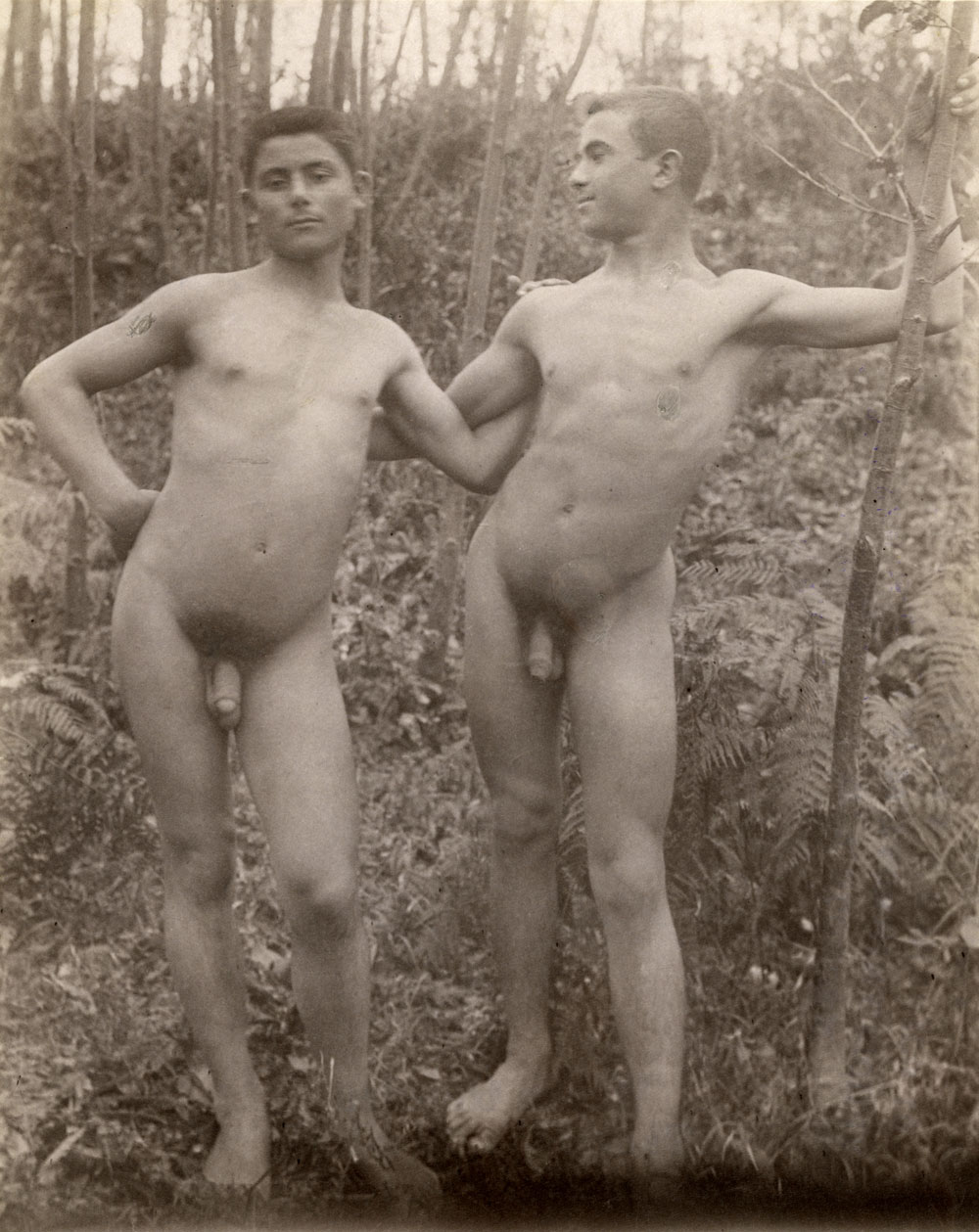
Baron Wilhelm von Gloeden (German, 1856-1931) 'Two nude men standing in a forest' Taormina, Sicily, 1899


Baron Wilhelm von Gloeden (German, 1856-1931)
Two nude men standing in a forest
Taormina, Sicily, 1899
Albumen print


Minor White (American, 1908-1976) 'Arches of the Dodd Building (Southwest Front Avenue and Ankeny Street)' 1938


Minor White (American, 1908-1976)
Arches of the Dodd Building (Southwest Front Avenue and Ankeny Street)
1938
Gelatin silver print


Minor White (American, 1908-1976) 'Tom Murphy (San Francisco)' 1948


Minor White (American, 1908-1976)
Tom Murphy (San Francisco)
1948
Gelatin silver print


Robert Mapplethorpe (American, 1946-1989) 'Self Portrait' 1975


Robert Mapplethorpe (American, 1946-1989)
Self Portrait
1975
Gelatin silver print
© Robert Mapplethorpe Foundation. Used with permission


Robert Mapplethorpe (American, 1946-1989) 'Derrick Cross' 1983


Robert Mapplethorpe (American, 1946-1989)
Derrick Cross
1983
Gelatin silver print
© Robert Mapplethorpe Foundation. Used with permission


Robert Mapplethorpe (American, 1946-1989) 'Thomas' 1987


Robert Mapplethorpe (American, 1946-1989)
Thomas
1987
Gelatin silver print
© Robert Mapplethorpe Foundation. Used with permission


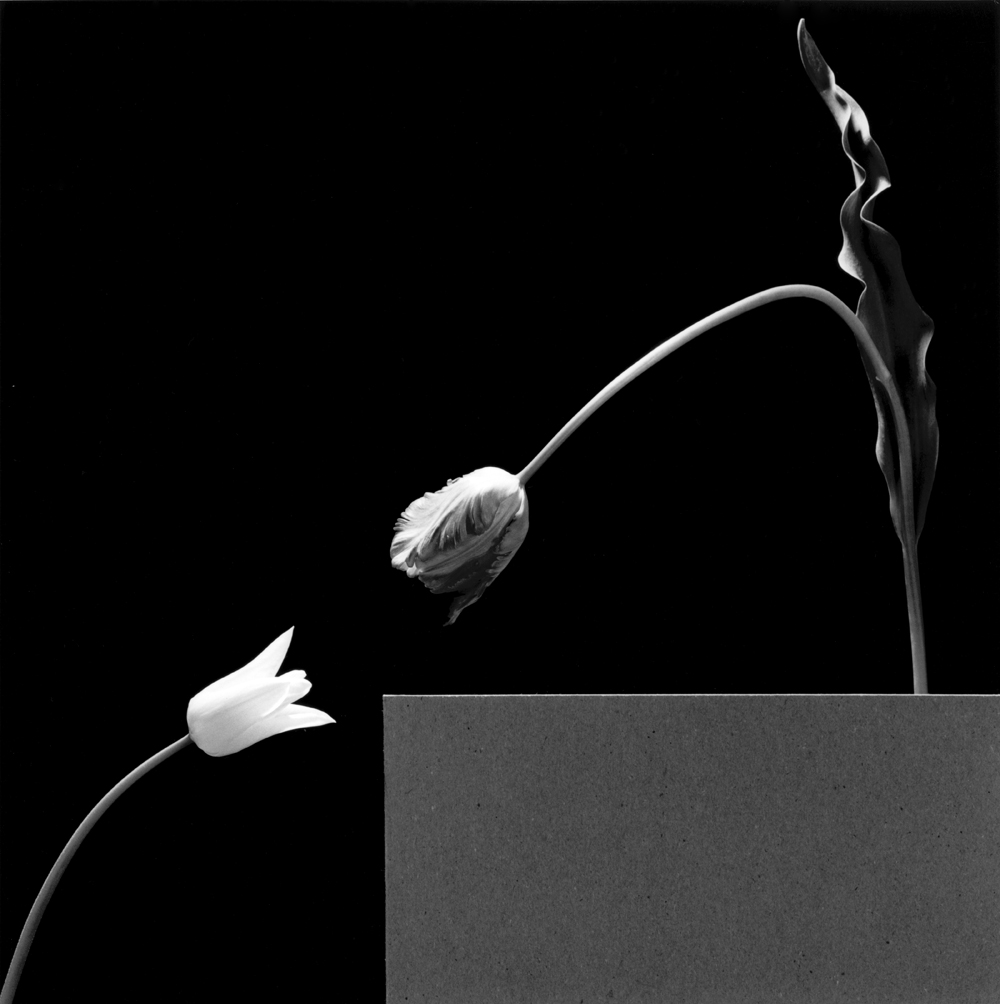
Robert Mapplethorpe (American, 1946-1989) 'Two Tulips' 1984


Robert Mapplethorpe (American, 1946-1989)
Two Tulips
1984
Gelatin silver print
© Robert Mapplethorpe Foundation. Used with permission


A renowned figure of contemporary photography, Robert Mapplethorpe (1946-1989) was in his element in a domain defined by conventions and revolt, classicism and non-conformist cultures, where each picture serves as a document of hard-fought identities, as well as inciting and recording social and artistic debates. The Ludwig Museum Budapest features nearly two hundred works by Robert Mapplethorpe, from his early Polaroid photos to pieces from his final years. Realised in collaboration with the Robert Mapplethorpe Foundation New York, this large-scale exhibition is presented to a Hungarian audience for the first time.

Initially, Mapplethorpe had no intention of becoming a photographer. His early collages and altar-like installations incorporated found elements including photos from magazines. Seeking to give these works a more personal and perfect touch, he decided to shoot the photos himself. His major subjects were his immediate environment and personal desires: the alternative circles of the New York art scene, his identity as a homosexual, non-traditional forms of sexuality, and the communities organised around them. The New York of the seventies was a great melting pot of contiguous subcultures, sexual freedom, post-Pop and rock’n’roll. Mapplethorpe’s environment included Andy Warhol and his entourage from the Factory, the superstars of his films as well as the inhabitants of the legendary Chelsea Hotel, who inspired his art and became part of his audience.

His portraits of famous individuals and those longing for fame also positioned their photographer within their circle. He was a renowned artist seeking to establish relationships with people who stand out, one way or another, from the rest of society, without submitting himself to them. Posing for his camera were film stars, musicians, writers and visual artists, the celebrities and central figures of New York in the seventies and eighties, including pornographic film stars and body builders. He made engaging and elegant portraits attesting to his intense attention, humour, and ambition toward a sense of the monumental.

Mapplethorpe developed an increasingly committed and professional attitude to photography. His quest for the perfect image led him to classical compositions and subjects. While precision of forms and a quality of reserve were combined in his works, his intense attention to his models remained unchanged; he photographed torsos and floral still-lifes with the same cool professionalism. His nudes evoke classical Greek statues and Renaissance masterpieces, with their arrangement and sculptural approach to the body dating back to traditions that have existed for several hundred years. Such an incarnation of classical formalism, however, was juxtaposed with shocking new subjects and stark sexual fetishes, resulting in radical re-creations of the approach to tradition.

The perfect image called for the perfect body: his shots of black men, female body-builders and austere flowers seem to articulate his one and only vision, again and again. He almost always worked in the studio, most often in black and white, using increasingly defined tones. With unified backgrounds and balance of forms, his photos remove the subjects from their own realities to relocate them in the timeless, frozen space of the photograph. In terms of their statue-like beauty and rigorous composition of every detail, his pictures continue and renew the classical photographic tradition all at once. Such classical virtues, however, did not make these photos exempt from criticism: both his subject matter and their manner of presentation sparked controversy. Their sexual themes aroused unease, and criticism of the work failed to make a distinction between the statue-like beauty of body parts and torsos, the sexual stereotypes associated with black male bodies, and the objectification of the bodies.

Mapplethorpe’s works created a place for homosexual and S&M identities in the domain of high art, subverting conventions, transgressing unspoken social agreements and revealing prejudices, in line with the artist’s personal desires and self-definition. In the United States, during the eighties, in the first moments of horror in the face of AIDS, the condemnation of homosexuality and the undefined dread of the disease became entwined. Such developments stirred up the already intense controversies around Mapplethorpe’s photos, adding a new overtone to the voice of conservative protesters. (Mapplethorpe was diagnosed with AIDS in 1986, and he died in the spring of 1989 due to complications related to the disease).

The cultural-political debates of the so-called Culture Wars in the late 1980s and 1990s in the United States, fuelled the decision of the Corcoran Gallery of Art in Washington, D.C., to cancel its leg of the travelling exhibition “The Perfect Moment,” which included several thought-provoking photos that the conservative right-wing had denounced as obscene and arrogant assaults on public taste. A long and heated debate was to follow, including both hysterical and absurd commentaries, triggering police actions and a trial against a subsequent venue, the Contemporary Arts Center in Cincinnati as well as its director. Though the museum and its director were eventually cleared of all charges, the case continued to shape the cultural-political landscape in the US, which partly concluded in a revision of the public funding of artworks and is still referred to today as an outstanding example of the methodology of censorship.

Press release from the Ludwig Museum of Contemporary Art website


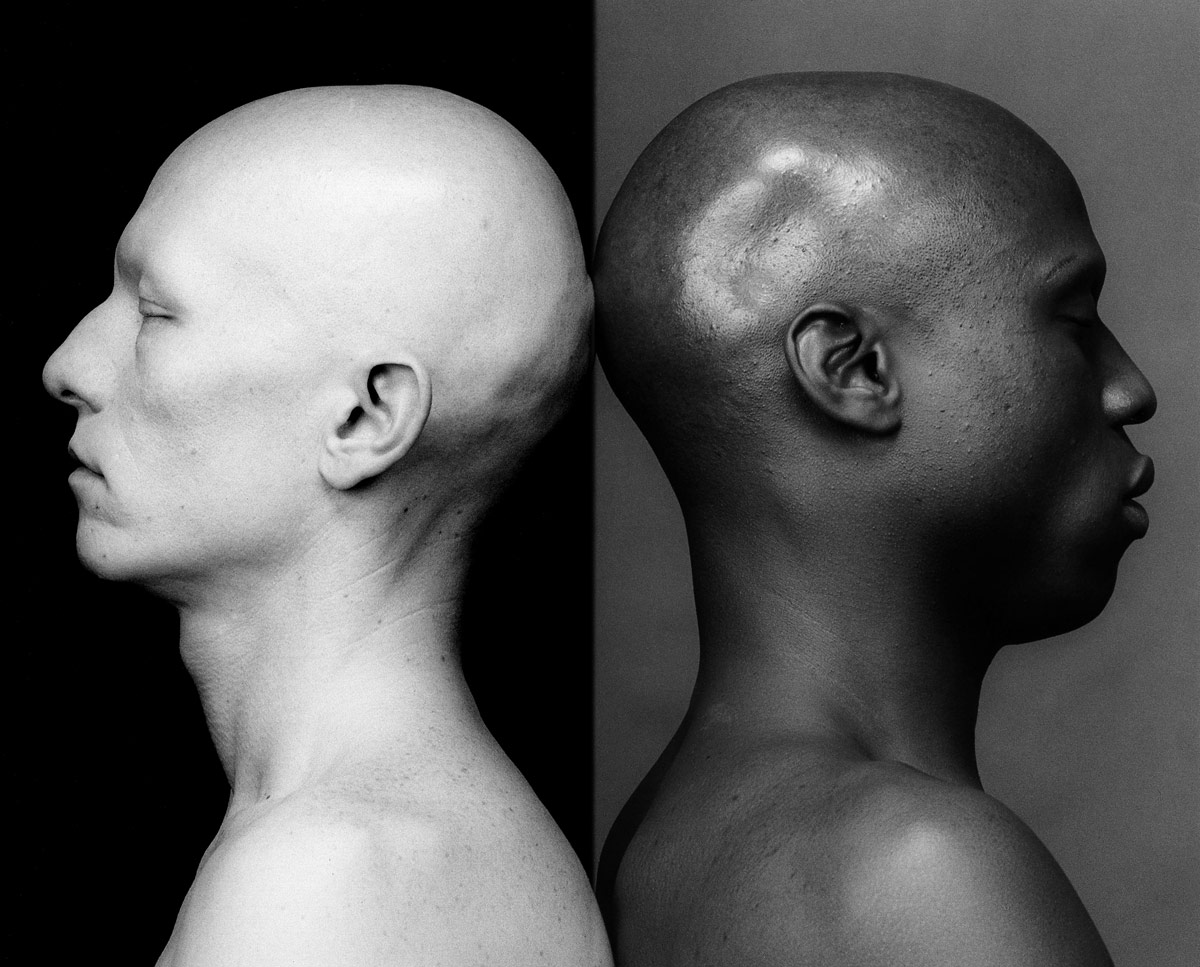
Robert Mapplethorpe (American, 1946-1989) 'Ken Moody and Robert Sherman' 1984


Robert Mapplethorpe (American, 1946-1989)
Ken Moody and Robert Sherman
1984
Gelatin silver print
© Robert Mapplethorpe Foundation. Used with permission


Robert Mapplethorpe (American, 1946-1989) 'Untitled' c. 1973


Robert Mapplethorpe (American, 1946-1989)
Untitled
c. 1973
Gelatin silver print
© Robert Mapplethorpe Foundation. Used with permission


Robert Mapplethorpe (American, 1946-1989) 'Lisa Lyon' 1982


Robert Mapplethorpe (American, 1946-1989)
Lisa Lyon
1982
Gelatin silver print
© Robert Mapplethorpe Foundation. Used with permission


Robert Mapplethorpe (American, 1946-1989) 'Ajitto' 1981


Robert Mapplethorpe (American, 1946-1989)
Ajitto
1981
Gelatin silver print
© Robert Mapplethorpe Foundation. Used with permission


Robert Mapplethorpe (American, 1946-1989) 'Self Portrait' 1988


Robert Mapplethorpe (American, 1946-1989)
Self Portrait
1988
© Robert Mapplethorpe Foundation. Used with permission


Ludwig Museum of Contemporary Art
1095 Budapest  Komor Marcell Street 1
Hungary 06 1 555-3444

Opening hours:
Tuesday – Sunday 10.00 – 20.00
Closed on Mondays

Ludwig Museum of Contemporary Art website

LIKE ART BLART ON FACEBOOK

Back to top

Text: Peter Roebuck

December 2011


What a great piece of writing by Peter Roebuck (below). Such insight into the human condition, so eloquently expounded.

Wise words about life. His wisdom will be greatly missed.

Dr Marcus Bunyan


“We are, indeed, shadows passing across the mouth of a cave.”

“If perspective insists that our daily lives are not important, then it is a fool”


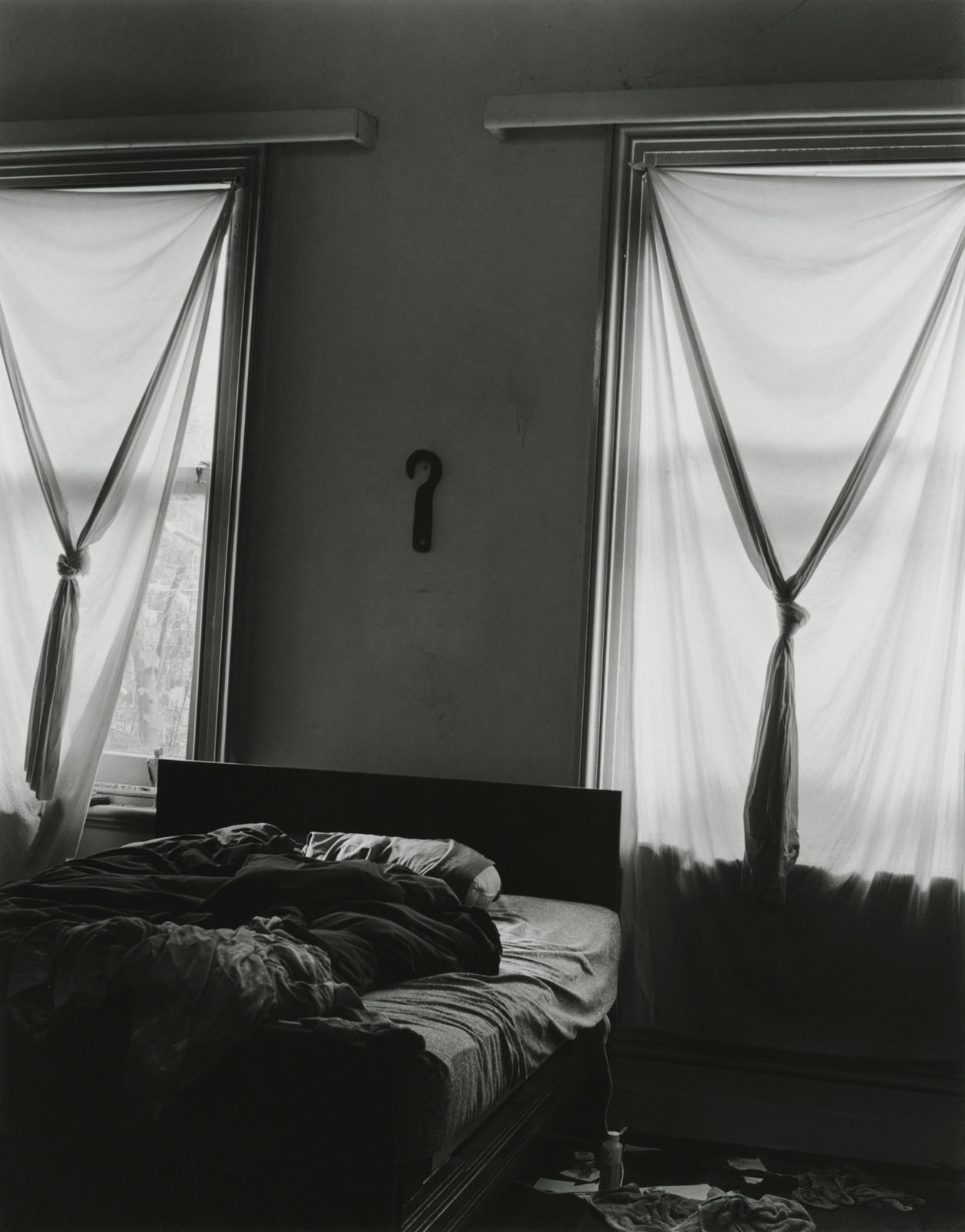
Marcus Bunyan (Australian, b. 1958) 'Woody's room, 226 Punt Road, Prahran' 1993


Marcus Bunyan (Australian, b. 1958)
Woody’s room, 226 Punt Road, Prahran
1993
Silver gelatin print


NOTHING is sadder than the extinguishing of a young life. Besides the loss itself, and the pain that follows, the premature ending of a life serves as a shock, reminds of the fragility and foolishness of our existences. When Princess Di died, her country temporarily became a better place. When David Hookes departed, the sorrow reached beyond his immediate circle and into the masses.

Not that it lasts. Still we complain about traffic wardens and shampoo bottles that will not open, and the weather, and the neighbours and taxes and noise and the rest of it. An then a child dies, or a friend is suddenly removed, or a familiar face vanishes, whereupon regret comes over us for the life unled.

Do not suppose your author is any wiser in these regards than anyone else. Everything works in theory and then a drill starts in a nearby house, or a traffic jam is encountered, or a queue, whereupon reason flies out the window. Rage resumes till someone is lost, a depressed youngster or an acquaintance amid a screeching of brakes, whereupon calm returns, for then the truth must be faced. We are, indeed, shadows passing across the mouth of a cave.

It is absurd that we take ourselves and our lives seriously when it all hangs by a thread. Yet it is likewise foolish to waste gifts, for they carry with them a certain responsibility. Without intensity, much less can be achieved. A man cannot spend his entire life with a gaga grin upon his face. Blood, sweat and tears are part of the human expression, part of our growth, and there is no need to regret their place in our lives. Mozart and Tendulkar have provided myriad delights because they dared to pursue their talents.

Often it is the striving that provided satisfaction and then follows the laughter and the strength. If perspective insists that our daily lives are not important, then it is a fool. Nevertheless, much can be missed along the way and it can take an untimely passing to remind us that we are, in so many ways, behaving like fools.

Edited extract of a piece penned by Peter Roebuck after the death of cricketer David Hookes in January 2004

Author and journalist Peter Roebuck fell to his death from a balcony in South Africa in November 2011


LIKE ART BLART ON FACEBOOK

Back to top