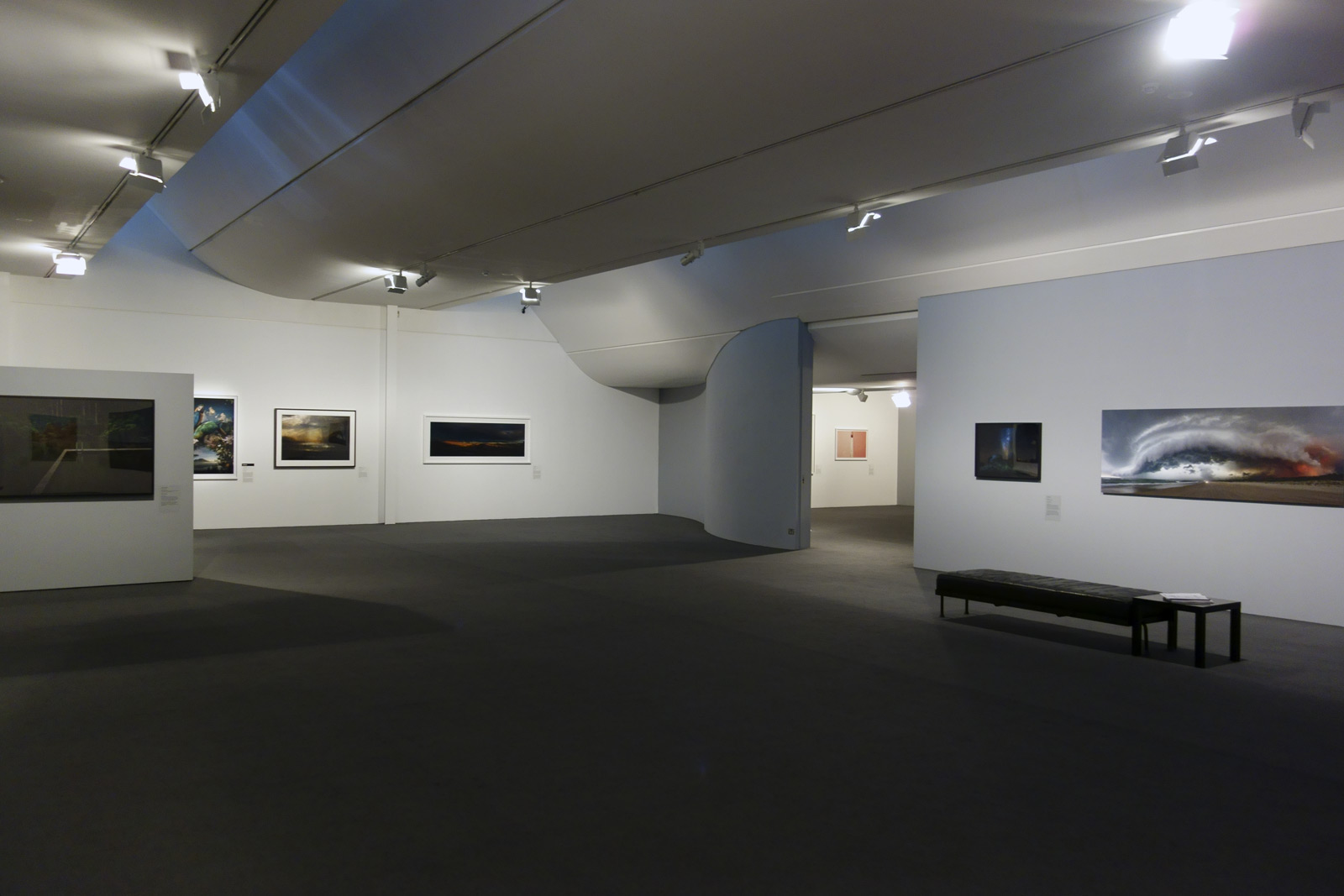
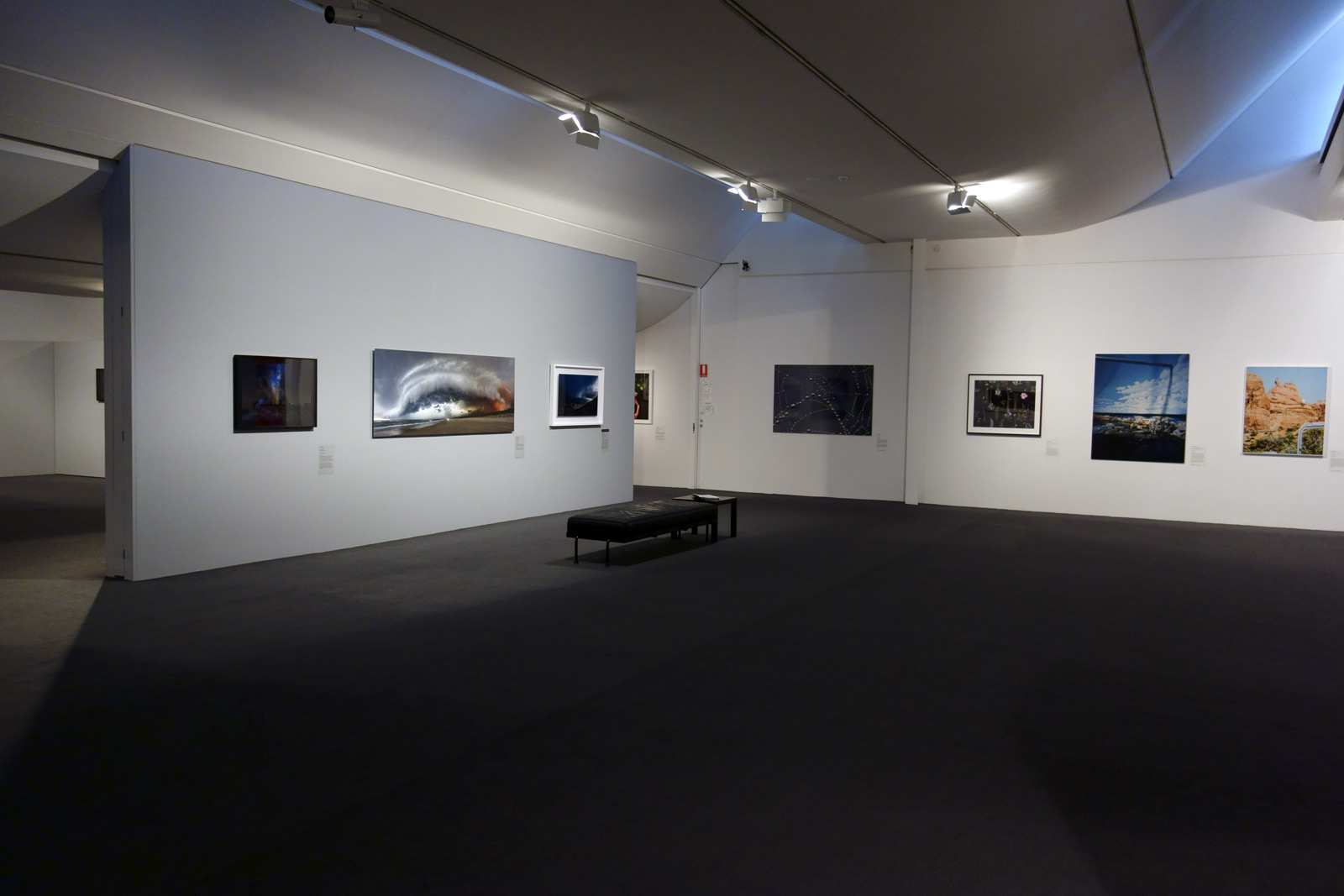
Review: ‘Christian Thompson: Ritual Intimacy’ at Monash University Museum of Art (MUMA), Melbourne

Exhibition dates: 27th April – 8th July, 2017

This project has been supported by the Victorian Government through Creative Victoria

PLEASE NOTE: I am still recovering from my hand operation which is going to take longer than expected. All of the text has been constructed using a dictation programme and corrected using only my right hand – a tedious process. I have to keep my mental faculties together, otherwise this hand will drive me to distraction… Marcus
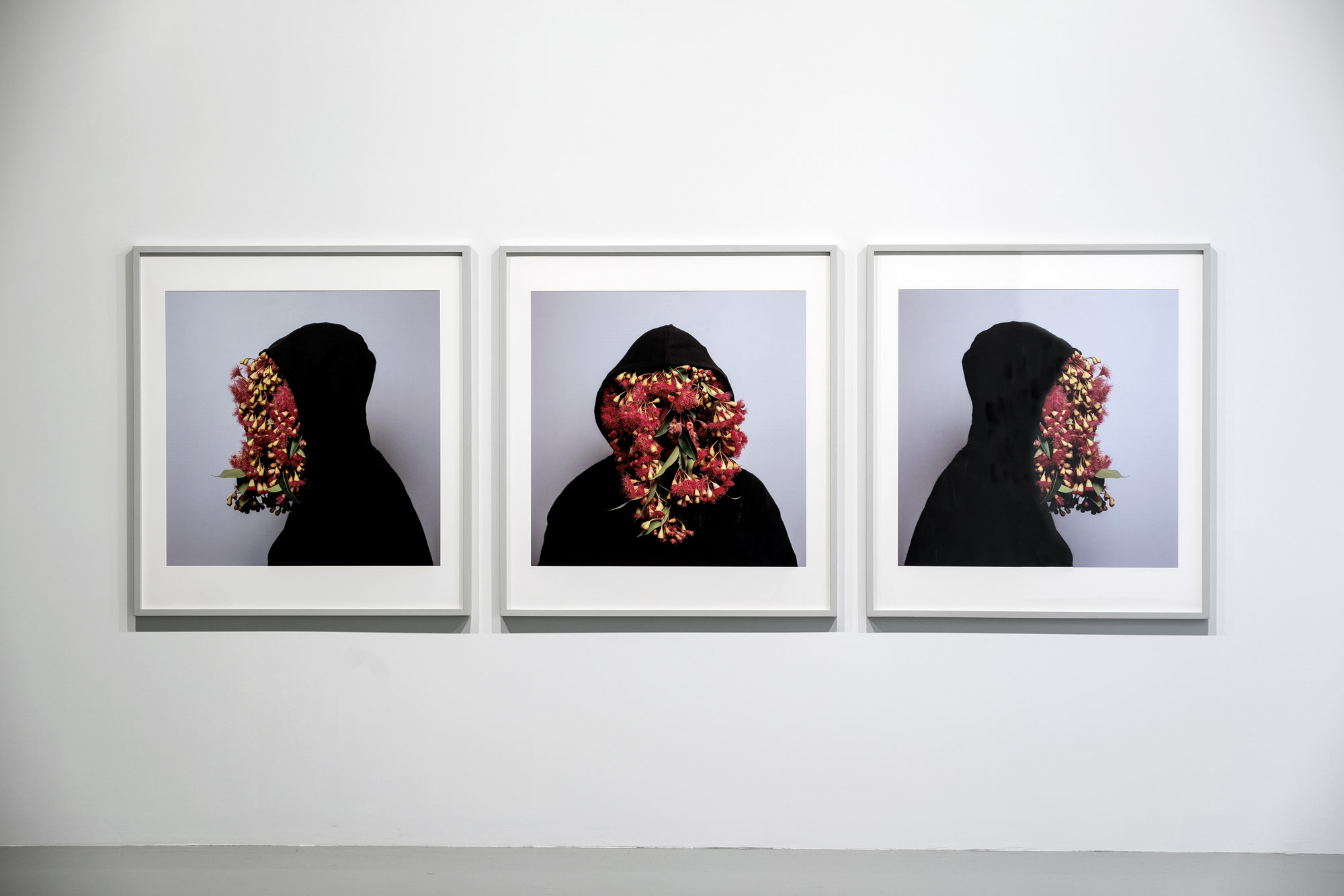
 

Christian Thompson (Australian, b. 1978) 'Black gum 1-3' 2007 from the exhibition 'Christian Thompson: Ritual Intimacy' at Monash University Museum of Art (MUMA), Melbourne, April - July, 2017


Christian Thompson (Australian, b. 1978)
Black gum 1-3
2007
From the series Australian graffiti
C-type prints
Collection of the National Gallery of Australia, Canberra
Photo: Andrew Curtis


Still singing, still Dreaming,
still loving… not dying.

This is a strong survey exhibition of the work of contemporary Australian Indigenous artist and Bidjara man exploring the world, Christian Thompson. As with any survey exhibition, it can only give us a glimpse into the long standing development of the artist’s work, inviting the viewer to then research more fully the themes, conceptual acts and bodies (of work) that have led the artist to this point in his artistic development. Having said that the exhibition, together with its insightful catalogue essays and additional images that do not appear in the exhibition, allow the viewer to be challenged intellectually, aesthetically and most importantly … spiritually. And to be somewhat conflicted by the art as well, it has to be said.

Thompson’s “multidisciplinary practice explores notions of cultural hybridity, along with identity and history, creating works that transcend cultural boundaries.” His self-reflexive and self-referential bodies of work, often with the artist using his body as an “armature for his characters, costumes and various props,” are intuitive and imaginative in how they relate Aboriginal and Australian/European history, taking past time into present time which influences future time. Time, memory, history, space, landscape are conflated into one point, enunciated through acts of ritual intimacy. These ritual intimacies, these performative acts, are enabled through an understanding of a regularised and constrained repetition of norms (in this case, the declarative power of colonialism), where the taking of a photograph of an Aboriginal person (for example), is “a ritual reiterated under and through constraint, under and through the force of prohibition and taboo, with the threat of ostracism and even death controlling and compelling the shape of the production…” (Judith Butler, Bodies That Matter. New York: Routledge, 1993, p. 95).

What is so heartening to see in this exhibition is a contemporary Indigenous artist not relying on re-animating colonial images of past injustices, but re-imagining these images to produce a spiritual connection to Country, to place, to people in the present moment. As Charlotte Day, Director, MUMA and Hetti Perkins, guest curator observe in the wall text at the beginning of the exhibition, “Rather than appropriating or restaging problematic ethnographic images of indigenous ancestors held in the Museum’s photographic collection, Thompson has chosen to spend significant periods of time with these images, absorbing their ‘aura’ and developing a personal artistic and deferential response that is decisively empowered.” As Marina Warner states in her excellent catalogue essay “Magical Aesthetics”, these ritual intimacies are a “magical re-animation and adopt time-honoured processes of making holy – of hallowing. Adornment is central to ritual and a prime way of glorifying and consecration.” What Thompson is doing is not quoting but translating the source-text into new material. As Mary Jacobus notes of the work of the painter Cy Twombly, “Quotation involves the repurposing of an existing text: translation requires a swerve from the source-text as it finds new directions and enters unknown terrain.” (Mary Jacobus. Reading Cy Twombly: Poetry in Paint.  Princeton & Oxford: Princeton University Press, 2016, p. 7).

This auto-ethnographic exploration and adornment leads to a deterritorialisation and reterritorialisation of time in a heterotopic space, juxtaposing in a single real place several spaces, several sites of contestation – Thompson’s travels and research from around the world, the embodiment in his own culture and that of contemporary Australia, pop culture, fashion, music and language – where, as Hetti Perkins says, “the unknowable is a lovely thing” and where Thompson can affect and influence “the Zeitgeist through more subversive means.” These spaces of ritualised production overlaid with memory, imagination, desire, and nostalgia, these fragmented images, become a process and a performance in which Thompson seeks to ameliorate the objects aura through a process of ‘spiritual repatriation’. Thompson’s performativity is where the ritual of production and meaning is never fully predetermined at any stage of production and reception.

Here, in terms of ‘aura’ and ‘spirit’, I am interested in the word “repatriation”. Repatriation means to send (someone) back to their own country – from the verb repatriare, from re- ‘back’ + Latin patria ‘native land’. It has an etymological link to the word “patriot” – from late Latin patriota ‘fellow countryman’, from Greek patriōtēs, from patrios ‘of one’s fathers’, from patris ‘fatherland’ – and all the imperial connotations that are associated with the word. So, to send someone back (against their own will? by force?) or to be patriotic, as belonging to or coming from, the fatherland. A land that is father, farther away. Therefore, it is with regard to a centralised, monolithic body and its materialities (for the body is usually centrally placed in Thompson’s work) in Thompson’s instinctive works, that relations of discourse and power will always produce hierarchies and overlappings which are going to be contested. As Judith Butler notes,

“That each of those categories [body and materiality] have a history and a historicity, that each of them is constituted through the boundary lines that distinguish them and, hence, by what they exclude, that relations of discourse and power produce hierarchies and overlappings among them and challenge those boundaries, implies that these are both persistent and contested regions.” (Judith Butler. Bodies That Matter. New York: Routledge, 1993, pp. 66-67)


Thus performativity is the power of discourse, the politicisation of abjection, and the ritual of being.

This is where I become conflicted by much of this work. Intellectually and conceptually I fully understand the instinctive, intuitive elements behind the work (crystals, flowers, maps, butterflies, dreams) but aesthetically I feel little ‘aura’ emanating from the photographs. Thompson’s “peripatetic life and your bowerbird, magpie-like fascination” (p. 107) lead to all sorts of influences emerging in the work – orange from The Netherlands, Morris dancers from England, Jewish heritage, Aboriginal and Australian heritage, fashion, pop culture, music, language – all evidenced through “acts of concealment in his self-portraits.” (p. 75). Now there’s the rub!

In Thompson’s ritual intimacies the intimacy is performed only once, for the camera. It is not didactic, but it is interior and hidden, leaving much to the feelings of the viewer, looking. The re-presentation of that intimacy is performed by the viewer every time they look at the art. I think of the work of one of my favourite performance artists, Claude Cahun, where the artist inhabits her personas, adorning her androgynous face with costume after costume to become something that she wants to become – a buddha, a double, a harpy, a lunatic or a doll with equal ease. Cahun is always and emphatically herself, undermining a certain authority… and she produces indelible images that sear the mind.

I don’t get that from Thompson. I don’t know who he really is. Does it matter? Yes it does. In supposedly his most autobiographic work (according to Hetti Perkins), the video Heat (2010, below) the work emerges out of Thompson’s memories of growing up in the desert surrounding Barcaldine in central west Queensland where “heat captures the sensation that he associates with being on his country: the dry wind blowing through his hair.” Perhaps for him or someone from the desert country like Hetti Perkins (as she states in the catalogue), but not for me. I feel no ‘heat’ from these three beautiful woman standing in a contextless background with a wind machine blowing their hair. The only ‘heat’ I felt was perhaps the metaphoric heat of colonisation, violence and abuse thrust on a vulnerable culture.

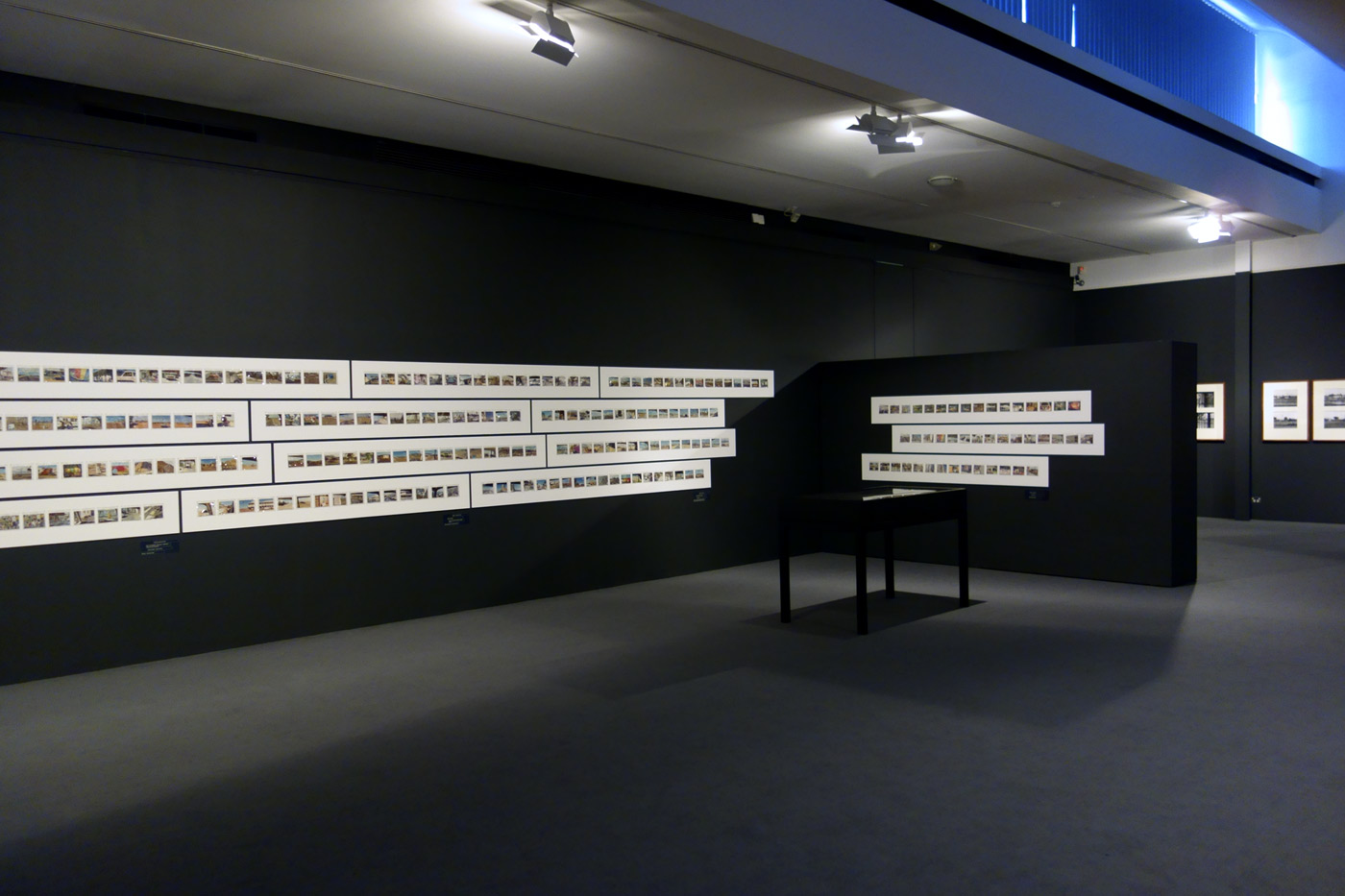
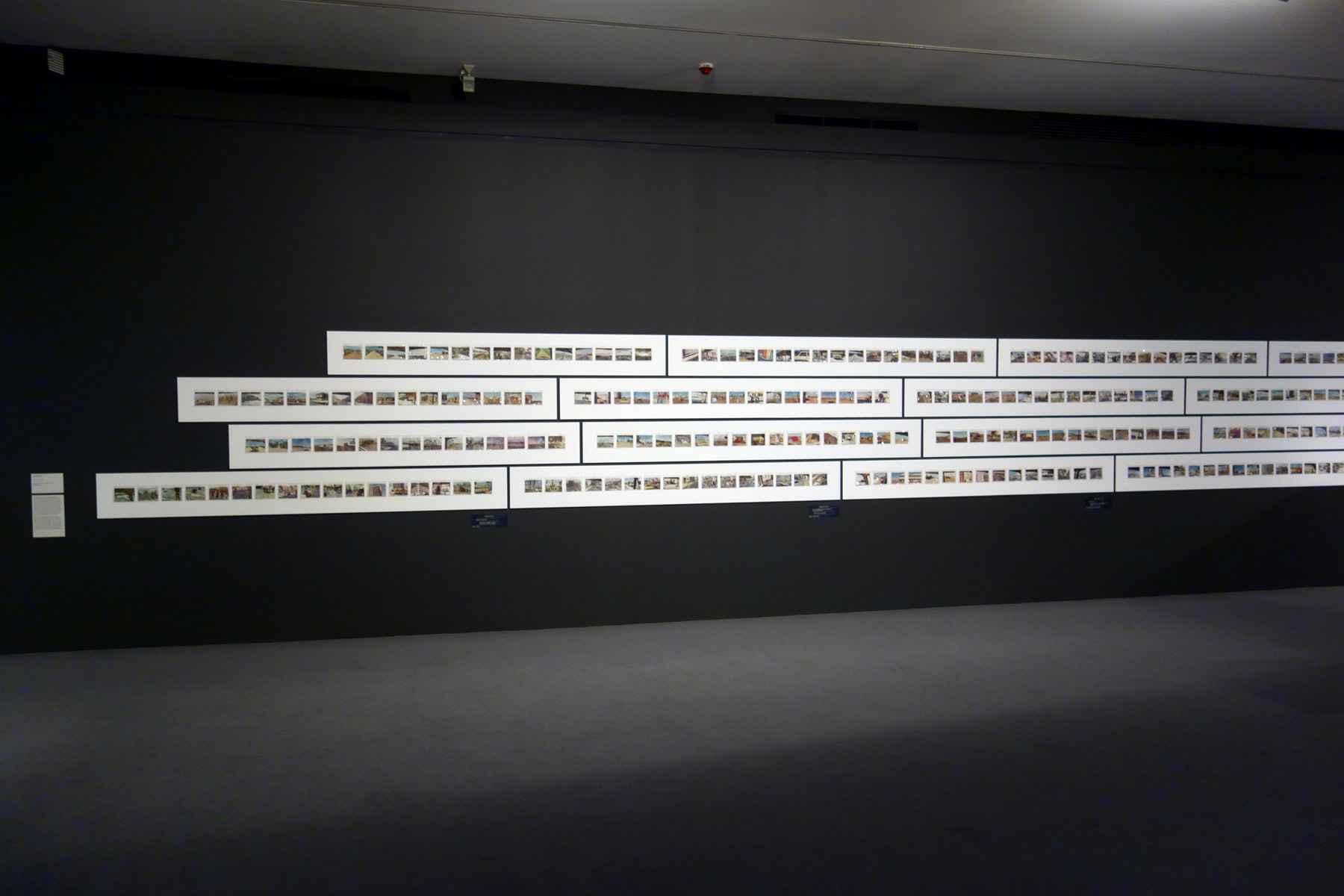
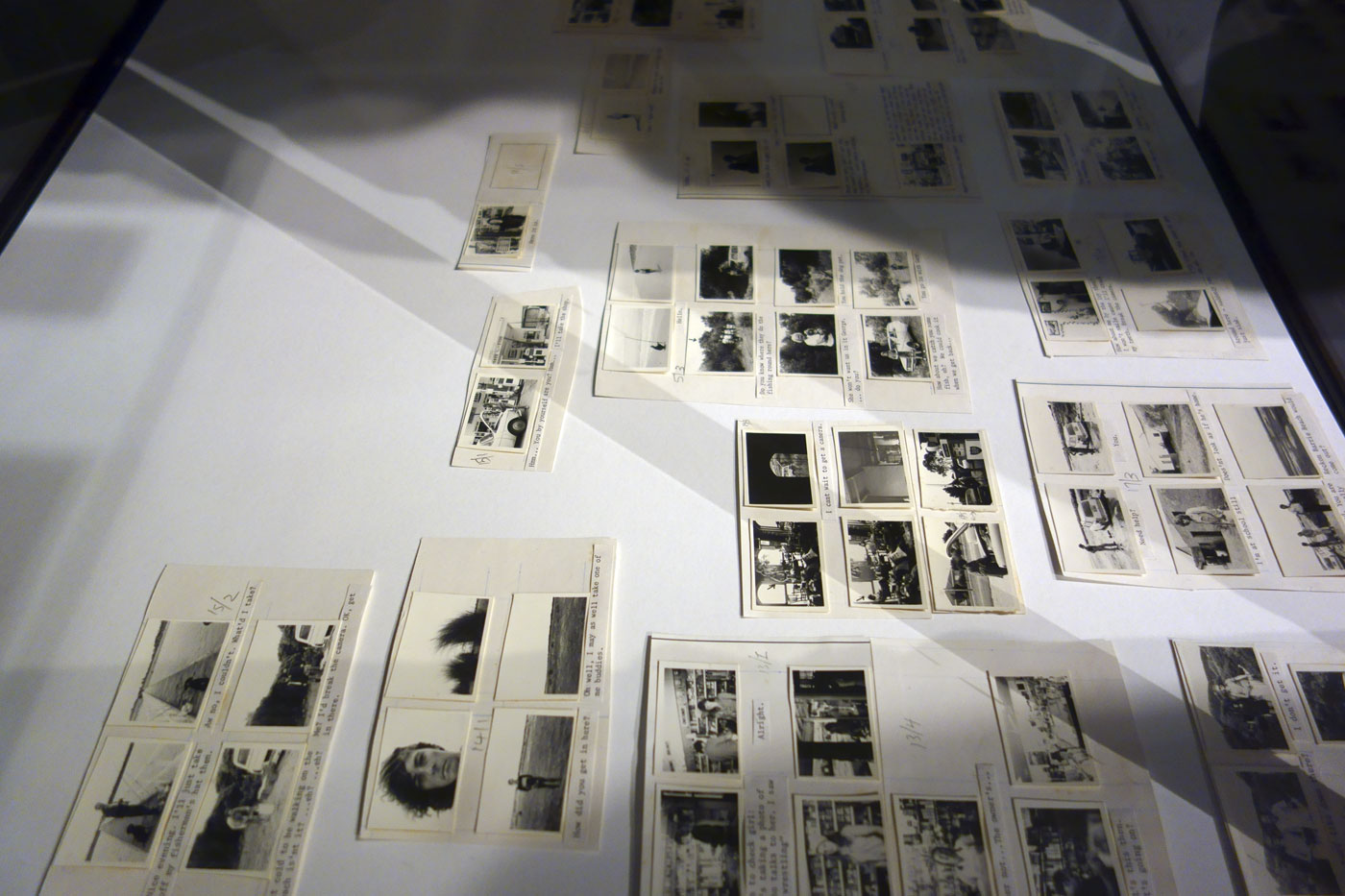
Talking of vulnerable cultures, in the work Polari (2014, below) Thompson invokes the history of languages in an intimate ritual “as he seeks to reanimate and repossess vanishing knowledge. Polari is a private language … a kind of code used by sailors, circus and fairground folk, and in gay circles. … Thompson’s Polari series warns us that the artist has a language of his own, which we can overhear but not fully understand: something is withheld, in contrast to the imposed and implacable exposure which the subjects of scientific collections were made to suffer in the past.” (Warner, p. 74) But why is he using Polari specifically, a language that is strongly associated with the libertine gay culture of the 1950s-70s? Does he have a right to use this word and its linguistic heritage because he is gay? It is never stated, again another thing left hidden, concealed and unresolved.

Although no culture can ever fully own its language (language is a construct after all) … if Thompson is not gay, then I would take exception to his invoking the Polari language, just as an Indigenous artist would take exception to me using Bidjara language in an art work of my own. I remember coming out in London in 1975 and speaking Polari myself when it was still being used in pubs and clubs such as the A + B club in Soho. It was not being used as a language of resistance, far from it, but as a language of desire. It was a language used to inculcate that desire. As a video on YouTube observes of speaking Polari, “you didn’t think, oh God I’m so oppressed I can never speak about myself, you just did it, you just slipped into it without thinking.” It was your own language, like a comfortable pair of slippers. Does Thompson understand how using that word to title a body of work could be as offensive to some people as he finds the denaturing of his own culture? For me this is where the work really becomes problematic, when an artist does not enunciate these connections, where things, like sexuality, remain hidden. Similarly, with historical photographs of Indigenous people taken for ethnographic study, Thompson fails to acknowledge the work of academics such as Jane Lydon and her important books Eye Contact: Photographing Indigenous Australians (2005) and Photography, Humanitarianism, Empire (2016) where she unpacks the historical baggage of the images and notes that the photographs were not solely a tool of colonial exploitation. Lydon articulates an understanding in Eye Contact that the residents of Coranderrk, an Aboriginal settlement near Healsville, Melbourne, “had a sophisticated understanding of how they were portrayed, and they became adept at manipulating their representations.” Again, there is more than meets the eye, more than just ‘spiritual repatriation’ of aura.

For me, the magic of this exhibition arrives when Thompson lets go all obfuscation, let’s go all actions that make something obscure, unclear, or unintelligible. Where his ritual intimacies become grounded in language, earth and spirit. This happens in the video works, Desert slippers (2006, below), Refuge (2014, below), Gamu Mambu (Blood Song) (2011) and Dhagunyilangu (Brother) (2011, below). In these videos, the Other’s gaze disintegrates and we are left with poignant, heart felt words and actions that engage history, emotion, family and Country.

The video Desert slippers “features a Bidjara ritual in which a father and son transfer sweat. The desert slipper is a native cactus that symbolises the transferal of the spirit back to earth as the plant grows.” It is simple, eloquent, powerful, present. The other videos feature two baroque singers from Europe and Thompson singing in his native tongue Bidjara (Bidyara, Pitjara), a language that Wikipedia states “is an extinct Australian Aboriginal language. In 1980 it was spoken by twenty elders in Queensland, between Tambo and Augathella, Warrego and Langlo rivers.” Spelt out in black and white. Extinct. To hear Thompson sing a berceuse (French, from bercer ‘to rock’), or lullaby in his native language, a language taught to him by his father, is the most emotional of experiences. The work “combines evocative chanting and electronic elements to invoke the cultural experiences and narratives of his Bidjara culture,” and “is premised on the notion that if one word of Bidjara is spoken, or sung in this case, it remains a living language.” Amen to that.

This is the real hallowing, not the dress ups or the concealments. It is in these videos that the raw material of his and his cultures experience is transmuted into living, breathing stories, in an alchemical transmutation, a magical re-animation of past time into present and future time. My transfiguration into a more spiritual state was complete when listening in quiet contemplation. For I was given, if only for a very brief moment, access to the pain of our First Peoples and a vision of hope for their future healing.

Still singing, still Dreaming,
still loving… and certainly not dying.

Dr Marcus Bunyan

Word count: 2,053


Many thankx to MUMA for allowing me to publish the photographs and videos in the posting. All installation photographs unless otherwise noted © Marcus Bunyan, the artist and MUMA. Please click on the photographs for a larger version of the image.


Christian Thompson (Australian, b. 1978) 'Black gum 1' 2007 (installation view)


Christian Thompson (Australian, b. 1978)
Black gum 1 (installation view)
2007
From the series Australian graffiti
C-type print
Collection of the National Gallery of Australia, Canberra
Photo: Marcus Bunyan
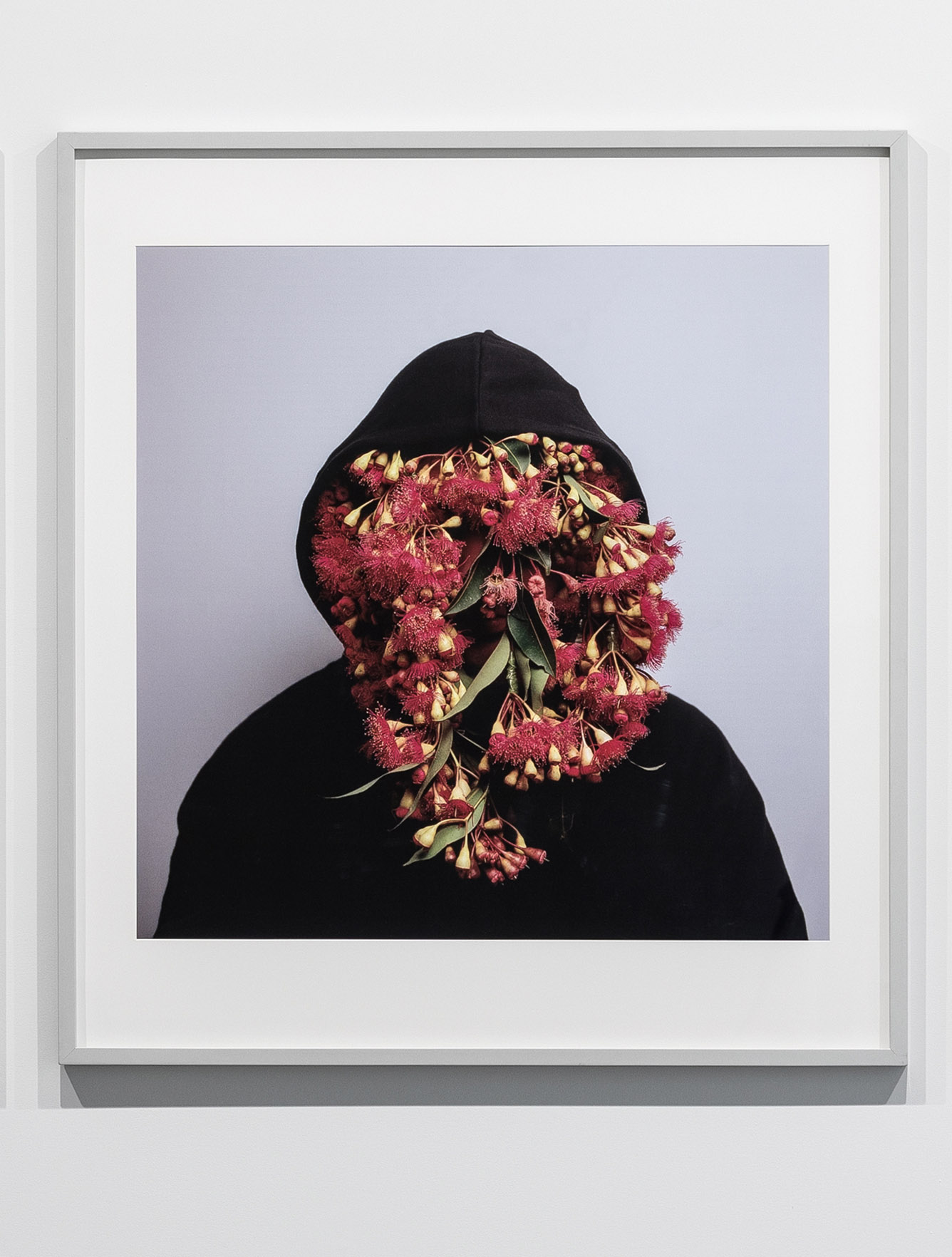
 

Christian Thompson (Australian, b. 1978) 'Black gum 2' 2007 (installation view)


Christian Thompson (Australian, b. 1978)
Black gum 2 (installation view)
C-type print
2007
From the series Australian graffiti
Collection of the National Gallery of Australia, Canberra
Photo: Marcus Bunyan


“While I’m interested in portraiture – I don’t consider my work as portraiture because that suggests that I’m trying to portray myself, my own visage, my own image. I employ images, icons, materials, metaphors to capture and idea and moment in time. There are many different things at play; taking a picture of myself is really the last thing that’s on my mind.”


Christian Thompson in conversation with Hetti Perkins, catalogue extract


“I’m interested in simple aesthetic gestures that can say something … something quite profound about the world that we live in. I tend to build images how I create a sculpture. I borrow from the world around me.”

On being away from home: “You’re able to remove yourself from the local discourse, and romanticise home. When you’re displaced you tend to gravitate towards certain memories … But this is who I am. It would be weird not to express that somehow. I combine memories of my past with my lived experience and an idea of where I’d like to be … it’s all montaged into one.”


Christian Thompson quoted in Will Cox. “Christian Thompson’s Ritual Intimacy,” on the Broadsheet website 15 June 2017 [Online] Cited 22/12/2021


“But Thompson makes things up. His ‘We bury our own’ does not let us see the early daguerreotype but improvises a series of fugues on its spiritual essence. This is the crucial step that Thompson has taken: if you repeat the spectacle you cannot escape the past. But if you, a spiritual descendant, transmogrify yourself in keeping with the aura of the image’s subject, during the prolonged period of encounter and immersion, you can ‘repatriate’ that forebear. Or so he desires.”

“Through these conjurings of the language his people spoke before colonisation set out to strip them of their culture as well as their land, Christian Thompson performs private ceremonies – to reach beyond visual statements of personal presence and reawaken the knowledge of his forebears, and allow us, his listeners and viewers, into their living story.”


Marina Warner. “Magical Aesthetics,” extracts from the catalogue essay


“At the heart of my practice is a concern with aura: what it is, how it can be photographed and how it can be repatriated.”


Christian Thompson
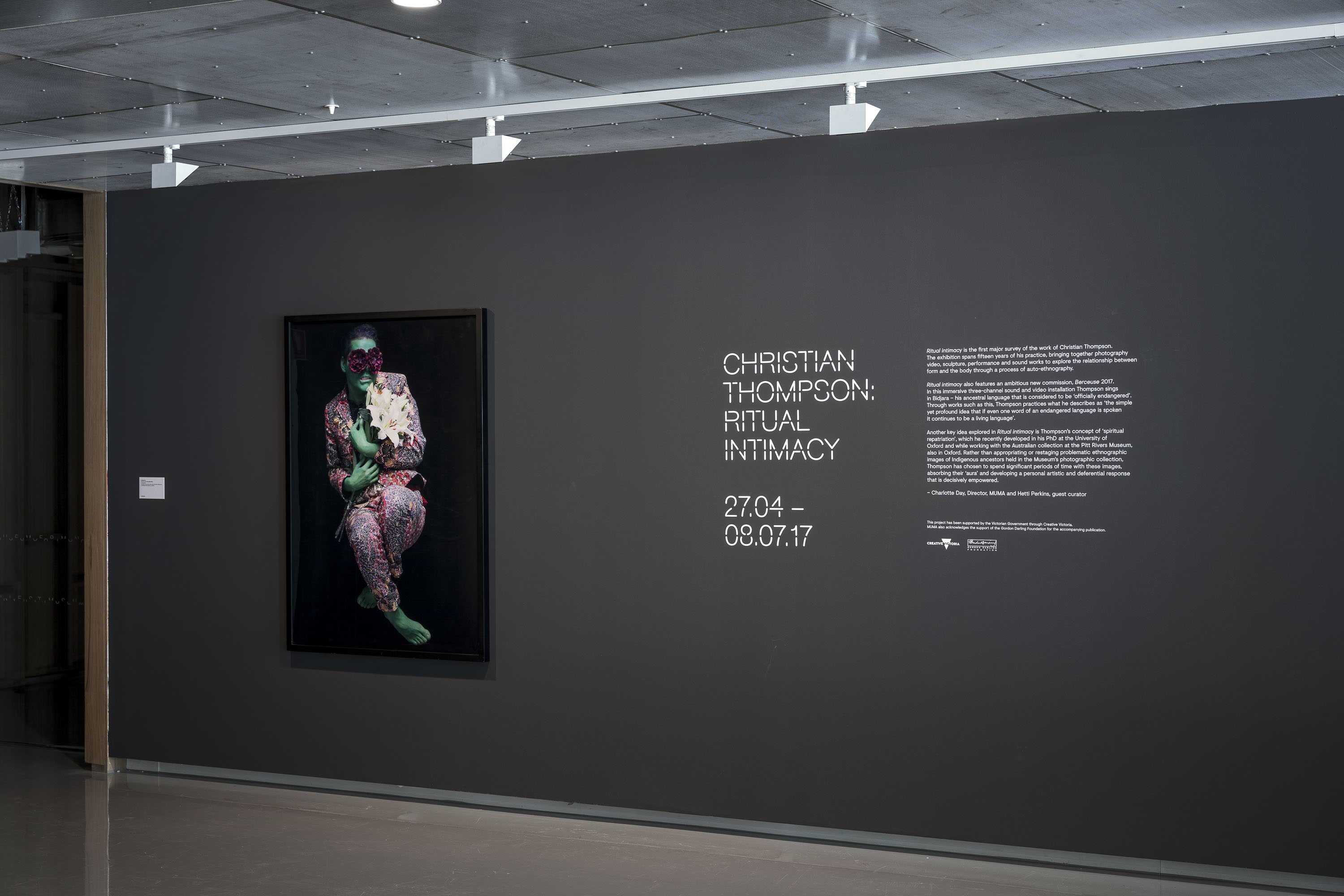


'Christian Thompson: Ritual intimacy', installation view: Monash University Museum of Art, Melbourne 2017


Christian Thompson: Ritual intimacy, installation view: Monash University Museum of Art, Melbourne 2017
Photo: Andrew Curtis


Christian Thompson (Australian, b. 1978) 'Untitled #6' 2010


Christian Thompson (Australian, b. 1978)
Untitled #6
2010
From the series King Billy
C-type print
Image courtesy of the artist, Sarah Scout Presents, Melbourne, and Michael Reid, Sydney and Berlin


'Christian Thompson: Ritual intimacy', installation view: Monash University Museum of Art, Melbourne 2017 featuring stills from the video 'Berceuse' (2017)

'Christian Thompson: Ritual intimacy', installation view: Monash University Museum of Art, Melbourne 2017 featuring stills from the video 'Berceuse' (2017)


Christian Thompson: Ritual intimacy, installation view: Monash University Museum of Art, Melbourne 2017 featuring stills from the video Berceuse (2017)
Photos: Marcus Bunyan


Christian Thompson (Australian, b. 1978)
Berceuse (extract installation view)
2017
Three-channel digital colour video, sound
5.47 minutes
Sound design: Duane Morrison


Christian Thompson (Australian, b. 1978)
Berceuse
2017
Three-channel digital colour video, sound
5.47 minutes
Sound design: Duane Morrison


In this newly commissioned work, Thompson sings a berceuse – a cradle song or lullaby – that combines evocative chanting and electronic elements to invoke the cultural experiences and narratives of his Bidjara culture. Intended as a gesture of re-imagining his traditional Bidjara language, which is been categorised as extinct, the work is premised on the notion that if one word of Bidjara is spoken, or sung in this case, it remains a living language.

Thompson makes subtle reference to his maternal Sephardic Jewish roots by ruminating in this work on the lullaby Nani Nani:


Lullaby, lullaby
The boy wants a lullaby,
The mother’s son,
Who although small will grow.

Oh, oh my lady open,
Open the door,
I come home tired,
From ploughing the fields.

Oh, I won’t open them,
You don’t come home tired,
You’ve just come back,
From seeing your new lover.

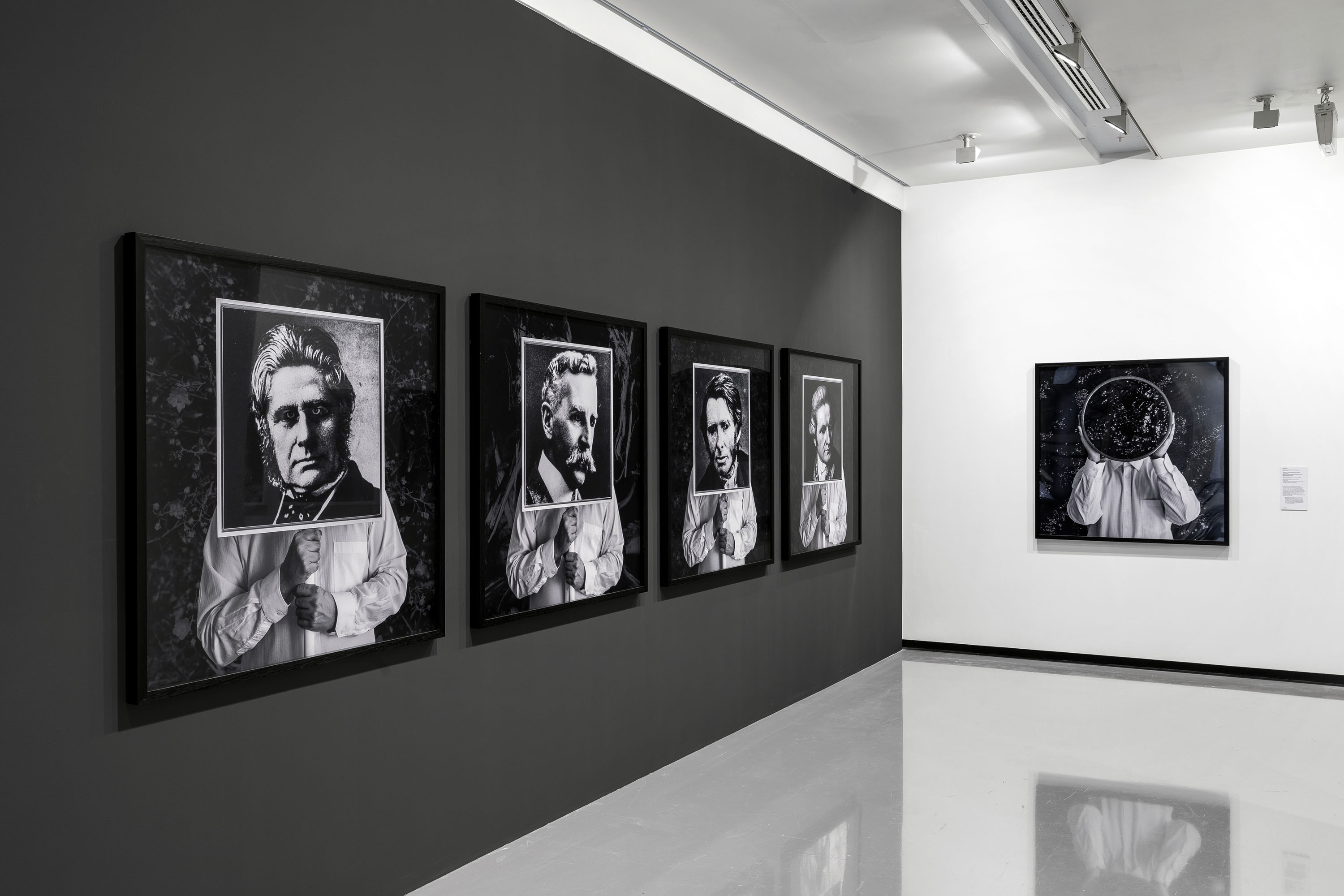
 

'Christian Thompson: Ritual intimacy', installation view: Monash University Museum of Art, Melbourne 2017 featuring the series 'Museum of Others' (2016)

'Christian Thompson: Ritual intimacy', installation view: Monash University Museum of Art, Melbourne 2017 featuring the series 'Museum of Others' (2016)


Christian Thompson: Ritual intimacy, installation view: Monash University Museum of Art, Melbourne 2017 featuring the series Museum of Others (2016)
Photos: Marcus Bunyan
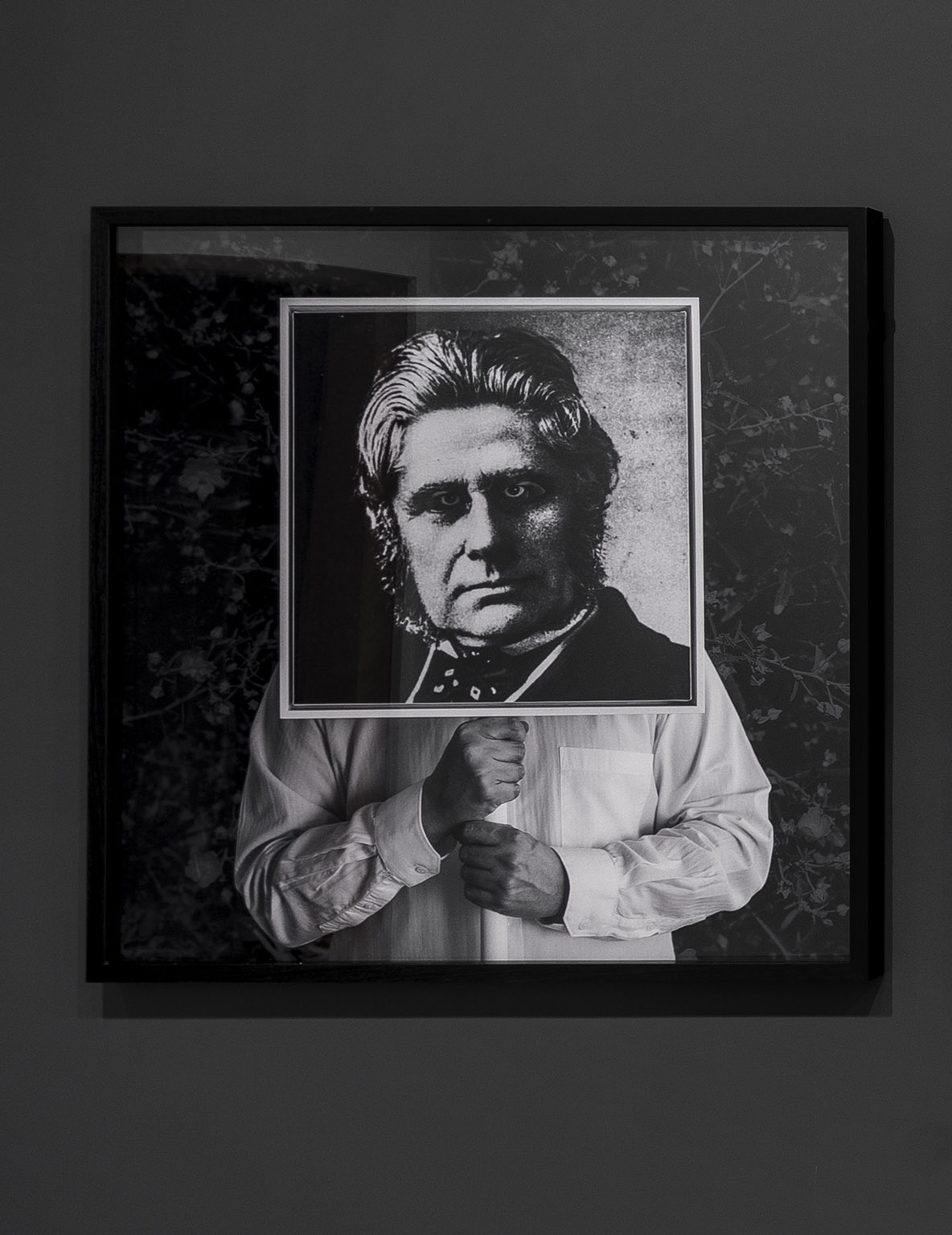
 

Installation view of Christian Thompson's 'Museum of Others (Othering the Ethnologist, Augustus Pitt Rivers)' 2016


Installation view of Museum of Others (Othering the Ethnologist, Augustus Pitt Rivers) 2016
Photo: Marcus Bunyan


Christian Thompson (Australian, b. 1978) 'Museum of Others (Othering the Anthropologist, Walter Baldwin Spencer)' 2016 (installation view)


Christian Thompson (Australian, b. 1978)
Museum of Others (Othering the Anthropologist, Walter Baldwin Spencer)
2016
From the series Museum of Others
C-type print


Installation view of Christian Thompson's 'Museum of Others (Othering the Explorer, James Cook)' 2016


Installation view of Museum of Others (Othering the Explorer, James Cook) 2016
Photo: Marcus Bunyan


Christian Thompson (Australian, b. 1978) 'Othering the Explorer, James Cook' 2016


Christian Thompson (Australian, b. 1978)
Museum of Others (Othering the Explorer, James Cook)
2016
From the series Museum of Others
C-type print
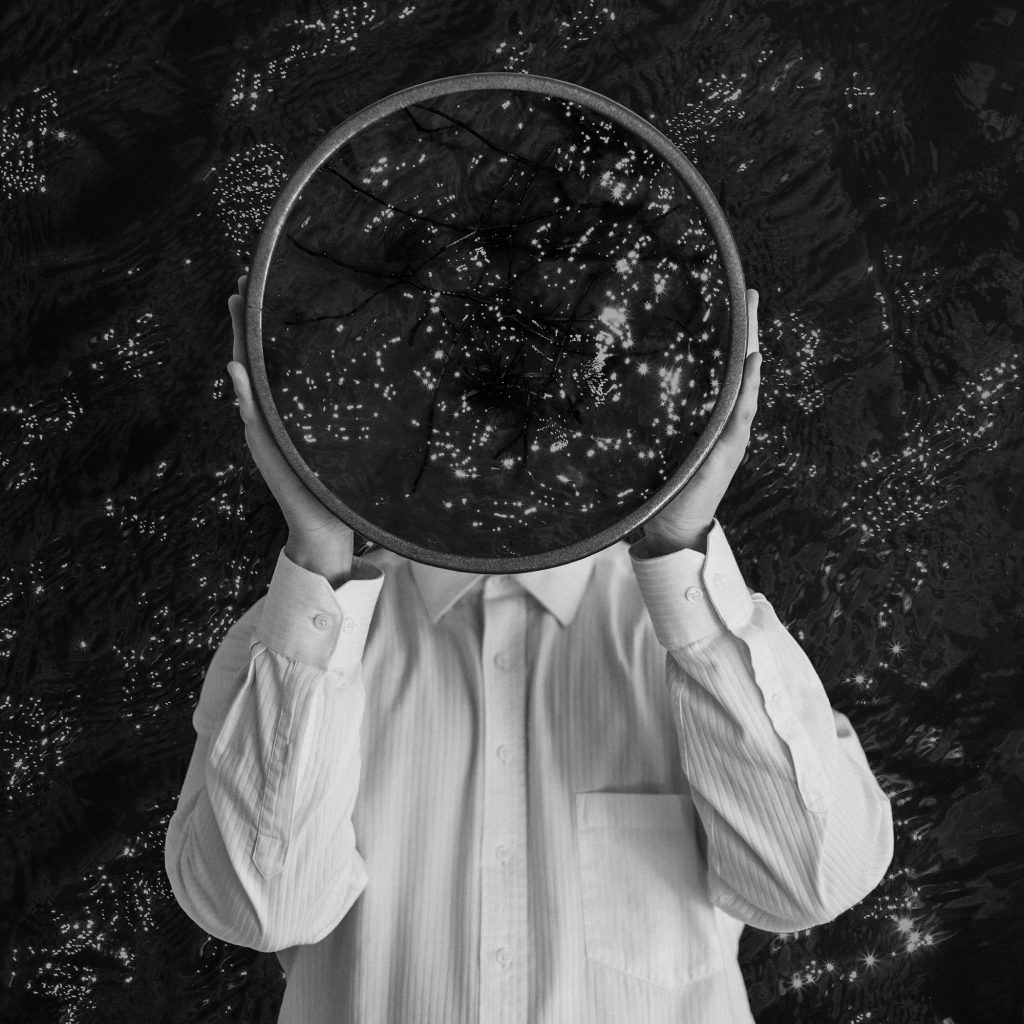
 

Christian Thompson (Australian, b. 1978) 'Equilibrium' 2016


Christian Thompson (Australian, b. 1978)
Equilibrium
2016
From the series Museum of Others
C-type print


Museum of others is Thompson’s most recent photographic series and continues to reflect on his time at the University of Oxford. It features several ‘dead white males’ from the pantheon of British and Australian culture. The explorer, the ethnologist and the anthropologist all had roles in the process of colonisation in Australia but the art critic is particular to Thompson; Ruskin was the first Slade Professor of Fine Art at University of Oxford, just as Thompson was one of its first Australian Aboriginal students. Thompson explains his motivation for the series:

“Historically, it was the western gaze that was projected onto the ethnic other and I thought I’ll create a ‘museum of others’ and I’ll be the one othering, so to speak. ‘Equilibrium’ is based around the idea that the vessel is the equaliser. The vessel is the cradle of all civilisations. We all have that in common.”


Wall text from the exhibition


'Christian Thompson: Ritual intimacy', installation view: Monash University Museum of Art, Melbourne 2017 featuring photographs from the series 'We bury our own' 2010 (C-type prints)

'Christian Thompson: Ritual intimacy', installation view: Monash University Museum of Art, Melbourne 2017 featuring photographs from the series 'We bury our own' 2010 (C-type prints)


Christian Thompson: Ritual intimacy, installation view: Monash University Museum of Art, Melbourne 2017 featuring photographs from the series We bury our own 2010 (C-type prints)
Photos: Andrew Curtis


We bury our own is a body of work that was developed in response to the historic collection of photography, featuring Aboriginal people from the late nineteenth century, at the Pitt Rivers Museum in Oxford. Thompson noted in 2012 that these early images “have permeated my work over the last year. They have remained at the forefront of every artistic experiment and they have pushed me into new territory, they have travelled with me… I was drawn to elements of opulence, ritual, homage, fragility, melancholy, strength and even a sense of play operating in the photographs…”

Each of Thompson’s lyrical photographic images from We bury our own and Pagan sun feature himself partially disguised with props and costumes. The works are virtually monochromatic with elements highlighted in full colour, and his eyes, or face, are partially concealed or painted. The use of votive objects is explained in his equally lyrical 2012 statement: “I lamented the passing of the flowers at the meadow, I lit candles and offered blood to the ancestral beings, looked into the black sparkling sea, donned the Oxford garb, visited the water by fire light and bowed at the knees of the old father ghost gum.”

Text from the Turner Galleries website [Online] Cited 22/12/2021


Christian Thompson (Australian, b. 1978) 'Energy Matter' 2010


Christian Thompson (Australian, b. 1978)
Energy Matter
2010
From the series We bury our own
C-type print


Christian Thompson (Australian, b. 1978) 'Lamenting the flowers' 2010


Christian Thompson (Australian, b. 1978)
Lamenting the flowers
2010
From the series We bury our own
C-type print


Christian Thompson (Australian, b. 1978) 'Forgiveness of Land' 2010 from the exhibition 'Christian Thompson: Ritual Intimacy' at Monash University Museum of Art (MUMA), Melbourne, April - July, 2017


Christian Thompson (Australian, b. 1978)
Forgiveness of Land
2010
From the series We bury our own
C-type print


Christian Thompson (Australian, b. 1978) 'Down Under World' 2010


Christian Thompson (Australian, b. 1978)
Down Under World
2010
From the series We bury our own
C-type print


I conceived the We Bury Our Own series in 2010 after curator Christopher Morton invited me to develop a body of work that would be inspired by and in dialogue with the Australian photographic collection at the Pitt Rivers Museum…

The archival images have permeated my work over the last year. They have remained at the forefront of every artistic experiment and pushed me into new territory; they have travelled with me to residencies at the Fonderie Darling in Montreal and Greene Street Studio, New York. I was drawn to elements of opulence, ritual, homage, fragility, melancholy, strength and even a sense of play operating in the photographs. The simplicity of a monochrome and sepia palette, the frayed delicate edges and the cracks on the surface like a dry desert floor that reminded me of the salt plains of my own traditional lands.

I wanted to generate an aura around this series, a meditative space that was focused on freeing oneself of hurt, employing crystals and other votive objects that emit frequencies that can heal, ward off negative energies, psychic attack, geopathic stress and electro magnetic fields, and, importantly, transmit ideas.

I lamented the passing of the flowers at the meadow, I lit candles and offered blood to the ancestral beings, looked into the black sparkling sea, donned the Oxford garb, visited the water by fire light and bowed at the knees of the old father ghost gum. I asked the photographs in the Pitt Rivers Museum to be catalysts and waited patiently to see what ideas and images would surface in the work, I think with surprising results. Perhaps this is what art is able to do, perform a ‘spiritual repatriation’ rather than a physical one, fragment the historical narrative and traverse time and place to establish a new realm in the cosmos, set something free, allow it to embody the past and be intrinsically connected to the present?

I heard a story many years ago from some old men, they told me about a ceremony where young warriors would make incisions through the flesh exposing the joints, they would insert gems between the bones to emulate the creator spirits, often enduring infection and agonising pain or resulting in death. The story has stuck with me for many years, one that suggests immense pain fused with intoxicating beauty. The idea of aspiring to embody the creators, to transgress the physical body by offering to our gods our spiritual heart, freeing ourselves of suffering by inducing a kind of excruciating decadent torture. This was something that played on my mind during the production of this series of photos and video work. The deliverance of the spirit back to land – the notion that art could be the vehicle for such a passage, the aspiration to occupy a space that belongs to something higher than one’s physical self.

Christian Thompson artist statement in “Christian Thompson: We Bury Our Own,” on the Pitt Rivers Museum website [Online] Cited 21/12/2021
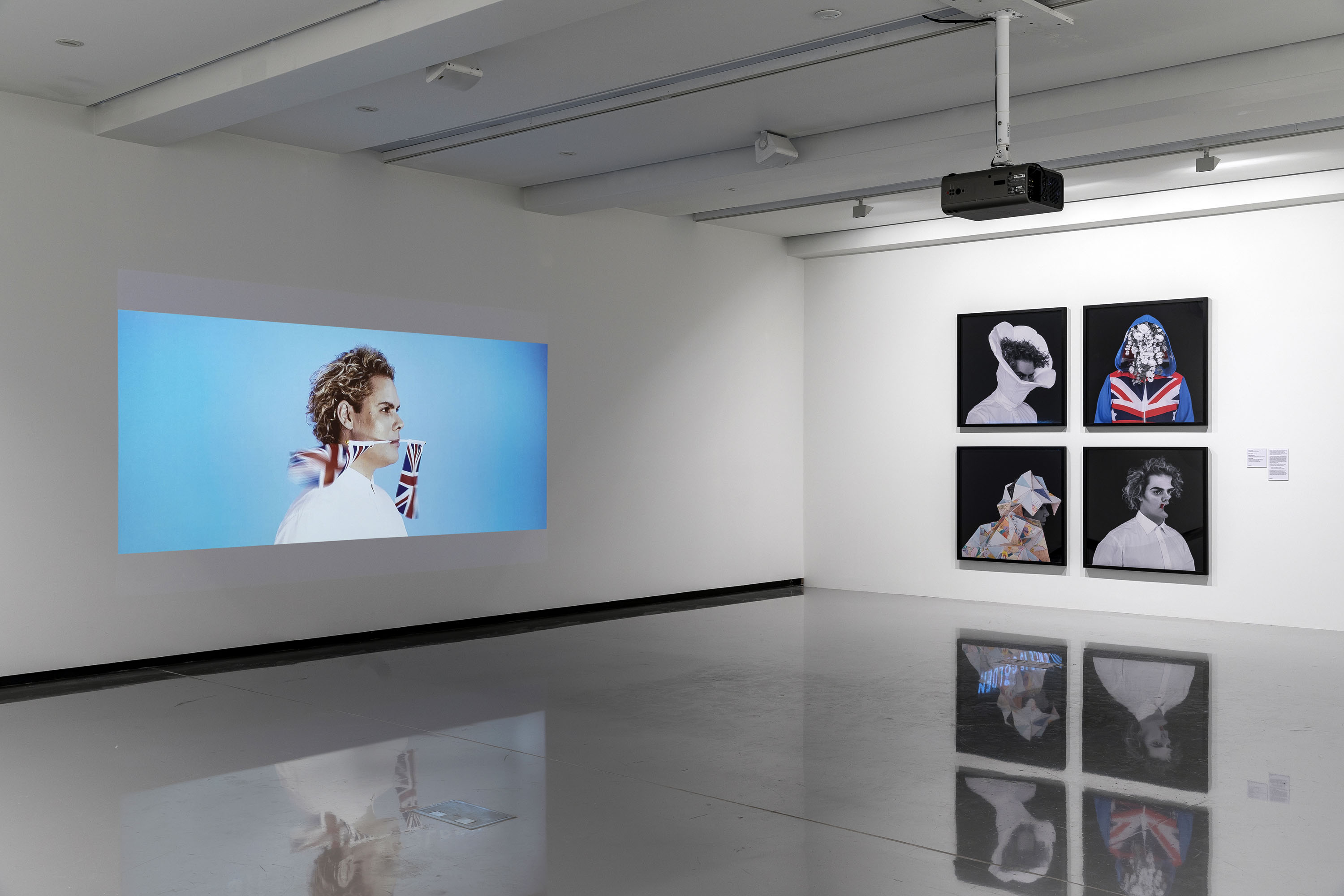
 

'Christian Thompson: Ritual intimacy', installation view: Monash University Museum of Art, Melbourne 2017 featuring 'Ship of dreams', 'Ancient bloom', 'Death's second self', and 'Gods and kings' from the series 'Imperial relic' 2015 (C-type prints) and a still from the video 'dead tongue' 2015


Christian Thompson: Ritual intimacy, installation view: Monash University Museum of Art, Melbourne 2017 featuring Ship of dreams, Ancient bloom, Death’s second self, and Gods and kings from the series Imperial relic 2015 (C-type prints) and a still from the video dead tongue 2015
Photo: Andrew Curtis


In Dead tongue Thompson continues to interrogate the implications of England’s empirical quest on the former colonies of the British Empire through the threat to or loss of Indigenous languages. In works such as this, Thompson actively challenges the perception that Aboriginal culture has become reduced to a captured trophy of Empire.

Wall text from the exhibition


'Christian Thompson: Ritual intimacy', installation view: Monash University Museum of Art, Melbourne 2017 featuring 'Ship of dreams', 'Ancient bloom', 'Death's second self', and 'Gods and kings' from the series 'Imperial relic' 2015 (C-type prints)


Christian Thompson: Ritual intimacy, installation view: Monash University Museum of Art, Melbourne 2017 featuring Ship of dreams, Ancient bloom, Death’s second self, and Gods and kings from the series Imperial relic 2015 (C-type prints)
Photo: Andrew Curtis


In … Imperial relic, he continues to use himself as the ‘armature for his characters, costumes and various props’. Drawing on his background in sculpture, he has created ‘wearable sculptures’ including a trumpet shaped shirt collar, an eruption of white flowers from a union jack hoodie, and an armature of maps. In each his face is partially or fully obscured again. “I’m interested in ideas of submission and domination,” he says. “So the trumpet headpiece is beautiful, but it also potentially muffles or silences the voice. The same thing with maps: they are purporting different kinds of historical narrative, depending who is telling the story. One is about the history of Indigenous people, one is about the history of white colonisers and then one is about the idea of charting the land and of discovery. I’m wearing it as an armature over my own body: that’s part of my own history but also of Australian history.”

Text from the Turner Galleries website [Online] Cited 22/12/2021


Christian Thompson (Australian, b. 1978) 'Ancient bloom' 2015


Christian Thompson (Australian, b. 1978)
Ancient bloom
2015
From the series Imperial relic
C-type print on fuji pearl metallic paper
100 x 100cm
Image courtesy of the artist, Sarah Scout Presents, Melbourne, and Michael Reid, Sydney and Berlin


Christian Thompson (Australian, b. 1978) 'Ship of dreams' 2015


Christian Thompson (Australian, b. 1978)
Ship of dreams
2015
From the series Imperial relic
C-type print on fuji pearl metallic paper
100 x 100 cm
Image courtesy of the artist, Sarah Scout Presents, Melbourne, and Michael Reid, Sydney and Berlin


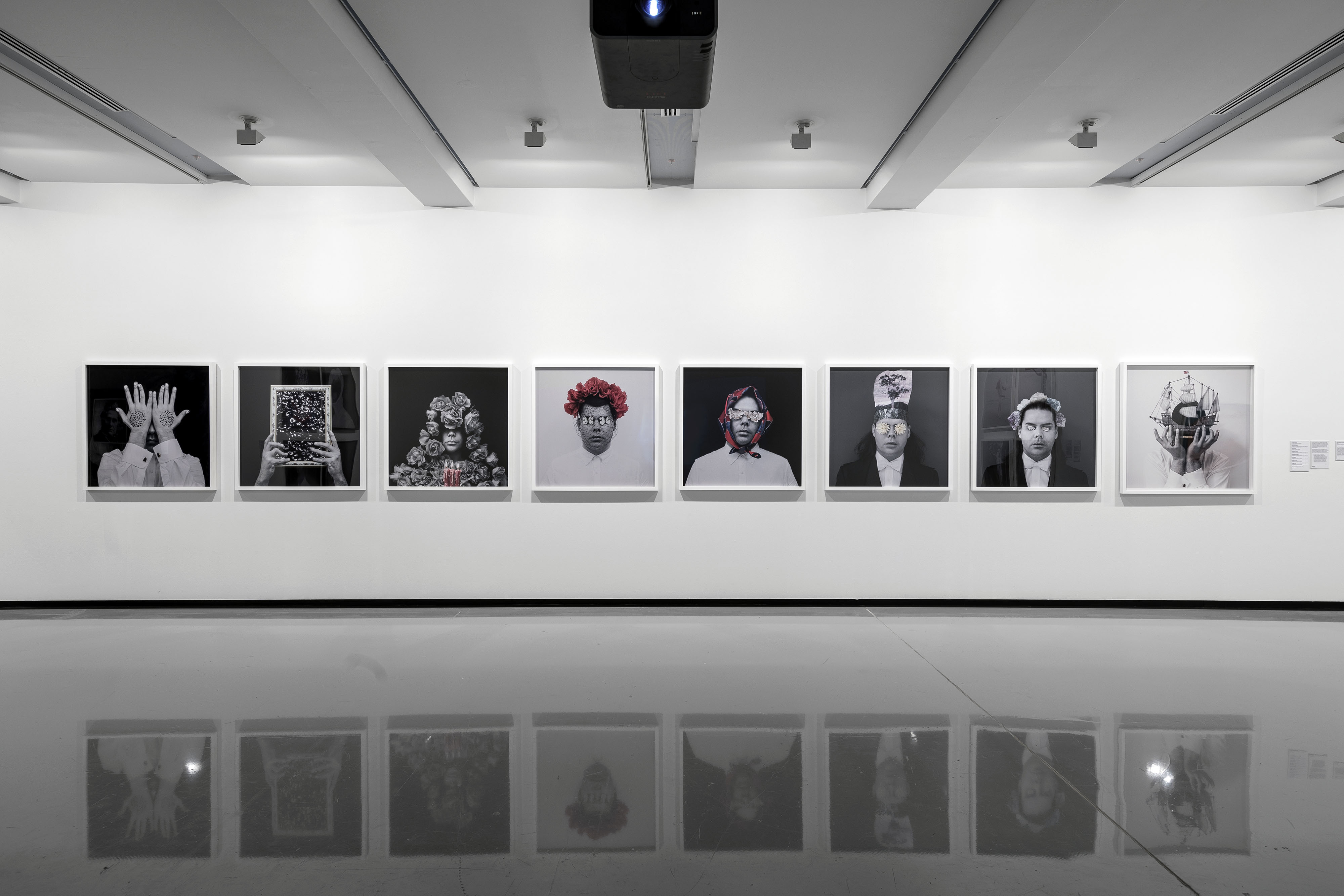
The series title Imperial relic, summarises the fundamental philosophy underpinning the colonial occupation of Australia. Like the nearby series We bury our own, it is closely connected to Thompson’s studies in the collections of the Pitt Rivers Museum and shares with the Australian graffiti series Thomson’s physical presence is standing in for the Australian landscape.

The work Ancient bloom alludes to the phonograph horn out which might be heard the voice of Fanny Cochran Smith, who’s wax cylinder recordings of songs are the only historical audio recordings of any of the Tasmanian Aboriginal languages. Is also represents a Victorian-era shirt collar – a motif that has appeared in Thompson’s work since his Emotional striptease series of 2003 – but here is exaggerated into a soft-sculptural form that both projects and stifles the voice.

In Death’s second self the artist’s face is uncovered but distorted by make up and digital postproduction effects.The title quotes William Shakespeare’s Sonnet 73:

As after sunset fadeth in the west,
Which by and by black night doth take away,
Death’s second self, that seals up all in rest.


In God and Kings Thompson is cloaked with a map of Aboriginal language groups like a coat of armour. In the Ship of dreams he reprises the motif of Australian flora obscuring his face but here his hoodie is stitched together from several flags: the red ensign (flown by British registered ships), the RAAF flag and the Australian flag.


“I’m interested in ideas of submission and domination … So the trumpet headpiece is beautiful, but it also potentially muffles or silences the voice. The same thing with maps: they are purporting different kinds of historical narrative, depending who is telling the story. One is about the history of Indigenous people, one is about the history of white colonisers and then one is about the idea of charting the land and of discovery. I’m wearing it as an armature over my own body: that’s part of my own history but also of Australian history.”


Christian Thompson in text from the Turner Galleries website [Online] Cited 22/12/2021


'Christian Thompson: Ritual intimacy', installation view: Monash University Museum of Art, Melbourne 2017 featuring 'Isabella kept her dignity', 'I'm not going anywhere without you', 'Dead as a door nail' and 'Hannah's diary' from the series 'Lost together' 2009


Christian Thompson: Ritual intimacy, installation view: Monash University Museum of Art, Melbourne 2017 featuring Isabella kept her dignity, I’m not going anywhere without you, Dead as a door nail and Hannah’s diary from the series Lost together 2009 (C-type prints)
Photo: Andrew Curtis


On 13 February 2008 then Prime Minister Kevin Rudd made an official apology to Aboriginal Australians for the Stolen Generations – the children of Aboriginal and Torres Strait Islander descent who were removed from their families between 1910 and 1970 under the respective Federal and State government policies of assimilation. At the time, Thompson was preparing to leave Australia for further studies aboard and felt this historic gesture allowed him to proudly take his culture and history with him as he ventured into the world.

Thompson photographed the series Lost together in the Netherlands while studying at the DasArts Academy of Theatre and Dance at Amsterdam University. The theme of the orange throughout the series is a reference to the national colour of the Netherlands, while the tartan patterning refers to early clan societies in the United Kingdom. The combination of these different styles is based on counter-cultural aesthetics – particularly punk collage of 1970s London.


Christian Thompson (Australian, b. 1978) 'Hannah's Diary' 2009


Christian Thompson (Australian, b. 1978)
Hannah’s Diary
2009
From the series Lost Together
C-type print
Image courtesy of the artist, Sarah Scout Presents, Melbourne, and Michael Reid, Sydney and Berlin


MUMA | Monash University Museum of Art is proud to announce the first major survey exhibition of the work of Bidjara artist, Christian Thompson, one of Australia’s leading and most intriguing contemporary artists.

Thompson works across photography, video, sculpture, performance and sound, interweaving themes of identity, race and history with his lived experience. His work is held in the collections of major state and national art museums in Australia and internationally.

Thompson made history as one of the first two Aboriginal Australians to be accepted into the University of Oxford as a Charlie Perkins Scholar, where he completed his Doctorate of Philosophy (Fine Art) in 2016. Christian Thompson: Ritual Intimacy opens as the artist looks forward to the graduation ceremony in July, when he will be conferred his degree.

Featuring a major new commission created for this exhibition, Christian Thompson: Ritual Intimacy will survey Thompson’s diverse practice, spanning fifteen years, and will also be accompanied by the publication of the first monograph on the artist’s career and work, including essays by Brian Catling RA and Professor Dame Marina Warner DBE, CBE, FBA, FRSL.

The specially commissioned installation will be an ambitious multichannel composition, developing the sonic experimentation that is a signature of Thompson’s work. Incorporating Bidjara language, it will invite viewers into an immersive space of wall-to-wall imagery and sound:

“Bidjara is officially an endangered language but my work is motivated by the simple yet profound idea that if even one word of an endangered language is spoken it continues to be a living language,” Thompson says.

Christian Thompson: Ritual Intimacy explores the unique perspective and breadth of Thompson’s practice from the fashioning of identity through to his ongoing interest in Indigenous language as the expression of cultural survival. The new multichannel work will develop musical ideas Thompson has previously explored.

“It will be a much more ambitious iteration of a song in Bidjara. At one stage I’m singing on one screen and then other versions of me appear singing the melodies. I really see it as an opportunity to do something that’s more complex musically, more textured sonically – I also want it to be more intricate with my use of language,” the artist says.

Ritual Intimacy is curated by MUMA director Charlotte Day and guest curator Hetti Perkins. Day explains that the exhibition is part of MUMA’s Australian artist series, which affords the opportunity to look at each artist’s practice in depth. “Christian’s exhibition traces a particularly productive period of research and development, from early well-known works such as the Australian Graffiti series to more recent experiments with language in sound and song works,” Day says.

A long-time curatorial collaborator with Thompson, Perkins is the writer and presenter of art + soul, the ABC’s acclaimed television series about contemporary Aboriginal and Torres Strait Islander art. Thompson was accepted to Oxford University on an inaugural Charlie Perkins Scholarship, set up to honour Hetti Perkins’s famous father – a leader, activist and the first Aboriginal Australian to graduate from university. Perkins says the MUMA exhibition is well-earned recognition for Thompson’s work, which she featured in the second series of art + soul.

“Christian has spent periods of his adult life, as a practicing artist, away from home, but there is a common thread in his work, and it’s this connection to home or Country,” Perkins says. “In terms of the rituals or rites of the exhibition title, he is constantly reiterating that connection to home – through words, through performance, through his art, through ideas and writing,” she says.

Alongside performance and ritual, Thompson’s concept of “spiritual repatriation” is central to his work. Working with the Australian collection at famed ethnographic storehouse the Pitt Rivers Museum, Oxford, the artist was offered copies of colonial photographs of Aboriginal people but preferred not to work this way. Instead, he chose to spend significant periods of time with these ancestral images, absorbing their “aura” in order to then make his own artistic response that did not reproduce those original problematic images.

Dr Christian Thompson is a Bidjara contemporary artist whose work explores notions of identity, cultural hybridity, and history; often referring to the relationships between these concepts and the environment. Formally trained as a sculptor, Thompson’s multidisciplinary practice engages mediums such as photography, video, sculpture, performance, and sound. His work focuses on the exploration of identity, sexuality, gender, race, and memory. In his live performances and conceptual anti-portraits he inhabits a range of personas achieved through handcrafted sculptures and carefully orchestrated poses and backdrops.

Press release from MUMA


'Christian Thompson: Ritual intimacy', installation view: Monash University Museum of Art, Melbourne 2017 featuring the series 'Polari' (2014)

'Christian Thompson: Ritual intimacy', installation view: Monash University Museum of Art, Melbourne 2017 featuring the series 'Polari' (2014)


Christian Thompson: Ritual intimacy, installation view: Monash University Museum of Art, Melbourne 2017 featuring the series Polari (2014)
Photos: Marcus Bunyan


‘Polari’ is a form of cant or cryptic slang that evolved over several centuries from the various languages that converged in London’s theatres, circuses and fairgrounds, the merchant navy and criminal circles. It came to be associated with gay subculture, as many gay men worked in theatrical entertainment or joined ocean liners as waiters, stewards and entertainers at a time when homosexual activity was illegal. This slang rendered the speaker unintelligible to hostile outsiders, such as policeman, but fell out of use after the Sexual Offences Act (1967) effectively decriminalised homosexuality in the United Kingdom. Attracted to the theatricality and defiant nature of Polari (which he likens to the situation of Australian Indigenous languages under assimilationist policies), Thompson borrowed its name for the series which examines how subcultures express themselves.


Christian Thompson (Australian, b. 1978) 'Siren' 2014


Christian Thompson (Australian, b. 1978)
Siren
2014
From the series Polari
C-type print
Image courtesy of the artist, Sarah Scout Presents, Melbourne, and Michael Reid, Sydney and Berlin


Christian Thompson (Australian, b. 1978) 'Trinity II' 2014


Christian Thompson (Australian, b. 1978)
Trinity II
2014
From the series Polari
C-type print
Image courtesy of the artist, Sarah Scout Presents, Melbourne, and Michael Reid, Sydney and Berlin


Christian Thompson (Australian, b. 1978) 'Trinity III' 2014


Christian Thompson (Australian, b. 1978)
Trinity III
2014
From the series Polari
C-type print
Image courtesy of the artist, Sarah Scout Presents, Melbourne, and Michael Reid, Sydney and Berlin


Christian Thompson (Australian, b. 1978) 'Ariel' 2014


Christian Thompson (Australian, b. 1978)
Ariel
2014
From the series Polari
C-type print
Image courtesy of the artist, Sarah Scout Presents, Melbourne, and Michael Reid, Sydney and Berlin


'Christian Thompson: Ritual intimacy', installation view: Monash University Museum of Art, Melbourne 2017 showing at left, 'Ellipse' (2014)


Christian Thompson: Ritual intimacy, installation view: Monash University Museum of Art, Melbourne 2017 showing at left, Ellipse (2014, below)
Photo: Marcus Bunyan


Christian Thompson (Australian, b. 1978) 'Ellipse' 2014


Christian Thompson (Australian, b. 1978)
Ellipse
2014
From the series Polari
C-type print
Image courtesy of the artist, Sarah Scout Presents, Melbourne, and Michael Reid, Sydney and Berlin


Putting on the Dish – A short film in Polari

Polari was a form of slang used by gay men in Britain prior to the decriminalisation of homosexuality in 1967, used primarily as a coded way for them to discuss their experiences. It quickly fell out of use in the 70s, although several words entered mainstream English and are still used today. For more about Polari see Wikipedia.


Polari – The Story of Britain’s Gay Slang

Author and academic Paul Baker of Lancaster University discusses a form of gay slang known as Polari that was spoken in Britain. It was a secret type of language used mainly by gay men and some lesbians and members of the trans, drag and other communities in the United Kingdom in the 20th century until it largely died out by the early 1970s.


Christian Thompson (Australian, b. 1978)
Refuge
2014
Video and sound
4 mins 18 secs


Refuge is a video work by contemporary Australian artist Christian Thompson. Thompson sings in the endangered Bidjara language of his heritage. A collaboration with James Young formerly of ‘Nico’ and recorded the original track in Oxford, United Kingdom.

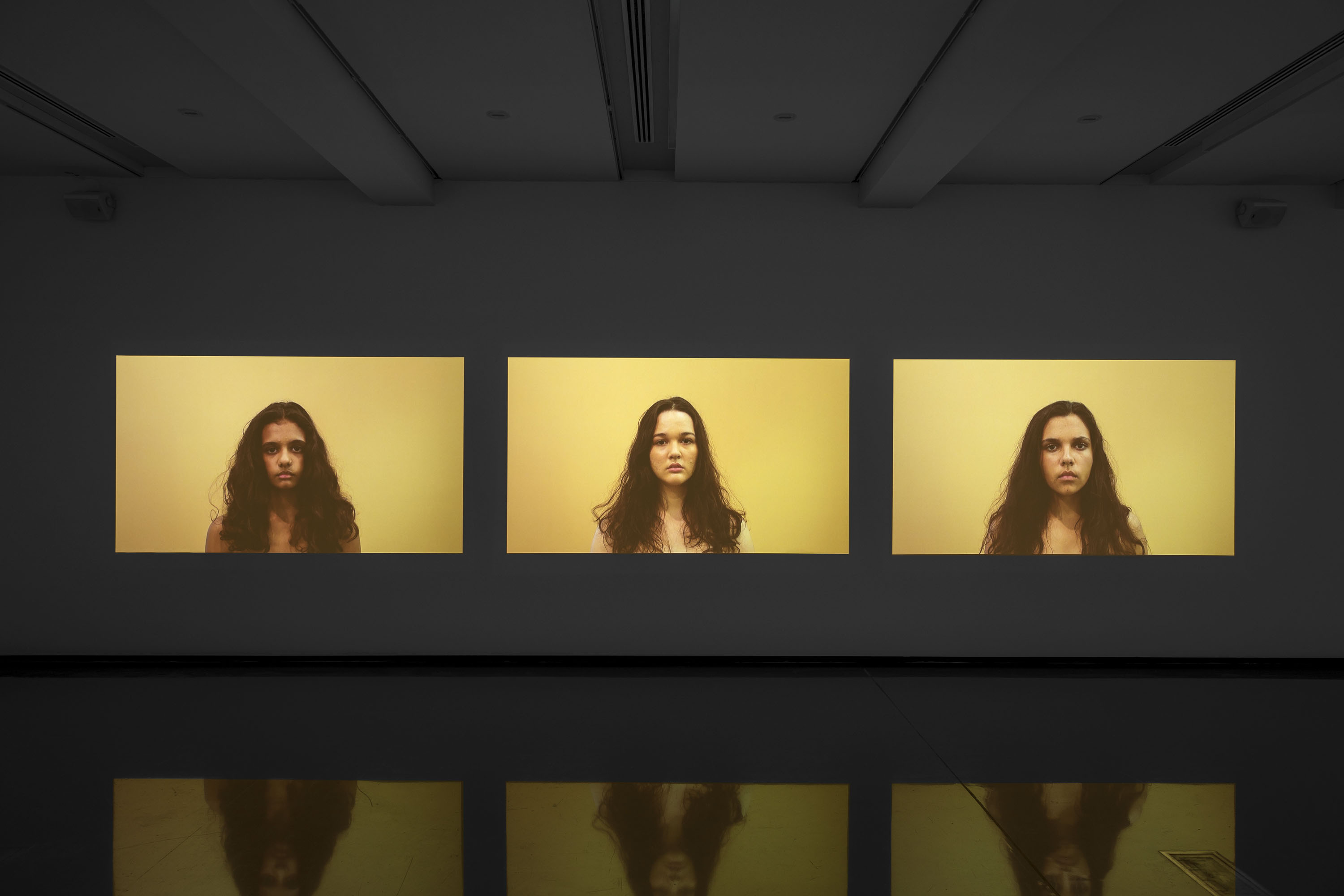
 

'Christian Thompson: Ritual intimacy', installation view: Monash University Museum of Art, Melbourne 2017 featuring stills from the video 'Heat' (2010)

'Christian Thompson: Ritual intimacy', installation view: Monash University Museum of Art, Melbourne 2017 featuring stills from the video 'Heat' (2010)

'Christian Thompson: Ritual intimacy', installation view: Monash University Museum of Art, Melbourne 2017 featuring stills from the video 'Heat' (2010)


Christian Thompson: Ritual intimacy, installation view: Monash University Museum of Art, Melbourne 2017 featuring stills from the video Heat (2010)
Photos: Marcus Bunyan


Christian Thompson (Australian, b. 1978)
Heat (extract)
2010
Three-channel digital colour video, sound
5.52 minutes


Like the Australian graffiti photographs [see photographs below], Heat come out of Thompson’s memories of growing up in the desert surrounding Barcaldine in central west Queensland. Barcaldine is famous for its role in the foundation organised labor in Queensland and ultimately the formation of the Australian Labor Party. It also holds historical significance for Thompson’s family as it is where his great-great-grandfather, Charlie Thompson, surreptitiously bought a block of land before Aboriginal people could legally buy land, creating a safe haven for his family and other Aboriginal families at the time when Aboriginal people had few legal rights. For Thompson, heat captures the sensation that he associates with being on his country: the dry wind blowing through his hair. It features the three granddaughters of Aboriginal rights pioneer Charlie Perkins, who are the daughters of Thompson’s Long time collaborator Hetti Perkins.
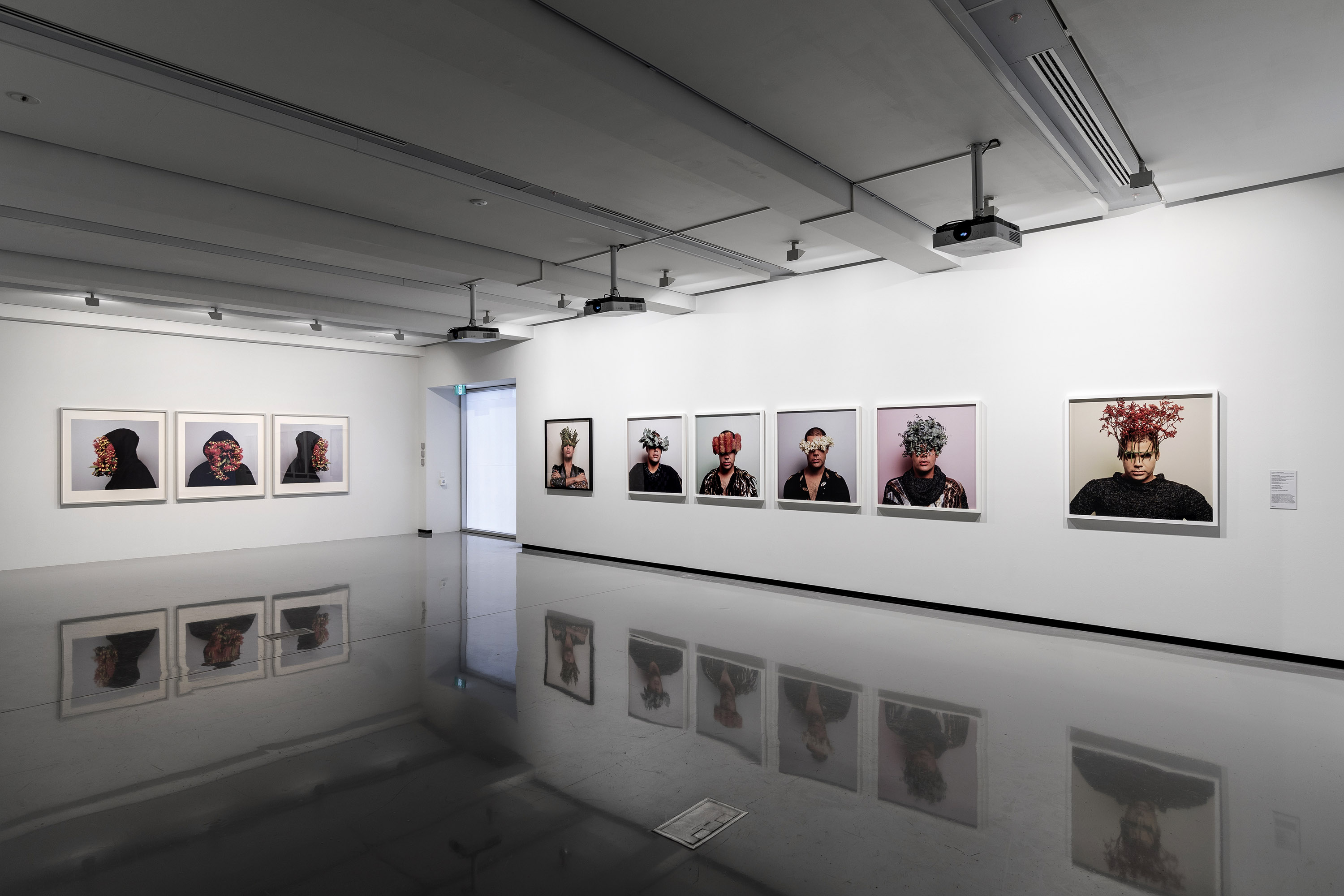
 

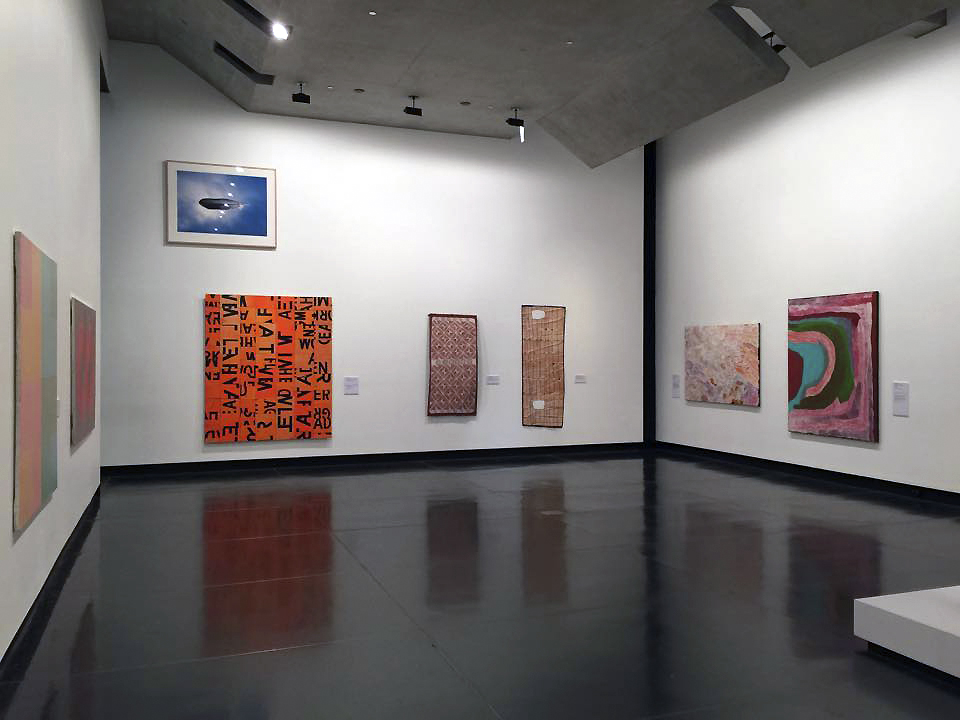
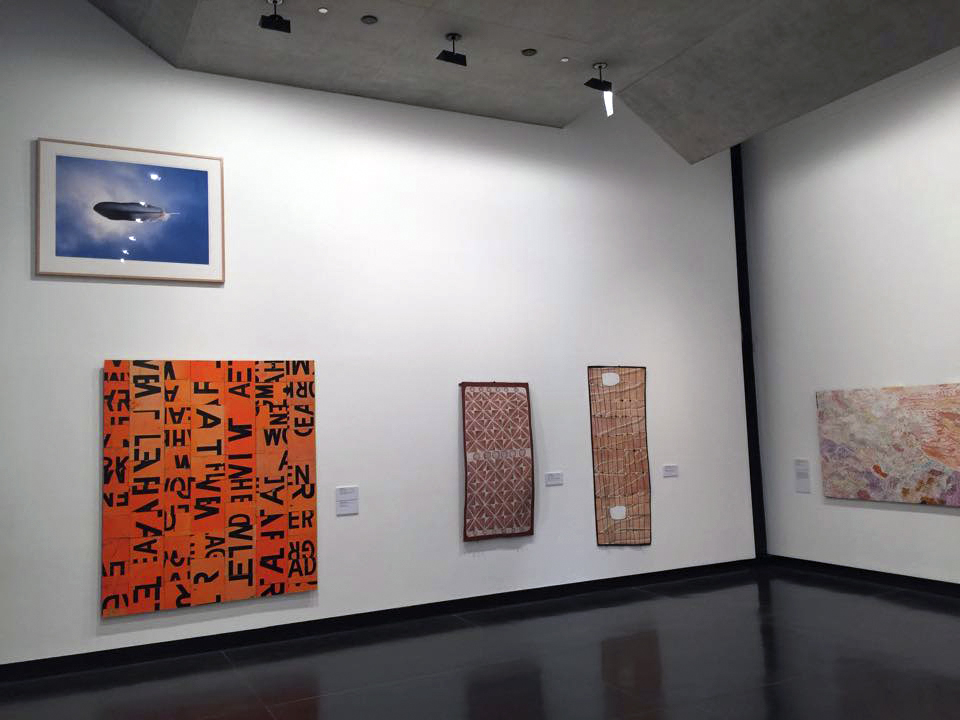
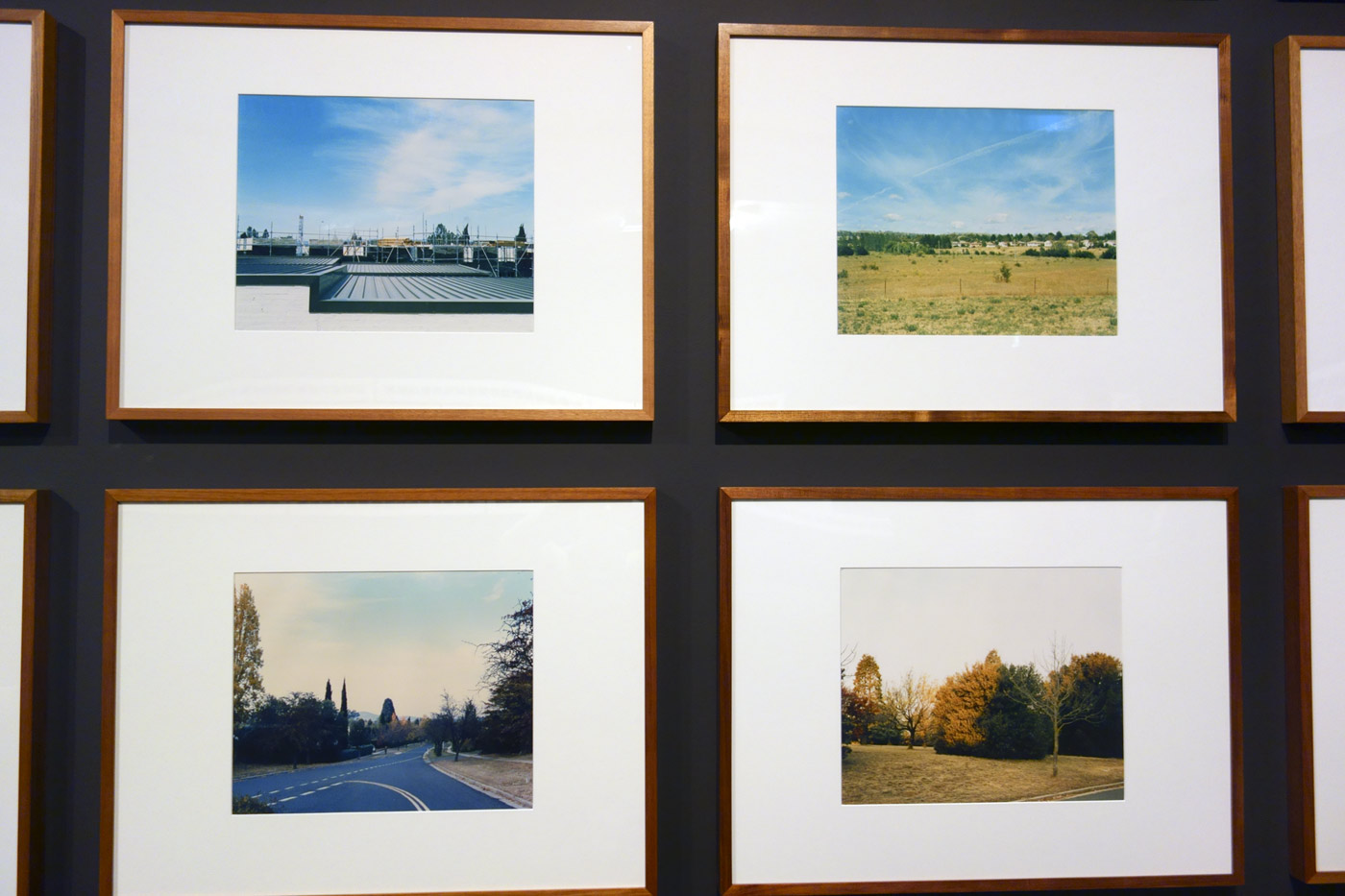
'Christian Thompson: Ritual intimacy', installation view: Monash University Museum of Art, Melbourne 2017 featuring photographs from the series 'Australian graffiti' (2007)


Christian Thompson: Ritual intimacy, installation view: Monash University Museum of Art, Melbourne 2017 featuring photographs from the series Australian graffiti (2007)
Photo: Marcus Bunyan

 

Christian Thompson (Australian, b. 1978) 'Untitled (Blue Gum)' 2007


Christian Thompson (Australian, b. 1978)
Untitled (blue gum)
2007
From the series Australian graffiti
C-type print
Image courtesy of the artist, Sarah Scout Presents, Melbourne, and Michael Reid, Sydney and Berlin


Christian Thompson (Australian, b. 1978) 'Untitled (banksia)' 2007


Christian Thompson (Australian, b. 1978)
Untitled (banksia)
2007
From the series Australian graffiti
C-type print
Monash University Collection


Australian graffiti was the last work that Thompson made before leaving Australia for Europe. It connects with his memories of growing up in the outback and its desert flowers, which he perceives to be both fragile and immensely powerful. I adorning himself with garlands of these flowers and flamboyant garments of the 1980s and 1990s – the period in which he grew up – Thompson juxtaposes these elements against his own Bidjara masculinity. By wearing native flora he also stands in for the landscape, invoking an Indigenous understanding of the landscape as a corporeal, living ancestral being.


Christian Thompson (Australian, b. 1978)
Desert slippers (extract)
2006
Single-channel digital colour video, sound
34 seconds


Desert slippers was made at the time the Northern Territory government commissioned research into allegations of the abuse of children in Aboriginal communities. When the ‘Little Children are Sacred’ report was tabled the following year, the federal government under John Howard staged the Northern Territory Emergency Response (NTER), which quickly became known as ‘the intervention’. This action was enacted without consultation with Indigenous people and ignored the substantive recommendations of the report to which it was allegedly responding.

Thompson made this video, involving his father, and the ceremonial aspects of their daily lives, during this period. Desert slippers features a Bidjara ritual in which a father and son transfer sweat. The desert slipper is a native cactus that symbolises the transferal of the spirit back to earth as the plant grows.


Christian Thompson (Australian, b. 1978)
Dhagunyilangu (Brother) 
(extract installation view)
2011
Single-channel digital colour video, sound, subtitled
2.19 minutes


Christian Thompson
Dhagunyilangu (Brother)

2011
Single-channel digital colour video, sound, subtitled
2.19 minutes


Gamu Mambu (Blood Song) and Dhagunyilangu (Brother) were made in England and in the Netherlands respectively. While studying at the DasArts Academy of Theatre and Dance in Amsterdam, a centre for the study of early musical styles such as the baroque, Thompson realised that his own Bidjara language could be interpreted through the matrix of another cultural context and sphere. He undertook operatic training with this in mind, choosing in the end to work with specialist singers Sonja Gruys and Jeremy Vinogradov to realise the two works.


Monash University Museum of Art (MUMA)
Ground Floor, Building F,
Monash University Caulfield campus,
900 Dandenong Road,
Caulfield East, VIC 3145
Phone: 61 3 9905 4217

Opening hours:
Tuesday – Friday 10am – 5pm
Saturday 12 – 5pm

Monash University Museum of Art (MUMA) website

LIKE ART BLART ON FACEBOOK

Back to top

Exhibition: ‘Bill Henson: Landscapes’ at Castlemaine Art Gallery and Historical Museum, Victoria

Exhibition dates: 30th April – 30th June, 2016


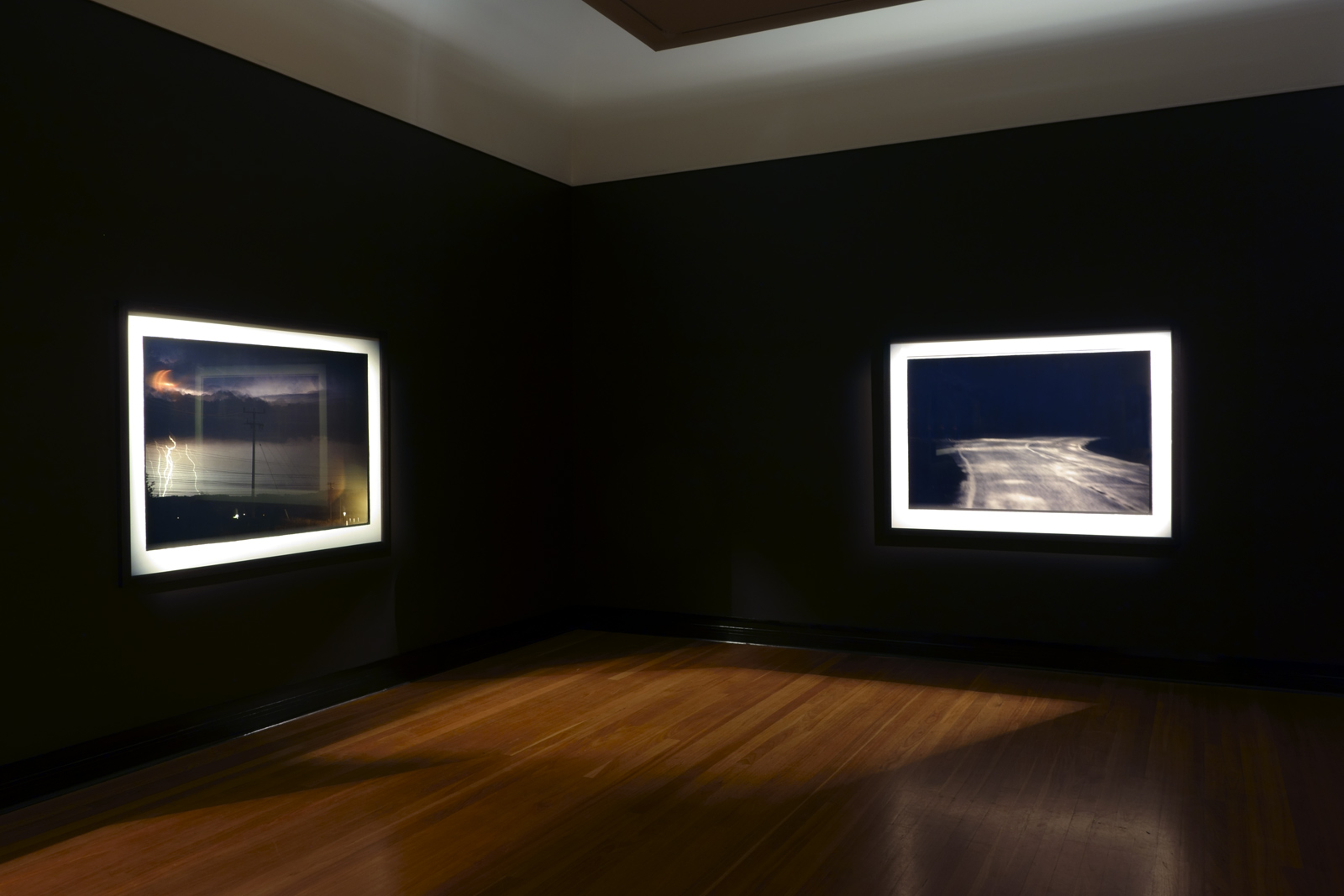
Installation photograph of the exhibition 'Bill Henson: Landscapes' at the Castlemaine Art Gallery and Historical Museum


Installation photograph of the exhibition Bill Henson: Landscapes at the  Castlemaine Art Gallery and Historical Museum
Photo: © Marcus Bunyan and the Castlemaine Art Gallery and Historical Museum


Drawing on light

A magnificent installation from one of the world’s great photographers.

Why this artist is not having sell out retrospectives at MoMA New York, Centre Georges Pompidou Paris or the Tate in London is beyond me. Is it because of continuing cultural cringe, or the fact that he’s not as well known in Europe and America?

Their loss is our gain.

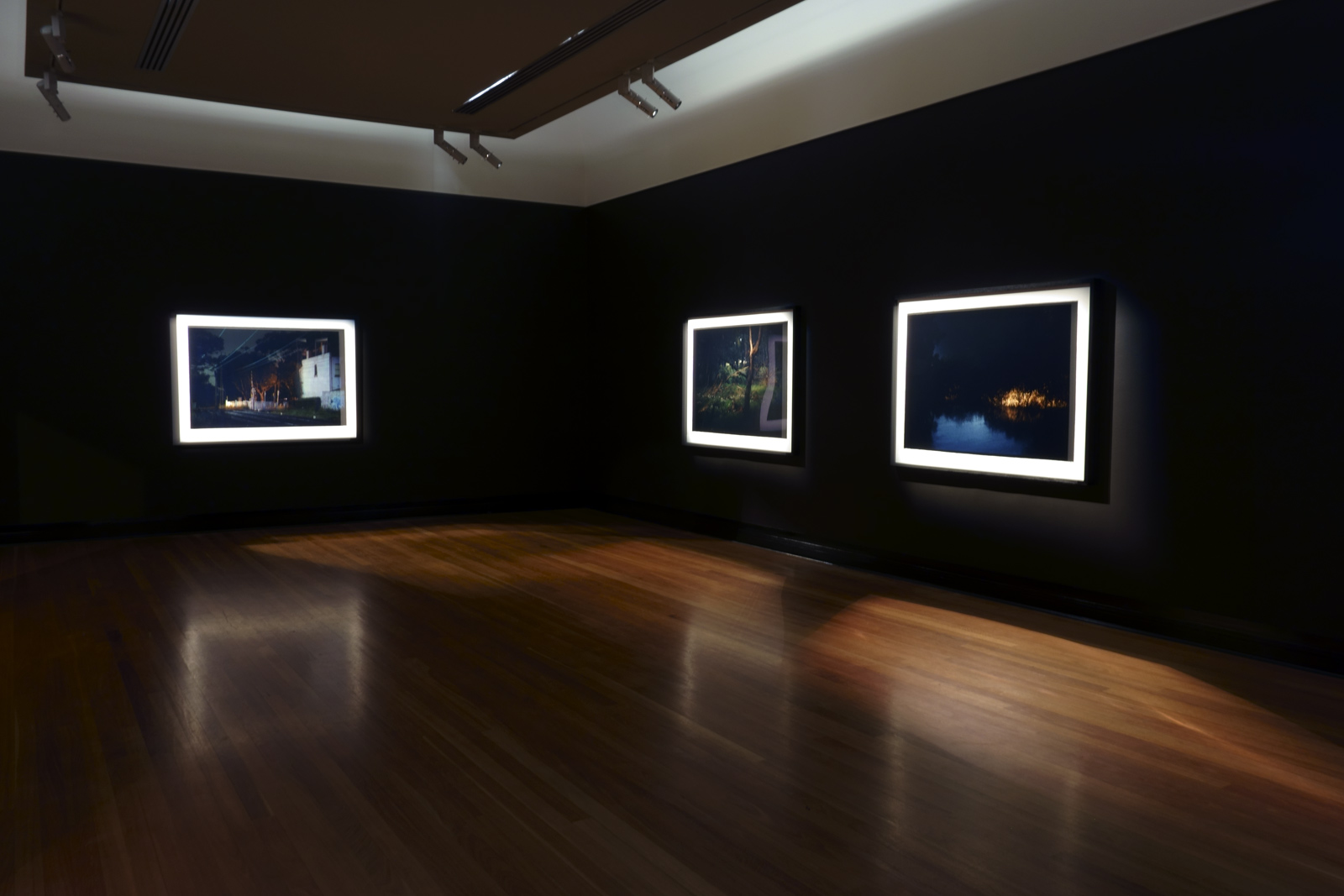
The darkened room contains only eight images beautifully lit to create a wondrous, enveloping atmosphere. Henson’s night photographs emit light as though a result of the excitation of atoms by energy – the energy of the mind transferred to the light of place. A luminescence of thought is imaged in the photograph through the emission of light … produced not so much by physiological or electromagnetic processes as much as by a culturally informed mind that seems to bring forth its own light. And behold there is light.

As that eminent photographer Minor White used to opine when asked for technical information on his photographs in the back of popular American photography monthlies: for technical information the camera was creatively used.

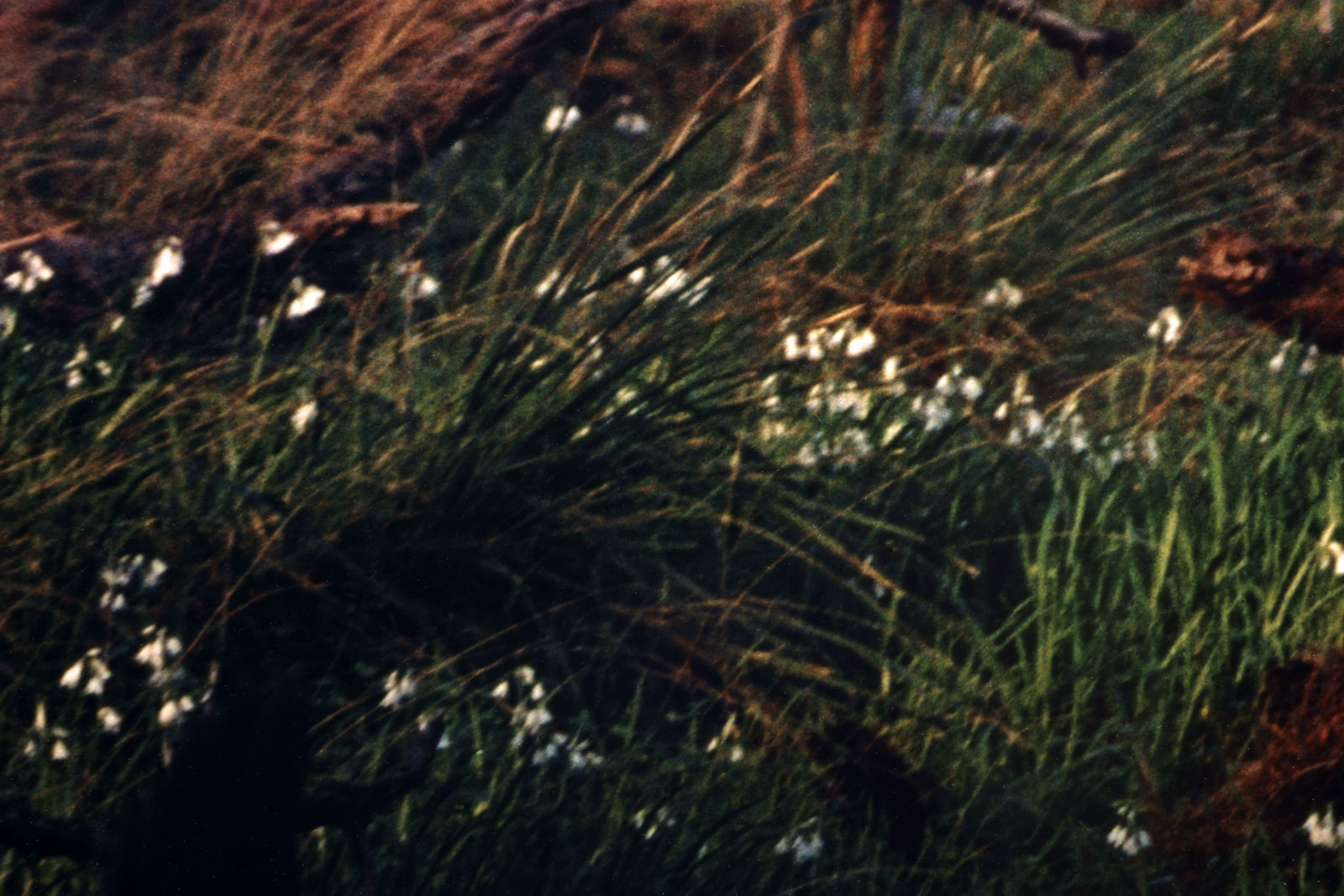
For me, these are not images of ethereal malevolence or Australian anxiety about our environment and the ominous ordinary. They do not possess that feeling at all. These pictures are about an understanding and contemplation of light and place, a process which is in balance one with the other. Yes, the transient nature of earthly existence but more than that. The soft details of flowers in the grass, or the spatter of rain on water, not noticed until you really look at the image; or the shadow of a truck on a bridge underpass. In my mind I know where this is, in Gipps Street, Abbottsford near the train bridge… or so I believe in my imagination. All of these photographs have a feeling of a subtle vibration of energy in the universe. There is no malevolence here.

My only criticism of this, the first photographic exhibition at Castlemaine Art Gallery, is that there is not enough of it. There needed to be more of the work. It just felt a little light on. Another gallery was needed to make the installation experience fully enveloping. Having said that, congratulations must go to the artist and to gallery who are putting on some amazing exhibitions in the heart of regional Victoria.

Dr Marcus Bunyan


Many thankx to Castlemaine Art Gallery and Historical Museum for allowing me to publish the photographs in the posting. Please click on the photographs for a larger version of the image. All images © Marcus Bunyan and the Castlemaine Art Gallery and Historical Museum


Opening titles for the exhibition 'Bill Henson: Landscapes' at the Castlemaine Art Gallery and Historical Museum


Opening titles for the exhibition Bill Henson: Landscapes at the  Castlemaine Art Gallery and Historical Museum
Photo: © Marcus Bunyan and the Castlemaine Art Gallery and Historical Museum


Installation photograph of the exhibition 'Bill Henson: Landscapes' at the Castlemaine Art Gallery and Historical Museum


Installation photograph of the exhibition Bill Henson: Landscapes at the  Castlemaine Art Gallery and Historical Museum
Photo: © Marcus Bunyan and the Castlemaine Art Gallery and Historical Museum


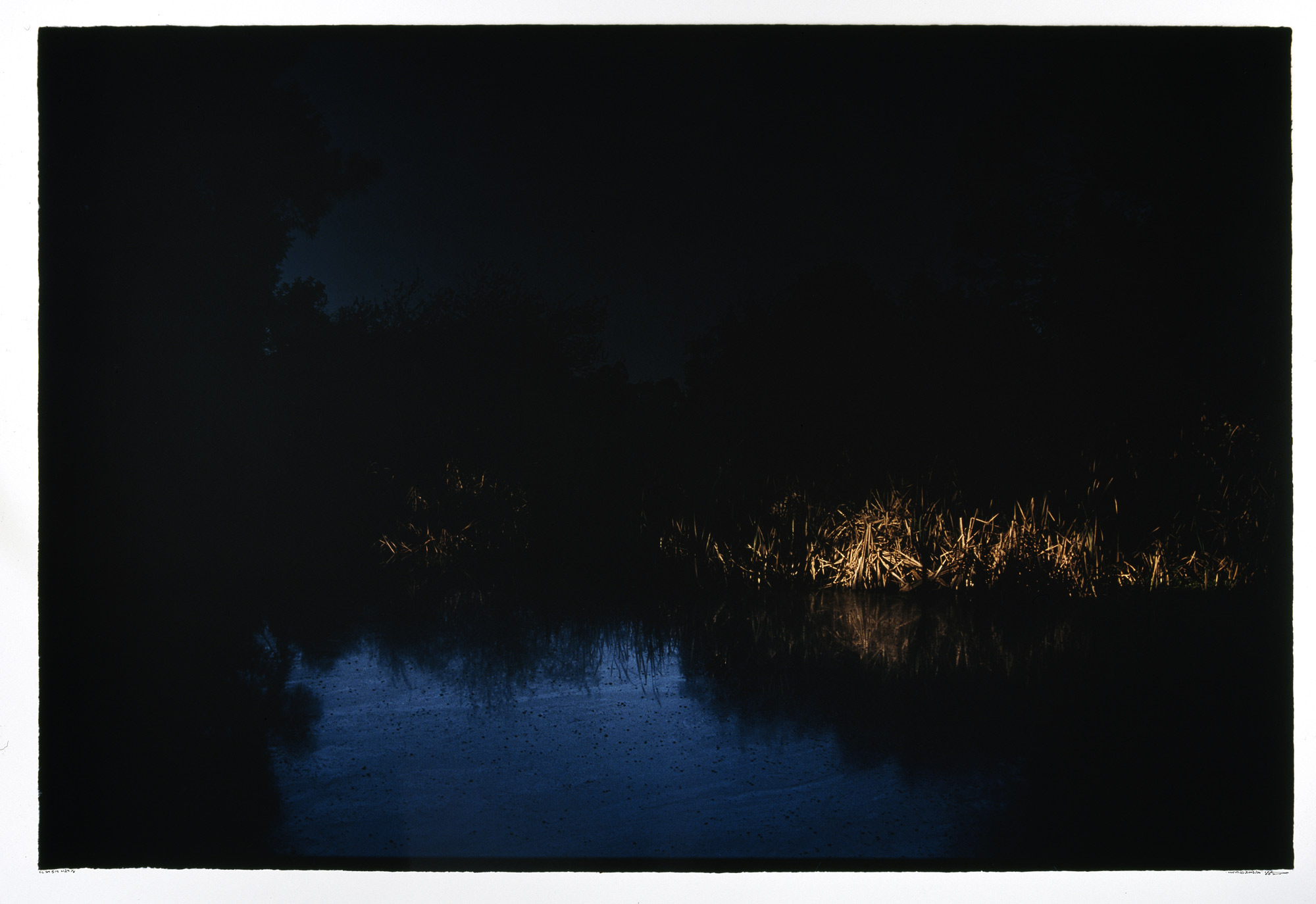
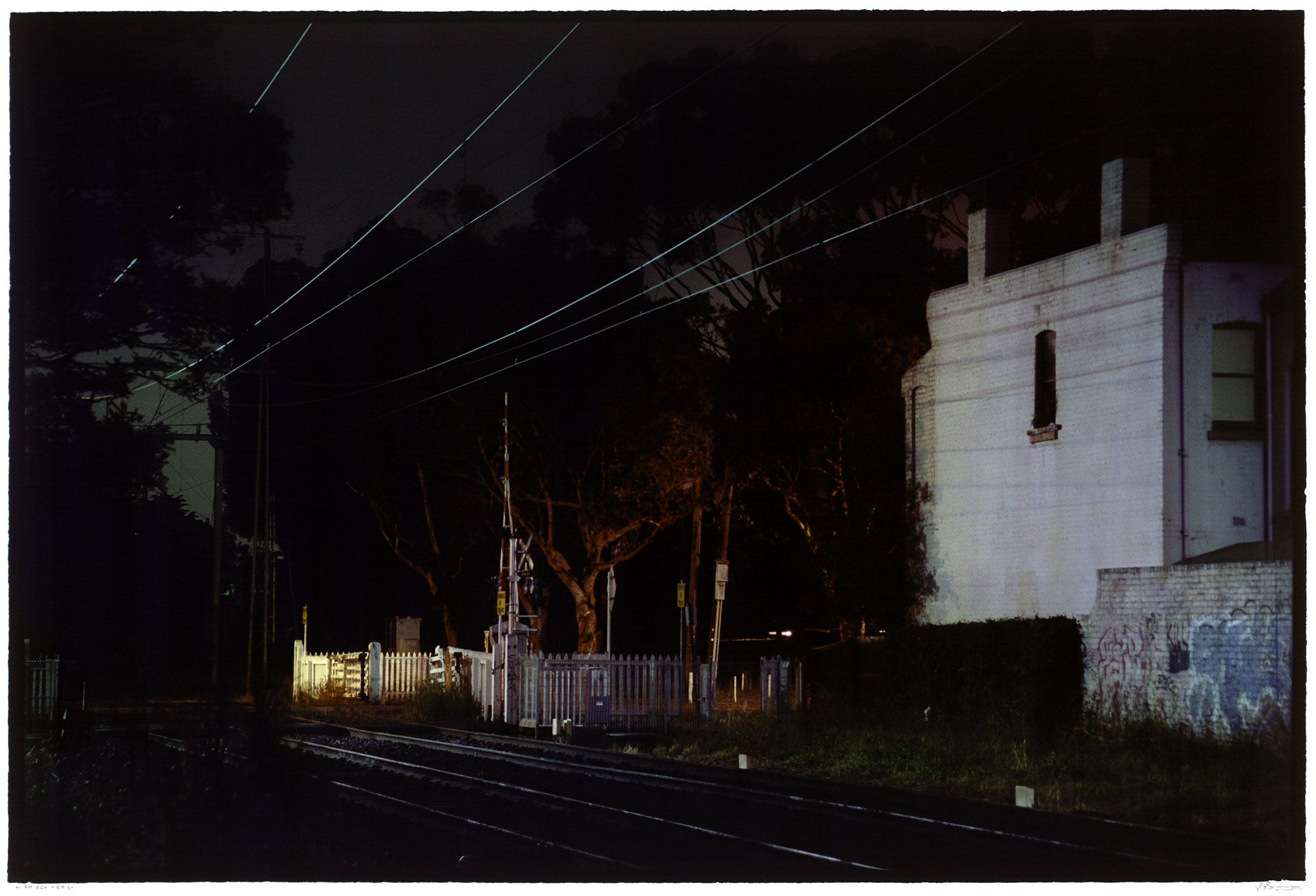
Bill Henson (Australian, b. 1955) 'Untitled #9 2005/2006' 2005-2006 from the exhibition 'Bill Henson: Landscapes' at Castlemaine Art Gallery and Historical Museum, Victoria, April - June, 2016


Bill Henson (Australian, b. 1955)
Untitled #9 2005/2006
2005-2006
CL SH541 N2
Type C photograph
127 x 180cm (sheet)
Courtesy of the artist and Roslyn Oxley9 Gallery, Sydney


Bill Henson (Australian, b. 1955) 'Untitled #9 2005/2006' 2005-2006 (detail)


Bill Henson (Australian, b. 1955)
Untitled #9 2005/2006 (detail)
2005-2006
CL SH541 N2
Type C photograph
127 x 180cm (sheet)
Courtesy of the artist and Roslyn Oxley9 Gallery, Sydney


Installation photograph of the exhibition 'Bill Henson: Landscapes' at the Castlemaine Art Gallery and Historical Museum with 'Untitled #21 2005/2006' at left and 'Untitled #9 2005/2006' at right


Installation photograph of the exhibition Bill Henson: Landscapes at the  Castlemaine Art Gallery and Historical Museum with Untitled #21 2005/2006 at left and Untitled #9 2005/2006 at right
Photo: © Marcus Bunyan and the Castlemaine Art Gallery and Historical Museum


Bill Henson (Australian, b. 1955) 'Untitled #21 2005-2006' 2005-2006 (detail)


Bill Henson (Australian, b. 1955)
Untitled #21 2005-2006 (detail)
2005-2006
CL SH541 N2
Type C photograph
127 x 180cm


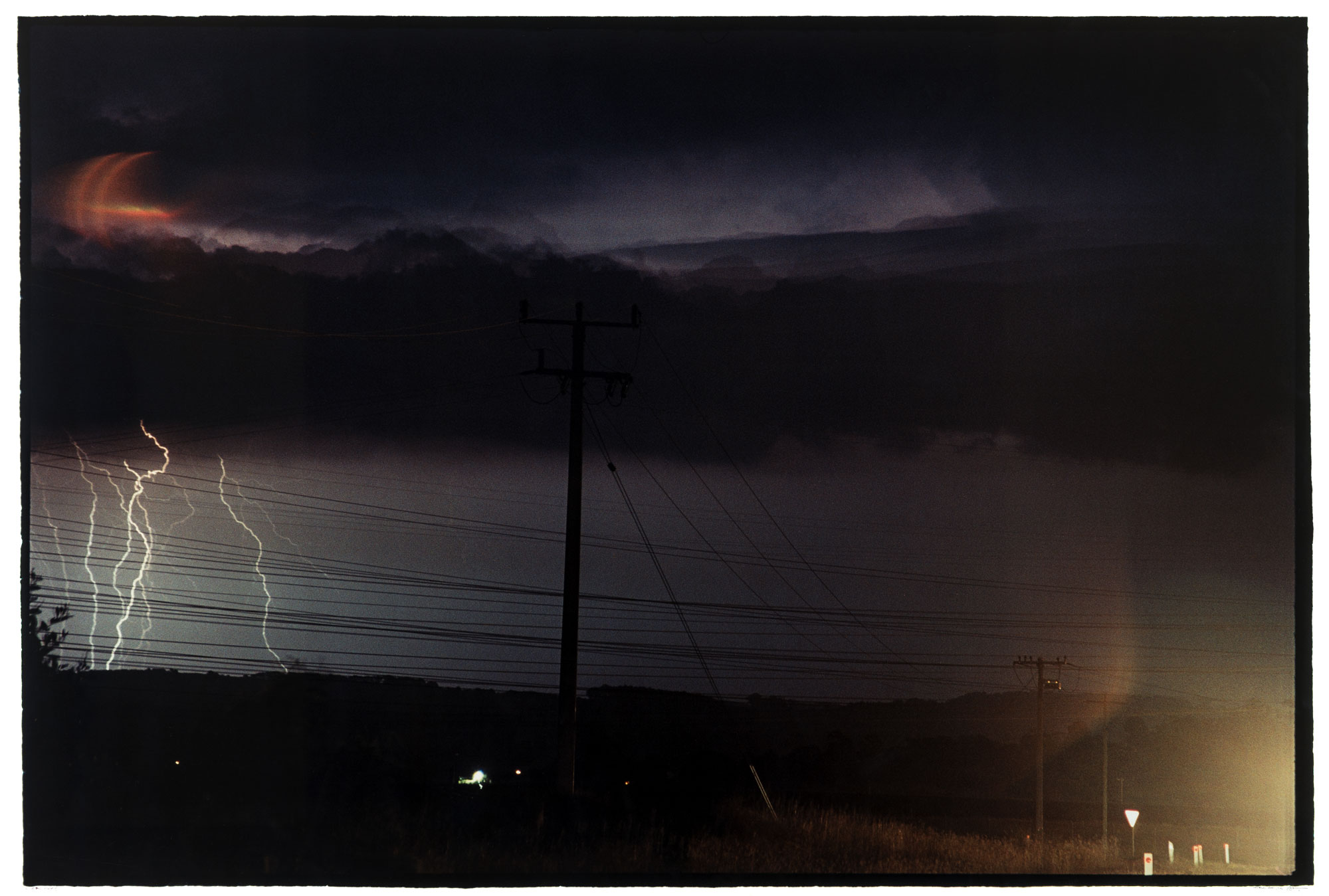
Bill Henson (Australian, b. 1955) 'Untitled 1999/2000' 1999-2000 from the exhibition 'Bill Henson: Landscapes' at Castlemaine Art Gallery and Historical Museum, Victoria, April - June, 2016


Bill Henson (Australian, b. 1955)
Untitled 1999-2000
1999-2000
Type C photograph
103.8 x 154.0cm (image) 126.8 x 179.9cm (sheet)
National Gallery of Victoria, Melbourne
Purchased with funds from the Victorian Foundation for Living Australian Artists, 2005 (2005.501)
Courtesy of the artist and Roslyn Oxley9 Gallery, Sydney


“Our current exhibition, Bill Henson: Landscapes captures the haunting convergence of opposites; two worlds, darkness and light.

These dreamlike pictures pursue the Romantic project by engulfing the viewer in the urban or semi-rural sublime. Through these landscapes, we are immersed in a realm which offers an otherworldly view of the transient nature of earthly existence. The inky depths of the encroaching natural environment suggest a dark abyss, an ethereal malevolence that relates to both the artistic conventions of Renaissance landscape painting and, a uniquely Australian anxiety about our environment and the ominous ordinary.”

Text from the Castlemaine Art Gallery Facebook page


Installation photograph of the exhibition 'Bill Henson: Landscapes' at the Castlemaine Art Gallery and Historical Museum

Installation photograph of the exhibition 'Bill Henson: Landscapes' at the Castlemaine Art Gallery and Historical Museum

Installation photograph of the exhibition 'Bill Henson: Landscapes' at the Castlemaine Art Gallery and Historical Museum with in the bottom image at left, 'Untitled' 2001-2002; and at right, 'Untitled #23' 1998/1999/2000


Installation photographs of the exhibition Bill Henson: Landscapes at the  Castlemaine Art Gallery and Historical Museum with in the bottom image at left, Untitled 2001-2002; and at right, Untitled #23 1998/1999/2000
Photos: © Marcus Bunyan and the Castlemaine Art Gallery and Historical Museum


Bill Henson (Australian, b. 1955) 'Untitled 2001-2002' 2001-2002


Bill Henson (Australian, b. 1955)
Untitled 2001-2002
2001-2002
Type C photograph
127 x 180cm (sheet)
Collection of Annabel and Rupert Myer


Bill Henson (Australian, b. 1955) 'Untitled 2001/02' 2001-2002 (detail)


Bill Henson (Australian, b. 1955)
Untitled 2001-2002 (detail)
2001-2002
Type C photograph
127 x 180cm (sheet)
Collection of Annabel and Rupert Myer


Installation photograph of the exhibition 'Bill Henson: Landscapes' at the Castlemaine Art Gallery and Historical Museum showing 'Untitled #28' 1998 at right


Installation photograph of the exhibition Bill Henson: Landscapes at the  Castlemaine Art Gallery and Historical Museum showing Untitled #28 1998 at right
Photo: © Marcus Bunyan and the Castlemaine Art Gallery and Historical Museum


Bill Henson (Australian, b. 1955) 'Untitled #28' 1998 (detail)


Bill Henson (Australian, b. 1955)
Untitled #28 (detail)
1998
Type C photograph
104 × 154cm


Bill Henson (Australian, b. 1955) 'Untitled #48' 1998/1999/2000 (detail)


Bill Henson (Australian, b. 1955)
Untitled #48 (detail)
1998/1999/2000
Type C photograph
127 × 180cm


Castlemaine Art Gallery and Historical Museum
14 Lyttleton Street (PO Box 248)
Castlemaine, Vic 3450 Australia
Phone: (03) 5472 2292
Email: info@castlemainegallery.com

Opening hours:
Thursday 12pm – 4pm
Friday 12pm – 6.30pm
Weekends 12pm – 4pm

Castlemaine Art Gallery and Historical Museum website

LIKE ART BLART ON FACEBOOK

Back to top

In memory: ‘Port Arthur, Tasmania, 1891’

28th April, 2016


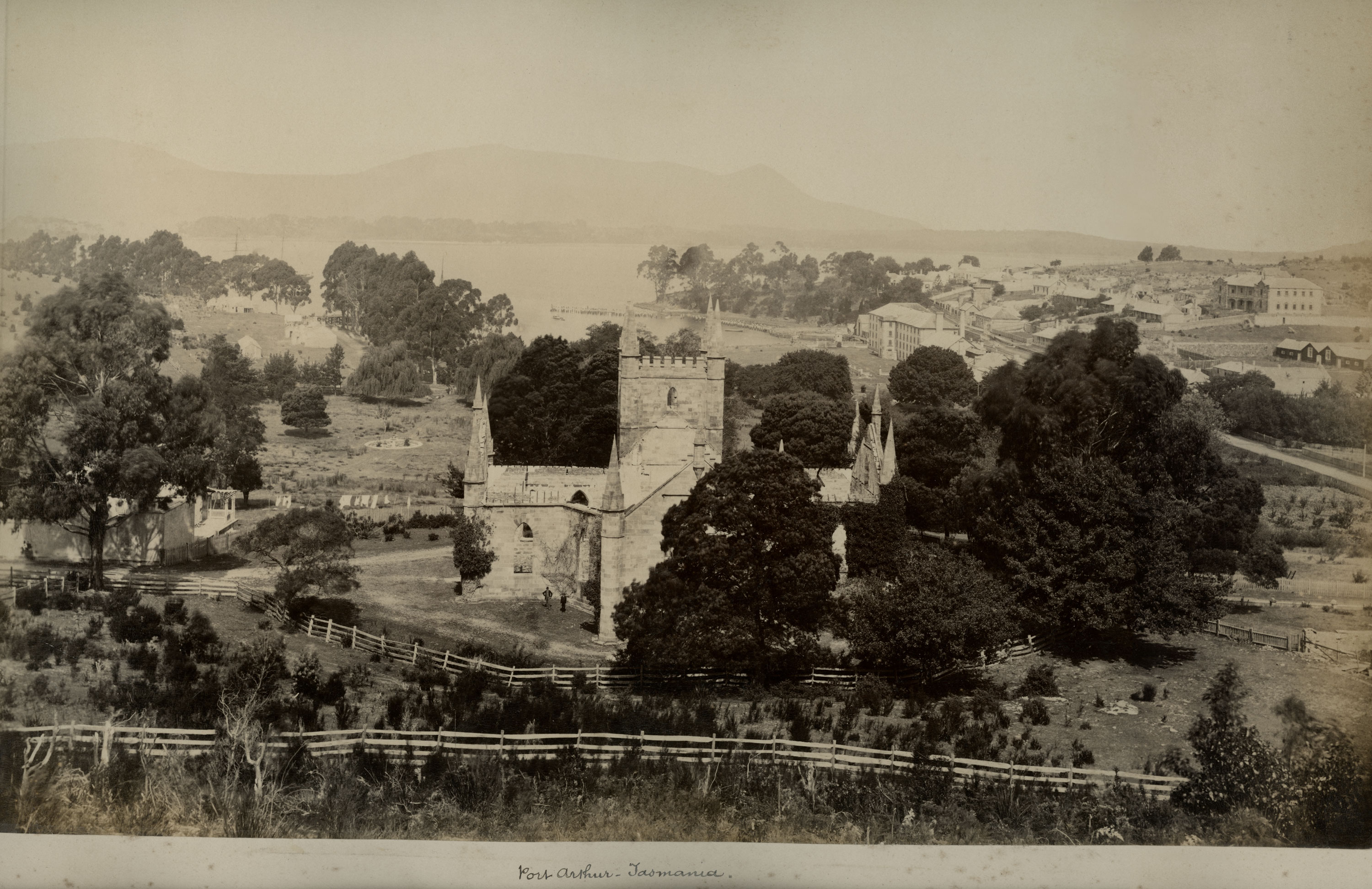
Unknown photographer. 'Port Arthur, Tasmania' 1891


Unknown photographer (Australian)
Port Arthur, Tasmania
1891
Albumen photograph
34.5 x 22.2cm


In memory of all those that lost their lives 20 years ago today at Port Arthur, Tasmania.

This albumen photograph of Port Arthur, Tasmania was taken in 1891 by an unknown photographer. I have scanned and lightly cleaned the image. The photograph is one that is possibly not known before of this place.

Looking down on St. David’s Anglican Church with Mason Cove in the distance, with rowing boats in the river and sailing boats hidden at left behind the trees.

In front of the church a man and boy pose for the camera, the man with his hands on his hips head topped with pork pie hat, the boy wearing an oversized hat, possibly a boater, with his hands hanging limply by his side.

To the left, washing hangs on the line to dry with, behind, weeping willows and an ornamental, circular stone fountain in the middle of a sparse garden paddock.

To the right is Settlement Road with The Commandant’s Garden in the distance.

A memory of a different time and place.

Dr Marcus Bunyan


Many thankx to Nick Henderson for allowing me to scan this wonderful image.

Please click on the image to enlarge.


LIKE ART BLART ON FACEBOOK

Back to top

Exhibition: ‘Storm in a Teacup’ at the Mornington Peninsula Regional Art Gallery, Mornington

Exhibition dates: 24th July – 27th September 2015


Hotham Street Ladies (est. Australia 2007) 'Dark tea' 2015


Hotham Street Ladies (est. Australia 2007)
Dark tea (installation photo)
2015
Royal icing, butter cream icing, fondant, food dye, found objects
Dimensions variable
Courtesy of the artists
Photo: Marcus Bunyan


This is the best thematic group exhibition I have seen in Melbourne and surrounds this year.

Every piece in the exhibition is visually stimulating and intelligently constructed, all works combining to make an engaging exhibition. Nothing is superfluous, every work having something interesting to say, whether it is about the ceremony of tea drinking, colonisation, global warming, Stolen Generations or social mores. Congratulations must go to the curators and artists for their efforts.

Particular favourites where the Hotham Street Ladies Dark Tea (2015, below) made of royal icing, butter cream icing, fondant, food dye, and found objects; the many sculptural objects which form the backbone of the exhibition, especially the work of Sharon West and Penny Byrne; and the wonderful vintage photographs that are displayed in the foyer of the gallery.

Accompanying this exhibition is another excellent exhibition, Ways to draw: A selection from the permanent collection by Betty Churcher, on till 27th September as well. If you want a day out from Melbourne with lunch in Mornington, some seriously good art and a drive along the coast, you could do no better than visit the gallery in the next week. Highly recommended.

Dr Marcus Bunyan


Many thankx to the Mornington Peninsula Regional Art Gallery for allowing me to publish the photographs in the posting. All installation photographs © Marcus Bunyan and the Mornington Peninsula Regional Art Gallery. Please click on the photographs for a larger version of the image.


Hotham Street Ladies (est. Australia 2007) 'Dark tea' 2015 (installation view detail)

Hotham Street Ladies (est. Australia 2007) 'Dark tea' 2015 (installation view detail)


Hotham Street Ladies (est. Australia 2007)
Dark tea (installation view details)
2015
Royal icing, butter cream icing, fondant, food dye, found objects
Dimensions variable
Courtesy of the artists
Photos: Marcus Bunyan


Charles Blackman (Australian, 1928-2018) 'Feet beneath the table' 1956


Charles Blackman (Australian, 1928-2018)
Feet beneath the table
1956
Tempera and oil on composition board
106.5 x 121.8cm
National Gallery of Victoria, Melbourne
Presented through the NGV Foundation by Barbara Blackman, Honorary Life Benefactor, 2005


Charles Blackman first encountered Lewis Caroll’s book, Alice in Wonderland, through a talking book for the blind which his wife, Barbara was listening to. Her developing blindness resulted in telescopic vision, spatial disorientation and a shrinking visual field. She was also pregnant with their first child and her distorted body image also had parallels with Alice’s experiences. By painting Alice at the Mad Hatter’s tea party Blackman could express his wife’s feeling of bewilderment and disorientation.


E. Phillips Fox (Australian, 1865-1915) 'The arbour' 1910


E. Phillips Fox (Australian, 1865-1915)
The arbour
1910
Oil on canvas
190.5 x 230.7cm
National Gallery of Victoria, Melbourne
Felton Bequest 1916


Melbourne born E. Phillips Fox, described as ‘one of the greatest of Australia’s Impressionist painters and the most gifted of her colourists’1 went to Paris in 1887 to study at the Ecole des Beaux Arts where he encountered the work of the French Impressionists. He remained in Paris for several years but made frequent trips back to Melbourne to visit his family. The Arbour was painted in Paris in Fox’s garden but is based upon observations of family life in his brother’s garden in Malvern. The depiction of an elegant family taking tea al fresco is a study of refined gentility. The Arbour was exhibited at both the Royal Academy and the Paris Salon exhibitions and was regarded by Fox as the finest thing he had done.2 At the time the painting was much admired for its ‘subtle lights ad shadow’3 and his exemplary ‘use of delicate colour and refined harmonies.’4

1/ Courier Mail, 12 May 1949
2/ Sydney Morning Herald, 13 October 1913
3/ Sydney Morning Herald, 13 October 1913
4/ Le Courrier Australien, Sydney, 15 April 1949


Clare Humphries (Australian, b. 1973) 'Some things were out in the open' 2007


Clare Humphries (Australian, b. 1973)
Some things were out in the open
2007
Pigment print on Hahnemühle photo rag paper (ed. 3/5)
63 x 62cm
Courtesy of the artist


Adam Hill (Blak Douglas) (Australian, b. 1970) 'Not everyone’s cup of tea' 2009


Adam Hill (Blak Douglas) (Australian, b. 1970)
Not everyone’s cup of tea
2009
Synthetic polymer paint on canvas
150 x 260cm
National Gallery of Australia, Canberra Purchased 2009


Kendal Murray (Australian, b. 1958) 'Exceed speed, mislead, concede' 2011


Kendal Murray (Australian, b. 1958)
Exceed speed, mislead, concede
2011
Mixed media assemblage
18 x 24 x 14cm
Courtesy of the artist and Arthouse Gallery, Sydney


Penny Byrne (Australian, b. 1965) 'Tea for two in Tuvalu' 2011


Penny Byrne (Australian, b. 1965)
Tea for two in Tuvalu
2011
Vintage porcelain figurine, vintage, Action man accessories, vintage coral, glass fish, epoxy resin, epoxy putty, retouching medium, powder pigments
15 x 19cm
Private Collection


Penny Byrne (Australian, b. 1965) 'Tea for two in Tuvalu' 2011 (installation view)


Penny Byrne (Australian, b. 1965)
Tea for two in Tuvalu (installation view)
2011
Vintage porcelain figurine, vintage, Action man accessories, vintage coral, glass fish, epoxy resin, epoxy putty, retouching medium, powder pigments
15 x 19cm
Private Collection
Photo: Marcus Bunyan


This piece was inspired by an underwater cabinet meeting held in 2009 by Maldives President Mohammed Nasheed in a campaign to raise awareness for activity on climate change. The thirty minute meeting was held six metres below sea level and was attended by eleven cabinet members calling upon all countries to cut their emissions to halt further temperature rises.

Polynesian island nation of Tuvalu, located in the Pacific Ocean midway between Hawaii and Australia, experienced a severe drought in 2011. A state of emergency was declared and rationing of fresh-water took place which restricted households on some of the islands to two buckets of fresh water per day. Tuvalu is also especially susceptible to changes in sea level and it is estimated that a sea level rise of 20 to 40 centimetres in the next 100 years could make Tuvalu uninhabitable.


Kate Bergin (Australian, b. 1968) 'The hunt for a room of one’s own' 2012


Kate Bergin (Australian, b. 1968)
The hunt for a room of one’s own
2012
Oil on canvas on board
75 x 101cm
Private Collection


Kate Bergin draws upon Dutch and Flemish seventeenth century tradition of still life painting to comment on our attitudes to animals. Bergin stages the scene on a crumpled white tablecloth upon which a large fox, based on a taxidermy fox she bought on eBay, regally sits centre stage. Meticulously rendered native birds, including a honeyeater, finch and triller, are based on photographs of specimens from the Melbourne Museum Collection. They flit about unperturbed by the introduced predator. Teaspoons, representing the impulse for collecting, entangle the fox and bird. Together with a teapot and cup, precariously placed, they contribute to the overarching sense of impending chaos.

Both afternoon tea and the fox represent English upper class social mores and were introduced into the colonies following British settlement. The fox arrived in 1855, brought in for recreational hunting, and has been a major cause of native bird extinctions. Fox numbers are increasing in some areas further threatening the precarious balance between wild life and introduced species.


Sharon West (Australian, b. 1963) 'Two Koori Tribesmen receive a gift of afternoon tea from local colonists' 2014 (installation view)


Sharon West (Australian, b. 1963)
Two Koori Tribesmen receive a gift of afternoon tea from local colonists (installation photo)
2014
Mixed media assemblage
15 x 46 x 30cm
Courtesy of the artist
Photo: Marcus Bunyan


Heather Shimmen (Australian, b. 1957) 'Tip me up' 2005 (installation view)


Heather Shimmen (Australian, b. 1957)
Tip me up (installation view)
2005
Linocut on paper and organza (ed. 7/30)
56 x 76cm
Courtesy of the artist and Australian Galleries, Melbourne and Sydney
Photo: Marcus Bunyan


Trent Jansen (Australian, b. 1981) 'Briggs family tea service' 2011 (installation view)


Trent Jansen (Australian, b. 1981)
Briggs family tea service (installation view)
2011
Slip cast porcelain, bull kelp, wallaby pelt, copper and brass
George (teapot) 22.5 x 20.5 x 13cm; Woretermoeteyenner (sugar bowl) 16 x 13.5 x 9cm; Dolly (milk jug) 12.5 x 12.5 x 8.5cm; John (teacup) 7 x 8.5 x 8cm; Eliza (teacup) 7.5 x 10.5 x 8cm; Mary (teacup) 10 x 9 x 6.5cm
Courtesy of Broached Commissions, Melbourne
Photo: Marcus Bunyan


The Briggs family tea service represents the marriage of George Briggs, a free settler, to Woretermoeteyenner of the Pairrebeenne people in Van Diemen’s Land and the four children they had together. Briggs arrived from Bedfordshire in 1791 and learned to speak the language of the local Pairrebeenne people, trading tea, flour and sugar fro kangaroo, wallaby and seal skins. It is understood that he became good friends with the leader of the Pairrebeenne people, Mannalargenna, and by 1810 he partnered his daughter Woretermoeteyenner. Their marriage meant she had to adapt to a way of life that merged her traditional cultural values with the ways of British settlers. The teapot and sugar bowl represent the parents while their first daughter, Doll Mountgarret Briggs is symbolised in the milk jug and the three cups each signify their other children John, Eliza and Mary.

The tea service is a hybrid design bringing together materials common to both cultures. To realise the set Jansen worked with Rod Bamford on the ceramic elements, Oliver Smith for the brass and copper and Vicki West, who uses the traditional methods of her Tasmanian Aboriginal ancestors, worked with the bull kelp components.


eX de Medici (Australian, b. 1959) 'Blue (Bower-Bauer)' 1998-2000 (installation view)


eX de Medici (Australian, b. 1959)
Blue (Bower-Bauer) (installation view)
1998-2000
Watercolour over black pencil on paper
114.0 x 152.8cm
National Gallery of Australia, Canberra Purchased 2004
Photo: Marcus Bunyan


eX de Medici (Australian, b. 1959) 'Blue (Bower-Bauer)' 1998-2000 (installation view detail)


eX de Medici (Australian, b. 1959)
Blue (Bower-Bauer) (installation view detail)
1998-2000
Watercolour over black pencil on paper
114.0 x 152.8cm
National Gallery of Australia, Canberra Purchased 2004
Photo: Marcus Bunyan


A turning point in eX de Medici’s career came in 1998 when she saw an exhibition of watercolours by Ferdinand Bauer comprising 2,000 rarely seen images of native flora and fauna made when Bauer was official artist on Matthew Flinder’s historic circumnavigation of Australia in 1801-1803. Previously working with tattoo imagery, Medici found the intricate works so compelling she decided to change course and ‘retrograde’ herself and explore watercolour as a medium.1

Referencing Australia’s Bower bird that adorns its nest with anything blue, Medici entangles the history of vanitas painting with commentary about the desire to seek permanence and affirmation in the accumulation of things. The broken willow pattern platter, upturned jugs and cups, amassed with so many other decorative and functional objects, are juxtaposed with skulls, fruit and flowers – symbols of mortality. A reaction to what she considered John Howard’s regressive politics at the time, the work ‘is a kind of a backhanded discussion about colonising our minds with retroactive ideas’.2

1/ Ted Gott. ‘eX deMedici an epic journey on a Lilliputian scale’ Art and Australia Vol. 40, No. 1, Spring 2002, p. 105
2/ eX deMedici in Paul Flynn. Artist Profile #5, March 2008, pp. 28-35.


Storm in a Teacup reflects upon tea drinking in Australia. Introduced by the British colonials, the afternoon tea party was an attempt to ‘civilise’ the land. Tea drinking became so popular in the colonies that by 1888 the amount of tea consumed per capita exceeded the amount consumed in England. Soon after, billy tea was to become an enduring symbol of the pioneering spirit, immortalised by Henry Lawson’s stories published under the title While the billy boils.

Beginning with elegant paintings of the afternoon tea table from E. Phillips Fox and Arthur Streeton, the exhibition goes on to explore the darker side of tea drinking and the social and environmental impacts of the humble cup of tea. Michael Cook’s Object (table), 2015, provides an alternative history to the narrative of colonialism while Sharon West and Adam Hill both use humour to subvert colonial understandings of the afternoon tea party as an occasion of refined gentility.

The humble cuppa has been around for thousands of years, but this exhibition explores how a popular beverage can impact on us culturally, socially, environmentally and politically. There is more to debate than just the proper way to make a cup of tea. Storm in a teacup explores far-reaching issues brewing from tea, including the imposition of one culture upon another – especially on the colonial frontier; the production of ceramics and the environmental impacts of porcelain and its production; gender stereotypes and socialisation through tea parties. The exhibition also reflects upon tea drinking ceremonies in Asia within a western Orientalist paradigm and tea drinking as an occasion for familial cohesiveness and disconnect.

Text from the Mornington Peninsula Regional Art Gallery


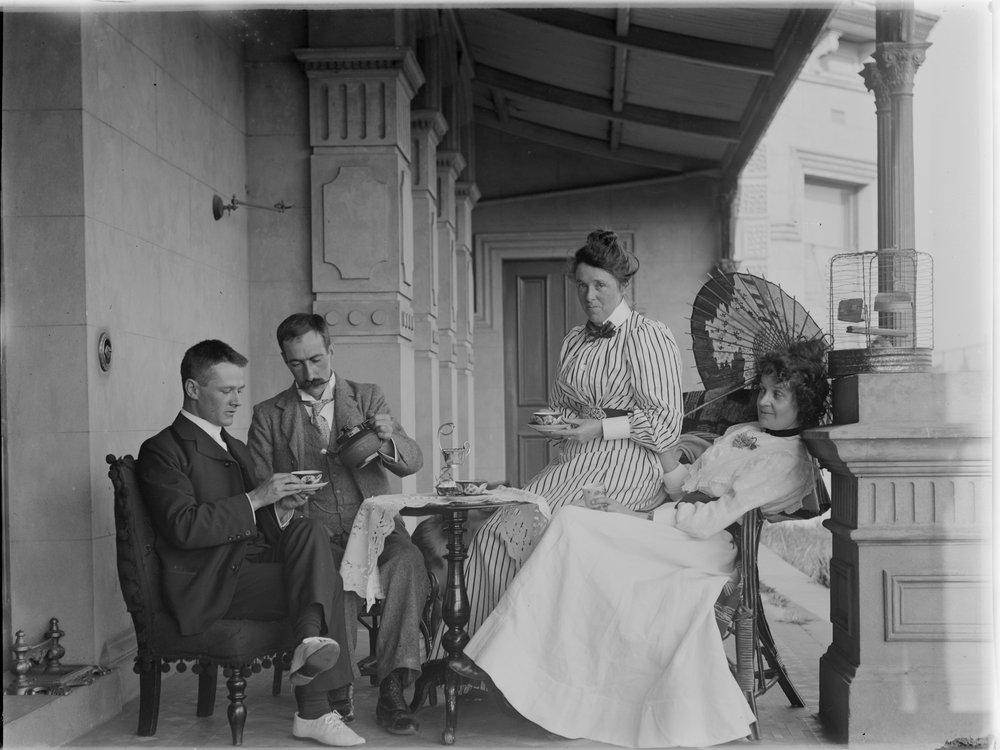
Mark James Daniel (Australian, 1867-1949) 'Verandah, "Harefield" – afternoon tea' Feb 1900


Mark James Daniel (Australian, 1867-1949)
Verandah, “Harefield” – afternoon tea
Feb 1900
Glass negative
8.5 x 11cm (quarter plate)
Collection of the State Library of Victoria


Michael J Drew (Australian, 1873-1943) 'Group taking tea in a garden' between 1890 and 1900


Michael J Drew (Australian, 1873-1943)
Group taking tea in a garden
between 1890 and 1900
Glass negative
12.2 x 16.5cm (half plate)
Collection of the State Library of Victoria


Rex Hazlewood (Australian, 1886-1968) '[Men drinking billy tea]' 1911-1927


Rex Hazlewood (Australian, 1886-1968)
[Men drinking billy tea]
1911-1927
Silver gelatin print
Collection of the State Library of New South Wales


Anonymous photographer. 'Afternoon tea at "Vivaleigh"' 1917


Anonymous photographer
Afternoon tea at “Vivaleigh”
1917
Gelatin silver print
12 x 16cm
Collection of the State Library of Victoria


James Fox Barnard (Australian, 1874-1945) 'Lawn, Arylie, Hobart' c. 1900


James Fox Barnard (Australian, 1874-1945)
Lawn, Arylie, Hobart
c. 1900
Glass negative
8.5 x 11cm (quarter plate)
Collection of the State Library of Victoria


James Fox Barnard (Australian, 1874-1945) '[Tea on the verandah]' c. 1900


James Fox Barnard (Australian, 1874-1945)
[Tea on the verandah]
c. 1900
Glass negative
8.5 x 11cm (quarter plate)
Collection of the State Library of Victoria


Installation photograph of the exhibition 'Storm in a Teacup' at the Mornington Peninsula Regional Art Gallery

Installation photograph of the exhibition 'Storm in a Teacup' at the Mornington Peninsula Regional Art Gallery

Installation photograph of the exhibition 'Storm in a Teacup' at the Mornington Peninsula Regional Art Gallery

Installation photograph of the exhibition 'Storm in a Teacup' at the Mornington Peninsula Regional Art Gallery

Installation photograph of the exhibition 'Storm in a Teacup' at the Mornington Peninsula Regional Art Gallery


Installation photograph of the exhibition Storm in a Teacup at the Mornington Peninsula Regional Art Gallery
Photos: Marcus Bunyan


Tea is the medium of many a complex and commonplace rituals. Adopted in a variety of ceremonies and customs across the globe, its unique and symbolic place in our lives is subtle and powerful. Whether a quick cuppa around the kitchen table or a lavish display of refined gentility; from billy tea to Asian tea-drinking ceremonies, tea has played an important role in international trade but more curiously in facilitating social cohesiveness.

Comprising approximately 50 works including painting, photography, sculpture and installation Storm in a Teacup features artists such as Chares Blackman, John Perceval, Emma Minnie Boyd, E. Phillips Fox and contemporary artists Stephen Bowers, Danie Mellor, Penny Byrne, Rosalie Gasgoigne, Matthew Sleeth, eX de Medici, Anne Zahalka, Polixeni Papapetrou and a mad tea party installation by Hotham Street Ladies.

Tea is said to have first been invented in China around 2700 BC, with the earliest records of tea consumption dating to 1000BC. Initially consumed as a medicinal drink, it became widely popular as a common beverage and traded across Asia and Europe during the 16th century. It was King Charles II’s wife Catherine of Portugal who is said to have brought the tea habit to Great Britain. Indeed, the afternoon tea party first became fashionable in the seventeenth century following Queen Catherine de Braganza’s fondness for serving the beverage at Whitehall in London. It wasn’t until the 18th century that it became widely consumed with tea smuggling bringing the tipple to the masses and later influenced the Boston Tea Party.

Tea drinking became a demonstration of social aspirations and grew in popularity giving rise to a subtle orchestration of manners, dress and serving paraphernalia which created new forms of commodity consumption. In the colonies of New South Wales and Victoria afternoon tea parties were a lavish display of settler understandings of refined gentility that were an attempt to signal allegiance to the values of the home country and ground the displaced community in their originating culture. In this respect the afternoon tea party expressed collective understandings of British identity and was a means of domesticating and civilising the alien terrain of the colonies.

Press release from the Mornington Peninsula Regional Art Gallery


Clare Humphries (Australian, b. 1973) 'Family confection II' 2015 (installation view)

Clare Humphries (Australian, b. 1973) 'Family confection II' 2015 (installation view)


Clare Humphries (Australian, b. 1973)
Family confection II (installation views)
2015
Sugar cubes stained with coffee and tea
Dimensions variable
Courtesy of the artist
Photos: Marcus Bunyan


Giuseppe Romeo (Australian, b. 1958) Subjective landscape, 'Of consequence rather than reason' 2015 (installation view)

Giuseppe Romeo (Australian, b. 1958) Subjective landscape, 'Of consequence rather than reason' 2015 (installation view)


Giuseppe Romeo (Australian, b. 1958)
Subjective landscape, ‘Of consequence rather than reason’ (installation views)
2015
Found discarded objects, bitumen, paint
80 x 100 x 60cm
Courtesy of the artist
Photos: Marcus Bunyan


Guiseppe Rome asks the simple question: ‘What are you going to do with it all?’

Romeo recalls the tea sets his mother and aunts possessed and the ‘good set’ kept for special occasions that were rarely used. In this work a silver platter is the support for a silver cake stand upon which a teapot, creamer, sugar bowl and various serving implements jostle with items required to clean up the mess. The bat, ball and stumps are a reference to playing cricket which ‘became an excuse for a big afternoon tea party in England’. A ribbon of wire holds it all together ‘like a dream from Alice in Wonderland when nothing is as it seems’, while a tinkling melody from a music box is a lullaby that sends us in to a contented sleep.

Romeo coats the sculpture in bitumen then paints it entirely in white. The effect is reminiscent of excavated items from an ancient ruin, as if we are peering upon the remains from a modern day Pompeii – artefacts that have been covered in lava and buried. This work alludes to the ways in which we deceive ourselves and ‘attempt to keep it all together through consumption but ultimately we can’t’.


Samantha Everton (Australian, b. 1971) 'Camellia' 2009


Samantha Everton (Australian, b. 1971)
Camellia
2009
From the series Vintage dolls 2009
Pigment print on rag paper (ed. AP2)
106 x 114cm
Courtesy of the artist and Anthea Polson Art, Queensland


Robyn Phelan (Australian, b. 1965) 'Porcelain wall – ode to an obsession' 2010-2015 (installation view)


Robyn Phelan (Australian, b. 1965)
Porcelain wall – ode to an obsession (installation view)
2010-2015
Porcelain, paper, clay, cobalt oxide, timber, pigment, Jingdezhen tissue transfer
240 x 122 x 42cm
Courtesy of the artist
Photo: Marcus Bunyan


Robyn Phelan (Australian, b. 1965) 'Porcelain wall – ode to an obsession' 2010-15 (installation view detail)


Robyn Phelan (Australian, b. 1965)
Porcelain wall – ode to an obsession (installation view detail)
2010-2015
Porcelain, paper, clay, cobalt oxide, timber, pigment, Jingdezhen tissue transfer
240 x 122 x 42cm
Courtesy of the artist


Robyn Phelan undertook a residency at the Pottery Workshop and Experimental Sculptural Factory of Jingdezhen, Jiangxi Province in China in 2008. Jingdezhen is known as the porcelain capital because it has been the centre of China’s ceramic production, beginning in the fourteenth century Yuan Dynasty, where fine porcelain was first exported all over the world.

Deposits of kaolinite, a clay found at Mt Kaolin nearby which can sustain very high firing temperatures produced a superior white porcelain of increased strength and translucency. Items made from kaolinite were fired with cobalt landscape designs and were highly sought after by European collectors. Over the centuries, because of excessive mining, the mountain’s deposits have become depleted. Phelan’s work is a lament to the desecration of the mountain and a reminder of the potential destructiveness of consumer desire.


Penny Byrne (Australian, b. 1965) '‘Let’s forget about global warming’ said Alice ‘and have a cup of tea instead!’' 2010 (installation view)


Penny Byrne (Australian, b. 1965)
‘Let’s forget about global warming’ said Alice ‘and have a cup of tea instead!’ (installation view)
2010
Vintage porcelain figurine, found toys, epoxy resin, epoxy putty, retouching medium, powder pigments
80 x 33cm
Williams Sinclair Collection
Photo: Marcus Bunyan


Penny Byrne (Australian, b. 1965) '‘Let’s forget about global warming’ said Alice ‘and have a cup of tea instead!’' 2010 (installation view detail)


Penny Byrne (Australian, b. 1965)
‘Let’s forget about global warming’ said Alice ‘and have a cup of tea instead!’ (installation view detail)
2010
Vintage porcelain figurine, found toys, epoxy resin, epoxy putty, retouching medium, powder pigments
80 x 33cm
Williams Sinclair Collection
Photo: Marcus Bunyan


Penny Byrne’s reworked porcelain conversation piece was motivated by Republican Vice-Presidential nominee Sarah Palin’s cry to ‘drill, baby, drill’ during her campaign in 2008. A call for increase off-shore drilling of petroleum, including sites such as the Arctic National Wildlife Refuge, Palin claimed ‘that’s what we hear all across the country in our rallies because people are so hungry for those domestic sources of energy to be tapped into’.1

In Byrne’s piece the patriotic figures gorge themselves, blithely overindulging without care to the wastage. The new Disney production of Alice in Wonderland directed by Tim Burton had just been released and this led Byrne to reflect upon the Mad Hatter’s tea party in which tea was drunk all day because time stood still and was stuck at tea-time.

1/ Transcript: The Vice-Presidential Debate, 2 October 2008. Reprinted in the New York Times, 23 May 2012.


Sharon West (Australian, b. 1963) 'Joseph Banks’ tea party for a Botany Bay tribesman is ruined by flies and spiders' 2014


Sharon West (Australian, b. 1963)
Joseph Banks’ tea party for a Botany Bay tribesman is ruined by flies and spiders
2014
Digital print on paper (ed. 2/5)
66 x 57cm (sheet)
Courtesy of the artist
Photo: Marcus Bunyan


Sharon West’s recreation of an afternoon tea party is set in the early days of first contact. Joseph Banks was the botanist who sailed with Captain Cook on the Endeavour on the first voyage of discovery which mapped the east coast of Australia between 1768 and 1771. While ashore he made an extensive collection of native flora and fauna which was sent back to natural history museums in England. Banks was also instrumental in the British government’s decision to colonise the New South Wales settlement.


Rosalie Gascoigne (b. New Zealand 1917; arr. Australia 1943; d. Canberra 1999) 'The tea party' 1980 (installation view)


Rosalie Gascoigne (b. New Zealand 1917; arr. Australia 1943; d. Canberra 1999)
The tea party (installation view)
1980
Painted wood, celluloid, plastic, enamelled metal, feathers
83 x 35 x 20cm
Private collection
Photo: Marcus Bunyan


Rosalie Gascoigne (b. New Zealand 1917; arr. Australia 1943; d. Canberra 1999) 'The tea party' 1980 (installation view detail)


Rosalie Gascoigne (b. New Zealand 1917; arr. Australia 1943; d. Canberra 1999)
The tea party (installation view detail)
1980
Painted wood, celluloid, plastic, enamelled metal, feathers
83 x 35 x 20cm
Private collection
Photo: Marcus Bunyan


Rosalie Gascoigne found the kewpie dolls amongst a large number of discarded things from an abandoned sideshow at the Bungendore dump in the summer of 1976. ‘I thought “Oh, those dollies, they’re having a … very joyful … picnic. They’re … in the paddock, they’ve got all these old things … they’ve sat down on the teapots and waved their wings around.”

For Gascoigne beauty existed in the most humble of objects and the wear and tear from use only added to the appeal. The enamel teapots were also found at various dumps and were a particular focus of her collecting.

‘I had a thing about enamelware because I see it as being elegant. People see the holes in it. I was collecting brown and white at the same time. To me it had a sort of elegance that a Dalmatian dog has, spotty, very elegant’.1

1/ Rosalie Gascoigne, excerpts from her correspondence, email communication with Martin Gascoigne, 13 March 2015


Julie Dowling (Australian, b. 1969) Badimaya people, Western Australia 'White with one' 2003


Julie Dowling (Australian, b. 1969)
Badimaya people, Western Australia
White with one
2003
Synthetic polymer paint and red ochre on canvas
121 x 100cm
Collection of Jane Kleimeyer and Anthony Stuart


Julie Dowling’s painting is a poignant reminder of the Stolen Generations and the plight of many young girls, forcibly removed from their families, who were brought up in government institutions and trained to be domestic servant to white families. Girls were targeted because women were considered the ‘uplifters’ or ‘civilisers’ of their communities and as future mothers their education into the values of white society was deemed essential to enable successful assimilation. Girls in service were supposed to receive a wage but often this was retained by their employer and not passed on. Dowling points out it is also a history of Stolen wages.


Michael Cook (Australian, b. 1968) Bidjara people, south-west Queensland 'Object (table)' 2015


Michael Cook (Australian, b. 1968)
Bidjara people, south-west Queensland
Object (table)
2015
Inkjet print on Hahnemühle cotton rag (ed. 2/4 + 2AP)
140 x 99cm
Courtesy of the artist and THIS IS NO FANTASY + dianne tanzer gallery, Melbourne


Michael Cook’s photographic tableau ‘turns the table’ on racism. By depicting the body of a white woman as a functional object in service to others, Cook considers the dehumanisation and objectification of one race of people by another in the history of slavery.

The double portrait on the back wall is by Johann Zoffany from 1778, and features Dido Elizabeth Belle (1761-1804) who was born into slavery in the West Indies. The daughter of an African mother, her father was an English naval officer who left her to the care of his uncle, Lord William Murray, where she was raised as an equal with Murray’s niece. Murray was instrumental in outlawing slavery in the United Kingdom in 1772. In the painting Zoffany depicts the two women standing together, the niece affectionately reaching out to Belle. Hence Cook’s afternoon tea is also a reminder that prejudice and racial inequality can be surmounted.


Yenny Huber (b. Austria 1980; arr. Australia 2000) 'Room No. 14' 2006


Yenny Huber (b. Austria 1980; arr. Australia 2000)
Room No. 14
2006
Digital print on aluminium panel (ed. 1/6)
27.2 x 27.2cm
Warrnambool Art Gallery, Victoria


Underpinned by the belief that any one person is comprised of diverse, fragmentary and often illusory selves, Yenny Huber explores the various ego states that reside within. This photograph is a self portrait taken in a hotel room, but it is also an impersonation of an identity available to women. Tea-drinking was once described as ‘an infallible sign of an old maid’1 and in this work Huber offers us an image of a good Catholic girl, knees together, elbows in, sitting demurely on the couch sipping tea. It is an image of femininity constrained by the dictates of religion and outdated socially sanctioned ideals of respectable female behaviour.

1/ The Horsham Times, Victoria, 26 April 1898


Anne Zahalka (Australian, b. 1957) 'Saturday 5.18 pm 1995' 1995 (printed 1997)


Anne Zahalka (Australian, b. 1957)
Saturday 5.18 pm 1995
1995 (printed 1997)
Type C photograph (ed AP)
125 x 162cm
Art Gallery of New South Wales, Sydney Gift of the artist, 2011
Donated through the Australian Government’s Cultural Gifts Program


Mornington Peninsula Regional Art Gallery
Civic Reserve, Dunns Road, Mornington

Opening hours:
Tuesday – Sunday 11am – 4pm

Mornington Peninsula Regional Art Gallery website

LIKE ART BLART ON FACEBOOK

Back to top

Exhibition: ‘The view from here: The photographic world of Alfred Elliott 1890-1940’ at the Museum of Brisbane

Exhibition dates: 13 February – 30 August 2015


Alfred Elliott (Australian, 1870-1954) 'Brisbane Botanic Gardens, near the Edward Street entrance' 1895


Alfred Elliott (Australian, 1870-1954)
Brisbane Botanic Gardens, near the Edward Street entrance
1895
City of Brisbane Collection, Museum of Brisbane


This is more like it… what a find!

There are some fascinating punctum (which denote the wounding, personally touching detail which establishes a direct relationship with the object or person within the image), contained among this recently discovered treasure trove of photographs by Alfred Elliott.

At first, what looks like a real dog is actually a toy sitting in front of Alfred Goldsbrough Elliott, Stanley Terrace, Taringa (1908). And then you notice the hard-nosed stare of the little girl in Dorothy Elliott (1911). She is not a happy camper. Then the scruffy, bare-footed urchin in ‘Welcome to Brisbane’ arch, Queen Street (1895). Or the unhappy woman staring directly into the camera in Grand Arch, Queen Street, visit of the Duke of York (1901), as though her thoughts are being transmitted to us from beyond the grave. And finally, to the two young, blurred children running in front of a white picket fence in Windmill, Wickham Terrace (1895), the smaller of the children noticing the photographer and camera and looking towards both. Just a joy!

And don’t forget, all of these early photographs were taken with a large plate camera (the photographs after 1921 were taken with a film camera and have a totally different feel to them). For an artist to obtain the street photographs and portraits out in the field with this type of camera is superb. Just look at the image Members of the QLD League of Wheelmen, Wellington Point (1897). You can tell the personality of every individual in this image through the clarity, not just of the image but of the thought of the photographer, before he exposed his plate. It is so Australian in its iconography, it could come from nowhere else in the world. This photograph deserves to be up there with one of the seminal images of Australian photography.

Dr Marcus Bunyan


Many thanks to the Museum of Brisbane for allowing me to publish the photographs in the posting. Please click on the photographs for a larger version of the image.


The view from here: The photographic world of Alfred Elliott 1890-1940


Alfred Elliott (Australian, 1870-1954) 'Brisbane, from the Windmill' 1895


Alfred Elliott (Australian, 1870-1954)
Brisbane, from the Windmill
1895
City of Brisbane Collection, Museum of Brisbane


Alfred Elliott (Australian, 1870-1954) 'Aborigines fishing in the Maroochy River' 1890


Alfred Elliott (Australian, 1870-1954)
Aborigines fishing in the Maroochy River
1890
City of Brisbane Collection, Museum of Brisbane


Alfred Elliott (Australian, 1870-1954) 'Central Railway Station, from Edward Street' 1922


Alfred Elliott (Australian, 1870-1954)
Central Railway Station, from Edward Street
1922
City of Brisbane Collection, Museum of Brisbane


Alfred Elliott (Australian, 1870-1954) ''Citizens' Welcome' arch, Queen Street' 1927


Alfred Elliott (Australian, 1870-1954)
‘Citizens’ Welcome’ arch, Queen Street
1927
City of Brisbane Collection, Museum of Brisbane


Alfred Elliott (Australian, 1870-1954) ''Citizens' Welcome' arch, Queen Street' 1927 (detail)


Alfred Elliott (Australian, 1870-1954)
‘Citizens’ Welcome’ arch, Queen Street (detail)
1927
City of Brisbane Collection, Museum of Brisbane


Museum of Brisbane’s latest exhibition offers an amazing visual portrait of a lost city – Brisbane at the turn of the 20th century – through a rare collection of photographs, all shot by a single resident and left forgotten under an inner-city house for decades. The view from here: The photographic world of Alfred Elliott 1890-1940 showcases the life’s work of the avid Brisbane-based photographer, offering a fascinating chronicle of the places he visited, major events he witnessed and intimate glimpses into his family life.

The historic collection of glass-plate and film negatives remained stored in cigar boxes under a house in Red Hill until they were uncovered in 1983 and acquired by Museum of Brisbane. For the past 30 years ‘The Elliott Collection’ was thought to comprise 285 glass plate negatives, until a neglected cigar box with more than 400 film negatives was uncovered at the Museum’s storage facility last year. This significant discovery has allowed the Museum to further piece together fragments of the passionate amateur photographer’s past. The collection provides a window into both his life and the life of a quickly changing city.

Elliott’s work also captures significant moments in Brisbane’s history, including the Duke and Duchess of York’s visit in 1901 and the farewell of the troops aboard SS Cornwall from Pinkenba in 1899. Museum of Brisbane Director Peter Denham said the collection was an exceptional record of one man’s perspective of Brisbane at a very exciting time.

“These unseen photographs offer a unique view of Brisbane at a significant turning point – the city’s population was booming, grand civic structures were erected and huge social change was occurring,” Mr Denham said. “The interactive elements of The view from here offer visitors the chance to get up close with buildings from our past, as well as investigate the photographic technology from the turn of last century.”

“With the discovery of hundreds of new photos, we have learned a lot about Elliott and his family and were even able to locate his much-loved home in Taringa. It is part of our mission as the city’s museum to uncover new stories and we are thrilled to share these findings with visitors. The exhibition wonderfully captures how much our city has changed and I think it will encourage people to reflect on their own perceptions of Brisbane.” The view from here will run until 30 August 2015.

Press release from the Museum of Brisbane website


Alfred Elliott (Australian, 1870-1954) 'Dorothy Elliott, Amy Lock, Mrs Lock and Elizabeth Ellen Elliott' Nd


Alfred Elliott (Australian, 1870-1954)
Dorothy Elliott, Amy Lock, Mrs Lock and Elizabeth Ellen Elliott
Nd
City of Brisbane Collection, Museum of Brisbane


Alfred Elliott (Australian, 1870-1954) 'Elizabeth Ellen Elliott w the Dillon sisters Mary, Clare, Margo' Nd


Alfred Elliott (Australian, 1870-1954)
Elizabeth Ellen Elliott w the Dillon sisters Mary, Clare, Margo
Nd
City of Brisbane Collection, Museum of Brisbane


Alfred Elliott (Australian, 1870-1954) 'Government House, George Street' 1908


Alfred Elliott (Australian, 1870-1954)
Government House, George Street
1908
City of Brisbane Collection, Museum of Brisbane


Alfred Elliott (Australian, 1870-1954) 'Maroochy' 1890


Alfred Elliott (Australian, 1870-1954)
Maroochy
1890
City of Brisbane Collection, Museum of Brisbane


Alfred Elliott (Australian, 1870-1954) 'Maroochy' 1890 (detail)


Alfred Elliott (Australian, 1870-1954)
Maroochy (detail)
1890
City of Brisbane Collection, Museum of Brisbane


Alfred Elliott (Australian, 1870-1954) 'Members of the QLD League of Wheelmen, Wellington Point' 1897


Alfred Elliott (Australian, 1870-1954)
Members of the QLD League of Wheelmen, Wellington Point
1897
City of Brisbane Collection, Museum of Brisbane


The first shipment of tricycles arrived in Brisbane in 1870 and the first race is reported to have been between a cyclist and a Cobb and Co coach from Brisbane to Sandgate. No official timing was recorded.

The initial Brisbane Bicycle Club meeting was held in 1881 at the Belle Vue Hotel. High wheel bicycles including the Penny Farthing were the only bikes available and novelty Penny Farthing races were held in the Brisbane Botanic Gardens where more riders fell off than stayed on. By 1886 Brisbane had 200 bicycles and 50 of these were used for racing…

The first Queensland championship was held at the Breakfast Creek Sports Ground in 1891 and was won by Lou Isles. Isles also rode long distance, riding from Brisbane to Sydney in 1891 a 700 mile trek which he completed in 7 days. Imported bicycles cost £30 although local bicycles could be bought for two pound ten. Successful Queensland riders of the day included Ben Goodsen, Billy Dowd and Percy Davies.

In 1895 a record of 1 hour 2 minutes and 10 seconds was set by George Stombaco for a 34 kilometre race over rough dirt roads from Brisbane and Cleveland. That same year, The League of Queensland Wheelmen held a Christmas Carnival with over 8000 attendees. Brisbane wasn’t the only town with a club as Maryborough, Townsville, Ipswich and Rockhampton also had successful clubs.

Karen Hind. “Cycling in Queensland.” 18 July 2011 [Online] Cited 19/08/2015.


Alfred Elliott (Australian, 1870-1954) 'Treasury Building, William Street' 1895


Alfred Elliott (Australian, 1870-1954)
Treasury Building, William Street
1895
City of Brisbane Collection, Museum of Brisbane


Alfred Elliott (Australian, 1870-1954) 'Victoria Bridge, decorated for the Duke of York' 1901


Alfred Elliott (Australian, 1870-1954)
Victoria Bridge, decorated for the Duke of York
1901
City of Brisbane Collection, Museum of Brisbane


Alfred Elliott (Australian, 1870-1954) 'Victoria Bridge, decorated for the Duke of York' 1901 (detail)


Alfred Elliott (Australian, 1870-1954)
Victoria Bridge, decorated for the Duke of York (detail)
1901
City of Brisbane Collection, Museum of Brisbane


The images chronicle a broad range of Elliott’s life – from private moments with friends on family trips and picnics at the Glasshouse Mountains to key moments in Brisbane’s history such as the construction of Central Railway Station in 1899 and the visit from the Duke and Duchess of York in 1901. Images were captured in locations including Mt Coot-tha, the city’s Botanic Gardens, Tweeds Heads just south of the border and the Moreton Bay Region – all undertaken by train, bus, boat, car and possibly even by horse and bicycle.

Curator Phil Manning, who discovered the last cigar box, said it was evident from the body of work that Elliott was proud of his city.

“He documented the city by walking the streets and going on travels with his family,” Mr Manning said. “He had a strong connection to the British Empire, that was probably the area he was most drawn to documenting … royal visits and the Queensland troops going off to the Boer War. But he’s also photographed Brisbane’s new buildings and structures such as the bridges that went up following the 1893 flood.”

Elliot’s first photographs were dated 1890 and captured on dry-plate glass negatives, including both single image and stereograph negatives. They were a mixture of amateur and professionally produced plates. Elliot used glass plates until 1921 when it appeared he changed to a camera with film.

Very little was known about Alfred Henrie Elliott. He was born in Paignton in England in 1870 and was the youngest of seven children. His family came to Queensland when he was seven years old, with his father taking up post as principal of Humpybong Primary School in Redcliffe, north of Brisbane. Elliott was known to have worked in Brisbane as a civil servant in a variety of roles. His working life also included jobs as a law clerk, professional shorthand writer and a bank clerk.

Patrick Williams and Maria Hatzakis. “Uncovered glass plates and film negatives capturing 50 years of Brisbane’s history go on display,” on the ABC News website, 10 Feb 2015 [Online] Cited on 19/08/2015.


Alfred Elliott (Australian, 1870-1954) 'Eight hour day procession on Queen Street in Brisbane city' 1893


Alfred Elliott (Australian, 1870-1954)
Eight hour day procession on Queen Street in Brisbane city
1893
City of Brisbane Collection, Museum of Brisbane


Alfred Elliott (Australian, 1870-1954) 'Alfred Goldsbrough Elliott, Stanley Terrace, Taringa' 1908


Alfred Elliott (Australian, 1870-1954)
Alfred Goldsbrough Elliott, Stanley Terrace, Taringa
1908
City of Brisbane Collection, Museum of Brisbane


Alfred Elliott (Australian, 1870-1954) 'Dorothy Elliott' 1911


Alfred Elliott (Australian, 1870-1954)
Dorothy Elliott
1911
City of Brisbane Collection, Museum of Brisbane


Alfred Elliott (Australian, 1870-1954) 'Dorothy Elliott' 1911 (detail)


Alfred Elliott (Australian, 1870-1954)
Dorothy Elliott (detail)
1911
City of Brisbane Collection, Museum of Brisbane


Alfred Elliott (Australian, 1870-1954) 'Grand Arch, Queen Street, visit of the Duke of York' 1901


Alfred Elliott (Australian, 1870-1954)
Grand Arch, Queen Street, visit of the Duke of York
1901
City of Brisbane Collection, Museum of Brisbane


Alfred Elliott (Australian, 1870-1954) 'Grand Arch, Queen Street, visit of the Duke of York' 1901 (detail)


Alfred Elliott (Australian, 1870-1954)
Grand Arch, Queen Street, visit of the Duke of York (detail)
1901
City of Brisbane Collection, Museum of Brisbane


Alfred Elliott (Australian, 1870-1954) 'Picnic party on Brisbane River at Seventeen Mile Rocks' 1898


Alfred Elliott (Australian, 1870-1954)
Picnic party on Brisbane River at Seventeen Mile Rocks
1898
City of Brisbane Collection, Museum of Brisbane


Alfred Elliott (Australian, 1870-1954) 'Picnic party on Brisbane River at Seventeen Mile Rocks' 1898 (detail)


Alfred Elliott (Australian, 1870-1954)
Picnic party on Brisbane River at Seventeen Mile Rocks (detail)
1898
City of Brisbane Collection, Museum of Brisbane


Alfred Elliott (Australian, 1870-1954) 'Queen Street, Brisbane' 1899


Alfred Elliott (Australian, 1870-1954)
Queen Street, Brisbane
1899
City of Brisbane Collection, Museum of Brisbane


Alfred Elliott (Australian, 1870-1954) 'Treasury Building, Queen and William Street' 1901


Alfred Elliott (Australian, 1870-1954)
Treasury Building, Queen and William Street
1901
City of Brisbane Collection, Museum of Brisbane


Alfred Elliott (Australian, 1870-1954) ''Welcome to Brisbane' arch, Queen Street' 1920


Alfred Elliott (Australian, 1870-1954)
‘Welcome to Brisbane’ arch, Queen Street
1920
City of Brisbane Collection, Museum of Brisbane


Alfred Elliott (Australian, 1870-1954) ''Welcome to Brisbane' arch, Queen Street' 1920 (detail)


Alfred Elliott (Australian, 1870-1954)
‘Welcome to Brisbane’ arch, Queen Street (detail)
1920
City of Brisbane Collection, Museum of Brisbane


Alfred Elliott (Australian, 1870-1954) 'Windmill, Wickham Terrace' 1895


Alfred Elliott (Australian, 1870-1954)
Windmill, Wickham Terrace
1895
City of Brisbane Collection, Museum of Brisbane


Alfred Elliott (Australian, 1870-1954) 'Windmill, Wickham Terrace' 1895 (detail)


Alfred Elliott (Australian, 1870-1954)
Windmill, Wickham Terrace (detail)
1895
City of Brisbane Collection, Museum of Brisbane


Alfred Elliott (Australian, 1870-1954) 'Alfred Henry Elliott (1870 - 1954)' 1899


Alfred Elliott (Australian, 1870-1954)
Alfred Henry Elliott (1870-1954)
1899
City of Brisbane Collection, Museum of Brisbane


Alfred Elliott (Australian, 1870-1954) 'Elizabeth Ellen Elliott and Alfred Elliott' 1899


Alfred Elliott (Australian, 1870-1954)
Elizabeth Ellen Elliott and Alfred Elliott
1899
City of Brisbane Collection, Museum of Brisbane


Museum of Brisbane

Museum of Brisbane is located on Level 3, Brisbane City Hall (Adelaide and Ann Street, Brisbane QLD)

Opening hours:
Open 7 days a week, 10am – 5pm

Museum of Brisbane website

LIKE ART BLART ON FACEBOOK

Back to top

Exhibition: ‘John Wolseley – Heartlands and Headwaters’ at The Ian Potter Centre: NGV Australia, Melbourne

Exhibition dates: 11th April – 16th August 2015


John Wolseley (Australian, b. 1938) 'Regeneration after fire – the seeders and the sprouters, Mallee' (detail) 2009-2011


John Wolseley (Australian, b. 1938)
Regeneration after fire – the seeders and the sprouters, Mallee (detail)
2009-2011
Watercolour, charcoal, pencil and pigment
152.2 x 256.7cm irreg.
Collection of Sir Roderick Carnegie AC and Family
© John Wolseley


I went for a long walk through recently burnt mallee scrub in the Big Desert Wilderness Park. Some of the mallee roots had vivid amber, scarlet and mauve new growth exploding from the surviving stumps. Nearby were scatterings of tiny, bright banksia seedlings that had germinated after the fire, causing seed pods to burst open and expel their seeds. Botanists call such trees ‘seeders’, while their companions, the mallee eucalypts, are known as ‘sprouters’. Sprouters have a large root, known as a lignotuber, which stores water and nutrients – this is part of a brilliant strategy for survival in arid landscapes.


This is a wondrous exhibition by John Wolseley at NGV Australia. The whole feeling of the exhibition, its scale and intimacy, the attention to detail and the sheer the beauty of the work is quite outstanding. I was fascinated with the text descriptions the artist gives with each piece of work, included here in the posting.

While Wolseley plays with time (deep time, shallow time and now time) and space here it is more than that, for deep time (or “the zone” in the alternative parlance of athletes) is also used in artistic activity to refer to the experience of being lost in the act of creation or the consumption of a work. To the viewer, so it would seem here for we become lost in the art of creation. There is a sense of timelessness, the experience of unusual freedom within time, an unawareness of time, within Wolseley’s work, yet still grounded in the past and present, flowing into the future of this planet. This sense of place, context, space and time(lessness) are lucidly resolved in the artist’s work.

As the Introduction to the exhibition states, Wolseley conceives the exhibition as gesamtkunstwerk, a total work of art, presenting new possibilities for understanding landscape in the twenty-first century. This generally works well in revealing the unique, dynamic processes of natural ecosystems when the work is on the wall. However, the floor of the gallery (natural timber boards) lessened the experience of the “total work of art” for me. If you are designing an exhibition that would seem to me to be immersive (to some extent) then the work needed more grounding than it contains here.

This is a minor observation in an otherwise superlative exhibition. The colours, the sensitivity of the painting, the flow of the images, water, music, prose… are a narrative almost like a fable if the issues were not so real. The heightened imagery and emotional effects of the work make us truly aware that now is the time for action. The future development of the new coal power stations must be stopped. Renewable energy is the energy of the future as much as it is light emanating from the past.

Dr Marcus Bunyan


Many thankx to the National Gallery of Victoria for allowing me to publish the art work in the posting. Please click on the photographs for a larger version of the image.


Artist Interview | John Wolseley 


Over the past four years, John Wolseley has travelled and painted throughout the Australian continent. He has journeyed from the swamps of the Tasmanian high country to the coastal flood plains of the tropical north, exploring the nature and action of water and how it has shaped the land.

Wolseley has worked on site beside strange and diverse wetlands – sphagnum bogs, ephemeral waterholes, bilabongs and mangrove swamps – and combined his own distinctive mark-making processes with more traditional watercolour techniques. He has ‘collaborated’ with plants, birds and insects and used a range of drawing systems that includes frottaging (rubbing against) burnt trees, burying papers in sand and swamps and nature printing from leaves, wood and rocks.

The artist’s layered and collaged papers have been assembled as an installation in the shape of a giant branching tree, surrounded by large-scale works which enclose the viewer in an immersive environment. Wolseley has rejected European landscape conventions that often reduce a complex, living system to a static and generalised representation. Instead, he endeavours to reveal the unique, dynamic processes of natural ecosystems. Conceived as gesamtkunstwerk (total work of art), Heartlands and headwaters presents new possibilities for understanding landscape in the twenty-first century.

Introduction text to the exhibition


John Wolseley (Australian, b. 1938) 'History of the Whipstick Forest with ephemeral swamps and gold bearing reefs' 2011


John Wolseley (Australian, b. 1938)
History of the Whipstick Forest with ephemeral swamps and gold bearing reefs (detail)
2011
Watercolour, charcoal and pencil on 2 sheets (a-b)
233.5 x 286.6cm (overall)
Collection of Sir Roderick Carnegie AC and Family
© John Wolseley


One summer’s day I walked from my studio into the forest and followed a dry creek to some swamps and pools bursting with life. This arid landscape, so torn up and churned over, was still miraculously reinventing itself. Such resilience!

In this drawing I bring together the histories of three kinds of time: the ‘deep time’ of geology, ‘shallow time’ since European arrival, and ‘now time’ in October 2011. The history of the hidden workings of the earth I stole from a geologist’s map. Resting on this ancient framework in the painting’s centre is the green swamp. Above this is another map, which tells the story of William Johnson, a visitor to this forest 160 years ago, whose discovery of gold was the birth of the Bendigo goldfields.

When I was working on this painting, this bush was burnt in line with the government’s draconian legislation to burn all public bushland in Victoria every ten years. This often gives no time for vegetation to mature and seed, and biodiversity in certain fire-sensitive ecologies is being ravaged. My reverence for nature’s resilience was moved to a sense of deep chagrin that yet again we are destroying the matrix which is our home.


John Wolseley (Australian, b. 1938) 'From Siberia to Roebuck Bay – the godwits reach the mangrove swamps, WA' 2012 (detail)


John Wolseley (Australian, b. 1938)
From Siberia to Roebuck Bay – the godwits reach the mangrove swamps, WA (detail)
2012
Watercolour over pencil, charcoal and coloured chalk
151.9 x 199cm irreg.
Collection of Sir Roderick Carnegie AC and Family
© John Wolseley


Each year in June the bar-tailed godwits fly 12,000 kilometres from their breeding grounds in Siberia to the north coast of Australia. I was standing by the sea on the north Kimberley coast when out of a clear sky the godwits arrived in vast, pulsing flocks that swooped down to rest on the mudflats. The land, with its mudflats and sandbanks, had been formed by the great king tides, dragged for eons by the cycles of the moon. And now I could see these great tides of godwit, pulled by another powerful force, flow down and merge with the waters.


John Wolseley (Australian, b. 1938) 'Natural history of swamps III, heron in swamp - Loy Yang Power Station' 2009-2010 (detail)


John Wolseley (Australian, b. 1938)
Natural history of swamps III, heron in swamp – Loy Yang Power Station (detail)
2009-2010
Watercolour, pencil, ink, black chalk, scratching out and leaf
114 x 176cm
Collection of Sir Roderick Carnegie AC and Family
© John Wolseley


I was looking at a dam in the grounds of the Loy Yang Power Station, when in flew a black-backed heron. It looked for fish in the water and then peered at a billboard declaring ‘Hazelwood Power Station – WETLAND DEVELOPMENT PROJECT’. I walked down to the vast open-cut coalmine, and looked for fish fossils and Cryptogamic flora among the seams of coal. Then I returned to the heron, which now seemed to be looking at the steam and CO2 belching out of the cooling towers – those clouds of CO2 that came from the coal which was once a carboniferous swamp.


For four years, artist John Wolseley has roamed the coastal floodplains of the Northern Territory through to the glacial lakes of Tasmania, exploring and recording in exquisite detail the diverse wetlands of Australia. The works he has created will be revealed at NGV Australia.

This series of eighteen evocative works on paper, many of them monumental in scale (up to 10 metres in size), detail the geographical features and unique plants and animals of these wetlands in works characterised by minutely-observed drawing and rich watercolour washes.

Many works combine collage and unusual markings made through burying works or hoisting large sheets of paper across the charred remains of burnt tree trunks and branches. Through this ‘collaboration’ with the natural environment, Wolseley subverts traditional approaches to the depiction of landscape and seeking to give the natural world a more active presence in the work of art.

‘Heartlands and Headwaters celebrates Australia’s unique and diverse natural environment,’ said Tony Ellwood, Director, NGV. ‘Wolseley’s work is not only of great beauty, but also demonstrates how depicting the landscape has become an important form of activism’.

The mangrove swamps of Roebuck Bay in Western Australia, the flood plains of the Gulf of Carpentaria in the Northern Territory, the Finke River in the Simpson Desert and the sphagnum swamps of Skullbone Plains in central Tasmania are just some of the sites detailed in these impressive works.

Commissioned by Sir Roderick Carnegie AC, these works celebrate the beauty of the Australian wilderness and encourage an understanding of the significance and environmental fragility of these remote and little-known sites.

About John Wolseley

Born in England in 1938, John Wolseley immigrated to Australia in 1976 and has gained recognition in the past four decades as one of Australia’s leading contemporary artists whose work engages passionately with the environment.

Over the years Wolseley has travelled extensively throughout the country, into the arid interior and remote wilderness areas in all states, camping out for extended periods and immersing himself in the landscape.

This approach is reflected in the distinctly non-traditional character of the landscape works Wolseley produces. Instead of presenting a single overarching view of a particular site they are composite images that combine precisely observed details of flora and fauna. Informed by readings in geology, biology, cartography and other disciplines, these provide multiple perspectives on the location’s topography, journal notations and observations of natural cycles or patterns of the area.

Press release from the NGV website


John Wolseley (Australian, b. 1938) 'Murray-Sunset refugia with 14 ventifacts' 2008-2010


John Wolseley (Australian, b. 1938)
Murray-Sunset refugia with 14 ventifacts
2008-2010
From The Great Tree of Drawings 1959-2015, installed 2015
Pencil, watercolour and charcoal on 15 sheets (a-o)
Dimensions variable (overall)
Collection of Sir Roderick Carnegie AC and Family
© John Wolseley


John Wolseley (Australian, b. 1938) 'Murray-Sunset refugia with 14 ventifacts' 2008-2010  (detail)

John Wolseley (Australian, b. 1938) 'Murray-Sunset refugia with 14 ventifacts' 2008-2010 (detail)


John Wolseley (Australian, b. 1938)
Murray-Sunset refugia with 14 ventifacts (details)
2008-2010
From The Great Tree of Drawings 1959-2015, installed 2015
Pencil, watercolour and charcoal on 15 sheets (a-o)
Dimensions variable (overall)
Collection of Sir Roderick Carnegie AC and Family
© John Wolseley


This work was made in the Murray-Sunset National Park, where I found an island of unburnt scrub remaining after a bushfire. This refugium, or sanctuary, provided shelter for plants and small creatures from which they could later gradually recolonise the surrounding sand dunes. The small, flying sheets are papers I released to blow on the desert winds for weeks and sometimes months. Each sheet records carbon traces made by the burnt fingers of trees and shrubs. Having been made soft from dews and showers, and dried and tossed by the desert winds, they have become fixed in a variety of sculptural forms.


John Wolseley (Australian, b. 1938) 'Natural history of a sphagnum bog, Lake Ina, Tasmania' 2013


John Wolseley (Australian, b. 1938)
Natural history of a sphagnum bog, Lake Ina, Tasmania
2013
Watercolour, pencil, pen and ink, and sphagnum on 8 sheets (a-h)
155.6 x 407.6cm (overall)
Collection of Sir Roderick Carnegie AC and Family
© John Wolseley


John Wolseley (Australian, b. 1938) 'Natural history of a sphagnum bog, Lake Ina, Tasmania' 2013 (detail)

John Wolseley (Australian, b. 1938) 'Natural history of a sphagnum bog, Lake Ina, Tasmania' 2013 (detail)

John Wolseley (Australian, b. 1938) 'Natural history of a sphagnum bog, Lake Ina, Tasmania' 2013 (detail)


John Wolseley (Australian, b. 1938)
Natural history of a sphagnum bog, Lake Ina, Tasmania (details)
2013
Watercolour, pencil, pen and ink, and sphagnum on 8 sheets (a-h)
155.6 x 407.6cm (overall)
Collection of Sir Roderick Carnegie AC and Family
© John Wolseley


As a creek moves down to the shores of Lake Ina in the central highlands of Tasmania, it swells out into an ancient sphagnum moss swamp. I leant over and peered into a gap between the mats of sphagnum, and a small fish emerged in the crystal water. This brief phantom – a Clarence galaxias – was only miraculously there because its ancestors had been isolated by a glacial moraine (ridge) upstream, which six million years later had saved it from the European trout, which had supplanted most of the other galaxias in the rest of Tasmania. And then, marvellously, it had been saved again by the Tasmanian Land Conservancy, which had purchased these plains to protect them from further loss and degradation.

As the grey shadows moved down the hill and melted into the lake, I soaked and painted the spongy sphagnum mats with tinctures of watercolour – viridian and crimson and Indian yellow – and laid them on several sheets of paper. I did the same with water milfoils, spike reed, tassel sedges and bladderwort, and weighted them down overnight with slabs of bark. Their images were imprinted on the paper, emerging slowly like a photograph being developed.


John Wolseley (Australian, b. 1938) 'From the edge of the great flood plains of Garrangari and Garrangalli, NT' 2012-2014


John Wolseley (Australian, b. 1938)
From the edge of the great flood plains of Garrangari and Garrangalli, NT
2012-2014
Pencil, charcoal, black and brown chalk, watercolour, coloured pencil, coloured pastel, frottage and collages of linocut, wood relief printed in black and brown ink, watercolour, charcoal and coloured pencil over pencil and pen and ink on Japanese and wove paper
155.5 x 961.7cm irreg.
Collection of Sir Roderick Carnegie AC and Family
© John Wolseley


In June 2011 I was standing on the edge of the monsoon rainforest bordering a vast flood plain in East Arnhem Land with Djambawa Marawili, the great Yolngu leader and artist. Djambawa recounted how in the dawn of creation ancestral figures had moved up from the coast, digging for edible roots as they went, creating springs of fresh water that still bubble out along the plains. He described how when the first sun came up these ancestor women turned into brolga cranes. As he sang the song several brolgas emerged from the mists and flew slowly towards the coast.

This was the originary moment of this painting. For the next three years, guided by the Dhudi-Djapu clan leader and artist Mulkun Wirrpanda, I collected and drew specimens of plants and trees of the flood plain, and their edible roots and tubers. In the painting I have drawn many of them, along with the various trees festooned with vines.

For me the great miracle of that morning rested in that moment of time – being there, seeing the living land and sensing the ‘deep time’ so intimately linked with the life and art of the people who have lived in it for so long.


John Wolseley (Australian, b. 1938) 'A Daly River creek, NT' 2012


John Wolseley (Australian, b. 1938)
A Daly River creek, NT
2012
Watercolour, pastel, pencil, charcoal, ink, yellow pencil and collage of woodcut and linocut on Japanese paper (a-c)
152 x 602cm (overall)
Collection of Sir Roderick Carnegie AC and Family
© John Wolseley


John Wolseley (Australian, b. 1938) 'A Daly River creek, NT' 2012 (detail)


John Wolseley (Australian, b. 1938)
A Daly River creek, NT (detail)
2012
Watercolour, pastel, pencil, charcoal, ink, yellow pencil and collage of woodcut and linocut on Japanese paper (a-c)
152 x 602cm (overall)
Collection of Sir Roderick Carnegie AC and Family
© John Wolseley


Here is a flowing tropical creek near Nauiyu, about two hours’ drive south of Darwin. It shows the fecund, flowing mass of life and aquatic plants and fish, and how they are all an integral part of one particular ecosystem. The plants were all drawn on the spot or collected and drawn later in Darwin. It was May 2012 and I went on several trips with the ethnobiologist Glenn Wightman, the Ngan’gi elder Patricia Marrfurra McTaggart AM and other artists from the arts centre at Nauiyu. They showed me the plants in their living habitat so that I could draw them in action, rather than as dried museum specimens – the Nymphaea waterlily, with its long, convulsive stems, several species of bladderwort, water chestnuts and duckweed.

In this tropical aquatic painting I have tried to show how landscape for me is made up of energy fields that I draw as passages of particular plant forms, in which the individual plants move or dance with different rhythms. My intention is to show how these rafts of different species weave in and out of one another, and across the surface of my painting, rather as a passage of a symphony changes key and mood.


John Wolseley (Australian, b. 1938) 'Cycles of fire and water - Lake Tyrrell, Victoria' 2011-2012


John Wolseley (Australian, b. 1938)
Cycles of fire and water – Lake Tyrrell, Victoria
2011-2012
Watercolour, charcoal, pencil, sponging and scratching out on 2 sheets (a-b)
154 x 610cm (overall)
Collection of Sir Roderick Carnegie AC and Family
© John Wolseley


John Wolseley (Australian, b. 1938) 'Cycles of fire and water – Lake Tyrrell, Victoria' 2011-212  (detail)


John Wolseley (Australian, b. 1938)
Cycles of fire and water – Lake Tyrrell, Victoria (detail)
2011-2012
Watercolour, charcoal, pencil, sponging and scratching out on 2 sheets (a-b)
154 x 610cm (overall)
Collection of Sir Roderick Carnegie AC and Family
© John Wolseley


I was sitting on a low sandbank and drawing the pools of water that lay on this ancient salt lake. A rust-coloured cloud erupted into the air and darkened the sky over the water. The wind grew stronger, as if emanating from the core of the fire, and it carried embers and burning branches like dismembered limbs. I felt a kind of disquiet, almost dread. I knew such fires had always been part of the natural cycles of the bush, but this was one of several I had experienced that season where it felt as if fire itself was behaving in a different, more erratic way; as if the subtle equilibrium of the climate was changing.

From out of the billowing clouds of smoke some spoonbills, ibis and cormorants emerged, and flew far out over the lake. Several of them alighted on a patch of sunlit water and remained there, as if illustrating some cycle of eternal return – from action to stillness, from noise to quiet. But as I watched, the great black cloud drifted over their resting place, moving them on as if they were being chased away from the world they had known.


John Wolseley (Australian, b. 1938) 'After fire - spiny-cheeked honeyeaters at Lake Monibeong' 2009-2011 (detail)


John Wolseley (Australian, b. 1938)
After fire – spiny-cheeked honeyeaters at Lake Monibeong (detail)
2009-2011
Watercolour, charcoal, pencil, gouache and brown chalk
151.7 x 128.9cm
Collection of Sir Roderick Carnegie AC and Family
© John Wolseley


Walking through the recently burnt Cobboboonee Forest in Victoria one morning, I reached a lake where fresh water rested in sand dunes bordering the sea. I stood beside a burnt banksia tree with powdery black, corrugated bark. It had been a stormy night, but now the sea and lake were calm. Several spiny-cheeked honeyeaters swooped down, perched in the tree and sung out jubilantly. It was as if they were filled with elation at all these elements coming to rest in equilibrium – the lake resting within the sand dune, the quietening of the wind and the passing of the fire.


The Ian Potter Centre: NGV Australia
Federation Square
Corner of Russell and 
Flinders Streets, Melbourne

Opening hours:
Open daily 10am – 5pm

National Gallery of Victoria website

LIKE ART BLART ON FACEBOOK

Back to top

Photographs and text: ‘Quandong, New South Wales, Australia’ 1887

July 2015


Unknown photographer. 'Shearing, Quandong' New South Wales, Australia, 1887


Unknown photographer
Shearing, Quandong
1887
Albumen print on cabinet card
10 x 8cm


A fascinating set of albumen prints mounted on cabinet cards of Quandong, New South Wales, Australia in 1887. These images are probably among the first ever taken of the area, most likely by a travelling photographer. The reverse of the cards bearing the monogram C.A. or A.C. Each image measures 10 x 8cm (c. 4 x 3 inches), on slightly larger card (12 x 9.2cm / 4.8 x 3.6 inches).

It is instructive to look at the structure of the images to see how this unnamed photographer visualised his subject matter. Firstly, the three photographs of the house. Taken from the top of a barn (imagine lugging a large camera up there!), one image offers a three-quarter profile of the homestead, in the background wildness, with two white picket gates providing entry through a guardian hedge that protects the habitation. Next the photographer swings the camera around 180 degrees, photographing the homestead not from front on but again on an angle for dramatic effect, framing the foreground with a fence made of chopped down trees which encloses a sparse, newly planted garden. In one dark exposure, two men stand in formal pose stand with the grandmother sitting wrapped in a shawl beside one of the men. In the other lighter exposure (the photographer obviously had trouble here), we again have a formal placement of people, this time with the grandmother (without shawl) and grandfather sitting opposite each other, probably with their grandsons with dogs in front of them. Anyone who has lived in rural Australia would understand the significance of the verandah as a gathering place and congregational space to sit, and for youngsters, to play with their dogs.

Secondly, we observe the two side-on photographs of the horse and carts. Both show a distinctly formal placement of the objects within the picture plane with a limited spatial depth to the photographs, with no vanishing point. But there are distinctive differences between the two photographs. The horse and trap evidence the status of the people involved, the two horses and large carriage being held steady by a third person and far left of picture. The second photograph is much more informal… the horse and young foal, the man in relaxed pose, hand on knee and then, in the foreground – as though to emphasise the working nature of this cart – a pile of logs and trees fill our vision, a stark contrast to the dark trees in the background. There is nothing in the foreground of the first photograph, forcing the eye to rest on the formal structure of man/horse/men/trap.

Next we observe two photographs of a flock of sheep and men. In the first image the photographer has framed the man and dog at left with horse behind the flock of sheep, while at right a group of three men stand close together before a wooden fence… holding up the right hand side of the image. Wilderness can be seen beyond. Notice how there is a flat empty area at the front of the image which leads the eye to the right and up to the men, thence to the tall trees beyond. Lovely spaces in this image, with the grouping of the sheep and men, the horizontal line of the fence dividing the tonality of the image – dark at the bottom, light at the top. In the second image the photographer has not moved the camera but he has moved the men at right. The framing of the man at left and the horse and flock of sheep are still the same, but now he has removed one man and moved the other two men to be slightly behind the spatial plane of the man with the dog. The sun has come out as we can see the shadow of the two men on the ground, and the exposure must have been short, for we can see the paw of the dog caught in mid-air. It is interesting to note that the photographer does not mind the two trees coming out of the tops of the men’s heads at right, instead of placing them in the negative space between the trees. Further evidence of the nature of the environment in which this homestead was evolving can be found in the photograph At Quandong, an almost modernist rendition of the wilderness, in which the image is divided into a series of horizontal lines – foreground fence, mid-ground fence, horizon line with the wild beyond. The photographer thought this view important enough to warrant a photograph, even though there is nothing obviously substantial contained in the image. It does, however, graphically illustrate the isolation of the homestead within the environment.

Lastly we have the images of Shearing in Woolshed and Shearing, Quandong. The light is absolutely beautiful in both of these images, entering as it does through the door at bottom left of the images and, as an opposite, through the open doors at the top left of the image. Shearing, Quandong is the more successful of the two images through its pure simplicity. Note the strong diagonal from top left to bottom right, which in Shearing in Woolshed is disturbed by the presence of the two overseers. Also note how in the image that was likely taken first, Shearing in Woolshed, the camera is placed higher up. We can tell this by the visibility of the poles behind the overseer and the fact that we can’t see the base of the wooden pole at right. In this image the lad at right has his hat on. In Shearing, Quandong the distance between the door, poles and the top of the image at back is much shorter and we can now see the base of the wooden pole at right. The lad has taken off his hat and put in on the floor there.

How young both of these lads are, with their crew cut hair, using huge manual shears. What backbreaking work it must have been in the heat and humidity… and the one thing that you cannot get an idea of, is the smell of these woolsheds. If you have ever been in one of these woolsheds you know what a pungent aroma these places have.

These photographs were taken a year before the iconic Australian painting by Tom Roberts Shearing the Rams (1888-1890), an archetypal vision of Australian pastoral life, and through them we can see how much they confirm Roberts’ vision of Australian rural life. Leigh Astbury observes that,

“Roberts was not, however, the first artist to depict the subject of shearing sheep. It had been previously treated in a few isolated paintings but, more frequently, shearers were shown at work in photographs and in illustrated newspapers and magazines during the 1870s and 80s. An exploration of the contemporary pictorial tradition reveals that in the formulation of his painting Roberts followed an established photographic and illustrative convention, as opposed to originating a new subject for artistic attention.”

“Roberts began preparatory studies for the picture at the Brocklesby station during the spring of 1888 when he made between seventy and eighty sketches of ‘the light, the atmosphere, the sheep, the men and the work’. … During the following spring of 1889 Roberts set out his canvas in the Brocklesby shed and began to paint the final work. He ‘picked out the most characteristic and picturesque of the shearers, the “rouseabouts” and the boy’, and carefully posed them in the manner he required… Shearing the rams was a carefully and consciously formulated painting executed over a long period, not an informal, ‘slice of life’ glimpsed in an Australian shearing shed. 

“Roberts, who worked as a photographer’s assistant, may have been aware of shearing scenes which appeared in contemporary photographs. A photograph entitled Shearing [see below], by a well-known Melbourne photographer, Charles Nettleton, anticipates the construction of pictorial space found in Shearing the rams. There is the same slightly diagonal thrust into distance, accentuated by the lines of the floorboards. The structure of the shearing shed roof plays a similar role in the composition, while one gains the same sense of rhythmic interval as the central poles recede into the background. Equally significant is the way the photograph conveys the quality and sources of light in the shed: the light filters through from outside and permeates the atmosphere.”1


This carefully planned composition, based on photographs and black and white illustrations, is a (social) construction and performance based on a reality that excludes outsiders and Other (namely Indigenous Australians in this case in point). Artist Dianne Jones rightly questions this deterministic, colonial envisioning of Australian heritage and national identity.

“Jones uses appropriation and reinterpretation to create conversations about issues that are important to her. By placing Aboriginal figures into historical artworks where previously there were none,  Jones makes us aware of their absence from Australian art and from Australian history…

Shearing the Rams provides an example of Jones’ ongoing concern with the lack of accurate Indigenous representation within Australian culture, particularly within iconic nationalistic images. The original oil painting created by Tom Roberts in 1890 celebrated pastoral life and labour, and came to be considered an icon of Australian Impressionism and popular history. Even if the painting itself is not instantly recognisable to the viewer, the sentiment behind it is familiar, it is a sentiment repeated within iconic images of Australia’s post-colonial history. By replacing some of the figures, who are all white men in Roberts’ painting, with male members of her own family, Jones is reasserting their previously unrecognised presence in this part of Australian history. Her family were actively involved in the pastoral industry, but this involvement has not previously been acknowledged or celebrated in any way.”2


This blindness and bigotry towards others continues to this day in rural and regional Australia. I have experienced it myself in rural areas of New South Wales. A certain right-wing conservatism permeates the land, is almost embedded in its ongoing structures. We need artists like Jones to shine a light into the dark corners of the Australian psyche, for only then will we begin to understand the long path as a nation that we have to travel, the new narratives that we must construct.

Dr Marcus Bunyan


1/ Extract from Leigh Astbury. “Tom Roberts’s Shearing the rams: the hidden tradition,” in Sonia Dean (ed.,). Art Journal 19. National Gallery of Victoria, Nd. [Online] Cited 26/07/2015

2/ Extract from Sarah Norris. “Dianne Jones: Revisiting/Revising Australian Icons,” on the Art Right Now website June 2013 [Online] Cited 16/07/2015

Please click on the photographs for a larger version of the image.


Unknown photographer. 'Shearing, Quandong' New South Wales, Australia, 1887 (detail)


Unknown photographer
Shearing, Quandong (detail)
1887
Albumen print on cabinet card
10 x 8cm


Unknown photographer. 'Shearing in Woolshed, Quandong' 1887


Unknown photographer
Shearing in Woolshed, Quandong
1887
Albumen print on cabinet card
10 x 8cm


Unknown photographer. 'Shearing in Woolshed, Quandong' 1887 (detail)


Unknown photographer
Shearing in the Woolshed, Quandong (detail)
1887
Albumen print on cabinet card
10 x 8cm


Charles Nettleton (Australian, 1826-1902) 'Seven Creeks Station near Longwood. Shearing' c. 1880


Charles Nettleton (Australian, 1826-1902)
Seven Creeks Station near Longwood. Shearing
c. 1880
Albumen silver photograph
23.5 x 28.5cm on mount
Currie collection, State Library of Victoria


Tom Roberts (Australian, 1856-1931) 'Shearing the Rams' 1888-1890


Tom Roberts (Australian, 1856-1931)
Shearing the Rams
1888-1890
Oil on canvas on composition board
122.4 x 183.3cm


Dianne Jones (Australian, b. 1966) 'Shearing the rams' 2001


Dianne Jones (Australian, b. 1966)
Shearing the rams
2001

Inkjet on canvas, edition of 10
121.9 x 182.6cm
© Dianne Jones

Please note: This image is used under conditions of “fair use” for the purpose of academic scholarship and art criticism.


Dianne Jones: Revisiting/Revising Australian Icons

Imagery plays an influential role in the formation of national identity. When this imagery is dominated by a particular cultural and ethnic perspective it results in the formation of a mythology that does not accurately reflect the culture it informs. Through her art practice Jones examines the relationship between popular imagery and national and personal identity. By questioning the validity of the imagery that has illustrated Australian history and has long been considered representative of Australian culture, Jones gives a voice, and a face, to those who were previously denied a place within the paradigm of Australian art.

Jones creates reproductions of classic Australian paintings in which the original image has been altered and reinterpreted. Images by artists such as Tom Roberts, Eugene von Guerard and Max Dupain have come to be representative of a romanticised Australian history. These well-known and well-loved images have had a significant role in defining Australian national identity, their nationalistic tone reflects a particular viewpoint of Australia’s post-colonial history. This viewpoint is limited and denies the experiences of many Australians, including the history of  Jones’ family. In spite of these limitations, these images continue to hold significant cultural value for many Australians. The status of the original paintings Jones reinterprets, as highly valued and iconic works, make them ideal choices for affective reinterpretation.

Jones uses appropriation and reinterpretation to create conversations about issues that are important to her. By placing Aboriginal figures into historical artworks where previously there were none,  Jones makes us aware of their absence from Australian art and from Australian history. She tries to make us aware of the lack of diversity in the images that are seen to illustrate Australian history and represent Australian culture. She highlights the absence of certain cultural groups by placing them back into the picture. In doing this she shows us how we can create a new and more accurate history that is inclusive rather than exclusive…

Shearing the Rams provides an example of Jones’ ongoing concern with the lack of accurate Indigenous representation within Australian culture, particularly within iconic nationalistic images. The original oil painting created by Tom Roberts in 1890 celebrated pastoral life and labour, and came to be considered an icon of Australian Impressionism and popular history. Even if the painting itself is not instantly recognisable to the viewer, the sentiment behind it is familiar, it is a sentiment repeated within iconic images of Australia’s post-colonial history. By replacing some of the figures, who are all white men in Roberts’ painting, with male members of her own family, Jones is reasserting their previously unrecognised presence in this part of Australian history. Her family were actively involved in the pastoral industry, but this involvement has not previously been acknowledged or celebrated in any way.

Extract from Sarah Norris. “Dianne Jones: Revisiting/Revising Australian Icons,” on the Art Right Now website June 2013 [Online] Cited 16/07/2015


Unknown photographer. 'Untitled [Horse and trap], Quandong' 1887


Unknown photographer
Untitled [Horse and trap]
Quandong, 1887
Albumen print on cabinet card
10 x 8cm


Unknown photographer. 'At Quandong [Horse, foal and cart]' 1887


Unknown photographer
At Quandong [Horse, foal and cart]
1887
Albumen print on cabinet card
10 x 8cm


Unknown photographer. 'Quandong from top of barn', New South Wales, Australia, 1887


Unknown photographer
Quandong from top of barn
1887
Albumen print on cabinet card
10 x 8cm


Unknown photographer. 'Quandong' 1887


Unknown photographer
Quandong
1887
Albumen print on cabinet card
10 x 8cm


Unknown photographer. 'Quandong', New South Wales, Australia, 1887


Unknown photographer
Quandong
1887
Albumen print on cabinet card
10 x 8cm


Unknown photographer. 'Quandong', New South Wales, Australia, 1887 (detail)


Unknown photographer
Quandong (detail)
1887
Albumen print on cabinet card
10 x 8cm


Unknown photographer. 'Quandong, N.S.W.', New South Wales, Australia, 1887


Unknown photographer
Quandong, N.S.W.
1887
Albumen print on cabinet card
10 x 8cm


Unknown photographer. 'Quandong', New South Wales, Australia, 1887


Unknown photographer
Quandong
1887
Albumen print on cabinet card
10 x 8cm


Unknown photographer. 'Quandong', New South Wales, Australia, 1887 (detail)


Unknown photographer
Quandong (detail)
1887
Albumen print on cabinet card
10 x 8cm


Unknown photographer. 'At Quandong' 1887


Unknown photographer
At Quandong
1887
Albumen print on cabinet card
10 x 8cm


Unknown photographer. 'Stile at Acme hut, Quandong', New South Wales, Australia, 1887


Unknown photographer
Stile at Acme hut, Quandong
1887
Albumen print on cabinet card
10 x 8cm


LIKE ART BLART ON FACEBOOK

Back to top

Review: ‘Luminous World: Contemporary Art from the Wesfarmers Collection’ at The Ian Potter Museum of Art, Melbourne 

Exhibition dates: 31st March – 5th July 2015

Curator: Helen Carroll


Gretchen Albrecht (New Zealand, b. 1943) 'Pink and orange sherbet sky' 1975  


Gretchen Albrecht (New Zealand, b. 1943)
Pink and orange sherbet sky
1975
Acrylic on canvas
166 x 177cm
© Gretchen Albrecht, reproduced courtesy of the artist and Wesfarmers Collection of Australia


Gorgeous catalogue with luscious plates, insightful text by Bill Henson (below) and evocative poetry by John Kinsella. Stars on the front cover and silver edged pages. No expense spared in production, with money literally thrown at the project, or so it would seem.

The curator, Helen Carroll, talks about ‘wonder’: “It is a capacity for wonder that makes us human”. Henson talking about ‘wonder’ and ‘love’ – about moments that change your life when looking at and breathing in great art. Then why does this exhibition feel so… well, needless? Despite some fascinating individual works of art, collectively there is little wonder on show here.

Perhaps it is because this exhibition looks to be a cut down version of the one first shown at the Art Gallery of Western Australia in 2012, with many works missing from what are listed in the catalogue. Or perhaps it is the hang which at the Ian Potter Museum of Art consists of two rooms on the ground floor of the museum, one housing lighter works, the other dark works. Too dichotomous for my tastes. Nothing is ever so cut and dried.

Perhaps it’s the fact that the concept of the exhibition – light in its many guises – seems to have been tagged onto a groups of art works which are anything but about light. Or are about light in a roundabout, merry-go-round kind of way. The wall text states, “Rather than a chronological or stylistically ordered presentation, the exhibition follows a loosely intuitive flow of ideas and imagery, moving through night to day. The artists in this exhibition explore light from the perspective of the optical experience, the connection between the starts and the cycles of life on earth; and from diverse cultural, mythic and spiritual points of departure.” Apparently the works are more about the phenomena of light than about light itself.

While the art works are interesting in their own right they don’t really work together cohesively as a group to investigate the theme of the exhibition. Trying to burden a collection of art bought for investment purposes with a concept not “natural” to the work, or just a curator’s idea of what seems implicit in the work but is just a cerebral construction, simply does not work in this case. As I looked around the exhibition, I felt the works were more about the physicality of time and space (of history and place), about links in the existential chain, than they were about light. For me, this evinced Mikhail Bakhtin’s notion of the ‘chronotype’ – meaning ‘the connectedness of temporal and spatial relationships that are artistically expressed’ (in literature). Perhaps the intuitive flow of ideas and imagery and the multiple points of departure work against the very idea the exhibition seeks to investigate. This is so broadly thematic (the effects of light on the world) that it needed to be more focused in its conceptualisation.

It’s also a real worry when text panels in the exhibition quote Richard Goyder, Managing Director, Wesfarmers Limited, as saying that this is the first time that Wesfarmers has showcased the contemporary art of the collection, “and the works selected for Luminous World illustrate some of the ways in which the collection has grown in recent years. For instance, the inclusion of art from New Zealand, where Wesfarmers has a significant business presence, and the heightened emphasis on representing the great diversity of contemporary Indigenous art.”

The inclusion of New Zealand art because Wesfarmers has a significant business presence – not the quality or wonder of the art work – but a business presence. And only now are they collecting contemporary Indigenous art, after the collection has been in existence for more than three decades, 1977 being the first acquisition date. At least he is being refreshingly honest about why the art work has been added to the collection, but it does not give you confidence in the choice of the art work being displayed here. Goyder, Carroll and Kinsella also proselytise about the benefits of employee’s living with this art in their daily working lives and that may be the case. But for the casual visitor to the gallery this collection of art left me feeling cold and clammy – like a fish out of water.

As the add for Reflex copy paper says with more humour than any of this work can muster, I didn’t find “enwhitenment”, or wonder, within the gallery walls. Oh, the luminosity of it all.

Dr Marcus Bunyan


Many thankx to The Ian Potter Museum of Art for allowing me to publish the photographs in the posting. All installation photographs © Marcus Bunyan and The Ian Potter Museum of Art. Please click on the photographs for a larger version of the image.


What is the Night?

‘What is the night?’ Macbeth enquires in the banquet scene, once the ghost of Banquo has departed and his wide has dismissed their mystified guests. Deprived of sleep, and half-psychotic, he urgently needs to know the time. But this is also, implicitly, a philosophical question that hints at the ontological meaning of the night…

Macbeth, Shakespeare’s most elaborate meditation on the night, is a sustained, if not obsessive, exploration of the nocturnal as a realm of alternative values – ones that contradict and threaten to undermine those of the diurnal regime that is ostensibly the domain of politics in the early modern period. In this violent, vengeful tragedy, the language and culture of the medieval night, incarnated above all in the witches, irrupts into the more enlightened languages and culture of a purportedly post-medieval epoch. An apocalyptic night, in Macbeth’s barbaric court, is one of the forces that shape realpolitik. In the Renaissance, a period in which daily life encroaches more and more on the night, especially in public settings, in the form of elaborately lit masques at court, Macbeth thus stages the limits of enlightenment.

At a time when more systematic, socially centralized modes of illumination are increasingly disrupting older patterns of rest, including biphasic sleep – so that, for the early modern ruling class at least, night starts to feel like an extension of the day, its observe rather than its inverse – Shakespeare dramatises the tyrannical attraction, the absolutism, of darkness. Macbeth describes a process of nocturnalisation whereby the night irresistibly colonises the day, fatally infiltrating both the state and the protagonist’s consciousness. To use a word that has some currency in the seventeenth century, but has long since fallen out of use, Shakespeare’s drama is a study of ‘benightment’.”

Matthew Beaumont. “What is the Night?” in Matthew Beaumont. Nightwalking: A Nocturnal History of London, Chaucer to Dickens. London and New York: Verso, 2015, pp. 86-87.


Luminous World brings together a selection of contemporary paintings, objects and photographs from the Wesfarmers Collection in a conversation about light. Through works of scale and conceptual invention that chart the range and depth of the collection, this exhibition presents significant contemporary paintings, photographs and objects by leading Australian and New Zealand artists acquired by Wesfarmers over three decades and shared together for the first time with the Australian public.

The Potter is the fifth venue for this touring exhibition which to date has travelled to Charles Darwin University Art Gallery, Darwin; National Library of Australia, Canberra; Samstag Museum of Art, Adelaide; and The Academy Gallery, University of Tasmania.


Brook Andrew (Australian, b. 1970) 'Replicant series: Owl' 2005 


Brook Andrew (Australian, b. 1970)
Replicant series: Owl
2005
Ilfochrome print
130 x 195cm
© Brook Andrew, reproduced courtesy of the artist and Wesfarmers Collection of Australian Art


Brook Andrew (1970- ) is a Sydney born / Melbourne based interdisciplinary artist of Wiradjuri and Scottish heritage. Andrew’s conceptual based practice incorporates, sculpture, photography, installation, video and performance. The Replicant 2006 series reflects (literally) upon the act of looking, and consequent interchanges between nature and culture, subject and object, real and represented. These dualities fit broadly within the artist’s addressing of Australian identity, polemics and the politics of difference.

For the Replicant 2006 series Andrew borrowed taxidermied specimens from the education department at the Australian Museum, Sydney. These included native species of indigenous significance such as an owl, possum, flying fox and parrot. He shot each animal – artificially propped in their natural poses – and digitally manipulated each image so as to appear duplicated, a process that evolved out of the Kalar midday 2004 series.


Bill Henson (Australian, b. 1955) 'Untitled' 2009-10 


Bill Henson (Australian, b. 1955)
Untitled
2009-10
Archival inkjet pigment print
127 x 180cm
© Bill Henson, reproduced courtesy of the artist and Wesfarmers Collection of Australian Art


” … And yet certain things – particular experiences that we have are exceptional. They stand apart from the rest of the general activity.

What causes this apprehension of significance – of something in face powerfully apprehended yet not always fully understood?

And why is it that all of us, at some time or other, with have this ‘epiphany’ – Christian or otherwise – in the presence of some work of art, in the experiencing of a performance piece or some unexpected encounter with the true magic of a particular piece of sculpture?

When it happens, I always think of it as being as if one’s life – and everything that it contains – had just been ever so slightly changed, forever. Nothing, if you will, is ever quite the same again.

What happens, I think, is simply that we fall in love – and it’s the apprehension of unexpected beauty that causes us to fall in love.

The sheer force of such beauty can affect us as if it were an act of nature – and of course it is, for despite the arrogance of some theoreticians, culture is never outside nature.

I think that it is this intense, if often quite subtle, love for the subject, and the resultant emotional and intellectual interdependence within that relationship – be it in musical form, something in the visual arts, theatre of dance – that is responsible for – and in fact makes possible at all – these great and fortunate encounters in the arts. …

Stare back into time and all kinds of very ‘personal’ things return your gaze. This has always, to me, seemed to a large extent to be what art is about. Sure, it’s personal, but it’s also millennial. …

The best art always heightens our sense of mortality. This is not morbidity that I am talking about – rather, we feel more alive in the presence of great art and this is because of a profound sense of continuity – our sense of being inside nature – is expanded.

If you like, art suggests the immortal in all of us.

When we listen to Michelangeli – or, say, Jörg Demus playing Kinderszenen – and we sense that simultaneously proximate and intimate yet utterly abstract presence (was that someone? Schumann perhaps?) and at the same time sense the unbridgeable gulf that exists between ourselves and that distant past – we know that we are in the presence of something magical.

In the end I think that it is love that fuels this activity – that animates the speculative capacity in all of us – and heightens this sense of wonder.

Excerpts from Bill Henson’s speech “Reflections,” in Luminous World catalogue. Perth: Wesfarmers Limited, 2012, pp. 23-24.


Installation view of the exhibition 'Luminous World: Contemporary Art from the Wesfarmers Collection' at The Ian Potter Museum of Art, The University of Melbourne

Installation view of the exhibition 'Luminous World: Contemporary Art from the Wesfarmers Collection' at The Ian Potter Museum of Art, The University of Melbourne

Installation view of the exhibition 'Luminous World: Contemporary Art from the Wesfarmers Collection' at The Ian Potter Museum of Art, The University of Melbourne

Installation view of the exhibition 'Luminous World: Contemporary Art from the Wesfarmers Collection' at The Ian Potter Museum of Art, The University of Melbourne


Installation views of the exhibition Luminous World: Contemporary Art from the Wesfarmers Collection at The Ian Potter Museum of Art, The University of Melbourne
Photos: Marcus Bunyan


David Stephenson (Australian, b. 1955) 'Star Drawing 1996/402' 1996


David Stephenson (Australian, b. 1955)
Star Drawing 1996/402
1996
40 x 40″
Cibachrome print
National Gallery of Victoria, Melbourne
Purchased, 1997
© Courtesy of the artist


While the subject of my photographs has shifted from the landscape of the American Southwest and Tasmania, and the minimal horizons of the Southern ocean, and the icy wastes of Antarctica, to sacred architecture and the sky at both day and night, my art has remained essentially spiritual – for more than two decades I have been exploring a contemporary expression of the sublime – a transcendental experience of awe with the vast space and time of existence.

David Stephenson, 1998


Bill Henson (Australian, b. 1955) 'Untitled 39/139' 1990-91


Bill Henson (Australian, b. 1955)
Untitled 39/139
1990-91
Paris Opera Project
Type C photograph
127 × 127cm
Series of 50
Edition of 10 + 2 A/Ps


Stieg Persson (Australian, b. 1959) 'Offret' 1998 


Stieg Persson (Australian, b. 1959)
Offret
1998
Oil on canvas
183 x 167cm
© Stieg Persson, reproduced courtesy of the artist and Wesfarmers Collection of Australian Art


Works focusing on light and darkness, and how light creates and reveals our world, from one of Australia’s pre-eminent corporate art collections compiled by Wesfarmers over the past 30 years, will be exhibited at the Ian Potter Museum of Art at The University of Melbourne.

The exhibition, Luminous World: Contemporary art from the Wesfarmers Collection, presents a diverse selection of contemporary paintings, photography and works of sculpture. The works traverse a diversity of cultural, aesthetic and philosophical perspectives, with the curatorial premise of how contemporary artists explore the phenomenon of light in their work.

Some 50 artists from Australia and New Zealand are featured in the exhibition including: Susan Norrie, Rosemary Laing, Howard Taylor, Dale Frank, Paddy Bedford, Bill Henson, Fiona Pardington (NZ), Brian Blanchflower, Brook Andrew, Timothy Cook and Nyapanyapa Yunupingu. Included alongside the art is a major new body of poetry by John Kinsella, written in response to works in the exhibition. These are published for the first time under the imprint of Fremantle Press in the book Luminous World, with new writing by artist Bill Henson and composer Richard Mills.

Ian Potter Museum of Art Director, Ms Kelly Gellatly said, “Luminous World highlights the strengths of the Wesfarmers Collection, which has generously been shared, through the tour of the exhibition, with the wider community.

“In bringing together works across a range of media by Indigenous and non-Indigenous artists, Luminous World successfully showcases both the depth and continuing resonance of contemporary Australian practice in a rich, open-ended and exploratory conversation about light.

“To know and experience light and its effects however, one must equally understand its other – darkness. Together, these concerns create an exhibition experience that is at once intellectual, emotional and experiential,” Ms Gellatly said.

The Wesfarmers Collection was started in 1977, and is housed in the Wesfarmers offices around Australia and shared with the community through a loan and exhibition program. A Wesfarmers and Art Gallery of Western Australia touring exhibition.

Press release from The Ian Potter Museum of Art website


Installation view of the exhibition 'Luminous World: Contemporary Art from the Wesfarmers Collection' at The Ian Potter Museum of Art, The University of Melbourne

Installation view of the exhibition 'Luminous World: Contemporary Art from the Wesfarmers Collection' at The Ian Potter Museum of Art, The University of Melbourne

Installation view of the exhibition 'Luminous World: Contemporary Art from the Wesfarmers Collection' at The Ian Potter Museum of Art, The University of Melbourne


Installation views of the exhibition Luminous World: Contemporary Art from the Wesfarmers Collection at The Ian Potter Museum of Art, The University of Melbourne
Photos: Marcus Bunyan


“For more than three decades Wesfarmers has been collecting Australian art. From General Manager John Bennison’s first acquisition in 1977 of a pastoral scene by the Australian impressionist Elioth Gruner, Wesfarmers’ purpose was to accentuate the value of art in the workplace and encourage and understanding of the importance to society of supporting creative thinking and artistic vision. The company has always been committed to sharing its collection with the community through exhibitions and loans and by opening our workplaces for groups to view the art in our offices.

This is the first time Wesfarmers has showcased the contemporary art in the collection, and the works selected for Luminous World illustrate some of the ways in which the collection has grown in recent years. For instance, the inclusion of art from New Zealand, where Wesfarmers now has a significant business presence, and the heightened emphasis on representing the great diversity of contemporary indigenous art.

We thank the artists whose resonant and timeless works form part of Australia’s rich cultural heritage and hope that the Australian public will enjoy these works and marvel at the ingenuity and artistic vision they represent, as Wesfarmers does, surround by inspirational art in our daily lives.”

Richard Goyder
Managing Director, Wesfarmers Limited


The visual world is defined by light; everything we see is processed by the eye as patterns of brightness and colour. Monumental formations in the landscape as well as the most subtle nuances of atmosphere are made real to us by the action of light, transmitted in wavelengths as an infinitely varied register of colour that combine within the eye to shape our sense of space and form.

It is the action of light reflecting off, refracting through and being absorbed by the substance of the world that enables the eye to perceive contours, hues, and textures and mark the passing of time from day to night and season to season.

Luminous World presents a diverse selection of contemporary paintings, photography and works of sculpture, acquired by the Wesfarmers Collection over thirty years and considered through the lens of how contemporary artists variously utilise the phenomenon of light in their work.

Rather than a chronological or stylistically ordered presentation, it follows a loosely intuitive flow of ideas and imagery moving through night to day. The artists in this exhibition explore light from the perspective of the optical experience, the connection between the stars and the cycles of life on earth; and from diverse cultural, mythic and spiritual point of departure.

Published for the first time in the Luminous World catalogue are recent poems by John Kinsella, written in response to selected works in the exhibition, together with new writing by artist Bill Henson and composer Richard Mills that extend an artistic dialogue in which all can share.


Rosalie Gascoigne (Australian, 1917-1999) 'Hung fire' 1995


Rosalie Gascoigne (Australian, 1917-1999)
Hung fire
1995
Retro-reflective road-sign on wood
209 x 176cm
© Rosalie Gascoigne, licensed by Viscopy 2012 and Wesfarmers Collection of Australian Art


Elizabeth Nyumi (Australian, born c. 1947) 'Parwalla' 2010 


Elizabeth Nyumi (Australian, born c. 1947)
Parwalla
2010
Acrylic on canvas
120 x 180cm
© Elizabeth Nyumi, licensed by Viscopy 2012 and Wesfarmers Collection of Australian Art


About Parwalla

This painting depicts the country known as Parwalla, which is Nyumi’s father’s country. This country is far to the south of Balgo in the Great Sandy Desert, west of Kiwirrkurra, and is dominated by tali (sand hills). Parwalla is a large swampy area, which fills with water after the wet season rain and consequently produces an abundance of bush foods. The majority of Nyumi’s painting shows the different bush foods, including kantjilyi (bush raisin), pura (bush tomato) and minyili (seed). The whiteish colours, which dominate the painting, represent the spinifex that grows strong and seeds after the wet season rains. These seeds are white in colour, and grow so thickly they obscure the ground and other plants below.

Biography

When Nyumi was only a very young child her mother died at Kanari soakwater close to Jupiter Well. As a young girl, Nyumi lived with her family group in their country. As a teenager she walked along the Canning Stock Route into the old mission with her father and family group. There she was given clothes and taken to Billiluna Station to be trained as a domestic worker and to work for the wives of the station managers around the region.

Nyumi commenced painting in 1987 and emerged as a leading artist in the late 1990s. She is married to the artist Palmer Gordon and has four daughters, three of whom are still living and beginning to paint with strong encouragement from Nyumi. Her elder brothers Brandy Tjungurrayi and Patrick Olodoodi are both senior lawmen and recognised artists. Nyumi is a very strong culture woman and dancer and an enthusiastic teacher of culture to children, ensuring the traditional dances and songs are kept alive.

Nyumi’s paintings are mainly concerned with the abundant bush food in the country belonging to her family. Initially, she worked with a thick brush, covering the canvas with fluent lines in tones of yellow, green and red. She has now developed a strong personal style of thick impasto dotting, to build up fields of texture heavily laden with white, in which motifs of camp sites, coolamons, digging sticks and bush tucker stand out.


Rosemary Laing (Australian, 1959-2024) 'Brumby mound #5' from the series 'One dozen unnatural disasters in the landscape' 2003


Rosemary Laing (Australian, 1959-2024)
Brumby mound #5 from the series One dozen unnatural disasters in the landscape
2003
C Type photograph
110 x 222cm
© Rosemary Laing, reproduced courtesy of the artist and Wesfarmers Collection of Australian Art


Brumby mound #5 2003 is one of a series of photographs by Rosemary Laing that explores the way European culture has often been uncomfortably imposed on an ancient land. Laing chooses a desert-scape that many identify as quintessentially Australian as the setting for her interventions. The location is the Wirrimanu community lands around Balgo in north-east Western Australia. Onto these traditional lands Laing has incongruously placed items of mass-produced furniture painted to mimic the surroundings.

The words ‘brumby mound’ in her title are a reference to the introduced horses (or brumbies) that are feral and roam uncontrolled, much like the spread of furniture. The seductive beauty of these panoramic images shows the vast spectacle of the Australian bush and makes the disjunction of the natural and the unnatural all the more apparent.

Text from the NGV website


Howard Taylor (Australian, 1918-2001) 'Bushfire sun' 1996 


Howard Taylor (Australian, 1918-2001)
Bushfire sun
1996
Oil on canvas
122 x 152cm
© Howard Taylor, courtesy of the artist’s estate and Wesfarmers Collection of Australian Art


Michael Riley (Australian, 1960-2004) 'Untitled' from the series 'Cloud [Feather]' 2000


Michael Riley (Australian, 1960-2004)
Untitled from the series Cloud [Feather]
2000
Inkjet print on banner paper
86 x 120 cm
© Michael Riley Foundation, licensed by Viscopy 2012 and Wesfarmers Collection of Australian Art


“Feathers float – so do clouds – and dreams.

Feather – a Wiradjuri word for feather and wing are the same, Gawuurra. Probably Cowra, the name of a town to the south, comes from this. In contemporary Aboriginal practices of other groups, feather-appendage is extended in meaning to string tassel, sacred string marking a journey, connecting landscapes, people, family lineages, and, importantly, the embryo cord linking child and mother.

A wing of the eagle hawk, Malyan, a skin name, a scary dream-being overhead. Is it guardian angel or assassin? In the south-east, a feather left behind is often evidence of such a spiritual visit.

At the funeral of actor and activist Bob Maza in 2000, his son held his father’s Bible and recollected his words, ‘to dare to dream your dreams’. It’s interesting that Michael Riley chose to avoid the word ‘dream’ in naming his final photographic work cloud (2000), avoiding glib connections to ‘Dreamtime’. What rolls past our eyes and through our senses is the culmination of self-examination. In a series of poetic photographic texts made increasingly poignant through events in his personal life, these are dreams of childhood memories in Dubbo, New South Wales: dreams of floating, of release…

cloud appears as more personal and free. A floating feather; a sweeping wing; a vigilant angel; the cows from ‘the mission’ farm; a single Australian Plague Locust in flight, referring to the cyclical swarms of locusts; a comforting Bible; and a graceful emblematic returning boomerang. The boomerang is really the only overtly Aboriginal image in the series and the locust is one of the few native species left that is visible and cannot be swept aside. It persists…

Through the large, simply superimposed images of cloud, Michael was trying to minimalise things, to distil his ideas about physical reality and spirit. All are dichotomously connected to Dubbo and Riley and are also universal. They are not about a place but a state, the surrealistic cow with mud and manure on its hoofs floating by. In contrast to Empire’s scenes of a decayed, overworked and desolated landscape, there is no physical land in the cloud imagery.

Aboriginal creation stories begin with a sunrise and follow the journeys of an original being across a physical, seasonal and emotional landscape – seeing, experiencing, and naming this and that plant, animal, climatic occurrence and emotional feelings. Religious song cycles follow this progression. Michael’s set of large, single-subject memories can almost be thought of as a Wiradjuri song cycle of his land and his life.”

Extract from Djon Mundine. “Wungguli – Shadow: Photographing the spirit and Michael Riley” on the “Michael Riley: sights unseen” National Gallery of Australia website Nd [Online] Cited 10/08/2021. No longer available online


Paddy Bedford (Australian, 1922-2007) 'Merrmerrji–Queensland creek' 2005 


Paddy Bedford (Australian, 1922-2007)
Merrmerrji-Queensland creek
2005
Ochre and synthetic binder on composition board
80 x 100cm
© Paddy Bedford, reproduced courtesy of the artist’s estate and Wesfarmers Collection of Australian Art


“Paddy Bedford was a senior Gija lawman born at Bedford Downs Station in the East Kimberly region. Like many indigenous artists, he lived a long life as a stockman before he looked upon the Turkey Creek elders – Rover Thomas and Paddy Jiminji – to begin painting. Bedford’s first works were made with the inception of the Jirrawun Aboriginal Art Cooperative in 1997.

The distinctive minimalist style of his work is but a mask to the multifarious layers of meaning. Bedford’s paintings are inspired by the distinctive landscape and stories of his country in the East Kimberly region of Western Australia, as he depicts from an aerial perspective the traditional dreamings of the Cockatoo, Emu and Turkey; the massacres of local Aboriginal people during the colonial period; as well as episodes from his own life as a stockman and as a senior elder of his community.

Merrmerrji-Queensland Creek, 2005 is characteristically sparse in composition with bold forms, a rhythmic application of dotted fluid lines and a powerfully imposing colour palate, which is gained from a wet-on-wet mixture of white and ochre pigments suspended in a fast drying acrylic medium. The effect is a pearly radiant luminosity, an ambience of the sacred.”

Text from the Annette Larkin Fine Art website. No longer available online.


The Ian Potter Museum of Art
The University of Melbourne,
Corner Swanston Street and Masson Road
Parkville, Victoria 3010

Opening hours: Tuesday – Saturday 11am – 5pm

The Ian Potter Museum of Art website

LIKE ART BLART ON FACEBOOK

Back to top

Review: ‘The road: Photographers on the move 1970-1975’ at the Monash Gallery of Art, Wheelers Hill, Melbourne

Exhibition dates: 13th June – 31st August 2014

Artists: Micky Allan, Virginia Coventry, Gerrit Fokkema, John Gollings, Tim Handfield, Ian North, Robert Rooney, Wes Stacey


Virginia Coventry (Australian, b. 1942) 'Service road' 1976-1978


Virginia Coventry (Australian, b. 1942)
Service road
1976-1978
1 of 34 gelatin silver prints and two text panels
26.5 x 32.5cm (each)
Collection: Powerhouse Museum, Sydney
Courtesy of the artist and Liverpool Street Gallery (Sydney)


This is another stimulating exhibition at the Monash Gallery of Art, a gallery that consistently puts on some of the best photography exhibitions in Melbourne each year. Kudos to them.

Each of the eight artists in this exhibition present mainly conceptually based work. Each body of work is individually strong but in the context of the exhibition they come together seamlessly to form a kind of giant jigsaw puzzle of images, a series of impressions of Australia and the road: work that responds to the experience of automotive travel in Australia, announcing “the road-trip as the quintessential Australian journey, highlighting the challenges to life and culture that accompanied suburban expansion and the ways that Australians embraced the road during the 1970s and ‘80s.”

It is a pleasure to finally see Ian North’s colour series Canberra suite (1980-1981, below). Having seen but a few images online, to see the whole body of work in the flesh was illuminating. While lacking the formal rigour and structure of some of the other work in the exhibition, I enjoyed the natural simplicity of the photographs, their planned naïveté, which perfectly captures the suburbs of Canberra at that time. I also delighted in the intimacy of the small silver gelatin prints of Micky Allan’s Mock-up for ‘My trip’ 1976 (1976, below) with their pithy aphorisms such as “Need help?” when the car is bogged.

Another great series is Wes Stacey’s spunky The road (1974-1975, below) – small automated chemist shop prints with their 1970s colours and rounded corners all housed in cheap plastic sleeves pinned to board. This series is beautifully resolved which today allows for a sensually self-indulgent nostalgia to form for the time in which they were taken. The cars, the colours, the travel, people and places so evocatively captured on an Instamatic camera form a captivating narrative of “the sense of movement and adventure that underpins a road trip in a relatively cheap and expedient way.” Another strong series of photographs are by Tim Handfield who I have always thought is an excellent photographer with a good eye. As can be seen by the four images in this posting, Handfield is a master at handling form, structure and colour in the image field. In these photographs he almost seems to compress the space inside the photograph so that they have a vaguely threatening presence.

Finally, there is the wonderful Surfers Paradise Boulevard (1973, below) by John Gollings. The artist’s riff on the American artist Ed Ruscha’s book Every building on the Sunset Strip (1966) – which presented composite black and white panoramas of each side of Los Angeles’s Sunset Strip – Gollings vision is in glorious Ektacolour film which highlights the sensuality of what can, at that time, be seen as a sleepy surf coast town. The shock comes on seeing the main strip of the town and envisioning in your mind what a monster it has become today… how human beings almost always despoil the very thing that is beautiful and valuable in a spiritual sense (such as my favourite place in Australia, Byron Bay). This fragmented, Hockney-esque view of the vernacular forms of cultural expression perfectly captures the insouciance of a town that doesn’t yet know what’s going to hit ’em – through an ideal representation of contemporary urban space and the automotive experience of it.

Dr Marcus Bunyan


Many thankx to the Monash Gallery of Art for allowing me to publish the text and photographs in the posting. Please click on the photographs for a larger version of the image. All installation photographs © Marcus Bunyan and Monash Gallery of Art


Installation view of the exhibition 'The road: Photographers on the move 1970-1975' at the Monash Gallery of Art

Installation view of Ian North's series 'Canberra suite' 1980-81 at the exhibition 'The road: Photographers on the move 1970-1975' at the Monash Gallery of Art

Installation view of Ian North's series 'Canberra suite' 1980-81 at the exhibition 'The road: Photographers on the move 1970-1975' at the Monash Gallery of Art

Installation view of Ian North's series 'Canberra suite' 1980-81 at the exhibition 'The road: Photographers on the move 1970-1975' at the Monash Gallery of Art


Installation view of Ian North’s series Canberra suite 1980-1981 at the exhibition The road: Photographers on the move 1970-1975 at the Monash Gallery of Art


Installation view of Wesley Stacey's series 'The road' 1974-75 at the exhibition 'The road: Photographers on the move 1970-1975' at the Monash Gallery of Art

Installation view of Wesley Stacey's series 'The road' 1974-75 at the exhibition 'The road: Photographers on the move 1970-1975' at the Monash Gallery of Art


Installation views of Wesley Stacey’s series The road 1974-1975 at the exhibition The road: Photographers on the move 1970-1975 at the Monash Gallery of Art


This exhibition brings together a range of photographic projects that responded to the experience of automotive travel in Australia during the 1970s and ’80s. The work in this exhibition shows that there was a strong relationship between photography and the road in Australian culture at this time. Photography helped to make sense of the particular experience of movement made possible by faster cars and better roads; at the same time, it helped to demonstrate the challenges to life and culture that accompanied suburban expansion and the rise of the road in Australia.

The road is one of the great subjects in Australian visual culture. In many of our greatest films, books and works of art, the road is a place where personal identity is negotiated, where the national story unfolds, and where culture, technology and nature come together at times in extraordinary ways. MGA’s latest exhibition The road: Photographers on the move 1970-1975 brings together a range of photographic projects that explore the road as experienced by many Australians in the 1970s and ’80s.

Presenting the work of eight prominent Australian artists, The road: Photographers on the move 1970-1975 announces the road-trip as the quintessential Australian journey, highlighting the challenges to life and culture that accompanied suburban expansion and the ways that Australians embraced the road during the 1970s and ‘80s. Using a range of strategies – from Instamatic cameras and chemist-shop printing, to expansive composite panoramas and photographic grids that replicate the experience of the modern city – these photographers helped to make sense of the particular experience of movement and landscape made possible by faster cars and better roads, in a way only photography could.

The exhibition features some of the most significant photographic projects produced by Australian photographers during this period. Wes Stacey’s mythic series of over 300 photographs The road presents an epic travelogue of road trips made by the artist in his Kombi Van during 1973 and 1974. The exhibition also features John Gollings’s monumental, ten-metre long streetscapes of Surfers Paradise Boulevard from 1973, as well as Robert Rooney’s iconic Holden park, featuring the artist’s Holden car parked in 20 different locations across Melbourne. The road also features work by two of Australia’s most important feminist photographers, Micky Allan and Virginia Coventry, who both challenged many of the gendered assumptions about the road, automotive travel and Australian life during the ’70s and ’80s.

As MGA Curator Stephen Zagala notes, “The road has often provided Australian photographers with a means to an end, whether a landscape or a picturesque community in some distant part of the country. But as this important exhibition shows, during the 1970s, the road took on a whole new meaning for Australian photographers. It provided a space for innovation and experimentation, and also a photographic reconsideration of Australian life.”

Gallery Director Shaune Lakin states, “The history of MGA – with its genesis in the late 1970s – is intricately linked to The road, one of our most important exhibitions of the year. Relatively cheap and accessible petrol, increased private car ownership, and a vastly improved network of roads encouraged the suburban expansion of Melbourne, and MGA is one of the many legacies of this expansion. We are proud to present this exhibition, which provides an as-yet untold account of Australian photography and has such a close historical association with our gallery.”

Press release from the MGA website


Installation view of Micky Allan's 'Mock-up for 'My trip' 1976' (1976) at the exhibition 'The road: Photographers on the move 1970-1975' at the Monash Gallery of Art

Installation view of Micky Allan's 'Mock-up for 'My trip' 1976' (1976) at the exhibition 'The road: Photographers on the move 1970-1975' at the Monash Gallery of Art

Installation view of Micky Allan's 'Mock-up for 'My trip' 1976' (1976) at the exhibition 'The road: Photographers on the move 1970-1975' at the Monash Gallery of Art


Installation views of Micky Allan’s Mock-up for ‘My trip’ 1976 (1976) at the exhibition The road: Photographers on the move 1970-1975 at the Monash Gallery of Art


Micky Allan (Australia, b. 1944)

Micky Allan’s My trip is a conceptual art project based on a road trip that she made through country Victoria in 1976. Allan’s conceptual premise was to photograph everyone who spoke to her and then invite these people to use her camera to photograph whatever they chose. Allan also recorded the conversations that transpired in these encounters, and subsequently compiled all these elements as a photographic essay that was printed and distributed as a broadsheet. Like many road trip narratives, Allan’s My trip conceptualises travel as a trajectory of chance encounters that illuminate social differences.

Micky Allan completed a Bachelor of Fine Arts at the University of Melbourne in 1967 and a Diploma of Painting at the National Gallery School in 1968. Allan began taking photographs in 1974 after joining the loosely formed feminist collective at Melbourne’s experimental arts and theatre space the Pram Factory. In this context Allan was part of a vibrant community of feminist artists that included Sue Ford, Ruth Maddison, Ponch Hawkes and Virginia Coventry, who taught her how to take and print photographs. Allan is well-known for reclaiming the antiquated practice of hand-colouring monotone photographs, as a way of investing the photo-mechanical process with subjective qualities. She has often used the theme of travel to embed her practice in a personal journey of discovery.


Installation view of Virginia Coventry's series 'Service road' 1976-78 (detail) at the exhibition 'The road: Photographers on the move 1970-1975' at the Monash Gallery of Art


Installation view of Virginia Coventry’s series Service road 1976-1978 (detail) at the exhibition The road: Photographers on the move 1970-1975 at the Monash Gallery of Art


Virginia Coventry (Australian, b. 1942) 'Service road' 1976-1978


Virginia Coventry (Australian, b. 1942)
Service road
1976-1978
1 of 34 gelatin silver prints and two text panels
26.5 x 32.5cm (each)
Collection: Powerhouse Museum, Sydney
Courtesy of the artist and Liverpool Street Gallery (Sydney)


Virginia Coventry (Australian, b. 1942) 'Service road' 1976-1978


Virginia Coventry (Australian, b. 1942)
Service road
1976-1978
1 of 34 gelatin silver prints and two text panels
26.5 x 32.5cm (each)
Collection: Powerhouse Museum, Sydney
Courtesy of the artist and Liverpool Street Gallery (Sydney)


Virginia Coventry (Australian, b. 1942) 'Service road' 1976-1978


Virginia Coventry (Australian, b. 1942)
Service road
1976-1978
1 of 34 gelatin silver prints and two text panels
26.5 x 32.5cm (each)
Collection: Powerhouse Museum, Sydney
Courtesy of the artist and Liverpool Street Gallery (Sydney)


Virginia Coventry (b. Melb 1942)

Virginia Coventry’s Service road continued the artist’s interest in reflecting social and emotional experiences that differed from dominant, particularly masculine positions and experiences. The series presents two rows of reverse-angle photographs of houses and empty blocks that line a service road near the recently-completed Princes Freeway at Moe, Victoria. The weatherboard houses and the scene no doubt reflect the experience of many Australians living in postwar suburban developments who commuted between home and work, in this case the thousands of men who worked at the nearby Yallourn and Morewell power stations. Coventry photographed these homes and empty blocks as if viewed from a car passing by. Coventry has also included a number of views of the road, seen from inside the homes. The dark interiors take on a particular psychological and emotional countenance, one that contrasts starkly with the brightly lit outside. In this way, the series illuminates the experience of many women for whom the service road was a place of loneliness and dislocation.

Virginia Coventry studied painting at the Royal Melbourne Institute of Technology during the early 1960s, before undertaking postgraduate studies at the Slade School of Fine Art, University College, London. While painting and drawing have remained a constant part of Coventry’s practice, she started taking photographs during the mid-1960s and developed a significant reputation during the 1970s for her photographs and installations. Her photographic work often comprised sequences of images combined with text and other fragments, and examined the relationship of landscape, place and power – particularly in relation to the experience of women. Her photographs were included in a number of key exhibitions of the period, including Three women photographers at George Paton Gallery, the Sydney Biennales of 1976 and 1979, Ten viewpoints (Australian Centre for Photography, 1976), and Self portrait/self image (Victorian College of the Arts, 1980).


Gerrit Fokkema (b. 1954, Papua New Guinea; Australia since 1958)

During the 1970s Gerrit Fokkema used the spacious streetscapes of Canberra to compose surreal photographs of contemporary urban life. In Exit Canberra and Ligertwood Street, the infrastructure of new suburbs has become overgrown with grass while waiting to be populated. The road itself doesn’t appear in these photographs, but its presence is alluded to with street signs and a lamp post. In this way, Fokkema suggests that these places exist at the ‘end of the road’ or on a ‘road to nowhere’. The optimistic skies that feature in these photographs seem to mock the aspirations of Canberra’s town planners.

Gerrit Fokkema studied photography at Canberra Technical College (1974-1977) while working as a press photographer. In 1980 he moved to Sydney to work for the Sydney Morning Herald, and in 1986 he left the paper to pursue a freelance commercial career. Throughout his professional life Fokkema has maintained a personal photographic practice and exhibited his work on numerous occasions. He held his first solo exhibition at the Australian Centre for Photography in 1975, where he exhibited regularly throughout the late 1970s. His photographs are executed in a social-documentary mode, with a particular interest in urban landscapes and situated portraits of ‘everyday’ Australians.


John Gollings (Australian, b. 1944) 'Surfers Paradise Boulevard' 1973 (installation view)

John Gollings (Australian, b. 1944) 'Surfers Paradise Boulevard' 1973 (installation view detail)

John Gollings (Australian, b. 1944) 'Surfers Paradise Boulevard' 1973 (installation view detail)

John Gollings (Australian, b. 1944) 'Surfers Paradise Boulevard' 1973 (installation view detail)


Installation and detail views of John Gollings’ work Surfers Paradise Boulevard 1973 (details) at the exhibition The road: Photographers on the move 1970-1975 at the Monash Gallery of Art


John Gollings (Australian, b. Melb 1944)

John Gollings is best known for his architectural photography, and has over the last four decades photographed most of Australia’s and Asia’s most significant architectural projects. In 1973, Gollings travelled to Surfers Paradise to photograph its buildings, streetscape and signage. He had recently read influential architects Robert Venturi, Denise Scott-Brown and Steven Izenour’s book Learning from Las Vegas (1972), which asked architects to pay closer attention to vernacular forms of cultural expression in favour of heroic or monumental architecture of the past. Gollings was also familiar with the work of the Californian artist Ed Ruscha, notably his book Every building on the Sunset Strip (1966), which presented composite panoramas of each side of Los Angeles’s Sunset Strip. For many urbanists at the time – including the authors of Learning from Las Vegas – Ruscha’s book realised an ideal representation of contemporary urban space and the automotive experience of it.

Gollings undertook a depiction of Surfers Paradise Boulevard that drew on Ruscha’s composite panorama of Sunset Strip. Sitting on the bonnet of a V8 Valiant station wagon, Gollings drove up and down Surfers Paradise Boulevard on a quiet Sunday morning, progressively photographing each side of the strip with his Nikon camera using Ektacolour film. The resulting composite panorama has become a remarkable historical record of an urban setting that has undergone radical transformation in the time since 1973.


Installation view of Tim Handfield's work 'Babinda' 1981 at the exhibition 'The road: Photographers on the move 1970-1975' at the Monash Gallery of Art


Installation view of Tim Handfield’s work Babinda 1981 at the exhibition The road: Photographers on the move 1970-1975 at the Monash Gallery of Art


Installation view of Tim Handfield's work 'Gordonvale' 1981 at the exhibition 'The road: Photographers on the move 1970-1975' at the Monash Gallery of Art


Installation view of Tim Handfield’s work Gordonvale 1981 at the exhibition The road: Photographers on the move 1970-1975 at the Monash Gallery of Art


Tim Handfield (Australian, b. 1952) 'Promenade' 1985


Tim Handfield (Australian, b. 1952)
Promenade
1985
Silver dye bleach print
51 x 67cm
Collection of the artist
Courtesy of the artist and M. 33 (Melbourne)


Tim Handfield (Australian, b. 1952) 'Bayview Heights, Cairns' 1980


Tim Handfield (Australian, b. 1952)
Bayview Heights, Cairns
1980
Silver dye bleach print
51 x 67cm
Collection of the artist
Courtesy of the artist and M. 33 (Melbourne)


Tim Handfield (Australian, b. Melb 1952)

These photographs come from an extended series of pictures taken by Tim Handfield on the road. The series features images of the roadside landscape of places Handfield travelled through and visited along Australia’s eastern seaboard during the 1980s. The photographs relate to a broad body of often diaristic postwar literature, cinema and visual arts that considered the particular experience of the world made possible by the road (at least in the West). In this way, the pictures reflect the dominance of American culture at this time, when earlier assumptions about the road as a place of quest and opportunity were giving way to accounts of the road as a place of boredom, sameness and danger. The series is also about the particular experience of travel and landscape in Australia, at a time when the impending bicentennial of European settlement led many to reconsider the assumptions upon which Australian life was based.

Tim Handfield has been working at the forefront in Australia of new colour photographic processes since the mid-1970s. Spending extended periods of time in the United States during the early to mid-1970s, Handfield became interested in the work of American photographers such as William Eggleston and Stephen Shore, who found deadpan beauty in the banality of American suburban life. After returning to Australia, Handfield sought out non-dramatic urban sites, which he photographed in highly formal ways. These images were ideally served by the Cibachrome printing process, a dye destruction positive-to-positive photographic process noted for the purity of its colour, clarity of image and archival stability.


Ian North (born New Zealand 1945; arrived Australia 1971) 'Canberra suite' 1980-1981


Ian North (born New Zealand 1945; arrived Australia 1971)
Canberra suite
1980-1981
1 of 24 chromogenic prints, printed 1984
37 x 46cm (each)
National Gallery of Victoria, Melbourne
Purchased through the NGV Foundation with the assistance of David Symen & Co. Limited, 2001
Courtesy of the artist


Ian North (born New Zealand 1945; arrived Australia 1971) 'Canberra suite' 1980-1981


Ian North (born New Zealand 1945; arrived Australia 1971)
Canberra suite
1980-1981
1 of 24 chromogenic prints, printed 1984
37 x 46cm (each)
National Gallery of Victoria, Melbourne
Purchased through the NGV Foundation with the assistance of David Symen & Co. Limited, 2001
Courtesy of the artist


Ian North (b. 1945, New Zealand; Australia from 1971)

Ian North developed his Canberra suite while living in Canberra during 1980-1984. The suite reflects North’s experience of the particular suburban interface that is so intrinsic to Walter Burley-Griffin’s vision of Canberra. Having grown up in New Zealand, making artwork about the sublime urban spaces of Wellington, North brought a particularly soulful sensibility to Australia’s suburban capital. Canberra suite also reflects North’s professional experience of the city. He moved to Canberra in 1980 as the first Curator of Photography at the National Gallery of Australia. A key feature of NGA’s collection development at the time was the acquisition of work by contemporary American photographers, including prints by William Eggleston and Stephen Shore and books by Ed Ruscha. After work hours, North made a pastime of wandering the streets of Canberra and taking photographs in a similar vein. Like his American contemporaries, North embraced the roadside as an uncanny threshold between public and private space, systematically documenting the everyday in order to imbue it with a sense of mystery.

Ian North initially studied art history and spent most of his professional life working as a curator and an academic. Alongside his career as a curator, North developed a substantial artistic practice which flourished when he moved away from museum-based work. Working with photography and painting, North’s art practice focuses on the representation of the landscape.


Installation view of Robert Rooney's series 'Holden Park 1 & 2, May 1970' at the exhibition 'The road: Photographers on the move 1970-1975' at the Monash Gallery of Art

Installation view of Robert Rooney's series 'Holden Park 1 & 2, May 1970' (detail) at the exhibition 'The road: Photographers on the move 1970-1975' at the Monash Gallery of Art


Installation views of Robert Rooney’s series Holden Park 1 & 2, May 1970 at the exhibition The road: Photographers on the move 1970-1975 at the Monash Gallery of Art


Robert Rooney (Australian, b. Melb 1937-2017)

Robert Rooney’s Holden Park 1 & 2, May 1970 is one of the key works of postwar Australian photography. The work comprises a grid of photographs depicting Rooney’s Holden car parked at 19 different sites around the artist’s East Hawthorn home, locations which Rooney chose at random from a street directory. Holden Park draws on a range of influences that include the photographic books of American conceptualist Ed Ruscha, the absurd topographies of the Swiss conceptualist Daniel Spoerri, and the American composer John Cage’s interest in chance as a creative principle. However, and while the work is very ‘literate’ in relation to these influences, Holden Park is very much a product of postwar Melbourne. Rooney has always maintained a strong interest in the suburban experience and the way that Melbourne has developed around this experience. While it would be disingenuous to say that Holden Park is a product of social history, it was certainly informed by and reflects the sensation of driving around Melbourne’s suburbs on a Sunday afternoon.

Robert Rooney is one of Australia’s best-known artists. Rooney studied art and design at Swinburne Technical College and quickly developed a significant reputation for his abstract painting and art criticism. Rooney gave up painting during the early 1970s and for over a decade focussed largely on photographic work. Using an Instamatic and later a 35 mm camera, Rooney photographed in great detail his suburban life, organising his pictures according to gridded frameworks that seemed to distil the rigour of European and American conceptualism and performance art, the humour of Pop Art, and the particular countenance of Australian suburban life during the 1970s. Examples include AM/PM of 1974, for which Rooney photographed his bed each morning and night for 107 days, and Garments 1972-1973, for which he photographed the clothes he would wear each day for 107 days.


Installation view of Wesley Stacey's series 'The road' 1974-75 (detail) at the exhibition 'The road: Photographers on the move 1970-1975' at the Monash Gallery of Art

Installation view of Wesley Stacey's series 'The road' 1974-75 (detail) at the exhibition 'The road: Photographers on the move 1970-1975' at the Monash Gallery of Art


Installation views of Wesley Stacey’s series The road 1974-1975 (detail) at the exhibition The road: Photographers on the move 1970-1975 at the Monash Gallery of Art


Installation view of Wesley Stacey's series 'The road' 1974-75 (detail) at the exhibition 'The road: Photographers on the move 1970-1975' at the Monash Gallery of Art

Installation view of Wesley Stacey's series 'The road' 1974-75 (detail) at the exhibition 'The road: Photographers on the move 1970-1975' at the Monash Gallery of Art

Installation view of Wesley Stacey's series 'The road' 1974-75 (detail) at the exhibition 'The road: Photographers on the move 1970-1975' at the Monash Gallery of Art

Installation view of Wesley Stacey's series 'The road' 1974-75 (detail) at the exhibition 'The road: Photographers on the move 1970-1975' at the Monash Gallery of Art

Installation view of Wesley Stacey's series 'The road' 1974-75 (detail) at the exhibition 'The road: Photographers on the move 1970-1975' at the Monash Gallery of Art


Wesley Stacey (Australian, b. 1941)
The road (details)
1974-1975
304 chromogenic prints
9.0 x 12.7cm (each)
Monash Gallery of Art, City of Monash Collection
Courtesy of the artist


Wesley Stacey (Australian, b. 1941)

Wesley Stacey’s The road is an epic travelogue that documents a series of specific road trips made by the artist in his Kombi Van during 1973 and 1974. This project grew out of Stacey’s interest in Instamatic cameras and automated colour printing, which became readily available during the early 1970s. Remote Australian landscapes are a persistent theme in Stacey’s photography, but these new technologies allowed him to document the sense of movement and adventure that underpins a road trip in a relatively cheap and expedient way. The road was initially exhibited as a series of sequential panels at the Australian Centre for Photography in 1975, and then re-configured as a series of photobooks containing 305 prints. A second version containing 280 photographs was printed for the National Gallery of Australia in 1984.

Wesley Stacey studied drawing and design at East Sydney Technical College (1960-1962) before working as a graphic designer and photographer for the ABC in Sydney and the BBC in London through the 1960s. In the late 1960s he worked as a magazine photographer in Sydney and from 1969-1975 worked as a freelance commercial photographer. In 1973 Stacey helped establish the Australian Centre for Photography and was a member of its inaugural board of management. In 1976 Stacey moved to the Bermagui area of the NSW South Coast, where he purchased land and established a rudimentary bush camp where he continues to live.

Text © Monash Gallery of Art 2014


Monash Gallery of Art
860 Ferntree Gully Road, Wheelers Hill
Victoria 3150 Australia
Phone: + 61 3 8544 0500

Opening hours:
Tue – Fri: 10am – 5pm
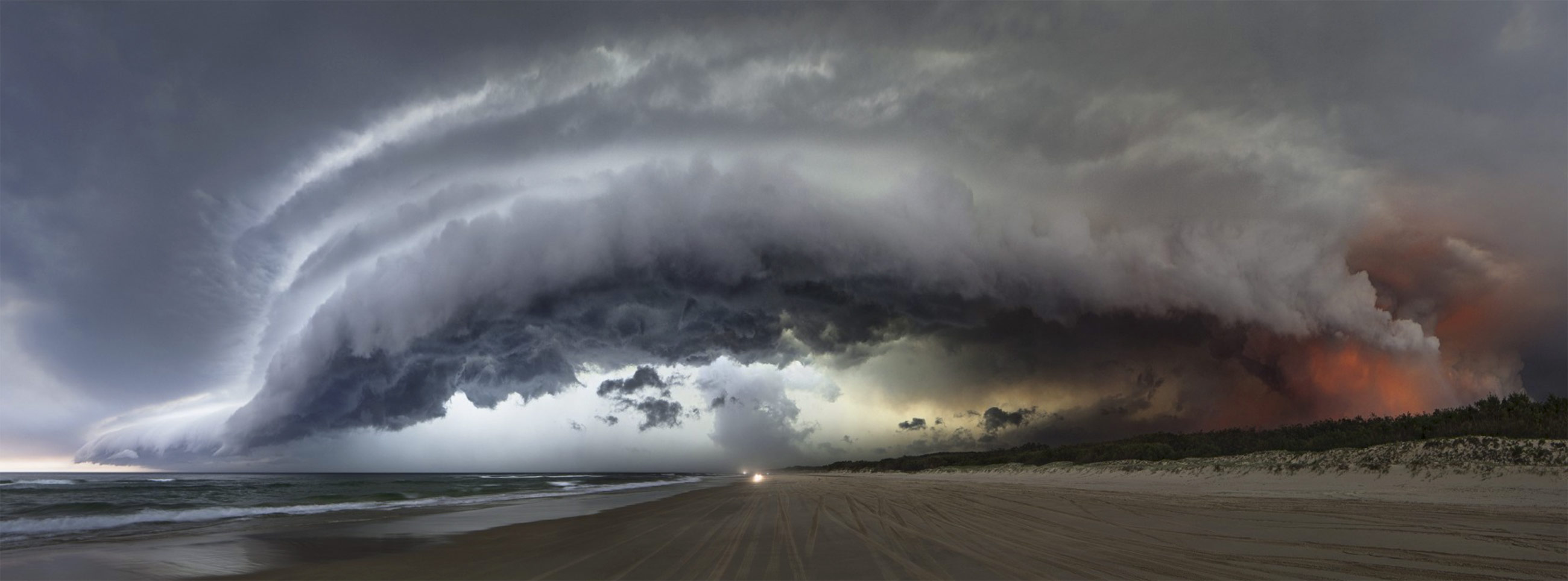
Sat – Sun: 10pm – 4pm
Mon/public holidays: closed

Monash Gallery of Art website

LIKE ART BLART ON FACEBOOK

Back to top