Exhibition: ‘Johannes Kuhnen: a survey of innovation’ at RMIT Gallery, Melbourne

Exhibition dates: 5th June – 18th July 2009


Johannes Kuhnen (Australian born Germany, b. 1952) 'Rings' 1971


Johannes Kuhnen (Australian born Germany, b. 1952)
Rings
1971


This is a superlative exhibition, one of the highlights of the year so far in Melbourne.

The exhibition presents work from the early 1970s to contemporary work and evidences the breadth of vision of this master craftsman and artist, the arc of his investigation showing a consistency of feeling for the energy and form of his materials over many decades. Technically the work is superb; conceptually the work transcends the boundaries of jewellery and becomes something else altogether: it becomes magical.

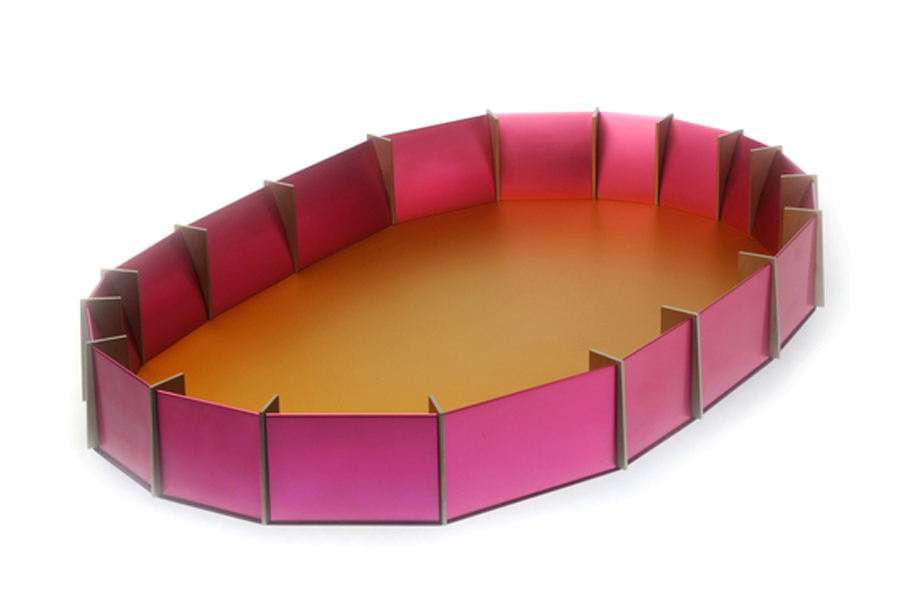
Kuhnen’s use of colour in his favoured anodised aluminium material is exquisite, the perfection of his forms flawless. His fabulous Vessels reminding me of the ancient Neolithic standing stone circles at Stonehenge in their shape and use of vertical buttresses in different materials (such stainless steel and granite) that intersect the oval forms. His Boxes are like small ancient reliquaries, objects for holding ashes worked with a delicacy, simplicity and feeling for form and colour that is absolutely beautiful and consistent with the containment of energy within their structure.

I went with Marianne Cseh a jeweller friend of mine. We stood transfixed before this work, peering closely at it and gasping in appreciation of the beauty, technical proficiency and pure poetry of the pieces. This exhibition is highly recommended and not to be missed!

Now showing with the international SCHMUCK jewellery exhibition from Germany.

A book to accompany the exhibition is available from the RMIT Gallery.

Dr Marcus Bunyan


Many thankx to RMIT Gallery for allowing me to publish the photographs in the posting. Please click on the photographs for a larger version of the image.


Johannes Kuhnen (Australian born Germany, b. 1952) 'Ring' 1973


Johannes Kuhnen (Australian born Germany, b. 1952)
Ring
1972
Stainless steel, synthetic ruby disc


Johannes Kuhnen (Australian born Germany, b. 1952) 'Brooch and ring' 2003 and 1972


Johannes Kuhnen (Australian born Germany, b. 1952)

Brooch
2003
Anodised aluminium, monel

Ring
1972
Stainless steel, synthetic ruby disc


Johannes Kuhnen (Australian born Germany, b. 1952) Boxes 1980


Johannes Kuhnen (Australian born Germany, b. 1952)
Boxes
1980


Johannes Kuhnen (Australian born Germany, b. 1952) 'Box and pendant' 1980


Johannes Kuhnen (Australian born Germany, b. 1952)
Box and pendant
1980


Johannes Kuhnen (Australian born Germany, b. 1952) 'Tray' 1986


Johannes Kuhnen (Australian born Germany, b. 1952)
Tray
1986
Anodised aluminium, titanium, stainless steel


Johannes Kuhnen (Australian born Germany, b. 1952) 'Centrepiece' 1987


Johannes Kuhnen (Australian born Germany, b. 1952)
Centrepiece
1987


Johannes Kuhnen (Australian born Germany, b. 1952) 'Centrepiece' 1991


Johannes Kuhnen (Australian born Germany, b. 1952)
Centrepiece
1991
Anodised aluminium, silver, monel: fabricated


In his work as a jeweller, object maker and photographer, Johannes Kuhnen is engaged with the interpretation and manipulation of a precise visual language of forms. The dramatic curvilinear shape of this centrepiece has been designed to emphasise the particular visual qualities of its materials and to fulfil its role as a low, but commanding central presence on a table. The vivid, iridescent colour of its anodised aluminium rim is designed to interact with differing light conditions, while the technical and precious qualities of its monel and silver elements play against each other. This orchestration of metals is underpinned with an unseen but precise and ingenious inner structure, giving this object weight and functional strength.

Text © National Gallery of Australia, Canberra [Online] Cited 10/03/2019


Johannes Kuhnen has made a pioneering contribution to Australian design and gold and silver smithing through his commitment as a generous educator and innovative practitioner. This exhibition will create linkages between his earlier works, some of which was made in Germany prior to migrating to Australia and new work specifically produced for this exhibition and this will be done both with objects and through a catalogue / monograph to be launched at the opening venue. The exhibition will borrow from Australian public and private collections to facilitate the demonstration of connecting design elements in the work from both significant streams in Kuhnen’s work in jewellery and hollowware.

Text from the RMIT Gallery website [Online] Cited 02/07/2009. No longer available online


Johannes Kuhnen (Australian born Germany, b. 1952) 'Vessel' 2007

Johannes Kuhnen (Australian born Germany, b. 1952) 'Vessel' 2007


Johannes Kuhnen (Australian born Germany, b. 1952)
Vessel
2007
Anodised aluminium, titanium, stainless steel
11.2 h x 84.5 w x 21.0 d cm
Weight 14 kg


Johannes Kuhnen (Australian born Germany, b. 1952) 'Vessel' 2008


Johannes Kuhnen (Australian born Germany, b. 1952)
Vessel
2008
Anodised aluminium, titanium, stainless steel


Johannes Kuhnen (Australian born Germany, b. 1952) 'Vessel' 2009

Johannes Kuhnen (Australian born Germany, b. 1952) 'Vessel' 2009


Johannes Kuhnen (Australian born Germany, b. 1952)
Vessel
2009
Anodised aluminium, titanium, stainless steel
 

Johannes Kuhnen (Australian born Germany, b. 1952) 'Armring' 1981


Johannes Kuhnen (Australian born Germany, b. 1952)
Armring
1981
Anodised aluminium
9.8 h x 10.4 w cm


Johannes Kuhnen (Australian born Germany, b. 1952) 'Armring' 1990


Johannes Kuhnen (Australian born Germany, b. 1952)
Armring
1990
Armring, anodised aluminium, gold 750, granite


RMIT Gallery
344 Swanston St
, Melbourne
Phone: +61 3 9925 1717

Opening hours:
Tuesday – Friday 11am – 5pm
Saturday 12.30 – 5pm
Closed public holidays, Sundays and Mondays.
RMIT Gallery website

LIKE ART BLART ON FACEBOOK

Back to top

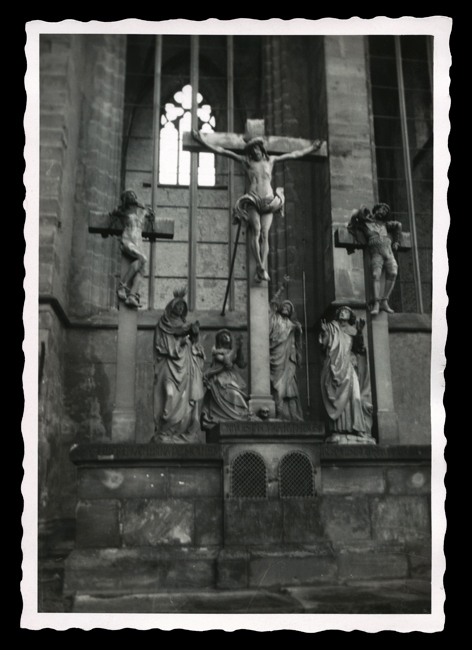
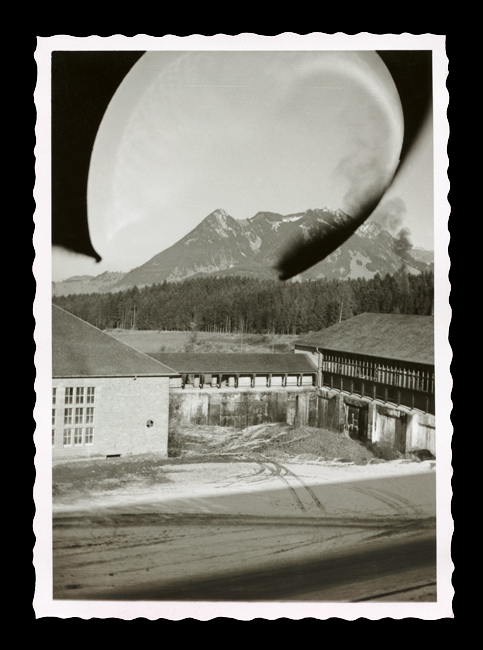
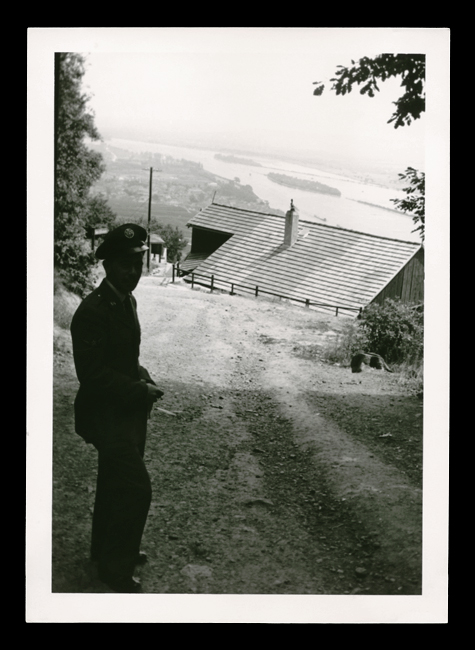
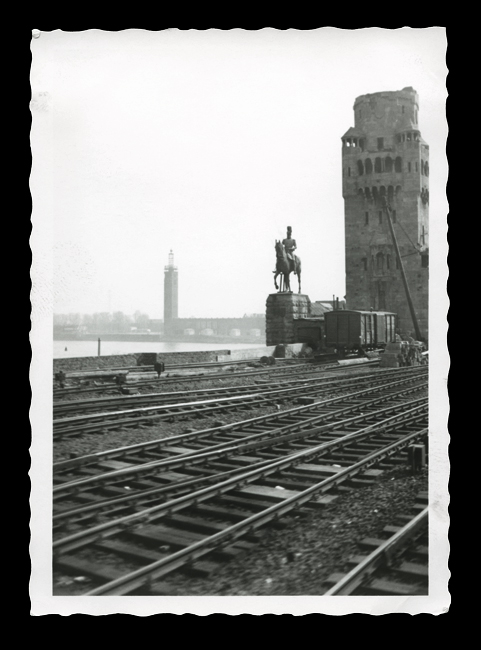
Photographs: Marcus Bunyan. ‘The Shape of Dreams’ 2009

June 2009


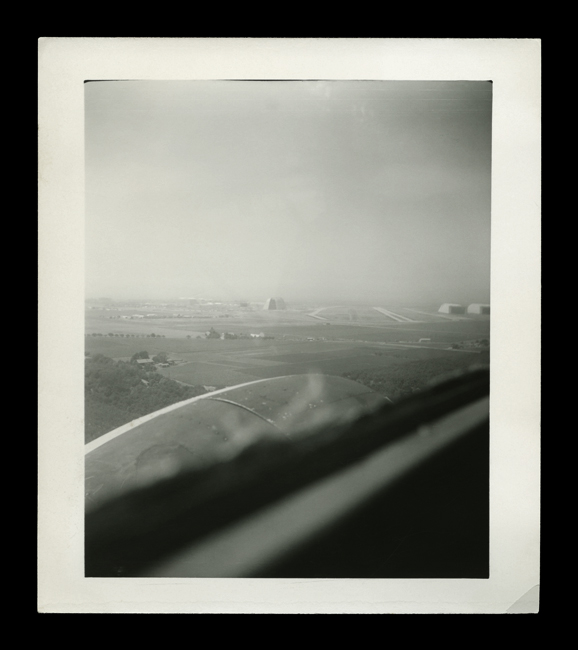
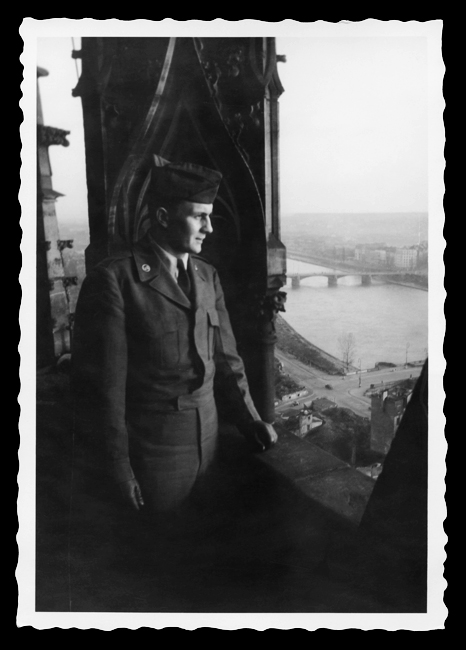
Marcus Bunyan (Australian, b. 1958) 'Spire of der Dom, 1 - 52' 2009 from the series 'The Shape of Dreams'


Marcus Bunyan (Australian, b. 1958)
Spire of der Dom, 1 – 52
2009
From the series The Shape of Dreams
Gelatin silver print


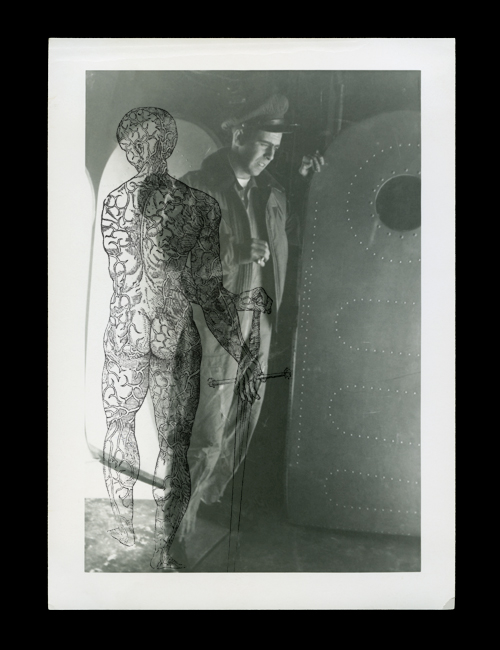
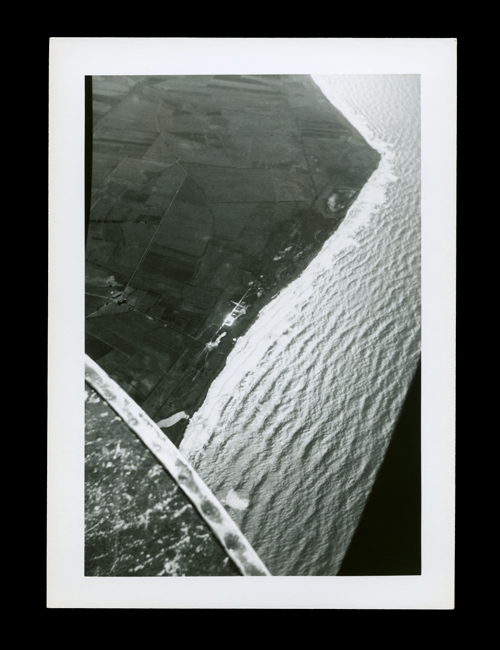
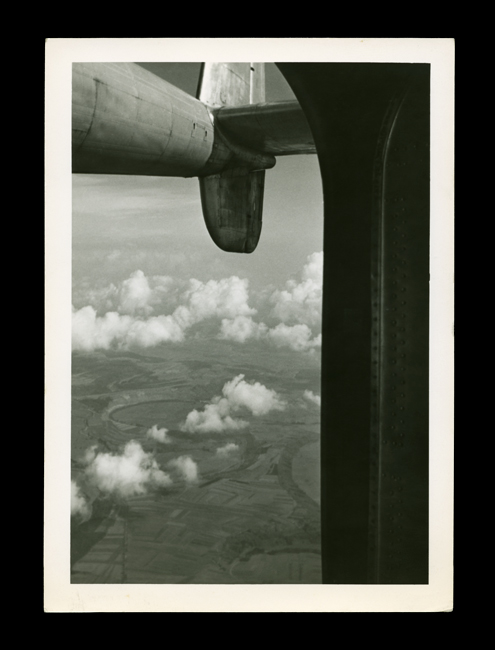
The Shape of Dreams

I am pleased to announce a body of work, the second for 2009, is now online on my website.

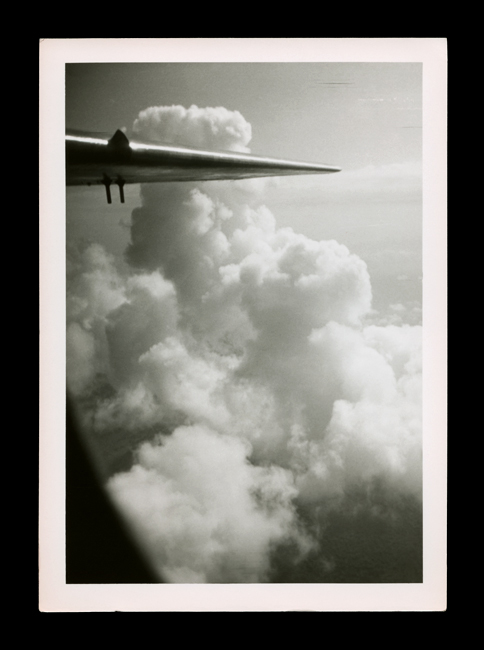
The photographs are a sequence: one tone follows another (much like a piece of music) until the final coda. With this in mind please view the work sequentially. Below are a selection of photographs from the whole work.

Dr Marcus Bunyan


Please click on the photographs for a larger version of the image.

Photographs are available from this series for purchase. As a guide, a digital colour 16″ x 20″ costs $1000 plus tracked and insured shipping. For more information please see my Store web page.


Photographs from the series The Shape of Dreams 2009


“the form of formlessness
the shape of dreams”


Marcus Bunyan (Australian, b. 1958) 'Untitled' from the series 'The Shape of Dreams' 2009


Marcus Bunyan (Australian, b. 1958)
Untitled
2009
From the series The Shape of Dreams
Gelatin silver print


Marcus Bunyan (Australian, b. 1958) 'Untitled' from the series 'The Shape of Dreams' 2009


Marcus Bunyan (Australian, b. 1958)
Untitled
2009
From the series The Shape of Dreams
Gelatin silver print


Marcus Bunyan (Australian, b. 1958) 'Untitled' from the series 'The Shape of Dreams' 2009


Marcus Bunyan (Australian, b. 1958)
Untitled
2009
From the series The Shape of Dreams
Gelatin silver print


Marcus Bunyan (Australian, b. 1958) '9/24/52' from the series 'The Shape of Dreams' 2009


Marcus Bunyan (Australian, b. 1958)
9/24/52
2009
From the series The Shape of Dreams
Gelatin silver print


Marcus Bunyan (English-Australian, b. 1958) 'Untitled' from the series 'The Shape of Dreams' 2009


Marcus Bunyan (Australian, b. 1958)
Untitled
2009
From the series The Shape of Dreams
Gelatin silver print


Marcus Bunyan (Australian, b. 1958) 'Navy Base, Unidentified' from the series 'The Shape of Dreams' 2009


Marcus Bunyan (Australian, b. 1958)
Navy Base, Unidentified
2009
From the series The Shape of Dreams
Gelatin silver print


Marcus Bunyan (Australian, b. 1958) 'Untitled' from the series 'The Shape of Dreams' 2009


Marcus Bunyan (Australian, b. 1958)
Untitled
2009
From the series The Shape of Dreams
Gelatin silver print


Marcus Bunyan (Australian, b. 1958) 'Part of the French Riviera taken while Whit held me at the door!' from the series 'The Shape of Dreams' 2009


Marcus Bunyan (Australian, b. 1958)
Part of the French Riviera taken while Whit held me at the door!
2009
From the series The Shape of Dreams
Gelatin silver print


Marcus Bunyan (Australian, b. 1958) 'Untitled' from the series 'The Shape of Dreams' 2009


Marcus Bunyan (Australian, b. 1958)
Untitled
2009
From the series The Shape of Dreams
Gelatin silver print


Marcus Bunyan (Australian, b. 1958) 'Untitled' from the series 'The Shape of Dreams' 2009


Marcus Bunyan (Australian, b. 1958)
Untitled
2009
From the series The Shape of Dreams
Gelatin silver print


All the photographs from the series are now on my website.


Marcus Bunyan website

LIKE ART BLART ON FACEBOOK

Back to top

Opening 2: ‘In-Sight’ by Lisa Roet at Karen Woodbury Gallery, Melbourne

Exhibition dates: 17th June – 11th July, 2009

Opening 17th June, 2009


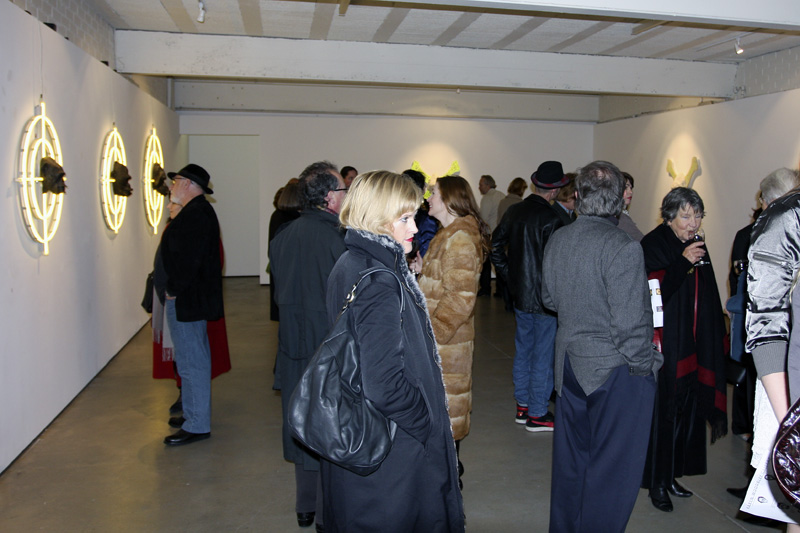
'In-Sight' by Lisa Roet opening at Karen Woodbury Gallery, Melbourne

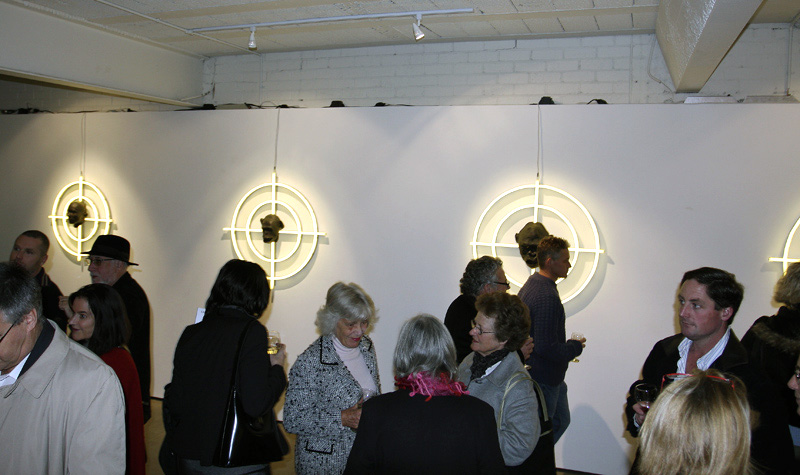
'In-Sight' by Lisa Roet opening at Karen Woodbury Gallery, Melbourne

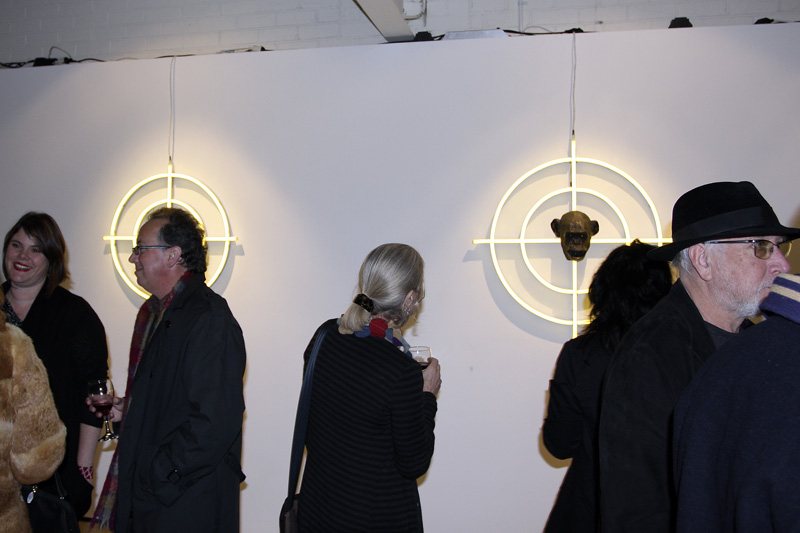
'In-Sight' by Lisa Roet opening at Karen Woodbury Gallery, Melbourne


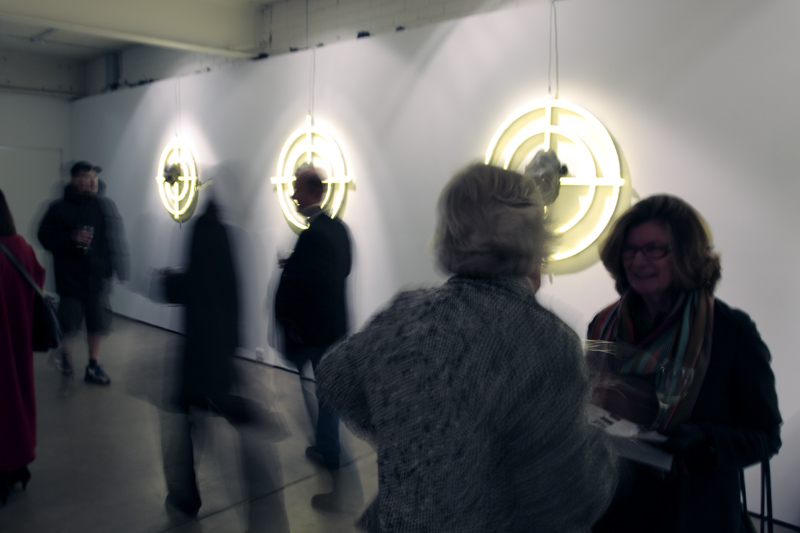
Opening night crowd in front of the work In-Sight (2009) by Lisa Roet at Karen Woodbury Gallery, Melbourne


Another excellent opening this time of the work of the delightful Lisa Roet. If you visit the gallery don’t forget the upstairs exhibition space with further work by the artist including a marvellous large bronze Orangutan Foot.

Dr Marcus Bunyan


Many thankx to Karen Woodbury Gallery for allowing me to publish the photographs in the posting. Please click on the photographs for a larger version of the image. All photographs © Marcus Bunyan


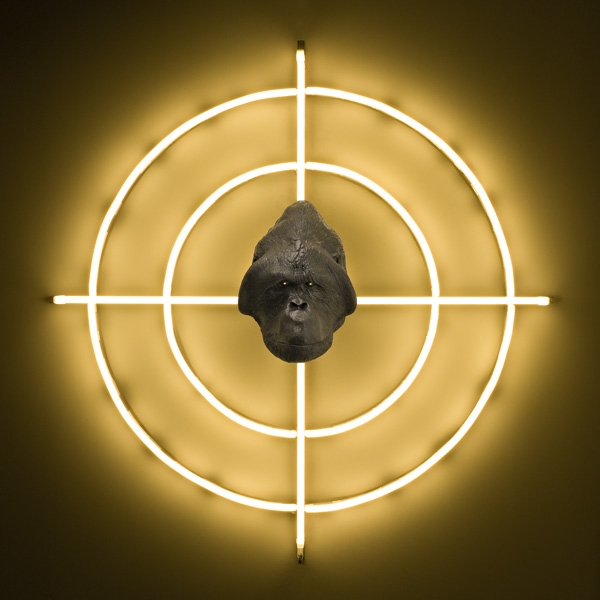
Lisa Roet (Australian, b. 1967) 'In-Sight 1' 2009


Lisa Roet (Australian, b. 1967)
In-Sight 1
2009
Polyurethane & Neon/LED
60.0 x 60.0cm
Edition: 3


Lisa Roet (Australian, b. 1967) 'In-Sight 4' 2009


Lisa Roet (Australian, b. 1967)
In-Sight 4
2009
Polyurethane & Neon/LED
120.0 x 120.0cm
Edition: 3


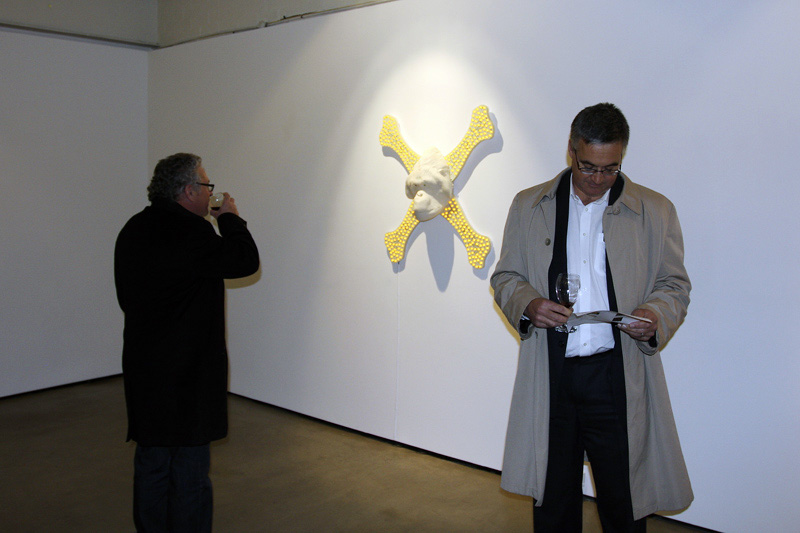
Installation view of Lisa Roet's work 'Cross Bones' (2009)

Installation view of Lisa Roet's work 'Cross Bones' (2009)


Installation view of Lisa Roet's work 'Cross Bones' (2009)

The artist Lisa Roet in front of one of her works 'Cross Bones' (2009)


The artist Lisa Roet in front of one of her works Cross Bones (2009)


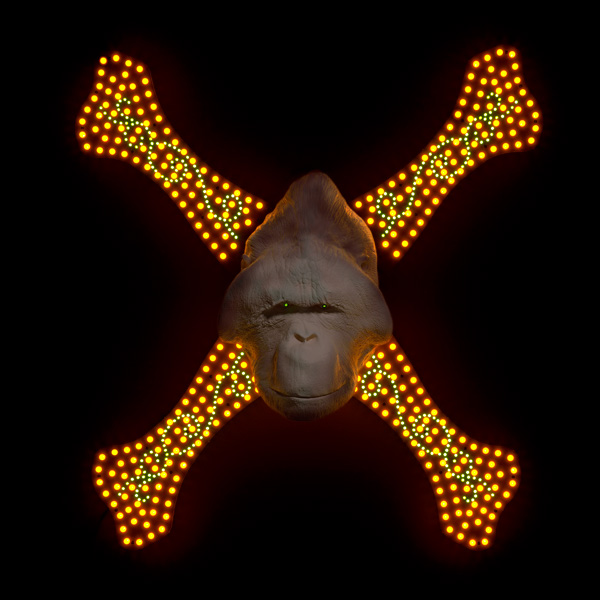
Lisa Roet (Australian, b. 1967) 'Cross Bones' 2009


Lisa Roet (Australian, b. 1967)
Cross Bones
2009
Led, Perspex, Polyurethane
95 x 70 x 30cm


'Orangutan Foot' (2007/08) by Lisa Roet at the opening of 'In-Sight' exhibition at Karen Woodbury Gallery, Melbourne


Installation view of the work Orangutan Foot (2007/08) by Lisa Roet at the opening of In-Sight exhibition at Karen Woodbury Gallery, Melbourne


Opening night crowd in front of the work In-Sight (2009) by Lisa Roet at Karen Woodbury Gallery, Melbourne


Karen Woodbury Gallery

This gallery is now closed.

LIKE ART BLART ON FACEBOOK

Back to top

Opening 1: ‘Gareth Sansom’ at John Buckley Gallery, Melbourne

Exhibition dates: 17th June – 4th July, 2009

Opening 17th June, 2009


Gareth Sansom opening at John Buckley Gallery, Melbourne

Gareth Sansom opening at John Buckley Gallery, Melbourne


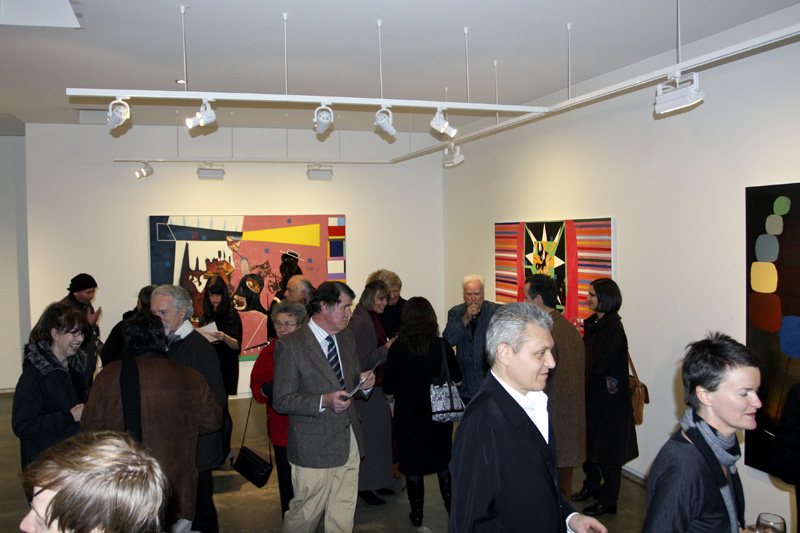
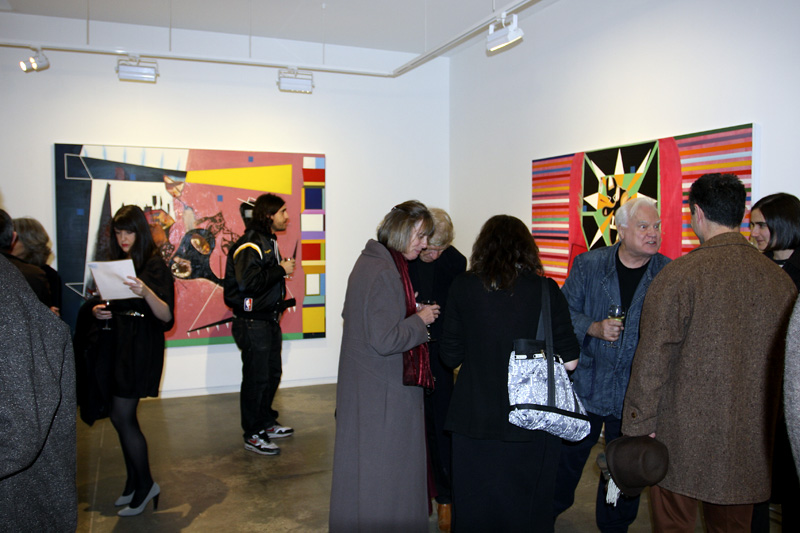
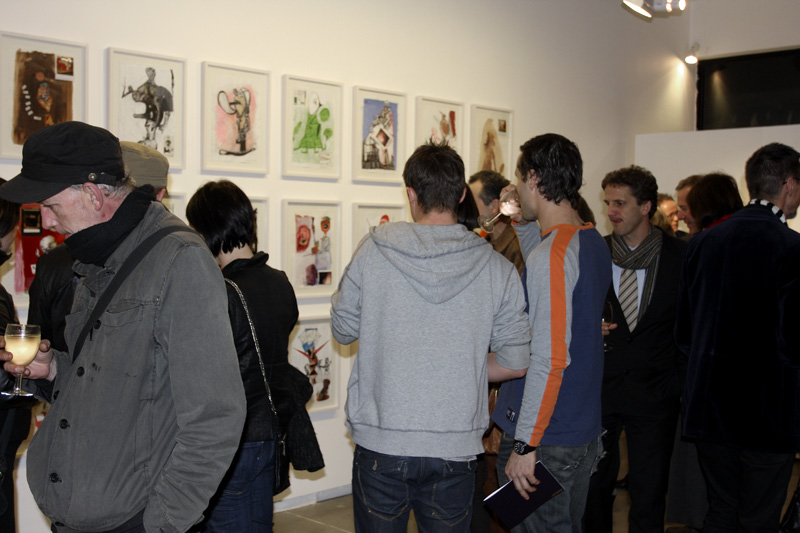
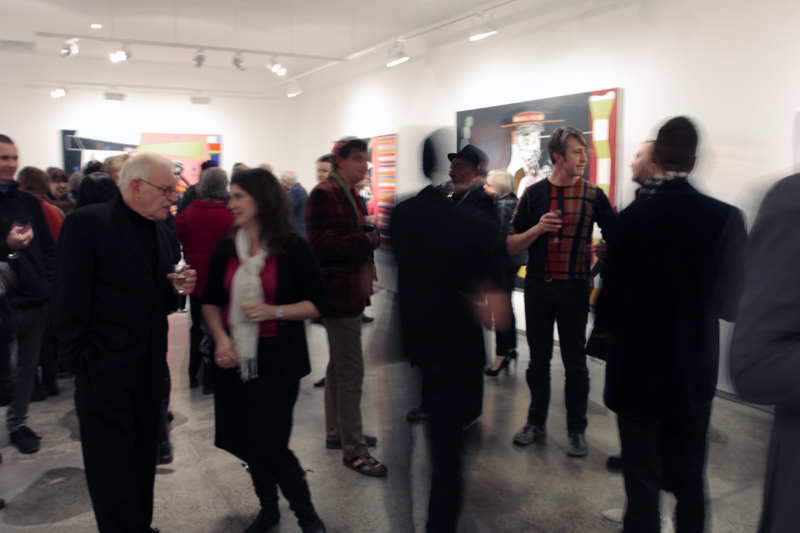
Opening night crowd with the artist Gareth Sansom third from right


A very busy opening at John Buckley Gallery in Richmond for the paintings of Gareth Sansom. Nice to meet the artist and catch up with artist Gavin Brown and manager of Abbotsford Convent Brenton Geyer. A big thank you to Daniel for allowing me to take the photographs!

Dr Marcus Bunyan


Please click on the photographs for a larger version of the image. All photographs © Marcus Bunyan


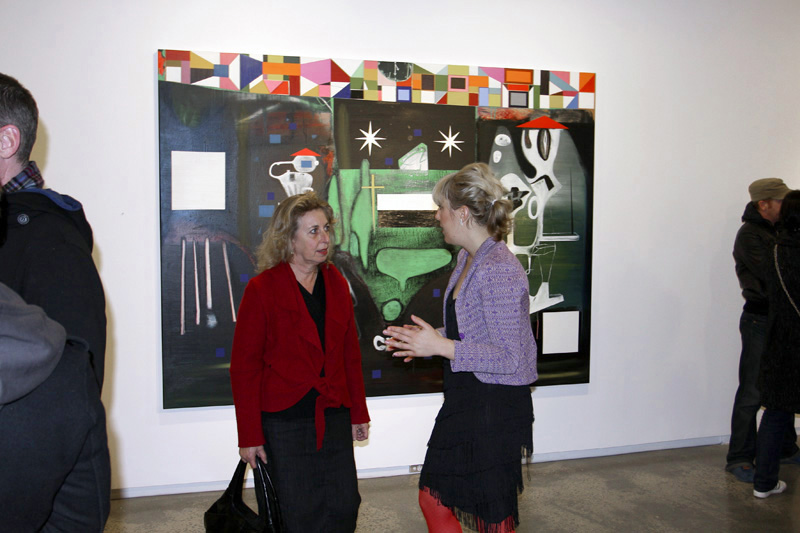
Opening night crowd in front of Gareth Sansom's painting 'Alchemy' 2008/09


Opening night crowd in front of Gareth Sansom’s painting Alchemy 2008/09


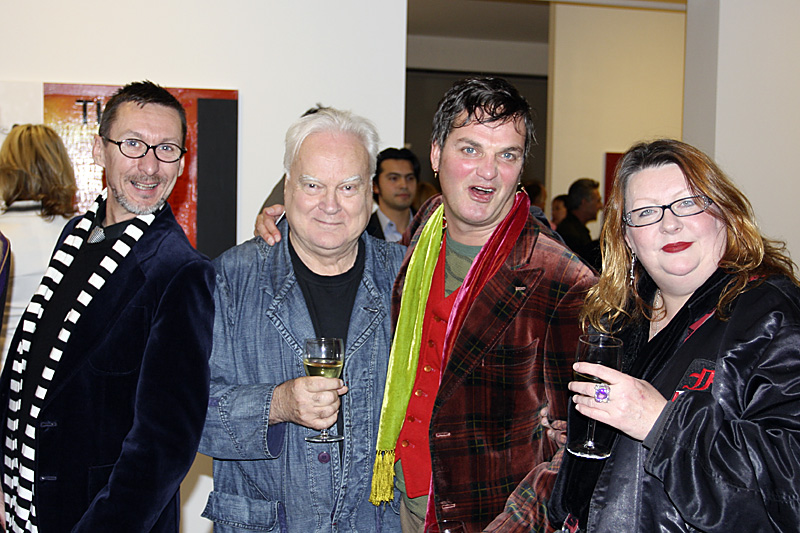
From left to right Brenton Geyer, the artist of the night Gareth Sansom, artist Gavin Brown and Jenny Rees


From left to right Brenton Geyer, the artist of the night Gareth Sansom, artist Gavin Brown and Jenny Rees


Gareth Sansom opening at John Buckley Gallery, Melbourne

Gareth Sansom opening at John Buckley Gallery, Melbourne


John Buckley Gallery

This gallery is now closed

LIKE ART BLART ON FACEBOOK

Back to top

Review: ‘Blight’ photographs by Josephine Kuperholz at Gallery 101, Melbourne

Exhibition dates: 3rd June – 27th June, 2009


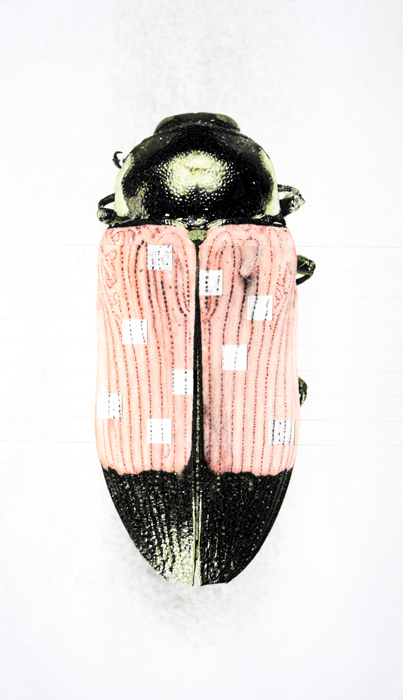
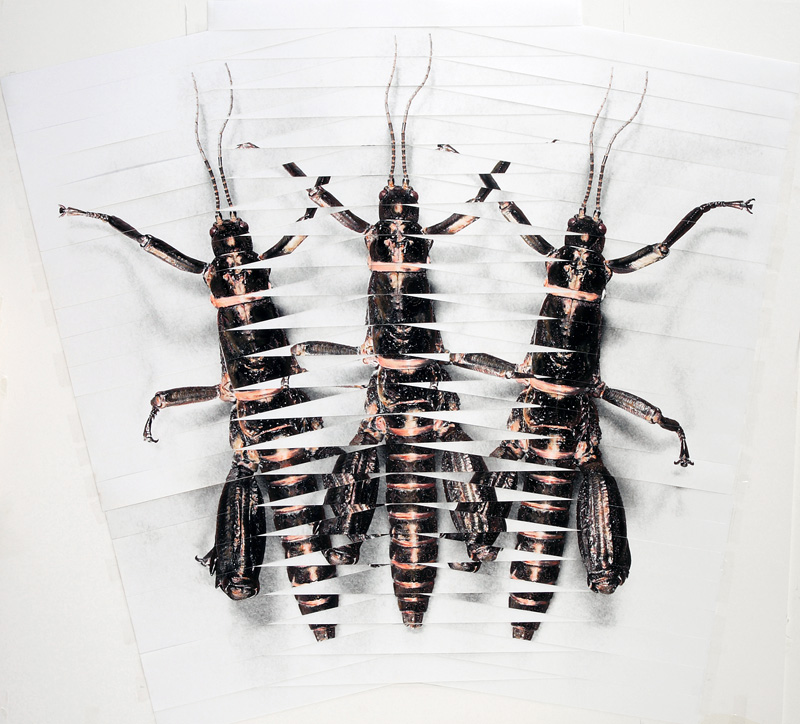
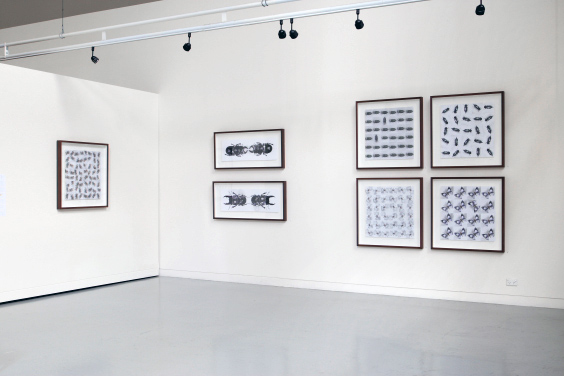
Josephine Kuperholz (Australian) 'Themognatha pascoci' 2008 from the exhibition 'Blight' at Gallery 101, Melbourne, June, 2009


Josephine Kuperholz (Australian)
Themognatha pascoci
2008
Woven hand coloured silver gelatin photographic image


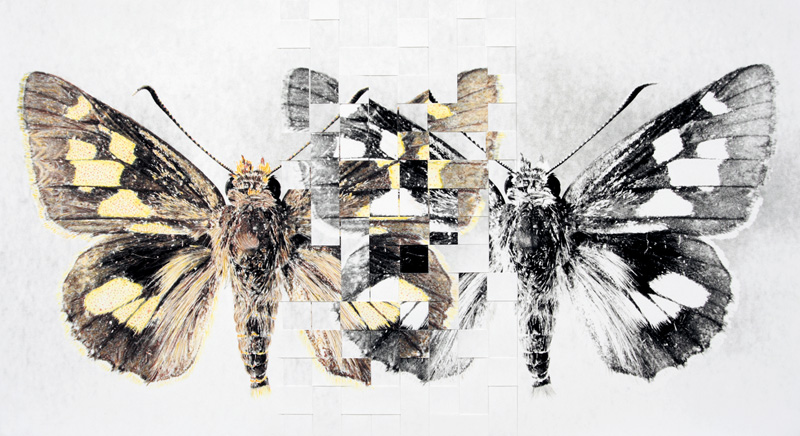
Josephine Kuperholz presents a beautifully engineered set of photographs in her exhibition Blight at Gallery 101, Melbourne. Featuring hand coloured silver gelatin photographs of endangered Australian insects sourced from the Entomology collection of the Victoria Museum, Kuperholz literally weaves multiple narratives into the photographs. The execution (an apt word for the circumstances of extinction facing these insects) of these images is fastidious, the weaving superlative, almost clinical.
The layering of the photographs disrupts their surface tension. There is a disjunction between the dead specimen and the singular photograph of it, a disruption of the smooth surface of the photograph by the hand colouring and a further fragmentation of the original photograph by cutting and weaving. Through these processes the photographs become intertextual in their construction, assemblages, creating new tissues of past citations: animal, colour, silver, artist, text, photograph, environment. At their best the work subverts the concept of the text as self-sufficient and hermetically sealed, blurring the outlines of the fixed image, “dispersing its image of totality into an unbounded, illimitable tissue of connections and associations, paraphrases and fragments, texts and con-texts.”1

Kuperholz’s mutations, ‘differance’ in Derrida’s terminology, produce spaces that are both fluid and fixed at one and the same time; neither her nor there. Though the original specimens and photographs are already narrativised, already textualised, Kuperholz disrupts this marking, the continual reiteration of norms, by weaving a lack of fixity into her objects; in her reconceptualisations of space and matter Kuperholz redefines the significations of the body of the animal in the fold of inscription, through a process of materialisation. Kuperholz attempts to ground these re-inscriptions through the naming of these disrupted surfaces, equating the images back to the scientific labels for the original specimen, Trapezites eliena for example (see below), and through the box frames surrounding the work that are much like museum cases. Unfortunately I found the constant reference to the habitat of the insect, it’s Latin name inscribed in pencil under the images and the use of plain brown box frames somewhat irritating. These tropes are not necessary for the work is strong enough to stand on it’s own without having to tell the viewer what to think.

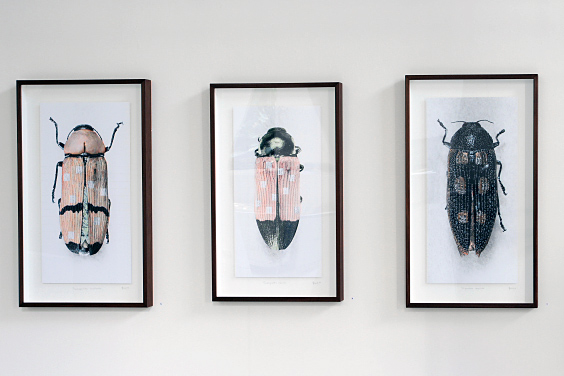
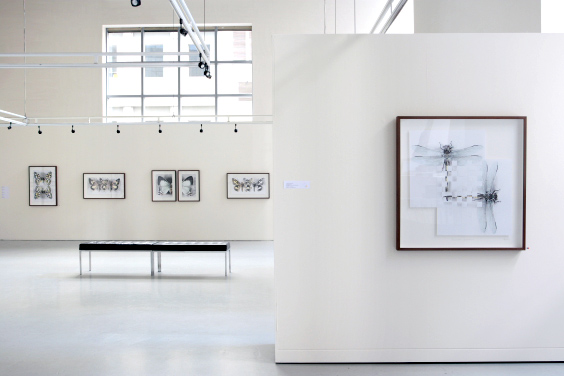
The singular beetles (as seen above) are beautiful images and the multiple images where the weaving intermingles, the self decentred and multiple, fluttering and vibrating like the strobing of a time lapse photograph caught in three-dimensional space, are fantastic. Other photographs are less successful: the reflected beetles are a little passe, while the grid photographs of insects lack presence and intensity (see bottom installation photograph below). Where the concept works it is pushed hard, the fragmentation and interweaving causes an anxiety of identity and a meditation on the problematic nature of existence, revealing the changing sizes, shapes and rhythms of space and structure.

Perhaps a loosening of the rigid structure surrounding the works (the text, the frame, the incantations) would have let the photographs ascend into the ether, further releasing the work from the constraints of author, text and earth. It will be interesting to see future developments of this work. Perhaps the incorporation of gentle, subtle physical elements into the photographs (through the sowing of patterns, through the sowing of objects directly onto the photograph?), will elevate these already beautiful photographs to an-other plane of existence.

Dr Marcus Bunyan


Many thankx to Gallery 101 for allowing me to publish the photographs in the posting. Please click on the photographs for a larger version of the image.


Josephine Kuperholz (Australian) 'Trapezites eliena' 2008 from the exhibition 'Blight' at Gallery 101, Melbourne, June, 2009


Josephine Kuperholz (Australian)
Trapezites eliena
2008
Common name – Eliena Skipper

Woven hand coloured silver gelatin photographic image


Josephine Kuperholz (Australian)  'Dryococelus australis' 2008


Josephine Kuperholz (Australian)
Dryococelus australis
2008
Common name – Lord Howe Island Phasmid
Woven hand coloured silver gelatin photographic image


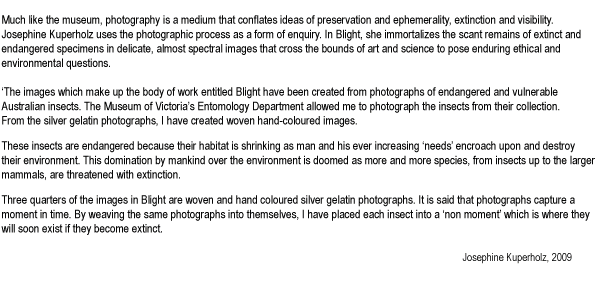
Josephine Kuperholz 'Blight' exhibition Gallery 101 website text


Josephine Kuperholz Blight exhibition, Gallery 101 website text


Josephine Kuperholz 'Blight' exhibition installation view at Gallery 101, Melbourne

Josephine Kuperholz 'Blight' exhibition installation view at Gallery 101, Melbourne

Josephine Kuperholz 'Blight' exhibition installation view at Gallery 101, Melbourne


Josephine Kuperholz Blight exhibition installation views at Gallery 101, Melbourne
Photos: Marcus Bunyan


Gallery 101

This gallery is now closed.

LIKE ART BLART ON FACEBOOK

Back to top

Exhibition: ‘Babel’ fine porcelain and paper works by Natasha Dusenjko at Craft Victoria, Melbourne

Exhibition dates: 1st May – 13th June, 2009


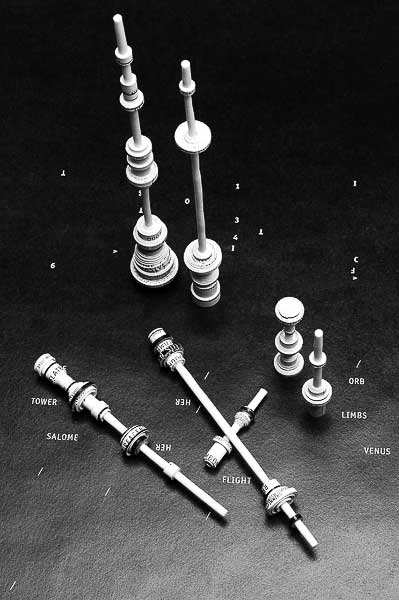
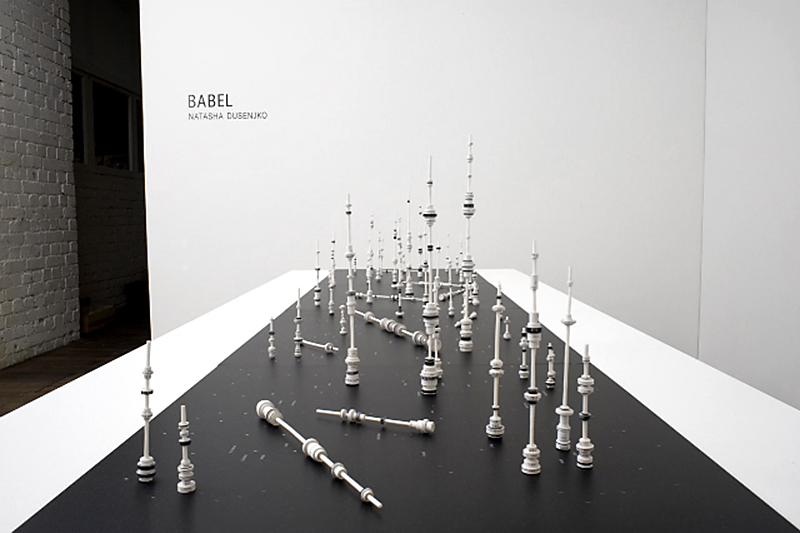
Natasha Dusenjko (Australian) 'Towers of Babel' 2009 from the exhibition 'Babel' fine porcelain and paper works by Natasha Dusenjko at Craft Victoria, Melbourne, May - June, 2009


Natasha Dusenjko (Australian)
Towers of Babel
2009
Mixed media


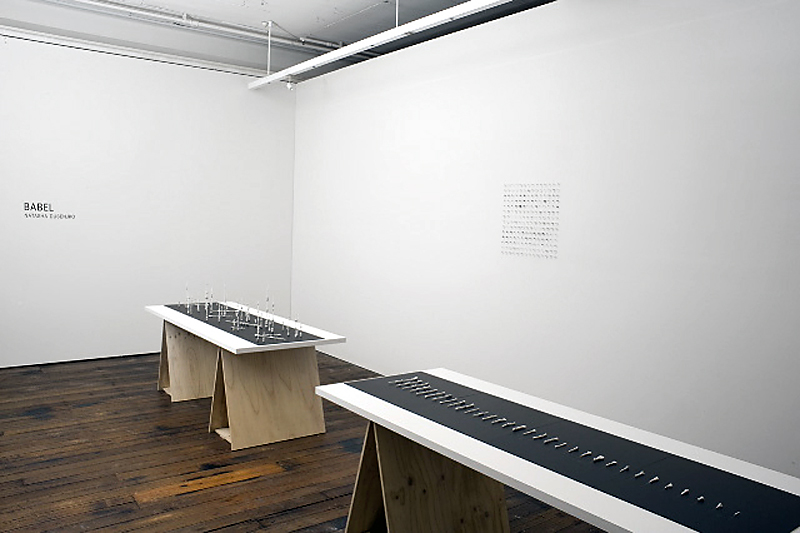
Three very interesting exhibitions at Craft Victoria at the moment: Babel by Natasha Dusenjko, Gleaning Potential by Simon Lloyd and Cycle by Liz Low. I particularly liked the delicacy and textuality of Natasha Dusenjko’s sci-fi towers and bone fragments and the wonderful box of 6 red bricks (small and large) that you can buy from the Simon Lloyd show, like blocks for a child builder.

There is an excellent and erudite review of the exhibitions at Daniel Neville’s Nevolution website.

Dr Marcus Bunyan


Many thankx to Craft Victoria for allowing me to publish the photographs in the posting. Please click on the photographs for a larger version of the image.


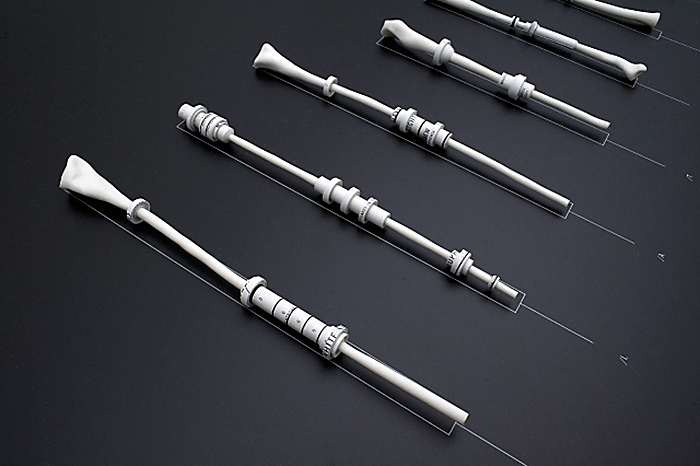
“The two tables allow for different meanings and scales when viewed in opposition. Table 1 alludes to star charts; constellations of texts hinting at importance, especially in relation to the placement of towers. The map looking up to the stars via the towers of babel, communicating unknown messages to the stars above. The cold stark forms of the towers work well with the organic forms of the bones on Table 2. Perfectly ordered and numbered archaeological bone fragments repeat the textual ciphers and codes, meticulously ordered. The jump in scale between the architectural and the archaeological is lovely; each hinting at an underlying language and mythology. Meanwhile both contain elements of each other – the towers of rationality have been placed in a seemingly random manner, while the organic forms of the bones have been laid out in perfect order ranging down in sizes.”


Daniel Neville. Extract from “On the nature of language, order and decay,” on the Nevolution website June 03, 2009 [Online] Cited 05/06/2009


Installation views of Natasha Dusenjko's exhibition 'Babel' at Craft Victoria, Melbourne

Installation views of Natasha Dusenjko's exhibition 'Babel' at Craft Victoria, Melbourne


Installation views of Natasha Dusenjko’s exhibition Babel at Craft Victoria, Melbourne


Babel is a word-based collection of fine porcelain and paper works. This collection of short texts constitutes a series of incantations, codes and instructions scrolled around porcelain bones or thin spines. The porcelain bones are internal structures and vessels of ancestor memory. This memory is fluid, is evasive, is aquatic. The thin spines resemble futuristic Towers of Babel reaching into space, anticipating communication and new frontiers. These towers have either an upright or collapsed form.

In the making, both forms build toward new possibility, words become obscured, resulting in a non-defined beginning or end, now replaced by chance permutations of the accumulated text.

The sculptural works are deliberately placed onto two large scale text based charts. Each chart is placed on a raised surface, analogous to work benches in an observatory or laboratory suggesting a process of decipherment. Map 1 exhibits a similarity to ancient star charts, the placement of towers alluding to significant points of a constellation. The accompanying Chart 2 resembles an organised series of archeological artefacts, each piece methodically numbered and labelled.

Ultimately, Babel evokes a spiral passage both outward and inward. To unravel the scrolls initiates a return to the spine – the axis mundi, the source of a universal native tongue – love.

Text from the Craft Victoria website [Online] 05/06/2009. No longer available online


Natasha Dusenjko (Australian) 'Babelbones' 2009 from the exhibition 'Babel' fine porcelain and paper works by Natasha Dusenjko at Craft Victoria, Melbourne, May - June, 2009


Natasha Dusenjko (Australian)
Babelbones
2009
Mixed media


Craft Victoria
Watson Place, off Flinders Lane
Victoria 3000
Phone: 03 9650 7775

Opening hours:
Tuesday – Friday 11am – 5pm
Saturday 11am – 4pm

Craft Victoria website

LIKE ART BLART ON FACEBOOK

Back to top

Review: ‘John Beard: After Image’ paintings at John Buckley Gallery, Melbourne

Exhibition dates: 20th May – 6th June, 2009


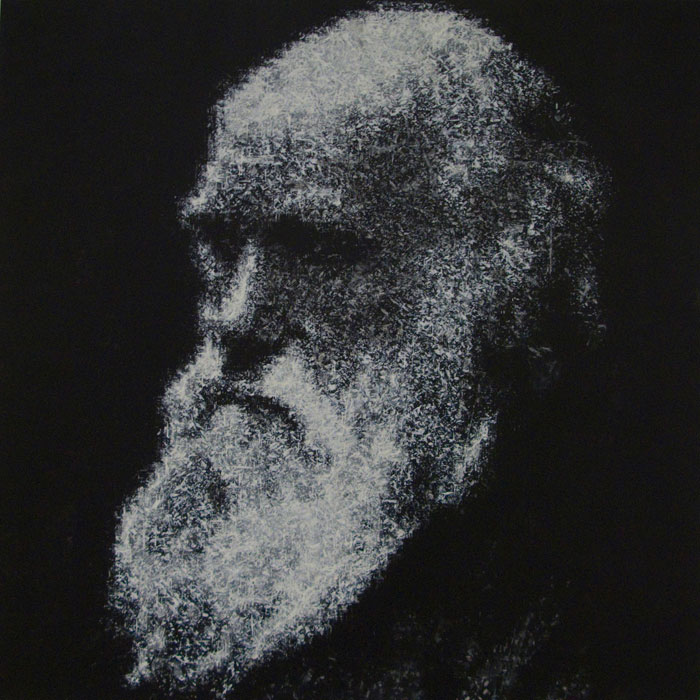
John Beard (Australian born Wales, b. 1943) 'Darwin' 2009 from the exhibition 'John Beard: After Image' paintings at John Buckley Gallery, Melbourne, May - June, 2009


John Beard (Australian born Wales, b. 1943)
Darwin
2009


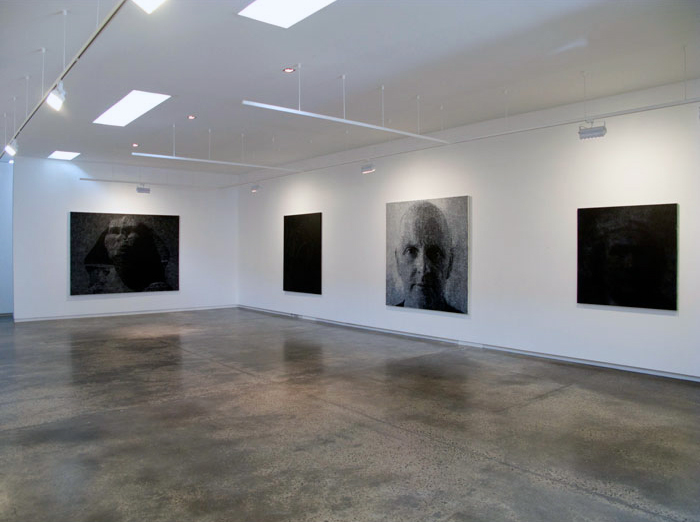
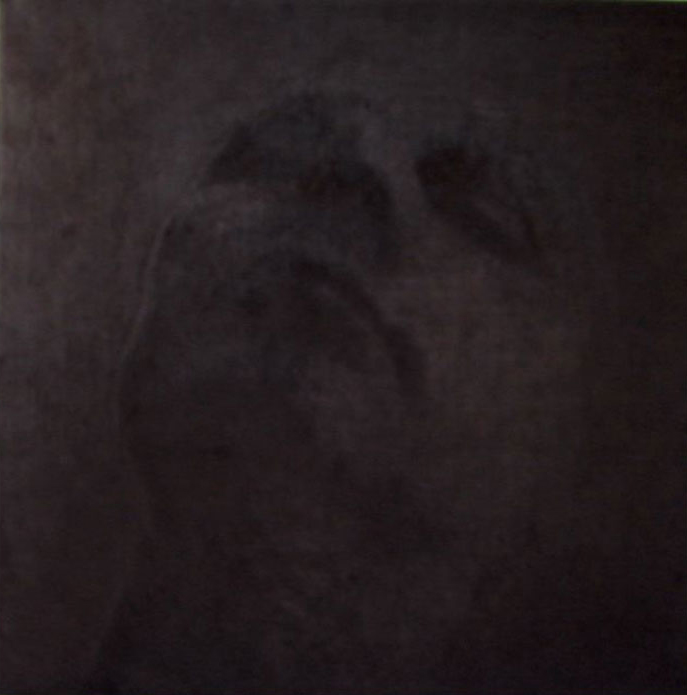
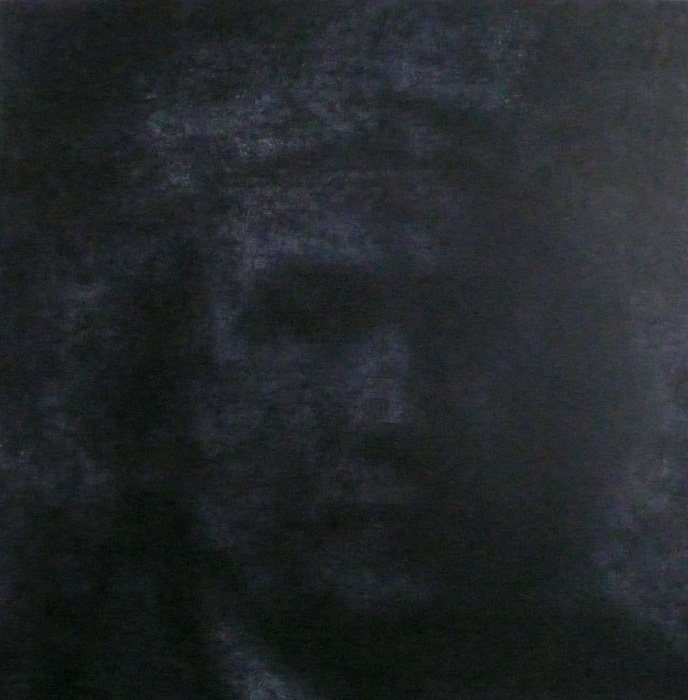
The final exhibition of the afternoon were the ephemeral images of John Beard at John Buckley Gallery, Melbourne. This was an enthralling show that I enjoyed tremendously. Beard draws in a multitude of cultural sources for his paintings often referencing painters, scientists, animals and evolution. His work has an intimate sense of knowing, a meditative mediation on the essence of the object being painted, the very presence of the thing itself. The marks on the canvas may be intuitive but it is an informed intuition that results in works that hover at the edge of consciousness. As much as the works are after images, or ghost images, they are also about the persistence of vision, the persistence of the artists vision in addressing issues of collective memory and cultural history that draw emotive responses from the viewer.

These images may be ‘on the verge of disappearance’ as an after-image but they are also pre-images as well, conjured from the mind of the artist and layered with complexity, presence and holistic wholeness. Their seduction, if I may use that word, is that they draw from the viewer peripheral memories and emotions that flit at the edges of consciousness. As Portugese curator Isabel Carlos has noted, “… Beard recreates a ‘figural’ space where the essence of the thing represented lies beyond its singular physical evidence.”1

Beard’s fragmented surfaces form a rhizomic web of dissolved pixellation, their structure almost fractal like in their linked hyper-real intimacies. These in between spaces open up the possibility of subversive commentaries that, on one level, bring a sense of disquiet to the holistic presence of the work. As Mark Poster has noted of the work of Deleuze and Guittari and which can be aptly applied to the work of John Beard,

“Deleuze and Guittari configure the social as a complex of bodily intensities in a state of continuous nonlinear movement. The logic they present is multidimensional, shifting, discontinuous. They speak of strata, assemblages, territorializations, lines of flight, abstract machines, a congerie of terms that disrupts the function of concepts to control a field through discursive articulations. Their categories cut through the normal lines of comprehension, the binary logic that governs modern social theory to present a picture of reality from the perspective of a sort of primitive life force. It is as if the earth itself were to describe the changes on its surface in the course of human history, a vantage point quite remote from the ego of the individual or from the disciplined consciousness of the social scientist.”2


Nonlinear, logical, shifting territorializations in multidimensional environments that hover below the edge of consciousness, investigations into the binary of presence / absence in the dreams of the imaginary. Powerful and poetic these works irradiate the viewer with their visceral presence.

Dr Marcus Bunyan


1/ Isabel Carlos quoted in Wright, William. HEADLANDS: John Beard works 1993-2008. Catalogue essay

2/ Poster, Mark. The Mode of Information: Poststructuralism and Social Context. Cambridge: Polity Press, 1990, pp. 135-137


Many thankx to John Buckley Gallery for allowing me to publish the art work in the posting. Please click on the photographs for a larger version of the image.


John Beard (Australian born Wales, b. 1943) 'Gorilla' 2007 from the exhibition 'John Beard: After Image' paintings at John Buckley Gallery, Melbourne, May - June, 2009


John Beard (Australian born Wales, b. 1943)
Gorilla
2007


Installation view of John Beard's exhibition 'After image' at John Buckley Gallery, Melbourne


Installation view of John Beard’s exhibition After image at John Buckley Gallery, Melbourne


John Beard (Australian born Wales, b. 1943) 'Hand 6' 2009


John Beard (Australian born Wales, b. 1943)
Hand 6
2009


John Beard (Australian born Wales, b. 1943) 'Head SP3' 2004


John Beard (Australian born Wales, b. 1943)
Head SP3
2004


“Beard’s paintings often convey an overpowering sense of brooding stillness, but equally this volatile effervescence of light-reverberant phenomena, where head, headland, the Adraga rock, are no longer object so much as apparition, a painted parallel existence, a material presence invoking nature’s own organic processes …

There is a distinctive sense when encountering a body of John Beard’s works of entering into a site of composure, withheld, of images silently bespeaking truths both personal and historical; hovering presences each conveying some species quality of time-less recognition.”

William Wright 
from the catalogue essay HEADLANDS: John Beard works 1993-2008 [Online] Cited 29/05/2009. No longer available online


John Beard (Australian born Wales, b. 1943) 'Rose' 2007


John Beard (Australian born Wales, b. 1943)
Rose
2007


John Beard (Australian born Wales, b. 1943) 'Einstein 2' 2009


John Beard (Australian born Wales, b. 1943)
Einstein 2
2009


John Beard (Australian born Wales, b. 1943) 'Rembrandt' 2009


John Beard (Australian born Wales, b. 1943)
Rembrandt
2009


John Buckley Gallery

This gallery is now closed.

LIKE ART BLART ON FACEBOOK

Back to top

Review: ‘McLean Edwards: Songs from the Ghost Ship’ at Karen Woodury Gallery, Melbourne

Exhibition dates: 20th May – 13th June, 2009


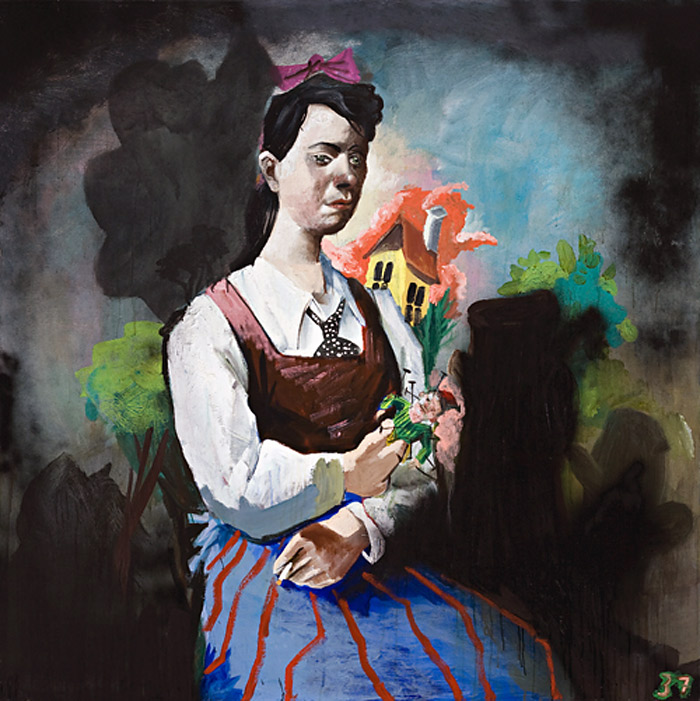
McLean Edwards (Australian, b. 1972) 'Fifty-Fifty' 2009 from the exhibition 'McLean Edwards: Songs from the Ghost Ship' at Karen Woodury Gallery, Melbourne, May - June, 2009


McLean Edwards (Australian, b. 1972)
Fifty-Fifty
2009


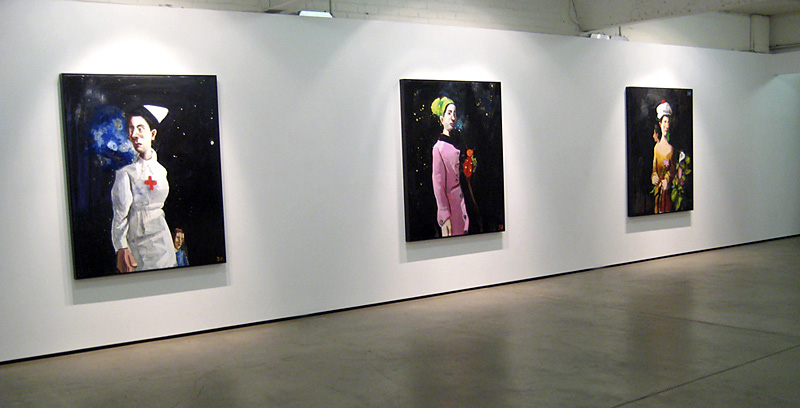
The next show on our marvellous walkabout were the eclectic paintings of McLean Edwards at Karen Wodbury Gallery, Melbourne. Continuing the carnivalesque theme from the previous review these heterogeneous paintings are a knockout with their wonderful, layered presence – they really command the viewer to look at them and celebrate the characters within them. Whimsical, ironic and full of humour these phantasmagorical images of creatures cast adrift with the night sky as background are fabulous assemblages of colour, form and storytelling.

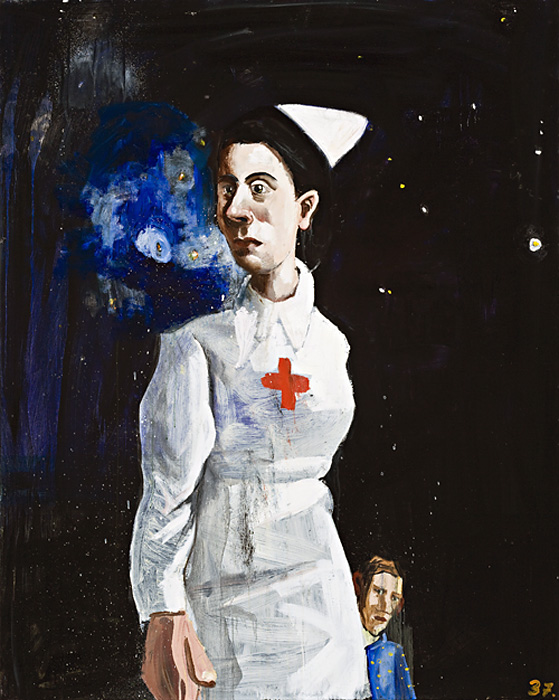
Further to the evidences noted in the text on the website (the coils, the curling smoke, the starry night sky) one can also say other things about the paintings. There is an effervescence of colour within the blocking of clothing areas. There is the disproportionate size of the hands and bulbous noses of the characters, the shortening of the feet so that the figures almost become caricatures – but hold back from this through the mastery of the painting, through the intent of the artist. There is the symbology of other elements within the pictures: a doll with pins stuck in it’s body being clasped in a clumpy hand, a small house protruding over the protagonists shoulder (Fifty-Fifty); beetles on tree stumps with human faces (Hey, Bastard, Hey); and flowers, teapots and small humans appearing from around the edges of the larger characters in several of the works (Julia 1 and Night Nurse #2 for example). The numbers in the paintings were also puzzling but it turns out that they represent the age of the artist when he painted the works.

Finally one must acknowledge the carnivalesque in the paintings – their fun at playing dress-ups, the almost Alice in Wonderland fantasy and humour of the characterisations. There is an almost androgynous feeling to these characters as some of the female faces seem almost male. Personally I had a feeling that the artist is investigating the subconscious of Carl Jung’s ‘anima’ and ‘animus’ – the feminine inner personality of the male (anima) and the masculine inner personality of the female (animus). These states are manifested by appearing as figures in dreams and so they seem here: the anima or animus vies for attention by projecting itself onto others, here projecting itself outwards onto the painted surface.

My friend and I really enjoyed this exhibition. We were captivated by these songs, going back to the work again and again to tease out the details, to feel connection to the work. These are not lonely isolated figures but sublime emanations of inner states of being expertly rendered in glorious colour. And they made us laugh – what more could you ask for!

Dr Marcus Bunyan


Many thankx to Karen Woodbury Gallery for allowing me to publish the art work in the posting. Please click on the photographs for a larger version of the image.


Installation view of the exhibition  'McLean Edwards: Songs from the Ghost Ship' at Karen Woodbury Gallery, Melbourne

Installation view of the exhibition  'McLean Edwards: Songs from the Ghost Ship' at Karen Woodbury Gallery, Melbourne


Installation views of McLean Edwards: Songs from the Ghost Ship at Karen Woodbury Gallery, Melbourne


McLean Edwards (Australian, b. 1972) 'Venus' 2009 from the exhibition 'McLean Edwards: Songs from the Ghost Ship' at Karen Woodury Gallery, Melbourne, May - June, 2009


McLean Edwards (Australian, b. 1972)
Venus
2009


McLean Edwards (Australian, b. 1972) 'Hey, Bastard, Hey' 2009


McLean Edwards (Australian, b. 1972)
Hey, Bastard, Hey
2009


McLean Edwards (Australian, b. 1972) 'Restoration' 2009


McLean Edwards (Australian, b. 1972)
Restoration
2009


“McLean’s works are theatrical, comical, eccentric and often political with the employment of symbolic imagery. His painting technique involves a painterly layering to create a defined and textured surface.

In this most recent series, Songs from the Ghost Ship, semi-fictional characters are set against the dark starry night sky. The exhibition includes nine oil paintings in addition to four works on paper. One of the works on paper shares its name with the exhibition, depicting a jumpered man with a white ghost looking over his shoulder.

The ink on paper work introduces a theme prominent throughout the exhibition, that of wafting smoke. Emanating either from a clasped cigarette or an iconic green curled mosquito coil, the smoke, in elegant strokes of white, grey, tan or black, draw the eye to the face of the central figures. The figures, often with the light of the moon or stars behind them only partially illuminating their faces, stare into the distance or coyly at the viewer, almost unaware of their solitary state against the night sky. The coil appears elsewhere, surreptitiously working its way into the dark pink weave of Twiggy’s jacket, or the blue and red dress of Venus, in the tyre marks of the Arctic Traveller or the grassy landscape in Hey, Bastard, Hey. The soft curl and filigree detail of both the smoke and the mosquito coil are similarly echoed by elements in other works, through the organic features of flowers, leaves and bugs.

Adrift at night, these haunting figures are about to embark on a journey, either from the wharf at the edge of an ocean, as in Venus, or across the vast ice of the Arctic, through the mist and smoke.”

Text from the Karen Woodbury website [Online] Cited 28/05/2009. No longer available online


McLean Edwards (Australian, b. 1972) 'For Elsa (Twiggy)' 2009


McLean Edwards (Australian, b. 1972)
For Elsa (Twiggy)
2009


McLean Edwards (Australian, b. 1972) 'Night Nurse #2' 2009


McLean Edwards (Australian, b. 1972)
Night Nurse #2
2009


Karen Woodbury Gallery

This gallery is now closed.

LIKE ART BLART ON FACEBOOK

Back to top

Review: ‘Desire’ paintings and video by Judith Wright at Sophie Gannon Gallery, Melbourne

Exhibition dates: 19th May – 13th June, 2009


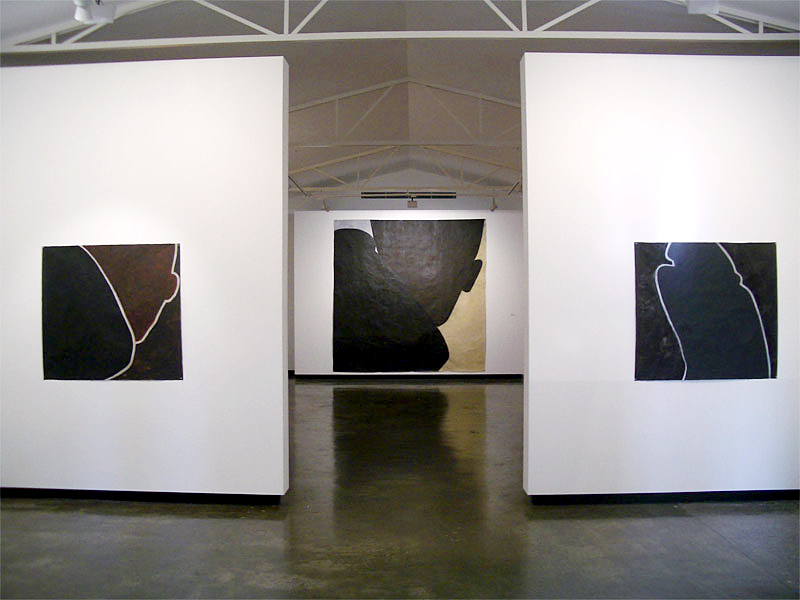
Installation view of Judith Wright's exhibition 'Desire' at Sophie Gannon Gallery, Melbourne

Installation view of Judith Wright's exhibition 'Desire' at Sophie Gannon Gallery, Melbourne


Installation views of Judith Wright’s exhibition Desire at Sophie Gannon Gallery, Melbourne


On a beautiful sunny Autumn afternoon in Melbourne I made a visit to Space Furniture on Church Street to ogle at the wondrous designs and then to the galleries of Albert Street in Richmond for three outstanding painting exhibitions: John Beard at John Buckley Gallery, McLean Edwards at Karen Woodbury Gallery and Judith Wright at Sophie Gannon Gallery. First cab off the rank is Judith Wright but reviews of the other two shows will follow…

There is a part in Jim Jarmusch’s film Ghost Dog: The Way of the Samurai (1999) where the anti-hero stares into the eyes of a dog and Jarmusch just holds the scene for what seems like an eternity. The camera observes the infinite bond between human and animal, an almost palpable connection across time and space, with an unflinching eye. The same can be said of Judith Wright’s encaustic paintings (also known as hot wax painting, involves using heated beeswax to which coloured pigments are added) but here she pushes the relationship further – into an investigation of the animal in the human and vice versa, and their erotic charge when placed together. Here is the carnivalesque at it most daring, most paired back, revealing in quiet Zen like compositions the dissolution of boundaries between both states of being.

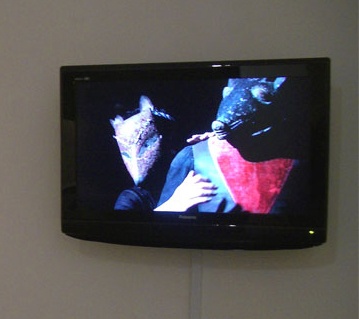
Nominally based on the symbology of characters presented in two videos in the exhibition (masked figures playing with each other, a comical goats head with horns being one figure) the paintings are much more interesting than the videos. Painted on Japanese paper in wax and acrylic the biomorphic forms of babies heads, torsos and sculpted free forms and designs suggestive of living organisms address the title of the exhibition: desire!

Wright plays with scale and form, using earth tones and a luminous palette of oranges, yellows and pinks. Her shape-shifting paintings work to unhinge stagnant systems of thought that surround identity and the body. The waxed Japanese paper adds to the sensuality of the skin-like work. A baby seems to feed on a double nipple but the nipple has missed the mouth and is invading the eye. Forms intersect and the sensual shapes slip over each other: as in the Zen idea of ‘satori’ or enlightenment attained when two circles intersect here we have the intersection of an erotic enlightenment.

As Russian theorist Mikhail Bakhtin notes the carnivalesque is the contravention of normal laws of behaviour, “and he proposes that the carnivalesque is also the home of the grotesque, where otherwise antithetical properties or characteristics are matched together in the same being: beast with human, youth with age, male with female.”1

“The carnival offers the chance to have a new outlook on the world, to realise the relative nature of all that exists, and to enter a completely new order of things.”2


And this is what these paintings propose: a new order of things, a chance for desires formed of new pleasures.

As Michel Foucault has observed,

“The possibility of using our bodies as a possible source of very numerous pleasures is something that is very important. For instance, if you look at the traditional construction of pleasure, you see that bodily pleasure, or pleasures of the flesh, are always drinking, eating and fucking. And that seems to be the limit of the understanding of our bodies, our pleasures … It is very interesting to note, for instance, that for centuries people generally, as well as doctors, psychiatrists, and even liberation movements, have always spoken about desire, and never about pleasure. “We have to liberate our desire,” they say. No! We have to create new pleasure. And then maybe desire will follow.”3


In their luminosity, in their skin-like textures, in their balance between the colour of the paper, the dark voids and the brown of babies heads we feel the sharp intake of the cold breathe of winter on the nostrils – we feel an evocation of new pleasure, of possible desires within us and the loosening of the grip of conformity. Like the perfect placement of rocks in a Japanese garden and the ripples of the gravel, of a reality that swirls around them these paintings open hearts and minds to inner states of being unexperienced before. And yes, I did enjoy the ride.

Dr Marcus Bunyan


Many thankx to Sophie Gannon Gallery for allowing me to publish the art work in the posting. Please click on some of the photographs for a larger version of the image.


1/ Buchbinder, David. Masculinities and Identities. Melbourne: Melbourne University Press, 1994, p. 53. For a discussion of carnivalesque see Bakhtin, Mikhail. Rabelais and his World (trans. Hélène Iswolsky). Bloomington: Indiana University Press, 1984, pp. 196-277, 303-367.

2/ Bakhtin, Mikhail. Rabelais and his World (trans. Hélène Iswolsky). Bloomington: Indiana University Press, 1984, p. 34.

3/ Gallagher, Bob and Wilson, Alexander. “Sex and the Politics of Identity: An Interview with Michel Foucault,” in Thompson, Mark. Gay Spirit: Myth and Meaning. New York: St. Martin’s Press, 1987, p. 31.


Judith Wright video installation


Judith Wright (Australian, b. 1945) 'Desire [14]' 2009 from the exhibition 'Desire' paintings and video by Judith Wright at Sophie Gannon Gallery, Melbourne, May - June, 2009


Judith Wright (Australian, b. 1945)
Desire [14]
2009
Acrylic and wax on Japanese paper
200 x 200cm


Judith Wright (Australian, b. 1945) 'Desire [5]' 2009 from the exhibition 'Desire' paintings and video by Judith Wright at Sophie Gannon Gallery, Melbourne, May - June, 2009


Judith Wright (Australian, b. 1945)
Desire [5]
2009
Acrylic and wax on Japanese paper
100 x 100cm


Judith Wright (Australian, b. 1945) 'Desire [7]' 2009


Judith Wright (Australian, b. 1945)
Desire [7]
2009
Acrylic and wax on Japanese paper
100 x 100cm


Judith Wright (Australian, b. 1945) Desire [16]' 2009


Judith Wright (Australian, b. 1945)
Desire [16]
2009
Acrylic and wax on Japanese paper
300 x 300cm


Judith Wright (Australian, b. 1945) 'The Gift [2]' 2009


Judith Wright (Australian, b. 1945)
The Gift [2]
2008
Acrylic and wax on Japanese paper


Judith Wright (Australian, b. 1945) 'The Gift [7]' 2008


Judith Wright (Australian, b. 1945)
The Gift [7]
2008
Acrylic and wax on Japanese paper


Sophie Gannon Gallery
2, Albert Street, Richmond, Melbourne
Phone: +61 3 9421 0857

Opening hours:
Tuesday – Saturday 11am – 5pm

Sophie Gannon Gallery website

LIKE ART BLART ON FACEBOOK

Back to top

Review: ‘My Jesus Lets Me Rub His Belly’ exhibition by Martin Smith at Sophie Gannon Gallery, Melbourne

Exhibition dates: 21st April – 16th May, 2009


Martin Smith (Australian, b. 1972) 'Hot/humid/oppressive/stifling/still' 2009 from the exhibition 'My Jesus Lets Me Rub His Belly' by Martin Smith at Sophie Gannon Gallery, Melbourne, April - May, 2009


Martin Smith (Australian, b. 1972)
Hot/humid/oppressive/stifling/still
2009
Pigment print and collage
90 x 130cm


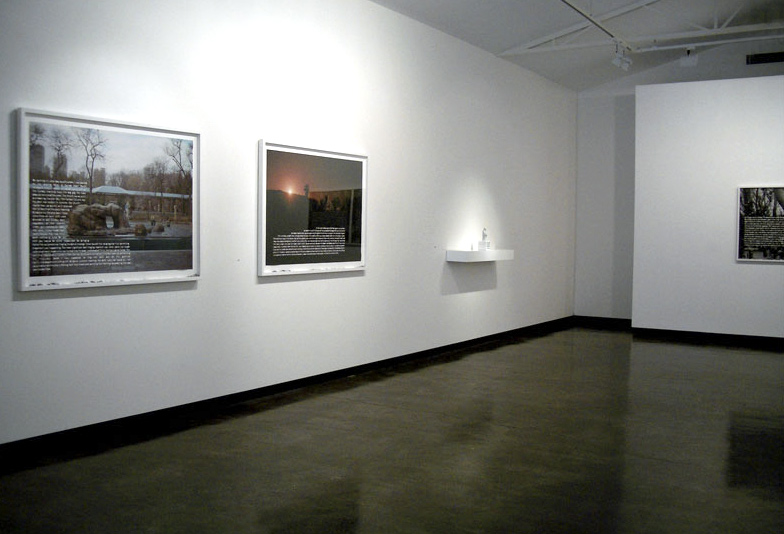
This is an interesting, well constructed exhibition of photographs, collage and sculpture by Martin Smith presented at Sophie Gannon Gallery, Melbourne that addresses issues of place and faith: memories of growing up within a religious framework. The work is well resolved, the themes explored are poignant, full of pathos, laden with sardonic humour and pull no punches.

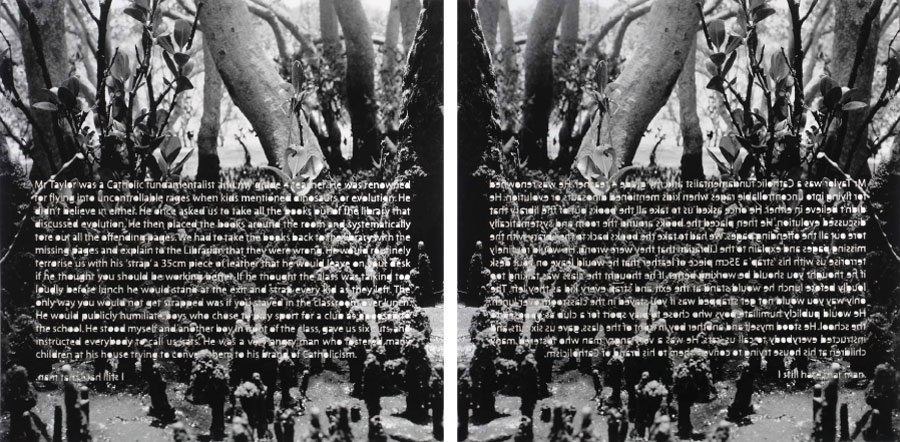
The main body of the exhibition are contemporary personal photographs of sunsets, landscapes and urban spaces (such as the photograph of Central Park in New York, above). Incised into the surface of the photograph, actually cut into the surface, are narratives of boredom, anger and the blind injustice of devotion, memories of stories of a fifteen year old boy. In some of the photographs the lettering follows the pictorial representation of the photograph, in others it overwrites it. The cut letters fall away to the bottom of the picture and are captured by the picture frame, sitting at the bottom of each image like the leaves of autumn – half remembered stories that become jumbled in the mind, played over and over again.

These images consolidate both photographic and written texts while at the same time undermining their veracity and referentiality. Image and text are performative, playing off of each other to provide a transgressive textuality that becomes a mode of agential resistance capable of fragmenting and releasing the subject. In this engagement between image and text the work becomes intertextual, the ritual of production engaging a network of texts, a discursive multiplicity that traverses the entire scope of social, cultural, and institutional production. The childhood taboo of not criticising ‘faith’ is cross/ed in the process of re-remembering, re-inscription.

In these assemblages the surface of the photograph and the body of the text are subverted through a ritualised cutting, like the incision of the stigmata into the body of Christ. They become sites of resistance. As Deleuze and Guittari have noted of this process the site of resistance is both a productive and disruptive re-territorialization and de-territorialization of meaning:

“For them (Deleuze and Guattari), assemblages are the processes by which various configurations of linked components function in an intersection with each other, a process that can be both productive and disruptive. Any such process involves a territorialization; there is a double movement where something accumulates meanings (re-territorialization), but does so co-extensively with a de-territorialization where the same thing is disinvested of meanings. The organization of a territory is characterized by such a double movement … An assemblage is an extension of this process, and can be thought of as constituted by an intensification of these processes around a particular site through a multiplicity of intersections of such territorializations.”1


The particular site, the particular intersection that Smith addresses in his work is that of memory, faith and place. The lack of fixity in this intersection provides the artist with abundant opportunity to reinscribe the already inscribed ritual of faith, subverting the iteration of the norms already attributed to it, providing a loss of original meaning and the gaining of new meanings. This productive, disruptive re-inscription provides the positionality of the work and the viewer struggles with the emotional conflicts that result from this territorialization: even if you don’t know these stories they challenge what you believe, now.

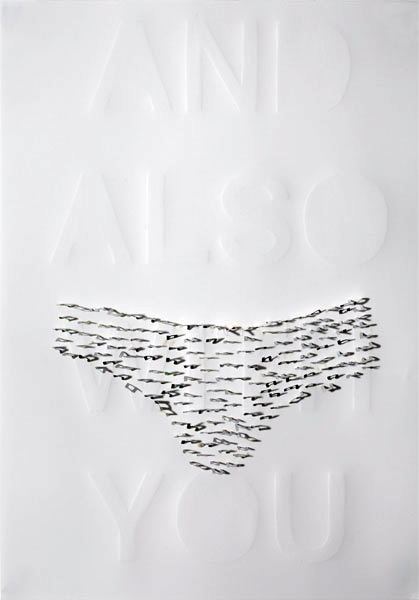
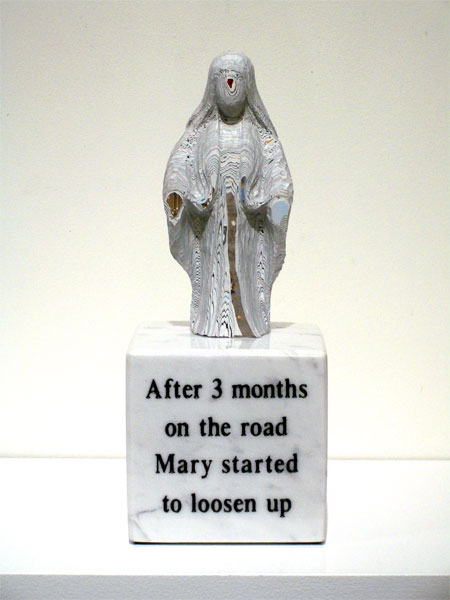
Counterbalancing the colour photographs are white collages that are embossed with the answer to the celebrants greeting “The Lord be with you” to which the people respond “And also with you.” Hovering in the background of the work the words are again subverted, this time in a resurrection of cut letters – instead of being cut into the photograph the letters project outwards towards the viewer forming commodified shapes such as cars, underpants and people. The joy doesn’t stop there: the two sculptures in the exhibition add to the chaos with a wonderful sense of humour.

Through their hypertexts the work “becomes more and more layered until they are architectural in design, until their relationship to the context from which they have grown cannot be talked about through the simple models offered by referentiality, or by attributions of cause and effect.”2

Without absolute attribution the work becomes a form of transubstantiation. The flexibility of memory and the orthodoxy of religion are transformed into a spirituality of the self that the child of fifteen with blood running down his arms from his personal stigmata of boredom could never have imagined. At the end of days, when all is said and done, the funny diatribes with their ambiguous photographs are homily and heretic, and together form a more inclusive body of bliss: ‘And also with you and you and you and you’.

Whatever your faith, whoever you are.

Dr Marcus Bunyan


1/ Wood, Aylish. “Fresh Kill: Information technologies as sites of resistance,” in Munt, Sally (ed.,). Technospaces: Inside the New Media. London: Continuum, 2001, p. 166

2/ Burnett, Ron. Cultures of Vision: Images, Media, & the Imaginary. Bloomington: Indiana University Press, 1995, pp. 137-138

Thank you to Edwin Nicholls for his help.


Martin Smith (Australian, b. 1972) 'Hot/humid/oppressive/stifling/still' 2009 (detail)


Martin Smith (Australian, b. 1972)
Hot/humid/oppressive/stifling/still (detail)
2009
Pigment print and collage
90 x 130cm


Installation view of Martin Smith's exhibition 'My Jesus Lets Me Rub His Belly' at Sophie Gannon Gallery, Melbourne


In the above installation photograph you can just see the cut letters lying at the bottom of the picture frame


Martin Smith (Australian, b. 1972) 'I still hate that man' 2009 from the exhibition 'My Jesus Lets Me Rub His Belly' by Martin Smith at Sophie Gannon Gallery, Melbourne, April - May, 2009


Martin Smith (Australian, b. 1972)
I still hate that man
2009
Pigment print and collage
130 x 180cm


Martin Smith (Australian, b. 1972) 'My Frenetic, Anxiety Driven Snuffing' 2009


Martin Smith (Australian, b. 1972)
My Frenetic, Anxiety Driven Snuffing
2009
Pigment print and collage
90 x 130cm


Artist statement

I grew up in the bayside suburbs of Brisbane, Australia with a speech impediment. My teenage years were spent watching and observing, as I was too embarrassed to speak. My inability to express myself during this time left an indelible mark on my personal history and has provided the impetus for my artistic enquiries. Therefore it is no surprise that my art practice is primarily about language and the modes of representation used to express and interpret personal experience.

Among the studio methodologies that I employ are the combination of traditional story telling writing with vernacular photography. The text and the images have no literal relationship and I am very careful to avoid any obvious connection between the two. I write personal stories then hand-cut the text out of the image. The removed letters from the image are collected and captured by the picture frame, sitting at the bottom of each image like fallen leaves creating an Autumnal scene where visible change has occurred and the picture and the figure are going through a transition. The text punctures the surface of the image disrupting the way we view and read the work. We can’t fully view the image because of the text and we can’t read the text without the image creating a constant back and forth between the two. When viewing the visual and textual oscillation between the two narrative devices that have no literal connection we find balance outside the picture frame in a new discursive space. It is through this collision of narrative and languages that unique interpretations of personal experience are built. I am interested in exploring spaces of meaning that are created when two or more narrative devices are blended.

In other works the letters are also glued directly onto the wall of the gallery to form recognisable but featureless figures. These installations explore how meaning and identity are generated through language. The individual letters (the building blocks of language) combine together to form a representation of a life that exists only through the formulation of language.

Recently I performed a stand-up ‘comedy’ routine as another vehicle for exploring story-telling and personal histories. The routine titled “Hello Newmarket Hotel” was performed at an ‘open mic’ night in front of a regular comedy audience. The aim was to recreate and recontextualise a particularly painful childhood memory while incorporating known ‘comedy’ tropes. This work along with my whole practice is interested in the role that photography, and other forms of narrative, plays in the construction of our identity and how personal histories are written and interpreted.

Martin Smith 2017


Martin Smith (Australian, b. 1972) 'The Relationship Blossomed' 2009


Martin Smith (Australian, b. 1972)
The Relationship Blossomed
2009
Pigment print and collage
115 x 115cm


Martin Smith (Australian, b. 1972) 'The Relationship Blossomed' 2009 (detail)


Martin Smith (Australian, b. 1972)
The Relationship Blossomed (detail)
2009
Pigment print and collage
115 x 115cm


Martin Smith (Australian, b. 1972) 'The Homily' 2009


Martin Smith (Australian, b. 1972)
The Homily
2009
Pigment print and collage
130 x 90cm


Martin Smith (Australian, b. 1972) 'And also with you #2' 2009


Martin Smith (Australian, b. 1972)
And also with you #2
2009
Collage on paper, eva
42 x 30cm


Martin Smith (Australian, b. 1972) 'And also with you #3' 2009


Martin Smith (Australian, b. 1972)
And also with you #3
2009
Collage on paper, eva
42 x 30cm


Martin Smith (Australian, b. 1972) 'After 3 months on the road Mary started to loosen up' 2009


Martin Smith (Australian, b. 1972)
After 3 months on the road Mary started to loosen up
2009
Photographic carving on marble base
18 x 10 x 10cm


Sophie Gannon Gallery
2, Albert Street
Richmond, Vic 3121

Opening hours:
Tuesday – Saturday 11am – 5pm

Sophie Gannon Gallery website

LIKE ART BLART ON FACEBOOK

Back to top