Review: ‘Cubism & Australian Art’ at Heide Museum of Modern Art, Bulleen

Exhibition dates: 24th November, 2009 – 8th April, 2010


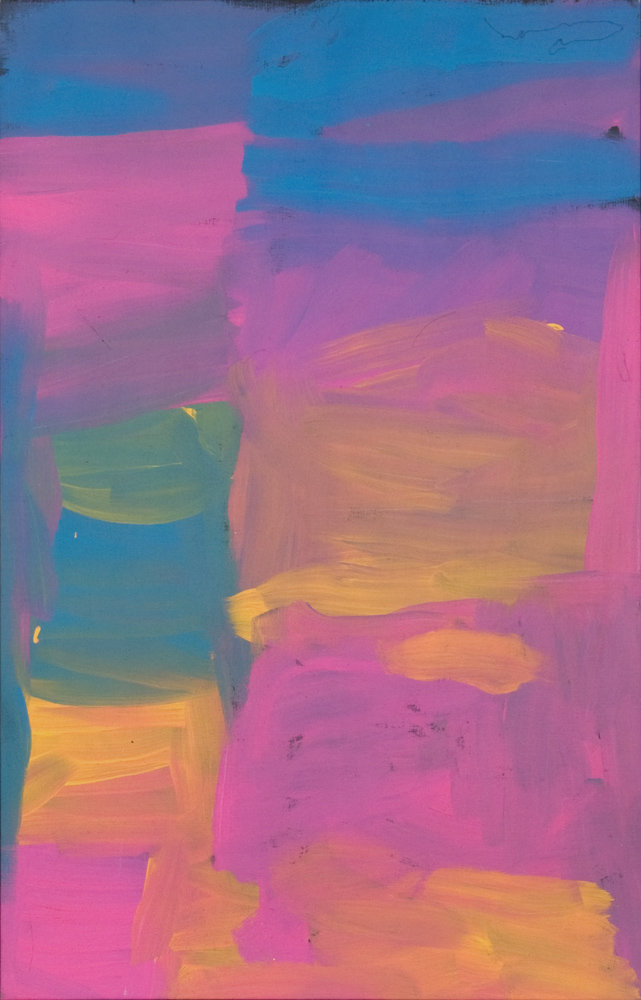
Jean Appleton (Australian, 1911-2003) 'Painting IX' 1937 from the exhibition 'Cubism & Australian Art' at Heide Museum of Modern Art, Nov 2009 - April 2010


Jean Appleton (Australian, 1911-2003)
Painting IX
1937
Whitworth/Bruce Collection


Perfect summer fare out at Heide at the moment – relax with a lunch at the new Cafe Vue followed by some vibrantly fresh art in the galleries. In a nicely paced exhibition, Cubism & Australian Art takes you on a journey from the 1920s to the present day, the art revealing itself as you move through the galleries.

There are too many individual works to critique but some thoughts and ideas do stand out.


Cezanne’s use of passage (A French term (pronounced “pahsazh”) for a painting technique characterised by small, intersecting planes of patch-like brushwork that blend together to create an image), the transition between adjacent shapes, where solid forms are fused with the surrounding space was an important starting point for the beginnings of Cubism. Simultaneity – movement, space and the dynamism of modern life – was matched to Cubism’s new forms of pictorial organisation. The geometries of the Section d’Or (or the Gold Mean), that magical ratio found in all forms, also sounds an important note as it flows through the rhythmic movement and the sensations of temporal reality.

In the work from the 1920s/30s presented in the exhibition the palette of most of the works is subdued, the form of circles and geometrics. There are some beautiful paintings by one of my favourite Australian artists Roy de Maistre and others by Eric Wilson, Sam Atyeo and Jean Appleton (see image above). The feeling of these works is quiet and intense.

Following

There are some evocative works from the 1940s/50s including Godfrey Miller’s Still Life with Musical Instruments (1958, below), Graham King’s Industrial Landscape (1959) and Ralph Balson’s Constructive painting (1951). The Charcoal Burner (1959) by Fred Williams (see image below) is the Australian landscape seen through Cubist eyes, surface and space perfectly commingled in reserved palette, delineated planes. Grace Crowley’s Abstract Painting (1947, see image below) is a symphony of colour, plane and form that I would willingly take home any day of the week!

Now

It is the contemporary work that is of most interest in this exhibition. Spatio-temporal reality is distorted as artists push the boundaries of dimensionality. The parameters of reality are blurred and extended through the use of multiple viewpoints and lines of sight. Fresh and spatially aware (like an in joke because everyone recognises the fragmented ‘nature’ of contemporary existence) we have the sublime Milky Way (1995, see image below) by Rosalie Gascoigne and for me the two standout pieces in the exhibition, Bicycles (2007, below) by James Angus and Static No.9 (a small section of something larger) (2005, below) by Daniel Crooks.

Though difficult to see in the photograph of the work (below), Bicycles fuses three bicycles into one. “A photo finish made actual, a series of frames at the conclusion of a race transferred permanently into three dimensions.” You look and then look again: three frames into one, three tyres into one, three stands into one, three chains the only singular – like a freeze frame of a motor drive on a camera

Snap
Snap
Snap

or the slight difference of the two images of a Victorian stereoscope made triumvirate (the 3D world of Avatar comes to mind). Static, the bicycle can never work, is redundant, but paradoxically moves at the same time.

Even more mesmerising is the video work Static No.9 (a small section of something larger) by Daniel Crooks. Unfortunately I cannot show you the video but a still from the video can be seen below as well as a link to a trailer of the work. Imagine this animated like swirling DNA (in actual fact it is people walking across an intersection at different distances and speeds to the camera – and then sections taken out of the video and layered). Swirling striations through time and space fragment identity so that people almost become code, the sound track the distorted beep beep beep of the buzzer at the crossing. I could have sat there for hours watching the performance as it crackles with energy and flow – with my oohs and aahs! The effect is magical, beautiful, hypnotic.

A great summer show – fresh, alive and well worth the journey if only to see that static in all its forms has never looked so good.

Dr Marcus Bunyan


Many thankx to the Heide Museum of Modern Art for allowing me to publish the art work in the posting. Please click on the photographs for a larger version of the image.


Cubism and Abstract Art


Alfred Barr’s Cubism diagram – original cover of Cubism and Abstract Art, Museum of Modern Art, New York, exhibition catalogue, 1936


Ralph Balson (Australian, 1890-1964) 'Painting no. 17' 1941 from the exhibition 'Cubism & Australian Art' at Heide Museum of Modern Art, Nov 2009 - April 2010


Ralph Balson (Australian, 1890-1964)
Painting no. 17
1941
Oil and metallic paint on cardboard
91.7 x 64.8cm
Hassall Collection


By 1941 Ralph Balson had abandoned the figure for a completely abstract style. He announced this breakthrough in a solo exhibition at the Fine Art Galleries at Anthony Hordern and Sons in Sydney with paintings that evolved in part out of Albert Gleizes’s style of Cubism: uninflected surfaces, essential forms, respect for the two-dimensionality of the picture surface and the sense of a search for a deeper, universal truth.

Though at the time unusual for Australian art, such developments were concurrent with advancements in abstraction in the UK and US. This new mode of painting was to preoccupy Balson and Crowley, and to a lesser extent Frank Hinder, for the rest of the decade.

Balson’s ‘constructive’ pictures became sophisticated and intricate, characterised by Constructive painting (1945), with its overlapping translucent planes and array of discs, squares and rectilinear shapes in an animated state of flux, and perhaps culminating in Constructive painting (1951). This work has a different kind of luminosity, as if the picture has an inner light. As Balson himself said of such images, they are ‘abstract from the surface, but more truly real with life’.

Heide Education Resource p. 15.


Dorrit Black (Australian, 1891-1951) 'The bridge' 1930


Dorrit Black (Australian, 1891-1951)
The bridge
1930
Oil on canvas on board
60 x 81cm
Art Gallery of South Australia, Adelaide
Bequest of Dorrit Black, 1951
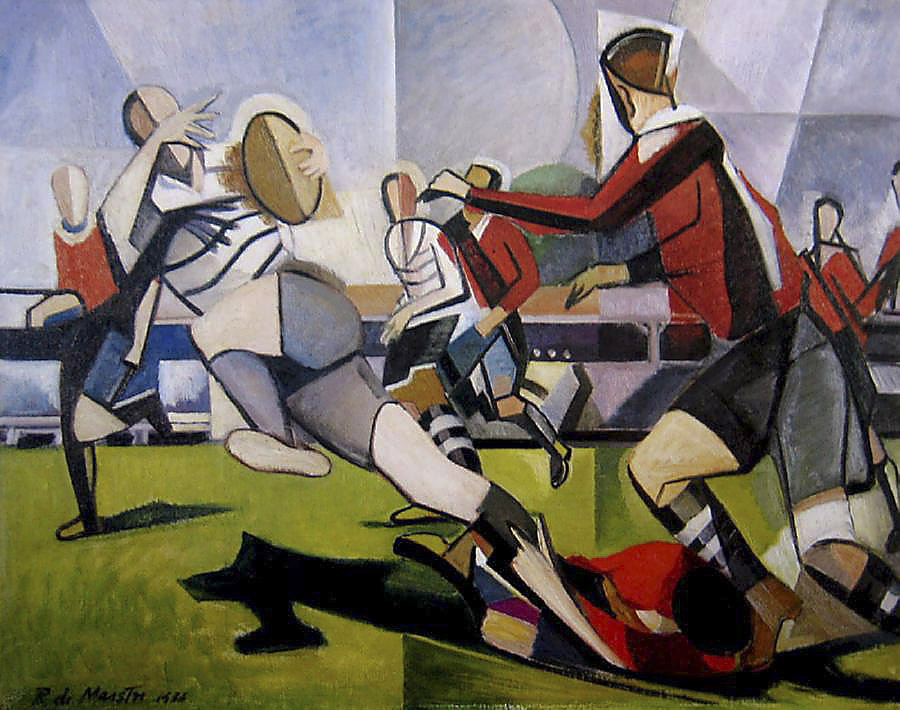
 

Roy de Maistre (Australian, 1894-1968) 'The football match' 1938


Roy de Maistre (Australian, 1894-1968)
The football match
1938
Oil on canvas
71.5 x 92cm
The Janet Holmes à Court Collection


Eric Wilson (Australian, 1911-1946) 'Theme for a mural' 1941


Eric Wilson (Australian, 1911-1946)
Theme for a mural
1941
Oil on plywood on corrugated iron
53.2 x 106.8cm
National Gallery of Victoria, purchased 1958


Sidney Nolan (Australian, 1917-1992) 'Rimbaud royalty' 1942


Sidney Nolan (Australian, 1917-1992)
Rimbaud royalty
1942
Synthetic polymer paint on composition board
59.5 x 90cm
Heide Museum of Modern Art
Bequest of John and Sunday Reed
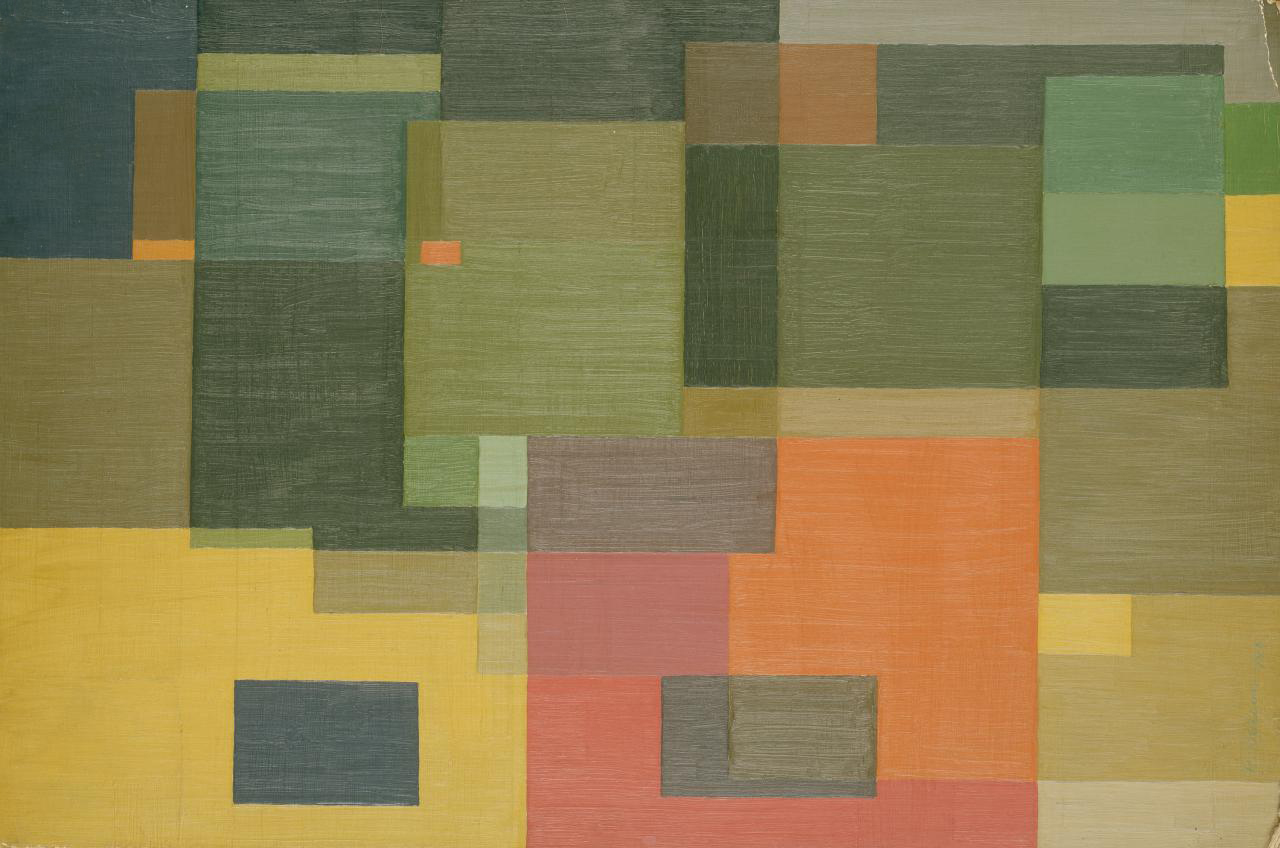
 

Ralph Balson (Australian born England, 1890-1964; worked in Australia 1913-1964) 'Constructive painting' 1948


Ralph Balson (Australian born England, 1890-1964; worked in Australia 1913-1964)
Constructive painting
1948
Oil on cardboard
106.8 × 71.0cm
National Gallery of Victoria, Melbourne
Bequest of Grace Crowley, 1981
© Ralph Balson Estate


Grahame King (Australian 1915-2008) 'Industrial Landscape' 1960


Grahame King (Australian 1915-2008)
Industrial Landscape
1960
Oil on board
91.00 x 122.00cm
Charles Nodrum Gallery


Daniel Crooks (New Zealand, b. 1973) 'Portrait #2' (Chris) 2007


Daniel Crooks (New Zealand, b. 1973)
Portrait #2 (Chris)
2007
Lambda photographic print
102 cm x 102cm
Heide Museum of Modern Art
Purchased with funds from the Robert Salzer Foundation 2012


“With these portraits I’m attempting to make large detailed images of people in their own surroundings, images of people very much in and of their time that are both intriguing and beautiful. As with a lot of my work the portraits also seek to render the experience of time in a more tangible material form, blurring the line between still and moving images and looking to new post-camera models of spatiotemporal representation.”

Daniel Crooks


Portrait #2 (Chris) forms part of Daniel Crooks’s Scanlines, a series of moving image works and prints made using digital collage techniques. This involves digitally slicing images then reassembling them sequentially, across the screen or picture plane, to create rhythmic and spatial effects through which Crooks seeks to explore ideas and themes related to our understandings of time and motion.


Elizabeth Gower (Australian, b. 1952) 'City Series' 1982-1984


Elizabeth Gower (Australian, b. 1952)
City Series
1982-1984
Acrylic on paper
© Courtesy the artist and Sutton Gallery, Melbourne and Milani Gallery, Brisbane


Elizabeth Gower (Australian, b. 1952) 'Transient' 1979


Elizabeth Gower (Australian, b. 1952)
Transient
1979
Synthetic, polymer paint and resin on rice paper, newsprint and garment patterns
© Courtesy the artist and Sutton Gallery, Melbourne and Milani Gallery, Brisbane


Elizabeth Gower found a new relevance for Cubism in her abstract series Shaped works (1978-1984) … Cubist collage combined with feminist ideas to inspire her use of everyday materials such as newsprint and garment patterns. Transparent rice paper adds a delicacy and lightness to the work. The dynamic overlap of flat planes and juxtaposition of contrasting shapes, textures and patterns relates directly to the legacy of Synthetic Cubism. The work of Sonia Delaunay was also a particular inspiration for Gower.

Heide Education Resource p. 23.
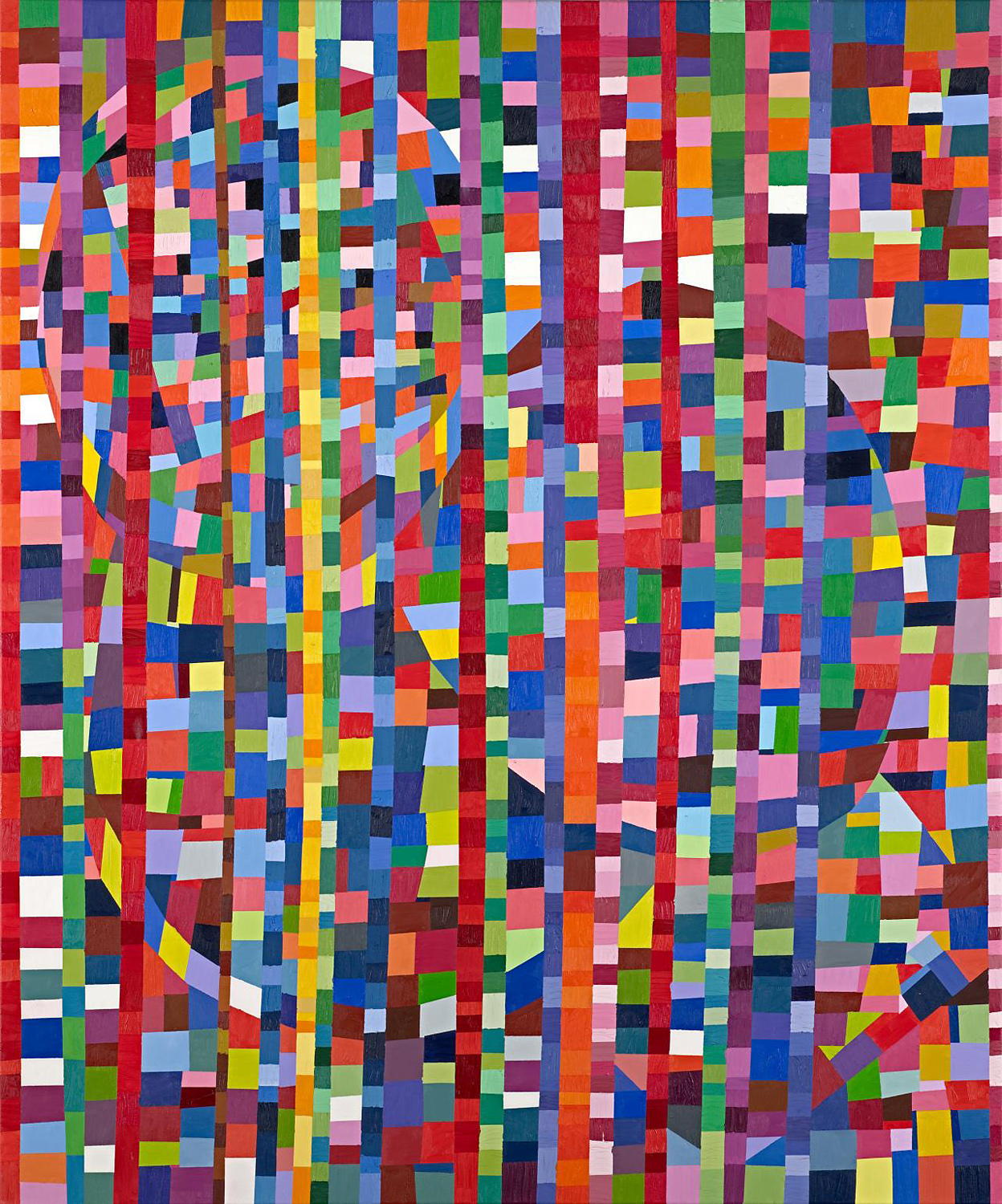
 

Melinda Harper (Australian, b. 1965) 'Untitled' 2000


Melinda Harper (Australian, b. 1965)
Untitled
2000
Oil on canvas
183.0 × 152.3cm
National Gallery of Victoria, Melbourne
Presented through the NGV Foundation by Robert Gould, Founder Benefactor, 2004
© Melinda Harper/Licensed by Copyright Agency, Australia


Cubism & Australian Art, one of the most ambitious and extensive exhibitions Heide has undertaken, shows the impact of the revolutionary and transformative movement of Cubism on Australian art from the early twentieth century to the present day. It uncovers a little-known yet compelling history through works by over eighty artists, including key examples of international Cubism drawn from Australian collections – by André Lhote, Albert Gleizes, Fernand Léger, Alexander Archipenko, Ben Nicholson and others – and nine decades of Australian modern and contemporary art that demonstrate a local evolution of cubist ideas.

The exhibition documents the earliest incorporation of cubist principles in Australian art practice in the 1920s, when artists such as Grace Crowley and Anne Dangar, who studied overseas under leading cubist artists, began to transform their art in accordance with late cubist thinking. It examines the influence of Cubism on artists associated with the George Bell School in Melbourne and the Crowley-Fizelle School in Sydney; and on those who participated in the cubist movement abroad including James Cant and John Power.

While its distortions and unconventional perspectives served individual styles such as the expressionism of Albert Tucker or the experimental landscapes of Sidney Nolan and Fred Williams, Cubism’s most enduring influence on postwar Australian art has been in abstraction. This exhibition traces its reverberations in 1950s abstract art by Roger Kemp, Robert Klippel and Ron Robertson-Swann and others, through to works by younger artists such as Stephen Bram, Gemma Smith and Justin Andrews.

Cubism’s formal and conceptual innovations and its investigations into the representation of time, space and motion have continuing relevance for artists today, who variously adapt, develop, quote and critique aspects of cubist practice. In this exhibition, Cubism’s shifting, multi-perspectival view of reality takes on new form in moving-image works by John Dunkley-Smith and Daniel Crooks, in paintings by Melinda Harper and sculptures by James Angus. The use of found objects and recycled materials by Madonna Staunton, Rosalie Gascoigne and Masato Takasaka extends ideas originating in cubist sculpture and collage. Other artists are critical of Cubism, bringing Indigenous and non-european perspectives to bear on its modernist history, particularly its appropriation of so-called ‘primitive art’.

Text from the Heide Museum of Modern Art website [Online] Cited 10/01/2010 no longer available online
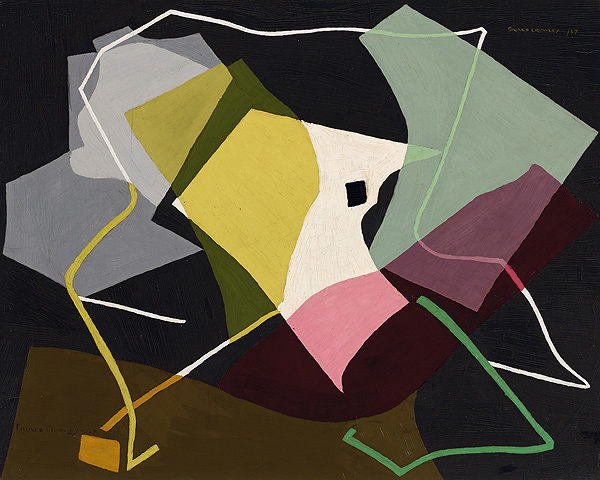
 

Grace Crowley (Australian, 1890-1979) 'Abstract painting' 1947


Grace Crowley (Australian, 1890-1979)
Abstract painting
1947
Oil on board
63.2 x 79.0cm
Private Collection, Sydney
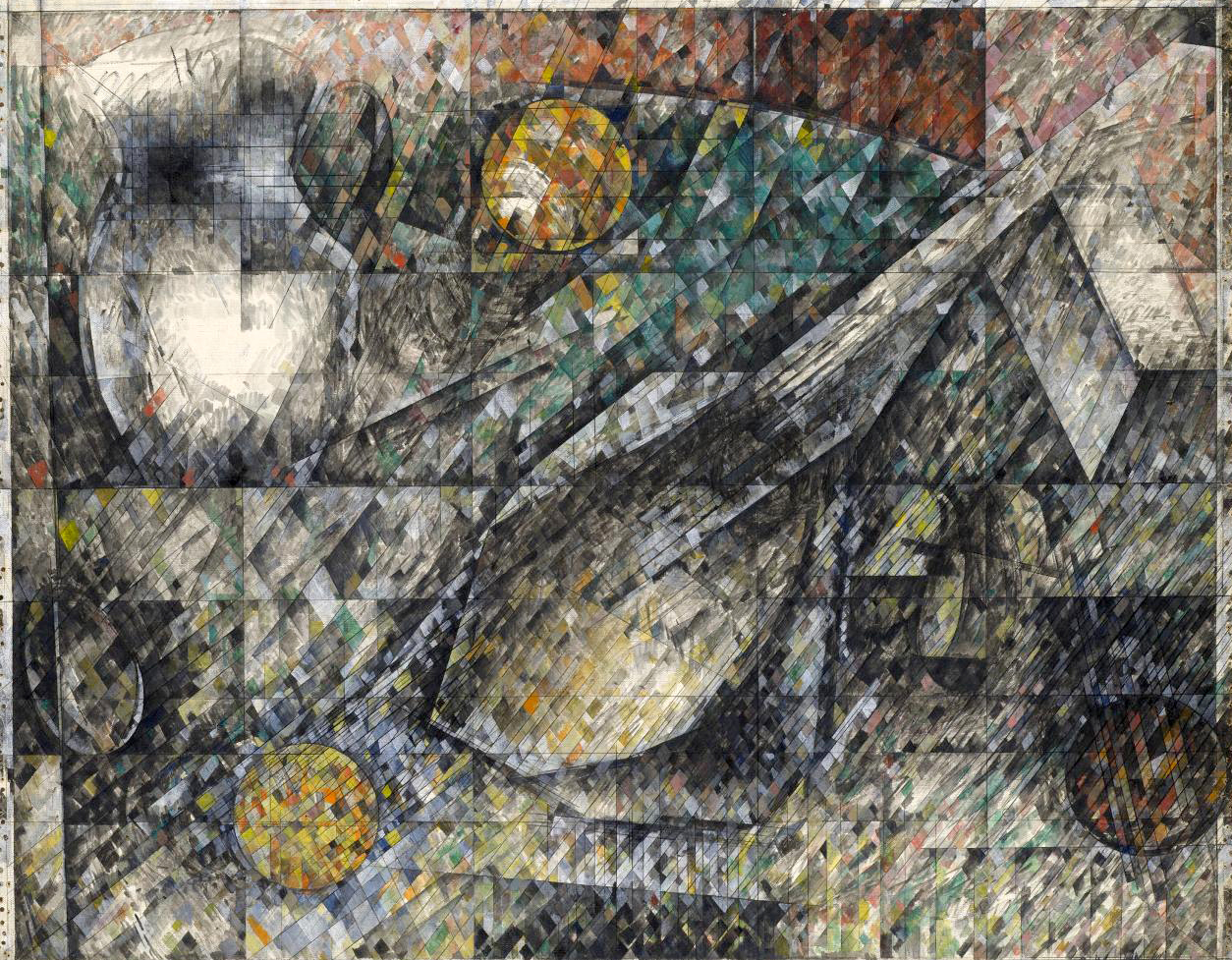
 

Godfrey Miller (New Zealand, 1893-1964; worked in England 1933-39, Australia 1939-64) 'Still Life with Musical Instruments' 1958


Godfrey Miller (New Zealand, 1893-1964; worked in England 1933-1939, Australia 1939-1964)
Still Life with Musical Instruments
1958
Pen and ink and oil on canvas
65.5 × 83.0cm
National Gallery of Victoria, Melbourne
Felton Bequest, 1963
© National Gallery of Victoria


Introduction

Cubism & Australian Art considers the impact of the revolutionary and transformative movement of Cubism on Australian art from the early twentieth century to the present day. Cubism was a movement that changed fundamentally the course of twentieth-century art, and its innovations – the shattering of the traditional mimetic relationship between art and reality and investigations into the representation of time, space and motion – have continuing relevance for artists today. Works by over eighty artists, including key examples of international Cubism drawn from Australian collections, are displayed in the exhibition.

The exhibition examines not only the period contemporaneous with Cubism’s influence within Europe, but also the decades from then until the present day, when its reverberations continue to be felt. In the first part of the century, Cubism appeared through a series of encounters and dialogues between individuals and groups resulting in a range of fascinating adaptations, translations and versions alongside other more programmatic or prescriptive adoptions of cubist ideas. The exhibition traces the first manifestations of Cubism in Australian art in the 1920s, when artists studying overseas under leading cubist artists began to transform their art in accordance with such approaches. It examines the transmission of cubist thinking and its influence on artists associated with the George Bell School in Melbourne and the Crowley-Fizelle School in Sydney. By the 1940s, artists working within the canon of modernism elaborated on Cubism as part of their evolutionary process, and following World War II Cubism’s reverberations were being felt as its ideas were revisited by artists working with abstraction.

In the postwar years and through to the 1960s, the influence of Cubism became more diffuse, but remained significant. In painting, cubist ideas provided an underlying point of reference in the development of abstract pictorial structures, though they merged with other ideas current at the time, relating in the 1950s, for example, to colour, form, musicality and the metaphysical. For many artists during this decade, Cubism provided the geometric basis from which to seek an inner meaning beneath surface appearances, to explore the spiritual dimension of painting and to understand modernism.

The shift from a Cubist derived abstraction in Australia in the 1950s to a mild reaction against Cubism in the Colour field and hard-edged painting of the mid to latter 1960s reflected a new recognition of New York as the centre of the avant-garde. Cubism’s shallow pictorial space, use of trompe l’oeil and fragmentation of parts continued to inform the work of certain individuals who adapted them in ways relevant to the new abstraction. Cubist ideas and precepts also found some resonance in an emphasis on the flatness of the canvas, particularly as articulated in the formalist criticism of Clement Greenberg.

The influence of Cubism on Australian art from 1980s to 2000s is subtle, varied and diffuse as contemporary artists variously quote, adapt, develop and critique aspects of cubist practice. Cubism’s decentred, shifting, multi-perspectival view of reality takes on new form, in moving-image works and installations, as well as being further developed in painting and sculpture. Post-cubist collage is used both as a method of constructing artworks – paintings, sculptures, assemblages – and as an intellectual strategy, that of the postmodern bricoleur. Several artists imagine alternative cubist histories and lineages, revisiting cubist art from an Indigenous or non-European perspective and drawing out the implications of its primitivism. Others pay homage to local versions of Cubism, or look through its lens at art from elsewhere.

Heide Education Resource p. 3.


Fred Williams (Australian, 1927-1982) 'The Charcoal Burner' 1959


Fred Williams (Australian, 1927-1982)
The Charcoal Burner
1959
Oil on composition board
86.3 × 91.4cm
National Gallery of Victoria, Melbourne, purchased 1960
© Estate of Fred Williams


Cubism played a fundamental role in Fred Williams’s pictorial rethinking of the Australian landscape and through him, Cubism has affected the way Australians view their natural surroundings.

Patrick McCaughey writes in the catalogue for this exhibition:

The charcoal burner, with its reserved palette and briskly delineated planes, is one of his most accomplished essays in seeing the Australian landscape through cubist eyes. Already looking for the ‘bones’ of the landscape, Williams was drawn to the early phase of Cubism, as it gave structure to the unspectacular landscape – the bush in the Dandenongs; the coastal plain around the You Yangs.

Just as Braque in his cubist landscapes of 1908-1909 eschewed ‘view’ painting and disdained the picturesque, so Williams in turn generalised the landscape, constructing it and rendering it taut, modern and vivid. In his landscapes Braque made the important pictorial discovery of passage, fusing solid forms with the surrounding space. Williams exploits this innovation in The charcoal burner, where surface and space are perfectly commingled.

Heide Education Resource p. 1.


Robert Rooney (Australian, 1937-2017) 'After Colonial Cubism' 1993


Robert Rooney (Australian, 1937-2017)
After Colonial Cubism
1993
Synthetic polymer paint on canvas
122 x 198.3cm
Heide Museum of Modern Art
Purchased through the Heide Foundation with the assistance of the Heide Foundation Collectors’ Group and the Robert Salzer Fund 2008. Courtesy of the artist


Robert Rooney’s painting After Colonial Cubism (1993) shows a vibrant streetscape rendered in deliberate and self-conscious cubist style that declares itself to be a second-hand quotation of Cubism, rather than an example of the original style. The streetscape has not been drawn from life but is a faithfully scaled-up version of a much earlier gouache sketch Buildings (1953) that Rooney did as a young student in Melbourne. The sketchbook page is indicated in the painting by the vertical bands on either side of the image which effectively serve as quotation marks.

In highlighting the second-hand nature of the image in his painting, Rooney more broadly comments on the dispersal of cubist ideas from Paris, Cubism’s place of origin, to more local contexts such as Australia. The painting carries with it the artist’s memories of his student days, of learning about Cubism through magazines and books. Rooney remembers visiting exhibitions of cubist works by Australian artists and being fascinated by how these ideas were translated locally. Further meaning in the work derives from its title which refers to the painting Colonial Cubism 1954, by Stuart Davis, an American artist whose cubist works are a further instance of the dispersal of the style to localities outside of France.

Heide Education Resource p. 29.


Rosalie Gascoigne (Australian, born New Zealand 1917-1999) 'Milky Way' 1995 (detail)


Rosalie Gascoigne (Australian, born New Zealand 1917-1999)
Milky Way (detail)
1995
Mixed media


Rosalie Gascoigne is renowned for her sculptural assemblages of great clarity, simplicity and poetic power. Using natural or manufactured objects, sourced from collecting forays, that evoke the lyrical beauty of the Monaro region of New South Wales, her work radically reformulated the ways in which the Australian landscape is perceived. …

“My country is the eastern seaboard. Lake George and the Highlands. Land that is clean scoured by the sun and frost. The record is on the roadside grass. I love to roam around, to look and hear … I look for things that have been somewhere, done something. Second hand materials aren’t deliberate; they have had sun and wind on them. Simple things. From simplicity you get profundity. The weathered grey look of the country gives me a great emotional upsurge. I am not making pictures, I make feelings.”

Rosalie Gascoigne

Extract from Anonymous. “Biography (Roaslie Gascoigne),” on the Art Gallery of New South Wales website [Online] Cited 21/05/2019


Daniel Crooks (New Zealand, b. 1973) 'Static No.9 (a small section of something larger)' 2005


Daniel Crooks (New Zealand, b. 1973)
Static No.9 (a small section of something larger) (still)
2005
Single channel digital video, colour, sound
Duration: 00:13:29 min, aspect ratio: 16:9

View a preview of the work: Static No.9 (a small section of something larger) from Daniel Crooks.


James Angus (Australian, b. 1970) 'Bicycles' 2007


James Angus (Australian, b. 1970)
Bicycles
2007
Chromed steel, aluminium, polyeurethane, enamel paint


“An object which is entirely solid yet blurry; a sculpture-in-motion that vibrates between plural and singular.” ~ James Angus

For this handcrafted sculpture, Angus melded the frames of three bicycles into one, creating a kind of platonic ideal of bike design which resolves slight differences in thickness of truss, angles of frame and fork, shape of saddle and handlebar position into an ideal form – one that seems to shift between the plural and the singular. Traces of all three bikes inhabit this final rendition, with its tripled wheel spokes and chain drive, contoured saddle and ridged handlebars.

Hovering between three sets of dimensions and proportions, the sculpture presents a visual experience akin to looking at lenticular imagery or to a stereoscopic gaze, in which two sets of slightly disparate visual information are resolved into the one three-dimensional image. These subtle differences, inhabiting the one object, speak of the slight variations between not only bikes but individual riders, for whom the bike is an extension of their body shape, size and movement. In keeping with his other works, which have distorted, shifted and played with elements of design from architecture to automobiles, Angus disrupts our expectations of an everyday object. By making us look again he reminds us that a bicycle, like a racing car, is a moving sculpture.

Text from the Museum of Contemporary Art website [Online] Cited 21 May 2019


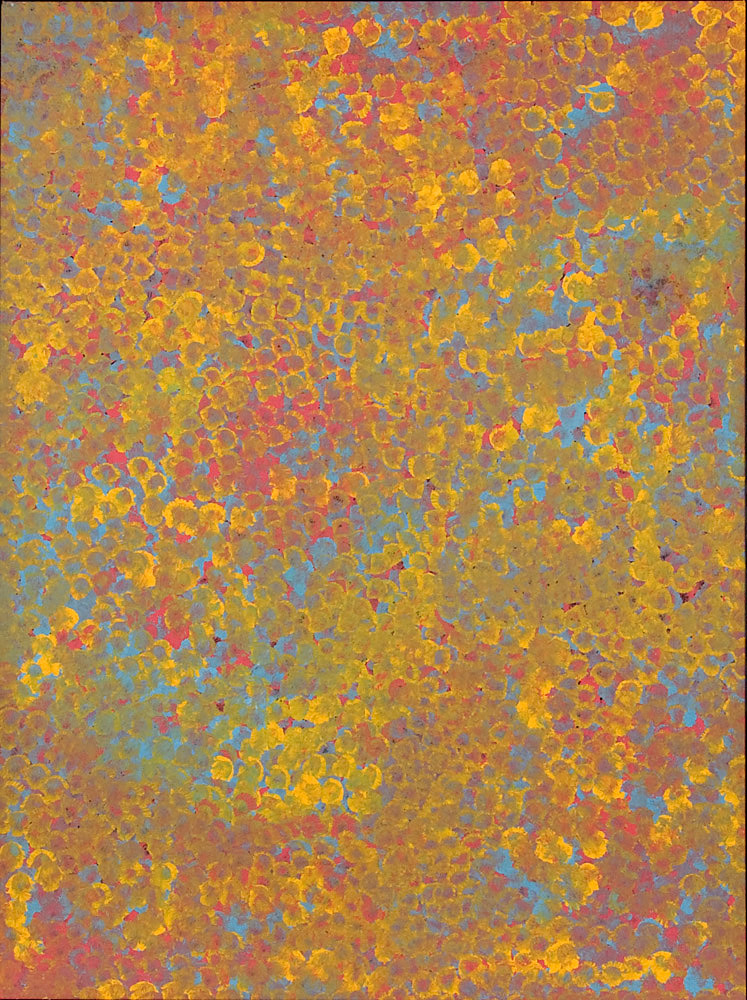
Justin Andrews (Australian, b. 1973) 'Acid yellow 3' 2008


Justin Andrews (Australian, b. 1973)
Acid yellow 3
2008
Acrylic and enamel on composition board
75 x 60cm
Courtesy of the artist and Charles Nodrum Gallery, Melbourne


Masato Takasaka (Australian, b. 1977) 'Return to forever (productopia)' 2009


Masato Takasaka (Australian, b. 1977)
Return to forever (productopia)
2009
Cardboard, wood, plastic, mdf, acrylic, paint, paper, soft-drink cans, tape and discarded product packaging installation
Dimensions variable
Courtesy of the artist


Heide Museum of Modern Art
7 Templestowe Road,
Bulleen, Victoria 3105

Opening hours:
(Heide II & Heide III)
Tuesday – Sunday, Public holidays 10am – 5pm

Heide Museum of Art website

LIKE ART BLART ON FACEBOOK

Back to top

Michael Leunig, President Obama and the “just war” (God with us)

December 2009


Michael Leunig (Australian, b. 1945) 'Carbon Footprints, War Footprints' December 2009


Michael Leunig (Australian, b. 1945)
Carbon Footprints, War Footprints
in The Age Newspaper, Friday 11th December 2009


Still, we are at war, and I’m responsible for the deployment of thousands of young Americans to battle in a distant land. Some will kill, and some will be killed. And so I come here with an acute sense of the costs of armed conflict – filled with difficult questions about the relationship between war and peace, and our effort to replace one with the other…

The concept of a “just war” emerged, suggesting that war is justified only when certain conditions were met: if it is waged as a last resort or in self-defense; if the force used is proportional; and if, whenever possible, civilians are spared from violence.

Of course, we know that for most of history, this concept of “just war” was rarely observed. The capacity of human beings to think up new ways to kill one another proved inexhaustible, as did our capacity to exempt from mercy those who look different or pray to a different God. Wars between armies gave way to wars between nations – total wars in which the distinction between combatant and civilian became blurred. In the span of 30 years, such carnage would twice engulf this continent. And while it’s hard to conceive of a cause more just than the defeat of the Third Reich and the Axis powers, World War II was a conflict in which the total number of civilians who died exceeded the number of soldiers who perished…

We must begin by acknowledging the hard truth: We will not eradicate violent conflict in our lifetimes. There will be times when nations – acting individually or in concert – will find the use of force not only necessary but morally justified.

I make this statement mindful of what Martin Luther King Jr. said in this same ceremony years ago: “Violence never brings permanent peace. It solves no social problem: it merely creates new and more complicated ones.” As someone who stands here as a direct consequence of Dr. King’s life work, I am living testimony to the moral force of non-violence. I know there’s nothing weak – nothing passive – nothing naïve – in the creed and lives of Gandhi and King.

But as a head of state sworn to protect and defend my nation, I cannot be guided by their examples alone. I face the world as it is, and cannot stand idle in the face of threats to the American people. For make no mistake: Evil does exist in the world…

I raise this point, I begin with this point because in many countries there is a deep ambivalence about military action today, no matter what the cause. And at times, this is joined by a reflexive suspicion of America, the world’s sole military superpower.

But the world must remember that it was not simply international institutions – not just treaties and declarations – that brought stability to a post-World War II world. Whatever mistakes we have made, the plain fact is this: The United States of America has helped underwrite global security for more than six decades with the blood of our citizens and the strength of our arms…

So yes, the instruments of war do have a role to play in preserving the peace. And yet this truth must coexist with another – that no matter how justified, war promises human tragedy. The soldier’s courage and sacrifice is full of glory, expressing devotion to country, to cause, to comrades in arms. But war itself is never glorious, and we must never trumpet it as such.


Part of the Nobel Peace Prize acceptance speech by President Barack Obama


Michael Leunig on Wikipedia

LIKE ART BLART ON FACEBOOK

Back to top

Review: ‘Simryn Gill: Inland’ at the Centre for Contemporary Photography, Fitzroy

Exhibition dates: 9th October – 13th December, 2009


Simryn Gill (Australian born Singapore, b. 1959) 'Untitled' 1995 from the exhibition 'Simryn Gill: Inland' at the Centre for Contemporary Photography, Fitzroy, Oct - Dec, 2009


Simryn Gill (Australian born Singapore, 1959)
Untitled
1995
From the series Rampant
7 gelatin silver photographs
28.0 x 26.0cm Courtesy the artist and Breenspace, Sydney
© Simryn Gill


This is a strange survey exhibition of photographs by Malaysian-born Australian artist Simryn Gill at the Centre for Contemporary Photography, Melbourne – photographs that form distinctive bodies of work that support the artist’s other conversations in art but do not form the main backbone to her practice. Perhaps this is part of the problem and part of the beauty of the work. While the work investigates the concepts of presence and absence, space, place and identity and the cultural inhabitation of nature there is a feeling that this is the work of an artist not used to putting images together in a sequence or body of work, not connecting the dots between ideas and image. Intrinsically there is nothing wrong with the conceptual ideas behind the photographs or the individual photographs themselves. The photographs don’t strike one as particularly memorable and they fail to mark the mind of the viewer in their multitudinous framings of reality.

In the series Forest (1996-1998, see photograph above and below) a selective vision of nature is invaded by cultural texts, torn pages of books mimicking natural forms such as roots, flowers and variegated leaves. The ‘natural’ context is inhabited by the cultural con-text to form a double inhabitation – “this strange hybrid nature before the paper rots away, suggestive of how nature is culturally inscribed and the futility of this attempt at containment.”1

This is a nice idea but the photographs fail to hold the attention of the viewer mainly because of the inability of the viewer to read the text that has been grafted onto the natural forms. I literally needed more from the work to hang my hat on and this is how I felt about much of this work presented here. This feeling persists with another series Vegetation (1999, see photographs below). Mundane landscapes are inhabited by faceless human beings, their absence/presence marking the landscape while at the same time nature marks them. A good idea that needed to be pushed much further.

The main body of work in the exhibition is the series Dalam (2001, see photographs below), a 258 strong series of colour photographs presented in the gallery space in gridded formation (Dalam, in Malay, can mean ‘inside’, ‘interior’ or ‘deep’). Featuring a photographic record of the interior of numerous Malaysian homes these clinical yet someone hobby-like photographs record the minutiae of domestica – the intimacy of the interior balanced by a sense of isolation and loneliness through the absence of human presence. Here, “the living room may be seen here as a cultural and social mask for its inhabitants. It’s the space into which others are welcomed on our own terms and onto which we project a portrayal of ourselves.”3 Although the work asks us “to rethink our concepts of spaces and domesticity in relation to various aspects such as socio-cultural identities, history and memory,” as presented in the gallery space the viewer is initially overwhelmed by the number, colour and construction of the interiors.

Personally I found that in the mundanity / individuality of the repetition I soon lost interest in looking intimately at the work. The photographs lack a certain spark, a certain clarity of vision in the actual taking of the images. None of the wonderful angles and intelligence of camera positioning of Eugene Atget here and maybe this is the point – the stifling ‘personality’ and banality of human habitation echoed in the photographs – but I would have rather have looked at a single monumentally intimate, magical image by Candida Hofer than all of these photographs put together!

Unfortunately in this survey exhibition there is only one photograph from what I regard as Simryn Gill’s best body of work, A small town at the turn of the century (1999-2000, see photograph below). Perhaps this was an oversight as this series would seem to bind the others more holistically together. Photographs of this excellent series can be viewed on the Roslyn Oxley9 Gallery website and their presence in this exhibition would have certainly raised the bar in terms of the artist’s vision of nature, place and identity. The square colour format, the interior/exterior of the environments and naturalness of the photographs and their the fruitful bodies really have an eloquent power that most of the work at the Centre for Contemporary Photography seems to lack. Other than the last body of work, Inland (2009, see photograph below) that is.

In the smallest most intimate space at the CCP are some of the most intimate images of Australian place that you will ever see. Spread out on a table in small stacks of jewel-like black and white and Cibachrome images the viewer is asked to done white gloves (ah, the delicious irony of white hands on the Australian land!) to view the empty interiors, landscapes and (hands holding) rocks of the interior. These are beautifully seen and resolved images. The rocks are most poignant.

Gill digs beneath the surface of this thing called Australian-ness and exposes not the vast horizons, decorous landscapes or rugged people (as Naomi Cass states below) but small intimacies of space and place, identity and memory. In the ability to shuffle the deck of cards, to reorder the photographs to make their own narrative the viewer becomes as much the author of the story being told as the artist herself – an open-ended intertextual narrative guided by the artist that investigates the very root of what it is to be Australian on a personal level. I enjoyed this reordering, this subjective experience very much.

Dr Marcus Bunyan


Many thankx to the CCP for allowing me to publish the photographs in the posting. Please click on the photographs for a larger version of the image.


1/ Anonymous. “Simryn Gill: Selected Work,” on the Indepth Arts News website [Online] Cited 12/05/2019

2/ Gill, Simryn. “May 2006,” in Off the Edge, Merdeka 50 years issue no. 33, September 2007, p. 83

3/ Day, Kate. “After Image: Photography at the Fruit Market Gallery,” on Culture 24 website. [Online] Cited 6th December 2009 no longer available online


    Simryn Gill (Australian born Singapore, b. 1959) 'Forest #5' 1998 from the exhibition 'Simryn Gill: Inland' at the Centre for Contemporary Photography, Fitzroy, Oct - Dec, 2009


    Simryn Gill (Australian born Singapore, 1959)
    Forest #5
    1998
    From the series Forest
    16 gelatin silver photographs
    © Simryn Gill


    Rampant (1999)

    “Both populating and haunting the patches of now feral vegetation evoking a sense of foreign/alien source that has been strained, even lost in the act of transplantation. It also parodies the fear of rampant occupation that historically imbues aspects of Australian to Northern neighbours.”10

    In Rampant Gill photographed outbursts of introduced plant species in the Australian landscape such as bamboo and sugar cane, which now grow wild and uncontrolled in subtropical northern New South Wales. Again Gill incorporates performative elements, interacting with nature through ‘dressing’ the plants in garments such as lungis and sarongs which were worn by immigrant workers who harvested these crops. Gill explores of the connections between botany, geography and the idea of plants as ‘humanised’ entities – seen in these strange single or groups of ‘figures’ appearing displaced within the Australian landscape.

    Text from the education resource for the exhibition Simryn Gill: Inland at the Centre for Contemporary Photography, Fitzroy [Online] Cited 12/05/2019


    Simryn Gill (Australian born Singapore, b. 1959) 'Forest #13' 1998 from the exhibition 'Simryn Gill: Inland' at the Centre for Contemporary Photography, Fitzroy, Oct - Dec, 2009


    Simryn Gill (Australian born Singapore, 1959)
    Forest #13
    1998
    From the series Forest
    16 gelatin silver photographs
    © Simryn Gill


    Simryn Gill (Australian born Singapore, b. 1959) 'Untitled' from the 'Forest' series 1996 from the exhibition 'Simryn Gill: Inland' at the Centre for Contemporary Photography, Fitzroy, Oct - Dec, 2009


    Simryn Gill (Australian born Singapore, 1959)
    Untitled
    1996
    From the series Forest
    16 gelatin silver photographs
    © Simryn Gill


    Forest (1996-1998)

    Upon close inspection, this series of large scale black and white photographs of lush tropical plants reveal strips of paper and fragments of text which are embedded into tree trunks, covering leaf surfaces, transforming into aerial mangrove roots, weaving their way up walls and mimicking banana flowers.

    The artist states: “I decided I needed to echo my situation in my art activities, and started making small interventions in the very rare wild places around where we lived, like gardens of unoccupied houses, roadside growths of tapioca and yam”.7

    Returning from Australia to Singapore with her family, Gill went into overgrown gardens and open spaces she was familiar with to construct these site interventions, armed with glue and a range of books – some given to her by friends, others sourced from garage sales – including the colonial texts of Charles Darwin’s The Origin of Species and Daniel Defoe’s Robinson Crusoe, and an Indonesian version of the Hindu tale Ramayana. These works were explorations by Gill into her personal sense of place and history, as an outsider in Singapore. Works in the same series were created in other similar environments in countries such as Malaysia. Although they originate from specific locations, they can be read as anywhere in the tropics.

    The process of entering these ‘little bits of jungle’ to construct these works was referred to by Gill as her ‘guerrilla activities’,8 and were temporary site specific interventions which she sought to document.

    Her friend and fashion photographer Nicholas Leong, chose the camera and film which required long exposure, suiting Gill’s requirements to create large, dense flat tonal images. Together they documented the works before the paper was to rot away and return nature. This introduced Gill to analogue photography and its slow processing, which she values and continues to use.

    Text from the education resource for the exhibition Simryn Gill: Inland at the Centre for Contemporary Photography, Fitzroy [Online] Cited 12/05/2019


    Simryn Gill (Australian born Singapore, b. 1959) 'Untitled' from the 'Forest' series 1996


    Simryn Gill (Australian born Singapore, 1959)
    Untitled
    1996
    From the series Forest
    16 gelatin silver photographs
    © Simryn Gill


    Simryn Gill (Australian born Singapore, b. 1959) 'Vegetation #1' 1999


    Simryn Gill (Australian born Singapore, 1959)
    Vegetation #1
    1999
    From the series Vegetation
    5 gelatin silver photographs
    © Simryn Gill


    … In these works which were begun at a residency at Artpace in Texas, Gill begins the process of masking and disguising, of naturalising human figures into the landscape (in this case herself) through obscuring their heads with fruit and vegetation, that was to be so important in her later bodies of work such as A small town at the turn of the century.

    Curator Sharmini Pereira has written: “In this series of photographs, her self-portrait dominates but only as a stream of disguises involving plants in various geographic locations; tumbleweed and aloe in Texas, mangrove and black boy in Australia, and bird’s nest fern in Singapore. The images bear an uncanny resemblance to a sequence of B-movie stills, where vengeful alien-plant-people threaten to over run the planet. Many Hollywood films have of course played out such narratives as a projection of Cold War anxieties fearful about the threat of Communist contamination. But if Vegetation represents the future through some fear located in the past, it does so through a mimetic representation of the present… Vegetation parodies the camera’s framing of today’s culture contact.

    Beyond their still pathos, the enchanting appeal of these photographs lies in their somersaulting between the mythical moment of first contact and its reversal, which the mimetic moment of secondary contact ushers forth. The artist, “unrecognisable” in her jeans and desert boots and wearing her new plant hairstyle, lampoons the power of mimicry as a means of being both alien and indigenous at one and the same time. In as much as Vegetation offers us the chance to poke fun at the natives, it is also an image of the new 21st-century native – able to deliver the laughs rather than be controlled by them. It is here that we observe the breadth of relief that resides in the welcome opportunity to view imitation as a way of moving beyond the imitated…”

    in “Simryn Gill – Selected Work”, AGNSW, 2002

    Text from the Art Gallery of New South Wales website [Online] Cited 12/05/2019


    Simryn Gill (Australian born Singapore, b. 1959) 'Vegetation #5' 1999


    Simryn Gill (Australian born Singapore, 1959)
    Vegetation #5
    1999
    From the Vegetation series
    5 gelatin silver photographs
    © Simryn Gill


    Vegetation (1999)

    “Nature becomes just another clichéd signifier of place and of localness, which one may adopt while passing through a ‘strange’ place, or migrating to a new place, or indeed as a cover for invasion.”9

    In these small framed photographs, Gill is now the subject within the natural environment. The series was started in San Antonia, Texas in 1999 and was part of a two-month residency during which time she produced a new body of work. Gill was wondering if – in this mimicry of nature – she actually could ‘disappear into the landscape’. On field trips she collected a range of desert plant matter, including aloe and tumble weed and took this back to the studio to construct headdresses. Again, using Nicholas Leong as the photographer, Gill then went back to the location to shoot the series. She continued to work on the series in Singapore using the mangrove and in Australia, the grass tree occasionally referred to as a ‘black boy’. The series is closely related to A small town at the turn of the century in its playfulness and parody of ethnographic portraits.

    Text from the education resource for the exhibition Simryn Gill: Inland at the Centre for Contemporary Photography, Fitzroy [Online] Cited 12/05/2019


    Simryn Gill (Australian born Singapore, b. 1959) 'Vegetation #3' 1999


    Simryn Gill (Australian born Singapore, 1959)
    Vegetation #3
    1999
    From the Vegetation series
    5 gelatin silver photographs
    © Simryn Gill


    Simryn Gill: Inland is a survey of photography and takes place in a photography gallery. It is important to declare at the outset, that while photography forms a significant and wondrous part of her practice, Simryn Gill does not consider herself a photographer; “For me, the taking of photographs is another tool in my bag of strategies, in that awkward pursuit of coherence we sometimes call art.”2 Simryn Gill: Inland embraces this conundrum as an entry point for considering Gill’s photography, and how photography might function more broadly as a way of engaging with the world.

    Seven major series wind almost chronologically through the gallery – in this first survey of Gill’s photography – following a path, quite literally, from outside to inside, from found in nature to found in culture and back. Commencing with three series located outdoors, Forest (1996-1998), Rampant (1999) and Vegetation (1999), the survey moves to Gill’s sweeping interior series Dalam (2001). On the cusp of outside and inside is Power station (2004), which makes a curious and visceral analogy between the interior of her childhood home in Port Dickson, Malaysia and the interior of an adjacent power station. Like a medieval Book of Hours, the hand-sized concertina work Distance (2003-2009) is an attempt by Gill to convey the interior of her home in Marrickville, Sydney to someone residing outside Australia.

    Gill’s most recent work Inland (2009), commissioned for this survey and photographed during a road trip from northern New South Wales to South Australia and across the bight to Western Australia, is at the heart of the exhibition. Gill’s only moving image work, Vessel (2004), commissioned for SBS Television, closes the exhibition’s journey with the almost imperceptible passage of a small fishing vessel across the horizon. To ground the exhibition, or perhaps to oversee our journey, one image is selected from Gill’s highly regarded series, A small town at the turn of the century (1999-2000).

    Seeking an understanding of the politics of place informs her recent series. Inland confounds what is normally expected from photographs of Australia’s interior and eschews decorous landscapes, vast horizons or smiling rugged people, for modest interiors of homes. Indeed there are no people present, only the houses they have inhabited as evidence of their subjectivity.

    Inland consists in piles of small jewel-like Cibachrome and black and white prints sitting on a table for viewers to peruse, heightening the provisional nature of its description, leaving open-ended the question of what can be known through photographic representation.

    Naomi Cass,
 Exhibition Curator and Director 
Centre for Contemporary Photography

    Press release from the Centre for Contemporary Photography website [Online] Cited 01/12/2009 no longer available online


    Simryn Gill (Australian born Singapore, b. 1959) 'Dalam No. 226' 2001


    Simryn Gill (Australian born Singapore, 1959)
    Dalam No. 226
    2001
    From the series Dalam
    Chromogenic print
    9 1/4 in. x 9 1/4 in. (23.5 cm x 23.5cm)
    © Simryn Gill


    Dalam (2001)

    Dalam (Malay for ‘deep’, or ‘within’) is a suite of 260 photographic images, the result of Malaysian artist Simryn Gill’s sojourn across her home country over an eight-week period. She went up to the homes of complete strangers and asked to photograph their living spaces. Dalam is an expansive yet uncannily intimate survey of Malaysia at the turn of the century, a mélange of disparate ethnicities, religions, ideologies and allegiances. The title itself alludes to the depiction of interior spaces as signifiers of the individual lives that inhabit and activate them, but, even more importantly, it suggests an exploration of the social fabric of contemporary Malaysia. As the artist observes: “In conceiving the work I had wondered what the ‘inside’ of a place might look like. Do lots of people held together by geography add up to the idea of a nation or single unified group?” Dalam questions what historian Benedict Anderson famously dubbed “the imagined community”, or the various divergent structures that shape the modern nation-state.

    Text from the Singapore Art Museum website [Online] Cited 12/05/2019


    Dalam (Malay for deep; inside; interior), is a series of two hundred and sixty colour photographs arranged in grid formation on the gallery walls.

    “Gill deliberately began Dalam with the intention to document the living rooms of residents of the Malay peninsula, and her focus in each photograph is to capture the sense of place conveyed by the living room of the occupants.”11

    Accompanied by a close friend, Gill took these over an eight-week period as they travelled across the Malaysian Peninsula. In towns mainly outside the city regions she knocked on the doors of strangers and asked if she could enter their houses to photograph their living rooms. Surprisingly, almost everyone agreed, and the resulting series gives a fascinating insight into the character of the Malaysian Peninsula, made up of a broad mix of people from diverse cultural backgrounds. Gill was again exploring her conflicting experience of being both insider and outsider; raised in Malaysia but also having lived outside for a very long time.

    Text from the education resource for the exhibition Simryn Gill: Inland at the Centre for Contemporary Photography, Fitzroy [Online] Cited 12/05/2019


    Simryn Gill (Australian born Singapore, b. 1959) 'Dalam No. 162' 2001


    Simryn Gill (Australian born Singapore, 1959)
    Dalam No. 162
    2001
    From the series Dalam
    Chromogenic print
    9 1/4 in. x 9 1/4 in. (23.5 cm x 23.5cm)
    © Simryn Gill


    Simryn Gill (Australian born Singapore, b. 1959) 'Dalam #39' 2001


    Simryn Gill (Australian born Singapore, 1959)
    Dalam #39
    2001
    From the series Dalam
    Chromogenic print
    9 1/4 in. x 9 1/4 in. (23.5 cm x 23.5cm)
    © Simryn Gill


    How We Are in the World: The Photography of Simryn Gill

    Simryn Gill: Inland is a survey of photography and takes place in a photography gallery. It is important to declare at the outset, that while photography forms a significant and wondrous part of her practice, Simryn Gill does not consider herself a photographer; “For me, the taking of photographs is another tool in my bag of strategies, in that awkward pursuit of coherence we sometimes call art”.1 Simryn Gill: Inland embraces this conundrum as an entry point for considering Gill’s photography, and how photography might function more broadly as a way of engaging with the world.

    Seven major series wind almost chronologically through the gallery – in this first survey of Gill’s photography – following a path, quite literally, from outside to inside, from found in nature to found in culture and back. Commencing with three series located outdoors, Forest (1996-1998), Rampant (1999) and Vegetation (1999), the survey moves to Gill’s sweeping interior series Dalam (2001). On the cusp of outside and inside is Power station (2004), which makes a curious and visceral analogy between the interior of her childhood home in Port Dickson, Malaysia and the interior of an adjacent power station. Like a medieval Book of Hours, the hand-sized concertina work Distance (2003-2008) is an attempt by Gill to convey the interior of her home in Marrickville, Sydney to someone residing outside Australia. Gill’s most recent work Inland (2009), commissioned for this survey and photographed during a road trip from northern New South Wales to South Australia and across the bight to Western Australia, is at the heart of the exhibition. Gill’s only moving image work, Vessel (2004), screened on SBS Television, closes the exhibition’s journey with the almost imperceptible passage of a small fishing vessel across the horizon. To ground the exhibition, or perhaps to oversee our journey, one image is selected from Gill’s highly regarded series, A small town at the turn of the century (1999-2000).

    Gill’s photography takes place within a broader practice that curator Russell Storer describes as “… subjecting found objects, books, local materials and sites – each of which carry specific meanings and histories – to a range of processes including photographing, collecting, erasing, casting, tearing, arranging, stitching, rubbing, wrapping and engraving”.2 Gill takes humble things in the world and shifts them; rearranges them with seemingly endless patience, craft and grace, to communicate something about how the object has come into being. This is not a matter of changing context to appreciate formal qualities as might a connoisseur, but rather a quest for understanding place.

    Always evident in the found object is some kind of story that, as Gill gathers the item, is folded into the meaning of her work. The constituent parts of her installations – be they items found on the shore or collected from around her studios in Port Dickson or Sydney, or indeed a particular site Gill photographs – are gathered for their ability to evoke a history. Movement across the globe, of people and vegetation, both enforced and deliberate, if not the subject of her work is certainly a link. While not a unique story, resettlement is part of Gill’s individual and familial history. Her parents originally moved from India to Malaya prompted by the range of human predicaments, from political and economic upheaval, through to adventure and marriage. The displacement of objects echoes the journeys of people.

    Naomi Cass Exhibition Curator and Director Centre for Contemporary Photography, extract from catalogue essay [Online] Cited 12/05/2019


    Simryn Gill (Australian born Singapore, b. 1959) 'A small town at the turn of the century #5' 1999-2000


    Simryn Gill (Australian born Singapore, 1959)
    A small town at the turn of the century #5
    1999-2000
    Type C photograph
    From a series of 40
    91.5 x 91.5cm
    Private collection, Sydney
    © Simryn Gill


    A small town at the turn of the century 1999-2000 is a series of 40 type C photographs taken by Gill in the town the artist grew up in. The documentation of the people and place of ones past could be highly nostalgic. Added to this is the moment at which Gill chose to document – the turn of the 20th into the 21st century. Such references to time and memory, the past and the present are potent but Gill has covered each of her subjects’ heads with tropical fruit. Rather than being absurd or ironical the head coverings move the images away from being portraits and into the broader realm of context. The context however is not necessarily as revealing as the viewer might wish. There are numerous variations on dress, interiors, exteriors, pose, and accoutrements that suggest activities (whether work or play). While it is usually clear that the environment is tropical (because of the fruit and foliage) the images provoke a complex set of reactions to the possible messages. Faceless, Gill’s subjects are ciphers constructed by external objects, presented with affection.

    Text from the Art Gallery of New South Wales website [Online] Cited 12/05/2019


    Simryn Gill (Australian born Singapore, b. 1959) 'Distance' 2003-2008

    Simryn Gill (Australian born Singapore, b. 1959) 'Distance' 2003-2008

    Simryn Gill (Australian born Singapore, b. 1959) 'Distance' 2003-2008


    Simryn Gill (Australian born Singapore, 1959)
    Distance
    2003-2008
    Artist book
    Installation views, Centre for Contemporary Photography


    Distance (2003-2008)

    Distance, an artist’s book of small colour photographs is produced as a hand-sized concertina work in an edition of just five. This beautiful work is “like a medieval Book of Hours”12 and is displayed in an elegant museum-like cabinet with a protective perspex covering. Distance was produced after many conversations Gill had with friends and family overseas and is an attempt to show them what her home is like. She took one hundred and thirty photographs, using a medium format camera, of everything in the interior of her home in Marrickville, Sydney; however the results seemed to fail in producing a truthful representation of her home, as Gill says, “the final result is almost like an incoherence, it’s too close, there is too much information”.13. Naomi Cass wrote with reference to this, ‘While Distance fails to communicate the gestalt of home, it is remarkable in its details and beauty’.14

    Text from the education resource for the exhibition Simryn Gill: Inland at the Centre for Contemporary Photography, Fitzroy [Online] Cited 12/05/2019


    Simryn Gill (Australian born Singapore, 1959) 'Inland' 2009


    Simryn Gill (Australian born Singapore, 1959)
    Inland
    2009
    Cibachrome and silver gelatin photographs
    Photographs (quantity variable)
    13 x 13cm (each)


    Inland (2009)

    “Through an extraordinary ability to engage with strangers, Gill and her fellow traveller Mary Maguire photographed the living rooms of eighty homes ranging in geographical location, socio-economic and cultural background.”15

    Inland (2009) is a new series, which was commissioned for this exhibition. Using the same process to produce Dalam, Gill photographed this series on a road trip; however this time in Australia, from northern New South Wales to South Australia and across the bight to Western Australia. The photographs include views of the horizon, skyscapes, interior still life compositions and close ups of stones collected by Gill during her travels. Inland is at the heart of the exhibition and the mode of presentation differs to all other series in the exhibition, as these precious handmade small scale colour and black and white images are assembled on a table in piles for the visitor to examine, with white gloves.

    Text from the education resource for the exhibition Simryn Gill: Inland at the Centre for Contemporary Photography, Fitzroy [Online] Cited 12/05/2019


    Centre for Contemporary Photography
    Level 2, Perry St Building
    Collingwood Yards, Collingwood
    Victoria 3066

    Opening hours:
    Wednesday – Saturday 11am – 5pm

    Centre for Contemporary Photography website

    LIKE ART BLART ON FACEBOOK

    Back to top

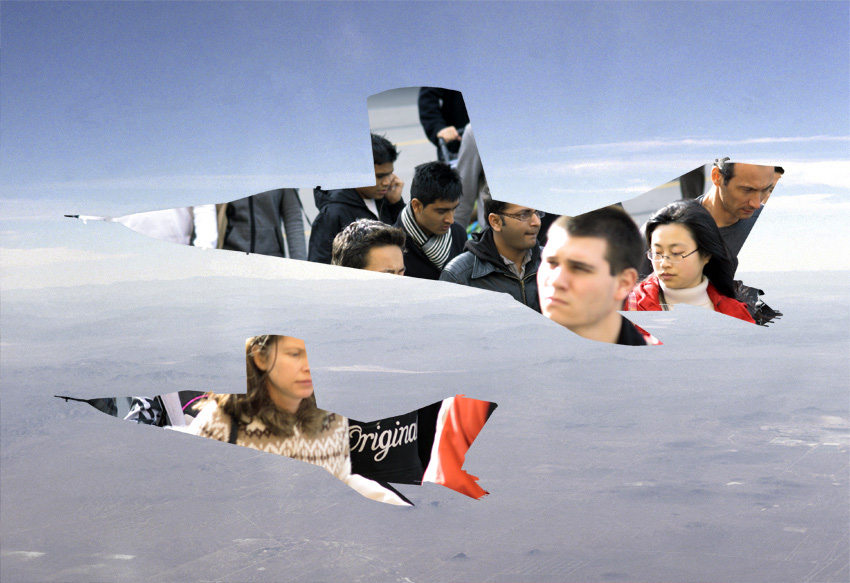
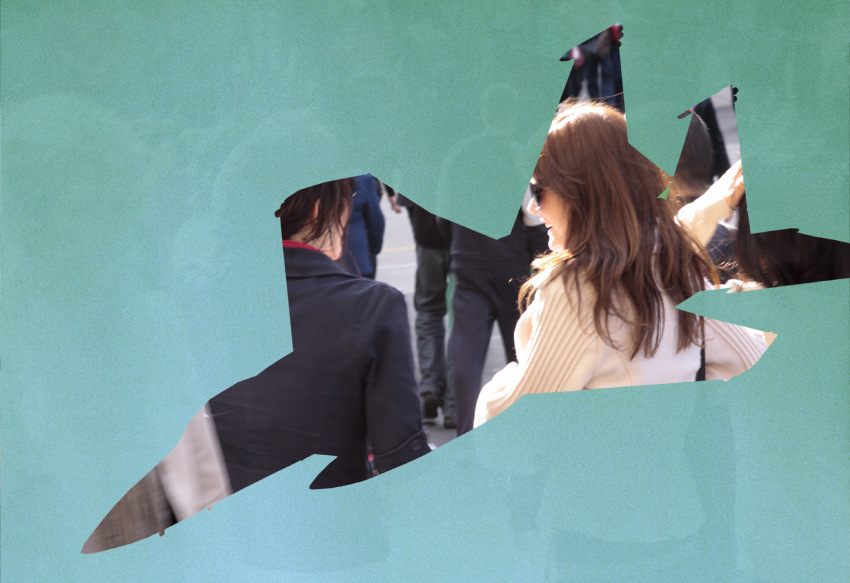
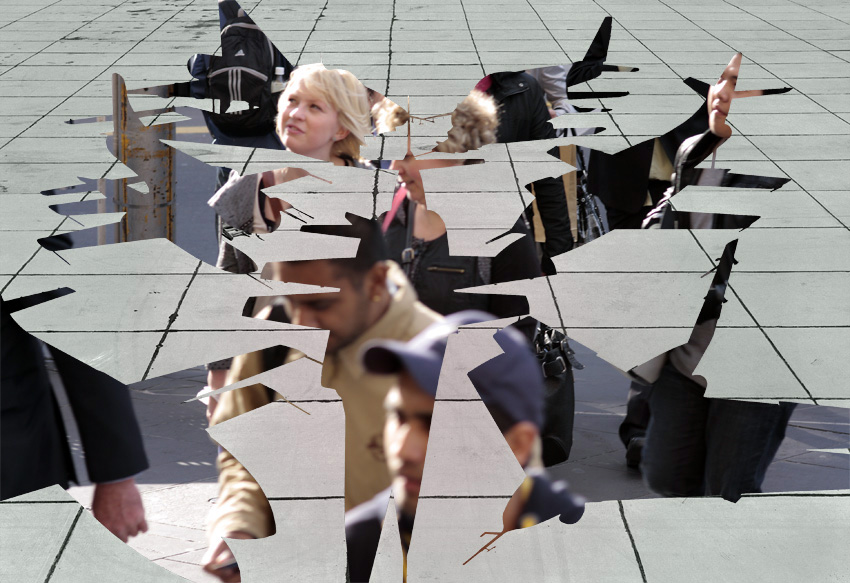
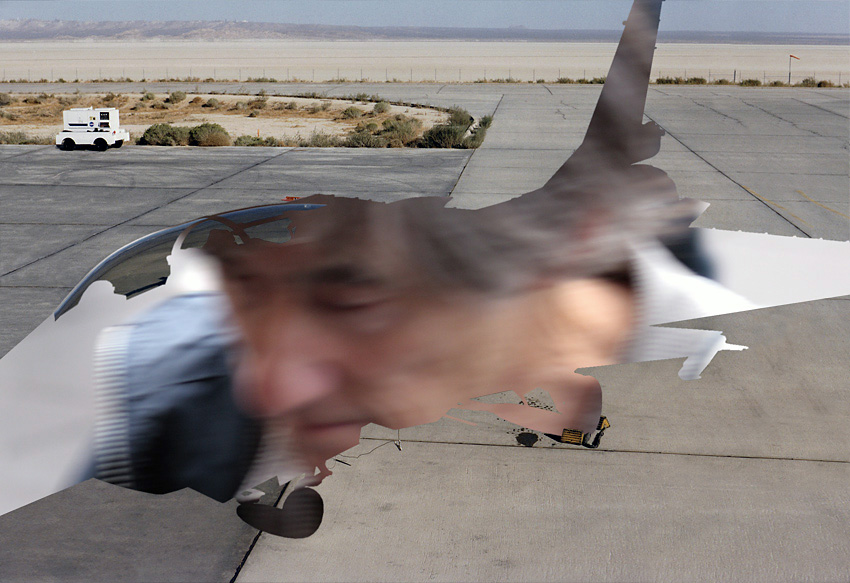
    Photographs: Marcus Bunyan. ‘There But For The Grace of You Go I’ 2009

    December 2009


    Marcus Bunyan (Australian, b. 1958) 'Untitled' from the series 'There But For The Grace of You Go I' 2009


    Marcus Bunyan (Australian, b. 1958)
    Untitled from the series There But For The Grace of You Go I
    2009
    Digital colour photograph


    There But For The Grace of You Go I

    A body of work, There But For The Grace of You Go I (2009) is now online on my website.

    There are twenty images in the series which can be viewed as a sequence, rising and falling like a piece of music. Below are a selection of images from the series. The work continues an exploration into the choices human beings make. The silhouettes and landscapes of planes are taken from found copyright free images; the people from my photographs captured as they crossed the intersection outside Flinders Street Station, Melbourne. Other images are paintings from the Renaissance and POW’s during World War II.

    I have always been creative from a very early age, starting as a child prodigy playing the piano at the age of five and going on to get my degree as a concert pianist at the Royal College of Music in London. I have always felt the music and being creative has helped me cope with life, living with bipolar.

    These days as I reach my early 50’s ego is much less a concern – about being successful, about having exhibitions. I just make the work because I love making it and the process gives me happiness – in the thinking, in the making. I can loose myself in my work.

    When Andrew Denton asked Clive James what brings him joy, James replies The arts, and then qualified his answer. What I mean is creativity. When I get lost in something that’s been made, it doesn’t matter who it is by. It could be Marvin Gaye singing ‘I Heard it Through the Grapevine’ or it could be the adagio of the Ninth Symphony …”

    What a wise man.

    Dr Marcus Bunyan


    Please click on the photographs for a larger version of the image.

    Photographs are available from this series for purchase. As a guide, a digital colour 16″ x 20″ costs $1000 plus tracked and insured shipping. For more information please see my Store web page.


    Marcus Bunyan (Australian, b. 1958) 'Untitled' from the series 'There But For The Grace of You Go I' 2009


    Marcus Bunyan (Australian, b. 1958)
    Untitled from the series There But For The Grace of You Go I
    2009
    Digital colour photograph


    Marcus Bunyan (Australian, b. 1958) 'Untitled' from the series 'There But For The Grace of You Go I' 2009


    Marcus Bunyan (Australian, b. 1958)
    Untitled from the series There But For The Grace of You Go I
    2009
    Digital colour photograph


    Marcus Bunyan (Australian, b. 1958) 'Untitled' from the series 'There But For The Grace of You Go I' 2009


    Marcus Bunyan (Australian, b. 1958)
    Untitled from the series There But For The Grace of You Go I
    2009
    Digital colour photograph


    Marcus Bunyan (Australian, b. 1958) 'Untitled' from the series 'There But For The Grace of You Go I' 2009


    Marcus Bunyan (Australian, b. 1958)
    Untitled from the series There But For The Grace of You Go I
    2009
    Digital colour photograph


    Marcus Bunyan (Australian, b. 1958) 'Untitled' from the series 'There But For The Grace of You Go I' 2009


    Marcus Bunyan (Australian, b. 1958)
    Untitled from the series There But For The Grace of You Go I
    2009
    Digital colour photograph


    Marcus Bunyan (Australian, b. 1958) 'Untitled' from the series 'There But For The Grace of You Go I' 2009


    Marcus Bunyan (Australian, b. 1958)
    Untitled from the series There But For The Grace of You Go I
    2009
    Digital colour photograph


    Marcus Bunyan (Australian, b. 1958) 'Untitled' from the series 'There But For The Grace of You Go I' 2009


    Marcus Bunyan (Australian, b. 1958)
    Untitled from the series There But For The Grace of You Go I
    2009
    Digital colour photograph


    Marcus Bunyan (Australian, b. 1958) 'Untitled' from the series 'There But For The Grace of You Go I' 2009


    Marcus Bunyan (Australian, b. 1958)
    Untitled from the series There But For The Grace of You Go I
    2009
    Digital colour photograph


    There But For The Grace of You Go I (2009) series

    Marcus Bunyan website

    LIKE ART BLART ON FACEBOOK

    Back to top

    Review: ‘Emily Kame Kngwarreye: The Person and her Paintings’ at DACOU Aboriginal Art, Port Melbourne

    Exhibition dates: 29th October – 6th December 2009


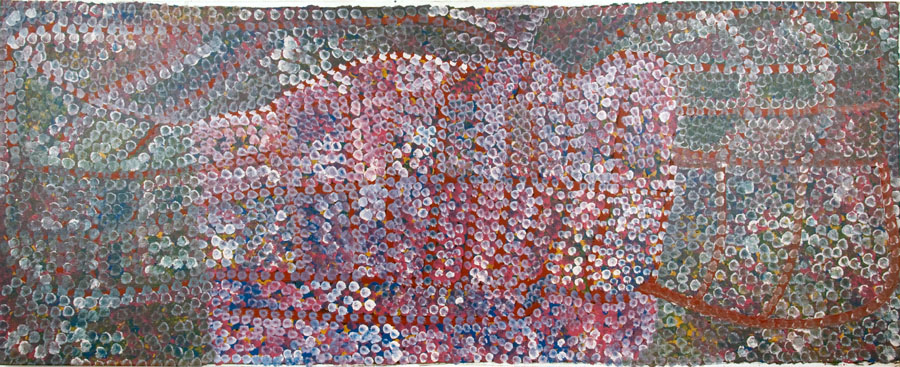
    Emily Kame Kngwarreye (Australian, 1910-1996) 'My Country' 1996 from the exhibition 'Emily Kame Kngwarreye: The Person and her Paintings' at DACOU Aboriginal Art, Port Melbourne, Oct - Dec, 2009


    Emily Kame Kngwarreye (Australian, 1910-1996)
    My Country
    1996
    Synthetic polymer paint on canvas


    “One can theorise about beauty all day, but words are weak and at day’s end one will go out into the blue and golden and multifarious world, and one will know with the responsive heart, before there is time for words, what is and isn’t beautiful.”


    Leo Rubinfien1


    There are certain existential experiences in art one will always remember:


    ~ The maelstrom of convulsive colours in the paintings of J. M. W. Turner at the Tate in London

    ~ Being alone in a gallery at the Louvre with six self-portraits by Rembrandt and embracing their inner humanity

    ~ Sitting in the Musée de l’Orangerie, Paris and being surrounded by the elemental forces of Monet’s panels of Nymphéas

    ~ Listening to “Sorrowful Songs” from the Symphony No. 3 by Gorecki


    to name but a few.

    Added to this list would be my experience of this exhibition of paintings by Emily Kame Kngwarreye.

    It was a privilege to spend time alone with the work, just wandering around the gallery that is situated in an industrial estate in Port Melbourne. It is difficult for me to describe the experience such was the connection I had with the work, with the earth. I am emotional even writing about it. Standing in front of these paintings all pretensions of existence, all trappings of society, dissolve in colour, in presence.

    I am a naturalised Australian having been born in England; I have never been to the far desert. This does not matter. What I felt, what I experienced was a connection to the land, to the stories that Emily has told in these paintings. We all come from the earth and return to it.

    The paintings were painted horizontally (like the painter Jackson Pollock who intuitively accessed the spiritual realm) and evidence a horizontal consciousness not a hierarchical one. Knowledge is not privileged over wisdom. There is a balance between knowledge and wisdom – the knowledge gained through a life well lived and the wisdom of ancient stories that represent the intimacy of living on this world. The patterns and diversities of life compliment each other, are in balance.

    Wisdom comes from the Indo-European root verb weid, “to see,” the same root from which words like vision come.2 In this sense these are “Vedic” paintings in that they are ancient, sacred teachings, Veda meaning literally “I have seen.”

    On this day I saw. I felt.

    Rarely do I have such an emotional reaction to art. When it does happen it washes over me, it cleanses my soul and releases pent up emotions – about life, about mortality, about being.

    As Cafe del Mar in one of their songs, “The Messenger” sing:

    “We,
    We got the feeling of Mystery,
    We got the touch of humanity,
    I know, we can’t live forever.”


    Go and be touched.

    Dr Marcus Bunyan


    1/ Rubinfien, Leo. “Perfect Uncertainty: Robert Adams and the American West, (2002)” on Americansuburb X: Theory. [Online] Cited 22/11/2009 no longer available online

    2/ Doczi, Gyorgy. The Power of Limits: Proportional Harmonies in Nature, Art and Architecture. Colorado: Shambala Publications, 1981, p. 127


    Thank you to Leanne Collier and DACOU Aboriginal Art for allowing me to reproduce the three large photographs of two Wildflower paintings and one My Country painting.


    Emily Kame Kngwarreye (Australian, 1910-1996) 'My Country' 1996 from the exhibition 'Emily Kame Kngwarreye: The Person and her Paintings' at DACOU Aboriginal Art, Port Melbourne, Oct - Dec, 2009


    Emily Kame Kngwarreye (Australian, 1910-1996)
    My Country
    1996
    Synthetic polymer paint on canvas


    Emily Kame Kngwarreye (Australian, 1910-1996) 'My Country' 1996


    Emily Kame Kngwarreye (Australian, 1910-1996)
    My Country
    1996
    Synthetic polymer paint on canvas


    Emily Kame Kngwarreye (Australian, 1910-1996) 'My Country' 1996


    Emily Kame Kngwarreye (Australian, 1910-1996)
    My Country
    1996
    Synthetic polymer paint on canvas


    Emily Kame Kngwarreye is Australia’s most important and famous female artist. Hailed as a modernist ‘genius’, she has been compared to Rothko and de Kooning. An Anmatyerre elder from Utopia in the remote central desert region of the Northern Territory, Emily first took up painting on canvas in her late 70’s. She quickly became one of the leaders in the contemporary Aboriginal art movement, transforming her style several times during her short career of eight years. Today she is known as one of the greatest abstract painters of the 20th century.

    This important exhibition of over 80 pieces covering all significant series and periods of Emily Kngwarreye’s artistic career is the first commercial retrospective exhibition to be held since she passed away in 1996. It gives the public an outstanding chance to view and purchase works in each of her styles. DACOU has retained numerous magnificent pieces over the years that will be included in this exhibition, such as rarely seen works from Emily’s Ochre Series, created with ochre and charcoal she collected from her country. On show will be the sister painting to the famous Earth’s Creation (also titled Earth’s Creation, 1994, 4 panels, 211 x 596cm) and just as splendid in colour and style.

    Text from the DACOU Aboriginal Art website [Online] Cited 27/11/2009 no longer available online


    Emily Kame Kngwarreye (Australian, 1910-1996) 'Wildflower' 1992


    Emily Kame Kngwarreye (Australian, 1910-1996)
    Wildflower
    1992
    Synthetic polymer paint on canvas


    Emily Kame Kngwarreye (Australian, 1910-1996) 'Wildflower' 1992 (detail)


    Emily Kame Kngwarreye (Australian, 1910-1996)
    Wildflower (detail)
    1992
    Synthetic polymer paint on canvas


    Inspired by her cultural life as an Anmatyerre elder Emily produced over 3000 paintings over the course of her short eight-year painting career. Her lifelong custodianship of the women’s Dreaming sites of her clan country and in particular her yam Dreaming is the driving force behind her work (Kame meaning yam seed). Her work displays an instinct created by decades of making art for private purposes, drawing in soft earth and ritual body painting. Strong lineal structures whereupon individual dots overlap lines and appearing within others trace the appearance of seeds, plants and tracks on her country.

    Text from the University of Canberra website [Online] Cited 11/05/2019


    Emily Kame Kngwarreye (Australian, 1910-1996) 'Wildflower' 1994


    Emily Kame Kngwarreye (Australian, 1910-1996)
    Wildflower
    1994
    Synthetic polymer paint on canvas


    DACOU Aboriginal Art

    This gallery has now closed.

    LIKE ART BLART ON FACEBOOK

    Back to top

    Vale Sue Ford (1943-2009)

    November 2009


    Sue Ford (Australian, 1943-2009)
'Dissolution' 2006 From the 'Last Light' series


    Sue Ford (Australian, 1943-2009)
    Dissolution
    2006
    From the Last Light series


    One thing always struck me about Sue Ford’s work when I saw it. The work had integrity.

    Whatever she produced it was always interesting, valid and had integrity. She followed her own path as we all do – and her voice was clear, focused and eloquent. I loved her series Shadow Portraits – an erudite investigation into the nature of Australian identity if ever there was one!

    Vale Sue Ford.

    Dr Marcus Bunyan


    Please click on some of the photographs for a larger version of the image.

    See also Barbara Hal. “Australian pioneer focused on her art,” in The Age newspaper November 21, 2009 [Online] Cited 10 May 2019


    Sue Ford (Australian, 1943-2009) 'Silhouette' 2006 from the 'Last Light' series


    Sue Ford (Australian, 1943-2009)
    Silhouette
    2006
    From the Last Light series


    Sue Ford (Australian, 1943-2009) 'Apparition' 2007 from the 'Last Light' series


    Sue Ford (Australian, 1943-2009)
    Apparition
    2007
    From the Last Light series


    Sue Ford (Australian, 1943-2009) 'Transparent' 2007 from the 'Last Light' series


    Sue Ford (Australian, 1943-2009)
    Transparent
    2007
    From the Last Light series


    Sue Ford (Australian, 1943-2009) 'Shadow portraits' 1994 (detail)


    Sue Ford (Australian, 1943-2009)
    Shadow portraits (detail)
    1994
    Colour photocopies


    Sue Ford (Australian, 1943-2009) 'Shadow portraits' 1994 (detail)


    Sue Ford (Australian, 1943-2009)
    Shadow portraits (detail)
    1994
    Colour photocopies


    Sue Ford (Australian, 1943-2009) 'Shadow portraits' 1994 (detail)


    Sue Ford (Australian, 1943-2009)
    Shadow portraits (detail)
    1994
    Colour photocopies


    For Shadow portraits, Ford, like numerous artists in this period, mined historical archives of photographs for her source material, decontextualising and reworking it. Her starting point was nineteenth-century studio portraits of settler Australians that were popular in colonial society. She exploded her previous practice and intense focus on the faces of individuals; in most cases the subjects of the original photographs used in Shadow portraits are unrecognisable. Their faces have been emptied out and replaced by Ford’s generic images of Australian foliage, especially fern fronds. All the details that define an individual, their character and appearance, have disappeared, just like the sitters themselves who have been dead for decades and exist only in ghosted form.

    Individual works in Shadow portraits (above) rely on a dynamic relationship between historical and contemporary images to create something new. The original studio portrait is not intact, having undergone an extended process of transformation; being re-photographed, cut up and photocopied to eventually take the form of a large gridded image. Use of the grid – an obvious reference to European systems of containment and control – continues the experimentation evident in Yellowcake. Overlaps, like the doubled image of a stereoscopic card, are purposefully exploited. The aim is to destabilise a once-static historic image, to turn the small into big, the tones into colour, the positive into negative and so on. Through these means the colonial past is represented as having continuing reverberations: the loss of concreteness in the images and distortions of scale parallel the incompleteness, gaps and blow-outs characteristic of any historical narrative. As Zara Stanhope writes, Ford’s Shadow portraits ‘image the ongoing processes involved in the construction of histories, and the power to know and remember, that provides the opportunity to revisit or critique such accounts’.

    Associate Professor Helen Ennis. “Sue Ford’s history,” in Art Journal 50, National Gallery of Victoria, 1 Jan 2013 [Online] Cited 11/05/2019


    Sue Ford (Australian, 1943-2009) 'Ross, 1964; Ross, 1974' printed 1974 from the 'Time' series (1962-1974)


    Sue Ford (Australian, 1943-2009)
    Ross, 1964; Ross, 1974
    Printed 1974
    From the Time series (1962-1974)
    Gelatin silver print
    11.1 × 20.1cm
    © Sue Ford


    “I have always been interested in how actions taken in the past could affect and echo in peoples’ lives in the present. Most of my work is to do with thinking about human existence from this perspective.”

    Sue Ford, “Project X’, in Helen Ennis & Virginia Fraser, Sue Ford: A Survey 1960-1995. Monash University Gallery, Clayton, 1995, p. 17


    Sue Ford (Australian, 1943-2009) 'Big secret!' c. 1960-1961


    Sue Ford (Australian, 1943-2009)
    Big secret!
    c. 1960-1961
    Gelatin silver print
    28.9 × 23.6cm
    © Sue Ford


    Sue Ford (Australian, 1943-2009) 'Orpheus' 1972


    Sue Ford (Australian, 1943-2009)
    Orpheus
    1972
    Gelatin silver print
    33.8 × 33.8cm
    © Sue Ford


    A feminist approach

    Until 1988 Ford was known principally for work that was motivated by feminist politics, that dealt with the lives of contemporary women and the politics of representation. She worked across media, using black and white photography, film and video. Her photography from the early 1960s onwards was based on what she regarded as photography’s objective capacity; in other words, she utilised the camera as a means of recording whatever she placed in front of it. This interest in ‘objectivity’ related more to the practices of conceptual art than to the heightened subjectivity, or subjective documentary that prevailed in art photography, especially during the seventies. Ford’s feminist photography can be regarded as objective but not as ‘documentary’ in the terms the latter is conventionally understood because there was nothing surreptitious or spontaneous about it. Her approach was non-exploitative and consensual in keeping with the politics of feminism and the counterculture. From the beginning of her career, her subjects were mostly friends and acquaintances; they knew they were being photographed and agreed to it. This consensual approach and its interrelated performative element were adopted by other feminist photographers, such as Carol Jerrems, Ponch Hawkes and Ruth Maddison, in their work during the 1970s.

    In the 1970s and 80s Ford’s photography differed from mainstream practice in another fundamental way. It did not relate to the purist and fine art traditions that underpinned the case for photography’s acceptance as art. Her prints were grainy, rough and often very small. Ford conceived photography in radical terms, as a plastic medium that was entwined with other art practices. In an interview at the time she was awarded a scholarship to fund her studies at the Victorian College of the Arts in 1973-74, she emphasised her interest in artists’ use of photography: ‘Some artists are utilising phototechniques and are thinking in a photographic way. I want to use some of their techniques and materials to extend photography into other dimensions’.

    Associate Professor Helen Ennis. “Sue Ford’s history,” in Art Journal 50, National Gallery of Victoria, 1 Jan 2013 [Online] Cited 11/05/2019


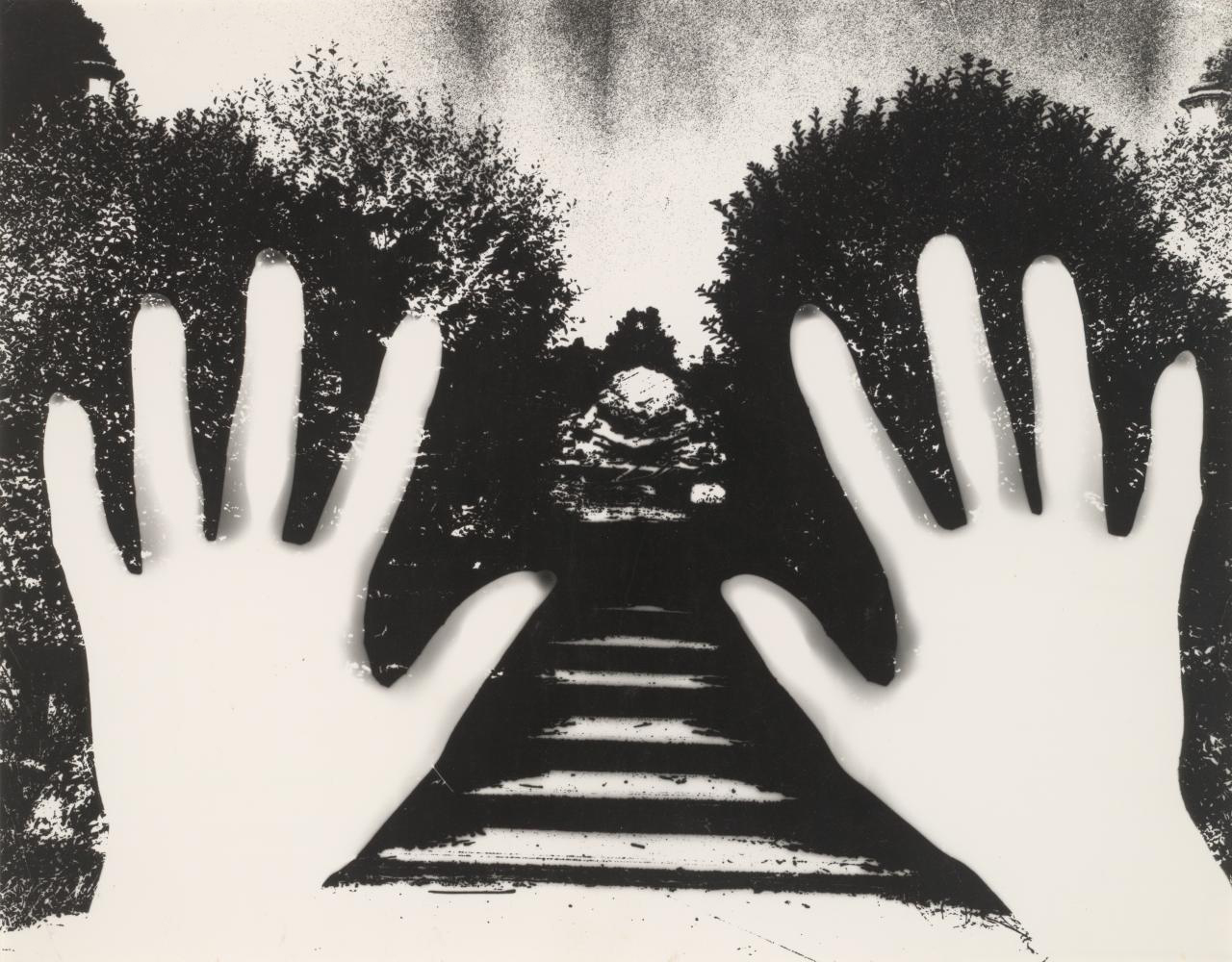
    Sue Ford (Australian, 1943-2009) 'No title (Photogram of two hands and garden path)' c. 1970


    Sue Ford (Australian, 1943-2009)
    No title (Photogram of two hands and garden path)
    c. 1970
    Gelatin silver print
    27.6 × 34.7cm irreg. (image and sheet)
    © Sue Ford


    LIKE ART BLART ON FACEBOOK

    Back to top

    Review: ‘Heavenly Vaults’ by David Stephenson at John Buckley Gallery, Richmond

    Exhibition dates: 7th – 28th November, 2009


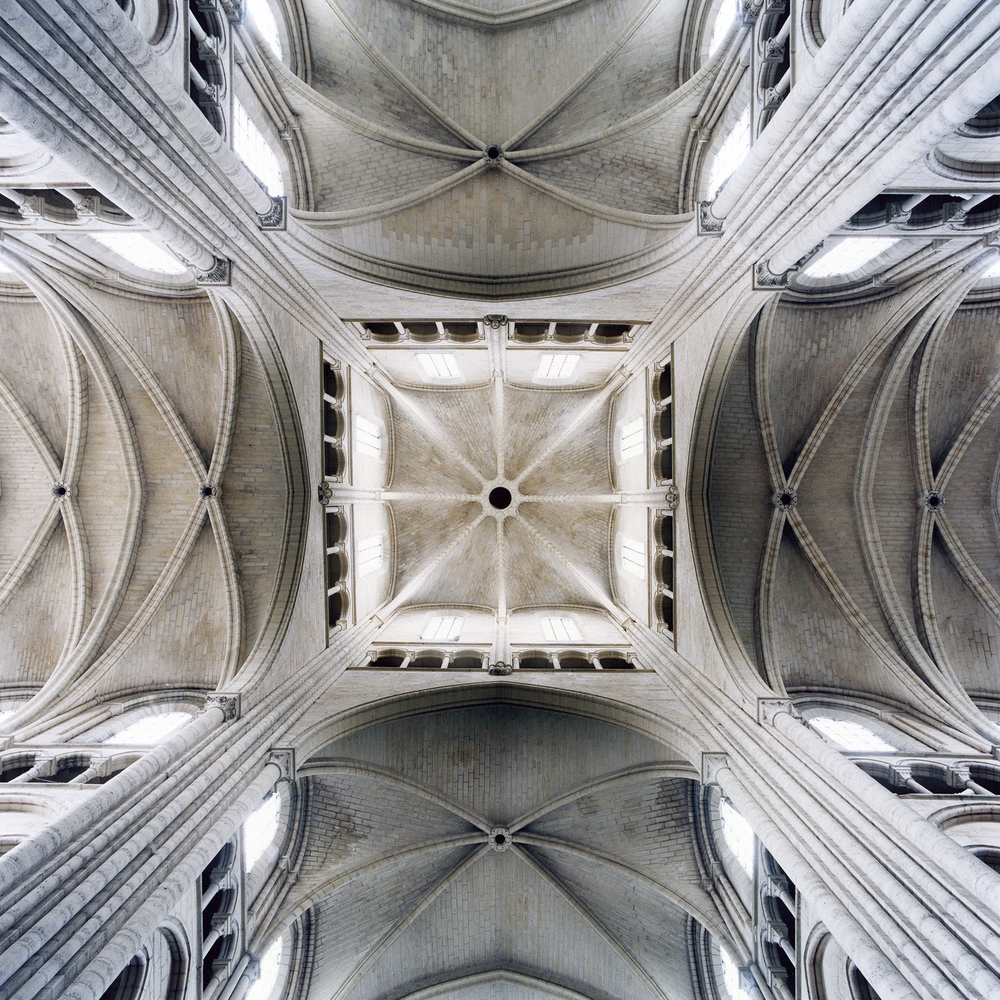
    David Stephenson (Australian born America, b. 1955) 'Nave, Laon Cathedral, Laon, France' 2006/07 from the exhibition 'Heavenly Vaults' by David Stephenson at John Buckley Gallery, Richmond, Nov 2009


    David Stephenson (Australian born America, b. 1955)
    Nave, Laon Cathedral, Laon, France
    2006/2007


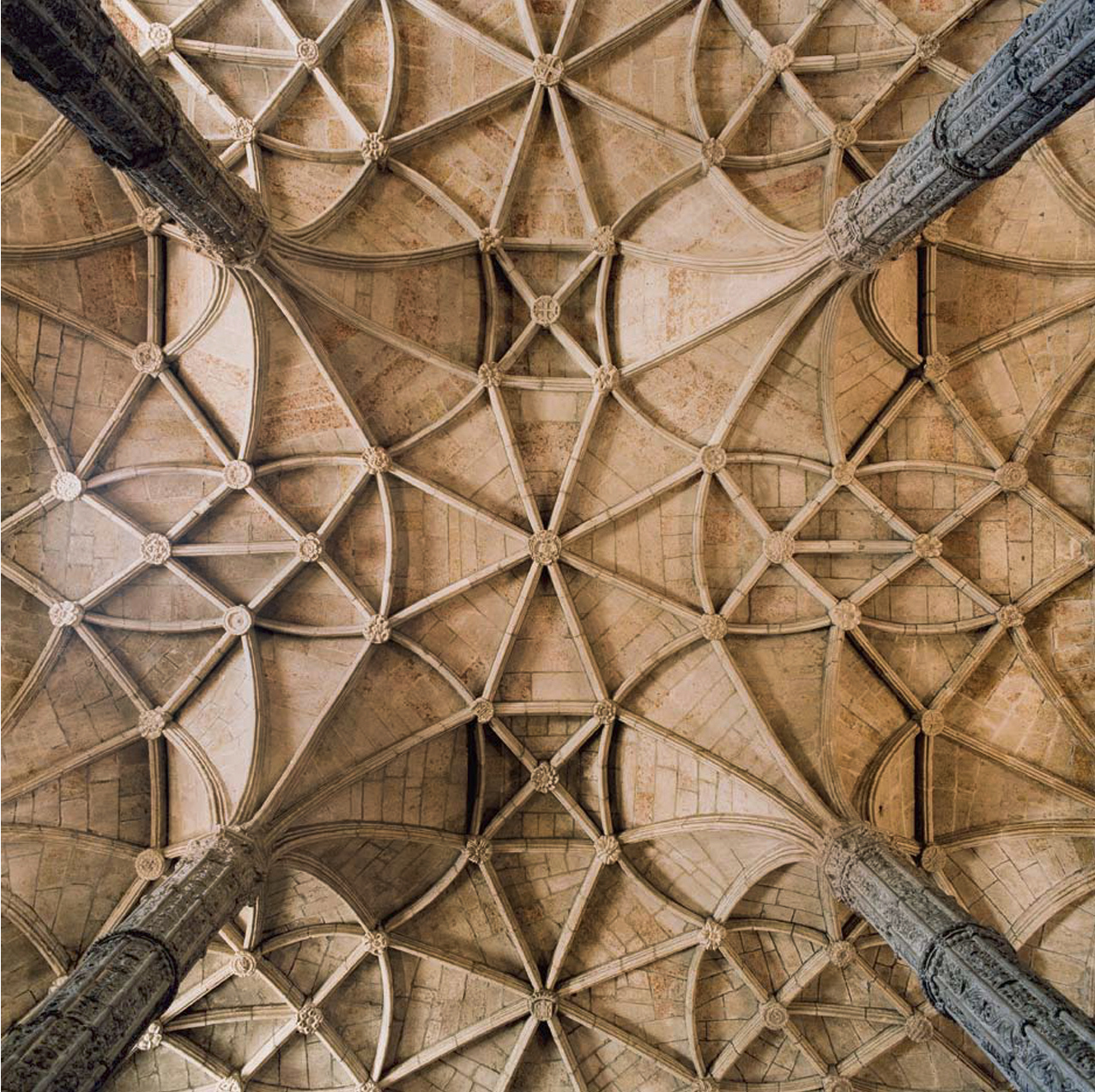
    I remember many years ago, in the mid-1990’s, seeing the wonderful Domes of David Stephenson displayed in Flinders Lane in what is now fortfivedownstairs gallery. They were a revelation in this light filled space, row upon row of luminous domes seemingly lit from within, filled with the sense of the presence of divinity. On the opposite wall of the gallery were row upon row of photographs of Italian graves depicting the ceramic photographic markers of Italian dead – markers of the impermanence of life. The doubled death (the representation of identity on the grave, the momento mori of the photograph) slipped quietly into the earth while opposite the domes ascended into heaven through their numinous elevation. The contrast was sublime.

    Unfortunately the same cannot be said of the latest exhibition Heavenly Vaults by David Stephenson at John Buckley Gallery, Richmond.

    The problems start with the installation of the exhibition. As you walk into the gallery the 26 Cibachrome photographs are divided symmetrically down the axis of the gallery so that the prints reflect each other at both ends and each side of the gallery. It is like walking down the nave of a cathedral and observing the architectural restraint of the stained glass windows without their illumination. Instead of the punctum of light flooding through the stained glass windows, the varying of intensities, the equanimity of the square prints all exactly the same size, all reflecting the position of the other makes for a pedestrian installation. Some varying of the print size and placement would have added much life and movement to a static ensemble.

    Another element that needed work were the prints themselves which, with a few notable exceptions, seemed remarkably dull and lifeless (unlike their digital reproductions which, paradoxically, seem to have more life!). They fail to adequately represent the aspirations of the vaults as they soar effortlessly overhead transposing the earth bound into the heaven sent. In the earlier work on the domes (which can be found in the book Visions of Heaven: The Dome in European Architecture) the symmetry of the mandala-like domes with their light-filled inner illumination worked well with the square format of the images making the photographs stand as equivalents for something else, other ineffable states of being.

    “The power of the equivalent, so far as the expressive-creative photographer is concerned, lies in the fact that he can convey and evoke feelings about things and situations and events which for some reason or other are not or can not be photographed. The secret, the catch and the power lies in being able to use the forms and shapes of objects in front of the camera for their expressive-evocative qualities. Or to say this in another way, in practice Equivalency is the ability to use the visual world as the plastic material for the photographer’s expressive purposes. He may wish to employ the recording power of the medium, it is strong in photography, and document. Or he may wish to emphasize its transforming power, which is equally strong, and cause the subject to stand for something else too.”1

    As Minor White further observes,

    “When the image mirrors the man
    And the man mirrors the subject
    Something might take over”2


    When the distance between object and image and image and viewer collapses then something else may be revealed: Spirit.

    In this exhibition some of the singular images such as the Crossings, Choirs and Nave of the Church of Santa Maria, Hieronymite Monastery, Belém, Portugal (see photograph below) work best to achieve this revelation. They transcend the groundedness of the earthly plane through their inner ethereal light using a reductive colour palette and strong highlight/shadow detail. Conversely the diptychs and triptychs of Nave and Choir (see photographs below and above) fail to impress. The singular prints pinned to the gallery wall are joined together to form pairs and trios but in this process the ‘space between’ the prints (mainly white photographic paper), the breathing space between two or more photographs that balances their disparate elements, the distance that Minor White calls ‘ice / fire’, does not work. There is no tension, no crackle, no visual crossover of the arches and vaults, spandrels and flutes. Here it is dead space that drags all down with it.

    I found myself observing without engagement, looking without wonder or feeling – never a good sign!

    The photographs of Domes and Vaults have served David Stephenson well for numerous years but the concept has become tired, the inspiration in need of refreshment through other avenues of exploration – both physical and spiritual.

    Dr Marcus Bunyan


    1/ White, Minor. “Equivalence: The Perennial Trend,” in PSA Journal, Vol. 29, No. 7, pp. 17-21, 1963 [Online] Cited 08/05/2019

    2/ White, Minor. “Three Canons,” from Mirrors, Messages, Manifestations. Viking Press, 1969


    Many thankx to Daniel and John Buckley Gallery for allowing me to reproduce the photographs from the exhibition. Please click on the photographs for a larger version of the image.


    David Stephenson (Australian born America, b. 1955) 'Choir, Laon Cathedral, Laon, France' 2006/07 from the exhibition 'Heavenly Vaults' by David Stephenson at John Buckley Gallery, Richmond, Nov 2009


    David Stephenson (Australian born America, b. 1955)
    Choir, Laon Cathedral, Laon, France
    2006/2007


    David Stephenson (Australian born America, b. 1955) 'St. Hugh’s Choir, Lincoln Cathedral, Lincoln, England' 2006/07 from the exhibition 'Heavenly Vaults' by David Stephenson at John Buckley Gallery, Richmond, Nov 2009


    David Stephenson (Australian born America, b. 1955)
    St. Hugh’s Choir, Lincoln Cathedral, Lincoln, England
    2006/2007


    Installation view of 'Heavenly Vaults' by David Stephenson at John Buckley Gallery, Richmond


    Installation view of Heavenly Vaults by David Stephenson at John Buckley Gallery, Richmond
    Photo: Marcus Bunyan


    David Stephenson (Australian born America, b. 1955) 'Nave, Cathedral of St. Barbara, Kutná Hora, Czech Republic' 2008/09


    David Stephenson (Australian born America 1955)
    Nave, Cathedral of St. Barbara, Kutná Hora, Czech Republic
    2008/2009


    David Stephenson (Australian born America, b. 1955) 'Choir, Cathedral of St. Barbara, Kutná Hora, Czech Republic' 2008/09


    David Stephenson (Australian born America 1955)
    Choir, Cathedral of St. Barbara, Kutná Hora, Czech Republic
    2008/2009


    “While the subject of my photographs has shifted… my art has remained essentially spiritual – furthermore than two decades I have been exploring a contemporary expression of the sublime – a transcendental experience of awe with the vast space and time of existence.”


    David Stephenson


    Internationally renowned photographer David Stephenson has dedicated his practice to capturing the sublime in nature and architecture. Fresh from a successful exhibition at Julie Saul Gallery in New York, Stephenson returns to John Buckley Gallery for his third highly anticipated exhibition Heavenly Vaults. The exhibition will feature 26 selected prints from his latest monograph published by Princeton Architectural Press; Heavenly Vaults: From Romanesque to Gothic in European Architecture. Shaun Lakin, Director of the Monash Gallery of Art, will launch the book and exhibition at the opening, November 7th.

    Stephenson began to photograph Gothic vaults in Spain and Portugal in 2003, while completing the work for his Domes project, and his first monograph Visions of Heaven: the Dome in European Architecture. He began to focus on the Vaults project in 2006, photographing Gothic churches and cathedrals in England, Belgium and France. With the assistance of an Australia Council Artist Fellowship in 2008-2009, Stephenson completed extensive fieldwork for the Vaults project, intensively photographing Romanesque and Gothic architecture in Italy, France, Spain, Portugal, Austria, the Czech Republic, Poland, and Germany. The exhibition at John Buckley Gallery coincides with the launch of his second monograph, Heavenly Vaults: from Romanesque to Gothic in European Architecture, published by Princeton Architectural Press, New York.

    Even though the traditional systems the underpinned church architecture have lost their unequivocal power, David Stephenson’s photographs capture the resonance of those times. More importantly his work also suggest that the feelings of aspiration, transcendence, and infinity these buildings evoke in the viewer have an ongoing relevance beyond the religious setting and help us understand who and what we are.

    Excerpt from Foreword, Heavenly Vaults, by Dr Isobel Crombie 2009


    David Stephenson’s new book of photography is a love letter to the intricate, seemingly sui generis vaults of Europe’s Romanesque and Gothic cathedrals and churches.

    Press release from the John Buckley website [Online] Cited 11/11/2009 no longer available online


    David Stephenson (Australian born America, b. 1955) 'Nave, Church of Santa Maria, Hieronymite Monastery, Belém, Portugal' 2008/09


    David Stephenson (Australian born America, b. 1955)
    Nave, Church of Santa Maria, Hieronymite Monastery, Belém, Portugal
    2008/2009


    ‘While the subject of my photographs has shifted from the landscapes of the American Southwest and Tasmania, and the minimal horizons of the Southern Ocean, and the icy wastes of Antarctica, to sacred architecture and the sky at both day and night, my art has remained essentially spiritual – for more than two decades I have been exploring a contemporary expression of the sublime – a transcendental experience of awe with the vast space and time of existence.’

    David Stephenson 1998.1


    With poetic symmetry the Domes series considers analogous ideas. It is a body of work which has been ongoing since 1993 and now numbers several hundred images of domes in countries including Italy, Spain, Portugal, Turkey, England, Germany and Russia. The typological character of the series reveals the shifting history in architectural design, geometry and space across cultures and time, demonstrating how humankind has continually sought meaning by building ornate structures which reference a sacred realm.2 Stephenson photographs the oculus – the eye in the centre of each cupola. Regardless of religion, time or place, this entry to the heavens – each with unique architectural and decorative surround – is presented as an immaculate and enduring image. Placed together, the photographs impart the infinite variations of a single obsession, while also charting the passage of history, and time immemorial.

    1. Van Wyk, S. 1998. “Sublime space: photographs by David Stephenson 1989-1998,” National Gallery of Victoria, Melbourne np
    2. Hammond, V. 2005. “The dome in European architecture,” in Stephenson, D. 2005, Visions of heaven: the dome in European architecture, Princeton Architectural Press, New York p. 190

    © Art Gallery of New South Wales Photography Collection Handbook, 2007


    David Stephenson (Australian born America, b. 1955) 'Choir, King's College Chapel, Cambridge, England' 2006/07


    David Stephenson (Australian born America, b. 1955)
    Choir, King’s College Chapel, Cambridge, England
    2006/2007


    David Stephenson (Australian born America, b. 1955) 'Crossing, York Minster, York, England' 2006/07


    David Stephenson (Australian born America, b. 1955)
    Crossing, York Minster, York, England
    2006/2007


    John Buckley Gallery

    This gallery is now closed.

    LIKE ART BLART ON FACEBOOK

    Back to top

    Review: ‘Unforced Intimacies’ by Patricia Piccinini at Tolarno Galleries, Melbourne

    Exhibition dates: 22nd October – 21st November 2009


    Patricia Piccinini (Australian, b. 1965) 'The Strength of one Hand (With Canadian Mountain Goat)' 2009 from the exhibition 'Unforced Intimacies' by Patricia Piccinini at Tolarno Galleries, Melbourne, Oct - Nov, 2009


    Patricia Piccinini (Australian, b. 1965)
    The Strength of one Hand (With Canadian Mountain Goat)
    2009
    Silicone, fibreglass, human hair, clothing, Canadian Mountain Goat


    We are the clouds that veil the midnight moon;
    How restlessly they speed, and gleam, and quiver,
    Streaking the darkness radiantly! – yet soon
    Night closes round, and they are lost forever:

    Or like forgotten lyres, whose dissonant strings
    Give various response to each varying blast,
    To whose frail frame no second motion brings
    One mood or modulation like the last.

    We rest. – A dream has power to poison sleep;
    We rise. – One wandering thought pollutes the day;
    We feel, conceive or reason, laugh or weep;
    Embrace fond foe, or cast our cares away:

    It is the same! – For, be it joy or sorrow,
    The path of its departure still is free:
    Man’s yesterday may ne’er be like his morrow;
    Nought may endure but Mutability.

    Mutability by Percy Bysshe Shelley


    When human imagination takes flight, as it does in this exhibition, the results are superlative. Piccinini is at the height of her powers as an artist, in full control of the conceptual ideas, their presentation and the effect that they have on the viewer. Witty, funny, thought-provoking and at times a little scary Piccinini’s exhibition (paradoxically entitled Unforced Intimacies) is an act of revelatio: the pulling aside of the genetic curtain to see what lies beneath.

    Featuring hyperrealist genetically modified creatures and human child figures Piccinini’s sculptures, drawings and video seem passionately alive in their verisimilitude (unlike Ricky Swallow’s resplendently dead relics at the NGV). In The Strength of one Hand (With Canadian Mountain Goat), the title perhaps a play on the traditional Zen koan The Sound of One Hand Clapping, a meditation on the nature of inner compassion, a walrus-child balances on one hand on the back of a Canadian Mountain Goat. The walrus-child has extended eyes, a voluminous lower lip with whiskers under the nose; the hyperreality of the hand on the back of the goat makes it seem like the hand will come alive! A mane of hair flows down the walrus-child’s back to feet that are conjoined – like an articulated merman – ending not in flippers but in toes complete with dirty, cracked and broken nails. Here the natural athleticism of the mountain goat, now dead and stuffed, is surmounted by the mutated walrus-child’s natural athleticism, poignantly suspended like an exclamation mark above the in-animate pommel horse.

    In Balasana (The Child’s Pose) a child reposes in the yoga position on a tribal rug. Balanced on top of the child is a stuffed Red-necked Wallaby that perfectly inverts the concave of the child’s back, it’s front feet curled over while it’s rear feet are splayed. The luminosity of the skin of the child is incredible – such a technical feat to achieve this realism – that you are drawn to intimately examine the child’s face and hands. The purpose of The Child’s Pose in yoga is that it literally reminds us of our time as an infant and revives in us rather vivid memories of lying in this position. It also reminds us to cultivate our inner innocence so that we in turn may see the world without judgement or criticism. The paradoxes of the ‘unforced’ intimacy between the child and the wallaby can be read with this conceptualisation ‘in mind’.

    With The Bottom Feeder (2009) Piccinini’s imagination soars to new heights. With the shoulders of a human, the legs and forearms of what seems like a marsupial, the lowered head of a newt with intense staring blue eye (see photograph above), luminescent freckled skin covered in hair and a rear end that consists of both male and female genitalia that forms a ‘face’, the hermaphroditic bottom feeder is a frighteningly surreal visage. Inevitably the viewer is drawn to the exposed rump through a seemingly unforced interactivity, examining the folds and flaps of the labia and the hanging scrotum of this succulent feeder. Here Piccinini draws on psychoanalysis and Lacan’s theory of the mirror stage in a child’s development – where the child wants to merge with the mother to erase the self / other split by fulfilling the mother’s desire by having sex with her – thus erasing the mother’s lack, the idea of lack represented by the lack of a penis.1

    As Jean Baudrillard notes of the mass of bodies on Brazil’s Copacabana beach, “Thousands of bodies everywhere. In fact, just one body, a single immense ramified mass of flesh, all sexes merged. A single, shameless expanded human polyp, a single organism, in which all collude like the sperm in seminal fluid … The sexual act is permanent, but not in the sense of Nordic eroticism: it is the epidermal promiscuity, the confusion of bodies, lips, buttocks, hips – a single fractal entity disseminated beneath the membrane of the sun.”2

    An so it is here, all sexes merged within the anthropomorphised body of The Bottom Feeder, a body that challenges and subverts human perceptions of the form and sexuality of animals (including ourselves) that inhabit the world.

    In Doubting Thomas (2008), my favourite piece in the exhibition, a skeptical child with pale and luminous skin is about to put his hand inside the mouth of a genetically modified mole like creature that has reared it’s hairy snout to reveal a luscious, fluid-filled mouth replete with suckers and teeth. You want to shout ‘No, don’t go there!’ as the child’s absent mother has probably already warned him – to no avail. Children only learn through experience, I suspect in this case a nasty one.


    The terrains the Piccinini interrogates (nature and artifice, biogenetics, cloning, stem cell research, consumer culture) are a rematerialisation of the actual world through morphological ‘mapping’ onto the genomes of the future. Morphogenetic fields3 seem to surround the work with an intense aura; surrounded by this aura the animals and children become more spiritual in their silence. Experiencing this new world promotes an evolution in the way in which we conceive the future possibilities of life on this earth, this brave but mutably surreal new world.

    This is truly one of the best exhibitions of the year in Melbourne.

    Dr Marcus Bunyan


    1/ Klages, M. Jacques Lacan. Boulder: University of Colorado, 2001 [Online] Cited 09/10/2009 no longer available online

    2/ Baudrillard, Jean. Fragments: Cool Memories III, 1990-1995. London: Verso, 1997, p. 74

    3/ “A morphogenetic field is a group of cells able to respond to discrete, localised biochemical signals leading to the development of specific morphological structures or organs.” Morphogenetic field definition on Wikipedia [Online] Cited 05/05/2019


      Patricia Piccinini (Australian, b. 1965) 'The Strength of one Hand (With Canadian Mountain Goat)' 2009 from the exhibition 'Unforced Intimacies' by Patricia Piccinini at Tolarno Galleries, Melbourne, Oct - Nov, 2009


      Patricia Piccinini (Australian, b. 1965)
      The Strength of one Hand (With Canadian Mountain Goat)
      2009
      Silicone, fibreglass, human hair, clothing, Canadian Mountain Goat


      Patricia Piccinini (Australian, b. 1965) 'The Strength of one Hand (With Canadian Mountain Goat)' 2009 (detail) from the exhibition 'Unforced Intimacies' by Patricia Piccinini at Tolarno Galleries, Melbourne, Oct - Nov, 2009


      Patricia Piccinini (Australian, b. 1965)
      The Strength of one Hand (With Canadian Mountain Goat) (detail)
      2009
      Silicone, fibreglass, human hair, clothing, Canadian Mountain Goat


      Patricia Piccinini (Australian, b. 1965) 'The Bottom Feeder' 2009

      Patricia Piccinini (Australian, b. 1965) 'The Bottom Feeder' 2009


      Patricia Piccinini (Australian, b. 1965)
      The Bottom Feeder
      2009
      Silicone, fibreglass, steel, fox fur


      Patricia Piccinini (Australian, b. 1965) 'The Bottom Feeder' 2009 (detail)


      Patricia Piccinini (Australian, b. 1965)
      The Bottom Feeder (detail)
      2009
      Silicone, fibreglass, steel, fox fur


      Exploring concepts of what is “natural” in the digital age, Patricia Piccinini brings a deeply personal perspective to her work.

      Rachel Kent notes: “Since the early 1990s, Piccinini has pursued an interest in the human form and its potential for manipulation and enhancement through bio-technical intervention. From the mapping of the human genome to the growth of human tissue and organs from stem cells, Piccinini’s art charts a terrain in which scientific progress and ethical questions are intertwined.”

      Text from the Tolarno Galleries website [Online] Cited 05/05/2019 no longer available online


      Patricia Piccinini (Australian, b. 1965) 'Doubting Thomas' 2008


      Patricia Piccinini (Australian, b. 1965)
      Doubting Thomas
      2008
      Silicone, fibreglass, human hair, clothing, chair


      Patricia Piccinini (Australian, b. 1965) 'Doubting Thomas' 2008 (detail)


      Patricia Piccinini (Australian, b. 1965)
      Doubting Thomas (detail)
      2008


      Patricia Piccinini (Australian, b. 1965) 'Doubting Thomas' 2008 (detail)

      Patricia Piccinini (Australian, b. 1965) 'Doubting Thomas' 2008 (detail)


      Patricia Piccinini (Australian, b. 1965)
      Doubting Thomas (detail)
      2008


      “Time and again my work returns to children, and their ambiguous relationships with the (only just) imaginary animals that I create. Children embody a number of the key issues in my work. Obviously they directly express the idea of genetics – both natural and artificial – but beyond that they also imply the responsibilities that a creator has to their creations. The innocence and vulnerability of children is powerfully emotive and evokes empathy – their presence softens the hardness of some of the more difficult ideas, but it can also elevate the anxiety level.”


      Patricia Piccinini quoted on the Kaldor Public Art Projects website [Online] Cited 05/11/2009 no longer available online


      “I am interested in the way that contemporary biotechnology and even philosophy erode the traditional boundaries between the artificial and the natural, as well as between species and even the basic distinctions between animal and human.”


      Patricia Piccinini quoted in Sarah Hetherington. “Patricia Piccinini: Related Individuals,” on the Artlink website [Online] Cited 05/05/2019. No longer available online


      Patricia Piccinini (Australian, b. 1965) 'Balasana' 2009 (detail)


      Patricia Piccinini (Australian, b. 1965)
      Balasana
      Silicone, fibreglass, human hair, clothing, Red-necked Wallaby, rug
      2009


      Tolarno Galleries
      Level 4, 104 Exhibition Street,
      Melbourne, Vic, 3000
      Phone: +61 3 9654 6000

      Opening hours:
      Tuesday – Friday 10am – 5pm
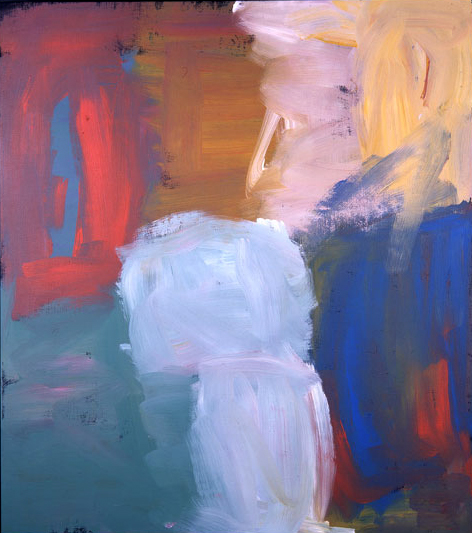
      Saturday 1 – 5pm

      Tolarno Galleries website

      LIKE ART BLART ON FACEBOOK

      Back to top

      Review: ‘Nocturnalians and Shadow Eaters’ by Vera Möller at Sophie Gannon Gallery, Richmond, Melbourne

      Exhibition dates: 20th October – 14th November 2009


      Vera Möller (Australian, b. 1955 Germany arrived Australia 1986) 'Rabinova' 2009 from the exhibition 'Nocturnalians and Shadow Eaters' by Vera Möller at Sophie Gannon Gallery, Richmond, Melbourne, Oct - Nov, 2009


      Vera Möller (Australian, b. 1955 Germany arrived Australia 1986)
      Rabinova
      2009
      Oil on linen
      82 x 76cm


      “I am interested in this border between the real and the imagined, the constructed and the natural.”


      Vera Möller quoted in “Artist earns her stripes” on The Age newspaper website May 28, 2005 [Online] Cited 23/06/2022


      There is a lot of mutability floating around current exhibitions in Melbourne at the moment. At the National Gallery of Victoria we have the deathly, eloquent freeze frame mutability of Ricky Swallow; at Tolarno Galleries we have the genetic hyper-realist mutability of Patricia Piccinini; and at Sophie Gannon Gallery we have the surreal, spatial mutability of Vera Möller.

      In this exhibition the real meets the imagined and the constructed encounters the natural in delicate sculptures and beautiful paintings. Coral snake and mutated striped hydras float above Phillip Huntersque backgrounds, looking oh so innocent until one remembers that hydras are predatory animals: the stripes, like the strips of a prisoners uniform not so innocent after all.

      These ‘portraits’ (for that is what they strike me as) emerge from the recesses of the subconscious, rising up like some absurd alien fish from the deep. The sculptural forests of mutated specimens waft on the breeze of the ocean current. This detritus of biotechnology, living in the dark and the shadow, emerges into the light and space of the gallery – genetic recombinations in which a strands of genetic material are broken and then joined to another DNA molecule. In Möller’s work this chromosomal crossover has led to offspring (called ‘recombinants’) that dance to a surrealist tune: genetic algorithms that use mutation to maintain genetic diversity from one generation of chromosomes to the next.1

      Spatially there is a lightness of touch and a beauty to their representation that brings the work alive within the gallery space. However, Möller’s recombinants are as deadly as they are beautiful. I really liked these creatures narcoleptic shadow dances.

      Dr Marcus Bunyan


      1/ Definition of mutation (genetic algorithm) in Wikipedia.


        Many thankx to Sophie Gannon Gallery for allowing me to publish the art work in the posting. Please click on the photographs for a larger version of the image.


        Vera Möller (Australian, b. 1955 Germany arrived Australia 1986) 'Martinette' 2009 (installation view)


        Vera Möller (Australian, b. 1955 Germany arrived Australia 1986)
        Martinette (installation view)
        2009
        Modelling material, acrylic and enamel paint, MDF, perspex cove


        Vera Möller (Australian, b. 1955 Germany arrived Australia 1986) 'Veronium' 2007 from the exhibition 'Nocturnalians and Shadow Eaters' by Vera Möller at Sophie Gannon Gallery, Richmond, Melbourne, Oct - Nov, 2009


        Vera Möller (Australian, b. 1955 Germany arrived Australia 1986)
        Veronium
        2007
        Oil on canvas
        167 x 199cm


        Vera Möller (Australian, b. 1955 Germany arrived Australia 1986) 'Shapinette' 2009 from the exhibition 'Nocturnalians and Shadow Eaters' by Vera Möller at Sophie Gannon Gallery, Richmond, Melbourne, Oct - Nov, 2009


        Vera Möller (Australian, b. 1955 Germany arrived Australia 1986)
        Shapinette
        2009
        Oil on linen
        101 x 101cm


        Vera Möller (Australian, b. 1955 Germany arrived Australia 1986) 'Telenium' 2009


        Vera Möller (Australian, b. 1955 Germany arrived Australia 1986)
        Telenium
        2009
        Oil on linen
        165 x 135cm


        Vera Möller (Australian, b. 1955 Germany arrived Australia 1986) 'Rubella' 2008-2009


        Vera Möller (Australian, b. 1955 Germany arrived Australia 1986)
        Rubella
        2008-2009


        Vera Möller (Australian, b. 1955 Germany arrived Australia 1986) 'Bureniana' 2008 (installation view)


        Vera Möller (Australian, b. 1955 Germany arrived Australia 1986)
        Bureniana (installation view)
        2008
        Modelling material, acrylic and enamel paint, MDF, perspex cover
        60 x 61 x 61cm


        Installation photo of 'Nocturnalians and Shadow Eaters' by Vera Moller at Sophie Gannon Gallery, Melbourne

        Installation photo of 'Nocturnalians and Shadow Eaters' by Vera Moller at Sophie Gannon Gallery, Melbourne


        Installation photographs of Nocturnalians and Shadow Eaters by Vera Möller at Sophie Gannon Gallery, Melbourne
        Photos: Marcus Bunyan


        Interested in the boundaries between the real and the imagined, Vera Möller creates paintings and sculptures by placing fictional hybrid plants in existing terrains. Bright colours and patterns, coral-like and succulent-plant forms and toadstool shapes describe her depictions of dreamt-up specimens that evoke the natural world. Möller’s ‘fantasy specimens’ demonstrate the way in which her science background and art practice have steadily converged.

        After training as a biologist in Germany, Möller migrated to Australia in 1986. She later completed a Bachelor of Fine Art at the Victorian College of the Arts and a PhD at Monash University. Her work has been exhibited in the USA, Japan, Finland, France, Germany and the UK, as well as throughout Australia.

        Text from the Sophie Gannon Gallery website [Online] Cited 03/05/2019


        Vera Möller (Australian, b. 1955 Germany arrived Australia 1986) 'Benthinium' 2008-2009


        Vera Möller (Australian, b. 1955 Germany arrived Australia 1986)
        Benthinium
        2008-2009
        Oil on linen
        140 x 220cm


        Vera Möller (Australian, b. 1955 Germany arrived Australia 1986) 'Tokyana' 2009


        Vera Möller (Australian, b. 1955 Germany arrived Australia 1986)
        Tokyana
        2009
        Oil on linen
        137 x 107cm


        Sophie Gannon Gallery
        2, Albert Street, Richmond, Melbourne

        Opening hours:
        Tuesday – Saturday 11am – 5pm

        Sophie Gannon Gallery website

        LIKE ART BLART ON FACEBOOK

        Back to top

        Review: ‘October 2009’ jewellery by Carlier Makigawa at Gallery Funaki, Melbourne

        Exhibition dates: 6th October – 31st October, 2009


        Carlier Makigawa (Australian, b. 1952) 'Brooch' 2009 from the exhibition 'October 2009' jewellery by Carlier Makigawa at Gallery Funaki, Melbourne, October 2009
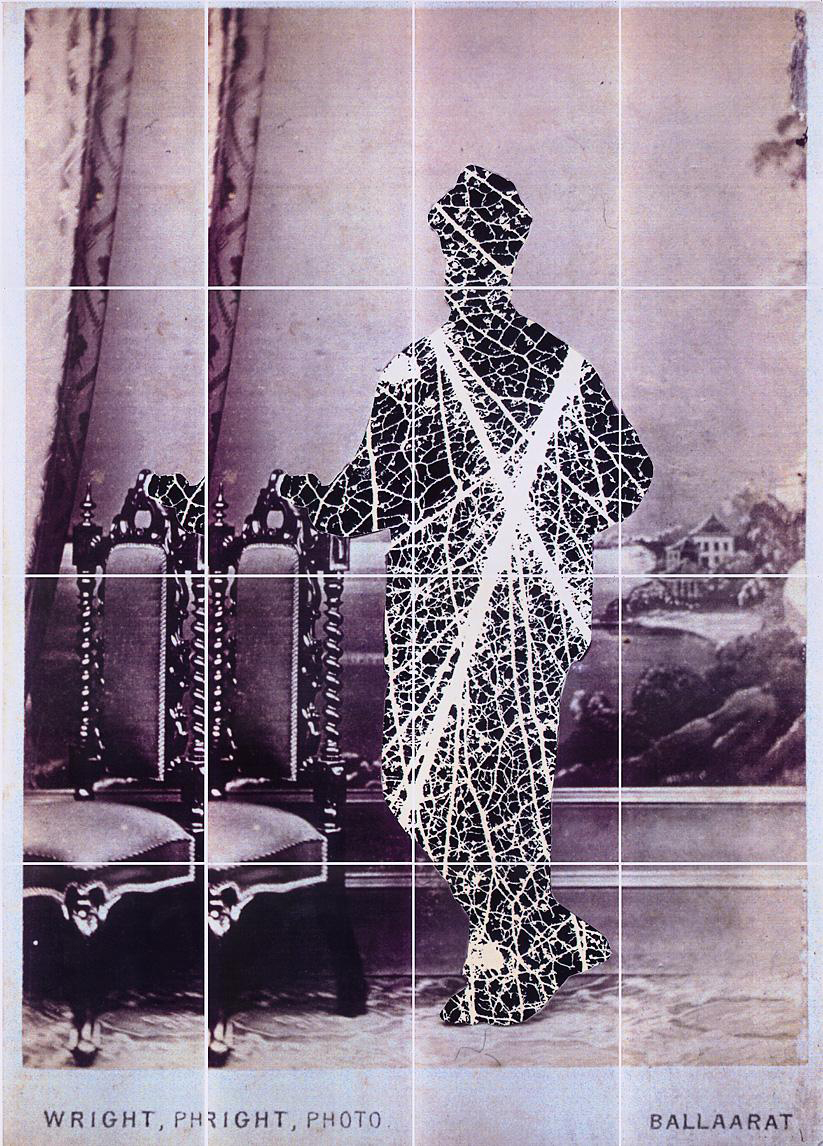
         

        Carlier Makigawa (Australian, b. 1952)
        Brooch
        2009
        Silver, paint


        Jewellery as art; is art

        Brooches, objects

        Robust/delicate

        Holistic body of work

        Affirmation of line and form

        Simplicity/complexity of shapes

        Span ______  (meta)physical

        [Interior] exterior!

        elemental | articulation

        Volume ((( ))) form

        &

        arch-itecture

        SPACE

        √

        beauty

        ……………………….

        Dr Marcus Bunyan


        Many thankx to Gallery Funaki for allowing me to publish the photographs in the posting. Please click on the photographs for a larger version of the image.


        Carlier Makigawa (Australian, b. 1952) 'Brooch' 2009 from the exhibition 'October 2009' jewellery by Carlier Makigawa at Gallery Funaki, Melbourne, October 2009


        Carlier Makigawa (Australian, b. 1952)
        Brooch
        2009
        Silver


        Carlier Makigawa (Australian, b. 1952) 'Brooch' 2009


        Carlier Makigawa (Australian, b. 1952)
        Brooch
        2009
        Silver


        Carlier Makigawa (Australian, b. 1952) 'Brooch 1a' 2009 from the exhibition 'October 2009' jewellery by Carlier Makigawa at Gallery Funaki, Melbourne, October 2009


        Carlier Makigawa (Australian, b. 1952)
        Brooch
        2009
        Silver


        “A spiritual and private space. Ritual object, jewellery. Linear structures appear fragile and monumental to cradle the internal spirit. They appear to float in space, hovering, penetrating, a temporary existence. Nature is the reference, and the geometry of nature and architecture inform this world.”


        Carlier Makigawa


        Carlier Makigawa explores the parameters of small spaces in her new exhibition October 2009. Her spare, exacting constructions in silver wire have a monumentality that defies their scale and delicacy. Her new work consists of brooches and objects which move beyond the botanical inspiration of her earlier work to engage with more abstract notions of movement, compression and spatial manipulation.

        Text from the Gallery Funaki website [Online] Cited 01/05/2019 no longer available online


        Carlier Makigawa (Australian, b. 1952) 'Object' 2009


        Carlier Makigawa (Australian, b. 1952)
        Object
        2009
        Silver


        Carlier Makigawa (Australian, b. 1952) 'Object' 2009


        Carlier Makigawa (Australian, b. 1952)
        Object
        2009
        Silver


        Carlier Makigawa (Australian, b. 1952) 'Brooch 1' 2009


        Carlier Makigawa (Australian, b. 1952)
        Brooch
        2009
        Silver


        Carlier Makigawa (Australian, b. 1952) 'Geometric Neckpiece' 2009


        Carlier Makigawa (Australian, b. 1952)
        Neckpiece
        2009
        Silver


        Gallery Funaki website

        LIKE ART BLART ON FACEBOOK

        Back to top