Exhibition: ‘Bruce Davidson: Brooklyn Gang’ at Cleveland Museum of Art

Exhibition dates: 25th October, 2020 – 28th February, 2021
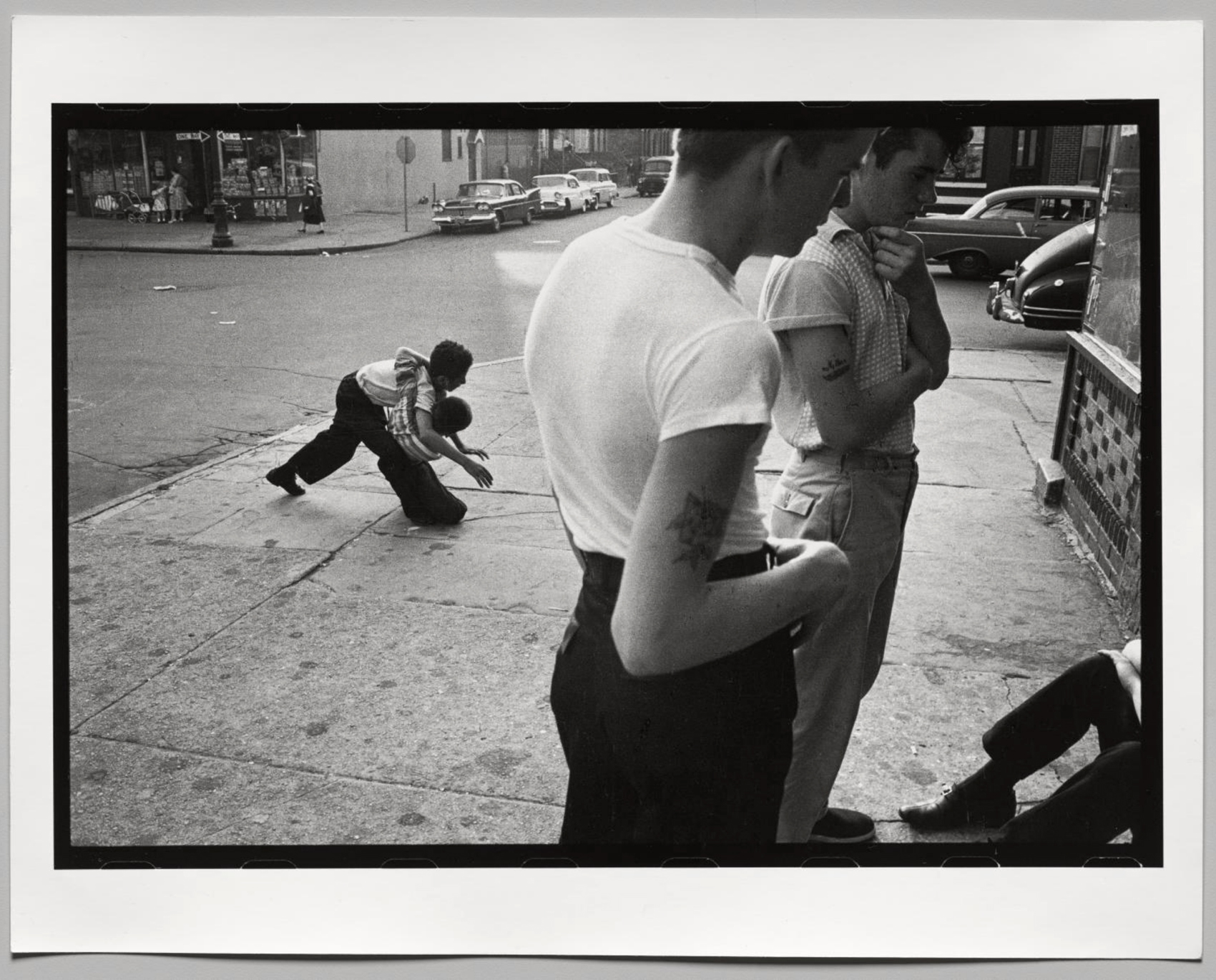


Bruce Davidson (American, b. 1933) 'Untitled' 1959 from the exhibition 'Bruce Davidson: Brooklyn Gang' at Cleveland Museum of Art, Oct 2020 - Feb 2021


Bruce Davidson (American, b. 1933)
Untitled
1959
Gelatin silver print
Paper: 27.9 x 35.6cm (11 x 14 in.)
Gift of an anonymous donor
© Bruce Davidson/Magnum Photos


For a few brief moments, rebels with a cause

This is one of my favourite photo essays of all time. The story Davidson tells of this male-orientated Brooklyn gang and its culture through his photographs is one of brotherhood, friendship, rivalry, love, longing, agony, depression and death at a time of utter poverty and rock ‘n roll rebellion. He produced “unflinchingly honest images of these American youths.” Now, all these years later, the photographs possess a powerful nostalgia for the era mixed with the desolation of destroyed lives and lost youth.

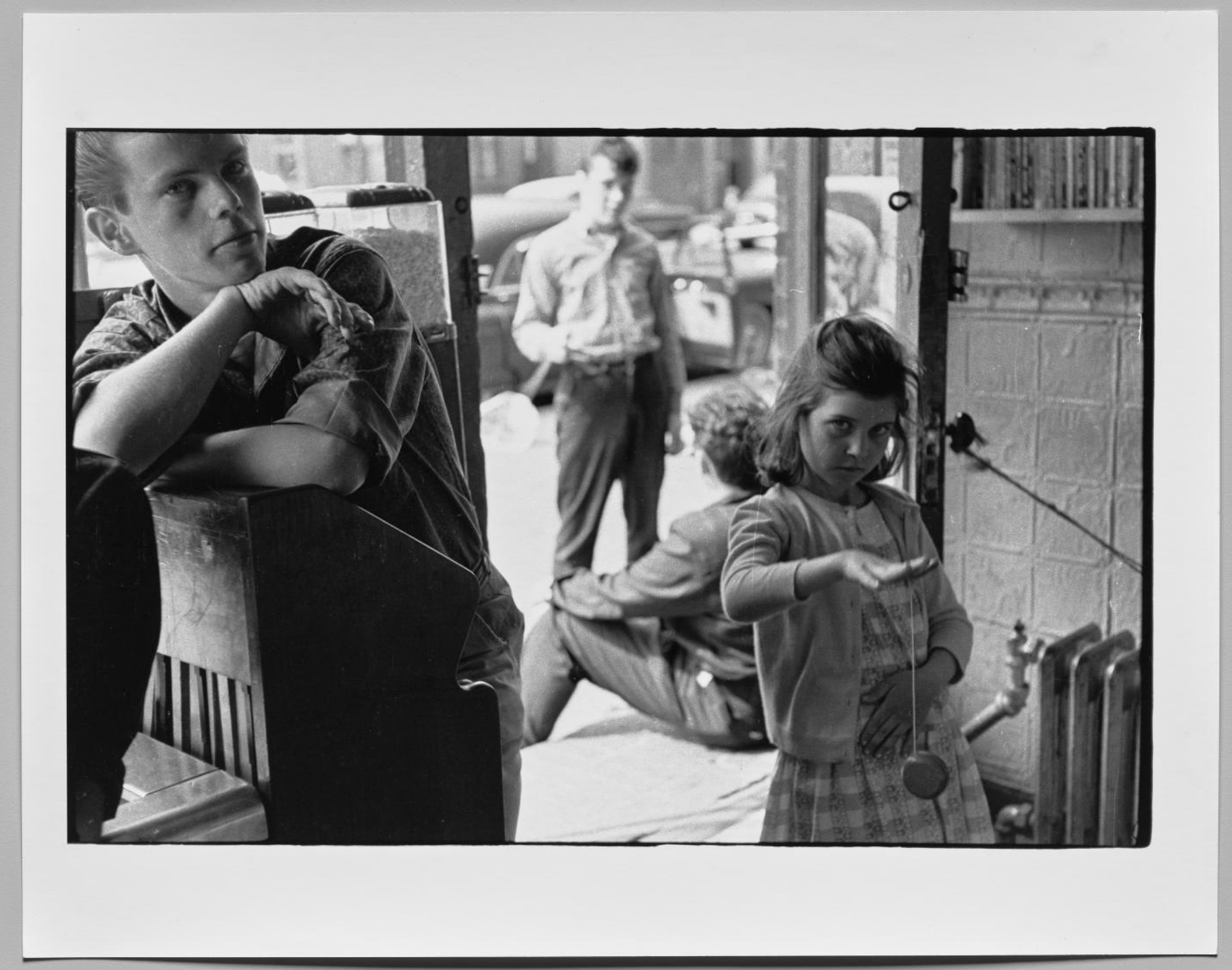
Davidson gets under the skin of his subjects, embeds himself firmly in their milieu. The subjects allow him to photograph their most intimate moments, seemingly free from worry or anxiety. There is an insouciance to their attitude, a knowing insouciance. In one photograph inside Helen’s Candy Store, Bob Powers stares directly and disarmingly at the camera while the girl playing with the yo-yo and the youth in the background also stare directly into the lens, forming a strong compositional triangle of the gaze. Powers said he was voted “most likely to die before I was 21 years old.” He lived with his seven siblings and alcoholic parents in a three-bedroom apartment that had a coal-powered cookstove and no hot water or central heating.

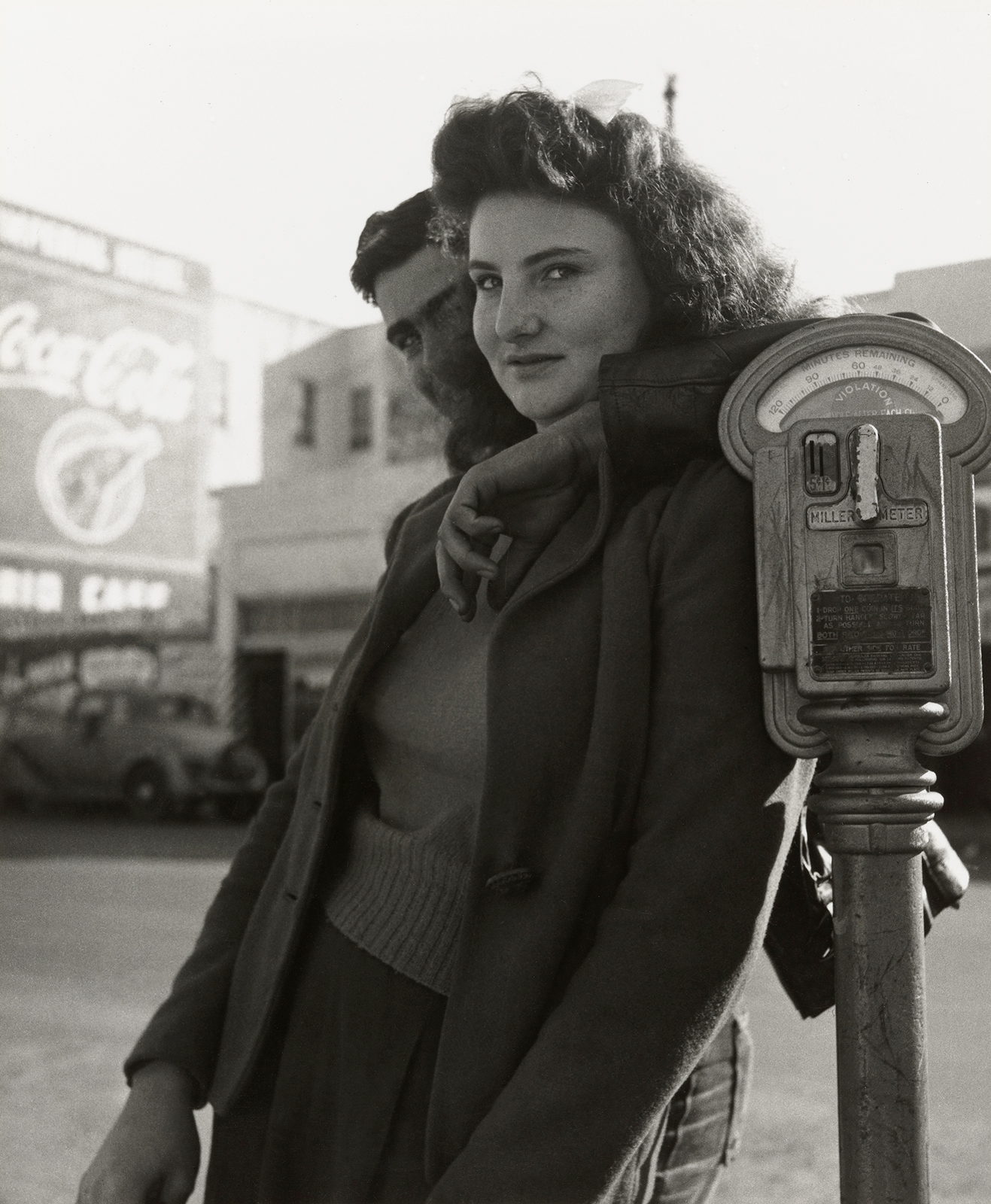
There is a dark undertone to the narrative. While there are moments of joy and happiness, you can sense the isolation and despair of these disaffected youths. Cathy O’Neal, seen in front of a cigarette machine at Coney Island, committed suicide by shotgun. Jimmie and his family were wiped out by drugs. Junior Rice became a heroin dealer. Lefty od’d in bed at 19. “He was the first in the group to die from a drug overdose… within a few years, drugs would claim the lives of many in the gang and in the neighbourhood.” In picturing their lives, the photographs gather moments (in time), enunciating how the gang members railed against the conformity and materialism of 1950s America whilst imbibing its rebellious iconography. Only occasionally does the artist pull back to show us the wider picture, the context of the action, with photographs of New York skyscrapers seen in the distance and the Statue of Liberty.

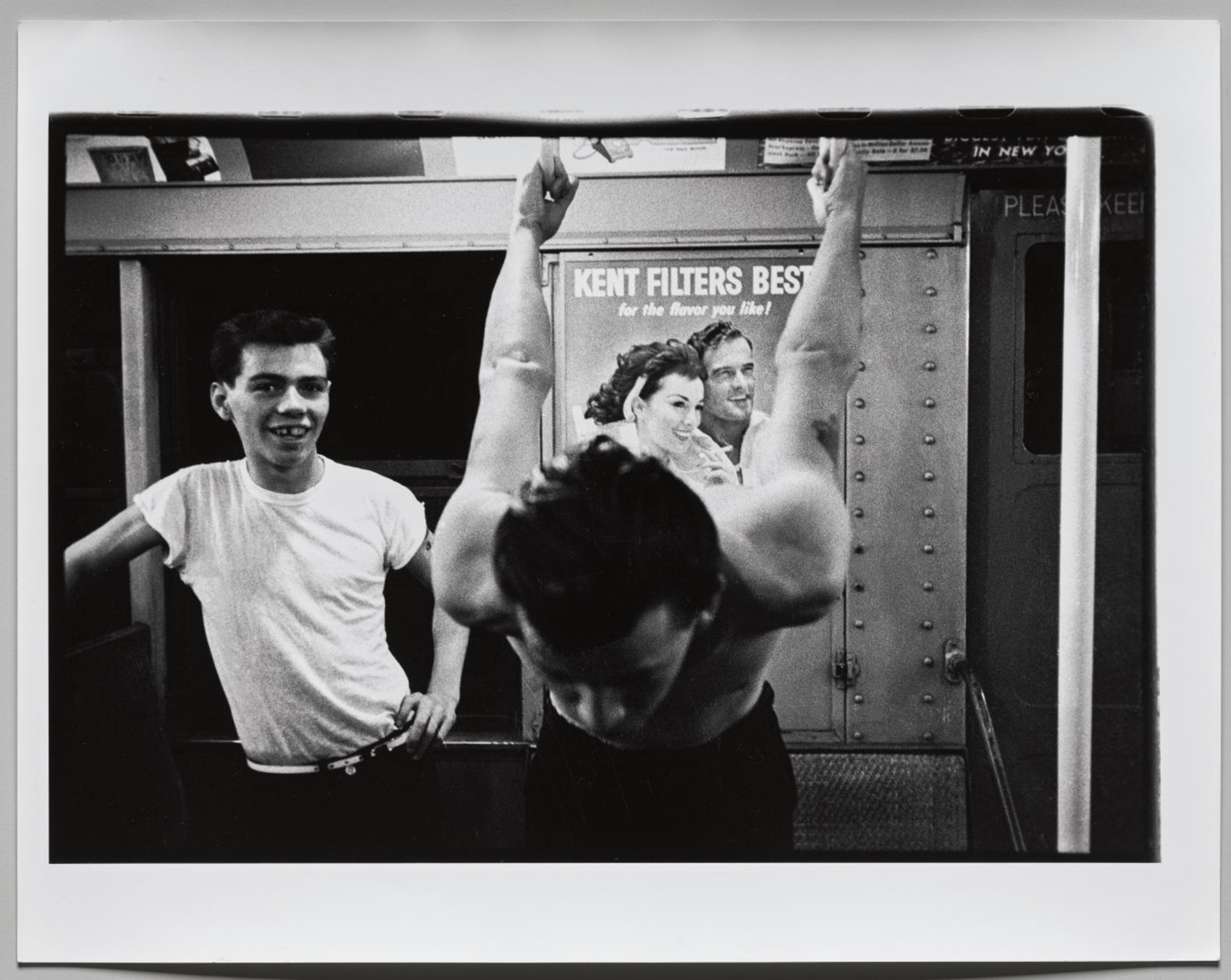
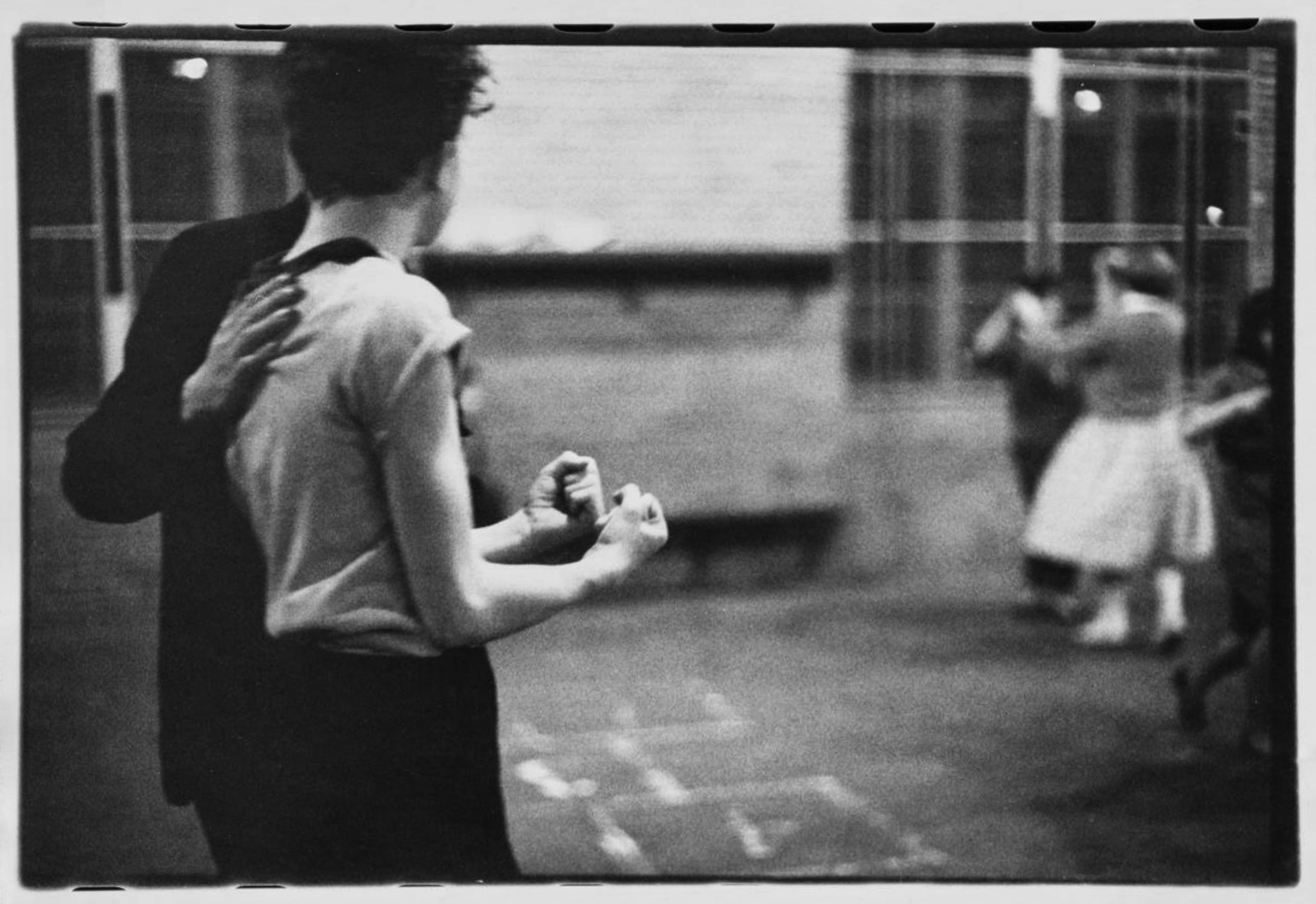
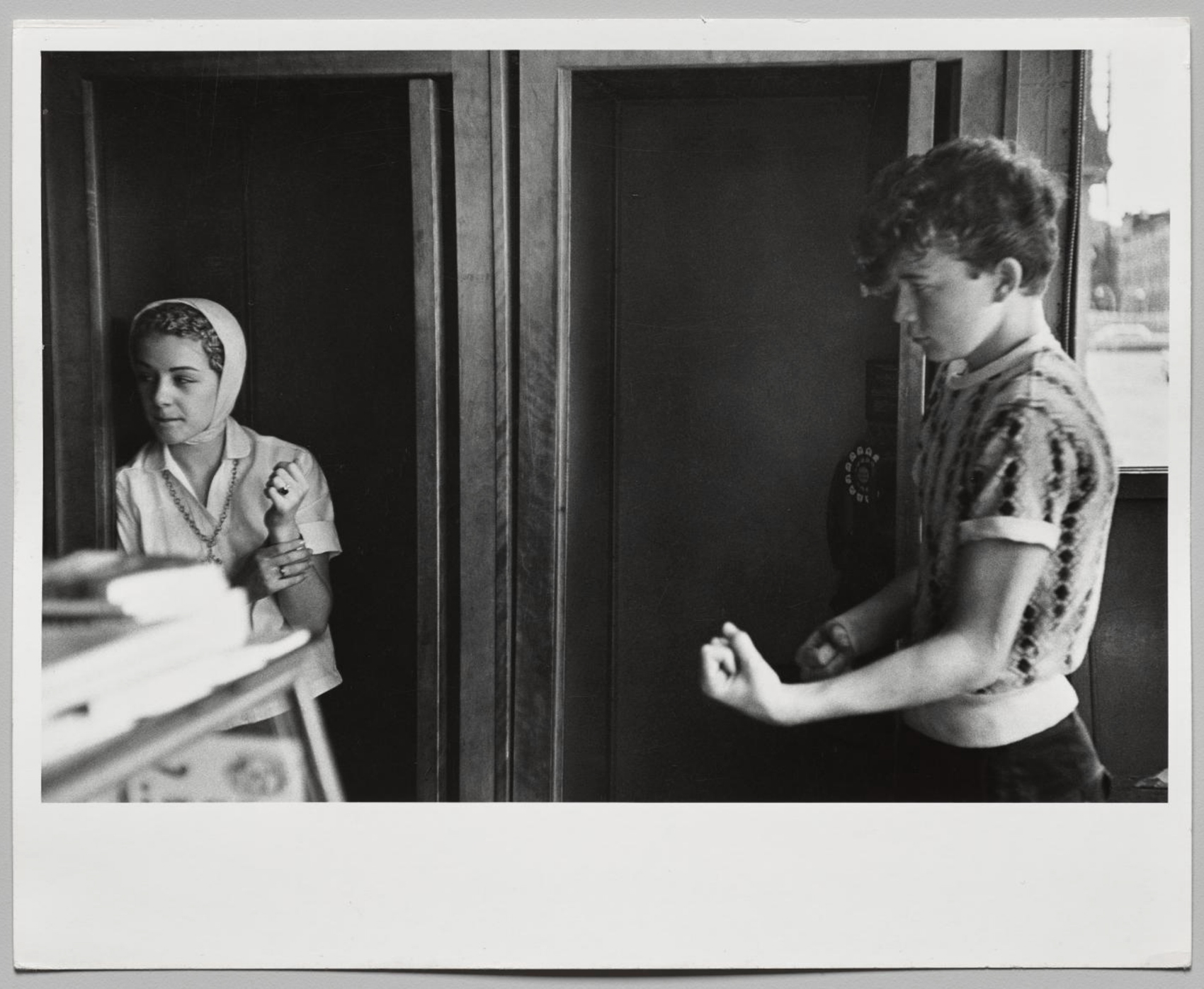
Davidson does not let his spontaneity slip. He is informed, aware, absent (but present) in all of these photographs waiting for that special moment. In the photograph above, a bird-like creature swoops down on something invisible on the ground. In informal yet tightly focused photographs – of sunbathing or walking the boardwalks of Coney Island, gang members fixing their hair, rolling up their sleeves, dead beat(s) in the back of the bus, making out in the back seat of a car, walking in the park or hooning around on the Metro – Davidson is there to capture the off-beat moments of gang existence and the members relationship to each other.

Through a superb eye, a feeling, a sensibility and connection towards the gang members desperation and isolation, universally acknowledged by the photographer himself, Davidson sets them all on the path to immortality. Do not forget, these photographs seem to be saying. For a few brief moments these people did exist, their lives were valuable, these rebels with a cause.

Dr Marcus Bunyan


Many thankx to the Cleveland Museum of Art for allowing me to publish the photographs in the posting. Please click on the photographs for a larger version of the image.


One of Davidson’s best-known series, Brooklyn Gang was inspired by a news story he read about a teenage gang called the Jokers.

Davidson contacted the Jokers, one of Brooklyn’s roughest gangs, through their social worker. In the summer of 1959, Davidson roamed the streets of New York with these teens, loitered in stores that the Jokers called their own, and sunbathed with them on the beach at Coney Island. Eventually they allowed him to photograph even their most intimate, private moments. He responded by producing unflinchingly honest images of these American youths.

Gang membership was exclusively male, but the members’ girlfriends appear frequently in Davidson’s photographs. Some of the pictures depict the teenagers exploring lust and love and the boys struggling to define and prove their masculinity. Looking back at the series in 1998, Davidson said that he felt “the reason that body of work has survived is that it’s about emotion. That kind of mood and tension and sexual vitality, that’s what those pictures were really about.”
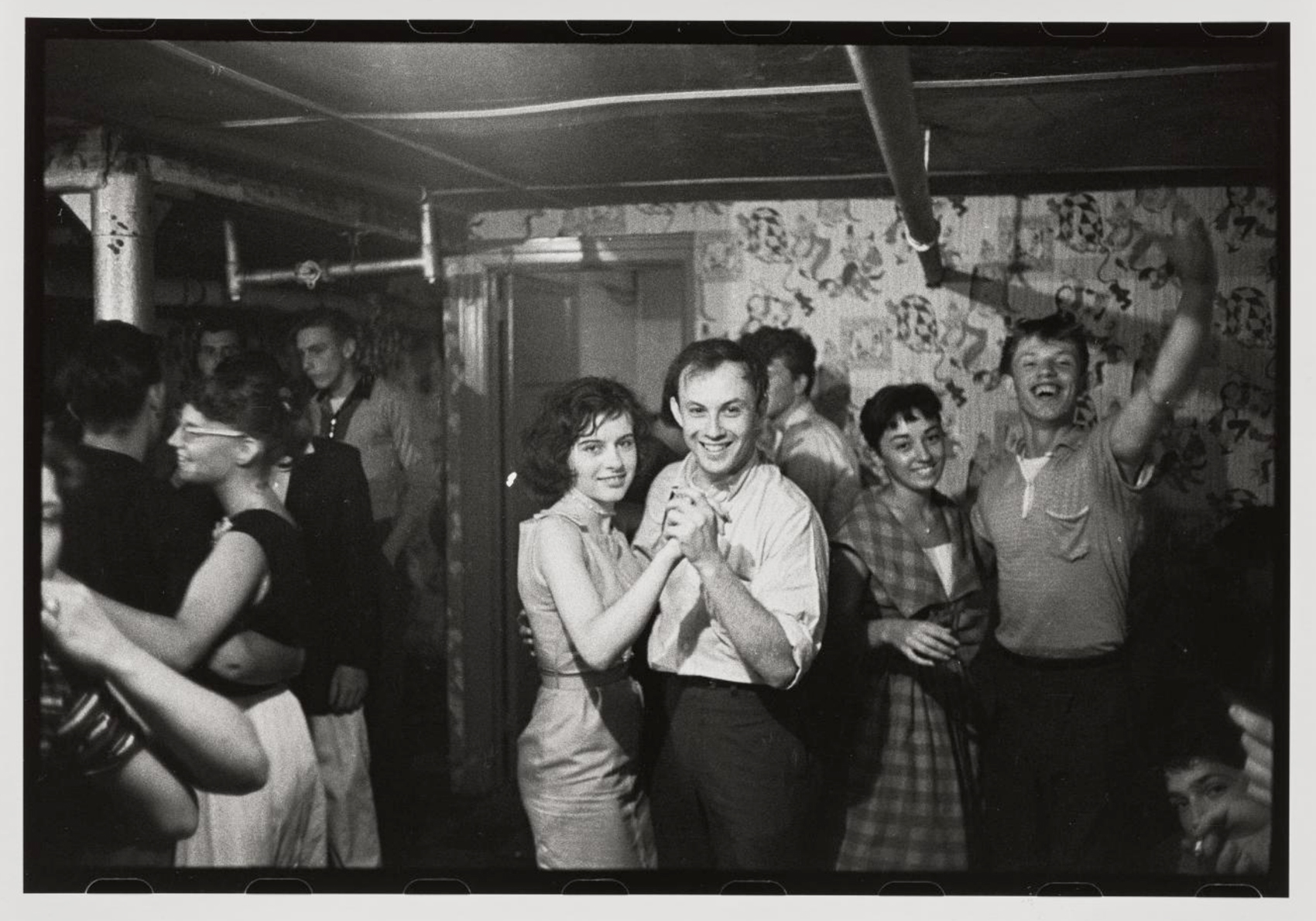
 

Bruce Davidson (American, b. 1933) 'Untitled' 1959 from the exhibition 'Bruce Davidson: Brooklyn Gang' at Cleveland Museum of Art, Oct 2020 - Feb 2021


Bruce Davidson (American, b. 1933)
Untitled
1959
Gelatin silver print
Paper: 27.9 x 35.6cm (11 x 14 in.)
Gift of an anonymous donor
© Bruce Davidson/Magnum Photos


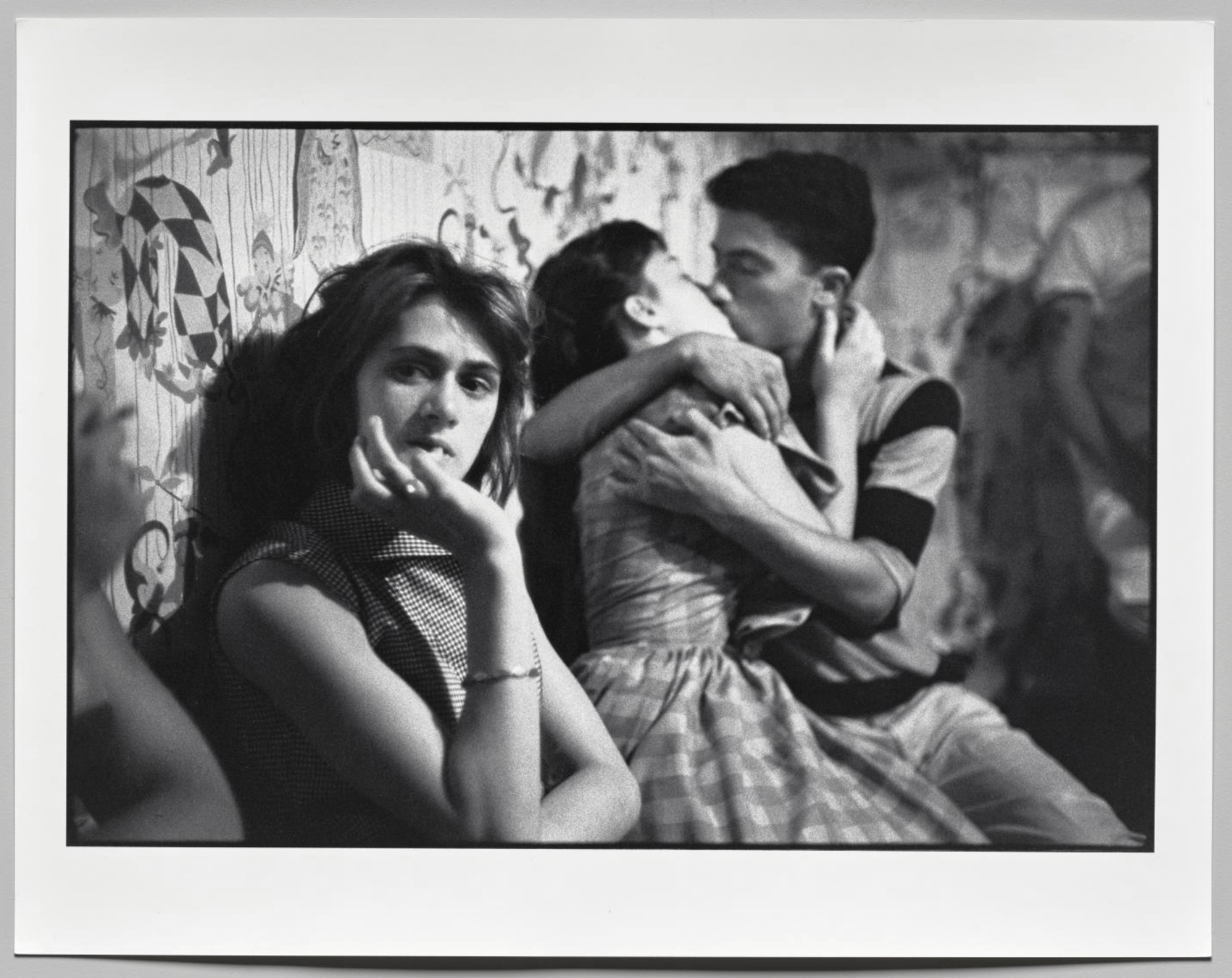
The pleasures and agonies of teenage romance are captured in Bruce Davidson’s photographs of the gang’s dance parties, which were held variously in Brooklyn’s Prospect Park, at a neighbourhood school, and in members’ homes. The basement wallpaper seen here – with its fairy-tale figures, including horses, queens, knights, marionettes, and jokers – suggests a domestic setting. The event could have been a farewell party for an older gang member going off to join the army, which was a common occurrence.
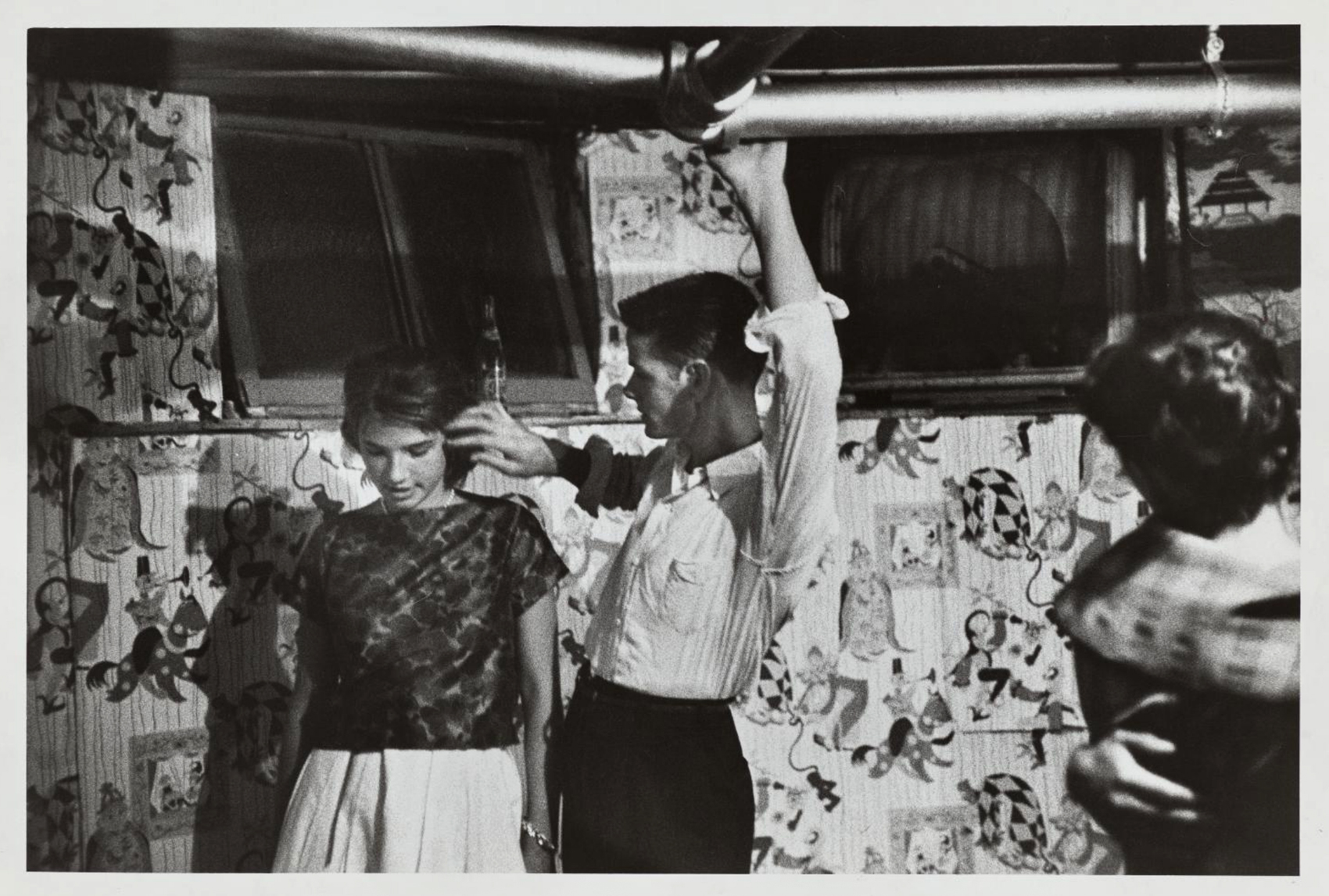
 

Bruce Davidson (American, b. 1933) 'Untitled' 1959


Bruce Davidson (American, b. 1933)
Untitled
1959
Gelatin silver print
Paper: 20.3 x 25.4cm (8 x 10 in.)
Gift of an anonymous donor
© Bruce Davidson/Magnum Photos
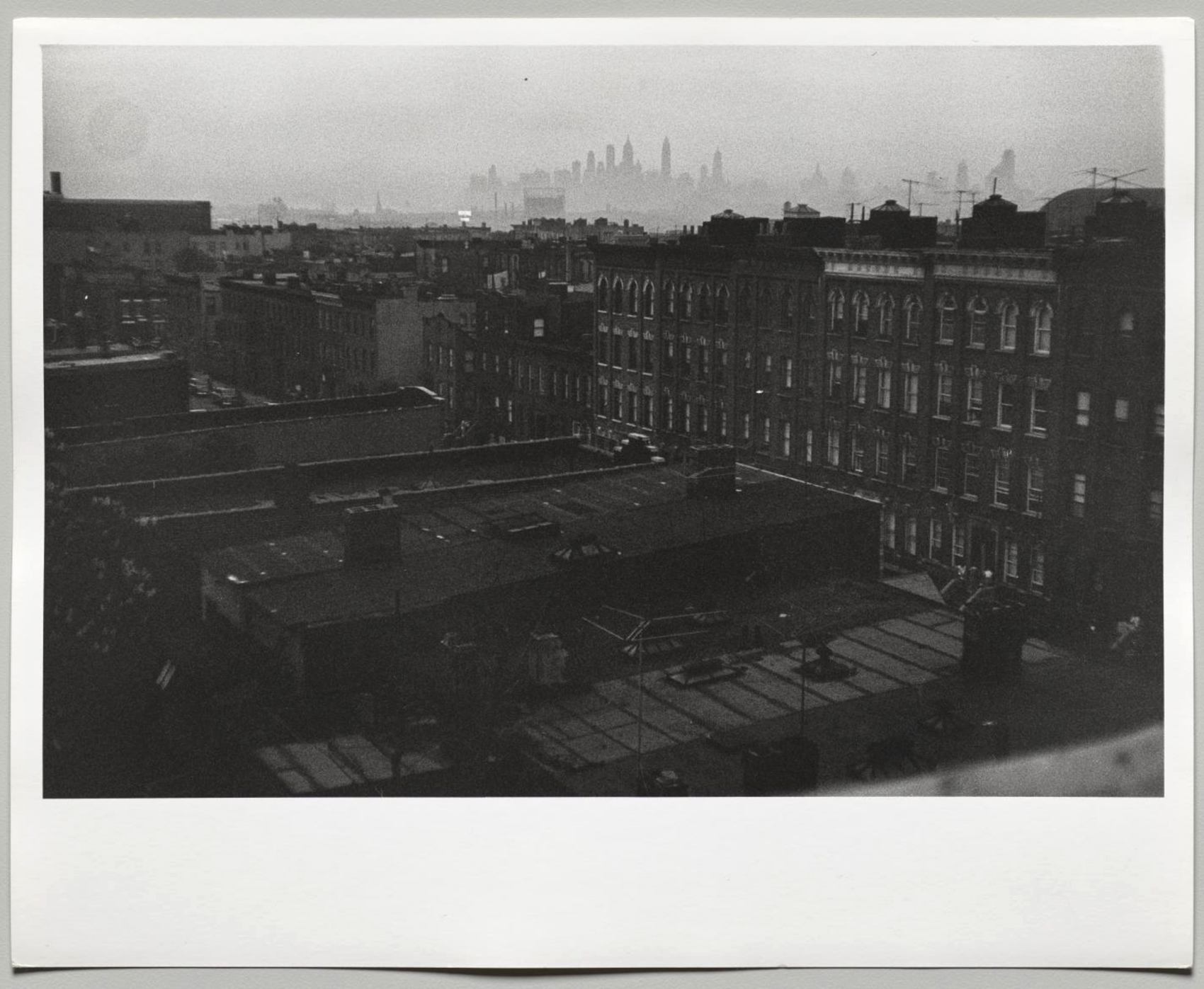
 

Bruce Davidson (American, b. 1933) 'Untitled' 1959


Bruce Davidson (American, b. 1933)
Untitled
1959
Gelatin silver print
Image: 16 x 23.9cm (6 5/16 x 9 7/16 in.)
Paper: 20.3 x 25.2cm (8 x 9 15/16 in.)
Gift of an anonymous donor
© Bruce Davidson/Magnum Photos


This rooftop view in Park Slope, Brooklyn, was taken from a building in the gang’s “turf,” which was a block anchored by the intersection of 17th Street and 8th Avenue. Davidson spent the summer hanging out with the gang and photographing them. Describing his process, the artist said, “I stay a long time. … I am an outsider on the inside.” Park Slope, now one of New York’s most desirable neighbourhoods, was then a poor, mostly Irish area.
 

Bruce Davidson (American, b. 1933) 'Untitled' 1959


Bruce Davidson (American, b. 1933)
Untitled
1959
Gelatin silver print
Image: 21.9 x 14.6cm (8 5/8 x 5 3/4 in.)
Paper: 25.1 x 20.2cm (9 7/8 x 7 15/16 in.)
Gift of an anonymous donor
© Bruce Davidson/Magnum Photos


Davidson contacted the Jokers, one of Brooklyn’s roughest gangs, through their social worker. In the summer of 1959, Davidson roamed the streets of New York with these teens, loitered in stores that the Jokers called their own, and sunbathed with them on the beach at Coney Island. Eventually they allowed him to photograph even their most intimate, private moments. He responded by producing unflinchingly honest images of these American youths.
 

Bruce Davidson (American, b. 1933) 'Untitled' 1959


Bruce Davidson (American, b. 1933)
Untitled
1959
Gelatin silver print
Paper: 27.9 x 35.6cm (11 x 14 in.)
Gift of an anonymous donor
© Bruce Davidson/Magnum Photos


The pleasures and agonies of teenage romance are captured in Bruce Davidson’s photographs of the gang’s dance parties, which were held variously in Brooklyn’s Prospect Park, at a neighbourhood school, and in members’ homes.
 

Bruce Davidson (American, b. 1933) 'Untitled' 1959


Bruce Davidson (American, b. 1933)
Untitled
1959
Gelatin silver print
Image: 16.1 x 24.1cm (6 5/16 x 9 1/2 in.)
Paper: 20.2 x 25.3cm (7 15/16 x 9 15/16 in.)
Gift of an anonymous donor
© Bruce Davidson/Magnum Photos


Childhood pastimes like playing yo-yo were a thing of the distant past for 15-year-old Bob Powers, a Joker seen here leaning against a fixture in Helen’s Candy Store. He had already been in and out of the court system numerous times by 1959. Powers stabbed someone when he was 12 and had been incarcerated for bringing zip guns (homemade firearms) and chains to school, where, Powers said, he was voted “most likely to die before I was 21 years old.”
 

Bruce Davidson (American, b. 1933) 'Untitled' 1959


Bruce Davidson (American, b. 1933)
Untitled
1959
Gelatin silver print
Paper: 27.9 x 35.6cm (11 x 14 in.)
Gift of an anonymous donor
© Bruce Davidson/Magnum Photos


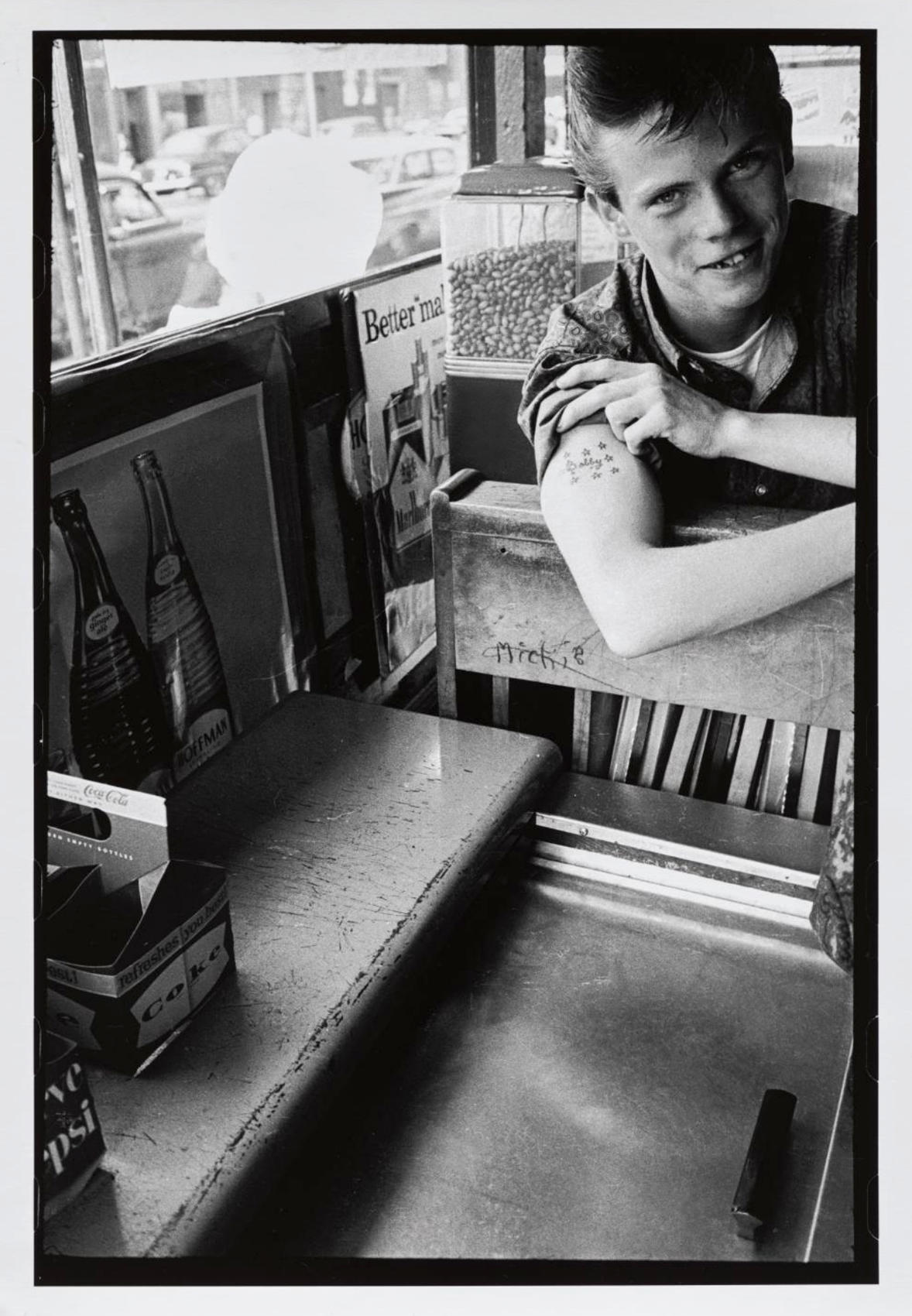
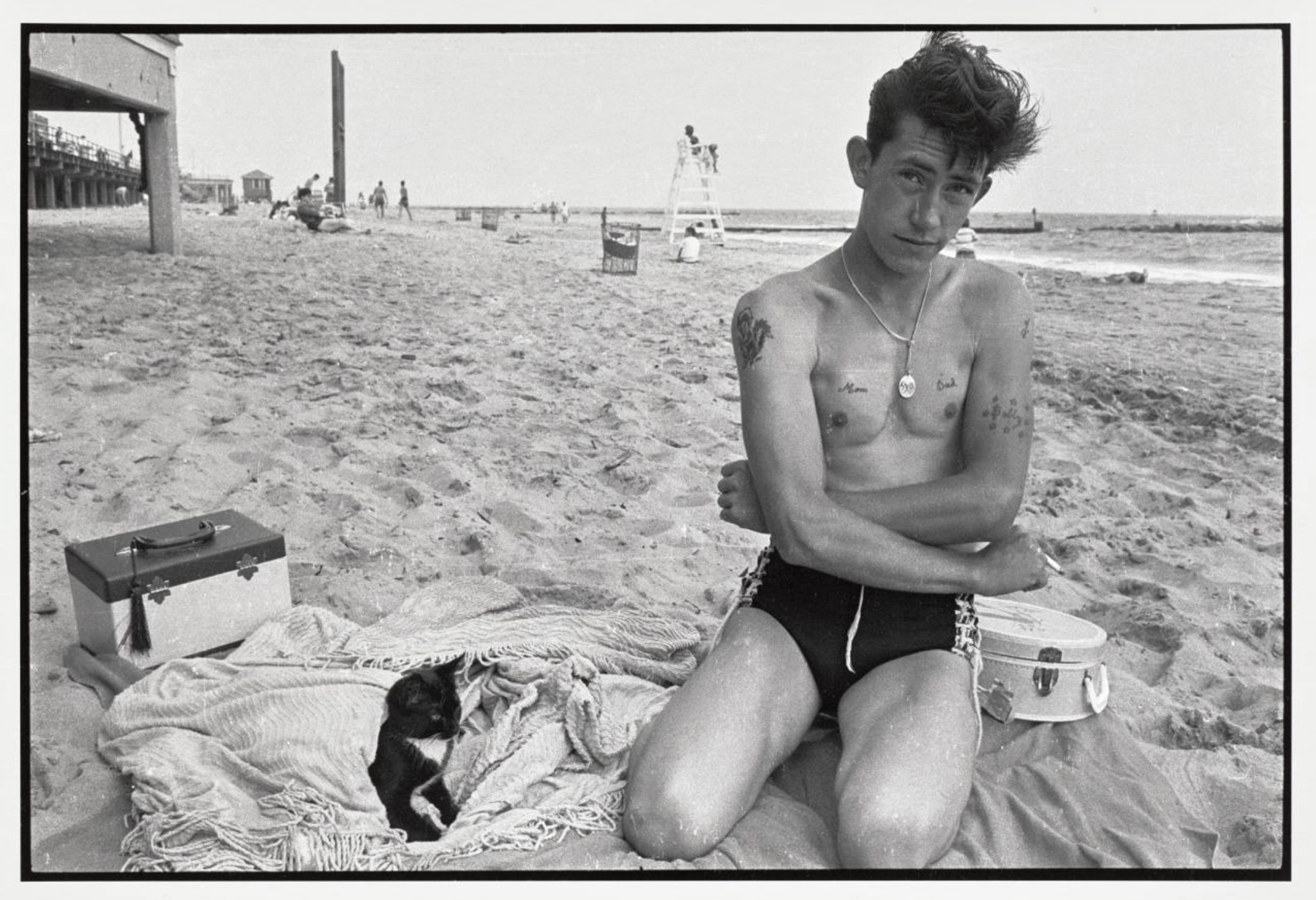
The gang members, most of whom were 15 or 16 years old, thought tattoos made them look older and might help them get served at bars. Tattoos were also a demonstration of masculinity and a rite of passage. Bob Powers, seen here at age 15 displaying his first tattoo, recalled years later that “the first time you get a tattoo it’s scary. I was sitting back with a cigarette like it’s nothing. Meanwhile, it was killing me. … I got ‘Bobby’ with stars around it. … They said, ‘Get your name.’ … I hated it forever.”
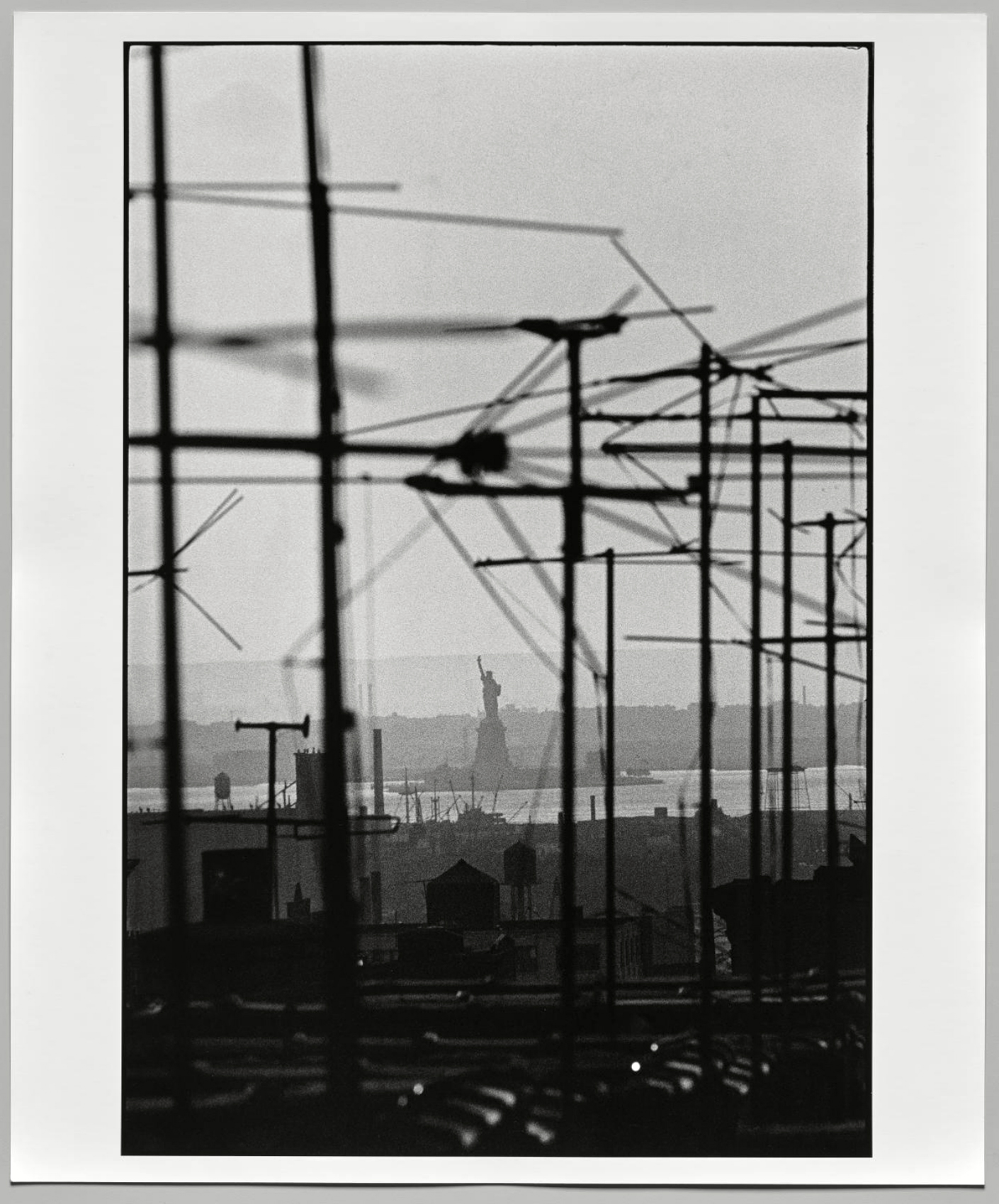
 

Bruce Davidson (American, b. 1933) 'Untitled' 1959


Bruce Davidson (American, b. 1933)
Untitled
1959
Gelatin silver print
Paper: 61 x 50.8cm (24 x 20 in.)
Gift of an anonymous donor
© Bruce Davidson/Magnum Photos


One of the gang members – Bob Powers – suggested that Davidson follow him to a rooftop on the gang’s block. “I remember thinking,” said Davidson, “‘This kid’s going to throw me off the roof and then rob me,’ but he’s pointing down at the stickball game (an informal form of baseball played in the street) and saying, ‘Get that,’ and saying: ‘Oh, there’s the Statue of Liberty. You can see it through all these television antennas.'”
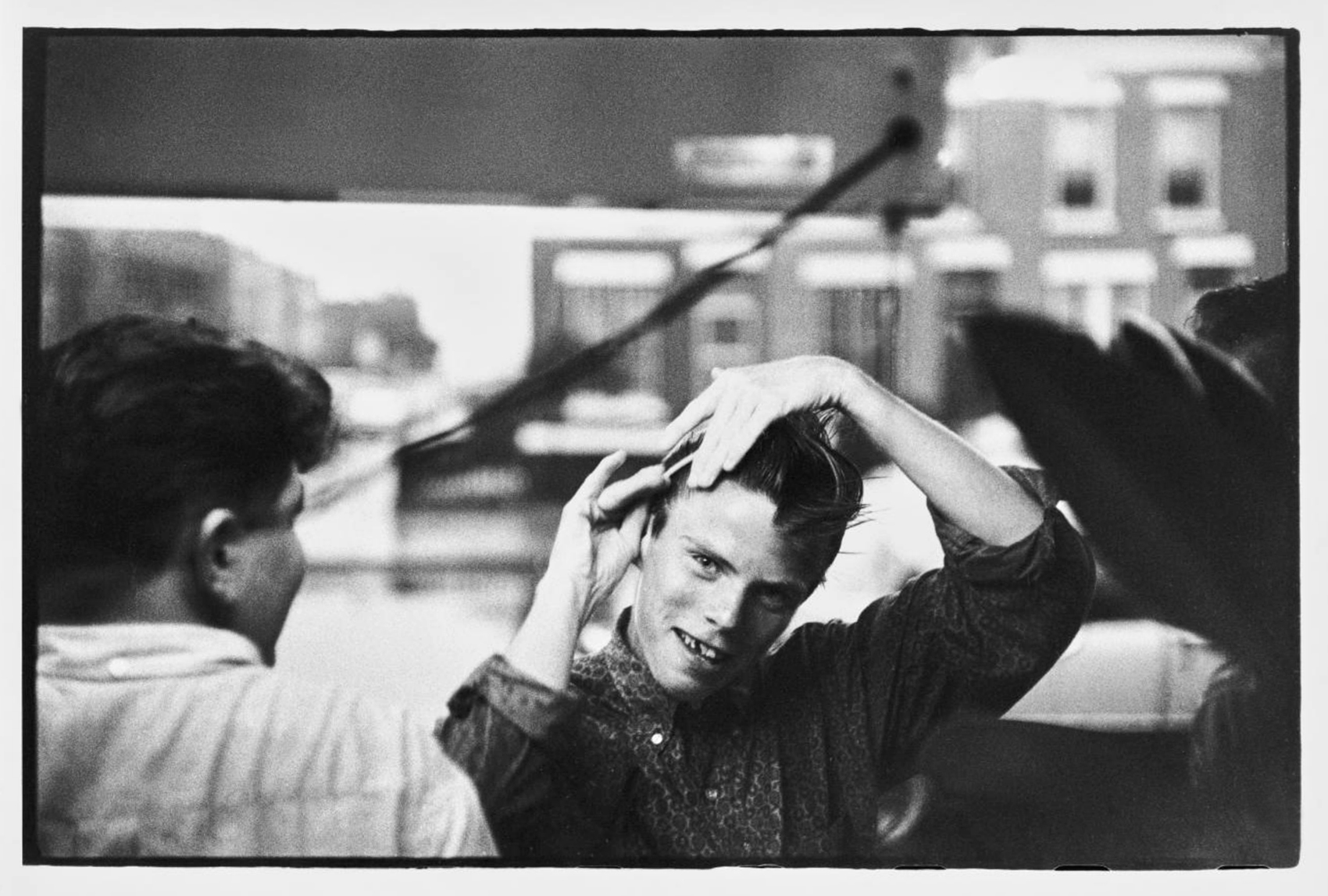
 

Bruce Davidson (American, b. 1933) 'Untitled' 1959


Bruce Davidson (American, b. 1933)
Untitled
1959
Gelatin silver print
Paper: 27.9 x 35.6 cm (11 x 14 in.)
Gift of an anonymous donor
© Bruce Davidson/Magnum Photos


The gang members were very concerned with their appearance, although they did not have much money to spend on grooming or clothes. “If you see a picture of me,” said former gang member Bob Powers, “the broken tooth, my teeth were green because I didn’t go to the dentist. We never had any money even though my father worked. … We used Vaseline petroleum jelly to make our hair stick like iron in a pompadour. We combed our hair constantly, wore sunglasses, and all thought we were Marlon Brandos.”

The Jokers’ slicked-back pompadours … and their clothing echoed the greaser style, a rebellious youth subculture that was promoted by cinematic antiheroes of the era. Role models included Marlon Brando’s portrayal of a motorcycle gang member in The Wild One (1953) and James Dean as a troubled teen in Rebel without a Cause (1955). The “bad boy” image flouted the aspirational role model of the time, the upwardly mobile white-collar worker in a business suit and short haircut.
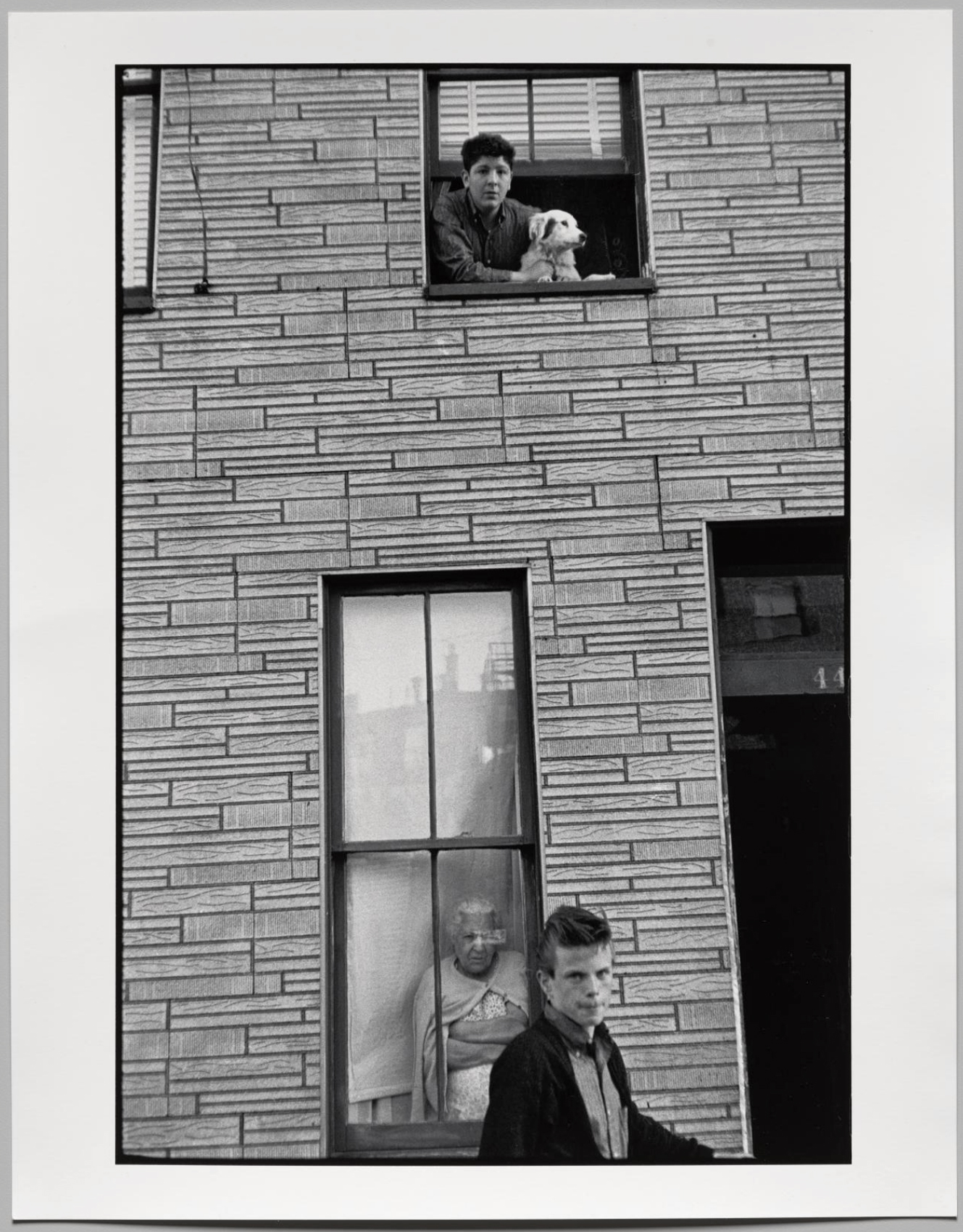
 

Bruce Davidson (American, b. 1933) 'Untitled' 1959


Bruce Davidson (American, b. 1933)
Untitled
1959
Gelatin silver print
Paper: 27.9 x 35.6cm (11 x 14 in.)
Gift of an anonymous donor
© Bruce Davidson/Magnum Photos


Petey, a Jokers member who looks out the second-story window here, was injured in that fight. Petey’s best friend, fellow Jokers member Bob Powers, walks by the house. Housing in the gang’s neighbourhood, the then-impoverished Park Slope, Brooklyn, was overcrowded and rundown. Powers lived with his seven siblings and alcoholic parents in a three-bedroom apartment that had a coal-powered cookstove and no hot water or central heating.


One of the most highly respected and influential American documentary photographers of the past half century, Bruce Davidson spent several months photographing the daily lives of a teenage street gang for his 1959 series Brooklyn Gang. A new exhibition in the Cleveland Museum of Art’s Mark Schwartz and Bettina Katz Photography Gallery, Bruce Davidson: Brooklyn Gang features 50 black-and-white photographs from that series, which are part of a recent anonymous gift to the museum of extensive selections from the artist’s archives. The exhibition is on view now through February 28, 2021.

Brooklyn Gang was Davidson’s first major project after joining the distinguished photo agency Magnum and was the fruit of several months spent immersing himself in the daily lives of the Jokers, one of the many teenage street gangs worrying New York City officials at the time. He recorded the teenagers’ pleasures and frustrations as they attempted to define masculinity and mimic adult behaviour. The photographs reflect the group’s camaraderie but also their alienation from societal norms. While many officials and commentators at the time saw the gangs as evidence of social deterioration resulting from poverty, others regarded them as the most visible manifestations of a socially disengaged generation of males – rebels without a cause.

“Bruce Davidson: Brooklyn Gang presents an intimate portrayal of the teens’ lives,” said William Griswold, director of the Cleveland Museum of Art. “Davidson was an outsider, but one who spent so much time with the gang that he became, as he liked to say, ‘an outsider on the inside.’ Davidson offered an independent look at the lives of these disadvantaged youths; this view of society was quite different from the age of visual and social homogenisation of the 1950s presented in mainstream magazines such as Life and Look and predicts the social turmoil of the 1960s.”

The images reflect the time Davidson spent with the teens hanging out on street corners and in the local candy store and accompanying them to the beach at Coney Island with their girlfriends. Included are several sets of variant images, affording a rare glimpse into Davidson’s working process.

“Despite a more than ten-year age difference, Davidson describes recognising his own repression in his subjects and feeling a connection to their desperation,” said Barbara Tannenbaum, the CMA’s chair of prints, drawings, and photographs and curator of photography.

Press release from the Cleveland Museum of Art
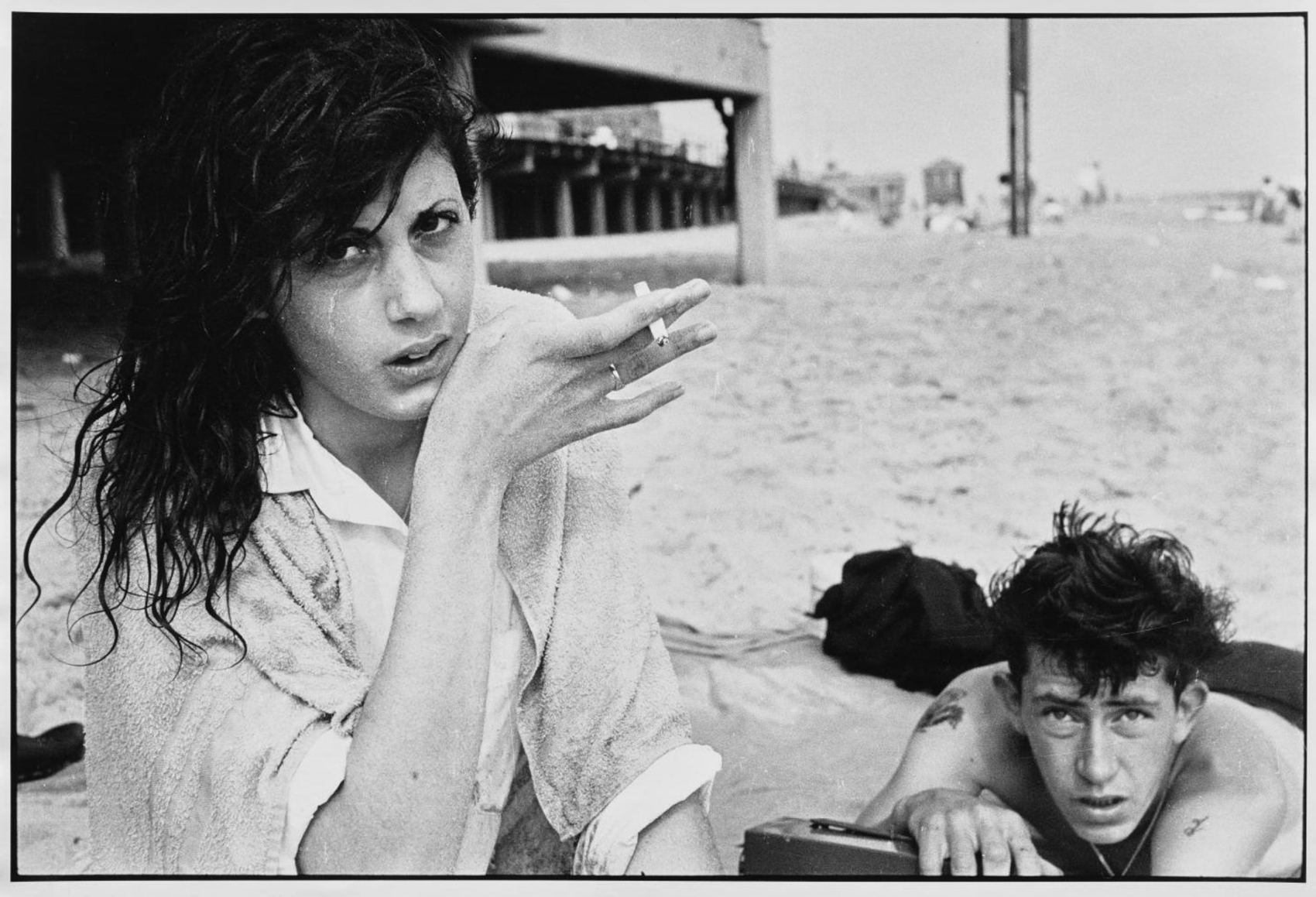
 

Bruce Davidson (American, b. 1933) 'Untitled' 1959


Bruce Davidson (American, b. 1933)
Untitled
1959
Gelatin silver print
Paper: 40.6 x 50.8cm (16 x 20 in.)
Gift of an anonymous donor
© Bruce Davidson/Magnum Photos


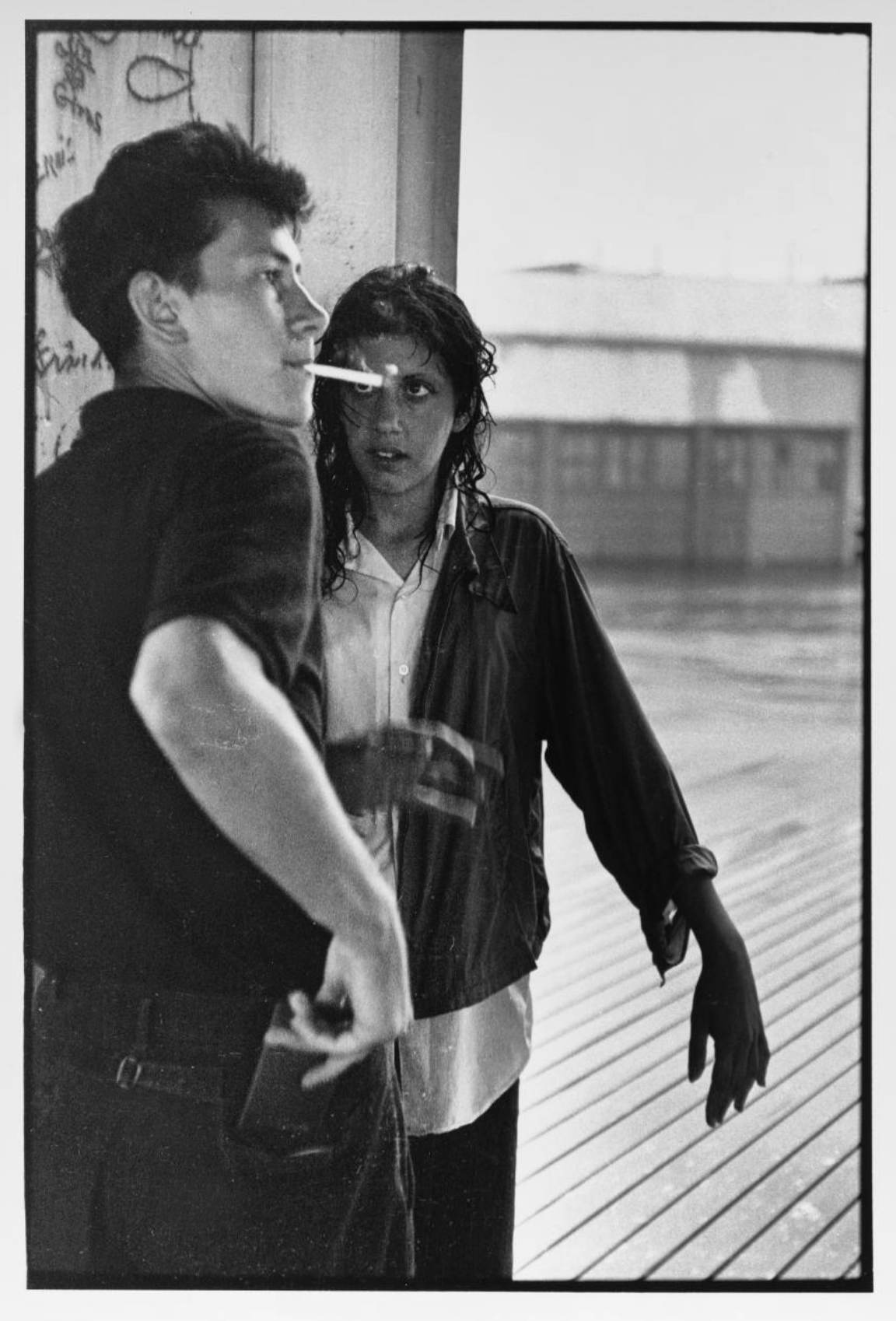
The museum owns several groups of images from the series taken during the same shoot at Coney Island. They provide a rare glimpse of the artist’s selection process (see 2018.688, 2018.696, 2018.697, 2018.701, 2018.706, and 2018.735). The size of these prints, and the fact that the artist printed them long after they were shot, suggest he considered all four images worthwhile. In an exhibition print, the white marks on the woman’s cheek here, made by dust on the negative, would have been covered up with ink or dye, a process known as spotting. This may be a work print, made to aid in decisions on exactly how to print this picture. It has become one of the better-known images from Brooklyn Gang.
 

Bruce Davidson (American, b. 1933) 'Untitled' 1959


Bruce Davidson (American, b. 1933)
Untitled
1959
Gelatin silver print
Paper: 20.3 x 25.4cm (8 x 10 in.)
Gift of an anonymous donor
© Bruce Davidson/Magnum Photos
 

Bruce Davidson (American, b. 1933) 'Untitled' 1959


Bruce Davidson (American, b. 1933)
Untitled
1959
Gelatin silver print
Paper: 27.9 x 35.6cm (11 x 14 in.)
Gift of an anonymous donor
© Bruce Davidson/Magnum Photos


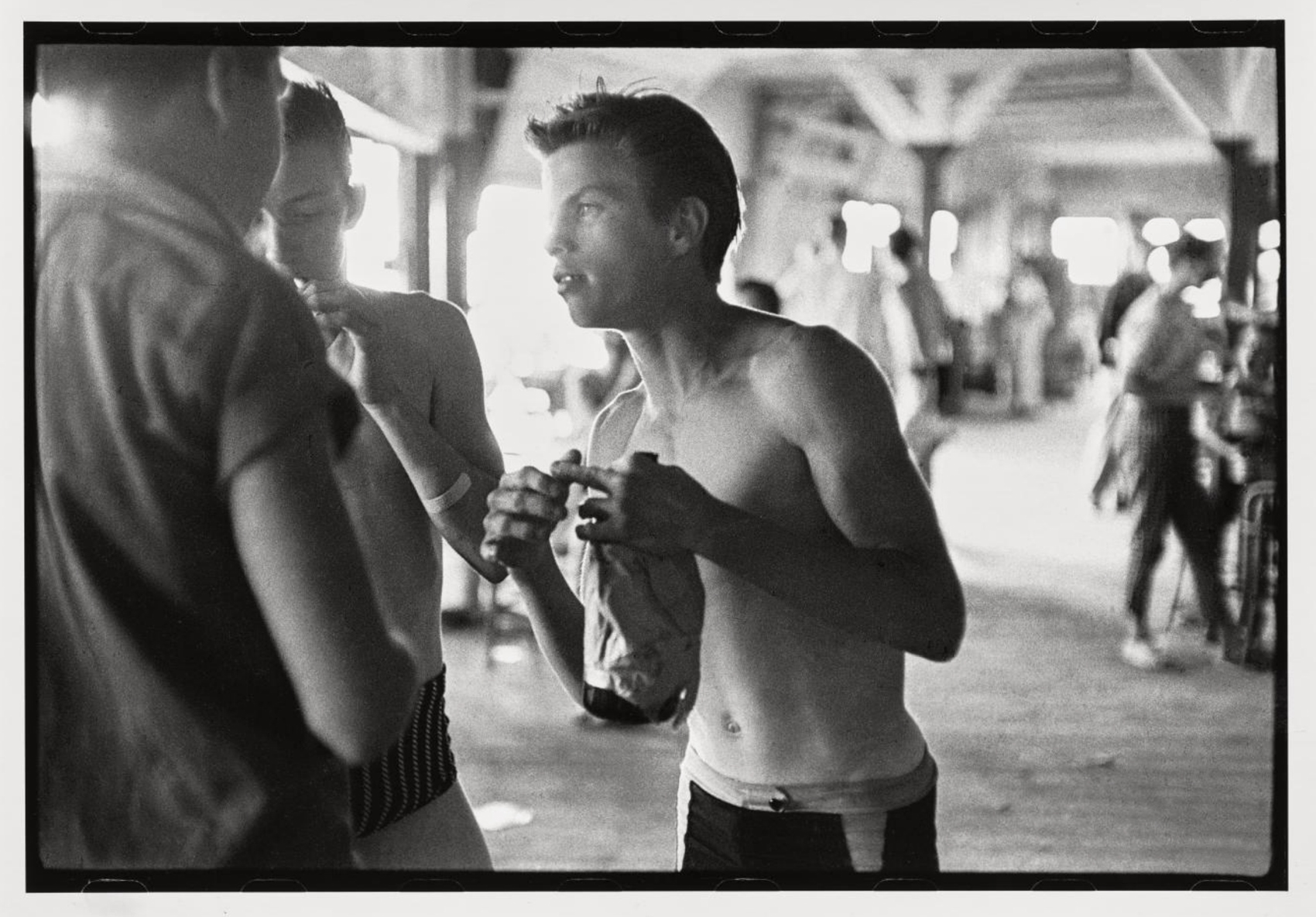
In this photograph, gang member Bob Powers talks with friends in one of the many Coney Island bathhouses where people could change, shower, or swim in pools. “We’d come down on a Friday and sometimes we’d stay the whole weekend till Monday, down on the beach, me, Lefty, Junior,” Powers recalled. “The girls would stay too… We would light fires and bury all the cans of beer. I remember stealing cars and driving down there. We’d drive the car under the boardwalk and bring it right onto the bay and leave it there.”
 

Bruce Davidson (American, b. 1933) 'Untitled' 1959


Bruce Davidson (American, b. 1933)
Untitled
1959
Gelatin silver print
Paper: 50.8 x 61cm (20 x 24 in.)
Gift of an anonymous donor
© Bruce Davidson/Magnum Photos


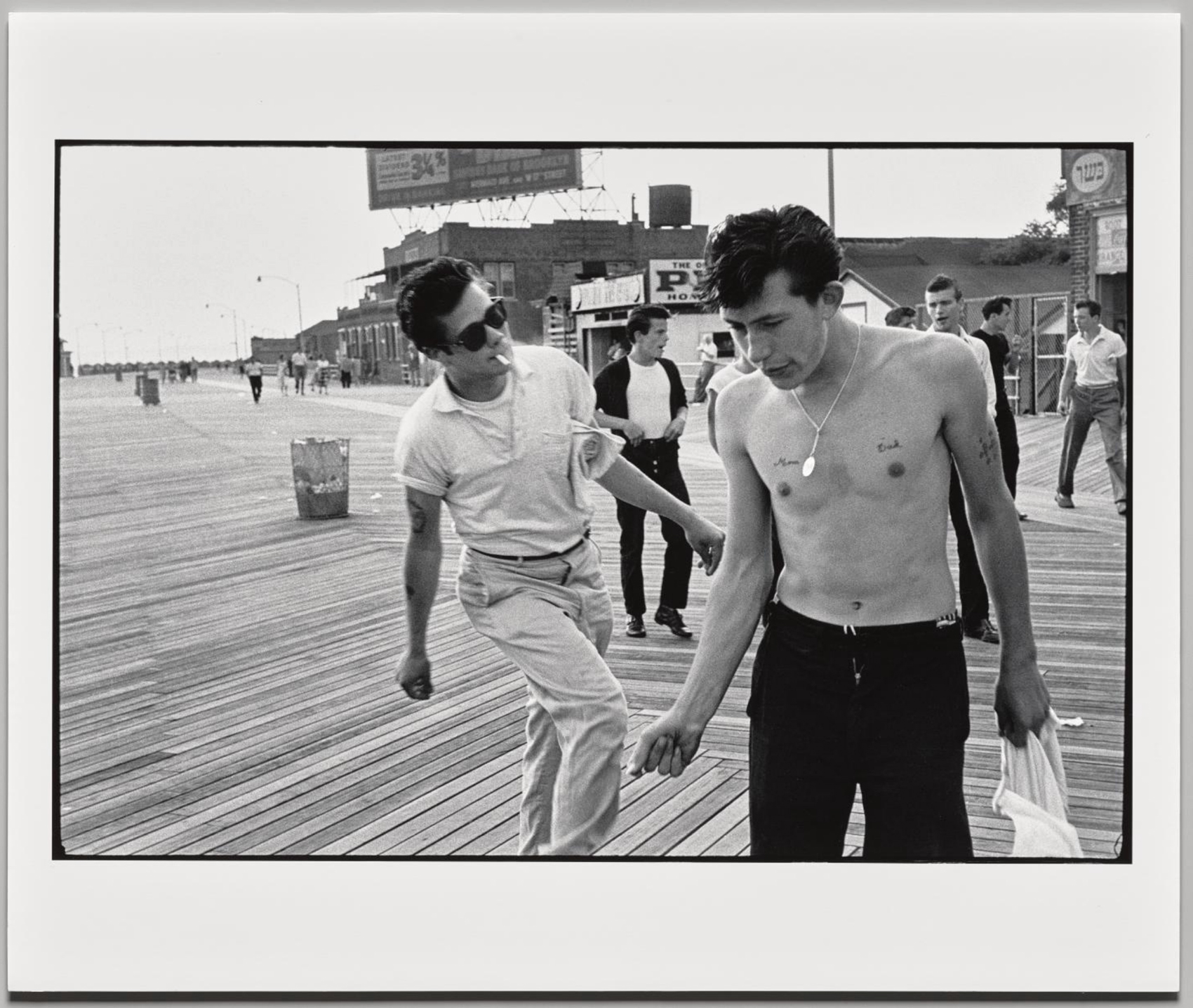
Shown here on the Coney Island boardwalk, from left to right, are gang members Junior Rice, Bob Powers, and Lefty, who “was a pretty tough guy in the gang and then he went to jail for about a year,” according to Powers. “He came out and he just lost it. He wasn’t the same guy. Something happened and nobody knew what. … We protected him a bit, but he caught a couple of bad beatings and lost his reputation. He ate a lot of pills one night and never woke up. His mother found him dead. OD’d in bed at 19. He was the first in the group to die from a drug overdose.”
 

Bruce Davidson (American, b. 1933) 'Untitled' 1959


Bruce Davidson (American, b. 1933)
Untitled
1959
Gelatin silver print
Image: 16.1 x 24.1 cm (6 5/16 x 9 1/2 in.)
Paper: 20.2 x 25.3 cm (7 15/16 x 9 15/16 in.)
Gift of an anonymous donor
© Bruce Davidson/Magnum Photos


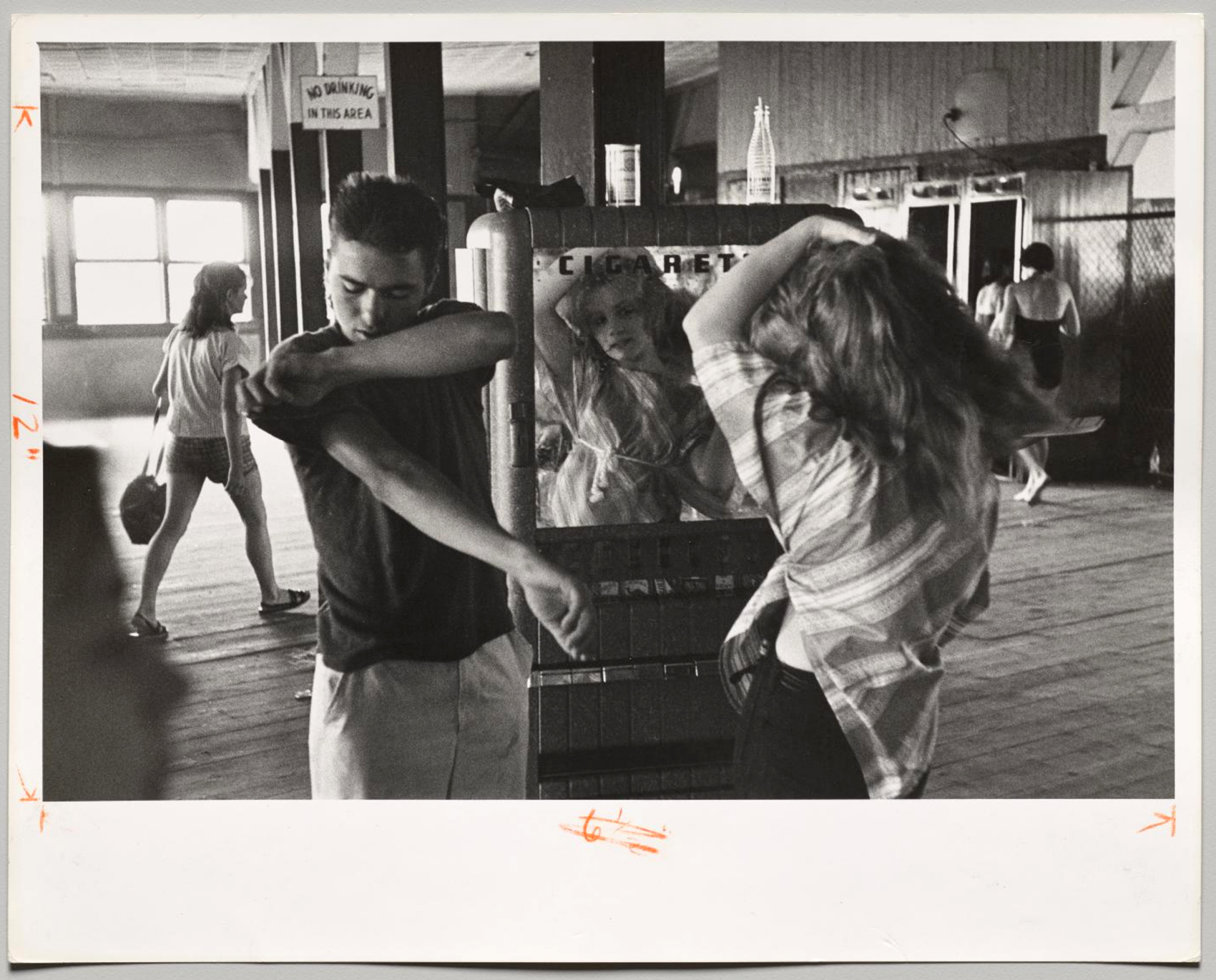
This print is vintage – made soon after the picture was shot – and its 8 x 10-inch size was typical of the period and preferred for making reproductions for magazines and books. As photography began gaining acceptance into the gallery and museum world in the 1980s, larger prints became the norm. The museum also owns an unusually large print of the same image, made in the 1990s or 2000s, which was created to be exhibited in galleries and museums. The two may look the same on the computer screen, but do not feel the same when viewed in real life.
 

Bruce Davidson (American, b. 1933) 'Untitled' 1959


Bruce Davidson (American, b. 1933)
Untitled
1959
Gelatin silver print
Image: 15.8 x 24.1 cm (6 1/4 x 9 1/2 in.)
Paper: 20.1 x 25.4 cm (7 15/16 x 10 in.)
Gift of an anonymous donor
© Bruce Davidson/Magnum Photos


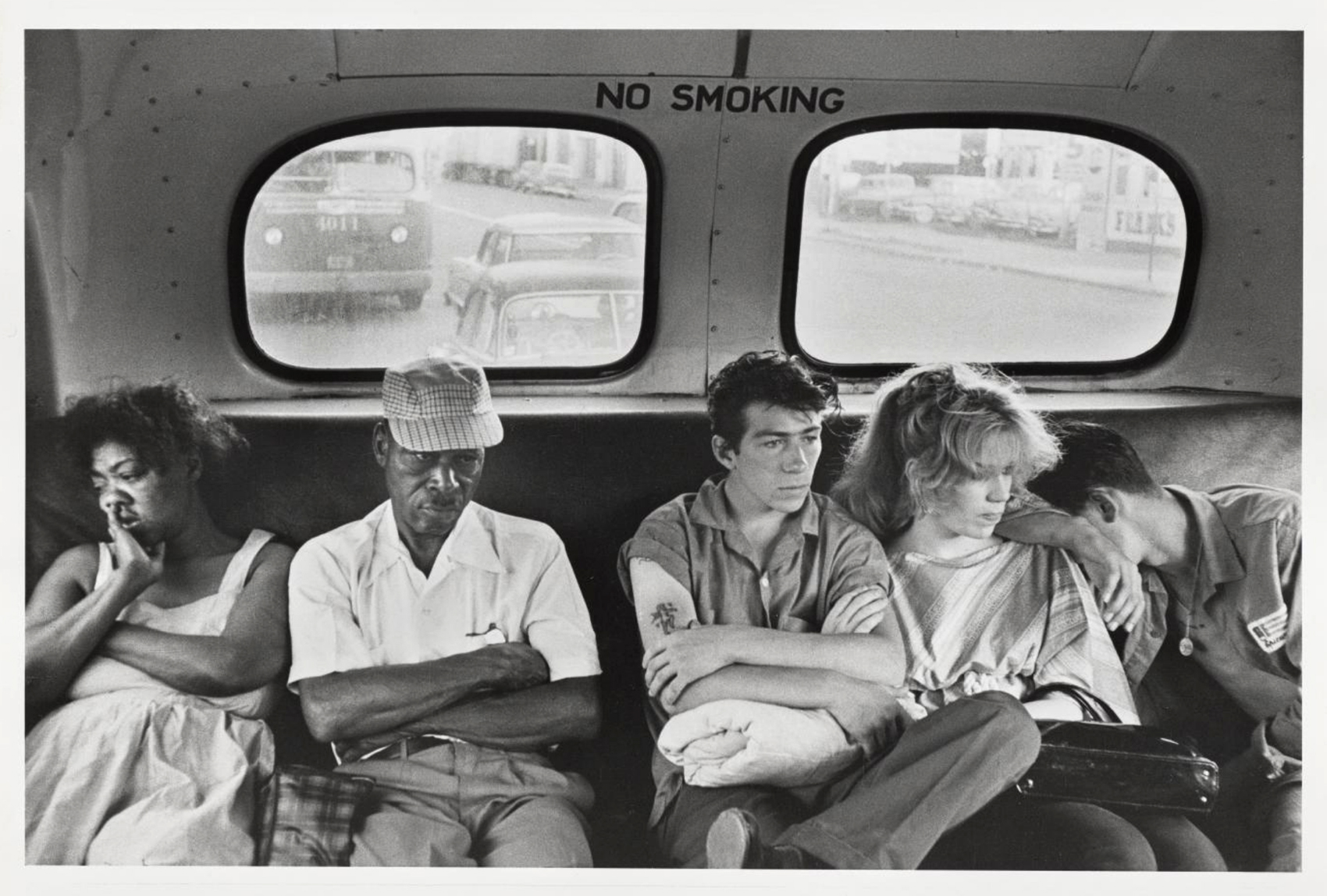
After a day at the beach at Coney Island, the teens “would take the long bus ride back to their neighbourhood,” remembered Bruce Davidson. “As they sat in the rear of the bus, the sunlight burned through the windows, giving them an angelic glow. They would drift into their dreams and awake alert to the mean streets awaiting them.”


Bruce Davidson

Barbara Tannenbaum

Curator of Photography

A hot topic in the 1950s, gangs were avidly analysed by sociologists, the press, and artists. Gordon Parks’s photographs of a young black Harlem gang leader were published in Life magazine in 1948. The musical West Side Story, which pitted a Polish gang against a Puerto Rican one, debuted on Broadway in 1957. The following year, a seven-part series in the New York Times analysed the social, economic, and psychological causes of this juvenile delinquency.

In the summer of 1959, Bruce Davidson went to Brooklyn to meet and photograph a teenage street gang called the Jokers. Davidson’s series Brooklyn Gang provided an in-depth view into the daily activities of an Irish and Polish gang whose turf was a block in the impoverished Park Slope neighbourhood. The Jokers were teenagers who were mostly students at the neighbourhood Catholic school or dropouts. They shoplifted and fought with members of rival gangs in rumbles that involved bricks, bats, knives, and occasionally zip (homemade) guns.

At age 25, Davidson was an outsider to them. He had been raised in a Jewish family in suburban Chicago and held an MFA in photography from Yale University. His images were being published in major magazines, and he had just joined Magnum, a distinguished, artist-run photographic agency. The Jokers’ role models were the greasers, a rebellious youth subculture promoted by cinematic antiheroes such as Marlon Brando’s motorcycle gang member in The Wild One (1953) and James Dean’s troubled teen in Rebel without a Cause (1955). The gang members’ “bad boy” image, replete with Vaseline-slicked pompadours and blue-collar clothing, flouted the era’s aspirational role model of an upwardly mobile white-collar worker in a business suit and short haircut.

Davidson did not sport a pompadour, but making a living as a freelance photojournalist was itself a rebellion against the nine-to-five office world. He spent the summer with the Jokers, hanging out on street corners, in the local candy store, and on the beach at Coney Island. His images reflect their alienation and anxieties but also their camaraderie. The boys explore male bonding rituals and act out their visions of maleness and adulthood. They may roughhouse, but gang ethics dictated that they were not to hurt each other. Real violence was reserved for rival gangs and, like their criminal acts, was not shown by Davidson.

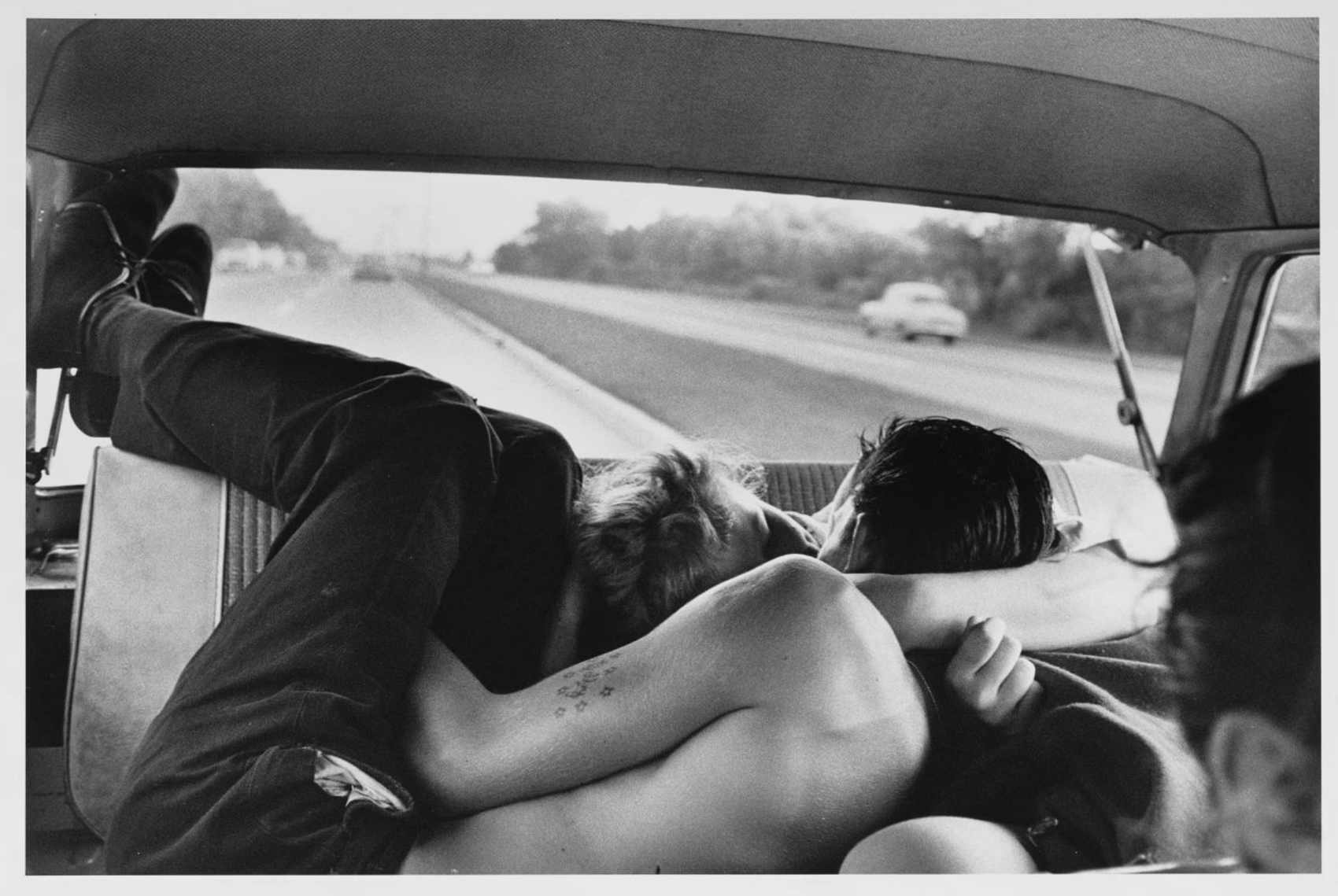
He did capture the teens’ early experiences with lust and love. The Lothario in the back seat of a car is Lefty, of whom Bob Powers, a gang member who wrote a memoir 40 years later, remarked, “We never thought he was good-looking, but all the girls loved him.” This well-known image of Lefty is joined in the exhibition by three others from that same make-out session. Together they form an almost cinematic progression. Several other groups of related images of events are also included in the exhibition. These rare glimpses into the artist’s shooting and editing processes are all drawn from the recent anonymous gift to the museum of 367 works from Davidson’s archive, selections that span his 70-year career.

Davidson was careful not to pass judgment in his Brooklyn Gang photographs. The youngsters’ hairstyles, tattoos, and underage drinking, smoking, and sex were considered ruinous behaviour at the time. The memoirs of Bob Powers and the reminiscences of other members give the Jokers’ story a dark tone. The best-known image in the series, taken in front of a cigarette machine at Coney Island, shows Artie Giammarino, who later became a transit police detective, and Cathy O’Neal, whom the boys considered “beautiful like Brigitte Bardot.” Cathy is seen here at age 13 or 14, around the time she began dating the “coolest” of the gang, Junior Rice. At 14 she got pregnant. Though they were both under the legal age, they married. They later divorced, and Junior became a heroin dealer and user; within a few years, drugs would claim the lives of many in the gang and in the neighbourhood. Years after their divorce, Cathy committed suicide by shotgun.

Davidson would always remain an outsider to the gang, but his working process allowed for intimacy and trust to grow between the gang members and the photographer. By the end of the summer, Davidson realised that he and the Jokers were all considered outsiders in the conformist, materialistic 1950s. “I could see my own repression in them, and I began to feel a connection to their desperation,” he remembered. “I began to feel their isolation and even my own.”

Cleveland Art, Fall 2020
 

Bruce Davidson (American, b. 1933) 'Untitled' 1959


Bruce Davidson (American, b. 1933)
Untitled
1959
Gelatin silver print
Paper: 61 x 50.8cm (24 x 20 in.)
Gift of an anonymous donor
© Bruce Davidson/Magnum Photos


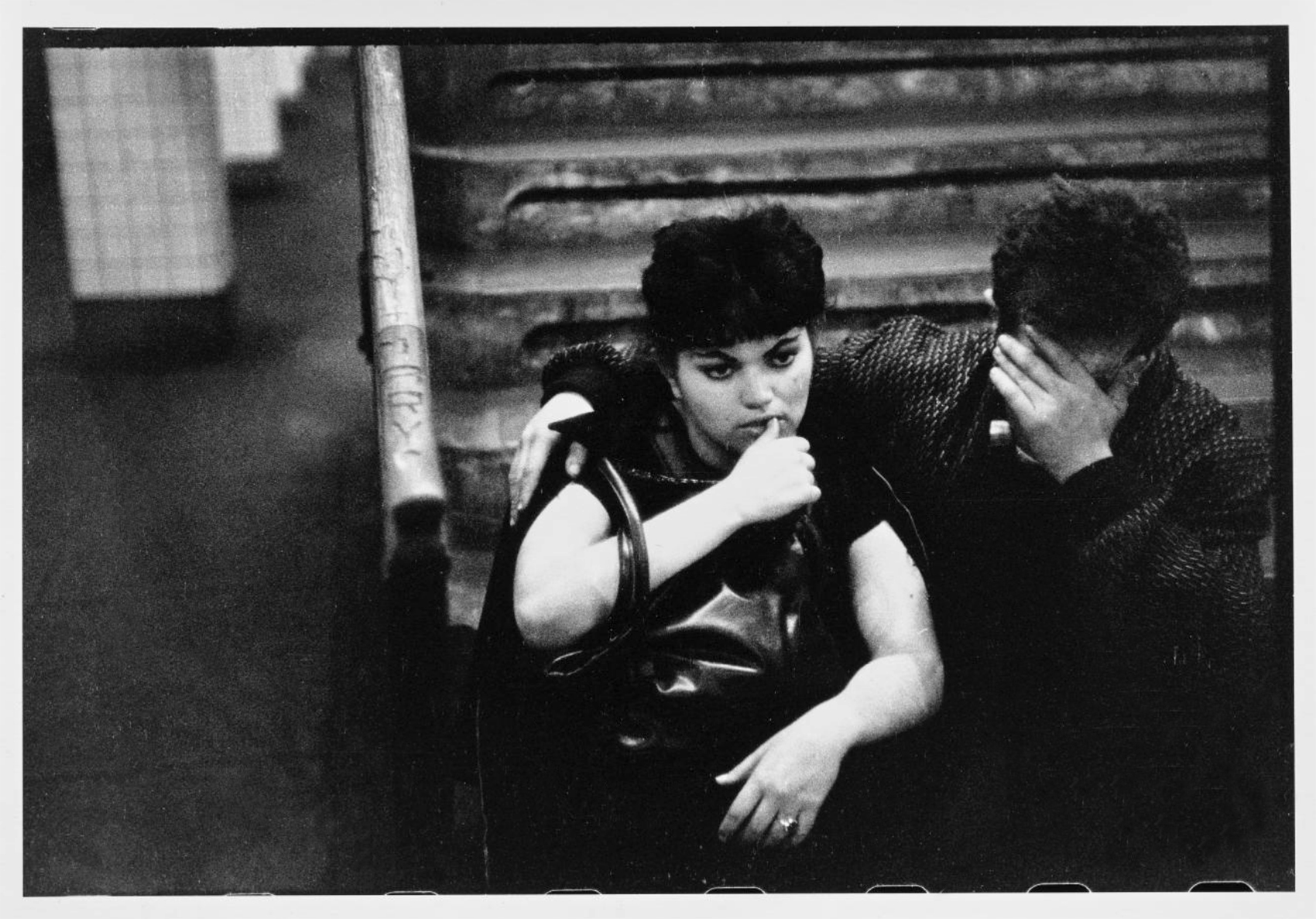
Although most of the gang members’ time was spent in their neighbourhood of Park Slope, Brooklyn, the Jokers sometimes took excursions. Few had access to cars, so most travel was by bus and subway. The subway fare of 15 cents – the equivalent of $1.33 today – would take them anywhere in New York City. Here a gang member and his girlfriend wait for a train on the neighbourhood subway platform. The beach at Coney Island was a favourite summer destination for the gang.
 

Bruce Davidson (American, b. 1933) 'Untitled' 1959


Bruce Davidson (American, b. 1933)
Untitled
1959
Gelatin silver print
Paper: 27.9 x 35.6cm (11 x 14 in.)
Gift of an anonymous donor
© Bruce Davidson/Magnum Photos
 

Bruce Davidson (American, b. 1933) 'Untitled' 1959


Bruce Davidson (American, b. 1933)
Untitled
1959
Gelatin silver print
Paper: 20.3 x 25.4cm (8 x 10 in.)
Gift of an anonymous donor
© Bruce Davidson/Magnum Photos


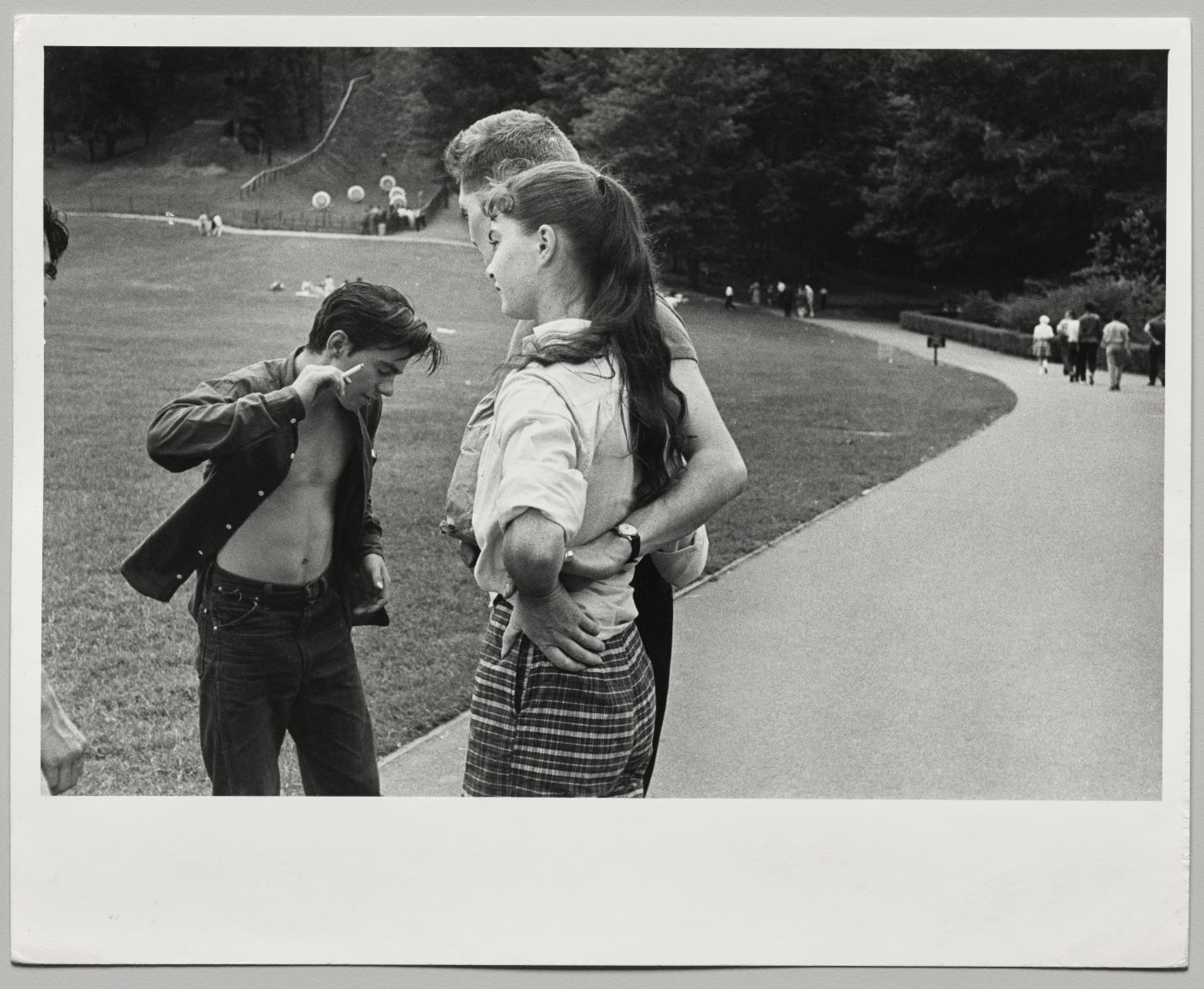
“We used to hang out in [Brooklyn’s] Prospect Park all the time,” recalled Jokers member Bob Powers. “We did a lot of drinking and sleeping overnight in the park. … The cops with their bats would push us along, tell us to move. We were very defiant. If we moved, we moved ten feet. Then they had to tell us to move another ten feet. We’d kind of like move around in a circle and come back to where we originally started. The cops were mean at that time, but then we weren’t the best of kids either.”
 

Bruce Davidson (American, b. 1933) 'Untitled' 1959


Bruce Davidson (American, b. 1933)
Untitled
1959
Gelatin silver print
Paper: 13.9 x 17.6cm (5 1/2 x 6 15/16 in.)
Image: 11.4 x 16.9cm (4 1/2 x 6 5/8 in.)
Gift of an anonymous donor
© Bruce Davidson/Magnum Photos


The Jokers roughhoused and fought among themselves but were not allowed to hurt each other. Real violence was reserved for those in other gangs or occasionally for civilians. “Did we fight with chains and pipes and knives? Yeah,” gang member Bob Powers reminisced years later. “Did people get stabbed? Yeah, people got stabbed. And people got their heads cracked open with bats.”
 

Bruce Davidson (American, b. 1933) 'Untitled' 1959


Bruce Davidson (American, b. 1933)
Untitled
1959
Gelatin silver print
Paper: 20.3 x 25.4cm (8 x 10 in.)
Gift of an anonymous donor
© Bruce Davidson/Magnum Photos
 

Bruce Davidson (American, b. 1933) 'Untitled' 1959


Bruce Davidson (American, b. 1933)
Untitled
1959
Gelatin silver print
Paper: 27.9 x 35.6cm (11 x 14 in.)
Gift of an anonymous donor
© Bruce Davidson/Magnum Photos


The gang member making out in the back seat of a car on the way home from Coney Island is Lefty, identifiable by his tattoo. “We always wondered why the girls liked him,” recalled Jokers member Bob Powers. “We never thought he was good-looking, but all the girls loved him. It was amazing.”


Bruce Davidson (American, b. 1933) 'Untitled' 1959


Bruce Davidson (American, b. 1933)
Untitled
1959
Gelatin silver print
Paper: 61 x 50.8cm (24 x 20 in.)
Gift of an anonymous donor
© Bruce Davidson/Magnum Photos


Jimmie, an older member of the gang, watched over the younger members with his brother Johnny. In 1998, Jokers member Bob Powers recalled, “Later, the whole family, all six of them … died, wiped out, mostly from drugs. It’s amazing because at this particular time, if you see Jimmie, he’s like the ‘Fonz,’ like James Dean – handsome. He was good-looking, he had the women, and he was always working on cars.”


Cleveland Museum of Art
11150 East Boulevard
Cleveland, Ohio 44106

Opening hours:
Tuesdays, Thursdays, Saturdays, Sundays 10.00am – 5.00pm
Wednesdays, Fridays 10.00am – 9.00pm
Closed Mondays
Cleveland Museum of Art website

LIKE ART BLART ON FACEBOOK

Back to top

European art research tour exhibition: ‘Cy Twombly: Sculpture’ at Gagosian, Grosvenor Hill, London

Exhibition dates: 30th September – 21st December, 2019, posted December 2020


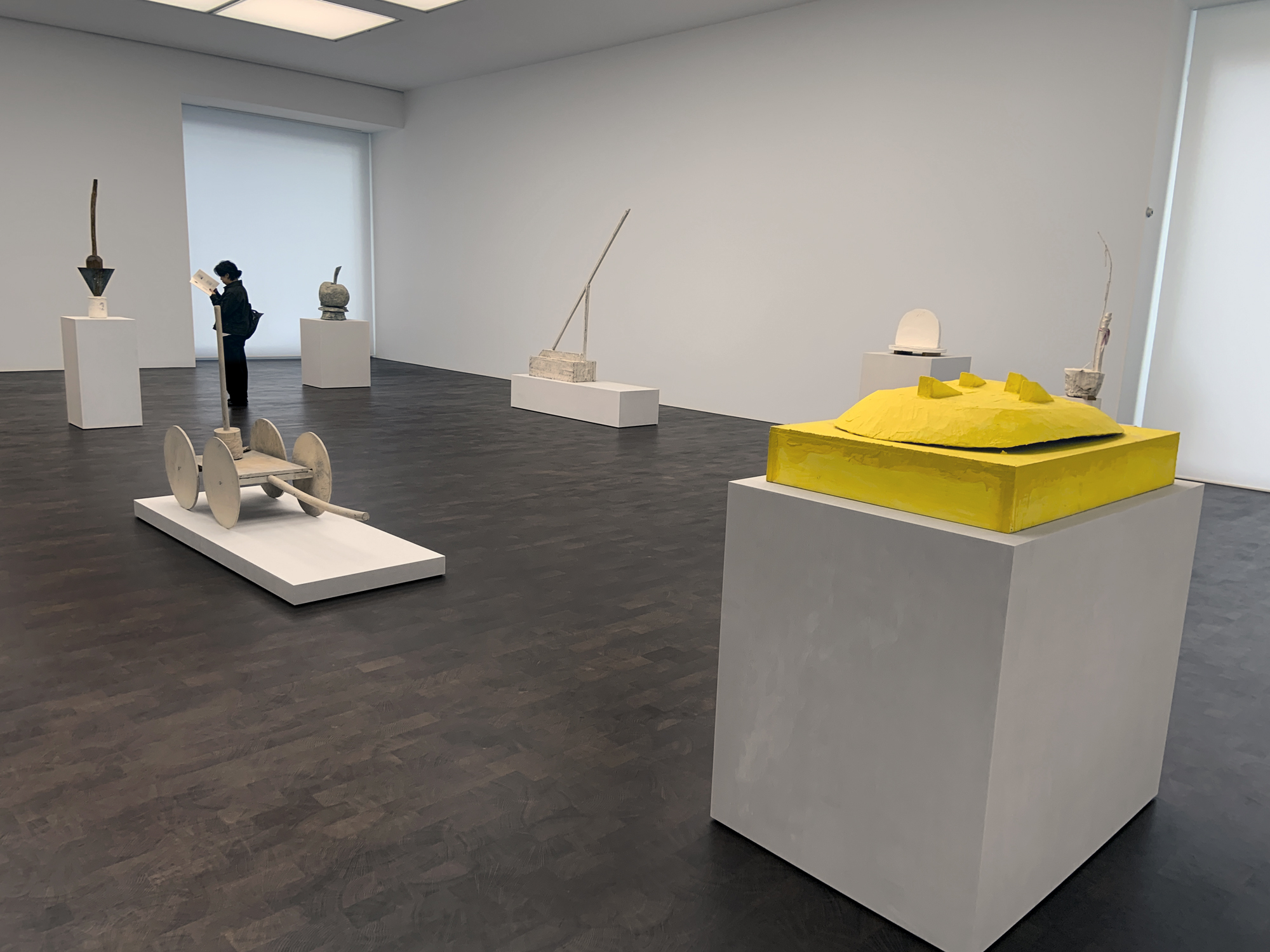
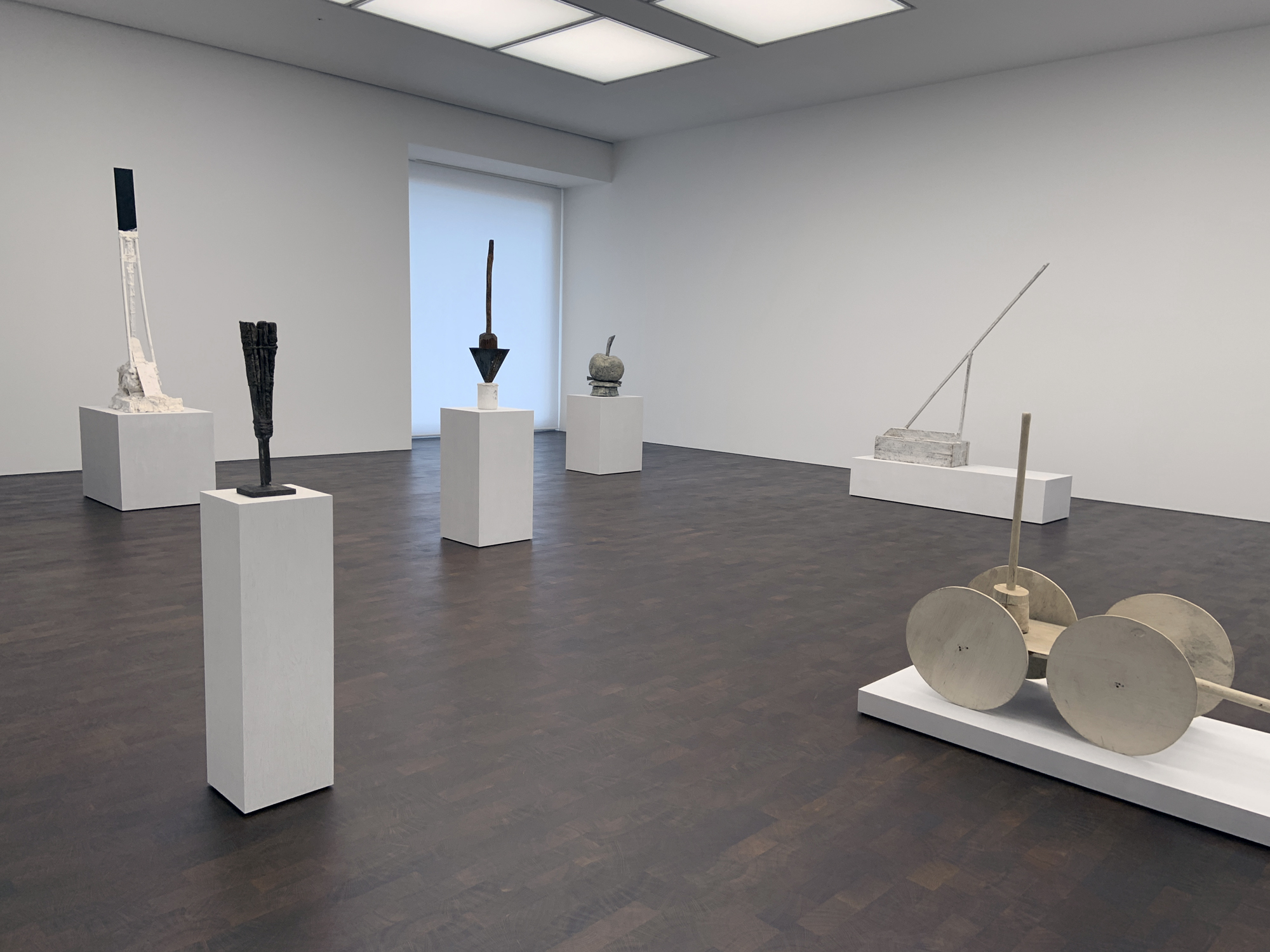
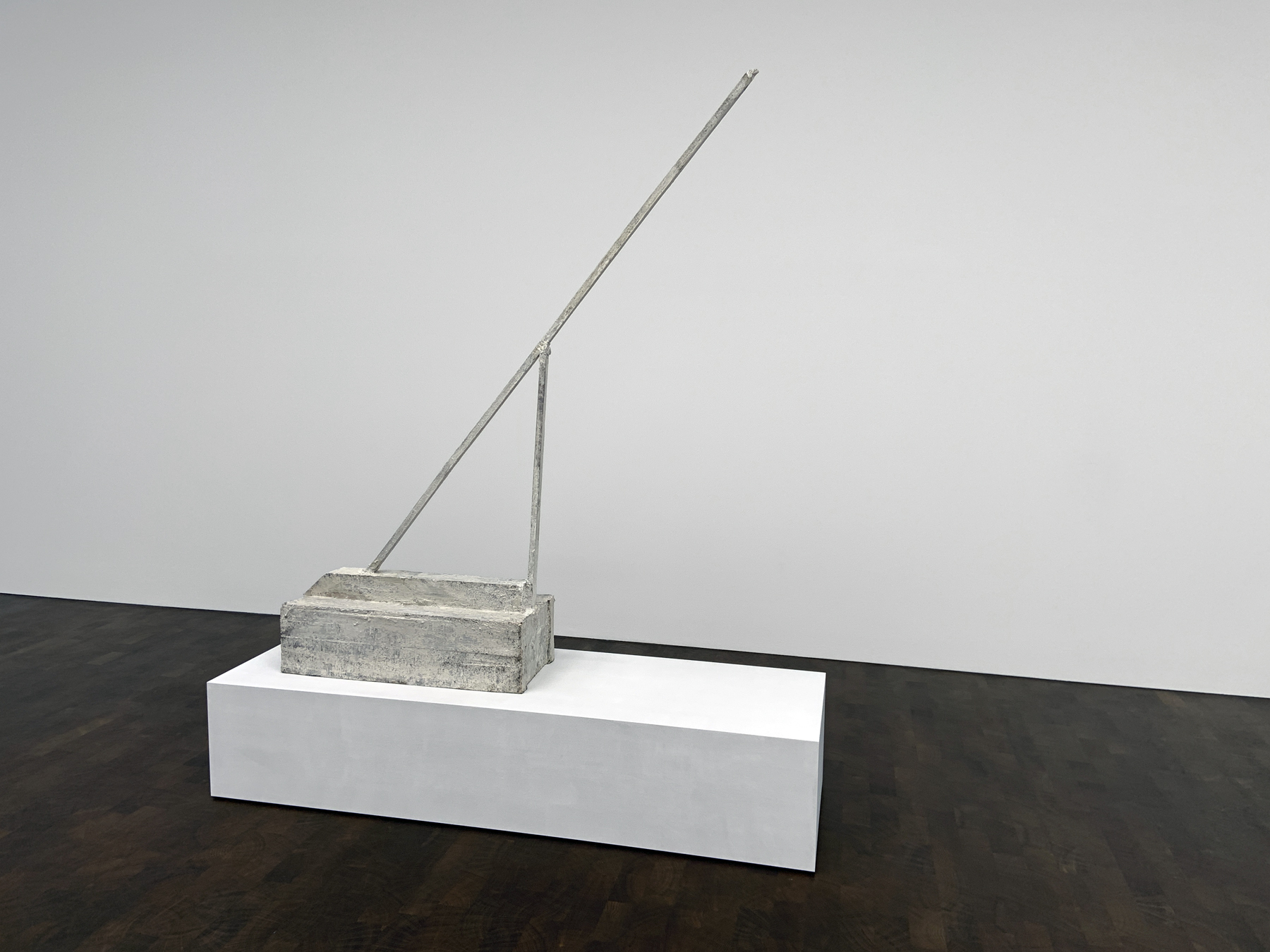
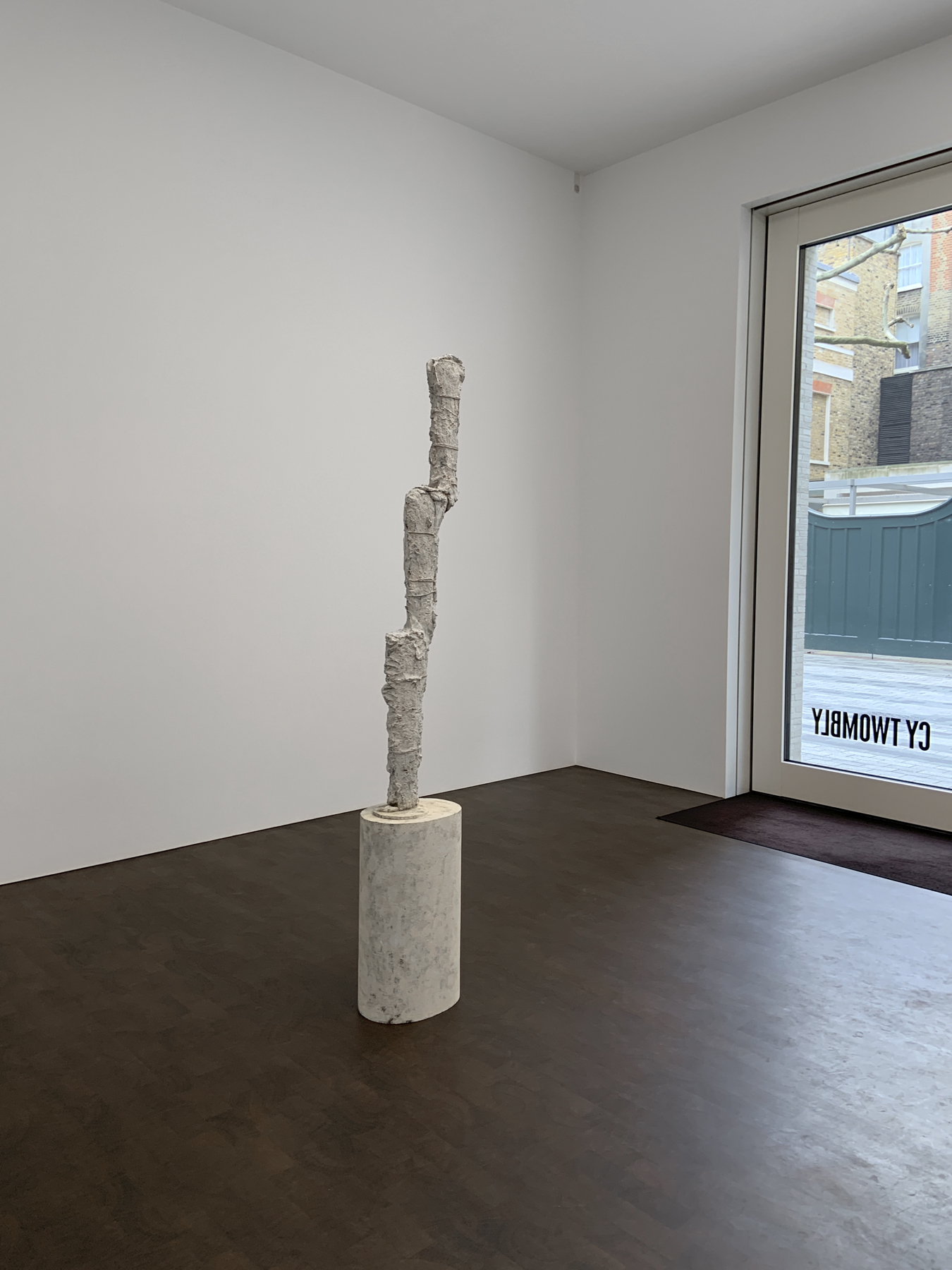
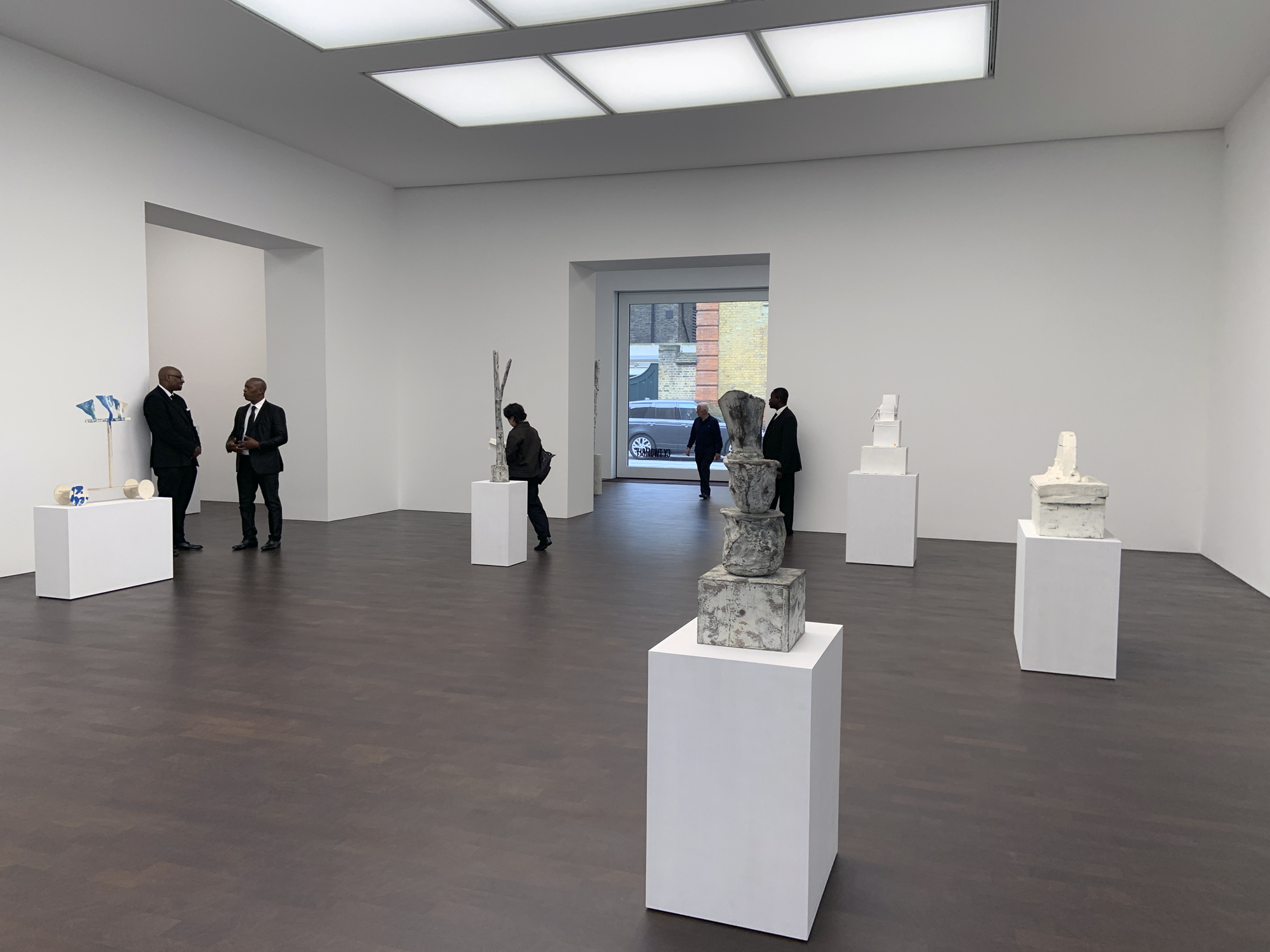
Installation view of the exhibition 'Cy Twombly: Sculpture' at Gagosian, London


Installation view of the exhibition Cy Twombly: Sculpture at Gagosian, London
Photo: Marcus Bunyan


Recovered time

For my friend and mentor Ian Lobb, who is a Twombly aficionado. I posted him back three Twombly posters from the pop up shop…

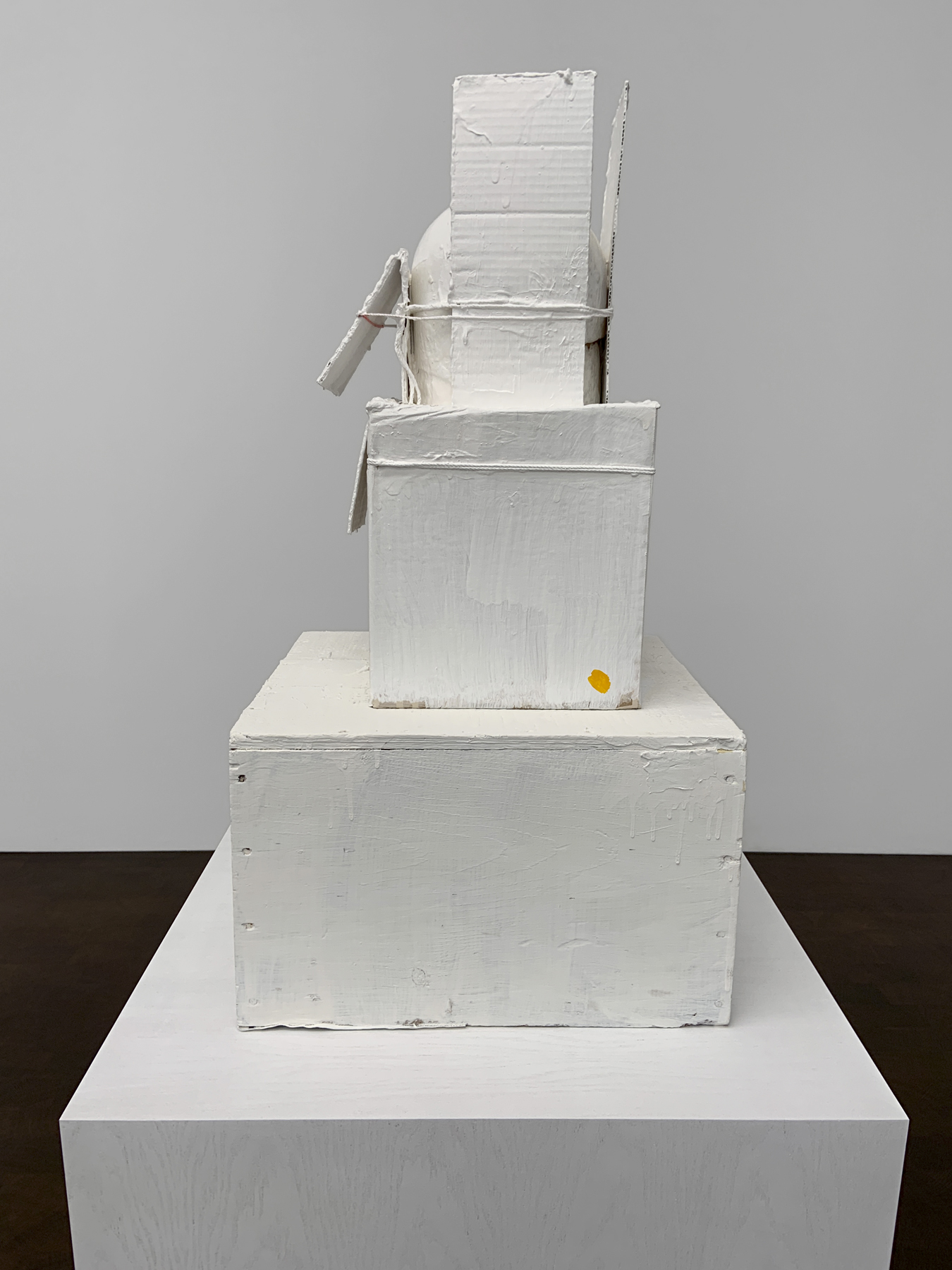
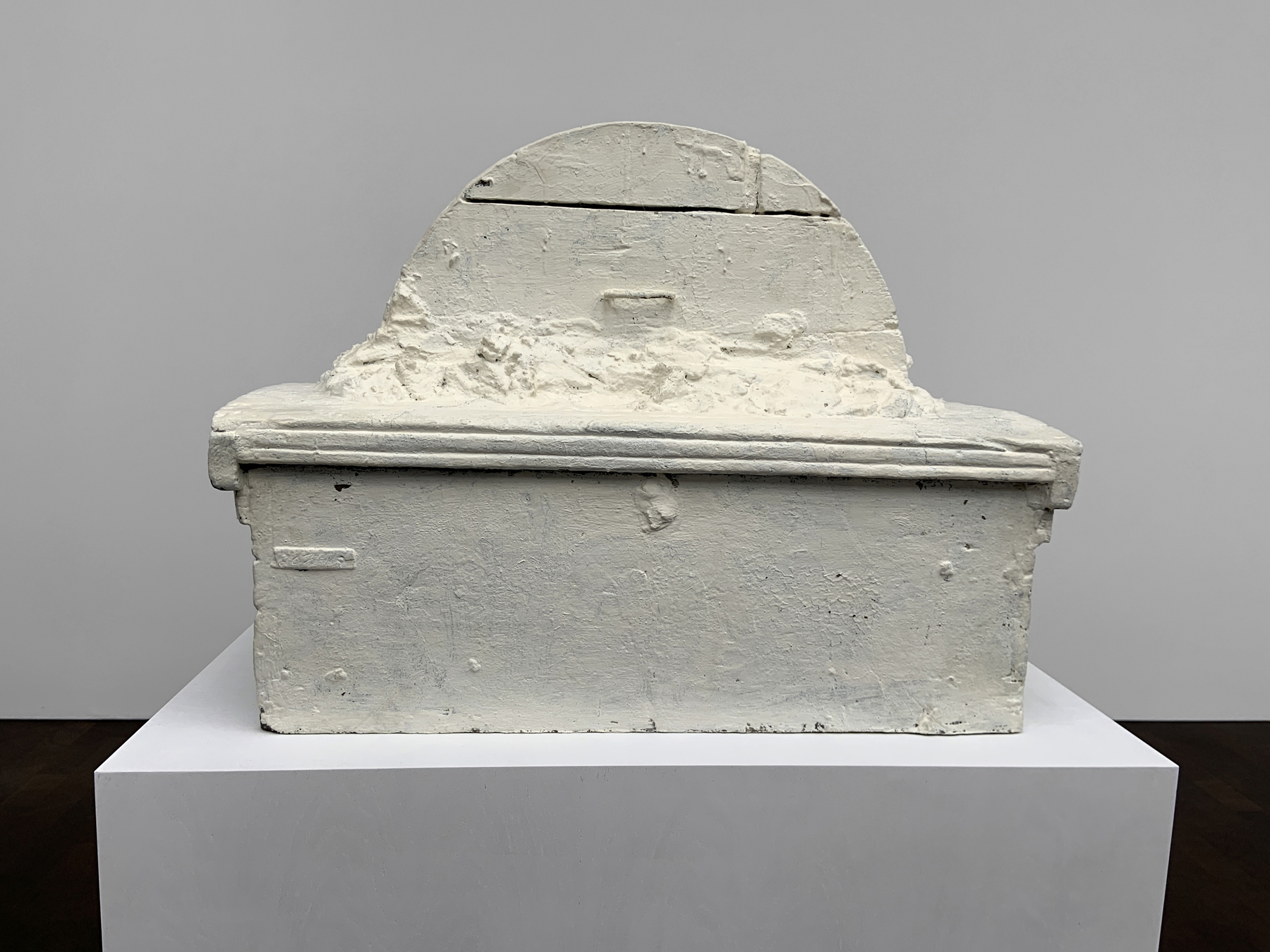
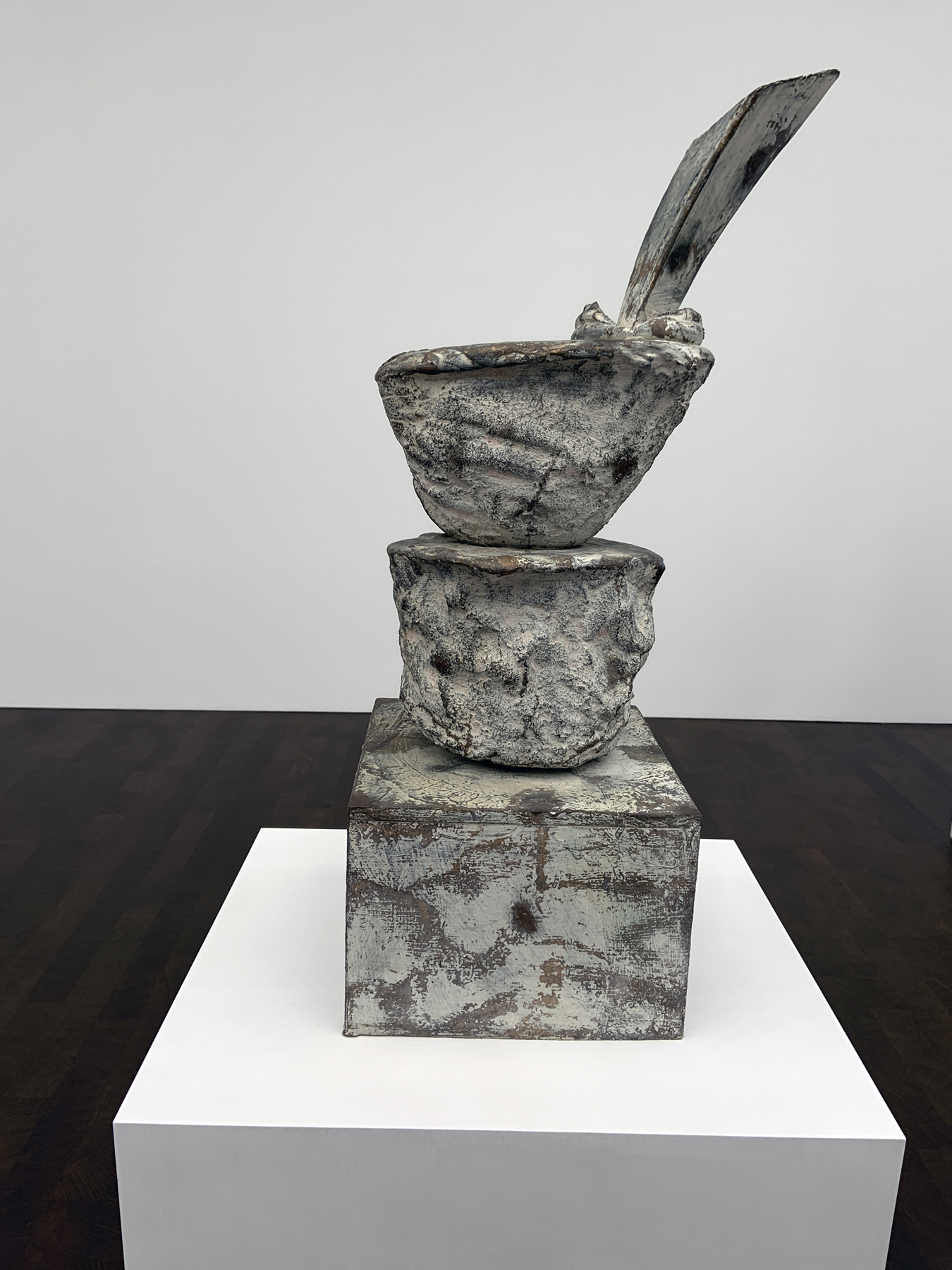
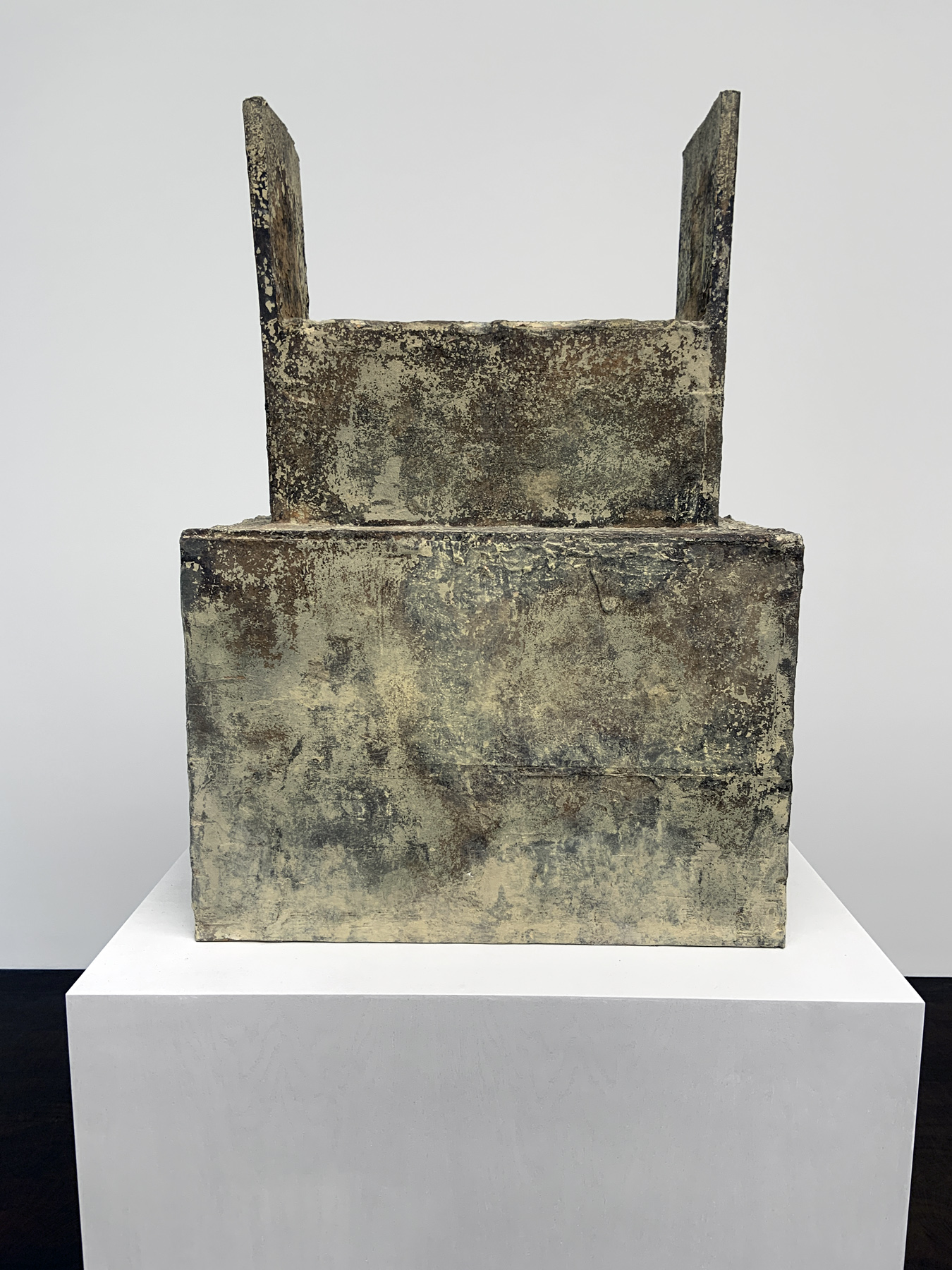
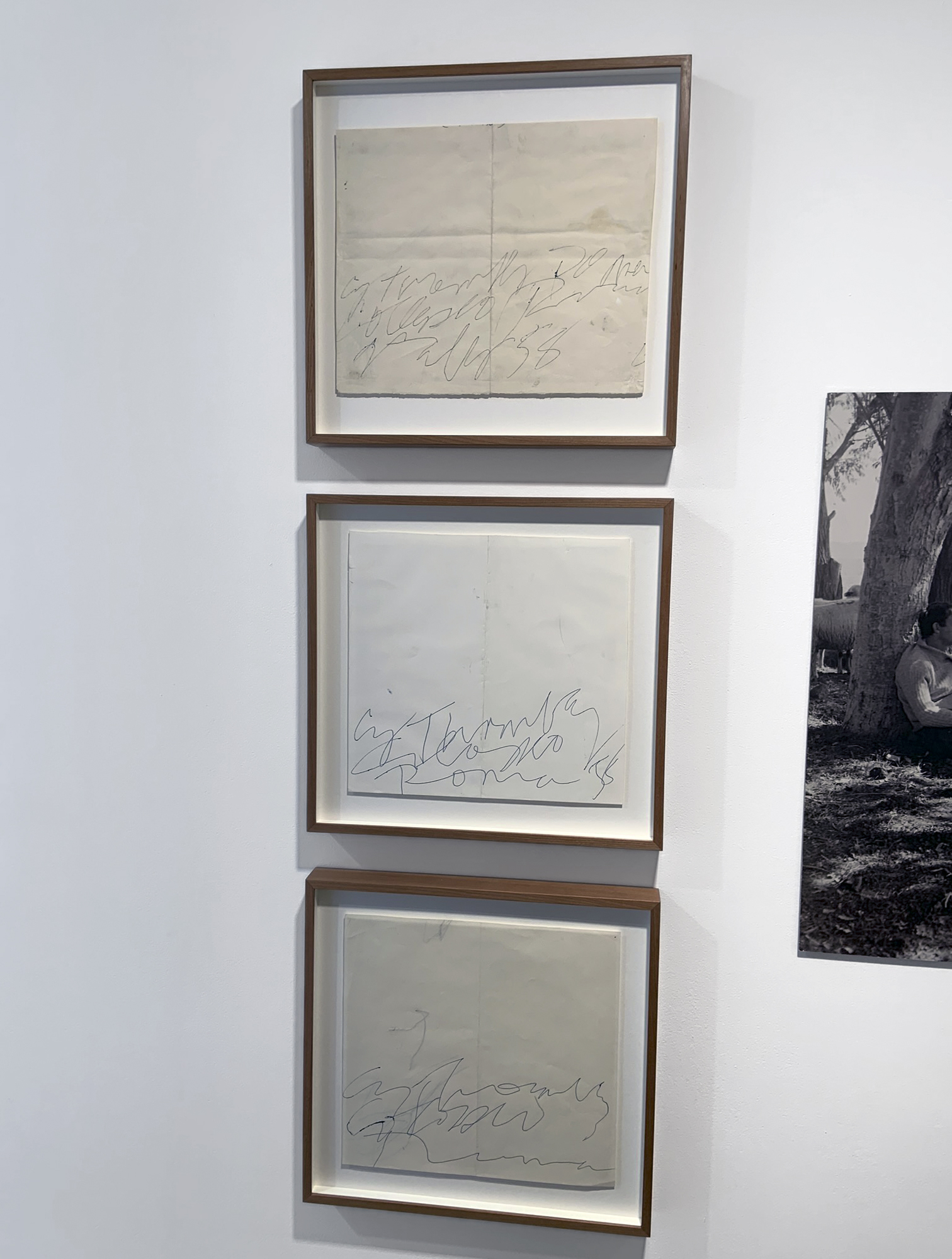
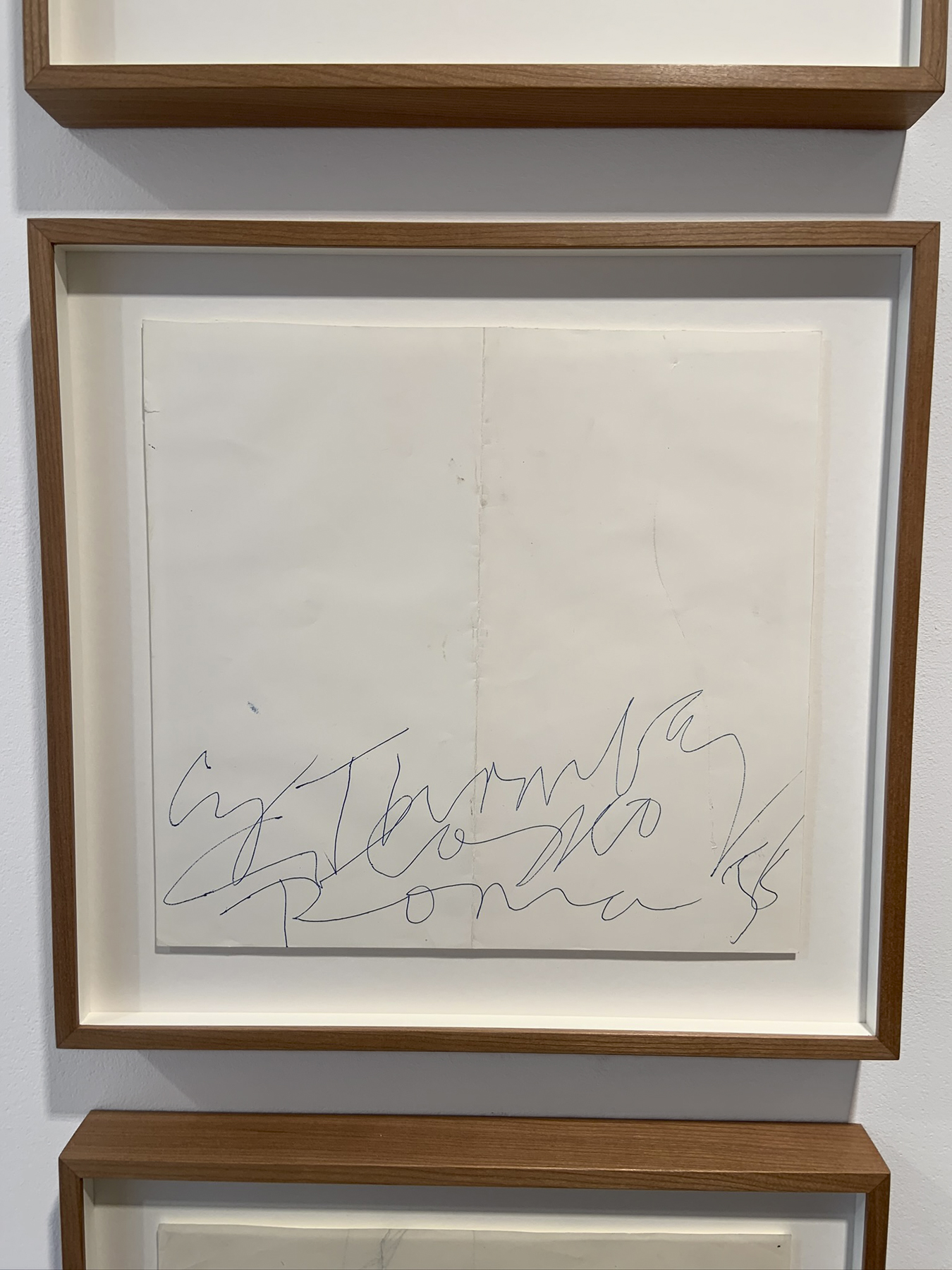
“Twombly made his sculptures from found materials such as plaster, wood, and iron, as well as objects that he habitually used and handled in the studio. Often modest in scale, they embody his artistic language of handwritten glyphs and symbols, evoking narratives from antiquity and fragments of literature and poetry.”

“This thought, that within each piece there is an underlying poetry, an underlying history, to be uncovered, elucidates the potential within each sculpture.”

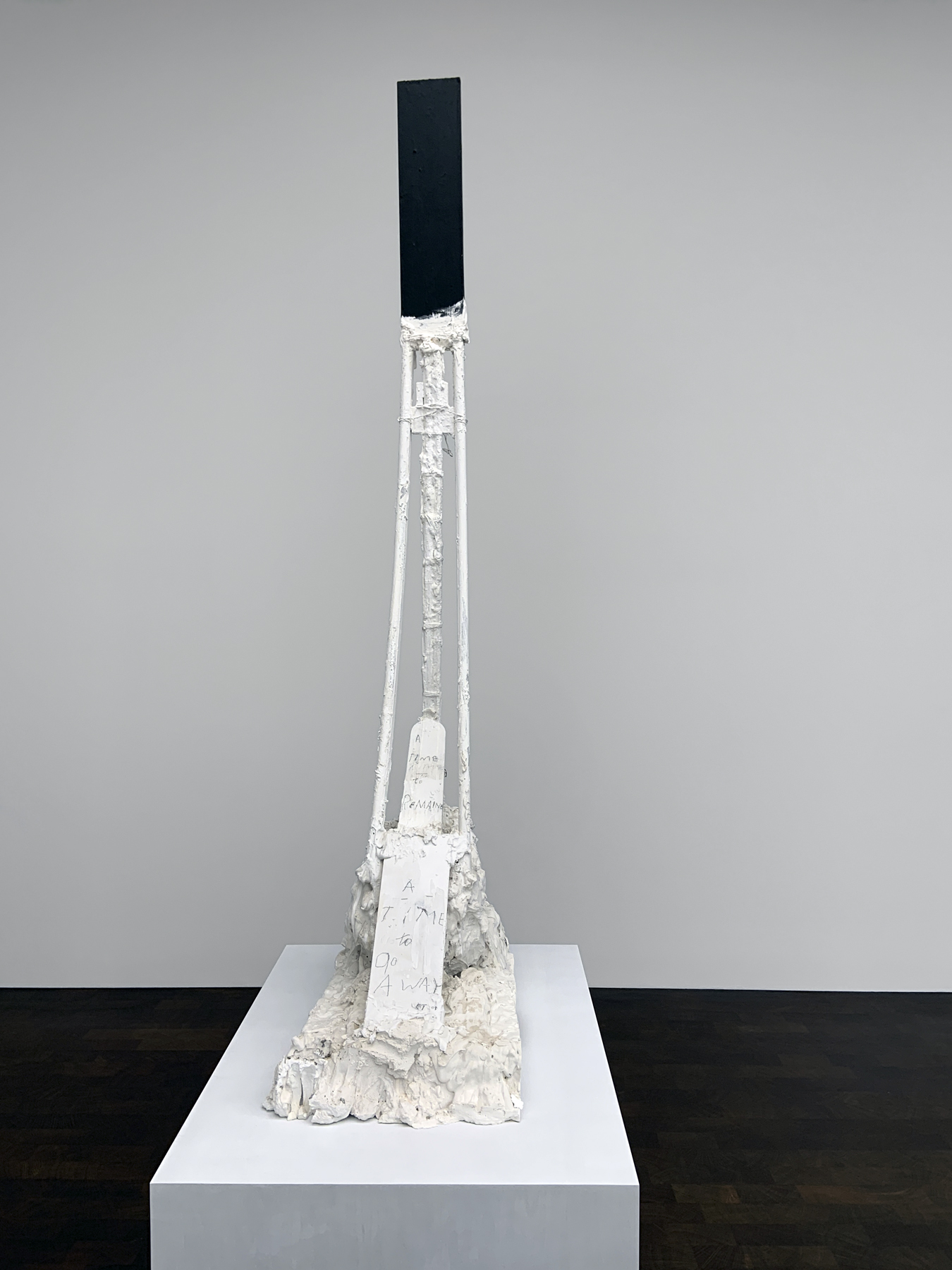
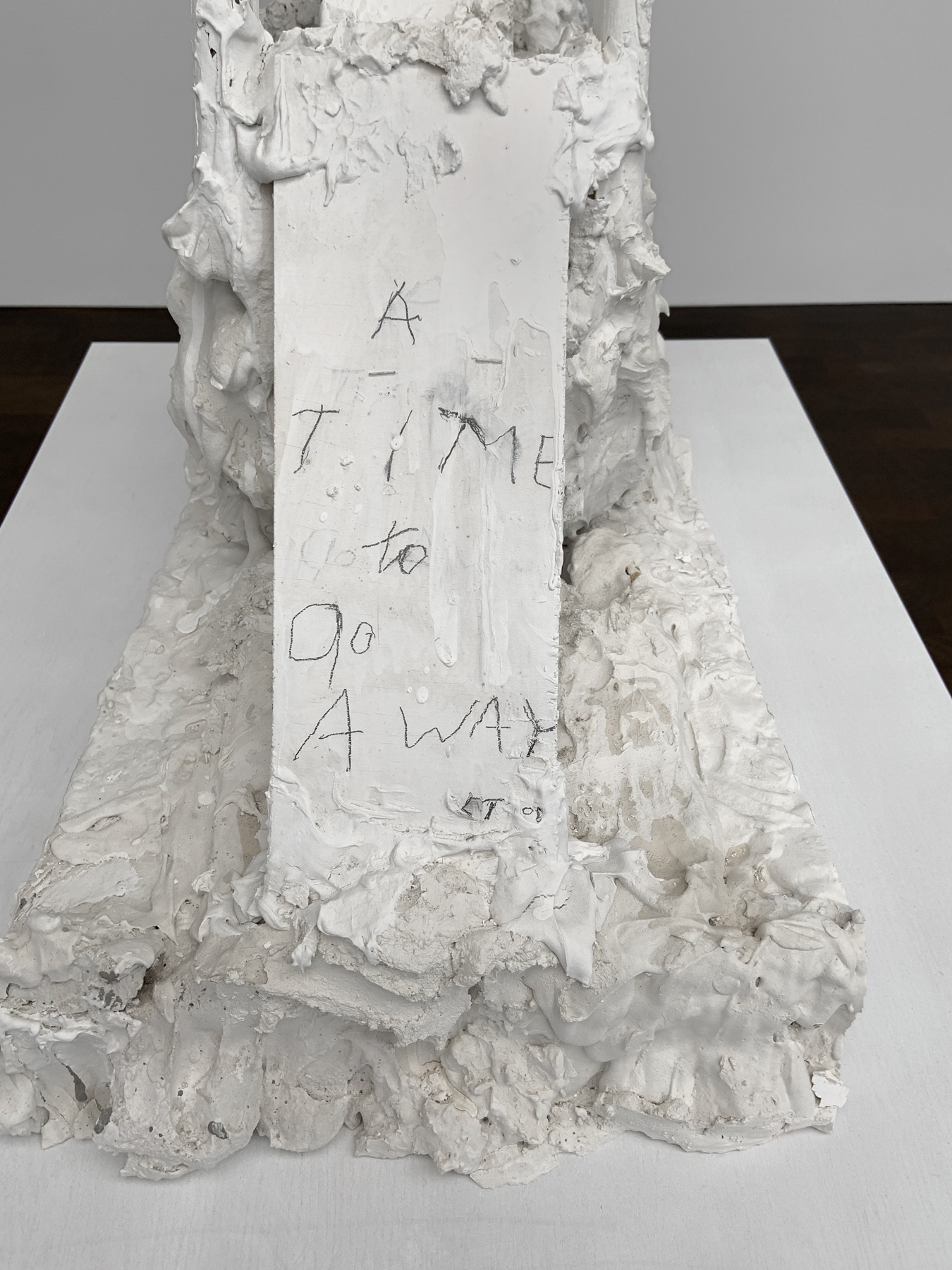
A Time To Remain, A Time To Go Away.

Marcus


All iPhone images © Marcus Bunyan. Please click on the photographs for a larger version of the image.


“I would like to think in the sculptures there is a tendency towards the fundamental principle in Homer’s world. That poetry belongs to the defeated and to the dead.”

“White paint is my marble.”


Cy Twombly


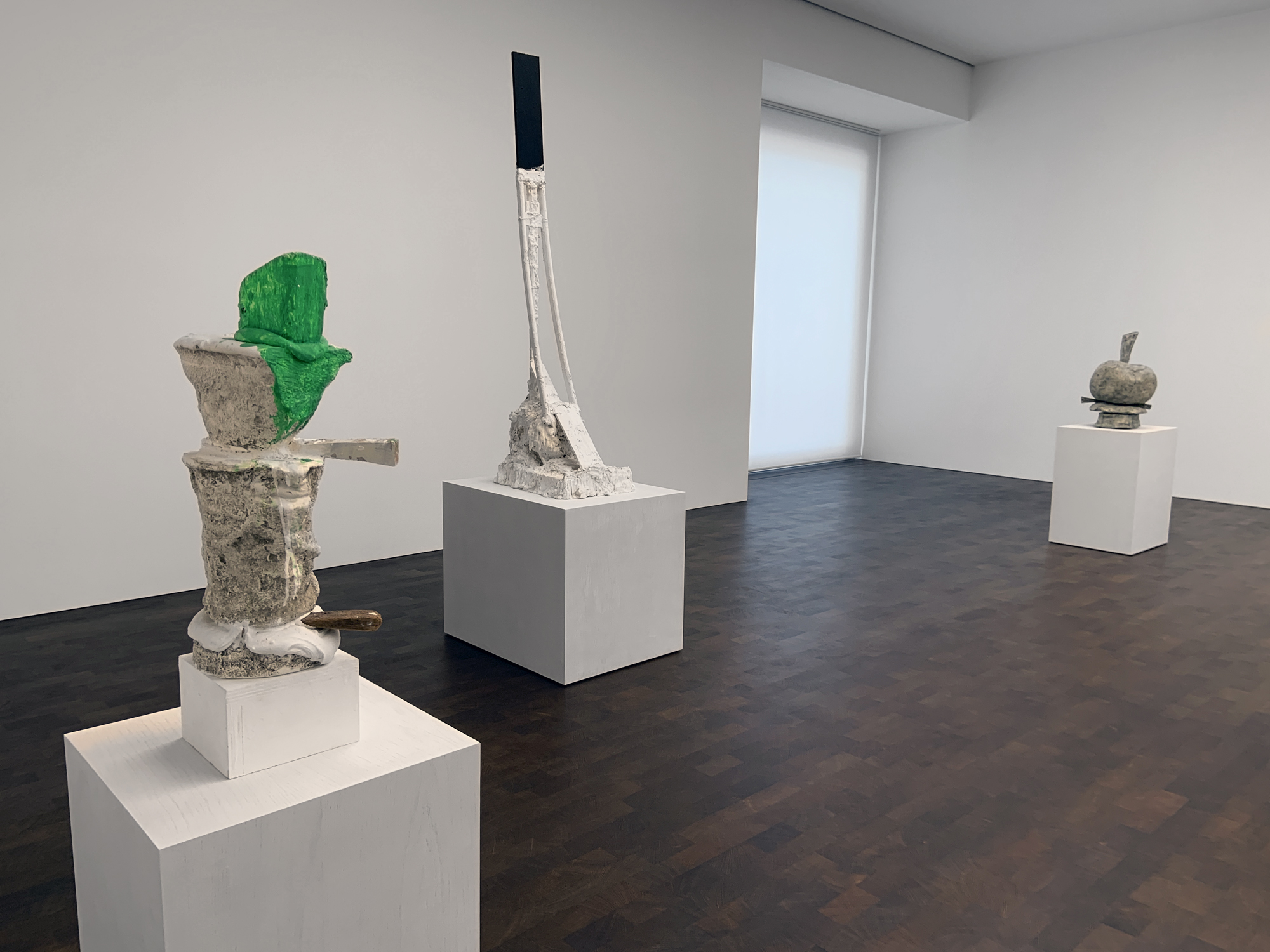
Installation view of the exhibition 'Cy Twombly: Sculpture' at Gagosian, London

Installation view of the exhibition 'Cy Twombly: Sculpture' at Gagosian, London

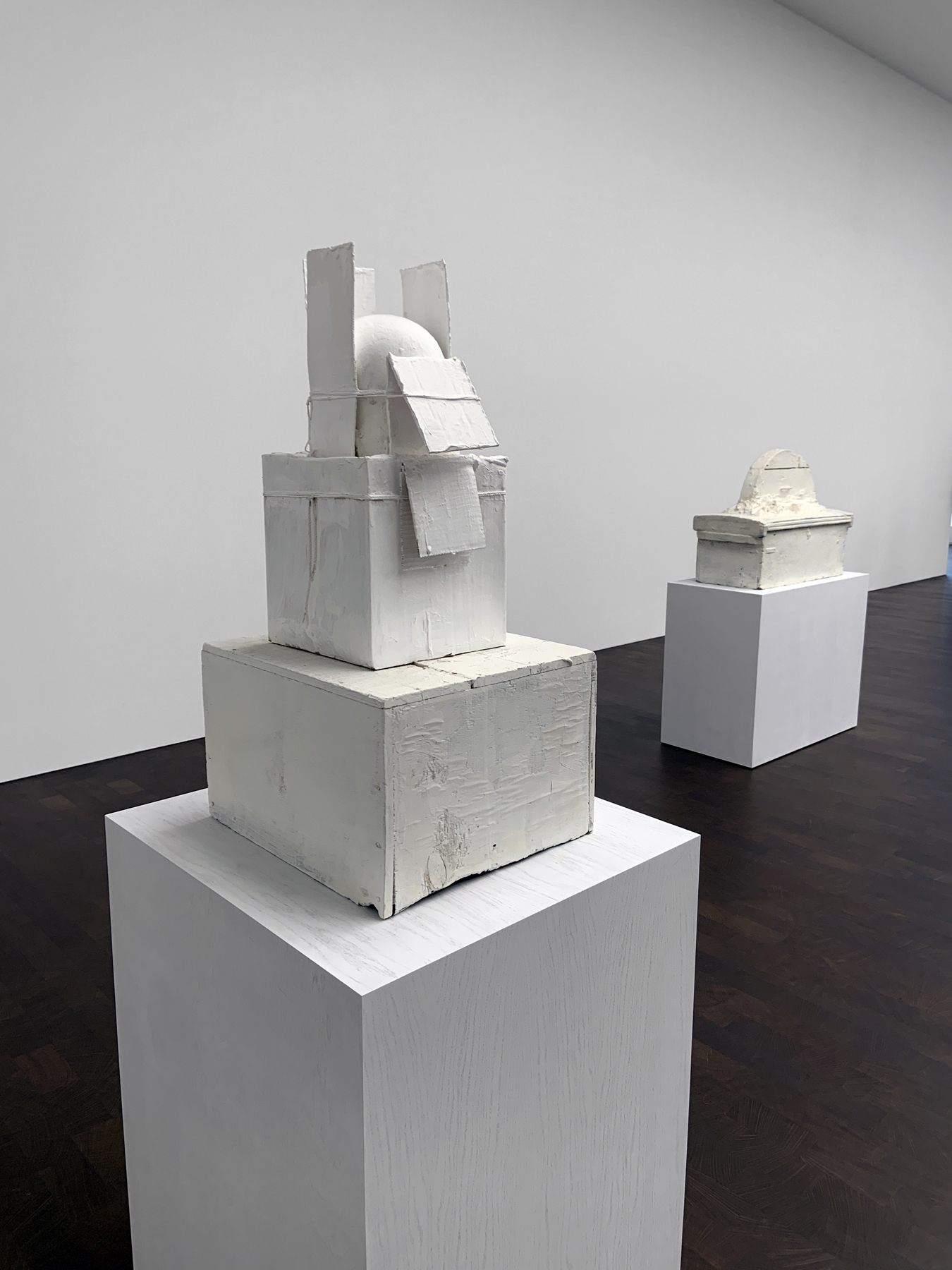
Installation view of the exhibition 'Cy Twombly: Sculpture' at Gagosian, London

Installation view of the exhibition 'Cy Twombly: Sculpture' at Gagosian, London


Installation views of the exhibition Cy Twombly: Sculpture at Gagosian, London
Photos: Marcus Bunyan


Gagosian is pleased to present an exhibition of Cy Twombly’s sculptures, in association with the Cy Twombly Foundation. The exhibition marks the publication of the second volume of the catalogue raisonné of sculptures, edited by Nicola Del Roscio, President of the Cy Twombly Foundation, and published by Schirmer/Mosel.

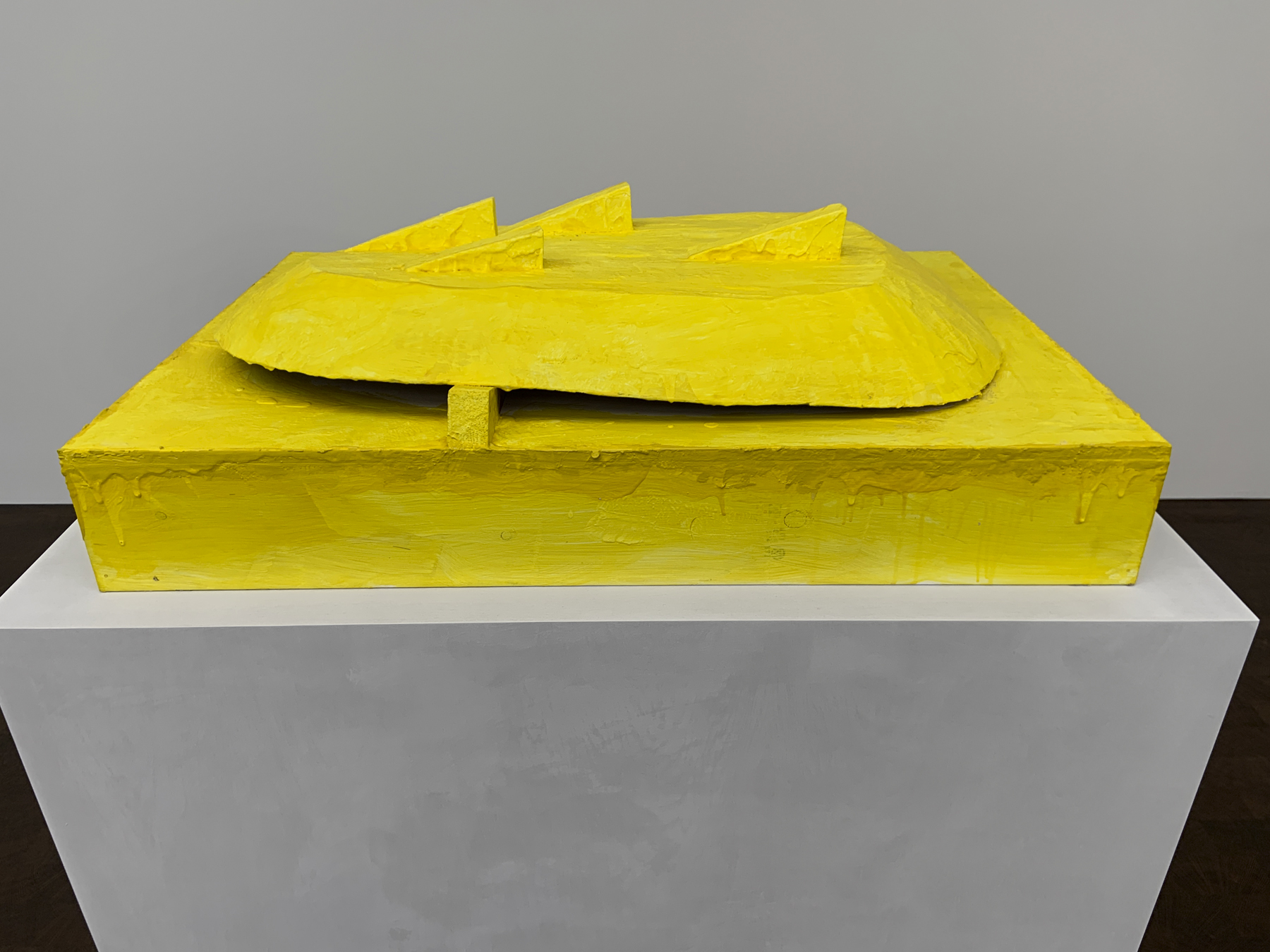
Twombly made his sculptures from found materials such as plaster, wood, and iron, as well as objects that he habitually used and handled in the studio. From 1946 onward, he created many assemblages, though they were rarely exhibited before the 1997 publication of the first volume of his catalogue raisonné. Often modest in scale, they embody his artistic language of handwritten glyphs and symbols, evoking narratives from antiquity and fragments of literature and poetry.

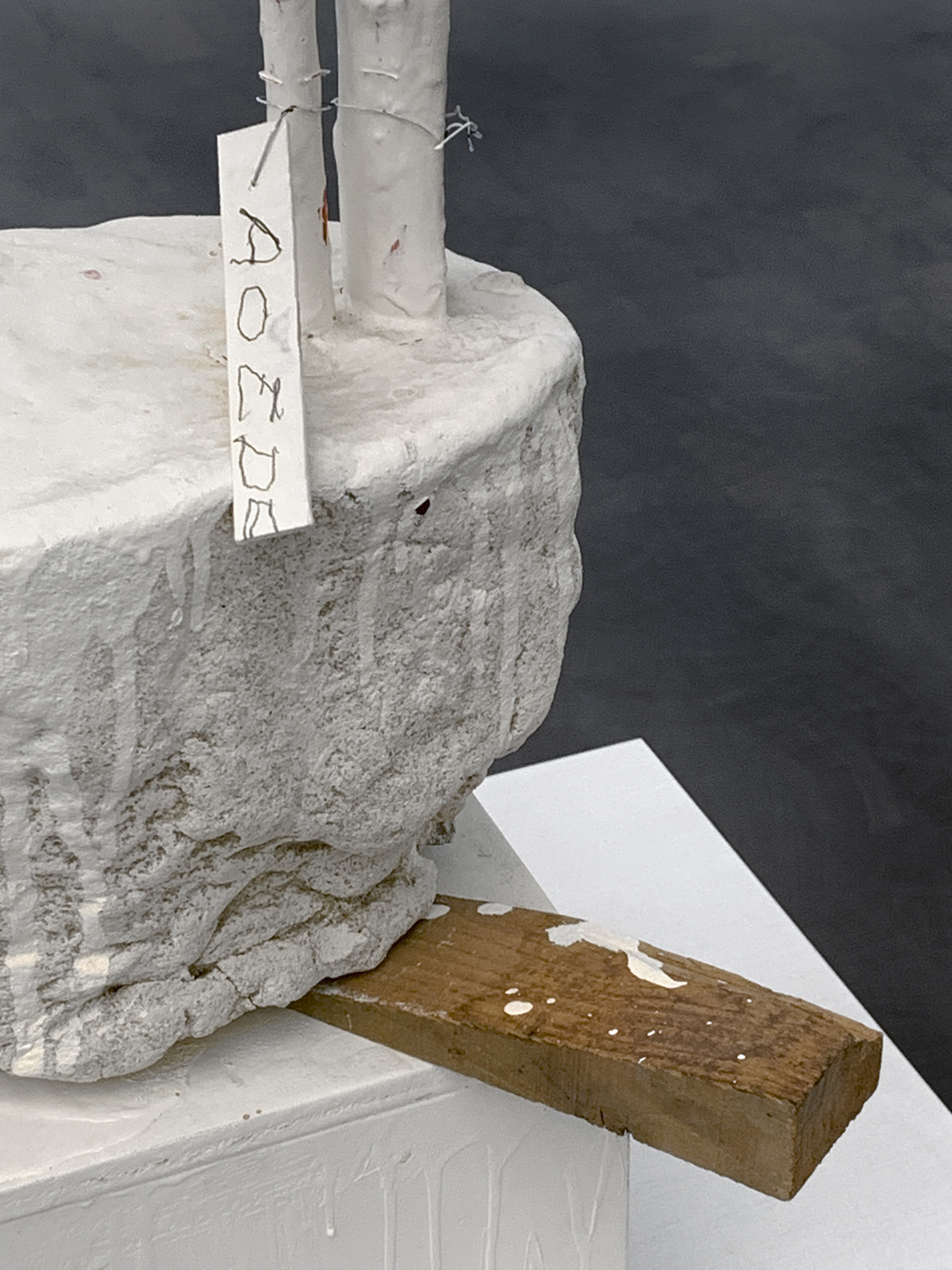
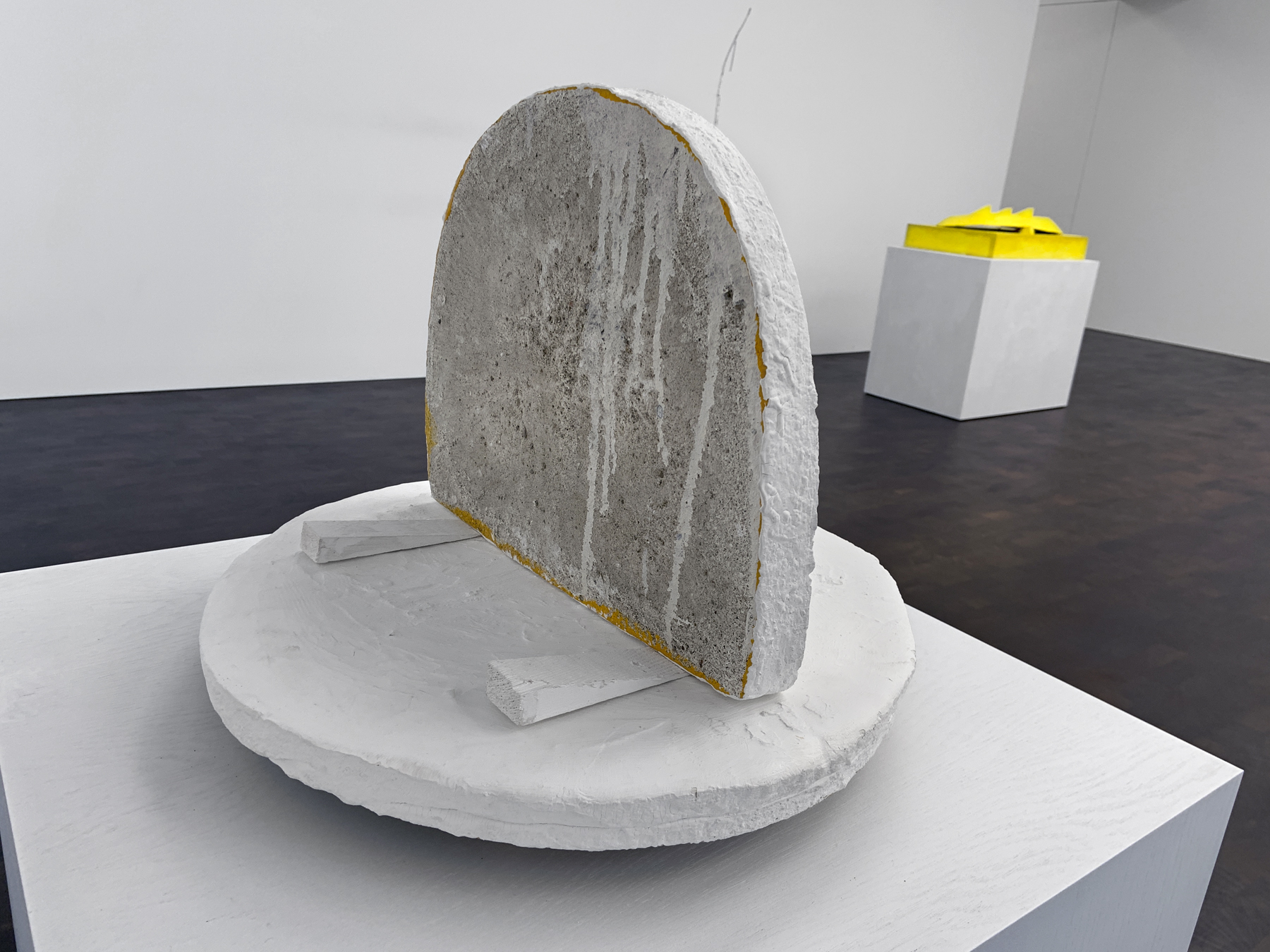
Many of Twombly’s sculptures are coated in white paint, which unifies and neutralises the assembled materials and renders the newly formed object into a coherent whole. In referring to white paint as his “marble,” Twombly recalls traditions of Egyptian, Greek, and Roman sculpture while also subverting marble’s classical connotation of perfection through his roughly painted surfaces. The intimate scale of these works, together with their textural coats of paint, underscores their fundamentally haptic nature.

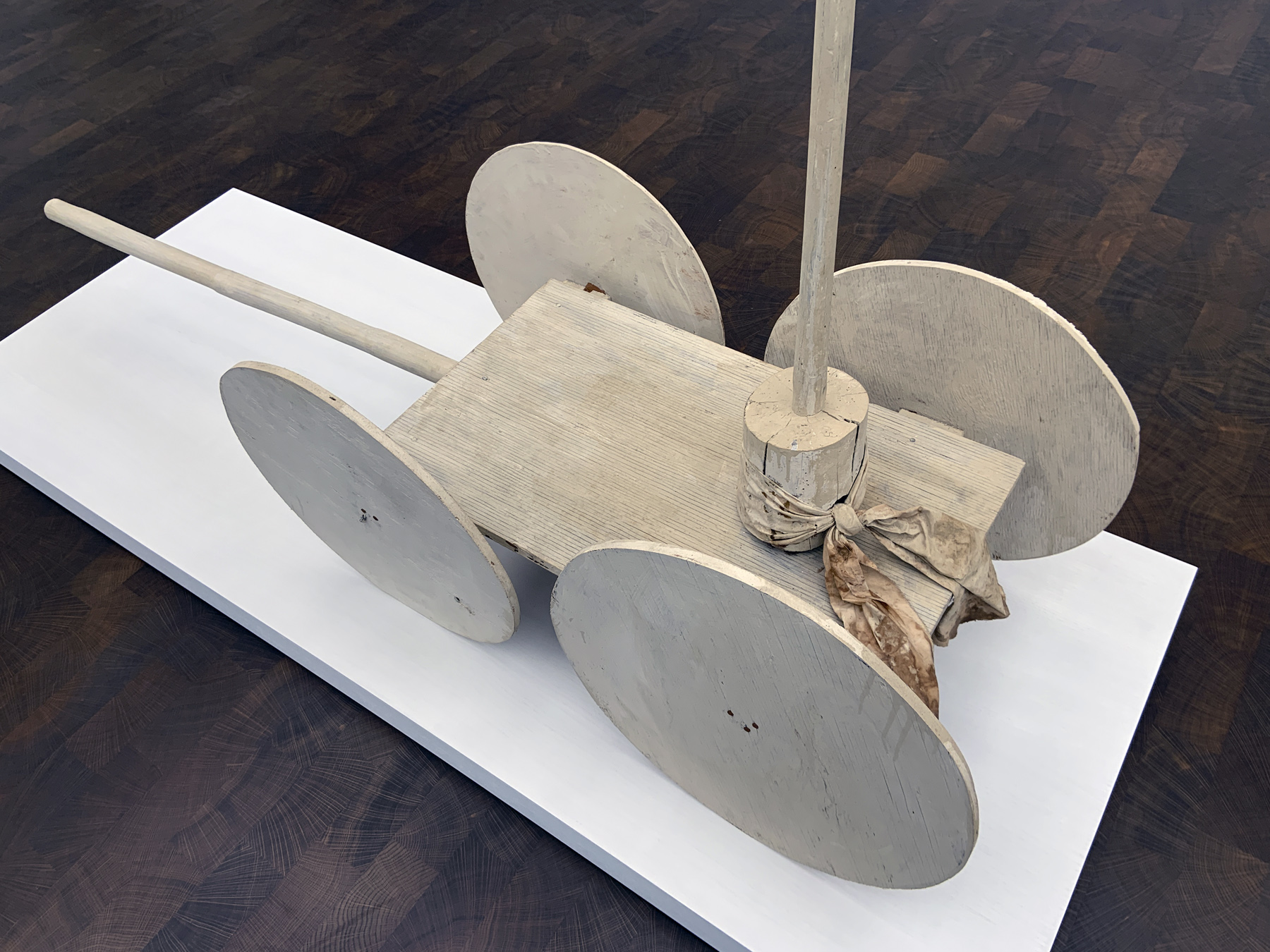
Some of Twombly’s sculptures allude to architecture, geometry, and Egyptian and Mesopotamian statuary, as in the rectangular pedestals and circular structures of Untitled (1977) and Chariot of Triumph (1990-98). Untitled (In Memory of Álvaro de Campos) (2002) comprises a rounded wooden trough stacked with a rectangular box, an elongated mound, and a vertical wooden board – all accumulating into a form that resembles a headstone or cenotaph. Thickly daubed in white, the sculpture bears the titular inscription scrawled in the graffiti-like hand so typical of Twombly’s drawings and paintings, and below it, the words “to feel all things in all ways.” Drawn from a poem by Álvaro de Campos (one of Portuguese poet Fernando Pessoa’s pseudonyms), the inscription suggests the legibility of the sculpture itself, and positions the three-dimensional object as a surface to be worked on.

In 1979, Twombly began casting some of his assemblages in bronze. The first iteration of Untitled (2002), on view in this exhibition, was made in 1955, soon after his return to New York from Europe and North Africa. Like other works from this period, this sculpture makes reference to the ancient artefacts the artist encountered in his travels. Consisting of bundled sticks, it evokes an object of private devotion or fetish. By casting this work in bronze in 2002, Twombly literally and figuratively substantiated the small sculpture into something like an archeological treasure recovered from the past.

A fully illustrated catalogue will accompany this exhibition.

Press release from the Gagosian website [Online] Cited 08/11/2020


Twombly made his sculptures from found materials such as plaster, wood, and iron, as well as objects that he habitually used and handled in the studio. Often modest in scale, they embody his artistic language of handwritten glyphs and symbols, evoking narratives from antiquity and fragments of literature and poetry.


Cy Twombly (American, 1928-2011) 'Untitled (To Apollinaire)' 2009 (installation view)


Cy Twombly (American, 1928-2011)
Untitled (To Apollinaire) (installation view)
2009
Painted bronze
Photo: Marcus Bunyan


Cy Twombly (American, 1928-2011) 'Untitled (To Apollinaire)' 2009 (installation view)


Cy Twombly (American, 1928-2011)
Untitled (To Apollinaire) (installation view)
2009
Painted bronze
Photo: Marcus Bunyan


Cy Twombly (American, 1928-2011) 'Humul' 1986 (installation view) from the exhibition 'Cy Twombly: Sculpture' at Gagosian, Grosvenor Hill, London, Sept - Dec, 2019


Cy Twombly (American, 1928-2011)
Humul (installation view)
1986
Painted bronze
Photo: Marcus Bunyan


Cy Twombly (American, 1928-2011) 'Untitled' 2004 (installation view) from the exhibition 'Cy Twombly: Sculpture' at Gagosian, Grosvenor Hill, London, Sept - Dec, 2019


Cy Twombly (American, 1928-2011)
Untitled (installation view)
2004
Bronze, edition 4/6
31 7/8 × 15 1/4 × 11 5/8 inches (81 × 38.5 × 29.5cm)
Photo: Marcus Bunyan


Cy Twombly (American, 1928-2011) 'Untitled (In Memory Of Babur)' 2009 (installation view)


Cy Twombly (American, 1928-2011)
Untitled (In Memory Of Babur) (installation view)
2009
Bronze
Photo: Marcus Bunyan


Babur (14 February 1483 – 26 December 1530), born Zahīr ud-Dīn Muhammad, was the founder of the Mughal Empire and first Emperor of the Mughal dynasty (r. 1526-1530) in the Indian subcontinent. He was a descendant of Timur and Genghis Khan through his father and mother respectively.


Cy Twombly (American, 1928-2011) 'Turkish Delight' 2000 (installation view)


Cy Twombly (American, 1928-2011)
Turkish Delight (installation view)
2000
Wood, plaster, acrylic, and brass
45 1/2 × 18 × 16 1/2 inches (115.6 × 45.7 × 41.9cm)
Photo: Marcus Bunyan


Installation view of the exhibition 'Cy Twombly: Sculpture' at Gagosian, London


Installation view of the exhibition Cy Twombly: Sculpture at Gagosian, London showing from left to right, Herat (1998) and Batrachomyomachia (1998)
Photo: Marcus Bunyan


Cy Twombly (American, 1928-2011) 'Herat' 1998


Cy Twombly (American, 1928-2011)
Herat (installation view)
1998
Painted bronze
Photo: Marcus Bunyan


Herāt is the third-largest city of Afghanistan.


Cy Twombly (American, 1928-2011) 'Batrachomyomachia' 1998 (installation view)


Cy Twombly (American, 1928-2011)
Batrachomyomachia (installation view)
1998
Painted bronze
Photo: Marcus Bunyan


The Batrachomyomachia or Battle of the Frogs and Mice is a comic epic, or a parody of the Iliad, commonly attributed to Homer, although other authors have been proposed.


Cy Twombly (American, 1928-2011) 'Untitled' 1998 (installation view)


Cy Twombly (American, 1928-2011)
Untitled (installation view)
1998
Painted bronze
Photo: Marcus Bunyan


Cy Twombly (American, 1928-2011) 'A Time To Remain, A Time To Go Away' 1998-2001


Cy Twombly (American, 1928-2011)
A Time To Remain, A Time To Go Away (installation view)
1998-2001
Painted bronze
Photo: Marcus Bunyan


Cy Twombly (American, 1928-2011) 'A Time To Remain, A Time To Go Away' 1998-2001 (installation view detail)


Cy Twombly (American, 1928-2011)
A Time To Remain, A Time To Go Away (installation view detail)
1998-2001
Painted bronze
Photo: Marcus Bunyan


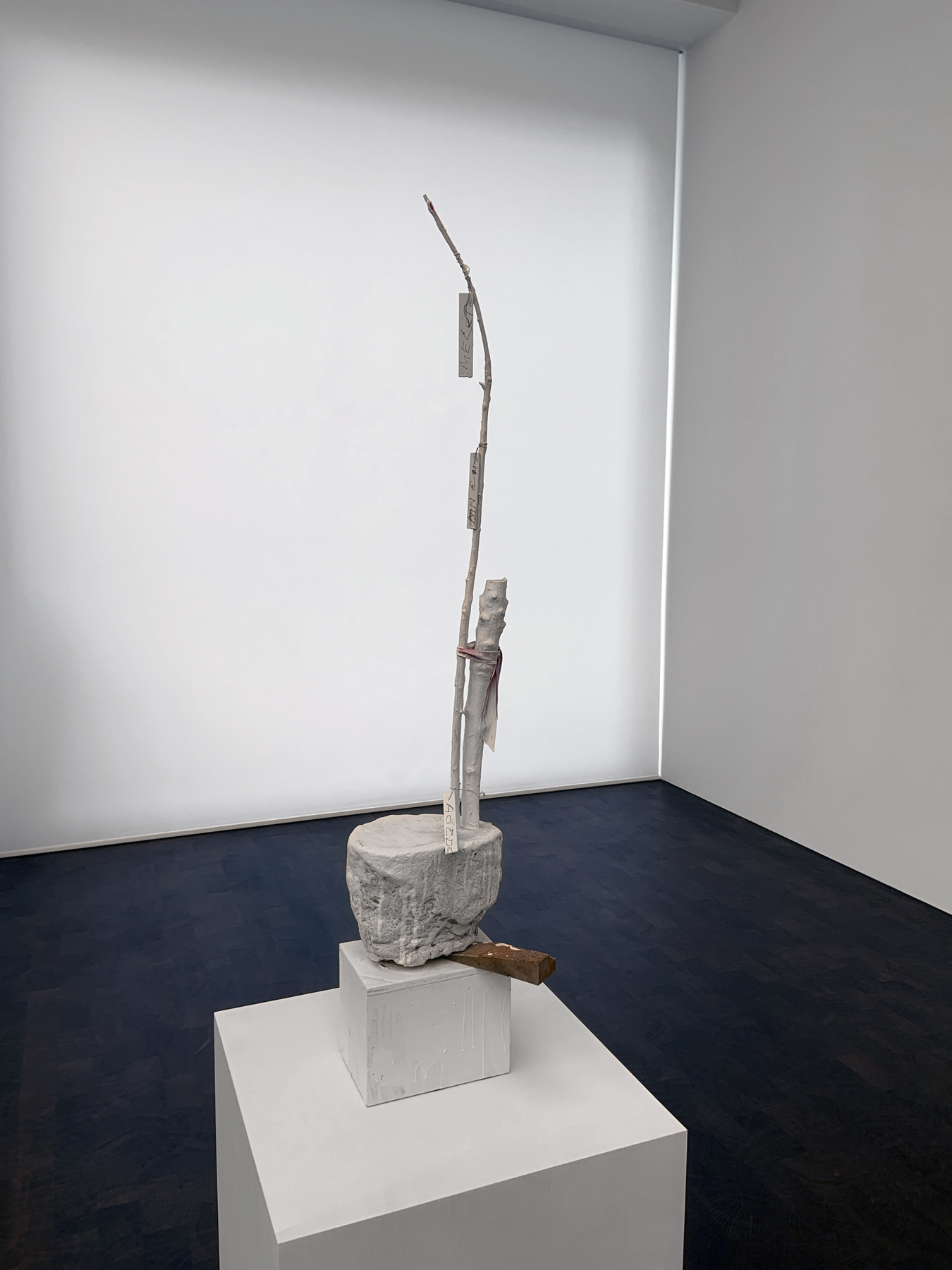
Cy Twombly (American, 1928-2011) 'Untitled (AOEDE)' Nd (installation view)


Cy Twombly (American, 1928-2011)
Untitled (AOEDE) (installation view)
Nd
Photo: Marcus Bunyan


Cy Twombly (American, 1928-2011) 'Untitled (AOEDE)' Nd (installation view detail)


Cy Twombly (American, 1928-2011)
Untitled (AOEDE) (installation view detail)
Nd
Photo: Marcus Bunyan


Aoede

In Greek mythology, Aoede was one of the three original Boeotian muses, which later grew to five before the Nine Olympian Muses were named. Her sisters were Melete and Mneme. She was the muse of voice and song. According to Greek mythology, she is the daughter of Zeus, the King of the Gods, and Mnemosyne, the goddess of memory.

She lends her name to the moon Jupiter XLI, also called Aoede, which orbits the planet Jupiter.

Text from the Wikipedia website


Installation view of the exhibition 'Cy Twombly: Sculpture' at Gagosian, London


Installation view of the exhibition Cy Twombly: Sculpture at Gagosian, London
Photo: Marcus Bunyan


Cy Twombly (American, 1928-2011) 'Chariot of Triumph' 1990-98 (installation view)


Cy Twombly (American, 1928-2011)
Chariot of Triumph (installation view)
1990-98
Wood, paint, cloth, and nails
42 1/2 × 20 7/8 × 74 3/8 inches (108 × 53 × 189cm)
Photo: Marcus Bunyan


Cy Twombly (American, 1928-2011) 'Untitled' 2005 (installation view)


Cy Twombly (American, 1928-2011)
Untitled (installation view)
2005
Photo: Marcus Bunyan


Cy Twombly (American, 1928-2011) 'Untitled' 2005 (installation view)


Cy Twombly (American, 1928-2011)
Untitled (installation view)
2005
Photo: Marcus Bunyan


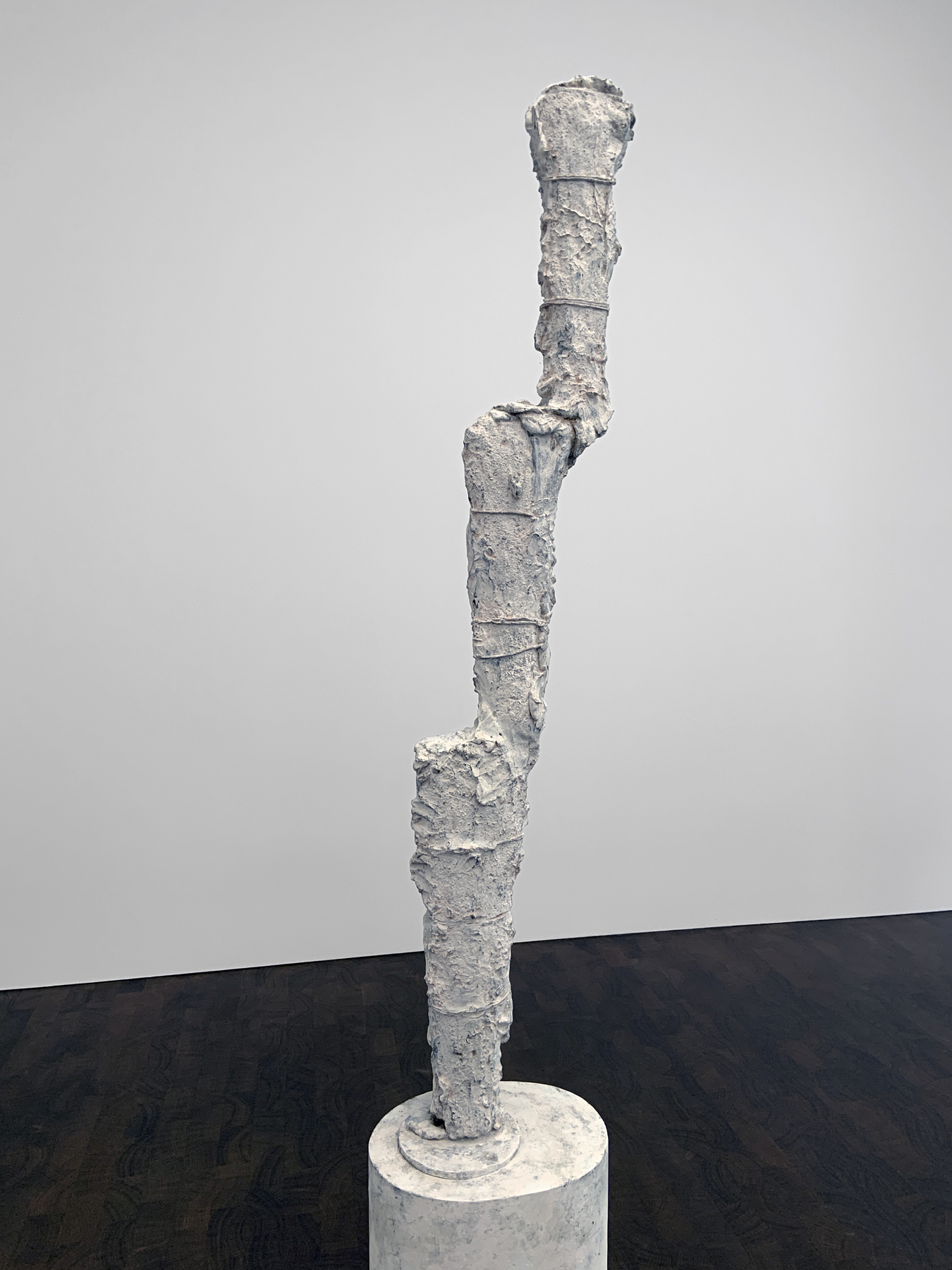
Cy Twombly (American, 1928-2011) 'Untitled' 2009 (installation view)


Cy Twombly (American, 1928-2011)
Untitled
2009
Bronze, edition 2/3
94 3/4 × 15 7/8 × 12 3/8 inches (240.4 × 40.3 × 31.5cm)
Photo: Marcus Bunyan


Cy Twombly (American, 1928-2011) 'Untitled' 2009 (installation view detail)


Cy Twombly (American, 1928-2011)
Untitled (installation view detail)
2009
Bronze, edition 2/3
94 3/4 × 15 7/8 × 12 3/8 inches (240.4 × 40.3 × 31.5cm)
Photo: Marcus Bunyan


Cy Twombly Shop

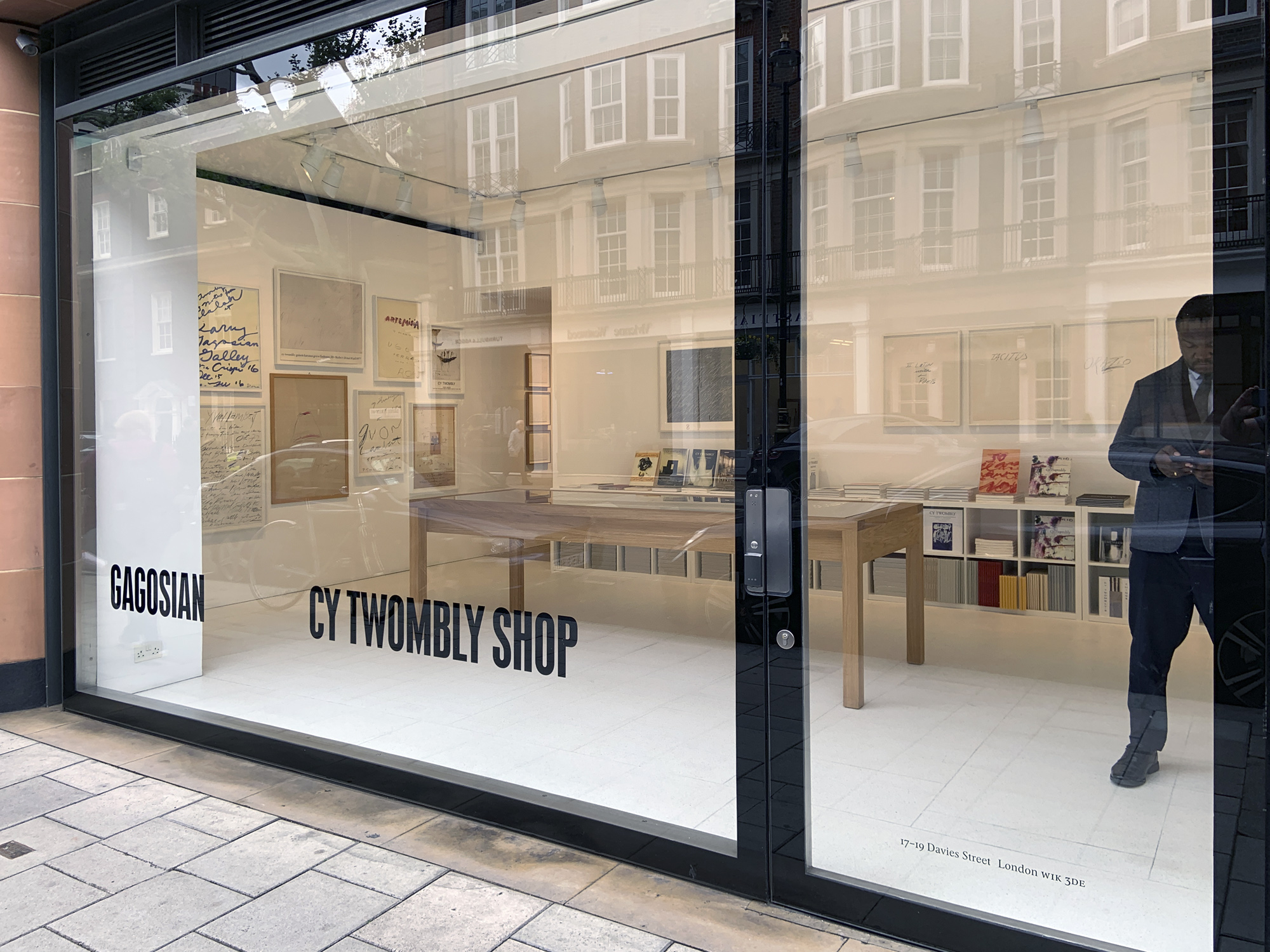
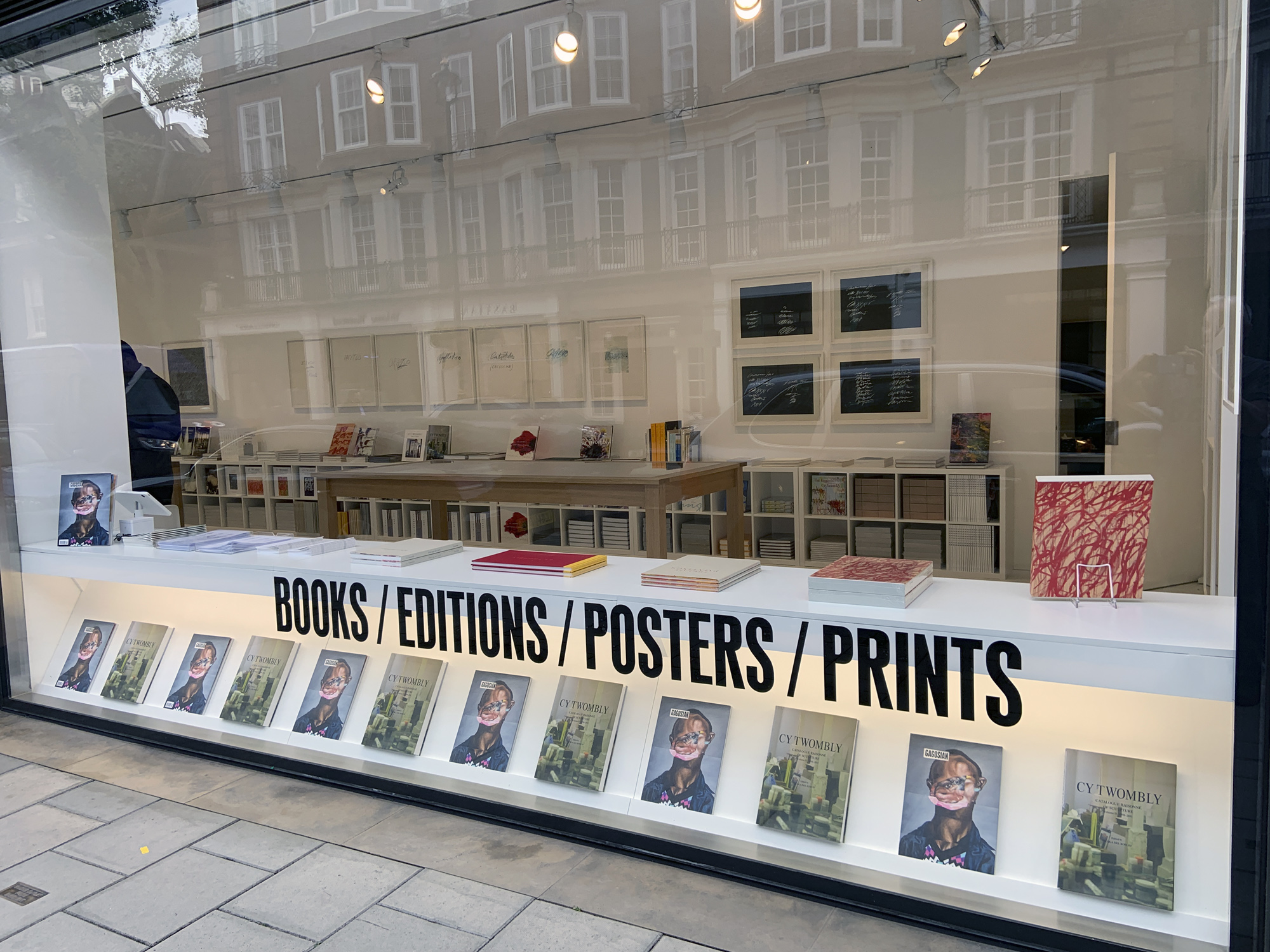
Gagosian is pleased to announce a pop-up shop devoted to Cy Twombly at Gagosian, Davies Street, London, to open on the occasion of the exhibition Cy Twombly: Sculpture at Gagosian, Grosvenor Hill, London.

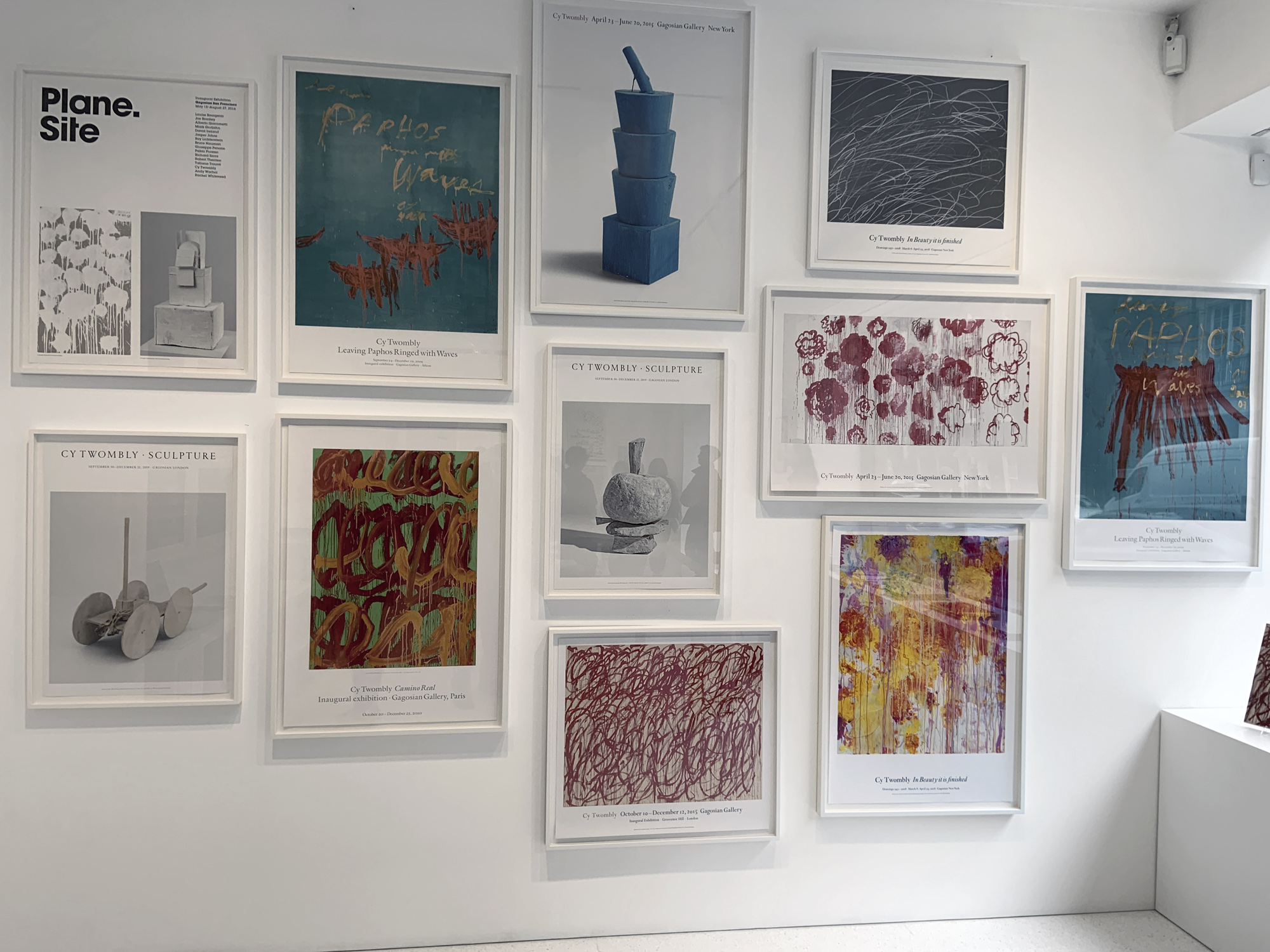
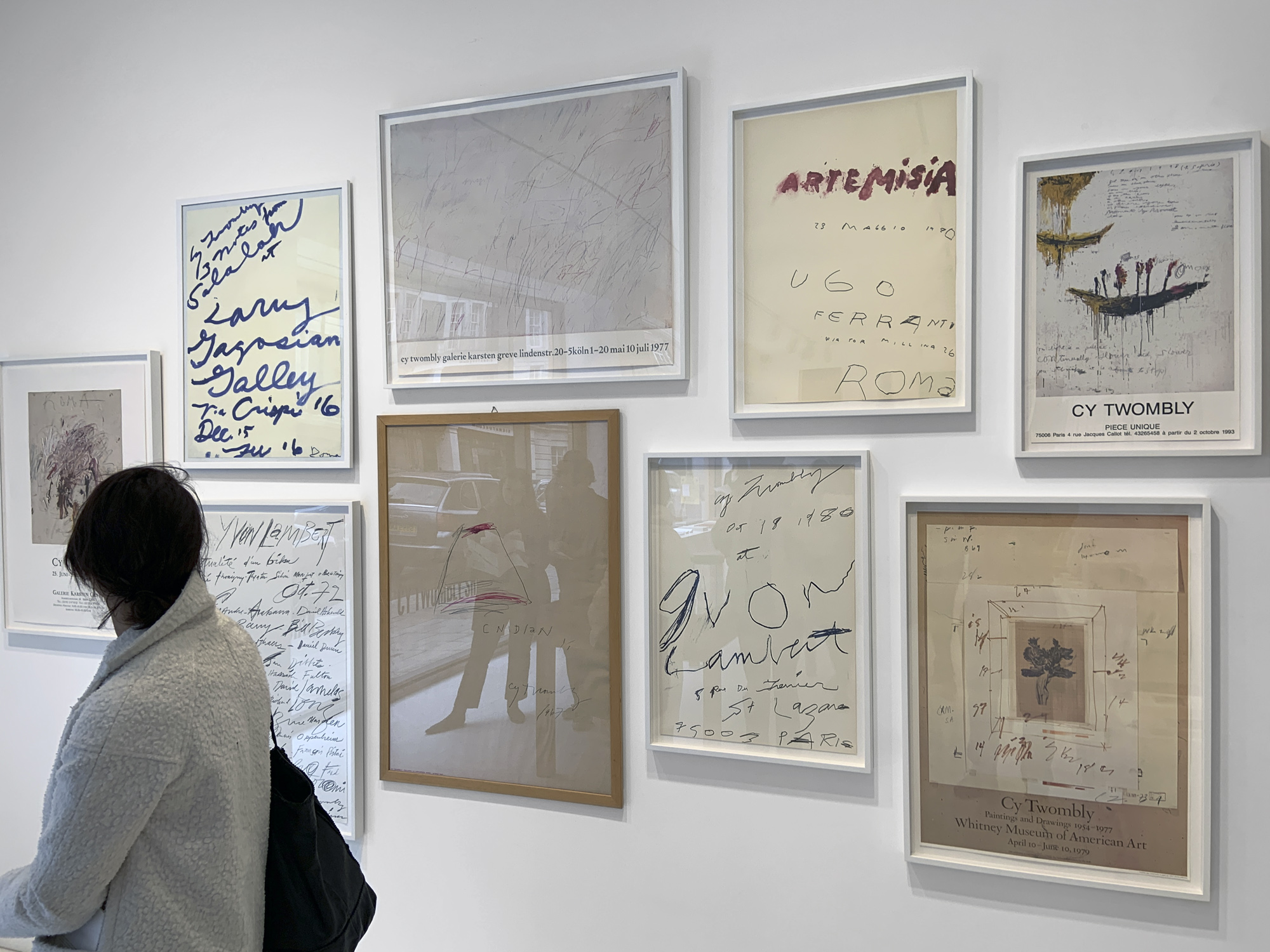
The shop will celebrate the newly published Cy Twombly: Catalogue Raisonne of the Sculpture, vol. 2, 1998-2011, and Cy Twombly: Homes & Studios, both from Schirmer / Mosel, and will feature an extensive selection of historically important reference books on the artist. Rare ephemera from many of Twombly’s exhibitions in Italy from the 1960s will also be included, alongside vintage and contemporary posters and a selection of prints and photographs by the artist.

Text from the Gagosian website [Online] Cited 08/11/2020


Cy Twombly shop


Cy Twombly Shop
Photo: Marcus Bunyan


Cy Twombly shop


Cy Twombly Shop
Photo: Marcus Bunyan


Cy Twombly Shop interior showing posters

Cy Twombly Shop interior showing posters


Cy Twombly Shop interior showing posters
Photo: Marcus Bunyan


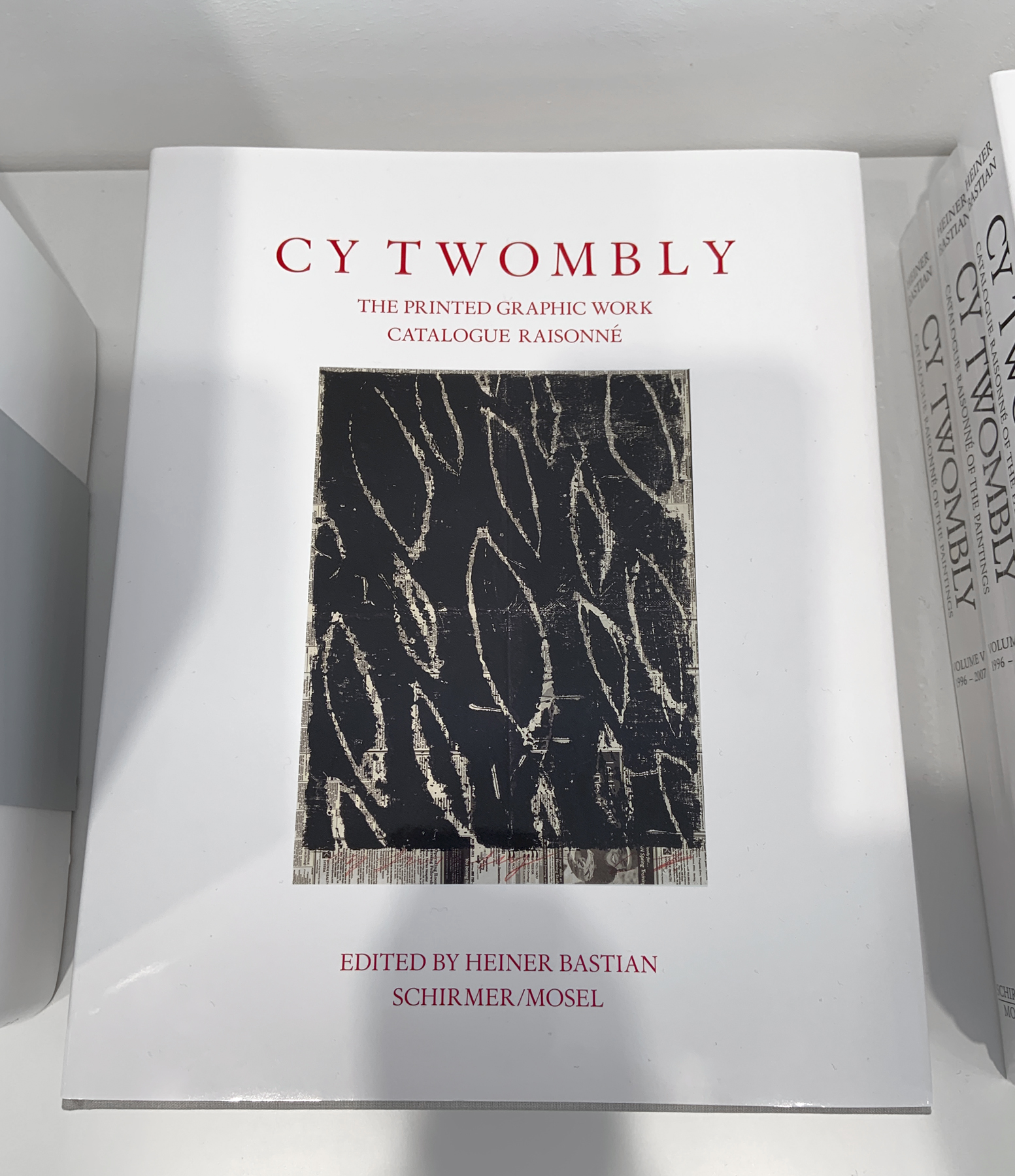
Heiner Bastian (ed.,). 'Cy Twombly: The Printed Graphic Work Catalogue Raisonné' 2017 book cover (installation view)


Heiner Bastian (ed.,). Cy Twombly: The Printed Graphic Work Catalogue Raisonné 2017 book cover

Along with his celebrated drawings, paintings, sculptures, and photographs, Cy Twombly has left an imposing body of graphic work as well. As early as 1984, the Berlin-based art writer and Twombly expert, Heiner Bastian, compiled the first catalogue raisonné of the artist’s printed graphics which has been out of print for 18 years. Now back in print for the first time, this new edition of the catalogue raisonné has been updated and includes the graphic works Twombly created since 1984 until his death in 2011.

Cy Twombly’s graphic oeuvre is characterised by a variety of graphic and printing techniques. Along with monotypes, etchings, lithographs, and silkscreens, the artist tested his expertise using offset lithographs and the combination of various print and reproduction techniques.


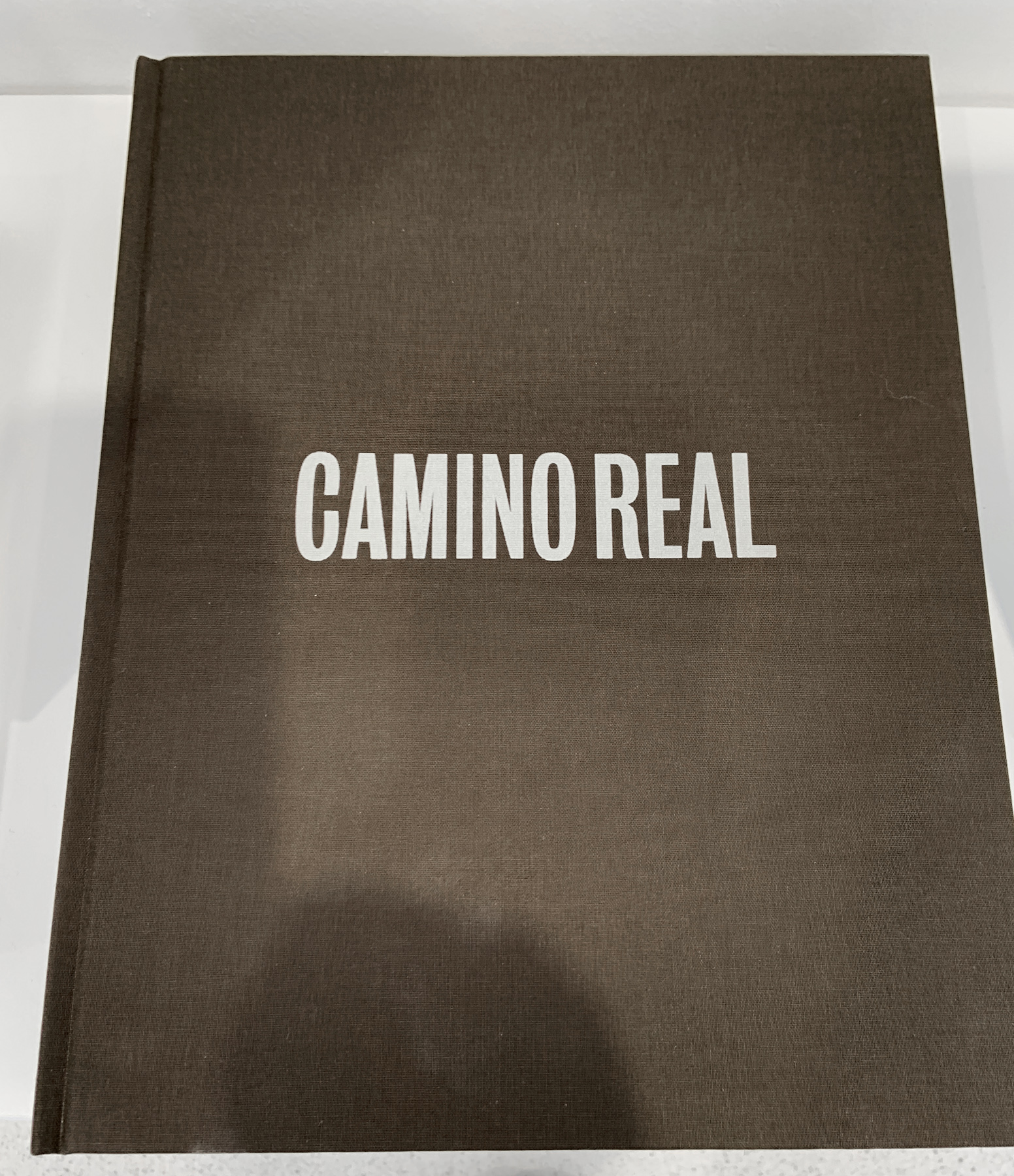
Cy Twombly: Camino Real 2010 catalogue front cover (installation view)


Cy Twombly: Camino Real 2010 catalogue front cover

Published in 2010, on the occasion of the exhibition “Cy Twombly: Camino Real” at Gagosian Gallery Paris
Text by Marie-Laure Bernadac
10 7/8 x 13 1/2 inches (27.6 x 34.3cm); 32 pages; Fully illustrated
Designed by Graphic Thought Facility, London; Printed by Shapco Printing, Minneapolis, MN


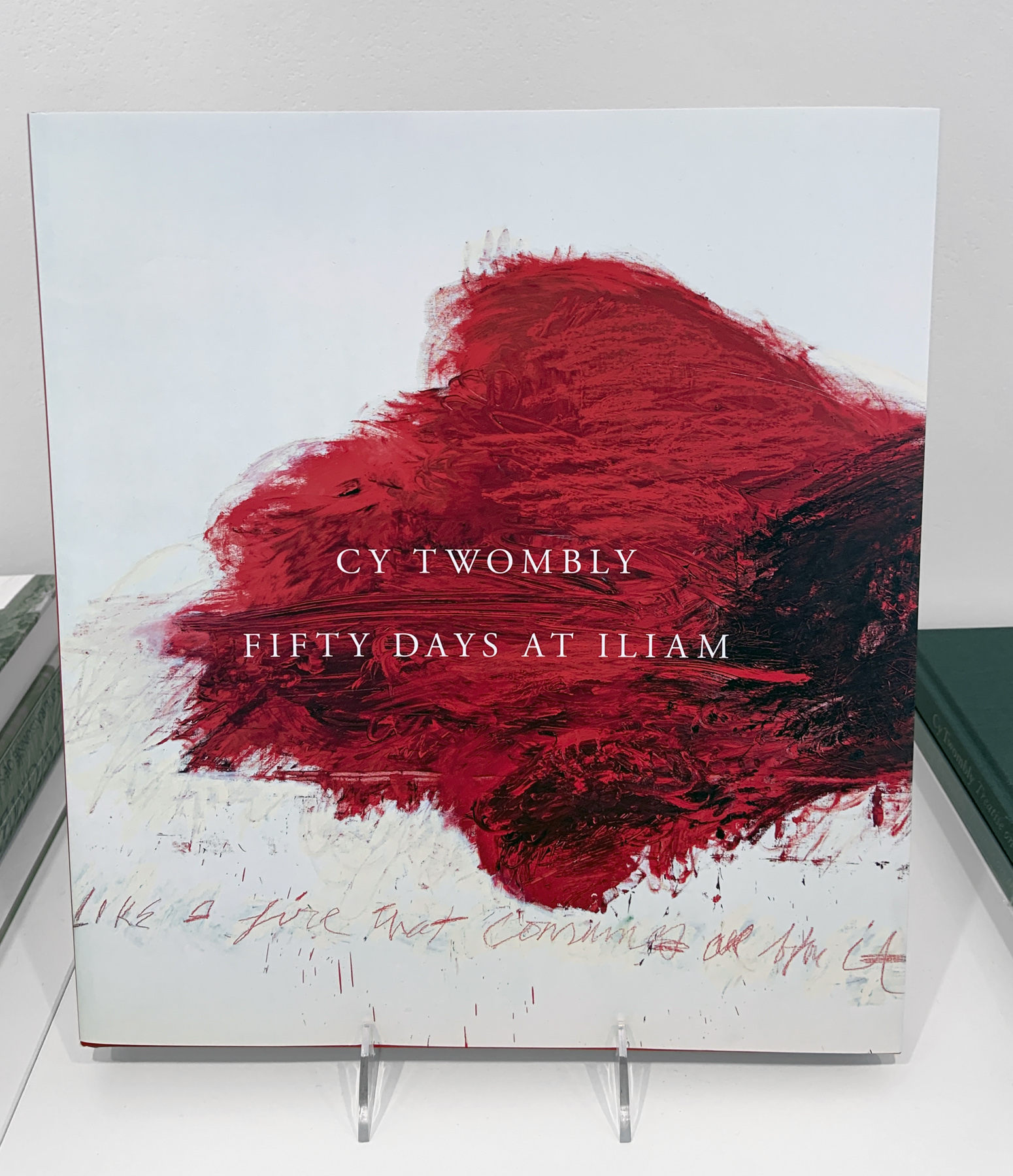
Carlos Basualdo. 'Cy Twombly: Fifty Days at Iliam' 2018 book cover (installation view)


Carlos Basualdo. Cy Twombly: Fifty Days at Iliam, 2018 book cover.

This revelatory publication provides a comprehensive and multifaceted account of Cy Twombly’s masterpiece Fifty Days at Iliam (1978), a series of ten paintings based on Alexander Pope’s 18th-century translation of Homer’s Iliad. Essays by a team of both art historians and scholars of Greco-Roman studies explore topics including the paintings’ literary and cultural references to antiquity and Twombly’s broader engagement with the theme of the Trojan War, which first appeared in his work in the early 1960s and was a subject to which he would return throughout his career. Firsthand accounts of the artist at work complement the essays. Images of the canvases and related drawings and sculptures are joined by previously unpublished photographs showing Fifty Days at Iliam in the artist’s studio at the time of their completion.


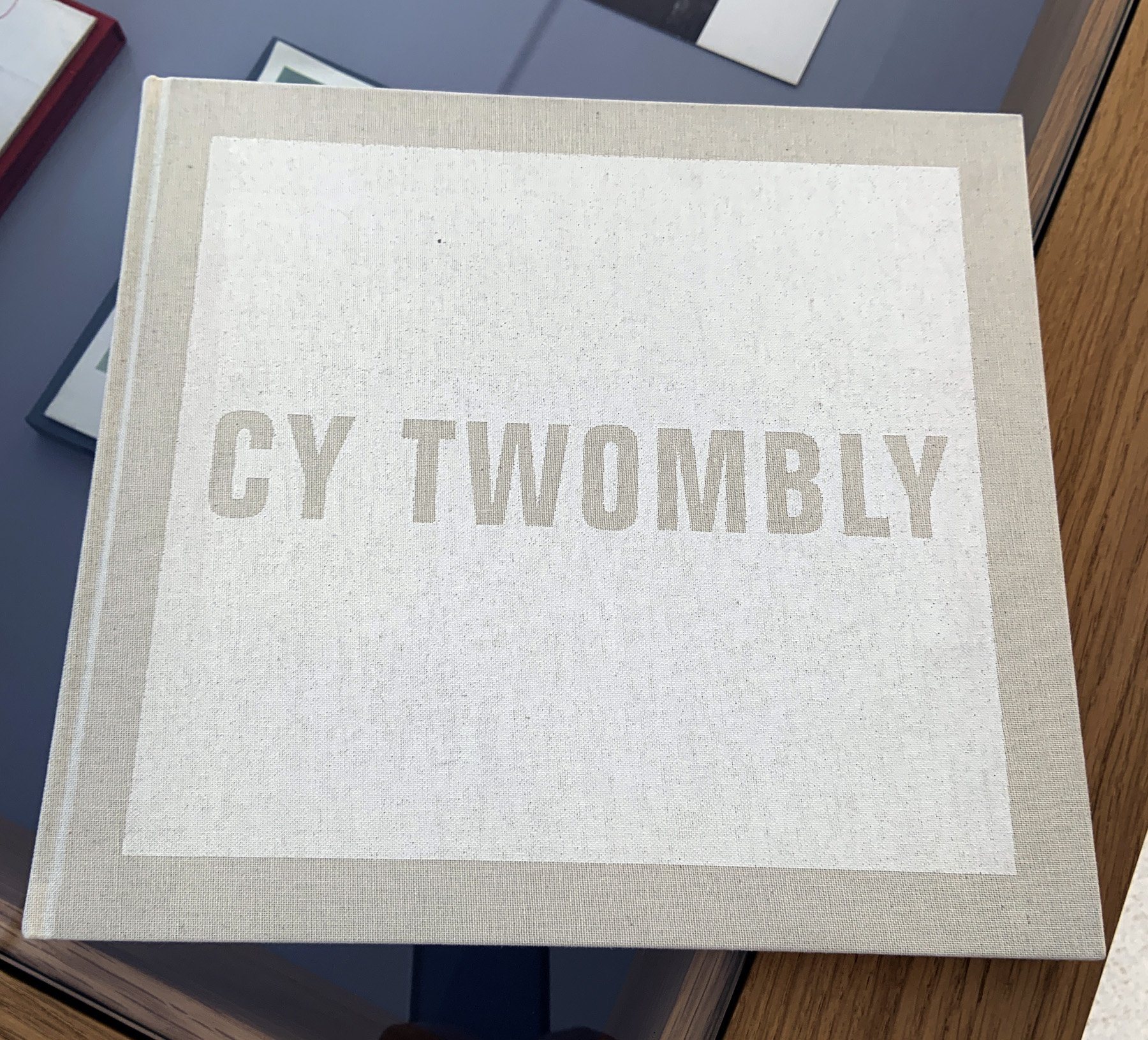
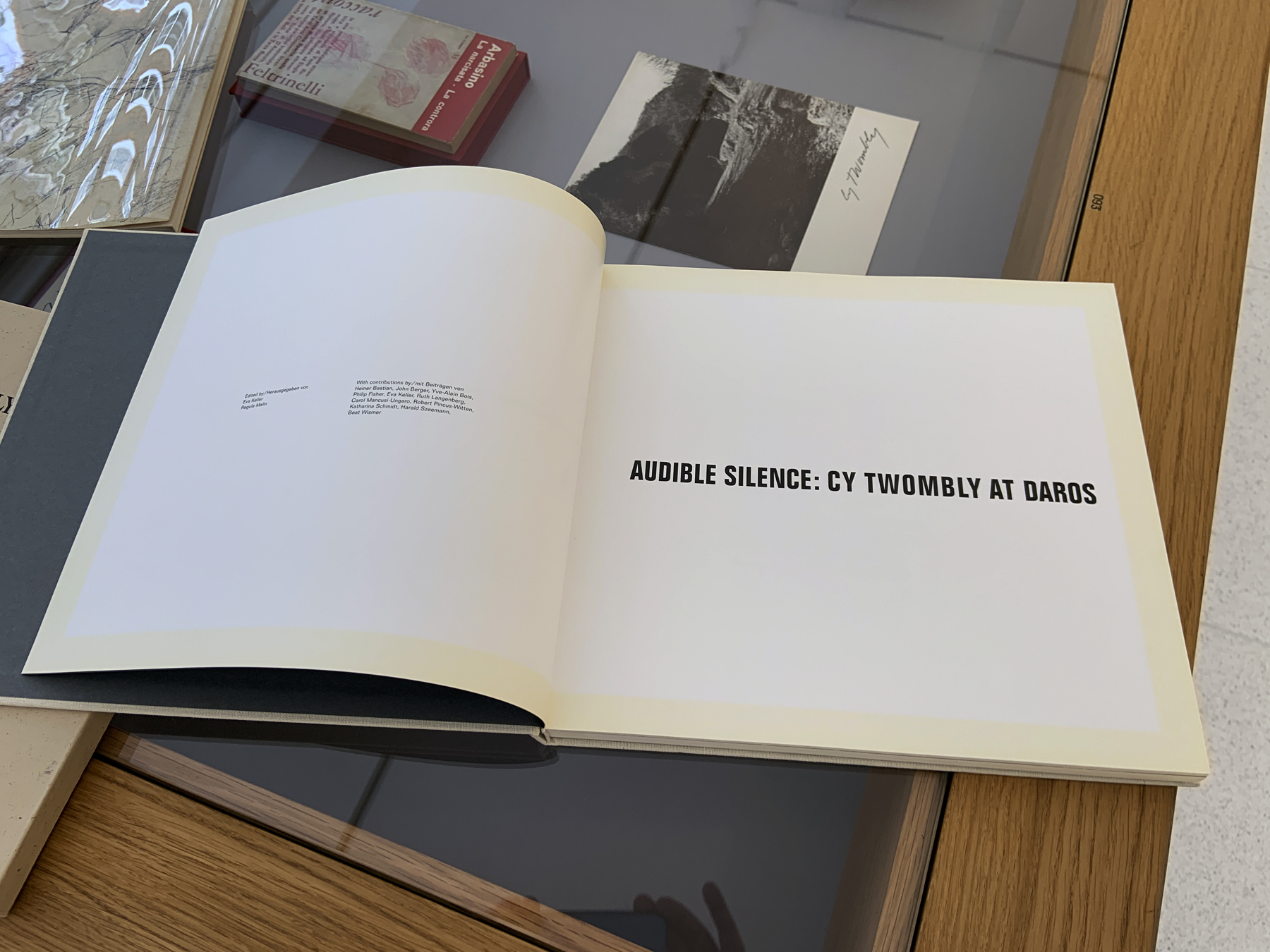
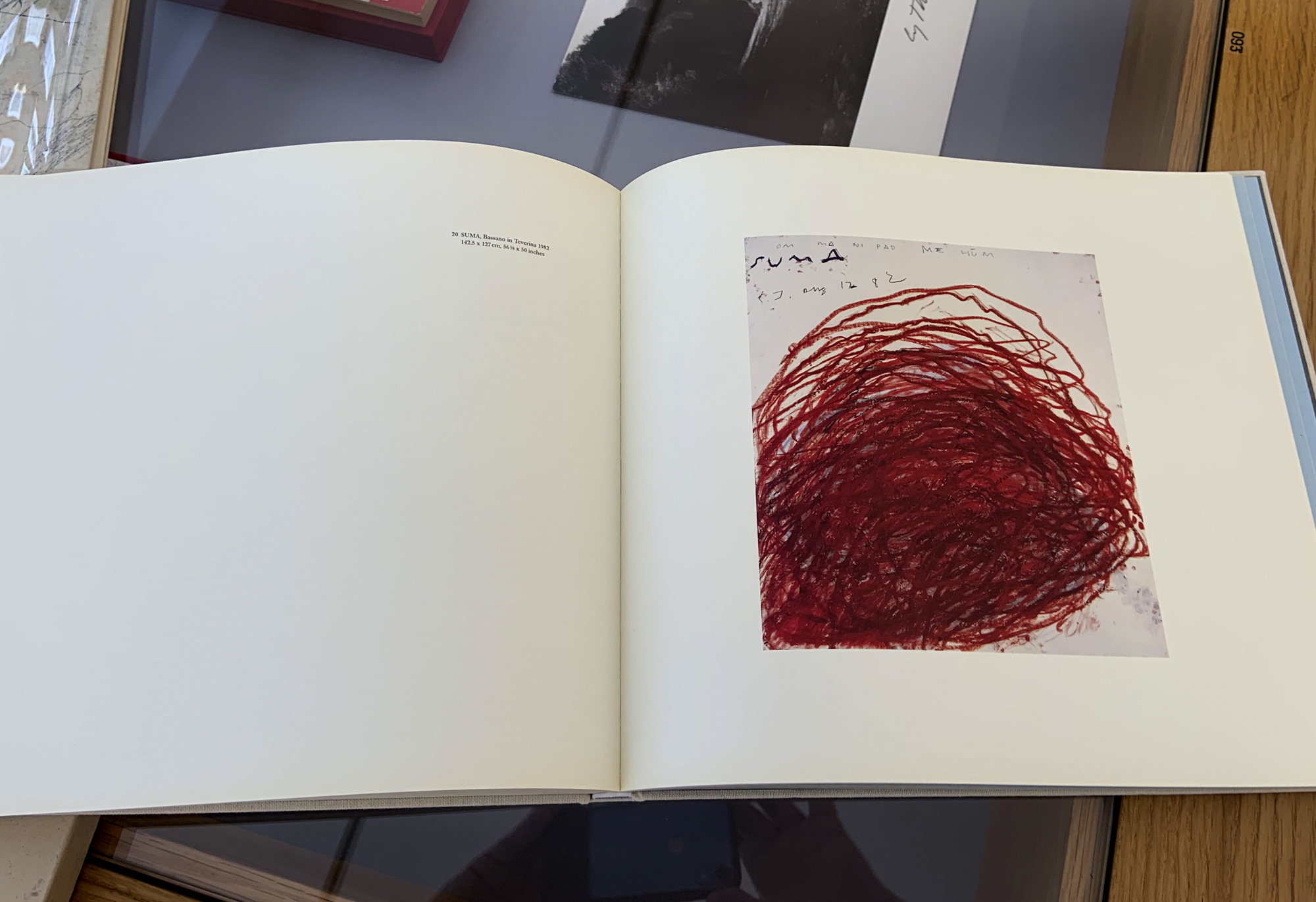
Eva Keller and Heiner Bastian. 'Audible Silence: Cy Twombly at Daros' 2002 (installation view)

Eva Keller and Heiner Bastian. 'Audible Silence: Cy Twombly at Daros' 2002 (installation view)

Eva Keller and Heiner Bastian. 'Audible Silence: Cy Twombly at Daros' 2002 (installation view)

Eva Keller and Heiner Bastian. 'Audible Silence: Cy Twombly at Daros' 2002 (installation view)

Eva Keller and Heiner Bastian. 'Audible Silence: Cy Twombly at Daros' 2002 (installation view)

Eva Keller and Heiner Bastian. 'Audible Silence: Cy Twombly at Daros' 2002 (installation view)


Eva Keller and Heiner Bastian. Audible Silence: Cy Twombly at Daros 2002


Cy Twombly. 'Gaeta Sets' 1987 (installation view)

Cy Twombly. 'Gaeta Sets' 1987 (installation view)

Cy Twombly. 'Gaeta Sets' 1987 (installation view)


Cy Twombly
Gaeta Sets
1987
Hine Editions
28.2 x 23.8cm (11.1 x 9.4 in.)


Colour photolithographs throughout. (4to) original cream wrappers, slipcase. One of 1500 copies


Installation view of the exhibition 'Cy Twombly: Sculpture' at Gagosian, London

Installation view of the exhibition 'Cy Twombly: Sculpture' at Gagosian, London

Installation view of the exhibition 'Cy Twombly: Sculpture' at Gagosian, London

Installation view of the exhibition 'Cy Twombly: Sculpture' at Gagosian, London


Installation views of the Cy Twombly Shop at Gagosian, London
Photos: Marcus Bunyan


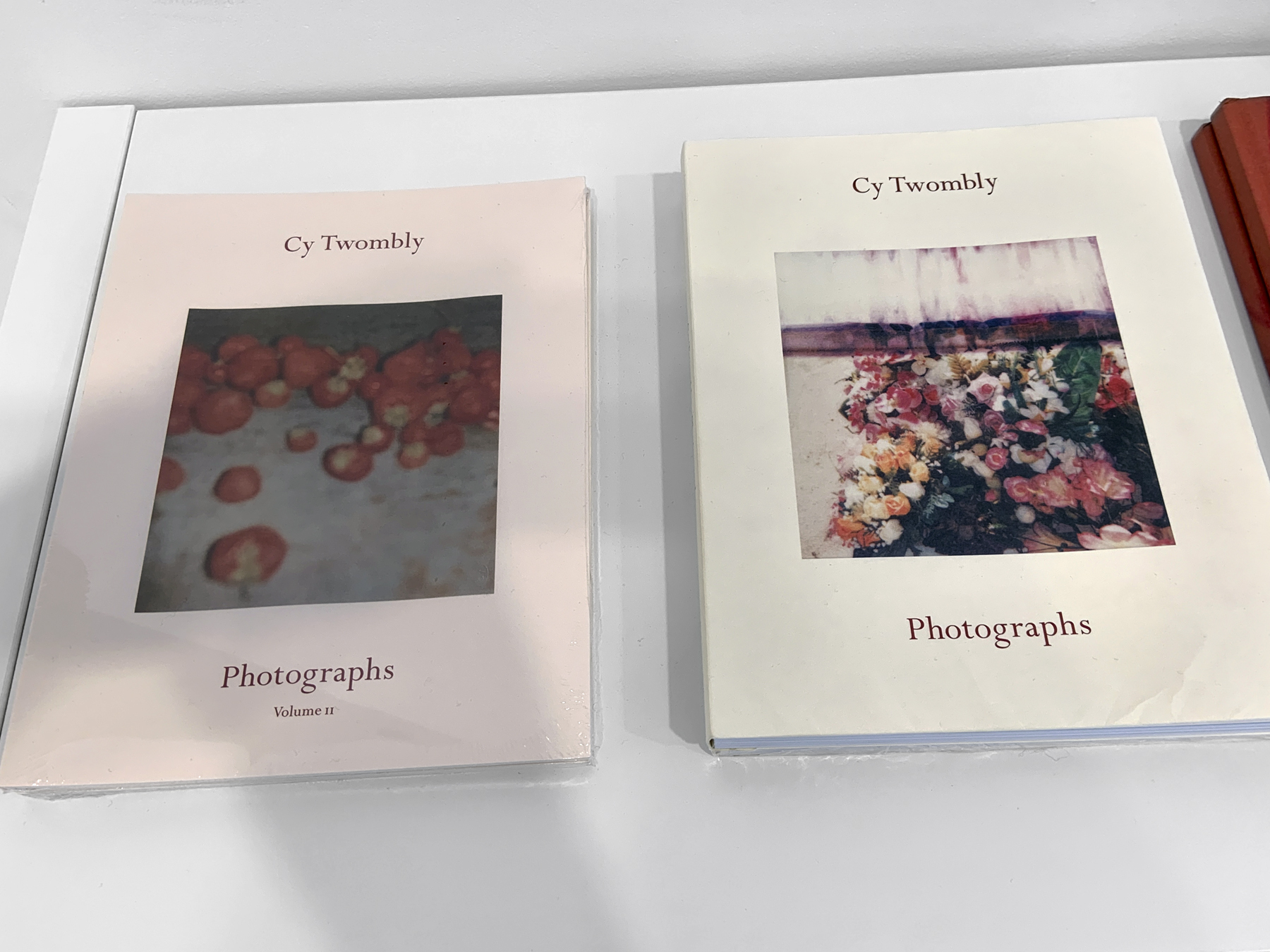
Edmund De Waal. 'Cy Twombly – Photographs. Gagosian Gallery' 2012 and Mary Jacobus. 'Cy Twombly – Photographs Volume II' Gagosian Gallery, 2015 (installation view)


Edmund De Waal. Cy Twombly – Photographs. Gagosian Gallery, 2012 and Mary Jacobus. Cy Twombly – Photographs Volume II. Gagosian Gallery, 2015 book covers


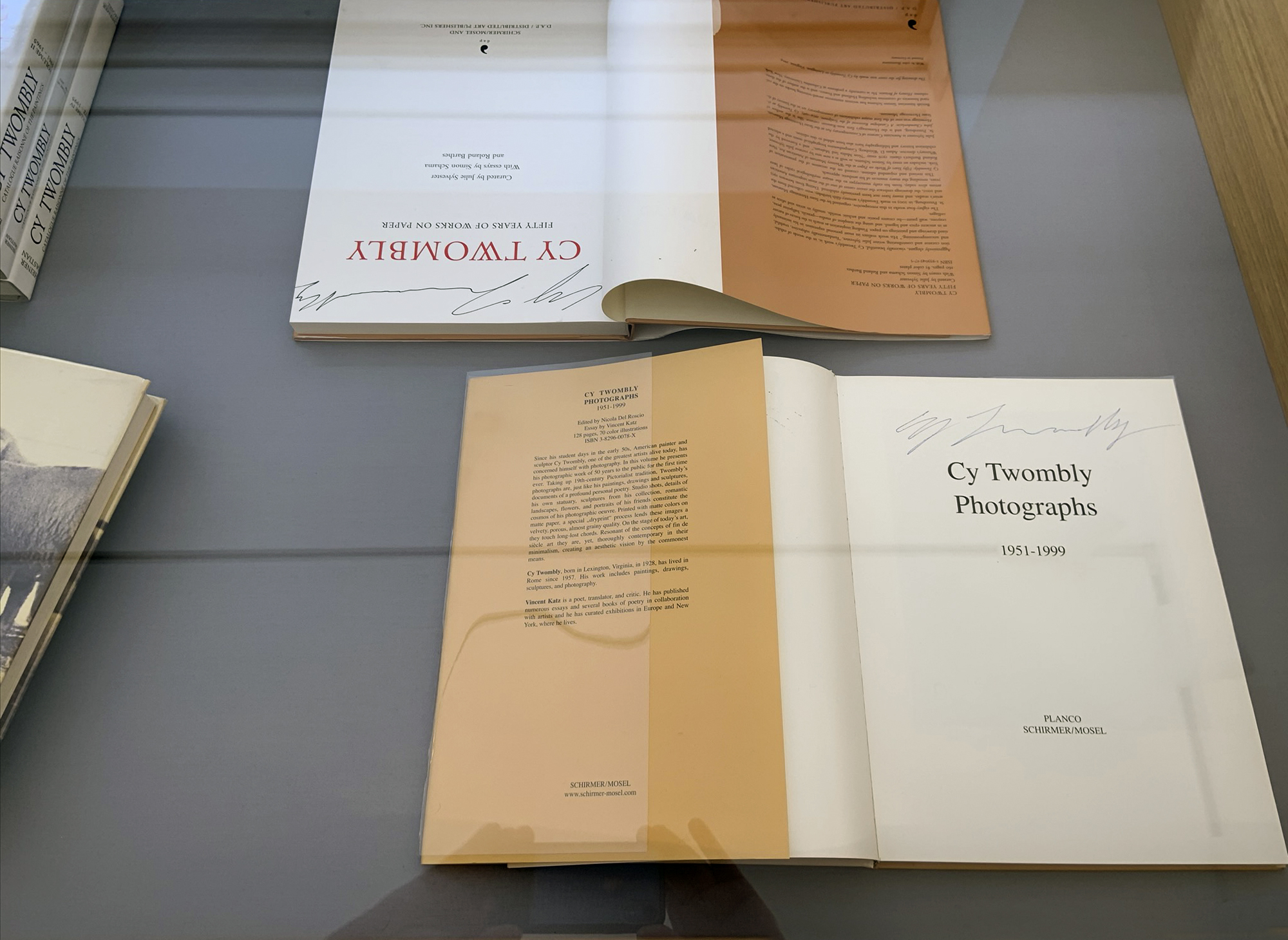
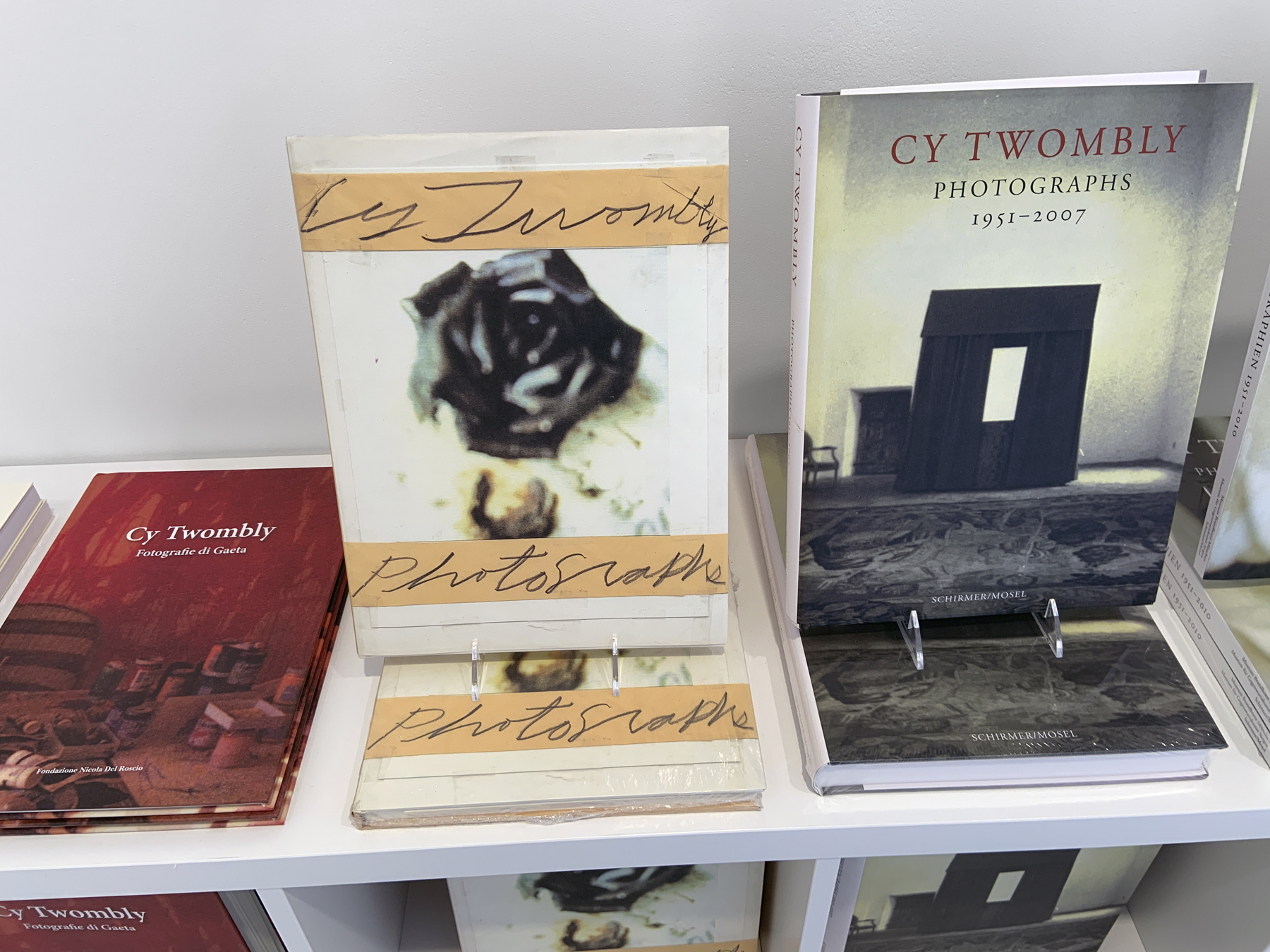
Cy Twombly. 'Fotografie di Gaeta'. Published by Fondazione Nicola Del Roscio, 2014; Vincent Katz. 'Cy Twombly: Photographs 1951-1999'. Schirmer Mosel, 2004; and Laszlo Glozer. 'Cy Twombly: Photographs 1951-2007'. Schirmer Mosel, 2008 book covers (installation view)


Cy Twombly. Fotografie di Gaeta. Published by Fondazione Nicola Del Roscio, 2014.

Published on the occasion of the exhibition Cy Twombly. Fotografie di Gaeta on view at the Museo Diocesano, Gaeta (July 5 – September 28, 2014)

Vincent Katz. Cy Twombly: Photographs 1951-1999. Schirmer Mosel, 2004.

This world premiere is an aesthetic sensation. Since his student days in the early 50s, American painter and sculptor Cy Twombly, one of the greatest artists alive today, has concerned himself with photography. In this volume, he presents his photographic work of 50 years to the public for the first time ever. Taking up 19th-century Pictorialist traditions, Twombly’s photographs are, just like his paintings, drawings and sculptures, documents of a profound personal poetry. Studio shots, details of his own statuary, sculptures from his collection, romantic landscapes, flowers, and portraits of friends constitute the cosmos of his photographic oeuvre. Printed with matte colours on matte paper, a special “dryprint” process lends these images a velvety, porous, almost grainy quality. On the stage of today’s art, they touch long-lost chords. Resonant of the concepts of fin de siècle art they are, yet, thoroughly contemporary in their minimalism, creating an aesthetic vision by the commonest means.

Laszlo Glozer. Cy Twombly: Photographs 1951-2007. Schirmer Mosel, 2008.

Ever since his student days, Cy Twombly has concerned himself with photography, but only in recent years has he turned it into a unique artistic concept – and an aesthetic sensation. Twombly’s photographic pieces are documents of a fascinatingly enigmatic and personal poetry. His studios in Lexington and Gaeta, details of his own sculptures and collected sculptural items, landscape motifs, fruits and flowers appear in a mysteriously transformed manner on these delicate sheets. Printed in matte colours on matte paper using a dry-print process that imbues them with velvet and an almost grainy hue, the images are vaguely reminiscent of the pictorialist tradition in fin de siecle photography. In their minimalist way, however, generating aesthetic visions by the simplest of means, they are utterly contemporary. Photographs 1951-2007 presents Twombly’s photographic works of over fifty years- full of surprises and breathtaking beauty.


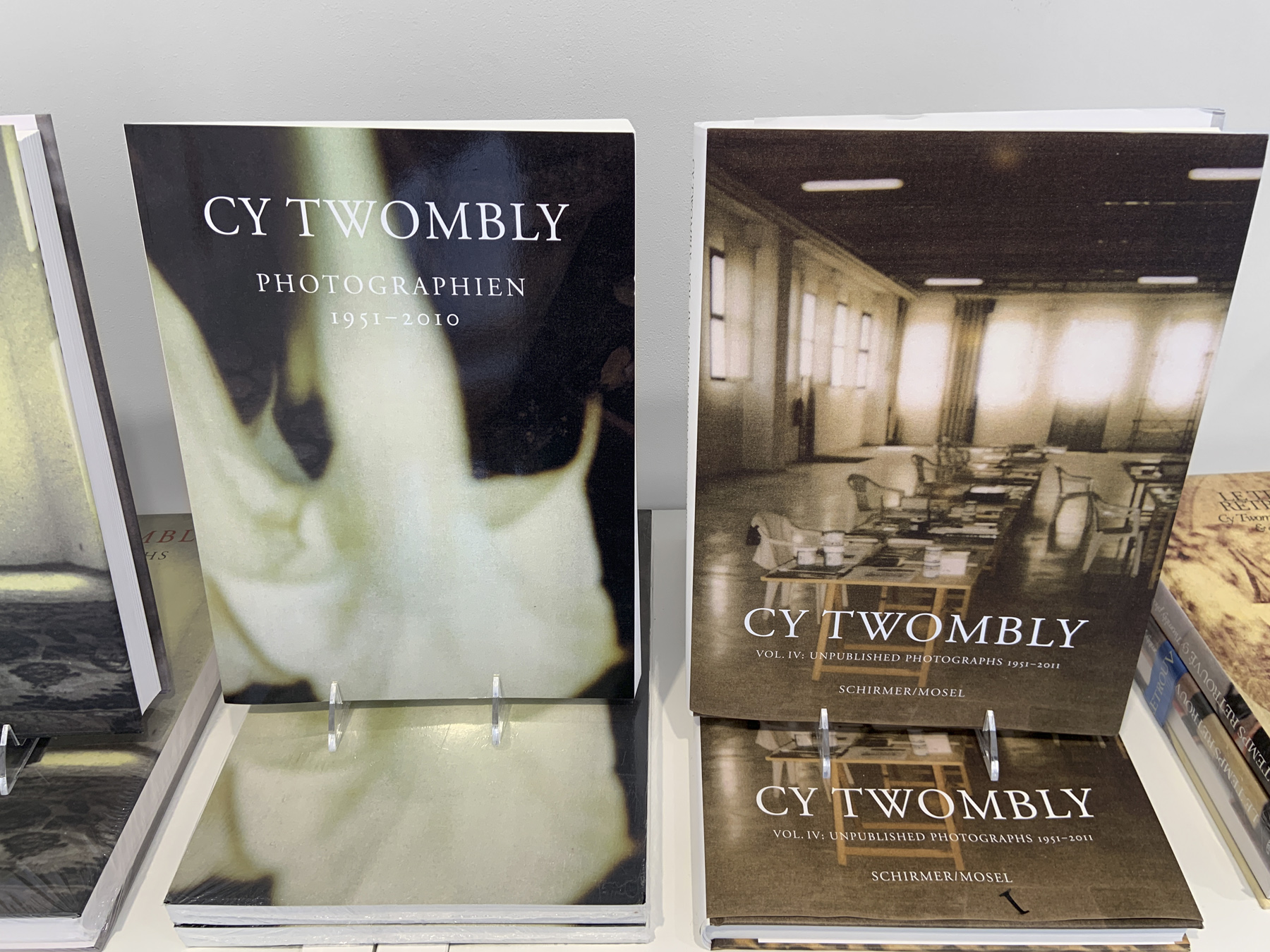
Hubertus von Amelunxen. 'Cy Twombly: Photographs 1951-2010'. Schirmer Mosel, 2011 and Achim Hochdörfer. 'Cy Twombly Vol. IV: Unpublished Photographs 1951-2011'. Schirmer Mosel, 2013 book covers (installation view)


Hubertus von Amelunxen. Cy Twombly: Photographs 1951-2010. Schirmer Mosel, 2011.

Cy Twombly’s photographs are a late revelation. The painter, world-famous for his scribbled abstract paintings and his nervous drawings, has been a prolific photographer from his early student days. In this late stage of his career, he unveils his poetic treasures step by step. The new volume Photographs III brings together early works and combines them with flower studies and studio interiors. Most interesting are Twombly’s photographic studies on his own paintings and sculptures, casting a special light on the interpretation of these works. The book features some 130 hitherto unpublished photographs. It accompanies an exhibition that starts off in Munich in 2011 and will then travel through Europe. With an essay by art and photo historian Hubertus Von Amelunxen.

Achim Hochdörfer. Cy Twombly Vol. IV: Unpublished Photographs 1951-2011. Schirmer Mosel, 2013.

As his final creative surprise, Cy Twombly, one of the greatest 20th-century artists, has given to the world a huge body of photographic works emphasising his unique artistic vision. Contrary to his sharp and teeming drawings his photographs are not sharp at all. They are colourful, soft, and warm and generate a painterly impression. Their colouring is as unique as their fine sense of composition. The photographs reveal the artist’s vision embedded both in the world of objects and the nature that surrounds him. His own artistic creations and collection of art objects in his various homes are a favourite subject of his photographic studies. Twombly’s photographic work offers a new dimension for understanding the artist’s paintings, drawings, and sculptures. The new book features some 120 photographic prints from the Cy Twombly Estate in Gaeta, most of them previously unpublished.


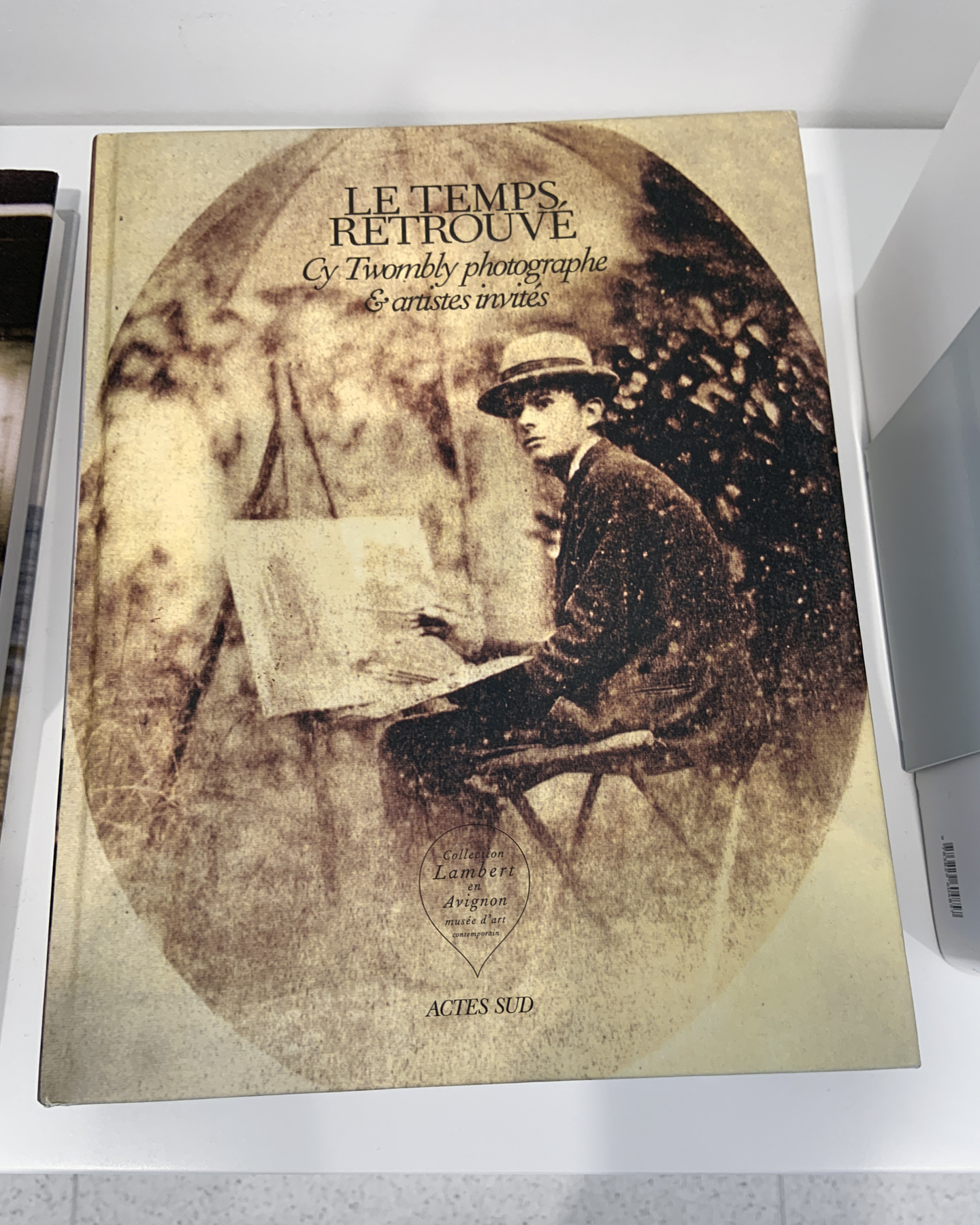
Nicholas Cullinan et al. 'Le Temps Retrouvé: Cy Twombly photographe & artistes invites'. Collection Lambert en Avignon musée d'art contemporain. Actes Sud, 2012 book cover (installation view)


Nicholas Cullinan et al. Le Temps Retrouvé: Cy Twombly photographe & artistes invites. Collection Lambert en Avignon musée d’art contemporain. Actes Sud, 2012.

Although world-famous for his paintings and sculptures, Cy Twombly (1928-2011) was also a photographer, and his practice of photographing interiors, the sea and still lifes, as well as his paintings and sculptures, spanned the duration of his 60-year career. This massive two-volume catalogue gathers this lesser-known aspect of the artist’s output, contextualising it through an exhibition that Twombly himself curated at the Collection Lambert in Avignon. His selection of works was both original and revealing: Jacques Henri Lartigue’s albums, the marine horizons of Hiroshi Sugimoto, the serial photographs of Ed Ruscha and Sol Lewitt, and the portraits of Diane Arbus and his close friend Sally Mann. With this publication, Twombly also draws a direct lineage between himself and earlier photographer-artists such as Édouard Vuillard and Edgar Degas (a lineage that provides this catalogue’s Proustian subtitle). The two volumes are held together with a blue printed ribbon.


Gagosian
20 Grosvenor Hill
London w1k 3qd
Phone: +44 20 7495 1500

Opening hours:
Tuesday – Saturday 10am – 6pm by appointment only

Gagosian website

LIKE ART BLART ON FACEBOOK

Back to top

Exhibition: ‘William Wegman: Being Human’ at Fotomuseum den Haag, the Netherlands

Exhibition dates: 5th September, 2020 – 3rd January, 2021

Curator: William A. Ewing


William Wegman (American, b. 1943) 'Untitled (Three Legged Dog)' 1974 from the exhibition 'William Wegman: Being Human' at Fotomuseum den Haag, the Netherlands, Sept 2020 - Jan 2021


William Wegman (American, b. 1943)
Untitled (Three Legged Dog)
1974
Gelatin silver print
Collectie Kunstmuseum Den Haag
© William Wegman. Courtesy of the artist


Concept

Pathos

Portrait
Polaroid
Performance

History
Humour
Humanity

Master / artist

Human / being


Dr Marcus Bunyan


Many thankx to the Hague Museum of Photography for allowing me to publish the photographs in the posting. Please click on the photographs for a larger version of the image.


People like us / People we like

I didn’t always dress up the dogs. My first dog Man Ray was spared anthropomorphic adornment. That was left for Fay Ray. Fay and I came to a mutual realisation that she had a desire to be observed. Anyway, I found myself looking at her for long periods of time. Then one day, after some looking, I made her tall. Before long I was blurring the pedestal with fabric and creating the illusion of the anthropomorphic vertical. With the birth of Fay’s puppies, my cast of characters grew. Fay’s puppies – Chundo, Battina and Crooky – grew up watching their famous mother, and when it came their turn they were not taken by surprise. They knew what to do.

Colour fields

I began by ignoring colour, using the colour Polaroid film as though it were black and white. I distrusted colour. Sensuous, romantic, elusive colour. Colour was … well … colourful. In fact, the first few days with the Polaroid camera I made only black-on-black pictures. Man Ray under a black cloth against a black background. Polaroid film is very beautiful within a limited range. Man Ray was too dark for this film but Fay was perfect. With Fay I began to explore colour and light.

Weimaraners

No other breed that I am aware of is as conducive to the illusion of transformation as Weimaraners. Weimaraners are called ‘grey ghosts’. Their fur gives off an almost iridescent glow. They inhabit their forms in a strange way, never appearing to solidify into themselves as, say, a lab, a collie or a bulldog does. When you photograph a collie, you get a collie.

Tales

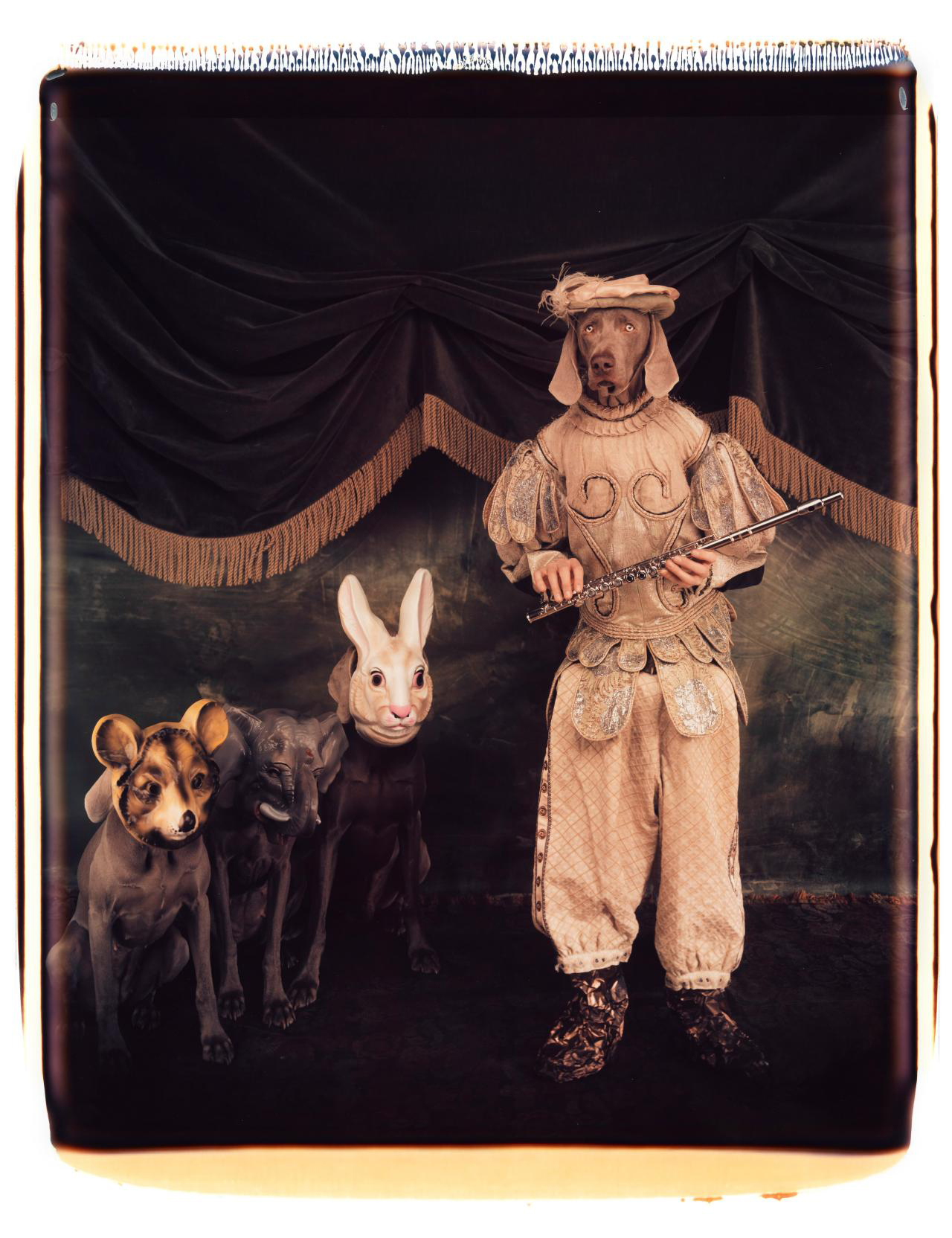
One day my assistant Andrea stood behind Fay to adjust her dress and she gestured out to me with her hand. Her long human arm appeared as Fay’s. The illusion startled me. A miracle. Kind of creepy. Fay was part human. I thought of cartoons and mythology, superheroes and Egyptian gods. Next thing you know, Batty’s son Chip was playing the flute.

Sit! / Stay!

The dogs have an obvious pride in what they do. They can sense the feeling in the room when they are working. If it’s a great picture or a difficult picture, they can feel what happens because everyone stops and goes ‘Wow!’ Fay was particularly agile and for her I concocted a series of anatomically challenging poses. I came to understand her balance and points of physical tension. Fay liked the challenge of a difficult pose. I think she liked to impress me.

Vogue / Style

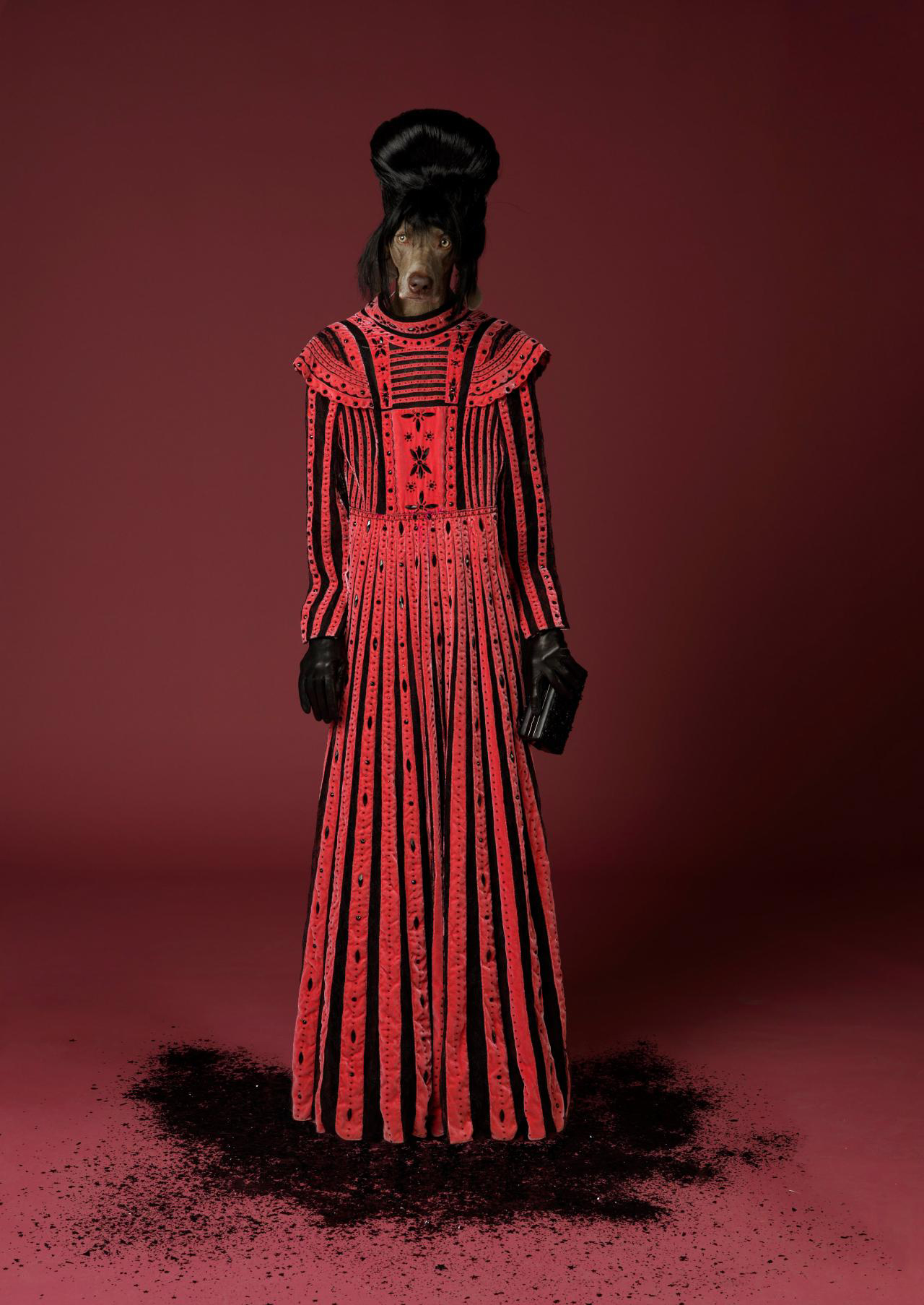
I have a very awkward relationship with fashion. I’m a little bit timid about it. This isn’t the attitude of the typical fashion photographer. Fortunately, my Weimaraners are the perfect fashion models. Their slinky elegant forms are covered in grey, and grey, as everyone knows, goes with anything.

Nudes / Physique

Up close, unadorned, standing, sitting or lying before the eye of the big camera, the dogs become landscapes, a forest of trees, a topography of hills and valleys, earth and boulders, in a shoreline of endless interconnectivity.

Cubists

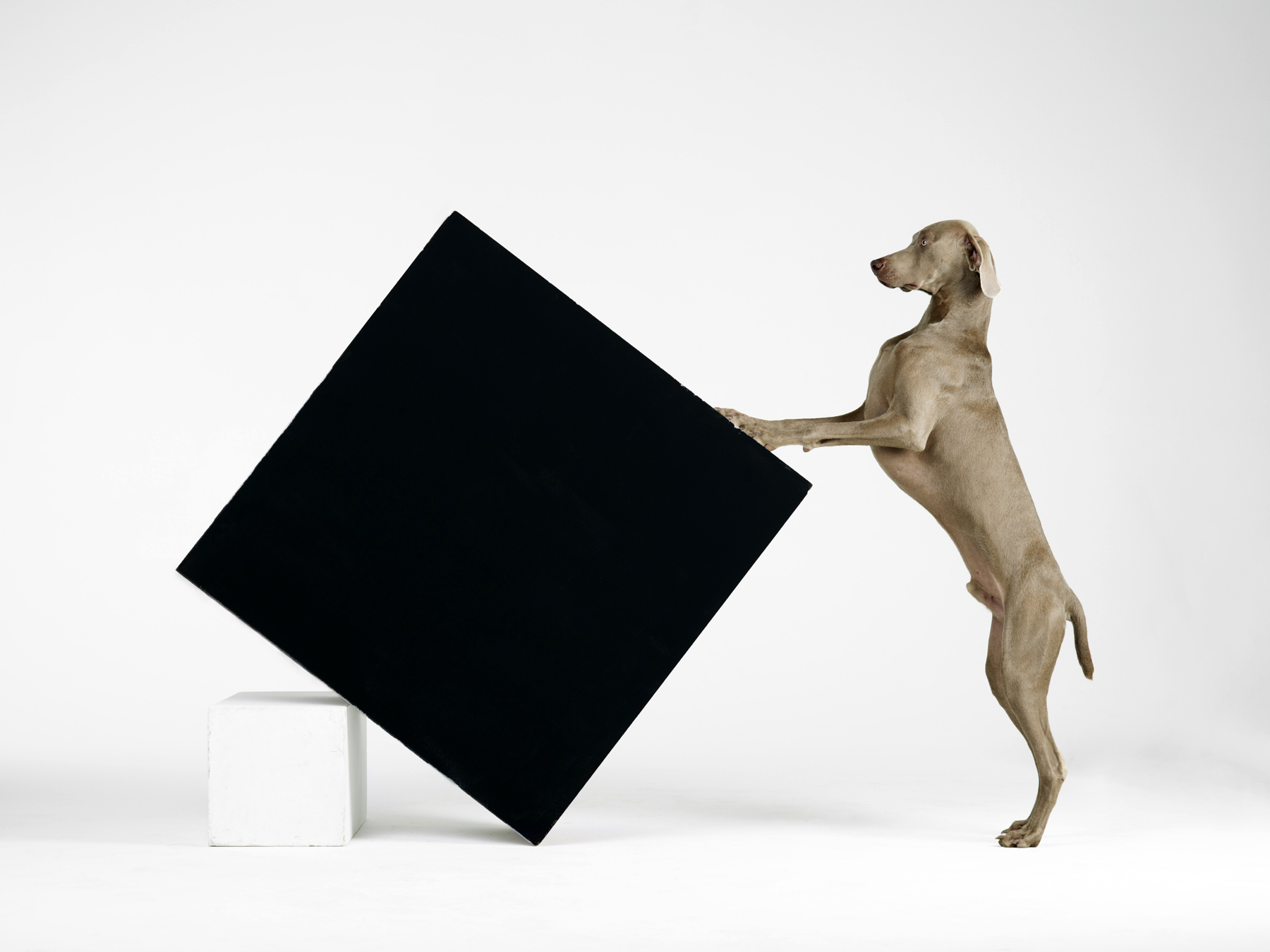
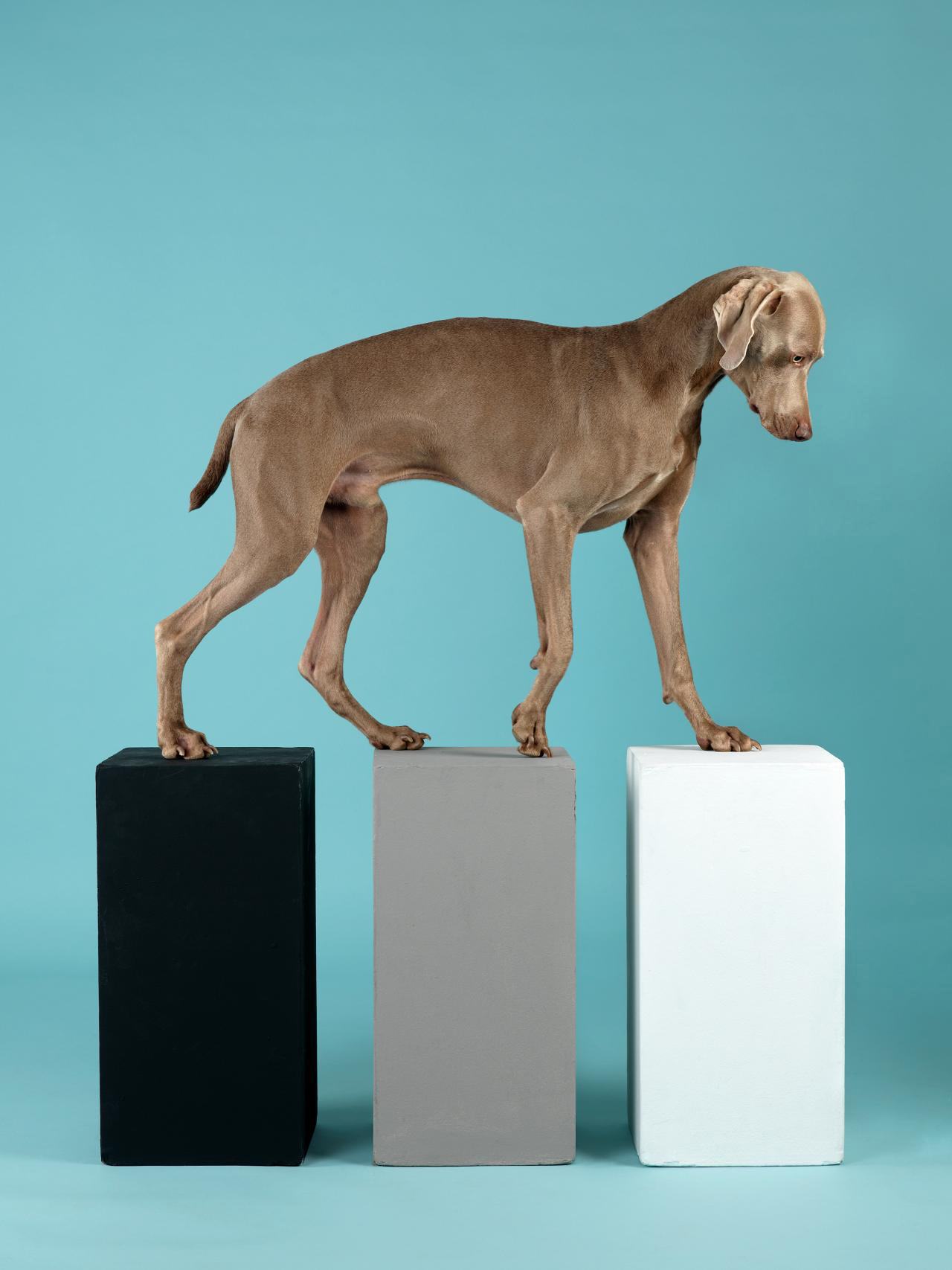
Since 1972 I have had a habit of keeping a white box in the studio. If I can’t think of anything to do, the box is a good place to start. The original work I made with this box alluded to Sol LeWitt’s minimal sculptures of the 1960s, but this is now a fading memory. I use a box the way a philosopher uses a chair, as a physical object representing hypothetical questions: ‘How many ways can a dog fit on a box?’, ‘How many dogs can fit in a box?’, ‘Around a box?’ And on and on. On these square wheels, round questions keep rolling.


William Wegman


Fotomuseum – William Wegman from Kunstmuseum Den Haag on Vimeo.


Many artists have a muse. Movie directors perfect their craft working repeatedly with their favourite actors, while choreographers create some of their best works for a specific dancer. In some cases, the muse is a silent partner, the object of an artist’s intense and obsessive gaze; in others the work emerges from a partnership so close that it is unclear which is the artist and which is the muse. For the American artist William Wegman (b. 1943), his muses have been generations of the Weimaraner breed. The inspiration came in 1970 when his first dog, Man Ray – named after Wegman’s favourite artist – sat himself in front of the camera. Instead of sending his faithful companion to his bed, Wegman seized the moment, and the rest is history. Wegman was already a well-known artist, but it is his numerous, human-like portraits of his ever-expanding cast of Weimaraners that have brought him worldwide fame. In partnership with renowned guest curator William A. Ewing and the Foundation for the Exhibition of Photography, Fotomuseum Den Haag presents a major survey of no fewer than four decades of Wegman’s wide-ranging collaboration with Man Ray, Fay Wray, Candy and their descendants.

Press release from the Fotomuseum den Haag


William Wegman (American, b. 1943) 'Constructivism' 2014 from the exhibition 'William Wegman: Being Human' at Fotomuseum den Haag, the Netherlands, Sept 2020 - Jan 2021


William Wegman (American, b. 1943)
Constructivism
2014
Pigment print
© William Wegman. Courtesy of the artist


William Wegman (American, b. 1943) 'Dog Walker' 1990


William Wegman (American, b. 1943)
Dog Walker
1990
Colour Polaroid
© William Wegman. Courtesy of the artist


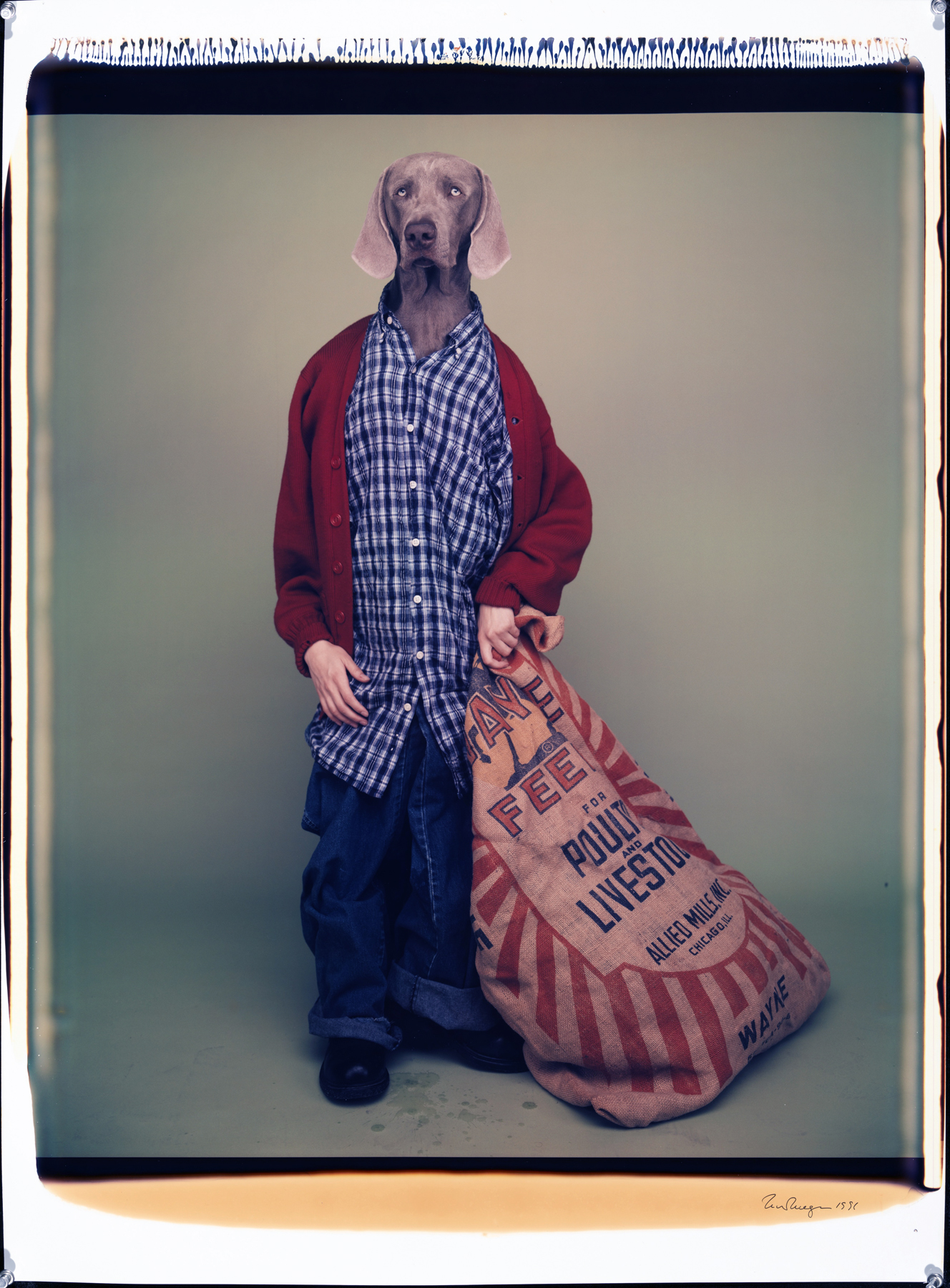
William Wegman (American, b. 1943) 'Farm Boy' 1996


William Wegman (American, b. 1943)
Farm Boy
1996
Colour Polaroid
© William Wegman. Courtesy of the artist


William Wegman (American, b. 1943) 'Tamino with magic flute' 1996


William Wegman (American, b. 1943)
Tamino with magic flute
1996
Colour Polaroid photograph
61.0 x 50.8cm
Collection of the artist
© William Wegman


In Mozart’s The Magic Flute, the Queen of the Night persuades Prince Tamino to rescue her daughter Pamina from captivity under the high priest Sarastro; instead, he learns the high ideals of Sarastro’s community and seeks to join it. Separately, then together, Tamino and Pamina undergo severe trials of initiation, which end in triumph, with the Queen and her cohorts vanquished. The earthy Papageno, who accompanies Tamino on his quest, fails the trials completely but is rewarded anyway with the hand of his ideal female companion, Papagena.


William Wegman (American, b. 1943) 'George' 1997


William Wegman (American, b. 1943)
George
1997
Colour Polaroid
© William Wegman. Courtesy of the artist


William Wegman (American, b. 1943) 'Wall' 1997


William Wegman (American, b. 1943)
Wall
1997
Colour Polaroid
© William Wegman. Courtesy of the artist


William Wegman (American, b. 1943) 'Cut to Reveal' 1997


William Wegman (American, b. 1943)
Cut to Reveal
1997
Colour Polaroid
© William Wegman. Courtesy of the artist


William Wegman (American, b. 1943) 'Feathered Footwear' 1999


William Wegman (American, b. 1943)
Feathered Footwear
1999
Colour Polaroid
© William Wegman. Courtesy of the artist


William Wegman (American, b. 1943) 'Casual' 2002


William Wegman (American, b. 1943)
Casual
2002
Colour Polaroid
© William Wegman. Courtesy of the artist


William Wegman: Being Human

Many great artists have a muse. Sometimes this muse is a silent partner, the object of an artist’s obsessive gaze. At other times the relationship is a deeply collaborative act.

The history of photography has its own celebrated cases: Jacques-Henri Lartigue and Renée Perle, for example, or Alfred Stieglitz and Georgia O’Keeffe. For William Wegman, whose muses have been all these things and more, inspiration arrived almost half a century ago, when a Weimaraner who had joined the family showed both aptitude and passion for performing before the camera. In honour of one of Wegman’s most admired modern artists, he was named Man Ray, the first in a line of highly spirited performers.

William Wegman is a renowned and versatile American artist who resists an easy classification as he moves adroitly between painting, drawing, photography, film, video, books and performances. Although his famed Weimaraners are not featured in all these media, they reside at the core of his art. In the late 1970s Wegman found, in the large-format Polaroid print, his ideal means of expression – the perfect print size, exquisite colour and an ‘instantaneity’ which allowed for spontaneity and beneficial ‘accidents’. When his Polaroid chapter finally came to an end, the artist shifted to working digitally, rediscovering in this new medium what was essential to him about the Polaroid process: the print size, expressive colour and the studio set-ups.

Wegman’s world may revolve around his dogs, but his choice of sets, costumes and props betray a fascination with art history – Cubism, colour field painting, Abstract Expressionism, Constructivism, Conceptualism and the like. The diverse fields of photography also intrigue the artist, and we find in his work landscapes, nudes, portraits, reportage and fashion.

And yet, is it all really about dogs? Being Human suggests otherwise: these performers are us and we are them: housewife, astronaut, lawyer, priest, farm worker, even a dog walker! Some pose proudly and with confidence, others express doubts or vulnerabilities. It’s all about being human.

William A. Ewing. Exhibition curator


William Wegman (American, b. 1943) 'Upside Downward' 2006


William Wegman (American, b. 1943)
Upside Downward
2006
Color Polaroid
© William Wegman. Courtesy of the artist


William Wegman (American, b. 1943) 'From the spirit world' 2006


William Wegman (American, b. 1943)
From the spirit world
2006
Colour Polaroid photograph
61.0 x 50.8cm
Collection of the artist
© William Wegman


William Wegman (American, b. 1943) 'On base' 2007


William Wegman (American, b. 1943)
On base
2007
Colour Polaroid photograph
61.0 x 50.8cm
Collection of the artist
© William Wegman


William Wegman (American, b. 1943) 'Cursive Display' 2013


William Wegman (American, b. 1943)
Cursive Display
2013
Pigment Print
Courtesy of the artist
© William Wegman


William Wegman (American, b. 1943) 'Contact' 2014


William Wegman (American, b. 1943)
Contact
2014
pigment print
111.7 x 86.4cm
Collection of the artist
© William Wegman


William Wegman (American, b. 1943) 'V' 2017


William Wegman (American, b. 1943)
V
2017
Colour polaroid photograph
Collection of the artist
© William Wegman


Fotomuseum Den Haag
Stadhouderslaan 43
2517 HV Den Haag

Opening hours:
Tuesday – Sunday 11.00 – 17.00
The museum is closed on Mondays

Fotomuseum Den Haag website

LIKE ART BLART ON FACEBOOK

Back to top

Exhibition: ‘Acting Out: Cabinet Cards and the Making of Modern Photography’ at the Amon Carter Museum of American Art, Fort Worth, Texas

Exhibition dates: 14th August – 1st November, 2020

 Curator: John Rohrbach


G. S. Smith, Salt Lake City, UT. '[Taking in the view]' c. 1880 from the exhibition 'Acting Out: Cabinet Cards and the Making of Modern Photography' at the Amon Carter Museum of American Art, Fort Worth, Texas, Aug - Nov, 2020


G. S. Smith, Salt Lake City, UT
[Taking in the view]
c. 1880
Albumen silver print
Amon Carter Museum of American Art, Fort Worth, Texas


While the premise for this exhibition is interesting – that cabinet cards acted as a “primer” for coaxing “Americans into thinking about portraiture as an informal act, forging the way for the snapshot and social media with its contemporary “selfie” culture – in reality, the notion is far fetched.

Of the many millions of cabinet cards produced during their period of proliferation (1880s-1910s), only a small percentage, perhaps as low as 3%, would ever fit the performative type illustrated in this posting. Most were of the “solemn records of likeness and stature type”, typically full-length, half-length or a head and shoulders portrait, usually of a single person, sometimes a couple or family. Even then, the performative type of cabinet card would have a limited distribution, either within the family or commercially.

The four sections of the exhibition – Caught in the Act (actors, orators and other public figures); The Trade (commercial advertising); Sharing Life: Family and Friends (family albums); and Acting Out (people at play; reality and truth) – are logical partitions of these certain types of cabinet card. But what interests me more are the psychological aspects of having ones photograph taken. Why is the person’s photograph being taken, at whose direction (the photographers, the sitters)… who is posing the individual, what do they intend to convey through the image, who decides what that message is and, of course, how does the viewer decipher the message. “The interpretation of a person’s acting out and an observer’s response varies considerably, with context and subject usually setting audience expectations.” (Wikipedia)

Here we must acknowledge that the acting out is not singular but plural, for it is as much an act on the part of the photographer as it is the sitter. How much the outcome is dependent on the “director” or the subject is an act of constant negotiation (and, of course, it is also an outcome of the ritual of production).

The curator John Rohrbach observes that, “In our current moment of ‘selfie’ culture and social media-centered interaction, understanding the history of self-presentation and portraiture is more prescient than ever…” but this statement, linking cabinet cards and selfies, is a very very long bow to draw. This is because cabinet cards are not “selfies” as we perceive them now – informal snapshots taken by the self – but posed and performed photographic studies that require inherent discipline, structure and form constructed by the photographer and the sitter to achieve their end.

I often wonder about the revelatory process of having one’s portrait taken in the early days of photography. I know from texts that I have read that some people found the process slow and irritating, the results unsatisfactory. On the other hand, imagine being made to stand still for several seconds when you are not used to being completely still. Could there possibly be a moment in time and space, of meditation and reconciliation with oneself, a revelation in the stillness of the seconds of exposure. A revelation more spiritual than performative? *Two girls (1864, below)

Dr Marcus Bunyan


Many thankx to the Amon Carter Museum of American Art for allowing me to publish the art work in the posting. Please click on the photographs for a larger version of the image.


Acting

The art or practice of representing a character on a stage or before cameras.

Acting serves countless purposes including the following: It reminds us of times past and forgotten, or gives us a glimpse of a possible future. It portrays our raw, unadulterated, vulnerable, emotional, and at times, ugly, horrifying humanity. It provokes emotion, thought, discussion, awareness, or even imagination.

Acting Out

A child is “acting out” when they exhibit unrestrained and improper actions. The behaviour is usually caused by suppressed or denied feelings or emotions.

Acting out reduces stress. It’s often a child’s attempt to show otherwise hidden emotions. Acting out may include fighting, throwing fits, or stealing. In severe cases, acting out is associated with antisocial behaviour and other personality disorders in teenagers and younger children. …

Acting Out a) represents in action and b) translates into action, expressing (something, such as an impulse or a fantasy) directly in overt behaviour without modification, not complying with social norms.

In the psychology of defence mechanisms and self-control, acting out is the performance of an action considered bad or anti-social. In general usage, the action performed is destructive to self or to others. The term is used in this way in sexual addiction treatment, psychotherapy, criminology and parenting. In contrast, the opposite attitude or behaviour of bearing and managing the impulse to perform one’s impulse is called acting in.

The performed action may follow impulses of an addiction (e.g. drinking, drug taking or shoplifting)[citation needed]. It may also be a means designed (often unconsciously or semi-consciously) to garner attention (e.g. throwing a tantrum or behaving promiscuously). Acting out may inhibit the development of more constructive responses to the feelings in question. …

Interpretation

The interpretation of a person’s acting out and an observer’s response varies considerably, with context and subject usually setting audience expectations.

Alternatives

Acting out painful feelings may be contrasted with expressing them in ways more helpful to the sufferer, e.g. by talking out, expressive therapy, psychodrama or mindful awareness of the feelings. Developing the ability to express one’s conflicts safely and constructively is an important part of impulse control, personal development and self-care.

Anonymous. “Acting out,” on the Wikipedia website [Online] Cited 04/10/2020


G. S. Smith, Salt Lake City, UT. '[Taking in the view]' c. 1880 (detail)


G. S. Smith, Salt Lake City, UT
[Taking in the view] (detail)
c. 1880
Albumen silver print
Amon Carter Museum of American Art, Fort Worth, Texas


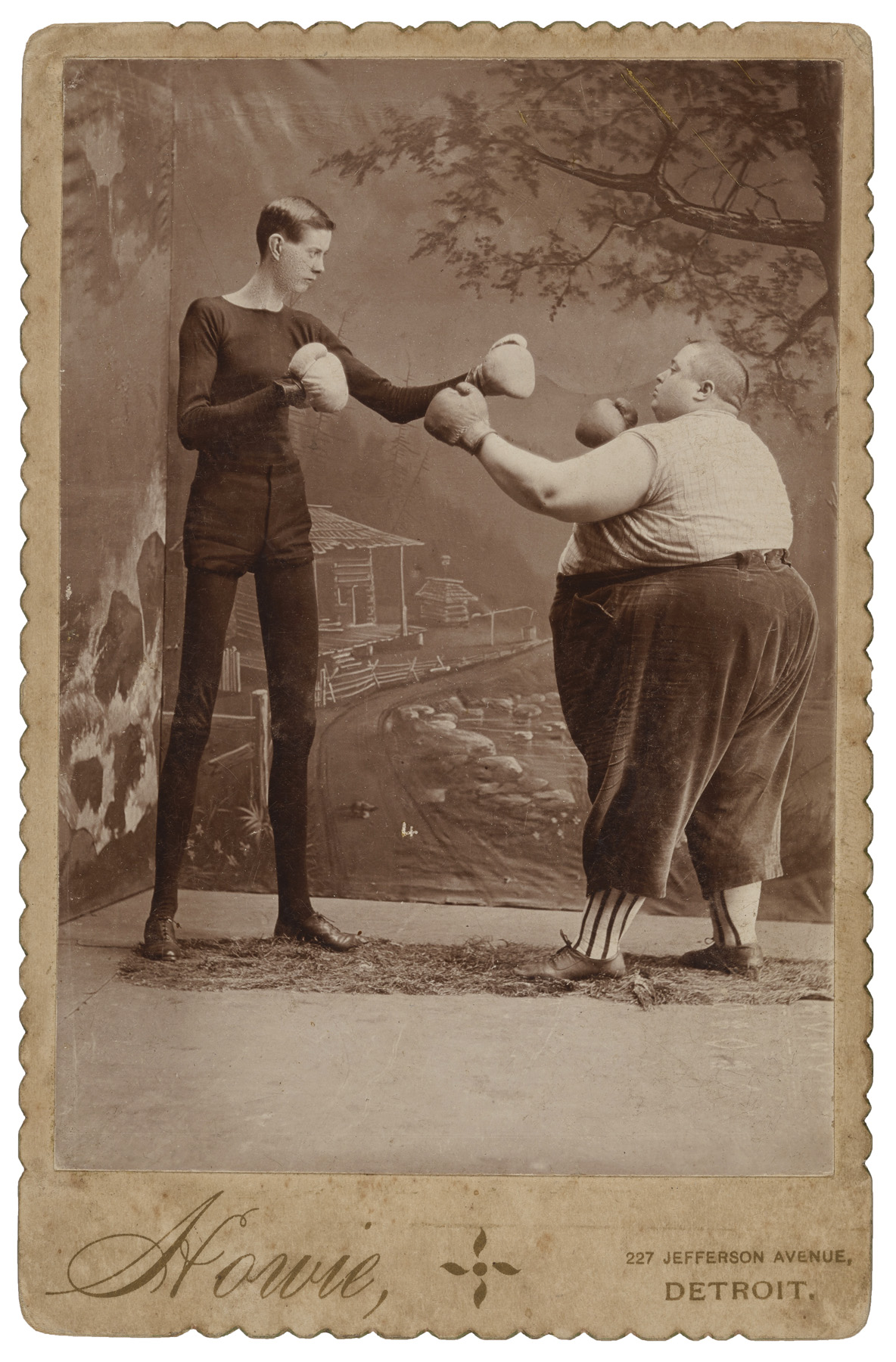
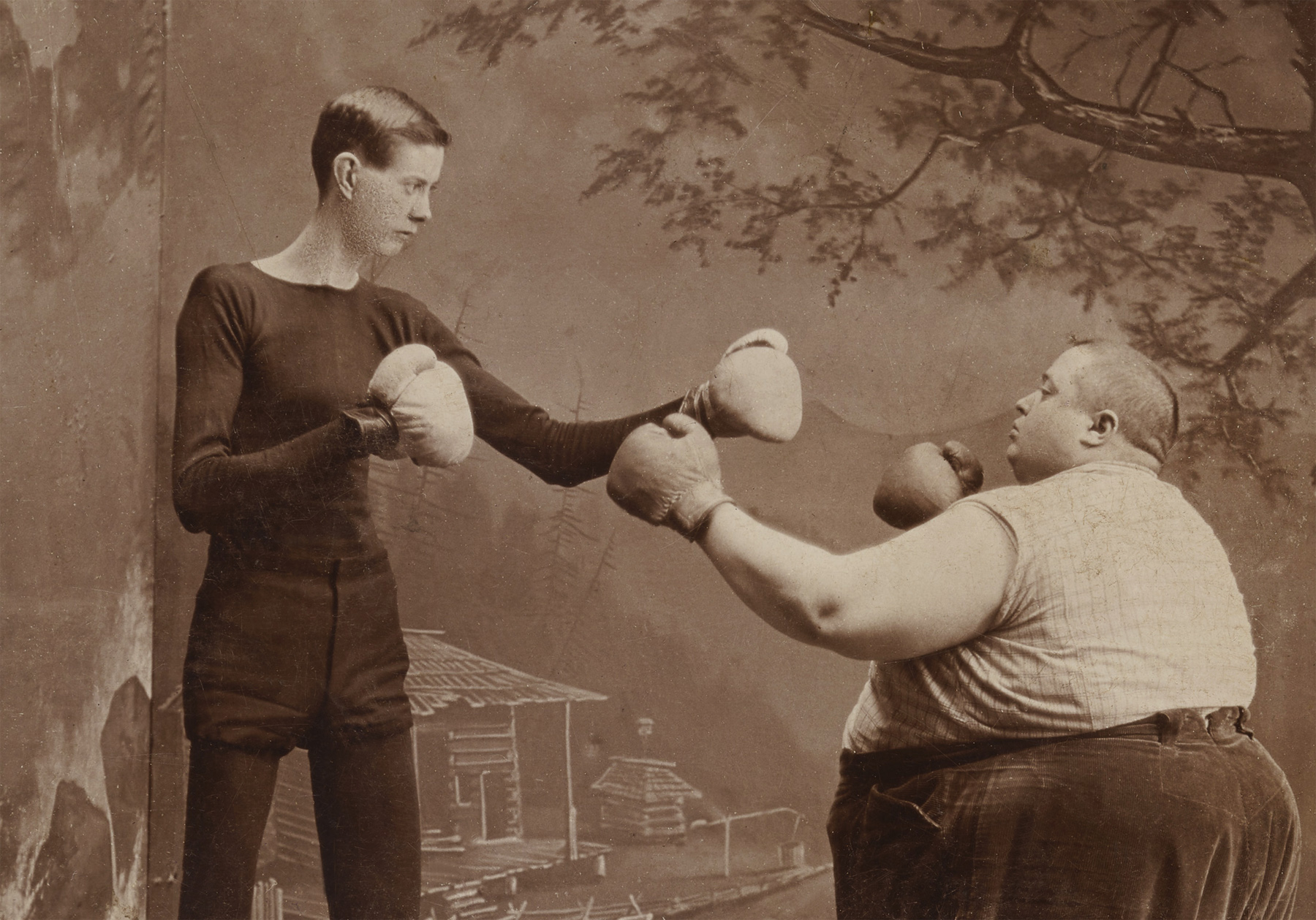
Howie, Detroit, MI 'George Moore and Fred Howe' 1890s from the exhibition 'Acting Out: Cabinet Cards and the Making of Modern Photography' at the Amon Carter Museum of American Art, Fort Worth, Texas, Aug - Nov, 2020


Howie, Detroit, MI
George Moore and Fred Howe
1890s
Collodion silver print
Robert E. Jackson Collection


Fred Howe, the Fatman and George Moore, the living skeleton; they are the most comical boxers in the world. Fred Howe’s father was a carpenter at Alleghany City, Penn., and Fred started to learn the same trade, but soon became too fat. At the age of eighteen he joined the Forepaugh Circus as a “tat boy,” and there met his present sparring partner.

George Moore was born in Helena, Montana, where his father had a little dry goods shop. Until he was twenty-one years of age George worked in his father’s shop. But his greatest desire was to see the world. When the fist big circus came to Helena, the manager offered him an engagement to exhibit himself as the “living skeleton,” and he closed with the offer at once. Fred Howe, they soon became great friends. The doctors advised both to take as much exercise as possible – the one to gain flesh, and the other to get rid of it. These smart Yankee lads then resolved to combine duty with pleasure, so they went in for boxing. For a long time they practised privately. One day, however, the manager was told of the fun by some of his “freaks,” who had been allowed to see a set-to” between the two gladiators. The manager then arranged a round or two, and the moment he saw Howe and Moore face each other, he offered them a long engagement at an increased salary, if only they would do their boxing before the public. Today these funny fellows are not only expert boxers, but also perfect comedians in their “art.” Their boxing is uproariously funny.

Moore is 6ft. 3in. in height, and weighs but 97lb., Howe is only 4ft. 2in. high, and weights exactly 422lb.

The Strand Magazine


Howie, Detroit, MI 'George Moore and Fred Howe' 1890s (detail)


Howie, Detroit, MI
George Moore and Fred Howe (detail)
1890s
Collodion silver print
Robert E. Jackson Collection


Alfred U. Palmquist and Peder T. Jurgens, St. Paul, MN. '[Skater]' 1880s


Alfred U. Palmquist (Swedish, 1850-1922) and Peder T. Jurgens, St. Paul, MN
[Skater]
1880s
Albumen silver print
Amon Carter Museum of American Art, Fort Worth, Texas


The Swede Alfred U. Palmquist (1850-1922) immigrated to America in 1872. In 1874, together with the Norwegian Peder T. Jurgens he opened the photo studio Palmquist & Jurgens in St. Paul, Minnesota.

Alfred Palmquist was born in Finland to Swedish parents on June 21, 1850. We know nothing about his childhood and upbringing except that he emigrated to Minnesota in the United States at the age of twenty-two. A year later, he and a colleague started a photo studio in Saint Paul, Minnesota, which was named Palmquist & Lake.

Ten years later, in 1883, Palmquist entered into a collaboration with Peder T. Jurgens. We only know about his partner Jurgens that he was Norwegian and had previously supported himself as an economist. Peder Jurgens worked in the company between the years 1882 to 1888. The new company was then of course named Palmquist & Jurgens and lived on until the beginning of the 20th century. During the 1870s and 1880s, most photographers worked in their studios… Palmquist & Jurgens was such a typical photography company that preferred people to come to their studio to be photographed. The company had specialised in photographing famous families in Saint Paul.


M. C. Hosford, West Rutland, VT. '[Getting the cleaver]' 1880s


M. C. Hosford, West Rutland, VT
[Getting the cleaver]
1880s
Albumen silver print
Amon Carter Museum of American Art, Fort Worth, Texas


M. C. Hosford, West Rutland, VT. '[Getting the cleaver]' 1880s (detail)


M. C. Hosford, West Rutland, VT
[Getting the cleaver] (detail)
1880s
Albumen silver print
Amon Carter Museum of American Art, Fort Worth, Texas


M. C. Hosford, West Rutland, VT. '[Getting the cleaver]' 1880s (detail)


M. C. Hosford, West Rutland, VT
[Getting the cleaver] (detail)
1880s
Albumen silver print
Amon Carter Museum of American Art, Fort Worth, Texas


M. C. Hosford, West Rutland, VT. '[Getting the saw]' 1880s


M. C. Hosford, West Rutland, VT
[Getting the saw]
1880s
Albumen silver print
Amon Carter Museum of American Art, Fort Worth, Texas


Acting Out: Cabinet Cards and the Making of Modern Photography offers the first-ever in-depth examination of the photographic phenomenon of cabinet cards. Cabinet cards were America’s main format for photographic portraiture through the last three decades of the nineteenth century. Inexpensive and sold by the dozen, they transformed getting one’s portrait made from a formal event taken up once or twice in a lifetime into a commonplace practice shared with family and friends.

Building on the museum’s history as a leader in American photography, this exhibition reveals how photography studios and their sitters across the United States introduced immediacy to studio portraiture and transformed their sessions into avenues of fun and personal expression. Sections will trace the cabinet card’s development and evolution, from its beginnings in celebrity culture through the marketing and advertising innovations of practitioners to the diversity of what people brought to their sittings. Not only did Americans embrace photography as a commonplace fact of life during these years, they openly played with the medium’s believability. In short, cabinet cards made photography modern.

This August, the Amon Carter Museum of American Art will present Acting Out: Cabinet Cards and the Making of Modern Photography, an exhibition offering the first in-depth examination of the nineteenth-century photographic phenomenon of cabinet cards. Charting the proliferation of this under appreciated photographic format, Acting Out reveals that cabinet cards coaxed Americans into thinking about portraiture as an informal act, forging the way for the snapshot and social media with its contemporary “selfie” culture. Acting Out presents hundreds of photographs – many on view publicly for the first time – from collections nationwide, including examples from the Carter’s own extensive photography collection. On view August 18 through November 1, 2020, the exhibition is organised by the Carter and will travel to the Los Angeles County Museum of Art.

In the second half of the nineteenth century, cabinet cards gave birth to the golden age of photographic portraiture in America. Measuring 6 1/2 by 4 1/4 inches, roughly the size of the modern-day smartphone screen, they were three times larger than the period’s leading photographic format. This larger size revealed previously obscured details in the images captured, encouraging action-ready gestures and the introduction of an astonishing array of props. Where photographs had once functioned as solemn records of likeness and stature, cabinet cards offered a new outlet for entertainment and remembering life’s everyday moments.

Acting Out investigates how this new performative medium prompted sitters to become far more comfortable with having their portrait made. By the time Eastman Kodak introduced its new affordable Brownie camera in 1900, cabinet cards had primed Americans to photograph every aspect of their lives. Though produced over 100 years ago, cabinet cards have a familiarity and a levity that resonates with our experience of photography today.

Acting Out exemplifies the Carter’s commitment to organising exhibitions rooted in groundbreaking scholarship, a core tenet of our curatorial philosophy,” stated Andrew J. Walker, Executive Director. “This exhibition harnesses the resources of our vast photography collection and archive to show visitors the contemporary relevance of the medium’s pre-modern history.”

The exhibition is organised into four sections chronicling the birth and evolution of the cabinet card:

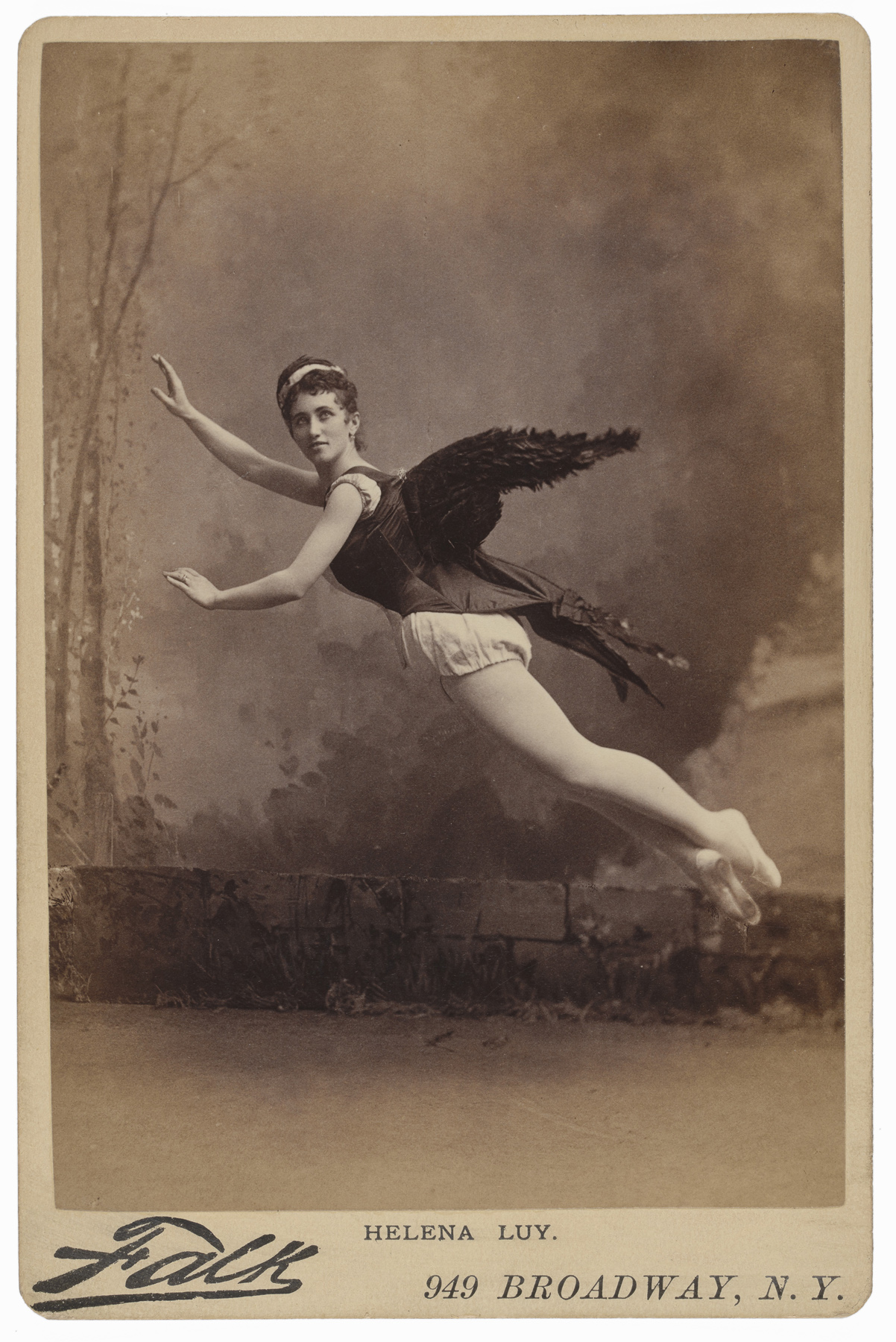
Caught in the Act: Actors, orators, and other public figures were among the first to embrace cabinet cards. This section examines how the creative innovations employed by New York photographer Napoleon Sarony and his cohorts built public enthusiasm for a new kind of photographic portraiture founded on a relaxed sense of immediacy that influenced studio photographers across America.

The Trade: This section looks at the entertaining and evocative ways that photographers worked to overcome low prices and fierce competition, and to stand out from their peers. Their creative solutions gave rise to the ubiquity of cabinet cards across America by the 1880s.

Sharing Life: Family and Friends: Over the last quarter of the nineteenth century, cabinet cards were often the favoured means for recording and celebrating family life. This evocative section reveals the ways in which cabinet cards established a model for family albums as channels for sharing and boasting of the joys and transits of life.

Acting Out: If portraiture was the ostensible subject of cabinet cards, play was just as important. This section examines Americans’ acceptance of the camera as a tool for shared amusement as they toyed with photography’s pretence of reality and truth.

“In our current moment of ‘selfie’ culture and social media-centered interaction, understanding the history of self-presentation and portraiture is more prescient than ever,” said John Rohrbach, Senior Curator of Photographs at the Carter. “This exhibition reveals how nineteenth-century Americans approached photography far more playfully than ever before, a transformation that forever shifted our relationship to the medium.”

Acting Out: Cabinet Cards and the Making of Modern Photography was organised by the Amon Carter Museum of American Art. The exhibition is supported in part by the Alice L. Walton Foundation Temporary Exhibitions Endowment and accompanied by a 232-page catalogue co-published with the University of California Press, Berkeley. The book is the first dedicated to the history of the cabinet card and features colour plates of 100 cards at their actual size. Contributors include Dr. John Rohrbach, Senior Curator of Photographs at the Amon Carter Museum of American Art; Dr. Erin Pauwels, Assistant Professor of American Art at Temple University; Dr. Britt Salvesen, Department Head and Curator of the Wallis Annenberg Department of Photography at the Los Angeles County Museum of Art; and Fernanda Valverde, Conservator of Photographs at the Carter.

Press release from the Amon Carter Museum of American Art


Unknown photographer. '[Chess against myself]' 1880s


Unknown photographer
[Chess against myself]
1880s
Albumen silver print
Amon Carter Museum of American Art, Fort Worth, Texas


Unknown photographer. '[Chess against myself]' 1880s (detail)


Unknown photographer
[Chess against myself] (detail)
1880s
Albumen silver print
Amon Carter Museum of American Art, Fort Worth, Texas


Hatch and White, Burlington, WI. '[Man in woman's clothing]' c. 1891


Hatch and White, Burlington, WI
[Man in woman’s clothing]
c. 1891
Collodion silver print
Amon Carter Museum of American Art, Fort Worth, Texas


Benjamin J. Falk, New York, NY. 'Helena Luy' 1880s


Benjamin J. Falk, New York, NY
Helena Luy
1880s
Albumen silver print
Amon Carter Museum of American Art, Fort Worth, Texas


Benjamin J. Falk (American, 1853-1925)

When Napoleon Sarony died in 1896, Benjamin J. Falk ascended to the first place in the world of performing arts photography…

Falk’s contemporaries, who spoke primarily of the clarity, verisimilitude, and composure of his images, never recognised his greatest power as a portraitist. Falk was a man of extraordinary erotic engagement with his sitters, and the intensity of his attention becomes visible only when one sees the entirety of his work envisioning one of the several women – Belle Archer, Mrs. James Brown Potter, Cleo De Merode, Cissy Fitzgerald, Amy Busby, the Barrison Sisters – who capture his imagination. He was capable of refracting the sitter’s beauty in a tremendous array of scenes, costumes, and attitudes, doing so without making the images seem artificial.

When asked in 1893 what was most important in creating effective portraits, he replied matter of factly, “I name expression, posing and lighting in the order as they appear to be most important. The technique of the profession being absolutely under the control of the operator since the introduction of the dry plates, there is no excuse now for any but perfect photographic results. I have always made my price high enough, so that I did not have to consider the cost of material while doing my work.” The camera, in the proper hands, is, in many ways, a finer art tool to-day than the chisel or the brush, although, like them, it has its limitations.

Specialty

The first strong adherent of artificial light sources in the studio, Benjamin Falk created portraits that were among the most dramatically sculptural looking images of the 19th and early 20th centuries. Possessed of a playful visual wit, he often experimented with his images, using curious juxtapositions, unusual poses, and lighting highlights to convey distinctiveness of personality. Increasingly indifferent to painted backdrops, he did many portraits against blank walls or bleached out backcloths. He began the fashion for faces and figures suspended in a milky white ground that became ubiquitous shortly after 1900.

Anonymous. “Benjamin J. Falk,” on the Broadway Photographers website [Online] Cited 05/09/2020


Benjamin J. Falk, New York, NY. 'Helena Luy' 1880s (detail)


Benjamin J. Falk, New York, NY
Helena Luy (detail)
1880s
Albumen silver print
Amon Carter Museum of American Art, Fort Worth, Texas


Napoleon Sarony, New York, NY. '[Fanny Davenport]' c. 1870


Napoleon Sarony, New York, NY
[Fanny Davenport]
c. 1870
Albumen silver print
Amon Carter Museum of American Art, Fort Worth, Texas


Napoleon Sarony (American, 1821-1896)

Napoleon Sarony (March 9, 1821 – November 9, 1896) was an American lithographer and photographer. He was a highly popular portrait photographer, best known for his portraits of the stars of late-19th-century American theatre. His son, Otto Sarony, continued the family business as a theatre and film star photographer.

Sarony was born in 1821 in Quebec, then in the British colony of Lower Canada, and moved to New York City around 1836. He worked as an illustrator for Currier and Ives before joining with James Major and starting his own lithography business, Sarony & Major, in 1843. In 1845, James Major was replaced in Sarony & Major by Henry B. Major, and the firm continued operating under that name until 1853. From 1853 to 1857, the firm was known as Sarony and Company, and from 1857 to 1867, as Sarony, Major & Knapp. Sarony left the firm in 1867 and established a photography studio at 37 Union Square, during a time when celebrity portraiture was a popular fad. Photographers would pay their famous subjects to sit for them, and then retain full rights to sell the pictures. Sarony reportedly paid the internationally famous stage actress Sarah Bernhardt $1,500 to pose for his camera, equivalent to $42,683 in 2019. In 1894, he published a portfolio of prints entitled “Sarony’s Living Pictures”.

Text from the Wikipedia website


Napoleon Sarony, New York, NY. '[Fanny Davenport]' c. 1870 (detail)


Napoleon Sarony, New York, NY
[Fanny Davenport] (detail)
c. 1870
Albumen silver print
Amon Carter Museum of American Art, Fort Worth, Texas


Fanny Lily Gipsey Davenport (English-American, 1850-1898)

Fanny Lily Gipsey Davenport (April 10, 1850 – September 26, 1898) was an English-American stage actress. The eldest child of Edward Loomis Davenport and Fanny Elizabeth (Vining) Gill Davenport, Fanny Lily Gypsey Davenport was born on April 10, 1850 in London.

Most of her siblings were actors, including Harry Davenport. She was brought to the United States in 1854 and educated in the Boston public schools. At age 7, she appeared at Boston’s Howard Athenæum as Metamora’s child, but her real debut occurred in February 1862 when she portrayed King Charles in Faint Heart Never Won Fair Lady at Niblo’s Garden.

In February 1862, she appeared in New York City at Niblo’s Garden at the age of 12 as the King of Spain in Faint Heart Never Won Fair Lady. From 1869 to 1877, she performed in Augustin Daly’s company; and afterwards, with a company of her own, acted with especial success in Sardou’s Fédora (1883) her leading man being Robert B. Mantell, Cleopatra (1890), and similar plays. She took over emotional Sardou roles that had been originated in Europe by Sarah Bernhardt. Her last appearance was at the Grand Opera House in Chicago on March 25, 1898, shortly before her death.

Her first husband was Edwin B. Price, an actor. They married on July 30, 1879, and divorced on June 8, 1888. On May 18, 1889, she married her leading man, Melbourne MacDowell. Both marriages were childless. Davenport died September 26, 1898, from an enlarged heart, at her summer home in Duxbury, Massachusetts.

Text from the Wikipedia website


Unknown photographer. '[Two girls]' 1864


Unknown photographer
[Two girls]
1864
Albumen silver print (carte de visite)
Amon Carter Museum of American Art, Fort Worth, Texas


Unknown photographer. '[Two girls]' 1864 (detail)


Unknown photographer
[Two girls] (detail)
1864
Albumen silver print (carte de visite)
Amon Carter Museum of American Art, Fort Worth, Texas


A. M. Nikodem, Chicago, IL. '[Cat]' 1880s


A. M. Nikodem, Chicago, IL
[Cat]
1880s
Albumen silver print
Robert E. Jackson Collection


A.M. Nikodem

According to Origin, Growth, and Usefulness of the Chicago Board of Trade: Its Leading Members, and Representative Business Men in other Branches of Trade (1885): “Miss A.M. Nikodem, Photographic Artist. No. 701 West Madison Street. – One of the most popular and finely appointed photographic studios in Chicago is that conducted by Miss A.M. Nikodem, who succeeded Mr. M. T. Baldwin one year ago. This lady, who is regarded as one of the most skilful and accomplished photographic artists in the city, occupies an entire two-storied building completely equipped with all modern improvements and appliances and her elegantly furnished parlours are the resort of the élite of Chicago. Miss Nikodem is the only lady in the city who give personal attention to the taking of pictures, etc., and having had an extended practical and theoretical training she has attained a marked perfection in her art. In social circles Miss Nikodem occupies a prominent position both as a skilful artist and estimable lady, while in the business world she is held in high esteem as an enterprising and capable woman.”

Nikodem occupied the studio at this address from 1885-1891, and then moved to another location. 1895 is the last year in which she seems to be listed in Chicago city guides. Despite her prominence, photographs from her studio are exceptionally uncommon. Nikodem’s skill is fully on display in this portrait. The three or four other examples of her work we could find, all in library special collections, are all of women or girls, and they display a uniform artistic excellence and technical photographic skill.


W. A. White, Wilson, KS. 'My first baby friend Tompie and his pet' 1896


W. A. White, Wilson, KS
My first baby friend Tompie and his pet
1896
Collodion silver print
Robert E. Jackson Collection


W. A. White, Wilson, KS. 'My first baby friend Tompie and his pet' 1896 (detail)


W. A. White, Wilson, KS
My first baby friend Tompie and his pet (detail)
1896
Collodion silver print
Robert E. Jackson Collection


W. A. Wilcoxon, Bonaparte, IA. '[Baby]' 1890s


W. A. Wilcoxon, Bonaparte, IA
[Baby]
1890s
Collodion silver print
Amon Carter Museum of American Art, Fort Worth, Texas


Unknown photographer. '[Painter]' 1890s


Unknown photographer
[Painter]
1890s
Albumen silver print
William L. Schaeffer Collection


Unknown photographer. '[Painter]' 1890s (detail)


Unknown photographer
[Painter] (detail)
1890s
Albumen silver print
William L. Schaeffer Collection


Charles L. Griffin, Scranton, PA. '[Toddler with dog]' c. 1892


Charles L. Griffin, Scranton, PA
[Toddler with dog]
c. 1892
Gelatin silver print
Amon Carter Museum of American Art, Fort Worth, Texas


F. J. Nelson, Anoka, MN. 'Domestic Bread' c. 1890s


F. J. Nelson, Anoka, MN
Domestic Bread
c. 1890s
Collodion silver print
Amon Carter Museum of American Art, Fort Worth, Texas


Gilbert G. Oyloe (American, 1851-1927) Ossian, IA. '[Woman]' 1880s


Gilbert G. Oyloe (American, 1851-1927) Ossian, IA
[Woman]
1880s
Albumen silver print
Robert E. Jackson Collection


Oyloe had a studio in Ossian during the 1880’s and 1890’s.


James F. Ryder, Cleveland, OH. 'Verso' 1880s


James F. Ryder, Cleveland, OH
Verso
1880s
Planographic print
Gift of Robert E. Jackson
Amon Carter Museum of American Art, Fort Worth, Texas


Charles Quartley, Baltimore, MD. '[Church woman]' 1880s


Charles Quartley, Baltimore, MD
[Church woman]
1880s
Albumen silver print
Robert E. Jackson


Caroline Bergman, Louisville, KY. 'Untitled [Bergman's Photograph Gallery]' c. 1890


Caroline Bergman, Louisville, KY
Untitled [Bergman’s Photograph Gallery]
c. 1890
Relief print
Gift of Robert E. Jackson
Amon Carter Museum of American Art, Fort Worth, Texas


Louise and Caroline Bergman

Louis Bergman opened a Louisville photo studio in 1872 on W Market. After 1885, however, Caroline Bergman (his wife) is listed as the proprietor and photographer, and Louis is listed only as “manager”. This very successful studio was in operation until 1896.

Louis Bergman’s … studio was located at 56 & 58 Market Street, in Louisville, Kentucky. Perusal of Louisville business directories reveals that Bergman began business with a partner. Bergman & Flexner; the firm was listed in the 1868 and 1869 directories. He was reported to be the sole proprietor of a studio from 1872 until 1886. Bergman was listed at a number of different addresses over these years. Using these addresses, it appears that this particular photograph was taken between 1873 and 1881. From 1886 through 1894 the proprietor of the studio became Caroline Bergman. The Photographic Times and American Photographer (1883) reported that Bergman was Vice President of the Photographers Mutual Benefit Society of Louisville. Louis Bergman (c. 1838 -?) was born in Hanover, Germany to Prussian parents. His wife, Carrie (1845 -?) was born in Louisiana to German parents. The couple married  in about 1865. The Bergman’s had a daughter, Lillie, who was 12 years-old at the time of the 1880 census. The census listed Louis as a photographer and Carrie as a homemaker. It is interesting to note that when the couples daughter reached 18 years of age, Carrie became the studio’s proprietor / photographer.

Anonymous. “Man with a Great Beard in Louisville, Kentucky,” on The Cabinet Card Gallery website 03/01/2012 [Online] Cited 05/09/2020


R. O. Helsom, Menomonie, WI. 'Verso' 1880s


R. O. Helsom, Menomonie, WI
Verso
1880s
Relief print
Gift of Robert E. Jackson
Amon Carter Museum of American Art, Fort Worth, Texas


'Cabinets' c. 1880s


Cabinets
c. 1880s
Celluloid-covered album
Robert E. Jackson Collection


Amon Carter Museum of American Art
3501 Camp Bowie Boulevard
Fort Worth, TX 76107-2695

Opening hours:
Tuesday, Wednesday, Friday, Saturday:
 10am – 5pm
Thursday: 10am – 8pm
Sunday: 12am – 5pm
Closed Mondays and major holidays
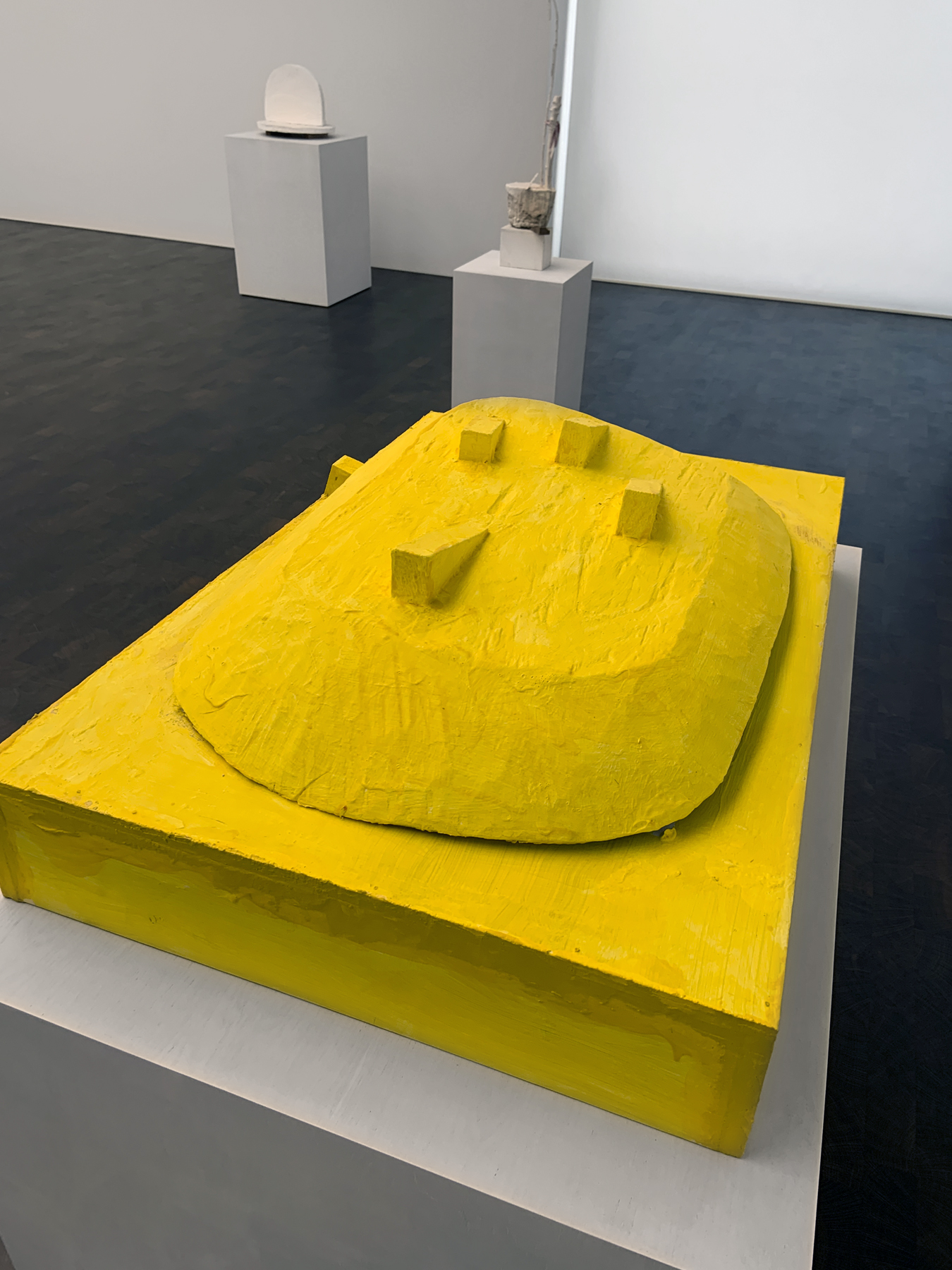
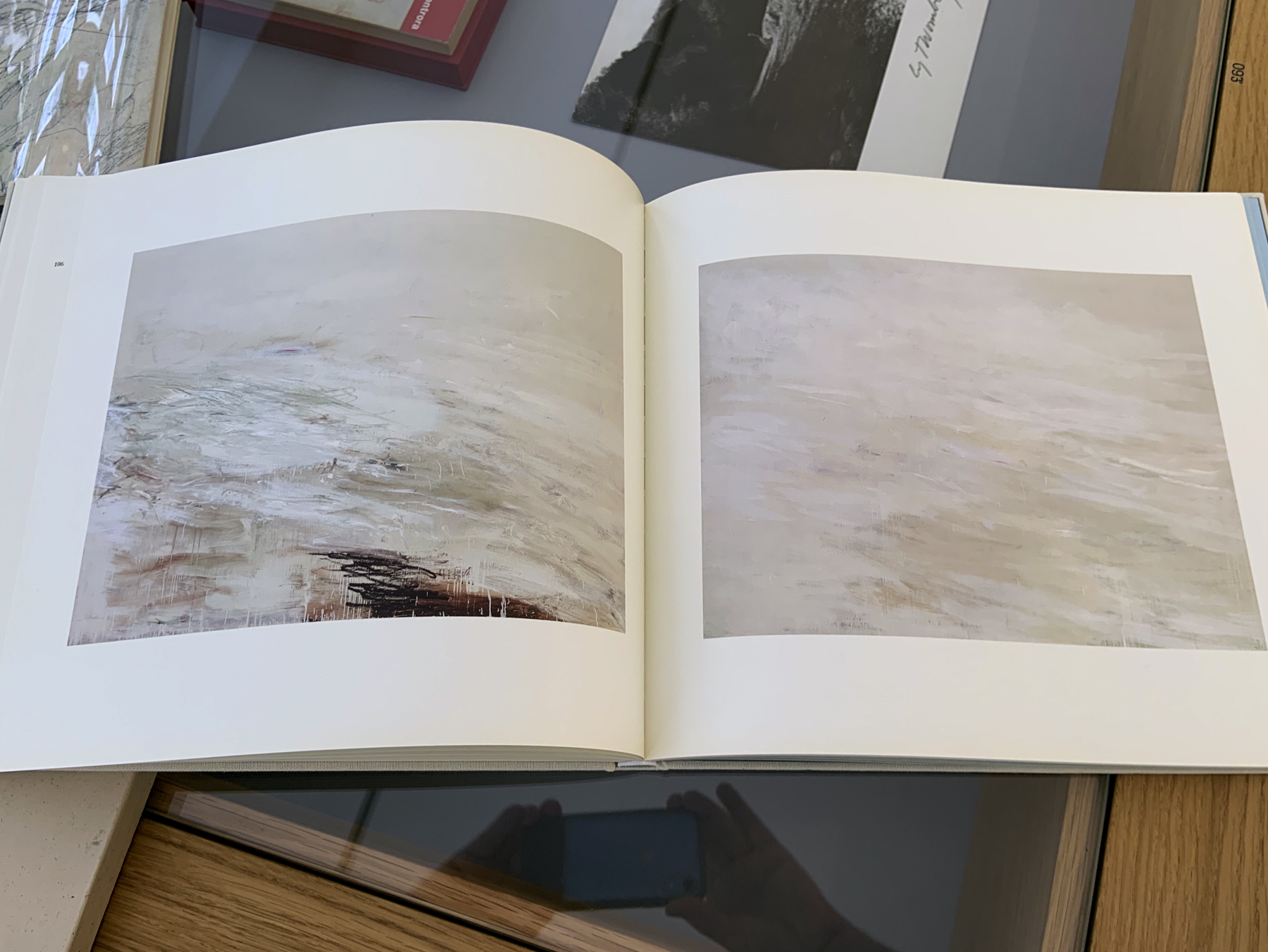
Amon Carter Museum of American Art website

LIKE ART BLART ON FACEBOOK

Back to top

Photographs: ‘Lusannah and Francis Wadsworth Hubbard, Wadsworth Hall, Hiram, Maine; and Moat Mt and Saco River, North Conway N.H.’

September 2020


Lawson (American) 'Spinning Days (Mrs. Lusannah Wadsworth Hubbard of Hiram, Maine)' 1927
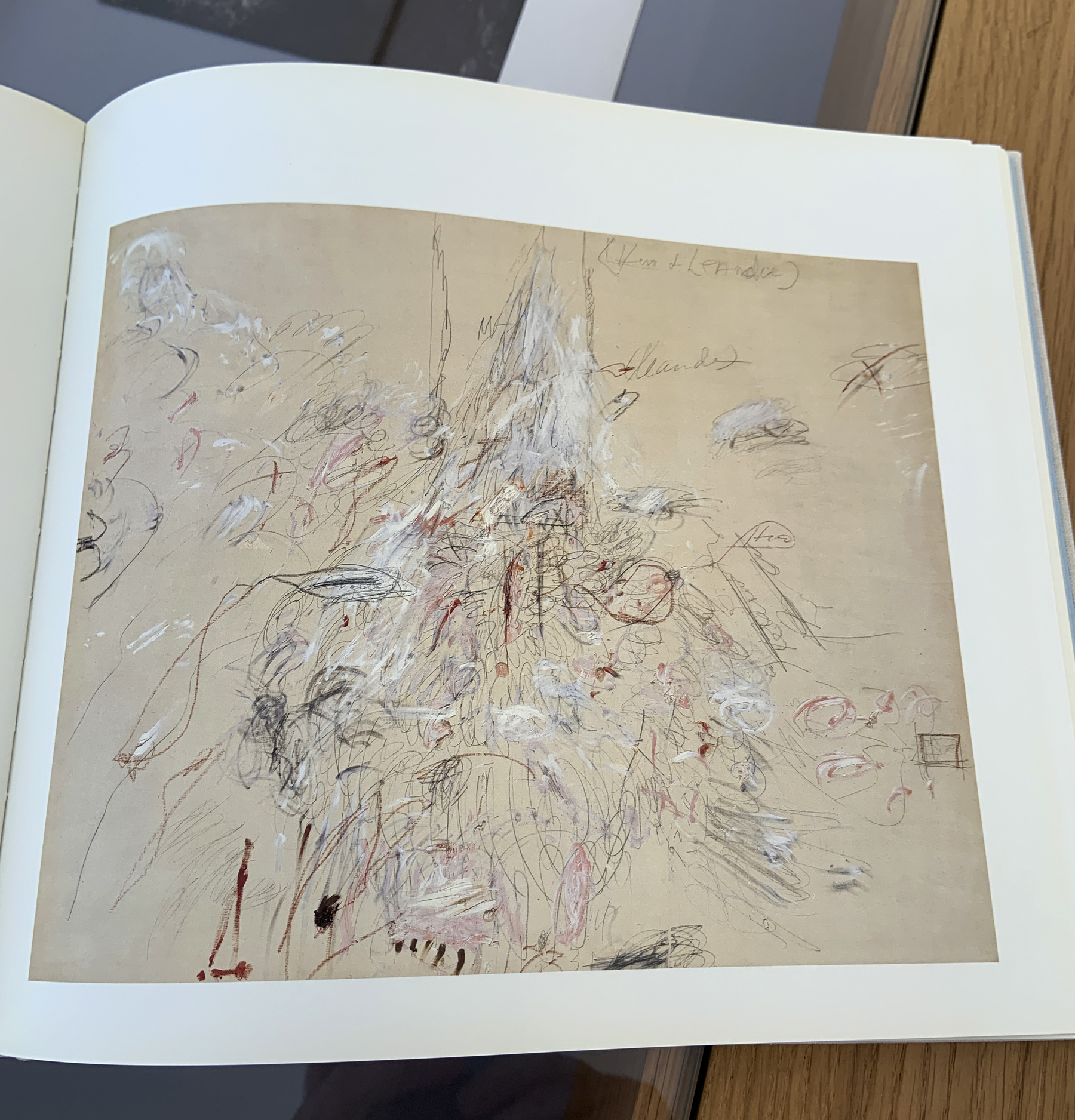
 

Lawson (American)
Spinning Days (Mrs. Lusannah Wadsworth Hubbard of Hiram, Maine)
Nd, presented 1927
Tipped in silver gelatin print
Image: 22.5 x 17cm


These special images are a bit of a mystery. I purchased them as a lot from an op shop (charity shop) here in Melbourne, Australia.
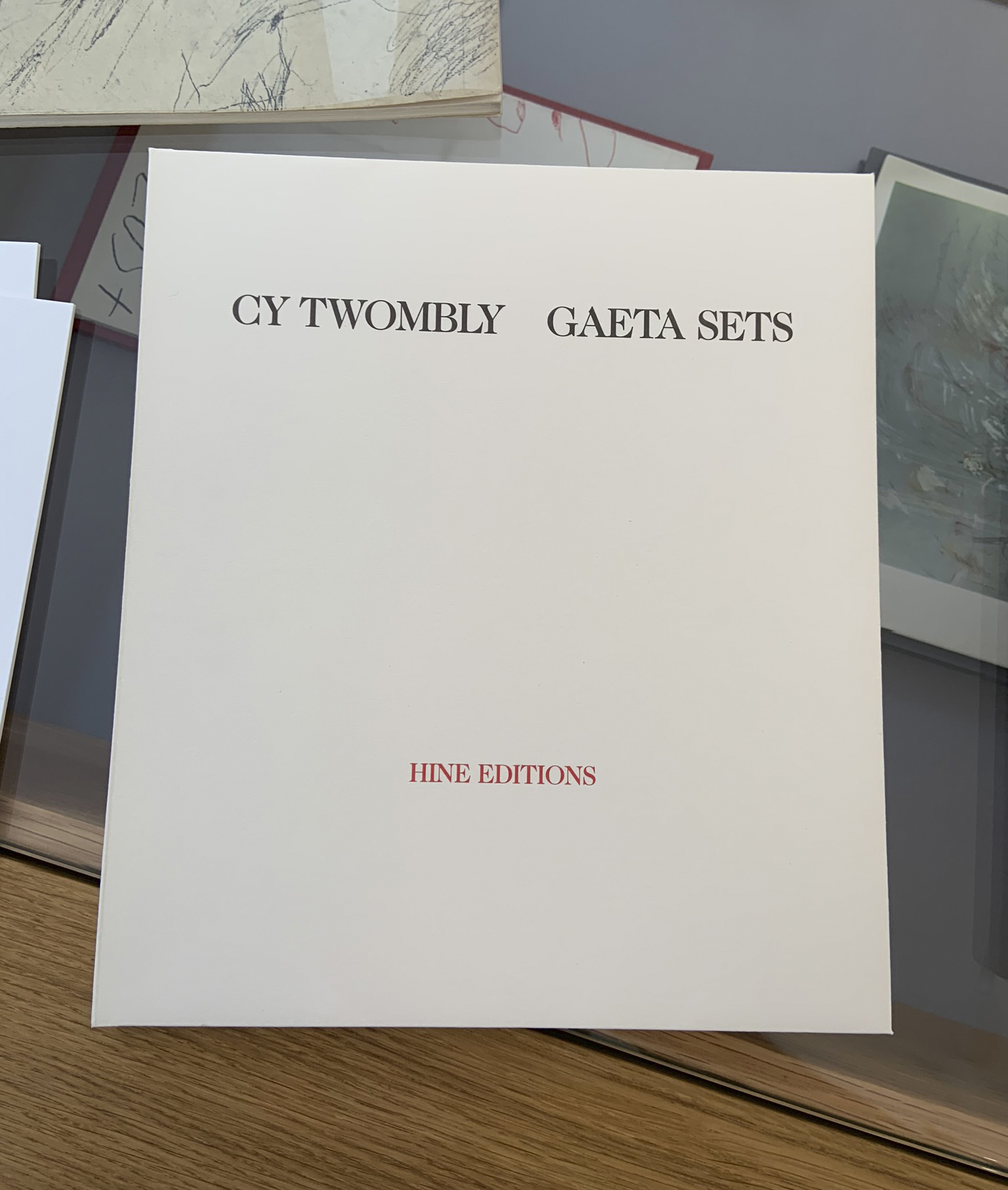
How such quintessential, historic American photographs come to be in Australia is beyond me.

With their links to the American Revolution, Brigadier General Peleg Wadsworth of the Revolution, Wadsworth Hall, Wadsworth-Longfellow house, General Peleg Wadsworth Jr., and the daughters and granddaughters of the Republic, they could turn out to be very important images.

After research I can find no birth and death dates for George Wadsworth Davis, and no information on the photographers “Lawson” or “Huntings Studio, North Conway N.H.”

I believe the photograph Spinning Days to be earlier than the text on the back of the photograph which is dated Dec. 26th 1927, mainly because Brigadier General Peleg Wadsworth died in 1829, and taking 30 years per generation, the photograph of the granddaughter would place the image c. 1890-1900 (her dates are 1830-1908). The type of frame and the silver, patterned paper on the rear of the frame would support this supposition. I also believe that the beautiful photograph Moat Mt and Saco River, North Conway N.H. dates to the late nineteenth or early twentieth century due to the nature of its original frame. This looks to be a platinum palladium print as well.

The poem by the son George Wadsworth Davis about his mother Francis Wadsworth Davis is just delightful: his feelings for his ageing mother captured in a picture of her – tender, romantic, loving.

If anyone has more information on these images, please email me at bunyanth@netspace.net.au. Thank you!

Dr Marcus Bunyan


Please click on the photographs for a larger version of the image.


Lawson (American) 'Spinning Days (Mrs. Lusannah Wadsworth Hubbard of Hiram, Maine)' 1927
 

Lawson (American)
Spinning Days (Mrs. Lusannah Wadsworth Hubbard of Hiram, Maine)
Nd, presented 1927
Tipped in silver gelatin print
Image: 22.5 x 17cm


The subject of this picture was Mrs. Lusannah Wadsworth Hubbard of Hiram, Maine – the granddaughter of Brigadier General Peleg Wadsworth of the Revolution – and daughter of General Peleg Wadsworth of the ? Militia.

Mrs Hubbard posed for this picture – in the hall of the Wadsworth Home – to please our artist-friend who was with the family for the summer.

The braided rug on the floor was made by her mother many years before the picture was painted.

The spinning wheel is one hundred and twenty five years old, and always in the Wadsworth family.

Presented by her mother – Mrs Francis(?) W. Davis – W her daughter – Mrs. D. Davis Skinner

Dec. 26th 1927


Text from the verso of the framed photograph


Lawson (American) 'Spinning Days (Mrs. Lusannah Wadsworth Hubbard of Hiram, Maine)' 1927 (verso detail)


Lawson (American)
Spinning Days (Mrs. Lusannah Wadsworth Hubbard of Hiram, Maine) (verso detail)
Nd, presented 1927
Tipped in silver gelatin print


Lawson (American) 'Spinning Days (Mrs. Lusannah Wadsworth Hubbard of Hiram, Maine)' 1927 (detail)

Lawson (American) 'Spinning Days (Mrs. Lusannah Wadsworth Hubbard of Hiram, Maine)' 1927 (detail)


Lawson (American)
Spinning Days (Mrs. Lusannah Wadsworth Hubbard of Hiram, Maine) (details)
Nd, presented 1927
Tipped in silver gelatin print


Lawson (American) 'Spinning Days (Mrs. Lusannah Wadsworth Hubbard of Hiram, Maine)' 1927 (verso)


Lawson (American)
Spinning Days (Mrs. Lusannah Wadsworth Hubbard of Hiram, Maine) (verso)
Nd, presented 1927
Tipped in silver gelatin print


Lawson (American) 'Spinning Days (Mrs. Lusannah Wadsworth Hubbard of Hiram, Maine)' 1927 (verso detail)

Lawson (American) 'Spinning Days (Mrs. Lusannah Wadsworth Hubbard of Hiram, Maine)' 1927 (verso detail)


Lawson (American)
Spinning Days (Mrs. Lusannah Wadsworth Hubbard of Hiram, Maine) (verso details)
Nd, presented 1927
Tipped in silver gelatin print


LUSANNAH W. HUBBARD (Osgood) (American, b. March 28, 1830 – died April 14, 1908)

Many will learn with deep regret the death at Hiram, Me., of Mrs Lusannah Wadsworth Hubbard on Wednesday, April 15, at the old Wadsworth homestead where she has made it her home since 1867. She was 78 years of age or nearly so. Many who have partake of her hospitality at Wadsworth hall will remember her with much pleasure. She had all the graces of her gently blood and was one who had the esteem and respect of all who knew her. She was a woman among women.

Mrs. Hubbard was the daughter of Gen. Peleg Jr., [1793-1875] and Lusannah (Wadsworth) Wadsworth [1797-1879] [Mrs. Hubbard died 1908 – ? of Francis Wadsworth – Rounds(?) mother of Francis Wadsworth Davis, mother of Dora Davis Skinner(?)] and their home was that in which she died. Her father and mother were cousins. The mother was the daughter of ?ura and Lydia (Bradford) Wadsworth of Hiram. Her father was the youngest of the 11 children of Peleg Wadsworth, who built the Wadsworth-Longfellow house and where he was born in 1792. He also had 11 children. Mrs Hubbard’s grandfather, Gen. Peleg Wadsworth [1748-1829], was one of the most prominent men in the State in his time. He was a major general in the Revolution, member of Congress 14 years and the founder of the town of Hiram, with all that implies. He built the house at Hiram in 1800 and moved there six years later. Many with recall the enjoyable centennial celebration at Wadsworth hall in 1900, when Mrs. Hubbard was the hostess, assisted by her sister, Mrs. Louisa Rounds of Minneapolis. The father was a major general in the militia and a very prominent citizen in his time. Mrs. Hubbard was a descendant of eleven Mayflower Pilgrims and a cousin of Henry W. Longfellow [1807-1882]. Lieut. Henry Wadsworth, who as on the Constitution and perished at Tripoli in 1804, and Commodore Alexander Scammel Wadsworth [1790-1851], who was a mid-shipman at Tripoli, with his brother and a lieutenant with Hull, when he fought the Guerriere in 1812 with the Constitution, were he uncles. She was a Wadsworth of the Wadsworths.

Mrs. Hubbard married in 1849 J. E. Osgood and in 1853 John P. Hubbard. She survived Mr. Hubbard. They had children and with her during the later years has been her daughter, Mrs. J. B. Pike, and her children. She was buried with her kindred at Hiram on Friday afternoon.

Mrs. Hubbard was proud of her ancestry and she had sufficient reasons for it. She was much interested in the preservation of the birthplace of her father, built by her grandfather in 1783 and 1786, now the precious possession of Portland, the Wadsworth-Longfellow house. She was a generous contributor of family relics to the collection and visited the house every season. Her gratitude to the people of Portland for what they have done for the old house seemed without limit and she often referred to the world of the ladies. The Elizabeth Wadsworth chapter, D. A. R., was named for her grandmother. The epitaph of this grandmother could well be hers:

“A woman of eminent piety.
Blessed are the dead
Who died in the Lord.”

N.G.


Text from the verso of the framed photograph, no attribution or source.


George Wadsworth Davis (American) 'Francis Wadsworth Davis, Hiram, Maine' Nd


George Wadsworth Davis (American)
Francis Wadsworth Davis, Hiram, Maine
Nd
Toned silver gelatin print(?)
Image: 36 x 25.7cm


Francis Wadsworth Davis (1852-1940), Photo taken by her son George Wadsworth Davis in Hiram, Maine.


George Wadsworth Davis (American) 'Francis Wadsworth Davis, Hiram, Maine' Nd (detail)


George Wadsworth Davis (American)
Francis Wadsworth Davis, Hiram, Maine (detail)
Nd
Toned silver gelatin print(?)
Image: 36 x 25.7cm


George Wadsworth Davis (American) 'Francis Wadsworth Davis [1852-1940], Hiram, Maine' Nd (verso)


George Wadsworth Davis (American)
Francis Wadsworth Davis [1852-1940], Hiram, Maine (verso)
Nd
Toned silver gelatin print(?)
Image: 36 x 25.7cm


Tho her hair is streaked with silver
and she has stouter grown

I fair would fancy her thoughts
have backward turned
in the flight of time

To tho days of forty years ago,
when her dark-haired southern love
came up the winding road.

And today her son comes up the shaded pathway
And sees his mother here at the bar, standing
With the wistful eyes, the tender smile
of girlhood days.

As the sun sends its level rays around the
fragrant earth to light her silvered hair
with the golden sheen of youth again

It is this view of mother
Taken as I saw it that afternoon
that I have tried to picture here.

GHD


Text from the verso of the framed photograph


George Wadsworth Davis (American) 'Francis Wadsworth Davis, Hiram, Maine' Nd (verso detail)


George Wadsworth Davis (American)
Francis Wadsworth Davis [1852-1940], Hiram, Maine (verso detail)
Nd
Toned silver gelatin print(?)
Image: 36 x 25.7cm


George Wadsworth Davis (American) 'Francis Wadsworth Davis, Hiram, Maine' Nd (verso detail)


George Wadsworth Davis (American)
Francis Wadsworth Davis [1852-1940], Hiram, Maine (verso detail)
Nd
Toned silver gelatin print(?)
Image: 36 x 25.7cm


Francis Wadsworth Rounds Davis (American, 1852-1940)

Born Peoria, Peoria, Illinois, United States June 24, 1852
Died Bridgton, Cumberland, Maine, United States November 23, 1940 aged 88)

George Wadsworth Davis (b. 1870?)


Frances Wadsworth Rounds Davis, Wadsworth Cemetery Hiram, Oxford County, Maine, USA

Wadsworth Cemetery Hiram, Oxford County, Maine, USA


Frances Wadsworth Rounds Davis and the Wadsworth memorial
Wadsworth Cemetery
Hiram, Oxford County, Maine, USA


From Huntings Studio, North Conway N.H. 'Moat Mt and Saco River, North Conway N.H.' Nd


From Huntings Studio, North Conway N.H.
Moat Mt and Saco River, North Conway N.H.
Nd
Platinum palladium print(?)
Image: 27.5 x 36cm


Photograph in it’s original 1890-1920 frame.


From Huntings Studio, North Conway N.H. 'Moat Mt and Saco River, North Conway N.H.' Nd


From Huntings Studio, North Conway N.H.
Moat Mt and Saco River, North Conway N.H.
Nd
Platinum palladium print(?)
Image: 27.5 x 36cm


From Huntings Studio, North Conway N.H. 'Moat Mt and Saco River, North Conway N.H.' Nd (verso)


From Huntings Studio, North Conway N.H.
Moat Mt and Saco River, North Conway N.H. (verso)
Nd
Platinum palladium print(?)
Image: 27.5 x 36cm


From Hunting's Studio, North Conway N.H. 'Moat Mt and Saco River, North Conway N.H.' Nd (verso detail)


From Hunting’s Studio, North Conway N.H.
Moat Mt and Saco River, North Conway N.H. (verso detail)
Nd
Platinum palladium print(?)
Image: 27.5 x 36cm


Label

From Hunting’s Studio
North Conway N.H.
Moat Mt and Saco River
North Conway N.H.

I cannot find any information about this photographic studio online.


W. Woods. 'North Moat Mountain, looking southwest from Intervale. Cathedral Ledge cliff is in right middle ground' 2006


W. Woods
North Moat Mountain, looking southwest from Intervale. Cathedral Ledge cliff is in right middle ground
2006
CC BY-SA 3.0


North Moat Mountain

North Moat Mountain is a mountain located in Carroll County, New Hampshire. North Moat is flanked to the south by Middle Moat Mountain, and to the west by Big Attitash Mountain.

North Moat Mountain stands within the watershed of the upper Saco River, which drains into the Gulf of Maine at Saco, Maine. The northwest side of North Moat Mtn. drains into Lucy Brook, thence into the Saco River. The east side of North Moat drains into Moat Brook, thence into the Saco. The southwest side of North Moat drains into Deer Brook, thence into the Swift River, a tributary of the Saco.

Text from the Wikipedia website


Ken Gallager. 'The Saco River in Conway, New Hampshire' 2006


Ken Gallager
The Saco River in Conway, New Hampshire
2006
Public domain


Saco River

The Saco River is a river in northeastern New Hampshire and southwestern Maine in the United States. It drains a rural area of 1,703 square miles (4,410 km2) of forests and farmlands west and southwest of Portland, emptying into the Atlantic Ocean at Saco Bay, 136 miles (219 km) from its source. It supplies drinking water to roughly 250,000 people in thirty-five towns; and historically provided transportation and water power encouraging development of the cities of Biddeford and Saco and the towns of Fryeburg and Hiram. The name “Saco” comes from the Eastern Abenaki word [sɑkohki], meaning “land where the river comes out”. The Jesuit Relations, ethnographic documents from the 17th century, refer to the river as Chouacoet.

Text from the Wikipedia website


North Moat Mountain map


North Moat Mountain map showing Portland and Boston


Map of Hiram, Maine showing North Moat Mountain and Saco River


Map of Hiram, Maine showing North Moat Mountain and Saco River


Wadsworth Hall, Hiram, Maine


Wadsworth Hall, Hiram, Maine
CC BY-SA 3.0


Wadsworth Hall

Wadsworth Hall, also known as the Peleg Wadsworth House, is a historic house at the end of Douglas Road in Hiram, Maine, United States. A massive structure for a rural setting, it was built for General Peleg Wadsworth between 1800 and 1807 on a large tract of land granted to him for his service in the American Revolutionary War. Wadsworth was the leading citizen of Hiram, and important town meetings took place at the house. He was also the grandfather of poet Henry Wadsworth Longfellow, who visited the estate as a youth. The house remains in the hands of Wadsworth descendants. The house was listed on the National Register of Historic Places in 1974.

The main block of the house is a rectangular 2-1/2 story wood frame structure set on a massive granite foundation, with a gabled roof. Its main facade is seven bays wide, notably larger than the five more typically found in rural settings. The main entrance is centred on this face, sheltered by a 19th-century portico. A pair of small windows are above the doorway, with larger paired windows on either side on the second level. The left side of the house has three windows on each of three levels, and a doorway leading to the cellar. The right side has two windows on each of three levels. A two-story ell extends to the rear of the house, with a later two-story addition extending it further. There are a number of farm-related outbuildings, including 19th-century barns, behind the house.

The interior of the house is rustic and relatively simple. Its main feature on the first floor is a large chamber with a high ceiling, which was used by General Wadsworth for public meetings. The house is finished in plain pine boards, with modest Federal styling.

General Wadsworth’s primary residence, now known as the Wadsworth-Longfellow House and a National Historic Landmark, is located on Congress Street in Portland, and was built in 1785-86. Wadsworth was granted 7,800 acres (3,200 ha) by the state in 1790 for his war service; this property extended from the Ossipee River to the Saco River in what is now the town of Hiram. The house was built between 1800 and 1807 by Stephen Jewett, a carpenter, and Theophilus Smith, a mason, both of whom were from nearby Cornish. After its completion, Wadsworth gave his Portland home to his daughter Zilpah and her husband Stephen Longfellow, parents of the poet Henry Wadsworth Longfellow. Longfellow is known to have frequently summered at his grandfather’s estate as a child.

Wadsworth, in his role as a leading citizen in Hiram, opened his house for meetings and town functions, and even used the large hall for militia drills during bad weather. The house and surviving property retain a rural setting, accessed via a narrow dirt road.

Text from the Wikipedia website


LIKE ART BLART ON FACEBOOK

Back to top

European photographic research tour exhibition: ‘Berenice Abbott: Portraits of Modernity’ at Huis Marseille, Amsterdam Part 2

Exhibition dates: 7th September – 1st December, 2019

Visited September 2019 posted June 2020

Curator: Estrella de Diego, Professor of Modern Art at the Complutense University of Madrid


Installation view of the exhibition 'Berenice Abbott: Portraits of Modernity' at Huis Marseille, Amsterdam


Installation view of the exhibition Berenice Abbott: Portraits of Modernity at Huis Marseille, Amsterdam
Photo: Dr Marcus Bunyan


Old New York, new New York

This was an impressive exhibition from this powerhouse of a photographer in that most beautiful of galleries, Huis Marseille in Amsterdam. While her debt to that French master photographer Eugène Atget (1857-1927) is acknowledged through Abbott’s statement that she planned “to do for New York what Atget did for Paris,” Abbott’s photographs and her ‘point of view’ differ significantly to that of her Parisian hero.

Inflections of the influence of the Parisian master are present in the work, but in the project Changing New York Abbott develops a unique visual language through her representation of city life. Her photographs of shop fronts are more static and formal than that of Atget, more interested in the multiplicities of form than they are of reflections in glass, or ghostly people standing in doorways. Further, Atget would never have taken a photograph such as Gunsmith and Police Department, 6 Centre Market Place, Manhattan (1937, below) because the angle of the composition looking upwards is too severe, too modernist. Similarly, the placement by Abbott of the lamppost and U.S. Mail box in Old Law Tenements, 35-47 East 1st Street (1937, below) as the focus of attention, make this photograph uniquely her own.

Abbott photographs the co-mingled elements of old New York and new New York – the crowded tenements, rushing people, and “grand canyons” lined with monolithic skyscrapers of the bustling metropolis – as a city caught in the shadows of a piercing New York light. If you have been to New York you know that the city has that light, a hard, clinical light that bounces off surfaces until it sinks into the deepening shadows and recesses of overshadowed buildings. In her vital, still, intense, renditions of the cityscape Abbott’s photographs capture this light.

But what really changes her attitude (or altitude you might say) to the city is Abbott’s depiction of those edifices of modernism that are the crowning glory of New York: the skyscraper. Paraphrasing Karen Chambers from her article, “Paris to New York: Photographs by Eugène Atget and Berenice Abbott,” we can say that Abbott’s photographs of skyscrapers are different from the human scale of Atget’s photographs and of Abbott’s of a disappearing New York. Whether looking up from the bowls of the city (Canyon: Broadway and Exchange Place, 1936 below); across at the regimented forms of building (New York Telephone Company’s Lower Broadway Building, 1930-31 below); or down from a God-like perspective (Waterfront, from roof of Irving Trust Company Building, 1938 below), Abbott’s photographs of skyscrapers and the spaces they inhabit perfectly capture the layered forms and walls of isolation of the contemporary working metropolis, complete with Tempo of the City automatons.

Through the meritocracy of her talent, Abbott’s vision soars and plunges, meticulously, into the utopian / dystopian fabric of the city, Atget influences subsumed into American light, form and culture… the brooding hulks of towering skyscrapers; the skeletal form of bridges; and Abbott’s clear persistence of vision – seeing modernity clearly, with focus, in focus.

Dr Marcus Bunyan


All iPhone photographs by Dr Marcus Bunyan. Please click on the photographs for a larger version of the image. See Part 1 of the posting.


“When Abbott returned to New York in 1929, she planned “to do for New York what Atget did for Paris.” The project became known as ‘Changing New York’, and in her application for funding from the Federal Art Project (FAP), a part of the Farm Security Administration, best known for sending photographers, including Dorothea Lange and Walker Evans, into the American heartland to document rural poverty, she wrote that the purpose of the project was “to preserve for the future an accurate and faithful chronicle in photographs of the changing aspect of the world’s greatest metropolis”.”


Karen S. Chambers. “”Paris to New York: Photographs by Eugène Atget and Berenice Abbott,” Taft Museum of Art, through January 20, 2019,” on the AEQAI website October 28th, 2018 [Online] Cited 08/06/2020


Installation view of the exhibition Berenice Abbott: Portraits of Modernity at Huis Marseille, Amsterdam showing Abbott's 'Gunsmith and Police Department Headquarters' 1937


Installation view of the exhibition Berenice Abbott: Portraits of Modernity at Huis Marseille, Amsterdam showing Abbott’s Gunsmith and Police Department Headquarters 1937
Photo: Dr Marcus Bunyan


Berenice Abbott (American, 1898-1991) 'Gunsmith and Police Department Headquarters'  February 4, 1937 (installation view)


Berenice Abbott (American, 1898-1991)
Gunsmith and Police Department Headquarters (installation view)
February 4, 1937
Gelatin silver print
International Center of Photography
Photo: Dr Marcus Bunyan


Berenice Abbott (American, 1898-1991) 'Gunsmith and Police Department, 6 Centre Market Place, Manhattan'  February 4, 1937 from the exhibition 'Berenice Abbott: Portraits of Modernity' at Huis Marseille, Amsterdam, Sept - Dec, 2019


Berenice Abbott (American, 1898-1991)
Gunsmith and Police Department, 6 Centre Market Place, Manhattan 
February 4, 1937
Gelatin silver print
Wikipedia Commons, Public domain


Installation view of the exhibition 'Berenice Abbott: Portraits of Modernity' at Huis Marseille, Amsterdam

Installation view of the exhibition 'Berenice Abbott: Portraits of Modernity' at Huis Marseille, Amsterdam


Installation view of the exhibition Berenice Abbott: Portraits of Modernity at Huis Marseille, Amsterdam
Photos: Dr Marcus Bunyan


Berenice Abbott (American, 1898-1991) 'New York Harbour' 1938 (installation view)


Berenice Abbott (American, 1898-1991)
New York Harbour (installation view)
1938
Gelatin silver print
International Center of Photography
Photo: Dr Marcus Bunyan


Berenice Abbott (American, 1898-1991) 'Waterfront, from roof of Irving Trust Company Building' 1938 (installation view)


Berenice Abbott (American, 1898-1991)
Waterfront, from roof of Irving Trust Company Building (installation view)
1938
Gelatin silver print
The Miriam and Ira D. Wallach Division of Art, Prints and Photographs, Photography Collection
The New York Public Library, Astor, Lenox and Tilden Foundations
Photo: Dr Marcus Bunyan


Berenice Abbott (American, 1898-1991) 'Daily News Building, 42nd Street between 2nd and 3rd Avenues, Manhattan' 1935 (installation view)


Berenice Abbott (American, 1898-1991)
Daily News Building, 42nd Street between 2nd and 3rd Avenues, Manhattan
1935
Gelatin silver print
The Miriam and Ira D. Wallach Division of Art, Prints and Photographs, Photography Collection
The New York Public Library, Astor, Lenox and Tilden Foundations
Photo: Dr Marcus Bunyan


Berenice Abbott (American, 1898-1991) 'Daily News Building, 42nd Street between 2nd and 3rd Avenues, Manhattan' 1935 from the exhibition 'Berenice Abbott: Portraits of Modernity' at Huis Marseille, Amsterdam, Sept - Dec, 2019


Berenice Abbott (American, 1898-1991)
Daily News Building, 42nd Street between 2nd and 3rd Avenues, Manhattan
1935
Gelatin silver print
The Miriam and Ira D. Wallach Division of Art, Prints and Photographs, Photography Collection
The New York Public Library, Astor, Lenox and Tilden Foundations
Wikipedia Commons, Public domain


Berenice Abbott (American, 1898-1991) 'New York Telephone Company’s Lower Broadway Building' 1930-31 (installation view)


Berenice Abbott (American, 1898-1991)
New York Telephone Company’s Lower Broadway Building (installation view)
1930-1931
Gelatin silver print
Courtesy of Howard Greenberg Gallery
Photo: Dr Marcus Bunyan


Berenice Abbott (American, 1898-1991) 'New York Telephone Company Building, 140 West Street, Manhattan' 1936 (installation view)


Berenice Abbott (American, 1898-1991)
New York Telephone Company Building, 140 West Street, Manhattan (installation view)
1936
Gelatin silver print
The Miriam and Ira D. Wallach Division of Art, Prints and Photographs, Photography Collection
The New York Public Library, Astor, Lenox and Tilden Foundations
Photo: Dr Marcus Bunyan


Berenice Abbott (American, 1898-1991) 'Canyon: Broadway and Exchange Place' July 16, 1936


Berenice Abbott (American, 1898-1991)
Canyon: Broadway and Exchange Place
July 16, 1936
Gelatin silver print
The Miriam and Ira D. Wallach Division of Art, Prints and Photographs, Photography Collection
The New York Public Library, Astor, Lenox and Tilden Foundations
Photo: Dr Marcus Bunyan


Installation view of the exhibition 'Berenice Abbott: Portraits of Modernity' at Huis Marseille, Amsterdam

Installation view of the exhibition 'Berenice Abbott: Portraits of Modernity' at Huis Marseille, Amsterdam

Installation view of the exhibition 'Berenice Abbott: Portraits of Modernity' at Huis Marseille, Amsterdam


Installation views of the exhibition Berenice Abbott: Portraits of Modernity at Huis Marseille, Amsterdam
Photos: Dr Marcus Bunyan


Berenice Abbott (American, 1898-1991) 'R.C.A. building' c. 1932 (installation view)


Berenice Abbott (American, 1898-1991)
R.C.A. building (installation view)
c. 1932 (printed before 1950)
Gelatin silver print
Courtesy of Howard Greenberg Gallery
Photo: Dr Marcus Bunyan


Berenice Abbott (American, 1898-1991) 'Manhattan Skyline: I. South Street and Jones Lane' 1936 (installation view)

Berenice Abbott (American, 1898-1991) 'Manhattan Skyline: I. South Street and Jones Lane' 1936 (installation view)

Berenice Abbott (American, 1898-1991) 'Manhattan Skyline: I. South Street and Jones Lane' 1936 (installation view)


Berenice Abbott (American, 1898-1991)
Manhattan Skyline: I. South Street and Jones Lane (installation views)
1936
Gelatin silver print
The Miriam and Ira D. Wallach Division of Art, Prints and Photographs, Photography Collection
The New York Public Library, Astor, Lenox and Tilden Foundations
Photos: Dr Marcus Bunyan


Berenice Abbott (American, 1898-1991) 'Manhattan Skyline: I. South Street and Jones Lane' 1936


Berenice Abbott (American, 1898-1991)
Manhattan Skyline: I. South Street and Jones Lane
1936
Gelatin silver print
The Miriam and Ira D. Wallach Division of Art, Prints and Photographs, Photography Collection
The New York Public Library, Astor, Lenox and Tilden Foundations
Public domain


Berenice Abbott (American, 1898-1991) 'Old Law Tenements, 35-47 East 1st Street' February 11, 1937 (installation view)


Berenice Abbott (American, 1898-1991)
Old Law Tenements, 35-47 East 1st Street (installation view)
February 11, 1937
Gelatin silver print
Courtesy of Howard Greenberg Gallery
Photo: Dr Marcus Bunyan


Berenice Abbott (American, 1898-1991) 'Old Law Tenements, 35-47 East 1st Street' February 11, 1937


Berenice Abbott (American, 1898-1991)
Old Law Tenements, 35-47 East 1st Street
February 11, 1937
Gelatin silver print
Public domain


Berenice Abbott (American, 1898-1991) 'Shelter on the Waterfront, Coenties Slip, Pier 5, East River, Manhattan' 1938 (installation view)


Berenice Abbott (American, 1898-1991)
Shelter on the Waterfront, Coenties Slip, Pier 5, East River, Manhattan (installation view)
1938
Gelatin silver print
The Miriam and Ira D. Wallach Division of Art, Prints and Photographs, Photography Collection
The New York Public Library, Astor, Lenox and Tilden Foundations
Photo: Dr Marcus Bunyan


Berenice Abbott (American, 1898-1991) 'Provincetown Playhouse, 133 MacDougal Street, Manhattan' December 29, 1936 (installation view)

Berenice Abbott (American, 1898-1991) 'Provincetown Playhouse, 133 MacDougal Street, Manhattan' December 29, 1936 (installation view)


Berenice Abbott (American, 1898-1991)
Provincetown Playhouse, 133 MacDougal Street, Manhattan  (installation view)
December 29, 1936
Gelatin silver print
Courtesy of Howard Greenberg Gallery
Photos: Dr Marcus Bunyan


Berenice Abbott (American, 1898-1991) 'Country Store Interior' October 11, 1935 (installation view)

Berenice Abbott (American, 1898-1991) 'Country Store Interior' October 11, 1935 (installation view)


Berenice Abbott (American, 1898-1991)
Country Store Interior (installation view)
October 11, 1935
Gelatin silver print
Gift of the Metropolitan Museum of Art, 1948
Photo: Dr Marcus Bunyan


Berenice Abbott (American, 1898-1991) 'Country Store Interior' October 11, 1935


Berenice Abbott (American, 1898-1991)
Country Store Interior
October 11, 1935
Gelatin silver print
Public domain


Installation view of the exhibition 'Berenice Abbott: Portraits of Modernity' at Huis Marseille, Amsterdam

Installation view of the exhibition 'Berenice Abbott: Portraits of Modernity' at Huis Marseille, Amsterdam


Installation views of the exhibition Berenice Abbott: Portraits of Modernity at Huis Marseille, Amsterdam
Photos: Dr Marcus Bunyan


Berenice Abbott (American, 1898-1991) 'Charles Lane, between West and Washington Street' September 20, 1938 (installation view)


Berenice Abbott (American, 1898-1991)
Charles Lane, between West and Washington Street (installation view)
September 20, 1938
Gelatin silver print
The Miriam and Ira D. Wallach Division of Art, Prints and Photographs, Photography Collection
The New York Public Library, Astor, Lenox and Tilden Foundations
Photo: Dr Marcus Bunyan


Berenice Abbott (American, 1898-1991) 'Charles Lane, between West and Washington Street' September 20, 1938


Berenice Abbott (American, 1898-1991)
Charles Lane, between West and Washington Street
September 20, 1938
Gelatin silver print
The Miriam and Ira D. Wallach Division of Art, Prints and Photographs, Photography Collection
The New York Public Library, Astor, Lenox and Tilden Foundations
Public domain


Berenice Abbott (American, 1898-1991) 'Newsstand, 32nd Street and 3rd Avenue, Manhattan' 1935 (installation view)


Berenice Abbott (American, 1898-1991)
Newsstand, 32nd Street and 3rd Avenue, Manhattan (installation view)
1935
Gelatin silver print
The Miriam and Ira D. Wallach Division of Art, Prints and Photographs, Photography Collection
The New York Public Library, Astor, Lenox and Tilden Foundations
Photo: Dr Marcus Bunyan


Berenice Abbott (American, 1898-1991) 'Newsstand, 32nd Street and 3rd Avenue, Manhattan' 1935


Berenice Abbott (American, 1898-1991)
Newsstand, 32nd Street and 3rd Avenue, Manhattan
1935
Gelatin silver print
The Miriam and Ira D. Wallach Division of Art, Prints and Photographs, Photography Collection
The New York Public Library, Astor, Lenox and Tilden Foundations
Public domain


Berenice Abbott (American, 1898-1991) 'Cheese Store, 276 Bleecker Street, Manhattan' 1937 (installation view)


Berenice Abbott (American, 1898-1991)
Cheese Store, 276 Bleecker Street, Manhattan (installation view)
1937
Gelatin silver print
The Miriam and Ira D. Wallach Division of Art, Prints and Photographs, Photography Collection
The New York Public Library, Astor, Lenox and Tilden Foundations
Photo: Dr Marcus Bunyan


New York must have seem to Abbott extremely photogenic, with its skyscrapers and street vendors on Hester Street on the Lower East Side. It is a city of contrasts; of light and shade, and bustling squares; of all manner of shoes overflowing with bread, bric-a-brac, ricotta in Little Italy, rope, metal objects… Abbott depicts a city that heralds the consumer society and its abundance – its excess, even.


Berenice Abbott (American, 1898-1991) 'Cheese Store, 276 Bleecker Street, Manhattan' 1937


Berenice Abbott (American, 1898-1991)
Cheese Store, 276 Bleecker Street, Manhattan
1937
Gelatin silver print
The Miriam and Ira D. Wallach Division of Art, Prints and Photographs, Photography Collection
The New York Public Library, Astor, Lenox and Tilden Foundations
Public domain


Berenice Abbott (American, 1898-1991) 'A & P (Great Atlantic & Pacific Tea Co.), 246 3rd Avenue, Manhattan' 1936 (installation view)


Berenice Abbott (American, 1898-1991)
A & P (Great Atlantic & Pacific Tea Co.), 246 3rd Avenue, Manhattan (installation view)
1936
Gelatin silver print
The Miriam and Ira D. Wallach Division of Art, Prints and Photographs, Photography Collection
The New York Public Library, Astor, Lenox and Tilden Foundations
Photo: Dr Marcus Bunyan


Berenice Abbott (American, 1898-1991) 'Hardware Store, 316-318 Bowery' 1938 (installation view)


Berenice Abbott (American, 1898-1991)
Hardware Store, 316-318 Bowery (installation view)
1938
Gelatin silver print
Courtesy of Howard Greenberg Gallery
Photo: Dr Marcus Bunyan


Berenice Abbott (American, 1898-1991) 'Pingpank Barber Shop, 413 Bleecker Street, Manhattan' 1938 (installation view)


Berenice Abbott (American, 1898-1991)
Pingpank Barber Shop, 413 Bleecker Street, Manhattan (installation view)
1938
Gelatin silver print
The Miriam and Ira D. Wallach Division of Art, Prints and Photographs, Photography Collection
The New York Public Library, Astor, Lenox and Tilden Foundations
Photo: Dr Marcus Bunyan


Berenice Abbott (American, 1898-1991) 'Pingpank Barber Shop, 413 Bleecker Street, Manhattan' 1938


Berenice Abbott (American, 1898-1991)
Pingpank Barber Shop, 413 Bleecker Street, Manhattan
1938
Gelatin silver print
The Miriam and Ira D. Wallach Division of Art, Prints and Photographs, Photography Collection
The New York Public Library, Astor, Lenox and Tilden Foundations
Public domain


Berenice Abbott (American, 1898-1991) 'Sumner Healey Antique Shop, 942 3rd Avenue and 57th Street, Manhattan' 1936 (installation view)


Berenice Abbott (American, 1898-1991)
Sumner Healey Antique Shop, 942 3rd Avenue and 57th Street, Manhattan (installation view)
1936
Gelatin silver print
The Miriam and Ira D. Wallach Division of Art, Prints and Photographs, Photography Collection
The New York Public Library, Astor, Lenox and Tilden Foundations
Photo: Dr Marcus Bunyan


Berenice Abbott (American, 1898-1991) 'Sumner Healey Antique Shop, 942 3rd Avenue and 57th Street, Manhattan' 1936


Berenice Abbott (American, 1898-1991)
Sumner Healey Antique Shop, 942 3rd Avenue and 57th Street, Manhattan
1936
Gelatin silver print
The Miriam and Ira D. Wallach Division of Art, Prints and Photographs, Photography Collection
The New York Public Library, Astor, Lenox and Tilden Foundations
Public domain


Berenice Abbott (American, 1898-1991) 'Union Square, 14th Street and Broadway, Manhattan' 1936 (installation view)


Berenice Abbott (American, 1898-1991)
Union Square, 14th Street and Broadway, Manhattan (installation view)
1936
Gelatin silver print
The Miriam and Ira D. Wallach Division of Art, Prints and Photographs, Photography Collection
The New York Public Library, Astor, Lenox and Tilden Foundations
Photo: Dr Marcus Bunyan


Berenice Abbott (American, 1898-1991) 'Union Square' July 16, 1936


Berenice Abbott (American, 1898-1991)
Union Square
July 16, 1936
Gelatin silver photograph
6 7/8 x 8 7/8 in. (17.5 x 22.5cm)
Brooklyn Museum, Brooklyn Museum Collection
Public domain


Installation view of the exhibition 'Berenice Abbott: Portraits of Modernity' at Huis Marseille, Amsterdam

Installation view of the exhibition 'Berenice Abbott: Portraits of Modernity' at Huis Marseille, Amsterdam

Installation view of the exhibition 'Berenice Abbott: Portraits of Modernity' at Huis Marseille, Amsterdam

Installation view of the exhibition 'Berenice Abbott: Portraits of Modernity' at Huis Marseille, Amsterdam

Installation view of the exhibition 'Berenice Abbott: Portraits of Modernity' at Huis Marseille, Amsterdam

Installation view of the exhibition 'Berenice Abbott: Portraits of Modernity' at Huis Marseille, Amsterdam


Installation views of the exhibition Berenice Abbott: Portraits of Modernity at Huis Marseille, Amsterdam
Photos: Dr Marcus Bunyan


Berenice Abbott (American, 1898-1991) 'Lewis Hine' 1930 (Installation view)


Berenice Abbott (American, 1898-1991)
Lewis Hine (installation view)
1930
Gelatin silver photograph
International Centre of Photography
Purchase with funds provided by the Lois and Bruce Henkel purchase Fund, 1984
Photo: Dr Marcus Bunyan


Berenice Abbott (American, 1898-1991) 'Edward Hopper' 1949 (installation view)


Berenice Abbott (American, 1898-1991)
Edward Hopper (installation view)
1949
Gelatin silver photograph
International Centre of Photography
Gift of Jonathan A. Berg, 1984
Photo: Dr Marcus Bunyan


Installation view of the exhibition 'Berenice Abbott: Portraits of Modernity' at Huis Marseille, Amsterdam

Installation view of the exhibition 'Berenice Abbott: Portraits of Modernity' at Huis Marseille, Amsterdam

Installation view of the exhibition 'Berenice Abbott: Portraits of Modernity' at Huis Marseille, Amsterdam

Installation view of the exhibition 'Berenice Abbott: Portraits of Modernity' at Huis Marseille, Amsterdam


Installation views of the exhibition Berenice Abbott: Portraits of Modernity at Huis Marseille, Amsterdam
Photos: Dr Marcus Bunyan


Berenice Abbott (American, 1898-1991) 'Manhattan Bridge, Manhattan' 1935 (installation view)

Berenice Abbott (American, 1898-1991) 'Manhattan Bridge, Manhattan' 1935 (installation view)


Berenice Abbott (American, 1898-1991)
Manhattan Bridge, Manhattan (installation view)
1935
Gelatin silver print
The Miriam and Ira D. Wallach Division of Art, Prints and Photographs, Photography Collection
The New York Public Library, Astor, Lenox and Tilden Foundations
Photos: Dr Marcus Bunyan


Berenice Abbott (American, 1898-1991) 'Penn Station, Manhattan' 1935 (installation view)


Berenice Abbott (American, 1898-1991)
Penn Station, Manhattan (installation view)
1935
Gelatin silver print
The Miriam and Ira D. Wallach Division of Art, Prints and Photographs, Photography Collection
The New York Public Library, Astor, Lenox and Tilden Foundations
Photo: Dr Marcus Bunyan


Berenice Abbott (American, 1898-1991) 'El': 2nd & 3rd Avenue lines, looking W. from Second & Pearl St., Manhattan' 1936


Berenice Abbott (American, 1898-1991)
El’: 2nd & 3rd Avenue lines, looking W. from Second & Pearl St., Manhattan
1936
Gelatin silver print
The Miriam and Ira D. Wallach Division of Art, Prints and Photographs, Photography Collection
The New York Public Library, Astor, Lenox and Tilden Foundations
Public domain


Yousuf Karsh (Armenian-Canadian, 1908-2002) 'Portrait of Berenice Abbott, Monson, Maine' August 1989 (installation view)


Photography Collection, Miriam and Ira D. Wallach Division of Art, Prints and Photographs
The New York Public Library, Astor, Lenox and Tilden Foundations
Gift of the photographer


Huis Marseille
Keizersgracht 401
1016 EK Amsterdam
Phone: +31 20 531 89 89

Opening hours
Tue – Sun, 11 – 18 h

Huis Marseille website

LIKE ART BLART ON FACEBOOK

Back to top

European photographic research tour exhibition: ‘Berenice Abbott: Portraits of Modernity’ at Huis Marseille, Amsterdam Part 1

Exhibition dates: 7th September – 1st December, 2019

Visited September 2019 posted June 2020

Curator: Estrella de Diego, Professor of Modern Art at the Complutense University of Madrid


Berenice Abbott (American, 1898-1991) 'George Antheil' 1927 (installation view)


Berenice Abbott (American, 1898-1991)
George Antheil (installation view)
1927
Gelatin silver print
The Miriam and Ira D. Wallach Division of Art, Prints and Photographs, Photography Collection
The New York Public Library, Astor, Lenox and Tilden Foundations
Photo: Dr Marcus Bunyan


George Antheil was an American avant-garde composer, pianist, author, and inventor whose modernist musical compositions explored the modern sounds – musical, industrial, and mechanical – of the early 20th century.


This was one of the most memorable photography exhibitions of my European sojourn during August – October 2019, in the most beautiful of gallery spaces. I was so very lucky to complete my time in Europe before the current pandemic arrived.

I will comment more on the exhibition in Part 2 of the posting, but suffice to say it was a real pleasure to see the work of Berenice Abbott side by side with the photographs of Eugène Atget, an artist she did much to champion (including printing his photographs). Her portraits of Atget taken in the year of his death were magnificent. They provide a portal between old and new, between the artist looking back on his work (his life), and the 20th century artist realising that they have to accommodate Atget within their future kinēsis … and in so doing, Abbott pictures an artist whose spirit possessed all of Old Paris.

Dr Marcus Bunyan


All iPhone photographs by Dr Marcus Bunyan. Please click on the photographs for a larger version of the image. See Part 2 of the posting.


Berenice Abbott (American, 1898-1991) 'George Antheil' 1927 from the exhibition 'Berenice Abbott: Portraits of Modernity' at Huis Marseille, Amsterdam, Sept - Dec, 2019


Berenice Abbott (American, 1898-1991)
George Antheil
1927
Gelatin silver print
The Miriam and Ira D. Wallach Division of Art, Prints and Photographs, Photography Collection
The New York Public Library, Astor, Lenox and Tilden Foundations © Getty Images/Berenice Abbott


Installation view of the exhibition 'Berenice Abbott: Portraits of Modernity' at Huis Marseille, Amsterdam

Installation view of the exhibition 'Berenice Abbott: Portraits of Modernity' at Huis Marseille, Amsterdam


Installation views of the exhibition Berenice Abbott: Portraits of Modernity at Huis Marseille, Amsterdam
Photos: Dr Marcus Bunyan


This autumn Huis Marseille will present a large retrospective of the famous American photographer Berenice Abbott (1898-1991). This is the first time that an extensive selection of her work, held by important American collections, will be shown in the Netherlands. Abbott is one of the key figures in the history of 20th-century photography. Her legacy is not only an eclectic photographic oeuvre but also a strong opinion on the role of photography in society, to which she gave expression in numerous publications. Her work forms a bridge linking the artistic avant-garde in the ‘Old World’ with the emerging art scene of the 1920s and 1930s in New York.

Modernity

The idea of modernity pervades all of Berenice Abbott’s work: from her portraits of pioneering artists and intellectuals, and her astonishing views of the city of New York, to her photos of scientific themes, documenting the results of various physics experiments. Abbott’s oeuvre also reflects her own modernism, her constant desire to be on the front line, and her exceptional talent for not just noticing the changes that were going on around her but for depicting them to striking effect. Berenice Abbott was an enthusiastic proponent of modernism in photography, and was strongly opposed to pictoralism, the painterly style that dominated photography in the early 20th century. In her view a good photograph was shaped by the specific characteristics of photography itself, and not by those of painting.

Lost Generation

In 1918 Berenice Abbott left her birthplace Ohio and moved to New York to study sculpture, where she soon gravitated towards Greenwich Village, a hotbed of avant-garde and radical artists, bohemians, and others whose lifestyles put them outside the American mainstream. In 1921 she arrived in Paris and joined the artistic community of Montparnasse on the famous left bank of the Seine. Its writers and artists included many American expats who, disillusioned by the senseless violence of the First World War and by Prohibition in America, had taken refuge in Europe. The American writer Gertrude Stein called them the ‘lost generation’, a generation to which Abbott also belonged, which questioned traditional values and favoured an alternative kind of life. Abbott would go on to portray many of these writers, including Djuna Barnes and Edna St. Vincent Millay.

Portrait photographer

Abbott’s life as a photographer began in 1923, in the Parisian studio of the famous American photographer, Dadaist and Surrealist Man Ray. As his assistant she learned the technical, artistic and commercial aspects of portrait photography. In 1926, with financial support from the immensely rich American art collector Peggy Guggenheim, she opened her own Paris studio. Her clients were mostly expats, socialites, bohemians, writers, artists and the ‘new women’ who, like herself, were willing to live on the margins of society in order to be free. Many had broken ties with their origins and their gender, such as the journalist Janet Flanner, the publisher Jane Heap, and the writer Sylvia Beach. Abbott immortalised them in assertive, powerful portraits. Beach was also the publisher of James Joyce’ Ulysses (1922), a book that Abbott greatly admired, and she portrayed the writer, his wife and daughter on several occasions.

Eugène Atget

Through Man Ray in Paris Abbott met the photographer Eugène Atget, with whose work she felt an immediate visual and artistic affinity. For decades Atget had documented Paris in plain, unadorned images, and with a keen eye for seemingly unimportant details. After his death in 1927 Abbott looked after a large part of his oeuvre, promoting it tirelessly in America through exhibitions and books. The present exhibition therefore also includes a small selection of photos by Eugène Atget, which Abbott printed from the original negatives in 1956.

Changing New York

The heart of the exhibition is formed by Abbott’s photos of New York City. When she returned to New York in 1929 she felt an immediate urge to photograph the city itself, with its enormous contrasts and contradictions, a city that changed constantly and was never the same from moment to moment. In 1935 she received a substantial grant from the Federal Art Project, a government initiative that was intended to create jobs and boost the economy following the crisis years, and this allowed her to begin work in earnest. She called her project Changing New York; it was also published in book form in 1939, with texts by her partner Elizabeth McCausland. Her camera transformed New York into a living being, with an extraordinary character, which visitors can experience to this day as they move through its busy streets and stare amazed at the modern beauty of its skyscrapers. Shops, people, bridges, streets, interiors, construction sites, iconic buildings seen from outside or from above – everything comes together to create a portrait of the city.

Science

In the late 1930s Abbott became deeply interested in science, and saw that photography could play a role as spokesperson. The cerebral world of science needed the vitality and imaginative powers of photography to reach a wider audience. Moreover, the scientific interpretation of the world was not reserved for scientists alone; any citizen ought to be able to consider a scientific question, and photography could serve as an intermediary. With this goal in mind, for years Abbott did darkroom experiments with all kinds of camera techniques. In 1957 the Physical Science Study Committee of the renowned Massachusetts Institute of Technology hired her services to provide photographic illustrations for new and influential schoolbooks.

Curation

The exhibition was created in collaboration with Fundación MAPFRE, a Spanish non-profit organisation with which Huis Marseille has worked regularly over the last ten years – most recently in 2016 for the Stephen Shore retrospective in Huis Marseille. It was curated by Estrella de Diego, Professor of Modern Art at the Complutense University of Madrid, and has been shown in Barcelona and Madrid.

Loans

The exhibition comprises almost 200 vintage photographs generously loaned from the New York Public Library, the Museum of the City of New York, the International Center of Photography (NY), the George Eastman House (Rochester, NY), the Howard Greenberg Gallery (NY) and the MIT Museum (Cambridge, Massachusetts), together with a selection of Abbott’s publications on loan from the Rijksmuseum library and other collections.

Publication

Estrella de Diego, Julia van Haaften, Berenice Abbott: Portraits of Modernity, Madrid (Fundación Mapfre) 2019.

Text from the Huis Marseille website


Berenice Abbott (American, 1898-1991) 'Jean Cocteau' 1927 (installation view)

Berenice Abbott (American, 1898-1991) 'Jean Cocteau' 1927 (installation view)


Berenice Abbott (American, 1898-1991)
Jean Cocteau (installation views)
1927
Gelatin silver print
The Miriam and Ira D. Wallach Division of Art, Prints and Photographs, Photography Collection
The New York Public Library, Astor, Lenox and Tilden Foundations
Photos: Dr Marcus Bunyan


Jean Cocteau, the author of so many memorable films and works of literature, is shown embracing a sort of mask that perhaps alludes to the repeated play of mirrors that runs through his Orphic Trilogy. He represents the kind of masculinity that Abbott renders in her portraits of homosexual activists such as André Gide and Cocteau or the ‘new men’ who had ceased to be certain of their identity – like the characters in the novels of George Bernard Shaw or Thomas Hardy – and had adopted a less monolithic masculinity. This trait can also be found in D.H. Lawrence, and in James Joyce, who sat for Abbott in 1928.


Berenice Abbott (American, 1898-1991) 'Janet Flanner in Paris' 1927 (installation view)


Berenice Abbott (American, 1898-1991)
Janet Flanner in Paris (installation view)
1927
Gelatin silver print
The Miriam and Ira D. Wallach Division of Art, Prints and Photographs, Photography Collection
The New York Public Library, Astor, Lenox and Tilden Foundations
Photo: Dr Marcus Bunyan


Installation view of the exhibition 'Berenice Abbott: Portraits of Modernity' at Huis Marseille, Amsterdam showing at right the image 'Janet Flanner in Paris' 1927


Installation view of the exhibition Berenice Abbott: Portraits of Modernity at Huis Marseille, Amsterdam showing at right the image Janet Flanner in Paris, 1927
Photo: Eddo Hartmann


Berenice Abbott (American, 1898-1991) 'Janet Flanner in Paris' 1927 from the exhibition 'Berenice Abbott: Portraits of Modernity' at Huis Marseille, Amsterdam, Sept - Dec, 2019


Berenice Abbott (American, 1898-1991)
Janet Flanner in Paris
1927
Gelatin silver print
The Miriam and Ira D. Wallach Division of Art, Prints and Photographs, Photography Collection
The New York Public Library, Astor, Lenox and Tilden Foundations


Abbott’s portraits depict some of the modern intellectuals with whom she associated in New York’s Greenwich Village following her arrival there from the native Ohio. These included people who also had links with Paris, such as the writer and journalist Janet Flanner, a personal friend of the writer Djuna Barnes. Abbott gave Flanner an ambiguous aspect; with her cropped hair and masculine dress she is another representative of the strong ‘New Women’. Abbott photographed many of these New Women who were prepared to live on the margins of society in order to safeguard their freedom.


Installation view of the exhibition 'Berenice Abbott: Portraits of Modernity' at Huis Marseille, Amsterdam showing at left, the photograph of 'Janet Flanner' (1927); and at second left, 'Eugène Atget' (1927)

Installation view of the exhibition 'Berenice Abbott: Portraits of Modernity' at Huis Marseille, Amsterdam

Installation view of the exhibition 'Berenice Abbott: Portraits of Modernity' at Huis Marseille, Amsterdam

Installation view of the exhibition 'Berenice Abbott: Portraits of Modernity' at Huis Marseille, Amsterdam


Installation views of the exhibition Berenice Abbott: Portraits of Modernity at Huis Marseille, Amsterdam showing in the top image at left, the photograph of Janet Flanner (1927, above); and at second left, Eugène Atget (1927, below)
Photos: Dr Marcus Bunyan


Berenice Abbott (American, 1898-1991) 'Eugène Atget' 1927 (installation view)


Berenice Abbott (American, 1898-1991)
Eugène Atget (installation view)
1927
Gelatin silver print
The Miriam and Ira D. Wallach Division of Art, Prints and Photographs, Photography Collection
The New York Public Library, Astor, Lenox and Tilden Foundations
Photo: Dr Marcus Bunyan


Berenice Abbott (American, 1898-1991) 'Eugène Atget' 1927


Berenice Abbott (American, 1898-1991)
Eugène Atget
1927
Gelatin silver print
The Miriam and Ira D. Wallach Division of Art, Prints and Photographs, Photography Collection
The New York Public Library, Astor, Lenox and Tilden Foundations


Berenice Abbott (American, 1898-1991) 'Eugène Atget' 1927 (installation view)


Berenice Abbott (American, 1898-1991)
Eugène Atget (installation view)
1927
Gelatin silver print
International Center of Photography
Photo: Dr Marcus Bunyan


In 1927 Berenice Abbott produced two portraits, front-facing and in profile, of Eugène Atget, the photographer who was adored by the Surrealists and who captured the mood of late 19th-century Paris. The portraits, reminiscent of a documentary work – of police records, almost – highlight Abbott’s extraordinary skill as a portrait photographer. Atget provided the inspiration for Abbott’s wonderful portrait of New York City, Changing New York. She made generous efforts to promote the French photographer’s work, even acquiring his negatives after his death.


Berenice Abbott (American, 1898-1991) 'Eugène Atget' 1927


Berenice Abbott (American, 1898-1991)
Eugène Atget
1927
Gelatin silver print
International Center of Photography


Installation view of the exhibition 'Berenice Abbott: Portraits of Modernity' at Huis Marseille, Amsterdam showing Abbott's photographs of Eugène Atget showing Abbott's photographs of Eugène Atget


Installation view of the exhibition Berenice Abbott: Portraits of Modernity at Huis Marseille, Amsterdam showing Abbott’s photographs of Eugène Atget
Photo: Eddo Hartmann


Berenice Abbott (American, 1898-1991) James Joyce, Paris 1920 (installation view)


Berenice Abbott (American, 1898-1991)
James Joyce, Paris (installation view)
1920
Gelatin silver print
The Miriam and Ira D. Wallach Division of Art, Prints and Photographs, Photography Collection
The New York Public Library, Astor, Lenox and Tilden Foundations
Photo: Dr Marcus Bunyan


Berenice Abbott (American, 1898-1991) 'Audrey McMahon' 1925-1946 (installation view)


Berenice Abbott (American, 1898-1991)
Audrey McMahon (installation view)
1925-1946
Gelatin silver print
The Miriam and Ira D. Wallach Division of Art, Prints and Photographs, Photography Collection
The New York Public Library, Astor, Lenox and Tilden Foundations
Photo: Dr Marcus Bunyan


Audrey McMahon was the Director of the New York region of the Federal Art Project from 1935 to 1943; the region she oversaw included New York City, New Jersey, and Philadelphia. Born in New York City in 1898, she attended the Sorbonne, and she was the director of the College Art Association. …

Her approach to the administration of the Federal Art Project attempted to give the artists employed a great deal of freedom, and as she recalled later, “It is gratifying to note… that almost all of the painters, sculptors, graphic artists, and muralists who recall those days remember little or no artistic stricture.”

Text from the Wikipedia website


Berenice Abbott (American, 1898-1991) 'Jane Heap' 1929-1931 (installation view)


Berenice Abbott (American, 1898-1991)
Jane Heap (installation view)
1929-1931
Gelatin silver print
International Center of Photography
Photo: Dr Marcus Bunyan


Jane Heap (November 1, 1883 – June 18, 1964) was an American publisher and a significant figure in the development and promotion of literary modernism. Together with Margaret Anderson, her friend and business partner (who for some years was also her lover), she edited the celebrated literary magazine The Little Review, which published an extraordinary collection of modern American, English and Irish writers between 1914 and 1929. Heap herself has been called “one of the most neglected contributors to the transmission of modernism between America and Europe during the early twentieth century.”

Text from the Wikipedia website


Berenice Abbott (American, 1898-1991) 'Jane Heap' 1929-1931


Berenice Abbott (American, 1898-1991)
Jane Heap
1929-1931
Gelatin silver print
International Center of Photography
Photo: Dr Marcus Bunyan


Wall text from the exhibition 'Berenice Abbott: Portraits of Modernity' at Huis Marseille, Amsterdam

Installation view of the exhibition 'Berenice Abbott: Portraits of Modernity' at Huis Marseille, Amsterdam


Installation views of the exhibition Berenice Abbott: Portraits of Modernity at Huis Marseille, Amsterdam
Photos: Dr Marcus Bunyan


Installation view of the exhibition 'Berenice Abbott: Portraits of Modernity' at Huis Marseille, Amsterdam

Installation view of the exhibition 'Berenice Abbott: Portraits of Modernity' at Huis Marseille, Amsterdam showing at left, Eugène Atget's photo 'Eclipse, Paris' 1912


Installation views of the exhibition Berenice Abbott: Portraits of Modernity at Huis Marseille, Amsterdam with in the bottom image at left, Eugène Atget’s photo Eclipse, Paris 1912
Photos: Dr Marcus Bunyan


Eugène Atget (French, 1857-1927) 'L'éclipse' April 1912 (installation view)


Eugène Atget (French, 1857-1927)
L’éclipse (installation view)
April 1912
Printed in 1956 by Berenice Abbott
Gelatin silver print
Courtesy of George Eastman Museum
Photo: Dr Marcus Bunyan


Eugène Atget (French, 1857-1927) 'Pendant l'éclipse' 1912


Eugène Atget (French, 1857-1927)
Pendant l’éclipse
1912
Albumen print


Although the moon is not visible in this photograph by Eugène Atget, its presence and appeal are implied. The crowd gathered in Paris’s Place de la Bastille on April 17, 1912, was observing a solar eclipse through viewing apparatuses. Atget, rather than recording the astronomical event itself, turned his attention to its spectators. Though Atget made more than 8,500 pictures of Paris and its environs in a career that spanned over thirty years – most documenting the built environment – this photograph is an unusual example that focuses on a crowd of people.

Text from the MoMA website


Installation view of the exhibition 'Berenice Abbott: Portraits of Modernity' at Huis Marseille, Amsterdam showing the photographs of Eugène Atget with at second right 'Avenue des Gobelins' 1925


Installation views of the exhibition Berenice Abbott: Portraits of Modernity at Huis Marseille, Amsterdam showing the photographs of Eugène Atget with at second right Avenue des Gobelins, 1925
Photo: Dr Marcus Bunyan


Eugène Atget (French, 1857-1927) 'Avenue des Gobelins' 1925


Eugène Atget (French, 1857-1927)
Avenue des Gobelins
1925
Albumen print


Eugène Atget (French, 1857-1927) 'Interior of a worker's room, Rue de Romainville, 19th arr.' c. 1910 (installation view)


Eugène Atget (French, 1857-1927)
Interior of a worker’s room, Rue de Romainville, 19th arr. (installation view)
c. 1910
Printed in 1956 by Berenice Abbott
Gelatin silver print
Courtesy of George Eastman Museum
Photo: Dr Marcus Bunyan


Eugène Atget (French, 1857-1927) 'Courtyard, 7 Rue de Valence, 5th arr.' June 1922 (installation view)


Eugène Atget (French, 1857-1927)
Courtyard, 7 Rue de Valence, 5th arr. (installation view)
June 1922
Printed in 1956 by Berenice Abbott
Gelatin silver print
Courtesy of George Eastman Museum
Photo: Dr Marcus Bunyan


Eugène Atget (French, 1857-1927) 'Courtyard, 7 Rue de Valence, 5th arr.' June 1922


Eugène Atget (French, 1857-1927)
Courtyard, 7 Rue de Valence, 5th arr.
June 1922
Gelatin silver print
In portfolio: 20 photographs by Eugène Atget, 1856-1927. New York : Berenice Abbott, 1956, no. 13.
Library of Congress


Eugène Atget (French, 1857-1927) 'Rue St. Rustique' March 1922 (installation view)


Eugène Atget (French, 1857-1927)
Rue St. Rustique (installation view)
March 1922
Printed in 1956 by Berenice Abbott
Gelatin silver print
Courtesy of George Eastman Museum
Photo: Dr Marcus Bunyan


Eugène Atget (French, 1857-1927) 'Rue St. Rustique' March 1922


Eugène Atget (French, 1857-1927)
Rue St. Rustique
March 1922
Gelatin silver print
In portfolio: 20 photographs by Eugène Atget, 1856-1927. New York : Berenice Abbott, 1956, no. 9.
Library of Congress


Eugène Atget (French, 1857-1927) 'Ragpicker's Hut' 1910 (installation view)

Eugène Atget (French, 1857-1927) 'Ragpicker's Hut' 1910 (installation view)


Eugène Atget (French, 1857-1927)
Ragpicker’s Hut (installation views)
1910
Printed in 1956 by Berenice Abbott
Gelatin silver print
Courtesy of George Eastman Museum
Photos: Dr Marcus Bunyan


Eugène Atget (French, 1857-1927) 'Street diversions (or B organ)' 1898-1899


Eugène Atget (French, 1857-1927)
Street diversions (or B organ)
1898-1899
Gelatin silver print
In portfolio: 20 photographs by Eugène Atget, 1856-1927. New York : Berenice Abbott, 1956, no. 16
Library of Congress


Eugène Atget (French, 1857-1927) 'Street Pavers' 1899-1900 (installation view)

Eugène Atget (French, 1857-1927) 'Street Pavers' 1899-1900 (installation view)


Eugène Atget (French, 1857-1927)
Street Pavers (installation views)
1899-1900
Printed in 1956 by Berenice Abbott
Gelatin silver print
Courtesy of George Eastman Museum
Photos: Dr Marcus Bunyan


Eugène Atget (French, 1857-1927) 'Street Pavers' 1899-1900


Eugène Atget (French, 1857-1927)
Street Pavers
1899-1900
Gelatin silver print
In portfolio: 20 photographs by Eugène Atget, 1856-1927. New York : Berenice Abbott, 1956, no. 12
Library of Congress


Abbott saw in Eugène Atget a documentary photographer who revealed in his photographs of Paris a city frozen in time, a city that one might almost describe as antiheroic. Abbott understood that all documentary photography (and an photograph can be documentary, free from fault lines) contains a larger amount of autobiography, and Atget’s photography tells the story of a man and his camera traipsing around the city to seek out its nooks and crannies. To take a photo is to think with your eyes and with your brain. To observe is to be part of the scene.


Eugène Atget (French, 1857-1927) 'Butcher's shop, Rue Christine' c. 1923 (installation view)


Eugène Atget (French, 1857-1927)
Butcher’s shop, Rue Christine (installation view)
c. 1923
Printed in 1956 by Berenice Abbott
Gelatin silver print
Courtesy of George Eastman Museum
Photo: Dr Marcus Bunyan


Eugène Atget (French, 1857-1927) 'Butcher's shop, Rue Christine' c. 1923


Eugène Atget (French, 1857-1927)
Butcher’s shop, Rue Christine
c. 1923
Gelatin silver print
In portfolio: 20 photographs by Eugène Atget, 1856-1927. New York : Berenice Abbott, 1956, no. 17
Library of Congress


The surrealists were fascinated by Eugène Atget and his shifting play with Paris’s innermost structure, his phantasmagorias. In contrast with this, Abbott emphasises the documentary characteristics of Atget, at first glance a ‘realist’ photographer who captured the deserted landscapes of the city described by Albert Valentin in 1928 as “cerebral landscapes”. Atget photographed the everyday, the events in the house next door, expressing the sense of encountering the strange in the familiar and the familiar in the strange – rather like Abbott did, years later.


Eugène Atget (French, 1857-1927) 'Mannequin' 1926-27 (installation view)

Eugène Atget (French, 1857-1927) 'Mannequin' 1926-27 (installation view)


Eugène Atget (French, 1857-1927)
Mannequin (installation views)
1926-1927
Printed in 1956 by Berenice Abbott
Gelatin silver print
Courtesy of George Eastman Museum
Photos: Dr Marcus Bunyan


Eugène Atget (French, 1857-1927) 'Mannequin' 1926-1927


Eugène Atget (French, 1857-1927)
Mannequin
1926-1927
Gelatin silver print
In portfolio: 20 photographs by Eugène Atget, 1856-1927. New York : Berenice Abbott, 1956, no. 15.
Library of Congress


Eugène Atget (French, 1857-1927) 'Shop, Avenue des Gobelins' 1925 (installation view)


Eugène Atget (French, 1857-1927)
Shop, Avenue des Gobelins (installation view)
1925
Printed in 1956 by Berenice Abbott
Gelatin silver print
Courtesy of George Eastman Museum
Photo: Dr Marcus Bunyan


Eugène Atget (French, 1857-1927) 'Avenue des Gobelins' 1925


Eugène Atget (French, 1857-1927)
Shop, Avenue des Gobelins
1925
Albumen print


Eugène Atget (French, 1857-1927) 'Bar interior, 15 Rue Boyer, 20th arr.' 1900-1911


Eugène Atget (French, 1857-1927)
Bar interior, 15 Rue Boyer, 20th arr.
1900-1911
Albumen print


Wall text from the exhibition 'Berenice Abbott: Portraits of Modernity' at Huis Marseille, Amsterdam

Installation view of the exhibition 'Berenice Abbott: Portraits of Modernity' at Huis Marseille, Amsterdam

Installation view of the exhibition 'Berenice Abbott: Portraits of Modernity' at Huis Marseille, Amsterdam

Installation view of the exhibition 'Berenice Abbott: Portraits of Modernity' at Huis Marseille, Amsterdam


Installation view of the exhibition Berenice Abbott: Portraits of Modernity at Huis Marseille, Amsterdam showing Aerial View of New York by Night at centre and New York Stock Exchange at centre right
Photos: Dr Marcus Bunyan


Installation view of the exhibition 'Berenice Abbott: Portraits of Modernity' at Huis Marseille, Amsterdam showing at left, 'Aerial View of New York by Night' (1936)


Installation view of the exhibition Berenice Abbott: Portraits of Modernity at Huis Marseille, Amsterdam showing at left, Aerial View of New York by Night (1936, below)
Photo: Dr Marcus Bunyan


Bernice Abbott. 'Night View, New York City' 1932


Berenice Abbott (American, 1898-1991)
Aerial View of New York by Night
March 20, 1936
Gelatin silver print
International Center of Photography


The changes in points of view in [the book] Changing New York – which sometimes seem like a juggling act or a pirouette, ways of seeing form above and from outside – are what convert the most emblematic or familiar places into landscape seen for the first time. And then there is the beautiful photograph of New York at night, the image that offers a full view, the one captured whole by our gaze” an exercise in light that prefigures Abbott’s later photographs on scientific themes.


Installation view of the exhibition 'Berenice Abbott: Portraits of Modernity' at Huis Marseille, Amsterdam showing at right, Abbott's New York Stock Exchange (1933)

Installation view of the exhibition 'Berenice Abbott: Portraits of Modernity' at Huis Marseille, Amsterdam showing Abbott's New York Stock Exchange (1933)


Installation views of the exhibition Berenice Abbott: Portraits of Modernity at Huis Marseille, Amsterdam showing Abbott’s New York Stock Exchange (1933, below)
Photos: Dr Marcus Bunyan


Berenice Abbott (American, 1898-1991) 'New York Stock Exchange' 1933


Berenice Abbott (American, 1898-1991)
New York Stock Exchange
1933
Gelatin silver print
International Center of Photography


Berenice Abbott (American, 1898-1991) 'Washington Square, looking north' April 16, 1936 (installation view)

Berenice Abbott (American, 1898-1991) 'Washington Square, looking north' April 16, 1936 (installation view)


Berenice Abbott (American, 1898-1991)
Washington Square, looking north (installation views)
April 16, 1936
Gelatin silver print
Museum of the City of New York
Gift of the Metropolitan Museum of Art, 1949
Photos: Dr Marcus Bunyan


Berenice Abbott (American, 1898-1991) 'From Trinity Church Yard' March 1, 1938 (installation view)


Berenice Abbott (American, 1898-1991)
From Trinity Church Yard (installation view)
March 1, 1938
Gelatin silver print
International Center of Photography
Photo: Dr Marcus Bunyan


Berenice Abbott (American, 1898-1991) 'John Watts statue, from Trinity Churchyard looking toward One Wall Street, Manhattan' March 1, 1938


Berenice Abbott (American, 1898-1991)
John Watts statue, from Trinity Churchyard looking toward One Wall Street, Manhattan
March 1, 1938
Gelatin silver print
Wikipedia, Public domain


Berenice Abbott (American, 1898-1991) 'Broadway near Broome Street, Manhattan' 1935 (installation view)

Berenice Abbott (American, 1898-1991) 'Broadway near Broome Street, Manhattan' 1935 (installation view)


Berenice Abbott (American, 1898-1991)
Broadway near Broome Street, Manhattan (installation views)
1935
Gelatin silver print
The Miriam and Ira D. Wallach Division of Arts, Prints and Photographs, Photography Collection
The New York Public Library, Astor, Lenox and Tilden Foundations
Photos: Dr Marcus Bunyan


Installation view of the exhibition 'Berenice Abbott: Portraits of Modernity' at Huis Marseille, Amsterdam showing at bottom left, 'Lamport Export Company, 507-511 Broadway, Manhattan' October 7, 1935; and at top right, 'Broadway and Thomas Street' 1936


Installation view of the exhibition Berenice Abbott: Portraits of Modernity at Huis Marseille, Amsterdam showing at bottom left, Lamport Export Company, 507-511 Broadway, Manhattan October 7, 1935; and at top right, Broadway and Thomas Street 1936
Photo: Dr Marcus Bunyan


Berenice Abbott (American, 1898-1991) Broadway and Thomas Street 1936 (installation view)


Berenice Abbott (American, 1898-1991)
Broadway and Thomas Street (installation view)
1936
Gelatin silver print
The Miriam and Ira D. Wallach Division of Arts, Prints and Photographs, Photography Collection
The New York Public Library, Astor, Lenox and Tilden Foundations
Photo: Dr Marcus Bunyan


Installation view of the exhibition 'Berenice Abbott: Portraits of Modernity' at Huis Marseille, Amsterdam showing at third right, Abbott's '5th Avenue, No's 4, 6, 8' March 20, 1936


Installation view of the exhibition Berenice Abbott: Portraits of Modernity at Huis Marseille, Amsterdam showing at third right, Abbott’s 5th Avenue, No’s 4, 6, 8 March 20, 1936
Photo: Dr Marcus Bunyan


Installation view of the exhibition Berenice Abbott: Portraits of Modernity at Huis Marseille, Amsterdam


Installation view of the exhibition Berenice Abbott: Portraits of Modernity at Huis Marseille, Amsterdam showing Abbott’s 5th Avenue, No’s 4, 6, 8 March 20, 1936
Photo: Dr Marcus Bunyan


Berenice Abbott (1898-1991) '5th Avenue, No's 4, 6, 8' 1936


Berenice Abbott (American, 1898-1991)
5th Avenue, No’s 4, 6, 8
March 20, 1936
Gelatin silver print
International Center of Photography


Berenice Abbott (American, 1898-1991) 'Tempo of the City II, Fifth Avenue and 42nd Street looking west from Seymour Building, 503 Fifth Avenue' September 6, 1938


Berenice Abbott (American, 1898-1991)
Tempo of the City II, Fifth Avenue and 42nd Street looking west from Seymour Building, 503 Fifth Avenue
September 6, 1938
Gelatin silver print
The Miriam and Ira D. Wallach Division of Art, Prints and Photographs: Photography Collection
Wikipedia, Public domain


Berenice Abbott (American, 1898-1991) 'Allen Street, No's 55-57, Manhattan' 1937 (installation view)


Berenice Abbott (American, 1898-1991)
Allen Street, No’s 55-57, Manhattan (installation view)
1937
Gelatin silver print
The Miriam and Ira D. Wallach Division of Arts, Prints and Photographs, Photography Collection
The New York Public Library, Astor, Lenox and Tilden Foundations
Photo: Dr Marcus Bunyan


Huis Marseille
Keizersgracht 401
1016 EK Amsterdam
Phone: +31 20 531 89 89

Opening hours
Tuesday – Sunday, 11 – 18 h

Huis Marseille website

LIKE ART BLART ON FACEBOOK

Back to top

Exhibition: ‘In Focus: Platinum Photographs’ at the J. Paul Getty Museum, Los Angeles

Exhibition dates: 21st January – 31st May, 2020

Curator: Arpad Kovacs, assistant curator of photographs at the museum


Peter Henry Emerson (British, born Cuba, 1856-1936) 'Coming Home from the Marshes' 1886 from the exhibition 'In Focus: Platinum Photographs' at the J. Paul Getty Museum, Los Angeles, Jan - May, 2020


Peter Henry Emerson (British born Cuba, 1856-1936)
Coming Home from the Marshes
1886
Platinum print
Image: 19.8 × 28.9cm (7 13/16 × 11 3/8 in.)
The J. Paul Getty Museum, Los Angeles


Glorious. adjective: having a striking beauty or splendour.

I have seen quite a few vintage platinum prints over the years, from Paul Strand to Robert Mapplethorpe (even though he didn’t print them himself). And there has always struck me about them a lusciousness, a pleasingly rich “atmosphere” which appeals strongly to the senses, through an almost erotic charge of intensity.

Contrary to the contemporary mania for pure blacks and whites in an image, platinum prints, with their wide gamut, can have an innumerable number of greys in their tonal range which form a holistic whole in the rendition of the subject. For example, Frederick H. Evans’ Kelmscott Manor: In the Attics (2) (1896, below) has a delicacy of description and a glowing aura seemingly emanating from the very depths of the image, which fetishises the photographic object, itself.

As in a drizzle of light rain – and emerging from Pictorialist conventions of sfumato – there is a liquidity to the tonality of platinum prints, as though there is mercury flowing under the surface of the paper. Glorious.

Dr Marcus Bunyan


Many thankx to the J. Paul Getty Museum for allowing me to publish the photographs in the posting. Please click on the photographs for a larger version of the image.


Admired for their velvety matte surface, wide tonal range, and neutral palette, platinum prints helped establish photography as a fine art. Introduced in 1873, the process was championed by prominent photographers until platinum’s use was restricted in World War I and manufacturers were forced to introduce alternatives. The process attracted renewed interest in the mid-twentieth century from a relatively small but dedicated community of practitioners. This exhibition draws from the Museum’s collection to showcase some of the most striking prints made with platinum and the closely related palladium processes.

Text from the J. Paul Getty Museum website


Eveleen W. H. Myers (British, 1856-1937) 'Leopold Hamilton Myers as 'The Compassionate Cherub'' about 1888-1891 from the exhibition 'In Focus: Platinum Photographs' at the J. Paul Getty Museum, Los Angeles, Jan - May, 2020


Eveleen W. H. Myers (British, 1856-1937)
Leopold Hamilton Myers as ‘The Compassionate Cherub’
about 1888-1891
Platinum print
Image: 24.4 × 29cm (9 5/8 × 11 7/16 in.)
The J. Paul Getty Museum, Los Angeles


Sarah Choate Sears (American, 1858-1935) 'Helen Sears' 1895


Sarah Choate Sears (American, 1858-1935)
Helen Sears
1895
Platinum print
Image: 22.8 × 18.7cm (9 × 7 3/8 in.)
The J. Paul Getty Museum, Los Angeles


Sarah Choate Sears (American, 1858-1935)

Sarah Choate Sears (1858-1935) was an American art collector, art patron, cultural entrepreneur, artist and photographer

About 1890 she began exploring photography, and soon she was participating in local salons. She joined the Boston Camera Club in 1892, and her beautiful portraits and still life attracted the attention of fellow Boston photographer F. Holland Day. Soon her work was gaining international attention.

At the same time she was pursuing her photography interest, she and her husband were hosting some of the most elegant cultural and artistic parties in Boston. They often featured private symphonic performances and included many international composers and performers, including Ignacy Paderewski, Serge Koussevitsky and Dame Nellie Melba.

In 1899 she was given a one-woman show at the Boston Camera Club, and in 1900 she had several prints in Frances Benjamin Johnson’s famous exhibition in Paris. In early 1900 she met American Impressionist Mary Cassatt, and the two continued to be friends for the remainder of their lives. During this same period she was elected as a member of the prestigious photographic associations: the Linked Ring in London and Alfred Stieglitz’s Photo-Secession in New York…

In 1907, two of her photographs were published in Camera Work, but by that time she had lost much of her interest in photography.

Text from the Wikipedia website


Frederick H. Evans (British, 1853-1943) 'Kelmscott Manor: In the Attics (2)' 1896


Frederick H. Evans (British, 1853-1943)
Kelmscott Manor: In the Attics (2)
1896
Platinum print
Image: 19.9 × 14.9cm (7 7/8 × 5 7/8 in.)
The J. Paul Getty Museum, Los Angeles


Gertrude Käsebier (American, 1852-1934) '[Gertrude O'Malley and son Charles]' 1900


Gertrude Käsebier (American, 1852-1934)
[Gertrude O’Malley and son Charles]
1900
Platinum print
Image: 20.2 × 15.6cm (7 15/16 × 6 1/8 in.)
The J. Paul Getty Museum, Los Angeles


Edward Steichen (American, born Luxembourg, 1879-1973) 'La Cigale' (The cicada) Negative 1901; print 1908


Edward Steichen (American, born Luxembourg, 1879-1973)
La Cigale (The cicada)
Negative 1901; print 1908
Waxed gum bichromate over platinum print
Image: 31.4 × 27cm (12 3/8 × 10 5/8 in.)
The J. Paul Getty Museum, Los Angeles


The J. Paul Getty Museum presents In Focus: Platinum Photographs, featuring more than two dozen striking prints made with platinum and the closely related palladium photographic process.

Drawn from the museum’s collection, the exhibition explores the wide variety of visual characteristics that have come to define the allure and beauty of this medium, which include a velvety matte surface, wide tonal range, and neutral palette. Introduced in 1873 by scientist William Willis Jr. (British, 1841-1923), the use of platinum was quickly embraced by both professional and amateur photographers alike and helped to establish photography as a fine art.

The visual qualities of each print could be individualised by changing the temperature of the developer or adding chemicals such as mercury or uranium. Photographers further enhanced their works by using an array of commercially available papers with rich textures and by employing inventive techniques such as the application of pigments and layered coatings to mimic effects associated with painting and drawing.

Platinum printing became widely associated with Pictorialism, an international movement and aesthetic style popular at the end of the 19th century. Advocates of Pictorialism favoured visible marks of the artist’s hand that might be achieved by manipulating either the negative or the print, or both. These hand-crafted prints differentiated themselves from the crisp images produced by commercial photographers and snapshots made with hand-held cameras recently introduced by Kodak.

Among the works on view is a triptych of a mother and child by Gertrude Käsebier (American, 1852-1934), one of the most technically innovative photographers associated with Pictorialism, an atmospheric nude by Edward Steichen (American, born Luxembourg, 1879-1973), and a view of Venice by Alvin Langdon Coburn (British, born United States, 1882-1966). Other images by Paul Strand (American, 1890-1976) and Karl Struss (American, 1886-1981) incorporate geometric forms or unusual vantage points to introduce abstraction into their compositions.

The popularity of platinum paper declined in the years leading up to the First World War. The soaring price of the metal forced manufacturers to introduce alternatives, including papers made with palladium and a platinum-and-silver hybrid. As platinum became crucial in the manufacture of explosives, governments prohibited its use for any purpose outside the defence industry. The scarcity of materials and eventual shifting aesthetic preferences led many photographers to abandon the process in favour of gelatin silver prints.

Interest in the process was renewed in the mid-20th century, and a relatively small but dedicated number of photographers continue to use the process today. The fashion photographer Irving Penn (American, 1917-2009) began hand coating papers with platinum in the 1960s and created prints that simultaneously emphasise intense and detailed shadows and subtle luminous highlights. More recent examples include a double portrait by artist Madoka Takagi (American, born Japan, 1956-2015) featuring herself, arms crossed and a shirtless man covered in tattoos, both gazing stoically into the camera’s lens; a suburban night scene by Scott B. Davis (American, born 1971); and an experiment in abstraction by James Welling (American, born 1951).

In Focus: Platinum Photographs is on view January 21-May 31, 2020 at the J. Paul Getty Museum. The exhibition is curated by Arpad Kovacs, assistant curator of photographs at the museum.

Press release from The J. Paul Getty Museum


Gertrude Käsebier (American, 1852-1934) 'Gertrude and Charles O'Malley: A Triptych, summer 1903' 1903


Gertrude Käsebier (American, 1852-1934)
Gertrude and Charles O’Malley: A Triptych, summer 1903
1903
Platinum print
Image: 19.4 × 15.2cm (7 5/8 × 6 in.)
Later overmat and mount -irregular: 58.3 × 71.1cm (22 15/16 × 28 in.)
The J. Paul Getty Museum, Los Angeles


Gertrude Käsebier (American, 1852-1934) 'Gertrude and Charles O'Malley: A Triptych, summer 1903' 1903


Gertrude Käsebier (American, 1852-1934)
Gertrude and Charles O’Malley: A Triptych, summer 1903
1903
Platinum print
Image: 18.7 × 14.9cm (7 3/8 × 5 7/8 in.)
Later overmat and mount -irregular: 58.3 × 71.1cm (22 15/16 × 28 in.)
The J. Paul Getty Museum, Los Angeles


Gertrude Käsebier (American, 1852-1934) 'Gertrude and Charles O'Malley: A Triptych, summer 1903' 1903


Gertrude Käsebier (American, 1852-1934)
Gertrude and Charles O’Malley: A Triptych, summer 1903
1903
Platinum print
Image: 20 × 14.8cm (7 7/8 × 5 13/16 in.)
Later overmat and mount -irregular: 58.3 × 71.1cm (22 15/16 × 28 in.)
The J. Paul Getty Museum, Los Angeles


Gertrude Käsebier (American, 1852-1934) 'Gertrude and Charles O'Malley: A Triptych, summer 1903' 1903


Gertrude Käsebier (American, 1852-1934)
Gertrude and Charles O’Malley: A Triptych, summer 1903
1903
Platinum print
Image: 19.4 × 15.2cm (7 5/8 × 6 in.)
Later overmat and mount -irregular: 58.3 × 71.1cm (22 15/16 × 28 in.)
The J. Paul Getty Museum, Los Angeles


Joseph Turner Keiley (American, 1869-1914) 'Untitled' 1900-1905


Joseph Turner Keiley (American, 1869-1914)
Untitled
1900-1905
Platinum print
The J. Paul Getty Museum, Los Angeles


Joseph Turner Keiley (American, 1869-1914)

Joseph Turner Keiley (26 July 1869 – 21 January 1914) was an early 20th-century photographer, writer and art critic. He was a close associate of photographer Alfred Stieglitz and was one of the founding members of the Photo-Secession. Over the course of his life Keiley’s photographs were exhibited in more than two dozen international exhibitions, and he achieved international acclaim for both his artistic style and his writing.

He began photographing in the mid-1890s and met fellow New York photographer Gertrude Käsebier, who at that time was engaged in photographing American Indians who were performing in Buffalo Bill’s Wild West Show. Keiley also photographed some of the same subjects, and in 1898 nine of his prints were exhibited in the Philadelphia Photographic Salon. One of the judges for the Salon was Stieglitz, who also wrote a glowing review of Keiley’s work.

Due to his success in Philadelphia the next year Keiley became the fourth American elected to the Linked Ring, which at that time was the most prominent photographic society in the world promoting pictorialism.

In 1900 he joined the Camera Club of New York and had a one-person exhibition in the Club’s gallery. At that time Stieglitz was serving as the Vice President of the Club and editor of the Club’s journal Camera Notes, and Keiley soon became his closest ally. Stieglitz asked him to become Associate Editor of the journal, and over the next few years Keiley was one of its most prolific writers, contributing articles on aesthetics, exhibition reviews and technical articles. He also had several of his photographs published in the journal.

While working with Stieglitz the two began experimenting with a new printing technique for glycerine-developed platinum prints, and they co-authored an article on the subject that was later published in Camera Notes.

In 1902 Stieglitz included Keiley as one of the founding members of the Photo-Secession, and he had fifteen of his prints (one more than Edward Steichen) included in the inaugural exhibition of the Photo-Secession at the National Arts Club.

When Stieglitz started Camera Work in 1903 he asked Keiley to become Associate Editor, and for the next eleven years he was second only to Stieglitz in the details of publishing the journal. He contributed dozens of essays, reviews and technical articles, and he advised Stieglitz about promising new photographers from Europe.

Keiley had seven gravures published in Camera Work, one in 1903 and six in 1907.

Text from the Wikipedia website


Alvin Langdon Coburn (British born United States, 1882-1966) 'Grand Canal, Venice' 1908


Alvin Langdon Coburn (British born United States, 1882-1966)
Grand Canal, Venice
1908
Platinum print
40.8 × 21.3cm (16 1/16 × 8 3/8 in.)
The J. Paul Getty Museum, Los Angeles


Alfred Stieglitz (American, 1864-1946) 'Georgia O'Keeffe - Hands' 1918


Alfred Stieglitz (American, 1864-1946)
Georgia O’Keeffe – Hands
1918
Palladium print
The J. Paul Getty Museum, Los Angeles


Doris Ulmann (American, 1882-1934) 'Landscape with Pump and Barn' about 1920-1934


Doris Ulmann (American, 1882-1934)
Landscape with Pump and Barn
about 1920-1934
Platinum print
The J. Paul Getty Museum, Los Angeles


Doris Ulmann (May 29, 1882 – August 28, 1934) was an American photographer, best known for her portraits of the people of Appalachia, particularly craftsmen and musicians, made between 1928 and 1934.


Tina Modotti (American, born Italy, 1896-1942) 'Hands Resting on Tool' 1927


Tina Modotti (American born Italy, 1896-1942)
Hands Resting on Tool
1927
Palladium print
Image: 19.7 × 21.6cm (7 3/4 × 8 1/2 in.)
The J. Paul Getty Museum, Los Angeles


Manuel Álvarez Bravo (Mexican, 1902-2002) '[Wounded Agaves]' Negative 1950; print late 1970s - early 1980s


Manuel Álvarez Bravo (Mexican, 1902-2002)
[Wounded Agaves]
Negative 1950; print late 1970s – early 1980s
Platinum print
Image: 16.7 × 21.2cm (6 9/16 × 8 3/8 in.)
The J. Paul Getty Museum, Los Angeles
Gift of Daniel Greenberg and Susan Steinhauser
© Archivo Manuel Álvarez Bravo, S.C.


Irving Penn (American, 1917-2009) 'Breton Onion Seller, London' Negative 1950; print 1967


Irving Penn (American, 1917-2009)
Breton Onion Seller, London
Negative 1950; print 1967
Platinum and palladium print
Image: 41 × 30.6cm (16 1/8 × 12 1/16 in.)
The J. Paul Getty Museum, Los Angeles
Partial gift of Irving Penn
© The Irving Penn Foundation


Robert Mapplethorpe (American, 1946 - 1989) 'Coral Sea' 1983


Robert Mapplethorpe (American, 1946 – 1989)
Coral Sea
1983
Platinum print
Image: 58.8 × 49.7cm (23 1/8 × 19 9/16 in.)
Jointly acquired by the J. Paul Getty Trust and the Los Angeles County Museum of Art, with funds provided by the J. Paul Getty Trust and the David Geffen Foundation
The J. Paul Getty Museum, Los Angeles
© Robert Mapplethorpe Foundation


Madoka Takagi (American, born Japan, 1956-2015) 'Untitled [Self-portrait with Bare-chested, Tattooed Latino Man]' 1986


Madoka Takagi (American born Japan, 1956-2015)
Untitled [Self-portrait with Bare-chested, Tattooed Latino Man]
1986
Platinum and palladium print
Image: 24.3 × 19.4cm (9 9/16 × 7 5/8 in.)
The J. Paul Getty Museum, Los Angeles
© Estate of Madoka Takagi


Scott B. Davis (American, b. 1971) 'Dana Point, California' Negative April 15, 2006; print April 25, 2010


Scott B. Davis (American, b. 1971)
Dana Point, California
Negative April 15, 2006; print April 25, 2010
Platinum and palladium print
Image: 40.6 × 50.3cm (16 × 19 13/16 in.)
The J. Paul Getty Museum, Los Angeles
Gift of the artist
© Scott B. Davis


James Welling (American, b. 1951) 'Untitled' 2013-2014


James Welling (American, b. 1951)
Untitled
2013-2014
Platinum print
The J. Paul Getty Museum, Los Angeles
Gift of the artist
© James Welling


James Welling (born 1951 in Hartford, Connecticut) is a postmodern artist. He earned both a BFA and an MFA at California Institute of the Arts in Valencia, California, where he studied with, among others, Dan Graham. He emerged in the 1970s as a post-conceptual artist for whom photographic norms and the representational field itself were and remain contested and problematised. Welling lives and works in Los Angeles.


The J. Paul Getty Museum
1200 Getty Center Drive
Los Angeles, California 90049

Opening hours:
Tues – Friday 10am – 5.30pm
Saturday 10am – 8pm
Sunday 10am – 5.30pm
Monday closed

The J. Paul Getty Museum website

LIKE ART BLACK ON FACEBOOK

Back to top

Exhibition: ‘Women of Progress: Early Camera Portraits’ at the Smithsonian National Portrait Gallery, Washington, DC

Exhibition dates: 14th June, 2019 – 31st May, 2020

Curator: Ann Shumard


Unidentified Artist. 'Charlotte Cushman' c. 1850 (detail) from the exhibition 'Women of Progress: Early Camera Portraits' at the Smithsonian National Portrait Gallery, Washington, DC, June 2019 - May 2020


Unidentified Artist
Charlotte Cushman (detail)
c. 1850
Half-plate daguerreotype
Image: 12 × 9cm (4 3/4 × 3 9/16″)
National Portrait Gallery, Smithsonian Institution


Let us celebrate strong, creative, (com)passionate women.

Marcus


Many thankx to the National Portrait Gallery for allowing me to publish the photographs in the posting. Please click on the photographs for a larger version of the image.


Seriousness of their intent and purpose writ large upon their faces. Portraits of the self, as if alone, without decorous engagement for the camera.


Elizabeth Gertsakis


In mid-nineteenth-century America, the growing presence of women in public life coincided with the rise of portrait photography. This exhibition of daguerreotypes and ambrotypes from the 1840s and 1850s features portraits of early feminist icons, women’s rights advocates Margaret Fuller and Lucy Stone, abolitionist Lucretia Mott and best-selling author Harriet Beecher Stowe.


Unidentified Artist. 'Charlotte Cushman' c. 1850 from the exhibition 'Women of Progress: Early Camera Portraits' at the Smithsonian National Portrait Gallery, Washington, DC, June 2019 - May 2020


Unidentified Artist
Charlotte Cushman
c. 1850
Half-plate daguerreotype
Image: 12 × 9cm (4 3/4 × 3 9/16″)
National Portrait Gallery, Smithsonian Institution


Charlotte Saunders Cushman (July 23, 1816 – February 18, 1876) was an American stage actress. Her voice was noted for its full contralto register, and she was able to play both male and female parts. She lived intermittently in Rome, in an expatriate colony of prominent artists and sculptors, some of whom became part of her tempestuous private life.

Text from the Wikipedia website


Charlotte Cushman was the foremost American-born actress of her day and the first to enjoy critical and popular acclaim at home and abroad. Following her 1836 New York City stage debut as Lady Macbeth, she honed her craft there and in Philadelphia, where she managed the Walnut Street Theatre from 1842 to 1844. With a dramatic range and commanding stage presence that more than compensated for her lack of conventional beauty, Cushman boldly developed a repertoire that included male as well as female roles. Taking London by storm in 1845, she returned to universal acclaim in the United States in 1849.

Exhibition label from Smithsonian National Portrait Gallery website [Online] Cited 13/11/2019.


Unidentified Artist. 'Lucy Stone' c. 1855 from the exhibition 'Women of Progress: Early Camera Portraits' at the Smithsonian National Portrait Gallery, Washington, DC, June 2019 - May 2020


Unidentified Artist
Lucy Stone
c. 1855
Half-plate daguerreotype
Case Open: 19.9 × 32.9 × 0.8cm (7 13/16 × 12 15/16 × 5/16″)
National Portrait Gallery, Smithsonian Institution


Lucy Stone (August 13, 1818 – October 18, 1893) was a prominent U.S. orator, abolitionist, and suffragist, and a vocal advocate and organiser promoting rights for women. In 1847, Stone became the first woman from Massachusetts to earn a college degree. She spoke out for women’s rights and against slavery at a time when women were discouraged and prevented from public speaking. Stone was known for using her birth name after marriage, the custom being for women to take their husband’s surname.

Text from the Wikipedia website


Lucy Stone was unequivocal in her opposition to slavery and her support for women’s rights. Yet, when some abolitionists argued that her antislavery efforts should take precedence, she replied, “I was a woman before I was an abolitionist.” Stone helped to organise the first national women’s rights conference in Worcester, Massachusetts, in 1850, and lectured widely on the topic of women’s suffrage. When she married Henry Blackwell in 1855, she defied tradition by retaining her maiden name. In 1866, Stone became a founder of the American Equal Rights Association, which sought to secure voting rights for African Americans and women.

Exhibition label from Smithsonian National Portrait Gallery website [Online] Cited 13/11/2019.


Unidentified Artist. 'Harriet Beecher Stowe' 1852 from the exhibition 'Women of Progress: Early Camera Portraits' at the Smithsonian National Portrait Gallery, Washington, DC, June 2019 - May 2020


Unidentified Artist
Harriet Beecher Stowe
1852
Sixth-plate daguerreotype
Image: 3.9cm x 3.4cm (1 9/16″ x 1 5/16″)
National Portrait Gallery, Smithsonian Institution


Harriet Elisabeth Beecher Stowe (June 14, 1811 – July 1, 1896) was an American abolitionist and author. She came from the Beecher family, a famous religious family, and is best known for her novel Uncle Tom’s Cabin (1852), which depicts the harsh conditions for enslaved African Americans. The book reached millions as a novel and play, and became influential in the United States and Great Britain, energising anti-slavery forces in the American North, while provoking widespread anger in the South. Stowe wrote 30 books, including novels, three travel memoirs, and collections of articles and letters. She was influential for both her writings and her public stances and debates on social issues of the day.

Text from the Wikipedia website


Harriet Beecher Stowe authored numerous articles, essays, and books during her long career, but it was her dramatic, antislavery novel Uncle Tom’s Cabin that brought her fame at home and abroad. First serialised in the National Era newspaper, Uncle Tom’s Cabin appeared in book form in 1852 and sold more than 300,000 copies during its first year in print. Lionised by Northern abolitionists and vilified by Southern slaveholders, Stowe became the subject of intense public interest. When requests for her portrait multiplied, she responded by posing for several daguerreotype likenesses that were soon copied and distributed widely.

Exhibition label from Smithsonian National Portrait Gallery website [Online] Cited 13/11/2019.


Ezra Greenleaf Weld (American, 1801-1874) 'Frederick Douglass with the Edmonson Sisters at Fugitive Slave Law Convention, Cazenovia, New York' 1850


Ezra Greenleaf Weld (American, 1801-1874)
Frederick Douglass with the Edmonson Sisters at Fugitive Slave Law Convention, Cazenovia, New York
1850
Half-plate copy daguerreotype
Case Open: 15.2 x 24.4 x 1.3 cm (6 x 9 5/8 x 1/2″)
National Portrait Gallery, Smithsonian Institution; on loan from Mr. and Mrs. Set Charles Momjian


Weld daguerreotype taken at the 1850 Fugitive Slave Law Convention, Cazenovia, New York. The Edmonson sisters are standing wearing bonnets and shawls in the row behind the seated speakers. Frederick Douglass is seated, with Gerrit Smith standing behind him.

Ezra Greenleaf Weld (October 26, 1801 – October 14, 1874), often known simply as “Greenleaf”, was a photographer and an operator of a daguerreotype studio in Cazenovia, New York. He and his family were involved with the abolitionist movement.

Weld opened his first studio in his home in 1845. In 1850, Cazenovia hosted the abolitionist meeting known as the Fugitive Slave Law Convention. This gave Weld the opportunity to photograph the legendary orator Frederick Douglass with the Edmonson sisters, Gerritt Smith and Abby Kelley Foster. This daguerreotype was given to the imprisoned abolitionist William Chaplin who had helped many of the attendees escape to freedom.

Of the six daguerreotypes of Douglass that have survived, only one besides Greenleaf’s image has had its daguerreotypist identified. Greenleaf’s image is unique because it is a group shot at an outdoor meeting rather than a studio portrait. Daguerreotypes were seldom attempted under these circumstances because the long exposure time required made it difficult to get a satisfactory result. Weld’s is the only daguerreotype of Douglass whose date is known with certainty. This daguerreotype is also unique in the paradoxical sense that it is the only one known to have been copied. Two original half-plates exist: One is held by the Madison County Historical Society in Oneida, New York, the other is in a private collection and currently on display at the Smithsonian Institution in Washington, D.C.

Text from the Wikipedia website


The Fugitive Slave Law Convention was held in Cazenovia, New York, August 21-22, 1850. Organised to oppose passage of the Fugitive Slave Act of 1850 by the United States Congress, participants included Frederick Douglass, the Edmonson sisters, Gerrit Smith, Samuel Joseph May, and Theodore Dwight Weld, among others. The convention opened at the First Congregational Church of Cazenovia (now Cazenovia College’s theater building), then moved to “the orchard of Grace Wilson’s School, located on Sullivan Street,” to accommodate the estimated 2000 to 3000 participants. It was chaired by Douglass.

Text from the Wikipedia website


Frederick Douglass (born Frederick Augustus Washington Bailey; c.  February 1818 – February 20, 1895) was an American social reformer, abolitionist, orator, writer, and statesman. After escaping from slavery in Maryland, he became a national leader of the abolitionist movement in Massachusetts and New York, gaining note for his oratory and incisive antislavery writings. In his time, he was described by abolitionists as a living counter-example to slaveholders’ arguments that slaves lacked the intellectual capacity to function as independent American citizens. Northerners at the time found it hard to believe that such a great orator had once been a slave. …

Douglass was a firm believer in the equality of all peoples, whether white, black, female, Native American, or Chinese immigrants. He was also a believer in dialogue and in making alliances across racial and ideological divides, and in the liberal values of the U.S. Constitution. When radical abolitionists, under the motto “No Union with Slaveholders”, criticised Douglass’ willingness to engage in dialogue with slave owners, he replied: “I would unite with anybody to do right and with nobody to do wrong.”

Text from the Wikipedia website


Mary Edmonson (1832-1853) and Emily Edmonson (1835-1895), “two respectable young women of light complexion”, were African Americans who became celebrities in the United States abolitionist movement after gaining their freedom from slavery. On April 15, 1848, they were among the 77 slaves who tried to escape from Washington, DC on the schooner The Pearl to sail up the Chesapeake Bay to freedom in New Jersey.

Although that effort failed, they were freed from slavery by funds raised by the Congregational Church in Brooklyn, New York, whose pastor was Henry Ward Beecher, an abolitionist. After gaining freedom, the Edmonsons were supported to go to school; they also worked. They campaigned with Beecher throughout the North for the end of slavery in the United States.

Text from the Wikipedia website


Gerrit Smith (March 6, 1797 – December 28, 1874), also spelled Gerritt, was a leading American social reformer, abolitionist, politician, and philanthropist. Spouse to Ann Carroll Fitzhugh, Smith was a candidate for President of the United States in 1848, 1856, and 1860, but only served 18 months in the federal government – in Congress as a Free Soil Party Representative, in 1853-1854.

Text from the Wikipedia website


In 1850, as Congress considered passage of a harsh new Fugitive Slave Law, more than 2,000 people heeded the call of abolitionist Gerrit Smith (standing, center) to meet in Cazenovia, New York, and protest the impending legislation. Among the nearly fifty escaped slaves to participate were Emily and Mary Edmonson (in plaid shawls), whose freedom had been purchased by abolitionists in 1848, and Frederick Douglass (seated, center right), who served as the convention’s presiding officer. On the gathering’s second day, the overflowing crowd moved from its initial meeting place in a church to a nearby orchard. There, a local daguerreotypist made this extraordinary record of the convention.

Exhibition label from Smithsonian National Portrait Gallery website [Online] Cited 13/11/2019.


Marcus Aurelius Root (American, 1808-1888) 'Lucretia Coffin Mott' 1851


Marcus Aurelius Root (American, 1808-1888)
Lucretia Coffin Mott
1851
Half-plate daguerreotype
Case Open: 15 x 23.2 x 1cm (5 7/8 x 9 1/8 x 3/8″)
National Portrait Gallery, Smithsonian Institution


Marcus Aurelius Root (1808-1888) was a writing teacher and photographer. He was born in Granville, Ohio and died in Philadelphia, Pennsylvania.

On 20 June 1846, he bought John Jabez Edwin Mayall’s Chestnut Street photography studio that was in the same building as Root’s residence in Philadelphia, Pennsylvania. Root had success as a daguerreotypist working with his brother, Samuel Root. The Root Brothers had a gallery in New York City from 1849 to 1857. Marcus Aurelius Root authored an important book on photography entitled The Camera and the Pencil.

Text from the Wikipedia website


Lucretia Mott (née Coffin; January 3, 1793 – November 11, 1880) was a U.S. Quaker, abolitionist, women’s rights activist, and social reformer. She had formed the idea of reforming the position of women in society when she was amongst the women excluded from the World Anti-Slavery Convention in 1840. In 1848 she was invited by Jane Hunt to a meeting that led to the first meeting about women’s rights. Mott helped write the Declaration of Sentiments during the 1848 Seneca Falls Convention.

Her speaking abilities made her an important abolitionist, feminist, and reformer. When slavery was outlawed in 1865, she advocated giving former slaves who had been bound to slavery laws within the boundaries of the United States, whether male or female, the right to vote. She remained a central figure in the abolition and suffrage movement until her death in 1880.

Text from the Wikipedia website


A devout Quaker whose activism proved unsettling to some members of her faith, Lucretia Mott assumed a highly visible role in the abolitionist movement. After joining William Lloyd Garrison at the launch of the American Anti-Slavery Society, she helped to found Philadelphia’s Female Anti-Slavery Society. Her concern for women’s rights was a natural outgrowth of her abolitionist efforts. In 1848, Mott and Elizabeth Cady Stanton organised the convention at Seneca Falls, New York, that galvanised the women’s suffrage movement.

Exhibition label from the Smithsonian National Portrait Gallery website [Online] Cited 13/11/2019.


Marcus Aurelius Root (American, 1808-1888) 'Lucretia Coffin Mott' 1851 (detail)


Marcus Aurelius Root (American, 1808-1888)
Lucretia Coffin Mott (detail)
1851
Half-plate daguerreotype
Case Open: 15 x 23.2 x 1cm (5 7/8 x 9 1/8 x 3/8″)
National Portrait Gallery, Smithsonian Institution


The Smithsonian’s National Portrait Gallery will display photographs of 19th-century activists and professionals in “Women of Progress: Early Camera Portraits,” a presentation of 10 daguerreotypes and two ambrotypes from the museum’s extensive collection of antebellum portraits. This focused exhibition will explore the increasing visibility of American women in society before the Civil War and the corresponding advent of portrait photography. Organised by Ann Shumard, senior curator of photographs, “Women of Progress” is part of the Smithsonian American Women’s History Initiative, “Because of Her Story,” and is one of seven exhibitions in the Portrait Gallery’s 2019 – 2020 program to highlight women in history. “Women of Progress: Early Camera Portraits” will be displayed on the museum’s first floor June 14 through May 31, 2020.

The Portrait Gallery’s exhibition will reacquaint visitors with the fascinating lives of 13 memorable Americans. “In the 1840s and 1850s, the growing presence of women in public life coincided with the rise of portrait photography,” Shumard said. “As a result, women who were making their mark in endeavours as varied as journalism, literature, abolitionism and the burgeoning women’s rights movement became sought-after subjects for the camera.”

Those featured in the exhibition will include Dorothea Lynde Dix, activist and educator who sought humane treatment for people with mental illness; Margaret Fuller, editor and women’s rights advocate; Lucretia Mott, abolitionist and co-organiser of the Seneca Falls Convention; Lucy Stone, suffragist and a founder of the American Equal Rights Association; and Harriet Beecher Stowe, author of Uncle Tom’s Cabin. Other pioneers are the actress Laura Keene, the first woman manager of a major theatre in New York City and Mary Ann Brown Patten, the first woman to command a sailing ship around Cape Horn. The exhibition will also highlight the abolitionists Emily and Mary Edmonson, who are pictured in a daguerreotype with Frederick Douglass at the 1850 Fugitive Slave Law Convention in Cazenovia, New York. Funding for the exhibition was made possible by the National Portrait Gallery’s Women’s Initiative Leadership Committee including Capital One and the Smithsonian American Women’s History Initiative.

Press release from the National Portrait Gallery [Online] Cited 03/11/2019


Rufus Anson. 'Laura Keene' c. 1855


Rufus Anson (American, c. 1821-?)
Laura Keene
c. 1855
Sixteenth-plate daguerreotype
Case Open: 5.4 × 9.7cm (2 1/8 × 3 13/16″)
National Portrait Gallery, Smithsonian Institution
Acquired through the generosity of Bill and Sally Wittliff


Rufus Anson (active 1851-1867), American daguerreotypist who operated a studio in New York City.

An accomplished comedic actress, Laura Keene (20 July 1826 – 4 November 1873) rattled New York City’s theatrical establishment in 1855 when she became the first woman manager of a major theatre in that city. After leasing the Metropolitan Theatre, she opened Laura Keene’s Varieties, serving as manager, director, and principal star. Keene faced hostility from New York’s male theatrical managers. Her theatre was vandalised, and she lost her lease. Undeterred, she opened the Laura Keene Theatre in a new building in 1856. Well versed in all aspects of her craft, Keene was a highly successful manager who championed emerging playwrights and attracted the brightest stars to her acting company.

Exhibition label from the Smithsonian National Portrait Gallery website [Online] Cited 13/11/2019.


Rufus Anson. 'Laura Keene' c. 1855 (detail)


Rufus Anson (American, c. 1821-?)
Laura Keene (detail)
c. 1855
Sixteenth-plate daguerreotype
Case Open: 5.4 × 9.7cm (2 1/8 × 3 13/16″)
National Portrait Gallery, Smithsonian Institution
Acquired through the generosity of Bill and Sally Wittliff


John Plumbe, Jr. (American born Wales, 1809-1857) 'Margaret Fuller' 1846


John Plumbe, Jr. (American born Wales, 1809-1857)
Margaret Fuller
1846
Sixth-plate daguerreotype
National Portrait Gallery, Smithsonian Institution


Short on funds and waiting to receive a commission from the United States Congress to survey the route for a transcontinental railroad, an idea which he is credited with originating, civil engineer John Plumbe, Jr., took up photography in 1840 after seeing the work of an itinerant daguerreotypist in Washington, D.C. A Welshman by birth, Plumbe opened a gallery in Boston the following year. He eventually maintained galleries in thirteen cities, making his name recognisable in numerous cities across the country. Plumbe opened his Washington, D.C., gallery in 1844, the first in the nation’s capital. By the time he established the National Plumbeotype Gallery of engraved and lithographic reproductions of his own images in 1846, Plumbe had been dubbed “the American Daguerre” by the press. In 1847 Plumbe found himself in financial trouble and he sold his business to his employees. Two years later he gave up photography and retired to Dubuque, Iowa, where [suffering from the prolonged effects of malaria and from acute depression] he met an untimely end by cutting his own throat [at his brother’s residence in Dubuque on May 28, 1857].

Text from the J. Paul Getty Museum website [Online] Cited 13/11/2019


After working briefly for the Wisconsin territorial legislature in late 1839, Plumbe went east to continue his campaign for a Pacific railroad. He turned to the newly introduced daguerreotype process of photography as a means of support and excelled in that endeavour. Within six years Plumbe had attained a national reputation through photographic competitions and by establishing a chain of 23 galleries. Plumbe’s Dubuque gallery, opened in 1841 and operated by his brother Richard (1810-1896), was the first photographic establishment west of the Mississippi. Plumbe manufactured and imported photographic materials, gave instruction to the first generation of photographers, and published dozens of lithographic prints of noted Americans based on his daguerreotypes. Among his many achievements are the earliest photographs of the U.S. Capitol and White House (exterior and interior), the earliest photograph of a president in office (James K. Polk), and thousands of portraits of the most noted personalities of the era. Plumbe pioneered brand name recognition, obtained patent rights for colour photography, and published a magazine filled with illustrations based on his photographs. By late 1848, however, Plumbe had experienced severe financial reverses due to competition and mismanagement and was forced to sell his galleries to pay his debts.

Text from The Biographical Dictionary of Iowa website [Online] Cited 13/11/2019


John Plumbe, Jr. (American born Wales, 1809-1857) 'Margaret Fuller' 1846 (detail)


John Plumbe, Jr. (American born Wales, 1809-1857)
Margaret Fuller (detail)
1846
Sixth-plate daguerreotype
National Portrait Gallery, Smithsonian Institution


The only known daguerreotype of Margaret Fuller.

Sarah Margaret Fuller Ossoli (May 23, 1810 – July 19, 1850), commonly known as Margaret Fuller, was an American journalist, editor, critic, and women’s rights advocate associated with the American transcendentalism movement. She was the first full-time American female book reviewer in journalism. Her book Woman in the Nineteenth Century is considered the first major feminist work in the United States. …

Fuller was an advocate of women’s rights and, in particular, women’s education and the right to employment. She also encouraged many other reforms in society, including prison reform and the emancipation of slaves in the United States. Many other advocates for women’s rights and feminism, including Susan B. Anthony, cite Fuller as a source of inspiration. Many of her contemporaries, however, were not supportive, including her former friend Harriet Martineau. She said that Fuller was a talker rather than an activist. Shortly after Fuller’s death, her importance faded; the editors who prepared her letters to be published, believing her fame would be short-lived, censored or altered much of her work before publication.

Text from the Wikipedia website


Unidentified Artist. 'Olive Oatman' Nd


Unidentified Artist
Olive Oatman
Nd
Ambrotype
National Portrait Gallery, Smithsonian Institution


In the spring of 1851, a band of Apache men in present-day Arizona captured thirteen-year-old Olive Oatman and her younger sister. They killed or seriously injured the rest of the family during the attack. At the time, the Oatman family-originally from Illinois-was headed west to California to start their lives anew. Shortly thereafter the Apache sold the two sisters to a Mohave family. While living with this family, Oatman was tattooed on the chin, a custom common among members of the tribe. In 1856, after enduring five years in captivity and the death of her sister, Oatman had her freedom negotiated, and she was given over to authorities at Fort Yuma. Accounts of her release were published widely, and her biography became a best-seller. Though Oatman stated that her Mojave family treated her well, stories such as hers reinforced commonly held assumptions that Native Americans were violent savages.

Exhibition label from the Smithsonian National Portrait Gallery website [Online] Cited 13/11/2019.


Olive Ann Oatman (September 7, 1837 – March 21, 1903) was a woman born in Illinois. While traveling from Illinois to California with a company of Mormon Brewsterites, her family was killed in 1851, in present-day Arizona by a Native American tribe. The town of Oatman, Arizona is named after the Oatman family and the massacre which occurred therein. Though she identified her family’s attackers as Apache, they were most likely Tolkepayas (Western Yavapai). This small group of Native Americans clubbed Olive’s family to death. They captured Olive and her younger sister, Mary Ann, and enslaved them for one year. The girls were traded to the Mohave people. Olive spent four years with the Mohave. During her time with the Mohave tribe her sister, Mary Ann, died from starvation. Olive returned to white society five years after the Oatman Massacre, wearing a blue tattoo on her chin as a reminder of her time with the Mohave people.

Following her repatriation into American society, Olive’s story began to be retold with dramatic license in the press, as well as in her own “memoir” and speeches. Novels, plays, movies, and poetry have been inspired by Olive’s story, which resonated in the media of the time and long afterward. She had become an oddity in 1860s America, partly owing to the prominent blue tattooing of Oatman’s face by the Mohave, making her the first known tattooed American woman on record. Much of what actually occurred during her time with the Native Americans remains unknown.

Text from the Wikipedia website


Unidentified Artist. 'Olive Oatman' Nd (detail)


Unidentified Artist
Olive Oatman (detail)
Nd
Ambrotype
National Portrait Gallery, Smithsonian Institution


In the United States, the rise of studio portrait photography during the 1840s and ’50s coincided with a period of heightened visibility for women, who were emerging as prominent players in arenas including activism, literature, journalism and theatre. Harriet Beecher Stowe’s Uncle Tom’s Cabin, for example, sold 300,000 copies across the nation in the first year following its publication, while in 1855, comedic stage actress Laura Keene became the first female manager of a major New York City theatre. These women, as well as others making their mark in antebellum America, increasingly found themselves in front of the camera, posing for portraits to be shared with the public or exchanged among loved ones as tokens of affection.

“Women of Progress” catalogues the stories of 13 such mid-19th century figures through the lens of ten daguerreotypes and two ambrotypes. Some of these individuals remain household names today – Beecher Stowe, Lucretia Mott and Dorothea Dix, for example. Others, including Mary Ann Brown Patten, the first woman to sail a clipper ship around Cape Horn; Charlotte Cushman, a popular actress who played both male and female parts; and Mary Ann Meade, a daguerreotypist in her own right – are lesser known. Regardless, the women are united by both their progressive bent and the fact that their camera likenesses survive as a direct result of the burgeoning popularity of photography.

An 1846 photograph of journalist Margaret Fuller falls into the first of these categories: In a letter to her brother, the writer explains that photographer John Plumbe Jr. asked her to pose for a portrait. The resulting image, a sixth-plate daguerreotype, depicts its sitter reading a hefty tome, seemingly so engrossed in the text that she remains unaware of the camera’s presence. The image was later displayed in Plumbe’s studio to attract future clientele.

The circumstances surrounding the production of an 1851 half-plate daguerreotype of abolitionist and women’s rights advocate Lucretia Mott are far hazier. Taken by photographer Marcus Aurelius Root, the portrait served as the basis for a widely circulated lithographic print by Boston-based artist Leopold Grozelier. Unlike daguerreotypes, lithographic prints could be produced in multiple copies. Lithographs also conveyed a greater variety of tones than earlier printing methods, allowing for more accurate copies of original works such as daguerreotypes and paintings.

Shumard says it’s possible Root’s photograph was taken with the direct intention of serving as the basis for Grozelier’s print. Whereas a daguerreotype sitting typically produced just one plate, lithographs could be easily mass-produced for public purchase. …

To make copies of daguerreotypes, photographers placed original plates on specialised copy stands and then reshot the image – a process known as redaguerreotyping. Although these copies often lacked the level of contrast and subtle gradation seen in the original daguerreotypes, they were more accurate than lithographs and could be circulated on a smaller scale. “Women in Progress” features two copies – an 1852 picture of Beecher Stowe and a half-plate depicting sisters Mary and Emily Catherine Edmonson in a group photograph taken at an 1850 gathering of abolitionists protesting the impending passage of the new federal Fugitive Slave Law. The Edmonsons earned their freedom from slavery with the help of the Uncle Tom’s Cabin author’s brother, Henry Ward Beecher.

Shumard notes that the group portrait had previously been exhibited in relation to two of its better-known sitters, abolitionists Frederick Douglass and Gerrit Smith. Now, however, the scene’s female subjects are the ones commanding visitors’ attention. “In this instance,” she says, “it’s really nice to be able to highlight the Edmonson sisters.” The Beecher Stowe copy, Shumard says, stems from one of several studio sittings that yielded multiple plates ready for reproduction and distribution to an eager public.

The majority of daguerreotypes produced in mid-19th century America were designed for private rather than public consumption. “They are very intimate objects, [made] to be held in your hand and looked at,” says Shumard, or perhaps gifted to a loved one as a personal memento.

The medium’s capacity for conveying familiarity is apparent in an 1855 half-plate of abolitionist and women’s rights advocate Lucy Stone, who took the then-unheard of step of keeping her maiden name upon marrying husband Henry Blackwell. In the portrait, Stone’s features and clothing – including hand-coloured peach-tinted flesh and a pink pigmented skirt – are accentuated in an attempt to make the keepsake image look more lifelike.

Other notable images not to be missed include an 1850 quarter-plate daguerreotype of poet Sarah T. Bolton, who urged readers to “Battle for the right. / And break the chains that bind / the mighty to the few,” and a sixth-plate ambrotype of Olive Oatman, a young woman who was abducted by Native Americans and spent five years in captivity, first as a slave of the tribe that murdered most of her family and later as an adopted member of the Mohave people.

Oatman’s 1856 return attracted national attention. She was the subject of an exaggerated 1857 account, Life Among the Indians: Captivity of the Oatman Girls, and traveled the country on a publicity lecture circuit. Her likeness, meanwhile, was cemented in the public’s imagination by blue markings tattooed across the length of her chin. This facial tattoo, applied with cactus ink, is just discernible in the exhibition ambrotype, which is among the National Portrait Gallery’s most recent acquisitions.

Referencing the Oatman and Brown Patten ambrotypes, Shumard concludes, “I’m so excited that we have these ambrotypes of [women] who are not household names but… who experienced such trying circumstances and managed to survive.”

Extract from Meilan Solly. “How the Camera Introduced American to their Heroines,” on the Smithsonian.com website July 9, 2019 [Online] Cited 12/11/2019


Unidentified Artist. 'Dorothea Lynde Dix' c. 1849


Unidentified Artist
Dorothea Lynde Dix
c. 1849
Half-plate daguerreotype
Case Open: 15.4 x 24.4 x 1.3cm (6 1/16 x 9 5/8 x 1/2″)
National Portrait Gallery, Smithsonian Institution


In 1841, teacher, humanitarian, and reformer Dorothea Dix launched a vigorous campaign to secure humane treatment for those afflicted with mental illness. At a time when such individuals were more often imprisoned and abused than cared for and treated, Dix became a tireless advocate for their welfare. Personally investigating the “cages, cellars, stalls, [and] pens” where sufferers were confined, she reported her findings in speeches and articles, as well as in the petitions she submitted to lawmakers. Thanks to her efforts, facilities for the mentally ill were greatly expanded and improved.

Exhibition label from the Smithsonian National Portrait Gallery website [Online] Cited 13/11/2019. For more information on Dorothea Dix see the large Wikipedia entry.


Unidentified Artist. 'Dorothea Lynde Dix' c. 1849 (detail)


Unidentified Artist
Dorothea Lynde Dix (detail)
c. 1849
Half-plate daguerreotype
Case Open: 15.4 x 24.4 x 1.3cm (6 1/16 x 9 5/8 x 1/2″)
National Portrait Gallery, Smithsonian Institution


Meade Brothers Studio. 'Mary Ann Meade' c. 1850


Meade Brothers Studio
Mary Ann Meade
c. 1850
Sixth-plate daguerreotype
Case Open: 9.6 × 15.9 × 1.6cm (3 3/4 × 6 1/4 × 5/8″)
National Portrait Gallery, Smithsonian Institution
Gift of Mr. and Mrs. Dudley Emerson Lyons


A daguerreotypist in her own right, Mary Ann Meade began her career in the successful photography business founded around 1840 by her brothers, Charles and Henry Meade. After Charles’s death in 1858, Mary Ann gained greater visibility in the gallery’s operations. At a time when few women worked behind the camera, she was listed as a photographer in Trow’s New York City Directory (1861-62). In 1861, an article about the Meade Brothers gallery noted, “Mr. [Henry] Meade and his sister attend personally to visitors.” By June 1863, Mary Ann had become the gallery’s director and was billed as “Successor to MEADE BROTHERS.”

Text from the Smithsonian National Portrait Gallery website [Online] Cited 13/11/2019


Meade Brothers Studio

The brothers opened their daguerreian gallery in Albany, N.Y., in 1842, and their business later expanded to other cities. They each traveled to Europe and in 1848, Charles Meade became the first American to photograph Frenchman Louis-Jacques-Mandé Daguerre – the originator of the daguerreotype process. In 1850, the Meade brothers established their flagship American Daguerreotype Gallery on Broadway in New York City, where they photographed such famous subjects as statesman Daniel Webster and entertainer Lola Montez.

Exhibition label from the Smithsonian website [Online] Cited 13/11/2019


Meade Brothers Studio. 'Mary Ann Meade' c. 1850 (detail)


Meade Brothers Studio
Mary Ann Meade (detail)
c. 1850
Sixth-plate daguerreotype
Case Open: 9.6 × 15.9 × 1.6cm (3 3/4 × 6 1/4 × 5/8″)
National Portrait Gallery, Smithsonian Institution
Gift of Mr. and Mrs. Dudley Emerson Lyons


Unidentified Artist. 'Mary Ann Brown Patten' c. 1857


Unidentified Artist
Mary Ann Brown Patten
c. 1857
Ninth-plate ambrotype
Case Open: 7.4 x 12.4 x 0.9cm (2 15/16 x 4 7/8 x 3/8″)
National Portrait Gallery, Smithsonian Institution
Gift of Dorthy Knouse Koepke


Mary Ann Brown Patten (April 6, 1837 – March 18, 1861) was the first female commander of an American merchant vessel. She was the wife of Joshua Patten, captain of the merchant clipper ship Neptune’s Car. The ship was bound around Cape Horn from New York towards San Francisco when Joshua Patten collapsed from fatigue in 1856. His wife took command for 56 days, faced down a mutiny, and successfully managed to navigate the clipper ship into San Francisco. At the time she was 19 years old and pregnant with her first child.

Text from the Wikipedia website


In 1856, Mary Ann Brown Patten became the first woman to sail a clipper ship around Cape Horn, through the notoriously treacherous waters at the tip of South America. Schooled in navigation by her sea captain husband, she took helm of his ship after he fell seriously ill and the first mate proved untrustworthy. Only nineteen years old and pregnant at the time, Patten captained the San Francisco-bound Neptune’s Car for fifty-one days, during the most hazardous portion of its 15,000-mile voyage. Upon bringing the vessel safely to its destination, she was hailed for her skill as well as her courage.

Exhibition label from the Smithsonian National Portrait Gallery website [Online] Cited 13/11/2019


Smithsonian National Portrait Gallery
8th and F Sts NW
Washington, DC 20001

Opening hours:
11.30am – 7.00pm daily

Smithsonian National Portrait Gallery website

LIKE ART BLART ON FACEBOOK

Back to top

Exhibition: ‘Dorothea Lange: Words & Pictures’ at the Museum of Modern Art, New York

Exhibition dates: 9th February – 9th May, 2020

Curator: Sarah Hermanson Meister, with River Bullock, Beaumont & Nancy Newhall Curatorial Fellow, assisted by Madeline Weisburg, Modern Women’s Fund Twelve-Month Intern, Department of Photography, The Museum of Modern Art.


Dorothea Lange (American, 1895-1965) 'Six Tenant Farmers without Farms, Hardeman County, Texas' 1937, printed 1965 from the exhibition 'Dorothea Lange: Words & Pictures' at the Museum of Modern Art, New York, Feb - May, 2020


Dorothea Lange (American, 1895-1965)
Six Tenant Farmers without Farms, Hardeman County, Texas
1937, printed 1965
Gelatin silver print
12 15/16 × 16 5/8″ (32.9 × 42.2cm)
The Museum of Modern Art, New York. Purchase


This image appeared in Land of the Free and later in Lange and Paul Taylor’s documentary photobook An American Exodus: A Record of Human Erosion (1941), where Lange cropped out the sixth, smaller man, perhaps to simplify the idea of strength and virility conveyed there.


Dorothea Lange (American, 1895-1965) 'A Half-Hour Later, Hardeman County, Texas' 1937, printed 1965 from the exhibition 'Dorothea Lange: Words & Pictures' at the Museum of Modern Art, New York, Feb - May, 2020


Dorothea Lange (American, 1895-1965)
A Half-Hour Later, Hardeman County, Texas
1937, printed 1965
Gelatin silver print
12 1/8 × 15 3/16″ (30.8 × 38.6cm)
The Museum of Modern Art, New York. Purchase


“All photographs – not only those that are so-called ‘documentary,’ … can be fortified by words.”

“And the assignment was… see what was really there. What does it look like, what does it feel like, what actually is the human condition.”


Dorothea Lange


“Lange took so many memorable photographs that it is challenging to shortlist them. One of the greatest is at the entrance to the MoMA show: “Migratory Cotton Picker, Eloy, Arizona” (1940). The farmworker’s hands are close to the lens of the camera. One hand is holding a wooden beam; it could be the implement of his impending crucifixion. The other hand, with its open palm and splayed fingers, covers his mouth. Unforgettably powerful, the photograph resembles self-portraits by Austrian expressionist painter Egon Schiele, who shared Lange’s interest in extremities – hands and feet, and also, wretched misery.”


Arthur Lubow


Closer and closer

While MoMA has closed temporarily due to the novel coronavirus (COVID-19) pandemic, I believe it is important to document and write about those exhibitions that would have been running during this distressing time, as a form of social inclusion, social connection if you like, in the virtual world. I know that I am feeling particularly isolated at the moment, fighting off depression, with a lack of my usual routine and coffee with friends.

Great art always inspires, engages me, makes me feel and care about the world around me. In these photographs by that most excellent of photographers Dorothea Lange, of another desperate time, The Great Depression, we can feel her sincerity and intensity, that resolute gift of seeing the world clearly, despite the abject misery that surrounds her. Fast forward future, and we see the lines of the newly unemployed, desperate, penniless, snaking around the block of the social security buildings here in Australia, this very day.

Lange’s photographs don’t need words. Words are never enough.

The faces weary, furrowed, parched under baking sun, rutted like the land, Tractored Out, Childress County, Texas (1938). Dark eyes pierce the marrow, astringent lines, heavy eyebrows, mirror, set above, tight, tight mouth, Young Sharecropper, Macon County, Georgia (July 1937). I feel what, his pain? his sadness? his despair? Hands, arms, feet, form an important part of Lange’s visual armoury, arm/ory, amour. The hand to chin of Migrant Mother, Nipomo, California (March 1936); the bony arms of Woman of the High Plains, Texas Panhandle (June 1938); hand obscuring face, steely gaze, Funeral Cortege, End of an Era in a Small Valley Town, California (1938); weathered, beaten hands, beaten, Migratory Cotton Picker, Eloy, Arizona (November 1940). These extremities are expressions not just of her subjects, but of herself. A virtual self-portrait.

“One of the greatest is at the entrance to the MoMA show: “Migratory Cotton Picker, Eloy, Arizona” (1940). The farmworker’s hands are close to the lens of the camera. One hand is holding a wooden beam; it could be the implement of his impending crucifixion. The other hand, with its open palm and splayed fingers, covers his mouth. Unforgettably powerful, the photograph resembles self-portraits by Austrian expressionist painter Egon Schiele, who shared Lange’s interest in extremities – hands and feet, and also, wretched misery.” (Press release)

Lange “is a key link in a chain of photographic history. From Evans, she learned how to frame precise images of clapboard churches. But unlike Evans, who usually preferred to keep a distance and capture a building’s architectural integrity, Lange always wanted, as she said when describing how she made “Migrant Mother,” to move “closer and closer”.” Moving closer, her photographs possess an un/bridled intimacy with troubled creatures. Moving closer, seeing clearly. Closer and closer, till death, parts.

Dr Marcus Bunyan


Many thankx to MoMA for allowing me to publish the photographs in posting. Please click on the photographs for a larger version of the image.


Dorothea Lange: Words & Pictures MoMA exhibition


'Dorothea Lange: Words & Pictures' introduction text


Dorothea Lange: Words & Pictures introduction text


Installation view of 'Dorothea Lange: Words & Pictures', The Museum of Modern Art, New York, February 9, 2020 - May 9, 2020 with at right, 'Migratory Cotton Picker, Eloy, Arizona' November 1940


Installation view of Dorothea Lange: Words & Pictures, The Museum of Modern Art, New York, February 9, 2020 – May 9, 2020 with at right, Migratory Cotton Picker, Eloy, Arizona November 1940
© 2020 The Museum of Modern Art
Photo: John Wronn


'San Francisco Streets' wall text from the exhibition 'Dorothea Lange: Words & Pictures' at the Museum of Modern Art, New York


Installation view of 'Dorothea Lange: Words & Pictures', The Museum of Modern Art, New York, February 9, 2020 - May 9, 2020 showing at centre left, 'White Angel Bread Line, San Francisco' 1933


San Francisco Streets

Installation view of Dorothea Lange: Words & Pictures, The Museum of Modern Art, New York, February 9, 2020 – May 9, 2020 showing at centre left, White Angel Bread Line, San Francisco 1933
© 2020 The Museum of Modern Art
Photo: John Wronn


Dorothea Lange (American, 1895-1965) 'White Angel Bread Line, San Francisco' 1933 from the exhibition 'Dorothea Lange: Words & Pictures' at the Museum of Modern Art, New York, Feb - May, 2020


Dorothea Lange (American, 1895-1965)
White Angel Bread Line, San Francisco
1933
Gelatin silver print
10 3/4 x 8 7/8″ (27.3 x 22.6cm)
The Museum of Modern Art, New York. Gift of Albert M. Bender


About this photograph, one of the first made outside her studio, Lange recalled, “I was just gathering my forces and that took a little bit because I wasn’t accustomed to jostling about in groups of tormented, depressed and angry men, with a camera.”


'Government Work' wall text from the exhibition 'Dorothea Lange: Words & Pictures' at the Museum of Modern Art, New York


Installation view of 'Dorothea Lange: Words & Pictures', The Museum of Modern Art, New York, February 9, 2020 - May 9, 2020 showing at fifth from left bottom, 'Funeral Cortege, End of an Era in a Small Valley Town, California' 1938; at fourth from left top, 'Grayson, San Joaquin Valley, California' 1938; and at fifth from left top, 'Ex-Slave with Long Memory, Alabama' c. 1937


Government Work

Installation view of Dorothea Lange: Words & Pictures, The Museum of Modern Art, New York, February 9, 2020 – May 9, 2020 showing at fifth from left bottom, Funeral Cortege, End of an Era in a Small Valley Town, California 1938; at fourth from left top, Grayson, San Joaquin Valley, California 1938; and at fifth from left top, Ex-Slave with Long Memory, Alabama c. 1937
© 2020 The Museum of Modern Art
Photo: John Wronn


“We use the camera as a tool of research. Upon a tripod of photographs, captions, and text we rest themes evolved out of long observations in the field.”


Dorothea Lange and Paul Taylor, 1939


Dorothea Lange (American, 1895-1965) 'Funeral Cortege, End of an Era in a Small Valley Town, California' 1938, printed c. 1958


Dorothea Lange (American, 1895-1965)
Funeral Cortege, End of an Era in a Small Valley Town, California
1938, printed c. 1958
Gelatin silver print
9 7/16 × 8″ (24 × 20.3cm)
The Museum of Modern Art, New York. Purchase


Dorothea Lange (American, 1895-1965) 'Grayson, San Joaquin Valley, California' 1938, printed 1965


Dorothea Lange (American, 1895-1965)
Grayson, San Joaquin Valley, California
1938, printed 1965
Gelatin silver print
10 3/8 x 16 15/16″ (26.3 x 43cm)
The Museum of Modern Art, New York. Purchase


Regarding this picture, Dorothea Lange’s field notes report: “Grayson was a migratory agricultural labourers’ shack town. It was during the season of the pea harvest. Late afternoon about 6 o’clock. Boys were playing baseball in the road that passes this building, which was used as a church. Otherwise, this corpse, lying at the church, was alone, unattended, and unexplained.” The full negative she made there represents not just this doorway but the entire whitewashed gabled façade. The concrete steps in front of the entrance and foundation blocks are visible. Apparently the form in the doorway was what drew Lange to the scene, however; it has been suggested that she later realised this central feature was important enough to carry the composition and proceeded to concentrate on the portion of the negative with the shallow portal holding the body. She published an even more severely cut-down version in the 1940 US Camera Annual. Bearing the title Doorstep Document, it eliminates the three plain boards that frame the doorway, making the depth of the threshold less evident and the wrapped figure and worn double doors more prominent and funereal.

It is not known why Lange identified the form as a corpse rather than a homeless person. Today we are more inclined to think the latter, since such scenes are common. The relaxed, uncovered pose of the feet indicates a voluntary reclining position. Lange was also some distance away when she made the exposure. One of the playing children may have suggested the corpse idea to test its shock value, and perhaps Lange adopted it for future propaganda purposes. Grayson was just a small town southwest of Modesto, and this church was probably one of the few places of refuge it offered.

It would seem peculiar for the feet of a dead person to be exposed. Here they represent the life, the personality, of this anonymous citizen. Always sensitive to the appearance and performance of others’ feet, due to her own deformity, Lange made hundreds of photographs on the theme. This one is among the most melancholy.

Judith Keller, Dorothea Lange, In Focus: Photographs from the J. Paul Getty Museum (Los Angeles: J. Paul Getty Museum, 2002), 40. © 2002 J. Paul Getty Trust


Dorothea Lange (American, 1895-1965) 'Ex-Slave with Long Memory, Alabama' c. 1937, printed 1965


Dorothea Lange (American, 1895-1965)
Ex-Slave with Long Memory, Alabama
c. 1937, printed 1965
Gelatin silver print
15 3/16 × 11 15/16″ (38.5 × 30.3cm)
The Museum of Modern Art, New York. Purchase


Dorothea Lange 'Land of the Free'

Dorothea Lange 'Land of the Free'


Dorothea Lange (American, 1895-1965)
Archibald Macleish (American, 1892-1982)
Land of the Free
1938
Letterpress open: 9 7/16 x 13 1/8″ (24 x 33.4cm)
The Museum of Modern Art Library, New York


Open at Lange’s Ditched, Stalled and Stranded, San Joaquin Valley, California February 1936


'Land of the Free' wall text from the exhibition 'Dorothea Lange: Words & Pictures' at the Museum of Modern Art, New York


Installation view of 'Dorothea Lange: Words & Pictures', The Museum of Modern Art, New York, February 9, 2020 - May 9, 2020 with at left, 'Ditched, Stalled and Stranded, San Joaquin Valley, California' February 1936; and at centre, 'Six Tenant Farmers without Farms, Hardeman County, Texas' 1937


Land of the Free

Installation view of Dorothea Lange: Words & Pictures, The Museum of Modern Art, New York, February 9, 2020 – May 9, 2020 with at left, Ditched, Stalled and Stranded, San Joaquin Valley, California February 1936; and at centre, Six Tenant Farmers without Farms, Hardeman County, Texas 1937
© 2020 The Museum of Modern Art
Photo: John Wronn


Installation view of 'Dorothea Lange: Words & Pictures', The Museum of Modern Art, New York, February 9, 2020 - May 9, 2020


Land of the Free and An American Exodus

Installation view of Dorothea Lange: Words & Pictures, The Museum of Modern Art, New York, February 9, 2020 – May 9, 2020
© 2020 The Museum of Modern Art
Photo: John Wronn


FOR THE ENTIRE second half of Dorothea Lange’s life, a quotation from the English philosopher Francis Bacon floated in her peripheral vision: “The contemplation of things as they are, without error or confusion, without substitution or imposture, is in itself a nobler thing than a whole harvest of invention.” She pinned a printout of these words up on her darkroom door in 1933. It remained there until she died, at 70, in 1965 – three months before her first retrospective opened at the Museum of Modern Art in New York and three decades after she took the most iconic photograph in the medium’s history.


Dorothea Lange (American, 1895-1965) 'Migrant Mother, Nipomo, California' March 1936


Dorothea Lange (American, 1895-1965)
Migrant Mother, Nipomo, California
March 1936
Gelatin silver print
11 1/8 x 8 9/16″ (28.3 x 21.8cm)
The Museum of Modern Art, New York. Purchase


The captions used to describe Migrant Mother are as varied as the publications in which they appeared: “A destitute mother, the type aided by the WPA.” “A worker in the ‘peach bowl.'” “Draggin’-around people.” “In a camp of migratory pea-pickers, San Luis Obispo County, California.” Even in ostensibly factual settings such as newspapers, government reports, or a museum cataloguing sheet, no fixed phrase or set of words was associated with the image until 1952, when it was published as Migrant Mother.


'Lange Migrant Mother / Popular Photography' wall text from the exhibition 'Dorothea Lange: Words & Pictures' at the Museum of Modern Art, New York


Installation view of 'Dorothea Lange: Words & Pictures', The Museum of Modern Art, New York, February 9, 2020 - May 9, 2020

Installation view of 'Dorothea Lange: Words & Pictures', The Museum of Modern Art, New York, February 9, 2020 - May 9, 2020

Installation view of 'Dorothea Lange: Words & Pictures', The Museum of Modern Art, New York, February 9, 2020 - May 9, 2020 with at left, 'Sunlit Oak' c. 1957


Migrant Mother / Popular Photography

Installation views of Dorothea Lange: Words & Pictures, The Museum of Modern Art, New York, February 9, 2020 – May 9, 2020 with at left in the bottom photograph, Sunlit Oak c. 1957 (below)
© 2020 The Museum of Modern Art
Photo: John Wronn


Dorothea Lange (American, 1895-1965) 'Sunlit Oak' c. 1957, printed 1965


Dorothea Lange (American, 1895-1965)
Sunlit Oak
c. 1957, printed 1965
Gelatin silver print
30 7/8 × 41 1/8″ (78.4 × 104.5cm)
The Museum of Modern Art, New York. Purchase


Dorothea Lange (American, 1895-1965) 'Kern County, California' 1938


Dorothea Lange (American, 1895-1965)
Kern County, California
1938
Gelatin silver print
12 7/16 x 12 1/2″ (31.6 x 31.7cm)
The Museum of Modern Art, New York. Purchase


'Pictures of Words' wall text from the exhibition 'Dorothea Lange: Words & Pictures' at the Museum of Modern Art, New York


Installation view of 'Dorothea Lange: Words & Pictures', The Museum of Modern Art, New York, February 9, 2020 - May 9, 2020 with at left, 'Western Addition, San Francisco, California' 1951; at fifth from left, 'Kern County, California' 1938; at third from right, 'Crossroads Store, North Carolina' July 1939


Pictures of Words

Installation view of Dorothea Lange: Words & Pictures, The Museum of Modern Art, New York, February 9, 2020 – May 9, 2020 with at left, Western Addition, San Francisco, California 1951 (below); at fifth from left, Kern County, California 1938 (above); at third from right, Crossroads Store, North Carolina July 1939 (below)
© 2020 The Museum of Modern Art
Photo: John Wronn


Dorothea Lange (American, 1895-1965) 'Western Addition, San Francisco, California' 1951, printed 1965


Dorothea Lange (American, 1895-1965)
Western Addition, San Francisco, California
1951, printed 1965
Gelatin silver print
7 3/16 × 6″ (23.8 × 17.4cm)
The Museum of Modern Art, New York. Purchase


Dorothea Lange (American, 1895-1965) 'Crossroads Store, North Carolina' July 1939, printed 1965


Dorothea Lange (American, 1895-1965)
Crossroads Store, North Carolina
July 1939, printed 1965
Gelatin silver print
9 11/16 × 13 9/16″ (24.6 × 34.4cm)
The Museum of Modern Art, New York. Purchase


Dorothea Lange (American, 1895-1965) 'Tractored Out, Childress County, Texas' 1938


Dorothea Lange (American, 1895-1965)
Tractored Out, Childress County, Texas
1938
Gelatin silver print
9 5/16 x 12 13/16″ (23.6 x 32.6cm)
The Museum of Modern Art, New York. Purchase


Lange and Taylor’s captions in An American Exodus consider the human impact of environmental crises. The one for this image reads, “Tractors replace not only mules but people. They cultivate to the very door of the houses of those whom they replace.”


Dorothea Lange (American, 1895-1965) 'The Road West, New Mexico' 1938, printed 1965


Dorothea Lange (American, 1895-1965)
The Road West, New Mexico
1938, printed 1965
Gelatin silver print
9 5/8 × 13 1/16″ (24.5 × 33.2cm)
The Museum of Modern Art, New York. Purchase


The image was memorialised later by Robert Frank


Dorothea Lange and Paul S. Taylor. 'An American Exodus. A Record of Human Erosion' New York: Reynal & Hitchcock, 1939

Dorothea Lange and Paul S. Taylor. 'An American Exodus. A Record of Human Erosion' New York: Reynal & Hitchcock, 1939


A seminal work in documentary studies, with powerful photographs of the Depression era made by the wife and husband team of Dorothea Lange and Paul Taylor. They were hired by the Farm Security Administration to document the 300,000 strong, Depression era exodus from rural America, and the struggles these migrant workers overcame in search of basic necessities. The documentary photographer and social scientist’s goal was to “use the camera as a tool of research. Upon a tripod of photographs, captions, and text we rest themes evolved out of long observations in the field. We adhere to the standards of documentary photography as we have conceived them. Quotations which accompany photographs report what the persons photographed said, not what we think might be their unspoken thoughts.” p. 6.

Text from the Abe Books website [Online] Cited 24/02/2020


Dorothea Lange (American, 1895-1965) 'Woman of the High Plains, Texas Panhandle' June 1938, printed 1965


Dorothea Lange (American, 1895-1965)
Woman of the High Plains, Texas Panhandle
June 1938, printed 1965
Gelatin silver print
29 3/4 × 24″ (75.6 × 61cm)
The Museum of Modern Art, New York. Purchase


“IF YOU DIE, YOU’RE DEAD – THAT’S ALL”

When it was published in An American Exodus, this portrait was captioned “If you die, you’re dead – that’s all.” This line was taken from Lange’s field notes, which quote the woman at greater length: “‘We made good money a pullin’ bolls, when we could pull. But we’ve had no work since March. … You can’t get no relief here until you’ve lived here a year. This county’s a hard country. They won’t help bury you here. If you die, you’re dead, that’s all.'”


'An American Exodus' wall text from the exhibition 'Dorothea Lange: Words & Pictures' at the Museum of Modern Art, New York


Installation view of 'Dorothea Lange: Words & Pictures', The Museum of Modern Art, New York, February 9, 2020 - May 9, 2020

Installation view of 'Dorothea Lange: Words & Pictures', The Museum of Modern Art, New York, February 9, 2020 - May 9, 2020 with at left, 'Young Sharecropper, Macon County, Georgia' July 1937; at second left top, 'The Road West, New Mexico' 1938; at centre 'Woman of the High Plains, Texas Panhandle' June 1938; and second right, 'Jobless on the Edge of a Peafield, Imperial Valley, California' February 1937


An American Exodus

Installation view of Dorothea Lange: Words & Pictures, The Museum of Modern Art, New York, February 9, 2020 – May 9, 2020 with at left, Young Sharecropper, Macon County, Georgia July 1937; at second left top, The Road West, New Mexico 1938; at centre Woman of the High Plains, Texas Panhandle June 1938; and second right, Jobless on the Edge of a Peafield, Imperial Valley, California February 1937
© 2020 The Museum of Modern Art
Photo: John Wronn


Dorothea Lange (American, 1895-1965) 'Young Sharecropper, Macon County, Georgia' July 1937, printed 1965


Dorothea Lange (American, 1895-1965)
Young Sharecropper, Macon County, Georgia
July 1937, printed 1965
Gelatin silver print
11 3/4 × 11 3/4″ (29.8 × 29.9cm)
The Museum of Modern Art, New York. Purchase


Dorothea Lange (American, 1895-1965) 'Jobless on the Edge of a Peafield, Imperial Valley, California' February 1937, printed 1965


Dorothea Lange (American, 1895-1965)
Jobless on the Edge of a Peafield, Imperial Valley, California
February 1937, printed 1965
Gelatin silver print
16 15/16 × 15 3/4″ (43 × 40.1cm)
The Museum of Modern Art, New York. Purchase


Dorothea Lange and Paul S. Taylor. 'An American Exodus. A Record of Human Erosion' New York: Reynal & Hitchcock, 1939

Dorothea Lange and Paul S. Taylor. 'An American Exodus. A Record of Human Erosion' New York: Reynal & Hitchcock, 1939


Dorothea Lange and Paul S. Taylor
An American Exodus. A Record of Human Erosion
New York: Reynal & Hitchcock, 1939
First edition. Hardcover
Letterpress open: 10 1/4 x 15 3/8″ (26 x 39.1cm)
The Museum of Modern Art Library, New York


Empathy and Artistry: Rediscovering Dorothea Lange

John Szarkowski was about 13 when he saw an image by Dorothea Lange that “enormously impressed” him. After he had become the powerful director of photography at the Museum of Modern Art, he would recall that he took it to be a “picture of the hard-faced old woman, looking out of the handsome oval window of the expensive automobile with her hand to her face as if the smell of the street was offending her, and I thought, ‘Isn’t that marvellous?’ That a photographer can pin that specimen to the board as some kind of exotic moth and show her there in her true colours.”

A quarter of a century after his initial encounter with the photo, working in 1965 with Lange on his first one-artist retrospective at MoMA, he read her full caption for “Funeral Cortege, End of an Era in a Small Valley Town, California,” and realised that the fancy car belonged to an undertaker and that the expression he took for haughtiness was grief.

The wry confession of his mistake, which Szarkowski made in 1982 to an interviewer, is not mentioned in “Dorothea Lange: Words and Pictures,” which opened Sunday at MoMA. But it illustrates the curatorial theme: Lange’s pictures require verbal commentary to be read legibly.

Curiously, though, the strength of Lange’s photographs at MoMA undercuts the exhibition’s concept. With or without the support of words, Dorothea Lange (1895-1965), created some of the greatest images of the unsung struggles and overlooked realities of American life. Her most iconic photograph, which came to be called “Migrant Mother,” portrays a grave-faced woman in ragged clothing in Nipomo, Calif., in 1936, with two small children burying their faces against her shoulders, and a baby nestled in her lap. It is one of the most famous pictures of all time.

Yet Lange was not simply a Depression photographer. As this revelatory, heartening exhibition shows, she was an artist who made remarkable pictures throughout a career that spanned more than four decades. The photos she took in 1942 of interned Japanese-Americans (which the government suppressed until 1964) display state-administered cruelty with stone-cold clarity: One dignified man in a three-piece suit and overcoat is wearing a tag, like a steer, while disembodied white hands on either side examine and prod him. Her prescient photographs of environmental degradation portray the human cost of building a dam that flooded the Berryessa Valley near Napa. Her empathetic portraits of African-American field hands shine a light on a system of peonage that predated and outlasted the 1930s.

Nevertheless, her fame rests largely on the indelible images she made, starting in 1935, as an employee of the Resettlement Administration and its successor, the Farm Security Administration, both under the leadership of Roy Stryker. Lange endured a fractious relationship with Stryker, who seemed deeply discomfited by a strong-minded woman. He fired her in 1940, saying she was “uncooperative.” To his credit, however, he always acknowledged that “Migrant Mother” was the key image of the Depression.

Seeking a deeper understanding of the economic crisis, Lange and her collaborators in the field interviewed her subjects, and she incorporated their words into her captions. She was the first photographer to do that systematically. The show’s curator, Sarah Hermanson Meister, who drew from the museum’s collection of more than 500 Lange prints, includes many of the captions in the wall labels, in an installation that is patterned after Szarkowski’s 1966 Lange show. (The artist died of esophageal cancer before it opened.)

Lange took so many memorable photographs that it is challenging to shortlist them. One of the greatest is at the entrance to the MoMA show: “Migratory Cotton Picker, Eloy, Arizona” (1940). The farmworker’s hands are close to the lens of the camera. One hand is holding a wooden beam; it could be the implement of his impending crucifixion. The other hand, with its open palm and splayed fingers, covers his mouth. Unforgettably powerful, the photograph resembles self-portraits by Austrian expressionist painter Egon Schiele, who shared Lange’s interest in extremities – hands and feet, and also, wretched misery. …

Many wonderful Lange photographs are not overtly political. “Bad Trouble Over the Weekend” (1964) is a close-up of a woman’s hands folded over her face; one hand bears a wedding band and holds an unlit cigarette. (The subject was her daughter-in-law.) And Lange photographed multi-trunked oaks with the same acuity as fingered hands.

The fame of “Migrant Mother” has cropped Lange’s reputation unfairly. She is a key link in a chain of photographic history. From Evans, she learned how to frame precise images of clapboard churches. But unlike Evans, who usually preferred to keep a distance and capture a building’s architectural integrity, Lange always wanted, as she said when describing how she made “Migrant Mother,” to move “closer and closer.” Her 1938 photograph, “Death in the Doorway,” of a church entrance in the San Joaquin Valley reveals a blanketed corpse that someone, probably unable to afford a burial, has deposited. Evans would never have gone there.

In turn, Lange was revered by the documentary photographers who followed her. The greatest of them, Robert Frank, paid her direct homage in “The Americans,” shooting from the same vantage point the New Mexico highway that Lange had memorialised in “An American Exodus.”

But photography was heading off in a different direction. A year after his Lange exhibition, Mr. Szarkowski mounted “New Documents,” which introduced a younger generation of American photographers: Diane Arbus, Lee Friedlander and Garry Winogrand. Speaking to me in 2003, he explained that these photographers were “rejecting Dorothea’s attitude” that “documentary photography was supposed to do some good” and instead using the camera “to explore their own experience and their own life and not to persuade somebody else what to do or what to work for.” That notion was hardly foreign to Lange. In a picture of a lame person, “Walking Wounded, Oakland” (1954), she found, as did the New Documents artists, a real-life subject that mirrored her own life.

One happy consequence of our dismal political moment is a rediscovery of Lange. In 2018, a major exhibition from her archive was staged at the Barbican Center in London and the Jeu de Paume in Paris.

Perhaps now younger photographers will be inspired to pick up her banner. The need is all too apparent. Where is the photographer of clear eyed empathy and consummate artistry to depict the disquiet, hopelessness and desperate fortitude that riddle the American body politic of today? Who will bring us our “Migrant Mother”?

Arthur Lubow. “Empathy and Artistry: Rediscovering Dorothea Lange,” on The New York Times website Feb. 13, 2020 [Online] Cited 24/03/2020.


Dorothea Lange (American, 1895-1965) 'Migratory Cotton Picker, Eloy, Arizona' November 1940


Dorothea Lange (American, 1895-1965)
Migratory Cotton Picker, Eloy, Arizona
November 1940
Gelatin silver print
19 15/16 × 23 13/16″ (50.7 × 60.5cm)
The Museum of Modern Art, New York. Purchase


Lange '12 Million Black Voices'


Dorothea Lange (American, 1895-1965)
Edwin Rosskam (American, 1903-1985)
Richard Wright (American, 1908-1960)
12 Million Black Voices: A Folk History of the Negro in the United States
1941
Offset lithography open: 10 1/4 x 14 1/2″ (26 x 36.8cm)
The Museum of Modern Art Library


'12 Million Black Voices' wall text from the exhibition 'Dorothea Lange: Words & Pictures' at the Museum of Modern Art, New York


Installation view of 'Dorothea Lange: Words & Pictures', The Museum of Modern Art, New York, February 9, 2020 - May 9, 2020


12 Million Black Voices

Installation view of Dorothea Lange: Words & Pictures, The Museum of Modern Art, New York, February 9, 2020 – May 9, 2020
© 2020 The Museum of Modern Art
Photo: John Wronn


Dorothea Lange (American, 1895-1965) 'Richmond, California' 1942


Dorothea Lange (American, 1895-1965)
Richmond, California
1942
Gelatin silver print
9 3/4 x 7 11/16″ (24.7 x 19.5cm)
The Museum of Modern Art, New York. Purchase


Dorothea Lange (American, 1895-1965) 'Richmond, California' 1942


Dorothea Lange (American, 1895-1965)
Richmond, California
1942, printed 1965
Gelatin silver print
10 7/16 × 13 3/16″ (26.5 × 33.5cm)
The Museum of Modern Art, New York. Purchase


During World War II, at the height of antiJapanese sentiment, Lange documented an explicitly racist billboard advertising the Southern Pacific railroad company. Rather than portraying the billboard in isolation, she disrupted the frame with a handmade sign that seems to undermine the commodification of such political sentiments.


'World War II' wall text from the exhibition 'Dorothea Lange: Words & Pictures' at the Museum of Modern Art, New York


Installation view of 'Dorothea Lange: Words & Pictures', The Museum of Modern Art, New York, February 9, 2020 - May 9, 2020 with at second left top, 'One Nation Indivisible, San Francisco 1942'; and at second left bottom, 'Just About to Step into the Bus for the Assembly Center, San Francisco' April 6, 1942


World War II

Installation view of Dorothea Lange: Words & Pictures, The Museum of Modern Art, New York, February 9, 2020 – May 9, 2020 with at second left top, One Nation Indivisible, San Francisco 1942 (below); and at second left bottom, Just About to Step into the Bus for the Assembly Center, San Francisco April 6, 1942 (below)
© 2020 The Museum of Modern Art
Photo: John Wronn


Dorothea Lange (American, 1895-1965) 'One Nation Indivisible, San Francisco' 1942


Dorothea Lange (American, 1895-1965)
One Nation Indivisible, San Francisco
1942
Gelatin silver print
13 1/8 × 9 13/16″ (33.4 × 25cm)
The Museum of Modern Art, New York. Purchase


Dorothea Lange (American, 1895-1965) 'Just About to Step into the Bus for the Assembly Center, San Francisco' April 6, 1942, printed 1965


Dorothea Lange (American, 1895-1965)
Just About to Step into the Bus for the Assembly Center, San Francisco
April 6, 1942, printed 1965
Gelatin silver print
10 3/8 × 9 13/16″ (26.3 × 25cm)
The Museum of Modern Art, New York. Purchase


The Museum of Modern Art presents Dorothea Lange: Words & Pictures, the first major solo exhibition at the Museum of the photographer’s incisive work in over 50 years. On view from February 9 through May 9, 2020, Dorothea Lange: Words & Pictures includes approximately 100 photographs drawn entirely from the Museum’s collection. The exhibition also uses archival materials such as correspondence, historical publications, and oral histories, as well as contemporary voices, to examine the ways in which words inflect our understanding of Lange’s pictures. These new perspectives and responses from artists, scholars, critics, and writers, including Julie Ault, Wendy Red Star, and Rebecca Solnit, provide fresh insight into Lange’s practice. Dorothea Lange: Words & Pictures is organised by Sarah Meister, Curator, with River Bullock, Beaumont & Nancy Newhall Curatorial Fellow, assisted by Madeline Weisburg, Modern Women’s Fund Twelve-Month Intern, Department of Photography, The Museum of Modern Art.

Toward the end of her life, Dorothea Lange (1895-1965) remarked, “All photographs – not only those that are so-called ‘documentary,’ and every photograph really is documentary and belongs in some place, has a place in history – can be fortified by words.” Organised loosely chronologically and spanning her career, the exhibition groups iconic works together with lesser known photographs and traces their varied relationships to words: from early criticism on Lange’s photographs to her photo-essays published in LIFE magazine, and from the landmark photobook An American Exodus to her examination of the US criminal justice system. The exhibition also includes groundbreaking photographs of the 1930s – including Migrant Mother (1936) – that inspired pivotal public awareness of the lives of sharecroppers, displaced families, and migrant workers during the Great Depression. Through her photography and her words, Lange urged photographers to reconnect with the world – a call reflective of her own ethos and working method, which coupled an attention to aesthetics with a central concern for humanity.

“It seems both timely and urgent that we renew our attention to Lange’s extraordinary achievements,” said Sarah Meister. “Her concern for less fortunate and often overlooked individuals, and her success in using photography (and words) to address these inequities, encourages each of us to reflect on our own civic responsibilities. It reminds me of the unique role that art – and in particular photography – can play in imagining a more just society.”

The exhibition begins in 1933, when Lange, then a portrait photographer, first brought her camera outside into the streets of San Francisco. Lange’s increasing interest in the everyday experience of people she encountered eventually led her to work for government agencies, supporting their objective to raise public awareness and to provide aid to struggling farmers and those devastated by the Great Depression. During this time, Lange photographed her subjects and kept notes that formed the backbone of government reports; these and other archival materials will be represented alongside corresponding photographs throughout the exhibition. Lange’s commitment to social justice and her faith in the power of photography remained constant throughout her life, even when her politics did not align with those who were paying for her work. A central focus of the exhibition is An American Exodus, a 1939 collaboration between Lange and Paul Schuster Taylor, her husband and an agricultural economist. As an object and as an idea, An American Exodus highlights the voices of her subjects by pairing first-person quotations alongside their pictures. Later, Lange’s photographs continued to be useful in addressing marginalised histories and ongoing social concerns. Throughout her career as a photographer for the US Government and various popular magazines, Lange’s pictures were frequently syndicated and circulated outside of their original context. Lange’s photographs of the 1930s helped illustrate Richard Wright’s 12 Million Black Voices (1941), and her 1950s photographs of a public defender were used to illustrate Minimizing Racism in Jury Trials (1969), a law handbook published after Black Panther Huey P. Newton’s first trial during a time of great racial strife.

This collection-based exhibition would not be possible had it not been for Lange’s deep creative ties to the Museum during her lifetime. MoMA’s collection of Lange photographs was built over many decades and remains one of the definitive collections of her work. Her relationship to MoMA’s Department of Photography dates to her inclusion in its inaugural exhibition, in 1940 which was curated by the department’s director, Edward Steichen. Lange is a rare artist in that both Steichen and his successor, John Szarkowski, held her in equally high esteem. More than a generation after her first retrospective, organised by Szarkowski at MoMA in 1966, Dorothea Lange: Words & Pictures uses both historical and contemporary words to encourage a more nuanced understanding of words and pictures in circulation.

Press release from MoMA website


Dorothea Lange (American, 1895-1965) 'Richmond, California' 1942


Dorothea Lange (American, 1895-1965)
Richmond, California
1942
Gelatin silver print
7 3/8 x 6 5/8″ (18.8 x 16.9cm)
The Museum of Modern Art, New York. Purchase


'The Family of Man' wall text from the exhibition 'Dorothea Lange: Words & Pictures' at the Museum of Modern Art, New York

Installation view of 'Dorothea Lange: Words & Pictures', The Museum of Modern Art, New York, February 9, 2020 - May 9, 2020 with at left, 'Richmond, California' 1942


The Family of Man and World War II

Installation view of Dorothea Lange: Words & Pictures, The Museum of Modern Art, New York, February 9, 2020 – May 9, 2020 with at left, Richmond, California 1942 (above)
© 2020 The Museum of Modern Art
Photo: John Wronn


Dorothea Lange (American, 1895-1965) 'Café near Pinole, California' 1956, printed 1965


Dorothea Lange (American, 1895-1965)
Café near Pinole, California
1956, printed 1965
Gelatin silver print
11 15/16 × 16 7/8″ (30.3 × 42.8cm)
The Museum of Modern Art, New York. Purchase


Dorothea Lange (American, 1895-1965) '"Guilty, Your Honor," Alameda County Courthouse, California' 1955-1957, printed 1965


Dorothea Lange (American, 1895-1965)
“Guilty, Your Honor,” Alameda County Courthouse, California
1955-1957, printed 1965
Gelatin silver print
17 1/16 × 14 15/16″ (43.3 × 37.9cm)
The Museum of Modern Art, New York. Purchase


'Public Defender' wall text from the exhibition 'Dorothea Lange: Words & Pictures' at the Museum of Modern Art, New York


Installation view of 'Dorothea Lange: Words & Pictures', The Museum of Modern Art, New York, February 9, 2020 - May 9, 2020

Installation view of 'Dorothea Lange: Words & Pictures', The Museum of Modern Art, New York, February 9, 2020 - May 9, 2020 showing at second left, '"Guilty, Your Honor," Alameda County Courthouse, California' 1955-1957; ; and at right, 'The Defendant, Alameda County Courthouse, California' 1957


Public Defender

Installation view of Dorothea Lange: Words & Pictures, The Museum of Modern Art, New York, February 9, 2020 – May 9, 2020 showing at second left, “Guilty, Your Honor,” Alameda County Courthouse, California 1955-1957 (above); and at right, The Defendant, Alameda County Courthouse, California
1957 (below)
© 2020 The Museum of Modern Art
Photo: John Wronn


Dorothea Lange (American, 1895-1965) 'The Defendant, Alameda County Courthouse, California' 1957


Dorothea Lange (American, 1895-1965)
The Defendant, Alameda County Courthouse, California
1957
Gelatin silver print
12 3/8 x 10 1/8″ (31.4 x 25.8cm)
The Museum of Modern Art, New York. Purchase


Dorothea Lange (American, 1895-1965) 'The Witness, Alameda County Courthouse, California' 1955-57, printed c. 1958


Dorothea Lange (American, 1895-1965)
The Witness, Alameda County Courthouse, California
1955-1957, printed c. 1958
Gelatin silver print
10 5/16 × 8 1/2″ (26.2 × 21.6cm)
The Museum of Modern Art, New York. Gift of the artist


'Late Work' wall text from the exhibition 'Dorothea Lange: Words & Pictures' at the Museum of Modern Art, New York


Installation view of 'Dorothea Lange: Words & Pictures', The Museum of Modern Art, New York, February 9, 2020 - May 9, 2020 with at left 'Man Stepping from Cable Car, San Francisco' 1956, and at third left 'Walking Wounded, Oakland' 1954


Late work

Installation view of Dorothea Lange: Words & Pictures, The Museum of Modern Art, New York, February 9, 2020 – May 9, 2020 with at left Man Stepping from Cable Car, San Francisco 1956, and at third left Walking Wounded, Oakland, 1954
© 2020 The Museum of Modern Art
Photo: John Wronn


Dorothea Lange (American, 1895-1965) 'Walking Wounded, Oakland' 1954, printed c. 1958


Dorothea Lange (American, 1895-1965)
Walking Wounded, Oakland
1954, printed c. 1958
Gelatin silver print
7 1/2 × 9 1/2″ (19 × 24.2cm)
The Museum of Modern Art, New York. Gift of the artist


Lange’s choice of title for this image was almost certainly influenced by her own experience with disability. As a child she had contracted polio, which left her with a permanent limp. Toward the end of her life she reflected, “No one who hasn’t lived the life of a semi-cripple knows how much that means. I think it perhaps was the most important thing that happened to me, and formed me, guided me, instructed me, helped me, and humiliated me. All those things at once. I’ve never gotten over it and I am aware of the force and the power of it.”


Dorothea Lange (American, 1895-1965) 'Man Stepping from Cable Car, San Francisco' 1956


Dorothea Lange (American, 1895-1965)
Man Stepping from Cable Car, San Francisco
1956
Gelatin silver print
9 3/4 x 6 7/16″ (24.8 x 16.4cm)
The Museum of Modern Art, New York. Purchase


Dorothea Lange (American, 1895-1965) 'Woman in Purdah, Upper Egypt' 1963, printed 1965


Dorothea Lange (American, 1895-1965)
Woman in Purdah, Upper Egypt
1963, printed 1965
Gelatin silver print
12 7/16 × 15 15/16″ (31.6 × 40.5cm)
The Museum of Modern Art, New York. Purchase


Dorothea Lange (American, 1895-1965) 'Bad Trouble Over the Weekend' 1964, printed 1965


Dorothea Lange (American, 1895-1965)
Bad Trouble Over the Weekend
1964, printed 1965
Gelatin silver print
7 3/16 × 5 3/4″ (18.2 × 14.6cm)
The Museum of Modern Art, New York. Purchase


Lange grappled extensively with the titles of the photographs included in her 1966 MoMA retrospective. In a letter to the curator, John Szarkowski, she wrote, “I propose also to caption each print separately, beyond time and place, sometimes with two or three words, sometimes with a quotation, sometimes with a brief commentary. This textual material I shall be working on for some time, on and of.” Rather than identify the subject of this photo as her daughter-in-law, Lange’s title extends the image’s affective reach.


The Museum of Modern Art
11 West 53 Street
New York, NY 10019
Phone: (212) 708-9400

Opening hours:
10.30am – 5.30pm
Open seven days a week

MoMA website

LIKE ART BLART ON FACEBOOK

Back to top