Exhibition: ‘Fazal Sheikh: Thirst | Exposure | In Place’ at the Denver Art Museum

Exhibition dates: 10th March – 20th October, 2024

Curators: Curator of Photography, Eric Paddock, in collaboration with Kimberly Roberts, Denver Art Museum Curatorial Associate, and Lauren Thompson, Senior Interpretive Specialist


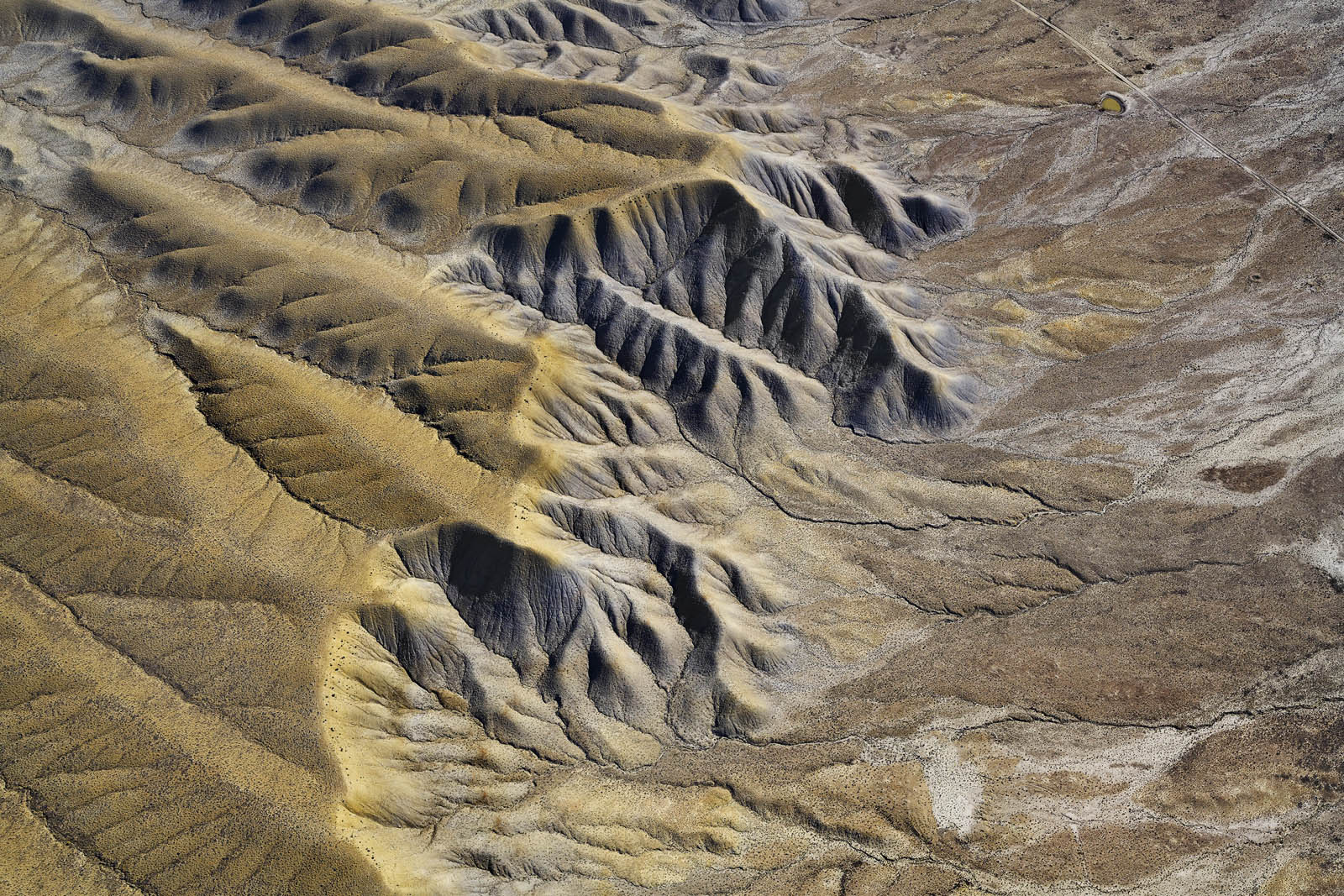
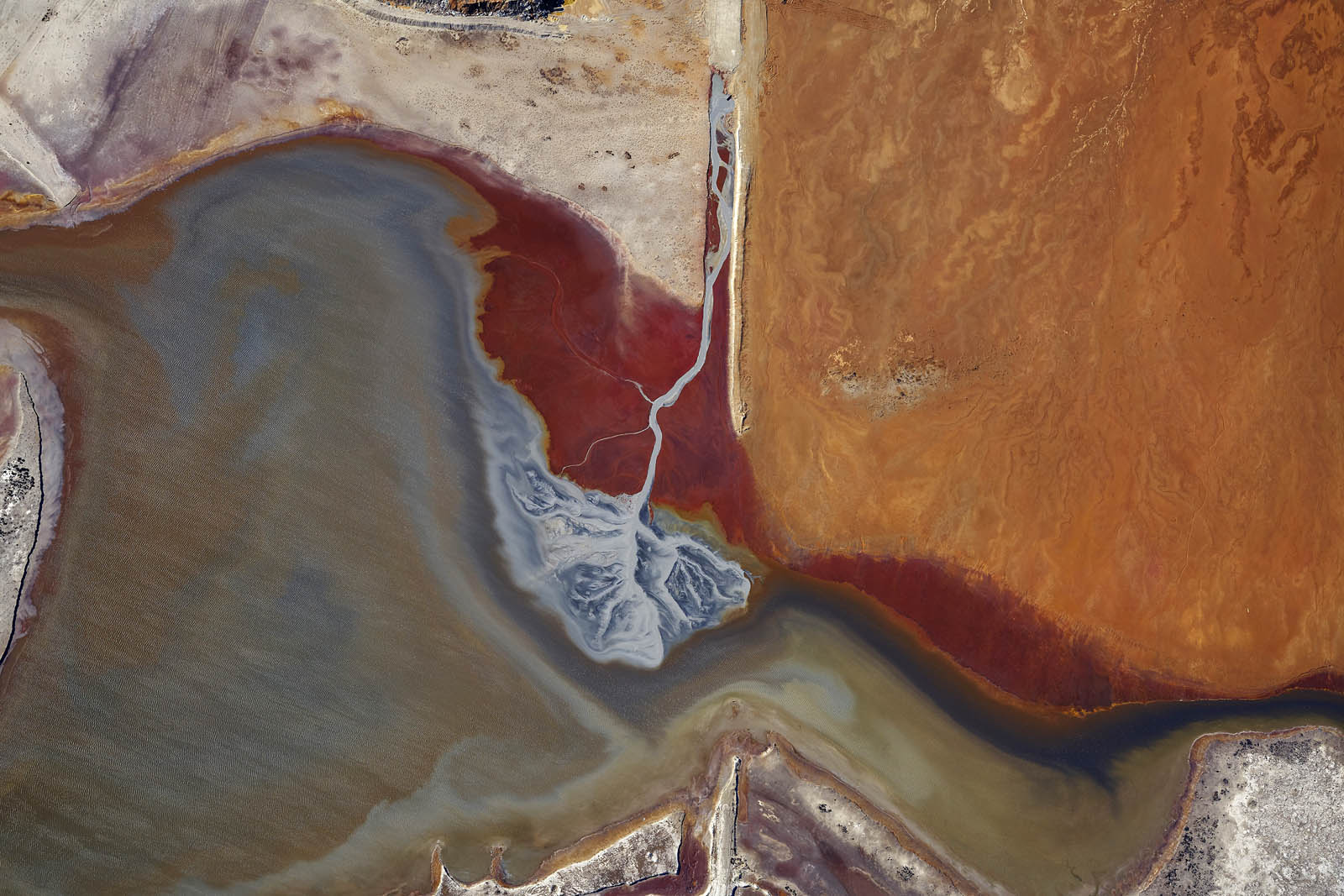
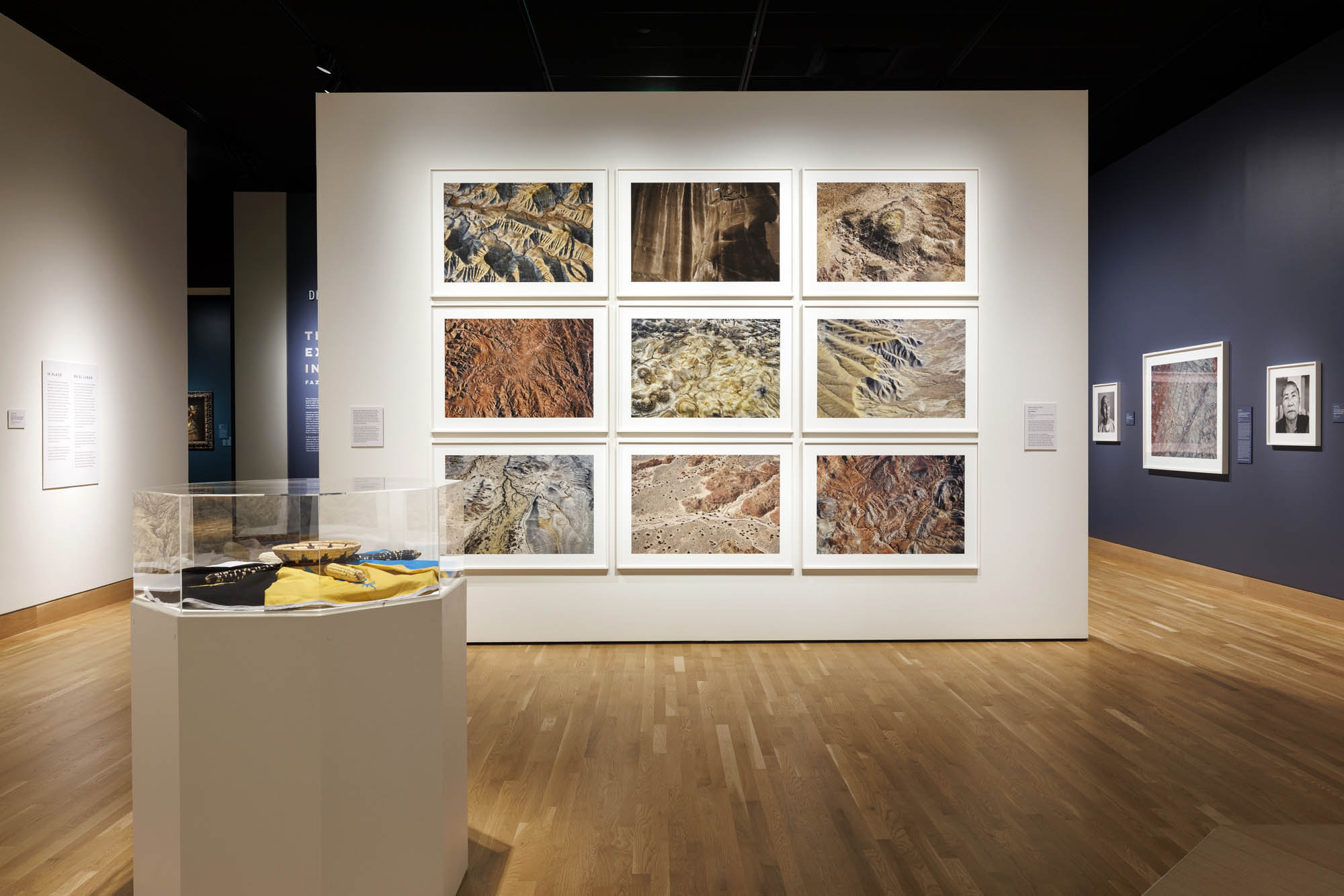
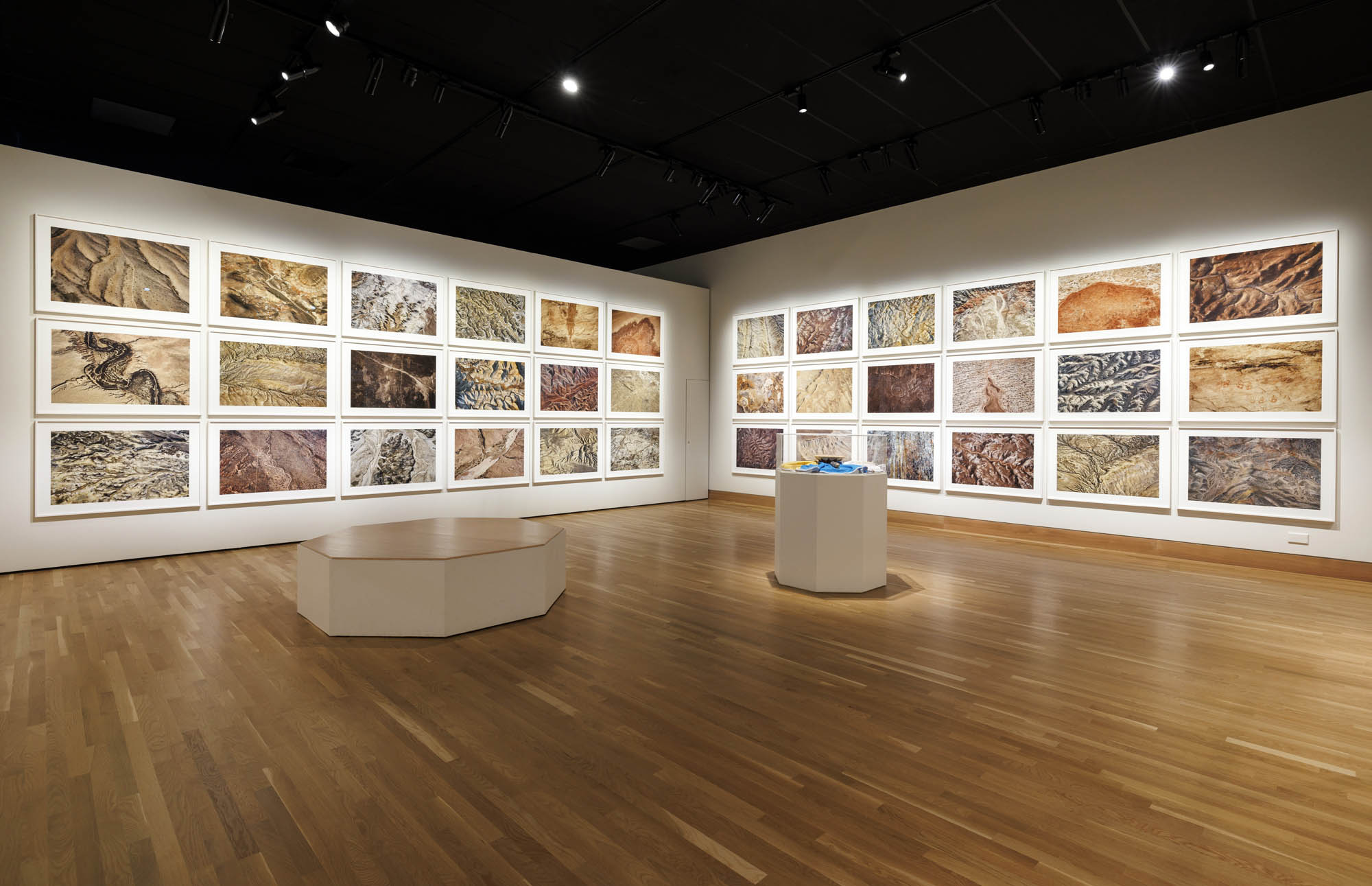
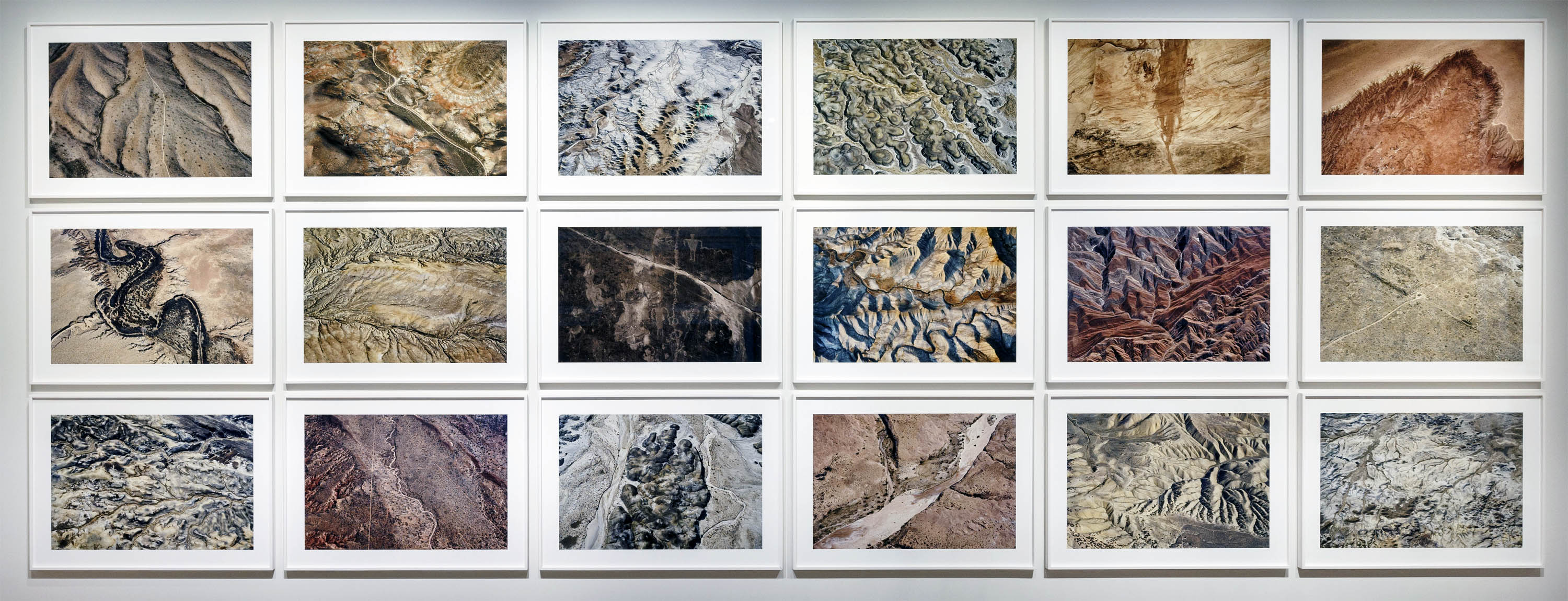
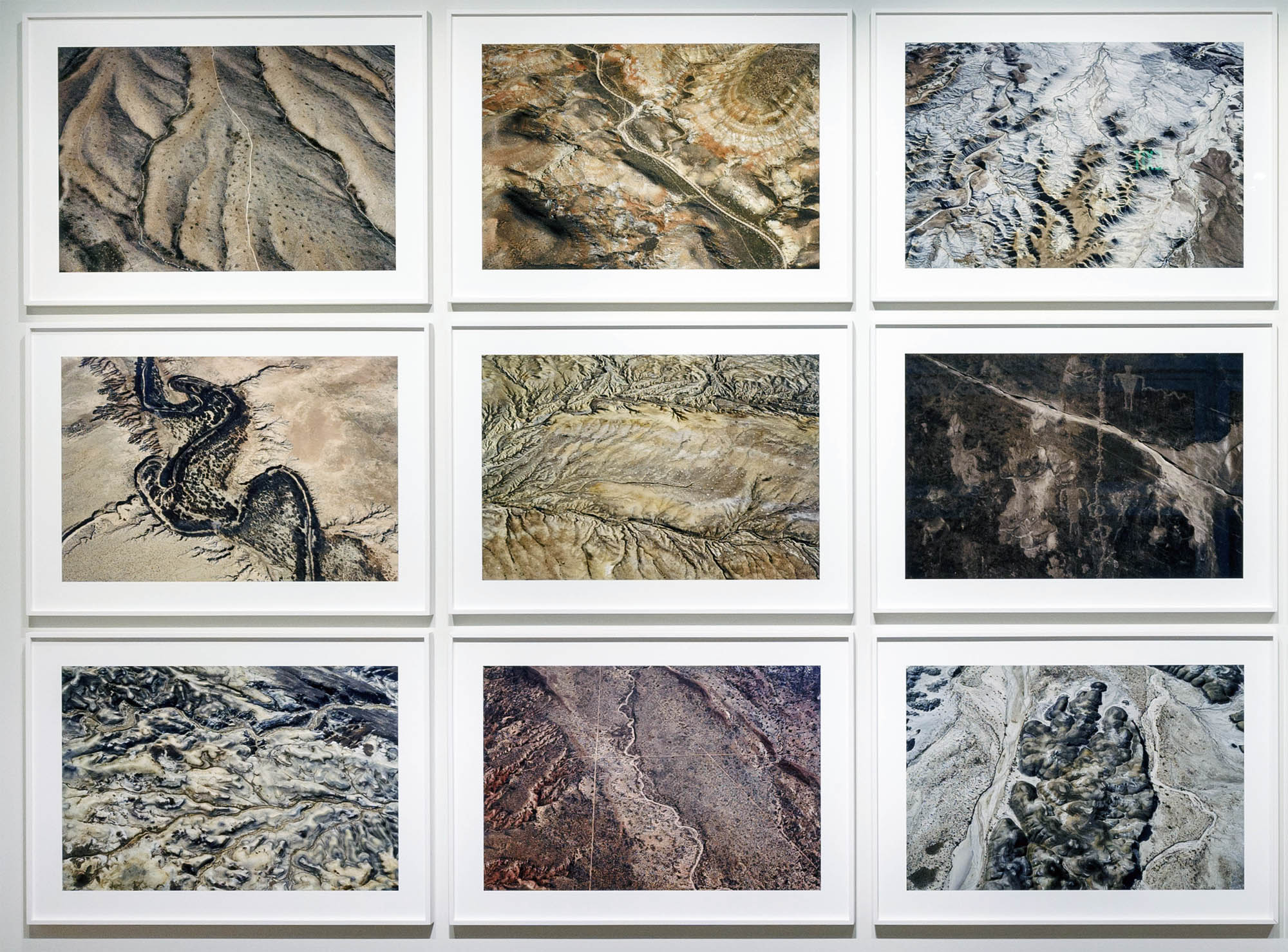
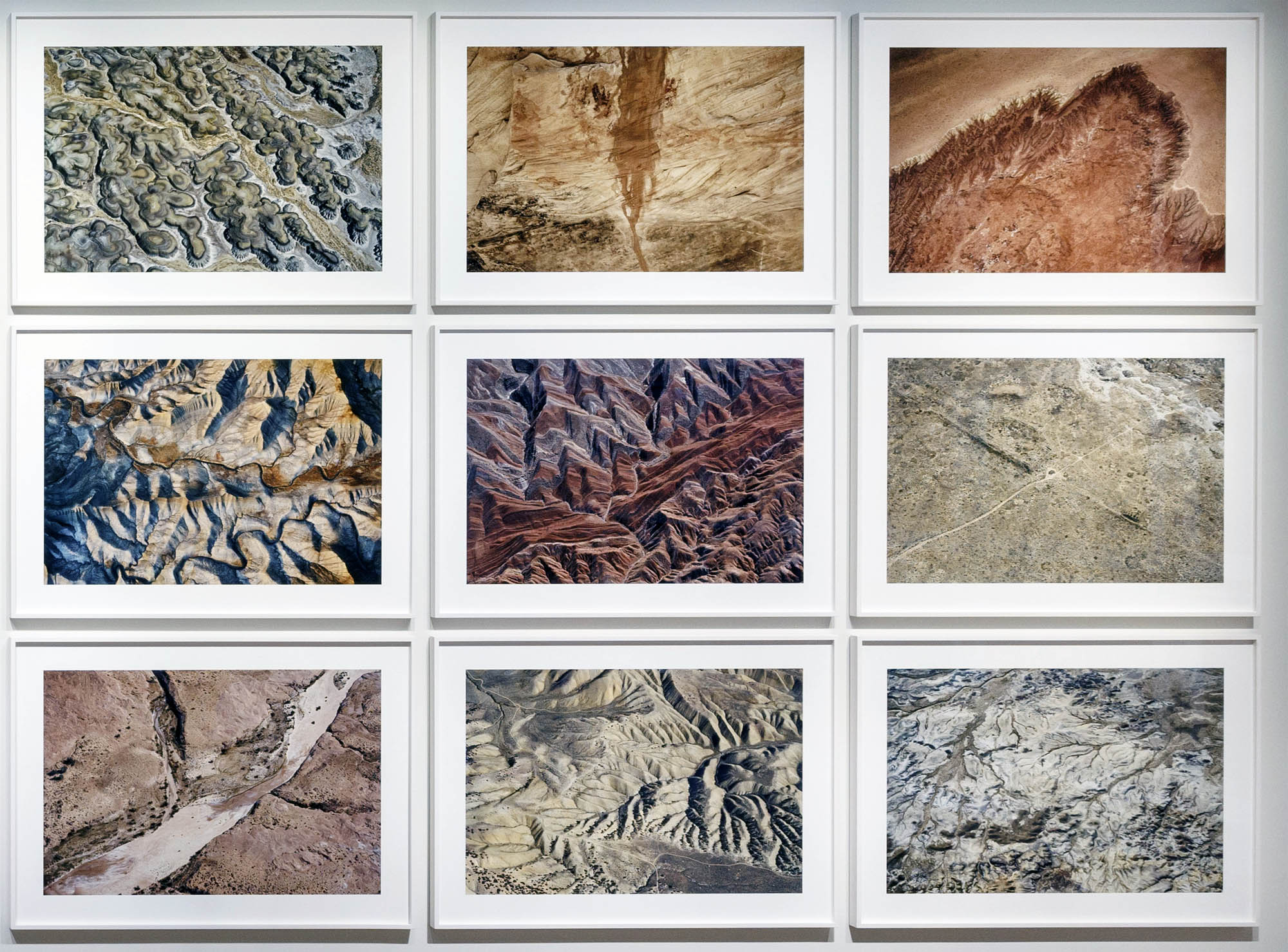
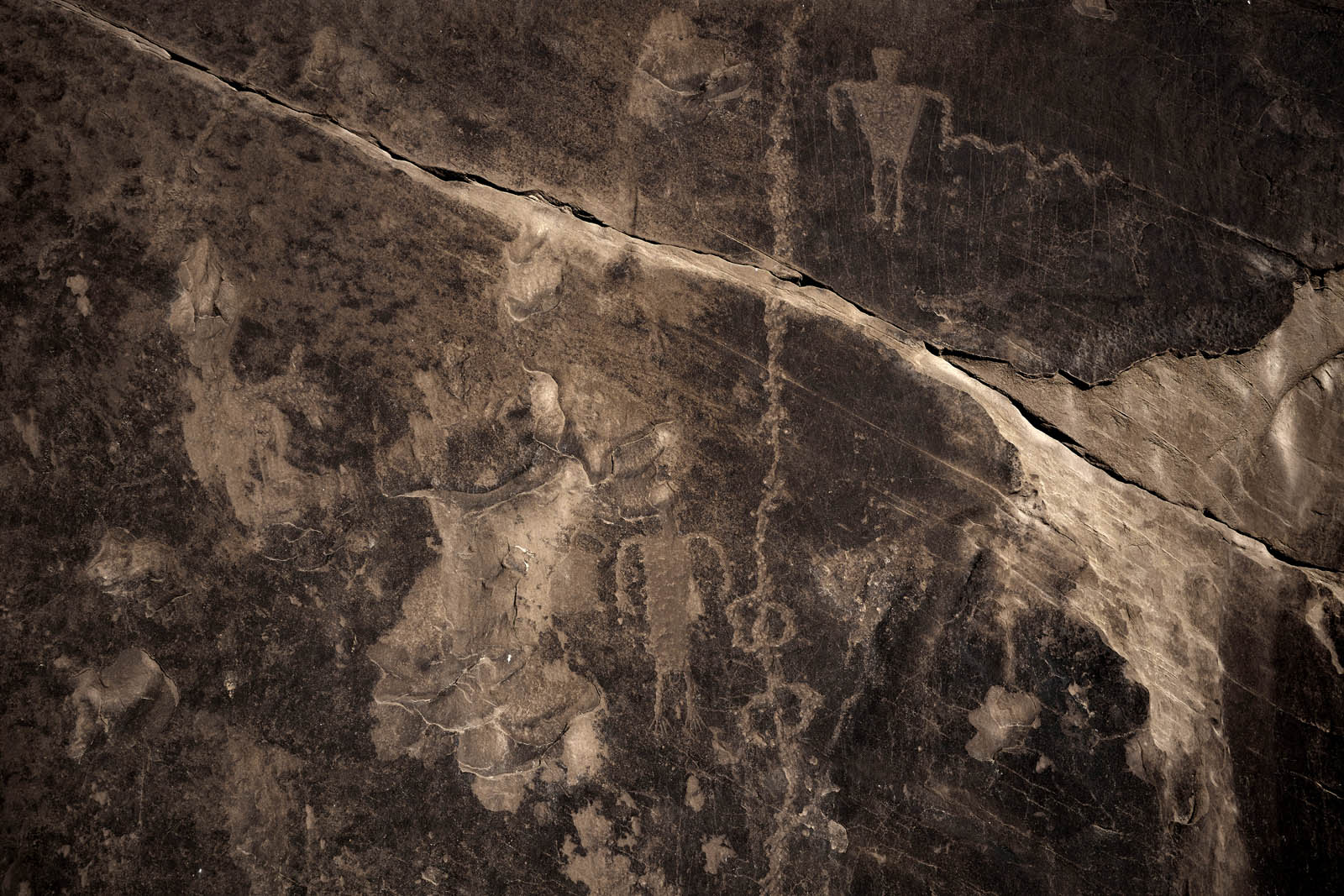
Fazal Sheikh (American, b. 1965) From the installation 'In Place (Utah, Arizona, and New Mexico, Four Corners Region)' 2017-2020


Fazal Sheikh (American, b. 1965)
From the installation In Place (Utah, Arizona, and New Mexico, Four Corners Region)
2017-2020
Pigmented inkjet print
© and courtesy Fazal Sheikh


There are some stunning photographs in this exhibition but their “formula” is well known – aerial photographs of the blighted landscape etched by both geological and human forces (a la Edward Burtynsky, Richard Woldendorp et al) paired with objective, frontal “dead pan” portrait photographs (a la Thomas Ruff, Rineke Dijkstra et al), both forms of topographical mapping (of the land and of the face… as is the regulated presentation) – images which attempt to interrogate “the impact of uranium, coal, oil, and natural-gas extraction on the American Southwest and its Indigenous inhabitants.”

This is strong work but it begs the question: what fresh insight are these photographs giving us into the object of the photographers attention, other than the specifics of “American Southwest” and “Indigenous inhabitants” which turn out to be conceptually and visually generic? Is it necessary for everything to be new again or can work such as this stand in its own right and not just be an echo of what has come before. For the general public the work might seem fresh and new but for the informed observer this is well trodden, indeed trampled ground.

The press release states that “The project reflects on the resilience of Indigenous people in the face of threats to the culture, spirituality, and health.” I don’t feel that with these photographs. Where is the art that expresses through a partnership with the photographer the eloquent, unique voice of the Indigenous inhabitants of this ancestral landscape, its spirit and its fire?

As with any art please make up your own mind.

Dr Marcus Bunyan


Many thankx to the Denver Art Museum for allowing me to publish the photographs in the posting. Please click on the photographs for a larger version of the image.


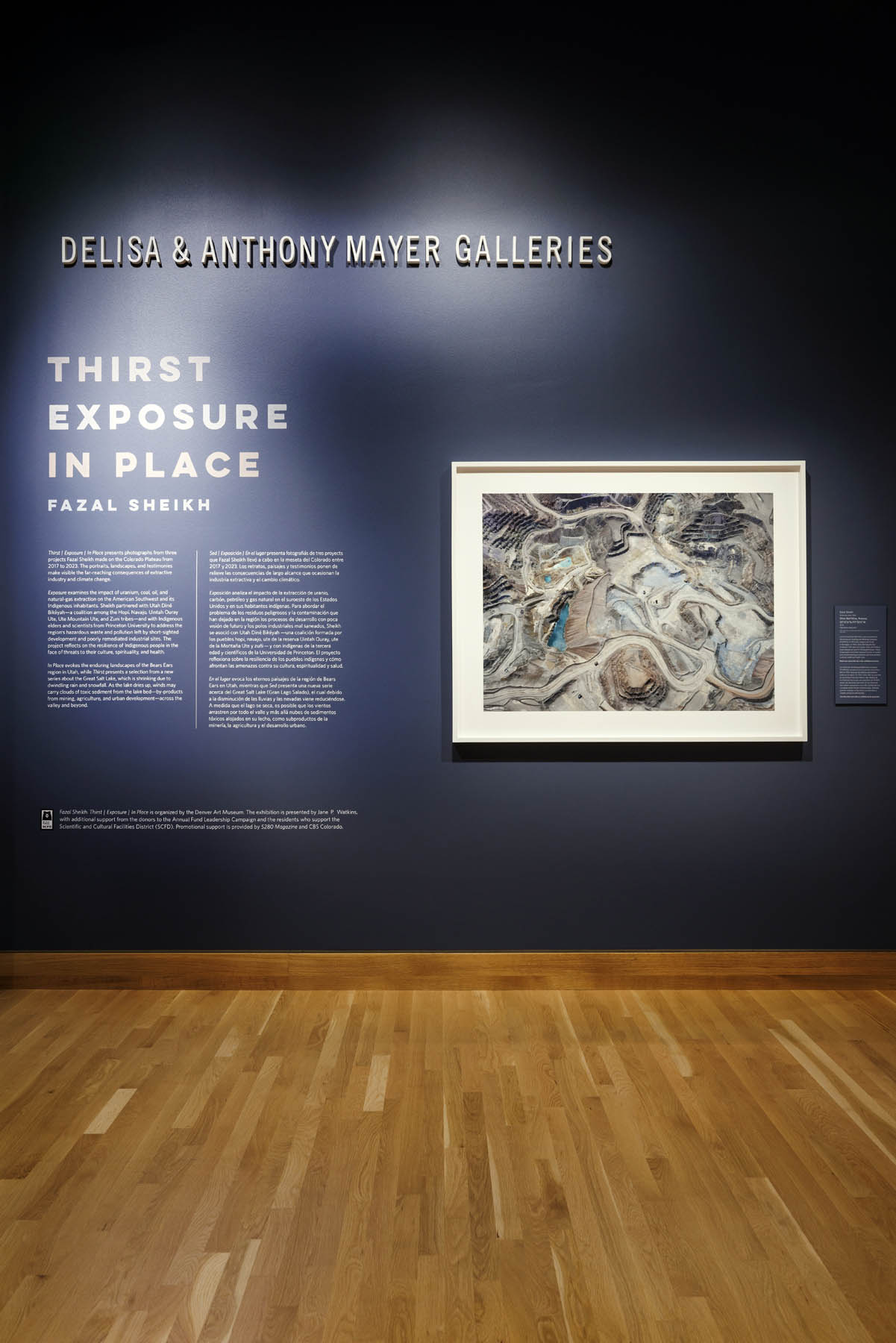
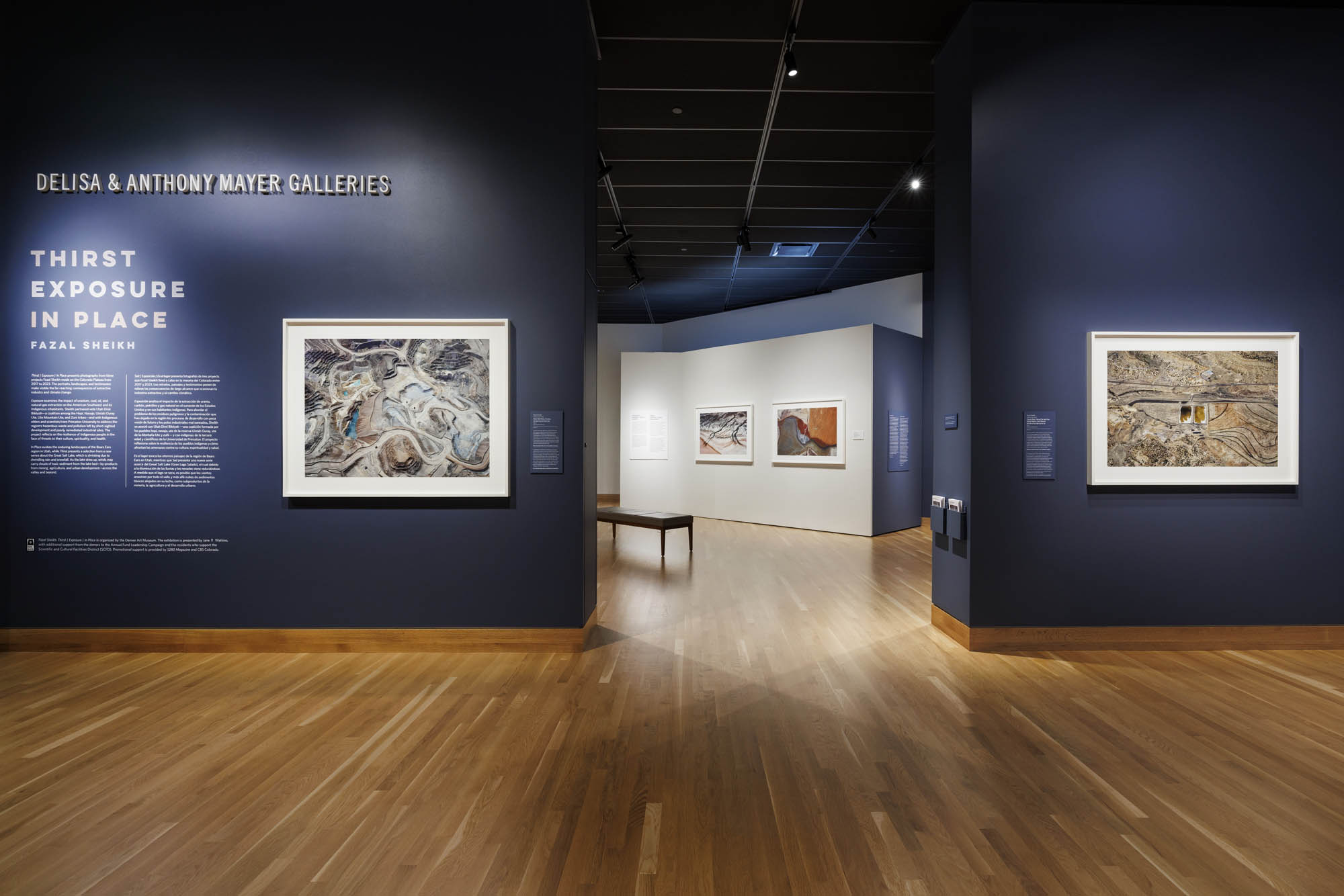
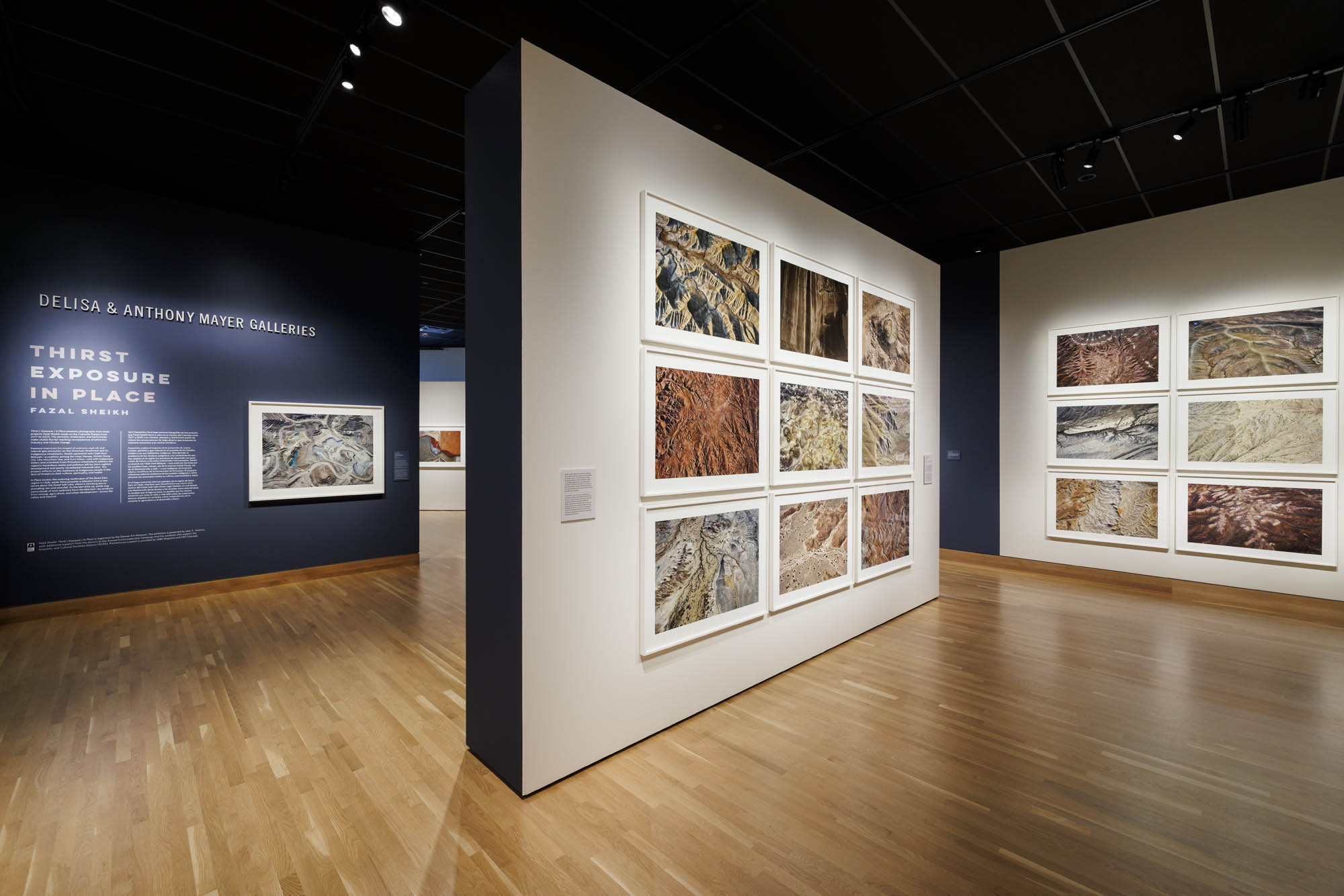
Installation view of the exhibition 'Fazal Sheikh: Thirst | Exposure | In Place' at the Denver Art Museum showing the opening wall text

Installation view of the exhibition 'Fazal Sheikh: Thirst | Exposure | In Place' at the Denver Art Museum showing the opening wall text


Installation views of the exhibition Fazal Sheikh: Thirst | Exposure | In Place at the Denver Art Museum showing the opening wall text (below)


Thirst | Exposure | In Place presents photographs from three projects Fazal Sheikh made on the Colorado Plateau from 2017 to 2023. The portraits, landscapes, and testimonies make visible the far-reaching consequences of extractive industry and climate change.

Exposure examines the impact of uranium, coal, oil, and natural-gas extraction on the American Southwest and its Indigenous inhabitants. Sheikh partnered with Utah Dine Bikeyah – a coalition among the Hopi, Navajo, Uintah Ouray Ute, Ute Mountain Ute, and Zuni tribes – and with Indigenous elders and scientists form Princeton University to address the region’s hazardous waste and pollution left by short-sighted development and poorly remediated industrial sites. The project reflects on the resilience of Indigenous people in the face of threats to the culture, spirituality, and health.

In place evokes the enduring landscape of the Bears Ears region in Utah, while Thirst presents a selection from a new series about the Great Salt Lake, which is shrinking due to dwindling rain and snowfall. As the lake dries up, winds may carry clouds of toxic sediment from the lake bed – by-products from mining, agriculture, and urban development – across the valley and beyond.

Opening wall text from the exhibition


Denver Art Museum Talk with Fazal Sheikh March 9, 2024

Photographer Fazal Sheikh speaks about his recent work in the Four Corners region and at the Great Salt Lake, in connection with his exhibition Fazal Sheikh: Thirst | Exposure | In Place. His photographs address the consequences of industrial land use, engage questions about water use and climate change, and reflect on the ongoing relationship between people and nature. Sheikh discusses the origin of each series, his immersion in the landscapes and communities he photographed, and his collaborations with writers, scientists, and Indigenous community members that are woven throughout this work.


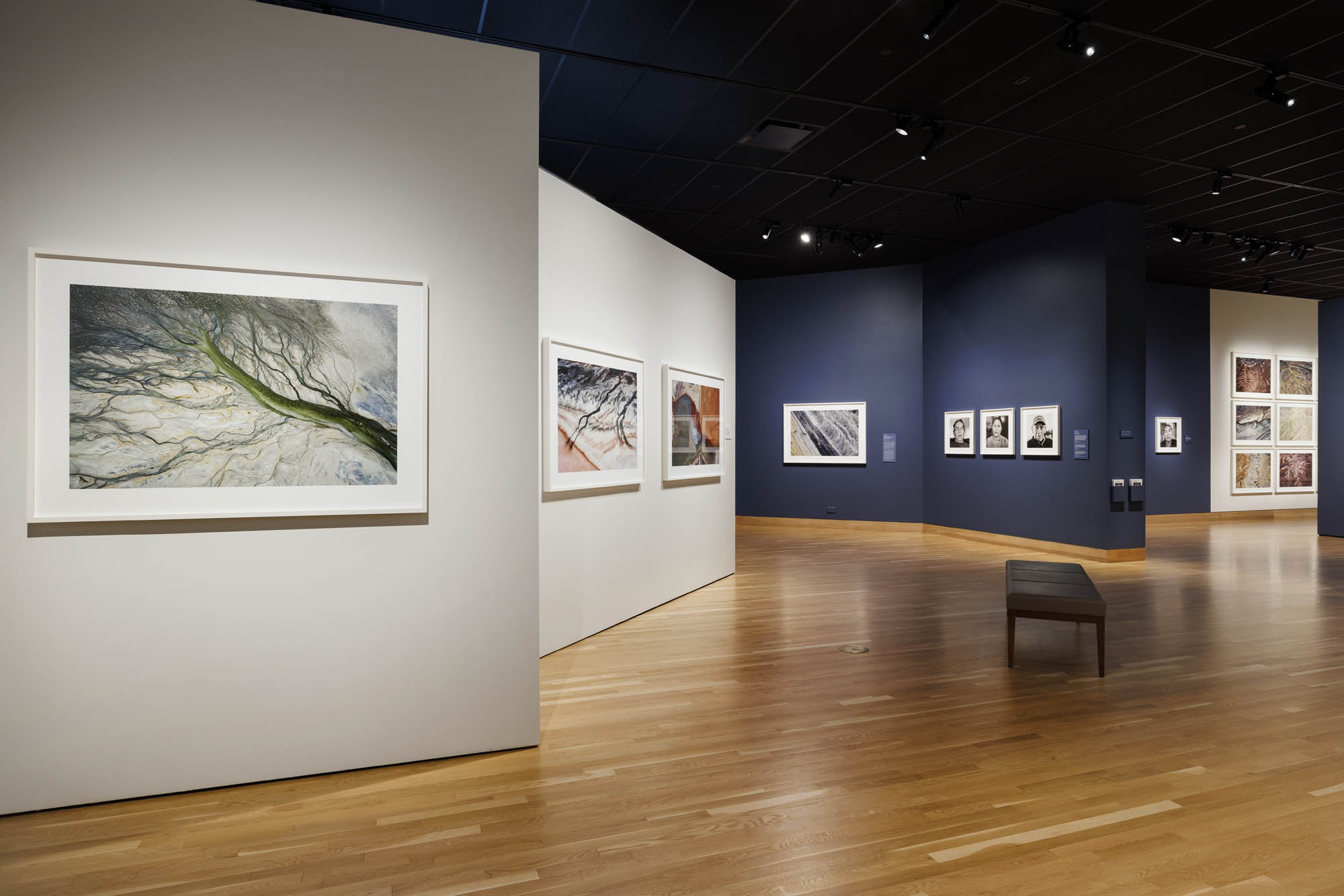
Installation view of the exhibition 'Fazal Sheikh: Thirst | Exposure | In Place' at the Denver Art Museum showing work from the series 'Thirst: Great Salt Lake' 2022

Installation view of the exhibition 'Fazal Sheikh: Thirst | Exposure | In Place' at the Denver Art Museum showing work from the series 'Thirst: Great Salt Lake' 2022

Installation view of the exhibition 'Fazal Sheikh: Thirst | Exposure | In Place' at the Denver Art Museum showing work from the series 'Thirst: Great Salt Lake' 2022

Installation view of the exhibition 'Fazal Sheikh: Thirst | Exposure | In Place' at the Denver Art Museum showing work from the series 'Thirst: Great Salt Lake' 2022


Installation view of the exhibition Fazal Sheikh: Thirst | Exposure | In Place at the Denver Art Museum showing work from the series Thirst: Great Salt Lake 2022


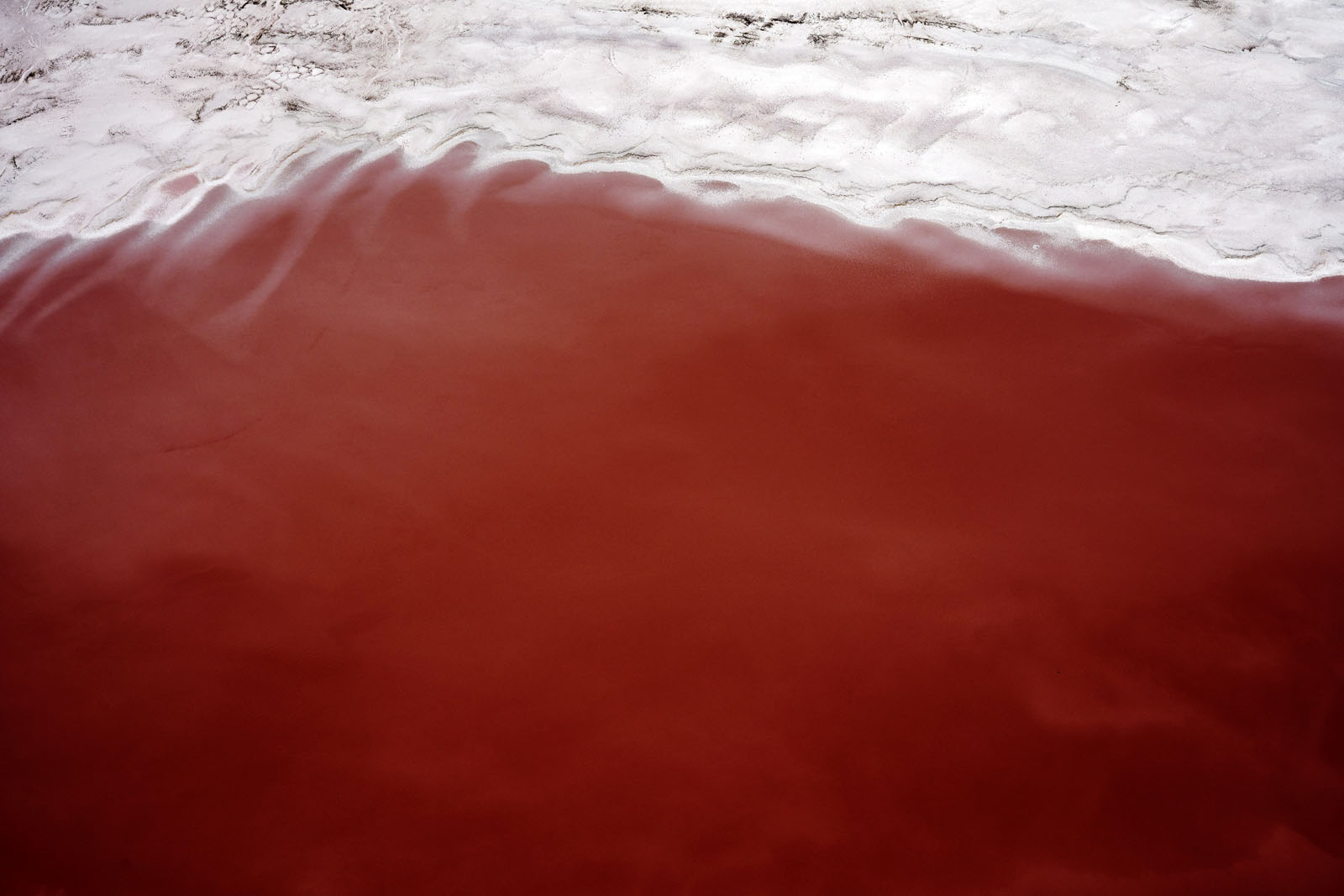
Fazal Sheikh (American, b. 1965) From the series 'Thirst: Great Salt Lake' November 2022


Fazal Sheikh (American, b. 1965)
From the series Thirst: Great Salt Lake
November 2022
Pigmented inkjet print
© and courtesy Fazal Sheikh


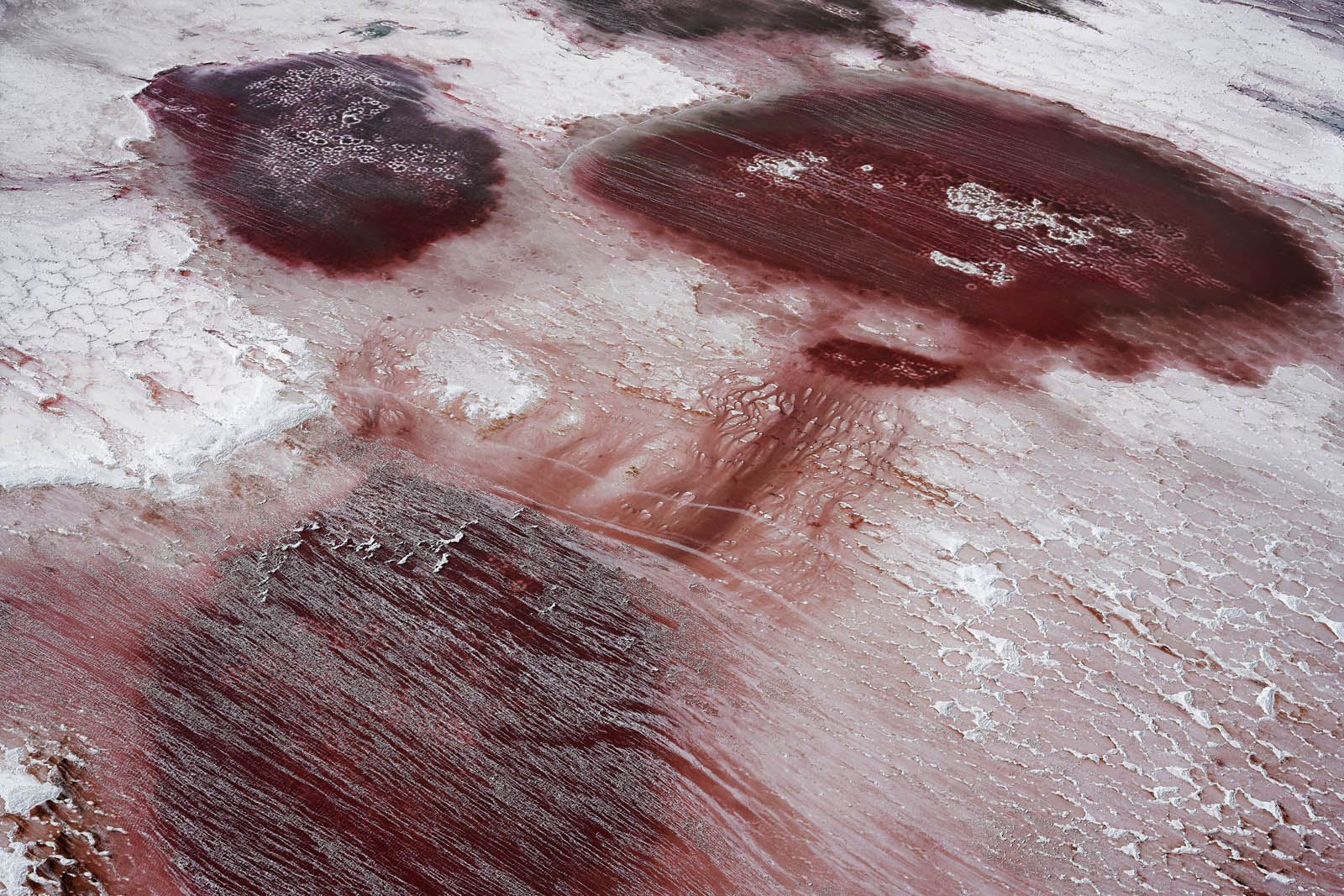
Fazal Sheikh (American, b. 1965) From the series 'Thirst: Great Salt Lake' November 2022


Fazal Sheikh (American, b. 1965)
From the series Thirst: Great Salt Lake
November 2022
Pigmented inkjet print
© and courtesy Fazal Sheikh


Fazal Sheikh (American, b. 1965) From the series 'Thirst: Great Salt Lake' November 2022


Fazal Sheikh (American, b. 1965)
From the series Thirst: Great Salt Lake
November 2022
Pigmented inkjet print
© and courtesy Fazal Sheikh


Fazal Sheikh (American, b. 1965) From the series 'Thirst: Great Salt Lake' November 2022November 2022


Fazal Sheikh (American, b. 1965)
From the series Thirst: Great Salt Lake
November 2022
Pigmented inkjet print
© and courtesy Fazal Sheikh


Fazal Sheikh: Thirst | Exposure | In Place is an exhibition created from three projects photographer Fazal Sheikh made on the Colorado Plateau from 2017 to early 2023. Sheikh’s portraits and landscapes shed light on the far-reaching consequences of extractive industry and climate change.

Born in 1965 in New York City, Sheikh creates images of displaced communities and marginalised people that prompt awareness of the world beyond the museum. The photographs in Thirst ǀ Exposure ǀ In Place expose indelible marks on the Colorado Plateau and American Southwest landscape that have been etched by both geological and human forces. Through this beautiful and sometimes frightening new work, Sheikh encourages viewers to witness the consequences of the past and imagine the shape of the future.

The exhibition presents Sheikh’s recent work in three interrelated sections: Thirst is a new series of aerial photographs that document the decline of the Great Salt Lake in northeast Utah, which is shrinking due to overconsumption and dwindling rain and snowfall. Exposure examines the impacts of uranium, coal, oil and natural-gas extraction on the American Southwest and on its Indigenous inhabitants. In Place evokes the enduring landscapes of the Bears Ears region in Utah, bringing Sheikh’s photographs together with contributions from scientists and Indigenous communities in and around Bears Ears in southeastern Utah.

Visitors will reflect upon the transformation – and often devastation – of these landscapes in the context of the past, present and future, while considering the juxtaposition of beauty and catastrophe, as well as intimate, human-scale stories and those spanning vast geological eras and changes.

Text from the Denver Art Museum website


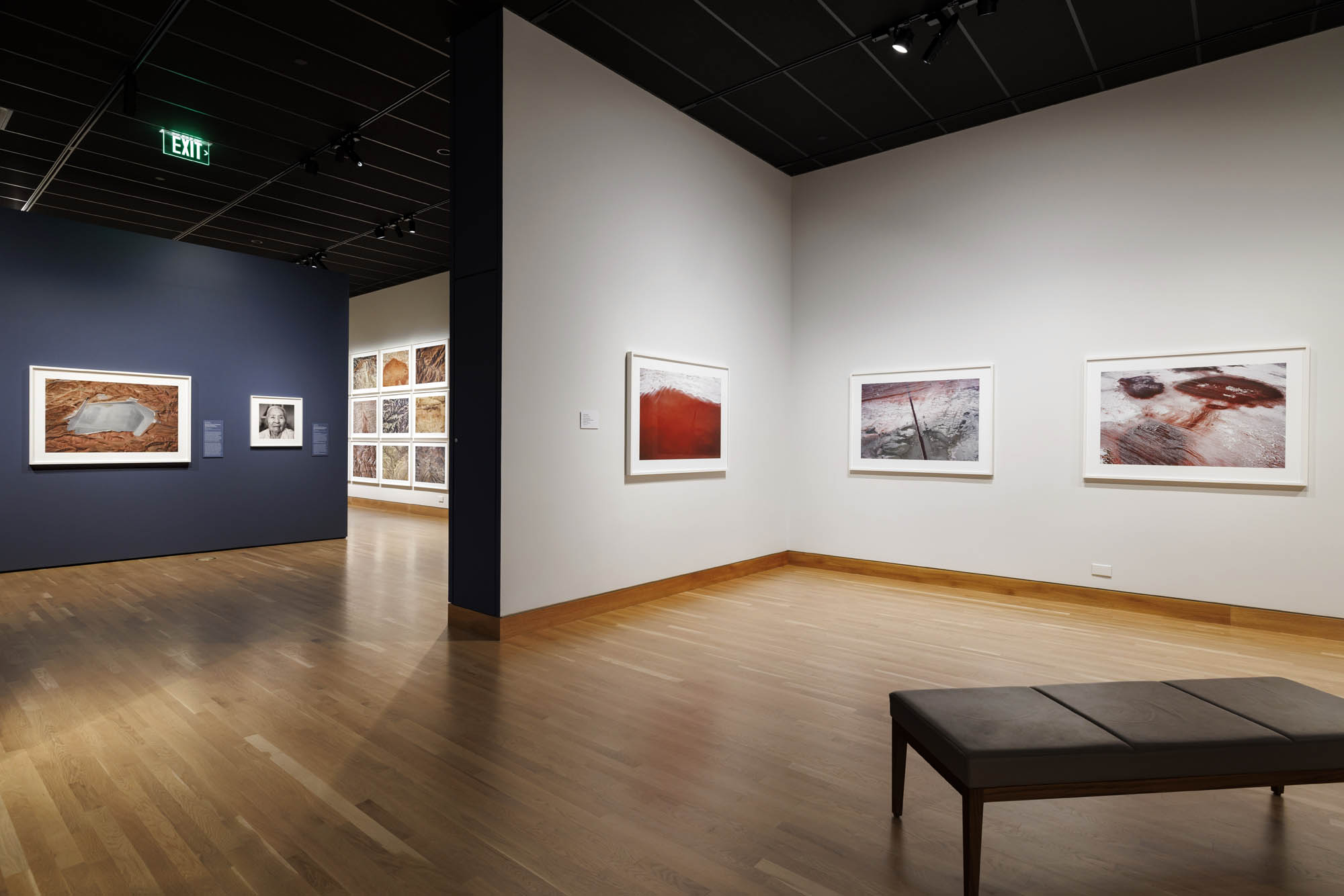
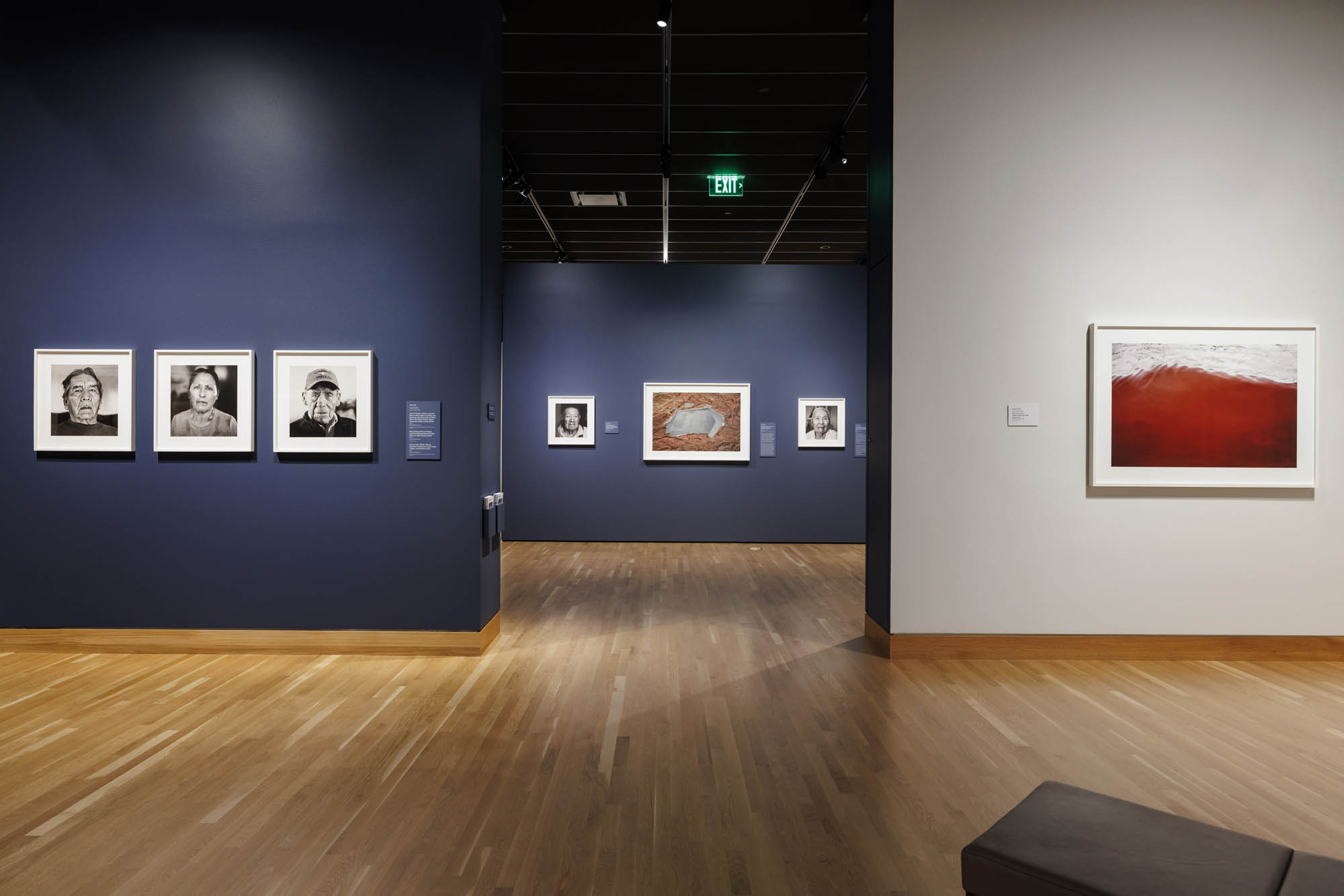
Installation view of the exhibition 'Fazal Sheikh: Thirst | Exposure | In Place' at the Denver Art Museum

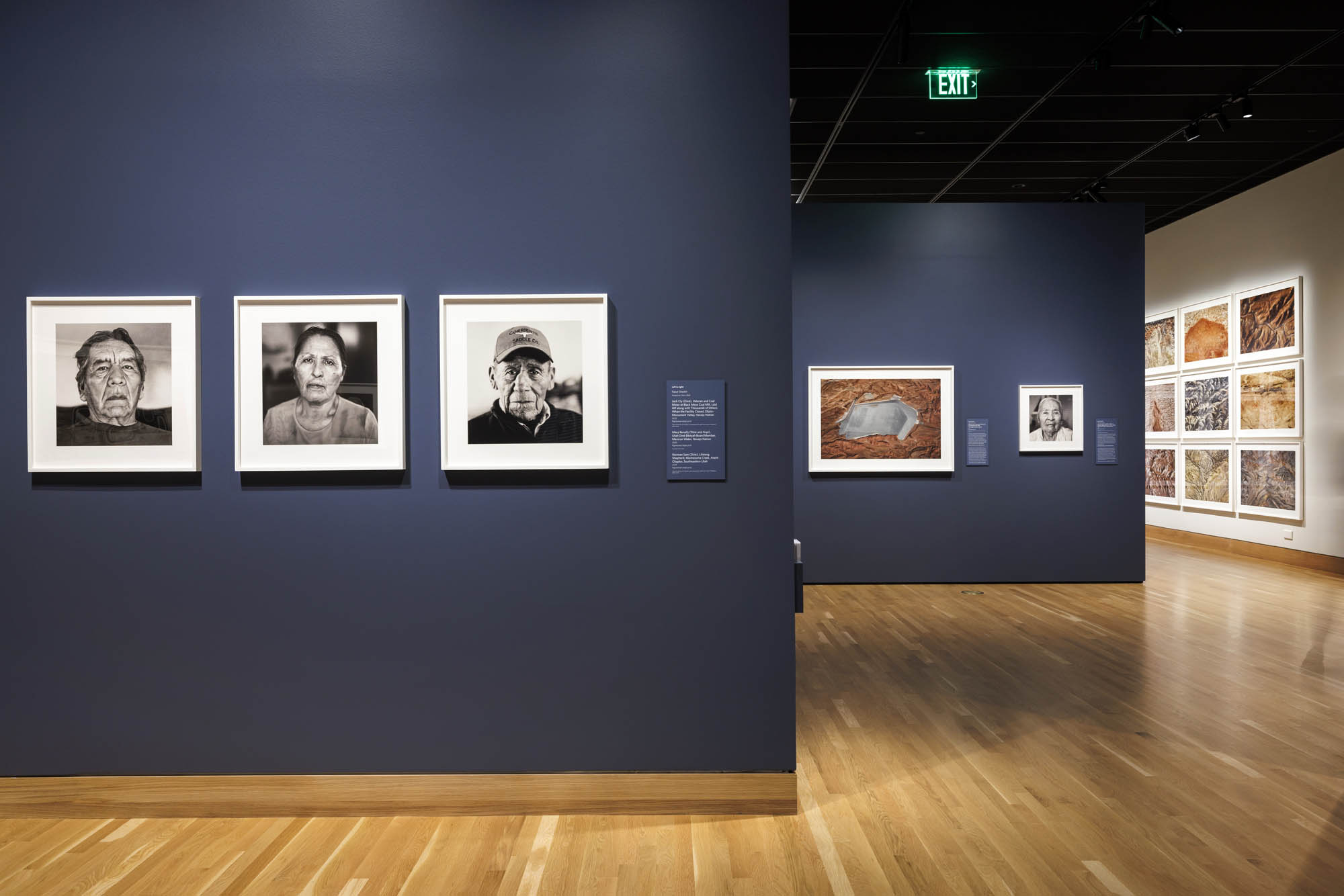
Installation view of the exhibition 'Fazal Sheikh: Thirst | Exposure | In Place' at the Denver Art Museum showing work from the series 'Exposure' 2019 

Installation view of the exhibition 'Fazal Sheikh: Thirst | Exposure | In Place' at the Denver Art Museum showing work from the series 'Exposure' 2019 

Installation view of the exhibition 'Fazal Sheikh: Thirst | Exposure | In Place' at the Denver Art Museum showing work from the series 'Exposure' 2019 


Installation view of the exhibition Fazal Sheikh: Thirst | Exposure | In Place at the Denver Art Museum showing work from the series Exposure 2019


Fazal Sheikh (American, b. 1965) 'Mexican Hat Uranium Mill Disposal Cell, Mexican Hat, Utah, 37°8'0.88"N/109°52'28"W' From the series 'Exposure' 2017


Fazal Sheikh (American, b. 1965)
Mexican Hat Uranium Mill Disposal Cell, Mexican Hat, Utah, 37°8’0.88″N/109°52’28″W
From the series Exposure 2017
Pigmented inkjet print
Yale University Art Gallery, purchased with a gift from Jane P. Watkins, M.P.H. 1979
Image courtesy and © Fazal Sheikh


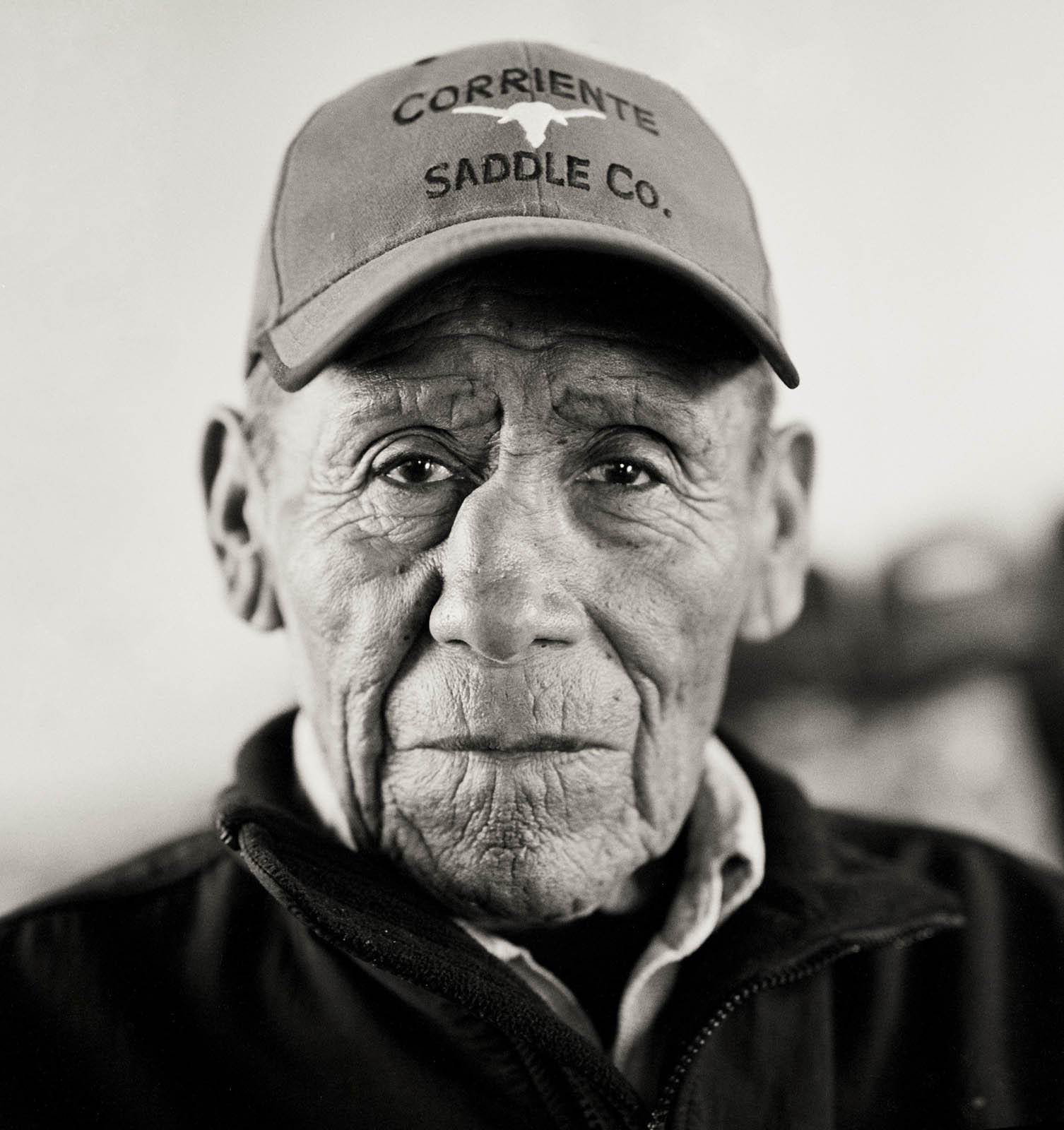
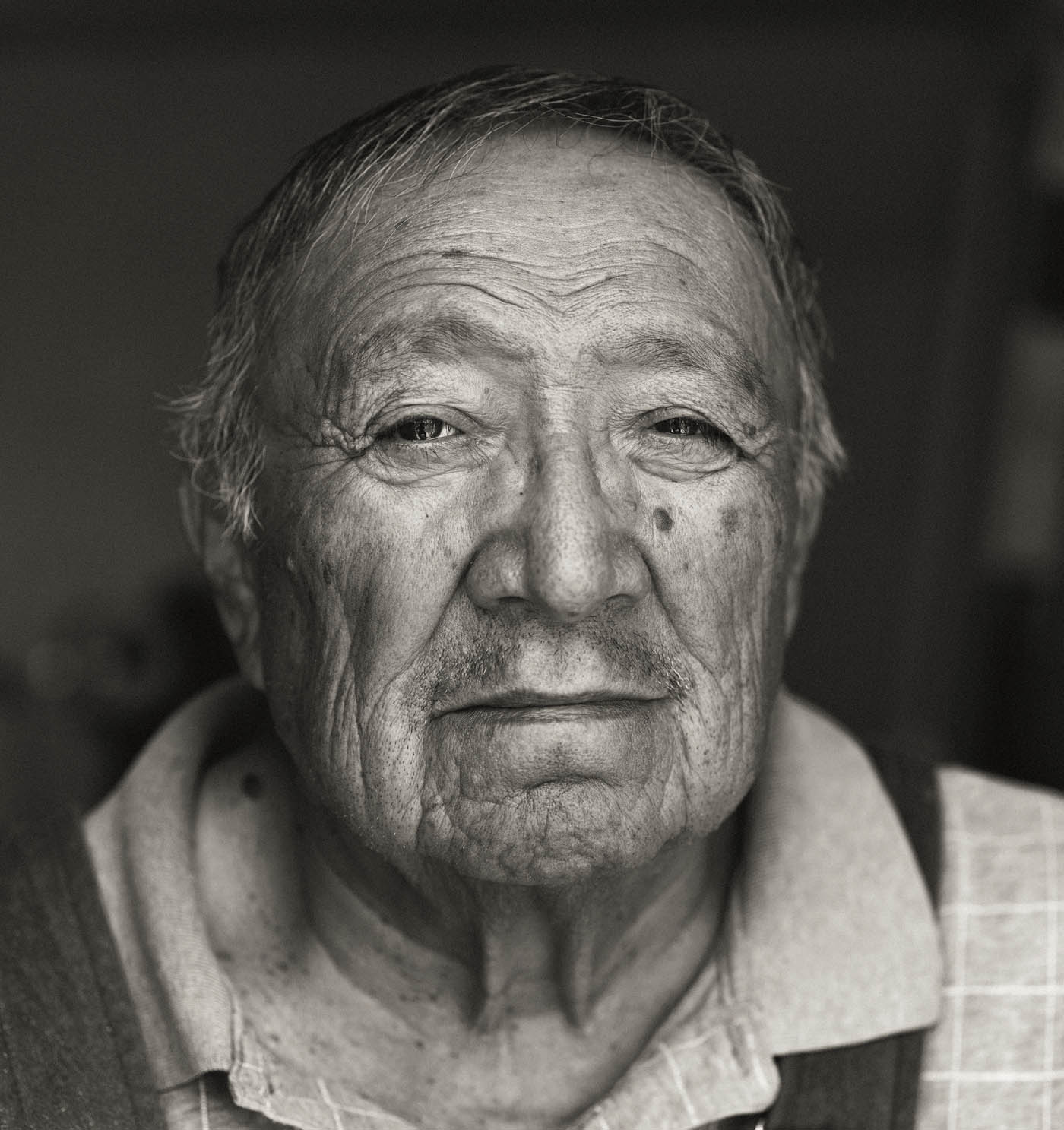
Fazal Sheikh (American, b. 1965) 'Norman Sam (Diné), Lifelong Shepherd, Montezuma Creek, Aneth Chapter, Southeastern Utah' From the series 'Exposure' 2019


Fazal Sheikh (American, b. 1965)
Norman Sam (Diné), Lifelong Shepherd, Montezuma Creek, Aneth Chapter, Southeastern Utah
From the series Exposure 2019
Pigmented inkjet print. Yale University Art Gallery, purchased with a gift from Jane P. Watkins, M.P.H. 1979
Image courtesy and © Fazal Sheikh


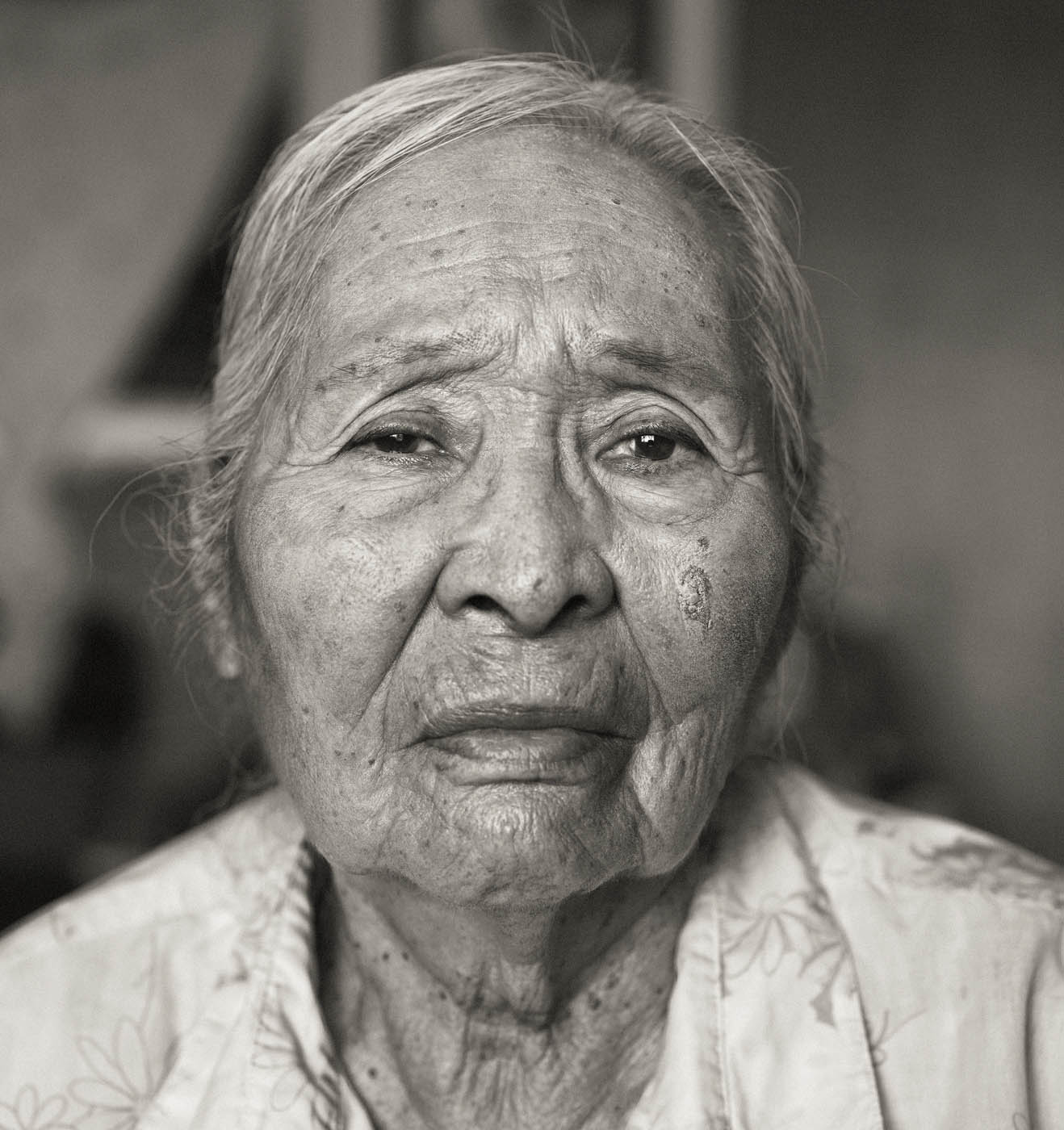
Fazal Sheikh (American, b. 1965) 'Lola Yellowman (Diné), Widow of Uranium Miner John Guy, Cane Valley–Monument Valley, Navajo Nation' From the series 'Exposure' 2019


Fazal Sheikh (American, b. 1965)
Lola Yellowman (Diné), Widow of Uranium Miner John Guy, Cane Valley–Monument Valley, Navajo Nation
From the series Exposure 2019
Pigmented inkjet print
Yale University Art Gallery, purchased with a gift from Jane P. Watkins, M.P.H. 1979
Image courtesy and © Fazal Sheikh


Lola Yellowman’s Testimony

“The medicine men told our men not to work in the mines, that it was dangerous, but the men needed to support their families and had no choice … My husband, John Guy, worked in the mines like my father. He would arrive home during his lunch break with his clothes caked in uranium dust, and I cleaned those clothes in our home every day. The children played on the tailings pile, but no one from the company ever told us the dangers they were being exposed to.”

Wall text from the exhibition


Fazal Sheikh (American, b. 1965) 'Chapita Wells Oil and Gas Field, Uintah Range, Utah, 40°4'10"N/109°27'26"W' From the series 'Exposure' 2017


Fazal Sheikh (American, b. 1965)
Chapita Wells Oil and Gas Field, Uintah Range, Utah, 40°4’10″N/109°27’26″W
From the series Exposure 2017
Pigmented inkjet print
Yale University Art Gallery, purchased with a gift from Jane P. Watkins, M.P.H. 1979
Image courtesy and © Fazal Sheikh


Fazal Sheikh (American, b. 1965) 'Jonah Yellowman (Diné), Spiritual Advisor to Utah Diné Bikéyah, Cane Valley – Monument Valley, Navajo Nation' From the series 'Exposure' 2022


Fazal Sheikh (American, b. 1965)
Jonah Yellowman (Diné), Spiritual Advisor to Utah Diné Bikéyah, Cane Valley – Monument Valley, Navajo Nation
From the series Exposure 2022
Pigmented inkjet print
Image courtesy and © Fazal Sheikh


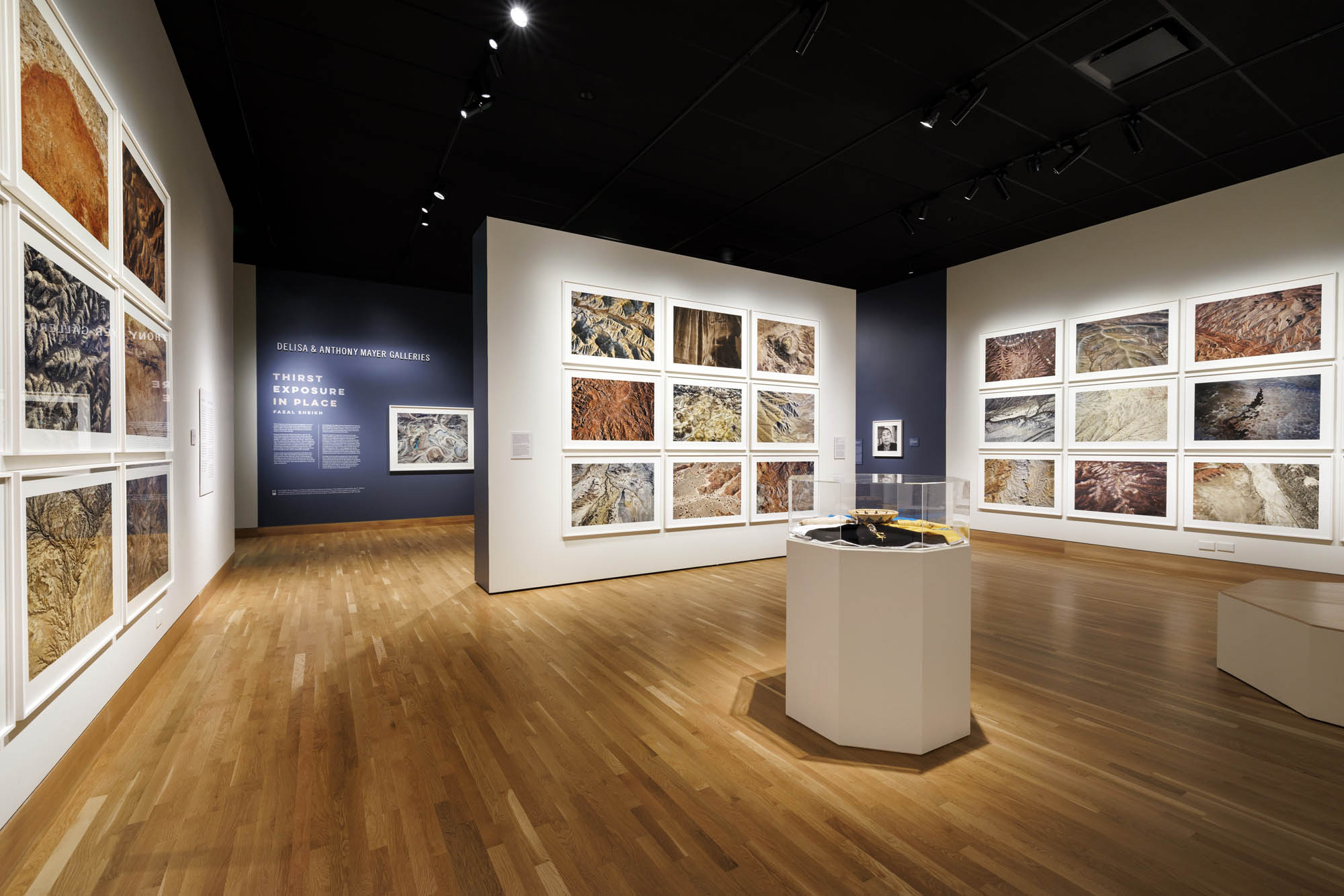
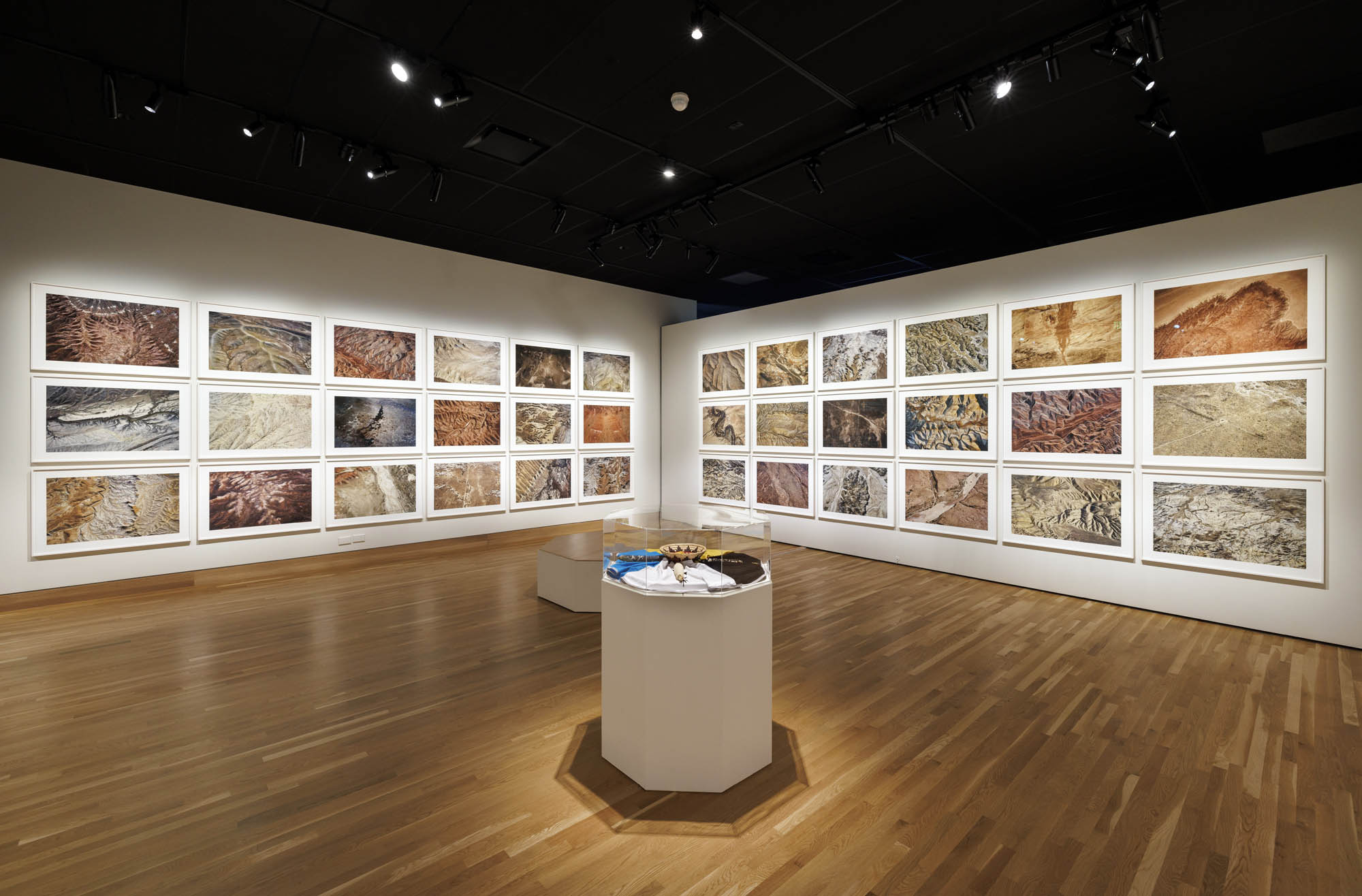
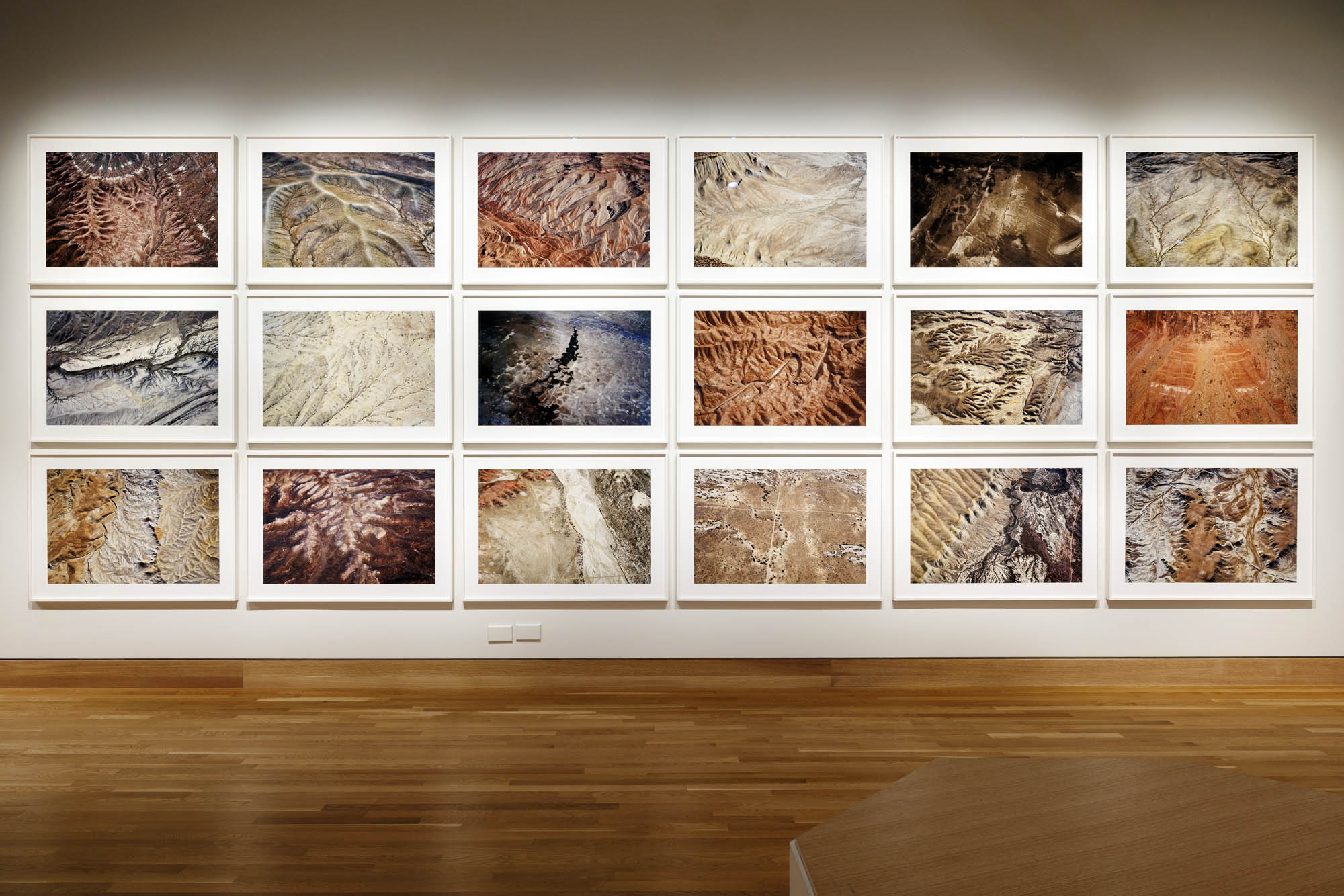
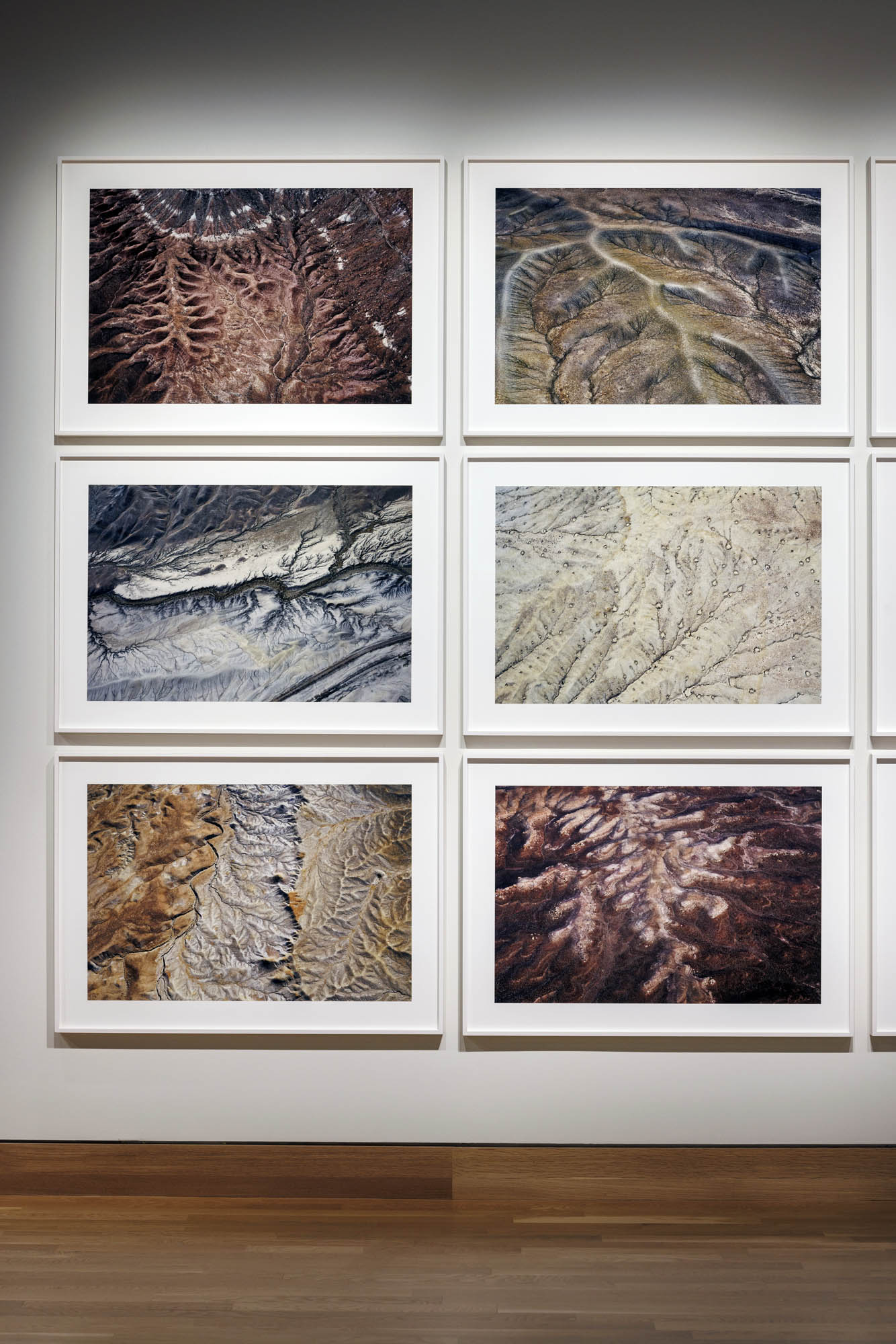
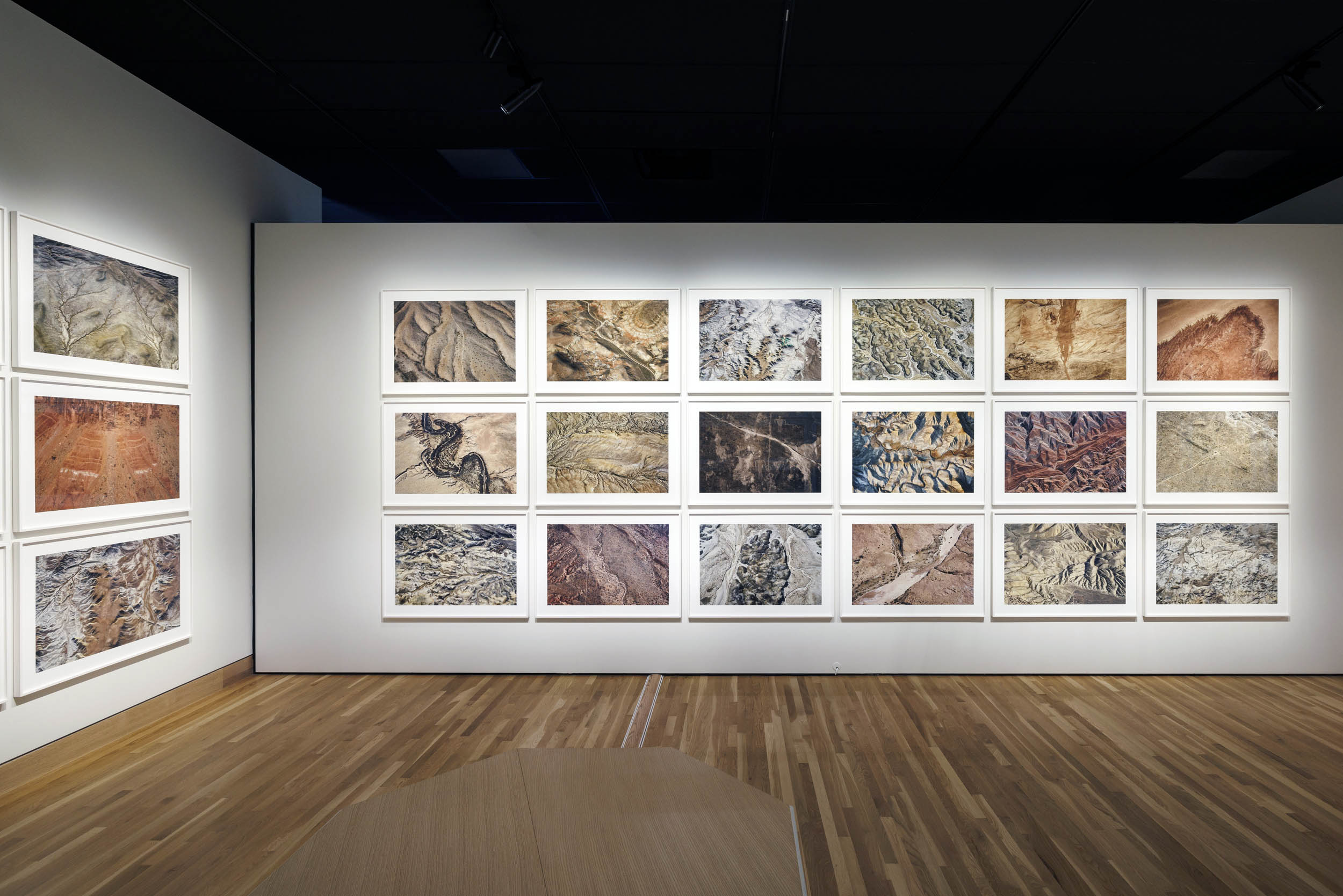
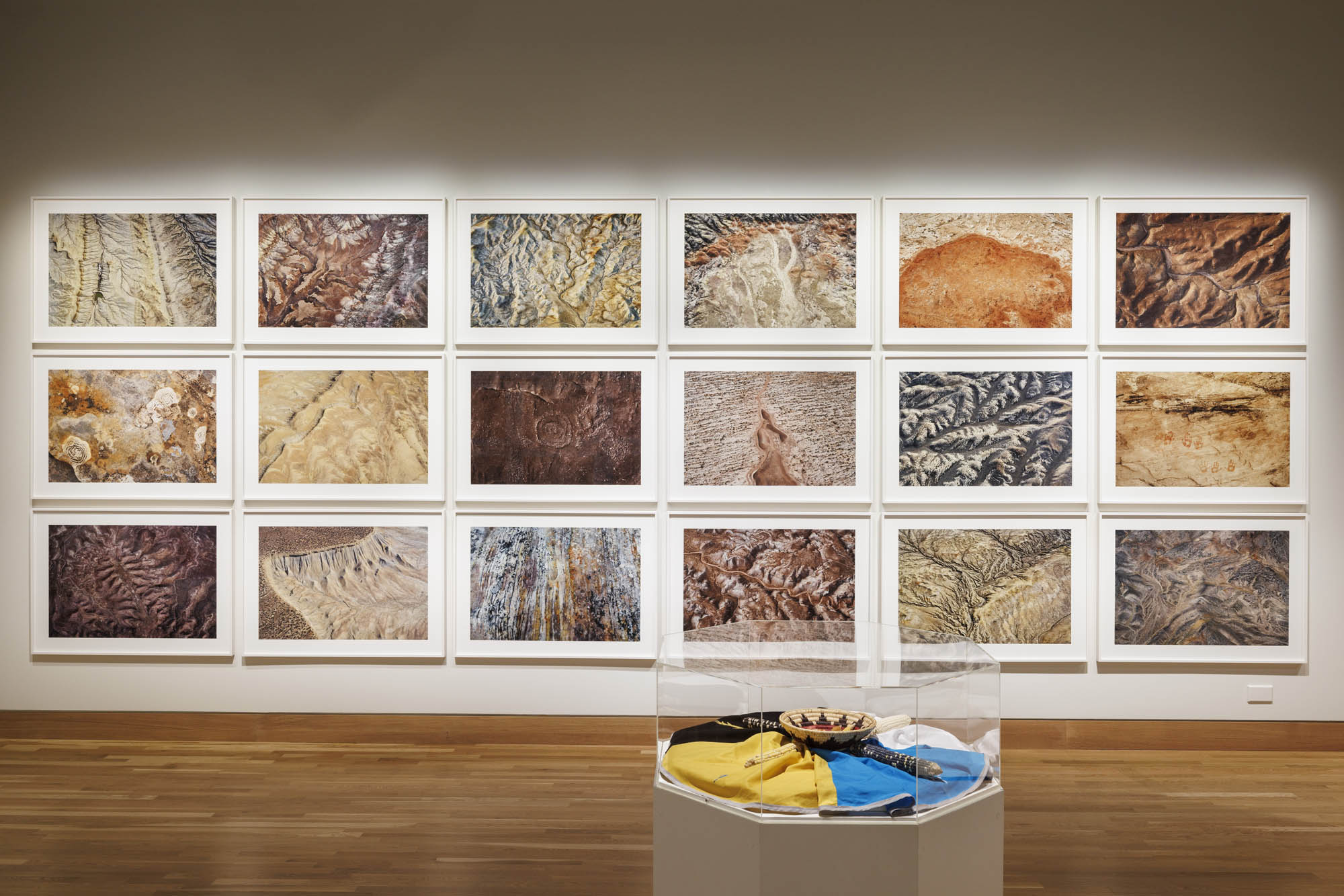
Installation view of the exhibition 'Fazal Sheikh: Thirst | Exposure | In Place' at the Denver Art Museum showing work from the series 'In Place (Utah, Arizona, and New Mexico, Four Corners Region)' 2017-2020

Installation view of the exhibition 'Fazal Sheikh: Thirst | Exposure | In Place' at the Denver Art Museum showing work from the series 'In Place (Utah, Arizona, and New Mexico, Four Corners Region)' 2017-2020

Installation view of the exhibition 'Fazal Sheikh: Thirst | Exposure | In Place' at the Denver Art Museum showing work from the series 'In Place (Utah, Arizona, and New Mexico, Four Corners Region)' 2017-2020

Installation view of the exhibition 'Fazal Sheikh: Thirst | Exposure | In Place' at the Denver Art Museum showing work from the series 'In Place (Utah, Arizona, and New Mexico, Four Corners Region)' 2017-2020

Installation view of the exhibition 'Fazal Sheikh: Thirst | Exposure | In Place' at the Denver Art Museum showing work from the series 'In Place (Utah, Arizona, and New Mexico, Four Corners Region)' 2017-2020

Installation view of the exhibition 'Fazal Sheikh: Thirst | Exposure | In Place' at the Denver Art Museum showing work from the series 'In Place (Utah, Arizona, and New Mexico, Four Corners Region)' 2017-2020

Installation view of the exhibition 'Fazal Sheikh: Thirst | Exposure | In Place' at the Denver Art Museum showing work from the series 'In Place (Utah, Arizona, and New Mexico, Four Corners Region)' 2017-2020

Installation view of the exhibition 'Fazal Sheikh: Thirst | Exposure | In Place' at the Denver Art Museum showing work from the series 'In Place (Utah, Arizona, and New Mexico, Four Corners Region)' 2017-2020

Installation view of the exhibition 'Fazal Sheikh: Thirst | Exposure | In Place' at the Denver Art Museum showing work from the series 'In Place (Utah, Arizona, and New Mexico, Four Corners Region)' 2017-2020

Installation view of the exhibition 'Fazal Sheikh: Thirst | Exposure | In Place' at the Denver Art Museum showing work from the series 'In Place (Utah, Arizona, and New Mexico, Four Corners Region)' 2017-2020

Installation view of the exhibition 'Fazal Sheikh: Thirst | Exposure | In Place' at the Denver Art Museum showing work from the series 'In Place (Utah, Arizona, and New Mexico, Four Corners Region)' 2017-2020Installation view of the exhibition 'Fazal Sheikh: Thirst | Exposure | In Place' at the Denver Art Museum showing work from the series 'In Place (Utah, Arizona, and New Mexico, Four Corners Region)' 2017-2020

Installation view of the exhibition 'Fazal Sheikh: Thirst | Exposure | In Place' at the Denver Art Museum showing work from the series 'In Place (Utah, Arizona, and New Mexico, Four Corners Region)' 2017-2020

Installation view of the exhibition 'Fazal Sheikh: Thirst | Exposure | In Place' at the Denver Art Museum showing work from the series 'In Place (Utah, Arizona, and New Mexico, Four Corners Region)' 2017-2020


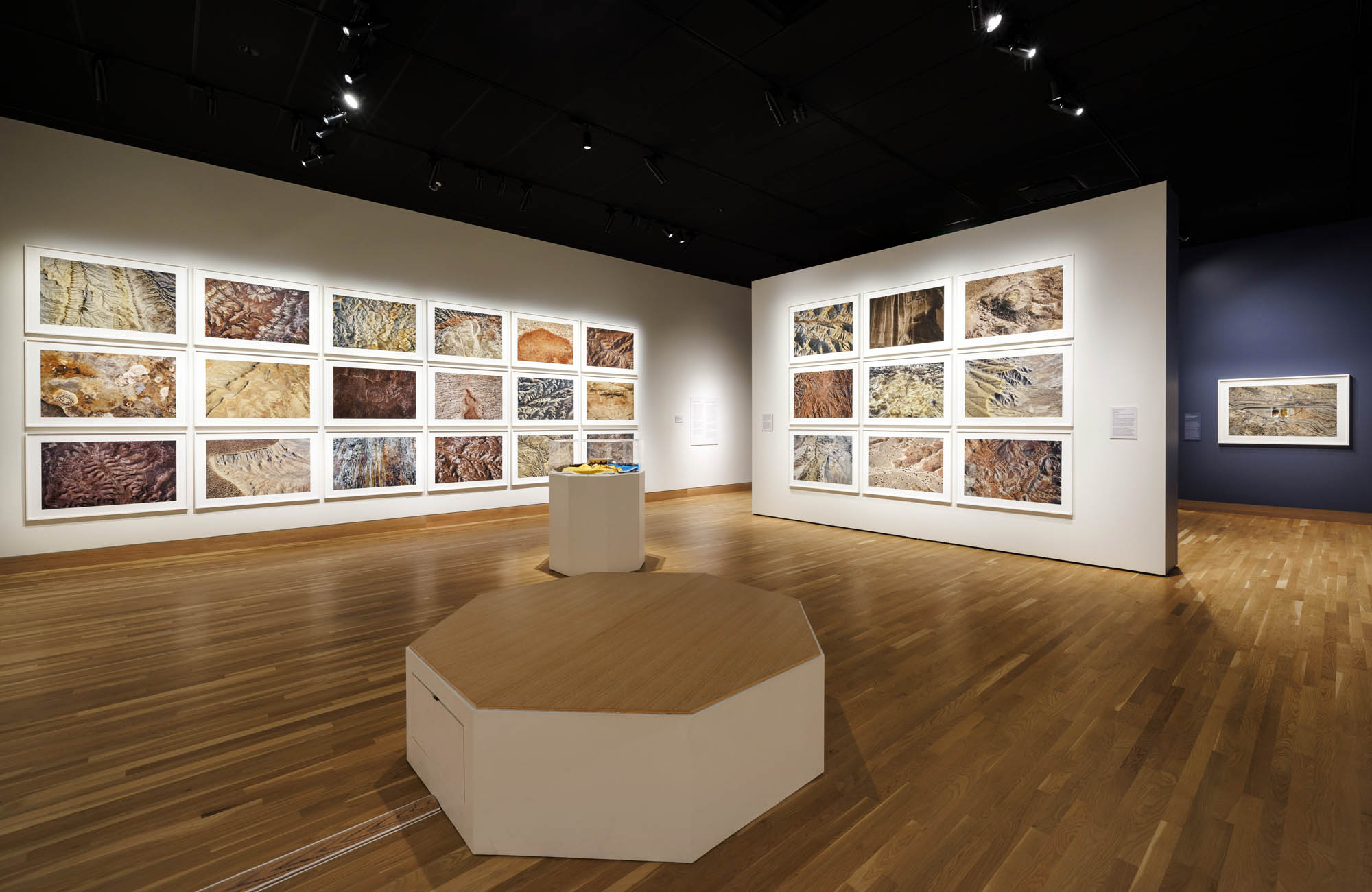
Installation view of the exhibition Fazal Sheikh: Thirst | Exposure | In Place at the Denver Art Museum showing work from the series In Place (Utah, Arizona, and New Mexico, Four Corners Region), 2017-2020


The Denver Art Museum (DAM) presents Fazal Sheikh: Thirst | Exposure | In Place, an exhibition created from three projects photographer Fazal Sheikh made on the Colorado Plateau from 2017 to early 2023. Sheikh’s portraits and landscapes shed light on the far-reaching consequences of extractive industry and climate change. Thirst ǀ Exposure ǀ In Place will open March 10, 2024, and will be on view through October 20, 2024, in the museum’s Photography galleries, located on level 6 of the Martin Building, and will be included with general admission.

Born in 1965 in New York City, Sheikh creates images of displaced communities and marginalised people that prompt awareness of the world beyond the museum. The photographs in Thirst ǀ Exposure ǀ In Place expose indelible marks on the Colorado Plateau and American Southwest landscape that have been etched by both geological and human forces. Through this beautiful and sometimes frightening new work, Sheikh encourages viewers to witness the consequences of the past and imagine the shape of the future.

“Through expansive aerial shots and intimate portraits, Fazal Sheikh documents these regions and their people with solidarity and honesty,” said Christoph Heinrich, Frederick and Jan Mayer Director of the Denver Art Museum. “The Colorado Plateau is a region deeply impacted by climate change and economic development. This exhibition offers a nuanced view into the past, present and future lives of its inhabitants.”

Sheikh is best known for his deeply humane photographs of refugees and migrants displaced by war and famine. Focusing on the United States for the first time, Sheikh explores how Indigenous people and the lands they call home have been affected by industrial growth and government policy.

“The aerial photographs in this exhibition remind us of the great age and natural beauty of the Colorado Plateau,” said Eric Paddock, Curator of Photography at the DAM and curator of this exhibition for Denver. “They create an awareness of deep human and geological time and raise questions about the future of the region. In that context, Sheikh’s portraits and accompanying text affirm local communities’ need to protect their sacred spaces and encourage wider recognition of that need.”

The DAM exhibition presents Sheikh’s recent work in three interrelated sections:

Thirst is a new series of aerial photographs that document the decline of the Great Salt Lake in northeast Utah, which is shrinking due to overconsumption and dwindling rain and snowfall. As the lake dries up, winds carry clouds of toxic sediment – by-products from mining, agriculture and urban development – from the lakebed, across the valley and beyond.

Exposure examines the impacts of uranium, coal, oil and natural-gas extraction on the American Southwest and on its Indigenous inhabitants. Sheikh partnered with Utah Diné Bikéyah – a coalition among the Hopi, Navajo, Uintah Ouray Ute, Ute Mountain Ute and Zuni tribes – and with Indigenous elders and scientists from Princeton University – to address hazardous waste and pollution left across the region by short-sighted development and poorly remediated industrial sites. The project reflects on the resilience of Indigenous people in the face of threats to their culture, spirituality and health.

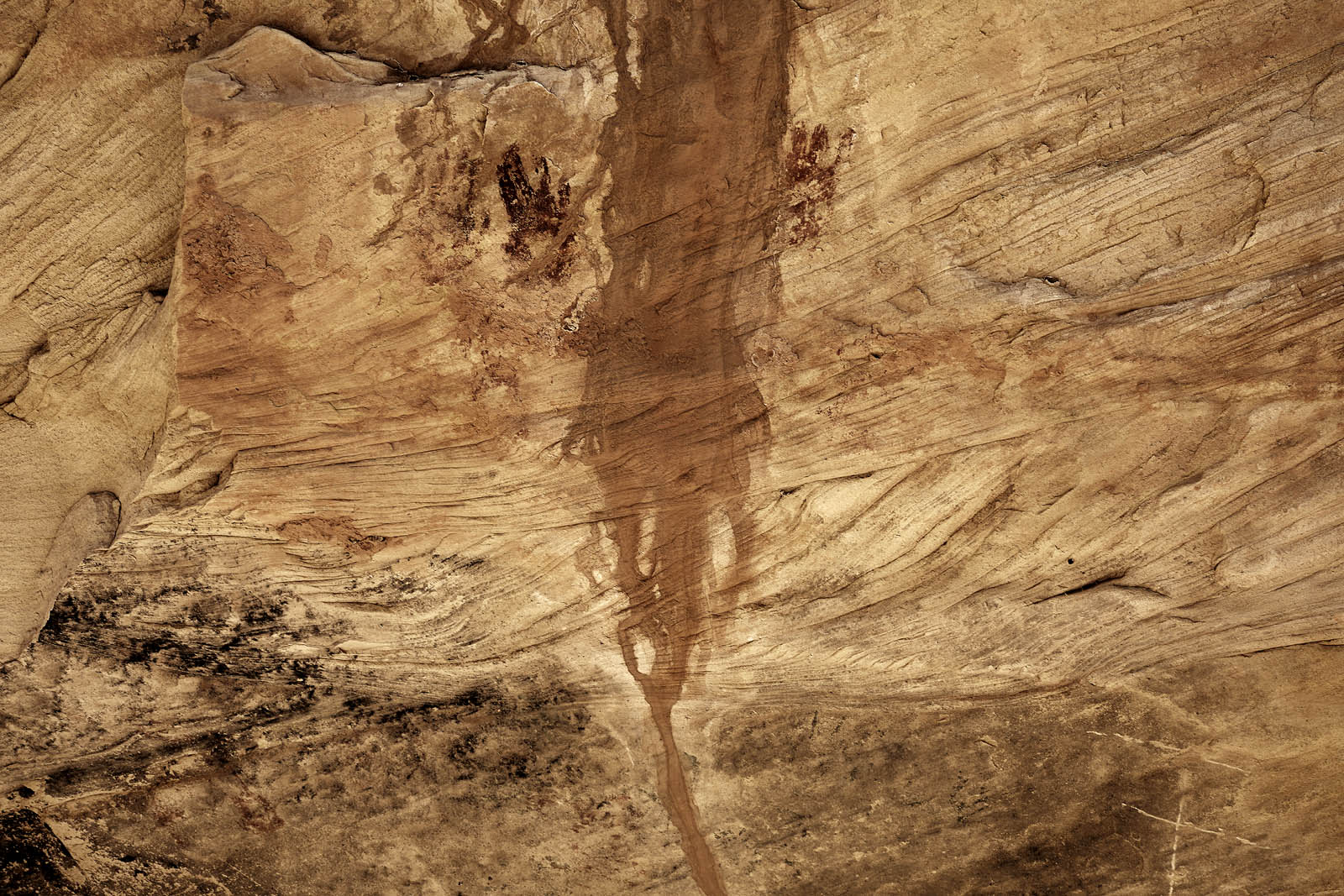
In Place evokes the enduring landscapes of the Bears Ears region in Utah, bringing Sheikh’s photographs together with contributions from scientists and Indigenous communities in and around Bears Ears in southeastern Utah. Visitors are surrounded by images made at a close distance and from high in the air. Sixty-three large colour photographs show the tremendous geological variety and the long cultural continuities of the Four Corners region.

Visitors will reflect upon the transformation – and often devastation – of these landscapes in the context of the past, present and future, while considering the juxtaposition of beauty and catastrophe, as well as intimate, human-scale stories and those spanning vast geological eras and changes.

Jonah Yellowman, spiritual advisor for the Utah Diné Bikéyah intertribal coalition and one of its founding members, will present an offering that represents his Navajo (Diné) spirituality and a deep connection to the land. This offering will be present in the gallery during the run of the exhibition.

Sound recordings taken from seismometer readings by University of Utah geologist Jeffrey Ralston Moore will resonate throughout the gallery space. They represent the otherwise inaudible vibrations of rock formations on the Colorado Plateau.

Taken together, the photographs and collaborations in Thirst | Exposure | In Place lay bare the indelible marks etched on the landscape by geological and human forces. Sheikh asks us to witness the consequences of what has passed and imagine what is yet to come.

Sheikh will speak about his recent work in the Four Corners region and at the Great Salt Lake, in connection with his exhibition in a lecture event at the DAM on March 9, 11am – 12pm. The lecture will take place in the Sharp Auditorium, in the lower level of the museum’s Hamilton Building. Sheikh will discuss the origin of each series, his immersion in the landscapes and communities he photographed and his collaborations with writers, scientists and Indigenous community members that are woven throughout this work. This exhibition follows the Denver Art Museum’s 2017 presentation of Common Ground: Photographs by Fazal Sheikh, 1989-2013.

Fazal Sheikh: Thirst | Exposure | In Place is organised by the Denver Art Museum. The exhibition is presented by Jane Watkins, with additional support from the donors to the Annual Fund Leadership Campaign and the residents who support the Scientific and Cultural Facilities District (SCFD). Promotional support is provided by 5280 Magazine and CBS Colorado.

The exhibition was curated in Denver by Curator of Photography, Eric Paddock, in collaboration with Kimberly Roberts, Denver Art Museum Curatorial Associate, and Lauren Thompson, Senior Interpretive Specialist.


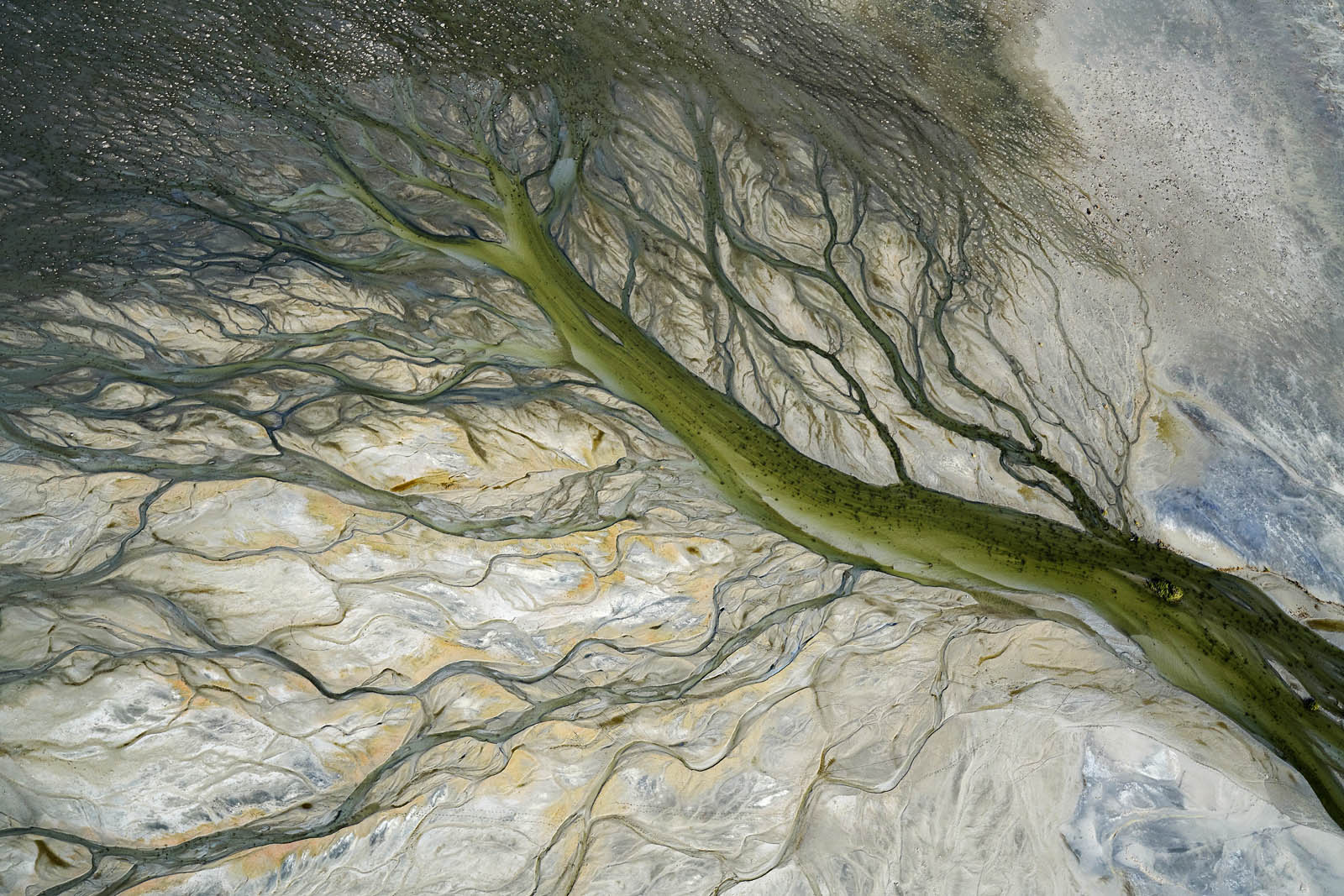
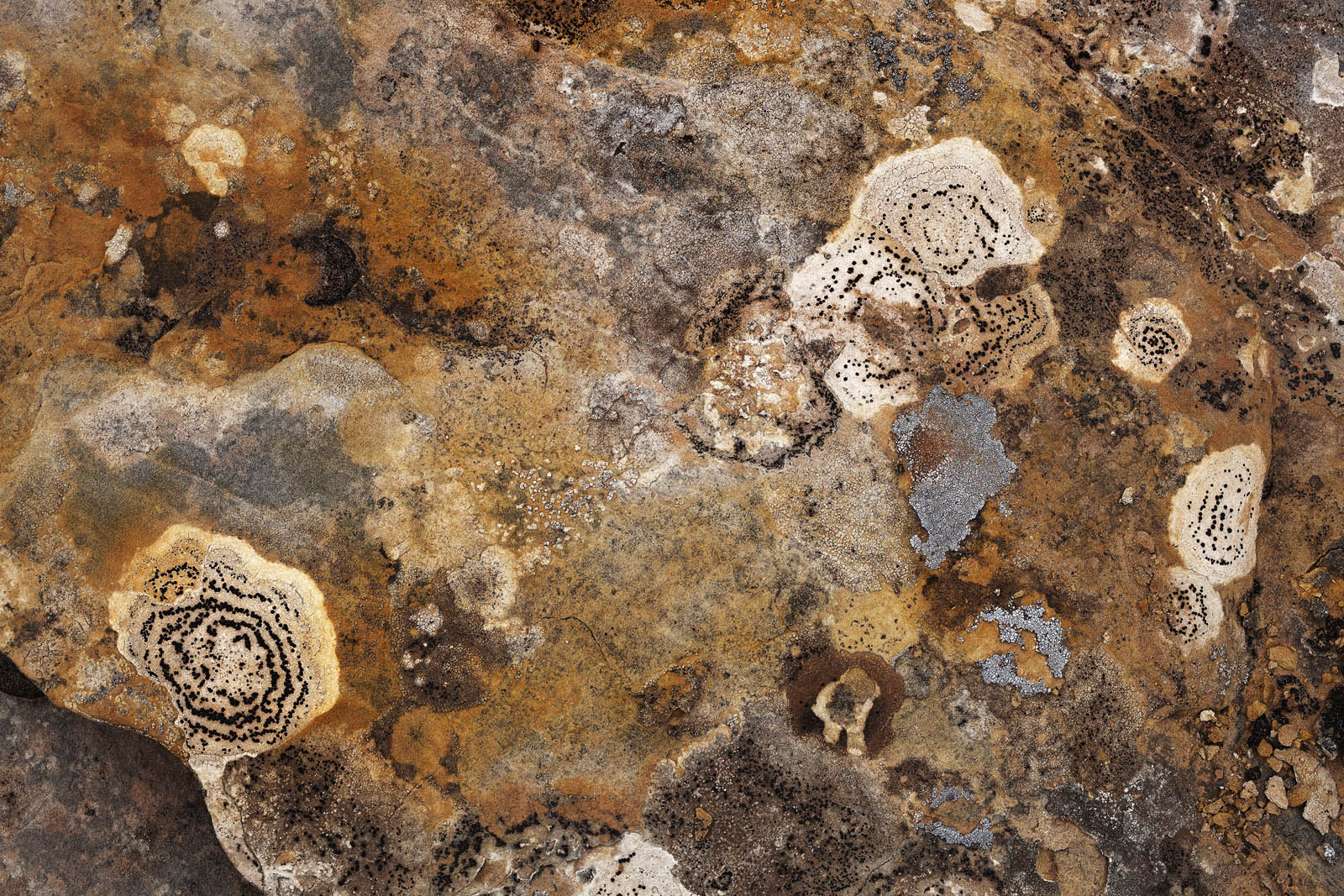
Fazal Sheikh (American, b. 1965) From the installation 'In Place (Utah, Arizona, and New Mexico, Four Corners Region)' 2017-2020


Fazal Sheikh (American, b. 1965)
From the installation In Place (Utah, Arizona, and New Mexico, Four Corners Region)
2017-2020
Pigmented inkjet print
© and courtesy Fazal Sheikh


Fazal Sheikh (American, b. 1965) From the installation 'In Place (Utah, Arizona, and New Mexico, Four Corners Region)' 2017-2020


Fazal Sheikh (American, b. 1965)
From the installation In Place (Utah, Arizona, and New Mexico, Four Corners Region)
2017-2020
Pigmented inkjet print
© and courtesy Fazal Sheikh


Fazal Sheikh (American, b. 1965) From the installation 'In Place (Utah, Arizona, and New Mexico, Four Corners Region)' 2017-2020


Fazal Sheikh (American, b. 1965)
From the installation In Place (Utah, Arizona, and New Mexico, Four Corners Region)
2017-2020
Pigmented inkjet print
© and courtesy Fazal Sheikh


Denver Art Museum
100 W 14th Ave Pkwy,
Denver, CO 80204, United States
Phone: (720) 865-5000

Opening hours:
Open daily from 10am – 5pm, 10am – 8pm on Tuesdays

Denver Art Museum website

LIKE ART BLART ON FACEBOOK

Back to top

Exhibition: ‘Gregory Crewdson. Retrospective’ at the Albertina Museum, Vienna

Exhibition dates: 29th May – 8th September 2024

Curators: Walter Moser and Astrid Mahler


Gregory Crewdson (American, b. 1962) 'Untitled' From the series 'Early Work' 1986-1988 from the exhibition 'Gregory Crewdson. Retrospective' at the Albertina Museum, Vienna, May - Sept 2024


Gregory Crewdson (American, b. 1962)
Untitled
From the series Early Work, 1986-1988
Digital pigment print
39 x 58cm
The Albertina Museum, Vienna
Permanent loan, Private Collection
© Gregory Crewdson


I have so many exhibitions to post within the next few weeks that you get two postings this weekend and next weekend!

It’s always a pleasure to see the work of Gregory Crewdson – stylish, stylised, hyperreal, dead pan, cinematic, panoramic large-scale transcendent photographs.

For an analysis of Crewdson’s work please see my text Downfall of a dream: (n)framing the enigma in Gregory Crewdson’s Beneath the Roses (2012)

Dr Marcus Bunyan


Many thankx to the Albertina Museum for allowing me to publish the photographs for the posting. Please click on the photographs for a larger version of the image.


Gregory Crewdson. Retrospective

Gregory Crewdson (American, b. 1962) is one of the world’s most renowned photographers. Since the mid-1980s, Crewdson has been using the backdrop of small American towns and film sets to create, like a director, technically brilliant and colourfully seductive photographs that focus on human isolation and the abysses of society. The enigmatic scenes self-reflexively raise questions about the boundary between fact and fiction but can also be related to socio-political developments.

Watch this emotional video of the artist in the middle of his exhibition at the Albertina Museum.


Gregory Crewdson. Retrospektive | Mit Kurator Walter Moser

Curator Walter Moser on Cregory Grewdson’s unique work


Gregory Crewdson | Mit Co-Kuratorin Astrid Mahler

“Gregory Crewdson’s latest series is set in the fictional small town of ‘Eveningside’. It is the last part of a trilogy in which Crewdson addresses the socio-political conditions of his country and the failure of the American Dream,” says co-curator Astrid Mahler about the last part of our major retrospective of the world-famous photographer Gregory Crewdson.


What I am interested in is that moment of transcendence, where one is transported into another place, into a perfect, still world.


Gregory Crewdson


Gregory Crewdson (American, b. 1962) is one of the world’s most renowned photographers. Since the mid-1980s, Crewdson has been using the backdrop of small American towns and film sets to create, like a director, technically brilliant and colourfully seductive photographs that focus on human isolation and the abysses of society. The enigmatic scenes self-reflexively raise questions about the boundary between fact and fiction but can also be related to socio-political developments.

The retrospective at the Albertina comprises a total of nine groups of works, created over the last three and a half decades and conceived serially. Starting with his Early Work (1986-1988), the exhibition includes Crewdson’s best-known series such as Twilight (1998-2002), which depicts scenes shaped by cinematic language, with people being confronted by unexplainable phenomena in their everyday lives. The impressive, mysterious large-scale scenes from the Beneath the Roses series (2003‒2008) deal with people’s isolation and alienation from their environment. The most recently completed group of works Eveningside (2021-2022) portrays an unheroic image of a fictional small town of the same name in atmospheric black and white. Following Cathedral of the Pines (2013-2014) and An Eclipse of Moths (2018-2019), Eveningside represents the final part of a trilogy through which the artist examines the social decline of society far removed from the American dream.

Crewdson’s large-scale pictures are preceded by months of planning; they are created with the participation of hundreds of people from casting, wardrobe and art departments, plus technical specialists. Production photographs taken in parallel illustrate the highly elaborate process of design, culminating in an extensive post-production process in which the final photographs are assembled from multiple shots.

As a generous gesture, the exhibition is accompanied by a significant donation to the Albertina’s photo collection. This extensive assimilation of works strengthens the focus of the collection on contemporary photography.

Text from the Albertina Museum website


Gregory Crewdson (American, b. 1962) 'Untitled' From the series 'Natural Wonder' 1991-1997 from the exhibition 'Gregory Crewdson. Retrospective' at the Albertina Museum, Vienna, May - Sept 2024


Gregory Crewdson (American, b. 1962)
Untitled
From the series Natural Wonder, 1991-1997
Digital pigment print
30 x 39 7/8 in.
The Albertina Museum, Vienna
Permanent loan, Private Collection

© Gregory Crewdson


Gregory Crewdson (American, b. 1962) 'Untitled' From the series 'Hover' 1996-1997 from the exhibition 'Gregory Crewdson. Retrospective' at the Albertina Museum, Vienna, May - Sept 2024


Gregory Crewdson (American, b. 1962)
Untitled
From the series Hover, 1996-1997
Digital pigment print
51 x 61cm
The Albertina Museum, Vienna
Permanent loan, Private Collection
© Gregory Crewdson


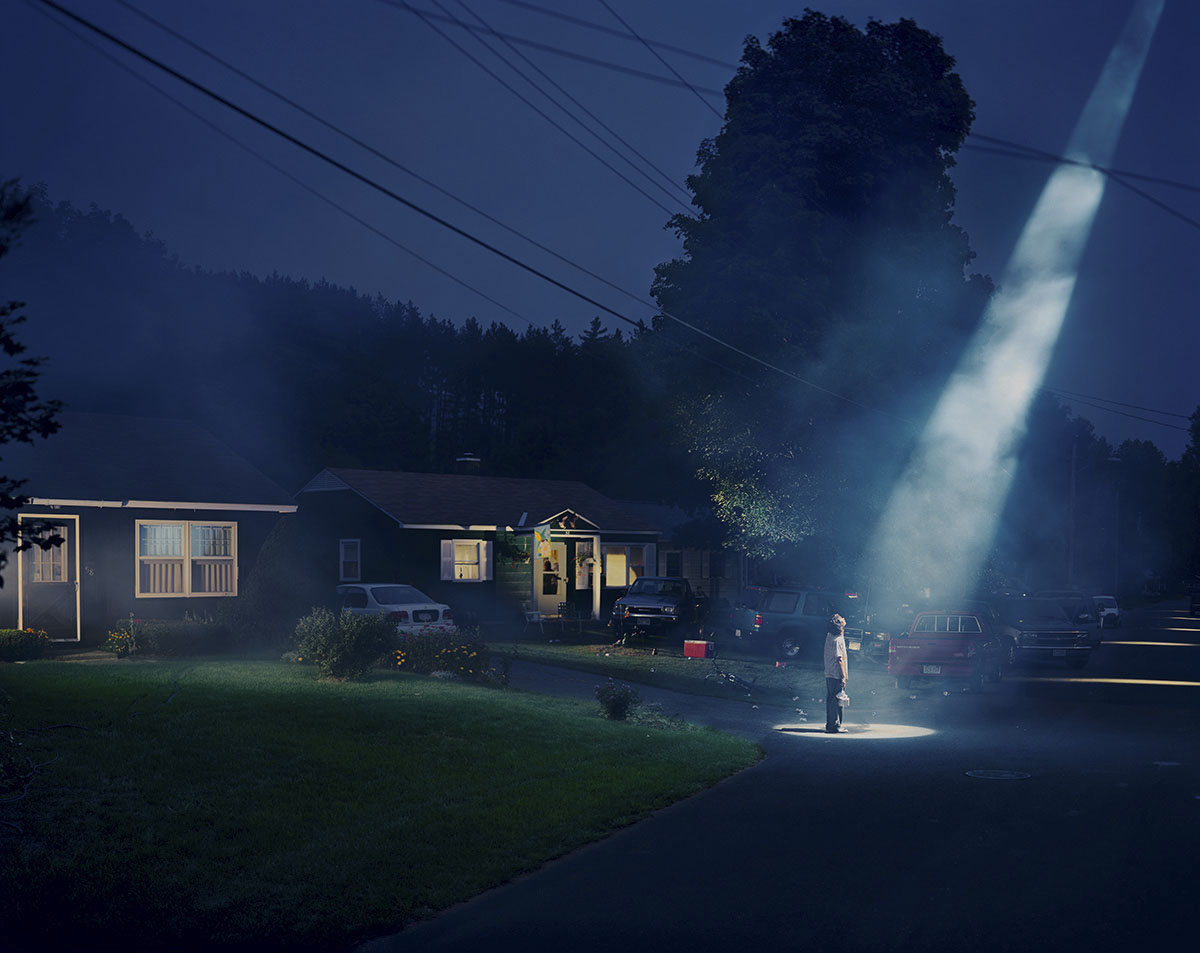
Gregory Crewdson (American, b. 1962) 'Untitled' From the series 'Twilight' 1998-2002


Gregory Crewdson (American, b. 1962)
Untitled
From the series Twilight, 1998-2002
Digital pigment print
122 x 152cm
The Albertina Museum, Vienna
Permanent loan, Private Collection
© Gregory Crewdson


Gregory Crewdson (American, b. 1962) 'Untitled' From the series 'Twilight' 1998-2002


Gregory Crewdson (American, b. 1962)
Untitled
From the series Twilight, 1998-2002
Digital pigment print
The Albertina Museum, Vienna
Permanent loan, Private Collection
© Gregory Crewdson


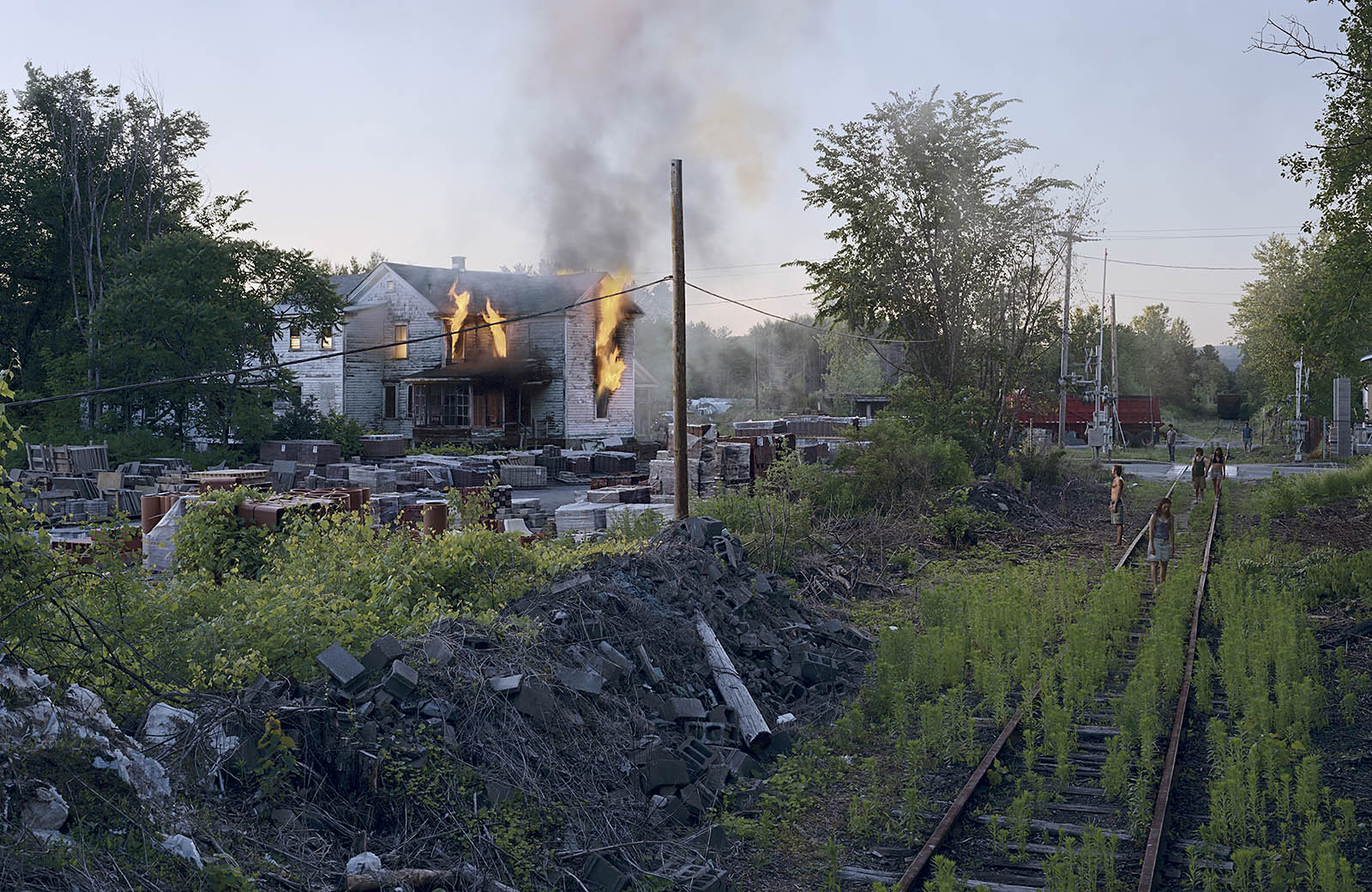
Gregory Crewdson (American, b. 1962)'Untitled' From the series 'Beneath the Roses' 2003-2008


Gregory Crewdson (American, b. 1962)
Untitled
From the series Beneath the Roses, 2003-2008
Digital pigment print
144 x 223cm
The Albertina Museum, Vienna
Permanent loan, Private Collection
© Gregory Crewdson


Gregory Crewdson (American, b. 1962) 'Untitled' From the series 'Beneath the Roses' 2003-2008


Gregory Crewdson (American, b. 1962)
Untitled
From the series Beneath the Roses, 2003-2008
Digital pigment print
144 x 123cm
The Albertina Museum, Vienna
Permanent loan, Private Collection
© Gregory Crewdson


Gregory Crewdson (American, b. 1962) 'Untitled' From the series 'Beneath the Roses' 2003-2008


Gregory Crewdson (American, b. 1962)
Untitled
From the series Beneath the Roses, 2003-2008
Digital pigment print
144 x 123cm
The Albertina Museum, Vienna
Permanent loan, Private Collection
© Gregory Crewdson


Gregory Crewdson (American, b. 1962) 'Untitled' From the series 'Beneath the Roses' 2003-2008


Gregory Crewdson (American, b. 1962)
Untitled
From the series Beneath the Roses, 2003-2008
Digital pigment print
144 x 223cm
The Albertina Museum, Vienna
Permanent loan, Private Collection
© Gregory Crewdson


Exhibition Texts

Early Work, 1986-1988

Early Work was created as Crewdson’s final project at Yale University’s School of Art. Among other places, Gregory Crewdson photographed the series in the US state of Massachusetts, mostly in the small town of Lee, which is very close to the family’s summer home. Due to his personal connection to this region, the artist still realises almost all of his photographic projects in the Massachusetts area. In the photographs, Crewdson arranged the town’s residents in the context of their domestic settings. Using relatively modest technical devices at the time, he transformed the real places into mysterious, uncanny scenes with the help of artificial lighting. Introverted protagonists rendered in tightly cropped views present typically American suburbs as places of human isolation and oppression. David Lynch’s surreal masterpiece Blue Velvet, in which the main character encounters human abysses behind the idyllic façade of a small town, served as a major model. The film, which came out in 1986, turned out to be stylistic inspiration for Crewdson and also became an important source of reference for his subsequent series. Crewdson also dealt with more documentary positions, such as those of Stephen Shore and William Eggleston. On their journeys across the United States, they enhanced everyday motifs with symbolic meaning through close-up views and vibrant colours. Especially Eggleston employed these means to allude to disconcerting aspects in society.

Natural Wonder, 1991-1997

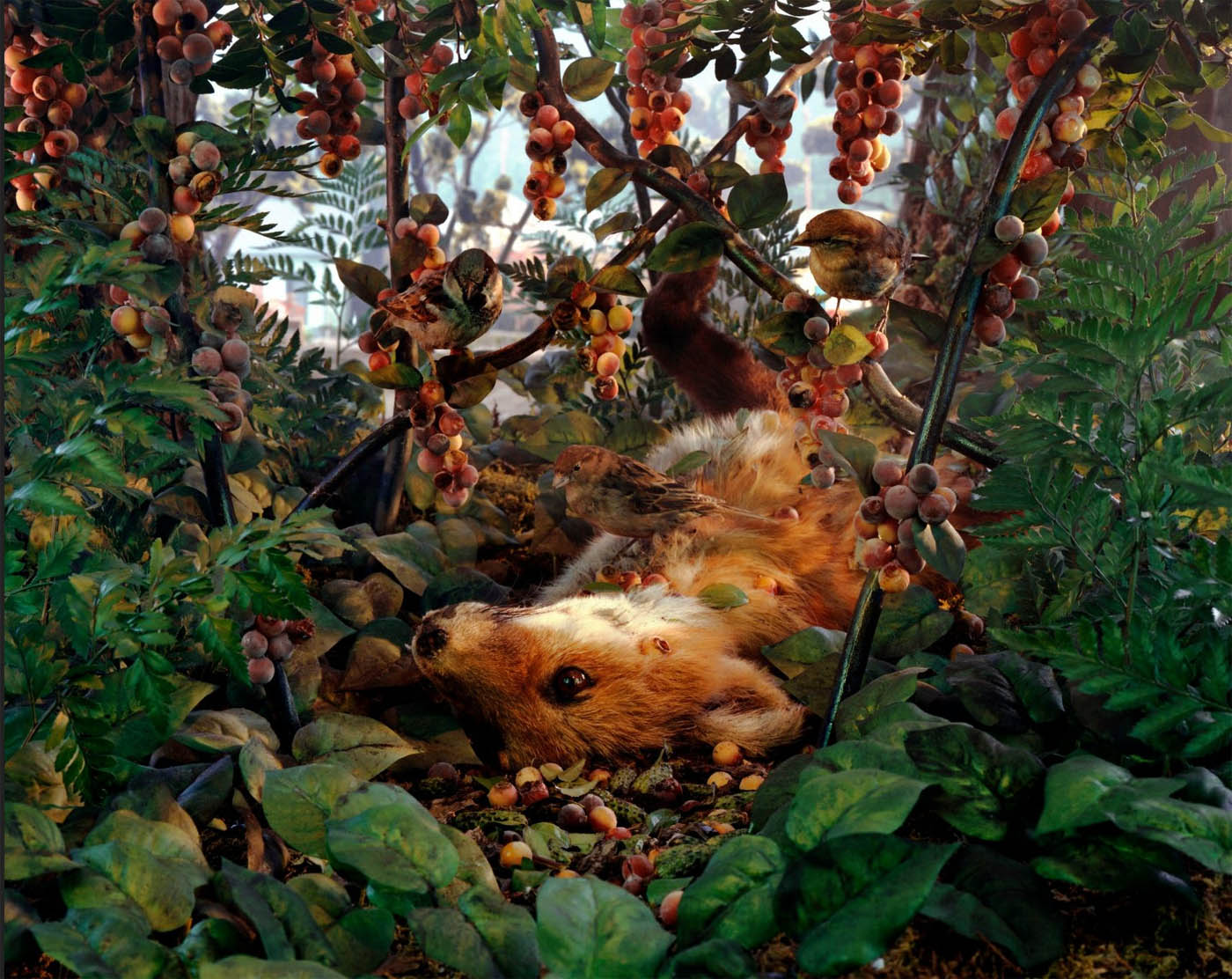
Inspired by the dioramas in natural history museums, for Natural Wonder Gregory Crewdson built three-dimensional models in his studio, which he then photographed. The pictures show enigmatic rituals and cruel incidents happening in nature, which take place against the backdrop of the suburbs without people realising. For example, birds sit around a mysterious circle of eggs, or nature takes possession of a decaying animal carcass. As a metaphor for suppressed anxieties and traumas, the depicted landscape functions as a mirror of the unconscious and the human psyche. In Crewdson’s series, autobiographic elements – his father was a psychoanalyst – and overriding social themes characteristically coincide. The symbolism of Natural Wonder has essentially been inspired by cinematography: in Alfred Hitchcock’s film The Birds (1963), the eponymous animals, suddenly infesting an idyllic world, symbolise dysfunctional relationships and human fears. In Blue Velvet (1986), David Lynch eliminates the line between reality and illusion, between the familiar and the eerie, between idyll and violence through the motif of a prepared robin or of a severed human ear covered with ants, which is found in a meadow.

Hover, 1996/1997

In Hover, his third series, Gregory Crewdson abandons the aesthetic achievements of earlier works: he takes pictures in black and white from a bird’s-eye view with the help of a crane. The strategy characteristic of Crewdson’s work to merely adumbrate a narrative while abstaining from resolving it and keeping it in mysterious suspense reaches an early climax in Hover. With a distanced, objectifying gaze he shows familiar occurrences in a small town as they tip over into the unusual. The recurring motif of the circle refers not only to popular science fiction movies and works of land art, but also quotes Alfred Hitchcock’s film Vertigo (1958), in which the circle is considered a metaphor for romantic obsession.

Gregory Crewdson now began to plan his sessions in advance and in great detail. As were other series, Hover was shot in the real place of Lee with the aid of residents performing as protagonists. Occasionally, Crewdson still resorted to improvisation; for example, he called the police for the purpose of integrating the police car into the photograph.

Twilight, 1998-2002

Twilight is one of Gregory Crewdson’s most well-known works. It is informed by cinema even more than earlier series. In its scenes, which are mostly set at dusk, Crewdson resorts to the fantastic as the principal theme. Inexplicable phenomena intrude into everyday life. Familiar objects are repurposed, and people give the impression of being exposed and unprotected because of their nudity.

Similar to a film production, a crew of about sixty took part in Twilight. In this series, Crewdson arrived at his characteristic repertoire of motifs, such as open cars, windows, and mirrors, which he varied and put together like vocabulary and would also use for subsequent works. Crewdson began to fully concentrate on the mise-en-scène, leaving the technical implementation of the shots to Richard Sands for the first time – a practice continued to this day. This high-profile director of photography from the world of cinema has worked with Steven Spielberg and Francis Ford Coppola, among others.

The photographs, which Crewdson refers to as “single-frame movies,” contain multiple references to classical painting and popular culture, a telling example of the latter being Steven Spielberg’s science fiction film Close Encounters of the Third Kind (1977). Gregory Crewdson’s postmodern approach becomes manifest in these images: starting out from the idea that reality is no longer “authentic” but merely experienced through the media, the recognisable references reveal the staging they are based on.

Beneath the Roses, 2003-2008

In Beneath the Roses, the surreal, uncanny atmosphere of earlier series gives way to an essentially melancholic and psychologising key tone. The protagonists, captured in desolate surroundings, are shown frozen and motionless. Lonely, isolated, and without interacting, they appear totally alienated. Especially for his interior shots, Gregory Crewdson borrows from Edward Hopper’s painting. Situations of human introspection in anonymous, everyday architectural settings that both suggest intimacy and accommodate a voyeuristic gaze are unmistakable parallels.

Beneath the Roses is the most elaborate series in Gregory Crewdson’s oeuvre, which he originally developed as an idea for a film and to which more than one hundred specialists from casting, costume design, technical, and art departments contributed over the extensive period during which the series was realised. As in Twilight, he staged the interior shots in studios, whereas outdoor shots were taken in real places he had profoundly transformed according to his ideas. The artist meticulously prepared the shoot with architectural models, storyboards, scene scripts, and location shots. The focus was particularly on the choice of props, which appear both quintessentially American and timeless. Using different aperture settings, Crewdson took multiple photographs of each scene. In postproduction, which lasted over several months, he combined forty to fifty negatives, so that the constant depth of field in the final picture gives a hyperrealist impression.

Sanctuary, 2009

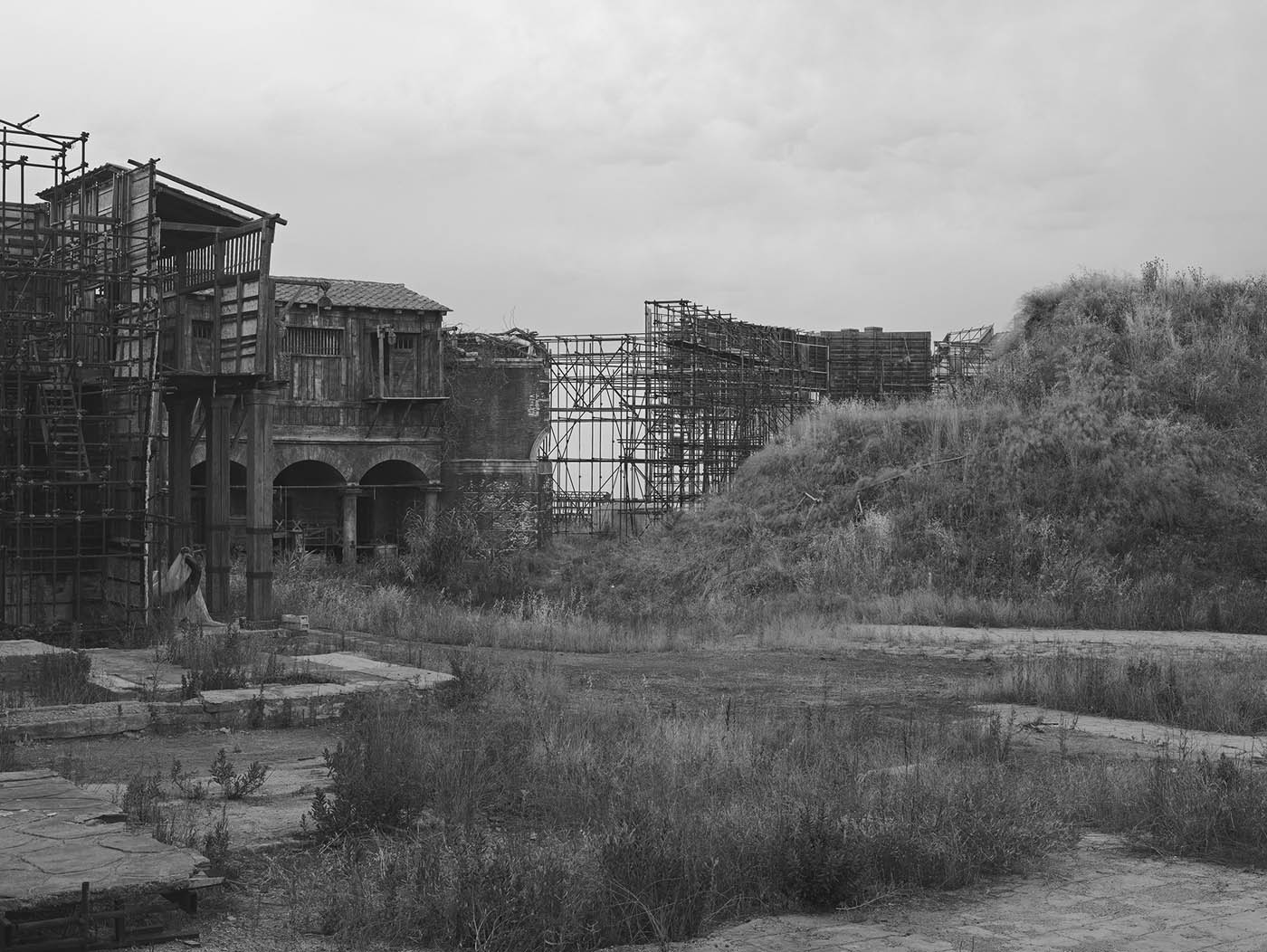
Sanctuary was created after the monumental large-scale project Beneath the Roses (2003-2008). The series marks a period of transition during which Gregory Crewdson put new artistic approaches to the test. When staying in Rome in 2009, he visited the Italian city of cinematography Cinecittà, where, in its film sets, his first group of works was realised outside the United States. He completed the project within two months with a small team and little technical and financial input. In Sanctuary, Crewdson heightened the tension between reality and fiction known from earlier series by making the sets as such the actual subject. The black-and-white photography accentuates the morbid appeal of the sets as ruins. In contrast to Crewdson’s usual practice of conveying loneliness and isolation with the aid of performers, in Sanctuary he creates an essentially melancholic atmosphere through the complete absence of people. In particular, the artist makes palpable the discrepancy between the hustle and bustle of past film shoots and the now ghostly desolation.

Cathedral of the Pines, 2013/2014

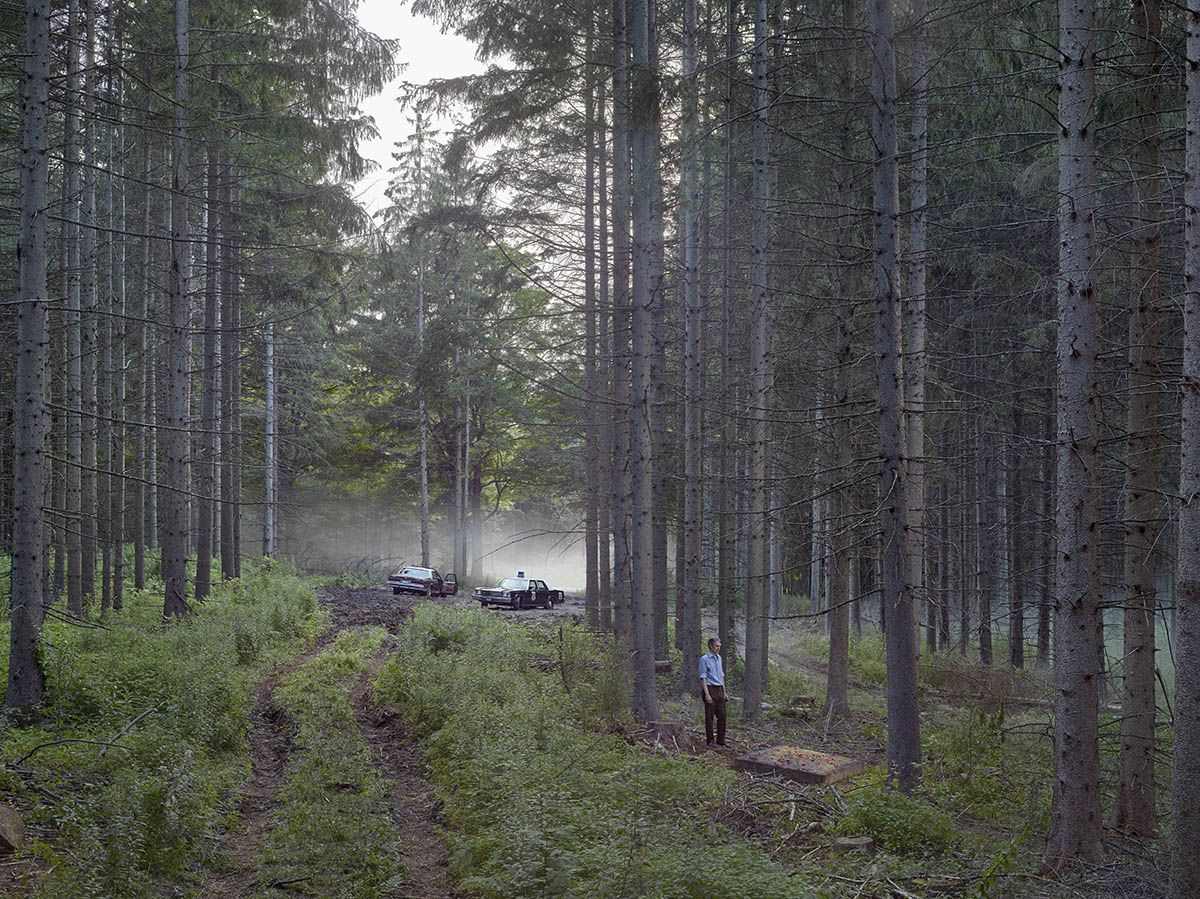
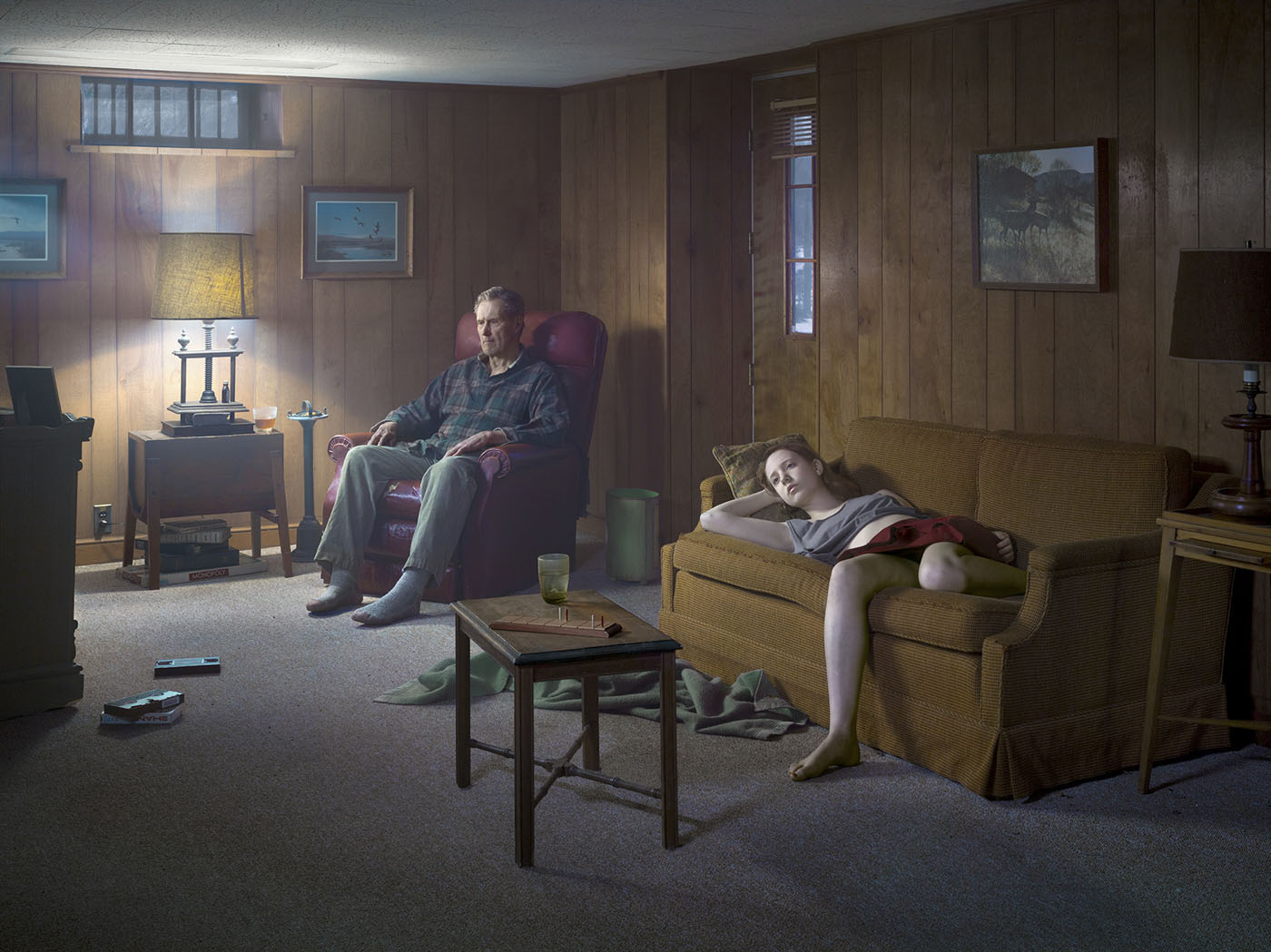
Cathedral of the Pines was created after a period of personal and artistic crisis. In the midst of the mighty pine forests near the city of Becket in Massachusetts, where Gregory Crewdson has lived since 2010, he discovered the eponymous path that became the starting point for this series. Cathedral of the Pines is one of the artist’s most personal groups of work. For the first time, he engaged persons from his family and circle of friends as performers. Moreover, he staged his interiors in real houses, working with a comparatively small team and a minimum of artificial light.

Cathedral of the Pines examines the subject of the human condition through the relationship between human beings and landscape. The nocturnal atmosphere of earlier series gives way to cool daylight and cold colours: completely in the nude or only partially covered and staring absent-mindedly, his performers seem frozen and withdrawn into their own emotional worlds. By placing windows prominently, Crewdson contrasts the relationship between interior and exterior space, as well as interior and exterior light. With its references to the Romanticism of the early nineteenth century – such as compositions by Caspar David Friedrich – or seventeenth-century Dutch painting – such as the art of Jan Vermeer – the motif of the window is also in the tradition of a symbol of contemplation and unfulfilled yearning.

An Eclipse of Moths, 2018/2019

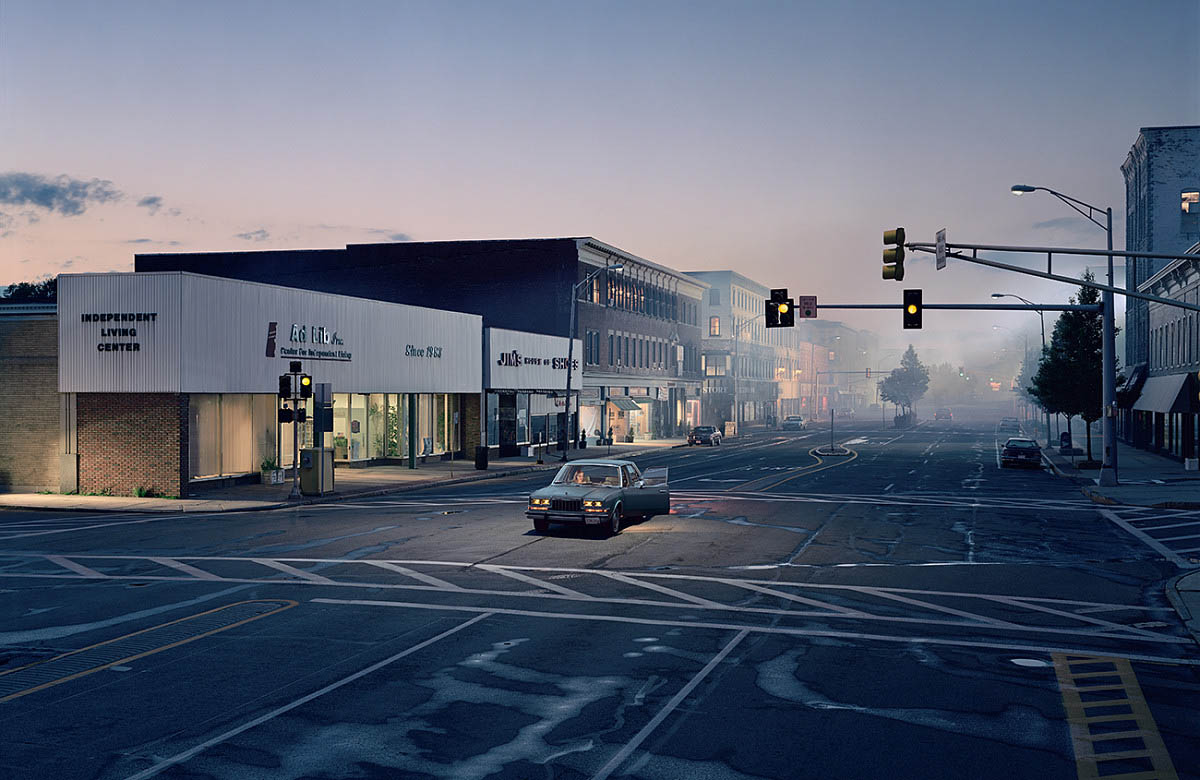
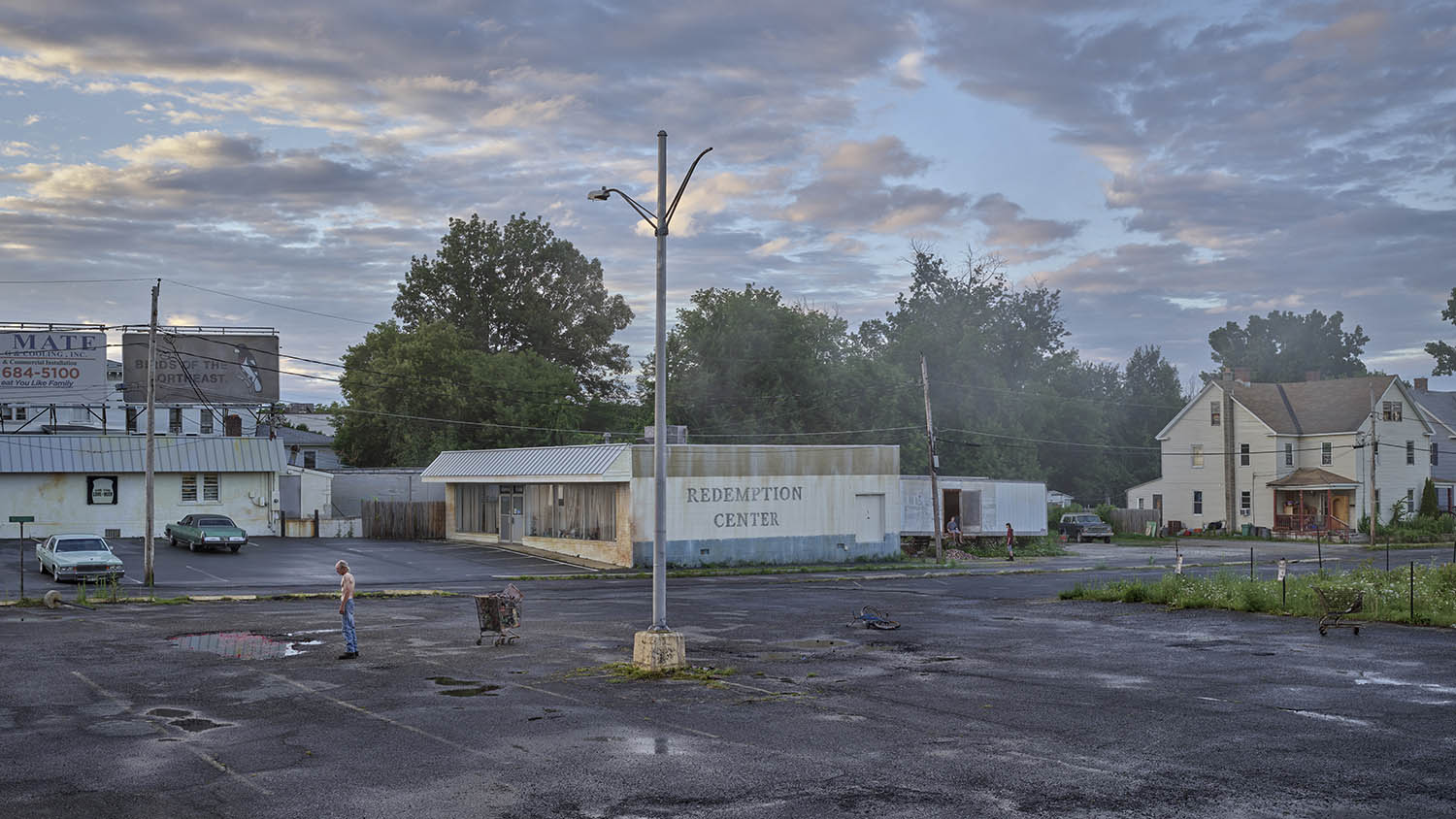
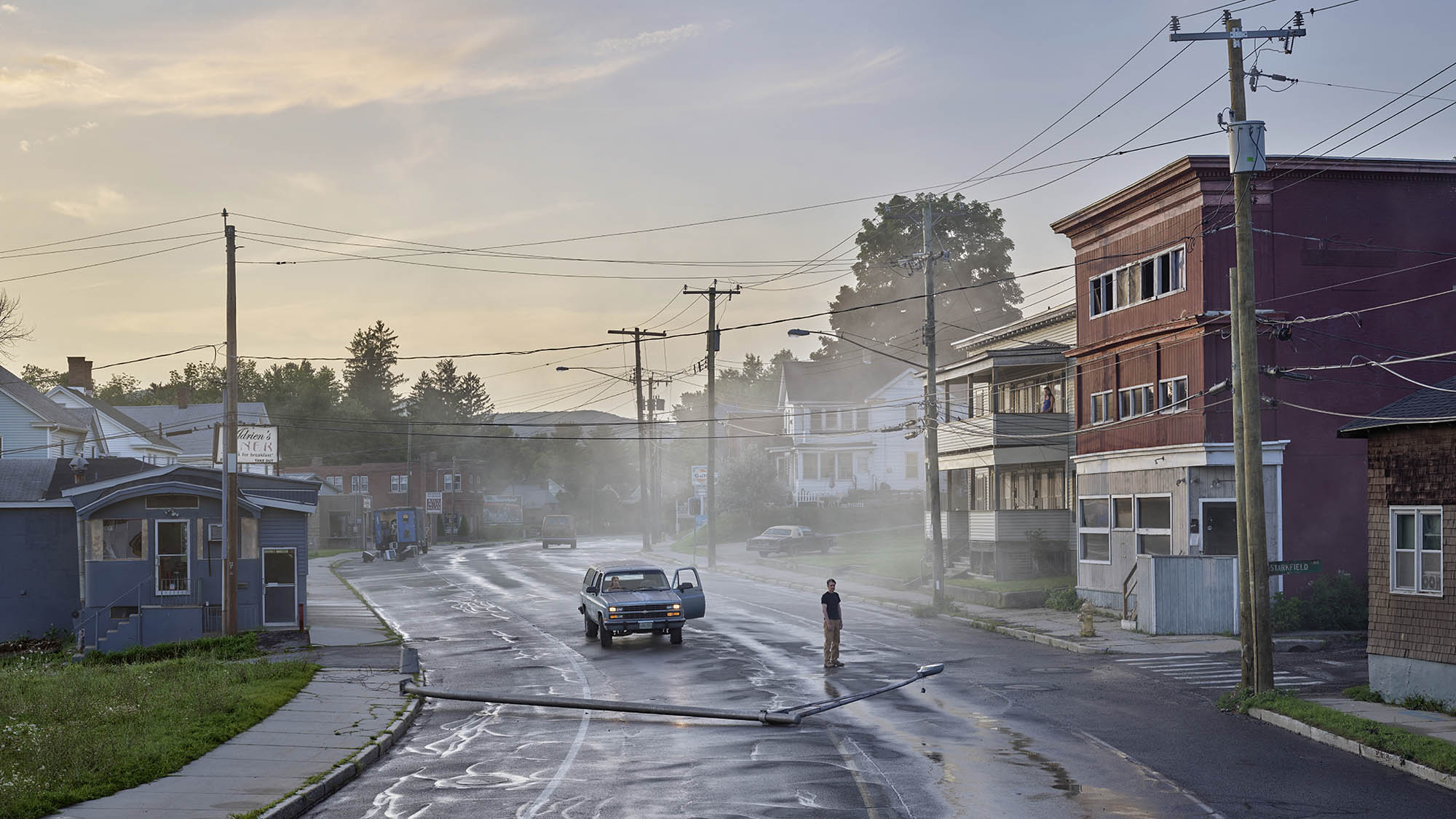
Gregory Crewdson photographed An Eclipse of Moths during Donald Trump’s presidency, thus formulating his analysis of society as sociopolitical criticism. In the city where the series was shot, Pittsfield in Massachusetts, the majority of the population had worked for the local General Electric plant and many lost their jobs after the firm had closed down. In addition to high unemployment, the company left behind a devastated environment. Crewdson describes the situation of neglected postindustrial places through the contrast between light atmospheres rendered in vibrant colours and desolate motifs of everyday life. Potholed streets or dilapidated houses symbolise the fragility and frailty of a society that has lost its footing.

Different from Cathedral of the Pines (2013/2014), his previous series, in An Eclipse of Moths Crewdson returned to the cinematographic widescreen format. The artist depicted his protagonists as small figures in proportion to their surroundings and at a distance from one another. He frequently arranged his seemingly disoriented protagonists around street lamps, comparable to the eponymous moths circling around the light in the darkness. Apart from a multitude of props, he also used smoke and artificially sprinkled streets for this series so as to masterfully stage his light effects.

Eveningside, 2021/2022

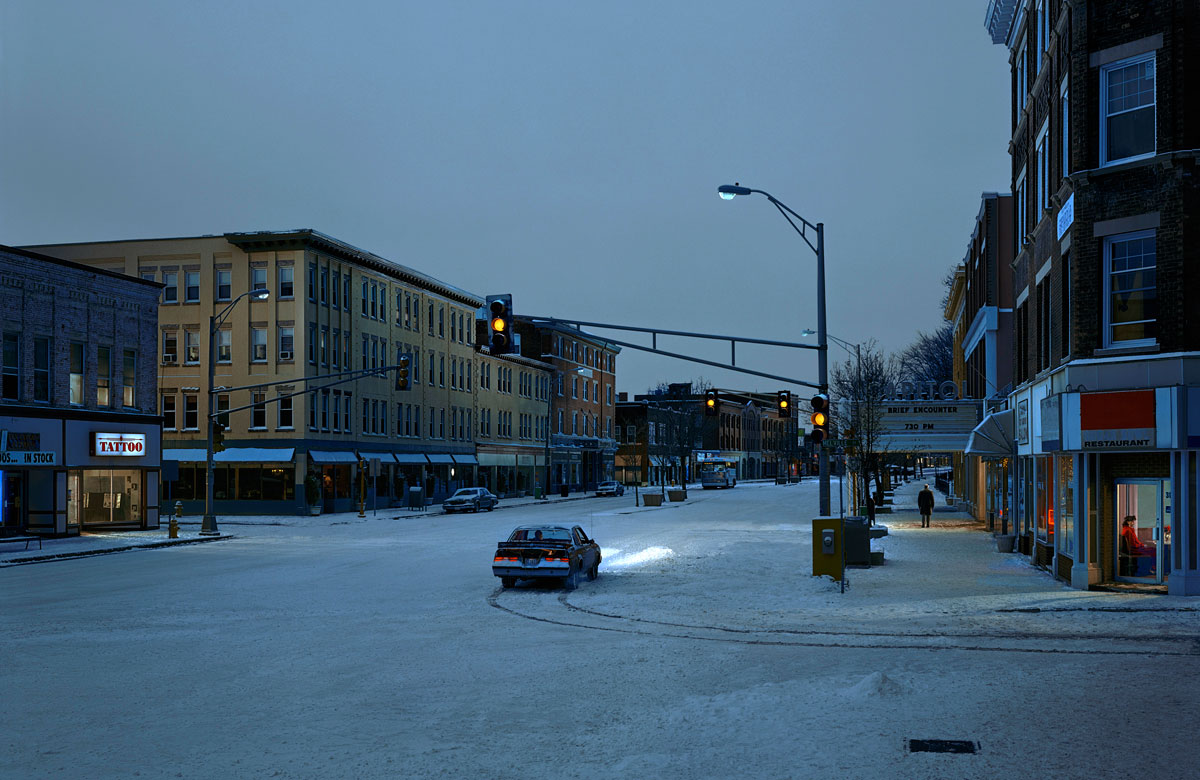
Gregory Crewdson’s most recent series is set in a fictitious small town called Eveningside. Its imaginary geography is made up of various places in western Massachusetts the artist had used as scenes for earlier works. After Cathedral of the Pines (2013/2014) and An Eclipse of Moths (2018/2019), this atmospheric work in black and white constitutes the final part of Crewdson’s trilogy, which deals with the sociopolitical dark sides of a society removed from the American dream. In Eveningside, the artist often depicts people going about their work. Frozen in absolute standstill, they seem caught in their respective social contexts.

Crewdson’s arrangements ingeniously position the protagonists in space through lighting influenced by film noir and motifs like shopwindow and mirror. The artist shows their faces in reflections from irritating and slightly shifted perspectives with the aid of montage. Windows frame the protagonists as pictures within the picture und underscore the act of image-making as a self-reflexive practice.

Text from The Albertina Museum press release


Gregory Crewdson (American, b. 1962) 'Untitled' From the series 'Sanctuary' 2009


Gregory Crewdson (American, b. 1962)
Untitled
From the series Sanctuary, 2009
Digital pigment print
72 x 90cm
The Albertina Museum, Vienna
Permanent loan, Private Collection
© Gregory Crewdson


Gregory Crewdson (American, b. 1962) 'The Mattress' From the series 'Cathedral of the Pines' 2013-2014


Gregory Crewdson (American, b. 1962)
The Mattress
From the series Cathedral of the Pines, 2013-2014
Digital pigment print
94 x 127cm
The Albertina Museum, Vienna
Permanent loan, Private Collection
© Gregory Crewdson


Gregory Crewdson (American, b. 1962) 'The Basement' From the series 'Cathedral of the Pines' 2013-2014


Gregory Crewdson (American, b. 1962)
The Basement
From the series Cathedral of the Pines, 2013-2014
Digital pigment print
94 x 127cm
The Albertina Museum, Vienna
Permanent loan, Private Collection
© Gregory Crewdson


Gregory Crewdson (American, b. 1962) 'Redemption Center' From the series 'An Eclipse of Moths' 2018-2019


Gregory Crewdson (American, b. 1962)
Redemption Center
From the series An Eclipse of Moths, 2018-2019
Digital pigment print
127 x 225cm
The Albertina Museum, Vienna
Permanent loan, Private Collection
© Gregory Crewdson


Gregory Crewdson (American, b. 1962) 'Starkfield Lane' From the series 'An Eclipse of Moths' 2018-2019


Gregory Crewdson (American, b. 1962)
Starkfield Lane
From the series An Eclipse of Moths, 2018-2019
Digital pigment print
127 x 225cm
The Albertina Museum, Vienna
Permanent loan, Private Collection
© Gregory Crewdson


Gregory Crewdson (American, b. 1962) 'Madeline's Beauty Salon' From the series 'Eveningside' 2021-2022


Gregory Crewdson (American, b. 1962)
Madeline’s Beauty Salon
From the series Eveningside, 2021-2022
Digital pigment print
88 x 117cm
The Albertina Museum, Vienna
Permanent loan, Private Collection
© Gregory Crewdson


The Albertina Museum
Albertinaplatz 1
1010 Vienna
Phone: +43 (0)1 534 83 0

Daily 10am – 6pm
Except Wednesday and Friday 10am – 9pm

The Albertina Museum website

LIKE ART BLART ON FACEBOOK

Back to top

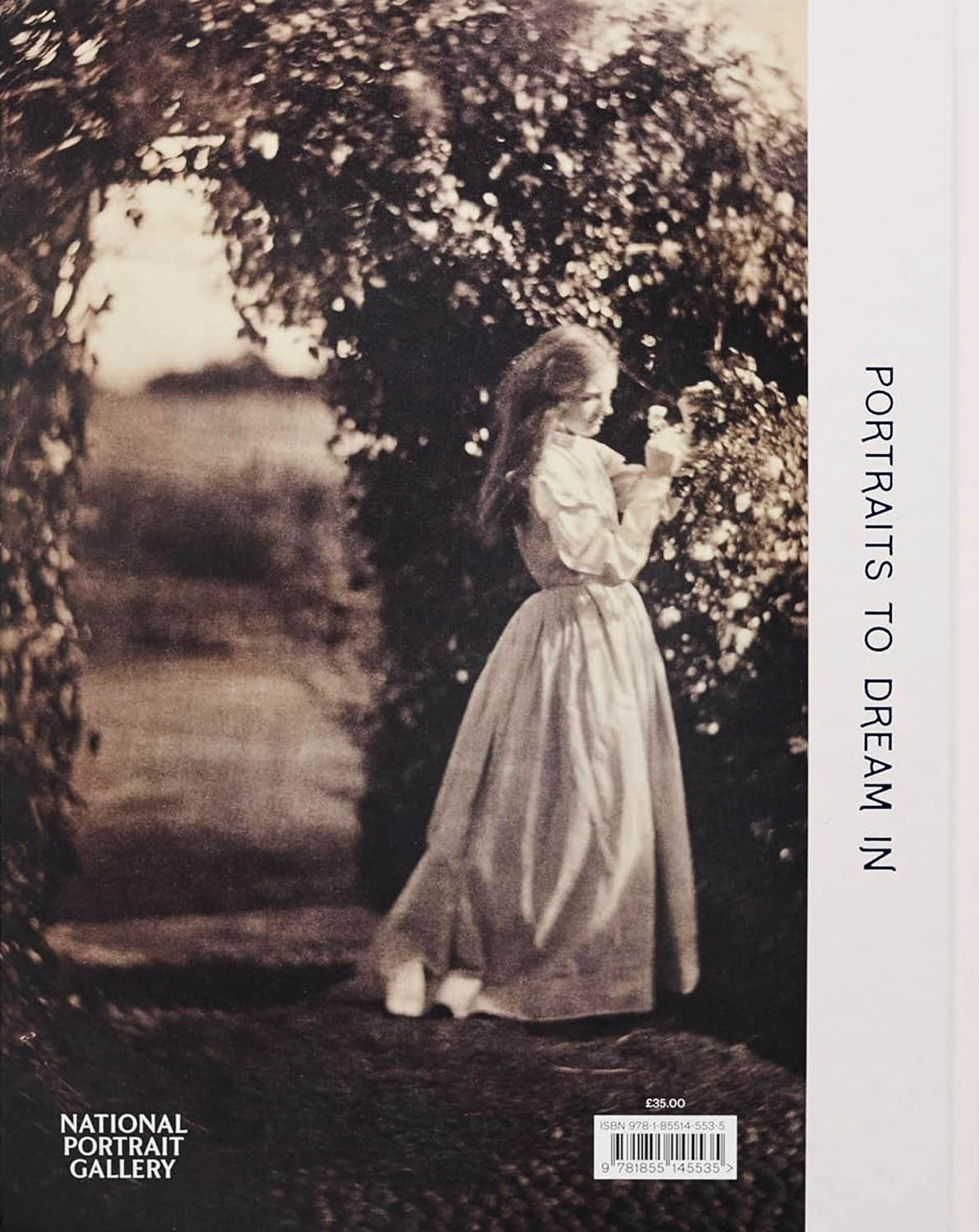
Exhibition: ‘Francesca Woodman and Julia Margaret Cameron: Portraits to Dream In’ at the National Portrait Gallery, London

Exhibition dates: 21st March – 16th June 2024

Curator: Magdalene Keaney


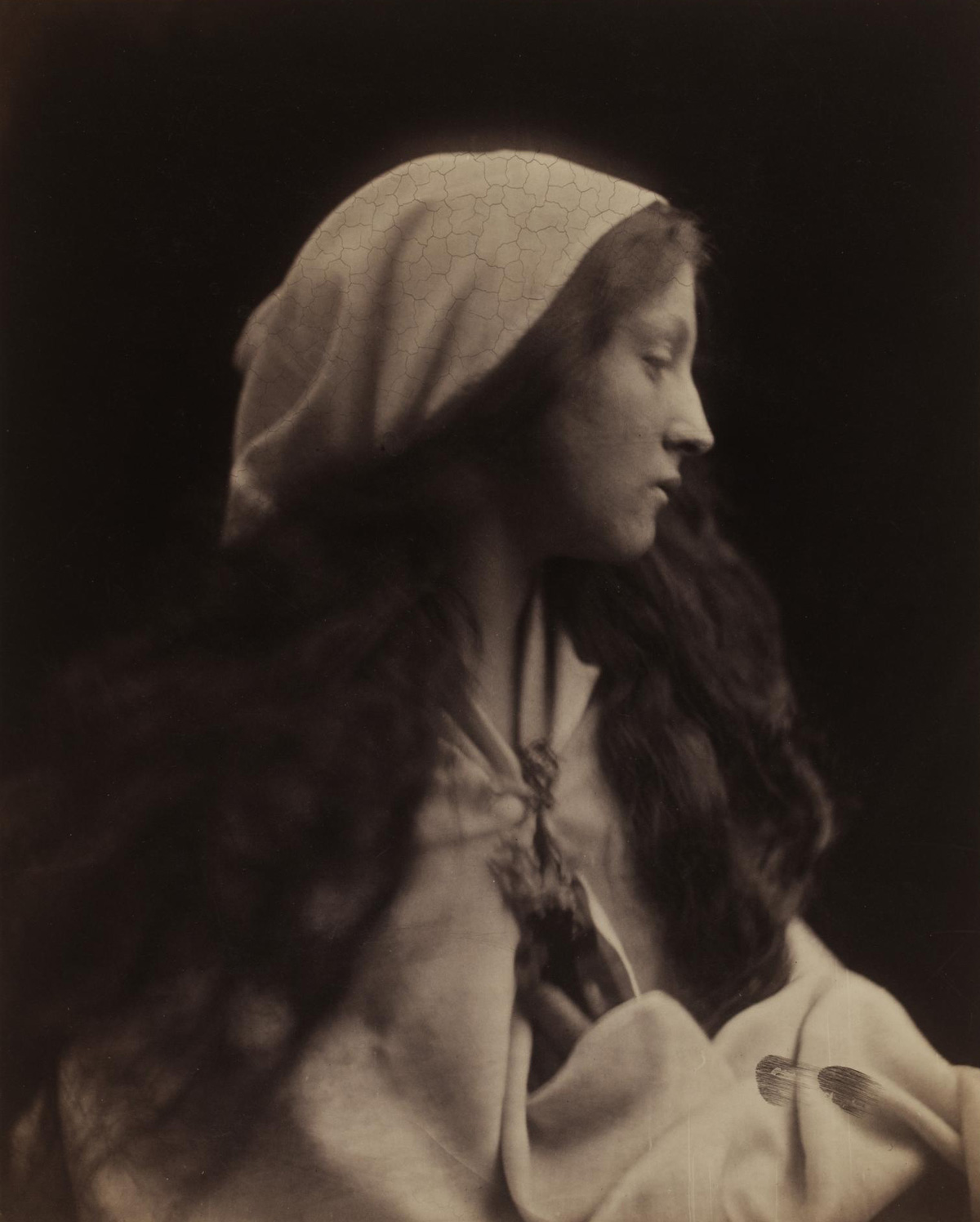
Julia Margaret Cameron (British born India, 1815-1879) 'The Dream (Mary Hillier)' 1869


Julia Margaret Cameron (British born India, 1815-1879)
The Dream (Mary Hillier)
1869
Albumen silver print
Wilson Centre for Photography


Mary Ann Hilliar was born on the Isle of Wight, and as well as being Julia Margaret Cameron’s favourite model was employed by her as a house maid. She often poised in religious themed photos looking noble and melancholy. As well as modelling for Mrs Cameron she was painted by G F Watts.

She married Thomas Gilbert and had 8 children, descendants of whom still live on the Isle of Wight. Mary Ann lived to the age of 88, although in her later years she suffered badly from rheumatism and was almost blind due to cataracts. She is buried just a few feet away from the Tennyson grave.

Text from the National Portrait Gallery website


Otherworldy beings: the materialisations and transformations of Francesca Woodman and Julia Margaret Cameron

To pair these two artists together is curatorial inspiration from the gods!

In both artist’s work the notion of materialisation (the process of coming into being) and transformation is a powerful creative tool.

Cameron‘s photographs are exterior to the artist, outward facing creations which capture in the sitter an emanation of spirit. These ethereal creatures mainly based on biblical, mythological, or literary figures … these beautiful apparitions who seem to hover before us were, at the time, seen as radical photographs. Their striking presences and emotive sensibility create a psychological connection with the viewer, photographs imaged / imagined as if they were seen in a dream.

“Cameron’s portraits are famously a pictorialist stagecraft: a pantomime of Christian archetypes, Pre-Raphaelite aesthetics, and the influence of contemporary poets such as Shelley, Keats and Tennyson. What would be considered as potential subject matter for this nascent thirty-year-old medium was formative and cautious, and the conventions of beauty and gender, static” opines Stephen Frailey in an article commenting on the exhibition on the Aperture website (see below). Nothing could be further from the truth.

The artist envisions CHIMERICAL CREATURES. At the time of their production, Cameron’s shimmering portraits were seen as anything but cautious, they were seen as radical and ephemeral: a unique vision, different from everyone else: “directed light, soft focus, and long exposures that allowed the sitters’ slight movement to register in her pictures, instilling them with a sense of breath and life.”1 And, despite their soft focus, I believe that they are never “Pictorialist” photographs – they are “modern” photographs of a radical nature which may have later influenced the Pictorialist aesthetic. As I have commented before,

“She has, of course, been seen as a precursor to Pictorialism, but personally I do not get that feeling from her photographs, even though the artists are using many of the same techniques. Her work is based on the reality of seeing beauty, whereas the Pictorialists were trying to make photography into art by emulating the techniques of etching and painting. While the form of her images owes a lot to the history of classical sculpture and painting, to Romanticism and the Pre-Raphaelites, she thought her’s was already art of the highest order. She did not have to mask its content in order to imitate another medium. Others, such as the curator of the exhibition Marta Weiss, see her as a proto-modernist, precursor to the photographs of Stieglitz and Sander and I would agree. There is certainly a fundamental presence to JMC’s photographs, so that when you are looking at them, they tend to touch your soul, the eyes of some of the portraits burning right through you; while others, others have this ambiguity of meaning, of feeling, as if removed from the everyday life.”2

Contemporary commentators condemned Cameron’s photographs for sloppy craftsmanship (they were out of focus, the plates contained fingerprints, dust, debris, streak marks and swirls of collodion on her negatives). Others mocked her for claiming to have photographed a historical figure ‘from the life’. The kinds of images being made at the time did not interest Cameron. The artist would focus her lens until she thought the subject was beautiful “instead of screwing on the lens to the more definite focus which all other photographers insist upon.” (JMC) “Her photographic vision was a rejection of ‘mere conventional topographic photography – map-making and skeleton rendering of feature and form’ in favour of a less precise but more emotionally penetrating form of portraiture.”3

Woodman‘s photographs are interior to the artist, inward facing creations which capture her/self and the female form in space as a flux or metamorphosis of spirit.

“Francesca Woodman’s photographs explore issues of gender and self, looking at the representation of the body in relation to its surroundings. She puts herself in the frame most often, although these are not conventional self-portraits as she is either partially hidden, or concealed by slow exposures that blur her moving figure into a ghostly presence.”4

They promote in the attentive viewer a ghostly insistence that you could be her – in vulnerability, in presence, in fear of suffering, for our death. Who are we that is represented, what is our place in this lonely world, how do we interact with our shadow? They offer glimpses of another, dream-like world, the microcosm of a life focusing a lens on (her) infinite spirit.

“The artist is a CHIMERICAL CREATURE. Imaginary, visionary. Woodman’s transformations, her interior elements, become part of the wall or the house. She vanishes “from the room, out of the picture, at any given second.”5 A preoccupation with the body / her own body, and the dichotomy of subject-object, also adds multiple meanings and complexity to Woodman’s work. Her many angel images (and also images of umbrellas – Mary Poppins was released in 1964 when Woodman was growing up) suggest movement and the ability to fly, a fascination that found its ultimate expression when she jumped off a building in lower Manhattan at the age of 22.”6

Both Cameron, a woman taking photographs for just fifteen years within the first twenty five years of the birth of commercial photography, using rudimentary technology and chemicals – and Woodman, a woman taking photographs for just eight years, whose practice of staging her body and her face in interior spaces so influenced a later generation of female artists – have left an indelible mark on the history of photography and identity formation.

Working “at times when women were marginal in the history of art and photography” both women are now regarded as important artists, in the upper echelons of photographers who have ever lived. The unique quality of their work shines through, each materialising a distinctive handwriting  which could only ever be a Cameron or  a Woodman (the atmospheric radiance of the one and a sense of vulnerability in the other). In their photographs I feel the transformative potential of that vision (it rumbles through my body, it impinges on my consciousness). Their ability to see things not as others see them, away from the too-rough fingers of the world.

Oh how I would like to see this exhibition in the flesh, to observe the synergies and differences between both artist’s works, to listen to the conversations across time and space through centuries of art practice. I will just have to buy the catalogue instead, but that is no substitute  for physically standing in front of their “beautiful, subtle, intricate, and beguiling” prints.

To feel the vibrations of energy from these otherworldy beings…

Dr Marcus Bunyan


1/ Press release from the exhibition Julia Margaret Cameron at The Metropolitan Museum of Art, New York, August 2013 – January 2014

2/ Marcus Bunyan. “The road less travelled,” on the exhibition ‘Julia Margaret Cameron: from the Victoria and Albert Museum, London’ at the Art Gallery of New South Wales (AGNSW), Sydney on the Art Blart website 24th October 2015 [Online] Cited 11/06/2024

3/ Anonymous. “A Study of the Cenci,” on the V&A website Nd [Online] Cited 11/06/2024

4/ Text from the Scottish National Gallery of Modern Art website [Online] Cited 25/06/2009. No longer available online

5/ Anna Tellgren. Francesca Woodman: On Being an Angel (50kb pdf). 2015, p. 11

6/ Marcus Bunyan. “The artist as chimerical creature,” on the exhibition ‘Francesca Woodman. On Being an Angel’ at Moderna Museet, Stockholm on the Art Blart website 4th December 2015 [Online] Cited 11/06/2024

Other exhibitions on Julia Margaret Cameron and Francesca Woodman on Art Blart


Many thankx to the National Portrait Gallery for allowing me to publish the photographs in the posting. Please click on the photographs for a larger version of the image.


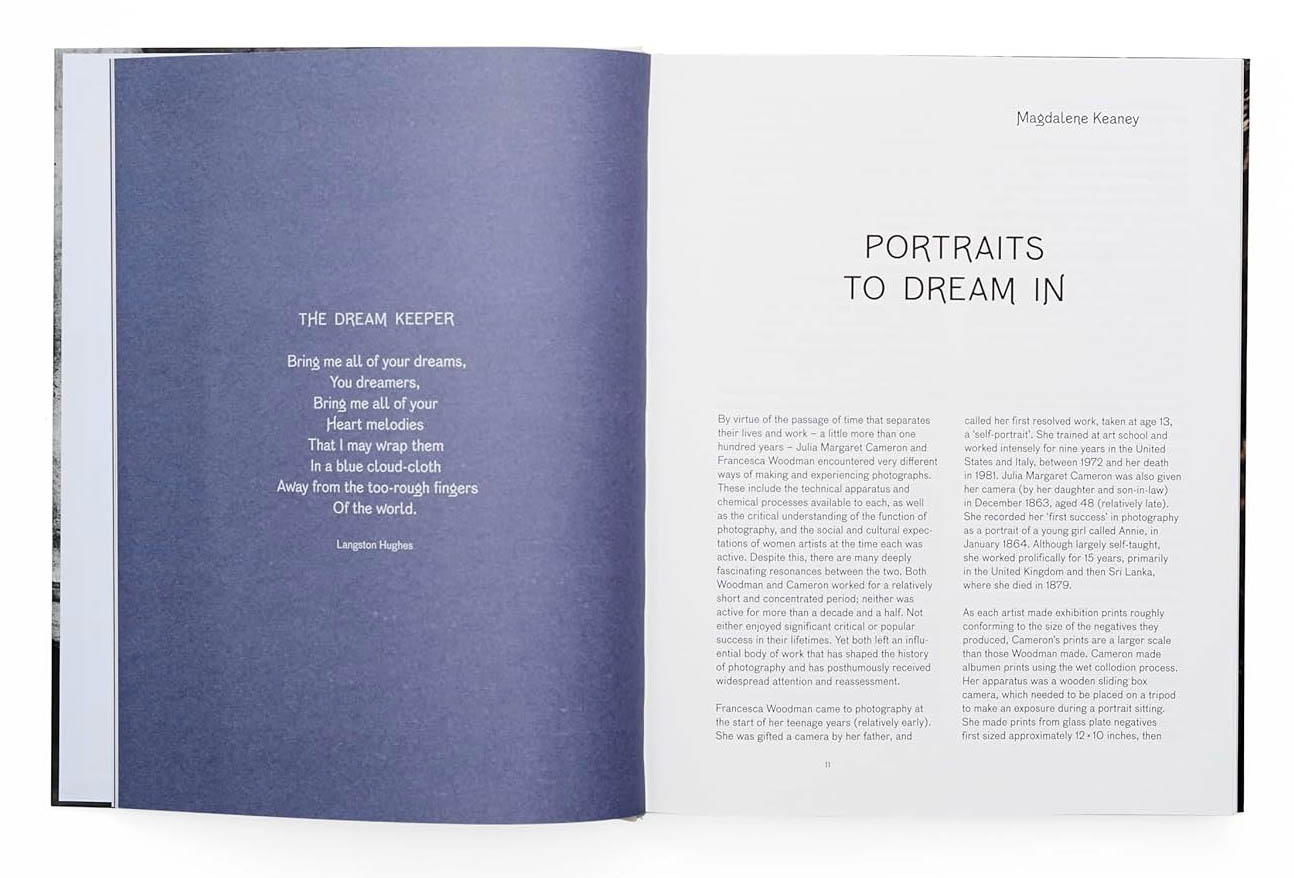
The Dream Keeper

Bring me all of your dreams,
You dreamers,
Bring me all of your
Heart melodies
That I may wrap them
In a blue cloud-cloth
Away from the too-rough fingers
Of the world


Langston Hughes


Major exhibition at the National Portrait Gallery to showcase rare vintage prints by two of art history’s most influential photographers – Francesca Woodman and Julia Margaret Cameron

More than 160 rare vintage prints will be exhibited as part of Francesca Woodman and Julia Margaret Cameron: Portraits to Dream In, as the two photographers – who worked 100 years apart – are presented in parallel for the first time.

The exhibition will present a thematic exploration of the photographic work produced throughout both artists’ entire careers, including their best known and less familiar work. Artist’s books by Francesca Woodman, which have never been exhibited in the UK, will be on display.


Julia Margaret Cameron. 'The Dream' 1869


Julia Margaret Cameron (British born India, 1815-1879)
The Dream
1869
Albumen print from wet collodion glass negative
Given by Alan S. Cole, 19 April 1913
© Victoria and Albert Museum, London


John Milton’s poem On his deceased Wife (about 1658) tells of a fleeting vision of his beloved returning to life in a dream.


L-R: 'The Dream (Mary Hillier)' by Julia Margaret Cameron, 1869; 'Untitled', 1979 by Francesca Woodman; 'Annie (My very first success in Photography)', by Julia Margaret Cameron, 1864; 'Self Portrait' at Thirteen by Francesca Woodman, 1972


L-R: The Dream (Mary Hillier) by Julia Margaret Cameron, 1869. Wilson Centre for Photography; Untitled, 1979 by Francesca Woodman. Courtesy Woodman Family Foundation © Woodman Family Foundation / DACS, London; Annie (My very first success in Photography), by Julia Margaret Cameron, 1864. The J. Paul Getty Museum, Los Angeles; Self Portrait at Thirteen by Francesca Woodman, 1972. Courtesy Woodman Family Foundation © Woodman Family Foundation / DACS, London


This spring, the National Portrait Gallery in London has staged an unexpected pairing of Francesca Woodman and Julia Margaret Cameron, whose bodies of photographic work were made a hundred years apart. The lushly titled Portraits to Dream In, the result of a thoughtful and imaginative curatorial inquiry, provides a compelling guide to their posthumous resemblances and describes a cultural arc of Romanticism from the mid-nineteenth-century to the turn of the twentieth, from luminous and pastoral to haunted and opaque. Both artists were engaged with the past, and the exhibition places them in a shared classicism of figuration and myth – a revelatory insight for Woodman. Both practiced photography for less than fifteen years. Both of their biographies often eclipse their critical reception. At times their congruence feels magnetic; at times their differences are as illuminating as their similarities.

The exhibition is organised by curator Magda Keaney in tidy themes that support affinities between the two women, among them “Angels and Otherworldly Beings,” “Mythology,” “Doubling,” and “Nature and Femininity.” Much of this is informative and, indeed, suggests a universal lexicon beyond this survey of dual sensibilities. Some of the rhymes are less plausible: a section entitled “Men” fails to persuade that Cameron’s depictions of eminent male political and cultural figures mirror Woodman’s male portraits. Unclothed men make rare appearances in Woodman’s photographs, where they do little to diminish the images as self-portraits. Festooned with a seashell, egg, pomegranate, or dead bird, the men serve as playful surrogates for the photographer herself.

Portraits to Dream In is an occasion to revel in the sumptuous texture of the photographic print, born from technologies decades apart. For both photographers, darkroom manipulation and tactility contribute to the pictures’ emotional mood, however diametric. For Cameron, the shallow depth of field and long shutter speed of the glass plate negative and wet collodion process renders a picture that flutters as if provisional, a vision subject to light glinting off an immaterial surface. They are as ethereal and transparent as Woodman’s are submersed in shadow; a moth bounding away from flame. One body of work, despite its soft patina, feels rooted in a sense of presence, the other by absence: fraught and confessional without evident disclosure.

Extract from Stephen Frailey. “An Unexpected Pairing of Francesca Woodman and Julia Margaret Cameron,” on the Aperture website May 16, 2024 [Online] Cited 03/06/2024


L-R: 'The Dream (Mary Hillier)' by Julia Margaret Cameron, 1869; 'Untitled', 1979 by Francesca Woodman


L-R: The Dream (Mary Hillier) by Julia Margaret Cameron, 1869. Wilson Centre for Photography; Untitled, 1979 by Francesca Woodman. Courtesy Woodman Family Foundation © Woodman Family Foundation / DACS, London


L-R: 'Annie (My very first success in Photography)', by Julia Margaret Cameron, 1864; 'Self Portrait at Thirteen' by Francesca Woodman, 1972


L-R: Annie (My very first success in Photography), by Julia Margaret Cameron, 1864. The J. Paul Getty Museum, Los Angeles; Self Portrait at Thirteen by Francesca Woodman, 1972. Courtesy Woodman Family Foundation © Woodman Family Foundation / DACS, London


Francesca Woodman (American, 1958-1981) 'Untitled' 1979


Francesca Woodman (American, 1958-1981)
Untitled
1979
Courtesy Woodman Family Foundation
© Woodman Family Foundation/DACS London


Julia Margaret Cameron (British born India, 1815-1879) 'Annie (My very first success in Photography)' 1864


Julia Margaret Cameron (British born India, 1815-1879)
Annie (My very first success in Photography)
1864
Albumen silver print
A photographic portrait of Annie Wilhemina Philpot (1857-1936)
The J. Paul Getty Museum, Los Angeles


A photographic portrait of Annie Wilhemina Philpot (1857-1936), taken by Julia Margaret Cameron (1815-1879) in 1864. This albumen print forms part of the Herschel Album, created by Cameron for her friend Sir John Herschel (1792-1871). Annie was the daughter of Rev. William Benamin Philpot, a poet and friend of Alfred Tennyson (1809-1892).

Julia Margaret Cameron is one of the most significant figures in nineteenth century photography. Born in Calcutta, she moved to Britain where she lived at Freshwater on the Isle of Wight. In 1863, aged forty-eight, she was given a camera by her daughter as a gift. From then on she took portraits of her family, friends and servants, as well as many eminent Victorians. Cameron was strongly influenced by classical art and many of her portraits are pictorial allegories based on religious or literary themes. In 1875 Cameron moved to Sri Lanka (Ceylon), where she died.

Text from the V&A website


Francesca Woodman (American, 1958-1981) 'Self Portrait at Thirteen' 1972


Francesca Woodman (American, 1958-1981)
Self Portrait at Thirteen
1972
Courtesy Woodman Family Foundation
© Woodman Family Foundation / DACS, London


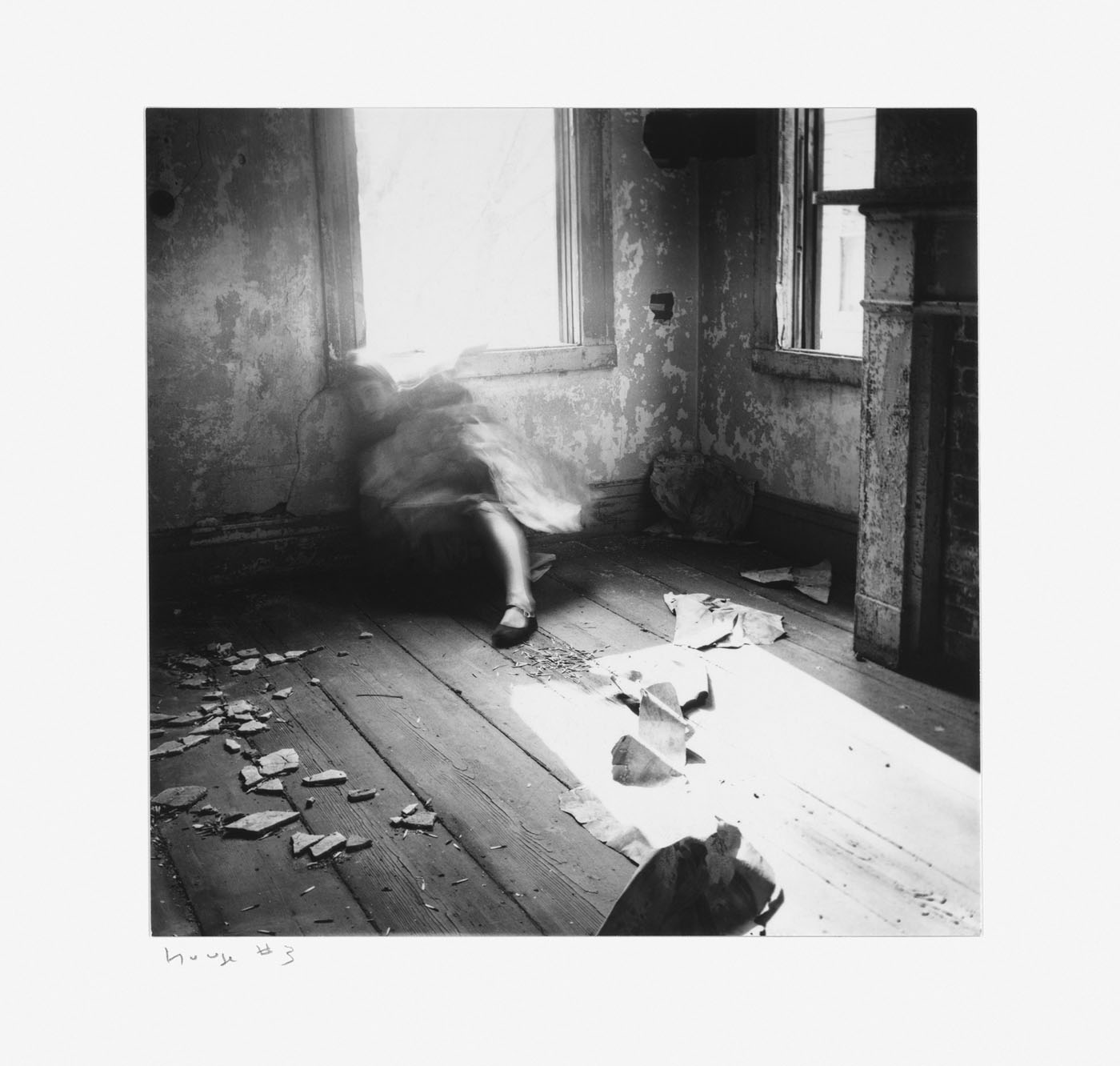
L-R: 'Untitled', from the 'Caryatid' series by Francesca Woodman, 1980; 'House #3' by Francesca Woodman, 1976; 'Untitled' by Francesca Woodman, 1977-1978


L-R: Untitled, from the Caryatid series by Francesca Woodman, 1980. Courtesy Woodman Family Foundation © Woodman Family Foundation / DACS, London; House #3 by Francesca Woodman, 1976. Courtesy Woodman Family Foundation © Woodman Family Foundation / DACS, London; Untitled by Francesca Woodman, 1977-1978 Courtesy Woodman Family Foundation © Woodman Family Foundation / DACS, London


Francesca Woodman (American, 1958-1981) 'Untitled' 1980 From the 'Caryatid' series


Francesca Woodman (American, 1958-1981)
Untitled
1980
From the Caryatid series
Courtesy Woodman Family Foundation
© Woodman Family Foundation / DACS, London


Francesca Woodman (American, 1958-1981) 'House #3' 1976


Francesca Woodman (American, 1958-1981)
House #3
1976
Courtesy Woodman Family Foundation
© Woodman Family Foundation / DACS, London


Francesca Woodman (American, 1958-1981) 'Untitled' 1977-1978


Francesca Woodman (American, 1958-1981)
Untitled
1977-1978
Courtesy Woodman Family Foundation
© Woodman Family Foundation / DACS, London


From 21 March to 16 June 2024, the National Portrait Gallery will display a major retrospective exhibition of work by two of the most significant photographers in the history of the medium – Julia Margaret Cameron (1815-1879) and Francesca Woodman (1958-1981). Bringing their work together for the first time in an exhibition of this scale, it will showcase more than 160 rare vintage prints from galleries, museums and private collections, including 96 works by Woodman and 71 by Cameron, spanning the entire careers of both photographers – who worked 100 years apart.

Francesca Woodman and Julia Margaret Cameron: Portraits to Dream In will offer a new way to consider these two artists, by moving away from the biographical emphasis that has often been the focus of how their work is understood. The exhibition challenges this approach in its insistence on experiencing the physical print, taking the picture making of Woodman and Cameron as a starting point for consideration of their work. While neither artist aimed for technical perfection in their printing, for each it was a dynamic and essential aspect of their creative process used to explore and extend the possibilities of photographic image making.

After an extensive curatorial research period, works by Julia Margaret Cameron have been selected for loan from major museums internationally including the Getty, Los Angeles; the Metropolitan Museum, New York City; the Victoria and Albert Museum, London; the National Science and Media Museum, Bradford; the Ashmolean Museum, Oxford; and the National Portrait Gallery’s own Collection. Prints made by Francesca Woodman in her lifetime, nearly 20 of which have not been previously published or exhibited, have been loaned primarily from the Woodman Family Foundation in New York, who have collaborated closely on the making of the exhibition and accompanying publication, with further loans from Tate and the Rhode Island School of Design

The exhibition’s title, Portraits to Dream In, suggests that when seen side by side, both artists conjure a dream state within their work as part of their shared exploration of appearance, identity, the muse, gender and archetypes. The title of the exhibition comes from an observation made by Woodman that photographs could be ‘places for the viewer to dream in’. Both Woodman and Cameron produced work that was deeply rooted in mythology and storytelling and each made portraits of those close to them to represent these narratives. Further, both women explored portraiture beyond its ability to record appearance.

Following a thematic approach, visitors will experience the work of Woodman and Cameron moving forward and back in time between the nineteenth and twentieth century; and also within the relatively short span of years that each artist was active – neither worked for more than fifteen years. Themes on display will comprise: Declaring intentions & claiming space; Angels & Otherworldly Beings; Mythology; Doubling; Nature & femininity; Caryatids & the classical form; Men and Models & Muses.

Key works on display will include the first forays both artists made into the medium of photography, as they began to portray their unique perspectives and carve out distinctive styles. These include Cameron’s self-declared ‘first success’, a portrait of Annie Wilhemina Philpot in 1864, accompanied by Woodman’s ‘Self-portrait at thirteen’, taken during a summer holiday in Antella, Italy in 1972. Photographs depicting angelic and otherworldly figures will be presented in a dense constellation with pieces from Woodman’s evocative and often abstracted Angels series contrasted against Cameron’s more direct representations of cherubic beings and winged cupids. Not to be missed images by Francesca Woodman will include Polka Dots #5 and House #3 both made in 1976, seen alongside ethereal portraits of the British actress Ellen Terry made by Julia Margaret Cameron in 1864.

Other defining works by Woodman include Caryatid pieces from a major photographic project developed in the last year of her life in which she experimented with large scale diazotype prints, including depictions of herself and other models as caryatids – carved female figures which take the place of columns in ancient Greek temples. The exhibition will be the first to draw significant attention to Woodman’s portraits of men as well as exploring the importance of her ongoing photographs of friends. Providing additional insight into her practice, contact sheets and examples of Woodman’s artist’s books will be on display, exhibited in the UK for the first time.

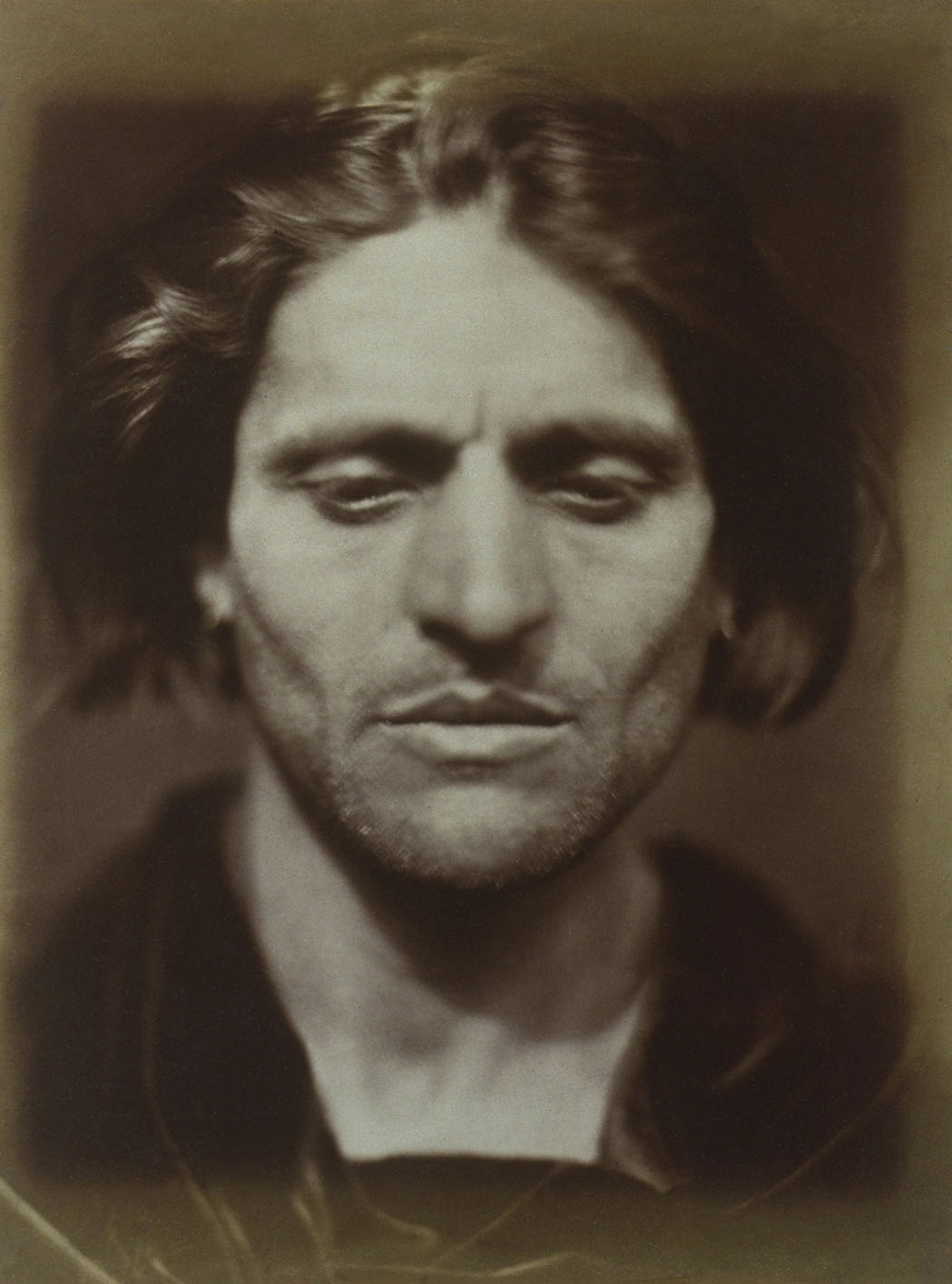
The exhibition will include many of Julia Margaret Cameron’s most famous and much loved portraits, including those of her niece and favourite model, Julia Jackson, who would later be the mother to Bloomsbury artists Virginia Wolf and Vanessa Bell; her striking depiction of Alice Liddell as the goddess Pomona; her portraits of prominent Victorian men including John Frederick William Herschel who she captured as he posed dramatically in The Astronomer (1867); and her frequent muses, May Prinsep and Mary Ann Hillier.

“It is a great pleasure to bring together the work of Francesca Woodman and Julia Margaret Cameron for the first time in this innovative and imaginative exhibition at the National Portrait Gallery. Though, of course, Cameron could not have known Woodman, and Woodman did not explicitly reference Cameron, they shared thematic and formal interests uncovered through the exhibition. Paired in this way, we see their work – individually and together – in a new light; one that feels contemporary and timeless. We are immensely grateful to our lead curator Magdalene Keaney for conceptualising this exhibition with great expertise and for the team at the Woodman Family Foundation in New York who have been wonderfully collaborative partners.”

Dr. Nicholas Cullinan OBE
Director, National Portrait Gallery

“Both Francesca Woodman and Julia Margaret Cameron were utterly committed to the practice of photography and to their practice as artists without reservation. They both worked incredibly hard at times when women were marginal in the history of art and photography. I hope that visitors relish the physical experience of seeing such a large collection of prints that each artist made. They are beautiful, subtle, intricate, and beguiling. Then of course to come away knowing more about these two women artists who have defined the history of photography. I hope it poses questions about how we might think in new ways about relationships between 19th and 20th century photographic practice and what a portrait is and can be.”

Magdalene Keaney
Curator, Francesca Woodman and Julia Margaret Cameron: Portraits to Dream In

The exhibition will be accompanied by the publication, Francesca Woodman and Julia Margaret Cameron: Portraits to Dream In by curator Magdalene Keaney, which will include essays and contributions from the collections curator of the Woodman Family Foundation, Katarina Jerinic, and leading photography historian, Helen Ennis.

Press release from the National Portrait Gallery

All images National Portrait Gallery, London and © National Portrait Gallery, London unless otherwise stated


Julia Margaret Cameron (British born India, 1815-1879) 'I Wait (Rachel Gurney)' 1872


Julia Margaret Cameron (British born India, 1815-1879)
I Wait (Rachel Gurney)
1872
Albumen silver print
32.7 × 25.4cm (12 7/8 × 10 in.)
The J. Paul Getty Museum, Los Angeles


Francesca Woodman (American, 1958-1981) 'Untitled' 1977 From the 'Angels' series


Francesca Woodman (American, 1958-1981)
Untitled
1977
From the Angels series
Courtesy Woodman Family Foundation
© Woodman Family Foundation / DACS, London


Throughout her career, the young American photographer Francesca
Woodman revisited the theme of angels. In On Being an Angel (1976), she is
seen bending backward as light falls on her white body. A black umbrella is
in the distance. The following year she made a new version – an image with
a darker mood in which she shows her face. Woodman developed the angel
motif during a visit to Rome, where she photographed herself in a large,
abandoned building. In these images, she is wearing a white petticoat, but
her chest is bare. White pieces of cloth in the background are like wings. She
called these photographs From Angel series (1977) and From a series on
Angels (1977). There are also a number of pictures simply called Angels
(1977-1978), and among them is one where again she is bending backward, but this time in front of a graffitied wall. These angels are but a few examples of Francesca Woodman’s practice of staging her body and her face.

Anna Tellgren. Francesca Woodman: On Being an Angel (50kb pdf). 2015, p. 9


Julia Margaret Cameron (British born India, 1815-1879) 'Cherub and Seraph' 1866


Julia Margaret Cameron (British born India, 1815-1879)
Cherub and Seraph
1866
Albumen silver print
A photographic study of William Frederick ‘Freddy’ Gould (born 1861) and Elizabeth ‘Topsy’ Keown (born 1859)
National Science and Media Museum


A photographic study of William Frederick ‘Freddy’ Gould (born 1861) and Elizabeth ‘Topsy’ Keown (born 1859), taken by Julia Margaret Cameron (1815-1879) in 1866. This albumen print forms part of the Herschel Album, created by Cameron for her friend Sir John Herschel (1792-1871).


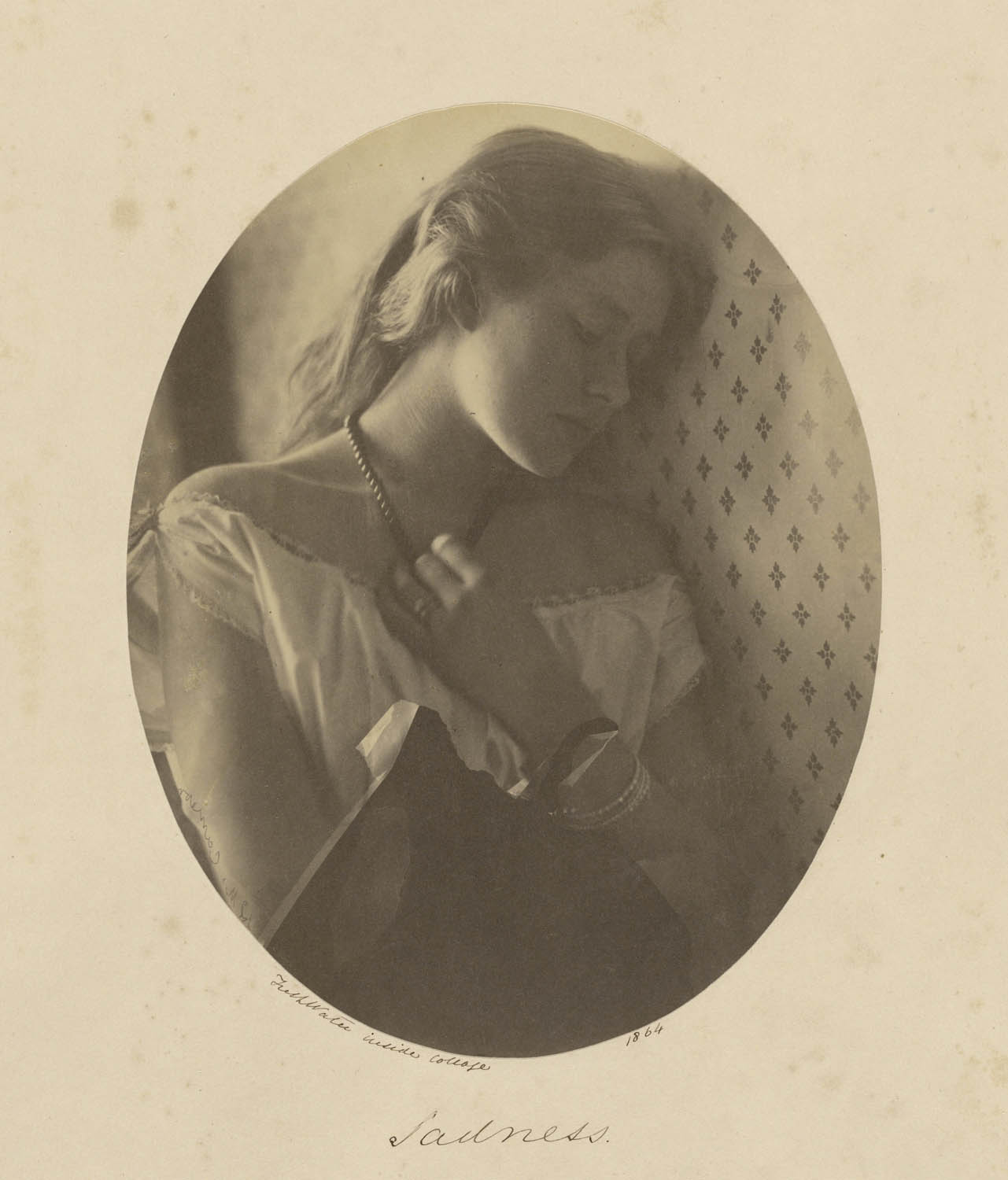
Julia Margaret Cameron (British born India, 1815-1879) 'Sadness (Ellen Terry)' 1864


Julia Margaret Cameron (British born India, 1815-1879)
Sadness (Ellen Terry)
1864
Albumen silver print
22.2 x 17.6cm (8 3/4 x 6 15/16 in.)
Albumen silver print
The J. Paul Getty Museum, Los Angeles


Dame Alice Ellen Terry GBE (27 February 1847 – 21 July 1928) was a leading English actress of the late 19th and early 20th centuries.

Born into a family of actors, Terry began performing as a child, acting in Shakespeare plays in London, and toured throughout the British provinces in her teens. At 16, she married the 46-year-old artist George Frederic Watts, but they separated within a year. She soon returned to the stage but began a relationship with the architect Edward William Godwin and retired from the stage for six years. She resumed acting in 1874 and was immediately acclaimed for her portrayal of roles in Shakespeare and other classics.

In 1878 she joined Henry Irving’s company as his leading lady, and for more than the next two decades she was considered the leading Shakespearean and comic actress in Britain. Two of her most famous roles were Portia in The Merchant of Venice and Beatrice in Much Ado About Nothing. She and Irving also toured with great success in America and Britain.

In 1903 Terry took over management of London’s Imperial Theatre, focusing on the plays of George Bernard Shaw and Henrik Ibsen. The venture was a financial failure, and Terry turned to touring and lecturing. She continued to find success on stage until 1920, while also appearing in films from 1916 to 1922. Her career lasted nearly seven decades.

Text from the Wikipedia website


Francesca Woodman (American, 1958-1981) 'Polka Dots #5' 1976


Francesca Woodman (American, 1958-1981)
Polka Dots #5
1976
Courtesy Woodman Family Foundation
© Woodman Family Foundation / DACS, London


Julia Margaret Cameron (British born India, 1815-1879) 'Julia Prinsep Stephen (née Jackson, formerly Mrs Duckworth)' 1867


Julia Margaret Cameron (British born India, 1815-1879)
Julia Prinsep Stephen (née Jackson, formerly Mrs Duckworth)
1867
Albumen silver print
National Portrait Gallery, London


Julia Prinsep Stephen (née Jackson; formerly Duckworth; 7 February 1846 – 5 May 1895) was an English Pre-Raphaelite model and philanthropist. She was the wife of the biographer Leslie Stephen and mother of Virginia Woolf and Vanessa Bell, members of the Bloomsbury Group.

Julia Prinsep Jackson was born in Calcutta to an Anglo-Indian family, and when she was two her mother and her two sisters moved back to England. She became the favourite model of her aunt, the celebrated photographer Julia Margaret Cameron, who made more than 50 portraits of her. Through another maternal aunt, she became a frequent visitor at Little Holland House, then home to an important literary and artistic circle, and came to the attention of a number of Pre-Raphaelite painters who portrayed her in their work.

Married to Herbert Duckworth, a barrister, in 1867 she was soon widowed with three infant children. Devastated, she turned to nursing, philanthropy and agnosticism, and found herself attracted to the writing and life of Leslie Stephen, with whom she shared a friend in Anny Thackeray, his sister-in-law.

After Leslie Stephen’s wife died in 1875 he became close friends with Julia and they married in 1878. Julia and Leslie Stephen had four further children, living at 22 Hyde Park Gate, South Kensington, together with his seven-year-old mentally disabled daughter, Laura Makepeace Stephen. Many of her seven children and their descendants became notable. In addition to her family duties and modelling, she wrote a book based on her nursing experiences, Notes from Sick Rooms, in 1883.

She also wrote children’s stories for her family, eventually published posthumously as Stories for Children and became involved in social justice advocacy. Julia Stephen had firm views on the role of women, namely that their work was of equal value to that of men, but in different spheres, and she opposed the suffrage movement for votes for women. The Stephens entertained many visitors at their London home and their summer residence at St Ives, Cornwall. Eventually the demands on her both at home and outside the home started to take their toll. Julia Stephen died at her home following an episode of rheumatic fever in 1895, at the age of 49, when her youngest child was only 11. The writer Virginia Woolf provides a number of insights into the domestic life of the Stephens in both her autobiographical and fictional work.

Text from the Wikipedia website


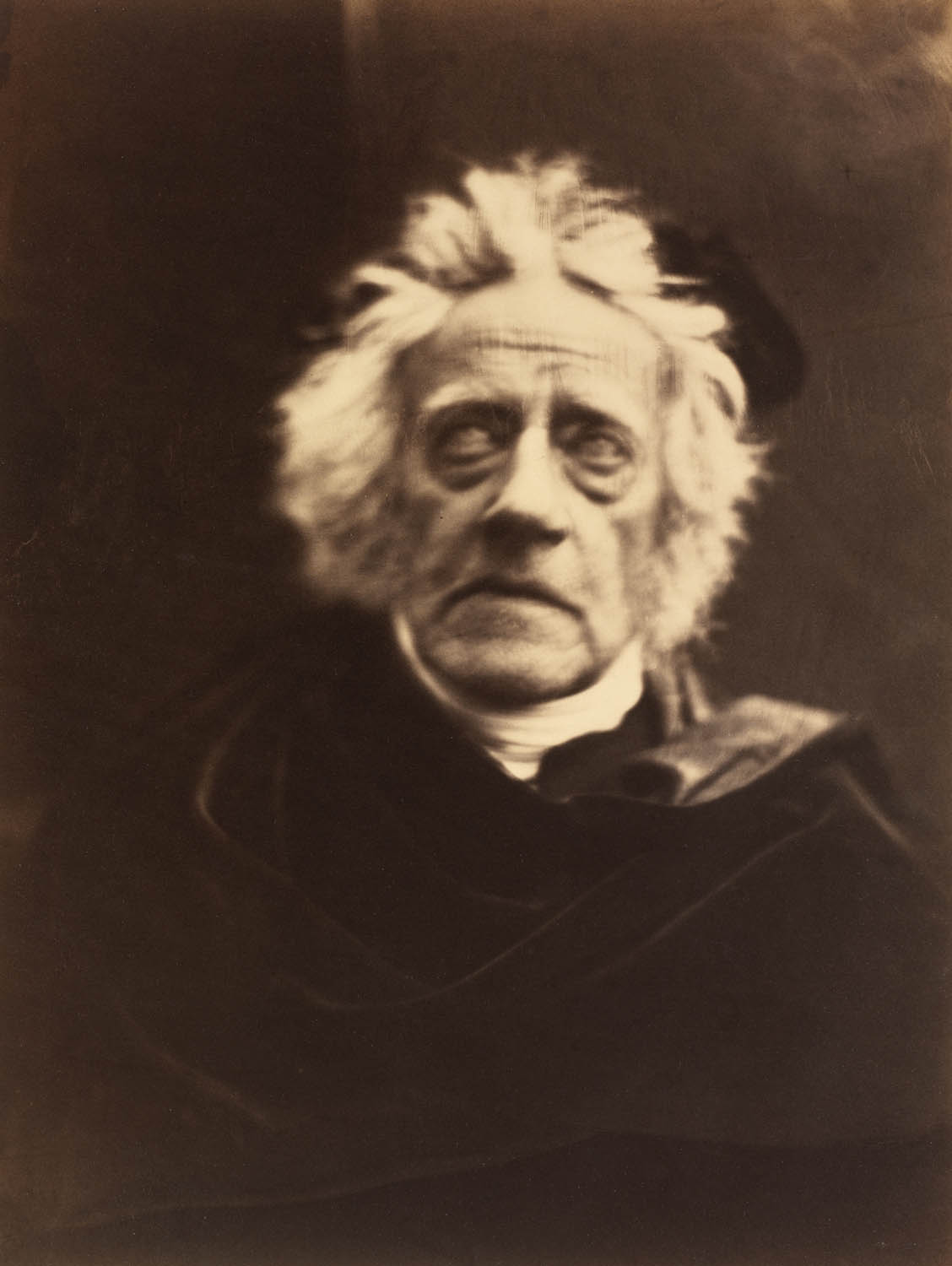
Julia Margaret Cameron (British born India, 1815-1879) 'The Astronomer (Sir John Frederick William Herschel)' 1867


Julia Margaret Cameron (British born India, 1815-1879)
The Astronomer (Sir John Frederick William Herschel)
1867
Albumen silver print
Courtesy of the RISD Museum, Providence, RI


Sir John Frederick William Herschel, 1st Baronet KH FRS (7 March 1792 – 11 May 1871) was an English polymath active as a mathematician, astronomer, chemist, inventor, and experimental photographer who invented the blueprint and did botanical work.

Herschel originated the use of the Julian day system in astronomy. He named seven moons of Saturn and four moons of Uranus – the seventh planet, discovered by his father Sir William Herschel. He made many contributions to the science of photography, and investigated colour blindness and the chemical power of ultraviolet rays. His Preliminary Discourse (1831), which advocated an inductive approach to scientific experiment and theory-building, was an important contribution to the philosophy of science. …

Photography

Herschel made numerous important contributions to photography. He made improvements in photographic processes, particularly in inventing the cyanotype process, which became known as blueprints, and variations, such as the chrysotype. In 1839, he made a photograph on glass, which still exists, and experimented with some colour reproduction, noting that rays of different parts of the spectrum tended to impart their own colour to a photographic paper. Herschel made experiments using photosensitive emulsions of vegetable juices, called phytotypes, also known as anthotypes, and published his discoveries in the Philosophical Transactions of the Royal Society of London in 1842. He collaborated in the early 1840s with Henry Collen, portrait painter to Queen Victoria. Herschel originally discovered the platinum process on the basis of the light sensitivity of platinum salts, later developed by William Willis.

Herschel coined the term photography in 1839. Herschel was also the first to apply the terms negative and positive to photography.

Herschel discovered sodium thiosulfate to be a solvent of silver halides in 1819, and informed Talbot and Daguerre of his discovery that this “hyposulphite of soda” (“hypo”) could be used as a photographic fixer, to “fix” pictures and make them permanent, after experimentally applying it thus in early 1839.

Herschel’s ground-breaking research on the subject was read at the Royal Society in London in March 1839 and January 1840.

Text from the Wikipedia website


Julia Margaret Cameron (British born India, 1815-1879) 'Pomona (Alice Liddell)' 1872


Julia Margaret Cameron (British born India, 1815-1879)
Pomona (Alice Liddell)
1872
Albumen silver print
The Metropolitan Museum of Art., New York
David Hunter McAlpin Fund, 1963


Pomona was the goddess of fruit trees, gardens, and orchards. Unlike many other Roman goddesses and gods, she does not have a Greek counterpart, though she is commonly associated with Demeter. She watches over and protects fruit trees and cares for their cultivation.

Symbolically, Pomona and her fruit garden represent abundance, nurture and the simple pleasure derived from nature. She is often depicted in a garden full of life, colour and opulence, with her milky soft flesh on display and a cornucopia of fruit and flowers on her lap.


Julia Margaret Cameron (British born India, 1815-1879) 'The Gardener's Daughter' 1867


Julia Margaret Cameron (British born India, 1815-1879)
The Gardener’s Daughter
1867
Albumen silver print
A photographic study of Mary Ryan (1848-1914)
National Science and Media Museum


A photographic study of Mary Ryan (1848-1914), taken by Julia Margaret Cameron (1815-1879) in 1867. This albumen print forms part of the Herschel Album, created by Cameron for her friend Sir John Herschel (1792-1871).

‘The Gardener’s Daughter’ was the title of a poem by Alfred Tennyson (1809-1892). Cameron’s photograph was inspired by the lines: ‘Gown’d in pure white, that fitted to the shape, Holding the bush, to fix it back, she stood.’


Julia Margaret Cameron (British born India, 1815-1879) 'Iago – study from an Italian' 1867


Julia Margaret Cameron (British born India, 1815-1879)
Iago – study from an Italian
1867
Albumen silver print
A photographic portrait of the artist’s model, Angelo Colarossi (born about 1839)
National Science and Media Museum


A photographic portrait of the artist’s model, Angelo Colarossi (born about 1839), taken by Julia Margaret Cameron (1815-1879) in 1867. The print forms part of the Herschel Album, created by Cameron for her friend Sir John Herschel (1792-1871).

This is the only existing print known of ‘Iago’. The negative may have been destroyed intentionally by Cameron, and it is believed that the print was taken for George Frederic Watts (1817-1904) to work from for a painting.

Iago was the villain of Shakespeare’s play ‘Othello’.


'Francesca Woodman and Julia Margaret Cameron: Portraits to Dream In' book front cover


Francesca Woodman and Julia Margaret Cameron: Portraits to Dream In book front cover


'Francesca Woodman and Julia Margaret Cameron: Portraits to Dream In' book back cover


Francesca Woodman and Julia Margaret Cameron: Portraits to Dream In book back cover


'Francesca Woodman and Julia Margaret Cameron: Portraits to Dream In' book


Francesca Woodman and Julia Margaret Cameron: Portraits to Dream In book p. 11


'Francesca Woodman and Julia Margaret Cameron: Portraits to Dream In' book


Francesca Woodman and Julia Margaret Cameron: Portraits to Dream In book back cover pp. 70-71


Francesca Woodman and Julia Margaret Cameron: Portraits to Dream In

Magdalene Keaney (Editor), Katarina Jerinic (Contributor), Helen Ennis (Contributor)

Hardcover – 26 June 2024


Francesca Woodman and Julia Margaret Cameron: Portraits to Dream In draws parallels between two of the most significant practitioners in the history of photography, presenting fresh research, rare vintage prints, and previously unseen archival works.

‘I feel that photographs can either document and record reality or they can offer images as an alternative to everyday life: places for the viewer to dream in.’
~ Francesca Woodman, 1980

Living and working over a century apart, Julia Margaret Cameron (1815-1879) and Francesca Woodman (1958-1981) experienced very different ways of making and understanding photographs. Francesca Woodman and Julia Margaret Cameron: Portraits to Dream In accompanies the exhibition of the same name opening at the National Portrait Gallery, London, in March 2024. Spanning the careers of both artists, the beautifully illustrated catalogue includes their best-known photographs as well as less familiar images. The exhibition works are arranged into eight thematic sections with feature essays, offering an accessible, engaging opportunity to consider both artists in a new light.

This publication presents the artists’ exploration of portraiture as a ‘dream space’. It makes new connections between their work, which pushed the boundaries of the photographic medium and experimented with ideas of beauty, symbolism, transformation and storytelling to produce some of art history’s most compelling and admired photographs.

National Portrait Gallery Publications
208 pages

Text from the Amazon Australia website


National Portrait Gallery
St Martin’s Place
London, WC2H 0HE

Opening hours:
Open daily: 10.30 – 18.00
Friday and Saturday: 10.30 – 21.00

National Portrait Gallery website

LIKE ART BLART ON FACEBOOK

Back to top

Exhibition: ‘Weegee, Autopsy of the Spectacle’ at the Foundation Henri Cartier-Bresson, Paris

Exhibition dates: 30th January – 19th May, 2024

Exhibition curator: Clément Chéroux, director, Fondation Henri Cartier-Bresson


Weegee (American, 1899-1968) 'Self-Portrait, Weegee with Speed Graphic Camera' 1950


Weegee (American, 1899-1968)
Self-Portrait, Weegee with Speed Graphic Camera
1950
Gelatin silver print
© International Center of Photography. Collection Friedsam


To see ourselves as others see us

This exhibition attempts to reconcile the two sides of the work of American photographer Weegee (Arthur Felig, 1899-1968) – “First are his stories for the New York press from 1935-1945. Then, photo-caricatures of public personalities developed during his Hollywood period, between 1948-1951, which he continued to produce for the rest of his life” – by showing that, beyond formal differences, the photographer’s approach is a critically coherent investigation into the omnipresence of the spectacle in modern society.

The spectacle is a central notion in the Situationist theory, developed by Guy Debord in his 1967 book The Society of the Spectacle:

“Debord traces the development of a modern society in which authentic social life has been replaced with its representation… The spectacle is the inverted image of society in which relations between commodities have supplanted relations between people, in which “passive identification with the spectacle supplants genuine activity”. “The spectacle is not a collection of images,” Debord writes, “rather, it is a social relation among people, mediated by images.””1


While both halves of Weegee’s photographic work picture the spectacle, I believe that they are a different but connected order of being. Like yin and yang, Weegee’s scenes of chaos “Murder is my business” and “photo-caricatures” emerge from the same psyche but image equal opposites which both repel, attract and complement each other.

Weegee’s photographs which tell stories for the New York press are external representations or emanations captured from the world around us, whereas his later photo-caricatures of public personalities feel to me to be internalised, dream-like representations of his own feelings towards the celebrity people he observed and photographed as much as they are offer insights into their personality.2 Thus, Weegee’s photographs are an examination of a body (an autopsy) both external and internal.

Personally I don’t think that it is necessary to reconcile both halves of Weegee’s work. The bodies exist for what they are: perceptive insights into the existence and spirit of the world and the human race, spec(tac)ular images that mirror a social relation among people which don’t necessarily have to be conflated one with the other.

Dr Marcus Bunyan


1/ Debord, Guy (1994)[1967] The Society of the Spectacle, translation by Donald Nicholson-Smith (New York: Zone Books), p. 4 quoted in “The Society of the Spectacle,” on the Wikipedia website [Online] Cited 10/05/2024

2/ “external exaggeration high-lights internal character and distortion offers surprising insights into personality”
“How your TV heroes look to Weegee’s magic camera” in Look magazine


Many thank to the Foundation Henri Cartier-Bresson for allowing me to publish the photographs in the posting. Please click on the photographs for a larger version of the image.


“The curious […], they’re always in a hurry […], but they still find the time to stop and look.


Weegee


“Crime was my oyster,” Weegee wrote in his 1961 memoir, Weegee by Weegee. “I was friend and confidant to them all. The bookies, madams, gamblers, call girls, pimps, con men, burglars and jewel fencers.” … Weegee’s photos from the 1930s and ’40s defined Manhattan as a film noir nightscape of gangsters, bums, slumming swells and tenement dwellers.”


John Strausbaugh. “Crime Was Weegee’s Oyster,” on The New York Times website June 20, 2008 [Online] Cited 13/04/2024


“Weegee is not the first nor the only person to have taken interest in people watching. Not long before him, in 1937, Henri Cartier-Bresson photographed spectators at the Coronation of George VI for Ce Soir. And a quarter century prior, in 1912, Eugène Atget photographed passers-by observing a solar eclipse at Place de la Bastille. But Weegee took the idea even further. He systematised it. He made it a principle he never shied from applying at the first opportunity. It’s a way of placing things at a distance, pushing the viewers to ask themselves about the manner in which they look, making them aware of the fact that they themselves, like the people watching in the photo, are in a voyeuristic position. It’s also a critique of how American society transforms news into spectacle.”


Clément Chéroux


The specular image, then, is accompanied by anxiety-anxiety that it will “soon dissolve like a cloud.” It is the nature of visions (apparitions) to dissolve before our very eyes without disclosing their secrets, just as dream-images are quickly forgotten upon awakening.


Craig Owens. “Posing,” in Difference: On Representation and Sexuality. New York: The New Museum of Contemporary Art, 1985, p. 12


There’s still a mystery to Weegee. The American photographer’s career seems to be split in two. First are his stories for the New York press from 1935-1945. Then, photo-caricatures of public personalities developed during his Hollywood period, between 1948-1951, which he continued to produce for the rest of his life. How can these diametrically opposed bodies of work coexist? Critics have enjoyed highlighting the opposition between the two periods, praising the former and disparaging the latter. This project seeks to reconcile the two parts of Weegee by showing that, beyond formal differences, the photographer’s approach is critically coherent.

The spectacle is omnipresent in Weegee’s work. In the first part of his career, coinciding with the rise of the tabloid press, he was an active participant in transforming news into spectacle. To show this, he often included spectators or other photographers in the foreground of his images. In the second half of his career, Weegee mocked the Hollywood spectacular, its ephemeral glory, adoring crowds, and social scenes. Some years before the Situationist International, his photography presented an incisive critique of the Society of the Spectacle.

Curator Clément Chéroux

Wall text from the exhibition


Installation view of the exhibition 'Weegee, Autopsy of the Spectacle' at the Foundation Henri Cartier-Bresson, Paris


Installation view of the exhibition Weegee, Autopsy of the Spectacle at the Foundation Henri Cartier-Bresson, Paris showing at left, Self-Portrait, Weegee with Speed Graphic Camera (1950, above); at second left, “Chevrolet”. Weegee in front of his typewriter, installed in the trunk of a 1938 Chevrolet, New York (c. 1943, below); at third left bottom, Weegee covering the morning line-up at police headquarters, New York (c.  1939, below); at fourth left, Self-portrait (1950,below); at fifth left, Frank Pape, Arrested for Homicide (1944, below); at sixth left, Charles Sodokoff and Arthur Webber Use Their Top Hats to Hide Their Faces (1942, below); and at eighth left, Man Arrested for Cross-Dressing, New York (Gay Deceiver) (1939, below)


Weegee (American, 1899-1968) '"Chevrolet". Weegee in front of his typewriter, installed in the trunk of a 1938 Chevrolet, New York' c. 1943


Weegee (American, 1899-1968)
“Chevrolet”. Weegee in front of his typewriter, installed in the trunk of a 1938 Chevrolet, New York
c. 1943
Gelatin silver print
© Weegee Archive / International Center of Photography, New York / Collection Galerie Berinson, Berlin
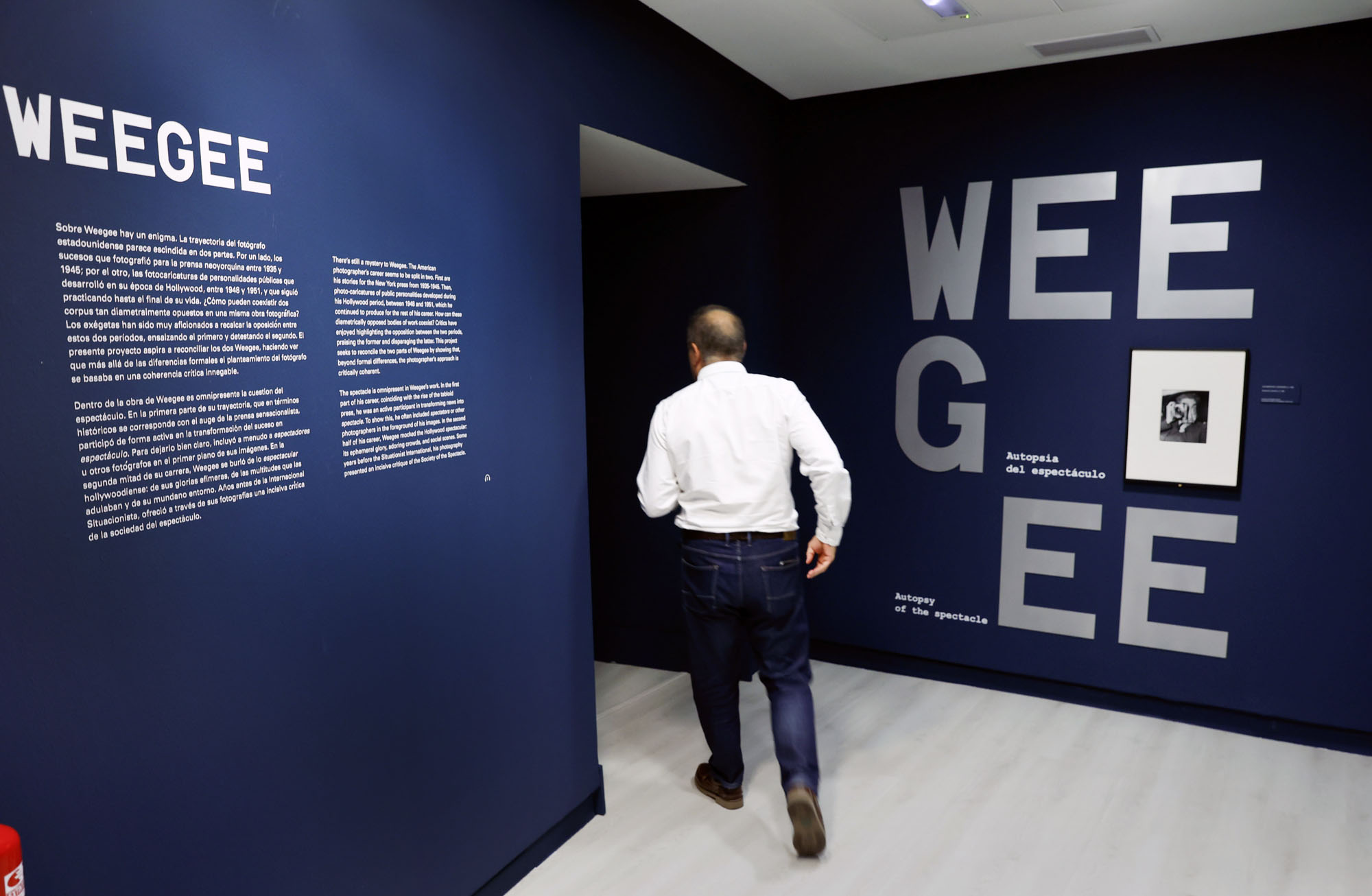
 

Weegee Himself: “I have always been a doer and not a thinker.” Weegee enjoyed putting himself in front of the camera, re-enacting circumstances he was confronted with in his daily work. In the name of pedagogy, and probably a little out of narcissism and self-advertisement, he took pictures of himself writing captions for his photographs in the back of his car, in police wagons and behind bars, never without his camera.

Wall text from the exhibition


Unidentified photographer. 'Untitled [Weegee covering the morning line-up at police headquarters, New York]' c. 1939


Unidentified photographer
Untitled [Weegee covering the morning line-up at police headquarters, New York]
c.  1939
Gelatin silver print
© International Center of Photography
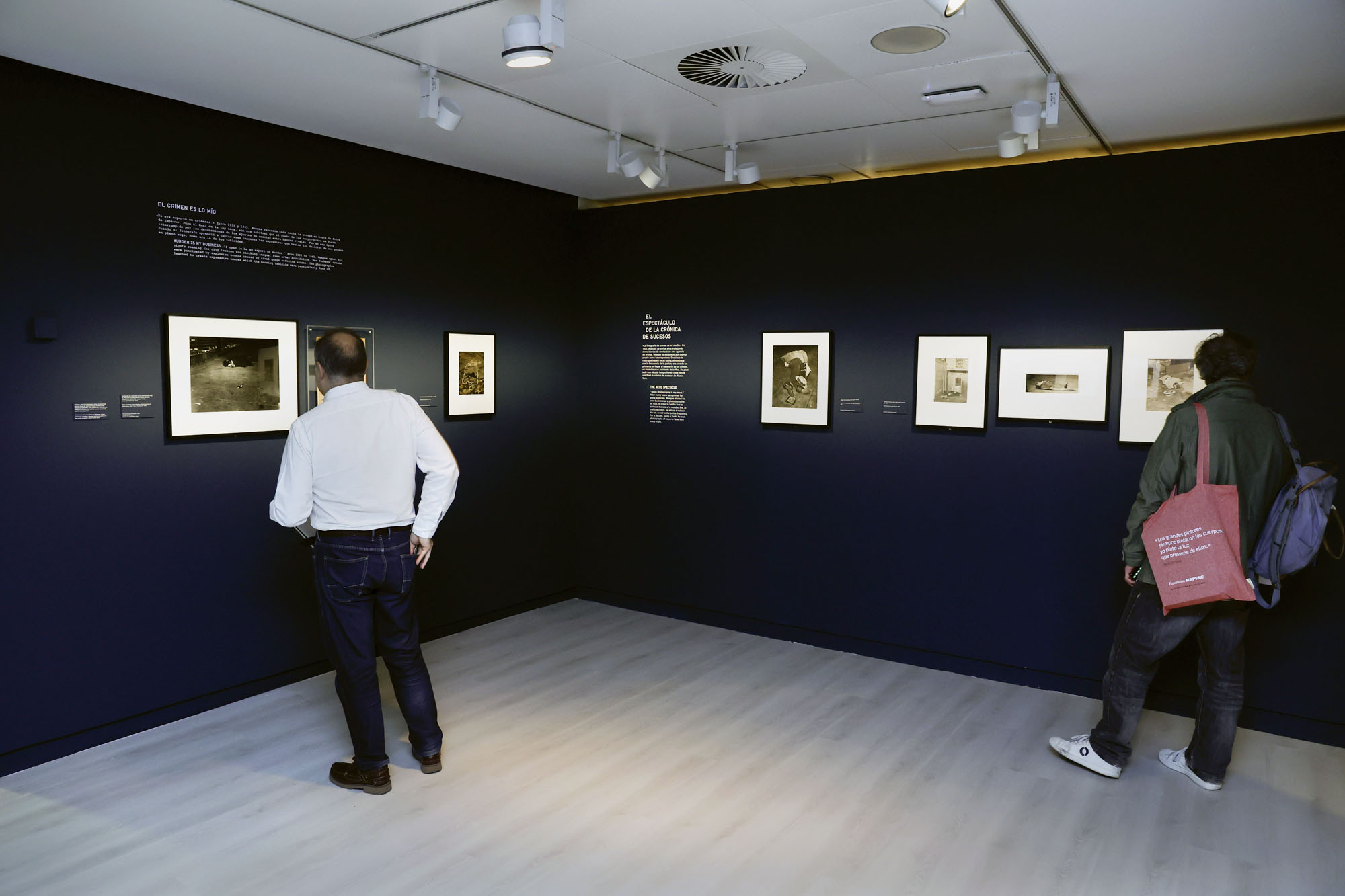
 

Weegee (American, 1899-1968) 'Self-portrait' 1950


Weegee (American, 1899-1968)
Self-portrait
1950
Gelatin silver print
© International Center of Photography
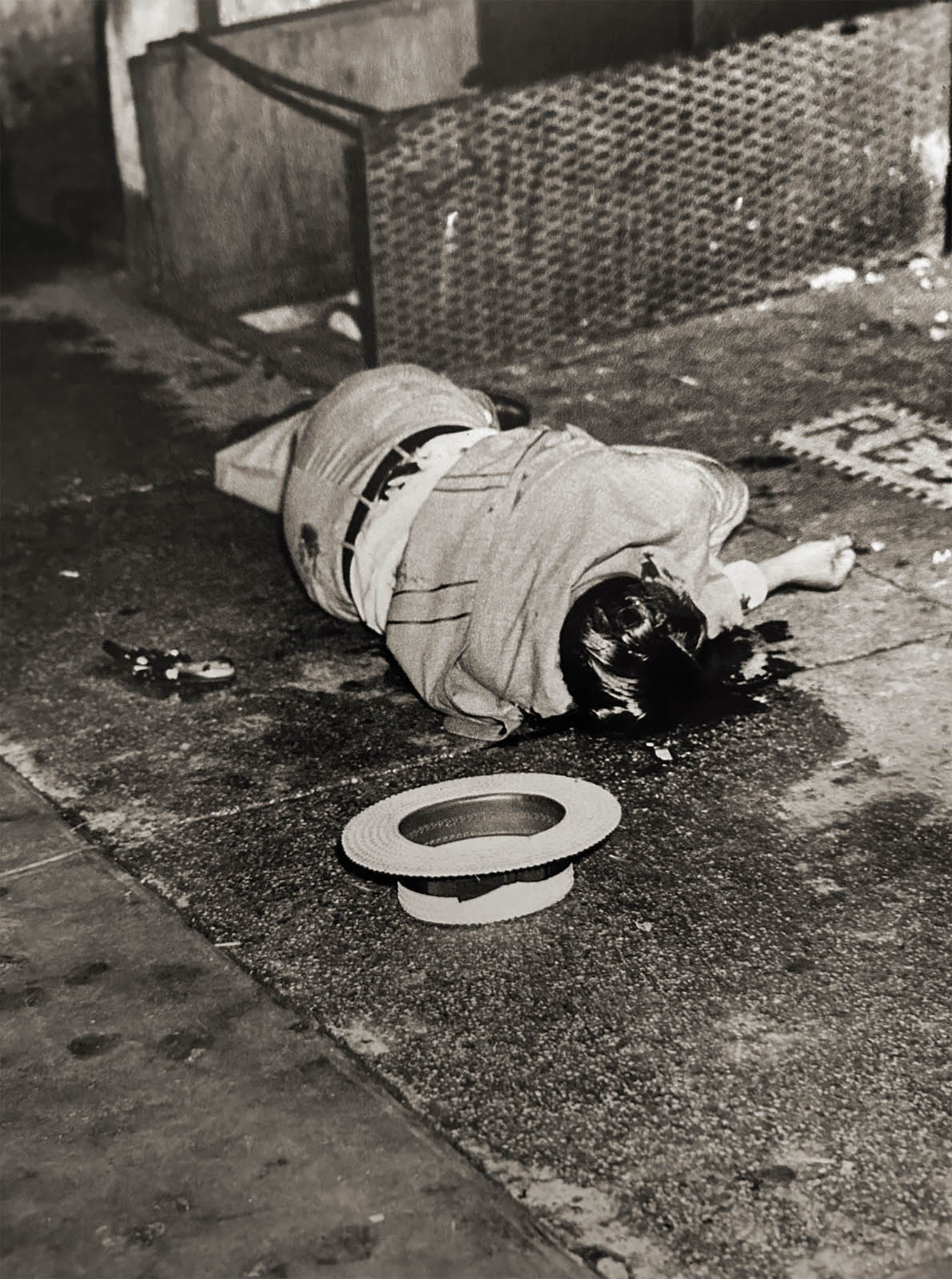


Weegee Tells How

Arthur Fellig, better known as Weegee, was a New York city freelance news photographer from the 1930s to the 1950s. Here he talks about his career and gives advice to those wanting to become news photographers.


Weegee (American, born Ukraine (Austria), Złoczów (Zolochiv) 1899 - 1968 New York) 'Frank Pape, Arrested for Homicide' 1944


Weegee (American, 1899-1968)
Frank Pape, Arrested for Homicide
1944
Gelatin silver print
© International Center of Photography


Weegee (American, 1899-1968) 'Charles Sodokoff and Arthur Webber Use Their Top Hats to Hide Their Faces' 1942


Weegee (American, 1899-1968)
Charles Sodokoff and Arthur Webber Use Their Top Hats to Hide Their Faces
1942
Gelatin silver print
© International Center of Photography. Louis Stettner Archives, Paris
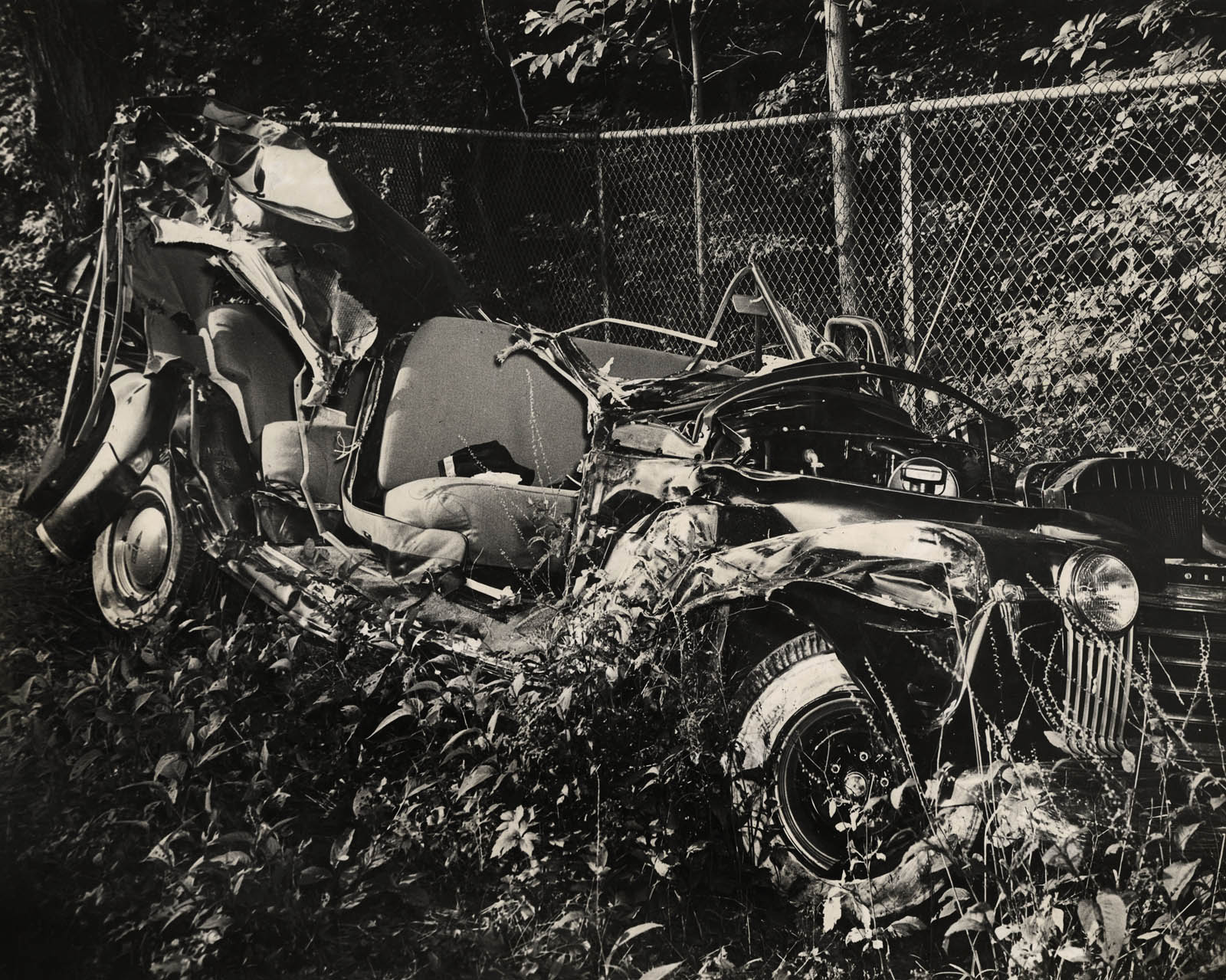
 

Weegee (American, 1899-1968) 'Man Arrested for Cross-Dressing, New York (Gay Deceiver)' 1939


Weegee (American, 1899-1968)
Man Arrested for Cross-Dressing, New York (Gay Deceiver)
1939
Gelatin silver print
© International Center of Photography. Louis Stettner Archives, Paris


Installation view of the exhibition 'Weegee, Autopsy of the Spectacle' at the Foundation Henri Cartier-Bresson, Paris showing at second left, Weegee's 'Man Arrested for Cross-Dressing, New York (Gay Deceiver)' (1939); and at top right, a magazine print of his photograph 'Untitled [Young man smoking cigarette in crashed car while waiting for ambulance, New York]' (1941)


Installation view of the exhibition Weegee, Autopsy of the Spectacle at the Foundation Henri Cartier-Bresson, Paris showing at second left, Weegee’s Man Arrested for Cross-Dressing, New York (Gay Deceiver) (1939, above); and at top right, a magazine print of his photograph Untitled [Young man smoking cigarette in crashed car while waiting for ambulance, New York] (1941, below)


Off Road: “Sudden death for one… sudden shock for the other.” American culture is fascinated by twisted metal. In the 19th century, a railroad company staged public collisions between locomotives destined for the junkyard. Weegee photographed many traffic accidents introducing the “car crash” genre, later adopted by other figures, such as Andy Warhol, J.G. Ballard, David Cronenberg, etc.

Wall text from the exhibition


Weegee (American, 1899-1968) 'Untitled [Young man smoking cigarette in crashed car while waiting for ambulance, New York]' 1941


Weegee (American, 1899-1968)
Untitled [Young man smoking cigarette in crashed car while waiting for ambulance, New York]
1941
Gelatin silver print
© Photo Weegee/ICP New York


Installation view of the exhibition Weegee, Autopsy of the Spectacle at the Foundation Henri Cartier-Bresson, Paris showing at right, Weegee's photograph 'Henry Rosen (left) and Harvey Stemmer (centre) cover their faces with handkerchiefs after their arrest for bribery and conspiracy to fix a US college basketball match' (25 January 1945)


Installation view of the exhibition Weegee, Autopsy of the Spectacle at the Foundation Henri Cartier-Bresson, Paris showing at right, Weegee’s photograph Henry Rosen (left) and Harvey Stemmer (centre) cover their faces with handkerchiefs after their arrest for bribery and conspiracy to fix a US college basketball match (25 January 1945)


Weegee (American, 1899-1968) 'Holiday Accident in the Bronx' 1941


Weegee (American, 1899-1968)
Holiday Accident in the Bronx
1941
Gelatin silver print
© International Center of Photography
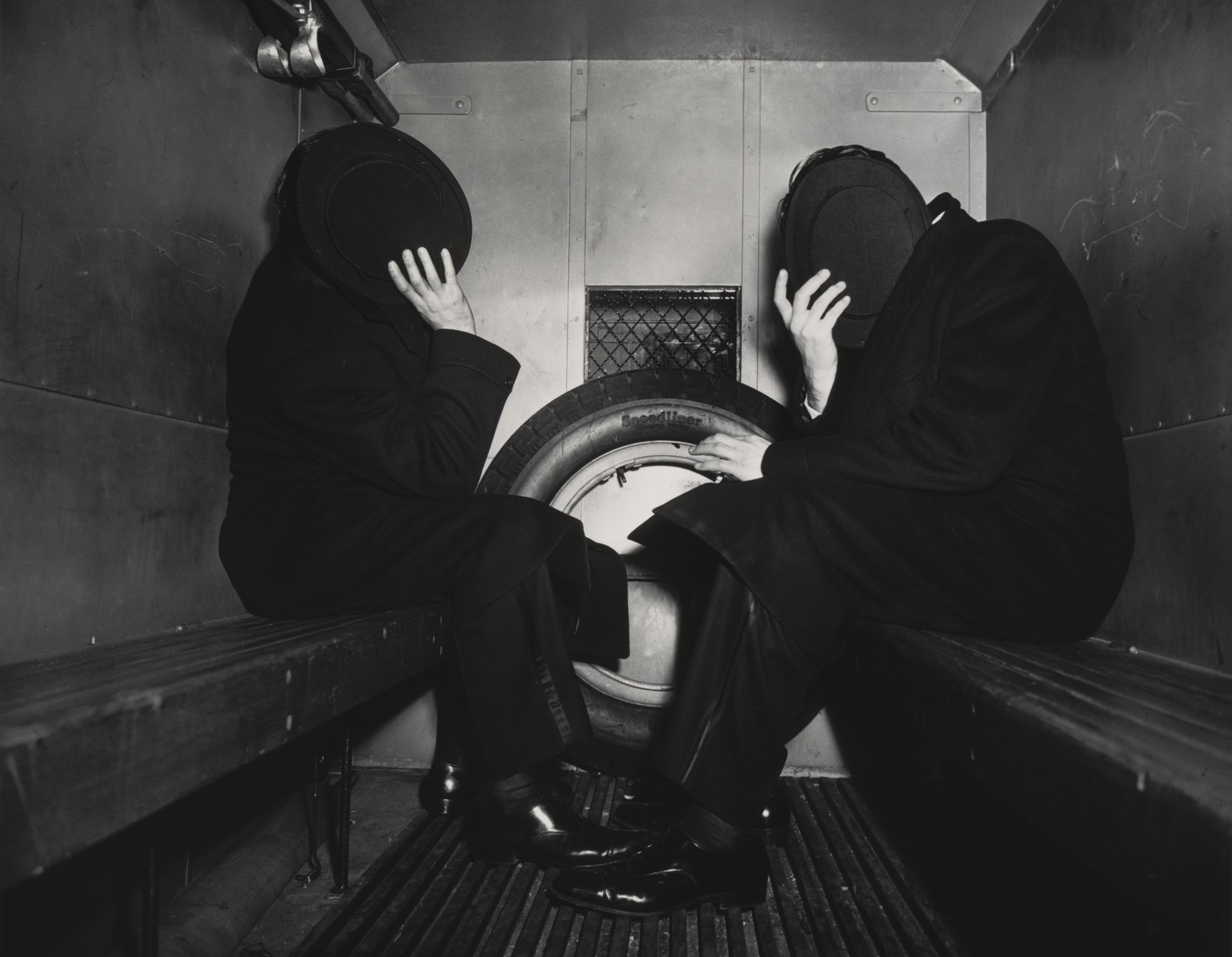


Exhibition

There’s a mystery to Weegee. The American photographer’s career seems to be split in two. One side includes his sensational photography printed in North American tabloids: corpses of gangsters lying in pools of their own blood, bodies trapped in battered vehicles, kingpins looking sinister behind the bars of prison wagons, dilapidated slums consumed by fire, and other harrowing documents on the lives of the underprivileged in New York from 1935 to 1945. Then come the festive photographs – glamorous parties, performances by entertainers, jubilant crowds, openings and premieres – to which we must add a vast array of portraits of public figures that Weegee delighted in distorting using a rich palette of tricks between 1948 and 1951, a practice he pursued until the end of his life.

How can these diametrically opposed bodies of work coexist? Critics have enjoyed highlighting the opposition between the two periods, praising the former and disparaging the latter. The exhibition Autopsy of the Spectacle seeks to reconcile the two parts of Weegee by showing that, beyond formal differences, the photographer’s approach is critically coherent.

The spectacle is omnipresent in Weegee’s work. In the first part of his career, which coincides with the rise of the tabloid press, he was an active participant in transforming news into spectacle. To show this, he often included spectators, or other photographers, in the foreground of his images. In the second half of his career, Weegee mocked the Hollywood spectacular: its ephemeral glory, adoring crowds and social scenes. Some years before the Situationist International, his photography presented an incisive critique of the Society of the Spectacle.

With a new perspective on Weegee’s oeuvre, Autopsy of the Spectacle presents the photographer’s iconic images beside lesser-known works, including images not-yet-exhibited in France.

Biography

Weegee was born Usher Fellig on June 12, 1899, to a Jewish family in Zolochiv, a small town in Galicia, then part of the Austro-Hungarian Empire, today in western Ukraine. At 11 years old, he joined his father who’d emigrated to the United States. At the immigration station Ellis Island, he became Arthur Fellig. Living in the slums of the Lower East Side, he left school at 14 to earn money to support his family. After working in different professions, he became a traveling photographer, worked for photographers Duckett & Adler, then in the lab of ACME Newspictures agency.

Starting in 1935, he was self-employed as photo-reporter. Towards 1937, he began using the pseudonym Weegee, and around 1941, started marking the backs of his prints with a stamp in the form of a self-fulfilling prophecy: “Weegee the Famous.” For 10 years, connected to Police radio, he took photographs, mainly at night, of crime, arrests, fires, accidents and other news items. Though the photographer most certainly had connections within the Police, without whom his work would not have been possible, he also frequented left-wing circles. He was very close to the Photo League, a group of independent photographers who firmly believed in emancipation through the image and fought for social justice. In 1945, he published his best photographs in a book entitled Naked City, which met with great success both in its reception and sales.

In the spring of 1948, he moved to Hollywood to work in cinema as a technical advisor, sometimes as an actor. He photographed the endless party and developed different photographic techniques used to create his caricatures of celebrities. In December of 1951, after four years on the West Coast, he returned to New York with no intention of resuming his former practice. Up until his death on December 26, 1968, the majority of his work involved taking advantage of his notoriety to publish other books, go on tour, and promote his photo-caricatures in newspapers.

Text from the Foundation Henri Cartier-Bresson website


Installation view of the exhibition 'Weegee, Autopsy of the Spectacle' at the Foundation Henri Cartier-Bresson, Paris showing at centre, 'Afternoon Crowd at Coney Island, Brooklyn' (1940)

Installation view of the exhibition 'Weegee, Autopsy of the Spectacle' at the Foundation Henri Cartier-Bresson, Paris


Installation view of the exhibition Weegee, Autopsy of the Spectacle at the Foundation Henri Cartier-Bresson, Paris showing at left, Performer Jimmy Armstrong (c. 1943, below); at second left, Ladies keep their money in their stockings… (1944, below); and at centre, Afternoon Crowd at Coney Island, Brooklyn (1940, below)


Weegee (American, 1899-1968) 'Performer Jimmy Armstrong' c. 1943


Weegee (American, 1899-1968)
Performer Jimmy Armstrong
c. 1943
Gelatin silver print
© International Center of Photography


Weegee (American, 1899-1968) 'Ladies keep their money in their stockings...' 1944


Weegee (American, 1899-1968)
Ladies keep their money in their stockings…
1944
Gelatin silver print
© International Center of Photography


“There is no cover charge nor cigarette girl, and a vending machine dispenses cigarettes. Neither is there a hat check girl. Patrons prefer to dance with their hats and coats on. But there is a lively floor show… the only saloon in the Bowery with a cabaret license.”

Weegee


Weegee (American, 1899-1968) 'Afternoon Crowd at Coney Island, Brooklyn' 1940


Weegee (American, 1899-1968)
Afternoon Crowd at Coney Island, Brooklyn
1940
Gelatin silver print
© International Center of Photography. Courtesy Galerie Berinson, Berlin


Weegee (American, 1899-1968) 'Sleeping at the Circus, Madison Square Garden, New York' 1943


Weegee (American, 1899-1968)
Sleeping at the Circus, Madison Square Garden, New York
1943
Gelatin silver print
© International Center of Photography


Installation view of the exhibition 'Weegee, Autopsy of the Spectacle' at the Foundation Henri Cartier-Bresson, Paris


Installation view of the exhibition Weegee, Autopsy of the Spectacle at the Foundation Henri Cartier-Bresson, Paris showing at centre left, Opening night at the Metropolitan Opera (1943); In the Lobby at the Metropolitan Opera, Opening Night (1943); and at centre right, The Critic (1943, below)


Weegee (American, 1899-1968) 'The Critic' November 22, 1942


Weegee (American, 1899-1968)
The Critic
November 22, 1942
Gelatin silver print
© International Center of Photography. Collection Friedsam


Even his most popular photograph was a set-up, says Wallis: “The Critic, which was taken in 1943, was surely staged and shows the wealthy Mrs George Washington Cavanaugh and Lady Decies arriving at the opera, greeted by a staggering drunk who seems to be mocking them and who Weegee reportedly rounded up at Sammy’s bar on the Bowery.

“This picture is a good example of how Weegee previsualized a scene, developed a punchy satirical narrative, and staged the picture. The Critic was widely reproduced at the time, and even shown at the Museum of Modern Art.”

Boo Paterson. “Big guns to big top: Weegee at circus,” on the Boo York City website [Online] Cited 13/04/2024


In Weegee’s day similar culture clashes happened at Sammy’s Bowery Follies (267 Bowery, between East Houston and Stanton Streets), which from 1934 to 1970 attracted what The New York Times once described as a mixed crowd of “drunks and swells, drifters and celebrities, the rich and the forgotten.” …

Among the regulars, he wrote in his 1945 book, “Naked City,” was a woman they called Pruneface and a midget who walked the streets dressed as a penguin to promote cigarettes. When the midget got drunk, Weegee wrote, he “offered to fight any man his size in the house.”

Weegee held two book parties there. At the photography center Mr. George showed me silent-film footage taken in 1946 at the party for Weegee’s second book, “Weegee’s People.” Pretty uptown blondes and dowagers in pearls mingle with toothless crones and panhandlers, as models parade in their foundation garments, and a man with a flea circus puts his tiny performers through their paces.

John Strausbaugh. “Crime Was Weegee’s Oyster,” on The New York Times website June 20, 2008 [Online] Cited 13/04/2024


Installation view of the exhibition 'Weegee, Autopsy of the Spectacle' at the Foundation Henri Cartier-Bresson, Paris showing Weegee's photographs in magazine layouts


Installation view of the exhibition Weegee, Autopsy of the Spectacle at the Foundation Henri Cartier-Bresson, Paris showing his photographs in magazine layouts


"Il Fotografo cattivo", Epoca, Vol. XIII, No. 636, December 1962


“Il Fotografo cattivo”, Epoca, Vol. XIII, No. 636, December 1962
© International Center of Photography. Collection privée Paris


"Weegee Looks At Dali"


Weegee Looks At Dali


Weegee spoofs the new spring hats 1957


Weegee spoofs
the
new spring hats

Custom milliners often go to extremes. This spring, the have outdone themselves by creating 1957 version of the most exaggerated hats of the last fifty years. Here again are the flapper cloche, the slouch had Garbo wore in the ’30’s, the heavy veiling of the early 1900’s, the turban of the World War I era, the perennial mad profusion of fruit and flowers. Look had Michael A. Vaccaro photograph examples of these hats as they really are. Then camera artist Weegee turned out satirical prints, with these startling results.

Look magazine 1957


"How your TV heroes look to Weegee's magic camera" in Look magazine


WAIT. Don’t reach for a drink. Don’t reach for your glasses. And don’t – please don’t – write us an indignant letter. What you think you see on these pages is there, all right. It’s the work of a zany photographer named Weegee (few know his first name) who has a wicked sense of caricature and an outrageous sense of humor.

The subjects were not photographed under water. Wedge simply prints his negatives through bubbles glass, wire screens, press, kaleidoscopes or whatever gives him the characterization he is after. It’s a sort of three-way-stretch technique in which Weegee is assisted by photographic color expert Mike Lavelle.

The results of Weegee’s impudent manipulation of reality are both perceptive and astonishing: Faces take on a certain ga-ga verity; external exaggeration high-lights internal character and distortion offers surprising insights into personality. Weegee calls this “Photo-Caricature.” There was a man who might have enjoyed revelations like these. His name was Bobbie Burns and he wrote in one of his poems: “O wad some Pow’r the giftie gie us to see oursels as others see us.”

“How your TV heroes look to Weegee’s magic camera” in Look magazine


Weegee Modern Women Aren't Human!


“”Modern Women Aren’t Human!’ … If You Don’t Believe It … This Man Tells Why” in the National Enquirer, 1967


There’s a mystery to Weegee. The American photographer’s career seems to be split in two. One side includes his sensational photography printed in North American tabloids: corpses of gangsters lying in pools of their own blood, bodies trapped in battered vehicles, kingpins looking sinister behind the bars of prison wagons, dilapidated slums consumed by fire, and other harrowing documents on the lives of the underprivileged in New York from 1935 to 1945. Then come the festive photographs – glamorous parties, performances by entertainers, jubilant crowds, openings and premieres – to which we must add a vast array of portraits of public figures that Weegee delighted in distorting using a rich palette of tricks between 1948 and 1951, a practice he pursued until the end of his life. How can these diametrically opposed bodies of work coexist? Critics have enjoyed highlighting the opposition between the two periods, praising the former and disparaging the latter. The exhibition Autopsy of the Spectacle seeks to reconcile the two parts of Weegee by showing that, beyond formal differences, the photographer’s approach is critically coherent.

The spectacle is omnipresent in Weegee’s work. In the first part of his career, which coincides with the rise of the tabloid press, he was an active participant in transforming news into spectacle. To show this, he often included spectators, or other photographers, in the foreground of his images. In the second half of his career, Weegee mocked the Hollywood spectacular: its ephemeral glory, adoring crowds and social scenes. Some years before the Situationist International, his photography presented an incisive critique of the Society of the Spectacle.

With a new perspective on Weegee’s oeuvre, Autopsy of the Spectacle presents the photographer’s iconic images beside lesser-known works, including images not-yet-exhibited in France.

Curator Clément Chéroux

Press release from the Henri Cartier-Bresson Foundation


Weegee (American, 1899-1968) 'Their First Murder' c. 1936


Weegee (American, 1899-1968)
Their First Murder
c. 1936
Gelatin silver print
© Weegee Archive / International Center of Photography


Weegee (American, 1899-1968) 'Drowning victim, Coney Island' c. 1940


Weegee (American, 1899-1968)
Drowning victim, Coney Island
c. 1940
Gelatin silver print
© Weegee Archive / International Center of Photography, New York / Collection Galerie Berinson, Berlin


Weegee (American, 1899-1968) 'Mrs Bernice Lythcott and her son Leonard looking through a window broken by stones thrown by thugs, Harlem, New York' October 18, 1943


Weegee (American, 1899-1968)
Mrs Bernice Lythcott and her son Leonard looking through a window broken by stones thrown by thugs, Harlem, New York
October 18, 1943
Gelatin silver print
© Photo Weegee/ICP New York


Weegee (American, 1899-1968) 'Untitled [Tenement sleeping during heat spell, Lower East Side, New York]' May 23, 1941


Weegee (American, 1899-1968)
Untitled [Tenement sleeping during heat spell, Lower East Side, New York]
May 23, 1941
Gelatin silver print
© Photo Weegee/ICP New York


Son of a Jewish immigrant from Ukraine, Weegee knew the slums, like those children seeking coolness on the fire escape ladder. He produced “real social documents” on the living conditions of the poor.


“In Central Park the lawns were crowded before darkness with family groups,” reported the July 10, 1936 New York Times; the temperature had reached an astounding 106 degrees the day before. “On the Lower East Side traffic was seriously impeded as small armies of persons emerged from tenement houses with chairs, boxes and even beds which they set up in the streets.”

And from the Times on August 4, 1938, when the mercury hit 93 degrees:

“More than 3,000 persons slept on the sand at Coney Island and Brighton Beach to escape the heat last night, the police estimated. Ten additional patrolmen were assigned to the area to prevent molestation of the sleepers, many of whom brought blankets and sheets.”

Anonymous. “How New Yorkers survived hot summer nights,” on the Ephemeral New York website Nd [Online] Cited 14/04/2024


Weegee (American, 1899-1968) 'Untitled [Fire in loft building, New York]' 1947


Weegee (American, 1899-1968)
Untitled [Fire in loft building, New York]
1947
Gelatin silver print
© Photo Weegee/ICP New York


Weegee (American, 1899-1968) 'Simply adding boiling water' 1943


Weegee (American, 1899-1968)
Simply adding boiling water
1943
Gelatin silver print
© Photo Weegee/ICP New York


Weegee (American, 1899-1968) 'Lovers at the Palace Theater' c. 1953


Weegee (American, 1899-1968)
Lovers at the Palace Theater
c. 1953
Gelatin silver print
© Photo Weegee/ICP New York


Weegee (American, 1899-1968) 'Anthony Esposito, Booked on Suspicion of Killing a Policeman' 1941


Weegee (American, 1899-1968)
Anthony Esposito, Booked on Suspicion of Killing a Policeman
1941
Gelatin silver print
© International Center of Photography. Louis Stettner Archives, Paris


At noon Fifth Avenue was crowded. Alfred Klausman, middle-aged office manager of a linen firm, walked across the street from his office to the bank on the corner and drew the weekly pay roll: $649.

As the genial, round-faced Klausman walked back, two men silently threaded through the crowd behind him, two strange, grey-coated creatures washed up from the depths of New York City’s criminal world. One was Anthony Esposito, 35, a long-nosed, horse-faced hoodlum who had been in & out of New York’s prisons and reformatories for 16 years, had once been deported to Italy and sneaked back in. His brother William, 29, had robbed drunks, snatched pocketbooks, done a seven-year stretch in Sing Sing. Their father had served time for forgery. Their brother was in Clinton Prison, Dannemora, N. Y. for parole violation. Their lives had been spent in squalor, petty crime, prison and torpid, hard-eyed loafing.

Klausman entered the elevator to his office. The Esposito brothers stepped in after him. Between the second and third floors they drew revolvers from their overcoat pockets, ordered the operator to stop, face the door. He heard Klausman cry “No! No! No!” – then one of the gunmen put his revolver to Klausman’s head and pulled the trigger.

They ordered the operator to take the elevator down, ducked out into the street, disappeared into B. Altman’s big department store.

Out into the street the operator yelled “Holdup! Murder!” The cry spread. Two patrolmen raced from the corner, into the store, a long way behind.

Down the crowded aisles of the store darted the Espositos, through the block-long building. At the far entrance they climbed into a cab, put a gun at the driver’s head. But Madison Avenue was jammed with traffic; they were trapped. “Get going. Make it fast. Get moving or we’ll kill you.” Back in the store panic was spreading as police with drawn revolvers moved down the aisles shouting, “Get down!” The cab stalled behind a bus. Like men leaping over a cliff, the brothers jumped out into the traffic. At sight of the two running men, waving revolvers, people flattened themselves against the buildings or ducked to the sidewalk. A taxi driver ran to Patrolman Edward Maher, directing traffic on the corner, yelled “Stick-up!” and pointed at the fleeing men. Maher raced after them, only 20 feet behind, afraid to shoot into the crowd. Motorists left their cars and joined the chase. Maher saw a clear space, shot twice, and William Esposito staggered sideways, fell face downward, one arm outstretched, one twisted under him, apparently dead.

A little crowd collected around him. Patrolman Maher held the gunman by the overcoat, started to turn him over, turned to warn the crowd away. “Back up, please,” he said, “someone’s liable to get hurt.” As he rolled William over, the gunman’s .38 came up. William Esposito pulled the trigger and Patrolman Maher slumped over, dead.

The crowd surged back, then forward. A taxi driver named Leonard Weisberg leaped on the prone gunman. He grabbed for the revolver, missed. Esposito jerked it back a few inches, fired again. Weisberg, clutching his throat, gasping for breath, fell to the sidewalk.

Esposito, still lying down, drew another gun from his overcoat pocket. Two men leaped on him. Then the crowd closed in, kicking and beating.

Anthony ran on when his brother fell. Behind him the police fired into the air. He shot a few times, wildly, apparently to clear crowds out of his way on Fifth Avenue. He ducked into Woolworth’s, bowling over the women shoppers. He plunged to the basement, put away his guns, walked up again to hide in the crowd – and met six policemen at the head of the stairs, went down with revolver butts thudding on his skull.

The Espositos went to the hospital, to the lineup, to indictment for murder. Leonard Weisberg, recovering from his throat wound, was promised a new cab of his own, and won a hero’s praise. The Nazi press gleefully played up the crime as evidence of democratic depravity.

Anonymous. “National Affairs: SLAUGHTER ON FIFTH AVENUE,” in TIME Monday, Jan. 27, 1941 on the TIME website [Online] Cited 14/04/2024


Weegee (American, born Ukraine (Austria), Złoczów (Zolochiv) 1899 - 1968 New York) '[Outline of a Murder Victim]' 1942


Weegee (Arthur Fellig) (American born Ukraine (Austria), Złoczów (Zolochiv) 1899 – 1968 New York)
[Outline of a Murder Victim]
1942
Gelatin silver print
33.9 x 27.4cm (13 3/6 x 10 13/16 in.)
Gift of Bruce A. Kirstein, in memory of Marc S. Kirstein, 1978
© Weegee / International Center of Photography


Weegee (American, 1899-1968) 'Harry Maxwell shot in a car' 1941


Weegee (American, 1899-1968)
Harry Maxwell shot in a car
1941
Gelatin silver print
© Photo Weegee/ICP New York


Weegee (American, 1899-1968) '"Hopper's Topper" Hedda Hopper Hollywood' c. 1948


Weegee (American, 1899-1968)
“Hopper’s Topper” Hedda Hopper Hollywood
c. 1948
Gelatin silver print
© Photo Weegee/ICP New York


Weegee (American, 1899-1968) 'Marilyn Monroe, Distortion' c. 1955


Weegee (American, 1899-1968)
Marilyn Monroe, Distortion
c. 1955
Gelatin silver print
© Weegee Archive / International Center of Photography, New York / Friedsam Collection, Frankfurt am Main


Weegee (American, 1899-1968) 'Charlie Chaplin, Distortion' 1950


Weegee (American, 1899-1968)
Charlie Chaplin, Distortion
1950
© International Center of Photography


Weegee (American, 1899-1968) 'Self-Portrait' 1963


Weegee (American, 1899-1968)
Self-Portrait
1963
Gelatin silver print
© International Center of Photography
 

This book accompanies the exhibition 'Weegee, Autopsie du Spectacle' presented from January 30, 2024 to May 19, 2024 at the Henri Cartier-Bresson Foundation


Weegee (author)
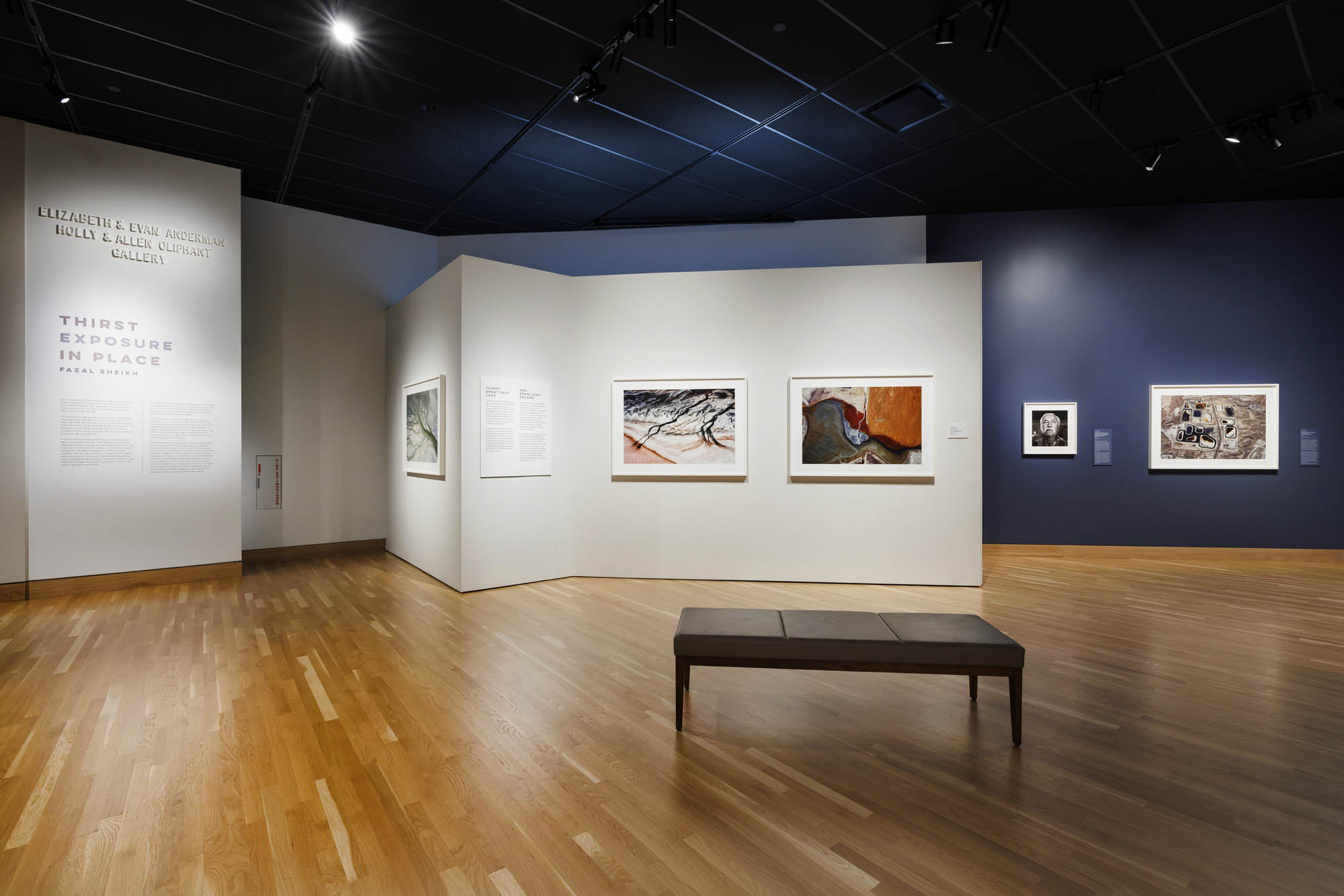
Textual, Henri Cartier-Bresson Foundation (editor)
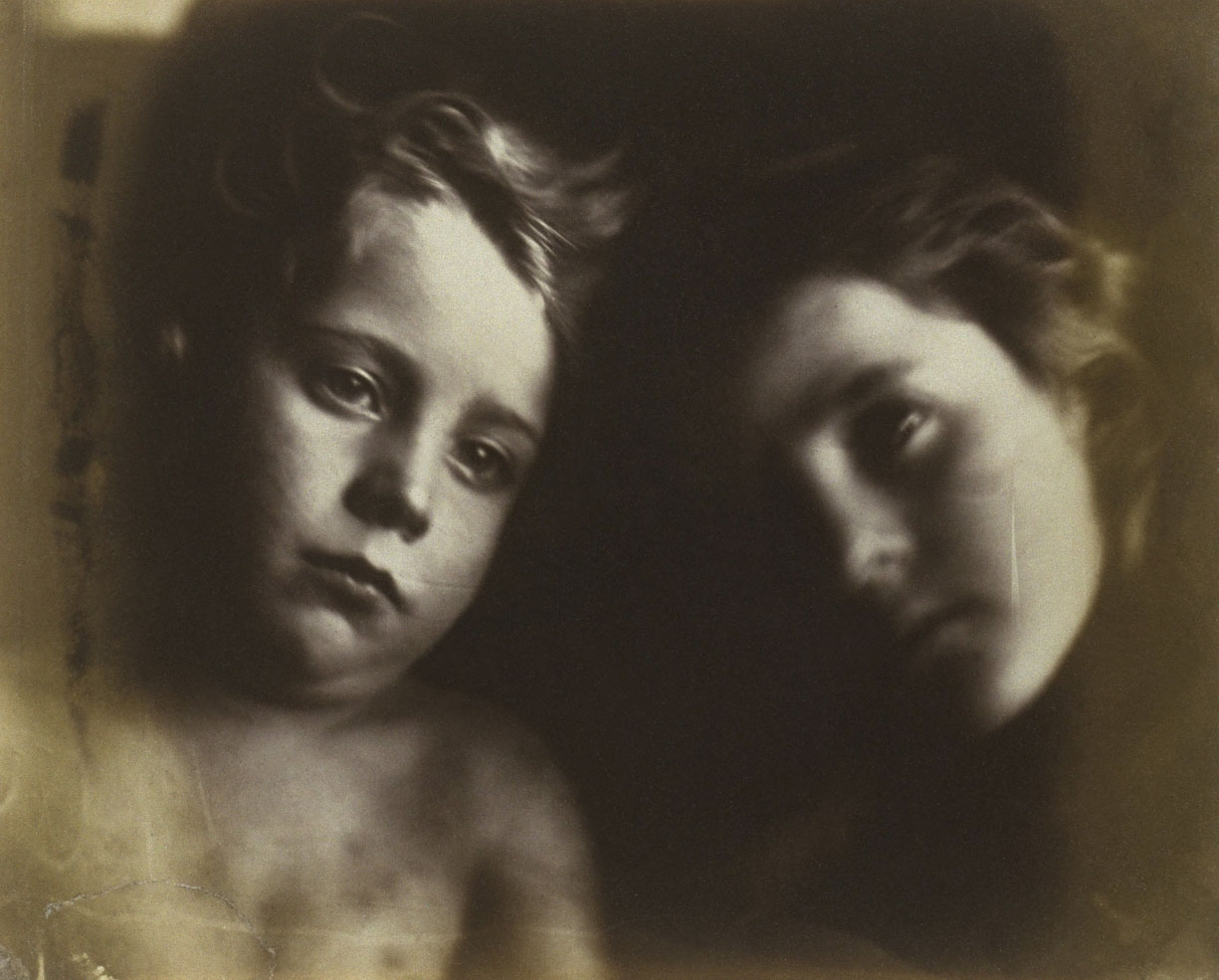
January, 2024 (release)
ISBN 9782845979901
208 pages
55 euros

This book accompanies the exhibition Weegee, Autopsie du Spectacle presented from January 30, 2024 to May 19, 2024 at the Henri Cartier-Bresson Foundation.

There is a Weegee conundrum. His photographs fall into two distinct categories. On the one hand, there are his images of news items taken in New York during the 1940s, in a documentary, direct and raw approach. And on the other, photographs of starlets, politicians and other socialites taken in Hollywood in the following decade, for which he willingly resorted with special effects. Declaring himself “bewitched by the mystery of the murders,” Weegee stood out for his ability to arrive promptly at the crime scene or to wait for the salad baskets to arrive on the steps of the police stations to capture the defendants on the spot. Nevertheless, he strives to bring onlookers, often from the working classes, into his framework, or even to be interested only in them. Made up of around a hundred photographs – the best known, but also many images never highlighted – this book shows the coherence of Weegee’s work based on a radical and incisive critique of the Society of the Spectacle, borrowing from an unexpected empathy towards the disadvantaged.

Weegee (1899-1968) was an American photojournalist known for his images of a New York marked by crime. In 1941, New York’s Photo League dedicated an exhibition to him which was followed by that of MoMA in 1943. He published his first book Naked City in 1945 and his autobiography Weegee by Weegee in 1961.
Hardcover
20 x 26cm
Texts by Isabelle Bonnet, David Campany,
Clément Chéroux and Cynthia Young.
Texts in French

Translated from the French by Google Translate from the Foundation Henri Cartier-Bresson website


Fondation Henri Cartier-Bresson
79 rue des Archives
75003 Paris

Opening hours:
Tuesday – Sunday 11am – 7pm
Closed Mondays

Henri Cartier-Bresson Foundation website

LIKE ART BLART ON FACEBOOK

Back to top

Exhibition: ‘Dorothea Lange: Seeing People’ at the National Gallery of Art, Washington Part 2

Exhibition dates: 5th November 2023 – 31st March 2024


Dorothea Lange (American, 1895-1965) 'Untitled (La Estrellita, "Spanish" Dancer), San Francisco, California' 1919


Dorothea Lange (American, 1895-1965)
Untitled (La Estrellita, “Spanish” Dancer), San Francisco, California
1919
Gelatin silver print
Image: 19.7 x 14.6cm (7 3/4 x 5 3/4 in.)
Mat: 16 x 14 in.
Frame (outside): 17 1/4 x 15 1/4 in.
Collection of the Oakland Museum of California, Gift of Estrellita Jones
© The Dorothea Lange Collection, Oakland Museum of California, City of Oakland. Gift of Paul S. Taylor


Stella Hurtig Jones was a famous American vaudeville performer who traveled the world as a flamenco and tango dancer during the late 19th and early 20th centuries. One of Lange’s earliest professional portraits, the composition uses the soft focus and diffused light that characterises pictorial photography, popular among celebrities. Lange photographed Hurtig Jones as herself, rather than as her stage persona La Estrellita (The Little Star), perhaps in recognition of her recent retirement. As European travel waned during World War I and movies replaced vaudeville as mass entertainment, the allure of traditional Spanish dance diminished. La Estrellita married, started a perfume business, and moved from Hollywood to the Bay Area.

Label text from the exhibition


Full of the world

Just when you think that you know the work of an artist photographs emerge that you have never seen before, photographs that challenge the canon of famous images on which the reputation of the artist rests. Such is the case in this two part posting on the work of social documentary photographer Dorothea Lange (American, 1895-1965). See Part 1 of the posting.

In this posting it is not the famous photographs such as White Angel Breadline, San Francisco, California (1933); Nettie Featherston, Wife of a Migratory Laborer with Three Children, near Childress, Texas, from The American Country Woman (June 1938); Near Coolidge, Arizona. Migratory cotton picker with his cotton sack slung over his shoulder rests at the scales before returning to work in the field (November 1940, printed c. 1965); and Human Erosion in California (Migrant Mother) (March 1936) which impress the senses, for their affect is known well enough.

Rather, it is the relatively unknown early Pictorialist photographs, the earthy photographs of Irish people, and photographs that challenge the formalist construction of images of the disintegration of families and communities during the Great Depression – images that are far more avant-garde and experimental than I would have expected from Lange – which shine in the mind’s eye (in one’s imagination or memory).

The ethereal Pictorialist portraits (this posting) with their asymmetrical construction, trembling? vibrational? negative space, luminous light and low depth of field are a delightful surprise… as are the 1950’s Irish portrait photographs (Part 1 of the posting) full of earthy, brooding darkness – with faces that are “pure Ireland.” What intensity in these images, clearly and empathetically seen.

But it is the abstract figurative studies in which I am most interested… images that disrupt Lange’s normative representation in her social documentary photographs of humanity and their resilience. In photographs such as On the Plains a Hat Is More Than a Covering (1938, below) and Jake Jones’s Hands, Gunlock County, Utah (1953) – taken fifteen years apart but which could have been taken the same day, on a theme the artist was obviously interested in – Lange dissects the body, closing in on gnarled hands, weatherbeaten hats as metaphor for a tough life, well lived. These are images in which we see very little (as opposed to Barthes assertion that in photography’s realism a photo is an image in which we see everything) … but implicitly understand the sublime blur of legend of these workers and their hats.

Other photographs dial up the figurative abstraction. Demonstration, San Francisco (1934, below) is a study of light, shape and form, an almost Constructivist image of fragments and negative space: hand, pole, amorphous mass of shoulder, face turned away, hat and declarative “FEED US!” banner; San Francisco Waterfront (1934) is a beautifully rendered abstract pictorial space evidencing the despair of humanity through light and form: witness, the clasped hands at rear like sentinels, the thumb pointing left… while below, covered head in hand, the thumb points vertically to the surmounted ear, which echoes the cropped ear and hair at the bottom of the photo, while to the right the two buttons of the jacket lead us to the ascending column of four buttons back to the portentous, clasping, guarding hands above. A masterpiece of photographic pictorial construction. Further, with their radical pictorial construction and cropping of the picture frame, masterpieces such as Dispossessed Arkansas farmers (1935) are truly avant-garde and experimental photographs for their time, something I don’t normally associate with the work of Dorothea Lange. As my friend Jonathan Kamholtz observes of the photographs I have been discussing, Lange “tended to lose interest in the backgrounds. The pictorial space is really very shallow. This contributes to their theatricality – not in the sense that they are false or artificial, but that each one displays character, costume, fate.”

Forearmed with this knowledge, I start looking at her well known images with fresh eyes… and its all there in more subtle form: the low angle of the camera looking up at the subject, the geometric shape of hands and arms, the solid blocks of bodies filling the picture frame, the sculptural, abstract shape of bodies in fields (Migratory Field Worker Picking Cotton in San Joaquin Valley1938), the flattening of bodies one against another (May Day, San Francisco, California, 1934) and the disassociation of human identity through the occlusion of faces (This man is a labor contractor in the pea fields of California 1936, below; Damaged Child, Shacktown 1936, below; Washington, Yakima Valley, near Wapato 1939, below).

Dorothea Lange was an incredibly intelligent and passionate artist who removed her ego from the act of taking photographs, who lost herself in the visual experience in order to take photographs to effect social change, who connected with the world in order “to experience love, hate, and passion in every form in one’s body.”1

“That the familiar world is often unsatisfactory cannot be denied, but it is not, for all that, one that we need abandon,” she argued. “We need not be seduced into evasion of it any more than we need be appalled by it into silence… Bad as it is, the world is potentially full of good photographs. But to be good, photographs have to be full of the world.”2

And full of the spirit of the artist.

Dr Marcus Bunyan


1/ Carl Jung quoted in Nicos Hadjicostis. Destination Earth: A New Philosophy of Travel by a World-Traveler. Bamboo Leaf Press, 2016, p. 42.

2/ Dorothea Lange and Daniel Dixon, “Photographing the Familiar,” Aperture 1, no. 2 (1952), 15.


Many thankx to the National Gallery of Art for allowing me to publish the photographs in the posting. Please click on the photographs for a larger version of the image.


“When you enter into the visual world, detaching yourself from all the holds on you… it is a mental disengagement so that you live, for maybe two or three hours, as completely as possible a visual experience, where you feel that you have lost yourself, your identity.”


Dorothea Lange quoted in Dyanna Taylor and Public Broadcasting Service (U.S.), directors. American Masters – Dorothea Lange: Grab a Hunk of Lightning. Kanopy Streaming, 2014.


“The researcher ought to hang up exact science and put away the scholar’s gown, to say farewell to his study, and wander with human heart through the world, through the horror of prisons, madhouses, and hospitals, through drab suburban pubs, in brothels, and gambling dens, through the salons of elegant society, the stock exchanges, the socialist meetings, the churches, the revivals and ecstasies of the sects, to experience love, hate, and passion in every form in one’s body.”


Carl Jung quoted in Nicos Hadjicostis. Destination Earth: A New Philosophy of Travel by a World-Traveler. Bamboo Leaf Press, 2016, p. 42.


During her long, prolific, and groundbreaking career, the American photographer Dorothea Lange made some of the most iconic portraits of the 20th century. Dorothea Lange: Seeing People reframes Lange’s work through the lens of portraiture, highlighting her unique ability to discover and reveal the character and resilience of those she photographed.

Featuring some 100 photographs, the exhibition addresses her innovative approaches to picturing people, emphasising her work on social issues including economic disparity, migration, poverty, and racism.


“Five years earlier I would have thought it enough to take a picture of a man, no more. But now, I wanted to take a picture of a man as he stood in his world.”

“A single photographic print may be “news,” a “portrait,” “art,” or “documentary” – any of these, all of them, or none.”

“The whole world is a museum. To walk through the streets, as though down a museum corridor. … To step into a supermarket as though setting forth in the National Gallery – is an experience and an exercise in vision.”


Dorothea Lange


Dorothea Lange (American, 1895-1965) 'Untitled (Fleishhacker Portrait)' 1920


Dorothea Lange (American, 1895-1965)
Untitled (Fleishhacker Portrait)
1920
Gelatin silver print
Image: 15.4 x 15.1cm (6 1/16 x 5 15/16 in.)
Mat: 16 x 14 in.
Frame (outside): 17 1/4 x 15 1/4 in.
Collection of the Oakland Museum of California, Gift of Paul S. Taylor


Dorothea Lange (American, 1895-1965) 'Maynard Dixon and Son Daniel' 1925


Dorothea Lange (American, 1895-1965)
Maynard Dixon and Son Daniel
1925
Gelatin silver print
Image: 13.8 x 10.8cm (5 7/16 x 4 1/4 in.)
Sheet: 15.1 x 11cm (5 15/16 x 4 5/16 in.)
Mat: 14 x 12 in.
Frame (outside): 15 1/4 x 13 1/4 in.
The J. Paul Getty Museum, Los Angeles, 2000.50.1 © The Dorothea Lange Collection, Oakland Museum of California, City of Oakland. Gift of Paul S. Taylor


Dorothea Lange (American, 1895-1965) 'Portrait of Adele Raas, San Francisco' 1927


Dorothea Lange (American, 1895-1965)
Portrait of Adele Raas, San Francisco
1927
Gelatin silver print
Image: 15.5 x 12.7cm (6 1/8 x 5 in.)
Mat: 14 x 12 in.
Frame (outside): 15 1/4 x 13 1/4 in.
San Francisco Museum of Modern Art, Gift of the Raas Family
© The Dorothea Lange Collection, Oakland Museum of California, City of Oakland. Gift of Paul S. Taylor


Dorothea Lange (American, 1895-1965) 'Untitled (Portrait of William)' 1929


Dorothea Lange (American, 1895-1965)
Untitled (Portrait of William)
1929
elatin silver print
Image/sheet: 25 x 20cm (9 13/16 x 7 7/8 in.)
Mat: 18 x 14 in.
Frame (outside): 18 1/4 x 15 1/4 in.
National Gallery of Art, Washington, Gift of Daniel Greenberg and Susan Steinhauser
© The Dorothea Lange Collection, Oakland Museum of California, City of Oakland. Gift of Paul S. Taylor


Dorothea Lange (American, 1895-1965) 'Hopi Man, Arizona' 1923, printed 1926


Dorothea Lange (American, 1895-1965)
Hopi Man, Arizona
1923, printed 1926
Gelatin silver print
Image: 18.4 x 19.7cm (7 1/4 x 7 3/4 in.)
Mount: 19.3 x 20.4cm (7 5/8 x 8 1/16 in.)
Mat: 15 1/4 x 15 in.
Frame (outside): 16 1/2 x 16 1/4 in.
The J. Paul Getty Museum, Los Angeles, 84.XP.912.4
© The Dorothea Lange Collection, Oakland Museum of California, City of Oakland. Gift of Paul S. Taylor


Lange embraced the chance to experiment outside her studio. In August 1923, she visited Walpi Village of the Hopi Nation with her then-husband Maynard Dixon, an avid outdoor painter. She had begun to crop some of her portraits to accentuate a gaze, hand, touch, or torso – a way of capturing the essence of a person, paradoxically showing less to reveal more.

When printing Hopi Man, Lange focused so closely on the subject’s face that his features resemble a map of his experience. She undercut her own effort to reach meaningfully across the cultural divide, however, because she did not record the man’s name or any other information about him. As a portrait, Hopi Man risks picturing a type or class of person rather than this individual’s character.

Label text from the exhibition


Dorothea Lange (American, 1895-1965) 'Clausen Child and Mother' c. 1930


Dorothea Lange (American, 1895-1965)
Clausen Child and Mother
c. 1930
Gelatin silver print
Image: 15.6 x 21cm (6 1/8 x 8 1/4 in.)
Mat: 14 x 17 in.
Frame (outside): 15 1/4 x 18 1/4 in.
The Museum of Modern Art, New York. Thomas Walther Collection. Gift of Henri Cartier-Bresson, by exchange


Lange frequently photographed the subject of mother and child, a long-standing Western art historical tradition rooted in depictions of the Virgin Mary and baby Jesus and modernised and secularised in high-end portrait studios. Here Frances Clausen stares directly at the camera while her mother, Gertrude, sits in shadow, looking away. Lange focuses on the child’s inquisitive gaze, as well as her affectionate bond to and emerging independence from her mother. Lange’s expertise photographing children – acquired from her early studio work – led to some of her most important photographs made during the Great Depression, displayed in the next galleries.

Label text from the exhibition


Dorothea Lange (American, 1895-1965) 'Maynard Dixon' c. 1930


Dorothea Lange (American, 1895-1965)
Maynard Dixon
c. 1930
Gelatin silver print
Image/sheet: 14.1 x 13.4cm (5 9/16 x 5 1/4 in.)
Mount: 16.4 x 14.2 cm (6 7/16 x 5 9/16 in.)
Mat: 14 x 11 in.
Frame (outside): 15 1/4 x 12 1/4 in.
National Gallery of Art, Washington, Alfred H. Moses and Fern M. Schad Fund
© The Dorothea Lange Collection, Oakland Museum of California, City of Oakland. Gift of Paul S. Taylor


Maynard Dixon (January 24, 1875 – November 11, 1946) was an American artist. He was known for his paintings, and his body of work focused on the American West. Dixon is considered one of the finest artists having dedicated most of their art to the U.S. Southwestern cultures and landscapes at the end of the 19th-century and the first half of the 20th-century. He was often called “The Last Cowboy in San Francisco.”

Through his work with the Galerie Beaux Arts, a cooperative gallery in San Francisco, Dixon played a pivotal role ensuring the West Coast supported the work of local, modern artists. He was married for a time to photographer Dorothea Lange, and later to painter Edith Hamlin.

Text from the Wikipedia website


Dorothea Lange (American, 1895-1965) 'Native American Girl, Taos, New Mexico' 1931


Dorothea Lange (American, 1895-1965)
Native American Girl, Taos, New Mexico
1931
Gelatin silver print
Image/sheet: 5.3 x 5.3cm (2 1/16 x 2 1/16 in.)
Mount: 13.2 x 10.5cm (5 3/16 x 4 1/8 in.)
Mat: 10 x 14 in.
Frame (outside): 11 1/4 x 15 1/4 in.
National Gallery of Art, Washington, Alfred H. Moses and Fern M. Schad Fund
© The Dorothea Lange Collection, Oakland Museum of California, City of Oakland. Gift of Paul S. Taylor


In summer 1931, escaping the Depression-era turmoil of San Francisco, Lange and Dixon bought their first car and drove to New Mexico with their children. Her few surviving photographs from this trip reveal significant steps in her transition away from studio portraiture and toward a more straightforward approach to photographing people. A series of pictures portrays this unidentified Indigenous girl in a direct documentary style. Although her expression reveals few emotions, she looks squarely at the lens in one photograph and seems comfortable in front of the camera.

Label text from the exhibition


Dorothea Lange (American, 1895-1965) 'Native American Girl, Taos, New Mexico' 1931


Dorothea Lange (American, 1895-1965)
Native American Girl, Taos, New Mexico
1931
Gelatin silver print
Image/sheet: 5.4 x 5.4cm (2 1/8 x 2 1/8 in.)
Mount: 13.3 x 10.4cm (5 1/4 x 4 1/8 in.)
Mat: 10 x 14 in.
Frame (outside): 11 1/4 x 15 1/4 in.
National Gallery of Art, Washington, Alfred H. Moses and Fern M. Schad Fund
© The Dorothea Lange Collection, Oakland Museum of California, City of Oakland. Gift of Paul S. Taylor


Dorothea Lange (American, 1895-1965) 'Dorothy Brett, Painter, Taos, New Mexico' 1931


Dorothea Lange (American, 1895-1965)
Dorothy Brett, Painter, Taos, New Mexico
1931
Gelatin silver print
Image/sheet: 8.6 x 8.2cm (3 3/8 x 3 1/4 in.)
Mat: 14 x 11 in.
Frame (outside): 15 1/4 x 12 1/4 in.
National Gallery of Art, Washington, Alfred H. Moses and Fern M. Schad Fund
© The Dorothea Lange Collection, Oakland Museum of California, City of Oakland. Gift of Paul S. Taylor


Lange met Dorothy Brett in 1931 when the photographer and her family spent several months in Taos. Born into an aristocratic British family, Brett rebelled against their expectations, attending art school and becoming a painter. In London she befriended writers associated with the Bloomsbury group, including D. H. Lawrence, who was recruiting people to go to New Mexico to form a utopian society. Brett was the only person who followed him, but she was so enchanted with the area that she lived there for the rest of her life.

Label text from the exhibition


Hon. Dorothy Eugénie Brett (10 November 1883 – 27 August 1977) was an Anglo-American painter, remembered as much for her social life as for her art. Born into an aristocratic British family, she lived a sheltered early life. During her student years at the Slade School of Art, she associated with Dora Carrington, Barbara Hiles and the Bloomsbury group. Among the people she met was novelist D.H. Lawrence, and it was at his invitation that she moved to Taos, New Mexico in 1924. She remained there for the rest of her life, becoming an American citizen in 1938.

Her work can be found in the Smithsonian American Art Museum in Washington D.C., in the Millicent Rogers Museum and the Harwood Museum of Art, both in Taos. Also at the New Mexico Museum of Art, Santa Fe, the Roswell Museum and Art Center, Roswell, New Mexico and in many private collections.

Text from the Wikipedia website


Dorothea Lange (American, 1895-1965) 'Demonstration, San Francisco' 1934


Dorothea Lange (American, 1895-1965)
Demonstration, San Francisco
1934
Gelatin silver print
Image: 12.1 x 14.3cm (4 3/4 x 5 5/8 in.)
Sheet: 12.1 x 14.3cm (4 3/4 x 5 5/8 in.)
Mount: 14.6 x 23.8cm (5 3/4 x 9 3/8 in.)
Lent by The Metropolitan Museum of Art, Gilman Collection, Purchase, Joseph M. Cohen Gift, 2005


In 1934, as Lange began to forge a new documentary practice, she sought “to take a picture of a man as he stood in his world.” With no clients to please, she drew on insights she had learned from modernism, especially its celebration of close-up studies and dramatic angles. Like other artists, she also found that signs – such as the protest poster declaring “… FEED US!” – could root a photograph in a specific time and place and give agency to those she depicted, allowing them to speak. With carefully composed pictures like this one, Lange was acknowledging the power of modernist photography to tell stories in simple, dynamic ways.

Label text from the exhibition


Dorothea Lange (American, 1895-1965) 'Andrew Furuseth' 1934


Dorothea Lange (American, 1895-1965)
Andrew Furuseth
1934
Gelatin silver print
Image: 20.5 x 19.6cm (8 1/16 x 7 11/16 in.)
Sheet: 21.1 x 20.3cm (8 5/16 x 8 in.)
National Portrait Gallery, Smithsonian Institution


Andrew Furuseth was an American labor leader known for organising seamen during the late 19th and early 20th centuries. He helped create the Sailors’ Union of the Pacific and the International Seamen’s Union, heading both as their president. Lange met 80-year-old Furuseth around the time of the San Francisco waterfront strikes of 1934. She had been photographing labor organisers and protesters at May Day events around the city while Furuseth was working to help moderate the seamen’s anger to avoid a damaging strike. Her portrayal of Furuseth in profile against a dark background – eyes closed, deep in thought – emphasises his years of experience and a weary strength.

Label text from the exhibition


Andrew Furuseth (March 17, 1854 – January 22, 1938) of Åsbygda, Hedmark, Norway was a merchant seaman and an American labor leader. Furuseth was active in the formation of two influential maritime unions: the Sailors’ Union of the Pacific and the International Seamen’s Union, and served as the executive of both for decades.

Furuseth was largely responsible for the passage of four reforms that changed the lives of American mariners. Two of them, the Maguire Act of 1895 and the White Act of 1898, ended corporal punishment and abolished imprisonment for deserting a vessel.

Furuseth was credited as the key figure behind drafting and enacting the Seamen’s Act of 1915, hailed by many as “The Magna Carta of the Sea” and the Jones Act of 1920 which governs the workers’ compensation rights of sailors and the use of foreign vessels in domestic trade. In his later years, he was known as “the Old Viking”.

Text from the Wikipedia website


Dorothea Lange (American, 1895-1965) 'Street Meeting, San Francisco' 1934


Dorothea Lange (American, 1895-1965)
Street Meeting, San Francisco
1934
Gelatin silver print
Image/sheet: 23.5 x 17.5cm (9 1/4 x 6 7/8 in.)
Mat: 16 x 13 in.
Frame (outside): 17 x 14 in.
National Gallery of Art, Washington, Gift of Daniel Greenberg and Susan Steinhauser
© The Dorothea Lange Collection, Oakland Museum of California, City of Oakland. Gift of Paul S. Taylor


Dorothea Lange (American, 1895-1965) 'Stenographer with Mended Stockings, San Francisco, California' 1934, printed 1950s


Dorothea Lange (American, 1895-1965)
Stenographer with Mended Stockings, San Francisco, California
1934, printed 1950s
Gelatin silver print
Image: 34 x 26.6 cm (13 3/8 x 10 1/2 in.)
Sheet: 35.2 x 27.8 cm (13 7/8 x 10 15/16 in.)
Mat: 20 x 16 in.
Frame (outside): 21 x 17 in.
National Gallery of Art, Washington, Gift of Daniel Greenberg and Susan Steinhauser
© The Dorothea Lange Collection, Oakland Museum of California, City of Oakland. Gift of Paul S. Taylor


Lange’s portrait of a Depression-era stenographer omits her face to focus on her dark, creased dress, tattered hosiery, and woven shoes. Her stockings are stitched up the front, mended to keep them – and her – going for another day or two. They reveal the grit and fortitude of San Francisco’s working women during a time when jobs were scarce and people had to conserve all their resources in the face of financial insecurity.

Label text from the exhibition


Dorothea Lange (American, 1895-1965) 'Wandering Boy, Camp Carlton, California' 1935


Dorothea Lange (American, 1895-1965)
Wandering Boy, Camp Carlton, California
1935
Gelatin silver print
Image: 34 x 25.1cm (13 3/8 x 9 7/8 in.)
Sheet: 35.3 x 28 cm (13 7/8 x 11 in.)
Mount: 38.1 x 28 cm (15 x 11 in.)
Mat: 20 x 16 in.
Frame (outside): 21 x 17 in.
National Gallery of Art, Washington, Gift of Daniel Greenberg and Susan Steinhauser
© The Dorothea Lange Collection, Oakland Museum of California, City of Oakland. Gift of Paul S. Taylor


Dorothea Lange (American, 1895-1965) 'Black sharecropper with twenty acres. He receives eight cents a day for hoeing cotton. Brazos river bottoms, near Bryan, Texas' June 1938, printed c. 1950


Dorothea Lange (American, 1895-1965)
Black sharecropper with twenty acres. He receives eight cents a day for hoeing cotton. Brazos river bottoms, near Bryan, Texas
June 1938, printed c. 1950
Gelatin silver print
Image: 24.1 x 19.2cm (9 1/2 x 7 9/16 in.)
Sheet: 25.3 x 20.5cm (9 15/16 x 8 1/16 in.)
Mat: 18 x 14 in.
Frame (outside): 19 x 15 in.
National Gallery of Art, Washington, Gift of Daniel Greenberg and Susan Steinhauser


American photographer Dorothea Lange (1895-1965) created some of the most groundbreaking portraits of the 20th century. Through pictures of labourers, demonstrators, refugees, migrant farmers, the unjustly incarcerated, and others, Lange captured the spirit of human endurance while recording some of the profound social inequities of the period. Her work expanded the boundaries of portraiture and helped spark the development of modern documentary photography.

Dorothea Lange: Seeing People reframes Lange’s art through the lens of portraiture and highlights her capacity to spotlight the humanity and resilience of those she photographed. She began her career as a studio portrait photographer, and even as she ventured far outside her studio people remained key to her mission. Focusing on Lange’s abiding concern for those in need, this exhibition reveals her lifelong investigation into how photography – and portraits in particular – could help bring about collective change.

One of the most important documentary photographers of her time, Lange sought to transform how we see and understand one another. Motivated by an ever-growing interest in social justice, she was also an intrepid reporter who traveled extensively in the United States and around the world to create indelible and influential photographs. This exhibition illuminates the centrality of portraiture in Lange’s career and its role in exposing the impacts of economic disparity, climate change, migration, and war – issues that remain equally urgent today.

Wall text from the exhibition


Dorothea Lange (American, 1895-1965) 'Unemployed Man, San Francisco, California' 1934, printed before 1950


Dorothea Lange (American, 1895-1965)
Unemployed Man, San Francisco, California
1934, printed before 1950
Gelatin silver print
Image: 24.8 x 19.1cm (9 3/4 x 7 1/2 in.)
Sheet: 25.2 x 19.6cm (9 15/16 x 7 11/16 in.)
Mat: 16 x 14 in.
Frame (outside): 17 x 15 in.
National Gallery of Art, Washington, Gift of Daniel Greenberg and Susan Steinhauser
© The Dorothea Lange Collection, Oakland Museum of California, City of Oakland. Gift of Paul S. Taylor


Dorothea Lange (American, 1895-1965) 'This man is a labor contractor in the pea fields of California. "One-Eye" Charlie gives his views. "I'm making my living off of these people (migrant laborers) so I know the conditions," San Luis Obispo County, California' February 1936


Dorothea Lange (American, 1895-1965)
This man is a labor contractor in the pea fields of California. “One-Eye” Charlie gives his views. “I’m making my living off of these people (migrant laborers) so I know the conditions,” San Luis Obispo County, California
February 1936
Gelatin silver print
Image: 24.1 x 19.7cm (9 1/2 x 7 3/4 in.)
Sheet: 25.4 x 20.3cm (10 x 8 in.)
Mat: 18 x 14 in.
Frame (outside): 19 x 15 in.
National Gallery of Art, Washington, Gift of Daniel Greenberg and Susan Steinhauser


Dorothea Lange (American, 1895-1965) 'Migratory Pea Pickers, Nipomo, California' March 1936


Dorothea Lange (American, 1895-1965)
Migratory Pea Pickers, Nipomo, California
March 1936
Gelatin silver print
Image: 19.4 x 24.5cm (7 5/8 x 9 5/8 in.)
Sheet: 20.3 x 25.7cm (8 x 10 1/8 in.)
Mat: 13 x 16 in.
Frame (outside): 14 x 17 in.
National Gallery of Art, Washington, Gift of Daniel Greenberg and Susan Steinhauser


Dorothea Lange (American, 1895-1965) 'Post Office and Postmistress, Widtsoe, Utah' April 1936


Dorothea Lange (American, 1895-1965)
Post Office and Postmistress, Widtsoe, Utah
April 1936
Gelatin silver print
Image: 24.4 x 19.3cm (9 5/8 x 7 5/8 in.)
Sheet: 25.4 x 20.3cm (10 x 8 in.)
Mat: 16 x 13 in.
Frame (outside): 17 x 14 in.
National Gallery of Art, Washington, Gift of Daniel Greenberg and Susan Steinhauser


When Lange photographed Widtsoe, Utah, for the Resettlement Administration, the town’s population had dwindled to 17 families. Cycles of drought devastated the region’s agricultural economy and the RA stepped in to buy out landowners and relocate them. Signs of desolation are evident in this portrait of the town’s postmistress at the post office. Perched on cinder blocks, surrounded by dusty earth, the building appears to teeter – an effect intensified by Lange’s skewed composition. The stoic presence of the postmistress, who is posed neatly within the doorframe, hints at the stabilising role women often play in Lange’s compositions.

Label text from the exhibition


Dorothea Lange (American, 1895-1965) 'Plantation Owner, Mississippi Delta, near Clarksdale, Mississippi' June 1936


Dorothea Lange (American, 1895-1965)
Plantation Owner, Mississippi Delta, near Clarksdale, Mississippi
June 1936
Gelatin silver print
Image: 18.7 x 24.1cm (7 3/8 x 9 1/2 in.)
The Art institute of Chicago, Purchased with funds provided by Vicki and Thomas Horwich


In 1938, a cropped version of this photograph was featured in the publication of Archibald MacLeish’s book-length poem Land of the Free. The cropped photograph focused attention on the “plantation owner” and erased four of the Black men, leaving just one silhouetted in the background. MacLeish’s poem proclaims, “All you needed for freedom was being American” – yet Lange’s original picture, and the subsequent cropped version, reveals the fallacy of this sentiment. Both point to how African Americans were barred from achieving the freedom that MacLeish claims was available to all Americans. Paul Taylor appears at the far left edge interviewing the owner.

Label text from the exhibition


Dorothea Lange (American, 1895-1965) 'Drought Refugees from Oklahoma Camping by the Roadside, Blythe, California' August 17, 1936


Dorothea Lange (American, 1895-1965)
Drought Refugees from Oklahoma Camping by the Roadside, Blythe, California
August 17, 1936
Gelatin silver print
Image: 24 x 19.1cm (9 7/16 x 7 1/2 in.)
Mount: 33.02 x 28.26 cm (13 x 11 1/8 in.)
Mat: 20 x 16 in.
Frame (outside): 21 x 17 in.
National Gallery of Art, Washington, Gift of Daniel Greenberg and Susan Steinhauser


As a result of droughts and erosion that destroyed tillable land and crops in Oklahoma and Arkansas, thousands of farmers moved west with their families to start their lives over in places such as Blythe. Zella, Jess, and Jesse Power were among these families. It is not clear when the Powers began their move to California, but Jesse was born in Blythe, so Zella may have been pregnant during their journey. Lange’s field notes indicate that the Powers were a family of seven; an older sibling’s foot may be glimpsed in the lower right. With her furrowed brow and slumped posture, Zella exemplifies the difficulties faced by migrant mothers seeking better lives for themselves and their families in places that did not promise immediate relief.

Label text from the exhibition


Dorothea Lange (American, 1895-1965) 'Child Living in Oklahoma City Shacktown [Damaged Child, Shacktown]' August 1936


Dorothea Lange (American, 1895-1965)
Child Living in Oklahoma City Shacktown [Damaged Child, Shacktown]
August 1936
Gelatin silver print
Image: 24.2 x 19.4cm (9 1/2 x 7 5/8 in.)
Mat: 17 x 14 in.
The Museum of Modern Art, New York. Purchase


This photograph of a bruised girl with a hollow gaze is one of many Lange made depicting the exploitation of migrant children during the Great Depression. The portrait suggests the range of emotional and physical harm children experienced as they, too, struggled to survive economic hardship.

Label text from the exhibition


Dorothea Lange (American, 1895-1965) 'Eighty-year-old woman living in squatters' camp on the outskirts of Bakersfield, California. "If you lose your pluck you lose the most there is in you – all you've got to live with"' November 1936


Dorothea Lange (American, 1895-1965)
Eighty-year-old woman living in squatters’ camp on the outskirts of Bakersfield, California. “If you lose your pluck you lose the most there is in you – all you’ve got to live with”
November 1936
Gelatin silver print
Image: 19 x 24.4cm (7 1/2 x 9 5/8 in.)
Sheet: 20.3 x 25.5cm (8 x 10 1/16 in.)
Mat: 13 x 16 in.
Frame (outside): 14 x 17 in.
National Gallery of Art, Washington, Gift of Daniel Greenberg and Susan Steinhauser


Dorothea Lange (American, 1895-1965) 'Young Cotton Picker, San Joaquin Valley, California' November 1936


Dorothea Lange (American, 1895-1965)
Young Cotton Picker, San Joaquin Valley, California
November 1936
Gelatin silver print
Image: 24.1 x 18.4cm (9 1/2 x 7 1/4 in.)
Collection of the Oakland Museum of California, Gift of Paul S. Taylor


Dorothea Lange (American, 1895-1965) 'Alabama Plow Girl, near Eutaw, Alabama' 1936


Dorothea Lange (American, 1895-1965)
Alabama Plow Girl, near Eutaw, Alabama
1936
Gelatin silver print
Image: 19.1 x 19.4cm (7 1/2 x 7 5/8 in.)
Lent by The Metropolitan Museum of Art, Purchase, Alfred Stieglitz Society Gifts, 2001


Lange travelled to the American South in 1936 while employed by the Resettlement Administration. Near Eutaw, Alabama, she photographed Black tenant farmers like this shoeless girl plowing a field in the punishing summer heat. In the South, Lange witnessed the oppressive working conditions endured by Black tenants, who farmed land predominantly held by white owners and often struggled to access New Deal resources. Southern Black farmers faced undue difficulty during the Depression as economic disaster exacerbated the oppression and poverty produced by the region’s racist agricultural system.

Label text from the exhibition


Dorothea Lange (American, 1895-1965) 'Migratory Workers Harvesting Peas near Nipomo, California' Spring 1937


Dorothea Lange (American, 1895-1965)
Migratory Workers Harvesting Peas near Nipomo, California
Spring 1937
Gelatin silver print
Image: 19.4 x 24.5cm (7 5/8 x 9 5/8 in.)
Sheet: 20.6 x 25.4cm (8 1/8 x 10 in.)
Mat: 13 x 16 in. frame (outside): 14 x 17 in.
National Gallery of Art, Washington, Gift of Daniel Greenberg and Susan Steinhauser


Dorothea Lange (American, 1895-1965) 'Country store on dirt road. Sunday afternoon. Note the kerosene pump on the right and the gasoline pump on the left. Rough, unfinished timber posts have been used as supports for porch roof. Black men are sitting on the porch. Brother of store owner stands in doorway, Gordonton, North Carolina' July 1939, printed later


Dorothea Lange (American, 1895-1965)
Country store on dirt road. Sunday afternoon. Note the kerosene pump on the right and the gasoline pump on the left. Rough, unfinished timber posts have been used as supports for porch roof. Black men are sitting on the porch. Brother of store owner stands in doorway, Gordonton, North Carolina
July 1939, printed later
Gelatin silver print
Image: 24.5 x 34.3cm (9 5/8 x 13 1/2 in.)
Sheet: 25.6 x 35.4cm (10 1/16 x 13 15/16 in.)
Mat: 16 x 20 in.
Frame (outside): 17 x 21 in.
National Gallery of Art, Washington, Gift of Daniel Greenberg and Susan Steinhauser


Rainey Curry Baynes II, the store owner’s brother, leans in the doorway conversing with five Black men. On the far right is Arthur Thorpe, and the man wearing overalls is Joe Carrington. The men appear relaxed in Baynes’s presence, but it is unclear whether their demeanour is genuine or for the benefit of Lange’s camera. They may have been sharecroppers or tenant farmers indebted to the Baynes brothers, or simply customers of the store.

Label text from the exhibition


Dorothea Lange (American, 1895-1965) 'Washington, Yakima Valley, near Wapato. One of Chris Adolph's Younger Children. Farm Security Administration Rehabilitation Clients' August 1939


Dorothea Lange (American, 1895-1965)
Washington, Yakima Valley, near Wapato. One of Chris Adolph’s Younger Children. Farm Security Administration Rehabilitation Clients
August 1939
Gelatin silver print
Image: 20.83 x 25.4cm (8 3/16 x 10 in.)
Collection of the Oakland Museum of California, Gift of Paul S. Taylor


Dorothea Lange (American, 1895-1965) 'End of Shift, Richmond, California' 1942, printed 1965


Dorothea Lange (American, 1895-1965)
End of Shift, Richmond, California
1942, printed 1965
Gelatin silver print
Image: 75.7 x 59.5cm (29 13/16 x 23 7/16 in.)
The Museum of Modern Art, New York. Purchase


Fortune magazine commissioned Lange to document the bustling shipyards in Richmond, north of Oakland, where newly desegregated defence firms were rapidly constructing transport, cargo, and warships for the United States Navy. With its tight cropping and dynamic configuration, End of Shift focuses on the rushing legs and torsos of shipbuilders leaving a wartime facility. Lange expressed the urgency of their work in defence production without showing their individual features. The angled composition and complex interplay of light and shadow demonstrate Lange’s understanding of how modern design techniques could convey the force and energy of a group working together on a project critical to the nation’s defence.

Label text from the exhibition


Dorothea Lange (American, 1895-1965) 'Street Encounter, Richmond, California' c. 1943


Dorothea Lange (American, 1895-1965)
Street Encounter, Richmond, California
c. 1943
Gelatin silver print
Image: 21.7 x 17.9cm (8 9/16 x 7 1/16 in.)
Frame (outside): 18 3/4 x 15 3/4 in.
The Nelson-Atkins Museum of Art, Kansas City, Missouri (Gift of Hallmark Cards, Inc.)


Dressed for work as a welder, this woman was one of thousands who moved to Richmond, California, during the early 1940s to seek employment in the expanding wartime shipbuilding yards. On assignment for Fortune magazine, Lange documented the upheaval wrought by Richmond’s rapidly growing population and diversifying workforce. Lange’s field notes described this picture as an “Item on race relations. Scene on main street. The girl was a taxi driver in New Orleans. She came to Richmond with her husband two years ago.” Recognising the power of words in her pictures, Lange included a sign that could be read as “Serve You” or “Serve Your Country,” but which actually says “Serve Yourself” – a wry comment on the national unity promoted by the era’s patriotic propaganda.

Label text from the exhibition


Early Portraits

Born in Hoboken, New Jersey, in 1895, Dorothea Lange learned photography in New York City before embarking in 1918 on a round-the-world trip. When forced to cut her journey short and find employment in San Francisco, she secured a position at the photo-finishing counter of a variety store. She soon opened her own portrait studio and worked among a cohort of bohemian artists and intellectuals including Imogen Cunningham, Consuelo Kanaga, Ansel Adams, Edward Weston, and the painter Maynard Dixon, who would become her first husband.

Bay Area high-society and cultural figures became Lange’s clients and the subjects of her studio portraits. These early pictures combine elements of the pictorial style in which she was trained, such as soft focus and diffused light, with an emerging modernist aesthetic that included dramatic cropping and unusual angles. She used light, shadow, and carefully constructed poses to articulate the character, attitude, and individuality of her models: “I really and seriously tried, with every person I photographed, to reveal them as closely as I could.”

Poverty and Activism

Although she had a highly successful studio practice, Lange in 1933 was compelled by the nation’s worsening economic conditions to rethink her occupation and carry her cameras into the city. “There in my studio I was surrounded by evidence of the Depression,” she said. “I remember well standing at that one window and just watching the flow of life. … I was driven by the fact that I was under personal turmoil to do something.”

Out in the streets during the early years of the Great Depression, Lange saw poverty, breadlines, strikes, and labor demonstrations. Her photographs from this period portray the unemployment and unrest that plagued San Francisco, and also document the activism of workers who organised to change their conditions. In 1934, Lange met the agricultural economist Paul Taylor. The two formed an important professional and personal partnership (they married the following year). Lange soon shifted her attention to the plight of migrant farmers, who were moving to California to seek work.

The Great Depression

As the Great Depression deepened, Dorothea Lange focused her lens on the families who had fled westward in the face of economic hardship caused by depleted land and failed farm tenancy in the South and Midwest. When she was working for government agencies, she documented the success of rural cooperatives and the unsanitary conditions in California migrant camps while striving to humanise the large numbers of people seeking shelter and employment. For Lange, portraiture offered a way to visualise the impacts of migration, racism, and environmental change, as well as the legacy of slavery, to gain public support for government aid programs.

During this period Lange cemented her style of documenting people. Her empathetic, highly detailed, and sharply focused depictions show labourers within their living and working environments. Some subjects are alone, but many are seen with family and other members of their communities. These photographs provided evidence of economic disaster and bore witness to the resulting human tragedy while underscoring her subjects’ strength and resilience. This powerful merging of portraiture and documentary photography expanded the boundaries of both traditions, transforming them in ways that resonate deeply today.

World War II

During World War II, Dorothea Lange focused on the impact of the war on Americans at home as well as the nation’s complicated racial dynamics. Nowhere is this seen more acutely than in her portraits of individuals of Japanese ancestry who were forced to abandon their homes in response to President Franklin D. Roosevelt’s executive order (see nearby panel).

Lange also recorded the epochal shifts in California’s social fabric sparked by the growing defence industries, which helped rebuild the economy. Hired by Fortune magazine, she documented the Kaiser Shipyards in Richmond, California, where well-paid jobs attracted African Americans, Native Americans, and women into what had previously been a white male-dominated workforce. Yet as the population of Richmond quickly swelled, and as these newly empowered groups began to assert themselves, the changes also provoked housing shortages and social unrest.

Postwar America

Despite frequent health struggles, in the 1950s Dorothea Lange pursued photographic stories about a variety of American communities in the western United States. These include a project about urban life, for which she roamed the Bay Area; Three Mormon Towns, a collaboration made with Ansel Adams and Paul Taylor in Utah for Life magazine; and an environmental critique produced with photographer Pirkle Jones about the flooding of a Northern California town to create a reservoir. Wide-ranging in subject matter, Lange’s photographs reveal an extraordinary ability to portray the continued transformation of the American West and shine a light on the environmental and human consequences of the postwar economic boom.

World View

Dorothea Lange began working globally in 1954. Her first trip overseas was to Ireland, where she documented the kinship and community of country villages for Life magazine. Her husband, Paul Taylor, began consulting on international economic development for the US State Department and, in 1958, they traveled abroad for eight months, visiting Korea, Indonesia, Vietnam, and other countries; in the early 1960s, the couple traveled to Venezuela and Egypt. Continuing to concentrate on portraiture, Lange found a new sort of beauty and serenity in these foreign environments as well as ties to the economic and social disparities she had photographed in the United States. While photographs taken during these trips confirm her ongoing creativity in the face of declining health, profound cultural differences made it more difficult for Lange to connect with people.

Lange devoted the last years of her life to her family and to organising a retrospective exhibition of her photographs at the Museum of Modern Art in New York. She passed away in late 1965, but her legacy continues in the enduring resonance of her photographs and the new generations of photographers who use portraiture and documentary styles to prompt social change.

Travel

Beginning in 1922, Lange traveled with her first husband, artist Maynard Dixon, to Arizona and New Mexico, where she produced portraits of Indigenous Americans. The few photographs that remain from these excursions show Lange testing new strategies. She started to experiment with portraits that featured just a fragment of a person – their hands or face, for example – perhaps inspired by the modernist work of photographer Alfred Stieglitz, whom she had met in 1923. She also shed the soft-focus pictorial style of her earlier studio portraits in favour of a more direct approach. Although Lange interacted only briefly with the Indigenous people she photographed, she witnessed some of the “harsh and unjust treatment” they faced. The sensitivity and experimentation seen in these early photographs helped establish Lange’s expansive concept of portraiture, which impacted her later work.

The Resettlement Administration and the Farm Security Administration

From mid-1935, Dorothea Lange worked for the federal government’s Resettlement Administration (RA), reorganised as the Farm Security Administration (FSA) in 1937. Created to revitalise the country’s faltering agricultural economy, the RA helped farmers acquire land through low interest loans, administered projects on soil conservation and reforestation, and supported resettlement for those who could no longer work their land.

To document and report on its efforts, the RA established a historical division. Led by economist Roy Emerson Stryker, it enlisted some of America’s finest documentary photographers, including Walker Evans, Russell Lee, Marion Post Wolcott, Arthur Rothstein, and Ben Shahn. Stryker hired Lange on the strength of her earlier photographs documenting agricultural conditions for the state of California. In pictures of migrant labourers in California, tenant farmers in Alabama, drought refugees from Oklahoma, and others, Lange recorded the work and aspirations of the agencies. She covered a wide range of socially engaged stories that highlighted themes of human struggle and resilience, but the federal agencies – eager to garner widespread public and congressional support – discouraged depictions of racial oppression.

Migrant Mother March 1936

Human Erosion in California depicts a mother and three children at a migrant labor camp. Lange carefully composed the portrait to capture the woman’s face – prematurely etched by years of labor and worry – and her daughters embracing her. Migrant Mother, as the photograph is commonly known, has been compared to a Renaissance-era Madonna and child and described as an icon of 20th-century art, revered for its empathetic portrayal. Lange did not record the mother’s name. Only in 1978 was she finally identified as Florence Owens Thompson, a woman of Cherokee descent from Oklahoma. At the time of the photograph, Owens Thompson and her family were driving back home from California, where her husband had been working in a sawmill. When their car broke down, they were stranded at a nearby pea pickers’ camp. First published in a newspaper editorial urging government aid for migrant labourers, Migrant Mother prompted support from the state and the picture become an emblem of the power of photography to bring about social change. It also raises questions about the ethics of documentary photography and the dynamics between photographer and subject. Lange recalled that Owens Thompson “seemed to know that my pictures might help her, and so she helped me. There was a sort of equality about it.” Owens Thompson, however, received little benefit and was never given a copy of the photograph.

Executive Order 9066

In February 1942, months after the Japanese attack on the Pearl Harbor naval base, President Franklin D. Roosevelt signed Executive Order 9066. The order paved the way for the removal of more than 120,000 individuals of Japanese ancestry – the majority of whom were American citizens – from the West Coast to inland incarceration camps. Denying individuals their civil liberties, the government registered and tagged people before loading them onto buses and transporting them to rudimentary “assembly centers” and, eventually, one of 10 detention camps spread across seven states. The last camp closed four years after Roosevelt issued the order.

Soon after the initial order, the government’s War Relocation Administration (WRA) hired Lange to document this process. Opposed to the government’s actions, Lange believed it was important to record for history “what we did.” Through poignant portraits, she also depicted the resilience of Japanese Americans forced to abandon the lives and businesses they had built and face incarceration. Fearing that Lange’s portraits would elicit too much sympathy, the WRA did not release the photographs during the war.

Documentary Portraiture

Lange’s work during the 1930s synthesised her ideas about portraiture and documentary photography. With new purpose, she used the techniques, compositional strategies, and social skills she had cultivated in her portrait studio to frame the people and events she recorded. By 1940 she had distilled her understanding of documentary photography as an art form that “records the social scene of our time. It mirrors the present and documents for the future.”

Yet these photographs were also documents that followed the government’s New Deal economic doctrine – they emphasised getting the country back on its feet through perseverance, hard work, regulatory reforms, and government relief. This mix of presumed objectivity, propaganda, and documentary storytelling in service of a critical national agenda proved to be particularly powerful. As photography historian Beaumont Newhall later wrote, Lange was “resolved to photograph the now, rather than the timeless; to capture somehow the effects on people of the calamity which overwhelmed America.”

Lange’s Titles

You will notice Lange’s varied approach to titles across her career. Sometimes she simply used someone’s name or the location where a picture was made. Other titles describe or poetically evoke what she saw. Lange also created elaborate captions, often taken from interviews or conversations with those whom she photographed. This was an experimental documentary technique, which relied on Lange’s memory and prolific note taking. These long captions are seen especially in work she made for government agencies during the 1930s and 1940s.

Lange and her editors frequently retitled photographs when exhibiting or publishing them. For this exhibition, we have used Lange’s original titles when known. In a few instances we have updated language in original titles to reflect contemporary usage.

Wall text from the exhibition


Dorothea Lange (American, 1895-1965) 'Migrant Agricultural Worker's Family, Nipomo, California' March 1936


Dorothea Lange (American, 1895-1965)
Migrant Agricultural Worker’s Family, Nipomo, California
March 1936
Gelatin silver print
Image: 26.67 x 34cm (10 1/2 x 13 3/8 in.)
Sheet: 27.94 x 35.56 cm (11 x 14 in.)
Mat: 18 x 22 in.
Frame (outside): 19 x 23 in.
National Gallery of Art, Washington, Gift of Daniel Greenberg and Susan Steinhauser


Florence Owens Thompson

Human Erosion in California (Migrant Mother) captures the worry, need, and insecurity of everyday Americans during the Great Depression. It is one of the most recognisable American photographs. And it almost wasn’t taken.

In spring 1935, Lange was driving home from a long trip photographing migrant worker camps when she passed a sign pointing toward a pea pickers camp. Lange had already taken many photographs of pea pickers. She tried to convince herself that she didn’t need any more. But about 20 miles later, she turned around.

We don’t know exactly what happened when Lange doubled back – this time, she didn’t take notes. And she didn’t ask many questions. Lange assumed that she had come upon a mother and her three children, there among the waves of workers coming to pick peas, California’s cash crop.

But that wasn’t true. Florence Owen Thompson was traveling with her family from elsewhere in California. The family had set up a camp on the side of the road while her husband and son went into town to resolve some car troubles. When they returned, she mentioned a photographer had taken some photos. Thompson never expected one of those photographs to immortalise her as the “Migrant Mother.” Decades later she wrote a letter to the editor of her local paper expressing irritation with her likeness being misused. In a later interview, Thompson expressed regret at ever allowing Lange to take the photo saying, “I wish she hadn’t taken my picture. I can’t get a penny out of it. [Lange] didn’t ask my name. She said she wouldn’t sell the pictures. She said she’d send me a copy. She never did.”

Anonymous. “The Real Lives of People in Dorothea Lange’s Portraits,” on the National Gallery of Art website November 03, 2023 [Online] Cited 25/02/2024


Dorothea Lange (American, 1895-1965) 'Human Erosion in California (Migrant Mother)' March 1936


Dorothea Lange (American, 1895-1965)
Human Erosion in California (Migrant Mother)
March 1936
Gelatin silver print
Image: 34.1 x 26.8 cm (13 7/16 x 10 9/16 in.)
Mount: 34.8 x 27.1 cm (13 11/16 x 10 11/16 in.)
Frame (outside): 28 5/8 x 22 5/8 x 1 3/8 in.
The J. Paul Getty Museum, Los Angeles


Dorothea Lange (American, 1895-1965) 'Grandfather and Grandson of Japanese Ancestry at a War Relocation Authority Center, Manzanar, California' July 1942


Dorothea Lange (American, 1895-1965)
Grandfather and Grandson of Japanese Ancestry at a War Relocation Authority Center, Manzanar, California
July 1942
Gelatin silver print
Image: 26.4 x 33.7cm (10 3/8 x 13 1/4 in.)
Sheet: 28 x 35.3cm (11 x 13 7/8 in.)
Mat: 16 x 20 in.
Frame (outside): 17 x 21 in.
National Gallery of Art, Washington, Gift of Daniel Greenberg and Susan Steinhauser


Dorothea Lange (American, 1895-1965) 'Grandfather and Grandchildren Awaiting Evacuation Bus, Hayward, California' 1942


Dorothea Lange (American, 1895-1965)
Grandfather and Grandchildren Awaiting Evacuation Bus, Hayward, California
1942
Gelatin silver print
Image: 26.4 x 22.7cm (10 3/8 x 8 15/16 in.)
Sheet: 35.4 x 27.8cm (13 15/16 x 10 15/16 in.)
Frame (outside): 20 3/4 x 16 7/8 in.
The Nelson-Atkins Museum of Art, Kansas City, Missouri (Gift of Hallmark Cards, Inc.)


In the spring of 1942, Dorothea Lange requested another leave from her Guggenheim fellowship when she was hired to document the internment of Japanese Americans during World War II. Following the bombing of Pearl Harbor in December 1941, President Roosevelt signed Executive Order 9066 in February1942, which allowed military commanders to set up security zones wherever they thought necessary, with the full authority to remove anyone from these areas regardless of nationality or age. In March, Lieutenant General John L. DeWitt, head of the Western Defense Command, announced that all persons of Japanese ancestry would have to leave the Pacific Coast military zone, which included California, western Oregon and Washington, and southern Arizona. Though no specific charges were placed against any individuals, approximately 120,000 men, women, and children – more than two-thirds of them native-born American citizens – were ordered to abandon their homes and businesses and be relocated to internment camps established by the federal government. Two of the ten camps, Manzanar and Tule Lake, were in California as were twelve of the preliminary holding areas called assembly centers. The U.S. Army was responsible for gathering the Japanese Americans and retaining them in the makeshift assembly centers – race tracks, fairground exhibition halls, empty automobile showrooms – until the camps were ready. The War Relocation Authority (WRA) was established in March 1942 to oversee management of the camps. In a letter dated 1 April1942 to Moe, Lange requested a postponement of her Guggenheim fellowship explaining: the Japanese (aliens and citizens) are being evacuated from California. The War Relocation Authority has asked me to make photographic documentation of this situation. It’s too worth-while to refuse… It interrupts my fellowship, but is in line with my work.

For the next four months, Lange documented the internees as they were evicted from their homes and businesses, tagged and labeled, and then shuffled by trains and motor convoys to various assembly centers before they were incarcerated. She photographed at only one of the actual internment camps, Manzanar, in the desert of Owns Valley in Southern California. Although Lange was a government employee while recording what is now universally acknowledged as a gross violation of justice, her sympathies were with the Japanese Americans.

Scope and Content

Lange was hired by the San Francisco Regional Office of the War Relocation Authority (WRA) in early April 1942 as a photographer investigator to document the evacuation of Japanese Americans from Northern California. Lange completed her work at the end of July 1942. It has been estimated that of the approximately 13,000 existing photographs taken for the federal government, Lange made over 700. Because of the political nature of her relocation photography, she was required to turn over to the WRA all of her negatives, prints, and undeveloped film; thus, very little of this material is contained within the museum’s archive. Following the end of the war, a complete file of Lange’s WRA negatives and prints was placed in the National Archives in Washington, D.C., with a duplicate set of prints placed at the Bancroft Library of the University of California, Berkeley.

Anonymous. “Guide to the Lange (Dorothea) Collection 1919-1965,” on the Online Archive of California website Nd [Online] Cited 25/02/2024


Dorothea Lange (American, 1895-1965) 'Japanese American-Owned Grocery Store, Oakland, California' March 1942


Dorothea Lange (American, 1895-1965)
Japanese American-Owned Grocery Store, Oakland, California
March 1942
Gelatin silver print
Image: 19 x 24.4cm (7 1/2 x 9 5/8 in.)
Sheet: 20.3 x 25.4 cm (8 x 10 in.)
Mat: 14 x 18 in. frame (outside): 15 x 19 in.
National Gallery of Art, Washington, Gift of Daniel Greenberg and Susan Steinhauser


On December 8, 1941, a day after Japan bombed Pearl Harbor, Tatsuro Masuda, the 25-year-old American-born owner of the Wanto Company store in Oakland, posted a sign on his building: “I AM AN AMERICAN.” Masuda’s bold assertion of his national identity did little good. In March 1942, Masuda, a University of California graduate, closed the store that his father had founded 26 years earlier. In August 1942, he and his family were incarcerated at the Gila River War Relocation Center in Arizona. They were not released until October 1944. They never returned to Oakland.

Label text from the exhibition


Tatsuro Masuda

After the bombing of Pearl Harbor in 1941, President Franklin D. Roosevelt issued Executive Order 9066 in 1942. The order forced the unjust incarceration of more than 120,000 Americans of Japanese descent (the majority of whom were American citizens). The War Relocation Authority hired Lange to document this process. Lange was horrified by what she witnessed. She chronicled her subjects in a sympathetic light, so much so that her photographs were censored during the war.

Lange began by photographing Japanese Americans as they prepared to abandon their homes. She took this picture of a grocery store on a street corner in Oakland, California, in March 1942, a month after the executive order was issued.

Tatsuro Masuda ran the Wanto Company store (look for its name on the windows), opened by his father in 1900. Fearful of growing anti-Japanese sentiments, Masuda paid for the “I AM AN AMERICAN” sign to be installed the day after Pearl Harbor. By the time Lange took the photograph, Masuda decided to close the store. Japanese Americans were forced to sell or relinquish any property they couldn’t carry with them. He moved to Fresno with his new wife, Hatsue Kuge. In August the couple (now expecting their first child) were incarcerated at Gila River War Relocation Center in Arizona. Their second child was born at Gila, as well. They weren’t released until October 1944.

Anonymous. “The Real Lives of People in Dorothea Lange’s Portraits,” on the National Gallery of Art website November 03, 2023 [Online] Cited 25/02/2024


Dorothea Lange (American, 1895-1965) 'Richmond, California' 1944, printed 1950s


Dorothea Lange (American, 1895-1965)
Richmond, California
1944, printed 1950s
Gelatin silver print
Image: 17 x 16.8 cm (6 11/16 x 6 5/8 in.)
Sheet: 25.2 x 20.2 cm (9 15/16 x 7 15/16 in.)
Mat: 16 x 14 in.
Frame (outside): 17 x 15 in.
National Gallery of Art, Washington, Gift of Daniel Greenberg and Susan Steinhauser
© The Dorothea Lange Collection, Oakland Museum of California, City of Oakland. Gift of Paul S. Taylor


Dorothea Lange (American, 1895-1965) 'Richmond, California' from 'City Life' 1952


Dorothea Lange (American, 1895-1965)
Richmond, California from City Life
1952
Gelatin silver print
Image: 25 x 21cm (9 13/16 x 8 1/4 in.)
Sheet: 28.1 x 23.4cm (11 1/16 x 9 3/16 in.)
Mat: 17 x 14 in.
Frame (outside): 18 x 15 in.
National Gallery of Art, Washington, Gift of Daniel Greenberg and Susan Steinhauser
© The Dorothea Lange Collection, Oakland Museum of California, City of Oakland. Gift of Paul S. Taylor


Dorothea Lange (American, 1895-1965) 'Anne Carter Johnson, Saint George, Utah' 1953


Dorothea Lange (American, 1895-1965)
Anne Carter Johnson, Saint George, Utah
1953
Gelatin silver print
Image: 19 x 18.8cm (7 1/2 x 7 3/8 in.)
Sheet: 25.2 x 20.3cm (9 15/16 x 8 in.)
Mat: 14 x 14 in.
Frame (outside): 15 x 15 in.
National Gallery of Art, Washington, Gift of Daniel Greenberg and Susan Steinhauser
© The Dorothea Lange Collection, Oakland Museum of California, City of Oakland. Gift of Paul S. Taylor


Dorothea Lange (American, 1895-1965) 'Self-Portrait in Window, Saint George, Utah' 1953


Dorothea Lange (American, 1895-1965)
Self-Portrait in Window, Saint George, Utah
1953
Gelatin silver print
Image/sheet: 23.8 x 18.6cm (9 3/8 x 7 5/16 in.)
Mount: 24.2 x 19.1cm (9 1/2 x 7 1/2 in.)
Mat: 16 x 13 in.
Frame (outside): 17 x 14 in.
National Gallery of Art, Washington, Gift of Daniel Greenberg and Susan Steinhauser
© The Dorothea Lange Collection, Oakland Museum of California, City of Oakland. Gift of Paul S. Taylor


Among the places Lange visited for the Life magazine photo-essay Three Mormon Towns (produced with Ansel Adams and Paul Taylor) was Saint George, Utah. A formerly secluded pastoral community, the area had grown into a town with gas stations and motels to accommodate visitors to nearby Zion National Park. The town’s modernisation infringed upon the community’s prior isolation from mainstream American culture, and Lange feared that some of its early pioneer principles might be lost. Perhaps equating her own fragile health with the town’s vulnerability, Lange photographed her face and camera reflected in the window of a dilapidated building, calling the picture a self-portrait.

Label text from the exhibition


Dorothea Lange (American, 1895-1965) 'Jake Jones's Hands, Gunlock County, Utah' 1953


Dorothea Lange (American, 1895-1965)
Jake Jones’s Hands, Gunlock County, Utah
1953
Gelatin silver print
Image/sheet: 16.6 x 12.8cm (6 9/16 x 5 1/16 in.)
Mount: 17.1 x 13.7cm (6 3/4 x 5 3/8 in.)
Mat: 14 x 11 in.
Frame (outside): 15 x 12 in.
National Gallery of Art, Washington, Gift of Daniel Greenberg and Susan Steinhauser
© The Dorothea Lange Collection, Oakland Museum of California, City of Oakland. Gift of Paul S. Taylor


Dorothea Lange (American, 1895-1965) 'Annie Halloran's Hands' 1954


Dorothea Lange (American, 1895-1965)
Annie Halloran’s Hands
1954
Gelatin silver print
Image: 19.3 x 19.4cm (7 5/8 x 7 5/8 in.)
Sheet: 20.3 x 20.3cm (8 x 8 in.)
Mat: 15 x 14 in.
Frame (outside): 16 x 15 in. National Gallery of Art, Washington, Gift of Daniel Greenberg and Susan Steinhauser
© The Dorothea Lange Collection, Oakland Museum of California, City of Oakland. Gift of Paul S. Taylor


Dorothea Lange (American, 1895-1965) 'Family Portrait' from 'Death of a Valley' 1956


Dorothea Lange (American, 1895-1965)
Family Portrait from Death of a Valley
1956
Gelatin silver print
Image: 27.1 x 25.7cm (10 11/16 x 10 1/8 in.)
San Francisco Museum of Modern Art, Gift of an anonymous donor in memory of Merrily Page
© The Dorothea Lange Collection, Oakland Museum of California, City of Oakland. Gift of Paul S. Taylor


These family portraits were abandoned in a home in Monticello, California, when residents were forced to relocate. The Napa County town was destroyed and flooded in 1957 after the creation of Lake Berryessa, a reservoir formed by the new Monticello Dam. Lange made this photograph for the series Death of a Valley, a collaboration with photographer Pirkle Jones, reproduced in a 1960 edition of Aperture magazine. Lange’s “portrait” of forsaken family photographs communicates a sense of lost memories and the human costs of development. It demonstrates not only Lange’s prescient environmentalism but also her long-standing concern for the disintegration of families and communities.

Label text from the exhibition


Dorothea Lange (American, 1895-1965) 'Korean Child' 1958


Dorothea Lange (American, 1895-1965)
Korean Child
1958
Gelatin silver print
Image: 14.7 x 11.1cm (5 13/16 x 4 3/8 in.)
Sheet: 16 x 12.4cm (6 5/16 x 4 7/8 in.)
Mount: 19 x 14cm (7 1/2 x 5 1/2 in.)
Mat: 14 x 11 in.
Frame (outside): 15 x 12 in.
National Gallery of Art, Washington, Alfred H. Moses and Fern M. Schad Fund
© The Dorothea Lange Collection, Oakland Museum of California, City of Oakland. Gift of Paul S. Taylor


Lange and Taylor traveled to South Korea in 1958 and encountered people still reeling from a divisive war. When visiting a classroom, Lange focused on a group of excited students. But when she printed Korean Child for her 1966 retrospective exhibition, she radically cropped her negative to concentrate on one boy’s serene features. Since her early portraits of the 1920s, Lange had used dramatic cropping to shape the meaning of her photographs. Here, by isolating the boy’s calm face from the chaos surrounding him, she created a more universal exploration of the innocence of childhood in a nation then torn by war and poverty.

Label text from the exhibition


Dorothea Lange (American, 1895-1965) 'Indonesian Woman' 1958


Dorothea Lange (American, 1895-1965)
Indonesian Woman
1958
Gelatin silver print
Image/sheet: 12 x 9.5cm (4 3/4 x 3 3/4 in.)
Mat: 14 x 11 in.
Frame (outside): 15 x 12 in.
National Gallery of Art, Washington, Gift of Daniel Greenberg and Susan Steinhauser
© The Dorothea Lange Collection, Oakland Museum of California, City of Oakland. Gift of Paul S. Taylor


Dorothea Lange (American, 1895-1965) 'Bad Trouble over the Weekend, Steep Ravine, California' 1964, printed later


Dorothea Lange (American, 1895-1965)
Bad Trouble over the Weekend, Steep Ravine, California
1964, printed later
Gelatin silver print
Image: 24.3 x 15.2cm (9 9/16 x 6 in.)
Sheet: 25.1 x 20.4cm (9 7/8 x 8 1/16 in.)
Mat: 16 x 14 in.
Frame (outside): 17 x 15 in.
National Gallery of Art, Washington, Gift of Daniel Greenberg and Susan Steinhauser
© The Dorothea Lange Collection, Oakland Museum of California, City of Oakland. Gift of Paul S. Taylor


For years, Lange and Taylor spent many weekends with their children and grandchildren at a rented cabin on Steep Ravine above Stinson Beach, just north of San Francisco. Bad Trouble over the Weekend was made during one such stay near the end of Lange’s life – she had already been diagnosed with terminal cancer. She cropped the photograph to focus on her daughter-in-law Mia Dixon’s hands, which cradle her unseen face. The gesture and the caption suggest the emotional weight of Lange’s flagging health, although she provided few narrative details. The photograph communicates both a personal and a universal connotation of “trouble,” telling an ambiguous story for viewers to imagine and, perhaps, identify with.

Label text from the exhibition


Dorothea Lange (American, 1895-1965) 'Pledge to the Flag, San Francisco' 1942, printed c. 1965


Dorothea Lange (American, 1895-1965)
Pledge to the Flag, San Francisco
1942, printed c. 1965
Gelatin silver print
Image/sheet: 31.7 x 13.9cm (12 1/2 x 5 1/2 in.)
Mat: 22 x 16 in.
Frame: 23 x 17 in.
National Gallery of Art, Washington, Gift of Daniel Greenberg and Susan Steinhauser


National Gallery of Art
National Mall between 3rd and 7th Streets
Constitution Avenue NW, Washington

Opening hours:
Daily 10am – 5pm

National Gallery of Art website

LIKE ART BLART ON FACEBOOK

Back to top

Exhibition: ‘Arthur Tress: Rambles, Dreams, and Shadows’ at the J. Paul Getty Museum, Los Angeles

Exhibition dates: 31st October, 2023 – 18th February, 2024

Warning: This posting contains photographs of male nudity and sexual activity.


Installation view of the exhibition 'Arthur Tress: Rambles, Dreams, and Shadows' at the J. Paul Getty Museum, Los Angeles showing the work 'Boy in Flood Dream, Ocean City, Maryland' 1971


Installation view of the exhibition Arthur Tress: Rambles, Dreams, and Shadows at the J. Paul Getty Museum, Los Angeles showing the work Boy in Flood Dream, Ocean City, Maryland 1971


Arthur Tress: fantastical photographer

Definition of ‘fantastical’
1. strange, weird, or fanciful in appearance, conception, etc.
2. created in the mind; illusory.


I honour the work of Arthur Tress. Strange and wonderful, like something out of a fairytale or a nightmare, Arthur Tress’ ‘imaginary’ stories take the viewer out of themselves and into a different realm of being and believing. His staged, performative “magic realism” photographs – featuring the inclusion of fantastic or mythical elements into seemingly realistic fiction – emerge from the psyche of the artist, from his deepest thoughts, feelings and dreams.

Taking advice from that another gay photographer, American Duane Michals (who works in sequences of images to tell stories), Michals told Tress that “a photograph can be anything”. As Michals insightfully observes,

“I believe in the imagination. What I cannot see is infinitely more important than what I can see…

Everything we experience is in our mind. It is all mind. What you are reading now, hearing now, feeling now…

There is not one photography. There is no photography. The only value judgment is the work itself. Does it move, touch, fill me?”1


It’s all in the mind.

Tress discovered his own way to tell stories, his own signature style, that was completely different from anything being accomplished in New York at the time by (for example) Robert Mapplethorpe, Peter Hujar, Diane Arbus, David Wojnarowicz, or Nan Goldin. Through the transmutation of metal into gold, or dream into photograph, Tress placed himself outside the trendy happenings of the Big Apple. In images such as the early Woman with Coin Operated Binoculars, Coit Tower, San Francisco (1964, below) – redolent of what was to follow – the disturbing Boy with Root Hands, New York (1970, below), Bride and Groom, New York, New York (1970, below) and Boy in Flood Dream, Ocean City, Maryland (1971, below), Tress reaches out an illuminates the dreams, desires and fears of children and adults.

What is disappointing is that neither the media images nor the accompanying text include any images from or text about what I feel is one of Tress’ strongest bodies of work, his photographs of gay fantasies. Can we not include these images for fear of upsetting delicate conservative sensibilities? I don’t know whether there were any included in the exhibition either, having not seen the presentation in person.

Again, created from the artist’s fantasies and imagination these works posses a tremendous élan vital, a celebration of sexuality and life. They also possess intelligence and wit a plenty. Witness, Band-aid Fantasy (1978, below) which is clever and sensitive in its fetishisation of the removal of a Band-aid from a friend; or the look on the face of Superman and the male subject in Superman Fantasy (1977, below) where one cock belongs to both: the penis of the male “standing” in for that of the super man, standing in for the always hidden power of Superman’s cock represented by the (irony: cut-out cardboard) phallic armoured body of the hyper-masculine hero, desired by the male with his lustful look. The photograph makes me laugh. If you are so further inclined, there are six pages of these wonderful gay fantasies on the Stanford Libraries Arthur Tress Photograph Collection web pages. Well worth a visit.

To my mind, Arthur Tress has always been an underrated artist. A courageous and dedicated photographer who forged an extra-ordinary magical path, it is a pleasure to see his work exhibited at the Getty.

Dr Marcus Bunyan


1/ Duane Michals June 20, 1976 September 1, 1976


Many thankx to the J. Paul Getty Museum for allowing me to publish the photographs in the posting. Please click on the photographs for a larger version of the image.


“Tress credits his friend and fellow photographer Duane Michals with opening his eyes to the possibilities of his chosen medium in the 1960s, back when Tress’ photographs hewed more closely to the prevalent “documentary” style of the day. “He said a photograph can be anything,” Tress says, describing Michals’ approach. “It can be a sequence, you can write on the photograph, paint on it, make collages, tell a story. In the ’60s, that was revolutionary.”

As it turned out, Tress was a receptive audience for Michals’ manifesto. By the time the Brooklyn native had secured his breakthrough assignment in 1969 to photograph what he describes as the “endangered folk cultures” of Appalachia, Tress was already pushing against the dispassion of the documentary style.”

Ben Marks. “How One Artist Makes New Art From Old Coloring Books and Found Photos,” on the Collectors Weekly website August 26th, 2021 [Online] Cited 10/11/2023


The first exhibition to chronicle the early career of Arthur Tress, one of the most innovative American photographers of the postwar era. During his first decade as an emergent professional in the New York photography world (1968-1978), his artistic practice evolved from being rooted in the social documentary tradition to a bold new approach drawing inspiration from the inner worlds of fantasies, daydreams, and nightmares.


Arthur Tress (American, b. 1940) 'Boy in Flood Dream, Ocean City, Maryland' 1971


Arthur Tress (American, b. 1940)
Boy in Flood Dream, Ocean City, Maryland
1971
From the series Dream Collector
Gelatin silver print
J. Paul Getty Museum, Los Angeles
© Arthur Tress Archive LLC


One of Tress’s best known images from his Dream Collectors photobook, the photograph depicts a child emerging out of a discarded roof on a pier in Ocean City, Maryland. The effectiveness of this composition is remarkable given that Tress stumbled on the site and the subject by chance.

Wall label


Installation view of the exhibition Arthur Tress: Rambles, Dreams, and Shadows at the J. Paul Getty Museum, Los Angeles showing 'Boy in Flood Dream, Ocean City, Maryland' (1971)


Installation view of the exhibition Arthur Tress: Rambles, Dreams, and Shadows at the J. Paul Getty Museum, Los Angeles showing Boy in Flood Dream, Ocean City, Maryland (1971, above)


Installation view of the exhibition 'Arthur Tress: Rambles, Dreams, and Shadows' at the J. Paul Getty Museum, Los Angeles showing works from his 'Shadows' series

Installation view of the exhibition 'Arthur Tress: Rambles, Dreams, and Shadows' at the J. Paul Getty Museum, Los Angeles


Installation views of the exhibition Arthur Tress: Rambles, Dreams, and Shadows at the J. Paul Getty Museum, Los Angeles showing works from his Shadows series in the bottom image


Arthur Tress’s Magic Realism Comes to Getty

Drawn from his imagination, dreams, and queer identity, Arthur Tress’s photography presents a surrealist world with fantastical subjects In the field of staged photography, Arthur Tress (American, born 1940) was a trailblazer, directing his subjects in fictional and often surreal scenes.

The first exhibition to chronicle his early career, Arthur Tress: Rambles, Dreams, and Shadows, on view October 31, 2023 – February 18, 2024 at the Getty Center, examines how his artistic practice evolved from being rooted in the social documentary tradition to a bold new approach drawing inspiration from fantasies, daydreams, and nightmares.

“Tress’s early work from his Dream Collector and other related series constitutes a remarkable artistic achievement and a major contribution to the history of post-war photography and the photo book,” says Timothy Potts, Maria Hummer-Tuttle and Robert Tuttle Director of the J. Paul Getty Museum. “In a series of increasingly radical projects, Tress delved deeply into the worlds of surrealism and the unconscious, establishing himself as one of the most interesting mavericks of his generation.”

Born in Brooklyn, New York, Tress began his career as a documentary photographer in the late 1960’s, focusing his lens on the people of New York and the Appalachian region of the eastern United States. Initially concerned with such societal issues as poverty, pollution, and lack of open space for urban recreation, by the mid-1970s he began channeling his creative energy into more personal artistic projects that reflected his imagination, dreams, and his own queer identity.

This exhibition presents highlights from Tress’s major photographic projects dating from 1968 to 1978: Appalachia: The Disturbed Land; Open Space in the Inner City; The Dream Collector; Shadow; Theater of Mind; and The Ramble.

Tress’s early work is rooted in the social documentary tradition, recalling photographs made by Depression-era artists for the U.S. government. Tress’s Appalachia: The Disturbed Land captures scenes of poverty and environmental degradation in coal mining communities. The work was originally exhibited at the Sierra Club’s gallery in New York where it garnered positive reviews.

Tress’s next major project, Open Space in the Inner City, also reflects his concern for the environment as well as his interest in documenting problems facing young people. Set primarily in New York City and its environs, the photographs show polluted streetscapes and waterways, housing projects, junkyards, factories, and parking lots, and include both candid and posed images of children, families, and commuters. A central theme of the series is the general lack of open space for recreation.

Appearing as his first major photo book in 1972, The Dream Collector visualises children’s fantasies and nightmares. This body of work cemented Tress’s reputation for staging macabre and fantastic subjects at a time when the photography world was largely dedicated to prosaic realism.

Between 1972 and 1975 Tress created a series of photographs centered on his own shadow. The images reproduced in his photobook Shadow trace the mystical dream journey of an individual soul through birth, death, and enlightenment. Tress chose to use a wide-angle lens that alters the perspective and imparts a dreamlike quality. His only light source was the sun, which made early morning or late afternoon the ideal times to shoot, as the raking light lengthened the shadows, making them more dramatic.

In Theater of the Mind Tress explored his personal anxieties as well as the complexities of family relationships. He convinced his subjects to play out dramatic and sometimes disturbing scenes for the camera which were informed by the artist’s own psychic intuitions. Afterwards, when he shared the photographs with them, his sitters often remarked on his having illuminated an important but hitherto hidden aspect of their family dynamic.

One of Tress’s most personal bodies of work is an extraordinary series depicting the Ramble, a wooded section of Central Park in New York City known as a gay cruising ground. The Ramble was a personal photographic project that he did not exhibit or publish, as doing so could have exposed his subjects to embarrassment, harassment, or violence. Tress was still struggling with his sexuality at this time and making these pictures helped allay his anxieties, giving him something else to focus on in the Ramble aside from his own furtive sexual encounters.

“By revisiting an energetic decade of professional and personal work from 1968 to 1978, this exhibition enabled me to see more clearly how these early explorative years marked the beginning of a very personal vision, unique to myself, as an emerging photo artist – a peculiar combination of documentary realism and emotional responsiveness to the hidden mysteries of everyday life,” says Arthur Tress.

“I’m excited to have this amazing opportunity both in our exhibition and its accompanying catalogue to share an extraordinary body of work that is not well known to the general public, and to narrate the remarkable story behind Tress’s early career that has remained untold,” says Jim Ganz, senior curator in the Getty Museum’s Department of Photographs.

Arthur Tress: Rambles, Dreams, and Shadows is curated by Jim Ganz with Paul Martineau, curator in the Department of Photographs. Related programming includes Magic Realism: An Evening with Arthur Tress, where Tress will discuss his bold approach to photography, and the world premiere of Arthur Tress: Water’s Edge, an immersive journey into the life and unique vision of acclaimed photographer Arthur Tress. The exhibition is also accompanied by a catalogue, Arthur Tress: Rambles, Dreams, and Shadows.

Anonymous. “Arthur Tress’s Magic Realism Comes to Getty,” on the Getty website Oct 18, 2023 [Online] Cited 28/10/2023


Arthur Tress: Water’s Edge – Trailer

Trailer for feature length documentary about fantasist/surrealist photographer Arthur Tress. Directed by Stephen B. Lewis


Arthur Tress (American, b. 1940) 'Woman with Coin Operated Binoculars, Coit Tower, San Francisco' 1964


Arthur Tress (American, b. 1940)
Woman with Coin Operated Binoculars, Coit Tower, San Francisco
1964
Gelatin silver print
© Arthur Tress Archive LLC

Not sure whether this photograph is in the exhibition. Used under fair use conditions for the purpose of education, research, review and comment


Arthur Tress (American, b. 1940) 'Girl and Moon Dream, New York, New York' 1968


Arthur Tress (American, b. 1940)
Girl and Moon Dream, New York, New York
1968
Gelatin silver print
J. Paul Getty Museum, Los Angeles
© Arthur Tress Archive LLC


Arthur Tress (American, b. 1940) 'Girl with Doll's Head, Capels, West Virginia' 1968


Arthur Tress (American, b. 1940)
Girl with Doll’s Head, Capels, West Virginia
1968
From the series Appalachia: The Disturbed Land
Gelatin silver print
20.4 × 15.7cm (8 1/16 × 6 3/16 in.)
J. Paul Getty Museum, Los Angeles
Gift of the Ottersons
© Arthur Tress Archive LLC


Arthur Tress 'Appalachia: The Disturbed Land' proof sheet 1968


Arthur Tress Appalachia: The Disturbed Land proof sheet 1968


Arthur Tress (American, b. 1940) 'Boy with Hockey Gloves (Hockey Glove Fantasy)' 1968


Arthur Tress (American, b. 1940)
Boy with Hockey Gloves (Hockey Glove Fantasy)
1968
Gelatin silver print
© Arthur Tress Archive LLC


A Kind of Magic

Photographer Arthur Tress’s “shaman vision quest dream journey”

Photographer Arthur Tress revels in the weird and fantastic – a hand sticking out of a bus seat, boys blending in with trees, children and adults playing against backdrops of rubble and trash – dark, spooky, unnerving images.

Tress, who spent time in his early career as a documentary photographer and traveled widely, staged his photographs to set a mood and tell a story.

Tress is one of the foremost practitioners of staged photography. He’s well known for his surreal photobooks, especially The Dream Collector (1972), but his career began earlier, in the 1960s, with commercial projects that encouraged his artistic development and anticipated his later fantastical works.

Arthur Tress: Rambles, Dreams, and Shadows (out now from Getty) looks closely at the artist’s early career, from 1968 to 1978, from his travels abroad through his return to the United States, stopping in Sweden, Russia, Appalachia, New York, San Francisco, and many other places. The images and quotations below are drawn from the exhibition catalog and take you into his world.

Tress traveled to Appalachia several times early in his career, and he became increasingly passionate about accurately representing the character of the destitute yet beautiful region and its people. Photographs curator Mazie Harris writes that the twisted branches and lonely image reflect the region’s “barren future.”

In 1969 Tress photographed “the Ramble,” known as a gay cruising ground in New York’s Central Park. But he never published this work, says photographs curator James Ganz, “because doing so could have exposed the photographer and his subjects to embarrassment or harassment.” Even the act of taking these pictures was dangerous at the time. This body of work is a deeply personal, intimate expression and probing of Tress’s identity as a gay man and also reflects much about the culture of the time and the anxieties, fears, and longings experienced by members of his community.

The image Hobby Horses, Harlem River, Bronx, New York (1970, below) is part of Tress’s series Open Space in the Inner City (1969-1971). It shows his environmentalism, which he cultivated throughout his travels, especially in his exploration of Appalachia. Having settled in New York after living in Sweden, Tress was shocked by the rampant urban blight and crowding in the city and how few open spaces there were for people to play, thrive, and live. His series helped bring attention to this widespread civic issue and was shown by institutions like the Sierra Club and the New York State Council on the Arts.

While Tress was at work on what would become his Dream Collector series, he sought the advice of famed children’s author Maurice Sendak, who is most widely known for the book Where the Wild Things Are. At the end of their visit, Tress offered Sendak the choice of one of Tress’s photographs, and Sendak picked Wild Man of the Forest, Central Park, New York (1969, below) which “evoke[s] the archetypal figure of the medieval wild man of the woods.”

Between 1972 and 1975 Tress created a series and photobook called Shadow. The work Shadow, Cannes, France (negative 1974; print 1975, below), featuring the artist and shadows cast by a sculpture of birds, appeared toward the end of the book in a section titled “Magic Flight.” Curator of photographs Paul Martineau says this picture – juxtaposed with other images of imprisoned shadows – symbolises freedom and “traces a mystical dream journey of an individual soul from the past to the present and into the future, through birth, death, and enlightenment.”

“[This] photograph of my father in a snowstorm is, in fact, a kind of surrogate self-portrait that mirrors my own hollow fearfulness about my own body’s decline and disappearance into a cold emptiness,” Tress wrote in a 2022 letter to curator Paul Martineau. [Last Portrait of My Father, New York, New York, 1978 below]

In 1970 Tress wrote about the magical properties of a photograph, and, surely, he is a visual magician, an artist possessed of a creative vision and intuition that allows him to connect to his subjects in a deep, revelatory way. Tress’s images pull you into his imagined, constructed worlds. His work is mysterious, surprising, surreal, and dreamlike. His images, the product of personal experiences and feelings, are universal in their play on and exploration of human fears, desires, and longings. He once described his series Shadow as a “shaman vision quest dream journey.”

Rachel Barth. “A Kind of Magic,” on the Getty website Nov 07, 2023 [Online] Cited 10/11/2023


Arthur Tress (American, b. 1940) 'My Face in Store Window, New York, New York' 1969


Arthur Tress (American, b. 1940)
My Face in Store Window, New York, New York
1969
Gelatin silver print
Collection David Knaus
© Arthur Tress Archive LLC


Arthur Tress (American, b. 1940) 'Cemetery, Queens, New York' 1969


Arthur Tress (American, b. 1940)
Cemetery, Queens, New York
1969
Gelatin silver print
J. Paul Getty Museum, Los Angeles
© Arthur Tress Archive LLC


Arthur Tress (American, b. 1940) 'Boy in Burnt-Out Furniture Store, Newark, New Jersey' 1969


Arthur Tress (American, b. 1940)
Boy in Burnt-Out Furniture Store, Newark, New Jersey
1969
Gelatin silver print
© Arthur Tress Archive LLC


In July 1969, while photographing the site of the Newark race riots that had occurred two summers earlier, Tress wrote to his sister that the police took him in for questioning. “They could have arrested me for being in the abandoned buildings – so I was very polite to them.”

Wall label


Arthur Tress (American, b. 1940) 'Wild Man of the Forest, Central Park, New York' 1969


Arthur Tress (American, b. 1940)
Wild Man of the Forest, Central Park, New York
1969
Gelatin silver print
13 3/4 x 10 3/4 in.
J. Paul Getty Museum, Los Angeles
Gift of Trixy Castro
© Arthur Tress Archive LLC


While Tress was at work on what would become his Dream Collector series, he sought the advice of famed children’s author Maurice Sendak, who is most widely known for the book Where the Wild Things Are. At the end of their visit, Tress offered Sendak the choice of one of Tress’s photographs, and Sendak picked Wild Man of the Forest, Central Park, New York, which “evoke[s] the archetypal figure of the medieval wild man of the woods.”


Arthur Tress (American, b. 1940) 'Woman in Railroad Yard, Brooklyn, New York' 1969


Arthur Tress (American, b. 1940)
Woman in Railroad Yard, Brooklyn, New York
1969
From the series Open Space in the Inner City
Gelatin silver print
J. Paul Getty Museum, Los Angeles
Gift of David A. Cohen and Laurie K. Cohen
© Arthur Tress Archive LLC


Arthur Tress (American, b. 1940) 'Boy on Bike Crossing Williamsburg Bridge, New York' 1969


Arthur Tress (American, b. 1940)
Boy on Bike Crossing Williamsburg Bridge, New York
1969
From the series Open Space in the Inner City
Gelatin silver print
40.2 × 50cm (15 13/16 × 19 11/16 in.)
J. Paul Getty Museum, Los Angeles
Gift of Gregory V. Gooding
© Arthur Tress Archive LLC


Arthur Tress (American, b. 1940) 'Two Men Cruising, Central Park, New York' 1969


Arthur Tress (American, b. 1940)
Two Men Cruising, Central Park, New York
1969
From the series The Ramble
Gelatin silver print
Collection David Knaus
© Arthur Tress Archive LLC


Arthur Tress (American, b. 1940) 'Dog Walker, Central Park, New York' 1969, printed 2007


Arthur Tress (American, b. 1940)
Dog Walker, Central Park, New York
1969, printed 2007
From the series The Ramble
Gelatin silver print
Collection David Knaus
© Arthur Tress Archive LLC


Arthur Tress (American, b. 1940) 'Young Man in Woods, Central Park, New York' 1969


Arthur Tress (American, b. 1940)
Young Man in Woods, Central Park, New York
1969
Gelatin silver print
9 3/4 x 7 3/4 in.
J. Paul Getty Museum, Los Angeles
© Arthur Tress Archive LLC


Arthur Tress (American, b. 1940) 'Boy in Central Park (Rambles), New York City' 1969


Arthur Tress (American, b. 1940)
Boy in Central Park (Rambles), New York City
1969
Gelatin silver print
© Arthur Tress Archive LLC


Arthur Tress (American, b. 1940) 'Gay Activists at First Gay Pride Parade, Christopher Street, New York' Negative 1970


Arthur Tress (American, b. 1940)
Gay Activists at First Gay Pride Parade, Christopher Street, New York
Negative 1970
Gelatin silver print
J. Paul Getty Museum, Los Angeles
© Arthur Tress Archive LLC


Arthur Tress (American, b. 1940) 'Bruce at Dawn, Paper Flower Maker, East Village, New York' 1970


Arthur Tress (American, b. 1940)
Bruce at Dawn, Paper Flower Maker, East Village, New York
1970
Gelatin silver print
J. Paul Getty Museum, Los Angeles
© Arthur Tress Archive LLC


Arthur Tress (American, b. 1940) 'Friends Playing Cards, Sheepshead Bay, Brooklyn, New York' 1970


Arthur Tress (American, b. 1940)
Friends Playing Cards, Sheepshead Bay, Brooklyn, New York
1970
Gelatin silver print
J. Paul Getty Museum, Los Angeles
© Arthur Tress Archive LLC


Arthur Tress (American, b. 1940) 'Boy with Root Hands, New York' 1970


Arthur Tress (American, b. 1940)
Boy with Root Hands, New York
1970
From the series Dream Collector
Gelatin silver print
J. Paul Getty Museum, Los Angeles
© Arthur Tress Archive LLC


Arthur Tress (American, b. 1940) 'Teenage Boys, Bronx High School of Science, Bronx, New York' 1970, printed later


Arthur Tress (American, b. 1940)
Teenage Boys, Bronx High School of Science, Bronx, New York
1970, printed later
From the series Open Space in the Inner City
Gelatin silver print
J. Paul Getty Museum, Los Angeles
Gift of Jon and Ellen Vein Family
© Arthur Tress Archive LLC


Arthur Tress (American, b. 1940) 'Hobby Horses, Harlem River, Bronx, New York' 1970


Arthur Tress (American, b. 1940)
Hobby Horses, Harlem River, Bronx, New York
1970
Gelatin silver print
8 7/8 x 7 13/16 in.
J. Paul Getty Museum, Los Angeles
Gift of J. Patrick and Patricia A. Kennedy
© Arthur Tress Archive LLC


The above image is part of Tress’s series Open Space in the Inner City (1969-1971). It shows his environmentalism, which he cultivated throughout his travels, especially in his exploration of Appalachia. Having settled in New York after living in Sweden, Tress was shocked by the rampant urban blight and crowding in the city and how few open spaces there were for people to play, thrive, and live. His series helped bring attention to this widespread civic issue and was shown by institutions like the Sierra Club and the New York State Council on the Arts.


Arthur Tress (American, b. 1940) 'Boy with Basketball, Bronx, New York' 1970


Arthur Tress (American, b. 1940)
Boy with Basketball, Bronx, New York
1970
From the series The Dream Collector
Gelatin silver print
34 × 26.6cm (13 3/8 × 10 1/2 in.)
J. Paul Getty Museum, Los Angeles
© Arthur Tress Archive LLC


Arthur Tress (American, b. 1940) 'Woman in Shopping Center Parking Lot, Lackawanna, New York' 1970


Arthur Tress (American, b. 1940)
Woman in Shopping Center Parking Lot, Lackawanna, New York
1970
From the series Open Space in the Inner City
Gelatin silver print
23.3 × 19.6cm (9 3/16 × 7 11/16 in.)
J. Paul Getty Museum, Los Angeles
Gift of J. Patrick and Patricia A. Kennedy
© Arthur Tress Archive LLC


Arthur Tress (American, b. 1940) 'Minette as Gloria Swanson in Ruins of Fox Theater, Brooklyn, New York' 1971


Arthur Tress (American, b. 1940)
Minette as Gloria Swanson in Ruins of Fox Theater, Brooklyn, New York
1971
Gelatin silver print
J. Paul Getty Museum, Los Angeles
© Arthur Tress Archive LLC


Arthur Tress (American, b. 1940) 'Boy in Tin Cone, Bronx, New York' 1972


Arthur Tress (American, b. 1940)
Boy in Tin Cone, Bronx, New York
1972
From the series The Dream Collector
Gelatin silver print
J. Paul Getty Museum, Los Angeles
© Arthur Tress Archive LLC


Arthur Tress (American, b. 1940) 'Hand on Train, Staten Island, New York' 1972


Arthur Tress (American, b. 1940)
Hand on Train, Staten Island, New York
1972
From the series The Dream Collector
Gelatin silver print
J. Paul Getty Museum, Los Angeles
© Arthur Tress Archive LLC


Arthur Tress (American, b. 1940) 'Girl With Dunce Cap, P.S. 3, New York, New York' 1972 (installation view)


Arthur Tress (American, b. 1940)
Girl With Dunce Cap, P.S. 3, New York, New York
1972
From the series The Dream Collector
Gelatin silver print
26.4 × 26.4cm (10 3/8 × 10 3/8 in.)
J. Paul Getty Museum, Los Angeles
© Arthur Tress Archive LLC


Arthur Tress (American, b. 1940) 'Girl With Dunce Cap, P.S. 3, New York, New York' 1972


Arthur Tress (American, b. 1940)
Girl With Dunce Cap, P.S. 3, New York, New York
1972
From the series The Dream Collector
Gelatin silver print
26.4 × 26.4cm (10 3/8 × 10 3/8 in.)
J. Paul Getty Museum, Los Angeles
© Arthur Tress Archive LLC


Installation view of the exhibition Arthur Tress: Rambles, Dreams, and Shadows at the J. Paul Getty Museum, Los Angeles showing 'Hockey Player, New York' (1972)


Installation view of the exhibition Arthur Tress: Rambles, Dreams, and Shadows at the J. Paul Getty Museum, Los Angeles showing Hockey Player, New York (1972, below)


Arthur Tress (American, b. 1940) 'Hockey Player, New York' 1972


Arthur Tress (American, b. 1940)
Hockey Player, New York
1972
Gelatin silver print
© Arthur Tress Archive LLC


Arthur Tress (American, b. 1940) 'Shadow, Cannes, France' Negative 1974; print 1975


Arthur Tress (American, b. 1940)
Shadow, Cannes, France
Negative 1974; print 1975
Gelatin silver print,
19.4 × 19.2cm (7 5/8 × 7 9/16 in.)
J. Paul Getty Museum, Los Angeles
Gift of John V. and Laure M. Knaus
© Arthur Tress Archive LLC


Between 1972 and 1975 Tress created a series and photobook called Shadow. The above work, featuring the artist and shadows cast by a sculpture of birds, appeared toward the end of the book in a section titled “Magic Flight.” Curator of photographs Paul Martineau says this picture – juxtaposed with other images of imprisoned shadows – symbolises freedom and “traces a mystical dream journey of an individual soul from the past to the present and into the future, through birth, death, and enlightenment.”


Arthur Tress (American, b. 1940) 'Dream Therapist, Harold Ellis, New York, New York' 1975


Arthur Tress (American, b. 1940)
Dream Therapist, Harold Ellis, New York, New York
1975
Gelatin silver print
J. Paul Getty Museum, Los Angeles
© Arthur Tress Archive LLC


Arthur Tress (American, b. 1940) 'Girl Running Away from Dinosaur, Santa Cruz, CA' Nd


Arthur Tress (American, b. 1940)
Girl Running Away from Dinosaur, Santa Cruz, CA
Nd
Gelatin silver print
© Arthur Tress Archive LLC


Arthur Tress (American, b. 1940) 'Last Portrait of My Father, New York, New York' 1978


Arthur Tress (American, b. 1940)
Last Portrait of My Father, New York, New York
1978
Gelatin silver print
15 1/8 x 14 7/8 in.
Collection of David Knaus
© Arthur Tress Archive LLC


“[This] photograph of my father in a snowstorm is, in fact, a kind of surrogate self-portrait that mirrors my own hollow fearfulness about my own body’s decline and disappearance into a cold emptiness,” Tress wrote in a 2022 letter to curator Paul Martineau.

In 1970 Tress wrote about the magical properties of a photograph, and, surely, he is a visual magician, an artist possessed of a creative vision and intuition that allows him to connect to his subjects in a deep, revelatory way. Tress’s images pull you into his imagined, constructed worlds. His work is mysterious, surprising, surreal, and dreamlike. His images, the product of personal experiences and feelings, are universal in their play on and exploration of human fears, desires, and longings. He once described his series Shadow as a “shaman vision quest dream journey.”

Rachel Barth. “A Kind of Magic,” on the Getty website Nov 07, 2023 [Online] Cited 10/11/2023


Installation view of the exhibition 'Arthur Tress: Rambles, Dreams, and Shadows' at the J. Paul Getty Museum, Los Angeles showing the work 'Bride and Groom, New York, New York' 1970


Installation view of the exhibition Arthur Tress: Rambles, Dreams, and Shadows at the J. Paul Getty Museum, Los Angeles showing the work Bride and Groom, New York, New York 1970 (below)


Arthur Tress (American, b. 1940) 'Bride and Groom, New York, New York' 1970


Arthur Tress (American, b. 1940)
Bride and Groom, New York, New York
1970
From the series Theater of the Mind
Gelatin silver print
41.7 × 40.2cm (16 7/16 × 15 13/16 in.)
J. Paul Getty Museum, Los Angeles
Gift of Gregory V. Gooding
© Arthur Tress Archive LLC


Arthur Tress (American, b. 1940) 'Hermaphrodite between Venus and Mercury, East Hampton, New York' 1973


Arthur Tress (American, b. 1940)
Hermaphrodite between Venus and Mercury, East Hampton, New York
1973
Gelatin silver print
© Arthur Tress Archive LLC

Used under fair use conditions for the purpose of education, research, review and comment


Arthur Tress (American, b. 1940) 'Self-Portrait with Lobster, Bar Harbor, Maine' 1974


Arthur Tress (American, b. 1940)
Self-Portrait with Lobster, Bar Harbor, Maine
1974
Gelatin silver print
17.7 x 17.7cm
Collection of the artist


Arthur Tress (American, b. 1940) 'Boot Fantasy, New York' 1977


Arthur Tress (American, b. 1940)
Boot Fantasy, New York
1977
Gelatin silver print
26 x 26cm
J. Paul Getty Museum, Los Angeles
Gift of David Knaus


Arthur Tress (American, b. 1940) 'Superman Fantasy' 1977


Arthur Tress (American, b. 1940)
Superman Fantasy
1977
Gelatin silver print
© Arthur Tress Archive LLC

Used under fair use conditions for the purpose of education, research, review and comment


Arthur Tress (American, b. 1940) 'Drill Fantasy' 1977


Arthur Tress (American, b. 1940)
Drill Fantasy
1977
Gelatin silver print
© Arthur Tress Archive LLC

Used under fair use conditions for the purpose of education, research, review and comment


Arthur Tress (American, b. 1940) 'Two Men, Two Rooms' 1977


Arthur Tress (American, b. 1940)
Two Men, Two Rooms
1977
Gelatin silver print
© Arthur Tress Archive LLC

Used under fair use conditions for the purpose of education, research, review and comment


Arthur Tress (American, b. 1940) 'Band-aid Fantasy' 1978


Arthur Tress (American, b. 1940)
Band-aid Fantasy
1978
Gelatin silver print
© Arthur Tress Archive LLC

Used under fair use conditions for the purpose of education, research, review and comment


Arthur Tress (American, b. 1940) 'Lumberjack Fantasy' 1980


Arthur Tress (American, b. 1940)
Lumberjack Fantasy
1980
Gelatin silver print
© Arthur Tress Archive LLC

Used under fair use conditions for the purpose of education, research, review and comment


Arthur Tress (American, b. 1940) 'Two Surfers, Ft. Lauderdale' 1980


Arthur Tress (American, b. 1940)
Two Surfers, Ft. Lauderdale
1980
Gelatin silver print
J. Paul Getty Museum, Los Angeles
© Arthur Tress Archive LLC


Arthur Tress (American, b. 1940) 'Child's Dream of Redwood Monster, Santa Cruz, California' 1971


Arthur Tress (American, b. 1940)
Child’s Dream of Redwood Monster, Santa Cruz, California
1971
From the series The Dream Collector
Gelatin silver print
J. Paul Getty Museum, Los Angeles
© Arthur Tress Archive LLC


'Arthur Tress: Rambles, Dreams, and Shadows' book Edited by James A. Ganz


Child’s Dream of Redwood Monster, Santa Cruz, CA, 1971 on the cover


Arthur Tress: Rambles, Dreams, and Shadows book

Edited by James A. Ganz, with contributions by Mazie M. Harris and Paul Martineau

This richly illustrated volume is the first critical look at the early career of Arthur Tress, a key proponent of magical realism and staged photography.

Arthur Tress (b. 1940) is a singular figure in the landscape of postwar American photography. His seminal series, The Dream Collector, depicts Tress’s interests in dreams, nightmares, fantasies, and the unconscious and established him as one of the foremost proponents of magical realism at a time when few others were doing staged photography.

This volume presents the first critical look at Tress’s early career, contextualising the highly imaginative, fantastic work he became known for while also examining his other interrelated series: Appalachia: People and Places; Open Space in the Inner City; Shadow; and Theater of the Mind. James A. Ganz, Mazie M. Harris, and Paul Martineau plumb Tress’s work and archives, studying ephemera, personal correspondence, unpublished notes, diaries, contact sheets, and more to uncover how he went from earning his living as a social documentarian in Appalachia to producing surreal work of “imaginative fiction.” This abundantly illustrated volume imparts a fuller understanding of Tress’s career and the New York photographic scene of the 1960s and 1970s.

This volume is published to accompany an exhibition on view at the J. Paul Getty Museum at the Getty Center from October 31, 2023, to February 18, 2024.

James A. Ganz is senior curator in the Department of Photographs at the J. Paul Getty Museum.

“Along with several others of his cohort, Arthur Tress spearheaded the resurgence of the directorial mode in the 1970s, as well as his generation’s engagement with previously taboo subject matter. With his unique blend of documentary and surrealist approaches, he has made a major contribution to his medium.”

~ A. D. Coleman, photography critic and historian

264 pages
9 1/2 x 11 inches
17 color and 198 b/w illustrations
ISBN 978-1-60606-861-8
hardcover

Getty Publications
Imprint: J. Paul Getty Museum


Arthur Tress book cover


Arthur Tress: Rambles, Dreams, and Shadows book cover


Tress Rambles pp. 30-31


Arthur Tress: Rambles, Dreams, and Shadows pp. 30-31


Tress Rambles pp. 40-41


Arthur Tress: Rambles, Dreams, and Shadows pp. 40-41


Tress Rambles pp. 82-83


Arthur Tress: Rambles, Dreams, and Shadows pp. 82-83


The J. Paul Getty Museum
1200 Getty Center Drive
Los Angeles, California 90049

Opening hours:
Daily 10am – 5pm

The J. Paul Getty Museum website

LIKE ART BLACK ON FACEBOOK

Back to top

Exhibition: ‘Nan Goldin’ at the National Gallery of Australia, Canberra

Exhibition dates: 8th July 2023 – 28th January 2024

Curator: Anne O’Hehir, Curator, Photography


Nan Goldin (American, b. 1953) 'Cookie at Tin Pan Alley, New York City' 1983


Nan Goldin (American, b. 1953)
Cookie at Tin Pan Alley, New York City
1983
From the series The ballad of sexual dependency, 1973-1986
Cibachrome print
National Gallery of Australia, Kamberri/Canberra
Purchased 2021 in celebration of the National Gallery of Australia’s 40th anniversary, 2022
© Nan Goldin


Putting a spell on you

In a February 2017 posting on Art Blart on Goldin’s The ballad of sexual dependency I commented:

“There is little love and tenderness here, little magic or generosity of spirit. Goldin’s attitude to the world at the time seems to be one of hostility and resentment. It’s all very well portraying the underbelly of society – the depravity, violence and degradation – but if your point of departure is one of anger and animosity, this is always going to be reflected in your art. I remember going out with my friends partying in the 1980s, the drugs, the sex, the pushing it to the edge, but you know what – we cared about each other. Nothing could be further from the truth in Goldin’s hedonistic (not heuristic) approach to her aura. …”


Over six years later it was time to reevaluate my feelings towards the work by looking again. Had my feelings changed in the intervening years? Or was I just being an obtuse human at the time who couldn’t see what everyone else could see, the genius of the work?

I have reflected long and hard on my feelings in relation to these photographs. Perhaps I was too close to the subject matter, that the series cut too close to the bone: many years of partying in London taking drugs, so many friends and lovers lost to HIV/AIDS. But that is not the case.

The problem for me with this work is its rather sad detachment from life and a pervading sadness attached to each of these photographs. While Goldin announces that “For me it is not a detachment to take a picture” I feel the opposite is true: Goldin seems uber detached when taking these photographs. The artist goes “diving for pearls” hoping to create some magical, random psychological subtexts where the subconscious is made visible, but she doesn’t ever know whether it’s her or the camera’s subconscious that is revealed or who (the camera or the artist) is doing the work. So much for knowing thyself, being responsible to the world, to others, and to oneself, intellectually, morally, and practically.

While the diaristic photographs of this “seminal” body of work feature intimate moments of love and loss, moments of bohemian sex, transgression, beauty, spontaneity, and suffering captured in photographs of “unflinching candour, rich hues, and a keen sense of empathy and lyricism” where is the real Goldin in all of this observational performance (Goldin says her photographs ‘come out of relationships, not observation’.) I’ll just leave that one there…

What I would really like to see is the full 700 slide sequence, live, with the music that was supposed to go with these slides. I want to feel the context of these photographs and their intimacies in the flesh with the freshness and passion of what was happening at the time in New York:

Images and words and music

the real memory
the real experience

HIV/AIDS
death
life
bitterness
love
anger
immediacy

Mark Morrisroe
David Wojnarowicz
Peter Hujar
Cookie Mueller
Keith Haring
Kiki Smith

addiction
music with the ballad of sexual dependency = I put a spell on you
witness… to life, to the hurt
conformity and denial
rebellion


Each period reframes issues surrounding gender, sex, drug use and death … and what it means to be free. These images would feel totally different in 1980s New York but today, they feel cold, desperate and sad and I can’t identify with them or their photographic pathology, their study of suffering.

Have my feelings changed towards this work six years on. Yes they have. I more fully appreciate their photographic snapshot composition, their colour, their diaristic bravado. But I still don’t like their energy…. nor their masochistic indulgence.

Perhaps I just want to feel the real memory, the real experience (the energy and atmosphere of being in New York at the time) not viewed through the prism of this distanced, distancing monologue.

Dr Marcus Bunyan


Many thankx to the National Gallery of Australia for allowing me to publish the photographs in the posting. Please click on the photographs for a larger version of the image.


The photographs in Nan Goldin’s The ballad of sexual dependency depict the everyday lives, often in intimate detail, of people in Goldin’s immediate community during the late 1970s and early 1980s. Please be advised that works of art in this exhibition depict explicit nudity, sexual acts, drug use, and the impacts of violence against women. Viewer discretion is advised. This exhibition is not suitable for children under the age of 15.


‘For me it is not a detachment to take a picture. It’s a way of touching somebody – it’s a caress, I think that you can actually give people access to their own soul.’


Nan Goldin


‘The people who have been photographed extensively by me feel that my camera is as much a part of their life as any other aspect of their life with me. It then becomes perfectly natural to be photographed. It ceases to be an external experience and becomes a part of the relationship, which is heightened by the camera, not distanced. The camera connects me to the experience and clarifies what is going on between me and the subject.’


Nan Goldin, wall text from the exhibition


“Since David Armstrong and I were young he always referred to photography as “diving for pearls.” If you took a million pictures you were lucky to come out with one or two gems. … I never learned control over my machines. I made every mistake in the book. But the technical mistakes allowed for magic. … Random psychological subtexts that I never would have thought to intentionally create. The subconscious made visible – though whether mine or the camera’s I don’t know …”

Nan Goldin. “Diving for Pearls,” quoted in Hilton Als. “Nan Goldin’s Life in Progress,” on The New Yorker website, July 4, 2016 [Online] Cited 18/11/2021


‘Nan Goldin’s nostalgic snapshots depict intimate moments of bohemian sex, transgression, beauty, spontaneity, and suffering. Her frames are marked by unflinching candour, rich hues, and a keen sense of empathy and lyricism. Goldin’s most famous work, ‘The Ballad of Sexual Dependency’ (1985), is a slideshow that presents nearly 700 images from her life in New York [and around the world] during the 1970s and ’80s; throughout the reel, the artist lies in bed with her lover, drag queens kiss in bars, and the AIDS epidemic ravages the photographer’s community.’


Anonymous text from the Artsy website


All The Beauty And The Bloodshed Official Trailer

Directed by Academy Award-winning filmmaker Laura Poitras, All the Beauty And The Bloodshed is an epic, emotional and interconnected story about internationally renowned artist and activist Nan Goldin told through her slideshows, intimate interviews, ground-breaking photography, and rare footage of her personal fight to hold the Sackler family accountable for the overdose crisis.


Installation view, 'Nan Goldin: the ballad of sexual dependency', National Gallery of Australia, Kamberri/Canberra, 2023

Installation view, 'Nan Goldin: the ballad of sexual dependency', National Gallery of Australia, Kamberri/Canberra, 2023

Installation view, 'Nan Goldin: the ballad of sexual dependency', National Gallery of Australia, Kamberri/Canberra, 2023

Installation view, 'Nan Goldin: the ballad of sexual dependency', National Gallery of Australia, Kamberri/Canberra, 2023

Installation view, 'Nan Goldin: the ballad of sexual dependency', National Gallery of Australia, Kamberri/Canberra, 2023

Installation view, 'Nan Goldin: the ballad of sexual dependency', National Gallery of Australia, Kamberri/Canberra, 2023

Installation view, 'Nan Goldin: the ballad of sexual dependency', National Gallery of Australia, Kamberri/Canberra, 2023

Installation view, 'Nan Goldin: the ballad of sexual dependency', National Gallery of Australia, Kamberri/Canberra, 2023


Installation views, Nan Goldin: the ballad of sexual dependency, National Gallery of Australia, Kamberri / Canberra, 2023
Photos: Karlee Holland


The ballad of sexual dependency is a defining artwork of the 1980s. Nan Goldin’s extended photographic study of her chosen family – her ‘tribe’ – began life as a slide show screened in the clubs and bars of New York where Goldin and her friends worked and played. The slide show was then distilled to a series of 126 photographs, which has recently become part of the National Gallery’s collection.

Goldin takes photographs to connect, to keep the people she loves in her memory. She is committed to the idea that photography can faithfully record a time and place, and do so in a way that has real social purpose. Using a documentary, snapshot style, she lays bare her life in the manner of a family album. We see her alongside her friends and lovers as they live their lives – hanging out, falling in and out of love, having children. But this is a community that would be decimated by HIV / AIDS and drug-related deaths. The ballad has become as much a testament to how much Goldin and her community have lost, as it is a record of the look and feel of a past time.

Goldin refers to The ballad as her ‘public diary’, stating that her photographs ‘come out of relationships, not observation’. The work’s overriding themes, she has stated, are those of love and empathy and the tension between autonomy and interdependence in relationships—relationships in which all genders struggle to find a common language.

Text from the NGA website


Nan Goldin (American, b. 1953) 'Mark tattooing Mark, Boston' 1978


Nan Goldin (American, b. 1953)
Mark tattooing Mark, Boston
1978
From the series The ballad of sexual dependency, 1973-1986
Cibachrome print
National Gallery of Australia, Kamberri/Canberra
Purchased 2021 in celebration of the National Gallery of Australia’s 40th anniversary, 2022
© Nan Goldin


Nan Goldin (American, b. 1953) 'Couple in Bed, Chicago' 1977


Nan Goldin (American, b. 1953)
Couple in Bed, Chicago
1977
From the series The ballad of sexual dependency, 1973-1986
Cibachrome print
National Gallery of Australia, Kamberri/Canberra
Purchased 2021 in celebration of the National Gallery of Australia’s 40th anniversary, 2022
© Nan Goldin


Nan Goldin (American, born 1953) 'Buzz and Nan at the Afterhours, New York City' 1980


Nan Goldin (American, b. 1953)
Buzz and Nan at the Afterhours, New York City
1980
From the series The ballad of sexual dependency, 1973-1986
Cibachrome print
National Gallery of Australia, Kamberri/Canberra
Purchased 2021 in celebration of the National Gallery of Australia’s 40th anniversary, 2022
© Nan Goldin


Nan Goldin (American, b. 1953) 'Flaming car, Salisbury Beach, N.H.' 1979


Nan Goldin (American, b. 1953)
Flaming car, Salisbury Beach, N.H.
1979
From the series The ballad of sexual dependency, 1973-1986
Cibachrome print
National Gallery of Australia, Kamberri/Canberra
Purchased 2021 in celebration of the National Gallery of Australia’s 40th anniversary, 2022
© Nan Goldin


Nan Goldin (American, b. 1953) 'Brian's face, West Berlin' 1984


Nan Goldin (American, b. 1953)
Brian’s face, West Berlin
1984
From the series The ballad of sexual dependency, 1973-1986
Cibachrome print
National Gallery of Australia, Kamberri/Canberra
Purchased 2021 in celebration of the National Gallery of Australia’s 40th anniversary, 2022
© Nan Goldin


Nan Goldin (American, born 1953) 'Nan and Brian in Bed, New York City' 1983


Nan Goldin (American, b. 1953)
Nan and Brian in bed, New York City
1983
From the series The ballad of sexual dependency, 1973-1986
Cibachrome print
National Gallery of Australia, Kamberri/Canberra
Purchased 2021 in celebration of the National Gallery of Australia’s 40th anniversary, 2022
© Nan Goldin


Nan Goldin (American, b. 1953) 'Suzanne in the green bathroom, Pergamon Museum, East Berlin' 1984


Nan Goldin (American, b. 1953)
Suzanne in the green bathroom, Pergamon Museum, East Berlin
1984
From the series The ballad of sexual dependency, 1973-1986
Cibachrome print
National Gallery of Australia, Kamberri/Canberra
Purchased 2021 in celebration of the National Gallery of Australia’s 40th anniversary, 2022
© Nan Goldin


Nan Goldin (American, b. 1953) 'Millie with the cheeseburger radio at home, New York City' 1980


Nan Goldin (American, b. 1953)
Millie with the cheeseburger radio at home, New York City
1980
From the series The ballad of sexual dependency, 1973-1986
Cibachrome print
National Gallery of Australia, Kamberri/Canberra
Purchased 2021 in celebration of the National Gallery of Australia’s 40th anniversary, 2022
© Nan Goldin


Nan Goldin (American, b. 1953) 'Edwidge behind the bar at Evelyne's, New York City' 1985


Nan Goldin (American, b. 1953)
Edwidge behind the bar at Evelyne’s, New York City
1985
From the series The ballad of sexual dependency, 1973-1986
National Gallery of Australia, Kamberri/Canberra
Purchased 2021 in celebration of the National Gallery of Australia’s 40th anniversary, 2022
© Nan Goldin


Nan Goldin (American, b. 1953) 'Greer on the bed, New York City' 1983


Nan Goldin (American, b. 1953)
Greer on the bed, New York City
1983
From the series The ballad of sexual dependency, 1973-1986
Cibachrome print
National Gallery of Australia, Kamberri/Canberra
Purchased 2021 in celebration of the National Gallery of Australia’s 40th anniversary, 2022
© Nan Goldin


Nan Goldin (American, b. 1953) 'Dieter on the train, Sweden' 1984


Nan Goldin (American, b. 1953)
Dieter on the train, Sweden
1984
From the series The ballad of sexual dependency, 1973-1986
Cibachrome print
National Gallery of Australia, Kamberri/Canberra
Purchased 2021 in celebration of the National Gallery of Australia’s 40th anniversary, 2022
© Nan Goldin


Nan Goldin (American, b. 1953) 'Brian with the Flintstones, New York City' 1981


Nan Goldin (American, b. 1953)
Brian with the Flintstones, New York City
1981
From the series The ballad of sexual dependency, 1973-1986
Cibachrome print
National Gallery of Australia, Kamberri/Canberra
Purchased 2021 in celebration of the National Gallery of Australia’s 40th anniversary, 2022
© Nan Goldin


Nan Goldin (American, b. 1953) 'Cookie and Vittorio's wedding, New York City' 1986


Nan Goldin (American, b. 1953)
Cookie and Vittorio’s wedding, New York City
1986
From the series The ballad of sexual dependency, 1973-1986
Cibachrome print
National Gallery of Australia, Kamberri/Canberra
Purchased 2021 in celebration of the National Gallery of Australia’s 40th anniversary, 2022
© Nan Goldin


Nan Goldin (American, b. 1953) 'Twisting at my birthday party, New York City' 1980


Nan Goldin (American, b. 1953)
Twisting at my birthday party, New York City
1980
From the series The ballad of sexual dependency, 1973-1986
Cibachrome print
National Gallery of Australia, Kamberri/Canberra
Purchased 2021 in celebration of the National Gallery of Australia’s 40th anniversary, 2022
© Nan Goldin


Nan Goldin (American, b. 1953) 'Bruce on top of French Chris, Fire Island, N.Y.' 1979


Nan Goldin (American, b. 1953)
Bruce on top of French Chris, Fire Island, N.Y.
1979
From the series The ballad of sexual dependency, 1973-1986
Cibachrome print
National Gallery of Australia, Kamberri/Canberra
Purchased 2021 in celebration of the National Gallery of Australia’s 40th anniversary, 2022
© Nan Goldin


Nan Goldin (American, b. 1953) 'French Chris on the convertible, New York City' 1979


Nan Goldin (American, b. 1953)
French Chris on the convertible, New York City
1979
From the series The ballad of sexual dependency, 1973-1986
Cibachrome print
National Gallery of Australia, Kamberri/Canberra
Purchased 2021 in celebration of the National Gallery of Australia’s 40th anniversary, 2022
© Nan Goldin


Nan Goldin (American, born 1953) 'Philippe H. and Suzanne Kissing at Euthanasia, New York City' 1981


Nan Goldin (American, b. 1953)
Philippe H. and Suzanne Kissing at Euthanasia, New York City
1981
From the series The ballad of sexual dependency, 1973-1986
Cibachrome print
National Gallery of Australia, Kamberri/Canberra
Purchased 2021 in celebration of the National Gallery of Australia’s 40th anniversary, 2022
© Nan Goldin


Nan Goldin (American, born 1953) 'Rise and Monty Kissing, New York City' 1980


Nan Goldin (American, b. 1953)
Rise and Monty Kissing, New York City
1980
From the series The ballad of sexual dependency, 1973-1986
Cibachrome print
National Gallery of Australia, Kamberri/Canberra
Purchased 2021 in celebration of the National Gallery of Australia’s 40th anniversary, 2022
© Nan Goldin


Nan Goldin (American, born 1953) 'Heart-Shaped Bruise, New York City' 1980


Nan Goldin (American, b. 1953)
Heart-Shaped Bruise, New York City
1980
From the series The ballad of sexual dependency, 1973-1986
Cibachrome print
National Gallery of Australia, Kamberri/Canberra
Purchased 2021 in celebration of the National Gallery of Australia’s 40th anniversary, 2022
© Nan Goldin


Nan Goldin (American, born 1953) 'Nan and Dickie in the York Motel, New Jersey' 1980


Nan Goldin (American, b. 1953)
Nan and Dickie in the York Motel, New Jersey
1980
From the series The ballad of sexual dependency, 1973-1986
Cibachrome print
National Gallery of Australia, Kamberri/Canberra
Purchased 2021 in celebration of the National Gallery of Australia’s 40th anniversary, 2022
© Nan Goldin


Nan Goldin is one of the world’s most influential photographers and her iconic series of 126 photographs The ballad of sexual dependency is a defining artwork of the 1980s. The National Gallery recently acquired the last, complete edition of this cornerstone work, which will be shown at the Gallery from 8 July.

Decades in the making, Goldin’s extended photographic study of her chosen family – her ‘tribe’ – is a deeply moving portrayal of life in the 1970s and 1980s, as the artist and her loved ones navigate a time of unrelenting energy and extremes.

National Gallery Curator of Photography Anne O’Hehir said Goldin’s rich and evocative series explores themes of sexual identity, community, and love and loss against the backdrop of New York City and has shaped a generation who’ve fallen in love with the unvarnished intimacy of her storytelling.

‘Goldin takes photographs to connect, to keep the people she loves in her memory. She is committed to the idea that photography can faithfully record a time and place and do so in a way that has real social purpose,’ O’Hehir said.

‘Using a documentary, snapshot style, she lays bare her life in the manner of a family album. We see her alongside her friends and lovers as they live their lives – hanging out, falling in and out of love, having children. But this is a community that would soon be decimated by HIV / AIDS and drug-related deaths.

The ballad of sexual dependency has become as much a testament to how much Goldin and her community have lost, as it is a record of the look and feel of a past time.’

O’Hehir said this engaged and at times moving series urges you to empathise with stories and experiences that are rarely depicted. ‘Goldin is committed to making public that which is usually hidden and private, and to the truthful recording of her life,’ O’Hehir said.

Goldin refers to The ballad of sexual dependency as her ‘public diary’, stating that her photographs ‘come out of relationships, not observation’. The work’s overriding themes, she has stated, are those of love and empathy and the tension between autonomy and interdependence in relationships – relationships in which all genders struggle to find a common language.

The ballad of sexual dependency began its life as a slideshow presented by Goldin at parties and in clubs and bars in New York City’s downtown art scene. The slide show was then distilled to a series of 126 photographs, which are now part of the national collection.

The opening of The ballad of sexual dependency at the National Gallery coincides with the release of Goldin’s acclaimed documentary All The Beauty And The Bloodshed on DocPlay. Directed by Academy Award®-winning filmmaker Laura Poitras, All The Beauty And The Bloodshed is an epic, emotional and interconnected story about Goldin’s life, work and activism, focussing on her recent fight to hold the Sackler family accountable for the opioid crisis. The biographical film will also be screened at the National Gallery on Saturday 22 July.

Nan Goldin’s The ballad of sexual dependency is free and will be on display at the National Gallery in Kamberri / Canberra from 8 July 2023 – 28 Jan 2024. This exhibition is part of the National Gallery of Australia’s 40th Anniversary celebrations and continues the Know My Name gender equity initiative. Nan Goldin’s exhibition The ballad of sexual dependency is supported by DocPlay, the streaming home of the world’s best documentaries.

Curator: Anne O’Hehir, Curator, Photography

Press release from the National Gallery of Australia


Nan Goldin (American, b. 1953) 'The Hug, New York City' 1980


Nan Goldin (American, b. 1953)
The Hug, New York City
1980
From the series The ballad of sexual dependency, 1973-1986
Cibachrome print
National Gallery of Australia, Kamberri/Canberra
Purchased 2021 in celebration of the National Gallery of Australia’s 40th anniversary, 2022
© Nan Goldin


Nan Goldin (American, b. 1953) 'Mark Dirt, New York City' 1981


Nan Goldin (American, b. 1953)
Mark Dirt, New York City
1981
From the series The ballad of sexual dependency, 1973-1986
Cibachrome print
National Gallery of Australia, Kamberri/Canberra
Purchased 2021 in celebration of the National Gallery of Australia’s 40th anniversary, 2022
© Nan Goldin


Nan Goldin (American, b. 1953) 'Thomas shaving, Boston' 1977


Nan Goldin (American, b. 1953)
Thomas shaving, Boston
1977
From the series The ballad of sexual dependency, 1973-1986
Cibachrome print
National Gallery of Australia, Kamberri/Canberra
Purchased 2021 in celebration of the National Gallery of Australia’s 40th anniversary, 2022
© Nan Goldin


Nan Goldin (American, b. 1953) 'Scarpota at the Knox bar, West Berlin' 1984


Nan Goldin (American, b. 1953)
Scarpota at the Knox bar, West Berlin
1984
From the series The ballad of sexual dependency, 1973-1986
Cibachrome print
National Gallery of Australia, Kamberri/Canberra
Purchased 2021 in celebration of the National Gallery of Australia’s 40th anniversary, 2022
© Nan Goldin


Nan Goldin (American, b. 1953) 'Brian on the Bowery roof, New York City' 1982


Nan Goldin (American, b. 1953)
Brian on the Bowery roof, New York City
1982
From the series The ballad of sexual dependency, 1973-1986
Cibachrome print
National Gallery of Australia, Kamberri/Canberra
Purchased 2021 in celebration of the National Gallery of Australia’s 40th anniversary, 2022
© Nan Goldin


Nan Goldin (American, b. 1953) 'C.Z. and Max on the beach, Truro, Mass.' 1976


Nan Goldin (American, b. 1953)
C.Z. and Max on the beach, Truro, Mass.
1976
From the series The ballad of sexual dependency, 1973-1986
Cibachrome print
National Gallery of Australia, Kamberri/Canberra
Purchased 2021 in celebration of the National Gallery of Australia’s 40th anniversary, 2022
© Nan Goldin


Nan Goldin (American, b. 1953) 'Vivienne in the green dress, New York City' 1980


Nan Goldin (American, b. 1953)
Vivienne in the green dress, New York City
1980
From the series The ballad of sexual dependency, 1973-1986
Cibachrome print
National Gallery of Australia, Kamberri/Canberra
Purchased 2021 in celebration of the National Gallery of Australia’s 40th anniversary, 2022
© Nan Goldin


Nan Goldin (American, b. 1953) 'Bruce with his portrait, New York City' 1981


Nan Goldin (American, b. 1953)
Bruce with his portrait, New York City
1981
From the series The ballad of sexual dependency, 1973-1986
Cibachrome print
National Gallery of Australia, Kamberri/Canberra
Purchased 2021 in celebration of the National Gallery of Australia’s 40th anniversary, 2022
© Nan Goldin


"Ballads of Sexual Dependency" Nan Goldin poster


“Ballads of Sexual Dependency” Nan Goldin poster


"Ballads of Sexual Dependency" Nan Goldin poster


“Ballads of Sexual Dependency” Nan Goldin poster


'The Ballad of Sexual Dependency' Slide Show by Nan Goldin poster


The Ballad of Sexual Dependency Slide Show by Nan Goldin poster


National Gallery of Australia
Parkes Place, Canberra
Australian Capital Territory 2600
Phone: (02) 6240 6411

Opening hours:
Open daily 10.00am – 5.00pm
(closed Christmas day)

National Gallery of Australia website

LIKE ART BLART ON FACEBOOK

Back to top

Exhibition: ‘Ruth Orkin: Bike Trip, USA, 1939’ at the Fondation Henri Cartier-Bresson, Paris

Exhibition dates: 19th September, 2023 – 14th January, 2024

Curator: Clément Chéroux, director, Fondation HCB


Ruth Orkin (American, 1921-1985) 'My shadow down the hill' San Francisco, 1938 from the exhibition 'Ruth Orkin: Bike Trip, USA, 1939' at the Fondation Henri Cartier-Bresson, Paris, Sept 2023 - Jan 2024


Ruth Orkin (American, 1921-1985)
My shadow down the hill
San Francisco, 1938
© 2023 Ruth Orkin Photo Archive


Wishing all readers of Art Blart a Happy New Year … but first, a glorious posting to finish the year 2023!

What a joy it is to see a young seventeen-year-old artist spreading their wings and taking such accomplished photographs. “Her photographs of street scenes, of buildings cut by subtle lighting effects, her poetic and touching images” are remarkable for their pictorial construction – framing, understanding and use of light and shadow, perspective – and how they tell the story in a single, beautiful image.

Of particular interest is

1/ How Orkin uses the bicycle and its shadow to frame subject matter, showing an implicit understanding of modernist photography. Images such as Thru the wheels of Commerce, Frisco dockyards on the photo album page San Francisco 1939 (below) are almost Duchampian in their conceptualisation. The artist’s use of near / far, high / low and the reverse of that perspective is exceptional.

2/ How Orkin constructs the pages of the photo album, neatly gridded in either horizontal or vertical photographs (never mixed). Through collective images and text this girded visualisation formalises the journey in her mind, illuminating what a transformative experience it must have been – a rite of passage between youth and adulthood (I have no details on when or why the photo album was constructed). What adventures she must have had, shooting-the-streets at 6am in the morning before going to an Italian grocery store for breakfast!

Further, in the photo album page San Francisco 1939 No’s 33-39 (below) we can observe in the young artist an understanding of how to sequence photographs in their ebb and flow: the bicycle framing the vanishing point in 33 leads to its inversion in Orkin’s shadow in 34; this shadow is echoed in the positive in the sculpture of Voleenteer Firemen (complete with misspelling) in 35 which then leads into the thrusting Italian Church of 36 … but here it is the hanging vegetation which is of import, for the vertical drapery is then inverted in the perspective of the ground shadow in 37 Weeping willows; the opening of the light in that image is echoed in the vista between the bicycle frame in 38 Bay from Cort Tower, this negative space then itself inverted in the self-portrait in 39.

3/ How the addition of text can provide a different interpretation to the images for the viewer. The media images were shorn of the text from the photo album pages (being cropped without text) – lack of con/text which to my eyes denudes them of Orkin’s interpretation and feelings about her images.

For example, the photograph captioned in the press images These people are standing in the middle of Washington St & reading the blackboard wall bulletins, on a newspaper office, Boston, 1939 (below) – reminiscent of Atget’s photograph Pendant l’éclipse (During the eclipse) 1912 (below) – is actually inscribed, These people are standing in the middle of Washington St & reading the blackboard wall bulletins, on a newspaper office. Sept 1.

Some may wonder why the deletion of “Sept 1” is so important… until you realise that Sept 1, 1939 was the day that Hitler’s Nazi Germany invaded Poland leading to the official start of World War 2 (although war had been raging in Manchuria between China and Japan since 1931). Without that word and number all we have in that photograph is a varied group of people looking up at news bulletins. But with their addition, and Orkin knew this only too well, the photograph assimilates the significance of world events into its very being … and then reflects back to the viewer an understanding of how those events will subsequently affect every person in that photograph. If that word and number is not there (as in the press images title) we would have never known the import of the moment that Orkin captured.


Finally, I would acknowledge the precocious talent of Ruth Orkin and her perspicacious (from Latin perspicax, perspicac– ‘seeing clearly’) nature. On this road trip she was young  and full of joys of taking photographs, perceptive and aware of the world around her. For me the photographs are more than sketches that map out the beginnings of her photographic style – they are her style, fully formed and eloquent in their subtle, formal beauty. What an accomplishment for any artist no matter their age.

Dr Marcus Bunyan


Many thankx to the Fondation Henri Cartier-Bresson for allowing me to publish the photographs in the posting. Please click on the photographs for a larger version of the image.


L’exposition Ruth Orkin – Bike Trip, USA, 1939

Curator: Clément Chéroux


In 1939, at the age of 17, Ruth Orkin crossed the United States alone with her bike, her camera and only $25 in her pocket. This “bike trip” across the United States took her from Los Angeles to New York, where she planned to visit the World’s Fair. Her journey and her audacity, exceptional for the time, aroused the curiosity of the local press, which devoted numerous reports to her while she was there. It was during this epic bicycle trip that Ruth Orkin sketched out the beginnings of her photographic style. Her photographs of street scenes, of buildings cut by subtle lighting effects, her poetic and touching images, in which she doesn’t hesitate to stage her metal steed, will be shown for the first time in France at an exhibition at the Henri Cartier-Bresson Foundation. In 1951, having become a professional photographer (after working as a courier for MGM studios), Ruth Orkin produced her most famous image, American Girl in Italy, showing a woman travelling alone, under the gaze of the men who surround her and occupy public space, as a nod to her personal experience.

Text from the Fondation Henri Cartier-Bresson website


Ruth Orkin (American, 1921-1985) 'My shadow down the hill' San Francisco, 1938 from the exhibition 'Ruth Orkin: Bike Trip, USA, 1939' at the Fondation Henri Cartier-Bresson, Paris, Sept 2023 - Jan 2024


Ruth Orkin (American, 1921-1985)
My shadow down the hill
San Francisco, 1938
© 2023 Ruth Orkin Photo Archive


Ruth Orkin (American, 1921-1985) 'Bay from Coit Tower, Treasure Island at left' San Francisco, 1938 from the exhibition 'Ruth Orkin: Bike Trip, USA, 1939' at the Fondation Henri Cartier-Bresson, Paris, Sept 2023 - Jan 2024


Ruth Orkin (American, 1921-1985)
Bay from Coit Tower, Treasure Island at left
San Francisco, 1938
© 2023 Ruth Orkin Photo Archive


Ruth Orkin (American, 1921-1985) 'Bay from Coit Tower, Treasure Island at left' San Francisco, 1938 from the exhibition 'Ruth Orkin: Bike Trip, USA, 1939' at the Fondation Henri Cartier-Bresson, Paris, Sept 2023 - Jan 2024


Ruth Orkin (American, 1921-1985)
Bay from Coit Tower, Treasure Island at left
San Francisco, 1938
© 2023 Ruth Orkin Photo Archive


Ruth Orkin (American, 1921-1985) 'San Francisco 1939' 1939 from the exhibition 'Ruth Orkin: Bike Trip, USA, 1939' at the Fondation Henri Cartier-Bresson, Paris, Sept 2023 - Jan 2024


Ruth Orkin (American, 1921-1985)
San Francisco 1939
1939
From the series Ruth Orkin: Bike Trip, USA, 1939
© 2023 Ruth Orkin Photo Archive


Eugène Atget (French, 1857-1927) 'Pendant l'éclipse' 1912


Eugène Atget (French, 1857-1927)
Pendant l’éclipse (During the eclipse)
1912
Albumen print


Although the moon is not visible in this photograph by Eugène Atget, its presence and appeal are implied. The crowd gathered in Paris’s Place de la Bastille on April 17, 1912, was observing a solar eclipse through viewing apparatuses. Atget, rather than recording the astronomical event itself, turned his attention to its spectators. Though Atget made more than 8,500 pictures of Paris and its environs in a career that spanned over thirty years – most documenting the built environment – this photograph is an unusual example that focuses on a crowd of people.

Text from the MoMA website


Ruth Orkin (American, 1921-1985) 'These people are standing in the middle of Washington St & reading the blackboard wall bulletins, on a newspaper office' Boston, 1939 from the exhibition 'Ruth Orkin: Bike Trip, USA, 1939' at the Fondation Henri Cartier-Bresson, Paris, Sept 2023 - Jan 2024


Ruth Orkin (American, 1921-1985)
These people are standing in the middle of Washington St & reading the blackboard wall bulletins, on a newspaper office
Boston, 1939
© 2023 Ruth Orkin Photo Archive


Ruth Orkin (American, 1921-1985) 'These people are standing in the middle of Washington St & reading the blackboard wall bulletins, on a newspaper office. Sept 1.' Boston, 1939


Ruth Orkin (American, 1921-1985)
These people are standing in the middle of Washington St & reading the blackboard wall bulletins, on a newspaper office. Sept 1.
Boston, 1939
From the series Ruth Orkin: Bike Trip, USA, 1939
© 2023 Ruth Orkin Photo Archive


Ruth Orkin (American, 1921-1985) 'Chicago 1939' 1939


Ruth Orkin (American, 1921-1985)
Chicago 1939
1939
From the series Ruth Orkin: Bike Trip, USA, 1939
© 2023 Ruth Orkin Photo Archive


Ruth Orkin (American, 1921-1985)'U.S. Continent and Chicago 1939' 1939


Ruth Orkin (American, 1921-1985)
U.S. Continent and Chicago 1939
1939
From the series Ruth Orkin: Bike Trip, USA, 1939
© 2023 Ruth Orkin Photo Archive


Exhibition

For the first time in France, the Fondation Henri Cartier-Bresson presents a solo exhibition on American photographer Ruth Orkin (1921-1985), internationally known for her photograph American Girl in Italy (1951), an iconic image of a women travelling alone. While still a teenager, Orkin undertook a pioneering journey across the United States from West to East.

In 1939, at 17 and still living with her parents in Los Angeles, Ruth Orkin decided to cross the United States solo, from the Pacific to the Atlantic. She travelled less by bicycle than with a bicycle, crossing long distances by car, train, and bus, using her bicycle to explore big cities: Chicago, Philadelphia, Washington, New York, Boston and San Francisco.

Over a four-month period, she took 350 photographs: urban scenes, numerous self-portraits and striking compositions framed by her bicycle. In each city she visited, local newspapers covered her story, interviewing and photographing her. With the unexpected publicity, she was invited everywhere, given tickets to shows, and even received a new two-wheeler.

Orkin’s stated aim upon departure was to visit the New York World’s Fair, but the transcontinental adventure proved far more decisive. It was a defining moment in her personal and artistic development, confirming the old adage: it’s not the destination, it’s the journey.

The exhibition brings together around forty photographs and archival documents, including Ruth Orkin’s manuscript on this adventure.


Biography

Born in Boston in 1921, Ruth Orkin grew up in Hollywood. At the age of 10, she received her first camera and began photographing her friends and teachers at school. In 1938, at 17 years old, she took a monumental bicycle trip across the United States from Los Angeles to New York City to see the 1939 World’s Fair, and she photographed along the way.

In 1943, the photographer moved to New York where worked for all the major magazines, including LIFE, which sent her to Israel in 1951. She then went to Italy, where she met Jinx Allen, an art student and fellow American, who became the subject of American Girl in Italy. The photograph was part of a series titled When You Travel Alone, about what they encountered as women traveling alone in Europe after the war.

On her return to New York, Orkin married the photographer and filmmaker Morris Engel. Together they produced two feature films, including Little Fugitive, which was nominated at the Oscar in 1953. From their New York apartment overlooking Central Park, Orkin photographed numerous events (marathons, parades, concerts) and the beauty of the changing seasons. Ruth Orkin passed away in 1985.

Text from the Fondation Henri Cartier-Bresson website


Ruth Orkin (American, 1921-1985) 'Conn & the Sound. Nearly lost my camera taking these because of wind' New England, 1939


Ruth Orkin (American, 1921-1985)
Conn & the Sound. Nearly lost my camera taking these because of wind
New England, 1939
© 2023 Ruth Orkin Photo Archive


Ruth Orkin (American, 1921-1985) 'Conn & the Sound. Nearly lost my camera taking these because of wind' New England, 1939


Ruth Orkin (American, 1921-1985)
Conn & the Sound. Nearly lost my camera taking these because of wind
New England, 1939
From the series Ruth Orkin: Bike Trip, USA, 1939
© 2023 Ruth Orkin Photo Archive


Long Island Sound is a marine sound and tidal estuary of the Atlantic Ocean. It lies predominantly between the U.S. state of Connecticut to the north and Long Island in New York to the south. From west to east, the sound stretches 110 mi (180 km) from the East River in New York City, along the North Shore of Long Island, to Block Island Sound. A mix of freshwater from tributaries, and saltwater from the Atlantic Ocean, Long Island Sound is 21 mi (34 km) at its widest point and varies in depth from 65 to 230 feet (20 to 70 m).

Text from the Wikipedia website


Ruth Orkin (American, 1921-1985) 'Washington 1939' 1939


Ruth Orkin (American, 1921-1985)
Washington 1939
1939
From the series Ruth Orkin: Bike Trip, USA, 1939
© 2023 Ruth Orkin Photo Archive


Ruth Orkin (American, 1921-1985) 'Washington Monument as seen from the Lincoln Memorial & reflected in the Mall' Washington D.C., 1939


Ruth Orkin (American, 1921-1985)
Washington Monument as seen from the Lincoln Memorial & reflected in the Mall
Washington D.C., 1939
© 2023 Ruth Orkin Photo Archive


Ruth Orkin (American, 1921-1985) 'Washington Monument as seen from the Lincoln Memorial & reflected in the Mall' Washington D.C., 1939


Ruth Orkin (American, 1921-1985)
Washington Monument as seen from the Lincoln Memorial & reflected in the Mall
Washington D.C., 1939
From the series Ruth Orkin: Bike Trip, USA, 1939
© 2023 Ruth Orkin Photo Archive


Ruth Orkin (American, 1921-1985) '"Through the Wheels of Justice" The Supreme Court across from Capitol Hill' Washington D.C., 1939


Ruth Orkin (American, 1921-1985)
“Through the Wheels of Justice” The Supreme Court across from Capitol Hill
Washington D.C., 1939
© 2023 Ruth Orkin Photo Archive


Ruth Orkin (American, 1921-1985) '"Through the Wheels of Justice" The Supreme Court across from Capitol Hill' Washington D.C., 1939


Ruth Orkin (American, 1921-1985)
“Through the Wheels of Justice” The Supreme Court across from Capitol Hill
Washington D.C., 1939
From the series Ruth Orkin: Bike Trip, USA, 1939
© 2023 Ruth Orkin Photo Archive


Ruth Orkin (American, 1921-1985) '"EI" running over a slum street. Municipal building in background' New York, 1939


Ruth Orkin (American, 1921-1985)
“EI” running over a slum street. Municipal building in background
New York, 1939
© 2023 Ruth Orkin Photo Archive


Ruth Orkin (American, 1921-1985) '"EI" running over a slum street. Municipal building in background' New York, 1939


Ruth Orkin (American, 1921-1985)
“EI” running over a slum street. Municipal building in background
New York, 1939
From the series Ruth Orkin: Bike Trip, USA, 1939
© 2023 Ruth Orkin Photo Archive


Ruth Orkin (American, 1921-1985) 'Sunset over lower Manhattan' New York, 1939


Ruth Orkin (American, 1921-1985)
Sunset over lower Manhattan
New York, 1939
© 2023 Ruth Orkin Photo Archive


Ruth Orkin (American, 1921-1985) 'Sunset over lower Manhattan' New York, 1939


Ruth Orkin (American, 1921-1985)
Sunset over lower Manhattan
New York, 1939
From the series Ruth Orkin: Bike Trip, USA, 1939
© 2023 Ruth Orkin Photo Archive


Ruth Orkin (American, 1921-1985) '17-Year-Old Girl Pedals Bicycle From Los Angeles to Boston, newspaper clipping from Boston' August 1939


Ruth Orkin (American, 1921-1985)
17-Year-Old Girl Pedals Bicycle From Los Angeles to Boston, newspaper clipping from Boston
August 1939
© 2023 Ruth Orkin Photo Archive


Map describing the route taken by car 1939


Map describing the route taken by car
1939
© 2023 Ruth Orkin Photo Archive


Ruth Orkin (American, 1921-1985) 'An American Girl in Italy' Florence, 1951


Ruth Orkin (American, 1921-1985)
An American Girl in Italy
Florence, 1951
© 1952, 1980 Ruth Orkin Photo Archive


Fondation Henri Cartier-Bresson
79 rue des Archives
75003 Paris

Opening hours:
Tuesday – Sunday 11am – 7pm
Closed on Mondays

Fondation Henri Cartier-Bresson website

LIKE ART BLART ON FACEBOOK

Back to top

Vale Larry Fink (American, 1941-2023)

December 2023


Larry Fink (American, 1941-2023) 'John Sabatine and Molly' 1980 from Vale Larry Fink (American, 1941-2023)


Larry Fink (American, 1941-2023)
John Sabatine and Molly
1980
Gelatin silver print


“To try to see more and better is not a matter of whim or curiosity or self-indulgence. To see or to perish is the very condition laid upon everything that makes up the universe, by reason of the mysterious gift of existence.”


Teilhard de Chardin, “Seeing” 1947


Being human

Another master photographer has died. We are losing so many important visionaries who were born pre-Second World War, during the war and post-war period.

While I have sequenced this posting to highlight the dichotomy in Fink’s exploration of social class in America, that is, between the haves and the have-nots, between the hedonistic party people of Studio 54, the urban New Yorkers of “high society” and rural, working-class Pennsylvanians1 – as ever in life, Fink’s work is much more complex and nuanced than that.

Fink acknowledged that the photographs in his series “Social Graces” of New York “high society” at play were hard of heart. “I used to judge people out of the hardness of my heart. So, I went into these very voluptuous and elegant bourgeois circumstances, and I would judge these people as if they were the enemy.” That does not make these photographs any less valuable as a record of that brief moment of encounter between photographer and subject. For he observed, “The moment that we have is the only moment we will ever have, insofar as it is fleeting. Every breath counts. So does every moment and perception.”

Thus, in any of his photographs you have to admire his skill at capturing that fleeting moment: marvel at the flying pigtail in Studio 54 (1977, below) and feel the immediacy of hand gesture in Pat Sabatine’s 8th Birthday Party (1977, below) or the contemptuous look on the woman’s face in Pat Sabatine’s 11th Birthday Party (1980, below) to understand that.

In later life Fink – an empathetic human with an inquiring mind who obviously worked on his inner growth, who had acquired knowledge and a little wisdom – was aware how he had wronged himself and others during the taking of the photographs for “Social Graces”.

“When age had given me entry into life’s harder organic experiences – my back, my heart, my prostate, my hip – I started to look at my own face in the mirror and see the results of pain. I would see that many of the judgments I had made in the early days, based on an ideal sense of a physical equilibrium, were absolutely and horrendously bigoted. I was not at all sensitive to either the inner or external trappings of what it means to just be alive and all its various, vulnerable complexities.”2

With every breath he understood that when he took photographs he was attempting to touch the eternal, an expression of admiration and gratitude at being alive.

“I am involved with the idea of reaching deeply into the pulsing matter of what it means to be alive and being vulnerable and seeing if I can cast an emotional legacy about being human.”

The emotional legacy of his photographs attests to his enduring spirit.

Dr Marcus Bunyan


1/ “He paired the tales of these two worlds – the chilly anomie of the haute monde and the lively, messy domesticity of the Sabatines – in a collection of photographs he called “Social Graces,” which was first shown in an exhibition at the Metropolitan Museum of Art in 1979 and then published in a book of the same title in 1984, now considered a collector’s item.”

Penelope Green. “Larry Fink, Whose Photographs Were ‘Political, Not Polemical,’ Dies at 82,” on The New York Times website Nov. 30, 2023 [Online] Cited 02/12/2023

2/ Larry Fink quoted in Adriana Teresa. “A Moment With Larry Fink,” on The New York Times website Jan. 6, 2011 [Online] Cited 02/12/2023


Please click on the photographs for a larger version of the image.


“The goal, I suspect, through harmonies and edges and everything that we have in our command, is to take a dumb two-dimensional picture and make it something that a viewer enters and doesn’t want to leave.”


Larry Fink


“It’s about empathy. But the necessary methodology is conventionally in-your-face. Not like other practitioners, who are in your face for the sake of being in your face, I am in your face because I want to be your face. I like to say that if I was not a photographer, I would be in jail. I want to touch everything. My life is profoundly physical. Photography for me is the transformation of desire. …

I don’t like to hurt people. I go after something and I start pointing the camera at somebody, looking for those hard, edgy things I know I am going to find. My pictures will be out of bounds in terms of the convention of how this person wants to be represented. It gives me pause. I don’t feel I have the right to do that. But I do it nevertheless. After all, a picture is not a murder. It is simply a moment which suggests so many things. …

I was severely analytical when I was young, like when I was doing “Social Graces.” I was a good-looking kid. My mother was very vain, competitive and judgmental, and I took on the same characteristics as a younger person. I used to judge people out of the hardness of my heart. So, I went into these very voluptuous and elegant bourgeois circumstances, and I would judge these people as if they were the enemy. I believed the work to be analytical, in a political fashion.

When age had given me entry into life’s harder organic experiences – my back, my heart, my prostate, my hip – I started to look at my own face in the mirror and see the results of pain. I would see that many of the judgments I had made in the early days, based on an ideal sense of a physical equilibrium, were absolutely and horrendously bigoted. I was not at all sensitive to either the inner or external trappings of what it means to just be alive and all its various, vulnerable complexities. …

The moment that we have is the only moment we will ever have, insofar as it is fleeting. Every breath counts. So does every moment and perception. It’s a way to be alive. I am involved with the idea of reaching deeply into the pulsing matter of what it means to be alive and being vulnerable and seeing if I can cast an emotional legacy about being human.”


Larry Fink quoted in Adriana Teresa. “A Moment With Larry Fink,” on The New York Times website Jan. 6, 2011 [Online] Cited 02/12/2023


Larry Fink. 'Studio 54, New York City, May 1977' 1977 from Vale Larry Fink (American, 1941-2023)


Larry Fink (American, 1941-2023)
Studio 54
1977
Gelatin silver print


Larry Fink was born in Brooklyn in 1941. In the 1960s, he studied with noted photographer Lisette Model. This photograph from Studio 54, made in 1977 in the hedonistic heyday of the disco era, is a well know image from Fink’s series “Social Graces,” which explored social class in America by comparing two different worlds: that of urban New Yorkers of “high society” and that of rural, working-class Pennsylvanians through social events like birthday parties. Fink has described his approach to his subject in a straightforward, non-judgmental manner, “The one thing I was trained in being was non-hierarchical. I don’t have an internal class system. Who you are is who is in front of me and who I am in the same, and that’s how we have to relate to each other.”


Larry Fink (American, 1941-2023) Pat Sabatine's 8th Birthday Party' 1977 from Vale Larry Fink (American, 1941-2023)


Larry Fink (American, 1941-2023)
Pat Sabatine’s 8th Birthday Party
1977
Gelatin silver print


Larry Fink (American, 1941-2023) 'Russian Ball, New York City' 1976


Larry Fink (American, 1941-2023)
Russian Ball, New York City
1976
Gelatin silver print


Larry Fink (American, 1941-2023) 'Pat Sabatine's 11th Birthday Party' 1980


Larry Fink (American, 1941-2023)
Pat Sabatine’s 11th Birthday Party
1980
Gelatin silver print


Larry Fink (American, 1941-2023) 'Benefit, MoMA, New York' 1977


Larry Fink (American, 1941-2023)
Benefit, MoMA, New York
1977
Gelatin silver print


Larry Fink, a kinetic photographer whose intimate black-and-white on-the-fly portraits of rural Pennsylvanians, Manhattan society figures, Hollywood royalty, boxers, musicians, fashion models and many others were both social commentary on class and privilege and an exuberant document of the human condition, died on Saturday at his home in Martins Creek, Pa. He was 82. …

… in the early 1970s he turned to overt social commentary, infiltrating the society benefits, debutante parties and watering holes of Manhattan’s privileged tribes and their hangers-on. He was fueled, he once wrote, both by curiosity and by his own rage at the privileged class – “its abuses, voluptuous folds, and unfulfilled lives.”

A few years later, he and his wife at the time, the painter Joan Snyder, moved to a farm in Pennsylvania, where he began photographing his rural neighbors, a charismatic family called the Sabatines who embraced him as one of their own. He went on to capture years’ worth of the family’s baptisms, birthdays and graduations.

He paired the tales of these two worlds — the chilly anomie of the haute monde and the lively, messy domesticity of the Sabatines – in a collection of photographs he called “Social Graces,” which was first shown in an exhibition at the Metropolitan Museum of Art in 1979 and then published in a book of the same title in 1984, now considered a collector’s item.

“Social Graces” placed Mr. Fink firmly in the photographic canon. It drew comparisons to the street photos of Weegee and Diane Arbus and even to the paintings of Caravaggio. (Mr. Fink was a master of shadow and light.) When the pictures were shown in 2001 at the Yancey Richardson gallery in Manhattan’s Chelsea section, Ken Johnson, writing in The New York Times, described them as “wonderfully absorbing, funny, skewed, ethereally glowing documents of human situations.”

Penelope Green. “Larry Fink, Whose Photographs Were ‘Political, Not Polemical,’ Dies at 82,” on The New York Times website Nov. 30, 2023 [Online] Cited 02/12/2023


Larry Fink (American, 1941-2023) 'Skating Rink' 1980


Larry Fink (American, 1941-2023)
Skating Rink
1980
Gelatin silver print


Larry Fink (American, 1941-2023) 'Studio 54, New York City' May 1977


Larry Fink (American, 1941-2023)
Studio 54, New York City
May 1977
Gelatin silver print


Larry Fink (American, 1941-2023) 'Oslin's Graduation Party' 1977


Larry Fink (American, 1941-2023)
Oslin’s Graduation Party
1977
Gelatin silver print


Larry Fink (American, 1941-2023) 'N.Y.C. Club Cornich', from the portfolio '82 Photographs 1974 to 1982' 1977; printed 1983


Larry Fink (American, 1941-2023)
N.Y.C. Club Cornich
1977, printed 1983
From the portfolio 82 Photographs 1974 to 1982
Gelatin silver print


Larry Fink (American, 1941-2023) 'Melzer Family Picnic, Eastport, Long Island, New York' June 2002


Larry Fink (American, 1941-2023)
Melzer Family Picnic, Eastport, Long Island, New York
June 2002
Gelatin silver print


Larry Fink (b. 1941) 'Peter Beard's, East Hampton', from the portfolio '82 Photographs 1974 to 1982' 1982; printed 1983


Larry Fink (American, 1941-2023)
Peter Beard’s, East Hampton
1982, printed 1983
From the portfolio 82 Photographs 1974 to 1982
Gelatin silver print


Larry Fink (American, 1941-2023) 'Jean Sabatine and Molly' 1983


Larry Fink (American, 1941-2023)
Jean Sabatine and Molly
1983
Gelatin silver print


Larry Fink (American, 1941-2023) 'Benefit, Corcoran Museum, Washington DC' 1975


Larry Fink (American, 1941-2023)
Benefit, Corcoran Museum, Washington DC
1975
Gelatin silver print


LIKE ART BLART ON FACEBOOK

Back to top

Vale Elliott Erwitt (1928-2023)

December 2023


Elliott Erwitt (American born France, 1928-2023) 'New York City' 1955 from Vale Elliott Erwitt (1928-2023)


Elliott Erwitt (American born France, 1928-2023)
New York City
1955
Gelatin silver print


The essence of what happens

Elliott Erwitt’s “art of observation” is a gift of the eye and the mind, where the artist must be truly aware of the world around them in order to capture the mosaic of reality.

Look at the photograph Jackie Kennedy, Arlington, Virginia (1963, below). Observe the split second that particular look of despair was present on Jackie’s face. And there was Erwitt fully aware, in the moment, with his gift of the eye and the mind – and he knew, he absolutely knew that was the moment to take the photograph.

As with much of his work it is the subtle cadences within the image that create their emotional power and magic: sadness, happiness, whimsy, comedy, anger, loneliness, joy – all captured through the reality of the visual language of the image, fully acknowledged in the heart and the mind of the viewer when they imbibe (absorb the ideas) of their spirit.

Dr Marcus Bunyan

Please click on the photographs for a larger version of the image.


“The work I care about is terribly simple … I observe, I try to entertain, but above all I want pictures that are emotion.”


Elliott Erwitt. Personal Exposures. W. W. Norton & Company, 1988


“You either see, or you don’t see.”

“You can take a picture of the most wonderful situation and it’s lifeless, nothing comes through… Then you can take a picture of nothing, of someone scratching his nose, and it turns out to be a great picture.”

“The whole point of taking pictures is so that you don’t have to explain things with words. To me, photography is an art of observation. It’s about finding something interesting in an ordinary place… I’ve found it has little to do with the things you see and everything to do with the way you see them.”

“All the technique in the world doesn’t compensate for the inability to notice.”


Elliott Erwitt


Elliott Erwitt (American born France, 1928-2023) 'Pasadena, California, USA' Nd from Vale Elliott Erwitt (1928-2023)


Elliott Erwitt (American born France, 1928-2023)
Pasadena, California, USA
Nd
Gelatin silver print


Elliott Erwitt (American born France, 1928-2023) 'USA. California. Berkeley' 1956 from Vale Elliott Erwitt (1928-2023)


Elliott Erwitt (American born France, 1928-2023)
USA. California. Berkeley
1956
Gelatin silver print


Photographers with a comic outlook on life seldom win the acclaim granted to exalters of nature or chroniclers of war and squalor. Elliott Erwitt, who died at 95 on Wednesday at his home in Manhattan, was an exception.

For more than six decades he used his camera to tell visual jokes, finding material wherever he strolled. His sharp eye for silly, sometimes telling conjunctions – a dog lying on its back in a cemetery, a glowing Coca-Cola machine amid a public display of missiles in Alabama, a mangy potted plant in a tacky Miami Beach ballroom – earned him constant assignments as well as the affection of a public that shared his sweet, Chaplin-esque sense of the absurd.

Richard B. Woodward. “Elliott Erwitt, Whose Photos Are Famous, and Often Funny, Dies at 95,” on The New York Times website Nov. 30, 2023 [Online] Cited 03/12/2023


Elliott Erwitt (American born France, 1928-2023) 'USA. New York, New York' 1953 from Vale Elliott Erwitt (1928-2023)


Elliott Erwitt (American born France, 1928-2023)
USA. New York, New York
1953
Gelatin silver print


Elliott Erwitt (American born France, 1928-2023) 'Felix, Gladys and Rover (New York, USA)' New York City, 1974


Elliott Erwitt (American born France, 1928-2023)
Felix, Gladys and Rover (New York, USA)
New York City, 1974
Gelatin silver print


Elliott Erwitt (American born France, 1928-2023) 'Moscow, USSR' 1959


Elliott Erwitt (American born France, 1928-2023)
Moscow, USSR
1959
Gelatin silver print


Elliott Erwitt (American born France, 1928-2023) 'Jackie Kennedy, Arlington, Virginia' 1963. © Elliott Erwitt/MAGNUM PHOTOS


Elliott Erwitt (American born France, 1928-2023)
Jackie Kennedy, Arlington, Virginia
1963
Gelatin silver print


Elliott Erwitt (American born France, 1928-2023) 'Wilmington, North Carolina' 1950


Elliott Erwitt (American born France, 1928-2023)
Wilmington, North Carolina
1950
Gelatin silver print


Elliott Erwitt (American born France, 1928-2023) 'Paris, France' 1989


Elliott Erwitt (American born France, 1928-2023)
Paris, France
1989
Gelatin silver print


Elliott Erwitt (American born France, 1928-2023) 'USA. New York City' 1988


Elliott Erwitt (American born France, 1928-2023)
USA. New York City
1988
Gelatin silver print


Elliott Erwitt (American born France, 1928-2023) 'Pittsburgh, USA' 1950


Elliott Erwitt (American born France, 1928-2023)
Pittsburgh, USA
1950
Gelatin silver print


Elliott Erwitt (American born France, 1928-2023) 'Brazil. Buzios' 1990


Elliott Erwitt (American born France, 1928-2023)
Brazil. Buzios
1990
Gelatin silver print


Elliott Erwitt (American born France, 1928-2023) 'Guanajuato, Mexico' 1957


Elliott Erwitt (American born France, 1928-2023)
Guanajuato, Mexico
1957
Gelatin silver print


Elliott Erwitt (American born France, 1928-2023) 'France, Paris, Lucienne Van Kan' 1952


Elliott Erwitt (American born France, 1928-2023)
France, Paris, Lucienne Van Kan
1952
Gelatin silver print


Elliott Erwitt (American born France, 1928-2023) 'Fort Dix, USA' 1951


Elliott Erwitt (American born France, 1928-2023)
Fort Dix, USA
1951
Gelatin silver print


Elliott Erwitt (American born France, 1928-2023) 'Bakersfield, USA' 1983


Elliott Erwitt (American born France, 1928-2023)
Bakersfield, USA
1983
Gelatin silver print


Elliott Erwitt (American born France, 1928-2023) 'Bal, Paris, France' 1967


Elliott Erwitt (American born France, 1928-2023)
Bal, Paris, France
1967
Gelatin silver print


Elliott Erwitt (American born France, 1928-2023) 'Spain, Valencia' 1952


Elliott Erwitt (American born France, 1928-2023)
Spain, Valencia
1952
Gelatin silver print


Elliott Erwitt (American born France, 1928-2023) 'Huntsville, Alabama' 1974


Elliott Erwitt (American born France, 1928-2023)
Huntsville, Alabama
1974
Gelatin silver print


LIKE ART BLART ON FACEBOOK

Back to top