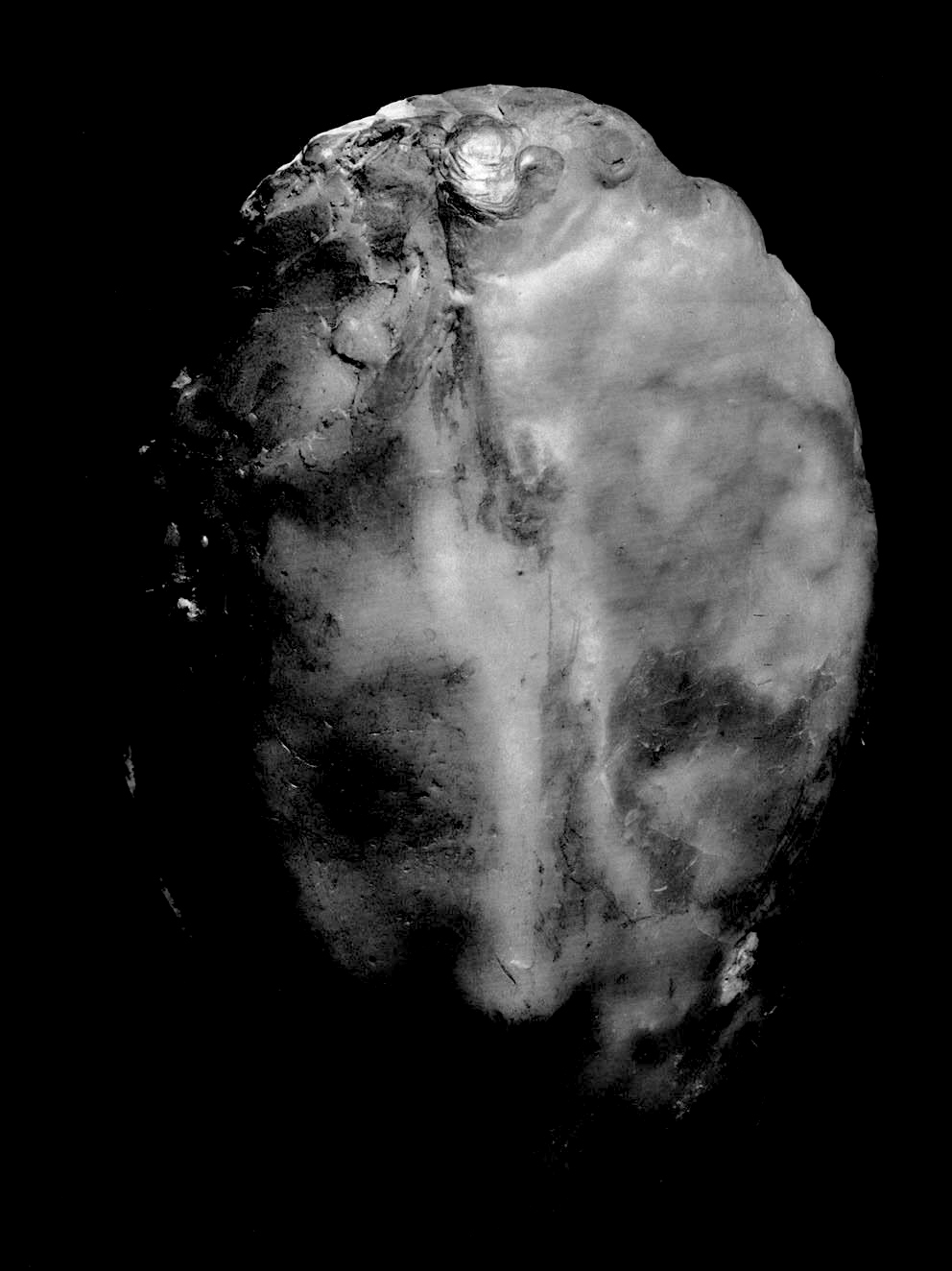
Exhibition: ‘Frank Lloyd Wright and the City: Density vs. Dispersal’ at The Museum of Modern Art (MoMA), New York

Exhibition dates: 1st February – 1st June 2014


Frank Lloyd Wright (American, 1867-1959) 'Grouped Towers, Chicago Project' 1930


Frank Lloyd Wright (American, 1867-1959)
Grouped Towers, Chicago Project
1930
Perspective
Pencil on tracing paper
19 x 28 1/4″ (48.3 x 71.8cm)
The Frank Lloyd Wright Foundation Archives (The Museum of Modern Art | Avery Architectural & Fine Arts Library, Columbia University, New York)


A change of pace now… some exquisite drawings in this posting about the work of Frank Lloyd Wright. It’s a pity they can’t build a skyscraper such as the beautiful Mile High in Melbourne, instead of all the non-descript towers that are going up all over the place. At least we would then have a masterpiece on our hands.

Marcus


Many thankx to MoMA for allowing me to publish the art work and photographs in the posting. Please click on the photographs for a larger version of the image.
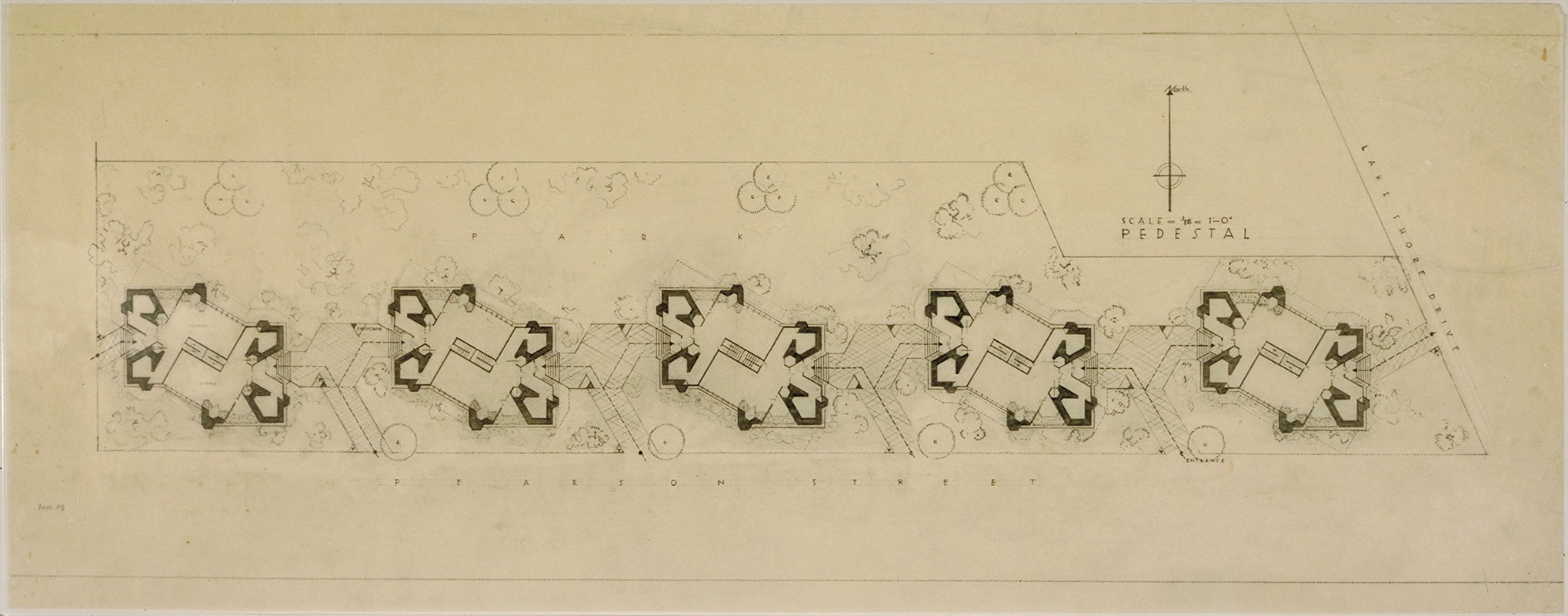


Frank Lloyd Wright (American, 1867-1959) 'Grouped Towers, Chicago Project' 1930


Frank Lloyd Wright (American, 1867-1959)
Grouped Towers, Chicago Project
1930
Plan of the five towers and shared pedestal
Pencil on tracing paper
13 3/4 x 35 3/8″ (34.9 x 89.9cm)
The Frank Lloyd Wright Foundation Archives (The Museum of Modern Art | Avery Architectural & Fine Arts Library, Columbia University, New York)
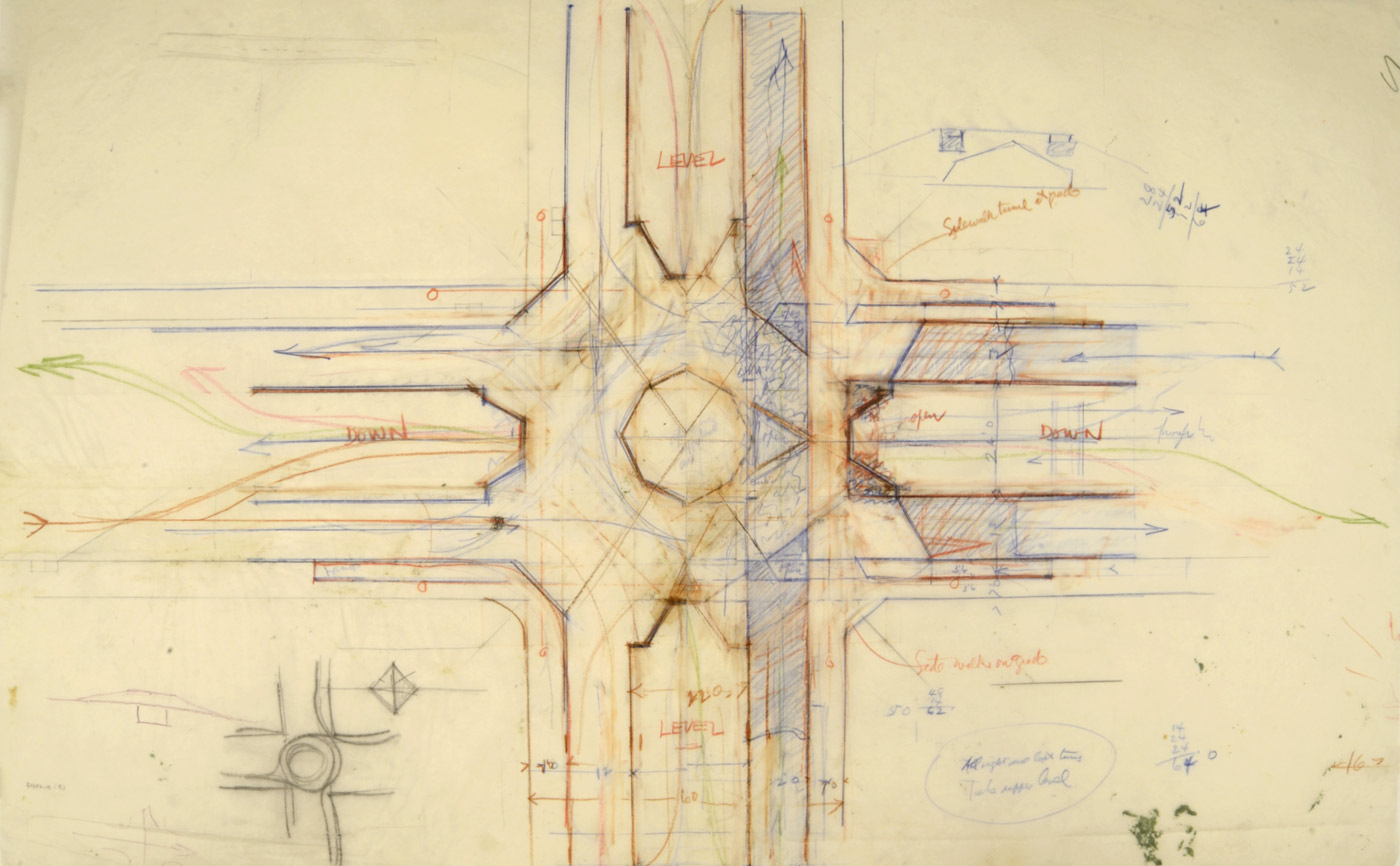
 

Frank Lloyd Wright (American, 1867-1959) 'Broadacre City Project' 1934-1935


Frank Lloyd Wright (American, 1867-1959)
Broadacre City Project
1934-1935
Study for a plan of a highway interchange
Pencil and coloured pencil on tracing paper
22 x 35″ (55.9 x 88.9cm)
The Frank Lloyd Wright Foundation Archives (The Museum of Modern Art | Avery Architectural & Fine Arts Library, Columbia University, New York)
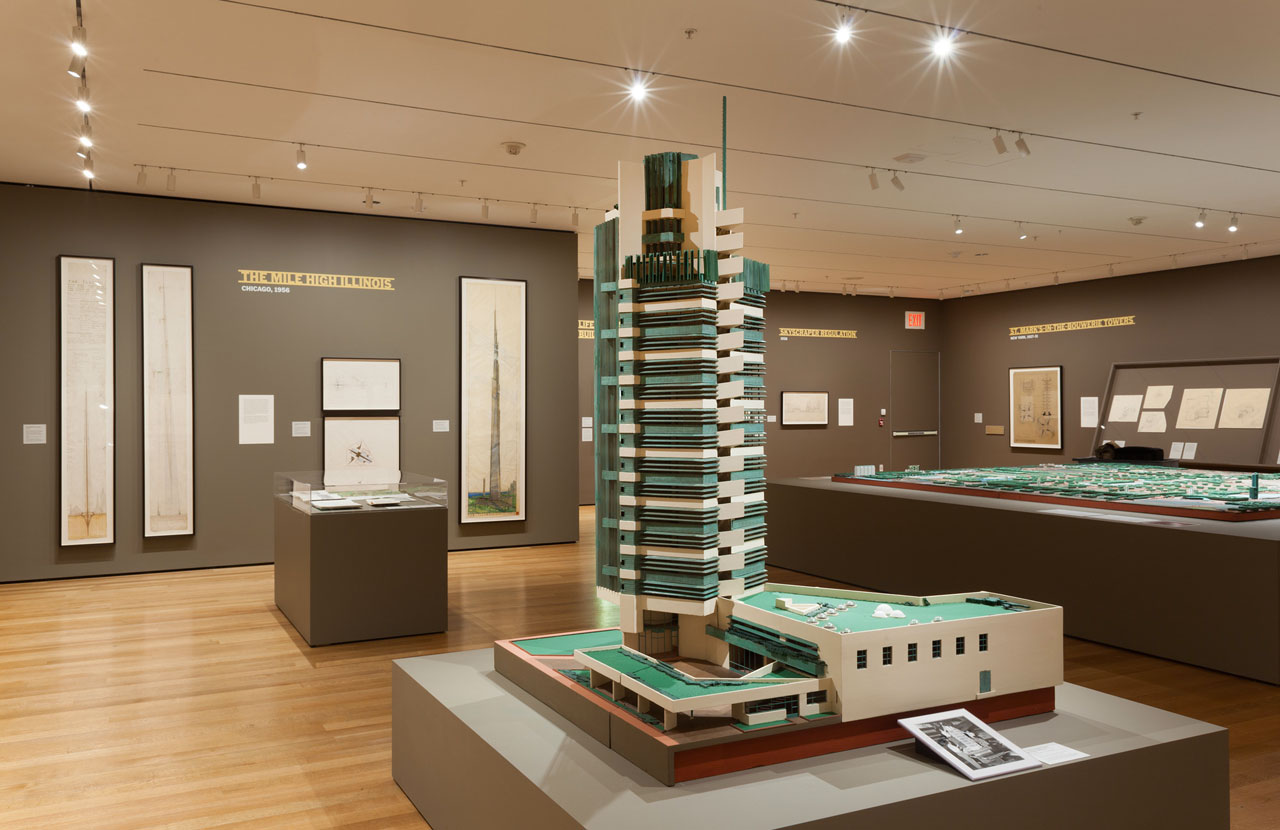
 

Installation view of the exhibition 'Frank Lloyd Wright and the City: Density vs. Dispersal' at MoMA

Installation view of the exhibition 'Frank Lloyd Wright and the City: Density vs. Dispersal' at MoMA


Installation views of the exhibition Frank Lloyd Wright and the City: Density vs. Dispersal at The Museum of Modern Art, New York
February 1 – June 1, 2014
© 2014 The Museum of Modern Art, New York
Photos: Thomas Griesel


Frank Lloyd Wright and the City: Density vs. Dispersal celebrates the recent joint acquisition of Frank Lloyd Wright’s extensive archive by MoMA and Columbia University’s Avery Architectural and Fine Arts Library. Through an initial selection of drawings, films, and large-scale architectural models, the exhibition examines the tension in Wright’s thinking about the growing American city in the 1920s and 1930s, when he worked simultaneously on radical new forms for the skyscraper and on a comprehensive plan for the urbanisation of the American landscape titled “Broadacre City.” Visitors encounter the spectacular 12-foot-by-12-foot model of this plan, which merges one of the earliest schemes for a highway flyover with an expansive, agrarian domain.

Promoted and updated throughout Wright’s life, the model toured the country for several years in the 1930s, beginning with a display at Rockefeller Center. This dispersed vision is paired with Wright’s innovative structural experiments for building the vertical city. Projects, from the early San Francisco Call Building (1912), to Manhattan’s St. Mark’s-in-the-Bouwerie Towers (1927-31), to a polemical mile-high skyscraper, engage questions of urban density and seek to bring light and landscape to the tall building. Highlighting Wright’s complex relationship to the city, the material reveals Wright as a compelling theorist of both its horizontal and vertical aspects. His work, in this way, is not only of historic importance but of remarkable relevance to current debates on urban concentration.

Text from the MoMA website


Frank Lloyd Wright and his assistant Eugene Masselink installing the exhibition 'Frank Lloyd Wright: American Architect' at The Museum of Modern Art, November 13, 1940-January 5, 1941


Frank Lloyd Wright and his assistant Eugene Masselink installing the exhibition Frank Lloyd Wright: American Architect at The Museum of Modern Art, November 13, 1940 – January 5, 1941. Photographic Archive. The Museum of Modern Art Archives, New York
Photo: Soichi Sunami


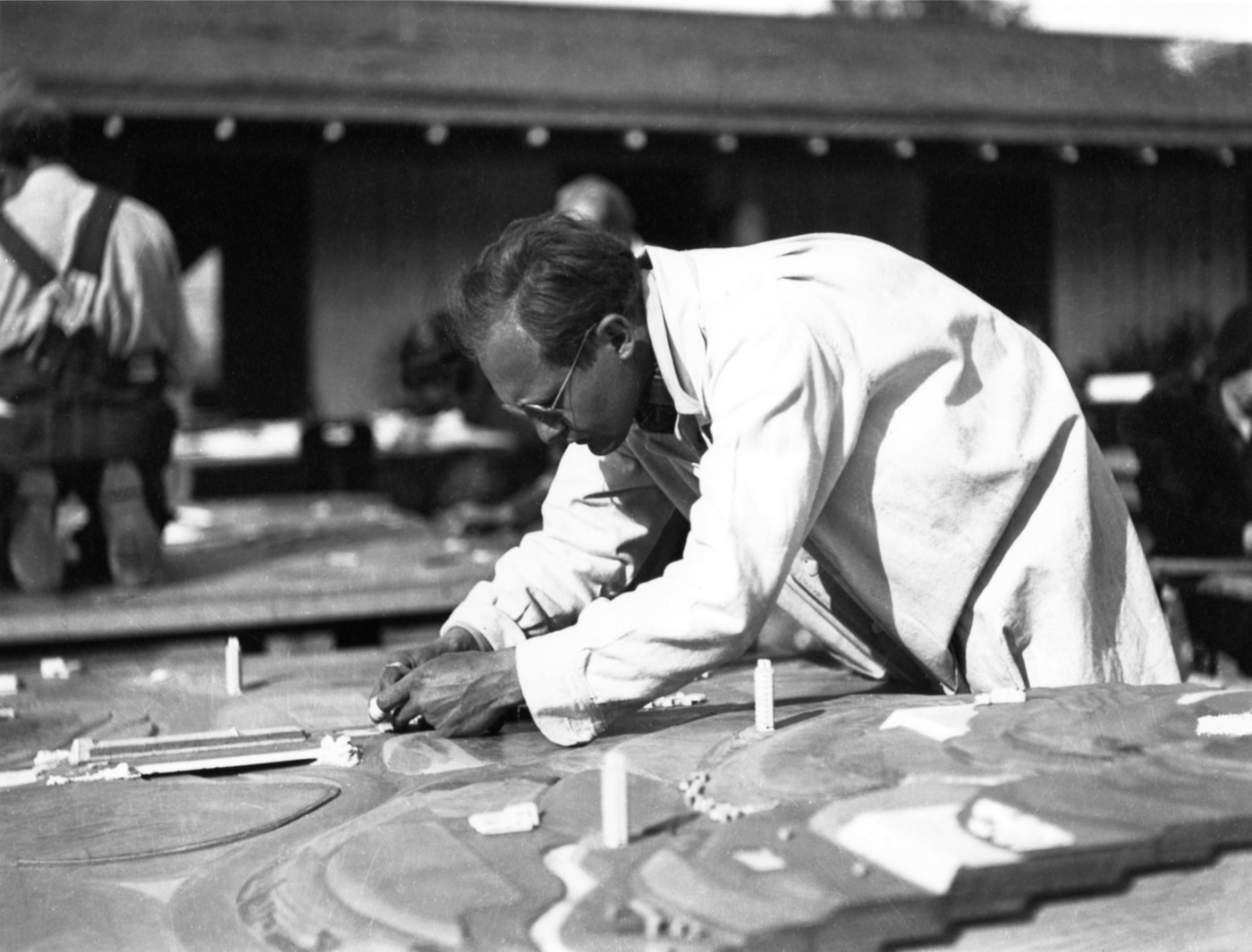
Frank Lloyd Wright (American, 1867-1959) 'Broadacre City Project' 1934-1935


Frank Lloyd Wright (American, 1867-1959)
Broadacre City Project
1934-1935
Model under construction in Chandler, Arizona, 1935
Gelatin silver print on paper
4 1/4 x 6 5/8″ (10.8 x 16.8cm)
The Frank Lloyd Wright Foundation Archives (The Museum of Modern Art | Avery Architectural & Fine Arts Library, Columbia University, New York)
Photo: Roy E. Peterson
 

Frank Lloyd Wright (American, 1867-1959) 'Broadacre City Project' 1934-1935


Frank Lloyd Wright (American, 1867-1959)
Broadacre City Project
1934-1935
Taliesin fellows working on the model. Chandler, Arizona, 1935
Gelatin silver print on paper
9 9/16 x 7″ (24.3 x 17.8cm)
The Frank Lloyd Wright Foundation Archives (The Museum of Modern Art | Avery Architectural & Fine Arts Library, Columbia University, New York)


Frank Lloyd Wright (American, 1867-1959) 'Broadacre City Project' 1934-1935


Frank Lloyd Wright (American, 1867-1959)
Broadacre City Project
1934-1935
Model in four sections
painted wood, cardboard, and paper
152 x 152″ (386.1 x 386.1cm)
The Frank Lloyd Wright Foundation Archives (The Museum of Modern Art | Avery Architectural & Fine Arts Library, Columbia University, New York)
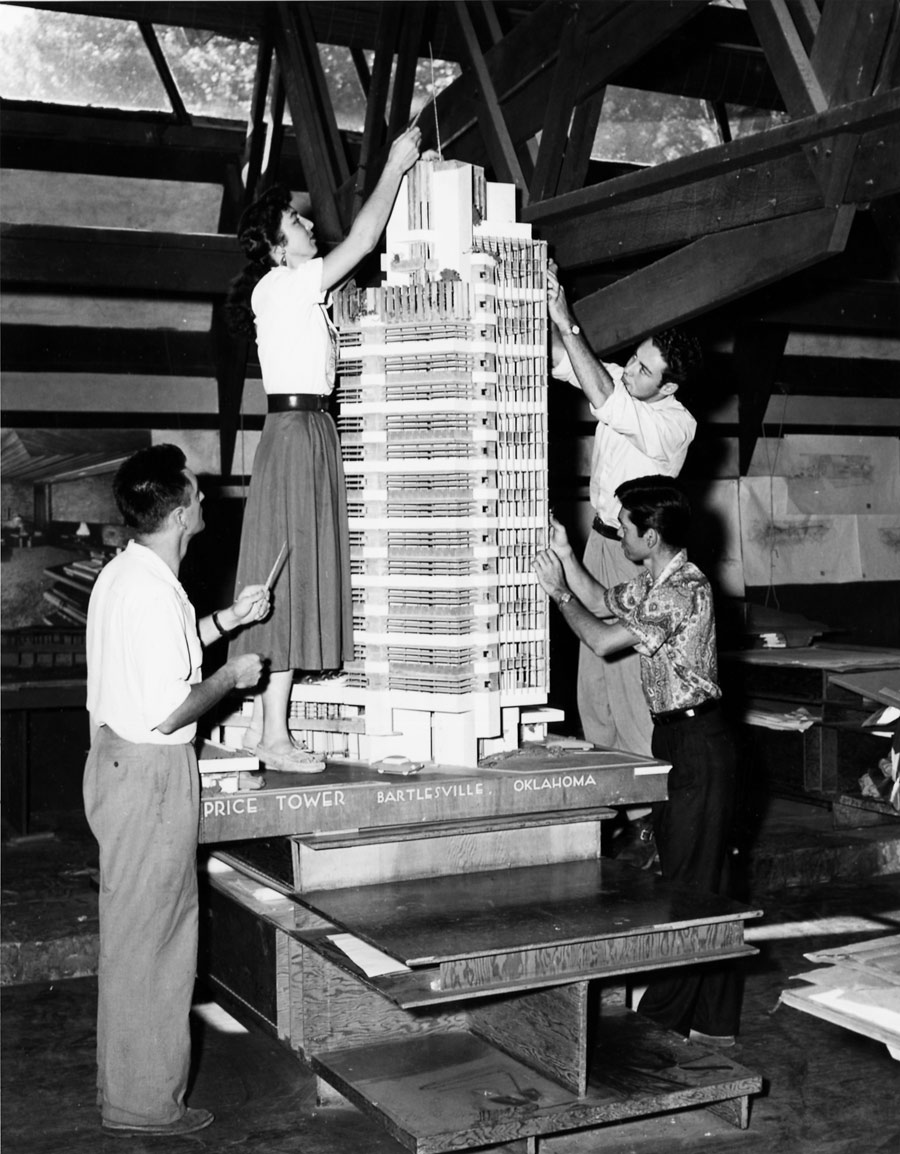
 

Frank Lloyd Wright (American, 1867-1959) 'H. C. Price Company Tower, Bartlesville, Oklahoma' 1952-1956


Frank Lloyd Wright (American, 1867-1959)
H. C. Price Company Tower, Bartlesville, Oklahoma
1952-1956
Apprentices working on the model in the Taliesin drafting room. Spring Green, Wisconsin, c. 1952
Gelatin silver print on paper
7 3/4 x 9 1/2″ (19.7 x 24.1cm)
The Frank Lloyd Wright Foundation Archives (The Museum of Modern Art | Avery Architectural & Fine Arts Library, Columbia University, New York)


The Museum of Modern Art presents Frank Lloyd Wright and the City: Density vs. Dispersal, which celebrates the recent joint acquisition of Frank Lloyd Wright’s extensive archive by MoMA and Columbia University’s Avery Architectural and Fine Arts Library, on view from February 1 to June 1, 2014. Frank Lloyd Wright (1867- 1959) – perhaps the most influential American architect of the 20th century – was deeply ambivalent about cities. For decades, Wright was seen as the prophet of America’s post–World War II suburban sprawl, yet the dispersed cities that he envisaged were also carefully planned – quite distinct from the disorganised landscapes that often developed instead. Paradoxically, Wright was also a lifelong prophet of the race for height that has played out around the world. Through an initial selection of drawings, films, and large-scale architectural models, the exhibition examines the tension in Wright’s thinking about the growing American city from the 1920s to the 1950s, when he worked simultaneously on radical new forms for the skyscraper and on a comprehensive plan for the urbanisation of the American landscape titled “Broadacre City.” The exhibition is organised by Barry Bergdoll, Acting Chief Curator of Architecture and Design, MoMA, and Carole Ann Fabian, Director, Avery Architectural and Fine Arts Library, with Janet Parks, Curator of Drawings & Archives, Avery Architectural and Fine Arts Library, and Phoebe Springstubb, Curatorial Assistant, Department of Architecture and Design, MoMA.

On view is Wright’s 1934-35 manifesto project, for what he called “Broadacre City,” which embodied his quest for a city of private houses set in nature and spread across the countryside. He believed that advances in technology had rendered obsolete the dense cities created by industry and immigration in the late 19th and early 20th centuries. Distributed along a rectilinear grid, these one-acre homesteads were to be combined with small-scale manufacturing, community centers, and local farming, and interspersed with parklands to form a carpet-like pattern of urbanisation. Visitors encounter the spectacular 12-foot-by-12-foot model of this plan, which merges one of the earliest schemes for a highway flyover with an expansive, agrarian domain. Promoted and updated throughout Wright’s life, the model toured the country for several years in the 1930s, beginning with a display at New York City’s Rockefeller Center. It is juxtaposed with the monumental models and drawings produced of his skyscraper visions: the six-foot tall model of his 1913 San Francisco Call Building; the model of his only built residential tower, the Price Tower, in Bartlesville, Oklahoma of 1952-56; and the eight-foot drawings of the Mile High tower project.

This dispersed vision is paired with Wright’s innovative structural experiments for building the vertical city, which engaged questions of urban density and sought to bring light and landscape settings to tall buildings. His ambitions grew from a 24-story design for the offices of the San Francisco Call newspaper (1913) to the 548-story, mile-high tower he envisioned in Chicago (1956) – a building large enough to house the entire population of Broadacre City. Wright’s proposal for the San Francisco Call Building celebrates verticality: repeated piers emphasise the height, drawing the eye up to a startlingly cantilevered cornice pierced with slots that frame the sky and allow daylight to wash the facades for dramatic effect. His design for the National Life Insurance Company Building (1924-1925) features a tower clad entirely in glass, setting aside the load-bearing frame of the Call Building to experiment with the curtain wall and other new building technologies. The project reveals Wright as a key participant in international debates on the possibility of cladding a tall building with a transparent glass facade, rather than cladding it in ornamental masonry for decorative effect.

An unregulated building boom in the 1920s in New York and Chicago resulted in an unprecedented urban density that Wright described as “congestion.” In response, he devised the Skyscraper Regulation – a set of design rules governing the lateral and vertical growth of American cities. By regulating the location and height of tall buildings, Wright sought to optimise light and views and to minimise the effects of closely spaced tall buildings that were turning urban streets into shadowy canyons. Wright’s Skyscraper Regulation was his last attempt to address the inherited city. He would turn instead to devising a set of regulations for an entirely new and dispersed urban fabric (Broadacre City), in which the unit of the city block was exchanged for the farmed acre.

In 1927, Wright’s design for the financially troubled Church of St. Mark’s-in-the-Bowery dramatically transformed the building by having the floors project outward from a single central core plunged deep into the ground. The concrete floors tapered toward the periphery, which he compared to the structural concept of the “taproot” of a tree. This “taproot” structure was finally tested in built form in the S.C. Johnson & Son Research Laboratory Tower (1943-1950) in Racine, Wisconsin. In 1956, Wright unveiled a 26-foot-tall rendering of a gleaming, vertiginously tapered skyscraper – which he said would house 100,000 employees of the state of Illinois. The mile-high tower adopts the “taproot” structure he had articulated 30 years before, in which a skyscraper’s vertical ascent is stabilised by a foundation plunged deep into the ground. Both a polemic and a rationalised proposal for the future of tall buildings, the Mile High marks the definitive return of Wright’s tower to the city. The Mile High embodies Wright’s paradoxical attitude toward the American city: meant to condense the experience of urban life and work within a single telescoping form, freeing the ground for the realisation of Broadacre, holding in tension two idealized images of the city – its extraordinary vertical reach and its extreme horizontal extension.

Press release from the MoMA website


Frank Lloyd Wright (American, 1867-1959) 'National Life Insurance Company Building, Chicago Project' 1924-1925


Frank Lloyd Wright (American, 1867-1959)
National Life Insurance Company Building, Chicago Project
1924-1925
Axonometric view
Coloured pencil on tracing paper
40 x 24″ (101.6 x 61cm)
The Frank Lloyd Wright Foundation Archives (The Museum of Modern Art | Avery Architectural & Fine Arts Library, Columbia University, New York)
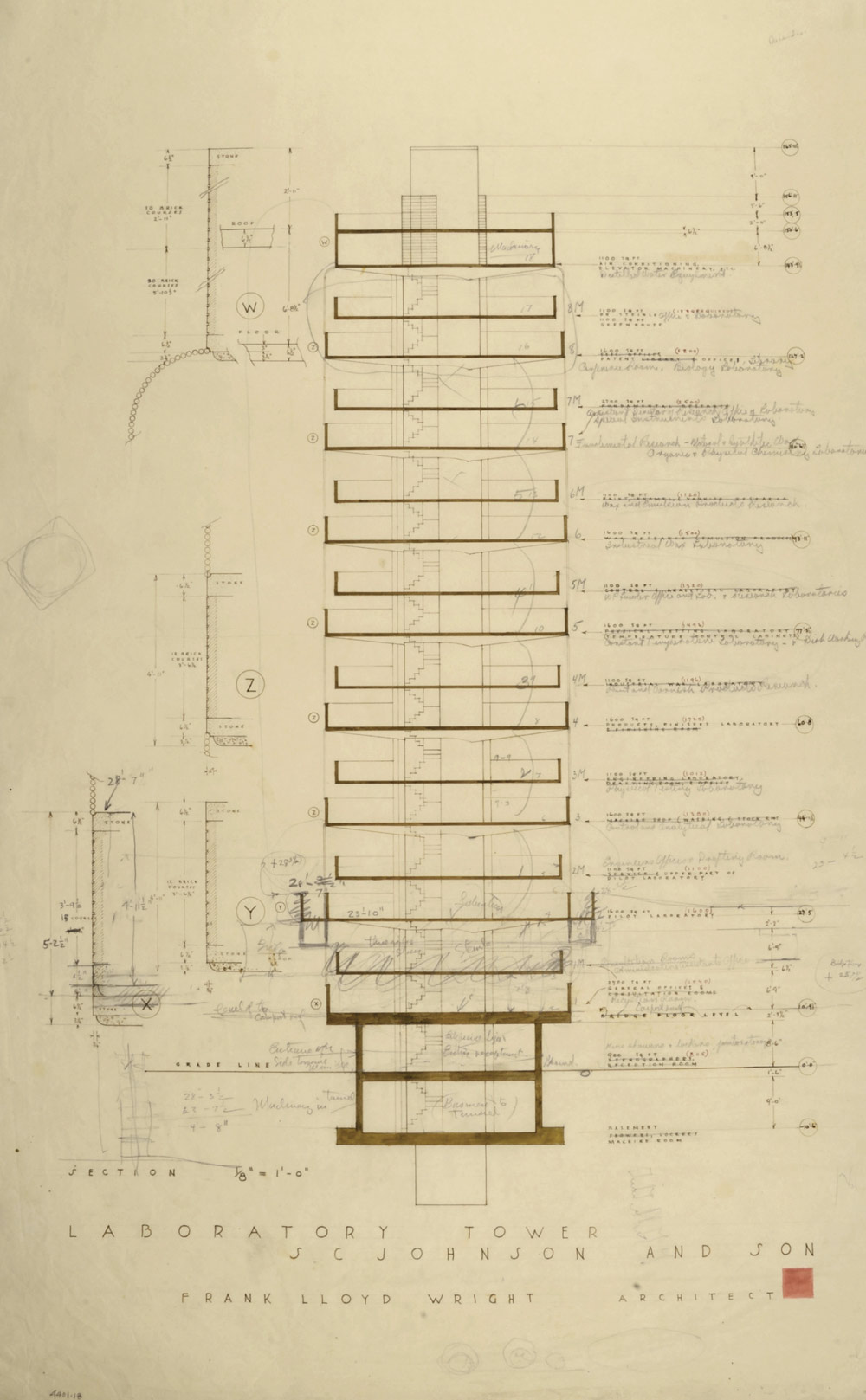
 

Frank Lloyd Wright (American, 1867-1959) 'S.C. Johnson & Son Inc. Research Laboratory Tower, Racine, Wisconsin' 1943-1950


Frank Lloyd Wright (American, 1867-1959)
S.C. Johnson & Son Inc. Research Laboratory Tower, Racine, Wisconsin
1943-50
Section
Pencil, coloured pencil, and ink on tracing paper
35 1/8 x 20″ (89.2 x 50.8cm)
The Frank Lloyd Wright Foundation Archives (The Museum of Modern Art | Avery Architectural & Fine Arts Library, Columbia University, New York)
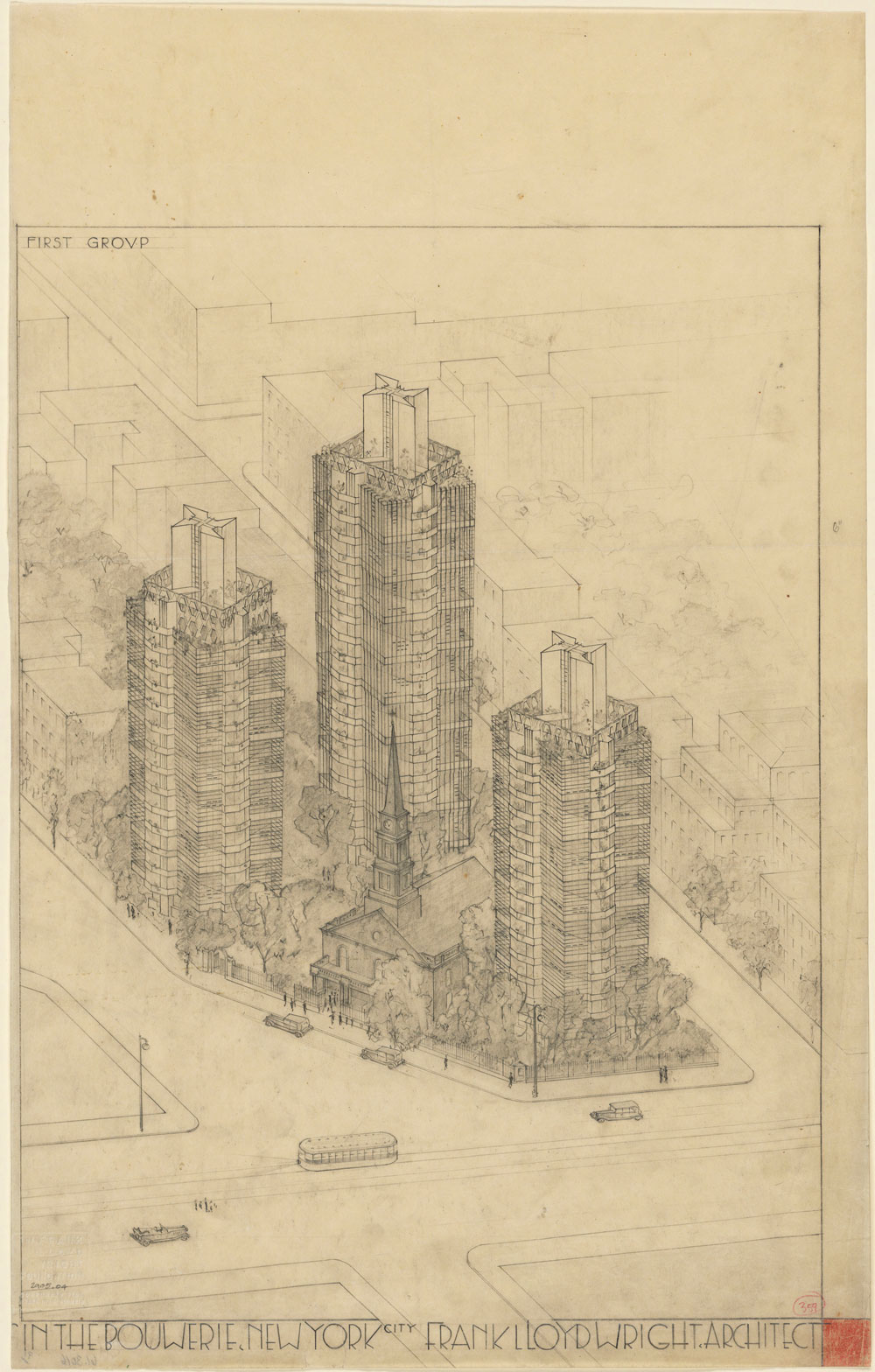
 

Frank Lloyd Wright (American, 1867-1959) 'St. Mark’s-in-the-Bouwerie Towers, New York Project' 1927-1931


Frank Lloyd Wright (American, 1867-1959)
St. Mark’s-in-the-Bouwerie Towers, New York Project
1927-1931
Aerial perspective
Pencil and coloured pencil on tracing paper
23 3/4 x 15″ (60.3 x 38.1cm)
The Museum of Modern Art, New York. Jeffrey P. Klein Purchase Fund, Barbara Pine Purchase Fund, and Frederieke Taylor Purchase Fund


Frank Lloyd Wright (American, 1867-1959) 'St. Mark's-in-the-Bouwerie Tower, New York Project' 1927-1931


Frank Lloyd Wright (American, 1867-1959)
St. Mark’s-in-the-Bouwerie Tower, New York Project
1927-1931
Perspective, 1928
Pencil and coloured pencil on tracing paper
28 1/4 x 10 1/8″ (71.8 x 25.7cm)
The Frank Lloyd Wright Foundation Archives (The Museum of Modern Art | Avery Architectural & Fine Arts Library, Columbia University, New York)


Frank Lloyd Wright (American, 1867-1959) 'St. Mark's-in-the-Bouwerie Tower, New York Project' 1927-1931


Frank Lloyd Wright (American, 1867-1959)
St. Mark’s-in-the-Bouwerie Tower, New York Project
1927-1931
Section and perspective cutaway of a duplex apartment with balcony and living-room floor plans, 1929
Ink, pencil, and coloured pencil on linen window shade
47 x 35″ (119.4 x 88.9cm)
The Frank Lloyd Wright Foundation Archives (The Museum of Modern Art | Avery Architectural & Fine Arts Library, Columbia University, New York)


Frank Lloyd Wright (American, 1867-1959) 'The San Francisco Call Building Project' 1913


Frank Lloyd Wright (American, 1867-1959)
The San Francisco Call Building Project
1913
Preliminary perspective
Pencil, coloured pencil, and cut-and-pasted tracing paper on paper
47 3/4 x 23 7/8″ (121.3 x 60.6cm)
The Frank Lloyd Wright Foundation Archives (The Museum of Modern Art | Avery Architectural & Fine Arts Library, Columbia University, New York)


Frank Lloyd Wright (American, 1867-1959) 'The Mile High Illinois, Chicago Project' 1956


Frank Lloyd Wright (American, 1867-1959)
The Mile High Illinois, Chicago Project
1956
Perspective with Wright’s Golden Beacon Apartment Building project (1956-1957)
Pencil, coloured pencil, ink, and gold ink on tracing paper
105 x 30″ (266.7 x 76.2cm)
The Frank Lloyd Wright Foundation Archives (The Museum of Modern Art | Avery Architectural & Fine Arts Library, Columbia University, New York)


The Museum of Modern Art
11 West 53 Street
New York, NY 10019
Phone: (212) 708-9400

Opening hours:
10.30 am – 5.30 pm
Open seven days a week

MoMA website

LIKE ART BLART ON FACEBOOK

Back to top

Exhibition: ‘From the Village to Vogue: The Modernist Jewelry of Art Smith’ at the Cincinnati Art Museum

Exhibition dates: 22nd February – 18th May 2014


Art Smith (American, 1917-1982) '"Modern Cuff" Bracelet' designed c. 1948


Art Smith (American, 1917-1982)
“Modern Cuff” Bracelet
designed c. 1948
Silver
1 5/8 x 2 1/2 x 4 in. (4.1 x 6.4 x 10.2cm)
Brooklyn Museum, Gift of Charles L. Russell


Very much of their time, these beautiful, understated pieces of anamorphic jewellery are exquisitely designed objets d’art.

Marcus


Many thankx to the Cincinnati Art Museum for allowing me to publish the art work in the posting. Please click on the photographs for a larger version of the art.


Art Smith (American, 1917-1982) '"Lava" Bracelet' designed c. 1946


Art Smith (American, 1917-1982)
“Lava” Bracelet
designed c. 1946
Silver
2 1/2 x 2 5/8 x 5 3/4 in. (6.4 x 6.7 x 14.6cm)
Brooklyn Museum, Gift of Charles L. Russell


Art Smith (American, 1917-1982) 'Autumn Leaves Brooch' 1974


Art Smith (American, 1917-1982)
Autumn Leaves Brooch
1974
Gold, jade
1/2 x 3 x 1 3/4 in. (1.3 x 7.6 x 4.4cm)
Brooklyn Museum, Gift of Charles L. Russell


Art Smith (American, 1917-1982) 'Untitled' 1948-1979


Art Smith (American, 1917-1982)
Untitled
1948-1979
Wood, paint, copper
Brooklyn Museum, Gift of Charles L. Russell


It will be a feast for the eyes of those who appreciate jewellery this Spring in the Queen City. The spirit of craft and its revival will shine through in large scale, highly sculpted pieces of jewellery created by Art Smith and his contemporaries in From the Village to Vogue: The Modernist Jewelry of Art Smith, February 22, 2014 through May 18, 2014.

This exhibition features twenty-four pieces of silver and gold jewellery created by African American artist Art Smith, as well as more than forty pieces by his contemporaries, including Sam Kramer, Margaret De Patta, and Harry Bertoia. Three pieces of jewellery by Alexander Calder, who influenced many of these artists/jewellers, will also be featured in this exhibition. This exhibition was organised by the Brooklyn Museum of Art and the Cincinnati Art Museum is the first to host this exhibition. It will then continue to the Dallas Museum of Art and the High Museum of Art in Atlanta, Georgia.

Inspired by surrealism, biomorphism and primitivism, Art Smith (1917-1982) was one of the leading modernist jewellers of the mid-twentieth century. Early in his career, Smith met Talley Beatty, a young black dancer and choreographer, who introduced him to the world of dance, in particular the salon of Frank and Dorcas Neal. It was there that he met several prominent black artists, including writer James Baldwin, musician and composer Billy Strayhorn, singers Lena Horne and Harry Belafonte, actor Brock Peters, and painter Charles Sebree. Smith began to create pieces for dance companies, who in turn, encouraged him to design on a grander scale. This experience is evident in the scale of his mature work.

In 1946, Smith opened his own studio in Greenwich Village and started selling his jewellery. He soon caught the attention of buyers in Boston, San Francisco, and Chicago. In the early 1950s, Smith received pictorial coverage in both Harper’s Bazaar and Vogue and was mentioned in The New Yorker shoppers guide, On the Avenue”. Smith soon established business relationships with Bloomingdales, Milton Heffling in Manhattan, James Boutique in Houston, L’Unique in Minneapolis and Black Tulip in Dallas. While his earlier work was executed primarily in copper and brass, because it was less expensive, growing recognition increased sales and special commissions for custom designs. This allowed him to begin producing more work in silver. He received a prestigious commission from the Peekskill, New York chapter of the NAACP, for example, to design a brooch for Eleanor Roosevelt. He was even commissioned to design a pair of cufflinks for Duke Ellington, whose music he often listened to while working.

Included in the exhibition are major works by Smith including his famous Patina Necklace (c. 1959). Worked in silver, it is an example both of the large scale of his jewellery and of his use of asymmetry. Alexander Calder’s influence is also clear in this piece. From the curved structure that wraps the neck, two pierced ellipses dangle over the breastbone, giving the necklace a kinetic energy that enlivens the piece. With a sculptor’s sensitivity, Smith emphasised negative space in his designs and viewed the human body as an armature for his creations. He considered his jewellery incomplete until it rested on the human structure.

According to Cincinnati Art Museum interim Chief Curator Cynthia Amnéus, “Working in the heart of Greenwich Village, Smith was influenced by jazz musicians like Charlie Parker, visual artists like Robert Motherwell, and the poetry readings of Beat Generation writers like Alan Ginsberg. Smith’s work, like that of his contemporaries, appealed to an artistic and intellectual clientele. These artisans were not concerned with making pretty jewellery. They created works of art that were meant to be worn on the body.”

Press release from the Cincinnati Art Museum website


Art Smith (American, 1917-1982) 'Linked Oval Necklace' designed by 1974


Art Smith (American, 1917-1982)
Linked Oval Necklace
designed by 1974
Silver, amethyst quartz
11 x 10 1/2 x 1/2 in. (27.9 x 26.7 x 1.3cm)
Brooklyn Museum, Gift of Charles L. Russell


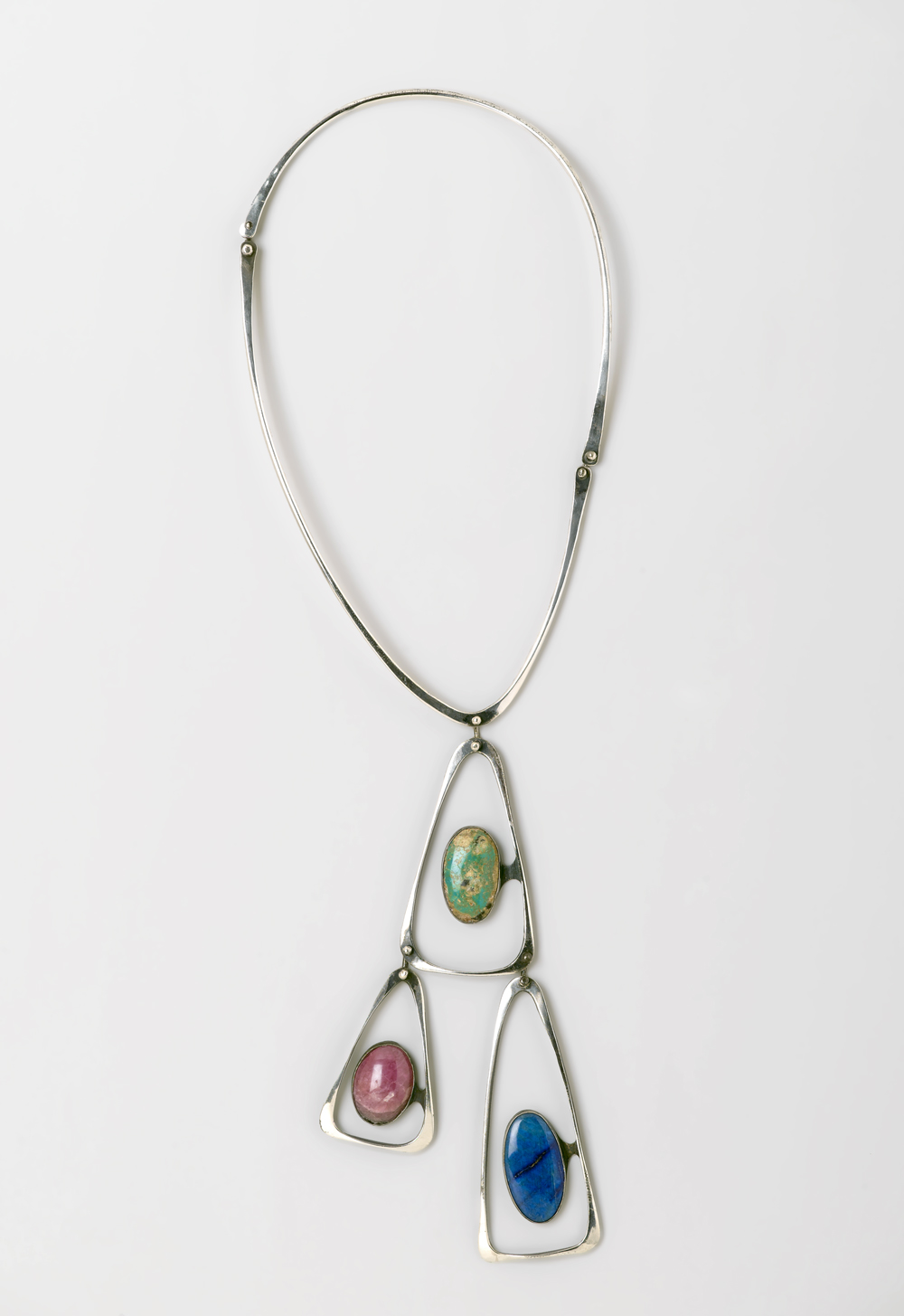
Art Smith (American, 1917-1982) 'Triangle Necklace' c. 1969


Art Smith (American, 1917-1982)
Triangle Necklace
c. 1969
Silver, turquoise, lapis lazuli, rhodochrosite
16 1/8 x 5 1/8 x 1/2 in. (41.0 x 13.0 x 1.3cm)
Brooklyn Museum, Gift of Charles L. Russell


Art Smith (American, 1917-1982) 'Ellington Necklace' c. 1962


Art Smith (American, 1917-1982)
Ellington Necklace
c. 1962
Silver, turquoise, amethyst, prase, rhodonite
16 7/8 x 9 7/8 x 3/4 in. (42.9 x 25.1 x 1.9cm)
Brooklyn Museum, Gift of Charles L. Russell


Art Smith (American, 1917-1982) 'New Orleans Necklace' c. 1962


Art Smith (American, 1917-1982)
New Orleans Necklace
c. 1962
Silver, three semiprecious stones: Labradorite (?)
8 5/8 x 5 7/8 x 3/4 in. (21.9 x 14.9 x 1.9cm)
Brooklyn Museum, Gift of Charles L. Russell


Art Smith (American, 1917-1982) '"Bauble" Necklace' c. 1953


Art Smith (American, 1917-1982)
“Bauble” Necklace
c. 1953
Silver, colourless quartz
9 1/8 x 4 7/8 x 1/2 in. (23.2 x 12.4 x 1.3cm)
Brooklyn Museum, Gift of Charles L. Russell


Peter Basch (American, 1921-2004) 'Model Wearing Art Smith's "Modern Cuff" Bracelet' c. 1948


Peter Basch (American, 1921-2004)
Model Wearing Art Smith’s “Modern Cuff” Bracelet
c. 1948
Black-and-white photograph
13 3/4 x 103/4 in. (34.9 x 27.3cm)
Courtesy of Brooklyn Museum


Cincinnati Art Museum

953 Eden Park Drive
Cincinnati, OH 45202
Phone: 513-639-2872

Opening hours:
Tuesday through Sunday, 11am – 5pm
The Art Museum is closed on Mondays

Cincinnati Art Museum
 website

LIKE ART BLART ON FACEBOOK

Back to top

Exhibition: ‘Carrie Mae Weems: Three Decades of Photography and Video’ at The Solomon R. Guggenheim Museum, New York

Exhibition dates: 24th January – 14th May 2014


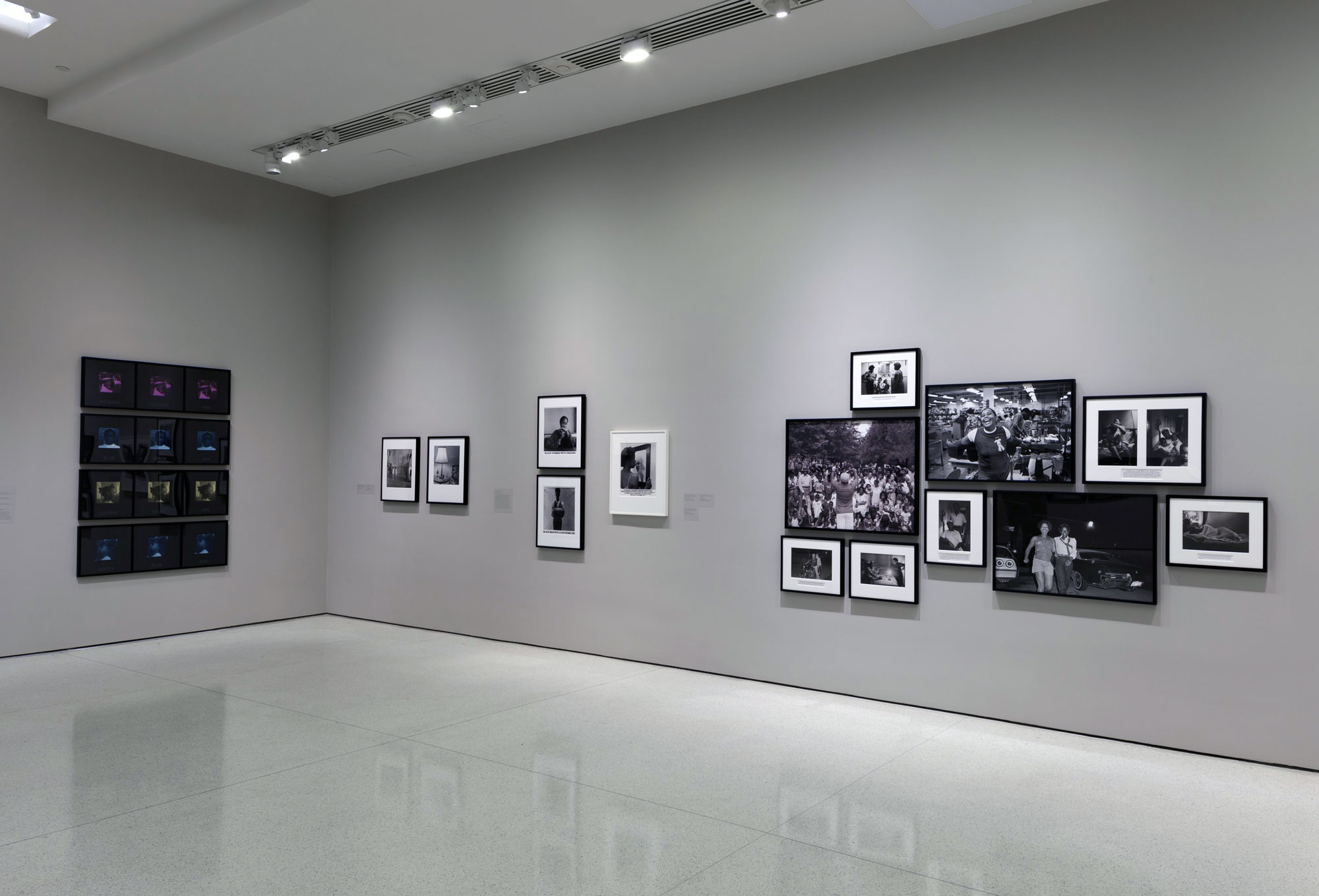
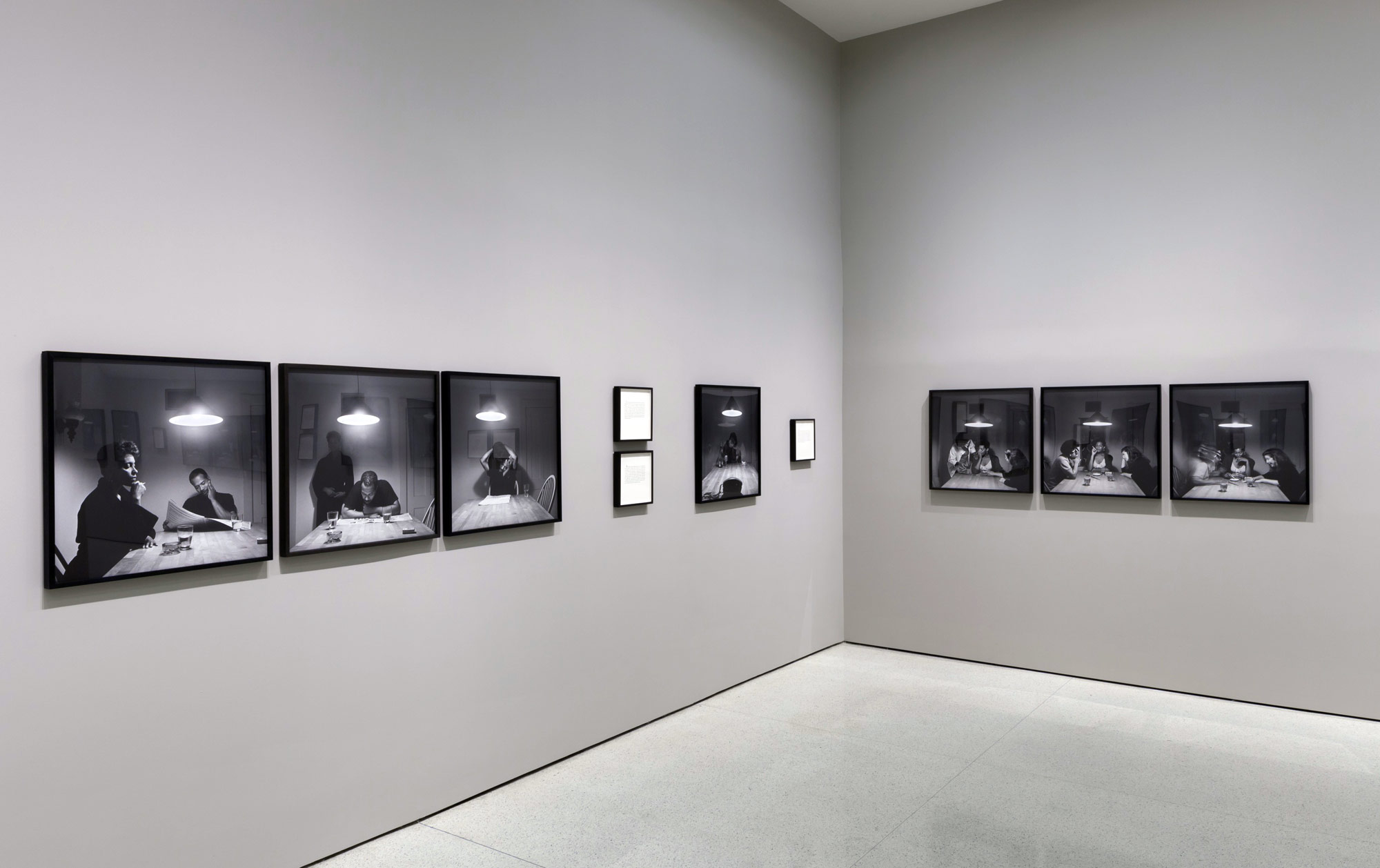
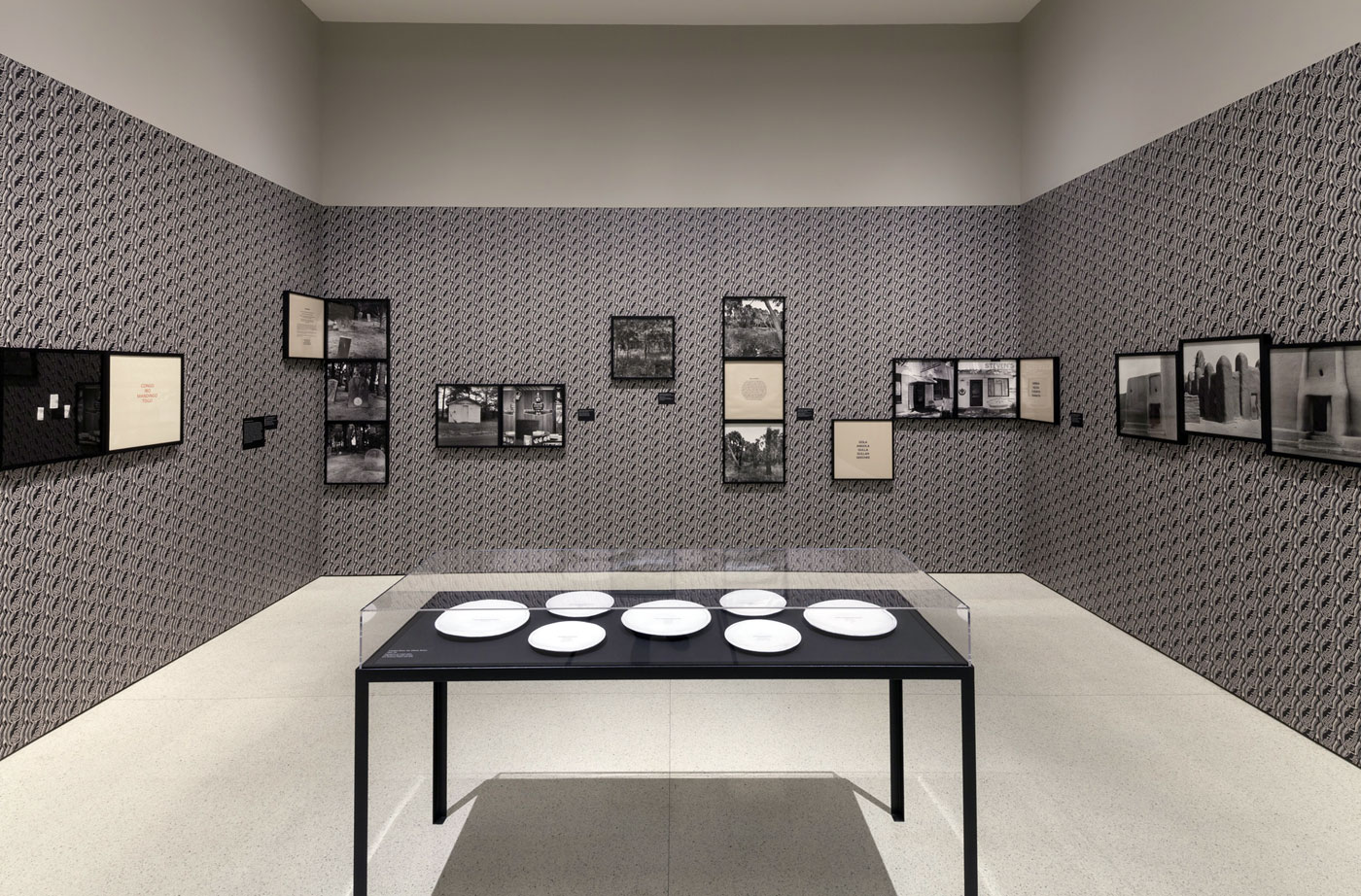
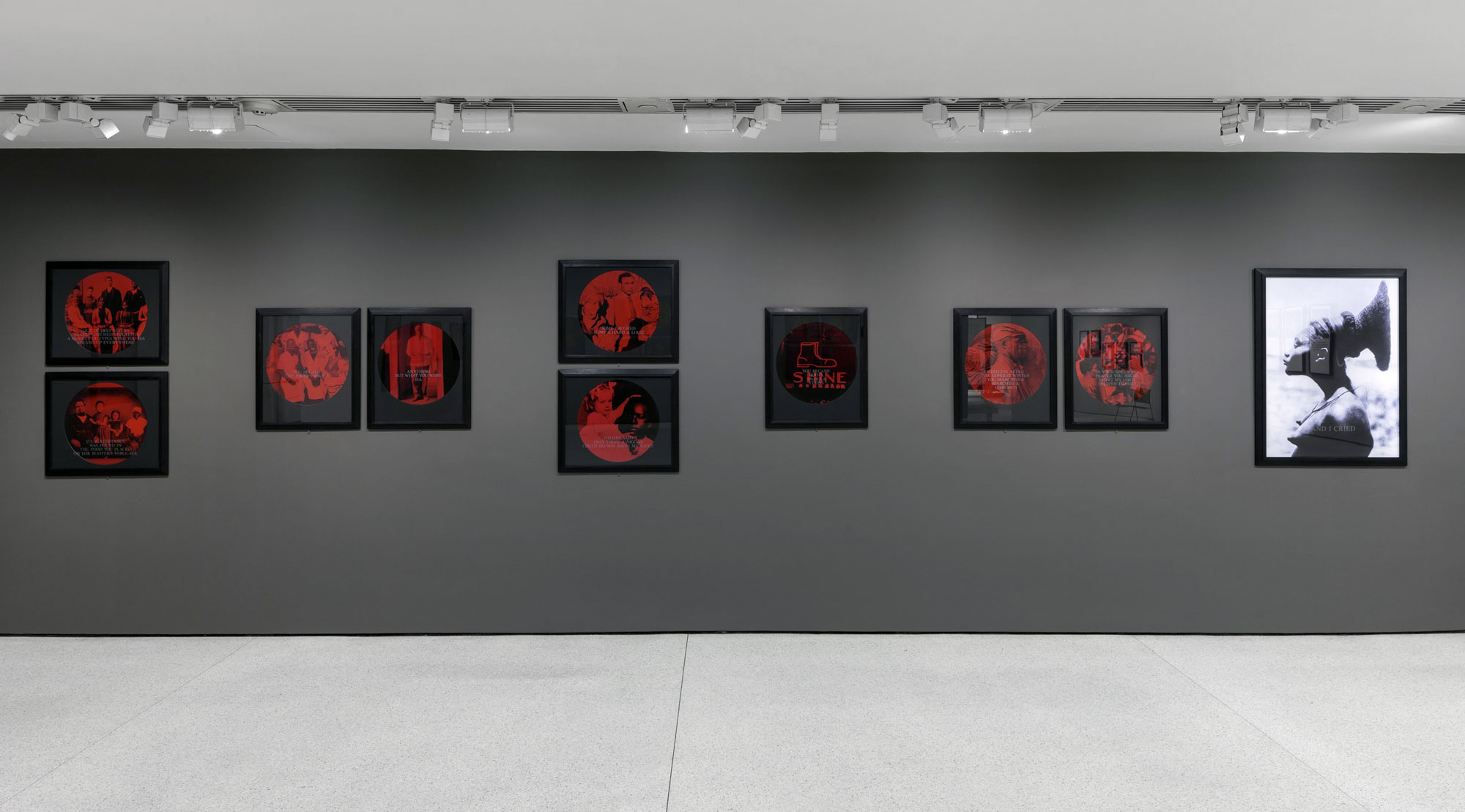
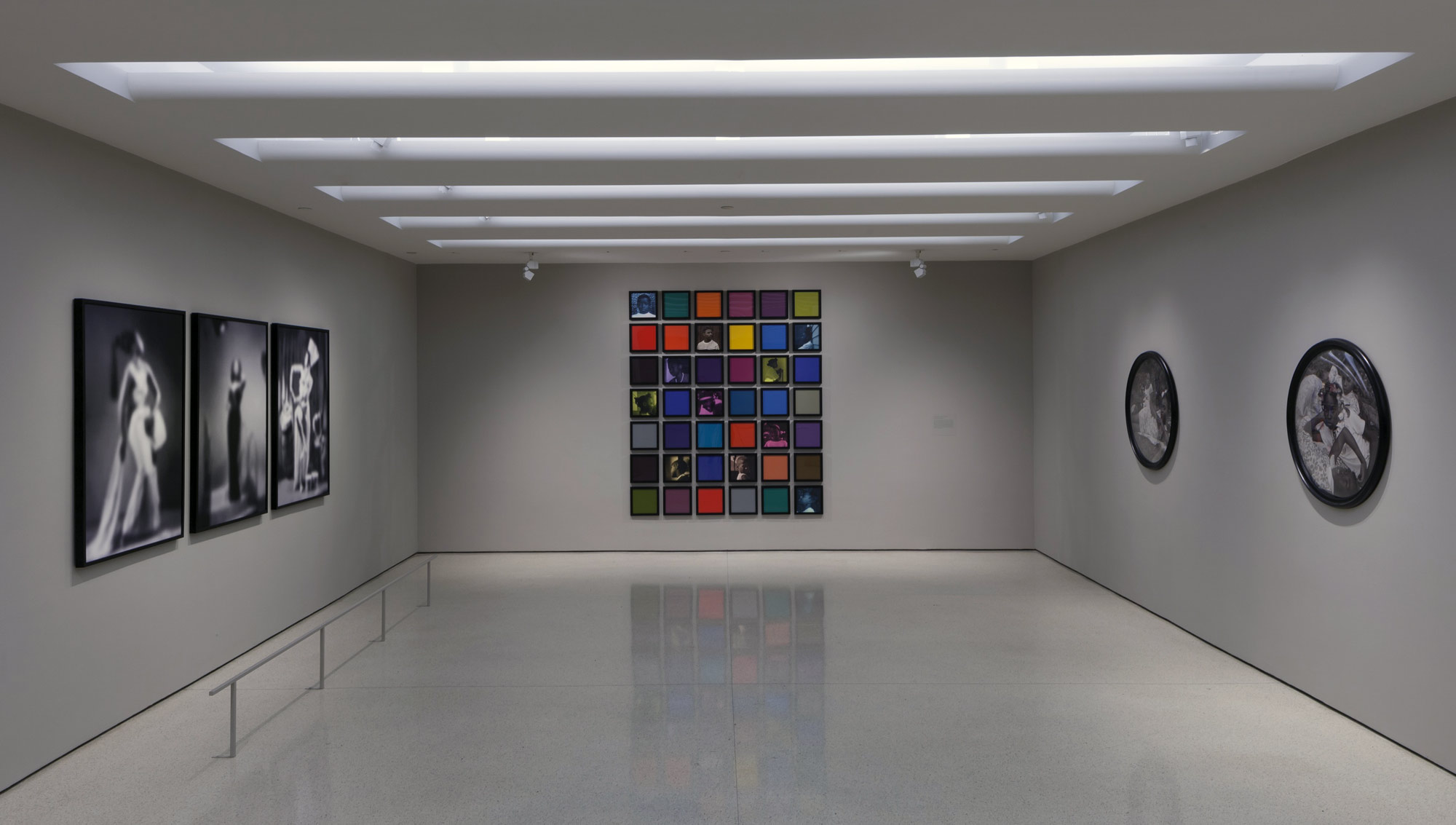
Installation view: 'Carrie Mae Weems: Three Decades of Photography and Video', Solomon R. Guggenheim Museum, New York, January 24-May 14, 2014


Installation view: Carrie Mae Weems: Three Decades of Photography and Video, Solomon R. Guggenheim Museum, New York, January 24-May 14, 2014
Photo: David Heald © Solomon R. Guggenheim Foundation.


A busy time with postings on the archive over the next week with a lot of exhibitions finishing on the 18th May 2014. The posting about this artist is one of the best of them. I have been wanting to show this artist on this site since it started, nearly 6 years ago. Finally, I get my chance!
 

I ask the question:

Who are the interesting photographers anywhere who are alive now?

That is – by looking at the ideas that are present in poetry, music, philosophy or even politics – who is there that is truly taking these ideas forward (or ideas that are as interesting). Or, who is arranging images with the elegance of a Sommer or an Atget or the dynamics of Arbus.

In other words whose acts am I hanging upon, so that I am waiting with great anticipation to see what they are going to do next?

Which living photographers would I walk over broken glass to see their work? = some

If I was being essential (and if you were walking over glass you would be), the list would be very short:

Carrie Mae Weems and Wolfgang Tillmans.


What both these image makers – for they are not photographers in the traditional sense – do, is problematise and reconfigure narration and visualisation in the conceptualisation of subject. Tillmans experiments with a sensory experiential backdrop against and within which the photographs are produced. Modes of perception and the regimes of emotion are inducted into the aesthetics of production and meaning so that, “the pictures communicate with each other in a way that is not bound to the pattern of a closed narrative or any particular line of argument.” The mobilisation and reversal of value and meaning are central strategies in Tillmans’ praxis, where realistic and abstract elements are never intentionally separated from each other, and where the physicality and space of the photographs is also acknowledged in the installation of the work.

A similar sensory experience can be observed in the work of Carrie Mae Weems, only this artist invites contemplation of issues surrounding race, gender, and class inequality – bringing to light the voices of marginalised and oppressed people and histories – through a multidimensional picture of history and humanity, intended to spur greater cultural awareness and compassion. As the press release observes, “Although her subjects are often African American, Weems wants “people of color to stand for the human multitudes” and for her art to resonate with audiences of all backgrounds… Weems often appropriates words and images, re-presenting them to viewers as biting reminders of the persistence of bigoted attitudes in the United States.”

This is the power of both artists work, the creation of open ended narratives, multidimensional pictures of history and humanity which allows the viewer to create a space beyond the art works.

Using ekphrasis – the structuring patterns of language, in Weems’ case emphasising the role of both spoken and written narrative – to vividly represent a wide range of perceptual experiences, she creates a complementary space outside of the art work in the reader’s mind. The author creates links, “designating the paths along which the reader may travel, and thus, in a much freer manner than modernist authors, structures the network of allusions, parallelisms, and juxtapositions that contribute to the sense of textual space.”1 This allows the viewer to create a language of personal associations and engages in them an autonomy of experience, one encouraged by the products, the texts and images that these authors create.

These thoughts come to mind. Some things we interpret and then remember that interpretation, but we are no longer involved in the actual act of interpretation – and there are other, probably fewer things that continue to involve us – where we never finish the first way of looking at them, we are always coming to them and not arriving. Unfortunately, I find a lot of things in the first group, and as much as theoreticians try to inspire me to re-interpret, the work they have done often only works as an adjunct to something that has settled.

The art of Weems and Tillmans resides, lives and breathes of the second category, for we can never be sure of the pattern of narrative, the form of aesthetic and thematic interaction and the specificity of the marginalised histories they examine. These histories apply to all of us.

Dr Marcus Bunyan


1/ Tolva, John. Ut Pictura Hyperpoesis: Spatial Form, Visuality, and the Digital World,” in HYPERTEXT ’96 Proceedings of the the seventh ACM conference on Hypertext, 1996, p. 71.


Many thankx to The Solomon R. Guggenheim Museum for allowing me to publish the photographs in the posting. Please click on the photographs for a larger version of the image.


“Over the past thirty years, Carrie Mae Weems has yearned to insert marginalized peoples into the historical record. She does this not only to bring ignored or erased experiences to light but to provide a more multidimensional picture of humanity as a whole, a picture that ultimately will spur greater awareness and compassion. Weems believes deeply that “my responsibility as an artist is to … make art. beautiful and powerful, that adds and reveals; to beautify the mess of a messy world, to heal the sick and feed the helpless; to shout bravely from the roof-tops and storm barricaded doors and voice the specifics of our historic moment.””


Carrie Mae Weems quoted in Kathryn E. Delmez. “Introduction,” from Kathryn E. Delmez (ed.,). Carrie Mae Weems: Three Decades of Photography and Video. Yale University Press 2012, p. 1.


“Weems [work] exist at the intersection of photography and race, image and text.”


John Pultz


“Belying the myth that conceptual artists disdain the old-fashioned notion of aesthetics, Weems has long been consumed and galvanized by the idea of beauty. The notion of beauty encompasses and reaches beyond aesthetics. It is not a simple concept, as often there are unspoken political implications in her use. Beauty is a powerful adjective in her hands and an important tool in her work. Her work is always about beauty and purposely so. She seduces the viewer through the very process of creating luscious prints, or beautiful images, without ever using beauty purely to seduce. But no matter what one encounters within the text or within one’s own revelations about what the texts ultimately say, the religion of beauty always undergirds Weem’s vision and informs her work.”


Thelma Golden. “Some Thoughts on Carrie Mae Weems,” in Golden, T. and Piché Jr., T. Carrie Mae Weems: Recent Work, 1992-1998. New York: George Braziller, 1998, p. 32 quoted in Deborah Willis. “Photographing between the Lines: Beauty, Politics, and the Poetic Vision of Carrie Mae Weems,” in Kathryn E. Delmez (ed.,). Carrie Mae Weems: Three Decades of Photography and Video. Yale University Press 2012, p. 33.


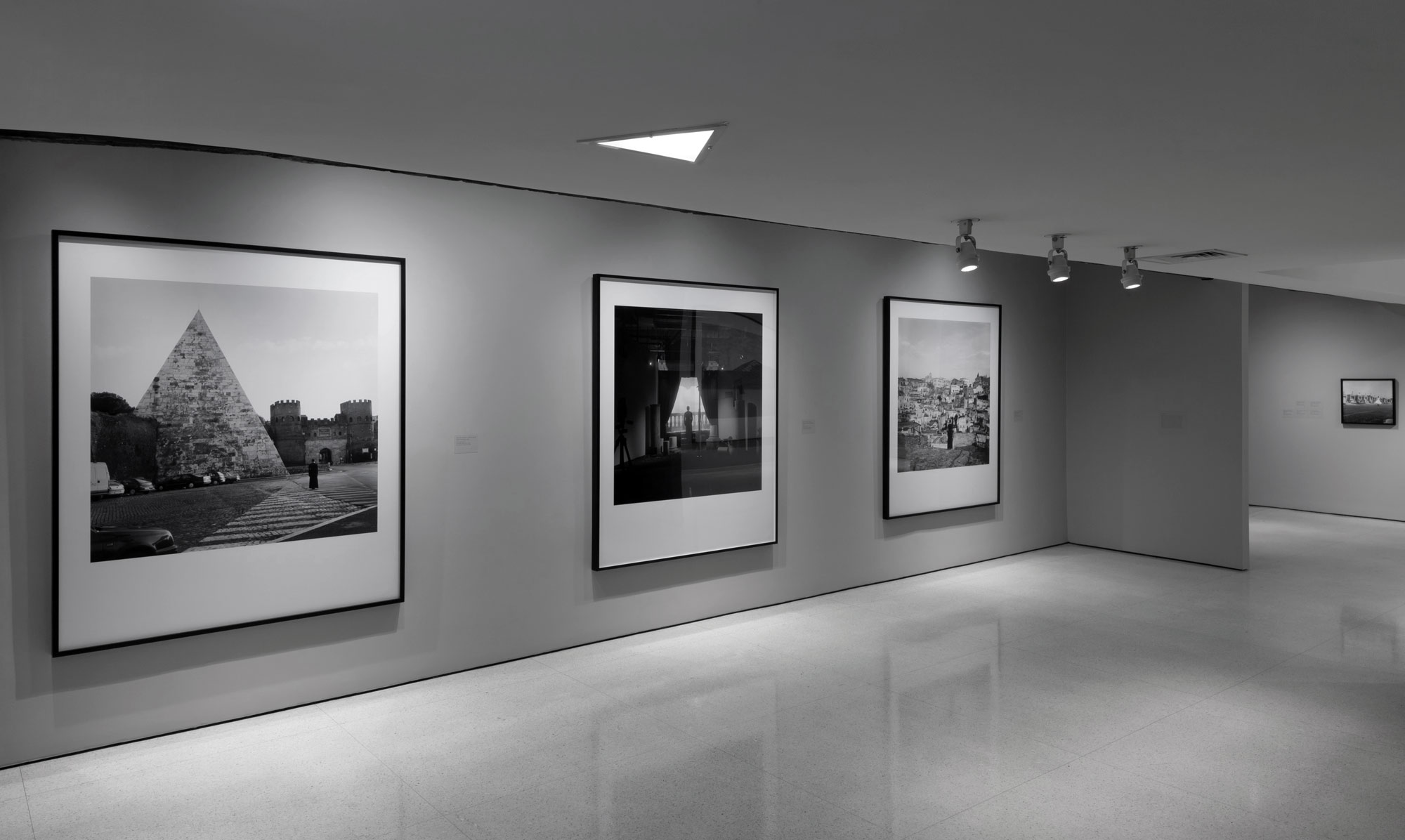
Installation view: 'Carrie Mae Weems: Three Decades of Photography and Video', Solomon R. Guggenheim Museum, New York, January 24-May 14, 2014

Installation view: 'Carrie Mae Weems: Three Decades of Photography and Video', Solomon R. Guggenheim Museum, New York, January 24-May 14, 2014

Installation view: 'Carrie Mae Weems: Three Decades of Photography and Video', Solomon R. Guggenheim Museum, New York, January 24-May 14, 2014

Installation view: 'Carrie Mae Weems: Three Decades of Photography and Video', Solomon R. Guggenheim Museum, New York, January 24-May 14, 2014

Installation view: 'Carrie Mae Weems: Three Decades of Photography and Video', Solomon R. Guggenheim Museum, New York, January 24-May 14, 2014


Installation views: Carrie Mae Weems: Three Decades of Photography and Video, Solomon R. Guggenheim Museum, New York, January 24-May 14, 2014
Photos: David Heald © Solomon R. Guggenheim Foundation.


The Solomon R. Guggenheim Museum presents Carrie Mae Weems: Three Decades of Photography and Video, the first major New York museum retrospective devoted to this socially motivated artist. Weems has long been acclaimed as one of the most eloquent and respected interpreters of African American experiences, and she continues to be an important influence for many young artists today. Featuring more than 120 works – primarily photographs, but also texts, videos, and an audio recording – as well as a range of related educational programs, this comprehensive survey offers an opportunity to experience the full breadth of the artist’s oeuvre and gain new insight into her practice.

Carrie Mae Weems: Three Decades of Photography and Video is organised by the Frist Center for the Visual Arts, Nashville, Tennessee. The exhibition has been curated by Kathryn Delmez, the Frist Center, where it opened in September 2012. The Solomon R. Guggenheim Museum presentation is organised by Jennifer Blessing, Senior Curator, Photography, with Susan Thompson, Assistant Curator. This exhibition is supported in part by The Robert Mapplethorpe Foundation. The Leadership Committee for Carrie Mae Weems: Three Decades of Photography and Video is also gratefully acknowledged for its support, including Jo Carole and Ronald S. Lauder, Robert Menschel Vital Projects, and Jack Shainman Gallery, as well as Henry Buhl, Crystal R. McCrary and Raymond J. McGuire, Beth Rudin DeWoody, Rhona Hoffman Gallery, Toby Devan Lewis, Louise and Gerald W. Puschel, and Miyoung Lee and Neil Simpkins. Additional funding is provided by the William Talbott Hillman Foundation and the New York State Council on the Arts.

The work of Carrie Mae Weems (b. 1953, Portland, Oregon) invites contemplation of issues surrounding race, gender, and class inequality. Over the past thirty years, Weems has used her art to bring to light the ignored or erased experiences of marginalised people. Her work proposes a multidimensional picture of history and humanity, intended to spur greater cultural awareness and compassion. Although her subjects are often African American, Weems wants “people of colour to stand for the human multitudes” and for her art to resonate with audiences of all backgrounds.

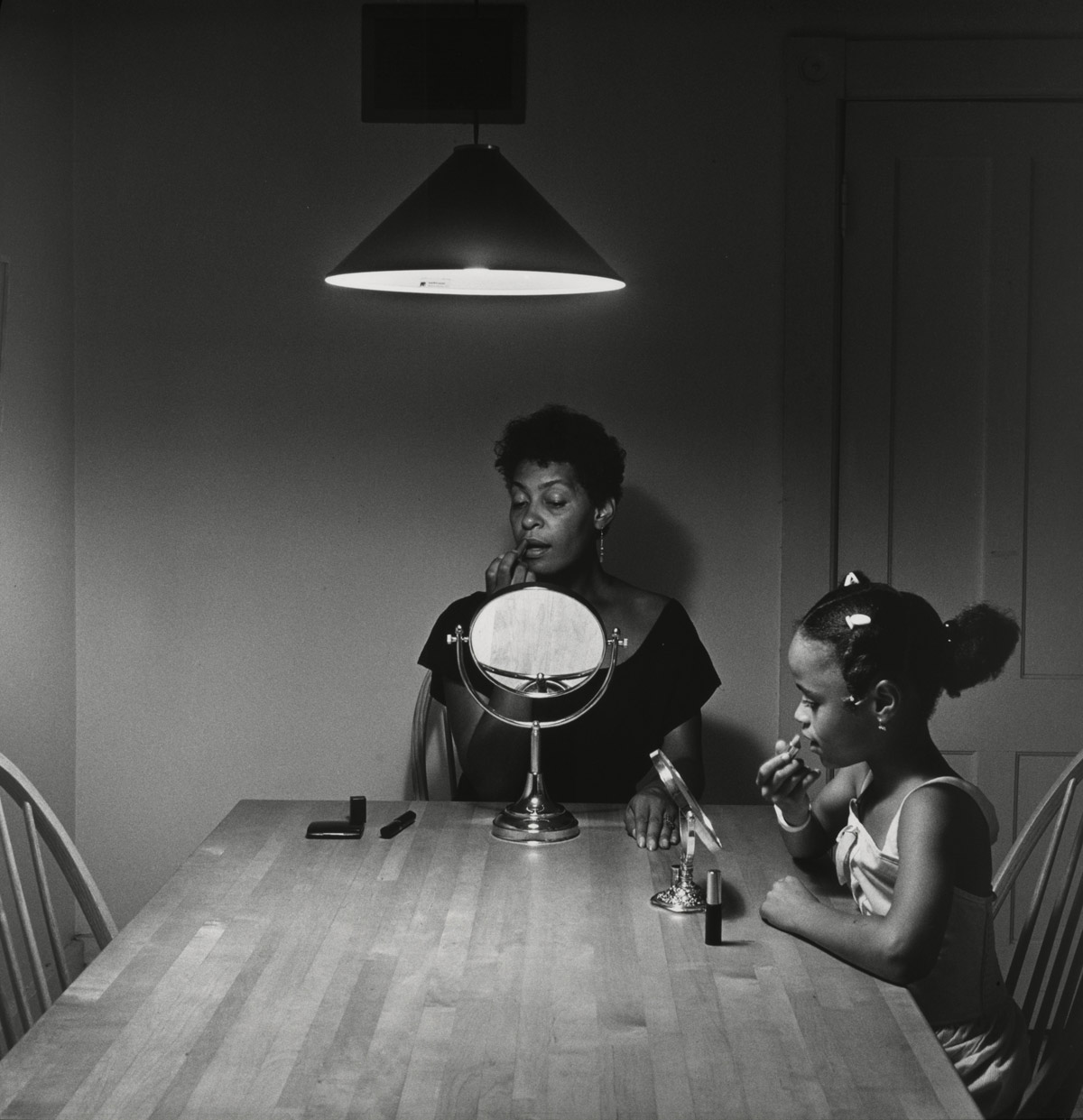
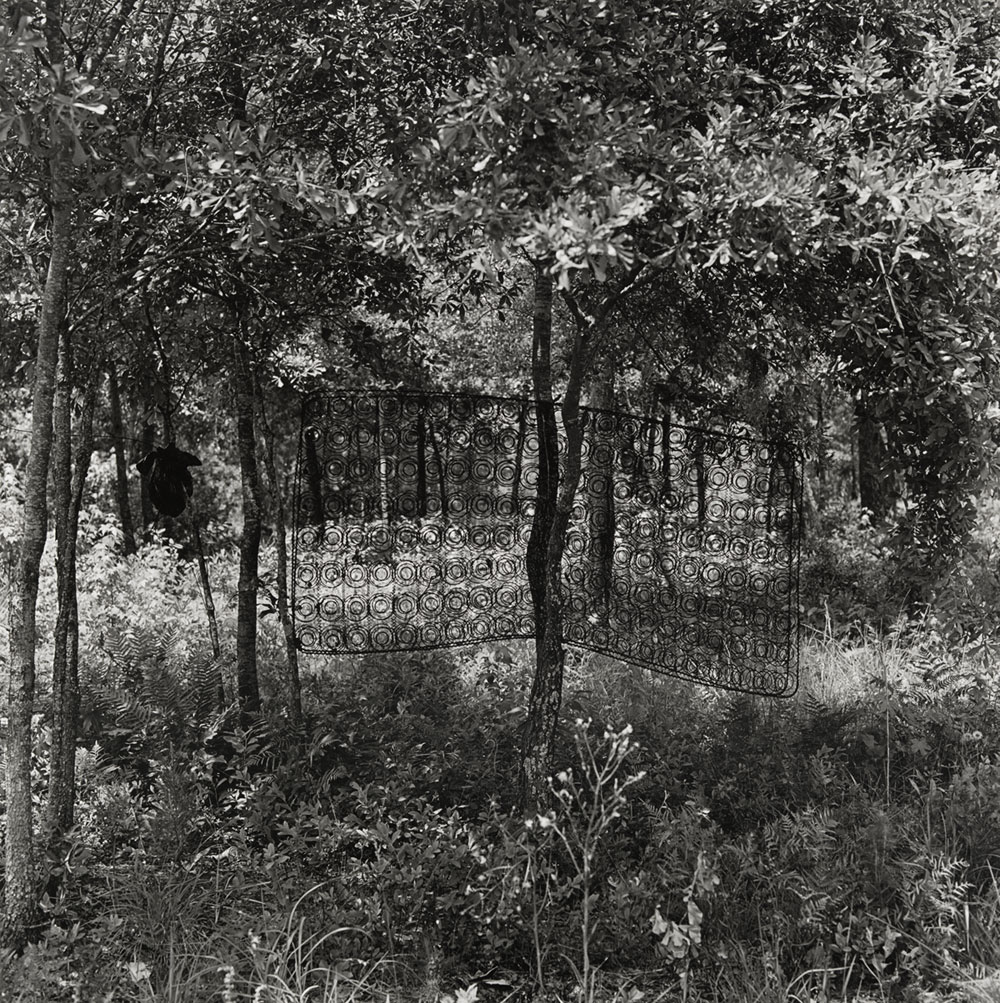
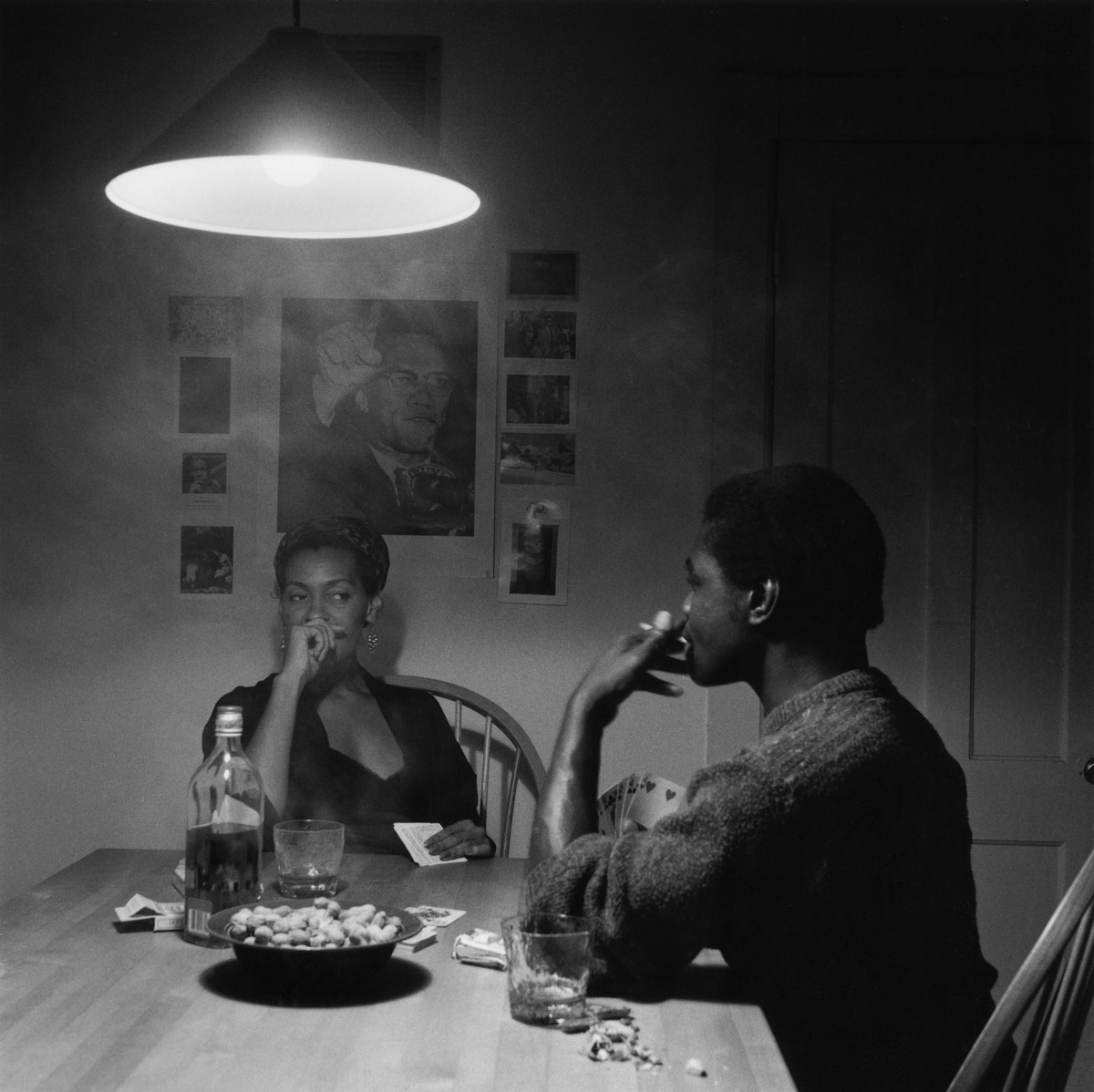
Organised in a loosely chronological order throughout two of the museum’s Annex Levels, the exhibition begins on Level 2 with the series Family Pictures and Stories (1978-1984). This series, like many of Weems’s early works, explores matters relating to contemporary black identity, highlighting individuals in social contexts – including in this case her own kin. Her landmark Kitchen Table Series (1990) employs text and photography to explore the range of women’s roles within a community, pointedly situating the photographs’ subject within a domestic setting. Selections from Weems’s Sea Islands Series (1991-1992), Africa (1993), and Slave Coast (1993) demonstrate her ongoing interest in language and storytelling. These works, made during the artist’s travels to the titular locales, pair images with evocative vernacular texts or etymological investigations that trace English words to African roots. The artist’s practice emphasises the role of both spoken and written narrative, reflecting her graduate studies in folklore.

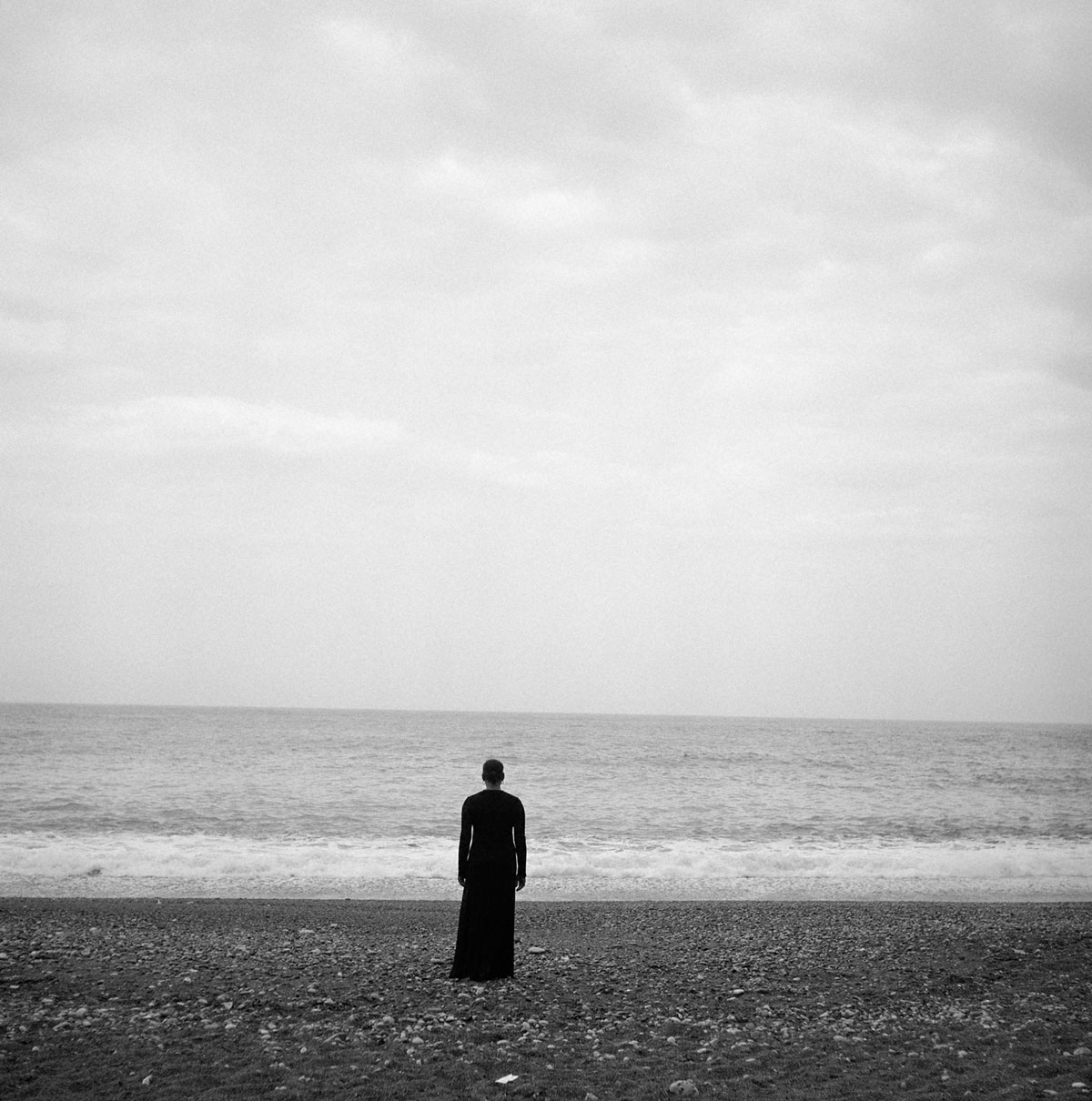
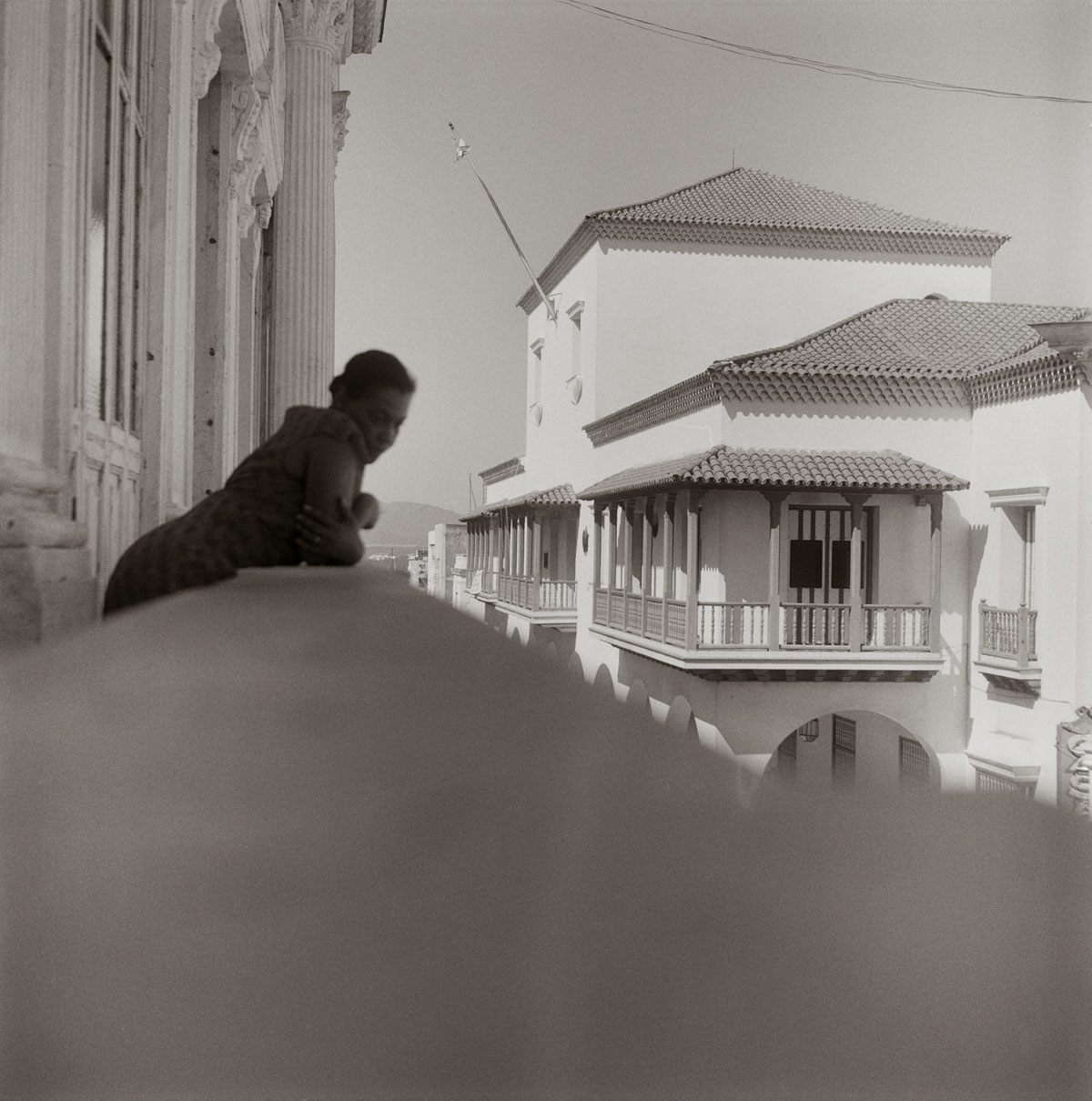
Weems often appropriates words and images, re-presenting them to viewers as biting reminders of the persistence of bigoted attitudes in the United States. Her renowned series From Here I Saw What Happened and I Cried (1995-1996), presented on Annex Level 4, layers new text over found historical imagery to critique and lament prejudiced attitudes toward African Americans throughout the nineteenth and twentieth centuries. A yearning to investigate the underlying causes and effects of racism, slavery, and imperialism has spurred Weems to travel widely throughout the United States, Africa, Europe, and the Caribbean. During extended visits to these places, depicted in series such as Dreaming in Cuba (2002), The Louisiana Project (2003), and Roaming (2006), all represented in the exhibition, she looks to the surrounding land and architecture in order to foster communion with inhabitants past and present.

Video is a natural extension of Weems’s narrative photographic practice, also providing an opportunity for the artist to include music in her work. Although she worked in film during her undergraduate years at the California Institute of the Arts, Weems’s first major endeavour in the medium came in 2003-2004 with Coming Up for Air, a work comprised of series of poetic vignettes that will be screened in the New Media Theater in the Guggenheim’s Sackler Center for Arts Education. Other video works, including Italian Dreams (2006), Afro Chic (2009), and Constructing History: A Requiem to Mark the Moment (2008) will be integrated into the exhibition near related photographs.

Press release from The Solomon R. Guggenheim Museum website


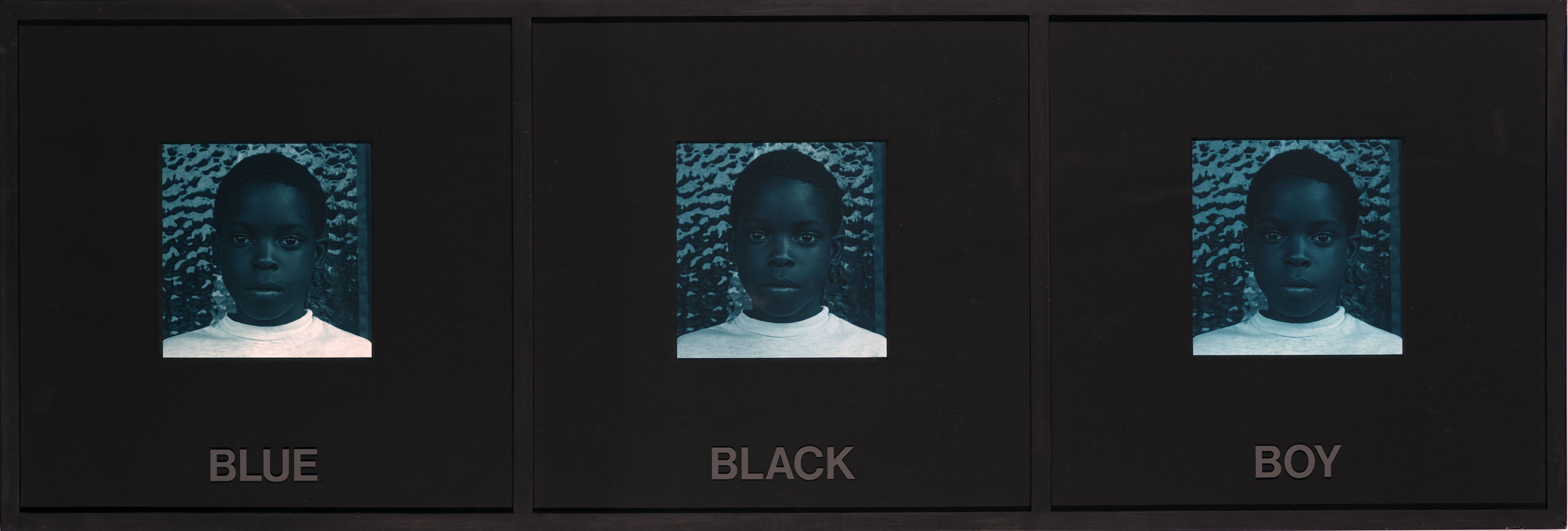
Carrie Mae Weems (American, b. 1953) 'Blue Black Boy (from 'Colored People')' 1989-1990


Carrie Mae Weems (American, b. 1953)
Blue Black Boy (from Colored People)
1989-90
Triptych, three toned gelatin silver prints with Prestype and frame
16 x 48 inches (40.6 x 121.9cm) overall
Whitney Museum of American Art, New York, Purchase, with funds from the Photography Committee
© Carrie Mae Weems


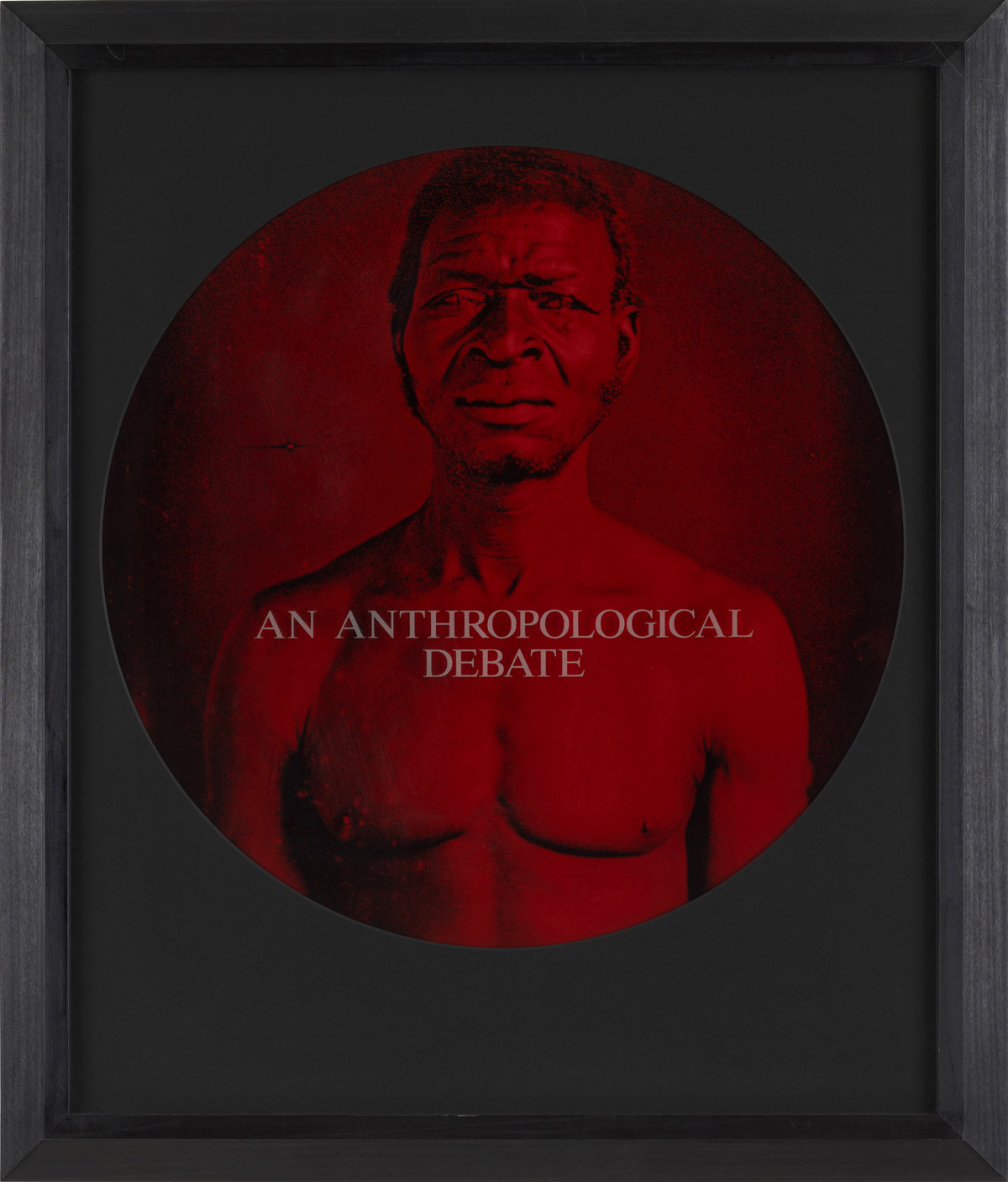
Carrie Mae Weems (American, b. 1953) 'An Anthropological Debate' (from 'From Here I Saw What Happened and I Cried') 1995-1996


Carrie Mae Weems (American, b. 1953)
An Anthropological Debate (from From Here I Saw What Happened and I Cried)
1995-96
Chromogenic print with etched text on glass
26 1/2 x 22 3/4 inches (67.3 x 57.8cm)
The Museum of Modern Art, New York, Gift on behalf of The Friends of Education of the Museum of Modern Art
From an original daguerreotype taken by J.T. Zealy, 1850. Peabody Museum, Harvard University.Copyright President & Fellows of Harvard College, 1977. All rights reserved.
Photo: © 2012, MoMA, NY


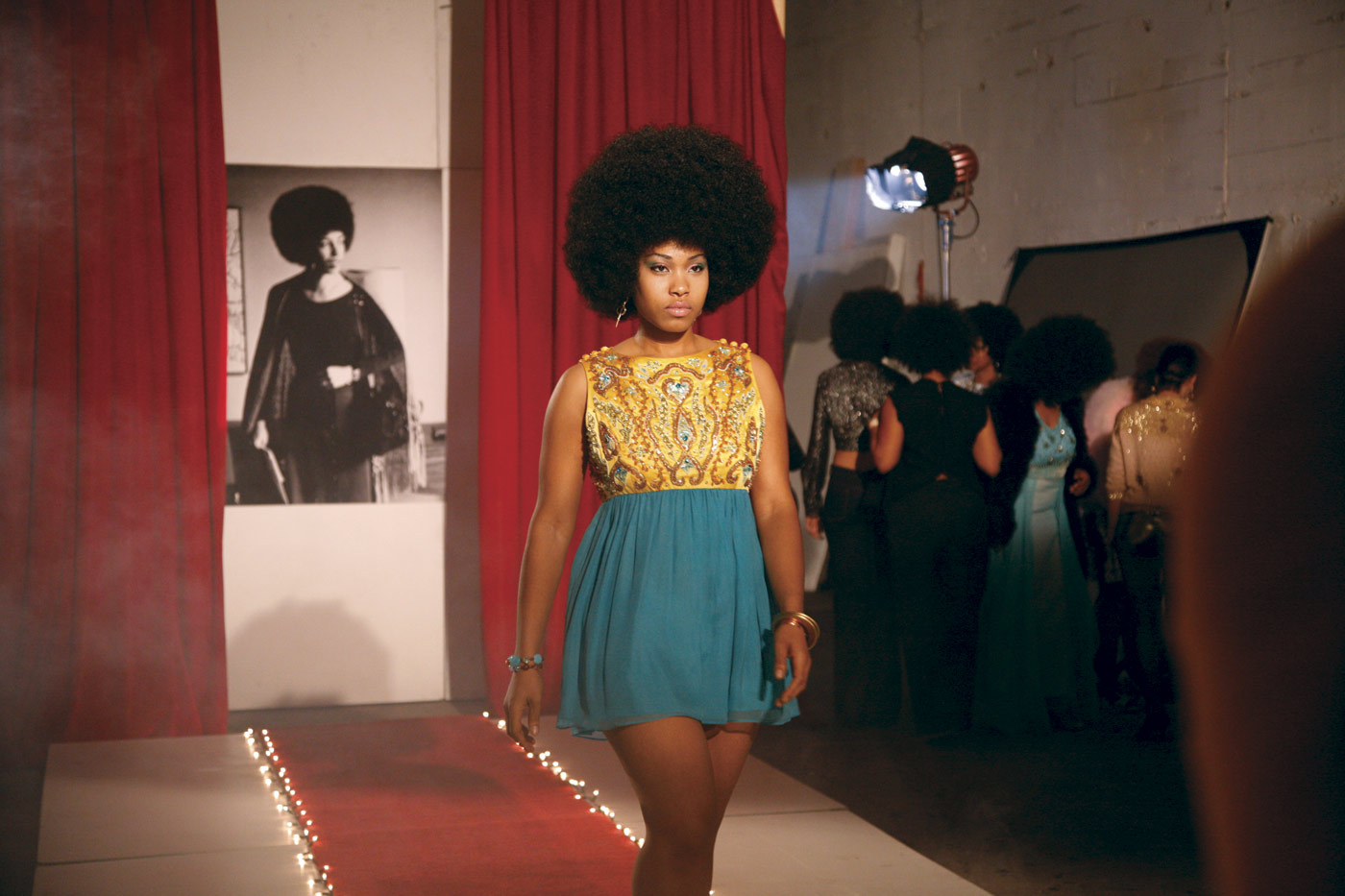
Carrie Mae Weems (American, b. 1953) 'Afro-Chic' 2010


Carrie Mae Weems (American, b. 1953)
Afro-Chic
2010
Digital colour video, with sound, 5 min., 30 sec.
Collection of the artist, courtesy Courtesy the artist and Jack Shainman Gallery, New York
© Carrie Mae Weems


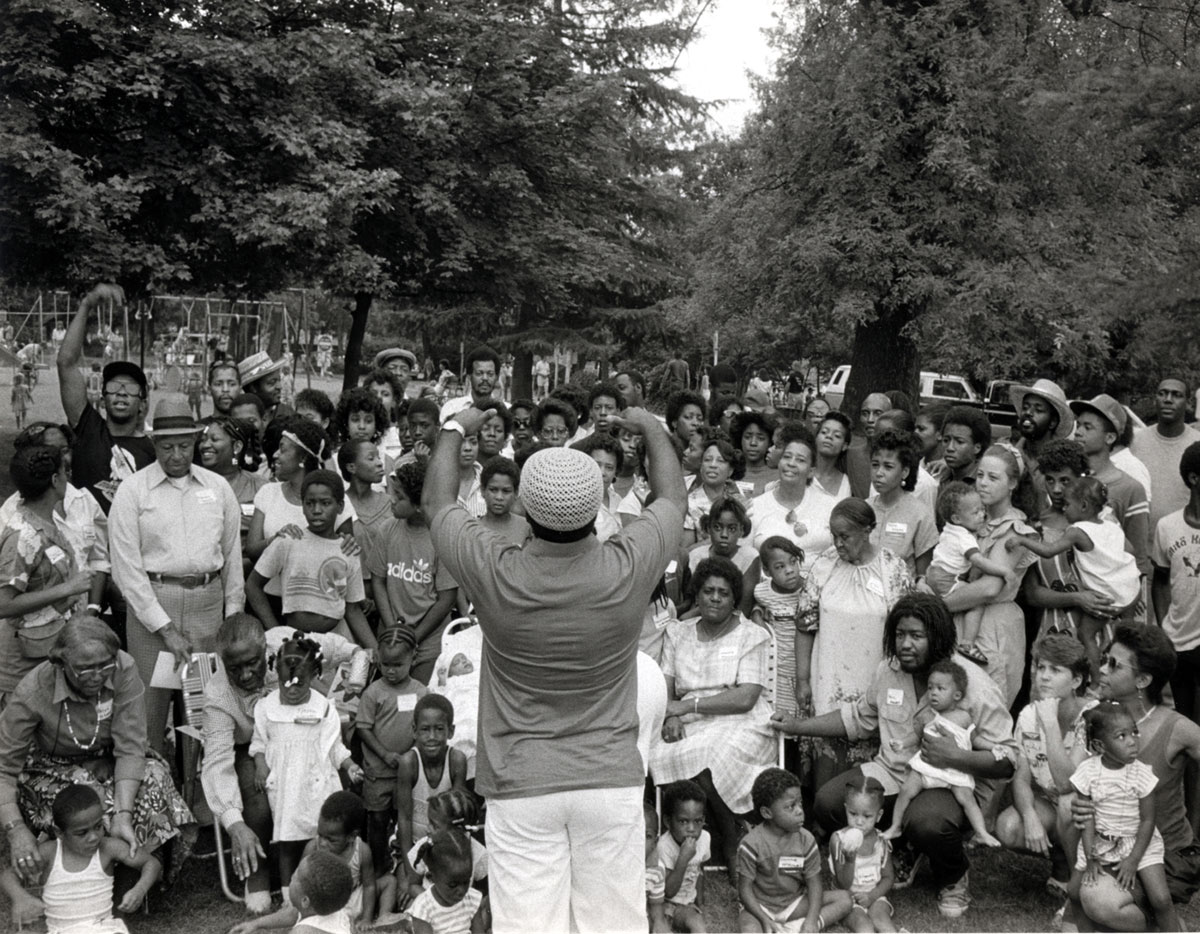
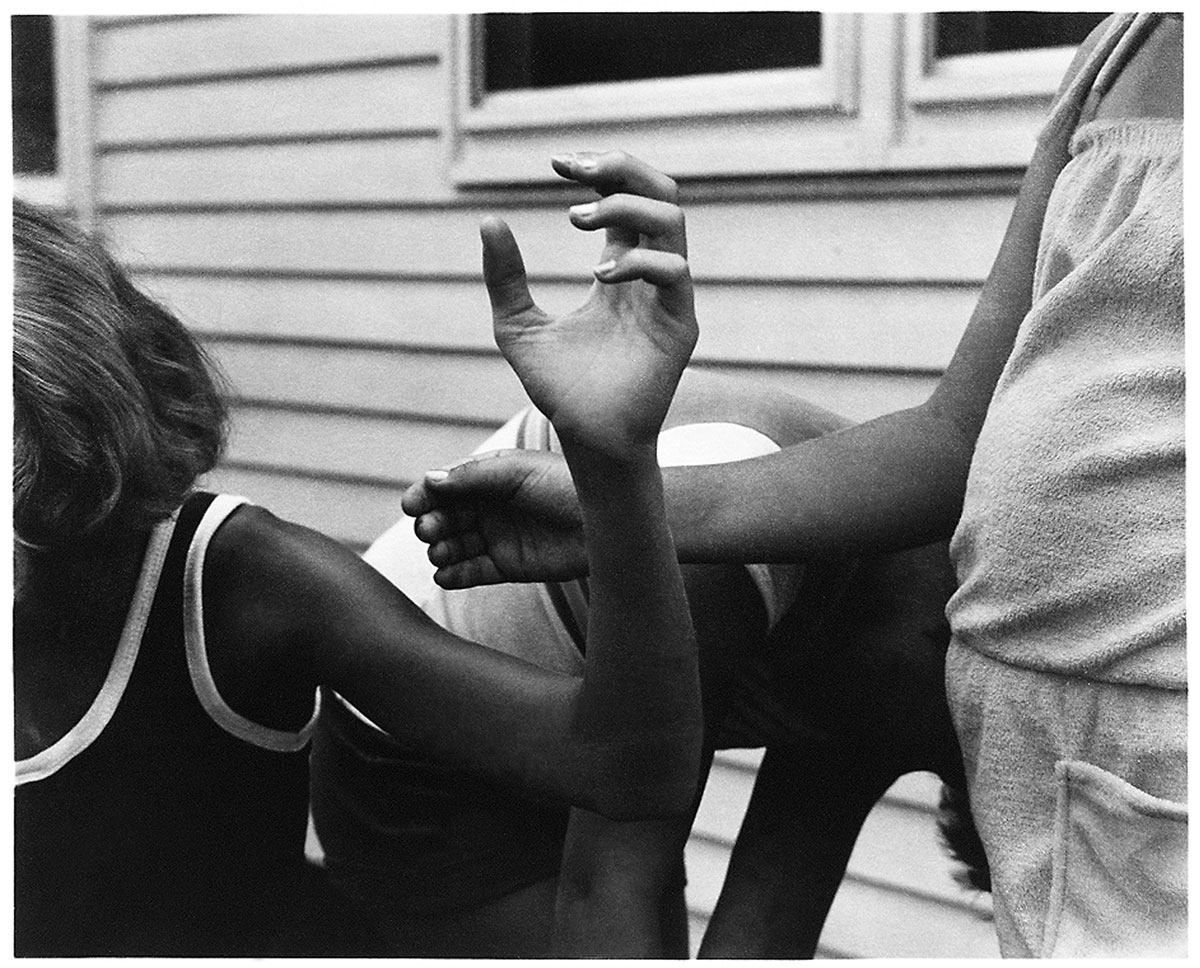
Carrie Mae Weems (American, b. 1953) 'Family Reunion' (from 'Family Pictures and Stories') 1978-84


Carrie Mae Weems (American, b. 1953)
Family Reunion (from Family Pictures and Stories)
1978-1984
Gelatin silver print
30 x 40 inches (76.2 x 101.6cm)
Collection of the artist, courtesy Jack Shainman Gallery, New York
© Carrie Mae Weems


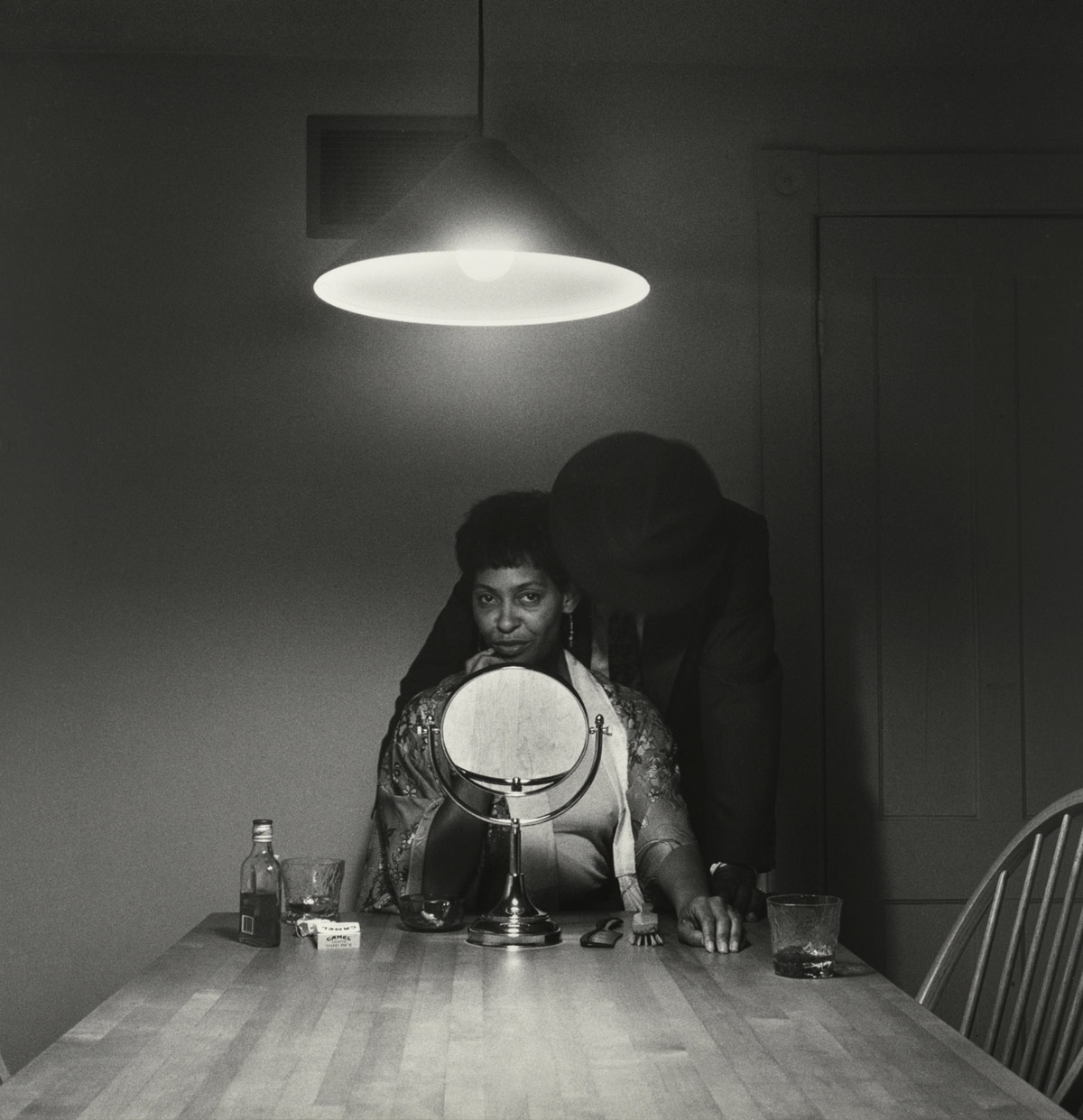
Carrie Mae Weems (American, b. 1953) 'Untitled (Man and mirror)' (from 'Kitchen Table Series') 1990


Carrie Mae Weems (American, b. 1953)
Untitled (Man and mirror) (from Kitchen Table Series)
1990
Gelatin silver print
27 1/4 x 27 1/4 inches (69.2 x 69.2 cm)
Collection of Eric and Liz Lefkofsky, Promised gift to The Art Institute of Chicago
© Carrie Mae Weems
Photo: © The Art Institute of Chicago


Carrie Mae Weems (American, b. 1953) 'Untitled (Woman and daughter with makeup)' (from 'Kitchen Table Series') 1990


Carrie Mae Weems (American, b. 1953)
Untitled (Woman and daughter with makeup) (from Kitchen Table Series)
1990
Gelatin silver print
27 1/4 x 27 1/4 inches (69.2 x 69.2cm)
Collection of Eric and Liz Lefkofsky, Promised gift to The Art Institute of Chicago
© Carrie Mae Weems
Photo: © The Art Institute of Chicago


Carrie Mae Weems (American, b. 1953) 'A Broad and Expansive Sky - Ancient Rome' (from 'Roaming') 2006


Carrie Mae Weems (American, b. 1953)
A Broad and Expansive Sky – Ancient Rome (from Roaming)
2006
Chromogenic print
73 x 61 inches (185.4 x 154.9cm)
Private collection, Portland, Oregon
© Carrie Mae Weems


Carrie Mae Weems (American, b. 1953) 'Listening for the Sounds of Revolution' (from 'Dreaming in Cuba') 2002


Carrie Mae Weems (American, b. 1953)
Listening for the Sounds of Revolution (from Dreaming in Cuba)
2002
Gelatin silver print
28 1/2 x 28 1/2 inches (72.4 x 72.4cm)
Collection of the artist, courtesy Courtesy the artist and Jack Shainman Gallery, New York
© Carrie Mae Weems


Carrie Mae Weems. 'Untitled (Box Spring in Tree)' (from 'Sea Islands Series') 1991-92
Carrie Mae Weems (American, b. 1953)
Untitled (Box Spring in Tree) (from Sea Islands Series)
1991-1992
Gelatin silver print
20 x 20 inches (50.8 x 50.8cm)
Whitney Museum of American Art, New York, Gift of Carrie Mae Weems and P•P•O•W, 97.97.1
© Carrie Mae Weems
Photo: Robert Gerhardt


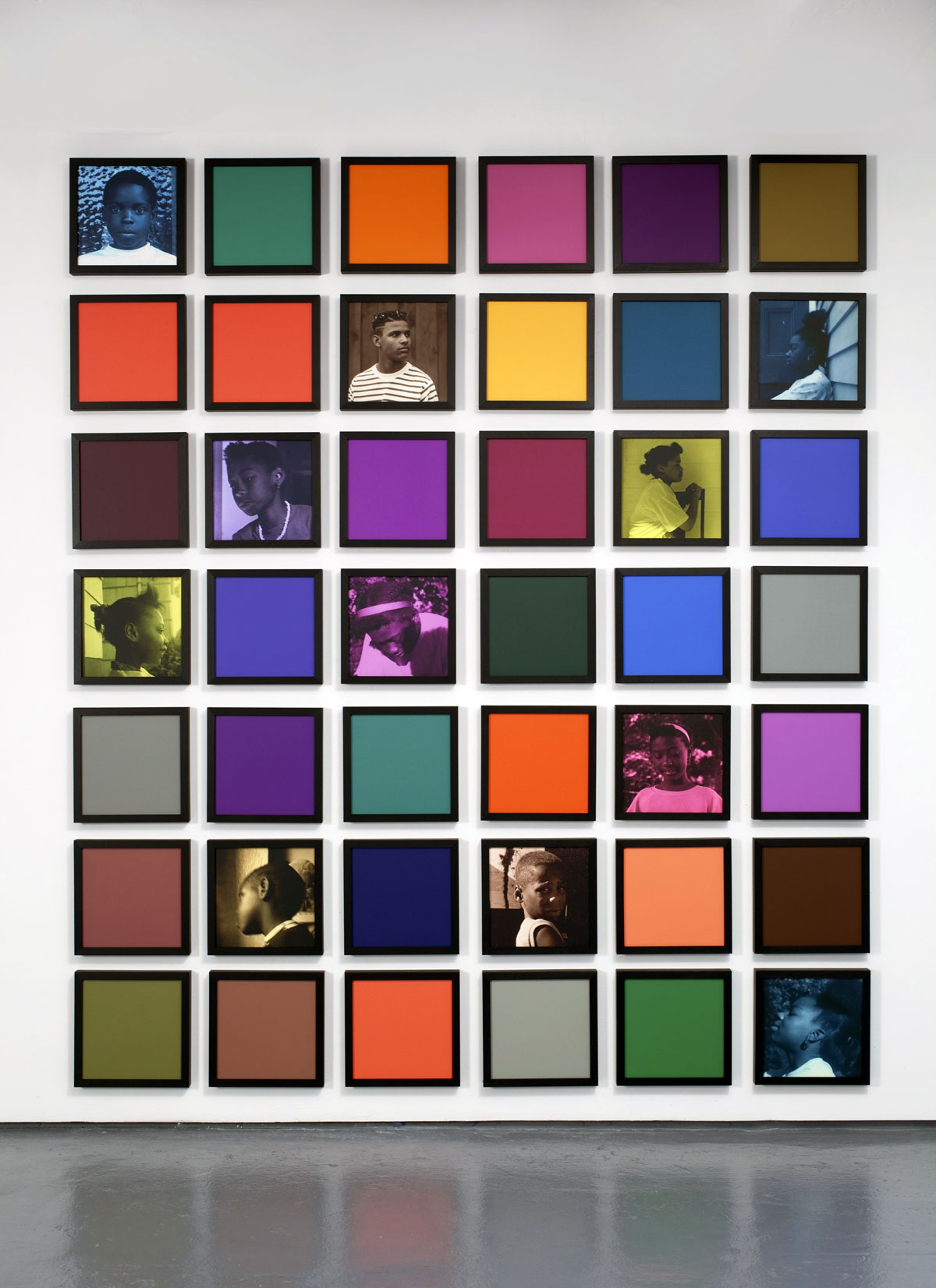
Carrie Mae Weems (American, b. 1953) 'Untitled (Colored People Grid)' 2009-2010


Carrie Mae Weems (American, b. 1953)
Untitled (Colored People Grid)
2009-2010
11 inkjet prints and 31 coloured clay papers
Dimensions variable overall; individual components: 10 x 10 inches (25.4 x 25.4cm) each
Collection of Rodney M. Miller
© Carrie Mae Weems


Solomon R. Guggenheim Museum
1071 5th Avenue (at 89th Street)
New York

Opening hours:
Sunday – Monday, 11am – 6pm
Wednesday – Friday 11am – 6pm
Saturday 11am – 8pm
Closed Tuesday

Solomon R. Guggenheim Museum website

LIKE ART BLART ON FACEBOOK

Back to top

Exhibition: ‘Brancusi, Rosso, Man Ray – Framing Sculpture’ at Museum Boijmans Van Beuningen, Rotterdam

Exhibition dates: 8th February – 11th May 2014


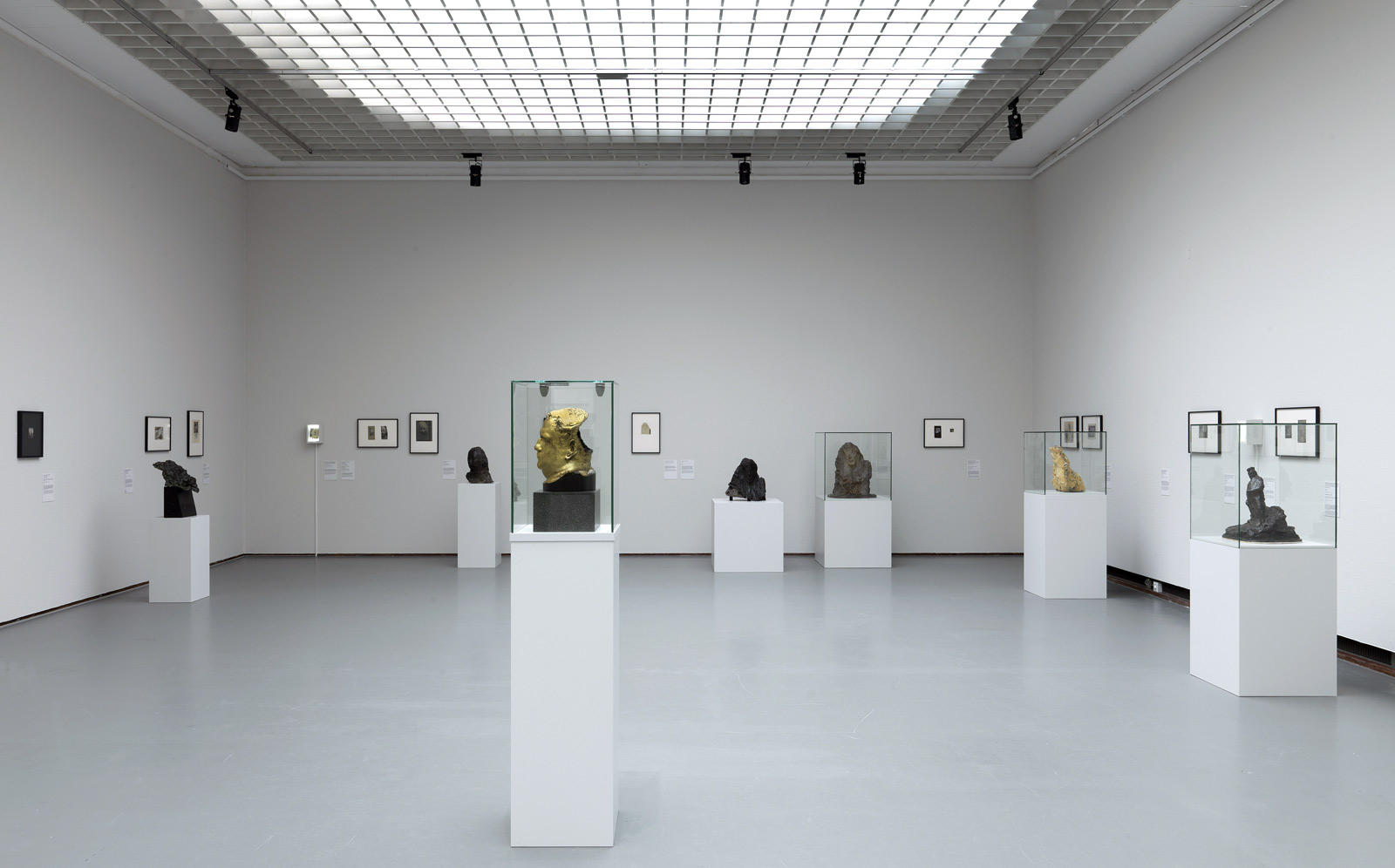
Installation photograph of the exhibition 'Brancusi, Rosso, Man Ray – Framing Sculpture' at Museum Boijmans Van Beuningen, 2014


Installation photograph of the exhibition Brancusi, Rosso, Man Ray – Framing Sculpture
Museum Boijmans Van Beuningen, 2014
Foto / Photo: Gert-Jan de Rooij, Amsterdam


What a magnificent exhibition. We all know Brancusi and Man Ray but it is the work of Medardo Rosso that surprises and delights here, an artist I admit I knew nothing about before this posting. What a revelation, both his sculptures and photographs. I must try and do a whole posting just on his photographs!

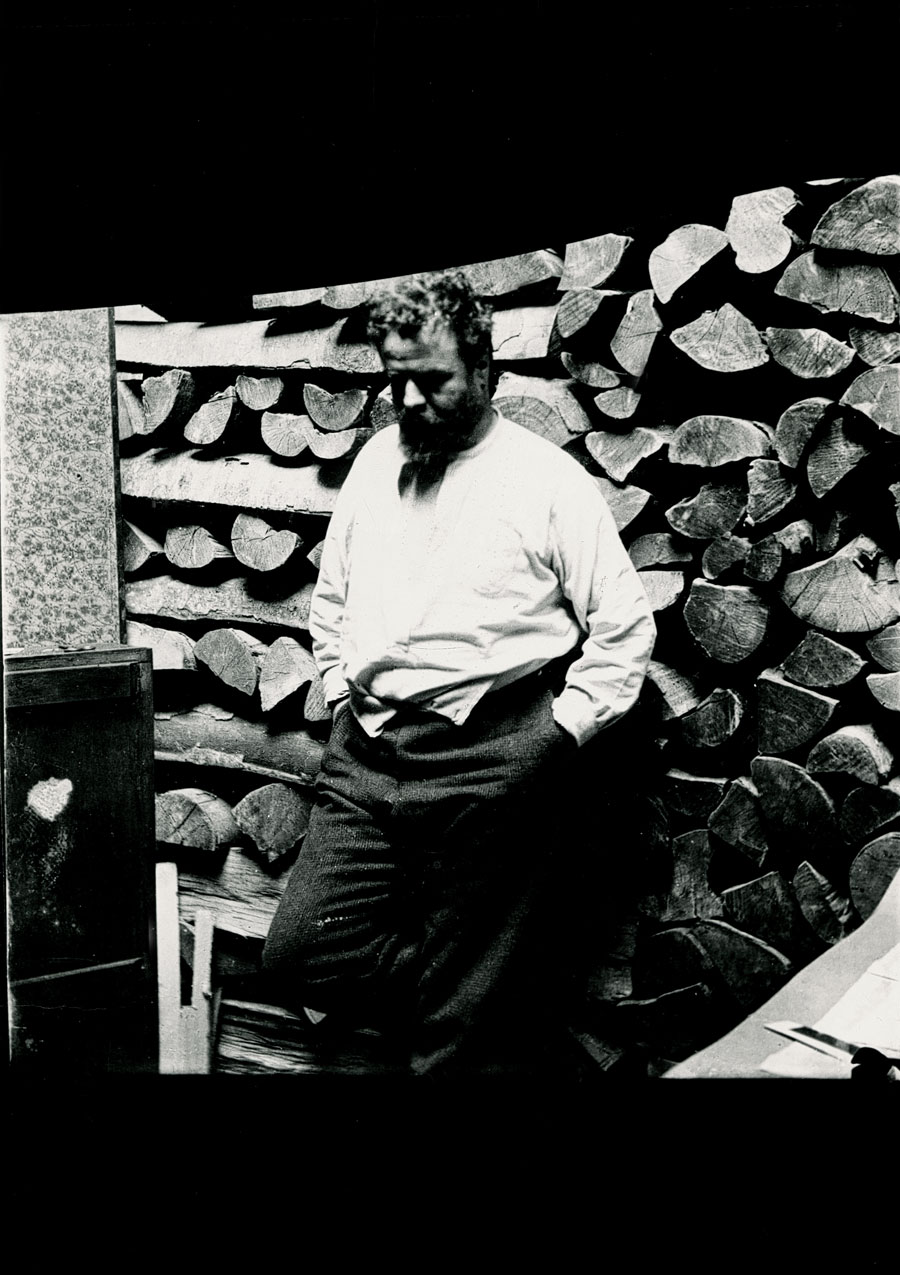
The two self-portraits of the artists in the studio are telling… Rosso, pensive, brooding, with a stack of chopped wood surrounding him, face wreathed in shadow, head titled slightly down and hands stuffed in pockets; Brancusi, seated on a plinth, legs crossed, swarthy arms folded replete with large hands, staring directly at the camera and surrounded by his work. Rosso in malleable darkness, Brancusi in towering light. The photographs reflect their respective personalities and inform the art which represents them.

Dr Marcus Bunyan


Many thankx to Museum Boijmans Van Beuningen for allowing me to publish the art work in the posting. Please click on the image for a larger version of the art.


Alessio delli Castelli considers the Italian sculptor’s photographic legacy.

“Medardo Rosso was born in Turin in 1858 and died in Milan 1928. However, he spent most of his life away from Italy, in Paris especially, from where he travelled to all the major European capitals. It was in Paris that, towards the close of the 19th century, he emerged alongside Auguste Rodin as a serious contender for the title of father of modern sculpture. Yet it was Rodin who achieved universal recognition. In spite of Rosso’s influence on sculptors such as Constantin Brancusi – whose Sleeping Muse (1909-10), with its radically abstracted features of a female head, is strongly reminiscent of Rosso’s Madame X (1896) – he was long held hostage by a provincial criticism which saw his practice confined, chronologically, thematically and formally, to the 19th century. Although it is true that Rosso only created two original sculptural works in the 20th century, to claim that he was no longer a practicing artist would be to overlook the variations he made of his sculptures, and the copies from antiquity. More importantly, it would be to dismiss his photographic work of that period merely as images of sculptures that already existed. This would mean ignoring the fact that his photography showed all the signs of rigorous artistic investigation – and was not, as critics in the 20th century often declared, indicative of either an accident that injured his leg and made him weak or a more general creative block.

It is only in recent years that Rosso’s photographs have acquired the status of art objects in and of themselves…”


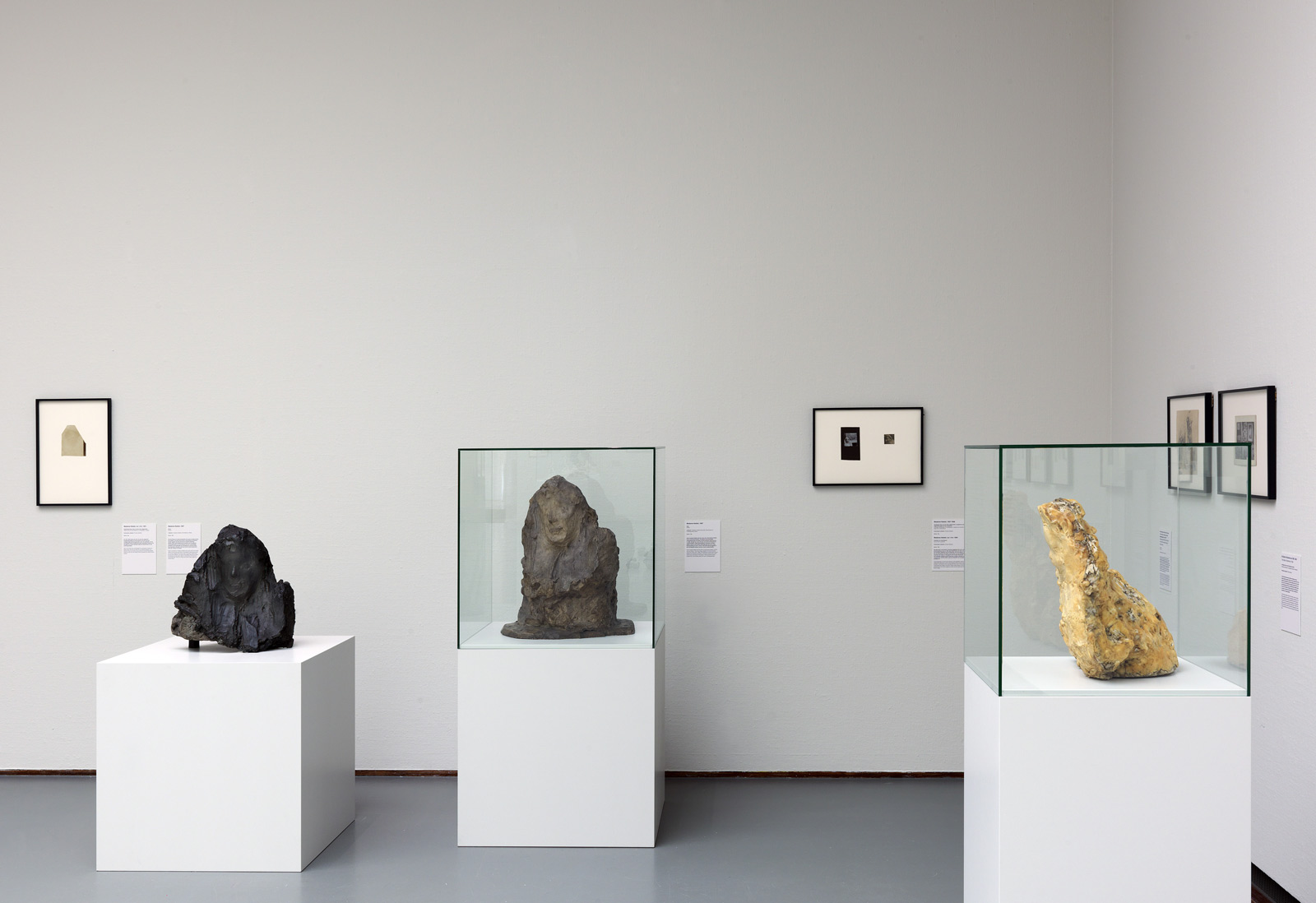
Installation photograph of the exhibition 'Brancusi, Rosso, Man Ray – Framing Sculpture' at Museum Boijmans Van Beuningen, 2014

Installation photograph of the exhibition 'Brancusi, Rosso, Man Ray – Framing Sculpture' at Museum Boijmans Van Beuningen, 2014

Installation photograph of the exhibition 'Brancusi, Rosso, Man Ray – Framing Sculpture' at Museum Boijmans Van Beuningen, 2014

Installation photograph of the exhibition 'Brancusi, Rosso, Man Ray – Framing Sculpture' at Museum Boijmans Van Beuningen, 2014

Installation photograph of the exhibition 'Brancusi, Rosso, Man Ray – Framing Sculpture' at Museum Boijmans Van Beuningen, 2014


Installation photographs of the exhibition Brancusi, Rosso, Man Ray – Framing Sculpture
Museum Boijmans Van Beuningen, 2014
Foto / Photos: Gert-Jan de Rooij, Amsterdam


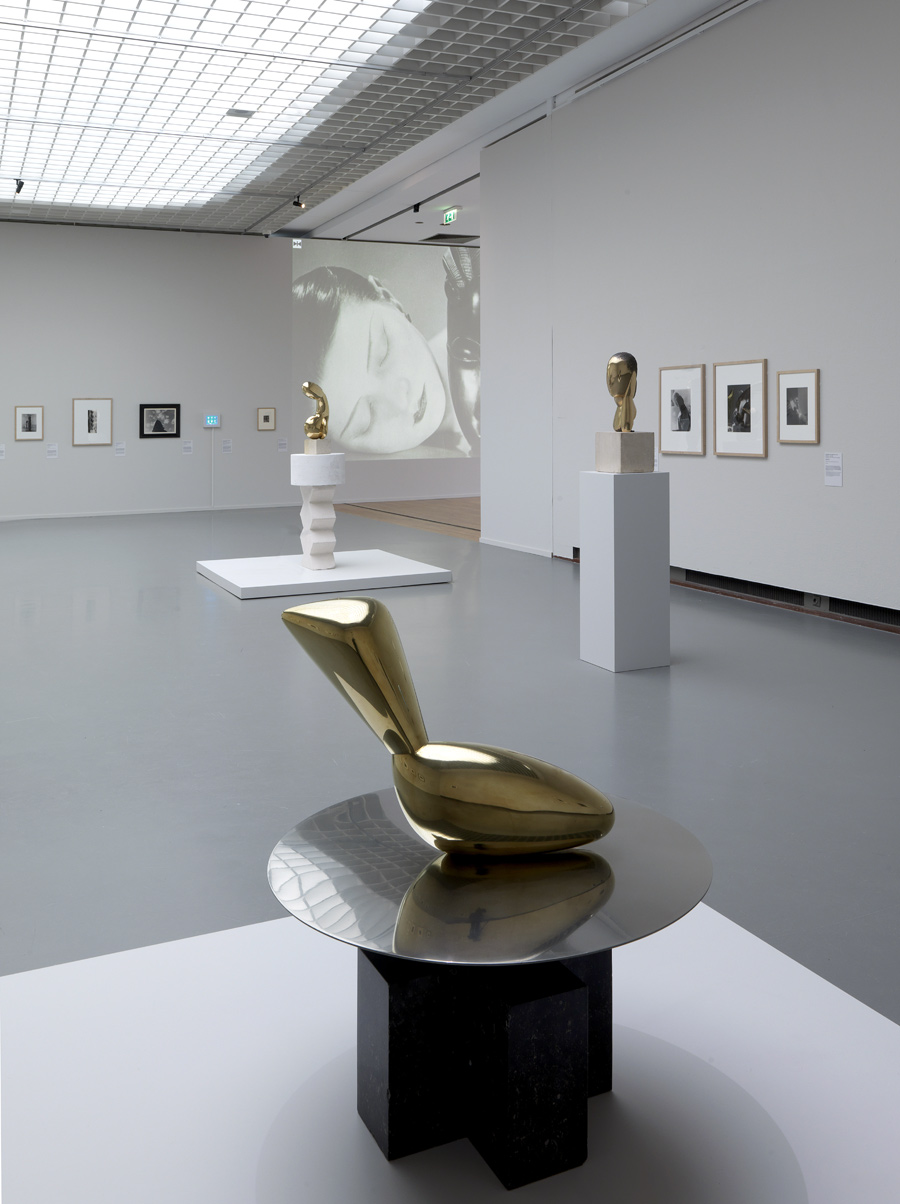
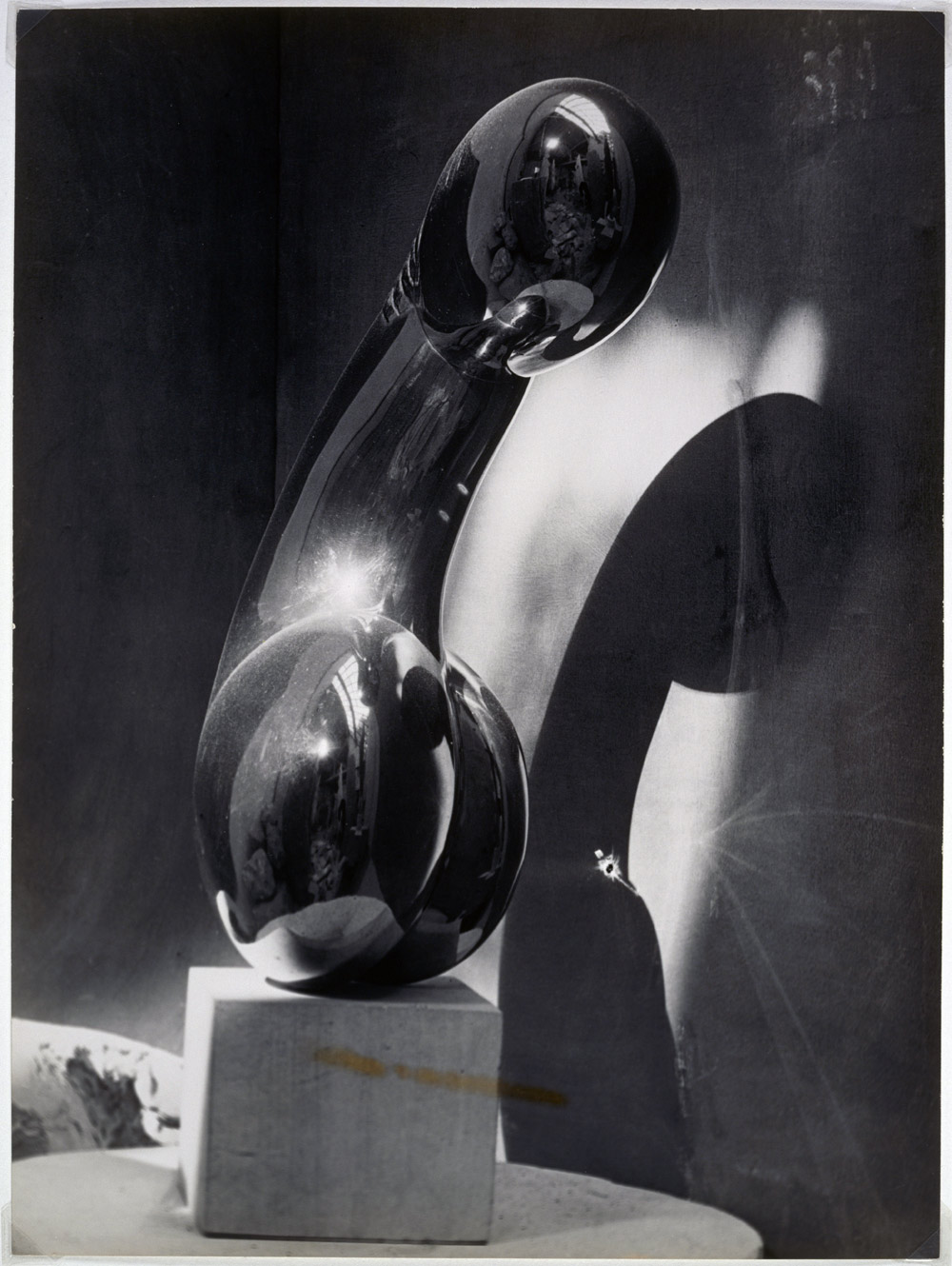
In mythology, Leda is a girl who is seduced by Zeus who turns her into a swan. In the Brancusi sculpture, Leda (foreground, above) is that metamorphosis. The swan is an animal whose body is often associated with a hybrid identity between male and female. His neck is close to a phallic shape while her body has feminine attributes. The bird and woman, male and female mingle in the same sculptural movement. This transfiguration is reflected in the complex forms of sculpture, asymmetrical contours, the offset top shape intersecting with the lower form, giving rise to multiple passages and perceptions.

In 1932, Brancusi sculpture adds a large polished steel disc which suggests the presence of water and Leda is reflected in the mirror which changes its shape. Modifications qu’accentuera still provide a motor and a ball bearing arranged in the circular plate. Within the workshop, the body of Leda is in a state of constant metamorphosis. The shimmer of light on the surface of polished bronze sculpture blends with its reflection in the steel circle and absorbs its environment. Leda becomes a pure luminous presence. Weight and lightness, balance and imbalance are the same event within a continuous time duration in the sculptures of Constantin Brancusi.

Translated from the French on the Constantin Brancusi web page of the Centre Pompidou website [Online] Cited 05/05/2014 no longer available online


Installation photograph of the exhibition 'Brancusi, Rosso, Man Ray – Framing Sculpture' at Museum Boijmans Van Beuningen, 2014


Installation photograph of the exhibition Brancusi, Rosso, Man Ray – Framing Sculpture
Museum Boijmans Van Beuningen, 2014
Foto / Photo: Gert-Jan de Rooij, Amsterdam


In the spring of 2014 Museum Boijmans Van Beuningen brings together works from all over the world by three artists who were decisive for the development of modern art. This is the first exhibition to combine sculptures by Brancusi, Rosso and Man Ray together with their photographs, affording a unique insight into the artists’ working methods.

Masterpieces that have rarely or never been seen in the Netherlands will be lent by important museums such as the Centre Pompidou, MoMA and Tate. Museum Boijmans Van Beuningen will show more than 40 sculptures and hundred photographs by Constantin Brancusi (Hobita 1876 – Paris 1957), Medardo Rosso (Turin 1858 – Milan 1928) and Man Ray (Philadelphia 1890 – Paris 1976). The exhibition will feature sculptures such as Brancusi’s Princesse X (1915-1916) and Rosso’s Ecce Puer (1906) alongside works by Man Ray from the museum’s collection, including the sculpture L’Énigme d’Isidore Ducasse (1920 / 1971). Presenting the sculptures together with the artists’ photographs of their sculptures reveals their often-surprising perspectives on their own works.

Framing Sculpture

Brancusi, Rosso and Man Ray employed photography not so much as a means of recording their work. The photographs show how they interpreted their sculptures and how they wanted them to be seen by others. Brancusi is considered the father of modern sculpture with his highly simplified sculptures of people and animals. In his photographs he experimented with light and reflection so that his sculptures absorb their environment and appear to come to life. Rosso is the artist who introduced impressionism in sculpture. The indistinct contours of his apparently quickly modelled figures in plaster and wax make them appear to fuse with their surroundings. Rosso cut up the soft-focus photographs of his work, made them into collages and reworked them with ink so that the sculptures appear even flatter and more contourless. Man Ray is best known as a photographer but was also a painter and sculptor. His choice of materials was unconventional: he combined existing objects to create new works, comparable to the ‘readymades’ of his friend Marcel Duchamp. Man Ray’s experimental use of photography led him to make photographs without the use of a camera. He made these so-called ‘rayographs’ by placing objects directly on photographic paper and exposing them briefly to light, leaving behind a ghostly impression.

Press release from the Museum Boijmans Van Beuningen


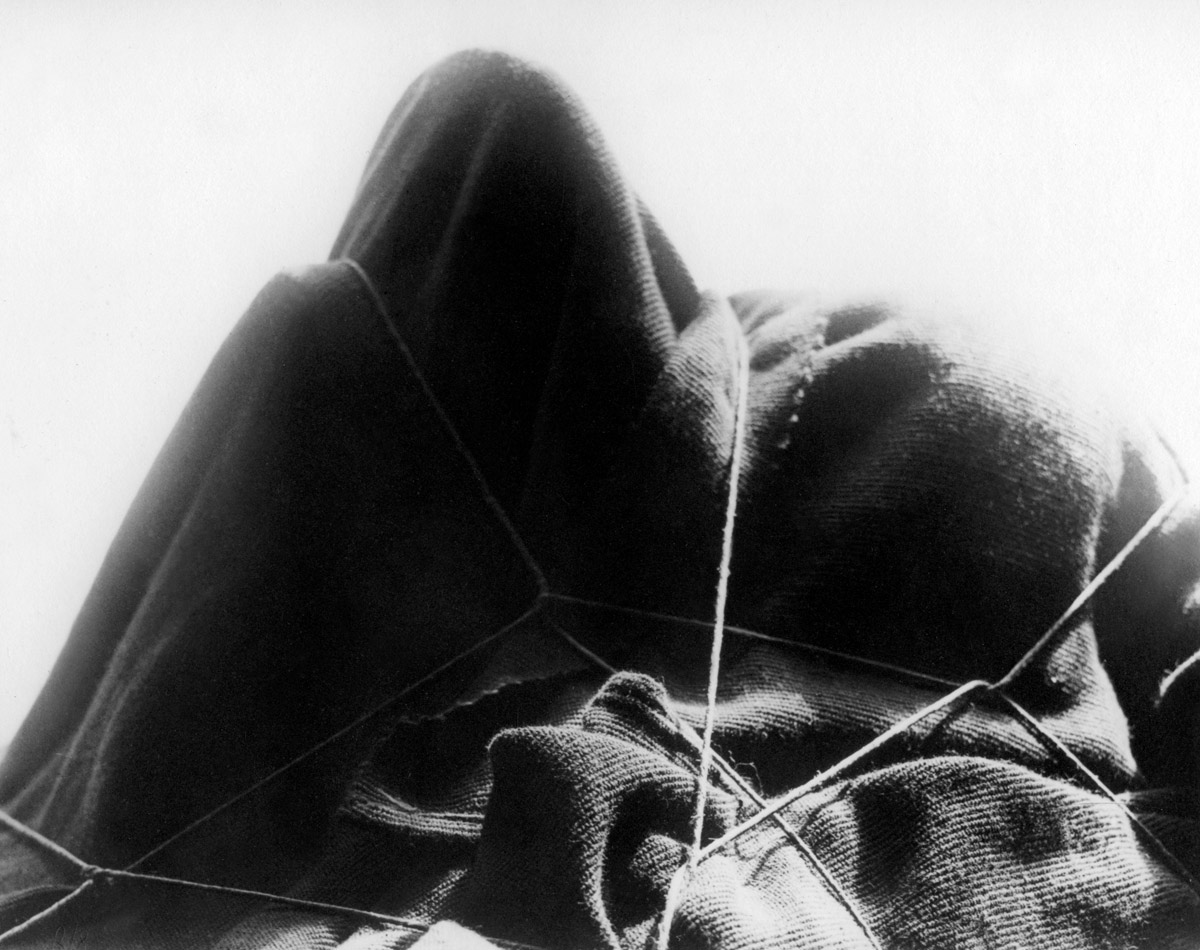
Man Ray (American, 1890-1976) 'L'Énigme d'Isidore Ducasse' (The Riddle of Isidore Ducasse) 1920 (1971)


Man Ray (American, 1890-1976)
L’Énigme d’Isidore Ducasse (The Riddle of Isidore Ducasse)
1920 (1971)
Iron, textile, rope, cardboard
45.4 x 60 x 24cm
Collection Museum Boijmans Van Beuningen
© Man Ray Trust / ADAGP, c/o Pictoright Amsterdam 2013.


Man Ray (American, 1890-1976) 'L'Énigme d'Isidore Ducasse' (The Riddle of Isidore Ducasse) 1920 (1975)


Man Ray (American, 1890-1976)
L’Énigme d’Isidore Ducasse (The Riddle of Isidore Ducasse)
1920 (1975)
Gelatin silver print
47.5 x 59cm
Courtesy Fondazione Marconi, Milan
© Man Ray Trust / ADAGP, c/o Pictoright Amsterdam 2013


Medardo Rosso (Italian, 1858-1928) 'Enfant à la Bouchée de pain' (Child in the soup kitchen) 1897 (1892-1893)


Medardo Rosso (Italian, 1858-1928)
Enfant à la Bouchée de pain (Child in the soup kitchen)
1897 (1892-1893)
Wax over plaster
46 x 49 x 37cm
Galleria Nazionale d’Arte Moderna e Contemporanea, Rome


Medardo Rosso (Italian, 1858-1928) ''Enfant à la Bouchée de pain' in the Cézanne room at the Salon d'Automne' 1904


Medardo Rosso (Italian, 1858-1928)
Enfant à la Bouchée de pain in the Cézanne room at the Salon d’Automne
1904
Felatin silver print
12.3 x 15.5cm
Private collection


The Italian sculptor Medardo Rosso (1858-1928) is the oldest and most traditional of the three artists. He stands in the Impressionist tradition of French sculptor August Rodin. Rosso has made many portraits of children, which he adored. They were one of his favourite subjects. Rosso kept working on the same pieces throughout his career, making changes to their titles, shapes or materials. Sometimes he combined materials or poured another substance over the original. A work of plaster then became a wax sculpture. Other times he made two different versions of the same image, using different materials…

Rosso… used his camera to present his art in the way he preferred. By taking pictures and displaying them next to the actual sculptures he could show the audience what was, in his opinion, the right angle to look at his piece. Of course, everyone is free to walk around the sculpture, but the photographs show what the artist had in mind when he created it. Many times he would cut up his pictures, tear away corners or colour them with ink. This way he even reinterpreted his interpretations. Together the sculptures, photographs and collages give a complete picture of the work by Medardo Rosso. Never before have there been so many of his works on display in the Netherlands.

Text by Evita Bookelmann on the Kunstpedia website [Online] Cited 05/05/2014. No longer available online


Constantin Brancusi (Romanian, 1876-1957) 'Tête d’enfant endormi' (Head of a Sleeping Child) 1906-1907


Constantin Brancusi (Romanian, 1876-1957)
Tête d’enfant endormi (Head of a Sleeping Child)
1906-1907
Plaster, coloured dark brown
10.8 x 13.6 x 15.2cm
Private collection


A previously unknown sculpture by Constantin Brancusi (1876-1957) can be seen in Brancusi, Rosso, Man Ray – Framing Sculpture, the exhibition opening at Museum Boijmans Van Beuningen on Saturday. The museum is especially delighted by the arrival of Tête d’enfant endormie (Head of a Sleeping Child, 1906-07). This early sculpture is an important key work in Brancusi’s development of his famous ‘ovoid’.

The exhibition, which features more than forty sculptures by Constantin Brancusi, Medardo Rosso and Man Ray and a hundred vintage photographs taken by them, runs in Museum Boijmans Van Beuningen for three months from 8 February. The plaster sculpture was purchased at a sale by a French private collector. Leading expert Friedrich Teja Bach has recently confirmed that it is a version of the ‘head of a sleeping child’. Curators Francesco Stocchi and Peter van der Coelen remarked, “It is unusual for a previously unknown work by Brancusi to turn up at a sale. Works by Brancusi are rare and almost all of them are in prominent museum collections like those of the Centre Pompidou, the Tate and MoMA.”

The Road to Abstraction

The child’s head with natural features is in the tradition of the contemporary Impressionists Auguste Rodin and Medardo Rosso. At the same time, this early work is a starting point in Brancusi’s journey towards a more abstract style, which culminated in an entirely smooth oval form, devoid of any facial features. This process can also be seen in the photographs taken by Brancusi himself, in which he pictured Tête d’enfant endormie in his studio with Le Nouveau-Ne II, a work he made ten years later. The exhibition in Rotterdam examines the artistic practices and development of Brancusi, Rosso and Man Ray by showing the sculptures alongside the photographs they took of them.

Painted Bronze

Brancusi’s oeuvre contains a number of recurring subjects, which the artist executed in a variety of materials, including plaster, marble and bronze. This allowed Brancusi to explore various effects, such as the reflection of light. The signed Tête d’enfant endormie is an early version in the series. It is unusual that Brancusi painted the plaster, making it look like bronze.

Press release from the Museum Boijmans Van Beuningen


Constantin Brancusi (Romanian, 1876-1957) 'La Muse endormie' (Sleeping muse) 1910


Constantin Brancusi (Romanian, 1876-1957)
La Muse endormie (Sleeping muse)
1910
Bronze
16.1 x 27.7 x 19.3cm
Arthur Jerome Eddy Memorial Collection. The Art Institute of Chicago
© 2013 c/o Pictoright Amsterdam


Man Ray (American, 1890-1976) 'Noire et blanche (Black and white)' 1926


Man Ray (American, 1890-1976)
Noire et blanche (Black and white)
1926
Gelatin silver print
18 x 23.5cm
© Man Ray Trust / ADAGP – PICTORIGHT / Telimage – 2013


Man Ray’s Noire et blanche is a photograph exemplary of Surrealist art. The striking faces of the pale model and the dark mask have a doubling effect. This repetition is a reminder that a photograph is a double of what it represents, namely, a sign or an index of reality. In Surrealism the act of doubling indicates that we are all divided subjects made up of the conscious and unconscious. In reading this photograph as typical of primitivism, the woman can be understood as European civilisation and the mask as “primitive” Africa. The image draws a parallel between the two faces presenting them as related to each another. The title “black and white” is a word play because the order is reversed when reading the image left to right. The artist also printed a negative version of this image. The photograph was first published in Vogue. It is a portrait of Kiki of Montparnasse, Man Ray’s lover and model at the time the photograph was taken.

Text from the Stedelijk Museum Amsterdam website [Online] Cited 05/05/2014. No longer available online


Medardo Rosso (Italian, 1858-1928) 'Enfant malade (Ziek kind)' c. 1909


Medardo Rosso (Italian, 1858-1928)
Enfant malade (Ziek kind)
c. 1909
Aristotype
7.9 x 6.3cm
Private collection


Medardo Rosso (Italian, 1858-1928) 'Enfant malade (Ziek kind) 1895 (1903-1904)


Medardo Rosso (Italian, 1858-1928)
Enfant malade (Ziek kind)
1895 (1903-1904)
Bronze
25.5 x 14.5 x 16.5cm
Collectie Galleria d’Arte Moderna, Milan


Medardo Rosso (Italian, 1858-1928) 'Madame X' 1896


Medardo Rosso (Italian, 1858-1928)
Madame X
1896
Wax
300mm
Venice, Ca’ Pesaro


Con una coerenza assoluta, insensibile alle polemiche e alle controversie che la sua arte suscitava, e più ancora al disprezzo oltraggioso di cui lo faceva segno la cultura ufficiale, il Rosso deduceva alle estreme conseguenze le premesse fondamentali della sua visione. Davanti ai nostri occhi una sgomentante superficie d’ombra da cui emerge la lama trepida e vibrante di un essere vivente, che contesta al nulla misterioso che lo incalza e in cui in un soffio si dissolverà, il suo diritto alla luce, cioè all’essenza vitale. Le premesse letterarie, le suggestioni filosofiche o vagamente esoteriche sono totalmente assorbite nella suprema qualità stilistica: lo scultore modula ed assottiglia la materia al limite del possibile, sull’orlo dell’astrazione assoluta, ricercandone spasmodicamente ogni vibrazione musicale; l’equazione scultura-luce-pittura poteva dirsi verificata.”

“With absolute consistency, insensitive to the controversies and disputes that his art aroused, and even more outrageous contempt of which he did hold official culture, Rosso deduced to the extreme the basic premises of his vision. Before our eyes a daunting shadow surface which shows the blade trembling and vibrating of a living being, which criticises the mysterious anything that presses him and when you blow in a dissolver, its right in the light, that all ‘vital’ essence. The premises literary, philosophical or vaguely esoteric suggestions are totally absorbed in the supreme quality of style: the sculptor modulation and tapering the matter to the extent possible, the absolute brink of abstraction, seeking spasmodically every musical vibration; the equation of light-sculpture-painting could be said to be verified.

Terrible translation by Google translate of an anonymous text = but so beautiful at the same time!


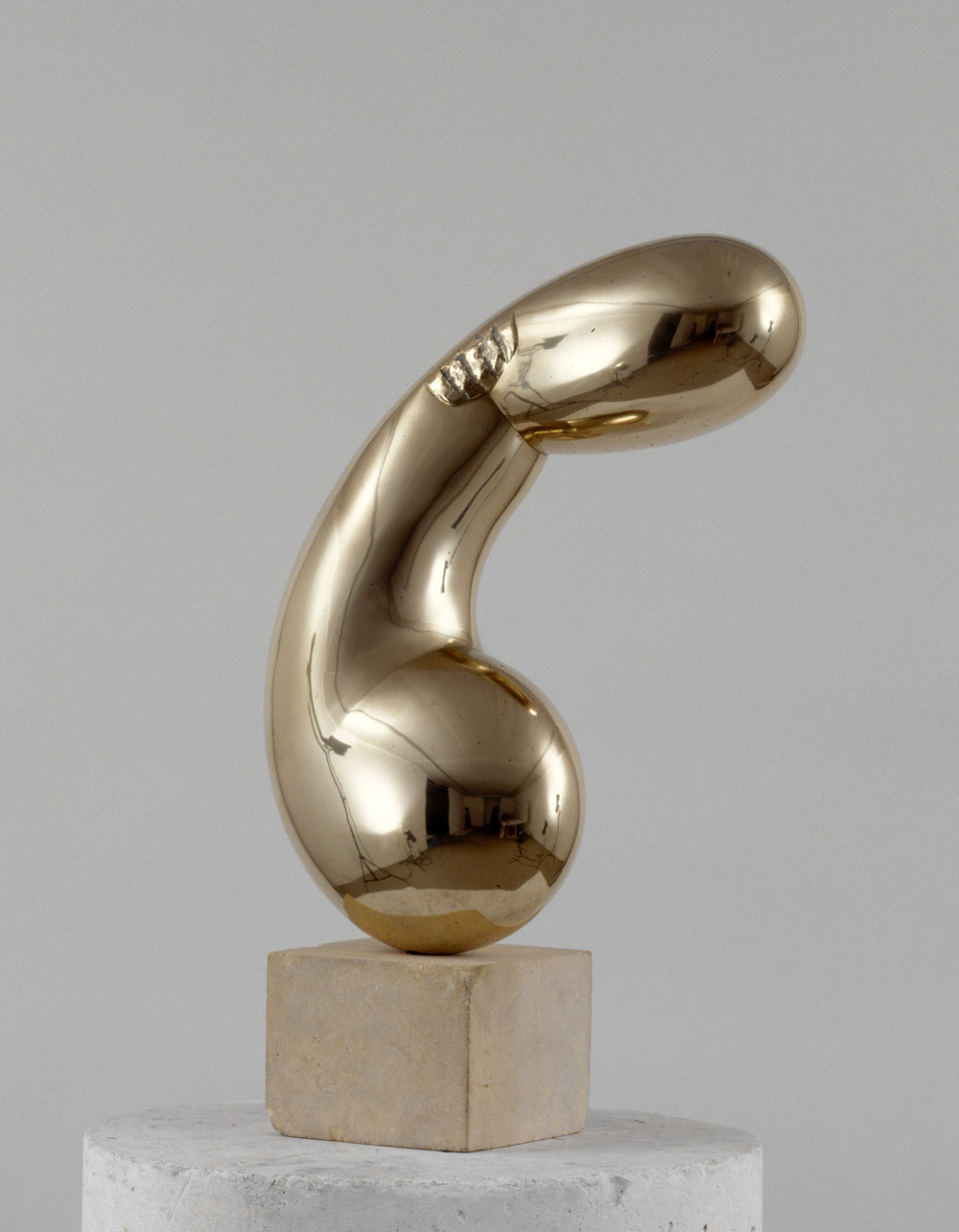
Constantin Brancusi (Romanian, 1876-1957) 'Princesse X' (Princess X) c. 1930


Constantin Brancusi (Romanian, 1876-1957)
Princesse X (Princess X)
c. 1930
Gelatin silver print
29.7 x 23.7cm
Collection Centre Pompidou, MNAM-CCI, Paris
© 2013 c/o Pictoright Amsterdam
Photo: Bertrand Prévost


Constantin Brancusi (Romanian, 1876-1957) 'Princesse X (Princess X)' 1915-1916


Constantin Brancusi (Romanian, 1876-1957)
Princesse X (Princess X)
1915-1916
Bronze
61.7 x 40.5 x 22.2cm
Collection Centre Pompidou, MNAM-CCI, Paris
© 2013 c/o Pictoright Amsterdam
Photo: Adam Rzepka


Princess X is a sculptured rendering of the French princess, Marie Bonaparte, by the artist Constantin Brâncusi. Princess Bonaparte was the great-grand niece of the emperor Napoleon Bonaparte…

According to the Philadelphia Museum of Art, Brâncusi had been “at the center of two of modern arts most notorious scandals.” One of the scandals being that the Salon des Indépendants, in Paris where Brâncusi practiced his trade, discontinued the display of Princess X from its establishment for its apparent obscene content, as some thought it looked like a penis. After having his art taken off display, Brâncusi was shocked. He declared the incident a misunderstanding. He had created Princess X not as a sculpture depicting a more masculine subject, but the object of feminine desire and vanity.

After much accusation, Brâncuși insisted the sculpture had been his rendition of Marie Bonaparte. Brâncusi discussed the comparison of the bronze figure to the princess. He described his detest of Marie, as a “vain woman.” He claimed she went as far as placing a hand mirror on the table at mealtimes, so she could gaze upon herself. The sculpture’s C-like form reveals a woman looking over and gazing down, as if looking into an object. The large anchors of the sculpture resemble the “beautiful bust” which she possessed. Without knowing the context, to a viewer Princess X could look like an erect penis. Brâncusi allows the princess to gaze upon herself in an eternal loop locked in the bronze sculpture.

The style of Brâncusi is one that “was largely fuelled by myths, folklore, and primitive culture,” this combined with the modern materials and tools Brâncuși used to sculpt, “formed a unique contrast… resulting in a distinctive kind of modernity and timelessness.” The technique Brâncusi was known for and used on Princess X could be mistaken for a penis, but in fact it was the simple form of a woman.

“What my art is aiming at, is above all realism; pursue the inner hidden reality, the very essence of objects in their own intrinsic fundamental nature: this is my only preoccupation.” – Constantine Brâncusi.

Text from the Wikipedia website


Constantin Brancusi (Romanian, 1876-1957) 'View of the Studio with Maïastra' 1917


Constantin Brancusi (Romanian, 1876-1957)
View of the Studio with Maïastra
1917
Gelatin silver print
23.9 x 17.8cm
Collection Centre Pompidou, MNAM-CCI, Paris
© 2013 c/o Pictoright Amsterdam


According to Constantin Brancusi’s own testimony, his preoccupation with the image of the bird as a plastic form began as early as 1910. With the theme of the Maiastra (1910-18), he initiated a series of about thirty sculptures of birds.

The word maïastra means “master” or “chief” in Brancusi’s native Romanian, but the title refers specifically to a magically beneficent, dazzlingly plumed bird in Romanian folklore. Brancusi’s mystical inclinations and his deeply rooted interest in peasant superstition make the motif an apt one. The golden plumage of the Maiastra is expressed in the reflective surface of the bronze; the bird’s restorative song seems to issue from within the monumental puffed chest, through the arched neck, out of the open beak. The heraldic, geometric aspect of the figure contrasts with details such as the inconsistent size of the eyes, the distortion of the beak aperture, and the cocking of the head slightly to one side. The elevation of the bird on a saw-tooth base lends it the illusion of perching. The subtle tapering of form, the relationship of curved to hard-edge surfaces, and the changes of axis tune the sculpture so finely that the slightest alteration from version to version reflects a crucial decision in Brancusi’s development of the theme.

Seven other versions of Maiastra have been identified and located: three are marble and four bronze…

Extract from Lucy Flint. “Constantin Brancusi: Maiastra,” on the Guggenheim website [Online] Cited 17/03/2021


Constantin Brancusi (Romanian, 1876-1957) 'Self-portrait in the studio' c. 1934


Constantin Brancusi (Romanian, 1876-1957)
Self-portrait in the studio
c. 1934
Gelatin silver print
39.7 x 29.7cm
Collection Centre Pompidou, MNAM-CCI, Paris
© 2013 c/o Pictoright Amsterdam
Photo: Philippe Migeat


Man Ray (American, 1890-1976) 'Rayographie' (Rayograph) 1925


Man Ray (American, 1890-1976)
Rayographie (Rayograph)
1925
Photogram
50 x 40.5cm
Collection Museum Boijmans Van Beuningen
© Man Ray Trust / ADAGP, c/o Pictoright Amsterdam 2013


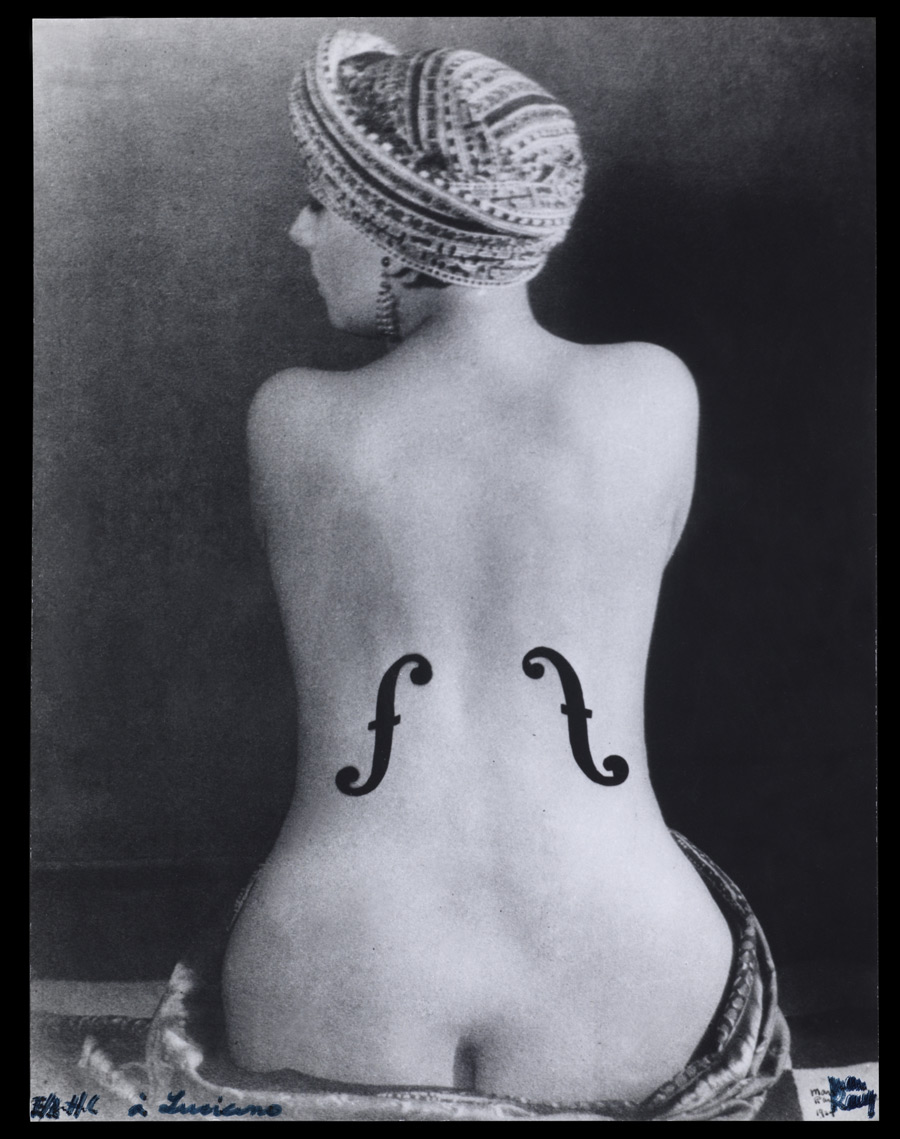
Man Ray (American, 1890-1976) 'Le Violon d'Ingres' (Ingres's Violin or The Hobby) 1924


Man Ray (American, 1890-1976)
Le Violon d’Ingres (Ingres’s Violin or The Hobby)
1924
Gelatine silver print
17.2 x 22.4cm
Private collection Turin
© Man Ray Trust / ADAGP, c/o Pictoright Amsterdam 2013


Man Ray (American, 1890-1976) 'Self-portrait with the lamp' 1934


Man Ray (American, 1890-1976)
Self-portrait with the lamp
1934
Gelatin silver print
10. 8 x 8cm
© Man Ray Trust / ADAGP, c/o Pictoright Amsterdam 2013


Medardo Rosso (Italian, 1858-1928) 'Self-portrait in the studio' c. 1906


Medardo Rosso (Italian, 1858-1928)
Self-portrait in the studio
c. 1906
Modern contact print of the original glass negative
12.7 x 13cm
Private collection


'Brancusi, Rosso, Man Ray - Framing Sculpture' exhibition poster


Brancusi, Rosso, Man Ray – Framing Sculpture exhibition poster

Constantin Brancusi, La Muse endormie, 1910. Arthur Jerome Eddy Memorial Collection. The Art Institute of Chicago. © 2013 c/o Pictoright Amsterdam /
Medardo Rosso, Enfant malade, c. 1909. Private collection / Man Ray, Noire et blanche, 1926
© Man Ray Trust / ADAGP – PICTORIGHT / Telimage – 2013
Design: Thonik.


Museum Boijmans Van Beuningen
Museumpark 18-20
3015 CX Rotterdam
The Netherlands
Phone: +31 (0)10 44.19.400

Opening hours:
Tuesdays to Sundays, 11am – 5pm

Museum Boijmans Van Beuningen website

LIKE ART BLART ON FACEBOOK

Back to top

Exhibition: ‘What Is a Photograph?’ at the International Center of Photography, New York

Exhibition dates: 31st January – 4th May 2014

Artist in the exhibition include:

Matthew Brandt b. 1982, Los Angeles; lives and works in Los Angeles. Marco Breuer b. 1966, Landshut, Germany; lives and works in New York State. Liz Deschenes b. 1966, Boston; lives and works in New York City. Adam Fuss b. 1961, London; lives and works in New York City. Owen Kydd b. 1975, Calgary, Canada; lives and works in Los Angeles. Floris Neusüss 1937-2020, German. Marlo Pascual 1972-2020, American. Sigmar Polke 1941-2010; Germany. Eileen Quinlan b. 1972, Boston; lives and works in New York City. Jon Rafman b. 1981, Montreal; lives and works in Montreal. Gerhard Richter b. 1932, Dresden; lives and works in Cologne. Mariah Robertson b. 1975, Indianapolis, Indiana; lives and works in Brooklyn. Alison Rossiter b. 1953, Jackson, Mississippi; lives and works in the metro New York area. Lucas Samaras b. 1936, Macedonia, Greece; lives and works in New York City. David Benjamin Sherry b. 1981, Woodstock, New York; lives and works in Los Angeles. Travess Smalley b. 1986, Huntington, West Virginia; lives and works in New York City. Kate Steciw b. 1978, Bethlehem, Pennsylvania; lives and works in Brooklyn. Artie Vierkant b. 1986, Breinerd, Minnesota; lives and works in New York City. James Welling b. 1951, Hartford, Connecticut; lives and works in Los Angeles. Christopher Williams b. 1956, Los Angeles; lives and works in Cologne, Düsseldorf, and Amsterdam. Letha Wilson b. 1976, Honolulu; lives and works in Brooklyn.


James Welling (American, b. 1951) '6236' 2008


James Welling (American, b. 1951)
6236
2008
© James Welling, courtesy David Zwirner, New York/London


A Vocabulary of Photography: representation and the original, the ‘I can’ of sight

What is a photograph? These days, it can be anything your imagination desires, any imag(in)ing that takes your fancy…

The images in this posting are a case in point. In a postmodern, post-photographic world where there is (allegedly) no centre and periphery, these art works are photography playing at the edges of photography. They examine “the range of creative experimentation that has occurred in photography since the 1970s,” reconsidering and reinventing, “the role of light, color, composition, materiality, and the subject in the art of photography.”

In an earlier posting I talked about A Vocabulary of Printing and the Syntax of the Image. Here we could equally posit a Vocabulary of Photography, a compendium of techniques and imaginings, noting that technology and imagination should never delimit the creativity of the photographer/artist. In other words visions, boundaries and technologies are there to be pushed!

All well and good. To solidify meaning in such a nebulous world, there is penchant for (ambiguous) numbers – titles such as 6236; Untitled (C-1189); 154 – or definitive titles that try to fix ambiguity in a specific time, place or typology (a classification according to general type) eg Image Object Friday 7 June 2013 4:33 PM, 2013 or Supplement ’13 (Mixed Typologies) #3.

However, what is produced by this experimentation, this voluminous vocabulary, seldom leads to satisfying results. When you actually look at this type of work, really look at it with a clear and aware mind (as Krishnamurti would say), a large proportion of it is blather, noise for the sake of making noise, tinkering for a terrestrial world saturated in meaningless images. No wonder I get disillusioned with the “contemporary” in photography. The art work seems to mean very little and takes me nowhere I particularly want to go.

While photographs are no longer necessarily “points of view” analogous to Littré’s rigorous definition: ‘The point of view is a collection of objects to which the eye is directed and on which it rests within a certain distance’,1 and “the image has nothing to do with signification, meaning, as implied by the existence of the world, the effort of truth, the law and the brightness of the day”2 – meaning that there is no single truth, there are only competing narratives and interpretations of a world that cannot be wholly, accurately described3 – for me there still needs to be a re(as)semblance towards some form of inherent truth in the image, ideally some form of human happiness.

The ‘I can’ of site (representation) / sight (vision) …

Dr Marcus Bunyan


1/ Virilio, Paul. The Vision Machine (trans. Julie Rose). Bloomington: Indiana University Press, 1994, p. 19

2/ Blanchot, Maurice. The Gaze of Orpheus. New York: Barrytown, 1981, p. 85

3/ Townsend, Chris. Vile Bodies: Photography and the Crisis of Looking. Munich: Prestel, 1998, p. 10


Many thankx to the International Center of Photography for allowing me to publish the photographs in the posting. Please click on the photographs for a larger version of the image.


“Vision is ordered according to a mode that may be generally called the function of images. This function is defined by a point-by-point correspondence of two unities in space. Whatever optical intermediaries may be used to establish their relation, whether their image is virtual, or real, the point-by-point correspondence is essential. That which is the mode of the image is therefore reducible to the simple schema that enables us to establish anamorphosis, that is to say, to the relation of an image, in so far as it linked to a surface, with a certain point that we shall call the ‘geometrical’ point. Anything that is determined by this method, in which the straight line plays its role of being the path of light, can be called an image.”


Lacan, Jacques. The Four Fundamental Concepts of Psycho-Analysis (trans. Alan Sheridan). London: The Hogarth Press, 1977, p. 86


“With the industrial proliferation of visual and audiovisual protheses and unrestrained use of instantaneous-transmission equipment from earliest childhood onwards, we now routinely see the encoding of increasingly elaborate mental images together with a steady decline in retention rates and recall. In other words we are looking at the rapid collapse of mnemonic [aiding memory] consolidation.

This collapse seems only natural, if one remembers a contrario that seeing, and its spatio-temporal organisation, precede gesture and speech and their co-ordination in knowing, recognising, making known (as images of our thoughts), our thoughts themselves and cognitive functions, which are never passive… (Romains, Jules. La Vision extra-rétinienne et le sens paroptique. Paris: Gallimard, 1964).

Everything I see is in principle within my reach, at least within reach of my sight, marked on the map of the ‘I can’. In this important formulation, Merleau-Ponty pinpoints precisely what will eventually find itself ruined by the banalisation of a certain teletopology. The bulk of what I see is, in fact and in principle, no longer with in my reach. And even if it lies within reach of my sight, it is no longer necessarily inscribed on the map of the ‘I can’. The logistics of perception in fact destroy what earlier modes of representation preserved of the original, ideally human happiness, the ‘I can’ of sight… ”


Virilio, Paul. The Vision Machine (trans. Julie Rose). Bloomington: Indiana University Press, 1994, p. 7 (my bold)


Matthew Brandt (American, b. 1982) 'Grays Lake, ID 7' 2013


Matthew Brandt (American, b. 1982)
Grays Lake, ID 7
2013
© Matthew Brandt, courtesy Yossi Milo Gallery, New York


Alison Rossiter (American, b. 1953) 'Kilborn Acme Kruxo, exact expiration date unknown, ca. 1940s, processed in 2013 (#1)' 2013


Alison Rossiter (American, b. 1953)
Kilborn Acme Kruxo, exact expiration date unknown, ca. 1940s, processed in 2013 (#1)
2013
© Alison Rossiter, courtesy Yossi Milo Gallery, New York


Eileen Quinlan (American, b. 1972) 'The Drink' 2011


Eileen Quinlan (American, b. 1972)
The Drink
2011
© Eileen Quinlan, courtesy Miguel Abreu Gallery, New York


Gerhard Richter (German, b. 1932) '18.2.08' 2008


Gerhard Richter (German, b. 1932)
18.2.08
2008
Overpainted photograph
© Gerhard Richter, courtesy Marian Goodman Gallery, New York


Kate Steciw (American, b. 1978) 'Armchair, Background, Basic, Beauty, Bed, Bedside, Bread, Breakfast, Bright, Cereal, Closeup, Cloth, Color, Contemporary, Couch, Crust, Day, Decor, Fox, Frame, Grain, Ingredient, Interior, Invitation, Irregular, Juice, Life, Living, Loaf, Luxury, Macro, Sofa, Speed, Style, Sweet, Texture' 2013


Kate Steciw (American, b. 1978)
Armchair, Background, Basic, Beauty, Bed, Bedside, Bread, Breakfast, Bright, Cereal, Closeup, Cloth, Color, Contemporary, Couch, Crust, Day, Decor, Fox, Frame, Grain, Ingredient, Interior, Invitation, Irregular, Juice, Life, Living, Loaf, Luxury, Macro, Sofa, Speed, Style, Sweet, Texture
2013
1 and 2 of infinite
© Kate Steciw


On view at the International Center of Photography from January 31 through May 4, 2014, What Is a Photograph? explores the range of creative experimentation that has occurred in photography since the 1970s.

This major exhibition brings together 21 emerging and established artists who have reconsidered and reinvented the role of light, colour, composition, materiality, and the subject in the art of photography. In the process, they have also confronted an unexpected revolution in the medium with the rise of digital technology, which has resulted in imaginative reexaminations of the art of analog photography, the new world of digital images, and the hybrid creations of both systems as they come together.

“Artists around the globe have been experimenting with and redrawing the boundaries of traditional photography for decades,” said ICP Curator Carol Squiers, who organised the exhibit. “Although digital photography seems to have made analog obsolete, artists continue to make works that are photographic objects, using both old technologies and new, crisscrossing boundaries and blending techniques.”

Among those included in the exhibition is Lucas Samaras, who adopted the newly developed Polaroid camera in the late 1960s and early 1970s and immediately began altering its instant prints, creating fantastical nude self-portraits. Another artist who turned to photography in the 1970s was Sigmar Polke. Although better known as a painter, Polke explored nontraditional ways of photographing and printing, manipulating both his film and prints in the darkroom and often drawing and painting on his images.

More recently, Liz Deschenes has used camera-less photography in a subtle investigation of nonrepresentational forms of expression and the outmoded technologies of photography. And, James Welling has created a heterogeneous body of work that explores optics, human perception, and a range of photographic genres both abstract and representational.

Press release from the International Center of Photography website


Letha Wilson (American, b. 1976) 'Colorado Purple' 2012


Letha Wilson (American, b. 1976)
Colorado Purple
2012
Concrete, chromogenic print transfer, and wood frame
Courtesy the artist and Higher Pictures, New York
© Letha Wilson, courtesy Higher Pictures, New York


Adam Fuss (American, b. 1961) 'Untitled' 1988


Adam Fuss (American, b. 1961)
Untitled
1988
© Adam Fuss, courtesy Cheim & Read, New York


Marco Breuer (German, b. 1966) 'Untitled (C-1189)' 2012


Marco Breuer (German, b. 1966)
Untitled (C-1189)
2012
© Marco Breuer, courtesy Yossi Milo Gallery, New York


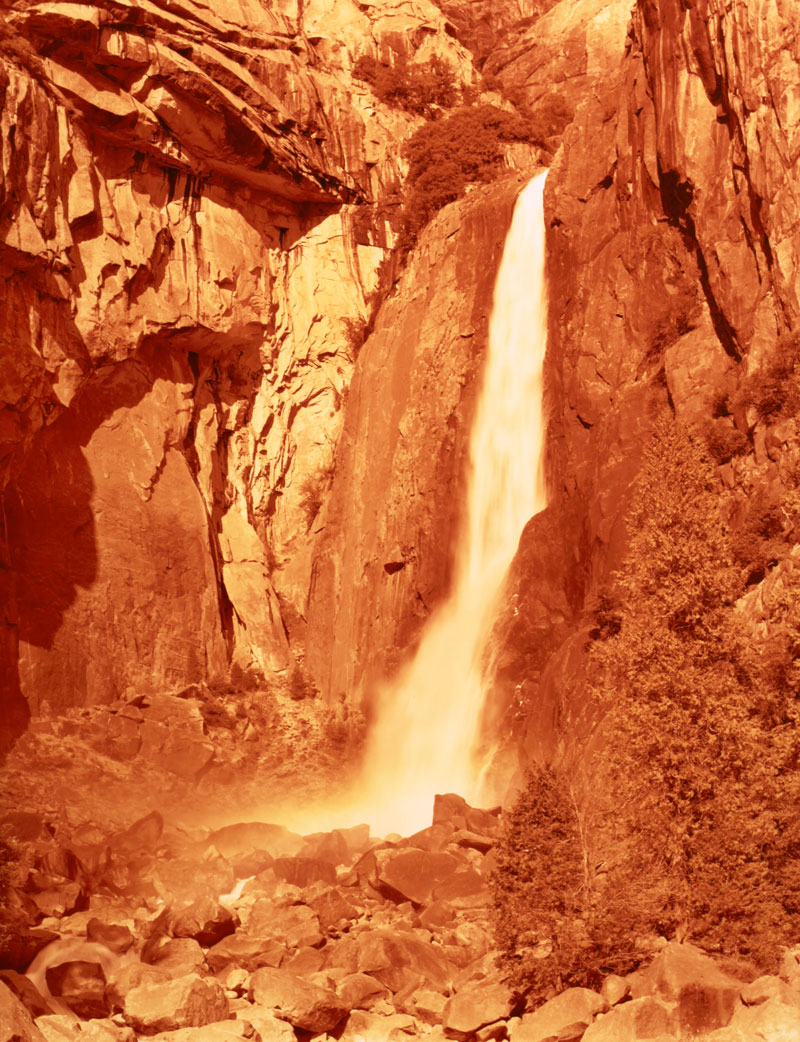
David Benjamin Sherry (American, b. 1981) 'Lower Yosemite Falls, Yosemite, California' 2013


David Benjamin Sherry (American, b. 1981)
Lower Yosemite Falls, Yosemite, California
2013
© David Benjamin Sherry, courtesy the artist and Salon 94, New York


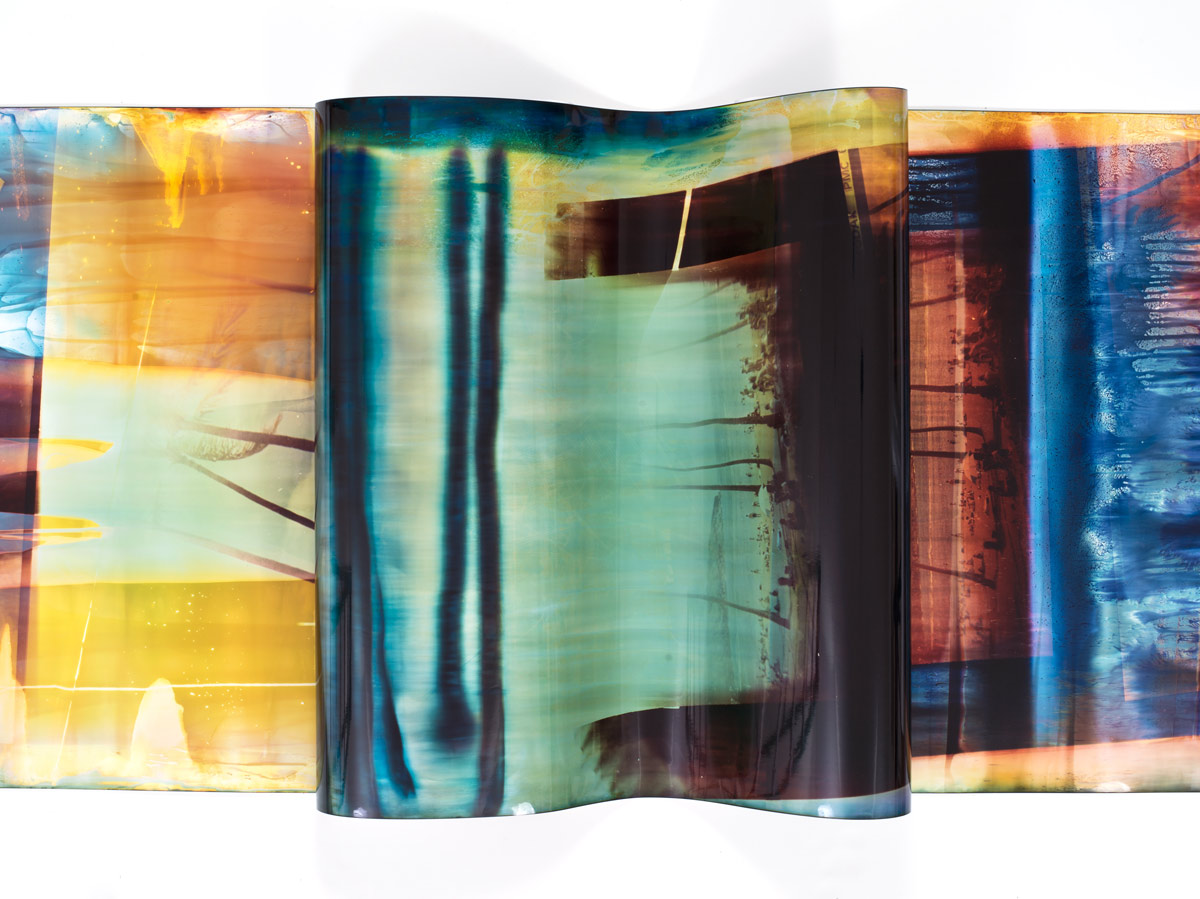
Mariah Robertson (American, b. 1975) '154' 2010 (detail)


Mariah Robertson (American, b. 1975)
154 (detail)
2010
© Mariah Robertson, courtesy American Contemporary, New York


Artie Vierkant (American, b. 1986) 'Image Object Friday 7 June 2013 4:33 PM, 2013' 2013


Artie Vierkant (American, b. 1986)
Image Object Friday 7 June 2013 4:33 PM, 2013
2013
© Artie Vierkant, courtesy Higher Pictures, New York


Christopher Williams (American, b. 1956) 'Supplement '13 (Mixed Typologies) #3' 2013 (detail)


Christopher Williams (American, b. 1956)
Supplement ’13 (Mixed Typologies) #3 (detail)
2013
© Christopher Williams, courtesy David Zwirner, New York/London and Galerie Gisela Capitain, Cologne


Jon Rafman (American, b. 1981) 'New Age Demanded (The heart was a place made fast)' 2013


Jon Rafman (American, b. 1981)
New Age Demanded (The heart was a place made fast)
2013
© Jon Rafman, courtesy the artist and Zach Feuer Galery, New York


Floris Neusüss (German, 1937-2020) 'Tango' 1983


Floris Neusüss (German, 1937-2020)
Tango
1983
© Floris Neusüss, courtesy the artist and Von Lintel Gallery, New York


Marlo Pascual (American, 1972-2020) 'Untitled' 2010


Marlo Pascual (American, 1972-2020)
Untitled
2010
© Marlo Pascual, courtesy the artist and Casey Kaplan, New York
Photo: Jean Vong


Owen Kydd (Canadian, b. 1975) 'Pico Boulevard (Nocturne)' 2012


Owen Kydd (Canadian, b. 1975)
Pico Boulevard (Nocturne)
2012
Courtesy the artist and Nicelle Beauchene Gallery
© Owen Kydd


International Center of Photography
79 Essex Street New York, NY 10002
Phone: 212 857 0000

Opening hours:
Wednesday – Monday 11am – 7pm
Closed Tuesday

International Center of Photography website

LIKE ART BLART ON FACEBOOK

Back to top

Exhibition: ‘Hermann Landshoff: A Retrospective Photographs 1930-1970’ at the Münchner Stadtmuseum

Exhibition dates: 29th November 2013 – 21st April 2014


Hermann Landshoff (American-German, 1905-1986) 'The Bicyclers' Published in 'Junior Bazaar' August 1946


Hermann Landshoff (American-German, 1905-1986)
The Bicyclers
Published in Junior Bazaar August 1946


Another artist who was lucky to escape Europe in the first years of the Second World War. I would like to see the whole exhibition. At the moment I can’t make a judgement on his work for I have not seen enough of it, but on the evidence of the images presented in this posting, I am not entirely convinced. However, the photograph of Lauren Bacall in 1945 is ravishing…

Marcus


Many thankx to the Münchner Stadtmuseum for allowing me to publish the photographs in the posting. Please click on the photographs for a larger version of the image.


Hermann Landshoff (American-German, 1905-1986) 'Max Ernst at Peggy Guggenheim’s home, New York, fall 1942' 1942


Hermann Landshoff (American-German, 1905-1986)
Max Ernst at Peggy Guggenheim’s home, New York, fall 1942
1942
Gelatin silver print
Münchner Stadtmuseum Photography Collection


Hermann Landshoff (American-German, 1905-1986) 'Photographer Irving Penn' 1948


Hermann Landshoff (American-German, 1905-1986)
Photographer Irving Penn
1948
Gelatin silver print
Münchner Stadtmuseum Photography Collection


Hermann Landshoff (American-German, 1905-1986) 'Children in a Spanish village' 1957


Hermann Landshoff (American-German, 1905-1986)
Children in a Spanish village
1957
Gelatin silver print
Münchner Stadtmuseum Photography Collection


Hermann Landshoff (American-German, 1905-1986) 'Model Cora Hemmet on the Grand Versailles Staircase' 1934-1938


Hermann Landshoff (American-German, 1905-1986)
Model Cora Hemmet on the Grand Versailles Staircase
1934-1938
Gelatin silver print
Münchner Stadtmuseum Photography Collection


In the spring of 2012, the Münchner Stadtmuseum’s Photography Collection received a sensational addition to its archives. The complete artistic estate of German-American photographer Hermann Landshoff (1905-1986), featuring 3,600 original prints from between 1927 to 1970, were generously donated to the museum on behalf of the family by Andreas Landshoff.

Landshoff grew up in Munich-Solln as the son of a well-to-do Jewish family that was very much involved in the city’s art, literature and music scenes. His father, Ludwig Landshoff, was an internationally acclaimed musicologist and composer who was director and head of Munich’s Bach Society from 1917 to 1928. His mother, Philippine Wiesengrund, was a singer with the Royal Court Opera, while his sister Ruth Landshoff, better known by her married name of Vollmer, would become one of the founders of the conceptual art movement in the United States. In addition, writers such as Thomas Mann, Christian Morgenstern, Joachim Ringelnatz, Rainer Maria Rilke, Karl Wolfskehl and Franziska zu Reventlow were frequent visitors to his parents’ home. Another family member, the author Ruth Landshoff-Yorck, was the muse of Otto Umbehr and Paul Citroen and ran an art salon in Berlin that had a reputation as one of the most exciting meeting places for avant-garde artists in the whole of the Weimar Republic.

Other more distant relations of the family included important figures from the world of publishing such as Samuel Fischer, the founder of the S. Fischer Verlag publishing house, and Fritz H. Landshoff, who, from 1933, ran the Querido publishing house in Amsterdam which would become the most important forum for German exile literature, publishing novels by authors including Heinrich Mann, Klaus Mann, Hermann Kesten, Joseph Roth, Alfred Döblin, Lion Feuchtwanger, Anna Seghers, Ernst Toller and Arnold Zweig.

Even in his early years, Hermann Landshoff attracted attention with his cartoons and a photo reportage on Albert Einstein that was published in the Münchner Illustrierte Zeitung magazine. After training at Munich’s Kunstgewerbeschule (School of Arts and Crafts), he became a member of the circle of well-known typographer and book illustrator Fritz Helmuth Ehmcke. It was here that Landshoff met the Nuremberg illustrator Richard Lindner alongside whom he would subsequently work as part of the creative team at the Knorr & Hirth publishing house. When the Nazis seized power in 1933, Landshoff was forced to emigrate, initially settling in Paris where he worked as a fashion photographer. Between 1936 and 1939, his images were published in the popular Femina magazine and in the French edition of Vogue. He was then forced to flee France and, after an eventful journey spanning 1940 and 1941, he eventually pitched up in New York. Landshoff soon became one of the most fascinating fashion photographers to collaborate with legendary art director Alexey Brodovitch for fashion magazines such as Harper’s Bazaar, Junior Bazaar and latterly also Mademoiselle. He developed his own style as a fashion photographer, portraying the models in life-like everyday situations. American fashion photographer Richard Avedon considered himself to have been profoundly inspired by Landshoff, even being moved to claim that ‘I owe everything to Landshoff’.

There is little doubt that Hermann Landshoff is one of the last great unsung heroes in (the history of) 20th century photography. Having been quite wrongly consigned to oblivion for all these years, the time has now come for him to be rediscovered. His multi-layered works show us various sides to the age in which he lived and the lives of artists who had settled in the United States having been exiled from Europe. The exhibition offers the first chance to see Landshoff’s portraits of European artists such as Max Ernst, Richard Lindner, Leonora Carrington or Frederick Kiessler who found a new artistic home in New York under the auspices of art collector Peggy Guggenheim. It also features a number of stunning group and individual portraits of members of the New York surrealist community centred around André Breton and Marcel Duchamp.

Finally, we also have Hermann Landshoff to thank for a unique cycle of around 70 portraits of different photographers that he created between 1942 and 1960. These striking images feature old masters like Walker Evans, Paul Strand, Alfred Stieglitz, Ansel Adams, Berenice Abbott, Margaret Bourke-White, Alfred Eisenstaedt, Andreas Feininger or WeeGee alongside young, up-and-coming photographers still at the start of their careers, such as Robert Frank, Irving Penn and Richard Avedon. This pantheon of eminent photographers occupies a unique place in the history of the medium.

Other collections of images tackle the urban architecture and people of New York, focusing particularly on those on the fringes of society. The exhibition also includes several portraits of prominent physicists such as Albert Einstein as well as some of the Los Alamos scientists such as Robert Oppenheimer and his cousin Rolf Landshoff involved in building the world’s first nuclear bomb. The exhibition will show a selection of more than 250 of Landshoff’s fascinating photographs for the first time, with subjects drawn from across the entire spectrum of his work, from fashion to portraits and architecture.

Press release from the Münchner Stadtmuseum website


Hermann Landshoff (American-German, 1905-1986) 'Tennis balls' with models Wanda Delafield and Peggy Lloyd c. 1945


Hermann Landshoff (American-German, 1905-1986)
Tennis balls with models Wanda Delafield and Peggy Lloyd
c. 1945
Gelatin silver print
Münchner Stadtmuseum Photography Collection


Hermann Landshoff (American-German, 1905-1986) 'Model Beth Wilson at Rip Van Winkle Bridge spanning the Hudson River, New York 1946' 1946


Hermann Landshoff (American-German, 1905-1986)
Model Beth Wilson at Rip Van Winkle Bridge spanning the Hudson River, New York 1946
1946
Gelatin silver print
Münchner Stadtmuseum Photography Collection


Hermann Landshoff (American-German, 1905-1986) 'Self-portrait, New York' c. 1942


Hermann Landshoff (American-German, 1905-1986)
Self-portrait, New York
c. 1942
Gelatin silver print
Münchner Stadtmuseum Photography Collection


Hermann Landshoff (American-German, 1905-1986) 'Actress Lauren Bacall, New York, 1945' 1945


Hermann Landshoff (American-German, 1905-1986)
Actress Lauren Bacall, New York, 1945
1945
Gelatin silver print
Münchner Stadtmuseum Photography Collection


Hermann Landshoff (American-German, 1905-1986) 'On the roof of Saks Fifth Avenue Building, New York, 1942' 1942


Hermann Landshoff (American-German, 1905-1986)
On the roof of Saks Fifth Avenue Building, New York, 1942
1942
Gelatin silver print
Münchner Stadtmuseum Photography Collection


Münchner Stadtmuseum
St. Jakobs Platz 1
80331 München
Phone: +49-(0)89-233-22370

Opening hours:
Tuesday – Sunday 10am – 6pm
Closed on Mondays

Münchner Stadtmuseum website

LIKE ART BLART ON FACEBOOK

Back to top

Exhibition: ‘James Turrell: A Retrospective’ at The Los Angeles County Museum of Art (LACMA)

Exhibition dates: 26th May 2013 – 6th April 2014


Many thankx to LACMA for allowing me to publish the photographs in the posting. Please click on the photographs for a larger version of the image.


This slideshow requires JavaScript.


James Turrell (American, b. 1943)
Breathing Light
2013
LED light into space
Dimensions cariable
Los Angeles County Museum of Art, purchased with funds provided by Kayne Griffin Corcoran and the Kayne Foundation
© James Turell
Photos: © Florian Holzherr


James Turrell (American, b. 1943) 'Bridget's Bardo' 2009


James Turrell (American, b. 1943) 'Raemar Pink White' 1969


James Turrell (American, b. 1943) 'Key Lime' 1994


James Turrell (American, b. 1943) 'Light Reignfall' 2011


'James Turrell: A Retrospective' installation view at LACMA 2014


The Los Angeles County Museum of Art (LACMA) presents James Turrell: A Retrospective, the first major U.S. survey of Los Angeles-native James Turrell since 1985. The exhibition features approximately fifty works tracing five decades of the artist’s career. In addition to early light projections, holograms, and an entire section devoted to his masterwork-in-progress, the Roden Crater project, the exhibition features numerous immersive light installations that address our perception and how we see. LACMA’s retrospective is complemented by concurrent, independently curated exhibitions at the Museum of Fine Arts, Houston (MFAH) (June 9 – September 22, 2013); and the Solomon R. Guggenheim Museum, New York (June 21 – September 25, 2013). Additional Turrell exhibitions on view this year include the Academy Art Museum, Easton (April 20 – July 7, 2013); and Villa Panza, Varese, Italy (October 24, 2013 – May 4, 2014).

“The theme of light has preoccupied artists for centuries,” says Michael Govan, CEO and Wallis Annenberg Director of LACMA and exhibition co-curator. “No one, however, has so fully considered the ‘thing-ness’ of light itself – as well as how the experience of light reflects the wondrous and complex nature of human perception – as James Turrell has for nearly five decades.” Christine Y. Kim, exhibition co-curator and Associate Curator of Contemporary Art at LACMA adds, “There is nothing quite like the experience of a Turrell work, which is truly about and for the viewer and his or her perception. Perception is the medium for Turrell, as his work provokes viewers to see themselves see.”

Turrell’s revolutionary use of light in art makes for an experience that is both physical and optical – requiring visitors to spend anywhere from five to twenty minutes with one artwork, often alone in a gallery or with a limited number of fellow viewers.

Exhibition overview

In the mid-1960s, James Turrell was inspired by a beam of light from a slide projector while sitting in the darkened room of an undergraduate art history class at Pomona College. The sight provoked a question: what if light wasn’t the tool that enabled people to see something else but rather became the thing people look at? Thus began an inquiry that has led to a vast, prolific career.

James Turrell: A Retrospective comprises works that range in scale from an intimate watercolour made in 1969 to a 5,000-square-foot “Ganzfeld” installation – designed to entirely eliminate the viewer’s depth perception – offering visitors multiple entry points into Turrell’s practice. Evident in the array of works is the artist’s interest in perception, psychology, religion, astronomy, meditation, and science. The exhibition also draws connections between the artist’s light installations, architectural projects, and his famous masterwork-in progress at Roden Crater, in the high desert of Arizona. James Turrell: A Retrospective presents the most expansive installation of Roden Crater works shown to date, presented in the form of models, drawings, photographs, holograms, and other documents from the 1980s through the present.

Exhibition Organisation

The work of James Turrell requires a vast amount of exhibition space. James Turrell: A Retrospective presents nearly fifty works exhibited in 33,000 square feet populating two venues across LACMA’s campus: the 2nd floor of the Broad Contemporary Art Museum (BCAM) and the east galleries of the Lynda and Stewart Resnick Exhibition Pavilion (Resnick Pavilion). BCAM’s east galleries begin with works that Turrell completed at his Mendota Studio in Santa Monica from the mid-1960s to the early 1970s, followed by a succession of full-room installations that feature projections, holograms, a “Shallow Space” – a large room designed to challenge a viewer’s depth perception – and a “Cross Corner Projection,” in which light is projected in a way that suggests weight and mass. A subsequent gallery contains information and media highlighting a selection of site-specific projects and commissions around the world. BCAM’s west wing is populated with a “Magnatron” work – consisting of an aperture in the shape of an old television screen – followed by three full-scale installations: Key Lime, a “Wedgework” in which the illusion of walls are created through light and architecture; a “Wide Glass,” a type of work that adds a temporal element to Turrell’s light-based installations; and St. Elmo’s Breath, a “Space Division Construction,” which appears to be a flat surface but upon closer inspection reveals itself to be light emitted from a seemingly bottomless cavity in the wall.

Upon entering the Resnick Pavilion, visitors first encounter work that resulted from Turrell’s collaboration with artist Robert Irwin and Dr. Ed Wortz as part of the Art and Technology program at LACMA in 1969, namely a “Perceptual Cell” called Light Reignfall; Dark Matters, a “Dark Space” that presents a seemingly blacked-out room with only a minimally perceivable trace of light; and Breathing Light, a “Ganzfeld.” The Resnick Pavilion also holds an expansive gallery dedicated to the Roden Crater project, including large-scale mixed media drawings and a model contoured with actual cinder from the crater, as well as other models for autonomous spaces.

Press release from the LACMA website


James Turrell (American, b. 1943) 'Roden Crater Model (Large Overall Site)' 1987


James Turrell (American, b. 1943) 'Roden Crater Model (Large Overall Site)' 1987


James Turrell (American, b. 1943) 'Roden Crater Project, view toward northeast' 1987


James Turrell (American, b. 1943) 'Twilight Epiphany' 2012


James Turrell (American, b. 1943) 'Twilight Epiphany' 2012


James Turrell (American, b. 1943) 'Twilight Epiphany' 2012


James Turrell (American, b. 1943) 'Afrum (White)' 1966


James Turrell (American, b. 1943) 'Raethro II (Blue)' 1971


James Turrell (American, b. 1943) 'Bullwinkle' 2001


James Turrell in front of Roden Crater Project at sunset, October 2001


Los Angeles County Museum of Art (LACMA)
5905 Wilshire Boulevard (at Fairfax Avenue)
Los Angeles, CA, 90036
Phone: 323 857-6000

Opening Hours:
Monday, Tuesday, Thursday: 11am – 6pm
Friday: 11am – 8pm
Saturday, Sunday: 10am – 7pm
Closed Wednesday

LACMA website

LIKE ART BLART ON FACEBOOK

Back to top

Review / Text: ‘Edward Steichen & Art Deco Fashion’ at the National Gallery of Victoria, Melbourne

Exhibition dates: 18th October 2013 – 2nd March 2014


Edward Steichen (American, 1879-1973) 'Model Dinarzade in a Dress by Poiret' 1924


Edward Steichen (American, 1879-1973)
Model Dinarzade in a Dress by Poiret
1924
Gelatin silver photograph

Image used under fair use for the purpose of art criticism


This is a sublime exhibition, teaming with fabulous frocks and beautiful, classical, evanescent photographs. The exhibition was in my top nine magnificent Melbourne exhibitions that featured on Art Blart last year. Elegant, sophisticated and oozing quality, this exhibition has been a sure fire winner for the NGV. This review will concentrate on the photographs by Edward Steichen. See my previous posting on the exhibition including installation photographs.

High Society

Edward Steichen (1879-1973) was a painter and champion of art photography who initially worked in the soft focus, Pictorialist style prevalent at the beginning of the 20th century. He was an artist who worked closely with Alfred Stieglitz on the influential quarterly art journal Camera Work, designing the cover and the Art Nouveau-style typeface especially for the internationally focused publication. Stieglitz, and by extension Camera Work, lived to promote photography as an art form and to challenge the norms of how art may be defined.1 In the early years Camera Work only published photography, but in later years the journal increasingly featured reproductions of and articles on modern painting, drawing and aesthetics.

“This change was brought about by a similar transformation at Stieglitz’s New York gallery, which had been known as the Little Galleries of the Photo-Secession until 1908. That year he changed the name of the gallery to “291”, and he began showing avant-garde modern artists such as Auguste Rodin and Henri Matisse along with photographers. The positive responses he received at the gallery encouraged Stieglitz to broaden the scope of Camera Work as well, although he decided against any name change for the journal.”2

Steichen was heavily associated with Gallery 291 (291 Fifth Avenue, New York City) which ran from 1905 to 1917. The gallery exhibited European artists such as Braque, Picasso, Matisse, Brancussi, Cézanne and Rodin and soon to be famous American artists such as John MarinMax WeberArthur DoveMarsden Hartley and Georgia O’Keeffe. Virtually no other gallery in the United States was showing modern art works with such abstract and dynamic content at this time.3 Both the gallery and the journal ran hand in hand; both closed in 1917. The journal closed due to a downturn in interest in Pictorial photography, a lack of subscribers, cultural changes and the economic effects of the First World War, which saw both the costs and even the availability of the paper on which it was printed become challenging.4 In the penultimate issue 48 (October 1916) Stieglitz,

” …introduced the work of a young photographer, Paul Strand, whose photographic vision was indicative of the aesthetic changes now at the heart of Camera Work’s demise. Strand shunned the soft focus and symbolic content of the Pictorialists and instead strived to create a new vision that found beauty in the clear lines and forms of ordinary objects. By publishing Strand’s work Stieglitz was hastening the end of the aesthetic vision he had championed for so long. Nine months later, in June 1917, what was to be the final issue of Camera Work appeared. It was devoted almost entirely to Strand’s photographs.”5


Edward Steichen felt the change in the air. When he accepted the job as chief photographer for Condé Nast publications in 1923 his early fashion photographs for Vogue and Vanity Fair were seen as innovative and ground breaking, even as his former art colleagues saw shooting fashion and celebrities was a way of selling-out. Steichen bought to fashion and portrait photography an aesthetic of clear lines and forms that simply had not been present before, coupled with a Pictorialist sensibility for light and the use of low depth of field. John McDonald in his excellent review of the exhibition observes, “Steichen has claims to having invented fashion photography with a series of pictures he took in Paris in 1911, for couturier, Paul Poiret; but the genre had found its first true professional in Baron Adolphe de Meyer, who left Vogue for Harper’s Bazaar, opening the door for Steichen’s appointment. De Meyer was an incurable mannerist who remained true to the Pictorialist aesthetic, but his successor would prove himself an innovator.”6

Steichen’s photographs from 1923-1924 are pared back, Modernist photographs that evidence the beginning of his later photographic style. Madame Nadine Vera wearing a crêpe evening gown by Chanel (1924) has a plain background of some wooden studio panels; Model Dinarzade in a Dress by Poiret (1924, above) has fabric hanging behind while Crêpe de chine dress by Lanvin (1924) has three doors casually put together to form the backdrop to the model. All three photographs show beautiful tonality and lighting in the full length capture of the models with hints of browns and yellows in the prints. The figure is isolated in the studio space simply and elegantly. The model is being studied. Steichen’s models are immersed in suffused light but the form of the photograph is different from that of Pictorialism, for the models themselves are pin sharp, as though stepping out into the world. These early photographs are fascinating to study, for they lay the ground work for what is to follow. These three images inform the viewer as to the experimentation that Steichen was undertaking to get to a starting point for the complex and atmospheric studio lighting that he would later employ.

Gradually, Steichen’s images become more confident and assured and take on a patina of beauty, style and grace. In his close-up portraits there is an isolation of the face against out of focus backgrounds with the use of profiles, arms and elbows as framing devices, for example Actress Sylvia Sidney (1929) and Actress Clara Bow (1928, above). In his longer-length portraits there is an isolation of figures against a white or black ground, as in Marion Morehouse in a dress by Louise Boulanger (1929) and Actresses Norma and Constance Talmadge (1927). Males usually have a heavy darkness to them while the females are more luminously lit. In the male portraits the hands dominate. The hands in the male photographs belong to the male as part of the portrait whereas in the early photographs of women they are only models, there at his command, and the hands are almost invisible. Only in the later photographs of high society women are the hands of females fully represented. What can be observed is that the figure is usually isolated against an out of focus background, with deep, dark shadows and soft luxurious light, low depth of field and feminine profiles.

In commercial terms (and we must remember that this is how the artist made his living for these photographs were seen as his commercial work at the time), Steichen’s photographs fulfilled his brief: the portrayal of shimmer and sparkle, geometric Art Deco style, the drama and theatrical lighting of the talkies, and the spectacle of the liberated modern women. She in turn was influenced by the prevalent cultural conditions: smoking, jazz, prohibition, automobiles, trains, dancing, fast living, gold (King Tuts tomb was discovered in 1922) and African and Japanese art. Appealing to the new leisure classes, publications such as Vogue and Vanity Fair offered a glimpse of a longed for paradise to the burgeoning middle-classes with their photographs of the rich and famous, the glamour and the costumes – the social groups that hold the most power actually exposing their own status on paper through these magazines.

As John McDonald notes, “Steichen uses every trick at his disposal to convey a particular kind of image,”7 an image that uses increasingly elaborate studio lighting and disparate indoor and outdoor locations. But by the early 1930s the work becomes quite formulaic with its use of low depth of field, profiles, angles of arms or chairs and geometric shapes. The figure is tightly controlled – either cropped close in or set amongst ambiguously filled sets and shaped backgrounds. There is a sameness and repetitiveness about the work as one image bleeds into another. In fact, after that early period of experimentation, there is basically no change to his mature style from the years 1925-1937 and this makes for a long twelve years for an artist of his talent. He found his mother load and he stuck to it.

Steichen’s photographs of the rich and famous are “pictures” taken by one who mingled with the elite, one who enjoyed the trappings of fame and high society. As Robert Nelson notes in his review of the exhibition, “Steichen’s talents were never incompatible with the conspicuous snobbery of his age, for which it would never have occurred to him to proffer an apology. Having arrived himself, he naturally admires gentry-by-ambition and crowns it with the smugness that it enjoys.”8 Ouch! Nelson goes on to observe, “Much of the work is statuesque and formidable in its composition, lighting and symbolic rigour,” while at the same time portraying a world that is completely artificial in which nothing is real and everything is a pose.9 And we, the viewer and reader, are voyeurs of this hedonistic world.

On close reading, the photographs flatten out into a studied set of stylistic manoeuvres, a form where style stands in for a quality of visual perception.10 As Steichen seeks to “clinch the image” the syntax of his photographs (the system of organisation used in putting lines together to form pictures) becomes imitative. This leads to evanescent photographs, images that soon pass out of sight, memory, or existence; images that slip for the mind as quickly as one sees them. There is little sense of dislocation in the images, only “in his ability to distance himself from a subject, analysing his or her foibles with a cool, practiced eye,”11 and in the distance of the scene from the reality of everyday life. Each photograph becomes a microcosm of vanity, celebrity and fashion. Steichen ticks all the boxes (and he made all the boxes that he ticked) but the photographs usually don’t fulfil any new demands that the situation generates. He restricts his field of view to one that he creates and controls within certain narrowly defined boundaries, usually using passive people who are at his command. In his orientation to the world the photographs are not ‘things as they are’ but things as they are constructed to be (seen) – a form of social capital, social fascism, even.12

Only when Steichen is challenged by an active “personality” does he raise his game. This is when the modernist, emotive, visually rhapsodic AND MEMORABLE photographs take hold in this exhibition. The great breakthrough with Greta Garbo (1929, below), mass of black with face surmounting, hair pulled back by hands “the woman came out full beauty on her magnificent face” Steichen said; Actress Gloria Swanson (1924, below) like some prowling, wide-eyed animal hidden behind a black lace veil, “a predatory femme fatale concealing her ambitions behind a mask of beauty”13; Marlene Dietrich (1934, below) nestled into the glorious curve of an armchair, lace-covered hand open, inviting; and Actress Loretta Young (1931) active, not passive, in which Steichen humanises his sitter. For me, these are the glorious images – not the men, not the fashion photographs, but these strong, independent women.

“An interested image-maker takes available resources for meaning (visual grammars, fabrication techniques and focal points of attention), undertakes an act of designing (the process of image-making), and in so doing re-images the world in a way that it has never quite been seen before.”14 Initially, in the early experimentation, this is what Steichen did; he achieves it again in the photographs of Garbo, Swanson, Dietrich and Young. As for the other photographs we feel an overall suffused glow of beauty and glamour – we admire their scale and intensity, the deep blacks and velvety whites, and wonder at the light and assemblage of elements – but they do not have the power and engagement of the best, most challenging work. In these photographs of vibrant women the viewer finally starts to feel the spirit of the face, the spirit of the person captured in an instant. And that is a rare and beautiful thing.

Dr Marcus Bunyan

Word count: 1,883


Footnotes

1/ Whelan, Richard. Alfred Stieglitz: A Biography. NY: Little, Brown, 1995, pp. 189-223
2/ Anon. “Camera Work,” on Wikipedia website [Online] Cited 15/02/2014
3/ Anon. “291,” on Wikipedia website [Online] Cited 15/02/2014
4/ “Camera Work,” op. cit.,
5/ Hoffman, Katherine. Stieglitz : A Beginning Light. New Haven: Yale University Press Studio, 2004,  pp. 213–222 cited in “Camera Work,” op. cit.,
6/ McDonald, John. “Edward Steichen & Art Deco Fashion” on John McDonald website February 1, 2014 [Online] Cited 15/02/2014
7/ Ibid.,
8/ Nelson, Robert. “An age of elegance captured forever,” in The Age newspaper Wednesday November 6th, 2013, p. 54
9/ Ibid.,
10/ Rewording of a sentence by Sleigh, Tom. “Too Much of the Air: Tomas Tranströmer,” 2005, on the Poets.org website [Online] Cited 15/02/2014. No longer available online
11/ McDonald, op. cit.,
12/ “In sociology, social capital is the expected collective or economic benefits derived from the preferential treatment and cooperation between individuals and groups. Although different social sciences emphasise different aspects of social capital, they tend to share the core idea “that social networks have value”.”
Anon. “Social capital,” on Wikipedia website [Online] Cited 15/02/2014
“Social fascism was a theory supported by the Communist International (Comintern) during the early 1930s, which held that social democracy was a variant of fascism because, in addition to a shared corporatist economic model, it stood in the way of a complete and final transition to communism.”
Anon. “Social fascism,” on Wikipedia website [Online] Cited 15/02/2014
13/ McDonald, op. cit.,
14/ Anon. “The Image of Transformation: Properties of Consequence,” on The Image website [Online] Cited 15/02/2014. No longer available online


Many thankx to the National Gallery of Victoria for allowing me to publish the photographs in the posting. Please click on the photographs for a larger version of the image.


Edward Steichen (American, 1879-1973) 'Actress Clara Bow for Vanity Fair' 1928


Edward Steichen (American, 1879-1973)
Actress Clara Bow for Vanity Fair
1928
Vintage silver gelatin print
Block Museum, Gift of the Hollander Family in Honor of Morton and Mimi Schapiro
Steichen / Condé Nast Archive; © Condé Nast

Image used under fair use for the purpose of art criticism


Edward Steichen (American 1879-1973, emigrated to United States 1881, worked in France 1906-23) Actress 'Gloria Swanson' 1924


Edward Steichen (American 1879-1973, emigrated to United States 1881, worked in France 1906-1923)
Actress Gloria Swanson
1924
Gelatin silver photograph
Courtesy Condé Nast Archive
© 1924 Condé Nast Publications


Steichen’s portrait of Gloria Swanson has taken on iconic masterpiece status overtime. Created in 1924, just as the first feature-length sound movies were emerging – effectively truncating the actress’s brilliant silent-film career – this image caught the essential Gloria Swanson: haunting and inscrutable, forever veiled in the whisper of a distant era. Steichen’s photograph has elements of turn-of-the-century Pictorialism (moody and delicate, the subject seeming to peer from the darkness, as if from jungle foliage), yet it also projects modernist boldness, with its pin-sharp precision and graphic severity.

Anonymous. “Gloria Swanson by Edward Steichen,” on the Iconic Photos website October 5th, 2009 [Online] Cited 11/02/2021


Edward Steichen (American 1879-1973, emigrated to United States 1881, worked in France 1906-23) 'Dancers Leonore Hughes and Maurice Mouvet' 1924


Edward Steichen (American 1879-1973, emigrated to United States 1881, worked in France 1906-1923)
Dancers Leonore Hughes and Maurice Mouvet
1924
Gelatin silver photograph
Courtesy Condé Nast Archive
© 1924 Condé Nast Publications


Maurice Mouvet was one of the most famous and successful dance teams around the early 1910’s and lead the way for many performers that would follow… Maurice was born in New York but as a young lad moved to Paris with his father and knew he wanted to be a dancer as a young boy. He had his first professional dance at the Noveau Cirque in Paris, France at age 15. Mouvet’s best partners were Florence Walton and Leonora (Leona) Hughes.


Edward Steichen (American 1879-1973, emigrated to United States 1881, worked in France 1906-23) 'Actress Paula Negri' 1925


Edward Steichen (American 1879-1973, emigrated to United States 1881, worked in France 1906-1923)
Actress Paula Negri
1925
Gelatin silver photograph
Courtesy Condé Nast Archive
© 1924 Condé Nast Publications


Pola Negri (née Apolonia Chałupiec, January 3, 1897 – 1 August 1987) was a Polish stage and film actress who achieved worldwide fame during the silent and golden eras of Hollywood and European film for her tragedienne and femme fatale roles. She was the first European film star to be invited to Hollywood, and become one of the most popular actresses in American silent film. She also started several important women’s fashion trends that are still staples of the women’s fashion industry. Her varied career included work as an actress in theatre and vaudeville; as a singer and recording artist; as an author; and as a ballerina.

Text from the Wikipedia website


Edward Steichen (American 1879-1973, emigrated to United States 1881, worked in France 1906-23) 'Tamaris with a large Art Deco scarf' 1925


Edward Steichen (American 1879-1973, emigrated to United States 1881, worked in France 1906-1923)
Tamaris with a large Art Deco scarf
1925
Gelatin silver photograph
Courtesy Condé Nast Archive
© 1924 Condé Nast Publications


Edward Steichen (American 1879-1973, emigrated to United States 1881, worked in France 1906-23) 'Model wearing a black tulle headdress by Suzanne Talbot and a brocade coat with black fox collar' 1925


Edward Steichen (American 1879-1973, emigrated to United States 1881, worked in France 1906-1923)
Model wearing a black tulle headdress by Suzanne Talbot and a brocade coat with black fox collar
1925
Gelatin silver photograph
Courtesy Condé Nast Archive
© 1924 Condé Nast Publications


Edward Steichen (American 1879-1973, emigrated to United States 1881, worked in France 1906-23) 'Actor Gary Cooper' 1930


Edward Steichen (American 1879-1973, emigrated to United States 1881, worked in France 1906-1923)
Actor Gary Cooper
1930
Gelatin silver photograph
Courtesy Condé Nast Archive
© 1924 Condé Nast Publications


Edward Steichen (American 1879-1973, emigrated to United States 1881, worked in France 1906-23) 'Marion Morehouse and unidentified model wearing dresses by Vionnet' 1930


Edward Steichen (American 1879-1973, emigrated to United States 1881, worked in France 1906-1923)
Marion Morehouse and unidentified model wearing dresses by Vionnet
1930
Gelatin silver photograph
Courtesy Condé Nast Archive
© 1924 Condé Nast Publications


Marion Morehouse (1906-1969), was a fashion model who rose to prominence in the late 20s and early 30s, sitting for Vanity Fair and Vogue photographer Edward Steichen. The pair created some strikingly modernist photographs. According to Steichen Morehouse was:

“The greatest fashion model I ever photographed … When she put on the clothes that were to be photographed, she transformed herself into a woman who really would wear that gown … whatever the outfit was.”

She was also a favourite of Cecil Beaton and French Vogue’s Baron George Hoyningen-Huene. Morehouse was of Choctaw Indian ancestry, with brown eyes and an angular frame. After her modelling career ended, she took up photography herself. Later she became the third wife of author and painter E.E Cummings. When Cummings met Marion Morehouse in 1932, he was in the middle of a painful split from his second wife, Anne Barton. Although it is not clear whether the two were ever formally married, Morehouse lived with Cummings in a common-law marriage until his death in 1962. Morehouse died on May 18, 1969.

Text from the Photographs, film, literature & quotes from the bygone era website [Online] Cited 10/02/2014. No longer available online


Edward Steichen (American 1879-1973, emigrated to United States 1881, worked in France 1906-23) 'Olympic diver Katherine Rawls' 1931


Edward Steichen (American 1879-1973, emigrated to United States 1881, worked in France 1906-1923)
Olympic diver Katherine Rawls
1931
Gelatin silver photograph
Courtesy Condé Nast Archive
© 1924 Condé Nast Publications


Katherine Louise Rawls (June 14, 1917 – April 8, 1982) was a multiple United States national champion in swimming and diving in the 1930s.


Edward Steichen (American 1879-1973, emigrated to United States 1881, worked in France 1906-23) Model 'Dorothy Smart wearing a black velvet hat by Madame Agnès' 1926


Edward Steichen (American 1879-1973, emigrated to United States 1881, worked in France 1906-1923)
Model Dorothy Smart wearing a black velvet hat by Madame Agnès
1926
Gelatin silver photograph
Courtesy Condé Nast Archive
© 1924 Condé Nast Publications


France’s most popular milliner Madame Agnes was born in France in the late 1800’s, she retired in 1949, and died a short while later. She was famous for cutting the brims of her hats while they were worn by her customers. Madame Agnes styled hats which were both abstract and unique. An illustration from 1927 depicts Madame Agnes’ Congo inspired hats with a model wearing a slave collar. As the 20’s moved into the 30’s, the hats became smaller and away from the face. In December 1935 she introduced hats with large straw brims which were mounted on flowered madras handkerchiefs. Madame Agnes was inspired by a matador’s hat when she created a small dinner hat for Spring 1936. It was sewn of black maline with heavy white silk fringe. The fringe was mounted on each side of the hat’s top. In mid-1946 she created a soft beige beret of felt which featured a line that was broken just above the right eyebrow, where a soft quill was inserted.

Text from the Photographs, film, literature & quotes from the bygone era website [Online] Cited 10/02/2014. No longer available online


Edward Steichen (American 1879-1973, emigrated to United States 1881, worked in France 1906-23) 'On George Baher's yacht' 1928


Edward Steichen (American 1879-1973, emigrated to United States 1881, worked in France 1906-1923)
On George Baher’s yacht. June Cox wearing unidentified fashion; E. Vogt wearing fashion by Chanel and a hat by Reboux; Lee Miller wearing a dress by Mae and Hattie Green and a scarf by Chanel; Hanna-Lee Sherman wearing unidentified fashion
1928
Gelatin silver photograph
Courtesy Condé Nast Archive
© 1924 Condé Nast Publications


Elizabeth “Lee” Miller, Lady Penrose (April 23, 1907 – July 21, 1977) was an American photographer. Born in Poughkeepsie, New York, in 1907, she was a successful fashion model in New York City in the 1920s before going to Paris, where she became an established fashion and fine art photographer. During the Second World War, she became an acclaimed war correspondent for Vogue, covering events such as the London Blitz, the liberation of Paris, and the concentration camps at Buchenwald and Dachau.


Edward Steichen (American 1879-1973, emigrated to United States 1881, worked in France 1906-23) 'Marlene Dietrich' 1934


Edward Steichen (American 1879-1973, emigrated to United States 1881, worked in France 1906-1923)
Marlene Dietrich
1934
Gelatin silver photograph
Courtesy Condé Nast Archive
© 1924 Condé Nast Publications


Edward Steichen (American 1879-1973, emigrated to United States 1881, worked in France 1906-23) 'Greta Garbo' 1929


Edward Steichen (American 1879-1973, emigrated to United States 1881, worked in France 1906-1923)
Greta Garbo
1929
Gelatin silver photograph
Courtesy Condé Nast Archive
© 1924 Condé Nast Publications


Edward Steichen (American 1879-1973, emigrated to United States 1881, worked in France 1906-23) Actress 'Joan Crawford in a dress by Schiaparelli' 1932


Edward Steichen (American 1879-1973, emigrated to United States 1881, worked in France 1906-1923)
Actress Joan Crawford in a dress by Schiaparelli
1932
Gelatin silver photograph
Courtesy Condé Nast Archive
© 1924 Condé Nast Publications


Elsa Schiaparelli (1890-1973) was an Italian fashion designer. Along with Coco Chanel, her greatest rival, she is regarded as one of the most prominent figures in fashion between the two World Wars. Starting with knitwear, Schiaparelli’s designs were heavily influenced by Surrealists like her collaborators Salvador Dalí and Alberto Giacometti. Her clients included the heiress Daisy Fellowes and actress Mae West.

Perhaps Schiaparelli’s most important legacy was in bringing to fashion the playfulness and sense of “anything goes” of the Dada and Surrealist movements. She loved to play with juxtapositions of colours, shapes and textures, and embraced the new technologies and materials of the time. With Charles Colcombet she experimented with acrylic, cellophane, a rayon jersey called “Jersela” and a rayon with metal threads called “Fildifer” – the first time synthetic materials were used in couture. Some of these innovations were not pursued further, like her 1934 “glass” cape made from Rhodophane, a transparent plastic related to cellophane. But there were more lasting innovations; Schiaparelli created wraparound dresses decades before Diane von Furstenberg and crumpled up rayon 50 years before Issey Miyake’s pleats and crinkles. In 1930 alone she created the first evening-dress with a jacket, and the first clothes with visible zippers. In fact fastenings were something of a speciality, from a jacket buttoned with silver tambourines to one with silk-covered carrots and cauliflowers. Schiaparelli did not adapt to the changes in fashion following World War II and her business closed in 1954.

Text from the Wikipedia website


Edward Steichen (American 1879-1973, emigrated to United States 1881, worked in France 1906-23) 'White (center Gwili André)' 1935


Edward Steichen (American 1879-1973, emigrated to United States 1881, worked in France 1906-1923)
White (center Gwili André)
1935
Gelatin silver photograph
Courtesy Condé Nast Archive
© 1924 Condé Nast Publications


Gwili Andre (4 February 1908 – 5 February 1959) was a Danish actress who had a brief career in Hollywood films. Andre came to Hollywood in the early 1930s with the intention of establishing herself as a film star. She appeared in the 1932 RKO Studio films Roar of the Dragon and Secrets of the French Police and began to attract attention for her striking good looks. These films provided her with starring roles playing against such established actors as Richard Dix, ZaSu Pitts and Frank Morgan, and RKO began using her glamorous looks to promote her.

A widespread publicity campaign ensured that her name and face became well known to the American public, but her next role in No Other Woman (1933), opposite Irene Dunne, was not the success the studio expected. Over the next few years she was relegated to supporting roles which included the Joan Crawford picture A Woman’s Face (1941). Her final role was a minor part in one of the popular Falcon series, The Falcon’s Brother in 1942.

Text from the Wikipedia website


Edward Steichen (American 1879-1973, emigrated to United States 1881, worked in France 1906-23) 'Actress Mary Heberden' 1935


Edward Steichen (American 1879-1973, emigrated to United States 1881, worked in France 1906-1923)
Actress Mary Heberden
1935
Gelatin silver photograph
Courtesy Condé Nast Archive
© 1924 Condé Nast Publications


American actress Mary Heberden made her first New York stage appearance in 1925 and performed regularly on Broadway in the 1930s.


Edward Steichen (American 1879-1973, emigrated to United States 1881, worked in France 1906-23) 'Charlie Chaplin' 1934


Edward Steichen (American 1879-1973, emigrated to United States 1881, worked in France 1906-1923)
Charlie Chaplin
1934
Gelatin silver photograph
Courtesy Condé Nast Archive
© 1924 Condé Nast Publications


NGV International
180 St Kilda Road

Opening hours
Daily 10am – 5pm

National Gallery of Victoria website

LIKE ART BLART ON FACEBOOK

Back to top

Exhibition: ‘Louise Lawler. Adjusted’ at the Ludwig Museum of Contemporary Art, Budapest

Exhibition dates: 11th October 2013 – 26th January 2014


Louise Lawler (American, b. 1947) '16' 1985


Louise Lawler (American, b. 1947)
16
1985
Cibachrome (museum box)
27 x 39-5/8 inches (68.6 x 100.6cm)
© Louise Lawler, Metro Pictures, New York, Sprüth Magers Berlin/London
Andy Warhol Artwork © The Andy Warhol Foundation for the Visual Arts, Inc.


Complex and polyglot, conceptual and analytical, but simultaneously ironically light, elegiac, and unfathomable. Abstract, non-evaluative, impartial presentations and suggestive settings gazing toward the fringes of art. Strongly shaped by institutional critique, the works are casual (causal?) sociological commentaries reflecting on aesthetic, economic, and historical factors in art.

Apparently…

But do you like them?

Dr Marcus Bunyan


Many thankx to the Ludwig Museum of Contemporary Art for allowing me to publish the photographs in the posting. Please click on the photographs for a larger version of the image.


Louise Lawler (American, b. 1947) 'Etude pour La Lecture, 1923, This Drawing is for Sale, Paris' 1985


Louise Lawler (American, b. 1947)
Etude pour La Lecture, 1923, This Drawing is for Sale, Paris
1985
Gelatin silver print
39.5 x 59cm
© Louise Lawler, Metro Pictures, New York, Sprüth Magers Berlin/London


Etude pour La Lecture, 1923, This Drawing is for Sale, Paris, 1985 is a gelatine silver print showing a corner in a Paris room. The image is a careful composition of vertical and horizontal lines made up by architectural features in the background and, in the foreground, a square-edged leather covered chair on the right and a group of framed artworks, stacked against the wall, on the left. A free-standing ashtray in the image centre firmly anchors the composition on its vertical-horizontal axis: its narrow metal tube stand creating a strong vertical line and the ashtray repeating the horizontal plane of the chair arm below it. One artwork is visible in its entirety: a drawing by Fernand Léger (1881-1955) showing two women, one standing and one reclining, both holding books. Propped on a much larger frame that is turned towards the wall, the image – Etude pour La Lecture, 1923 – reinforces the combination of horizontal and vertical elements in Lawler’s picture. Below it, a painting of an organic form, also by Léger (La Racine, 1934), is partially visible behind the arm of the chair.

Extract from Elizabeth Manchester. “Etude pour La Lecture, 1923, This Drawing is for Sale, Paris,” on the Tate website April 2007 [Online] Cited 21/01/2021


Louise Lawler (American, b. 1947) (Holzer, Nadin and Other Artists) 'Baby Blue' 1981


Louise Lawler (American, b. 1947)
(Holzer, Nadin and Other Artists)
Baby Blue
1981
Cibachrome (museum box)
28 1/2 x 37 1/4 x 1 inches (72.4 x 94.6 x 2.5cm)
© Louise Lawler, Metro Pictures, New York, Sprüth Magers Berlin/London

Top left: Edward Weston’s photographs of his son Neil Weston


Louise Lawler (American, b. 1947) 'I-O (adjusted to fit)' 1993-1998


Louise Lawler (American, b. 1947)
I-O (adjusted to fit)
1993-1998
Cibachrome (museum box)
19 5/16 x 23 3/8 inches (49.1 x 59.4cm)
© Louise Lawler, Metro Pictures, New York, Sprüth Magers Berlin/London
Andy Warhol Artwork © The Andy Warhol Foundation for the Visual Arts, Inc.


Louise Lawler (American, b. 1947) 'Taking Place - Il m'aime, un peu, beaucoup, passionnément, à la folie, pas du tout' (He loves me, a little, a lot, passionately, madly, not at all) 2008/2009


Louise Lawler (American, b. 1947)
Taking Place – Il m’aime, un peu, beaucoup, passionnément, à la folie, pas du tout (He loves me, a little, a lot, passionately, madly, not at all)
2008-2009
Cibachrome face mounted to plexiglass on 2″ museum box
47 3/4 x 55 3/4 inches (121.3 x 141.6cm)
© Louise Lawler, Metro Pictures, New York, Sprüth Magers Berlin/London


Louise Lawler (American, b. 1947) 'Salon Hodler' 1992/1993


Louise Lawler (American, b. 1947)
Salon Hodler
1992-1993
Cibachrome
58 1/2 x 49 1/4 inches (148.6 x 125.1cm)
© Louise Lawler, Metro Pictures, New York, Sprüth Magers Berlin/London


Louise Lawler (American, b. 1947) 'Unsentimental' 1999/2000


Louise Lawler (American, b. 1947)
Unsentimental
1999-2000
Cibachrome
120.7 x 144.8cm
© Louise Lawler, Metro Pictures, New York, Sprüth Magers Berlin/London


Left: Louise Lawler (American, b. 1947) 'Pollock and Tureen (traced)' 1984/2013; Right: Louise Lawler (American, b. 1947) 'Salon Hodler (traced)' 1992/1993/2013 (installation view)


Left:

Louise Lawler (American, b. 1947)
Pollock and Tureen (traced)
(installation view)
1984-2013
Bedruckte Folie / printed vinyl
Dimensions variable

Right:

Louise Lawler (American, b. 1947)
Salon Hodler (traced)
(installation view)
1992/1993/2013
Bedruckte Folie / printed vinyl
Dimensions variable


Louise Lawler (American, b. 1947) 'Hand On Her Back (traced)' 1997/1998 (installation view)


Louise Lawler (American, b. 1947)
Hand On Her Back (traced)
(installation view)
1997/1998/2013
Bedruckte Folie / printed vinyl
Dimensions variable


The Museum Ludwig is hosting the first comprehensive exhibition in Germany of the American Conceptual artist Louise Lawler (born 1947, lives and works in New York). The exhibition comprises around 80 works, which are positioned throughout the entire building, thus engendering surprising situations through their encounters with the Museum Ludwig’s permanent collection. In addition, a new series of ten “tracings” has been created for the show – outline drawings that are reminiscent of children’s colouring books and draw on earlier works by Lawler. Furthermore, the artist has agreed to create two new, large-format “stretches” for the Museum Ludwig. These are photos that she has printed out on self-adhesive vinyl film and whose proportions she tailors to the space in question – even if that means deforming the motifs. Lawler’s work has been featured in numerous international exhibitions, including Documenta 12, the Whitney Biennial 2008, and recently in a large overview at the Wexner Art Center in Columbus, Ohio.

Louise Lawler photographs works by other artists and captures them in their various contexts: in museums, in private collections, at auctions, or in storage. Her works illustrate just how much the meaning of art is influenced by how it is presented and by the attendant circumstances in the institutions where it is located. Her analytical and at times ironic approach is revealing, but by no means evaluative, such as when her view of an abstract work by Jackson Pollock correlates with the way she looks at a decorative soup tureen.

Louise Lawler, who embarked on her oeuvre in the late 1970s, belongs to the broader field of the “Pictures Generation,” which also includes Sherrie Levine, Jack Goldstein, Richard Prince, and Cindy Sherman. At the same time, her beginnings were also strongly shaped by the institutional critique of the early 1970s, and consequently her works were initially interpreted as sociological commentaries reflecting on aesthetic, economic, and historical factors in art. Yet beyond this, her photographs illustrate to this day that an impartial presentation of art simply does not exist; they reveal the ideological implications inherent in the suggestive settings given to artworks, which would otherwise scarcely be visible. Lawler directs her gaze toward the fringes of art, as it were, creating subtle commentaries of a poetic casualness via compositions that distinguish themselves by their formal approach as well as by their eccentricity.


Louise Lawler (American, b. 1947) 'Pink and Yellow and Black II (Green Coca Cola Bottles) from On a Wall, On a Cow, In a Book, In the Mail' 1999


Louise Lawler (American, b. 1947)
Pink and Yellow and Black II (Green Coca Cola Bottles) from On a Wall, On a Cow, In a Book, In the Mail
1999
Cibachrome (museum box)
26 5/8 x 26 5/8 inches (67.6 x 67.6cm)
© Louise Lawler, Metro Pictures, New York, Sprüth Magers Berlin/London
Andy Warhol Artwork © The Andy Warhol Foundation for the Visual Arts, Inc.


Louise Lawler (American, b. 1947) 'Pink and Yellow and Black I (Red Disaster) from On a Wall, On a Cow, In a Book, In the Mail' 1999


Louise Lawler (American, b. 1947)
Pink and Yellow and Black I (Red Disaster) from On a Wall, On a Cow, In a Book, In the Mail
1999
Cibachrome (museum box)
38 3/4 x 32 1/2 inches (98.4 x 82.6cm)
© Louise Lawler, Metro Pictures, New York, Sprüth Magers Berlin/London
Andy Warhol Artwork © The Andy Warhol Foundation for the Visual Arts, Inc.


Foreword

To describe Louise Lawler’s artistic practice is not easy: it is complex and polyglot, conceptual and analytical, but simultaneously ironically light, elegiac, and unfathomable. Lawler eyes the incidental, undermining the economy of attention, dislocating hierarchies, and querying, with the air of critical nonchalance, the system of art and its institutions. When works of art, arranged based on their colours and forms like flowers, unashamedly reveal the tastes and values of their owners, or sculptures held in gloomy depots are deprived of the attention they deserve, then Lawler’s works are a means of redress – what is not visible is given visibility. Her camera registers not only the life of artworks (after they have left the artists’ studios) in museums, corporate collections, depots, or at auctions, it also penetrates the most intimate abodes of the collectors, intruding even into their bedrooms. Lawler’s practice here is ambivalent, hardly judgmental, but constantly interested in poetic ambiguities, fractured harmony, and suggestive relationships. Her work does not seek out the essence of art but looks for compulsions, rules, and their readability. Incidental contiguities, formal-aesthetic analogies, but also savage thought shape the work of Louise Lawler, which had its beginnings in the late 1970s in the context of appropriation art and followed in the footsteps of the practice of institutional critique, which has been all too often discursively co-opted. Almost forty years later a differentiated perspective on this subtle work opens up, a work that does not understand melancholy and postmodernist criticality as a contradiction and unfolds its potency precisely in subtle unsharpness.
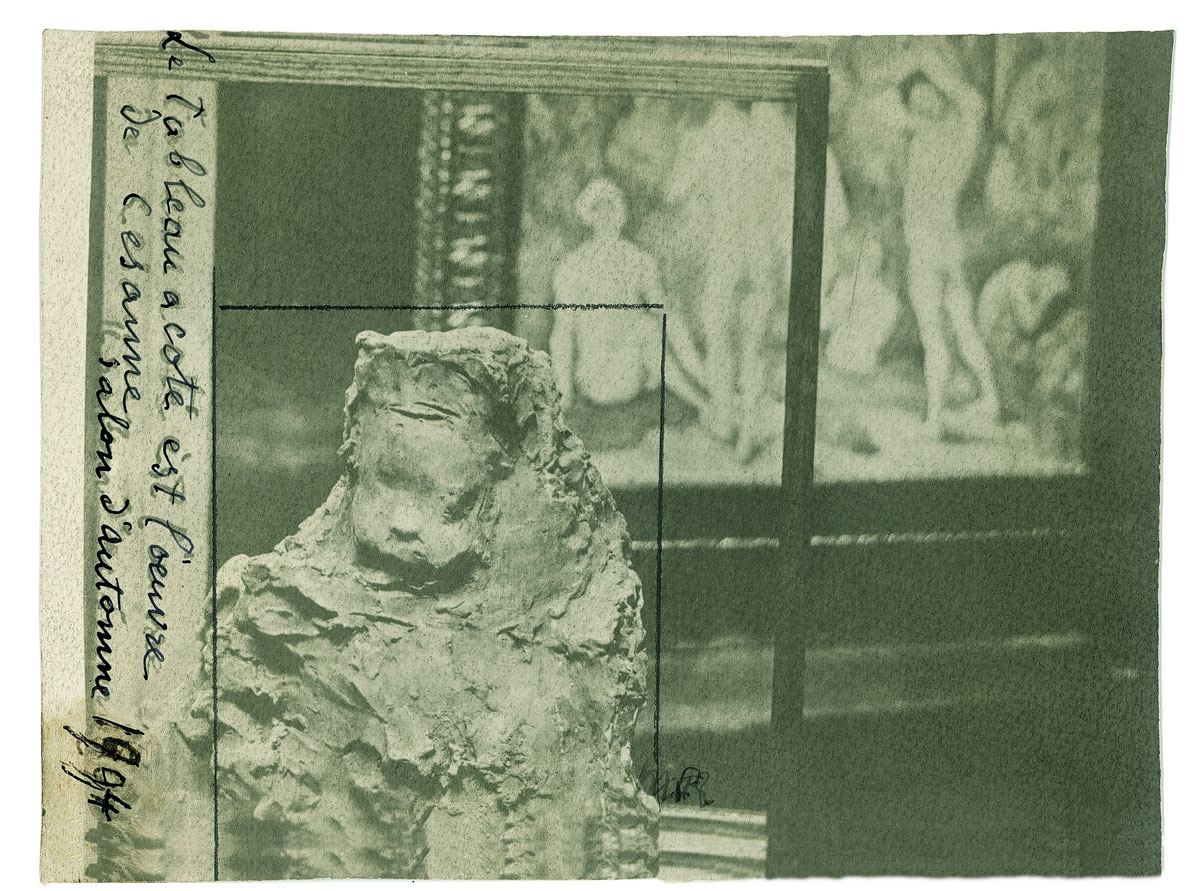
We are delighted that with Adjusted Louise Lawler has put together such an extensive survey of her work for the very first time, a show that covers the early conceptual and performative relics, the so-called ephemera, as well as a wide-ranging selection of photographic works and the latest wall works. Although the greater part of her oeuvre is photographic, it becomes clear that Lawler is not a photographer. She uses the medium as a means to appropriate situations and, in resolute focusing, to let the things which would otherwise remain unarticulated speak for themselves. Her exhibition title, Adjusted, which is to be understood as referring to her large format wallpapers adjusted to fit the given circumstances, is the distant echo of a critical practice fully aware that adjusting is a dialectic process where there are neither winners nor losers, neither conquerors nor conquered.

Louise Lawler’s exhibition Adjusted opens simultaneously with the new presentation of the collection Not Yet Titled. New and Forever at Museum Ludwig, which emphasises the provisional nature of art historical narratives and presentations, colliding with the claim to eternity raised by the institution of the museum. Lawler’s exhibition spans the entire building, intervenes in the contexts of the collection, and spreads itself out, then retreats, or functions plainly and simply as a casual commentary. The reflectivity of her work, its context-specific changeability, presents the provisional as a quality constitutive for art, which in the process makes it clear just how much circumstances determine the way of looking at things.

Excerpt from the Foreword by Philipp Kaiser


Louise Lawler (American, b. 1947) 'Life After 1945 (Hats)' 2006/2007


Louise Lawler (American, b. 1947)
Life After 1945 (Hats)
2006-2007
Cibachrome (mounted on museum box)
27 1/4 x 22 3/4 inches (69.2 x 57.8cm)
© Louise Lawler, Metro Pictures, New York, Sprüth Magers Berlin/London
Andy Warhol Artwork © The Andy Warhol Foundation for the Visual Arts, Inc.


Louise Lawler (American, b. 1947) 'Chandelier' 2001/2007


Louise Lawler (American, b. 1947)
Chandelier
2001-2007
Cibachrome (mounted on museum box)
19 1/4 x 15 1/2 inches (48.9 x 39.4cm)
© Louise Lawler, Metro Pictures, New York, Sprüth Magers Berlin and London

(Lucio Fontana)


Louise Lawler (American, b. 1947) 'Nude' 2002/2003


Louise Lawler (American, b. 1947)
Nude
2002/2003
Cibachrome (museum mounted)
59.5 x 47.5 inches (151.1 x 12.70cm)
© Louise Lawler, Metro Pictures, New York, Sprüth Magers Berlin/London

(Gerhard Richter. Ema (Nude on a Staircase) 1966, 200 x 130cm, Oil on canvas)


Louise Lawler (American, b. 1947) 'Still Life (Napkins)' 2003


Louise Lawler (American, b. 1947)
Still Life (Napkins)
2003
Digital cibachrome on aluminum museum box
19-3/4 x 14-1/4 inches (50.2 x 36.2cm)
© Louise Lawler, Metro Pictures, New York, Sprüth Magers Berlin/London


Louise Lawler (American, b. 1947) 'WAR IS TERROR' 2001/2003 (Julia Margaret Cameron)


Louise Lawler (American, b. 1947)
WAR IS TERROR
2001-2003
Cibachrome (museum mounted)
30 x 25-3/4 inches (76.2 x 65.4cm)
© Louise Lawler, Metro Pictures, New York, Sprüth Magers Berlin/London

(Julia Margaret Cameron)


Louise Lawler (American, b. 1947) 'Monogram' 1984


Louise Lawler (American, b. 1947)
Monogram
1984
Cibachrome, type on wall (sometimes)
39 1/2 x 28 inches (100.3 x 71.1cm)
© Louise Lawler, Metro Pictures, New York, Sprüth Magers Berlin/London

(Jasper Johns)


Louise Lawler (American, b. 1947) 'Portrait' 1982


Louise Lawler (American, b. 1947)
Portrait
1982
Cibachrome
19 x 19 inches (48.3 x 48.3cm)
© Louise Lawler, Metro Pictures, New York, Sprüth Magers Berlin/London


Ludwig Museum of Contemporary Art
1095 Budapest Komor Marcell Street 1
Hungary 06 1 555-3444

Opening hours:
Tuesday – Sunday: 10.00 – 18.00
Closed on Mondays

Ludwig Museum of Contemporary Art website

LIKE ART BLART ON FACEBOOK

Back to top

Exhibition: ‘Everyday Epiphanies: Photography and Daily Life Since 1969’ at The Metropolitan Museum of Art, New York

Exhibition dates: 25th June 2013 – 26th January 2014


John Baldessari (American, 1931-2020) 'Hands Framing New York Harbor' 1971


John Baldessari (American, 1931-2020)
Hands Framing New York Harbor
1971
Gelatin silver print
25.4 x 18cm (10 x 7 1/16 in.)
Purchase, The Horace W. Goldsmith Foundation Gift, through Joyce and Robert Menschel, 1992
Shunk-Kender © Roy Lichtenstein Foundation


Epiphany: a moment in which you suddenly see or understand something in a new or very clear way.

Stephen Shore’s photographs seem the most insightful epiphanies in this posting, picturing as they do “what he ate, the rest stops he visited, the people he met.” In other words, the wor(l)d as he saw it.

Marcus

Many thankx to The Metropolitan Museum of Art, New York for allowing me to publish the photographs in the posting. Please click on the photographs for a larger version of the image.


“With the unspoken rules that exhibitions in the Met’s contemporary photography gallery must be drawn exclusively from the museum’s permanent collection and be organised as surveys of the period from the late 1960s to the present, it’s no wonder that these long running shows are often so broad that their themes seem to dissolve into edited collections of everything. The newest selection of images is tied up under the umbrella of “everyday epiphanies”, a construct that implies a delight in the ordinary, the quotidian, or the familiar, but in fact, reaches outward beyond these routine boundaries to works that have a wide variety of conceptual underpinnings and points of view. With some effort, it’s possible to follow the logic of why each piece has been included here, but when seen together, the diversity of the works on view diminishes the show’s ability to deliver any durable insights… The works that function best inside this theme are those that capture moments of unexpected, elemental elegance, often as a result of the way the camera sees the world.”


Loring Knoblauch. “Everyday Epiphanies: Photography and Daily Life Since 1969 @Met,” on the Collector Daily website August 14, 2013 [Online] Cited 20/01/2014


Martha Rosler (American, b. 1943) 'Semiotics of the Kitchen' 1975 (still)


Martha Rosler (American, b. 1943)
Semiotics of the Kitchen (still)
1975
Video
Purchase, Henry Nias Foundation Inc. Gift, 2010
Courtesy Electronic Arts Intermix (EAI), New York


Jan Groover (American, 1943-2012) 'Untitled' 1980


Jan Groover (American, 1943-2012)
Untitled
1980
Platinum print
19 x 24cm (7 1/2 x 9 7/16 in.)
David Hunter McAlpin Fund, 1981
The Metropolitan Museum of Art
© Jan Groover


Carrie Mae Weems (American, b. 1953) 'Untitled (Man Smoking)' 1990


Carrie Mae Weems (American, b. 1953)
Untitled (Man Smoking)
1990
From the Kitchen Table Series
Gelatin silver print
Image: 71.8 × 71.8cm (28 1/4 × 28 1/4 in.)
Courtesy of the artist and Jack Shainman Gallery, New York


Erica Baum (American, b. 1961)  'Buzzard' 2009


Erica Baum (American, b. 1961) 
Buzzard
2009
Inkjet print
22.9 x 22.9cm (9 x 9 in.)
Purchase, Marian and James H. Cohen Gift, in memory of their son, Michael Harrison Cohen, 2012
The Metropolitan Museum of Art
© Erica Baum


Since the birth of photography in 1839, artists have used the medium to explore subjects close to home – the quotidian, intimate, and overlooked aspects of everyday existence. Everyday Epiphanies: Photography and Daily Life Since 1969, an exhibition of 40 works at The Metropolitan Museum of Art, presents photographs and videos from the last four decades that examine these ordinary moments. The exhibition features photographs by a wide range of artists including John Baldessari, Philip-Lorca diCorcia, Fischli & Weiss, Jan Groover, Robert Gober, Nan Goldin, Elizabeth McAlpine, Gabriel Orozco, David Salle, Robert Smithson, Stephen Shore, and William Wegman, as well as videos by Martha Rosler, Ilene Segalove, Brandon Lttu, and Svetlana and Igor Kopytiansky.

Daily life, as it had been lived in Western Europe and America since the 1950s, was called into question in the late 1960s by a counterculture that rebelled against the prior “cookie-cutter” lifestyle. Everything from feminism to psychedelic drugs to space exploration suggested a nearly infinite array of alternative ways to perceive reality; and artists and thinkers in the ’60s and ’70s proposed a “revolution of everyday life.” A four-part work by David Salle from 1973 exemplifies the artist’s flair for piquant juxtaposition at an early stage in his career. In depicting four women in bathrobes standing before their respective kitchen windows in contemplative states, Salle goes against the grain of feminist orthodoxy – revealing a penchant for courting controversy that he would expand in his later paintings; pasted underneath the black-and-white images of the women are brightly coloured labels of their preferred coffee brands, with the arbitrarily differentiated brands signifying an insufficient substitute for true freedom in the postwar era. Martha Rosler’s bracingly caustic video Semiotics of the Kitchen and Ilene Segalove’s wistfully funny The Mom Tapes complete a trio of works investigating the role of women in a rapidly changing society.

In the 1980s, artists’ renewed interest in conventions of narrative and genre led to often highly staged or produced images that hint at how even our deepest feelings are mediated by the images that surround us. In the wake of the economic crash of the late 1980s, photographers focused increasingly on what was swept under the carpet – the repressed and the taboo. Sally Mann’s Jesse at Five (1987) depicts the artist’s daughter as the central figure, half-dressed, dolled-up, and posed like an adult. Mann often created these frank images of her children and caused some controversy during the culture wars of the late 1980s and early 1990s. However, her photographs of her children are remarkable for the artist’s assured handling of a potentially explosive subject with equanimity and grace.

During the following decade, artists created photographs and videos that confused the real and the imaginary in ways that almost eerily predicted the epistemological quandaries posed by the digital revolution. Meanwhile, a trio of recently made works by Erica Baum, Elizabeth McAlpine, and Brandon Lattu combine process and product in novel ways to comment obliquely on the shifting sands of how we come to know the world in our digital age.

Press release from The Metropolitan Museum of Art website


Jean-Marc Bustamante (French, b. 1952) 'Untitled' 1997


Jean-Marc Bustamante (French, b. 1952) 
Untitled
1997
Chromogenic print
40 x 59cm (15 3/4 x 23 1/4 in.)
Purchase, The Horace W. Goldsmith Foundation Gift, through Joyce and Robert  Menschel, 1999
The Metropolitan Museum of Art
© Jean-Marc Bustamante


Nan Goldin (American, b. 1953) 'Heart-Shaped Bruise, NYC' 1980


Nan Goldin (American, b. 1953)
Heart-Shaped Bruise, NYC
1980
Silver dye bleach print
50.8 x 60.96cm (20 x 24 in.)
Purchase, The Horace W. Goldsmith Foundation Gift, through Joyce and Robert  Menschel, 2001
The Metropolitan Museum of Art
© Nan Goldin, Courtesy Matthew Marks Gallery, New York


Larry Sultan (American, 1946-2009) 'My Father Reading the Newspaper' 1989


Larry Sultan (American, 1946-2009)
My Father Reading the Newspaper
1989
Chromogenic print
Stewart S. MacDermott Fund, 1991
© Larry Sultan


Gabriel Orozco (Mexican, b. 1962) 'Caja vacia de zapatos' (Empty shoebox) 1993


Gabriel Orozco (Mexican, b. 1962)
Caja vacia de zapatos (Empty shoebox)
1993
Silver dye bleach print
31.8 x 46.4cm (12 1/2 x 18 1/4 in.)
Gift of the artist, 1995
The Metropolitan Museum of Art
© Gabriel Orozco


Gabriel Orozco (Mexican born Jalapa Enriquez, b. 1962) 'Vitral' 1998


Gabriel Orozco (Mexican, born Jalapa Enriquez, b. 1962)
Vitral
1998
Silver dye bleach print
40.6 x 50.8cm (16 x 20 in.)
Purchase, The Judith Rothschild Foundation Gift, 1999
© Gabriel Orozco

.

Stephen Shore (American, b. 1947) 'Oklahoma City, Oklahoma' July 9, 1972


Stephen Shore (American, b. 1947)
Oklahoma City, Oklahoma
July 9, 1972
From the series American Surfaces
Chromogenic print
Gift of Weston J. Naef, 1974
© Stephen Shore


As a teenager in the 1960s, Shore was one of two in-house photographers at Andy Warhol’s Factory. During his first cross-country photographic road trip, Shore adopted the catholic approach of his mentor, accepting into his art everything that came along – what he ate, the rest stops he visited, the people he met. He then processed his colour film as “drugstore prints”, the imprecise, colloquial term for the kind of amateur non-specialised snapshots that filled family photo albums. The entire series of 229 prints was shown for the first time in 1974 and acquired by the Metropolitan from that exhibition.


Stephen Shore (American, b. 1947) 'West Palm Beach, Florida' January 1973


Stephen Shore (American, b. 1947)
West Palm Beach, Florida
January 1973
From the series American Surfaces
Chromogenic print
Gift of Weston J. Naef, 1974
© Stephen Shore


Stephen Shore (American, b. 1947) 'Clovis, New Mexico' 1974


Stephen Shore (American, b. 1947)
Clovis, New Mexico
1974
From the series American Surfaces
Chromogenic print
Gift of Weston J. Naef, Jr., 1974
The Metropolitan Museum of Art
© Stephen Shore


The Metropolitan Museum of Art
1000 Fifth Avenue at 82nd Street
New York, New York 10028-0198
Phone: 212-535-7710

Opening hours:
Sunday – Tuesday and Thursday: 10am – 5pm
Friday and Saturday: 10am – 9pm
Closed Wednesday

The Metropolitan Museum of Art website

LIKE ART BLART ON FACEBOOK

Back to top