
Exhibition dates: 25th October, 2009 – 14th March, 2010
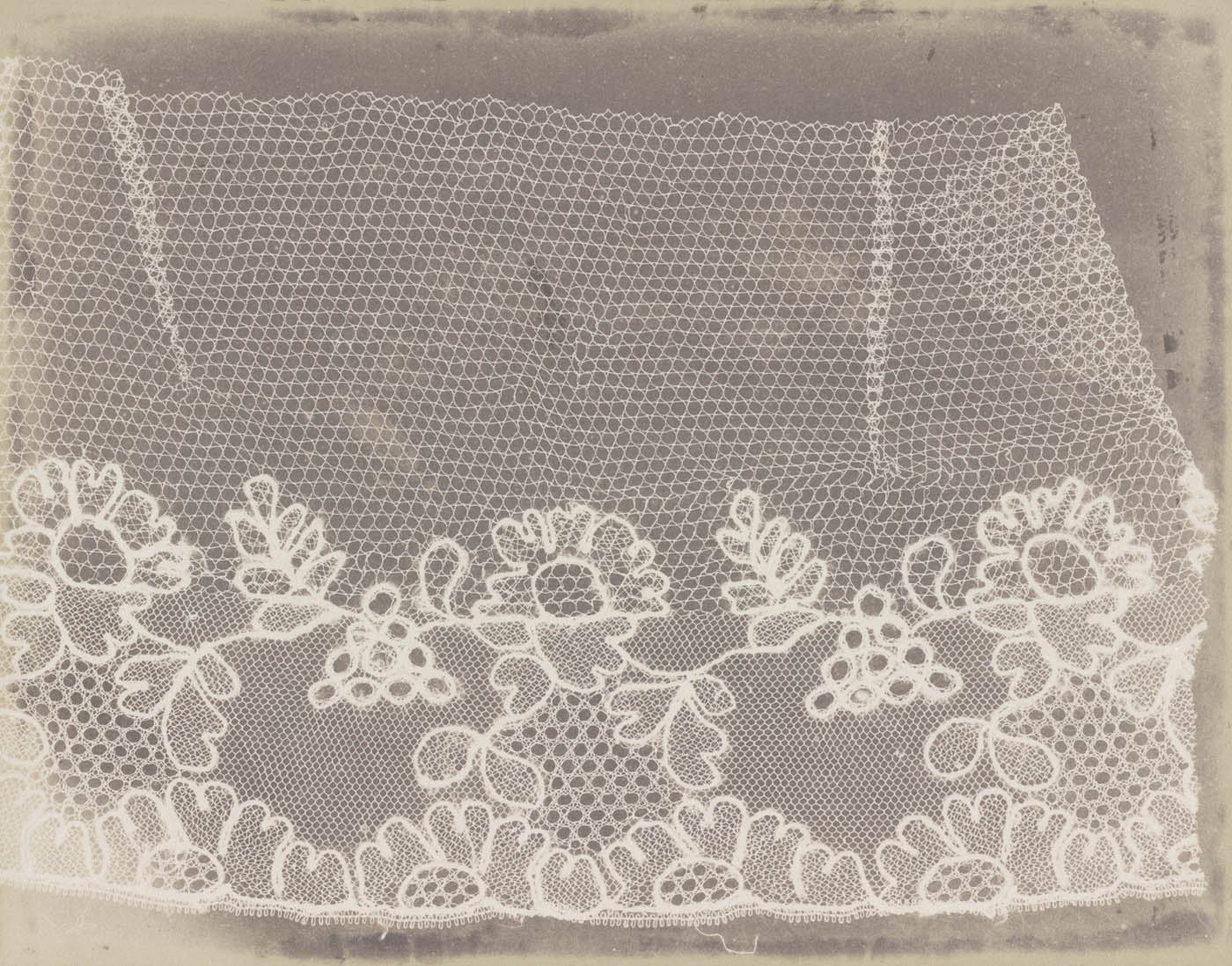
William Henry Fox Talbot (British, 1800-1877)
Lace
1839-1844
Photogenic drawing (salted paper print)
Sheet (trimmed to image): 17.1 x 22cm (6 3/4 x 8 11/16 in.)
Support: 24.8 x 31.1cm (9 3/4 x 12 1/4 in.)
National Gallery of Art, Washington
Patrons’ Permanent Fund
Public domain
Many thankx to Kate Afanasyeva and the National Gallery of Art for allowing me to reproduce the photographs from the exhibition below. Please click on the photographs for a larger version of the image.
Dr Marcus Bunyan

Anna Atkins (British, 1799-1871)
Ferns, Specimen of Cyanotype
1840s
cyanotype
National Gallery of Art, Washington
R.K. Mellon Family Foundation Fund

Albert Sands Southworth and Josiah Johnson Hawes
The Letter
c. 1850
daguerreotype
National Gallery of Art, Washington
Patrons’ Permanent Fund
Southworth and Hawes’ aspirations for their portraits went far beyond those of the average photographer of their day. Whereas most daguerreotypists, simply concerned with rendering a likeness, used stock poses, painted backdrops, and even head restraints to firmly fix their subjects, Southworth and Hawes were celebrated not just for their technical expertise, but also for their penetrating studies, innovative style, and creative use of natural light. They sought to elevate their subjects “far beyond common nature” and embody their “genius and spirit of poetry,” as Southworth wrote in 1871. “What is to be done is obliged to be done quickly. The whole character of the sitter is to be read at first sight; the whole likeness, as it shall appear when finished, is to be seen at first, in each and all its details, and in their unity and combination.”2
Among Southworth and Hawes’ most accomplished studies, The Letter is exceptional in its composition and mood. Most American daguerreotype portraits made in the 1840s and 1850s were frontal, bust-length studies of single figures who rarely show any kind of facial expression because of the often long exposure times. The Letter, however, is a highly evocative study. With its carefully constructed composition and tight pyramidal structure, it presents two thoughtful young women contemplating a letter. Through their posture and expression, these women seem to gain not only physical support from each other, but also emotional strength. Although the identity of the women is unknown, as is the content of the letter, this large and distinguished daguerreotype reflects Southworth and Hawes’ aspiration to capture “the life, the feeling, the mind, and the soul” of their subjects.3
(Text by Sarah Greenough, published in the National Gallery of Art exhibition catalogue, Art for the Nation, 2000)
Text from the National Gallery of Art website
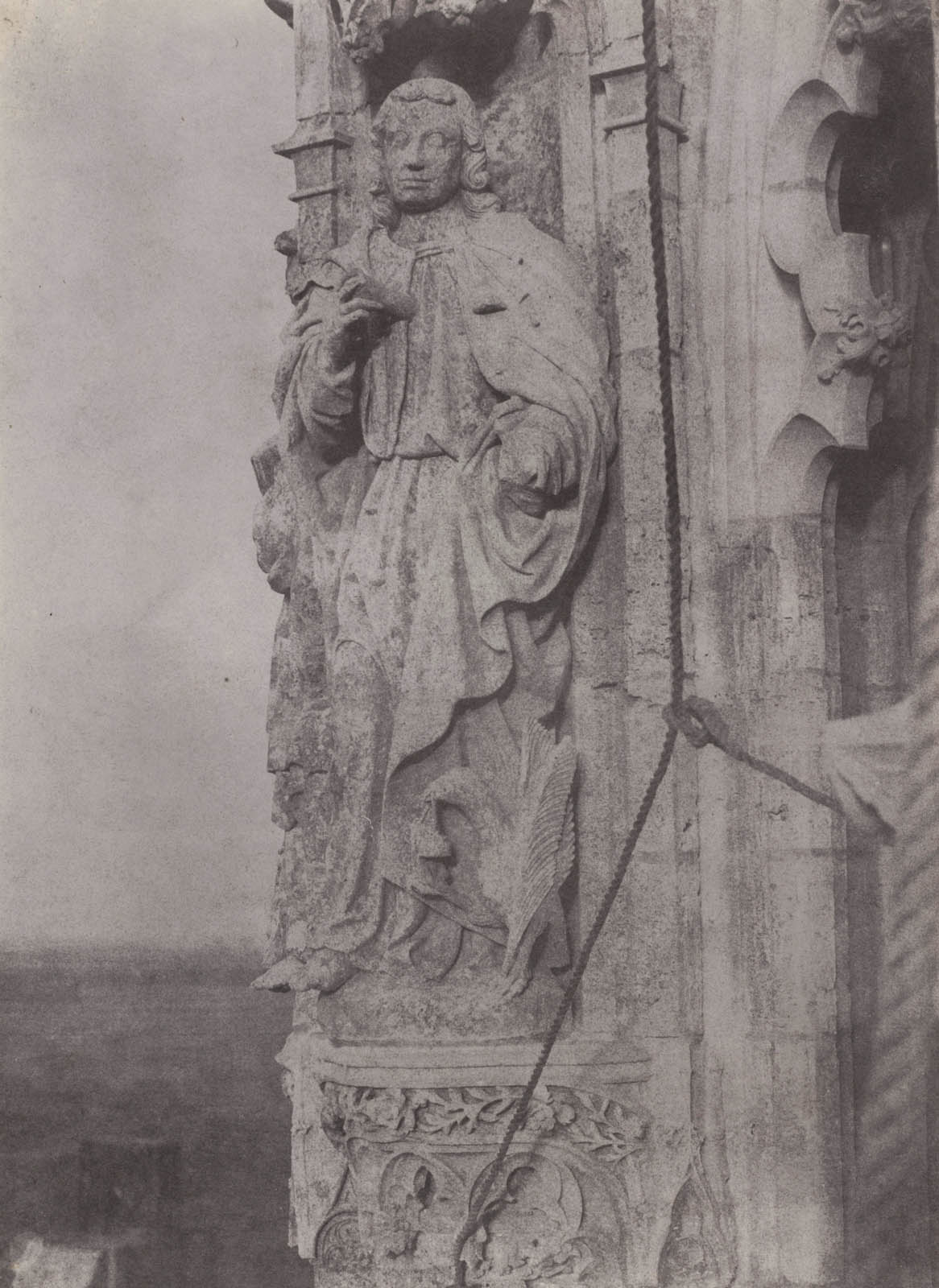
Charles Nègre (French, 1820-1880)
Saint John the Evangelist, Chartres Cathedral
c. 1854
Salted paper print from a paper negative
National Gallery of Art, Washington
Eugene L. and Marie-Louise Garbaty Fund, Pepita Milmore Memorial Fund and New Century Fund
Public domain
In 1851 the French government’s Commission des Monuments Historiques selected five photographers to document architectural treasures throughout the country. Nègre was not included, perhaps because he was a member of the opposition party, but he took it upon himself to photograph extensively in Marseilles, Arles, Avignon, and Aix-en-Provence in the early 1850s, and in 1854 he made many photographs of Chartres Cathedral.
Nègre applied his growing understanding of light, shadow, line, and form in Saint John the Evangelist, Chartres Cathedral, and the photograph beautifully illustrates his willingness to sacrifice “a few details,” as he wrote, to capture “an imposing effect.” In addition, unlike photographers associated with the Commission des Monuments Historiques, who were asked to provide general studies of a building’s façade, Nègre was free to explore more unusual views. The statue of Saint John the Evangelist is situated high in the north spire of Chartres, several feet above a nearby balcony. Although difficult to see and even harder for Nègre to record (he most likely perched his camera on a platform), the view in his photograph succinctly captured what he called the cathedral’s “real character” and “preserved the poetic charm that surrounded it.”
Text from the National Gallery of Art website
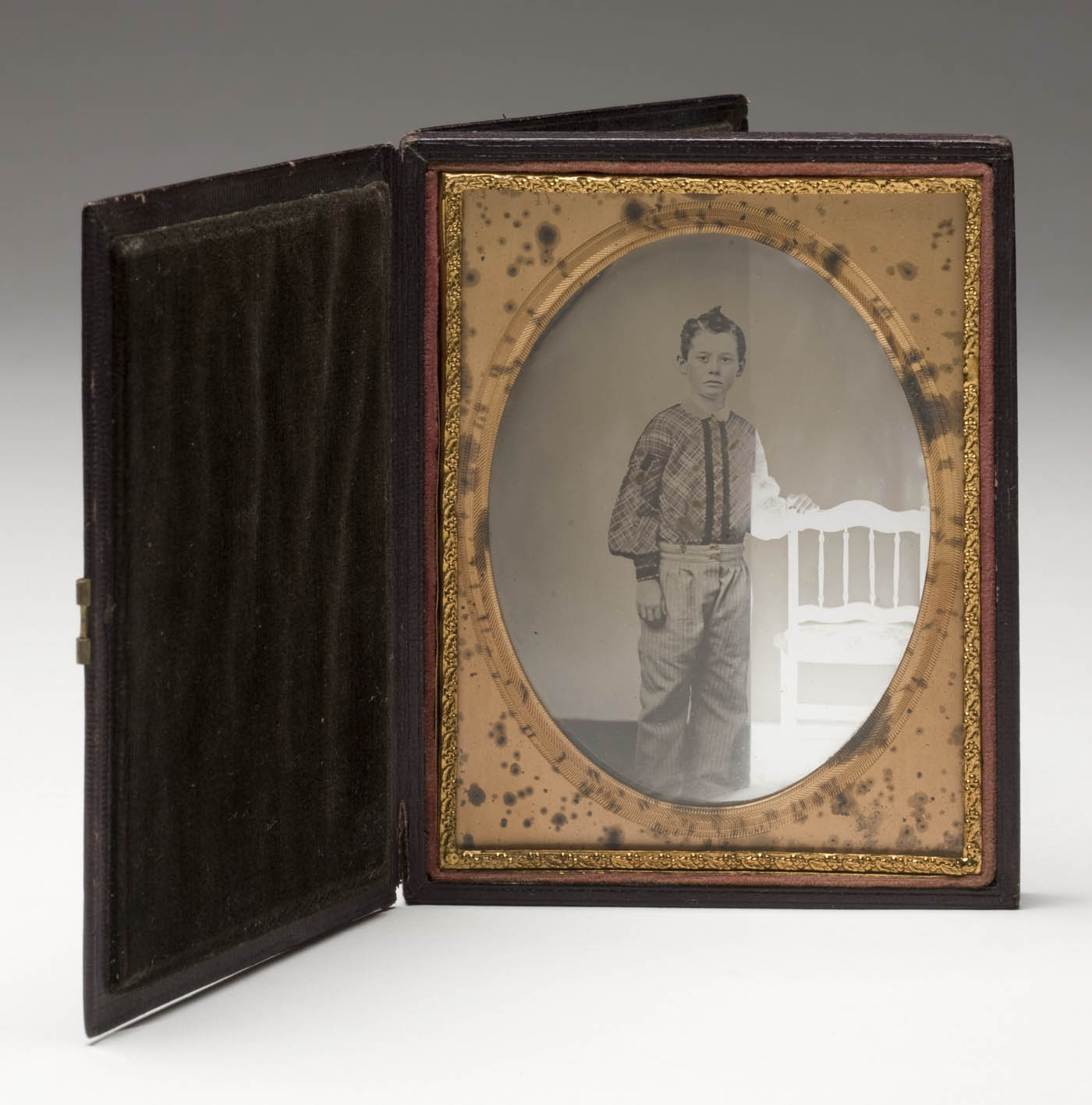
Unknown photographer (American 19th Century)
George E. Lane, Jr.
c. 1855
Ambrotype
National Gallery of Art, Washington
Gift of Kathleen, Melissa, and Pamela Stegeman
Public domain
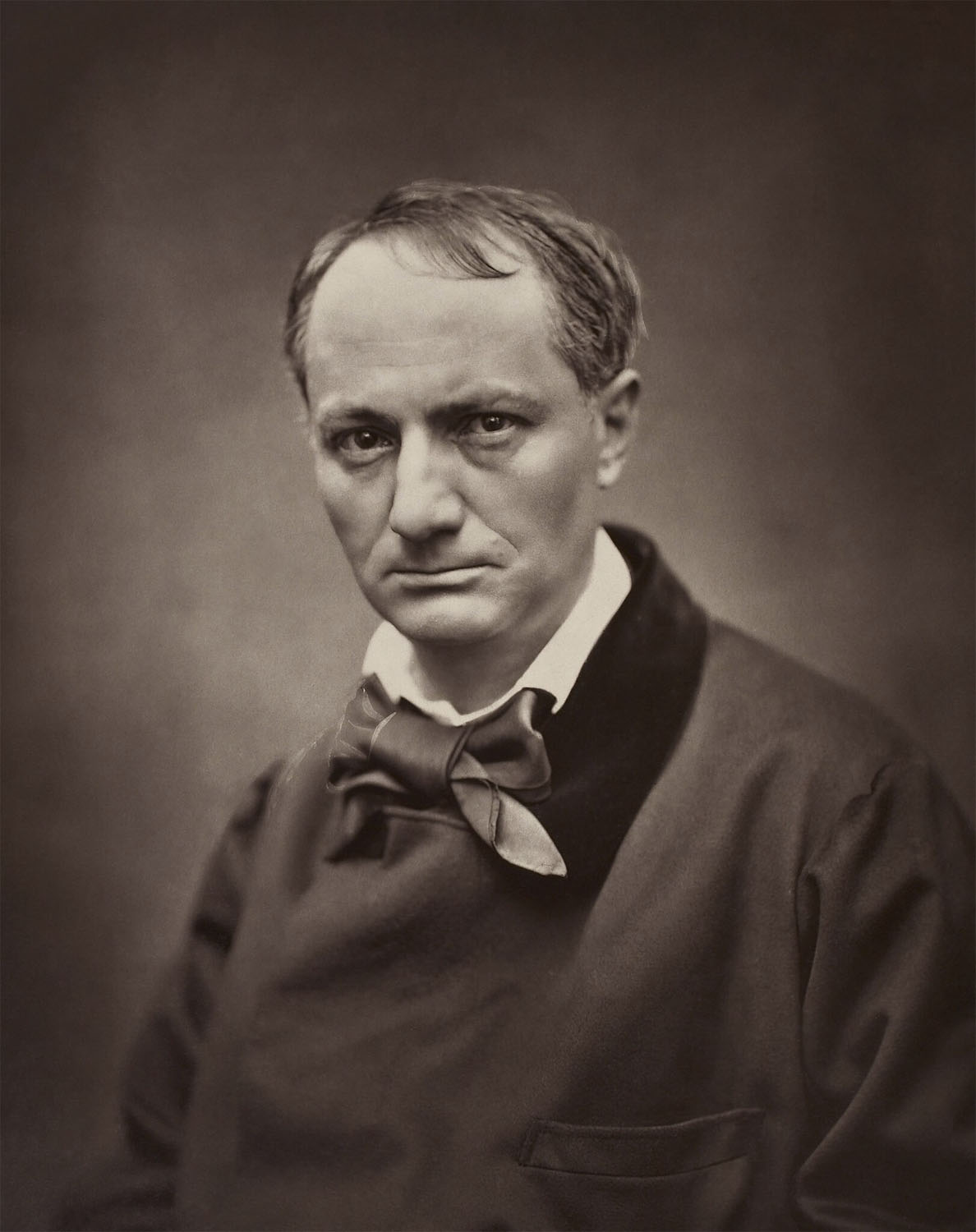
Étienne Carjat (French, 1828-1906)
Charles Baudelaire
1861, printed 1877
Woodburytype
National Gallery of Art, Washington
Gift of Jacob Kainen
Public domain
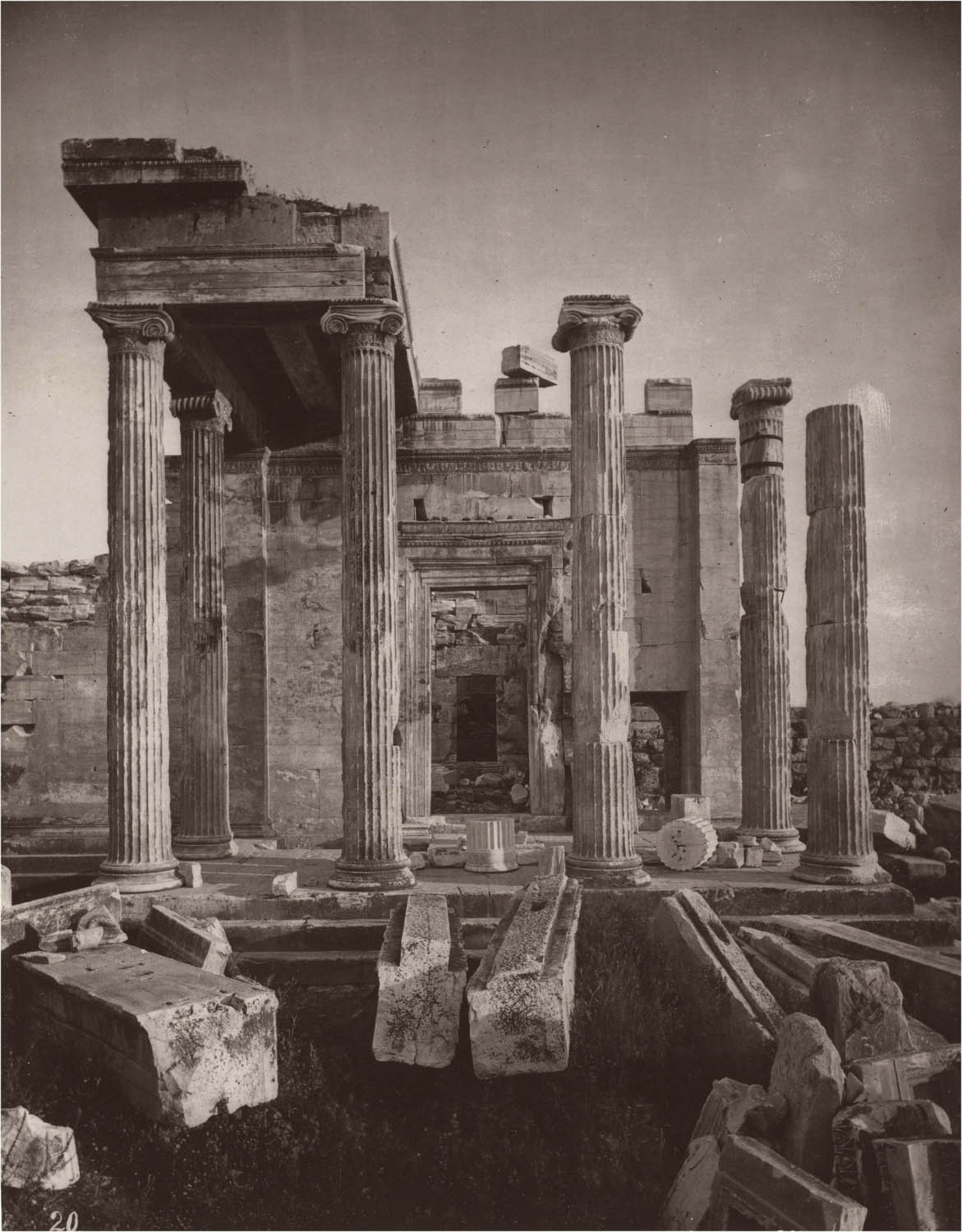
William James Stillman (American, 1828-1901)
The Acropolis of Athens
1869/1870
Carbon print
National Gallery of Art, Washington
Horace W. Goldsmith Foundation through Robert and Joyce Menschel
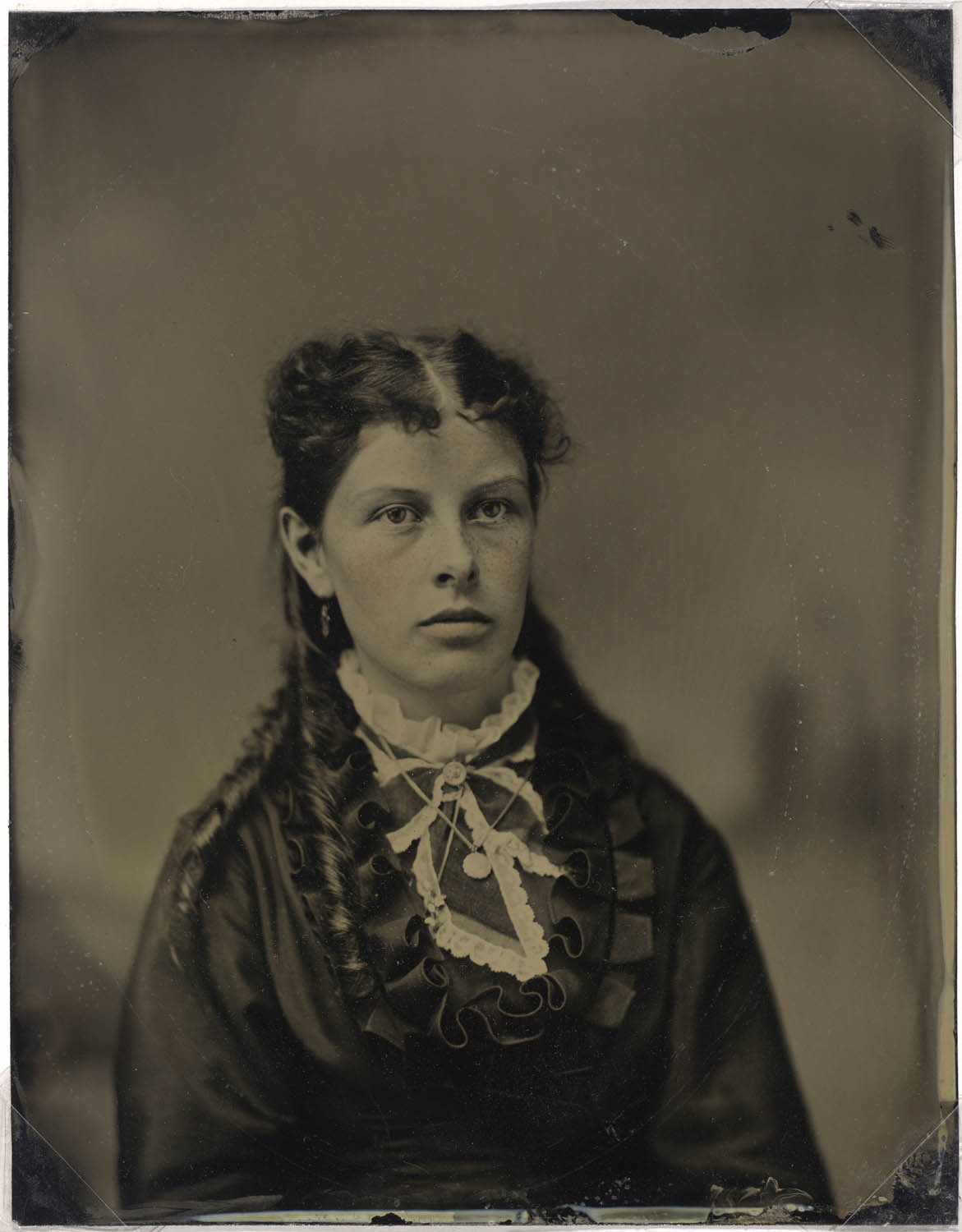
J.G. Ellinwood (American, 1844-1924)
Portrait of a Woman
c. 1870
Tintype, hand-coloured
National Gallery of Art, Washington
Mary and Dan Solomon Fund
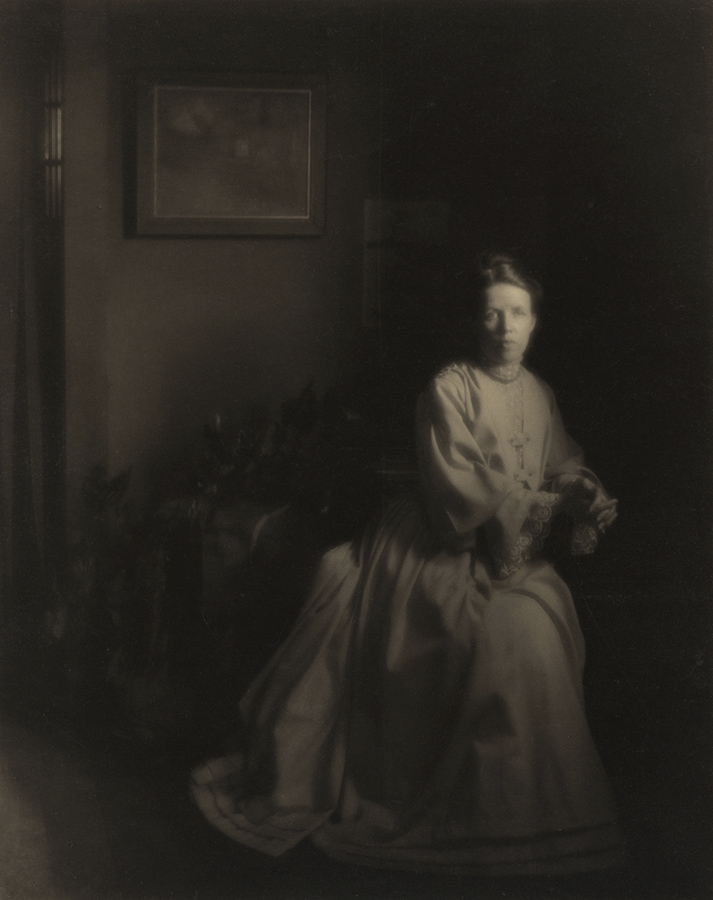
Clarence White (American, 1871-1925)
Mrs. White – In the Studio
1907
platinum print
National Gallery of Art, Washington
Horace W. Goldsmith Foundation through Robert and Joyce Menschel and R.K. Mellon Family Foundation Fund

Karl Struss (American, 1886-1981)
Columbia University, Night
1910
Gum dichromate over platinum print
Image: 24.1 × 19.9cm (9 1/2 × 7 13/16 in.)
National Gallery of Art, Washington
Horace W. Goldsmith Foundation through Robert and Joyce Menschel

Laura Gilpin (American, 1891-1979)
Ghost Rock, Colorado Springs
1919
Platinum print
24.2 x 19.1cm (9 1/2 x 7 1/2 in.)
National Gallery of Art, Washington
Marvin Breckinridge Patterson Fund
© 1979 Amon Carter Museum, Fort Worth, Texas

László Moholy-Nagy (Hungarian, 1895-1946)
Untitled (Positive)
c. 1922-1924
gelatin silver print
National Gallery of Art, Washington
Gift of The Circle of the National Gallery of Art

László Moholy-Nagy (Hungarian, 1895-1946)
Untitled
c. 1922-1924
gelatin silver print
National Gallery of Art, Washington
New Century Fund
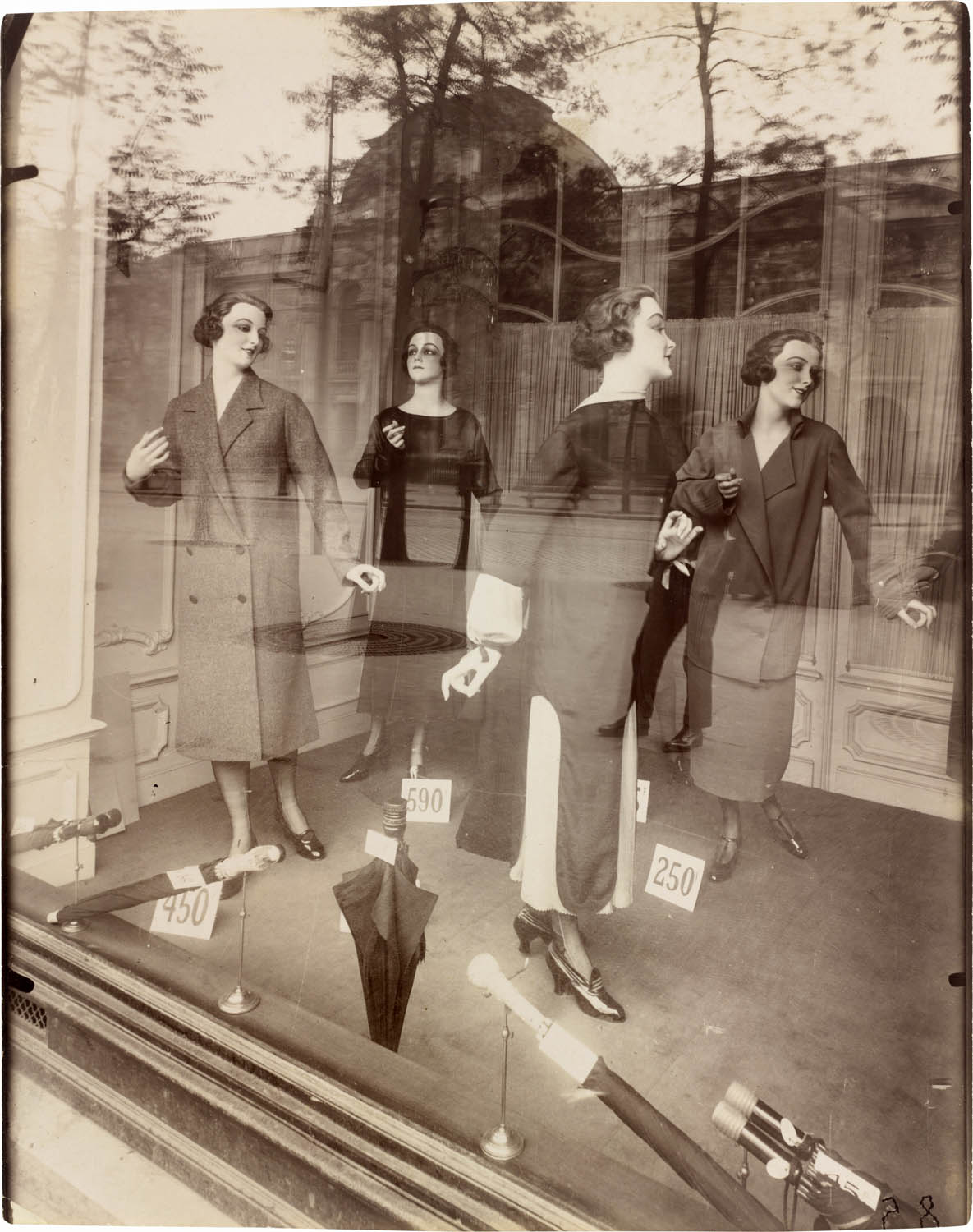
Eugène Atget (French, 1857-1927)
Magasin, Avenue des Gobelins
1925
gelatin silver print, printed-out
National Gallery of Art, Washington
Patrons’ Permanent Fund
Public domain

Aleksandr Rodchenko (Russian, 1891-1956)
Pioneer with a Bugle
1930
Gelatin silver print
National Gallery of Art, Washington
Patrons’ Permanent Fund

Sid Grossman (American, 1913-1955)
San Gennaro Festival, New York City
1948
gelatin silver print
National Gallery of Art, Washington
Anonymous Gift
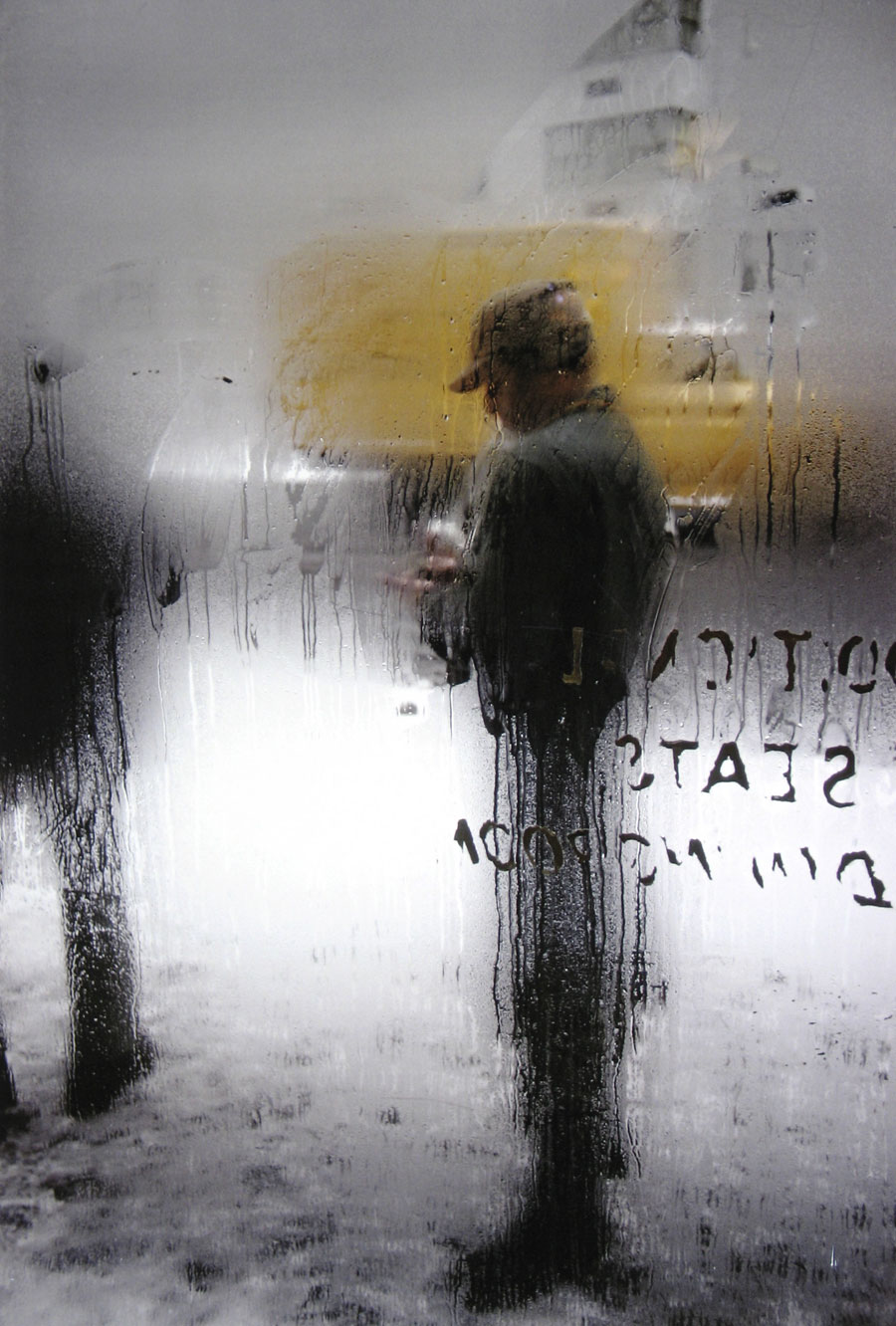
Saul Leiter (American, 1923-2013)
Snow
1960, printed 2005
Chromogenic colour print
National Gallery of Art, Washington
Gift of Saul Leiter

Diane Arbus (American, 1923-1971)
A Young Man in Curlers at Home on West 20th Street, N.Y.C., 1966
1966
Gelatin silver print
National Gallery of Art, Washington
Gift of the Collectors Committee
The extraordinary range and complexity of the photographic process is explored, from the origins of the medium in the 1840s up to the advent of digital photography at the end of the 20th century, in a comprehensive exhibition and its accompanying guidebook at the National Gallery of Art, Washington. On view in the West Building, from October 25, 2009 through March 14, 2010, In the Darkroom: Photographic Processes Before the Digital Age chronicles the major technological developments in the 170-year history of photography and presents the virtuosity of the medium’s practitioners. Drawn from the Gallery’s permanent collection are some 90 photographs – ranging from William Henry Fox Talbot’s images of the 1840s to Andy Warhol’s Polaroid prints of the 1980s.
“In the Darkroom and the accompanying guidebook provide a valuable overview of the medium as well as an introduction to the most commonly used photographic processes from its earliest days,” said Earl A. Powell III, director, National Gallery of Art.
In the Darkroom
Organised chronologically, the exhibition opens with Lace (1839-1844), a photogenic drawing by William Henry Fox Talbot. Made without the aid of a camera, the image was produced by placing a swath of lace onto a sheet of sensitised paper and then exposing it to light to yield a tonally reversed image.
Talbot’s greatest achievement – the invention of the first negative-positive photographic process – is also celebrated in this section with paper negatives by Charles Nègre and Baron Louis-Adolphe Humbert de Molard as well as salted paper prints made from paper negatives by Nègre, partners David Octavius Hill and Robert Adamson, and others.
The daguerreotype, the first publicly introduced photographic process and the most popular form of photography during the medium’s first decade, is represented by a selection of British and American works, including an exquisite large-plate work by the American photographers Albert Sands Southworth and Josiah Johnson Hawes (see photograph above). By the mid-1850s, the daguerreotype’s popularity was eclipsed by two new processes, the ambrotype and the tintype. These portable photographs on glass or metal were relatively inexpensive to produce and were especially popular for portraiture.
The year 1851 marked a turning point in photographic history with the introduction of the collodion negative on glass and the albumen print process. Most often paired together, this negative-print combination yielded lustrous prints with a subtle gradation of tones from dark to light and became the most common form of photography in the 19th century, seen here in works by Julia Margaret Cameron, Roger Fenton, and Gustave Le Gray.
Near the turn of the 20th century, a number of new, complex print processes emerged, such as platinum and palladium, gum dichromate, and bromoil. Often requiring significant manipulation by the hand of the artist, these processes were favoured by photographers such as Gertrude Käsebier, Alfred Stieglitz, and Edward Weston.
One of the most significant developments of the late 19th century was the introduction of gelatin into photographic processes, which led to the invention of the film negative and the gelatin silver print. These became the standard for 20th-century black-and-white photography. A chronological selection of gelatin silver prints, including a contact print made by André Kertész in 1912; a grainy, blurred image of Little Italy’s San Gennaro festival at night by Sid Grossman from 1948 (see photograph above); and a coolly precise industrial landscape by Frank Gohlke from 1975, reveals how the introduction of the film negative and changes in the gelatin silver print process profoundly shaped the direction of modern photography. This section also explores the development of ink-based, photomechanical processes such as photogravure, Woodburytype, and halftone that enabled the large-scale, high-quality reproduction of photographs in books and magazines.
The final section of the exhibition explores the rise of colour photography in the 20th century. Although the introduction of chromogenic colour processes made colour photography commercially viable by the 1930s, it was not widely employed by artists until the 1970s. The exhibition celebrates the pioneers of colour photography, including Harry Callahan and William Eggleston, who made exceptional work using the complicated dye transfer process. The exhibition also explores the range of processes developed by the Polaroid Corporation that provided instant gratification to the user, from Andy Warhol’s small SX-70 prints to the large-scale Polaroid prints represented by the work of contemporary photographer David Levinthal.
Press release from the National Gallery of Art website [Online] Cited 15/02/2010 no longer available online
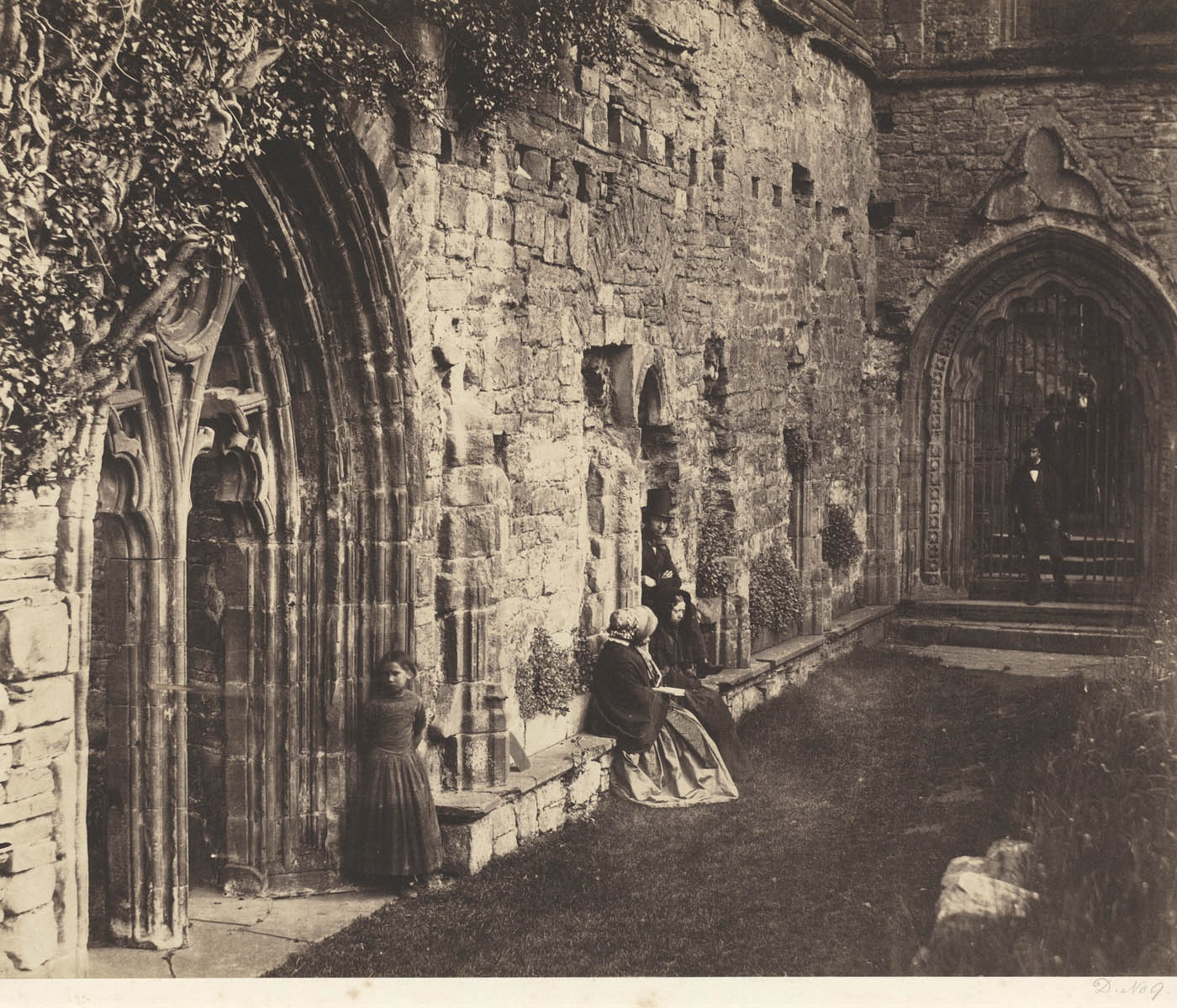
Roger Fenton (British, 1819-1869)
The Cloisters, Tintern Abbey
1854
Salted paper print from a collodion negative
18.3 x 22.1cm (7 3/16 x 8 11/16 in.)
National Gallery of Art, Washington
Horace W. Goldsmith Foundation through Robert and Joyce Menschel
Public domain
Although Roger Fenton’s photographic career lasted for only 11 years, he exerted a profound influence on the medium. Trained as a lawyer, he began to paint in the early 1840s, studying in Paris with Michel-Martin Drölling and later in London with Charles Lucy. But in 1851 he took up photography and produced a distinguished and varied body of work. He was a pivotal figure in the formation of the Photographic Society (later known as the Royal Photographic Society), garnering support from Queen Victoria and Prince Albert. He is best known for his 1855 photographs made during the Crimean War, among the first to document war. But he also made ambitious studies of English cathedrals, country houses, and landscapes as well as portraits of the royal family, a series of still lifes, and studies of figures in Asian costume.
When Fenton first began to make photographs, he generally posed figures in a fairly stiff, even anecdotal manner. But in 1854 he began to use figures to create a sense of tension at once intriguing and compelling. The Cloisters, Tintern Abbey shows this more dynamic approach. Fenton placed people in three groups, not interacting with one another but engaging in silent and solitary dialogue with their decaying surroundings. Tintern Abbey had, of course, inspired many artists and poets to reflect on both “the life of things” – as William Wordsworth wrote in his 1798 poem, “Lines Composed a Few Miles above Tintern Abbey” – and on the transitory nature of life itself.
Text from the National Gallery of Art website
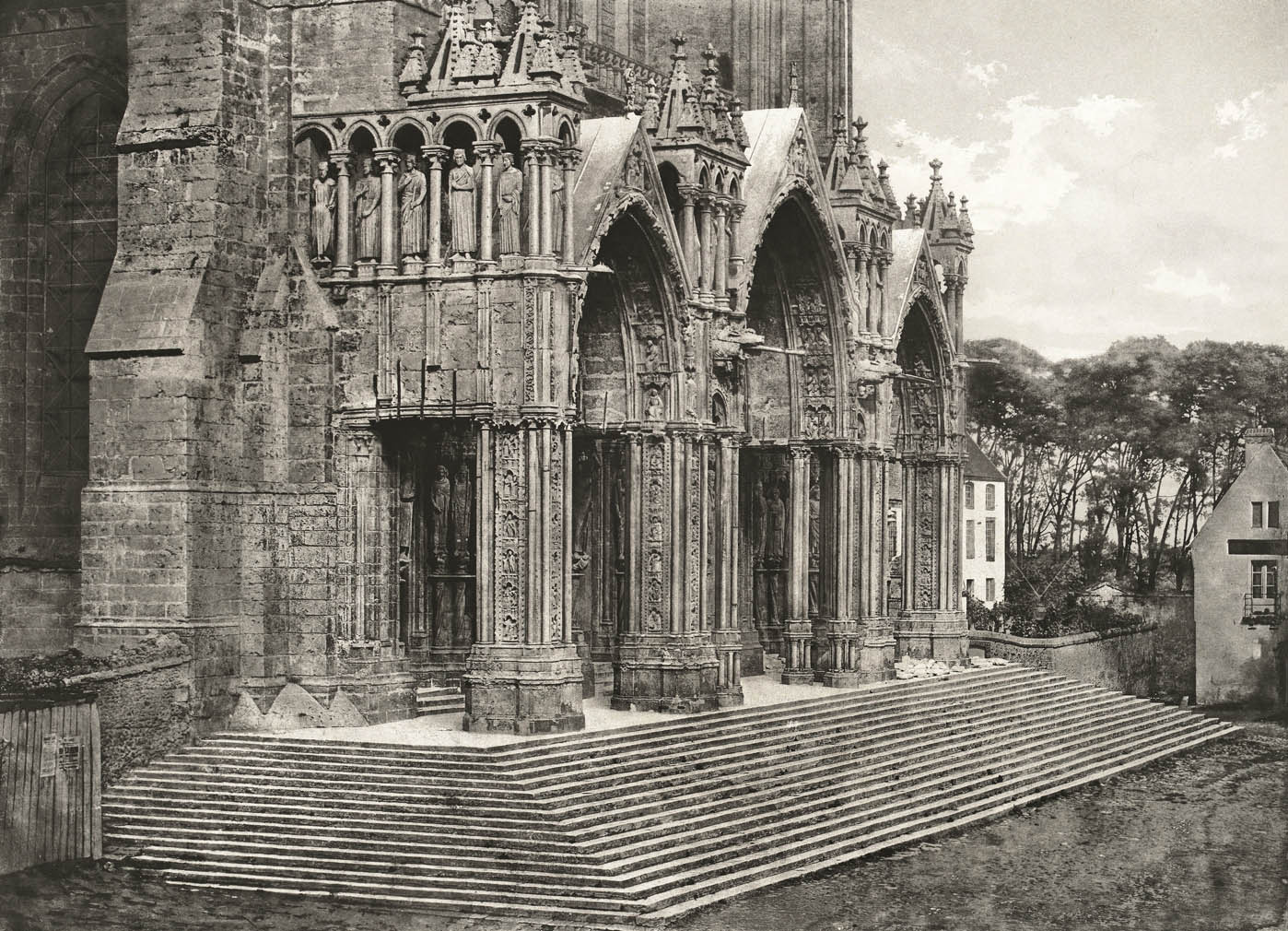
Charles Nègre (French, 1820-1880)
Cathédrale de Chartres – Portique du Midi XIIe Siècle (Chartres Cathedral, South Portal, 12th Century)
c. 1854, printed c. 1857
photogravure
National Gallery of Art, Washington
William and Sarah Walton Fund

Roger Fenton (British, 1819-1869)
Fruit and Flowers
1860
Albumen print from a collodion negative
National Gallery of Art, Washington
Paul Mellon Fund
public domain
In the summer of 1860 Fenton made his most deliberate and exacting photographs to date: a series of still lifes. Although the subject obviously had its roots in painting, his densely packed compositions are far removed from the renditions of everyday life by the Dutch masters. Instead, Fenton extravagantly piled luscious fruits and intricately patterned flowers on top of one another and pushed them to the front of his composition so that they seem almost ready to tumble out of the photograph into the viewer’s space. It is that very immediacy – the precarious composition, the lush sensuousness of the objects, and our knowledge of their imminent decay – that makes these photographs so striking.
Text from the National Gallery of Art website

Gustave Le Gray (French, 1820-1884)
Cavalry Maneuvers behind barrier, Camp de Châlons
1857
Albumen silver print from glass negative
National Gallery of Art, Washington
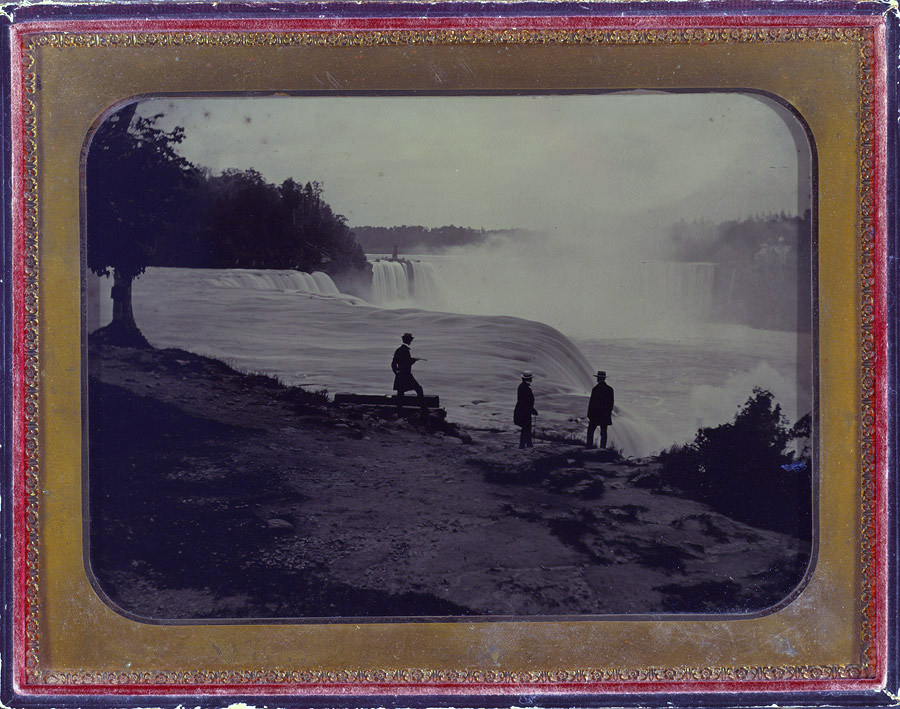
Platt D. Babbitt (American, 1822-1879)
Niagara Falls
c. 1860
Ambrotype
National Gallery of Art, Washington
Vital Projects Fund

Alfred Stieglitz (American, 1864-1946)
The Terminal
1893, printed 1920s/1930s
Gelatin silver print
National Gallery of Art, Washington
Alfred Stieglitz Collection
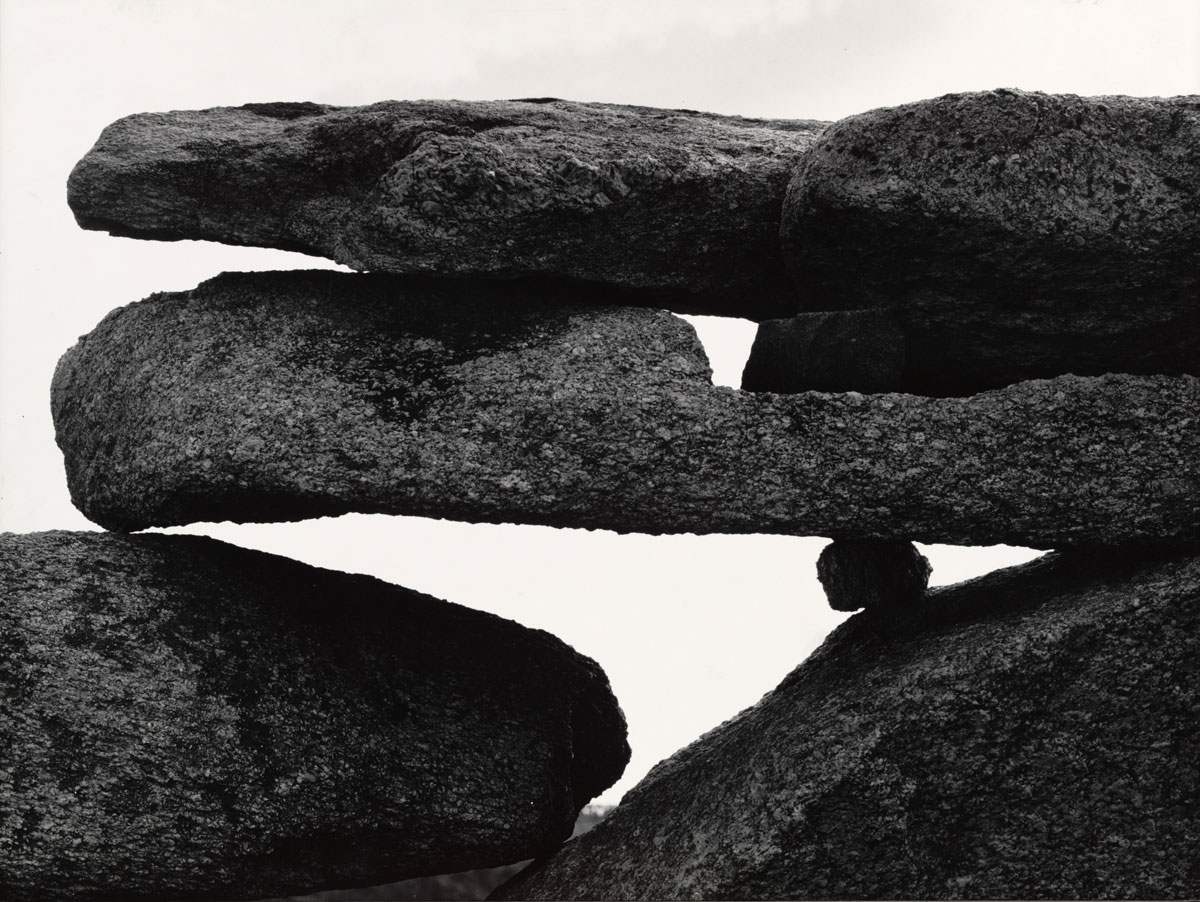
Aaron Siskind (American, 1903-1991)
Martha’s Vineyard 108
1954
Gelatin silver print
National Gallery of Art, Washington
Diana and Mallory Walker Fund
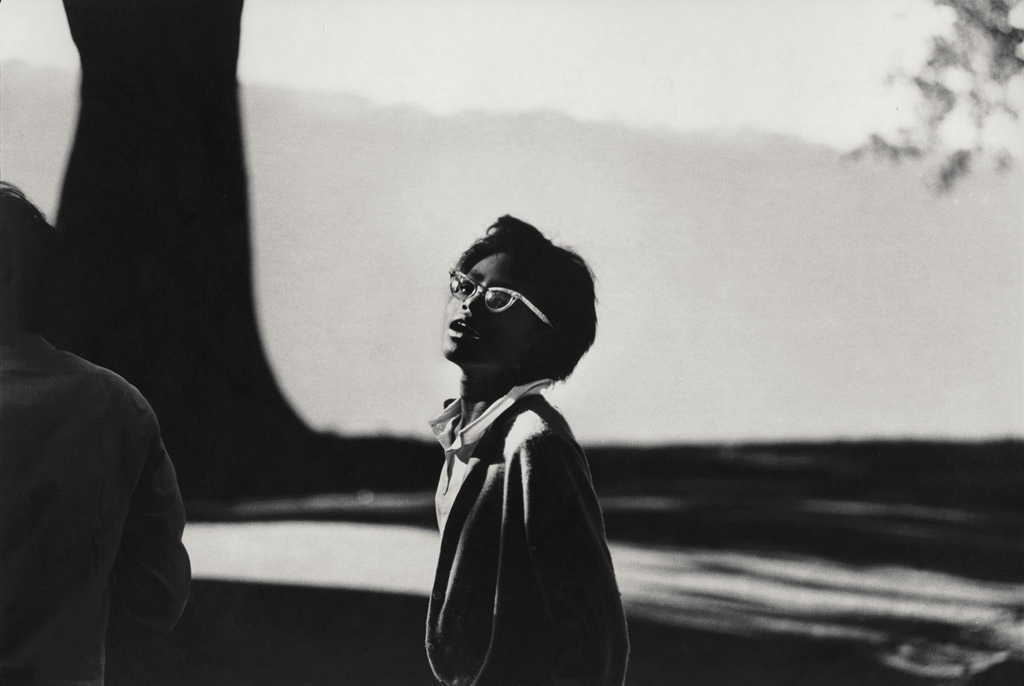
Dave Heath (Canadian, born United States, 1931-2016)
Hastings-on-Hudson, New York
1963
Gelatin silver print
National Gallery of Art, Washington
Gift of Howard Greenberg

William Eggleston (American, b. 1939)
Untitled (Car in Parking Lot)
1973
Dye imbibition print
National Gallery of Art, Washington
Anonymous Gift

Harry Callahan (American, 1912-1999)
Providence
1977
Dye transfer print

Robert Adams (American, b. 1937)
Summer Nights #2 (Longmont, Colorado)
1979
Gelatin silver print
National Gallery of Art, Washington
Gift of Mary and David Robinson
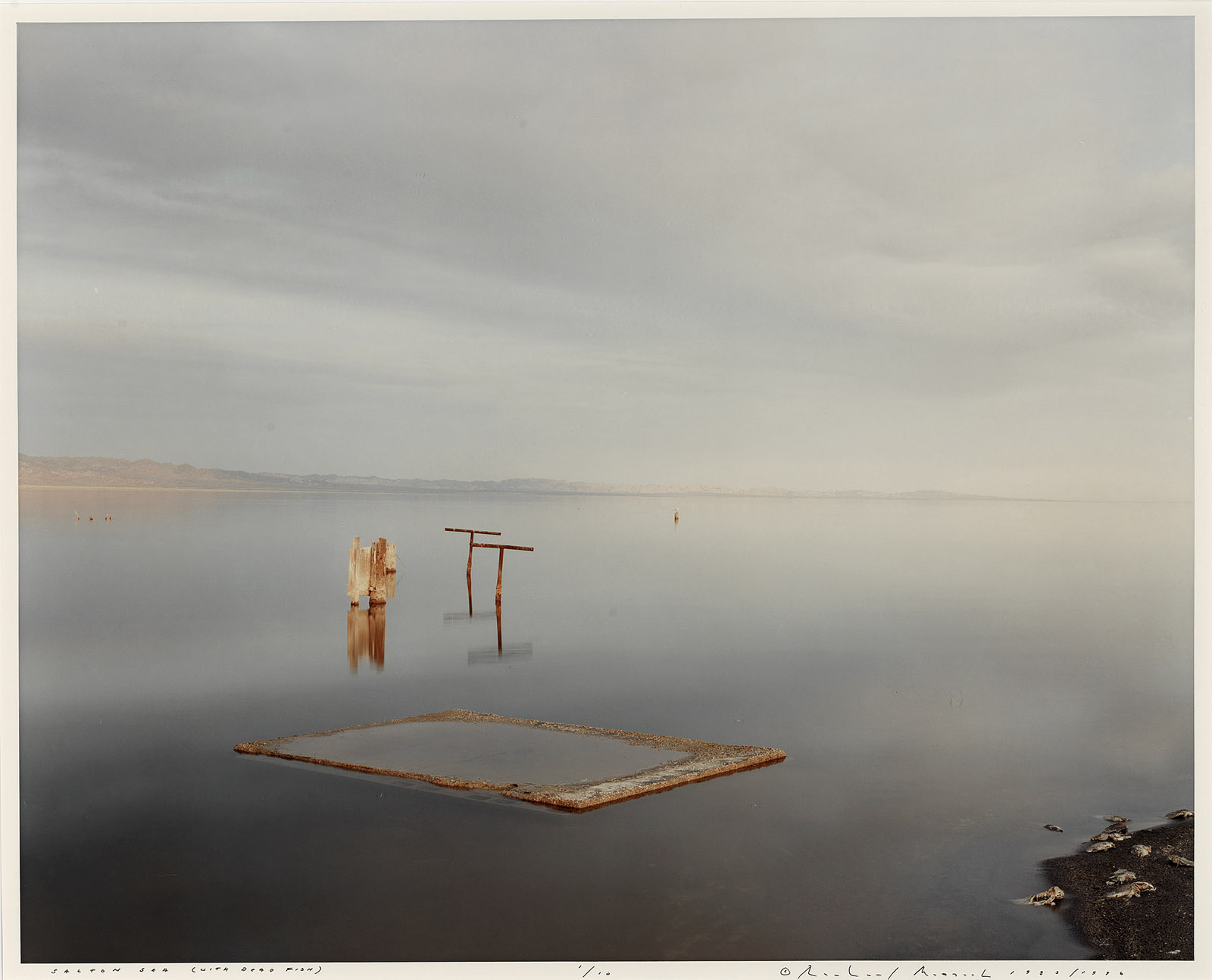
Richard Misrach (American, b. 1949)
Dead Fish, Salton Sea, California
1983, printed 1997
Chromogenic colour print
National Gallery of Art, Washington
Anonymous Gift
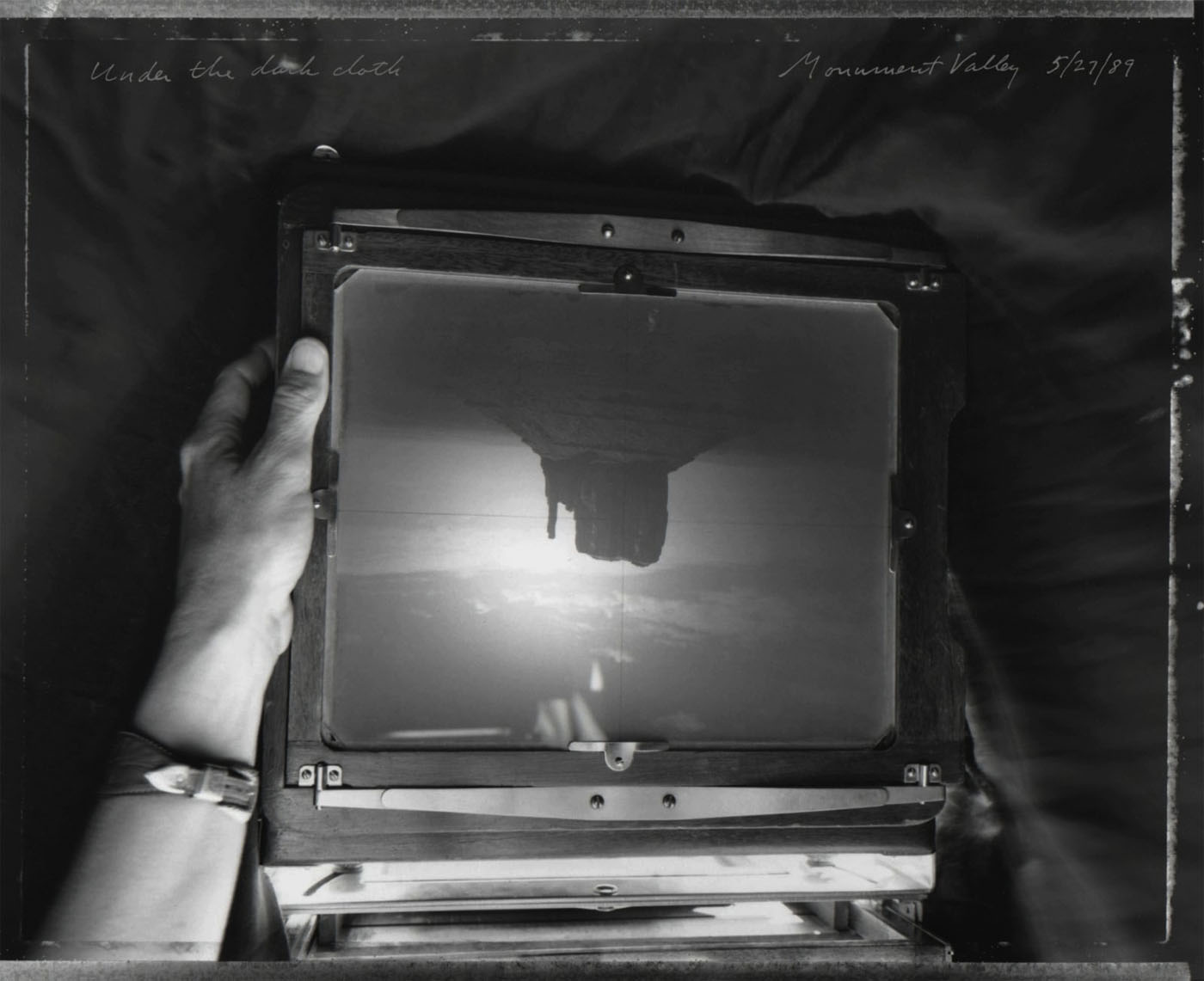
Mark Klett (American, b. 1952)
Under the Dark Cloth, Monument Valley, May 27
1989
Gelatin silver print from Polaroid instant film negative
National Gallery of Art, Washington
Gift of the Collectors Committee
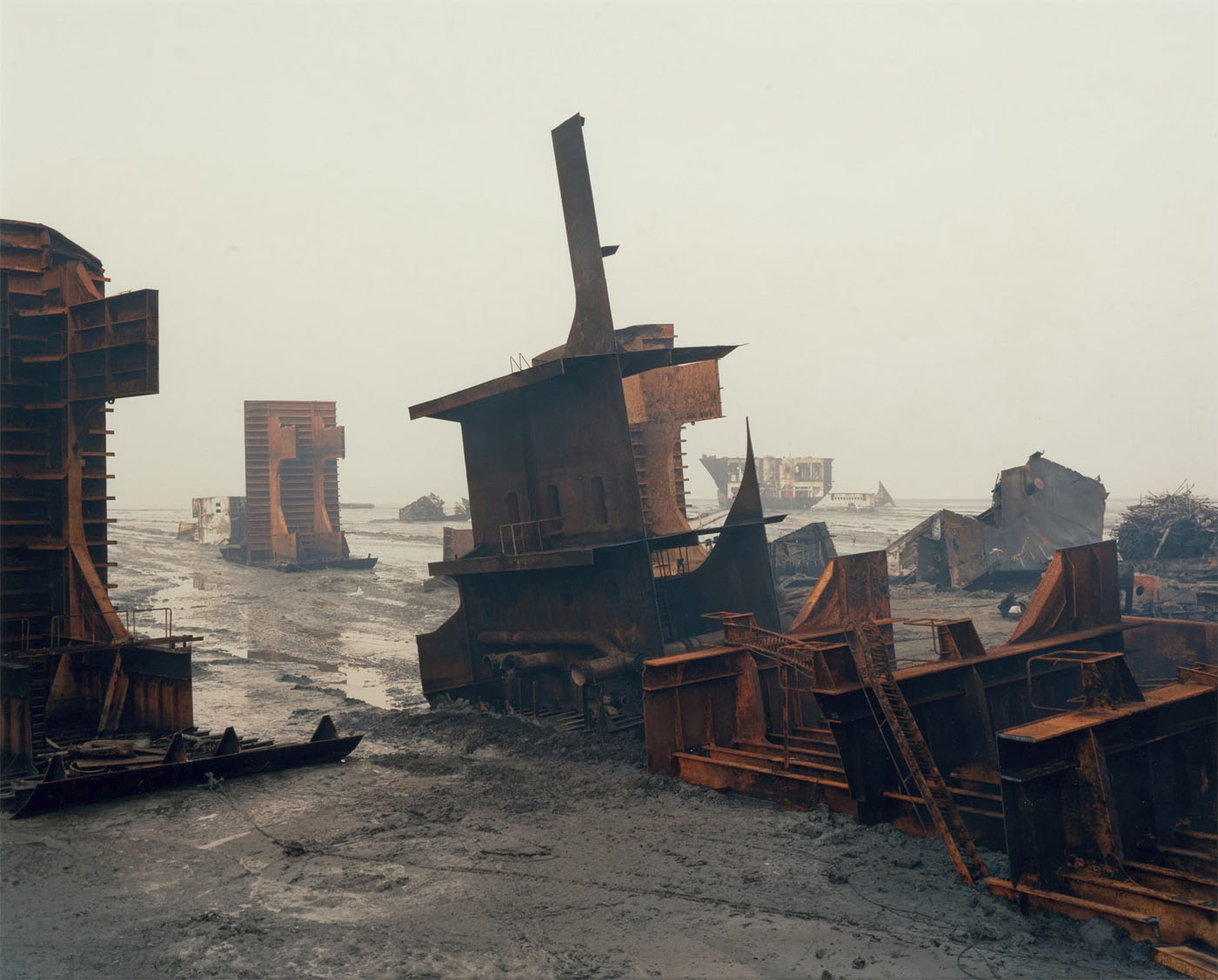
Edward Burtynsky (Canadian, b. 1955)
Shipbreaking #10, Chittagong, Bangladesh
2000, printed 2001
Chromogenic colour print
National Gallery of Art, Washington
Fund for Living Photographers
The National Gallery of Art, Washington, DC
The National Gallery of Art, located on the National Mall between 3rd and 7th Streets at Constitution Avenue NW.
Opening hours:
Daily 10.00am – 5.00pm







 Art Blart _ art and cultural memory archive
You must be logged in to post a comment.