Review: ‘Up Close: Carol Jerrems with Larry Clark, Nan Goldin and William Yang’ at Heide Museum of Modern Art, Melbourne

Exhibition dates: 31st July – 31st October 2010


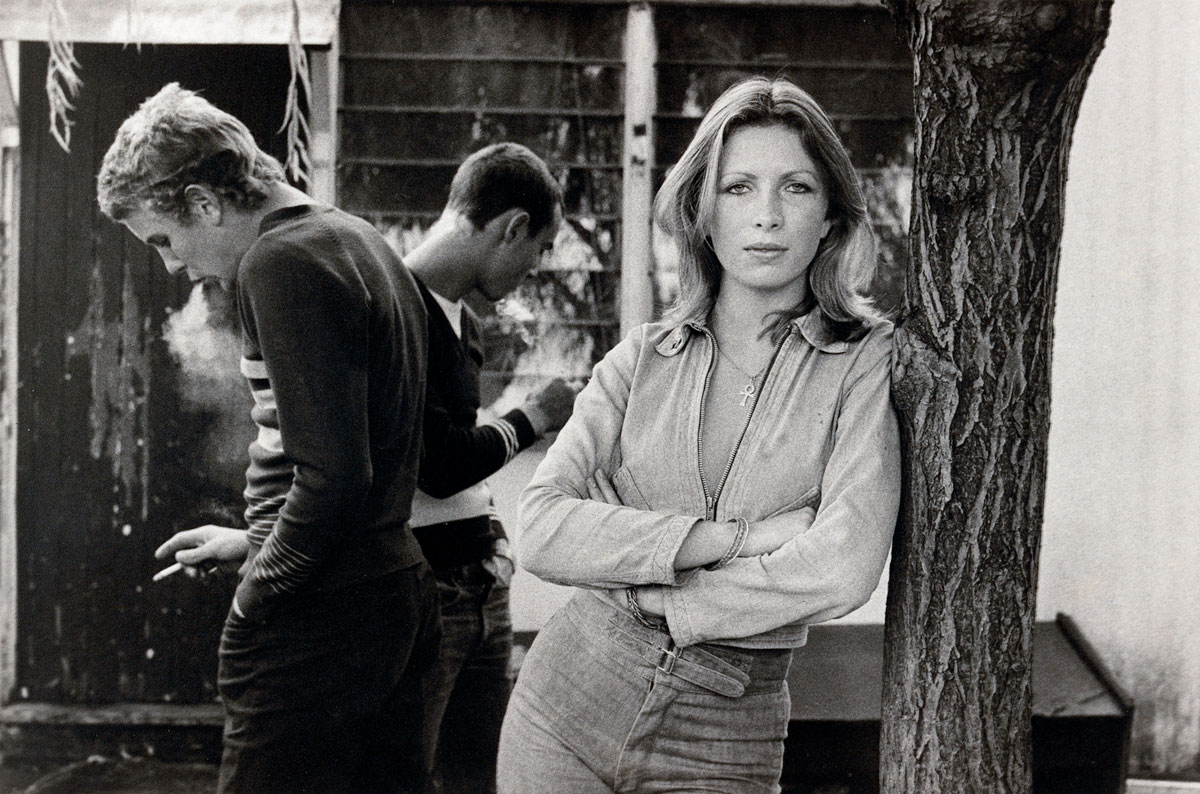
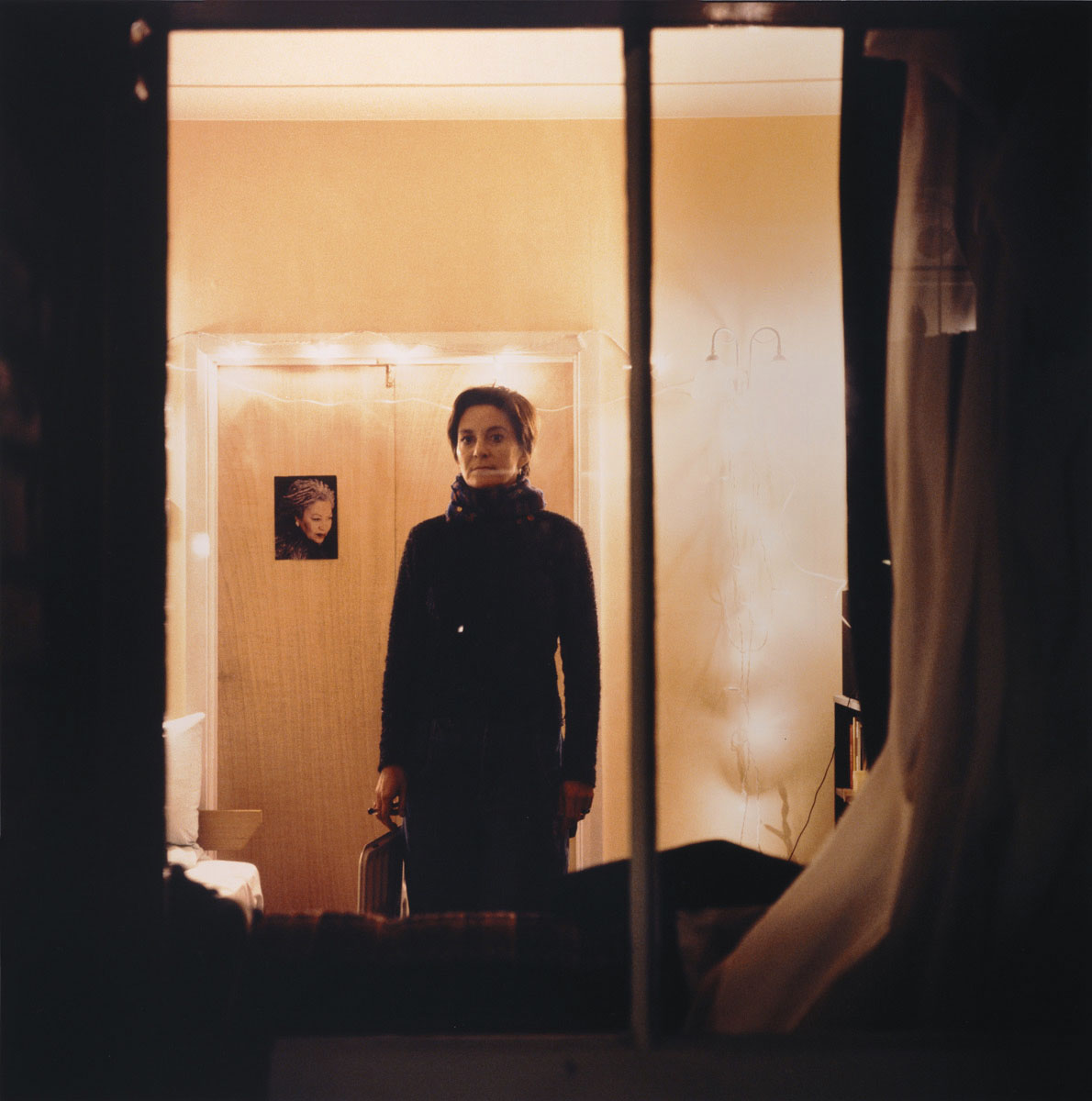
Carol Jerrems (Australian, 1949-1980) 'Vale Street' 1975 from the exhibition 'Up Close: Carol Jerrems with Larry Clark, Nan Goldin and William Yang' at Heide Museum of Modern Art, Melbourne, July - Oct 2010


Carol Jerrems (Australian, 1949-1980)
Vale Street
1975
Gelatin silver print
National Gallery of Australia, Canberra
Gift of the Philip Morris Arts Grant, 1982
© Ken Jerrems & the Estate of Lance Jerrems


“A face tells the story of what a person is thinking. The eyes reveal the suffering.”


Carol Jerems


Time and Truth: Looking again at the work of Carol Jerrems

This is a solid exhibition of the photographs of Carol Jerrems at Heide Museum of Modern Art, accompanied by small selections of the work of Larry Clark and William Yang and the sequence The Ballad of Sexual Dependency (1979) by Nan Goldin.

I like Jerrems work: it is strong, frontal, direct and truthful. What I dislike is the hagiography that has grown up around this artist, the mythologizing of Saint Jerrems. We don’t need a saint of Australian photography; what we need is an appreciation of the artist, the person and her legacy. While the personal history of this artist is well known – facing depression, putting herself in danger, sexually active, documenting the counter-culture sharps and skinheads and urban indigenous people, the photographing of women and her death at far too young an age – few people actually look at the photographs clearly.

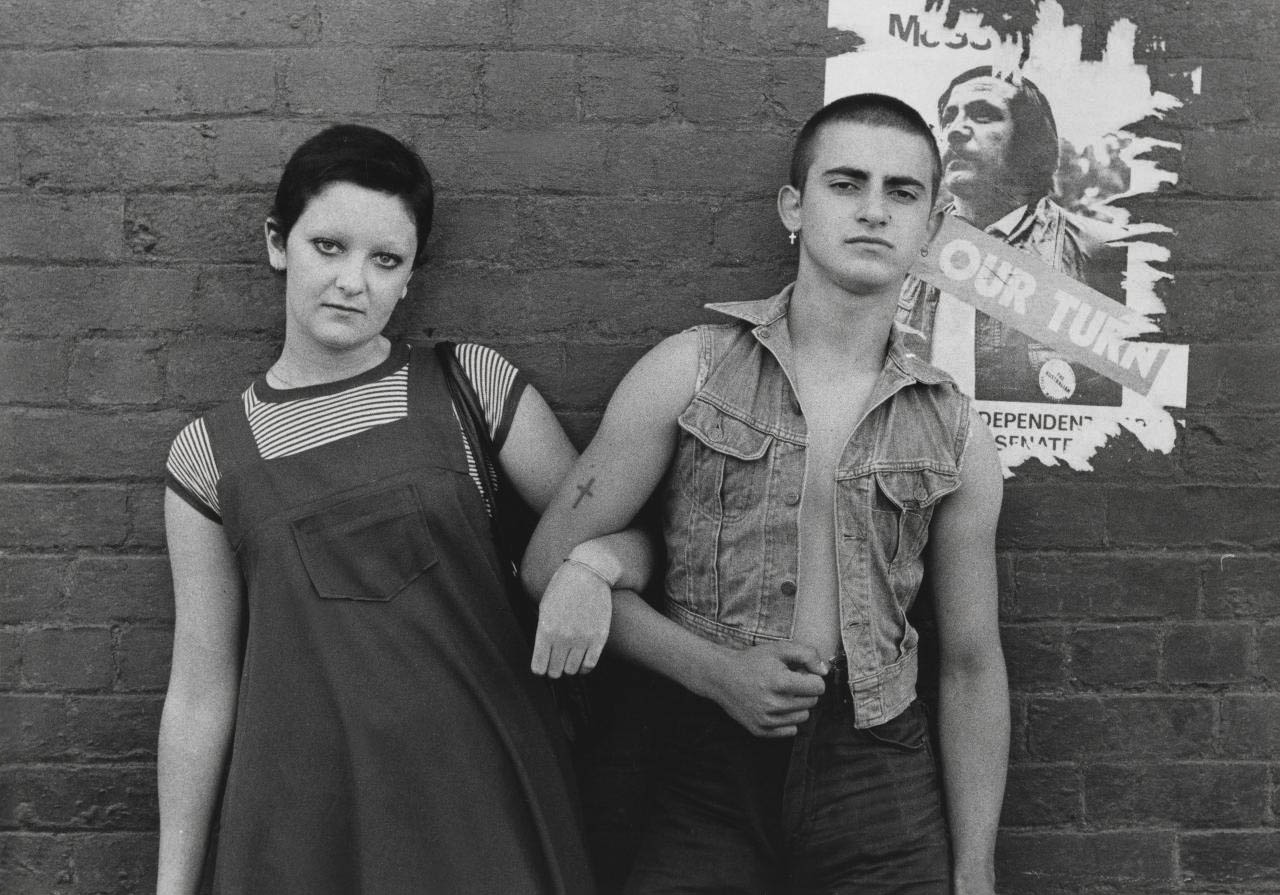
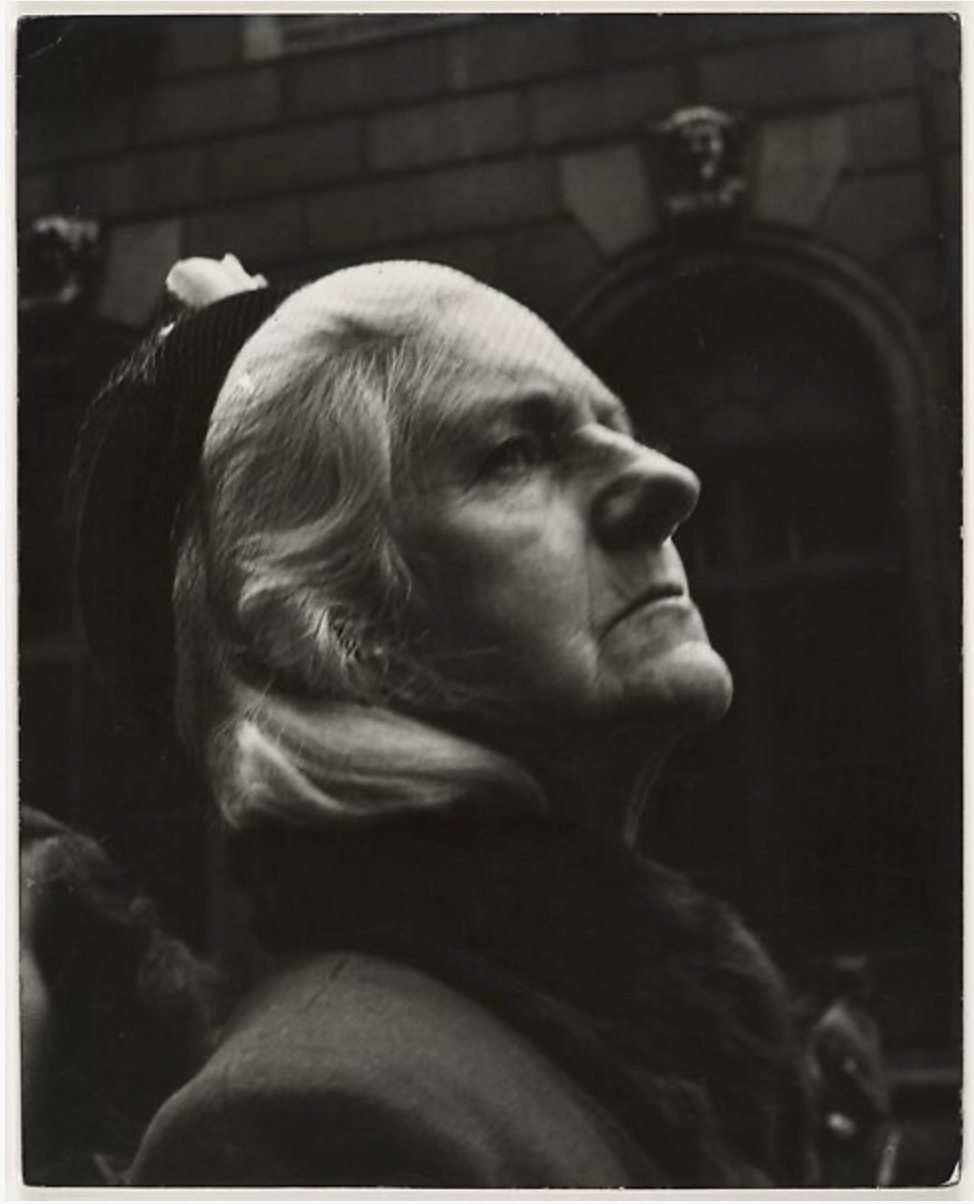
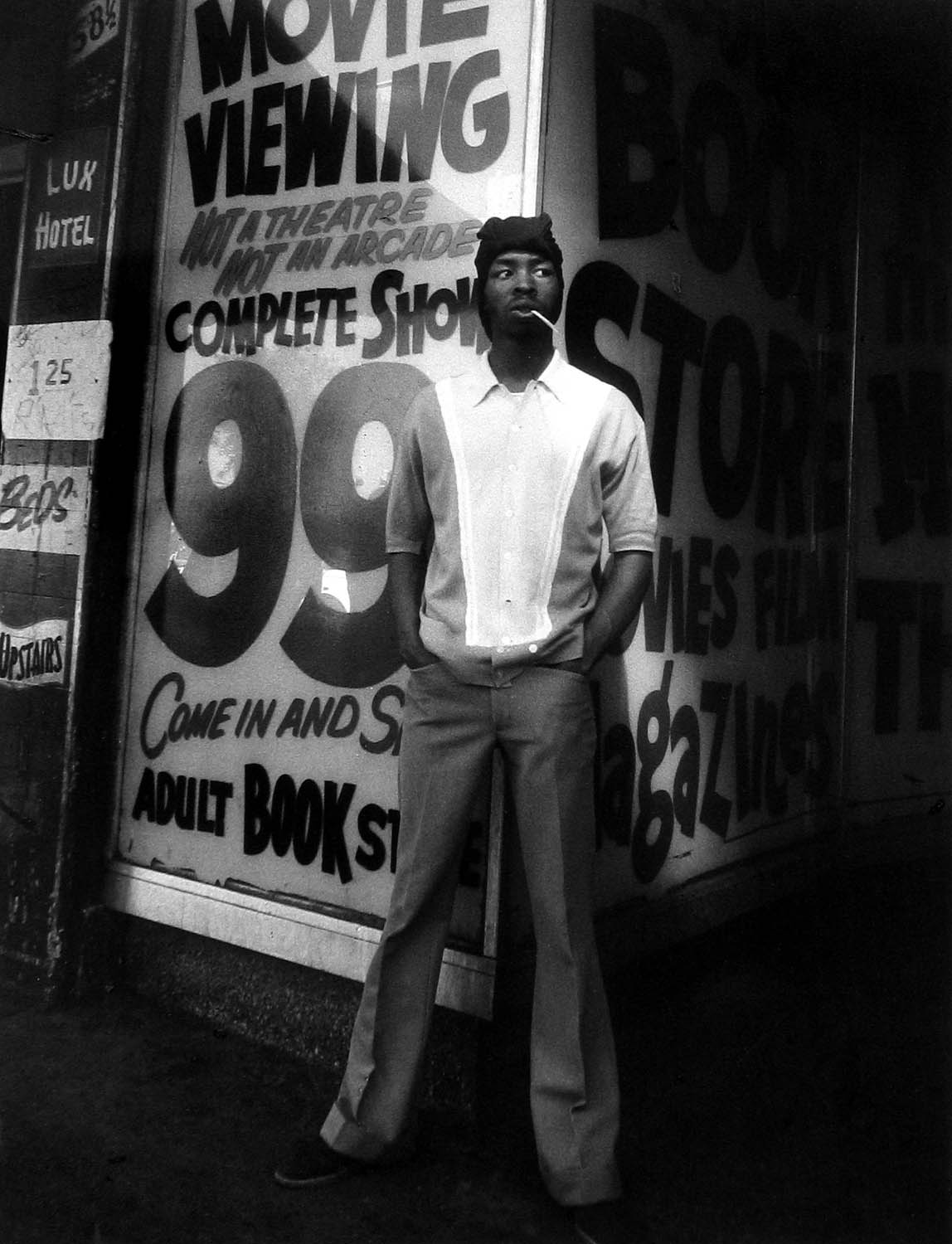
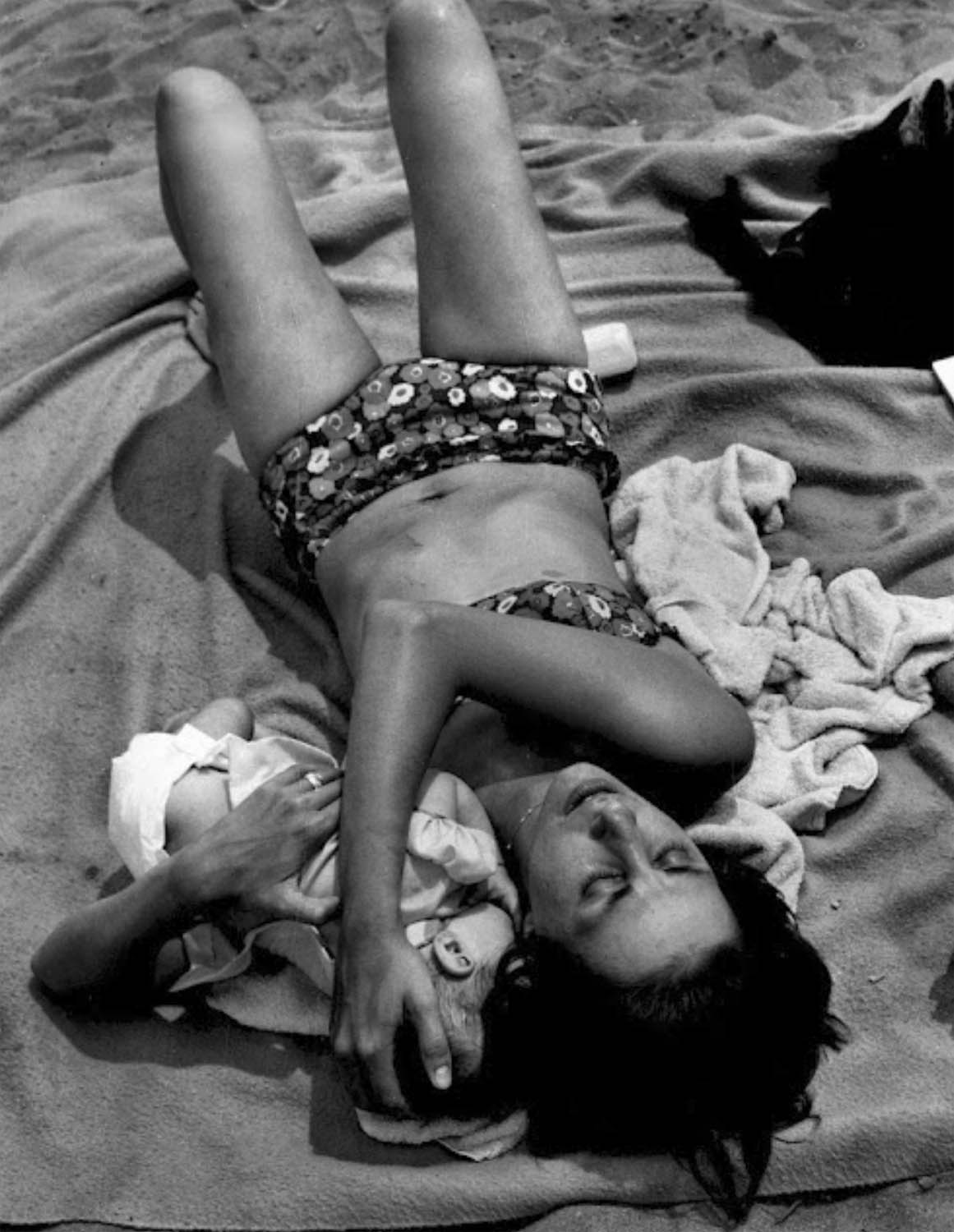
Most of the photographs are 8″ x 10″ prints, mainly portraits, that are usually dark and contrasty, small and emotionally intense. Jerrems images are made full frame (the modernist conceit of filing out a negative carrier, so that if the negative was printed full frame there would be a black border around the picture) to avoid cropping in the darkroom. This shows good previsualisation by the artist, the composition of the image made at the time of the exposure. There is a closeness to the framing of the portraits and a conversant ambiguity about all of her backgrounds – mainly low depth of field, anonymous places (perhaps a brick wall or a close up of a street corner). In fact it is difficult to pin down any actual place in her photographs unless you are told in the title of the work. The contextlessness of her backgrounds allows the viewer to focus on the people placed before her lens and here Jerrems gets up close and personal, trying to capture the truth of her subjects, their soul (in this sense she is like Diane Arbus, thrusting her camera into places it was not supposed to go until something gives – the subject gives up, drops the mask, even if just for a split second, and click, the artist has their image). The mainly head and shoulders photographs of women are most impressive in this regard as Jerrems portrays the women’s strength and vulnerability as are the photographs of the artist herself in hospital fighting her debilitating illness, the most moving, emotional photographs in the exhibition.

Other photographs show constructed intimacies between people, the camera and the artist. In Esben and Dusan, Cronulla (1977, above), Jerrems uses the yin yang black, white background to frame the two protagonists, bringing forward the body of Esben in the right portion of the frame and letting Dusan recede into the darkness. In Boys (1973) two bodies are photographed in a bed, legs and arms entwined but the print is so dark that you would never know they were two boys unless you were told – and this adds to a sense of mystery, the imaging of the most beautiful, sensitive, abstract embrace. Mark Lean with Arms Crossed (1975) shows a cocky, self-assured Lean staring directly at the camera as though it were not there, as though he were conversing directly with Jerrems, the camera an extension of the artist capturing his brave-aura: one camera, one lens, one vision. If you study the contact sheet for the photograph Vale Street (1975, above), Jerrems eventually draws the central luminous figure forward in the frame to create the now iconic image while the two acolytes hover, brooding and menacing in the darkened background.

As Kathy Drayton has observed, “Her photographs engage the viewer in an intimate relationship with her subjects. It’s not always a friendly intimacy – sometimes her subjects look defensive, irritated or even menacing, but you always sense that you’re seeing beyond the mask into the soul.”1


Jerrems saw herself as a serious photographer; if something happened she felt she should be commenting on it. She was also quite naive but always pushed herself and her art into sometimes dangerous places. She would have thought ‘how do I say something that is true’ and her endeavour, which is also constructed, was seeing things in terms of opportunities for a good photograph. Jerrems removed the safeguards; she got right in there among her volatile characters, her potential sexual predators: let’s just see what happens when the safety fence goes down. Although I believe there is a lack of really good photographs that Jerrems made (what I call highlight pieces, namely the iconic Vale Street, Mozart Street, and Mark and Flappers all 1975, see photographs below) there is a consistency to her work and how it exemplifies an exchange that takes place between the artist and the world. What I would call “a good deal.”

When looking at art, one of the best experiences for me is gaining the sense that something is open before you, that wasn’t open before. I don’t mean accessible, I mean open like making a clearing in the jungle, or being able to see further up a road, or just further on. And also like an open marketplace – where there were always good trades. There is the feeling that if you put in a certain amount of honesty, then you would get something back that made some room for you in front – some room that would allow you to look forward, and maybe even walk into that space. Seeing Jerrems work gives you that feeling.

Jerrems had the power to draw themes together, to ramp up the intensity, to empower her photographs and she was possibly on the way to becoming the things that people now say she was, but her early death curtailed this journey. Her photographs have social significance and photographic integrity and evidence time in the visible – the time in which Jerrems took them, the 1970s, and the truthfulness of her self and her style. I would have loved to have seen Jerrem’s response to the film still work of Cindy Sherman, the layering of the Sherman personas and the challenge to the feminist critique. As it is Jerrems photographs are very frontal in today’s terms and, because of her early death, she lacked the opportunity to interact with the development of more complex theories. The layers present at the time are now conflated into seemingly one layer, supported by back stories and obfuscation that clouds the work – it’s naked frontality and boldness. This obfuscation formalises her legacy into mythology.

Jerrems work does not need this. She struggled with her art, to get the best out of herself and her visualisation, to step into those spaces that I mentioned earlier. What we need is an appreciation of the time of her endeavour and the truthfulness of her art. To say that the work achieved fulfilment is to deny the importance of her death.

Dr Marcus Bunyan


1/ Drayton, Kathy quoted in Wilmoth, Peter. “The ’70s stripped bare,” on The Age website. July 17th, 2005. [Online] Cited 05/10/2010


Many thankx to Jade Enge and Heide Museum of Modern Art for allowing me publish the photographs in the posting. Please click on all of the photographs for a larger version of the image.


Carol Jerrems. 'Mozart Street' 1975 from the exhibition 'Up Close: Carol Jerrems with Larry Clark, Nan Goldin and William Yang' at Heide Museum of Modern Art, Melbourne, July - Oct 2010


Carol Jerrems (Australian, 1949-1980)
Mozart Street
1975
Gelatin silver print
National Gallery of Australia, Canberra
Gift of the Philip Morris Arts Grant, 1982
© Ken Jerrems & the Estate of Lance Jerrems


Carol Jerrems (Australian, 1949-1980) 'Mark and Flappers' 1975


Carol Jerrems (Australian, 1949-1980)
Mark and Flappers
1975
Gelatin silver print
National Gallery of Victoria, Melbourne
Gift of James Mollison, 1994
© Ken Jerrems & the Estate of Lance Jerrems


Carol Jerrems (Australian, 1949-1980) 'Sharpies' 1976


Carol Jerrems (Australian, 1949-1980)
Sharpies
1976
Gelatin silver print
© Ken Jerrems & the Estate of Lance Jerrems


Carol Jerrems (Australian, 1949-1980) 'Dusan and Esben' 1977


Carol Jerrems (Australian, 1949-1980)
Dusan and Esben
1977
Gelatin silver print
© Ken Jerrems & the Estate of Lance Jerrems


Carol Jerrems (Australian, 1949-1980) 'Flying Dog' Nd


Carol Jerrems (Australian, 1949-1980)
Flying Dog
Nd
Gelatin silver print
© Ken Jerrems & the Estate of Lance Jerrems


Carol Jerrems (Australian, 1949-1980) 'Butterfly Behind Glass' 1975


Carol Jerrems (Australian, 1949-1980)
Butterfly Behind Glass
1975
Gelatin silver print
National Gallery of Australia, Canberra
Gift of Mrs Joy Jerrems, 1981
© Ken Jerrems & the Estate of Lance Jerrems


Carol Jerrems (Australian, 1949-1980) 'Evonne Goolagong, Melbourne' 1973


Carol Jerrems (Australian, 1949-1980)
Evonne Goolagong, Melbourne
1973
Gelatin silver print
National Gallery of Australia, Canberra
Gift of Mrs Joy Jerrems, 1981
© Ken Jerrems & the Estate of Lance Jerrems


Featuring the exceptional talent of four photographers whose images capture people, places and events with candid intimacy, Up Close traces the significant legacy of Australian photographer Carol Jerrems (1949-1980) alongside that of contemporary artists Larry Clark (USA), Nan Goldin (USA) and William Yang (Sydney). According to Guest Curator Natalie King, ‘Up Close takes its inspiration from the way each artist candidly depicts a social milieu and urban life of the 1970s and early 1980s’. Sharing an interest in sub-cultural groups and individuals on the margins of society, each artist reveals a remarkable capacity to provide an empathetic glimpse into semi-private worlds through intimate depictions of people and their surroundings.

Newly discovered prints by Jerrems are included as well as rare archival material from Jerrems’ family and previously unseen out-takes from Kathy Drayton’s documentary film, ‘Girl in the Mirror.’ It is 30 years since Jerrems’ death and 20 years since the first and only survey of her work was presented. Jerrems’ photographic practice was associated with a feminist and political imperative; as she put it: ‘the society is sick and I must help change it’. This exhibition uncovers Jerrems’ preoccupation with people and their environment, subcultures, forgotten and dispossessed groups, especially Aboriginal communities of the time.

Larry Clark unflinchingly turned the camera onto himself and his amphetamine-shooting coterie to produce Tulsa (1971), a series of photographs repeatedly cited for its raw depiction of marginalized youth. This significant publication and photographic series influenced Goldin and a generation of artists who aspired to break with the more traditional documentary modes. With its grainy shot-from-the-hip style, Tulsa exposes a world of sex, death, violence, anxiety and boredom capturing the aimlessness and ennui of teenagers.

First shown at Frank Zappa’s birthday party in 1979 at the Mudd Club in New York, Nan Goldin’s The Ballad of Sexual Dependency has evolved to be an iconic work of its time. Goldin’s snapshot aesthetic is evident in this immersive installation of close to 700 slides full of saturated colour and intimate framing accompanied by a soundtrack. Mining the emotional depths of her friends, lovers and family, Ballad signals a riveting intimacy whilst uncovering the bohemian life of New York’s Lower East Side. Goldin says, ‘I was documenting my life. It comes directly from the snapshot, which is always about love…’

William Yang’s photographs from the 1970s further the snapshot aesthetic through journeying into the intimate world of his particular social milieu: drag queens, Sydney gay and inner-city culture. Yang’s direct, unpretentious photographs provide a unique chronicle of marginalised groups especially as he put it: “… people who are gay, who were invisible, who were too scared to come out. During gay liberation people became visible, people became politicised, and there was a Mardi Gras that was a symbol of the movement.”

Up Close reveals how photographic practices provide an empathetic glimpse into semi-private worlds with close up depictions of people and their surroundings.

The accompanying publication provides for the first time an in-depth account of Carol Jerrems’ work alongside that of her peers and will feature a number of newly commissioned essays. Edited by Natalie King and co-published by Heide and Schwartz City, it will be available at the Heide Store from 31 July.”

Press release from the Heide Museum of Modern Art website


Carol Jerrems (Australian, 1949-1980) 'Juliet Holding Vale Street' 1976


Carol Jerrems (Australian, 1949-1980)
Juliet Holding Vale Street
1976
Gelatin silver print
National Gallery of Australia, Canberra
Gift of Mrs Joy Jerrems 1981
© Ken Jerrems & the Estate of Lance Jerrems


Carol Jerrems (Australian, 1949-1980) 'Lynn' 1976


Carol Jerrems (Australian, 1949-1980)
Lynn
1976
Gelatin silver print
National Gallery of Australia, Canberra
Gift of the Philip Morris Arts Grant 1982
© Ken Jerrems & the Estate of Lance Jerrems


Larry Clark (American, b. 1943) 'Untitled' 1979


Larry Clark (American, b. 1943)
Untitled
1979
Gelatin silver print
National Gallery of Australia, Canberra
Purchased 1980
© Larry Clark
Image courtesy of the artist and Luhring Augustine, New York


Larry Clark (American, b. 1943) 'No Title (Billy Mann)' 1963 from the portfolio 'Tulsa'


Larry Clark (American, b. 1943)
No Title (Billy Mann)
1963
from the portfolio Tulsa
Gelatin silver print
National Gallery of Australia, Canberra
Purchased 1980
Image courtesy of the artist and Luhring Augustine, New York


William Yang (Australian, b. 1943) 'Peter Tully, Gay & Lesbian Mardi Gras' 1981


William Yang (Australian, b. 1943)
Peter Tully, Gay & Lesbian Mardi Gras
1981
Gelatin silver print
edition 2/10
40.4 x 27cm
National Library of Australia
Courtesy of the artist


Heide Museum of Modern Art
7 Templestowe Road, Bulleen, Victoria 3105

Opening hours:
(Heide II & Heide III)
Tues – Sun 10.00am – 5.00pm

Heide Museum of Art website

LIKE ART BLART ON FACEBOOK

Back to top

Exhibition: ‘Beyond COLOR: Color in American Photography, 1950-1970’ at Bruce Silverstein Gallery, New York

Exhibition dates: 15th September – 23rd October 2010


Many thankx to Yvonne Gomez and the Bruce Silverstein Gallery for allowing me to publish the photographs in the posting. Please click on the photographs for a larger version of the image.


Arthur Siegel (American, 1913-1978) 'Untitled', from the series 'In Search of Myself' 1951, printed c. 1950s from the exhibition 'Beyond COLOR: Color in American Photography, 1950-1970' at Bruce Silverstein Gallery, New York, Sept - Oct 2010


Arthur Siegel (American, 1913-1978)
Untitled, from the series In Search of Myself
1951, printed c. 1950s
Dye transfer print mounted to board
Signed, initialed and dated by Adam Siegel on mount verso
6 7/8 x 10 inches
© Arthur Siegel, courtesy of Bruce Silverstein Gallery, NY


Harry Callahan (1912-1999). 'New York' 1955 printed c. 1970 from the exhibition 'Beyond COLOR: Color in American Photography, 1950-1970' at Bruce Silverstein Gallery, New York, Sept - Oct 2010


Harry Callahan (American, 1912-1999)
New York
1955 printed c. 1970s
Dye transfer print
Signed on recto
14 x 10 1/4 inches
© Harry Callahan, courtesy of Bruce Silverstein Gallery, NY


Inge Morath (American, 1923-2002)
'New York City' 1958


Inge Morath (American, 1923-2002)
New York City
1958
Archival pigment print
© Inge Morath / Magnum Photos


“If I had to do color and black and white simultaneously,” Morath recalled, “I’d finish one, then do [the other], trying not to think of both at the same time; the thinking is so different!”


Inge Morath (American, 1923-2002)
'Hollywood, California' 1959


Inge Morath (American, 1923-2002)
Hollywood, California
1959
Archival pigment print
© Inge Morath / Magnum Photos


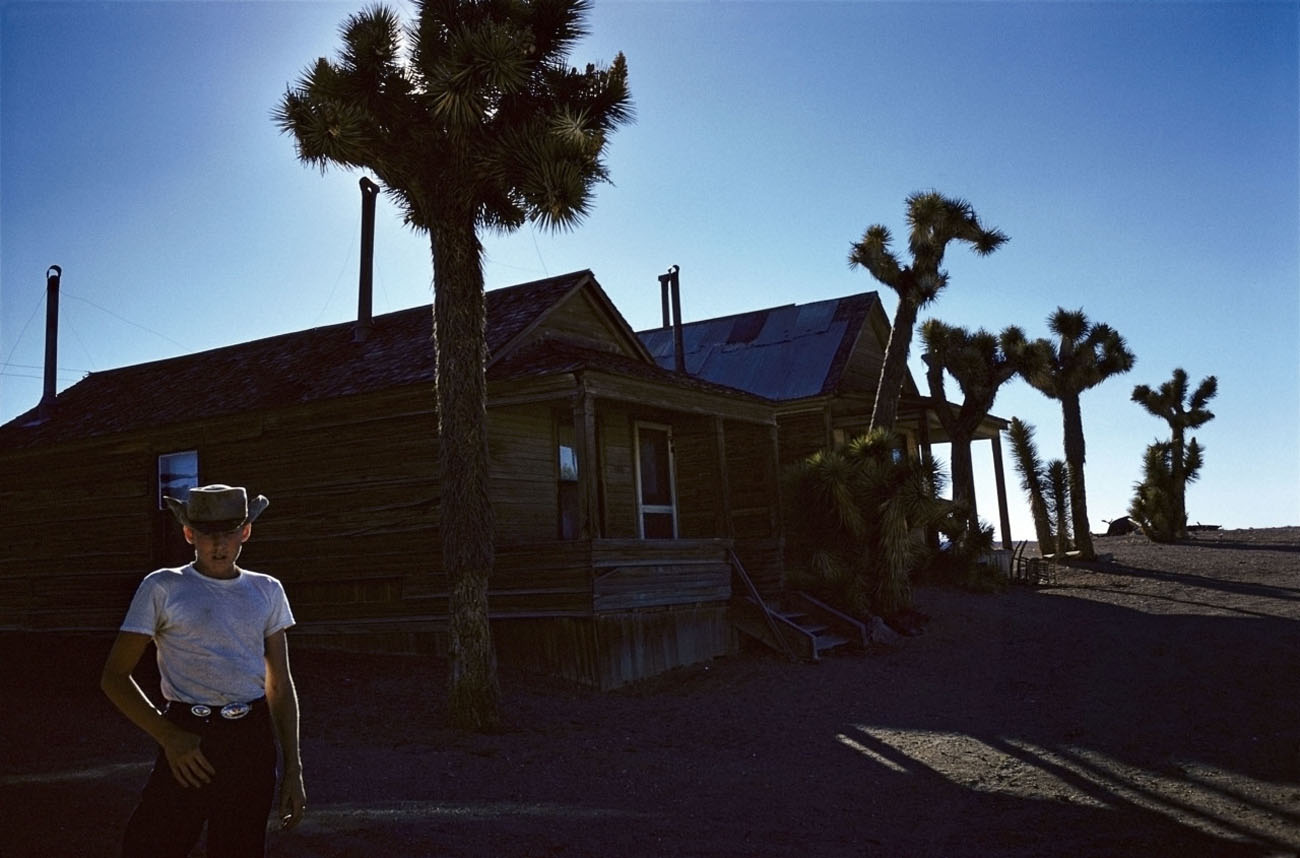
Inge Morath (American, 1923-2002) 'Ghost Town, Goldfield, Nevada'
1960, printed later from the exhibition 'Beyond COLOR: Color in American Photography, 1950-1970' at Bruce Silverstein Gallery, New York, Sept - Oct 2010


Inge Morath (American, 1923-2002)
Ghost Town, Goldfield, Nevada
1960, printed later
Archival pigment print
Edition of 11
Estate stamp on verso
13 x 17 1/2 inches
© Inge Morath / Magnum Photos


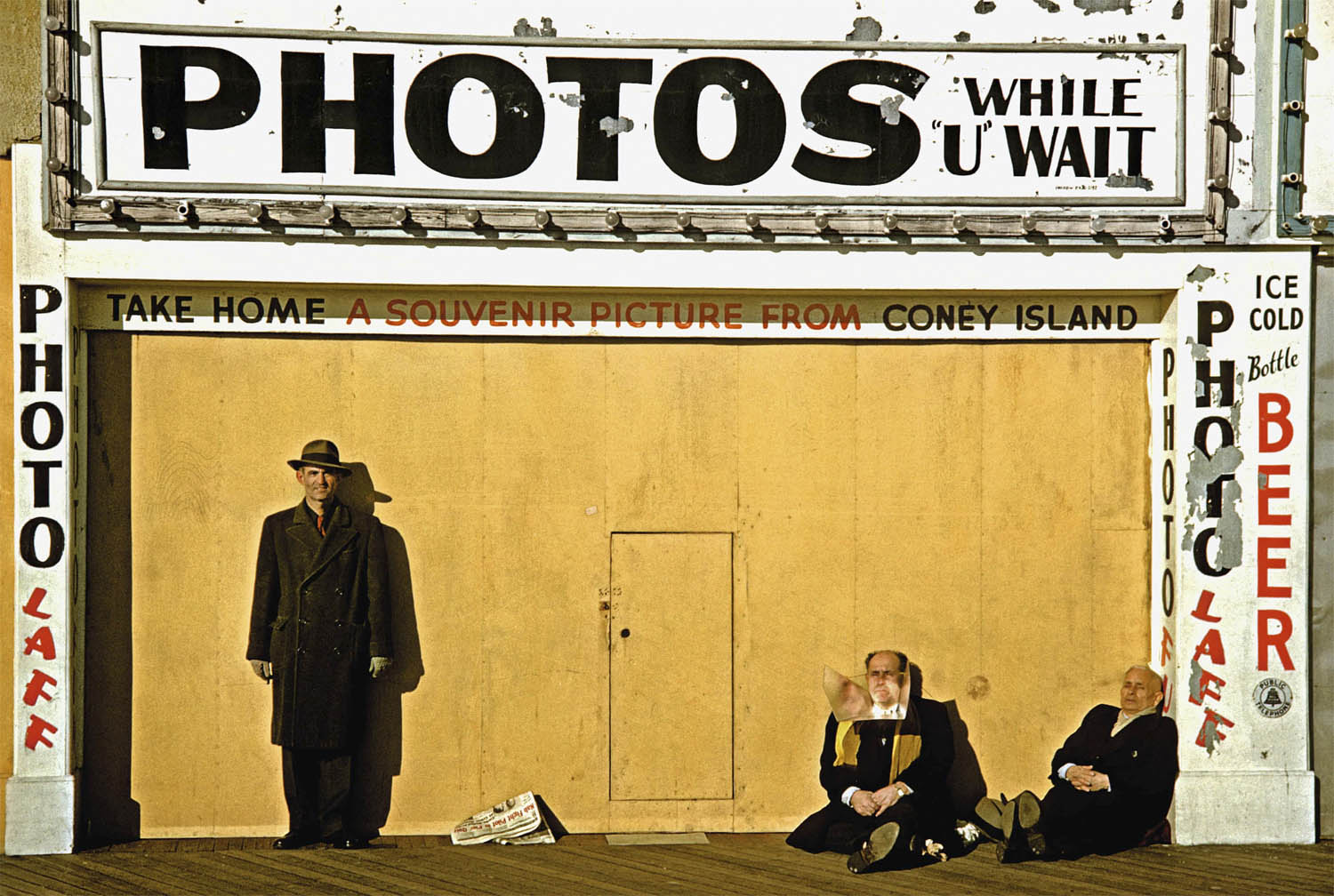
Marvin Newman (American, 1927-2023) 'Coney Island I' 1953, printed 2010


Marvin Newman (American, 1927-2023)
Coney Island I
1953, printed 2010
Archival inkjet print
Signed and dated on verso
Edition of 10
13 x 19 inches
© Marvin Newman, courtesy of Bruce Silverstein Gallery, NY


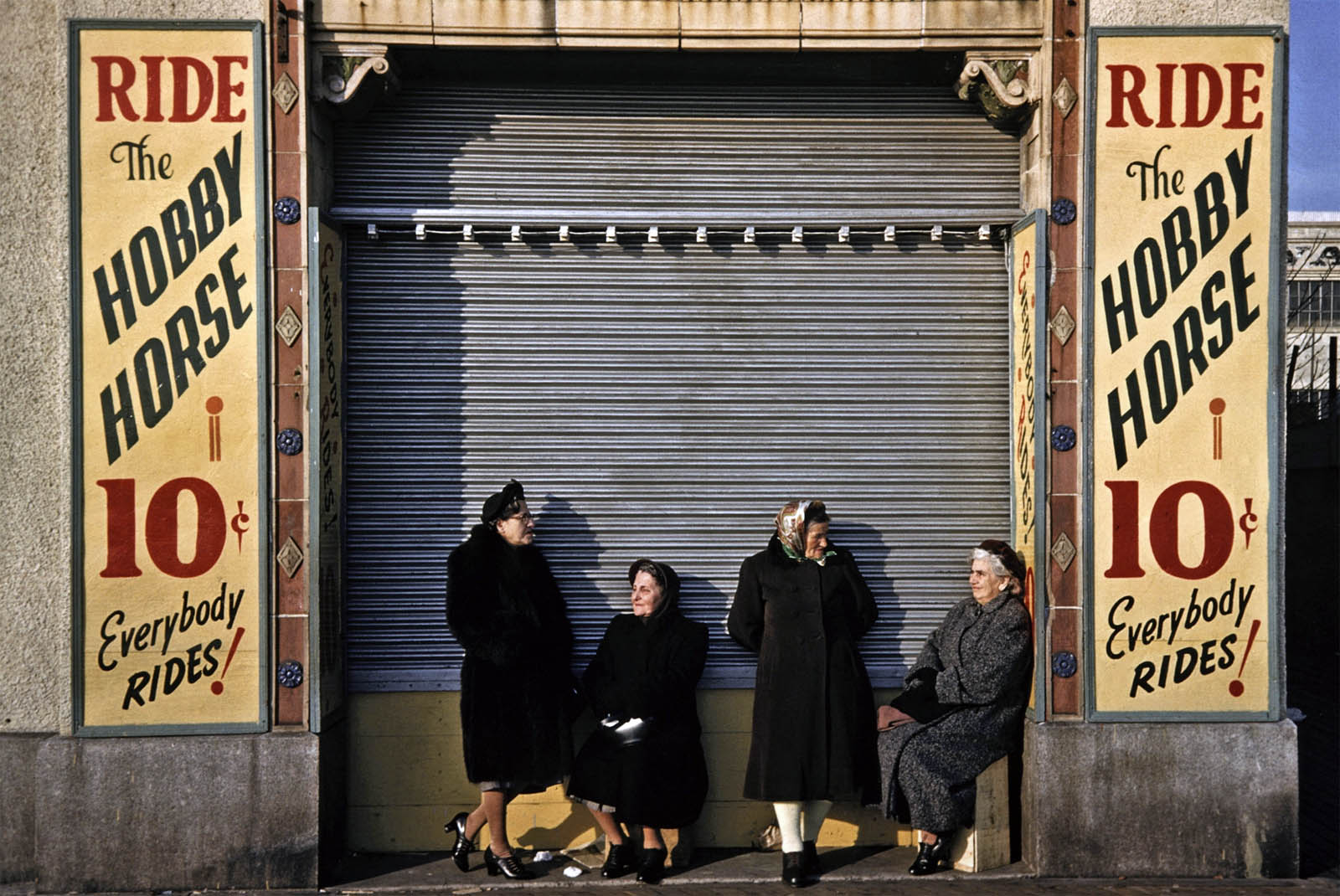
Marvin Newman (American, 1927-2023) 'Coney Island II' 1953, printed 2010


Marvin Newman (American, 1927-2023)
Coney Island II
1953, printed 2010
Archival inkjet print
Signed and dated on verso
Edition of 10
13 x 19 inches
© Marvin Newman, courtesy of Bruce Silverstein Gallery, NY


Marvin Newman (American, 1927-2023) 'Coney Island IV' 1953, printed 2010


Marvin Newman (American, 1927-2023)
Coney Island IV
1953, printed 2010
Archival inkjet print
Signed and dated on verso
Edition of 10
13 x 19 inches
© Marvin Newman, courtesy of Bruce Silverstein Gallery, NY


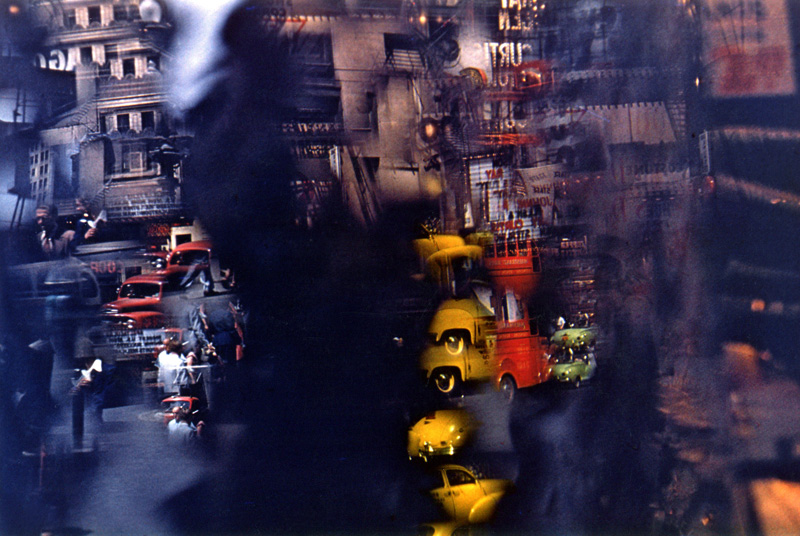
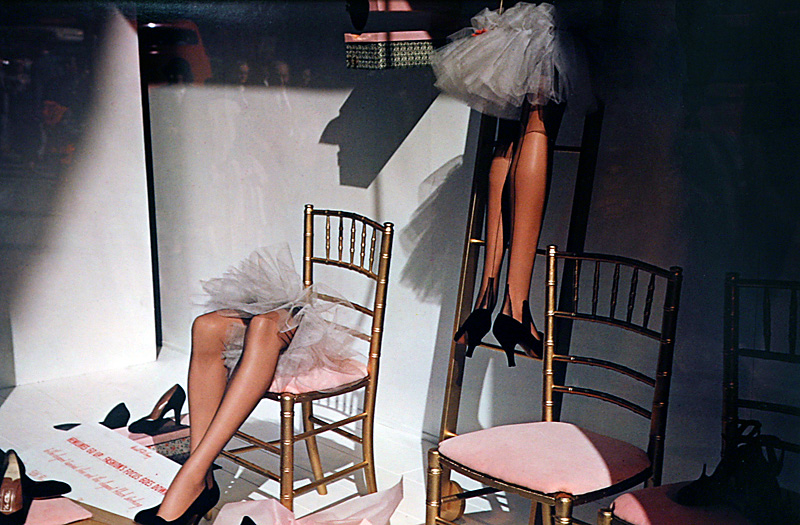
Bruce Silverstein Gallery is pleased to present, Beyond COLOR: Color in American Photography, 1950-1970, a re-examination of a pivotal period in photography’s short history, when the artistic relevance of color in fine art photography had yet to be determined. The exhibition unites works for the first time by many of the “first generation” practitioners of color photography including artists Marie Cosindas, Arthur Seigel, Harry Callahan, Eliot Porter, Saul Leiter, Marvin E. Newman, Pete Turner, Ruth Orkin and Ernst Haas. Other highlights include images exhibited for the first time by Magnum’s first female member, Inge Morath, as well as a special slide projection of color images by Garry Winogrand, images that were never printed by the artist. Beyond COLOR attempts to reclaim this moment of photographic history that only today has begun to receive critical attention.

After the conclusion of World War II, innovations in technology combined with the public’s desire to “see the world as it is” resulted in an explosion in the usage of color imagery by the mass media. By 1951, commercial color television broadcasting had begun, and in 1954, half of all American films were made in color. In the early 1960’s color imagery was so prevalent that National Geographic magazine introduced a new era when it became the first major American periodical to print an all-color issue. While color photography during this period was widely embraced by mass culture – advertising and journalism – it continued to suffer from second-class status in the fine art world when compared with images in black & white. For most in the fine art establishment, black & white photography represented the medium of choice, steeped in a century-old tradition it was easily accessible and affordable to artists, and possessed known archival stability. For this reason, few artists chose to work in color and even fewer produced finished prints. Although color works had begun to selectively appear in museum exhibitions, most notably at the Museum of Modern Art, where single artist exhibitions of works by Eliot Porter (1943), Ernst Haas (1962) and Marie Cosindas (1966) were displayed, academic and institutional attention and support for this new technology was scant.

Over the past forty years, work in color created by artists during this formative period has received little attention. Most critical analysis through writings and exhibitions have focused on color work created during the 1970’s and 1980’s after the now famous Museum of Modern Art exhibition, Photographs by William Eggleston (1976), curated by John Szarkowski. This MoMA exhibition set the groundwork for defining a new purpose for color photography – one that focused more on the conceptual implications of the photograph and its creation, and away from the formalistic attributes of the image as well as the attention to color itself. The effects of Eggleston’s exhibition and Szarkowski’s essay reverberate to this day.

With a certain distance from this era when color photography was new – its place in the art world no longer a question – this exhibition offers a crucial consideration of works created during this period and encourages a new perspective on the significance of these artists’ contributions to the history of photography.

Text from the Bruce Silverstein Gallery website


Harry Callahan (American, 1912-1999)
'Providence' 1963


Harry Callahan (American, 1912-1999)
Providence
1963
Dye transfer print


Marie Cosindas (American, 1923-2017) 'Amy, Boston' 1965, printed c. 2010


Marie Cosindas (American, 1923-2017)
Amy, Boston
1965, printed c. 2010
Archival inkjet print
Signed, titled and dated on verso
11 3/4 x 16 1/2 inches
© Marie Consindas, courtesy of Bruce Silverstein Gallery, NY


Pete Turner (American, 1934-2017)
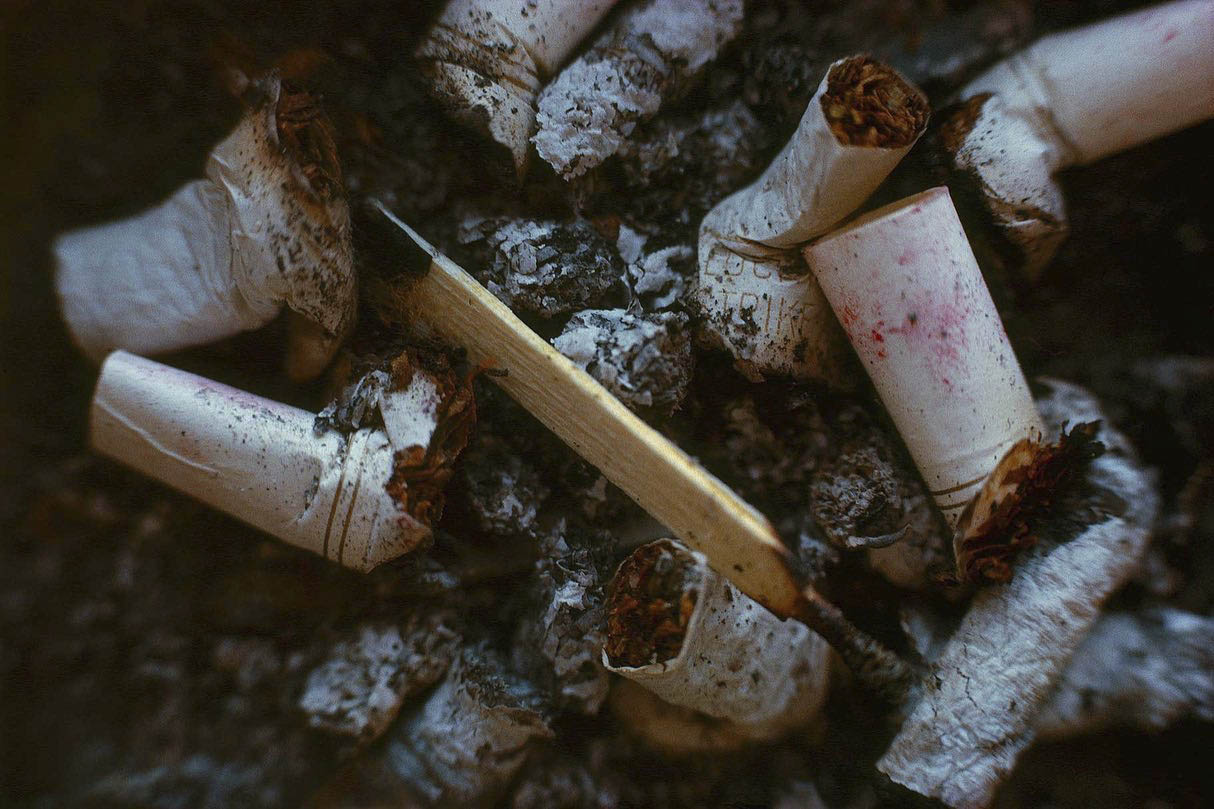
'Cigarette Butts' 1963, printed early 1970s


Pete Turner (American, 1934-2017)
Cigarette Butts
1963, printed early 1970s
Unique dye transfer print
Signed, titled and dated on recto
30 x 40 inches
© Pete Turner, courtesy of Bruce Silverstein Gallery, NY


Pete Turner (American, 1934-2017)
'Texascape' 1968, printed c. 1976-1980


Pete Turner (American, 1934-2017)
Texascape
1968, printed c. 1976-1980
Signed with artist stamp on recto
Dye transfer print
Edition of 50 (#28/50)
6 x 9 in (15.24 x 22.86cm)


Ruth Orkin (American, 1921-1985)
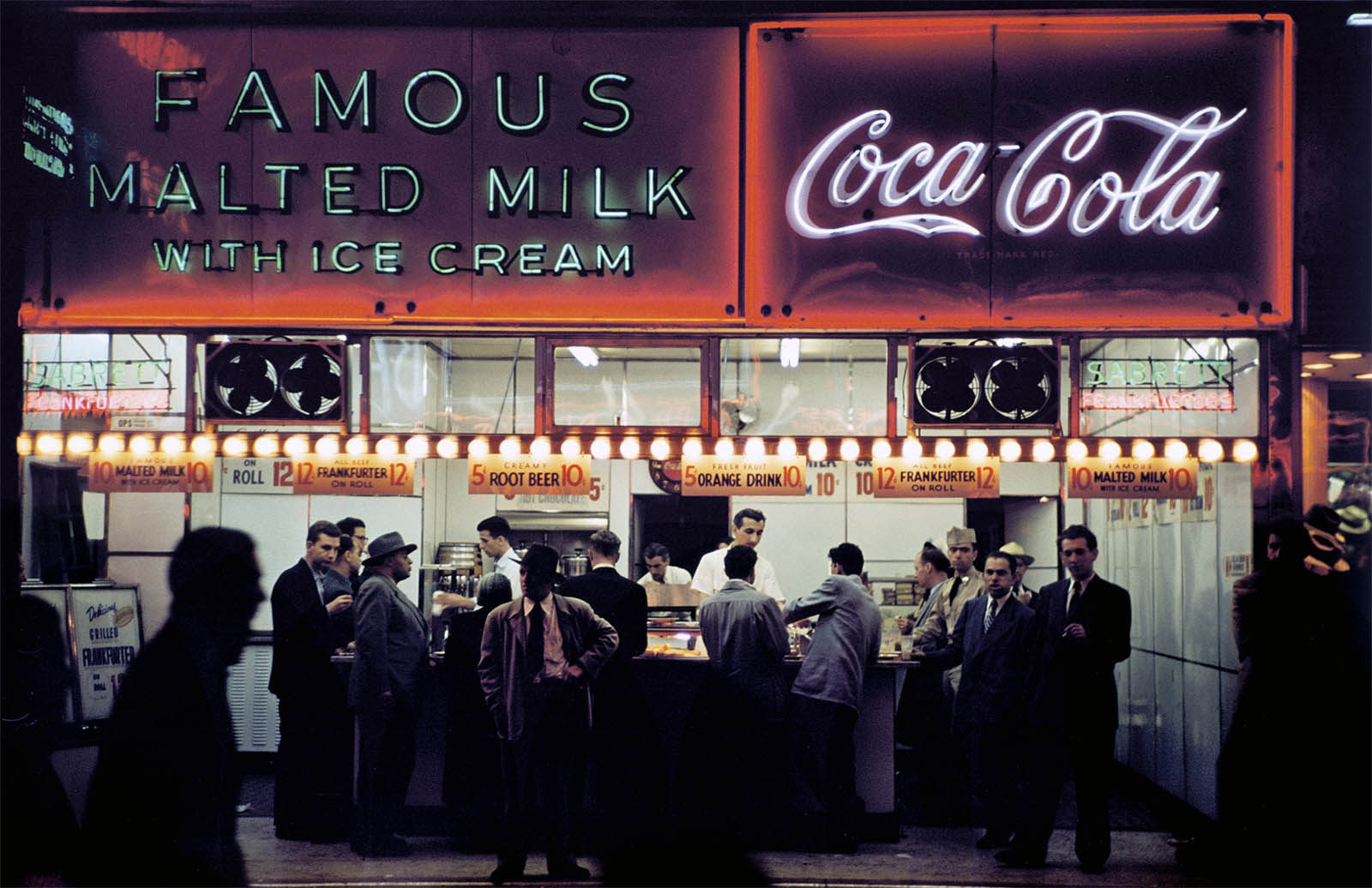
'Famous Malted Milk, NYC' c. 1950, printed 2010
Screenshot


Ruth Orkin (American, 1921-1985)
Famous Malted Milk, NYC
c. 1950, printed 2010
Archival inkjet print
Estate stamp on verso
Edition of 15
11 x 14 inches
ROR-00008-SP
© Ruth Orkin, courtesy of Bruce Silverstein Gallery, NY


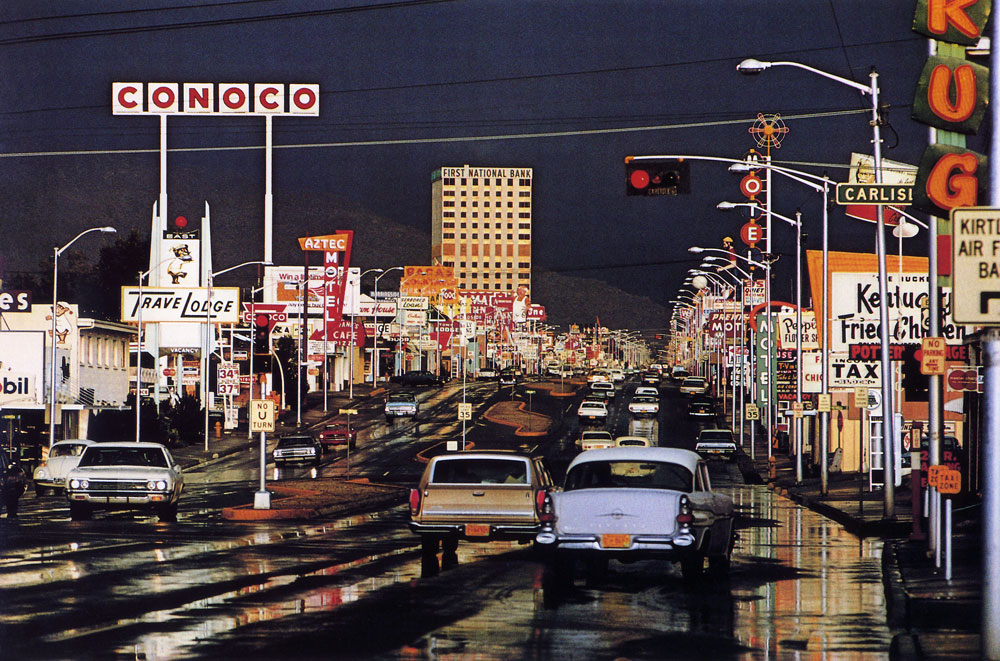
Ernst Haas (American, 1921-1986) 'Route 66, Albuquerque, New Mexico, USA' 1969, printed later


Ernst Haas (American, 1921-1986)
Route 66, Albuquerque, New Mexico, USA
1969, printed later
Chromogenic print mounted to board
Estate stamp on verso
30 x 40 inches
EHA-00898-SP
© Ernst Haas, courtesy of Bruce Silverstein Gallery, NY


Bruce Silverstein Gallery
529 West 20th Street
3rd Floor / Suite 3W
New York, NY 10011
Phone: 212-627-3930

Opening hours:
Tuesday – Friday
10am – 5pm

Bruce Silverstein Gallery website

LIKE ART BLART ON FACEBOOK

Back to top

Exhibition: ‘Hipsters, Hustlers, and Handball Players: Leon Levinstein’s New York Photographs, 1950-1980’ at The Metropolitan Museum of Art, New York

Exhibition dates: 8th June – 17th October, 2010


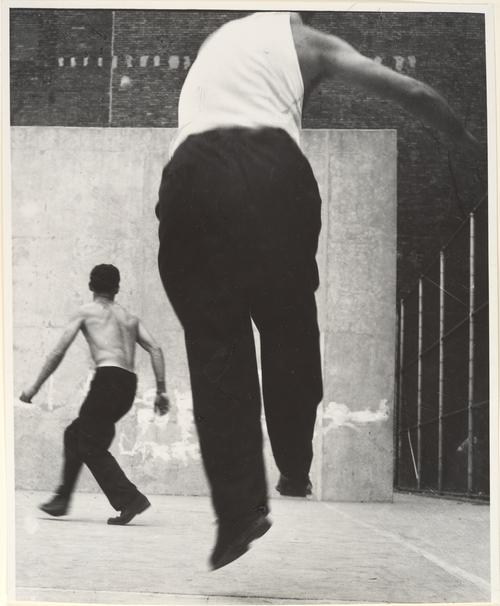
Leon Levinstein (American, 1910-1988) 'Handball Players, Lower East Side, NY' 1950s-1960s from the exhibition 'Hipsters, Hustlers, and Handball Players: Leon Levinstein's New York Photographs, 1950-1980' at The Metropolitan Museum of Art, New York, June - October, 2010


Leon Levinstein (American, 1910-1988)
Handball Players, Lower East Side, NY
c. 1950s-1960s
Gelatin silver print
Purchase, The Horace W. Goldsmith Foundation Gift, through Joyce and Robert Menschel, 1987
© Howard Greenberg Gallery


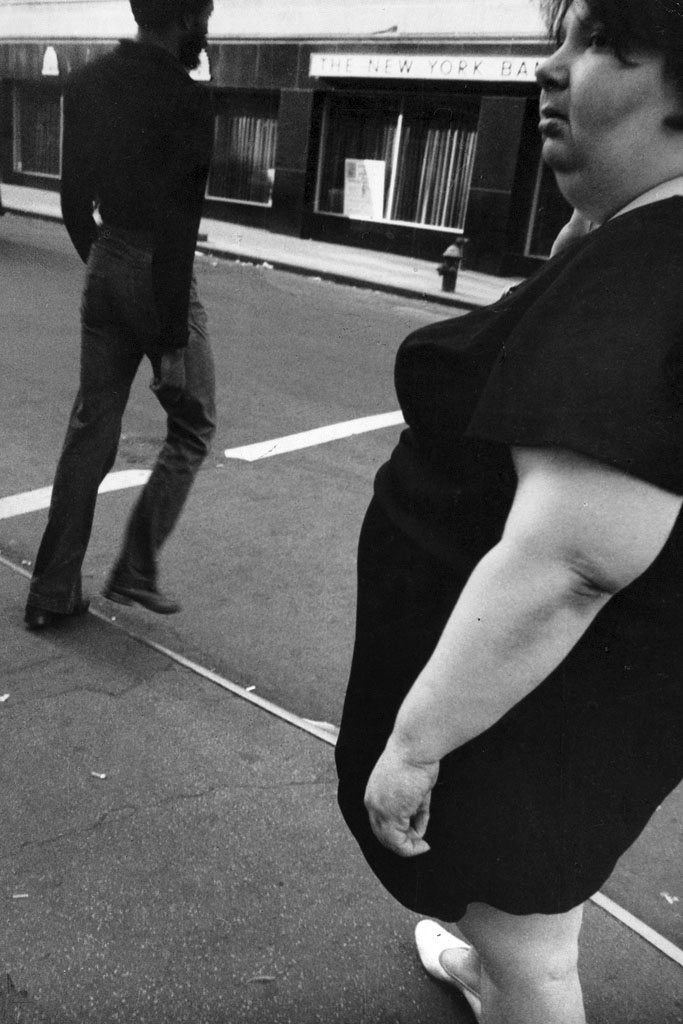
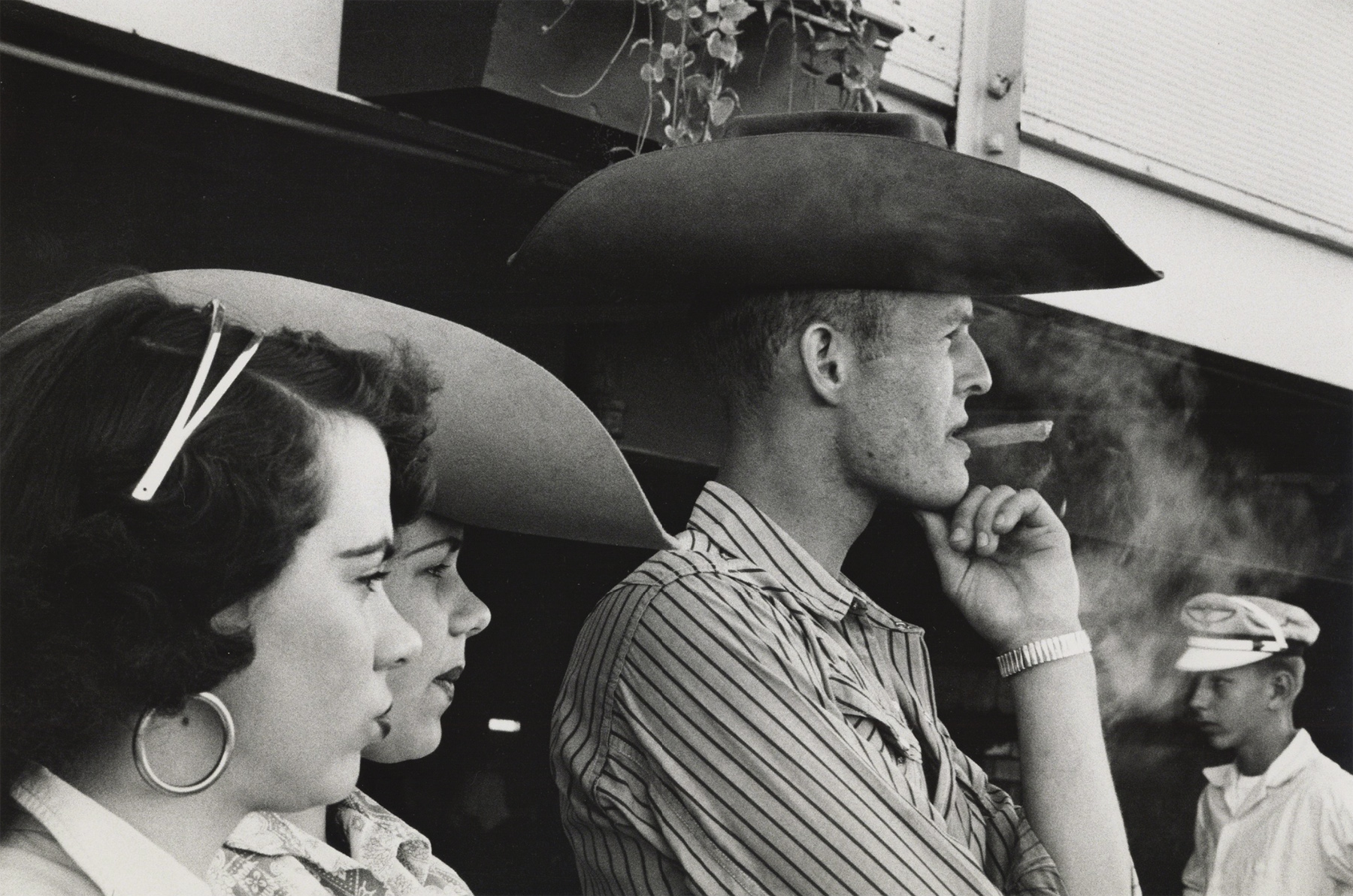
Although taken in the same city at around the same period as the work of Helen Levitt, these photographs by Leon Levinstein have less formality in their composition and definitely possess a more eclectic style evidenced by the dissection and placement of bodies within the image frame. This is not to denigrate either artist but merely to observe how two great photographers can see the same city in totally different ways. In both previsualisation was strong, the camera freezing what is placed before the lens in a balletic display that captured “just what you see.”

Dr Marcus Bunyan


Many thankx to The Metropolitan Museum of Art, New York for allowing me to publish the photographs in the posting.


Leon Levinstein (American, 1910-1988) 'Nuclear Protest, Wall Street' 1970s from the exhibition 'Hipsters, Hustlers, and Handball Players: Leon Levinstein's New York Photographs, 1950-1980' at The Metropolitan Museum of Art, New York, June - October, 2010


Leon Levinstein (American, 1910-1988)
Nuclear Protest, Wall Street
1970s
Gelatin silver print
Gift of Gary Davis, 2009
© Howard Greenberg Gallery


Leon Levinstein (American, 1910-1988) 'Street Scene - Elderly Man Walking with Cane, New York City' 1970s from the exhibition 'Hipsters, Hustlers, and Handball Players: Leon Levinstein's New York Photographs, 1950-1980' at The Metropolitan Museum of Art, New York, June - October, 2010


Leon Levinstein (American, 1910-1988)
Street Scene: Elderly Man Walking with Cane, New York City
1970s
Gelatin silver print
Gift of Gary Davis, 2009
© Howard Greenberg Gallery


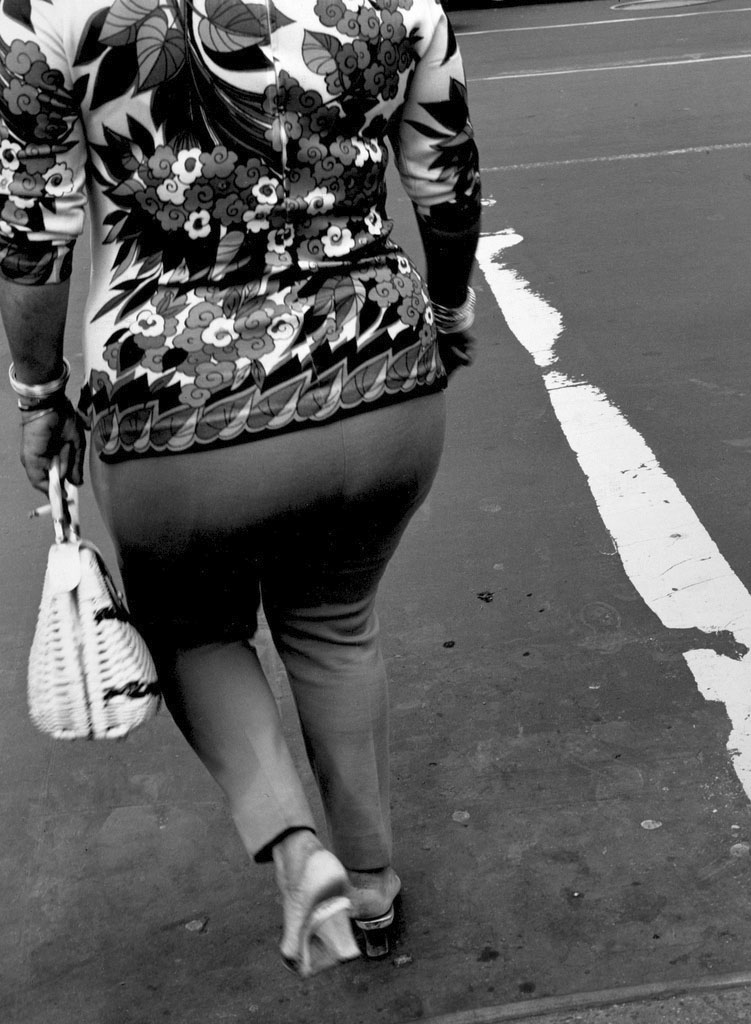
Leon Levinstein (American, 1910-1988) 'Street Scene - Woman in Blonde Wig and Tight Dress, New York City' 1960s


Leon Levinstein (American, 1910-1988)
Street Scene: Woman in Blonde Wig and Tight Dress, New York City
1960s
Gelatin silver print
Gift of Gary Davis, 2009
© Howard Greenberg Gallery


Leon Levinstein (American, 1910-1988) 'Untitled [Head of Man with Hat and Cigar]' c. 1960 from the exhibition 'Hipsters, Hustlers, and Handball Players: Leon Levinstein's New York Photographs, 1950-1980' at The Metropolitan Museum of Art, New York, June - October, 2010


Leon Levinstein (American, 1910-1988)
Untitled [Head of Man with Hat and Cigar]
c. 1960
Gelatin silver print
27.8 x 33.3cm (10 15/16 x 13 1/8 in.)
Stewart S. MacDermott Fund, 1986


A master of classic American street photography, Leon Levinstein (American, 1910-1988) is best known for his candid and unsentimental black-and-white figure studies made in New York City neighborhoods from Times Square and the Lower East Side to Coney Island. From June 8 through October 17, 2010, The Metropolitan Museum of Art presents Hipsters, Hustlers, and Handball Players: Leon Levinstein’s New York Photographs, 1950-1980. This exhibition, drawn exclusively from the Metropolitan’s collection, features 44 photographs that reflect Levinstein’s fearless approach to the medium. Levinstein’s graphic virtuosity – seen in raw, expressive gestures and seemingly monumental bodies – is balanced by an unusual compassion for his off-beat subjects from the demimonde.

Born in West Virginia in 1910, Levinstein moved to New York in 1946 and spent the next 35 years obsessively photographing strangers on the streets of his adopted home. Early in his career, Levinstein was quoted in Photography Annual 1955: “In my photographs I want to look at life – at the commonplace things as if I just turned a corner and ran into them for the first time.” With daring and dedication to his subject, Levinstein captured the denizens of New York City at extremely close range. He used his superb sense of composition to frame the faces, flesh, poses, and movements of his fellow city dwellers in their myriad guises: sunbathers, young couples, children, businessmen, beggars, prostitutes, proselytisers, society ladies, and characters of all stripes.

Although he was a life-long loner, Levinstein was mentored and supported by Alexey Brodovitch, artistic director of Harper’s Bazaar, and Edward Steichen, the eminent photographer and curator at The Museum of Modern Art in New York, both of whom recognised his unique talent in the medium of photography. He was also greatly influenced by workshops led by the distinguished photographer and teacher Sid Grossman.

In the 1950s and 1960s, Levinstein’s work appeared frequently in photography magazines and books alongside that of his peers, such as Robert Frank, Richard Avedon, and Diane Arbus. Nonetheless, he rarely worked on assignment, as they often did; nor did he ever produce his own book of photographs. Instead, he worked as a graphic designer and devoted his evenings and weekends to photography. In 1975, Levinstein received a grant from the Guggenheim Foundation to “photograph as wide a spectrum of the American scene as my experience and vision will allow… I want my photographs to be spontaneous rather than contrived.” Despite this recognition of his achievement, he never seemed able to fit into the commercial photography market that emerged in the 1970s and 1980s, and consequently, his powerful body of work continues to be known mainly by other photographers and by specialists in the field.

Press release from The Metropolitan Museum of Art website [Online] Cited 28/09/2010 no longer available online


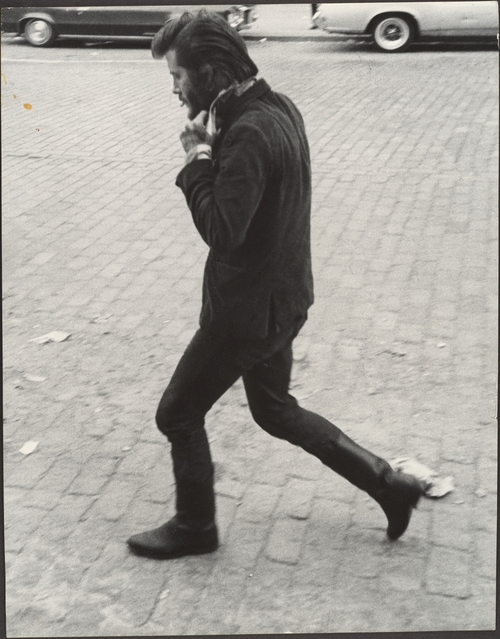
Leon Levinstein (American, 1910-1988) 'Street Scene - Man in Boots Walking and Adjusting His Collar, New York City' 1960s-1970s


Leon Levinstein (American, 1910-1988)
Street Scene: Man in Boots Walking and Adjusting His Collar, New York City
c. 1960s-1970s
Gelatin silver print
Gift of Gary Davis, 2007
© Howard Greenberg Gallery


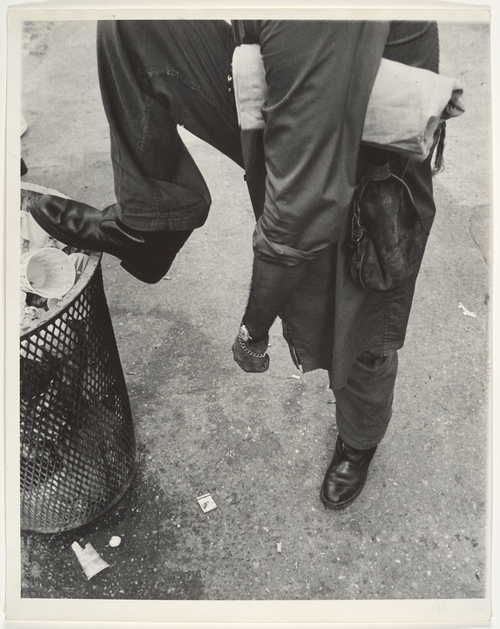
Leon Levinstein (American, 1910-1988) 'Street Scene - Man Resting Foot on Lip of Trashcan, New York City' 1970s


Leon Levinstein (American, 1910-1988)
Street Scene: Man Resting Foot on Lip of Trashcan, New York City
1970s
Gelatin silver print
Gift of Gary Davis, 2009
© Howard Greenberg Gallery


That idea of authenticity, ineffably captured as a decisive instance on a strip of light-sensitive celluloid, was ridden out of town a long time ago by postmodern theorists and certainly seems quaint today, but its power, as fixed in black and white by Levinstein, is undeniable. His mtier was a kind of reductivist monumentality, in which he captured his subjects – ordinary New Yorkers going about their business – in close-up, a technique commonly associated with cinema, to create images that were at once abstract and pregnant with narrative.

Like Weegee and Diane Arbus, Levinstein had a taste for the offbeat and grotesque (he often zeroed in on corpulent pedestrians; midsections and backsides, absent any trace of individuality, were a frequent motif). Also like them, he could be accused of engaging in a form of slumming. But he was less interested in abjection than he was in grandeur, and in this respect, the people in his photos are imbued with a sculptural nobility that simply doesn’t exist in the work of either Weegee or Arbus. More often than not, the “hipsters, hustlers and handball players” of the show’s title loom into the lens, crowding out background details. We get only fragments of the metropolis around them: a bit of stoop or curbstone, or a patch of sand out at Coney Island. Yet the pictures themselves express a sense of velocity, of lives hurtling toward some destiny that’s as heroic as it is bleak. What’s remarkable about Levinstein is that his framing – both epic and destabilising – stands in for the pitiless dynamic of New York itself.

Howard Halle. “Hipsters, Hustlers, and Handball Players: Leon Levinstein’s New York Photographs, 1950-1980,” on the Time Out New York website, Monday June 14, 2010 [Online] Cited 26/12/2019 no longer available online


Leon Levinstein (American, 1910-1988) 'Street Scene - Woman in Striped Dress on Stoop, New York City' 1970s


Leon Levinstein (American, 1910-1988)
Street Scene: Woman in Striped Dress on Stoop, New York City
1970s
Gelatin silver print
Gift of Gary Davis, 2007
© Howard Greenberg Gallery


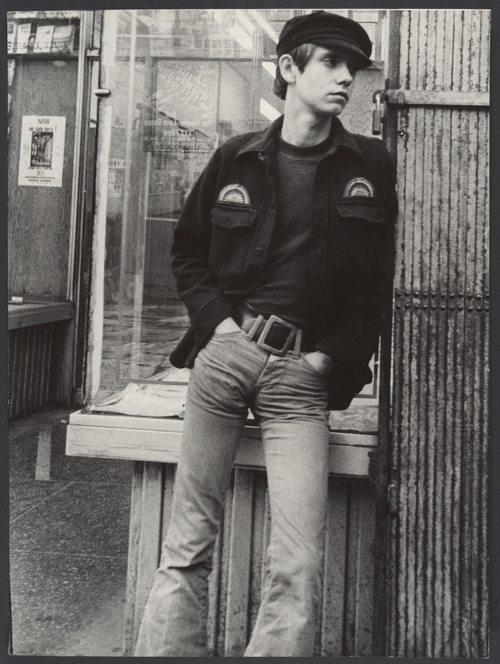
Leon Levinstein (American, 1910-1988) 'Street Scene - Young Man Leaning against Shopfront Window, New York City?' 1972


Leon Levinstein (American, 1910-1988)
Street Scene: Young Man Leaning against Shopfront Window, New York City?
1972
Gelatin silver print
Gift of Gary Davis, 2008
© Howard Greenberg Gallery


Leon Levinstein (American, 1910-1988) 'Untitled' New York City, 1960s-1970s


Leon Levinstein (American, 1910-1988)
Untitled
New York City, 1960s-1970s
Gelatin silver print
34.5 x 25.8cm (13 9/16 x 10 3/16)
© Howard Greenberg Gallery


Leon Levinstein (American, 1910-1988) 'Untitled' New York City, 1960s-1970s


Leon Levinstein (American, 1910-1988)
Untitled
New York City, 1960s-1970s
Gelatin silver print
35.5 x 26.3cm (14 x 10 3/8 in.)
© Howard Greenberg Gallery


Leon Levinstein (American, 1910-1988) 'Untitled' New York City, 1960s-1970s


Leon Levinstein (American, 1910-1988)
Untitled
New York City, 1960s-1970s
Gelatin silver print
34.5 x 25.8cm (13 9/16 x 10 3/16 in.)
© Howard Greenberg Gallery


I think Levinstein’s gift lay in his ability to capture the essence of New York’s rough, funky cool (particularly in the 1960s and 1970s), without getting overly sentimental or kitchy. Nearly all of his images were taken at close range, often cropping out unneeded heads and body parts, focusing on overlooked subjects and elemental gestures found on the city’s streets and sidewalks. His compositions are often angled and dark, and he was particularly adept at capturing the nuances of clothing and fashion as worn by New York’s imperfect and eclectic masses, finding the hidden joy in a bold pattern, a wide collar or a tight fitting pair of shorts. The pictures are tough, edgy, sometimes harsh, and always refreshingly real.

As you look more closely at these candid pictures, Levinstein’s talent for making the common look uncommon shines through. He finds earthy wonder in a foot perched on a wire trash can, a sweat stained tank top, 70s-era moustaches, a grey pinstripe suit, bulging stomachs and belts, a man fluffing his afro in a window, eating corn on the cob on the beach, tattoos, an overcoat with shiny buttons, kissing on a stoop, and a groovy floral blouse paired with tight leggings. He seems to have been fond of backs and sides, abstracting his subjects into fragments of movement or pose, paring them down into types and moments that were representative of something larger in society.

Loring Knoblauch. “Hipsters, Hustlers, and Handball Players: Leon Levinstein’s New York Photographs, 1950-1980 @Met,” on the Collector Daily website, July 23, 2010 [Online] Cited 21/03/2025


Leon Levinstein (American, 1910-1988) '54th Street, New York' 1950s


Leon Levinstein (American, 1910-1988)
54th Street, New York
1950s
Gelatin silver print
34.9 x 27.9 cm (13 3/4 x 11 in.)
Gift of Gary Davis, 2009


Leon Levinstein (American, 1910-1988) 'Untitled [Beach Scene: Woman Wearing Paper Bag Hat, Coney Island, New York]' 1950s


Leon Levinstein (American, 1910-1988)
Untitled [Beach Scene: Woman Wearing Paper Bag Hat, Coney Island, New York]
1950s
Gelatin silver print
35.4 x 28.1cm (13 15/16 x 11 1/16 in.)
Gift of Gary Davis, 2009
© Howard Greenberg Gallery


Leon Levinstein (American, 1910-1988) 'Coney Island' 1955


Leon Levinstein (American, 1910-1988)
Coney Island
1955
Gelatin silver print
© Howard Greenberg Gallery


Leon Levinstein (American, 1910-1988) 'Untitled' Coney Island, 1960s


Leon Levinstein (American, 1910-1988)
Untitled
Coney Island, 1960s
Gelatin silver print
35.5 x 28.1cm (14 x 11 1/16 in.)
© Howard Greenberg Gallery


The Metropolitan Museum of Art
1000 Fifth Avenue at 82nd Street
New York, New York 10028-0198
Information: 212-535-7710

Opening hours:
Sunday – Tuesday and Thursday: 10am – 5pm
Friday and Saturday: 10am – 9pm
Closed Wednesday

The Metropolitan Museum of Art website

LIKE ART BLART ON FACEBOOK

Back to top

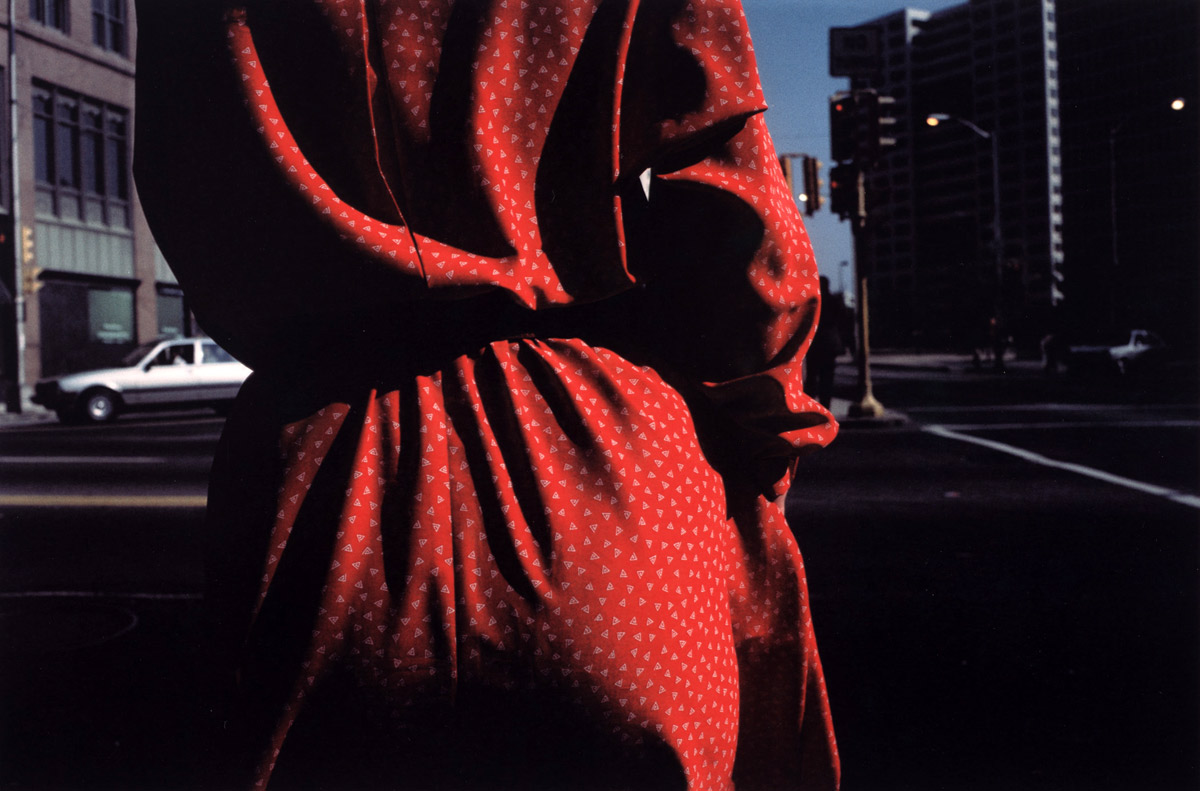
Exhibition: ‘Exposed: Voyeurism, Surveillance & the Camera’ at Tate Modern, London

Exhibition dates: 28th May – 3rd October 2010


Many thankx to Rose Dahlsen and the Tate Modern for allowing me to publish the photographs in the posting. Please click on the photographs for a larger version of the image.


Harry Callahan (American, 1912-1999)
 'Untitled (Atlanta)' 1984 from the exhibition 'Exposed: Voyeurism, Surveillance & the Camera' at Tate Modern, London, May - Oct 2010 from the exhibition 'Exposed: Voyeurism, Surveillance & the Camera' at Tate Modern, London, May - Oct 2010


Harry Callahan (American, 1912-1999)
Untitled (Atlanta)
1984
Dye transfer print 
9 7/16 x 14 5/16 in. (23.97 x 36.35cm)
San Francisco Museum of Modern Art
© The Estate of Harry Callahan, courtesy Pace/MacGill Gallery, New York


Jonathan Olley. 'Golf Five Zero watchtower (known to the British Army as 'Borucki Sanger'), Crossmaglen Security Force Base, South Armagh' 1999 from the exhibition 'Exposed: Voyeurism, Surveillance & the Camera' at Tate Modern, London, May - Oct 2010


Jonathan Olley (British, b. 1967)
Golf Five Zero watchtower (known to the British Army as ‘Borucki Sanger’), Crossmaglen Security Force Base, South Armagh
1999
Gelatin silver bromide print
Coutesy Diemar/Noble Photography, London
© J.Olley


Philip-Lorca diCorcia (American, b. 1951) 'Head #23' 2001 from the 'Head' series


Philip-Lorca diCorcia (American, b. 1951)
Head #23
2001
From the Head series


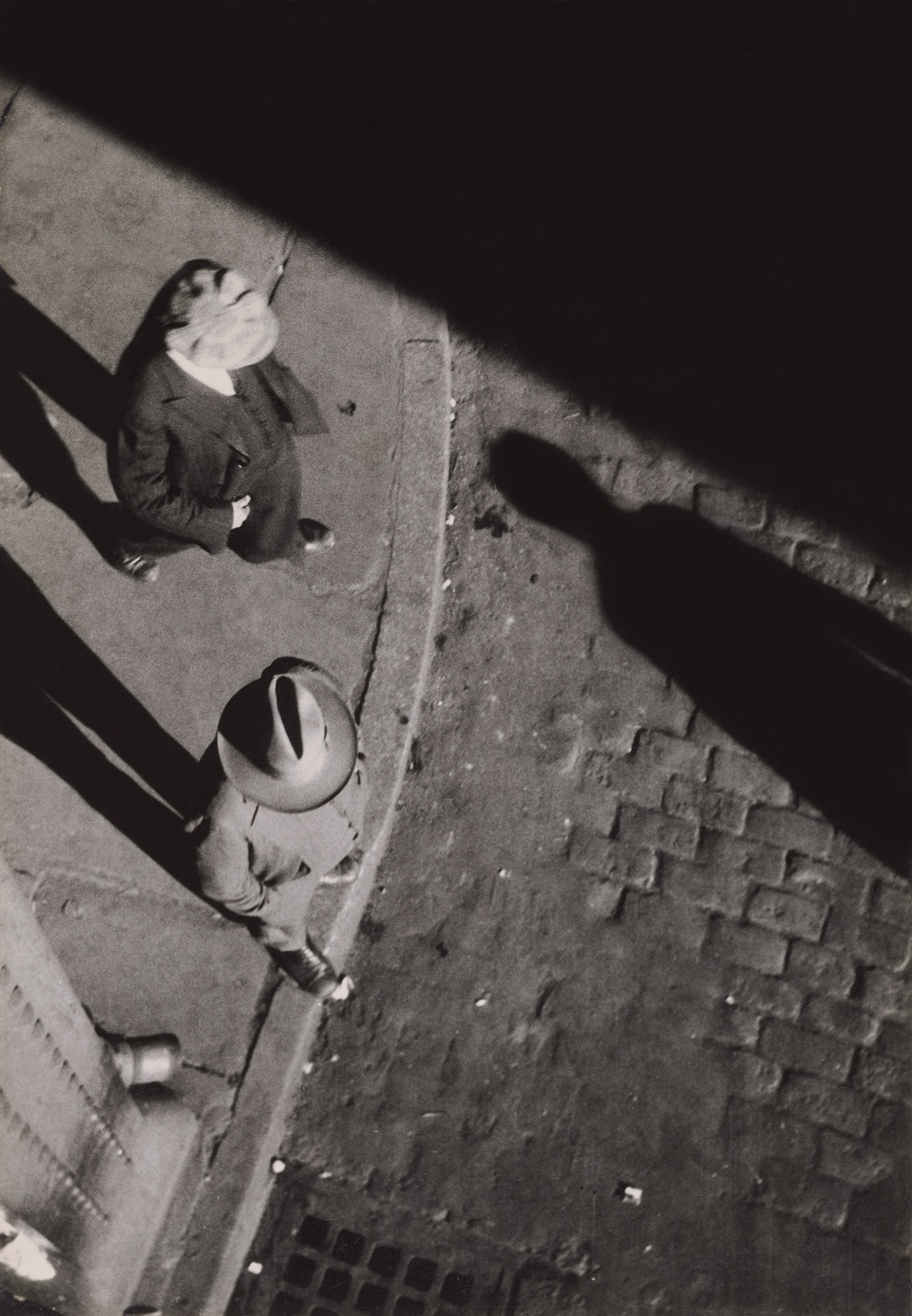
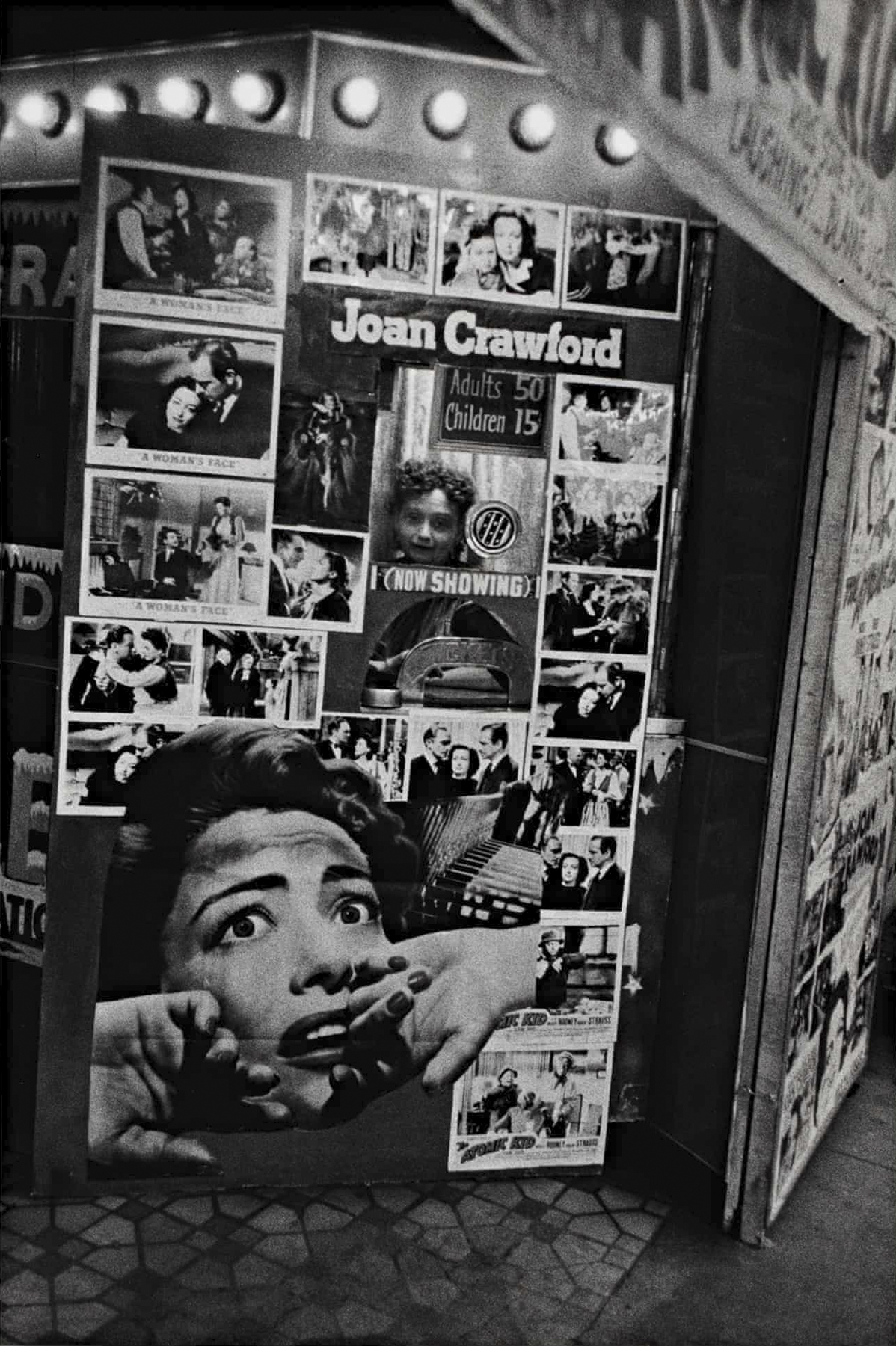
Examining photography as an invasive act immediately confronts the complacency with which we accept these invasions, encourage them even in our curiosity, and though it falters in parts and overwhelms in others (this is a huge exhibition), EXPOSED successfully addresses a number of the social, cultural and psychologically motivating factors behind these kinds of images – why we take them and why we look at them. Critical to this engagement is the wall text at the beginning, which states that most of the hundreds of photographs on display were taken without the subject’s knowledge. It is a distinctly creepy start.

Philip-Lorcia diCorcia’s Head series perhaps best embodies this conundrum. Visually they are not terribly shocking or even necessarily interesting. Theatrical lighting catches the head of someone in a crowd and the effect is of a staged encounter. In fact, these people, denominated variously as Head #23 or Head #4, were photographed without their knowledge by a series of hidden cameras, the flash triggering as they walked by. Famously, one of diCorcia’s unwitting targets tried to take legal action against him but the landmark ruling defended the artist and his right to self-expression over any right the subject might have over their own image. It is difficult to know which is worse – to be censored or to be spied upon.

Jo Higgins. “Review: Exposed: Voyeurism, Surveillance & the Camera, Tate Modern, London,” on the Jo Higgins website, July 5, 2010 [Online] Cited 22/03/2025


Benjamin Lowy (American, b. 1979) 'Iraq Perspective II' 2003-2007 from the exhibition 'Exposed: Voyeurism, Surveillance & the Camera' at Tate Modern, London, May - Oct 2010


Benjamin Lowy (American, b. 1979)
Iraq Perspective II
2003-2007


US soldiers go on a late night raid with Iraqi Sunni Concerned citizens leading the way and identifying potential AQi targets. Due to a high level of IEDs in the area the company size raiding party walked 5 kilometres to the target in complete darkness, raided the target houses, detained questionable suspects and walked 5 kilometres back to waiting humvees.


Sophie Calle (French, b. 1953) 'The Hotel, Room 47' (L'Hôtel, Chambre 47) 1981


Sophie Calle (French, b. 1953)
The Hotel, Room 47 (L’Hôtel, Chambre 47)
1981
2 works on paper, photographs and ink
2140 x 1420 mm
Tate
Presented by the Patrons of New Art through the Tate Gallery Foundation 1999


This is a two-part framed work comprising photographs and text. In the upper part, the title Room 47 is printed below a colour photograph of elegantly carved wooden twin head-boards behind a bed covered in rich brown satin. Below it, three columns of italic text are diary entries describing findings in the hotel room between Sunday 22 February 1981 and Tuesday 24. In the lower frame a grid of nine black and white photographs show things listed in the text above. This work is part of a project titled The Hotel, which the artist has defined:

“On Monday, February 16, 1981, I was hired as a temporary chambermaid for three weeks in a Venetian hotel. I was assigned twelve bedrooms on the fourth floor. In the course of my cleaning duties, I examined the personal belongings of the hotel guests and observed through details lives which remained unknown to me. On Friday, March 6, the job came to an end.” (Quoted in Calle, pp. 140-141.)

Each of the twelve rooms gave rise to a diptych of similar structure following the occupancy of one or more guests during the period of the artist’s employment at the hotel. Some rooms feature more than once as a second set of guests occupied them, giving rise to a total of twenty-one diptychs in the series. Calle’s descriptions of the hotel rooms and their contents combine factual documentation along with her personal response to the people whose lives she glimpsed by examining their belongings. Each text begins with the chambermaid / artist’s first entry into the room and a notation of which bed or beds have been slept in, with a description of the nightwear the guests have left. A list of objects usually follows, as the artist transcribes her activities in the room. Calle is unashamedly voyeuristic, reading diaries, letters, postcards and notes written or kept by the unknown guests, rummaging in suitcases, and looking into wardrobes and drawers. She sprays herself with their perfume and cologne, makes herself up using the contents of a vanity case, eats food left behind and salvages a pair of women’s shoes left in the bin. Outside the room, she listens at doors, recording the occupants’ conversations or any other sounds she may overhear, and even peers into a room when the floor-waiter opens the door to catch a glimpse of the unknown guests.

The absent occupants described in Room 47 are a family of four – two parents and two children – as revealed by their four pairs of slippers. Calle does not go through their suitcase, commenting: ‘I am already bored’. From their passports she discovers that the parents are a married couple from Geneva and she copies out four postcards one of them has written. Words on one of these hint at problems within the family.

Calle began her artistic projects in 1979 on returning to Paris after seven years’ travel abroad. Disorientated, she felt like a stranger in her own city, not knowing how to occupy her time. She started to follow random passers-by and spend her days as they did. Eventually she picked up the camera she had been experimenting with during her time abroad and photographed the strangers, writing diaristic notes of their movements. From this she has developed a particular way of working, collecting information about people who are absent and investigating her subjects like a detective. The Hotel follows directly from a project the artist undertook the previous year entitled Suite Venetienne 1980, which evolved from a chance encounter with a man she had been following in Paris. He told her he was going to Venice, so she followed him there in disguise, documenting her observations. After a year of planning and waiting, she returned to Venice in 1981 as a chambermaid.
The Hotel diptychs were produced in an edition of four in English and four in French. Tate’s copy of Room 47 (22 February) is the first in the English edition. Another version of Room 47 exists for the period 2-6 March.

Elizabeth Manchester
June 2005

Text from the Tate website [Online] Cited 26/12/2019


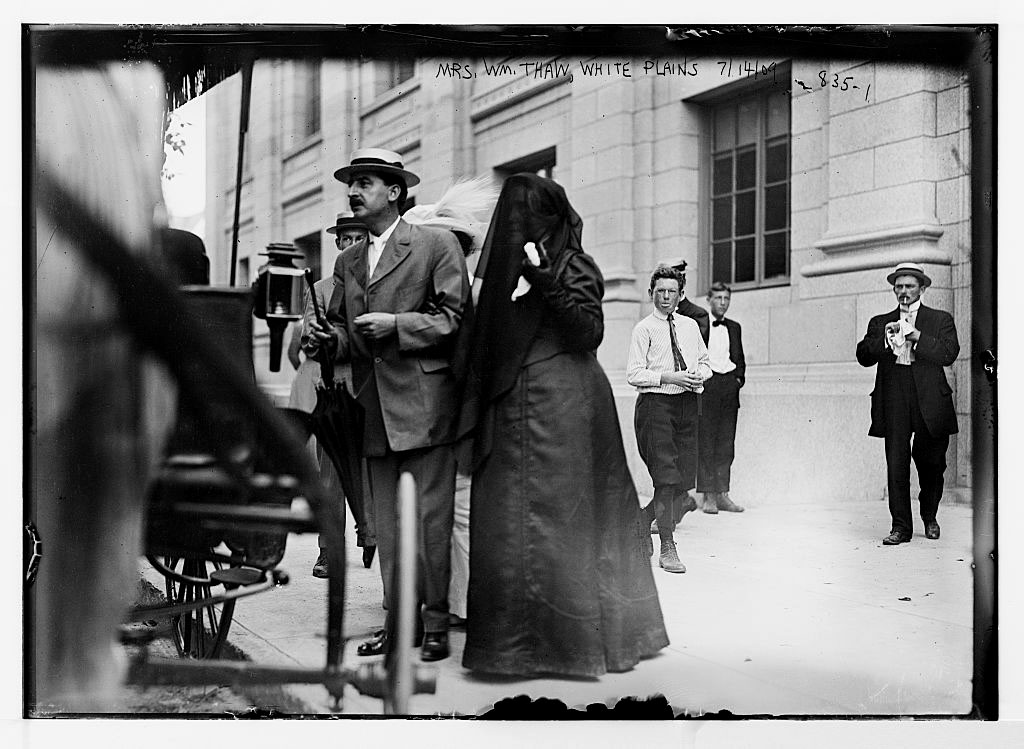
Unknown photographer / Bain News Service, publisher. 'Mrs. Wm. Thaw, veiled, on street, White Plains, N.Y.'
1909


Unknown photographer
Bain News Service, publisher

Mrs. Wm. Thaw, veiled, on street, White Plains, N.Y.
1909
From a glass negative
Library of Congress Prints and Photographs Division Washington, D.C.


Tom Howard (American, 1894 - 1961) '[Electrocution of Ruth Snyder, Sing Sing Prison, Ossining, New York]' 1928


Tom Howard (American, 1894-1961)
[Electrocution of Ruth Snyder, Sing Sing Prison, Ossining, New York]
1928
Gelatin silver print
Collection SFMOMA, Accessions Committee Fund purchase


In 1925, Ruth Snyder, a housewife from Queens, New York, took a lover, Judd Gray, a corsetmaker from upstate. Already married to Albert Snyder, an arts editor at MotorBoating magazine, she hid the affair for nearly three years. But on March 12, 1927, she and Gray planned a murder. After taking out a forged insurance policy, the two killed Ruth’s husband and staged a burglary scene. It didn’t take long for law enforcement to connect the dots, and a few months later, Gray and Snyder found themselves charged with first degree murder.
The court case was front page news and both Ruth and Judd found themselves constantly photographed for ever-evolving stories. Sing Sing, not one to change policy for press, reinstated that no photographers were to be present at the execution. But the public wanted to see.

The New York Daily News knew that the prison was familiar with many journalists from their staff, so they hired someone from out of town, Tom Howard, a then-unknown local photographer from the Chicago Tribune. Knowing he would never be allowed in with a camera, Howard strapped a single-use camera to his right ankle and wired a trigger release up his pant leg. Remarkably, he was allowed in. From across the room, Howard pointed his toe at the chair and took but one photo as Snyder took her last breaths.

The camera was rushed to the city and the film developed overnight. Editors and writers marveled at what was to be one of the most shocking photographs ever made: Snyder in the chair, the legs of the prison guard to the right. The image, shot on an angle, was cropped and published immediately with the headline: Dead!

The black-and-white image was shocking to the U.S. and international public alike. There sat a 32-year-old wife and mother, killed for killing. Her blurred figured seemed to evoke her struggle, as one can imagine her last, strained breaths. Never before had the press been able to attain such a startling image – one not made in a faraway war, one not taken of the aftermath of a crime scene, but one capturing the very moment between life and death here at home.

Erica Fahr Campbell. “The First Photograph of an Execution by Electric Chair,” on the TIME website, April 10,2024 [Online] Cited 24/03/2025


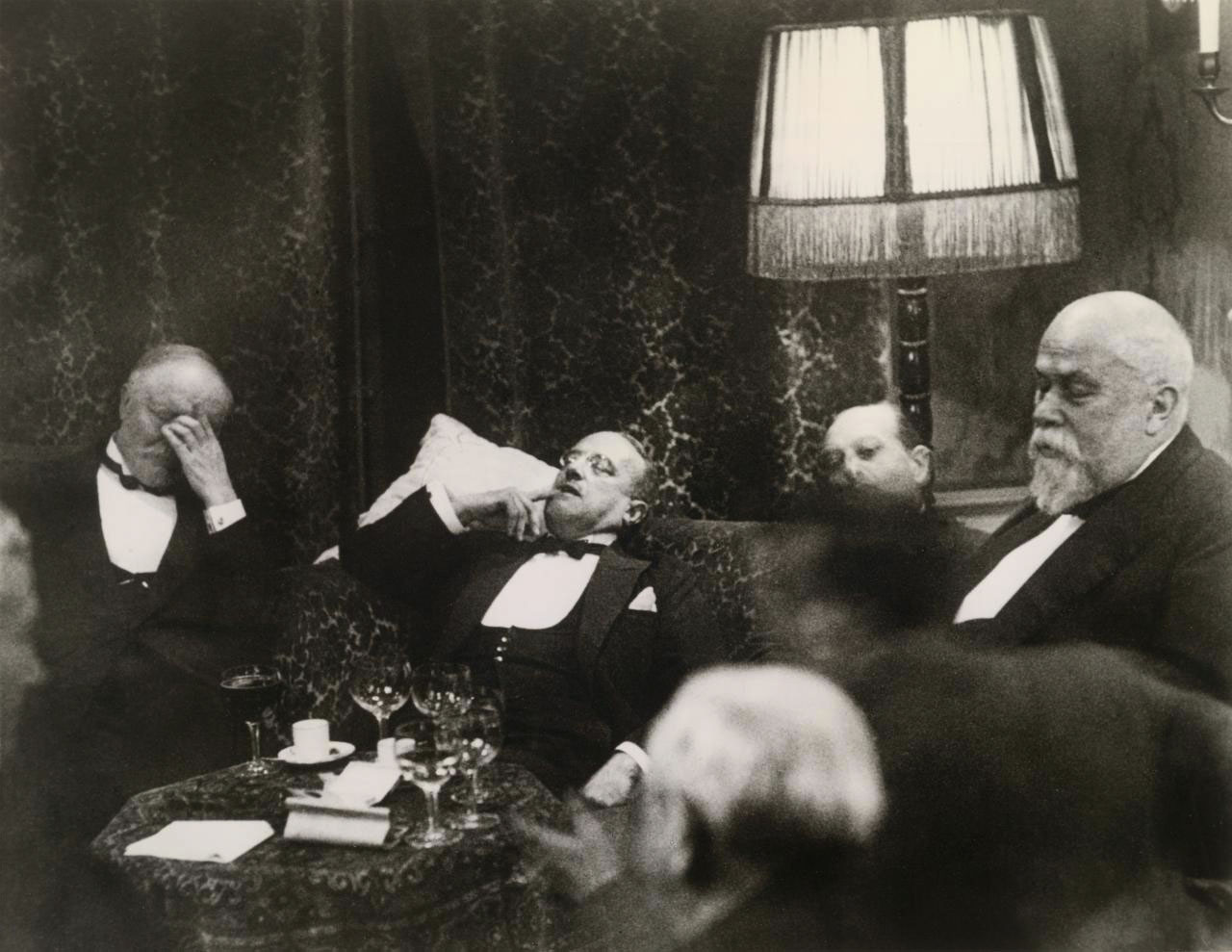
Erich Salomon (German Jewish, 1886-1944) 'Hague Conference (Second Hague Conference on Reparations, January 1930, in the early morning hours)' 1930


Erich Salomon (German Jewish, 1886-1944)
Hague Conference (Second Hague Conference on Reparations, January 1930, in the early morning hours)
1930
Promised gift of Paul Sack to the Sack Photographic Trust of the San Francisco Museum of Modern Art


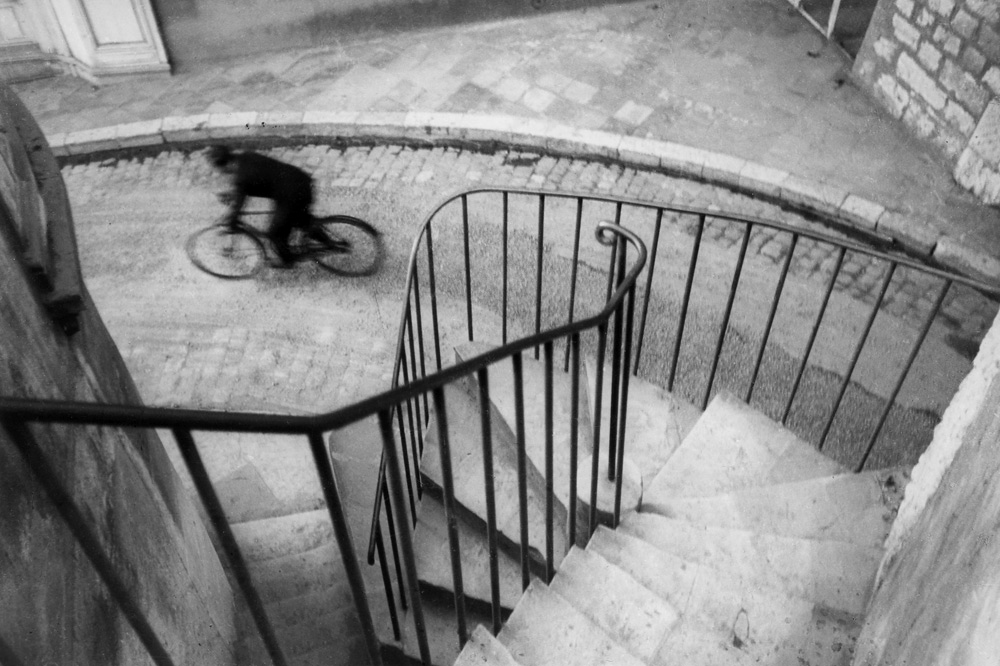
Henri Cartier Bresson (French, 1908-2004) 'Hyeres, France' 1932


Henri Cartier Bresson (French, 1908-2004)
Hyeres, France
1932
Gelatin silver print


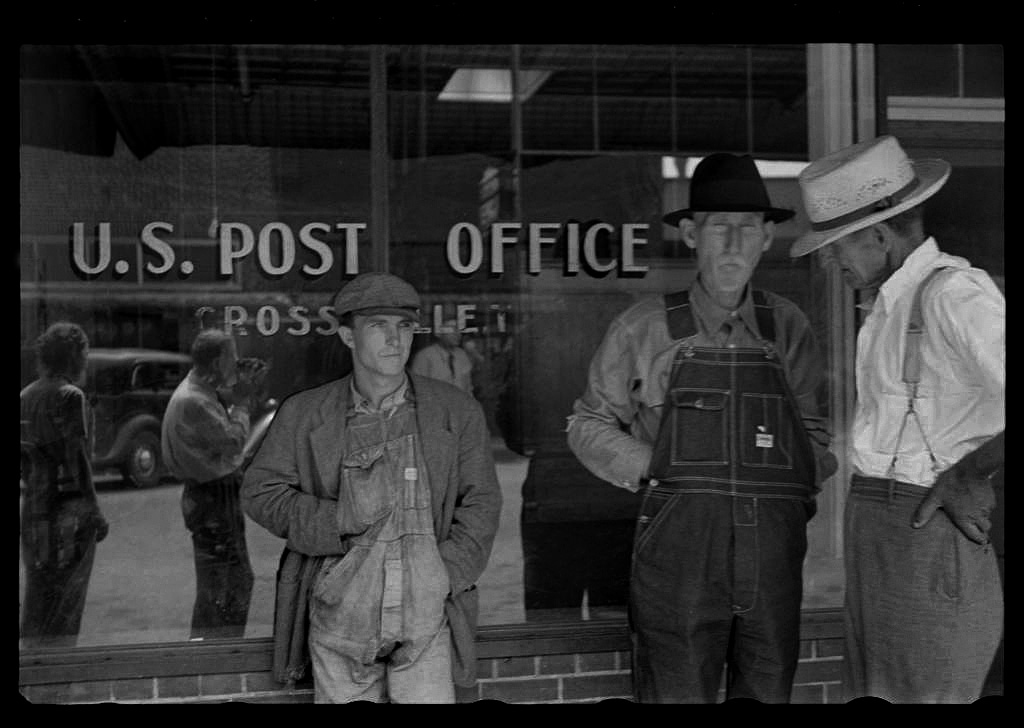
Ben Shah (American, 1898-1969) 'Post Office, Crossville, Tennesse' 1937


Ben Shah (American, 1898-1969)
Post Office, Crossville, Tennesse
1937
Gelatin silver print


Ben Shahn visible using his right-angled lens in the window reflection


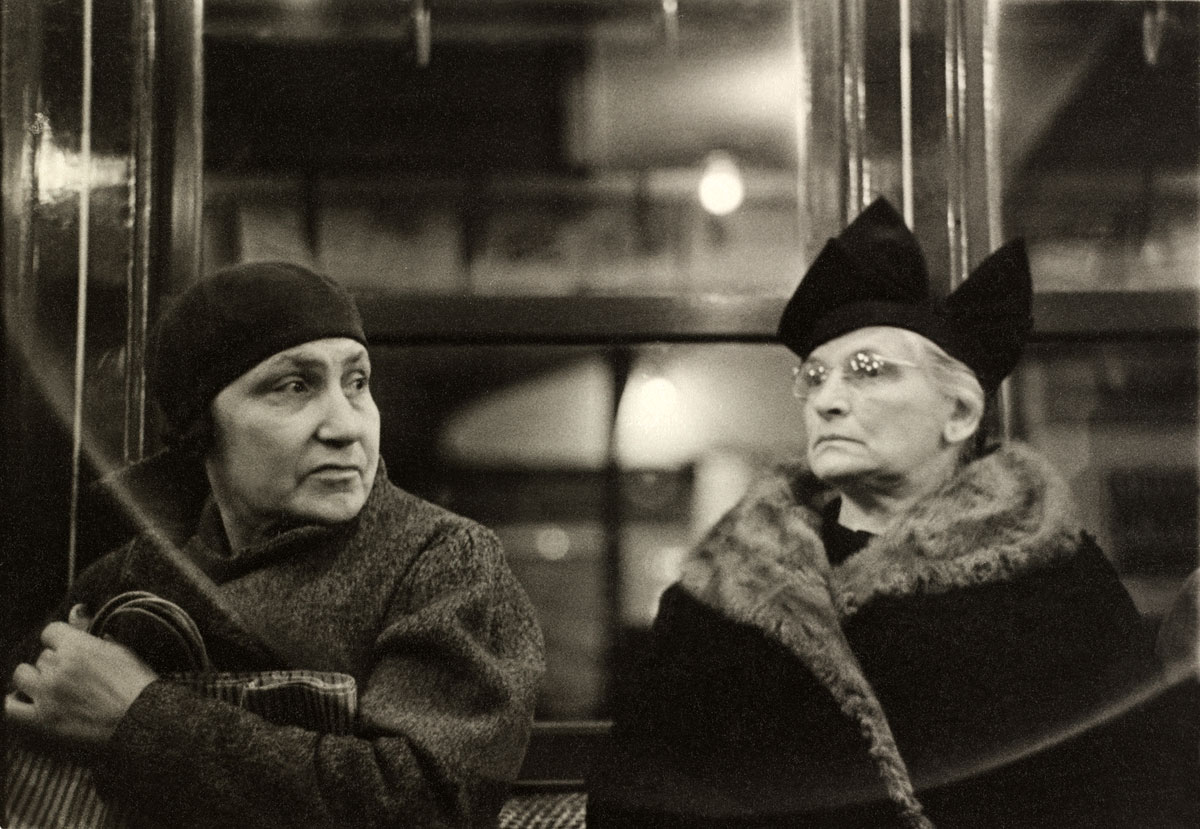
Walker Evans (American, 1903-1975) 'Subway Passengers, New York' 1938


Walker Evans (American, 1903-1975)
Subway Passengers, New York
1938
Gelatin silver print


Walker Evans (American, 1903-1975) 'Subway portrait' 1938-1941


Walker Evans (American, 1903-1975)
Subway Passengers, New York
1938-1941
Gelatin silver print


Weegee (Arthur H. Fellig) (American, 1899-1968) 'Their First Murder' Before 1945


Weegee (Arthur H. Fellig) (American, 1899-1968)
Their First Murder
Before 1945
Gelatin silver print


“Brooklyn School Children see Gambler Murdered in Street
Pupils were leaving P.S. 143, [Sixth Ave. and Roebling St.] in the Williamsburg section of Brooklyn, at 3:15 yesterday when Peter Mancuso, 22, described by police as a small time gambler, pulled up in a 1931 Ford at a traffic light a block from the school. Up to the car stepped a waiting gunman, who fired twice and escaped through the throng of children. Mancuso, shot through the head and heart, struggled to the board and collapsed dead on the pavement. Above are some of the spectators. The older woman is Mancuso’s aunt, who lives in the neighborhood, and the boy tugging at the hair of the girl in front of him is her son, hurrying away from her. Below is what they saw as a priest, flanked by an ambulance doctor and a detective, said the last rites of the Church over the body.”
PM Daily, October 9, 1941, Vol. II, No. 82, p. 15

Text from the International Center of Photography website


Weegee (Arthur H. Fellig) (American, 1899-1968) 'Audience in the Palace Theatre' c. 1943


Weegee (Arthur H. Fellig) (American, 1899-1968)
Audience in the Palace Theatre
c. 1943
Gelatin silver print
© Weegee/International Center of Photography/Getty Images


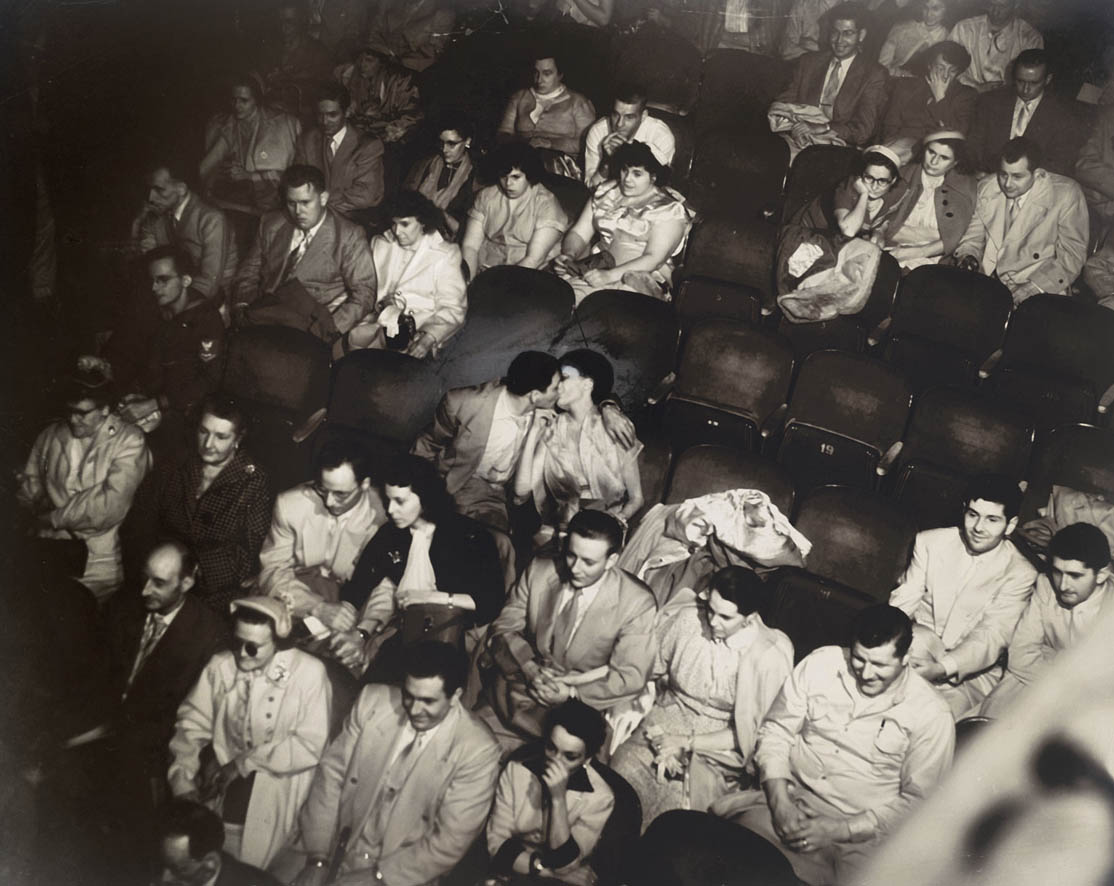
Weegee (Arthur Fellig) (American, born Austria, 1899-1968) '[Lovers at the Movies, Times Square]' c. 1953


Weegee (Arthur Fellig) (American born Austria, 1899-1968)
[Lovers at the Movies, Times Square]
c. 1953
Gelatin silver print
26.7 × 35.4cm (10 1/2 × 13 15/16 in)
© International Center of Photography


Robert Frank (American, 1924-2019)
'New York City' 1955 From 'The Americans'


Robert Frank (American, 1924-2019)
New York City
1955
From The Americans
Gelatin silver print


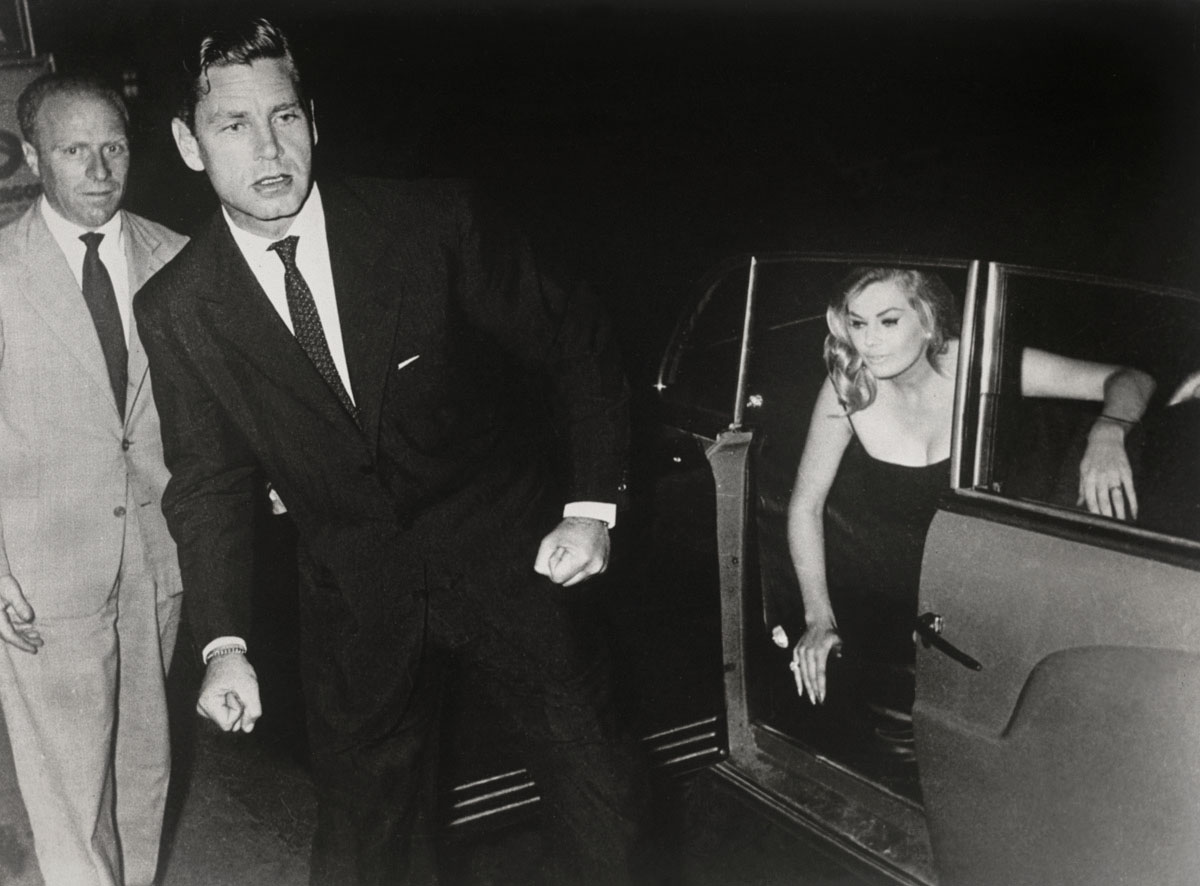
Tazio Secchiaroli (Italian, 1925-1998) 'Anita Ekberg and Husband Anthony Steel, Vecchia, Roma' 1958


Tazio Secchiaroli (Italian, 1925-1998)
Anita Ekberg and Husband Anthony Steel, Vecchia, Roma
1958
Gelatin silver print
SFMOMA, Accessions Committee Fund purchase


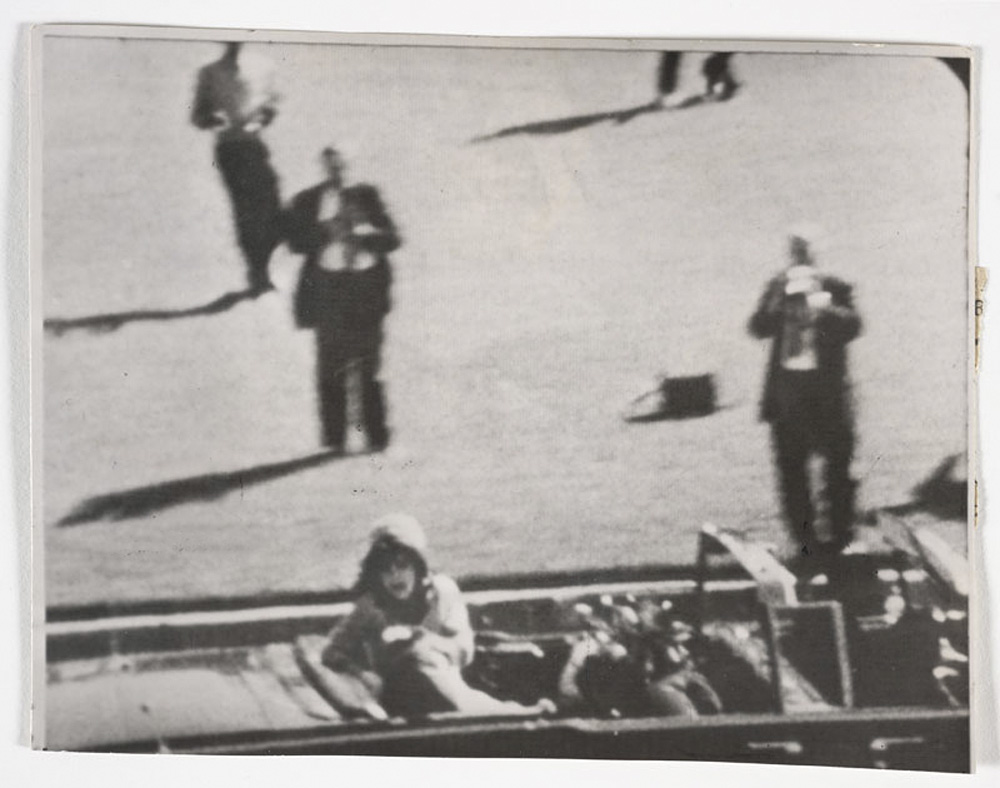
Abraham Zapruder (American born Ukraine, 1905-1970) 'Assassination of John F. Kennedy, November 22, 1963' 1963


Abraham Zapruder (American born Ukraine, 1905-1970)
Assassination of John F. Kennedy, November 22, 1963
1963
Collection SFMOMA, Accessions Committee Fund purchase
© The Sixth Floor Museum at Dealey Plaza


United Press International. 'Suffolk, Virginia, Race Confrontation, May 6, 1964' 1964


United Press International
Suffolk, Virginia, Race Confrontation, May 6, 1964
1964
Collection SFMOMA, Accessions Committee Fund purchase
© United Press International, Inc. All Rights Reserved


Lee Friedlander (American, b. 1934) 'New York City' 1966


Lee Friedlander (American, b. 1934)
New York City
1966
Gelatin silver print


Vito Acconci (Italian, 1940-2017)
'Following Piece' 1969


Vito Acconci (Italian, 1940-2017)
Following Piece
1969
Gelatin silver prints


Exposed offers a fascinating look at pictures made on the sly, without the explicit permission of the people depicted. With photographs from the late nineteenth century to present day, the pictures present a shocking, illuminating and witty perspective on iconic and taboo subjects.

Beginning with the idea of the ‘unseen photographer’, Exposed presents 250 works by celebrated artists and photographers including Brassaï’s erotic Secret Paris of the 1930s images; Weegee’s iconic photograph of Marilyn Monroe; and Nick Ut’s reportage image of children escaping napalm attacks in the Vietnam War. Sex and celebrity is an important part of the exhibition, presenting photographs of Liz Taylor and Richard Burton, Paris Hilton on her way to prison and the assassination of JFK. Other renowned photographers represented in the show include Guy Bourdin, Henri Cartier-Bresson, Philip Lorca DiCorcia, Walker Evans, Robert Frank, Nan Goldin, Lee Miller, Helmut Newton and Man Ray.

The UK is now the most surveyed country in the world. We have an obsession with voyeurism, privacy laws, freedom of media, and surveillance – images captured and relayed on camera phones, YouTube or reality TV.

Much of Exposed focuses on surveillance, including works by both amateur and press photographers, and images produced using automatic technology such as CCTV. The issues raised are particularly relevant in the current climate, with topical debates raging around the rights and desires of individuals, terrorism and the increasing availability and use of surveillance. Exposed confronts these issues and their implications head-on.

Text from the Tate Modern website [Online] Cited 21/09/2010 no longer available online


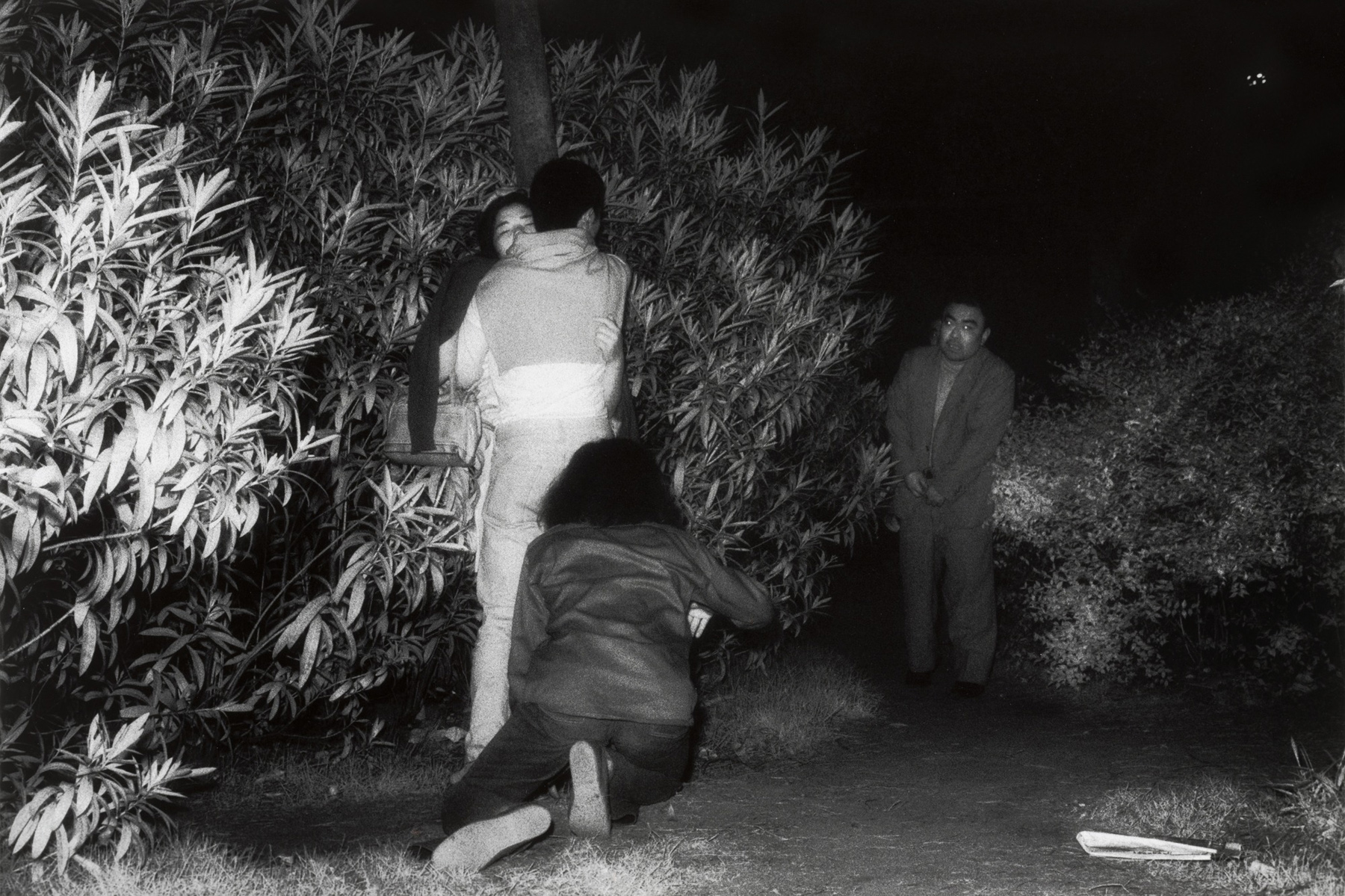
Kohei Yoshiyuki (Japan, b. 1946)
'Untitled' 1971 From the series 'The Park'


Kohei Yoshiyuki (Japan, b. 1946)
Untitled
1971
From the series The Park
Gelatin silver print


Kohei Yoshiyuki (Japan, b. 1946) 'Untitled' 1971 From the series 'The Park'


Kohei Yoshiyuki (Japan, b. 1946)
Untitled
1971
From the series The Park
Gelatin silver print


Sandra Phillips on Surveillance – Exposed at Tate Modern

SFMOMA’s Curator of Photography Sandra Phillips describes how contemporary artists like Sophie Calle and Benjamin Lowry have started to talk back to surveillance.


Ron Galella (American, b. 1931) 'What Makes Jackie Run? Central Park, New York City, October 4, 1971' 1971


Ron Galella (American, 1931-2022)
What Makes Jackie Run? Central Park, New York City, October 4, 1971
1971
Gelatin silver print
7 3/8 in x 9 7/8 in (18.73 x 25.08cm)
© Ron Galella


Ronald Edward Galella (January 10, 1931 – April 30, 2022) was an American photographer, known as a pioneer paparazzo. Dubbed “Paparazzo Extraordinaire” by Newsweek and “the Godfather of the U.S. paparazzi culture” by Time magazine and Vanity Fair, he is regarded by Harper’s Bazaar as “arguably the most controversial paparazzo of all time”. He photographed many celebrities out of the public eye and gained notice for his feuds with some of them, including Jacqueline Onassis and Marlon Brando. Despite the numerous controversies and claims of stalking, Galella’s work was praised and exhibited in art galleries worldwide.

Text from the Wikipedia website


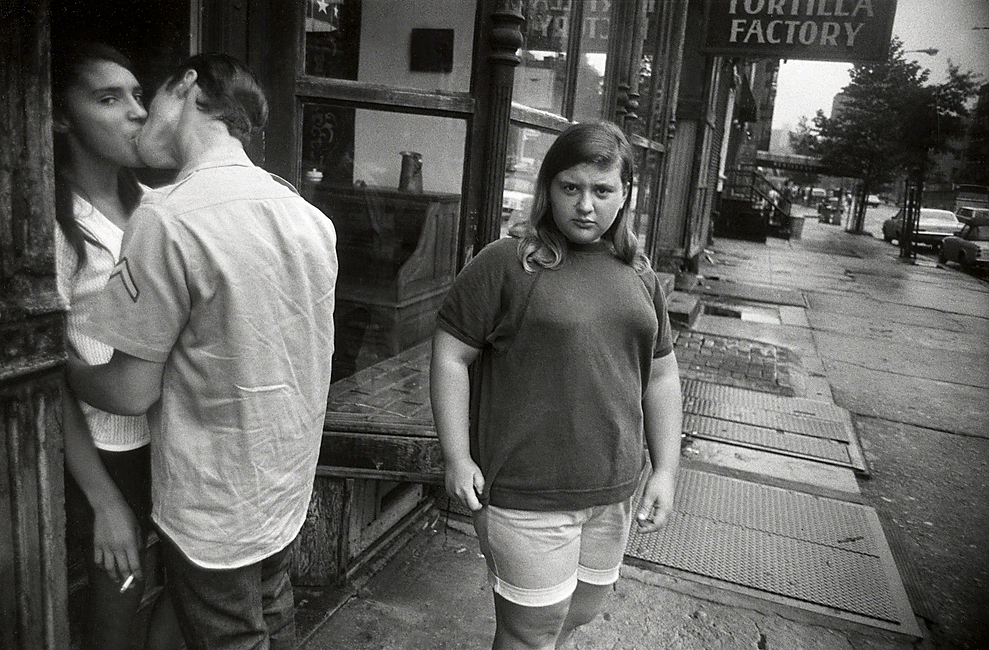
Garry Winogrand (American, 1928-1984) 'Couple Kissing, Girl Staring at Camera, Tortilla Factory, New York' 1969


Garry Winogrand (American, 1928-1984)
Couple Kissing, Girl Staring at Camera, Tortilla Factory, New York
1969
Gelatin silver print
© Garry Winogrand/Fraenkel Gallery, San Francisco


Nan Goldin (American, b. 1953) 'Nan and Brian in Bed, New York City' 1983


Nan Goldin (American, b. 1953)
Nan and Brian in Bed, New York City
1983
Chromogenic print
Nan Goldin and Matthew Marks Gallery, NYC


Denis Beaubois (Mauritian, b. 1970) 'In the event of Amnesia the city will recall…' 1996-1997 (still)


Denis Beaubois (Mauritian, b. 1970)
In the event of Amnesia the city will recall... (still)
1996-1997
DVD
9 mins 30 secs
Courtesy the artist


Denis Beaubois (Mauritian, b. 1970) 'In the event of Amnesia the city will recall…' 1996-1997 (still)


Denis Beaubois (Mauritian, b. 1970)
In the event of Amnesia the city will recall… (still)
1996-1997
DVD
9 mins 30 secs
Courtesy the artist


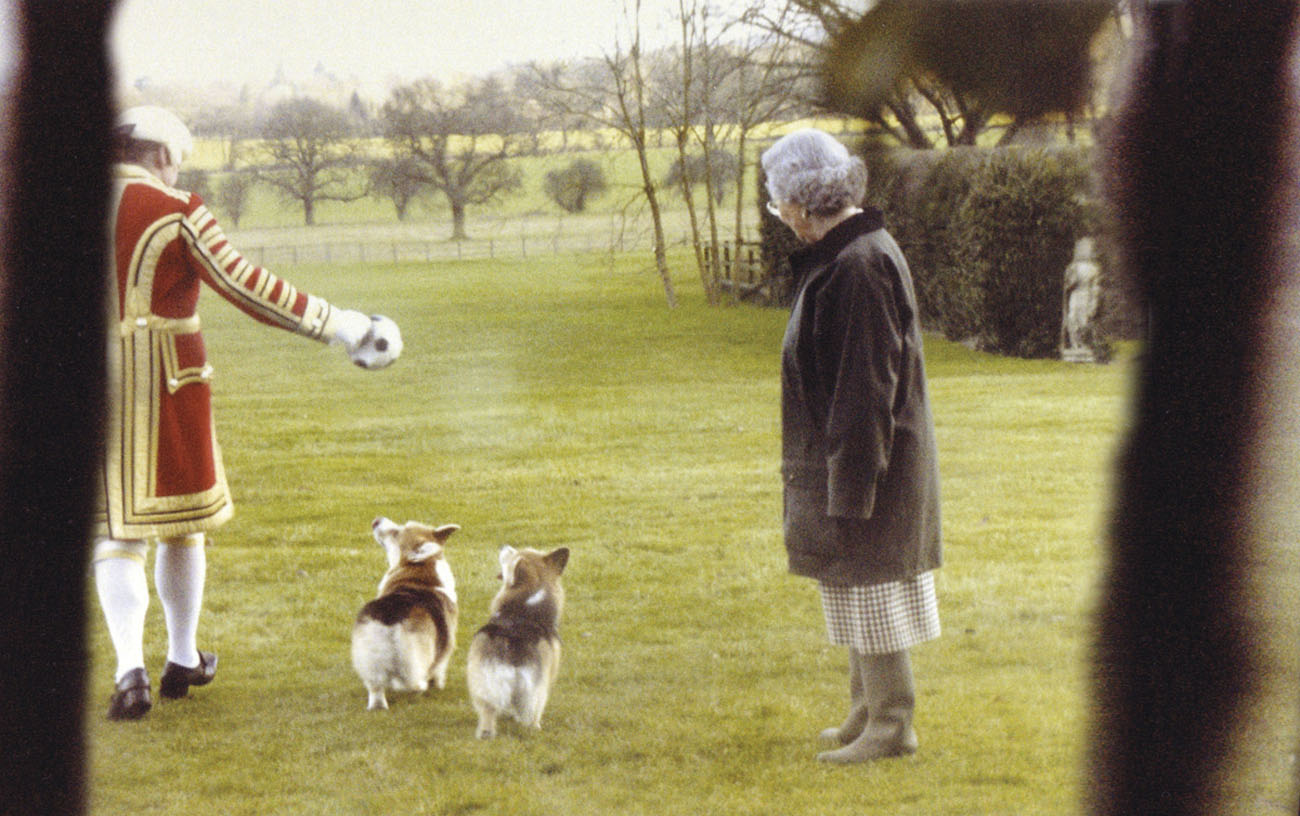
Alison Jackson (English, b. 1960)
'The Queen plays with her corgis' 2007


Alison Jackson (English, b. 1960)
The Queen plays with her corgis
2007
From the series Confidential
Chromogenic print
Courtesy the artist and Hamiltons Gallery, London
© Alison Jackson, Hamiltons Gallery, London


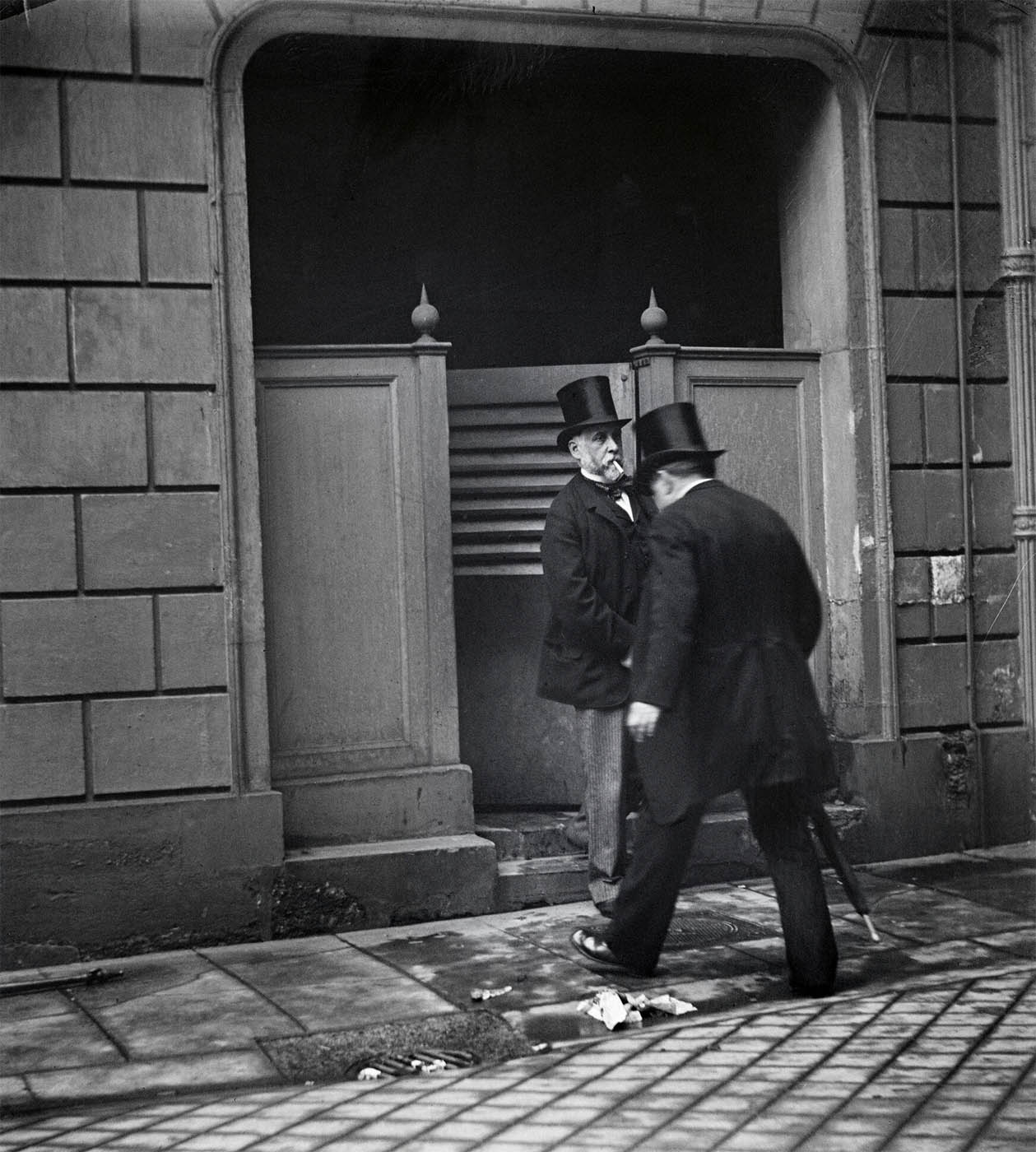
Giuseppe Primoli (Italian, 1851-1927)
'Edgar Degas emerging from a Parisian public toilet' 1889


Giuseppe Primoli (Italian, 1851-1927)
Edgar Degas emerging from a Parisian public toilet
1889
Gelatin silver print


Walker Evans (American, 1903-1975) 'Street Scene, New York' 1929


Walker Evans (American, 1903-1975)
Street Scene, New York
1928
Gelatin silver print
San Francisco Museum of Modern Art
© Walker Evans Archive, The Metropolitan Museum of Art


Georges Dudognon (French, 1922-2001) 'Greta Garbo in the Club St. Germain, Paris' c. 1950s


Georges Dudognon (French, 1922-2001)
Greta Garbo in the Club St. Germain, Paris
c. 1950s
Gelatin silver print
7 1/16  x 7 1/8 in. (17.94 x 18.1cm)
San Francisco Museum of Modern Art, Members of Foto Forum, 2005.200
© Estate of Georges Dudognon


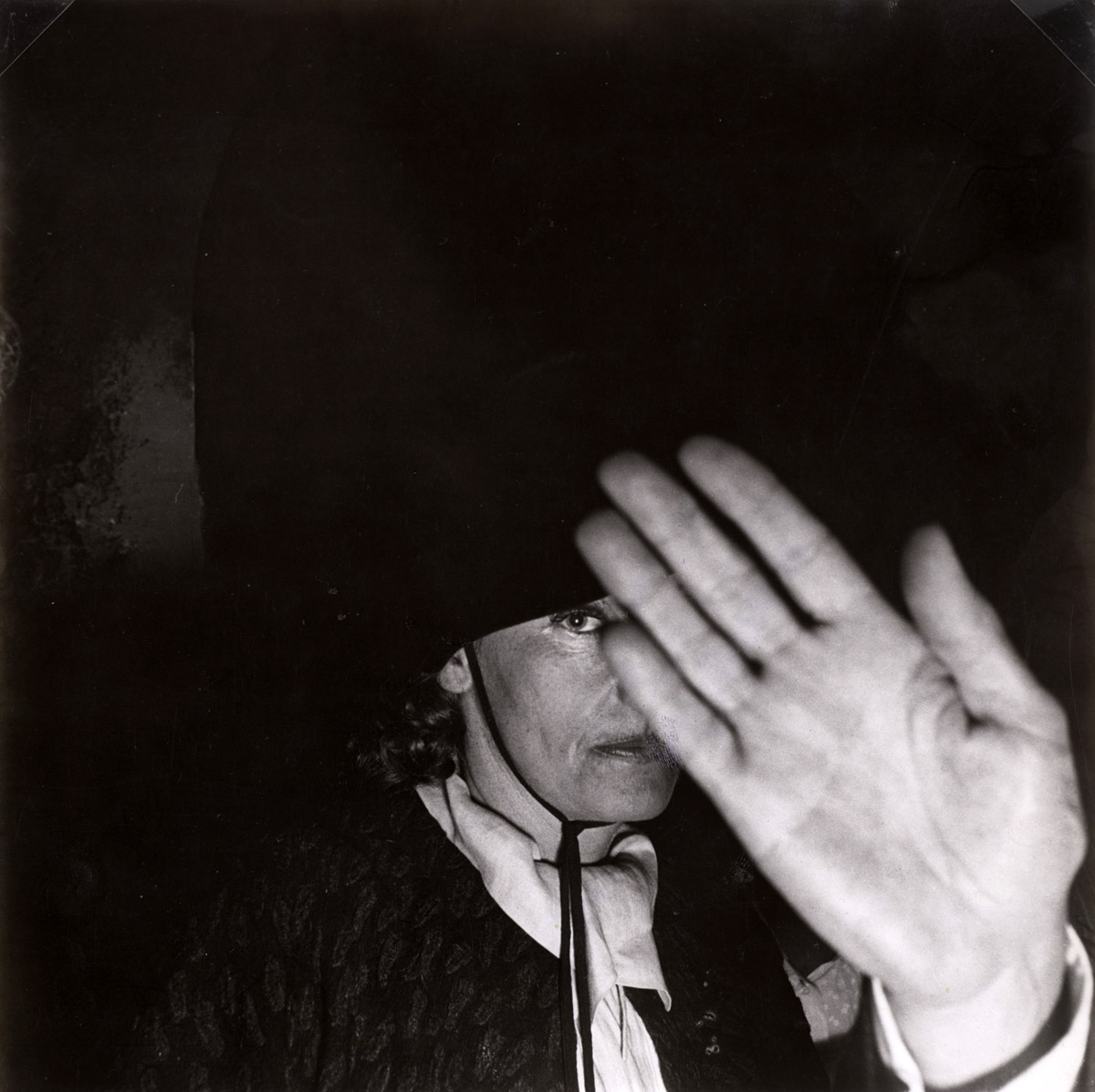
The face in the paparazzi image above is actually The Face: Greta Garbo. One of the most famous and admired women in the world, Garbo became a New York recluse after retiring from films at the beginning of the 1940s. Sightings of her were rare, and this 1950s image captures the conflict between a movie star’s public persona and private life. Now older and with her face obscured, Garbo is unrecognisable, but once understood to be her it becomes a contrasting reference to all those images of her as an icon of beauty and stardom.

Christian Hayes. “Exposed: Voyeurism, Surveillance and the Camera,” on The Classic Film Show website, June 15, 2010 [online] Cited 24/03/2025


Weegee (Arthur H. Fellig) (American, 1899-1968) '[Marilyn Monroe]' c. 1950s


Weegee (Arthur H. Fellig) (American, 1899-1968)
[Marilyn Monroe]
c. 1950s
Gelatin silver print
International Center of Photography, New York, Gift of Wilma Wilcox, 1993
© Weegee / International Center of Photography / Getty Images


Richard Avedon (American, 1923-2004) 'And Warhol' 1969
Screenshot


Richard Avedon (American, 1923-2004)
And Warhol
1969
Gelatin silver print


Shizuka Yokomizo (Japanese, b. 1966) 'Stranger No. 1' 1998


Shizuka Yokomizo (Japanese, b. 1966)
Stranger No. 1
1998
Chromogenic print
50 x 42 1/2 in. (127 x 108 cm)
© Shizuka Yokomizo


Shizuka Yokomizo (Japanese, b. 1966)
'Stranger No. 2' 1998


Shizuka Yokomizo (Japanese, b. 1966)
Stranger No. 2
1998
Chromogenic print
SFMOMA, Accessions Committee Fund purchase
© Shizuka Yokomizo


Tate Modern
Bankside
London SE1 9TG
020 7887 8888

Opening hours:
Daily 10.00 – 18.00

Tate Modern website

LIKE ART BLART ON FACEBOOK

Back to top

Exhibition: ‘Timelines: Photography and Time’ at the National Gallery of Victoria, Melbourne

Exhibition dates: 7th May – 3rd October 2010


Many thankx to Alison Murray and the National Gallery of Victoria for allowing me to publish the photographs in the posting. Please click on the photographs for a larger version of the image.


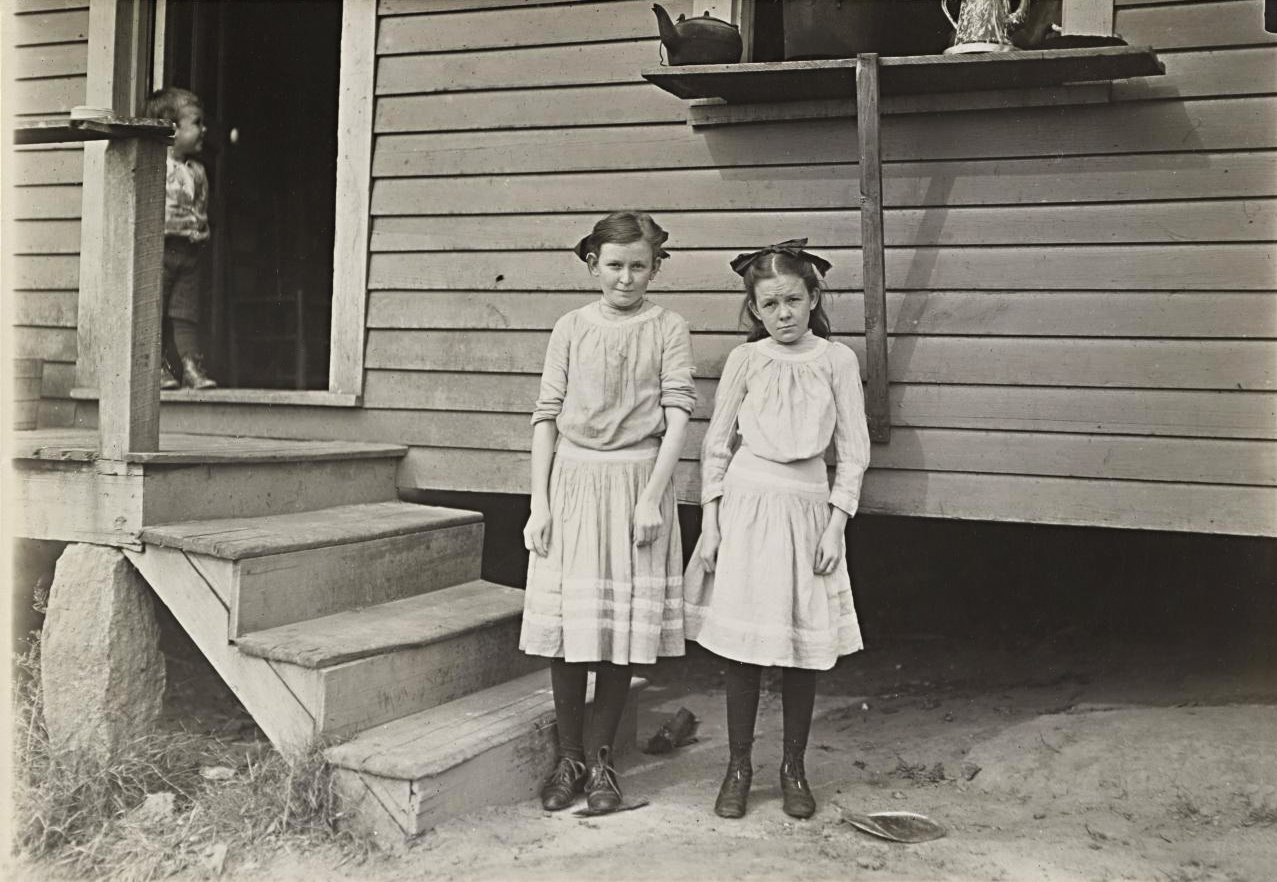
Lewis Hine (American, 1874-1940) 'Lacy, twelve years old and Savannah, eleven years old' 1908 from the exhibition 'Timelines: Photography and Time' at the National Gallery of Victoria, Melbourne, May - Oct 2010


Lewis Hine (American, 1874-1940)
Lacy, twelve years old and Savannah, eleven years old
1908
Gelatin silver print
Image and sheet: 11.9 × 17.1cm
National Gallery of Victoria, Melbourne
Purchased, 1980


‘Perhaps you are weary of child labour pictures. Well, so are the rest of us, but we propose to make you and the whole country so sick and tired of the whole business that when the time for action comes, child labour pictures will be records of the past.’

Lewis Hine, 1909


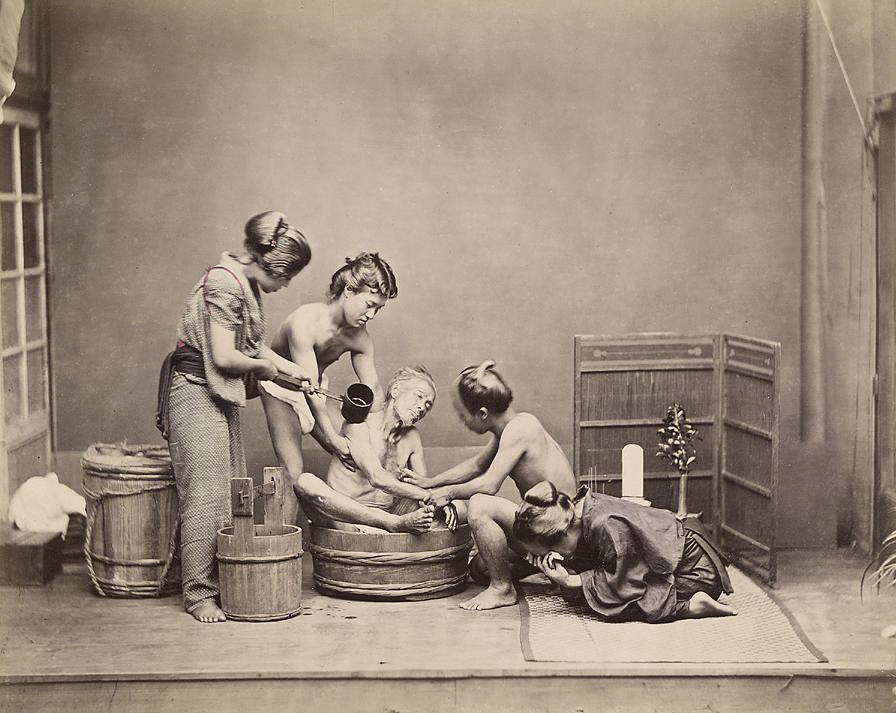
Unknown photographer, 'No title (Ritual washing for funeral)' c. 1880 from the exhibition 'Timelines: Photography and Time' at the National Gallery of Victoria, Melbourne, May - Oct 2010


Unknown photographer
No title (Ritual washing for funeral)
c. 1880
Albumen silver photograph, colour dyes
Image and sheet: 21.2 × 26.5cm
National Gallery of Victoria, Melbourne
Purchased, 2001


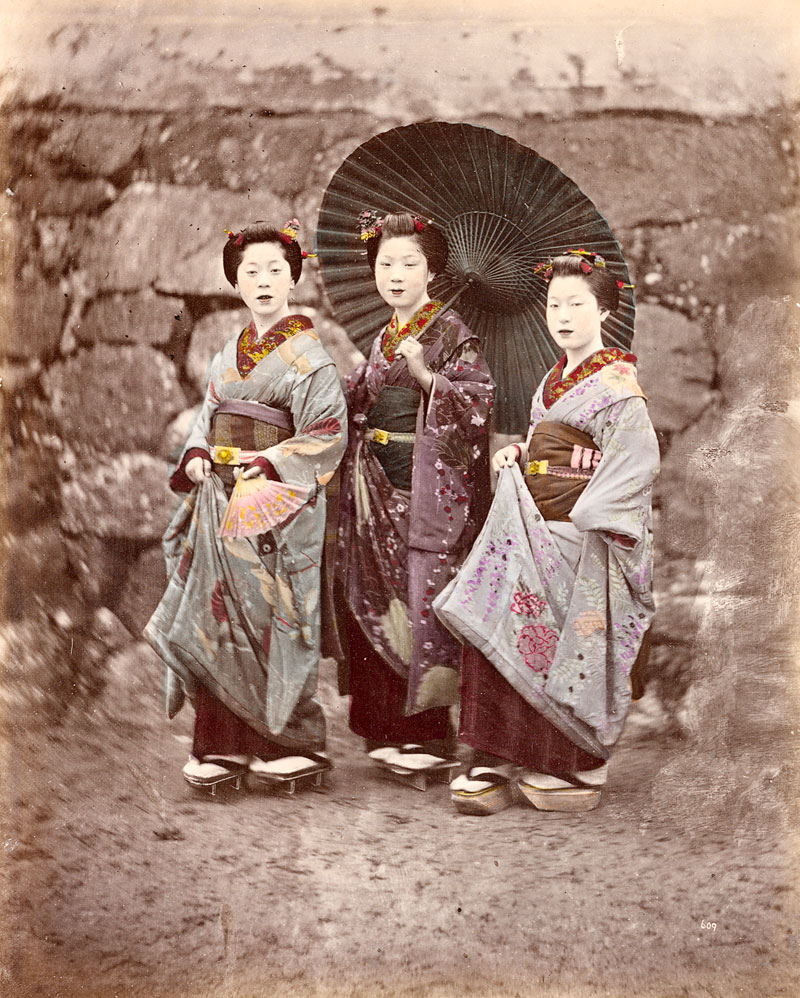
Felice Beato (Italian/English, 1832-1909, worked throughout Europe and Asia, 1853-1890) 'No title (Maiko)' (1866-1868, printed 1877-1985)


Felice Beato (Italian/English, 1832-1909, worked throughout Europe and Asia, 1853-1890)
Stillfried and Anderson and the Japan Photographic Association (studio) (Japanese, 1877-1885)
No title (Maiko)
1866-1868, printed 1877-1885
albumen silver photograph, coloured dyes
24.4 x 19.6cm
National Gallery of Victoria, Melbourne
Purchased through the NGV Foundation with the assistance of The Herald & Weekly Times Limited, Fellow, 2001


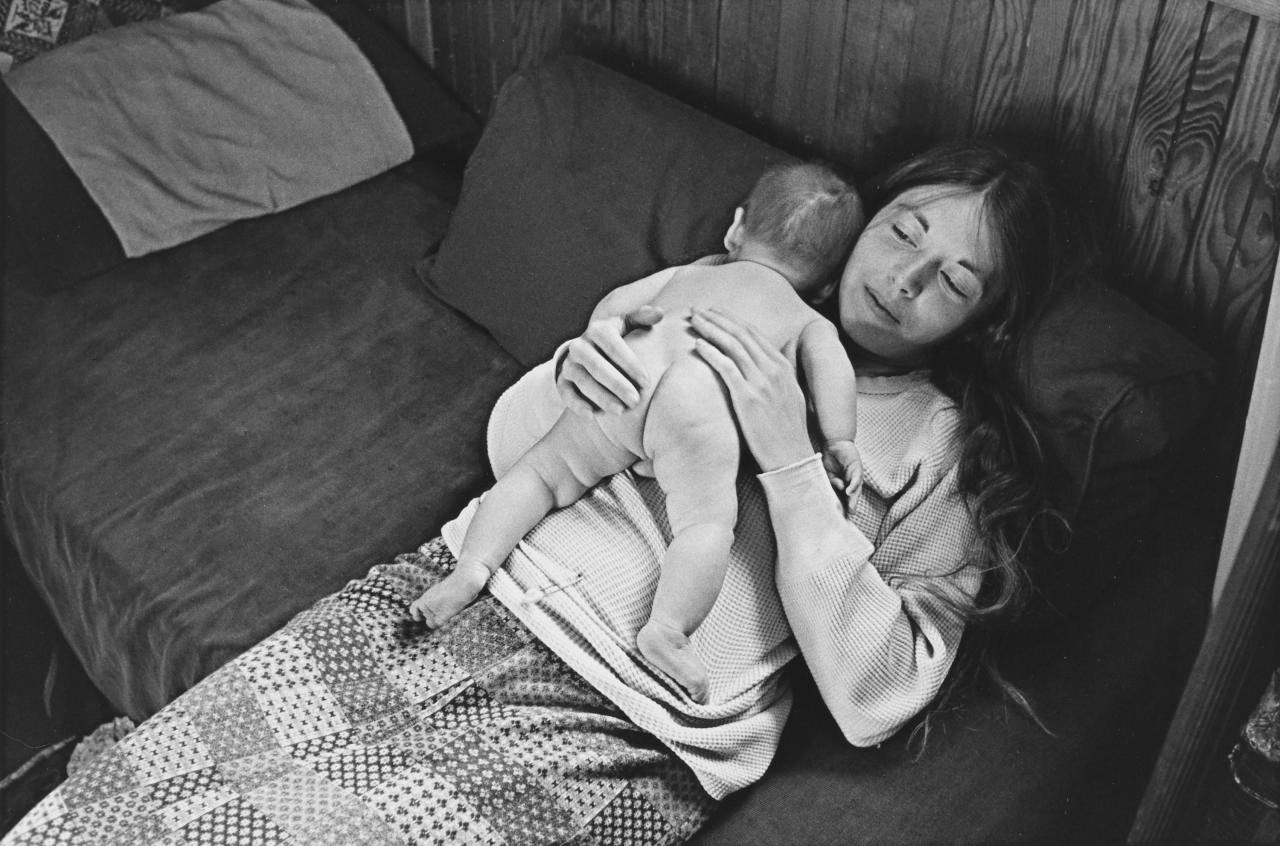
Christine Godden (Australian, b. 1947) 'Joanie with Jade' 1973; printed 1986 from the exhibition 'Timelines: Photography and Time' at the National Gallery of Victoria, Melbourne, May - Oct 2010


Christine Godden (Australian, b. 1947)
Joanie with Jade
1973; printed 1986
Gelatin silver photograph
20.3 × 30.6cm
National Gallery of Victoria, Melbourne
Purchased from Admission Funds, 1991
© Christine Godden


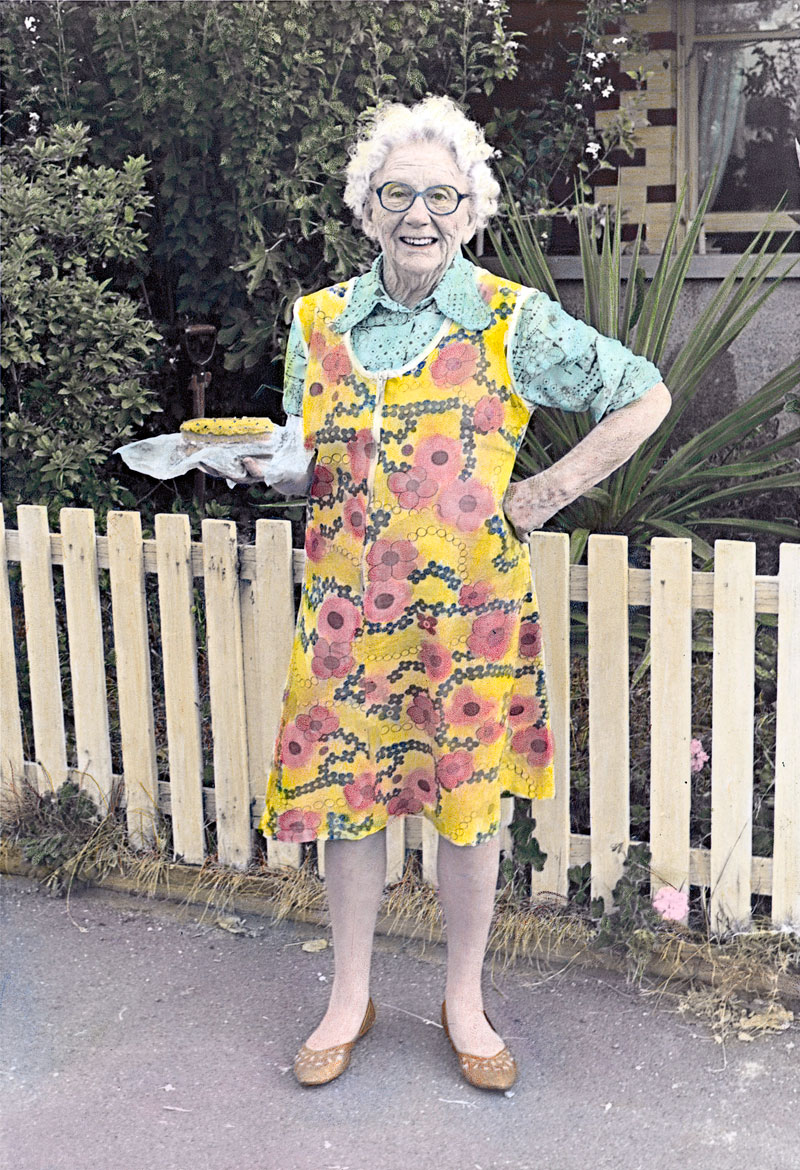
Ruth Maddison (Australian, b. 1945) 'Molly O'Sullivan, 82' 1990


Ruth Maddison (Australian, b. 1945)
Molly O’Sullivan, 82
1990
From the After work series 1990
Gelatin silver photograph, oil paint, fibre-tipped pen
24.8 x 20.6cm
National Gallery of Victoria, Melbourne
Purchased through The Art Foundation of Victoria with the assistance of the Hugh Williamson Foundation, Founder Benefactor, 1990
© Ruth Maddison


Opening 7 May, the National Gallery of Victoria will present Timelines: Photography and Time, a captivating exhibition exploring the notion of time in photographs.

Time is a slippery notion. It is everywhere and always moving but this powerful regulating force cannot be seen. It is only apparent in context: in the changing seasons, in another wrinkle on our faces, in the growth of children. Photography has a unique role to play in our sometimes poignant sense of time passing. The camera’s ability to depict ‘a moment in time’ – to stop the clock for a brief moment – gives photographs a unique capacity to direct our consideration towards the mechanics and poetics of this pervasive and mysterious cosmic force.

In this exhibition one aspect of time is considered from a photographic perspective: namely, human life. Works have been selected from the permanent collection both by International and Australian photographers that show an interest in some aspect of lifecycles. Arranged, in part, in a ‘timeline’, these works provoke our understanding of the mediums capacity to suggest the concept of time in ways that may be surprising, moving or even confronting. The exhibition also looks at how photographers have extended a sense of time and duration through images that work in series

Timelines will feature almost forty photographs from the NGV Collection by both Australian and international photographers including work by Diane Arbus, Micky Allan and Bill Brandt.

Isobel Crombie, Senior Curator of Photography, NGV said photography has a unique role to play in capturing the way that time passes.

“The camera’s ability to ‘stop the clock’ enables the medium to direct our consideration towards the mechanics and poetics of this pervasive and mysterious cosmic force.

“The instant that the photograph captures can be a potent reminder to seize the day rather than dreaming about the past or worrying about the future,” said Dr Crombie.

The exhibition also looks at how photographers have extended a sense of time and duration through images that work in series. From the 1960s onwards, photographers began experimenting with stretching time by creating a series or sequence of photographs.

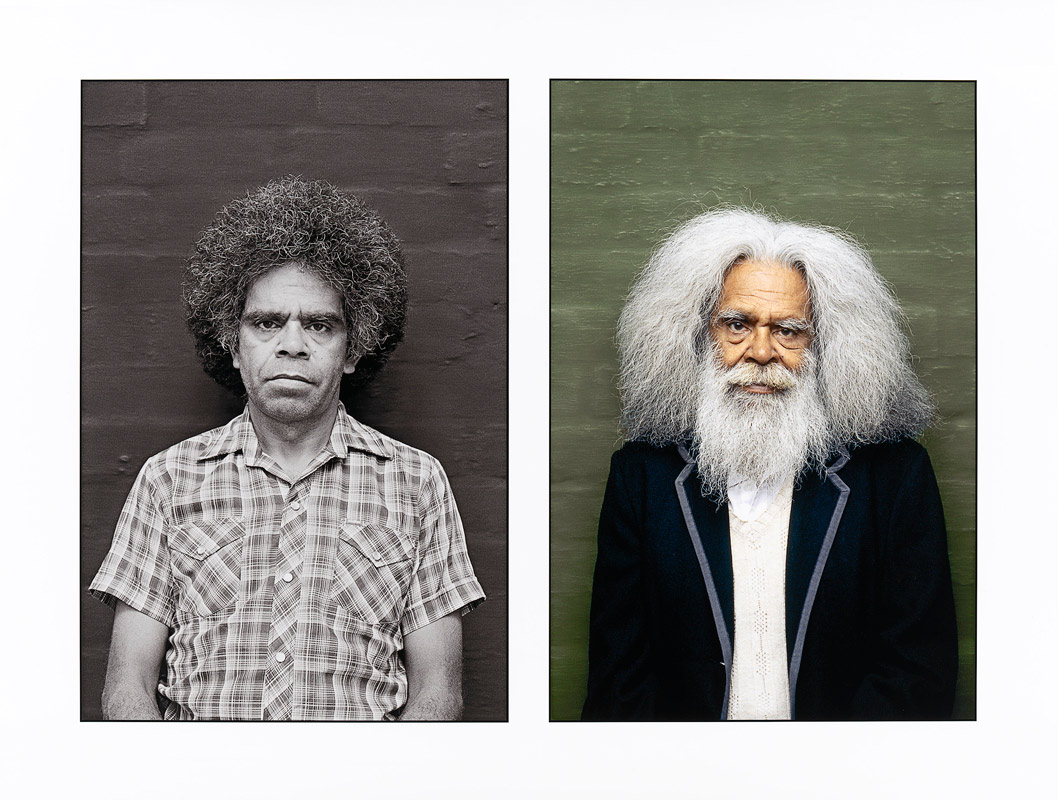
This is seen in Rod McNicol’s powerful series titled A portrait revisited (1986-2006), (pictured Jack, below). Purchased by the NGV in 2009, the series features portraits of men and women; each posed directly facing the camera against a plain backdrop. There are two portraits of each subject photographed twenty years apart, inviting the viewer to compare the portraits to see how time has changed them. The sense of time passing is highlighted with the portrait of Peter, who is photographed only once. The blank image next to him is a reminder that he died before the second portrait was made.

Each phase of human existence has characteristic traits and features, and photographers have worked with these qualities in ways that evoke the passing of time and our place in this cycle. Arranged in part in a human timeline, the exhibition begins with the start of a new life as depicted in Christine Godden’s Joanie pregnant (1972) and Joanie with Jade (1973) and concludes with Kusakabe Kimbei’s Ritual washing for a funeral (c. 1880, see above – now labelled as ‘Unknown’ on the NGV website in 2019), an image of a deceased man being prepared in the traditional Japanese way for burial. This final scene captures the grief of the moment when a lifetime ends.

Frances Lindsay, Deputy Director, NGV said: “The works in the exhibition show how artists have explored the concept of time in ways that may surprise, move or even confront viewers. This exhibition provides visitors with a special opportunity to view this remarkable collection of photographs from the NGV Collection, many of which are on display for the first time.”

Timelines will include photographs by Micky Allan, Diane Arbus, Felice Beato, Bill Brandt, Brassaï, Harry Callahan, Imogen Cunningham, Walker Evans, Christine Godden, Ponch Hawkes, Petrina Hicks, Lewis Hine, Kusakabe Kimbei, Rosemary Laing, J.H. Lartigue, Ruth Maddison, Rod McNicol, David Moore, Jan Saudek, John Thompson, Roman Vishniac, and Edward Weston.

Text from the National Gallery of Victoria International website [Online] Cited 17/09/2010 no longer available online


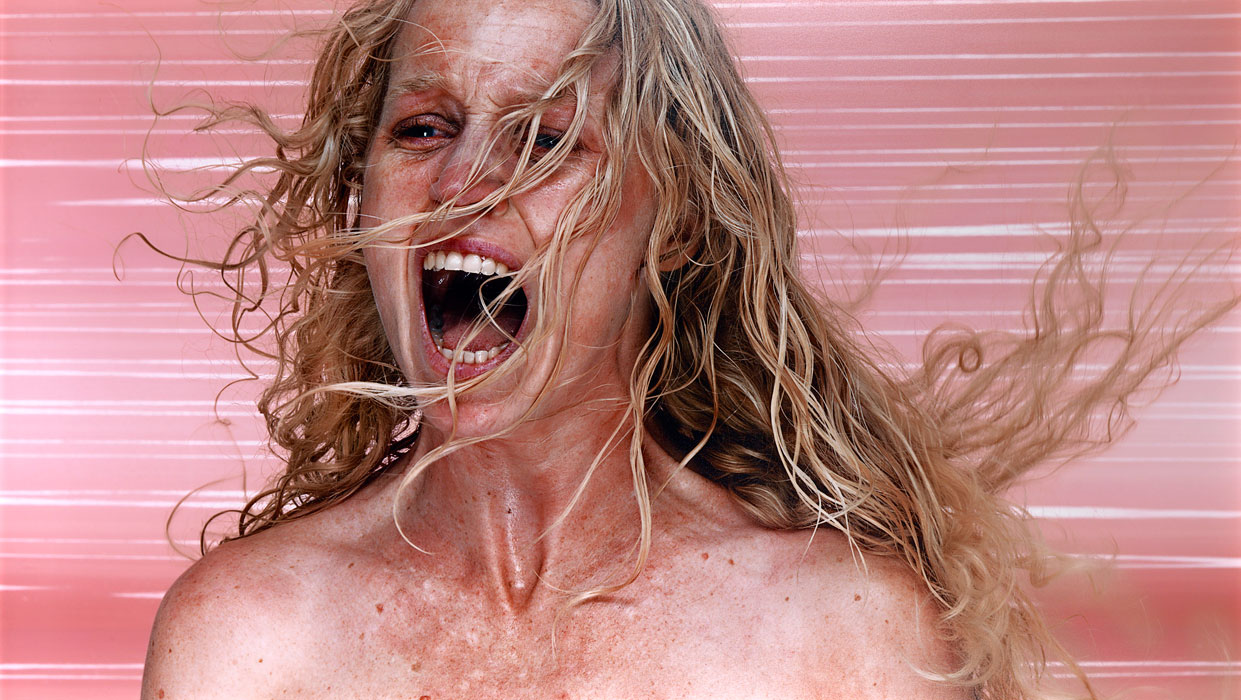
Rosemary Laing (Australian, 1959-2024) 'a dozen useless actions for grieving blondes #10' 2009


Rosemary Laing (Australian, 1959-2024)
a dozen useless actions for grieving blondes #10
2009
Type C photograph
76.3 x 132.1cm
National Gallery of Victoria, Melbourne
Purchased, Victorian Foundation for Living Australian Artists, 2010
© Rosemary Laing and Tolarno Galleries, Melbourne


Rod McNicol (Australian, b. 1946) 'Jack' 2006


Rod McNicol (Australian, b. 1946)
Jack
2006
From the A portrait revisited series 1986-2006
Digital type C print
48.0 x 67.1cm
National Gallery of Victoria, Melbourne
Purchased, Victorian Foundation for Living Australian Artists, 2009
© Rod McNicol


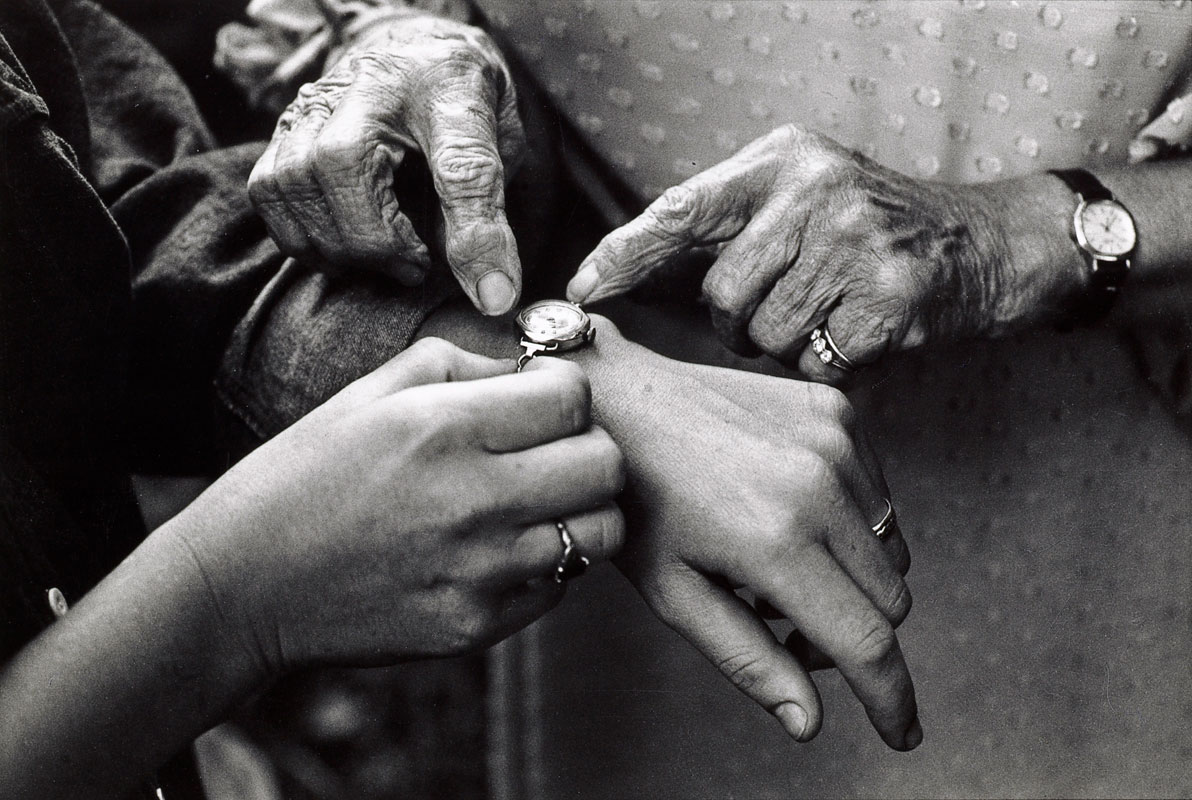
Ponch Hawkes (Australian, b. 1946) 'The watch that Lucy gave to Beci' (1987, printed 1989) from the exhibition 'Timelines: Photography and Time' at the National Gallery of Victoria, Melbourne, May - Oct 2010


Ponch Hawkes (Australian, b. 1946)
The watch that Lucy gave to Beci
1987, printed 1989
Gelatin silver photograph
23.8 x 35.1cm
National Gallery of Victoria, Melbourne
Purchased with funds donated by Hallmark Cards Australia Pty Ltd, 1989
© Ponch Hawkes


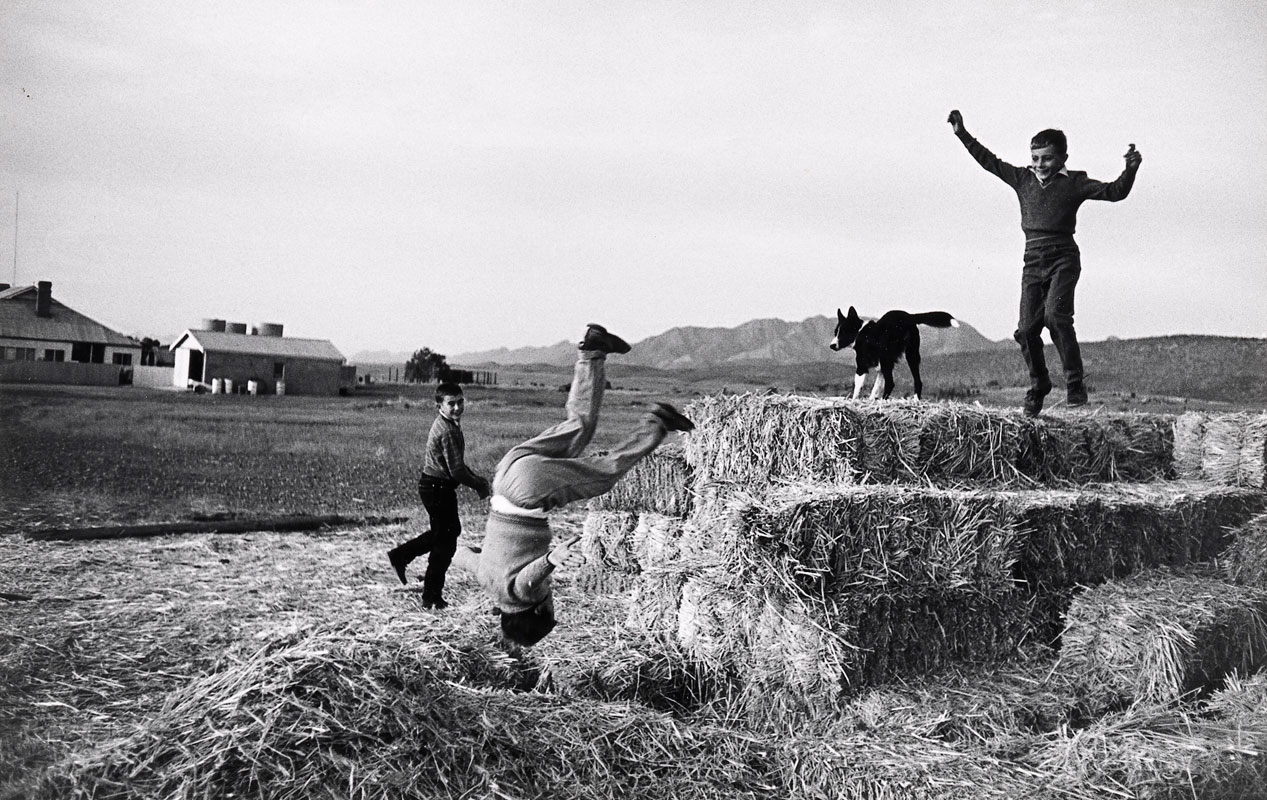
David Moore (Australian, 1927-2003) 'Outback children, South Australia' 1963


David Moore (Australian, 1927-2003)
Outback children, South Australia
1963
Gelatin silver photograph
36.8 x 57.6cm
National Gallery of Victoria, Melbourne
Purchased through the KODAK (Australasia) Pty Ltd Fund, 1969
© David Moore Estate


NGV International
180 St Kilda Road

Opening hours
Daily 10am – 5pm

National Gallery of Victoria website

LIKE ART BLART ON FACEBOOK

Back to top

Exhibition: ‘South African Photographs: David Goldblatt’ at The Jewish Museum, New York

Exhibition dates: 2nd May – 19th September 2010


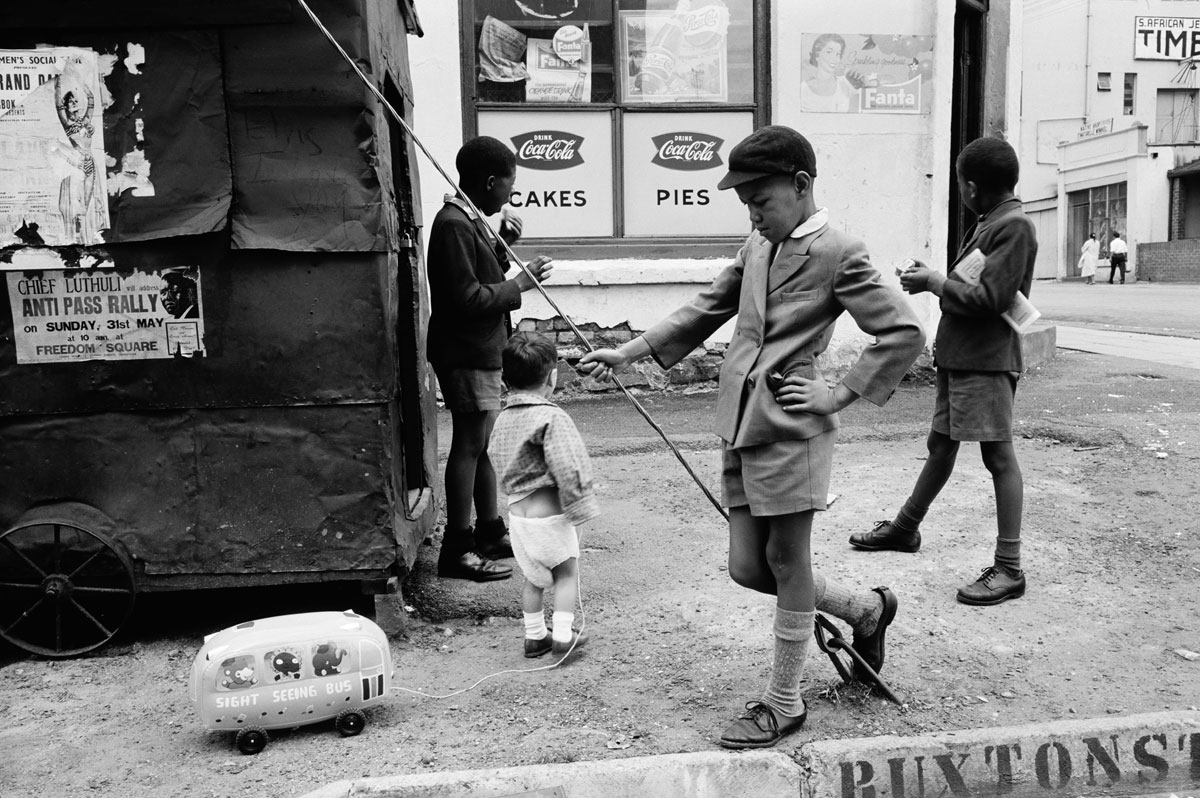
David Goldblatt (South Africa, 1930-2018) 'Steven with Sight Seeing Bus, Doornfontein, Johannesburg, 1960' from the exhibition 'South African Photographs: David Goldblatt' at The Jewish Museum, New York, May - Sept, 2010


David Goldblatt (South Africa, 1930-2018)
Steven with Sight Seeing Bus, Doornfontein, Johannesburg, 1960
1960
Silver gelatin print on fiber-pressed paper
Courtesy of David Goldblatt and the Goodman Gallery, Johannesburg


2019

Now that he has gone, these seem, if possible, more powerful, poignant and prescient / ancient than ever.

Marcus


Many thankx to the Jewish Museum in New York for allowing me to publish the photographs in the posting. Please click on the photographs for a larger version of the image.


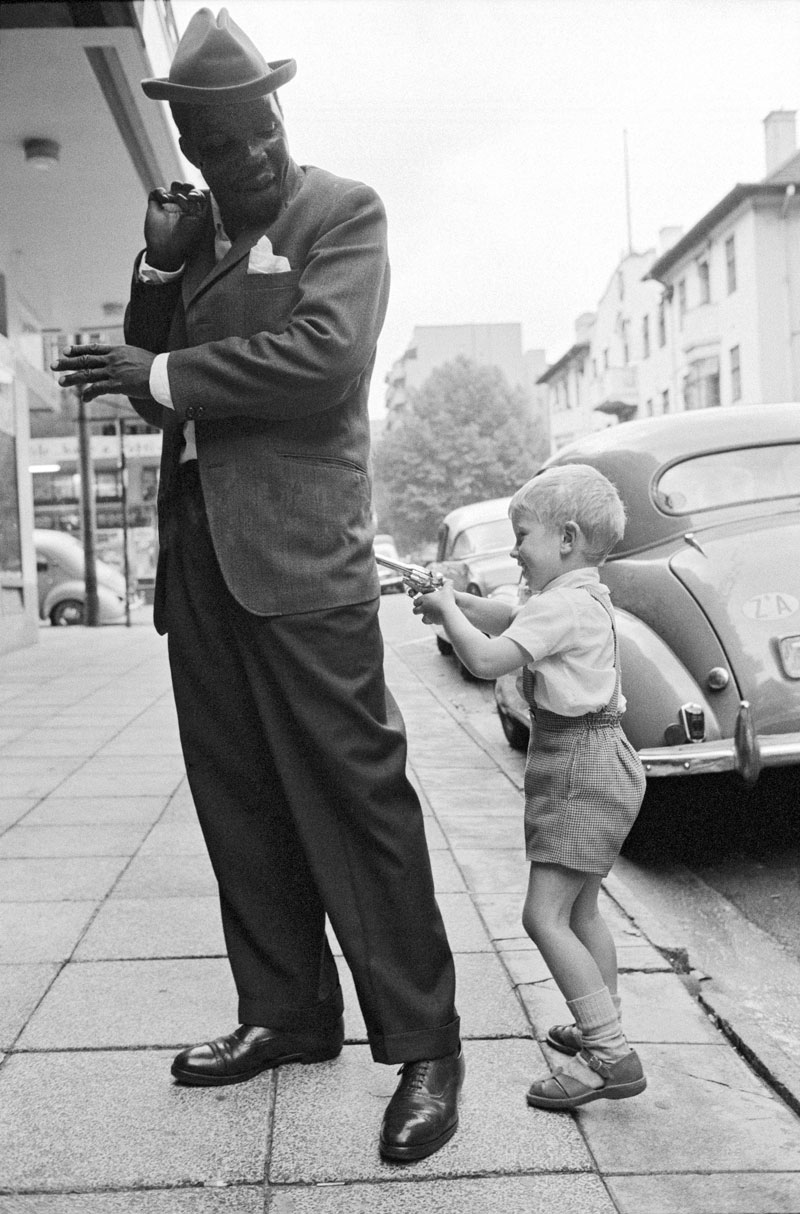
David Goldblatt (South Africa, 1930-2018) 'Holdup in Hillbrow, Johannesburg, November 1963' from the exhibition 'South African Photographs: David Goldblatt' at The Jewish Museum, New York, May - Sept, 2010


David Goldblatt (South Africa, 1930-2018)
Holdup in Hillbrow, Johannesburg, November 1963
1963
Silver gelatin print on fibre-pressed paper
Courtesy of David Goldblatt and the Goodman Gallery, Johannesburg


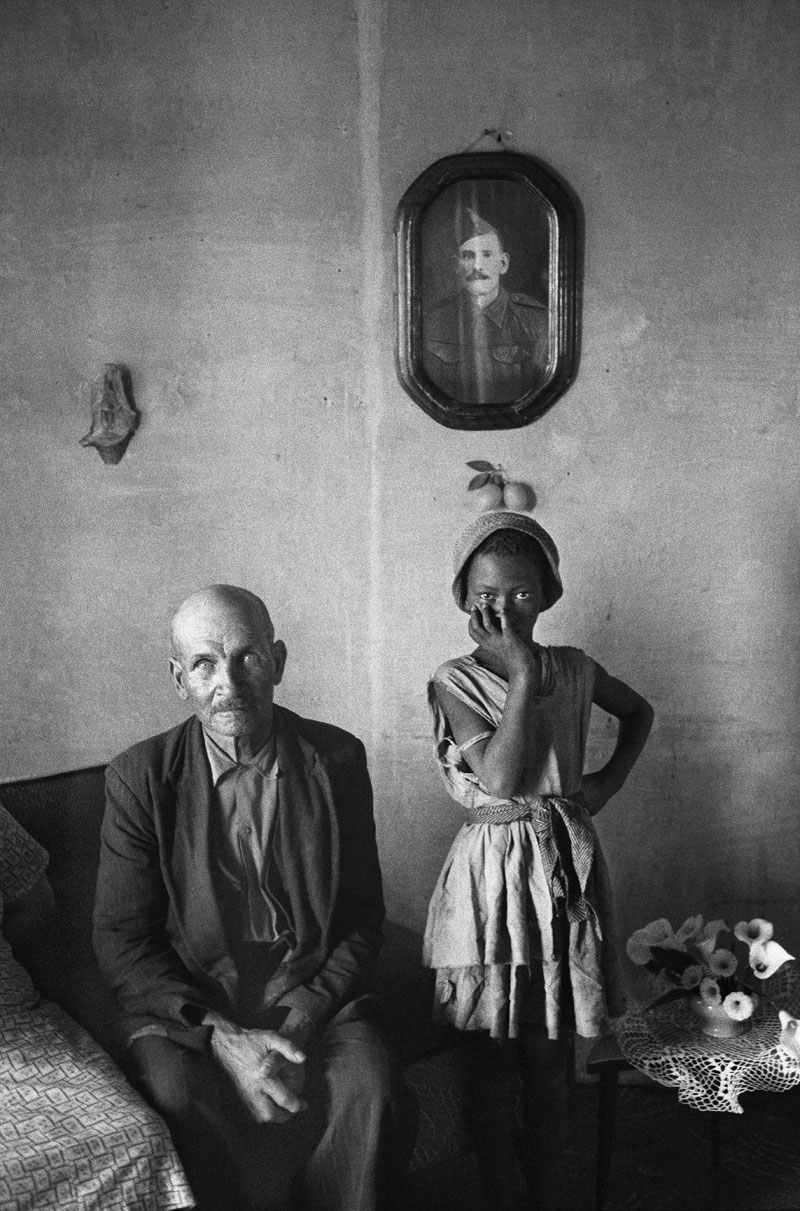
David Goldblatt (South Africa, 1930-2018) 'A plot-holder with the daughter of a servant, Wheatlands, Randfontein, September 1962' from the exhibition 'South African Photographs: David Goldblatt' at The Jewish Museum, New York, May - Sept, 2010


David Goldblatt (South Africa, 1930-2018)
A plot-holder with the daughter of a servant, Wheatlands, Randfontein, September 1962
1962
Silver gelatin print on fibre-pressed paper
Courtesy of David Goldblatt and the Goodman Gallery, Johannesburg


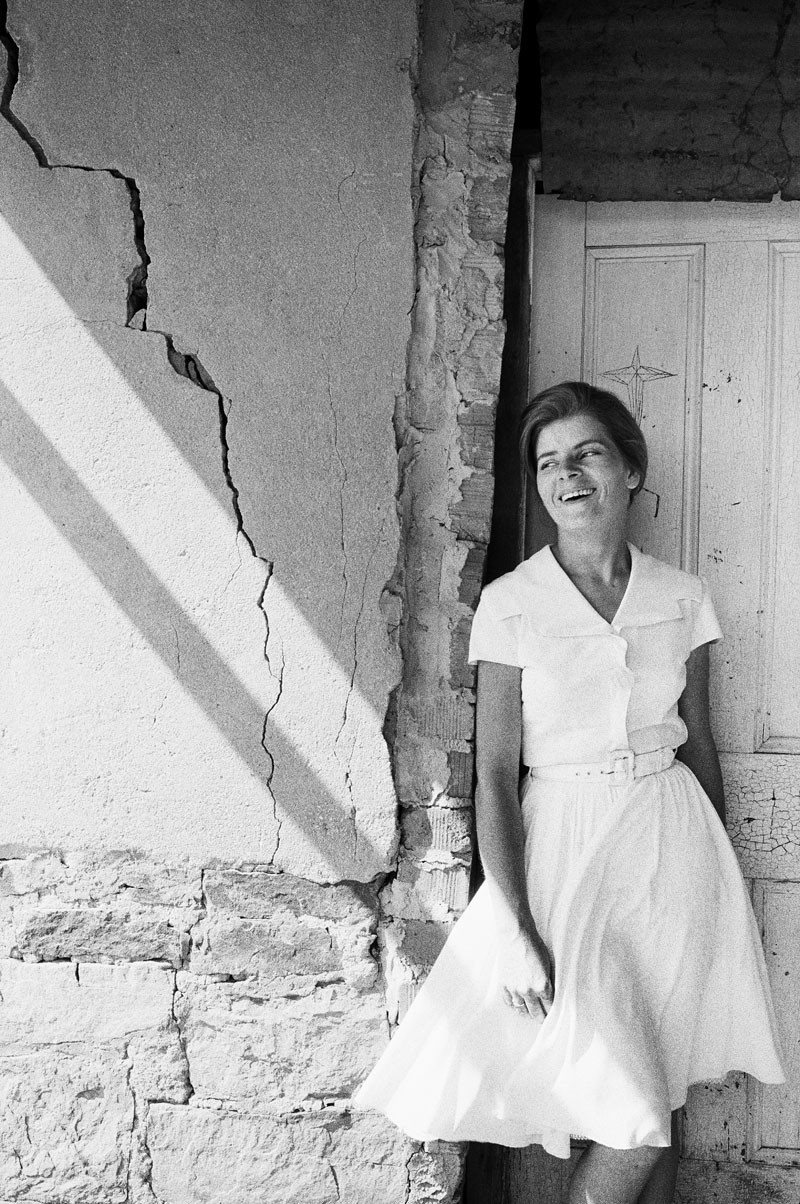
David Goldblatt (South Africa, 1930-2018) 'The farmer's wife, Fochville, 1965'


David Goldblatt (South Africa, 1930-2018)
The farmer’s wife, Fochville, 1965
1965
Silver gelatin print on fibre-pressed paper
Courtesy of David Goldblatt and the Goodman Gallery, Johannesburg


David Goldblatt (South African, 1930-2018) '"Boss Boy" detail, Battery Reef, Randfontein Estates Gold Mine' 1966


David Goldblatt (South African, 1930-2018)
“Boss Boy” detail, Battery Reef, Randfontein Estates Gold Mine
1966
Silver gelatin print on fibre-pressed paper
Courtesy of David Goldblatt and the Goodman Gallery, Johannesburg


The Jewish Museum currently offers visitors an opportunity to see 150 black-and-white silver gelatin prints taken between 1948 and 2009 in South African Photographs: David Goldblatt. The photographs on display focus on South Africa’s human landscape in the apartheid and post-apartheid eras and are accompanied by Goldblatt’s own written commentary. Growing up in segregated South Africa, he witnessed the deep humiliation and discrimination suffered by blacks and experienced anti-Semitism personally.

Goldblatt’s photographs expose the complex and evolving nature of apartheid through the diversity and subtlety of his approach while instilling “… emotional complexity that rewards repeated viewing” (The New Yorker). Instead of documenting major political events or horrifying incidents of violence, he focuses on the details of daily life and the world of ordinary people, a world where the apartheid system penetrates every aspect of society. In his photographs you will find “great beauty and the most profound humanity” (The Wall Street Journal).

For more than half a century, David Goldblatt has been photographing his native South Africa, documenting the social, cultural and economic divides that characterise the country. Recipient of the 2009 Henri Cartier-Bresson Award and the prestigious 2006 Hasselblad Foundation International Award in Photography, David Goldblatt is his country’s most distinguished photographer.

Goldblatt’s photographs expose the complex and evolving nature of apartheid through the diversity and subtlety of his approach. He has not documented major political events or horrifying incidents of violence. Instead, he focuses on the details of daily life and the world of ordinary people, a world where the apartheid system penetrates every aspect of society. He is constantly searching for the substance beneath the surface of human situations. As Nadine Gordimer comments in the exhibition audio guide, Goldblatt captures “… these moments when everything that has happened to an individual is somehow in that image at that time. All the person has felt and known is contained, indeed, in the way he comports himself, the way he’s sitting, the way he looks, and the kind of setting in which he is.” Goldblatt frequently addresses a complex question in his work: how is it possible to be reasonable, decent, and law-abiding, and at the same time, complicit in and even actively supportive of a system that is fundamentally immoral and evil? Each photograph in this exhibition is an intimate portrayal of a culture living with racism and injustice.

David Goldblatt has used his camera to explore South Africa’s mines; the descendants of seventeenth-century Dutch settlers called Afrikaners who were the architects of apartheid; life in Boksburg, a small middle-class white community; the Bantustans or “puppet states” in which blacks were forced to live; structures built for purposes ranging from shelter to commemoration; and Johannesburg, the city in which Goldblatt lives.

The photographer once wrote, “I am neither an activist nor a missionary. Yet I had begun to realise an involvement with this place and the people among whom I lived that would not be stilled and that I needed to grasp and probe. I wanted to explore the specifics of our lives, not in theories but in the grit and taste and touch of things, and to bring those specifics into that particular coherence that the camera both enables and demands.”

David Goldblatt has been photographing the changing political landscape of his country for more than five decades. He is descended from Lithuanian Jews who fled Europe in the 1890s to escape religious persecution. His father passed on to him, the artist said, “a strong sense of outrage at anything that smacked of racism.” Growing up in segregated South Africa, he witnessed the deep humiliation and discrimination suffered by blacks and experienced anti-Semitism personally. These experiences have informed his work.

Goldblatt’s written commentary is an essential part of his work and is presented throughout the exhibition in the texts and labels that accompany the photographs. A context room in the exhibition features a timeline juxtaposing events in South African history and David Goldblatt’s life; books published by the photographer; photography magazines that inspired him; a large map of South Africa; and a 22-minute excerpt of David Goldblatt: In Black and White, a 1985 film originally aired on Channel 4 Television in Great Britain.

The exhibition has been organised by The Jewish Museum’s Senior Curator, Susan Tumarkin Goodman. All the works in the exhibition are silver gelatin prints on fibre-pressed paper.

About David Goldblatt

David Goldblatt was born in 1930, the youngest of the three sons of Eli and Olga Goldblatt. His grandparents arrived in South Africa from Lithuania around 1893, having fled the persecution of Jews in the Baltic countries. David’s paternal grandfather owned a general store in Randfontein, a gold-mining town near Johannesburg. Eli Goldblatt built the business into a respected men’s clothing store and for some years David assisted with the running of the shop when his father’s poor health necessitated it. But he was only biding his time. He had become interested in photography in high school, and after his father’s death in 1962, he sold the business to devote all of his time to being a photographer.

Press release from The Jewish Museum website [Online] Cited 13/09/2010 no longer available online


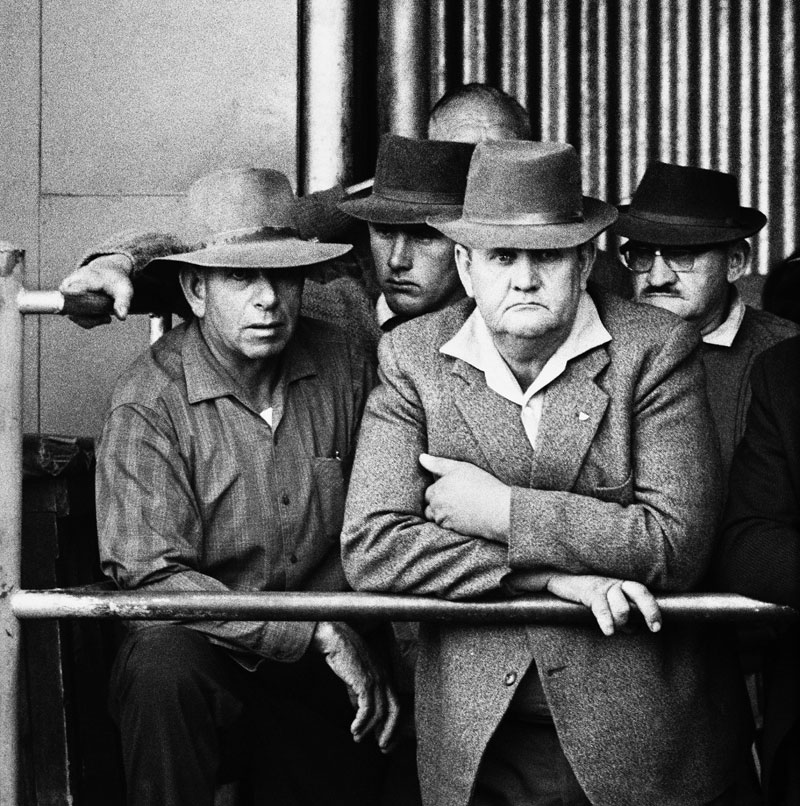
David Goldblatt (South Africa, 1930-2018) 'Farmers at a cattle auction, Vryburg, 1965'


David Goldblatt (South Africa, 1930-2018)
Farmers at a cattle auction, Vryburg, 1965
1965
Silver gelatin print on fibre-pressed paper
Courtesy of David Goldblatt and the Goodman Gallery, Johannesburg


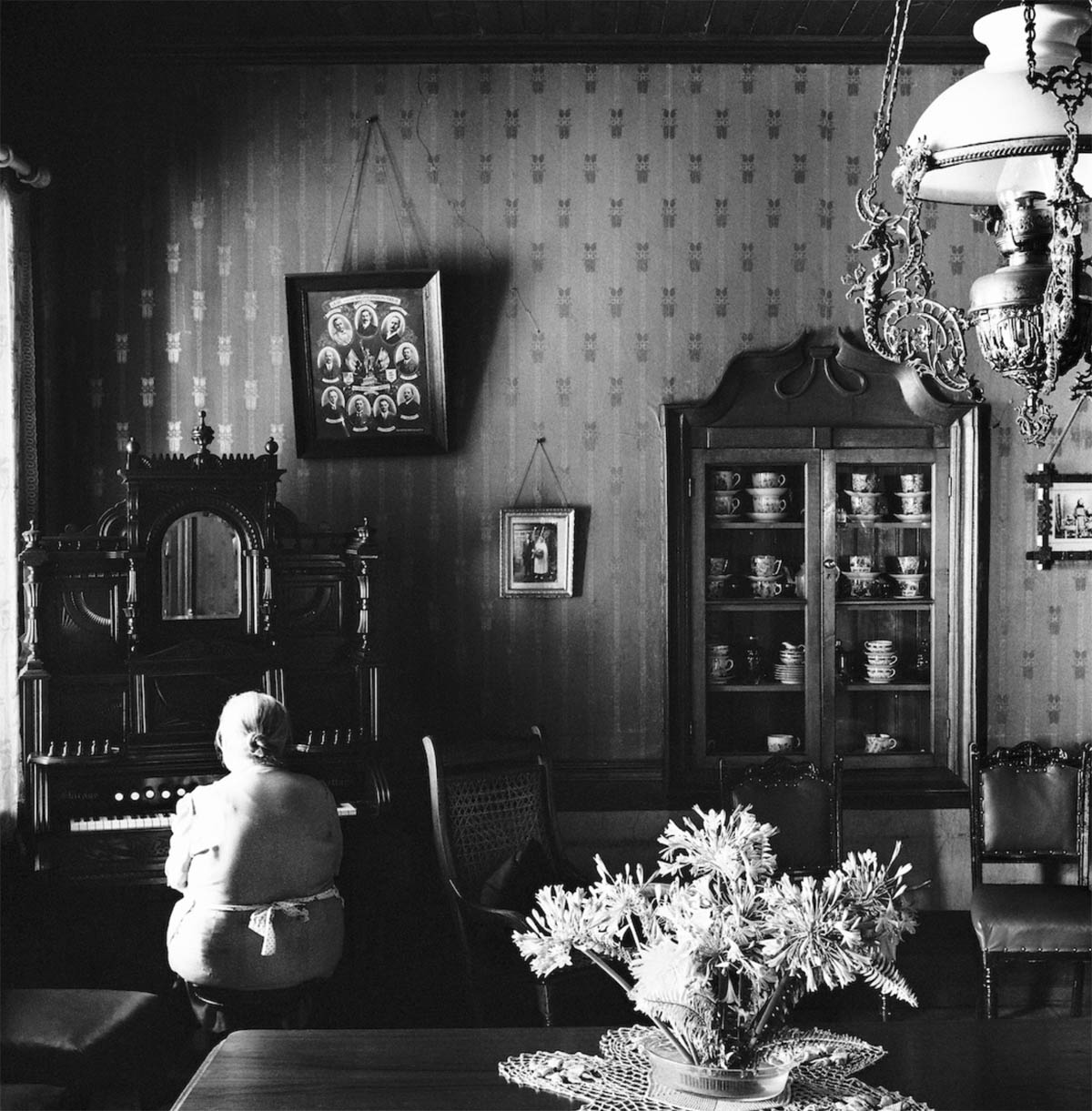
David Goldblatt (South Africa, 1930-2018) 'On an ostrich farm near Oudtshoorn, Cape Province (Western Cape)' 1967
Screenshot


David Goldblatt (South Africa, 1930-2018)
On an ostrich farm near Oudtshoorn, Cape Province (Western Cape)
1967
From the series Some Afrikaners Photographed
Silver gelatin print on fibre-pressed paper
Courtesy of David Goldblatt and the Goodman Gallery, Johannesburg


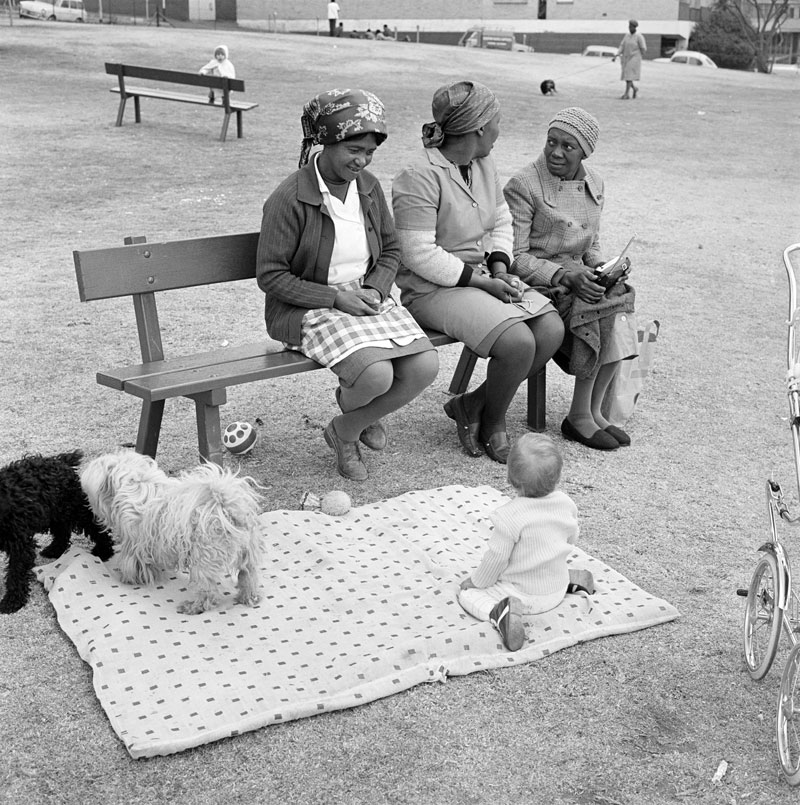
David Goldblatt (South Africa, 1930-2018) 'Baby with childminders and dogs in the Alexandra Street Park, Hillbrow, Johannesburg, 1972'


David Goldblatt (South Africa, 1930-2018)
Baby with childminders and dogs in the Alexandra Street Park, Hillbrow, Johannesburg, 1972
1972
Silver gelatin print on fibre-pressed paper
Courtesy of David Goldblatt and the Goodman Gallery, Johannesburg


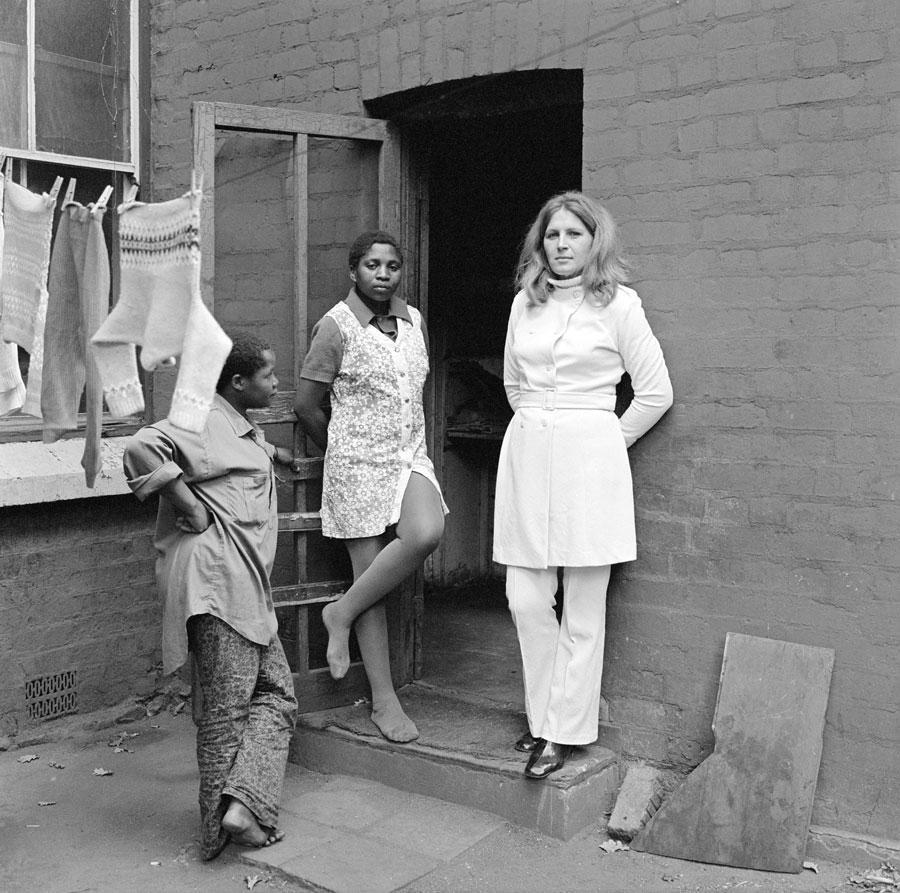
David Goldblatt (South Africa, 1930-2018) 'Three women at 39 Soper Road, Berea, Johannesburg, May 1972'


David Goldblatt (South Africa, 1930-2018)
Three women at 39 Soper Road, Berea, Johannesburg, May 1972
1972
Silver gelatin print on fibre-pressed paper
Courtesy of David Goldblatt and the Goodman Gallery, Johannesburg


David Goldblatt (South Africa, 1930-2018) 'A farmer's son with his nursemaid, Heimweeberg, Nietverdiend, 1964'


David Goldblatt (South Africa, 1930-2018)
A farmer’s son with his nursemaid, Heimweeberg, Nietverdiend, 1964
1964
Silver gelatin print on fibre-pressed paper
Courtesy of David Goldblatt and the Goodman Gallery, Johannesburg


David Goldblatt (South Africa, 1930-2018) 'Landscape with 1500 lavatories, Frankfort, Ciskei' 12 July 1983


David Goldblatt (South Africa, 1930-2018)
Landscape with 1500 lavatories, Frankfort, Ciskei
12 July 1983
From the series Bantustans
Silver gelatin print on fibre-pressed paper
Courtesy of David Goldblatt and the Goodman Gallery, Johannesburg


David Goldblatt (South African, 1930-2018) '9:00 Going home: Marabastad-Waterval bus: For most of the people in this bus the cycle will start again tomorrow at between 2:00 and 3:00 a.m.' 1983-1984


David Goldblatt (South African, 1930-2018)
9:00 Going home: Marabastad-Waterval bus: For most of the people in this bus the cycle will start again tomorrow at between 2:00 and 3:00 a.m.
1983-1984
From the series The Transported of KwaNdebele. A South African Odyssey 
Silver gelatin print on fibre-pressed paper
Courtesy of David Goldblatt and the Goodman Gallery, Johannesburg


David Goldblatt (South Africa, 1930-2018) 'Travellers from KwaNdebele buying their weekly tickets at the bus depot in Marabastad, Pretoria, February 1984'


David Goldblatt (South Africa, 1930-2018)
Travellers from KwaNdebele buying their weekly tickets at the bus depot in Marabastad, Pretoria, February 1984
1984
Silver gelatin print on fibre-pressed paper
Courtesy of David Goldblatt and the Goodman Gallery, Johannesburg


David Goldblatt (South Africa, 1930-2018) 'Luke Kgatitsoe at His House, Magopa, Ventersdorp District, Western Transvaal' 21 October 1986


David Goldblatt (South Africa, 1930-2018)
Luke Kgatitsoe at His House, Magopa, Ventersdorp District, Western Transvaal
21 October 1986
Silver gelatin print on fibre-pressed paper
Courtesy of David Goldblatt and the Goodman Gallery, Johannesburg


The Jewish Museum
1109 5th Ave at 92nd St
New York NY 10128

Exhibition galleries opening hours:
Sunday 11am – 6pm
Monday 11am – 6pm
Tuesday Closed
Wednesday Closed
Thursday 11am – 6pm
Friday 11am – 6pm
Saturday 11am – 6pm

The Jewish Museum website

LIKE ART BLART ON FACEBOOK

Back to top

Exhibition: ‘Candid Camera: Australian Photography 1950s-1970s’ at the Art Gallery of South Australia, Adelaide

Exhibition dates: 28th May – 1st August, 2010


Robert McFarlane (Australia, b. 1942) 'Charles Perkins going home from University' c. 1963 from the exhibition 'Candid Camera: Australian Photography 1950s-1970s' at the Art Gallery of South Australia, Adelaide, May - August, 2010


Robert McFarlane (Australia, b. 1942)
Charles Perkins going home from University
c. 1963, Sydney
Pigment print on paper
Image: 23 x 15cm
South Australian Government Grant 2009
Art Gallery of South Australia, Adelaide
© Robert McFarlane, Courtesy of Josef Lebovic Gallery, Sydney


There are some great photographs below, including one of my favourite photographs by an Australian artist of all time – At Newport (1952) by Max Dupain. There is something about this photograph that to me, makes it even more iconic than Sunbaker (1934). Perhaps it is the modernist rendering of space, the tensional placement of the figures: the curve of the boys back, the slope of the young man’s torso and attendant shadow on the wall, the girl at bottom right caught looking at the poised figure about to dive in – coupled with the receding pylons floating into the distance and the dark cliff face at right.

To have the previsualisation in the mind’s eye, that understanding of what was about to happen placed before the camera and then to capture it takes a truly great photographer. Being a naturalised Australian this is, to me, is one of the most iconic of all Australian photographs. What a beautiful photograph.

Dr Marcus Bunyan


Many thankx to Miranda Young and the Art Gallery of South Australia for allowing me to publish the photographs in the posting. Please click on the photographs for a larger version of the image.


Rennie Ellis (Australia, 1940-2003) 'Auntie Mame, Kings Cross, Sydney' 1970-1971 from the exhibition 'Candid Camera: Australian Photography 1950s-1970s' at the Art Gallery of South Australia, Adelaide, May - August, 2010


Rennie Ellis (Australia, 1940-2003)
Auntie Mame, Kings Cross, Sydney
1970-1971, Sydney
Gelatin silver photograph
Image: 37 x 24cm
South Australian Government Grant 2009
Art Gallery of South Australia, Adelaide
© Rennie Ellis Photographic Archive


Jeff Carter (Australia, 1928-2010) 'Tobacco Road' 1956 from the exhibition 'Candid Camera: Australian Photography 1950s-1970s' at the Art Gallery of South Australia, Adelaide, May - August, 2010


Jeff Carter (Australia, 1928-2010)
Tobacco Road
1956, Ovens Valley, Victoria
Gelatin silver photograph
Image: 28.8 x 27.1cm
South Australian Government Grant 2003
Art Gallery of South Australia, Adelaide
© Jeff Carter


Candid moments of Australian life from the 1950s, 60s and 70s, captured by some of Australia’s most renowned photographers, go on display in Candid Camera – a fascinating new photographic exhibition at the Art Gallery of South Australia.

Curated by Julie Robinson, the Art Gallery’s Senior Curator of Prints, Drawings & Photographs, Candid Camera: Australian Photography 1950s-1970s includes more than 80 documentary images by photographers including Max Dupain, David Moore, Jeff Carter, Robert McFarlane, Mervyn Bishop, Rennie Ellis, Carol Jerrems and Roger Scott.

These photographers have been great observers, capturing memorable images in Australia and abroad of people at leisure or engaged in everyday activities – images which appear unposed, spontaneous, or with their subjects captured unaware.

The photographs on display encompass social rituals, beach culture, protest movements, Indigenous issues, migration, youth subcultures, work, leisure, music, people, travel and humour. They range from images of the famous – such as Prime Ministers, boxing champion Lionel Rose, musicians Bon Scott and Daddy Cool – to those of ordinary people.

Says Julie Robinson, “The photographs in Candid Camera epitomise life during the 50s, 60s and 70s and resonate with spontaneity, humour and humanity.”

Robinson explains, “Even the anonymous people seem familiar to us as a result of these photographs, like David Moore’s European migrants arriving in Sydney, Rennie Ellis’s Cosmetics salesgirl, Toorak Rd, the two youths exiting ghost train ride in Roger Scott’s photograph or the unidentified women waiting at an Adelaide bus stop, in Robert McFarlane’s photograph.”

Many of these photographs have only been recently acquired by the Art Gallery of South Australia and this exhibition will provide the first opportunity for audiences to view them displayed together.

Press release from the Art Gallery of South Australia website [Online] Cited 20/10/2010 no longer available online


Jeff Carter (Australia, 1928-2010) 'Saturday arvo, Chippendale' 1960


Jeff Carter (Australia, 1928-2010)
Saturday arvo, Chippendale
1960, Chippendale, New South Wales
Gelatin silver photograph
Image: 30.5 x 36.1cm
South Australian Government Grant 2003
Art Gallery of South Australia, Adelaide
© Jeff Carter


Max Dupain (Australia, 1911-1992) 'At Newport' 1952


Max Dupain (Australia, 1911-1992)
At Newport
1952, Sydney
Gelatin silver photograph
Image: 31.5 x 34.0cm
D’Auvergne Boxall Bequest Fund 2009
Art Gallery of South Australia, Adelaide


Rennie Ellis (Australia, 1940-2003) 'Cosmetics salesgirl, Toorak Road' c. 1970


Rennie Ellis (Australia, 1940-2003)
Cosmetics salesgirl, Toorak Road
c. 1970, Melbourne
Gelatin silver photograph
Image: 29.0 x 43.5cm
South Australian Government Grant 2009
Art Gallery of South Australia, Adelaide
© Rennie Ellis Photographic Archive


Rennie Ellis (Australia, 1940-2003) 'Union Jack, Lorne' c. 1968


Rennie Ellis (Australia, 1940-2003)
Union Jack, Lorne
c. 1968, Victoria
Gelatin silver photograph
Image: 29.4 x 44.0cm
South Australian Government Grant 2009
Art Gallery of South Australia, Adelaide
© Rennie Ellis Photographic Archive


Roger Scott (Australia, b. 1944) 'Ghost train' 1972


Roger Scott (Australia, b. 1944)
Ghost train
1972, Sydney
Gelatin silver photograph
Image: 27.0 x 40.0cm
South Australian Government Grant 2009
Art Gallery of South Australia, Adelaide
© Roger Scott, Courtesy of Josef Lebovic Gallery, Sydney


Art Gallery of South Australia
North Terrace
Adelaide SA 5000
Phone: 61 8 8207 7000

Opening hours:
Daily 10am – 5pm

Art Gallery of South Australia website

LIKE ART BLART ON FACEBOOK

Back to top

Exhibition: ‘Detroit Experiences: Robert Frank Photographs, 1955’ at Detroit Institute of Arts, Detroit

Exhibition dates: 3rd March – 4th July, 2010


Robert Frank (Swiss-American, 1924-2019) 'Assembly Plant, Detroit' 1955 from the exhibition 'Detroit Experiences: Robert Frank Photographs, 1955' at Detroit Institute of Arts, Detroit, March - July, 2010


Robert Frank (Swiss-American, 1924-2019)
Assembly Plant, Detroit
1955
Gelatin silver print
8 7/8 × 13 1/8 inches (22.5 × 33.3cm)
Founders Society Purchase, Coville Photographic Fund
© Robert Frank, from The Americans. Detroit Institute of Arts


Many thankx to Pamela Marcil and the Detroit Institute of Arts for allowing me to reproduce the photographs in the posting. Please click on the photographs for a larger version of the image.

Marcus


“I am always looking outside, trying to look inside, trying to say something that is true. But maybe nothing is really true. Except what’s out there. And what’s out there is constantly changing.”


Robert Frank, 1985


Robert Frank (Swiss-American, 1924-2019) 'Belle Isle' 1955 from the exhibition 'Detroit Experiences: Robert Frank Photographs, 1955' at Detroit Institute of Arts, Detroit, March - July, 2010


Robert Frank (Swiss-American, 1924-2019)
Belle Isle – Detroit
1955, printed between 1966-1968
Gelatin silver print
12 5/8 × 18 7/8 inches (32.1 × 47.9cm)
Museum Purchase, Ernest and Rosemarie Kanzler Foundation Fund, Forum for Prints, Drawings, and Photographs Purchase Fund, and General Art Purchase Fund
© Robert Frank, from The Americans. Detroit Institute of Arts


Robert Frank (Swiss-American, 1924-2019) 'Detroit River Rouge Plant' 1955 from the exhibition 'Detroit Experiences: Robert Frank Photographs, 1955' at Detroit Institute of Arts, Detroit, March - July, 2010


Robert Frank (Swiss-American, 1924-2019)
Detroit River Rouge Plant
1955, printed 1970s
Gelatin silver print
9 1/8 × 13 7/8 inches (23.2 × 35.2cm)
Founders Society Purchase, Coville Photographic Fund
© Robert Frank. Detroit Institute of Arts


Robert Frank (Swiss-American, 1924-2019) 'Drive-In Movie, Detroit' 1955


Robert Frank (Swiss-American, 1924-2019)
Drive-In Movie, Detroit
1955, printed 1977
Gelatin silver print
8 1/4 × 12 1/2 inches (21 × 31.8cm)
Founders Society Purchase, Tina and Lee Hills Graphic Arts Fund
© Robert Frank, from The Americans. Detroit Institute of Arts.


Detroit Experiences: Robert Frank Photographs, 1955 showcases more than 50 rare and many never-before-seen black-and-white photographs taken in Detroit by legendary artist Robert Frank. The exhibition will be on view at the Detroit Institute of Arts (DIA) March 3 – July 4, 2010. The exhibition is free with museum admission.

In 1955 and 1956 Robert Frank traveled the U.S. taking photographs for his groundbreaking book The Americans, published in 1958. With funding from a prestigious Guggenheim grant, he set out to create a large visual record of America, and Detroit was one of his early stops. Inspired by autoworkers, the cars they made, along with local lunch counters, drive-in movies and public parks such as Belle Isle, Frank transformed everyday experiences of Detroiters into an extraordinary visual statement about American life.

According to Frank, The Americans included “things that are there, anywhere, and everywhere … a town at night, a parking lot, the man who owns three cars and the man who owns none … the dream of grandeur, advertising, neon lights … gas tanks, post offices and backyards …” The exhibition includes nine Detroit images that were published in The Americans, as well as, for the first time, an in-depth body of work representative of Frank’s Detroit, its working-class culture and automotive industry.

Frank was drawn to Detroit partly by a personal fascination with the automobile, but also saw its presence and effect on American culture as essential to his series. Frank was one of the few photographers allowed to take photographs at the famous Ford Motor Company River Rouge factory, where he was amazed to witness the transformation of raw materials into fully assembled cars. In a letter to his wife he wrote, “Ford is an absolutely fantastic place … this one is God’s factory and if there is such a thing – I am sure that the devil gave him a helping hand to build what is called Ford’s River Rouge Plant.” Frank spent two days taking pictures at the Ford factory, photographing workers on the assembly lines and manning machines by day, and following them as they ventured into the city at night.

Whether in the disorienting surroundings of a massive factory or during the solitary and alienating moments of individuals in parks and on city streets, the Swiss-born photographer looked beneath the surface of life in the U.S. and found a culture that challenged his perceptions and popular notions of the American Dream. Further accentuating his view of America, Frank developed an unconventional photographic style innovative and controversial in its time. Photographing quickly, Frank sometimes tilted and blurred compositions, presenting people and their surroundings in fleeting and fragmentary moments with an unsentimental eye.

Beat poet Jack Kerouac expressed the complex nature of the artist and his work in a passage from his introduction to The Americans stating, “Robert Frank, Swiss, unobtrusive, nice, with that little camera that he raises and snaps with one hand he sucked a sad poem right out of America onto film, taking rank among the tragic poets of the world.”

Born in 1924 in Zurich, Switzerland, Frank emigrated to the U.S. in 1947. He worked on assignments for magazines from 1948–53, but his photographic books garnered the highest acclaim. After publishing The Americans, he began filmmaking and directed the early experimental masterpiece Pull My Daisy, in collaboration with Jack Kerouac in 1959. Frank continues to work in both film and photography and has been the subject of many traveling exhibitions in recent years. The National Gallery of Art, Washington, D.C. established Frank’s photographic archive in 1990 and organised his first traveling retrospective, “Moving Out, in 1995” as well as a 2009 exhibition “Looking In: Robert Frank’s “The Americans”.” Frank lived in Mabou, Nova Scotia, and New York City with his wife, artist June Leaf.

Press release from the Detroit Institute of Arts website [Online] Cited 24/06/2019 no longer available online


Robert Frank (Swiss-American, 1924-2019) 'Untitled' 1955


Robert Frank (Swiss-American, 1924-2019)
Untitled
1955, printed c. 1970s
Gelatin silver print
10 3/4 × 15 7/8 inches (27.3 × 40.3cm)
Founders Society Purchase with funds from Founders Junior Council
© Robert Frank, from The Americans. Detroit Institute of Arts


Robert Frank (Swiss-American, 1924-2019) 'Ford River Rouge Plant' 1955, printed c. 1970s


Robert Frank (Swiss-American, 1924-2019)
Ford River Rouge Plant
1955, printed c. 1970s
Gelatin silver print
13 13/16 × 9 1/8 inches (35.1 × 23.2cm)
Founders Society Purchase, Coville Photographic Fund
© Robert Frank. Detroit Institute of Arts


Robert Frank (Swiss-American, b. 1924) 'Assembly Plant, Ford, Detroit' 1955


Robert Frank  (Swiss-American, 1924-2019)
Assembly Plant, Ford, Detroit
1955, printed c. 1960s
Gelatin silver print
12 7/8 × 8 1/2 inches (32.7 × 21.6cm)
Founders Society Purchase, Coville Photographic Fund
© Robert Frank. Detroit Institute of Arts


Robert Frank (Swiss-American, 1924-2019) 'Drugstore, Detroit' 1955


Robert Frank (Swiss-American, 1924-2019)
Drugstore, Detroit
1955, printed c. 1960s
Gelatin silver print
23 1/4 × 15 3/4 inches (59.1 × 40cm)
Founders Society Purchase, with funds from the Founders Junior Council
© Robert Frank, from The Americans. Detroit Institute of Arts


Robert Frank (Swiss-American, 1924-2019) 'Detroit' 1955


Robert Frank (Swiss-American, 1924-2019)
Detroit
1955, printed c. 1960s
Gelatin silver print
9 1/16 × 13 1/2 inches (23 × 34.3cm)
Founders Society Purchase, Coville Photographic Fund
© Robert Frank, from The Americans. Detroit Institute of Arts


Robert Frank (Swiss-American, 1924-2019) 'Detroit - Belle Isle' 1955


Robert Frank (Swiss-American, 1924-2019)
Belle Isle – Detroit
1955, printed between 1960 and 1979
Gelatin silver print
12 1/2 × 18 3/4 inches (31.8 × 47.6cm)
Museum Purchase, Ernest and Rosemarie Kanzler Foundation Fund, Forum for Prints, Drawings, and Photographs Purchase Fund, and General Art Purchase Fund
© Robert Frank, from The Americans. Detroit Institute of Arts


Robert Frank (Swiss-American, 1924-2019) 'Rodeo - Detroit' 1955


Robert Frank (Swiss-American, 1924-2019)
Rodeo – Detroit
1955, printed 1960s
Gelatin silver print
6 1/2 × 9 7/8 inches (16.5 × 25.1cm)
Museum Purchase, Ernest and Rosemarie Kanzler Foundation Fund, Forum for Prints, Drawings, and Photographs Purchase Fund, and General Art Purchase Fund
© Robert Frank, from The Americans. Detroit Institute of Arts


In 1955, Swiss-born photographer Robert Frank traveled across the United States photographing how Americans live, work, and spend their leisure time. Detroit was a critical stop on his itinerary, as the Motor City was world renowned for its automobiles along with its factories and labor force. Frank spent several days in Detroit at its legendary Ford Motor Company Rouge Plant and visited dime-store lunch counters, drive-ins, and public parks as well. He may have found Stetson-wearing spectators at a local rodeo an unlikely and uncharacteristic subject for Detroit – a large, industrial, midwestern city. Nonetheless he included Rodeo – Detroit, in addition to eight other photographs taken in the city, as part of the 83 images found in his ground-breaking photo book The Americans from 1958. The book brought Frank great acclaim for his critical commentary on America during the boom years following World War II.

From Bulletin of the Detroit Institute of Arts 89 (2015)


Robert Frank (Swiss-American, 1924-2019) 'Detroit' 1956


Robert Frank (Swiss-American, 1924-2019)
Detroit
1956
Gelatin silver print
© Robert Frank, from The Americans. Detroit Institute of Arts


Detroit Institute of Arts
5200 Woodward Avenue
Detroit, Michigan 48202
Main Line: 313.833.7900

Opening hours:
Monday Closed
Tuesday – Thursday 9am – 4pm
Friday 9am – 9pm
Saturday – Sunday 10am – 5pm

Detroit Institute of Arts website

LIKE ART BLART ON FACEBOOK

Back to top

Exhibition: ‘Paul Graham – a shimmer of possibility’ at Foam Fotografiemuseum, Amsterdam

Exhibition dates: 2nd April – 16th June 2010


Many thankx to Fenna Lampe and the Foam Fotografiemuseum Amsterdam for allowing me to publish the photographs in the post. Please click on the photographs for a larger version of the image.


Paul Graham (English, b. 1956) 'Las Vegas, 2005' from the series 'a shimmer of possibility' from the exhibition Exhibition: 'Paul Graham - a shimmer of possibility' at Foam Fotografiemuseum, Amsterdam, April - June 2010


Paul Graham (English, b. 1956)
Las Vegas, 2005
2005
From the series a shimmer of possibility
© Paul Graham


Paul Graham (English, b. 1956) 'New Orleans 2004 (Woman Eating)' from the series 'a shimmer of possibility' from the exhibition Exhibition: 'Paul Graham - a shimmer of possibility' at Foam Fotografiemuseum, Amsterdam, April - June 2010


Paul Graham (English, b. 1956)
New Orleans 2004 (Woman Eating)
2004
From the series a shimmer of possibility
© Paul Graham


Paul Graham (English, b. 1956) 'New Orleans 2004 (Woman Eating)' from the series 'a shimmer of possibility'


Paul Graham (English, b. 1956)
New Orleans 2004 (Woman Eating)
2004
From the series a shimmer of possibility
© Paul Graham


a shimmer of possibility is the latest project by influential British photographer Paul Graham. This work was created during Graham’s many travels through the United States since 2002. a shimmer of possibility consists of twelve sequences varying in number: from just a few images to more than ten. Each sequence offers an informal look at the life of ordinary, individual Americans – from a woman eating to a man waiting for the bus. The sequences focus attention on very ordinary things, which Graham has photographed with affection and curiosity.

Each sequence is a short, casual encounter, where we consider for a moment something that attracts our attention. Then life goes on, full of new possibilities. The way Graham presents the diverse sequences in the exhibition is crucial. Instead of being shown in a linear fashion, a sequence fans out over the wall like a cloud. Due to the carefully considered and inventive structure, no viewing direction or predominant hierarchy is imposed on the individual images. The eye of the viewer wanders over the photos, offering the opportunity to make personal connections in an associative manner.

a shimmer of possibility can be seen as the ultimate antithesis of what Henri Cartier-Bresson called ‘the decisive moment’. This French master endeavoured to record exactly those moments where subject matter and formal aspects combined perfectly in a single image. Paul Graham, by contrast, defends how we normally look around us. We move through the world and look from left to right, see something that grabs our attention, move towards it, glance to the side while en route, pass that by and continue on our way. Observation is a never-ending series of ‘non-decisive moments’, full of potential for anyone who is open to see it.”

Text from the Foam website [Online] Cited 06/06/2010 no longer available online


Paul Graham (English, b. 1956) 'California 2006 (Sunny Cup)' from the series 'a shimmer of possibility'


Paul Graham (English, b. 1956)
California 2006 (Sunny Cup)
2006
From the series a shimmer of possibility
© Paul Graham


Paul Graham (English, b. 1956) 'New Orleans 2005 (Cajun Corner)' from the series 'a shimmer of possibility' from the exhibition Exhibition: 'Paul Graham - a shimmer of possibility' at Foam Fotografiemuseum, Amsterdam, April - June 2010


Paul Graham (English, b. 1956)
New Orleans 2005 (Cajun Corner)
2005
From the series a shimmer of possibility
© Paul Graham


Graham walked the streets of residential neighbourhoods in Massachusetts, Pennsylvania, and Louisiana, and the sidewalks of New Orleans, Las Vegas, and New York, and when he encountered someone who caught his eye, he photographed them: an older woman retrieving her mail; a young man and woman playing basketball at dusk; a couple returning from the supermarket. Graham followed people navigating their way through crowded city sidewalks, and tracked and photographed lone figures crossing a busy roadway, unaware of the camera.

Reviewing several trips’ worth of photographs on the large, flat screen of his computer, Graham realised that the more or less randomly gathered pictures could be united into multipart works. As in a poem, where language and rhythm organise words, lines, and stanzas into an imaginative interpretation of a subject, Graham’s imposed yet open-ended structures imply – through close-ups, crosscutting, and juxtapositions of people and nature-specific narratives and overarching ideas. Images of people placed in tandem with other people and with nature suggest the flow of life, pointing to the unknown and the possibility of change, with nature acting as a balm, whether as raindrops, trees silhouetted against a burning sunset, or the bright green grass on a highway meridian.

In his reconstruction of the world in pictures, Graham describes an America at odds with itself, filled with contradictions and inconsistencies. Yet, through the gloom, the small felicities of life peek through. Fluid, filled with desire, and marked by extremes, his view is what the late curator, critic, and photographer John Szarkowski called, in another context, a “just metaphor” for our times.

Text from the Museum of Modern Art (MoMA) website [Online] Cited 14/08/2019


Paul Graham (English, b. 1956) 'Pittsburgh 2004 (Lawnmower Man)' from the series 'a shimmer of possibility'


Paul Graham (English, b. 1956)
Pittsburgh 2004 (Lawnmower Man)
2004
From the series a shimmer of possibility
© Paul Graham


Inspired by Chekhov’s short stories – and by his own contagious joy in the book form – photographer Paul Graham has created A Shimmer of Possibility, comprised of 12 individual books, each a photographic short story of everyday life. Some are simple and linear – a man smokes a cigarette while he waits for a bus in Las Vegas, or the camera tracks an autumn walk in Boston. Some entwine two, three or four scenes – while a couple carry their shopping home in Texas, a small child dances with a plastic bag in a garden. Some watch a quiet narrative break unexpectedly into a sublime moment – as a man cuts the grass in Pittsburgh it begins to rain, until the low sun breaks through and illuminates each drop. Graham’s filmic haikus shun any forceful summation or tidy packaging. Instead, they create the impression of life flowing around and past us while we stand and stare, and make it hard not to share the artist’s quiet astonishment with its beauty and grace. The 12 books gathered here are identical in trim size, but vary in length from just a single photograph to 60 pages of images made at one street corner.

Text from the Mack website [Online] Cited 14/08/2019


Paul Graham (English, b. 1956) 'Las Vegas (Smoking Man)' 2005 from the series 'a shimmer of possibility', 2003-2006


Paul Graham (English, b. 1956)
Las Vegas (Smoking Man)
2005
From the series a shimmer of possibility, 2003-2006
Colour coupler print
© Paul Graham


a shimmer of possibility by Paul Graham
12 volumes
376 pages, 167 colour plates
24.2 cm x 31.8 cm
12 cloth covered hardbacks
Limited edition of 1,000 sets
MACK
ISBN: 9783865214836
Publication date: October 2007


Foam Fotografiemuseum Amsterdam
Keizersgracht 609
1017 DS Amsterdam
Phone: + 31 (0)20 551 6500

Opening hours:
Monday – Wednesday 10.00 – 18.00
Thursday – Friday 10.00 – 21.00
Saturday – Sunday 10.00 – 18.00

Foam website

LIKE ART BLART ON FACEBOOK

Back to top

Exhibition: ‘Miroslav Tichý’ at Michael Hoppen Gallery, London

Exhibition dates: 28th April – 29th May 2010


A camera of Miroslav Tichy from the exhibition Exhibition: 'Miroslav Tichý' at Michael Hoppen Gallery, London, April - May, 2010


A camera of Miroslav Tichý


These are fascinating photographs (and in part, more than a little what? marginal, disturbing, poetic, beautiful, creepy, voyeuristic, misogynist).

Tichy’s camera is such an amazing construction (click on the image above to see a larger version).

Dr Marcus Bunyan


Many thankx to Jim Edwards and the Michael Hoppen Gallery for allowing me to publish the photographs in the posting.


“Women are just a motif to me. The figure – standing, bending, or sitting. The movement, walking. Nothing else Interests me. The erotic is just a dream anyway. The world is only an illusion, our illusion.”

“Everything is decided by the earth, which is turning. You can only live as long as the earth keeps turning. That is predetermined.

.
Miroslav Tichý


Miroslav Tichý (Czech, 1926-2011) 'Untitled' c. 1960s from the exhibition Exhibition: 'Miroslav Tichý' at Michael Hoppen Gallery, London, April - May, 2010


Miroslav Tichý (Czech, 1926-2011)
Untitled
c. 1960s
Unique Silver gelatin print
Courtesy Michael Hoppen Gallery
© Miroslav Tichy


Miroslav Tichý (Czech, 1926-2011) 'Untitled' c. 1960s from the exhibition Exhibition: 'Miroslav Tichý' at Michael Hoppen Gallery, London, April - May, 2010


Miroslav Tichý (Czech, 1926-2011)
Untitled
c. 1960s
Unique Silver gelatin print
Courtesy Michael Hoppen Gallery
© Miroslav Tichy


Miroslav Tichý (Czech, 1926-2011) 'Untitled' c. 1960s


Miroslav Tichý (Czech, 1926-2011)
Untitled
c. 1960s
Unique Silver gelatin print
Courtesy Michael Hoppen Gallery
© Miroslav Tichy


The recently unknown photographic work of Czech artist Miroslav Tichý has become a noteworthy presence in the worlds of photography and contemporary art over the last few years. Timeless and uncategorisable, Tichý’s work captures the women of Kijov, from the artist’s native city in Moravia. On 28 April 2010, the Michael Hoppen Gallery will bring together unique photographs, previously unseen in the UK, created in the 1960’s by Tichý with his makeshift cameras and enlargers.

Marginal and exceptionally voyeuristic, in his methods Tichý could be described as an “art brut photographer” yet he is marked by many classical influences. Though his images are produced with poor-quality equipment and carelessly shot, they offer an idiosyncratic and almost hallucinatory vision of a fantastical, eroticised reality. With his endless return to the same subject and the volume and regularity of his production, Tichý’s work draws many parallels to certain practices of conceptual art during the same period.

For thirty years Tichý took up to one hundred photographs each day, pursuing his artistic obsession with the female form. Dressed in rags and using a homemade camera, Tichy captured the universe of the people in the small town of Brno in the Czech Republic. This discovery of photography saved him from madness and the claustrophobia of political dictatorship. Though his work today is widely exhibited, Tichý worked for years as an unknown artist in complete isolation on the periphery of the art world.

A student at the Academy of Arts in Prague, Tichý left following the communist overthrow of 1948. Unwilling to subordinate to the political system he spent some eight years in prison and psychiatric wards for no reason, other than he was ‘different’ and considered subversive. Upon his release he became an outsider, occupying his time by obsessively taking photographs of the women of his home town, using homemade cameras constructed from tin cans, children’s spectacle lenses, rubber bands, scotch tape and other junk found on the streets.

He captured images of their ankles, faces and torsos whilst out strolling or sunbathing, shop-girls behind the counter, mothers pushing prams, and any others who caught his eye, sometimes finding himself in trouble with the police. These small objects of obsession, which might appear to the casual viewer to be simply voyeurism, are simultaneously melancholic and poetic.

Tichý’s work surfaced in July 2005, when he won the ‘New Discovery Award’ at Arles. Within a year he had already been featured in two solo museum exhibitions, at the Wintertaur in Zurich and the Rudolfinum, Prague, and his work has been purchased by the Victoria & Albert Museum here in London. Tichý has now exhibited in museums from Holland to Canada, Finland to Ireland and Tokyo. In 2009, a seminal show was held at the Centre Pompidou in Paris where it received rave reviews. Since then, Tichý’s work has recently been on show at ICP in New York where The New York Times reviewed his work as … ‘intensely fascinating’. American artist Richard Prince wrote an essay for the catalogue. In his signature smart-aleck, red-blooded-male persona, Prince links Tichý to Bettie Page, Swanson’s TV dinners and the short stories of John Cheever.
 Tichý’s work will also appear at Tate Modern later this year as part of their Voyerism, Surveillance and Camera exhibition in May 2010.

Press release from the Michael Hoppen Gallery website [Online] Cited 21/05/2010 no longer available online


Miroslav Tichý (Czech, 1926-2011) 'Untitled' c. 1960s


Miroslav Tichý (Czech, 1926-2011)
Untitled
c. 1960s
Unique Silver gelatin print
Courtesy Michael Hoppen Gallery
© Miroslav Tichy


Miroslav Tichý (Czech, 1926-2011) 'Untitled' c. 1960s


Miroslav Tichý (Czech, 1926-2011)
Untitled
c. 1960s
Unique Silver gelatin print
Courtesy Michael Hoppen Gallery
© Miroslav Tichy


Miroslav Tichý (Czech, 1926-2011) 'Untitled' c. 1960s


Miroslav Tichý (Czech, 1926-2011)
Untitled
c. 1960s
Unique Silver gelatin print
Courtesy Michael Hoppen Gallery
© Miroslav Tichy


Miroslav Tichý

Miroslav Tichý (Czech, November 20, 1926 – April 12, 2011) was a photographer who from the 1960s until 1985 took thousands of surreptitious pictures of women in his hometown of Kyjov in the Czech Republic, using homemade cameras constructed of cardboard tubes, tin cans and other at-hand materials. Most of his subjects were unaware that they were being photographed. A few struck beauty-pageant poses when they sighted Tichý, perhaps not realising that the parody of a camera he carried was real.

His soft focus, fleeting glimpses of the women of Kyjov are skewed, spotted and badly printed – flawed by the limitations of his primitive equipment and a series of deliberate processing mistakes meant to add poetic imperfections. Of his technical methods, Tichý has said, “First of all, you have to have a bad camera”, and, “If you want to be famous, you must do something more badly than anybody in the entire world.”

During the Communist regime in Czechoslovakia, Tichý was considered a dissident and was badly treated by the government. His photographs remained largely unknown until an exhibition was held for him in 2004. Tichý did not attend exhibitions, and lived a life of self-sufficiency and freedom from the standards of society. Tichý died on April 12, 2011 in Kyjov, Czech Republic. …

An essay in Artforum International describes Tichý as “practically reinventing photography from scratch”, rehabilitating the soft focus, manipulated pictorial photography of the late 1800s,

“… not as a distortion of the medium but as something like its essence. What counts for him is not only the image – just one moment in the photographic process – but also the chemical activity of the materials, which is never entirely stable or complete, and the delimitation of the results via cropping and framing.”

Director Radek Horacek of the Brno House of Art, which held an exhibition of Tichý’s photographs in 2006, describes them thus:

“They are all very careful observations of women from Kyjov and of everyday trivial activities. But soon you realise that these trivial situations such as someone sitting on a bench, women waiting for a bus, someone taking a T-shirt off at a swimming pool, are somehow extraordinary. Tichý managed to give this banality a feeling of exceptionality and rarity. Just part of a female body in his pictures can look very esoteric. There are so many magazines that offer much more nudity than Tichý but his photographs are different. A woman’s tights between a knee and a skirt or a swimming costume in his pictures look somehow mysterious.”

Text from the Wikipedia website


Miroslav Tichy – “Tarzan Retired”


Miroslav Tichý (Czech, 1926-2011) 'Untitled' c. 1960s


Miroslav Tichý (Czech, 1926-2011)
Untitled
c. 1960s
Unique Silver gelatin print
Courtesy Michael Hoppen Gallery
© Miroslav Tichy


Miroslav Tichý (Czech, 1926-2011) 'Untitled' c. 1960s


Miroslav Tichý (Czech, 1926-2011)
Untitled
c. 1960s
Unique Silver gelatin print
Courtesy Michael Hoppen Gallery
© Miroslav Tichy


Miroslav Tichý (Czech, 1926-2011) 'Untitled' c. 1960s


Miroslav Tichý (Czech, 1926-2011)
Untitled
c. 1960s
Unique Silver gelatin print
Courtesy Michael Hoppen Gallery
© Miroslav Tichy


Miroslav Tichý (Czech, 1926-2011) 'Untitled' c. 1960s


Miroslav Tichý (Czech, 1926-2011)
Untitled
c. 1960s
Unique Silver gelatin print
Courtesy Michael Hoppen Gallery
© Miroslav Tichy


Michael Hoppen Gallery
Unit 10, Pall Mall Deposit
124-128 Barlby Road
London W10 6BL
Phone: +44 (0)20 7352 3649

Opening hours:
By appointment only Monday – Friday 9.30am – 6.00pm

Michael Hoppen Gallery website

LIKE ART BLART ON FACEBOOK

Back to top