Here’s my pick of the eleven best exhibitions in Melbourne for 2010 that featured on the Art Blart: art and cultural memory archive (in no particular order). Enjoy!
Marcus
1/ Jenny Holzer at The Australian Centre for Contemporary Art (ACCA)
Jenny Holzer (American, b. 1950) Right Hand (Palm Rolled) 2007 Oil on linen 80 x 62 in (203.2 x 157.5cm) Text: U.S. government document
The reason that you must visit this exhibition is the last body of work. Working with declassified documents that relate to the wars in Iraq and Afghanistan Holzer’s Redaction paintings address the elemental force that is man’s (in)humanity to man (in the study of literature, redaction is a form of editing in which multiple source texts are combined (redacted) and subjected to minor alteration to make them into a single work) … I left the exhibition feeling shell-shocked after experiencing intimacy with an evil that leaves few traces. In the consciences of the perpetrators? In the hearts of the living! Oh, how I wish to see the day when the human race will truly evolve beyond. We live in hope and the work of Jenny Holzer reminds us to be vigilant, to speak out, to have courage in the face of the unconscionable.
2/ ‘Pondlurking’ by Tom Moore at Helen Gory Galerie, Prahran
This exhibition produced in me an elation, a sense of exalted happiness, a smile on my dial that was with me the rest of the day. The installation features elegantly naive cardboard cityscape dioramas teeming with wondrous, whimsical mythological animals that traverse pond and undulating road. This bestiary of animals, minerals and vegetables (bestiaries were made popular in the Middle Ages in illustrated volumes that described various animals, birds and even rocks) is totally delightful … What really stands out is the presence of these objects, their joyousness. The technical and conceptual never get in the way of good art. The Surrealist imagining of a new world order (the destruction of traditional taxonomies) takes place while balanced on one foot. The morphogenesis of these creatures, as they build one upon another, turns the world upside down … Through their metamorphosed presence in a carnivalesque world that is both weird and the wonderful, Moore’s creatures invite us to look at ourselves and our landscape more kindly, more openly and with a greater generosity of spirit.
Tom Moore (Australian, b. 1971) Birdboat with passenger with a vengeance (left) and Robot Island (right) 2010 and 2009
3/ ‘Safety Zone’ by John Young at Anna Schwartz Gallery
What can one say about work that is so confronting, poignant and beautiful – except to say that it is almost unbearable to look at this work without being emotionally charged, to wonder at the vicissitudes of human life, of events beyond one’s control.
The exhibition tells the story of the massacre of 300,000 people in the city of Nanjing in Jiangsu, China by Japanese troops in December, 1937 in what was to become known as the Nanjing Massacre. It also tells the story of a group of foreigners led by German businessman John Rabe and American missionary Minnie Vautrin who set up a “safety zone” to protect the lives of at least 250,000 Chinese citizens. The work is conceptually and aesthetically well resolved, the layering within the work creating a holistic narrative that engulfs and enfolds the viewer – holding them in the shock of brutality, the poignancy of poetry and the (non)sublimation of the human spirit to the will of others.
Simply, this is the best exhibition that I have seen in Melbourne so far this year.
John Young (Australian, b. 1956) Flower Market (Nanjing 1936) #1 2010 digital print and oil on Belgian linen 240 x 331cm image courtesy of the artist and Anna Schwartz Gallery
John Young (Australian, b. 1956) Safety Zone 2010 60 works, digital prints on photographic paper and chalk on blackboard-painted archival cotton paper Installation shot, Anna Schwartz Gallery, Melbourne Image courtesy of the artist and Anna Schwartz Gallery
Kiko Gianocca (Swiss, b. 1974) Man & dog Found image, resin, silver 2009
A beautiful exhibition of objects by Swiss/Italian artist Kiko Gianocca at Gallery Funaki, Melbourne, one full of delicate resonances and remembrances.
Glass vessels with internal funnels filled with the gold detritus of disassembled objects, found pendants: Horse, Anchor, Four leaf clover, Swan, Hammer & sickle … Brooches of gloss and matt black resin plates. On the reverse images exposed like a photographic plate, found images solidified in resin.
The front: the depths of the universe, navigating the dazzling darkness The back: memories, forgotten, then remade, worn like a secret against the beating chest. Only the wearer knows!
As Kiki Gianocca asks, “I am not sure if I grasp the memories that sometimes come to mind. I start to think they hold me instead of me holding them.”
The photographs invite us to share not only the mapping of the surface of the skin and the mapping of place and identity but the sharing of inner light, the light of the imaginary as well – and in this observation the images become unstable, open to reinterpretation. The distance between viewer and subject is transcended through an innate understanding of inner and outer light. The photographs seduce, meaning, literally, to be led astray … I found myself looking at the photographs again and again for small nuances, the detail of hairs on the head, the imagining of what the person was thinking about with their eyes closed: their future, their fears, their hopes, the ‘active imagination as a means to visualise sustainable futures’ (Orr, 2010) …
In the imagination of the darkness that lies behind these children’s closed eyes is the commonality of all places, a shared humanity of memory, of dreams. These photographs testify to our presence and ask us to decide how we feel about our life, our place and the relation to that (un)placeness where we must all, eventually, return.
Jill Orr (Australian, b. 1952) Jacinta 2009
6/ ‘AND THEN…’ by Ian Burns at Anna Schwartz Gallery
These are such fun assemblages, the created mis en scenes so magical and hilarious, guffaw inducing even, that they are entirely delightful.
There is so much to like here – the inventiveness, the freshness of the work, the insight into the use of images in contemporary culture. Still photographs of this work do not do it justice. I came away from the gallery uplifted, smiling, happy – and that is a wonderful thing to happen.
Ian Burns (Australian, b. 1964) 15 hours v.4 2010 Found object kinetic sculpture, live video and audio Image courtesy the artist and Anna Schwartz Gallery
Julia deVille (Australian, b. 1982) Nevermore 2010
This is an excellent exhibition by Julia deVille at Sophie Gannon Gallery in Richmond … This exhibition shows a commendable sense of restraint, a beautiful rise and fall in the work as you walk around the gallery space with the exhibits displayed on different types and heights of stand and a greater thematic development of the conceptual ideas within the work. There are some exquisite pieces.
In these pieces there is a simplification of the noise of the earlier works and in this simplification a conversant intensification of the layering of the conceptual ideas. Playful and witty the layers can be peeled back to reveal the poetry of de Sade, the stories of Greek mythology and the amplification of life force that is at the heart of these works. Good stuff.
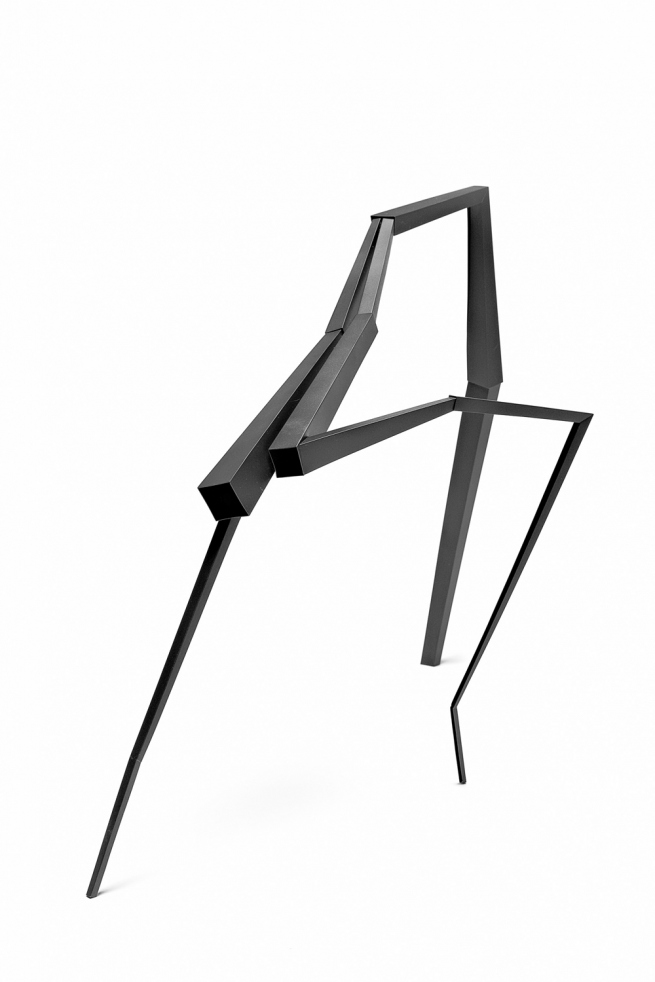
Quiet, precise works. Forms of insect-like legs and proboscises. They balance, seeming to almost teeter on the edge – but the objects are incredibly grounded at the same time. As you walk into the darkened gallery and observe these creatures you feel this pull – lightness and weight. Fantastic!
And so it came to pass in silence, for these works are still, quiet and have a quality of the presence of the inexpressible. Funaki achieves these incredible silences through being true to her self and her style through an expression of her endearing will. While Mari may no longer be amongst us as expressions of her will the silences of these objects will be forever with us.
When looking at art, one of the best experiences for me is gaining the sense that something is open before you, that wasn’t open before. I don’t mean accessible, I mean open like making a clearing in the jungle, or being able to see further up a road, or just further on. And also like an open marketplace – where there were always good trades. There is the feeling that if you put in a certain amount of honesty, then you would get something back that made some room for you in front – some room that would allow you to look forward, and maybe even walk into that space. Seeing Jerrems work gives you that feeling.
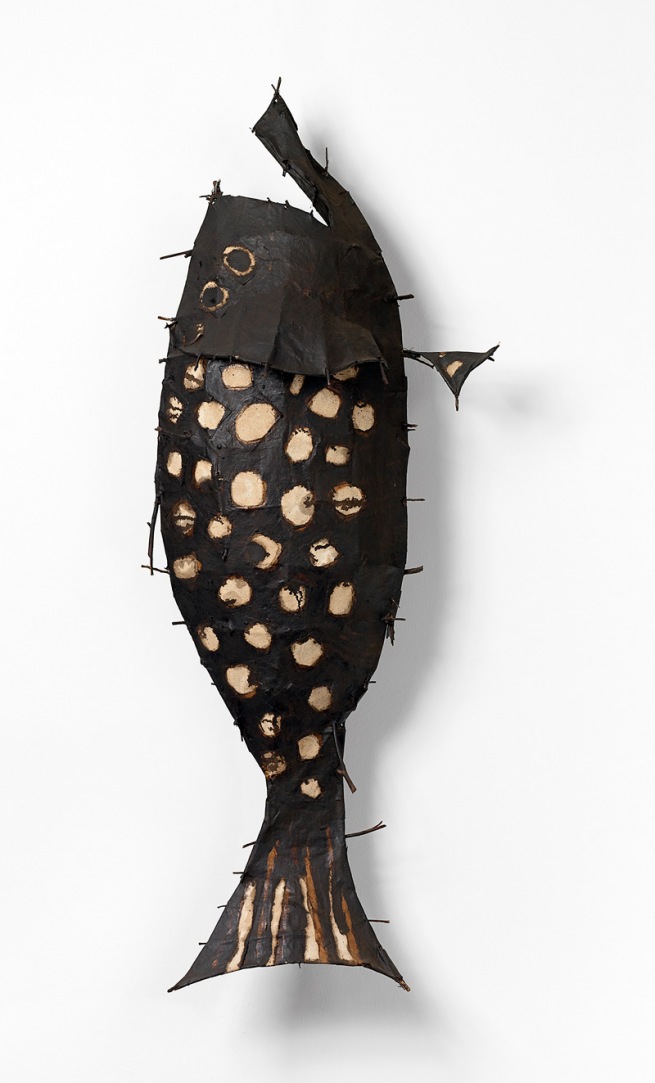
This is a superlative survey exhibition of the work of John Davis at NGV Australia, Melbourne.
In the mature work you can comment on the fish as ‘travellers’ or ‘nomads’, “a metaphor for people and the way we move around the world.” You can observe the caging, wrapping and bandaging of these fish as a metaphor for the hurt we humans impose on ourselves and the world around us. You can admire the craftsmanship and delicacy of the constructions, the use of found objects, thread, twigs, driftwood and calico and note the ironic use of bituminous paint in relation to the environment, “a sticky tar-like form of petroleum that is so thick and heavy,” of dark and brooding colour.
This is all well and true. But I have a feeling when looking at this work that here was a wise and old spirit, one who possessed knowledge and learning … a human being who attained a state of grace in his life and in his work.
11/ ‘Mortality’ at The Australian Centre for Contemporary Art (ACCA)
Fiona Tan (Indonesian, b. 1966) Tilt 2002 DVD courtesy of the artist, Frith Street Gallery London
I never usually review group exhibitions but this is an exception to the rule. I have seen this exhibition three times and every time it has grown on me, every time I have found new things to explore, to contemplate, to enjoy. It is a fabulous exhibition, sometimes uplifting, sometimes deeply moving but never less than engaging – challenging our perception of life. The exhibition proceeds chronologically from birth to death. I comment on a few of my favourite works below but the whole is really the sum of the parts: go, see and take your time to inhale these works – the effort is well rewarded. The space becomes like a dark, fetishistic sauna with it’s nooks and crannies of videos and artwork. Make sure you investigate them all!
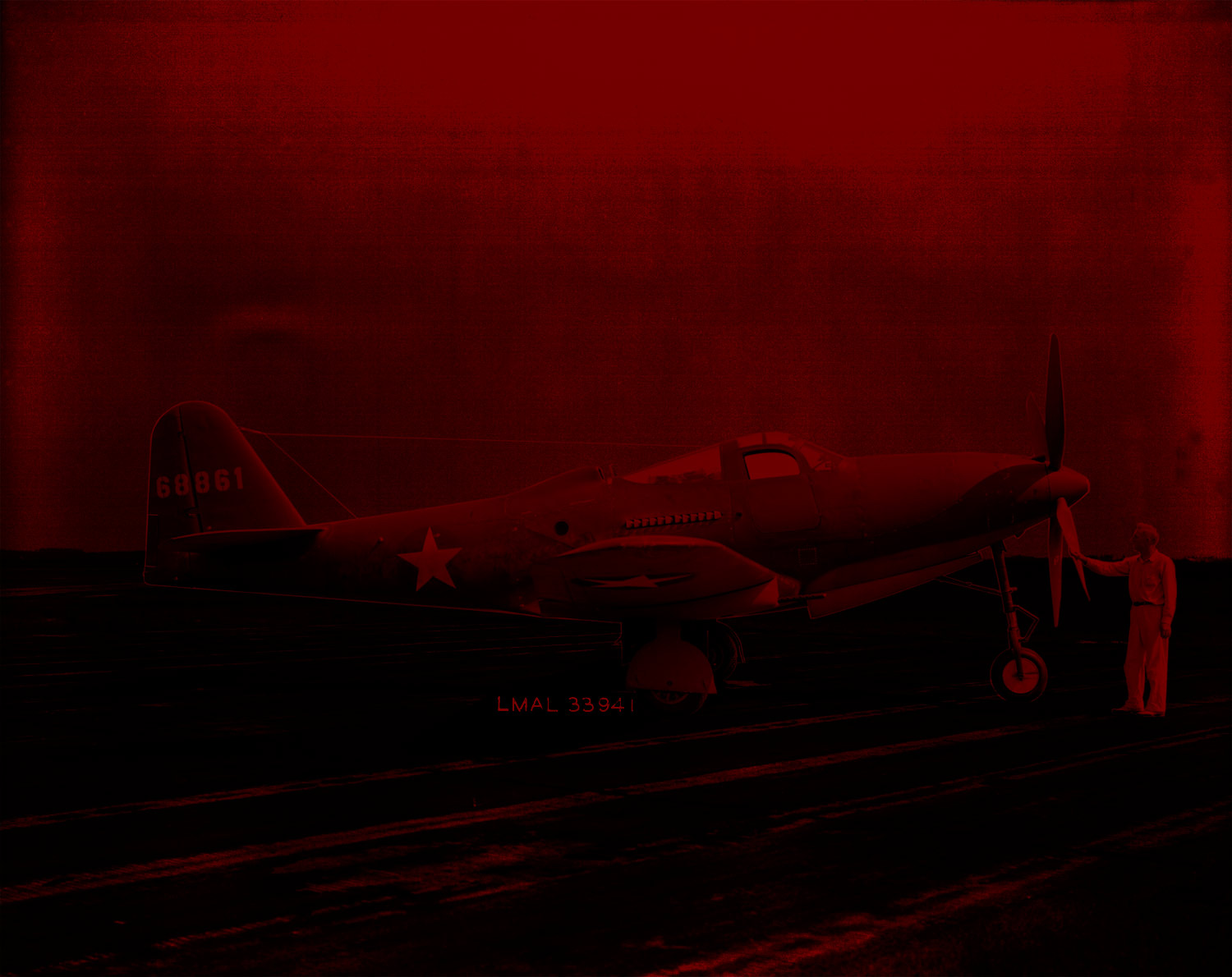
Marcus Bunyan (Australian, b. 1958) Missing in Action (red kenosis) No. 76 2010 Digital colour photograph
“God doesn’t give them things he doesn’t want them to use.”
Anon
“There is no glory in battle worth the blood it costs.”
Dwight D. Eisenhower
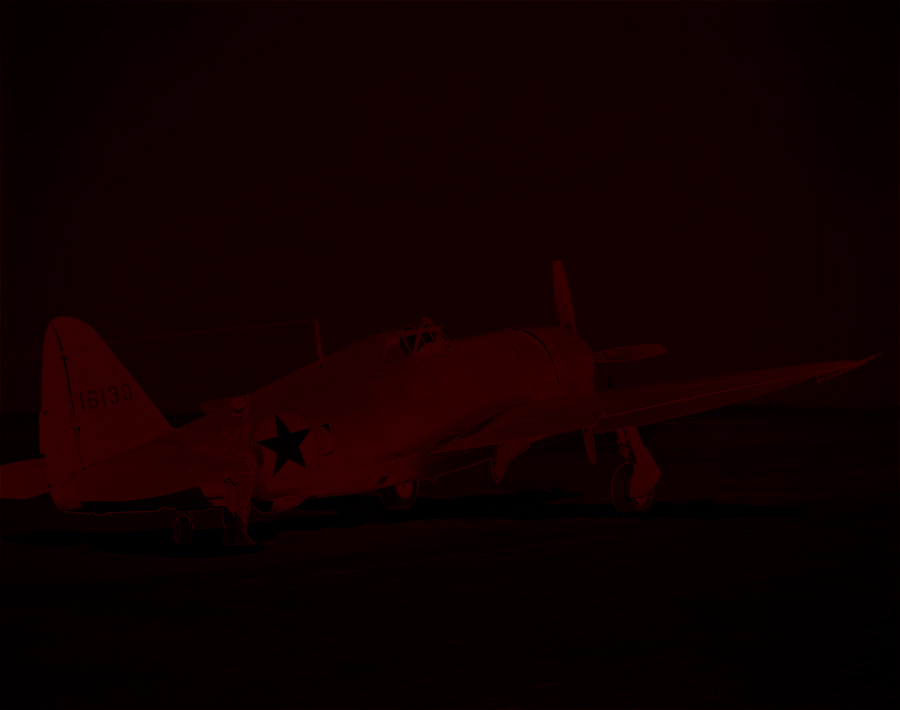
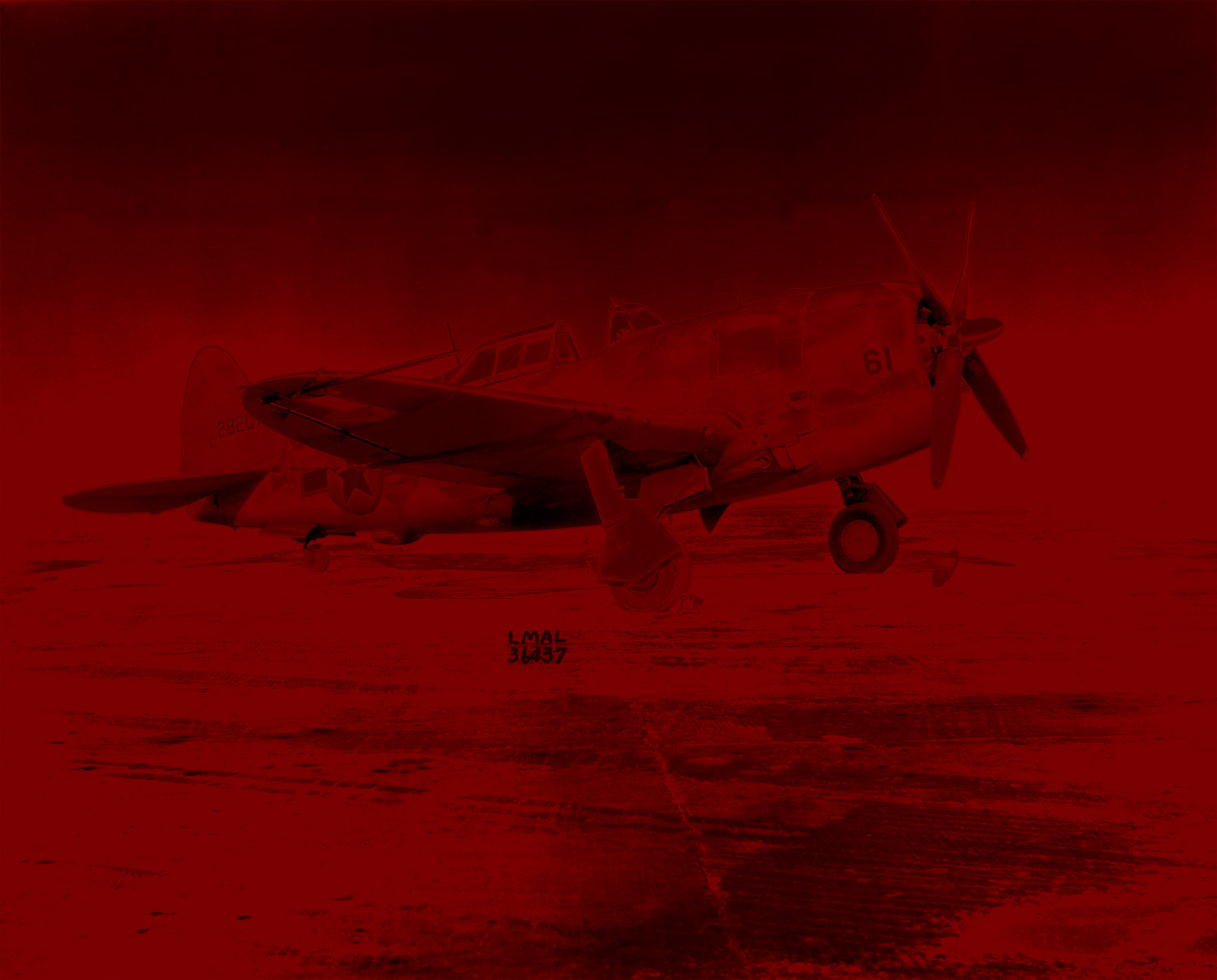
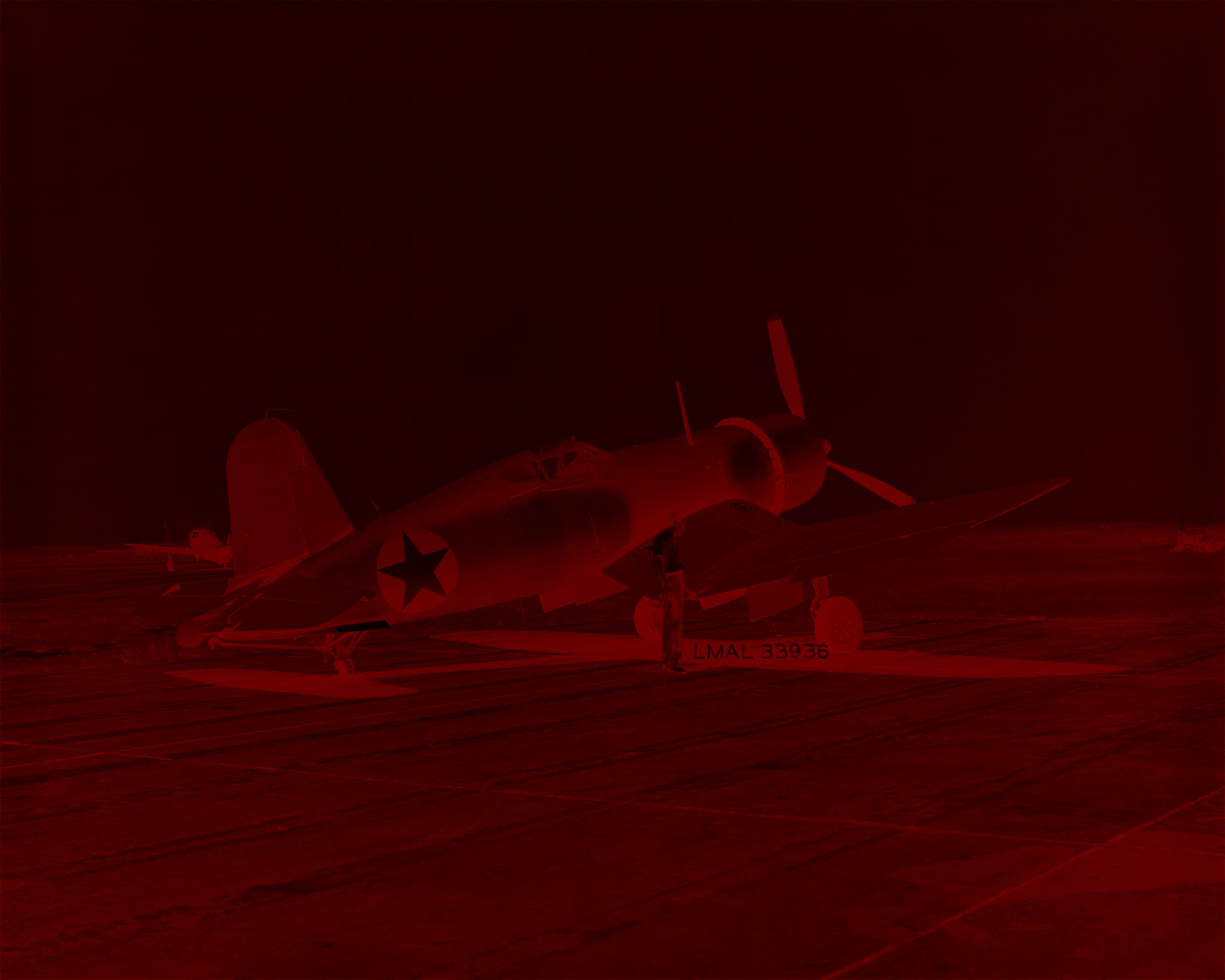
Missing in Action (red kenosis)
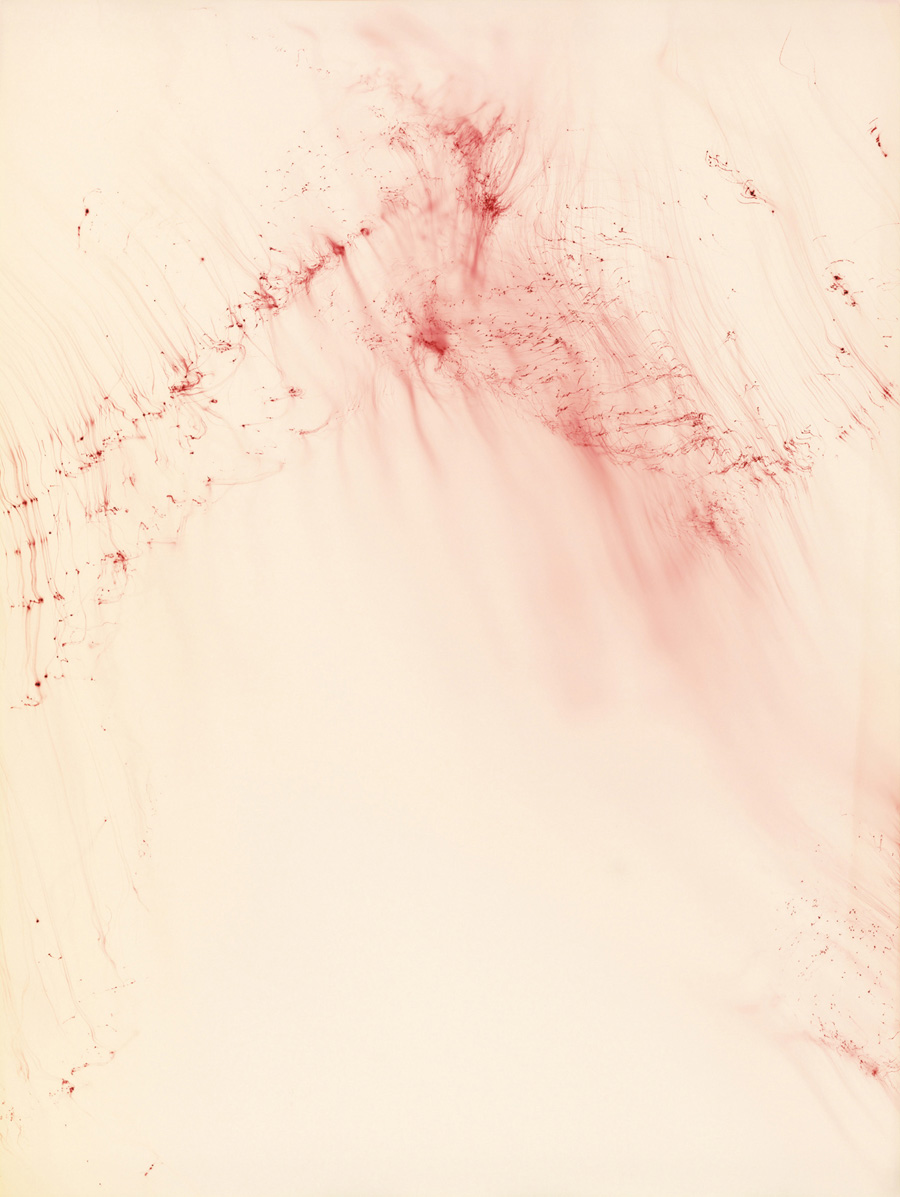
A body of work Missing in Action (red kenosis) 2010 is now online on my website.
There are 100 images in the series which are like variations in music with small shifts in tone and colour. Below is a selection of images, one plane and its variations from the many different planes in the series. Please click on the photographs for a larger version of the image. I hope you like the work!
Dr Marcus Bunyan
Photographs are available from this series for purchase. As a guide, a digital colour 16″ x 20″ costs $1000 plus tracked and insured shipping. For more information please see my Store web page.
Marcus Bunyan (Australian, b. 1958) Missing in Action (red kenosis) No’s. 77-88 2010 Digital colour photographs
Many thankx to the Museum of Modern Art for allowing me to publish the photographs in the posting. Please click on the photographs for a larger version of the image.
Eugène Atget (French, 1857-1927) Saint-Cloud 1923 Albumen silver print 6 7/8 x 8 3/8″ (17.5 x 21.3cm) The Museum of Modern Art, New York. Anonymous gift
Edward Steichen (American born Luxembourg, 1879-1973) Midnight – Rodin’s Balzac 1908 Pigment print 12 1/8 x 14 5/8″ (30.8 x 37.1cm) The Museum of Modern Art, New York. Gift of the photographer Permission of Joanna T. Steichen
The Original Copy: Photography of Sculpture, 1839 to Today presents a critical examination of the intersections between photography and sculpture, exploring how one medium informs the analysis and creative redefinition of the other. On view at The Museum of Modern Art from August 1 through November 1, 2010, the exhibition brings together over 300 photographs, magazines, and journals, by more than 100 artists, from the dawn of modernism to the present, to look at the ways in which photography at once informs and challenges the meaning of what sculpture is. The Original Copy is organised by Roxana Marcoci, Curator, Department of Photography, The Museum of Modern Art. Following the exhibition’s presentation at MoMA, it will travel to Kunsthaus Zürich, where it will be on view from February 25 through May 15, 2011.
When photography was introduced in 1839, aesthetic experience was firmly rooted in Romanticist tenets of originality. In a radical way, photography brought into focus the critical role that the copy plays in art and in its perception. While the reproducibility of the photograph challenged the aura attributed to the original, it also reflected a very personal form of study and offered a model of dissemination that would transform the entire nature of art.
“In his 1947 book Le Musée Imaginaire, the novelist and politician André Malraux famously advocated for a pancultural ‘museum without walls,’ postulating that art history, and the history of sculpture in particular, had become ‘the history of that which can be photographed,'” said Ms. Marcoci.
Sculpture was among the first subjects to be treated in photography. There were many reasons for this, including the desire to document, collect, publicise, and circulate objects that were not always portable. Through crop, focus, angle of view, degree of close-up, and lighting, as well as through ex post facto techniques of dark room manipulation, collage, montage, and assemblage, photographers have not only interpreted sculpture but have created stunning reinventions of it.
Conceived around ten conceptual modules, the exhibition examines the rich historical legacy of photography and the aesthetic shifts that have taken place in the medium over the last 170 years through a superb selection of pictures by key modern, avant-garde, and contemporary artists. Some, like Eugène Atget, Walker Evans, Lee Friedlander, and David Goldblatt, are best known as photographers; others, such as Auguste Rodin, Constantin Brancusi, and David Smith, are best known as sculptors; and others, from Hannah Höch and Sophie Taeuber-Arp to such contemporaries as Bruce Nauman, Fischli/Weiss, Rachel Harrison, and Cyprien Gaillard, are too various to categorise but exemplify how fruitfully and unpredictably photography and sculpture have combined.
The Original Copy begins with Sculpture in the Age of Photography, a section comprising early photographs of sculptures in French cathedrals by Charles Nègre and in the British Museum by Roger Fenton and Stephen Thompson; a selection of André Kertész’s photographs from the 1920s showing art amid common objects in the studios of artist friends; and pictures by Barbara Kruger and Louise Lawler that foreground issues of representation to underscore photography’s engagement in the analysis of virtually every aspect of art. Eugène Atget: The Marvelous in the Everyday presents an impressive selection of Atget’s photographs, dating from the early 1900s to the mid 1920s, of classical statues, reliefs, fountains, and other decorative fragments in Paris, Versailles, Saint-Cloud, and Sceaux, which together amount to a visual compendium of the heritage of French civilisation at the time.
Auguste Rodin: The Sculptor and the Photographic Enterprise includes some of the most memorable pictures of Rodin’s sculptures by various photographers, including Edward Steichen’s Rodin – The Thinker (1902), a work made by combining two negatives: one depicting Rodin in silhouetted profile, contemplating The Thinker (1880-82), his alter ego; and one of the artist’s luminous Monument to Victor Hugo (1901). Constantin Brancusi: The Studio as Groupe Mobile focuses on Brancusi’s uniquely nontraditional techniques in photographing his studio, which was articulated around hybrid, transitory configurations known as groupe mobiles (mobile groups), each comprising several pieces of sculpture, bases, and pedestals grouped in proximity. In search of transparency, kineticism, and infinity, Brancusi used photography to dematerialise the static, monolithic materiality of traditional sculpture. His so-called photos radieuses (radiant photos) are characterised by flashes of light that explode the sculptural gestalt.
Marcel Duchamp: The Readymade as Reproduction examines Box in a Valise (1935-41), a catalogue of his oeuvre featuring 69 reproductions, including minute replicas of several readymades and one original work that Duchamp “copyrighted” in the name of his female alter ego, Rrose Sélavy. Using collotype printing and pochoir – in which colour is applied by hand with the use of stencils – Duchamp produced “authorised ‘original’ copies” of his work, blurring the boundaries between unique object, readymade, and multiple. Cultural and Political Icons includes selections focusing on some of the most significant photographic essays of the twentieth century – Walker Evans’s American Photographs (1938), Robert Franks’s The Americans (1958), Lee Friedlander’s The American Monument (1976), and David Goldblatt’s The Structure of Things Then (1998) – many of which have never before been shown in a thematic context as they are here.
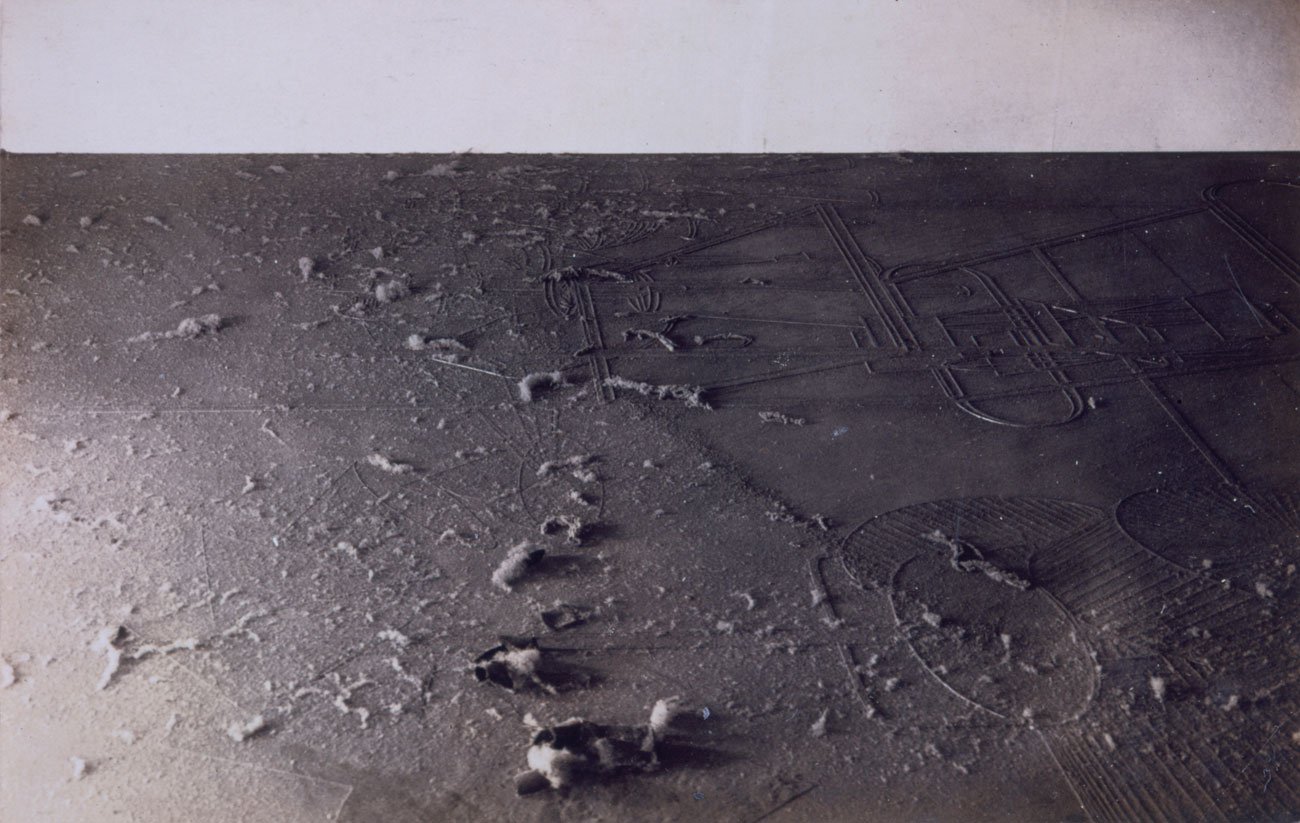
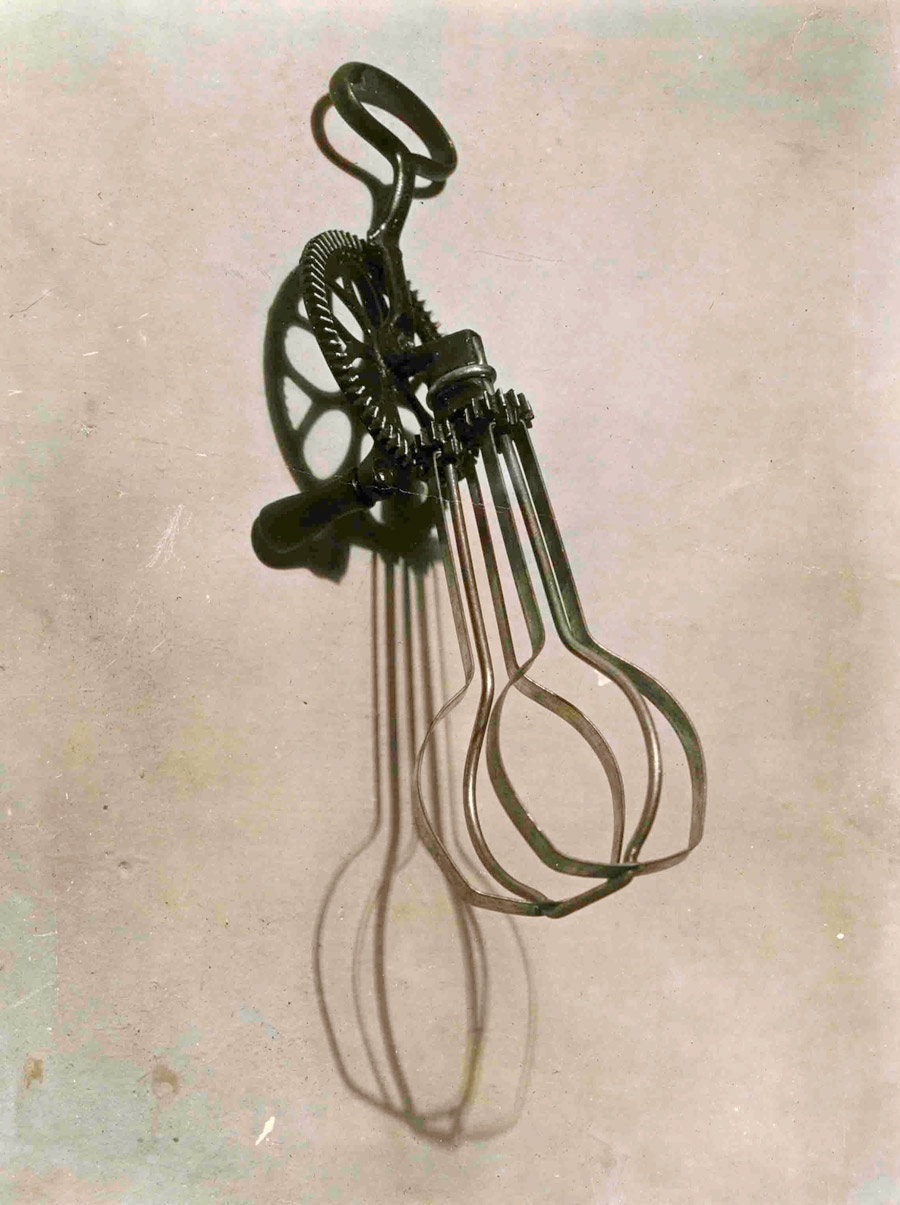
The Studio without Walls: Sculpture in the Expanded Field explores the radical changes that occurred in the definition of sculpture when a number of artists who did not consider themselves photographers in the traditional sense, such as Robert Smithson, Robert Barry, and Gordon Matta-Clark, began using the camera to document remote sites as sculpture rather than the traditional three-dimensional object. Daguerre’s Soup: What Is Sculpture? includes photographs of found objects or assemblages created specifically for the camera by artists, such as Brassaï’s Involuntary Sculptures (c. 1930s), Alina Szapocznikow’s Photosculptures (1970-1971), and Marcel Broodthaers’s Daguerre’s Soup (1974), the last work being a tongue-in-cheek picture which hints at the various fluid and chemical processes used by Louis Daguerre to invent photography in the nineteenth century, bringing into play experimental ideas about the realm of everyday objects.
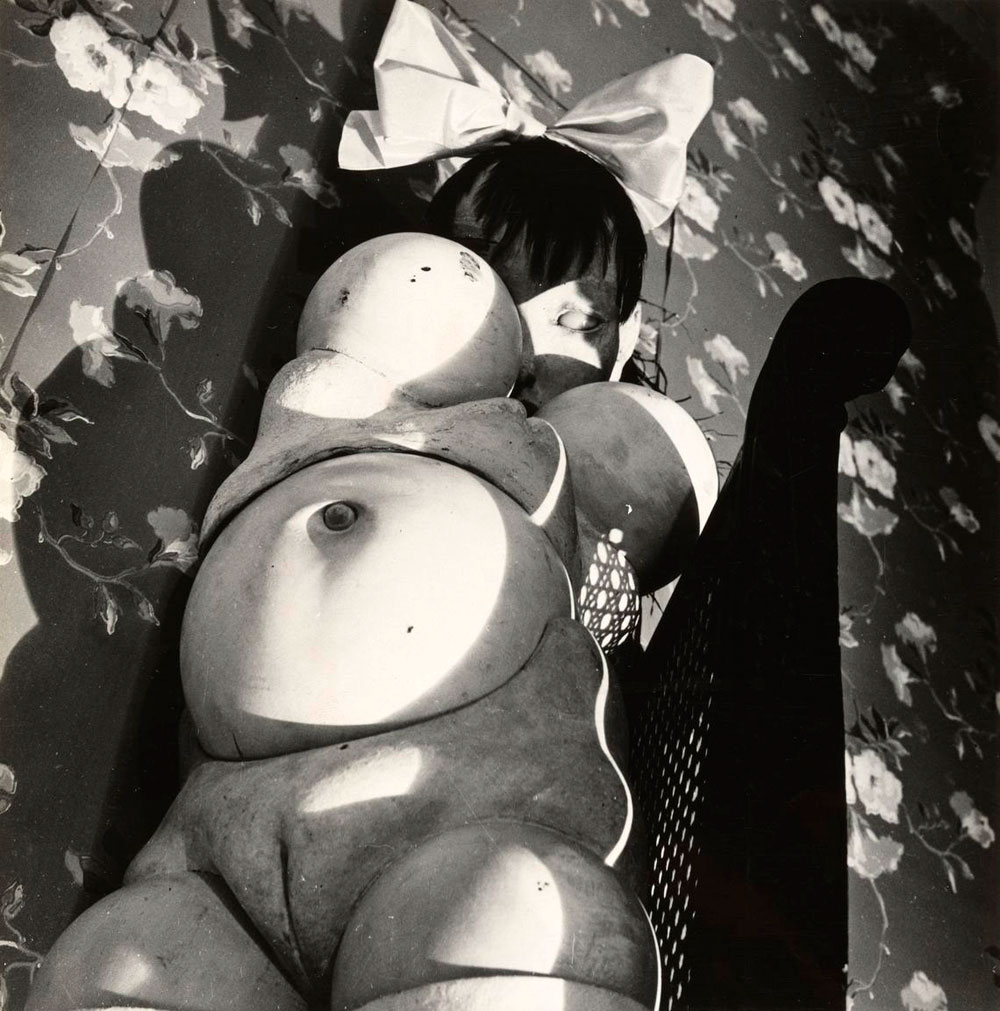
The Pygmalion Complex: Animate and Inanimate Figures looks at Dada and Surrealist pictures and photo-collages by artists, including Man Ray, Herbert Bayer, Hans Bellmer, Hannah Höch, and Johannes Theodor Baargeld, who focused their lenses on mannequins, dummies, and automata to reveal the tension between living figure and sculpture. The Performing Body as Sculptural Object explores the key role of photography in the intersection of performance and sculpture. Bruce Nauman, Charles Ray, and Dennis Oppenheim, placing a premium on their training as sculptors, articulated the body as a sculptural prop to be picked up, bent, or deployed instead of traditional materials. Eleanor Antin, Ana Mendieta, VALIE EXPORT, and Hannah Wilke engaged with the “rhetoric of the pose,” using the camera as an agency that itself generates actions through its presence.
Press release from the Museum of Modern Art website
Man Ray (Emmanuel Radnitzky) (American, 1890-1976) Noire et blanche (Black and white) 1926 Gelatin silver print 6 3/4 x 8 7/8″ (17.1 x 22.5cm) The Museum of Modern Art, New York. Gift of James Thrall Soby 2010 Man Ray Trust/Artists Rights Society (ARS), New York/ADAGP, Paris
“The advent of photography in 1839, when aesthetic experience was firmly rooted in Romanticist tenets of originality, brought into focus the critical role that the copy plays in the perception of art. The medium’s reproducibility challenged the aura attributed to the original, but it also reflected a new way of looking and offered a model for dissemination that would transform the entire nature of art. The aesthetic singularity of the photograph, the archival value of a document bearing the trace of history, and the combinatory capacity of the image, open to be edited into sequences in which it mixes with others – all these contribute to the status of photography as both an art form and a medium of communication.
Sculpture was among the first subjects to be treated in photography. In his 1947 book Le Musée imaginaire, the novelist and politician André Malraux famously advocated for a pancultural “museum without walls,” postulating that art history, and the history of sculpture in particular, had become “the history of that which can be photographed.” There were many reasons for this, including the immobility of sculpture, which suited the long exposure times needed with the early photographic processes, and the desire to document, collect, publicise and circulate objects that were not always portable. Through crop, focus, angle of view, degree of close-up, and lighting, as well as through ex post facto techniques of dark room manipulation, collage, montage, and assemblage, photographers not only interpret sculpture but create stunning reinventions of it.
The Original Copy presents a critical examination of the intersections between photography and sculpture, exploring how the one medium has been implicated in the analysis and creative redefinition of the other. Bringing together 300 pictures, magazines and journals by more than 100 artists from the dawn of modernism to the present, this exhibition looks at the ways in which photography at once informs and challenges our understanding of what sculpture is within specific historic contexts.
Sculpture in the Age of Photography
If we consider photography a child of the industrial era – a medium that came of age alongside the steam engine and the railroad – it is not surprising that one of its critical functions was to bring physically inaccessible worlds closer by means of reproduction. Among its early practitioners, Charles Nègre photographed sculpture in the cathedrals of Chartres, Amiens, and, in Paris, Notre Dame, circling them at different levels to capture perspectives of rarely seen sculptural details, while in London Roger Fenton and Stephen Thompson documented the ancient statuary in the British Museum, making visible the new power of collecting institutions.
With the advent of the handheld portable camera in the early 1920s, photographers had the flexibility to capture contingent sculptural arrangements taken from elliptical viewpoints. André Kertész, for instance, recorded unexpected juxtapositions between art and common objects in the studios of artist friends, including Fernand Léger and Ossip Zadkine. His ability to forge heterogeneous materials and objects into visual unity inspired the novelist Pierre Mac Orlan to confer on him the title of “photographer-poet.”
Focusing on details in this way, photographers have interpreted not only sculpture itself, as an autonomous object, but also the context of its display. The results often show that the meaning of art is not fixed within the work but open to the beholder’s reception of it at any given moment. Taking a place in the tradition of institutional critique, Barbara Kruger’s and Louise Lawler’s pictures foreground issues of representation to underscore photography’s engagement in the analysis of virtually every aspect of art.
Eugène Atget The Marvelous in the Everyday
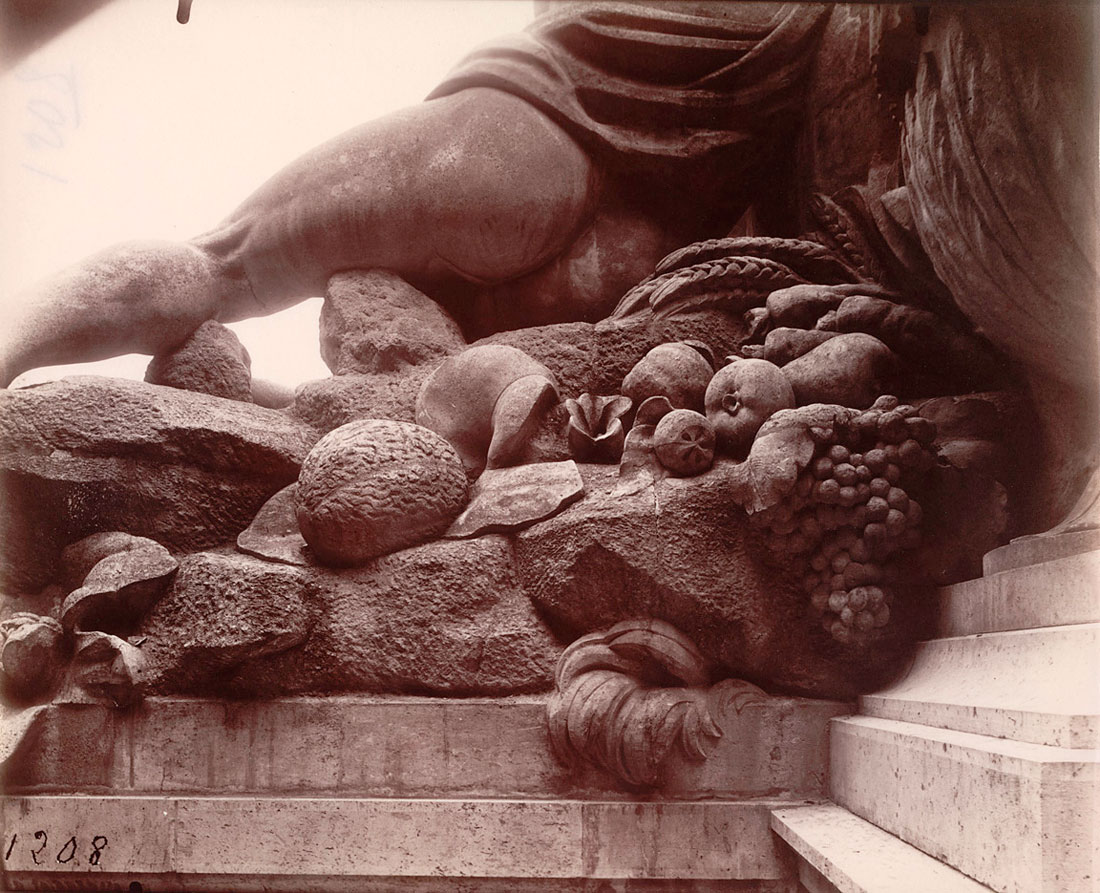
During the first quarter of the twentieth century, Atget took hundreds of photographs of sculptures – classical statues, reliefs, fountains, door knockers, and other finely wrought decorative fragments – in Paris and its outlying parks and gardens, especially at Versailles, Saint-Cloud, and Sceaux. These images amount to a visual compendium of the heritage of French civilisation at that time.
At Versailles, most intensely between 1901 and 1906 and again between 1921 and 1926, Atget photographed the gardens that André Le Nôtre, the landscape architect of King Louis XIV, had designed in the second half of the seventeenth century. In a series of pictures of allegorical statues punctuating the garden’s vistas, Atget focused on the scenic organisation of the sculptures, treating them as characters in a historical play. The pantomimic effect of the statues’ postures clearly appealed to Atget, who in 1880, before turning to photography, had taken acting classes at the Conservatory of the Théâtre national de France. Depicting the white marble statues from low viewpoints, in full length, and against the dark, unified tones of hedges and trees, Atget brought them into dramatic relief, highlighting the theatrical possibilities of sculpture.
Among the pictures taken at Saint-Cloud is a series centred on a melancholy pool surrounded by statues whose tiny silhouettes can be seen from a distance. Atget’s interest in the variable play between nature and art through minute changes in the camera’s angle, or as functions of the effects of light and time of day, is underscored in his notations of the exact month and sometimes even the hour when the pictures were taken.
Auguste Rodin The Sculptor and the Photographic Enterprise
Rodin never took pictures of his sculptures but reserved the creative act for himself, actively directing the enterprise of photographing his work. He controlled staging, lighting and background, and he was probably the first sculptor to enlist the camera to record the changing stages through which his work passed from conception to realisation. The photographers working with Rodin were diverse and their images of his work varied greatly, partly through each individual’s artistic sensibility and partly through changes in the photographic medium. The radical viewing angles that Eugène Druet, for instance, adopted in his pictures of hands, in around 1898, inspired the poet Rainer Maria Rilke to write: “There are among the works of Rodin hands, single small hands which without belonging to a body, are alive. Hands that rise, irritated and in wrath; hands whose five bristling fingers seem to bark like the five jaws of a dog of Hell.”
Among the most memorable pictures of Rodin’s sculptures is Edward Steichen’s Rodin – The Thinker (1902), a work made by combining two negatives: Rodin in dark silhouetted profile contemplating The Thinker (1880-1882), his alter ego, is set against the luminous Monument to Victor Hugo (1901), a source of poetic creativity. Steichen also photographed Rodin’s Balzac, installed outdoors in the sculptor’s garden at Meudon, spending a whole night taking varying exposures from fifteen minutes to an hour to secure a number of dramatic negatives. The three major pictures of the sculpture against the nocturnal landscape taken at 11 p.m., midnight, and 4 a.m. form a temporal series.
Constantin Brancusi The Studio as Groupe Mobile
“Why write?” Brancusi once queried. “Why not just show the photographs?” The sculptor included many great photographers among his friends – Edward Steichen was one of his early champions in the United States; Alfred Stieglitz organised in 1914 his first solo exhibition in New York; Man Ray helped him buy photographic equipment; Berenice Abbott studied sculpture under him; and he was on close terms with Brassaï, André Kertész, and László Moholy-Nagy. Yet he declined to have his work photographed by others, preferring instead to take, develop, and print his own pictures.
Pushing photography against its grain, Brancusi developed an aesthetic antithetical to the usual photographic standards. His so-called photos radieuses (radiant photos) are characterised by flashes of light that explode the sculptural gestalt. In search of transparency, kineticism, and infinity, Brancusi used photography and polishing techniques to dematerialise the static, monolithic materiality of traditional sculpture, visualising what Moholy-Nagy called “the new culture of light.”
Brancusi’s pictures of his studio underscore his scenographic approach. The artist articulated the studio around hybrid, transitory configurations known as groupes mobiles (mobile groups), each comprising several pieces of sculpture, bases, and pedestals grouped in proximity. Assembling and reassembling his sculptures for the camera, Brancusi used photography as a diary of his sculptural permutations. If, as it is often said, Brancusi “invented” modern sculpture, his use of photography belongs to a reevaluation of sculpture’s modernity.
Cultural and Political Icons
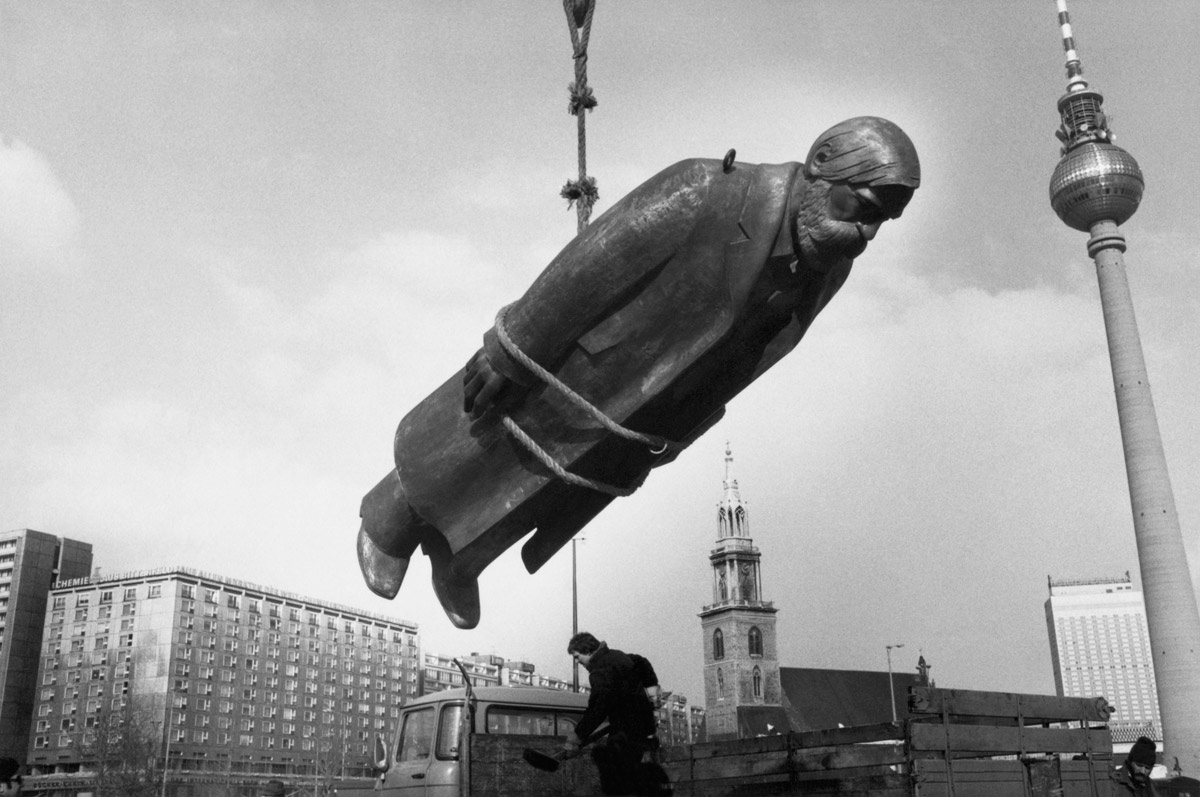
How do we remember the past? What role do photographs play in mediating history and memory? In an era resonating with the consequences of two world wars, the construction and then dismantling of the Berlin Wall, the Vietnam War, and the after effects of the colonialist legacy in South Africa, commemoration has provided a rich subject for photographic investigation.
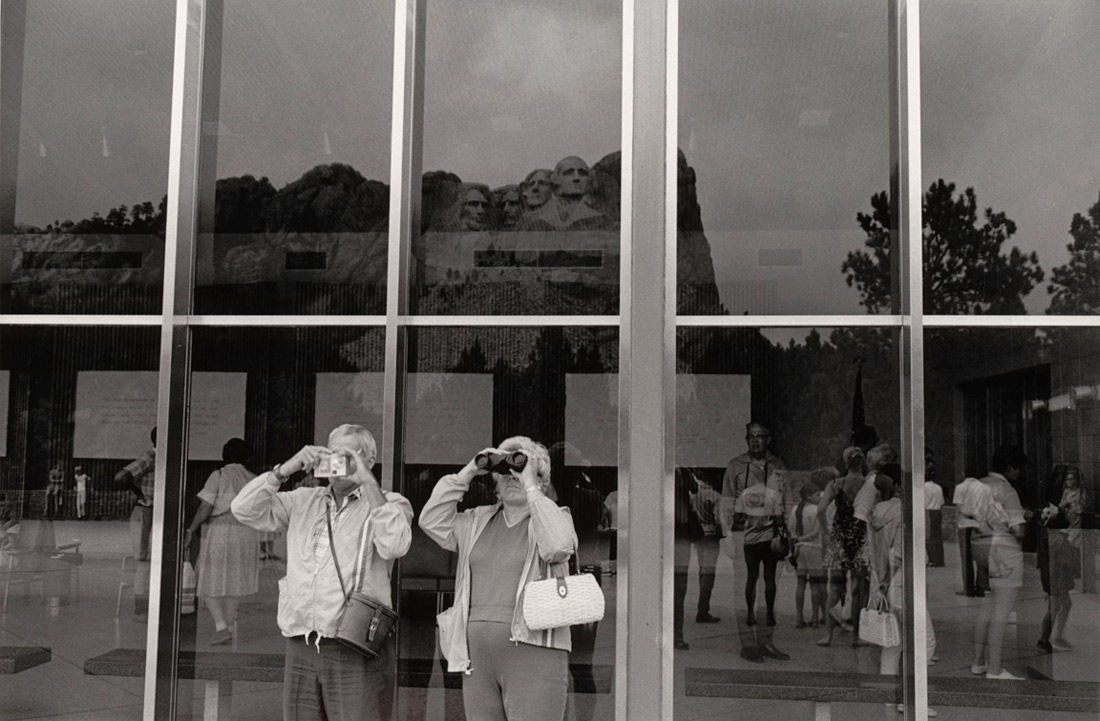
Some of the most significant photographic essays of the twentieth century – Walker Evans’s American Photographs (1938), Robert Frank’s The Americans (1958), Lee Friedlander’s The American Monument (1976), and David Goldblatt’s The Structure of Things Then (1998) – articulate to different degrees the particular value of photography as a means of defining the cultural and political role of monuments.
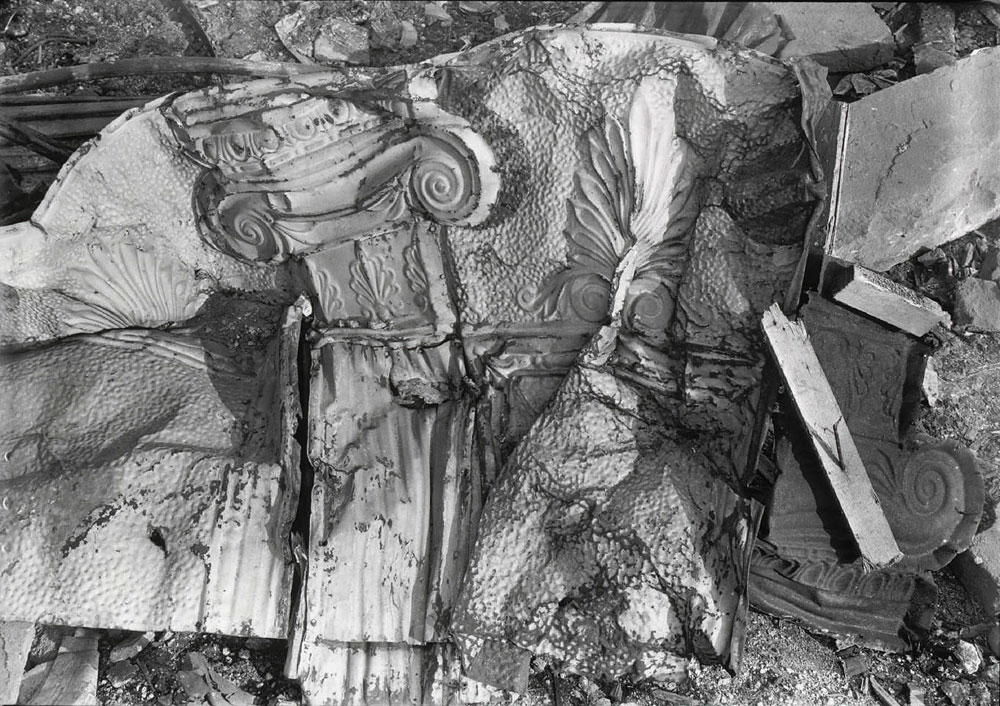
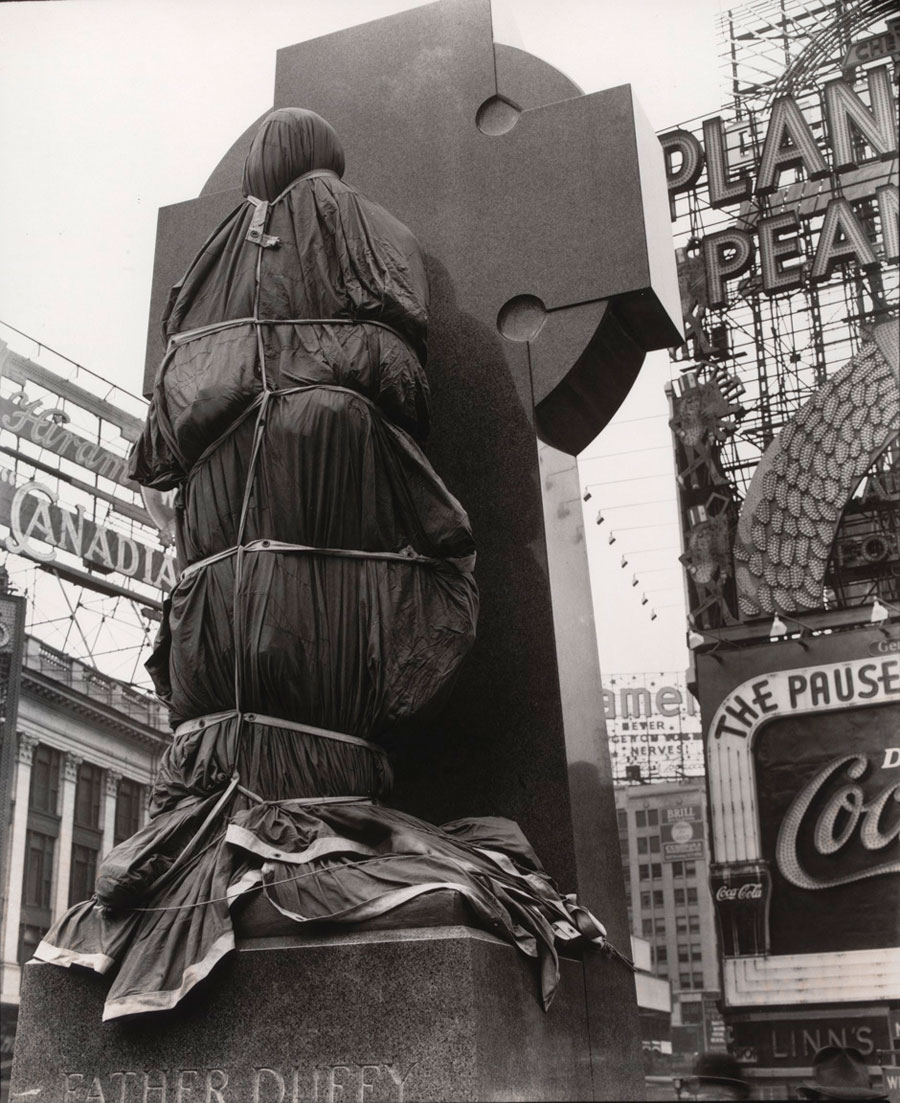
Evans’s emblematic image of a crushed Ionic column made of cheap sheet metal; Frank’s picture of a statue of St. Francis preaching, cross and Bible in hands, to the bleak vista of a gas station; Friedlander’s photograph of World War I hero Father Duffy, engulfed in the cacophony of Times Square’s billboards and neon, which threaten to jeopardise the sculpture’s patriotic message; and Goldblatt’s pictures of monuments to some of the most potent symbols of Afrikaner triumphalism – all take a critical look at the world that public statues inhabit.
The Studio without Walls Sculpture in the Expanded Field
In the late 1960s a radical aesthetic change altered both the definition of the sculptural object and the ways in which that object was experienced. A number of artists who did not consider themselves photographers in the traditional sense began using the camera to rework the idea of what sculpture is, dispensing with the immobile object in favour of an altered site: the built environment, the remote landscape, or the studio or museum space in which the artist intervened.
This engagement with site and architecture – undoubtedly a function of early critiques of art’s institutional status – meant that sculpture no longer had to be a permanent three-dimensional object; it could, for instance, be a configuration of debris on the studio floor, a dematerialised vapour released into the landscape, a dissected home reconfigured as gravity-defying walk-through sculpture, or a wrapped-up building. Bruce Nauman, Robert Barry, Gordon Matta-Clark, and Christo respectively, as well as Michael Heizer, Richard Long, Dennis Oppenheim, and Robert Smithson made extensive use of photography, collecting and taking hundreds of pictures as raw material for other pieces, such as collages and photomontages.
In the first decade of the twenty-first century, artists such as Zhang Dali, Cyprien Gaillard, and Rachel Whiteread have continued this dialogue through photographs contemplating examples of architecture and sculpture in states of dilapidation and entropy, remnants of a society in demise.
Daguerre’s Soup What Is Sculpture?
In 1932, Brassaï challenged the established notions of what is or is not sculpture when he photographed a series of found objects – tiny castoff scraps of paper that had been unconsciously rolled, folded, or twisted by restless hands, strangely shaped bits of bread, smudged pieces of soap, and accidental blobs of toothpaste, which he titled Involuntary Sculptures. In the 1960s and ’70s artists engaging with various forms of reproduction, replication, and repetition used the camera to explore the limits of sculpture. The word “sculpture” itself was somewhat modified, no longer signifying something specific but rather indicating a polymorphous objecthood. For instance, in 1971 Alina Szapocznikow produced Photosculptures, pictures of a new kind of sculptural object made of stretched, formless and distended pieces of chewing gum.
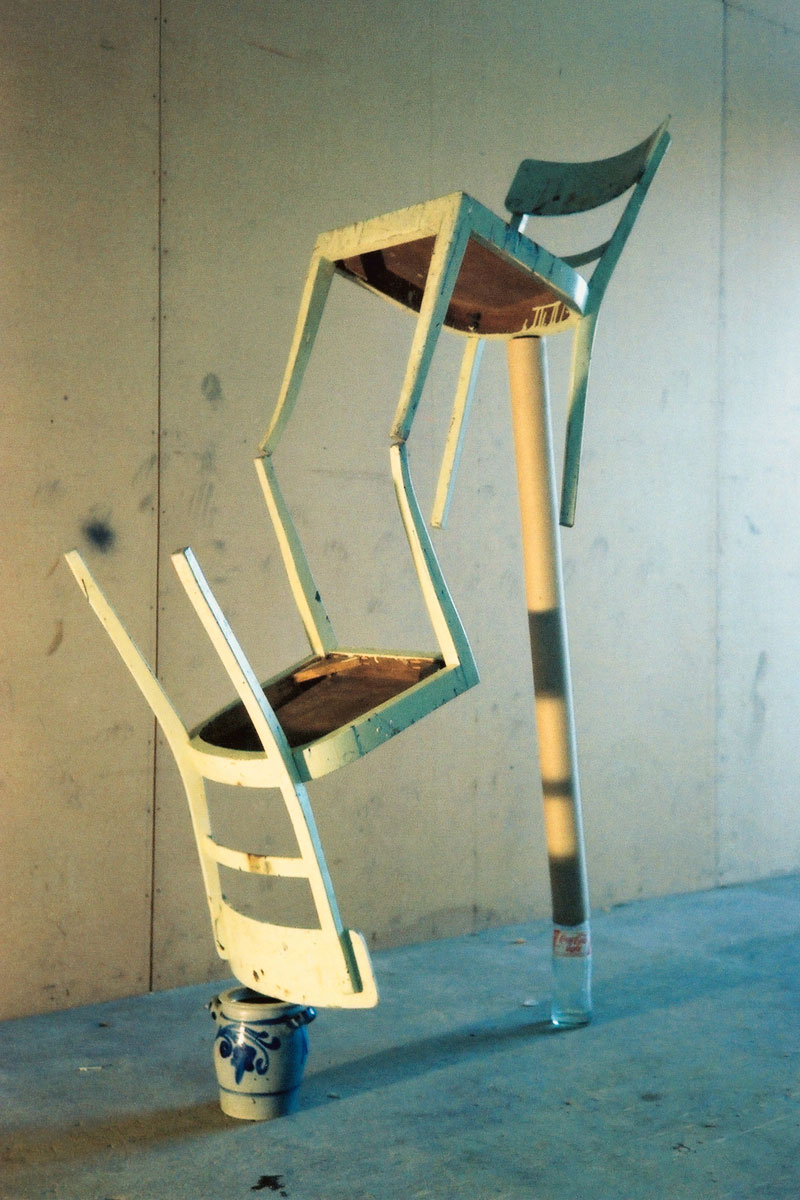
At the same time, Marcel Broodthaers concocted absurdist taxonomies in photographic works. In Daguerre’s Soup (1975), Broothaers hinted at the various fluids and chemical processes used by Louis Daguerre to invent photography in the nineteenth century by bringing into play experimental ideas about language and the realm of everyday objects. A decade later, the duo Fischli/Weiss combined photography with wacky, ingeniously choreographed assemblages of objects. Their tongue-in-cheek pictures of assemblages shot on the verge of collapse convey a sense of animated suspension and deadpan comedy.
In 2007, Rachel Harrison drew on Broodthaers’s illogical systems of classification and parodic collections of objects to produce Voyage of the Beagle, a series of pictures that collectively raise the question “What is sculpture?” Ranging from images of prehistoric standing stones to mass-produced Pop mannequins, and from topiaries to sculptures made by modernist masters, Harrison’s work constitutes an oblique quest for the origins and contemporary manifestations of sculpture.
The Pygmalion Complex Animate and Inanimate Figures
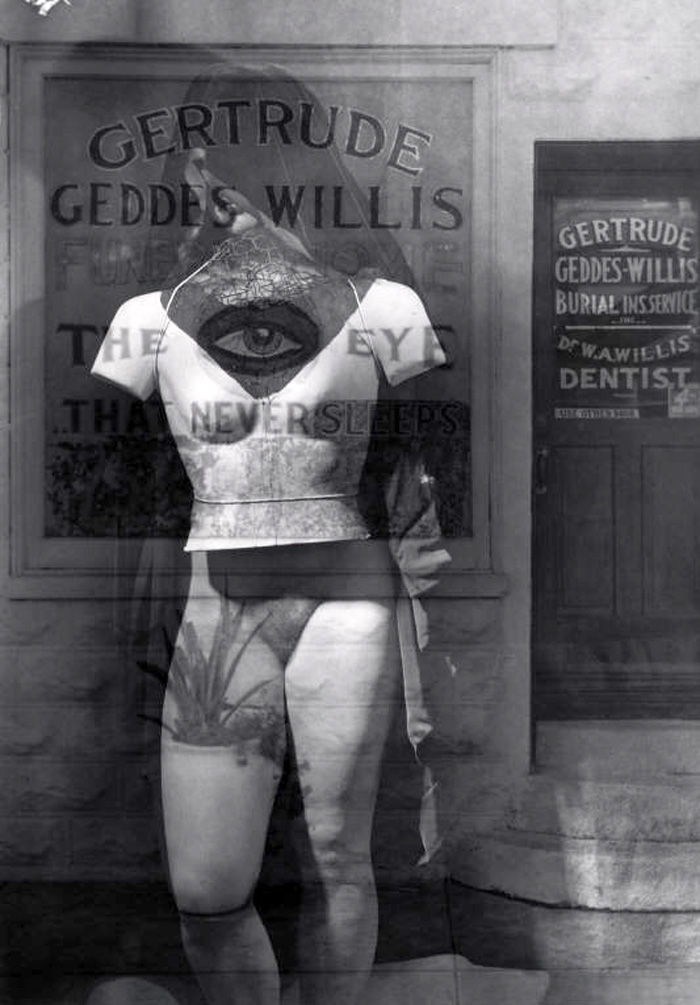
The subject of the animated statue spans the history of avant-garde photography. Artists interested in Surrealist tactics used the camera to tap the uncanniness of puppets, wax dummies, mannequins, and automata, producing pictures that both transcribe and alter appearances. Laura Gilpin explored this perturbing mix of stillness and living, alluring lifelikeness in her mysterious portrait George William Eggers (1926), in which Eggers, the director of the Denver Art Museum, keeps company with a fifteenth-century bust whose polychrome charm is enhanced by the glow of the candle he holds next to her face. So does Edward Weston, in his whimsical Rubber Dummies, Metro Goldwyn Mayer Studios, Hollywood (1939), showing two elastic dolls caught in a pas de deux on a movie-studio storage lot; and Clarence John Laughlin, in his eerie photomontage The Eye That Never Sleeps (1946), in which the negative of an image taken in a New Orleans funeral parlour has been overlaid with an image of a mannequin – one of whose legs, however, is that of a flesh-and-blood model.
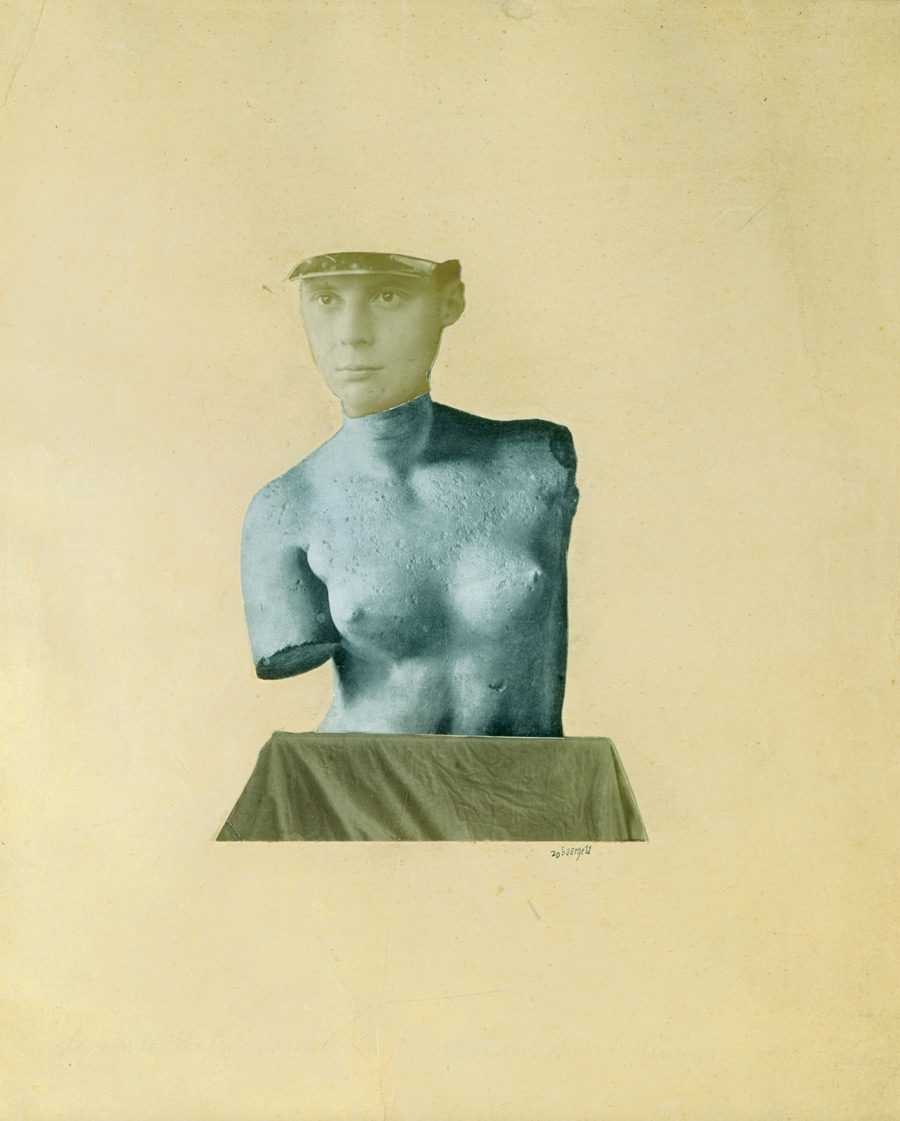
The tension between animate object and inanimate female form lies at the crux of many of Man Ray’s photographs, including Black and White (1926), which provocatively couples the head of the legendary model, artist, and cabaret singer Alice Prin, a.k.a. Kiki of Montparnasse, with an African ceremonial mask. Hans Bellmer’s photographs of dismembered dolls, and the critical photomontages of Herbert Bayer, Hannah Höch, and Johannes Theodor Baargeld, probe the relationship between living figure and sculpture by invoking the unstable subjectivity and breakdown of anatomic boundaries in the aftermath of the Great War.
The Performing Body as Sculptural Object
In 1969, Gilbert & George covered their heads and hands in metallic powders to sing Flanagan and Allen’s vaudeville number “Underneath the Arches” in live performance. Declaring themselves living sculptures, they claimed the status of an artwork, a role they used photography to express. Charles Ray and Dennis Oppenheim, placing a premium on their training as sculptors, articulated the body as a prop that could be picked up, bent, or deployed instead of more traditional materials as a system of weight, mass, and balance.
In the radicalised climate of the 1970s, artists such as Eleanor Antin, Ana Mendieta, VALIE EXPORT, and Hannah Wilke engaged with the “rhetoric of the pose,” underscoring the key role of photography in the intersection of performance, sculpture and portraiture.
Other artists as diverse as Robert Morris, Claes Oldenburg, Otto Muehl, Bas Jan Ader, and Bruce Nauman, experimented with the plasticity of the body as sculptural material. Several of Nauman’s pictures from his portfolio Eleven Color Photographs (1966-1967 / 1970) spoof the classic tradition of sculpture. Yet the signature image of the group – Self-Portrait as a Fountain, in which a stripped-to-the-waist Nauman spews water from his mouth like a medieval gargoyle – is a deadpan salute to Marcel Duchamp’s Fountain (1917). In this spirit, Erwin Wurm’s series of One Minute Sculptures (1997-98) evoke gestural articulations in which the artist’s body is turned into a sculptural form. Wurm, like the other artists presented in this exhibition, focuses attention on what one can do with and through photography, using the camera not to document actions that precede the impulse to record them but as an agency that itself generates actions through its own presence.
Johannes Theodor Baargeld (Alfred Emanuel Ferdinand Gruenwald) (German, 1892-1927) Typische Vertikalklitterung als Darstellung des Dada Baargeld (Typical vertical mess as depiction of the Dada Baargeld) 1920 Photomontage 14 5/8 x 12 3/16″ (37.1 x 31cm) Kunsthaus Zürich, Grafische Sammlung
Many thankx to The Museum of Fine Arts, Boston for allowing me to publish the photographs in the posting. Please click on the photographs for a larger version of the image.
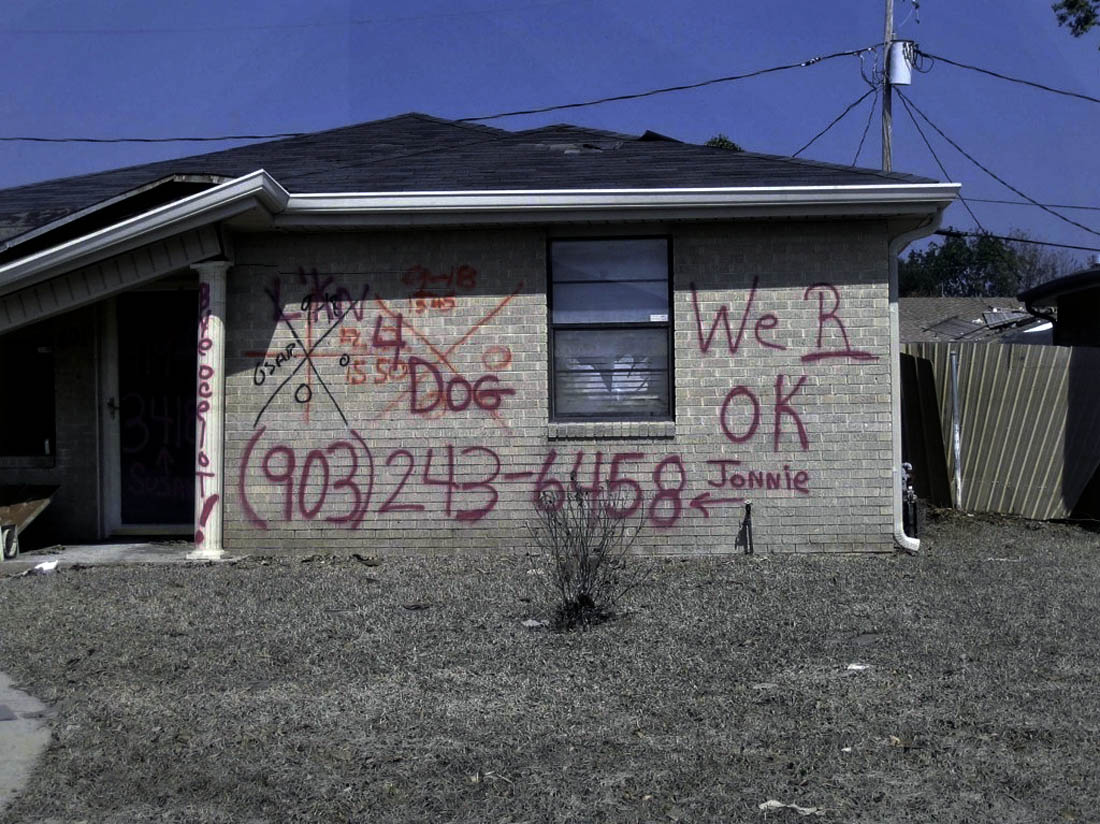
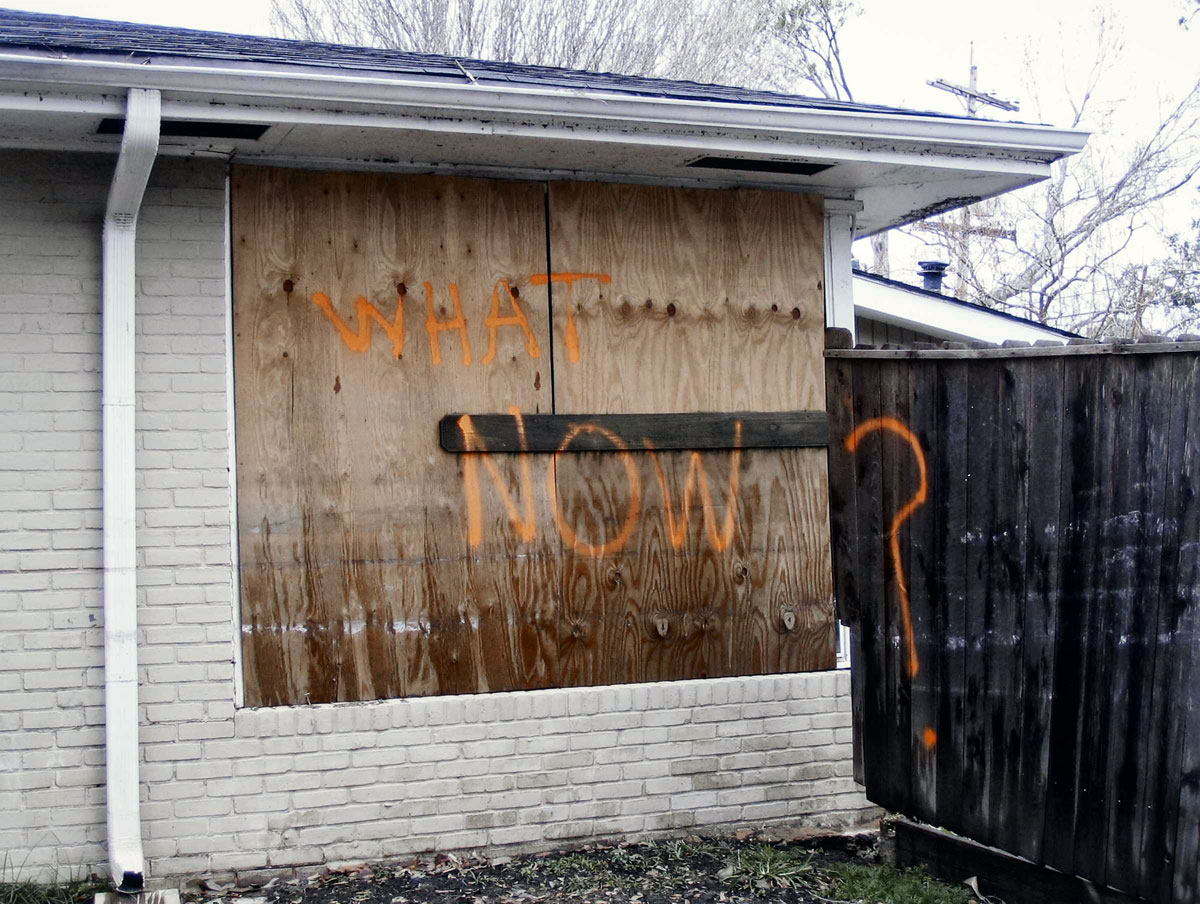
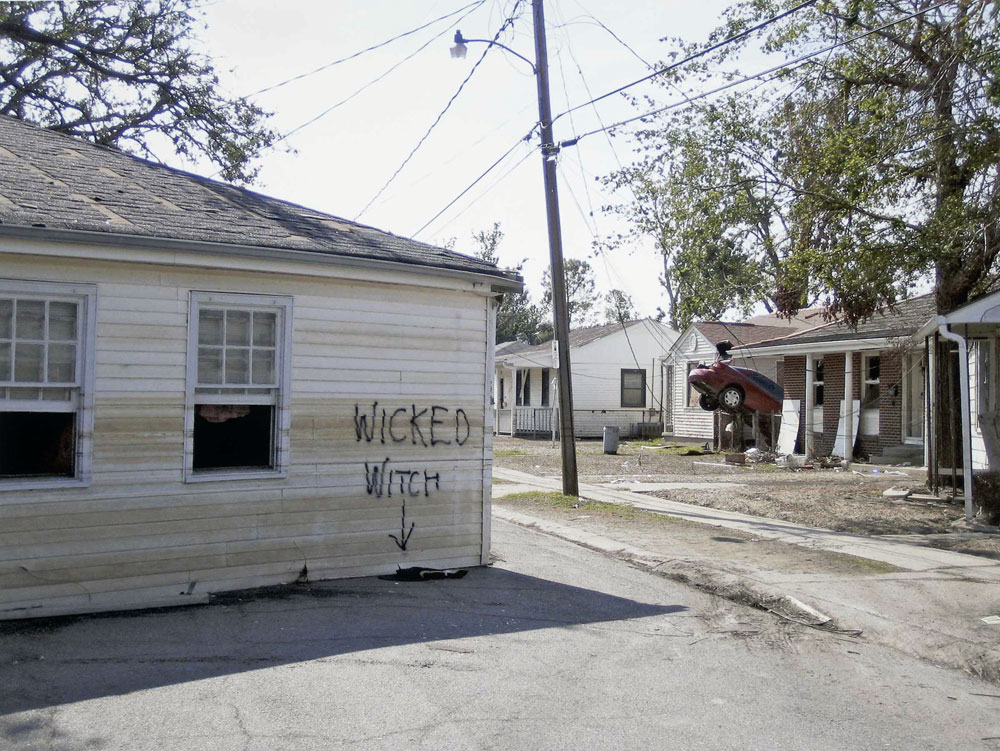
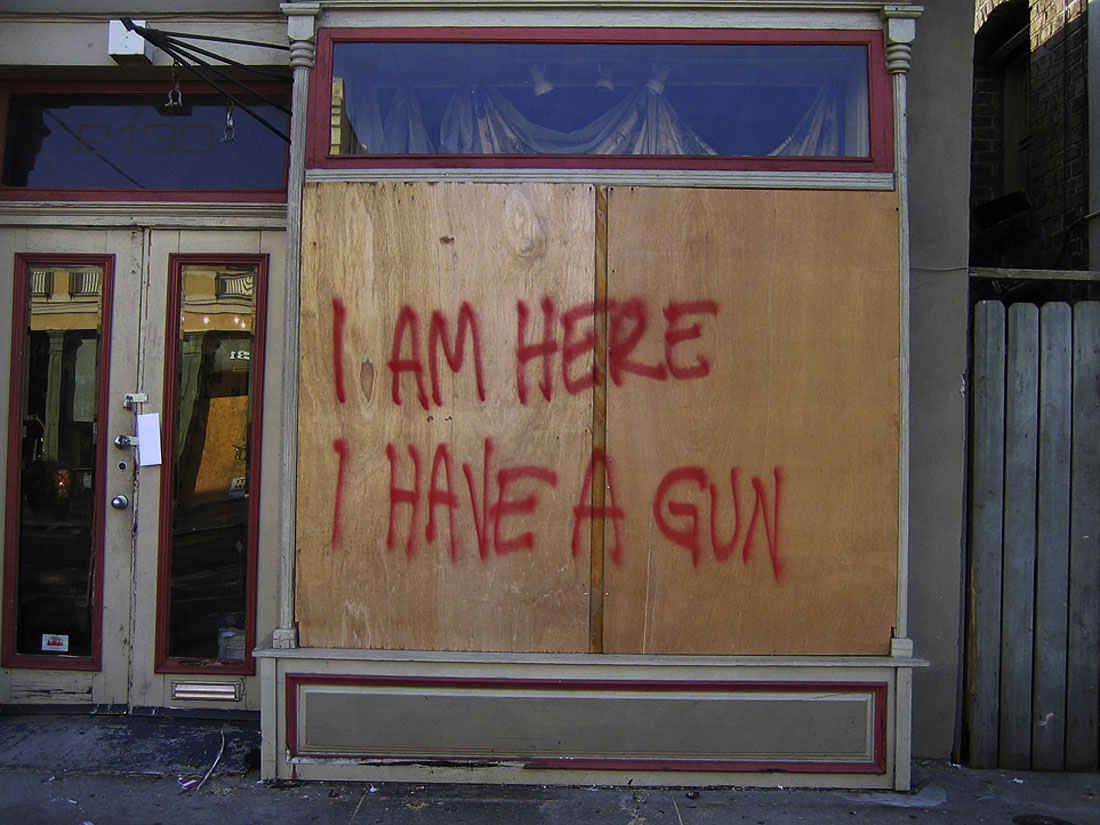
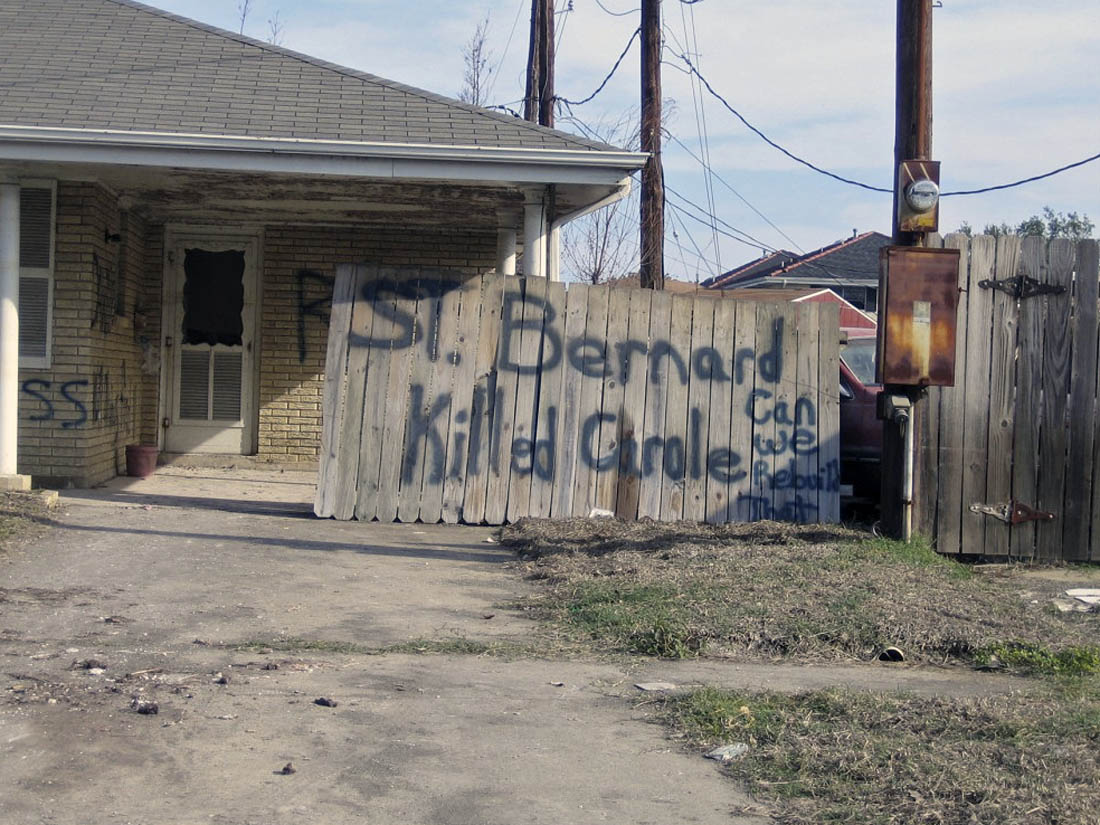
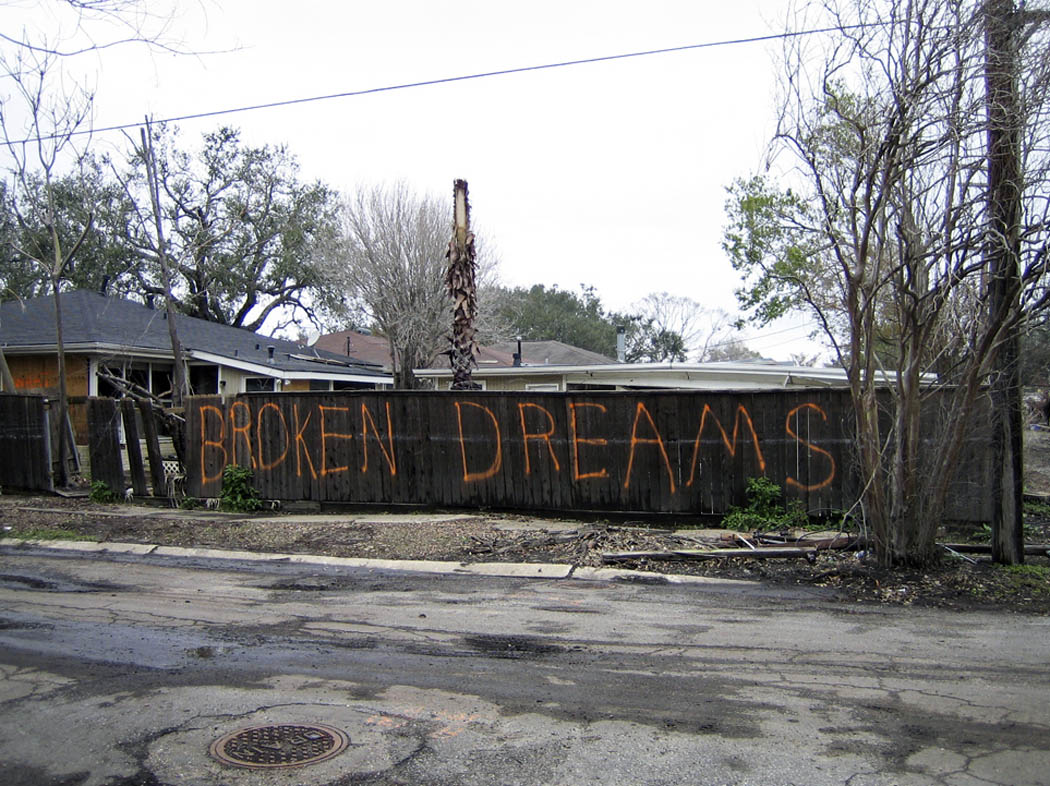
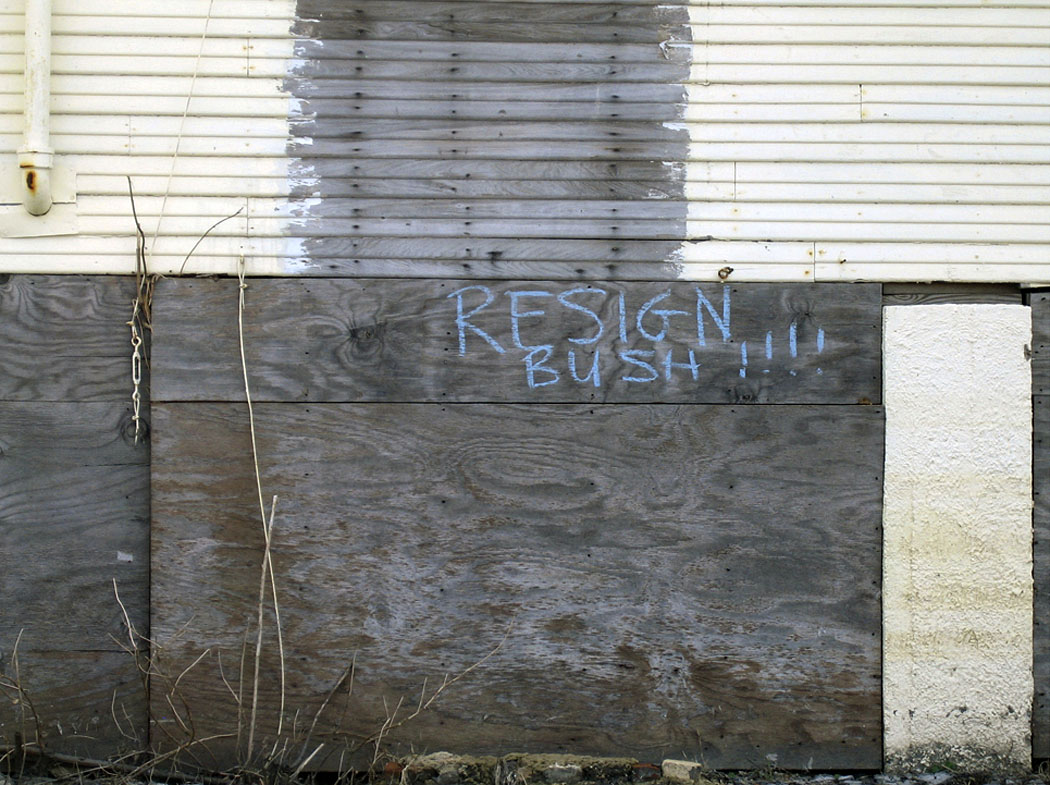
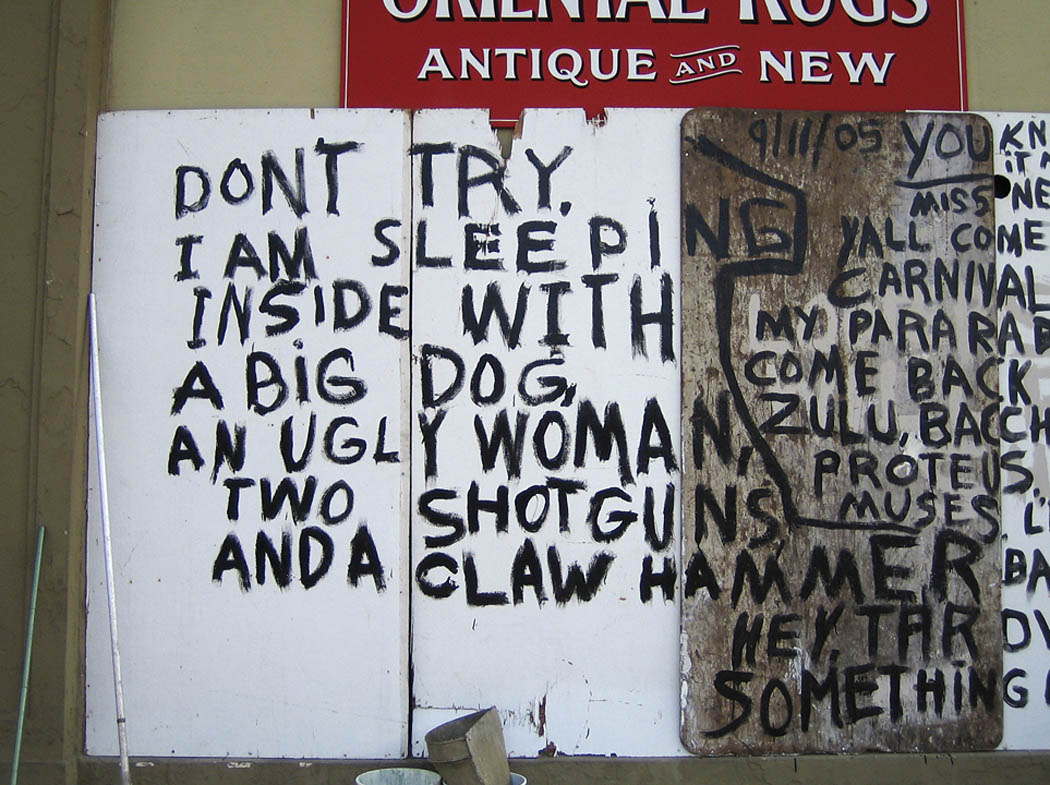
Just after Hurricane Katrina devastated the city of New Orleans in 2005, photographer Richard Misrach used a 4-megapixel pocket camera to capture messages left behind by evacuees. Some are warnings; some are cries for help or encouragement; some are tallies of loss.
Misrach composed a visual narrative that reveals the wrenching anguish of dealing with the aftermath of this horrific storm. Commemorating the hurricane’s fifth anniversary, the exhibition Richard Misrach: After Katrina presents 69 photographs that Misrach has generously given to the MFAH.
Misrach (born 1949) is best known for his Desert Cantos series, initiated in 1979 and still ongoing. Each canto within the series investigates specific aspects of the American West, from issues of water, to tourism, to the presence of the U.S. military. While developing the Cantos, Misrach has also produced series on the Golden Gate Bridge and Hawaiian beaches. The MFAH collects Misrach’s work in depth and in 1996 organised the artist’s mid-career retrospective, Crimes and Splendors: The Desert Cantos of Richard Misrach.
Searching for identity like mould spore taking root
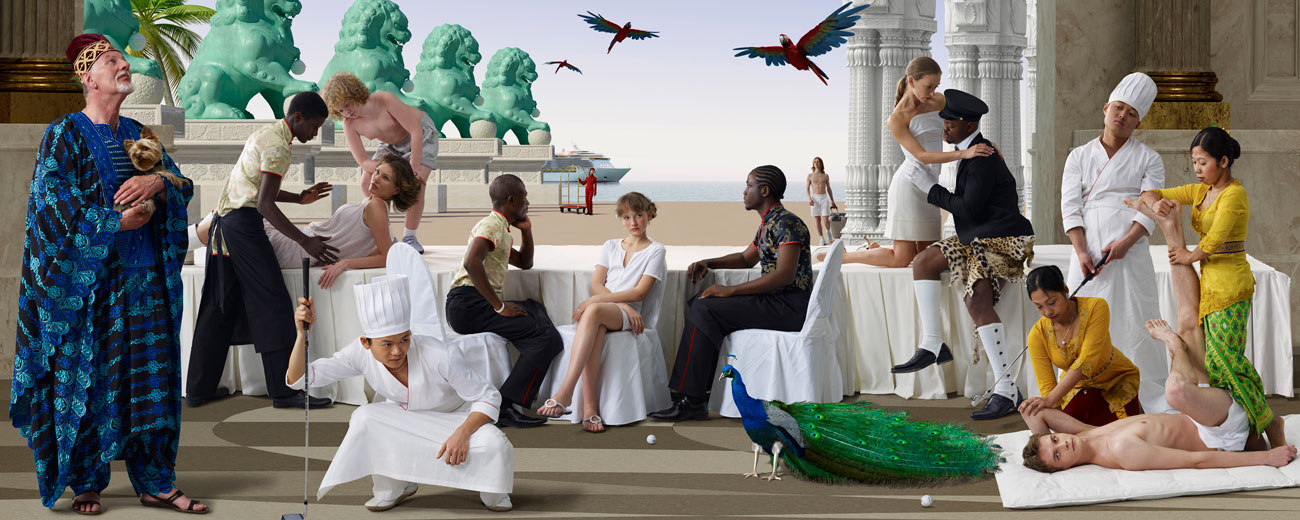
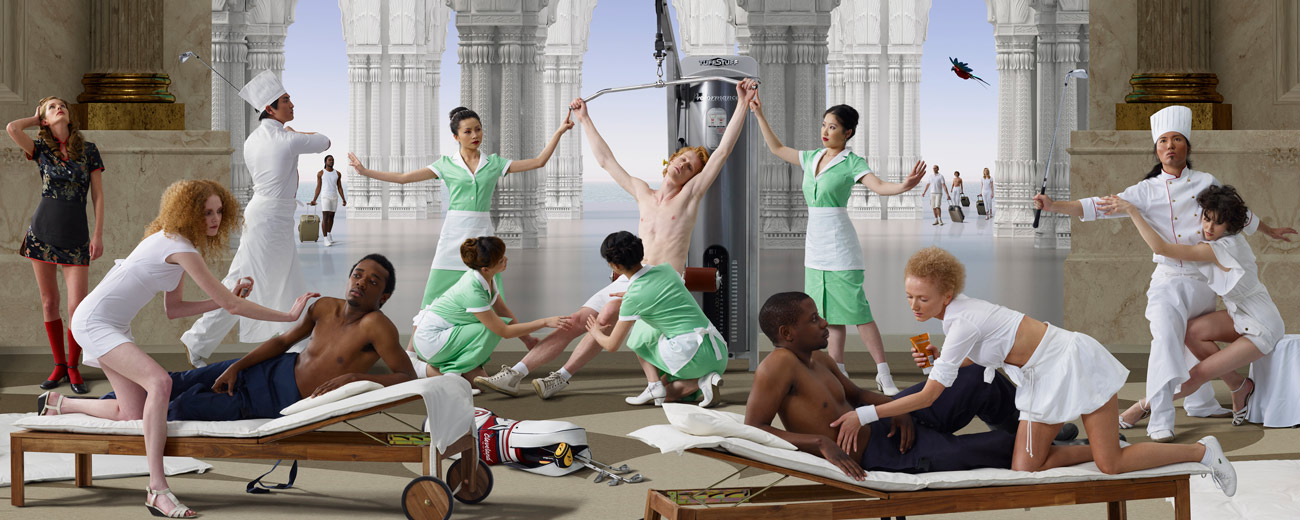
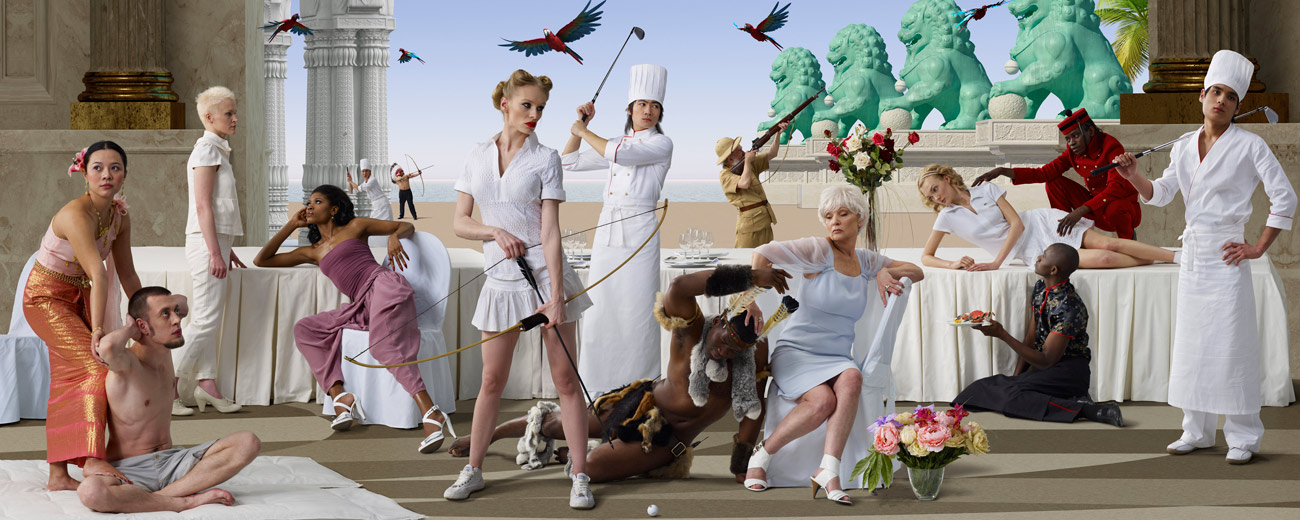
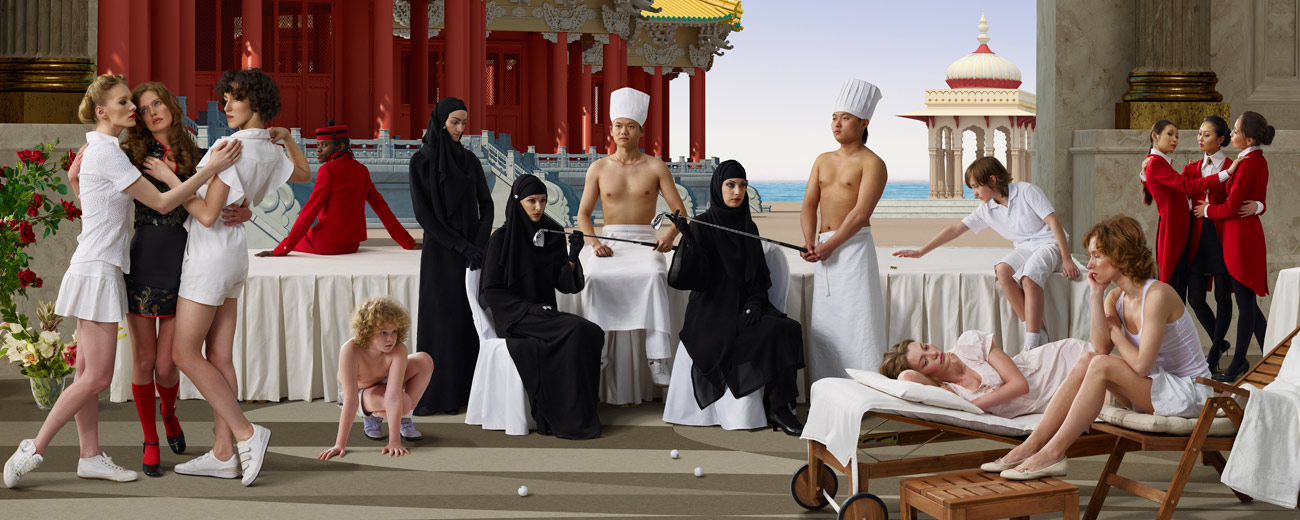
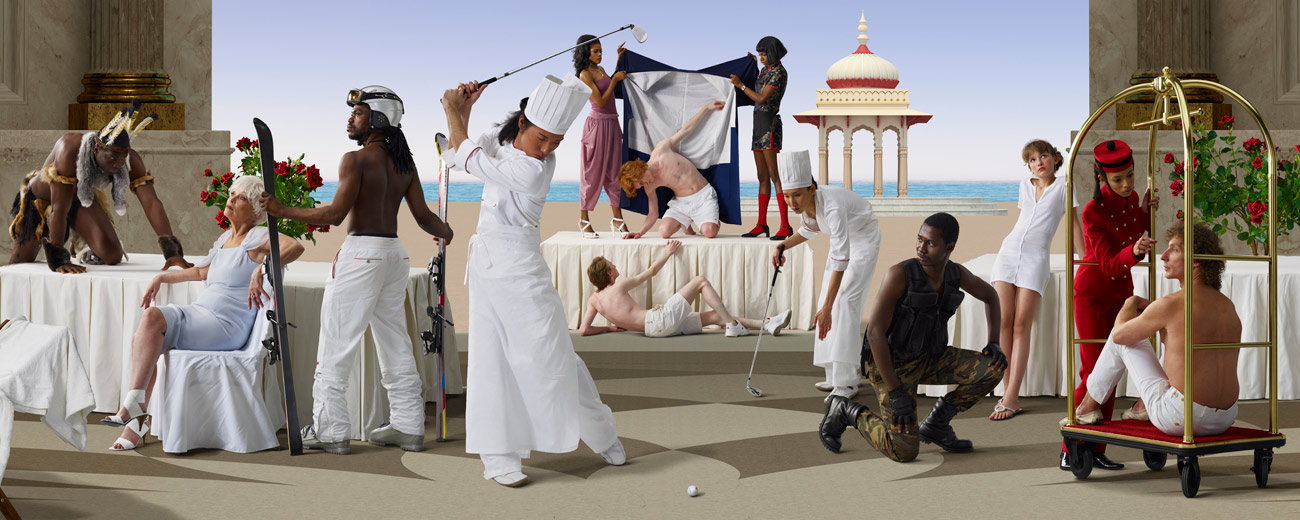
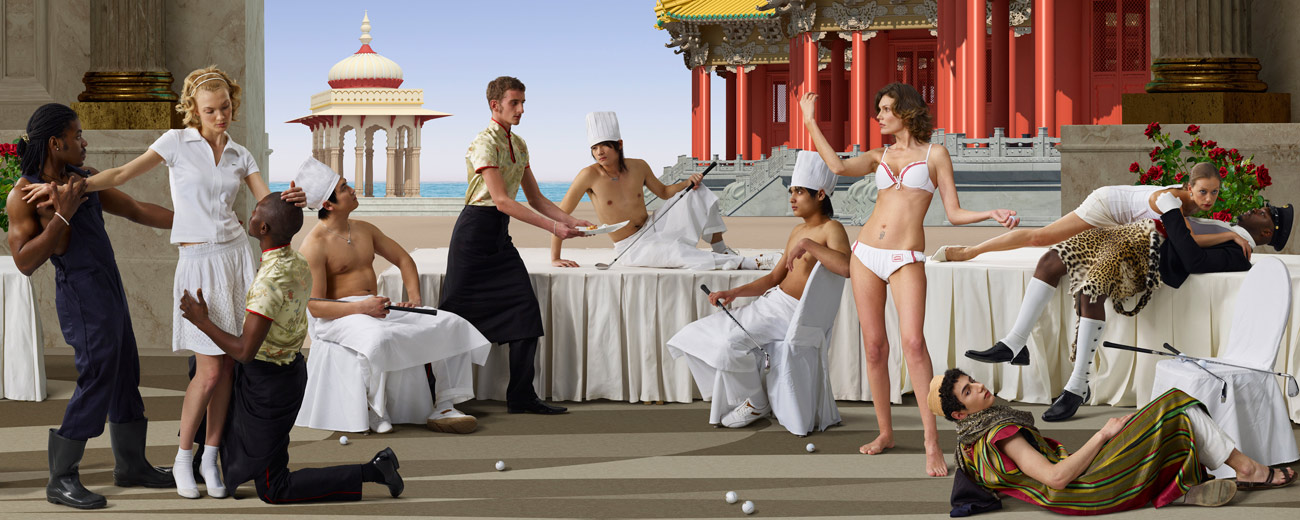
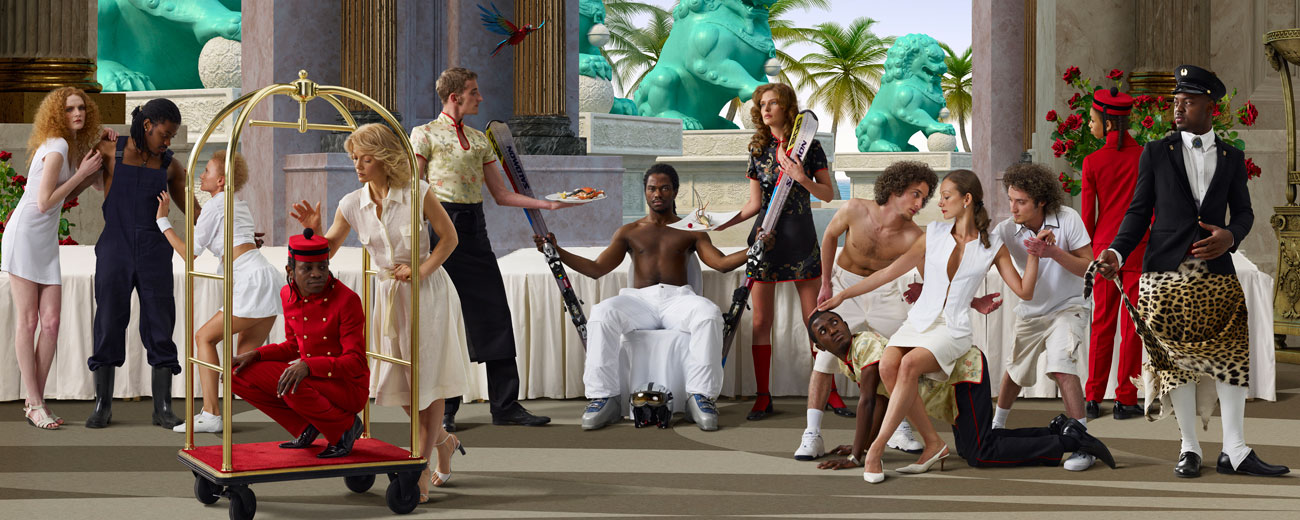
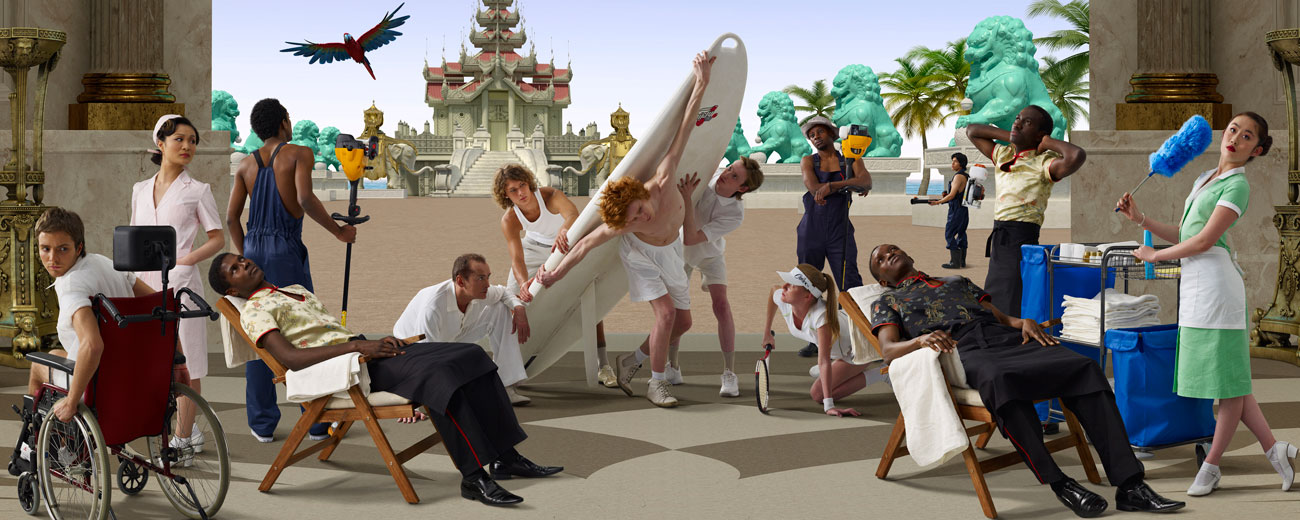
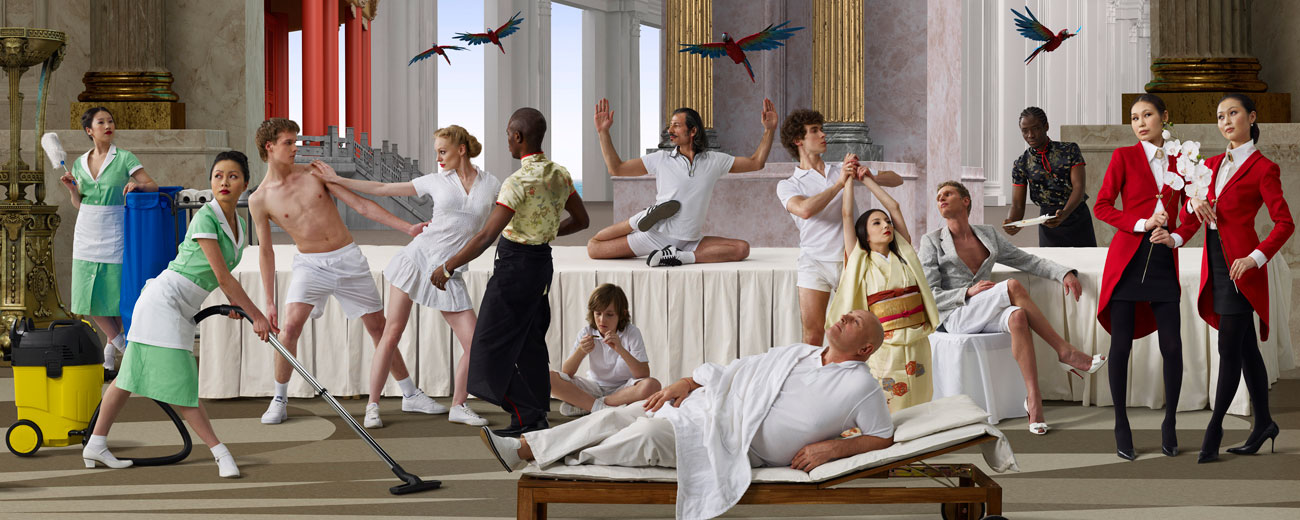
In one sense these large panoramic, digitally constructed mis en scene photographs by Russian collective AES+F at Anna Schwartz Gallery, (taken from the “celebrated” video of the same name which debuted at the Venice Biennale in 2009) are mere echoes of the lyrical, dance and fugue-like structures of the moving work.
In another sense they work well as still photographs. The balance inherent within the picture frame is exemplary, the use of colour and the feeling of rhythm and flow of the figures in pictorial space, wonderful. This rhythm can be called the physiognomy of the work, its style.1 In these photographs style is hard to miss and the photographs fulfil what Susan Sontag saw as one of the main prerequisites for good art: that of emotional distance from lived reality, that allows us to the look at the work dispassionately before bringing those observations back into the real world:
“All works of art are founded on a certain distance from the lived reality which is represented. This “distance” is, by definition, inhuman or impersonal to a certain degree; for in order to appear to us as art, the work must restrict sentimental intervention and emotional participation, which are functions of “closeness.” It is the degree and manipulating of this distance, the conventions of distance, which constitute the style of the work … But the notion of distance (and of dehumanisation, as well) is misleading, unless one adds that the movement is not just away from but toward the world.”2
. In these photographs we have a pastiche of cultural attitudes and mores that allows us to reflect on the foibles, paradoxes, consumerism and stereotypes of identity formation of the contemporary world, mixed with a healthy serving of voyeurism. As Javier Panera notes, “AES+F’s work is nurtured from moral and cultural paradoxes: seduction and threat; hyperrealism and artificiality; classicism and contemporaneity; spirituality and sensuality; historicism and the end of history,”3 and they construct a new oligarchy within a dystopic, Arcadian world. Variously, we have masters and servants, oriental and neoclassical architecture, haute couture, lesbianism, adoration, a youth dressed in white falling out of a priests robes (or is a kimono?) onto an altar-like table, savages and beasts, homoerotic encounters and many more besides – all constructed in an imagined world of a temporary hotel performing rituals of leisure and pleasure, an orgiastic but chaste imagining in this world, looking back at lived reality.
And for me there is the problem. While the photographs offer this vision of temptation and delight in the end they just reinforce the basis of belief in the status quo, the power of cultural hegemony. Subversion as an act, a decorative performance imbued with titillation. As Marco Fusinato observed, using a quotation from an anarchist website in a work in his latest exhibition at Anna Schwartz Gallery (and the irony does not escape me, far from it!):
“The artist is also the mainstay of a whole social milieu – called a “scene” – which allows him to exist and which he keeps alive. A very special ecosystem: agents, press attachés, art directors, marketing agents, critics, collectors, patrons, art gallery managers, cultural mediators, consumers… birds of prey sponge off artists in the joyous horror of showbiz. A scene with its codes, norms, outcasts, favourites, ministry, exploiters and exploited, profiteers and admirers. A scene which has the monopoly on good taste, exerting aesthetic terrorism upon all that which is not profitable, or upon all that which doesn’t come from a very specific mentality within which subversion must only be superficial, of course at the risk of subverting.”4
. The subversion of these images is superficial, a surface appearance of insurrection.
Despite protestations to the contrary (an appeal on the AES+F website to the idea of the Roman saturnalia, see text below) – where the masters serve the slaves at a dinner once a year, this reversal was only ever superficial at best: “the reversal of the social order was mostly superficial; the banquet, for example, would often be prepared by the slaves, and they would prepare their masters’ dinner as well. It was license within careful boundaries; it reversed the social order without subverting it.”5
It was a license within careful boundaries. It reversed the social order without subverting
The same can be said of these wonderful, colourful, rhythmic, chaste, trite, in vogue, pale imitations of subversion. The images come from a very specific mentality within which subversion must only be superficial because they are, after all, images that are searching for an identity in order to access and survive in the Western art world.
ex nihilo nihil fit (Nothing comes of nothing) and please, don’t bite the hand that feeds you.
Dr Marcus Bunyan
1/ Sontag, Susan. “On Style,” in Against Interpretation and Other Essays. New York: Delta Book, 1966, pp. 30-31
2/ Ibid.,
3/ Panera, Panera. “AES+F’s The Feast of Trimalchio,” on FlashArtonline.com [Online] Cited 17/10/2010. No longer available online
4/ Anon. “Escapism has its price The artist has his income,” on Non Fides website Wednesday 17 September 2008 [Online] Cited 28/12/2019. No longer available online
5/ Anon. “Saturnalia,” on Wikipedia website [Online] Cited 28/12/2019
Many thankx to The Melbourne International Arts Festival and Anna Schwartz Gallery for allowing me to publish the photographs in the posting.
Viewers: please click on the photographs for a larger version of the image as it is essential to see the freeze frame action, what is actually going on within the images. All images courtesy the artists and Anna Schwartz Gallery, Melbourne & Sydney.
AES+F The Feast of Trimalchio – part 1, 2 and 3
AES+F The Feast of Trimalchio Panorama #2 2009
AES+F The Feast of Trimalchio Panorama #3 2009
AES+F The Feast of Trimalchio Panorama #4 2009
AES+F The Feast of Trimalchio Panorama #5 2009
In the Satyricon, the work of the great wit and melancholic lyric poet of Nero’s reign, Gaius Petronius Arbiter, the best preserved part is The Feast of Trimalchio (Cena Trimalchionis). Thanks to Petronius’s fantasy, Trimalchio’s name became synonymous with wealth and luxury, with gluttony and with unbridled pleasure in contrast to the brevity of human existence.
We searched for an analogue in the third millennium and Trimalchio, the former slave, the nouveau riche host of feasts lasting several days, appeared to us not so much as an individual as a collective image of a luxurious hotel, a temporary paradise which one has to pay to enter.
The hotel guests, the ‘masters’, are from the land of the Golden Billion. They’re keen to spend their time, regardless of the season, as guests of the present-day Trimalchio, who has created the most exotic and luxurious hotel possible. The hotel miraculously combines a tropical coastline with a ski resort. The ‘masters’ wear white which calls to mind the uniform of the righteous in the Garden of Eden, or traditional colonial dress, or a summer fashion collection. The ‘masters’ possess all of the characteristics of the human race – they are all ages and types and from all social backgrounds. Here is the university professor, the broker, the society beauty, the intellectual. Trimalchio’s ‘servants’ are young, attractive representatives of all continents who work in the vast hospitality industry as housekeeping staff, waiters, chefs, gardeners, security guards and masseurs. They are dressed in traditional uniforms with an ethnic twist. The ‘servants’ resemble the brightly-coloured angels of a Garden of Eden to which the ‘masters’ are only temporarily admitted.
On one hand the atmosphere of The Feast of Trimalchio can be seen as bringing together the hotel rituals of leisure and pleasure (massage and golf, the pool and surfing). On the other hand the ‘servants’ are more than attentive service-providers. They are participants in an orgy, bringing to life any fantasy of the ‘masters’, from gastronomic to erotic. At times the ‘masters’ unexpectedly end up in the role of ‘servants’. Both become participants in an orgiastic gala reception, a dinner in the style of Roman saturnalia when slaves, dressed as patricians, reclined at table and their masters, dressed in slaves’ tunics, served them.
Every so often the delights of The Feast of Trimalchio are spoiled by catastrophes which encroach on the Global Paradise…
AES+F, 2009 Translated by Ruth Addison
Text from the AES+F website [Online] Cited 28/12/2019
AES+F The Feast of Trimalchio Panorama #6 2009
AES+F The Feast of Trimalchio Panorama #7 2009
Russian collective AES+F work with photography, video, sculpture and mixed media. Since 1987, they have interwoven imagery relating to modern technology, Hollywood cinema, fashion photography, advertising, death, religion, the British Royal Family, mass media, popular culture and youth obsession throughout their work.
The Feast of Trimalchio is an interpretation of the witty but melancholy fiction Satyricon by the Roman poet Petronius. In the ancient version Trimalchio’s feast was portrayed as the ideal celebration that Trimalchio imagined for his own funeral. In the AES+F 21st Century version, an orgy of consumerism reflects on the contemporary state of Russia and indeed the world. Created from over 75,000 photographs, the complete work is a nine-channel panoramic media that made its celebrated debut at the 2009 Venice Biennale. For the Festival, Anna Schwartz Gallery features a set of three expansive photographic tableaux. These captivating images of a temporary hotel paradise portray opulence and excess overshadowed by a dark uneasiness.
Text from the Melbourne International Arts Festival website
AES+F The Feast of Trimalchio Panorama #8 2009
AES+F The Feast of Trimalchio Panorama #9 2009
Anna Schwartz Gallery 185 Flinders Lane Melbourne, Victoria 3000
Many thankx to Alison Murray and the National Gallery of Victoria for allowing me to publish the photographs in the posting. Please click on the photographs for a larger version of the image.
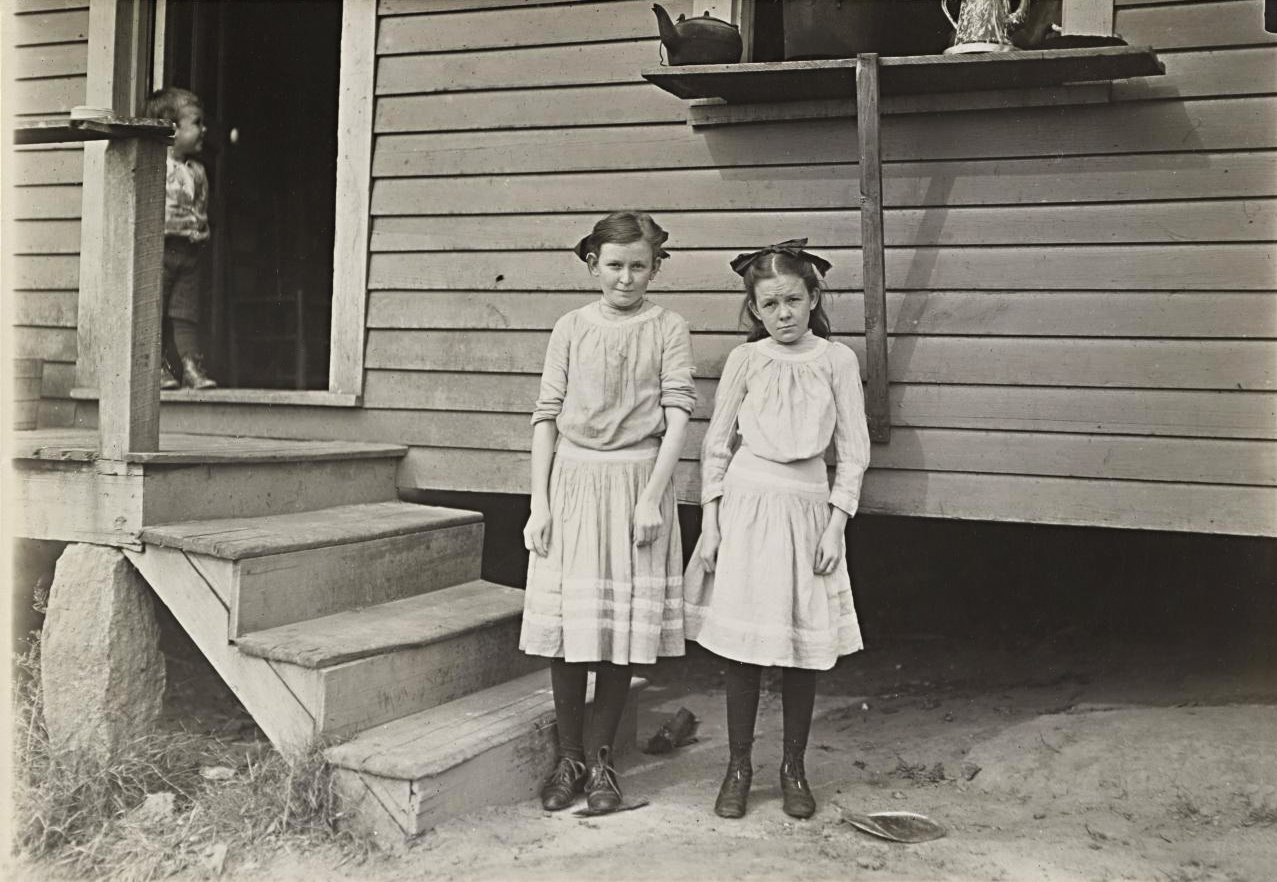
Lewis Hine (American, 1874-1940) Lacy, twelve years old and Savannah, eleven years old 1908 Gelatin silver print Image and sheet: 11.9 × 17.1cm National Gallery of Victoria, Melbourne Purchased, 1980
‘Perhaps you are weary of child labour pictures. Well, so are the rest of us, but we propose to make you and the whole country so sick and tired of the whole business that when the time for action comes, child labour pictures will be records of the past.’
Lewis Hine, 1909
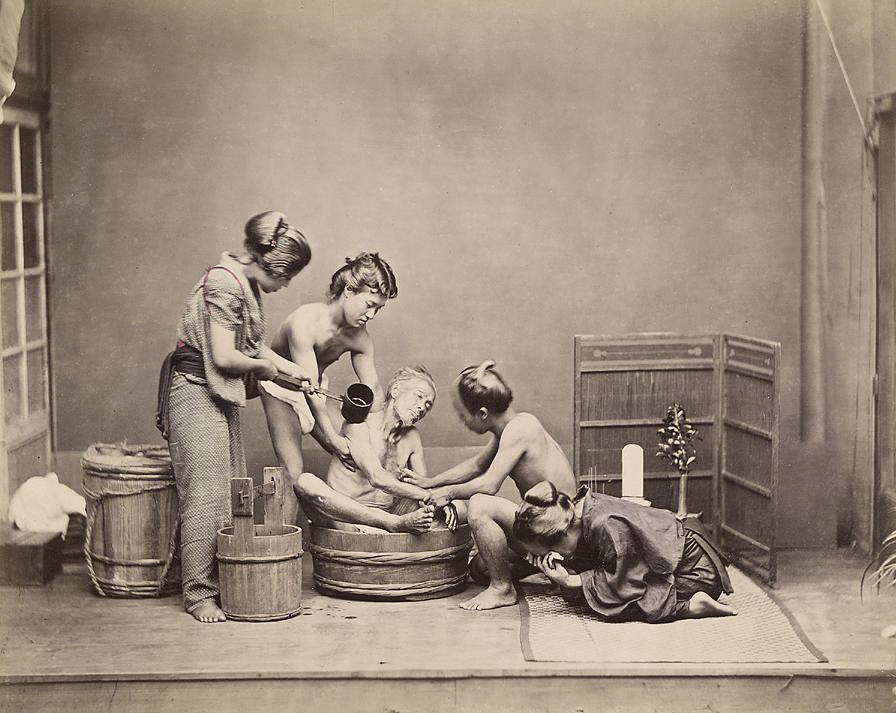
Unknown photographer No title (Ritual washing for funeral) c. 1880 Albumen silver photograph, colour dyes Image and sheet: 21.2 × 26.5cm National Gallery of Victoria, Melbourne Purchased, 2001
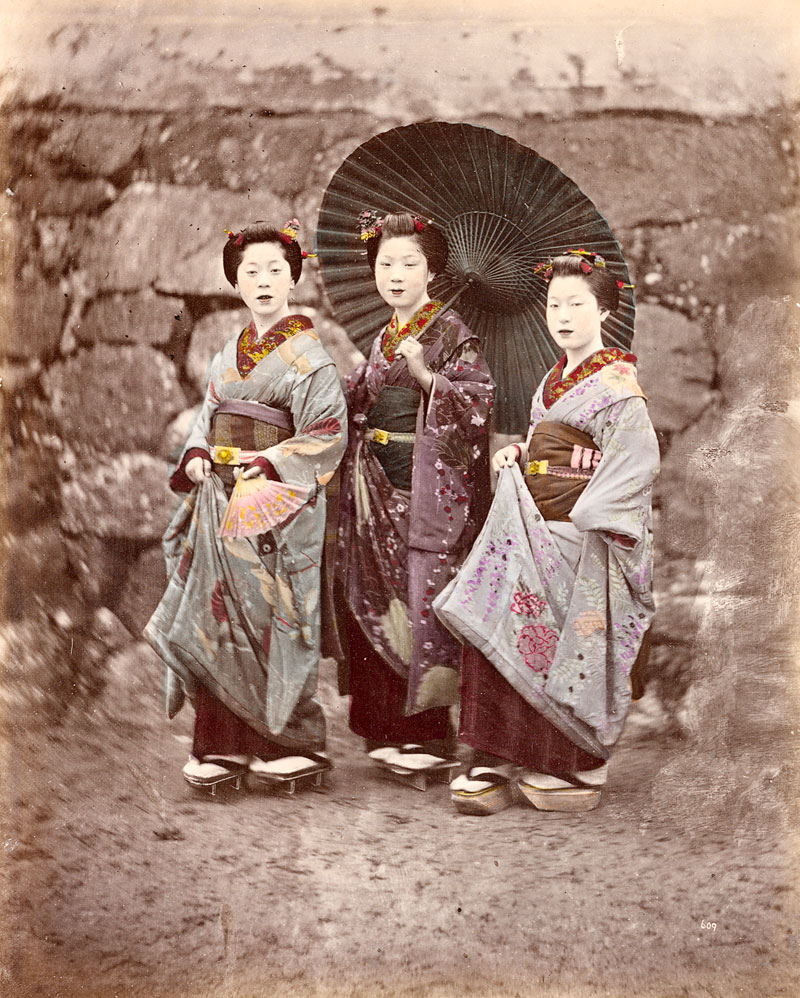
Felice Beato (Italian/English, 1832-1909, worked throughout Europe and Asia, 1853-1890) Stillfried and Anderson and the Japan Photographic Association (studio) (Japanese, 1877-1885) No title (Maiko) 1866-1868, printed 1877-1885 albumen silver photograph, coloured dyes 24.4 x 19.6cm National Gallery of Victoria, Melbourne Purchased through the NGV Foundation with the assistance of The Herald & Weekly Times Limited, Fellow, 2001
Opening 7 May, the National Gallery of Victoria will present Timelines: Photography and Time, a captivating exhibition exploring the notion of time in photographs.
Time is a slippery notion. It is everywhere and always moving but this powerful regulating force cannot be seen. It is only apparent in context: in the changing seasons, in another wrinkle on our faces, in the growth of children. Photography has a unique role to play in our sometimes poignant sense of time passing. The camera’s ability to depict ‘a moment in time’ – to stop the clock for a brief moment – gives photographs a unique capacity to direct our consideration towards the mechanics and poetics of this pervasive and mysterious cosmic force.
In this exhibition one aspect of time is considered from a photographic perspective: namely, human life. Works have been selected from the permanent collection both by International and Australian photographers that show an interest in some aspect of lifecycles. Arranged, in part, in a ‘timeline’, these works provoke our understanding of the mediums capacity to suggest the concept of time in ways that may be surprising, moving or even confronting. The exhibition also looks at how photographers have extended a sense of time and duration through images that work in series
Timelines will feature almost forty photographs from the NGV Collection by both Australian and international photographers including work by Diane Arbus, Micky Allan and Bill Brandt.
Isobel Crombie, Senior Curator of Photography, NGV said photography has a unique role to play in capturing the way that time passes.
“The camera’s ability to ‘stop the clock’ enables the medium to direct our consideration towards the mechanics and poetics of this pervasive and mysterious cosmic force.
“The instant that the photograph captures can be a potent reminder to seize the day rather than dreaming about the past or worrying about the future,” said Dr Crombie.
The exhibition also looks at how photographers have extended a sense of time and duration through images that work in series. From the 1960s onwards, photographers began experimenting with stretching time by creating a series or sequence of photographs.
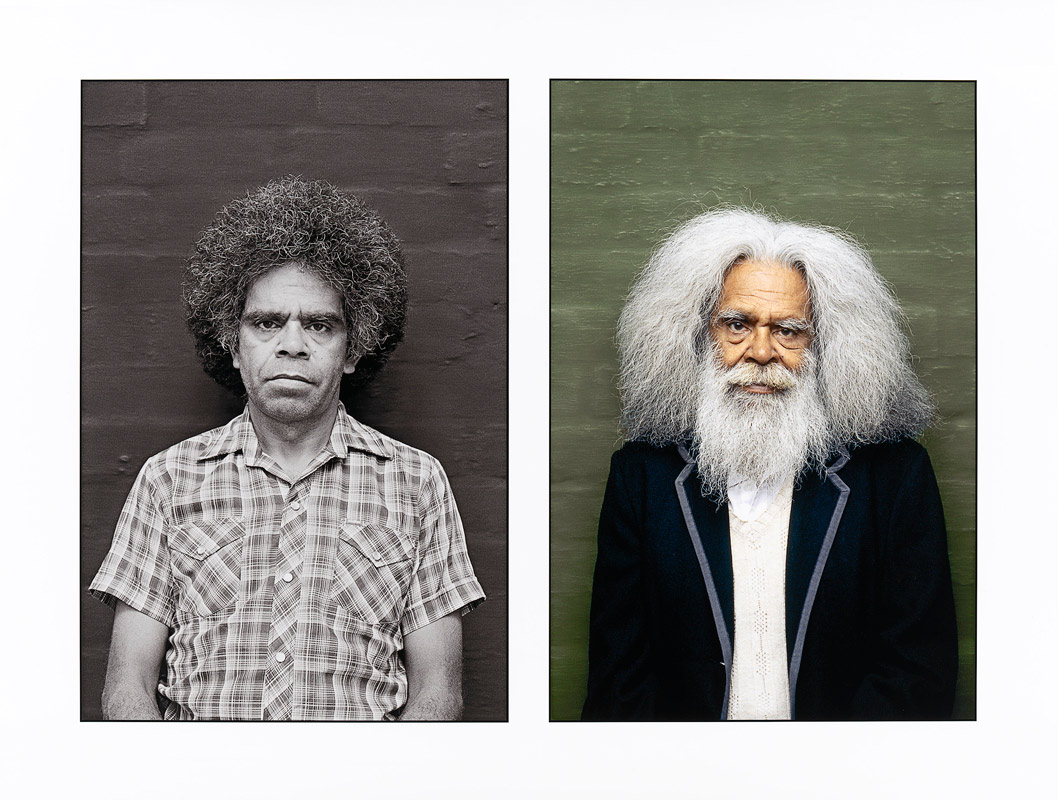
This is seen in Rod McNicol’s powerful series titled A portrait revisited (1986-2006), (pictured Jack, below). Purchased by the NGV in 2009, the series features portraits of men and women; each posed directly facing the camera against a plain backdrop. There are two portraits of each subject photographed twenty years apart, inviting the viewer to compare the portraits to see how time has changed them. The sense of time passing is highlighted with the portrait of Peter, who is photographed only once. The blank image next to him is a reminder that he died before the second portrait was made.
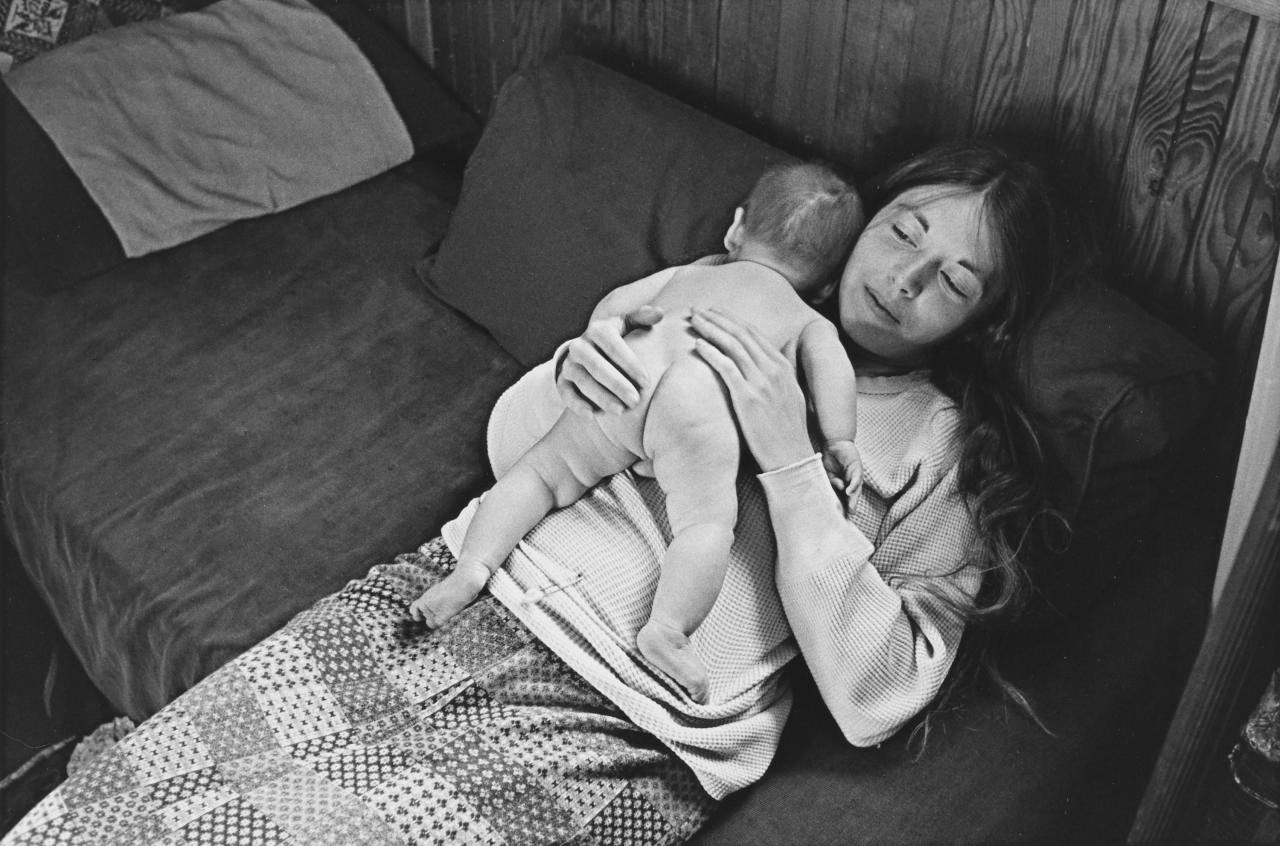
Each phase of human existence has characteristic traits and features, and photographers have worked with these qualities in ways that evoke the passing of time and our place in this cycle. Arranged in part in a human timeline, the exhibition begins with the start of a new life as depicted in Christine Godden’s Joanie pregnant (1972) and Joanie with Jade (1973) and concludes with Kusakabe Kimbei’s Ritual washing for a funeral (c. 1880, see above – now labelled as ‘Unknown’ on the NGV website in 2019), an image of a deceased man being prepared in the traditional Japanese way for burial. This final scene captures the grief of the moment when a lifetime ends.
Frances Lindsay, Deputy Director, NGV said: “The works in the exhibition show how artists have explored the concept of time in ways that may surprise, move or even confront viewers. This exhibition provides visitors with a special opportunity to view this remarkable collection of photographs from the NGV Collection, many of which are on display for the first time.”
Timelines will include photographs by Micky Allan, Diane Arbus, Felice Beato, Bill Brandt, Brassaï, Harry Callahan, Imogen Cunningham, Walker Evans, Christine Godden, Ponch Hawkes, Petrina Hicks, Lewis Hine, Kusakabe Kimbei, Rosemary Laing, J.H. Lartigue, Ruth Maddison, Rod McNicol, David Moore, Jan Saudek, John Thompson, Roman Vishniac, and Edward Weston.
Text from the National Gallery of Victoria International website [Online] Cited 17/09/2010 no longer available online
A body of work is slowly taking shape. I have over 150 images at the moment (!!) and after I finish making them all the images will be culled to form the new series Missing in Action (red kenosis) (2010). Images from the new series are below. Please click on the photographs to see a larger version of the image. Enjoy!
Dr Marcus Bunyan
Photographs are available from this series for purchase. As a guide, a digital colour 16″ x 20″ costs $1000 plus tracked and insured shipping. For more information please see my Store web page.
Exhibition dates: 26th June – 19th September, 2010
Installation view of the exhibition Wolfgang Tillmans at the Serpentine Gallery, London, June- September, 2010 Photograph: Gautier de Blonde
“In the constellations of pictures, I try to approximate the way I see the world, not in a linear order but as a multitude of parallel experiences… Multiple singularities, simultaneously accessible as they share the same space or room.”
Wolfgang Tillmans
Since I haven’t been to the exhibition I have tried to sequence the photographs of this wonderful artist in a small intimation of how he might have visualised them – I hope you get the idea. The installation photographs at the bottom give clues to the actual moments of what Minor White calls ‘ice/fire’ – the space between disparate images, the space that is just as important as the images themselves for the frisson that is evokes, the creation of that metaphorical leap into the void of meaning where malleable thoughts emerge; never linear, both singular and multiple at one and the same time.
Dr Marcus Bunyan
Many thankx to the Serpentine Gallery for allowing me to publish the photographs in the posting. Please click on the photographs for a larger version of the image.
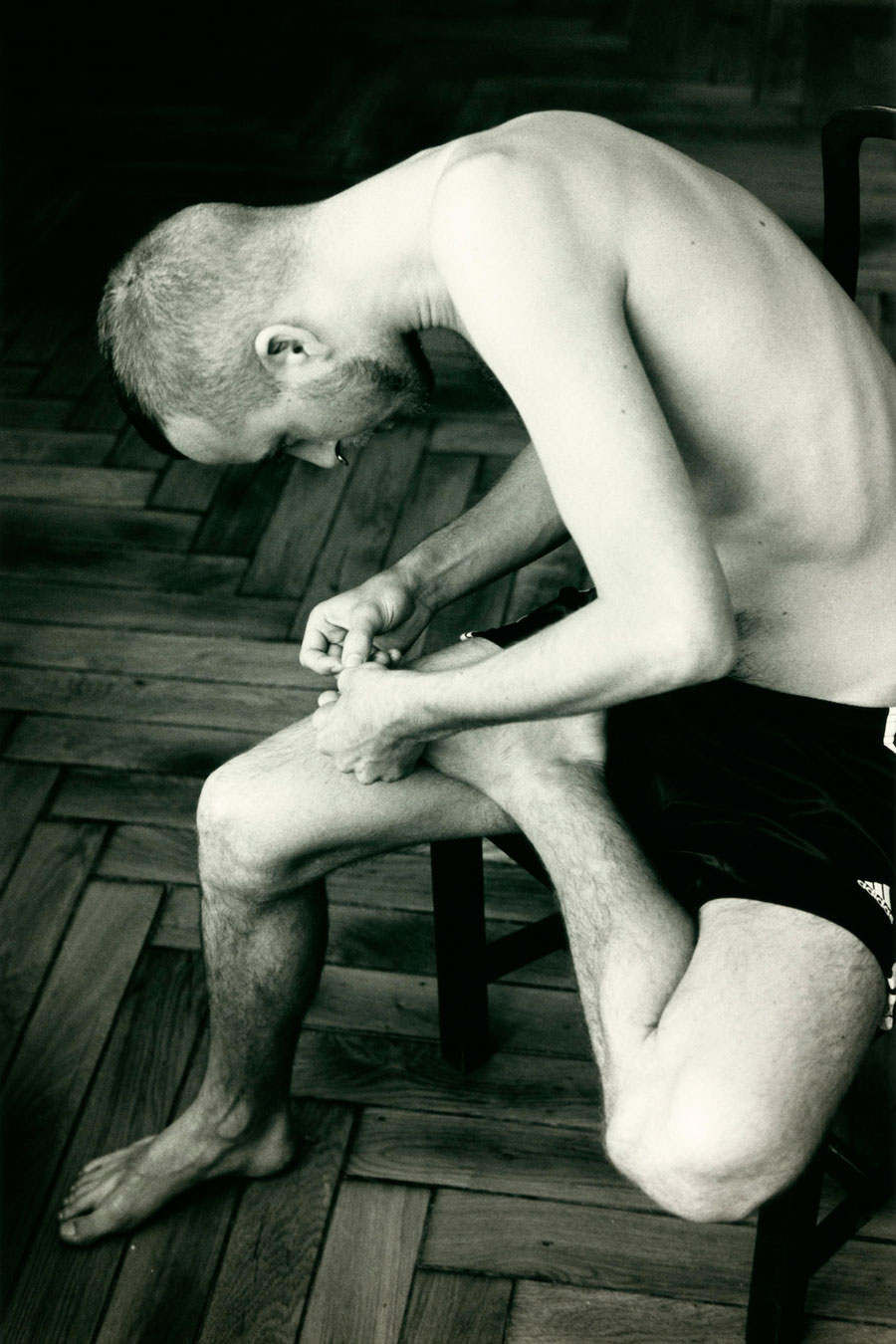
Wolfgang Tillmans (German, b. 1968) Anders pulling splinter from his foot 2004 C-type print 61 × 50.8cm Courtesy the artist and Maureen Paley, London
Wolfgang Tillmans (German, b. 1968) Nanbei Hu 2009 Inkjet print 207 x 138cm Courtesy the artist and Maureen Paley, London
Wolfgang Tillmans (German, b. 1968) Roy 2009 C-type print 40.6 x 30.5cm Courtesy the artist and Maureen Paley, London
Wolfgang Tillmans (German, b. 1968) Venus, transit 2004 C-type print 40.6 × 30.5cm Courtesy the artist and Maureen Paley, London
Wolfgang Tillmans (German, b. 1968) Dan 2008 C-type print 61 × 50.8cm Courtesy the artist and Maureen Paley, London
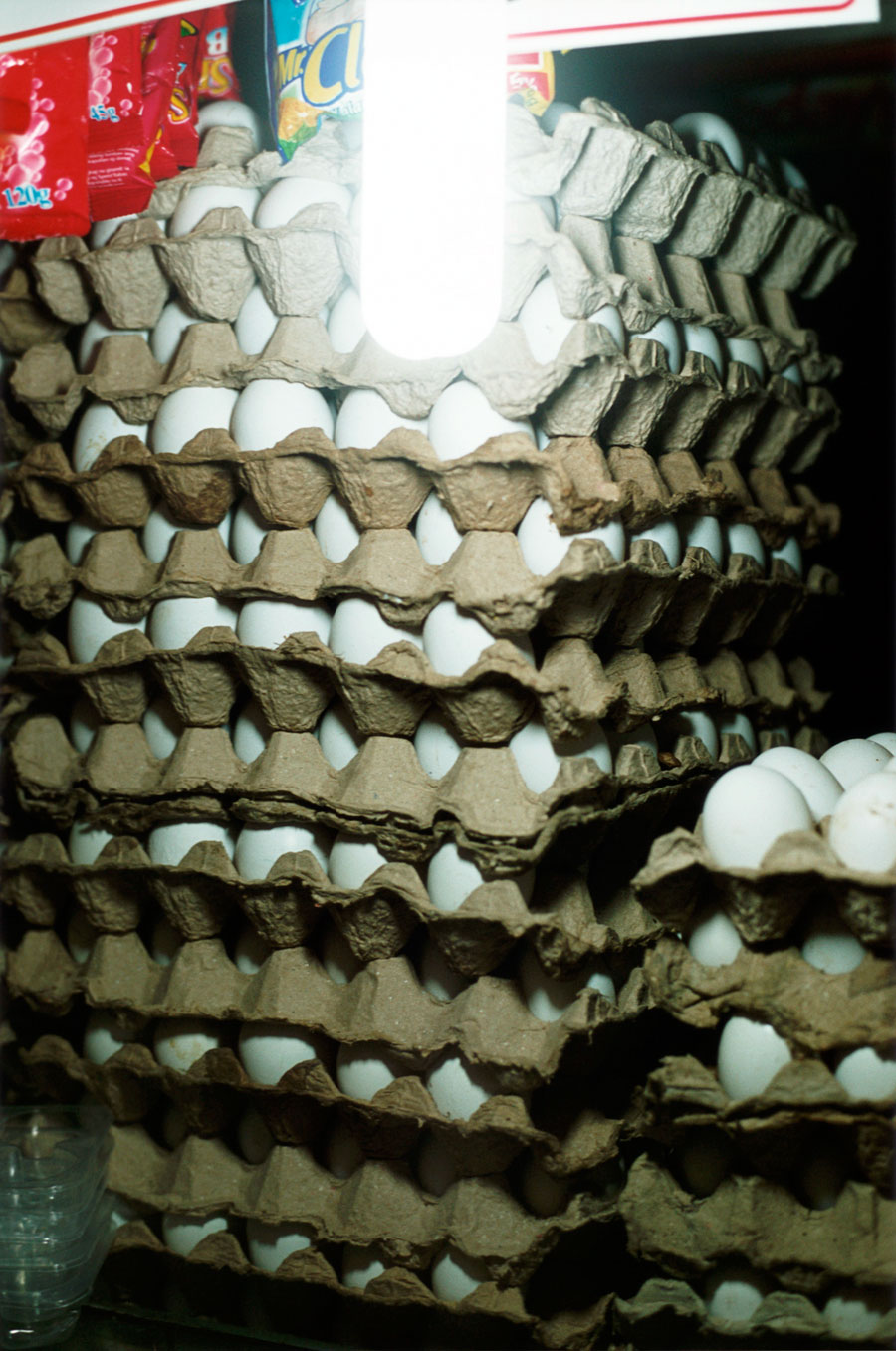
Wolfgang Tillmans (German, b. 1968) Eierstapel 2009 C-type print 61 x 50.8cm Courtesy the artist and Maureen Paley, London
Wolfgang Tillmans (German, b. 1968) Muqarnas 2006 Framed C-type print 214 × 145cm Courtesy the artist and Maureen Paley, London
Wolfgang Tillmans (German, b. 1968) Urgency XXII 2006 Framed C-type print 238 × 181cm Courtesy the artist and Maureen Paley, London
Wolfgang Tillmans (German, b. 1968) Zimmerlinde (Michel) 2006 Framed C-type print 211 × 145cm Courtesy the artist and Maureen Paley, London
The Serpentine Gallery presents Wolfgang Tillmans’ first major exhibition in London since 2003. Conceived by the artist for the Serpentine Gallery, the exhibition will present both abstract and figurative work.
Over the past 20 years, Tillmans has redefined photography and the way it is shown. Known by the early 90s for the seemingly casual images of the world he inhabited, his work reassessed photographic conventions and reflected the identity politics of the time, capturing the fragility of human life and focusing on everyday objects. This early work then expanded to engage with portraiture, landscape, the still-life and, more recently, abstraction. Tillmans’ abstract work, greatly celebrated in the last decade, continues to push the boundaries and definitions of the photographic form, and will be a particular focus of this exhibition.
The wide-ranging themes in Tillmans’ photographs are combined in his reconfiguration of accumulated images, created in response to a given space. In this new exhibition, the explorations into abstraction sit alongside a new focus on the figurative – a focus that is increasingly informed by recent colour field works and experiments with process. Referring to his approach to installation making Tillmans said: “In the constellations of pictures, I try to approximate the way I see the world, not in a linear order but as a multitude of parallel experiences… Multiple singularities, simultaneously accessible as they share the same space or room.”
The Serpentine Gallery exhibition reflects the artist’s acute sensitivity to the politics of contemporary society, his ongoing fascination with colour, and his conceptual engagement with the technical processes of photography. These delicate yet challenging images capture the distinctive energetic balance between beauty and subversion that Tillmans has long embraced.
Tillmans was born in 1968 in Remscheid, Germany. He studied in Great Britain at the Bournemouth & Poole College of Art & Design, graduating in 1992. In the 1990s, his work was shown at the Museum of Modern Art, New York; the Kunsthalle Zurich; and Portikus, Frankfurt, amongst others. In 2000 he won the Tate’s Turner Prize. A large survey exhibition in 2001-2003 toured to Deichtorhallen, Hamburg; Castello di Rivoli, Turin; Palais de Tokyo, Paris; and Louisiana Museum of Modern Art in Humlebaek, Denmark. His show called Freedom from the Known at P.S.1, New York (2006) was followed by a major tour of North American museums. In 2008, Tillmans had an extensive solo exhibition at the Hamburger Bahnhof, Berlin entitled Lighter, and in 2009 was included in Making Worlds at the 53rd Venice Biennale. More than twenty monographic books on his work have been published to date and an exhibition catalogue will accompany the Serpentine Gallery exhibition.
The exhibition will run concurrently with the Serpentine Gallery Pavilion 2010, designed by Jean Nouvel and opening on 10 July. Housed in the Pavilion will be artist Christian Boltanski’s Les Archives du Coeur installation.
Press release from the Serpentine Gallery website [Online] Cited 11/09/2010 no longer available online
Wolfgang Tillmans (German, b. 1968) Silver Installation VII (installation view) 2009 Unique C-type prints Installation view Photograph: Gautier de Blonde
Installation views of the exhibition Wolfgang Tillmans at the Serpentine Gallery, London, June- September, 2010 Photograph: Gautier de Blonde
Exhibition dates: 24th August – 18th September 2010
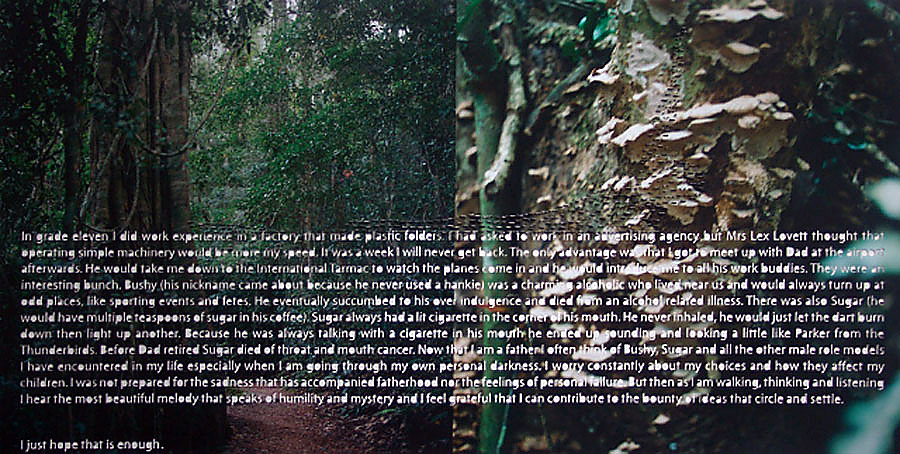
Martin Smith (Australian, b. 1971) Enough 2010
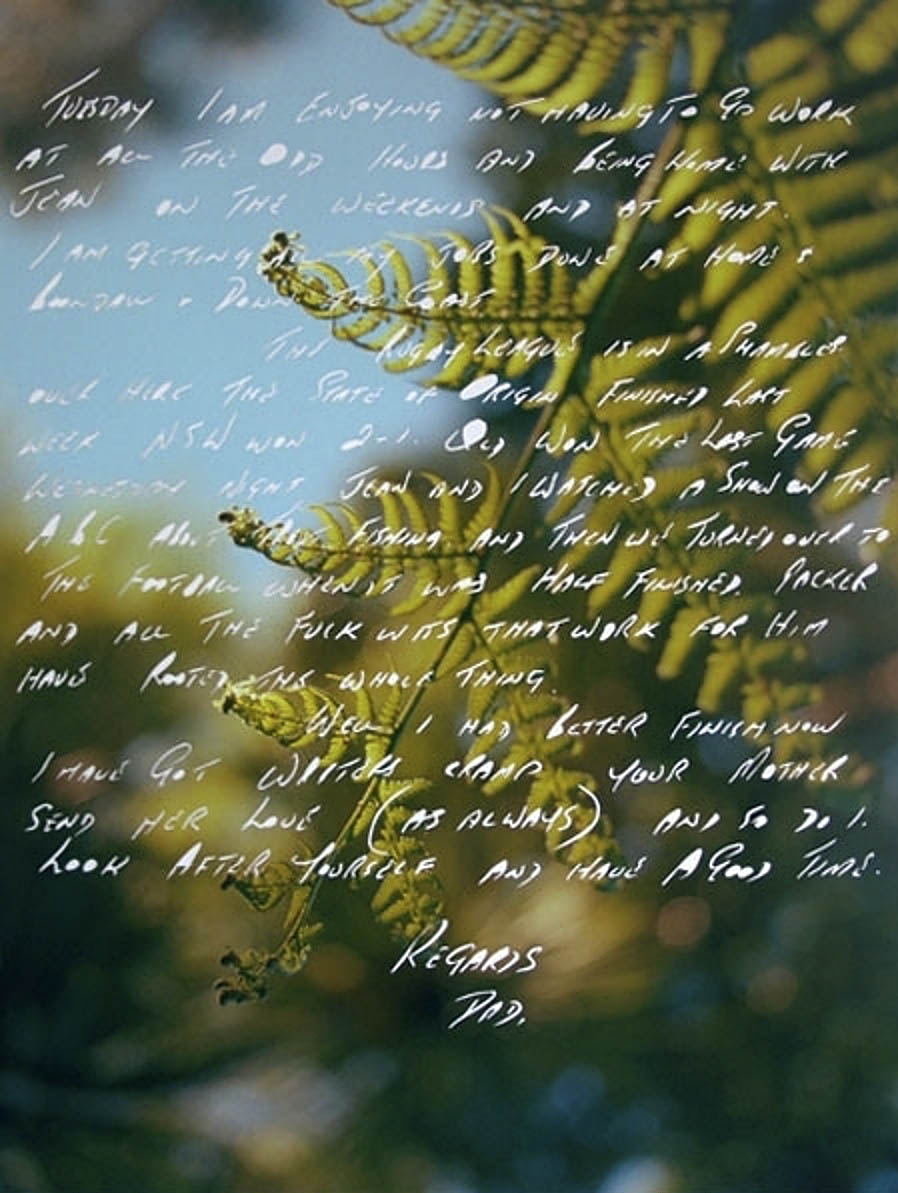
Following on from last year’s exhibition My Jesus Lets Me Rub His Belly that examined issues of place and faith when the artist was growing up, Martin Smith now presents a slice of poignant son father love at Sophie Gannon Gallery, Richmond. The combination of images and text create narratives on growing up, life, male bonding and mortality.
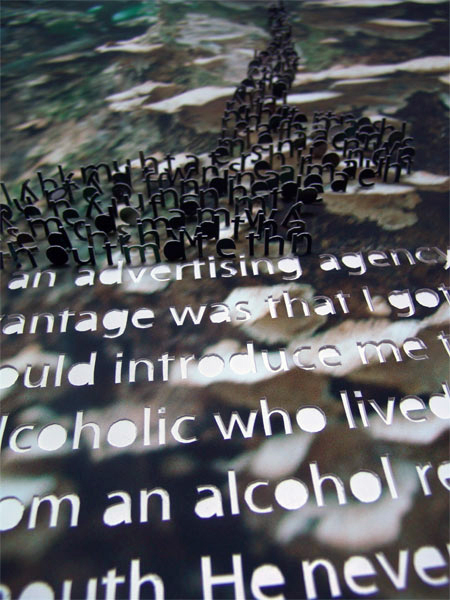
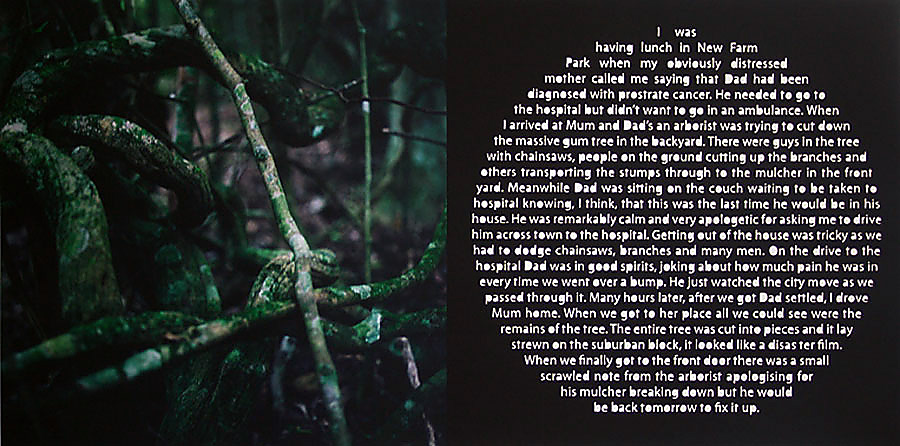
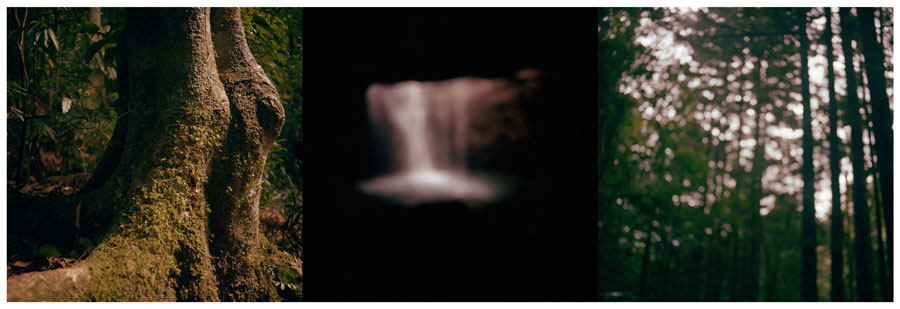
In Fix It Up (2010, below) the use of a circle of text on black (the circle of life) in this image paired with a dark photograph of moss covered twigs and branches is exemplary, the metaphor of the arborist chopping down a gum tree in the backyard as his father is waiting to be taken to hospital by ambulance with prostrate cancer, the last time he will be present in his house, incredibly moving. The use of blurred images, such as the central panel in the triptych Sydney (2010, below) adds emotional weight to the narratives, as though the stories told can only be fragmentary memories, as all memories are, of the events that have passed. The feeling of an excavation of the meaning of life and death is further enhanced by the incision of the letters into the photographs surface and the extrusion of the letters to form three-dimensional sculptural forms, as in the work Enough (2010, see photograph and detail below). The letters shape references the fungi on the tree behind, new life growing out of old, as though the words were being extruded out of the forest, archives of communal memory.
My favourite image in the exhibition didn’t have any words at all, not even piled as detritus at the bottom of the frame as many of Smith’s works do. It didn’t need them. The triptyph Untitled 1 (2010, below) is simple and eloquently beautiful and almost brought me to tears. When read in combination with the other works and their texts, the moss covered trees on the left become two wrinkled elbows, the image on the right the wandering mind and the image in the centre – for me, the feeling of life force as it flows in the darkness. As my yoga teacher says to me, “You must learn to navigate the dazzling darkness.”
This illumination of the mind, body, memory and spirit is what Smith’s work is all about. I adore it.
Exhibition dates: 24th August – 18th September 2010
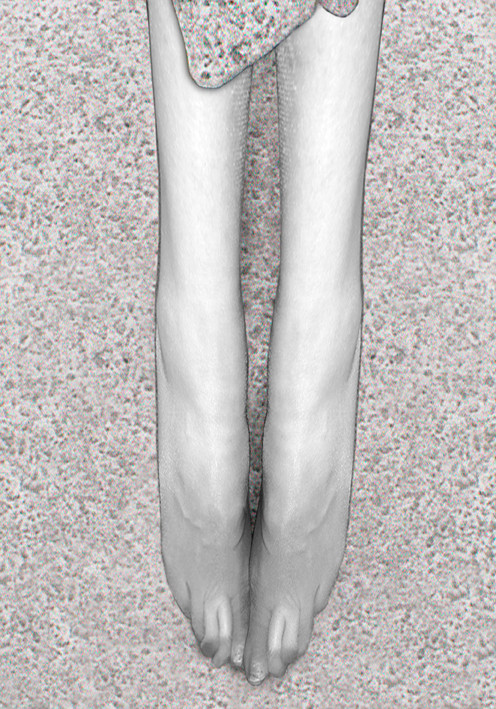
Pat Brassington (Australian, b. 1942) Camouflage 2010
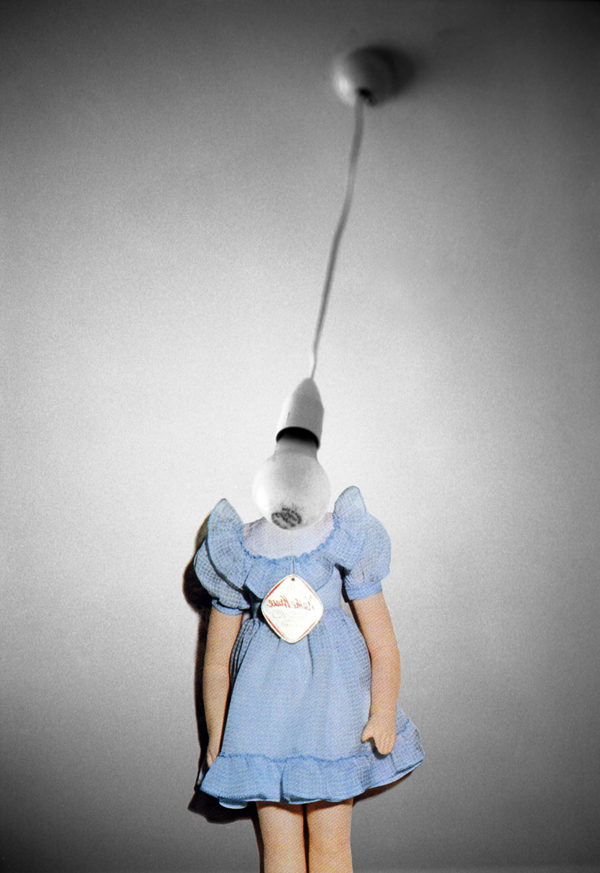
I have a critically ambivalent attitude towards the work of artist Pat Brassington. While the exhibition at Arc One Gallery in Melbourne contains some wonderful ‘images’ her work never seems to move me in an emotional sense. What it does do admirably is constantly engage me in cerebral jousting and sensory debate. Intellectually and visually I find the images stimulating, emotionally I am left a little bit cold.
Brassington’s sometimes fetishistic collage-like digital photographs occupy ambiguous spaces – fascinating ‘other’ worlds, constructed worlds that disturb and delight, drawing the viewer into subjective judgements on what, exactly, they are seeing. Brassington doesn’t need to speak about her work, much like Bill Henson never speaks about his work, because the viewer does that for her and that is the point – Brassington lets the viewer construct the story, a story that is open to multiple viewpoints and interpretations.
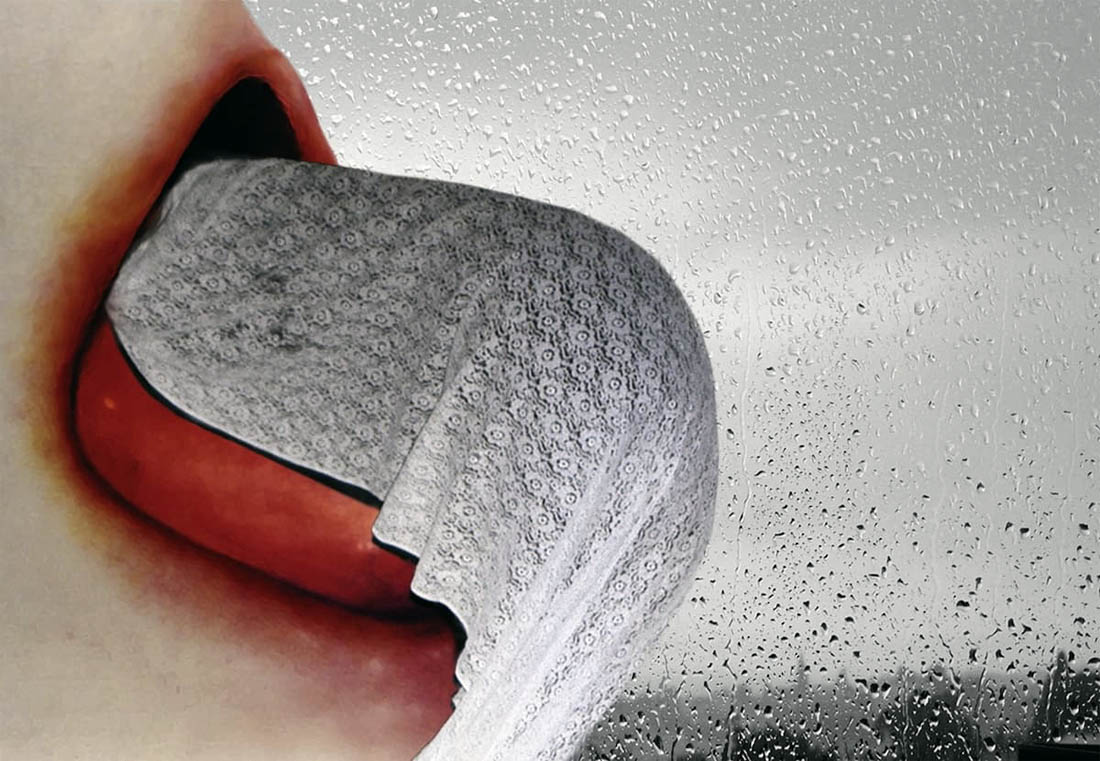
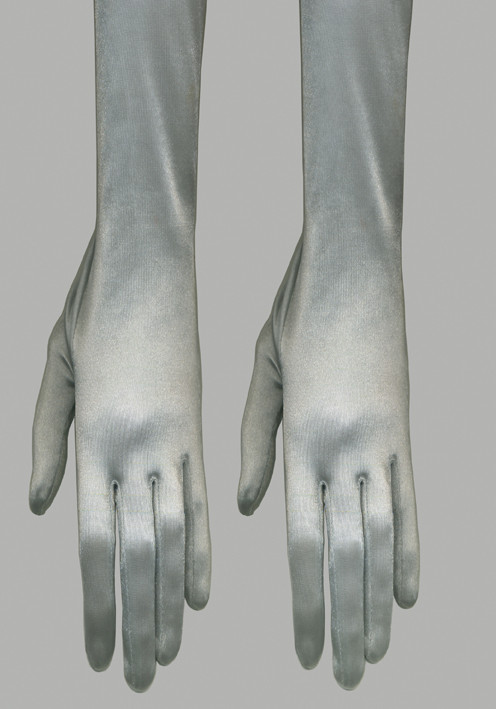
To see the work as just “surrealist” is to do it a disservice for it is much more than that. Of course the work uses various surrealist tropes but the power of these images is in setting up psychological encounters that are often bizarre, confronting and disturbing at a deeper level than just surface juxtapositions. These images seem to haunt you long after you have seen them. Using a limited colour palette of washed out purples, greys, yellows and pinks with a hit of red or blue where applicable (only once a green, never any solid, bright, strong colours) Brassington’s work keeps repeating objects and themes throughout the years – the dress, fish, gloves, hands, legs and the sensual mouth – to “evoke uneasy tensions between bizarre, sinister intimations of menace and weirdly beautiful, benign harmonies.” (Diane Foster).
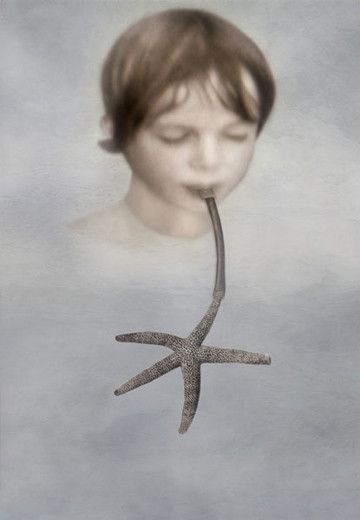
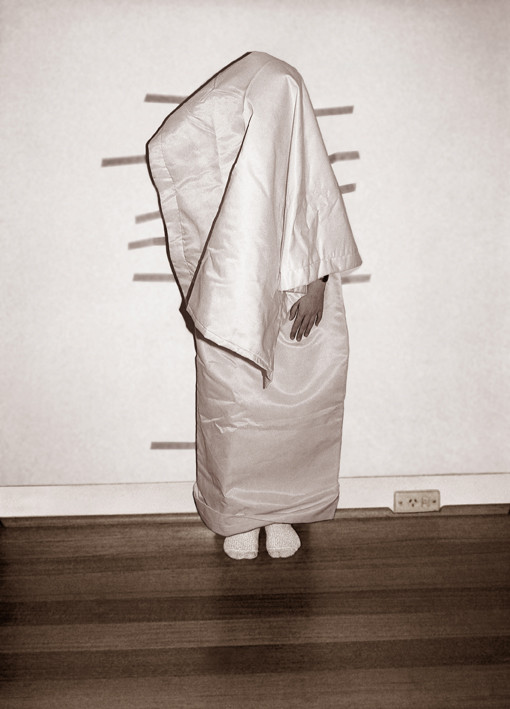
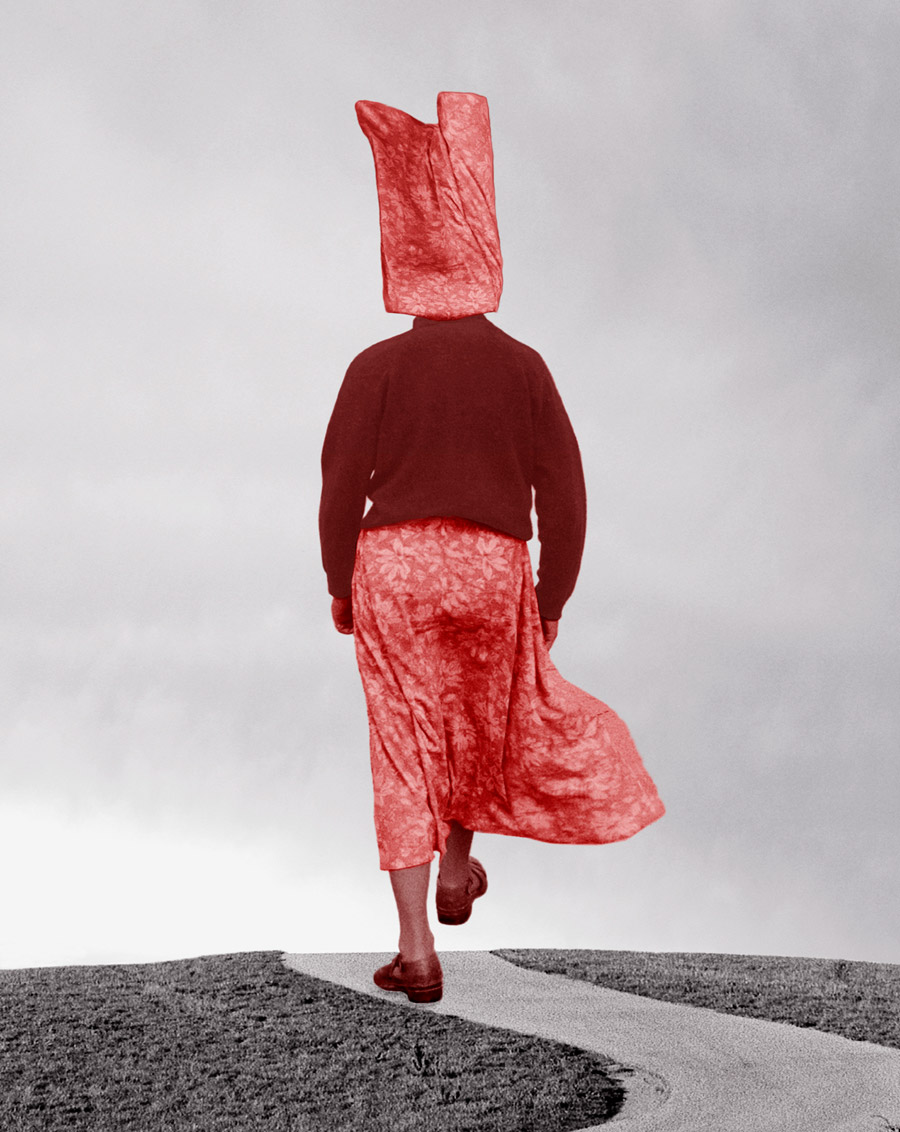
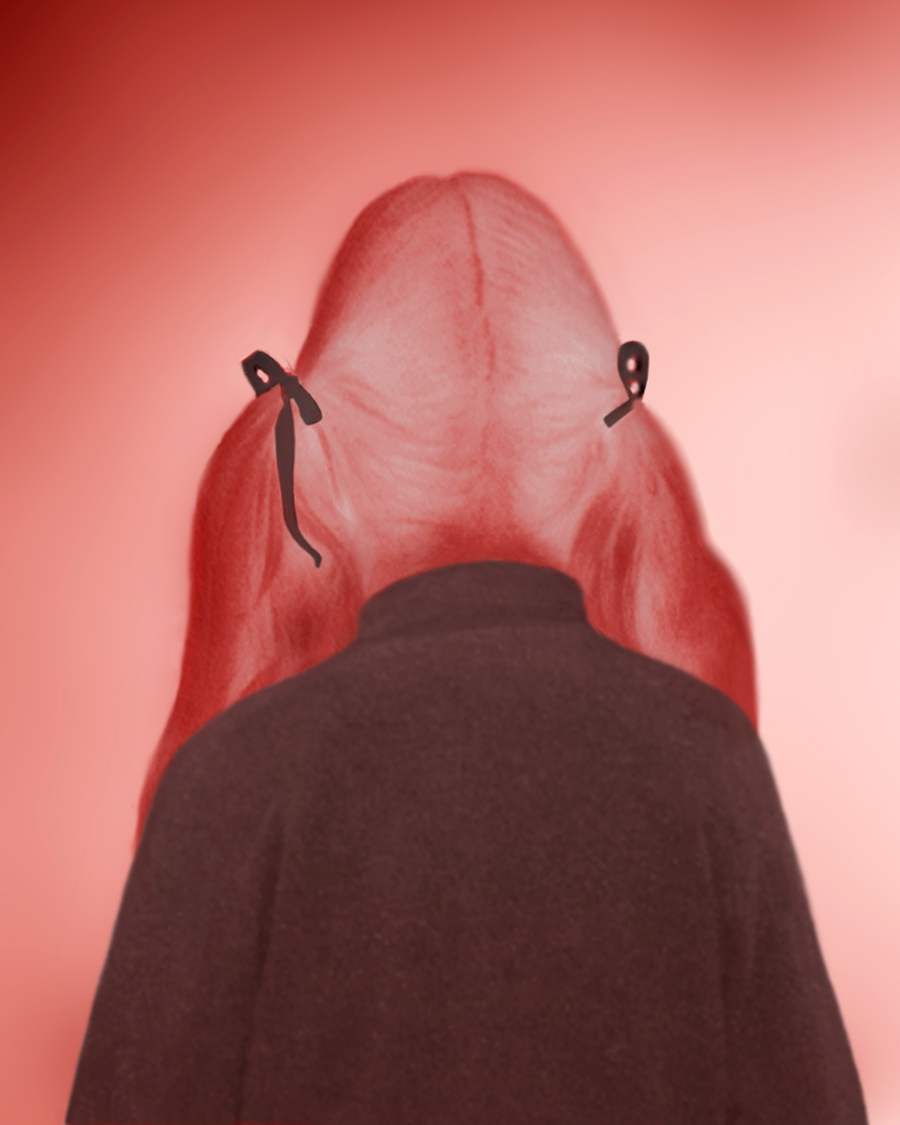
In these new images the lascivious tongue is camouflaged, a woman marches determinedly and blindly over a hill, a child is wrapped and taped, two sateen gloves emanate and a boy breathes life into the sea (or is it the other way around, or is the boy destroying the sea through his breath?). The paradoxes are beautifully enacted and always challenging and that is the strength of the work of Brassington – offering us, the viewer, no easy way out as we stare at the red ribbons in a girl’s hair.
































 Art Blart _ art and cultural memory archive
You must be logged in to post a comment.