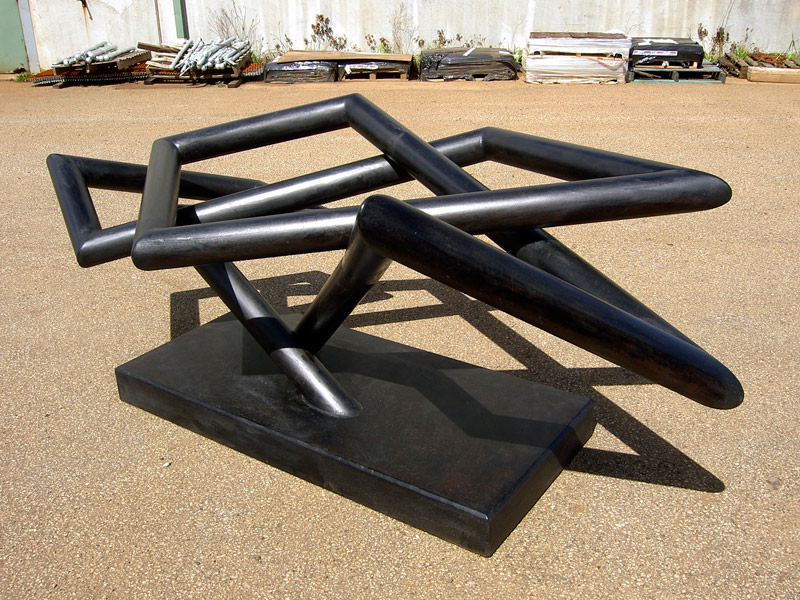
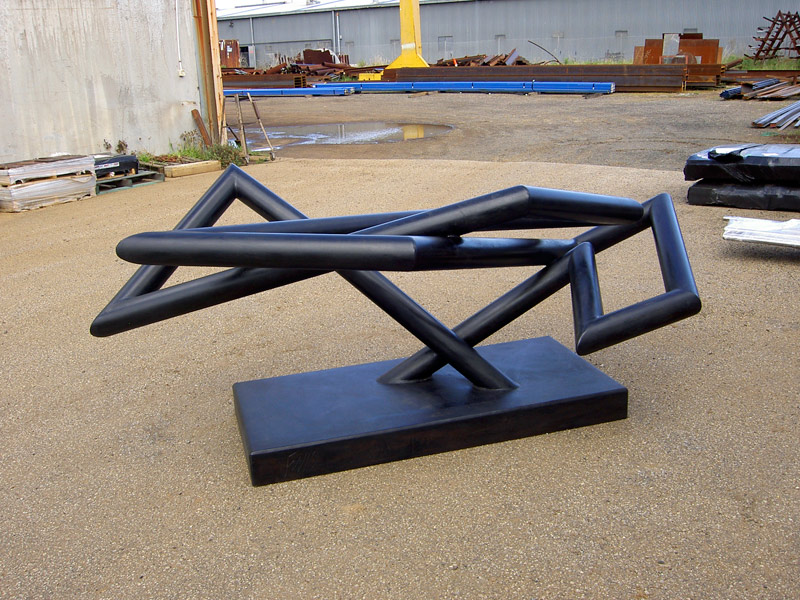
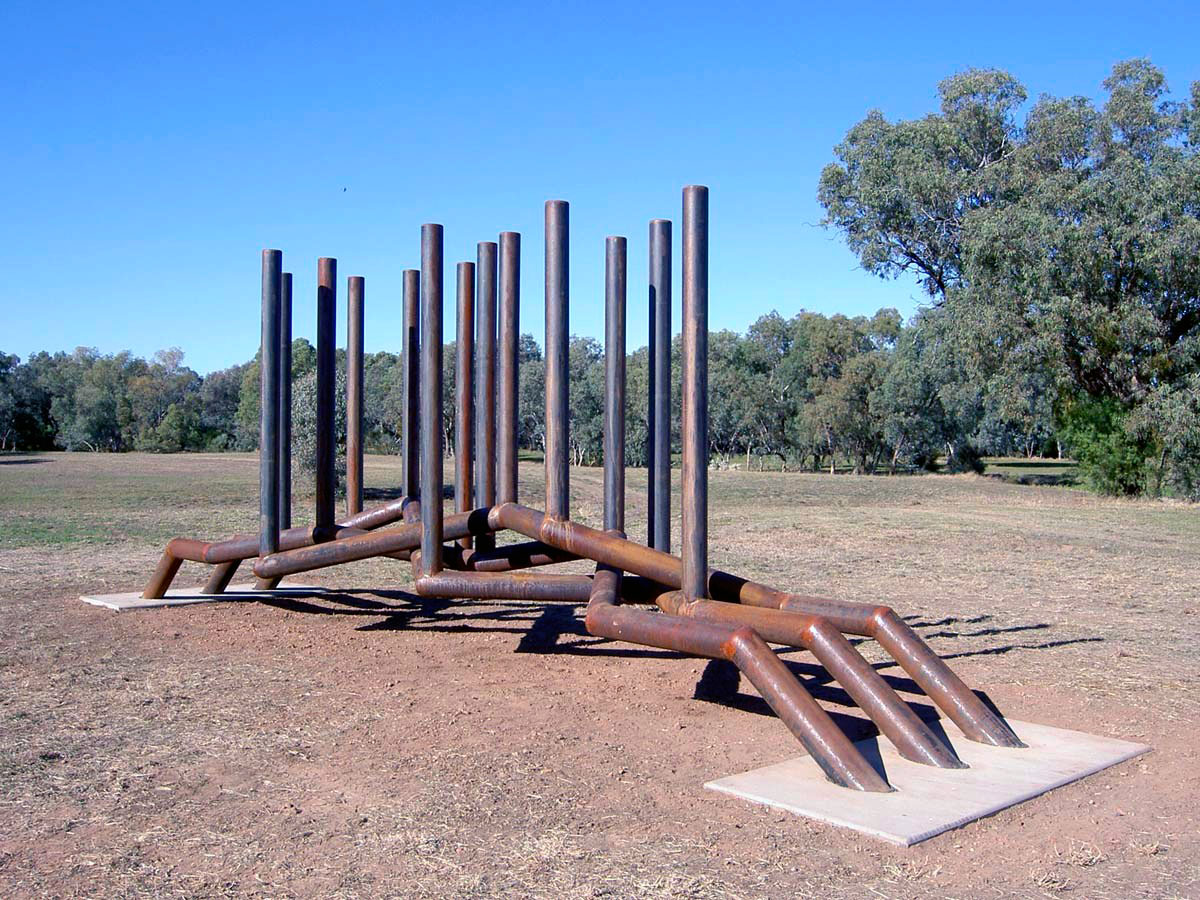
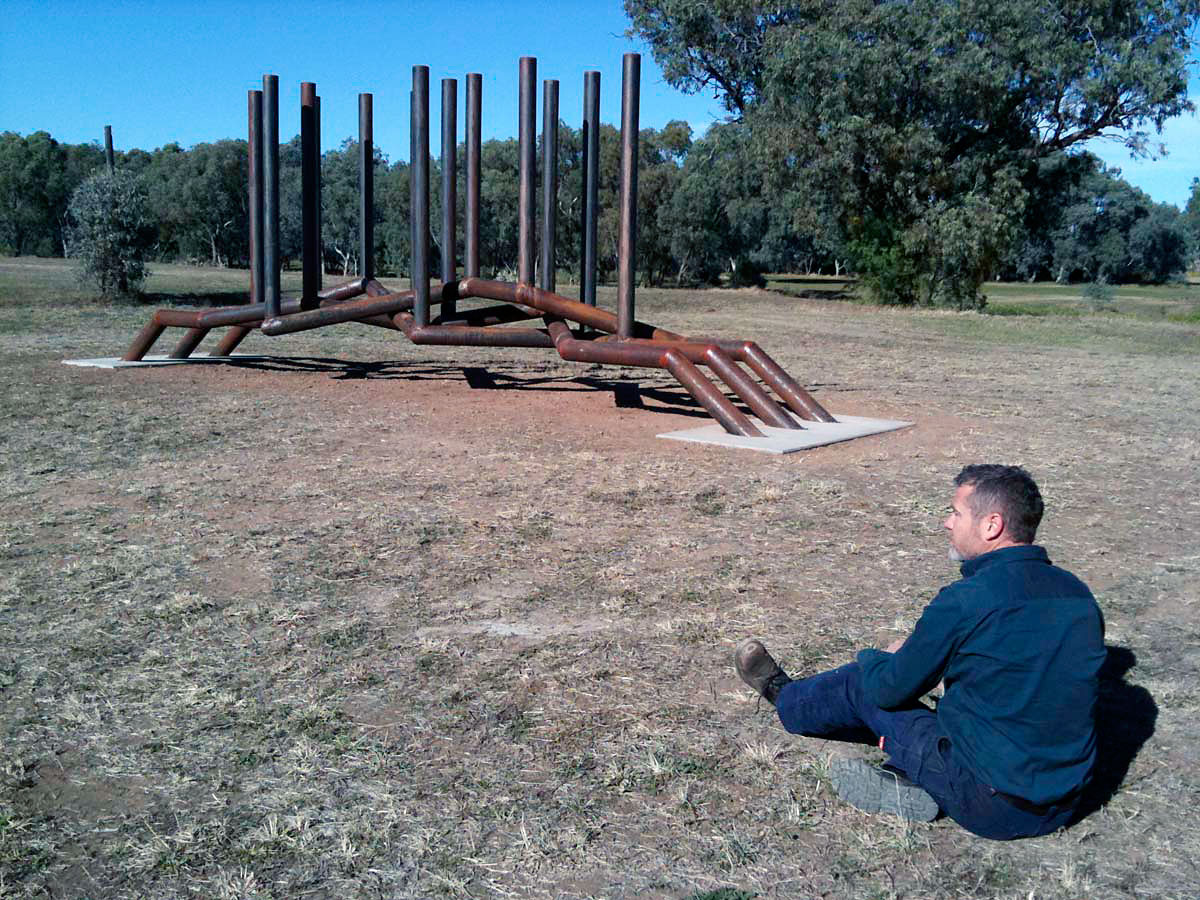
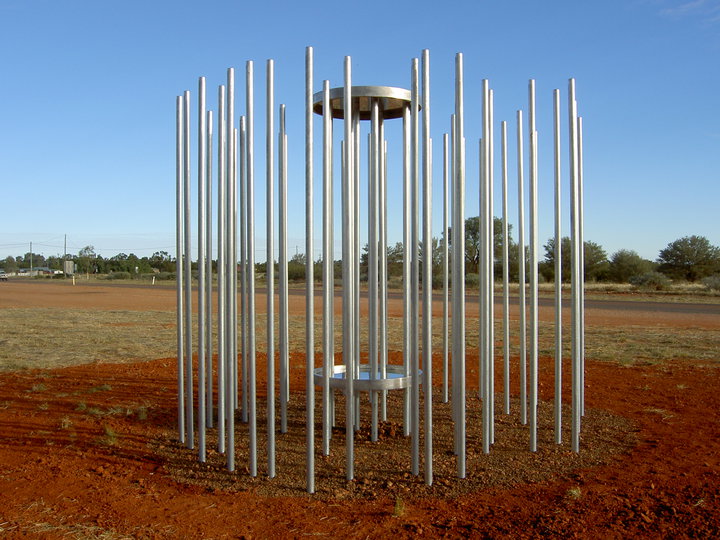
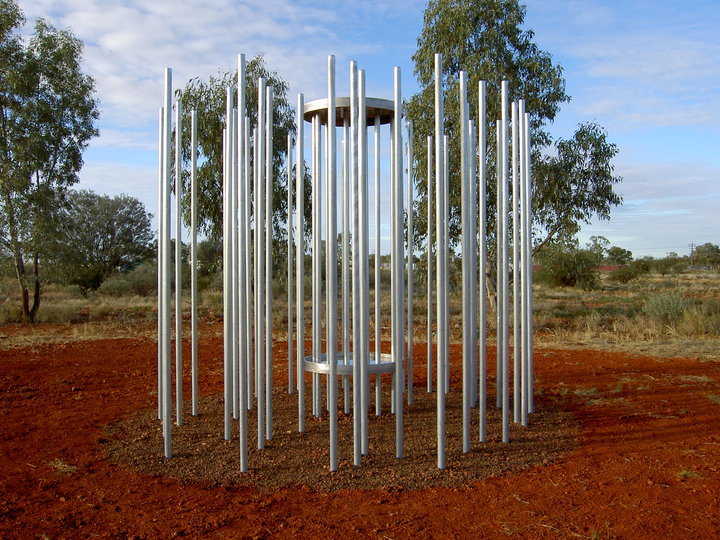
Fredrick White (Australian) Before The After 2010 Steel 220 x 105 x 95cm
Another beautiful sculpture by Australian sculptor Fredrick White that will be appearing in the Montalto Sculpture Prize that opens this weekend at 33 Shoreham Road, Red Hill South, Victoria and continues until 1st May, 2011. The work has great presence and continues the artist’s exploration into the matrix of what is seen and not seen, what lies above and below. Please click on the photographs for a larger version of the image.
Dr Marcus Bunyan
Please click on the photographs for a larger version of the image.
Fredrick White (Australian) Before The After 2010 Steel 220 x 105 x 95cm
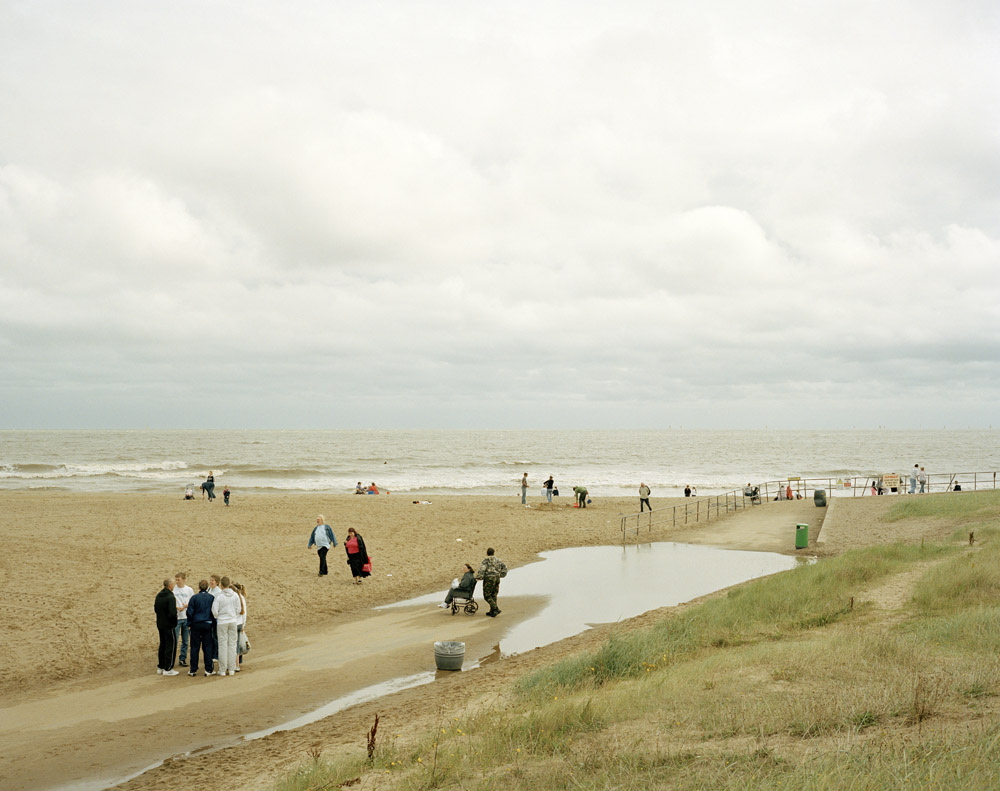
Simon Roberts (British, b. 1974) Skegness Beach, Lincolnshire, 12th August 2007 from the series We English 2007
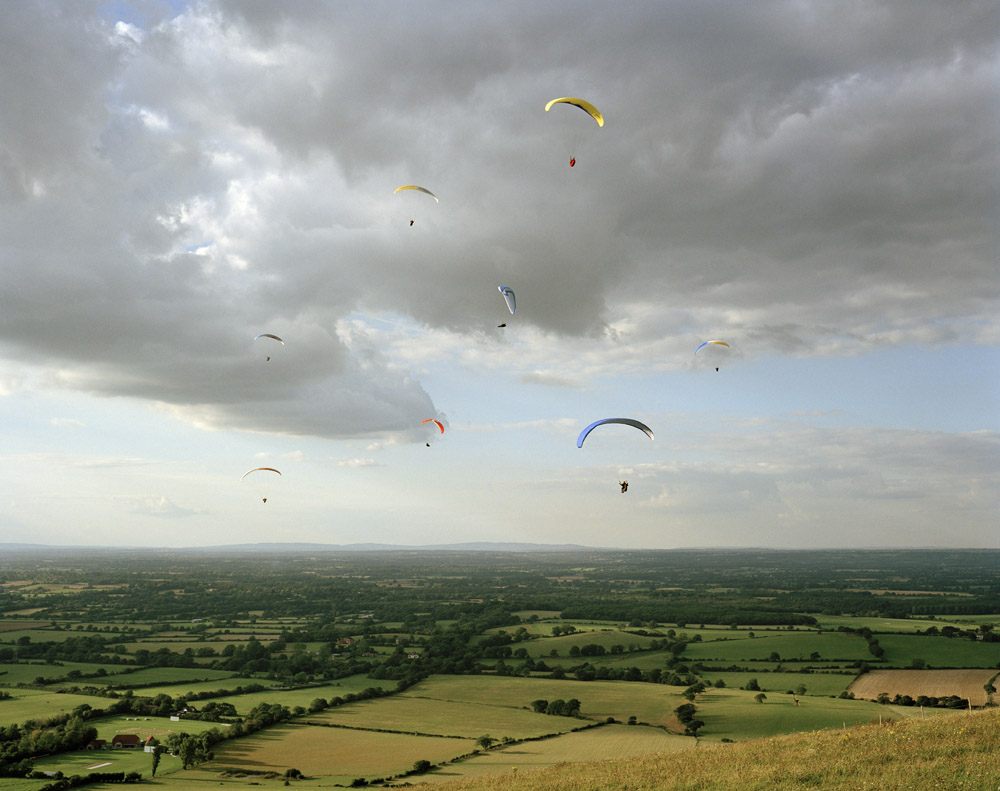
Being an ex-pat English these photographs have a very special resonance for me. They are beautifully visualised and resolved photographs that do not rely too heavily on the artist’s conceptualisation of landscape (the ever present hand of the artist) in the construction of narrative within the picture plane.
In other words the artist allows the image to speak for itself, “a sensitive, resolved response to scenes of ordinary people and how they inhabit and utilise the spaces around them,” with the layering of meaning, the back stories (boundaries, sites of contestation, notions of identity and colonisation of spaces amongst others) kept in balance with the sublime elements of the constructed landscape.
The photographs work all the better for this restraint and offer the viewer sensual images that are open and receptive, spaces that are invigorating and enlightening, Roberts has created a magical series of photographs that poignantly capture the essence of what it is to be English.
Dr Marcus Bunyan
Many thankx to Simon Roberts for allowing me to publish the photographs in the posting. The permission is much appreciated. Please click on the photographs to view a larger version of the image.
Simon Roberts (British, b. 1974) South Downs Way, West Sussex, 8th October 2007 from the series We English 2007
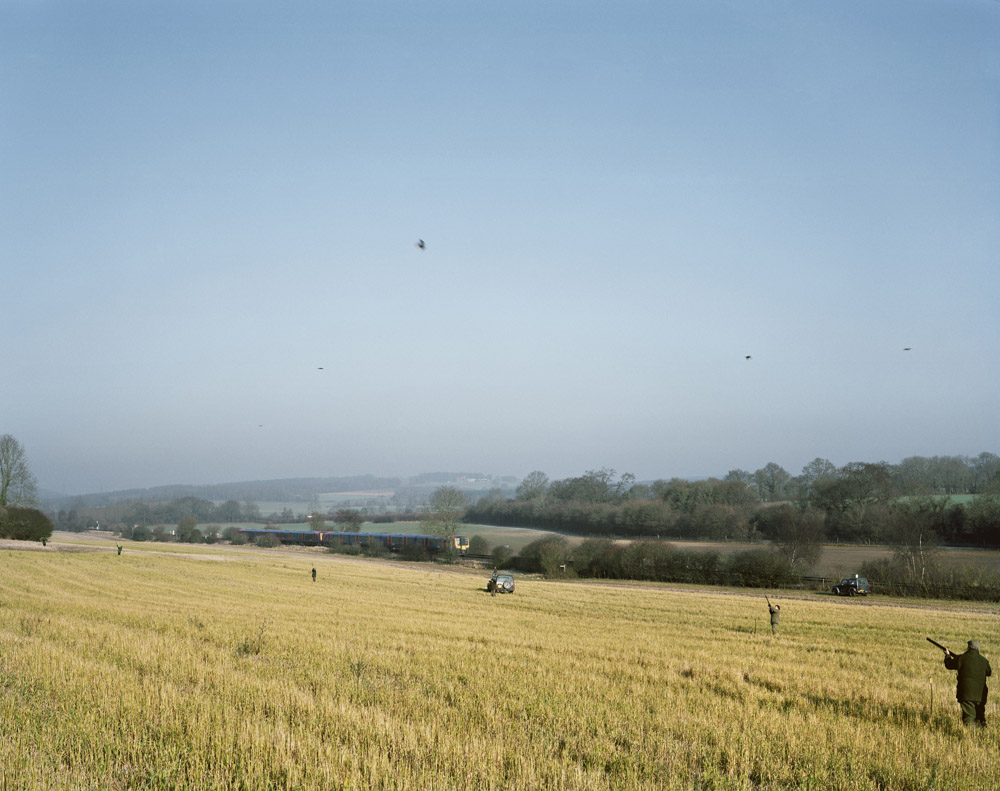
Simon Roberts (British, b. 1974) Heberdens Farm, Finchdean, Hampshire, 20th December 2007 from the series We English 2007
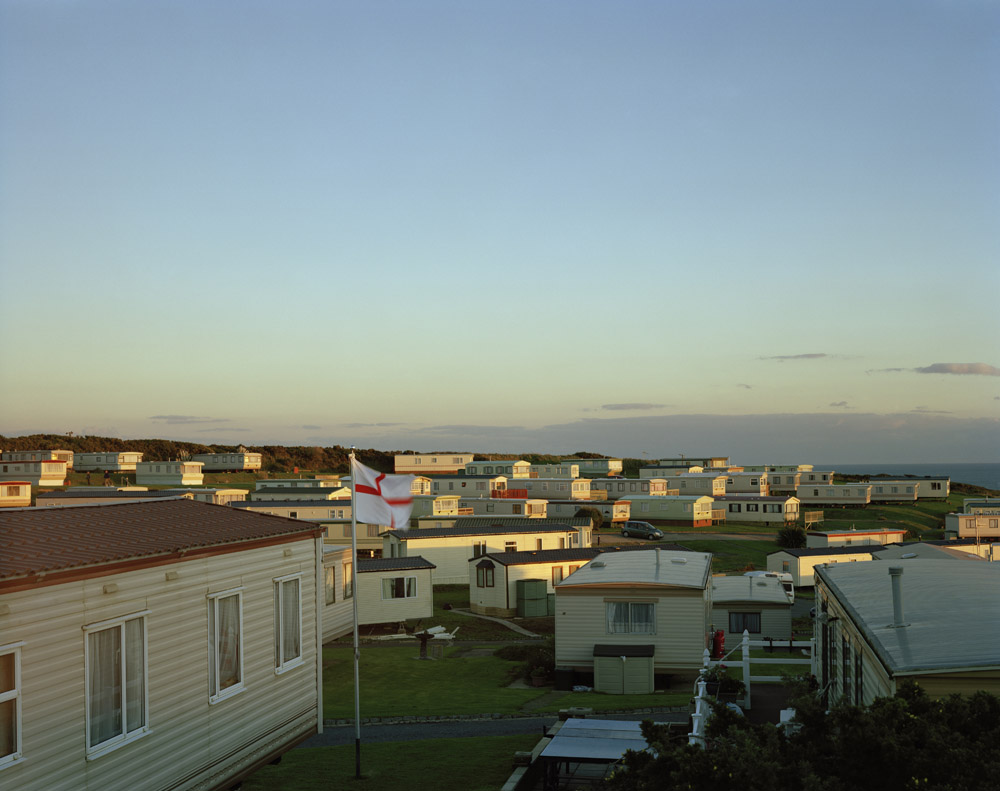
Simon Roberts (British, b. 1974) Rushey Hill Caravan Park, Peacehaven, East Sussex, 21st December 2007 from the series We English 2007
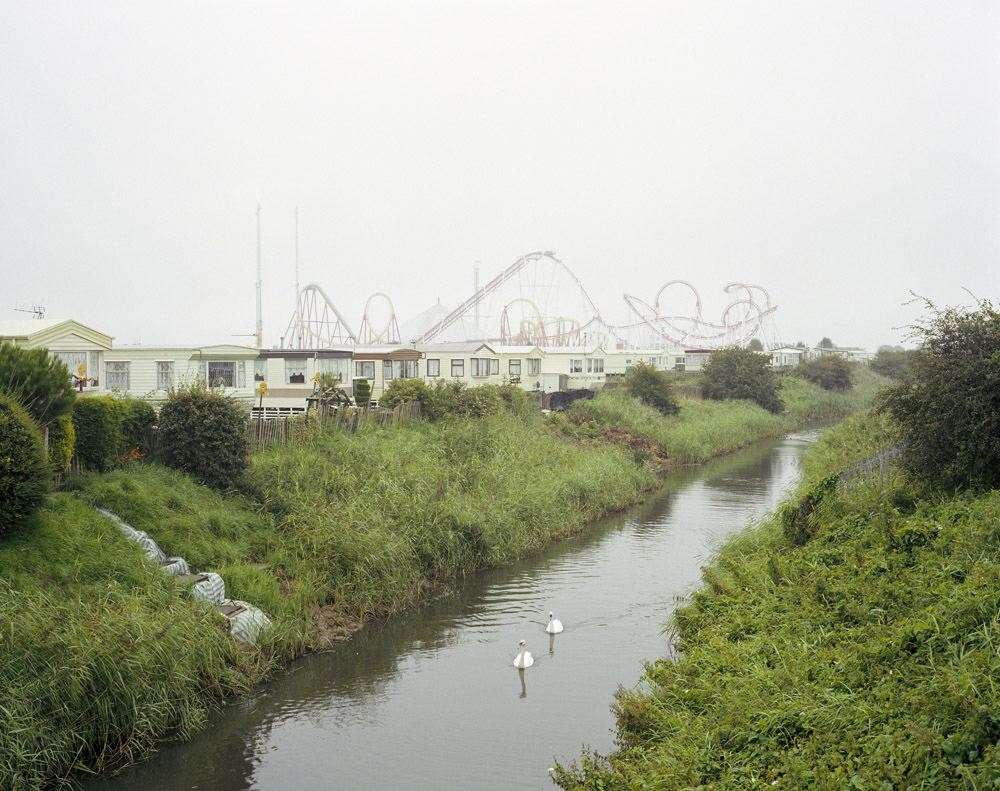
Simon Roberts (British, b. 1974) Fantasy Island, Ingoldmells, Lincolnshire, 28th December 2007 from the series We English 2007
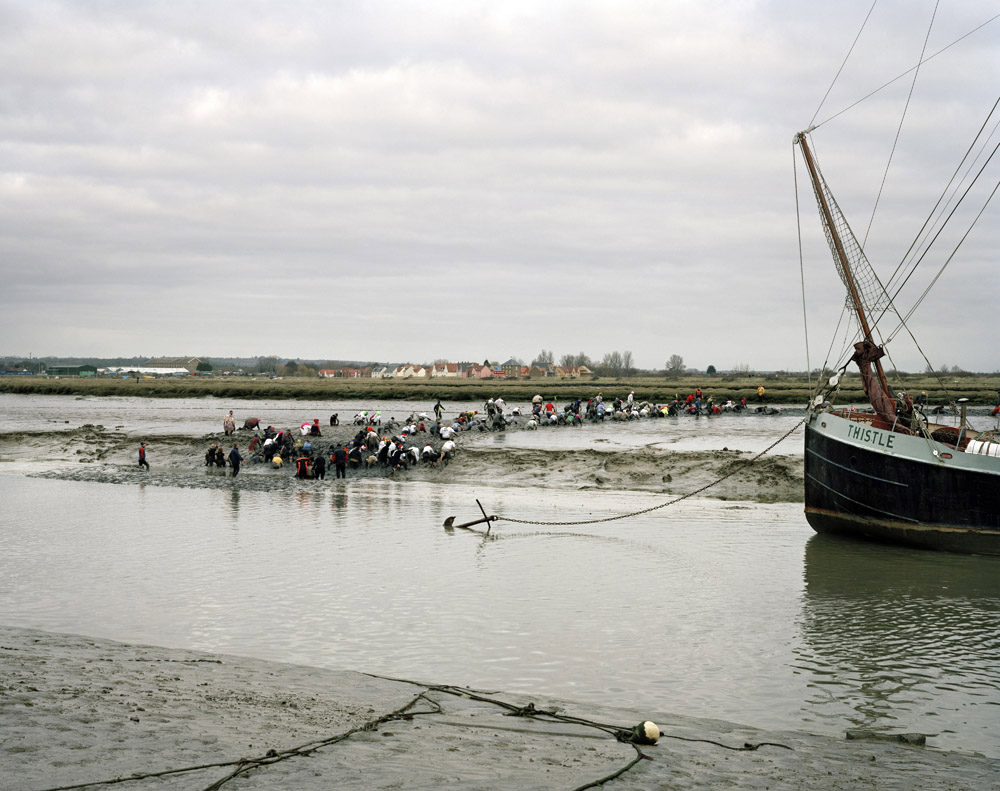
Simon Roberts (British, b. 1974) Mad Maldon Mud Race, River Blackwater, Maldon, Essex, 30th December 2007 from the series We English 2007
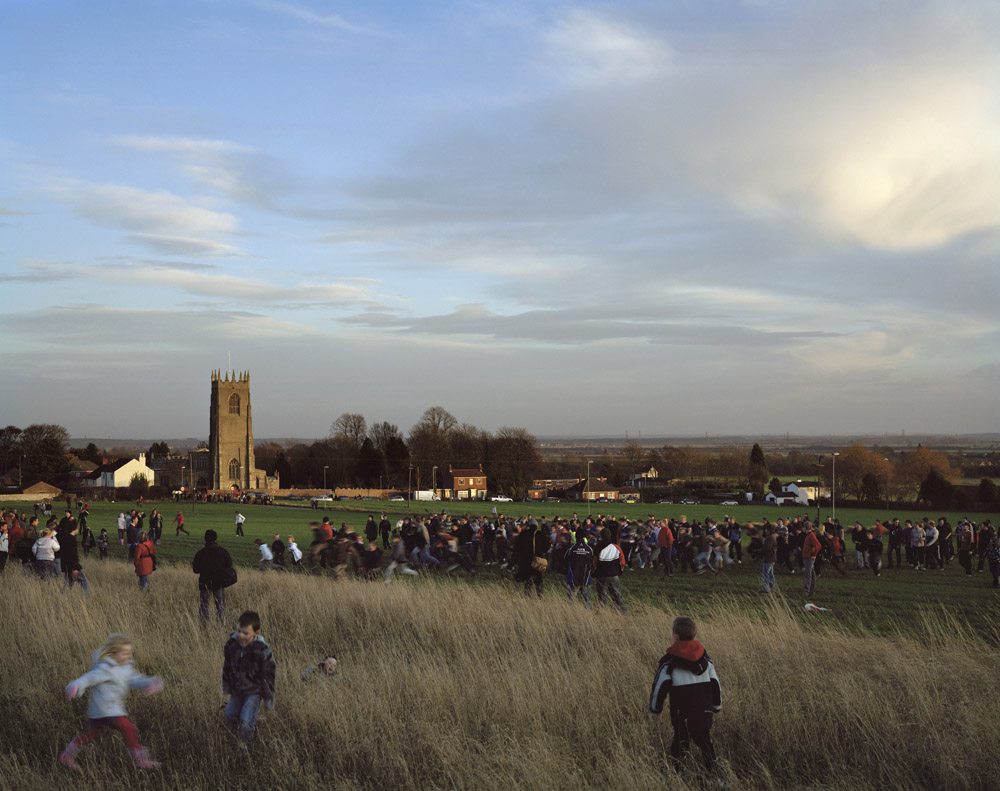
Simon Roberts (British, b. 1974) The Haxey Hood, Haxey, North Lincolnshire, 5th January 2008 from the series We English 2008
“We English is the result of a year’s travel around England by Roberts, in a motorhome, documenting its landscape on a large format 5 x 4 camera. Informed by the photography of his predecessors Tony Ray Jones, John Davies and Martin Parr, and by the romantic tradition of English landscape painting, Roberts depicts the English at leisure within pastoral landscapes in a manner that is entirely his own. The work is beautiful, accessible and often heart-warming. This is the most significant contribution to the photography of England since John Davies’s ‘The British Landscape’.”
Chris Boot, Publisher, 2009
Artist statement
Initially, I was simply thinking about Englishness and how my upbringing had been quintessentially English. How much of this was an intrinsic part of my identity? In what ways was my idea of what constitutes an ‘English life’ or English pastimes (if there are such things) different to those of others’? My own memories of holidays, for example, were infused with very particular landscapes; the lush green-ness around Derwent Water or the flinty grey skies – and pebbles – of Angmering’s beaches. It seemed to me that these landscapes formed an important part of my consciousness of who I am and how I ‘remember’ England.
Seeking out ordinary people engaged in diverse pastimes, I aim to show a populace with a profound attachment to its’ local environments and homeland. We English explores the notion that nationhood – that what it means to be English – is to be found on the surface of contemporary life, encapsulated by banal everyday rituals and activities.
My first major body of work, Motherland, was a study about Russian identity. The images are not clichéd representations of a Russia ground down by poverty and despair, rather, photographs of a land of dignified people empowered by a growing optimism and a deep rooted sense of national esteem.
The same themes of identity, memory, history and attachment to place – of belonging – resonate throughout We English. To access these abstractions, I’ve produced a series of colour landscape photographs, which record places where groups of people congregate for a common purpose and shared experience. Since landscape has long been used as a commodity to be consumed, I focus on leisure activities as a way of looking at England’s shifting cultural and aesthetic identity. The photographs are rooted in a consciousness of my own attachment to my homeland and are an intentionally lyrical rendering of everyday English landscapes. They draw on issues of cultural geography and contemporary landscape theory, together with vestiges of English romanticism.
We English is not just a mode of social and anthropological commentary, although there are important elements of this in the work; more, it aims to constitute a sensitive, resolved response to scenes of ordinary people and how they inhabit and utilise the spaces around them. The photographs also explore the way in which landscapes can become a site of conflict or unease, where perceived notions of nationhood and quintessential Englishness are challenged, as diverse social groups seek to colonise shared public spaces. Notions of limits and boundaries re-appear throughout the work, reflected in the rivers, trees and hedges that create physical divisions, delineating and defining the limits of human interaction. Indeed, leisure activities often occur at boundary points: the edge of towns and cities, next to lakes and reservoirs, alongside footpaths and mountain ridges.
The project derives its title from the suggestion that photographer and subjects – we ‘English’ – are complicit in the act of representation. (During the five months that I travelled around England in a motorhome, people were invited to post their ideas about events I could photograph on a dedicated website and to share their experiences of living in their particular locality).
The project has been supported by Arts Council England, the National Media Museum and the John Kobal Foundation. A monograph of the photographs will be published in September 2009 by Chris Boot Ltd.
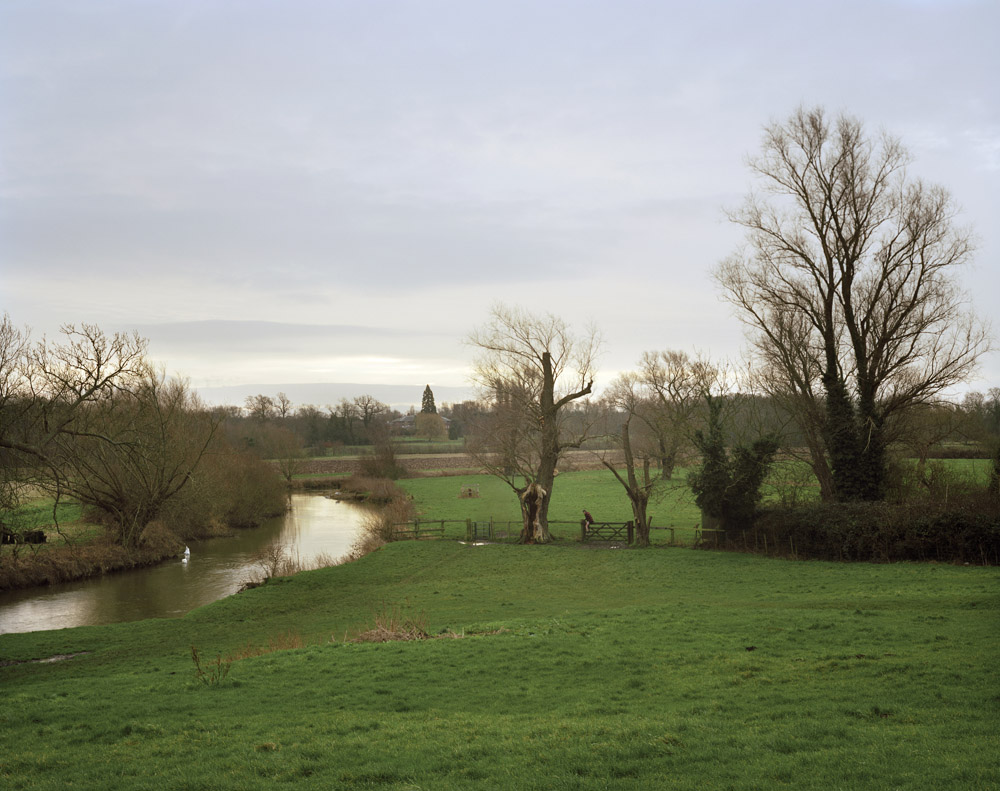
Simon Roberts (British, b. 1974) Grantchester Meadows, Cambridgeshire, 23rd January 2008 from the series We English 2008
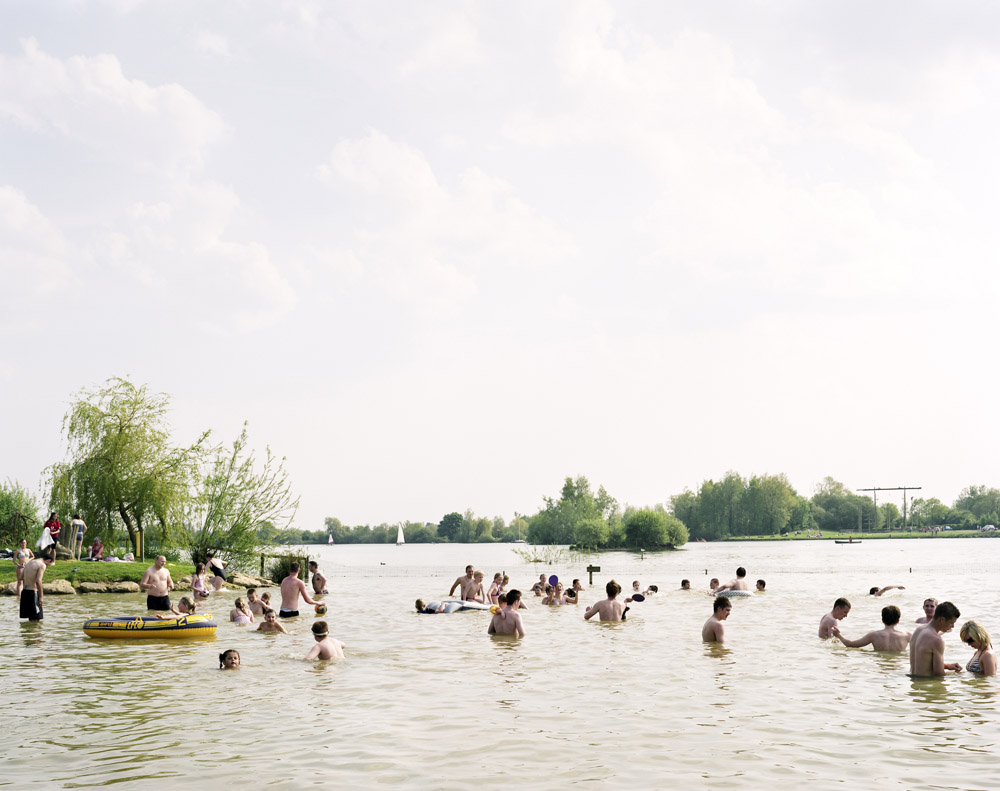
Simon Roberts (British, b. 1974) Cotswold Water Park, Shornecote, Gloucestershire, 11th May 2008 from the series We English 2008
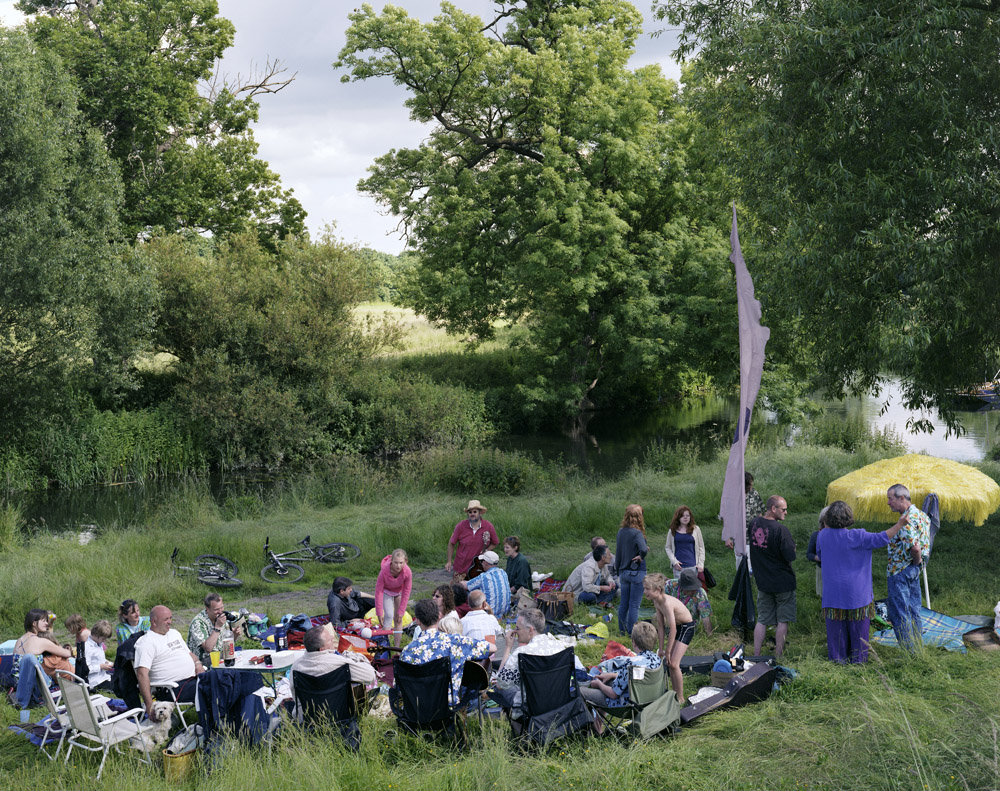
Simon Roberts (British, b. 1974) Paul Herrington’s 50th Birthday, Grantchester, Cambridgeshire, 15th June 2008 from the series We English 2008
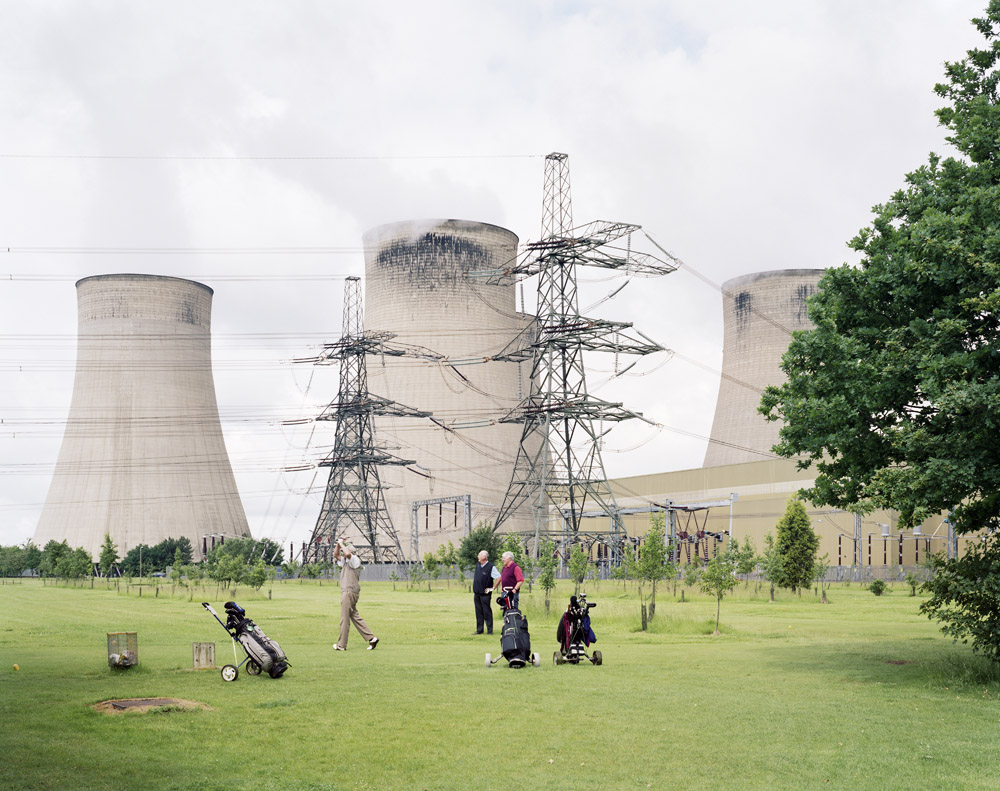
Simon Roberts (British, b. 1974) Ratcliffe-on-Soar Power Station, Nottinghamshire, 16th June 2008 from the series We English 2008
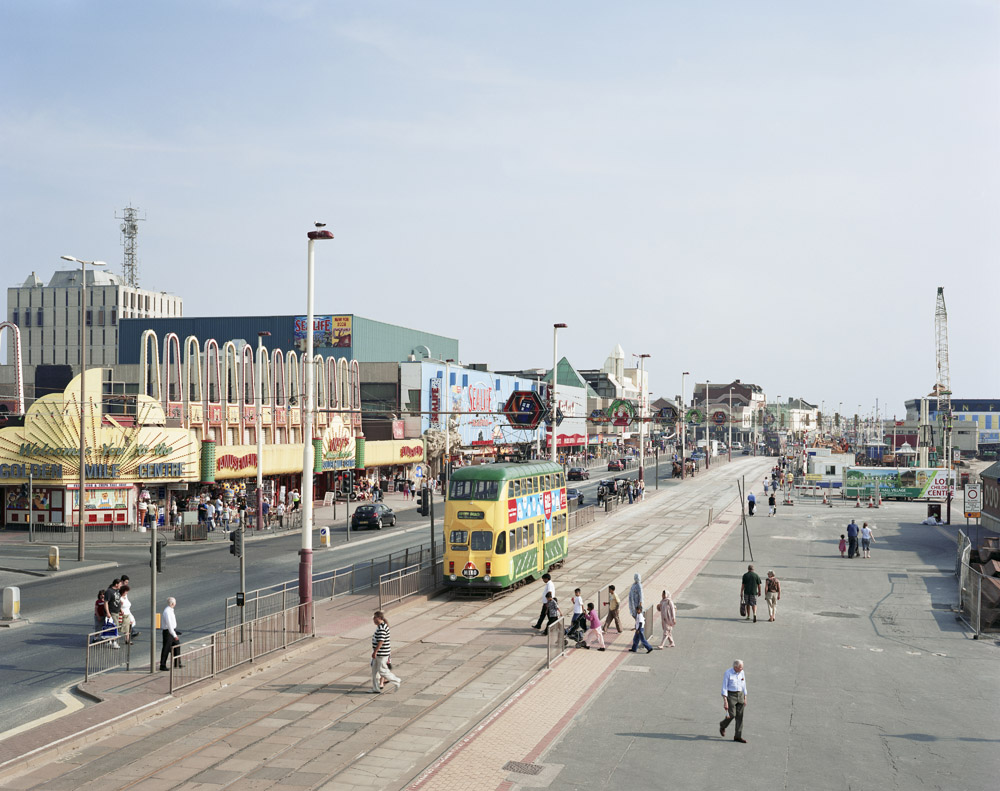
Simon Roberts (British, b. 1974) Blackpool Promenade, Lancashire, 24th July 2008 from the series We English 2008
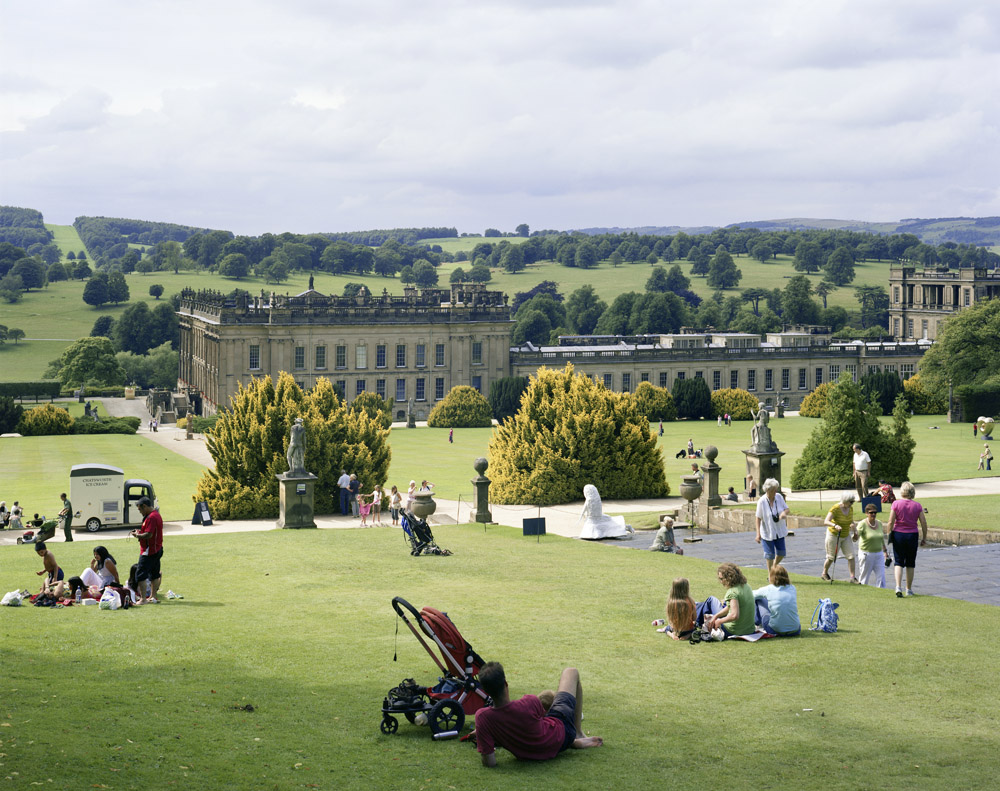
Simon Roberts (British, b. 1974) Chatsworth House, Bakewell, Derbyshire, 7th August 2008 from the series We English 2008
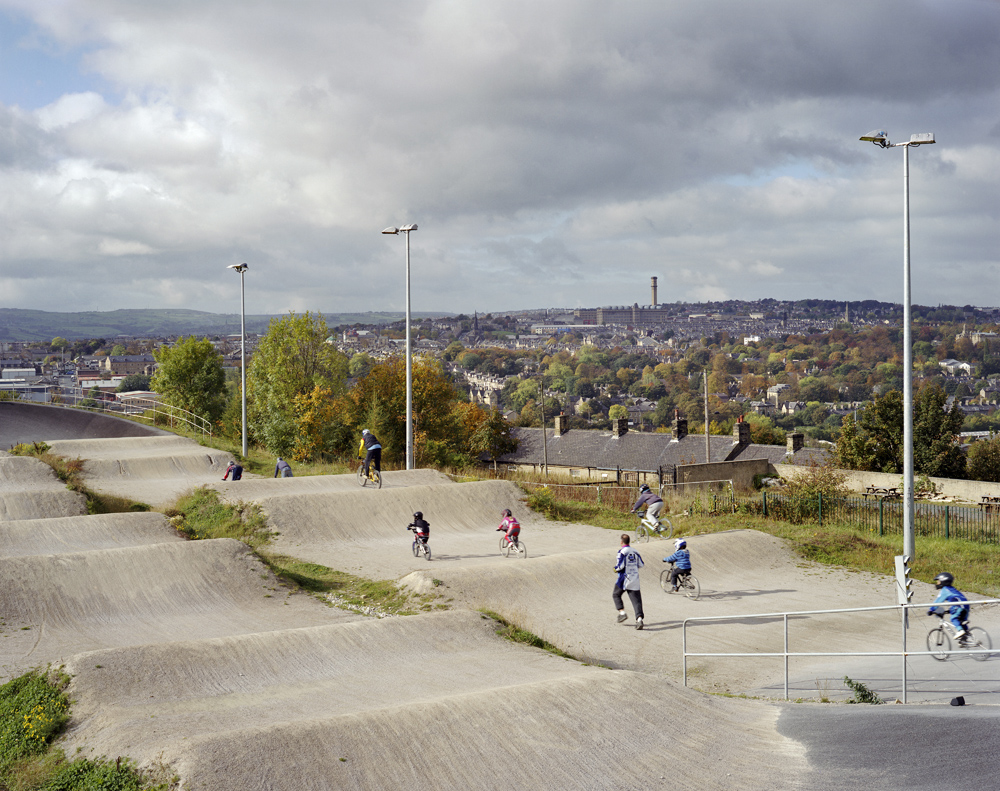
Simon Roberts (British, b. 1974) Bradford Bandits BMX Club, Peel Park, Bradford, West Yorkshire, 17th October 2009 from the series We English 2008
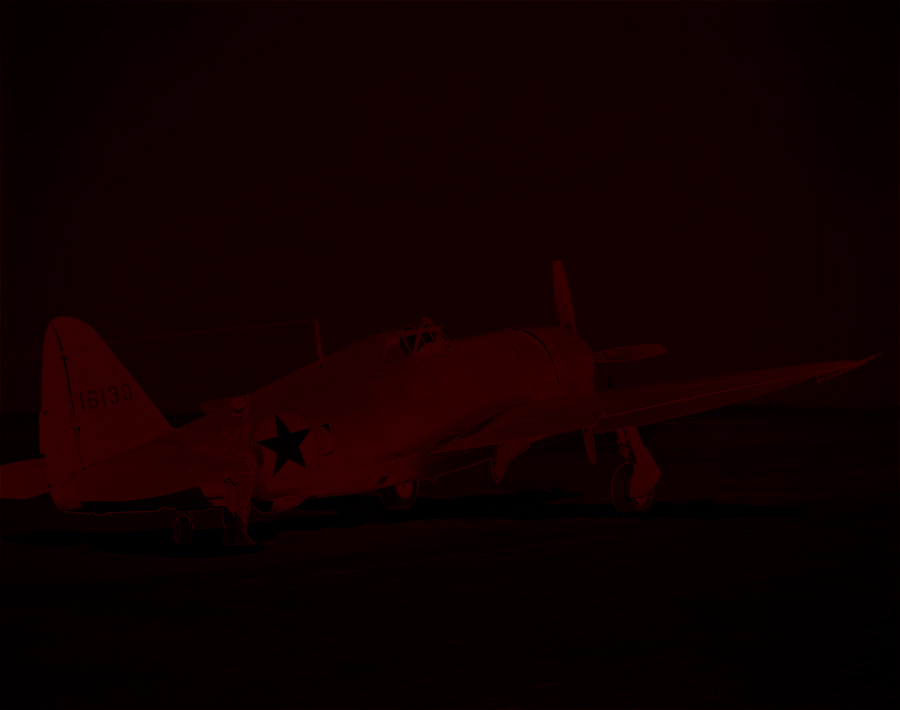
Marcus Bunyan (Australian, b. 1958) Missing in Action (red kenosis) No. 76 2010 Digital colour photograph
“God doesn’t give them things he doesn’t want them to use.”
Anon
“There is no glory in battle worth the blood it costs.”
Dwight D. Eisenhower
Missing in Action (red kenosis)
A body of work Missing in Action (red kenosis) 2010 is now online on my website.
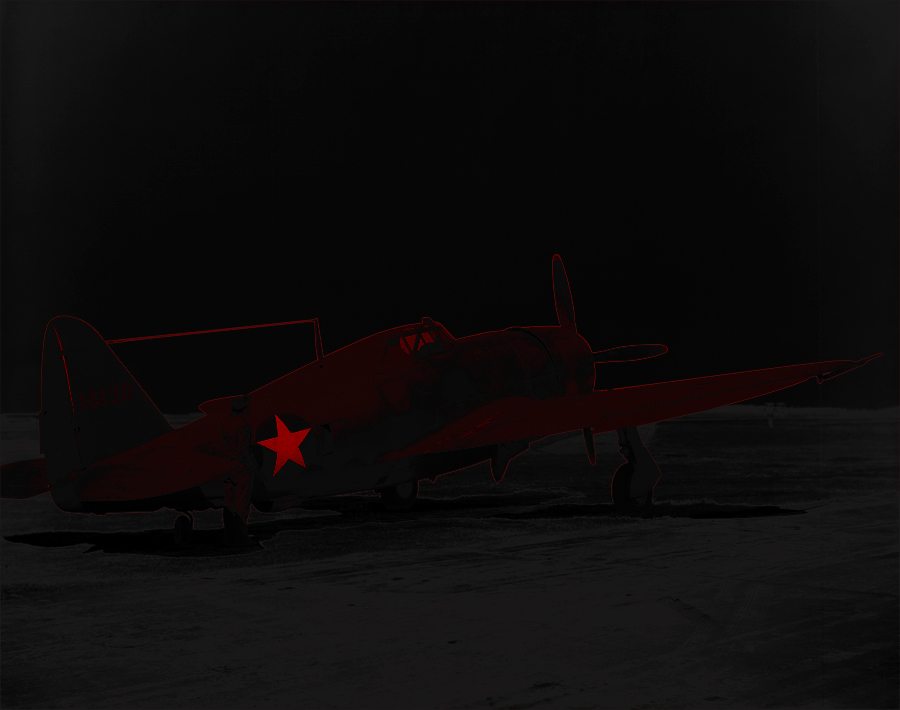
There are 100 images in the series which are like variations in music with small shifts in tone and colour. Below is a selection of images, one plane and its variations from the many different planes in the series. Please click on the photographs for a larger version of the image. I hope you like the work!
Dr Marcus Bunyan
Photographs are available from this series for purchase. As a guide, a digital colour 16″ x 20″ costs $1000 plus tracked and insured shipping. For more information please see my Store web page.
Marcus Bunyan (Australian, b. 1958) Missing in Action (red kenosis) No’s. 77-88 2010 Digital colour photographs
Unknown photographer ‘Lifespan’ by Frederick White 2010
“And do you know what “the world” is to me? Shall I show it to you in my mirror? This world: a monster of energy, without beginning, without end; a firm, iron magnitude of force that does not grow bigger or smaller, that does not expend itself but only transforms itself; as a whole, of unalterable size, a household without expenses or losses, but likewise without increase or income; enclosed by “nothingness” as by a boundary; not something blurry or wasted, not something endlessly extended, but set in a definite space as a definite force, and not a space that might be “empty” here or there, but rather a force throughout, as a play of forces and waves of forces, at the same time one and many, increasing here and at the same time decreasing there …”
Frederick Nietzsche, The Will to Power
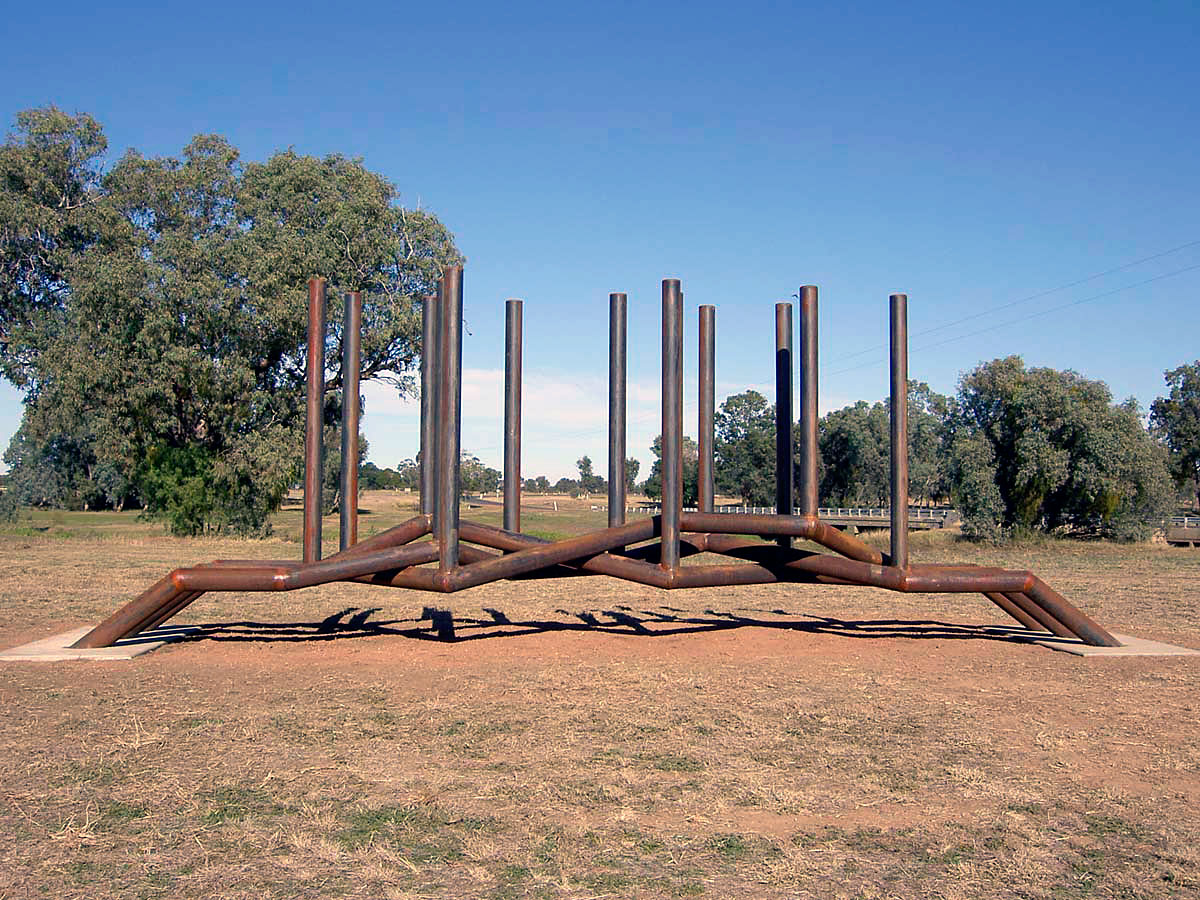
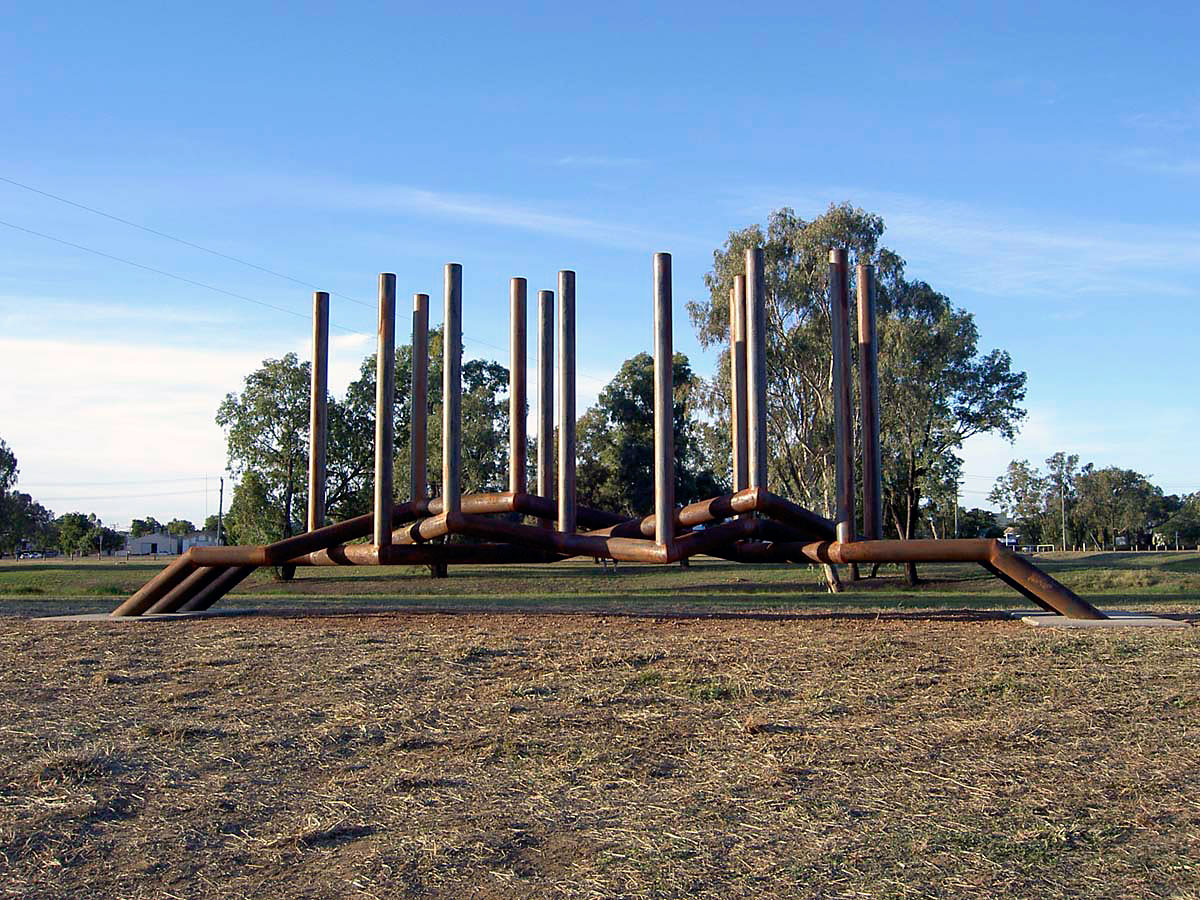
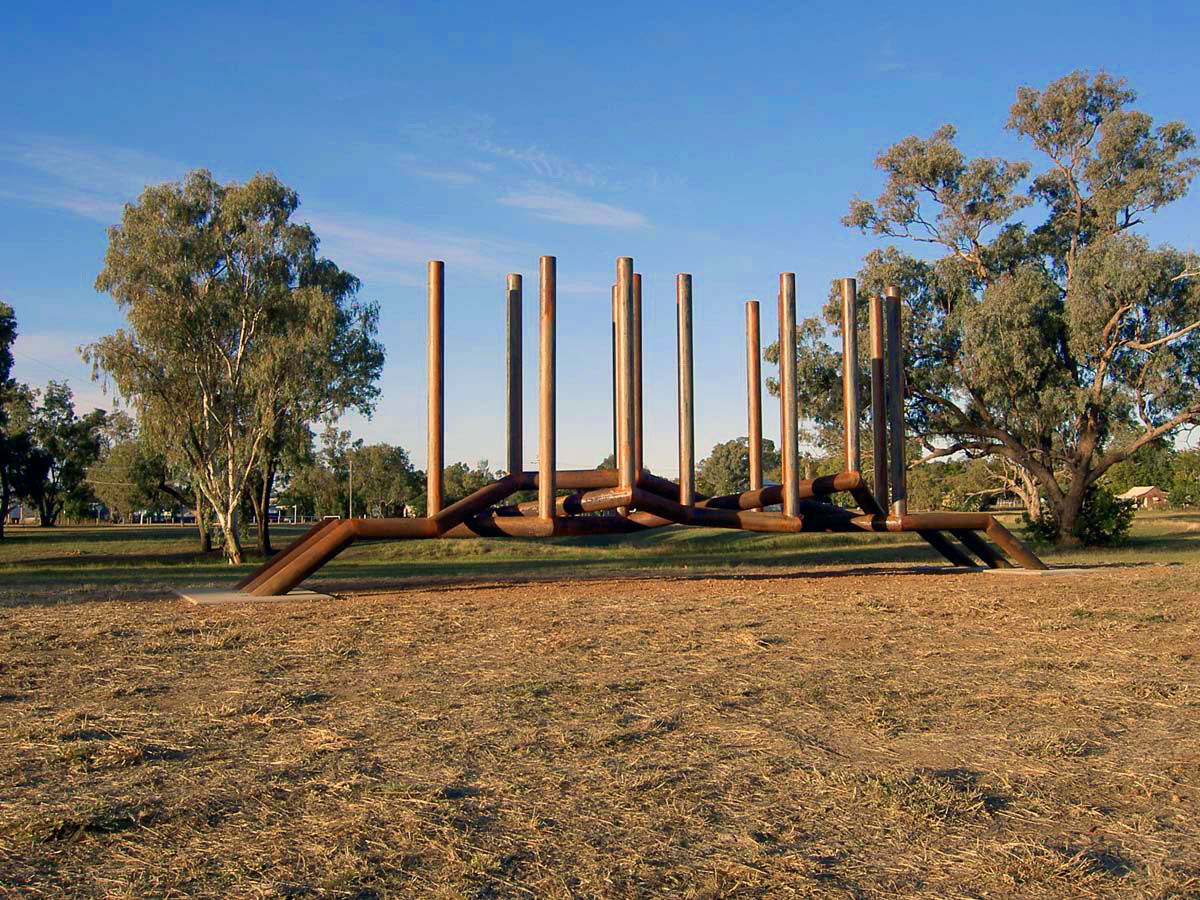
This is sculptor Fredrick White’s second public commission in Queensland. The sculpture Lifespan (2010) is located at Blackall in Western Queensland (see Google map). The work is 8 metres long. Blackall already contains public sculptures by William Eicholtz (Towners Call – Edgar Towner V.C. Memorial (2009)) and Robert Bridgewater (Wool, Water and Wood (2008)).
Fredrick White’s sculpture has always been about flows and extrusions – the movement of energy both visible and invisible, above and below ground, inside and outside the body – an exploration of some giant vascular system of which we are all part. Sculptures sprout from manhole covers (Manwhole 1999), welling up from the hidden system of pipes and passageways that run under the earth; coffin-like boxes hover in suspended animation over the ground, anchored by pipes that disappear into the earth (Universal Attachment 2000); ectoplasmic, ethereal substances emit in Time Being No’s 1, 2 and 3 (2002). In recent work From Life To Life (2007), Drawing Water (2010) and Lifespan (2010) these connections are even more intimately linked to the life cycle and the essential place of water in the scheme of things:
“I am interested in the stuff that holds us together, the dominant paradigms of human life, our reliance on the Earth and each other. There is no separation between anything – birth / death, above/below, past / future – all are part of the life cycle of living things. The life cycle is the main motif of my practice and is a manifestation of my Piscean nature.”
White’s hyper-textural work flows from one link to another, from one connection to another. His text is a body without organs, always moving between the visible and the invisible webs that connect us. As so a rhizome, so the work of White: there is no hierarchical trunk, no beginning and no end, for White’s work is multiple, lateral, circular.
Using the language of Deleuze and Guattari (A Thousand Plateaus, 1980), White’s assemblages (for that is what they are), “are the processes by which various configurations of linked components function in an intersection with each other …” In these assemblages the process of territorialization intensifies and the assemblages, “can be thought of as constituted by an intensification of these processes around a particular site through a multiplicity of intersections of such territorializations.”1
In White’s assemblages there is no language of itself. The rhizomic nature of their being produces an unconscious connection to all things: his work fosters connections, offers multiple entryways, detaches and modifies new cultural forms. Above all White’s work offers a new map for us to cultivate the soil of living, the site of his intersections extruding form in a vibrant intensification of energy.
Dr Marcus Bunyan
1/ Wood, Aylish. “Fresh Kill: Information technologies as sites of resistance,” in Munt, Sally (ed.,). Technospaces: Inside the New Media. London: Continuum, 2001, p. 166.
Please click on the photographs for a larger version of the image.
Unknown photographer ‘Lifespan’ by Frederick White 2010
Sculptor Fredrick White sitting in front of his sculpture Lifespan (2010)
Unknown photographer ‘Lifespan’ by Frederick White 2010
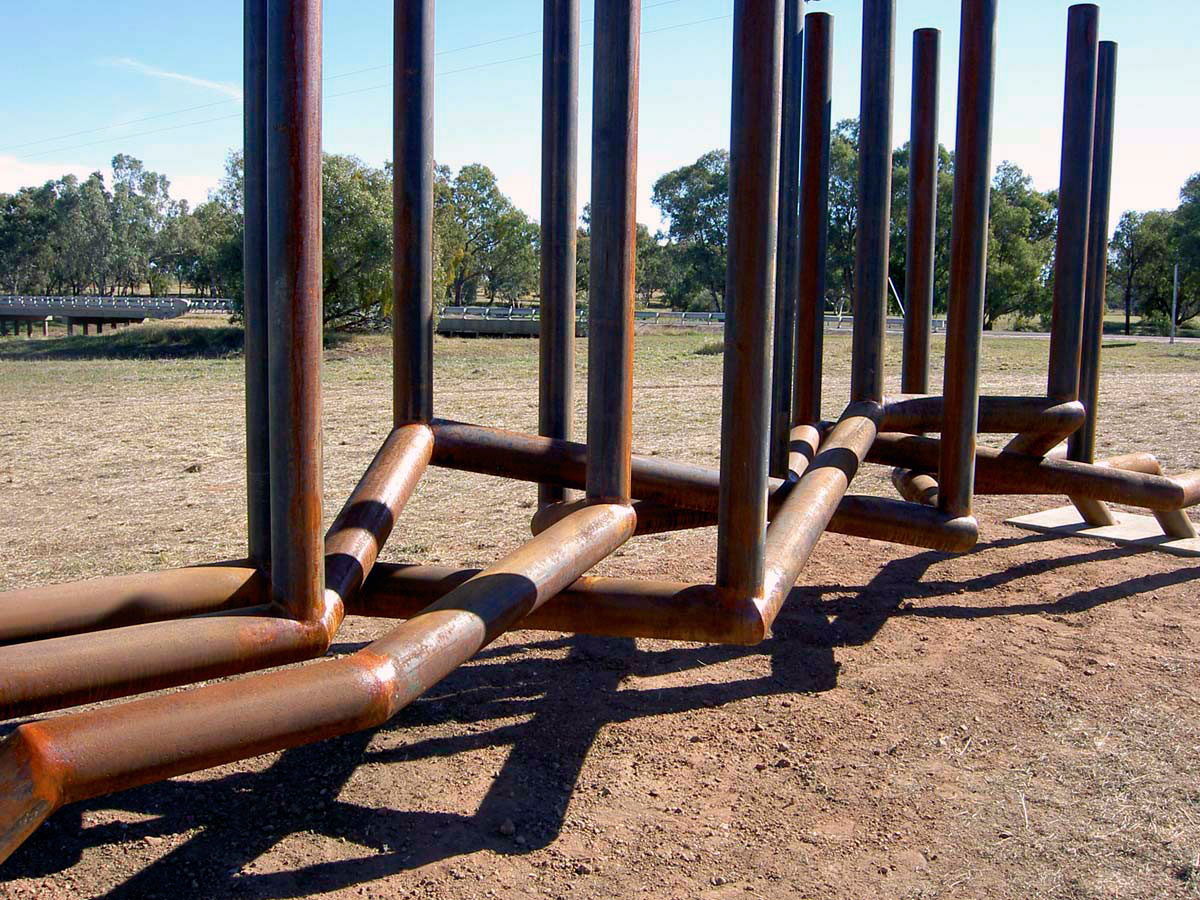
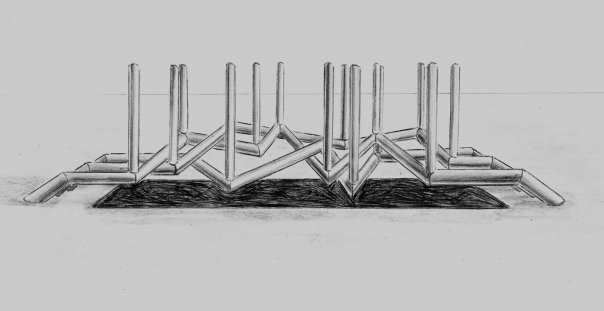
Lifespan is made predominantly from recycled bore casing, a material chosen to suggest the language of plumbing as a conduit for dialogue on the theme of water.
The end sections of the work, like a hydro-electric scheme, rise from the ground and start crossing over. This form whilst inspired by the braided channels of Western Queensland is also about life in general; paths that converge or momentarily cross over, then towards the end of life, like the beginning, level out to a new time for experiencing.
The vertical pipes reference the artesian bore system that provides the main reliable source of water here. In this scenario, the top of the pipes are the surface of the Earth and the pipes bore into the ground to tap into the aquifers deep below in the Great Artesian Basin.
We are here because of the Earth and water is the primal substance that is the source of all life, in fact the artesian water of Australia is in places as old as humanity itself; the perfect symbol of the past, present and future.
Fredrick White 2010
Unknown photographer ‘Lifespan’ by Frederick White 2010
Unknown photographer ‘Lifespan’ by Frederick White 2010
I have managed to track down the artist and author Pablo Helguera (after I quoted his words in the review on the work of Jill Orr) and obtain permission to publish his wonderful text How to Understand the light on a Landscape taken from a video work of 2005.
Many, many thankx to Pablo Helguera for allowing my to publish the text and photographs below. The permission is truly appreciated. The text is beautiful, insightful – a must for any artist who wishes to understand the condition of light on a landscape.
“‘How to Understand the Light on a Landscape’ (video, 15 min., 2005) is a work that simulates a scientific documentary about light to discuss the experiential aspects of light as triggered by memory. The images and text below, taken from the video, are part of the book published by the Institute of Cultural Inquiry, entitled Searching for Sebald: Photography After W.G. Sebald edited by Lise Patt, 2007, pp. 110-119.”
“To understand is to forget about loving.”
Fernando Pessoa
For Luis Ignacio Helguera Soiné (1926-2005)
LIGHT is understood as the electromagnetic radiation with a wavelength that is visible to the eye. Yet, the precise nature of light, and the way it affects matter, is one of the key questions of modern physics.
Due to wave-particle duality, light simultaneously exhibits properties of both waves and particles that affect a physical space. There are many sources of light. A body at a given temperature will emit a characteristic spectrum known as black body radiation. The conjunction of a body present in the landscape, along with the interaction of the light in the environment, produces an effect that in modern psychology we describe as experience.
The conjunction of a random site, the accumulated data in the body’s memory that is linked to emotion, and the general behaviour of light form experience. Experience is triggered by light, but not exclusively by the visible light of the electromagnetic spectrum. What the human eye is incapable to perceive is absorbed by other sensory parts of the body, which contribute to the perception that light causes an effect that goes beyond the merely visual.
In our life span, we witness only a few limited emission incidents of light that intersect with spontaneous receptivity of memory in specific places. They happen selectively and in rapid sequences, at night, when a door opens, when we are very young, when we drop off someone at the airport. They all, however, are inscribed by the behaviour of light. As we age and our receptivity declines, our eyes and body become denser material through which there is a reduction of the speed of light, known as a decline in the refractive index of memory.
The extent of the breeding behaviour of EXPERIENTIAL LIGHT is determined by the amount of cyclical phenomena we have experienced, such as the slight humidity that signals the transition of spring into summer. The refractive index of memory is mostly marked by the unusually happy or sad periods of our lives, and the slow decline that gradually dominates our perception. Forgetfulness gradually inhibits the experience of light, and cannot be reversed.
The glow of heaviness, commonly known as SOMBER LIGHT, appears in urban solitude and often towards the end of the day. It is a particularly cruel light to experience, as it stimulates attractive visions, like the singing of two women on a radiant evening but it then reveals hidden anxieties that we may have about the end of things, as Homer describes the fatal singing of the mermaids.
HOME LIGHT is too familiar to be seen. It is the kind of light that we first saw when we were born and we always recognize, but often take for granted. Home light is highly volatile light, and it often vanishes when it is named, as a dream that ends when we dream that we are dreaming. There is no point in explaining this light, because it is too familiar to the owner and too alien to all others. Yet a high experiential index is evident when it’s there, ready to envelop us when we encounter it again wherever we go. We can only know that we all have this kind of light in ourselves, as if in our pockets, ready to come out at a critical moment.
There is the shining of large breath, full of itself, that enters with grandeur into a landscape, uninvited, taking over the logic of everything, promoting the conjunction of belief and fragility. It creates mythologies, and the belief that there is something greater than us in a time that is ungraspable or far larger than our minuscule time in this world.
There is also a glow known as GHOST LIGHT that can only be seen, like some apparitions, in photographs, especially the snapshots taken by those who went through a long trip or extenuating circumstances in their lives, such as returning from a bloody war, escaping hunger and threat. It expresses an image of lonely liberty, where all is in order but there is little that can be enjoyed with that order, as if what happened before had affected the future of it all. It functions like a Swiss clock, harmonious but predictable.
There is the light of the deathbed, that lingers on for a long time after the incident, and often takes the appearance of a rainy day
There is the LIGHT OF THE DEATHBED, that lingers on for a long time after the incident, and often takes the appearance of a rainy day, even many years later, like the widow that will hold on to wearing black. It is a refracting light, the light of the permanent finality of the moment that often creates the impression of letting us know something that we didn’t know, just like an unopened letter found after many years. Its extremely old waves appear to have a cool breeze, as if ready to inspire a Flemish painting.
Those who once read long 19th century novels often recognize RAIN LIGHT. It is often seen from a train in motion, when it is arriving to a station that is not our destination, and yet we feel there is something we are leaving behind, as if we had indeed lived another life, or had developed a sense of belonging to those who we see getting off.
But there is also a tired glow on a cloudy summer afternoon right before or during lunchtime, one that emerges after strenuous work by others but that we see when we are doing nothing, or when we are resting. It is also similar to the light of the movie matinee that we see with the fascination of remembering that it is still daytime after we came from darkness. It also reminds us of food we ate a long time ago and the extinct products and fashions from the time when we were kids.
There is a PROTECTIVE LIGHT that reminds us of the womb, of the time where we were completely protected. This light inspires endless nostalgic yearning to attain that protection again. Our obsession with protective light prevents us from growing and makes us fear change. We wish we could be like that woman in a distant small city who was born, married, and died on the same street. It is true that no velocity and amount of experience can compare with the accumulated placement of experience in a single spot. But due to the impossibility of being able to replace protective light, these attempts derive in the light of the tourist, taking the same image all around the world, seeking comfort in every place when in reality there is no comfort to be had.
Another source of satisfaction is the working light that signals many events that take place on an everyday basis, like business lunches in city cafeterias, like going to the post office, like all the activity proper of the midday urban sprawl, a dynamic, powerful light, with the enthusiasm and perhaps strange mixture of happiness and melancholy we used to feel in school when we were finally off for vacations but we would not get to see our high school crush for the rest of the summer. We will know how to recognize this sunlight when we see it slowly crawl through the walls until it disappears completely.
There is of course the ARTIFICIAL LIGHT. It is a light for waiting, a transitory light that creates the impression that the actual moment doesn’t exist but rather a joining of procedures that take us from one place to another, which we call the obligations of life.
We wish we could be like that woman in a distant small city who was born, married, and died on the same street. It is true that no velocity and amount of experience can compare with the accumulated placement of experience in a single spot.
ARTIFICIAL LIGHT crawls into our lives, and we tend to also see it on the outdoors, sometimes exchanging it mentally for real sunlight. It makes us feel that every place is the same to us because we are the same. Under artificial light, the strangers that we see in the street soon start looking eerily familiar to us.
This is the LIGHT OF THE TRULY BLIND, where unreality is a perfectly kept lawn, an undisturbed peace, and an organized tour to an exotic location where nothing happens. This light constructed by official human communication is an empty airport, a constant waiting room full of scheduled departures with no one in the planes and plenty of flight simulations.
There is the LIGHT OF ADOLESCENCE, a blinding light that is similar to the one we feel when we are asleep facing the sun and we feel its warmth but don’t see it directly. Sometimes it marks the unplace, perhaps the commonality of all places or perhaps, for those who are pessimists, the unplaceness of every location.
There is a SUNDAY LIGHT, profoundly euphoric and unsettling, both because it reminds us of leisure but also of Monday’s obligations; it is the one we used to read comic strips with, while eating pancakes outdoors, or go to the store to buy coffee or watch the sports on TV, a trustworthy companion light that seems to last, creating clear shadows and warmth as well as a confident sense of the present – it is the only light that we enjoy regardless of our age and never want it to ever go away.
There is a HOTEL LIGHT, of transitory nature, that generates unexpected and intense responses especially to those whose happier memories have taken place at the garden or swimming pool of a hotel. It often talks of fantasy worlds that are real just because we let ourselves fall into the fantasy they offer, parentheses of light that can well be captured in a snapshot.
Sometimes we experience the LIGHT OF THE LAST DAY, a kind of light that takes form during farewells or moments of consciousness when we know that what we are looking at that moment shall never be repeated, and that years from now we will be recalling that moment. Moments of memory that are memories even in the moments when we live them.
There is USED LIGHT, light that has been lived by others, and we are always left with the impression that we missed something important, like listening only to the very end of a certain conversation, our constant expectation of a phone call that never arrived, or the obsessive possibilities of an unrequited love.
Or the NARRATED LIGHT, the one that we only know by description and think that we recognize it when we see it when it may always be an impossibility to get a glimpse of its wilderness. It is a light of induced learning, as when we inherit memories from others to the point of believing that they are memories of our own.
And it is in this light where that which is the farthest can suddenly appear very familiar, even if we are in a medieval museum entering into the least observed gallery, when we feel that we share a private life with the people from that time and we see them in our dreams as hybrid beings of flesh and the corroded wood of a sculpted saint.
Sometimes we experience the light of the last day … Moments of memory that are memories even in the moments when we live them.
With this light we can also recall the thousands of pictures taken by our grandparents during their honeymoon in Europe, landscapes and sunsets accumulated in tin boxes for half a century.
Few are able to perceive TRANSPARENT LIGHT, a light that hurts for unknown reasons, perhaps because it is so clear that it allows us to see too much or because it stings our consciousness, awakening images that we may prefer to forget.
And on the other end of the spectrum, there is the AFTER LIGHT, a light of the past, which are echoes from past experiences so intense that they sometimes appear in front of us in the form of unexpected shadows. They hide on clear days under the roofs of houses. It is believed to be the same light seen by people we knew many years ago that survives like a message in a bottle, but always in a precarious way and often vanishes into thin air.
Light likes to introduce trouble and ask questions, forcing us to reconcile our thoughts and decide how we feel – our mind makes photosynthesis out of its particles and we feel we grow or diminish with it, going to sleep when there is no light, waking up when the light comes back.
But ultimately, and given that our perception is generally faulty and dependent on random associations, it is useless to try to categorize the different species of light on the basis of personal experience as we do here, or to speak about a zoology of light that results from the conjunction of landscapes and moving observers.
There is no spirit, but rather a weak string of perceptions, a line of coded language that writes a book to be read only by ourselves, and be given meaning by ourselves and to ourselves.
The intersection of our body with the light and the landscape and the coded form of language that we have to construct by ourselves and explain to ourselves is our daily ordeal, and we are free to choose to ignore and live without it, because there is nothing we can do with this language other than talking to ourselves. There is no point in trying to explain it to others because it is not designed to be this way, other than remaining a remote, if equivalent, language.
Some for that reason prefer to construct empty spaces with nondescript imagery, and thus be free of the seductive and nostalgic undecipherability of the landscape and the light.
Or we may choose to openly embrace the darkness of light, and thus let ourselves through the great gates of placehood, where we can finally accept the unexplainable concreteness of our moments for what they are. There is no spirit, but rather a weak string of perceptions, a line of coded language that writes a book to be read only by ourselves, and be given meaning by ourselves and to ourselves.
When we know that we can’t truly speak about what we experience, we now arrive to the edge of our understanding and the edge of our meanings. While on the other side we may encounter others to talk to, they are much farther than we think, while we are firmly set in here, holding on perhaps to one single image of which we may only continue to hope to decode its meaning up to the very last day when our memory serves our mind, and our mind serves our feelings.
Unknown photographer Drawing Water by Frederick White 2010
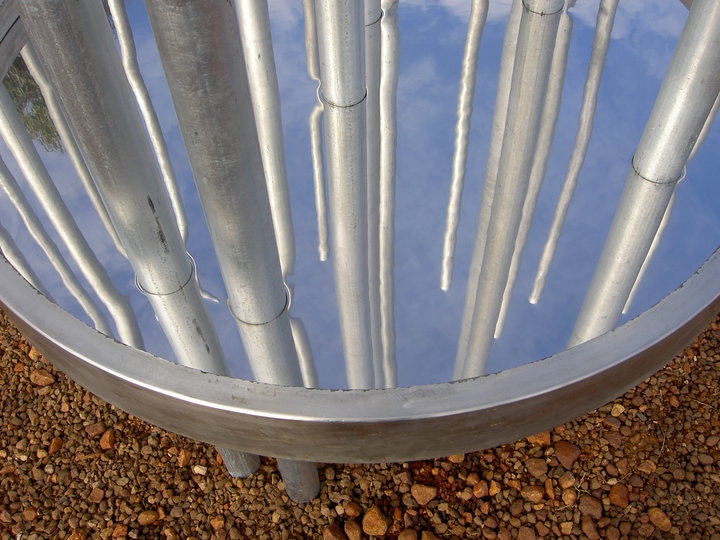
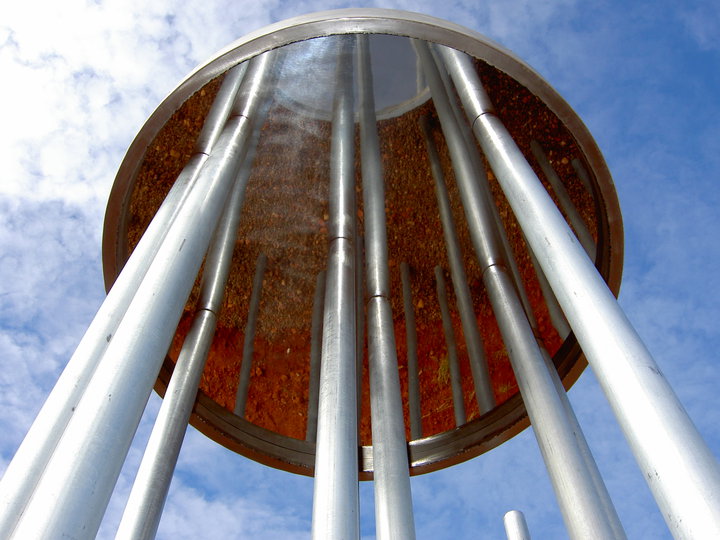
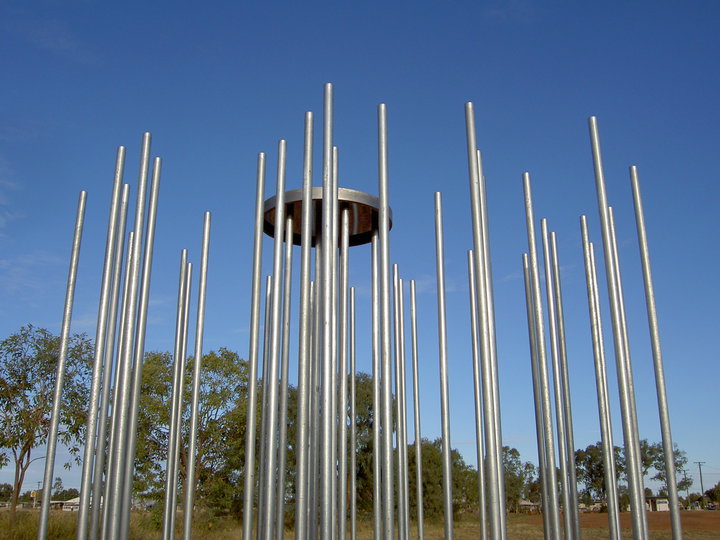
Australian sculptor Fredrick White, has been commissioned to create two public sculptures in Western Queensland. The first has been completed at Thargomindah (see Google map), a town located 1014 km west of Brisbane and was commissioned by artplusplace and Thargomindah Regional Council. In a small town of 250 people this is the town’s first public sculpture.
“The town’s one claim to fame is its artesian bore. The bore, which lies 2 km out of town on the Noccundra road, was drilled in 1891 and by 1893, having drilled to a depth of 795 metres, the water came to the surface. It was then that the town successfully attempted a unique experiment. The pressure of the bore water was used drive a generator which supplied the town’s electricity. Enthusiasts have described this as Australia’s first hydro-electricity scheme. The system operated until 1951. Today the bore still provides the town’s water supply. The water reaches the surface at 84°C.”1
The work Drawing Water (2010) addresses the need for water in such an arid location and the numerous bores that are sunk around the town to draw water to the surface. The earth is reflected in the sky and the sky in the earth in the central polished stainless steel disks (as friend Perry observes, like a tunnel connecting earth and heaven). A forest of bore pipes surround the central platform. Of the work Fred says:
“Drawing Water speaks of our connection to the Earth, specifically the Great Artesian Basin and the bores that provide the only continuous source of water throughout much of inland Australia. The 52 galvanised poles symbolise not only our year round need for water but are also as a reminder of how extensively taped the artesian water is.”
The next commission is at Blackall in Western Queensland (see Google map). A drawing of the work Lifespan (2010), which is 8 metres long, is at the bottom of the posting. Blackall already contains public sculptures by William Eicholtz (Towners Call – Edgar Towner V.C. Memorial (2009)) and Robert Bridgewater (Wool, Water and Wood (2008)).
Marcus Bunyan (Australian, b. 1958) Missing in Action (dark kenosis) No.16 2010 Digital photograph
Missing in Action (dark kenosis)
Several people have asked me for some text to help describe the themes that my work investigates.
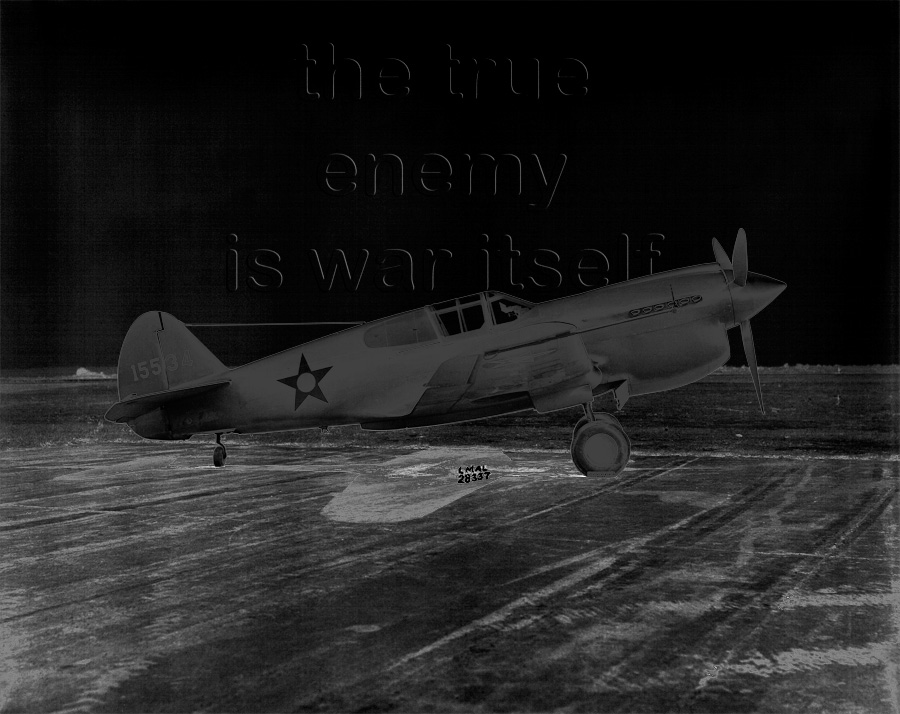
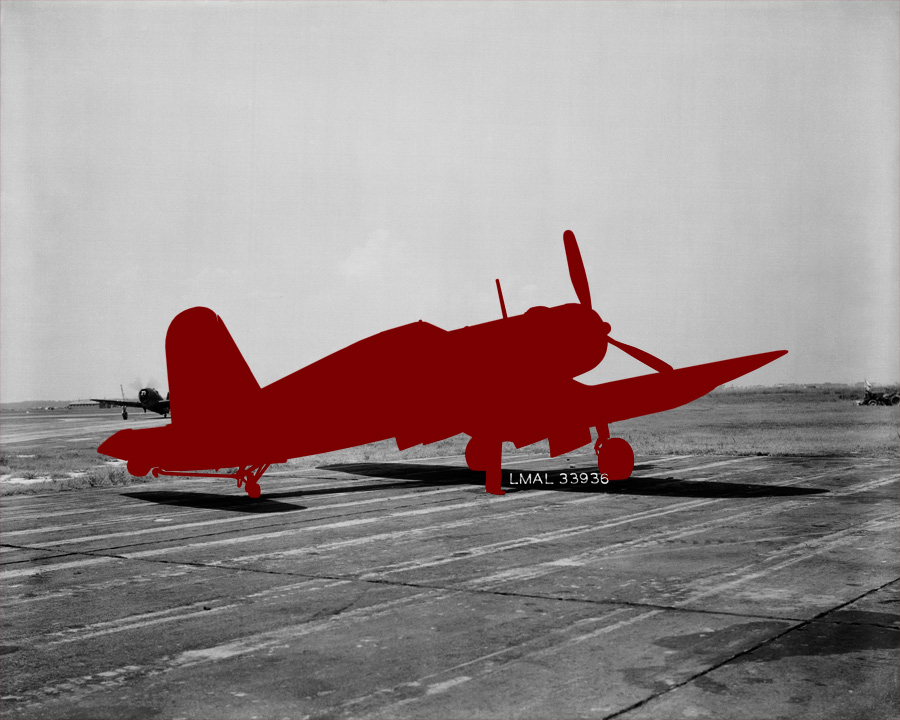
My work has always investigated the spaces and environments that people inhabit. Over the last few years the work has come to focus on fighter aircraft and the people (usually men) who fly them – the reason to fly such war machines, to fight for freedom, democracy, to bomb, to kill – the moral and ethical choices that human beings make, to undertake one action over another.
I have returned to childhood influences: I remember as a kid making toy models by Airfix and Tamiya of tanks and fighter planes and flying the planes from my bedroom ceiling. The work is strongly anti-war. Most of the work features shifts in texture, of light and dark and the occasional use of text to illuminate personal feelings. Text that is hidden among this particular body of work includes:
~ “The true enemy is war itself” from the anti-war movie Crimson Tide (1995) ~ “The destiny of man is in his own soul” Herodotus (484-420BC) ~ “We are all of us children of earth” Franklin D. Roosevelt: Flag Day Address June 13, 1942
Conceptually the work is based upon an investigation into Foucault’s ‘technologies of the self’ and the paradoxes of such (self) determination:
“Technologies of the self (also called care of the self or practices of the self) are what Michel Foucault calls the methods and techniques (“tools”) through which human beings constitute themselves. Foucault argued that we as subjects are perpetually engaged in processes whereby we define and produce our own ethical self-understanding. According to Foucault, technologies of the self are the forms of knowledge and strategies that “permit individuals to effect by their own means or with the help of others a certain number of operations on their own bodies and souls, thoughts, conduct, and way of being, so as to transform themselves in order to attain a certain state of happiness, purity, wisdom, perfection, or immortality.””1
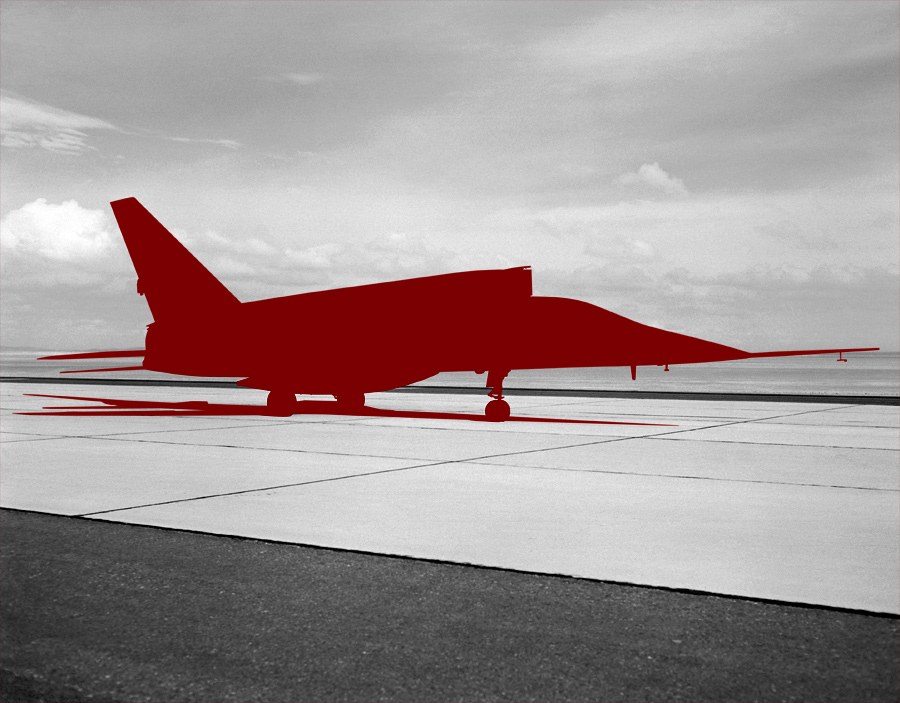
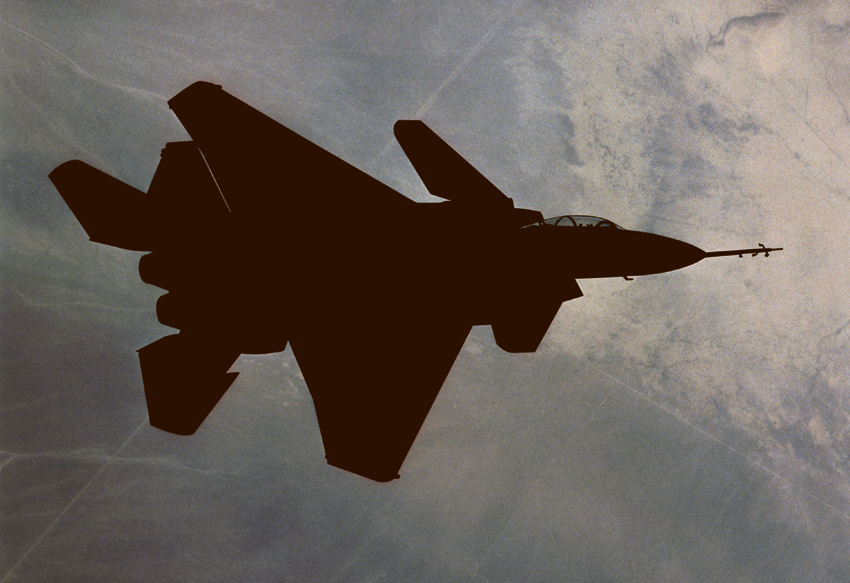
The next series are the same planes with a red colour (red kenosis) and after that I have some silhouette aircraft recognition cards – just the black shapes of the jet fighters – with colours behind, should be a good series!
Dr Marcus Bunyan
1/ Foucault, M. (1988) “Technologies of the self,” in L. H. Martin, H. Gutman and P. H. Hutton (eds.,). Technologies of the self. Amherst: University of Massachusetts Press, page 18 quoted on Wikipedia.“Technologies of the Self.” [Online] Cited 23/06/2010.
Photographs are available from this series for purchase. As a guide, a digital colour 16″ x 20″ costs $1000 plus tracked and insured shipping. For more information please see my Store web page.
Marcus Bunyan (Australian born England, b. 1958) Missing in Action (horizontal kenosis) No.4 2010 Digital photograph
Missing in Action (horizontal kenosis)
A body of work, Missing in Action (horizontal kenosis) (2010) is now online on my website.
There are nineteen images in the series which can be viewed as a sequence, rising and falling like a piece of music.
Below are a selection of images from the series.
Marcus
Photographs are available from this series for purchase. As a guide, a digital colour 16″ x 20″ costs $1000 plus tracked and insured shipping. For more information please see my Store web page.
Kenosis
“In Christian theology, Kenosis is the concept of the ‘self-emptying’ of one’s own will and becoming entirely receptive to God and his perfect will.”
Marcus Bunyan (Australian born England, b. 1958) Missing in Action (horizontal kenosis) No.5 2010 Digital photograph
Marcus Bunyan (Australian born England, b. 1958) Missing in Action (horizontal kenosis) No.6 2010 Digital photograph
Marcus Bunyan (Australian born England, b. 1958) Missing in Action (horizontal kenosis) No.8 2010 Digital photograph
Marcus Bunyan (Australian born England, b. 1958) Missing in Action (horizontal kenosis) No.9 2010 Digital photograph
Marcus Bunyan (Australian born England, b. 1958) Missing in Action (horizontal kenosis) No.16 2010 Digital photograph
Marcus Bunyan (Australian born England, b. 1958) Missing in Action (horizontal kenosis) No.17 2010 Digital photograph
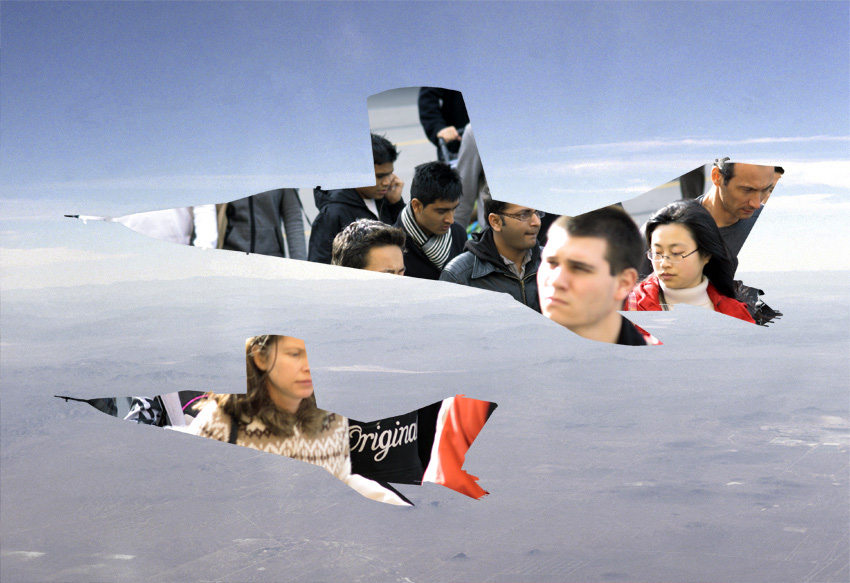
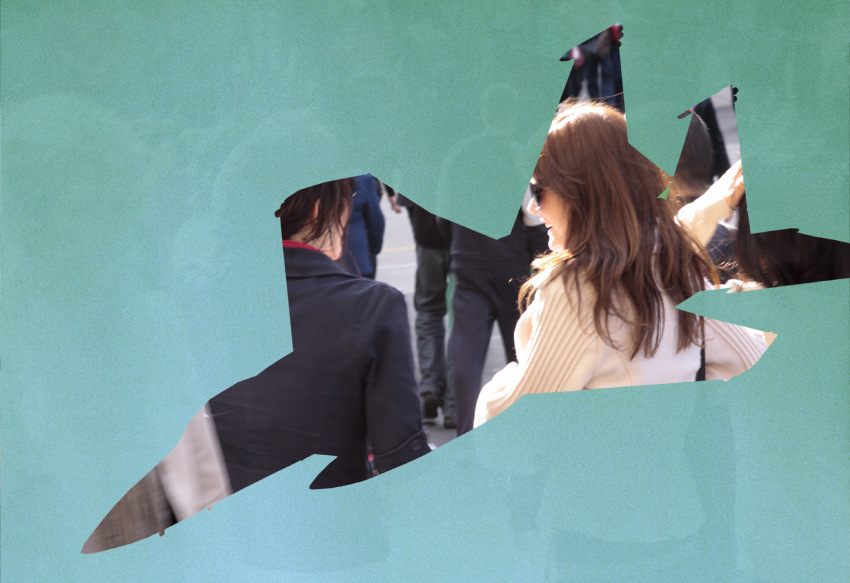
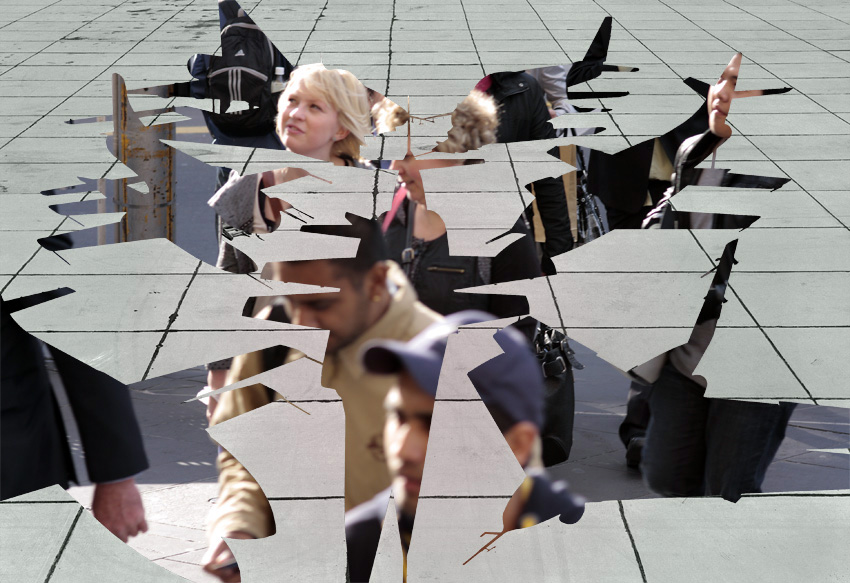
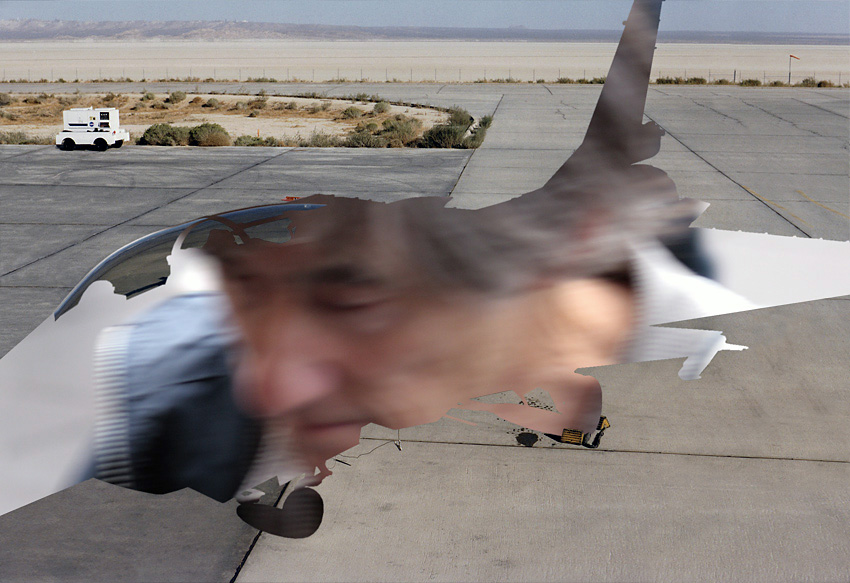
Marcus Bunyan (Australian, b. 1958) Untitled from the series There But For The Grace of You Go I 2009 Digital colour photograph
There But For The Grace of You Go I
A body of work, There But For The Grace of You Go I (2009) is now online on my website.
There are twenty images in the series which can be viewed as a sequence, rising and falling like a piece of music. Below are a selection of images from the series. The work continues an exploration into the choices human beings make. The silhouettes and landscapes of planes are taken from found copyright free images; the people from my photographs captured as they crossed the intersection outside Flinders Street Station, Melbourne. Other images are paintings from the Renaissance and POW’s during World War II.
I have always been creative from a very early age, starting as a child prodigy playing the piano at the age of five and going on to get my degree as a concert pianist at the Royal College of Music in London. I have always felt the music and being creative has helped me cope with life, living with bipolar.
These days as I reach my early 50’s ego is much less a concern – about being successful, about having exhibitions. I just make the work because I love making it and the process gives me happiness – in the thinking, in the making. I can loose myself in my work.
When Andrew Denton asked Clive James what brings him joy, James replies “The arts,“ and then qualified his answer. “What I mean is creativity. When I get lost in something that’s been made, it doesn’t matter who it is by. It could be Marvin Gaye singing ‘I Heard it Through the Grapevine’ or it could be the adagio of the Ninth Symphony …”
What a wise man.
Dr Marcus Bunyan
Please click on the photographs for a larger version of the image.
Photographs are available from this series for purchase. As a guide, a digital colour 16″ x 20″ costs $1000 plus tracked and insured shipping. For more information please see my Store web page.
Marcus Bunyan (Australian, b. 1958) Untitled from the series There But For The Grace of You Go I 2009 Digital colour photograph
Marcus Bunyan (Australian, b. 1958) Untitled from the series There But For The Grace of You Go I 2009 Digital colour photograph
Marcus Bunyan (Australian, b. 1958) Untitled from the series There But For The Grace of You Go I 2009 Digital colour photograph
Marcus Bunyan (Australian, b. 1958) Untitled from the series There But For The Grace of You Go I 2009 Digital colour photograph
Marcus Bunyan (Australian, b. 1958) Untitled from the series There But For The Grace of You Go I 2009 Digital colour photograph
Marcus Bunyan (Australian, b. 1958) Untitled from the series There But For The Grace of You Go I 2009 Digital colour photograph
Marcus Bunyan (Australian, b. 1958) Untitled from the series There But For The Grace of You Go I 2009 Digital colour photograph
Marcus Bunyan (Australian, b. 1958) Untitled from the series There But For The Grace of You Go I 2009 Digital colour photograph
Exhibition dates: 12th November – 6th December 2009
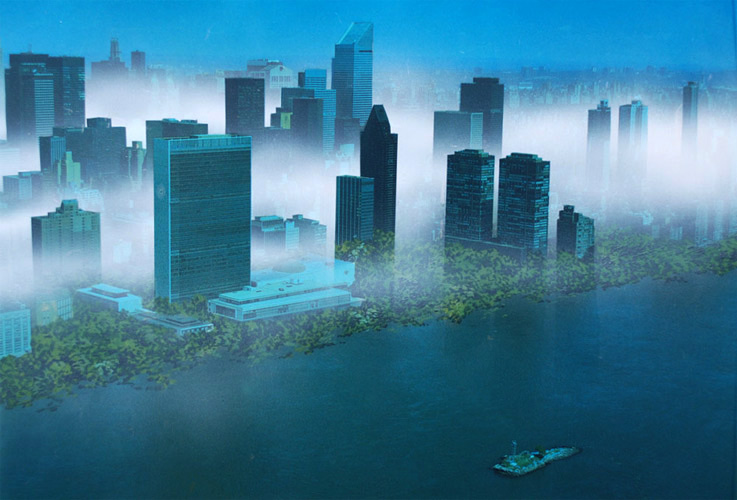
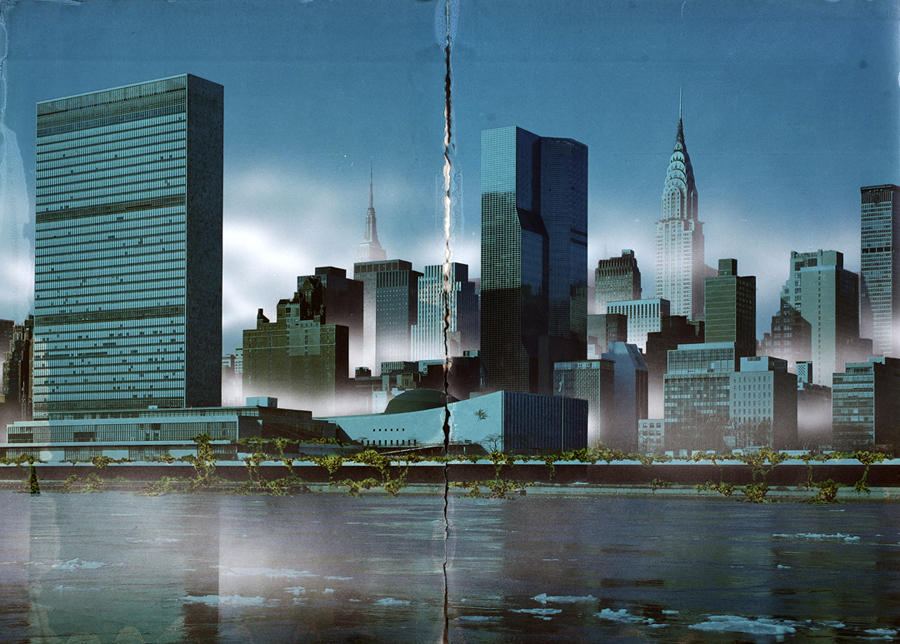
Alex Lukas (American, b. 1981) Untitled 2009 Acrylic and silk screen on two book pages
These are terrific – I want one!
A big thank you to Alex for allowing me to reproduce the images.
Dr Marcus Bunyan
Please click on the photographs for a larger version of the image.
Alex Lukas (American, b. 1981) Untitled 2009 Acrylic and silk screen on two book pages
Glowlab is pleased to present The Eventuality of Daybreak, a solo exhibition by Alex Lukas featuring a new series of post-apocalyptic urban landscapes that blur the visual boundaries of fiction and reality.
Lukas’ work explores the existence of disaster, be it realised or fictitious, in contemporary society. Hyper-realistic motion pictures and unforgiving news footage depict seemingly identical – and equally riveting – facades of tragedy. The artist recognises that relentless visual bombardment has resulted in society’s desensitisation to the aesthetics of destruction.
For The Eventuality of Daybreak, Lukas has selected photographic spreads of well-known metropolises from vintage publications and uses them dually as canvas and unlikely subject. Through a deft handling of paint and carefully placed screen-printed passages, the artist pushes these ageing illustrations in futuristic contexts. Submerging these cities conceptually and physically, Lukas inundates images of American cities with layers of media representing cataclysmic floods and crippling overgrowth.
Also included in the exhibition are works on paper depicting near-future scenes of devastated landscapes – crumbling infrastructure, overturned trucks and telling signs of human despair. As a counterpoint to the underwater cities, these darkly atmospheric and barren vistas signal devastation through an unsettling sense of absence.
Lukas’ intentional use of dated imagery presented in tandem with contemporary situations forces the viewer to reconcile two differing ideologies of urban space. The artist’s work calls into question society’s collective acceptance of the urban environment as an arena of destruction, once thought unthinkable and now seemingly inevitable.
The Eventuality of Daybreak is Lukas’ first solo exhibition with Glowlab. Lukas’ work has also been exhibited in New York, Boston, Philadelphia, Los Angeles, San Francisco, London, Stockholm and Copenhagen as well as in the pages of Swindle Quarterly, Proximity Magazine, The San Francisco Chronicle, The Village Voice, The Drama and The New York Times Book Review. Lukas is a graduate of the Rhode Island School of Design and currently lives and works in Philadelphia, where he is a member of the artist collective Space 1026.
Press release on the Glowlab website [Online] Cited 20/11/2009 no longer available online
Alex Lukas (American, b. 1981) Untitled 2009 Acrylic and silk screen on two book pages
Alex Lukas (American, b. 1981) Untitled 2009 Acrylic and silk screen on two book pages
Alex Lukas (American, b. 1981) Untitled 2009 Acrylic and silk screen on two book pages
Alex Lukas (American, b. 1981) Untitled 2009 Acrylic and silk screen on two book pages



















 Art Blart _ art and cultural memory archive
You must be logged in to post a comment.