Opening: ‘Traverse’ by Kim Percy at Stockroom, Kyneton

Exhibition dates: 10th March – 8th April 2012
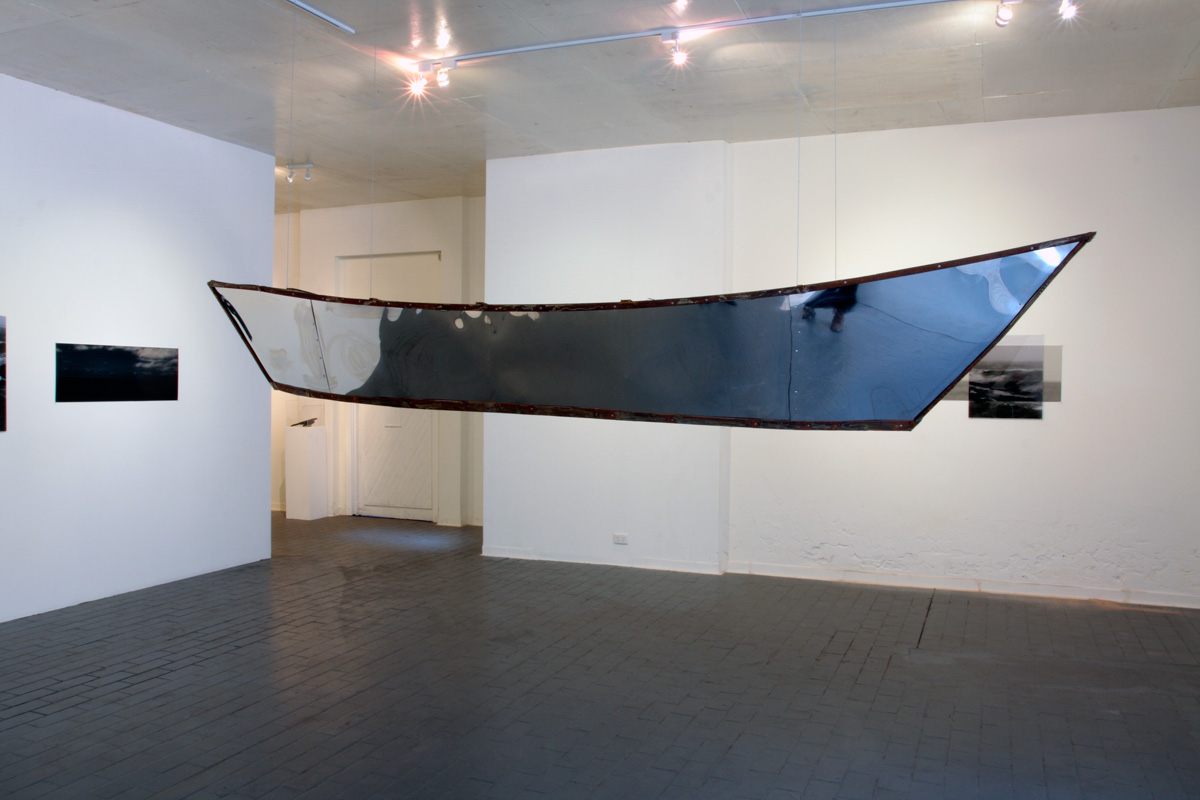
 

Installation of 'Traverse' by Kim Percy at Stockroom, Kyneton


Installation of Traverse by Kim Percy at Stockroom, Kyneton
Installation photograph by Marcus Bunyan
© Kim Percy and Marcus Bunyan


Many thanx to Jason, Magali and Kent for inviting me to the gallery, and Kim for asking me to open the exhibition – it was fun!

I have known Kim since the early 1990s when we both did our Bachelor of Arts in photography at RMIT University so it was wonderful to have opened her show yesterday. Reprinted below is the speech I gave at the opening with its musings on the (in)visibility of asylum seekers arriving by boat in Australia. I hope you enjoy reading the text. Marcus.


Opening speech by Dr Marcus Bunyan, 10th March 2012

Out of Sight, Out of Mind __________________

“What I am about to say, my musings if you like, are inspired by Kim’s wonderful installation. The work before you is the basis of my inquiry. The issues involved are difficult and not to be dealt with lightly but I hope you will follow my drift, my traverse if you like.

I would like to take you on a journey – physical, metaphorical and maybe even philosophical. I want to ask questions of the world, questions about the journey we all take as human beings. These questions are prompted by my personal response to two elements of Kim’s work – water and the journey, specifically the image of asylum seekers arriving here in Australia. Imagine being an asylum seeker making that journey.

Imagine living in an (in)between space, living in a refugee camp over there. Marc Augé coined the phrase “non-place” to refer to places of transience that do not hold enough significance to be regarded as “places.”1 These camps are such places. Put yourself in that predicament, seeking a better life, seeking to escape persecution, war (of which we as a nation are often part), prejudice and death, deliberately placing yourself and your family in a fragile boat, like a seed pod floating upon the waters, taking the dangerous journey to reach Australia. Imagine the emotional and intellectual turmoil that must surround such a decision, the decision to place your life in the hands of the ocean. Important decisions affecting the entire course of one’s life are rarely made without some form of mental distress.

Nurtured in water, some baptised in it, water is the life-blood of the world and the asylum seeker must trust to its benevolence. Marc Augé “argues that we are in transit through non-place for more and more of our time, as if between immense parentheses.”2 This is the journey that the asylum seeker takes over water, a journey through an interstitial space that has no beginning and no end caught between a set of parentheses [insert life here / or not].

Now let us move our line of sight. What about a visual parentheses?


Asylum seekers are almost invisible from Australia living over there. They are over the horizon, out of sight and out of mind. When they journey across the sea – an open ended journey passing through a liminal space, a forgotten space – they suddenly appear as if by magic washed up on the shore, unseen despite surveillance planes, ships and other forms of tracking and reconnaissance. Think, for example, of the sudden and surprising arrival of the boat SIEV-221 when it was washed onto the rocks of Christmas Island in December 2010. The invisible made visible caught in a non-place.

This (in)visibility can be evidenced in other ways. The specks of humanity waving from the deck of the Tampa, the asylum seekers being escorted from arriving boats, seen for a few brief seconds on the evening news and then disappearing from view, almost like being sucked into the depths of the sea. Here and not here; here and there. Halfway between nothingness and being: they walk between one state and another, forward and backward, backward and forward.


Displacement
Diaspora
Disruption


The spectacle of the asylum seekers is despectacularised by and for the viewer. We remove ourselves from the emotion of these people, the presence of these images. They become ordinary as if seen from far away – glimpsed every so often as though viewing the world of another. They become Other.

The movement of the ship, the movement of the sky, the movement of vision is a constant decentering through a push / pull with something else – some other order of the world. Their journey into the unknown is a journey to submit to the ordering of another: the socially constructed system of classification: “refugee,” “asylum seeker.” The axis of visibility3 that operates in relation to subject, object, and space is not interrogated as to the representations that are constructed. This is what I am interested in here. These vital, alive human beings come from one taxonomic system (of ordered death, persecution, injustice), become visible from a brief instance, and are then fed into another taxonomic system of order – that of the detention centre.

Taking the metaphor of the horizon line further, I would argue that detention centres are like an inverted Panopticon. The Panopticon “is a type of institutional building, a prison, designed by English philosopher and social theorist Jeremy Bentham in the late eighteenth century. The concept of the design is to allow an observer to observe all inmates of an institution without them being able to tell whether or not they are being watched.”4 The guard sits in a central tower and can observe and inspect all prisoners on the outer 360 degree circle, while the prisoners cannot see the guard and can only presume he is there (an omnipresent God) and hence they behave.

Let us invert this concept.

Now the asylum seekers sit in the tower looking outwards, seeing the promised land but unable to touch it and the guards (prison officers, government, the Australian people) are all around but most are blind. They look inwards but cannot see / they look outwards and most go about their daily business. The perimeter fence of the detention centre becomes the horizon line of the sea. As in Kim’s red lined horizons, over the horizon is out of sight, out of mind _________________


What Kim’s eloquent, minimal, brooding installation does is hold our attention and ask certain questions of us as human beings. If photography is a mode of visually addressing a certain order in the world – be it horror, war, peace, human tragedy, public, private – and then destabilising it, then Kim destabilises the binary sea / sky through fragmentation and isolation. She redlines our experience and asks us to inhabit the non-space, the non-place of the gallery, allowing us to hover between boat and image, between sea and sky, between seeing and feeling. Through her work she asks us to become more aware. She asks us to see things more clearly. Above all she asks us to have faith in the compassion of human beings.

The asylum seekers have faith: faith to get into a fragile boat to venture upon the sea in search of a better life. If we had more faith in ourselves then we would have less need to rely on the images of the past, a white colonial past.

I will finish with a quote from Jeff Brown.

“Sometimes we have to surrender to the not knowing. At other times, it is helpful to adventure outward and explore new possibilities. Like swashbucklers of the spirit, we bravely seek out any experience that might inform our path. When we are afraid of something, we live it fully and see what floats to the surface in the doing. We participate in our own revealing. We have faith in the shaping of what we cannot see.”5


The seekers surrender to the not knowing and have faith in the shaping of what they cannot see. These risk takers are the strong ones that are going to make a difference in a new society by the very fact of their strength and determination to survive and live in a free society, for the very fact of the risks undertaken. This exhibition informs their path as it informs our path. Be aware of the doing, be bold and forthright in the being. Enjoy.

Thank you

Dr Marcus Bunyan


Footnotes

1/ Augé, Marc (trans. John Howe). Non-Places: Introduction to an Anthropology of Supermodernity. London: Verso, 1995

2/ Ibid.,

3/ Hooper-Grenhill, Eilean. Museums and the Shaping of Knowledge. London: Routledge, 2000, p. 7

4/ Anon. “Panopticon,” on Wikipedia [Online] Cited 09/03/2012

5/ Brown, Jeff. Soulshaping. Berkeley, CA: North Atlantic Books, 2009, np quoted on Stroud, Jeff. The reluctant blogger website. [Online] Cited 09/03/2012


Installation of 'Traverse' by Kim Percy at Stockroom, Kyneton

Installation of 'Traverse' by Kim Percy at Stockroom, Kyneton


Installation of Traverse by Kim Percy at Stockroom, Kyneton
Installation photographs by Marcus Bunyan © Kim Percy and Marcus Bunyan
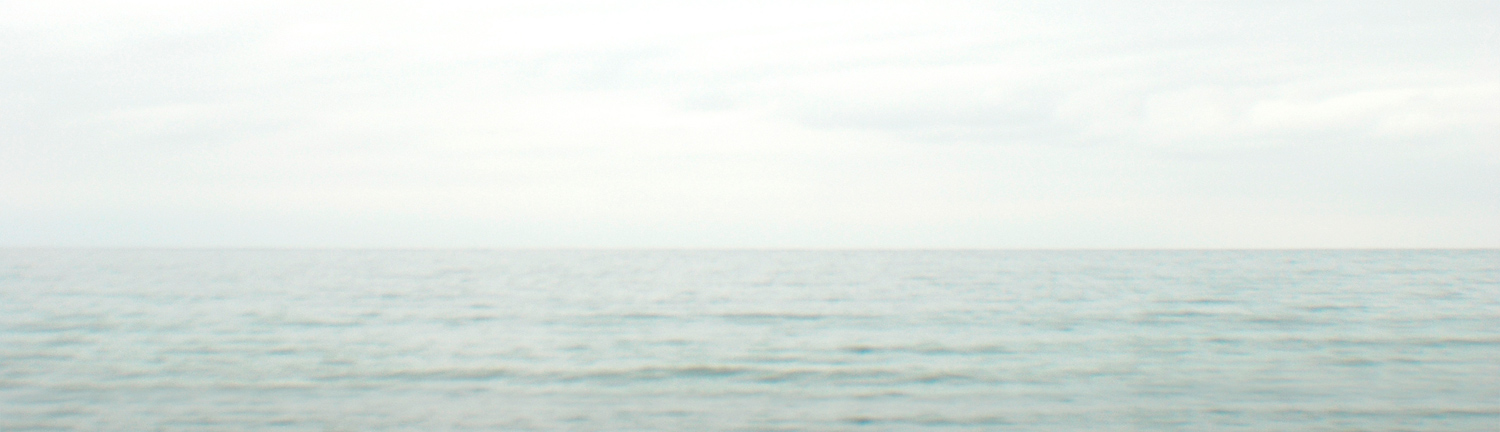
 

Kim Percy (Australian) 'Pale Sea' 2012


Kim Percy (Australian)
Pale Sea
2012
Digital photograph
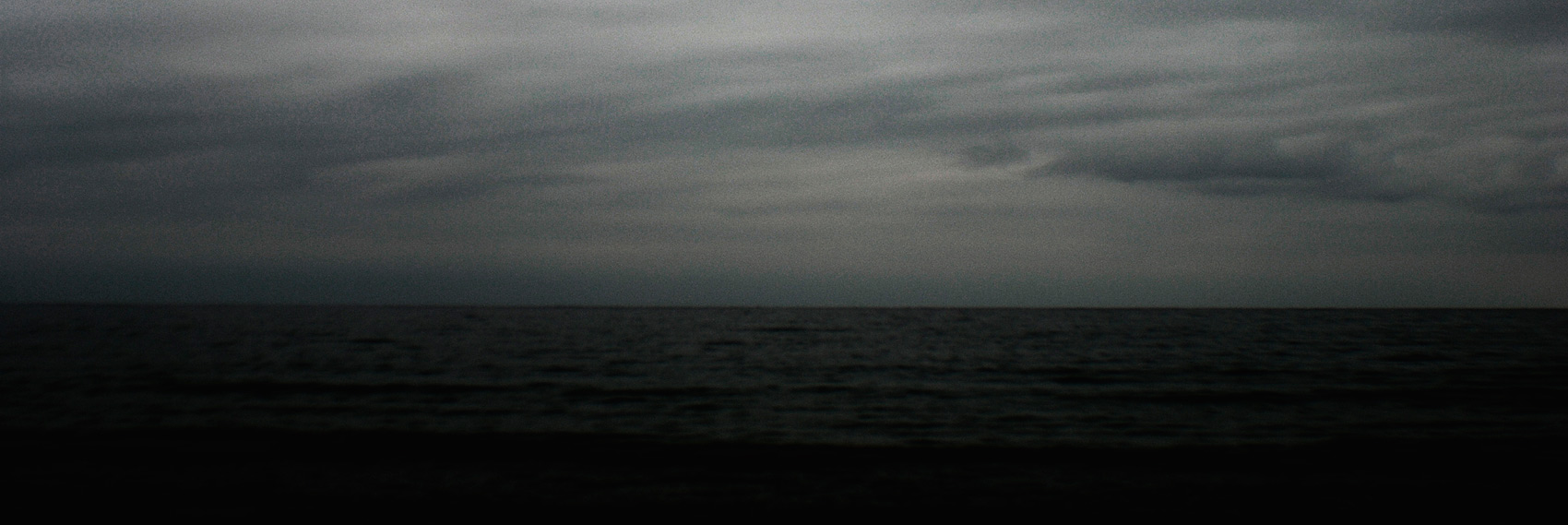
 

Kim Percy (Australian) 'Where' 2012


Kim Percy (Australian)
Where
2012
Digital photograph


Kim Percy (Australian) 'Rough Water' 2012


Kim Percy (Australian)
Rough Water
2012
Digital photograph
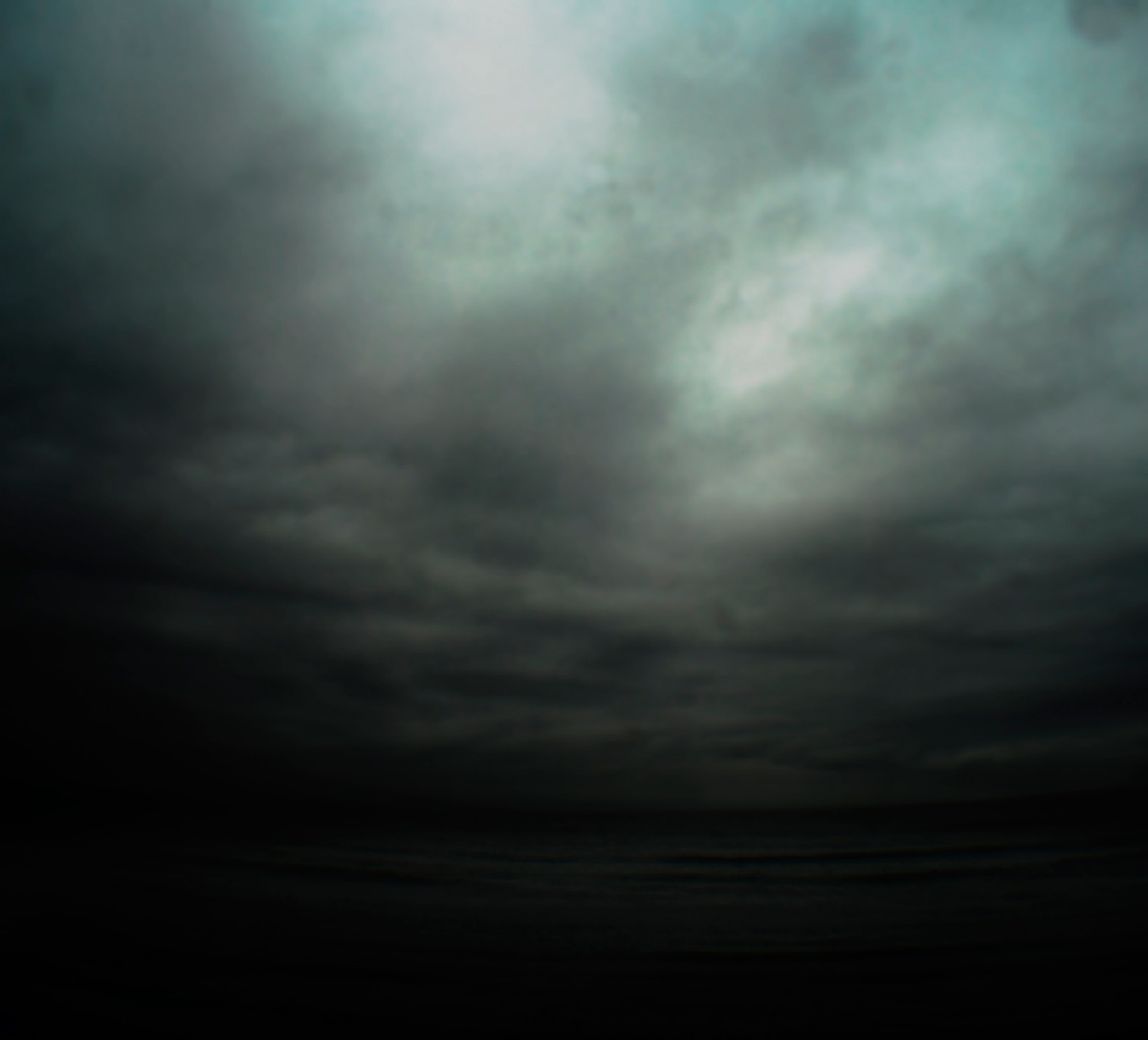
 

Kim Percy (Australian) 'Traverse' 2012


Kim Percy (Australian)
Traverse
2012
Digital photograph
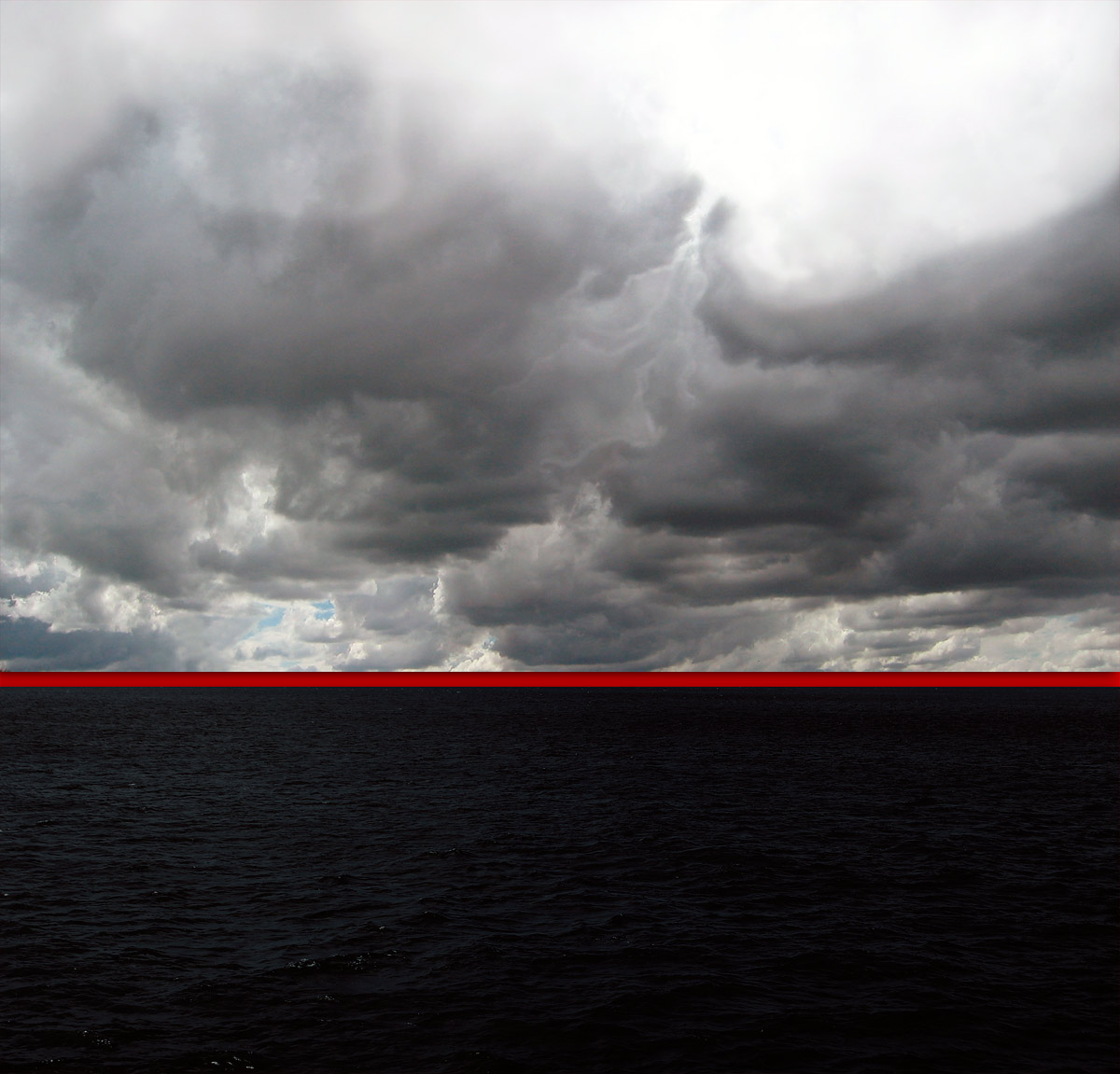
 

Kim Percy (Australian) 'Red Horizon No.1' 2012


Kim Percy (Australian)
Red Horizon No.1
2012
Digital photograph
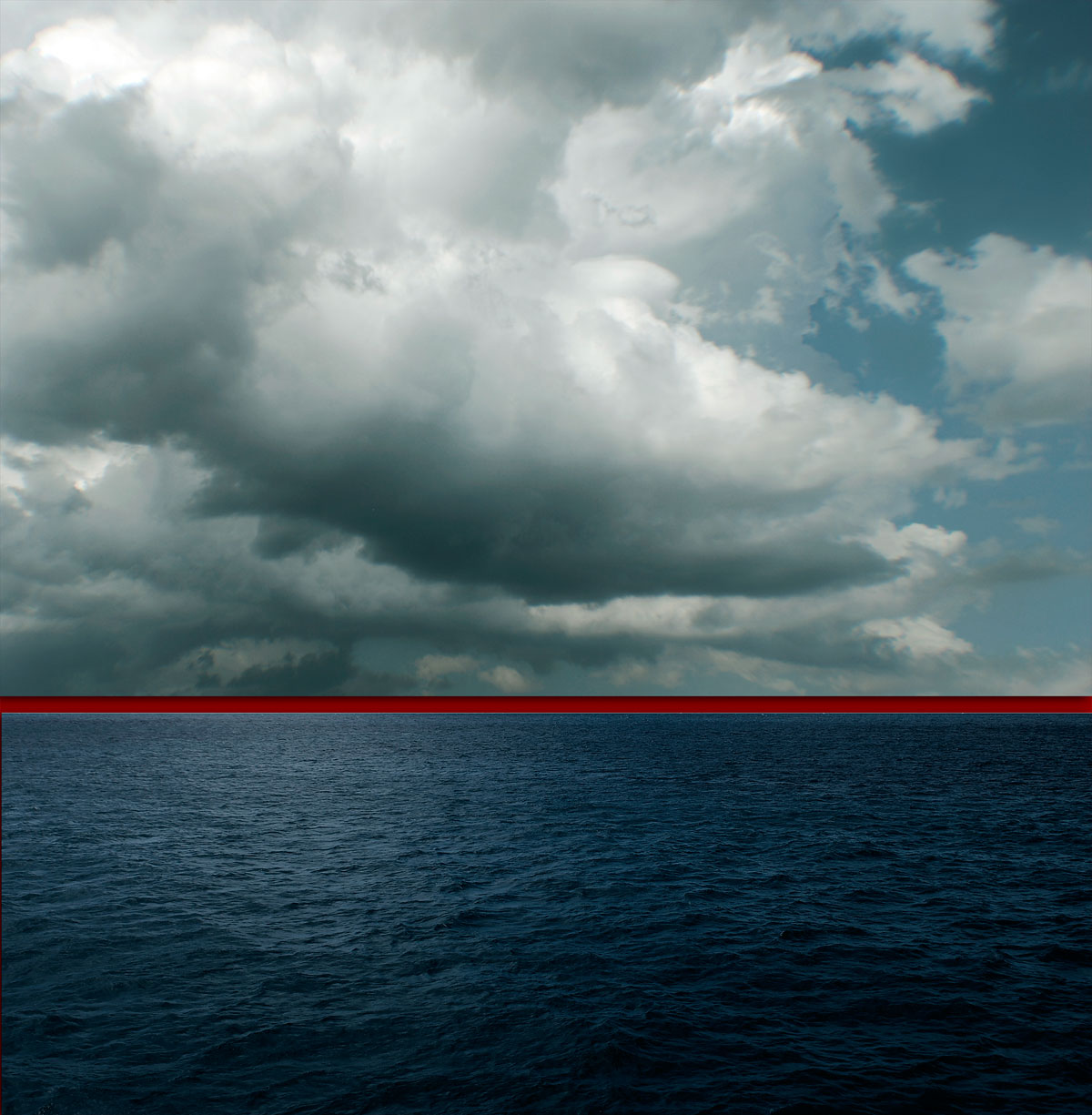
 

Kim Percy (Australian) 'Red Horizon No.2' 2012


Kim Percy (Australian)
Red Horizon No.2
2012
Digital photograph


Stockroom
98 Piper street, Kyneton
Phone: 03 5422 3215

Opening hours:
Thursday – Saturday 10am – 5pm
Sunday 11am – 3pm
Closed Monday and Tuesday
Wednesday by appointment

Stockroom website

LIKE ART BLART ON FACEBOOK

Back to top

melbourne’s magnificent nine 2011

December 2011


Here’s my pick of the nine best exhibitions in Melbourne (with excursions to Bendigo and Hobart thrown in) that appeared on the Art Blart art and cultural archive in 2011. Enjoy!

Dr Marcus Bunyan


1/ Sidney Nolan: Drought Photographs at Australian Galleries, Melbourne, March 2011

Sidney Nolan (Australian, 1917-1992) 'Untitled (calf carcass in tree)' 1952


Sidney Nolan (Australian, 1917-1992)
Untitled (calf carcass in tree)
1952
archival inkjet print
23.0 cm x 23.0cm


This was a superb exhibition of 61 black and white photographs by Sidney Nolan. The photographs were shot using a medium format camera and are printed in square format from the original 1952 negatives.

The work itself was a joy to behold. The photographs hung together like a symphony, rising and falling, with shape emphasising aspects of form. The images flowed from one to another. The formal composition of the mummified carcasses was exemplary, the resurrected animals (a horse, for example, propped up on a fifth leg) and emaciated corpses like contemporary sculpture. The handling of the tenuous aspects of human existence in this uniquely Australian landscape was also a joy to behold. Through an intimate understanding of how to tension the space between objects within the frame Nolan’s seemingly simple but complex photographs of the landscape are previsualised by the artist in the mind’s eye before he even puts the camera to his face.


2/ Bill Henson at Tolarno Galleries, Melbourne, March – April 2011

This was an exquisite exhibition by one of Australia’s preeminent artists. Like Glenn Gould playing a Bach fugue, Bill Henson is grand master in the performance of narrative, structure, composition, light and atmosphere. The exhibition featured thirteen large colour photographs printed on lustre paper (twelve horizontal and one vertical) – nine figurative of adolescent females, two of crowd scenes in front of Rembrandt paintings in The Hermitage, St. Petersburg (including the stunning photograph that features The return of the prodigal son c. 1662 in the background, see below) and two landscapes taken off the coast of Italy. What a journey this exhibition took you on!

Henson’s photographs have been said by many to be haunting but his images are more haunted than haunting. There is an indescribable element to them (be it the pain of personal suffering, the longing for release, the yearning for lost youth or an understanding of the deprecations of age), a mesmeric quality that is not easily forgotten. The photographs form a kind of afterimage that burns into your consciousness long after the exposure to the original image has ceased. Haunted or haunting they are unforgettable.


Bill Henson (Australian, b. 1955) 'Untitled' 2009/10


Bill Henson (Australian, b. 1955)
Untitled
2009/10
CL SH767 N17B
Archival inkjet pigment print
127 x 180cm
Edition of 5


3/ Networks (cells & silos) at Monash University Museum of Art (MUMA), Caulfield, February – April 2011
This was a vibrant and eclectic exhibition at MUMA, one of the best this year in Melbourne. The curator Geraldine Barlow gathered together some impressive, engaging works that were set off to good effect in the new gallery spaces. I spent a long and happy time wandering around the exhibition and came away visually satiated and intellectually stimulated. The exhibition explored “the connections between artistic representation of networks; patterns and structures found in nature; and the rapidly evolving field of network science, communications and human relations.”


Installation photograph of one of the galleries in the exhibition 'NETWORKS (cells & silos)' at the newly opened Monash University Museum of Art (MUMA)


Installation photograph of one of the galleries in the exhibition NETWORKS (cells & silos) at the newly opened Monash University Museum of Art (MUMA) with Nick Mangan’s Colony (2005) in the foreground


4/ Monika Tichacek, To all my relations at Karen Woodbury Gallery, Richmond, May 2011

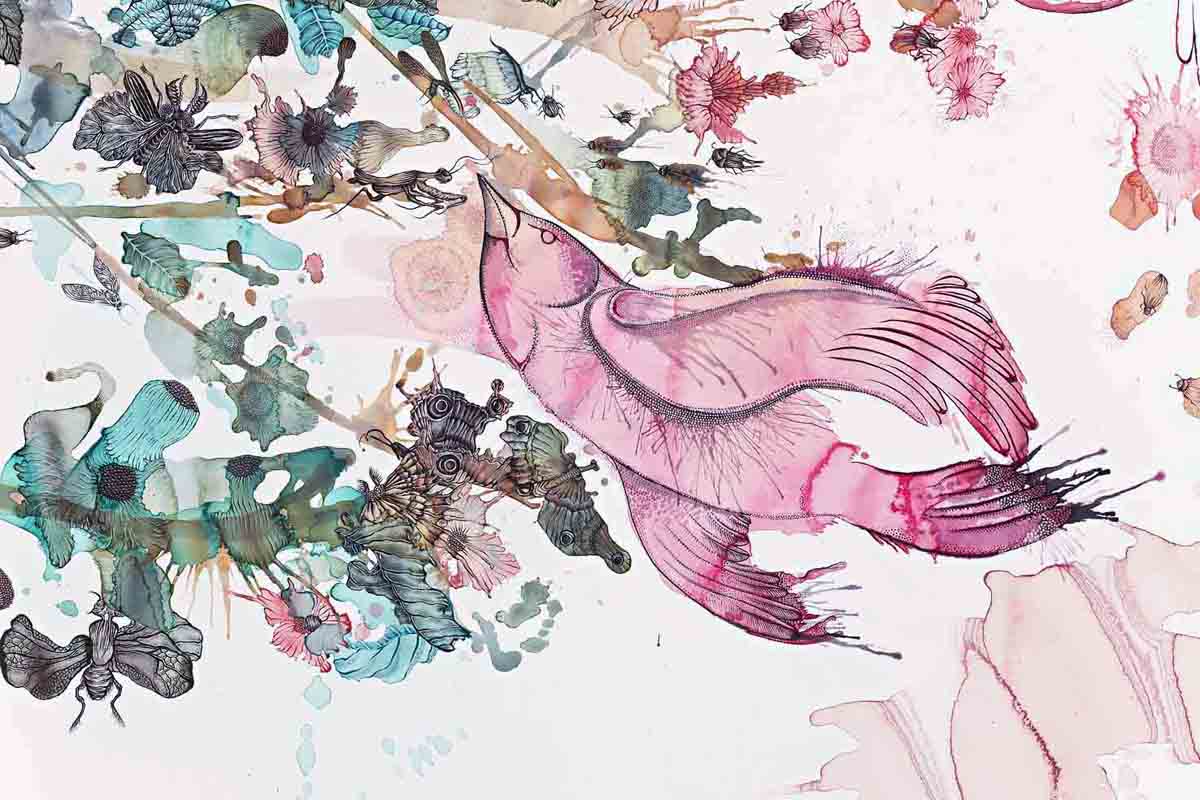
This was a stupendous exhibition by Monika Tichacek, at Karen Woodbury Gallery. One of the highlights of the year, this was a definite must see!

The work was glorious in it’s detail, a sensual and visual delight (make sure you click on the photographs to see the close up of the work!). The riotous, bacchanalian density of the work was balanced by a lyrical intimacy, the work exploring the life cycle and our relationship to the world in gouache, pencil & watercolour. Tichacek’s vibrant pink birds, small bugs, flowers and leaves have absolutely delicious colours. The layered and overlaid compositions show complete control by the artist: mottled, blotted, bark-like wings of butterflies meld into trees in a delicate metamorphosis; insects are blurred becoming one with the structure of flowers in a controlled effusion of life.


Monika Tichacek (Australian born Switzerland, b. 1975) 'To all my relations' 2011 (detail)


Monika Tichacek (Australian born Switzerland, b. 1975)
To all my relations (detail)
2011


5/ American Dreams: 20th century photography from George Eastman House at Bendigo Art Gallery, Victoria, April – July 2011

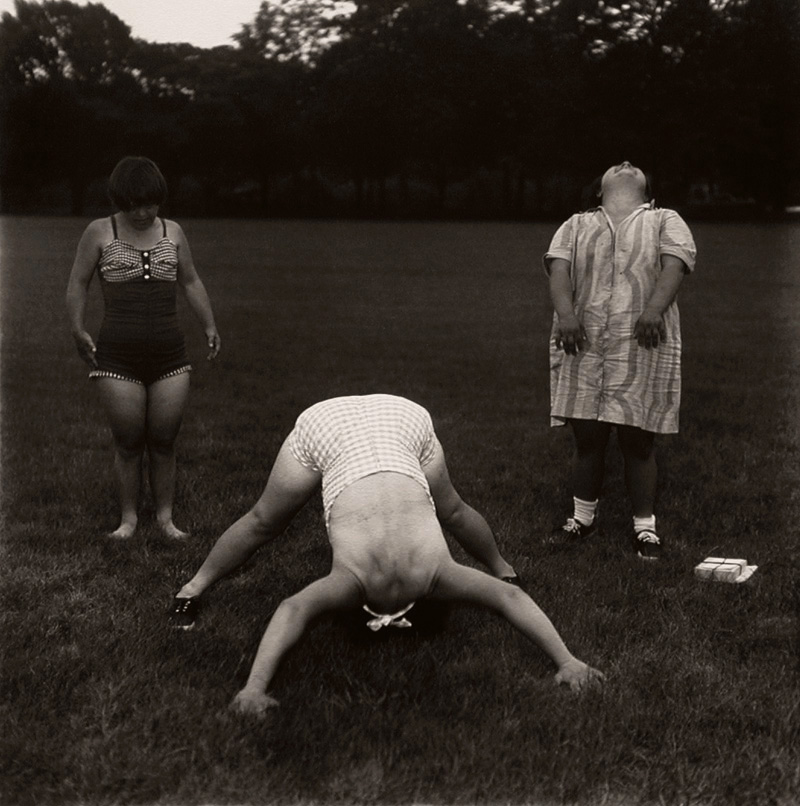
Diane Arbus (American, 1923-1971) 'Untitled (6)' 1971


Diane Arbus (American, 1923-1971)
Untitled (6)
1971
Gelatin silver print


This was a fabulous survey exhibition of the great artists of 20th century American photography, a rare chance in Australia to see such a large selection of vintage prints from some of the masters of photography. If you had a real interest in the history of photography then you hopefully saw this exhibition, showing as it is just a short hour and a half drive (or train ride) from Melbourne at Bendigo Art Gallery.


6/ Time Machine: Sue Ford at Monash Gallery of Art, Wheelers Hill, Victoria, April – June 2011

Sue Ford (Australian, 1943-2009) 'Self-portrait' 1976


Sue Ford (Australian, 1943-2009)
Self-portrait 1976
1976
From the series Self-portrait with camera (1960-2006)
Selenium toned gelatin silver print, printed 2011
24 x 18cm
courtesy Sue Ford Archive


This beautifully hung exhibition flowed like music, interweaving up and down, the photographs framed in thin, black wood frames. It featured examples of Ford’s black and white fashion and street photography; a selection of work from the famous black and white Time series (being bought for their collection by the Art Gallery of New South Wales); a selection of Photographs of Women – modern prints from the Sue Ford archive that are wonderfully composed photographs with deep blacks that portray strong, independent, vulnerable, joyous women (see last four photographs below); and the most interesting work in the exhibition, the posthumous new series Self-portrait with camera (1960-2006) that evidence, through a 47 part investigation using colour prints from Polaroids, silver gelatin prints printed by the artist, prints made from original negatives and prints from scanned images where there was no negative available, a self-portrait of the artist in the process of ageing.

Whether looking down, looking toward or looking inward these fantastic photographs show a strong, independent women with a vital mind, an élan vital, a critical self-organisation and an understanding of the morphogenesis of things that will engage us for years to come. Essential looking.


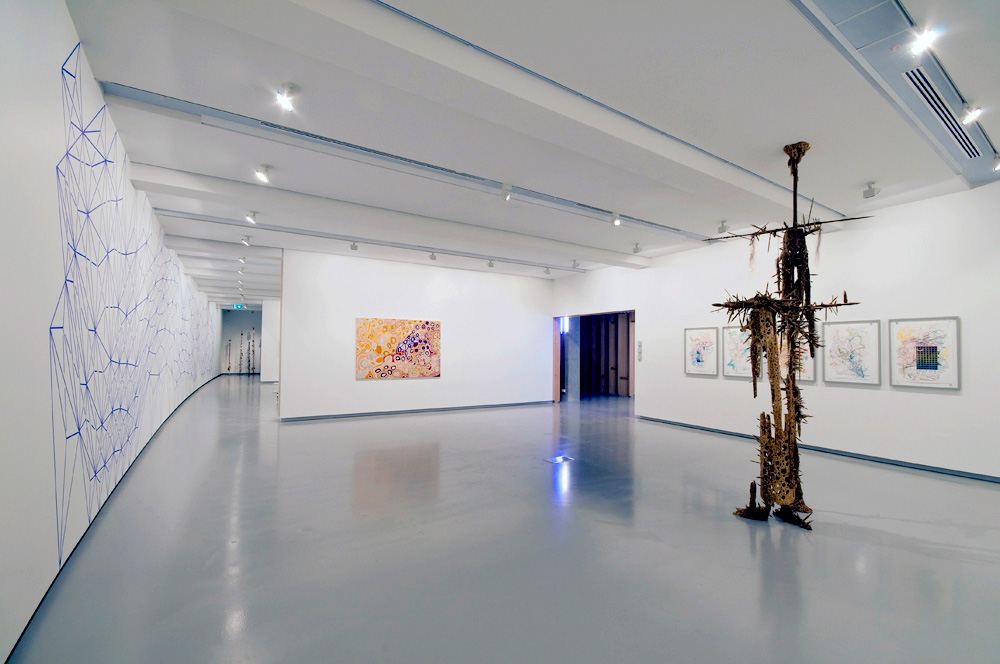
7/ The Museum of Old and New Art (MONA), Hobart, August 2011

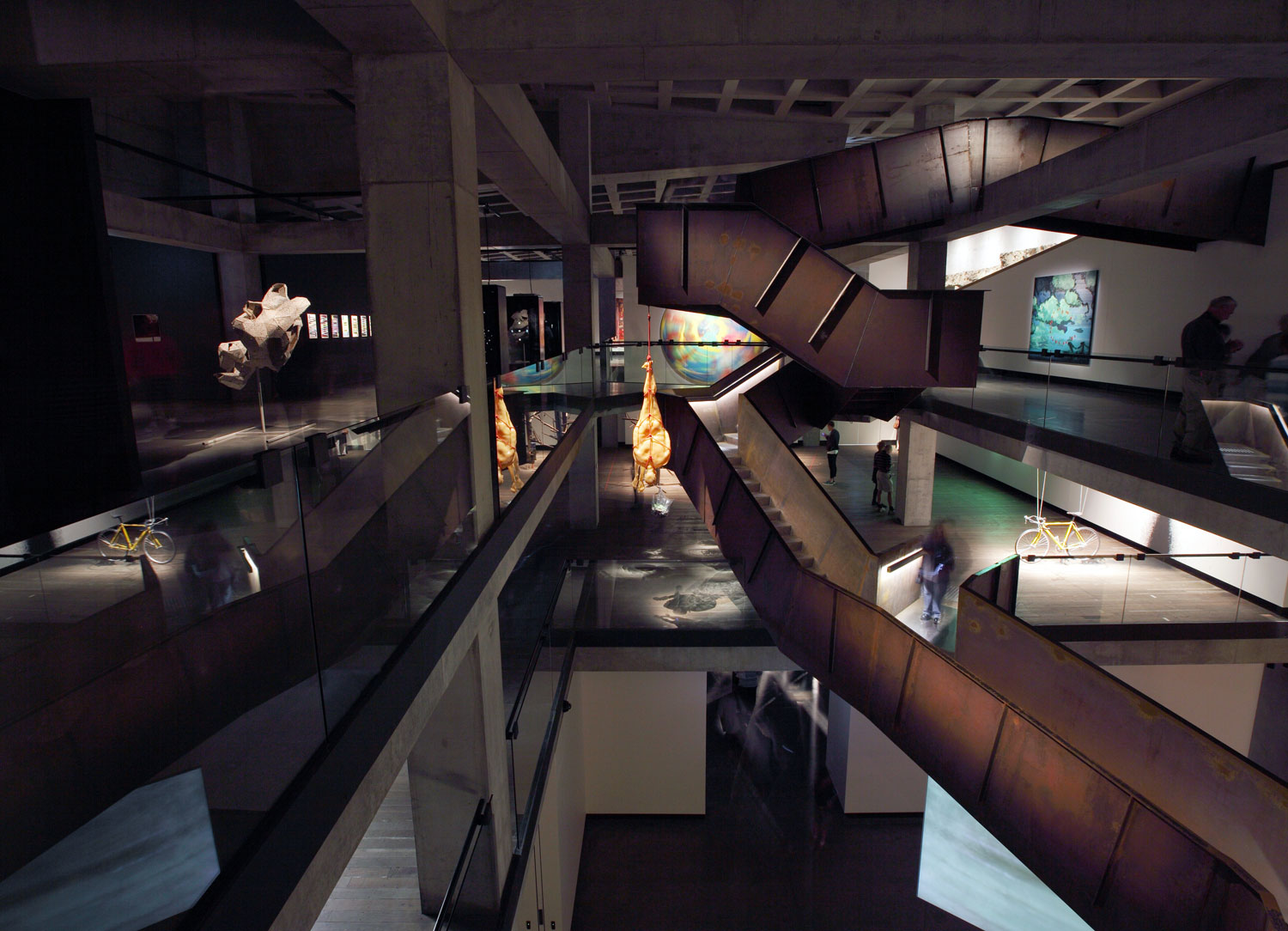
My analogy: you are standing in the half-dark, your chest open, squeezing the beating heart with blood coursing between your fingers while the other hand is up your backside playing with your prostrate gland. I think ringmeister David Walsh would approve. My best friends analogy: a cross between a car park, night club, sex sauna and art gallery.

Weeks later I am still thinking about the wonderful immersive, sensory experience that is MONA. Peter Timms in an insightful article in Meanjin calls it a post-Google Wunderkammer, or wonder chest. It can be seen as a mirabilia – a non-historic installation designed primarily to delight, surprise and in this case shock. The body, sex, death and mortality are hot topics in the cultural arena and Walsh’s collection covers all bases. The collection and its display are variously hedonistic, voyeuristic, narcissistic, fetishistic pieces of theatre subsumed within the body of the spectacular museum architecture …

Spectatorship and their attendant erotics has MONA as a form of fetishistic cinema. It is as if what Barthes calls “the eroticism of place” were a modern equivalent of the eighteenth century genius loci, the “genius of the place.” The place is spectacular, the private collection writ large as public institution, the symbolic power of the institution masked through its edifice. The art become autonomous, cut free from its cultural associations, transnational, globalised, experienced through kinaesthetic means; the viewer meandering through the galleries, the anti-museum, as an international flaneur. Go. Experience!


Corten Stairwell & Surrounding Artworks February 2011 Museum of Old and New Art – interior


Corten Stairwell & Surrounding Artworks
February 2011
Museum of Old and New Art – interior
Photo credit: MONA/Leigh Carmichael
Image Courtesy of MONA Museum of Old and New Art


8/ John Bodin: Rite of Passage at Anita Traverso Gallery, Richmond, August – September 2011

John Bodin (Australian) 'I Was Far Away From Home' 2009


John Bodin (Australian)
I Was Far Away From Home
2009
Type C print on metallic paper
80 x 110cm


The photographs become the surface of the body, stitched together with lines, markers pointing the way – they are encounters with the things that we see before us but also the things that we carry inside of us. It is the interchange between these two things, how one modulates and informs the other. It is this engagement that holds our attention: the dappled light, ambiguity, unevenness, the winding path that floats and bobs before our eyes looking back at us, as we observe and are observed by the body of these landscapes.

One of the fundamental qualities of the photographs is that they escape our attempts to rationalise them and make them part of our understanding of the world, to quantify our existence in terms of materiality. I have an intimate feeling with regard to these sites of engagement. They are both once familiar and unfamiliar to us; they possess a sense of nowhereness. A sense of groundlessness and groundedness. A collapsing of near and far, looking down, looking along, a collapsing of the constructed world.

Like the road in these photographs there is no self just an infinite time that has no beginning and no end. The time before my birth, the time after my death. We are just in the world, just being somewhere. Life is just a temporary structure on the road from order to disorder. “The road is life,” writes Jack Kerouac in On the Road.


9/ Juan Davila: The Moral Meaning of Wilderness at the Monash University Museum of Art (MUMA), Caulfield, August – October 2011

Simply put, this was one of the best exhibitions I saw in Melbourne this year.

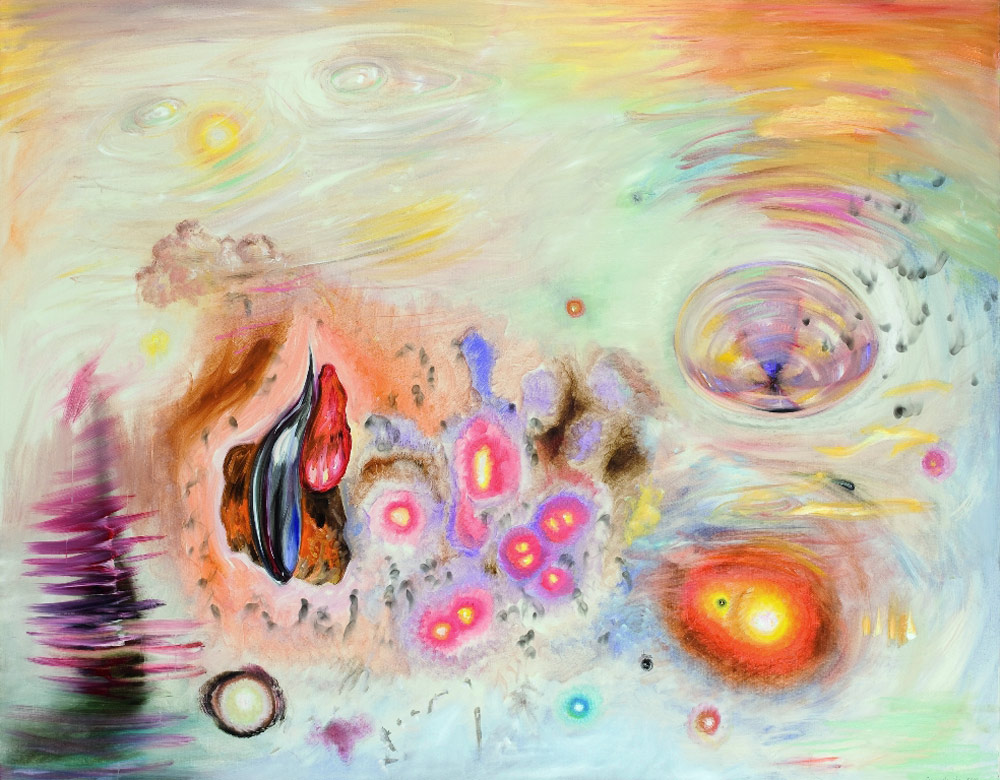
I had a spiritual experience with this work for the paintings promote in the human a state of grace. The non-material, the unconceptualisable, things which are outside all possibility of time and space are made visible. This happens very rarely but when it does you remember, eternally, the time and space of occurrence. I hope you had the same experience.


Juan Davila (Chilean, b. 1946, emigrated Australia 1974) 'Wilderness' 2010


Juan Davila (Chilean, b. 1946, emigrated Australia 1974)
Wilderness
2010
© Juan Davila, Courtesy Kalli Rolfe Contemporary Art


10/ In camera and in public at the Centre for Contemporary Photography, Melbourne, September – October 2011

Kohei Yoshiyuki (Japanese, b. 1946) 'Untitled' 1971


Kohei Yoshiyuki (Japanese, b. 1946)
Untitled
1971
From the series The Park
Gelatin Silver Print
© Kohei Yoshiyuki, Courtesy Yossi Milo Gallery, New York


Curated by Naomi Cass as part of the Melbourne Festival, this was a brilliant exhibition at the Centre for Contemporary Photography, Melbourne. The exhibition explored, “the fraught relationship between the camera and the subject: where the image is stolen, candid or where the unspoken contract between photographer and subject is broken in some way – sometimes to make art, sometimes to do something malevolent.” It examined the promiscuity of gazes in public / private space specifically looking at surveillance, voyeurism, desire, scopophilia, secret photography and self-reflexivity. It investigated the camera and its moral and physical relationship to the unsuspecting subject.


11/ The Mad Square: Modernity in German Art 1910 – 37 at The National Gallery of Victoria, Melbourne, November 2011 – March 2012

This is one of the best exhibitions this year in Melbourne bar none. Edgy and eclectic the work resonates with the viewer in these days of uncertainty: THIS should have been the Winter Masterpieces exhibition!

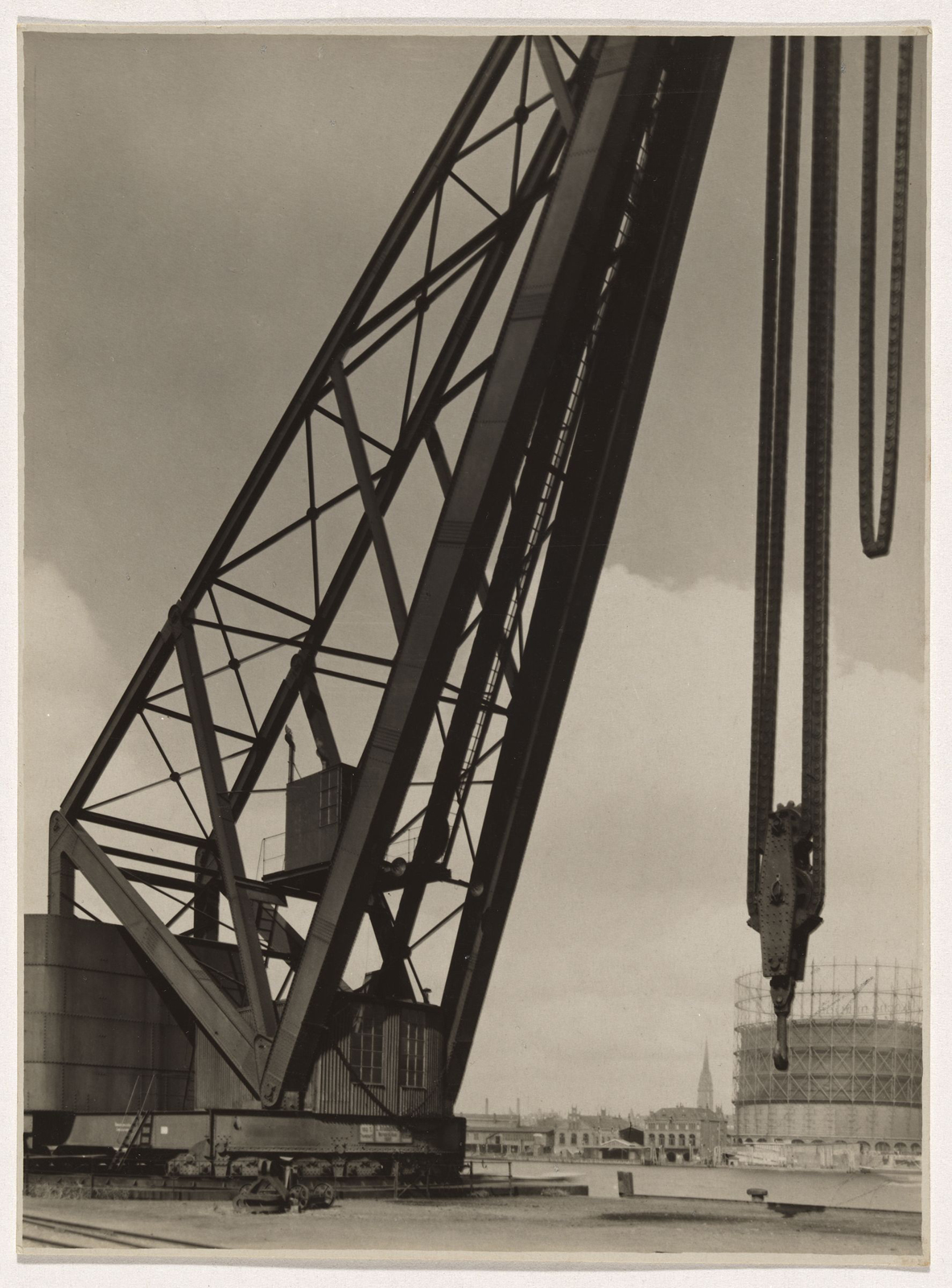
The title of the exhibition, The mad square (Der tolle Platz) is taken from Felix Nussbaum’s 1931 painting of the same name where “the ‘mad square’ is both a physical place – the city, represented in so many works in the exhibition, and a reference to the state of turbulence and tension that characterises the period.”The exhibition showcases how artists responded to modern life in Germany in the interwar years, years that were full of murder and mayhem, putsch, revolution, rampant inflation, starvation, the Great Depression and the rise of National Socialism. Portrayed is the dystopian, dark side of modernity (where people are the victims of a morally bankrupt society) as opposed to the utopian avant-garde (the prosperous, the wealthy), where new alliances emerge between art and politics, technology and the mass media. Featuring furniture, decorative arts, painting, sculpture, collage and photography in the sections World War 1 and the Revolution, Dada, Bauhaus, Constructivism and the Machine Aesthetic, Metropolis, New Objectivity and Power and Degenerate Art, it is the collages and photographs that are the strongest elements of the exhibition, particularly the photographs. What a joy they are to see.


Albert Renger-Patzsch (American born Hungary, 1895-1946) 'Harbour with crane' c. 1927


Albert Renger-Patzsch (American born Hungary, 1895-1946)
Harbour with crane
c. 1927
Gelatin silver photograph
Printed image 22.7 h x 16.8 w cm
Purchased 1983
National Gallery of Australia, Canberra


LIKE ART BLART ON FACEBOOK

Back to top

season’s greetings and a happy new year from art blart 2011

December 2011


Art Blart Season's Greeting's 2011


As we enter the fourth year of the archive I would like to thank the galleries that have supplied photographs throughout the year; the curators, gallery directors and media people for their help; and to you, the readers, for supporting the every posting.

Have a happy and safe festive season and a great New Year.

We look forward to posting and reviewing many more exhibitions in 2012!

Dr Marcus Bunyan


LIKE ART BLART ON FACEBOOK

Back to top

2010 Art Blart in review

January 2011


Excellent news about the archive! Just received the information below from Wordpess – on average about 1,835 people a day looking at the website – and that means a big thank you to you, the readers and supporters. Makes it all worthwhile

Dr Marcus Bunyan

The stats helper monkeys at WordPress.com mulled over how the archive did in 2010, and here’s a high level summary of its overall health:


Healthy blog!

The Blog-Health-o-Meterâ„¢ reads

WOW!


Crunchy numbers

The Louvre Museum has 8.5 million visitors per year. This archive was viewed about 670,000 times in 2010. If it were an exhibit at The Louvre Museum, it would take 29 days for that many people to see it.

In 2010, there were 116 new posts, growing the total archive of this blog to 394 posts.

Where did they come from?

The top referring sites in 2010 were stumbleupon.com, neoteo.com, thisisnthappiness.com, facebook.com, and tumblr.com.

Some visitors came searching, mostly for diane arbus, gregory crewdson, man ray, ron mueck exhibition 2010, and robert frank.

Attractions in 2010

These are the posts and pages that got the most views in 2010.

1/ Exhibition: ‘East Side Stories. German Photographs 1950s – 1980s’ at Kicken Berlin April 2010

2/ Opening: ‘Ron Mueck’ at the National Gallery of Victoria International, Melbourne January 2010

3/ ‘Man Ray: Unconcerned, but not indifferent’ exhibition at The Hague Museum of Photography January 2009

4/ Exhibition: ‘Picturing America: Photorealism in the 1970s’ at Deutsche Guggenheim, Berlin April 2009

5/ Exhibition: ‘Cecil Beaton: Portraits’ at the Walker Art Gallery, Liverpool August 2009


LIKE ART BLART ON FACEBOOK

Back to top

Season’s greetings and a happy new year from art blart

December 2010


Season's greetings and a Happy New Year from Art Blart


Many thankx to all the galleries that have supplied photographs throughout the year, to the curators, gallery directors and media people for their wonderful help and to you the readers for supporting the blog. Have a happy and safe festive season.

We look forward to posting and reviewing many more exhibitions in 2011!

Marcus


LIKE ART BLART ON FACEBOOK

Back to top

Opening: ‘Ron Mueck’ at the National Gallery of Victoria International, Melbourne

Exhibition dates: 22nd January – 18th April, 2010


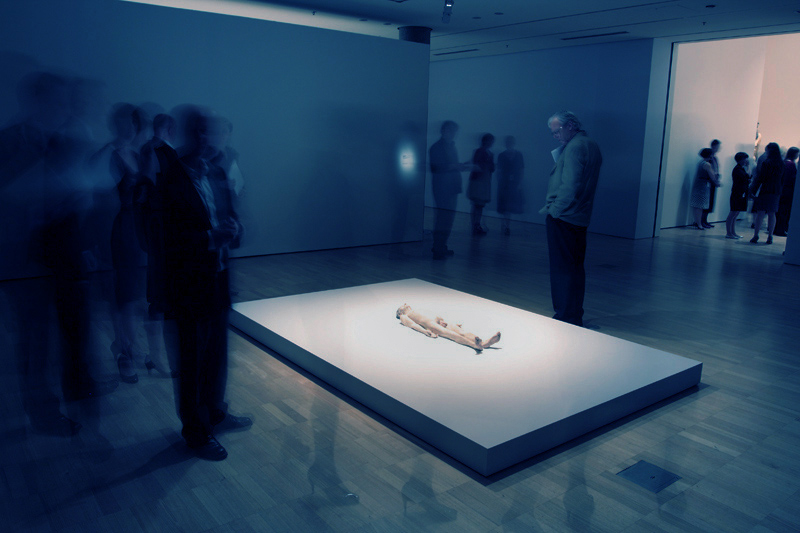
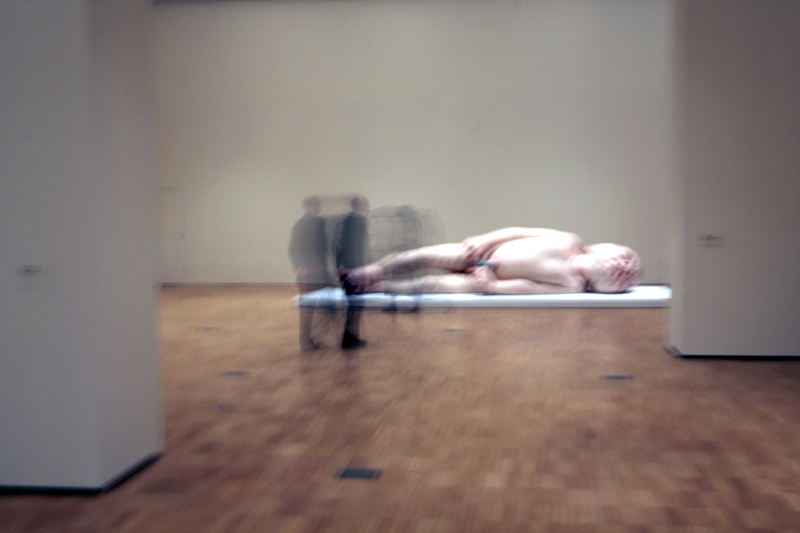
Ron Mueck (Australian b. 1958) 'Dead Dad' 1996-1997 (installation view) from the exhibition 'Ron Mueck' at the National Gallery of Victoria International, Melbourne, January - April, 2010


Ron Mueck (Australian, b. 1958)
Dead Dad (installation view)
1996-1997
Silicone, polyurethane, styrene, synthetic hair
Ed. 1/1
20 x 38 x 102cm
Stefan T. Edlis Collection, Chicago
© Ron Mueck courtesy Anthony d’Offay, London
Photo: © Marcus Bunyan and the National Gallery of Victoria


You saw it first on Art Blart.

Many thankx to Sue, Erin, Alison and all the crew at the National Gallery of Victoria for inviting me to the media opening (and for doing such a splendid job!) and to David Hurlston, Curator of Australian Art at the NGV, for allowing me to interview him.

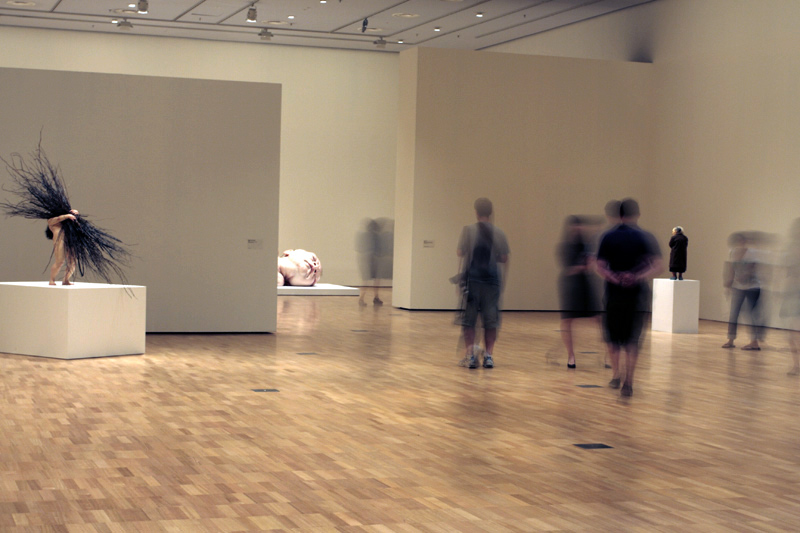
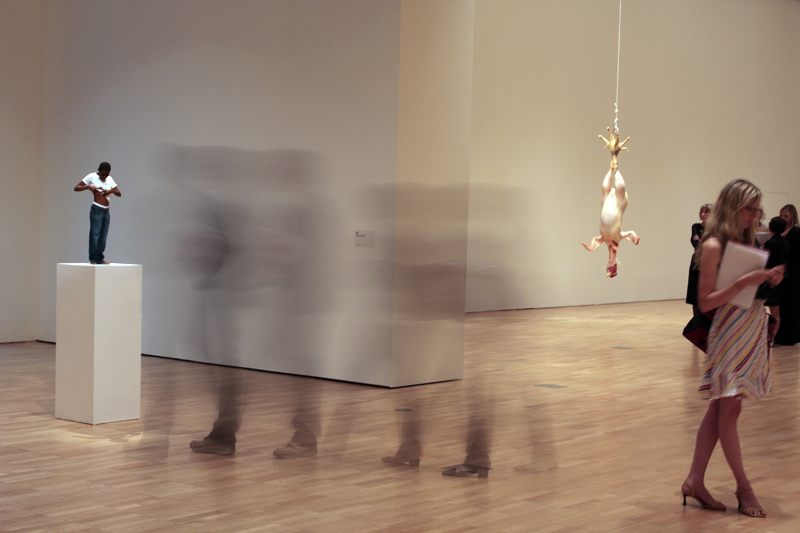
The photographs of the exhibition proceed in chronological order. There are a couple of lovely photographs using long exposure (especially the very last photograph one of my favourites). Enjoy!

Dr Marcus Bunyan


Photos: © Marcus Bunyan and the National Gallery of Victoria. Please click on the photograph for a larger version of the image.


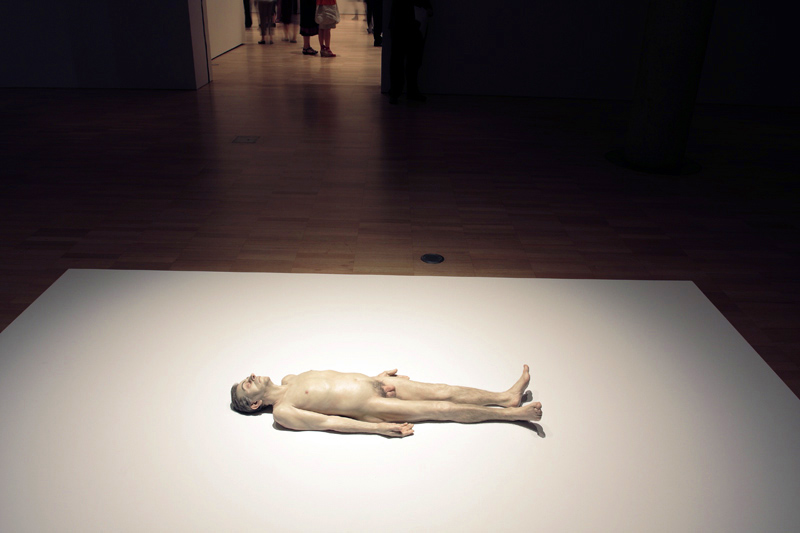
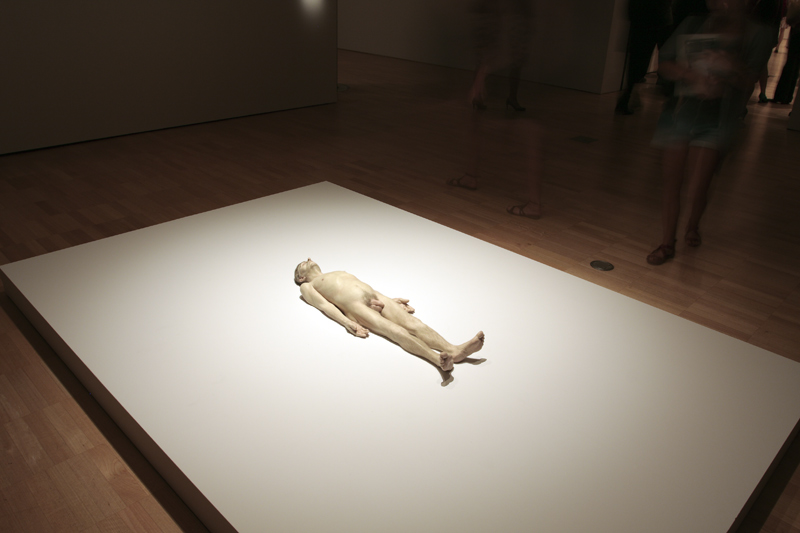
Ron Mueck (Australian b. 1958) 'Dead Dad' 1996-1997 (installation view) from the exhibition 'Ron Mueck' at the National Gallery of Victoria International, Melbourne, January - April, 2010

Ron Mueck (Australian b. 1958) 'Dead Dad' 1996-1997 (installation view)

Ron Mueck (Australian b. 1958) 'Dead Dad' 1996-1997 (installation view)

Ron Mueck (Australian b. 1958) 'Dead Dad' 1996-1997 (installation view)


Ron Mueck (Australian, b. 1958)
Dead Dad (installation views)
1996-1997
Silicone, polyurethane, styrene, synthetic hair
Ed. 1/1
20 x 38 x 102cm
Stefan T. Edlis Collection, Chicago
© Ron Mueck courtesy Anthony d’Offay, London
Photos: © Marcus Bunyan and the National Gallery of Victoria


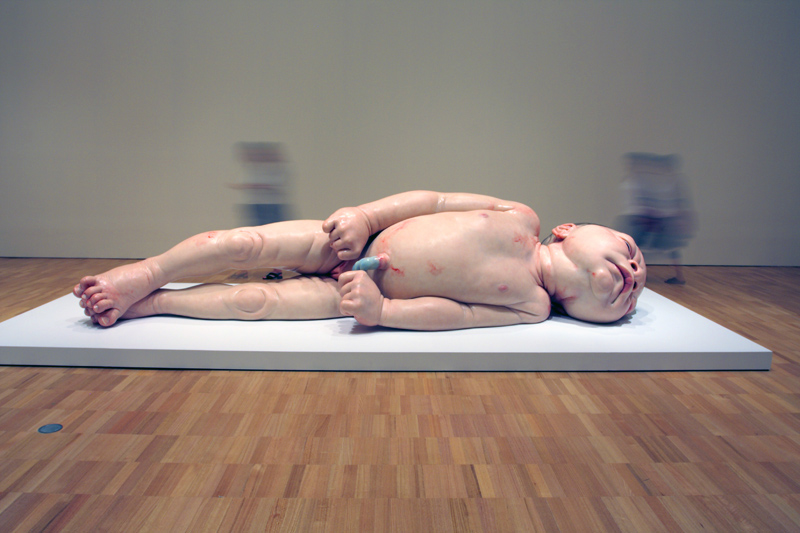
Ron Mueck (Australian, b. 1958) 'A girl' 2006 (installation view) from the exhibition 'Ron Mueck' at the National Gallery of Victoria International, Melbourne, January - April, 2010

Ron Mueck (Australian, b. 1958) 'A girl' 2006 (installation view)

Ron Mueck (Australian, b. 1958) 'A girl' 2006 (installation view)

Ron Mueck (Australian, b. 1958) 'A girl' 2006 (installation view)

Ron Mueck (Australian, b. 1958) 'A girl' 2006 (installation view)


Ron Mueck (Australian, b. 1958)
A girl (installation views)
2006
Polyester resin, fibreglass, silicone, synthetic hair, synthetic polymer paint
Second edition, artist’s proof
110 x 501 x 134.5cm
Scottish National Gallery of Modern Art, Edinburgh Purchased with assistance from The Art Fund, 2007
© Ron Mueck
Photos: © Marcus Bunyan and the National Gallery of Victoria


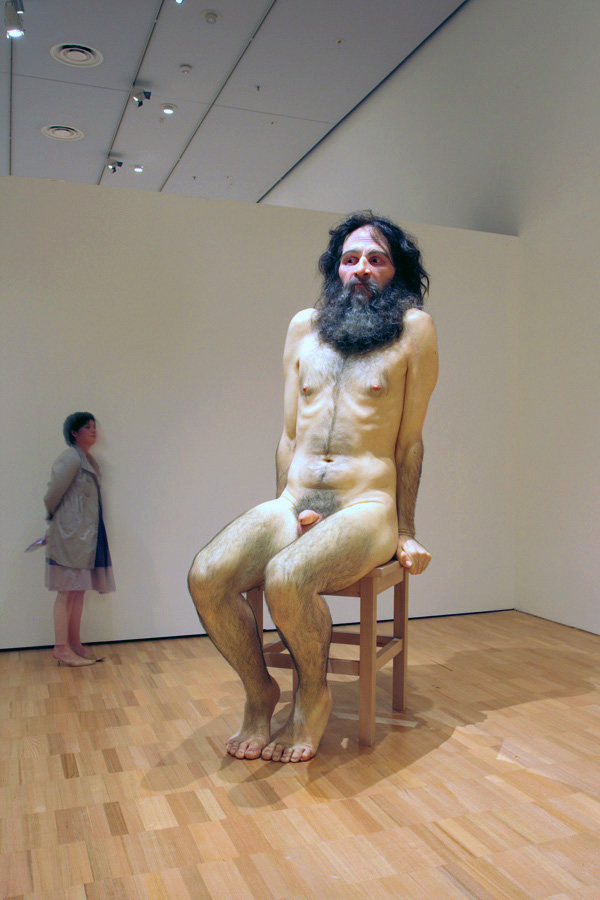
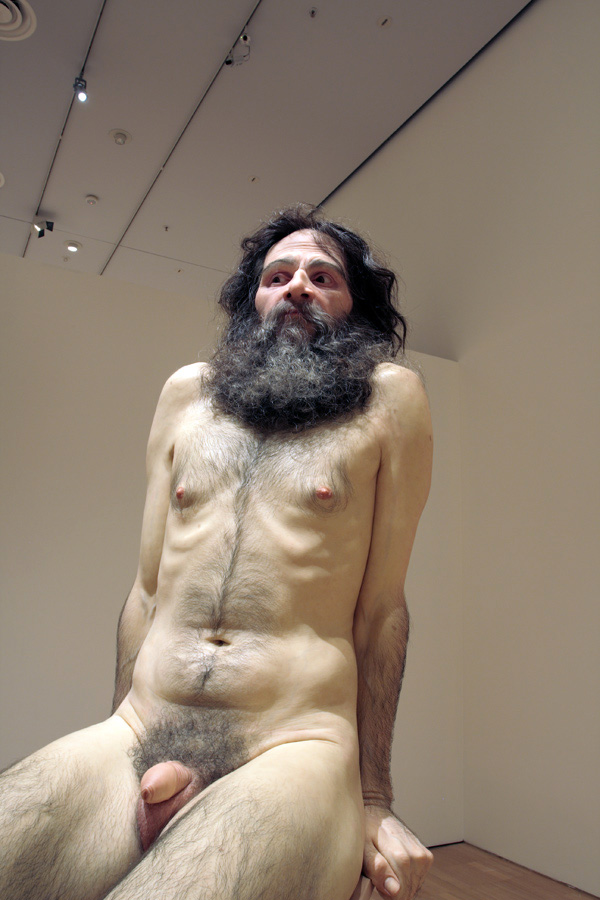
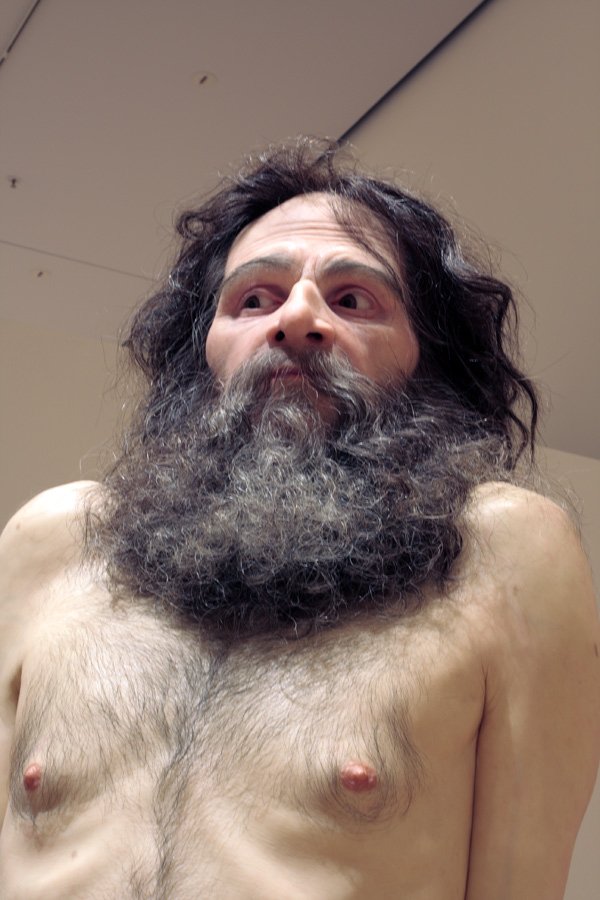
Ron Mueck (Australian, b. 1958) 'Wild Man' 2005 (installation view)

Ron Mueck (Australian, b. 1958) 'Wild Man' 2005 (installation view detail)

Ron Mueck (Australian, b. 1958) 'Wild Man' 2005 (installation view detail)


Ron Mueck (Australian, b. 1958)
Wild Man (installation views)
2005
Polyester resin, fibreglass, silicone, aluminium, wood and synthetic hair
2850 x 1619 x 1080 mm
Scottish National Gallery of Modern Art, Edinburgh Purchased with assistance from The Art Fund, 2008
© Ron Mueck
Photos: © Marcus Bunyan and the National Gallery of Victoria


Mueck initially planned to make a figure who appeared confined, as if backed into a corner, but decided to make Wild Man after seeing an illustration of the colossal stone sculpture Appennino 1579-1580 (Villa di Pratolino, Vaglia, Italy) by the late Renaissance artist Giambologna. Appennino depicts a crouching hirsute river god, which inspired the oversized hairy ‘wild man’ of Mueck’s sculpture. The critic Anne Cranny-Francis notes that a wild man tends to be a reclusive individual afraid of human society and that this ‘might explain why [Mueck’s] large male figure – in one sense, the very image of the powerful white male – grips his chair, body rigid with tension, and stares over the heads of viewers in a paroxysm of fear’ (Cranny-Francis 2013, p. 6). The man’s nakedness adds to this sense of vulnerability, making him both physically and emotionally exposed.

Extract from Susan McAteer. “Ron Mueck: Wild Man,” on the Tate website February 2015 [Online] Cited 23/05/2019


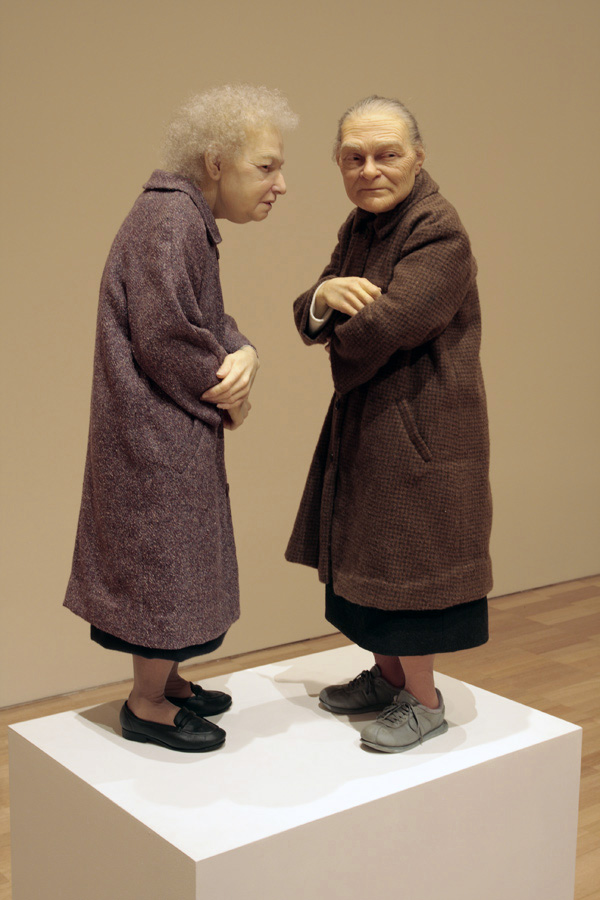
Ron Mueck (Australian, b. 1958) 'Two Women' 2005 (installation view)

Ron Mueck (Australian, b. 1958) 'Two Women' 2005 (installation view)

Ron Mueck (Australian, b. 1958) 'Two Women' 2005 (installation view detail)

Ron Mueck (Australian, b. 1958) 'Two Women' 2005 (installation view detail)


Ron Mueck (Australian, b. 1958)
Two Women (installation views)
2005
Polyester resin, fibreglass, silicone, polyurethane, aluminium wire, steel, wool, cotton, nylon, synthetic hair, plastic, metal
Ed. 1/1
82.6 x 48.7 x 41.5cm (variable)
National Gallery of Victoria, Melbourne
Purchased, Victorian Foundation for Living Australian Artists, 2007
© Ron Mueck
Photos: © Marcus Bunyan and the National Gallery of Victoria


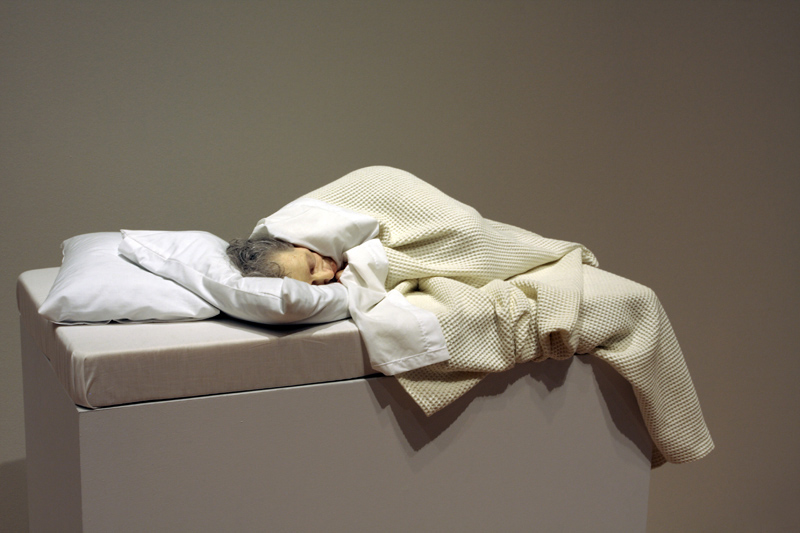
Ron Mueck’s Two women is an uncanny sculptural representation of two elderly female figures. The disarming realism of the work invites close scrutiny from which the viewer discovers Mueck’s virtuoso skill in rendering human features, costume details and the idiosyncratic attributes that form personality. Huddled close together, as if gently bracing themselves from the cold, the women peer outward with expressions that suggest both suspicion and vulnerability.

A strong component of fantasy exists in Mueck’s work as he deliberately subverts conventional paradigms of scale. Much like the characters of Gulliver’s Travels, Mueck’s figures are monumentally increased or dramatically reduced in size. Mueck has explained, ‘I never made life-size figures because it never seemed to be interesting. We meet life-size people every day’ (S. Tanguy, ‘The progress of Big man: A conversation with Ron Mueck’, Sculpture, vol. 22, no. 6, 2003). The effect, as in the case of Two women, intensifies the physical and emotional aura of his figures. The minute stature of the women creates a tension between artifice and reality that elicits a viscerally empathetic response from the viewer. His creations appear seemingly trapped in introverted emotional states as their physical poses, gestures and facial expressions reflect the inner world of private feelings and thoughts. Mueck’s figurative sculptures often explore the timeless themes of birth, ageing and death.

The craftsmanship with which Mueck constructs his sculptures adds significant impact to our viewing experience. This is very much apparent in Two women where each strand of hair is individually inserted into the characters’ heads; the clothes are specifically tailored to fit their anatomically proportioned, yet miniature bodies. Mueck has carefully fabricated the eyes of the women creating a transparent lens over a coloured iris and deep black pupil to astounding effect.

Extract from Alex Baker. “Ron Mueck’s Two women,” in Art Bulletin of Victoria 48, 29 January 2014 [Online] Cited 25/05/2019


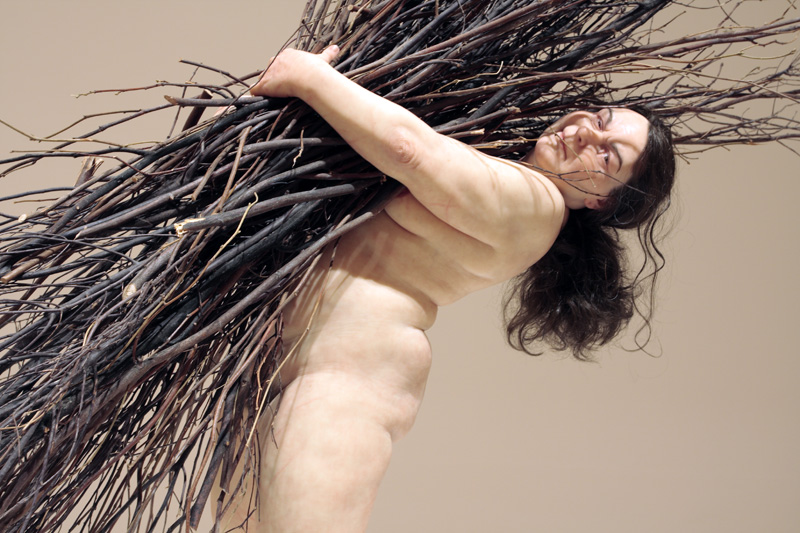
Ron Mueck (Australian, b. 1958) 'Woman with Sticks' 2008 (installation view detail)

Ron Mueck (Australian, b. 1958) 'Woman with Sticks' 2008 (installation view detail)

Ron Mueck (Australian, b. 1958) 'Woman with Sticks' 2008 (installation view detail)


Ron Mueck (Australian, b. 1958)
Woman with Sticks (installation views)
2008
Mixed media
170 x 183 x 120cm
Fondation Cartier pour l’art Contemporain, Paris
© Ron Mueck
Photos: © Marcus Bunyan and the National Gallery of Victoria


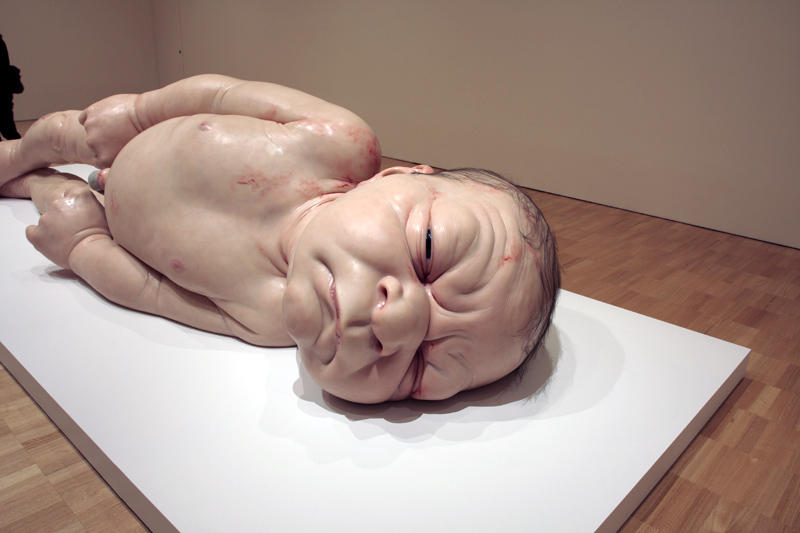
In January 2010, the National Gallery of Victoria will present a major exhibition of the work of internationally renowned sculptor Ron Mueck.

Known for his extraordinarily life-like creations, this exhibition will feature twelve sculptures by Mueck including four new works.

This will be the largest and most comprehensive Mueck exhibition ever to be held in Australia.

Frances Lindsay, NGV Deputy Director, said: “Since his dramatic entry onto the international art stage, Mueck has continued to astound audiences with his realistic, figurative sculptures and now occupies a unique and important place in the field of international contemporary art.”

David Hurlston, Curator Australian Art, said Ron Mueck’s poignant sculptures illustrate timeless human conditions from birth to demise.

“Mueck’s sculptures range from puckish portrayals of childhood innocence to acute observations of stages of life; from birth to adolescence, middle and old age, and even death. Many are solitary figures, psychological portraits of emotional intensity and of isolation,” said Mr Hurlston.

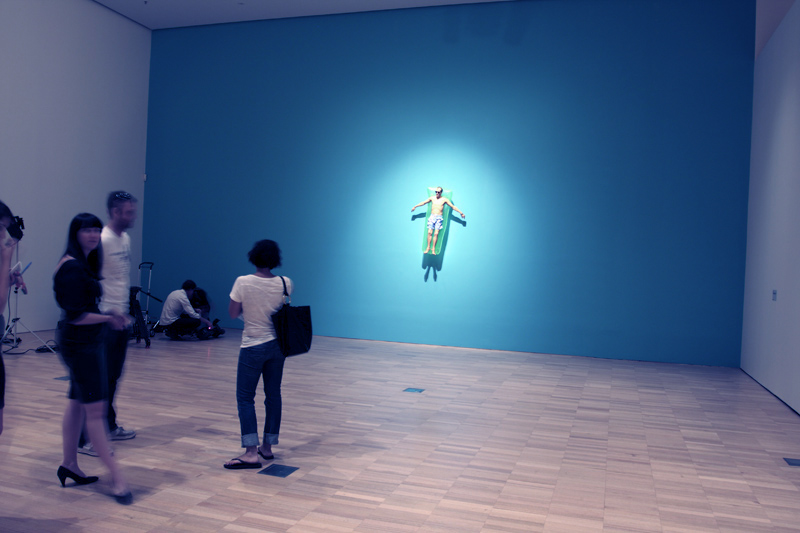
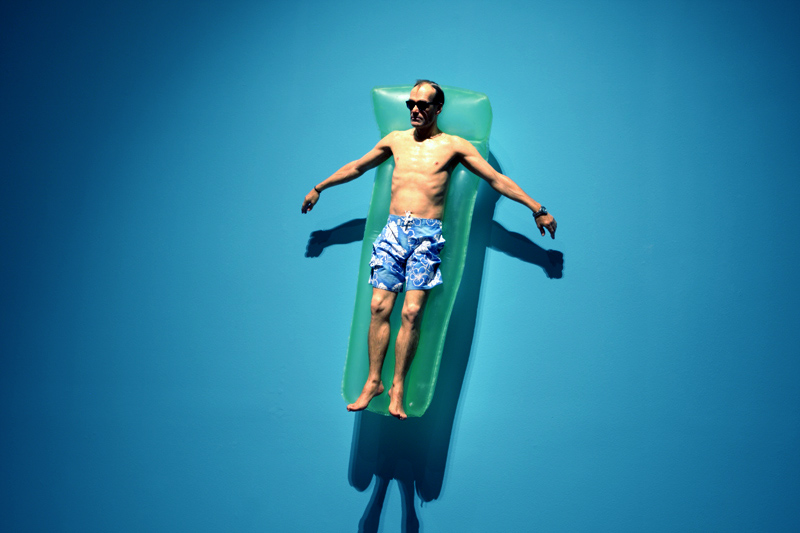
The exhibition will draw from Australian and international collections, highlights include: Mask II 2001/02, Man in a boat (2002), Old woman in bed (2000/02), Wild man (2005), Two women (2005), In bed (2005), and through the generosity of a private collector from the United States, the iconic work Dead Dad (1996/97).

In addition to these there will be a number of new works created specifically for this exhibition which will be unveiled for the first time in Melbourne.

In his early career Melbourne-born Mueck worked as a puppet maker, however since 1997 he has been entirely devoted to making sculpture. In 1996, he was ‘discovered’ by British advertising guru Charles Saatchi, who included Mueck’s Dead Dad as part of the history making Sensation exhibition the following year.

Mueck went on to represent Australia at the 2001 Venice Biennale, capturing worldwide attention for his 4.5 metre sculpture, Crouching Boy.  Since then, he has become one of the most significant figures in the contemporary art world.

Ron Mueck will be on display at NGV International on St Kilda Road from 22 January until 18 April 2010.

Press release from the National Gallery of Victoria website [Online] Cited 20/01/2010. No longer available online


Ron Mueck (Australian, b. 1958) 'Man in a boat' 2002 (installation view detail)

Ron Mueck (Australian, b. 1958) 'Man in a boat' 2002 (installation view detail)


Ron Mueck (Australian, b. 1958)
Man in a boat (installation view details)
2002
Mixed media
159 x 138 x 425.5cm
© Ron Mueck
Photos: © Marcus Bunyan and the National Gallery of Victoria


Ron Mueck (Australian, b. 1958) 'Youth' 2009 (installation view)


Ron Mueck (Australian b. 1958)
Youth (installation view)
2009
Mixed media
65 x 28 x 16cm
Private collection
© Ron Mueck
Photos: © Marcus Bunyan and the National Gallery of Victoria


Installation photograph of Ron Mueck's 'Youth' (2009) with 'Still life' (2009) in the background

Installation photogtaph of Ron Mueck's 'Youth' (2009) with 'Still life' (2009) in the background


Installation photographs of Ron Mueck’s Youth (2009) with Still life (2009) in the background
Photos: © Marcus Bunyan and the National Gallery of Victoria


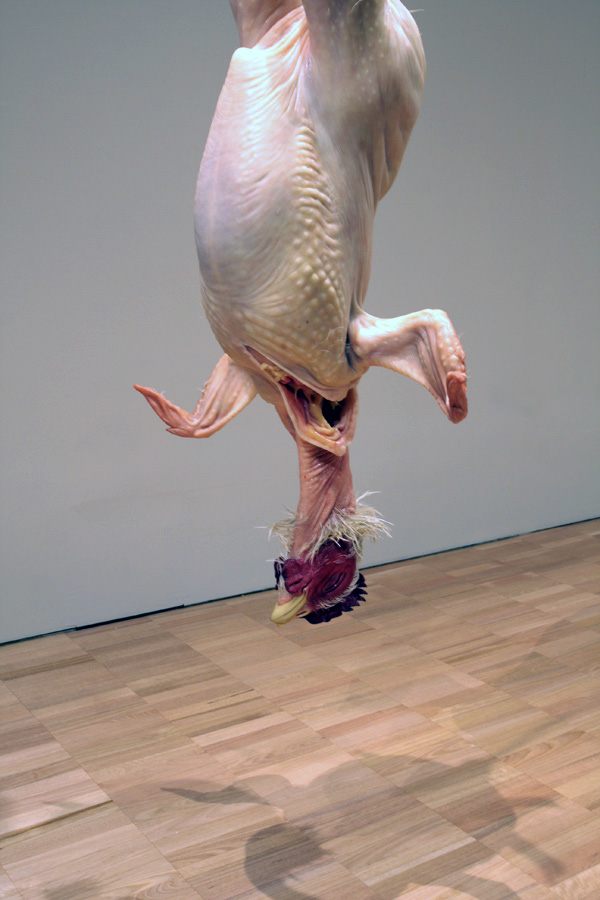
Ron Mueck (Australian, b. 1958) 'Still life' 2009 (installation view)

Ron Mueck (Australian, b. 1958) 'Still life' 2009 (installation view detail)


Ron Mueck (Australian, b. 1958)
Still life (installation views)
2009
Fondation Cartier pour l’art contemporain
© Ron Mueck
Photos: © Marcus Bunyan and the National Gallery of Victoria


Ron Mueck (Australian, b. 1958) 'Old Woman in bed' 2002 (installation view)

Ron Mueck (Australian, b. 1958) 'Old Woman in bed' 2002 (installation view detail)


Ron Mueck (Australian, b. 1958)
Old Woman in bed (installation views)
2002
Polyester resin, fibreglass, silicone, polyurethane, synthetic hair, cotton, polyester, second edition, artist’s proof
25.4 x 94.0 x 53.9cm
Art Gallery of New South Wales, Sydney, purchased 2003
© Ron Mueck
Photos: © Marcus Bunyan and the National Gallery of Victoria


Ron Mueck (Australian, b. 1958) 'Drift' 2009 (installation view)

Ron Mueck (Australian, b. 1958) 'Drift' 2009 (installation view)


Ron Mueck (Australian, b. 1958)
Drift (installation views)
2009
Mixed media
118 x 96 x 21cm
Private collection
© Ron Mueck
Photos: © Marcus Bunyan and the National Gallery of Victoria


Installation photograph of the 'Ron Mueck' exhibition at the National Gallery of Victoria showing at left Woman with 'Sticks' (2005) and at right 'Two Woman' (2005) with 'A girl' (2006) in the distance


Installation photograph of the Ron Mueck exhibition at the National Gallery of Victoria showing at left Woman with Sticks (2005) and at right Two Woman (2005) with A girl (2006) in the distance
Photo: © Marcus Bunyan and the National Gallery of Victoria


Installation photograph of the 'Ron Mueck' exhibition at the National Gallery of Victoria showing 'A girl' (2006)


Installation photograph of the Ron Mueck exhibition at the National Gallery of Victoria showing A girl (2006)
Photo: © Marcus Bunyan and the National Gallery of Victoria

My favourite pic of the day!


NGV International
180 St Kilda Road

Opening hours
Daily 10am – 5pm

National Gallery of Victoria website

LIKE ART BLART ON FACEBOOK

Back to top

Melbourne’s Magnificent Dozen 2009

January 2010


Here’s my pick of the twelve best exhibitions in Melbourne for 2009 that featured on Art Blart (in no particular order) – and a few honourable mentions that very nearly made the list!


1. The Water Hole by Gerda Steiner and Jorg Lenzlinger at ACCA (Australian Centre for Contemporary Art)


Gerda Steiner (Swiss, b. 1967) and Jorg Lenzlinger (Swiss, b. 1964) 'The Waterhole' 2009


Gerda Steiner (Swiss, b. 1967) and Jorg Lenzlinger (Swiss, b. 1964)
The Water Hole
2009


“The most effective bed has a small meteorite suspended in a net bag above it. The viewer slides underneath the ‘rock’ placing the meteorite about a foot or so above your face. The meteorite is brown, dark and heavy, swinging slightly above your ‘third eye’. You feel its weight pressing down on your energy, on your life force and you feel how old this object is, how far it has traveled, how fragile and mortal you are. It is a sobering and enlightening experience but what an experience it is!”

This was a magical and poignant exhibition that was a joy for children and adults alike. Children love it running around exploring the environments. Adults love it for it’s magical, witty and intelligent response to the problems facing our planet and our lives. A truly enjoyable interplanetary collision.

2. Ocean Without A Shore video installation by Bill Viola at The National Gallery of Victoria


Bill Viola (American, 1951-2024) 'Ocean Without A Shore' 2007 video still


Installation photograph of Ocean Without A Shore at the National Gallery of Victoria, Melbourne


The resurrected are pensive, some wringing the hands, some staring into the light. One offers their hands to the viewer in supplication before the tips of the fingers touch the wall of water – the ends turning bright white as they push through the penumbrae of the interface. As they move forward the hands take on a stricken anguish, stretched out in rigour. Slowly the resurrected turn and return to the other side. We watch them as we watch our own mortality, life slipping away one day after another. Here is not the distraction of a commodified society, here is the fact of every human life: that we all pass.

The effect on the viewer is both sad but paradoxically uplifting. I cried …

These series of encounters at the intersection of life and death are worthy of the best work of this brilliant artist. He continues to astound with his prescience, addressing what is undeniable in the human condition. Long may he continue.

3. Rosalie Gascoigne at The Ian Potter Centre: NGV Australia


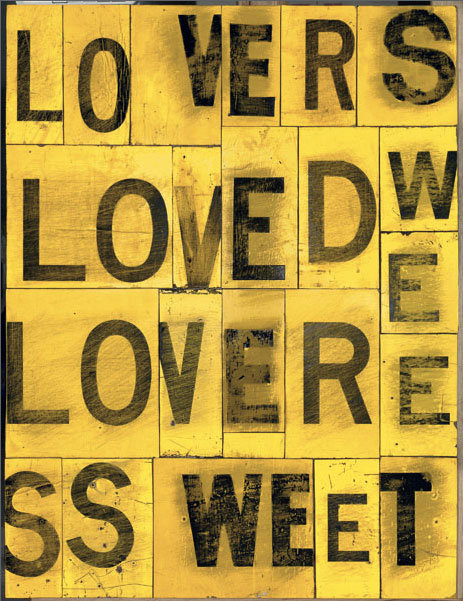
Rosalie Gascoigne (Australian born New Zealand, 1917-1999) 'Sweet lovers' 1990


Rosalie Gascoigne (Australian born New Zealand, 1917-1999)
Sweet lovers
1990


This was a wonderful exhibition. Gascoigne rightly commands a place in the pantheon of Australian stars. She has left us with a legacy of music that evokes the rhythms, the air, the spaces and colours of our country. As she herself said,

“Look at what we have: Space, skies. You can never have too much of nothing.”

Nothing more, nothing less.

4. The Big Black Bubble paintings by Dale Frank at Anna Schwartz Gallery


Dale Frank (Australian, b. 1959) 'Ryan Gosling' (2008/2009)


Dale Frank (Australian, b. 1959)
Ryan Gosling
2008/2009


The artist offered the viewer the ability to generate their own resonances with the painting, to use the imagination of ‘equivalence’ to suggest what these paintings stand for – and also what else they stand for. States of being, of transformation, wonder and joy emerged in the playfulness of these works.

Ryan Gosling was a tour de force. With the poetic structure of an oil spill, the varnish forms intricate slick upon slick contours that are almost topographical in their mapping. The black oozes light, becomes ‘plastic’ black before your eyes, like the black of Rembrandt’s backgrounds, illusive, illuminative and hard to pin down – perpetually hanging there in two dripping rows, fixed but fluid at one and the same time (you can just see the suspensions in the photograph above).

This painting was one of the most overwhelming syntheses of art and nature, of universal forces that I have seen in recent contemporary art. This exhibition was an electric pulsating universe of life, landscape and transformation. Magnificent!

5. So It Goes by Laith McGregor at Helen Gory Galerie


Laith McGregor (Australian, b. 1977) 'The Last Bastion' 2009 (detail)


Laith McGregor (Australian, b. 1977)
The Last Bastion (detail)
2009


Simply spectacular!

I had never seen such art made using a biro before: truly inspiring.
Inventive, funny, poignant and outrageous this was a must see show of 2009.

6. triestement (more-is u thrill-o) by Domenico De Clario at John Buckley Gallery


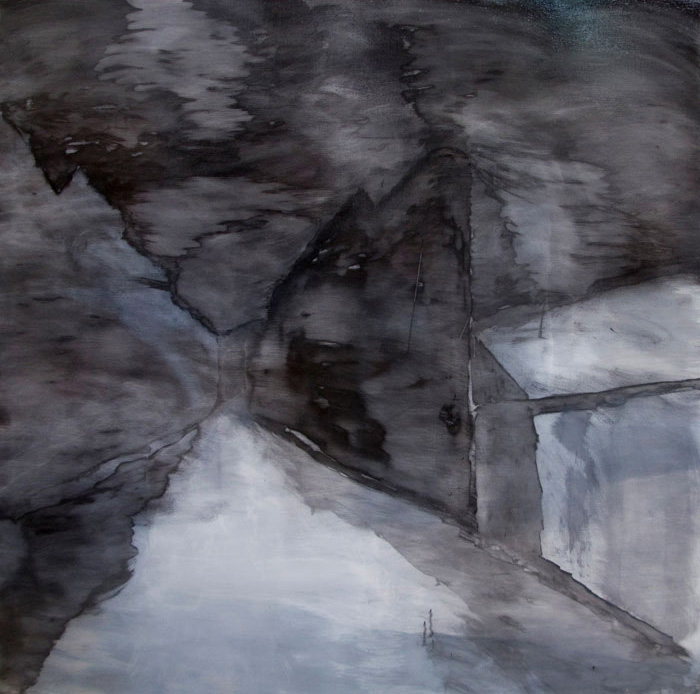
Domenico de Clario (Australian born Italy, b. 1947) 'o (la grande maison blanche – snow clouds massing)' 2008/09


Domenico de Clario (Australian born Italy, b. 1947)
o (la grande maison blanche – snow clouds massing)
2008/09


Painted in a limited colour palette of ochres, greys and blacks the works vibrate with energy. Cezanne like spatial representations are abstracted and the paint bleeds across the canvas forming a maze of buildings. Walls and hedges loom darkly over roadways, emanations of heads and figures float in the picture plane and the highlight white of snow hovers like a spectral figure above buildings. These are elemental paintings where the shadow has become light and the light is shadow, meanderings of the soul in space.

de Clario feels the fluid relationship between substance and appearance; he understands that Utrillo is embedded in the position of each building and stone, in the cadences and rhymes of the paintings of Montmarte. de Clario interprets this knowledge in a Zen like rendition of shadow substance in his paintings. Everything has it’s place without possession of here and there, dark and light.

For my part it was my soul responding to the canvases. I was absorbed into their fabric. As in the dark night of the soul my outer shell gave way to an inner spirituality stripped of the distance between viewer and painting. I felt communion with this man, Utrillo, with this art, de Clario, that brought a sense of revelation in the immersion, like a baptism in the waters of dark light. For art this is a fantastic achievement.

7. McLean Edwards: Songs from the Ghost Ship at Karen Woodury Gallery


McLean Edwards (Australian, b. 1972) 'Venus' 2009


McLean Edwards (Australian, b. 1972)
Venus
2009


These heterogeneous paintings were a knockout with their wonderful, layered presence – they really command the viewer to look at them and celebrate the characters within them. Whimsical, ironic and full of humour these phantasmagorical images of creatures cast adrift with the night sky as background are fabulous assemblages of colour, form and storytelling.

My friend and I really enjoyed this exhibition. We were captivated by these songs, going back to the work again and again to tease out the details, to feel connection to the work. These are not lonely isolated figures but sublime emanations of inner states of being expertly rendered in glorious colour. And they made us laugh – what more could you ask for!

8. Tacita Dean at Australian Centre for Contemporary Art (ACCA)


Tacita Dean (English, b. 1965) 'Michael Hamburger' 2007


Tacita Dean (English, b. 1965)
Michael Hamburger [Still]
16mm colour anamorphic, optical sound
28 minutes
2007


“One can see echoes of Sebald’s work in that of Tacita Dean – the personal narratives accompanied by mythical and historical stories and pictures. The tactility of Hamburger’s voice and hands, his caressing of the apples with the summary justice of the tossing away of rotten apples to stop them ruining the rest of the crop is arresting and holds you transfixed. Old varieties and old hands mixed with the old technology of film make for a nostalgic combination … Dean implicitly understands how objects can be elegies for fleeting lives.”

Tacita Dean is a fantastic artist whose work examines the measure of things, the vibrations of spirit in the FLUX of experience. Her work has a trance-like quality that is heavy with nostalgia and memory and reflects the machine-ations of contemporary life. In her languorous and dense work Dean teases out the significance of insignificant actions/events and imparts meaning and life to them. This is no small achievement!

As an exhibition this was an intense and moving experience.

9. Ivy photographs by Jane Burton at Karen Woodbury Gallery


Jane Burton (Australian, b. 1966) 'Ivy #2' 2009


Jane Burton (Australian, b. 1966)
Ivy #2
2009


I feel that in these photographs with their facelessness and the non-reflection of the mirror investigate notions of ‘Theoria’ – a Greek emphasis on the vision or contemplation of God where theoria is the lifting up of the individual out of time and space and created being and through contemplative prayer into the presence of God. In fact the whole series of photographs can be understood through this conceptualisation – not just remembrances of past time, not a blind contemplation on existence but a lifting up out of time and space into the an’other’ dark but enlightening presence.

The greatest wonder of this series is that the photographs magically reveal themselves again and again over time. Despite (or because of) the references to other artists, the beauty of Burton’s work is that she has made it her own. The photographs have her signature, her voice as an artist and it is an informed voice; this just makes the resonances, the vibrations of energy within the work all the more potent and absorbing. I loved them.

10. Sweet Complicity by eX de Medici at Karen Woodbury Gallery


eX de Medici (Australia, b. 1959) 'Tooth and claw' 2009 (detail)


eX de Medici (Australia, b. 1959)
Tooth and claw (detail)
2009


In other less skilled artist’s hands the subject matter could become cliched and trite but here de Medici balances the disparate elements in her compositions and brings the subject matter alive – sinuously jumping off the paper, entwining the viewer in their delicious ironies, all of us sweetly complicit in the terror war (send more meat, send more meat!), fighting tooth and nail to keep urban realities at arm’s length. The dark desires that these works contain possess an aesthetic beauty that swallows us up so that we, too, become ‘Barbarians All’.

11. Emily Kame Kngwarreye: The Person and her Paintings at DACOU Aboriginal Art


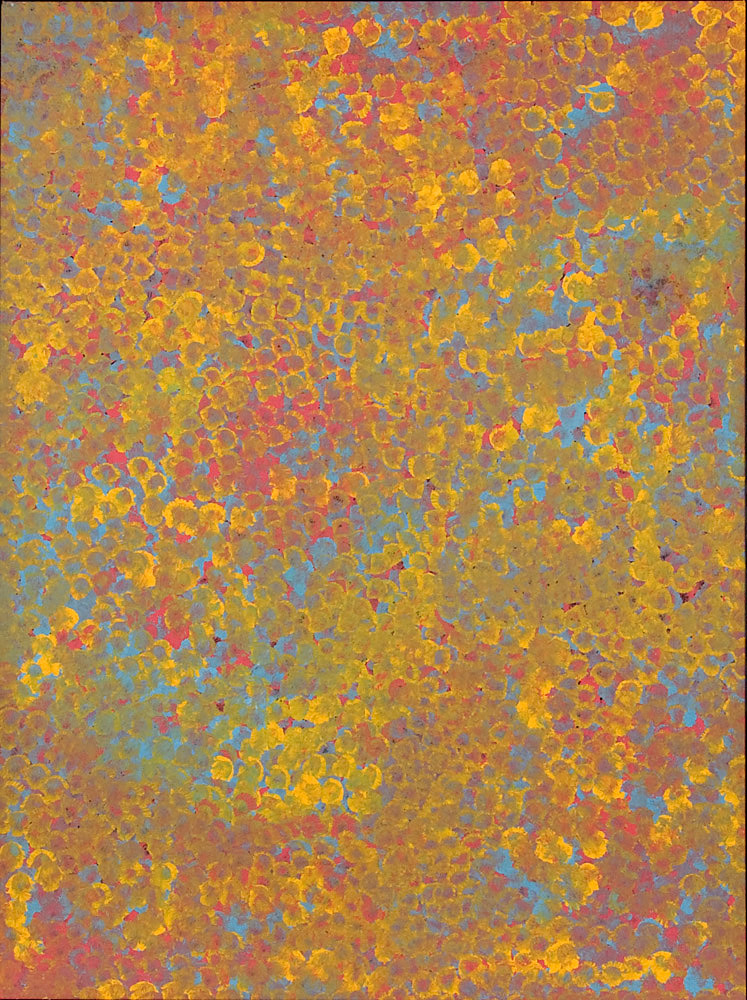
Emily Kame Kngwarreye (Australian, 1910-1996) 'Wildflower' 1994


Emily Kame Kngwarreye (Australian, 1910-1996)
Wildflower
1994


The paintings were painted horizontally (like the painter Jackson Pollock who intuitively accessed the spiritual realm) and evidence a horizontal consciousness not a hierarchical one. Knowledge is not privileged over wisdom. There is a balance between knowledge and wisdom – the knowledge gained through a life well lived and the wisdom of ancient stories that represent the intimacy of living on this world. The patterns and diversities of life compliment each other, are in balance.

Wisdom comes from the Indo-European root verb weid, “to see,” the same root from which words like vision come. In this sense these are “Vedic” paintings in that they are ancient, sacred teachings, Veda meaning literally “I have seen.”

On this day I saw. I felt.

12. Unforced Intimacies by Patricia Piccinini at Tolarno Galleries


Patricia Piccinini (Australian, b. 1965) 'Doubting Thomas' 2008 (detail)


Patricia Piccinini (Australian, b. 1965)
Doubting Thomas (detail)
2008


Patricia Piccinini (Australian, b. 1965) 'Doubting Thomas' 2008


Patricia Piccinini (Australian, b. 1965)
Doubting Thomas
Silicone, fibreglass, human hair, clothing, chair
2008


The terrains the Piccinini interrogates (nature and artifice, biogenetics, cloning, stem cell research, consumer culture) are a rematerialisation of the actual world through morphological ‘mapping’ onto the genomes of the future. Morphogenetic fields seem to surround the work with an intense aura; surrounded by this aura the animals and children become more spiritual in their silence. Experiencing this new world promotes an evolution in the way in which we conceive the future possibilities of life on this earth, this brave but mutably surreal new world.

This was truly one of the best exhibitions of the year in Melbourne.


Honorable mentions

~ Climbing the Walls and Other Actions by Clare Rae at the Centre for Contemporary Photography
In these photographs action is opposed with stillness, danger opposed with suspension; the boundaries of space, both of the body and the environment, the interior and the exterior, memory and dream, are changed.

~ Johannes Kuhnen: a survey of innovation at RMIT Gallery
We stood transfixed before this work, peering closely at it and gasping in appreciation of the beauty, technical proficiency and pure poetry of the pieces.

~ Double Infinitives by Marco Fusinato at Anna Schwartz Gallery
The images are literally ripped from the matrix of time and space and become the dot dot dot of the addendum. What Fusinato does so excellently is to make us pause and stare, to recognize the flatness of these figures and the quietness of violence that surrounds us.

~ all about … blooming by JUNKO GO at Gallery 101
Go’s musings on the existential nature of our being are both full and empty at one and the same time and help us contemplate the link to the breath of the sublime.

~ Mood Bomb by Louise Paramor at Nellie Castan Gallery
They are dream states that allow the viewer to create their own narrative with the title of the works offering gentle guides along the way. These are wonderfully evocative paintings.

~ New 09 at Australian Centre for Contemporary Art (ACCA)
Finally you sit on the aluminium benches and contemplate in silence all that has come before and wonder what just hit you in a tidal wave of feelings, immediacies and emotions. The Doing and Undoing of Things.

~ My Jesus Lets Me Rub His Belly by Martin Smith at Sophie Gannon Gallery
At the end of days, when all is said and done, the funny diatribes with their ambiguous photographs are homily and heretic and together form a more inclusive body of bliss: ‘And also with you and you and you and you’.


LIKE ART BLART ON FACEBOOK

Back to top