Exhibition: ‘Hill & Adamson: The Clarkson Stanfield Album’ at the Harry Ransom Center, Austin, Texas

Exhibition dates: 9th March – 2nd June, 2024
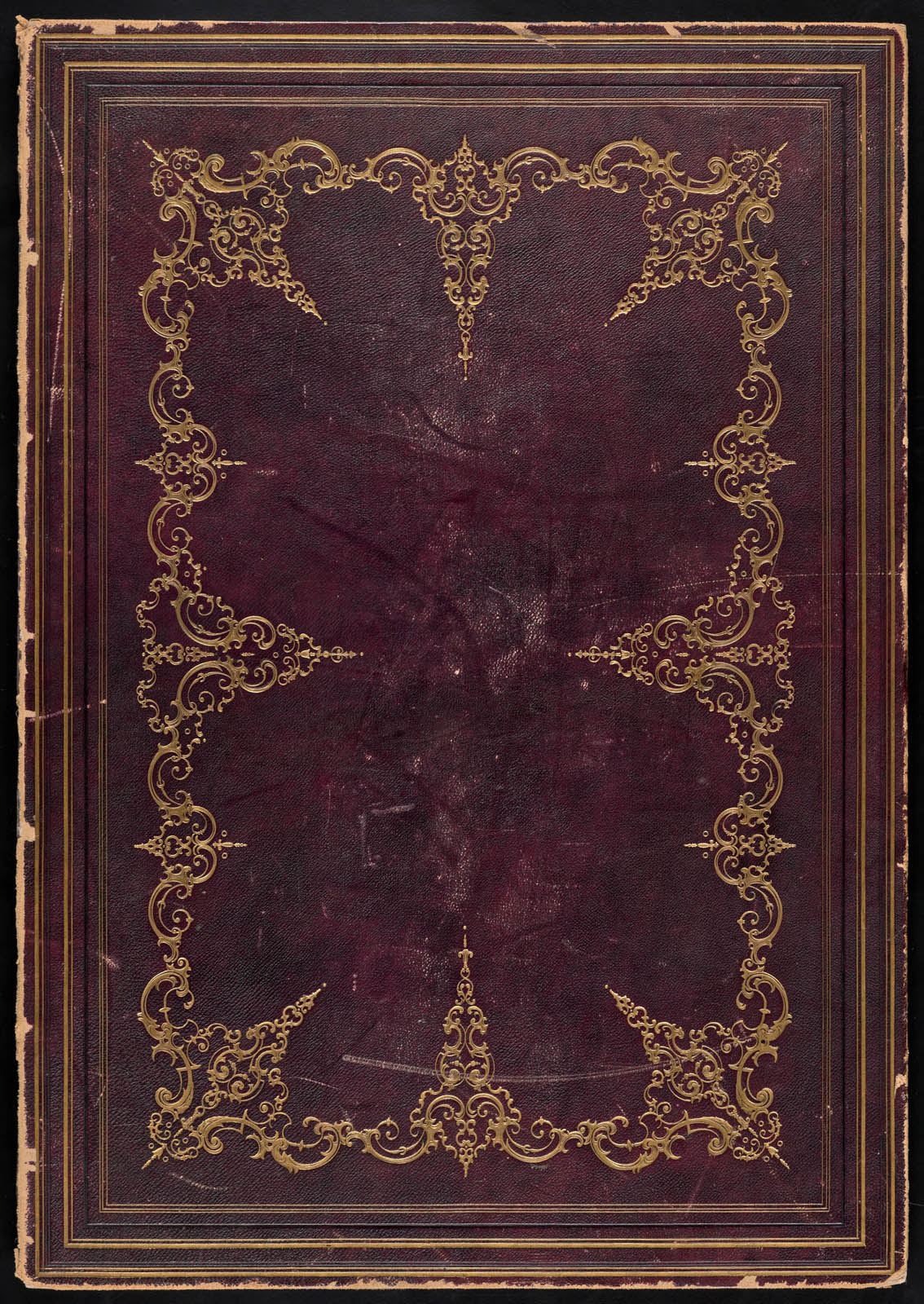
 

Hill & Adamson (Scottish, active 1843-1847) Robert Adamson (Scottish, 1821-1848) David Octavius Hill (Scottish, 1802-1870) '100 Calotypes by D. O. Hill, R.S.A., and R. Adamson album front cover' 1845


Hill & Adamson (Scottish, active 1843-1847)
Robert Adamson (Scottish, 1821-1848)
David Octavius Hill (Scottish, 1802-1870)
100 Calotypes by D. O. Hill, R.S.A., and R. Adamson album front cover
1845
60.9 x 43.1cm
Hill & Adamson Photography Collection
Gernsheim Collection
Harry Ransom Center, The University of Texas at Austin
Public domain


Album of 109 salted paper prints from calotype negatives by Hill & Adamson (Scottish, active 1843-1847). Assembled and sold to marine painter Clarkson Stanfield (English, 1793-1867) in 1845. Six prints tipped in over other prints; these are likely the prints sent by Hill to Stanfield in January 1846.


The Clarkson Stanfield Album: an album of 109 salted paper prints from calotype negatives compiled by Hill & Adamson (Scottish, active 1843-1847), the photographs created by the painter (Hill) and photographer (Adamson) during a four year partnership that only ended with the untimely death of Robert Adamson at the age of 26 years. What a truly beautiful album full of the most meditative portrait photographs that you could ever lay your eyes on.

Reminiscent of the characteristics of Mannerism in the Renaissance, the figures and hands dance in convoluted poses of asymmetrical elegance. Witness the sway of body and sinuousness of hands in James Drummond, Artist, Edinburgh (1843-1845, below) with the oppositional direction of the hands, one pointing up and the other down. Or the directional composition of My Sister (1843-1845, below) where the sitter looks left in profile, the hand clutching a book (probably the bible) points in the other direction, whilst the other hand touches the earth. The use of chiaroscuro is magnificent. Other masterpieces of the photographic art are replete with the sensitivity of both artists: the double profile portrait of Jas & Thomas Duncan; A Study (1843-1844, below), both staring intently out of the pictorial frame, one brother clutching the other’s shoulder and arm along with his spectacles. Wonderfully intense and atmospheric.

“As artistic director, Hill composed each picture, placing his sitters as they might appear in the finished painting. Adamson operated the camera and carried out the chemical manipulations. Hill and Adamson were a perfect team. Hill, twenty years older than Adamson, was trained as a painter and had important connections in artistic and social circles in Edinburgh; he easily attracted a distinguished clientele to the team’s portrait studio at Adamson’s home, Rock House… Both men had a profound understanding of the way the world would translate into monochrome pictures.”1

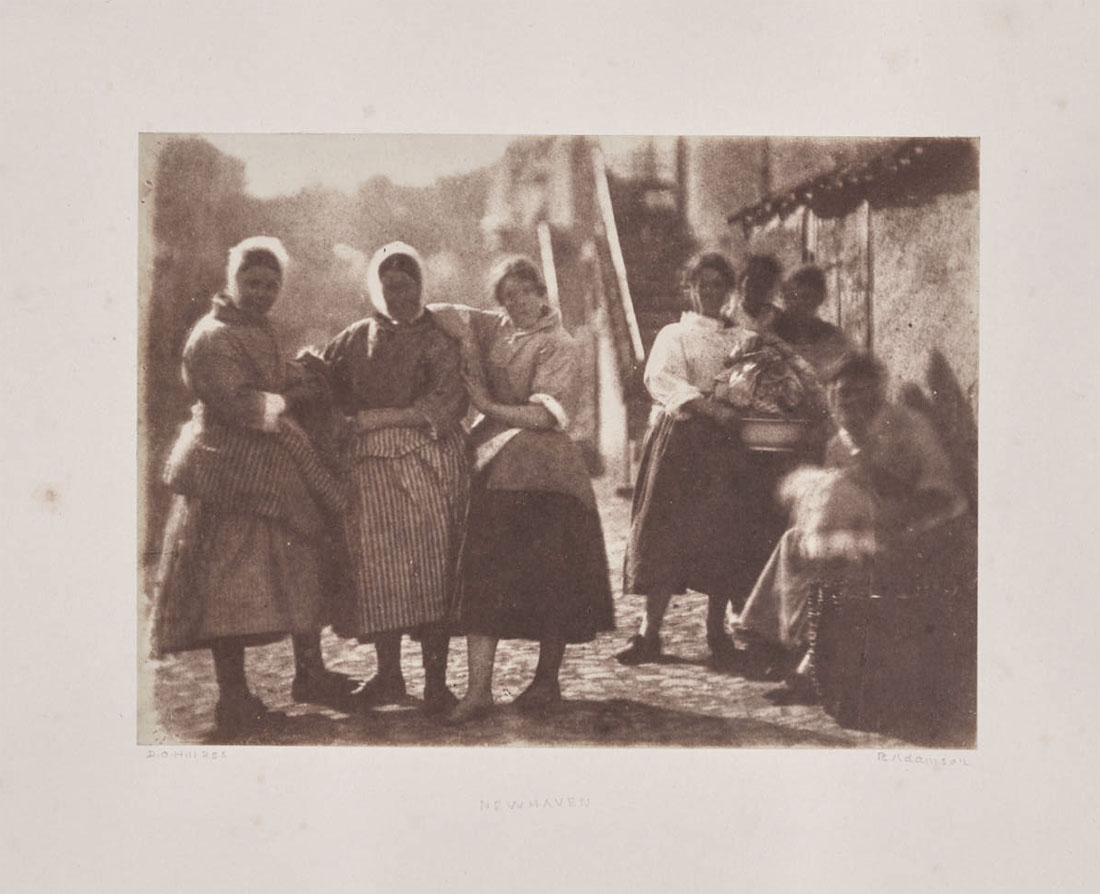
Hill & Adamson also had a profound understanding of how the spirit of a person could be captured by the camera. The Newhaven portraits of fishermen and fishwives – “part of a social-documentary project, the first in photography, that the team carried out in Newhaven and other small but vital fishing towns near Edinburgh”2 – are still to this day some of the most engaging of the early portrait photographs in the history of photography. They capture the character of these people who after all this time still speak to us of their tough life and work through romantic photographs such as the barefooted boy “King Fisher” with his willow basket on a low table or Jeanie Wilson, Newhaven (1843-1845, below) dressed in traditional striped apron and woollen petticoat.

“Hill and Adamson presented Newhaven as a model community bound by tradition, honest labor, and mutual support – qualities emphasised by the careful posing of figures and by the graphic strength and gritty effect of the medium itself.”2

But as Fraser Linklater observes in his article, “‘They put a creel aroond my back and bid me call my haddies’: The Newhaven Fishwives, Preserving Lost Community History and Cultural Transmission Through Generations,” these were staged photographs: “the fact that the Newhaven fisherwomen were wearing ‘gala-dress’ in these pictures reveals it was not an accurate portrayal of them going about their daily work, but instead a picture of a romanticised and imagined community based on some form of semi-truth… Understanding these small details greatly assists us in, once again, grounding their experiences in reality, avoiding polishing their stories to an image that dissuades further thinking and investigation.”

“Nowadays, the village sits subsumed within it’s larger neighbours, Edinburgh and Leith, both in physicality but also, in the last half century culturally…”3

So all we have left of this culture, much like the romanticised photographs of the “Vanishing Race” of the North American Indian by Edward S. Curtis, or the gritty, realist photographs of Skinningrove by Cris Killip eighty or so years later, are these remembrances of times past.

During their brief but prolific partnership Hill & Adamson captured the spirit of these people living in an Industrial Age, photographs that don’t necessarily represent reality but are a performative view of their life and existence at that time (they were performing for the camera, dressed up in their best, posed for effect). But this romanticisation of the people in Hill & Amadson’s Newhaven portraits doesn’t make them any less valuable as representations of that time and place, for that is now all we have.

Indeed, their photographs “show us today some things that we may no longer have access to and give us a window into eyes of real human beings”4 as they go about their daily lives, however staged the photographs might be. Even as evolution would ultimately destroy that way of life forever, so the spirit of past times echoes down to us through these photographs, ripples in a pond caused by a pebble dropped into water.

Dr Marcus Bunyan


1/ Daniel, Malcolm. “David Octavius Hill (1802-1870) and Robert Adamson (1821-1848).” In Heilbrunn Timeline of Art History. New York: The Metropolitan Museum of Art, 2000–. http://www.metmuseum.org/toah/hd/hlad/hd_hlad.htm (October 2004)

2/ Anonymous. “Newhaven Fishwives,” on The Metropolitan Museum of Art website Nd [Online] Cited 31/05/2024

3/ Fraser Linklater. “‘They put a creel aroond my back and bid me call my haddies’: The Newhaven Fishwives, Preserving Lost Community History and Cultural Transmission Through Generations,” on the Scotland Sounds wdebste, 3 September 2020 [Online] Cited 31/05/2024

4/ Shannon Keller O’Loughlin (Choctaw) of the Association on American Indian Affairs (AAIA) in an email to the author, 1 June 2018


Many thankx to the Harry Ransom Center for allowing me to publish the photographs in the posting. Please click on the photographs for a larger version of the image. The photographs in the posting are in the order they appear in the album. You can view all 109 photographs on the Harry Ransom Center website.

PLEASE NOTE: the photographs in the posting are not necessarily the photographs in the exhibition. I have selected my favourite photographs from the online resources of the complete album which are free to download and are in the public domain.


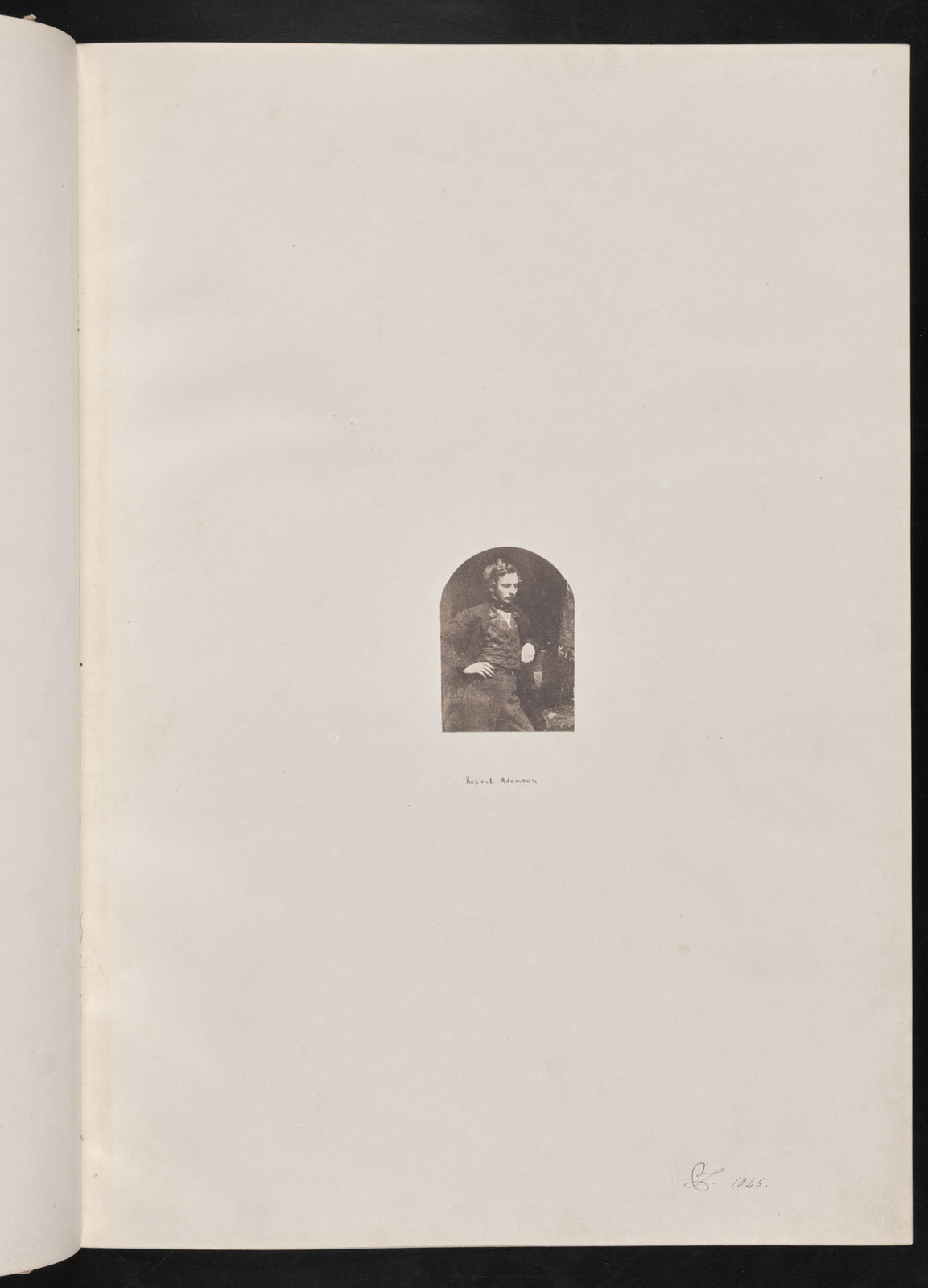
Hill & Adamson (Scottish, active 1843-1847) Robert Adamson (Scottish, 1821-1848) David Octavius Hill (Scottish, 1802-1870) '100 Calotypes by D. O. Hill, R.S.A., and R. Adamson album endpaper' 1845


Hill & Adamson (Scottish, active 1843-1847)
Robert Adamson (Scottish, 1821-1848)
David Octavius Hill (Scottish, 1802-1870)
100 Calotypes by D. O. Hill, R.S.A., and R. Adamson album endpaper
1845
60.9 x 43.1cm
Hill & Adamson Photography Collection
Gernsheim Collection
Harry Ransom Center, The University of Texas at Austin
Public domain
 

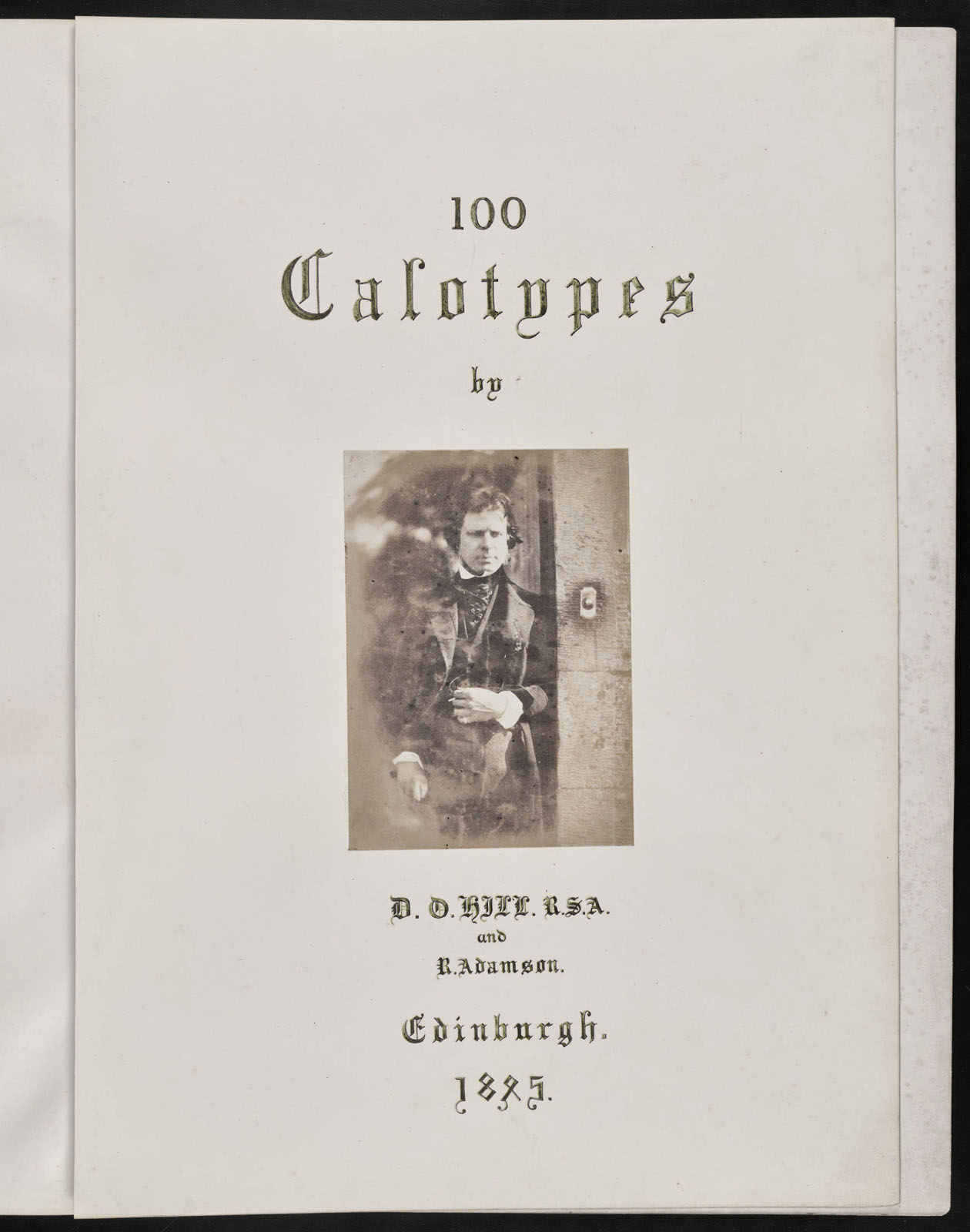
Hill & Adamson (Scottish, active 1843-1847) Robert Adamson (Scottish, 1821-1848) David Octavius Hill (Scottish, 1802-1870) 'Robert Adamson' 1843-1844


Hill & Adamson (Scottish, active 1843-1847)
Robert Adamson (Scottish, 1821-1848)
David Octavius Hill (Scottish, 1802-1870)
Robert Adamson
1843-1844
Salted paper print
9 x 6.4cm (arched top)
Hill & Adamson Photography Collection
Gernsheim Collection
Harry Ransom Center, The University of Texas at Austin
Public domain


Robert Adamson (1821-1848), photography pioneer. Page inscribed with Clarkson Stanfield’s initials and date
 

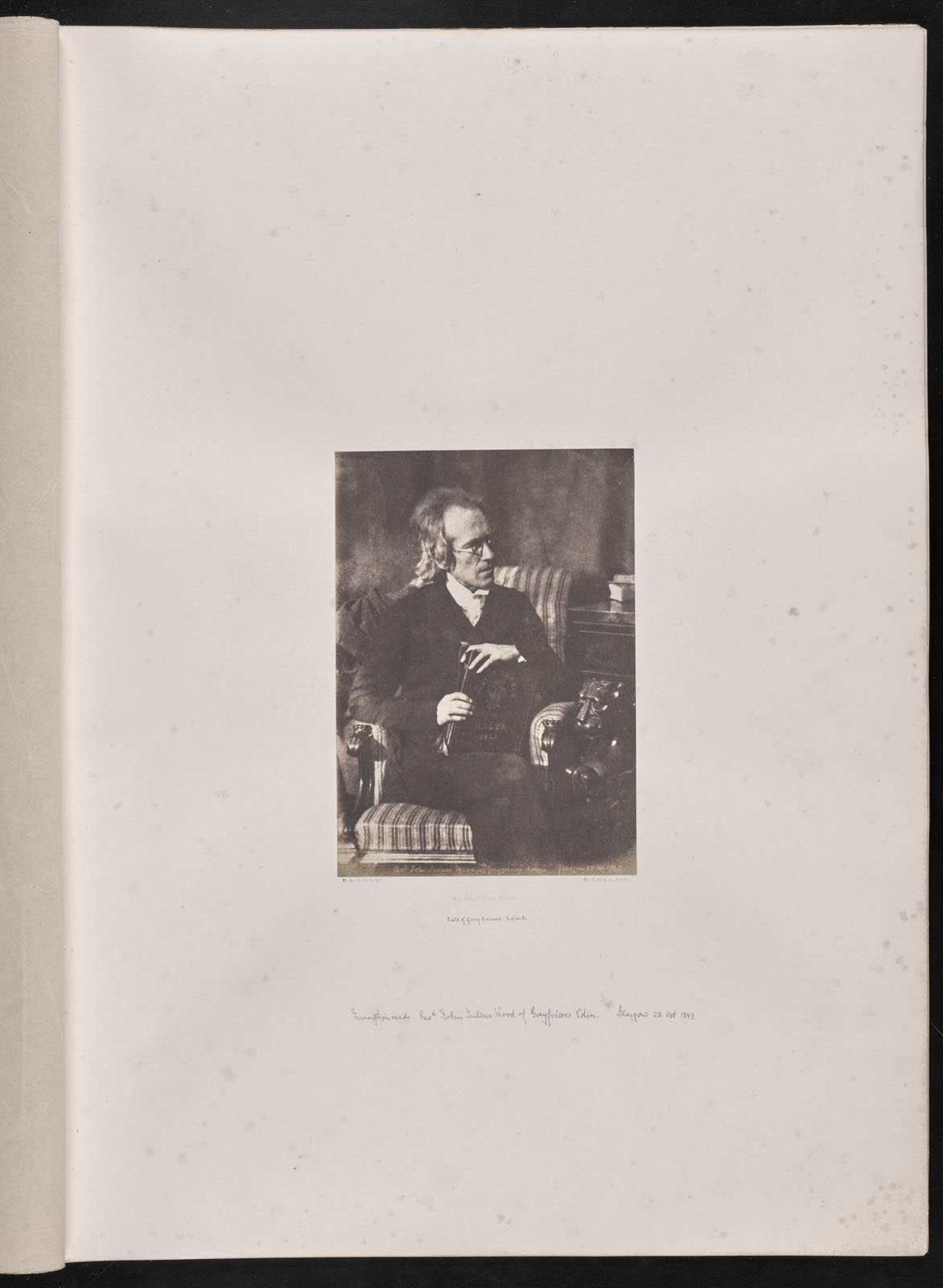
Hill & Adamson (Scottish, active 1843-1847) Robert Adamson (Scottish, 1821-1848) David Octavius Hill (Scottish, 1802-1870) 'D. O. Hill, R.S.A.' 1843


Hill & Adamson (Scottish, active 1843-1847)
Robert Adamson (Scottish, 1821-1848)
David Octavius Hill (Scottish, 1802-1870)
D. O. Hill, R.S.A.
1843
Salted paper print
19.8 x 14.1cm
Hill & Adamson Photography Collection
Gernsheim Collection
Harry Ransom Center, The University of Texas at Austin
Public domain


David Octavius Hill (1802-1870), artist and photography pioneer. Mounted on title page with lettering by Hill
 

Hill & Adamson (Scottish, active 1843-1847) Robert Adamson (Scottish, 1821-1848) David Octavius Hill (Scottish, 1802-1870) 'Rev Jas Julius Wood, Late of Greyfriars, Edinb.' 1843


Hill & Adamson (Scottish, active 1843-1847)
Robert Adamson (Scottish, 1821-1848)
David Octavius Hill (Scottish, 1802-1870)
Rev Jas Julius Wood, Late of Greyfriars, Edinb.
1843
Salted paper print
20 x 14.4cm
Hill & Adamson Photography Collection
Gernsheim Collection
Harry Ransom Center, The University of Texas at Austin
Public domain


Rev. Dr James Julius Wood (1800-1877), Free Church minister. Secondary inscription by Helmut Gernsheim
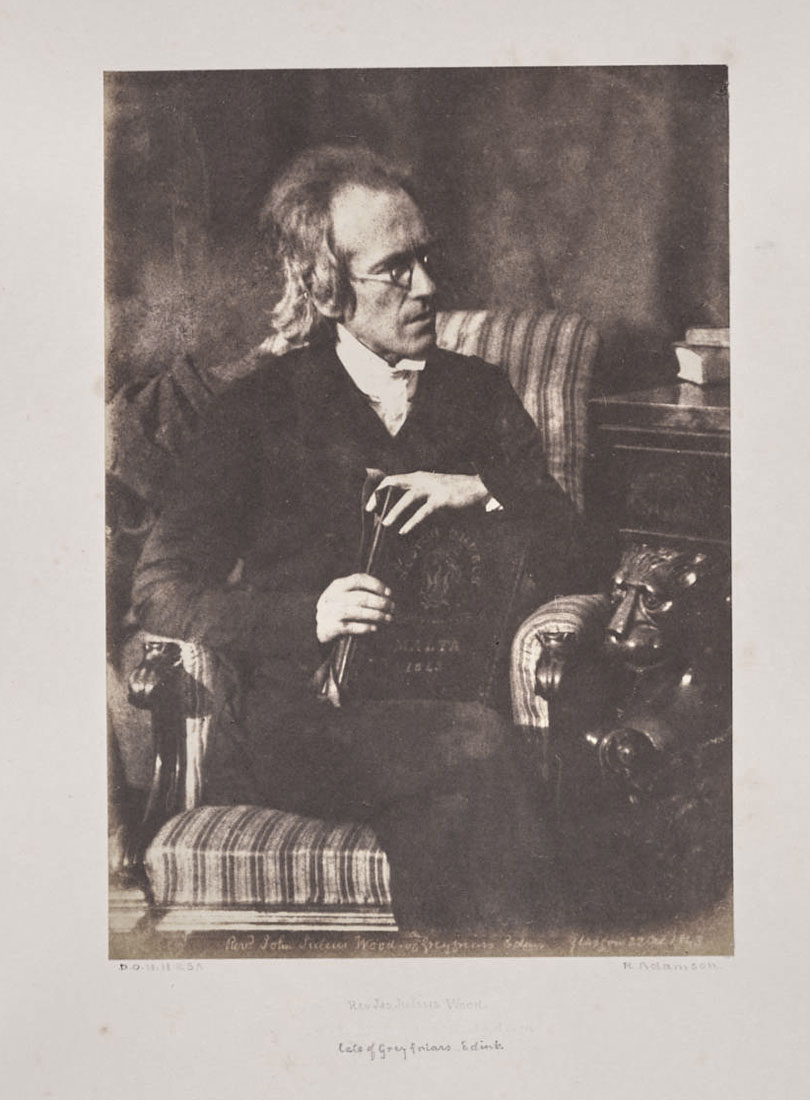
 

Hill & Adamson (Scottish, active 1843-1847) Robert Adamson (Scottish, 1821-1848) David Octavius Hill (Scottish, 1802-1870) 'Rev Jas Julius Wood, Late of Greyfriars, Edinb.' 1843 (detail)


Hill & Adamson (Scottish, active 1843-1847)
Robert Adamson (Scottish, 1821-1848)
David Octavius Hill (Scottish, 1802-1870)
Rev Jas Julius Wood, Late of Greyfriars, Edinb. (detail)
1843
Salted paper print
20 x 14.4cm
Hill & Adamson Photography Collection
Gernsheim Collection
Harry Ransom Center, The University of Texas at Austin
Public domain
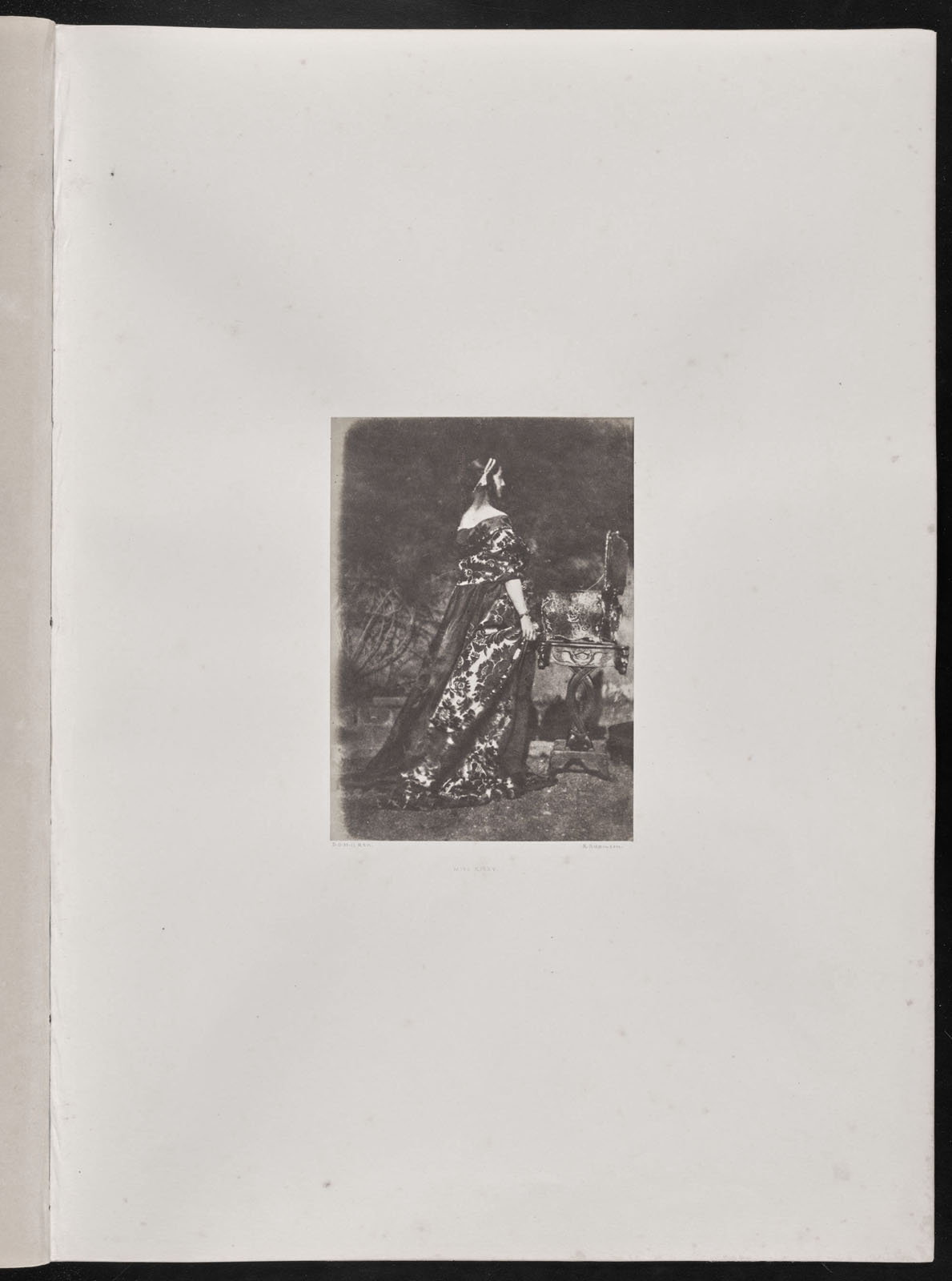
 

Hill & Adamson (Scottish, active 1843-1847) Robert Adamson (Scottish, 1821-1848) David Octavius Hill (Scottish, 1802-1870) 'Miss Rigby' 1843-1845


Hill & Adamson (Scottish, active 1843-1847)
Robert Adamson (Scottish, 1821-1848)
David Octavius Hill (Scottish, 1802-1870)
Miss Rigby
1843-1845
20.3 x 14.4cm
Hill & Adamson Photography Collection
Gernsheim Collection
Harry Ransom Center, The University of Texas at Austin
Public domain


Jane Rigby (1806-1896), sister of Elizabeth, Lady Eastlake (née Rigby)


Don’t miss this unprecedented exhibition of the Clarkson Stanfield Album, a superb volume of early photographs by the celebrated Scottish partnership of Hill & Adamson. Launching their collaboration in Edinburgh in 1843, the established painter David Octavius Hill (1802-1870) and the young photographer Robert Adamson (1821-1848) combined their aesthetic sensitivity and technical brilliance to produce an unparalleled body of portraits, architectural and landscapes scenes, and pioneering social documents. Their work endures today as one of the earliest sustained explorations of photography as an artform.

In the fall of 1845 Hill & Adamson prepared an album of their finest work, arranging over 100 salted paper prints from their calotype negatives into a folio bound in rich purple leather with intricate gold tooling, and sold it to the prominent English marine painter Clarkson Frederick Stanfield (1793-1867). Now known as the Clarkson Stanfield Album, it is one of only a few such unique albums assembled in the years before Adamson’s death at age 26.

More than 175 years later the album is undergoing structural repair, providing the first opportunity since 1845 to view several sections at once before conservators return them to the original binding. The exhibition includes 39 salted paper prints from the Clarkson Stanfield Album, as well as examples of Adamson’s earliest photographic trials and two of Hill’s painted landscapes. The exhibition is drawn entirely from the Gernsheim Collection, acquired by the Ransom Center in 1963.

Text from the Harry Ransom Center website
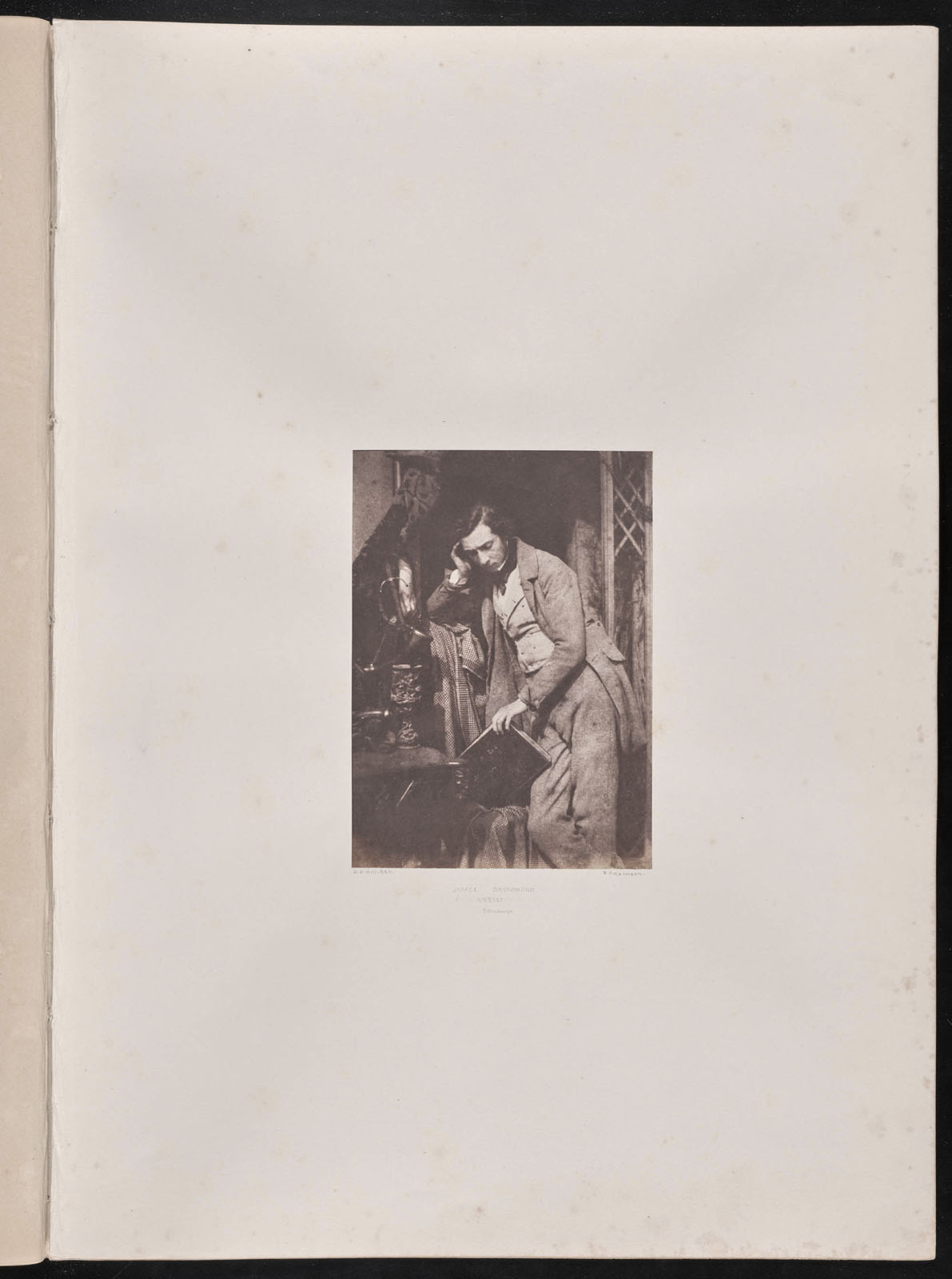
 

Hill & Adamson (Scottish, active 1843-1847) Robert Adamson (Scottish, 1821-1848) David Octavius Hill (Scottish, 1802-1870) 'James Drummond, Artist, Edinburgh' 1843-1845


Hill & Adamson (Scottish, active 1843-1847)
Robert Adamson (Scottish, 1821-1848)
David Octavius Hill (Scottish, 1802-1870)
James Drummond, Artist, Edinburgh
1843-1845
Salted paper print
20 x 14.4cm
Hill & Adamson Photography Collection
Gernsheim Collection
Harry Ransom Center, The University of Texas at Austin
Public domain


James Drummond (1816-1877), history painter, Curator of the National Gallery of Scotland
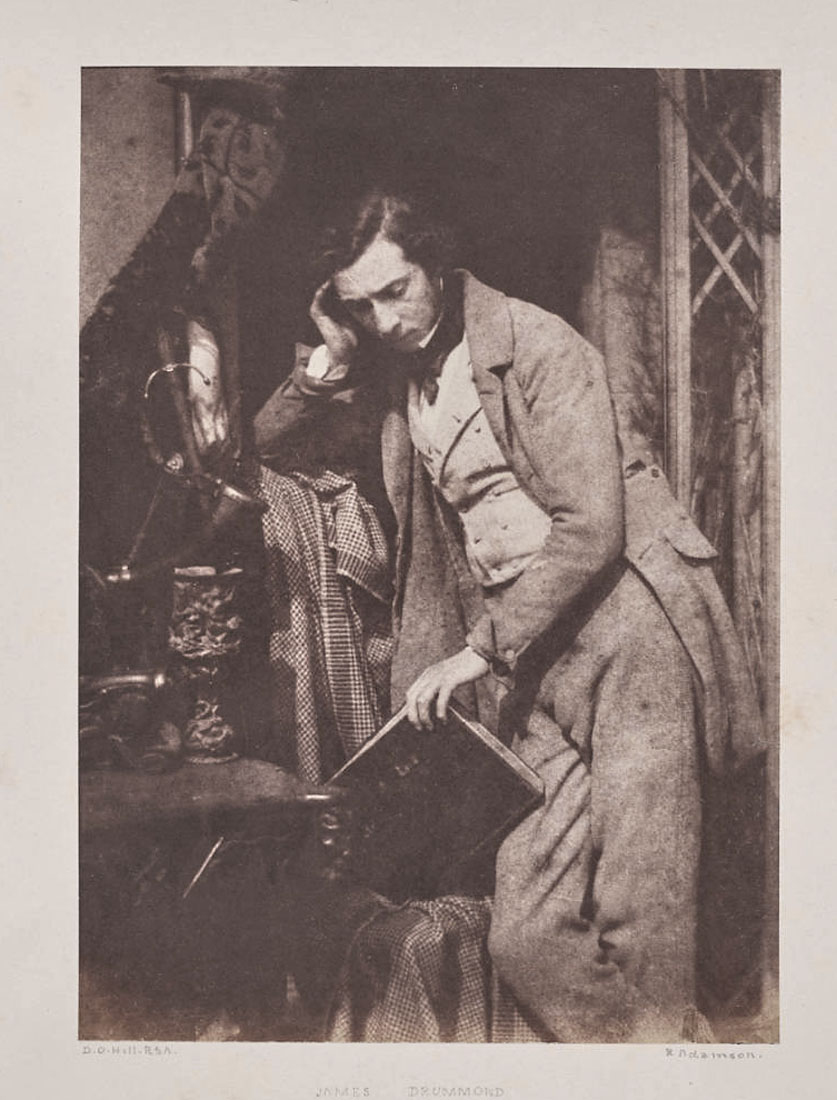
 

Hill & Adamson (Scottish, active 1843-1847) Robert Adamson (Scottish, 1821-1848) David Octavius Hill (Scottish, 1802-1870) 'James Drummond, Artist, Edinburgh' 1843-1845 (detail)


Hill & Adamson (Scottish, active 1843-1847)
Robert Adamson (Scottish, 1821-1848)
David Octavius Hill (Scottish, 1802-1870)
James Drummond, Artist, Edinburgh (detail)
1843-1845
Salted paper print
20 x 14.4cm
Hill & Adamson Photography Collection
Gernsheim Collection
Harry Ransom Center, The University of Texas at Austin
Public domain
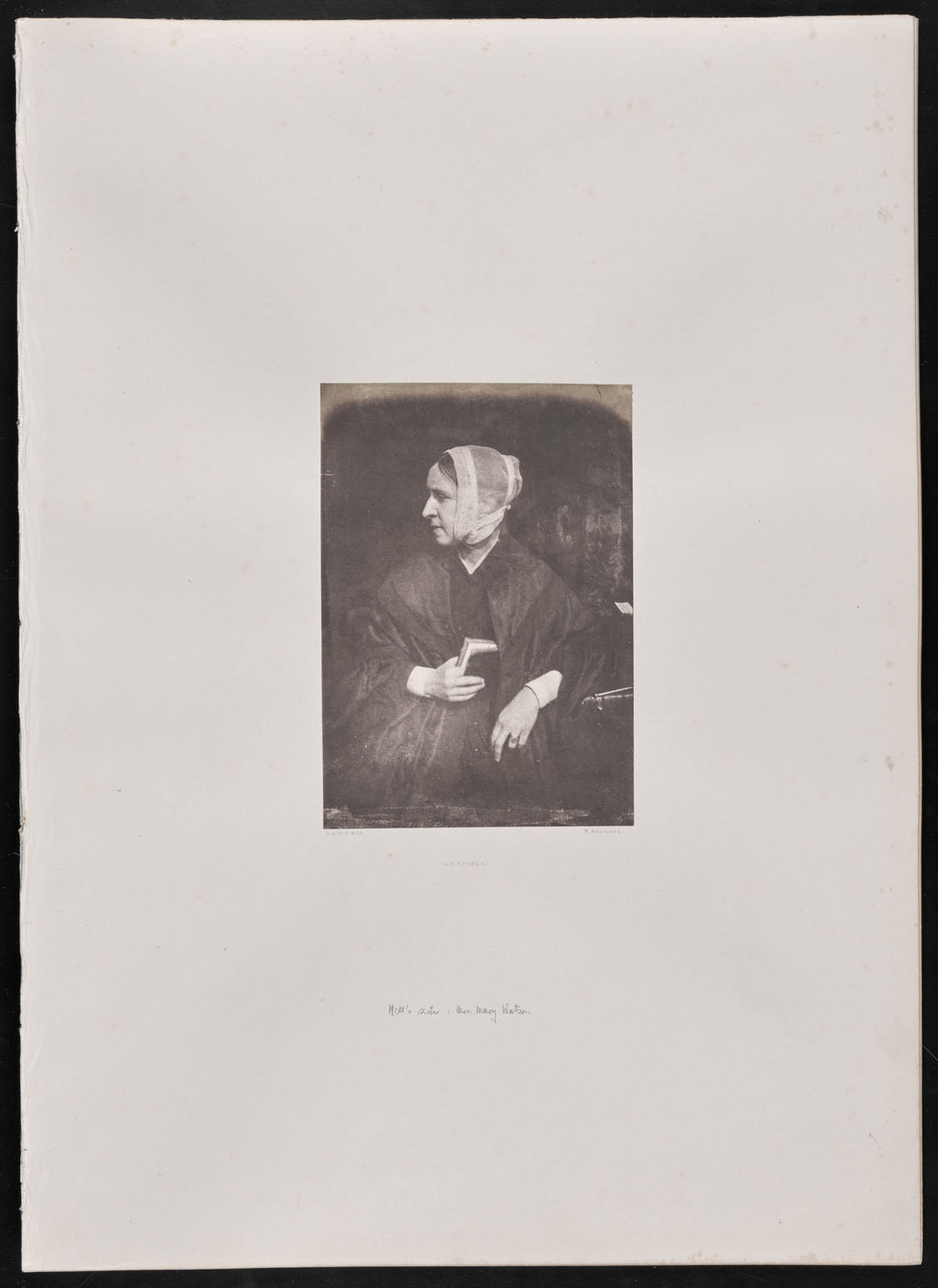
 

Hill & Adamson (Scottish, active 1843-1847) Robert Adamson (Scottish, 1821-1848) David Octavius Hill (Scottish, 1802-1870) 'My Sister' 1843-1845


Hill & Adamson (Scottish, active 1843-1847)
Robert Adamson (Scottish, 1821-1848)
David Octavius Hill (Scottish, 1802-1870)
My Sister
1843-1845
21.1 x 14.8cm
Hill & Adamson Photography Collection
Gernsheim Collection
Harry Ransom Center, The University of Texas at Austin
Public domain


Mary Watson (née Hill), sister of David Octavius Hill. Secondary inscription by Helmut Gernsheim


Hill & Adamson (Scottish, active 1843-1847) Robert Adamson (Scottish, 1821-1848) David Octavius Hill (Scottish, 1802-1870) 'My Sister' 1843-1845 (detail)


Hill & Adamson (Scottish, active 1843-1847)
Robert Adamson (Scottish, 1821-1848)
David Octavius Hill (Scottish, 1802-1870)
My Sister (detail)
1843-1845
21.1 x 14.8cm
Hill & Adamson Photography Collection
Gernsheim Collection
Harry Ransom Center, The University of Texas at Austin
Public domain
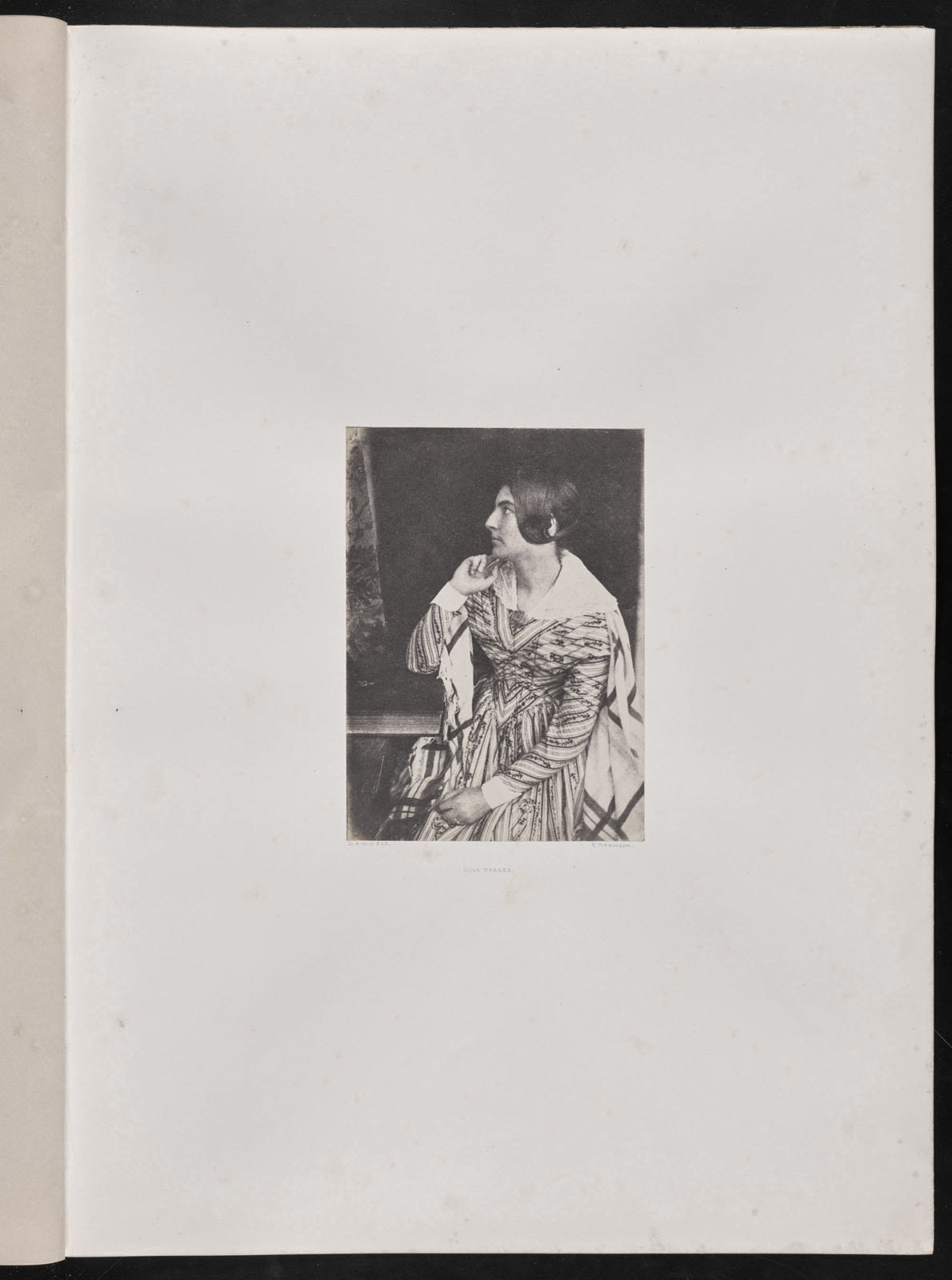
 

Hill & Adamson (Scottish, active 1843-1847) Robert Adamson (Scottish, 1821-1848) David Octavius Hill (Scottish, 1802-1870) 'Miss Parker' 1844-1845


Hill & Adamson (Scottish, active 1843-1847)
Robert Adamson (Scottish, 1821-1848)
David Octavius Hill (Scottish, 1802-1870)
Miss Parker
1844-1845
20 x 14.4cm
Hill & Adamson Photography Collection
Gernsheim Collection
Harry Ransom Center, The University of Texas at Austin
Public domain


Possibly Jane Sophia Barker (née Harden) (1807-1876)
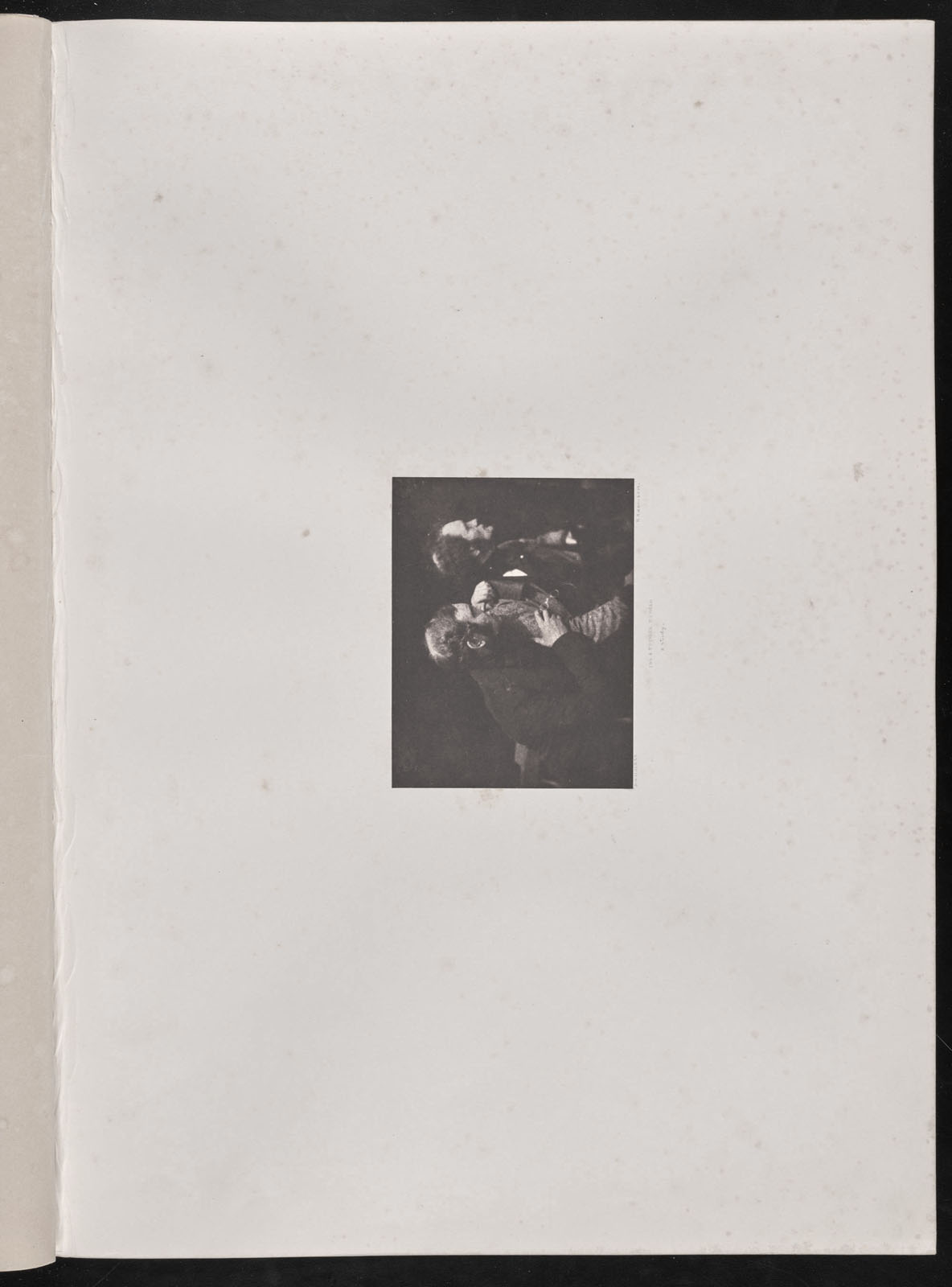
 

Hill & Adamson (Scottish, active 1843-1847) Robert Adamson (Scottish, 1821-1848) David Octavius Hill (Scottish, 1802-1870) 'Jas & Thomas Duncan; A Study' 1843-1844


Hill & Adamson (Scottish, active 1843-1847)
Robert Adamson (Scottish, 1821-1848)
David Octavius Hill (Scottish, 1802-1870)
Jas & Thomas Duncan; A Study
1843-1844
11.5 x 14.9cm
Hill & Adamson Photography Collection
Gernsheim Collection
Harry Ransom Center, The University of Texas at Austin
Public domain


James Duncan; Thomas Duncan (1807-1845), artist


Hill & Adamson (Scottish, active 1843-1847) Robert Adamson (Scottish, 1821-1848) David Octavius Hill (Scottish, 1802-1870) 'Jas & Thomas Duncan; A Study' 1843-1844 (detail)


Hill & Adamson (Scottish, active 1843-1847)
Robert Adamson (Scottish, 1821-1848)
David Octavius Hill (Scottish, 1802-1870)
Jas & Thomas Duncan; A Study (detail)
1843-1844
11.5 x 14.9cm
Hill & Adamson Photography Collection
Gernsheim Collection
Harry Ransom Center, The University of Texas at Austin
Public domain


“100 Calotypes by D. O. Hill, R.S.A., and R. Adamson,” commonly known as the Clarkson Stanfield Album, is a unique album assembled and sold to English marine painter Clarkson Stanfield (1793-1867) before October 1, 1845. The folio, bound in purple leather with gold tooling, contains a total of 109 salted paper prints from calotype negatives made between 1843 and 1845. As originally assembled, the album begins with portraits of Adamson and Hill, followed by 100 plates and a final photograph, perhaps serving as a visual epilogue or postscript. The major themes of Hill & Adamson’s work are represented: the 100 principal plates comprise, in this order, 44 portraits, including two presbytery groups; 10 scenes in Greyfriars churchyard; 2 scenes at Leith; 31 photographs of fisherfolk, mainly at Newhaven; 1 photograph at St. Andrews; and 11 views of monuments and architecture in and around Edinburgh. Titles of most plates are inscribed in Hill’s hand. Six additional salted paper prints were added later; these are likely the prints sent by Hill to Stanfield in January 1846, added to the album by Stanfield. Of these six prints, five are Newhaven photographs and one is a portrait. This is one of Hill & Adamson’s earliest albums, and one of only a few assembled in Adamson’s lifetime. It provides a view into their partnership at its midpoint, and into which images they understood to be some of their strongest thus far. As an object, the album offers a sense of what the partners may have envisioned for other deluxe volumes they announced but never realised. The album is part of the Gernsheim Collection, purchased in 1963.

While the title suggests there are 100 images contained in the album, there are actually 109 salted paper prints, most of which are accompanied by inscriptions provided by either Hill or Adamson. The images are of prominent men and women of the day, friends and acquaintances of Hill and Adamson, and scenes of Edinburgh, Newhaven and St. Andrews, and Scottish architecture and art. The nine additional images can explained in several ways. First, six images cover/originally covered other images. It appears that Hill and Adamson did not like their original choice of several images and later mounted different images over the originals. In most cases, the covered image is very similar to another image in the album (compare 964:0048:0044, a covered image, with 964:0048:0045). Second, the first two images in the book appear on the half-title and title page, and therefore may not have been counted as part of the “100” referred to on the title page. And, a third explanation may be that the cover for the album was printed before Hill and Adamson’s selection of images to be included.

Text from the Harry Ransom Center website
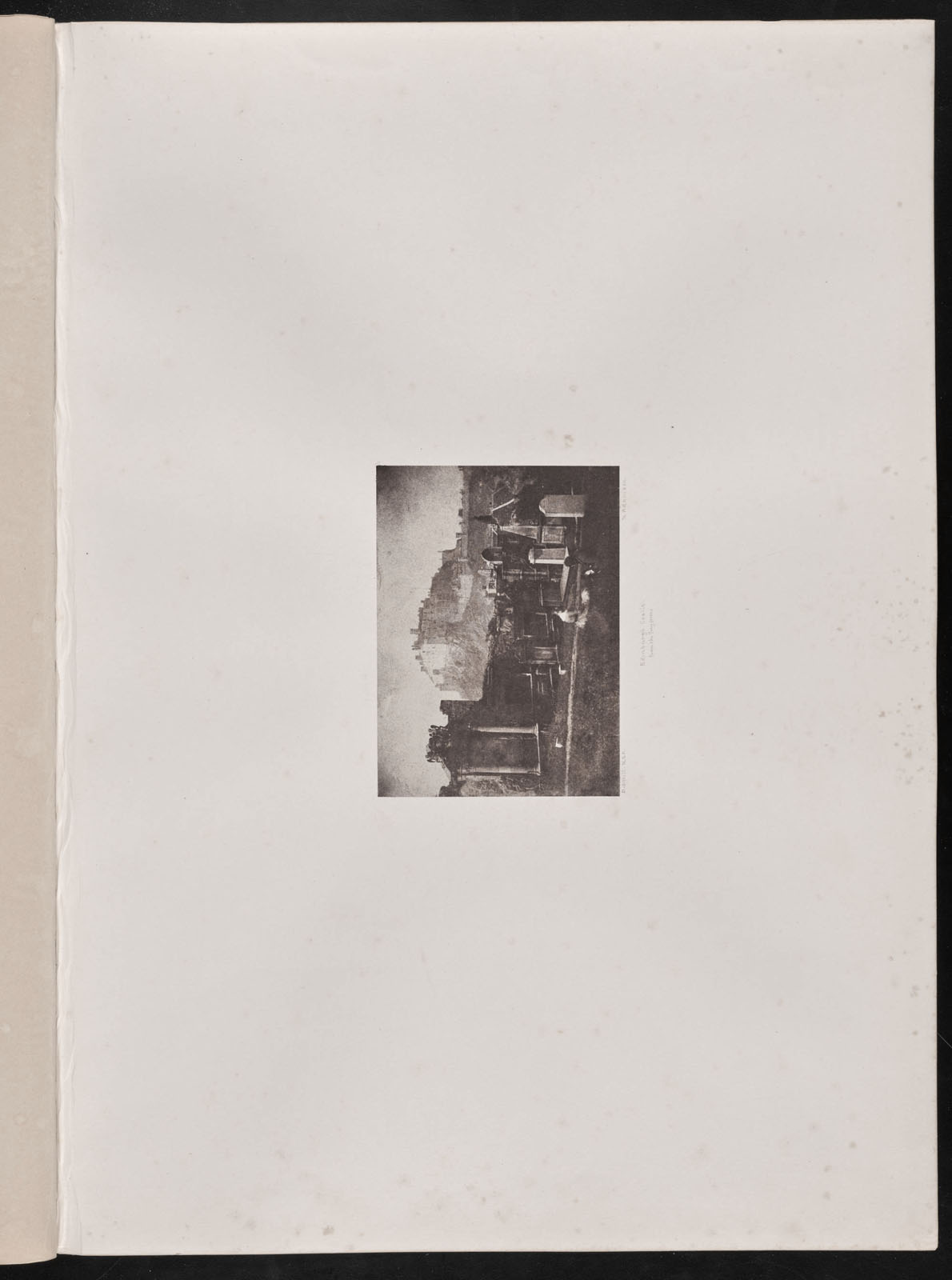
 

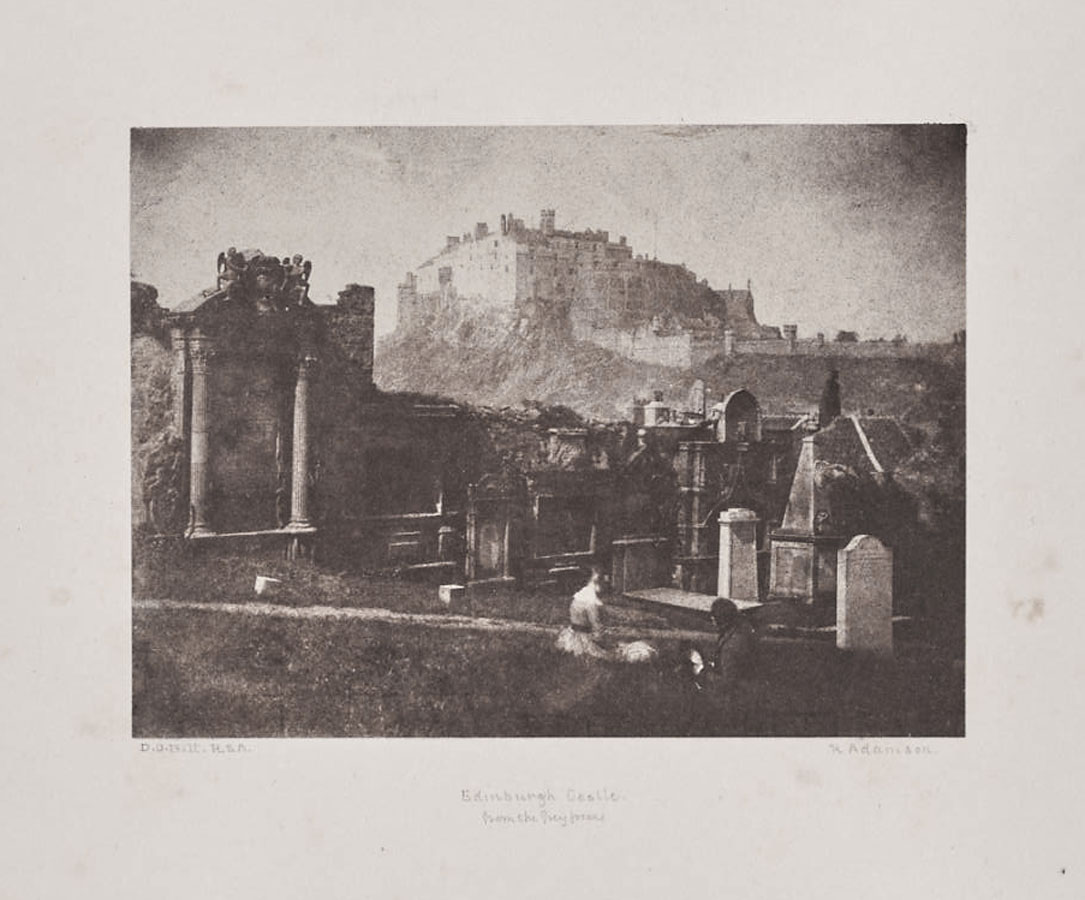
Hill & Adamson (Scottish, active 1843-1847) Robert Adamson (Scottish, 1821-1848) David Octavius Hill (Scottish, 1802-1870) 'Edinburgh Castle from the Greyfriars' 1843-1845


Hill & Adamson (Scottish, active 1843-1847)
Robert Adamson (Scottish, 1821-1848)
David Octavius Hill (Scottish, 1802-1870)
Edinburgh Castle from the Greyfriars
1843-1845
11.6 x 15.9cm
Hill & Adamson Photography Collection
Gernsheim Collection
Harry Ransom Center, The University of Texas at Austin
Public domain


Greyfriars Churchyard; a group of monuments including the Chalmers and Jackson Monuments, with Edinburgh Castle in the background
 

Hill & Adamson (Scottish, active 1843-1847) Robert Adamson (Scottish, 1821-1848) David Octavius Hill (Scottish, 1802-1870) 'Edinburgh Castle from the Greyfriars' 1843-1845 (detail)


Hill & Adamson (Scottish, active 1843-1847)
Robert Adamson (Scottish, 1821-1848)
David Octavius Hill (Scottish, 1802-1870)
Edinburgh Castle from the Greyfriars (detail)
1843-1845
11.6 x 15.9cm
Hill & Adamson Photography Collection
Gernsheim Collection
Harry Ransom Center, The University of Texas at Austin
Public domain


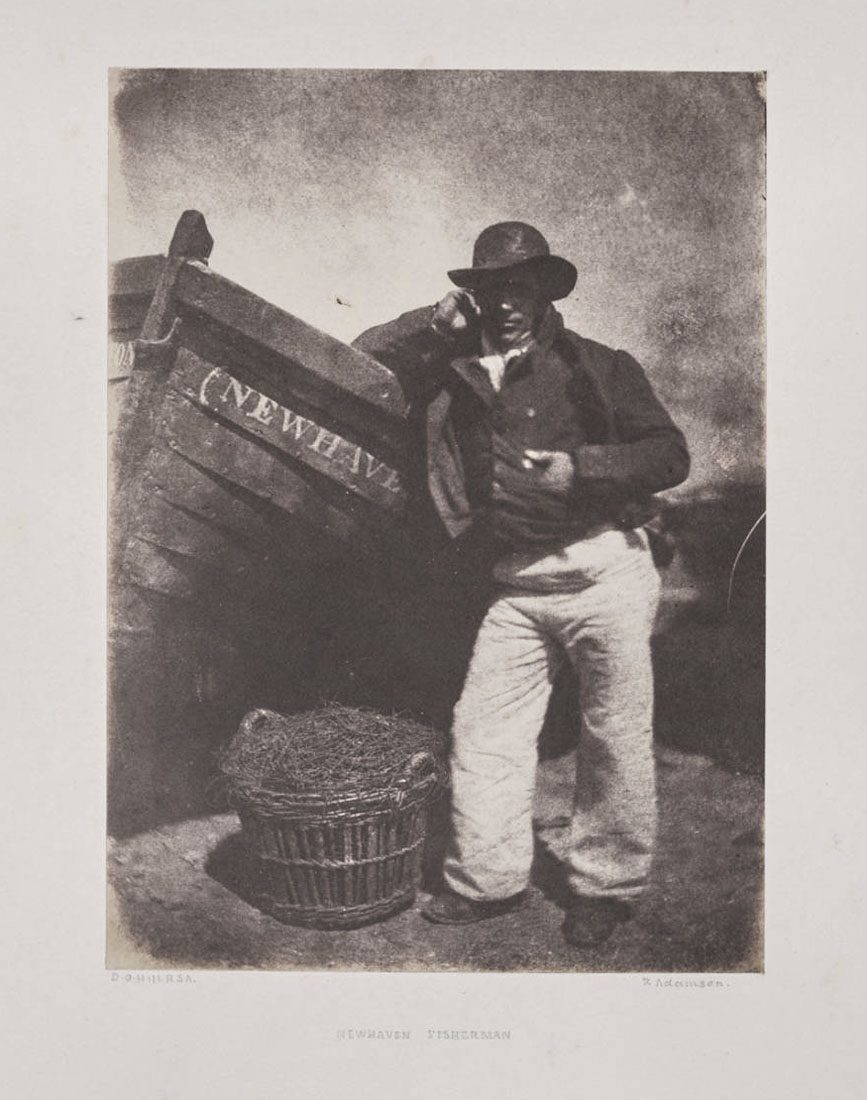
Hill & Adamson (Scottish, active 1843-1847) Robert Adamson (Scottish, 1821-1848) David Octavius Hill (Scottish, 1802-1870) 'Newhaven Fisherman' 1843-1845


Hill & Adamson (Scottish, active 1843-1847)
Robert Adamson (Scottish, 1821-1848)
David Octavius Hill (Scottish, 1802-1870)
Newhaven Fisherman
1843-1845
20.1 x 14.7cm
Hill & Adamson Photography Collection
Gernsheim Collection
Harry Ransom Center, The University of Texas at Austin
Public domain


James or “Sandy” Linton
 

Hill & Adamson (Scottish, active 1843-1847) Robert Adamson (Scottish, 1821-1848) David Octavius Hill (Scottish, 1802-1870) 'Newhaven Fisherman' 1843-1845 (detail)


Hill & Adamson (Scottish, active 1843-1847)
Robert Adamson (Scottish, 1821-1848)
David Octavius Hill (Scottish, 1802-1870)
Newhaven Fisherman (detail)
1843-1845
20.1 x 14.7cm
Hill & Adamson Photography Collection
Gernsheim Collection
Harry Ransom Center, The University of Texas at Austin
Public domain


Hill & Adamson (Scottish, active 1843-1847) Robert Adamson (Scottish, 1821-1848) David Octavius Hill (Scottish, 1802-1870) 'Jeanie Wilson & Annie Linton, Newhaven' 1843-1845


Hill & Adamson (Scottish, active 1843-1847)
Robert Adamson (Scottish, 1821-1848)
David Octavius Hill (Scottish, 1802-1870)
Jeanie Wilson & Annie Linton, Newhaven
1843-1845
19.2 x 14.7cm
Hill & Adamson Photography Collection
Gernsheim Collection
Harry Ransom Center, The University of Texas at Austin
Public domain


Hill & Adamson (Scottish, active 1843-1847) Robert Adamson (Scottish, 1821-1848) David Octavius Hill (Scottish, 1802-1870) 'Jeanie Wilson & Annie Linton, Newhaven' 1843-1845 (detail)


Hill & Adamson (Scottish, active 1843-1847)
Robert Adamson (Scottish, 1821-1848)
David Octavius Hill (Scottish, 1802-1870)
Jeanie Wilson & Annie Linton, Newhaven (detail)
1843-1845
19.2 x 14.7cm
Hill & Adamson Photography Collection
Gernsheim Collection
Harry Ransom Center, The University of Texas at Austin
Public domain


David Octavius Hill (1802–1870) and Robert Adamson (1821-1848)

Malcolm Daniel

In the mid-1840s, the Scottish painter-photographer team of Hill and Adamson produced the first substantial body of self-consciously artistic work using the newly invented medium of photography. William Henry Fox Talbot’s patent restrictions on his “calotype” or “Talbotype” process did not apply in Scotland, and, in fact, Talbot encouraged its use there. Among the fellow scientists with whom he corresponded and to whom he sent examples of the new art, was the physicist Sir David Brewster, principal of the United Colleges of Saint Salvator and Saint Leonard at Saint Andrews University, just north of Edinburgh. By 1841, Brewster and his colleague John Adamson, curator of the College Museum and professor of chemistry, were experimenting with the calotype process, and the following year they instructed Adamson’s younger brother Robert in the techniques of paper photography. By May 1843, Robert Adamson, then just twenty-one years old, was prepared to move to Edinburgh and set up shop as the city’s first professional calotypist.

As important as Brewster’s introduction of Adamson to the calotype was, another introduction proved even more consequential. Just weeks after Adamson had established himself in Edinburgh, Brewster saw an opportunity to send business his way. On May 18, 1843, the Church of Scotland met in General Assembly amid great dispute over the role of the crown and landowners in appointing ministers. As the Assembly opened, the moderator, Rev. Dr. David Welsh, read an Act of Protest and led 155 ministers – more than one-third of those present – from the Assembly and through the streets of Edinburgh to Tanfield Hall, where in the days that followed they signed a Deed of Demission, resigning their positions and livelihoods, and established the Free Church of Scotland. Their act of conscience, at great personal risk and sacrifice, seemed heroic to many who were present, including Sir David Brewster and David Octavius Hill.

Hill was a locally prominent and well-connected painter of romantic landscapes and secretary of the Royal Scottish Academy of Fine Arts in Edinburgh. With the encouragement of the new Free Church, he resolved to paint a large historical painting of the signing of the Deed of Demission and, as was often the case for works of this nature, proposed to finance his painting through the sale of reproductive engravings of the finished work. In his advertisement for the engravings, issued within a week of the Disruption (as the upheaval was called), Hill wrote, “The Picture, the execution of which, it is expected will occupy the greater portion of two or three years, is intended to supply an authentic commemoration of this great event in the history of the Church … will contain Portraits, from actual sittings, in as far as these can be obtained, of the most venerable fathers, and others of the more eminent and distinguished ministers and elders.”

Brewster, sensing that Hill’s intention to sketch each of the several hundred ministers before they returned to the far corners of Scotland would be close to impossible, suggested that the painter use the services of the newly established Adamson to make photographic sketches instead. “I got hold of the artist,” Brewster wrote to Talbot in early June, “showed him the Calotype, & the eminent advantage he might derive from it in getting likenesses of all the principal characters before they were dispersed to their respective homes. He was at first incredulous, but went to Mr. Adamson, and arranged with him preliminaries for getting all the necessary portraits.” Within weeks Hill was completely won over, and the two were working seamlessly in partnership. As artistic director, Hill composed each picture, placing his sitters as they might appear in the finished painting.

Adamson operated the camera and carried out the chemical manipulations. Hill and Adamson were a perfect team. Hill, twenty years older than Adamson, was trained as a painter and had important connections in artistic and social circles in Edinburgh; he easily attracted a distinguished clientele to the team’s portrait studio at Adamson’s home, Rock House. Most of all, he possessed a geniality, a “suavity of manner and absence of all affectation,” that immediately set people at ease and permitted him to pose his sitters without losing their natural sense of posture and expression. Adamson was young but had learned his lessons well. He was a consummate technician, excelling in – and even improving upon – the various optical and chemical procedures developed by Talbot. Both men had a profound understanding of the way the world would translate into monochrome pictures.

If in May Hill had been incredulous, by June he was convinced; by July he was proud to exhibit the first photographs as “preliminary studies and sketches” for his picture, and by the end of the year he and his partner had photographed nearly all the figures who would have a place in his grand painting. Their hundreds of preparatory “sketches” ranged from single portraits to groups of as many as twenty-five ministers posed as Hill envisioned them in his ambitious composition. Some portraits, such as that of Thomas Chalmers, first moderator of the Free Church, were used as direct models for the finished work. However, at each sitting, Hill and Adamson made numerous photographs in various poses, and many photographs of the ministers have no direct correspondence with the painting. Still other portraits, of people who were not present for the signing of the Deed of Demission – but whom Hill apparently thought should have been – were used as models for the painting.

“The pictures produced are as Rembrandt’s but improved,” wrote the watercolorist John Harden on first seeing Hill and Adamson’s calotypes in November 1843, “so like his style & the oldest & finest masters that doubtless a great progress in Portrait painting & effect must be the consequence.” In actuality, though, it was so easy to make the portrait “sketches” by means of photography that Hill’s painting was ultimately overburdened by a surfeit of recognisable faces: 450 names appear on his key to the painting. The final composition – not completed for two decades and as dull a work as one can imagine – lacks not only the fiery dynamism of Hill’s first sketches of the event but also the immediacy and graphic power of the photographs that were meant to serve it.

By August 1844, Hill and Adamson clearly understood the value of their calotypes as works of art in their own right and decided to expand their collaboration far beyond the original mission, announcing a forthcoming series of volumes illustrated with photographs of subjects other than the ministers of the Free Church: The Fishermen and Women of the Firth of Forth; Highland Character and Costume; Architectural Structures of Edinburgh; Architectural Structures of Glasgow, &c.; Old Castles, Abbeys, &c. in Scotland; and Portraits of Distinguished Scotchmen. Although these titles were never issued as published volumes, photographs intended for each survive, and those made in the small fishing town of Newhaven are a particularly noteworthy group.

In a time as pervaded as ours is by photographic imagery, it is difficult to conceive that within the first few weeks of their collaboration, Hill and Adamson made more photographs than the two together had ever seen. In four-and-a-half years and nearly 3,000 images, they pioneered the aesthetic terrain of photography and created a body of work that still ranks among the highest achievements of photographic portraiture. Their collaboration ended not because of any artistic falling out between the partners but rather because Adamson, sickly from childhood, fell ill in late 1847 and returned to Saint Andrews to be cared for by his family. He died in January 1848.

Daniel, Malcolm. “David Octavius Hill (1802-1870) and Robert Adamson (1821-1848).” In Heilbrunn Timeline of Art History. New York: The Metropolitan Museum of Art, 2000–. http://www.metmuseum.org/toah/hd/hlad/hd_hlad.htm (October 2004)
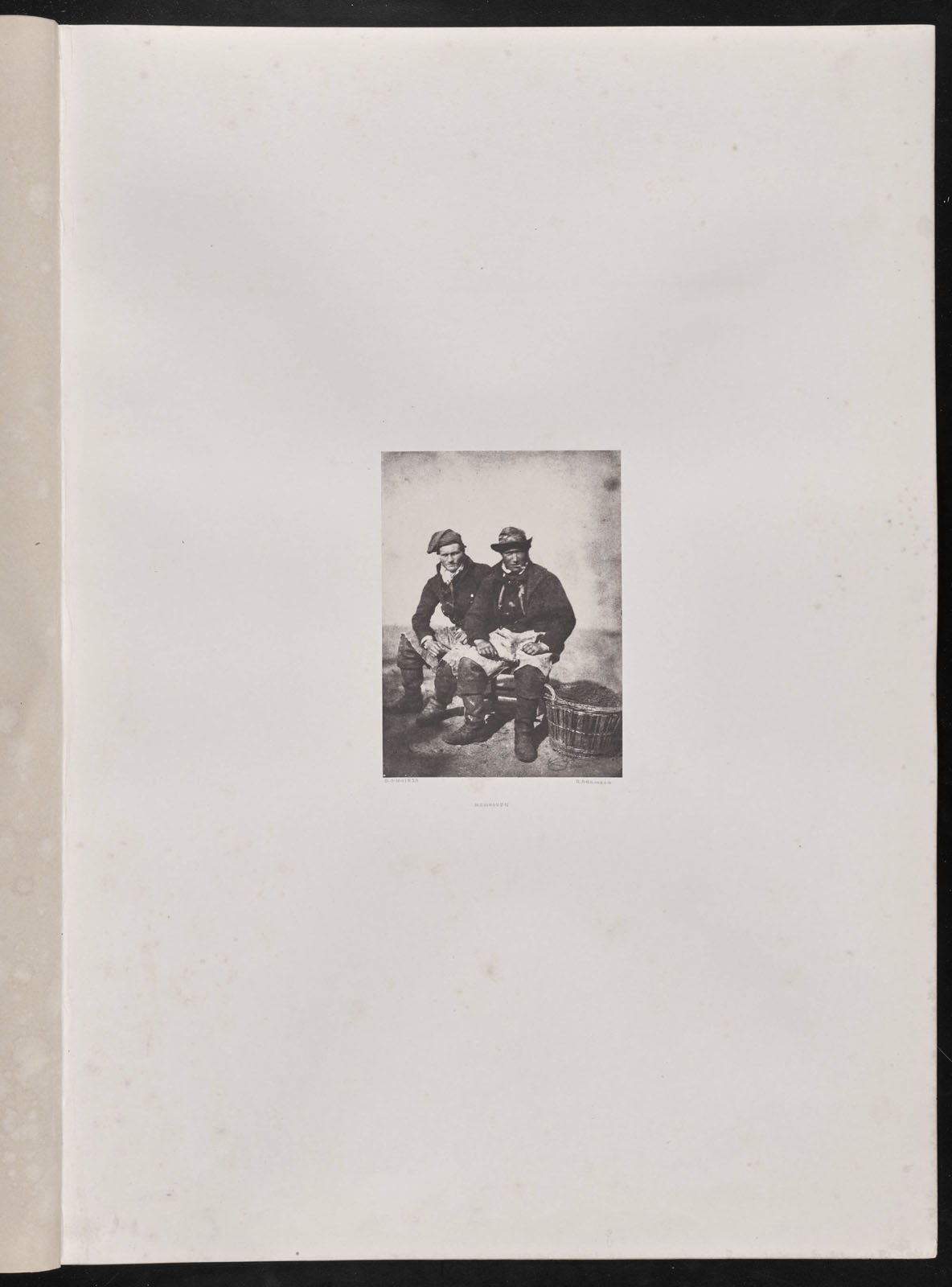
 

Hill & Adamson (Scottish, active 1843-1847) Robert Adamson (Scottish, 1821-1848) David Octavius Hill (Scottish, 1802-1870) 'Newhaven' 1843-1845


Hill & Adamson (Scottish, active 1843-1847)
Robert Adamson (Scottish, 1821-1848)
David Octavius Hill (Scottish, 1802-1870)
Newhaven
1843-1845
15.6 x 11.5cm
Hill & Adamson Photography Collection
Gernsheim Collection
Harry Ransom Center, The University of Texas at Austin
Public domain


David Young (left); unidentified man


Hill & Adamson (Scottish, active 1843-1847) Robert Adamson (Scottish, 1821-1848) David Octavius Hill (Scottish, 1802-1870) 'Newhaven' 1843-1845 (detail)


Hill & Adamson (Scottish, active 1843-1847)
Robert Adamson (Scottish, 1821-1848)
David Octavius Hill (Scottish, 1802-1870)
Newhaven (detail)
1843-1845
15.6 x 11.5cm
Hill & Adamson Photography Collection
Gernsheim Collection
Harry Ransom Center, The University of Texas at Austin
Public domain
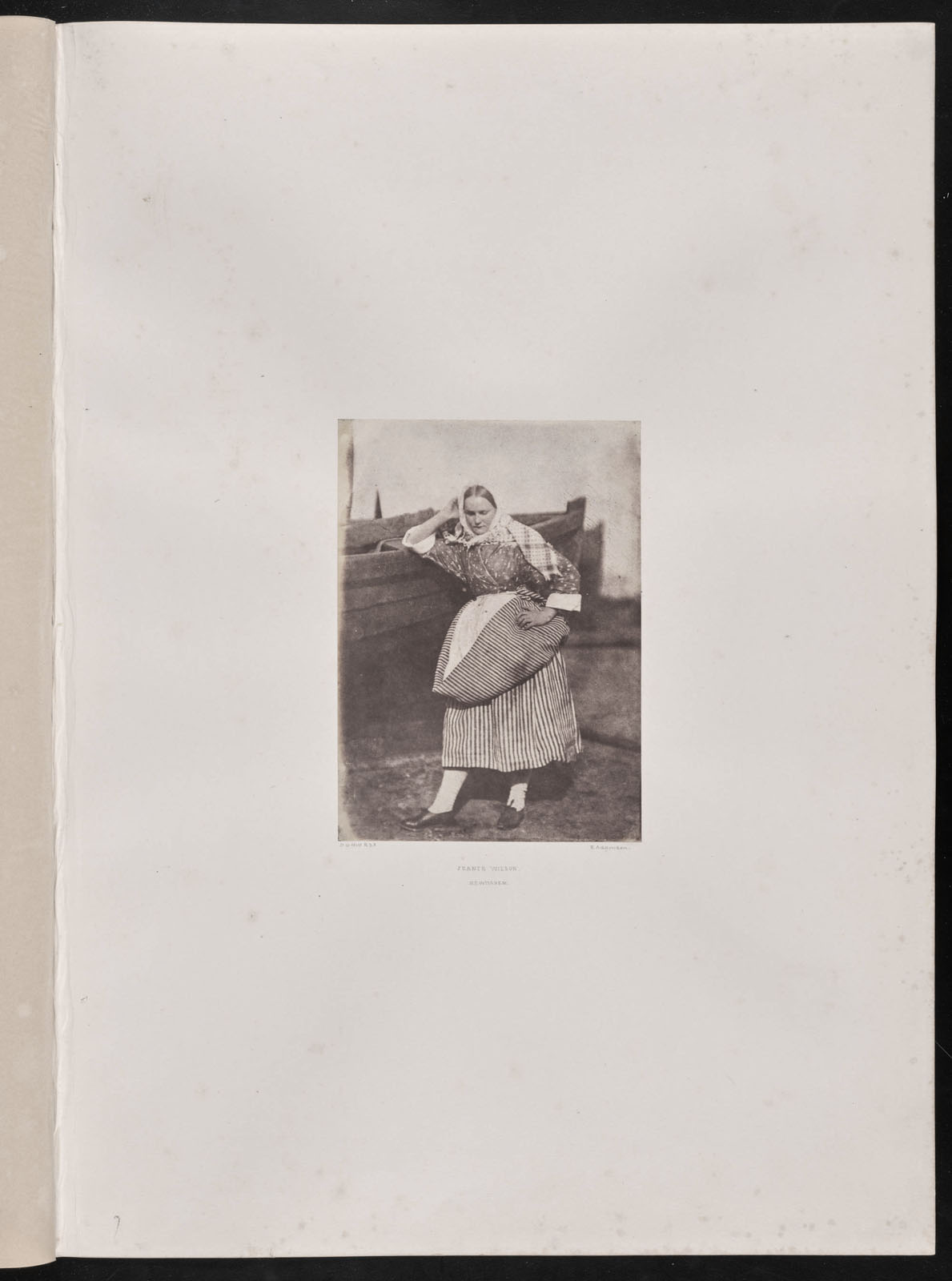
 

Hill & Adamson (Scottish, active 1843-1847) Robert Adamson (Scottish, 1821-1848) David Octavius Hill (Scottish, 1802-1870) 'Jeanie Wilson, Newhaven' 1843-1845


Hill & Adamson (Scottish, active 1843-1847)
Robert Adamson (Scottish, 1821-1848)
David Octavius Hill (Scottish, 1802-1870)
Jeanie Wilson, Newhaven
1843-1845
20.2 x 14.5cm
Hill & Adamson Photography Collection
Gernsheim Collection
Harry Ransom Center, The University of Texas at Austin
Public domain


Hill & Adamson (Scottish, active 1843-1847) Robert Adamson (Scottish, 1821-1848) David Octavius Hill (Scottish, 1802-1870) 'Newhaven' 1843-1845


Hill & Adamson (Scottish, active 1843-1847)
Robert Adamson (Scottish, 1821-1848)
David Octavius Hill (Scottish, 1802-1870)
Newhaven
1843-1845
19.9 x 14.5cm
Hill & Adamson Photography Collection
Gernsheim Collection
Harry Ransom Center, The University of Texas at Austin
Public domain


Unidentified boy; has also been called “King Fisher” or “His Faither’s Breeks”
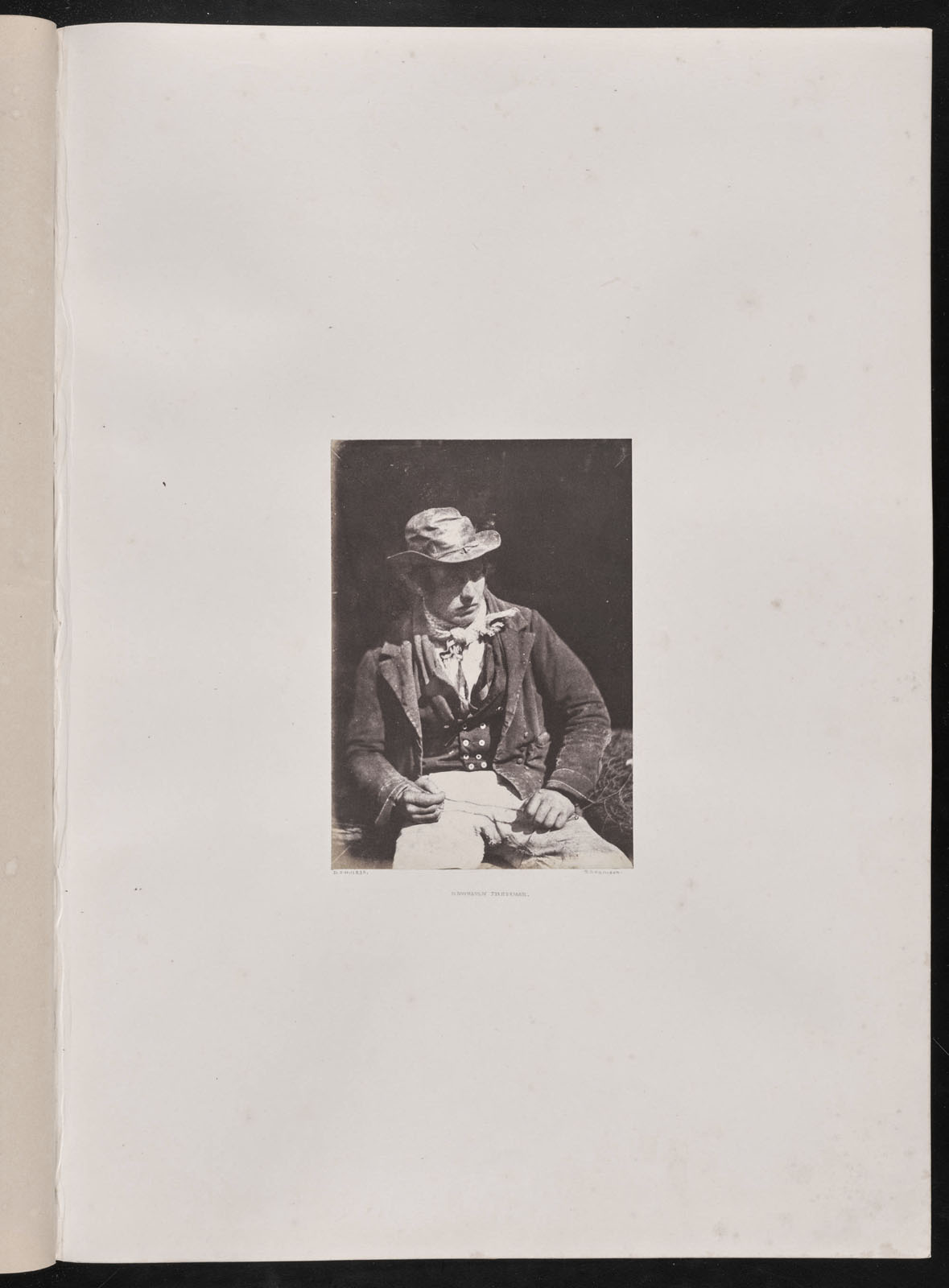
 

Hill & Adamson (Scottish, active 1843-1847) Robert Adamson (Scottish, 1821-1848) David Octavius Hill (Scottish, 1802-1870) 'Newhaven Fisherman' 1843-1845


Hill & Adamson (Scottish, active 1843-1847)
Robert Adamson (Scottish, 1821-1848)
David Octavius Hill (Scottish, 1802-1870)
Newhaven Fisherman
1843-1845
20.6 x 14.4cm
Hill & Adamson Photography Collection
Gernsheim Collection
Harry Ransom Center, The University of Texas at Austin
Public domain


Willie Liston
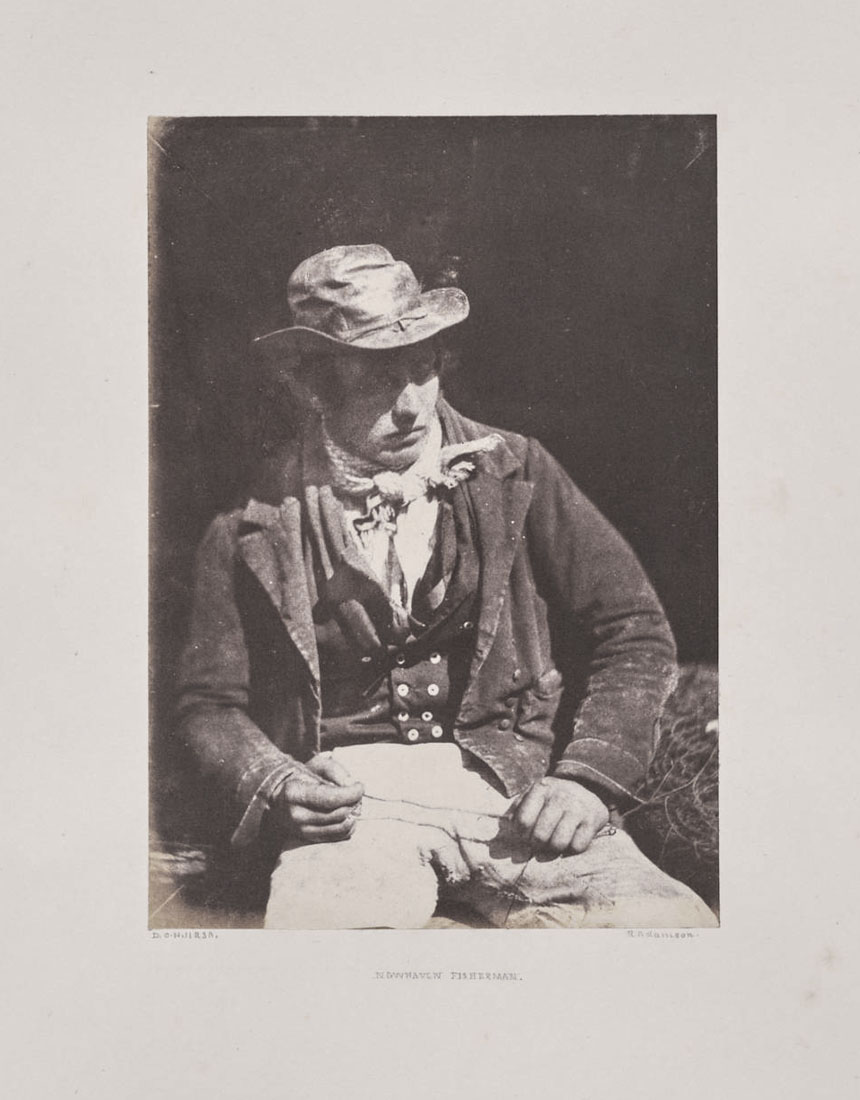
 

Hill & Adamson (Scottish, active 1843-1847) Robert Adamson (Scottish, 1821-1848) David Octavius Hill (Scottish, 1802-1870) 'Newhaven Fisherman' 1843-1845 (detail)


Hill & Adamson (Scottish, active 1843-1847)
Robert Adamson (Scottish, 1821-1848)
David Octavius Hill (Scottish, 1802-1870)
Newhaven Fisherman (detail)
1843-1845
20.6 x 14.4cm
Hill & Adamson Photography Collection
Gernsheim Collection
Harry Ransom Center, The University of Texas at Austin
Public domain
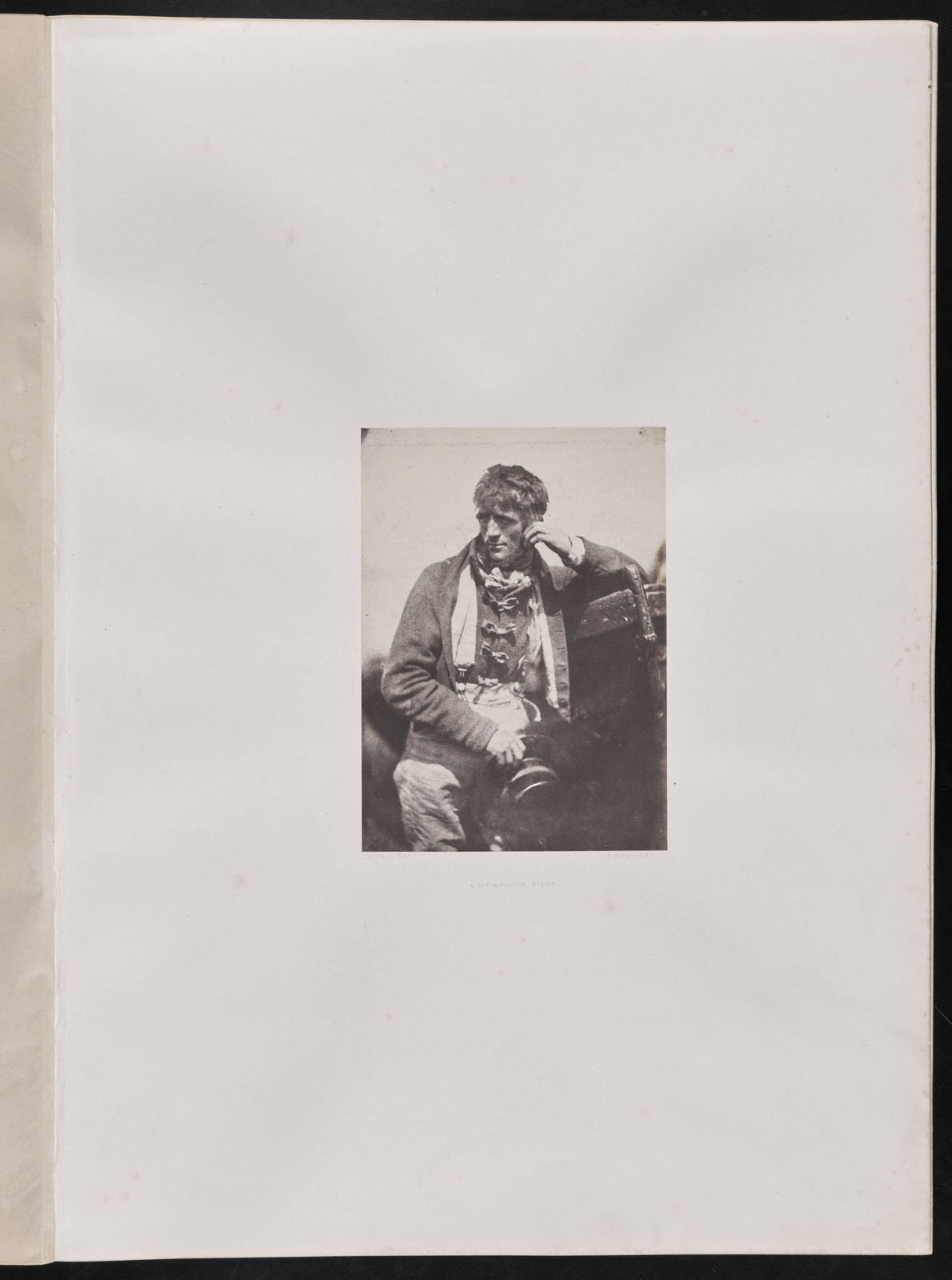
 

Hill & Adamson (Scottish, active 1843-1847) Robert Adamson (Scottish, 1821-1848) David Octavius Hill (Scottish, 1802-1870) 'A Newhaven Pilot' 1843-1845


Hill & Adamson (Scottish, active 1843-1847)
Robert Adamson (Scottish, 1821-1848)
David Octavius Hill (Scottish, 1802-1870)
A Newhaven Pilot
1843-1845
20.3 x 14.6cm
Hill & Adamson Photography Collection
Gernsheim Collection
Harry Ransom Center, The University of Texas at Austin
Public domain
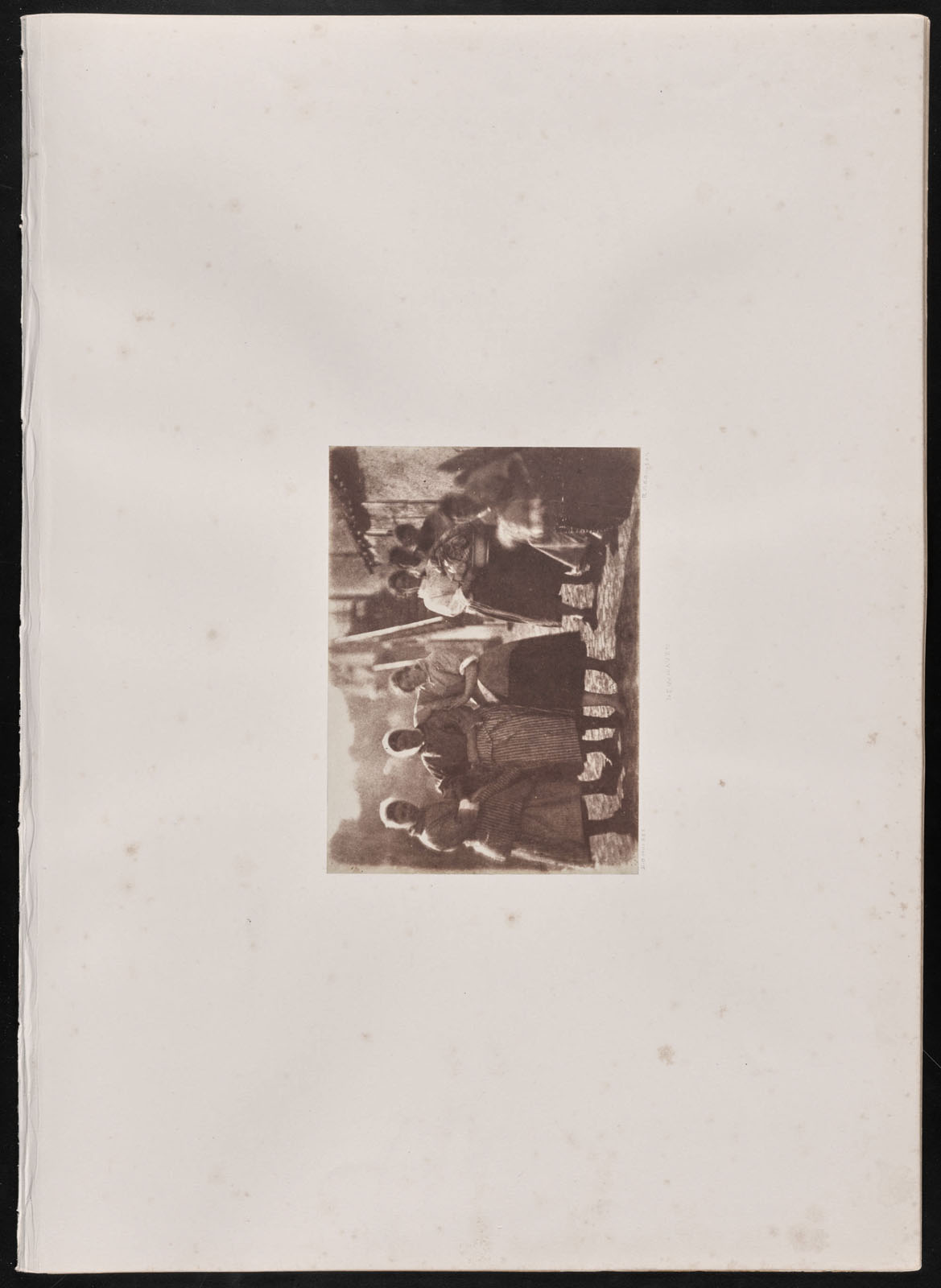
 

Hill & Adamson (Scottish, active 1843-1847) Robert Adamson (Scottish, 1821-1848) David Octavius Hill (Scottish, 1802-1870) 'Newhaven' 1843-1845


Hill & Adamson (Scottish, active 1843-1847)
Robert Adamson (Scottish, 1821-1848)
David Octavius Hill (Scottish, 1802-1870)
Newhaven
1843-1845
14.7 x 20.1cm
Hill & Adamson Photography Collection
Gernsheim Collection
Harry Ransom Center, The University of Texas at Austin
Public domain


Group of unidentified women
 

Hill & Adamson (Scottish, active 1843-1847) Robert Adamson (Scottish, 1821-1848) David Octavius Hill (Scottish, 1802-1870) 'Newhaven' 1843-1845 (detail)


Hill & Adamson (Scottish, active 1843-1847)
Robert Adamson (Scottish, 1821-1848)
David Octavius Hill (Scottish, 1802-1870)
Newhaven (detail)
1843-1845
14.7 x 20.1cm
Hill & Adamson Photography Collection
Gernsheim Collection
Harry Ransom Center, The University of Texas at Austin
Public domain


Harry Ransom Center
300 West 21st Street
Austin, Texas 78712

Opening hours:
Tuesday – Friday 10am – 5pm
Saturday – Sunday Noon – 5pm
Closed Mondays
Harry Ransom Center website

LIKE ART BLART ON FACEBOOK

Back to top

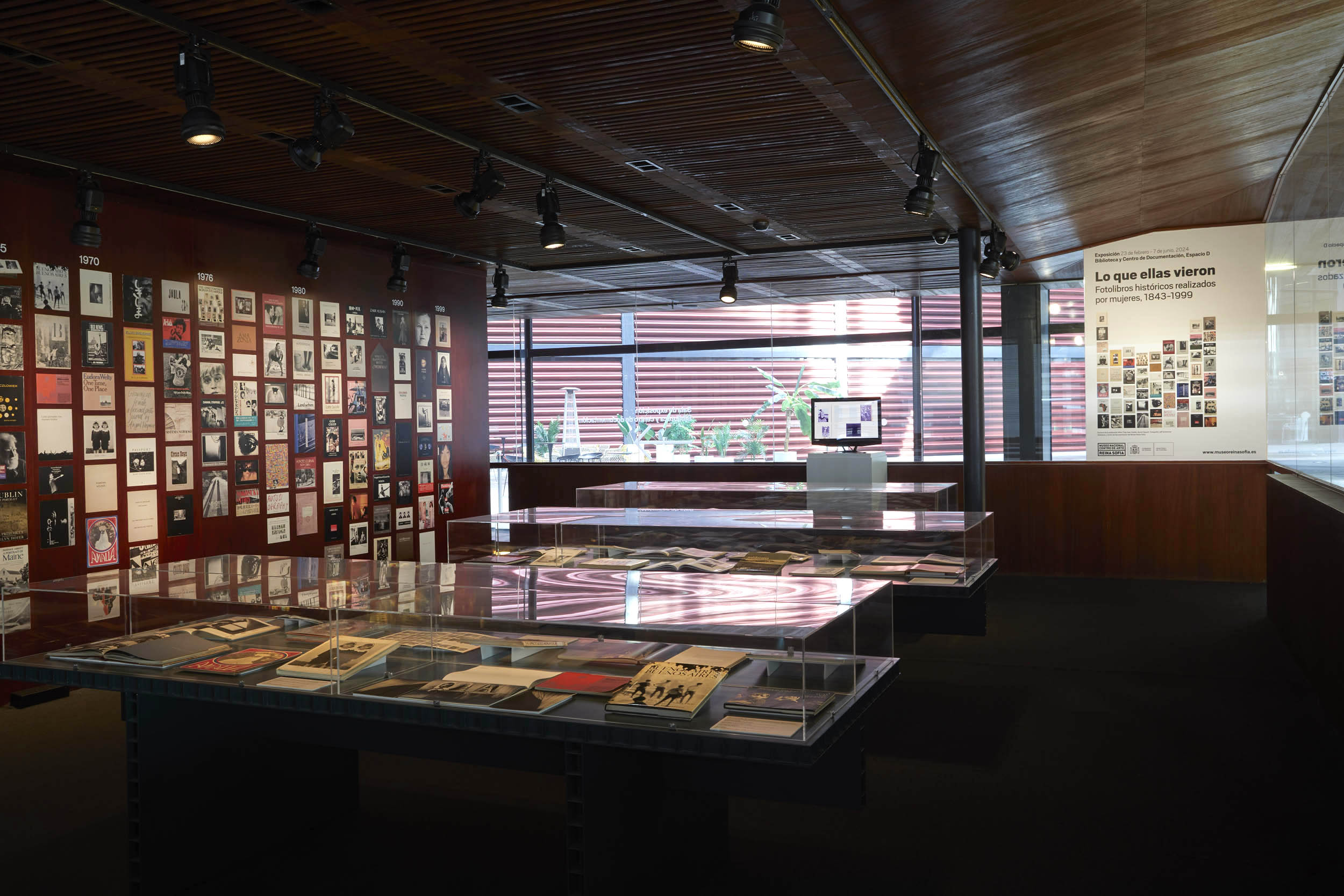
Exhibition: ‘What They Saw: Historical Photobooks by Women, 1843-1999’ at the Museo Nacional Centro de Arte Reina Sofía, Madrid

Exhibition dates: 23rd February – 7th June 2024

Curators: Russet Lederman and Olga Yatskevich


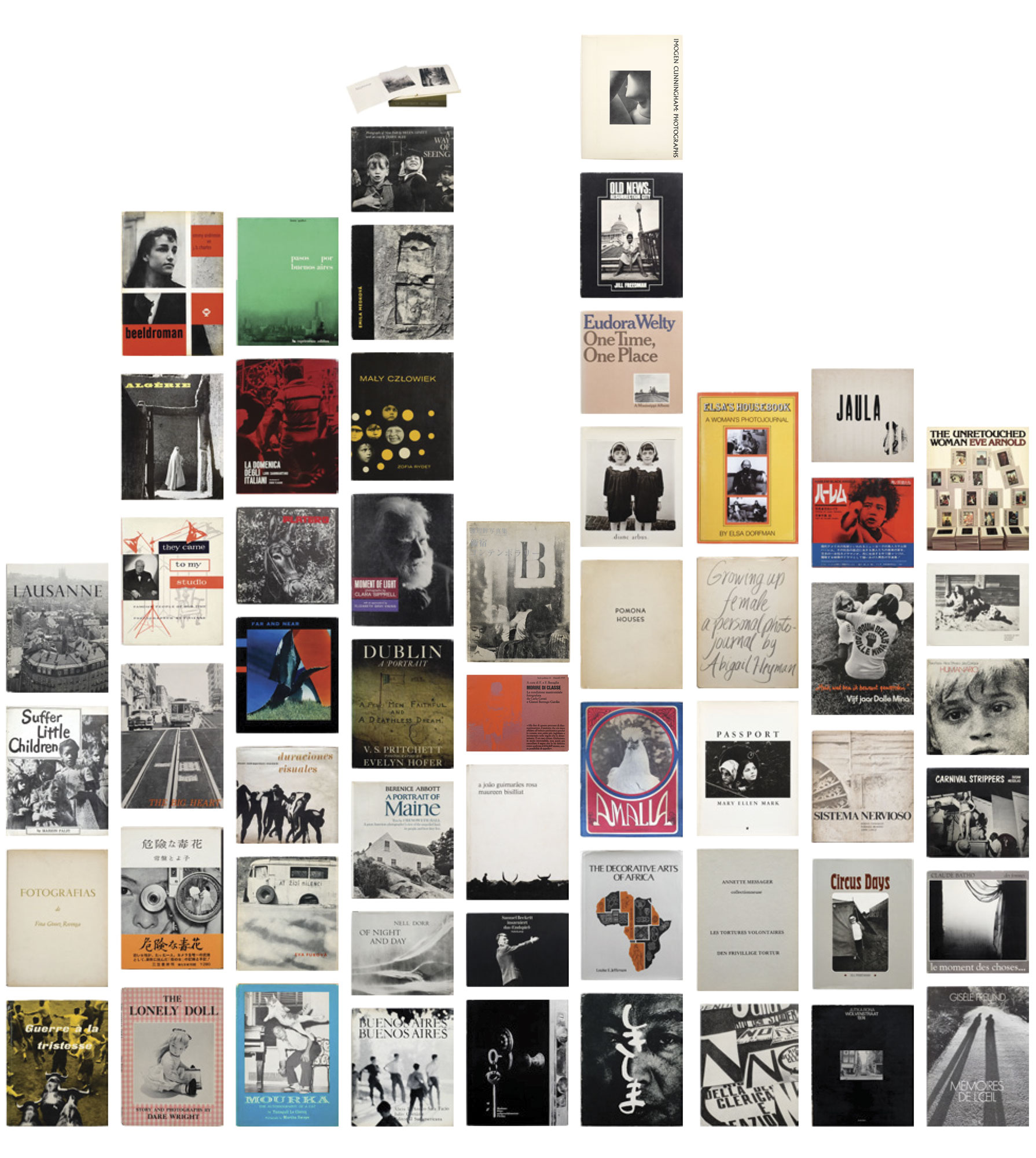
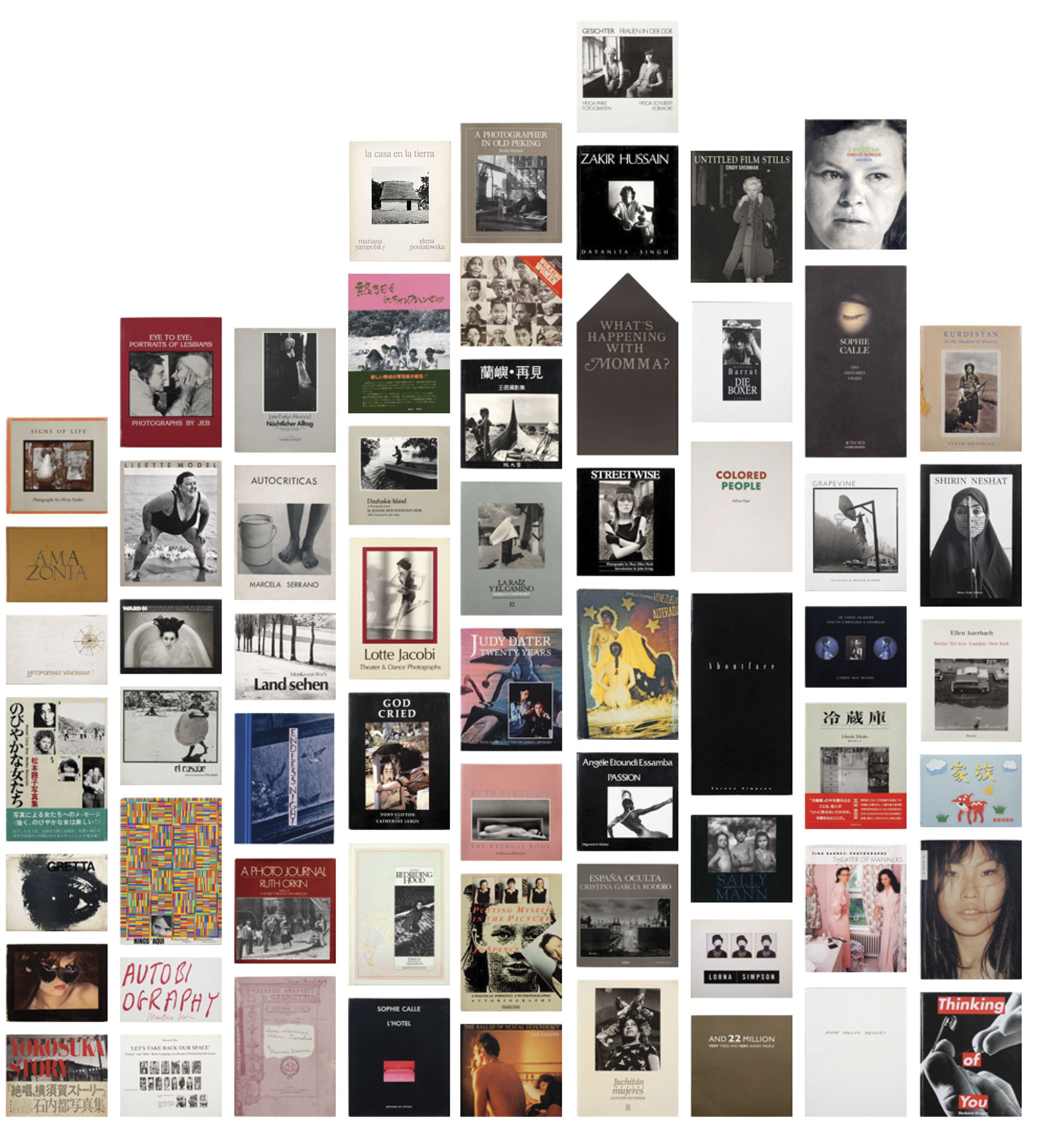
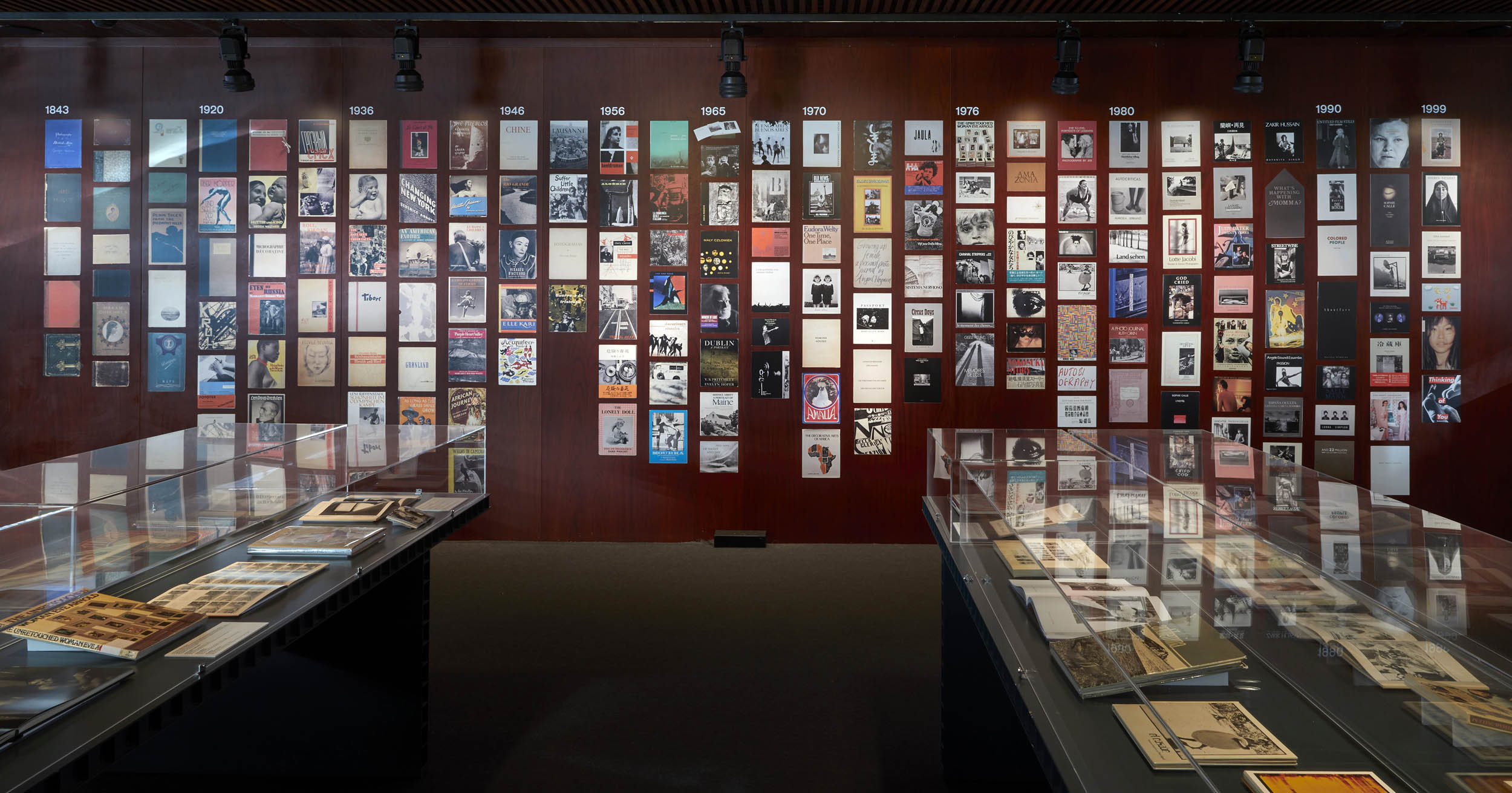
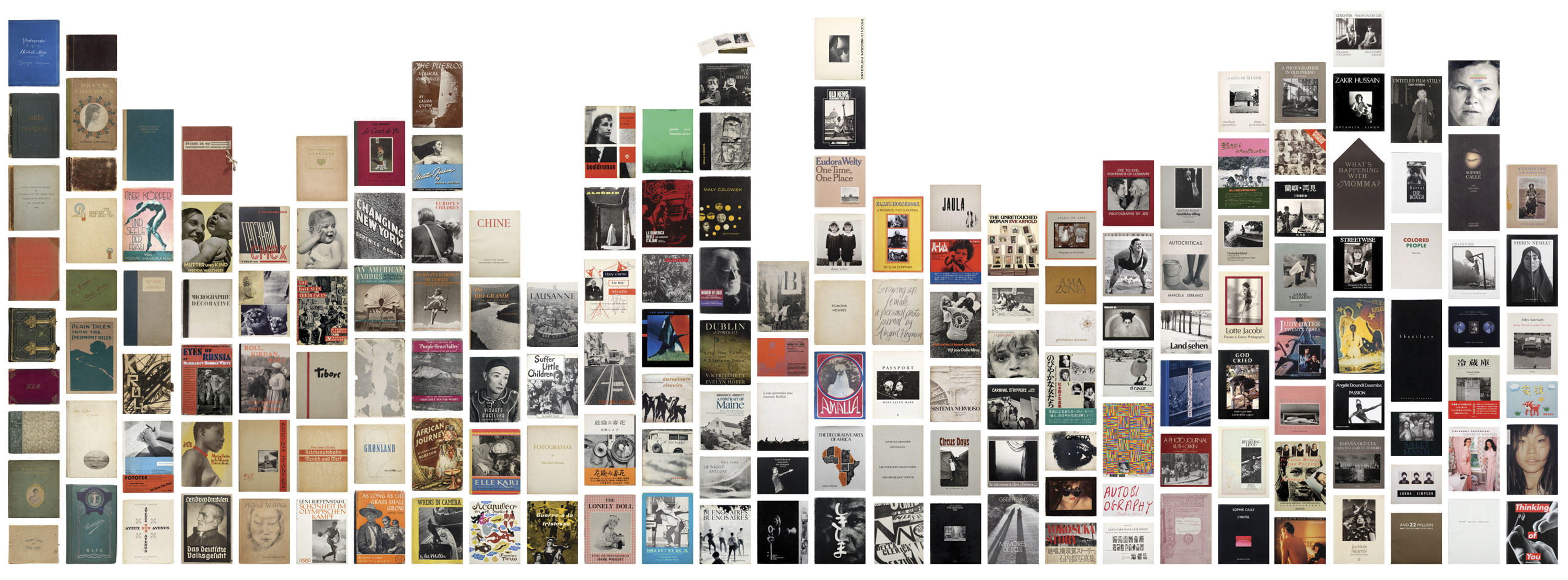
'What They Saw: Historical Photobooks by Women, 1843-1999' (Nueva York, 10×10 Photobooks, 2021) cover images
 

What They Saw: Historical Photobooks by Women, 1843-1999 (Nueva York, 10×10 Photobooks, 2021) cover images
Design: Ayumi Higuchi
Photography: Jeff Gutterman


A mid-week posting!

I wouldn’t have forgiven myself if I had missed this important exhibition about an interesting subject, the “underexposed and undocumented photobooks by women made between 1843 and 1999.”

So I thought I would squeeze it into the posting schedule which stretches a couple of months into the future…

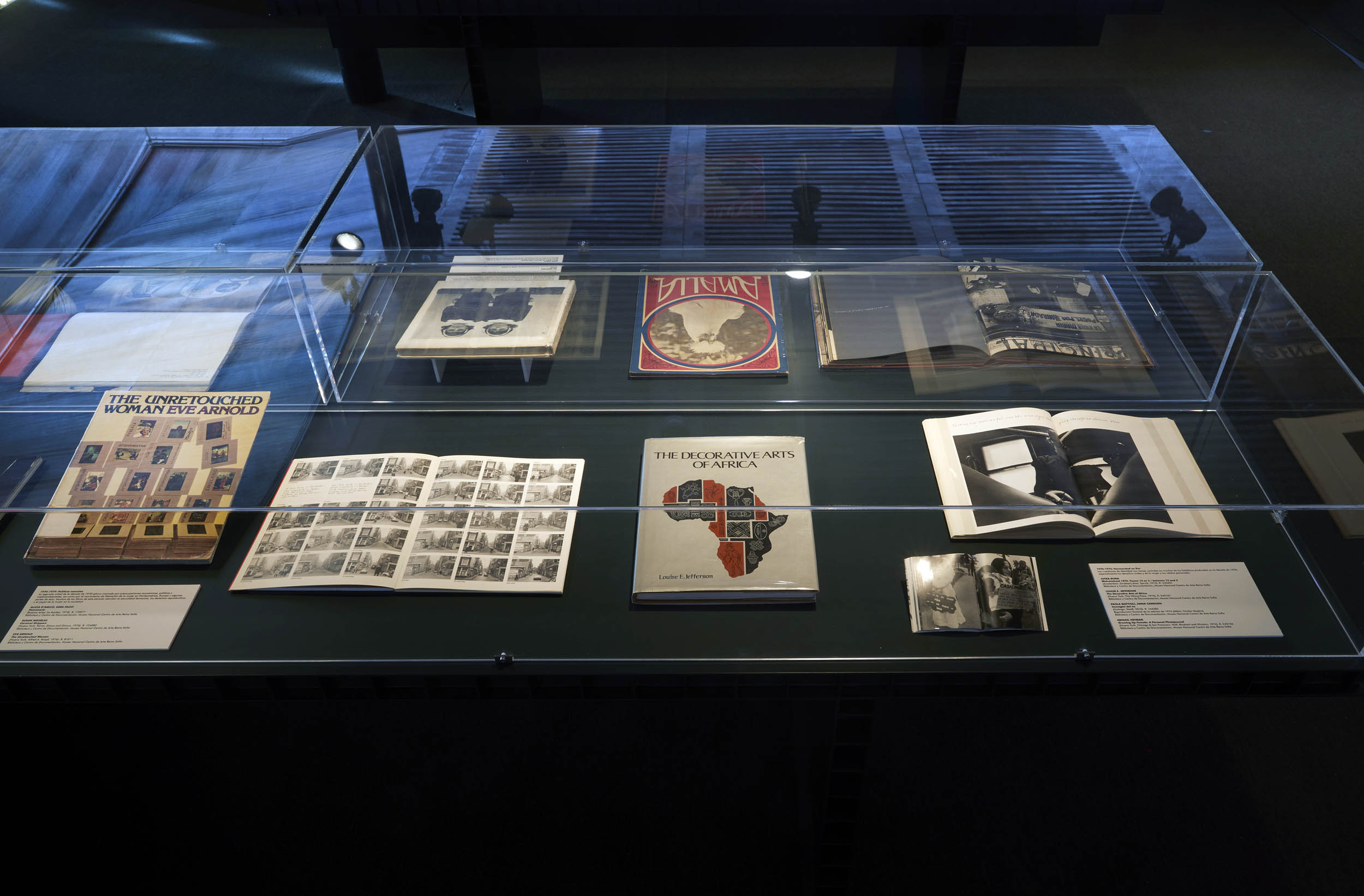
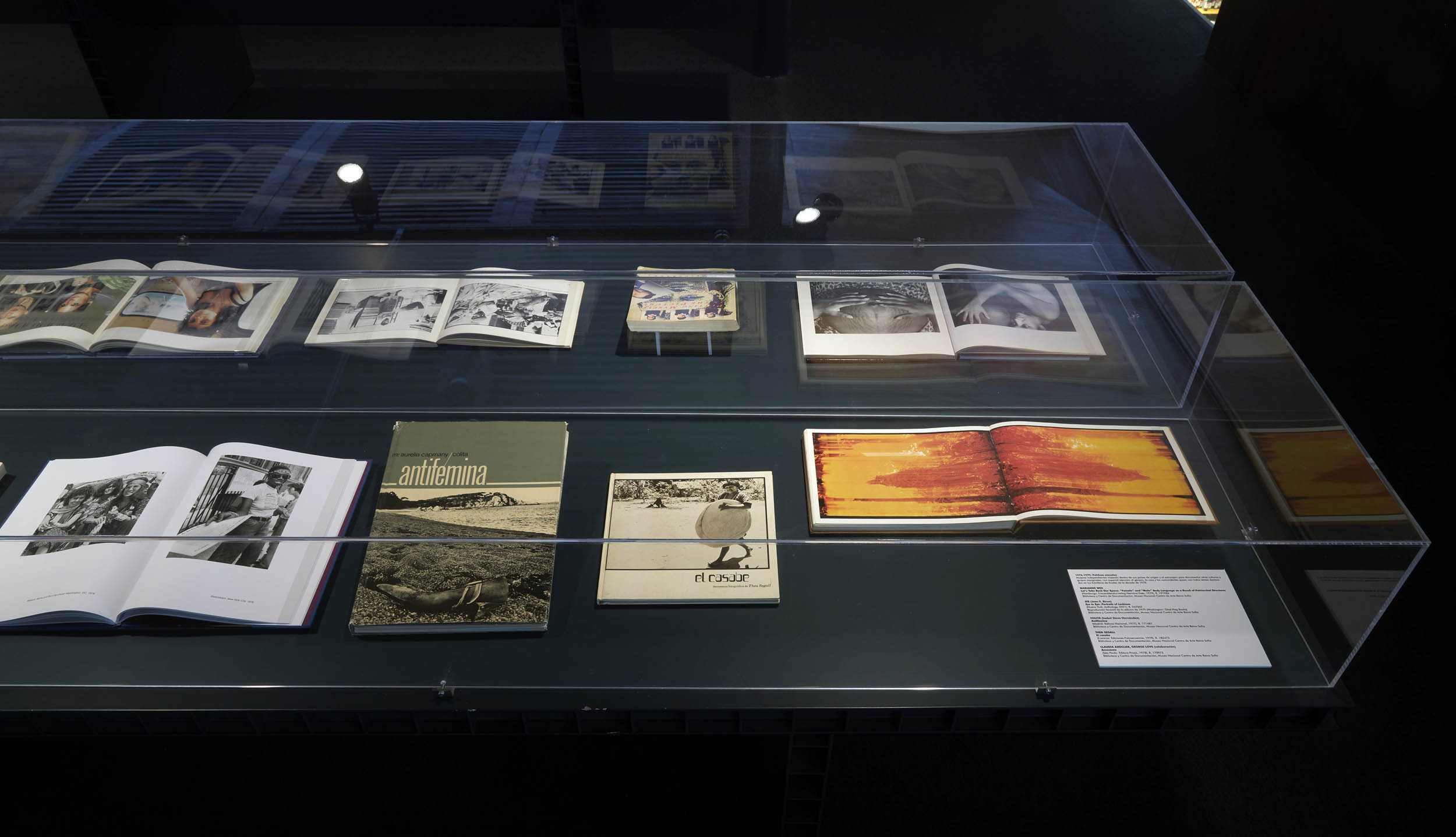
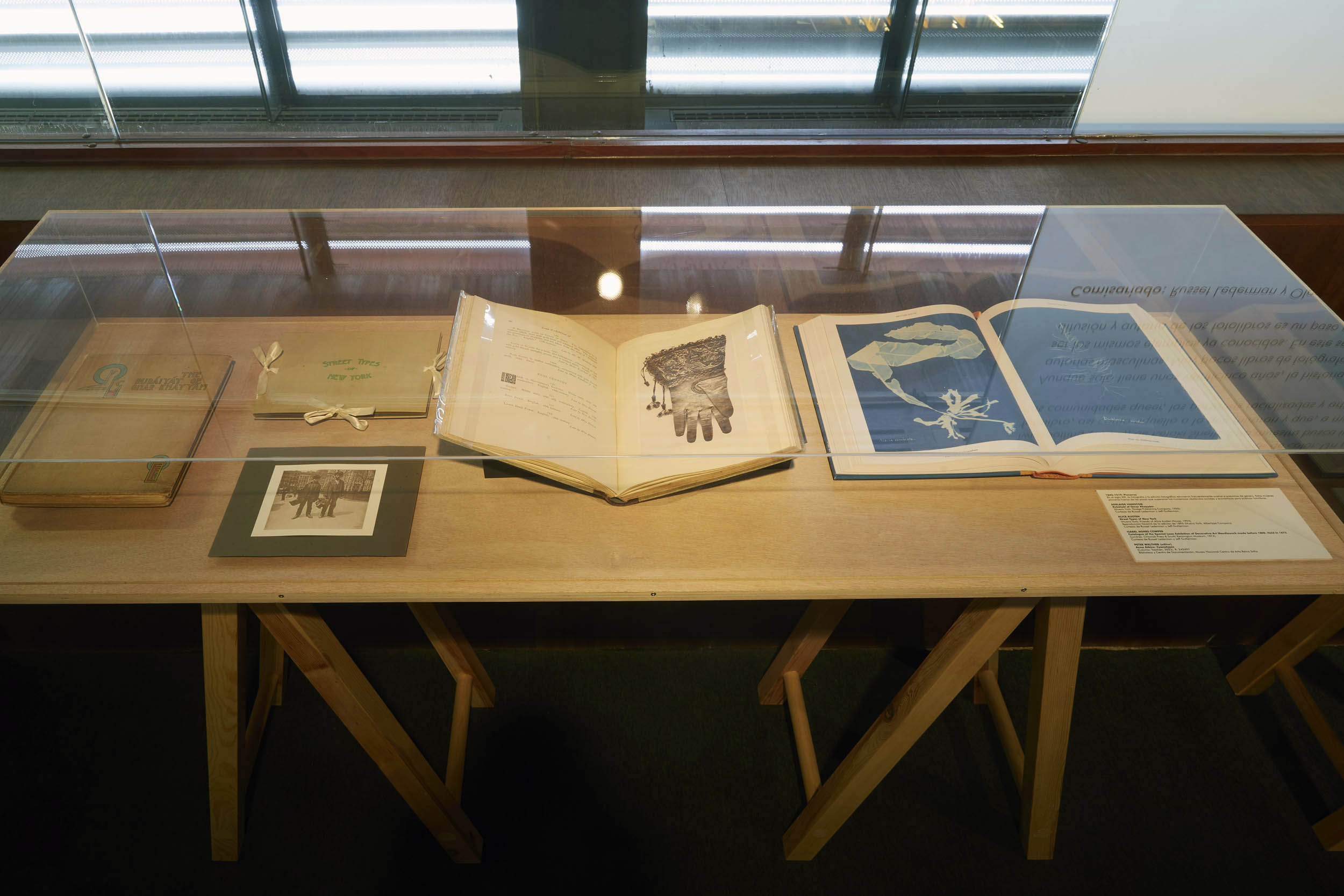
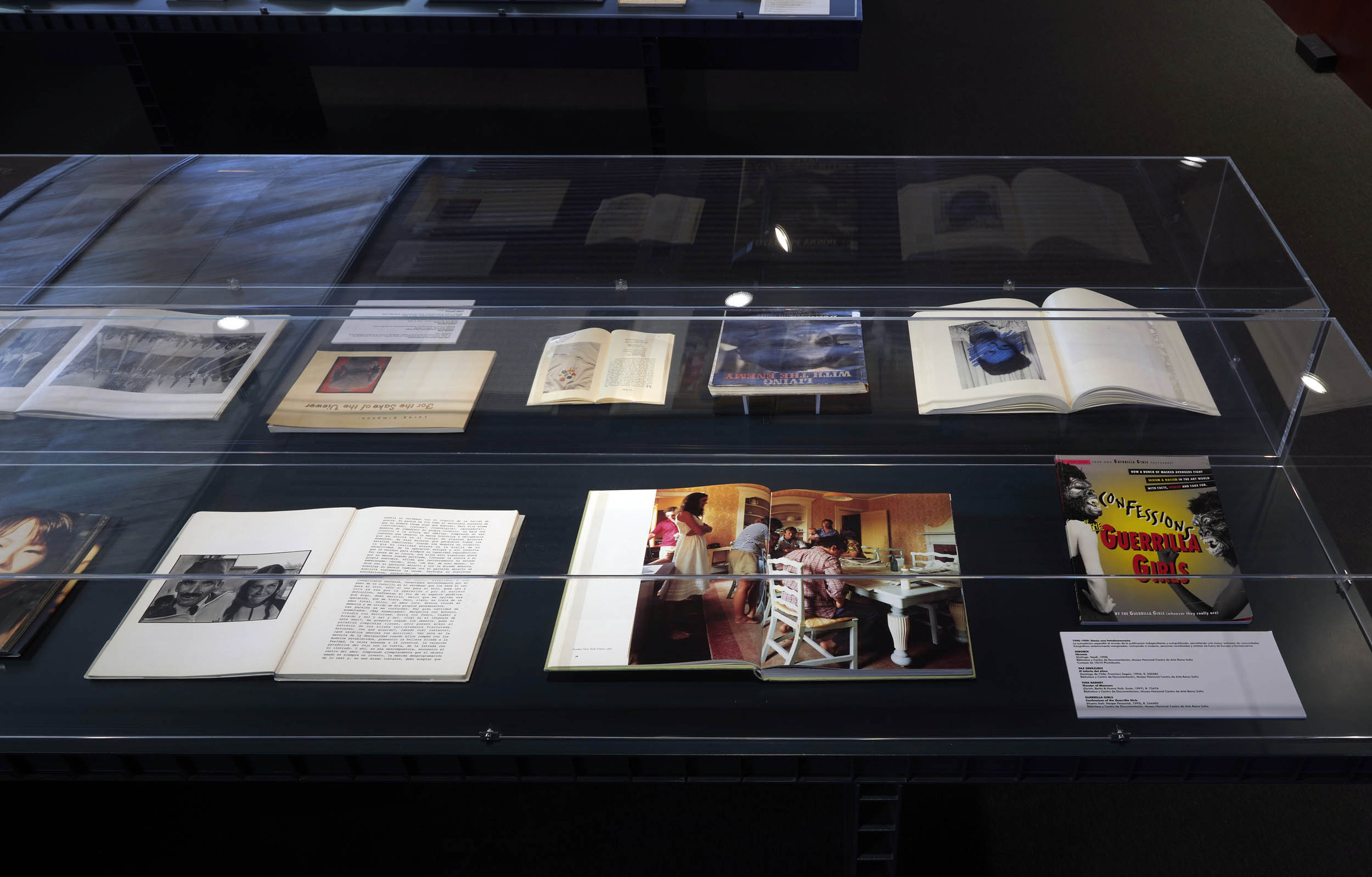
Other than the group photographs of the book covers and installation photographs of the exhibition (below), there were no individual book covers nor details about some of the books in the media images, so I have added a few were it has been possible along with accompanying text.

I have also included photographs from what I think is one of the most iconic photobooks, even though I am not sure it is in the exhibition: Marion Palfi’s There is No More Time: An American Tragedy (1949).

So many important photobooks by so many glorious photographers.

Dr Marcus Bunyan


Many thankx to the Museo Nacional Centro de Arte Reina Sofía for allowing me to publish the photographs in the posting. Please click on the photographs for a larger version of the image.


'What They Saw: Historical Photobooks by Women, 1843-1999' (Nueva York, 10×10 Photobooks, 2021) cover images (detail)


What They Saw: Historical Photobooks by Women, 1843-1999 (Nueva York, 10×10 Photobooks, 2021) cover images (detail)
Design: Ayumi Higuchi
Photography: Jeff Gutterman


'What They Saw: Historical Photobooks by Women, 1843-1999' (Nueva York, 10×10 Photobooks, 2021) cover images (detail)


What They Saw: Historical Photobooks by Women, 1843-1999 (Nueva York, 10×10 Photobooks, 2021) cover images (detail)
Design: Ayumi Higuchi
Photography: Jeff Gutterman


'What They Saw: Historical Photobooks by Women, 1843-1999' (Nueva York, 10×10 Photobooks, 2021) cover images (detail)


What They Saw: Historical Photobooks by Women, 1843-1999 (Nueva York, 10×10 Photobooks, 2021) cover images (detail)
Design: Ayumi Higuchi
Photography: Jeff Gutterman


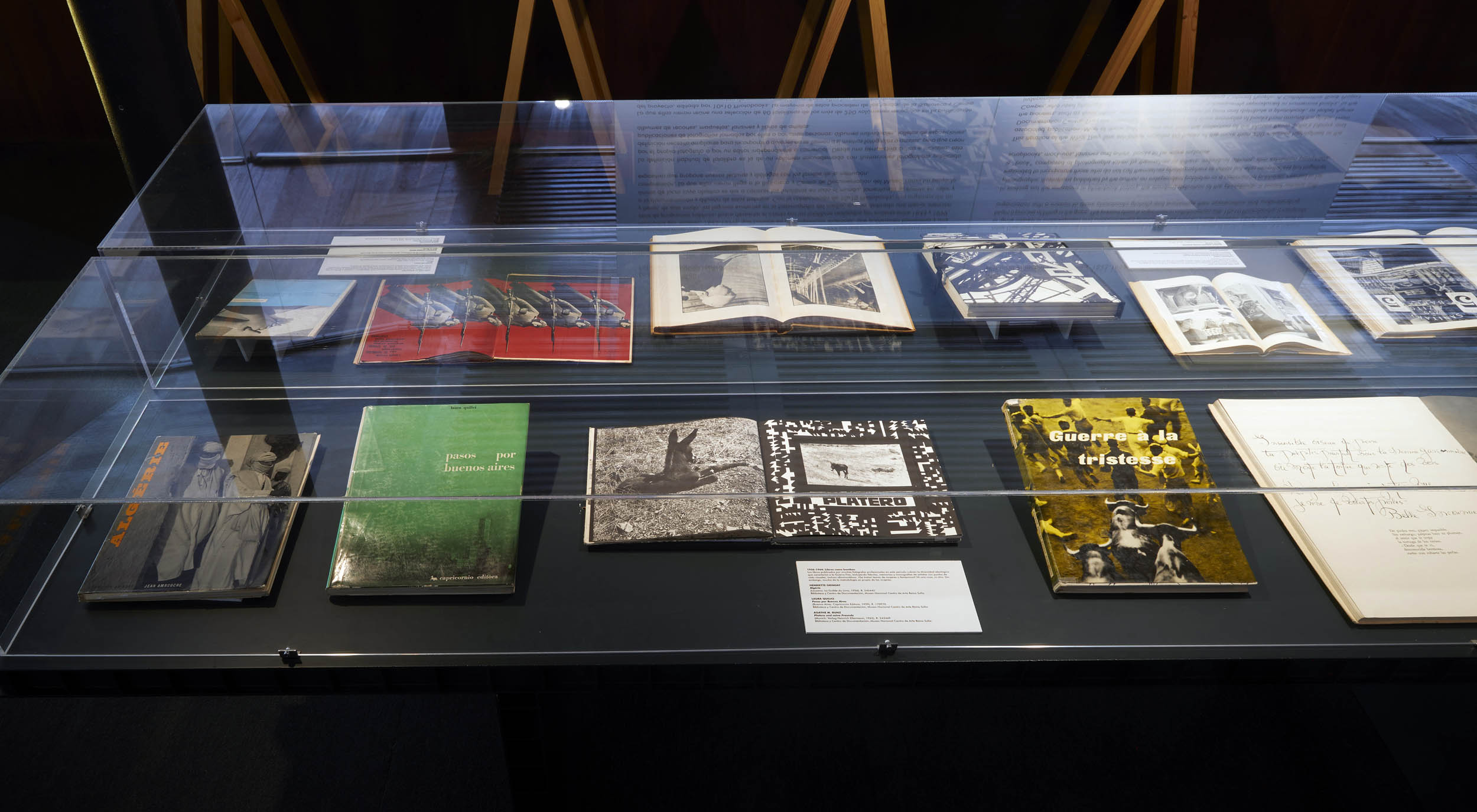
What They Saw project, a touring exhibition accompanied by a publication and series of public programs, is a means to ignite interest in underexposed and undocumented photobooks by women made between 1843 and 1999 and to begin a process of filling in the gaps. The present show is organised in collaboration with 10×10 Photobooks, a nonprofit organisation with a mission to share photobooks globally and encourage their appreciation and understanding.

In seeking out the omissions in photobook history, the standard definition of the photobook: a bound volume with photographic illustrations published by the author, an independent publisher or a commercial publisher, needed to be expanded to incorporate those who do not call themselves photographers or artists but who nevertheless put together a “book” composed of photographs taken by themselves or others: individual albums, slim exhibition pamphlets, scrapbooks, mock-ups, fanzines and artists’ books to be more inclusive.

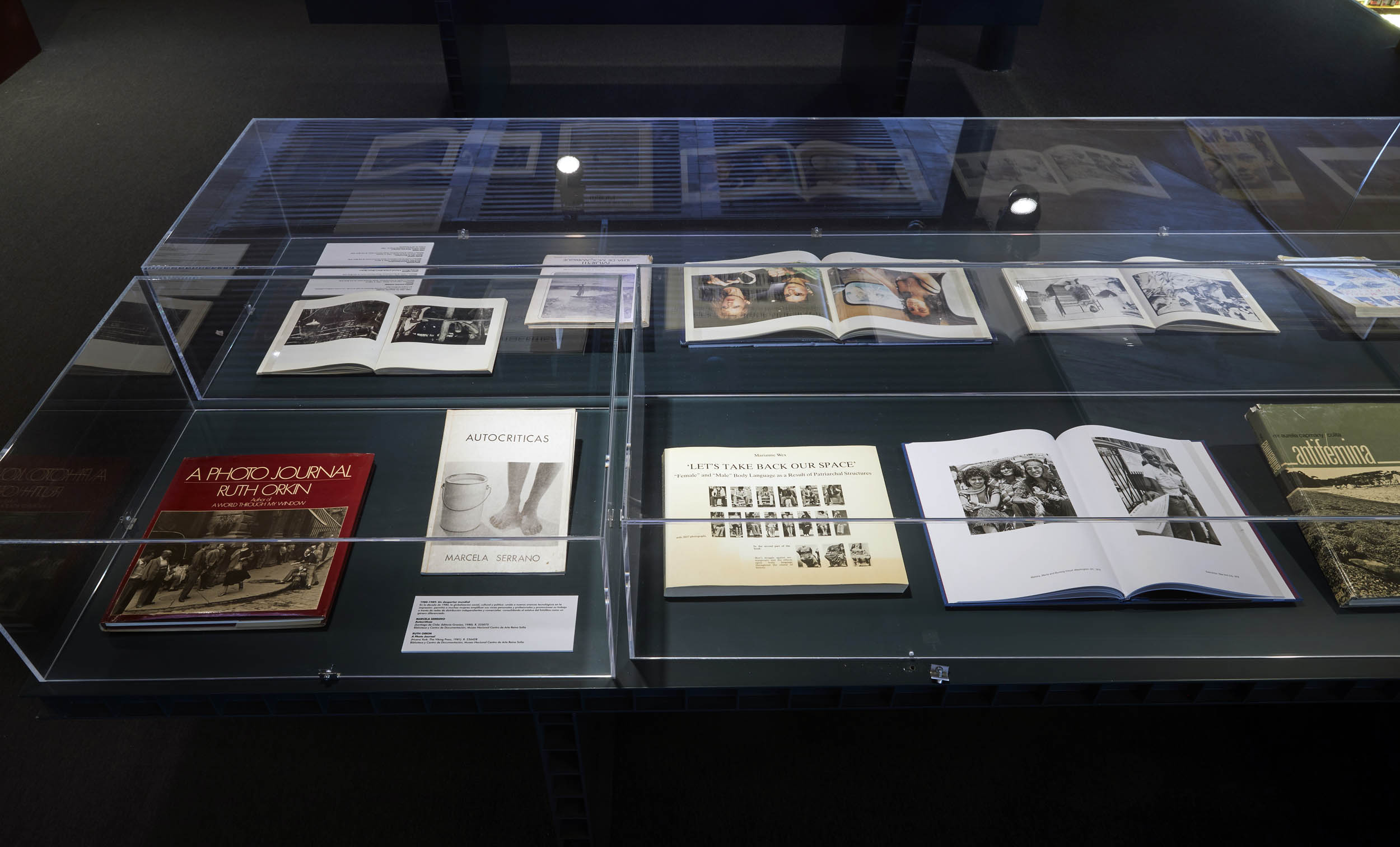
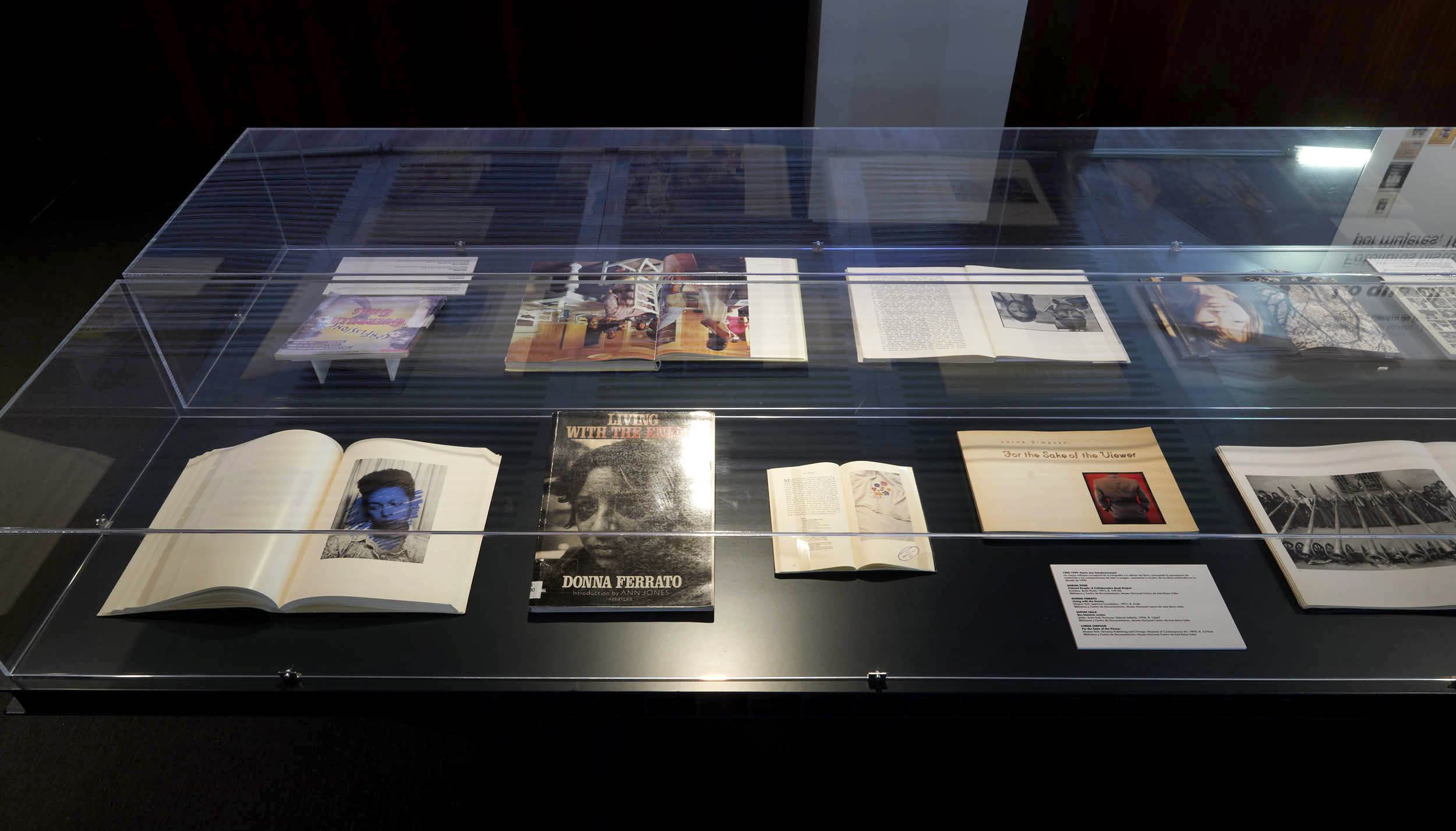
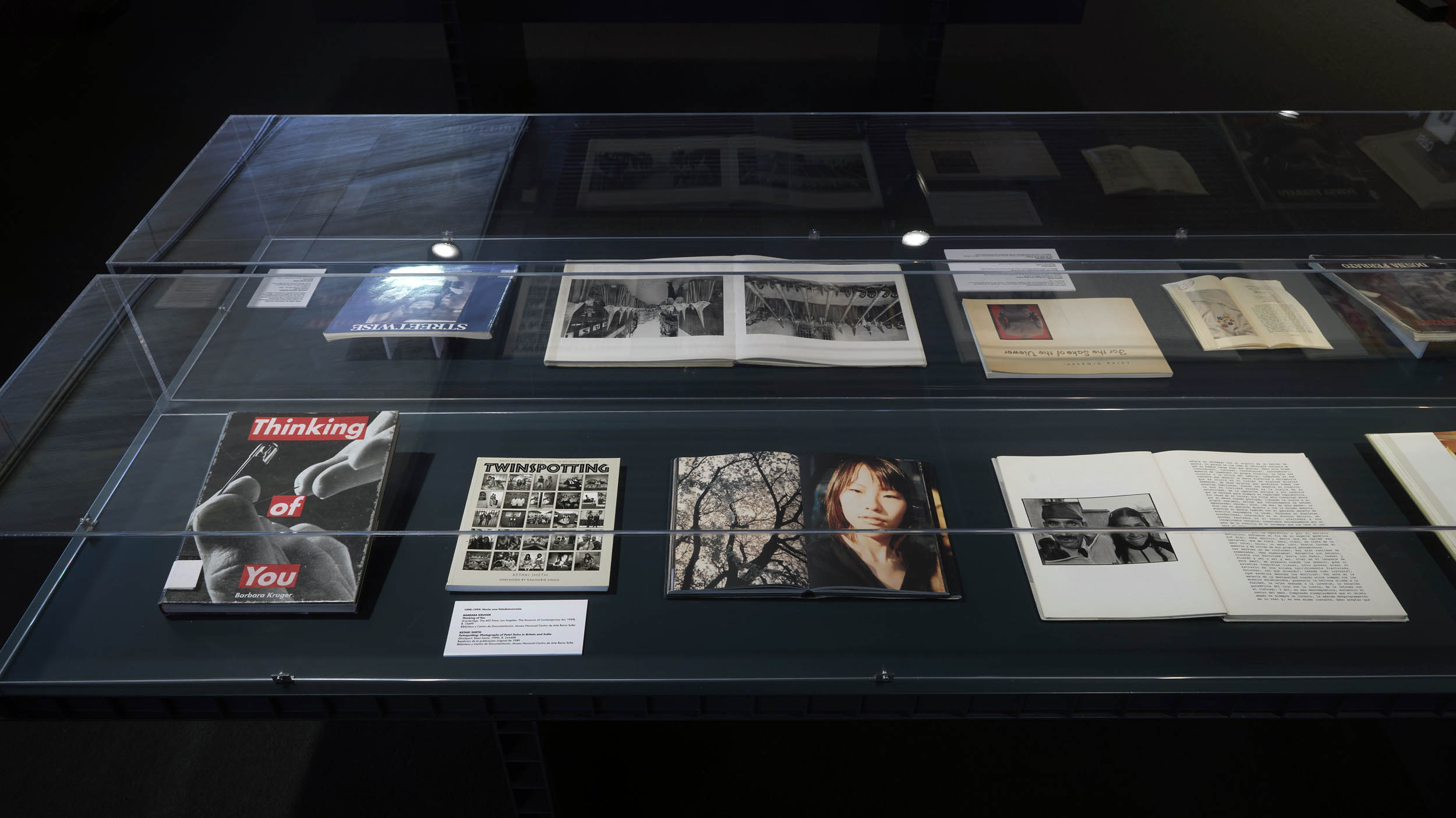
This iteration of the What They Saw exhibition includes 60 books of the more than 250 volumes highlighted in the associated publication. Most of these publications are from the collection of the Museo Reina Sofía’s Library and Documentation Centre. They are presented chronologically and show examples of books from around the globe. From the pioneers, such as Anna Atkins, who was the first person ever to print and distribute a photobook, or Isabel Agnes Cowper, who used photography to document museum objects, subsequently reproduced in numerous books, to the independent and self-published photobooks of the 1990s, including Colored People: A Collaborative Book Project by Adrian Piper or Twinspotting by Ketaki Seth, this selection allows for greater inclusion of previously marginalised photographic communities, including women, queer communities, people of colour and artists from outside Europe and North America.

Although only twenty-five years old, photobook history has been written primarily by men and has focused on publications authored by men. Very few books by women photographers appear in past anthologies documenting photobook history, and those included are already quite well known. This exhibition of women’s role in the production, dissemination, and authoring of photobooks is a necessary step in unwriting the current photobook history and rewriting an updated photobook history that is more equitable and inclusive.

Text from the Museo Nacional Centro de Arte Reina Sofía website


Anna Atkins, 'Photographs of British Algae: Cyanotype Impressions', 1843


Anna Atkins, Photographs of British Algae: Cyanotype Impressions, 1843


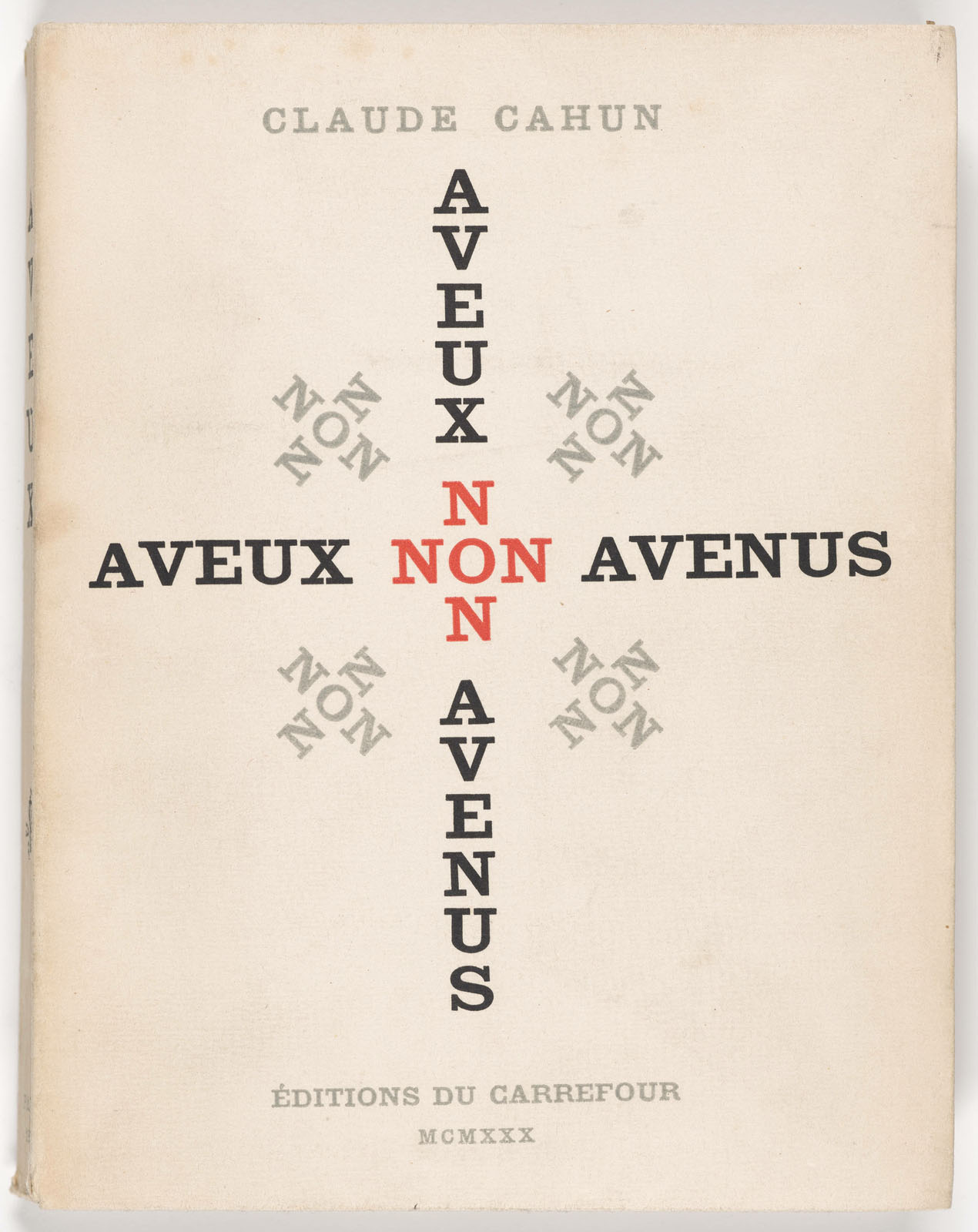
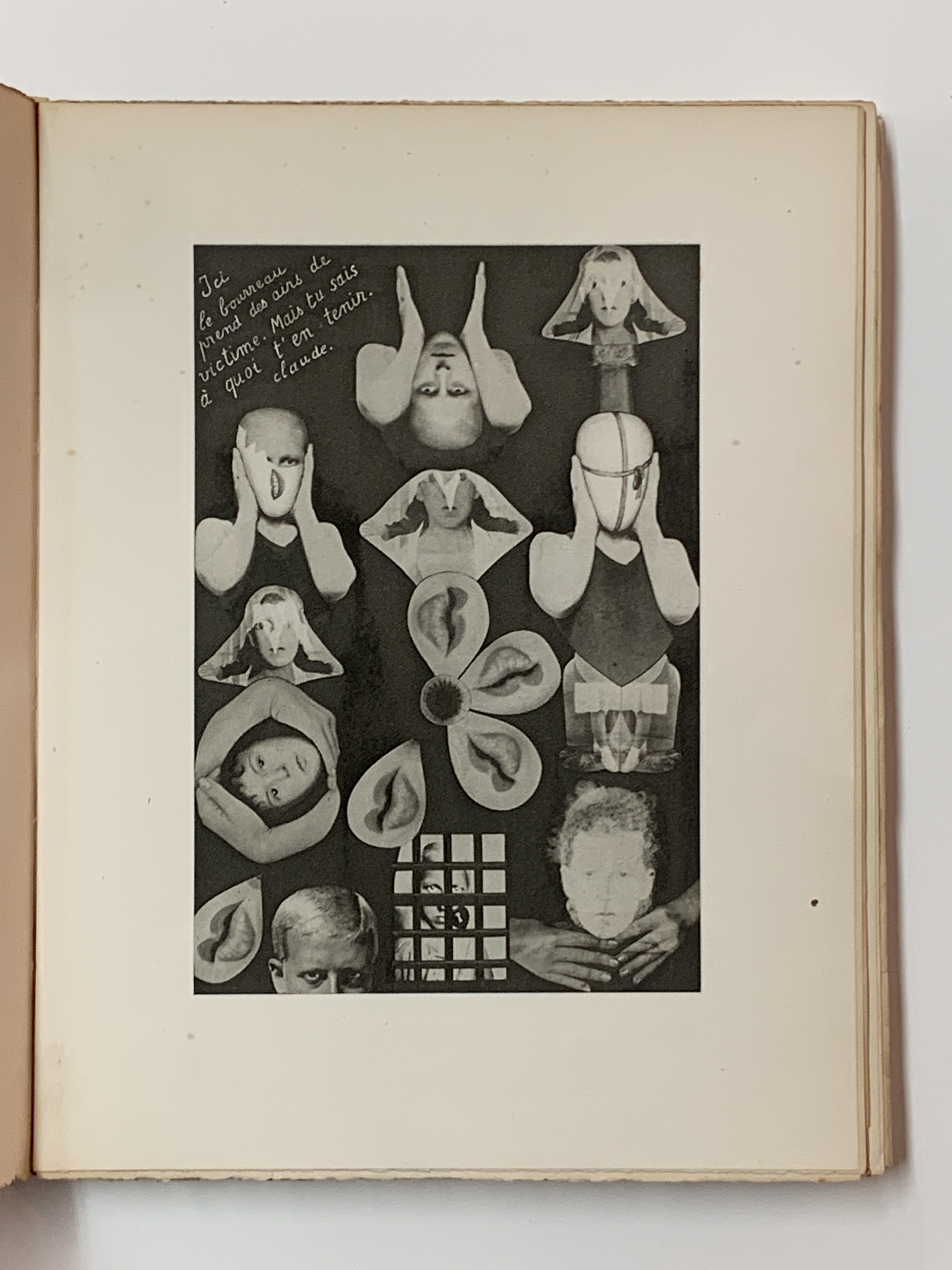
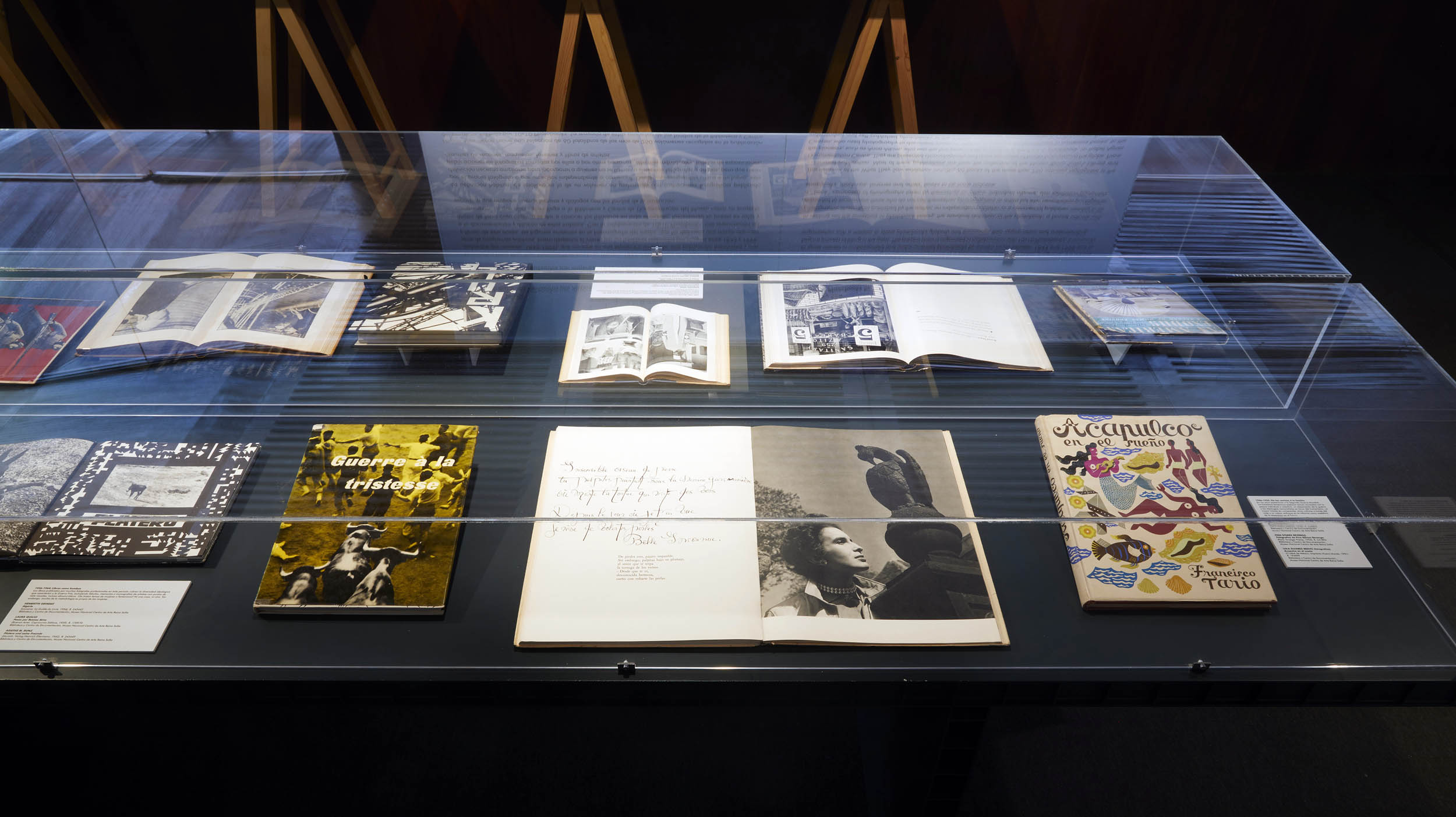
Claude Cahun (Lucy Schwob) (French, 1894-1954) 'Aveux non avenus' (Disavowals or Cancelled Confessions) 1930

Claude Cahun (1894-1954) 'Aveux Non Avenus' Paris- Éditions du Carrefour, 1930

Claude Cahun (1894-1954) 'Aveux Non Avenus' Paris- Éditions du Carrefour, 1930

Claude Cahun (1894-1954) 'Aveux Non Avenus' Paris- Éditions du Carrefour, 1930


Claude Cahun (Lucy Schwob) (French, 1894-1954) Aveux non avenus (Disavowals or Cancelled Confessions) 1930


In her 1930 publication, Aveux non Avenus, Claude Cahun used the relationship between her inwardly focused poetic writing and symbolic photomontages to construct a unique reality for self-expression. This article focuses on three chapters and respective photographic images from the publication to relate Cahun’s, and by association her partner Marcel Moore’s, discussion on sexuality and gender expression. The utopian dreamscape created investigates issues of narcissism and otherness, female homosexuality, dandyism and going beyond gender, individual and social critique, mocking the antiquated views of art and writing, accepting and breaking taboos, while allowing for other departures from the accepted norm. Through analysis of the publication and supporting evidence from early influences, it can be seen that Cahun created a world in Aveux non Avenus where she could exist in a space between the established feminine–masculine binary of 20th-century Europe.

Abstract from Erin F. Pustarfi. “Constructed Realities: Claude Cahun’s Created World in Aveux Non Avenus,” in Journal of Homosexuality, 67(5), pp. 697-711


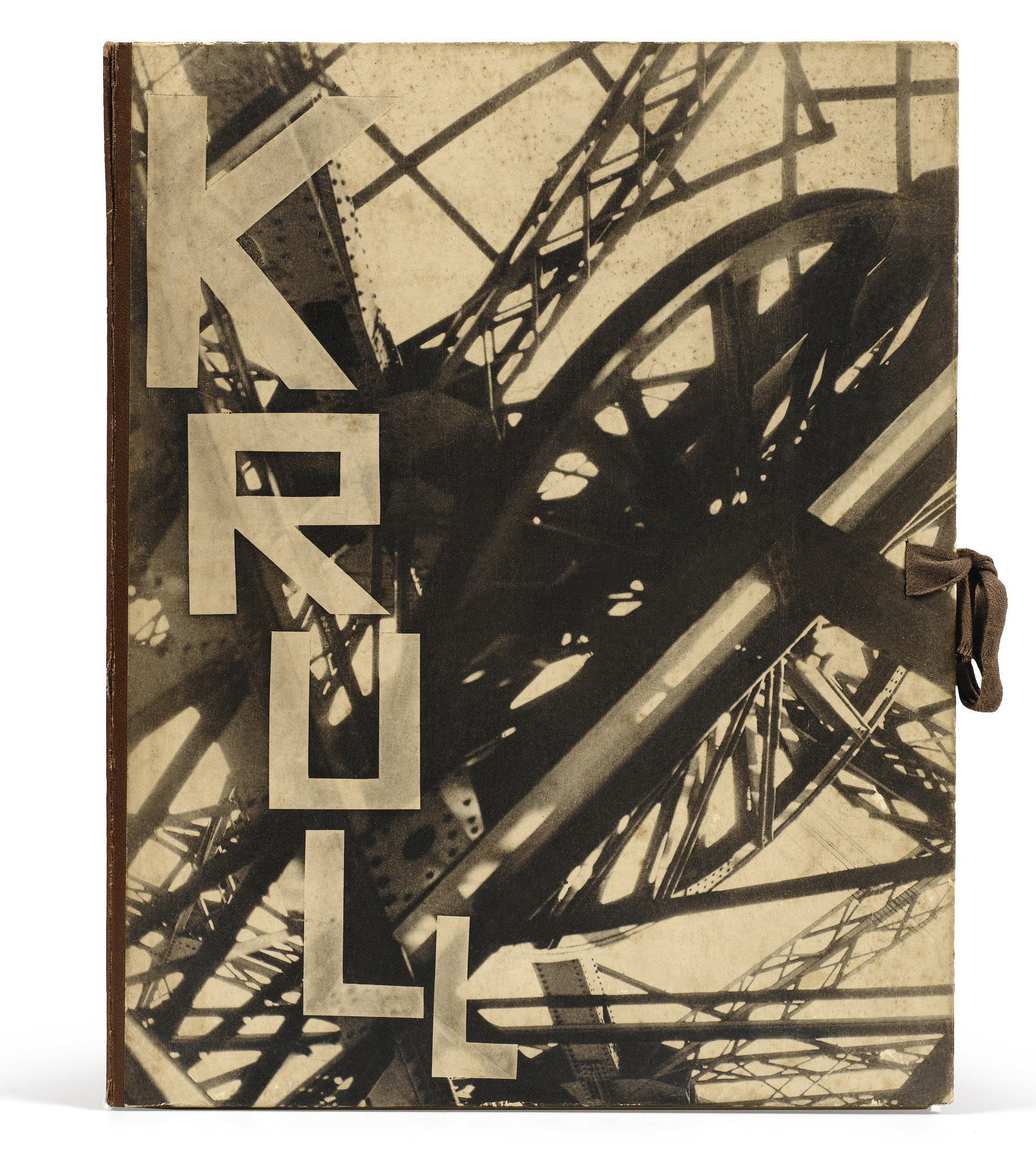
Germaine Krull (photographer) Cover design by M. Tchimoukow. 'MÉTAL' cover 1928


Germaine Krull (photographer) Cover design by M. Tchimoukow. MÉTAL cover 1928


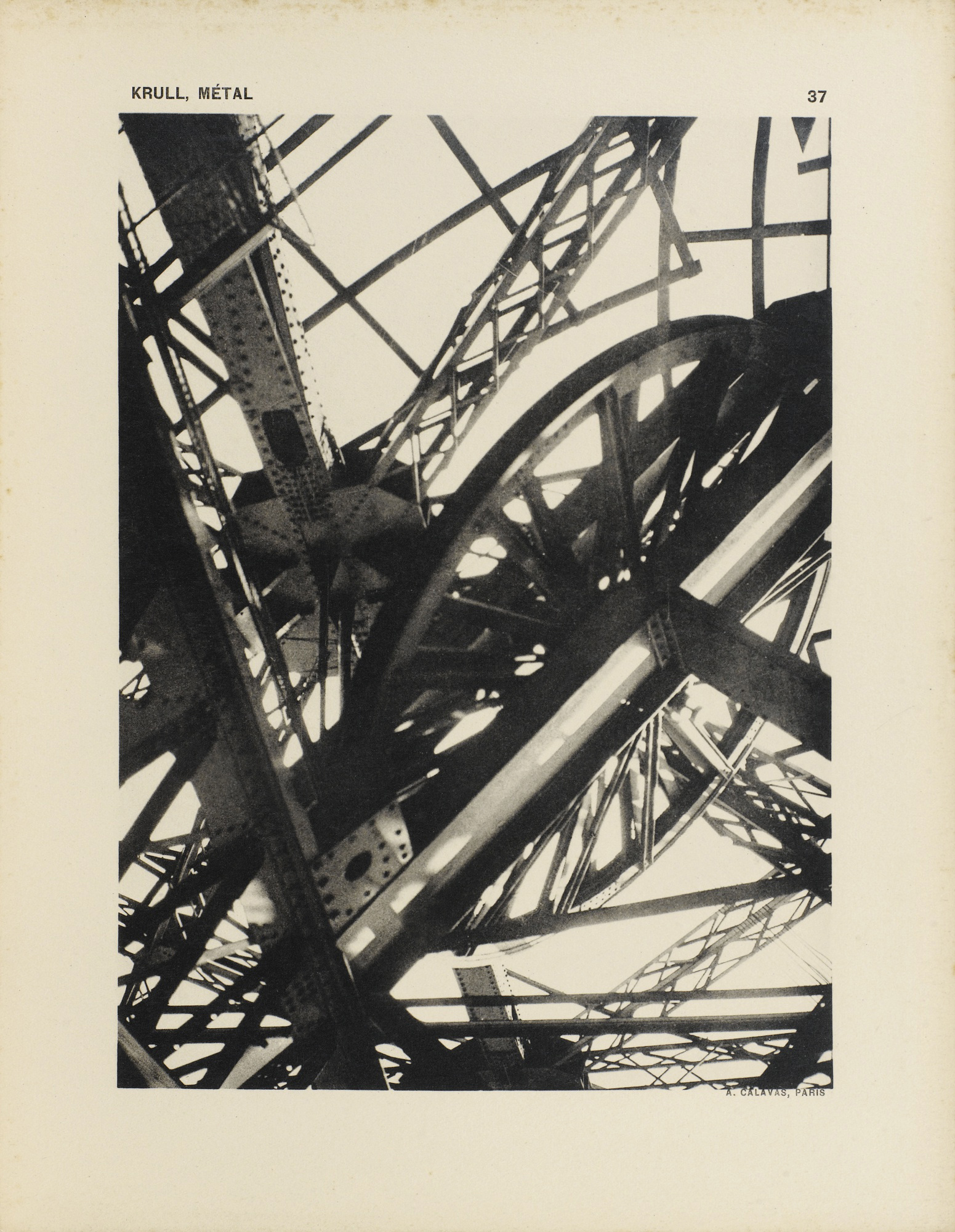
Germaine Krull (1897-1985) Image from the portfolio 'MÉTAL' 1928


Germaine Krull (1897-1985) Image from the portfolio MÉTAL 1928, p. 33


I did not have a special intention or design when I took the Iron photographs. I wanted to show what I see, exactly as the eye sees it. ‘MÉTAL’ is a collection of photographs from the time. ‘MÉTAL’ initiated a new visual era and open the way or a new concept of photography. ‘MÉTAL’ was the starting point which allowed photography to become an artisanal trade and which made an artist of the photographer, because it was part of this new movement, of this new era which touched all art.

Germaine Krull. Extract from the Preface to the 1976 edition of ‘MÉTAL’

See my writing on Germaine Krull’s portfolio MÉTAL.


Germaine Krull (1897-1985) Image from the portfolio 'MÉTAL' 1928 p. 37


Germaine Krull (1897-1985) Image from the portfolio MÉTAL 1928 p. 37


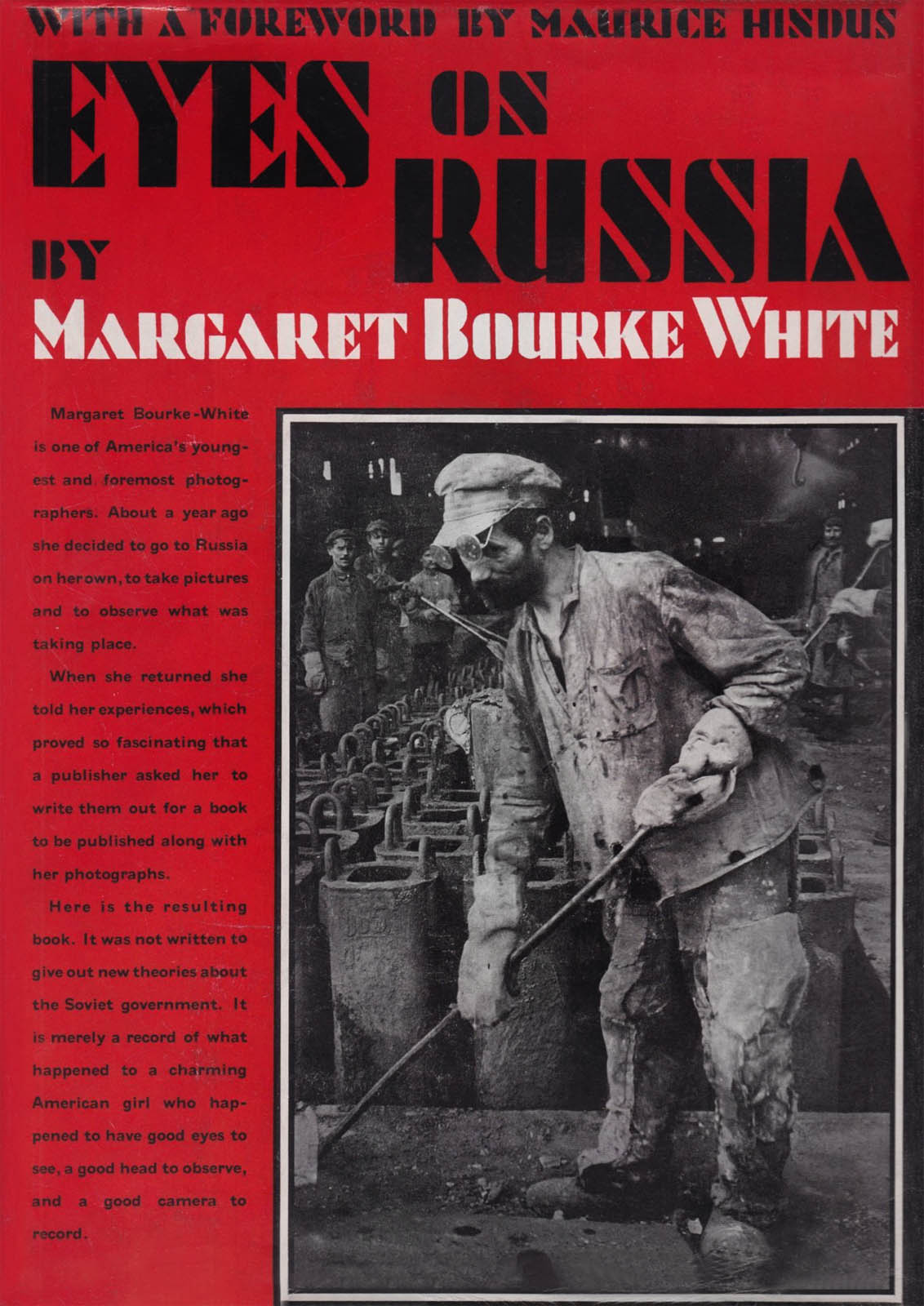
'Eyes on Russia' by Margaret Bourke-White. New York: Simon and Schuster, 1931


Eyes on Russia by Margaret Bourke-White. New York: Simon and Schuster, 1931


In 1951, Westbrook Pegler wrote numerous articles attacking Margaret Bourke-White for her associations with leftist politics in the 1930s. It is probably for this reason that in her autobiography, Portrait of Myself, written about ten years later, Bourke-White didn’t mention her first book, Eyes on Russia, published in 1931. And yet, this book is of extraordinary interest, not only as a landmark in Bourke-White’s career but also as a source, both visual and narrative, on the Soviet Union during its first Five Year Plan. With letters of recommendation from influential people, including the Russian film maker, Sergei Eisenstein, Bourke-White arrived in Moscow in the fall of 1930, where she obtained the official endorsement of A.B. Khalatoff, chief of the Soviet publishing house (he was later liquidated in the 1937 purges). Khalatoff supplied her with a thick roll of rubles and a guide. Bourke-White then toured some of the most important industrial and other sites and came back with stellar images of Russia under construction, which she complemented by a spritely and charming narrative of her experiences as the first foreign photographer to photograph in the Soviet Union with official permission. On her trip, she made 800 negatives, of which 40 were published in Eyes on Russia in a sepia tone. This book, along with at least eight related illustrated articles in Fortune, the New York Times Sunday Magazine, and other periodicals, significantly enhanced Bourke-White’s reputation (and commercial business). They also helped initiate relationships she established both with Soviet officials and Americans sympathetic to the U.S.S.R. She returned to Russia in 1931 and 1932 for additional photography, but Eyes on Russia, a fascinating book for a variety of reasons, remains the largest single published collection of her work in that country. It was very well received in numerous book reviews when it appeared. For a more detailed review, see my article, Gary D. Saretzky “Margaret Bourke-White: Eyes on Russia,” The Photo Review, 22: 3-4 (Summer & Fall 1999),

Text from a comment on the Amazon website


'Roll, Jordan, Roll' by Julia Peterkin (text) and Doris Ulmann (photographs) New York: Robert O. Ballo, 1933


Roll, Jordan, Roll by Julia Peterkin (text) and Doris Ulmann (photographs) New York: Robert O. Ballo, 1933


Doris Ulmann’s photographic collaboration with Julia Peterkin focuses on the lives of former slaves and their descendants on a plantation in the Gullah coastal region of South Carolina. Peterkin, who won the Pulitzer Prize in 1929, was born in South Carolina and raised by a black nursemaid who taught her the Gullah dialect before she learned standard English. She married the heir to Lang Syne in today’s Calhoun County, SC, one of the state’s richest plantations, which became the setting for Roll, Jordan, Roll. Ulmann’s soft-focus photos-rendered as tactile as charcoal drawings in the superb gravure reproductions here-straddle Pictorialism and Modernism even as they appear to dissolve into memory.

Text from the Amazon website


Leni Riefenstahl 'Schönheit im olympischen Kampf' [Beauty in the Olympic Games] Berlin: Im Deutschen Verlag, (1937)


Leni Riefenstahl Schönheit im olympischen Kampf [Beauty in the Olympic Games] Berlin: Im Deutschen Verlag, (1937)


'Leni Riefenstahl Schönheit im olympischen Kampf' [Beauty in the Olympic Games] Berlin: Im Deutschen Verlag, (1937) pp. 220-221


Leni Riefenstahl Schönheit im olympischen Kampf [Beauty in the Olympic Games] Berlin: Im Deutschen Verlag, (1937) pp. 220-221


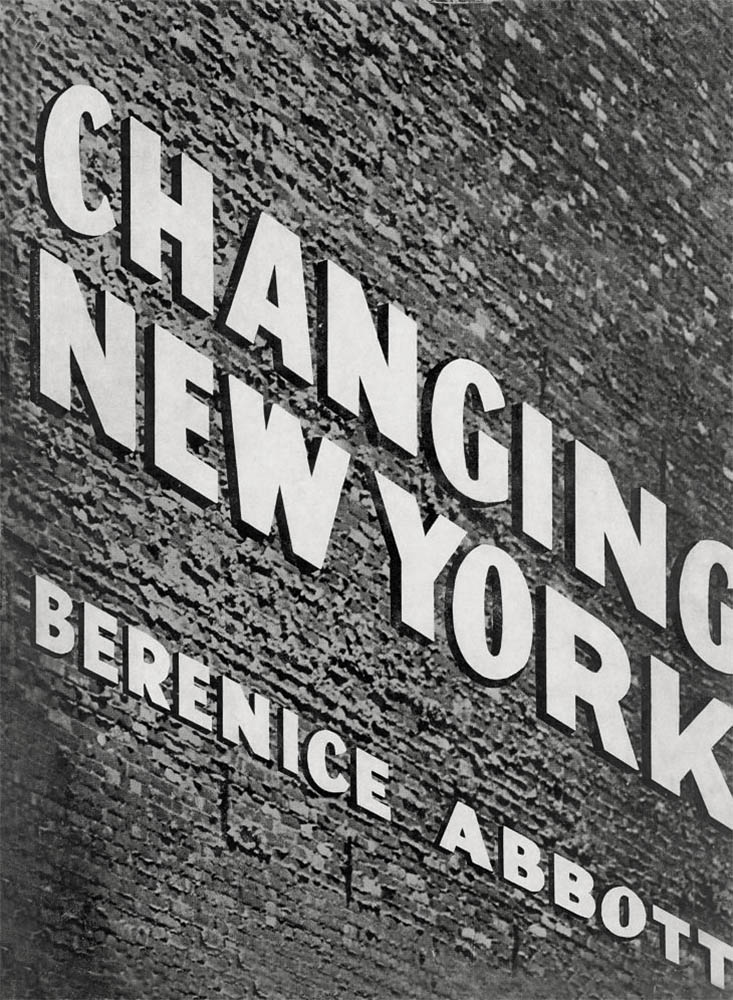
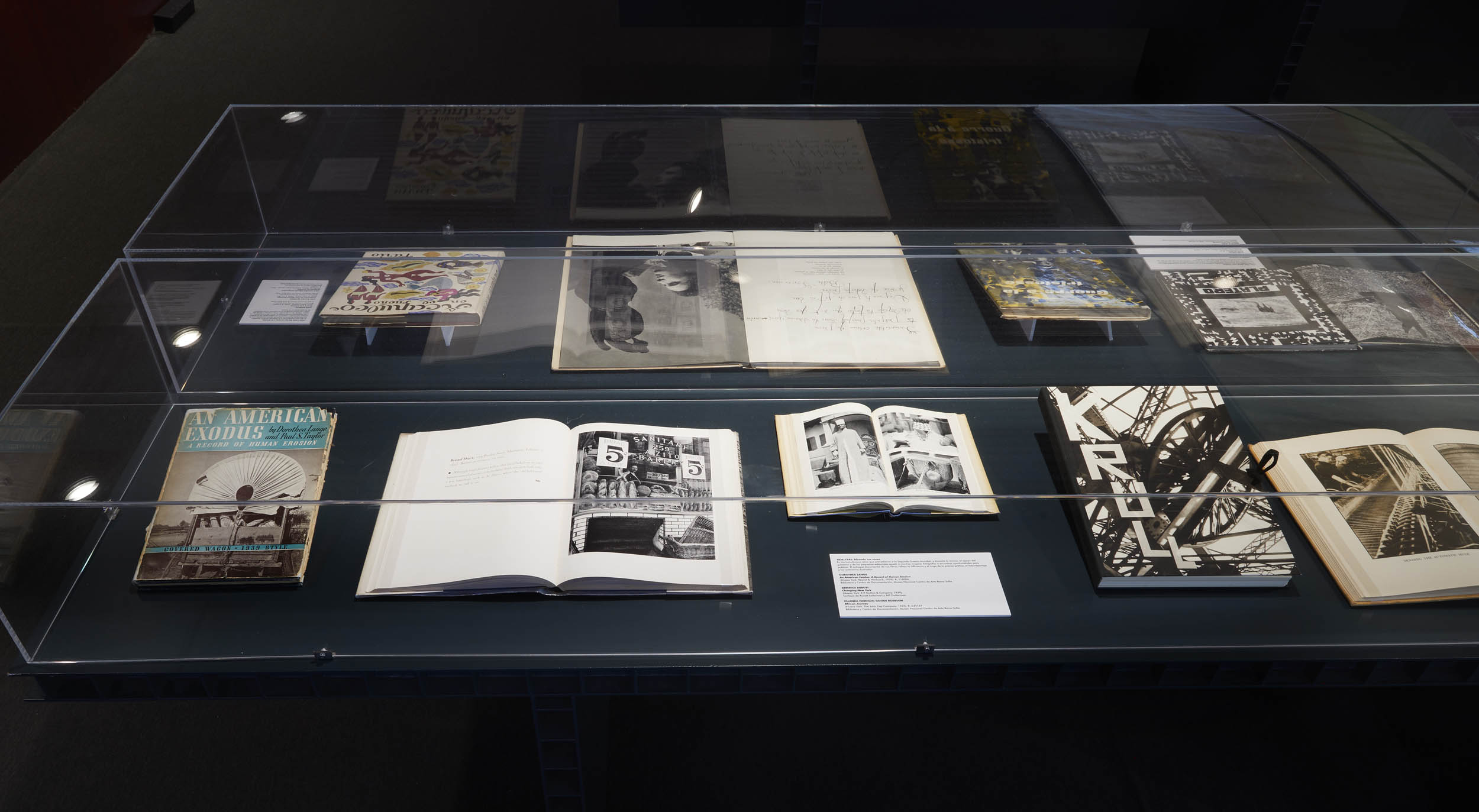
Berenice Abbott and Elizabeth McCausland. 'Changing New York'. New York: E. P. Dutton & Company, 1939


Berenice Abbott and Elizabeth McCausland. Changing New York. New York: E. P. Dutton & Company, 1939


“The camera alone can catch
the swift surfaces of the
cities today and speaks a
language intelligible to all.”

~ Berenice Abbott


Abbott’s landmark work on New York, illustrated with 97 halftone plates that display “the historical importance of the documentary model its power as a medium of personal expression” (Parr & Badger).


In January 1929, after eight years in Europe, Abbott boarded an ocean liner to New York City for what was meant to be a short visit. Upon arrival, she was struck by the rapid transformation of the built landscape and saw the city as ripe with photographic potential. “When I saw New York again, and stood in the dirty slush, I felt that here was the thing I had been wanting to do all my life,” she recalled. “Old New York is fast disappearing,” Abbott observed. “At almost any point on Manhattan Island, the sweep of one’s vision can take in the dramatic contrasts of the old and the new and the bold foreshadowing of the future. This dynamic quality should be caught and recorded immediately in a documentary interpretation of New York City. The city is in the making and unless this transition is crystallised now in permanent form, it will be forever lost…. The camera alone can catch the swift surfaces of the cities today and speaks a language intelligible to all.”

On the eve of the Great Depression, she began a series of documentary photographs of the city that, with the support of the Works Progress Administration’s Federal Art Project from 1935 to 1939, debuted in 1939 as the traveling exhibition and publication Changing New York.

With a handheld camera, Abbott traversed the city, photographing its skyscrapers, bridges, elevated trains, and neighbourhood street life. She pasted these “tiny photographic notes” into a standard black-page album, arranging them by subject and locale.

Consisting of 266 small black-and-white prints arranged on thirty-two pages, Abbott’s New York album marks a key turning point in her career – from her portrait work in Paris to the urban documentation that became one of her lasting legacies.

From 1935 to 1965, Berenice Abbott and art critic Elizabeth McCausland (1899-1965) lived and worked in two flats they shared on the fourth floor of the loft building at 50 Commerce Street.

Lannyl Stephens. “Berenice Abbott’s Changing New York,” on the Village Preservation website July 17, 2023 [Online] Cited 26/05/2024


Berenice Abbott and Elizabeth McCausland. 'Changing New York'. New York: E. P. Dutton & Company, 1939


Berenice Abbott and Elizabeth McCausland. Changing New York. New York: E. P. Dutton & Company, 1939


'An American Exodus: A Record of Human Erosion'. Photographs by Dorothea Lange; text by Paul Taylor. New York: Reynal & Hitchcock, 1939


An American Exodus: A Record of Human Erosion. Photographs by Dorothea Lange; text by Paul Taylor. New York: Reynal & Hitchcock, 1939


“We need to be reminded these days about what women have been, and can be. It’s a question of their really deep and fundamental place in society. I have a feeling that women need to be reminded of it. They are needed.”

~ Dorothea Lange


First published in 1939, An American Exodus is one of the masterpieces of the documentary genre. Produced by incomparable documentary photographer Dorothea Lange with text by her husband, Paul Taylor, An American Exodus was taken in the early 1930s while the couple were working for the Farm Security Administration (FSA) The book documents the rural poverty of the depression-era exodus that brought over 300,000 migrants to California in search of farm work, a westward mass migration driven by economic deprivation as opposed to the Manifest Destiny of 19th century pioneers.

Text from the Google Books website


In 1938, Dorothea Lange and her husband Paul Taylor began sorting through the stacks of photographs she had made documenting migrant farmworkers and homeless drought refugees. Their goal was to create a book that would reveal the human dimension of the crisis to the American people and, hopefully, prompt government relief. One of several books released in the late 1930s that made use of the Farm Security Administration photo archive, An American Exodus: A Record of Human Erosion was innovative in several ways. Rather than tell the story from their own perspective, Lange and Taylor used direct quotes from the migrants themselves, which Lange had painstakingly collected in the field. Released as war tensions were building in Europe and Asia, An American Exodus was largely overlooked at the time. In the years since its publication, the book has gained power, presenting an iconic image of the Dust Bowl era that has shaped the way we think of those difficult years.

Text from the Dorothea Lange Digital Archive, Oakland Museum of California website


Eslanda Goode Robeson. 'African Journey'. New York: John Day Company, 1945


Eslanda Goode Robeson. African Journey. New York: John Day Company, 1945


Eslanda Robeson’s 1936 African journal with her own photographs. Africa seen through the eyes of an African American. She went to South Africa, Kenya, Uganda, and Congo, and visited African kings and British governors, villages, gold mines, plantations, herdswomen, and modern African leaders.

Eslanda Goode Robeson (1895-1965) was an American anthropologist, author, actress, and civil rights activist. She was born in Washington, D.C., graduated from Columbia University in 1917 with a degree in chemistry, and in 1921 married the singer and actor Paul Robeson. In 1936, she received her degree in anthropology from the London School of Economics, and in 1946, the year following the publication of African Journal, earned her anthropology Ph.D. from Hartford Seminary where she specialised in African studies and race relations.

Text from the Boyd Books website


'Wrens in Camera' by Lee Miller


Wrens in Camera by Lee Miller (London: Hollis and Carter, 1945)


During the Second World War Lee Miller was the official war photographer for Vogue magazine. The images contained in Wrens in Camera were commissioned by the Admiralty and show the female navy officers and workers fulfilling their war duties. There are signallers, technicians, trainers, housekeepers and transport crews. The whole is an important document of women’s roles in war-time Britain.

Text from the Beaux Books website


'Wrens in Camera' by Lee Miller (London: Hollis and Carter, 1945) p. 47


Wrens in Camera by Lee Miller (London: Hollis and Carter, 1945) p. 47


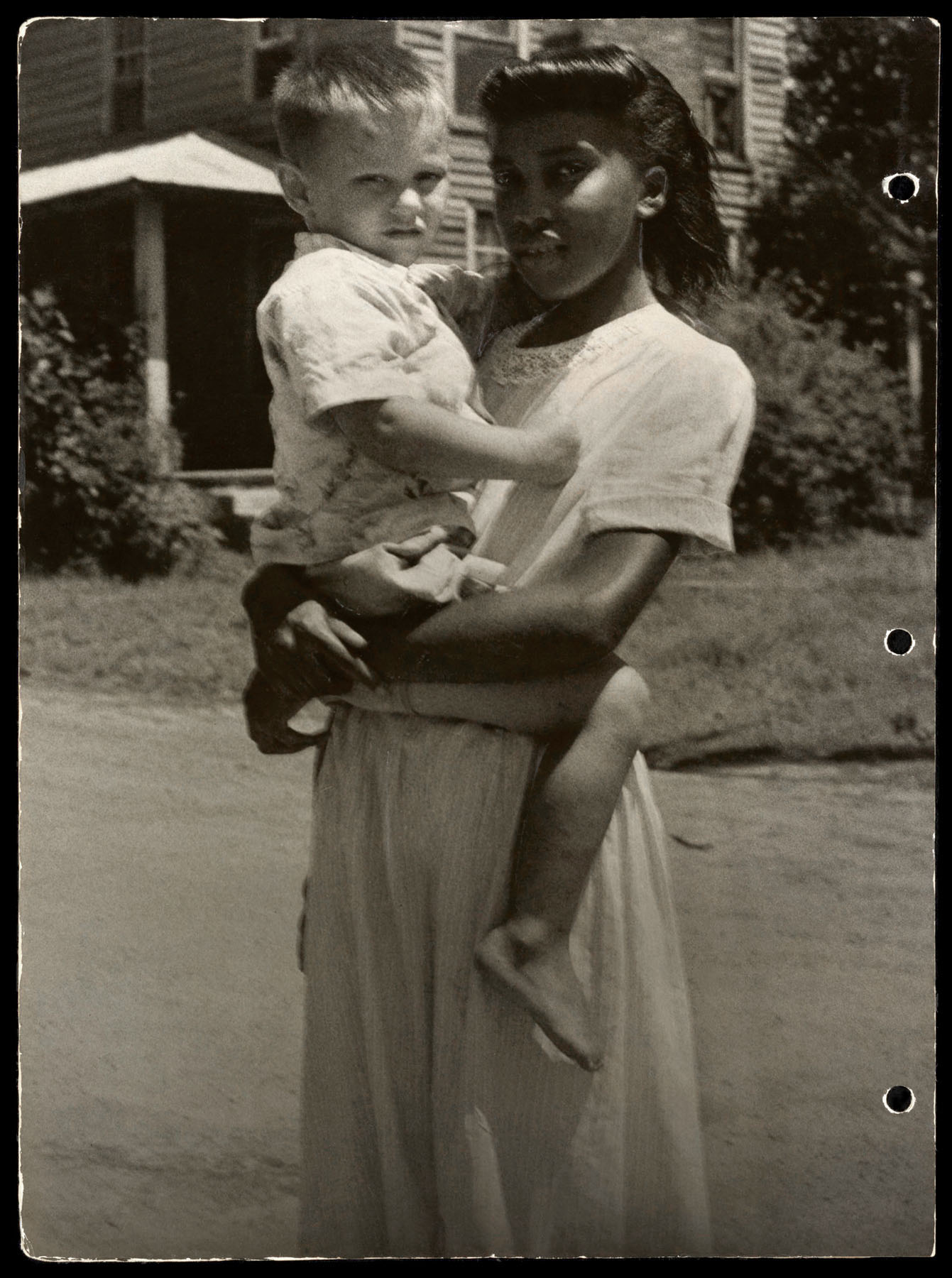
Marion Palfi (American born Germany, 1907-1978) 'Untitled (Black woman with a white child)' 1949


Marion Palfi (American born Germany, 1907-1978)
Untitled (Black woman with a white child)
1949
From the book There Is No More Time: An American Tragedy
Marion Palfi/Center for Creative Photography
© All Rights Reserved


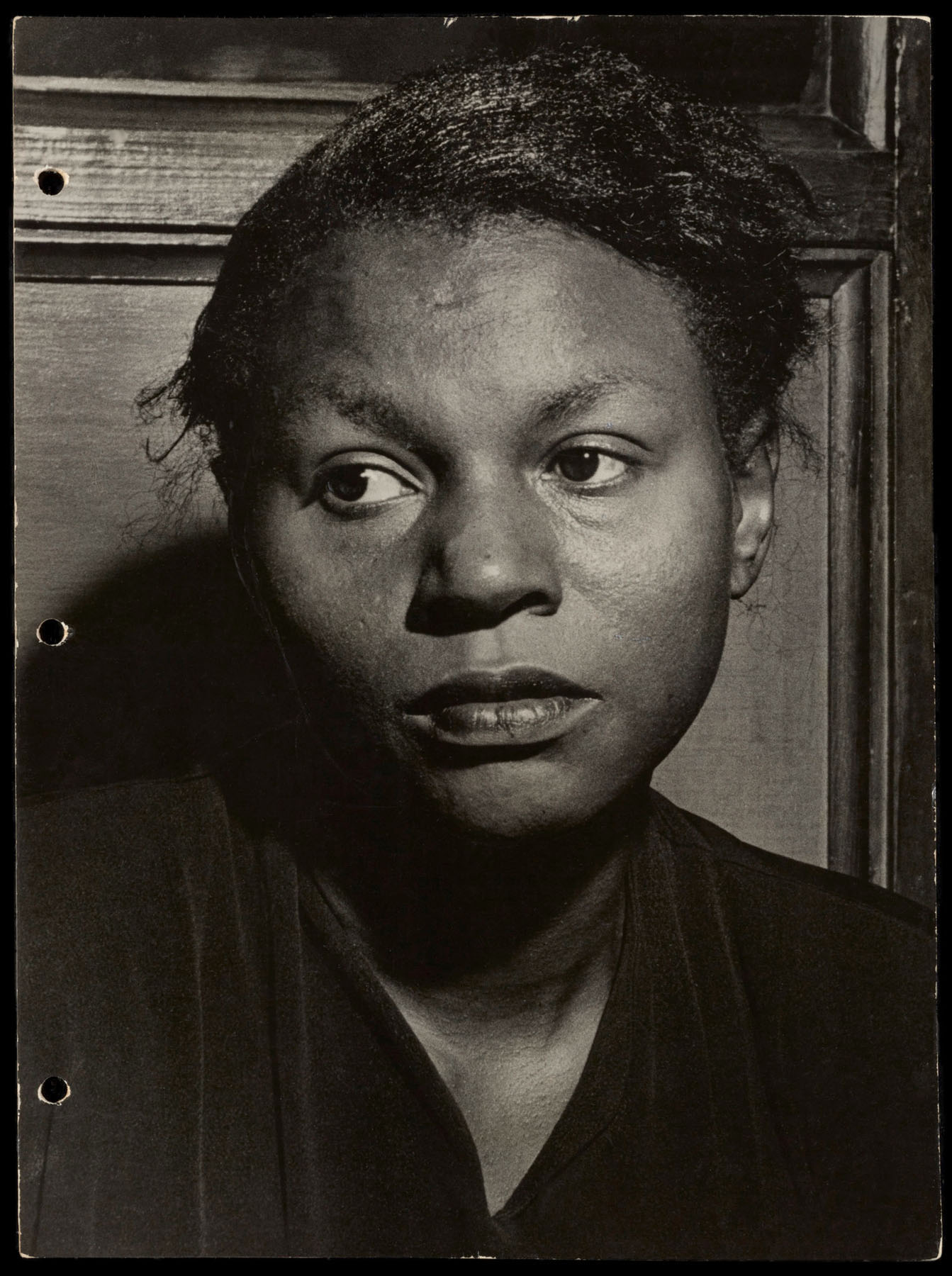
Marion Palfi (American born Germany, 1907-1978) 'Untitled (Portrait of Mrs. Caleb Hill, widow of a lynching victim)' 1949


Marion Palfi (American born Germany, 1907-1978)
Untitled (Portrait of Mrs. Caleb Hill, widow of a lynching victim)
1949
From the book There Is No More Time: An American Tragedy
Marion Palfi/Center for Creative Photography
© All Rights Reserved


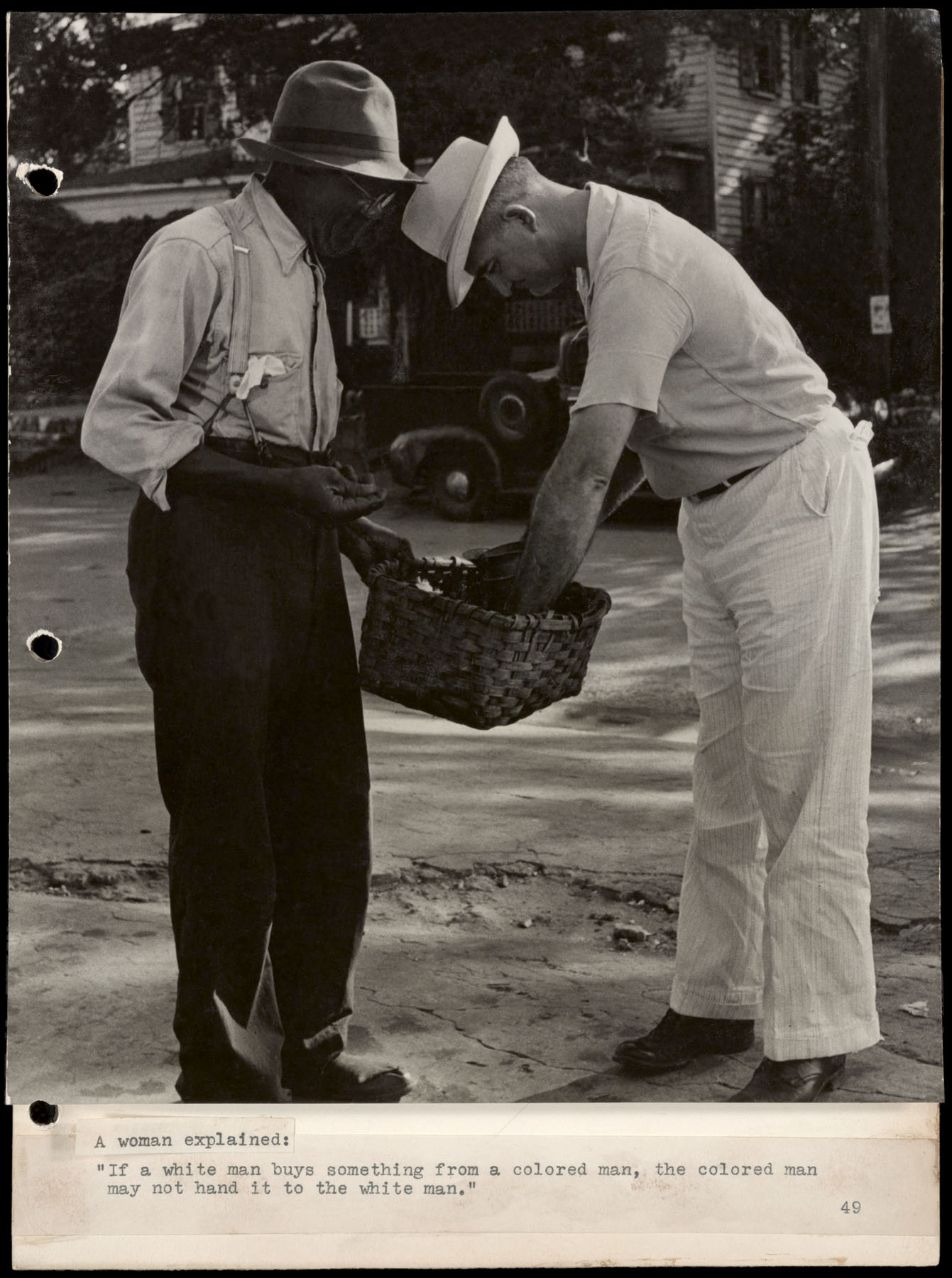
“As a photographer, she was as interested in the discriminator as in the victims of discrimination. Long before what we tend to think of as the crux of the civil rights struggle in the 1960s, Palfi went to Georgia at a particularly dangerous time. In 1949, she was drawn to do an in-depth portrait of Irwinton, a small community where a young black man had been torn out of jail and shot by a lynch mob. The tremendous public outcry over this barbaric incident included front-page coverage and editorials by the New York Times. Obviously, the presence of a photographer in such a community would attract unwanted attention and might have endangered her life. But by a happy stroke of luck, the Vice-President of the Georgia Power Company was interested in her work. Warning her that she must “photograph the South as it really is, not as the North slanders it,” he wanted her to get to meet the “right” people. As it happened, the “right” people turned out to be the very discriminators she wanted to photograph. Left in the protection of the local postmistress, she proceeded to take terms, objective pictures of overseers and white-suited politicians.

Even if the press had not indicted Irwinton for its racism, the extreme conservatism and tension were evident in the faces of its citizens. She found a white supremacist group, “The Columbians,” whose insignia was a thunderbolt, the symbol of Hitler’s elite guard. “Mein Kampf was their bible,” she believed. Meanwhile, the wife of the lunch victim said, simply, “Caleb was a good man … he believed in his rights and therefore he died.”

Elizabeth Lindquist-Cock. “Marion Palfi: An Appreciation,” in The Archive Research Series Number 19, September 1983, Center for Creative Photography, University of Arizona, pp. 7-8.


Marion Palfi (American born Germany, 1907-1978) 'Untitled (A woman explained: "If a white man buys something...")' 1949


Marion Palfi (American born Germany, 1907-1978)
Untitled (A woman explained: “If a white man buys something…”)
1949
From the book There Is No More Time: An American Tragedy
Marion Palfi/Center for Creative Photography
© All Rights Reserved


'Acapulco en el sueño' by Francisco Tario (text) with photographs by Lola Alvarez Bravo, 1951


Acapulco en el sueño by Francisco Tario (text) with photographs by Lola Alvarez Bravo, 1951


“If my photographs have any meaning, it’s that they stand for a Mexico that once existed.”

~ Lola Alvarez Bravo


Dare Wright. 'The Lonely Doll'. New York: Doubleday & Co, 1957


Dare Wright. The Lonely Doll. New York: Doubleday & Co, 1957


Once there was a little doll. Her name was Edith. She lived in a nice house and had everything she needed except someone to play with. She was lonely! Then one morning Edith looked into the garden and there stood two bears! Since it was first published in 1957, The Lonely Doll has established itself as a unique children’s classic. Through innovative photography Dare Wright brings the world of dolls to life and entertains us with much more than just a story. Edith, the star of the show, is a doll from Wright’s childhood, and Wright selected the bear family with the help of her brother. With simple poses and wonderful expressions, the cast of characters is vividly brought to life to tell a story of friendship.

Text from the Amazon website


'Mourka, the autobiography of a Cat', by Tanaquil Le Clercq and Martha Swope. Stein and Day 1964


Mourka, the autobiography of a Cat, by Tanaquil Le Clercq and Martha Swope. Stein and Day 1964


Le Clercq is the wife of choreographer George Balanchine; she wrote this book after Mourka became famous because of the photograph of Martha Swope in Life magazine, where George Balanchine assists Mourka in his grand jeté. Mourka writes about his exercises in dance and his aspirations to travel in outer space.

Text from the Cats in Books albums Facebook page


'Mourka, the autobiography of a Cat', by Tanaquil Le Clercq and Martha Swope. Stein and Day 1964


Mourka, the autobiography of a Cat, by Tanaquil Le Clercq and Martha Swope. Stein and Day 1964


'A Way of Seeing', 1965. Photographs by Helen Levitt


A Way of Seeing, 1965. Photographs by Helen Levitt


'Dublin: A Portrait' by V.S. Pritchett (text) and Evelyn Hofer (photographs). New York: Harper & Row, 1967


Dublin: A Portrait by V.S. Pritchett (text) and Evelyn Hofer (photographs). New York: Harper & Row, 1967


The starting point for this book is Evelin Hofer’s Dublin: A Portrait, which features an in-depth essay by V. S. Pritchett and photos by Hofer, and enjoyed great popularity upon its original publication in 1967. Dublin: A Portrait is an example of Hofer’s perhaps most important body of work, her city portraits: books that present comprehensive prose texts by renowned authors alongside her self-contained visual essays with their own narratives. Dublin: A Portrait was the last book published in this renowned series. …

In Dublin Hofer repeatedly turned her camera to sights of the city, but mainly to the people who constituted its essence. She made numerous portraits – be they of writers and public figures or unknown people in the streets. Her portraits give evidence of an intense, respectful engagement with her subjects, who participate as equal partners in the process of photographing.

Text from The Eye of Photography Magazine website


'Diane Arbus: An Aperture Monograph', 1972


Diane Arbus: An Aperture Monograph, 1972


When Diane Arbus died in 1971 at the age of forty-eight, she was already a significant influence-even something of a legend-among serious photographers, although only a relatively small number of her most important pictures were widely known at the time. The publication of Diane Arbus: An Aperture Monograph in 1972 – along with the posthumous retrospective at The Museum of Modern Art – offered the general public its first encounter with the breadth and power of her achievements. The response was unprecedented.

The monograph of eighty photographs was edited and designed by the painter Marvin Israel, Diane Arbus’s friend and colleague, and by her daughter Doon Arbus. Their goal in making the book was to remain as faithful as possible to the standards by which Diane Arbus judged her own work and to the ways in which she hoped it would be seen. Universally acknowledged as a classic, Diane Arbus: An Aperture Monograph is a timeless masterpiece with editions in five languages and remains the foundation of her international reputation.

Nearly half of a century has done nothing to diminish the riveting impact of these pictures or the controversy they inspire. Arbus’s photographs penetrate the psyche with all the force of a personal encounter and, in doing so, transform the way we see the world and the people in it.

Text from the Fraenkel Gallery Shop website


Jill Freedman. 'Circus Days'. New York: Harmony Books/Crown, 1975


Jill Freedman. Circus Days. New York: Harmony Books/Crown, 1975


A photographic documentation of the Beatty-Cole Circus, recording and portraying the customs, activities, animals, and singular personalities of an endangered way of life.


Jill Freedman. 'Circus Days'. New York: Harmony Books/Crown, 1975


Jill Freedman. Circus Days. New York: Harmony Books/Crown, 1975


Susan Meiselas (American, b. 1948) 'Carnival Strippers' book cover 1975


Susan Meiselas. Carnival Strippers book cover 1975


From 1972 to 1975, Susan Meiselas spent her summers photographing women who performed striptease for small-town carnivals in New England, Pennsylvania and South Carolina. As she followed the shows from town to town, she captured the dancers on stage and off, their public performances as well as their private lives, creating a portrait both documentary and empathetic: “The recognition of this world is not the invention of it. I wanted to present an account of the girl show that portrayed what I saw and revealed how the people involved felt about what they were doing.” Meiselas also taped candid interviews with the dancers, their boyfriends, the show managers and paying customers, which form a crucial part of the book.

Meiselas’ frank description of these women brought a hidden world to public attention, and explored the complex role the carnival played in their lives: mobility, money and liberation, but also undeniable objectification and exploitation. Produced during the early years of the women’s movement, Carnival Strippers reflects the struggle for identity and self-esteem that characterised a complex era of change.

Text from the Booktopia website [Online] Cited 22/04/2022


Claudia Andujar, 'Amazônia', 1978


Claudia Andujar, Amazônia, 1978


Since the early 1970s, Claudia Andujar has been committed to the cause of the Yanomami Indians living in the heart of the Amazon rainforest and is the author of the most important photographic work dedicated to them to date. A founding member of the Brazilian NGO Comissão Pró Yanomami (CCPY), the photographer has played a fundamental role in the recognition of their territory by the Brazilian government. …

Claudia Andujar first met the Yanomami in 1971 while working on an article about the Amazon for Realidade magazine. Fascinated by the culture of this isolated community, she decided to embark on an in-depth photographic essay on their daily life after receiving a Guggenheim fellowship to support the project. From the very beginning, her approach differed greatly from the straightforward documentary style of her contemporaries. The photographs she made during this period show how she experimented with a variety of photographic techniques in an attempt to visually translate the shamanic culture of the Yanomami. Applying Vaseline to the lens of her camera, using flash devices, oil lamps and infrared film, she created visual distortions, streaks of light and saturated colors, thus imbuing her images with a feeling of the otherworldly.

Text from the Fondation Cartier pour l’art contemporain website


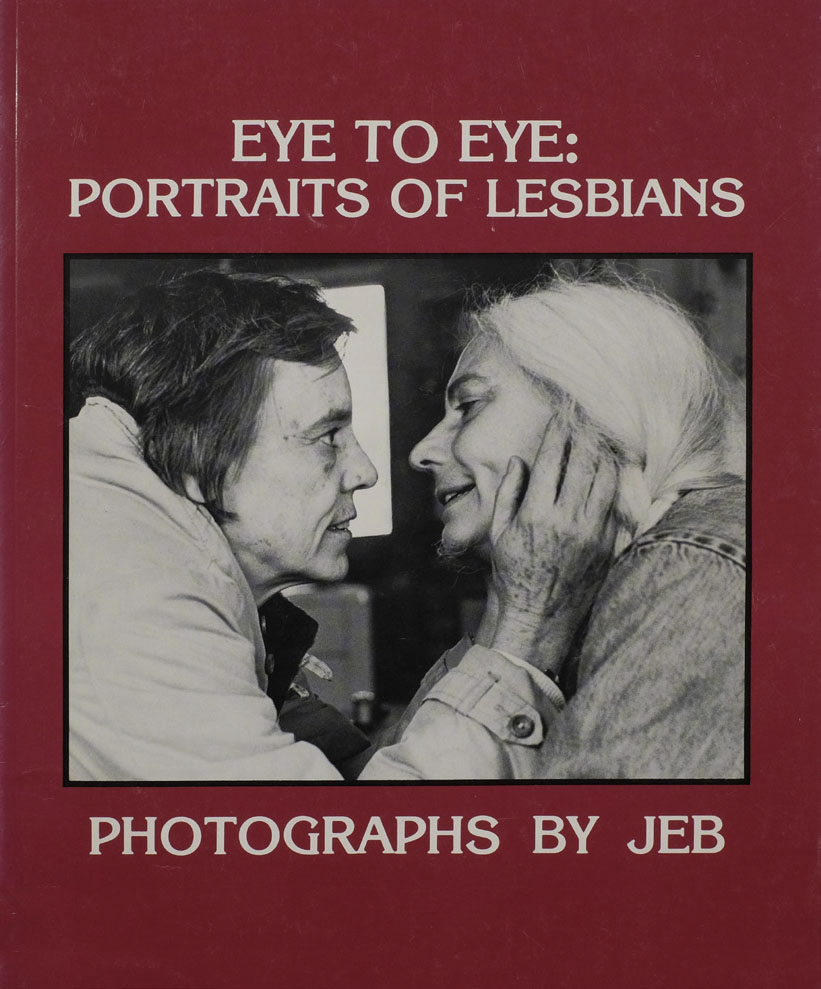
Cover image of 'Eye to Eye: Portraits of Lesbians' (1979). Photographs by JEB (Joan E. Biren)


Cover image of Eye to Eye: Portraits of Lesbians (1979). Photographs by JEB (Joan E. Biren)


In 1979, JEB (Joan E. Biren) self-published her first book, Eye to Eye: Portraits of Lesbians. Revolutionary at that time, JEB made photographs of lesbians from different ages and backgrounds in their everyday lives-working, playing, raising families, and striving to remake their worlds. The photographs were accompanied by testimonials from the women pictured in the book, as well as writings from icons including Audre Lorde, Adrienne Rich and a foreword from Joan Nestle. Eye to Eye signalled a radical new way of seeing – moving lesbian lives from the margins to the centre, and reversing a history of invisibility. More than just a book, it was an affirmation of the existence of lesbians that helped to propel a political movement. Reprinted for the first time in forty years and featuring new essays from photographer Lola Flash and former soccer player Lori Lindsey, Eye to Eye is a faithful reproduction of a work that continues to resonate in the queer community and beyond.

Text from the Amazon website


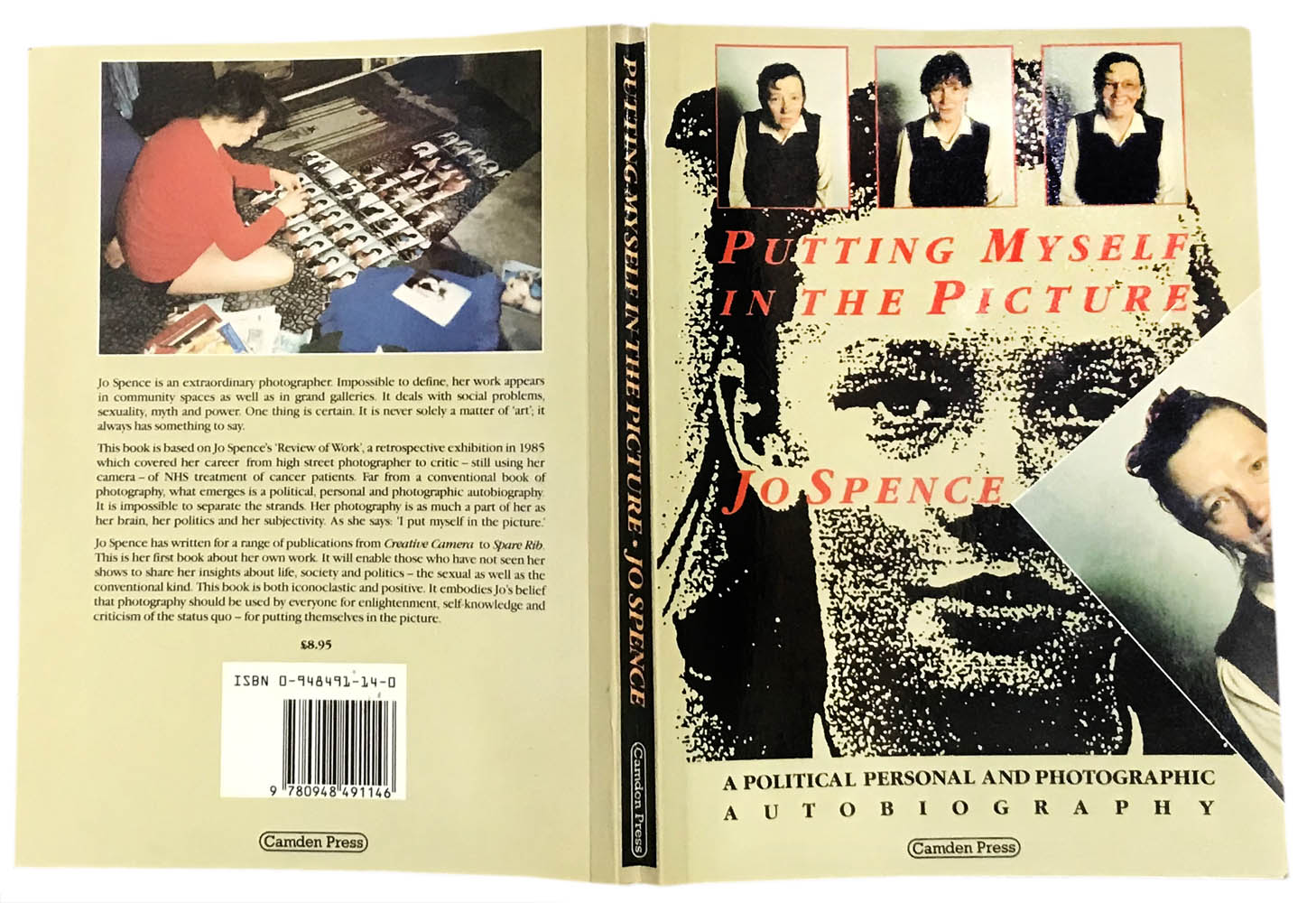
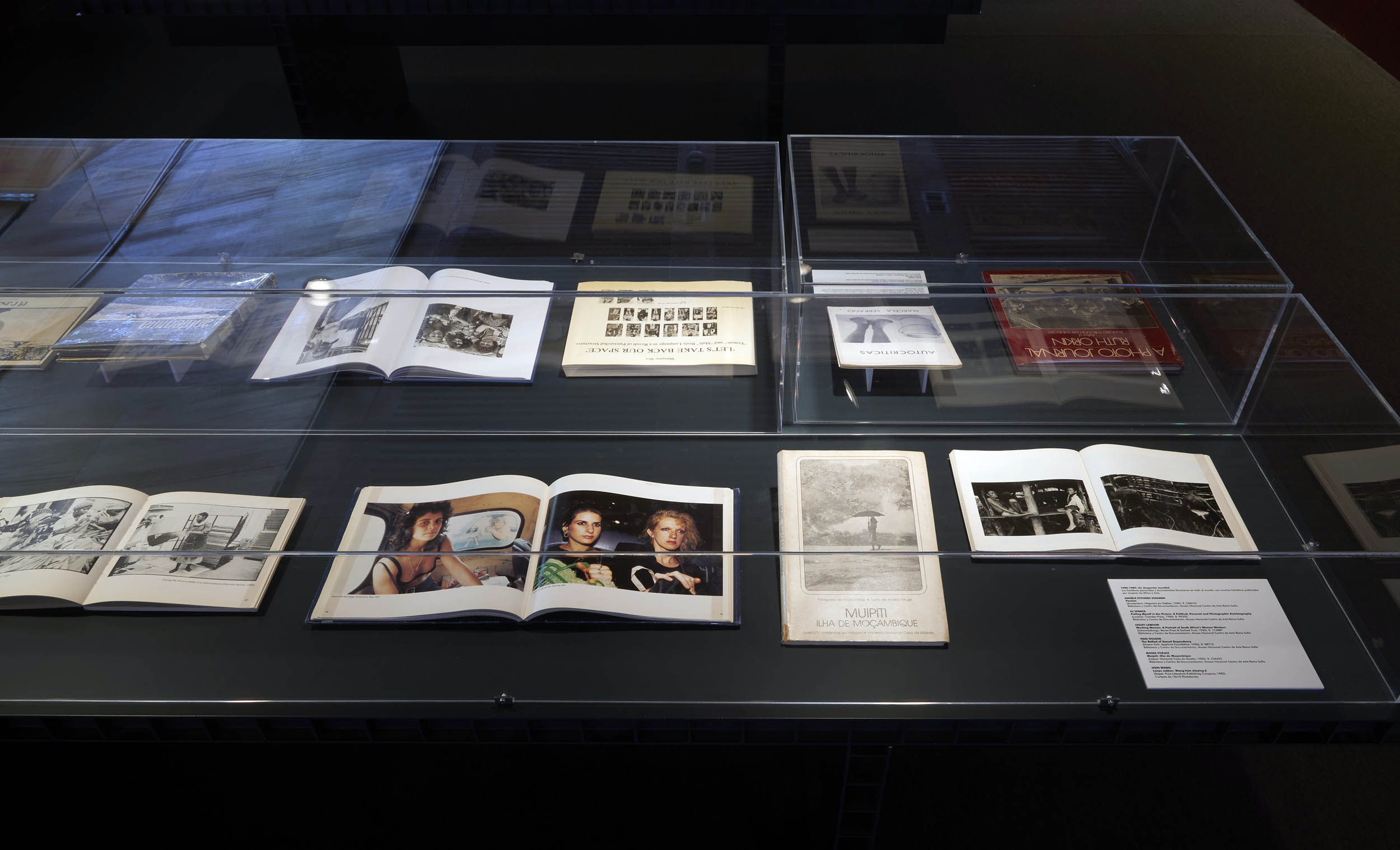
Jo Spence. 'Putting Myself In The Picture: A Political, Personal, and Photographic Autobiography'. London: Camden Press Ltd, 1986


Jo Spence. Putting Myself In The Picture: A Political, Personal, and Photographic Autobiography. London: Camden Press Ltd, 1986


Photographer Jo Spence challenges the assumptions of conventional photography in this groundbreaking visual autobiography, which traces her journey from self-censorship to self-healing.


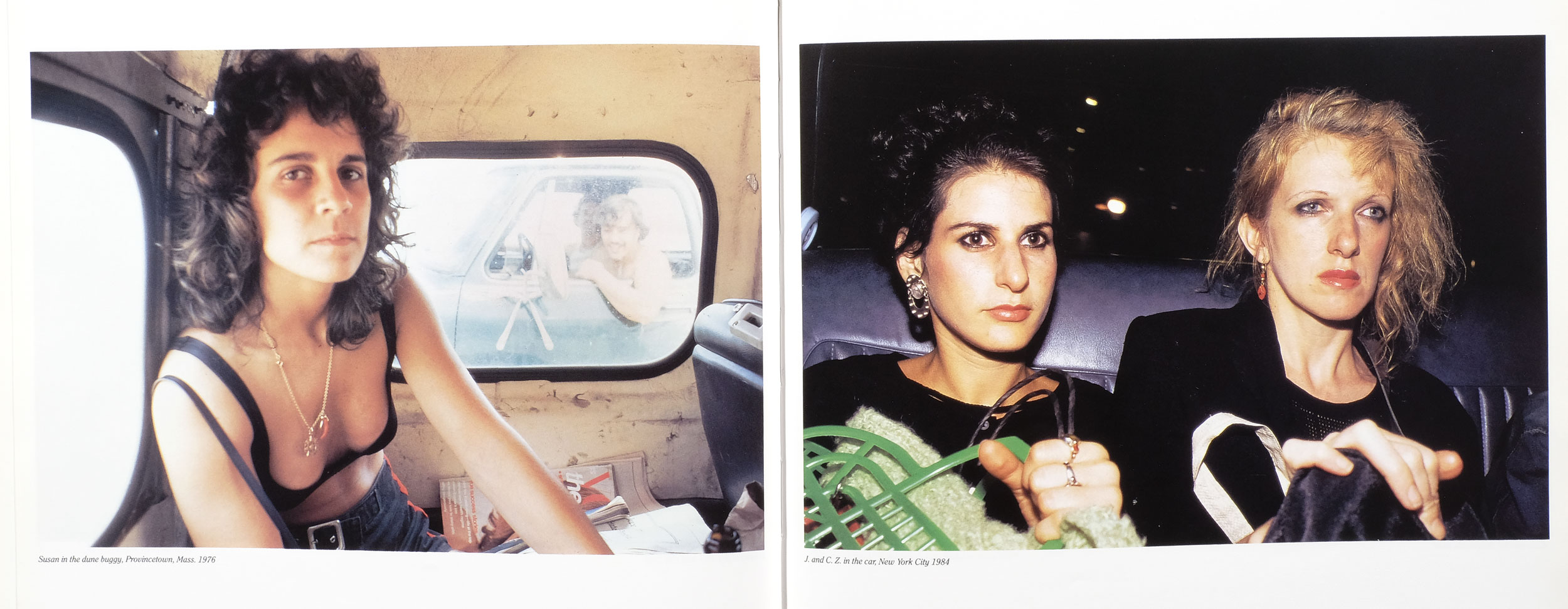
Nan Goldin, 'The Ballad of Sexual Dependency', 1986


Nan Goldin, The Ballad of Sexual Dependency, 1986


Cristina García Rodero. 'España Oculta'. 1989


Cristina García Rodero. España Oculta. 1989


When Spanish photographer Cristina Garcia Rodero went to study art in Italy, in 1973, she fully understood the importance of home. Yet her time abroad formented a deeper interest in was happening in her own country and, as a result, at the age of 23, Garcia Rodero returned to Spain and started a project that she hoped would capture the essence of the myriad Spanish traditions, religious practices and rites that were already fading away. What started as a five-year project ended up lasting 15 years and came to be the book España Oculta (Hidden Spain) published in 1989. At 39 years old, Garcia Rodero had managed to compile a kind of anthropological encyclopedia of her country. The work also captured a key moment in Spain’s history – with Spanish dictator Franco dying in 1975, and the country commencing a period of transition – something that would come to have a huge effect on the way the nation’s cultural traditions and rites were experienced and performed from then on.

Text from the Google Books website


'Barbara Kruger: Thinking of You'. The MIT Press & The Museum of Contemporary Art, 1999


Barbara Kruger: Thinking of You. The MIT Press & The Museum of Contemporary Art, 1999


This is the most comprehensive publication ever produced on the work of American artist Barbara Kruger. Kruger, one of the most influential artists of the last three decades, uses pictures and words through a wide variety of media and sites to raise issues of power, sexuality, and representation. Her works include photographic prints on paper and vinyl, etched metal plates, sculpture, video, installations, billboards, posters, magazine and book covers, T-shirts, shopping bags, postcards, and newspaper op-ed pieces.

This book serves as the catalog for the first major one-person exhibition of Kruger’s work to be mounted in the United States. The book, designed by Lorraine Wild in collaboration with the artist, contains texts by Rosalyn Deutsche, Katherine Dieckmann, Ann Goldstein, Steven Heller, Gary Indiana, Carol Squiers, and Lynne Tillman on subjects associated with Kruger’s work, including photography, graphic design, public space, power, and representation, as well as an extensive exhibition history, bibliography, and checklist of the exhibition. The cover features a new piece by Kruger, entitled Thinking of You, created especially for the catalog.

Text from the Amazon website


Graciela Iturbide. 'Juchitán de las Mujeres'. Mexico: Ediciones Toledo, 1991


Graciela Iturbide. Juchitán de las Mujeres. Mexico: Ediciones Toledo, 1991


In 1979 Graciela Iturbide took a series of photographs of the Zapotec culture, published as Juchitán de la mujeres. This is certainly the best known of all her works. It is the result of ten years of work, numerous trips to the Isthmus of Tehuantepec, and a prolonged experience of living among its inhabitants. None of the subjects of these photographs was captured candidly; all were carefully posed.


Photobook history is a relatively recent area of study, with one of the first “book-on-books” anthologies published in 1999 with the release of Fotografía Pública / Photography in Print 1919-1939, a catalogue associated with an exhibition of the same title at the Museo Nacional Centro de Arte Reina Sofía. Over the past two decades, a virtual cottage industry of books-on-photobooks has emerged, documenting photographically illustrated books based on geography or around a theme. Photobooks by women are in short supply in most of these anthologies, which is why 10×10 Photobooks launched the How We See: Photobooks by Women touring reading room and associated publication in 2018. Focusing on contemporary photobooks by women from 2000 to 2018, the project was the first step in 10×10 Photobooks’ ongoing interest in reassessing photobook history as it relates to women. Although only twenty-five years old, photobook history has been written primarily by men and has focused on publications authored by men. Very few books by women photographers appear in past photobook anthologies, and those included are already quite well known.

As a nonprofit organisation with a mission to share photobooks globally and encourage their appreciation and understanding, the 10×10 Photobooks team frequently discusses how photobook history was – and continues to be – written from a skewed perspective and that a “new” history needs to emerge. Early in our discussions, we recognised photobook history as needing to be “rewritten,” but this implied we accepted the partial history already in existence, which we did not. Instead, we concluded that photobook history needs to be “unwritten,” as the existing history is riddled with omissions. What is left out is not by mistake – it indicates bias and incomplete research by the current gatekeepers. To present a more inclusive and diverse vision, we must collectively address these omissions.

What They Saw: Historical Photobooks by Women, 1843-1999, a touring reading room accompanied by a publication and series of public programs, is a means to ignite interest in some of the underexposed and undocumented photobooks by women made between 1843 and 1999 and to begin a process of filling in the gaps. We say “some photobooks” because we are keenly aware that much work is still required, and we have only opened the door a crack. In several cases, particularly for books done before 1900 in regions other than North America and Europe or by women of colour, we heard about an artist who may have produced a photographically illustrated book or album, but we were unable to find any further documentation other than a brief mention before the trail went cold. Other impediments emerged among the cohort of women who collaborated with their husbands. Many of their collaborative books are credited only with their husbands’ names, and their contributions, if mentioned at all, are included as footnotes. In some cases, women authors marked their works with a gender-neutral signature that used only their studio name or first initial and last name. In addition, our initial research was impeded by the standard definition of a photobook: a bound volume with photographic illustrations published by the author, an independent publisher, or a trade publisher.

We found that we had to widen the frame to include individual albums, slim exhibition pamphlets, scrapbooks, maquettes, zines, and artists’ books in order to be more inclusive. This wider frame necessitated redefining a photobook author to incorporate those who may not call themselves a photographer or artist but who nonetheless assembled a “book” composed of photographs taken by themselves or others. Funding was another limitation. Many women photographers who actively exhibited their work either lacked the personal resources to produce a book or could not find anyone willing to underwrite such a venture.

This iteration of the What They Saw reading room includes 60 books of the more than 250 volumes highlighted in the associated publication. Most of these publications are kept in the collection of the Museo Reina Sofía’s Library and Documentation Centre. They are presented chronologically and show examples of books from around the globe. We begin with Anna Atkins, a British botanist, who was the first person ever to print and distribute a photobook. Her simple desire to share images of her algae specimens ushered in a new art form that presents photography in the book format. In the following years, women such as Isabel Agnes Cowper, the Official Museum Photographer at the South Kensington Museum (now the Victoria and Albert Museum), used photography to document museum objects, subsequently reproduced in numerous books. Until recently, her name was forgotten, as none of the South Kensington Museum publications credit her as the photographer.

In the early twentieth-century, women authors of photobooks gained some visibility. Fine-art photographer Germaine Krull published numerous books that approached photography from a creative and inventive perspective. Margaret Bourke-White emerged as a well-regarded photojournalist who traveled worldwide photographing for Fortune and Life magazines and producing countless books. In the 1930s, in Russia, Varvara Stepanova collaborated with her husband, Aleksandr Rodchenko, to create books filled with experimental photomontages. As the century progressed, women in other parts of the world also found their voices in photobooks. African American anthropologist Eslanda Cardozo Goode Robeson traveled to Uganda and South Africa and published African Journey in 1945, one of the earliest books written on Africa by a female scholar of color. In Mexico in 1951, Lola Álvarez Bravo contributed photographs to Acapulco en el sueño, a bold publication created to attract tourism to Acapulco. A few years later, Fina Gómez Revenga, a Venezuelan photographer, worked in Paris with the famed French printing house Draeger Frères to illustrate the poems of Surrealist poet Lise Deharme.

With the arrival of the 1960s, women emerged from the sidelines and began to produce widely distributed, often socially focused, photobooks. A New York City street photographer, Helen Levitt, published A Way of Seeing in 1965, while Carla Cerati collaborated on Morire di classe in 1969, a visually compelling commentary on the appalling conditions in Italian psychiatric hospitals. With the women’s movement finding its full voice in the 1970s, women photographers took center stage in the last three decades of the twentieth-century, releasing a steady flow of photobooks. A year after her death in 1971, Aperture published Diane Arbus’s monograph, a photobook that continues to influence generations of photographers. Barbara Brändli, a Swiss immigrant to Venezuela, documents the energy and rapid transformations of Caracas, while activist-photographer JEB (Joan E. Biren) toured the United States, capturing lesbian pride events. In South Africa, Lesley Lawson, a member of the Afrapix photo agency, combined interviews and her photographs to reveal the working conditions of Black women in Johannesburg. Cameroonian Angèle Etoundi Essamba shares the beauty and spirit of Black women in Passion (1989), while American Donna Ferrato unflinchingly explores domestic violence in Living with the Enemy (1991), and Nan Goldin exposes violent love and loss in her personal narrative, The Ballad of Sexual Dependency (1986). In books centered on cultural explorations, Wang Hsin photographs the fading traditions of Lanyu (Orchid Island) off the coast of Taiwan, Cristina García Rodero records religious festivals and rituals in her native Spain, and Ketaki Sheth documents twins and triplets in the Indian Gujarati community.

In reaching out to the far corners of the world, we uncovered numerous forgotten books, but many remain undiscovered. For example, we learned about a nineteenth-century woman in Iran who kept her husband’s diary and most probably added her photographs to the volume, but no visual documentation of this diary could be found. We also discovered several books that featured the participation of women in collaboration with male photographers where the women’s contributions were ambiguous. There were several “leads” of this nature, and we decided that leaving them out would be a missed opportunity. Therefore, in the associated anthology, we have included a “timeline” that presents several historically significant publishing, magazine, small press, photography, and feminist events that may or may not have produced a photobook, but have undoubtedly influenced its history. To support further exploration of these unresolved “leads,” 10×10 Photobooks has launched a research grant program to encourage scholarship on underexplored topics in photobook history.

From its inception, What They Saw has sought to include a diverse group of photographically illustrated publications by women. For photobook history to become more inclusive, it requires everyone (men, women, nonbinary, white, Black, Asian, African, Latinx, Indigenous, Western, Eastern, etc.) to contribute. We see this reading room of women’s role in the production, dissemination, and authoring of photobooks as a necessary step in the unwriting of the current photobook history and a rewriting of a photobook history that is more equitable and inclusive. We invite future researchers to take the next steps to explore further women and other marginalised people’s historical impact in the realm of photobooks and to expand upon the books we present in this reading room and its associated anthology.

Text from the Museo Nacional Centro de Arte Reina Sofía


Installation view of the exhibition 'What They Saw: Historical Photobooks by Women, 1843-1999' at the Museo Nacional Centro de Arte Reina Sofía, Madrid

Installation view of the exhibition 'What They Saw: Historical Photobooks by Women, 1843-1999' at the Museo Nacional Centro de Arte Reina Sofía, MadridInstallation view of the exhibition 'What They Saw: Historical Photobooks by Women, 1843-1999' at the Museo Nacional Centro de Arte Reina Sofía, Madrid

Installation view of the exhibition 'What They Saw: Historical Photobooks by Women, 1843-1999' at the Museo Nacional Centro de Arte Reina Sofía, Madrid

Installation view of the exhibition 'What They Saw: Historical Photobooks by Women, 1843-1999' at the Museo Nacional Centro de Arte Reina Sofía, Madrid

Installation view of the exhibition 'What They Saw: Historical Photobooks by Women, 1843-1999' at the Museo Nacional Centro de Arte Reina Sofía, Madrid

Installation view of the exhibition 'What They Saw: Historical Photobooks by Women, 1843-1999' at the Museo Nacional Centro de Arte Reina Sofía, Madrid

Installation view of the exhibition 'What They Saw: Historical Photobooks by Women, 1843-1999' at the Museo Nacional Centro de Arte Reina Sofía, Madrid

Installation view of the exhibition 'What They Saw: Historical Photobooks by Women, 1843-1999' at the Museo Nacional Centro de Arte Reina Sofía, Madrid

Installation view of the exhibition 'What They Saw: Historical Photobooks by Women, 1843-1999' at the Museo Nacional Centro de Arte Reina Sofía, Madrid

Installation view of the exhibition 'What They Saw: Historical Photobooks by Women, 1843-1999' at the Museo Nacional Centro de Arte Reina Sofía, Madrid

Installation view of the exhibition 'What They Saw: Historical Photobooks by Women, 1843-1999' at the Museo Nacional Centro de Arte Reina Sofía, Madrid

Installation view of the exhibition 'What They Saw: Historical Photobooks by Women, 1843-1999' at the Museo Nacional Centro de Arte Reina Sofía, Madrid

Installation view of the exhibition 'What They Saw: Historical Photobooks by Women, 1843-1999' at the Museo Nacional Centro de Arte Reina Sofía, Madrid

Installation view of the exhibition 'What They Saw: Historical Photobooks by Women, 1843-1999' at the Museo Nacional Centro de Arte Reina Sofía, Madrid

Installation view of the exhibition 'What They Saw: Historical Photobooks by Women, 1843-1999' at the Museo Nacional Centro de Arte Reina Sofía, Madrid

Installation view of the exhibition 'What They Saw: Historical Photobooks by Women, 1843-1999' at the Museo Nacional Centro de Arte Reina Sofía, Madrid

Installation view of the exhibition 'What They Saw: Historical Photobooks by Women, 1843-1999' at the Museo Nacional Centro de Arte Reina Sofía, Madrid

Installation view of the exhibition 'What They Saw: Historical Photobooks by Women, 1843-1999' at the Museo Nacional Centro de Arte Reina Sofía, Madrid

Installation view of the exhibition 'What They Saw: Historical Photobooks by Women, 1843-1999' at the Museo Nacional Centro de Arte Reina Sofía, Madrid

Installation view of the exhibition 'What They Saw: Historical Photobooks by Women, 1843-1999' at the Museo Nacional Centro de Arte Reina Sofía, Madrid

Installation view of the exhibition 'What They Saw: Historical Photobooks by Women, 1843-1999' at the Museo Nacional Centro de Arte Reina Sofía, Madrid

Installation view of the exhibition 'What They Saw: Historical Photobooks by Women, 1843-1999' at the Museo Nacional Centro de Arte Reina Sofía, Madrid

Installation view of the exhibition 'What They Saw: Historical Photobooks by Women, 1843-1999' at the Museo Nacional Centro de Arte Reina Sofía, Madrid

Installation view of the exhibition 'What They Saw: Historical Photobooks by Women, 1843-1999' at the Museo Nacional Centro de Arte Reina Sofía, Madrid


Installation views of the exhibition What They Saw: Historical Photobooks by Women, 1843-1999 at the Museo Nacional Centro de Arte Reina Sofía, Madrid


Museo Nacional Centro de Arte Reina Sofía
Sabatini Building
Santa Isabel, 52
Nouvel Building
Ronda de Atocha (with plaza del Emperador Carlos V)
28012 Madrid
Phone: (34) 91 774 10 00

Opening hours:
Monday 10.00am – 9.00pm
Tuesday Closed
Wednesday – Saturday 10.00am – 9.00pm
Sunday 12.30am – 2.30pm

Museo Nacional Centro de Arte Reina Sofía website

LIKE ART BLART ON FACEBOOK

Back to top

Exhibition: ‘ “My verses are like dynamite”: Curt Bloch’s ‘Het Onderwater Cabaret” at the Jewish Museum Berlin

Exhibition dates: 9th February to 26th May 2024


Curt Bloch (German Jewish, 1908-1975) 'Het Onderwater Cabaret', Magazine cover from 30.08.1943


Curt Bloch (German Jewish, 1908-1975)
Het Onderwater Cabaret, Magazine cover 1st volume, no. 2 from 30.08.1943
Jewish Museum Berlin, Convolute/816, Curt Bloch collection, loaned by the Charities Aid Foundation America thanks to the generous support of Curt Bloch’s family


Unquenchable flame

Between August 1943 and April 1945, German Jew Curt Bloch created his own weekly, satirical poetry magazine, a unique work of creative resistance titled Het Onderwater Cabaret (The Underwater Cabaret) while holed up in an attic with two other adults on the Dutch German border.

Bloch conceived, wrote, designed, and produced 96 individual copies of “OWC” (Het Onderwater Cabaret‘s abbreviation after issue 33) with a total of 492 poems spanning over 1,700 pages. “The title alluded to a modern form of cabaret that had enthralled a large audience during the Weimar Republic (1918-1933). Cabaret performances typically consisted of a series of creatively crafted texts, songs, and scenes in which artists criticised societal injustices, mocked celebrities, and confronted the people with their perceived ignorance.”1

“… the Underwater Cabaret, which took its title from a unique term in Dutch for the act of going into hiding: “onderduiken.” Its literal translation is “to dive under,” but a common translation is “to slip out of public view.” A person in hiding was an “onderduiker,” who had gone “under water,” or was submerged.”2

Although he had no formal design training (he trained as a lawyer), Bloch had an innate understanding of modern design at that time: Bauhaus, Russian Constructivism, advertising, typography, collage, contemporary magazines such as the socialist Arbeiter-Illustrierte Zeitung and the satirical and politically provocative collages of the artist John Heartfield. This knowledge of contemporary art practice undoubtedly shows in the inventive photomontages of the OWC front covers.

“He cut out letters, images, and shapes from various print media and glued them onto the cover paper… [using the] artistic technique of collage, which was also used in contemporary mass media… small artworks with the simplest materials and means, using creativity, improvisational talent, and subtle humour.”3

Each edition of Bloch’s magazine consisted of just a single copy which was passed around to a small number of people external to the attic. The small “OWC” booklets could be discreetly delivered from house to house in a jacket or pants pocket. All copies were returned to him.

“Bloch mocked and ridiculed all of the major fascist leaders, from Hitler, Goebbels and Göring, to Mussolini and Seyß-Inquart, Reich commissioner of the Netherlands, alongside a host of their subordinates and henchmen, while always remaining acutely conscious of the enormity of their atrocities.”4

And here’s the rub. Despite the threat to his life, the possibility of death if their hiding place or a copy of the magazine where discovered, this man – through his spirit, creativity and humour – stared down with unquenchable spirit the unconscionable behaviour of the Nazis.

In the last edition there appears one poem, the only one he wrote in English, which reads:

At Berlin with our Russian friends,
The German Nightingale,
Herr Hitler, doesn’t sing today
He’s feeling, after some delay
A tie around his neck.


The ogre had met his maker.

While Bloch survived his mother and his sisters and most of the rest of his family in Germany died in the war. He survived and so did his magazines, now to be appreciated as a unique work of creative resistance published during the Second World War. Respect.

Human nature will always resist oppression, something that should be remembered in these troubled times.

Dr Marcus Bunyan


1/ Anonymous text from the Curt Bloch Het Onderwater Cabaret website Nd [Online] 23/04/2024
2/ Nina Siegal. “He Made a Magazine, 95 Issues, While Hiding From the Nazis in an Attic,” on The New York Times website Dec. 18, 2023 [Online] Cited 20/12/2023
3/ Anonymous text from the Curt Bloch Het Onderwater Cabaret website Nd [Online] 23/04/2024
4/ Text from the Jewish Museum Berlin website


Many thankx to the Jewish Museum Berlin for allowing me to publish the photographs in the posting. Please click on the photographs for a larger version of the image. For more information about Curt Bloch and the Het Onderwater Cabaret please see the Curt Bloch Het Onderwater Cabaret website.

Read more about Curt Bloch and his little magazine below.


Vielleicht kommen euch die Gedichte,
Die ich in eurer Sprache schrieb
In spätren Zeiten zu Gesichte
Und täten sie’s, wär mir’s recht lieb.

Perhaps at some point in the future,
the poems in your tongue I composed,
will be brought to your notice,
and if so, to delight will I then be disposed.


(Transl. by Aubrey Pomerance)


“Bloch’s experience was different because, in addition to sustenance and care, his helpers brought him pens, glue, newspapers and other printed materials that he used to produce a startling publication: his own weekly, satirical poetry magazine.”


The New York Times


Over a period of more than 19 months between August 1943 and April 1945, the hitherto unknown German Jewish author Curt Bloch produced a unique work of creative resistance while in hiding in the Netherlands: Het Onderwater Cabaret.

Week for week, Bloch put together a small format booklet comprising of handwritten poems in both Dutch and German which confronted Nazi propaganda and addressed a wide variety of themes: the course of the war, the lies and crimes of the National Socialists and their collaborators, his situation in hiding and the fate of his family, the approaching downfall and defeat of the Axis forces, and the fate of the German people. Through caustic satire and sardonic wit, Bloch mocked and ridiculed all of the major fascist leaders, from Hitler, Goebbels and Göring, to Mussolini and Seyß-Inquart, Reich commissioner of the Netherlands, alongside a host of their subordinates and henchmen, while always remaining acutely conscious of the enormity of their atrocities.

Some eight decades since the creation of the work and nearly fifty years after his death, Curt Bloch’s hope is now finally being fulfilled: The exhibition presents all 95 original issues of the Het Onderwater Cabaret, accompanied by insight into the production of their covers, which Bloch adorned with photomontages put together using materials from newspapers and magazines at his disposal. Audio readings of selected poems and a video performance staged by the actors Marina Frenk, Richard Gonlag and Mathias Schäfer bring Bloch’s verses to life.

Alongside the display of additional works written by Bloch while “under water”, his helpers and those who were with him in hiding are introduced, accompanied by eyewitness interviews. The entire Het Onderwater Cabaret is accessible in digital form, accompanied by transcriptions.

Bloch’s works, known to only a handful of people at the time of their composition, will now find the recognition and appreciation they so greatly deserve. In today’s world, in which war, disinformation, discrimination, exclusion and persecution are widespread, they remain highly pertinent.

Text from the Jewish Museum Berlin website


Curt Bloch (German Jewish, 1908-1975)

Curt Bloch (German Jewish, 1908-1975)

Curt Bloch (German Jewish, 1908-1975)


Curt Bloch (German Jewish, 1908-1975)
Het Onderwater Cabaret, Magazine covers No.’s 1-95


Curt Bloch (German Jewish, 1908-1975) 'Het Onderwater Cabaret', Magazine cover from 25.09.1943


Curt Bloch (German Jewish, 1908-1975)
Het Onderwater Cabaret, Magazine cover 1st volume, no. 6 from 25.09.1943
Jewish Museum Berlin, Convolute/816, Curt Bloch collection, loaned by the Charities Aid Foundation America thanks to the generous support of Curt Bloch’s family


One of the earliest issues of “The Underwater Cabaret,” a weekly magazine made by a Jewish man hiding from the Nazis in Holland during World War II.


Curt Bloch (German Jewish, 1908-1975) 'Het Onderwater Cabaret', Magazine cover from 16.10.1943


Curt Bloch (German Jewish, 1908-1975)
Het Onderwater Cabaret, Magazine cover 1st volume, no. 9 from 16.10.1943
Jewish Museum Berlin, Convolute/816, Curt Bloch collection, loaned by the Charities Aid Foundation America thanks to the generous support of Curt Bloch’s family


Bloch’s magazine was satirical. Here he depicts British Prime Minister Neville Chamberlain, whose policy of appeasing Hitler drew criticism.


Curt Bloch (German Jewish, 1908-1975) 'Het Onderwater Cabaret', Magazine cover 1st volume, no. 18 from 18.12.1943


Curt Bloch (German Jewish, 1908-1975)
Het Onderwater Cabaret, Magazine cover 1st volume, no. 18 from 18.12.1943
Jewish Museum Berlin, Convolute/816, Curt Bloch collection, loaned by the Charities Aid Foundation America thanks to the generous support of Curt Bloch’s family


During the German occupation of the Netherlands, Curt Bloch lived in hiding, to avoid deportation to a labor or extermination camp. Under extremely challenging circumstances, Bloch developed a very personal form of resistance against the Nazi regime: “During the time I had to hide, I published a booklet of satirical poems in German and Dutch every week and circulated it among a small group.”

In reference to his fugitive situation, Bloch named his publication “Het Onderwater-Cabaret” (The Underwater Cabaret). The title alluded to a modern form of cabaret that had enthralled a large audience during the Weimar Republic (1918-1933). Cabaret performances typically consisted of a series of creatively crafted texts, songs, and scenes in which artists criticised societal injustices, mocked celebrities, and confronted the people with their perceived ignorance. Under Nazi rule, political cabarets were censored, closed, or forced to conform. The Dutch radio program “Cabaret op zondagmiddag” (Sunday Afternoon Cabaret) may have inspired Bloch to counter this fascist and anti-Semitic propaganda with his own subversive cabaret.

From 22 August, 1943, to 3 April, 1945, Curt Bloch conceived, wrote, designed, and produced 96 individual copies of “OWC” with a total of 492 poems spanning over 1,700 pages.

In 1943, he published 19 issues of his magazine. The following year: 61, including a special edition in July 1944 with no specific date assigned. The year 1945 included 15 magazines.

The magazines were typically published on Saturdays, but there were particularly productive periods, especially in August and September 1944, when he produced two issues per week.

Curt Bloch’s handmade booklets were slightly smaller than a standard postcard, measuring approximately 10 cm × 13.5 cm, and usually contained 16 or 20 pages.

All editions are fully preserved in numbered order. Only one poem, Farewell to ‘De Gouden Bommen’, had parts of the pages torn out, presumably intentionally, to remove any hints of a hiding place.

Content

In the first year of the OWC, Curt Bloch published 111 poems; in the second year, 302 poems (plus nine in the special edition); and in the third year, 70 poems. Most verses were written in rhymed quatrains, some as couplets or tail-rhymes. …

The Underwater Cabaret primarily dealt with current events of the time. Many contributions satirised well-known representatives of the Nazi regime, and some even dedicated entire poems to them. Besides Adolf Hitler and Joseph Goebbels, who appeared most frequently in the verses, other figures such as Heinrich Himmler (Reich Interior Minister), Joachim von Ribbentrop (Reich Foreign Minister), Gerd von Rundstedt (Commander-in-Chief West), as well as foreign dictators Benito Mussolini (Italy) and Francisco Franco (Spain) were also targets for ridicule. Prominent Dutch fascists like Arthur Seyß-Inquart (Reichskommissar of the Netherlands), Anton Mussert (founder and leader of the Nationaal-Socialistische Beweging, NSB), and Maarten van Nierop (NSB member and editor of the Nazi-controlled Twentsch Nieuwsblad) were also targets of his ridicule and mockery.

Another major theme of the OWC was the everyday experience of the occupation, including hunger, strikes, and raids. Bloch’s lyrical self also provided deep insights into his emotional world: concern for his family, especially his beloved sister Helene; despair and impatience in hiding; frustration over his isolated situation; gratitude for any form of support; joy at the victories of the Allies; and, repeatedly, hope for a swift return to freedom. Bloch’s rhymes display a wide range of emotions and changing moods depending on the course of the war.

Design

While the first covers of the OWC magazine were in black and white, Curt Bloch designed the covers of his magazine in colour from the 17th issue in 1943. He cut out letters, images, and shapes from various print media and glued them onto the cover paper.

In July 1944, Bloch decided to abbreviate the name of his magazine on the cover. Until issue 32 of the second year, he used the title “Het Onderwater-Cabaret.” From issue 33 onward, he used the abbreviation “OWC.” He retained this acronym on the cover until the final magazine.

Just as with the name of his magazine, Bloch’s cover design also refers to the characteristic popular culture of the Weimar Republic. His designs reference the artistic technique of collage, which was also used in contemporary mass media. Satirical and politically provocative collages by artist John Heartfield for the socialist Arbeiter-Illustrierte Zeitung were particularly well-known.

Cabaret artists, collage artists, and Curt Bloch – who, as a trained lawyer, did not have formal design training – share the fact that they created unique small artworks with the simplest materials and means, using creativity, improvisational talent, and subtle humour.

Readership and Circulation

The weekly reading circle of the “Onderwater-Cabaret” began in Curt Bloch’s immediate environment, with the people who provided him with shelter, fellow fugitives like Karola Wolf and Bruno Löwenberg, and members of the resistance movement in Enschede. Once the window shutters were closed at night, Bloch could leave his hiding place. He often sat with his hosts and their visitors in the living room, where he could personally perform the cabaret pieces. However, his audience also included other fugitives and their supporters in different homes. Based on his research, Gerard Groeneveld, a Dutch historian and author (Het Onderwater Cabaret) estimates that the booklets reached up to thirty people. However, the exact number of readers and their names had to remain unknown due to the clandestine nature of the operation. …

The small “OWC” booklets could be discreetly delivered from house to house in a jacket or pants pocket. Getting caught with a magazine that satirised Adolf Hitler and other Nazi leaders would have been life-threatening for the couriers. In Germany, in 1943, four people who had disseminated one single satirical poem were sentenced to death for “undermining military morale.” Bloch wondered in A Goal: “What would happen to me, I have almost four hundred?”

Despite the extensive secret handovers required for circulation, Curt Bloch’s resistance operation remained undiscovered. All 96 editions were returned to him in good condition. After the war, he emigrated to the USA, where he had the booklets bound into four collected volumes.

Anonymous text from the Curt Bloch Het Onderwater Cabaret website Nd [Online] 23/04/2024


Curt Bloch (German Jewish, 1908-1975) 'Het Onderwater Cabaret', Magazine cover 2nd volume, no. 3 from 15.01.1944


Curt Bloch (German Jewish, 1908-1975)
Het Onderwater Cabaret, Magazine cover 2nd volume, no. 3 from 15.01.1944
Jewish Museum Berlin, Convolute/816, Curt Bloch collection, loaned by the Charities Aid Foundation America thanks to the generous support of Curt Bloch’s family


Doktor Göbbels Mummenschanz
Doctor Goebbels mask

The name “Mummenschanz” is a combination of “Mummen”, meaning to conceal or to mask (similar to the English “mummer”), and “Schanz”, a play on “chance”.


Curt Bloch (German Jewish, 1908-1975) 'Het Onderwater Cabaret' 2nd volume, no. 20 from 13.05.1944


Curt Bloch (German Jewish, 1908-1975)
Het Onderwater Cabaret 2nd volume, no. 20 from 13.05.1944
Jewish Museum Berlin, Convolute/816, Curt Bloch collection, loaned by the Charities Aid Foundation America thanks to the generous support of Curt Bloch’s family


Curt Bloch (German Jewish, 1908-1975) 'Het Onderwater Cabaret', Magazine cover 2nd volume, no. 21 from 20.05.1944


Curt Bloch (German Jewish, 1908-1975)
Het Onderwater Cabaret, Magazine cover 2nd volume, no. 21 from 20.05.1944
Jewish Museum Berlin, Convolute/816, Curt Bloch collection, loaned by the Charities Aid Foundation America thanks to the generous support of Curt Bloch’s family


Pioneers of Labor

They, who always reduced your wages
And increased your working hours
Plunged you comrades and metal proletarians
Into ever deeper poverty,

Those who only kept you in check
By delivering you to fascism,
Do you still remember the old
Representatives of capitalism?

Indeed, you will still recognise them,
The gentlemen and their crimes,
When you hear the name Röchling mentioned,
Then you think of the mines of the Stumm brothers

In the Saar region and the sufferings
The miner must endure there,
Mr. Röchling called you ungrateful
You were not hungry without complaints.

And Vögler, the head of the steel barons
In the Ruhr region, also let you starve
And ultimately left you to loiter
Without income in the streets.

And with their
Socio-political “merits”
Today the Führer makes these men “Pioneers
Of German labor,” well-regarded.

They are exploiters and oppressors
In Adolf’s beautiful miracle state,
They are even honoured as bringers of people’s happiness
And their praises are sung loudly.

These are the new “socialists”
Who vouch for your future,
The masterminds of the fascists,
Who strangle welfare, freedom, life.

They are the pioneers of misfortune,
Who cause unhappiness, hardship, and death,
How long will Germany endure their
Criminal tyranny?

Curt Bloch

Post-Editing: Sylvia Stawski, Ernst Sittig


Curt Bloch (German Jewish, 1908-1975) 'Het Onderwater Cabaret', Magazine cover 2nd volume, no. 46 from 16.09.1944


Curt Bloch (German Jewish, 1908-1975)
Het Onderwater Cabaret, Magazine cover 2nd volume, no. 46 from 16.09.1944
Jewish Museum Berlin, Convolute/816, Curt Bloch collection, loaned by the Charities Aid Foundation America thanks to the generous support of Curt Bloch’s family


This OWC edition was published on September 16 – four days earlier, the south of the Netherlands was liberated by the Allies as part of Operation “Market Garden.” Curt Bloch is pleased with the positive developments – and also with the fact that members of the Dutch Nazi movement are now filled with fear. He observes: The NSB members tremble. Their leader, Anton Mussert, calls for the evacuation of the families of his followers to the northeast of the Netherlands. In his verses, Bloch suspects that it will only be weeks before all of the Netherlands is liberated. However, he will have to wait more than half a year before he can leave his hiding place.

Text from the Curt Bloch Het Onderwater Cabaret website


Curt Bloch (German Jewish, 1908-1975) 'Het Onderwater Cabaret', Magazine cover 2nd volume, no. 50 from 07.10.1944


Curt Bloch (German Jewish, 1908-1975)
Het Onderwater Cabaret, Magazine cover 2nd volume, no. 50 from 07.10.1944
Jewish Museum Berlin, Convolute/816, Curt Bloch collection, loaned by the Charities Aid Foundation America thanks to the generous support of Curt Bloch’s family


“Die Man Rief, Die Geister…”
“The Spirits That I’ve Cited …”

Bloch depicted the brutish character of Nazism in some of his covers.


For more than two years, home for Curt Bloch was a tiny crawl space below the rafters of a modest brick home in Enschede, a Dutch city near the German border. The attic had a single small window. He shared it with two other adults.

During that time, Bloch, a German Jew, survived in the Nazi-occupied Netherlands by relying on a network of people who gave him food and kept his secrets.

In that respect, he was like at least 10,000 Jews who hid in Holland and managed to live by pretending not to exist. At least 104,000 others – many of whom also sought refuge, but were found – ended up being sent to their deaths.

But Bloch’s experience was different because, in addition to sustenance and care, his helpers brought him pens, glue, newspapers and other printed materials that he used to produce a startling publication: his own weekly, satirical poetry magazine.

From August 1943 until he was liberated in April 1945, Bloch produced 95 issues of Het Onderwater Cabaret, or The Underwater Cabaret.

Each issue included original art, poetry and songs that often took aim at the Nazis and their Dutch collaborators. Bloch, writing in both German and Dutch, mocked Nazi propaganda, responded to war news and offered personal perspectives on wartime deprivations.

In one poem, he sardonically suggested how recent events had reordered what it meant to be a beast in the animal kingdom:

Hyenas and jackals
Look on with jealousy
For they now seem as choirboys
Compared to humanity.

Bloch shared his handwritten magazine with the people he lived with, the family who sheltered him and, possibly, outside helpers and other Jews in hiding. After the war, which Bloch survived, he collected his magazines and brought them home and ultimately to New York, where he emigrated. There they sat on some bookshelves, the unknown creations of a man who was trained not as a poet, or an artist, but as a lawyer.

Bloch’s daughter, Simone Bloch, now 64, remembers seeing the magazines in the family home growing up. She didn’t fully grasp their significance, or particularly care to. A rebellious teenager by her own account, Simone said she never connected particularly well with her father, who died suddenly from a liver ailment when she was 15.

“A couple of times he read from them at dinner parties,” she said in an interview, “but I didn’t understand German then.”

Many years later, though, Simone’s daughter, Lucy, took an interest in the magazines, not just as family mementos but as markers of history. She got a research grant to travel to Germany, where she was able to study more about her grandfather’s history. Simone then spent years searching for a way to expand public awareness of the magazines, one of the few previously undiscovered literary efforts that document the Holocaust in Europe.

This led to the production of a book, The Underwater Cabaret: The Satirical Resistance of Curt Bloch, by Gerard Groeneveld, which was published in the Netherlands earlier this year. Soon there will also be a museum exhibition, “‘My Verses Are Like Dynamite.’ Curt Bloch’s Het Onderwater Cabaret,” which is scheduled to open in February at the Jüdisches Museum Berlin.

“Any time that an almost completely unknown work of this caliber comes to the fore, it’s very significant,” said Aubrey Pomerance, a curator of the Berlin museum exhibition. “The overwhelming majority of writings that were created in hiding were destroyed. If they weren’t, they’ve come to the public attention before now. So, it’s tremendously exciting.”

Research by Pomerance and Groeneveld for the exhibition and the book has helped to illuminate many aspects of Bloch’s life, which had not previously drawn much attention. Born in Dortmund, an industrial city in western Germany, Bloch was 22 and working at his first job as a legal secretary when Adolf Hitler became the chancellor of Germany in 1933. Antisemitic violence in Bloch’s hometown escalated even before official anti-Jewish measures were instituted.

After a colleague threatened his life that same year, Bloch fled to Amsterdam, where he took a job with a Persian rug importer and dealer. He hoped to find refuge there before escaping farther west, but his plans were dashed when the Germans invaded in 1940, the borders closed, and the nightmare expanded to Jews there as well.

Bloch’s firm transferred him to The Hague, but when non-Dutch Jews were forced out of the western Dutch provinces by the occupier’s decree, he was sent to work in a subsidiary in Enschede.

There, he got a job with the local Jewish Council, an organisation installed by the German overseers to implement Nazi antisemitic edicts. Jews who worked for the council were assured that they were safe from deportation.

Technically, Bloch was an adviser for “immigrant affairs,” although no opportunities for immigration existed – only transport to a concentration camp. The Enschede council understood the dangers and warned its members to go into hiding.

It was aided by an influential Dutch Reformed Church pastor, Leendert Overduin, who secretly ran a resistance organisation that helped some 1,000 Jews find places to hide. Known as Group Overduin, it consisted of about 50 people, including Overduin’s two sisters. Overduin was arrested three times and was imprisoned for this work; he has been recognised since as Righteous Among Nations by Yad Vashem, the Holocaust remembrance center in Jerusalem.

Group Overduin found Bloch a hiding place in the home of Bertus Menneken, an undertaker, and his wife, Aleida Menneken, a housekeeper. Their two-story brick house on Plataanstraat 15 was in a middle-class district of western Enschede.

There, Bloch shared the crawl space with a 44-year-old German-Jewish refugee, Bruno Löwenberg, and Löwenberg’s 22-year-old girlfriend, Karola Wolf, whom they called Ola. During their time in hiding, Bloch fell in love with Ola and wrote many verses just for her.

“He had a lot of courage, but he also had a reckless streak,” Groeneveld said.

Each edition of Bloch’s magazine consisted of just a single copy. But it may have been read by as many as 20 to 30 people, Groeneveld estimated.

There was a “huge organisation behind him, which included couriers, who brought food, but who could also bring the magazine out, to share with other people in the group who could be trusted,” Groeneveld said. “The magazines are very small, you can easily put one in your pocket or hide it in a book. He got them all back. They must have also returned them in some way.”

Bloch named his magazine in response to a German-language radio program that played on Dutch airwaves during the occupation, the Sunday Afternoon Cabaret. But this, Groeneveld explained, was the Underwater Cabaret, which took its title from a unique term in Dutch for the act of going into hiding: “onderduiken.” Its literal translation is “to dive under,” but a common translation is “to slip out of public view.” A person in hiding was an “onderduiker,” who had gone “under water,” or was submerged.

Groeneveld said Bloch’s covers, which were stylised photomontages, drew inspiration from anti-fascist satirical magazines of the prewar era, like the French “Marianne,” known for its anti-Nazi illustrations, and the German workers’ magazine Arbeiter-Illustrierte-Zeitung.

“His main target was Joseph Goebbels, the Nazi propaganda minister,” Pomerance said. “He often refers to articles that talk about a ‘final victory for the Nazis,’ and he mocks that notion, calling them murderers and liars. He was always sure that Germany would not win the war.”

In his poem, “The Way to Truth,” for example, he advised an imagined German reader how to approach Goebbels’ falsehoods:

If he writes straight, read it crooked.
If he writes crooked, read it straight.
Yes, just turn his writings around.
In all his useful words, harm is found.

Bloch’s writing wasn’t necessarily intended to live only on the page. During his time in hiding, he may have recited his poetry or performed the songs, Pomerance said.

“Quite a number of his poems were identified as being songs,” he said. “But unfortunately he didn’t provide any melodies that they should be sung to,” except for one, titled “Resistance Song.” The cover of the final issue, dated April 1945, after his liberation, is a photomontage of two people climbing out of a hatch. The title of that issue declares they are finally “above water.”

One poem in the edition, the only one he wrote in English, reads:

At Berlin with our Russian friends,
The German Nightingale,
Herr Hitler, doesn’t sing today
He’s feeling, after some delay
A tie around his neck.

Though Bloch survived, his mother and his sisters and most of the rest of his family in Germany died in the war. After the liberation of the Netherlands, he met Ruth Kan, who had survived a number of concentration camps, including Auschwitz. They married in 1946, had a son, Stephen, and moved to New York in 1948, where they later opened a business that sold European antiques and had Simone in 1959.

Beyond the new book and museum exhibition, Simone is developing a website that will feature her father’s art and poetry in three languages: German, Dutch and English.

That process has had a profound impact on her, she said.

“It provides not just insight, but access to my father in a way that I wish I’d had when I was young,” she said.

Nina Siegal. “He Made a Magazine, 95 Issues, While Hiding From the Nazis in an Attic,” on The New York Times website Dec. 18, 2023 [Online] Cited 20/12/2023


Curt Bloch (German Jewish, 1908-1975) 'Het Onderwater Cabaret', Magazine cover 2nd volume, no. 53 from 04.11.1944


Curt Bloch (German Jewish, 1908-1975)
Het Onderwater Cabaret Magazine cover 2nd volume, no. 53 from 04.11.1944
Jewish Museum Berlin, Convolute/816, Curt Bloch collection, loaned by the Charities Aid Foundation America thanks to the generous support of Curt Bloch’s family


“Ich schieb wache” I keep watch

Bloch was dedicated to publishing his magazine each week and numbered them.


Curt Bloch (German Jewish, 1908-1975) 'Het Onderwater Cabaret', Magazine cover 2nd volume, no. 57 from 05.12.1944


Curt Bloch (German Jewish, 1908-1975)
Het Onderwater Cabaret Magazine cover 2nd volume, no. 57 from 05.12.1944
Jewish Museum Berlin, Convolute/816, Curt Bloch collection, loaned by the Charities Aid Foundation America thanks to the generous support of Curt Bloch’s family


St. Nicholas in Wartime


Curt Bloch (German Jewish, 1908-1975) 'Het Onderwater Cabaret', Magazine cover 3rd volume, no. 5 from 03.02.1945


Curt Bloch (German Jewish, 1908-1975)
Het Onderwater Cabaret, Magazine cover 3rd volume, no. 5 from 03.02.1945
Jewish Museum Berlin, Convolute/816, Curt Bloch collection, loaned by the Charities Aid Foundation America thanks to the generous support of Curt Bloch’s family


Curt Bloch (German Jewish, 1908-1975) 'Het Onderwater Cabaret', Magazine cover 3rd volume, no. 12 from 24.03.1945


Curt Bloch (German Jewish, 1908-1975)
Het Onderwater Cabaret, Magazine cover 3rd volume, no. 12 from 24.03.1945
Jewish Museum Berlin, Convolute/816, Curt Bloch collection, loaned by the Charities Aid Foundation America thanks to the generous support of Curt Bloch’s family


Bloch’s title: “The Fuhrer’s Mother”


Curt Bloch (German Jewish, 1908-1975) 'Het Onderwater Cabaret', Magazine cover 3rd volume, no. 15 from 03.04.1945


Curt Bloch (German Jewish, 1908-1975)
Het Onderwater Cabaret, Magazine cover 3rd volume, no. 15 from 03.04.1945
Jewish Museum Berlin, Convolute/816, Curt Bloch collection, loaned by the Charities Aid Foundation America thanks to the generous support of Curt Bloch’s family


The final issue: liberated and “above water”

Immediately after the liberation of Enschede by British troops, Curt Bloch publishes his final magazine from underground. The headline on the front page reads “Bovenwater Finale van het O.W.C.” (Above Water Finale of the O.W.C.), accompanied by an image of a hidden person opening a cellar hatch. …

With the poem “Bovenwaterfinale van het O.W.C.” (Above Water Finale of the O.W.C.), Curt Bloch bids farewell as an underground publisher. He announces the end of The Underwater Cabaret and expresses gratitude for the attention. Now, one can return to the daylight, and his dream of freedom has come true. Bloch hopes that those who were taken from him will return (referring to his mother and two sisters, who were already murdered in concentration camps at this time, though Bloch will learn this not until later). Closing the chapter of his extensive publishing work in hiding, Bloch ends with the old-fashioned greeting “Tabé!” – a farewell phrase derived from Asian language usage.

Text from the Curt Bloch Het Onderwater Cabaret website


Above-Water Finale of the O.W.C.

We brought to you the final sounds
of the Underwater Cabaret,
And will thank you for your attention,
Since with this it will be ending.

Yes, it finally will close,
We now resurface
And no longer feel like outcasts
And not as pressurised as Hiob

Today, we crawl toward the daylight,
Our hiding time is in the past, thank God
And we are happy and are contented,
Because we finally are free –

This is the O.W.C. Finale
We long expected this,
That sometime we would be brought to daylight
After these years’ fearful night.

We were quiet partisans
And empathised with the fight for justice
And today the banners are waving.
And this fight has – almost – ended.

They did not cut us down to size
Although they wanted to,
You see: Injustice does not bring a blessing,
Our dream of freedom did come true.

Today we breathe in freedom’s air
Delightedly and greedily,
We, recently still sighing,
find the present to our liking.

And hope, that those who were sadly
torn away from us, will return,
Whether this will happen? Time will tell.
Sometimes we’re hopeful, sometimes sad.

After this time of cruel murders
Now comes a new melody,
Peaceful chords are coming,
There come prosperity and harmony

Now we will be building peace
And building a new era
Of charity and trust,
Of freedom and of justice.

Gone is the time of war and bombs,
Gone the wartime woe.
The OWC closes its columns
And says today forever:
Tabé!

Curt Bloch

Post-Editing: Hanny Veenendaal


Curt Bloch, undated


Curt Bloch, undated; Jewish Museum Berlin, accession 2023/90/5, gift of Lide Schattenkerk


Jewish Museum Berlin
Libeskind Building, ground level, Eric F. Ross Gallery
Lindenstraße 9-14, 10969 Berlin

Opening hours: 10am – 6pm

Jewish Museum Berlin website

Curt Bloch Het Onderwater Cabaret website

LIKE ART BLART ON FACEBOOK

Back to top

Exhibition: ‘Jakob Tuggener – The 4 Seasons’ at the Fotostiftung Schweiz, Winterthur, Zurich, Switzerland

Exhibition dates: 10th February – 20th May, 2024


Jakob Tuggener (Swiss, 1904­-1988) 'Threshing machine in the Töss Valley' (Dreschmaschine im Tösstal) 1950s


Jakob Tuggener (Swiss, 1904­-1988)
Threshing machine in the Töss Valley (Dreschmaschine im Tösstal)
1950s
© Jakob Tuggener Stiftung / Fotostiftung Schweiz


The Swiss photographer Jakob Tuggener (1904-1988) is well known for his revolutionary book Fabrik (Factory) (1943) – subtitled Ein Bildepos der Technik “A picture of technology” – which tells a subjective story of the relationship between human and machine through pairings of modernist images, through “a modern new style of photography showing not just how things looked, but how it felt to be there.” Tuggener portrays the mundanity of the “operational sequence” (la chaîne opératoire) of the machine, where the human becomes the oil used to grease the cogs of the ever-demanding “mechanical monsters.”

“As Arnold Burgaurer cogently states in his introduction, Tuggener is a jack-of-all-trades: he exhibits, ‘the sharp eye of the hunter, the dreamy eye of the painter; he can be a realist, a formalist, romantic, theatrical, surreal.’ Tuggener’s moves effortlessly between large-format lucidity and grainy, blurred impressionism, in a book that is a decade ahead of its time.” (Martin Parr and Gerry Badger. The Photobook: A History Volume I, Phaidon Press, 2005, p. 144.)

These pastoralist, romantic photographs of the seasons and of country life were unknown to me. While still exhibiting formal, romantic, theatrical and blurred impressionist qualities, these sensitive photographs by an expressionist photographer ask the viewer to stop and contemplate the cycles of land and life.

“After he had already composed four unique book pieces on the themes spring, summer, autumn and winter during the 1940s, he created completely new versions of these “farm books” under the title The 4 Seasons in 1973 and 1974, at the age of almost 70 years. They are devoted to simple life in the countryside, reflecting in sensitively observed, atmospherically charged, yet never picturesque recordings, the recurring cycle of nature and are at the same time a reflection on human life and transience.” (book description)

A gathering of chickens, farmers bread in a wheelbarrow, two bicyclists riding in the spring wind captured in a blurred moment of stasis, or the grizzled gamekeeper, pipe clamped between his lips, cleaning his shotgun while his wife darns socks behind surmounted by a stuffed animal overseeing both… all are beautifully observed.

These are images to imbibe so that we soak up their essence, so that we absorb their energy into our soul. It is the power of poet-photographer Tuggener’s pictures that they expand our experience and consciousness of the earth from which we come, taking us back to childhood, play, land, laughter, people, life through expressions of each season of the year.

As Tuggener observed in December 1950, “Everyone is at a loss when it comes to contemplating a picture without the aid of a text. And yet with a text, an image can only be explained, not experienced. That is because the soul resides at a greater depth, which words cannot reach. This realm is much larger than the periphery of the mind.”

Fo more information on the artist see my text “Rare magician, strange alchemist, tells stories through visuals” on the exhibition Jakob Tuggener – Machine time at at Fotostiftung Schweiz in 2018.

Dr Marcus Bunyan


Many thankx to the Fotostiftung Schweiz for allowing me to publish the photographs in the posting. Please click on the photographs for a larger version of the image.


The Expressionist Photographer

The expressionist photographer does not exist in the commercial register. He is the freest of the free. Unbound by any purpose, he photographs only the pleasure of his experience. He is the artist seeking to express himself with his instrument, in this case the camera. Indeed, art is not art at all until an idea has been crystallised, visualised or set to music, and it does not matter which instrument we use to achieve this. However, the key factor is not reproduction, but the desire to make something. Ten years ago, I began to use photography as my language and to speak in self-contained books: about ball nights, about iron, about ships, about everything that particularly moves and excites my soul. The public, or rather the publishers, have no confidence in this approach. They say people would not understand a book without words, merely to be seen with the eyes. Yes, we are made more superficial by illustrated magazines and by reading: Everyone is at a loss when it comes to contemplating a picture without the aid of a text. And yet with a text, an image can only be explained, not experienced. That is because the soul resides at a greater depth, which words cannot reach. This realm is much larger than the periphery of the mind.


Jak. Tuggener
Schweizerische Photorundschau 23, 8th of December 1950


Jakob Tuggener (Swiss, 1904­-1988) 'In the moor, near Brüttelen' 1944


Jakob Tuggener (Swiss, 1904­-1988)
In the moor, near Brüttelen
1944
© Jakob Tuggener Stiftung / Fotostiftung Schweiz


Jakob Tuggener (Swiss, 1904­-1988) 'Belfry, Rümlang' 1934


Jakob Tuggener (Swiss, 1904­-1988)
Belfry, Rümlang
1934
© Jakob Tuggener Stiftung / Fotostiftung Schweiz


Jakob Tuggener (Swiss, 1904­-1988) 'Rain' 1949


Jakob Tuggener (Swiss, 1904­-1988)
Rain
1949
© Jakob Tuggener Stiftung / Fotostiftung Schweiz


Jakob Tuggener (Swiss, 1904­-1988) 'In the spring wind' (Im Frühlingswind) 1950s


Jakob Tuggener (Swiss, 1904­-1988)
In the spring wind (Im Frühlingswind)
1950s
© Jakob Tuggener Stiftung / Fotostiftung Schweiz


The work of Jakob Tuggener (1904­-1988) is well positioned within 20th-century photography. His expressive photographs of glittering ball nights are legendary and his 1943 book Fabrik (Factory) is seen as a milestone in the history of the photo book. However, Tuggener was also captivated by a third subject: simple life in the countryside.

His countless sensitively observed, atmospherically charged, but never picturesque depictions of everyday farming life reflect the cycle of nature, while simultaneously contemplating life and its transience. In 1973/74, Tuggener compiled four individual book maquettes under the title Die 4 Jahreszeiten (The 4 Seasons): unique ready-to-print books, which he designed himself.

In addition to those book maquettes, this exhibition displays other photographs by Jakob Tuggener, which demonstrate how intensively this outstanding photographer devoted himself to the theme of country life for more than 30 years.

In parallel to the exhibition, Die 4 Jahreszeiten will also be presented in a book. In close collaboration with the Jakob Tuggener Foundation and Steidl Verlag, Fotostiftung Schweiz is thus providing new insight into the series of around 70 books that Jakob Tuggener himself considered the centrepiece of his oeuvre, even though they remained unpublished during his lifetime.

The exhibition is accompanied by the publication Jakob Tuggener – The 4 Seasons, published by Steidl Verlag, edited by Fotostiftung Schweiz, Jakob Tuggener-Stiftung and Martin Gasser.

Text from the Fotostiftung Schweiz website


Jakob Tuggener (Swiss, 1904­-1988) 'Chicken yard' (Hühnerhof) 1950s


Jakob Tuggener (Swiss, 1904­-1988)
Chicken yard (Hühnerhof)
1950s
© Jakob Tuggener Stiftung / Fotostiftung Schweiz


Jakob Tuggener (Swiss, 1904­-1988) 'Bauernbrot, Brüttelen' (Farmers bread, Brüttelen) 1944


Jakob Tuggener (Swiss, 1904­-1988)
Bauernbrot, Brüttelen (Farmers bread, Brüttelen)
1944
© Jakob Tuggener Stiftung / Fotostiftung Schweiz


Jakob Tuggener (Swiss, 1904­-1988) 'Yoke of oxen, Küssnacht am Rigi' (Ochsengespann, Küssnacht am Rigi) 1943


Jakob Tuggener (Swiss, 1904­-1988)
Yoke of oxen, Küssnacht am Rigi (Ochsengespann, Küssnacht am Rigi)
1943
© Jakob Tuggener Stiftung / Fotostiftung Schweiz


Jakob Tuggener (Swiss, 1904­-1988) 'Manure spread in February, Oeschgen' (Ausgebrachte Jauche im Februar, Oeschgen) 1942


Jakob Tuggener (Swiss, 1904­-1988)
Manure spread in February, Oeschgen (Ausgebrachte Jauche im Februar, Oeschgen)
1942
© Jakob Tuggener Stiftung / Fotostiftung Schweiz


Jakob Tuggener (Swiss, 1904­-1988) 'Holiday guests at La Forclaz, Val d'Herens' (Feriengäste des La Forclaz, Val d'Herens) 1957


Jakob Tuggener (Swiss, 1904­-1988)
Holiday guests at La Forclaz, Val d’Herens (Feriengäste des La Forclaz, Val d’Herens)
1957
© Jakob Tuggener Stiftung / Fotostiftung Schweiz


Jakob Tuggener The 4 Seasons

Jakob Tuggener (1904-1988) is one of the exceptional figures in 20th-century Swiss photography. He had the confidence to consider himself an artist from the outset. His expressive photographs of glittering ball nights are legendary and his book Fabrik (Factory) from 1943 is seen as a milestone in the history of the photo book. However, it has so far gone largely unnoticed that Tuggener was also captivated by a third subject: simple life in the countryside.

Already in the early 1930s, after his brief artistic education at the Reimann School in Berlin, Tuggener began to take an interest in rural life and the traditions of his homeland. This focus certainly had to do with the political developments in Europe, which prompted Switzerland to reflect on its own values and to disseminate them via the illustrated press. While Tuggener was earning his living as a freelance industrial photographer, he managed to make a name for himself with photographs of everyday country life, livestock markets and folk festivals, until the Second World War began. During his subsequent active army service, he still had enough time to pursue the subject further and also capture the changes of the seasons with his camera. As early as 1942/43, he compiled four individual book maquettes from the photographs he had taken since the mid-1930s – unique books that he designed himself and were ready to print. However, as was also the case with all his later book maquettes, Tuggener never found a publisher willing to publish them exactly as he had imagined. Only a small selection of images were presented by Arnold Kübler in the magazine Du in 1946. “Tuggener tries to hint at the inner workings of people and things in pictures,” wrote Kübler, also pointing out Tuggener’s special way of using the sequencing and juxtaposition of photographs to achieve a manner of artistic expression that went far beyond the documentary.

In the military

After the outbreak of the Second World War in autumn 1939, Tuggener was called up for active service, like all Swiss men of military age. Naturally, he had his camera with him in his kit, so to speak, as he aimed to provide the illustrated magazines with pictures of daily soldiering life. This was only possible for a short time though, as censorship became increasingly strict and prohibited the publication of images with military content. Tuggener kept taking photographs, just for himself, but was beginning to run out of subjects. Although most of his time was spent on guard duty, Tuggener was certainly able to get something positive out of it: “When I stand guard at night,” he wrote home, “I contemplate the full splendour of nature, because before us, there lies a marvellous land and a mighty, open sky.”

During the winter of 1942, Tuggener was in the valley Fricktal, serving as a guard in the Oeschgen internment camp. It was a camp for Polish soldiers who had found refuge in Switzerland in June 1940 after being surrounded by Hitler’s Wehrmacht on the French-Swiss border. They were subsequently distributed among camps set up at short notice, where they lived in safety until after the war, but were strictly kept apart from the local population. Compared to a number of larger camps in places like Büren an der Aare or Wettingen, Oeschgen was a relatively small and manageable one, so Tuggener was soon able to approach these foreign men he was supposed to be watching over and strove to establish a rapport with them. Despite language difficulties, he succeeded in doing so very well, thanks to his camera – particularly as he came up with the idea of taking portrait photos of all the internees, then offering these to them for sale. As his financial situation was anything but a bed of roses during the war years, he appreciated this source of extra income, but was also pursuing a completely different goal with it: He was planning to publish a book about the internment camp, but it never materialised. Only a book maquette compiled shortly after his service in Oeschgen under the title Polen-Wache (Pole Watch) has survived. It is primarily a portrait book, a lively group portrait that visibly reveals Tuggener’s sympathy for the interned men and shows that he treated them as equals, even in his role as a guard. The portraits are complemented by wintry atmospheric images and by photographs of the monotonous daily camp routine, from morning roll call to working in the forest, or attending to the barbed wire fences in the surrounding area.

Book maquettes

Almost thirty years later, in a societal environment characterised by fears of foreign infiltration, Tuggener once again compiled four book maquettes, under the title Die 4 Jahreszeiten (The 4 Seasons). They were created during the preparations for his first major retrospective at Helmhaus Zurich in 1974, which he conceived as a kind of arc, with sections ranging from ‘Nature of Switzerland’ to ‘Peace and Earth in Farm Life’. With photographs from the years 1932 to 1973, these four book maquettes are among the last and most extensive that Tuggener created during his long career. Together, they convey a traditional image of the four seasons, as is familiar from music and painting. In sensitively observed, atmospherically charged, but never picturesque photographs, they reflect the recurring cycle of nature, while simultaneously contemplating life and transience. Alongside Tuggener’s four unique books, the exhibition at Fotostiftung Schweiz also presents many other photographs that demonstrate how intensively this master of black-and-white photography devoted himself to the theme of ‘country life’ for more than 30 years.

The book maquettes

During the long months of active service that Jakob Tuggener spent in small villages in the canton of Aargau, in Bernese Seeland and in Ticino, he would travel around with his Leica whenever off duty, capturing what increasingly fascinated him: farmers at work, village scenes, and modest still lifes in barns and inns. He also photographed private rooms though, such as kitchens or bedrooms, when granted access. People always took centre stage; he captured them in their familiar surroundings, as rawly and authentically as possible.

Tuggener developed and enlarged his photographs when at home on leave. In 1942/43, almost at the same time as the publication of his book Fabrik (Factory), he compiled four individual book maquettes with the titles Frühling, Sommer, Herbst and Winter (Spring, Summer, Autumn and Winter). With these ‘farmer books’, he created his own personal counter-world to the world of the factory. Jakob Tuggener also felt in his element in rural surroundings. In a later interview with Magnum employee Inge Bondi, he spoke very fondly about the smell of fresh manure in a snow-covered field, which he could still remember.

None of the book maquettes that Tuggener created during the war years were published, not even the one called Uf em Land (In the Countryside), which he compiled in 1953 using variations on earlier photographs and many new ones. Nevertheless, thirty years later, in connection with his first retrospective at Helmhaus Zurich, he returned to the theme and, between March 1973 and February 1974, put together new individual volumes on spring, summer, autumn and winter, under the title Die 4 Jahreszeiten. Compared to the original versions from 1942/43, these are about four times as extensive. Most of the photographs were new, which shows how intensively Tuggener had addressed the subject. The format of the maquettes, still 30×24 cm, had not changed though, and he had also retained the same simple layout for the pictures: single images, arranged either each on one page (very rarely in non-page-filling landscape formats) or as borderless double pages. The major themes relating to the seasons also remained the same: from tilling the fields in spring to haymaking in summer, to harvesting in autumn and through to forest work in winter. This time perhaps not so much a counter-world to factory work, but to the hectic pace of the modern city, Die 4 Jahreszeiten, encompassing more than 300 photographs, reflects how, in nature, things come into being and disappear, and it is simultaneously an allegory of the cycle of human life.

Like all earlier maquettes, Die 4 Jahreszeiten from 1973/74 contain juxtapositions and sequences of images that evoke certain associations or feelings. Tuggener believed in the suggestive power of images and the narrative potential of montage, as used to great effect in German expressionist film during the 1920s. The fact that these unique books remained unpublished during his lifetime is probably due to their author’s uncompromising nature: Tuggener insisted that his photographic compositions needed no explanatory text or captions. He saw them as an independent and viable means of expression – an attitude that put him far ahead of his time.

Zürcher Oberland (Zurich highlands)

In June 1955, Tuggener was commissioned by the printing house Wetzikon und Rüti to photographically document the region Zürcher Oberland for a photo book. This suited Tuggener well, as he was already quite familiar with the area. He worked on the project for a year and, for once, was well paid. The book came out in 1956 under the title Zürcher Oberland with the aim, as the publisher put it, of showing “the beauty of the […] so scenically diverse areas, and of their inhabitants in their homes and workplaces.” It is an idyllic world that appears in Tuggener’s 240 photos, arranged in a somewhat restless-looking layout, with snow-covered Alps in the background, and peaceful lakes and ponds in the foreground. There are also plenty of pictures of the grain harvest and haymaking, as well as photos that thematise the area’s rich cultural heritage. However, at the end of the pictorial section of this ‘ideal-world book’, a portrait of a contemplative man is juxtaposed with a nocturnal landscape in a manner that seems to call much into question. It is not surprising that Tuggener used only a few images from this book in his later book maquettes.

Forum alpinum

In 1964, Jakob Tuggener contributed photographs to the ‘Mountain Farmers Exhibition’ in the ‘Field and Forest’ pavilion at the Swiss National Exhibition (Expo 64) in Lausanne. He was also involved in a follow-up publication, which was meant to comprehensively present the problems of mountain regions. While the exhibition was still running, the book was advertised for sale by subscription, as a “contribution to the clarification of our mountain population’s current existential issues” and was published in 1965 as a 400-page volume of texts and images, entitled Forum alpinum. It covers seven Swiss mountain regions: western Switzerland (Jura and Gruyère), Valais, Bernese Oberland, central Switzerland, Ticino, Graubünden, and eastern Switzerland (Appenzell and St Galler Oberland). For each of the seven regions, there is a picture section with photographs by Jakob Tuggener, almost 130 in total. The interspersed blocks of text are about the people, agriculture, art, customs and music. There are also map extracts, aerial photographs and numerous woodcuts by Bruno Gentinetta. Forum alpinum has an almost square format and was designed by Kurt Büchel. Tuggener was busy for months, researching in his archive, travelling to take pictures in all the regions to be covered and working in his darkroom.

In the new photographs that Tuggener produced, it is evident that he was endeavouring to depict as many regional features as possible, without compromising his artistic standards. Naturally though, such a broad collection of images taken over many years presents itself as very heterogeneous. The photographs are mostly arranged as juxtapositions: of old and new, for instance, or of inner and outer. They are visual contrasts like those that characterise Tuggener’s own book maquettes, but in Forum alpinum, there are always comments inserted in between, which interrupt the images’ dialogue and reduce it to a message that is easy to grasp. In the book, for example, a photograph of a jukebox in Saint-Ursanne is juxtaposed with the evangelists on a cathedral’s medieval capitals. In the comment, it is noted with disappointment that young people are less interested in tradition and more open “to the superficial and international allure of the ‘juke box’.”

The exhibition

Alongside Tuggener’s four unique books, the exhibition at Fotostiftung Schweiz also presents many other photographs that demonstrate how intensively this master of black-and-white photography devoted himself to the theme of ‘country life’ for more than 30 years. In the exhibition The 4 Seasons and the accompanying publication of the same name, Fotostiftung Schweiz is delighted to present a previously unknown work by Jakob Tuggener to the public. This follows on from numerous projects with which it, together with the Jakob Tuggener Foundation, has gradually provided access to Tuggener’s oeuvre: In addition to various exhibitions and publications, the online collection, which now shows a comprehensive representative cross-section of Tuggener’s work, also serves this purpose. None of this would have been possible without the artist’s widow, Maria Euphemia Tuggener, who deposited his photographic estate at Fotostiftung Schweiz in 2004.

Text from the Fotostiftung Schweiz


Jakob Tuggener (Swiss, 1904­-1988) 'Lüscherz' 1944


Jakob Tuggener (Swiss, 1904­-1988)
Lüscherz
1944
© Jakob Tuggener Stiftung / Fotostiftung Schweiz


Jakob Tuggener (Swiss, 1904­-1988) 'Fasnacht, Sennhof' (Carnival, Sennhof) 1935


Jakob Tuggener (Swiss, 1904­-1988)
Fasnacht, Sennhof (Carnival, Sennhof)
1935
© Jakob Tuggener Stiftung / Fotostiftung Schweiz


Jakob Tuggener (Swiss, 1904­-1988) 'Sleeping chamber, Oeschgen' (Schlafkammer, Oeschgen) 1942


Jakob Tuggener (Swiss, 1904­-1988)
Sleeping chamber, Oeschgen (Schlafkammer, Oeschgen)
1942
© Jakob Tuggener Stiftung / Fotostiftung Schweiz


Jakob Tuggener (Swiss, 1904­-1988) 'Gamekeeper of Sternenberg with his wife' 1956


Jakob Tuggener (Swiss, 1904­-1988)
Gamekeeper of Sternenberg with his wife
1956
© Jakob Tuggener Stiftung / Fotostiftung Schweiz


Jakob Tuggener (Swiss, 1904­-1988) 'Potato harvest, Müntschemier' (Kartoffelernte, Müntschemier) 1944


Jakob Tuggener (Swiss, 1904­-1988)
Potato harvest, Müntschemier (Kartoffelernte, Müntschemier)
1944
© Jakob Tuggener Stiftung / Fotostiftung Schweiz


Jakob Tuggener (Swiss, 1904­-1988) 'Farmer from Heiden' (Bauer aus Heiden) 1934


Jakob Tuggener (Swiss, 1904­-1988)
Farmer from Heiden (Bauer aus Heiden)
1934
© Jakob Tuggener Stiftung / Fotostiftung Schweiz


Jakob Tuggener (Swiss, 1904­-1988) 'Forestry worker, Strahlegg' (Waldarbeiter, Strahlegg) Around 1954


Jakob Tuggener (Swiss, 1904­-1988)
Forestry worker, Strahlegg (Waldarbeiter, Strahlegg)
Around 1954
© Jakob Tuggener Stiftung / Fotostiftung Schweiz


Jakob Tuggener (Swiss, 1904­-1988) 'Farmer's wife, Brüttelen' (Bauernfrau, Brüttelen) 1944


Jakob Tuggener (Swiss, 1904­-1988)
Farmer’s wife, Brüttelen (Bauernfrau, Brüttelen)
1944
© Jakob Tuggener Stiftung / Fotostiftung Schweiz


Jakob Tuggener 'Die 4 Jahreszeiten' catalogue book cover


Jakob Tuggener Die 4 Jahreszeiten catalogue book cover


Often, artists take a new curve in their final phase of creation, their language and attitude changes, other themes and motifs come to the fore. The Swiss photographer Jakob Tuggener, on the other hand, remained true to himself and his work in an almost irritating way. After he had already composed four unique book pieces on the themes spring, summer, autumn and winter during the 1940s, he created completely new versions of these “farm books” under the title The 4 Seasons in 1973 and 1974, at the age of almost 70 years. They are devoted to simple life in the countryside, reflecting in sensitively observed, atmospherically charged, yet never picturesque recordings, the recurring cycle of nature and are at the same time a reflection on human life and transience. While the world and society changed fundamentally between 1940 and 1970 – life in the countryside no less than life in the city – Tuggener allowed himself to assemble recordings from this entire period into a new, very personal epic. Especially the constancy in Tuggener’s work, this unwavering confidence in the power of the pictures, is one of the special qualities of The 4 Seasons.

Text from the Amazon website


Jakob Tuggener 'Die 4 Jahreszeiten' exhibition poster


Jakob Tuggener Die 4 Jahreszeiten exhibition poster


Fotostiftung Schweiz
Grüzenstrasse 45
CH-8400 Winterthur (Zürich)
Phone: +41 52 234 10 30

Opening hours:
Tuesday to Sunday 11am – 6pm
Wednesday 11am – 8pm (with free admission from 5 pm!)
Closed on Mondays

Fotostiftung Schweiz website

LIKE ART BLART ON FACEBOOK

Back to top

Exhibition: ‘Weegee, Autopsy of the Spectacle’ at the Foundation Henri Cartier-Bresson, Paris

Exhibition dates: 30th January – 19th May, 2024

Exhibition curator: Clément Chéroux, director, Fondation Henri Cartier-Bresson


Weegee (American, 1899-1968) 'Self-Portrait, Weegee with Speed Graphic Camera' 1950


Weegee (American, 1899-1968)
Self-Portrait, Weegee with Speed Graphic Camera
1950
Gelatin silver print
© International Center of Photography. Collection Friedsam


To see ourselves as others see us

This exhibition attempts to reconcile the two sides of the work of American photographer Weegee (Arthur Felig, 1899-1968) – “First are his stories for the New York press from 1935-1945. Then, photo-caricatures of public personalities developed during his Hollywood period, between 1948-1951, which he continued to produce for the rest of his life” – by showing that, beyond formal differences, the photographer’s approach is a critically coherent investigation into the omnipresence of the spectacle in modern society.

The spectacle is a central notion in the Situationist theory, developed by Guy Debord in his 1967 book The Society of the Spectacle:

“Debord traces the development of a modern society in which authentic social life has been replaced with its representation… The spectacle is the inverted image of society in which relations between commodities have supplanted relations between people, in which “passive identification with the spectacle supplants genuine activity”. “The spectacle is not a collection of images,” Debord writes, “rather, it is a social relation among people, mediated by images.””1


While both halves of Weegee’s photographic work picture the spectacle, I believe that they are a different but connected order of being. Like yin and yang, Weegee’s scenes of chaos “Murder is my business” and “photo-caricatures” emerge from the same psyche but image equal opposites which both repel, attract and complement each other.

Weegee’s photographs which tell stories for the New York press are external representations or emanations captured from the world around us, whereas his later photo-caricatures of public personalities feel to me to be internalised, dream-like representations of his own feelings towards the celebrity people he observed and photographed as much as they are offer insights into their personality.2 Thus, Weegee’s photographs are an examination of a body (an autopsy) both external and internal.

Personally I don’t think that it is necessary to reconcile both halves of Weegee’s work. The bodies exist for what they are: perceptive insights into the existence and spirit of the world and the human race, spec(tac)ular images that mirror a social relation among people which don’t necessarily have to be conflated one with the other.

Dr Marcus Bunyan


1/ Debord, Guy (1994)[1967] The Society of the Spectacle, translation by Donald Nicholson-Smith (New York: Zone Books), p. 4 quoted in “The Society of the Spectacle,” on the Wikipedia website [Online] Cited 10/05/2024

2/ “external exaggeration high-lights internal character and distortion offers surprising insights into personality”
“How your TV heroes look to Weegee’s magic camera” in Look magazine


Many thank to the Foundation Henri Cartier-Bresson for allowing me to publish the photographs in the posting. Please click on the photographs for a larger version of the image.


“The curious […], they’re always in a hurry […], but they still find the time to stop and look.


Weegee


“Crime was my oyster,” Weegee wrote in his 1961 memoir, Weegee by Weegee. “I was friend and confidant to them all. The bookies, madams, gamblers, call girls, pimps, con men, burglars and jewel fencers.” … Weegee’s photos from the 1930s and ’40s defined Manhattan as a film noir nightscape of gangsters, bums, slumming swells and tenement dwellers.”


John Strausbaugh. “Crime Was Weegee’s Oyster,” on The New York Times website June 20, 2008 [Online] Cited 13/04/2024


“Weegee is not the first nor the only person to have taken interest in people watching. Not long before him, in 1937, Henri Cartier-Bresson photographed spectators at the Coronation of George VI for Ce Soir. And a quarter century prior, in 1912, Eugène Atget photographed passers-by observing a solar eclipse at Place de la Bastille. But Weegee took the idea even further. He systematised it. He made it a principle he never shied from applying at the first opportunity. It’s a way of placing things at a distance, pushing the viewers to ask themselves about the manner in which they look, making them aware of the fact that they themselves, like the people watching in the photo, are in a voyeuristic position. It’s also a critique of how American society transforms news into spectacle.”


Clément Chéroux


The specular image, then, is accompanied by anxiety-anxiety that it will “soon dissolve like a cloud.” It is the nature of visions (apparitions) to dissolve before our very eyes without disclosing their secrets, just as dream-images are quickly forgotten upon awakening.


Craig Owens. “Posing,” in Difference: On Representation and Sexuality. New York: The New Museum of Contemporary Art, 1985, p. 12


There’s still a mystery to Weegee. The American photographer’s career seems to be split in two. First are his stories for the New York press from 1935-1945. Then, photo-caricatures of public personalities developed during his Hollywood period, between 1948-1951, which he continued to produce for the rest of his life. How can these diametrically opposed bodies of work coexist? Critics have enjoyed highlighting the opposition between the two periods, praising the former and disparaging the latter. This project seeks to reconcile the two parts of Weegee by showing that, beyond formal differences, the photographer’s approach is critically coherent.

The spectacle is omnipresent in Weegee’s work. In the first part of his career, coinciding with the rise of the tabloid press, he was an active participant in transforming news into spectacle. To show this, he often included spectators or other photographers in the foreground of his images. In the second half of his career, Weegee mocked the Hollywood spectacular, its ephemeral glory, adoring crowds, and social scenes. Some years before the Situationist International, his photography presented an incisive critique of the Society of the Spectacle.

Curator Clément Chéroux

Wall text from the exhibition


Installation view of the exhibition 'Weegee, Autopsy of the Spectacle' at the Foundation Henri Cartier-Bresson, Paris


Installation view of the exhibition Weegee, Autopsy of the Spectacle at the Foundation Henri Cartier-Bresson, Paris showing at left, Self-Portrait, Weegee with Speed Graphic Camera (1950, above); at second left, “Chevrolet”. Weegee in front of his typewriter, installed in the trunk of a 1938 Chevrolet, New York (c. 1943, below); at third left bottom, Weegee covering the morning line-up at police headquarters, New York (c.  1939, below); at fourth left, Self-portrait (1950,below); at fifth left, Frank Pape, Arrested for Homicide (1944, below); at sixth left, Charles Sodokoff and Arthur Webber Use Their Top Hats to Hide Their Faces (1942, below); and at eighth left, Man Arrested for Cross-Dressing, New York (Gay Deceiver) (1939, below)


Weegee (American, 1899-1968) '"Chevrolet". Weegee in front of his typewriter, installed in the trunk of a 1938 Chevrolet, New York' c. 1943


Weegee (American, 1899-1968)
“Chevrolet”. Weegee in front of his typewriter, installed in the trunk of a 1938 Chevrolet, New York
c. 1943
Gelatin silver print
© Weegee Archive / International Center of Photography, New York / Collection Galerie Berinson, Berlin


Weegee Himself: “I have always been a doer and not a thinker.” Weegee enjoyed putting himself in front of the camera, re-enacting circumstances he was confronted with in his daily work. In the name of pedagogy, and probably a little out of narcissism and self-advertisement, he took pictures of himself writing captions for his photographs in the back of his car, in police wagons and behind bars, never without his camera.

Wall text from the exhibition


Unidentified photographer. 'Untitled [Weegee covering the morning line-up at police headquarters, New York]' c. 1939


Unidentified photographer
Untitled [Weegee covering the morning line-up at police headquarters, New York]
c.  1939
Gelatin silver print
© International Center of Photography


Weegee (American, 1899-1968) 'Self-portrait' 1950


Weegee (American, 1899-1968)
Self-portrait
1950
Gelatin silver print
© International Center of Photography


Weegee Tells How

Arthur Fellig, better known as Weegee, was a New York city freelance news photographer from the 1930s to the 1950s. Here he talks about his career and gives advice to those wanting to become news photographers.


Weegee (American, born Ukraine (Austria), Złoczów (Zolochiv) 1899 - 1968 New York) 'Frank Pape, Arrested for Homicide' 1944


Weegee (American, 1899-1968)
Frank Pape, Arrested for Homicide
1944
Gelatin silver print
© International Center of Photography


Weegee (American, 1899-1968) 'Charles Sodokoff and Arthur Webber Use Their Top Hats to Hide Their Faces' 1942


Weegee (American, 1899-1968)
Charles Sodokoff and Arthur Webber Use Their Top Hats to Hide Their Faces
1942
Gelatin silver print
© International Center of Photography. Louis Stettner Archives, Paris


Weegee (American, 1899-1968) 'Man Arrested for Cross-Dressing, New York (Gay Deceiver)' 1939


Weegee (American, 1899-1968)
Man Arrested for Cross-Dressing, New York (Gay Deceiver)
1939
Gelatin silver print
© International Center of Photography. Louis Stettner Archives, Paris


Installation view of the exhibition 'Weegee, Autopsy of the Spectacle' at the Foundation Henri Cartier-Bresson, Paris showing at second left, Weegee's 'Man Arrested for Cross-Dressing, New York (Gay Deceiver)' (1939); and at top right, a magazine print of his photograph 'Untitled [Young man smoking cigarette in crashed car while waiting for ambulance, New York]' (1941)


Installation view of the exhibition Weegee, Autopsy of the Spectacle at the Foundation Henri Cartier-Bresson, Paris showing at second left, Weegee’s Man Arrested for Cross-Dressing, New York (Gay Deceiver) (1939, above); and at top right, a magazine print of his photograph Untitled [Young man smoking cigarette in crashed car while waiting for ambulance, New York] (1941, below)


Off Road: “Sudden death for one… sudden shock for the other.” American culture is fascinated by twisted metal. In the 19th century, a railroad company staged public collisions between locomotives destined for the junkyard. Weegee photographed many traffic accidents introducing the “car crash” genre, later adopted by other figures, such as Andy Warhol, J.G. Ballard, David Cronenberg, etc.

Wall text from the exhibition


Weegee (American, 1899-1968) 'Untitled [Young man smoking cigarette in crashed car while waiting for ambulance, New York]' 1941


Weegee (American, 1899-1968)
Untitled [Young man smoking cigarette in crashed car while waiting for ambulance, New York]
1941
Gelatin silver print
© Photo Weegee/ICP New York


Installation view of the exhibition Weegee, Autopsy of the Spectacle at the Foundation Henri Cartier-Bresson, Paris showing at right, Weegee's photograph 'Henry Rosen (left) and Harvey Stemmer (centre) cover their faces with handkerchiefs after their arrest for bribery and conspiracy to fix a US college basketball match' (25 January 1945)


Installation view of the exhibition Weegee, Autopsy of the Spectacle at the Foundation Henri Cartier-Bresson, Paris showing at right, Weegee’s photograph Henry Rosen (left) and Harvey Stemmer (centre) cover their faces with handkerchiefs after their arrest for bribery and conspiracy to fix a US college basketball match (25 January 1945)


Weegee (American, 1899-1968) 'Holiday Accident in the Bronx' 1941


Weegee (American, 1899-1968)
Holiday Accident in the Bronx
1941
Gelatin silver print
© International Center of Photography


Exhibition

There’s a mystery to Weegee. The American photographer’s career seems to be split in two. One side includes his sensational photography printed in North American tabloids: corpses of gangsters lying in pools of their own blood, bodies trapped in battered vehicles, kingpins looking sinister behind the bars of prison wagons, dilapidated slums consumed by fire, and other harrowing documents on the lives of the underprivileged in New York from 1935 to 1945. Then come the festive photographs – glamorous parties, performances by entertainers, jubilant crowds, openings and premieres – to which we must add a vast array of portraits of public figures that Weegee delighted in distorting using a rich palette of tricks between 1948 and 1951, a practice he pursued until the end of his life.

How can these diametrically opposed bodies of work coexist? Critics have enjoyed highlighting the opposition between the two periods, praising the former and disparaging the latter. The exhibition Autopsy of the Spectacle seeks to reconcile the two parts of Weegee by showing that, beyond formal differences, the photographer’s approach is critically coherent.

The spectacle is omnipresent in Weegee’s work. In the first part of his career, which coincides with the rise of the tabloid press, he was an active participant in transforming news into spectacle. To show this, he often included spectators, or other photographers, in the foreground of his images. In the second half of his career, Weegee mocked the Hollywood spectacular: its ephemeral glory, adoring crowds and social scenes. Some years before the Situationist International, his photography presented an incisive critique of the Society of the Spectacle.

With a new perspective on Weegee’s oeuvre, Autopsy of the Spectacle presents the photographer’s iconic images beside lesser-known works, including images not-yet-exhibited in France.

Biography

Weegee was born Usher Fellig on June 12, 1899, to a Jewish family in Zolochiv, a small town in Galicia, then part of the Austro-Hungarian Empire, today in western Ukraine. At 11 years old, he joined his father who’d emigrated to the United States. At the immigration station Ellis Island, he became Arthur Fellig. Living in the slums of the Lower East Side, he left school at 14 to earn money to support his family. After working in different professions, he became a traveling photographer, worked for photographers Duckett & Adler, then in the lab of ACME Newspictures agency.

Starting in 1935, he was self-employed as photo-reporter. Towards 1937, he began using the pseudonym Weegee, and around 1941, started marking the backs of his prints with a stamp in the form of a self-fulfilling prophecy: “Weegee the Famous.” For 10 years, connected to Police radio, he took photographs, mainly at night, of crime, arrests, fires, accidents and other news items. Though the photographer most certainly had connections within the Police, without whom his work would not have been possible, he also frequented left-wing circles. He was very close to the Photo League, a group of independent photographers who firmly believed in emancipation through the image and fought for social justice. In 1945, he published his best photographs in a book entitled Naked City, which met with great success both in its reception and sales.

In the spring of 1948, he moved to Hollywood to work in cinema as a technical advisor, sometimes as an actor. He photographed the endless party and developed different photographic techniques used to create his caricatures of celebrities. In December of 1951, after four years on the West Coast, he returned to New York with no intention of resuming his former practice. Up until his death on December 26, 1968, the majority of his work involved taking advantage of his notoriety to publish other books, go on tour, and promote his photo-caricatures in newspapers.

Text from the Foundation Henri Cartier-Bresson website


Installation view of the exhibition 'Weegee, Autopsy of the Spectacle' at the Foundation Henri Cartier-Bresson, Paris showing at centre, 'Afternoon Crowd at Coney Island, Brooklyn' (1940)

Installation view of the exhibition 'Weegee, Autopsy of the Spectacle' at the Foundation Henri Cartier-Bresson, Paris


Installation view of the exhibition Weegee, Autopsy of the Spectacle at the Foundation Henri Cartier-Bresson, Paris showing at left, Performer Jimmy Armstrong (c. 1943, below); at second left, Ladies keep their money in their stockings… (1944, below); and at centre, Afternoon Crowd at Coney Island, Brooklyn (1940, below)


Weegee (American, 1899-1968) 'Performer Jimmy Armstrong' c. 1943


Weegee (American, 1899-1968)
Performer Jimmy Armstrong
c. 1943
Gelatin silver print
© International Center of Photography


Weegee (American, 1899-1968) 'Ladies keep their money in their stockings...' 1944


Weegee (American, 1899-1968)
Ladies keep their money in their stockings…
1944
Gelatin silver print
© International Center of Photography


“There is no cover charge nor cigarette girl, and a vending machine dispenses cigarettes. Neither is there a hat check girl. Patrons prefer to dance with their hats and coats on. But there is a lively floor show… the only saloon in the Bowery with a cabaret license.”

Weegee


Weegee (American, 1899-1968) 'Afternoon Crowd at Coney Island, Brooklyn' 1940


Weegee (American, 1899-1968)
Afternoon Crowd at Coney Island, Brooklyn
1940
Gelatin silver print
© International Center of Photography. Courtesy Galerie Berinson, Berlin


Weegee (American, 1899-1968) 'Sleeping at the Circus, Madison Square Garden, New York' 1943


Weegee (American, 1899-1968)
Sleeping at the Circus, Madison Square Garden, New York
1943
Gelatin silver print
© International Center of Photography


Installation view of the exhibition 'Weegee, Autopsy of the Spectacle' at the Foundation Henri Cartier-Bresson, Paris


Installation view of the exhibition Weegee, Autopsy of the Spectacle at the Foundation Henri Cartier-Bresson, Paris showing at centre left, Opening night at the Metropolitan Opera (1943); In the Lobby at the Metropolitan Opera, Opening Night (1943); and at centre right, The Critic (1943, below)


Weegee (American, 1899-1968) 'The Critic' November 22, 1942


Weegee (American, 1899-1968)
The Critic
November 22, 1942
Gelatin silver print
© International Center of Photography. Collection Friedsam


Even his most popular photograph was a set-up, says Wallis: “The Critic, which was taken in 1943, was surely staged and shows the wealthy Mrs George Washington Cavanaugh and Lady Decies arriving at the opera, greeted by a staggering drunk who seems to be mocking them and who Weegee reportedly rounded up at Sammy’s bar on the Bowery.

“This picture is a good example of how Weegee previsualized a scene, developed a punchy satirical narrative, and staged the picture. The Critic was widely reproduced at the time, and even shown at the Museum of Modern Art.”

Boo Paterson. “Big guns to big top: Weegee at circus,” on the Boo York City website [Online] Cited 13/04/2024


In Weegee’s day similar culture clashes happened at Sammy’s Bowery Follies (267 Bowery, between East Houston and Stanton Streets), which from 1934 to 1970 attracted what The New York Times once described as a mixed crowd of “drunks and swells, drifters and celebrities, the rich and the forgotten.” …

Among the regulars, he wrote in his 1945 book, “Naked City,” was a woman they called Pruneface and a midget who walked the streets dressed as a penguin to promote cigarettes. When the midget got drunk, Weegee wrote, he “offered to fight any man his size in the house.”

Weegee held two book parties there. At the photography center Mr. George showed me silent-film footage taken in 1946 at the party for Weegee’s second book, “Weegee’s People.” Pretty uptown blondes and dowagers in pearls mingle with toothless crones and panhandlers, as models parade in their foundation garments, and a man with a flea circus puts his tiny performers through their paces.

John Strausbaugh. “Crime Was Weegee’s Oyster,” on The New York Times website June 20, 2008 [Online] Cited 13/04/2024


Installation view of the exhibition 'Weegee, Autopsy of the Spectacle' at the Foundation Henri Cartier-Bresson, Paris showing Weegee's photographs in magazine layouts


Installation view of the exhibition Weegee, Autopsy of the Spectacle at the Foundation Henri Cartier-Bresson, Paris showing his photographs in magazine layouts


"Il Fotografo cattivo", Epoca, Vol. XIII, No. 636, December 1962


“Il Fotografo cattivo”, Epoca, Vol. XIII, No. 636, December 1962
© International Center of Photography. Collection privée Paris


"Weegee Looks At Dali"


Weegee Looks At Dali


Weegee spoofs the new spring hats 1957


Weegee spoofs
the
new spring hats

Custom milliners often go to extremes. This spring, the have outdone themselves by creating 1957 version of the most exaggerated hats of the last fifty years. Here again are the flapper cloche, the slouch had Garbo wore in the ’30’s, the heavy veiling of the early 1900’s, the turban of the World War I era, the perennial mad profusion of fruit and flowers. Look had Michael A. Vaccaro photograph examples of these hats as they really are. Then camera artist Weegee turned out satirical prints, with these startling results.

Look magazine 1957


"How your TV heroes look to Weegee's magic camera" in Look magazine


WAIT. Don’t reach for a drink. Don’t reach for your glasses. And don’t – please don’t – write us an indignant letter. What you think you see on these pages is there, all right. It’s the work of a zany photographer named Weegee (few know his first name) who has a wicked sense of caricature and an outrageous sense of humor.

The subjects were not photographed under water. Wedge simply prints his negatives through bubbles glass, wire screens, press, kaleidoscopes or whatever gives him the characterization he is after. It’s a sort of three-way-stretch technique in which Weegee is assisted by photographic color expert Mike Lavelle.

The results of Weegee’s impudent manipulation of reality are both perceptive and astonishing: Faces take on a certain ga-ga verity; external exaggeration high-lights internal character and distortion offers surprising insights into personality. Weegee calls this “Photo-Caricature.” There was a man who might have enjoyed revelations like these. His name was Bobbie Burns and he wrote in one of his poems: “O wad some Pow’r the giftie gie us to see oursels as others see us.”

“How your TV heroes look to Weegee’s magic camera” in Look magazine


Weegee Modern Women Aren't Human!


“”Modern Women Aren’t Human!’ … If You Don’t Believe It … This Man Tells Why” in the National Enquirer, 1967


There’s a mystery to Weegee. The American photographer’s career seems to be split in two. One side includes his sensational photography printed in North American tabloids: corpses of gangsters lying in pools of their own blood, bodies trapped in battered vehicles, kingpins looking sinister behind the bars of prison wagons, dilapidated slums consumed by fire, and other harrowing documents on the lives of the underprivileged in New York from 1935 to 1945. Then come the festive photographs – glamorous parties, performances by entertainers, jubilant crowds, openings and premieres – to which we must add a vast array of portraits of public figures that Weegee delighted in distorting using a rich palette of tricks between 1948 and 1951, a practice he pursued until the end of his life. How can these diametrically opposed bodies of work coexist? Critics have enjoyed highlighting the opposition between the two periods, praising the former and disparaging the latter. The exhibition Autopsy of the Spectacle seeks to reconcile the two parts of Weegee by showing that, beyond formal differences, the photographer’s approach is critically coherent.

The spectacle is omnipresent in Weegee’s work. In the first part of his career, which coincides with the rise of the tabloid press, he was an active participant in transforming news into spectacle. To show this, he often included spectators, or other photographers, in the foreground of his images. In the second half of his career, Weegee mocked the Hollywood spectacular: its ephemeral glory, adoring crowds and social scenes. Some years before the Situationist International, his photography presented an incisive critique of the Society of the Spectacle.

With a new perspective on Weegee’s oeuvre, Autopsy of the Spectacle presents the photographer’s iconic images beside lesser-known works, including images not-yet-exhibited in France.

Curator Clément Chéroux

Press release from the Henri Cartier-Bresson Foundation


Weegee (American, 1899-1968) 'Their First Murder' c. 1936


Weegee (American, 1899-1968)
Their First Murder
c. 1936
Gelatin silver print
© Weegee Archive / International Center of Photography


Weegee (American, 1899-1968) 'Drowning victim, Coney Island' c. 1940


Weegee (American, 1899-1968)
Drowning victim, Coney Island
c. 1940
Gelatin silver print
© Weegee Archive / International Center of Photography, New York / Collection Galerie Berinson, Berlin


Weegee (American, 1899-1968) 'Mrs Bernice Lythcott and her son Leonard looking through a window broken by stones thrown by thugs, Harlem, New York' October 18, 1943


Weegee (American, 1899-1968)
Mrs Bernice Lythcott and her son Leonard looking through a window broken by stones thrown by thugs, Harlem, New York
October 18, 1943
Gelatin silver print
© Photo Weegee/ICP New York


Weegee (American, 1899-1968) 'Untitled [Tenement sleeping during heat spell, Lower East Side, New York]' May 23, 1941


Weegee (American, 1899-1968)
Untitled [Tenement sleeping during heat spell, Lower East Side, New York]
May 23, 1941
Gelatin silver print
© Photo Weegee/ICP New York


Son of a Jewish immigrant from Ukraine, Weegee knew the slums, like those children seeking coolness on the fire escape ladder. He produced “real social documents” on the living conditions of the poor.


“In Central Park the lawns were crowded before darkness with family groups,” reported the July 10, 1936 New York Times; the temperature had reached an astounding 106 degrees the day before. “On the Lower East Side traffic was seriously impeded as small armies of persons emerged from tenement houses with chairs, boxes and even beds which they set up in the streets.”

And from the Times on August 4, 1938, when the mercury hit 93 degrees:

“More than 3,000 persons slept on the sand at Coney Island and Brighton Beach to escape the heat last night, the police estimated. Ten additional patrolmen were assigned to the area to prevent molestation of the sleepers, many of whom brought blankets and sheets.”

Anonymous. “How New Yorkers survived hot summer nights,” on the Ephemeral New York website Nd [Online] Cited 14/04/2024


Weegee (American, 1899-1968) 'Untitled [Fire in loft building, New York]' 1947


Weegee (American, 1899-1968)
Untitled [Fire in loft building, New York]
1947
Gelatin silver print
© Photo Weegee/ICP New York


Weegee (American, 1899-1968) 'Simply adding boiling water' 1943


Weegee (American, 1899-1968)
Simply adding boiling water
1943
Gelatin silver print
© Photo Weegee/ICP New York


Weegee (American, 1899-1968) 'Lovers at the Palace Theater' c. 1953


Weegee (American, 1899-1968)
Lovers at the Palace Theater
c. 1953
Gelatin silver print
© Photo Weegee/ICP New York


Weegee (American, 1899-1968) 'Anthony Esposito, Booked on Suspicion of Killing a Policeman' 1941


Weegee (American, 1899-1968)
Anthony Esposito, Booked on Suspicion of Killing a Policeman
1941
Gelatin silver print
© International Center of Photography. Louis Stettner Archives, Paris


At noon Fifth Avenue was crowded. Alfred Klausman, middle-aged office manager of a linen firm, walked across the street from his office to the bank on the corner and drew the weekly pay roll: $649.

As the genial, round-faced Klausman walked back, two men silently threaded through the crowd behind him, two strange, grey-coated creatures washed up from the depths of New York City’s criminal world. One was Anthony Esposito, 35, a long-nosed, horse-faced hoodlum who had been in & out of New York’s prisons and reformatories for 16 years, had once been deported to Italy and sneaked back in. His brother William, 29, had robbed drunks, snatched pocketbooks, done a seven-year stretch in Sing Sing. Their father had served time for forgery. Their brother was in Clinton Prison, Dannemora, N. Y. for parole violation. Their lives had been spent in squalor, petty crime, prison and torpid, hard-eyed loafing.

Klausman entered the elevator to his office. The Esposito brothers stepped in after him. Between the second and third floors they drew revolvers from their overcoat pockets, ordered the operator to stop, face the door. He heard Klausman cry “No! No! No!” – then one of the gunmen put his revolver to Klausman’s head and pulled the trigger.

They ordered the operator to take the elevator down, ducked out into the street, disappeared into B. Altman’s big department store.

Out into the street the operator yelled “Holdup! Murder!” The cry spread. Two patrolmen raced from the corner, into the store, a long way behind.

Down the crowded aisles of the store darted the Espositos, through the block-long building. At the far entrance they climbed into a cab, put a gun at the driver’s head. But Madison Avenue was jammed with traffic; they were trapped. “Get going. Make it fast. Get moving or we’ll kill you.” Back in the store panic was spreading as police with drawn revolvers moved down the aisles shouting, “Get down!” The cab stalled behind a bus. Like men leaping over a cliff, the brothers jumped out into the traffic. At sight of the two running men, waving revolvers, people flattened themselves against the buildings or ducked to the sidewalk. A taxi driver ran to Patrolman Edward Maher, directing traffic on the corner, yelled “Stick-up!” and pointed at the fleeing men. Maher raced after them, only 20 feet behind, afraid to shoot into the crowd. Motorists left their cars and joined the chase. Maher saw a clear space, shot twice, and William Esposito staggered sideways, fell face downward, one arm outstretched, one twisted under him, apparently dead.

A little crowd collected around him. Patrolman Maher held the gunman by the overcoat, started to turn him over, turned to warn the crowd away. “Back up, please,” he said, “someone’s liable to get hurt.” As he rolled William over, the gunman’s .38 came up. William Esposito pulled the trigger and Patrolman Maher slumped over, dead.

The crowd surged back, then forward. A taxi driver named Leonard Weisberg leaped on the prone gunman. He grabbed for the revolver, missed. Esposito jerked it back a few inches, fired again. Weisberg, clutching his throat, gasping for breath, fell to the sidewalk.

Esposito, still lying down, drew another gun from his overcoat pocket. Two men leaped on him. Then the crowd closed in, kicking and beating.

Anthony ran on when his brother fell. Behind him the police fired into the air. He shot a few times, wildly, apparently to clear crowds out of his way on Fifth Avenue. He ducked into Woolworth’s, bowling over the women shoppers. He plunged to the basement, put away his guns, walked up again to hide in the crowd – and met six policemen at the head of the stairs, went down with revolver butts thudding on his skull.

The Espositos went to the hospital, to the lineup, to indictment for murder. Leonard Weisberg, recovering from his throat wound, was promised a new cab of his own, and won a hero’s praise. The Nazi press gleefully played up the crime as evidence of democratic depravity.

Anonymous. “National Affairs: SLAUGHTER ON FIFTH AVENUE,” in TIME Monday, Jan. 27, 1941 on the TIME website [Online] Cited 14/04/2024


Weegee (American, born Ukraine (Austria), Złoczów (Zolochiv) 1899 - 1968 New York) '[Outline of a Murder Victim]' 1942


Weegee (Arthur Fellig) (American born Ukraine (Austria), Złoczów (Zolochiv) 1899 – 1968 New York)
[Outline of a Murder Victim]
1942
Gelatin silver print
33.9 x 27.4cm (13 3/6 x 10 13/16 in.)
Gift of Bruce A. Kirstein, in memory of Marc S. Kirstein, 1978
© Weegee / International Center of Photography


Weegee (American, 1899-1968) 'Harry Maxwell shot in a car' 1941


Weegee (American, 1899-1968)
Harry Maxwell shot in a car
1941
Gelatin silver print
© Photo Weegee/ICP New York


Weegee (American, 1899-1968) '"Hopper's Topper" Hedda Hopper Hollywood' c. 1948


Weegee (American, 1899-1968)
“Hopper’s Topper” Hedda Hopper Hollywood
c. 1948
Gelatin silver print
© Photo Weegee/ICP New York


Weegee (American, 1899-1968) 'Marilyn Monroe, Distortion' c. 1955


Weegee (American, 1899-1968)
Marilyn Monroe, Distortion
c. 1955
Gelatin silver print
© Weegee Archive / International Center of Photography, New York / Friedsam Collection, Frankfurt am Main


Weegee (American, 1899-1968) 'Charlie Chaplin, Distortion' 1950


Weegee (American, 1899-1968)
Charlie Chaplin, Distortion
1950
© International Center of Photography


Weegee (American, 1899-1968) 'Self-Portrait' 1963


Weegee (American, 1899-1968)
Self-Portrait
1963
Gelatin silver print
© International Center of Photography


This book accompanies the exhibition 'Weegee, Autopsie du Spectacle' presented from January 30, 2024 to May 19, 2024 at the Henri Cartier-Bresson Foundation


Weegee (author)
Textual, Henri Cartier-Bresson Foundation (editor)
January, 2024 (release)
ISBN 9782845979901
208 pages
55 euros

This book accompanies the exhibition Weegee, Autopsie du Spectacle presented from January 30, 2024 to May 19, 2024 at the Henri Cartier-Bresson Foundation.

There is a Weegee conundrum. His photographs fall into two distinct categories. On the one hand, there are his images of news items taken in New York during the 1940s, in a documentary, direct and raw approach. And on the other, photographs of starlets, politicians and other socialites taken in Hollywood in the following decade, for which he willingly resorted with special effects. Declaring himself “bewitched by the mystery of the murders,” Weegee stood out for his ability to arrive promptly at the crime scene or to wait for the salad baskets to arrive on the steps of the police stations to capture the defendants on the spot. Nevertheless, he strives to bring onlookers, often from the working classes, into his framework, or even to be interested only in them. Made up of around a hundred photographs – the best known, but also many images never highlighted – this book shows the coherence of Weegee’s work based on a radical and incisive critique of the Society of the Spectacle, borrowing from an unexpected empathy towards the disadvantaged.

Weegee (1899-1968) was an American photojournalist known for his images of a New York marked by crime. In 1941, New York’s Photo League dedicated an exhibition to him which was followed by that of MoMA in 1943. He published his first book Naked City in 1945 and his autobiography Weegee by Weegee in 1961.

Hardcover
20 x 26cm
Texts by Isabelle Bonnet, David Campany,
Clément Chéroux and Cynthia Young.
Texts in French

Translated from the French by Google Translate from the Foundation Henri Cartier-Bresson website


Fondation Henri Cartier-Bresson
79 rue des Archives
75003 Paris

Opening hours:
Tuesday – Sunday 11am – 7pm
Closed Mondays

Henri Cartier-Bresson Foundation website

LIKE ART BLART ON FACEBOOK

Back to top

Exhibition: ‘Consuelo Kanaga. Catch the Spirit’ at the KBr Photography Center KBr Fundación MAPFRE, Barcelona

Exhibition dates: 15th February – 12th May, 2024

Curator: Drew Sawyer


Consuelo Kanaga (American, 1894-1978) 'Self-portrait' Nd


Consuelo Kanaga (American, 1894-1978)
Self-portrait
Nd
Gelatin silver print
20 1/16 × 15 1/16 × 1 1/2 in. (51 × 38.3 × 3.8cm) framed
Brooklyn Museum, Gift of Wallace B. Putnam from the Estate of Consuelo Kanaga
© Brooklyn Museum
Photo: Brooklyn Museum


What have you got to say?

We must acknowledge the importance of the Consuelo Kanaga, a strong, compassionate human being, an under recognised photographer. What a trailblazer for future female and male photographers such as Dorothea Lange, Imogen Cunningham, Berenice Abbott and Milton Rogovin.

Kanaga is a story teller. Her photographs are strongly modernist, realist compositions. The portraits are direct and revealing, no external flourishes necessary in capturing the essence of the person; her landscapes, dark and brooding atmospheric iterations of land and spirit.

Consuelo Kanaga:

~ one of the pioneers of modern American photography

~ one of the first women photojournalists on staff at a newspaper (1918)

~ a great supporter and a confidant for Imogen Cunningham, Louise Dahl-Wolfe, Dorothea Lange, Alma Lavenson, Tina Modotti, and Eiko Yamazawa, among many others

~ passionate about social justice … social marginalisation, poverty, racial harassment, inequality… especially in relation to the African-American population in the United States.

~ maintained a close relationship with avant-garde circles, in San Francisco with the f.64 Group and in New York with the Photo League

~ focused on marginal day to day and political motifs, including workers, African Americans, objects, and buildings that were often in a state of disrepair

~ interested in worker’s rights and the worker movement

~ became very active in civil rights and took part in and photographed many demonstrations and marches in the 1960s


Whatever type of photograph Kanaga took (and there are many) her photographs are always perceptive = having or showing sensitive insight.

The sensitivity of Hands (1930, below); the tired eyes and clasped hands of the Widow Watson (1922-1924 below) contrasting with the mannerist hands of the boy staring off camera; the stoicism of the mother in Tree of Life (1950, below) with her children’s faces in deep shadow coupled with the subconscious symbology of the unyielding, white brick wall behind; and the dark mesa of Landscape Near Taos, New Mexico (Nd, below) hello Georgia O’Keeffe … all reflect Kanaga’s superb handling of shadow and light, of energy and spirit.

“Her body of work, though comparatively small, is consistently exceptional.”1

Dr Marcus Bunyan

1/ Barbara Head Millstein. “A Pioneer of Realism,” in The New York Times October 9, 1993 on the New York Times website [Online] Cited 04/05/2024


Many thankx to the Fundación MAPFRE for allowing me to publish the photographs in the posting. Please click on the photographs for a larger version of the image.


“One of America’s most transcendent yet, surprisingly, least-known photographers.”


Barbara Head Millstein and Sarah M. Lowe (1992). Consuelo Kanaga, An American Photographer. Seattle: University of Washington Press. pp. 21-40.


“I could have done lots more, put in much more work and developed more pictures, but I had also a desire to say what I felt about life. Simple things like a little picture in the window or the corner of the studio or an old stove in the kitchen have always been fascinating to me. They are very much alive, these flowers and grasses with the dew on them. Stieglitz always said, “What have you got to say?” I think in a few small cases I’ve said a few things, expressed how I felt, trying to show the horror of poverty or the beauty of black people. I think that in photography what you’ve done is what you’ve had to say. In everything this has been the message of my life. A simple supper, being with someone you love, seeing a deer come around to eat or drink at the barn – I like things like that. If I could make one true, quiet photograph, I would much prefer it to having a lot of answers.”


Margaretta K. Mitchell (1979). Recollections: Ten Women of Photography. NY: Viking Press. pp. 158–160.


Consuelo Kanaga: Catch the Spirit is the first exhibition in Europe to present a comprehensive retrospective of the entire career of the American Consuelo Kanaga (Astoria, Oregon, 1894 – Yorktown Heights, New York, 1978). The exhibition covers six decades of her professional dedication to photography.

Passionate about social justice, Kanaga was more interested in people and their problems than in photography: social marginalisation, poverty, racial harassment, inequality…, especially in relation to the African-American population in the United States.

Consuelo Kanaga was one of the few women who became a professional photojournalist, and as early as the 1910s in the United States. She was also one of the few who maintained a close relationship with avant-garde circles, both in San Francisco and in New York, and whose friendship and professional support opened the way for important women photographers such as Imogen Cunningham and Dorothea Lange, among others.

Despite the fame she achieved during her lifetime, her work is still surprisingly little known. This exhibition aims to make a conclusive contribution to the recognition that Kanaga’s work undoubtedly deserves.

Exhibition organised by the Brooklyn Museum in New York in collaboration with Fundación MAPFRE and the San Francisco Museum of Modern Art.

Text from the Fundación MAPFRE website


Consuelo Kanaga (American, 1894-1978) 'Fire, New York' 1922


Consuelo Kanaga (American, 1894-1978)
Fire, New York
1922
Gelatin silver print
20 1/16 × 15 1/16 × 1 1/2 in. (51 × 38.3 × 3.8cm) framed
Brooklyn Museum, Gift of Wallace B. Putnam from the Estate of Consuelo Kanaga
© Brooklyn Museum
Photo: Brooklyn Museum


Consuelo Kanaga (American, 1894-1978) 'Untitled (Downtown New York)' 1922-1924


Consuelo Kanaga (American, 1894-1978)
Untitled (Downtown New York)
1922-1924
Gelatin silver print
20 1/16 × 15 1/16 × 1 1/2 in. (51 × 38.3 × 3.8cm) framed
Brooklyn Museum, Gift of Wallace B. Putnam from the Estate of Consuelo Kanaga
© Brooklyn Museum
Photo: Brooklyn Museum


Consuelo Kanaga (American, 1894-1978) 'Untitled' 1920s


Consuelo Kanaga (American, 1894-1978)
Untitled
1920s
Gelatin silver print
20 1/16 × 15 1/16 × 1 1/2 in. (51 × 38.3 × 3.8cm) framed
Brooklyn Museum, Gift of Wallace B. Putnam from the Estate of Consuelo Kanaga
© Brooklyn Museum
Photo: Brooklyn Museum


Consuelo Kanaga (American, 1894-1978) 'Untitled' c. 1925


Consuelo Kanaga (American, 1894-1978)
Untitled
c. 1925
Toned gelatin silver print with graphite
20 1/16 × 15 1/16 × 1 1/2 in. (51 × 38.3 × 3.8cm) framed
Brooklyn Museum, Gift of Wallace B. Putnam from the Estate of Consuelo Kanaga
© Brooklyn Museum
Photo: Brooklyn Museum


Consuelo Kanaga (American, 1894-1978) 'Louise Dahl-Wolfe' c. 1928


Consuelo Kanaga (American, 1894-1978)
Louise Dahl-Wolfe
c. 1928
Gelatin silver print, printed 2023
4 × 5 in. (10.2 × 12.7cm)
Brooklyn Museum, Gift of Wallace B. Putnam from the Estate of Consuelo Kanaga
© Brooklyn Museum
Photo: Brooklyn Museum


Louise Emma Augusta Dahl-Wolfe (November 19, 1895 – December 11, 1989) was an American photographer. She is known primarily for her work for Harper’s Bazaar, in association with fashion editor Diana Vreeland. At Harper’s Bazaar she pioneered a new standard in colour photography. …

Among the celebrated fashion photographers of the 20th century, Louise Dahl-Wolfe was an innovator and influencer who significantly contributed to the fashion world. She was most widely known for her work with Harper’s Bazaar. Dahl-Wolfe was considered a pioneer of the ‘female gaze’ in the fashion industry and credited for creating a new image of strong, independent American women during World War II.

From 1943, Dahl-Wolfe introduced the “New American Look” to fashion photography, which Vicki Goldberg describes as “all clean hair, glowing skin and a figure both lithe and strong”. Dahl-Wolfe was known for taking photographs outdoors, with natural light in distant locations from South America to Africa in what became known as “environmental” fashion photography. The outdoor settings helped to evoke “a mood of freedom and optimism” associated with women’s liberation. Her photographs brought a new naturalism to fashion photography which had previously been dominated by a stiff and haughty “European” or “Germanic” studio style. Dahl-Wolfe described it as “that heavy, heavy look, with everybody looking very clumsy”. Her methodology in using natural sunlight and shooting outdoors became the industry standard even now.

Her models appear to pose candidly, almost as if Dahl-Wolfe had just walked in on them. In fact the poses are highly, constructed with an “almost abstract formal perfection” which she credited partly to the influence of Diaghilev’s Ballets Russes. Dahl-Wolfe innovatively used colour in photography and mainly concerned with the qualities of natural lighting, composition, and balance. Compared to other photographers at the time who were using red undertones, Dahl-Wolfe opted for cooler hues and also corrected her own proofs, with one example of her pulling proofs repeatedly to change a sofa’s colour from green to a dark magenta.

Text from the Wikipedia website


Consuelo Kanaga (American, 1894-1978) 'House Plant' 1930


Consuelo Kanaga (American, 1894-1978)
House Plant
1930
Bromide print
20 1/16 × 15 1/16 × 1 1/2 in. (51 × 38.3 × 3.8cm) framed
Brooklyn Museum, Gift of Wallace B. Putnam from the Estate of Consuelo Kanaga
© Brooklyn Museum
Photo: Brooklyn Museum


Consuelo Kanaga (American, 1894-1978) 'Kenneth Spencer' 1933


Consuelo Kanaga (American, 1894-1978)
Kenneth Spencer
1933
Gelatin silver print
20 1/16 × 15 1/16 × 1 1/2 in. (51 × 38.3 × 3.8cm) framed
Brooklyn Museum, Gift of Wallace B. Putnam from the Estate of Consuelo Kanaga
© Brooklyn Museum
Photo: Brooklyn Museum


Kenneth Spencer (25 April 1913 – 25 February 1964), was an American operatic singer and actor. Spencer starred in a few Broadway musicals and musical films in the United States during the 1940s. Frustrated with the racial prejudice he experienced in the United States as a black man, Spencer moved to West Germany in 1950 where he had a successful singing career. He also appeared in a number of German films. His career was cut short when he died in the crash of Eastern Air Lines Flight 304.

Text from the Wikipedia website


Consuelo Kanaga (American, 1894-1978) 'Clapboard Schoolhouse' 1930s


Consuelo Kanaga (American, 1894-1978)
Clapboard Schoolhouse
1930s
Gelatin silver print
20 1/16 × 15 1/16 × 1 1/2 in. (51 × 38.3 × 3.8cm) framed
Brooklyn Museum, Gift of Wallace B. Putnam from the Estate of Consuelo Kanaga
© Brooklyn Museum
Photo: Brooklyn Museum


A Pioneer of Realism

Consuelo Kanaga (1894-1978) was one of America’s most important photographers. Yet largely because she disdained wealth, fame and self-promotion, her transcendent images have never received the acclaim they deserve. The photographs on this page appear in the first major retrospective of her work, “Consuelo Kanaga: An American Photographer,” which will open Friday at the Brooklyn Museum.

Born in Astoria, Ore., Kanaga was hired in 1915 as a reporter at The San Francisco Chronicle but quickly became more interested in the work of the paper’s photographers. She took a job in the darkroom and was eventually named a staff photographer.

Inspired by the images in Alfred Stieglitz’s magazine, Camera Work, she left the newspaper and moved to New York in 1922. She soon became closely associated with such photographers as Edward Weston, Imogen Cunningham, Dorothea Lange and Louise Dahl. In 1932, Miss Kanaga was represented in the landmark “f.64” exhibition in San Francisco, the first major photography show that stressed realism over romanticism.

Her talent was rooted in an almost mystical belief that photography was a sacred trust — she felt obligated to capture the true essence of her subject. Her drive to fulfill this trust helped Kanaga, who was white, to understand the lives of blacks and to produce some of the most moving works ever done in African-American portraiture. She was equally talented in still-life and landscape photography, and her feeling for urban architecture was stimulated by her involvement with the socially committed New York Photo League during the 1930’s.

She continued to work into her 70’s, despite suffering from emphysema and cancer, which were probably caused by the chemicals used in creating her prints. Her body of work, though comparatively small, is consistently exceptional. Consuelo Kanaga died virtually unknown in 1978, but her talent endures.

Barbara Head Millstein. “A Pioneer of Realism,” in The New York Times October 9, 1993 on the New York Times website [Online] Cited 04/05/2024


Consuelo Kanaga (American, 1894-1978) 'Sargent Johnson' 1934


Consuelo Kanaga (American, 1894-1978)
Sargent Johnson
1934
Gelatin silver print
20 1/16 × 15 1/16 × 1 1/2 in. (51 × 38.3 × 3.8cm) framed
Brooklyn Museum, Gift of Wallace B. Putnam from the Estate of Consuelo Kanaga
© Brooklyn Museum
Photo: Brooklyn Museum


Sargent Claude Johnson (November 7, 1888 – October 10, 1967) was one of the first African-American artists working in California to achieve a national reputation. He was known for Abstract Figurative and Early Modern styles. He was a painter, potter, ceramicist, printmaker, graphic artist, sculptor, and carver. He worked with a variety of media, including ceramics, clay, oil, stone, terra-cotta, watercolour, and wood.

Text from the Wikipedia website


Consuelo Kanaga (American, 1894-1978) 'Untitled' 1930s


Consuelo Kanaga (American, 1894-1978)
Untitled
1930s
Toned gelatin silver print
20 1/16 × 15 1/16 × 1 1/2 in. (51 × 38.3 × 3.8cm) framed
Brooklyn Museum, Gift of Wallace B. Putnam from the Estate of Consuelo Kanaga
© Brooklyn Museum
Photo: Brooklyn Museum


Consuelo Kanaga (American, 1894-1978) 'Horse's Eye' 1930s


Consuelo Kanaga (American, 1894-1978)
Horse’s Eye
1930s
Gelatin silver print
4 × 3 1/2 in. (10.2 × 8.9cm)
Brooklyn Museum, Gift of Wallace B. Putnam from the Estate of Consuelo Kanaga
© Brooklyn Museum
Photo: Brooklyn Museum


Consuelo Kanaga (American, 1894-1978) 'The Bowery' 1935


Consuelo Kanaga (American, 1894-1978)
The Bowery
1935
Toned gelatin silver print
22 13/16 × 16 13/16 × 1 1/2 in. (57.9 × 42.7 × 3.8cm) framed
Brooklyn Museum, Gift of Wallace B. Putnam from the Estate of Consuelo Kanaga
© Brooklyn Museum
Photo: Brooklyn Museum


Consuelo Kanaga (American, 1894-1978) 'Angelo Herndon' 1936


Consuelo Kanaga (American, 1894-1978)
Angelo Herndon
1936
Gelatin silver print
20 1/16 × 15 1/16 × 1 1/2 in. (51 × 38.3 × 3.8cm) framed
Brooklyn Museum, Gift of Wallace B. Putnam from the Estate of Consuelo Kanaga
© Brooklyn Museum
Photo: Brooklyn Museum


Angelo Braxton Herndon (May 6, 1913 – December 9, 1997) was an African-American labor organiser arrested and convicted of insurrection after attempting to organise black and white industrial workers in 1932 in Atlanta, Georgia. The prosecution case rested heavily on Herndon’s possession of “communist literature”, which police found in his hotel room.

Herndon was defended by the International Labor Defense, the legal arm of the Communist Party of America, which hired two young local attorneys, Benjamin J. Davis Jr. and John H. Geer, and provided guidance. Davis later became prominent in leftist circles. Over a five-year period, Herndon’s case twice reached the United States Supreme Court, which ruled that Georgia’s insurrection law was unconstitutional, as it violated First Amendment rights of free speech and assembly. Herndon became nationally prominent because of his case, and Southern justice was under review. By the end of the 1940s he left the Communist Party, moved to the Midwest, and lived there quietly.

Text from the Wikipedia website


Consuelo Kanaga (American, 1894-1978) 'Untitled' 1936


Consuelo Kanaga (American, 1894-1978)
Untitled
1936
Gelatin silver print, printed 2023
4 × 5 in. (10.2 × 12.7cm)
Brooklyn Museum, Gift of Wallace B. Putnam from the Estate of Consuelo Kanaga
© Brooklyn Museum
Photo: Brooklyn Museum


Consuelo Kanaga (American, 1894-1978) 'Two Women, Harlem' c. 1938


Consuelo Kanaga (American, 1894-1978)
Two Women, Harlem
c. 1938
Toned gelatin silver print
22 13/16 × 16 13/16 × 1 1/2 in. (57.9 × 42.7 × 3.8cm) framed
Brooklyn Museum, Gift of Wallace B. Putnam from the Estate of Consuelo Kanaga
© Brooklyn Museum
Photo: Brooklyn Museum


Consuelo Kanaga (American, 1894-1978) 'Untitled (New York)' c. 1940


Consuelo Kanaga (American, 1894-1978)
Untitled (New York)
c. 1940
Gelatin silver print
20 1/16 × 15 1/16 × 1 1/2 in. (51 × 38.3 × 3.8cm) framed
Brooklyn Museum, Gift of Wallace B. Putnam from the Estate of Consuelo Kanaga
© Brooklyn Museum
Photo: Brooklyn Museum


For the first time in Spain and Europe, Consuelo Kanaga. Catch the Spirit features the work of this North American photographer spanning her entire career. Kanaga (1894-1978) is considered today a key figure in the history of contemporary photography, both for her contribution toward the recognition of women in this field and for the intensity with which her images confront the spectator with the great social issues of our time, particularly the conditions of African Americans in the United States.

The exhibition

Consuelo Kanaga. Catch the Spirit features six decades of work by this key figure in the history of modern Photography. With this new project, Fundación MAPFRE renews its commitment to promote the work of women photographers. On this occasion, despite having garnered much notoriety in life, the artist’s work is today surprisingly little known. This exhibition aims to contribute conclusively toward the recognition that Kanaga’s oeuvre undoubtedly deserves.

Consuelo Kanaga (Astoria, Oregon, 1894 – Yorktown Heights, New York, 1978) was truly passionate about social justice. She was most interested in people and issues such as marginalisation, poverty, racial harassment, and inequality, particularly in relation to African Americans in the United States. These were some of the fundamental matters she addressed through her work. Likewise, she also defended the formal and poetic possibilities of photography as an art form.

An unconventional figure, Kanaga was able to become a professional photojournalist in the United States as early as the 1910s. She was also one of the few women involved in the avant-garde circles both in San Francisco with the f.64 Group and in New York with the Photo League, whose friendship and professional support paved the way for other important women photographers. However, gender inequalities and social conventions limited her ability to dedicate herself completely to her artistic work. Kanaga worked full time jobs during many years and was only able to practice her art on weekends. She repeatedly put her career on hold for her partners; these are but a few reasons why her work is not more recognised today.

Organised around the Brooklyn Museum’s collection – the institution that has preserved the artist’s archive – the exhibition features nearly 180 photographs and a wide range of documentary material; contextualising Consuelo Kanaga’s work while focusing on some of her most iconic images and her portrayal of African American life in the 1930s through her photography.

Exhibition organised by the Brooklyn Museum in New York in collaboration with Fundación MAPFRE and the San Francisco Museum of Modern Art. Curated by Drew Sawyer, former Phillip Leonian and Edith Rosenbaum Curator of Photography, Brooklyn Museum.

Keys

New Negro Movement: From the late 19th century, magazines and novels published by black men and women began to emerge as a response to the prevailing racism in cities such as San Francisco, Washington, and New York. This literary explosion was the precedent of what became known as the New Negro Movement, which developed in Harlem, New York, between 1920 and 1930; a movement that also lent its name to the most comprehensive anthology dedicated to said cultural renaissance, written by Alain Locke and considered at the time as “the fundaments of the black canon”. Not only did black artists flourish during this time, white artists were also encouraged to join this movement in defence of the freedom, rights, and equality of African Americans through culture.

Kanaga Photojournalist: In 1915, when she was only 21 years old, Consuelo Kanaga began to write for the San Francisco Chronicle, where she learned photography in order to illustrate her assignments: “For my articles requiring photographs, I went with the photographer to help make the pictures more interesting,” she later recalled. “The editor liked the results and encouraged me to learn photography, ‘from scratch’.” In 1918 she began to work as a photographer for the newspaper and was also hired by the Daily News the following year. Kanaga was undoubtedly one of the first women photojournalists on staff at a newspaper; as her friend Dorothea Lange remarked: “she was the first newspaper photographer I’d ever met. She was a person way ahead of her time.”

Kanaga and Women Photographers: Kanaga’s career was interwoven with a solid and broad circle of women photographers who she cultivated special relationships with over the course of five decades. She was a great supporter and a confidant for Imogen Cunningham, Louise Dahl-Wolfe, Dorothea Lange, Alma Lavenson, Tina Modotti, and Eiko Yamazawa, among many others, who she advised and shared her company and connections in the art world with. These women inspired her and likewise she was an inspiration for them. Despite the fact her accomplishments were as relevant as those of her colleagues, her oeuvre received much less attention. Kanaga spent little time self-promoting since she was always more interested in cultivating the affective bonds with the people closest to her.

Biography

Consuelo Delesseps Kanaga was born on May 15th, 1894, in Astoria, Oregon. The daughter of a lawyer who was interested in agriculture and of the writer Mathilda Carolina Hartwing, she helped her parents with tasks related to editing from a very young age, eventually leading her to study journalism. In 1915 she began writing for the San Francisco Chronicle. Three years later, she became staff photographer. Kanaga met Imogen Cunningham, Edward Weston, and Dorothea Lange at the California Camera Club and became interested in artistic photography thanks to Alfred Stieglitz’s Camera Work. Between 1927 and 1928 she travelled through Europe and northern Africa. Throughout her adult life, she lived both in San Francisco and New York, was married three times, and established her first portrait studio in San Francisco in 1932. She also participated in the f.64 Group and her images were exhibited for the first time at the M.H. de Young Memorial Museum in San Francisco in 1932. Kanaga participated in West Coast liberal politics. After returning from New York in 1935, she became associated with the Photo League in 1938. Edward Steichen defended her photography and included her work in the renowned exhibition The Family of Man in 1955. In 1974 Kanaga held a solo exhibition at the Lerner-Heller gallery in New York and in 1976 she produced a small yet relevant retrospective at the Brooklyn Museum. In 1977 she exhibited her work at Wave Hill in Riverdale, New York. She passed away at her Yorktown Heights (New York) home in 1978. One year later, Kanaga’s work was included in the exhibition Recollections: Ten Women of Photography at the ICP and was the subject of a retrospective at the Brooklyn Museum of Art in 1992, where most of her work is currently preserved.

Press release from the Fundación MAPFRE


Consuelo Kanaga (American, 1894-1978) 'After Years of Hard Work (Tennessee)' 1948


Consuelo Kanaga (American, 1894-1978)
After Years of Hard Work (Tennessee)
1948
Toned gelatin silver print
20 1/16 × 15 1/16 × 1 1/2 in. (51 × 38.3 × 3.8cm) framed
Brooklyn Museum, Gift of Wallace B. Putnam from the Estate of Consuelo Kanaga
© Brooklyn Museum
Photo: Brooklyn Museum


Consuelo Kanaga (American, 1894-1978) 'Young Girl in Profile' 1948


Consuelo Kanaga (American, 1894-1978)
Young Girl in Profile
1948
Toned gelatin silver print
22 13/16 × 16 13/16 × 1 1/2 in. (57.9 × 42.7 × 3.8cm) framed
Brooklyn Museum, Gift of Wallace B. Putnam from the Estate of Consuelo Kanaga
© Brooklyn Museum
Photo: Brooklyn Museum


Consuelo Kanaga (American, 1894-1978) 'Tennessee' 1950


Consuelo Kanaga (American, 1894-1978)
Tennessee
1950
Gelatin silver print
20 1/16 × 15 1/16 × 1 1/2 in. (51 × 38.3 × 3.8cm) framed
Brooklyn Museum, Gift of Wallace B. Putnam from the Estate of Consuelo Kanaga
© Brooklyn Museum
Photo: Brooklyn Museum


Consuelo Kanaga (American, 1894-1978) 'Barbara Deming' c. 1964


Consuelo Kanaga (American, 1894-1978)
Barbara Deming
c. 1964
Gelatin silver print
20 1/16 × 15 1/16 × 1 1/2 in. (51 × 38.3 × 3.8cm) framed
Brooklyn Museum, Gift of Wallace B. Putnam from the Estate of Consuelo Kanaga
© Brooklyn Museum
Photo: Brooklyn Museum


Barbara Deming (1917-1984) was one of the most dearly loved civil rights and feminist activists of her time. Born in New York City in 1917 and educated there at the Friends Meeting House Quaker School, she later studied literature and drama at Bennington College and earned a master’s degree in drama from Case Western Reserve University in 1941.

Deming began her career as a poet, professional writer, and film critic, and turned to political writing and human rights activism in the middle of her life. …

In the 1960s Deming joined demonstrations against Polaris submarines, took part in the 1962 San Francisco-to-Moscow walk for peace, and attended the International Peace Brigade in Europe. Protesting nuclear-weapons testing at the Atomic Energy Commission led to her first experience with being jailed for civil disobedience, this time at the Women’s House of Detention in New York City.

Acting on her belief that the struggles for racial equality and for peace were one effort, Deming marched in the bi-racial Nashville-to-DC walk for peace alongside SNCC members. In 1963 she joined black activists protesting segregation in Alabama and Georgia as well as attended the House Un-American Activities Committee hearings. In 1964 she participated in the 2800-mile Quebec-Guantanamo walk for peace and freedom, a racially integrated protest over US actions in Cuba. During this march, she was arrested and jailed in Albany, Georgia, an experience she describes in her book Prison Notes.

Deming participated in political actions whenever and wherever individual rights and human dignity were being threatened. In 1965-1967 Deming traveled to North and South Vietnam to protest the war. In the 1970s she demonstrated for gay rights and feminist causes. In 1983 she was arrested on the march through Seneca Falls, organised by the Women’s Peace Encampment to protest the deployment of cruise missiles in Europe. Despite failing health, she was once again jailed.

Anonymous. “Barbara Deming,” on the Barbara Deming Memorial Fund website Nd [Online] Cited 03/04/2024


Photojournalism and the City

After having opted for journalism, influenced perhaps by her parents, Kanaga began to write for the San Francisco Chronicle in 1915, where she learned to produce photographs for her articles encouraged by the newspaper editor. In 1918 she became staff photographer, and the following year was hired by the Daily News, another San Francisco newspaper.

Between 1920 and 1950 she worked for newspapers and magazines in Denver and New York, capturing scenes of urban life and images of economic and racial inequality; as in The Widow Watson (1922-1924 below), which was taken while she was working for the newspaper New York American and depicts a woman suffering from tuberculosis next to her son.

Photojournalism led Kanaga to become aware of photography’s potential as an art form. Around 1918 she joined the California Camera Club in San Francisco. Not only did she gain access to a dark room and photographic equipment, but also books and magazines on the medium. The publication Camera Work by Alfred Stieglitz and the works of New York and San Francisco photographers, such as Arnold Genthe, who portrayed street scenes and urban architecture in their images, influenced her greatly.


Consuelo Kanaga (American, 1894-1978) 'The Widow Watson' 1922-1924


Consuelo Kanaga (American, 1894-1978)
The Widow Watson
1922-1924
Gelatin silver print
20 1/16 × 15 1/16 × 1 1/2 in. (51 × 38.3 × 3.8cm) framed
Brooklyn Museum, Gift of Wallace B. Putnam from the Estate of Consuelo Kanaga
© Brooklyn Museum
Photo: Brooklyn Museum


Portrait Gallery

Kanaga began to produce portraits for additional income as a complement to her journalistic work, initially in San Francisco and later in New York. She opened her first studio in the early 1920s and was able to support herself and her partners financially for the rest of her life by taking photographs of wealthy clients and friends who were part of the avant-garde movements in San Francisco and New York. Thus, the portrait became the main focus of Kanaga’s creative production. It is also important to note that while most of her work as a photojournalist was lost, her portraits remain well represented among the negatives and prints that have been preserved.

Influenced by Stieglitz, in her portraits Kanaga experimented with poses, cropping, lighting, and printing in order to highlight the expressive capabilities of her images. Aside from flash, she used dark room techniques such as over-and underexposure, manipulating exposure times in specific parts of a photographic print to accentuate the contrast between light and shade, which generated a theatrical effect. The artist also frequently toned her prints with metals such as gold, adding pencil or graphite to highlight certain features.


Consuelo Kanaga (American, 1894-1978) 'Portrait of a Woman' c. 1925


Consuelo Kanaga (American, 1894-1978)
Portrait of a Woman
c. 1925
Gelatin silver print
20 1/16 × 15 1/16 × 1 1/2 in. (51 × 38.3 × 3.8cm)
Brooklyn Museum, Gift of Wallace B. Putnam from the Estate of Consuelo Kanaga
© Brooklyn Museum
Photo: Brooklyn Museum


North Americans Abroad

One of the fundamental experiences in Kanaga’s formative development was her time in Europe and northern Africa between 1927 and 1928, made possible through the financial support of the patron Albert M. Bender. Kanaga spent close to a year travelling through France, Germany, Italy, Hungary, and Tunisia, taking photographs and visiting museums, monuments, and churches. The artist also sought opportunities to learn modern photographic techniques. In Kairouan (Tunisia) she came into contact with a community of ex-pat artists and produced three photo albums portraying the city and its people, consolidating her interest in portraiture.

Consuelo Kanaga began to express her opinions on racism in the United States during these trips. A subject she would explore in more depth through photography during the 1930s. “I am sick of seeing colored men and women abused by stupid white people.”

Photography and the American Scene

Beyond portraiture, Kanaga practiced numerous genres and styles throughout her career. Like other North American artists, she was attracted to what she encountered in the “American Scene”; naturalist and descriptive representations of national and regional heritage and everyday life. Kanaga mostly focused on marginal day to day and political motifs, including workers, African Americans, objects, and buildings that were often in a state of disrepair.

Her first portraits of African Americans were aligned with the New Negro Movement that arose in the 1920s and 30s. Black intellectuals and artists tried to redefine and celebrate African American identities through cultural self-expression, economic independence, and progressive policies. Likewise, they advocated for the creation of inspiring images of their community and of negritude at a time when lynchings and racial terror were some of the most pressing legal and ethical issues. Within this context, Kanaga’s photographs can be considered a true statement of intent: Hands (1930 below) is the first preserved photograph that captures her anti-racist ideals. She also portrayed the singer Kenneth Spencer, the poet Langston Hughes, and the painter and ceramist Sargent Johnson, among others.

Along with her interest in African American communities, Kanaga became interested in worker’s rights and the worker movement that emerged in the Soviet Union and Germany during the 1920s. After moving to New York in 1935, she took photographs for leftist publications and became involved with the Photo League. At a time marked by the will to promote solidarity among workers beyond race and gender, Kanaga focused on the experiences of African Americans and Workers in particular.


Consuelo Kanaga (American, 1894-1978) 'Hands' 1930


Consuelo Kanaga (American, 1894-1978)
Hands
1930
Gelatin silver print
23 1/16 × 29 1/16 × 1 1/2 in. (58.6 × 73.8 × 3.8cm) framed
Brooklyn Museum, Gift of Wallace B. Putnam from the Estate of Consuelo Kanaga
© Brooklyn Museum
Photo: Brooklyn Museum


Portraits of Artists

Throughout the 1930s and 40s, Kanaga produced portraits of artists, writers, actors, and musicians. She met many of them thanks to her relationship with several photography clubs and collectives, as well as during her trips through the United States and Europe. Her images include portraits of the photographers Alfred Stieglitz and W. Eugene Smith, the painters Milton Avery and Mark Rothko, and of designers such as Wharton Esherick.

Conversely, Kanaga’s career was especially linked to a solid and broad circle of women photographers whose relationships she cultivated throughout her time as an artist. She was a great supporter and confidant for a series of photographers who often photographed each other, such as Berenice Abbott, Imogen Cunningham, Louse Dahl-Wolfe, Dorothea Lange, Alma Lavenson, Tina Modotti, and Eiko Yamazawa.


Consuelo Kanaga (American, 1894-1978) 'Wharton Esherick' 1940


Consuelo Kanaga (American, 1894-1978)
Wharton Esherick
1940
Bromide print
20 1/16 × 15 1/16 × 1 1/2 in. (51 × 38.3 × 3.8cm) framed
Brooklyn Museum, Gift of Wallace B. Putnam from the Estate of Consuelo Kanaga
© Brooklyn Museum
Photo: Brooklyn Museum


Wharton Esherick (July 15, 1887 – May 6, 1970) was an American sculptor who worked primarily in wood, especially applying the principles of sculpture to common utilitarian objects. Consequently, he is best known for his sculptural furniture and furnishings. Esherick was recognised in his lifetime by his peers as the “dean of American craftsmen” for his leadership in developing nontraditional designs and for encouraging and inspiring artists and artisans by example. Esherick’s influence is evident in the work of contemporary artisans, particularly in the Studio Craft Movement. His home and studio in Malvern, Pennsylvania, are part of the Wharton Esherick Museum, which has been listed as a National Historic Landmark since 1993.

Text from the Wikipedia website


Trips to the Southern United States

Between the late 1940s and early 60s, Kanaga went on numerous trips through the southern United States where she continued to photograph black children and workers. While in Florida, she produced a series of photographs dedicated to black families and farmhands working in recovered swamp lands known as mucklands. During those trips, she took one of her most renowned photographs titled She is a Tree of Life (1950 below), which depicts a stoic mother with her son and daughter on either side. In 1950 she also photographed self-taught black artist William Edmondson next to his carved stone sculptures.

In 1964, amidst the struggle for freedom of Black Americans in the United States, the activist and writer Barbara Deming invited Kanaga to photograph the Quebec-Washington-Guantanamo Walk for Peace in protest of United States actions against Cuba. During the march, Deming and other activists were arrested for demanding that all demonstrators be allowed to walk together on a “white only” sidewalk. The book Prison Notes, published by Deming in 1966, includes photographs by Kanaga.


Consuelo Kanaga (American, 1894-1978) 'She is a Tree of Life' 1950


Consuelo Kanaga (American, 1894-1978)
She is a Tree of Life
1950
Gelatin silver print
22 13/16 × 16 13/16 × 1 1/2 in. (57.9 × 42.7 × 3.8cm) framed
Brooklyn Museum, Gift of Wallace B. Putnam from the Estate of Consuelo Kanaga
© Brooklyn Museum
Photo: Brooklyn Museum


Studies of Nature

In 1940 Kanaga and her husband, the painter Wallace Putnam, purchased a house outside the city, in Yorktown Heights, seventy kilometres north of Manhattan. They moved there permanently in 1950. Meanwhile, Kanaga continued taking photographs for household magazines in order to support herself and her husband financially. Perhaps this is one of the reasons why, after having her work exhibited in important exhibitions during the 1940s, Kanaga’s artistic output decreased during the following two decades. Nevertheless, she photographed the natural environment surrounding her house and in 1948 one of the pictures she took of the pond in their back yard was included in the exhibition In and Out of Focus: A Survey of Today’s Photography, held at the Museum of Modern Art in New York.

Catalogue

The catalogue that accompanies this exhibition has been published in English, Spanish, and Catalan by Fundación MAPFRE and the Brooklyn Museum. It features an essay by the show’s curator Drew Sawyer and texts by Shalon Parker, Ellen Macfarlane, and Shana Lopes. The publication includes a complete overview of the artist’s life and work.

Press release from the Fundación MAPFRE


Consuelo Kanaga (American, 1894-1978) '[Untitled] (Landscape Near Taos, New Mexico)' Nd


Consuelo Kanaga (American, 1894-1978)
[Untitled] (Landscape Near Taos, New Mexico)
Nd
Gelatin silver print
4 3/4 x 7 3/4 in. (12.1 x 19.7cm)
Brooklyn Museum, Gift of Wallace B. Putnam from the Estate of Consuelo Kanaga
© Brooklyn Museum
Photo: Brooklyn Museum


Consuelo Kanaga (American, 1894-1978) '[Untitled] (Landscape with Farmhouse)' Nd


Consuelo Kanaga (American, 1894-1978)
[Untitled] (Landscape with Farmhouse)
Nd
Gelatin silver print
3 5/8 x 4 3/4 in. (9.2 x 12.1cm)
Brooklyn Museum, Gift of Wallace B. Putnam from the Estate of Consuelo Kanaga
© Brooklyn Museum
Photo: Brooklyn Museum


KBr Photography Center
Avenida Litoral, 30 – 08005 Barcelona
Phone: +34 93 272 31 80

(Attention only during the opening hours of the exhibition hall)

Opening hours:
Mondays (except holidays): Closed
Tuesday to Sundays (and holidays): 11am – 8pm

Fundación MAPFRE website

LIKE ART BLART ON FACEBOOK

Back to top