Exhibition: ‘The Immortal Alexander the Great: The myth, the reality, his journey, his legacy’ at Hermitage Amsterdam

Exhibition dates: 18th September 2010 – 18th March 2011


Black-figure hydria: Achilles with Hector's body
 c. 510 BC


Black-figure hydria: Achilles with Hector’s body
Attica, Leagros group, Antiopa Painter
c. 510 BC
Earthenware
h 49cm
© State Hermitage Museum, St Petersburg


What beautiful artefacts!

Marcus


Many thankx to the Hermitage Amsterdam for allowing me to publish the photographs in the posting. Please click on the photographs for a larger version of the image.


Head of Alexander (fragment of a figure)
 175-150 BC


Head of Alexander (fragment of a figure)
Asia Minor, Bithynia (?)
Roman copy, 1st century BC, after Greek original
175-150 BC
Fine-grained marble
h 6cm
© State Hermitage Museum, St Petersburg


Cameo. Twin portrait of Ptolemy II Philadelphos and Arsinoe II (Gonzaga Cameo) 3rd century BC


Cameo. Twin portrait of Ptolemy II Philadelphos and Arsinoe II (Gonzaga Cameo)
Alexandria
3rd century BC
Three-layer sardonyx
15.7 x 11.8cm
© State Hermitage Museum, St Petersburg


Figure of Cleopatra VII 51-30 BC


Figure of Cleopatra VII
Egypt
51-30 BC
Basalt
h 104cm
© State Hermitage Museum, St Petersburg


Cuirass breastplate Italy Late 16th century


Cuirass breastplate
Italy
Late 16th century
Steel, bone, wrought and carved
h 42cm
© State Hermitage Museum, St Petersburg


No other king from antiquity has such a powerful appeal to the imagination as Alexander the Great (356-323 BC). Nor other king has been so often cited and depicted as an example.

The exhibition The Immortal Alexander the Great will be on view from 18 September 2010 until 18 March 2011 in the Hermitage Amsterdam, with over 350 masterpieces, including the famous Gonzaga cameo from the State Museum the Hermitage in St Petersburg. This is the first time that any Dutch museum has devoted an exhibition to Alexander the Great, his journey to the East, and the influence of Hellenism. The exhibition spans a period of almost 2500 years. In the Hermitage Amsterdam, the ‘immortal’ Alexander will be brought to life for six months.

Alexander was born in 356 BC as the son of King Philip II of Macedonia. In boyhood he was taught by Aristotle, who would be an abiding influence on him. At twenty years of age Alexander succeeded to the throne, following his father’s assassination. Two years later he embarked on the great expedition that would seal his fame. His conquests brought him into contact with numerous countries and cultures: Syria, Egypt, Persia, Bactria, and India. He founded new cities wherever he went, naming many of them Alexandria. His arrival had a lasting impact on local architecture, art, language, and ways of life: in the course of time they assimilated and displayed Greek influence, a process that became known as Hellenism.

The Greek sphere of influence was vast: it extended from Asia Minor to India, from Egypt to Mongolia. Alexander’s name and fame has endured down to the present day.

The exhibition in the Hermitage Amsterdam gives a picture of Alexander himself and of the great cultural and artistic changes that followed in the train of his conquests.

The exhibition begins with the myth of Alexander. Images in paintings dating from the seventeenth to the nineteenth centuries, tapestries, and decorative arts display his heroic deeds and conquests. Impressive examples include paintings by Pietro Antonio Rotari (Alexander the Great and Roxana) and Sebastiano Ricci (Apelles painting Campaspe), and a tapestry depicting The Family of Darius before Alexander the Great.

The exhibition then moves on to Alexander’s reality, his native Macedonia, his teachers, his heroes Achilles and Heracles, and his ideals. The lion’s share of this reality consists of his journey, the Great Expedition to the East: an unparalleled campaign of conquest lasting over ten years, with an army that was more than 50,000 strong. Objects from Egypt and Persia, from the nomads and the Babylonians, attest to the rich cultures that he encountered on his travels. Visitors can follow the route of his celebrated journey on interactive maps and computers.

This part of the exhibition also highlights the Greek influence on those other cultures. Terracotta figurines depicting men and women, gods and satyrs, musicians and Eros, and stone fragments of architecture, testify to the artistic wealth that characterised the Hellenistic territories from the fourth century BC to the first few centuries AD. While many of these works reflect the Greek spirit of cheerfulness and playfulness, the Greeks also took an interest in the atypical, such as disabilities and deformities.

Finally, the exhibition dwells on Alexander’s heritage. Fourth-century reliefs from Palmyra demonstrate the endurance of Greek traditions outside Greece, as do papyruses bearing texts in Greek, which were still being produced in the ninth century. In the fifteenth and sixteenth centuries, Alexander played a prominent role in Persian literature, in which he is known as Iskander. He is recognisable in finely executed miniatures.

Alexander the Great is still a topical figure in our own times. Very recently (2004) a broad international public became better acquainted with him thanks to Oliver Stone’s film of his life. Alexander is a phenomenon. He is immortal. And the exhibition on show at the Hermitage Amsterdam makes this abundantly clear.

Erwin Olaf was asked to make photographic interpretations of Alexander, which he did in a photographic series and a short film. By interlacing objects from the exhibition with photographs of an actual model, Olaf has succeeded in skilfully conveying Alexander’s character traits and his handsome features.

Press release from the Hermitage Amsterdam website [Online] Cited 13/03/2011 no longer available online


Figure of Bacchus/Dionysus Late 4th-early 3rd century BC


Figure of Bacchus/Dionysus
Roman copy, 2nd century AD, after Greek original
Late 4th-early 3rd century BC
Marble
h 207cm
© State Hermitage Museum, St Petersburg


Heracles fighting the Nemaean lion Rome, 2nd-3rd century AD fragments with possible Italian additions 16th-17th century


Heracles fighting the Nemaean lion
Rome
2nd-3rd century AD fragments with possible Italian additions 16th-17th century
Marble
h 65cm
© State Hermitage Museum, St Petersburg


Bronze leg-protectors Greece 4th century BC


Bronze leg-protectors
Greece
4th century BC
Bronze
h right protector 41, h left protector 40cm
© State Hermitage Museum, St Petersburg


Table clock: the vigil of Alexander the Great Russia, St Petersburg (?), after original by Pierre Philippe Thomire 1830-40 (?)


Table clock: the vigil of Alexander the Great
Russia, St Petersburg (?), after original by Pierre Philippe Thomire
1830-40 (?)
Bronze, cast, chased and gilded
70 x 30 x 70cm
© State Hermitage Museum, St Petersburg


Cameo: triumph of Dionysus Alexandria 1st century BC


Cameo: triumph of Dionysus
Alexandria
1st century BC
Sardonyx (on carnelian plaque)
4.2 x 2.7cm
© State Hermitage Museum, St Petersburg


'Dove-shaped pendant earrings' Greek goldsmithing, Alexandria (?), 2nd century BC


Dove-shaped pendant earrings
Greek goldsmithing, Alexandria (?), 2nd century BC
Gold, hessonite, glass
H 6.3/6.5cm
© State Hermitage Museum, St Petersburg
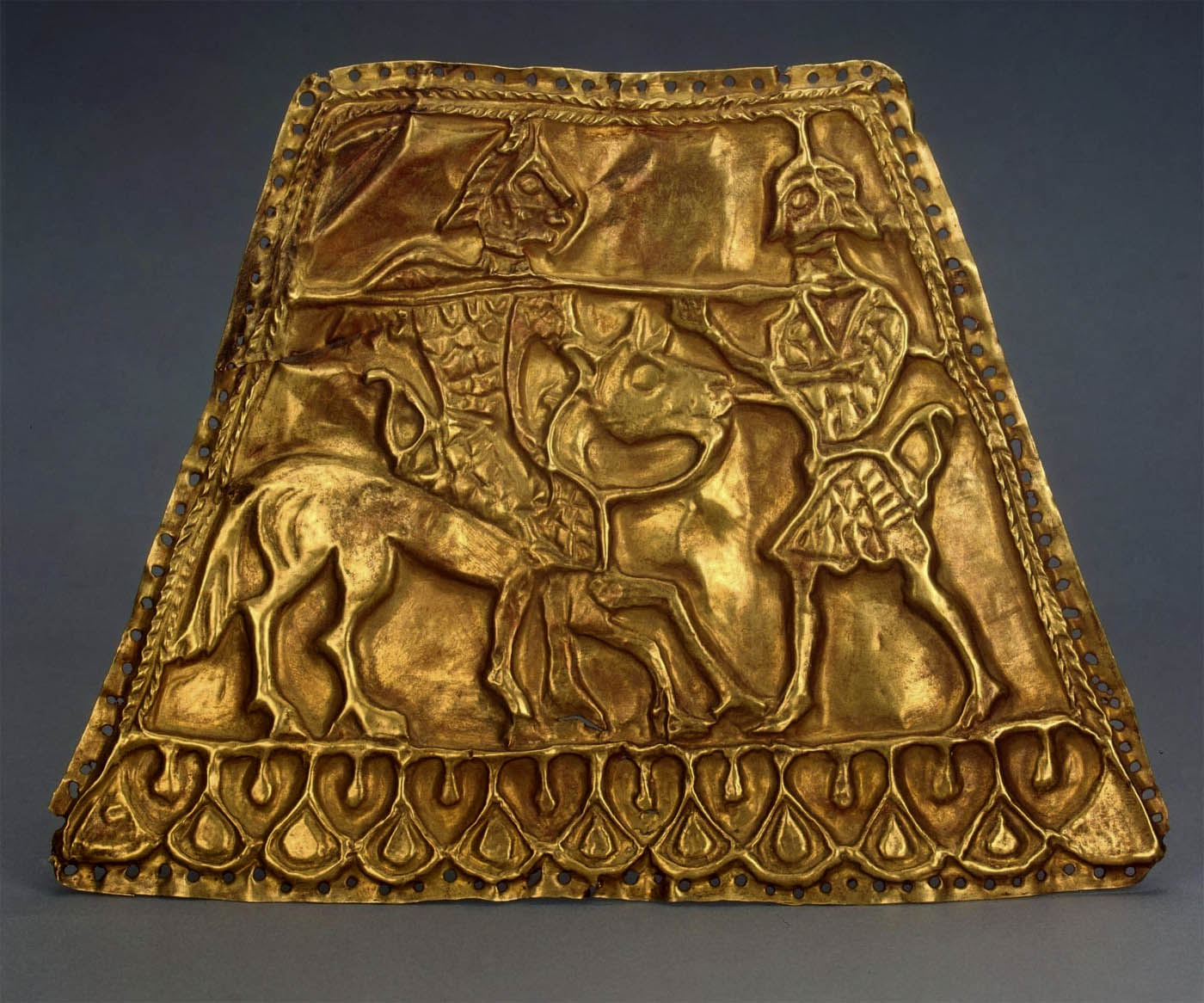
 

'Plaque: Combat between two warriors'
Northern Black Sea region. 4th century BC


Plaque: Combat between two warriors
Northern Black Sea region. 4th century BC
Gold
14 x 19cm
© State Hermitage Museum, St Petersburg
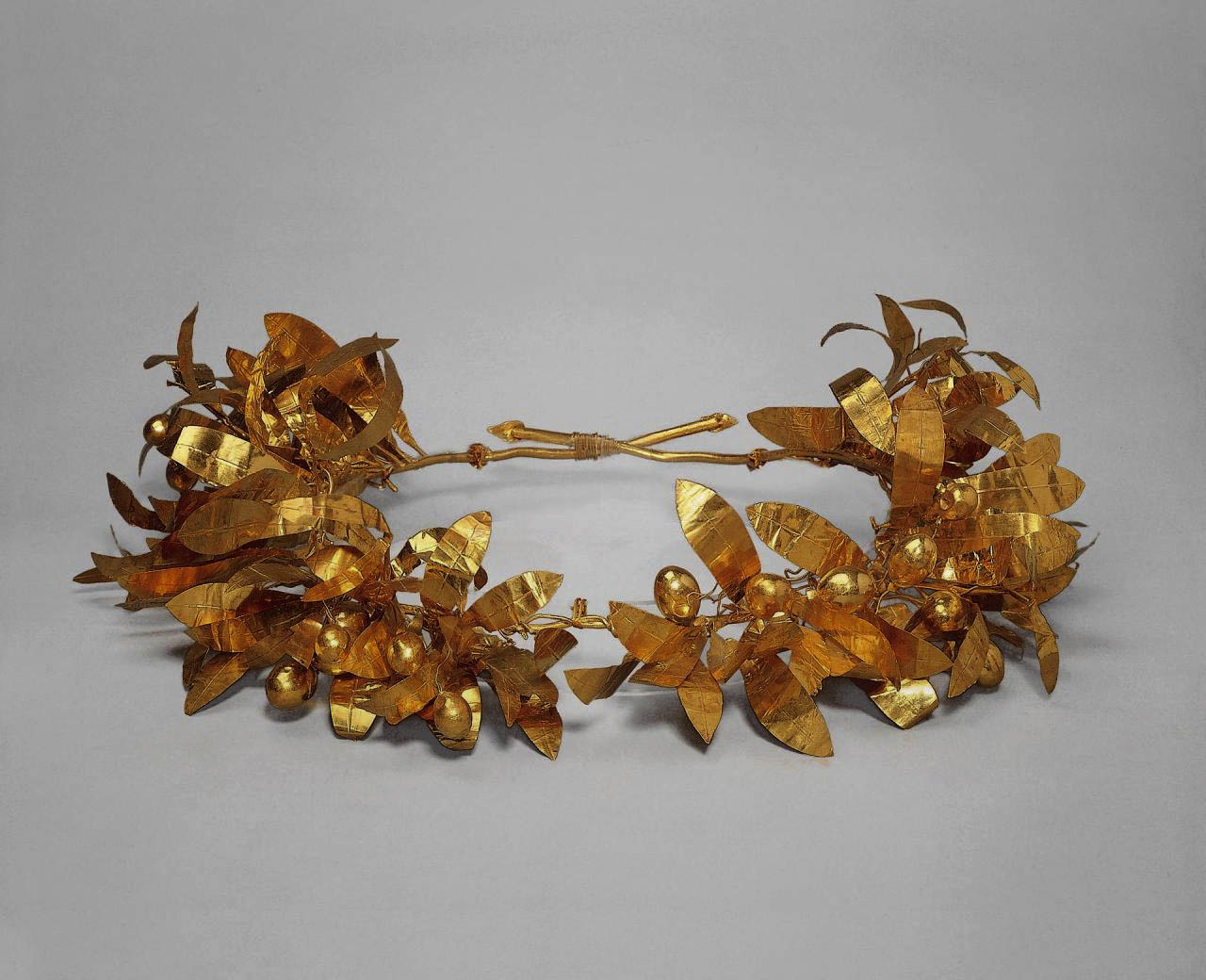
 

'Olive Wreath' Greek goldsmithing, Northern Black Sea region, Bosporus Kingdom. Mid-4th century BC


Olive Wreath
Greek goldsmithing, Northern Black Sea region, Bosporus Kingdom. Mid-4th century BC
Gold
Ø approx. 32cm
© State Hermitage Museum, St Petersburg
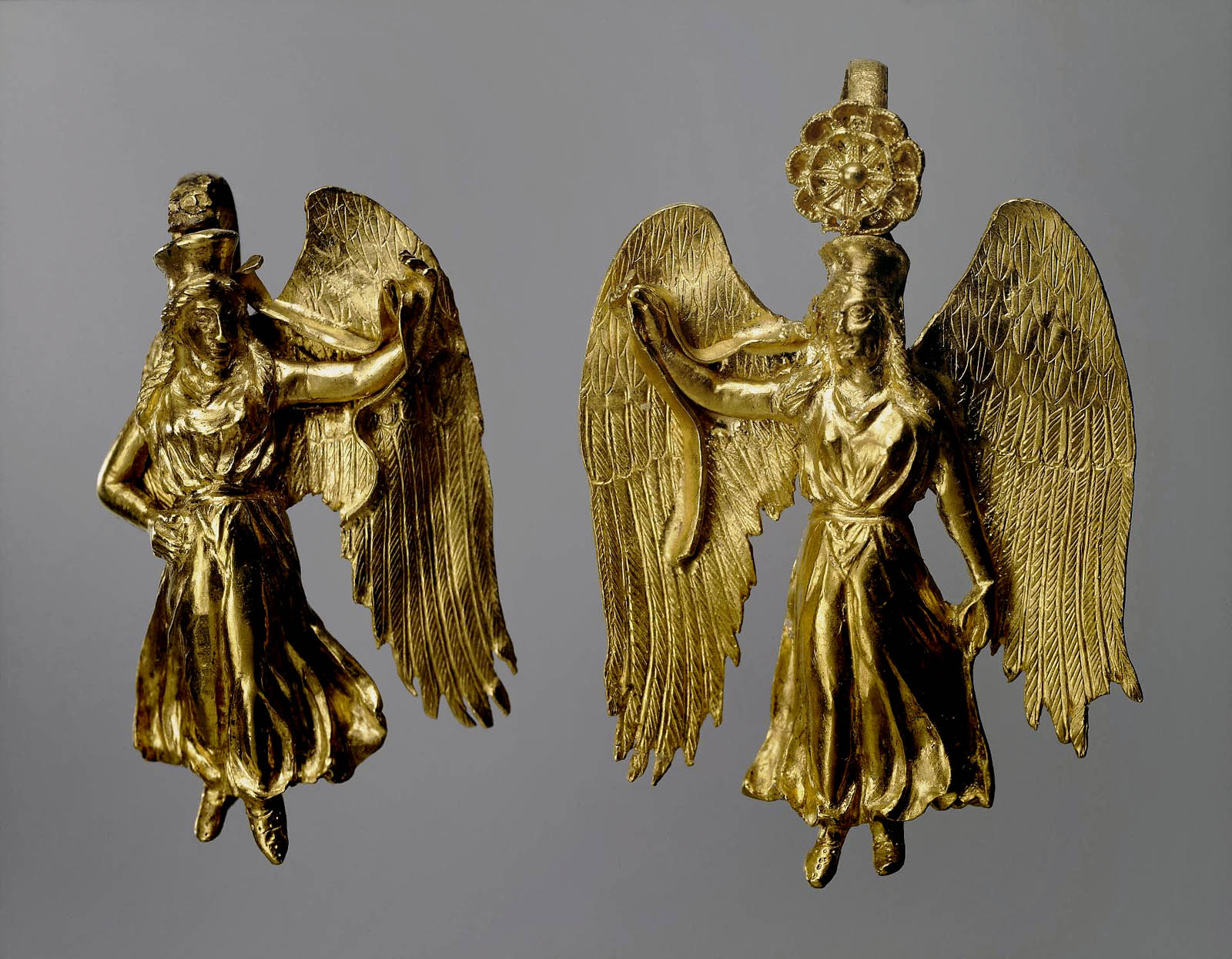
 

'Earrings depicting Nike, goddess of victory' Greek goldsmithing. Mid-4th century BC


Earrings depicting Nike, goddess of victory
Greek goldsmithing. Mid-4th century BC
Gold
H4.8cm
© State Hermitage Museum, St Petersburg
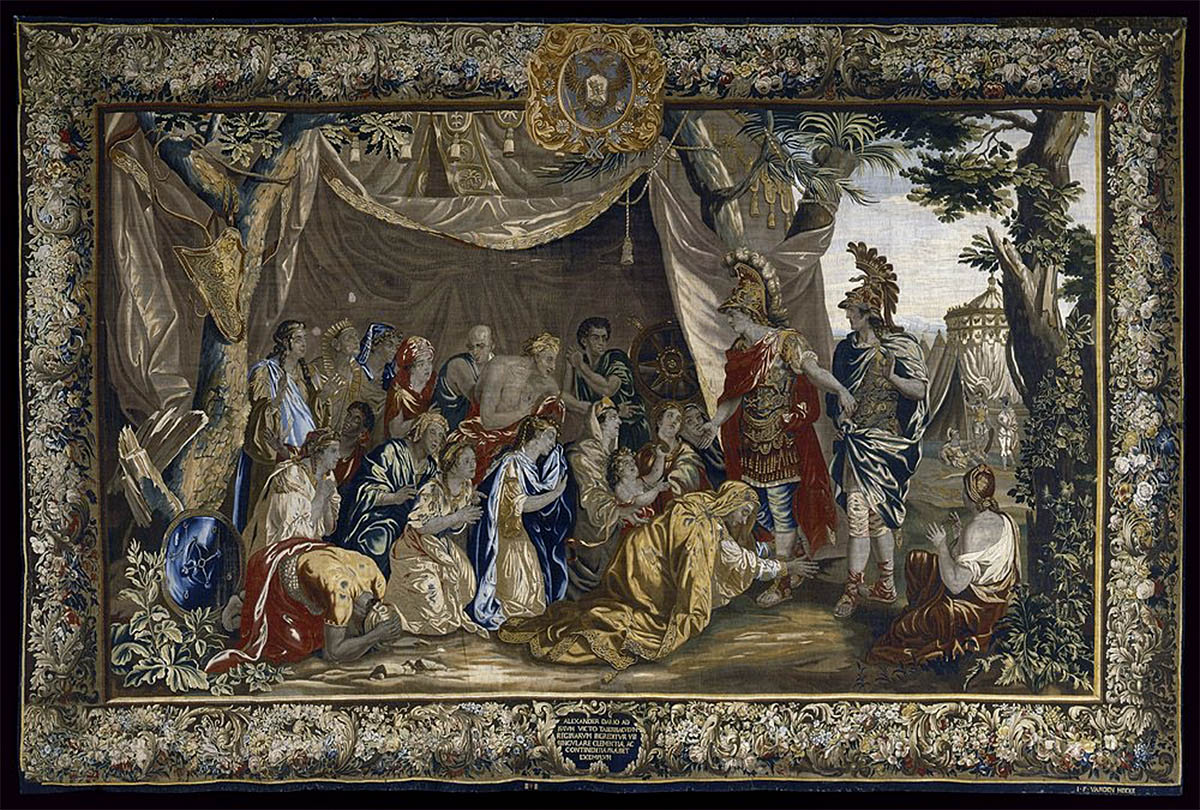
 

Tapestry: Alexander the Great and the Family of Darius, from the cycle Stories of Alexander the Great, after cartoons by Charles Le Brun


Tapestry: Alexander the Great and the Family of Darius, from the cycle Stories of Alexander the Great, after cartoons by Charles Le Brun
Flanders, Brussels, atelier of Jan Frans van den Hecke
1661-1695
Wool, silk, silver thread
451 x 690cm
© State Hermitage Museum, St Petersburg
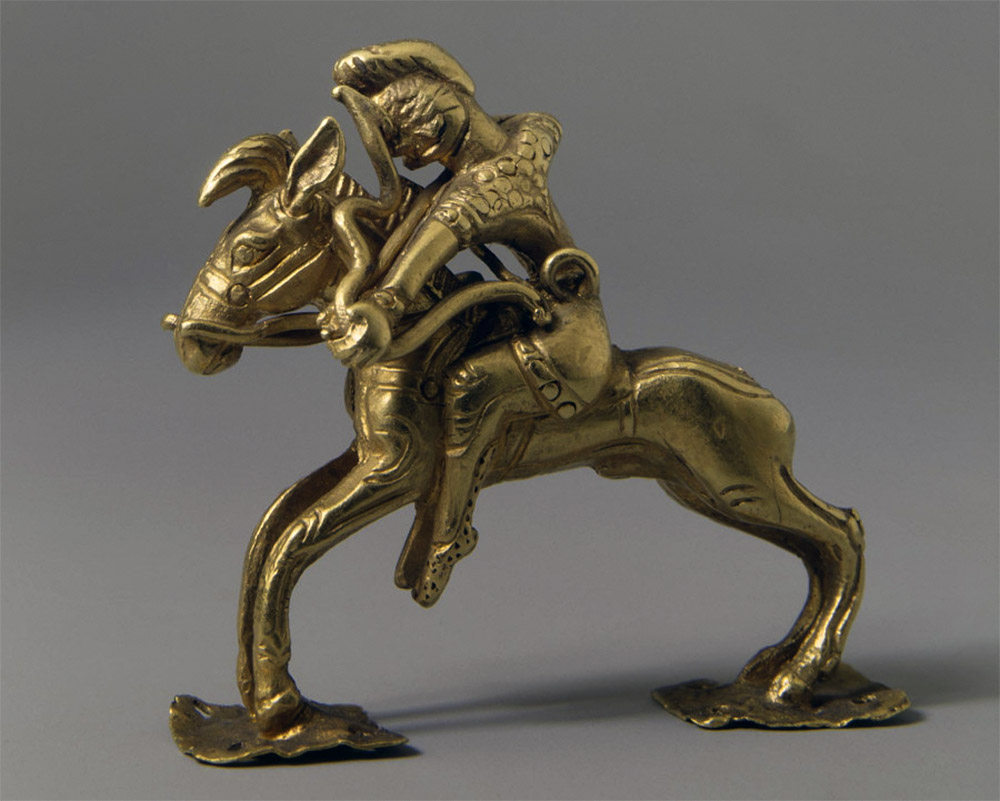
 

'Statuette of a horseman with a bow' Iran. 5th-4th century BC


Statuette of a horseman with a bow
Iran. 5th-4th century BC
Gold
H 3.6cm
© State Hermitage Museum, St Petersburg
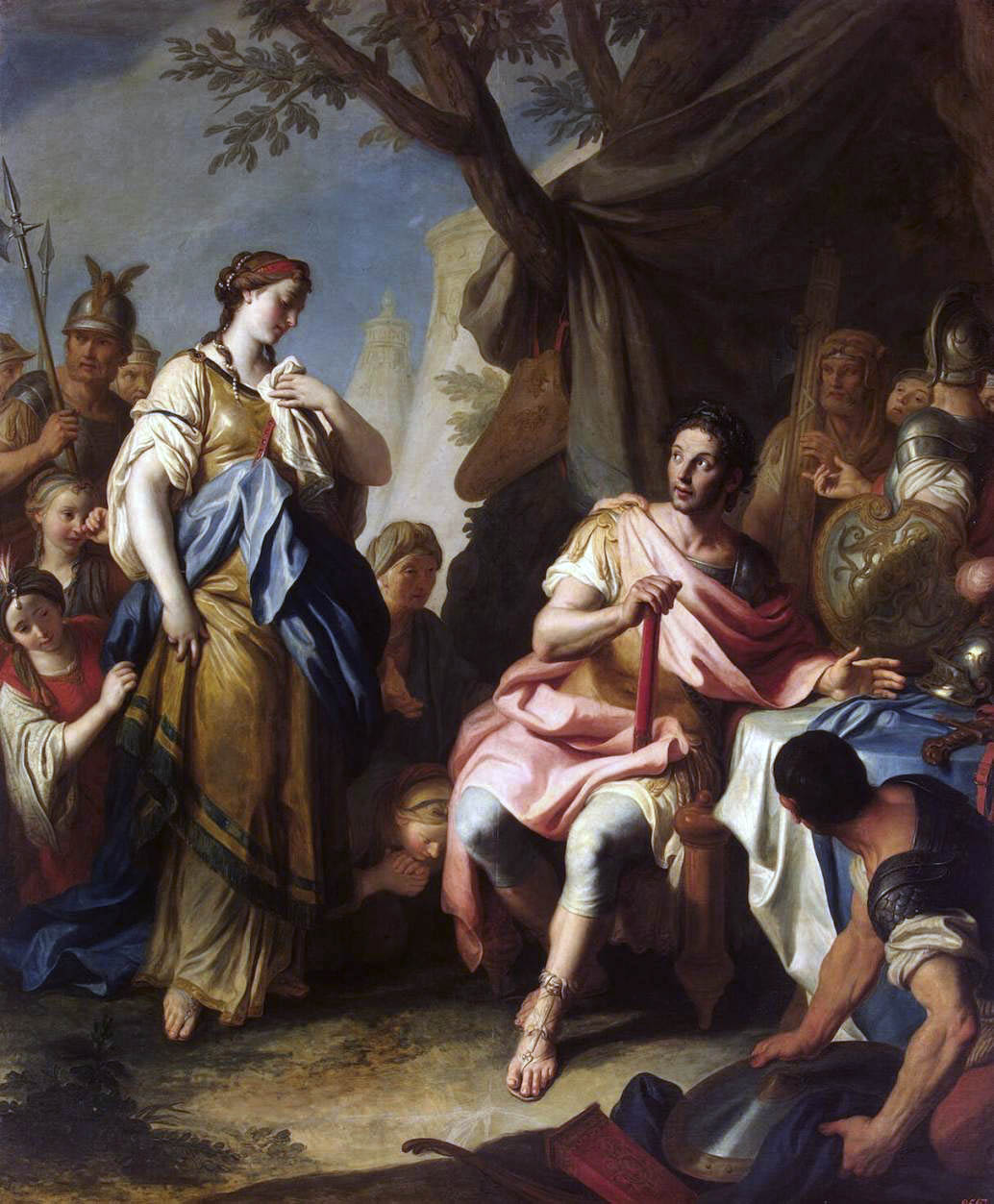
 

Pietro Rotari (Italian, 1707-1762) 'Alexander the Great and Roxane' 1756


Pietro Rotari (Italian, 1707-1762)
Alexander the Great and Roxane
1756
Oil on canvas
Height: 243cm (95.6 in)
Width: 202cm (79.5 in)


Pietro Antonio Rotari (30 September 1707 – 31 August 1762) was an Italian painter of the Baroque period. Born in Verona, he led a peripatetic career, and died in Saint Petersburg, where he had traveled to paint for the Russian court. His portraits, mostly of women, are renowned for being beautiful and realistic. Rotari’s works were generally limited to royal portraits held by notables such as emperors and court ladies.

Text from the Wikipedia website
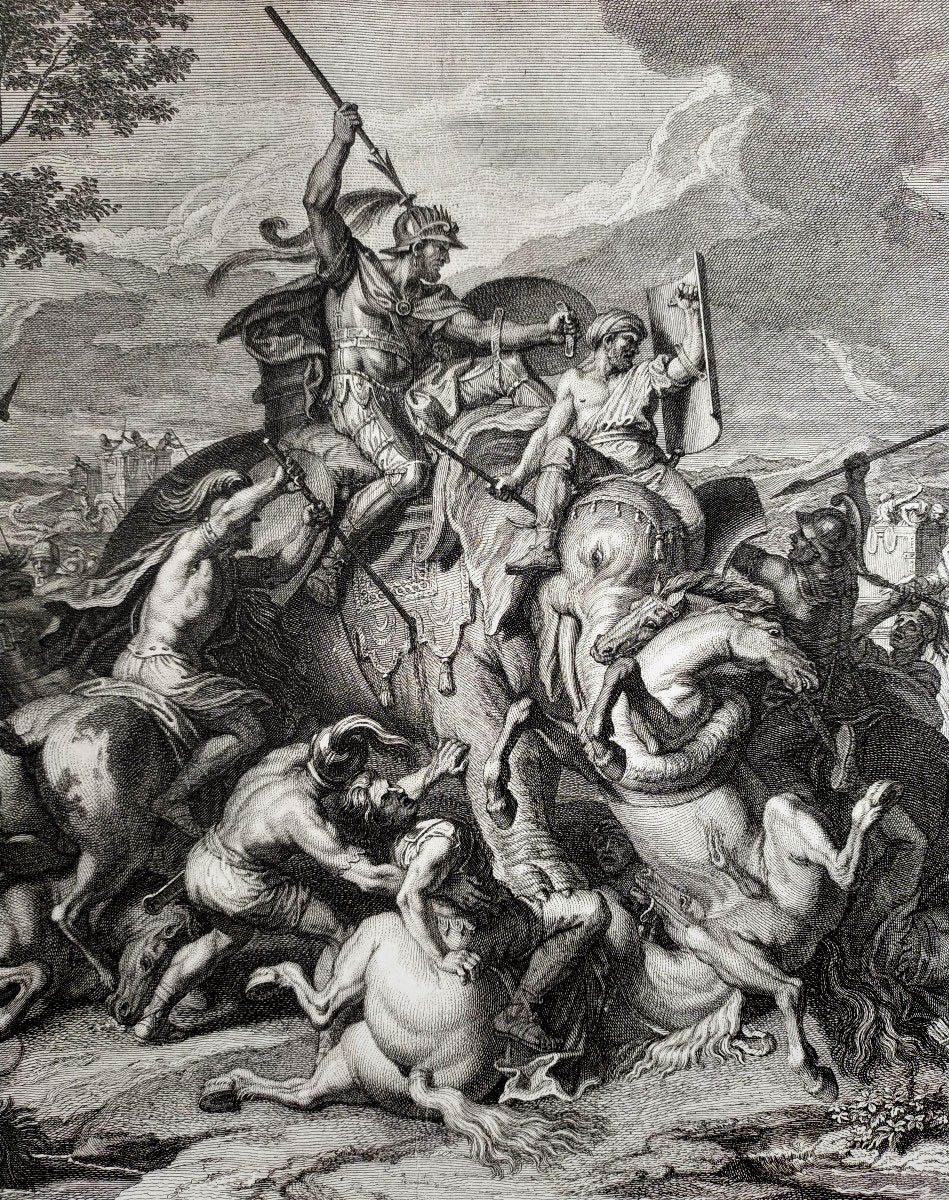
 

Bernard Picart (French, 1673-1733), from Charles Le Brun 'The Courage of Porus' 1700-1733


Bernard Picart (French, 1673-1733), from Charles Le Brun
The Courage of Porus
1700-1733
Etching and engraving, 70.6 x 55 cm (second sheet of a series of three)
© State Hermitage Museum, St Petersburg
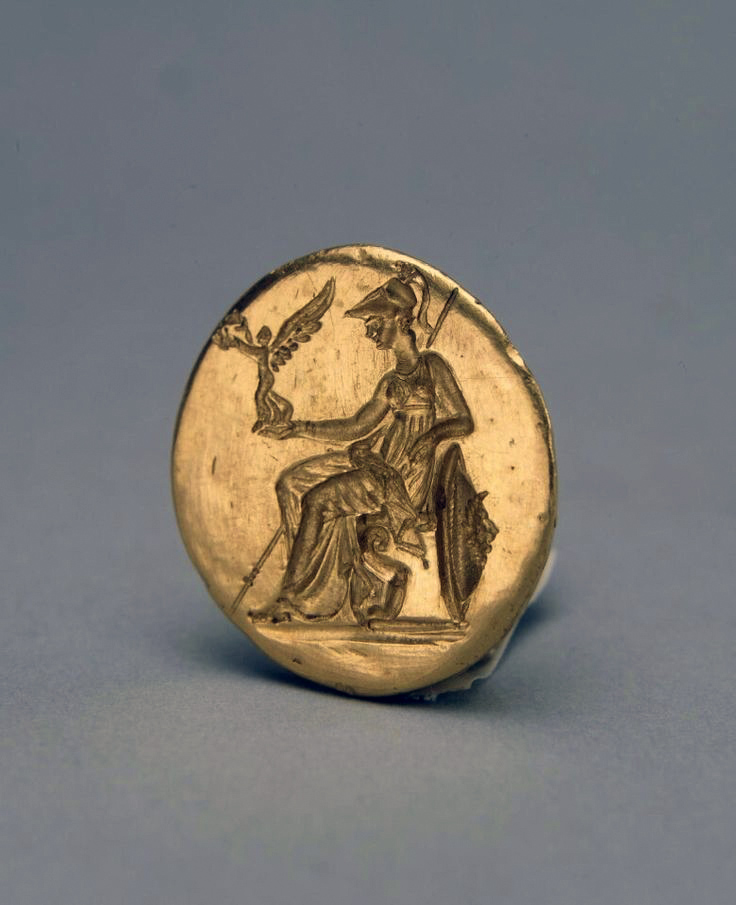
 

'Ring: Athena Nicephora' Greek goldsmithing, Northern Black Sea region, Pantikapeion (?). Late 4th century BC


Ring: Athena Nicephora
Greek goldsmithing, Northern Black Sea region, Pantikapeion (?). Late 4th century BC
Gold
Ring Ø 2.3cm
© State Hermitage Museum, St Petersburg
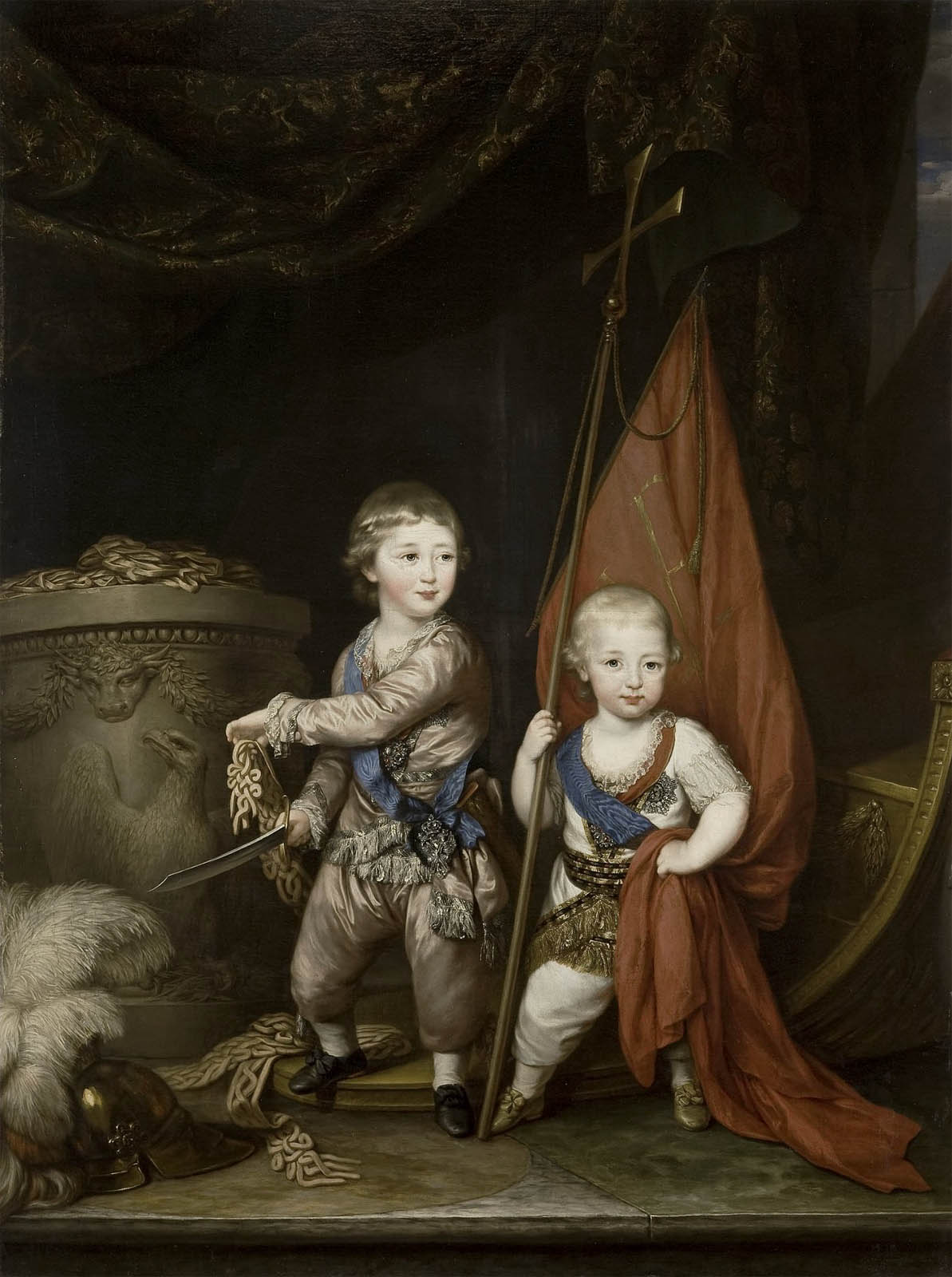
 

Richard Brompton (English, 1734–1783) 'Portrait of Grand Dukes Alexander Pavlovich and Constantin Pavlovich' 1781


Richard Brompton (English, 1734–1783)
Portrait of Grand Dukes Alexander Pavlovich and Constantin Pavlovich
1781
Oil on canvas
210 х 146.5см
© State Hermitage Museum, St Petersburg


Brompton was a pupil of Benjamin Wilson. He then went to Italy, and spent some time in Rome, where he had lessons with Raphael Mengs. He was also introduced to the patronage of the Earl of Northampton, and accompanied the earl to Venice when he was appointed ambassador to the republic. At Venice Brompton painted a conversation-piece, in which he introduced the portraits of the Duke of York and several English gentlemen then on their travels. The picture was afterwards exhibited at the rooms in Spring Gardens in 1763, at which time he returned to England, and for some years practised portrait painting. Extravagant living and debtors brought him to the King’s Bench, but he was rescued by the Empress of Russia, at whose request he went to St. Petersburg, where he was appointed portrait painter to the empress, and where he met with much employment. During this time he was patronized by the empress favorite, Grigory Potemkin. He died in that city in 1783.

Text from the Wikipedia website


'Statue of Heracles with the apples of the Hesperides' Roman copy, 2nd century AD, from a Greek original from the mid-4th century BC


Statue of Heracles with the apples of the Hesperides
Roman copy, 2nd century AD, from a Greek original from the mid-4th century BC
Marble
H 201cm
© State Hermitage Museum, St Petersburg


The Hermitage Amsterdam
Amstel 51, Amsterdam

Opening hours:
Daily from 10am – 5pm

Hermitage Amsterdam website

LIKE ART BLART ON FACEBOOK

Back to top

Exhibition: ‘TRACEY MOFFATT: narratives’ at Art Gallery of South Australia, Adelaide

Exhibition dates: 26th February – 20th March 2011

 Curators: Maria Zagala, Associate Curator of Prints, Drawings and Photographs, Art Gallery of South Australia and Stephen Zagala, Curator at Monash Gallery of Art


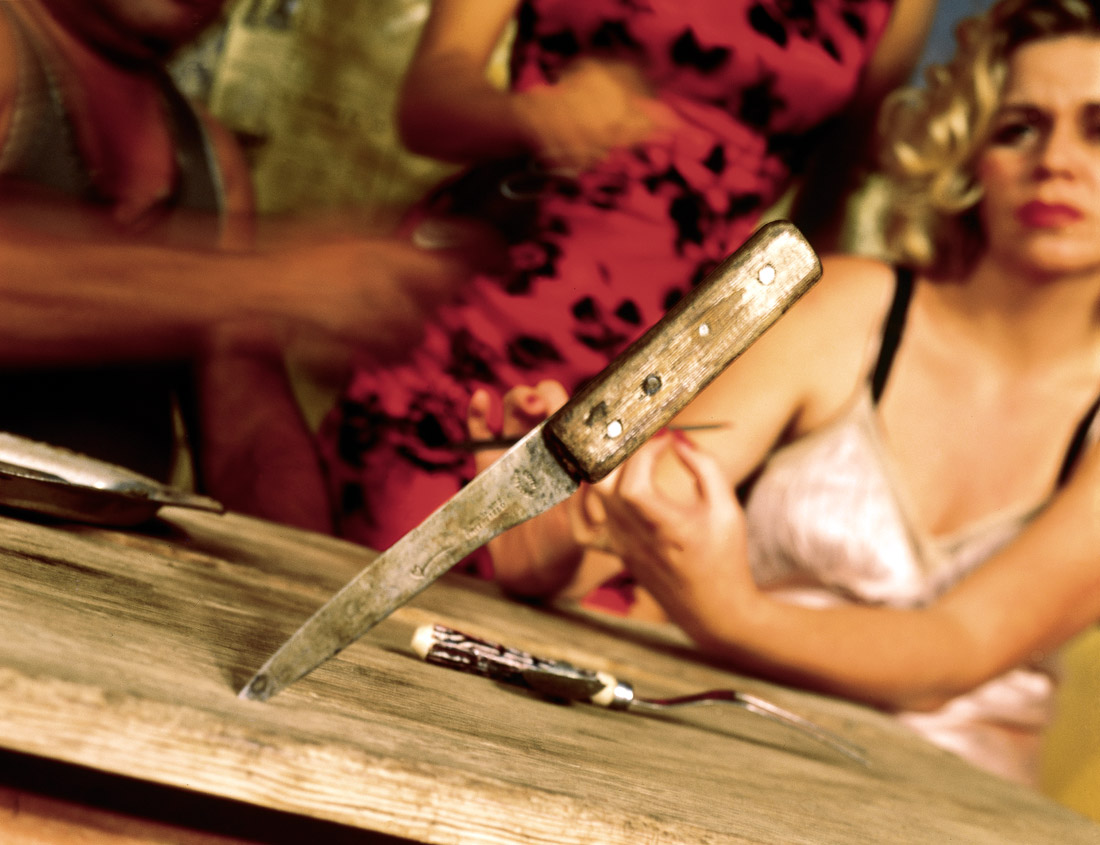
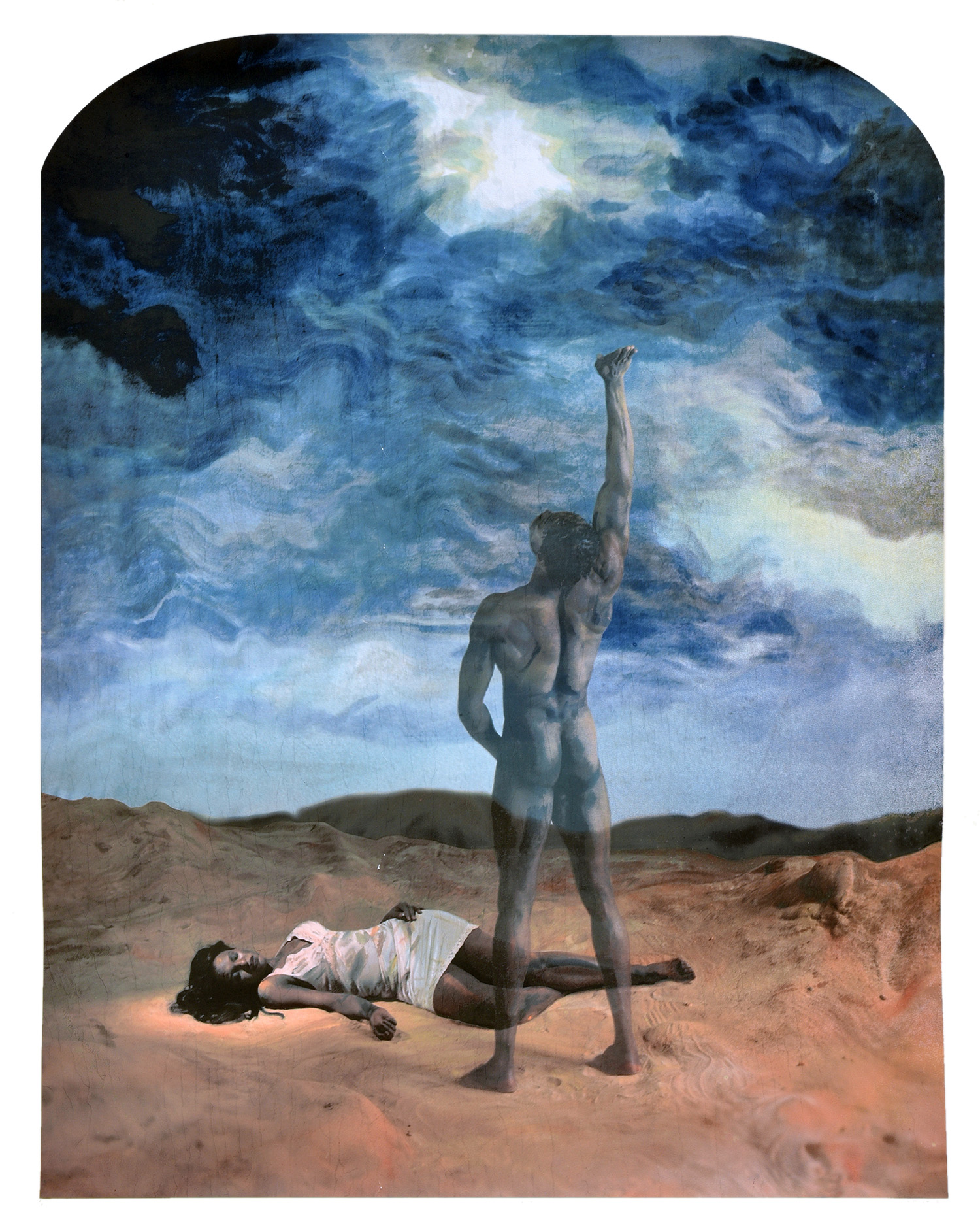
Tracey Moffatt (Australia, b. 1960) 'Something More (no. 3)' 
from the series of 9 photographs ‘Something More’ 1989


Tracey Moffatt (Australia, b. 1960)
Something More (no. 3)
From the series of 9 photographs Something More
1989
Direct positive colour photograph
98 × 127cm
Courtesy the artist and Roslyn Oxley9 Gallery, Sydney


Many thankx to the Art Gallery of South Australia for allowing me to publish the photographs in the posting. Please click on the photographs for a larger version of the image.


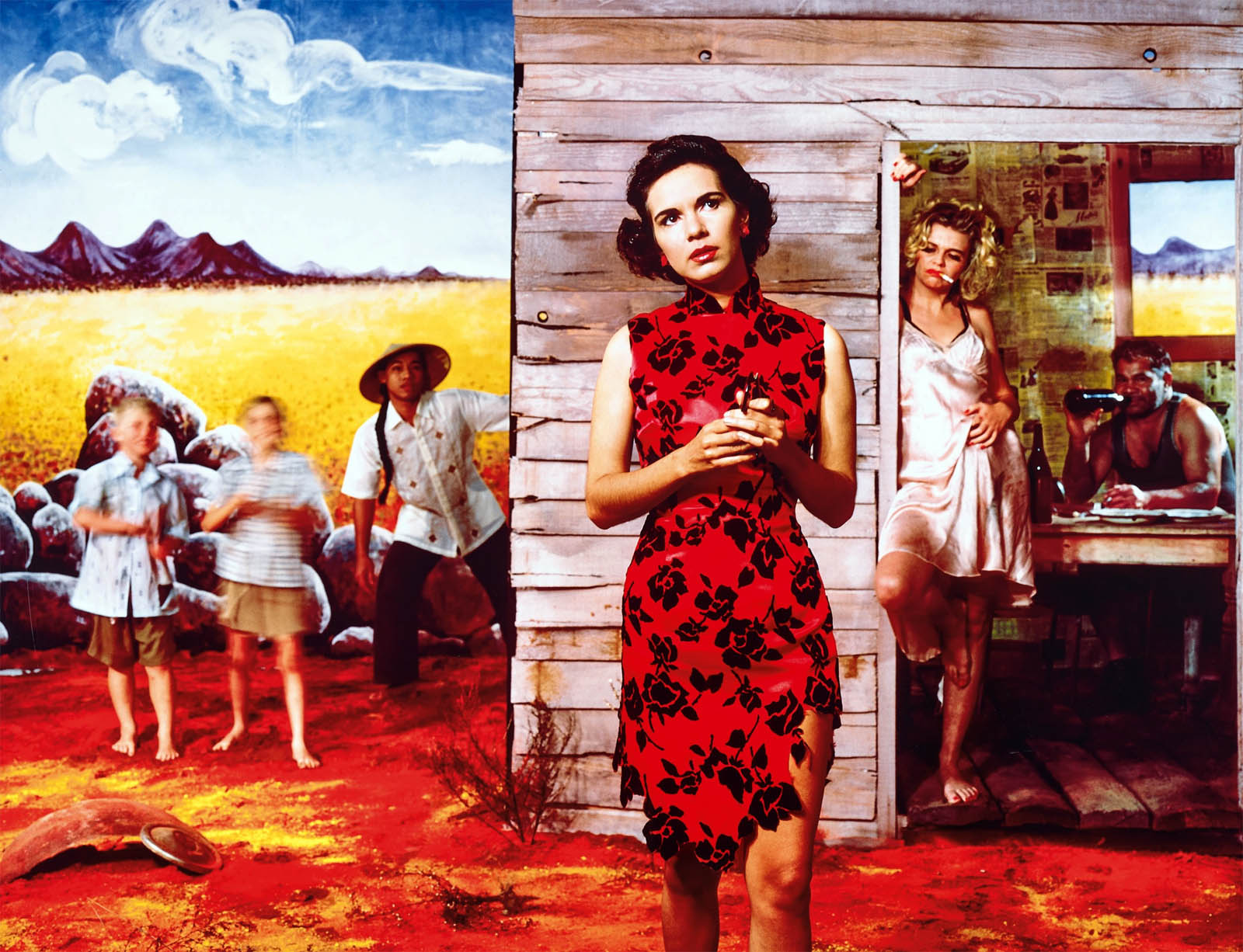
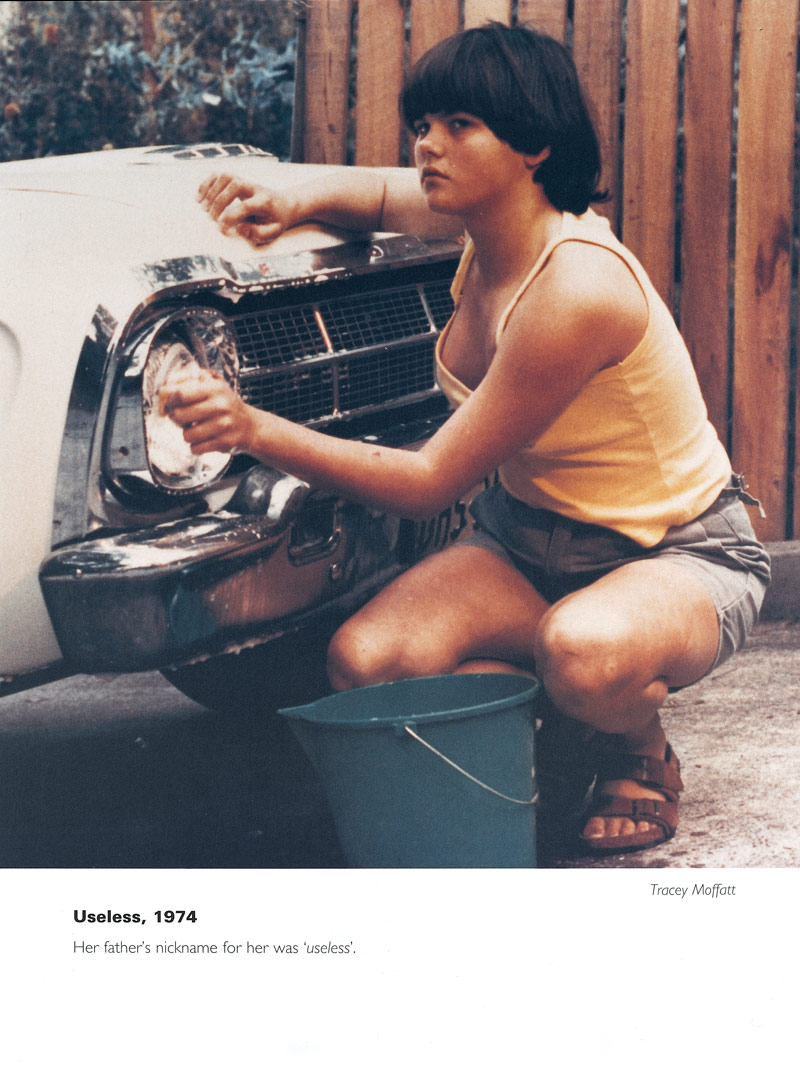
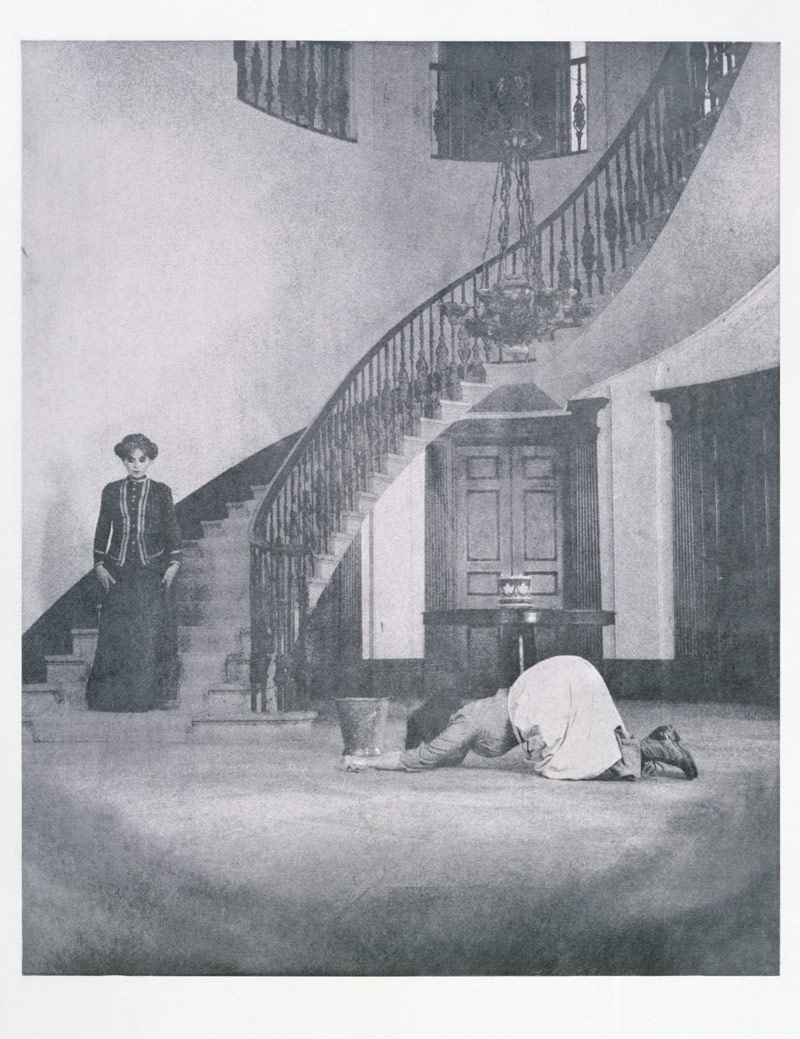
Tracey Moffatt: Narratives is the first major exhibition of this leading contemporary Australian artist to be held in Adelaide. The exhibition is a collaboration between the Monash Gallery of Art in Melbourne and the Art Gallery of South Australia and explores Moffatt’s interest in the history of cinema and the formal language of film and video in her construction of ‘photo-narratives’. It features seven of Moffatt’s multi-part photographic series, including Something More (1989), Scarred for Life I (1994) and II (1999), Up in the Sky (1997), Laudanum (1999), Invocations (2000), and The Adventure Series (2004).

In these series Moffatt uses photographic stills to build non-linear and open-ended stories. The narrative aspect of these series allows her to develop dream-like sequences, in which the real and the imaginary can unfold alongside each other. In this way, Moffatt invests the social reality of issues like race relations and domestic violence with uncertainty and subconscious dimensions. She presents disturbing subject matter in highly staged photographs which use the seductive language of film and popular culture to directly engage her audience.

The exhibition also includes Moffatt’s ground breaking films Nice Coloured Girls (1987), Night Cries (1990), Heaven (1997) and BeDevil (1993), and the critically acclaimed video montages produced with Gary Hillberg, Artist (2000), Revolution (2008) and Other (2009).

Text from the AGSA website


Tracey Moffatt (Australia, b. 1960) 'Something More (no. 5)' from the series of 9 photographs 'Something More' 1989


Tracey Moffatt (Australia, b. 1960)
Something More (no. 5)
From the series of 9 photographs Something More
1989
Direct positive colour photograph
98 × 127cm
Courtesy the artist and Roslyn Oxley9 Gallery, Sydney


Tracey Moffatt (Australian, b. 1960)
'Something More (no. 1)' 1997


Tracey Moffatt (Australian, b. 1960)
Something More (no. 1)
1997
From the series of 9 photographs Something More
1989
Direct positive colour photograph
98 × 127cm
Courtesy the artist and Roslyn Oxley9 Gallery, Sydney


Tracey Moffatt (Australia, b. 1960) 'Job hunt, 1976' 1994


Tracey Moffatt (Australia, b. 1960)
Job hunt, 1976
From the series of 10 prints Scarred for life I
1994
Colour photolithograph on paper
80 x 60cm
Monash Gallery of Art, City of Monash Collection
Courtesy of the artist and Roslyn Oxley9 Gallery, Sydney


Tracey Moffatt (Australia, b. 1960) 'Useless, 1974' 1994


Tracey Moffatt (Australia, b. 1960)
Useless, 1974
From the series of 10 prints Scarred for life I
1994
Colour photolithograph on paper
80 x 60cm
Monash Gallery of Art, City of Monash Collection
Courtesy of the artist and Roslyn Oxley9 Gallery, Sydney


Tracey Moffatt (Australia, b. 1960) 'Up in the sky (no. 1)' 1997


Tracey Moffatt (Australia, b. 1960)
Up in the sky (no. 1)
From the series of 25 prints Up in the sky
1997
colour photolithograph on paper
61 x 76cm
Monash Gallery of Art, City of Monash Collection
Courtesy of the artist and Roslyn Oxley9 Gallery, Sydney


Tracey Moffatt (Australia, b. 1960) 'Up in the sky' 1997


Tracey Moffatt (Australia, b. 1960)
Up in the sky
From the series of 25 prints Up in the sky
1997
colour photolithograph on paper
61 x 76cm
Monash Gallery of Art, City of Monash Collection
Courtesy of the artist and Roslyn Oxley9 Gallery, Sydney


Tracey Moffatt (Australia, b. 1960) 'Laudanum (no. 1)' 1998


Tracey Moffatt (Australia, b. 1960)
Laudanum (no. 1)
From the series of 19 prints Laudanum
1998
Photogravure on paper
76 × 57cm
Courtesy the artist and Roslyn Oxley9 Gallery, Sydney


Tracey Moffatt (Australia, b. 1960) 'Invocations (no. 2)' 2000


Tracey Moffatt (Australia, b. 1960)
Invocations (no. 2)
From the series of 13 prints Invocations
2000
Colour silkscreen on paper
146 x 122cm
Monash Gallery of Art, City of Monash
Collection 
Courtesy of the artist and Roslyn Oxley9 Gallery, Sydney


Tracey Moffatt (Australia, b. 1960) 'Invocations (no. 5)' 2000


Tracey Moffatt (Australia, b. 1960)
Invocations (no. 5)
From the series of 13 prints Invocations
2000
Colour silkscreen on paper
146 x 122cm
Monash Gallery of Art, City of Monash
Collection 
Courtesy of the artist and Roslyn Oxley9 Gallery, Sydney


Tracey Moffatt (Australia, b. 1960) 'Invocations (no. 7)' 2000


Tracey Moffatt (Australia, b. 1960)
Invocations (no. 7)
From the series of 13 prints Invocations
2000
Colour silkscreen on paper
146 x 122cm
Monash Gallery of Art, City of Monash
Collection 
Courtesy of the artist and Roslyn Oxley9 Gallery, Sydney


Tracey Moffatt (Australia, b. 1960) 'Adventure Series (no. 1)' 2004


Tracey Moffatt (Australia, b. 1960)
Adventure Series (no. 1)
from the series of 10 prints Adventure Series
2004
Inkjet print on paper
132 × 114cm
Courtesy the artist and Roslyn Oxley9 Gallery, Sydney


Tracey Moffatt (Australia, b. 1960) 'Adventure Series (no. 2)' 2004


Tracey Moffatt (Australia, b. 1960)
Adventure Series (no. 2)
From the series of 10 prints Adventure Series
2004
Inkjet print on paper
132 × 114cm
Courtesy the artist and Roslyn Oxley9 Gallery, Sydney


Art Gallery of South Australia
North Terrace Adelaide
Public information: 08 8207 7000

Opening hours:
Daily 10am – 5pm (last admissions 4.30pm)
Art Gallery of New South Wales website

LIKE ART BLART ON FACEBOOK

Back to top

Galleries this week and ‘The Lost Diggers’

March 2011


It has been a busy week!

On Tuesday I visited Australian Galleries in Smith Street to view the Drought Photographs by Sidney Nolan. A wonderful experience. Thursday night was the opening of Manstyle at NGV Australia, Federation Square, the new exhibition that “explores the extremes of masculine style and some of the most influential ideas that have pervaded menswear over the past three centuries.” A lively opening with lots of milliners, designers and fashionistas but only a modicum of style from many of the men in attendance.

Friday saw a trip up Flinders Lane to visit Arc One Gallery (review of Navigating Widely by Vanila Netto), Craft Victoria and drop in and say hello to Mary Lou Jelbart, director of fortyfivedownstairs and view the extensive renovations to the office and storage areas. Always good to catch up with Mary Lou. Then onward, battling terrible traffic, to the opening of New11 at the Australian Centre for Contemporary Art (ACCA) where the work was a bit ‘thin’ with a couple of notable exceptions.

Saturday saw a drive to Albert Street, Richmond to catch up with the galleries there – mostly stable exhibitions. Wade Marynowsky’s The Hosts: A Masquerade Of Improvising Automatons at John Buckley Gallery were interesting for 10 minutes or so reminding me of evil, corseted, twirling, marionette Daleks. I then had a chat with the delightful Edwin at Sophie Gannon Gallery and saw the first stages of installation of the upcoming Daniela Federici exhibition that is part of L’Oréal Melbourne Fashion Festival. Looks to be an interesting show.

Dr Marcus Bunyan


Antoinette or Louis Thuillier. 'No title (unknown Australian soldier wearing sheepskin jerkin)' c. 1916/17


Antoinette or Louis Thuillier
No title (unknown Australian soldier wearing sheepskin jerkin)
c. 1916/17
Glass negative
France

This image is published under fair dealing for the purposes of criticism or review (Commonwealth of Australia Consolidated Acts: Copyright Act 1968 – Sect 41)


This is a truly amazing story – finding these large format glass slides of First World War soldiers in an attic!

The original farmhouse has so much atmosphere. The photographs themselves are funny, poignant, informal, beautifully shot (the photographer, either Antoinette or Louis Thuillier, had a generous eye) and exhibit wonderful camaraderie

To actually find the original backdrop and be standing in the very place where these photographs were taken sends goose bumps up the spine just looking at the video. Imagine actually being there.

Look at the details – the hands, wedding rings, muddied boots, the children clasped by diggers with smokes in their hands, the props (chairs, motorbikes, guns, plant stands), sheepskin jerkins and the signs – We will soon, be, home, All that is left of them, France, 1916-1918.

They were so young, stoic, handsome. They stare out at you across time.

As Barthes and Sontag would say, these photographs haunt you.


View the video of the remarkable story from the link The Lost Diggers.

Look at hundreds of wonderful photographs from the links below:

    The Lost Diggers Facebook page
    Australian and international soldiers – Part 1
    Australian and international soldiers – Part 2
    Australian and international soldiers – Part 3


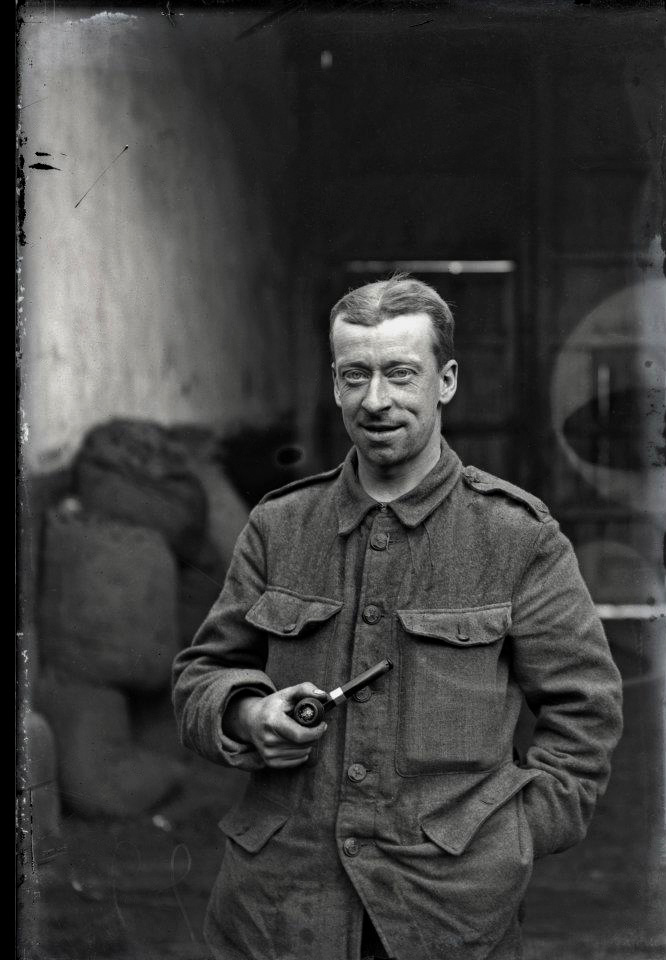
    Antoinette or Louis Thuillier. 'No title (unknown Australian soldier smoking a pipe)' c. 1916/17


    Antoinette or Louis Thuillier
    No title (unknown Australian soldier smoking a pipe)
    c. 1916/17
    Glass negative
    France


    LIKE ART BLART ON FACEBOOK

    Back to top

    Exhibition: ‘Ideen sitzen. 50 Years of Chair Design’ at Museum für Kunst und Gewerbe, Hamburg

    Exhibition dates: 29th September 2010 – 13th March 2011


    Frank Gehry (American, b. 1929) 'Wiggle Side Chair' 1972


    Frank Gehry (American, b. 1929)
    Wiggle Side Chair
    Los Angeles/Cal., U.S.A., 1972
    Easy Edges Inc., New York, U.S.A., 1972
    84 x 37 x 59cm
    Cardboard, hard fiber board
    Museum für Kunst und Gewerbe Hamburg
    Photo: Jörg Arend/Maria Thrun


    I love chairs! There are such fabulous designs throughout the centuries. Once seen as the symbol of ultimate power (only the king and queen could be seated) our favourite chair now occupies the place of form fitting sculpture, the place where we feel most comfortable. Most of these works are not of that mould but they are a tour de force of the designers art and a testament to the mutability of the form, chair.

    Dr Marcus Bunyan


    Many thankx to the Museum für Kunst und Gewerbe, Hamburg for allowing me to publish the photographs in the posting. Please click on the photographs for a larger version of the image.


    Trailer zur Ausstellung IDEEN sitzen – 50 Jahre Stuhldesign

    You can see an excerpt from the introductory film for the exhibition IDEEN Sitz – 50 Jahre Stuhldesign, which is being shown from September 28th, 2010 to March 13th, 2011 in the Museum für Kunst und Gewerbe Hamburg.

    Chair design over the last 50 years shows that an everyday object can be infinitely varied and reinvented again and again. In this exhibition, classics stand alongside contemporary positions, but the boundaries between art and design are fluid: some objects are autonomous sculptures that reveal the chair as a source of inspiration without fulfilling its function. New technologies have also changed chair design significantly in recent years.


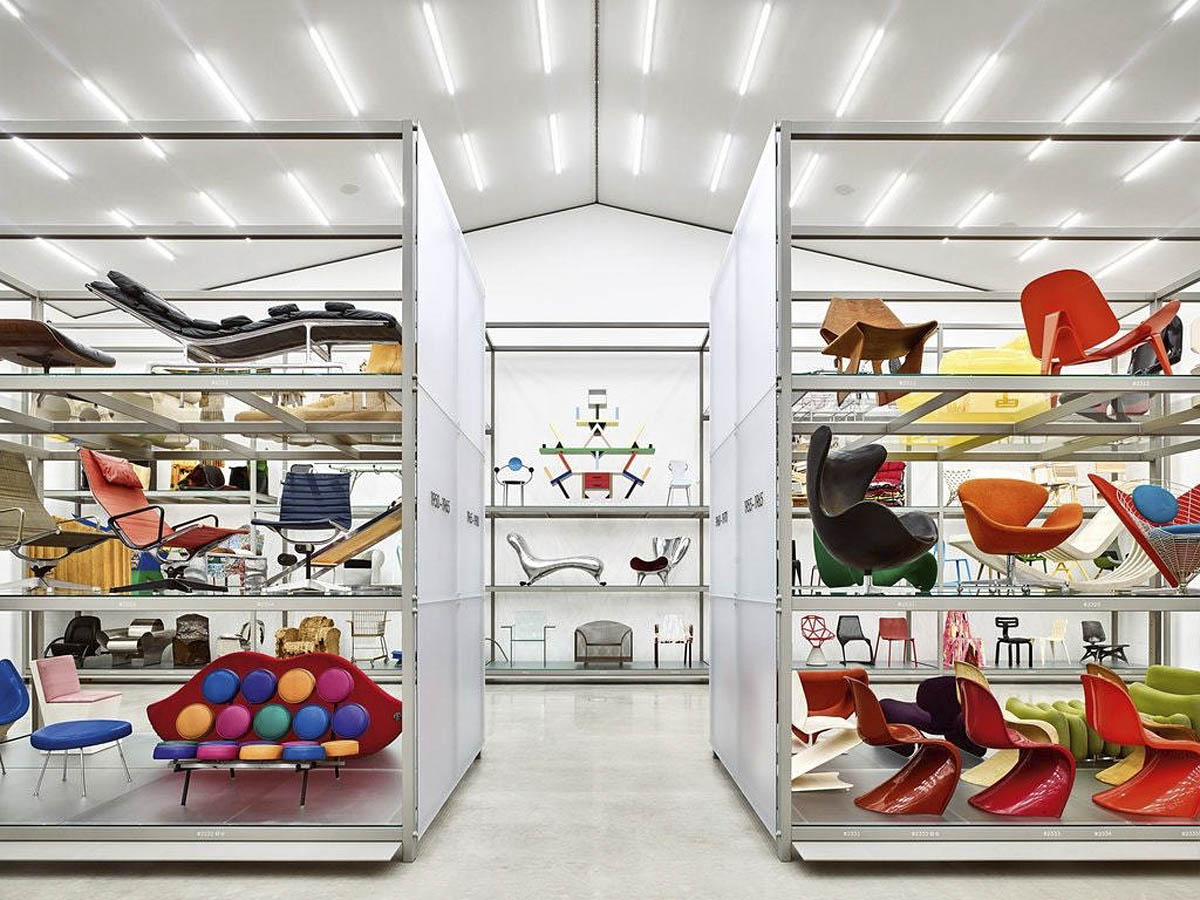
    Installation view of the exhibition 'Ideen sitzen. 50 Years of Chair Design' at Museum für Kunst und Gewerbe, Hamburg


    Installation view of the exhibition Ideen sitzen. 50 Years of Chair Design at Museum für Kunst und Gewerbe, Hamburg


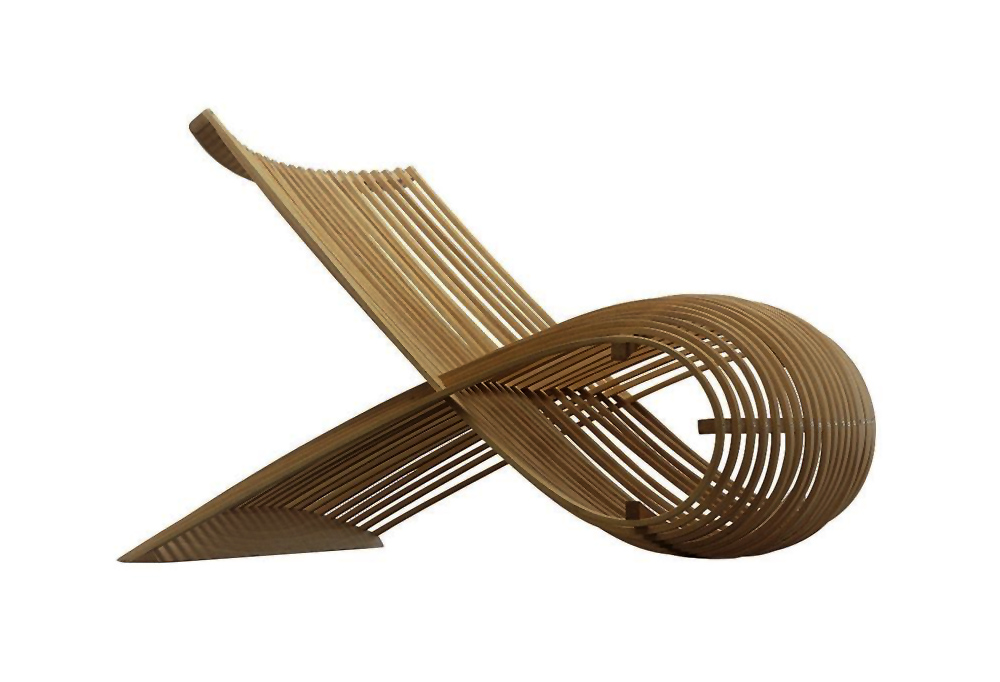
    Marc Newson (Australian, b. 1963) 'Chair 'Wooden Chair'' Sydney, 1988


    Marc Newson (Australian, b. 1963)
    Chair ‘Wooden Chair’
    Sydney, 1988
    Made by Cappellini, Arosio/Como, 1993-97
    Beech wood (solid, curved)
    65 x 85 x 100cm
    Museum of Arts and Crafts Hamburg
    Photo: Cappellini


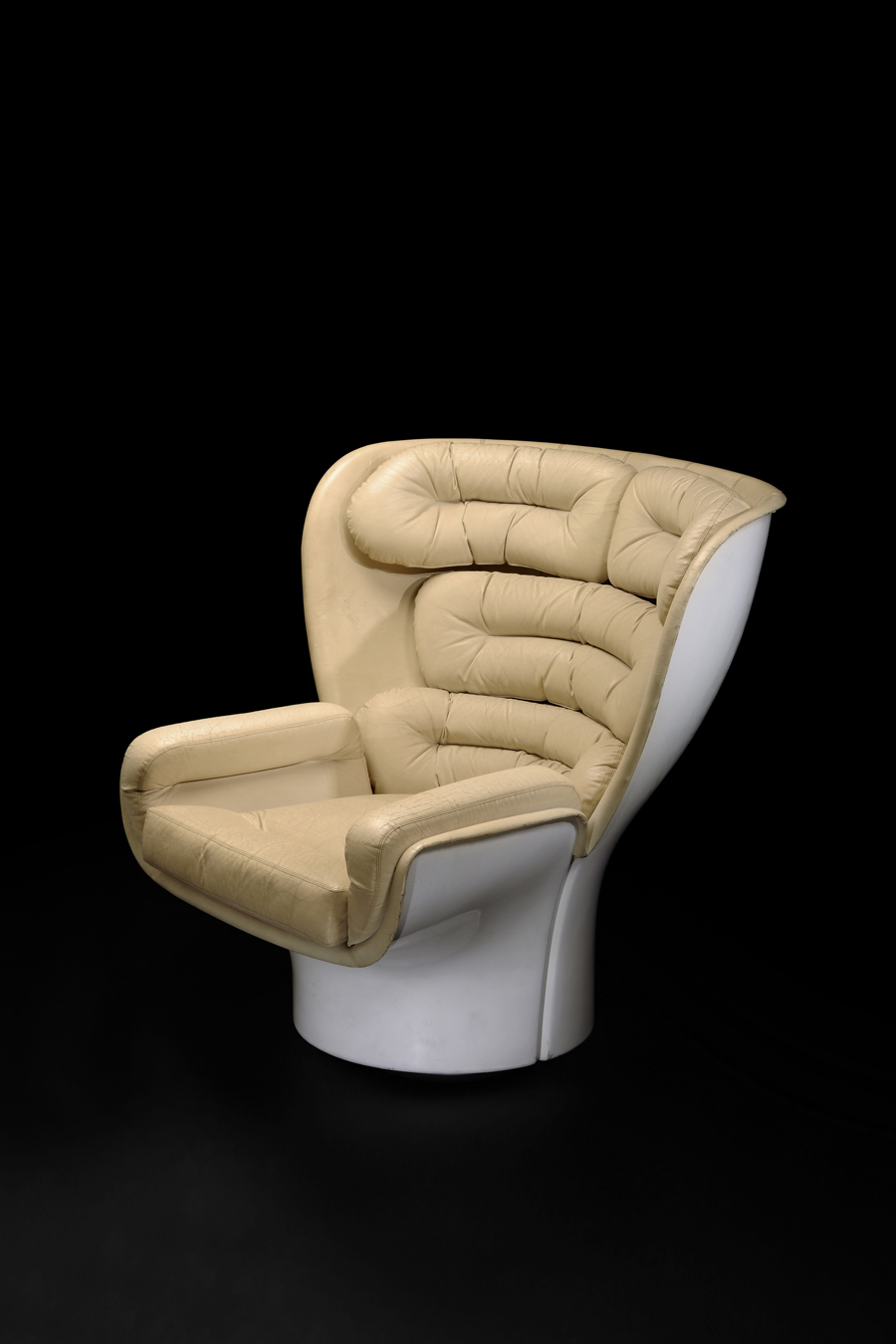
    Joe Colombo. 'Elda' Italy, 1963


    Joe Colombo (Italian, 1930-1971)
    Elda
    Italy, 1963
    Comfort, Meda/Mailand, Italy, 1963
    92.5 x 95 x 96cm
    Polyester, reinforced glass-fibre
    Museum für Kunst und Gewerbe Hamburg
    Photo: Jörg Arend/Maria Thrun


    Patrick Jouin. 'C2 Solid Chair' Paris, 2008


    Patrick Jouin (French, b. 1967)
    C2 Solid Chair
    Paris, 2008
    Paris, Frankreich, 2008
    78.5 x 40.4 x 54cm
    Plastic (formed with technology of the Stereolithographie/Rapidly Prototyping manufacture)
    Museum für Kunst und Gewerbe Hamburg
    Photo: Jörg Arend/Maria Thrun


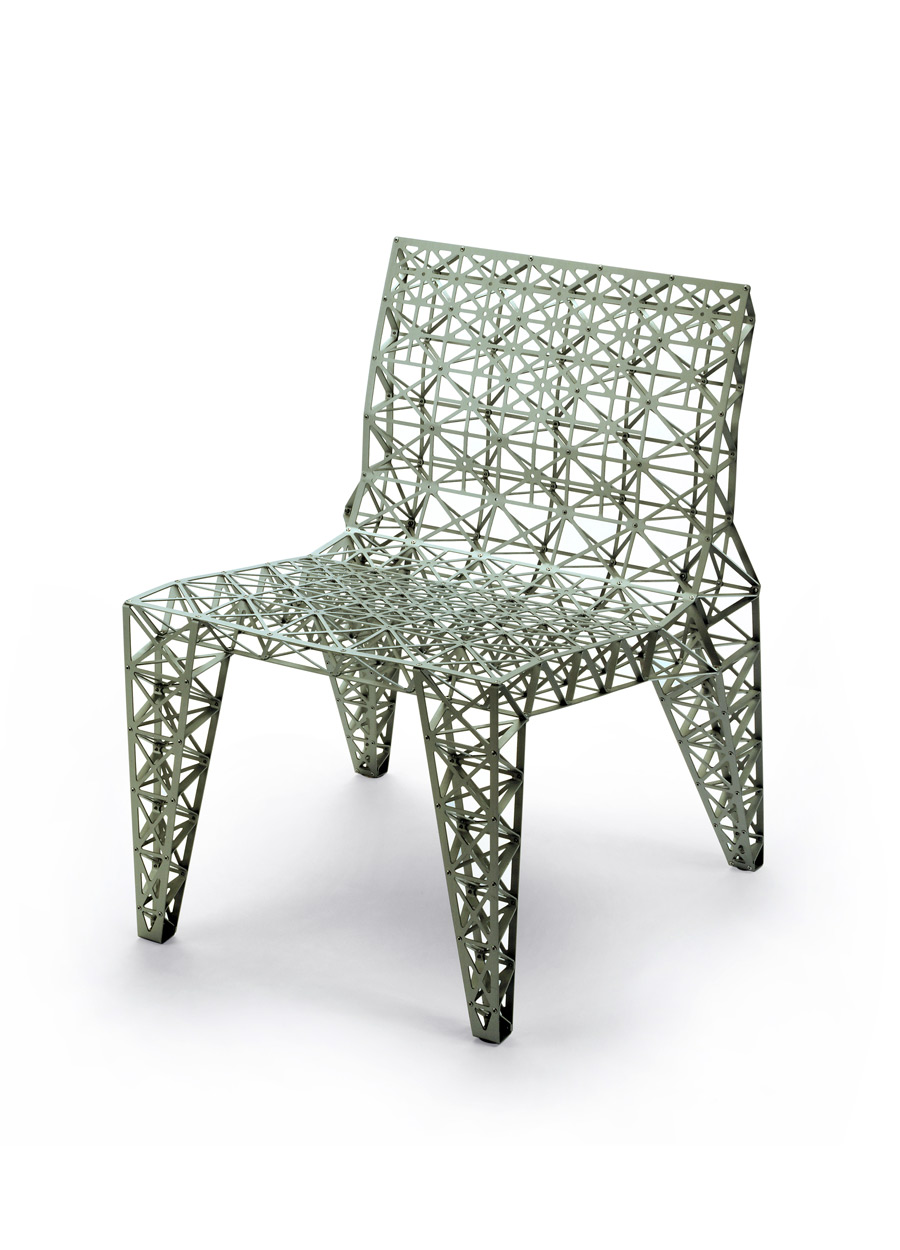
    Joris Laarman. 'Bone Chair' Utrecht, 2006


    Joris Laarman (Netherlands, b. 1979)
    Bone Chair
    Utrecht, 2006
    77 x 45 x 76cm
    Aluminium (poured and polished)
    Museum für Kunst und Gewerbe Hamburg
    Photo: Jörg Arend/Maria Thrun


    With Ideen sitzen. 50 Years of Chair Design the Museum für Kunst und Gewerbe is presenting the first large exhibition on recent seat design dating from 1960 to the present day. One hundred exceptional exhibits selected from the high-calibre collection held by the MKG, among them chairs, arm chairs, chaise longues and stools, offer an insight into the most diverse approaches and motivations of design during five eventful decades. The focus lies on the chair as contemporary witness be it as expression of a utopian idea or instrument in political protest, a reaction to ecological changes or a calculated business idea, an experiment with the most recent technologies or a sculptural art object, where the chair – divorced from its function – can only just be recognised as the source of inspiration. Chairs are regarded as the business card of any designer. They are visually more attractive than tables, wardrobes, settees or kitchen furniture and exemplify the increasingly blurry demarcation between art and design.

    Designing a chair forms part of the great challenge of any designer. In modernity it seemed to have found its perfect answer in Michael Thonet’s Coffee House Chair Model No. 14, made in the revolutionary bentwood technique. Today, 150 years on, a multitude of new chair designs are demonstrating artistic, technical and social changes. No other object juxtaposes the conflicting interests of design as directly: appropriate functionality versus the free reign of fantasy and autonomous artistic form. A new idea lies at the core of any new seating furniture, which will then be moulded by factors such as use, the market, the target group, the company’s philosophy, materials, production methods, technological progress and not least the designers interests, depending on whether he or she is an artist, sculptor, director, architect or simply a product designer. The expression “same, same – but different” is particularly valid when it comes to chairs: an intellectual and a practical product, which is manifest in hundreds of forms. The exhibition Ideen sitzen. 50 Years of Chair Design therefore becomes a reflection of time and its self-concept, its necessities and the longing for freedom of artistic expression.

    A design exhibition turns into an art exhibition once it presents autonomous sculpture. The chair freed from its functional requirements becomes a source of information only. The MKG’s most recent acquisitions illustrate this phenomenon of contemporary chair design and demonstrate the increasingly blurred demarcation of art and design. Some of them are design classics: the famous spherical Sunball lounge chair by Günter Fedinand Ris, the Well Tempered Chair by Ron Arad, chairs by Stefan Wewerka and Alessandro Mendini’s Proust Armchair – the latter combining baroque opulence of Louis XV style with an impressionist colour scheme referencing Marcel Proust’s time. The design positions represented in the collection are expanded by Joris Laarman’s Bone Chair, which was inspired by the natural growth of bone. Vladi Rapaport turned an oversized skull and an oversized brain into seats called The skull chair and The brain footstool respectively. Tord Boontje created the bench Petit Jardin where a tender web of leaves, flowers and twigs made of white coated laser cut steel is embracing the sitter. For Veryround Louise Campbell interlinked 240 steel circles to form an ornamental seat sculpture.

    Putting the various ideas and trends in design into their historical context, highlights how directly it is informed by social and economic trends. At the beginning of the 20th Century chair design was dictated by social factors and functionality: good quality seats had to be produced at low cost for the masses. New materials such as steel tube and multiplex warranted new production techniques. The introduction of injection-moulding for plastic chairs in the early 1960s revolutionised ideas yet again. The 1960s are determined by the new prosperity after the war, but also by burgeoning social unrest. The exhibition presents some increasingly unconventional types of armchair, which reflect the tensions of the period. Gaetano Pesce’s Donna, 1969 is both: a comfortable armchair and a biting political criticism of women’s role in modern society. The prospect of growing markets led the chemical and furniture industry to invest in the production of plastic chairs, a development, which found its preliminary end in the oil crisis of 1973.

    The 1970s produced relatively few sweeping designs; the decade is characterised by the criticism of capitalism, consumerism and a heightened sense of uncertainty in manufacturing. Stefan Wewerka created an icon of instability when he came up with “Classroom Chair”; the tried and trusted breaks away, dissolves. The American architect Frank Gehry on the other hand developed new chairs from corrugated cardboard, constructing and glueing the layers so they withhold the greatest pressure; his Wiggle Side Chair is a trendsetting seat constructed with minimal material investment and an original design idea. Towards the end of the century Alessandro Mendini created its antithesis when he combined a neo-baroque silhouette with light colours quoting Impressionism – Proust‘s purpose is the quotation of historic style, which makes it one of the early classics of postmodernism. The architectural and design-movement deliberately cited traditional style elements to reinterpret or pass ironic comment on their meaning. Architecture and interior design were turned into an intellectual game.

    Around 1980 the postmodernist approach set off the Italian artists group Memphis led by Ettore Sottsass and Michele de Lucchi. Sottsass turned to the past and to architectural evidence of the world’s cultural heritage. He achieved new singular pieces of furniture inspired by sculpture and architecture – colourful monuments that for a few years were recognised as style icons. Memphis introduced fun and joy into the hitherto predominantly grey and brown furniture scene. Their products offer entertainment value. They are evocative of ideas, full of allusions to earlier cultures, hip, they cherish masquerade and express a way of thinking clearly opposed to industrialism and market strategies. Memphis’ furniture is simply made, using MDF laminated in bright colours. It is to Sottsass’ credit, that against the Zeitgeist Memphis made use of ornament.

    While the group’s unique furnishing objects created a lust for new furniture, designers in Germany, England, Japan or Switzerland who followed contemporary product design conceived chairs from metal – tubular steel, steel panel or metal mesh. Intellectually these designers are followers of the Bauhaus creations from the 1920s and 1930s and their proposals are accordingly ambitious. Apart from Northern Italy Paris with Philippe Starck and Barcelona established themselves as the new centres of design. Starck designed numerous new models of chairs from various materials – metal, wood and plastic – within only a few years. His philosophy is to offer to the market ideas that are as innovative as possible while being fairly priced. He formed the counterpart to a fad from the 1980s, where design objects were produced in limited editions and offered to an exclusive clientele. Artists such as Donald Judd, Franz West and Bob Wilson were designing chairs and fittingly documenta in 1989 had a focus on design.

    The 1990s return to a design ethos bethinking simplicity and rediscovering natural wood. Pale woods and a concise and rational tenor respond to the demand for clear shapes with a warm and natural character. Numerous designers, including Jasper Morrison or Axel Kufus, turn against the euphoria and affluence of the fin de siècle. Rifts within the structure of society are addressed by works such as Tejo Remy’s Rug Chair made of leftover shred reinforced by a carbon core and s of fabric. In Brazil the Campana brothers conceive an armchair from waste wood of the slums called Favela. The seat is pointing at the destitution of the residents of the slums as well as the creative possibilities inherent in poor materials. Equally Marcel Wanders’ Knotted Chair makes use of the simplest rope; its carbon core and hardened epoxy fix the knotted structure in the shape of a chair giving the illusion of the sitter being suspended on a soft hanging structure.

    In the first decade of the 21st century designers like Konstantin Grcic or the Bouroullec Brothers continued to work on intelligent solutions for large social groups. At the same time young designers such as the Dutchman Joris Laarman or the Frenchman Patrick Jouin employ digital methods of design, which allow them to calculate new ways of construction. They also make use of Rapid Prototyping. Their objects are highly experimental and seem to offer a glimpse of the world of tomorrow. Other designers like Tord Boontje work with laser cut metal sheet to create ornamental compositions. Most designs by the younger scene are produced in small numbers and are distributed largely by design galleries. The seating furniture of a new era is taking up the elitist impulse of the 1980s – produced in highly limited numbers they are treated as unique art works. Museums who manage to acquire such pieces directly from the artists are thus in a position to present models that are wholly fresh to the eye and provoke spontaneous responses.

    As one of the leading museums of its kind in Germany the MKG holds an extensive collection on the history of modern design. The collection of seating furniture is at its core and comprises hundreds of examples of the history of modern design of all periods from leading countries in Europe, Australia, the USA, Brazil and Japan. William Morris, Peter Behrens, Henry van de Velde, Le Corbusier, Ludwig Mies van der Rohe, Alvar Aalto, Eero Saarinen, Charles Eames, Verner Panton, Joe Colombo, Stefan Wewerka, Frank Gehry, Alessandro Mendini, Ettore Sottsass, Michele De Lucchi, Philippe Starck, Shiro Kuramata, Ron Arad, Marc Newson, Jasper Morrison, Tom Dixon, Konstantin Grcic and many more designers are represented in the collection.

    Designers and artists: Eero Aarnio, Ron Arad, Archizoom, Teppo Asikainen, Gijs Bakker, Helmut Bätzner, Mario Bellini, Günter Beltzig, Ricardo Blumer, Matteo Borghi, Tord Boontje, Mario Botta, Andrea Branzi, Fernando and Humberto Campana, Louise Campbell, Joe Cesare Colombo, Paolo Deganello, Tom Dixon, Uwe Fischer, Formfürsorge, Piero Gatti, Frank Gehry, Ginbande Design, Konstantin Grcic, Gruppo Strum, Klaus Achim Heine, Patrick Jouin, Donald Judd, Toshiyuki Kita, Poul Kjaerholm, Gunter König, Axel Kufus, Shiro Kuramata, Angela Kurrer, Joris Laarman, Paolo Lomazzi, Ross Lovegrove, Michele de Lucchi, Vico Magistretti, Peter Maly, Enzo Mari, Javier Mariscal, Alessandro Mendini, Jasper Morrison, Marc Newson, Katsuhito Nishikawa, Verner Panton, Cesare Paolini, Jonathan de Pas, Pierre Paulin, Maurizio Peregalli, Gaetano Pesce, Giancarlo Piretti, Tom Price, Dieter Rams, Bernard Rancillac, Vladi Rapaport, Karim Rashid, Tejo Remy, Günter Ferdinand Ris, Herbert Selldorf, Hubert Matthias Sanktjohanser, Peter Schmitz, Stiletto, Ettore Sottsass, Philippe Starck, Studio 65, Roger Tallon, Donato d’Urbino, Marcel Wanders, Franz West, Stefan Wewerka, Robert Wilson, Tokujin Yoshioka and others.”

    Press release from Museum für Kunst und Gewerbe, Hamburg


    Alessandro Mendini. 'Poltrona di Proust' Studio Alchimia, Mailand, 1978


    Alessandro Mendini (Italian, 1931-2019)
    Poltrona di Proust (Proust Armchair)
    Studio Alchimia, Mailand, 1978
    107 x 93 x 90cm
    Wood, Leinenbezug (painted)
    Museum für Kunst und Gewerbe Hamburg
    Photo: Jörg Arend/Maria Thrun


    Ricado Blumer and Matteo Borghi. 'Origami' Casciago, 2007


    Ricado Blumer (Italian, b. 1959) and Matteo Borghi (Italian, b. 1976)
    Origami
    Casciago, 2007
    Ycami, Novedrate, 2007
    76 x 61 x 63cm
    Aluminium
    Museum für Kunst und Gewerbe Hamburg
    Photo: Jörg Arend/Maria Thrun


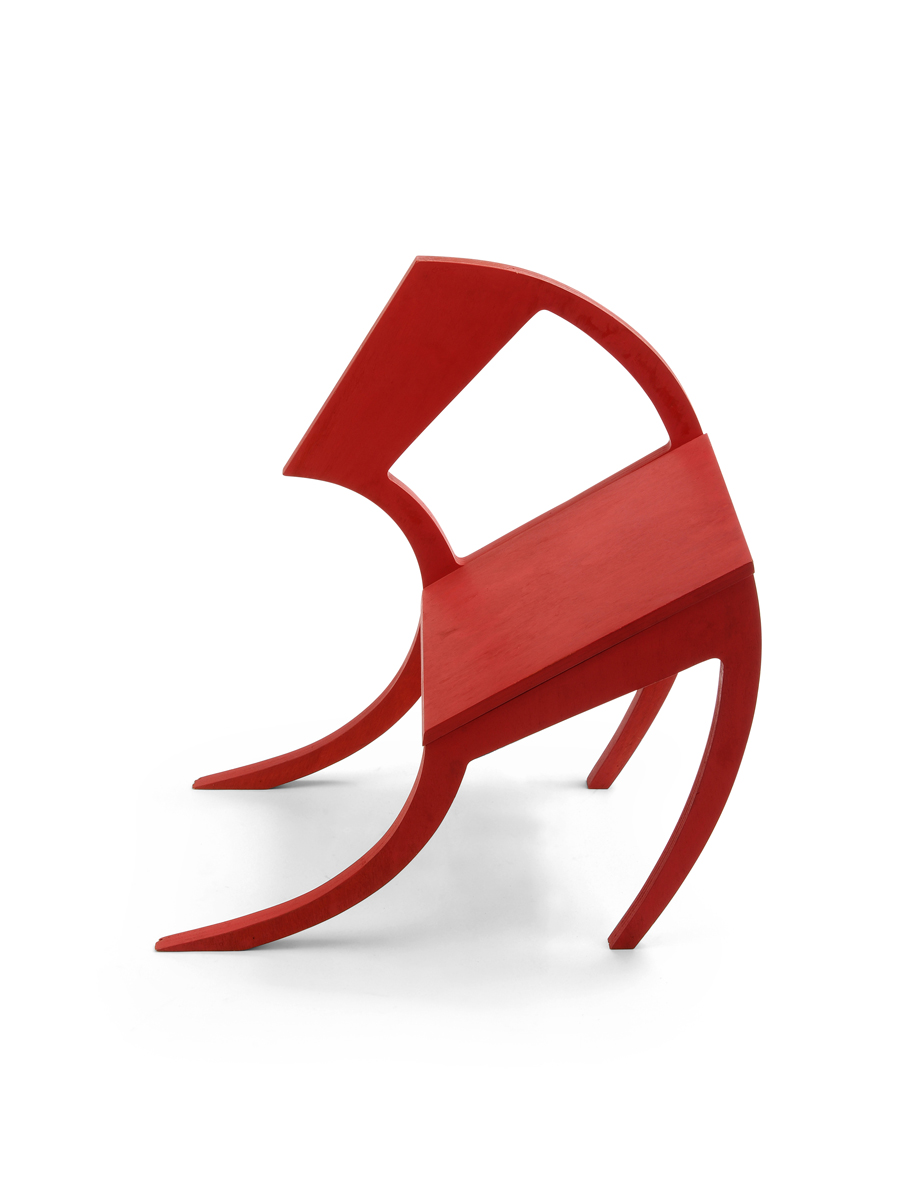
    Stefan Wewerka. 'Classroom Chair' Berlin, 1970


    Stefan Wewerka (German, 1928-2013)
    Classroom Chair
    Berlin, 1970
    70 x 68 x 40cm
    Wood (painted)
    Museum für Kunst und Gewerbe Hamburg, © VG Bild-Kunst, Bonn 2010
    Photo: Jörg Arend/Maria Thrun


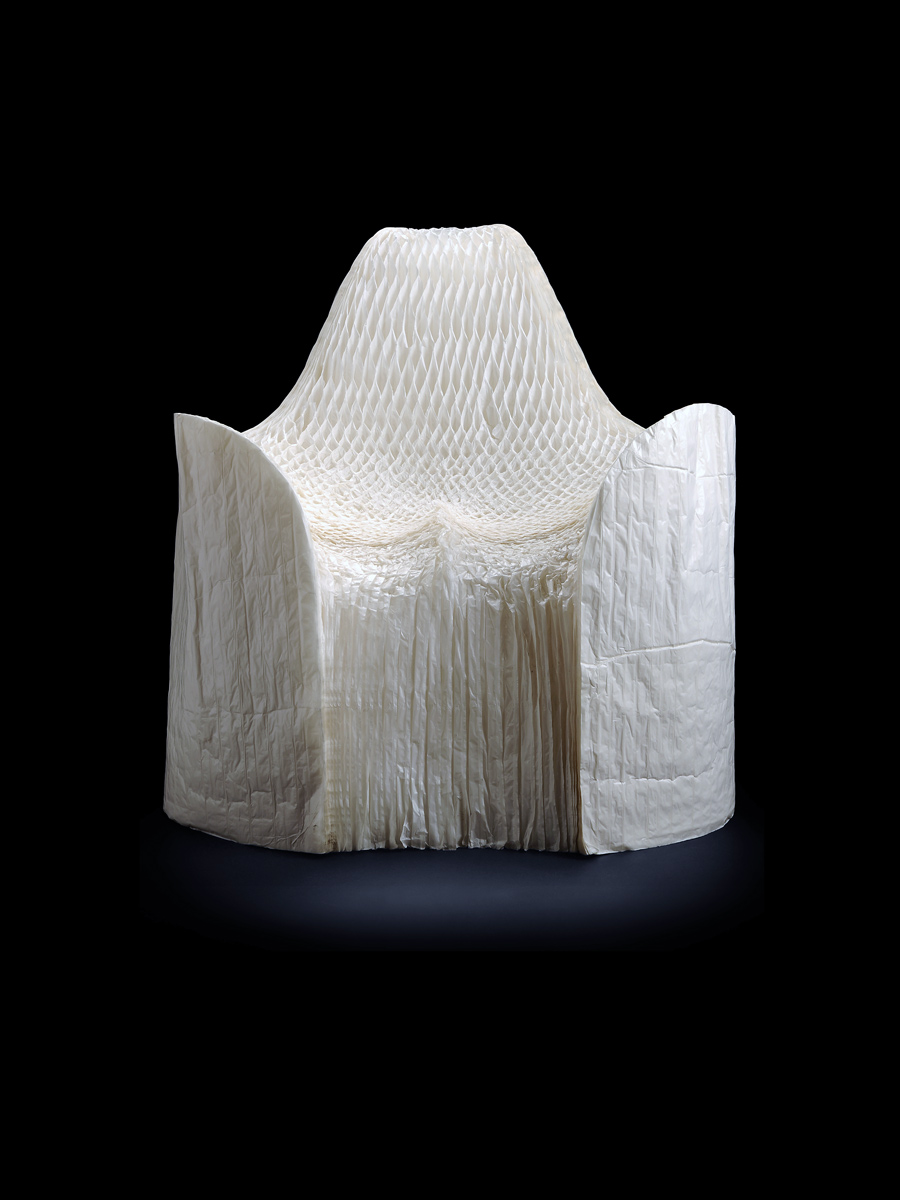
    Tokujin Yoshioka (Japanese, b. 1967)
'Honey-Pop Armchair' Tokyo, Japan, 2000


    Tokujin Yoshioka (Japanese, b. 1967)
    Honey-Pop Armchair
    Tokyo, Japan, 2000
    83 x 81 x 81cm
    Greaseproof paper (folded into form)
    Justus Brinckmann Society
    Museum für Kunst und Gewerbe Hamburg
    Photo: Jörg Arend/Maria Thrun


    Gunter Beltzig (German, 1941-2022) 'Chair 'Floris'' Wuppertal, 1967


    Gunter Beltzig (German, 1941-2022)
    Chair ‘Floris’
    Wuppertal, 1967
    Polyester (reinforced fiberglass, painted)
    109 x 59 x 40cm
    Museum fur Kunst und Gewerbe Hamburg
    Foto: Maria Thrun, Jurgen Arendt


    Museum für Kunst und Gewerbe Hamburg
    Steintorplatz, 20099 Hamburg

    Opening hours:
    Tuesday to Sunday 10am – 6pm
    Thursday 10am – 9pm
    Closed Mondays

    Museum fur Kunst und Gewerbe Hamburg website

    LIKE ART BLART ON FACEBOOK

    Back to top

    Review: ‘Rosemary Laing: leak’ at Tolarno Galleries, Melbourne

    Exhibition dates: 26th February – 19th March 2011


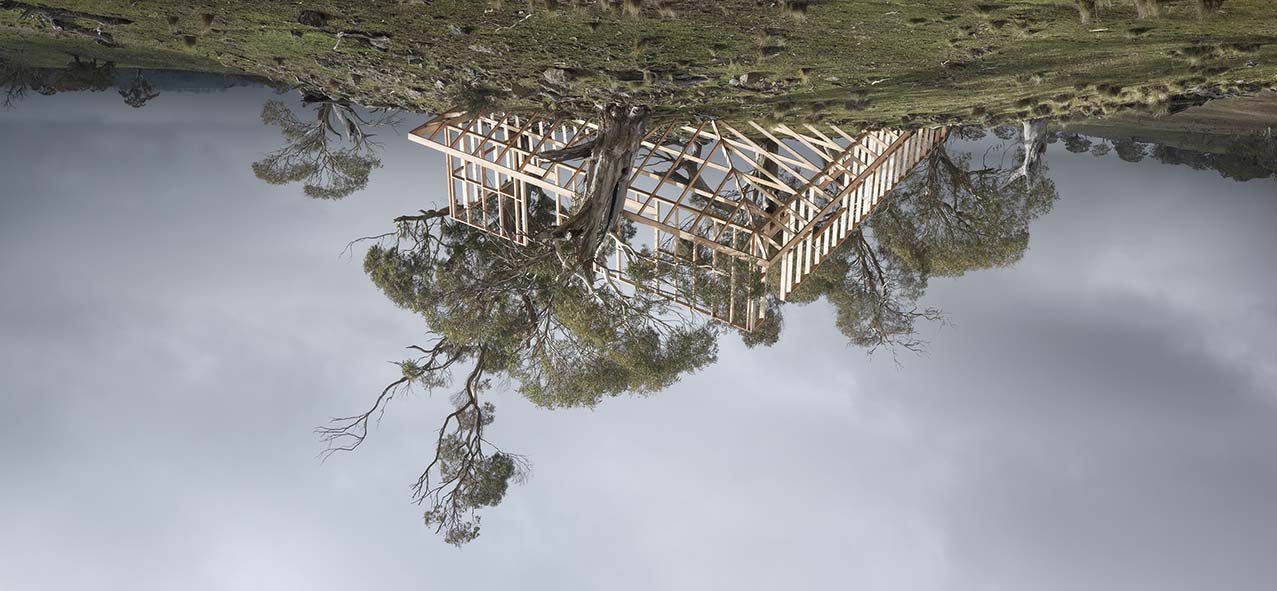
    Rosemary Laing (Australian, b. 1959) 'Jim' 2010


    Rosemary Laing (Australian, b. 1959)
    Jim
    2010
    From the series Leak
    C Type photograph
    Large image size 110 x 238cm
    Framed size 127 x 255cm
    Edition of 8


    You have just got to love these!

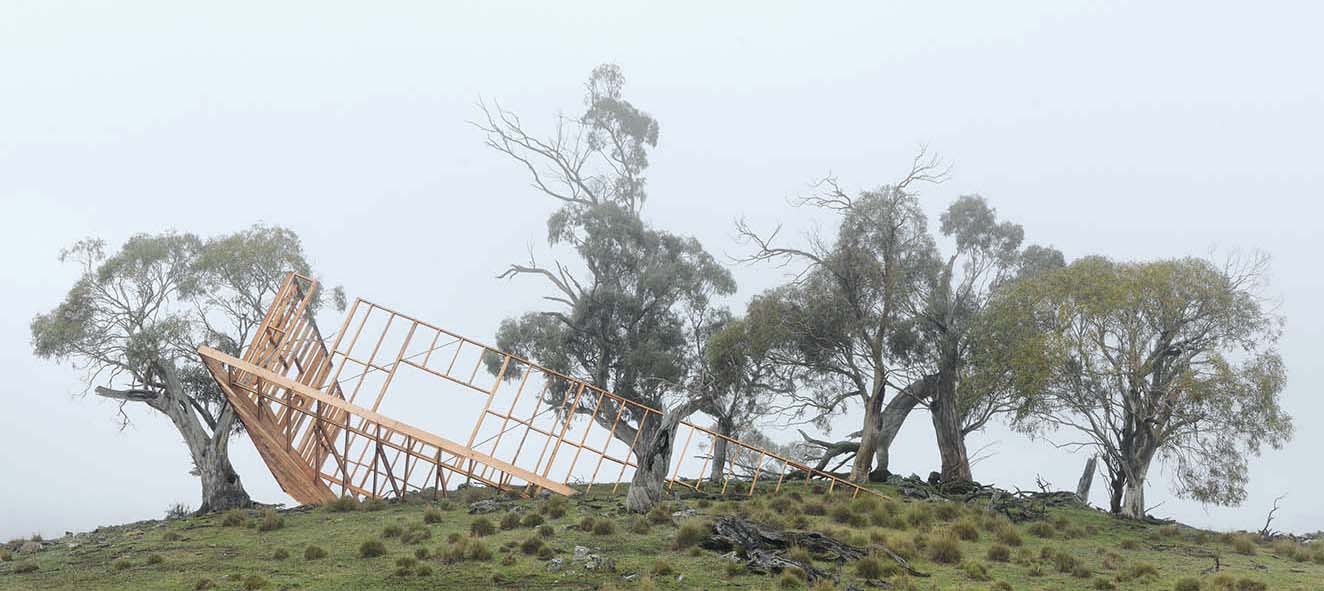
    A wonderful suite of five panoramic photographs, framed in white, inhabit the beautiful space of Tolarno Galleries, Melbourne. The photographs, different angles of the same bleached bone inverted skeleton of a house that was constructed by five builders in the Australian landscape around Cooma, New South Wales (no Photoshop tricks here!) have a subdued colour palette of misty greys and greens – all except one that has a vibrant blue sky with clouds, a man with his sheep dogs and a flock of sheep. Two of the photographs are framed upside down, one photograph a closer study from the same angle.

    The house on the hill is surrounded by wondrous light gently highlighting the wooden bones of the building embedded into the landscape in a context that is soon to become another suburban housing estate. The skeleton rises up (and falls into the sky) like a foundering ship amongst mysterious gum trees, surrounded by broken stumps and littered branches. The best photograph (top, below) has the effect of the bones being lit up like a giant puzzle.

    Examining ‘the encroachment of suburban development and the socio-economic and environmental pressures on the Australian landscape’ these photographs, named after the characters from Patrick White’s novel The Twyborn Affair, are ecologically aware and politically astute, as well as being fine photographs. The title of the exhibition, leak, perfectly sums up the osmotic nature of the encroachment of human habitation upon the ‘natural’ environment, which is already a mediated landscape due to European farming techniques and clearance of the landscape. But this is not a one way discourse; what do we call the ‘new’ Australian bush? What if the humpy invaded suburbia and pushed back the tide?

    I would love to see different types of houses in different contexts. I want to see more these are so good!

    Dr Marcus Bunyan


    Many thankx to Jan Minchin (Director) and Tolarno Galleries for allowing me to publish the photographs in the posting. Please click on the photographs for a larger version of the image. Both images courtesy of the artist and Tolarno Galleries © Rosemary Laing.


    Rosemary Laing (Australian, b. 1959) 'Prowse' 2010


    Rosemary Laing (Australian, b. 1959)
    Prowse
    2010
    From the series Leak
    C Type photograph
    Large image size 110 x 247cm
    Framed size 127 x 264cm
    Edition of 8


    Rosemary Laing (Australian, b. 1959) 'Aristide' 2010


    Rosemary Laing (Australian, b. 1959)
    Aristide
    2010
    From the series Leak
    C Type photograph
    60 x 122cm
    Edition of 8


    Rosemary Laing (Australian, b. 1959) 'Eddie' 2010


    Rosemary Laing (Australian, b. 1959)
    Eddie
    2010
    From the series Leak
    Type C photograph
    Framed 127.0 x 274.6cm
    Edition of 8


    Tolarno Galleries
    Level 4
    104 Exhibition Street
    Melbourne VIC 3000
    Australia
    Phone: 61 3 9654 6000

    Opening hours:
    Tue – Fri 10am – 5pm
    Sat 1pm – 4pm

    Tolarno Galleries website

    LIKE ART BLART ON FACEBOOK

    Back to top

    Exhibition: ‘Alberto Giacometti. The Origin of Space: Retrospective of the mature work’ at Kunstmuseum Wolfsburg

    Exhibition dates: 20th November 2010 – 6th March 2011


    Many thankx to the Kunstmuseum Wolfsburg for allowing me to publish the photographs in the posting. Please click on the photographs for a larger version of the image.


    Alberto Giacometti (Swiss, 1901-1966) 'La Cage/The Cage' 1950


    Alberto Giacometti (Swiss, 1901-1966)
    La Cage/The Cage
    1950
    Bronze
    175.6 x 37 x 39.6cm
    Collection Fondation Giacometti, Paris (Inv. Nr. : 1994-0177)
    Photo: Jean-Pierre Lagiewski
    © ADAGP / Fondation Giacometti, Paris / VG Bild-Kunst, Bonn 2010


    Alberto Giacometti (Swiss, 1901-1966) 'Walking Man I' 1960


    Alberto Giacometti (Swiss, 1901-1966)
    Homme qui marche I/Walking Man I
    1960
    Bronze
    180.5 x 27 x 97cm
    Collection Fondation Giacometti, Paris (Inv. Nr.: 1994-0186)
    Photo: Jean-Pierre Lagiewski
    © ADAGP / Fondation Giacometti, Paris / VG Bild-Kunst, Bonn 2010


    Alberto Giacometti (Swiss, 1901-1966) 'Falling Man' 1950


    Alberto Giacometti (Swiss, 1901-1966)
    Homme qui chavire/Falling Man
    1950
    Bronze, 60 x 22 x 36cm
    Avignon, Musée Calvet (Depot Musée d’Orsay); Gift of Philippe Meyer, 2000 (Inv. Nr.: RF 4655)
    Photo: © bpk/RMN/Aix-en-Provence, Musée Granet/Michèle Bellot
    © ADAGP / Succession Giacometti / VG Bild-Kunst, Bonn 2010


    “Space does not exist, it has to be created… Every sculpture based on the assumption that space exists is wrong; there is only the illusion of space.”


    Alberto Giacometti, Notes, circa 1949


    For the first time in 12 years, the Kunstmuseum Wolfsburg is presenting a comprehensive overview of Alberto Giacometti’s mature work in Germany. Around 60 sculptures will be displayed alongside more than 30 paintings and several drawings in the circa 2000 square meter exhibition space. The exhibition offers unique insights into the fascinating oeuvre of one of the most important artists of the twentieth century.

    Giacometti’s vision of situating his figures within their own space and temporality will be realised for the first time in Wolfsburg as the exhibition architecture has been specially designed and constructed around the sculptures on display. Each of the carefully chosen works is provided with the space it requires to unfurl its true strengths. The exhibition clearly demonstrates the continued relevance of the work of Giacometti, who died in 1966, and its lasting influence on subsequent generations of artists. With his completely new conception of the human figure in relation to space and time, Giacometti can literally be considered – and this is one of the exhibition’s key theses – the inventor of virtual space.

    Organised in cooperation with the Museum der Moderne Salzburg, the exhibition juxtaposes major works from Giacometti’s oeuvre with selected pieces from private collections and the artist’s estate. The works on show in Wolfsburg are drawn in large part from the estate holdings of the Alberto and Annette Giacometti Foundation in Paris; this is the first time they have been presented on this scale in Germany. The display also includes important loans from the Alberto Giacometti Foundation in Zurich, as well as works from leading museums and private collections in Europe and the United States.

    Press release from the Kunstmuseum Wolfsburg website


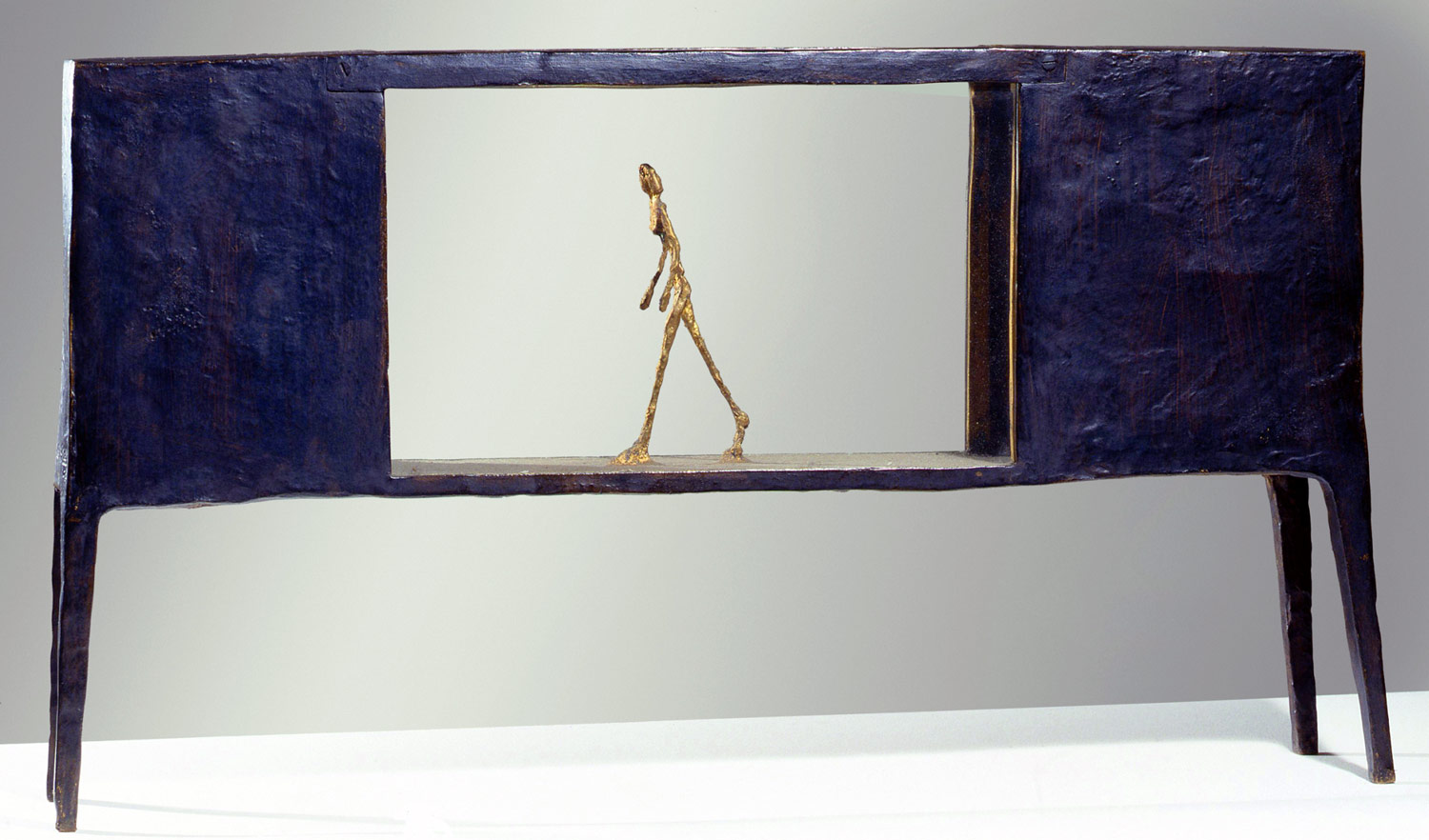
    Alberto Giacometti (Swiss, 1901-1966) 'Figure in a Box between Two Boxes which are Houses' 1950


    Alberto Giacometti (Swiss, 1901-1966)
    Figurine dans une boîte entre deux boîtes qui sont des maisons/Figure in a Box between Two Boxes which are Houses
    1950
    Bronze, glass, figurine painted white, 29.5 x 53.5 x 9.4cm
    Private collection (Inv. Nr.: GS 45)
    © ADAGP / Succession Giacometti / VG Bild-Kunst, Bonn 2010


    Alberto Giacometti (Swiss, 1901-1966) 'Man walking in the Rain' 1948


    Alberto Giacometti (Swiss, 1901-1966)
    Homme qui marche sous la pluie/Man walking in the Rain
    1948
    Bronze
    46.5 x 77 x 15cm
    Kunsthaus Zürich, Alberto Giacometti-Stiftung (Inv. Nr.: GS 35)
    © ADAGP / Succession Giacometti / VG Bild-Kunst, Bonn 2010


    Alberto Giacometti (Swiss, 1901-1966) 'Small Man on a Base' 1940-41


    Alberto Giacometti (Swiss, 1901-1966)
    Petit homme sur socle/Small Man on a Base
    1940-1941
    Bronze, 8/8
    Height: 8.4cm
    Louisiana Museum of Modern Art, Humlebæk, Dänemark
    Photo: Brøndum & Co. Poul Buchart/Louisiana Museum of Modern Art, Humlebaek, Dänemark
    © ADAGP / Succession Giacometti / VG Bild-Kunst, Bonn 2010


    Alberto Giacometti (Swiss, 1901-1966) 'Large Narrow Head' 1954


    Alberto Giacometti (Swiss, 1901-1966)
    Grande tête mince/Large Narrow Head
    1954
    Bronze, 4/6
    64.5 x 38.1 x 24.4cm
    Collection Fondation Giacometti, Paris (Inv. Nr.: 1994-0175)
    Photo: Marc Domage
    © ADAGP / Fondation Giacometti, Paris / VG Bild-Kunst, Bonn 2010


    Alberto Giacometti (Swiss, 1901-1966) 'Three Men Walking' 1948
    Screenshot


    Alberto Giacometti (Swiss, 1901-1966)
    Three Men Walking
    1948
    Bronze
    28 3/10 × 12 9/10 × 13 2/5 in | 72 × 32.7 × 34.1cm


    Kunstmuseum Wolfsburg
    Abteilung Kommunikation
    Hollerplatz 1
    38440 Wolfsburg
    Phone: +49 (0)5361 2669 69

    Opening hours:
    Tuesday – Sunday 11am – 6pm
    Monday closed

    Kunstmuseum Wolfsburg website

    LIKE ART BLART ON FACEBOOK

    Back to top

    Exhibition: ‘Duane Hanson/Gregory Crewdson: Uncanny realities’ at Museum Frieder Burda, Baden-Baden

    Exhibition dates: 27th November 2010 – 6th March 2011

    Curators: Götz Adriani and Patricia Kamp


    Installation photograph of the exhibition 'Duane Hanson/Gregory Crewdson: Uncanny realities' at Museum Frieder Burda


    Installation photograph of the exhibition Duane Hanson/Gregory Crewdson: Uncanny realities at Museum Frieder Burda


    A great double act!

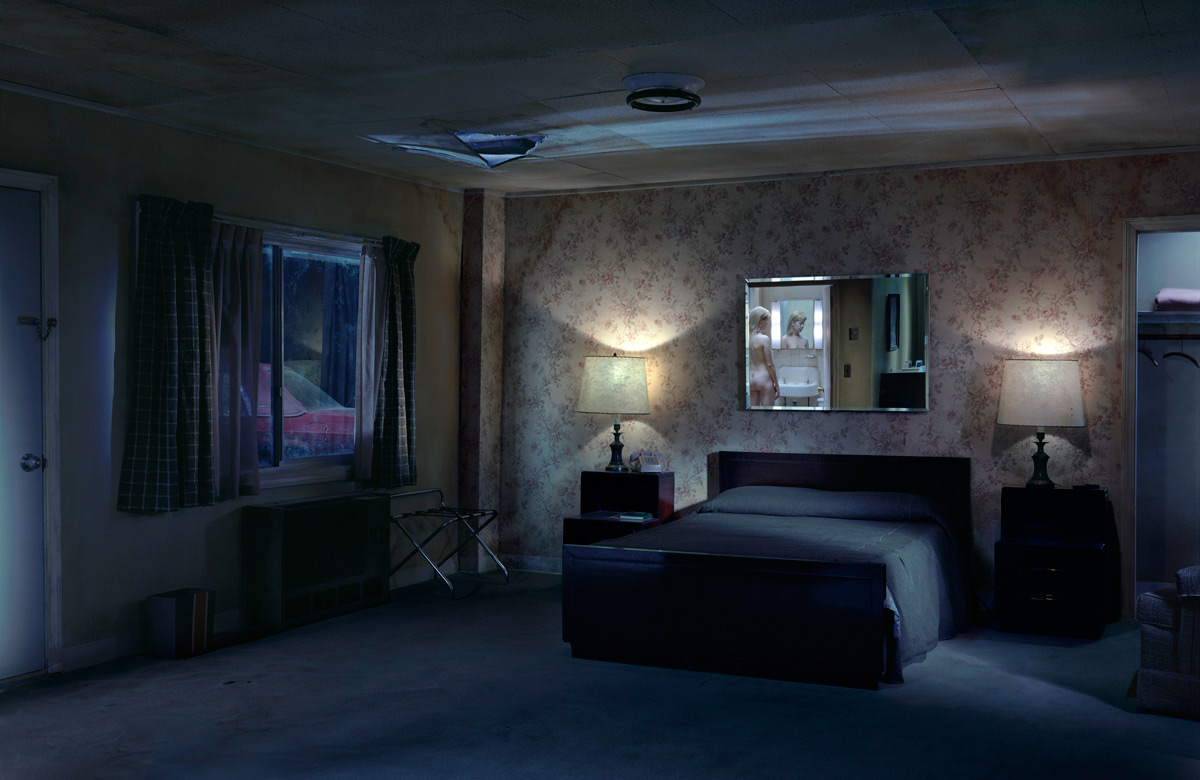
    An inspired curatorial choice brings the work of these two artist’s together – life-like sculptures of everyday Americans mixing with theatrical, deadpan staged images. The mis en scène created in the exhibition space, the tension between sculpture, photograph, frame and space – is delicious.

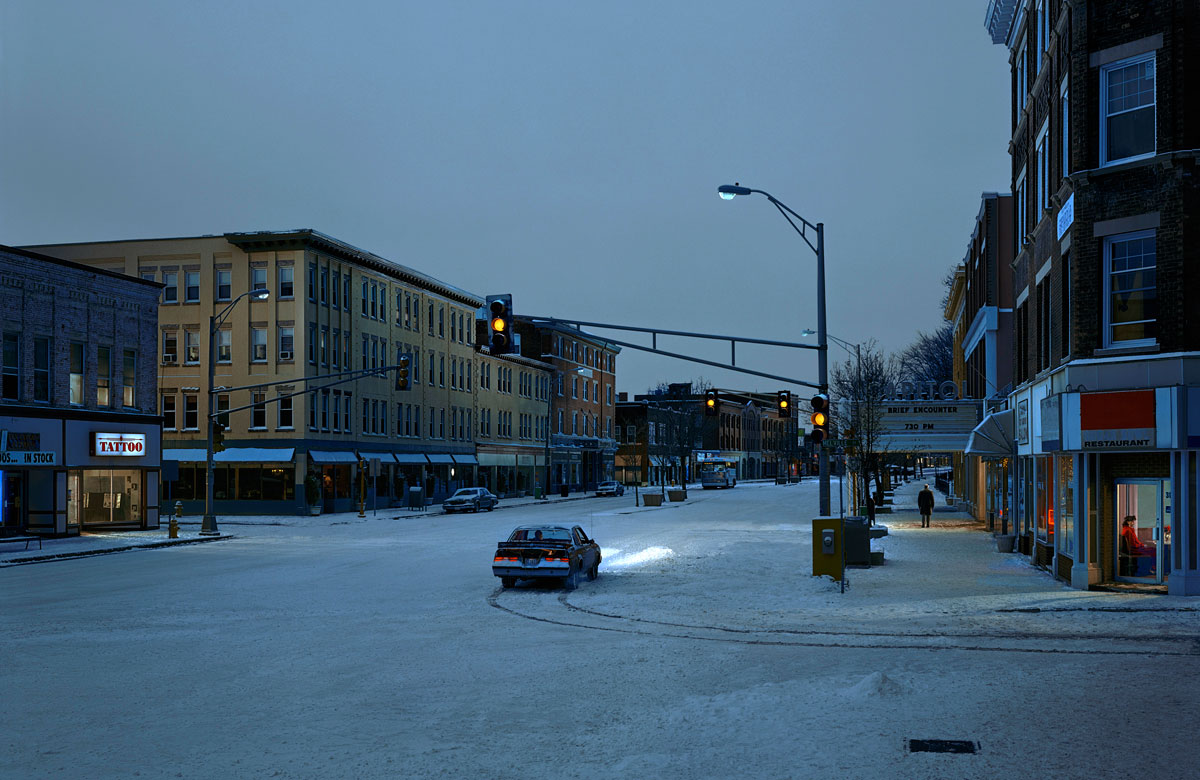
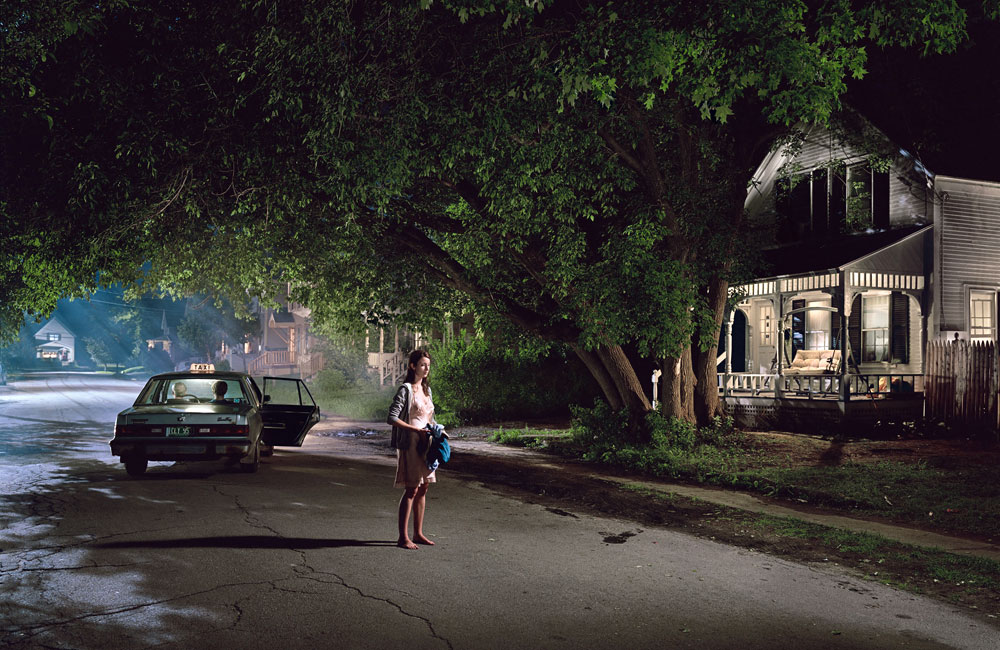
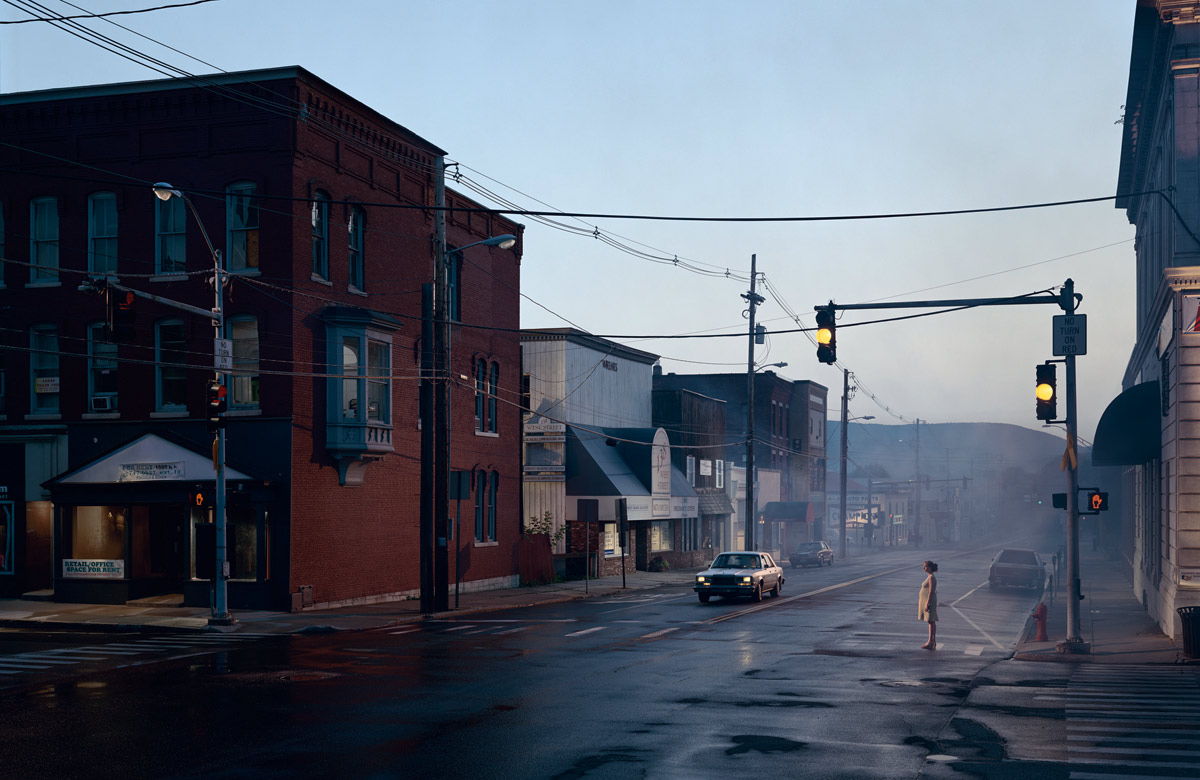
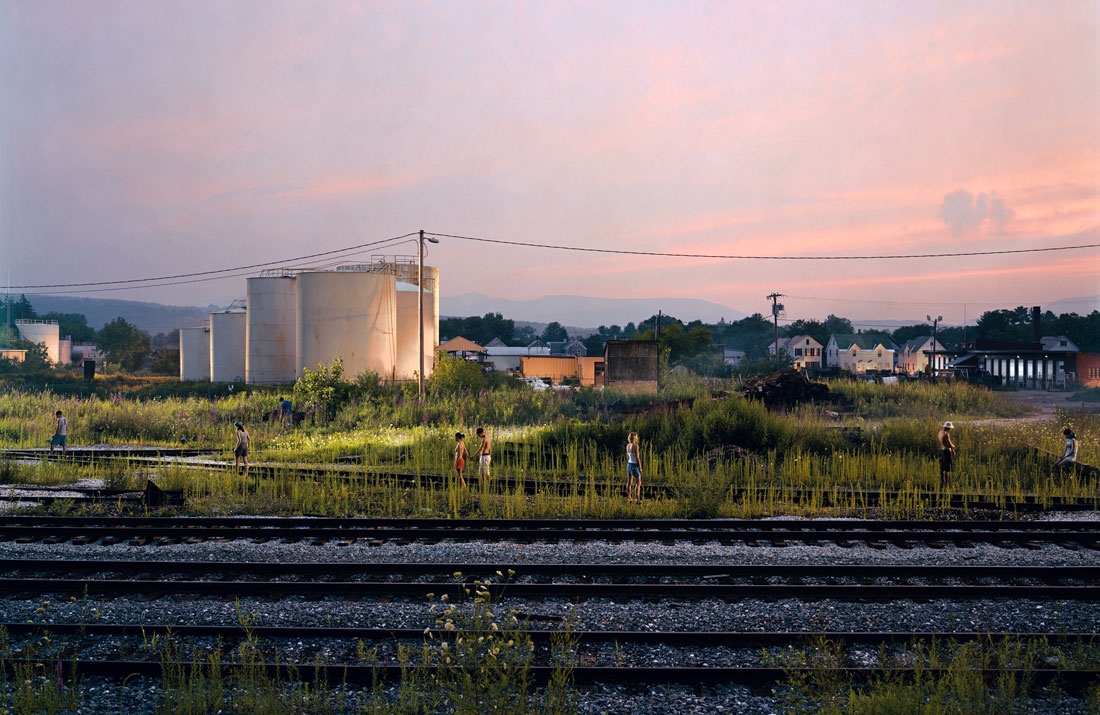
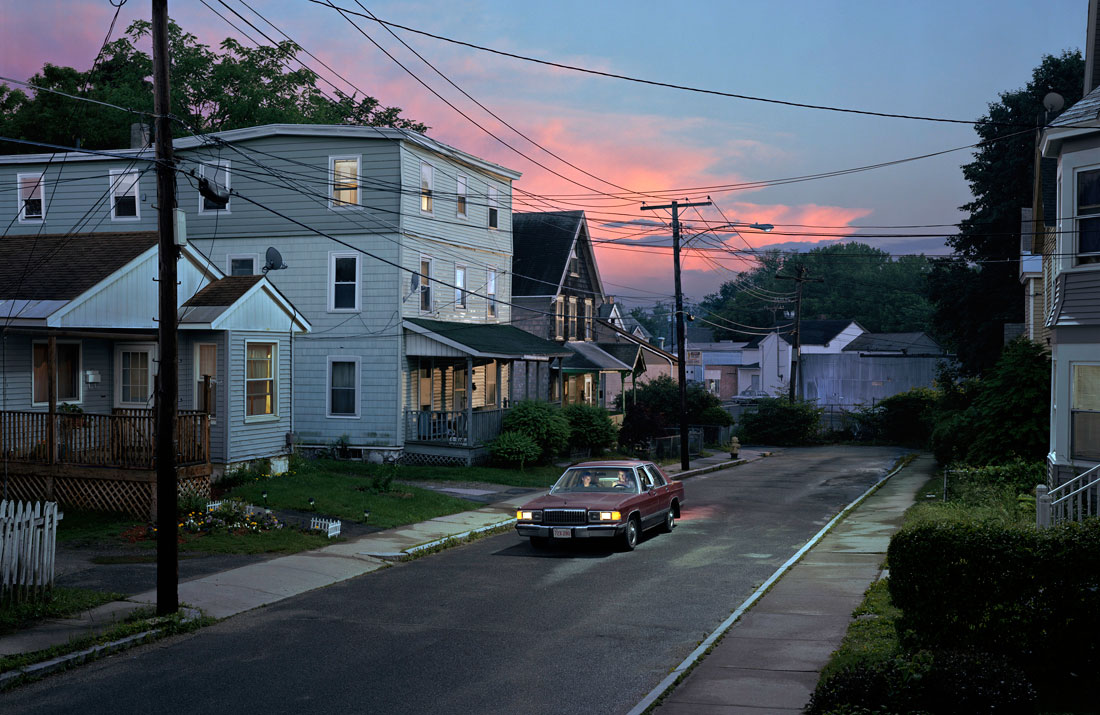
    Crewdson is at his best when he resists the obvious narrative (for example, all the traffic lights stuck on yellow in the photograph Untitled (Brief Encounter) (2006, see below). Personally I prefer his staged photographs with pairs or groups of people within the image, rather than a single figure. The storyline is more ambiguous and the photographs of people walking along railway tracks always remind me of the Stephen King story filmed as Stand by Me (1986) with a young River Phoenix. Either way they are intoxicating, the viewer drawn into these wonderful, dark psychological dramas.

    Dr Marcus Bunyan


    Many thankx to Museum Frieder Burda for allowing me to publish the photographs in the posting. Please click on the photographs for a larger version of the image.


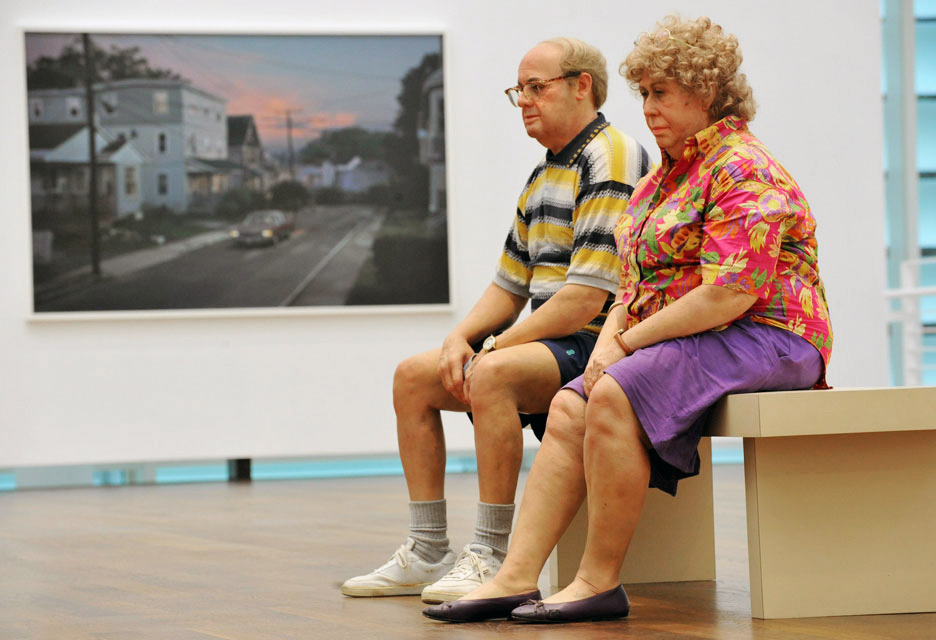
    Installation photograph of the exhibition 'Duane Hanson/Gregory Crewdson: Uncanny realities' at Museum Frieder Burda with Duane Hanson 'Old Couple on a Bench' (1994) in the foreground and Gregory Crewdson 'Untitled (Worthington Street)' (2006) in the background


    Installation photograph of the exhibition Duane Hanson/Gregory Crewdson: Uncanny realities at Museum Frieder Burda with Duane Hanson Old Couple on a Bench (1994) in the foreground and Gregory Crewdson Untitled (Worthington Street) (2006) in the background


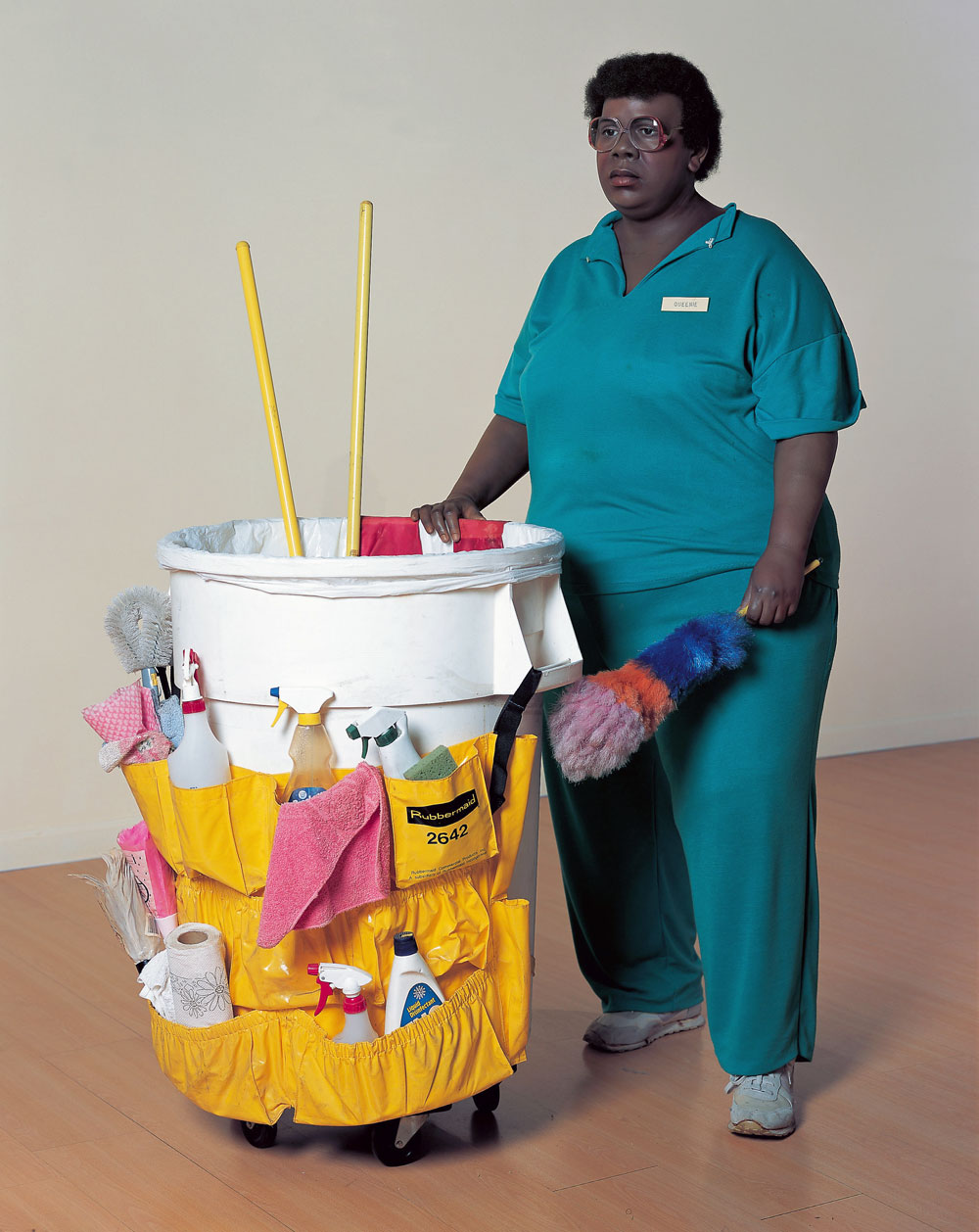
    The works by the two American artists Duane Hanson (1925-1996) and Gregory Crewdson (born in 1962) confuse and touch the observer.

    Both artists present people in their everyday lives, with hopes, yearnings and broken dreams. People we usually do not notice, aged and marked by reality, by life itself. While Hanson shapes his life-sized figures with a great deal of sympathy, Crewdson rather spreads a gloomy and depressing atmosphere in his pictures of lonely people in their houses, gardens and in streets.

    With his realistic sculptures, the American artist Duane Hanson has become a synonym for contemporary realism in contemporary art. Typical motives are average people like  housewives, waitresses, car dealers, janitors. Posture and expression of these figures are very close to reality. The photographer Gregory Crewdson arranges his large format pictures with cineastic arrangements and lets the abyss behind every-day life scenes become visible.

    The exhibition at the Frieder Burda Museum presents about 30 figures by Duane Hanson, mainly from the artist’s estate, in dialogue with 20 large format works from the series Beneath the Roses by the photographer Gregory Crewdson. The photographies are mainly owned by the artist himself.

    The curators Götz Adriani and Patricia Kamp are not aiming at a direct confrontation. They are rather presenting two artists who work with different materials, but deal with very similar topics. Both artists, Hanson and Crewdson, are grand when it comes to arranging their art. Crewdson always puts very much effort into the arrangements of the scenes in his pictures, and Hanson always keeps an eye on his close surroundings.

    The works of both artists impressively reflect the complexity of the human existence. …


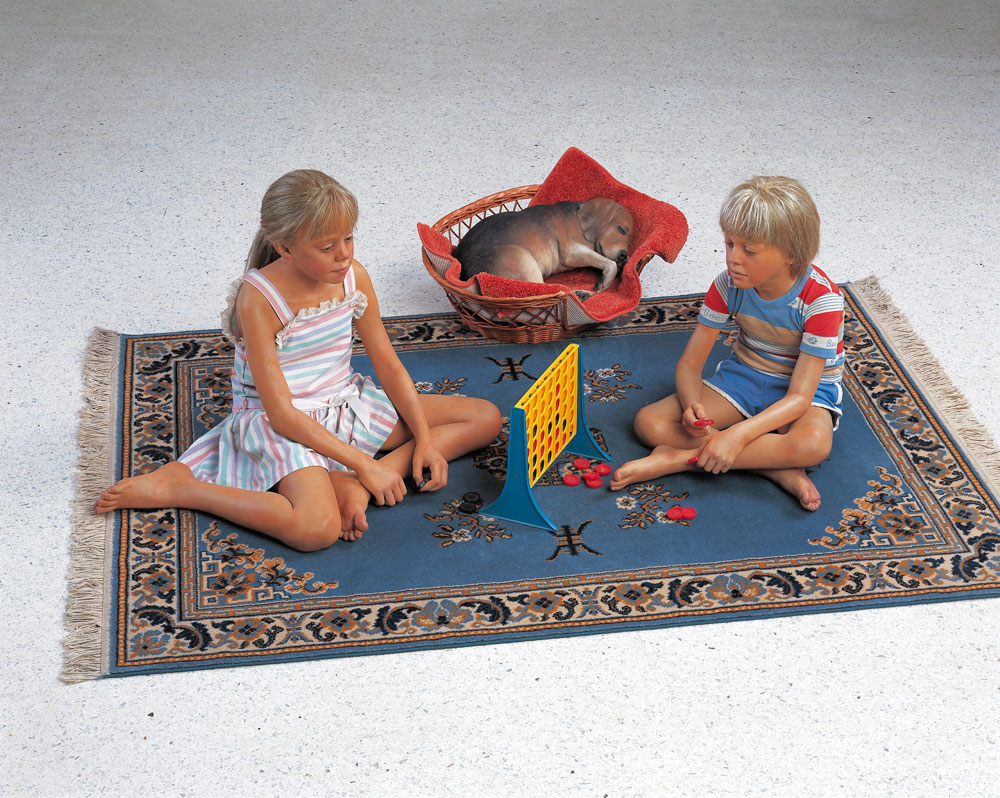
    Duane Hanson (American, 1925-1996) 'Children Playing Game' 1979


    Duane Hanson (American, 1925-1996)
    Children Playing Game
    1979
    Polyvinyl chloride, coloured with oil, mixed technique and accessories
    Collection Hanson, Davie, Florida
    © VG Bild-Kunst, Bonn 2010


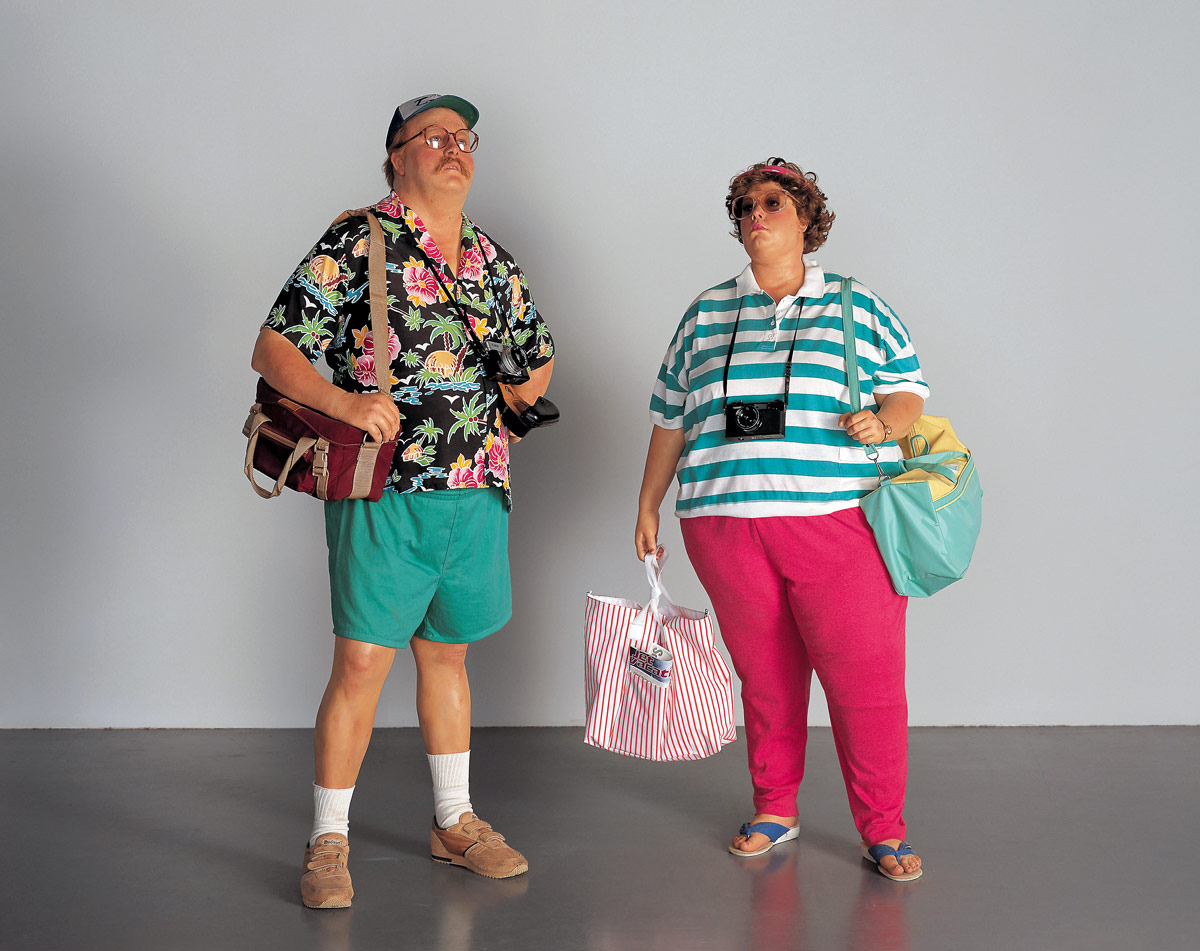
    Duane Hanson (American, 1925-1996) 'Tourists II' 1988


    Duane Hanson (American, 1925-1996)
    Tourists II
    1988
    polyvinyl chloride, coloured with oil, mixed technique, accessories
    Collection Hanson, Davie, Florida
    © VG Bild-Kunst, Bonn 2010


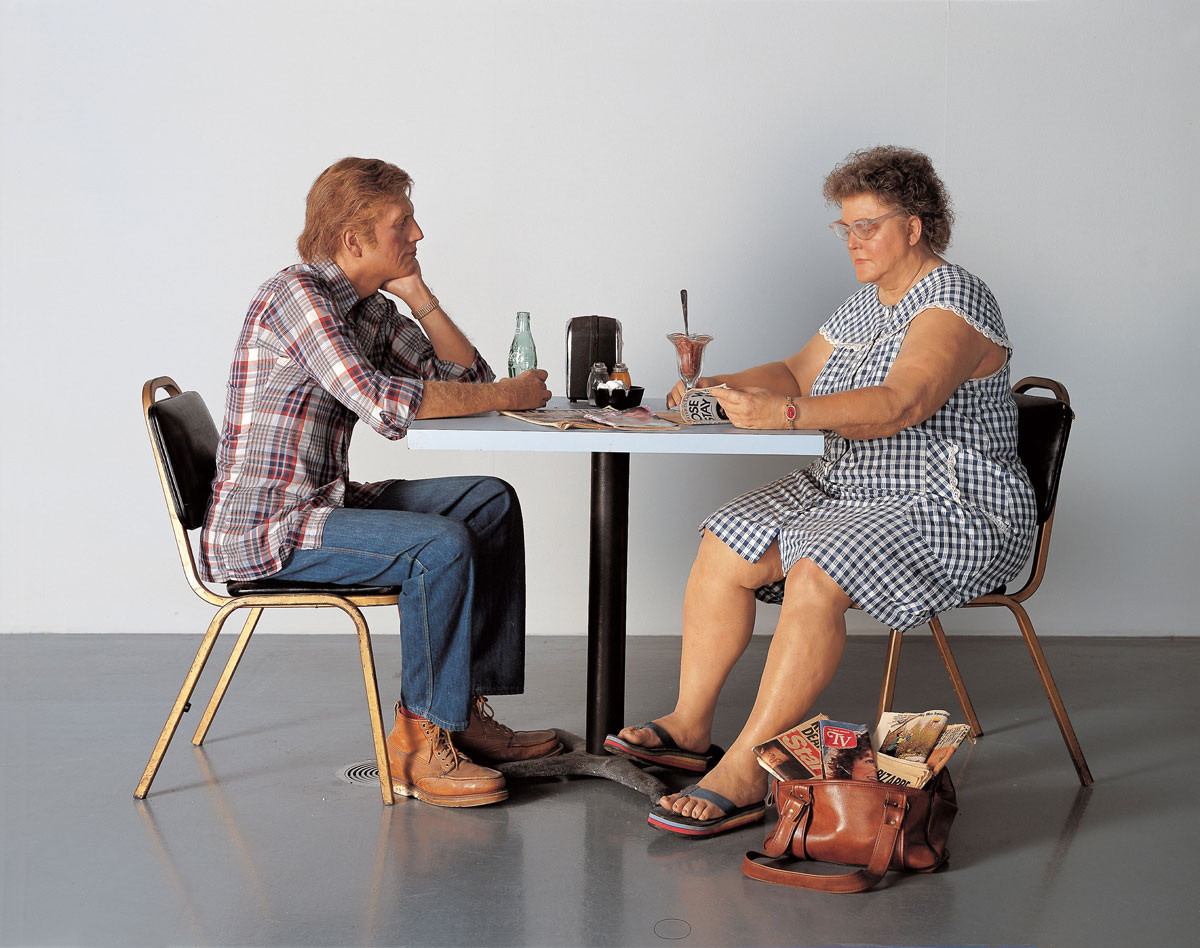
    Duane Hanson (American, 1925-1996) 'Self-Portrait with Model' 1979


    Duane Hanson (American, 1925-1996)
    Self-Portrait with Model
    1979
    Polyvinyl chloride, coloured with oil, mixed technique and accessories
    Collection Hanson, Davie, Florida
    © VG Bild-Kunst, Bonn 2010


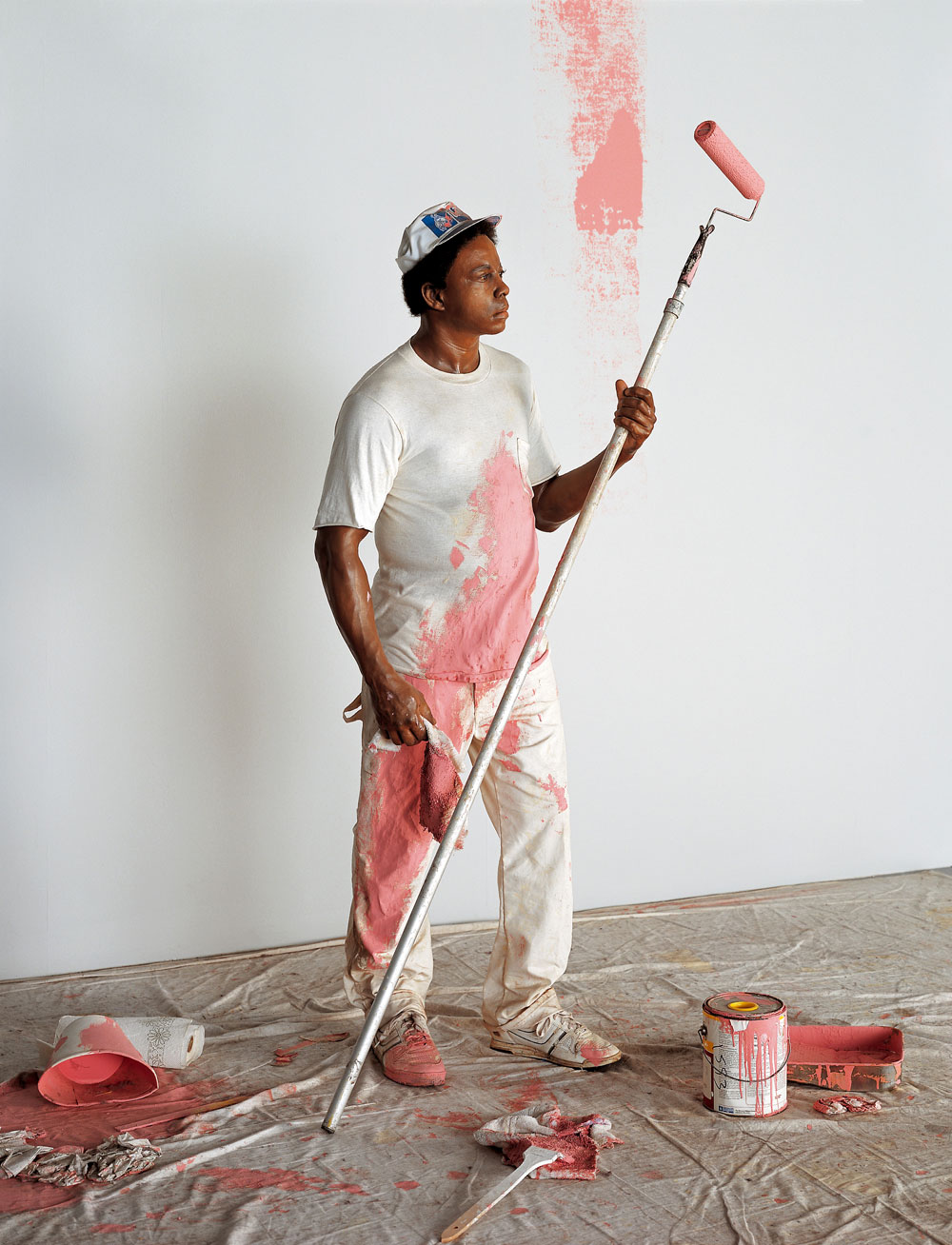
    Duane Hanson (American, 1925-1996) 'Housepainter I' 1984/1988


    Duane Hanson (American, 1925-1996)
    Housepainter I
    1984/1988
    Epoxy resin, coloured with oil, mixed technique, accessories
    Collection Hanson, Davie, Florida
    © VG Bild-Kunst, Bonn 2010


    Duane Hanson (American, 1925-1996) 'Queenie II' 1988


    Duane Hanson (American, 1925-1996)
    Queenie II
    1988
    Epoxy resin, coloured with oil, mixed technique, accessories
    Collection Hanson, Davie, Florida
    © VG Bild-Kunst, Bonn 2010


    Duane Hanson

    Duane Hanson (1925-1996) is one of the most influential American sculptors of the 20th century committed to Realism.

    The proximity to reality of his lifelike, detailed human figures make for perfect irritation. Despite all the seriousness hidden behind the socio-critical issue, which prompted Hanson to create his protagonists, the figures have a great deal of entertainment value, above all – and it is precisely this that makes them so appealing – due to their occasional gravitational bearing. Featuring twenty-five works, the exhibition presents a representative cross-section of the American’s extensive oeuvre, which comprises a total of only 114 works. The figures enter a dialogue with the large-format photographs by the American photo artist Gregory Crewdson, who has a flair for relating human abysses in a different and very subtle way.

    In the early 1950s, after completing his study of sculpture at the Cranbrook Academy of Art in Bloomfield Hills, Michigan, Hanson was initially guided by the abstract style of art that prevailed during this period. However, this would not lead to a satisfactory result. In 1953, he turned his back on his homeland and spent nearly ten years of his life earning a living as an art teacher at American schools in Germany. It was during this period that he discovered the materials polyester resin and fibreglass, which would become crucial for his future creative work. After returning to the United States, Hanson spent the ensuing years perfecting his artistic skills in the treatment of these materials in such a way that the boundaries between reality and artificial figure seem to blur – where Hanson was never concerned with the mere illusionistic reproduction of reality, but chose this veristic manner of representation as a medium for communicating his concern in terms of content, i.e., shedding light on the tragedy of human lives that hauntingly consolidates in his characters.

    In the human figures produced in the early work phase in the late 1960s, Hanson responded to the sociopolitical tension and protest movements of the day. He created sculptures and ensembles that very directly take issue with social hardship, violence, or racism, and he took a stand for the victims of this system, for the people who never had a chance to successfully face the demands made by life.

    Influenced by Pop Art, Hanson turned to thematising everyday American life, frequently switching his observations to a critically satirical attitude that was, however, always guided by compassion. Housewives, construction workers, car salesmen, or janitors – the models for his figures are people in the American middle and working classes in whose biographies the disappointment in the American dream has become entrenched. He often puts his people and all of their small insufficiencies into perspective with ironic kindness, such as, for example, the Tourists, in whom are combined all of the clichés associated with the typical Florida tourist.

    Hanson’s participation in documenta 5 in Kassel in 1972 gave rise to his international breakthrough. His figures became more lifelike; they more and more naturally blended into their surroundings. Their gestures, facial expressions, and postures related the emotional and physical burdens of life. The artist concentrated on older people in whose physiognomies one can read the traces of existence, the impact of loneliness, the problems that accompany being old, and their alienation. Hanson was struck by the isolation of this generation by society, a circumstance that has not lost any of its relevance.

    Hanson’s interest in rendering the figures as lifelike as possible is surely not rooted in a desire to want to convince the viewer of their “authenticity”; rather, their lifelikeness was meant to move the viewer to experience empathy and concern, thus manifesting Hanson’s humanism. Human values and destinies comprise the focus of his art; he transforms the reality of life into the realism of art and in doing so sharpens our outlook and our view of the world, our fellow human beings, and our own life as well.


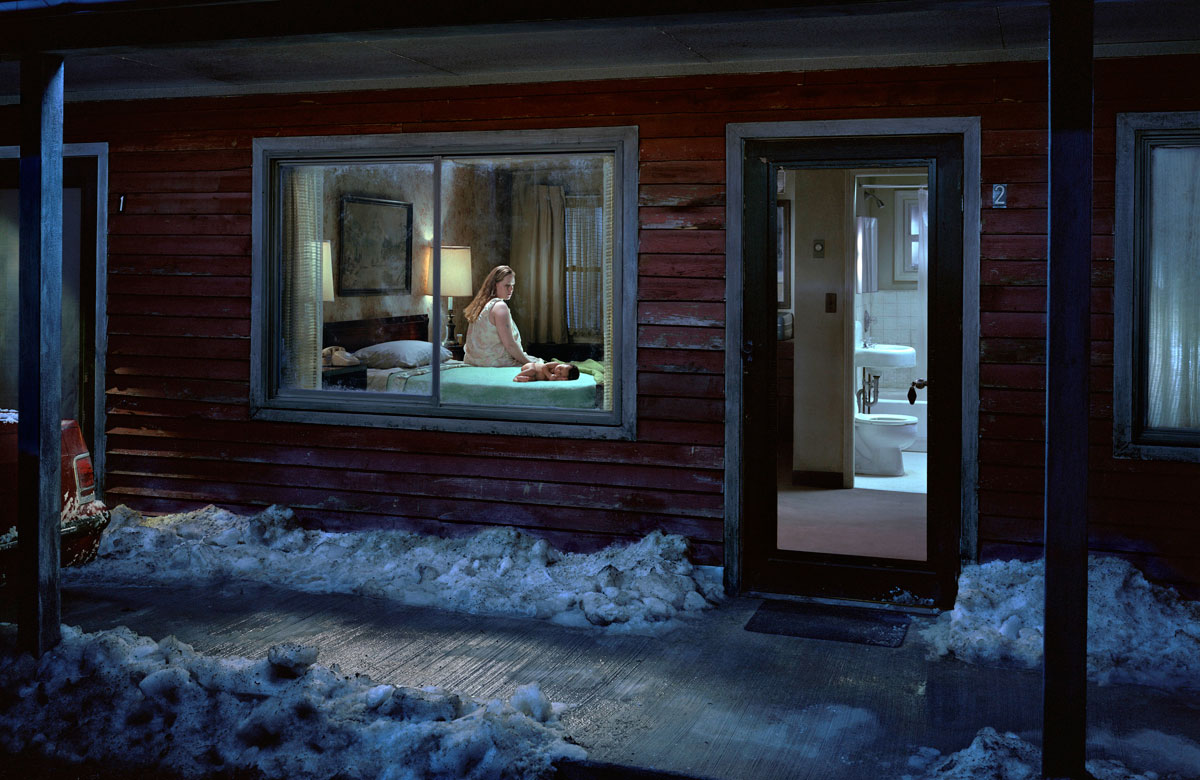
    Gregory Crewdson (American, b. 1962) 'Untitled (Birth)' from the series 'Beneath the Roses' 2007


    Gregory Crewdson (American, b. 1962)
    Untitled (Birth)
    From the series Beneath the Roses
    2007
    Digital carbon print
    144.8 x 223.5cm
    Gregory Crewdson, Courtesy Gagosian Gallery, New York
    © Gregory Crewdson, 2010


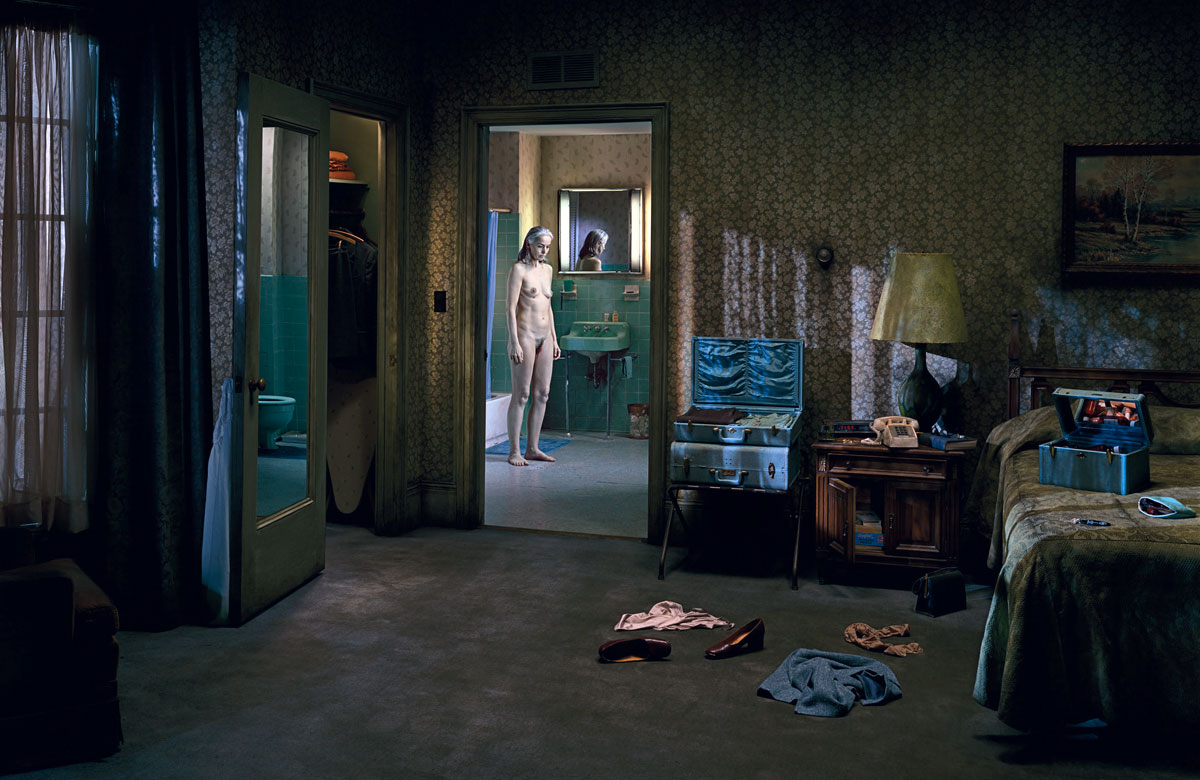
    Gregory Crewdson (American, b. 1962) 'Untitled (Blue Period)' from the series 'Beneath the Roses' 2005


    Gregory Crewdson (American, b. 1962)
    Untitled (Blue Period)
    From the series Beneath the Roses
    2005
    Digital carbon print
    144.8 x 223.5cm
    Gregory Crewdson, Courtesy Gagosian Gallery, New York
    © Gregory Crewdson, 2010


    Gregory Crewdson (American, b. 1962) 'Untitled (Brief Encounter)' from the series 'Beneath the Roses' 2006


    Gregory Crewdson (American, b. 1962)
    Untitled (Brief Encounter)
    From the series Beneath the Roses
    2006
    Digital carbon print
    144.8 x 223.5cm
    Gregory Crewdson, Courtesy Gagosian Gallery, New York
    © Gregory Crewdson, 2010


    Gregory Crewdson (American, b. 1962) 'Untitled (Debutante)' from the series 'Beneath the Roses' 2006


    Gregory Crewdson (American, b. 1962)
    Untitled (Debutante)
    From the series Beneath the Roses
    2006
    Digital carbon print
    144.8 x 223.5cm
    Gregory Crewdson, Courtesy Gagosian Gallery, New York
    © Gregory Crewdson, 2010


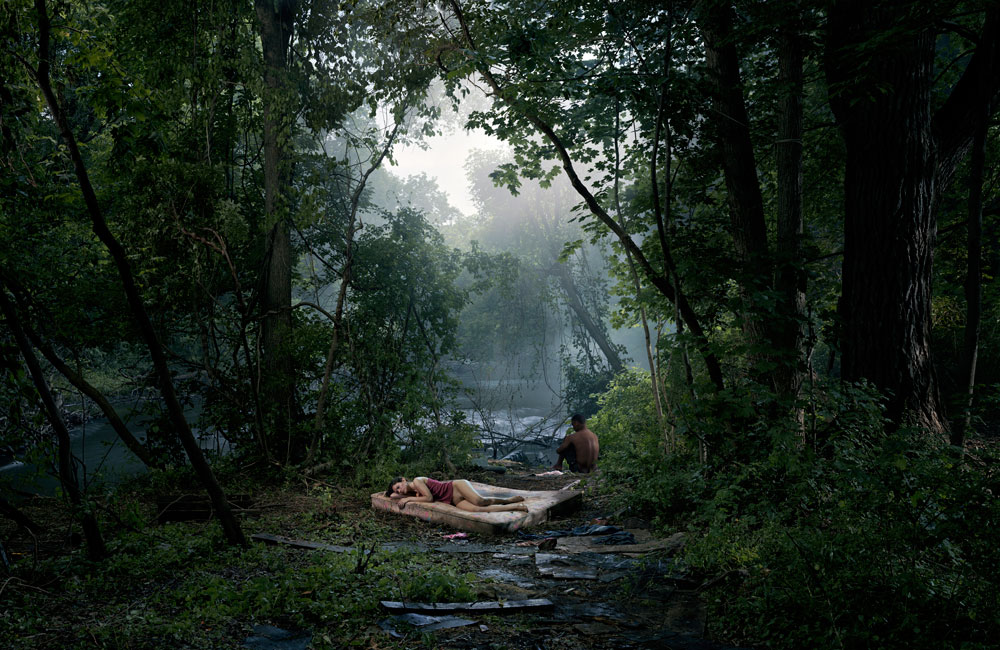
    Gregory Crewdson (American, b. 1962) 'Untitled (Forest Clearing)' from the series 'Beneath the Roses' 2006


    Gregory Crewdson (American, b. 1962)
    Untitled (Forest Clearing)
    From the series Beneath the Roses
    2006
    Digital carbon print
    144.8 x 223.5cm
    Gregory Crewdson, Courtesy Gagosian Gallery, New York
    © Gregory Crewdson, 2010


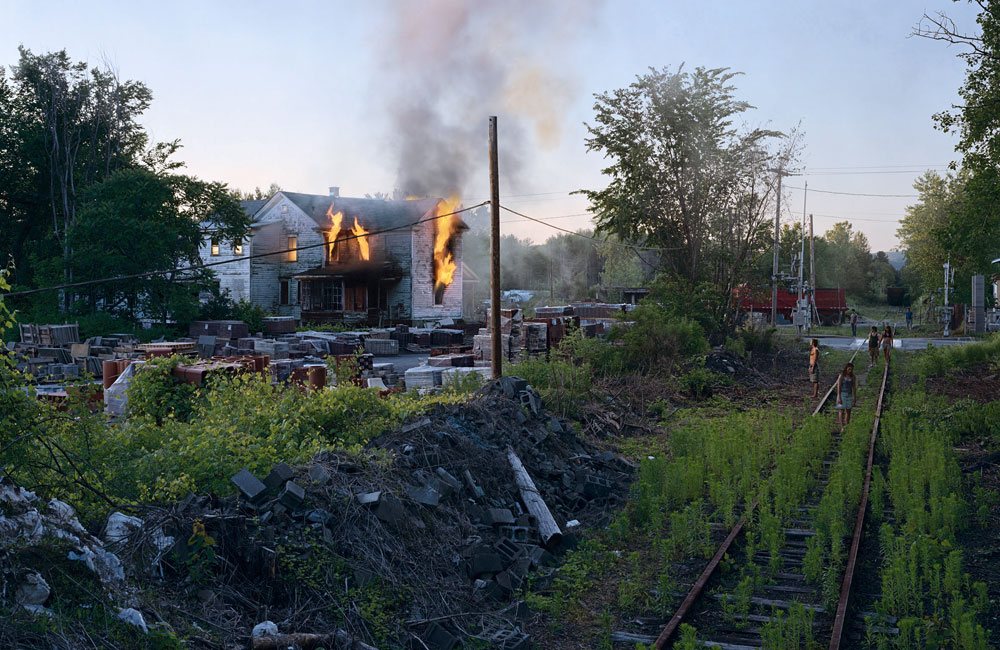
    Gregory Crewdson (American, b. 1962) 'Untitled (House Fire)' from the series 'Beneath the Roses' 2004


    Gregory Crewdson (American, b. 1962)
    Untitled (House Fire)
    From the series Beneath the Roses
    2004
    Digital carbon print
    144.8 x 223.5cm
    Gregory Crewdson, Courtesy Gagosian Gallery, New York
    © Gregory Crewdson, 2010


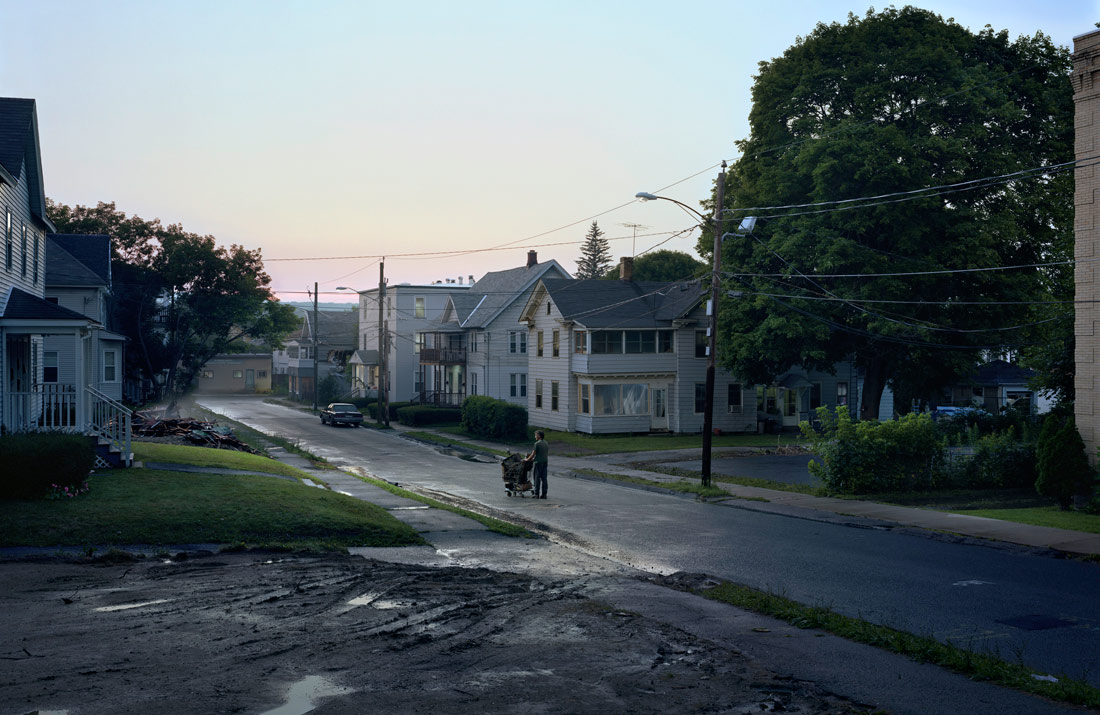
    Gregory Crewdson (American, b. 1962) 'Untitled (Kent Street)' from the series 'Beneath the Roses' 2007


    Gregory Crewdson (American, b. 1962)
    Untitled (Kent Street)
    From the series Beneath the Roses
    2007
    Digital carbon print
    144.8 x 223.5cm
    Gregory Crewdson, Courtesy Gagosian Gallery, New York
    © Gregory Crewdson, 2010


    Gregory Crewdson (American, b. 1962) 'Untitled (Maple Street)' from the series 'Beneath the Roses' 2004


    Gregory Crewdson (American, b. 1962)
    Untitled (Maple Street)
    From the series Beneath the Roses
    Digital carbon print
    144.8 x 223.5cm
    Gregory Crewdson, Courtesy Gagosian Gallery, New York
    © Gregory Crewdson, 2010


    Gregory Crewdson (American, b. 1962) 'Untitled (Merchants Row)' from the series 'Beneath the Roses' 2003


    Gregory Crewdson (American, b. 1962)
    Untitled (Merchants Row)
    From the series Beneath the Roses
    Digital carbon print
    144.8 x 223.5cm
    Gregory Crewdson, Courtesy Gagosian Gallery, New York
    © Gregory Crewdson, 2010


    Gregory Crewdson

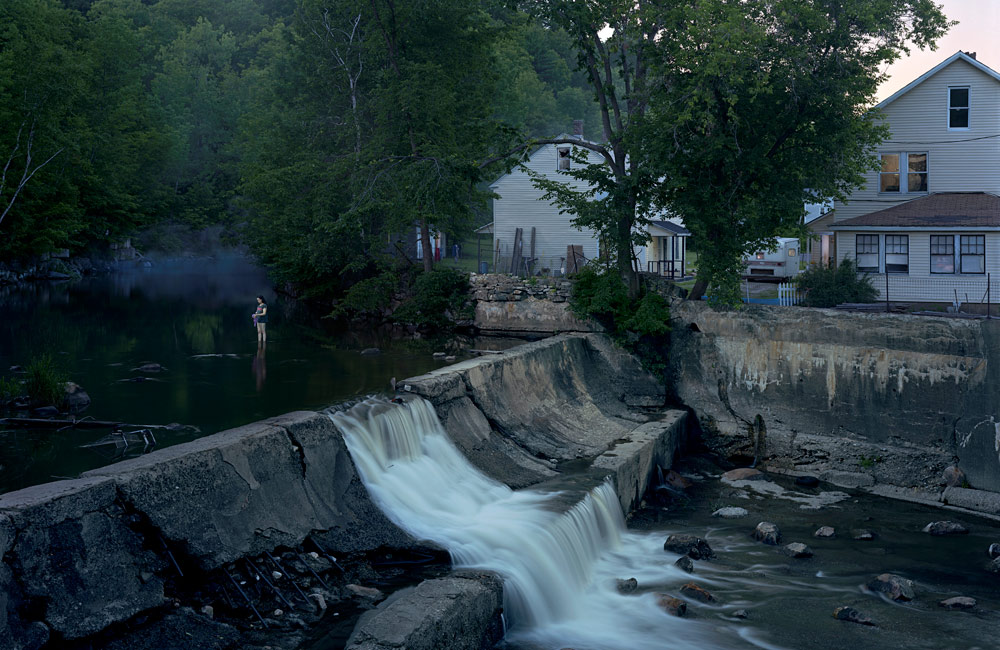
    Born in 1962 in Brooklyn, New York, Gregory Crewdson is one of the best-known contemporary photographers internationally. In his most important series to date Beneath the Roses, which he created between 2003 and 2008, Crewdson explores the American psyche and the disturbing realities at play within quotidian environments. In his dramatically detailed and realistic photographs situated in America’s morbid, small-town milieu, the artist succeeds to stimulate the viewer’s subconscious on various levels. Twenty outstanding works from the series are being placed in a dialogue with sculptures by Duane Hanson. Gregory Crewdson does not spare either effort or expenses for the production of his visual inventions, which are reminiscent of film productions. The stagings are planned and arranged in advance down to the smallest detail and then elaborately implemented in a major logistical and human effort. The final photograph is the result of what is frequently work lasting several weeks, a circumstance that is substantiated by its depths in terms of content and its technical perfection.

    Gregory Crewdson works in two distinct ways to create his photographs. On one hand, he works on location in real neighborhoods and townships. On the other hand, the artist works on the soundstage inventing his world from scratch. Before the photographic location productions start, Crewdson drives around upstate Massachusetts looking for interesting settings, which he then has prepared in an elaborate process. In most cases, local residents of the ramshackle towns also play the characters in his work. Crewdson works closely with the art department of the museum MASSMoCA, when shooting his pictures done on the soundstage. The results are much like stills from a movie and reflect his affinity with cinema. Filmmakers such as Alfred Hitchcock, David Lynch, or Steven Spielberg are the inspiration for Crewdson’s uncanny stories, which he seems to freeze in a single snapshot in time.

    The construction of this narrative instant demonstrates the artist’s extraordinary talent. Like sophisticated literature does the reader, his works pose a challenge to viewers, as they have to mount the decisive share of the creative effort themselves. A brief, fleeting glance is not enough. Viewers become immersed in the staged scenes full of details and accessories to experience a moment that is intensely real. Fantasy and the powers of imagination and association fashion the visual event in the mind to become a subjective, alternative reality – an uncanny reality.

    In his photographs, Crewdson deliberately works with emotions and fears that extend through his oeuvre in recurring, in part very different scenarios. They mirror alienation, absence, shame, sexuality, and loss – human states of emotion that deeply touch the viewer. That the artist focuses on the mind in his works may be due to the fact that, as the son of a psychoanalyst, he experienced insight into the profundity of the human soul very early on. His works can be regarded as metaphors for fears and desires, for the things that take place below the surface, the palpable, as if Crewdson wanted to make visible a new or different level of reality situated somewhere between the conscious and subconscious.

    At the same time, the Beneath the Roses series can be seen as a psychological study of the American province. The settings show social realities and document the economic decline of a society behind the backdrop of the American way of life. Unsentimental and direct, they reflect working-class life – which allows us to strike an arc to the work by Duane Hanson, whose oeuvre also revolves around the concept of humanity, the facets of which he lends expression to in his silent, introverted figures.

    The evolution of Beneath the Roses was documented in a series of production stills, original drawings by the artist, and detailed lighting plans. About sixty works from this reservoir are presented in a studio exhibition at the museum in order to illustrate the complex technical process of producing the photographs. Gregory Crewdson completed his study of Street Photography at the Yale School of Art in New Haven in 1988. He returned to Yale in 1993 and has occupied the Chair of Photography since.

    Press release from the Museum Frieder Burda website


    Gregory Crewdson (American, b. 1962) 'Untitled (Natural Bridge)' from the series 'Beneath the Roses' 2007


    Gregory Crewdson (American, b. 1962)
    Untitled (Natural Bridge)
    From the series Beneath the Roses
    Digital carbon print
    144.8 x 223.5cm
    Gregory Crewdson, Courtesy Gagosian Gallery, New York
    © Gregory Crewdson, 2010


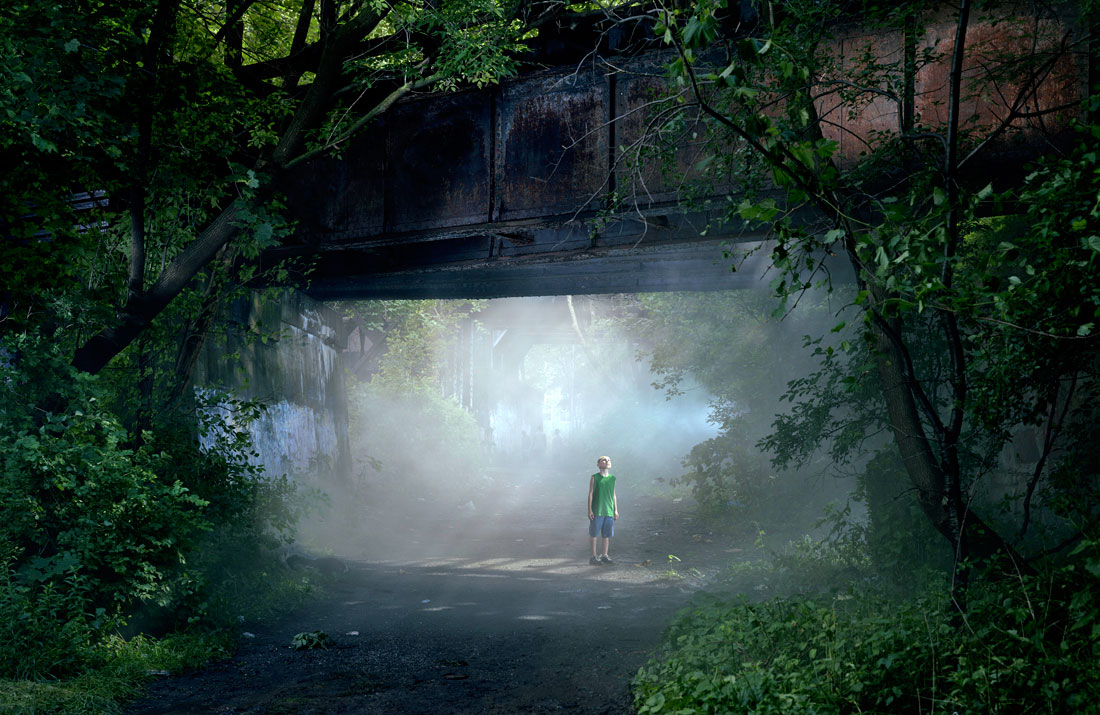
    Gregory Crewdson (American, b. 1962) 'Untitled (Railway Children)' from the series 'Beneath the Roses' 2003


    Gregory Crewdson (American, b. 1962)
    Untitled (Railway Children)
    From the series Beneath the Roses
    2003
    Digital carbon print
    144.8 x 223.5cm
    Gregory Crewdson, Courtesy Gagosian Gallery, New York
    © Gregory Crewdson, 2010


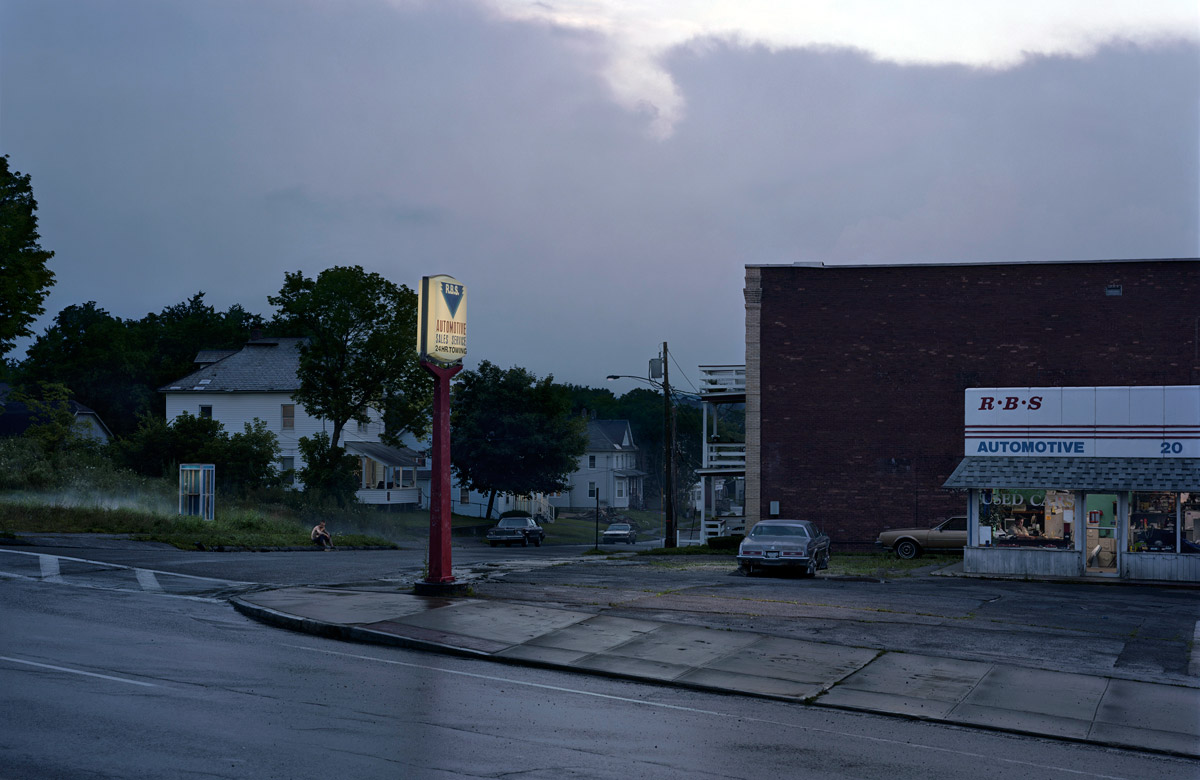
    Gregory Crewdson (American, b. 1962) 'Untitled (RBS Automotive)' from the series 'Beneath the Roses' 2007


    Gregory Crewdson (American, b. 1962)
    Untitled (RBS Automotive)
    From the series Beneath the Roses
    2007
    Digital carbon print
    144.8 x 223.5cm
    Gregory Crewdson, Courtesy Gagosian Gallery, New York
    © Gregory Crewdson, 2010


    Gregory Crewdson (American, b. 1962) 'Untitled (Shane)' from the series 'Beneath the Roses' 2006


    Gregory Crewdson (American, b. 1962)
    Untitled (Shane)
    From the series Beneath the Roses
    2006
    Digital carbon print
    144.8 x 223.5cm
    Gregory Crewdson, Courtesy Gagosian Gallery, New York
    © Gregory Crewdson, 2010


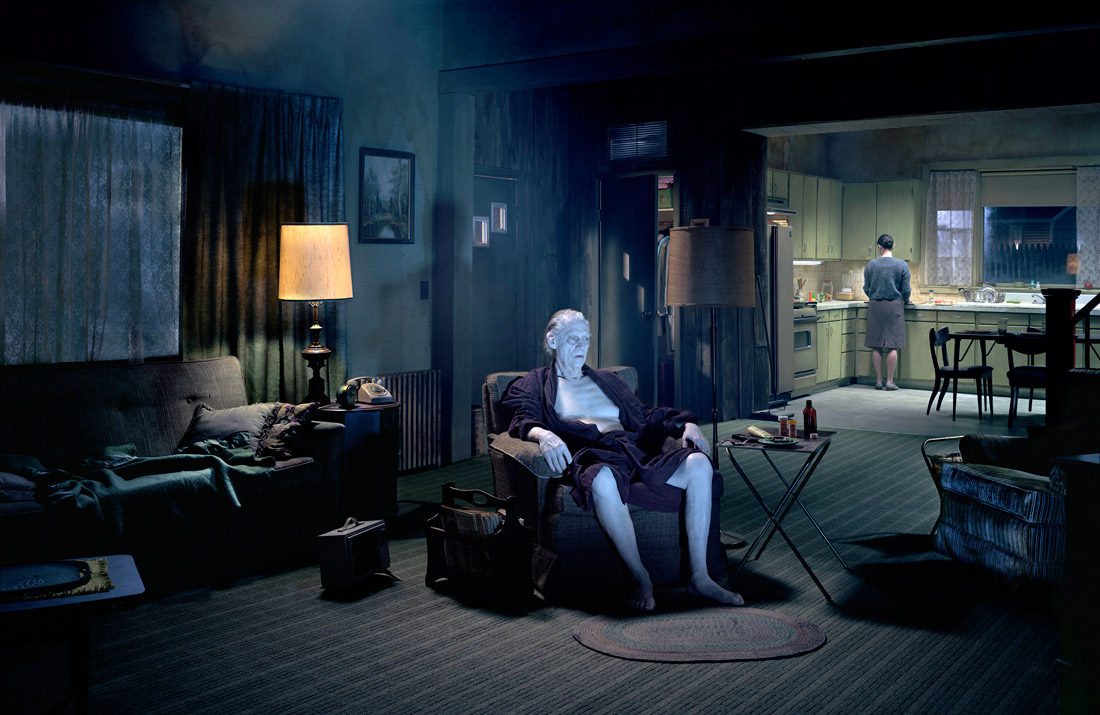
    Gregory Crewdson (American, b. 1962) 'Untitled (Sunday Roast)' from the series 'Beneath the Roses' 2005


    Gregory Crewdson (American, b. 1962)
    Untitled (Sunday Roast)
    From the series Beneath the Roses
    2005
    Digital carbon print
    144.8 x 223.5cm
    Gregory Crewdson, Courtesy Gagosian Gallery, New York
    © Gregory Crewdson, 2010


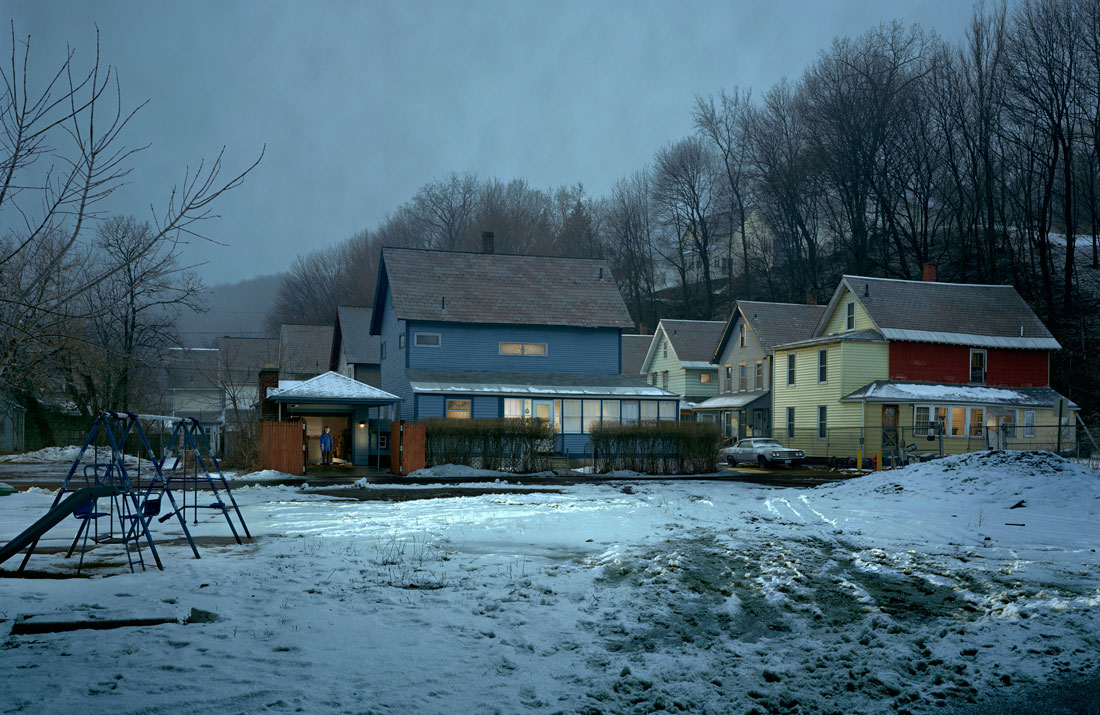
    Gregory Crewdson (American, b. 1962) 'Untitled (Temple Street)' from the series 'Beneath the Roses' 2006


    Gregory Crewdson (American, b. 1962)
    Untitled (Temple Street)
    From the series Beneath the Roses
    2006
    Digital carbon print
    144.8 x 223.5cm
    Gregory Crewdson, Courtesy Gagosian Gallery, New York
    © Gregory Crewdson, 2010


    Gregory Crewdson (American, b. 1962) 'Untitled (The Father)' from the series 'Beneath the Roses' 2007


    Gregory Crewdson (American, b. 1962)
    Untitled (The Father)
    From the series Beneath the Roses
    Digital carbon print
    144.8 x 223.5cm
    Gregory Crewdson, Courtesy Gagosian Gallery, New York
    © Gregory Crewdson, 2010


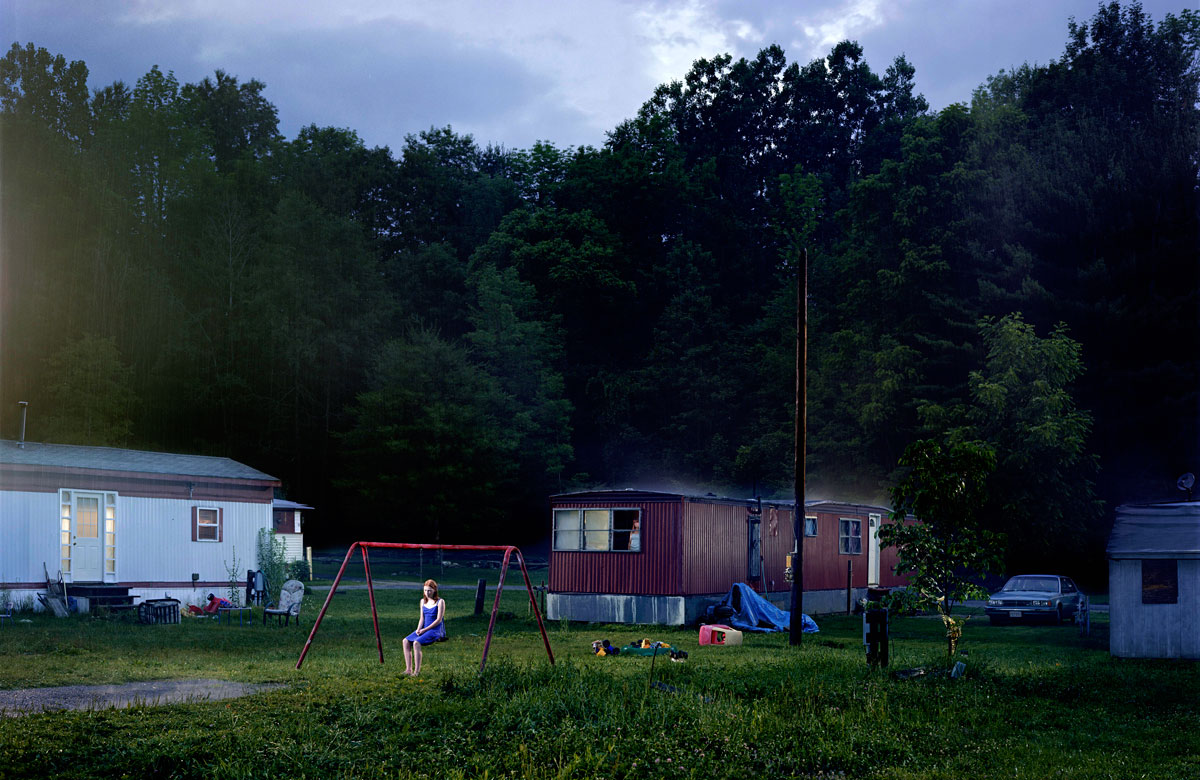
    Gregory Crewdson (American, b. 1962) 'Untitled (Trailer Park)' from the series 'Beneath the Roses' 200


    Gregory Crewdson (American, b. 1962)
    Untitled (Trailer Park)
    From the series Beneath the Roses
    2007
    Digital carbon print
    144.8 x 223.5cm
    Gregory Crewdson, Courtesy Gagosian Gallery, New York
    © Gregory Crewdson, 2010


    Gregory Crewdson (American, b. 1962) 'Untitled (Worthington Street)' from the series 'Beneath the Roses' 2006


    Gregory Crewdson (American, b. 1962)
    Untitled (Worthington Street)
    From the series Beneath the Roses
    2006
    144.8 x 223.5cm
    Gregory Crewdson, Courtesy Gagosian Gallery, New York
    © Gregory Crewdson, 2010


    Museum Frieder Burda
    Lichtentaler Allee 8b
    D-76530 Baden-Baden
    Phone: +49 (0)7221 / 3 98 98-0

    Opening hours:
    Tuesday – Sunday 10am – 6pm
    Closed Mondays

    Museum Frieder Burda website

    LIKE ART BLART ON FACEBOOK

    Back to top

    Review: ‘Stormy Weather: Contemporary Landscape Photography’ at NGV Australia, Melbourne

    Exhibition dates: 24th September 2010 – 20th March 2011


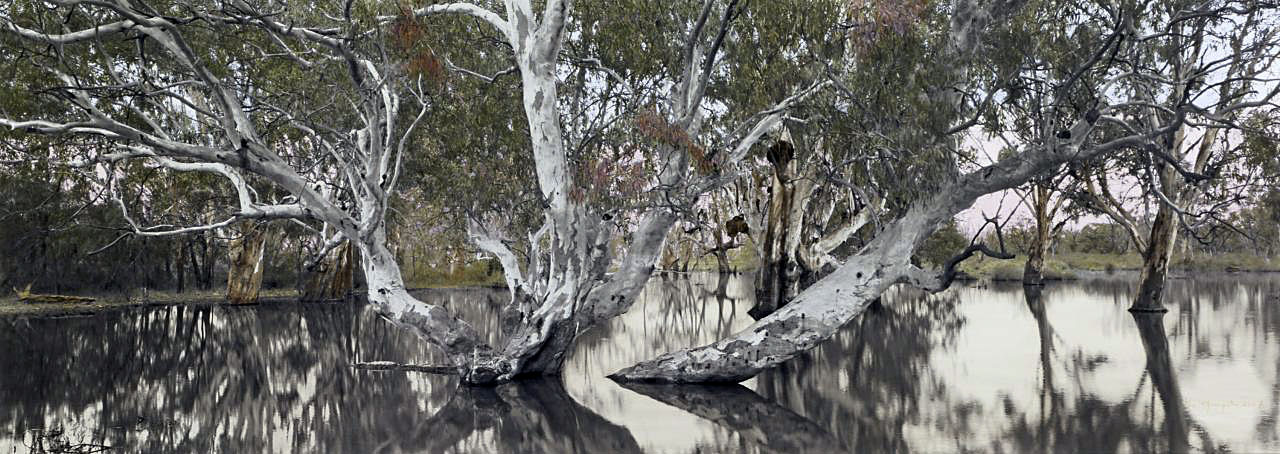
    Nici Cumpston (Australian / Barkindji, b. 1963) 'Nookamka - Lake Bonney' 2007


    Nici Cumpston (Australian / Barkindji, b. 1963)
    Nookamka – Lake Bonney
    2007
    watercolour and coloured pencils on ink on canvas
    74.2 x 203cm
    National Gallery of Victoria, Melbourne
    Purchased, Victorian Foundation for Living Australian Artists, 2008
    © Nici Cumpston


    “It is this irreversibly modified world, from the polar caps to the equatorial forests, that is all the nature we have.”


    Simon Schama. Landscape and Memory 1


    “The term “landscape” can be ambiguous and is often used to describe a creative interpretation of the land by an artist and the terrain itself. But there is a clear distinction: the land is shaped by natural forces while the artist’s act of framing a piece of external reality involves exerting creative control. The terms of this ‘control’ have be theorised since the Renaissance and, while representations of nature have changed over the centuries, a landscape is essentially a mediated view of nature.”


    Dr Isobel Crombie 2


    “And, finally, what of the vexed, interrelated matter of non-Aboriginal Australians’ sense of belonging? While the Australian historian Manning Clark speculated that European settlers were eternal outsiders who could never know ‘heart’s ease in a foreign land, because … there live foreign ancestral spirits’, it now seems plausible that non-Aboriginal Australians are developing their own form of attachment, not to land as such, but to place. Indeed, it has recently been argued that for contemporary non-Aboriginal Australians, belonging may have no connection with land at all. Perhaps this is one of the reasons why art photographs of the natural landscape have lost their currency and are now far outnumbered by photographs of urban and suburban environments – after all, it is ‘here’ that most Australians live and ‘there’ that the tourist industry beckons them to escape.”


    Helen Ennis. Photography and Australia 3


    This review took a lot of research, reading, thinking and writing, all good stuff – I hope you enjoy it!


    Heavy Weather: Photography and the Australian Land(e)scape

    There is nothing fresh about the work in this exhibition. If feels like all the oxygen has been sucked out of the term ‘landscape’, the land itself gasping for air, for life. What the exhibition does evince is an “undercurrent of disruption and contradiction that suggests that all is not as it may appear” (wall text) – and on this evidence the process of photographing the Australian landscape seems to have become an escape from the land, a fragmented and dislocated scoping, mapping and photographing of mental aspects of the land that have little to do with the landscape itself. Landscape as a site of psychological performance. In this sense, the title Stormy Weather should perhaps have been Heavy Weather for contemporary photographic artists seem to make heavy going of photographing our sense of belonging to land, to place.

    Is it the artists or the curators that seek to name this work ‘landscape photography’ for it is about everything but the landscape – an escape from the land, perhaps even a denial of it’s very existence. I believe it is the framing of landscape and its imaging in terms of another subject matter. While I am not going to critique individual works in the exhibition, what I am interested in is this framing of the work as ‘landscape photography’.


    Since colonial settlement there has been a rich history of photographing the Australian landscape. In the early colonial period the emphasis was on documenting the building of new cities and communities through realist photography and later more picturesque and panoramic vistas of the Australian land as settlers sought comfort in familiar surroundings and a sense of ‘belonging’ to the land (for example day trippers and photographers travelling to the Blue Mountains). Photographers rarely accompanied expeditions into the interior, unlike the exploration and mapping of the land from the East Coast to the West Coast in the United States. Unlike America there has been little tradition of photographing sublime places in Australia because they are not of the same scale as in the USA. It is very difficult to photograph the vast horizon line of the Australian outback and make it sublime. Photographing the landscape then ventured through Pictorialism in the interwar years, Modernism after WWII through to the emergence of art photography in the 1970s (for example see my posting on Dr John Cato), wilderness and tourist photography. An excellent book to begin to understand the history of photography in Australia is Photography and Australia by Helen Ennis (London: Reaktion Books, 2007) that contains the chapter “Land and Landscape.” As Ennis comments in this chapter, “… landscape photography has been the practice of settler Australians and the expression of a settler-colonial culture … The viewpoint in landscape photography has therefore been almost exclusively European”4 although this culture has been changing in recent years with the emergence of Indigenous photographers.

    Ennis observes that contemporary landscape photographers embrace internationalist styles, showing a distaste for totalising nationalist narratives and a rejection of essentialist or absolutist viewpoints, noting that an overarching framework like multiculturalism has lost its currency in favour of transnationalism (which is a social movement grown out of the heightened interconnectivity between people and the loosening of boundaries between countries) that does not disavow colonial inequalities and asymmetrical relations between countries and continents.5 Photographers have developed a “photographic language that allows for the expression of the contradictions inherent in contemporary settler Australians’ relations with the land,”6 whilst offering visual artists a “non-linear, non-didactic way of dealing with the complexities of Australia history and experience, and the relationship between past and present.”7

    This much then is a given. Let us now look at the framing of the work in the exhibition as ‘landscape photography’.


    Simon Schama in his erudite book Landscape and Memory (New York: Vintage, 1996) believes that there can never be a natural or neutral landscape (even the brilliant meadow-floor [at Yosemite] which suggested to its first eulogists a pristine Eden was in fact the result of regular fire-clearances by its Ahwahneechee Indian occupants) and that it is our shaping perception that makes the difference between raw matter and landscape. There was also a recognition that ‘nature’ was neither neutral nor beyond ideology during the 1970s-1980s. Hence there is a double mediation – by both nature and the artist.

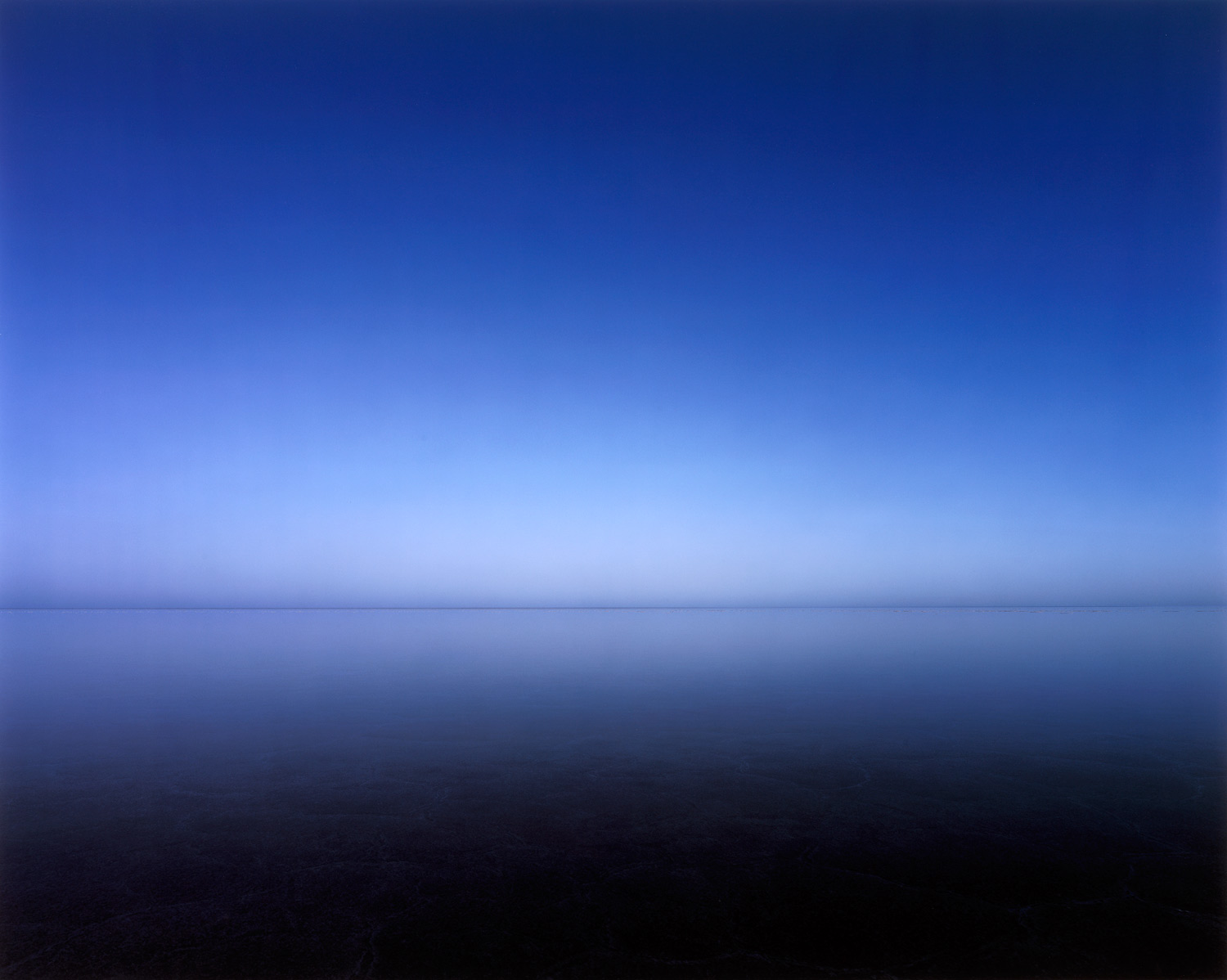
    Despite the rejection of essentialist or absolutist viewpoints by contemporary photographers and an acknowledgment of the mediated view by/of nature one can say that there is not a single photograph in this exhibition that is just a ‘landscape’. Even the most sublime photographs in the exhibition, David Stephenson’s (Self-portrait), Reflected moon, Tasmania (1985) is cut up into a grid, or Murray Fredericks Salt photographs (2005, see below) where the photographer has waited agonisingly for weeks for just the right weather conditions to take his photographs which the general public, when visiting Lake Eyre, would have no chance of ever seeing. Through this mediation there seems to have emerged an abrogation or denial of landscape by the artists and curators conceptualisation of it, as though they are performing a particular condition, a style; working out a plan of what to do and say. Is it just a denial or is it an artistic strategy?

    I believe that these are strategies that limit artists, not strategies that enable them. The curators are equally implicated in these strategies by their naming of these works ‘landscapes’. What purpose does this naming serve, in terms of the development of a sense of place, not nation, that people living in Australia seek to have? We can ask the question: Where do you stand in relationship to the landscape both philosophically and geographically?

    After Butler, we can also ask: What forms of cultural myth making are “embedded” in the framing of landscape by the curators, the naming of such work as ‘landscape photography’?


    Rarely is the framing recognised for what it is, when it is the viewer interpreting the interpretation that has been imposed upon us, that limits the visual discourse, producing a view of Australian landscape as fragmented norms enacted through visual narrative frames – that in this case efface the representation of land and place. This conceptual framing of what the work is about limits the grounds for discourse for a frame excludes as much as it corrals. The curators form an interpretative matrix of what is seen (or not seen, or withheld), reinforcing notions of landscape photography, the ‘landscape photography’ “that requires a certain kind of subject that actually institutes that conceptual requirement as part of its description and diagnosis.”8 In other words the description ‘landscape photography’ established by the curators becomes a limiting, self-fulfilling prophecy.

    Personally, I think the problem with a landscape exhibition is that this is virtually an inane topic. Somehow “documentary” works as a topic because it is about a mental discipline. But “landscape” is no longer really a topic – it used to be a topic when landscape painters wanted to show the landscape (!) but does anyone really want to show this today? Even when the landscape painters wanted to show the sublime, the landscape was always treated with deference. No-one thinks of Minor White as a landscape photographer for he was a metaphysical photographer. And that’s what this exhibition needs – another word to give sense to a photographers efforts.

    This is difficult subject matter. While artists may reject essentialist or absolutist viewpoints what has been substituted in their place is a framing, a definition that is post-nature, that undermines any sense of belonging to land, to place. The dissolutive pendulum has swung too far the other way; we look to theory to be inclusive and sometimes stand on our heads to achieve this to our detriment.

    As of this moment we are not at the point where we can look back with some certainty and see that we have reached the beginning of the path of understanding. What I would propose to any artist is a photography that is broadly based, cumulative, offering a layered body of work that builds and refers back to an original body of work, much like the photographs of Robert Adams – photographs that do not make claims but ask questions and hint at a more responsive engagement with the landscape.

    My hope is that a more broadly based view of place and our sense of belonging to the land emerges, one that challenges our contemporary understanding of the landscape, a viewpoint and line of sight that calm our troubled sense of reality. Robert Adams has written eloquently about photography and the art of seeing. Here is a quote from his seminal book Why People Photograph (Aperture Foundation, 1994) that aptly concludes this review.

    “At our best and most fortunate we make pictures because of what stands in front of the camera, to honor what is greater and more interesting than we are. We never accomplish this perfectly, though in return we are given something perfect – a sense of inclusion. Our subject thus redefines us, and is part of the biography by which we want to be known.”9

    Dr Marcus Bunyan


    Many thankx to Jemma Altmeier and the National Gallery of Victoria for allowing me to publish the photographs in the posting. Please click on the photographs for a larger version of the image.

    Addendum

    Further to my argument above there is a session ‘Australian Identity: Australian Bio-diversity and the Landscape of the Imagination’ at the Festival of Ideas, Friday June 17th 2011 at the University of Melbourne where, in the details of the upcoming session, Ian Burn has been quoted about the loss of the landscape:

    Details of the session: ‘The connection between landscape and national identity figures prominently in discussions of Australian experience. Recently the pairing of the two has taken a melancholic turn; artist Ian Burn has remarked that ‘A commitment to representing the landscape has come to be about the “loss” of the landscape’. Has the landscape that once supported the Australian legend disappeared? The landscape is represented not only in art but also through science, law and commerce. Are new landscapes and new identities now being imagined and discovered?’

    Quotation: “The idea of landscape does not just invoke rival institutional discourses, but today attracts wider and more urgent reflections. A commitment to representing the landscape has become about the ‘loss’ of landscape in the twentieth century … that is about its necessity and impossibility at the same time. Seeing a landscape means focusing on a picture, implicating language in our seeing of the landscape.”

    Burn, Ian quoted in Stephen, Ann (ed.,). Artists think: the late works of Ian Burn. Sydney: Power Publications in association with Monash University Gallery, Melbourne, 1996, p. 8.

    Footnotes

    1/ Schama, Simon. Landscape and Memory. New York: Vintage, 1996, p. 7

    2/ Crombie, Isobel. Stormy Weather. Contemporary Landscape Photography (exhibition catalogue). Melbourne: National Gallery of Victoria, 2010, p. 15

    3/ Clark, Manning quoted by Peter Read in “A Haunted Land No Longer? Changing Relationships to a Spiritualised Australia,” in Australian Book Review CCLXV (October 2004) pp. 28-33 in Ennis, Helen. “Land and Landscape,” in Photography and Australia. London: Reaktion Books, 2007, pp. 71-72

    4/ Ennis, Helen. “Land and Landscape,” in Photography and Australia. London: Reaktion Books, 2007, pp. 51-52

    5/ Ennis, Helen. “Land and Landscape,” in Photography and Australia. London: Reaktion Books, 2007, p. 123, p. 133

    6/ Ibid., “Land and Landscape,” pp. 71-72

    7/ Ibid., “Localism and Internationalism,” p. 128

    8/ Butler, Judith. Frames of War: When is Life Grievable? London: Verso, 2010, p. 161

    9/ Adams, Robert. Why People Photograph. New York: Aperture Foundation, 1994, p. 179


    Nici Cumpston (Australian / Barkindji, b. 1963) 'Flooded Gum, Katarapko Creek, Murray River National Park' 2007


    Nici Cumpston (Australian / Barkindji, b. 1963)
    Flooded Gum, Katarapko Creek, Murray River National Park
    2007
    Watercolour and pencil on inkjet print on canvas
    74.5 x 202.5cm
    National Gallery of Victoria, Melbourne
    Purchased, Victorian Foundation for Living Australian Artists, 2008
    © Nici Cumpston


    Stephanie Valentin (Australian, b. 1962) 'Earthbound' 2009


    Stephanie Valentin (Australian, b. 1962)
    Earthbound
    2009
    from the Earthbound series
    inkjet photograph
    70 x 90cm
    National Gallery of Victoria, Melbourne
    Purchased with funds donated by Phillip Ross and Sophia Pavlovski-Ross, 2009
    © Stephanie Valentin


    Harry Nankin (Australian, b. 1953) 'Of Great Western tears / Duet 2' 2006


    Harry Nankin (Australian, b. 1953)
    Of Great Western tears / Duet 2
    2006
    From The rain series 2006-2007
    Gelatin silver photographs
    (a-b) 107.1 x 214.3cm (overall)
    National Gallery of Victoria, Melbourne
    Purchased NGV Foundation, 2007
    © Harry Nankin


    Stephanie Valentin (Australia, b. 1962) 'Rainbook' 2009


    Stephanie Valentin (Australia, b. 1962)
    Rainbook
    2009
    From the earthbound series 2009
    Colour inkjet print
    69.9 x 86.9cm
    National Gallery of Victoria, Melbourne
    Purchased with funds donated by Philip Ross and Sophia Pavlovski-Ross, 2009
    © Stephanie Valentin


    Murray Fredericks (Australia, b. 1970) 'Salt 154' 2005


    Murray Fredericks (Australia, b. 1970)
    Salt 154
    2005
    From the Salt series 2003-
    Colour inkjet print
    119.3 x 149.3cm
    National Gallery of Victoria, Melbourne
    Purchased, Victorian Foundation for Living Australian Artists, 2009
    © Murray Fredericks


    Siri Hayes (Australia, b. 1977) 'Plein air explorers' 2008


    Siri Hayes (Australia, b. 1977)
    Plein air explorers
    2008
    Type C photograph
    104.3 x 134.8cm
    National Gallery of Victoria, Melbourne
    Purchased, Victorian Foundation for Living Australian Artists, 2009
    © Siri Hayes


    The work of the contemporary Australian photographers highlighted in this exhibition comes from a profound engagement with the lived landscape around them. The quiet intensity of their work comes from their close and sustained relationship to particular environments. These photographers may use that lived observation to reveal the layers of history in a landscape; to provoke ecological concerns; as the place for site specific performances; or to use the specific poetics of light to reveal the beauty of a place.  However for all of them, the real world is the starting point for images of particularity.

    Photographers’ interest in the landscape has increased in the last few years. Perhaps as a result of heightened environmental awareness, or an evolution in our engagement with Australian history, practitioners are again turning to the natural world as a site for critical practice and inspiration.

    Drawn from the permanent collection the National Gallery of Victoria, the selected photographers in this exhibition have a particular focus that comes from their active relationship to various environments. The artists displayed here reveal history in a landscape; provoke ecological concerns; use the landscape as a site of performance; or reveal the distinctive beauty of a place.

    Frequently underpinning these works of quiet intensity and considerable beauty is an undercurrent of disruption and contradiction that suggests all is not as it may first appear.

    Text from the National Gallery of Victoria website [Online] Cited 26/02/2011 no longer available online


    Rosemary Laing (Australia, b. 1959) 'weather #9' 2006


    Rosemary Laing (Australia, b. 1959)
    weather #9
    2006
    From the weather series 2006
    Type C photograph
    109.9 x 184.6cm
    National Gallery of Victoria, Melbourne
    Purchased, Victorian Foundation for Living Australian Artists, 2007
    © Rosemary Laing and Tolarno Galleries, Melbourne


    Jill Orr (Australia , b. 1952, lived in the Netherlands 1980-1984) 'Southern Cross to bear and behold - Burning' 2007)


    Jill Orr (Australia , b. 1952, lived in the Netherlands 1980-1984)
    Southern Cross to bear and behold – Burning
    2007
    Colour inkjet print
    65.5 x 134.9cm
    National Gallery of Victoria, Melbourne
    Purchased, Victorian Foundation for Living Australian Artists, 2010
    Photographer: Naomi Herzog for Jill Orr
    © Jill Orr


    The Ian Potter Centre: NGV Australia
    Federation Square

    Corner of Russell and 
Flinders Streets, Melbourne

    Opening hours:
    Open daily 10am – 5pm

    National Gallery of Victoria website

    LIKE ART BLART ON FACEBOOK

    Back to top

    Exhibition: ‘Painting on paper – Josef Albers in America’ at Pinakothek der Moderne, Munich

    Exhibition dates: 16th December 2010 – 6th March 2011


    Josef Albers (German, 1888-1976) 'Study for a Adobe' c. 1947


    Josef Albers (German, 1888-1976)
    Study for a Adobe
    c. 1947
    Oil and graphite on blotting paper
    24.1 × 30.5cm
    The Josef Albers Museum Quadrat Bottrop
    © 2010 The Josef and Anni Albers Foundation/VG Bildkunst, Bonn/Artists Rights Society, New York


    I really like the work of Josef Albers and these paintings on paper, studies for later work, give insight into that rare quality of Albers – his ability to mould, no that’s not the right word – his ability to accrete colours and spaces together, to build tectonic plates of colour that collide and burst against each other forming an “osmosis of plane and space.” These harmonic oscillations of vibrant colour form a pleasing equilibrium in the mind, freeing the viewer from conceptual thought and allowing us to enter a different state of being. It is fascinating to me that he painted these studies on blotting paper as the paper seems to soak up the colours, intensifying their existence.

    Dr Marcus Bunyan


    Many thankx to Pinakothek der Moderne for allowing me to publish the photographs of the art in the posting. Please click on the photographs for a larger version of the image.


    Josef Albers (German, 1888-1976) 'Color Study for a Variant / Adobe' Nd


    Josef Albers (German, 1888-1976)
    Color Study for a Variant / Adobe
    Nd
    Oil on blotting paper
    48.2 × 60.9cm
    The Josef and Anni Albers Foundation
    © 2010 The Josef and Anni Albers Foundation/VG Bildkunst, Bonn/Artists Rights Society, New York


    Josef Albers (German, 1888-1976) 'Study for a Variant / Adobe (I)' c. 1947


    Josef Albers (German, 1888-1976)
    Study for a Variant / Adobe (I)
    c. 1947
    Oil on blotting paper with pencil
    24.1 × 30.6cm
    The Josef and Anni Albers Foundation
    © 2010 The Josef and Anni Albers Foundation/VG Bildkunst, Bonn/Artists Rights Society, New York


    The exhibition is the first to show such a concentration of paintings on paper by Josef Albers, some of which will be completely unknown to the general public. Works in oil on paper, painted by the artist since the 1940s in preparation for the Adobe and Variant series in particular, are presented together with a large group related to his principal work “Homage to the Square” from the artist’s late period, that he focused on from 1950 until his death in 1976.

    Josef Albers was only able to fully develop into an important artist and influential teacher after emigrating to the USA. From around 1940 onwards, Albers was inspired by Mexico’s pre-Columbian architecture, sculpture and textile art that boosted his sense for the aesthetic and led to idiosyncratic, radiant colour compositions, the likes of which had never been seen at that time in European modern art. Around 1950, Albers discovered what was for him the ideal formal shape of colour – the square.

    The works exhibited surprise the viewer with their spontaneity, their search for immediacy and the extraordinary delicacy of their colours. Albers studied the interaction of colours like virtually no other. Through his works on paper in particular it can be seen in detail how the artist achieved such a thorough osmosis of plane and space through increasing the density of the colours used.

    Text from the Pinakothek der Moderne website


    Josef Albers (German, 1888-1976) 'Color Study for Homage to the Square' Nd


    Josef Albers (German, 1888-1976)
    Color Study for Homage to the Square
    Nd
    Oil and graphite on blotting paper with varnish
    30.5 × 30.5cm
    The Josef Albers Museum Quadrat Bottrop
    © 2010 The Josef and Anni Albers Foundation/VG Bildkunst, Bonn/Artists Rights Society, New York


    Josef Albers (German, 1888-1976) 'Color Study for Homage to the Square' Nd


    Josef Albers (German, 1888-1976)
    Color Study for Homage to the Square
    Nd
    Oil on blotting paper
    33.2 × 30.9cm
    The Josef and Anni Albers Foundation
    © 2010 The Josef and Anni Albers Foundation/VG Bildkunst, Bonn/Artists Rights Society, New York


    Josef Albers (German, 1888-1976) 'Color Study for Homage to the Square' Nd


    Josef Albers (German, 1888-1976)
    Color Study for Homage to the Square
    Nd
    Oil on blotting paper with varnish
    33.6 × 30.4cm
    The Josef and Anni Albers Foundation
    © 2010 The Josef and Anni Albers Foundation/VG Bildkunst, Bonn/Artists Rights Society, New York


    Pinakothek Der Moderne
    Barer Strasse 40
    Munich

    Gallery hours:
    Daily except Monday 10am – 6pm
    Thursday 10am – 8pm
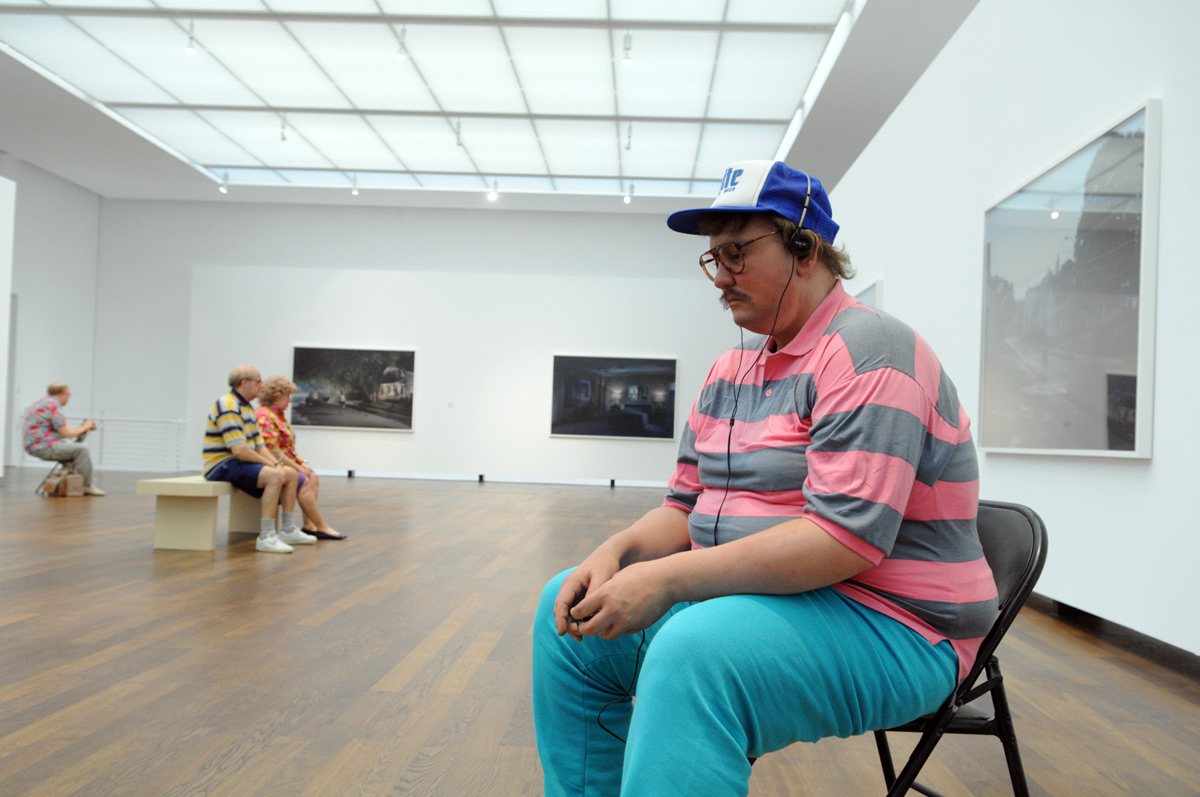
    Pinakothek der Moderne website

    LIKE ART BLART ON FACEBOOK

    Back to top

    Exhibition: ‘ANALOG: trends in sound and picture’ at The Riflemaker Gallery, London

    Exhibition dates: 10th January – 3rd March 2011


    Richard Nicholson (British, b. 1968) 'Peter Guest darkroom' 2006


    Richard Nicholson (British, b. 1968)
    Peter Guest darkroom
    2006
    Courtesy of the artist and Riflemaker


    I started my life as an artist as a black and white photographer. I spent many hours ensconced in the enveloping black and red safety light of the darkroom, listening to the sound of running water – a nurturing, womb-like environment despite the toxic nature of the chemicals involved. It was magical to see the image appear in the developing tray out of nothing, an alchemical process that never ceased to amaze me, a link to the early days of photography and the wonder that those first images would have generated. At that time the photography course at Phillip Institute (soon to become part of RMIT University) had 3 huge darkrooms; now they have one with only a couple of enlargers.

    Working in those darkrooms did teach you a solid foundation for your art practice: for one thing, the value of developing a working methodology – choosing a good negative that you wanted to print, spending time with it, adjusting the enlarger to obtain optimum size and printing it beautifully – for in a good day I could only print one or possibly two negatives a day. Then there was the process of washing the chemicals out of the paper and drying the prints. The whole process taught you patience, precision and dedication to the task at hand so that the negative revealed in the print something else that might be present, some ‘other’ that photography has the ability to capture if you take time, are aware and receptive to this illumination. These disciplines have held me in good stead during the following years.

    I still love analogue colour and black and white photographs. To me it is like the difference between an LP and a CD. The CD might have it all over the LP in terms of information captured but there is this ineffable feeling about an LP with it’s scratches and pops, it’s atmosphere. The same goes for an analogue print and it is something that you can’t quite put your finger on. I believe that there is still a place for analogue prints in the world – for the magical process, for their beauty, sensitivity and downright inspiration. Long may they live.

    Dr Marcus Bunyan


    Many thankx to The Riflemaker Gallery for allowing me to publish the photographs and text in the posting. Please click on the photographs for a larger version of the image.


    Richard Nicholson (British, b. 1968) 'Roy Bass darkroom, Michael Dyer Associates, Covent Garden' 2006


    Richard Nicholson (British, b. 1968)
    Roy Bass darkroom, Michael Dyer Associates, Covent Garden
    2006
    Courtesy of the artist and Riflemaker


    The End of Professional Photographic Darkrooms and Music Recording Studios

    The impact of digital technology on print photography and music production is the subject of ANALOG at Riflemaker, Soho from 10 January 2011. The exhibition invites us inside the last of London’s photographic darkrooms as well as taking a visit to a working reel-to-reel music studio, courtesy of an installation by Lewis Durham of the band Kitty, Daisy & Lewis.

    Richard Nicholson. “A Survey of London’s Remaining Professional Darkrooms 2006-2010”

    1979. The year my father constructed a darkroom and introduced me to photography. I was immediately entranced by the printing process and cherished the long hours spent in this dark, private space; standing in the gloom of the red safelight, slowly rocking the print tray, watching the ghost-like image reveal itself through the gently lapping developer solution. As I experimented with the many formulas and techniques detailed in my father’s guidebooks, I often found the most interesting prints were the chemically stained accidents pulled from the bin at the end of a session. The darkroom became a bolt-hole for me; a private space where I could escape from the noise of family life. As I passed through school, university and various jobs, I often sought out a darkroom to escape from the crowd. But as I honed my skills – solarising, masking, bleaching, split-toning, hand-colouring – my prints began to attract public attention.

    2006. I’m working in London as a photographer. I’m still shooting film, but digital is becoming ubiquitous. The photographic manufacturer Durst announces that it will no longer be producing enlargers. Annual sales have dropped from a peak of 107,000 units in 1979 to just a few hundred units in recent years. The darkroom has always been integral to my practice as a photographer. But for how much longer? Once bustling hire darkrooms have become eerily quiet, and London labs are dropping like flies. Joe’s Basement, Primary, Metro Soho, Keishi Colour, Ceta, Team Photographic, Sky – all gone. Polaroid has stopped making instant film and Kodak and Fuji are discontinuing one emulsion after another. The recently introduced Canon 5d camera has persuaded many diehard film photographers that digital is the future, and those who remain unconvinced are facing clients who no longer have the budgets for film, Polaroids, clip-tests, contact-sheets and prints. The darkroom’s days are numbered.

    Against this backdrop, I begin to look at the darkroom in a new light. My enlarger (a handsomely engineered GeM 504) has been an invisible tool, but now it presents itself as a sad and lumpen creature in the face of extinction. With its long neck, heavy head and inviting focus handles, the thing has a human form which elicits sympathy – the surrounding matt black walls add an air of theatricality. Hearing tales of noble machines being unceremoniously dumped in skips when labs close down, I decide to document them before they all disappear.

    I chose to photograph professional darkrooms because they are often shrouded in mystery; hidden behind the tidy glass facade of the lab’s front desk. As a keen printer myself, I was curious to see the workspaces of the master printers; craftsmen who had spent their working lives in darkness. The spaces I discovered were often haphazard and brimming with personal details; coffee cups, CD collections, family snapshots, unpaid invoices, curious knick-knacks brought back by globe-trotting photographers. These human elements transformed what might have been a detached typology of modernist industrial design into something more intimate and nuanced.

    I photographed each darkroom on large format film. Working in total darkness, I carefully painted these normally dingy spaces with a flashgun, seeking to reveal the beauty of the machinery, and shed some light on the clutter stained with the patina of time. Some of the darkrooms were busy, whilst others were neglected (all attention being given to the new inkjet printer in the adjoining corridor). Many of the darkrooms were facing imminent closure. (The one with the slogan pinned to the wall, ‘I want to stay here forever’, was dismantled the day after I photographed it and is currently being converted into luxury apartments.)

    Many of the iconic images of recent decades were crafted in these rooms. Mike Spry’s high contrast lith prints of U2 and Depeche Mode for music photographer Anton Corbijn, Peter Guest’s black and white prints of the Trainspotting cast for portrait photographer Lorenzo Agius, or Brian Dowling’s intricately masked colour prints for fashion photographer Nick Knight. Such commercial work is now routinely carried out in Photoshop and professional printers have had to seek out new avenues for their skills. The art market is perhaps the last bastion for traditional darkroom printing, but even this area is being taken over by digital machines – Lightjet, Lambda, and Chromira printers. But suddenly there is a resurgence of interest in analog processes amongst younger photographers who were brought up on digital. Left cold by the clinical nature of the virtual workspace, they seek depth and authenticity via the chemical ambience of the traditional darkroom. Alternative processes from the early history of photography are being rediscovered, Polaroid instant film has been relaunched, and the craze for poorly engineered Russian and Chinese film cameras (Lomo, Holga, Diana etc) continues unabated.

    I wonder at this enthusiasm. Like many committed film photographers, I experienced a belated epiphany when I finally switched to digital. My darkroom skills were easily transferred to the digital realm, and I soon discovered that Photoshop offered creative printmaking possibilities that far exceeded what I could achieve in the darkroom. Whilst I don’t miss the chemistry of the darkroom – much of it highly toxic – I do miss the aura of the red safelight and the soothing sound of running water. I miss the excited sense of performance when making a complicated print (there’s no ‘undo’ button in the darkroom), and the physicality of dodging and burning – the manual shaping of the light. With film I had a network of contacts across London and felt embedded in the city, whereas with digital I feel disembodied. The history of photography is young and fast moving. The darkroom era was short lived. This collection of images represents its apotheosis.”

    Richard Nicholson, November 2010

    I would like to thank all the printers who kindly allowed me to photograph their darkrooms.

    Nicholson, Richard. “A Survey of London’s Remaining Professional Darkrooms 2006-2010,” in Taylor, Tot (ed.,). ANALOG: trends in sound and picture book. London: Riflemaker, 2011, pp. 17-19. ISBN 978-0-9563571-6-8.


    Richard Nicholson (British, b. 1968) 'Roy Snell darkroom, Earlsfield' 2006


    Richard Nicholson (British, b. 1968)
    Roy Snell darkroom, Earlsfield
    2006
    Courtesy of the artist and Riflemaker


    Richard Nicholson (British, b. 1968) 'Gordon Bishop Associates, Paddington Street' 2006


    Richard Nicholson (British, b. 1968)
    Gordon Bishop Associates, Paddington Street
    2006
    Courtesy of the artist and Riflemaker


    The Riflemaker Gallery
    79 Beak Street, Regent Street,
    London W1

    Opening hours:
    Monday – Friday 10.00am – 6.00pm
    Saturday 12.00pm – 6.00pm

    Riflemaker website

    LIKE ART BLART ON FACEBOOK

    Back to top